296 Matching Annotations
  1. Mar 2021
    1. the natives

      Note: de Burton will refer to Californios as "natives" throughout the novel.

      Californios are the Spanish-speaking descendants of Spanish colonists which arrived in the Americas in 1492. Specifically, they are those descendants that resided in what is now southern California in the years leading up to and the years following the Mexican-American War.

      Californios are white. The modern use of the word "native," specifically the capitalized "Native" refers to indigenous peoples.

  2. Jul 2020
    1. Colton suit

      It is unclear as to which "suit" the author is referencing. It is possible that it was just the way in which the letters were made public.

    1. Shylockian

      Shylock

      Proper Noun. "A Jewish moneylender in Shakespeare's Merchant of Venice, who lends money to Antonio but demands in return a pound of Antonio's own flesh should the debt not be repaid on time."

      Lexico

    1. jumping

      Verb (1.7). "North American with object Take summary possession of (a mining concession or other piece of land) after alleged abandonment or forfeiture by the former occupant."

      Lexico

    2. genii, “the Slave of the Ring”

      "genii" is plural for genie: "A spirit of Arabian folklore, as depicted traditionally imprisoned within a bottle or oil lamp, and capable of granting wishes when summoned."

      Lexico

      "the Slave of the Ring" is much like "the Slave of the Lamp," found in the Arabian Nights.

      Oxford Reference: Aladdin

    3. monte

      Noun

      (1) "(also three-card monte) A game, traditionally associated with confidence tricksters, in which bets are made on which is the queen among three cards lying face downwards.

      (2) A Spanish game of chance played with forty-five cards."

      Lexico

    1. all men.”

      Note: the rest is verbatim from the same text as mentioned in the previous annotation, though with a few capitalization differences.

    2. “‘Assey de Bonaparte!’ cried France, in 1814. Men found that his absorbing egotism was deadly to all other men,” says Mr. Emerson.

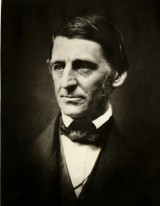
      This is highly paraphrased/restructured from the original text. It is from Ralph Waldo Emerson's "VI. Napoleon; or, the Man of the World," a chapter from The Complete Works of Ralph Waldo Emerson first published in 1904 with notes and an introduction by Edward Waldo Emerson.

      Bartleby Online Edition

      Note: "'Assey de Bonaparte'" or "Assez de Bonaparte," means "Enough of him," him being Bonaparte.

    1. the oracle

      Noun (1.2) "A person or thing regarded as an infallible authority on something."

      Lexico

      ALSO

      Can be read as an allusion the oracle as it is portrayed in, "In ancient Greece and Rome: the instrument, agency, or medium (usually a priest or a priestess) through which the gods were supposed to speak or prophesy; the mouthpiece of the gods. Also: the place at which such advice or prophecy was sought."

      "oracle, n." OED Online, Oxford University Press, June 2020, www.oed.com/view/Entry/132135. Accessed 27 July 2020.

    1. Nemesis

      Noun (1). "The inescapable agent of someone's or something's downfall."

      ALSO

      Greek Mythology "A goddess usually portrayed as the agent of divine punishment for wrongdoing or presumption (hubris)."

      Lexico

    1. unreclaimed

      Adj. (2) " Not restored to a good spiritual or moral state, or reformed from a life of vice or undesirable behaviour; (also in weaker, more general use) not changed or reformed. Now somewhat archaic."

      "unreclaimed, adj." OED Online, Oxford University Press, June 2020, www.oed.com/view/Entry/216896. Accessed 27 July 2020.

    1. notary

      Noun. "A person authorized to perform certain legal formalities, especially to draw up or certify contracts, deeds, and other documents for use in other jurisdictions."

      Lexico

    1. like the deuce

      phrase meaning, "Very fast."

      could also be just "the deuce," in which case it means, "Used as a euphemism for ‘devil’ in expressions of annoyance, impatience, surprise, etc." (Noun)

      Lexico

    2. tableau

      Noun. "A group of models or motionless figures representing a scene from a story or from history; a tableau vivant."

      Origin "Late 17th century (in the sense ‘picture’, figuratively ‘picturesque description’): from French, literally ‘picture’, diminutive of table (see table)."

      Lexico

    1. ‘legislative deductions must be based upon fundamental morality,’ that ‘the inferences of political economy are true, only because they are discoveries by a roundabout process of what the moral law commands.’

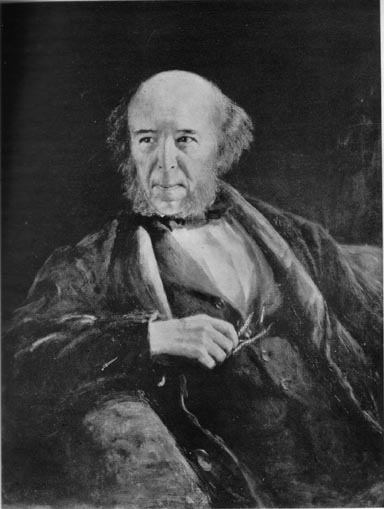
      This quotation could be paraphrasing Herbert Spencer. When searched the main or only results are different formats and sources of The Squatter and the Don. The same goes for other quotes attributed to Spencer in this section.

    1. remittitur

      Noun (1) Law "The action or an act of sending the transcript of a case back from an appellate to a trial court for record or further work; a formal notice of this."

      Lexico

    2. * * *

      Not included in the original text of the quoted document. De Burton is using these like ellipses, indicating that she has shortened the text to emphasize those parts she wishes to be at the forefront of readers' minds.

    3. Addison

      Joseph Addison biography written by Donald F. Bond: Emeritus Professor of English, University of Chicago, 1952–67 and editor of The Spectator.

      (Pictured: Joseph Addison)

      Note: The quote de Burton attributes to Addison is actually shown to be Richard Steele's writing in both publications referenced in the previous annotation.

    4. “There

      This quote is pulled from The Spectator, a daily publication of essays written by Joseph Addison and colleague Richard Steele. Specifically, it is from "No. 6 Wednesday March 11, 1711."

      Which can be read here and here, keeping in mind that different publication dates and editors mean there will be variations in titles but not the principal content.

    1. “Don’t you Remember Sweet Alice, Ben Bolt?”

      "The poem Ben Bolt was written by Thomas Dunn English in 1842. It was set to music by Nelson Kneass (1823-1868 or 1869), a composer from Philadelphia. Ben Bolt was first sung in Pittsburgh in 1848. It achieved great popularity, and many parodies were written."

      source

      Image Source

      Archive

      YouTube

    1. squaw

      Noun. offensive "A North American Indian woman or wife."

      Usage "Until relatively recently, the word squaw was used neutrally in anthropological and other contexts to mean a North American Indian woman or wife. With changes in the political climate in the second half of the 20th century, however, the derogatory attitudes of the past toward American Indian women mean that the word cannot now be used in any sense without being regarded as offensive"

      Origin "Mid 17th century from Narragansett squaws ‘woman’, with related forms in many Algonquian dialects."

      Lexico Entry

    1. yoke

      Noun (1) "A wooden crosspiece that is fastened over the necks of two animals and attached to the plough or cart that they are to pull."

      (1.1) "Used to refer to something regarded as oppressive or restrictive."

      Lexico

    2. California

      In San Francisco, there is not a place called "California House," this may just be a part of the novel. However, there is a restaurant called Cliff House which was established in 1863 and still exists in the same location today.

    1. dervishes

      Noun. "A member of a Muslim (specifically Sufi) religious order who has taken vows of poverty and austerity. Dervishes first appeared in the 12th century; they were noted for their wild or ecstatic rituals and were known as dancing, whirling, or howling dervishes according to the practice of their order."

      Lexico

    1. securities

      noun (2) "A thing deposited or pledged as a guarantee of the fulfilment of an undertaking or the repayment of a loan, to be forfeited in case of default."

      noun (3) "(often securities) A certificate attesting credit, the ownership of stocks or bonds, or the right to ownership connected with tradable derivatives."

      Lexico

      Government Securities

    2. muscadin

      muscadin

      [archaic, historical]

      "Especially in Paris in the 18th and 19th centuries: a dandy, a fop. Hence depreciatively: a member of a Moderate party (composed chiefly of young men of the upper middle class) in the early years of the French Revolution (1794–6)."

      Lexico

      Dandy:

      Adj. (1) "North American informal Excellent."

      Lexico

      Note: can also mean conceited, and have negative connotations. But, within this context, leans more toward "excellent."

    1. We will make things uncomfortable for inebriates and tobacco smoker

      A reference to Prohibition, a period of 10+ years in the early 1900s when the creation, transportation, and sale of alcohol was made illegal by the 18th Amendment in the United States. It was heavily supported by those who also advocated for women's suffrage, which was accomplished in the same year with the 19th Amendment in 1920. Prohibition, however, only lasted until 1933.

      Quick Facts: Prohibition