992 Matching Annotations
  1. Nov 2025
    1. Author Response:

      Reviewer #2 (Public Review):

      The manuscript by Li et al describes the development of styrylpyridines as cell permeant fluorescent sensors of SARM1 activity. This work is significant because SARM1 activity is increased during neuron damage and SARM1 knockout mice are protected from neuronal degeneration caused by a variety of physical and chemical insults. Thus, SARM1 is a key player in neuronal degeneration and a novel therapeutic target. SARM1 is an NAD+ hydrolase that cleaves NAD+ to form nicotinamide and ADP ribose (and to a small extent cyclic ADP ribose) via a reactive oxocarbenium intermediate. Notably, this intermediate can either react with water (hydrolysis), the adenosine ring (cyclization to cADPR), or with a pyridine containing molecule in a 'base-exchange reaction'. The styrylpyridines described by Li et al exploit this base-exchange reaction; the styrylpyridines react with the intermediate to form a fluorescent product. Notably, the best probe (PC6) can be used to monitor SARM1 activity in vitro and in cells. Upon validating the utility of PC6, the authors use this compound to perform a high throughput screen of the Approved Drug Library (L1000) from TargetMol and identify nisoldipine as a hit. Further studies revealed that a minor metabolite, dehydronitrosonisoldipine (dHNN), is the true inhibitor, acting with single digit micromolar potency. The authors provide structural and proteomic data suggesting that dHNN inhibits SARM1 activity via the covalent modification of C311 which stabilizes the enzyme in the autoinhibited state.

      Thanks to the positive comments and suggestions from Reviewer #2 !

      Key strengths of the manuscript include the probe design and the authors demonstration that they can be used to monitor SARM1 activity in vitro in an HTS format and in cells. The identification of C311 as potential reactive cysteine that could be targeted for drug development is an important and significant insight.

      Key weaknesses include the fact that dHNN is a highly reactive molecule and the authors note that it modifies multiple sites on the protein (they mentioned 8 but MS2 spectra for only 5 are provided). As such, the compound appears to be a non-specific alkylator that will have limited utility as a SARM1 inhibitor. Additionally, no information is provided on the proteome-wide selectivity of the compound.

      Although dHNN may react with cysteines in general, our results indicate it does target specifically Cys311. Quantification of cysteine-containing peptides of other proteins showed no dHNN modification. So, we conclude that dHNN shows significant specificity to the Cys311 of SARM1. Some other SH-reactive agents we tested show little inhibition on SARM1. The evidence for Cys311 being dominant includes quantification of the intensity of the modified peptides and normalizing with that of the corresponding total peptides, with or without modification, showing that the modification is mainly on Cys311 (Figure 5—figure supplement 1). The dominant role of Cys311 is also confirmed by our mutagenesis and structural studies. Our result strongly suggested that the C311 is a druggable site for designing allosteric inhibitors against SARM1 activation.

      dHNN is effective in inhibiting SARM1 activation and AxD at low micromolar range, making it a useful inhibitor. Considering that the neuroprotective effect of NSDP, an approved drug, may well be due to dHNN, labeling it as inhibitor of SARM1 serves focus more attentions.

      Revision has been made in Discussion.

      An additional key weakness is the lack of any mechanistic insights into how the adducts are generated. Moreover, it is not clear how the proposed sulphonamide and thiohydroxylamine adducts are formed.

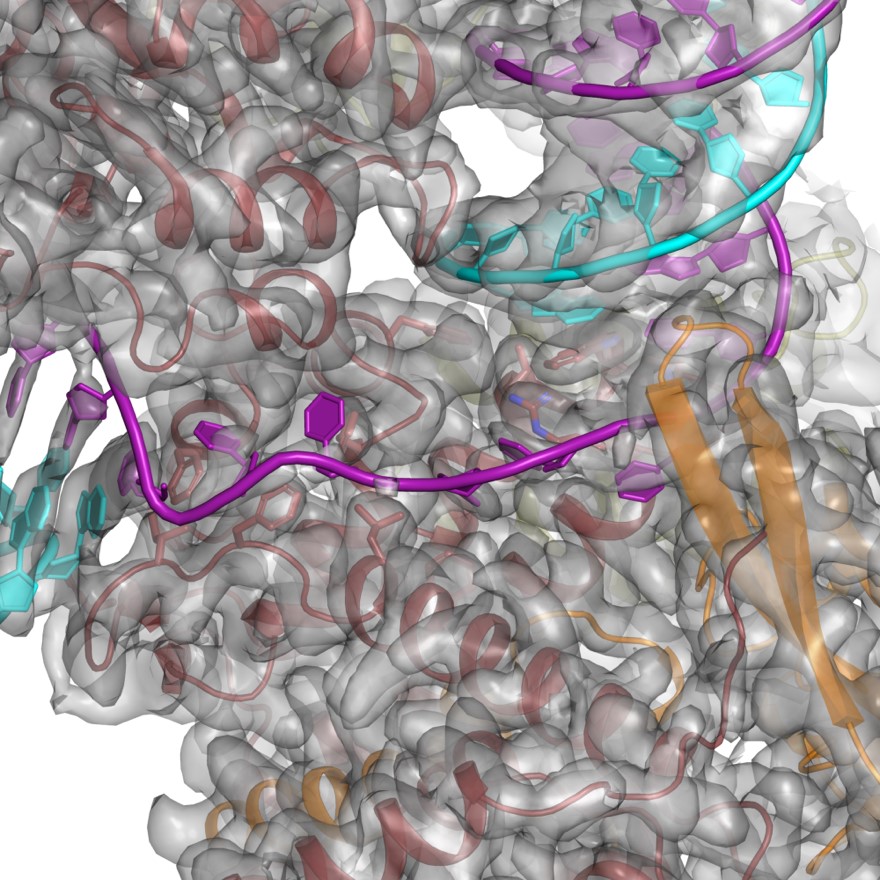
      From the images presented, it is unclear whether there is sufficient 'density' in the cryoEM maps to accurately predict the sites of modification.

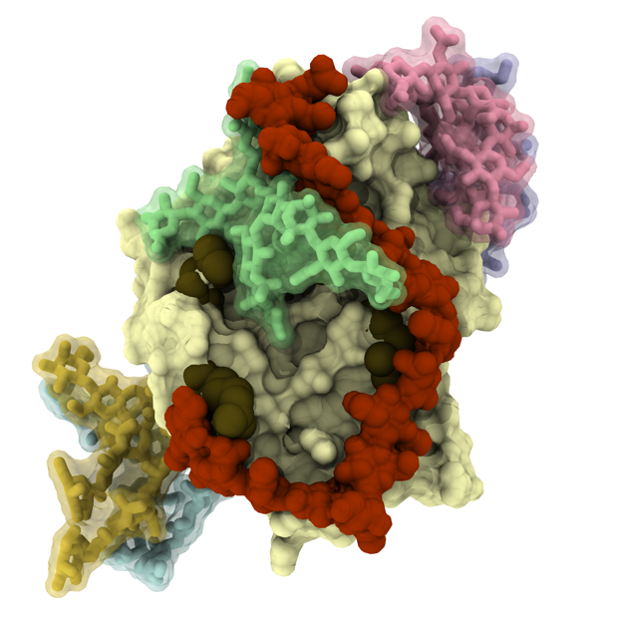
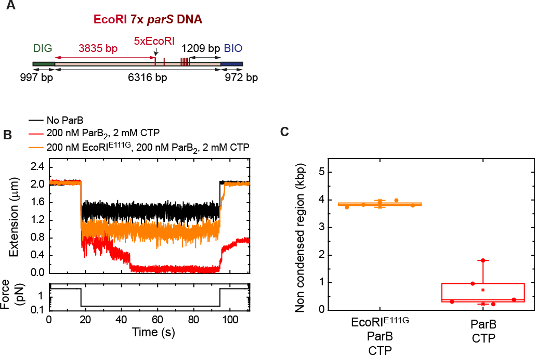
      Please refer to Fig . 5 F, in which we show the close up view of dHNN in the ARM domain. dHNN ( purple ) linked to the residue C311 and formed the hydrophobic interactions with surrounding residues E264, L268, R307, F308, and A315. The extra electron densities near the residue C311 fit the shape of dHNN and were shown as grey mesh.

      Finally, the authors do not show whether the conversion of PC6 to PAD6 is stable or if PAD6 can also be hydrolyzed to form ADPR.

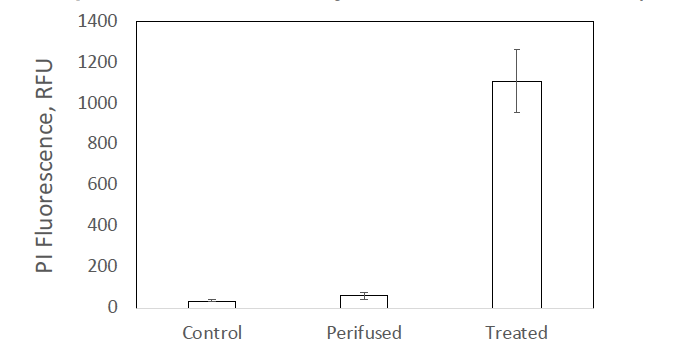
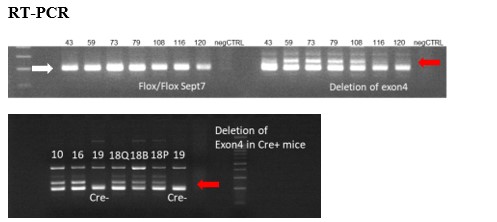
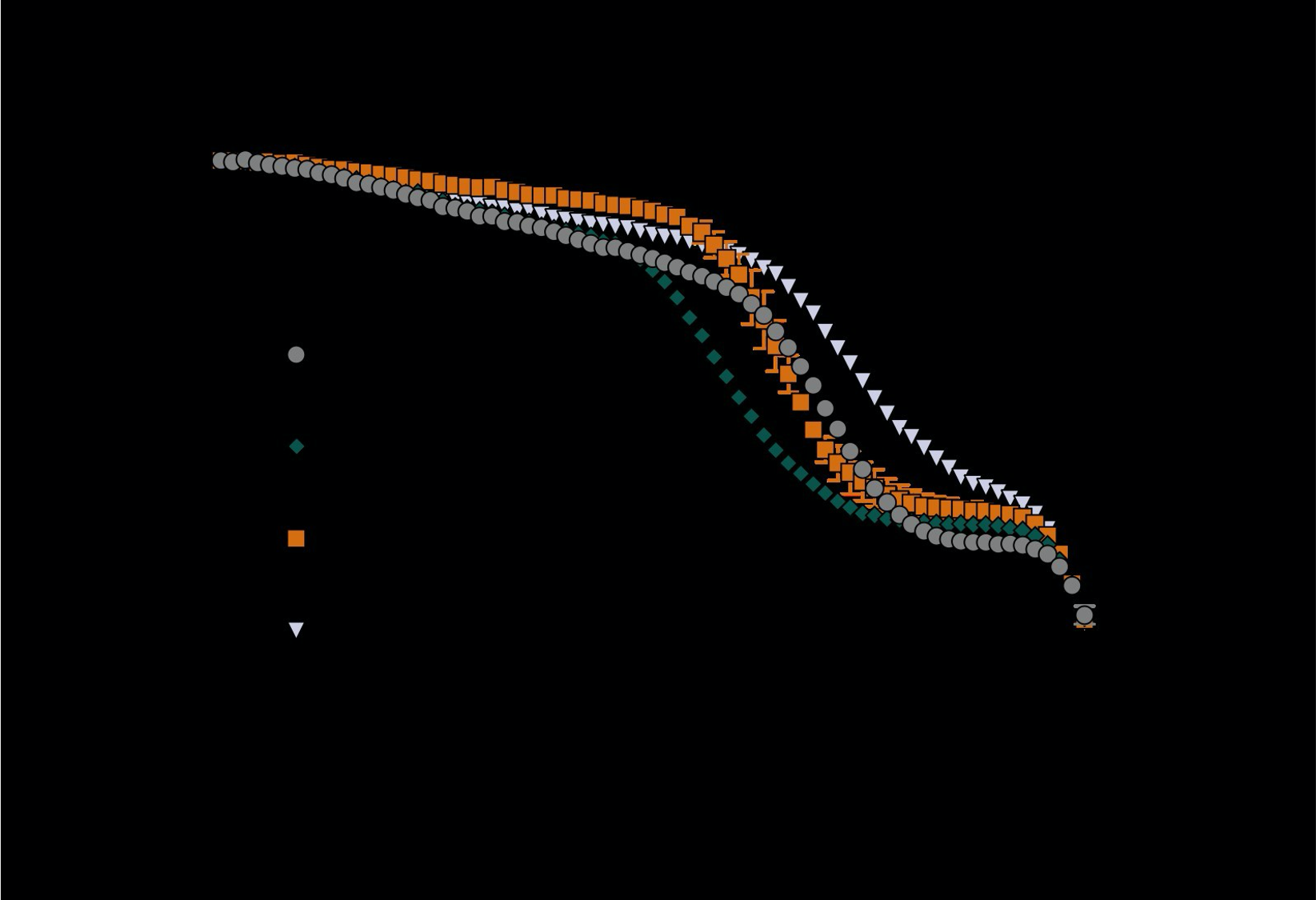
      PAD6 is stable and cannot be hydrolyzed by the activated SARM1, as shown in the following figure. The reactions contain 10μM PAD6, 100 μM NMN, 2.65 μg/mL SARM1 or blank as a control. The PAD6 fluorescence was monitored for one hour and did not change in both groups.

    1. Author Response:

      Reviewer #1 (Public Review):

      The work by Wang et al. examined how task-irrelevant, high-order rhythmic context could rescue the attentional blink effect via reorganizing items into different temporal chunks, as well as the neural correlates. In a series of behavioral experiments with several controls, they demonstrated that the detection performance of T2 was higher when occurring in different chunks from T1, compared to when T1 and T2 were in the same chunk. In EEG recordings, they further revealed that the chunk-related entrainment was significantly correlated with the behavioral effect, and the alpha-band power for T2 and its coupling to the low-frequency oscillation were also related to behavioral effect. They propose that the rhythmic context implements a second-order temporal structure to the first-order regularities posited in dynamic attention theory.

      Overall, I find the results interesting and convincing, particularly the behavioral part. The manuscript is clearly written and the methods are sound. My major concerns are about the neural part, i.e., whether the work provides new scientific insights to our understanding of dynamic attention and its neural underpinnings.

      1) A general concern is whether the observed behavioral related neural index, e.g., alpha-band power, cross-frequency coupling, could be simply explained in terms of ERP response for T2. For example, when the ERP response for T2 is larger for between-chunk condition compared to within-chunk condition, the alpha-power for T2 would be also larger for between-chunk condition. Likewise, this might also explain the cross-frequency coupling results. The authors should do more control analyses to address the possibility, e.g., plotting the ERP response for the two conditions and regressing them out from the oscillatory index.

      Many thanks for the comment. In short, the enhancement in alpha power and cross-frequency coupling results in the between-cycle condition compared with those in the within-cycle condition cannot be accounted for by the ERP responses for T2.

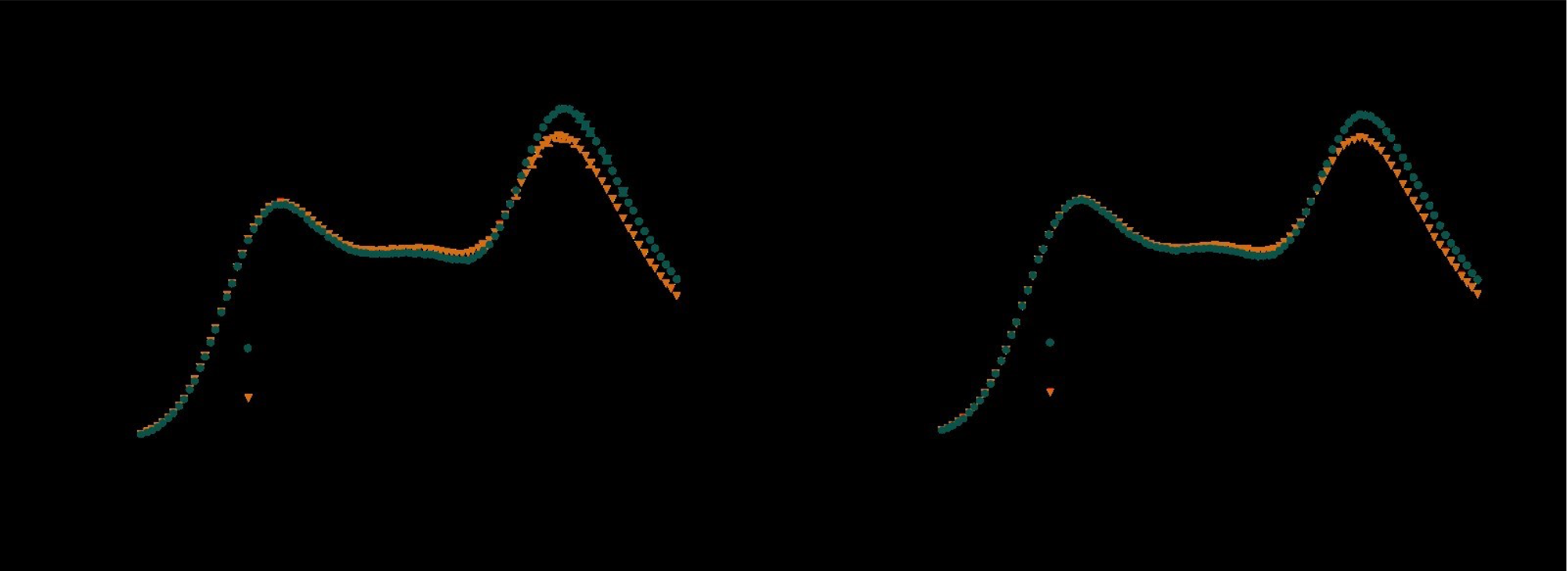
      In general, the rhythmic stimulation in the AB paradigm prevents EEG signals from returning to the baseline. Therefore, we cannot observe typical ERP components purely related to individual items, except for the P1 and N1 components related to the stream onset, which reveals no difference between the two conditions and are trailed by steady-state responses (SSRs) resonating at the stimulus rate (Fig. R1).

      Fig. R1. ERPs aligned to stream onset. EEG signals were filtered between 1–30 Hz, baseline-corrected (-200 to 0 ms before stream onset) and averaged across the electrodes in left parieto-occipital area where 10-Hz alpha power showed attentional modulation effect.

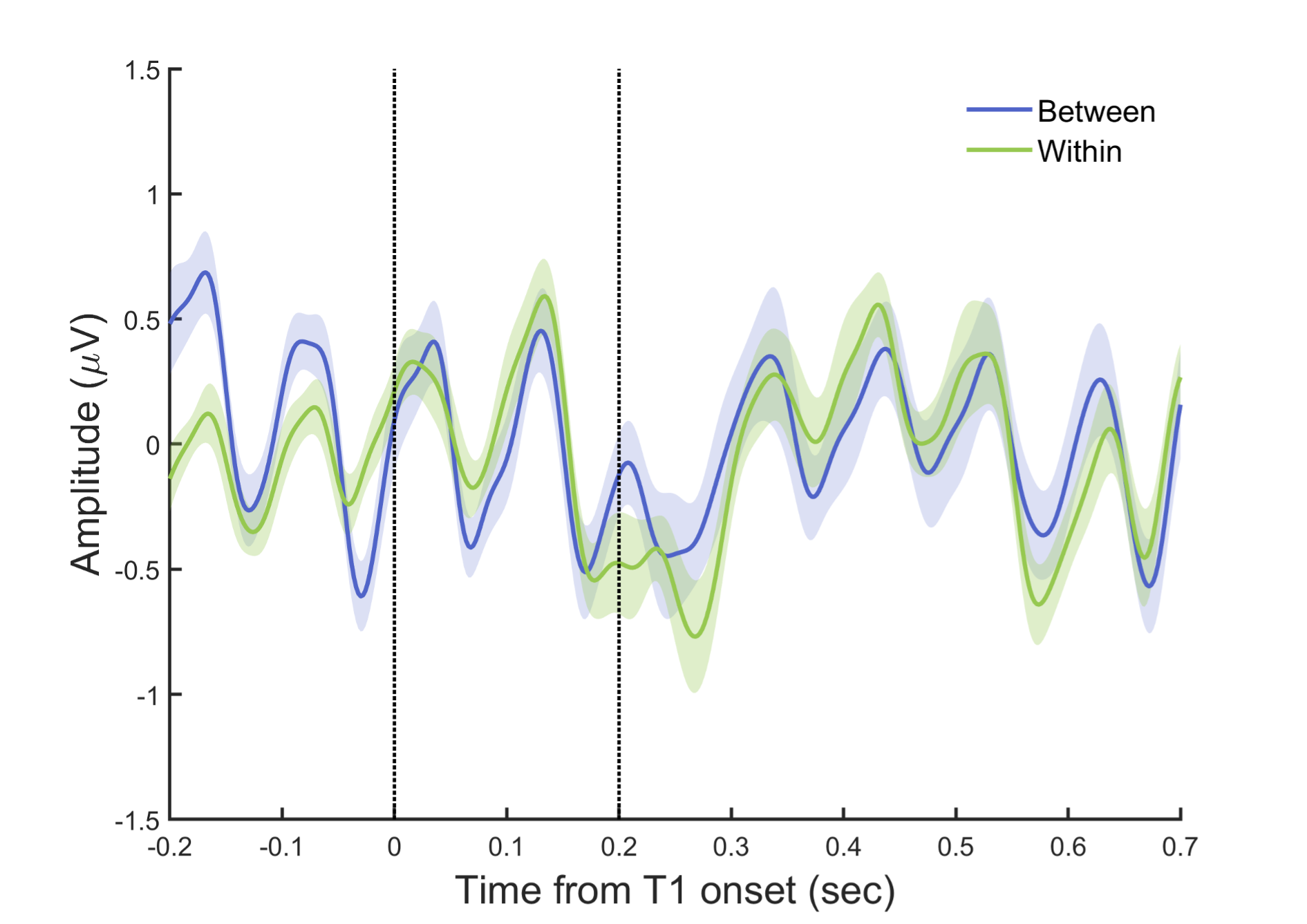
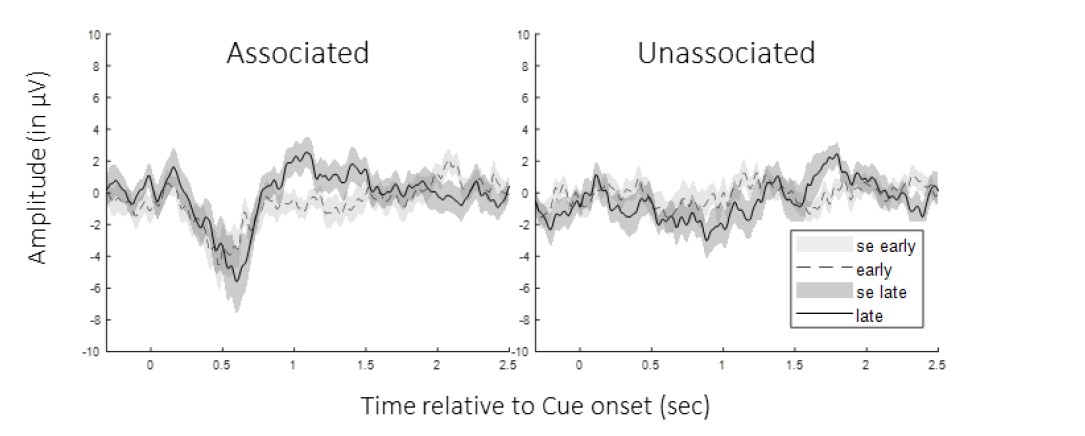
      To further inspect the potential differences in the target-related ERP signals between the within- and between-cycle conditions, we plotted the target-aligned waveforms for these experimental conditions. As shown in Fig. R2, a drop of ERP amplitude occurred for both conditions around T2 onset, and the difference between these two conditions was not significant (paired t-test estimated on mean amplitude every 20 ms from 0 to 700 ms relative to T1 onset, p > .05, FDR-corrected).

      Fig. R2. ERPs aligned to T1 onset. EEG signals were filtered between 1–30 Hz, and baseline-corrected using signals -100 to 0 ms before T1 onset. The two dash lines indicate the onset of T1 and T2, respectively.

      Since there is a trend of enhanced ERP response for the between-cycle relative to the within-cycle condition during the period of 0 to 100 ms after T2 onset (paired t-test on mean amplitude, p =.065, uncorrected), we then directly examined whether such post-T2 responses contribute to the behavioral attentional modulation effect and behavior-related neural indices. Crucially, we did not find any significant correlation of such T2-related ERP enhancement with the behavioral modulation index (BMI), or with the reported effects of alpha power and cross-frequency coupling (PAC). Furthermore, after controlling for the T2-related ERP responses, there still remains a significant correlation between the delta-alpha PAC and the BMI (rpartial = .596, p = .019), which is not surprising given that the PAC is calculated based on an 800-ms time window covering more pre-T2 than post-T2 periods (see the response to point #4 for details) rather than around the T2 onset. Taken together, these results clearly suggest that the T2-related ERP responses cannot explain the attentional modulation effect and the observed behavior-related neural indices.

      2) The alpha-band increase for T2 is indeed contradictory to the well known inhibitory function of alpha-band in attention. How could a target that is better discriminated elicit stronger inhibitory response? Related to the above point, the observed enhancement in alpha-band power and its coupling to low-frequency oscillation might derive from an enhanced ERP response for T2 target.

      Many thanks for the comment. We have briefly discussed this point in the revised manuscript (page 18, line 477).

      A widely accepted function of alpha activity in attention is that alpha oscillations suppress irrelevant visual information during spatial selection (Kelly et al., 2006; Thut et al., 2006; Worden et al., 2000). However, it becomes a controversial issue when there exists rhythmic sensory stimulation at alpha-band, just like the situation in the current study where both the visual stream and the contextual auditory rhythm were emitted at 10 Hz. In such a case, alpha-band neural responses at the stimulation frequency can be interpreted as either passively evoked steady-state responses (SSR) or actively synchronized intrinsic brain rhythms. From the former perspective (i.e., the SSR view), an increase in the amplitude or power at the stimulus frequency may indicate an enhanced attentional allocation to the stimulus stream that may result in better target detection (Janson et al., 2014; Keil et al., 2006; Müller & Hübner, 2002). Conversely, the latter view of the inhibitory function of intrinsic alpha oscillations would produce the opposite prediction. In a previous AB study, Janson and colleagues (2014) investigated this issue by separating the stimulus-evoked activity at 12 Hz (using the same power analysis method as ours) from the endogenous alpha oscillations ranging from 10.35 to 11.25 Hz (as indexed by individual alpha frequency, IAF). Interestingly, they found a dissociation between these two alpha-band neural responses, showing that the RSVP frequency power was higher in non-AB trials (T2 detected) than in AB trials (T2 undetected) while the IAF power exhibited the opposite pattern. According to these findings, the currently observed increase in alpha power for the between-cycle condition may reflect more of the stimulus-driven processes related to attentional enhancement. However, we don’t negate the effect of intrinsic alpha oscillations in our study, as the current design is not sufficient to distinguish between these two processes. We have discussed this point in the revised manuscript (page 18, line 477). Also, we have to admit that “alpha power” may not be the most precise term to describe our findings of the stimulus-related results. Thus, we have specified it as “neural responses to first-order rhythms at 10 Hz” and “10-Hz alpha power” in the revised manuscript (see page 12 in the Results section and page 18 in the Discussion section).

      As for the contribution of T2-related ERP response to the observed effect of 10 Hz power and cross-frequency coupling, please refer to our response to point #1.

      References:

      Janson, J., De Vos, M., Thorne, J. D., & Kranczioch, C. (2014). Endogenous and Rapid Serial Visual Presentation-induced Alpha Band Oscillations in the Attentional Blink. Journal of Cognitive Neuroscience, 26(7), 1454–1468. https://doi.org/10.1162/jocn_a_00551

      Keil, A., Ihssen, N., & Heim, S. (2006). Early cortical facilitation for emotionally arousing targets during the attentional blink. BMC Biology, 4(1), 23. https://doi.org/10.1186/1741-7007-4-23

      Kelly, S. P., Lalor, E. C., Reilly, R. B., & Foxe, J. J. (2006). Increases in Alpha Oscillatory Power Reflect an Active Retinotopic Mechanism for Distracter Suppression During Sustained Visuospatial Attention. Journal of Neurophysiology, 95(6), 3844–3851. https://doi.org/10.1152/jn.01234.2005

      Müller, M. M., & Hübner, R. (2002). Can the Spotlight of Attention Be Shaped Like a Doughnut? Evidence From Steady-State Visual Evoked Potentials. Psychological Science, 13(2), 119–124. https://doi.org/10.1111/1467-9280.00422

      Thut, G., Nietzel, A., Brandt, S., & Pascual-Leone, A. (2006). Alpha-band electroencephalographic activity over occipital cortex indexes visuospatial attention bias and predicts visual target detection. The Journal of Neuroscience : The Official Journal of the Society for Neuroscience, 26(37), 9494–9502. https://doi.org/10.1523/JNEUROSCI.0875-06.2006

      Worden, M. S., Foxe, J. J., Wang, N., & Simpson, G. V. (2000). Anticipatory Biasing of Visuospatial Attention Indexed by Retinotopically Specific α-Bank Electroencephalography Increases over Occipital Cortex. Journal of Neuroscience, 20(6), RC63–RC63. https://doi.org/10.1523/JNEUROSCI.20-06-j0002.2000

      3) To support that it is the context-induced entrainment that leads to the modulation in AB effect, the authors could examine pre-T2 response, e.g., alpha-power, and cross-frequency coupling, as well as its relationship to behavioral performance. I think the pre-stimulus response might be more convincing to support the authors' claim.

      Many thanks for the insightful suggestion. We have conducted additional analyses.

      Following this suggestion, we have examined the 10-Hz alpha power within the time window of -100–0 ms before T2 onset and found stronger activity for the between-cycle condition than for the within-cycle condition. This pre-T2 response is similar to the post-T2 response except that it is more restricted to the left parieto-occipital cluster (CP3, CP5, P3, P5, PO3, PO5, POZ, O1, OZ, t(15) = 2.774, p = .007), which partially overlaps with the cluster that exhibits a delta-alpha coupling effect significantly correlated with the BMI. We have incorporated these findings into the main text (page 12, line 315) and the Fig. 5A of the revised manuscript.

      As for the coupling results reported in our manuscript, the coupling index (PAC) was calculated based on the activity during the second and third cycles (i.e., 400 to 1200 ms from stream onset) of the contextual rhythm, most of which covers the pre-T2 period as T2 always appeared in the third cycle for both conditions. Together, these results on pre-T2 10-Hz alpha power and cross-frequency coupling, as well as its relationship to behavioral performance, jointly suggest that the observed modulation effect is caused by the context-induced entrainment rather than being a by-product of post-T2 processing.

      4) About the entrainment to rhythmic context and its relation to behavioral modulation index. Previous studies (e.g., Ding et al) have demonstrated the hierarchical temporal structure in speech signals, e.g., emergence of word-level entrainment introduced by language experience. Therefore, it is well expected that imposing a second-order structure on a visual stream would elicit the corresponding steady-state response. I understand that the new part and main focus here are the AB effects. The authors should add more texts explaining how their findings contribute new understandings to the neural mechanism for the intriguing phenomena.

      Many thanks for the suggestion. We have provided more discussion in the revised manuscript (page 17, line 447).

      We have provided more discussion on this important issue in the revised manuscript (page 17, line 447). In brief, our study demonstrates how cortical tracking of feature-based hierarchical structure reframes the deployment of attentional resources over visual streams. This effect, distinct from the hierarchical entrainment to speech signals (Ding et al., 2016; Gross et al., 2013), does not rely on previously acquired knowledge about the structured information and can be established automatically even when the higher-order structure comes from a task-irrelevant and cross-modal contextual rhythm. On the other hand, our finding sheds fresh light on the adaptive value of the structure-based entrainment effect by expanding its role from rhythmic information (e.g., speech) perception to temporal attention deployment. To our knowledge, few studies have tackled this issue in visual or speech processing.

      References:

      Ding, N., Melloni, L., Zhang, H., Tian, X., & Poeppel, D. (2016). Cortical tracking of hierarchical linguistic structures in connected speech. Nature Neuroscience, 19(1), 158–164. https://doi.org/10.1038/nn.4186

      Gross, J., Hoogenboom, N., Thut, G., Schyns, P., Panzeri, S., Belin, P., & Garrod, S. (2013). Speech Rhythms and Multiplexed Oscillatory Sensory Coding in the Human Brain. PLoS Biol, 11(12). https://doi.org/10.1371/journal.pbio.1001752

      Reviewer #2 (Public Review):

      In cognitive neuroscience, a large number of studies proposed that neural entrainment, i.e., synchronization of neural activity and low-frequency external rhythms, is a key mechanism for temporal attention. In psychology and especially in vision, attentional blink is the most established paradigm to study temporal attention. Nevertheless, as far as I know, few studies try to link neural entrainment in the cognitive neuroscience literature with attentional blink in the psychology literature. The current study, however, bridges this gap.

      The study provides new evidence for the dynamic attending theory using the attentional blink paradigm. Furthermore, it is shown that neural entrainment to the sensory rhythm, measured by EEG, is related to the attentional blink effect. The authors also show that event/chunk boundaries are not enough to modulate the attentional blink effect, and suggest that strict rhythmicity is required to modulate attention in time.

      In general, I enjoyed reading the manuscript and only have a few relatively minor concerns.

      1) Details about EEG analysis.

      . First, each epoch is from -600 ms before the stimulus onset to 1600 ms after the stimulus onset. Therefore, the epoch is 2200 s in duration. However, zero-padding is needed to make the epoch duration 2000 s (for 0.5-Hz resolution). This is confusing. Furthermore, for a more conservative analysis, I recommend to also analyze the response between 400 ms and 1600 ms, to avoid the onset response, and show the results in a supplementary figure. The short duration reduces the frequency resolution but still allows seeing a 2.5-Hz response.

      Thanks for the comments. Each epoch was indeed segmented from -600 to 1600 ms relative to the stimulus onset, but in the spectrum analysis, we only used EEG signals from stream onset (i.e., time point 0) to 1600 ms (see the Materials and Methods section) to investigate the oscillatory characteristics of the neural responses purely elicited by rhythmic stimuli. The 1.6-s signals were zero-padded into a 2-s duration to achieve a frequency resolution of 0.5 Hz.

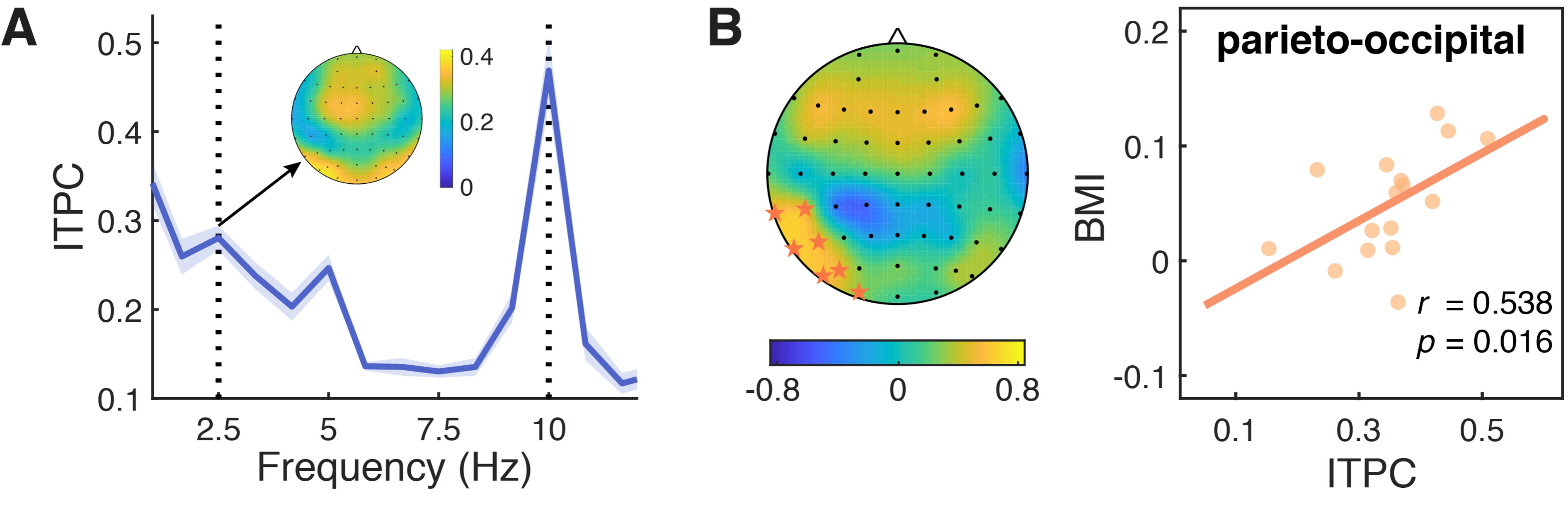
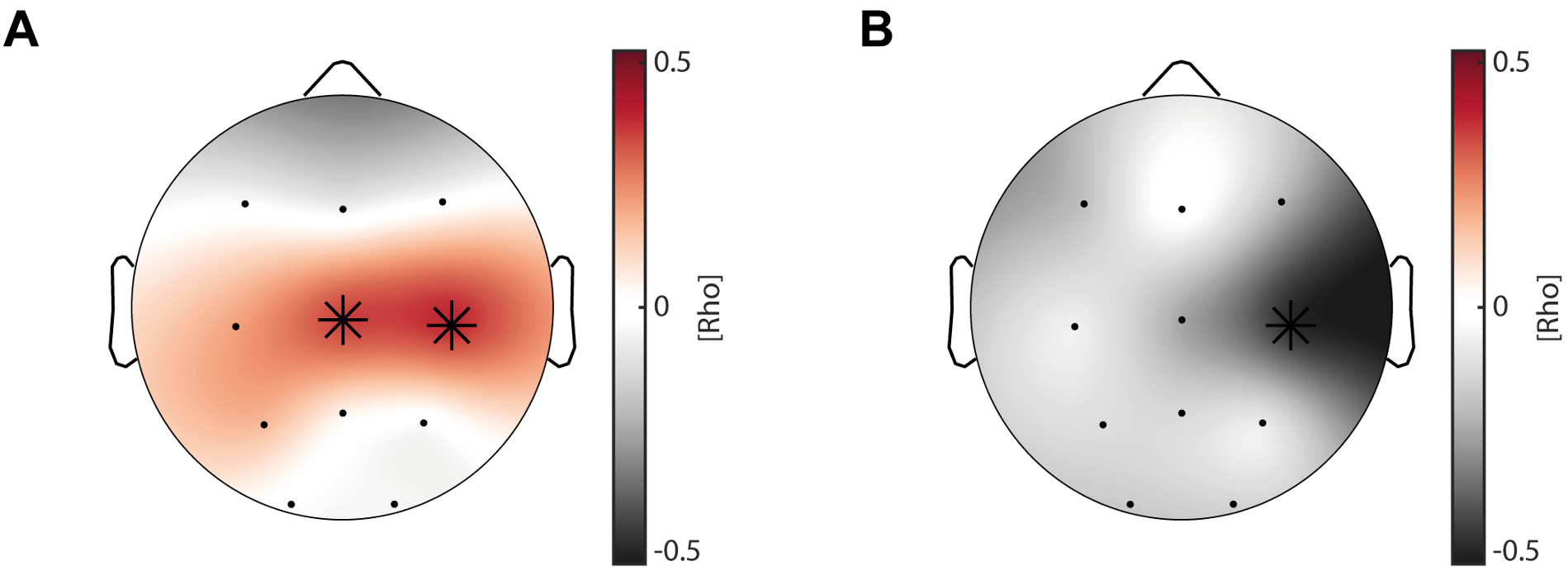
      According to the reviewer’s suggestion, we analyzed the EEG signals from 400 ms to 1600 ms relative to stream onset to avoid potential influence of the onset response, and showed the results in Figure 4. Basically, we can still observe spectral peaks at the stimulus frequencies of 2.5, 5 (the harmonic of 2.5 Hz), and 10 Hz for both power and ITPC spectrum. However, the peak magnitudes were much weaker than those of 1.6-s signals especially for 2.5 Hz, and the 2.5-Hz power did not survive the multiple comparisons correction across frequencies (FDR threshold of p < .05), which might be due to the relatively low signal-to-noise ratio for the analysis based on the 1.2-s epochs (only three cycles to estimate the activity at 2.5 Hz). Importantly, we did identify a significant cluster for 2.5 Hz ITPC in the left parieto-occipital region showing a positive correlation with the individuals’ BMI (Fig. R3; CP5, TP7, P5, P7, PO5, PO7, O1; r = .538, p = .016), which is consistent with the findings based on the longer epochs.

      Fig. R3. Neural entrainment to contextual rhythms during the period of 400–1600 ms from stream onset. (A) The spectrum for inter-trial phase coherence (ITPC) of EEG signals from 400 to 1600 ms after the stimulus onset. Shaded areas indicate standard errors of the mean. (B) The 2.5-Hz ITPC was significantly correlated with the behavioral modulation index (BMI) in a parieto-occipital cluster, as indicated by orange stars in the scalp topographic map.

      Second, "The preprocessed EEG signals were first corrected by subtracting the average activity of the entire stream for each epoch, and then averaged across trials for each condition, each participant, and each electrode." I have several concerns about this procedure.

      (A) What is the entire stream? It's the average over time?

      Yes, as for the power spectrum analysis, EEG signals were first demeaned by subtracting the average signals of the entire stream over time from onset to offset (i.e., from 0 to 1600 ms) before further analysis. We performed this procedure following previous studies on the entrainment to visual rhythms (Spaak et al., 2014). We have clarified this point in the “Power analysis” part of the Materials and Methods section (page 25, line 677).

      References:

      Spaak, E., Lange, F. P. de, & Jensen, O. (2014). Local Entrainment of Alpha Oscillations by Visual Stimuli Causes Cyclic Modulation of Perception. The Journal of Neuroscience, 34(10), 3536–3544. https://doi.org/10.1523/JNEUROSCI.4385-13.2014

      (B) I suggest to do the Fourier transform first and average the spectrum over participants and electrodes. Averaging the EEG waveforms require the assumption that all electrodes/participants have the same response phase, which is not necessarily true.

      Thanks for the suggestion. In an AB paradigm, the evoked neural responses are sufficiently time-locked to the periodic stimulation, so it is reasonable to quantify power estimate with spectral decomposition performed on trial-averaged EEG signals (i.e., evoked power). Moreover, our results of inter-trial phase coherence (ITPC), which estimated the phase-locking value across trials based on single-trial decomposed phase values, also provided supporting evidence that the EEG waveforms were temporally locked across trials to the 2.5-Hz temporal structure in the context session.

      Nevertheless, we also took the reviewer’s suggestion seriously and analyzed the power spectrum on the average of single-trial spectral transforms, i.e., the induced power, which puts emphasis on the intrinsic non-phase-locked activities. In line with the results of evoked power and ITPC, the induced power spectrum in context session also peaked at 2.5 Hz and was significantly stronger than that in baseline session at 2.5 Hz (t(15) = 4.186, p < .001, FDR-corrected with a p value threshold < .001). Importantly, Person correlation analysis also revealed a positive cluster in the left parieto-occipital region, indicating the induced power at 2.5 Hz also had strong relevance with the attentional modulation effect (P7, PO7, PO5, PO3; r = .606, p = .006). We have added these additional findings to the revised manuscript (page 11, line 288; see also Figure 4—figure supplement 1).

      2) The sequences are short, only containing 16 items and 4 cycles. Furthermore, the targets are presented in the 2nd or 3rd cycle. I suspect that a stronger effect may be observed if the sequence are longer, since attention may not well entrain to the external stimulus until a few cycles. In the first trial of the experiment, they participant may not have a chance to realize that the task-irrelevant auditory/visual stimulus has a cyclic nature and it is not likely that their attention will entrain to such cycles. As the experiment precedes, they learns that the stimulus is cyclic and may allocate their attention rhythmically. Therefore, I feel that the participants do not just rely on the rhythmic information within a trial but also rely on the stimulus history. Please discuss why short sequences are used and whether it is possible to see buildup of the effect over trials or over cycles within a trial.

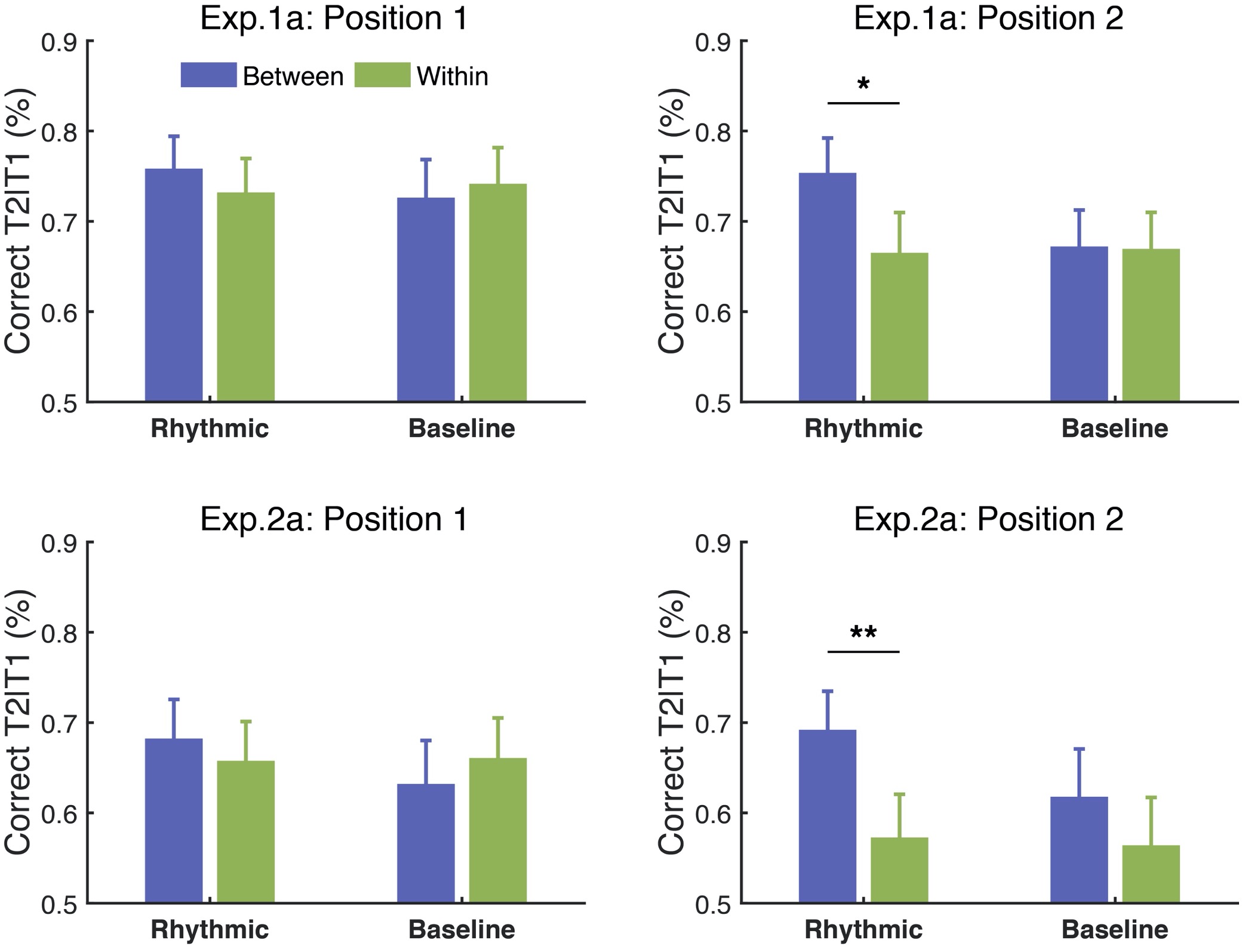
      Thanks for the comments. Typically, to induce a classic pattern of AB effect, the RSVP stream should contain 3–7 distractors before the first target (T1), with varying lengths of distractors (0–7) between two targets and at least 2 items after the second target (T2). In our study, we created the RSVP streams following these rules, which allowed us to observe the typical AB effect that T2 performance was deteriorated at Lag 2 relative to that at Lag 8. Nevertheless, we agree with the reviewer that longer streams would be better for building up the attentional entrainment effect, as we did observe the attentional modulation effect ramped up as the stream proceeded over cycles, consistent with the reviewer’s speculation. In Experiments 1a (using auditory context) and 2a (using color-defined visual context), we adopted two sets of target positions—an early one where T2 appeared at the 6th or 8th position (in the 2nd cycle) of the visual stream, and a late one where T2 appeared at the 10th or 12th position (in the 3rd cycle) of the visual stream. In the manuscript, we reported T2 performance with all the target positions combined, as no significant interaction was found between the target positions and the experimental conditions (ps. > .1). However, additional analysis demonstrated a trend toward an increase of the attentional modulation effect over cycles, from the early to the late positions. As shown in Fig. R4, the modulation effect went stronger and reached significance for the late positions (for Experiment 1a, t(15) = 2.83, p = .013, Cohen’s d = 0.707; for Experiment 2a, t(15) = 3.656, p = .002, Cohen’s d = 0.914) but showed a weaker trend for the early positions (for Experiment 1a, t(15) = 1.049, p = .311, Cohen’s d = 0.262; for Experiment 2a, t(15) = .606, p = .553, Cohen’s d = 0.152).

      Fig. R4. Attentional modulation effect built up over cycles in Experiments 1a & 2a. Error bars represent 1 SEM; * p<0.05, ** p<0.01.

      However, we did not observe an obvious buildup effect across trials in our study. The modulation effect of contextual rhythms seems to be a quick process that the effect is evident in the first quarter of trials in Experiment 1a (for, t(15) = 2.703, p = .016, Cohen’s d = 0.676) and in the second quarter of trials in Experiment 2a (for, t(15) = 2.478, p = .026, Cohen’s d = 0.620.

      3) The term "cycle" is used without definition in Results. Please define and mention that it's an abstract term and does not require the stimulus to have "cycles".

      Thanks for the suggestion. By its definition, the term “cycle” refers to “an interval of time during which a sequence of a recurring succession of events or phenomena is completed” or “a course or series of events or operations that recur regularly and usually lead back to the starting point” (Merriam-Webster dictionary). In the current study, we stuck to the recurrent and regular nature of “cycle” in general while defined the specific meaning of “cycle” by feature-based periodic changes of the contextual stimuli in each experiment (page 5, line 101; also refer to Procedures in the Materials and Methods section for details). For example, in Experiment 1a, the background tone sequence changed its pitch value from high to low or vice versa isochronously at a rate of 2.5 Hz, thus forming a rhythmic context with structure-based cycles of 400 ms. Note that we did not use the more general term “chunk”, because arbitrary chunks without the regularity of cycles are insufficient to trigger the attentional modulation effect in the current study. Indeed, the effect was eliminated when we replaced the rhythmic cycles with irregular chunks (Experiments 1d & 1e).

      4) Entrainment of attention is not necessarily related to neural entrainment to sensory stimulus, and there is considerable debate about whether neural entrainment to sensory stimulus should be called entrainment. Too much emphasis on terminology is of course counterproductive but a short discussion on these issues is probably necessary.

      Thanks for the comments. As commonly accepted, entrainment is defined as the alignment of intrinsic neuronal activity to the temporal structure of external rhythmic inputs (Lakatos et al., 2019; Obleser & Kayser, 2019). Here, we are interested in the functional roles of cortical entrainment to the higher-order temporal structure imposed on first-order sensory stimulation, and used the term entrainment to describe the phase-locking neural responses to such hierarchical structure following literature on auditory and visual perception (Brookshire et al., 2017; Doelling & Poeppel, 2015). In our study, the consistent results of power and ITPC have provided strong evidence that neural entrainment at the structure level (2.5 Hz) is significantly correlated with the observed attentional modulation effect. However, this does not mean that the entrainment of attention is necessarily associated with neural entrainment to sensory stimulus in a broader context, as attention may also be guided by predictions based on non-isochronous temporal regularity without requiring stimulus-based oscillatory entrainment (Breska & Deouell, 2017; Morillon et al._2016).

      On the other hand, there has been a debate about whether the neural alignment to rhythmic stimulation reflects active entrainment of endogenous oscillatory processes (i.e., induced activity) or a series of passively evoked steady-state responses (Keitel et al., 2019; Notbohm et al., 2016; Zoefel et al., 2018). The latter process is also referred to as “entrainment in a broad sense” by Obleser & Kayser (2019). Given that a presented rhythm always evokes event-related potentials, a better question might be whether the observed alignment reflects the entrainment of endogenous oscillations in addition to evoked steady-state responses. Here we attempted to tackle this issue by measuring the induced power, which emphasizes the intrinsic non-phase-locked activity, in addition to the phase-locked evoked power. Specifically, we quantified these two kinds of activities with the average of single-trial EEG power spectra and the power spectra of trial-averaged EEG signals, respectively, according to Keitel et al. (2019). In addition to the observation of evoked responses to the contextual structure, we also demonstrated an attention-related neural tracking of the higher-order temporal structure based on the induced power at 2.5 Hz (see Figure 4—figure supplement 1), suggesting that the observed attentional modulation effect is at least partially derived from the entrainment of intrinsic oscillatory brain activity. We have briefly discussed this point in the revised manuscript (page 17, line 460).

      References:

      Breska, A., & Deouell, L. Y. (2017). Neural mechanisms of rhythm-based temporal prediction: Delta phase-locking reflects temporal predictability but not rhythmic entrainment. PLOS Biology, 15(2), e2001665. https://doi.org/10.1371/journal.pbio.2001665

      Brookshire, G., Lu, J., Nusbaum, H. C., Goldin-Meadow, S., & Casasanto, D. (2017). Visual cortex entrains to sign language. Proceedings of the National Academy of Sciences, 114(24), 6352–6357. https://doi.org/10.1073/pnas.1620350114

      Doelling, K. B., & Poeppel, D. (2015). Cortical entrainment to music and its modulation by expertise. Proceedings of the National Academy of Sciences, 112(45), E6233–E6242. https://doi.org/10.1073/pnas.1508431112

      Henry, M. J., Herrmann, B., & Obleser, J. (2014). Entrained neural oscillations in multiple frequency bands comodulate behavior. Proceedings of the National Academy of Sciences, 111(41), 14935–14940. https://doi.org/10.1073/pnas.1408741111

      Keitel, C., Keitel, A., Benwell, C. S. Y., Daube, C., Thut, G., & Gross, J. (2019). Stimulus-Driven Brain Rhythms within the Alpha Band: The Attentional-Modulation Conundrum. The Journal of Neuroscience, 39(16), 3119–3129. https://doi.org/10.1523/JNEUROSCI.1633-18.2019

      Lakatos, P., Gross, J., & Thut, G. (2019). A New Unifying Account of the Roles of Neuronal Entrainment. Current Biology, 29(18), R890–R905. https://doi.org/10.1016/j.cub.2019.07.075

      Morillon, B., Schroeder, C. E., Wyart, V., & Arnal, L. H. (2016). Temporal Prediction in lieu of Periodic Stimulation. Journal of Neuroscience, 36(8), 2342–2347. https://doi.org/10.1523/JNEUROSCI.0836-15.2016

      Notbohm, A., Kurths, J., & Herrmann, C. S. (2016). Modification of Brain Oscillations via Rhythmic Light Stimulation Provides Evidence for Entrainment but Not for Superposition of Event-Related Responses. Frontiers in Human Neuroscience, 10. https://doi.org/10.3389/fnhum.2016.00010

      Obleser, J., & Kayser, C. (2019). Neural Entrainment and Attentional Selection in the Listening Brain. Trends in Cognitive Sciences, 23(11), 913–926. https://doi.org/10.1016/j.tics.2019.08.004

      Zoefel, B., ten Oever, S., & Sack, A. T. (2018). The Involvement of Endogenous Neural Oscillations in the Processing of Rhythmic Input: More Than a Regular Repetition of Evoked Neural Responses. Frontiers in Neuroscience, 12. https://doi.org/10.3389/fnins.2018.00095

      Reviewer #3 (Public Review):

      The current experiment tests whether the attentional blink is affected by higher-order regularity based on rhythmic organization of contextual features (pitch, color, or motion). The results show that this is indeed the case: the AB effect is smaller when two targets appeared in two adjacent cycles (between-cycle condition) than within the same cycle defined by the background sounds. Experiment 2 shows that this also holds for temporal regularities in the visual domain and Experiment 3 for motion. Additional EEG analysis indicated that the findings obtained can be explained by cortical entrainment to the higher-order contextual structure. Critically feature-based structure of contextual rhythms at 2.5 Hz was correlated with the strength of the attentional modulation effect.

      This is an intriguing and exciting finding. It is a clever and innovative approach to reduce the attention blink by presenting a rhythmic higher-order regularity. It is convincing that this pulling out of the AB is driven by cortical entrainment. Overall, the paper is clear, well written and provides adequate control conditions. There is a lot to like about this paper. Yet, there are particular concerns that need to be addressed. Below I outline these concerns:

      1) The most pressing concern is the behavioral data. We have to ensure that we are dealing here with a attentional blink. The way the data is presented is not the typical way this is done. Typically in AB designs one see the T2 performance when T1 is ignored relative to when T1 has to be detected. This data is not provided. I am not sure whether this data is collected but if so the reader should see this.

      Many thanks for the suggestion. We appreciate the reviewer for his/her thoughtful comments. To demonstrate the AB effect, we did include two T2 lag conditions in our study (Experiments 1a, 1b, 2a, and 2b)—a short-SOA condition where T2 was located at the second lag of T1 (i.e., SOA = 200 ms), and a long-SOA condition where T2 appeared at the 8th lag of T1 (i.e., SOA = 800 ms). In a typical AB effect, T2 performance at short lags is remarkably impaired compared with that at long lags. In our study, we consistently replicated this effect across the experiments, as reported in the Results section of Experiment 1 (page 5, line 106). Overall, the T2 detection accuracy conditioned on correct T1 response was significantly impaired in the short-SOA condition relative to that in the long-SOA condition (mean accuracy > 0.9 for all experiments), during both the context session and the baseline session. More crucially, when looking into the magnitude of the AB effect as measured by (ACClong-SOA - ACCshort-SOA)/ACClong-SOA, we still obtained a significant attentional modulation effect (for Experiment 1a, t(15) = -2.729, p = .016, Cohen’s d = 0.682; for Experiment 2a, t(15) = -4.143, p <.001, Cohen’s d = 1.036) similar to that reflected by the short-SOA condition alone, further confirming that cortical entrainment effectively influences the AB effect.

      Although we included both the long- and short-SOA conditions in the current study, we focused on T2 performance in the short-SOA condition rather than along the whole AB curve for the following reasons. Firstly, for the long-SOA conditions, the T2 performance is at ceiling level, making it an inappropriate baseline to probe the attentional modulation effect. We focused on Lag 2 because previous research has identified a robust AB effect around the second lag (Raymond et al., 1992), which provides a reasonable and sensitive baseline to probe the potential modulation effect of the contextual auditory and visual rhythms. Note that instead of using multiple lags, we varied the length of the rhythmic cycles (i.e., a cycle of 300 ms, 400 ms, and 500 ms corresponding to a rhythm frequency of 3.3 Hz, 2.5 Hz, and 2 Hz, respectively, all within the delta band), and showed that the attentional modulation effect could be generalized to these different delta-band rhythmic contexts, regardless of the absolute positions of the targets within the rhythmic cycles.

      As to the T1 performance, the overall accuracy was very high, ranging from 0.907 to 0.972, in all of our experiments. The corresponding results have been added to the Results section of the revised manuscript (page 5, line 103). Notably, we did not find T1-T2 trade-offs in most of our experiments, except in Experiment 2a where T1 performance showed a moderate decrease in the between-cycle condition relative to that in the within-cycle condition (mean ± SE: 0.888 ± 0.026 vs. 0.933 ± 0.016, respectively; t(15) = -2.217, p = .043). However, by examining the relationship between the modulation effects (i.e., the difference between the two experimental conditions) on T1 and T2, we did not find any significant correlation (p = .403), suggesting that the better performance for T2 was not simply due to the worse performance in detecting T1.

      Finally, previous studies have shown that ignoring T1 would lead to ceiling-level T2 performance (Raymond et al., 1992). Therefore, we did not include such manipulation in the current study, as in that case, it would be almost impossible for us to detect any contextual modulation effect.

      References:

      Raymond, J. E., Shapiro, K. L., & Arnell, K. M. (1992). Temporary suppression of visual processing in an RSVP task: An attentional blink? Journal of Experimental Psychology: Human Perception and Performance, 18(3), 849–860. https://doi.org/10.1037/0096-1523.18.3.849

      2) Also, there is only one lag tested. The ensure that we are dealing here with a true AB I would like to see that more than one lag is tested. In the ideal situation a full AB curve should be presented that includes several lags. This should be done for at least for one of the experiments. It would be informative as we can see how cortical entrainment affects the whole AB curve.

      Many thanks for the suggestion. Please refer to our response to the point #1 for “Reviewer #3 (Public Review)”. In short, we did include two T2 lag conditions in our study (Experiments 1a, 1b, 2a and 2b), and the results replicated the typical AB effect. We have clarified this point in the revised manuscript (page 5, line 106).

      3) Also, there is no data regarding T1 performance. It is important to show that this the better performance for T2 is not due to worse performance in detecting T1. So also please provide this data.

      Many thanks for the suggestion. Please refer to our response to the point #1 or “Reviewer #3 (Public Review)”. We have reported the T1 performance in the revised manuscript (page 5, line 103), and the results didn’t show obvious T1-T2 trade-offs.

      4) The authors identify the oscillatory characteristics of EEG signals in response to stimulus rhythms, by examined the FFT spectral peaks by subtracting the mean power of two nearest neighboring frequencies from the power at the stimulus frequency. I am not familiar with this procedure and would like to see some justification for using this technique.

      According to previous studies (Nozaradan, 2011; Lenc e al., 2018), the procedure to subtract the average amplitude of neighboring frequency bins can remove unrelated background noise, like muscle activity or eye movement. If there were no EEG oscillatory responses characteristic of stimulus rhythms, the amplitude at a given frequency bin should be similar to the average of its neighbors, and thus no significant peaks could be observed in the subtracted spectrum.

      References:

      Lenc, T., Keller, P. E., Varlet, M., & Nozaradan, S. (2018). Neural tracking of the musical beat is enhanced by low-frequency sounds. Proceedings of the National Academy of Sciences, 115(32), 8221–8226. https://doi.org/10.1073/pnas.1801421115

      Nozaradan, S., Peretz, I., Missal, M., & Mouraux, A. (2011). Tagging the Neuronal Entrainment to Beat and Meter. The Journal of Neuroscience, 31(28), 10234–10240. https://doi.org/10.1523/JNEUROSCI.0411-11.2011

    1. Author Response:

      Reviewer #1 (Public Review):

      The manuscript by Chakraborty focuses on methods to direct dsDNA to specific cell types within an intact multicellular organism, with the ultimate goal of targeting DNA-based nanodevices, often as biosensors within endosomes and lysosomes. Taking advantage of the endogenous SID-2 dsRNA receptor expressed in C. elegans intestinal cells, the authors show that dsDNA conjugated to dsRNA can be taken into the intestinal endosomal system via feeding and apical endocytosis, while dsDNA alone is not an efficient endocytic cargo from the gut lumen. Since most cells do not express a dsRNA receptor, the authors sought to develop a more generalizable approach. Via phage display screening they identified a novel camelid antibody 9E that recognizes a short specific DNA sequence that can be included at the 3' end of synthesized dsDNAs. The authors then showed that this antibody can direct binding, and in some cases endocytosis, of such DNAs when 9E was expressed as a fusion with transmembrane protein SNB-1. This approach was successful in targeting microinjected dsDNA pan-neuronally when expressed via the snb-1 promoter, and to specific neuronal subsets when expressed via other promoters. Endocytosed dsDNA appeared in puncta moving in neuronal processes, suggesting entry into endosomes. Plasma membrane targeting appeared feasible using 9E fusion to ODR-2.

      The major strength of the paper is in the identification and testing of the 9E camelid antibody as part of a generalizable dsDNA targeting system. This aspect of the paper will likely be of wide interest and potentially high impact, since it could be applied in any intact animal system subject to transgene expression. A weakness of the paper is the choice of "nanodevice". It was not clear what utility was present in the DNAs used, such as D38, that made them "devices", aside from their fluorescent tag that allowed tracking their localization.

      We used a DNA nanodevice, denoted pHlava-9E, that uses pHrodo as a pH-sensitive dye. pHlava-9E is designed to provide a digital output of compartmentalization i.e., its pH profile is such that even if it is internalized into a mildly acidic vesicle, the pH readout is as high as one would observe with a lysosome. This gives an unambiguous readout of surface-immobilized probe to endocytosed probe.

      Another potential weakness is that the delivered DNA is limited to the cell surface or the lumen of endomembrane compartments without access to the cytoplasm or nucleus. In general the data appeared to be of high quality and was well controlled, supporting the authors conclusions.

      We completely agree that we cannot target DNA nanodevices to sub-cellular locations such as the cytoplasm or the nucleus with this strategy. However, we do not see this as a “weakness”, but rather, as a limitation of the current capabilities of DNA nanotechnology. It must be mentioned that though fluorescent proteins were first described in 1962, it was 30 years before others targeted them to the endoplasmic reticulum (1992) or the nucleus (1993)(Brini et al., 1993; Kendall et al., 1992). Probe technologies undergo stage-wise improvements/expansions. We have therefore added a small section in the conclusions section outlining the future challenges in sub-cellular targeting of DNA-nanodevices.

      Reviewer #2 (Public Review):

      The authors demonstrate the tissue-specific and cell-specific targeting of double-stranded DNA (dsDNA) using C. elegans as a model host animal. The authors focused on two distinct tissues and delivery routes: feeding dsDNA to target a class of organelles within intestinal cells, and injecting dsDNA to target presynaptic endocytic structures in neurons. To achieve efficient intestinal targeting, the authors leveraged dsRNA uptake via endogenous intestinal SID-2 receptors by fusing dsRNA to a fluorophore-labeled dsDNA probe. In contrast, neuronal endosome/synaptic vesicle (SV) targeting was achieved by designing a nanobody that specifically binds a short dsDNA motif fused to the fluorophore-labeled dsDNA probe. Combining dsDNA probe injection with nanobody neuronal expression (fused to a neuronal vSNARE to achieve synaptic targeting), the authors demonstrated that the injected dsDNA could be taken up by a variety of distinct neuronal subtypes.

      Strengths:

      While nanodevices built on dsDNA platforms have been shown to be taken up by scavenger receptors in C. elegans (including previous work from several of these authors), this strategy will not work in many tissue types lacking these receptors. The authors successfully circumvented this limitation using distinct strategies for two cell types in the worm, thereby providing a more general approach for future efforts. The approaches are creative, and the nanobody development in particular allows for endocytic delivery in any cell type. The authors exploited quantitative imaging approaches to examine the subcellular targeting of dsDNA probes in living animals and manipulated endogenous receptors to demonstrate the mechanism of dsRNA-based dsDNA uptake in intestinal cells.

      Weaknesses:

      To validate successful delivery of a functional nanodevice, one would ideally demonstrate the function of a particular nanodevice in at least one of the examples provided in this work. The authors have successfully used a variety of custom-designed dsDNA probes in living worms in numerous past studies, so this would not be a technical hurdle. In the current study, the reader has no means of assessing whether the dsDNA is intact and functional within its intracellular compartment.

      We now demonstrate the use of a functional nanodevice to detect pH profiles of a given microenvironment. This functional nanodevice contains two fluorescent reporter dyes, each attached to one of the strands of a DNA duplex. In order to obtain pH readouts, the device integrity is essential for ratiometric sensing.

      Coelomocytes are cells known for their scavenging and degradative lysosomal machinery. Previous studies of the stability of variously structured DNA nanodevices in coelomocytes, have shown that DNA devices based on 38 bp DNA duplexes have a half life of >8 hours in actively scavenging cells such as coelomocytes (Chakraborty et al., 2017; Surana et al., 2013) Given that our sensing in the gut as well as in the neuron are performed in <1 hour post feeding or injection, pHlava-9E is >97% intact.

      Another minor weakness is the lack of a quantitative assessment of colocalization in intestinal cells or neurons in an otherwise nicely quantitative study. Since characterization of the targeting described here is an essential part of evaluating the method, a stronger demonstration of colocalization would significantly buttress the authors' claims.

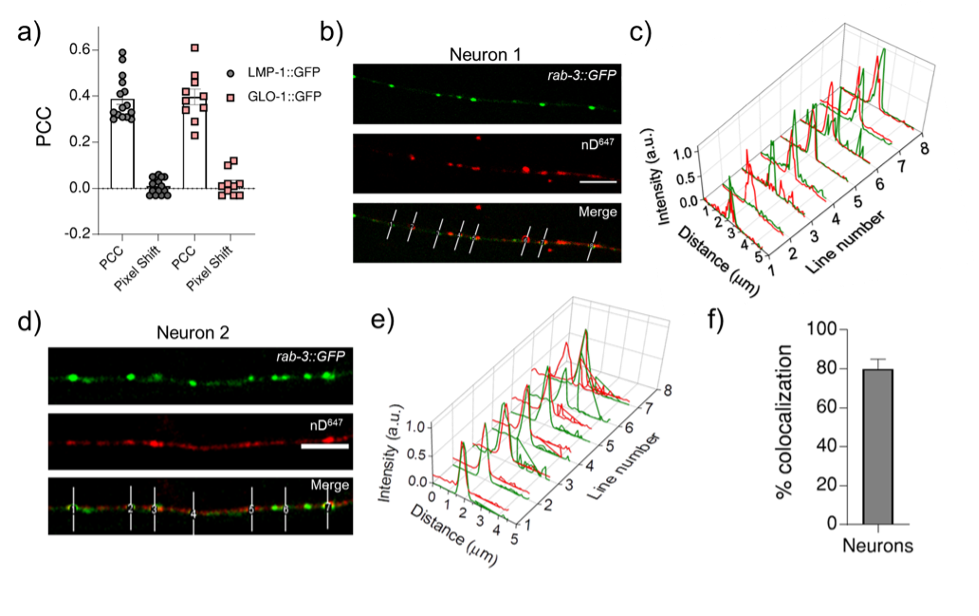
      We have now quantified colocalization in each cellular system. Please see Figure R1 below (Figure 1 Supplementary figure 1 and Figure 4 Supplementary figure 2 of the revised manuscript).

      Figure R1: a) Pearson’s correlation coefficient (PCC) calculated for the colocalization between R50D38 (red) and lysosomal markers LMP-1 or GLO-1 (green) in the indicated transgenic worms. b) & d) Representative images of nanodevice nD647 uptake (red) in transgenics expressing both prab-3::gfp::rab-3 (green) and psnb-1:snb-1::9E c - e) Normalized line intensity profiles across the indicated lines in b and d; f) Percentage colocalization of nD647 (red) with RAB3:GFP (green). Error bar represents the standard deviation between two data sets.

      While somewhat incomplete, this study represents a step forward in the development of a general targeting approach amenable to nanodevice delivery in animal models.

    1. Author Response:

      Evaluation Summary:

      This manuscript will be of interest to a broad audience of immunologists especially those studying host-pathogen interactions, mucosal immunology, innate immunity and interferons. The study reveals a novel role for neutrophils in the regulation of pathological inflammation during viral infection of the genital mucosa. The main conclusions are well supported by a combination of precise technical approaches including neutrophil-specific gene targeting and antibody-mediated inhibition of selected pathways.

      We would like to thank the reviewers for taking the time to review our manuscript, would also like to thank the editors for handling our manuscript. We are grateful for the positive response to our work and the thoughtful suggestions.

      Reviewer #1 (Public Review):

      Overall this is a well-done study, but some additional controls and experiments are required, as discussed below. The authors have done a considerable amount of work, resulting in quite a lot of negative data, and so should be commended for persistence to eventually identify the link between neutrophils with IL-18, though type I IFN signaling.

      Thank you! We appreciate the feedback and suggestions for strengthening the study.

      Major Comments:

      -A major conclusion of this manuscript is prolonged type I IFN production following vaginal HSV-2 infection, but the data presented herein did not actually demonstrate this. At 2 days post infection, IFN beta was higher (although not significantly) in HSV-2 infection, but much higher in HSV-1 infection compared to uninfected controls. At 5 days post infection the authors show mRNA data, but not protein data. If the authors are relying on prolonged type I IFN production, then they should demonstrate increased IFN beta during HSV-2 infection at multiple days after infection including 5dpi and 7dpi.

      We apologize for not including the IFN protein data and have now have provided this information in new Figure 3 and Figure 3 - Supplement 3. This new addition shows measurement of secreted IFNb in vaginal lavages at 4, 5 and 7 d.p.i., as well as total IFNb levels in vaginal tissue at 7 d.p.i..

      -Does the CNS viral load or kinetics of viral entry into the CNS differ in mice depleted of neutrophils, IFNAR cKO mice, or mice treated with anti- IL-18? Do neutrophils and/or IL-18 participate at all in neuronal protection from infection?

      To maintain the focus of our study on the host factors that contribute specifically to genital disease, we have not included discussion on viral dissemination into the PNS or CNS, especially as viral invasion of

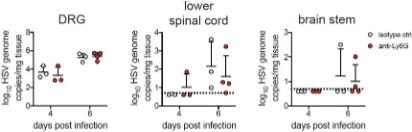
      the CNS seems to be an infrequent occurrence during genital herpes in humans. However, we have performed some preliminary exploration of this interesting question, and find that viral invasion of the nervous system is unaltered in the absence of neutrophils. This is in accordance with the lack of antiviral neutrophil activity we have described in the vagina after HSV-2 infection. These preliminary data are provided below as a Reviewer Figure 1. We have not yet begun to investigate whether IL-18 modulates neuroprotection, but agree this is an important question to address in future studies.

      RFigure 1. Viral burden in the nervous system is similar in the presence or absence of neutrophils. Graphs show viral genomes measured by qPCR from the DRG, lower half of of the spinal cord and the brainstem at the indicated days post- infection.

      -In Figure 3 the authors show that neutrophil "infection" clusters 2 and 5 express high levels of ISGs. Only 4 of these ISGs are shown in the accompanying figures. Please list which ISGs were increased in neutrophils after both HSV-2 and HSV-1 infection, perhaps in a table. Were there any ISGs specifically higher after HSV-2 infection alone, any after HSV-1 infection alone?

      These tables listing differentially-expressed neutrophils ISGs during HSV-1 and HSV-2 have now been provided in new Figure 3 - Supplement 1, with complete lists of DEGs provided as Source Files for the same figure.

      -The authors claim that HSV-1 infection recruits non-pathogenic neutrophils compared to the pathogenic neutrophils recruited during HSV-2 infection. Can the authors please discuss if these differences in inflammation or transcriptional differences between the neutrophils in these two different infections could be due to differences in host response to these two viruses rather than differences in inflammation? Please elaborate on why HSV-1 used as opposed to a less inflammatory strain of HSV-2. Furthermore, does HSV-1 infection induce vaginal IL-18 production in a neutrophil-dependent fashion as well?

      These are excellent questions, and we have emphasized that differences in host responses against HSV-1 and HSV-2 likely lead to distinct inflammatory milieus that differentially affect neutrophil responses in lines 374-375 and 409-419. We completely agree that differences in neutrophil responses are likely due to distinct host responses against HSV-1 and HSV-2 and apologize for not making that clear. We have previously described some of the other differences in the immunological response against these two viruses (Lee et al, JCI Insight 2020). We would suggest that differences in the host response against these two viruses would naturally result in differences in the local inflammatory milieu, which then modulates neutrophil responses. Whether the transcriptomes of neutrophils beyond the immediate site of infection (outside the vagina) are different between HSV-1 and HSV-2 is currently an open question.

      As for why we used HSV-1 instead of a less inflammatory strain of HSV-2, we had originally been interested in trying to model the distinct disease outcomes that have previously been described during HSV-1 vs HSV-2 genital herpes in humans and thought this would be a relevant comparison. We have not yet examined infection with less inflammatory HSV-2 strains, but agree that this is a great idea. We have also not yet examined neutrophil-dependent IL-18 production in the context of HSV-1.

      Reviewer #2 (Public Review):

      This manuscript will be of interest to a broad audience of immunologists especially those studying host-pathogen interactions, mucosal immunology, innate immunity and interferons. The study reveals a novel role for neutrophils in the regulation of pathological inflammation during viral infection of the genital mucosa. The main conclusions are well supported by a combination of precise technical approaches including neutrophil-specific gene targeting and antibody-mediated inhibition of selected pathways.

      In this study by Lebratti, et al the authors examined the impact of neutrophil depletion on disease progression, inflammation and viral control during a genital infection with HSV-2. They find that removal of neutrophils prior to HSV-2 infection resulted in ameliorated disease as assessed by inflammatory score measurements. Importantly, they show that neutrophil depletion had no significant impact on viral burden nor did it affect the recruitment of other immune cells thus suggesting that the observed improvement on inflammation was a direct effect of neutrophils. The role of neutrophils in promoting inflammation appears to be specific to HSV-2 since the authors show that HSV-1 infection resulted in comparable numbers of neutrophils being recruited to the vagina yet HSV-1 infection was less inflammatory. This observation thus suggests that there might be functional differences in neutrophils in the context of HSV-2 versus HSV-1 infection that could underlie the distinct inflammatory outcomes observed in each infection. In ordered to uncover potential mechanisms by which neutrophils affect inflammation the authors examined the contributions of classical neutrophil effector functions such as NETosis (by studying neutrophil-specific PAD4 deficient mice), reactive oxygen species (using mice global defect in NADH oxidase function) and cytokine/phagocytosis (by studying neutrophil-specific STIM-1/STIM-2 deficient mice). The data shown convincingly ruled out a contribution by the neutrophil factors examined. The authors thus performed an unbiased single cell transcriptomic analysis of vaginal tissue during HSV-1 and HSV-2 infection in search for potentially novel factors that differentially regulate inflammation in these two infections. tSNE analysis of the data revealed the presence of three distinct clusters of neutrophils in vaginal tissue in mock infected mice, the same three clusters remained after HSV-1 infection but in response to HSV-2 only two of the clusters remained and showed a sustained interferon signature primarily driven by type I interferons (IFNs). In order to directly interrogate the impact of type I IFN on the regulation of inflammation the authors blocked type I IFN signaling (using anti IFNAR antibodies) at early or late times after infection and showed that late (day 4) IFN signaling was promoting inflammation while early (before infection) IFN was required for antiviral defense as expected. Importantly, the authors examined the impact of neutrophil-intrinsic IFN signaling on HSV-2 infection using neutrophil-specific IFNAR1 knockout mice (IFNAR1 CKO). The genetic ablation of IFNAR1 on neutrophils resulted in reduced inflammation in response to HSV-2 infection but no impact on viral titers; findings that are consistent with observations shown for neutrophil-depleted mice. The use of IFNAR1 CKO mice strongly support the importance of type I IFN signaling on neutrophils as direct regulators of neutrophil inflammatory activity in this model. Since type I IFNs induce the expression of multiple genes that could affect neutrophils and inflammation in various ways the authors set out to identify specific downstream effectors responsible for the observed inflammatory phenotype. This search lead them to IL-18 as possible mediator. They showed that IL-18 levels in the vagina during HSV-2 infection were reduced in neutrophil-depleted mice, in mice with "late" IFNAR blockade and in IFNAR1 CKO mice. Furthermore, they showed that antibody-mediated neutralization of IL-18 ameliorated the inflammatory response of HSV-2 infected mice albeit to a lesser extent that what was seen in IFNAR1 CKO. Altogether, the study presents intriguing data to support a new role for neutrophils as regulators of inflammation during viral infection via an IFN-IL-18 axis.

      In aggregate, the data shown support the author's main conclusions, but some of the technical approaches need clarification and in some cases further validation that they are working as intended.

      Thank you! We appreciate the enthusiasm for our work as well as the suggestions for improving our study.

      1) The use of anti-Ly6G antibodies (clone 1A8) to target neutrophil depletion in mice has been shown to be more specific than anti-Gr1 antibodies (which targets both monocytes and neutrophils) thus anti-Ly6G antibodies are a good technical choice for the study. Neutrophils are notoriously difficult to deplete efficiently in vivo due at least in part to their rapid regeneration in the bone marrow. In order to sustain depletion, previous reports indicate the need for daily injection of antibodies. In the current study the authors report the use of only one, intra-peritoneal injection (500 mg) of 1A8 antibodies and that this single treatment resulted in diminished neutrophil numbers in the vagina at day 5 after viral infection (Fig 1A). Data shown in figure 2B suggests that there are neutrophils present in the vagina of uninfected mice, that there is a significant increase in their numbers at day 2 and that their numbers remain fairly steady from days 2 to 5 after infection. In order to better understand the impact antibody-mediated depletion in this model the authors should have examined the kinetics of depletion from day 0 through 5 in the vaginal tissue after 1A8 injection as compared to the effect of antibodies in the periphery. These additional data sets would allow for a deeper understanding of neutrophil responses in the vagina as compared to what has been published in other models of infection at other mucosal sites.

      We agree and apologize for not providing this information in the original submission. Neutrophil depletion kinetics from the vagina have been shown in new Figure 1A, while depletion from the blood is shown in new Figure 1 - Supplement 1.

      2) The authors used antibody-mediated blockade as a means to interrogate the impact of type I IFNs and IL-18 in their model. The kinetics of IFNAR blockade were nicely explained and supported by data shown in supplementary figure 4. IFNAR blockade was done by intra-peritoneal delivery of antibodies at one day before infection or at day 4 after infection. When testing the role of IL-18 the authors delivered the blocking antibody intra-vaginally at 3 days post infection. The authors do not provide a rationale for changing delivery method and timing of antibody administration to target IL-18 relative to IFNAR signaling. Since the model presented argues for an upstream role for IFNAR as inducer of IL-18 it is unclear why the time point used to target IL-18 is before the time used for IFNAR.

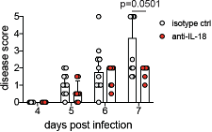
      We thank Reviewer #2 for raising this point and apologize for not providing an explanation for the differences in antibody treatment regimens for modulating IFNAR and IL-18. As the anti-IL-18 mAb is a cytokine neutralizing antibody, we hypothesized that administering the antibody vaginally would help to concentrate the antibody at the relevant site of cytokine production and increase the potency of neutralization. This is in contrast to systemic administration of the anti-IFNAR1 mAb that acts to block signaling in the 'receiving' cell. We expect the anti-IFNAR1 mAb (given in much higher doses) to bind both circulating cells that are recruited to the site of infection as well as cells that are already at the site of infection. Similarly, we started the anti-IL-18 antibody treatment one day earlier to allow a presumably sufficient amount antibody to accumulate in the vagina. Our rationale has been included in the revised manuscript (lines 351-353). We are pleased to report, however, that we have conducted preliminary studies in which mice were treated beginning at 4 d.p.i. rather than 3 d.p.i., and observe similar trends. This data is provided below as Reviewer Figure 3.

      RFigure 3. Mice treated with anti-IL-18 mAb starting at 4 d.p.i. exhibit reduced disease severity. Mice were infected with HSV-2 and treated ivag with 100ug of anti-IL-18 on 4, 5 and 6 d.p.i.. Mice were monitored for disease until 7 d.p.i.. Data was analyzed by repeated measured two-way ANOVA with Geisser-Greenhouse correction and Bonferroni's multiple comparisons test.

      3) An open question that remains is the potential mechanism by which IL-18 is acting as effector cytokine of epithelial damage. As acknowledged by the authors the rescue seen in IFNAR1 CKO mice (Fig 5C) is more dramatic that targeting IL-18 (Fig 6D). It is thus very likely that IFNAR signaling on neutrophils is affecting other pathways. It would have been greatly insightful to perform a single cell RNA seq experiment with IFNAR CKO mice as done for WT mice in Fig 3. Such an analysis might would have provided a more thorough understanding of neutrophil-mediated inflammatory pathways that operate outside of classical neutrophil functions.

      We agree that the proposed scRNA-seq experiment comparing vaginal cells from IFNAR CKO and WT mice would be very interesting and insightful. Although a bit beyond the scope of the current manuscript, we are currently planning on performing these types of studies to better understand IFN-mediated regulation of inflammatory neutrophil functions.

      4) The inflammatory score scale used is nicely described in the methods and it took into consideration external signs of vaginal inflammation by visual observation. It would have been helpful to mention whether the inflammation scoring was done by individuals blinded to the experimental groups.

      This is an important point and we apologize for not making this clear. We have now provided this information in the methods section of the revised manuscript (lines 778).

      5) The presence of distinct clusters of neutrophils in the scRNA-seq data analysis is a fascinating observation that might suggest more diversity in neutrophils than what is currently appreciated. In this study, the authors do not provide a list of the genes expressed in each cluster within the data shown in the paper. Although the entire data set is deposited and publicly available, having the gene lists within the paper would have been helpful to provide a deeper understanding of the current study.

      The heterogeneity of the vaginal neutrophil population after HSV infection is indeed an unexpected finding. To provide a deeper understanding of these transcriptionally distinct clusters, we have now included complete lists of DEGs between the different clusters as Source Files for Figure 3.

      Reviewer #3 (Public Review):

      This paper examines the role of neutrophils, inflammatory immune cells, in disease caused by genital herpes virus infection. The experiments describe a role for type I interferon stimulation of neutrophils later in the infection that drives inflammation. Blockade of interferon, and to a lesser degree, IL-18 ameliorated disease. This study should be of interest to immunologists and virologists.

      This study sought to examine the role of neutrophils in pathology during mucosal HSV-2 infection in a mouse model. The data presented in this manuscript suggest that late or sustained IFN-I signals act on neutrophils to drive inflammation and pathology in genital herpes infection. The authors show that while depletion of neutrophils from mice does not impact viral clearance or recruitment of other immune cells to the infected tissue, it did reduce inflammation in the mucosa and genital skin. Single cell sequencing of immune cells from the infected mucosa revealed increased expression of interferon stimulated genes (ISGs) in neutrophils and myeloid cells in HSV-2 infected mice. Treatment of anti-IFNAR antibodies or neutrophil-specific IFNAR1 conditional knockout mice decreased disease and IL-18 levels. Blocking IL-18 also reduced disease, although these data show that other signals are likely to also be involved. It is interesting that viral titers and anti-viral immune responses were unaffected by IFNAR or IL-18 blockade when this treatment was started 3-4 days after infection, because data shown here (for IFN-I) and by others in published studies (for IFN-I or IL-18) have shown that loss of IFN-I or IL-18 prior to infection is detrimental.

      These data are interesting and show pathways (namely IFN-I and IL-18) that could be blocked to limit disease. While this suggests that IL-18 blockade might be an effective treatment for genital inflammation caused by HSV-2 infection, the utility of IL-18 blockade is still unclear, because the magnitude of the effect in this mouse model was less than IFNAR blockade. Additionally, further experiments, such as conditional loss of IL-18 in neutrophils, would be required to better define the role and source(s) of IL-18 that drive disease in this model.

      We thank the reviewer for the positive response and agree that additional studies would likely be necessary to fully understand the role of IL-18 during HSV-2 infection.

    1. Author Response:

      Reviewer #1 (Public Review):

      Strengths:

      1) The model structure is appropriate for the scientific question.

      2) The paper addresses a critical feature of SARS-CoV-2 epidemiology which is its much higher prevalence in Hispanic or Latino and Black populations. In this sense, the paper has the potential to serve as a tool to enhance social justice.

      3) Generally speaking, the analysis supports the conclusions.

      Other considerations:

      1) The clean distinction between susceptibility and exposure models described in the paper is conceptually useful but is unlikely to capture reality. Rather, susceptibility to infection is likely to vary more by age whereas exposure is more likely to vary by ethnic group / race. While age cohort are not explicitly distinguished in the model, the authors would do well to at least vary susceptibility across ethnic groups according to different age cohort structure within these groups. This would allow a more precise estimate of the true effect of variability in exposures. Alternatively, this could be mentioned as a limitation of the the current model.

      We agree that this would be an important extension for future work and have indicated this in the Discussion, along with the types of data necessary to fit such models:

      “Fourth, due to data availability, we have only considered variability in exposure due to one demographic characteristic; models should ideally strive to also account for the effects of age on susceptibility and exposure within strata of race and ethnicity and other relevant demographics, such as socioeconomic status and occupation \cite{Mulberry2021-tc}. These models could be fit using representative serological studies with detailed cross-tabulated seropositivity estimates.”

      2) I appreciated that the authors maintained an agnostic stance on the actual value of HIT (across the population & within ethnic groups) based on the results of their model. If there was available data, then it might be possible to arrive at a slightly more precise estimate by fitting the model to serial incidence data (particularly sorted by ethnic group) over time in NYC & Long Island. First, this would give some sense of R_effective. Second, if successive waves were modeled, then the shift in relative incidence & CI among these groups that is predicted in Figure 3 & Sup fig 8 may be observed in the actual data (this fits anecdotally with what I have seen in several states). Third, it may (or may not) be possible to estimate values of critical model parameters such as epsilon. It would be helpful to mention this as possible future work with the model.

      Caveats about the impossibility of truly measuring HIT would still apply (due to new variants, shifting use & effective of NPIs, etc….). However, as is, the estimates of possible values for HIT are so wide as to make the underlying data used to train the model almost irrelevant. This makes the potential to leverage the model for policy decisions more limited.

      We have highlighted this important limitation in the Discussion:

      “Finally, we have estimated model parameters using a single cross-sectional serosurvey. To improve estimates and the ability to distinguish between model structures, future studies should use longitudinal serosurveys or case data stratified by race and ethnicity and corrected for underreporting; the challenge will be ensuring that such data are systematically collected and made publicly available, which has been a persistent barrier to research efforts \cite{Krieger2020-ss}. Addressing these data barriers will also be key for translating these and similar models into actionable policy proposals on vaccine distribution and non-pharmaceutical interventions.”

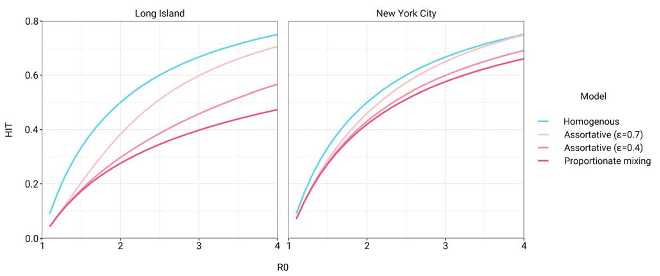
      3) I think the range of R0 in the figures should be extended to go as as low as 1. Much of the pandemic in the US has been defined by local Re that varies between 0.8 & 1.2 (likely based on shifts in the degree of social distancing). I therefore think lower HIT thresholds should be considered and it would be nice to know how the extent of assortative mixing effects estimates at these lower R_e values.

      We agree this would be of interest and have extended the range of R0 values. Figure 1 has been updated accordingly (see below); we also updated the text with new findings: “After fitting the models across a range of $\epsilon$ values, we observed that as $\epsilon$ increases, HITs and epidemic final sizes shifted higher back towards the homogeneous case (Figure \ref{fig:model2}, Figure 1-figure supplement 4); this effect was less pronounced for $R_0$ values close to 1.”

      Figure 1: Incorporating assortativity in variable exposure models results in increased HITs across a range of $R_0$ values. Variable exposure models were fitted to NYC and Long Island serosurvey data.

      4) line 274: I feel like this point needs to be considered in much more detail, either with a thoughtful discussion or with even with some simple additions to the model. How should these results make policy makers consider race and ethnicity when thinking about the key issues in the field right now such as vaccine allocation, masking, and new variants. I think to achieve the maximal impact, the authors should be very specific about how model results could impact policy making, and how we might lower the tragic discrepancies associated with COVID. If the model / data is insufficient for this purpose at this stage, then what type of data could be gathered that would allow more precise and targeted policy interventions?

      We have conducted additional analyses exploring the important suggestion by the reviewers that social distancing could affect these conclusions. The text and figures have been updated accordingly:

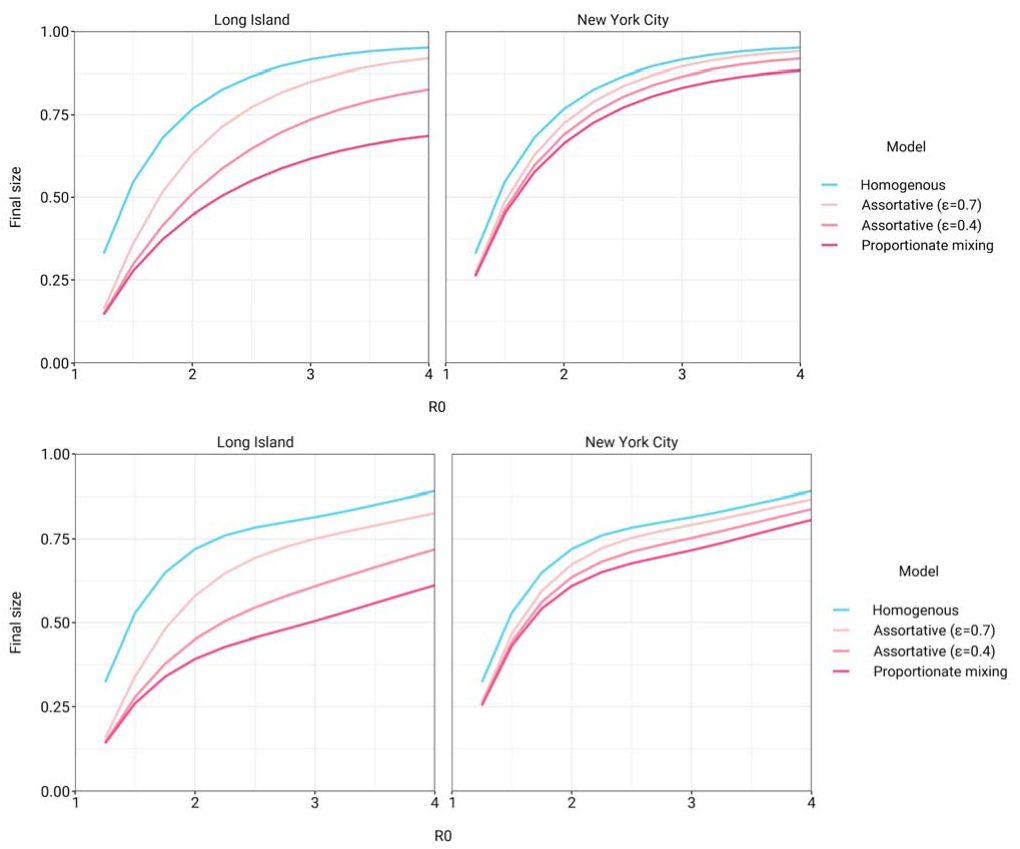
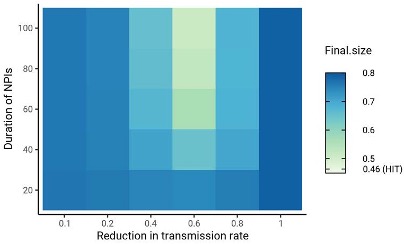
      “Finally, we assessed how robust these findings were to the impact of social distancing and other non- pharmaceutical interventions (NPIs). We modeled these mitigation measures by scaling the transmission

      rate by a factor $\alpha$ beginning when 5\% cumulative incidence in the population was reached. Setting the duration of distancing to be 50 days and allowing $\alpha$ to be either 0.3 or 0.6 (i.e. a 70\% or 40\% reduction in transmission rates, respectively), we assessed how the $R_0$ versus HIT and final epidemic size relationships changed. We found that the $R_0$ versus HIT relationship was similar to in the unmitigated epidemic (Figure 1-figure supplement 5). In contrast, final epidemic sizes depended on the intensity of mitigation measures, though qualitative trends across models (e.g. increased assortativity leads to greater final sizes) remained true (Figure 1-figure supplement 6). To explore this further, we systematically varied $\alpha$ and the duration of NPIs while holding $R_0$ constant at 3. We found again that the HIT was consistent, whereas final epidemic sizes were substantially affected by the choice of mitigation parameters (Figure 1-figure supplement 7); the distribution of cumulative incidence at the point of HIT was also comparable with and without mitigation measures (Figure 2-figure supplement 8). The most stringent NPI intensities did not necessarily lead to the smallest epidemic final sizes, an idea which has been explored in studies analyzing optimal control measures \cite{Neuwirth2020- nb,Handel2007-ee}. Longitudinal changes in incidence rate ratios also were affected by NPIs, but qualitative trends in the ordering of racial and ethnic groups over time remained consistent (Figure 3- figure supplement 3).

      Figure 1-figure supplement 6: Final epidemic sizes versus $R_0$ in variable exposure models with mitigation measures for $\alpha = 0.3$ (top) and $\alpha = 0.6$ (bottom). NPIs were initiated when cumulative incidence reached 5\% in all models and continued for 50 days. Models were fitted to NYC and Long Island serosurvey data.

      Figure 1-figure supplement 7: Sensitivity analysis on the impact of intensity and duration of NPIs on final epidemic sizes. HIT values for the same mitigation parameters were 46.4 $\pm$ 0.5\% (range). The smallest final size, corresponding to $\alpha = 0.6$ and duration = 100, was 51\%. Census-informed assortativity models were fit to Long Island seroprevalence data. NPIs were initiated when cumulative incidence reached 5\% in all models.

      See points 1 and 2 above for examples of additional data required.

      Minor issues:

      -This is subjective but I found the words "active" and "high activity" to describe increases in contacts per day to be confusing. I would just say more contacts per day. It might help to change "contacts" to "exposure contacts" to emphasize that not all contacts are high risk.

      To clarify this, we have replaced instances of “activity level” (and similar) with “total contact rate”, indicating the total number of contacts per unit time per individual; e.g. “The estimated total contact rate ratios indicate higher contacts for minority groups such as Hispanics or Latinos and non-Hispanic Black people, which is in line with studies using cell phone mobility data \cite{Chang2020-in}; however, the magnitudes of the ratios are substantially higher than we expected given the findings from those studies.”

      We have also clarified our definition of contacts: “We define contacts to be interactions between individuals that allow for transmission of SARS-CoV-2 with some non-zero probability.”

      -The abstract has too much jargon for a generalist journal. I would avoid words like "proportionate mixing" & "assortative" which are very unique to modeling of infectious diseases unless they are first defined in very basic language.

      We have revised the abstract to convey these same concepts in a more accessible manner: “A simple model where interactions occur proportionally to contact rates reduced the HIT, but more realistic models of preferential mixing within groups increased the threshold toward the value observed in homogeneous populations.”

      -I would cite some of the STD models which have used similar matrices to capture assortative mixing.

      We have added a reference in the assortative mixing section to a review of heterogeneous STD models: “Finally, under the \textit{assortative mixing} assumption, we extended this model by partitioning a fraction $\epsilon$ of contacts to be exclusively within-group and distributed the rest of the contacts according to proportionate mixing (with $\delta_{i,j}$ being an indicator variable that is 1 when $i=j$ and 0 otherwise) \cite{Hethcote1996-bf}:”

      -Lines 164-5: very good point but I would add that members of ethnic / racial groups are more likely to be essential workers and also to live in multigenerational houses

      We have added these helpful examples into the text: “Variable susceptibility to infection across racial and ethnic groups has been less well characterized, and observed disparities in infection rates can already be largely explained by differences in mobility and exposure \cite{Chang2020-in,Zelner2020- mb,Kissler2020-nh}, likely attributable to social factors such as structural racism that have put racial and ethnic minorities in disadvantaged positions (e.g., employment as frontline workers and residence in overcrowded, multigenerational homes) \cite{Henry_Akintobi2020-ld,Thakur2020-tw,Tai2020- ok,Khazanchi2020-xu}.”

      -Line 193: "Higher than expected" -> expected by who?

      We have clarified this phrase: “The estimated total contact rate ratios indicate higher exposure contacts for minority groups such as Hispanics or Latinos and non-Hispanic Black people, which is in line with studies using cell phone mobility data \cite{Chang2020-in}; however, the magnitudes of the ratios are substantially higher than we expected given the findings from those studies.”

      -A limitation that needs further mention is that fact that race & ethnic group, while important, could be sub classified into strata that inform risk even more (such as SES, job type etc….)

      We agree and have added this to the Discussion: “Fourth, due to data availability, we have only considered variability in exposure due to one demographic characteristic; models should ideally strive to also account for the effects of age on susceptibility and exposure within strata of race and ethnicity and other relevant demographics, such as socioeconomic status and occupation \cite{Mulberry2021-tc}. These models could be fit using representative serological studies with detailed cross-tabulated seropositivity estimates.”

      Reviewer #2 (Public Review):

      Overall I think this is a solid and interesting piece that is an important contribution to the literature on COVID-19 disparities, even if it does have some limitations. To this point, most models of SARS-CoV-2 have not included the impact of residential and occupational segregation on differential group-specific covid outcomes. So, the authors are to commended on their rigorous and useful contribution on this valuable topic. I have a few specific questions and concerns, outlined below:

      We thank the reviewer for the supportive comments.

      1) Does the reliance on serosurvey data collected in public places imply a potential issue with left-censoring, i.e. by not capturing individuals who had died? Can the authors address how survival bias might impact their results? I imagine this could bring the seroprevalence among older people down in a way that could bias their transmission rate estimates.

      We have included this important point in the limitations section on potential serosurvey biases: “First, biases in the serosurvey sampling process can substantially affect downstream results; any conclusions drawn depend heavily on the degree to which serosurvey design and post-survey adjustments yield representative samples \cite{Clapham2020-rt}. For instance, because the serosurvey we relied on primarily sampled people at grocery stores, there is both survival bias (cumulative incidence estimates do not account for people who have died) and ascertainment bias (undersampling of at-risk populations that are more likely to self-isolate, such as the elderly) \cite{Rosenberg2020-qw,Accorsi2021-hx}. These biases could affect model estimates if, for instance, the capacity to self-isolate varies by race or ethnicity -- as suggested by associations of neighborhood-level mobility versus demographics \cite{Kishore2020- sy,Kissler2020-nh} -- leading to an overestimate of cumulative incidence and contact rates in whites.”

      2) It might be helpful to think in terms of disparities in HITs as well as disparities in contact rates, since the HIT of whites is necessarily dependent on that of Blacks. I'm not really disagreeing with the thrust of what their analysis suggests or even the factual interpretation of it. But I do think it is important to phrase some of the conclusions of the model in ways that are more directly relevant to health equity, i.e. how much infection/vaccination coverage does each group need for members of that group to benefit from indirect protection?

      We agree with this important point and indeed this was the goal, in part, of the analyses in Figure 2. We have added additional text to the Discussion highlighting this: “Projecting the epidemic forward indicated that the overall HIT was reached after cumulative incidence had increased disproportionately in minority groups, highlighting the fundamentally inequitable outcome of achieving herd immunity through infection. All of these factors underscore the fact that incorporating heterogeneity in models in a mechanism-free manner can conceal the disparities that underlie changes in epidemic final sizes and HITs. In particular, overall lower HIT and final sizes occur because certain groups suffer not only more infection than average, but more infection than under a homogeneous mixing model; incorporating heterogeneity lowers the HIT but increases it for the highest-risk groups (Figure \ref{fig:hitcomp}).”

      For vaccination, see our response to Reviewer #1 point 4.

      3) The authors rely on a modified interaction index parameterized directly from their data. It would be helpful if they could explain why they did not rely on any sources of mobility data. Are these just not broken down along the type of race/ethnicity categories that would be necessary to complete this analysis? Integrating some sort of external information on mobility would definitely strengthen the analysis.

      This is a great suggestion, but this type of data has generally not been available due to privacy concerns from disaggregating mobility data by race and ethnicity (Kishore et al., 2020). Instead, we modeled NPIs as mentioned in Reviewer #1 point 4, with the caveat that reduction in mobility was assumed to be identical across groups. We added this into the text explicitly as a limitation: “Third, we have assumed the impact of non-pharmaceutical interventions such as stay-at-home policies, closures, and the like to equally affect racial and ethnic groups. Empirical evidence suggests that during periods of lockdown, certain neighborhoods that are disproportionately wealthy and white tend to show greater declines in mobility than others \cite{Kishore2020-sy,Kissler2020-nh}. These simplifying assumptions were made to aid in illustrating the key findings of this model, but for more detailed predictive models, the extent to which activity level differences change could be evaluated using longitudinal contact survey data \cite{Feehan2020-ta}, since granular mobility data are typically not stratified by race and ethnicity due to privacy concerns \cite{Kishore2020-mg}.”

      Reviewer #3 (Public Review):

      Ma et al investigate the effect of racial and ethnic differences in SARS-CoV-2 infection risk on the herd immunity threshold of each group. Using New York City and Long Island as model settings, they construct a race/ethnicity-structured SEIR model. Differential risk between racial and ethnic groups was parameterized by fitting each model to local seroprevalence data stratified demographically. The authors find that when herd immunity is reached, cumulative incidence varies by more than two fold between ethnic groups, at approximately 75% of Hispanics or Latinos and only 30% of non-Hispanic Whites.

      This result was robust to changing assumptions about the source of racial and ethnic disparities. The authors considered differences in disease susceptibility, exposure levels, as well as a census-driven model of assortative mixing. These results show the fundamentally inequitable outcome of achieving herd immunity in an unmitigated epidemic.

      The authors have only considered an unmitigated epidemic, without any social distancing, quarantine, masking, or vaccination. If herd immunity is achieved via one of these methods, particularly vaccination, the disparities may be mitigated somewhat but still exist. This will be an important question for epidemiologists and public health officials to consider throughout the vaccine rollout.

      We thank the reviewer for the detailed and helpful summary and suggestions.

    1. Author Response

      Summary: A major tenet of plant pathogen effector biology has been that effectors from very different pathogens converge on a small number of host targets with central roles in plant immunity. The current work reports that effectors from two very different pathogens, an insect and an oomycete, interact with the same plant protein, SIZ1, previously shown to have a role in plant immunity. Unfortunately, apart from some technical concerns regarding the strength of the data that the effectors and SIZ1 interact in plants, a major limitation of the work is that it is not demonstrated that the effectors alter SIZ1 activity in a meaningful way, nor that SIZ1 is specifically required for action of the effects.

      We thank the editor and reviewers for their time to review our manuscript and their helpful and constructive comments. The reviews have helped us focus our attention on additional experiments to test the hypothesis that effectors Mp64 (from an aphid) and CRN83-152 (from an oomycete) indeed alter SIZ1 activity or function. We have revised our manuscript and added the following data:

      1) Mp64, but not CRN83-152, stabilizes SIZ1 in planta. (Figure 1 in the revised manuscript).

      2) AtSIZ1 ectopic expression in Nicotiana benthamiana triggers cell death from 3-4 days after agroinfiltration. Interestingly CRN83-152_6D10 (a mutant of CRN83-152 that has no cell death activity), but not Mp64, enhances the cell death triggered by AtSIZ1 (Figure 2 in the revised manuscript).

      For 1) we have added the following panel to Figure 1 as well as three biological replicates of the stabilisation assays in the Supplementary data (Fig S3):

      Figure 1 panel C. Stabilisation of SIZ1 by Mp64. Western blot analyses of protein extracts from agroinfiltrated leaves expressing combinations of GFP-GUS, GFP Mp64 and GFP-CRN83_152_6D10 with AtSIZ1-myc or NbSIZ1-myc. Protein size markers are indicated in kD, and equal protein amounts upon transfer is shown upon ponceau staining (PS) of membranes. Blot is representative of three biological replicates , which are all shown in supplementary Fig. S3. The selected panels shown here are cropped from Rep 1 in supplementary Fig. S3.

      For 2) we have added the folllowing new figure (Fig. 2 in the revised manuscript):

      Fig. 2. SIZ1-triggered cell death in N. benthamiana is enhanced by CRN83_152_6D10 but not Mp64. (A) Scoring overview of infiltration sites for SIZ1 triggered cell death. Infiltration site were scored for no symptoms (score 0), chlorosis with localized cell death (score 1), less than 50% of the site showing visible cell death (score 2), more than 50% of the site showing cell death (score 3). (B) Bar graph showing the proportions of infiltration sites showing different levels of cell death upon expression of AtSIZ1, NbSIZ1 (both with a C-terminal RFP tag) and an RFP control. Graph represents data from a combination of 3 biological replicates of 11-12 infiltration sites per experiment (n=35). (C) Bar graph showing the proportions of infiltration sites showing different levels of cell death upon expression of SIZ1 (with C-terminal RFP tag) either alone or in combination with aphid effector Mp64 or Phytophthora capsica effector CRN83_152_6D10 (both effectors with GFP tag), or a GFP control. Graph represent data from a combination of 3 biological replicates of 11-12 infiltration sites per experiment (n=35).

      Our new data provide further evidence that SIZ1 function is affected by effectors Mp64 (aphid) and CRN83-152 (oomycete), and that SIZ1 likely is a vital virulence target. Our latest results also provide further support for distinct effector activities towards SIZ1 and its variants in other species. SIZ1 is a key immune regulator to biotic stresses (aphids, oomycetes, bacteria and nematodes), on which distinct virulence strategies seem to converge. The mechanism(s) underlying the stabilisation of SIZ1 by Mp64 is yet unclear. However, we hypothesize that increased stability of SIZ1, which functions as an E3 SUMO ligase, leads to increased SUMOylation activity towards its substrates. We surmise that SIZ1 complex formation with other key regulators of plant immunity may underpin these changes. Whether the cell death, triggered by AtSIZ1 upon transient expression in Nicotiana benthamiana, is linked to E3 SUMO ligase activity remains to be investigated. Expression of AtSIZ1 in a plant species other than Arabidopsis may lead to mistargeting of substrates, and subsequent activation of cell death. Dissecting the mechanistic basis of SIZ1 targeting by distinct pathogens and pests will be an important next step in addressing these hypotheses towards understanding plant immunity.

      Reviewer #1:

      In this manuscript, the authors suggest that SIZ1, an E3 SUMO ligase, is the target of both an aphid effector (Mp64 form M. persicae) and an oomycete effector (CRN83_152 from Phytophthora capsica), based on interaction between SIZ1 and the two effectors in yeast, co-IP from plant cells and colocalization in the nucleus of plant cells. To support their proposal, the authors investigate the effects of SIZ1 inactivation on resistance to aphids and oomycetes in Arabidopsis and N. benthamiana. Surprisingly, resistance is enhanced, which would suggest that the two effectors increase SIZ1 activity.

      Unfortunately, not only do we not learn how the effectors might alter SIZ1 activity, there is also no formal demonstration that the effects of the effectors are mediated by SIZ1, such as investigating the effects of Mp64 overexpression in a siz1 mutant. We note, however, that even this experiment might not be entirely conclusive, since SIZ1 is known to regulate many processes, including immunity. Specifically, siz1 mutants present autoimmune phenotype, and general activation of immunity might be sufficient to attenuate the enhanced aphid susceptibility seen in Mp64 overexpressers.

      To demonstrate unambiguously that SIZ1 is a bona fide target of Mp64 and CRN83_152 would require assays that demonstrate either enhanced SIZ1 accumulation or altered SIZ1 activity in the presence of Mp64 and CRN83_152.

      The enhanced resistance upon knock-down/out of SIZ1 suggests pathogen and pest susceptibility requires SIZ1. We hypothesize that the effectors either enhance SIZ1 activity or that the effectors alter SIZ1 specificity towards substrates rather than enzyme activity itself. To investigate how effectors coopt SIZ1 function would require a comprehensive set of approaches and will be part of our future work. While we agree that this aspect requires further investigation, we think the proposed experiments go beyond the scope of this study.

      After receiving reviewer comments, including on the quality of Figure 1, which shows western blots of co-immunoprecipitation experiments, we re-analyzed independent replicates of effector-SIZ1 coexpression/ co-immunoprecipitation experiments. The reviewer rightly pointed out that in the presence of Mp64, SIZ1 protein levels increase when compared to samples in which either the vector control or CRN83-152_6D10 are co-infiltrated. Through carefully designed experiments, we can now affirm that Mp64 co-expression leads to increased SIZ1 protein levels (Figure 1C and Supplementary Figure S3, revised manuscript). Our results offer both an explanation of different SIZ1 levels in the input samples (original submission, Figure 1A/B) as well as tantalizing new clues to the nature of distinct effector activities.

      Besides, we were able to confirm a previous preliminary finding not included in the original submission that ectopic expression of AtSIZ1 in Nicotiana benthamiana triggers cell death (3/4 days after infiltration) and that CRN83-152_6D10 (which itself does not trigger cell death) enhances this phenotype.

      We have considered overexpression of Mp64 in the siz1 mutant, but share the view that the outcome of such experiments will be far from conclusive.

      In summary, we have added new data that further support that SIZ1 is a bonafide target of Mp64 and CRN83-152 (i.e. increased accumulation of SIZ1 in the presence of Mp64, and enhanced SIZ cell death activation in the presence of CRN83-152_6D10).

      Reviewer #2:

      The study provides evidence that an aphid effector Mp64 and a Phytophthora capsici effector CRN83_152 can both interact with the SIZ1 E3 SUMO-ligase. The authors further show that overexpression of Mp64 in Arabidopsis can enhance susceptibility to aphids and that a loss-of-function mutation in Arabidopsis SIZ1 or silencing of SIZ1 in N. benthamiana plants lead to increased resistance to aphids and P. capsici. On siz1 plants the aphids show altered feeding patterns on phloem, suggestive of increased phloem resistance. While the finding is potentially interesting, the experiments are preliminary and the main conclusions are not supported by the data.

      Specific comments:

      The suggestion that SIZ1 is a virulence target is an overstatement. Preferable would be knockouts of effector genes in the aphid or oomycete, but even with transgenic overexpression approaches, there are no direct data that the biological function of the effectors requires SIZ1. For example, is SIZ1 required for the enhanced susceptibility to aphid infestation seen when Mp64 is overexpressed? Or does overexpression of SIZ1 enhance Mp64-mediated susceptibility?

      What do the effectors do to SIZ1? Do they alter SUMO-ligase activity? Or are perhaps the effectors SUMOylated by SIZ1, changing effector activity?

      We agree that having effector gene knock-outs in aphids and oomycetes would be ideal for dissecting effector mediated targeting of SIZ1. Unfortunately, there is no gene knock-out system established in Myzus persicae (our aphid of interest), and CAS9 mediated knock-out of genes in Phytophthora capsici has not been successful in our lab as yet, despite published reports. Moreover, repeated attempts to silence Mp64, other effector and non-effector coding genes, in aphids (both in planta and in vitro) have not been successful thus far, in our hands. As detailed in our response to Reviewer 1, we considered the use of transgenic approaches not appropriate as data interpretation would become muddied by the strong immunity phenotype seen in the siz1-2 mutant.

      As stated before, we hypothesize that the effectors either enhance SIZ1 activity or alter SIZ1 substrate specificity. Mp64-induced accumulation of SIZ1 could form the basis of an increase in overall SIZ1 activity. This hypothesis, however, requires testing. The same applies to the enhanced SIZ1 cell death activation in the presence of CRN83-152_6D10.

      Whilst our new data support our hypothesis that effectors Mp64 and CRN83-152 affect SIZ1 function, how exactly these effectors trigger susceptibility, requires significant work. Given the substantial effort needed and the research questions involved, we argue that findings emanating from such experiments warrant standalone publication.

      While stable transgenic Mp64 overexpressing lines in Arabidopsis showed increased susceptibility to aphids, transient overexpression of Mp64 in N. benthamiana plants did not affect P. capsici susceptibility. The authors conclude that while the aphid and P. capsici effectors both target SIZ1, their activities are distinct. However, not only is it difficult to compare transient expression experiments in N. benthamiana with stable transgenic Arabidopsis plants, but without knowing whether Mp64 has the same effects on SIZ1 in both systems, to claim a difference in activities remains speculative.

      We agree that we cannot compare effector activities between different plant species. We carefully considered every statement regarding results obtained on SIZ1 in Arabidopsis and Nicotiana benthamiana. We can, however, compare activities of the two effectors when expressed side by side in the same plant species. In our original submission, we show that expression of CRN83 152 but not Mp64 in Nicotiana benthamiana enhances susceptibility to Phytophthora capsici. In our revised manuscript, we present new data showing distinct effector activities towards SIZ1 with regards to 1) enhanced SIZ1 stability and 2) enhanced SIZ1 triggered cell death. These findings raise questions as to how enhanced SIZ1 stability and cell death activation is relevant to immunity. We aim to address these critical questions by addressing the mechanistic basis of effector-SIZ1 interactions.

      The authors emphasize that the increased resistance to aphids and P. capsici in siz1 mutants or SIZ1 silenced plants are independent of SA. This seems to contradict the evidence from the NahG experiments. In Fig. 5B, the effects of siz1 are suppressed by NahG, indicating that the resistance seen in siz1 plants is completely dependent on SA. In Fig 5A, the effects of siz1 are not completely suppressed by NahG, but greatly attenuated. It has been shown before that SIZ1 acts only partly through SNC1, and the results from the double mutant analyses might simply indicate redundancy, also for the combinations with eds1 and pad4 mutants.

      We emphasized that siz1-2 increased resistance to aphids is independent of SA, which is supported by our data (Figure 5A). Still, we did not conclude that the same applies to increased resistance to Phytophthora capsici (Figure 5B). In contrast, the siz1-2 enhanced resistance to P. capsici appears entirely dependent on SA levels, with the level of infection on the siz1-2/NahG mutants even slightly higher than on the NahG line and Col-0 plants. We exercise caution in the interpretation of this data given the significant impact SA signalling appears to have on Phytophthora capsici infection.

      The reviewer commented on the potential for functional redundancy in the siz1-2 double mutants. Unfortunately, we are unsure what redundancy s/he is referring to. SNC1, EDS1, and PAD4 all are components required for immunity, and their removal from the immune signalling network (using the mutations in the lines we used here) impairs immunity to various plant pathogens. The siz1-2 snc1-11, siz1-2 eds1-2, and siz1-2 pad4-1 double mutants have similar levels of susceptibility to the bacterial pathogen Pseudomonas syringae when compared to the corresponding snc1-11, eds1-2 and pad4-1 controls (at 22oC). These previous observations indicate that siz1 enhanced resistance is dependent on these signalling components (Hammoudi et al., 2018, Plos Genetics).

      In contrast to this, we observed a strong siz1 enhanced resistance phenotype in the absence of snc1- 11, eds1 2 and pad4-1. Notably, the siz1-2 snc1-11 mutant does not appear immuno-compromised when compared to siz1-2 in fecundity assays, indicating that the siz1-2 phenotype is independent of SNC1. In our view, these data suggest that signalling components/pathways other than those mediated by SNC1, EDS1, and PAD4 are involved. We consider this to be an exciting finding as our data points to an as of yet unknown SIZ1-dependent signalling pathway that governs immunity to aphids.

      How do NahG or Mp64 overexpression affect aphid phloem ingestion? Is it the opposite of the behavior on siz1 mutants?

      We have not performed further EPG experiments on additional transgenic lines used in the aphid assay. These experiments are quite challenging and time consuming. Moreover, accommodating an experimental set-up that allows us to compare multiple lines at the same time is not straightforward. Considering that NahG did not affect aphid performance (Figure 5A), we do not expect to see an effect on phloem ingestion.

    1. Author Response

      1) Please comment on why many of the June samples failed to provide sufficient sequence information, especially since not all of them had low yields (supp table 2 and supp figure 5).

      An extended paragraph about experimental intricacies of our study has been added to the Discussion. It has also been also slightly restructured to give a better and wider overview of how future freshwater monitoring studies using nanopore sequencing can be improved (page 18, lines 343-359).

      We wish to highlight that all three MinION sequencing runs here analysed feature substantially higher data throughput than that of any other recent environmental 16S rRNA sequencing study with nanopore technology, as recently reviewed by Latorre-Pérez et al. (Biology Methods and Protocols 2020, doi:10.1093/biomethods/bpaa016). One of this work's sequencing runs has resulted in lower read numbers for water samples collected in June 2018 (~0.7 Million), in comparison to the ones collected in April and August 2018 (~2.1 and ~5.5 Million, respectively). While log-scale variabilities between MinION flow cell throughput have been widely reported for both 16S and shotgun metagenomics approaches (e.g. see Latorre-Pérez et al.), the count of barcode-specific 16S reads is nevertheless expected to be correlated with the barcode-specific amount of input DNA within a given sequencing run. As displayed in Supplementary Figure 7b, we see a positive, possibly logarithmic trend between the DNA concentration after 16S rDNA amplification and number of reads obtained. With few exceptions (April-6, April-9.1 and Apri-9.2), we find that sample pooling with original 16S rDNA concentrations of ≳4 ng/µl also results in the surpassing of the here-set (conservative) minimum read threshold of 37,000 for further analyses. Conversely, all June samples that failed to reach 37,000 reads did not pass the input concentration of 4 ng/µl, despite our attempt to balance their quantity during multiplexing.

      We reason that such skews in the final barcode-specific read distribution would mainly arise from small concentration measurement errors, which undergo subsequent amplification during the upscaling with comparably large sample volume pipetting. While this can be compensated for by high overall flow cell throughput (e.g. see August-2, August-9.1, August-9.2), we think that future studies with much higher barcode numbers can circumvent this challenge by leveraging an exciting software solution: real-time selective sequencing via “Read Until”, as developed by Loose et al. (Nature Methods 2016, doi:10.1038/nmeth.3930). In the envisaged framework, incoming 16S read signals would be in situ screened for the sample-barcode which in our workflow is PCR-added to both the 5' and 3' end of each amplicon. Overrepresented barcodes would then be counterbalanced by targeted voltage inversion and pore "rejection" of such reads, until an even balance is reached. Lately, such methods have been computationally optimised, both through the usage of GPUs (Payne et al., bioRxiv 2020, https://doi.org/10.1101/2020.02.03.926956) and raw electrical signals (Kovaka et al., bioRxiv 2020, https://doi.org/10.1101/2020.02.03.931923).

      2) It would be helpful if the authors could mention the amount (or proportion) of their sequenced 16S amplicons that provided species-level identification, since this is one of the advantages of nanopore sequencing.

      We wish to emphasize that we intentionally refrained from reporting the proportion of 16S rRNA reads that could be classified at species level, since we are wary of any automated species level assignments even if the full-length 16S rRNA gene is being sequenced. While we list the reasons for this below, we appreciate the interest in the theoretical proportion of reads at species level assignment. We therefore re-analyzed our dataset, and now also provide the ratio of reads that could be classified at species level using Minimap2 (pages 16-17, lines 308-314).

      To this end, we classified reads at species level if the species entry of the respective SILVA v.132 taxonomic ID was either not empty, or neither uncultured bacterium nor metagenome. Therefore, many unspecified classifications such as uncultured species of some bacterial genus are counted as species-level classifications, rendering our approach lenient towards a higher ratio of species level classifications. Still, the species level classification ratios remain low, on average at 16.2 % across all included river samples (genus-level: 65.6 %, family level: 76.6 %). The mock community, on the other hand, had a much higher species classification rate (>80 % in all three replicates), which is expected for a well-defined, well-referenced and divergent composition of only eight bacterial taxa, and thus re-validates our overall classification workflow.

      On a theoretical level, we mainly refrain from automated across-the-board species level assignments because: (1) many species might differ by very few nucleotide differences within the 16S amplicon; distinguishing these from nanopore sequencing errors (here ~8 %) remains challenging (2) reference databases are incomplete and biased with respect to species level resolution, especially regarding certain environmental contexts; it is likely that species assignments would be guided by references available from more thoroughly studied niches than freshwater

      Other recent studies have also shown that across-the-board species-level classification is not yet feasible with 16S nanopore sequencing, for example in comparison with Illumina data (Acharya et al., Scientific Reports 2019, doi:10.25405/data.ncl.9693533) which showed that “more reliable information can be obtained at genus and family level”, or in comparison with longer 16S-ITS-23S amplicons (Cusco et al., F1000Research 2019, doi: 10.12688/f1000research.16817.2), which “remarkably improved the taxonomy assignment at the species level”.

      3) It is not entirely clear how the authors define their core microbiome. Are they reporting mainly the most abundant taxa (dominant core microbiome), and would this change if you look at a taxonomic rank below the family level? How does the core compare, for example, with other studies of this same river?

      The here-presented core microbiome indeed represents the most abundant taxa, with relatively consistent profiles between samples. We used hierarchical clustering (Figure 4a, C2 and C4) on the bacterial family level, together with relative abundance to identify candidate taxa. Filtering these for median abundance > 0.1% across all samples resulted in 27 core microbiome families. To clarify this for the reader, we have added a new paragraph to the Material and Methods (section 2.7; page 29, lines 653-658).

      We have also performed the same analysis on the bacterial genus level and now display the top 27 most abundant genera (median abundance > 0.2%), together with their corresponding families and hierarchical clustering analysis in a new Supplementary Figure 4. Overall, high robustness is observed with respect to the families of the core microbiome: out of the top 16 core families (Figure 4b), only the NS11-12 marine group family is not represented by the top 27 most abundant genera (Supplementary Figure 4b). We reason that this is likely because its corresponding genera are composed of relatively poorly resolved references of uncultured bacteria, which could thus not be further classified.

      To the best of our knowledge, there are only two other reports that feature metagenomic data of the River Cam and its wastewater influx sources (Rowe et al., Water Science & Technology 2016, doi:10.2166/wst.2015.634; Rowe et al., Journal of Antimicrobial Chemotherapy 2017, doi:10.1093/jac/dkx017). While both of these primarily focus on the diversity and abundance of antimicrobial resistance genes using Illumina shotgun sequencing, they only provide limited taxonomic resolution on the river's core microbiome. Nonetheless, Rowe et al. (2016) specifically highlighted Sphingobium as the most abundant genus in a source location of the river (Ashwell, Hertfordshire). This genus belongs to the family of Sphingomonadaceae, which is also among the five most dominant families identified in our dataset. It thus forms part of what we define as the core microbiome of the River Cam (Figure 4b), and we have therefore highlighted this consistency in our manuscript's Discussion (page 17, lines 316-319).

      4) Please consider revising the amount of information in some of the figures (such as figure 2 and figure 3). The resulting images are tiny, the legends become lengthy and the overall impact is reduced. Consider splitting these or moving some information to the supplements.

      To follow this advice, we have split Figure 2 into two less compact figures. We have moved more detailed analyses of our classification tool benchmark to the supplement (now Supplementary Figure 1). Supplementary Figure 1 notably also contains a new summary of the systematic computational performance measurements of each classification tool (see minor suggestions).

      Moreover, we here suggest that the original Figure 3 may be divided into two figures: one to visualise the sequencing output, data downsampling and distribution of the most abundant families (now Figure 3), and the other featuring the clustering of bacterial families and associated core microbiome (now Figure 4). We think that both the data summary and clustering/core microbiome analyses are of particular interest to the reader, and that they should be kept as part of the main analyses rather than the supplement – however, we are certainly happy to discuss alternative ideas with the reviewers and editors.

      5) Given that the authors claim to provide a simple, fast and optimized workflow it would be good to mention how this workflow differs or provides faster and better analysis than previous work using amplicon sequencing with a MinION sequencer.

      Data throughput, sequencing error rates and flow cell stability have seen rapid improvements since the commercial release of MinION in 2015. In consequence, bioinformatics community standards regarding raw data processing and integration steps are still lacking, as illustrated by a thorough recent benchmark of fast5 to fastq format "basecalling" methods (Wick et al., Genome Biology 2019, doi: 10.1186/s13059-019-1727-y).

      Early on during our analyses, we noticed that a plethora of bespoke pipelines have been reported in recent 16S environmental surveys using MinION (e.g. Kerkhof et al., Microbiome 2017, 10.1186/s40168-017-0336-9; Cusco et al., F1000 Research 2018, 10.12688/f1000research.16817.2; Acharya et al., Scientific Reports 2019, 10.1038/s41598-019-51997-x; Nygaard et al., Scientific Reports 2020, doi: 10.1038/s41598-020-59771-0). This underlines a need for more unified bioinformatics standards of (full-length) 16S amplicon data treatment, while similar benchmarks exist for short-read 16S metagenomics approaches, as well as for nanopore shotgun sequencing (e.g. Ye et al., Cell 2019, doi: 10.1016/j.cell.2019.07.010; Latorre-Pérez et al., Scientific Reports 2020, doi:10.1038/s41598-020-70491-3).

      By adding a thorough speed and memory usage summary (new Supplementary Figure 1b), in addition to our (mis)classification performance tests based on both mock and complex microbial community analyses, we provide the reader with a broad overview of existing options. While the widely used Kraken 2 and Centrifuge methods provide exceptional speed, we find that this comes with a noticeable tradeoff in taxonomic assignment accuracy. We reason that Minimap2 alignments provide a solid compromise between speed and classification performance, with the MAPseq software offering a viable alternative should memory usage limitation apply to users.

      We intend to extend this benchmarking process to future tools, and to update it on our GitHub page (https://github.com/d-j-k/puntseq). This page notably also hosts a range of easy-to-use scripts for employing downstream 16S analysis and visualization approaches, including ordination, clustering and alignment tests.

      The revised Discussion now emphasises the specific advancements of our study with respect to freshwater analysis and more general standardisation of nanopore 16S sequencing, also in contrast to previous amplicon nanopore sequencing approaches in which only one or two bioinformatics workflows were tested (page 16, lines 297-306).

      They also mention that nanopore sequencing is an "inexpensive, easily adaptable and scalable framework" The term "inexpensive" doesn't seem appropriate since it is relative. In addition, they should also discuss that although it is technically convenient in some aspects compared to other sequencers, there are still protocol steps that need certain reagents and equipment that is similar or the same to those needed for other sequencing platforms. Common bottlenecks such as DNA extraction methods, sample preservation and the presence of inhibitory compounds should be mentioned.

      We agree with the reviewers that “inexpensive” is indeed a relative term, which needs further clarification. We therefore now state that this approach is “cost-effective” and discuss future developments such as the 96-sample barcoding kits and Flongle flow cells for small-scale water diagnostics applications, which will arguably render lower per-sample analysis costs in the future (page 18, lines 361-365).

      Other investigators (e.g. Boykin et al., Genes 2019, doi:10.3390/genes10090632; Acharya et al., Water Technology 2020, doi:10.1016/j.watres.2020.116112) have recently shown that the full application of DNA extraction and in-field nanopore sequencing can be achieved at comparably low expense: Boykin et al. studied cassava plant pathogens using barcoded nanopore shotgun sequencing, and estimated costs of ~45 USD per sample, while we calculate ~100 USD per sample in this study. Acharya et al. undertook in situ water monitoring between Birtley, UK and Addis Ababa, Ethiopia, estimated ~75-150 USD per sample and purchased all necessary equipment for ~10,000 GBP – again, we think that this lies roughly within a similar range as our (local) study's total cost of ~3,670 GBP (Supplementary Table 6).

      The revised manuscript now mentions the possibility of increasing sequencing yield by improving DNA extraction methods, by taking sample storage and potential inhibitory compounds into account in the planning phase (page 18, lines 348-352).

      Minor points:

      -Please include a reference to the statement saying that the river Cam is notorious for the "infections such as leptospirosis".

      There are indeed several media reports that link leptospirosis risk to the local River Cam (e.g. https://www.cambridge-news.co.uk/news/cambridge-news/weils-disease-river-cam-leptosirosis-14919008 or https://www.bbc.com/news/uk-england-cambridgeshire-29060018). As we, however, did not find a scientific source for this information, we have slightly adjusted the statement in our manuscript from referring to Cambridge to instead referring to the entire United Kingdom. Accordingly, we now cite two reports from Public Health England (PHE) about serial leptospirosis prevalence in the United Kingdom (page 13, lines 226-227).

      -Please check figure 7 for consistency across panels, such as shading in violet and labels on the figures that do not seem to correspond with what is stated in the legend. Please mention what the numbers correspond to in outer ring. Check legend, where it says genes is probably genus.

      Thank you for pointing this out. We have revised (now labelled) Figure 8 and removed all inconsistencies between the panels. The legend has also been updated, which now includes a description of the number labelling of the tree, and a clearer differentiation between the colour coding of the tree nodes and the background highlighting of individual nanopore reads.

      -Page 6. There is a "data not shown" comment in the text: "Benchmarking of the classification tools on one aquatic sample further confirmed Minimap2's reliable performance in a complex bacterial community, although other tools such as SPINGO (Allard, Ryan, Jeffery, & Claesson, 2015), MAPseq (Matias Rodrigues, Schmidt, Tackmann, & von Mering, 2017), or IDTAXA (Murali et al., 2018) also produced highly concordant results despite variations in speed and memory usage (data not shown)." There appears to be no good reason that this data is not shown. In case the speed and memory usage was not recorded, is advisable to rerun the analysis and quantify these variables, rather than mentioning them and not reporting them. Otherwise, provide an explanation for not showing the data please.

      This is a valid point, and we agree with the reviewers that it is worth properly following up on this initial observation. To this end, our revised manuscript now entails a systematic characterisation of the twelve tools' runtime and memory usage performance. This has been added as Supplementary Figure 1b and under the new Materials and Methods section 2.2.4 (page 26, lines 556-562), while the corresponding results and their implications are discussed on page 16, lines 301-306. Particularly with respect to the runtime measurements, it is worth noting that these can differ by several orders of magnitude between the classifiers, thus providing an additional clarification on our choice of the - relatively fast - Minimap2 alignments.

      -In Figure 4, it would be important to calculate if the family PCA component contribution differences in time are differentially significant. In Panel B, depicted is the most evident variance difference but what about other taxa which might not be very abundant but differ in time? One can use the fitFeatureModel function from the metagenomeSeq R library and a P-adjusted threshold value of 0.05, to validate abundance differences in addition to your analysis.

      To assess if the PC component contribution of Figure 5 (previously Figure 4) significantly differed between the three time points, we have applied non-parametric tests to all season-grouped samples except for the mock community controls. We first applied Kruskal-Wallis H-test for independent samples, followed by post-hoc comparisons using two-sided Mann-Whitney U rank tests.

      The Kruskal-Wallis test established a significant difference in PC component contributions between the three time points (p = 0.0049), with most of the difference stemming from divergence between April and August samples according to the post-hoc tests (p = 0.0022). The June sampled seemed to be more similar to the August ones (p = 0.66) than to the ones from April (p = 0.11), recapitulating the results of our hierarchical clustering analysis (Figure 4a).

      We have followed the reviewers' advice and applied a complementary approach, using the fitFeatureModel of metagenomeSeq to fit a zero-inflated log-normal mixture model of each bacterial taxon against the time points. As only three independent variables can be accounted for by the model (including the intercept), we have chosen to investigate the difference between the spring (April) and summer (June, August) months to capture the previously identified difference between these months. At a nominal P-value threshold of 0.05, this analysis identifies seven families to significantly differ in their relative composition between spring and summer, namely Cyanobiaceae, Armatimonadaceae, Listeriaceae, Carnobacteriaceae, Azospirillaceae, Cryomorphaceae, and Microbacteriaceae. Three out of these seven families were also detected by the PCA component analysis (Carnobacteriacaea, Azospirillaceae, Microbacteriaceae) and two more (Listeriacaea, Armatimonadaceae) occured in the top 15 % of that analysis (out of 357 families).

      This approach represents a useful validation of our principal component analysis' capture of likely seasonal divergence, but moreover allows for a direct assessment of differential bacterial composition across time points. We have therefore integrated the analysis into our manuscript (page 10, lines 184-186; Materials and Methods section 2.6, page 29, lines 641-647) – thank you again for this suggestion.

      -Page 12-13. In the paragraph: "Using multiple sequence alignments between nanopore reads and pathogenic species references, we further resolved the phylogenies of three common potentially pathogenic genera occurring in our river samples, Legionella, Salmonella and Pseudomonas (Figure 7a-c; Material and Methods). While Legionella and Salmonella diversities presented negligible levels of known harmful species, a cluster of reads in downstream sections indicated a low abundance of the opportunistic, environmental pathogen Pseudomonas aeruginosa (Figure 7c). We also found significant variations in relative abundances of the Leptospira genus, which was recently described to be enriched in wastewater effluents in Germany (Numberger et al., 2019) (Figure 7d)."

      Here it is important to mention the relative abundance in the sample. While no further experiments are needed, the authors should mention and discuss that the presence of DNA from pathogens in the sample has to be confirmed by other microbiology methodologies, to validate if there are viable organisms. Definitively, it is a big warning finding pathogen's DNA but also, since it is characterized only at genus level, further investigation using whole metagenome shotgun sequencing or isolation, would be important.

      We agree that further microbiological assays, particularly target-specific species isolation and culturing, would be essential to validate the presence of living pathogenic bacteria. Accordingly, our revised Discussion now contains a paragraph that encourages such experiments as part of the design of future studies (with a fully-equipped laboratory infrastructure); page 17, 338-341.

      -Page 15: "This might help to establish this family as an indicator for bacterial community shifts along with water temperature fluctuations."

      Temperature might not be the main factor for the shift. There could be other factors that were not measured that could contribute to this shift. There are several parameters that are not measured and are related to water quality (COD, organic matter, PO4, etc).

      We agree that this was a simplified statement, given our currently limited number of samples, and have therefore slightly expanded on this point (page 17, lines 323-325). It is indeed possible that differential Carnobacteriaceae abundances between the time point measurements may have arisen not as a consequence of temperature fluctuations (alone), but instead as a consequence of the observed hydrochemical changes like e.g. Ca2+, Mg2+, HCO3- (Figure 6b-c) or possible even water flow speed reductions (Supplementary Figure 6d).

      -"A number of experimental intricacies should be addressed towards future nanopore freshwater sequencing studies with our approach, mostly by scrutinising water DNA extraction yields, PCR biases and molar imbalances in barcode multiplexing (Figure 3a; Supplementary Figure 5)."

      Here you could elaborate more on the challenges, as mentioned previously.

      We realise that we had not discussed the challenges in enough detail, and the Discussion now contains a substantially more detailed description of these intricacies (page 18, lines 343-359).

    1. Author Response

      Summary

      This manuscript examines how N-linked glycosylation regulates the binding of polysaccharide hyaluronan (HA) to cell surface receptor CD44, to conclude that multiple sites exist but are controlled by the nature of the glycosylation. The reviewers appreciated many aspects of the work, but they have raised serious concerns about the experimental and simulation design. The reviewers suggested that the proposed alternative binding site may not be biologically relevant, as the relevant CD44-HA interactions are multivalent and cannot be supported by that site. They also suggested that the findings are not well supported by the NMR experiments, which could have been extended to allow comparisons of the glycosylation patterns hypothesised. Moreover, the MD simulations, despite being considerable in size, were limited in sampling different possibilities without bias from the initial HA placement, and there is not enough data to convince the readers of thorough sampling and reproducibility.

      We understand the concerns raised in the review process. However, these concerns can be readily explained and fixed, as we explain below and are briefly introduced here.

      • Our data are compatible with the currently accepted multivalent interaction of hyaluronan with several CD44 receptors. The argument that our data goes against it stems from an unfortunate figure provided in the first version of the manuscript. This figure suggested that a bound hyaluronan would not be able to span the length the protein in the upright binding mode. That is not true. We now show another, and more relevant snapshot where the bound hyaluronan indeed spans the length of HABD. Hence, we show that multivalent interaction is not precluded by the upright binding mode.

      • We also clarify how our extensive simulation data were designed to avoid any bias. We admit that this was not obvious in the phrasing of our previous version.

      • Many of the raised issues stem from the lack of certain critical simulations. We have now added these simulations into the revision.

      Below we summarize the main issues raised by the reviewers, accompanied by our responses on how we have fixed them in the revised version of the manuscript.

      Reviewer #1

      The authors use MD simulations and NMR to study the cell surface adhesion receptor CD44 with the purpose of understanding the binding of carbohydrate polymer, hyaluronan (HA). In particular, this study focuses on the effects of N-glycosylation of the CD44 glycoprotein on potential HA binding. The authors previously proposed two lower affinity HA binding modes as alternatives to the primary mode seen in the crystal structure of the HA binding domain of CD44, driven by different arginine interactions, but overlapping with glycosylation sites that will affect HA binding. This study suggests that, because the canonical site appears blocked by glycans attached to the surface, HA would instead likely bind to an alternate parallel site with lower affinity, thus changing receptor affinity. The authors do not study HA binding to the glycosylated form directly, but undertake simulations of bound glycans to draw their conclusion. They do, however, place HA near the non-glycosylated CD44 in simulations, although it is not clear that MD sampling has been designed to provide unbiased observations of HA binding, or how the simulations help explain the NMR experiments.

      To better highlight the message, we left out a significant portion of our total simulation data from the initial version of the manuscript. We have now added e.g. simulations of HA binding to the glycosylated form into our revised manuscript. Furthermore, we are confident that our design of the simulation systems allows unbiased sampling of the binding surface. That is, the hyaluronan hexamers were initially placed several nanometres away from the protein surface. After this, they were allowed to spontaneously sample the space and find their respective binding sites during the course of the simulations. They were not placed into the binding sites manually. However, there was a one system with two HA hexamers from which the other was placed into the canonical binding groove. This was done to test where the freely floating hexamer would bind when the primary binding site is taken. These points are illustrated more clearly in the new version of the manuscript. Finally, all our simulation data is publicly available (see the DOIs provided in the paper).

      The data rely on libraries of MD simulation, which are substantial, with several replicas of a microsecond each. But what have these simulations really proved with reliability? Figure 2a shows that, while glycans stay roughly where they started, they are dynamic and cover much of the canonical HA binding site, which may be the case. From this the authors imply that the crystallographic site is significantly obstructed, the lower-affinity upright mode remains most accessible, and that the level of occlusion of the main site depends on the degree of glycosylation and size of the oligosaccharides. However, a full simulation of HA binding to this glycosylated surface was not attempted. It would have been good to see the glycans actually block unbiased simulation of canonical binding to the crystallographic site on long timescales (not being dislodged), but allow alternative binding to the parallel site, without initial placement there.

      Commenting both points 1.1 and 1.2, we cropped a large portion of our simulation data from the initial version of the manuscript in order to better highlight the current message. However, we do have extensive simulation data of hyaluronan binding spontaneously to CD44 with different glycosylation patterns. For example, see Figure A below where HA is bound to glycosylated CD44-HABD. These data have been carefully analysed and incorporated into the revised manuscript.

      Figure A. A representative binding pose between HA oligomer (dark red) and glycosylated (light blue, yellow, green, pink and purple) CD44-HABD (pale surface) extracted from our simulations.

      HA was, however, added to the non-glycosylated CD44-HABD surface in simulations, but no clear data is shown to illustrate the extent of sampling, convergence and reproducibility, beyond some statistical analysis of contacts. It seems a total of 30 microseconds of the non-glycosylated protein with 2 or 3 nearby HA placed was run, leading to contacts. But how well did these 30 simulations sample HA movement and relative binding to sites, if at all? Figure 4 suggests that the HA stay where they have been put. As the MD is the dominant source of data for the paper, the extent of sampling and how the outcomes depend on the initial placement of molecules requires proof. Was any sampling of HA movement, such as between canonical and alternative parallel conformations seen in MD?

      It is important to note that, in the non-glycosylated systems, the hyaluronan hexamers were initially placed several nanometres away from the protein surface. After this, they were allowed to spontaneously sample the space and find their respective binding sites during the course of the simulations. That is, they were not manually placed into the binding sites. We have changed the manuscript to better illustrate this key point.

      We have also made the simulation data publicly available (see the DOIs provided in the paper). After inspection of the simulations, we are confident that the reviewers will agree that the results are reliable and do not suffer from convergence problems that could compromise the message we provide.

      Moreover, we have even more simulation replicas ready with slightly different initial conditions that provide the same qualitative picture, see Figure B below (compare with Figure 4c in the original submission where one of the hyaluronan hexamers was initially placed in the crystallographic binding site). In these simulations, the hexamers have enhanced contacts with the crystallographic and upright mode residues despite being initially placed far from these binding sites. These simulations were already part of the manuscript.

      Figure B. Hyaluronate-perturbed residues in the simulations. The colored surface displays the probability of a given residue to be in contact with HA6 in our additional simulations, where three hyaluronan hexamers were placed in solution far from the binding site.

      The NMR is suggested to show that a short HA hexamer can bind to non-glycosylated CD44-HABD simultaneously in several modes at distinct binding sites, and that MD "correlates" with this. But is this MD biased by initial choices of where and how many HAs are placed, given HA movement is likely not well sampled?

      The hyaluronan hexamers were initially placed several nanometers away from the binding sites. They were not placed into these binding sites manually. During the simulations the hexamers displayed several binding and unbinding events as they were spontaneously sampling the space and finding their respective binding sites during the course of the simulations.

      While we saw multiple binding events to the proposed binding sites, the short size of the hyaluronan fragments was likely not enough for stable binding as the fragments often dissociated within few hundreds of nanoseconds. These points are now more clearly presented in the revised manuscript.

      No MD seems to have been used to examine the blocking or lack thereof by antibody MEM-85 in glycosylated or non-glycosylated CD44.

      This is not feasible using MD simulations, since the structure of the antibody is not available. Fortunately, there is no need for it, as we have direct and reliable experimental evidence using NMR as provided in the manuscript and in our previous work (Skerlova et.al. 2015; doi: 10.1016/j.jsb.2015.06.005). We therefore know where the antibody binds in CD44.

      Reviewer #2

      This manuscript is focused on understanding how N-linked glycosylation regulates the binding of the (very large) polysaccharide hyaluronan (HA) to its major cell surface receptor CD44, a question relevant, for example to the role of CD44 in mediating leukocyte migration in inflammation. The paper concludes that multiple binding sites for HA exist and that their occupancy is determined by the nature of the glycosylation, a suggestion first made by Teriete et al. (2004). The work is based on atomistic simulations with different glycan compositions and NMR spectroscopy on a non-glycosylated CD44 HA-binding domain (HABD) expressed in E. coli. While the question being researched is interesting and of biological relevance, there are flaws in the work.

      The relevance also stems from the increasing applicability of HA in many biomedical devices and treatment strategies, such as tissue scaffolds and HA-coated nanoparticles for targeted drug delivery. However, we respectfully disagree with the proposed flaws. We address these suggested issues point-by-point in sections 2.2–2.5.

      The paper describes how the well-established HA-binding site on CD44 (determined by a co-crystal structure; Banerji et al., 2007) is blocked by N-linked glycosylation (principally at N25 with a contribution from glycans at N100 and N110) and how certain glycans favour binding at a completely distinct binding site that lies perpendicular to the canonical 'crystallographic' binding site. This alternative 'upright' binding site, which has been proposed previously by the authors (Vuorio et al., 2017), needs further supporting experimental data.

      Indeed, a characterization of the upright mode can be found from (Vuorio et al., 2017. PloS CB. 13:7). This characterization is based on mircoseconds of unbiased MD simulation data as well as extensive free energy calculations. We for example analysed the most important interactions, orientations of the sugar rings, and binding affinities. These data indicate that while the upright binding mode is weaker than the canonical binding mode (Banerji et al., 2007), it has good shape complementarity between the protein, with e.g. most of the sugar rings lying flat on the surface of the protein, indicating that it might have biological relevance.

      The supporting experimental data is presented in the current publication. It has been improved and clarified for the revised version of the manuscript.

      Firstly, unlike the 'crystallographic' binding site that forms an open-ended shallow groove on the surface of the protein allowing polymeric HA to bind (and multivalent interactions to take place), the 'upright' binding site is closed at one end and can thus only accommodate the reducing end of the polysaccharide (as apparent from Appendix 1 Figure 1). Its configuration means that it would be impossible for this mode of binding to allow multivalent interactions with polymeric HA. This is a major problem since biologically relevant CD44-HA interactions are multivalent where a single HA polymer interacts with a large number of CD44 molecules (e.g. see Wolny et al., 2010 J. Biol. Chem. 285, 30170-30180). So even if this binding site existed, an interaction between a single CD44 molecule on the cell surface with the reducing terminus of an HA polymer would be exceptionally weak.

      We have data to show that our proposed secondary binding mode does not preclude multivalent CD44-hyaluronan interactions. This multivalent interaction, where a long hyaluronan binds simultaneously to several CD44 moieties, is important, and our secondary mode is compatible with it, see the new Figure C below. We acknowledge that our Figure 1 in the Appendix 1 was not sufficiently clear on this matter. That figure illustrated a structure of one possible CD44-hyaluronan complex obtained from just one of our simulations. However, we have a number of related CD44-hyaluronan complexes from other simulations where the bound ligand spans the full length of the protein, showing that the binding site can accommodate more than just the reducing end of the polysaccharide, and this is highlighted in the attached Figure C. Therefore, multivalent binding is not precluded by the upright binding mode. Unfortunately, the figure depicted in the SI of the original manuscript was misleading. To avoid this issue, it has been replaced in the revised manuscript.

      Figure C. The secondary CD44-hyaluronan binding mode.

      Secondly the NMR experiments performed in this study, purporting to provide evidence for multiple modes of binding, are problematic. Why weren't differentially glycosylated proteins used, i.e. where individual sites were mutated (e.g. +/- N25); this would have allowed comparisons of the glycosylation patterns hypothesised (based on the computer simulations) to favour the 'crystallographic' versus 'upright' modes.

      Indeed, NMR experiments with glycosylated material would be ideal, but obtaining the required quantities of isotopically labelled protein with a homogeneous glycosylation pattern is not possible even using the state-of-the-art technology. In addition, the substantially increased molecular weight of the glycosylated protein would be out of the experimental window accessible by NMR spectroscopy. We strongly believe that the message of the paper is already sustained by a combination of our observations based on NMR experiments and MD simulation techniques together with the available literature data as detailed in Appendix A (see below).

      While being aware of the difficulties of dealing with glycosylated CD44 using NMR, we designed a way to bypass this issue by combining multiple data from different experimental and simulation setups. All the data support the claims and conclusions made in our paper, see appendix A of this rebuttal. The existence of a weaker binding mode promoted upon glycosylation due to the primary binding site being covered is compatible with all available experimental and simulation data.

      Furthermore, previous NMR studies have shown that the binding of HA to CD44 causes a considerable number of chemical shift changes due to the induction of a large conformational change in the protein (Teriete et al., 2004; Banerji et al., 2007), making it very difficult to identify amino acids directly involved in HA binding based on the NMR data. Moreover, this conformational change has been fully characterised for mouse CD44 with structures available in the absence and presence of HA (Banerji et al., 2007); this information should have been used to inform the interpretation of the shift mapping. In fact, the way in which the shift mapping data are interpreted is simplistic and doesn't fully take account of the reasons that NMR spectra can exhibit different exchange regimes.

      We interpreted the NMR data very carefully. We are aware of the extent of conformational changes induced by HA binding in CD44-HABD, in fact, we identified them as a molecular mechanism underlying the mode of action for the MEM-85 antibody (Skerlova et.al. 2015; doi: 10.1016/j.jsb.2015.06.005). Therefore, we focused on the differential changes in the NMR signal positions of surface exposed residues upon titration with HA and MEM-85. We also observed different exchange regimes that allowed us to discriminate between different HA binding sites. We emphasized these points in the revised manuscript.

      Reviewer #3

      Vuorio and colleagues combine atomic resolution molecular dynamics simulations and NMR experiments to probe how glycosylation can bias binding of hyaluronan to one of several binding sites/modes on the CD44 hyaluronan binding domain. The results are of interest specifically to the field of CD44 biophysics and more generally to the broad field of glycosylation-dependent protein-ligand binding. The manuscript is clearly written, and the combination of data from computational and experimental methodologies is convincing. I especially commend the authors on the thorough molecular dynamics work, wherein they ran multiple simulations at microsecond timescale and tried different force fields to minimize the likelihood of their findings being an artifact of a particular force field.

      The use of multiple force fields was indeed meant to alleviate potential force field specific issues. Likewise, the use of multiple simulation repeats with different starting positions and randomized atom velocities were meant to provide comprehensive statistics, minimizing the chances of over-interpreting any isolated phenomena.

      Appendix A: Summary of the logic of the research procedure together with the experimental, simulation and literature results supporting each step.

      1) Non-glycosylated CD44 binds HA *(NMR experiments) *

      2) Non-glycosylated CD44 also binds HA in the presence of MEM-85 (NMR experiments)

      3) Glycosylated CD44s that bind HA do not bind HA in the presence of MEM-85 (from literature [J. Bajorath, B. Greenfield, S. B. Munro, A. J. Day, A. Aruffo, Journal of Biological Chemistry 273, 338 (1998).]).

      4) We show the MEM-85 binding site in non-glycosylated CD44 to be far from the canonical crystallographic binding region (NMR experiments). This MEM-85 binding site region is mostly inaccessible to typical N-glycans found in CD44 (MD simulation). Therefore, we expect that MEM-85 binds glycosylated CD44 in the same region. *(Our working hypothesis) *

      5) Taken together, the above points indicate that MEM-85 covers at least partially the relevant HA binding mode in glycosylated CD44, which has zero overlap with the crystallographic mode. This supports the idea of an alternative binding mode to the crystallographic mode which must be readily available for glycosylated CD44. (Our finding)

      6) Furthermore, heavily glycosylated CD44 variants cover a significant fraction of the crystallographic mode binding region (MD simulation), potentially making it unavailable for HA binding. This explains why non-glycosylated CD44 binds HA in the presence of MEM-85 (i.e., crystallographic mode is free), while glycosylated CD44 does not (i.e., crystallographic mode is covered with N-glycans). The upright region, on the other hand, experiences only minor coverage by the N-glycans in the glycosylated CD44 and is thus free to bind the ligand (MD simulations).

      7) Non-glycosylated CD44 binds HA simultaneously with the crystallographic mode and the upright mode when exposed to high concentrations of small hyaluronan hexamers *(NMR titration and MD simulations). *

      8) Pinpointing the position of the residues that experience the largest chemical shift during the titration experiments using non-glycosylated CD44 clearly shows the fingerprint of the canonical crystallographic mode but also a region compatible with our proposed upright mode (NMR titration experiments). These results are compatible with our simulations of several hyaluronan hexamers (MD simulation).

      9) Upright binding mode is accessible to hyaluronan binding in the glycosylated CD44 (MD simulations shown in this letter that could be included to the paper if deemed necessary).

      Glycosylation, and glycoscience in general, is one of the most challenging topics to understand in life sciences. We believe that our paper makes a very significant contribution to this area of research in the context of a central research problem and is exceptionally able to provide an atomic-level description of the HA-CD44 interaction under unambiguously known conditions.

    1. Author Response:

      Evaluation Summary:

      Since DBS of the habenula is a new treatment, these are the first data of its kind and potentially of high interest to the field. Although the study mostly confirms findings from animal studies rather than bringing up completely new aspects of emotion processing, it certainly closes a knowledge gap. This paper is of interest to neuroscientists studying emotions and clinicians treating psychiatric disorders. Specifically the paper shows that the habenula is involved in processing of negative emotions and that it is synchronized to the prefrontal cortex in the theta band. These are important insights into the electrophysiology of emotion processing in the human brain.

      The authors are very grateful for the reviewers’ positive comments on our study. We also thank all the reviewers for the comments which has helped to improve the manuscript.

      Reviewer #1 (Public Review):

      The study by Huang et al. report on direct recordings (using DBS electrodes) from the human habenula in conjunction with MEG recordings in 9 patients. Participants were shown emotional pictures. The key finding was a transient increase in theta/alpha activity with negative compared to positive stimuli. Furthermore, there was a later increase in oscillatory coupling in the same band. These are important data, as there are few reports of direct recordings from the habenula together with the MEG in humans performing cognitive tasks. The findings do provide novel insight into the network dynamics associated with the processing of emotional stimuli and particular the role of the habenula.

      Recommendations:

      How can we be sure that the recordings from the habenula are not contaminated by volume conduction; i.e. signals from neighbouring regions? I do understand that bipolar signals were considered for the DBS electrode leads. However, high-frequency power (gamma band and up) is often associated with spiking/MUA and considered less prone to volume conduction. I propose to also investigate that high-frequency gamma band activity recorded from the bipolar DBS electrodes and relate to the emotional faces. This will provide more certainty that the measured activity indeed stems from the habenula.

      We thank the reviewer for the comment. As the reviewer pointed out, bipolar macroelectrode can detect locally generated potentials, as demonstrated in the case of recordings from subthalamic nucleus and especially when the macroelectrodes are inside the subthalamic nucleus (Marmor et al., 2017). However, considering the size of the habenula and the size of the DBS electrode contacts, we have to acknowledge that we cannot completely exclude the possibility that the recordings are contaminated by volume conduction of activities from neighbouring areas, as shown in Bertone-Cueto et al. 2019. We have now added extra information about the size of the habenula and acknowledged the potential contamination of activities from neighbouring areas through volume conduction in the ‘Limitation’:

      "Another caveat we would like to acknowledge that the human habenula is a small region. Existing data from structural MRI scans reported combined habenula (the sum of the left and right hemispheres) volumes of ~ 30–36 mm3 (Savitz et al., 2011a; Savitz et al., 2011b) which means each habenula has the size of 2~3 mm in each dimension, which may be even smaller than the standard functional MRI voxel size (Lawson et al., 2013). The size of the habenula is also small relative to the standard DBS electrodes (as shown in Fig. 2A). The electrodes used in this study (Medtronic 3389) have electrode diameter of 1.27 mm with each contact length of 1.5 mm, and contact spacing of 0.5 mm. We have tried different ways to confirm the location of the electrode and to select the contacts that is within or closest to the habenula: 1.) the MRI was co-registered with a CT image (General Electric, Waukesha, WI, USA) with the Leksell stereotactic frame to obtain the coordinate values of the tip of the electrode; 2.) Post-operative CT was co-registered to pre-operative T1 MRI using a two-stage linear registration using Lead-DBS software. We used bipolar signals constructed from neighbouring macroelectrode recordings, which have been shown to detect locally generated potentials from subthalamic nucleus and especially when the macroelectrodes are inside the subthalamic nucleus (Marmor et al., 2017). Considering that not all contacts for bipolar LFP construction are in the habenula in this study, as shown in Fig. 2, we cannot exclude the possibility that the activities we measured are contaminated by activities from neighbouring areas through volume conduction. In particular, the human habenula is surrounded by thalamus and adjacent to the posterior end of the medial dorsal thalamus, so we may have captured activities from the medial dorsal thalamus. However, we also showed that those bipolar LFPs from contacts in the habenula tend to have a peak in the theta/alpha band in the power spectra density (PSD); whereas recordings from contacts outside the habenula tend to have extra peak in beta frequency band in the PSD. This supports the habenula origin of the emotional valence related changes in the theta/alpha activities reported here."

      We have also looked at gamma band oscillations or high frequency activities in the recordings. However, we didn’t observe any peak in high frequency band in the average power spectral density, or any consistent difference in the high frequency activities induced by the emotional stimuli (Fig. S1). We suspect that high frequency activities related to MUA/spiking are very local and have very small amplitude, so they are not picked up by the bipolar LFPs measured from contacts with both the contact area for each contact and the between-contact space quite large comparative to the size of the habenula.

      A

      B

      Figure S1. (A) Power spectral density of habenula LFPs across all time period when emotional stimuli were presented. The bold blue line and shadowed region indicates the mean ± SEM across all recorded hemispheres and the thin grey lines show measurements from individual hemispheres. (B) Time-frequency representations of the power response relative to pre-stimulus baseline for different conditions showing habenula gamma and high frequency activity are not modulated by emotional

      References:

      Savitz JB, Bonne O, Nugent AC, Vythilingam M, Bogers W, Charney DS, et al. Habenula volume in post-traumatic stress disorder measured with high-resolution MRI. Biology of Mood & Anxiety Disorders 2011a; 1(1): 7.

      Savitz JB, Nugent AC, Bogers W, Roiser JP, Bain EE, Neumeister A, et al. Habenula volume in bipolar disorder and major depressive disorder: a high-resolution magnetic resonance imaging study. Biological Psychiatry 2011b; 69(4): 336-43.

      Lawson RP, Drevets WC, Roiser JP. Defining the habenula in human neuroimaging studies. NeuroImage 2013; 64: 722-7.

      Marmor O, Valsky D, Joshua M, Bick AS, Arkadir D, Tamir I, et al. Local vs. volume conductance activity of field potentials in the human subthalamic nucleus. Journal of Neurophysiology 2017; 117(6): 2140-51.

      Bertone-Cueto NI, Makarova J, Mosqueira A, García-Violini D, Sánchez-Peña R, Herreras O, et al. Volume-Conducted Origin of the Field Potential at the Lateral Habenula. Frontiers in Systems Neuroscience 2019; 13:78.

      Figure 3: the alpha/theta band activity is very transient and not band-limited. Why refer to this as oscillatory? Can you exclude that the TFRs of power reflect the spectral power of ERPs rather than modulations of oscillations? I propose to also calculate the ERPs and perform the TFR of power on those. This might result in a re-interpretation of the early effects in theta/alpha band.

      We agree with the reviewer that the activity increase in the first time window with short latency after the stimuli onset is very transient and not band-limited. This raise the question that whether this is oscillatory or a transient evoked activity. We have now looked at this initial transient activity in different ways: 1.) We quantified the ERP in LFPs locked to the stimuli onset for each emotional valence condition and for each habenula. We investigated whether there was difference in the amplitude or latency of the ERP for different stimuli emotional valence conditions. As showing in the following figure, there is ERP with stimuli onset with a positive peak at 402 ± 27 ms (neutral stimuli), 407 ± 35 ms (positive stimuli), 399 ± 30 ms (negative stimuli). The flowing figure (Fig. 3–figure supplement 1) will be submitted as figure supplement related to Fig. 3. However, there was no significant difference in ERP latency or amplitude caused by different emotional valence stimuli. 2.) We have quantified the pure non-phase-locked (induced only) power spectra by calculating the time-frequency power spectrogram after subtracting the ERP (the time-domain trial average) from time-domain neural signal on each trial (Kalcher and Pfurtscheller, 1995; Cohen and Donner, 2013). This shows very similar results as we reported in the main manuscript, as shown in Fig. 3–figure supplement 2. These further analyses show that even though there were event related potential changes time locked around the stimuli onset, and this ERP did NOT contribute to the initial broad-band activity increase at the early time window shown in plot A-C in Figure 3. The figures of the new analyses and following have now been added in the main text:

      "In addition, we tested whether stimuli-related habenula LFP modulations primarily reflect a modulation of oscillations, which is not phase-locked to stimulus onset, or, alternatively, if they are attributed to evoked event-related potential (ERP). We quantified the ERP for each emotional valence condition for each habenula. There was no significant difference in ERP latency or amplitude caused by different emotional valence stimuli (Fig. 3–figure supplement 1). In addition, when only considering the non phase-locked activity by removing the ERP from the time series before frequency-time decomposition, the emotional valence effect (presented in Fig. 3–figure supplement 2) is very similar to those shown in Fig.3. These additional analyses demonstrated that the emotional valence effect in the LFP signal is more likely to be driven by non-phase-locked (induced only) activity."

      A

      B

      Fig. 3–figure supplement 1. Event-related potential (ERP) in habenula LFP signals in different emotional valence (neutral, positive and negative) conditions. (A) Averaged ERP waveforms across patients for different conditions. (B) Peak latency and amplitude (Mean ± SEM) of the ERP components for different conditions.

      Fig. 3–figure supplement 2. Non-phase-locked activity in different emotional valence (neutral, positive and negative) conditions (N = 18). (A) Time-frequency representation of the power changes relative to pre-stimulus baseline for three conditions. Significant clusters (p < 0.05, non-parametric permutation test) are encircled with a solid black line. (B) Time-frequency representation of the power response difference between negative and positive valence stimuli, showing significant increased activity the theta/alpha band (5-10 Hz) at short latency (100-500 ms) and another increased theta activity (4-7 Hz) at long latencies (2700-3300 ms) with negative stimuli (p < 0.05, non-parametric permutation test). (C) Normalized power of the activities at theta/alpha (5-10 Hz) and theta (4-7 Hz) band over time. Significant difference between the negative and positive valence stimuli is marked by a shadowed bar (p < 0.05, corrected for multiple comparison).

      References:

      Kalcher J, Pfurtscheller G. Discrimination between phase-locked and non-phase-locked event-related EEG activity. Electroencephalography and Clinical Neurophysiology 1995; 94(5): 381-4.

      Cohen MX, Donner TH. Midfrontal conflict-related theta-band power reflects neural oscillations that predict behavior. Journal of Neurophysiology 2013; 110(12): 2752-63.

      Figure 4D: can you exclude that the frontal activity is not due to saccade artifacts? Only eye blink artifacts were reduced by the ICA approach. Trials with saccades should be identified in the MEG traces and rejected prior to further analysis.

      We understand and appreciate the reviewer’s concern on the source of the activity modulations shown in Fig. 4D. We tried to minimise the eye movement or saccade in the recording by presenting all figures at the centre of the screen, scaling all presented figures to similar size, and presenting a white cross at the centre of the screen preparing the participants for the onset of the stimuli. Despite this, participants my still make eye movements and saccade in the recording. We used ICA to exclude the low frequency large amplitude artefacts which can be related to either eye blink or other large eye movements. However, this may not be able to exclude artefacts related to miniature saccades. As shown in Fig. 4D, on the sensor level, the sensors with significant difference between the negative vs. positive emotional valence condition clustered around frontal cortex, close to the eye area. However, we think this is not dominated by saccades because of the following two reasons:

      1.) The power spectrum of the saccadic spike artifact in MEG is characterized by a broadband peak in the gamma band from roughly 30 to 120 Hz (Yuval-Greenberg et al., 2008; Keren et al., 2010). In this study the activity modulation we observed in the frontal sensors are limited to the theta/alpha frequency band, so it is different from the power spectra of the saccadic spike artefact.

      2.) The source of the saccadic spike artefacts in MEG measurement tend to be localized to the region of the extraocular muscles of both eyes (Carl et al., 2012).We used beamforming source localisation to identify the source of the activity modulation reported in Fig. 4D. This beamforming analysis identified the source to be in the Broadmann area 9 and 10 (shown in Fig. 5). This excludes the possibility that the activity modulation in the sensor level reported in Fig. 4D is due to saccades. In addition, Broadman area 9 and 10, have previously been associated with emotional stimulus processing (Bermpohl et al., 2006), Broadman area 9 in the left hemisphere has also been used as the target for repetitive transcranial magnetic stimulation (rTMS) as a treatment for drug-resistant depression (Cash et al., 2020). The source localisation results, together with previous literature on the function of the identified source area suggest that the activity modulation we observed in the frontal cortex is very likely to be related to emotional stimuli processing.

      References:

      Yuval-Greenberg S, Tomer O, Keren AS, Nelken I, Deouell LY. Transient induced gamma-band response in EEG as a manifestation of miniature saccades. Neuron 2008; 58(3): 429-41.

      Keren AS, Yuval-Greenberg S, Deouell LY. Saccadic spike potentials in gamma-band EEG: characterization, detection and suppression. NeuroImage 2010; 49(3): 2248-63.

      Carl C, Acik A, Konig P, Engel AK, Hipp JF. The saccadic spike artifact in MEG. NeuroImage 2012; 59(2): 1657-67.

      Bermpohl F, Pascual-Leone A, Amedi A, Merabet LB, Fregni F, Gaab N, et al. Attentional modulation of emotional stimulus processing: an fMRI study using emotional expectancy. Human Brain Mapping 2006; 27(8): 662-77.

      Cash RFH, Weigand A, Zalesky A, Siddiqi SH, Downar J, Fitzgerald PB, et al. Using Brain Imaging to Improve Spatial Targeting of Transcranial Magnetic Stimulation for Depression. Biological Psychiatry 2020.

      The coherence modulations in Fig 5 occur quite late in time compared to the power modulations in Fig 3 and 4. When discussing the results (in e.g. the abstract) it reads as if these findings are reflecting the same process. How can the two effect reflect the same process if the timing is so different?

      As the reviewer pointed out correctly, the time window where we observed the coherence modulations happened quite late in time compared to the initial power modulations in the frontal cortex and the habenula (Fig. 4). And there was another increase in the theta band activities in the habenula area even later, at around 3 second after stimuli onset when the emotional figure has already disappeared. Emotional response is composed of a number of factors, two of which are the initial reactivity to an emotional stimulus and the subsequent recovery once the stimulus terminates or ceases to be relevant (Schuyler et al., 2014). We think these neural effects we observed in the three different time windows may reflect different underlying processes. We have discussed this in the ‘Discussion’:

      "These activity changes at different time windows may reflect the different neuropsychological processes underlying emotion perception including identification and appraisal of emotional material, production of affective states, and autonomic response regulation and recovery (Phillips et al., 2003a). The later effects of increased theta activities in the habenula when the stimuli disappeared were also supported by other literature showing that, there can be prolonged effects of negative stimuli in the neural structure involved in emotional processing (Haas et al., 2008; Puccetti et al., 2021). In particular, greater sustained patterns of brain activity in the medial prefrontal cortex when responding to blocks of negative facial expressions was associated with higher scores of neuroticism across participants (Haas et al., 2008). Slower amygdala recovery from negative images also predicts greater trait neuroticism, lower levels of likability of a set of social stimuli (neutral faces), and declined day-to-day psychological wellbeing (Schuyler et al., 2014; Puccetti et al., 2021)."

      References:

      Schuyler BS, Kral TR, Jacquart J, Burghy CA, Weng HY, Perlman DM, et al. Temporal dynamics of emotional responding: amygdala recovery predicts emotional traits. Social Cognitive and Affective Neuroscience 2014; 9(2): 176-81.

      Phillips ML, Drevets WC, Rauch SL, Lane R. Neurobiology of emotion perception I: The neural basis of normal emotion perception. Biological Psychiatry 2003a; 54(5): 504-14.

      Haas BW, Constable RT, Canli T. Stop the sadness: Neuroticism is associated with sustained medial prefrontal cortex response to emotional facial expressions. NeuroImage 2008; 42(1): 385-92.

      Puccetti NA, Schaefer SM, van Reekum CM, Ong AD, Almeida DM, Ryff CD, et al. Linking Amygdala Persistence to Real-World Emotional Experience and Psychological Well-Being. Journal of Neuroscience 2021: JN-RM-1637-20.

      Be explicit on the degrees of freedom in the statistical tests given that one subject was excluded from some of the tests.

      We thank the reviewers for the comment. The number of samples used for each statistics analysis are stated in the title of the figures. We have now also added the degree of freedom in the main text when parametric statistical tests such as t-test or ANOVAs have been used. When permutation tests (which do not have any degrees of freedom associated with it) are used, we have now added the number of samples for the permutation test.

      Reviewer #2 (Public Review):

      In this study, Huang and colleagues recorded local field potentials from the lateral habenula in patients with psychiatric disorders who recently underwent surgery for deep brain stimulation (DBS). The authors combined these invasive measurements with non-invasive whole-head MEG recordings to study functional connectivity between the habenula and cortical areas. Since the lateral habenula is believed to be involved in the processing of emotions, and negative emotions in particular, the authors investigated whether brain activity in this region is related to emotional valence. They presented pictures inducing negative and positive emotions to the patients and found that theta and alpha activity in the habenula and frontal cortex increases when patients experience negative emotions. Functional connectivity between the habenula and the cortex was likewise increased in this band. The authors conclude that theta/alpha oscillations in the habenula-cortex network are involved in the processing of negative emotions in humans.

      Because DBS of the habenula is a new treatment tested in this cohort in the framework of a clinical trial, these are the first data of its kind. Accordingly, they are of high interest to the field. Although the study mostly confirms findings from animal studies rather than bringing up completely new aspects of emotion processing, it certainly closes a knowledge gap.

      In terms of community impact, I see the strengths of this paper in basic science rather than the clinical field. The authors demonstrate the involvement of theta oscillations in the habenula-prefrontal cortex network in emotion processing in the human brain. The potential of theta oscillations to serve as a marker in closed-loop DBS, as put forward by the authors, appears less relevant to me at this stage, given that the clinical effects and side-effects of habenula DBS are not known yet.

      We thank the reviewers for the favourable comments about the implication of our study in basic science and about the value of our study in closing a knowledge gap. We agree that further studies would be required to make conclusions about the clinical effects and side-effects of habenula DBS.

      Detailed comments:

      The group-average MEG power spectrum (Fig. 4B) suggests that negative emotions lead to a sustained theta power increase and a similar effect, though possibly masked by a visual ERP, can be seen in the habenula (Fig. 3C). Yet the statistics identify brief elevations of habenula theta power at around 3s (which is very late), a brief elevation of prefrontal power a time 0 or even before (Fig. 4C) and a brief elevation of Habenula-MEG theta coherence around 1 s. It seems possible that this lack of consistency arises from a low signal-to-noise ratio. The data contain only 27 trails per condition on average and are contaminated by artifacts caused by the extension wires.

      With regard to the nature of the activity modulation with short latency after stimuli onset: whether this is an ERP or oscillation? We have now investigated this. In summary, by analysing the ERP and removing the influence of the ERP from the total power spectra, we didn’t observe stimulus emotional valence related modulation in the ERP, and the modulation related to emotional valence in the pure induced (non-phase-locked) power spectra was similar to what we have observed in the total power shown in Fig. 3. Therefore, we argue that the theta/alpha increase with negative emotional stimuli we observed in both habenula and prefrontal cortex 0-500 ms after stimuli onset are not dominated by visual or other ERP.

      With regard to the signal-to-noise ratio from only 27 trials per condition on average per participant: We have tried to clean the data by removing the trials with obvious artefacts characterised by increased measurements in the time domain over 5 times the standard deviation and increased activities across all frequency bands in the frequency domain. After removing the trials with artefacts, we have 27 trials per condition per subject on average. We agree that 27 trials per condition on average is not a high number, and increasing the number of trials would further increase the signal-to-noise ratio. However, our studies with EEG recordings and LFP recordings from externalised patients have shown that 30 trials was enough to identify reduction in the amplitude of post-movement beta oscillations at the beginning of visuomotor adaption in the motor cortex and STN (Tan et al., 2014a; Tan et al., 2014b). These results of motor error related modulation in the post-movement beta have been repeated by other studies from other groups. In Tan et al. 2014b, with simultaneous EEG and STN LFP measurements and a similar number of trials (around 30), we also quantified the time-course of STN-motor cortex coherence during voluntary movements. This pattern has also been repeated in a separate study from another group with around 50 trials per participant (Talakoub et al., 2016). In addition, similar behavioural paradigm (passive figure viewing paradigm) has been used in two previous studies with LFP recordings from STN from different patient groups (Brucke et al., 2007; Huebl et al., 2014). In both studies, a similar number of trials per condition around 27 was used. The authors have identified meaningful activity modulation in the STN by emotional stimuli. Therefore, we think the number of trials per condition was sufficient to identify emotional valence induced difference in the LFPs in the paradigm.

      We agree that the measurement of coherence can be more susceptible to noise and suffer from the reduced signal-to-noise ratio in MEG recording. In Hirschmann et al. 2013, 5 minutes of resting recording and 5 minutes of movement recording from 10 PD patients were used to quantify movement related changes in STN-cortical coherence and how this was modulated by levodopa (Hirschmann et al., 2013). Litvak et al. (2012) have identified movement-related changes in the coherence between STN LFP and motor cortex with recording with simultaneous STN LFP and MEG recordings from 17 PD patients and 20 trials in average per participant per condition (Litvak et al., 2012). With similar methods, van Wijk et al. (2017) used recordings from 9 patients and around on average in 29 trials per hand per condition, and they identified reduced cortico-pallidal coherence in the low-beta decreases during movement (van Wijk et al., 2017). So the trial number per condition participant we used in this study are comparable to previous studies.

      The DBS extension wires do reduce signal-to-noise ratio in the MEG recording. therefore the spatiotemporal Signal Space Separation (tSSS) method (Taulu and Simola, 2006) implemented in the MaxFilter software (Elekta Oy, Helsinki, Finland) has been applied in this study to suppress strong magnetic artifacts caused by extension wires. This method has been proved to work well in de-noising the magnetic artifacts and movement artifacts in MEG data in our previous studies (Cao et al., 2019; Cao et al., 2020). In addition, the beamforming method proposed by several studies (Litvak et al., 2010; Hirschmann et al., 2011; Litvak et al., 2011) has been used in this study. In Litvak et al., 2010, the artifacts caused by DBS extension wires was detailed described and the beamforming was demonstrated to effectively suppress artifacts and thereby enable both localization of cortical sources coherent with the deep brain nucleus. We have now added more details and these references about the data cleaning and the beamforming method in the main text. With the beamforming method, we did observe the standard movement-related modulation in the beta frequency band in the motor cortex with 9 trials of figure pressing movements, shown in the following figure for one patient as an example (Figure 5–figure supplement 1). This suggests that the beamforming method did work well to suppress the artefacts and help to localise the source with a low number of trials. The figure on movement-related modulation in the motor cortex in the MEG signals have now been added as a supplementary figure to demonstrate the effect of the beamforming.

      Figure 5–figure supplement 1. (A) Time-frequency maps of MEG activity for right hand button press at sensor level from one participant (Case 8). (B) DICS beamforming source reconstruction of the areas with movement-related oscillation changes in the range of 12-30 Hz. The peak power was located in the left M1 area, MNI coordinate [-37, -12, 43].

      References:

      Tan H, Jenkinson N, Brown P. Dynamic neural correlates of motor error monitoring and adaptation during trial-to-trial learning. Journal of Neuroscience 2014a; 34(16): 5678-88.

      Tan H, Zavala B, Pogosyan A, Ashkan K, Zrinzo L, Foltynie T, et al. Human subthalamic nucleus in movement error detection and its evaluation during visuomotor adaptation. Journal of Neuroscience 2014b; 34(50): 16744-54.

      Talakoub O, Neagu B, Udupa K, Tsang E, Chen R, Popovic MR, et al. Time-course of coherence in the human basal ganglia during voluntary movements. Scientific Reports 2016; 6: 34930.

      Brucke C, Kupsch A, Schneider GH, Hariz MI, Nuttin B, Kopp U, et al. The subthalamic region is activated during valence-related emotional processing in patients with Parkinson's disease. European Journal of Neuroscience 2007; 26(3): 767-74.

      Huebl J, Spitzer B, Brucke C, Schonecker T, Kupsch A, Alesch F, et al. Oscillatory subthalamic nucleus activity is modulated by dopamine during emotional processing in Parkinson's disease. Cortex 2014; 60: 69-81.

      Hirschmann J, Ozkurt TE, Butz M, Homburger M, Elben S, Hartmann CJ, et al. Differential modulation of STN-cortical and cortico-muscular coherence by movement and levodopa in Parkinson's disease. NeuroImage 2013; 68: 203-13.

      Litvak V, Eusebio A, Jha A, Oostenveld R, Barnes G, Foltynie T, et al. Movement-related changes in local and long-range synchronization in Parkinson's disease revealed by simultaneous magnetoencephalography and intracranial recordings. Journal of Neuroscience 2012; 32(31): 10541-53.

      van Wijk BCM, Neumann WJ, Schneider GH, Sander TH, Litvak V, Kuhn AA. Low-beta cortico-pallidal coherence decreases during movement and correlates with overall reaction time. NeuroImage 2017; 159: 1-8.

      Taulu S, Simola J. Spatiotemporal signal space separation method for rejecting nearby interference in MEG measurements. Physics in Medicine and Biology 2006; 51(7): 1759-68.

      Cao C, Huang P, Wang T, Zhan S, Liu W, Pan Y, et al. Cortico-subthalamic Coherence in a Patient With Dystonia Induced by Chorea-Acanthocytosis: A Case Report. Frontiers in Human Neuroscience 2019; 13: 163.

      Cao C, Li D, Zhan S, Zhang C, Sun B, Litvak V. L-dopa treatment increases oscillatory power in the motor cortex of Parkinson's disease patients. NeuroImage Clinical 2020; 26: 102255.

      Litvak V, Eusebio A, Jha A, Oostenveld R, Barnes GR, Penny WD, et al. Optimized beamforming for simultaneous MEG and intracranial local field potential recordings in deep brain stimulation patients. NeuroImage 2010; 50(4): 1578-88.

      Litvak V, Jha A, Eusebio A, Oostenveld R, Foltynie T, Limousin P, et al. Resting oscillatory cortico-subthalamic connectivity in patients with Parkinson's disease. Brain 2011; 134(Pt 2): 359-74.

      Hirschmann J, Ozkurt TE, Butz M, Homburger M, Elben S, Hartmann CJ, et al. Distinct oscillatory STN-cortical loops revealed by simultaneous MEG and local field potential recordings in patients with Parkinson's disease. NeuroImage 2011; 55(3): 1159-68.

      I doubt that the correlation between habenula power and habenula-MEG coherence (Fig. 6C) is informative of emotion processing. First, power and coherence in close-by time windows are likely to to be correlated irrespective of the task/stimuli. Second, if meaningful, one would expect the strongest correlation for the negative condition, as this is the only condition with an increase of theta coherence and a subsequent increase of theta power in the habenula. This, however, does not appear to be the case.

      The authors included the factors valence and arousal in their linear model and found that only valence correlated with electrophysiological effects. I suspect that arousal and valence scores are highly correlated. When fed with informative yet highly correlated variables, the significance of individual input variables becomes difficult to assess in many statistical models. Hence, I am not convinced that valence matters but arousal not.

      For the correlation shown in Fig. 6C, we used a linear mixed-effect modelling (‘fitlme’ in Matlab) with different recorded subjects as random effects to investigate the correlations between the habenula power and habenula-MEG coherence at an earlier window, while considering all trials together. Therefore the reported value in the main text and in the figure (k = 0.2434 ± 0.1031, p = 0.0226, R2 = 0.104) show the within subjects correlation that are consistent across all measured subjects. The correlation is likely to be mediated by emotional valence condition, as negative emotional stimuli tend to be associated with both high habenula-MEG coherence and high theta power in the later time window tend to happen in the trials with.

      The arousal scores are significantly different for the three valence conditions as shown in Fig. 1B. However, the arousal scores and the valence scores are not monotonically correlated, as shown in the following figure (Fig. S2). The emotional neutral figures have the lowest arousal value, but have the valence value sitting between the negative figures and the positive figures. We have now added the following sentence in the main text:

      "This nonlinear and non-monotonic relationship between arousal scores and the emotional valence scores allowed us to differentiate the effect of the valence from arousal."

      Table 2 in the main text show the results of the linear mixed-effect modelling with the neural signal as the dependent variable and the valence and arousal scores as independent variables. Because of the non-linear and non-monotonic relationship between the valence and arousal scores, we think the significance of individual input variables is valid in this statistical model. We have now added a new figure (shown below, Fig. 7) with scatter plots showing the relationship between the electrophysiological signal and the arousal and emotional valence scores separately using Spearman’s partial correlation analysis. In each scatter plot, each dot indicates the average measurement from one participant in one emotional valence condition. As shown in the following figure, the electrophysiological measurements linearly correlated with the valence score, but not with the arousal scores. However, the statistics reported in this figure considered all the dots together. The linear mixed effect modelling taking into account the interdependency of the measurements from the same participant. So the results reported in the main text using linear mixed effect modelling are statistically more valid, but supplementary figure here below illustrate the relationship.

      Figure S2. Averaged valence and arousal ratings (mean ± SD) for figures of the three emotional condition. (B) Scatter plots showing the relationship between arousal and valence scores for each emotional condition for each participant.

      Figure 7. Scatter plots showing how early theta/alpha band power increase in the frontal cortex (A), theta/alpha band frontal cortex-habenula coherence (B) and theta band power increase in habenula stimuli (C) changed with emotional valence (left column) and arousal (right column). Each dot shows the average of one participant in each categorical valence condition, which are also the source data of the multilevel modelling results presented in Table 2. The R and p value in the figure are the results of partial correlation considering all data points together.

      Page 8: "The time-varying coherence was calculated for each trial". This is confusing because coherence quantifies the stability of a phase difference over time, i.e. it is a temporal average, not defined for individual trials. It has also been used to describe the phase difference stability over trials rather than time, and I assume this is the method applied here. Typically, the greatest coherence values coincide with event-related power increases, which is why I am surprised to see maximum coherence at 1s rather than immediately post-stimulus.

      We thank the reviewer for pointing out this incorrect description. As the reviewer pointed out correctly, the method we used describe the phase difference stability over trials rather than time. We have now clarified how coherence was calculated and added more details in the methods:

      "The time-varying cross trial coherence between each MEG sensor and the habenula LFP was first calculated for each emotional valence condition. For this, time-frequency auto- and cross-spectral densities in the theta/alpha frequency band (5-10 Hz) between the habenula LFP and each MEG channel at sensor level were calculated using the wavelet transform-based approach from -2000 to 4000 ms for each trial with 1 Hz steps using the Morlet wavelet and cycle number of 6. Cross-trial coherence spectra for each LFP-MEG channel combination was calculated for each emotional valence condition for each habenula using the function ‘ft_connectivityanalysis’ in Fieldtrip (version 20170628). Stimulus-related changes in coherence were assessed by expressing the time-resolved coherence spectra as a percentage change compared to the average value in the -2000 to -200 ms (pre-stimulus) time window for each frequency."

      In the Morlet wavelet analysis we used here, the cycle number (C) determines the temporal resolution and frequency resolution for each frequency (F). The spectral bandwidth at a given frequency F is equal to 2F/C while the wavelet duration is equal to C/F/pi. We used a cycle number of 6. For theta band activities around 5 Hz, we will have the spectral bandwidth of 25/6 = 1.7 Hz and the wavelet duration of 6/5/pi = 0.38s = 380ms.

      As the reviewer noticed, we observed increased activities across a wide frequency band in both habenula and the prefrontal cortex within 500 ms after stimuli onset. But the increase of cross-trial coherence starts at around 300 ms. The increase of coherence in a time window without increase of power in either of the two structures indicates a phase difference stability across trials in the oscillatory activities from the two regions, and this phase difference stability across trials was not secondary to power increase.

      Reviewer #3 (Public Review):

      This paper describes the oscillatory activity of the habenula using local field potentials, both within the region and, through the use of MEG, in connection to the prefrontal cortex. The characteristics of this activity were found to vary with the emotional valence but not with arousal. Sheding light on this is relevant, because the habenula is a promising target for deep brain stimulation.

      In general, because I am not much on top of the literature on the habenula, I find difficult to judge about the novelty and the impact of this study. What I can say is that I do find the paper is well-written and very clear; and the methods, although quite basic (which is not bad), are sound and rigourous.

      We thank the reviewer for the positive comments about the potential implication of our study and on the methods we used.

      On the less positive side, even though I am aware that in this type of studies it is difficult to have high N, the very low N in this case makes me worry about the robustness and replicability of the results. I'm sure I have missed it and it's specified somewhere, but why is N different for the different figures? Is it because only 8 people had MEG? The number of trials seems also a somewhat low. Therefore, I feel the authors perhaps need to make an effort to make up for the short number of subjects in order to add confidence to the results. I would strongly recommend to bootstrap the statistical analysis and extract non-parametric confidence intervals instead of showing parametric standard errors whenever is appropriate. When doing that, it must be taken into account that each two of the habenula belong to the same person; i.e. one bootstraps the subjects not the habenula.

      We do understand and appreciate the concern of the reviewer on the low sample numbers due to the strict recruitment criteria for this very early stage clinical trial: 9 patients for bilateral habenula LFPs, and 8 patients with good quality MEGs. Some information to justify the number of trials per condition for each participant has been provided in the reply to the Detailed Comments 1 from Reviewer 2. The sample number used in each analysis was included in the figures and in the main text.

      We have used non-parametric cluster-based permutation approach (Maris and Oostenveld, 2007) for all the main results as shown in Fig. 3-5. Once the clusters (time window and frequency band) with significant differences for different emotional valence conditions have been identified, parametric statistical test was applied to the average values of the clusters to show the direction of the difference. These parametric statistics are secondary to the main non-parametric permutation test.

      In addition, the DICS beamforming method was applied to localize cortical sources exhibiting stimuli-related power changes and cortical sources coherent with deep brain LFPs for each subject for positive and negative emotional valence conditions respectively. After source analysis, source statistics over subjects was performed. Non-parametric permutation testing with or without cluster-based correction for multiple comparisons was applied to statistically quantify the differences in cortical power source or coherence source between negative and positive emotional stimuli.

      References:

      Maris E, Oostenveld R. Nonparametric statistical testing of EEG- and MEG-data. Journal of Neuroscience Methods 2007; 164(1): 177-90.

      Related to this point, the results in Figure 6 seem quite noisy, because interactions (i.e. coherence) are harder to estimate and N is low. For example, I have to make an effort of optimism to believe that Fig 6A is not just noise, and the result in Fig 6C is also a bit weak and perhaps driven by the blue point at the bottom. My read is that the authors didn't do permutation testing here, and just a parametric linear-mixed effect testing. I believe the authors should embed this into permutation testing to make sure that the extremes are not driving the current p-value.

      We have now quantified the coherence between frontal cortex-habenula and occipital cortex-habenula separately (please see more details in the reply to Reviewer 2 (Recommendations for the authors 6). The new analysis showed that the increase in the theta/alpha band coherence around 1 s after the negative stimuli was only observed between prefrontal cortex-habenula and not between occipital cortex-habenula. This supports the argument that Fig. 6A is not just noise.

    1. Author Response:

      Reviewer #1:

      This is a very interesting study that examines the neural processes underlying age-related changes in the ability to prioritize memory for value information. The behavioral results show that older subjects are better able to learn which information is valuable (i.e., more frequently presented) and are better at using value to prioritize memory. Importantly, prioritizing memory for high-value items is accompanied by stronger neural responses in the lateral PFC, and these responses mediate the effects of age on memory.

      Strengths of this paper are the large sample size and the clever learning tasks. The results provide interesting insights into potential neurodevelopmental changes underlying the prioritization of memory.

      There are also a few weaknesses:

      First, the effects of age on repetition suppression in the parahippocampal cortex are relatively modest. It is not clear why repetition suppression effects should only be estimated using the first and last but not all presentations. The consideration of linear and quadratic effects of repetition number could provide a more reliable estimate and provide insights into age-related differences in the dynamics of frequency learning across multiple repetitions.

      Thank you for this helpful suggestion. As recommended, we have now computed neural activation within our parahippocampal region of interest not just for the first and last appearance of each item during frequency learning, but for all appearances. Specifically we extended our repetition suppression analysis described in the manuscript to include all image repetitions (p. 36 - 37). Our new methods description reads:

      “For each stimulus in the high-frequency condition, we examined repetition suppression by measuring activation within a parahippocampal ROI during the presentation of each item during frequency-learning. We defined our ROI by taking the peak voxel (x = 30, y = -39, z = -15) from the group-level first > last item appearance contrast for high-frequency items during frequency-learning and drawing a 5 mm sphere around it. This voxel was located in the right parahippocampal cortex, though we observed widespread and largely symmetric activation in bilateral parahippocampal cortex. To encompass both left and right parahippocampal cortex within our ROI, we mirrored the peak voxel sphere. For each participant, we modeled the neural response to each appearance of each item using the Least Squares-Separate approach (Mumford et al., 2014). Each first-level model included a regressor for the trial of interest, as well as separate regressors for the onsets of all other items, grouped by repetition number (e.g., a regressor for item onsets on their first appearance, a regressor for item onsets on their second appearance, etc.). Values that fell outside five standard deviations from the mean level of neural activation across all subjects and repetitions were excluded from subsequent analyses (18 out of 10,320 values; .01% of observations). In addition to examining neural activation as a function of stimulus repetition, we also computed an index of repetition suppression for each high-frequency item by computing the difference in mean beta values within our ROI on its first and last appearance.”

      As suggested, we ran a mixed effects model examining the influence of linear and quadratic age and linear and quadratic repetition number on neural activation. In line with our whole-brain analysis, we observed a robust effect of linear and quadratic repetition number, suggesting that neural activation decreased non-linearly across stimulus repetitions. In addition, we observed significant interactions between our age and repetition number terms, suggesting that repetition suppression increased into early adulthood. Thus, although the relation we observed between age and repetition suppression is modest, the results from our new analyses suggest it is robust. Because these results largely aligned with the pattern of age-related change we observed in our analysis of repetition suppression indices, we continued to use that compressed metric in subsequent analyses looking at relations with behavior. However, we have updated our results section to include the full analysis taking into account all item repetitions, as suggested. Our updated manuscript now reads (p. 9):

      “We next examined whether repetition suppression in the parahippocampal cortex changed with age. We defined a parahippocampal region of interest (ROI) by drawing a 5mm sphere around the peak voxel from the group-level first > last appearance contrast (x = 30, y = -39, z = -15), and mirrored it to encompass both right and left parahippocampal cortex (Figure 2C). For each participant, we modeled the neural response to each appearance of each high-frequency item. We then examined how neural activation changed as a function of repetition number and age. To account for non-linear effects of repetition number, we included linear and quadratic repetition number terms. In line with our whole-brain analysis, we observed a main effect of repetition number, F(1, 5016.0) = 30.64, p < .001, indicating that neural activation within the parahippocampal ROI decreased across repetitions. Further, we observed a main effect of quadratic repetition number, F(1, 9881.0) = 7.47, p = .006, indicating that the reduction in neural activity was greatest across earlier repetitions (Fig 3A). Importantly, the influence of repetition number on neural activation varied with both linear age, F(1, 7267.5) = 7.2, p = .007 and quadratic age , F(1, 7260.8) = 6.9, p = .009. Finally, we also observed interactions between quadratic repetition number and both linear and quadratic age (ps < .026). These age-related differences suggest that repetition suppression was greatest in adulthood, with the steepest increases occurring from late adolescence to early adulthood (Figure 3).”

      "For each participant for each item, we also computed a “repetition suppression index” by taking the difference in mean beta values within our ROI on each item’s first and last appearance (Ward et al., 2013). These indices demonstrated a similar pattern of age- related variance — we found that the reduction of neural activity from the first to last appearance of the items varied positively with linear age, F(1, 78.32) = 3.97, p = .05, and negatively with quadratic age, F(1, 77.55) = 4.8, p = .031 (Figure 3B). Taken together, our behavioral and neural results suggest that sensitivity to the repetition of items in the environment was prevalent from childhood to adulthood but increased with age.”

      In addition, in the main text on p. 10, we have now included the suggested scatter plot (see new Fig. 3B, below) as well as a modified version of our previous figure S2 to show neural activation across all repetitions in the parahippocampal cortex (see new Fig 3A). We thank the reviewer for this helpful suggestion, as we believe these new figures much more clearly illustrate the repetition suppression effects we observed during frequency learning.

      Fig 3. (A) Neural activation within a bilateral parahippocampal cortex ROI decreased across stimulus repetitions both linearly, F(1, 5015.9) = 30.64, p < .001, and quadratically, F(1, 9881.0) = 7.47, p = .006. Repetition suppression increased with linear age, F(1, 7267.5) = 7.2, p = .007, and quadratic age F(1, 7260.8) = 6.9, p = .009. The horizontal black lines indicate median neural activation values. The lower and upper edges of the boxes indicate the first and third quartiles of the grouped data, and the vertical lines extend to the smallest value no further than 1.5 times the interquartile range. Grey dots indicate data points outside those values. (B) The decrease in neural activation in the bilateral PHC ROI from the first to fifth repetition of each item also increased with both linear age, F(1, 78.32) = 3.97, p = .05, and quadratic age, F(1, 77.55) = 4.8, p = .031.

      Second, the behavioral data show effects of age on both initial frequency learning and the effects of item frequency on memory. It is not clear whether the behavioral findings reflect the effects of age on the ability to use value information to prioritize memory or simply better initial learning of value-related information on older subjects.

      Thank you for raising this important point. Indeed, one of our main findings is that older participants are better both at learning the structure of their environments and also at using structured knowledge to strategically prioritize memory. In our original manuscript, we described results of a model that included participants’ explicit frequency reports as a predictor of memory. Model comparison revealed that participants’ frequency reports — which we interpret as reflecting their beliefs about the structure of the environment — predicted memory more strongly than the item’s true frequency. In other words, participants’ beliefs about the structure of the environment (even if incorrect) more strongly influenced their memory encoding than the true structure of the environment. Critically, however, frequency reports interacted with age to predict memory (Fig 8). Even when we accounted for age-related differences in knowledge of the structure of the environment, older participants demonstrated a stronger influence of frequency on memory, suggesting they were better able to use their beliefs to control subsequent associative encoding. We have now clarified our interpretation of this model in our discussion on p. 23:

      “Importantly, though we observed age-related differences in participants’ learning of the structure of their environment, the strengthening of the relation between frequency reports and associative memory with increasing age suggests that age differences in learning cannot fully account for age differences in value-guided memory. Even when accounting for individual differences in participants’ explicit knowledge of the structure of the environment, older participants demonstrated a stronger relation between their beliefs about item frequency and associative memory, suggesting that they used their beliefs to guide memory to a greater degree than younger participants.”

      As noted by the reviewer, however, our initial memory analysis did not account for age-related differences in participants’ initial, online learning of item frequency, and our neural analyses further did not account for age differences in explicit frequency reports. We have now run additional control analyses to account for the potential influence of individual differences in frequency learning on associative memory. Specifically, for each participant, we computed three metrics: 1.) their overall accuracy during frequency-learning, 2.) their overall accuracy for the last presentation of each item during frequency-learning (as suggested by Reviewer 2), and 3.) the mean magnitude of the error in their frequency reports. We then included these metrics as covariates in our memory analyses.

      When we include these control variables in our model, we continue to observe a robust effect of frequency condition (p < .001) as well as robust interactions between frequency condition and linear and quadratic age (ps < .003) on associative memory accuracy. We also observed a main effect of frequency error magnitude on memory accuracy (p < .001). Here, however, we no longer observe main effects of age or quadratic age on overall memory accuracy. Given the relation we observed between frequency error magnitudes and age, the results from this model suggests that there may be age-related improvements in overall memory that influence both memory for associations as well as learning of and memory for item frequencies. The fact that age no longer relates to overall memory when controlling for frequency error magnitudes suggest that age-related variance in memory for item frequencies and memory for associations are strongly related within individuals. Importantly, however, age-related variance in memory for item frequencies did not explain age-related variance in the influence of frequency condition on associative memory, suggesting that there are developmental differences in the use of knowledge of environmental structure to prioritize valuable information in memory that persist even when controlling for age-related differences in initial learning of environmental regularities. Given the importance of this analysis in elucidating the relation between the learning of environmental structure and value-guided memory, we have now updated the results in the main text of our manuscript to include them. Specifically, on p. 13, we now write:

      “Because we observed age-related differences in participants’ online learning of item frequencies and in their explicit frequency reports, we further examined whether these age differences in initial learning could account for the age differences we observed in associative memory. To do so, we ran an additional model in which we included each participant’s mean frequency learning accuracy, mean frequency learning accuracy on the last repetition of each item, and explicit report error magnitude as covariates. Here, explicit report error magnitude predicted overall memory performance, χ2(1) =13.05, p < .001, and we did not observe main effects of age or quadratic age on memory performance (ps > .20). However, we continued to observe a main effect of frequency condition, χ2(1) = 19.65 p < .001, as well as significant interactions between frequency condition and both linear age χ2(1) = 10.59, p = .001, and quadratic age χ2(1) = 9.15, p = .002. Thus, while age differences in initial learning related to overall memory performance, they did not account for age differences in the use of environmental regularities to strategically prioritize memory for valuable information.”

      In addition, as suggested by the reviewer, we also included the three covariates as control variables in our mediation analysis. When controlling for online frequency learning and explicit frequency report errors, PFC activity continued to mediate the relation between age and memory difference scores. We have now included these results on p. 16 - 17 of the main text:

      “Further, when we included quadratic age, WASI scores, online frequency learning accuracy, online frequency learning accuracy on the final repetition of each item, and mean explicit frequency report error magnitudes as control variables in the mediation analysis, PFC activation continued to mediate the relation between linear age and memory difference scores (standardized indirect effect: .56, 95% confidence interval: [.06, 1.35], p = .023; standardized direct effect; 1.75, 95% confidence interval: [.12, .3.38], p = .034).”

      We also refer to these analyses when we interpret our findings in our discussion. On p. 23, we write:

      “In addition, we continued to observe a robust interaction between age and frequency condition on associative memory, even when controlling for age-related change in the accuracy of both online frequency learning and explicit frequency reports. Thus, though we observed age differences in the learning of environmental regularities and in their influence on subsequent associative memory encoding, our developmental memory effects cannot be fully explained by differences in initial learning.”

      We thank the reviewer for this constructive suggestion, as we believe these control analyses strengthen our interpretation of age differences in both the learning and use of environmental regularities to prioritize memory.

      Reviewer #2:

      Nussenbaum and Hartley provide novel neurobehavioral evidence of how individuals differentially use incrementally acquired information to guide goal-relevant memory encoding, highlighting roles for the medial temporal lobe during frequency learning, and the lateral prefrontal cortex for value-guided encoding/retrieval. This provides a novel behavioral phenomenology that gives great insight into the processes guiding adaptive memory formation based on prior experience. However, there were a few weaknesses throughout the paper that undermined an overall mechanistic understanding of the processes.

      First, there was a lack of anatomical specificity in the discussion and interpretation of both prefrontal and striatal targets, as there is great heterogeneity across these regions that would infer very different behavioral processes.

      We agree with the reviewer that our introduction and discussion would benefit from more anatomical granularity, and we did indeed have a priori predictions about more specific neural regions that might be involved in our task.

      First, we expected that both the ventral and dorsal striatum might be responsive to stimulus value across our age range. Prior work has suggested that activity in the ventral striatum often correlates with the intrinsic value of a stimulus, whereas activity in the dorsal striatum may reflect goal-directed action values (Liljeholm & O’Doherty, 2012). In our task, we expected that high-frequency items may acquire intrinsic value during frequency-learning that is then reflected in the striatal response to these items during encoding. However, because participants were not rewarded when they encountered these images, but rather incentivized to encode associations involving them, we hypothesized that the dorsal striatum may represent the value of the ‘action’ of remembering each pair. In line with this prediction, the dorsal striatum, and the caudate in particular, have also been shown to be engaged during value-guided cognitive control (Hikosaka et al., 2014; Insel et al., 2017).

      We have now revised our introduction to include greater specificity in our anatomical predictions on p. 3:

      “When individuals need to remember information associated with previously encountered stimuli (e.g., the grocery store aisle where an ingredient is located), frequency knowledge may be instantiated as value signals, engaging regions along the mesolimbic dopamine pathway that have been implicated in reward anticipation and the encoding of stimulus and action values. These areas include the ventral tegmental area (VTA) and the ventral and dorsal striatum (Adcock et al., 2006; Liljeholm & O’Doherty, 2012; Shigemune et al., 2014).”

      Though we initially predicted that encoding of high-value information would be associated with increased activation in both the ventral and dorsal striatum, the activation we observed was largely within the dorsal striatum, and specifically, the caudate. We have now revised our discussion accordingly on p. 26:

      “Though we initially hypothesized that both the ventral and dorsal striatum may be involved in encoding of high-value information, the activation we observed was largely within the dorsal striatum, a region that may reflect the value of goal-directed actions (Liljeholm & O’Doherty, 2012). In our task, rather than each stimulus acquiring intrinsic value during frequency-learning, participants may have represented the value of the ‘action’ of remembering each pair during encoding.”

      Second, while the ventromedial PFC often reflects value, given the control demands of our task, we expected to see greater activity in the dorsolateral PFC, which is often engaged in tasks that require the implementation of cognitive control (Botvinick & Braver, 2015). Thus, we hypothesized that individuals would show increased activation in the dlPFC during encoding of high- vs. low-value information, and that this activation would vary as a function of age. We have now clarified this hypothesis on p. 3:

      “Value responses in the striatum may signal the need for increased engagement of the dorsolateral prefrontal cortex (dlPFC) (Botvinick & Braver, 2015), which supports the implementation of strategic control.”

      In our discussion, we review disparate findings in the developmental literature and discuss factors that may contribute to these differences across studies. For example, in our discussion of Davidow et al. (2016), we highlight differences between their task design and the present study, focusing on how their task involved immediate receipt of reward at the time of encoding, while our task incentivized memory accuracy. We further note that studies that involve reward delivery at the time of encoding may engage different neural pathways than those that promote goal-directed encoding. Beyond Davidow et al. (2016), there are no other neuroimaging studies that examine the influence of reward on memory across development. Thus, we cannot relate our present neural findings to prior work on the development of value-guided memory. As we note in our discussion (p. 28), “Further work is needed to characterize both the influence of different types of reward signals on memory across development, as well as the development of the neural pathways that underlie age-related change in behavior.”

      Second, age-related differences in neural activation emerged both during the initial frequency learning as well as during memory-guided adaptive encoding. While data from this initial phase was used to unpack the behavioral relationships on adaptive memory, a major weakness of the paper was not connecting these measures to neural activity during memory encoding/retrieval. This would be especially relevant given that both implicit and explicit measures of frequency predicted subsequent performance, but it is unclear which of these measures was guiding lateral PFC and caudate responses.

      Thank you for this valuable suggestion. We agree that it would be interesting to link frequency- learning behavior to neural activity at encoding. As such, we have now conducted additional analyses to explore these relations.

      In the original version of our manuscript, we examined behavior at the item level through mixed- effects models, and neural activation during encoding at the participant level. Thus, to examine the relation between frequency-learning metrics and neural activation at encoding, we created two additional participant-level metrics. For each participant we computed their average repetition suppression index, and a measure of frequency distance. The average repetition suppression index reflects the overall extent to which the participant demonstrated repetition suppression in response to the fifth presentation of the high-frequency items, and is computed by averaging each participant’s repetition suppression indices across items. We hypothesized that participants who demonstrated the greatest degree of repetition suppression might be the most sensitive to the difference between the 1- and 5-frequency items, and therefore, show the greatest differences in striatal and PFC activation during encoding of high- vs. low-value information. The frequency distance metric reflects the average distance between participants’ explicit frequency reports for items that appeared once and items that appeared five times, and is computed by averaging their explicit frequency reports for items in each frequency condition, and then subtracting the average reports in the low-frequency condition from those in the high- frequency condition. We hypothesized that participants with the largest frequency distances might similarly be the most sensitive to the difference between the 1- and 5-frequency items, and therefore, show the greatest differences in striatal and PFC activation during encoding of high- vs. low-value information.

      We first wanted to confirm that the relations we observed between repetition suppression, frequency reports, and age, could also be observed at the participant level. In line with our prior, behavioral analyses, we found that age related to both mean repetition suppression indices (marginally; linear age: p = .067; quadratic age: p = .042); and frequency distances (linear and quadratic age: ps < .001).

      In addition, we further tested whether these two metrics related to memory performance. In contrast to our item-level findings, we did not observe a significant relation between repetition suppression indices and memory (p = .83). We did observe an effect of frequency distance on memory performance. Specifically, we observed significant interactions between frequency distance and age (p = .014) and frequency distance and quadratic age (p = .021) on memory difference scores, such that the influence of frequency distance on memory difference scores increased with increasing age from childhood to adolescence.

      We next examined how mean repetition suppression indices and frequency distances related to differential neural activation during encoding of high- and low-value pairs. In line with our memory findings, we did not observe any significant relations between mean repetition suppression indices and neural activation in the caudate or prefrontal cortex during encoding (ps > .15).

      Frequency distance did not relate to caudate activation during encoding nor did we observe a frequency distance x age interaction effect (ps > .16). Frequency distance did, however, relate to differential PFC activation during encoding of high- vs. low-value pairs. Specifically, we observed a main effect of frequency distance on PFC activation (p = .0012), such that participants whose explicit reports of item frequency, were on average, more distinct across frequency conditions, demonstrated increased PFC activation during encoding of pairs involving high- vs. low-frequency items. Interestingly, when we included frequency distance in our model, we no longer observed a significant effect of age on differential PFC activation, nor did we observe a significant frequency distance x age interaction (ps > .13). These findings suggest that PFC activation during encoding may have, in part, reflected participants’ beliefs about the structure of the environment, with participants demonstrating stronger differential engagement of control processes across conditions when their representations of the conditions themselves were more distinct.

      Finally, we examined how age, frequency distance, and PFC activation related to memory difference scores. Here, even when controlling for both frequency distance and PFC activation, we continued to observe main effects of age and quadratic age on memory difference scores (linear age: p = .006; quadratic age: p = .001). In line with our analysis of the relation between frequency reports and memory, these results suggest that age-related variance in value-guided memory may depend on both knowledge of the structure of the environment and use of that knowledge to effectively control encoding.

      We have now added these results to our manuscript on p. 13 - 14. We write:

      “Given the relations we observed between memory and both repetition suppression and frequency reports, we examined whether they related to neural activation in both our caudate and PFC ROI during encoding. To do so, we computed each participant’s average repetition suppression index, and their “frequency distance” — or the average difference in their explicit reports for items in the high- and low-frequency conditions. We expected that participants with greater average repetition suppression indices and greater frequency distances represented the high- and low-frequency items as more distinct from one another and therefore would show greater differences in neural activation at encoding across frequency conditions. In line with our prior analyses, both metrics varied with age (though repetition suppression only marginally (linear age: p = .067; quadratic age: p = .042); Appendix 3 y Tables 22 and 25), suggesting that older participants demonstrated better learning of the structure of the environment. We ran linear regressions examining the relations between each metric, age, and their interaction on neural activation in both the caudate and PFC. We observed no significant effects or interactions of average repetition suppression indices on neural activation (ps > .15; Appendix 3 Tables 23 and 24). We did, however, observe a significant effect of frequency distance on PFC activation (β = .42, SE = .12, p = .0012), such that participants who believed that average frequencies of the high- and low-frequency items were further apart also demonstrated greater PFC activation during encoding of pairs with high- vs. low-frequency items. Here, we did not observe a significant effect of age on PFC activation (β = -.03, SE = .13, p = .82), suggesting that age-related variance in PFC activation may be related to age differences in explicit frequency beliefs. Importantly, however, even when we accounted for both PFC activation and frequency distances, we continued to observe an effect of age on memory difference scores (β = .56, SE = .20, p = .006), which, together with our prior analyses, suggest that developmental differences in value-guided memory are not driven solely by age differences in beliefs about the structure of the environment but also depend on the use of those beliefs to guide encoding.”

      We have added the full model results to Appendix 3: Full Model Specification and Results.

      Given these results, we have now revised our interpretation of our neural data. Our memory analyses demonstrate that across our age range, we observed age-related differences in both the acquisition of knowledge of the structure of the environment and in its use. Originally, we interpreted the PFC activation as reflecting the use of learned value to guide memory. However, the strong relation we found between frequency distance and PFC activation suggests that the age differences in PFC activation that we observed may also be related to age differences in knowledge of the structure of the environment that governs when control processes should be engaged most strongly. However, these results must be interpreted cautiously. Participants provided explicit frequency reports after they completed the encoding and retrieval tasks, and so explicit frequency reports may have been influenced not only by participants’ memories of online frequency learning, but also by the strength with which they encoded the item and its paired associate, and the experience of successfully retrieving it.

      We have now revised our discussion to consider these results. On p. 23, we now write,

      “Our neural results further suggest that developmental differences in memory were driven by both knowledge of the structure of the environment and use of that knowledge to guide encoding.”

      On p. 24, we write,

      “The development of adaptive memory requires not only the implementation of encoding and retrieval strategies, but also the flexibility to up- or down-regulate the engagement of control in response to momentary fluctuations in information value (Castel et al., 2007, 2013; Hennessee et al., 2017). Importantly, value-based modulation of lateral PFC engagement during encoding mediated the relation between age and memory selectivity, suggesting that developmental change in both the representation of learned value and value-guided cognitive control may underpin the emergence of adaptive memory prioritization. Prior work examining other neurocognitive processes, including response inhibition (Insel et al., 2017) and selective attention (Störmer et al., 2014), has similarly found that increases in the flexible upregulation of control in response to value cues enhance goal-directed behavior across development (Davidow et al., 2018), and may depend on the engagement of both striatal and prefrontal circuitry (Hallquist et al., 2018; Insel et al., 2017). Here, we extend these past findings to the domain of memory, demonstrating that value signals derived from the structure of the environment increasingly elicit prefrontal cortex engagement and strengthen goal-directed encoding across childhood and into adolescence.”

      And on p. 25, we have added an additional paragraph:

      “Further, we also demonstrate that in the absence of explicit value cues, the engagement of prefrontal control processes may reflect beliefs about information value that are learned through experience. Here, we found that differential PFC activation during encoding of high- vs. low-value information reflected individual and age-related differences in beliefs about the structure of the environment; participants who represented the average frequencies of the low- and high-frequency items as further apart also demonstrated greater value-based modulation of lateral PFC activation. It is important to note, however, that we collected explicit frequency reports after associative encoding and retrieval. Thus the relation between PFC activation and explicit frequency reports may be bidirectional — while participants may have increased the recruitment of cognitive control processes to better encode information they believed was more valuable, the engagement of more elaborative or deeper encoding strategies that led to stronger memory traces may have also increased participants’ subjective sense of an item’s frequency (Jonides & Naveh-Benjamin, 1987).”

      Third, more discussion is warranted on the nature of age-related changes given that some findings followed quadratic functions and others showed linear. Further interpretation of the quadratic versus linear fits would provide greater insight into the relative rates of maturation across discrete neurobehavioral processes.

      We agree with the reviewer that more discussion is warranted here. While many cognitive processes tend to improve with increasing age, the significant interaction between quadratic age and frequency condition on memory accuracy could reflect a number of different patterns of developmental variance. Because quadratic curves are U-shaped, the significant interaction between quadratic age and frequency condition could reflect a peak in value-guided memory in adolescence. However, the combination of linear and quadratic effects can also capture “plateauing” effects, where the influence of age on a particular cognitive process decreases at a particular developmental timepoint. To determine how to interpret the quadratic effect of age on value-guided memory — and specifically, to test for the presence of an adolescent peak — we ran an additional analysis.

      To test for an adolescent peak in value-guided memory, we first fit our memory accuracy model without any age terms, and then extracted the random slope across frequency conditions for each subject. We then conducted a ‘two lines test’ (Simonsohn, 2018) to examine the relation between age and these random slopes. In brief, the two-lines test fits the data with two linear models — one with a positive slope and one with a negative slope, algorithmically determining the breakpoint in the estimates where the signs of the slopes change. When we analyzed our memory data in this way, we found a robust, positive relation between age and value-guided memory (see newly added Appendix 2 Figure 3, also below) from childhood to mid- adolescence, that peaked around age 16 (age 15.86). From age ~16 to early adulthood, however, we observed only a marginal negative relation between age and value-guided memory (p = .0567). Thus, our findings do not offer strong evidence in support of an adolescent peak in value-guided memory — instead, they suggest that improvements in value-guided memory are strongest from childhood to adolescence.

      Appendix 2 - Figure 3. Results from the two-lines test (Simonsohn, 2018) revealed that the influence of frequency condition on memory accuracy increased throughout childhood and early adolescence, and did not significantly decrease from adolescence into early adulthood.

      To more clearly demonstrate the relation between age and value-guided memory, we have now included the results of the two-lines test in the results section of our main text. On p. 12 - 13, we write:

      “In line with our hypothesis, we observed a main effect of frequency condition on memory, χ2(1) = 21.51, p <.001, indicating that individuals used naturalistic value signals to prioritize memory for high-value information. Critically, this effect interacted with both linear age (χ2(1) = 11.03, p < .001) and quadratic age (χ2(1) = 9.51, p = .002), such that the influence of frequency condition on memory increased to the greatest extent throughout childhood and early adolescence. To determine whether the interaction between quadratic age and frequency condition on memory accuracy reflected an adolescent peak in value-guided memory prioritization, we re-ran our memory accuracy model without including any age terms, and extracted each participant’s random slope across frequency conditions. We then submitted these random slopes to the “two-lines” test (Simonsohn, 2018), which fits two regression lines with oppositely signed slopes to the data, algorithmically determining where the sign flip should occur. The results of this analysis revealed that the influence of frequency condition on memory significantly increased from age 8 to age 15.86 (b = .03, z = 2.71, p = .0068; Appendix 2 – Figure 3), but only marginally decreased from age 15.86 to age 25 (b = -.02, z = 1.91, p = .0576). Thus, the interaction between frequency condition and quadratic age on memory performance suggests that the biggest age differences in value-guided memory occurred through childhood and early adolescence, with older adolescents and adults performing similarly.”

      That said, this developmental trajectory is likely specific to the particular demands of our task. In our previous behavioral study that used a very similar paradigm (Nussenbaum, Prentis, & Hartley, 2018), we observed only a linear relation between age and value-guided memory.

      Although the task used in our behavioral study was largely similar to the task we employed here, there were subtle differences in the design that may have extended the age range through which we observed improvements in memory prioritization. In particular, in our previous behavioral study, the memory test required participants to select the correct associate from a grid of 20 options (i.e., 1 correct and 19 incorrect options), whereas here, participants had to select the correct associate from a grid of 4 options (1 correct and 3 incorrect options). In our prior work, the need to differentiate the ‘correct’ option from many more foils may have increased the demands on either (or both) memory encoding or memory retrieval, requiring participants to encode and retrieve more specific representations that would be less confusable with other memory representations. By decreasing the task demands in the present study, we may have shifted the developmental curve we observed toward earlier developmental timepoints.

      We originally did not emphasize our quadratic findings in the discussion of our manuscript because, given the marginal decrease in memory selectivity we observed from age 16 to age 25 and the different age-related findings across our two studies, we did not want to make strong claims about the specific shape of developmental change. However, we agree with the reviewer that these points are worthy of discussion within the manuscript. We have now amended our discussion on p. 25 accordingly:

      “We found that memory prioritization varied with quadratic age, and our follow-up tests probing the quadratic age effect did not reveal evidence for significant age-related change in memory prioritization between late adolescence and early adulthood. However, in our prior behavioral work using a very similar paradigm (Nussenbaum et al., 2020), we found that memory prioritization varied with linear age only. In line with theoretical proposals (Davidow et al., 2018), subtle differences in the control demands between the two tasks (e.g., reducing the number of ‘foils’ presented on each trial of the memory test here relative to our prior study), may have shifted the age range across which we observed differences in behavior, with the more demanding variant of our task showing more linear age-related improvements into early adulthood. In addition, the specific control demands of our task may have also influenced the age at which value- guided memory emerged. Future studies should test whether younger children can modulate encoding based on the value of information if the mnemonic demands of the task are simpler.”

      We thank the reviewer for this helpful suggestion, and believe our additions that expand on the quadratic age effects help clarify our developmental findings.

      Although hippocamapal and PHC results did not show a main effect of value, it seems by the introduction that this region would be critical for the processes under study. I would suggest including these regions as ROIs of interest guiding age-related differences during the memory encoding and retrieval phases. Even reporting negative findings for these regions would be helpful to readers, especially given the speculation of the negative findings in the discussion.

      Thank you for this suggestion. We have now examined how differential neural activation within the hippocampus and parahippocampal cortex during encoding of high- vs. low-value information varies with age. To do so, we followed the same approach as with our PFC and caudate ROI analyses. Specifically, we first identified the voxel within both the hippocampus and parahippocampal cortex with the highest z-statistic from our group-level 5 > 1 encoding contrast. We then drew a 5-mm sphere around these voxels and examined how mean beta weights within these spheres varied with age.

      We did not observe any relation between differential hippocampal or parahippocampal cortex activation during encoding of high- vs. low-value information and age (ps > .50). We agree with the reviewer that these results are informative, and have now added them to Appendix 2: Supplementary Analyses, which we refer to in the main text (p. 15). In Appendix 2, we write:

      “Hippocampal and parahippocampal cortex activation during encoding A priori, we expected that regions in the medial temporal lobe that have been linked to successful memory formation, including the hippocampus and parahippocampal cortex (Davachi, 2006), may be differentially engaged during encoding of high- vs. low- value information. Further, we hypothesized that the differential engagement of these regions across age may contribute to age differences in value-guided memory. Though we did not see any significant clusters of activation in the hippocampus or parahippocampal cortex in our group level high value vs. low value encoding contrast, we conducted additional ROI analyses to test these hypotheses. As with our other ROI analyses, we first identified the peak voxel (based on its z-statistic; hippocampus: x = 24, y = 34, z = 23; parahippocampal cortex: x = 22, y = 41, z = 16) in each region from our group-level contrast, and then drew 5-mm spheres around them. We then examined how average parameter estimates within these spheres related to both age and memory difference scores.

      First, we ran a linear regression modeling the effects of age, WASI scores, and their interaction on hippocampal activation. We did not observe a main effect of age on hippocampal activation, (β = .00, SE = .10, p > .99). We did, however, observe a significant age x WASI score interaction effect (β = .30, SE = .10, p = .003). Next, we conducted another linear regression to examine the effects of hippocampal activation, age, WASI scores, and their interaction on memory difference scores. In contrast to our prefrontal cortex activation results, activation in the hippocampus did not relate to memory difference scores, (β = -.02, SE = .03, p = .50).

      We repeated these analyses with our parahippocampal cortex sphere. Here, we did not observe any significant effects of age on parahippocampal activation (β = -.07, SE = .11, p = .50), nor did we observe any effects of parahippocampal activation on memory difference scores (β = .01, SE = .03, p = .25).”

      Reviewer #3:

      This paper investigated age differences in the neurocognitive mechanisms of value-based memory encoding and retrieval across children, adolescents and young adults. It used a novel experimental paradigm in combination with fMRI to disentangle age differences in determining the value of information based on its frequency from the usage of these learned value signals to guide memory encoding. During value learning, younger participants demonstrated a stronger effect of item repetition on response accuracy, whereas repetition suppression effects in a parahippocampal ROI were strongest in adults. Item frequency modulated memory accuracy such that associative memory was better for previously high-frequency value items. Notably, this effect increased with age. Differences in memory accuracy between low- and high-frequency items were associated with left lateral PFC activation which also increased with age. Accordingly, a mediation analyses revealed that PFC activation mediated the relation between age and memory benefit for high- vs. low-frequency items. Finally, both participants' representations of item frequency (which were more likely to deviate in younger children) and repetition suppression in the parahippocampal ROI were associated with higher memory accuracy. Together, these results data add to the still scarce literature examining how information value influences memory processes across development.

      Overall, the conclusions of the paper are well supported by the data, but some aspects of the data analysis need to be clarified and extended.

      Empirical findings directly comparing cross-sectional and longitudinal effects have demonstrated that cross-sectional analyses of age differences do not readily generalize to longitudinal research (e.g., Raz et al., 2005; Raz & Lindenberger, 2012). Formal analyses have demonstrated that proportion of explained age-related variance in cross-sectional mediation models may stem from various factors, including similar mean age trends, within-time correlations between a mediator and an outcome, or both (Lindenberger et al., 2011; see also Hofer, Flaherty, & Hoffman, 2006; Maxwell & Cole, 2007). Thus, the results of the mediation analysis showing that PFC activation explains age-related variance in memory difference scores, cannot be taken to imply that changes in PFC activation are correlated with changes in value-guided memory. While the general limitations of a cross-sectional study are noted in the Discussion of the manuscript, it would be important to discuss the critical limitations of the mediation analysis. While the main conclusions of the paper do not critically depend on this analysis, it would be important to alert the reader to the limited information value in performing cross-sectional mediation analyses of age variance.

      Thank you for raising this critical point. We have expanded our discussion to specifically note the limitations of our mediation analysis and to more strongly emphasize the need for future longitudinal studies to reveal how changes in neural circuitry may support the emergence of motivated memory across development. Specifically, on p. 26, we now write:

      “One important caveat is that our study was cross-sectional — it will be important to replicate our findings in a longitudinal sample to more directly measure how developmental changes in cognitive control within an individual contribute to changes in their ability to selectively encode useful information. Our mediation results, in particular, must be interpreted with caution as simulations have demonstrated that in cross-sectional samples, variables can emerge as significant mediators of age-related change due largely to statistical artifact (Hofer, Flaherty, & Hoffman, 2006; Lindenberger et al., 2011). Indeed, our finding that PFC activation mediates the relation between age and value-guided memory does not necessarily imply that within an individual, PFC development leads to improvements in memory selectivity. Longitudinal work in which individuals’ neural activity and memory performance is sampled densely within developmental windows of interest is needed to elucidate the complex relations between age, brain development, and behavior (Hofer, Flaherty, & Hoffman, 2006; Lindenberger et al., 2011).”

      It would be helpful to provide more information on how chance memory performance was handled during data analysis, especially as it is more likely to occur in younger participants. Related to this, please connect the points that belong to the same individual in Figure 3 to facilitate evaluation of individual differences in the memory difference scores.

      Thank you for raising this important point. On each memory test trial, participants viewed the item (either a postcard or picture) above images of four possible paired associates (see Figure 1 on p. 6). On each memory test trial, participants had 6 seconds to select one of these items. If participants did not make a response within 6 seconds, that trial was considered ‘missed.’ Missed trials were excluded from behavioral analyses and regressed out in neural analyses. If participants selected the correct associate, memory accuracy was coded as ‘1;’ if they selected an incorrect associate, accuracy was coded as ‘0.’ On each trial, there was 1 correct option and 3 incorrect options. As such, chance-level memory performance was 25%. We have now clarified this on p. 34 and included a dashed line indicating chance-level performance within Fig. 4 (formerly Figure 3) on p. 12. In addition, we have also updated Figure 4 (see below) to connect the points belonging to the same participants, as suggested by the reviewer.

      Figure 4. Participants demonstrated prioritization of memory for high-value information, as indicated by higher memory accuracy for associations involving items in the five- relative to the one-frequency condition (χ2(1) = 19.73, p <.001). The effects of item frequency on associative memory increased throughout childhood and into adolescence (linear age x frequency condition: χ2(1) = 10.74, p = .001; quadratic age x frequency condition: χ2(1) = 9.27, p = .002).

      Out of 90 participants, 2 children performed at or below chance (<= 25% memory accuracy). Interpreting the behavior of the participants who responded to fewer than 12 out of 48 trials correctly is challenging. On the one hand, they might not have remembered anything and responded correctly on these trials due to randomly guessing. On the other hand, they may have implemented an encoding strategy of focusing only on a small number of pairs. Thus, a priori, based on the analysis approach we implemented in our prior, behavioral study (Nussenbaum et al., 2019), we decided to include all participants in our memory analyses, regardless of their overall accuracy. However, when we exclude these two participants from our memory analyses, our main findings still hold. Specifically, we continue to observe main effects of frequency condition and age, and interactions between frequency condition and both linear and quadratic age on associative memory accuracy (ps < .012).

      We have now clarified these details about chance-level performance in the methods section of our manuscript on p. 34.

      “For our memory analyses, trials were scored as ‘correct’ if the participant selected the correct association from the set of four possible options presented during the memory test, ‘incorrect’ if the participant selected an incorrect association, and ‘missed’ if the participant failed to respond within the 6-second response window. Missed trials were excluded from all analyses. Because participants had to select the correct association from four possible options, chance-level performance was 25%. Two child participants performed at or below chance-level on the memory test. They were included in all analyses reported in the manuscript; however, we report full details of the results of our memory analyses when we exclude these two participants in Appendix 3 (Table 15). Importantly, our main findings remain unchanged.”

      In Appendix 3, we include a table with the full results from our memory model without these two participants:

      Appendix Table 15: Associative memory accuracy by frequency condition (below chance subjects excluded)

      I would like to see some consideration of how the different signatures of value learning, repetition suppression and reported item frequency, are related to the observed PFC and caudate effects during memory encoding. Such a discussion would help the reader connect the findings on learning and using information value across development.

      Thank you for this valuable suggestion. We agree that it would be interesting to link frequency- learning behavior to neural activity at encoding. As such, we have now conducted additional analyses to explore these relations.

      In the original version of our manuscript, we examined behavior at the item level through mixed- effects models, and neural activation during encoding at the participant level. Thus, to examine the relation between frequency-learning metrics and neural activation at encoding, we created two additional participant-level metrics. For each participant we computed their average repetition suppression index, and a measure of frequency distance. The average repetition suppression index reflects the overall extent to which the participant demonstrated repetition suppression in response to the fifth presentation of the high-frequency items, and is computed by averaging each participant’s repetition suppression indices across items. We hypothesized that participants who demonstrated the greatest degree of repetition suppression might be the most sensitive to the difference between the 1- and 5-frequency items, and therefore, show the greatest differences in striatal and PFC activation during encoding of high- vs. low-value information. The frequency distance metric reflects the average distance between participants’ explicit frequency reports for items that appeared once and items that appeared five times, and is computed by averaging their explicit frequency reports for items in each frequency condition, and then subtracting the average reports in the low-frequency condition from those in the high- frequency condition. We hypothesized that participants with the largest frequency distances might similarly be the most sensitive to the difference between the 1- and 5-frequency items, and therefore, show the greatest differences in striatal and PFC activation during encoding of high- vs. low-value information.

      We first wanted to confirm that the relations we observed between repetition suppression, frequency reports, and age, could also be observed at the participant level. In line with our prior, behavioral analyses, we found that age related to both mean repetition suppression indices (marginally; linear age: p = .067; quadratic age: p = .042); and frequency distances (linear and quadratic age: ps < .001).

      In addition, we further tested whether these two metrics related to memory performance. In contrast to our item-level findings, we did not observe a significant relation between repetition suppression indices and memory (p = .83). We did observe an effect of frequency distance on memory performance. Specifically, we observed significant interactions between frequency distance and age (p = .014) and frequency distance and quadratic age (p = .021) on memory difference scores, such that the influence of frequency distance on memory difference scores increased with increasing age from childhood to adolescence.

      We next examined how mean repetition suppression indices and frequency distances related to differential neural activation during encoding of high- and low-value pairs. In line with our memory findings, we did not observe any significant relations between mean repetition suppression indices and neural activation in the caudate or prefrontal cortex during encoding (ps > .15).

      Frequency distance did not relate to caudate activation during encoding nor did we observe a frequency distance x age interaction effect (ps > .16). Frequency distance did, however, relate to differential PFC activation during encoding of high- vs. low-value pairs. Specifically, we observed a main effect of frequency distance on PFC activation (p = .0012), such that participants whose explicit reports of item frequency, were on average, more distinct across frequency conditions, demonstrated increased PFC activation during encoding of pairs involving high- vs. low-frequency items. Interestingly, when we included frequency distance in our model, we no longer observed a significant effect of age on differential PFC activation, nor did we observe a significant frequency distance x age interaction (ps > .13). These findings suggest that PFC activation during encoding may have, in part, reflected participants’ beliefs about the structure of the environment, with participants demonstrating stronger differential engagement of control processes across conditions when their representations of the conditions themselves were more distinct.

      Finally, we examined how age, frequency distance, and PFC activation related to memory difference scores. Here, even when controlling for both frequency distance and PFC activation, we continued to observe main effects of age and quadratic age on memory difference scores (linear age: p = .006; quadratic age: p = .001). In line with our analysis of the relation between frequency reports and memory, these results suggest that age-related variance in value-guided memory may depend on both knowledge of the structure of the environment and use of that knowledge to effectively control encoding.

      We have now added these results to our manuscript on p. 13 - 14. We write:

      “Given the relations we observed between memory and both repetition suppression and frequency reports, we examined whether they related to neural activation in both our caudate and PFC ROI during encoding. To do so, we computed each participant’s average repetition suppression index, and their “frequency distance” — or the average difference in their explicit reports for items in the high- and low-frequency conditions. We expected that participants with greater average repetition suppression indices and greater frequency distances represented the high- and low-frequency items as more distinct from one another and therefore would show greater differences in neural activation at encoding across frequency conditions. In line with our prior analyses, both metrics varied with age (though repetition suppression only marginally (linear age: p = .067; quadratic age: p = .042); Appendix 3 Tables 22 and 25), suggesting that older participants demonstrated better learning of the structure of the environment. We ran linear regressions examining the relations between each metric, age, and their interaction on neural activation in both the caudate and PFC. We observed no significant effects or interactions of average repetition suppression indices on neural activation (ps > .15; Appendix 3 Tables 23 and 24). We did, however, observe a significant effect of frequency distance on PFC activation (β = .42, SE = .12, p = .0012), such that participants who believed that average frequencies of the high- and low-frequency items were further apart also demonstrated greater PFC activation during encoding of pairs with high- vs. low-frequency items. Here, we did not observe a significant effect of age on PFC activation (β = -.03, SE = .13, p = .82), suggesting that age-related variance in PFC activation may be related to age differences in explicit frequency beliefs. Importantly, however, even when we accounted for both PFC activation and frequency distances, we continued to observe an effect of age on memory difference scores (β = .56, SE = .20, p = .006), which, together with our prior analyses, suggest that developmental differences in value-guided memory are not driven solely by age differences in beliefs about the structure of the environment but also depend on the use of those beliefs to guide encoding.”

      We have added the full model results to Appendix 3.

      Given these results, we have now revised our interpretation of our neural data. Our memory analyses demonstrate that across our age range, we observed age-related differences in both the acquisition of knowledge of the structure of the environment and in its use. Originally, we interpreted the PFC activation as reflecting the use of learned value to guide memory. However, the strong relation we found between frequency distance and PFC activation suggests that the age differences in PFC activation that we observed may also be related to age differences in knowledge of the structure of the environment that governs when control processes should be engaged most strongly. However, these results must be interpreted cautiously. Participants provided explicit frequency reports after they completed the encoding and retrieval tasks, and so explicit frequency reports may have been influenced not only by participants’ memories of online frequency learning, but also by the strength with which they encoded the item and its paired associate, and the experience of successfully retrieving it.

      We have now revised our discussion to consider these results. On p. 23, we now write,

      “Our neural results further suggest that developmental differences in memory were driven by both knowledge of the structure of the environment and use of that knowledge to guide encoding.”

      n p. 24, we write,

      “The development of adaptive memory requires not only the implementation of encoding and retrieval strategies, but also the flexibility to up- or down-regulate the engagement of control in response to momentary fluctuations in information value (Castel et al., 2007, 2013; Hennessee et al., 2017). Importantly, value-based modulation of lateral PFC engagement during encoding mediated the relation between age and memory selectivity, suggesting that developmental change in both the representation of learned value and value-guided cognitive control may underpin the emergence of adaptive memory prioritization. Prior work examining other neurocognitive processes, including response inhibition (Insel et al., 2017) and selective attention (Störmer et al., 2014), has similarly found that increases in the flexible upregulation of control in response to value cues enhance goal-directed behavior across development (Davidow et al., 2018), and may depend on the engagement of both striatal and prefrontal circuitry (Hallquist et al., 2018; Insel et al., 2017). Here, we extend these past findings to the domain of memory, demonstrating that value signals derived from the structure of the environment increasingly elicit prefrontal cortex engagement and strengthen goal-directed encoding across childhood and into adolescence.”

      And on p. 25, we have added an additional paragraph:

      “Further, we also demonstrate that in the absence of explicit value cues, the engagement of prefrontal control processes may reflect beliefs about information value that are learned through experience. Here, we found that differential PFC activation during encoding of high- vs. low-value information reflected individual and age-related differences in beliefs about the structure of the environment; participants who represented the average frequencies of the low- and high-frequency items as further apart also demonstrated greater value-based modulation of lateral PFC activation. It is important to note, however, that we collected explicit frequency reports after associative encoding and retrieval. Thus the relation between PFC activation and explicit frequency reports may be bidirectional — while participants may have increased the recruitment of cognitive control processes to better encode information they believed was more valuable, the engagement of more elaborative or deeper encoding strategies that led to stronger memory traces may have also increased participants’ subjective sense of an item’s frequency (Jonides & Naveh-Benjamin, 1987).”

      A point worthy of discussion are the implications of the finding that younger participants demonstrated greater deviations in their frequency reports for the development of value learning, given that frequency reports were found to predict associative memory accuracy.

      Thank you for raising this important point. Indeed, one of our main findings is that older participants are better both at learning the structure of their environments and also at using structured knowledge to strategically prioritize memory. In our original manuscript, we described results of a model that included participants’ explicit frequency reports as a predictor of memory. Model comparison revealed that participants’ frequency reports — which we interpret as reflecting their beliefs about the structure of the environment — predicted memory more strongly than the item’s true frequency. In other words, participants’ beliefs about the structure of the environment (even if incorrect) more strongly influenced their memory encoding than the true structure of the environment. Critically, however, frequency reports interacted with age to predict memory (Fig 8). Even when we accounted for age-related differences in knowledge of the structure of the environment, older participants demonstrated a stronger influence of frequency on memory, suggesting they were better able to use their beliefs to control subsequent associative encoding. We have now clarified our interpretation of this model in our discussion on p. 23:

      “Importantly, though we observed age-related differences in participants’ learning of the structure of their environment, the strengthening of the relation between frequency reports and associative memory with increasing age suggests that age differences in learning cannot fully account for age differences in value-guided memory. Even when accounting for individual differences in participants’ explicit knowledge of the structure of the environment, older participants demonstrated a stronger relation between their beliefs about item frequency and associative memory, suggesting that they used their beliefs to guide memory to a greater degree than younger participants.”

      As noted by the reviewer, however, our initial memory analysis did not account for age-related differences in participants’ initial, online learning of item frequency, and our neural analyses further did not account for age differences in explicit frequency reports. We have now run additional control analyses to account for the potential influence of individual differences in frequency learning on associative memory. Specifically, for each participant, we computed three metrics: 1.) their overall accuracy during frequency-learning, 2.) their overall accuracy for the last presentation of each item during frequency-learning (as suggested by Reviewer 2), and 3.) the mean magnitude of the error in their frequency reports. We then included these metrics as covariates in our memory analyses.

      When we include these control variables in our model, we continue to observe a robust effect of frequency condition (p < .001) as well as robust interactions between frequency condition and linear and quadratic age (ps < .003) on associative memory accuracy. We also observed a main effect of frequency error magnitude on memory accuracy (p < .001). Here, however, we no longer observe main effects of age or quadratic age on overall memory accuracy. Given the relation we observed between frequency error magnitudes and age, the results from this model suggests that there may be age-related improvements in overall memory that influence both memory for associations as well as learning of and memory for item frequencies. The fact that age no longer relates to overall memory when controlling for frequency error magnitudes suggest that age-related variance in memory for item frequencies and memory for associations are strongly related within individuals. Importantly, however, age-related variance in memory for item frequencies did not explain age-related variance in the influence of frequency condition on associative memory, suggesting that there are developmental differences in the use of knowledge of environmental structure to prioritize valuable information in memory that persist even when controlling for age-related differences in initial learning of environmental regularities. Given the importance of this analysis in elucidating the relation between the learning of environmental structure and value-guided memory, we have now updated the results in the main text of our manuscript to include them. Specifically, on p. 13, we now write:

      “Because we observed age-related differences in participants’ online learning of item frequencies and in their explicit frequency reports, we further examined whether these age differences in initial learning could account for the age differences we observed in associative memory. To do so, we ran an additional model in which we included each participant’s mean frequency learning accuracy, mean frequency learning accuracy on the last repetition of each item, and explicit report error magnitude as covariates. Here, explicit report error magnitude predicted overall memory performance, χ2(1) =13.05, p < .001, and we did not observe main effects of age or quadratic age on memory performance (ps > .20). However, we continued to observe a main effect of frequency condition, χ2(1) = 19.65 p < .001, as well as significant interactions between frequency condition and both linear age χ2(1) = 10.59, p = .001, and quadratic age χ2(1) = 9.15, p = .002. Thus, while age differences in initial learning related to overall memory performance, they did not account for age differences in the use of environmental regularities to strategically prioritize memory for valuable information.”

      In addition, as suggested by the reviewer, we also included the three covariates as control variables in our mediation analysis. When controlling for online frequency learning and explicit frequency report errors, PFC activity continued to mediate the relation between age and memory difference scores. We have now included these results on p. 16 - 17 of the main text:

      “Further, when we included quadratic age, WASI scores, online frequency learning accuracy, online frequency learning accuracy on the final repetition of each item, and mean explicit frequency report error magnitudes as control variables in the mediation analysis, PFC activation continued to mediate the relation between linear age and memory difference scores (standardized indirect effect: .56, 95% confidence interval: [.06, 1.35], p = .023; standardized direct effect; 1.75, 95% confidence interval: [.12, .3.38], p = .034).”

      We also refer to these analyses when we interpret our findings in our discussion. On p. 23, we write:

      “In addition, we continued to observe a robust interaction between age and frequency condition on associative memory, even when controlling for age-related change in the accuracy of both online frequency learning and explicit frequency reports. Thus, though we observed age differences in the learning of environmental regularities and in their influence on subsequent associative memory encoding, our developmental memory effects cannot be fully explained by differences in initial learning.”

      We thank the reviewer for this constructive suggestion, as we believe these control analyses strengthen our interpretation of age differences in both the learning and use of environmental regularities to prioritize memory.

    1. Author Response:

      Reviewer #1 (Public Review):

      The main finding - that the moment-to-moment relationship between excitability and perception is coupled to the body's slower respiratory oscillation - is novel, interesting, and important for advancing our understanding of how the brain-body system works as a whole. The experiment is simple and elegant, and the authors strike the right level of making the most of the data without doing too much and obscuring the main findings. The primary weakness, in my opinion, is the inability to distinguish between the possibility that respiration modulates excitability and the possibility that respiration modulates something boring like signal-to-noise ratio. In terms of conclusions, I thought the authors stuck pretty well to the data. The one place where the conclusions felt a little bold was in terms of the respiration <> alpha <> behavior relationship, where it felt the authors had already made up their minds re: causality. I agree that it probably makes more sense for respiration to influence something about the brain than vice versa, and the background presented in the Intro/Discussion supports this. However, the analysis only tells us that the behavioral performance was modulated by both alpha and respiration (and their interaction, but this is no way causal). Overall, it will be necessary to differentiate the current interpretation from the possibility that breathing and alpha are two unrelated time courses that influence behavior at the same time (and even interact in how they influence behavior, but just not interact with each other), and I do not believe the phase-amplitude coupling analysis is sufficient for this.

      We thank the reviewer for their positive and constructive evaluation of our work.

      Reviewer #2 (Public Review):

      Kluger and colleagues investigated the influence of respiration on visual sensory perception in a near-threshold task and argue that the detected correlation between respiration phase and detection precision is liked to alpha power, which in turn is modulated by the phase of respiration. The experiments involved detecting a low-contrast visual stimulus to the left or right of a fixation point with contrast settings adjusted via an adaptive staircase approach to reach a desired 60% hit rate, resulting in an observed hit rate of 54%. The main findings are that mutual information between the discrete outcome of hit-or- miss and the continuous contrast variable is significantly increased when respiration phase is considered as well. Furthermore, results show that neuronal alpha oscillation power is modulated in phase with respiration and that perception accuracy is correlated with alpha power. Time resolved correlation analysis aligned on respiration phase shows that this correlation peaks during inspiration around the same phase where the psychometric function for the visual detection task reaches a minimum. The experimental design and data analysis seem solid but there are several concerns regarding the novelty of the findings and the interpretation of the results.

      Major concerns: The finding that visual perception is modulated by the respiration cycle is not new (see e.g. Flexman et al. 1974 or Zelano et al. 2016).

      There are multiple studies going back decades that show alpha oscillation power to be modulated by breathing (e.g. Stancák et al., 1993, Bing-Canar et al. 2016). Also, as the authors acknowledge, it is well-established that alpha power correlates with neuronal excitability and perception threshold. What seems to be new in this study is the use of a linear mixed effect model to analyze the relationship between alpha power, respiration phase and perception accuracy. However, the results mostly seem to confirm previous findings.

      Thank you for giving us the opportunity to clarify our approach and the conceptual novelty it provides. First, not at all do we claim that our study is the first to demonstrate respiration-related alpha changes. Not only do we prominently cite the work by Zelano and colleagues (JNeuro, 2016) in the Introduction and Discussion sections, we also have previous work from our own lab demonstrating these effects (see Kluger & Gross, PLoS Biol 2021). Second, the reviewer’s comment that ‘the results mostly seem to confirm previous findings’ unfortunately appears to frame a critical proof-of-concept as a lack of novelty: In order for us to claim a triadic relationship between respiration, excitability, and behaviour, it is paramount to first demonstrate that assumptions about pairwise relations (such as respiration <> alpha power and alpha power <> behaviour) are supported, which of course means replicating known results in our data. Third, in order to evaluate the novelty of our present study, it is crucial to consider its core aim, which was to characterise how automatic respiration is related to lowest-level perception by means of respiration-induced modulation of neural oscillations. At this point, we respectfully disagree with the reviewer’s assessment of our results being mostly replicative, as the references they provide differ from our approach in various key aspects: The classic study by Flexman and colleagues (1974) merely differentiates between inspiration and expiration, critically without accounting for the asymmetry between the two respiratory phases. Zelano and colleagues (2016) did not investigate visual perception at all, but instead asked participants to categorise emotional face stimuli (termed ‘emotion recognition task’). Stancák and colleagues (1993) did not investigate automatic, but paced breathing, which involves continuous, conscious top-down control of one’s breathing rhythm - a demand that is not comparable to automatic, natural breathing we investigate here. The same is true for any kind of respiratory intervention or training like the ‘mindfulness-of-breathing exercise’ employed in the study by Bing-Canar and colleagues (2016). Once again, the oscillatory changes reported by the authors are not induced by automatic breathing, but instead reflect the outcome of a conscious manipulation of the breathing rhythm. In highlighting the key differences between previous studies and our approach, we do hope to have dispelled the reviewer’s initial concern regarding the novelty of our findings.

      Magnetoencephalography captures broad band neuronal activity including gamma frequencies. As the authors show (Fig. 4) and other studies have shown, the power of neuronal oscillations across multiple frequency bands is modulated by respiration phase. Gamma and beta oscillations have been implicated in sensory processing as well. Support for the author's hypothesis that the perception threshold modulation with respiration is due to alpha power modulation would be strengthened if they could show that the power of oscillations in other frequency bands are not or only weakly linked to perception accuracy.

      We thank the reviewer for their well-justified suggestion to extend the spectral scope of our analyses to include other frequency bands. In response to their comment, we have recomputed our analysis pipeline for the frequency range between 2 - 70Hz. While the whole analysis and results are described in a new Supplementary Text and Supplementary Figures (see below), we outline key findings here.

      In keeping with the structure of our main analyses, we first computed cluster-corrected whole-scalp topographies for delta, theta, alpha, beta, and gamma bands for hits vs misses over time intervals 1s prior to stimulus presentation:

      Fig. S4 | Band-specific topographies over time. Whole-scalp topographic distribution of normalised pre- and peristimulus power differences between hits and misses, separately for each frequency band. Channels with significant differences in the respective band are marked (cluster-corrected within the respective time frame). Related to Fig. 3.

      Compared to the clear parieto-occipital topography of prestimulus alpha modulations, delta and theta effects were prominently shifted to anterior sensors, which renders their involvement in low-level visual processing highly unlikely. No significant effects were observed in the gamma range. In contrast, beta-band modulations were closest to the alpha effects in their topography, covering parietal as well as occipital sites. Although the size of normalised effects were markedly smaller in the beta band (compared to alpha frequencies, cf. colour scaling), the topographic distribution of prestimulus modulations as well as the spectral proximity of the two bands prompted further investigation of beta involvement. To this end, we computed the instantaneous correlation between individual beta power (over the respiration cycle) and respiratory phase, analogous to our main analysis shown in Fig. 4c. Consistent with the TFR analysis shown above, no significant correlation between oscillatory power and respiration time courses were found for delta, theta, and gamma bands. For the beta band, however, we found a significant correlation during the inspiratory phase, similar to the alpha correlation described in the main text (and shown for comparison in the new Supplementary Fig. S5):

      Fig. S5 | Instantaneous correlation of beta power and perceptual sensitivity. Group-level correlation between individual beta and PsychF threshold courses (averaged between 14 - 30 Hz) with significant phase vector (length of seven time points) marked by dark grey dots (cluster-corrected). Correlation time course of the alpha band (see Fig. 4c) shown for reference in light grey. Related to Fig. 4.

      While both alpha and beta power were correlated to the breathing signal during the inspiratory phase, the correlation time courses suggested that there might be differential effects in both frequency bands, as indicated by the phase shift visible in Supplementary Fig S5. Therefore, we finally recomputed the LMEM visualised in Fig. 4 with an additional factor for beta power. In this extended model, significant effects were found for both alpha (t(1790) = 3.27, p < .001) and beta power (t(1790) = 4.83, p < .001). Beta showed significant interactions with the sine of the respiratory signal (t(1790) = -3.52, p < .001) as well as with alpha power (t(1790) = -4.63, p < .001). Comparing the LMEM to the previous model which only contained alpha power (along with respiratory sine and cosine) confirmed the significant contribution of beta power in explaining PsychF threshold variation by means of a theoretical likelihood ratio test (χ²(4) = 60.43, p < .001). Overall, we thus found beta power to be i) significantly modulated by respiration (see Fig 1), ii) significantly suppressed over parieto-occipital sensors for hits vs misses (see Fig. S4), and iii) significantly contribute to variations in PsychF threshold (see Fig S5). Collectively, these findings suggest differential roles of alpha and beta power, which we discuss in the main text as well as in the Supplementary Text:

      “Whole-scalp control analyses across all frequency bands demonstrated that this topographical pattern was unique to alpha and beta prestimulus power (see Supplementary Text 1 and Fig. S4).”

      “Control analyses across all frequency bands yielded a significant instantaneous correlation between PsychF threshold and beta power as well, albeit at a slightly later phase (see Fig. S5). No significant correlations were found for the remaining frequency bands.”

      “Accordingly, one recent study proposed that the alpha rhythm shapes the strength of neural stimulus representations by modulating excitability (Iemi et al., 2021). Previous work by Michalareas and colleagues (2016) as well as our own data (see Supplementary Material) point towards an interactions between alpha and beta bands, as beta oscillations have very recently been implicated in mediating top-down signals from the frontal eye field (FEF) that modulate excitability in the visual cortex during spatial attention (Veniero et al., 2021). Our findings suggest that this top-down signalling is modulated across the respiration cycle in a way that changes behavioural performance.”

      In the discussion the authors speculate that respiration locked modulation of alpha power and associated neuronal excitability could be based on the modulation of blood CO2 levels. Most recent studies of respiratory modulation of brain activity have demonstrated significant differences between nasal and oral breathing, with nasal breathing (through activation of the olfactory bulb) typically resulting in a stronger influence of respiration on neuronal activity and behavioral performance than oral breathing. The authors only tested nasal breathing. If blood CO2 fluctuations are indeed responsible for the observed effect, there should be no difference in outcome between nasal and oral breathing. Comparing the two conditions would thus provide interesting additional information about the possible underlying mechanisms.

      We appreciate the reviewer’s well-justified remarks regarding the differential effects for nasal and oral breathing and their implications on underlying mechanisms such as CO2. In revising the present as well as other manuscripts, it has become evident that fluctuations of CO2 alone (and, as we previously discussed, related changes in pH) cannot possibly explain the effects we and others are observing. Therefore, the revised manuscript no longer discusses CO2 as a potential mechanism. We have removed the corresponding paragraph and instead refer to the distinction between nasal and oral breathing to strengthen the argument for OB-induced cross-frequency coupling:

      “As outlined in the introduction, there is broad consensus that cross-frequency coupling (Canolty and Knight, 2010; Jensen and Colgin, 2007) plays a central role in translating respiratory to neural rhythms: Respiration entrains neural activity within the olfactory tract via mechanoreceptors, after which the phase of this infraslow rhythm is coupled to the amplitude of faster oscillations (see Fontanini and Bower, 2006; Ito et al., 2014). While this mechanism is difficult to investigate directly in humans, converging evidence for the importance of bulbar rhythms comes from animal bulbectomy studies (Ito et al., 2014) and the fact that respiration-related changes in both oscillatory power and behaviour dissipate during oral breathing (Zelano et al., 2016; Perl et al., 2019). Thus, rhythmic nasal respiration conceivably aligns rhythmic brain activity across the brain, which in turn influences behaviour. In our present paradigm, transient phases of heightened excitability would then be explained by decreased inhibitory influence on neural signalling within the visual cortex, leading to increased postsynaptic gain and higher detection rates. Given that the breathing act is under voluntary control, the question then becomes to what extent respiration may be actively used to synchronise information sampling with phasic states of heightened excitability.”

      Reviewer #3 (Public Review):

      The topic is timely, the study is well-designed, and the work has been performed in a highly competent manner. The authors relate three variables: respiration, alpha power and perceptual performance, constituting a link between somatic and neuronal physiology and cognition. A particular strength is the temporal resolution of respiration effects on cognition (continuous analysis of the respiration cycle). Furthermore, results are well contextualized by very comprehensively written introduction and discussion sections (which, nevertheless, could be slightly shortened).

      We do appreciate the reviewer’s positive evaluation of our manuscript and are thankful for their constructive remarks. We respond to their comments in detail below and have shortened the Discussion section in response to one of the reviewer’s remarks (kindly see points 1.1 and 2 below).

      I have three points of criticism, all meant in a constructive way:

      1. I wonder whether the authors could have gone one step further in the analysis of causal mechanisms, rather than correlations. The analysis of timing (Fig. 4d) and the last sentence of the abstract suggest that they imagine a causal role of respiratory feedback on cognitive performance, mediated via coordination of brain activity (in the specific case, by increasing excitability in visual areas). This could be made more explicit by appropriate experiments and data analysis:

      1.1. Manipulating the input signal: former studies suggest that nasal respiration is crucial for effects on brain oscillations and/or performance (e.g. Yanovsky et al., 2014; Zelano et al., 2016). Thus, the causal inference could be easily checked by comparing nasal versus oral respiration, without changing gas- and pH-parameters of activity of brainstem centers. >Admittedly, this experiment may add significant work to the present data which, by themselves, are already very strong.

      We thank the reviewer for their insightful comment regarding the question of causality. We acknowledge that our interpretation should have been phrased a little more cautiously. Therefore, we have rephrased corresponding paragraphs at various instances throughout the manuscript (kindly see below). Particular under current circumstances, we further appreciate the reviewer’s concern regarding the acquisition of additional data for a direct comparison of nasal vs oral breathing. Their comment is of course entirely valid and we were eager to address it, especially since it relates to CO2- and/or pH-related mechanisms of RMBOs we previously discussed. In light of the reviewer’s comments (also see their related comment #2 below) and convincing evidence from both animal and human studies that already compared nasal and oral breathing, we no longer feel that changes in CO2 provide a reasonable explanation for respiration-related oscillatory and behavioural effects we observed here. Consequently, we have removed the corresponding paragraph from the Discussion section which now reads as follows:

      “As outlined in the introduction, there is broad consensus that cross-frequency coupling (Canolty and Knight, 2010; Jensen and Colgin, 2007) plays a central role in translating respiratory to neural rhythms: Respiration entrains neural activity within the olfactory tract via mechanoreceptors, after which the phase of this infraslow rhythm is coupled to the amplitude of faster oscillations (see Fontanini and Bower, 2006; Ito et al., 2014). While this mechanism is difficult to investigate directly in humans, converging evidence for the importance of bulbar rhythms comes from animal bulbectomy studies (Ito et al., 2014) and the fact that respiration-related changes in both oscillatory power and behaviour dissipate during oral breathing (Zelano et al., 2016; Perl et al., 2019). Thus, rhythmic nasal respiration conceivably aligns rhythmic brain activity across the brain, which in turn influences behaviour. In our present paradigm, transient phases of heightened excitability would then be explained by decreased inhibitory influence on neural signalling within the visual cortex, leading to increased postsynaptic gain and higher detection rates. Given that the breathing 17 act is under voluntary control, the question then becomes to what extent respiration may be actively used to synchronise information sampling with phasic states of heightened excitability.”

      1.2. Temporal relations: The authors show that respiration-induced alpha modulation precedes behavioral modulation (Fig. 4d and related results text). Again, this finding suggests a causal influence of respiration on performance, mediated by alpha suppression (see results, lines 318-320). Could the data be directly tested for causality (e.g. by applying Granger causality, dynamic causal modelling or other methods)? If this is difficult, the question of causality should at least be discussed more explicitly.

      We appreciate the reviewer’s constructive criticism and their suggestion to employ causal analyses. While we agree that the overall pattern of results strongly suggests a causal cascade of respiration -> excitability -> perception, our interpretation with regard to a dynamic mechanism was probably overly strong. Unfortunately, it is indeed difficult to use directional analyses like Granger causality or DCM on the current data, since these methods quantify the relationship between two time series. They would not allow us to investigate the triad of respiration, alpha power, and behaviour, as we have discrete responses (i.e., single events) instead of a continuous behavioural measure. In fact, we are currently preparing a directional analysis of respiration-brain coupling (in resting-state data without a behavioural component) for an upcoming manuscript. In response to the reviewer’s remarks, we have toned down our interpretation throughout the manuscript and explicitly discuss the question of causality in the Discussion section of the revised manuscript:

      “The bootstrapping procedure yielded a confidence interval of [-33.17 -29.25] degrees for the peak effect of alpha power. While these results strongly suggest that respiration-alpha coupling temporally precedes behavioural consequences, they do not provide sufficient evidence for a strict causal interpretation (see Discussion)”

      “Rigorous future work is needed to investigate potentially causal effects of respiration-brain coupling on behaviour, e.g. by means of directed connectivity within task-related networks. A second promising line of research considers top-down respiratory modulation as a function of stimulus characteristics (such as predictability). This would grant fundamental insights into whether respiration is actively adapted to optimise sensory sampling in different contexts, as suggested by the animal literature.”

      1. At various instances, the authors suggest that respiration-induced changes in pH may be responsible for the changes in cortical excitability which, in turn, affect behavioral performance. In the discussion, they quote respective literature (lines 406-418). I glanced through the quoted papers by Feldman, Chesler, Lee, Dulla and Gourine - as far as I could see none of them suggests that the cyclic process of respiration induces significant cyclic shifts of pH in the brain parenchyma (if at all, this may occur in specialized chemosensory neurons in the brainstem). Moreover, recent real-time measurements by Zhang et al. (Chem. Sci 12:7369-7376) do also not reveal such cyclic changes in the cortex. Finally, translating oscillatory extracellular pH changes (if existent) into changes in inhibitory efficacy would require some time, potentially inducing delays and variance onto the cyclic changes at the network level. I feel that the evidence for the proposed mechanism is not sufficient, notwithstanding that it is a valid hypothesis. Please check and correct the interpretation of the cited literature if necessary.

      We acknowledge the reviewer’s caution regarding our suggestion of pH involvement, which is closely related to their previous comment (kindly see 1.1 above). As the reviewer mentions themselves, there are several studies demonstrating an absence of both neural and behavioural modulations for oral (vs nasal) breathing. These reports provide direct evidence against a mechanism driven by changes in CO2 and/or pH, which would be identical for nasal and oral breathing. Moreover, a second valid criticism is the uncertain temporal delay introduced by the (hypothetical) translation of pH changes into neural signals, which would most likely be incompatible with the ‘online’ (i.e., within-cycle) effects we report here. Therefore, as outlined in our response above, we have removed the pH-related suggestions from the Discussion section.

      1. Finally, some illustrations should be presented in a clearer way for those not familiar with the specifics of MEG analysis.

      We appreciate the reviewer’s suggestions regarding the clarity of our manuscript.

    1. Author Response:

      Reviewer #1 (Public Review):

      In this manuscript, the authors challenge the long-standing conclusion that Orco and IR-dependent olfactory receptor neurons are segregated into subtypes such that Orco and IR expression do not overlap. First, the authors generate new knock-in lines to tag the endogenous loci with an expression reporter system, QF/QUAS. They then compare the observed expression of these knock-ins with the widely used system of enhancer transgenes of the same receptors, namely Orco, IR8a, IR25a, and IR76b. Surprisingly, they observe an expansion of the expression of the individual knock-in reporters as compared to the transgenic reporters in more chemosensory neurons targeting more glomeruli per receptor type than previously reported. They verify the expression of the knock-in reporters with antibody staining, in situ hybridization and by mining RNA sequencing data.

      Finally, they address the question of physiological relevance of such co-expression of receptor systems by combining optogenetic activation with single sensillum recordings and mutant analysis. Their data suggests that IR25a activation can modulate Orco-dependent signaling and activation of olfactory sensory neurons.

      The paper is well written and easy to follow. The data are well presented and very convincing due in part to the combination of complementary methods used to test the same point. Thus, the finding that co-receptors are more broadly and overlappingly expressed than previously thought is very convincing and invites speculation of how this might be relevant for the animal and chemosensory processing in general. In addition, the new method to make knock-ins and the generated knock-ins themselves will be of interest to the fly community.

      We thank the reviewer for their enthusiasm and support of our work!

      The last part of the manuscript, although perhaps the most interesting, is the least developed compared to the other parts. In particular, the following points could be addressed:

      • It would be good to see a few more traces and not just the quantifications. For instance, the trace of ethyl acetate in Fig. 6C, and penthyl acetate for 6G.

      Thank you for the suggestion. We have added a new figure supplement (Figure 6-Figure Supplement 3) with additional example traces for all odorants from Figure 6 for which we found a statistically significant difference between the two genotypes (Ir25a versus wildtype).

      • In Fig. 4D, the authors show the non-retinal fed control, which is great. An additional genetic control fed with retinal would have been nice.

      For these experiments, we followed a standard practice in Drosophila optogenetics to test the same experimental genotype in the presence or absence of the essential cofactor all-trans-retinal. This controls for potential effects from the genetic background. It is possible our description of these experiments was unclear (as also suggested by comments from Reviewer 2). As such, we have clarified our experimental design for the optogenetic experiments in the revised manuscript:

      Modified text: “No light-induced responses were found in control flies, which had the same genotype as experimental flies but were not fed all-trans retinal (-ATR), a necessary co-factor for channelrhodopsin function (see Methods).” and “Bottom trace is control animal, which has the same genotype as the experimental animal but was not fed the required all-trans retinal cofactor (-ATR).”

      Figure 4-Figure Supplement 1 legend: “In all optogenetic experiments, control animals have the same genotypes as the corresponding experimental animals but have not been fed all-trans retinal.”

      Methods: “For all optogenetic experiments, the control flies were of the same genotype as experimental flies but had not been fed all-trans retinal.”

      • It appears that mostly IR25a is strongly co-expressed with other co-receptors. The provided experiments suggest a possible modulation between IR25a and Orco-dependent neuronal activity. However, what does this mean? How could this be relevant? And moreover, is this a feature of Drosophila melanogaster after many generations in laboratories?

      We share this reviewer’s excitement regarding the numerous questions our work now raises. While testing additional functional ramifications of chemosensory co-receptor expression is beyond the scope of this work (but will undoubtedly be the focus of future studies), we did expand on what this might mean in the revised Discussion section of the revised manuscript. Previously, we had raised the hypothesis that chemoreceptor co-expression could be an evolutionary relic of Ir25a expression in all chemoreceptor neurons , or a biological mechanism to broaden the response profile of an olfactory neuron without sacrificing its ability to respond to specific odors. We now extend our discussion to raise additional possible ramifications. For example, we suggest that modulating Ir25a coexpression could alter the electrical properties of a neuron, making it more (or possibly less) sensitive to Orco-dependent responses. We also suggest that Ir25a coexpression might be an evolutionary mechanism to allow olfactory neurons to adjust their response activities. That is, that most Orco-positive olfactory neurons are already primed to be able to express a functional Ir receptor if one were to be expressed. Such co-expression in some olfactory neurons might present an evolutionary advantage by ensuring olfactory responses to a complex but crucial biologically relevant odor, like human odors to some mosquitoes.

      Reviewer #2 (Public Review):

      In the present study, the authors: 1) generated knock-in lines for Orco, Ir8a, Ir25a, and IR7ba, and examined their expression, with a main focus on the adult olfactory organs. 2) confirmed the expression of these receptors using antibody staining. 3) examined the innervation patterns of these knock-in lines in the nervous system. 4) identified a glomerulus, VM6, that is divided into three subdivisions. 5) examined olfactory responses of neurons co-expressing Orco and Ir25a

      The results of the first four sets of experiments are well presented and support the conclusions, but the results of the last set of experiments (the electrophysiology part) need some details. Please find my detailed comments below.

      We thank the reviewer for their support of our work and appreciating the importance of our findings. In the revised manuscript, we now provide the additional experimental details for the electrophysiology work as requested.

      Major points

      Line 167-171: I wonder if the authors also compared the Orco-T2A-QF2 knock-in with antibody staining of the antenna.

      We did perform whole-mount anti-Orco antibody staining on Orco-T2A-QF2 > GFP antennae (example image below). We saw broad overlap between Orco+ and GFP+ cells, similar to the palps. However, we did not include these results since quantification of these tissues is challenging for the following reasons:

      1. There are ~1,200 olfactory neurons in each antenna, many of which are Orco+.
      2. The thickness of the tissue makes determinations of co-localization difficult in wholemount staining.
      3. Co-localization is further complicated by the sub-cellular localization of the signals: Orco antibodies preferentially label dendrites and weakly label cell bodies, while our GFP reporter is cytoplasmic and preferentially labels cell bodies. For these reasons, we focused on the numerically simpler palps for quantification. For the Ir8aT2A-QF2 and Ir76b-T2A-QF2 lines, palp quantification was not an option as neither knock-in drove expression in the palps (and the available antibodies did not work with the whole-mount staining protocol). This is why we performed antennal cryosections to validate these lines. Below is an example image of the antennal whole-mount staining in the Orco-T2A-QF2 knock-in line, illustrating the quantification challenges enumerated above.

      *Co-staining of anti-Orco and GFP in Orco-T2A-QF2 > 10xQUAS-6xGFP antenna *

      Lines 316-319 (Figure 4D): It would be better if the authors compare the responses of Ir25a>CsChrimson to those of Orco>CsChrimson.

      The goal of the optogenetic experiments was to provide experimental support for Ir25a expression in Orco+ neurons in an approach independent to previous methods. Our main question was whether we could activate what was previously considered Orco-only olfactory neurons using the Ir25a knock-in. These experiments were not designed to determine if this optogenetic activation recapitulated the normal activity of these neurons. For these reasons, we did not attempt the optogenetic experiments with Orco>CsChrimson flies.

      Line 324-326: Why the authors tested control flies not fed all-trans retinal? They should test Ir25a-T2A-QF2>QUAS-CsChrimson not fed all-trans retinal as a control.

      We apologize for the confusion. The “control” flies we used were indeed Ir25a-T2AQF2>QUAS-CsChrimson flies not fed all-trans retinal as suggested by the reviewer. This detail was in the methods, yet likely was not clear. We have amended the main text in multiple locations to state the full genotype of the control fly more clearly:

      Modified text: “No light-induced responses were found in control flies, which had the same genotype as experimental flies but were not fed all-trans retinal (-ATR), a necessary co-factor for channelrhodopsin function (see Methods).” and “Bottom trace is control animal, which has the same genotype as the experimental animal but was not fed the required all-trans retinal cofactor (-ATR).”

      Figure 4-Figure Supplement 1 legend: “In all optogenetic experiments, control animals have the same genotypes as the corresponding experimental animals but have not been fed all-trans retinal.”

      Methods: “For all optogenetic experiments, the control flies were of the same genotype as experimental flies but had not been fed all-trans retinal.”

      Line 478-500: I wonder if the observed differences between the wildtype and Ir25a2 mutant lines are due to differences in the genetic background between both lines. Did the authors backcross Ir25a2 mutant line with the used wildtype for at least five generations?

      Yes, the mutants are outcrossed into the same genetic background as the wildtypes for at least five generations. Please see Methods, revised manuscript: “Ir25a2 and Orco2 mutant fly lines were outcrossed into the w1118 wildtype genetic background for at least 5 generations.”

      Line 1602-1603: Does the identification of ab3 sensilla using fluorescent-guided SSR apply for ab3 sensilla in Orco mutant flies. How does this ab3 fluorescent-guided SSR work?

      In fluorescence guided SSR (fgSSR; Lin and Potter, PloS One, 2015), the ab3 sensilla is GFPlabelled (genotype: Or22a-Gal4>UAS-mCD8:GFP), which allows this sensilla to be specifically identified under a microscope and targeted for SSR recordings. We generated fly stocks for fgSSR identification of ab3 in all three genetic backgrounds (wildtype, Orco mutant, Ir25a mutant).

      These three genotypes are described in the methods:

      “Full genotypes for ab3 fgSSR were:

      Pin/CyO; Or22a-Gal4,15XUAS-IVS-mcd8GFP/TM6B (wildtype),

      Ir25a2; Or22a-Gal4,15XUAS-IVS-mcd8GFP/TM6B (Ir25a2 mutant),

      Or22a-Gal4/10XUAS-IVS-mcd8GFP (attp40); Orco2 (Orco2 mutant).”

      Line 1602-1604: There is no mention of how the authors identified ab9 sensilla.

      Information on the identification of ab9 sensilla is under the optogenetics section of the methods: “Identification of ab9 sensilla was assisted by fluorescence-guided Single Sensillum Recording (fgSSR) (Lin and Potter, 2015) using Or67b-Gal4 (BDSC #9995) recombined with 15XUAS-IVS-mCD8::GFP (BDSC #32193).”

      Line 1648: what are the set of odorants that were used to identify the different coeloconic sensilla?

      We have added the specific odorants used for sensillar identification for coeloconic SSR in the Methods. The protocol and odorants used were:

      *2,3-butanedione (BUT), 1,4-diaminobutane (DIA), Ammonia (AM), hexanol (HEX), phenethylamine (PHEN), and propanal (PROP) to distinguish coeloconic sensilla:

      o Wildtype flies: Strong DIA and BUT responses identify ac2 and rule out ac4. Absence of strong AM response rules out ac1, absence of HEX response rules out ac3, absence of PHEN response further rules out ac4.

      o Ir25a mutant flies (amine responses lost, so cannot use PHEN and DIA as diagnostics): Strong BUT response and moderate PROP response identify ac2 and rule out ac4. Absence of strong AM response rules out ac1, absence of HEX response rules out ac3. Ac4 is further ruled out anatomically based on sensillar location compared to ac2.

      Revised text: “Different classes of coeloconic sensilla were identified by their known location on the antenna and confirmed with their responses to a small panel of diagnostic odorants: in wildtype flies, ac2 sensilla were identified by their strong responses to 1,4-diaminobutane and 2,3-butanedione. The absence of a strong response to ammonia was used to rule out ac1 sensilla, the absence of a hexanol response was used to rule out ac3 sensilla, and the absence of a phenethylamine response was used to rule out ac4 sensilla. In Ir25a mutant flies in which amine responses were largely abolished, ac2 and ac4 sensilla were distinguished based on anatomical location, as well as the strong response of ac2 to 2,3-butanedione and the moderate response to propanal (both absent in ac4). Ac1 and ac3 sensilla were excluded similarly in the mutant and wildtype flies. No more than 4 sensilla per fly were recorded. Each sensillum was tested with multiple odorants, with a rest time of at least 10s between applications.

    1. Author Response:

      Reviewer #1 (Public Review):

      1. There was little comment on the strategy/mechanism that enabled subjects to readily attain Target I (MU 1 active alone), and then Target II (MU1 and MU2 active to the same relative degree). To accomplish this, it would seem that the peak firing rate of MU1 during pursuit of Target II could not exceed that during Target I despite an increased neural drive needed to recruit MU2. The most plausible explanation for this absence of additional rate coding in MU1 would be that associated with firing rate saturation (e.g., Fuglevand et al. (2015) Distinguishing intrinsic from extrinsic factors underlying firing rate saturation in human motor units. Journal of Neurophysiology 113, 1310-1322). It would be helpful if the authors might comment on whether firing rate saturation, or other mechanism, seemed to be at play that allowed subjects to attain both targets I and II.

      To place the cursor inside TII, both MU1 and MU2 must discharge action potentials at their corresponding average discharge rate during 10% MVC (± 10% due to the target radius and neglecting the additional gain set manually in each direction). Therefore, subjects could simply exert a force of 10% MVC to reach TII and would successfully place the cursor inside TII. However, to get to TI, MU1 must discharge action potentials at the same rate as during TII hits (i.e. average discharge rate at 10% MVC) while keeping MU2 silent. Based on the performance analysis in Fig 3D, subjects had difficulties moving the cursor towards TI when the difference in recruitment threshold between MU1 and MU2 was small (≤ 1% MVC). In this case, the average discharge rate of MU1 during 10% MVC could not be reached without activating MU2. As could be expected, reaching towards TI became more successful when the difference in recruitment threshold between MU1 and MU2 was relatively large (≥3% MVC). In this case, subjects were able to let MU1 discharge action potentials at its average discharge rate at 10% MVC without triggering activation of MU2 (it seems the discharge rate of MU1 saturated before the onset of MU2). Such behaviour can be observed in Fig. 2A. MUs with a lower recruitment threshold saturate their discharge rate before the force reaches 10% MVC. We adapted the Discussion accordingly to describe this behaviour in more detail.

      1. Figure 4 (and associated Figure 6) is nice, and the discovery of the strategy used by subjects to attain Target III is very interesting. One mechanism that might partially account for this behavior that was not directly addressed is the role inhibition may have played. The size principle also operates for inhibitory inputs. As such, small, low threshold motor neurons will tend to respond to a given amount of inhibitory synaptic current with a greater hyperpolarization than high threshold units. Consequently, once both units were recruited, subsequent gradual augmentation of synaptic inhibition (concurrent with excitation and broadly distributed) could have led to the situation where the low threshold unit was deactivated (because of the higher magnitude hyperpolarization), leaving MU2 discharging in isolation. This possibility might be discussed.

      We agree with the reviewer’s comment that inhibition might have played a critical role in succeeding to reach TIII. Hence, we have added this concept to our discussion.

      1. In a similar vein as for point 2 (above), the argument that PICs may have been the key mechanism enabling the attainment of target III, while reasonable, also seems a little hand wavy. The problem with the argument is that it depends on differential influences of PICs on motor neurons that are 1) low threshold, and 2) have similar recruitment thresholds. This seems somewhat unlikely given the broad influence of neuromodulatory inputs across populations of motor neurons.

      We agree with the reviewer’s point and reasoning that a mixture of neuromodulation and inhibition likely introduced the variability in MU activity we observed in this study. This comment is addressed in the answer to comment 3.

      Reviewer #2 (Public Review):

      [...]

      1. Some subjects seemed to hit TIII by repeatedly "pumping" the force up and down to increase the excitability of MU2 (this appears to happen in TIII trials 2-6 in Fig. 4 - c.f. p18 l30ff). It would be useful to see single-trial time series plots of MU1, MU2, and force for more example trials and sessions, to get a sense for the diversity of strategies subjects used. The authors might also consider providing additional analyses to test whether multiple "pumps" increased MU2 excitability, and if so, whether this increase was usually larger for MU2 than MU1. For example, they might plot the ratio of MU2 (and MU1) activation to force (or, better, the residual discharge rate after subtracting predicted discharge based on a nonlinear fit to the ramp data) over the course of the trial. Is there a reason to think, based on the data or previous work, that units with comparatively higher thresholds (out of a sample selected in the low range of <10% MVC) would have larger increases in excitability?


      We added a supplementary figure (Supplement 4) that visualizes additional trials from different conditions and subjects for TIII-instructed trials and noted this in the text.

      MU excitability might indeed be pronounced during repeated activations within a couple of seconds (see, for example, M. Gorassini, J. F. Yang, M. Siu, and D. J. Bennett, “Intrinsic Activation of Human Motoneurons: Reduction of Motor Unit Recruitment Thresholds by Repeated Contractions,” J. Neurophysiol., vol. 87, no. 4, pp. 1859–1866, 2002.). Such an effect, however, seems to be equally distributed to all active MUs. Moreover, we are not aware of any recent studies suggesting that MUs, within the narrow range of 0-10% MVC, may be excited differently by such a mechanism. Supplement 4C and D illustrate trials in which subjects performed multiple “pumps”. Visually, we could not find changes in the excitability specific to any of the two MUs nor that subjects explored repeated activation of MUs as a strategy to reach TIII. It seems subjects instead tried to find the precise force level which would allow them to keep MU2 active after the offset of MU1. We further discussed that PICs act very broadly on all MUs. The observed discharge patterns when successfully reaching TIII may likely be due to an interplay of broadly distributed neuromodulation and locally acting synaptic inhibition.

      1. I am somewhat surprised that subjects were able to reach TIII at all when the de-recruitment threshold for MU1 was lower than the de-recruitment threshold for MU2. It would be useful to see (A) performance data, as in Fig. 3D or 5A, conditioned on the difference in de-recruitment thresholds, rather than recruitment thresholds, and (B) a scatterplot of the difference in de-recruitment vs the difference in recruitment thresholds for all pairs.


      We agree that comparing the difference in de-recruitment threshold with the performance of reaching each target might provide valuable insights into the strategies used to perform the tasks. Hence, we added this comparison to Figure 4E at p. 16, l. 1. A scatterplot of the difference in de-recruitment threshold and the difference in recruitment threshold has been added to Supplement 3A. The Results section was modified in line with the above changes.

      1. Using MU1 / MU2 rates to directly control cursor position makes sense for testing for independent control over the two MUs. However, one might imagine that there could exist a different decoding scheme (using more than two units, nonlinearities, delay coordinates, or control of velocity instead of position) that would allow subjects to generate smooth trajectories towards all three targets. Because the authors set their study in a BCI context, they may wish to comment on whether more complicated decoding schemes might be able to exploit single-unit EMG for BCI control or, alternatively, to argue that a single degree of freedom in input fundamentally limits the utility of such schemes.


      This study aimed to assess whether humans can learn to decorrelate the activity between two MUs coming from the same functional MU pool during constraint isometric conditions. The biofeedback was chosen to encourage subjects to perform this non-intuitive and unnatural task. Transferring biofeedback on single MUs into an application, for example, BCI control, could include more advanced pre-processing steps. Not all subjects were able to navigate the cursor along both axes consistently (always hitting TI and TIII). However, the performance metric (Figure 4C) indicated that subjects became better over time in diverging from the diagonal and thus increased their moving range inside the 2D space for various combinations of MU pairs. Hence, a weighted linear combination of the activity of both MUs (for example, along the two principal components based on the cursor distribution) may enable subjects to navigate a cursor from one axis to another. Similarly, coadaptation methods or different types of biofeedback (auditory or haptic) may help subjects. Furthermore, using only two MUs to drive a cursor inside a 2-D space is prone to interference. Including multiple MUs in the control scheme may improve the performance even in the presence of noise. We have shown that the activation of a single MU pool exposed to a common drive does not necessarily obey rigid control. State-dependent flexible control due to variable intrinsic properties of single MUs may be exploited for specific applications, such as BCI. However, further research is necessary to understand the potentials and limits of such a control scheme.

      1. The conclusions of the present work contrast somewhat with those of Marshall et al. (ref. 24), who claim (for shoulder and proximal arm muscles in the macaque) that (A) violations of the "common drive" hypothesis were relatively common when force profiles of different frequencies were compared, and that (B) microstimulation of different M1 sites could independently activate either MU in a pair at rest. Here, the authors provide a useful discussion of (A) on p19 l11ff, emphasizing that independent inputs and changes in intrinsic excitability cannot be conclusively distinguished once the MU has been recruited. They may wish to provide additional context for synthesizing their results with Marshall et al., including possible differences between upper / lower limb and proximal / distal muscles, task structure, and species.

      The work by Marshall, Churchland and colleagues shows that when stimulating focally in specific sites in M1 single MUs can be activated, which may suggest a direct pathway from cortical neurons to single motor neurons within a pool. However, it remains to be shown if humans can learn to leverage such potential pathways or if the observations are limited to the artificially induced stimulus. The tibialis anterior receives a strong and direct cortical projection. Thus, we think that this muscle may be well suited to study whether subjects can explore such specific pathways to activate single MUs independently. However, it may very well be that the control of upper limbs show more flexibility than lower ones. However, we are not aware of any study that may provide evidence for a critical mismatch in the control of upper and lower limb MU pools. We have added this discussion to the manuscript.

      Reviewer #3 (Public Review):

      [...]

      Even if the online decomposition of motor units were performed perfectly, the visual display provided to subject smooths the extracted motor unit discharge rates over a very wide time window: 1625 msec. This window is significantly larger than the differences in recruitment times in many of the motor unit pairs being used to control the interface. So while it's clear that the subjects are learning to perform the task successfully, it's not clear to me that subjects could have used the provided visual information to receive feedback about or learn to control motor unit recruitment, even if individuated control of motor unit recruitment by the nervous system is possible. I am therefore not convinced that these experiments were a fair test of subjects' ability to control the recruitment of individual motor units.

      Regarding the validating of isolating motor units in the conditions analysed in this study, we have added a full new set of measurements with concomitant surface and intramuscular recordings during recruitment/derecruitment of motor units at variable recruitment speed. This provides a strong validation of the approach and of the accuracy of the online decomposition used in this study. Subjects received visual feedback on the activity of the selected MU pair, i.e. discharge behaviour of both MUs and the resulting cursor movement. This information was not clear from the initial submission and hence, we annotated the current version to clarify the biofeedback modalities. To further clarify the decoding of incoming MU1/MU2 discharge rates into cursor movement, we included Supplement 2. We also included a video that shows that the smoothing window on the cursor position does not affect the immediate cursor movement due to incoming spiking activity. For example, as shown in Supplement 2, for the initial offset of 0ms, the cursor starts moving along the axis corresponding to a sole activation of MU1 and immediately diverges from this axis when MU2 starts to discharge action potentials. We, therefore, think that the biofeedback provided to the subjects does allow exploration of single MU control.

      Along similar lines, it seems likely to me that subjects are using some other strategy to learn the task, quite possibly one based on control of over overall force at the ankle and/or voluntary recruitment of other leg/foot muscles. Each of these variables will presumably be correlated with the activity of the recorded motor units and the movement of the cursor on the screen. Moreover, because these variables likely change on a similar (or slower) timescale than differences in motor units recruitment or derecruitment, it seems to me that using such strategies, which do not reflect or require individuated motor unit recruitment, is a highly effective way to successfully complete the task given the particular experimental setup.

      In addition to being seated and restricted by an ankle dynamometer, subjects were instructed to only perform dorsiflexion of the ankle. Further, none of the subjects reported compensatory movements as a strategy to reach any of the targets. In addition, to be successfully utilised, such compensatory movements would need to influence various combinations of MUs tested in this study equally, even when they differ in size. Nevertheless, we acknowledge, as pointed out by the reviewer, that our setup has limitations. We only measured force in a single direction (i.e. ankle dorsiflexion) and did not track toe, hip or knee movements. Even though an instructor supervised leg movement throughout the experiment, it may be that very subtle and unknowingly compensatory movements have influenced the activity of the selected MUs. Hence, we updated the limitations section in the Discussion.

      To summarize my above two points, it seems like the author's argument is that absence of evidence (subjects do not perform individuated MU recruitment in this particular task) constitutes evidence of absence (i.e. is evidence that individuated recruitment is not possible for the nervous system or for the control of brain-machine interfaces). Therefore given the above-described issues regarding real-time feedback provided to subjects in the paper it is not clear to me that any strong conclusions can be drawn about the nervous system's ability or inability to achieve individuated motor unit recruitment.

      We hope that the above changes clarify the biofeedback modalities and their potential to provide subjects with the necessary information for exploring independent MU control. Our experiments aimed to investigate whether subjects can learn under constraint isometric conditions to decorrelate the activity between two MUs coming from the same functional pool. While it seemed that MU activity could be decorrelated, this almost exclusively happened (TIII-instructed trials) within a state-dependent framework, i.e. both MUs must be activated first before the lower threshold one is switched off. We did not observe flexible MU control based exclusively on a selective input to individual MUs (MU2 activated before MU1 during initial recruitment). That does not mean that such control is impossible. However, all successful control strategies that were voluntarily explored by the subjects to achieve flexible control were based on a common input and history-dependent activation of MUs. We have added these concepts to the discussion section.

      Second, to support the claims based on their data the authors must explain their online spike-sorting method and provide evidence that it can successfully discriminate distinct motor unit onset/offset times at the low latency that would be required to test their claims. In the current manuscript, authors do not address this at all beyond referring to their recent IEEE paper (ref [25]). However, although that earlier paper is exciting and has many strengths (including simultaneous recordings from intramuscular and surface EMGs), the IEEE paper does not attempt to evaluate the performance metrics that are essential to the current project. For example, the key metric in ref 25 is "rate-of-agreement" (RoA), which measures differences in the total number of motor unit action potentials sorted from, for example, surface and intramuscular EMG. However, there is no evaluation of whether there is agreement in recruitment or de-recruitment times (the key variable in the present study) for motor units measured both from the surface and intramuscularly. This important technical point must be addressed if any conclusions are to be drawn from the present data.

      We have taken this comment in high consideration, and we have performed a validation based on concomitant intramuscular and surface EMG decomposition in the exact experimental conditions of this study, including variations in the speed of recruitment and de-recruitment. This new validation fully supports the accuracy in of the methods used when detecting recruitment and de-recruitment of motor units.

      My final concern is that the authors' key conclusion - that the nervous system cannot or does not control motor units in an individuated fashion - is based on the assumption that the robust differences in de-recruitment time that subjects display cannot be due to differences in descending control, and instead must be due to changes in intrinsic motor unit excitability within the spinal cord. The authors simply assert/assume that "[derecruitment] results from the relative intrinsic excitability of the motor neurons which override the sole impact of the receive synaptic input". This may well be true, but the authors do not provide any evidence for this in the present paper, and to me it seems equally plausible that the reverse is true - that de-recrutiment might influenced by descending control. This line of argumentation therefore seems somewhat circular.

      When subjects were asked to reach TIII, which required the sole activation of a higher threshold MU, subjects almost exclusively chose to activate both MUs first before switching off the lower threshold MU. It may be that the lower de-recruitment threshold of MU2 was determined by descending inputs changing the excitability of either MU1 or MU2 (for example, see J. Nielsen, C. Crone, T. Sinkjær, E. Toft, and H. Hultborn, “Central control of reciprocal inhibition during fictive dorsiflexion in man,” Exp. brain Res., vol. 104, no. 1, pp. 99–106, Apr. 1995 or E. Jankowska, “Interneuronal relay in spinal pathways from proprioceptors,” Prog. Neurobiol., vol. 38, no. 4, pp. 335–378, Apr. 1992). Even if that is the case, it remains unknown why such a command channel that potentially changes the excitability of a single MU was not voluntarily utilized at the initial recruitment to allow for direct movement towards TIII (as direct movement was preferred for TI and TII). We cannot rule out that de-recruitment was affected by selective descending commands. However, our results match observations made in previous studies on intrinsic changes of MU excitability after MU recruitment. Therefore, even if descending pathways were utilized throughout the experiment to change, for example, MU excitability, subjects were not able to explore such pathways to change initial recruitment and achieve general flexible control over MUs. The updated discussion explains this line of reasoning.

      Reviewer #4 (Public Review):

      [...]

      1. Figure 6a nicely demonstrates the strategy used by subjects to hit target TIII. In this example, MU2 was both recruited and de-recruited after MU1 (which is the opposite of what one would expect based on the standard textbook description). The authors state (page 17, line 15-17) that even in the reverse case (when MU2 is de-recruited before MU1) the strategy still leads to successful performance. I am not sure how this would be done. For clarity, the authors could add a panel similar to panel A to this figure but for the case where the MU pairs have the opposite order of de-recruitment.

      We have added more examples of successful TIII-instructed trials in Supplement 4. Supplement 4C and D illustrate examples of subjects navigating the cursor inside TIII even when MU2 was de-recruited before MU1. As exemplarily shown, subjects also used the three-stage approach discussed in the manuscript. In contrast to successful trials in which MU2 was de-recruited after MU1 (for example, Supplement 4B), subjects required multiple attempts until finding a precise force level that allowed a continuous firing of MU2 while MU1 remained silent. We have added a possible explanation for such behaviour in the Discussion.

      1. The authors discuss a possible type of flexible control which is not evident in the recruitment order of MUs (page 19, line 27-28). This reasoning was not entirely clear to me. Specifically, I was not sure which of the results presented here needs to be explained by such mechanism.

      We have shown that subjects can decorrelate the discharge activity of MU1 and MU2 once both MUs are active (e.g. reaching TIII). Thus, flexible control of the MU pair was possible after the initial recruitment. Therefore, this kind of control seems strongly linked to a specific activation state of both MUs. We further elaborated on which potential mechanisms may contribute to this state-dependent control.

      1. The authors argue that using a well-controlled task is necessary for understanding the ability to control the descending input to MUs. They thus applied a dorsi-flexion paradigm and MU recordings from TA muscles. However, it is not clear to what extent the results obtained in this study can be extrapolated to the upper limb. Controlling the MUs of the upper limb could be more flexible and more accessible to voluntary control than the control of lower limb muscles. This point is crucial since the authors compare their results to other studies (Formento et al., bioRxiv 2021 and Marshall et al., bioRxiv 2021) which concluded in favor of the flexible control of MU recruitment. Since both studies used the MUs of upper limb muscles, a fair comparison would involve using a constrained task design but for upper limb muscles.

      We agree with the reviewer that our work differs from previous approaches, which also studied flexible MU control. We, therefore, added a paragraph to the limitation section of the Discussion.

      1. The authors devote a long paragraph in the discussion to account for the variability in the de-recruitment order. They mostly rely on PIC, but there is no clear evidence that this is indeed the case. Is it at all possible that the flexibility in control over MUs was over their recruitment threshold? Was there any change in de-recruitment of the MUs during learning (in a given recording session)?

      The de-recruitment threshold did not critically change when compared before and after the experiment on each day (difference in de-recruitment threshold before and after the experiment: -0.16 ± 2.28% MVC, we have now added this result to the Results section). Deviations from the classical recruitment order may be achieved by temporal (short-lived) changes in the intrinsic excitability of single MUs. We, therefore, extended our discussion on potential mechanisms that may explain the observed variability given all MUs receive the same common input.

      1. The need for a complicated performance measure (define on page 5, line 3-6) is not entirely clear to me. What is the correlation between this parameter and other, more conventional measures such as total-movement time or maximal deviation from the straight trajectory? In addition, the normalization process is difficult to follow. The best performance was measured across subjects. Does this mean that single subject data could be either down or up-regulated based on the relative performance of the specific subject? Why not normalize the single-subject data and then compare these data across subjects?

      We employed this performance metric to overcome shortcomings of traditional measures such as target hit count, time-to-target or deviation from the straight trajectory. Such problems are described in the illustration below for TIII-instructed trials (blue target). A: the duration of the trial is the same in both examples (left and right); however, on the left, the subject manages to keep the cursor close to the target-of-interest while on the right, the cursor is far away from the target centre of TIII. B: In both images the cursor has the same distance d to the target centre of TIII. However, on the left, the subject manages to switch off MU1 while keeping MU2 active, while on the right, both MUs are active. C: On the left, the subject manages to move the cursor inside the TIII before the maximum trial time was reached, while on the right, the subject moved the cursor up and down, not diverging from the ideal trajectory to the target centre but fails to place the cursor inside TIII within the duration of the trial. In all examples, using only one conventional measure fails to account for a higher performance value in the left scenario than in the right. Our performance metric combines several performance metrics such as time-to-target, distance from the target centre, and the discharge rate ratio between MU1 and MU2 via the angle 𝜑 and thus allows a more detailed analysis of the performance than conventional measures. The normalisation of the performance value was done to allow for a comparison across subjects. The best and worst performance was estimated using synthetic data mimicking ideal movement towards each target (i.e. immediate start from the target origin to the centre of the target, while the normalised discharge rate of the corresponding MU is set to 1). Since the target space is normalised for all subjects in the same manner (mean discharge rate of the corresponding MUs at 10 %MVC) this allows us to compare the performance between subjects, conditions and targets.

      1. Figure 3C appears to indicate that there was only moderate learning across days for target TI and TII. Even for target TIII there was some improvement but the peak performance in later days was quite poor. The fact that the MUs were different each day may have affected the subjects' ability to learn the task efficiently. It would be interesting to measure the learning obtained on single days.

      We have added an analysis that estimated the learning within a session per subject and target (Supplement 3C). In order to evaluate the strength of learning within-session, the Spearman correlation coefficient between target-specific performance and consecutive trials was calculated and averaged across conditions and days. The results suggest that there was little learning within sessions and no significant difference between targets. These results have now been added to the manuscript.

      1. On page 16 line 12-13, the authors describe the rare cases where subjects moved directly towards TIII. These cases apparently occurred when the recruitment threshold of MU2 was lower. What is the probable source of this lower recruitment level in these specific trials? Was this incidental (i.e., the trial was only successful when the MU threshold randomly decreased) or was there volitional control over the recruitment threshold? Did the authors test how the MU threshold changed (in percentages) over the course of the training day?

      We did not track the recruitment threshold throughout the session but only at the beginning and end. We could not identify any critical changes in the recruitment order (see Results section). However, our analysis indicated that during direct movements towards TIII, MU2 (higher threshold MU) was recruited at a lower force level during the initial ramp and thus had a temporary effective recruitment threshold below MU1. It is important to note that these direct movements towards TIII only occurred for pairs of MUs with a similar recruitment threshold (see Figure 6). One possible explanation for this temporal change in recruitment threshold could be altered excitability due to neuromodulatory effects such as PICs (see Discussion). We have added an analysis that shows that direct movements towards TIII occurred in most cases (>90%) after a preceding TII- or TIIIinstructed trial. Both of these targets-of-interest require activation of MU2. Thus, direct movement towards TIII was likely not the result of specific descending control. Instead, this analysis suggests that the PIC effect triggered at the preceding trial was not entirely extinguished when a trial ending in direct movement towards TIII started. Alternatively, the rare scenarios in which direct movements happened could be entirely random. Similar observations were made in previous biofeedback studies [31]. To clarify these points, we altered the manuscript.

    1. Author Response:

      Reviewer #1 (Public Review):

      This ms targets an interesting question, whether changes of feedforward inhibition at the DG-CA3 synapses regulate the representational capabilities of contextual fear memory at CA1 and the anterior cingulate cortex (ACC). The paper exploits a recent tool developed by the group (viral-mediated shRNA interference of Ablim3 in DG), to enhance PV+ mediated inhibition of CA3 pyramidal cells by increasing both their recruitment by DG cells and their number of contacts over postsynaptic cells. Using micro-endoscopic imaging of mice experiencing contextual fear conditioning, the authors nicely evaluate the effect of feedforward inhibitory control of CA3 outputs in the formation, stabilization and specificity of contextual fear memory representations in the CA1 and ACC. Data is relevant to understand how specific microcircuit motifs can influence representational dynamics in downstream regions. I have some methodological comments and recommendations for authors to improve their presentation and to exclude potential confounding factors.

      1- Since imaging is performed in CA1 and ACC separately, the study design entails 4 groups: shNT vs shRNA which is the main experimental manipulation, plus CA1 vs ACC. While data is in general carefully presented, some analysis may require additional validation to discard whether some regional effects caused by manipulation may actually reflect group differences. This is important because there may be some differences between ACC and CA1 groups in some behavioral readout (e.g. Fig.2c; Fig.S2b) which may actually explains different effect of manipulation. Formal comparisons of behavior in ACC and CA1 shNT groups may be required to discard this effect.

      We compared behavior data in the control groups across brain region to test if our calcium imaging findings are driven by differences in groups rather than virus manipulation. We did not find a significant difference for any of the data sets (see figure legend Rebuttal Figure 1 a-d for details). In general, we tried to avoid presenting the same (or part of the same) dataset in multiple figures. An alternative would be to plot all 4 groups in 1 graph and test as such but that would decrease readability in our opinion. Therefore, we are happy to provide the additional graphs and analysis but prefer not to include them in the main manuscript. (Rebuttal Figure 1a-d).

      2- Differences of activity level (calcium rate) are examined using bins of 5 seconds for a total of 360 sec of exploratory activity. To discard motility effects an analysis is implemented using 1 sec bins. Thus, the two data samples are not commensurate. Also, an ANOVA on calcium rate is applied over uneven multiple comparisons to account for statistical effects of region x time or context x time. This is relevant for fig.1g vs 1i and Fig.S2j,l and may require correction.

      We assume you mean “1 minute” and not “1 sec” here. We presented the two datasets (calcium event rate) and moving index indeed using different time bins (5 sec and 1 minute respectively). It is true that a difference in binning and therefore different sample size in one factor (time) could affect the result of the ANOVA. Rebuttal Figure 1 e-f shows the behavior comparison made in Suppl.Figure 2b in the original manuscript with a 5 second bin. A 2-Way ANOVA with repeated measurements reveals no main virus effect [Two-way repeated measures ANOVA, ACC (e): virus x time effect 0.0113; virus main effect N.S., time main effect N.S., n=5 per group; CA1 (f): virus x time effect N.S.; virus main effect N.S., time main effect N.S., n=5 shNT, n=6 shRNA]. In ACC, we find a significant interaction effect but a posthoc Sidak test did not reveal a difference between virus groups at any time point. This confirms our previous findings that differences in movement do not seem to drive the differences between virus groups.

      3- Fig.3 nicely show accurate context classification based on calcium activity from A&C contexts neurons using support-vector machine. The authors report very interesting representational effects for shNT vs shRNA manipulations. Is prediction accuracy of the SVM classifier correlated with behavioral discrimination? That would reinforce conclusions.

      Thank you for raising this very interesting point and indeed, we found a positive correlation between the discrimination ratio and the accuracy of the SVM classifier (Pearson’s r, shNT: R2 = 0.5794, p= 0.0282, n=4; shRNA: R2= 0.5771, p= 0.0288 , n=4. We added these data in Figure 4 (Figure 4c) and in Rebuttal Figure 1g.

      Regarding conclusions and physiological relevance, the authors may need to discuss why enhanced feedforward inhibition at DG-CA3 synapses is not naturally established given the beneficial effect in context discrimination.

      We apologize that we did not make that aspect of our manipulation clearer in our discussion. We edited the introduction and discussion (LL 65, LL 365) to clearly convey that FFI in DG-CA3 is naturally temporarily increased following learning (Ruediger 2011, Ruediger 2012, Guo et al 2018).

      Reviewer #3 (Public Review):

      In this study, Twarkowski et al. aim to understand the role of a specific circuit motif, dentate gyrus (DG) to CA3 feed-forward inhibition (FFI), for memory encoding and consolidation. FFI is a ubiquitous circuit motif in the brain. As a result, providing insights on its function is an interesting and a potentially very impactful contribution to neuroscience.

      To tackle this issue, the authors describe how increasing DG-CA3 FFI impacts the ensemble activity in hippocampal area CA1 and the anterior cingulate cortex (ACC) in mice undergoing a contextual fear conditioning paradigm. To selectively increase FFI onto CA3 neurons, the study uses a molecular tool (downregulation of Ablim3 using virally mediated expression of shRNA), which has been developed by the same group (Guo et al, 2018, Nature Medicine). The impact of this manipulation is assessed via chronic in vivo one-photon Ca2+ imaging of dorsal CA1 and ACC neurons on the day of fear conditioning, one day after (recent recall), and 16 days after (remote recall) the fear conditioning. During and after fear conditioning, the results show in both experimental groups (shRNA and control) various population activity changes in both CA1 and ACC. Furthermore, the study finds improved context discrimination in the shRNA group only at the remote recall timepoint. The authors' conclusion is that increasing FFI enhances the formation of learning-specific ensembles, first in CA1 and later in ACC, which is associated with an improved memory recall. The experiments presented here were very technically challenging and produced a comprehensive and valuable dataset describing the parallel ensemble activity changes in CA1 and ACC after fear conditioning, with or without increasing DG-CA3 FFI. However, a causal relationship between the manipulation of DG-CA3 FFI, the network activity changes in CA1 and ACC, and the behavioral improvement is, in my opinion, not fully demonstrated. This is for a couple of reasons:

      1) The magnitude of the effect of the shRNA manipulation on the immediate downstream area CA3 remains unclear. Therefore, the findings in the downstream areas CA1 or even ACC (which is at least three synapses removed from CA3) are, in my opinion, difficult to interpret. This uncertainty includes (1) the extent of the virus injection in the dentate gyrus and the extent of subsequent changes in CA3, and (2) the effect of the manipulation on CA3 pyramidal cell activity in vivo. The original paper (Guo et al, 2018) uses in vitro voltage-clamp recordings to record EPSCs/IPSCs in CA3, but does not exclude possible compensatory changes in vivo, e.g., in the excitability of CA3 neurons, which could result from increasing FFI chronically over a few weeks. The data in Figures 1f and g seems to suggest that there are baseline activity changes in CA1, which might be caused by changes in the upstream CA3 network activity. Along the same lines, I am unsure how to interpret the comparisons between CA1 and ACC in Figure 1; within brain region comparisons are more relevant and should be shown instead.

      This is a great point and was raised by all reviewers. We acknowledge the weakness of this comparison, apologize for this misstep in our analysis and have accordingly, removed this dataset from our manuscript. Instead, we performed new experiments using in vivo electrophysiology to allow for cross-region comparison of LFPs in CA1 and ACC within the same animal. We removed data from Figure 1 e-i and added new, simultaneous electrophysiological LFP recordings (Figure 5 and supplementary Figure 4 in revised manuscript).

      We found an increased number of CA1 ripples that are coupled with ACC spindles (“coupled ripples”) in shRNA mice compared to control mice prior to a learning event (Figure 5c, two-tailed unpaired student’s t-test with Welch’s correction, p=0.0499, n=5) with no difference in time spend in slow-wave sleep (SWS) (supplementary Figure 4a) or total numbers of spindles or ripples (supplementary Figure 4b-c). Control mice show a learning-dependent increase in coupled ripples (Figure 5f, two-tailed paired student’s t-test, p=0.019, n=5) to a similar level as seen in shRNA mice prior to learning. No further increase is seen in shRNA mice indicating a saturation of circuit changes that cannot be further amplified following learning.

      2) Several parameters are used in this study to describe the network activity in CA1 and ACC. These include the number of correlated neuron pairs, the number of neurons active in both the training context and a neutral context (so-called A-C neurons), or the event rate observed in these A-C neurons. Most of the activity changes observed do not appear specific to the shRNA group and occur also under control condition, suggesting that they are not caused by an increase in DG-CA3 FFI. It would be helpful to clarify the sequence, how increasing FFI onto CA3 is hypothesized to cause the changes in CA1 or even ACC.

      We apologize for failing to make this clearer. Prior work has shown that learning increases FFI in DG-CA3 and downregulates Ablim3 in DG (Ruediger 2011, 2012, Guo et al 2018). Therefore, it is not surprising that we observe similar changes in the control (shNT) group as shRNA group.

      From previous work we know that shNT mice show increased DG-CA3 FFI following learning (training day) for approximately 24 hours (Guo et al, 2018). Thus, our manipulation allows us to mimic and boost a naturally occurring learning-induced synaptic modification in an inhibitory microcircuit in DGCA3 and examine the impact on network mechanisms underlying systems consolidation. Importantly, enhanced feedforward inhibition at the DG-CA3 synapses is naturally established for several hours following a spatial learning event (see Ruediger et al, 2011, Guo et al, 2018). Leveraging a molecular tool to enhance FFI prior to learning, we were able to reveal that DG-CA3 FFI plays a role in tuning the circuit towards cross-regional long-term storage of precise neuronal representations. (see also edits in text, LL 365).

    1. Author Response:

      Reviewer #1 (Public Review):

      [...]

      1. A notable shortcoming of the authors' interpretation is the generalization of their findings to preterm premature rupture of membranes (PPROM). As noted by the authors, term labor is considered a "sterile" process, which is particularly important in terms of the authors' findings since TLR4 in the fetal membranes may be responding to endogenous signals such as danger signals. However, a large proportion of PPROM cases are associated with microbial invasion of the amniotic cavity, and thus in this context TLR4 would be responding to bacterial products.

      To bring in some new elements and address this reviewer’s concern, along with the potential extrapolation between physiological rupture and pathological rupture in the case of PPROM, we decided first to remove Figure 3C (expression of TLR4 in the presence of LPS from bacterial origin) from the revised version of the manuscript. To address this comment, it is well known that the percentage of PPROM associated with microbial invasion are variable based on the weeks of gestation. In fact, early gestational ages are clearly linked to high-microbial-associated intra-amniotic inflammation prevalence (64.3% when <25 WGA) whereas this percentage subsequently decreases throughout gestation (Romero et al., 2015), reaching one-third at term, which better links with the gestational stage of the current study. Such observations support the fact that the TLR4 model in physiological rupture could be transposed—at least in part—to sterile PPROM and initiated by the presence of alarmins (i.e., HMGB1) and their binding to such type of receptors. Indeed, TLR4 is now well described as being stimulated by ligands other than LPS, such as HMGB1, a member of the DAMPs (Robertson et al., 2020). Furthermore, the quantification of TLR4 mRNA expression and protein in the case of PPROM without chorioamnionitis compared with term no labor without chorioamnionitis was already carried out (Kim et al., 2004), indicating an absence of clear link between the chorioamnionitis and TLR4 expression. Finally, in an animal model of PPROM, an article underlined the importance of TLR4 in preterm labor by using TLR4 mice mutants in a sterile context (Wahid et al., 2015).

      1. It is a well-known concept that TLR4 is expressed by the fetal membranes and is responsive to LPS stimulation, and thus the confirmatory set of experiments performed by the authors do not seem to be as novel. Indeed, given that this study was focused on the "sterile" process of term labor, perhaps the utilization of danger signals that can interact with TLR4 would be more appropriate.

      The choice to use LPS (Figure 3C) was only to confirm that TLR4 leads to a proinflammation activation in the amnion and choriodecidua, demonstrating the functional pathway after TLR4 activation in the fetal membranes environment. We completely agree these are not novel data; this is why we decided to remove this part of results in the revised version of the manuscript. Furthermore, we decided to not repeat the use of DAMPs (such as HMGB1) to stimulate the TLR4 pathway in this work because it was already published in the fetal membranes context (Bredeson et al., 2014). To be in accordance with your comments, we have modified the end of the results paragraph entitled ‘Combination of transcriptomic and methylomic results in the ZAM zone demonstrate that genes more expressed in the choriodecidua are linked to pregnancy pathologies’ to better justify the choice to focus on TLR4 global transcriptional regulation.

      1. The distinction between the ZAM and ZIM seems to have been lost among the TLR4-focused experiments, and thus it is unclear how these fetal membrane zones fit into the conceptual model proposed by the authors in the final figure.

      The reviewer is correct here, so to avoid confusion between the ZIM and ZAM used, we decided to do the following: - Read carefully all the successive paragraphs of the results to check for the presence of ‘ZAM specification’ - Add ‘ZAM’ in the legend of Figure 4. This information was present in the related text of the article. - Update Figure 7 and its legend (model of regulation). We had ‘ZAM zone’ in the discussion part regarding Figure 7.

      1. The study is largely descriptive and would benefit from the addition of fetal membrane tissues from pregnancy complications such as PPROM and/or animal models in which premature rupture of the membranes has been induced.

      We agree that animal models are available. Nevertheless, we considered that such models are far from the human reality. In fact, animal models are often used for fetal membrane studies, but they are different regarding pregnancy physiology, structure and uterine environment, which hamper their use. We used ‘term’ fetal membrane to decipher the physiological rupture of membrane and demonstrate the importance of the TLR4 actor. To bring some elements regarding this comment and the possible extrapolation between physiological rupture and pathological rupture in the case of PPROM, we decided to remove Figure 3C (expression of TLR4 in the presence of LPS from bacterial origin) to focus more on the physiological rupture of fetal membranes without the involvement of bacterial presence. Previous bibliographic data answer the reviewer’s question: Kim et al. (2004) well demonstrated that TLR4 mRNA levels are higher in PPROM (31.2 weeks of gestation) fetal membranes without chorioamnionitis than in term (39.1 week of gestation) ones without chorioamnionitis.

      1. The study focuses on the mechanisms of rupture of membranes, but does not provide an explanation as to how the regulation of TLR4 mediates the process of membrane rupture.

      We agree with your comment; however, ‘how the regulation of TLR4 mediates the process of membrane rupture’ is not the topic of the manuscript. In addition, this has already been well established in previous publications. Nevertheless, we added a sentence in the introduction part between the lines 97-100 : ‘The mechanisms implying TLR4 in the physiological or pathological rupture of membrane in case of PPROM are well known. Triggering TLR4 will lead to NFκB activation, leading to an increase of the release of proinflammatory cytokine, concentration of matrix metalloprotease and prostaglandin, which are well established actors of fetal membrane rupture (Robertson et al., 2020).

      Reviewer #2 (Public Review):

      This is a well-conceived and executed paper that adds novel data to improve our understanding of rupture of the human fetal membranes. The new information presented not only addresses gaps in our understanding of normal parturition mechanisms but also the significant issue of preterm birth. The authors highlight the need to understand the understudied human fetal membranes to be able to understand its role in normal parturition but also to lower the rates of preterm birth. They not only establish the need to study this tissue but also to improve our appreciation for regional differences within it, using a comprehensive genetic approach. The authors provide data from a genome wide methylation study and cross reference this with transcriptome data. Using this new knowledge, they then zero in on a specific gene of interest TLR4. This receptor is already established as an extremely important receptor for preterm birth but little is known about its role in normal parturition. Strengths of this paper stem from the comprehensive data set provided, answering both the questions pertaining to the specific aims of this paper but also potentially future questions and providing potential focused targets of study. One example of this may be the common methylated genes that are found in both the ZIM and ZAM, illustrating not regional changes but gestational programming of this tissue.

      We thank the reviewer for the positive and constructive comments regarding the article. Following all the reviewers’ comments, we now have an improved version.

      Reviewer #3 (Public Review):

      Manuscript by Belville et al describes the significance of epigenetic and transcription associated changes to TLR4 as a mechanistic event for sterile inflammation associated with fetal membrane weakening, specifically in the zone of altered morphology. This manuscript is timely in an understudied area of research.

      The authors have taken an extensive set of experiments to derive their conclusions.

      However, it is unclear why the focus is on TLR4. Although LPS is a ligand for TLR4, gram negative infections are rare in PPROM but mostly genital Mycoplasmas. The methylome and transcriptome analysis does not necessarily warrant examination of a single marker. A clear rationale would need to be included.

      We would like to thank the reviewer for their comments regarding the article. For the last part of the public review, we would like to underline the following:

      -The choice of focusing on TLR4 is explained in the article text between lines 161 and 165 by the following sentences: ‘Of all the genes classified in these processes, TLR4 was the only one represented in all these biological processes and, therefore, seems to play a central role in parturition at term. To validate this in-silico observation and pave the way for describing TLR4’s importance, immunofluorescence experiments were first conducted to confirm the protein’s presence in the amnion and choriodecidua of the ZAM (Figure 3B)’. Furthermore, this choice arises from analysis described in Figure 3A, which underlines that the four GO terms most represented have only one common gene: ‘TLR4’. The combination of two high-scale studies does not permit us to individually characterize how each gene is regulated. Nevertheless, the focus on TLR4 provides an original and interesting hypothesis on how a specific layer regulation between the amnion and choriodecidua could be cellular realised in the ZAM’s weaker zone. Finally, because the high-scale study results are public, this type of analysis could be conducted on other candidate genes.

      -Throughout the text, we changed all the ‘E. Coli’ to ‘Gram-negative bacteria’. Furthermore, as found in the literature, genital mycoplasma are considered ‘Gram-negative bacteria’. We focused on the ‘sterile inflammation phenomenon’, and to support the hypothesis concerning the importance of TLR4, we realised a supplementary transcriptome ‘ZAM heatmap’, which confirmed a sur-expression of DAMP in choriodecidua, S100A7, A8 and A9, for example, which are well-known ligands of TLR4 (given below as an image).

      Heatmap of genes differentially expressed in the ZAM zone in relation to the sterile inflammation phenomenon.

    1. Author Response

      Reviewer #3 (Public Review):

      The authors analyzed several models for predicting the early onset of T2D, where they trained and tested on a UKB based cohort, aged 40 - 69 and suggest two simple logistic regression models: the anthropometric and the five blood tests models in reference to FINDRISC and GDRS models. Their models achieved better auROC, APS, and decile prevalence OR, and better-calibrated predictions.

      Strengths:

      1.The authors have neatly explained their objectives and performed well-justified analyses.

      2.The authors highlight how using both features - HbA1C% measure and reticulocyte count may provide a better indication of the average blood sugar level during the last two-three months than using just the standard HbA1C% measure.

      3.Further verification of the proposed anthropometric-based and 5 blood-test results-based modelscan discriminate discriminating within a group of normoglycemic participants and within a group of pre-diabetic participants resulted in outperforming the FINDRISC and the GDRS based models.

      Weaknesses:

      1. As the authors point out in the manuscript that these models are suited for the UKB cohort or populations with similar characteristics. It limits the extrapolation of these findings onto another cohort from a different background until analyzed on another country/continent-based cohort.

      We agree with this comment as we indeed pointed in the paper. We recommend to adjust these models when applying it to populations with distinct characteristics.

      1. In the methods section, an additional explanation of how the T2D prevalence bins were formed would be useful to a reader.

      We thank the reviewer for this note, we added the following explanation in section 4.11: “We considered several potential risk score limits that separate T2D onset probability in each of the scores groups, and we chose boundaries that showed a separation between the risk groups on the validation datasets. Once we decided on the boundaries of the score, we report the prevalence in each risk group on the test set and we report these results.”

      1. The authors have mentioned that the prevalence of diabetes has been rising more rapidly in low and middle-income countries (LMICs) than in high-income countries and the objective of the present research was to develop clinically usable models which are easy to use and highly predictive of T2D onset. As lifestyle is also one of the contributory factors for T2D, additional analysis that includes a comparison of groups between low-income and high-income subjects within UKB-based cohort provided such metadata available would help understand if the prevalence for T2D differs or not between such groups.

      We thank the reviewer for this comment, we added below an analysis that we run on our data, showing the deprivation indexes differences between sick and healthy populations. The sick population has a higher deprivation index as expected. When running a Mann-Whitney U Test on the data we get a p value of zero, creating this with a sample of just 1000 participants from each group, we get a p-value of 2.37e-137. This indicates that there is a significant correlation between deprivation index and tendency to develop T2D. We also add this finding to the supplementary material and a reference to it.

      You can also find below a SHAP diagram showing tht higher Townsend deprivation index is pushing the prediction for T2D upwards.

    1. Author Response

      Reviewer #2 (Public Review):

      Summary: This substantial collaborative effort utilized virus-based retrograde tracing from cervical, thoracic and lumbar spinal cord injection sites, tissue clearing and cutting-edge imaging to develop a supraspinal connectome or map of neurons in the brain that project to the spinal cord. The need for such a connectome-atlas resource is nicely described, and the combination of the actual data with the means to probe that data is truly outstanding.

      They then compared the connectome from intact mice to those of mice with mild, moderate and severe spinal cord injuries to reveal the neuronal populations that retain axons and synapses below the level of injury. Finally, they look for correlations between the remaining neuronal populations and functional recovery to reveal which are likely contributing to recovery and its variability after injury. Overall, they successfully achieve their primary goals with the following caveats: The injury model chosen is not the most widely employed in the field, and the anatomical assessment of the injuries is incomplete/not ideal.

      Concerns/issues:

      1) I would like to see additional discussion/rationale for the chosen injury model and how it compares to other more commonly employed animal models and clinical injuries. Please relate how what is being observed with the supraspinal connectome might be different for these other models and for clinical injuries.

      We have added text to the Results and Discussion to explain our rationale for selecting the crush injury model, and to acknowledge differences between this model and more clinically relevant contusion models. (Results: line 360-364, Discussion 608-615). We agree wholeheartedly that a critical future direction will be to deploy brain-wide quantification in contusion models, and we are currently seeking funding to obtain the needed equipment.

      2) The assessment of the thoracic injuries employed is not ideal because it provides no anatomical description of spared white matter (or numbers of spared axons) at the injury epicenter.

      We address this more fully in the related point below. Briefly, we agree with a need to improve the assessment of the lesion but are hampered by tissue availability. We are unable to assess white matter sparing but can offer quantification of the width of residual astrocyte tissue bridges in four spinal sections from each animal (new Figure 5 – figure supplement 3). As discussed below, however, we recognize the limitations of the lesion assessment and agree with the larger point that the current quantification methods do not position us to make claims about the relative efficacy of spinal injury analyses versus whole-brain sparing analyses to stratify severity or predict outcomes. Our approach should be seen as a complement, not a substitute, for existing lesion-based analyses. We have edited language throughout the manuscript to make this position clearer.

      3) Related to this, but an issue that requires separate attention is the highly variable appearance of the injury and tracer/virus injection sites, the variability in the spatial relationship with labeled neurons (lumbar) and how these differences could influence labeling, sprouting of axons of passage and interpretation of the data. In particular this is referring to the data shown in Figure 6 (and related data).

      It is true that there is some variability in the relative position of the injury and injection, a surgical reality. The degree of variability was perhaps exaggerated in the original Figure 6 (Now Figure 5), in which one image came from one of two animals in the cohort with a notably larger gap between the injury and injection. Nevertheless, this comment raises the important question of how variability in injection-to-injury distance might affect supraspinal label. First, we would emphasize the data in Figure 1 – Figure Supplement 6, in which we showed that the number of retrogradely labeled supraspinal neurons is relatively stable as injection sites are deliberately varied across the lower thoracic and lumbar cord. Indeed, the question raised here is precisely the reason we performed this early test to determine how sensitive the results might be to shifts in segmental targeting. The results indicate that retrograde labeling is fairly insensitive to L1 versus L4 targeting. As an additional check for this specific experiment we also measured the distance between the rostral spread of viral label and the caudal edge of the lesion and plotted it against the total number of retrogradely labeled neurons in the brain. If a smaller injury/injection gap favored more labeling we might expect negative correlation, but none is apparent. We conclude that although the injury/injection distance did vary in the experiment, it likely did not exert a strong influence on retrograde labeling.

      Reviewer #3 (Public Review):

      In this manuscript, Wang et al describe a series of experiments aimed at optimizing the experimental and computational approach to the detection of projection-specific neurons across the entire mouse brain. This work builds on a large body of work that has developed nuclear-fused viral labelling, next-generation fluorophores, tissue clearing, image registration, and automated cell segmentation. They apply their techniques to understand projection-specific patterns of supraspinal neurons to the cervical and lumbar spinal cord, and to reveal brain and brainstem connections that are preferentially spared or lost after spinal cord injury.

      Strengths:

      Although this work does not put forward any fundamentally new methodologies, their careful optimization of the experimental and quantification process will be appreciated by other laboratories attempting to use these types of methods. Moreover, the observations of topological arrangement of various supraspinal centres are important and I believe will be interesting to others in the field.

      The web app provided by the authors provides a nice interface for users to explore these data. I think this will be appreciated by people in the field interested in what happens to their brain or brainstem region of interest.

      Weaknesses:

      Overall the work is well done; however, some of the novelty claims should be better aligned with the experimental findings. Moreover, the statistical approaches put forward to understand the relationship between spinal cord injury severity and cell counts across the mouse brain needs to be more carefully considered.

      The authors state that they provide an experimental platform for these types of analysis to be done. My apologies if I missed it but I could not find anywhere the information on viral construct availability or code availability to reproduce the results. Certainly both of these aspects would be required for people to replicate the pipeline. Moreover, the described methodology for imaging and processing is quite sparse. While I appreciate that this information is widely provided in papers that have developed these methods, I do not think it is appropriate to claim to have provided a platform for people to enable these types of analyses without a more in-depth description of the methods. Alternatively, the authors could instead focus on how they optimized current methodologies and avoid the overstatement that this work provides a tool for users. The exception to this is of course the viral constructs, the plasmids of which should be deposited.

      We agree that we have not provided a tool per se, more of an example that could be followed. We have revised language in the abstract, introduction, and discussion to make it clear that we optimized existing methods and provide an example of how this can be done, but are not offering a “plug and play” solution to the problem of registration that would, for example, allow upload of external data. For example, in the abstract we replaced “We now provide an experimental platform” with “Here we assemble an experimental workflow.” (Line 28). The term “platform” no longer appears in the manuscript and has been replaced throughout by “example.” We how this matches the intention of the comment and are happy to revise further as needed. Note that the plasmids have been deposited to Addgene.

      It was not completely to me clear why or when the authors switch back and forth between different resolutions throughout the manuscript. In the abstract it states that 60 regions were examined, but elsewhere the number is as many as 500. My understanding is that current versions of the Allen Brain Annotation include more than 2000 regions. I think it would make things clear for the readers if a single resolution was used throughout, or at least justified narratively throughout the text to avoid confusion.

      Thank you for pointing this out. The Cellfinder application recognizes 645 discrete regions in the brain, and across all experiments we detected supraspinal nuclei in 69 of these. This number, however, includes some very fine distinctions, for example three separate subregions of vestibular nuclei, three subregions of the superior olivary complex, etc. True experts may desire this level of information, but with the goal of accessibility we find it useful to collapse closely related / adjacent regions to an umbrella term. Doing so generates a list of 25 grouped or summary regions. In the revised version we move the 69-region data completely to the supplemental data (there for the experts who wish to parse), and use the consistent 25-region system (plus cervical spinal cord in later sections) to present data in the main figures. We have added text to the Results section (lines 157-162) to clarify this grouping system.

      The others provide an interesting analysis of the difference between cervical and lumbar projections. I think this might be one of the more interesting aspects of the paper - yet I found myself a bit confused by the analysis, and whether any of the differences observed were robust. Just prior to this experiment the authors provide a comparison of the mScarlet vs. the mGL, and demonstrate that mGL may label more cells. Yet, in the cervical vs. lumbar analysis it appears they are being treated 1 to 1. Moreover, I could not find any actual statistical analysis of this data? My impression would be that given the potential difference in labelling efficiency between the mScarlet and mGL this should be done using some kind of count analysis that takes into account the overall number of neurons labelled, such as a Chi-sq test or perhaps something more sophisticated. Then, with this kind of statistical analysis in place, do any of the discussed differences hold up? If not, I do not think this would detract from the interesting topological observations - but would call on the authors to be a bit more conservative about their statements and discussion regarding differences in the proportions of neurons projecting to certain supraspinal centers.

      This is an important point. In response to this input and related comments from other reviewers we performed new experiments to assess co-localization. The new data address the point above by including quantification of the degree of colocalization that results from titer-matched co-injection of the two fluorophores, providing baseline data. The results of this can be found in Figure 3 – figure supplement 3 and form the basis for statistical comparisons to experimental animals shown in Figure 3.

      Finally, I do have some concerns about the author's use of linear regression in their analysis of brain regions after varying severities of SCI. First of all, the BMS score is notoriously non-linear. Despite wide use of linear regressions in the field to attempt to associate various outcomes to these kinds of ordinal measures, this is not appropriate. Some have suggested a rank conversion of the BMS prior to linear analyses, but even this comes with its own problems. Ultimately, the authors have here 2-3 clear cohorts of behavioral scores and drawing a linear regression between these is unlikely to be robustly informative. Moreover, it is unclear whether the authors properly adjusted their p-values from running these regressions on 60 (600?) regions. Finally, the statement in the abstract and discussion that the authors "explain more variability" compared to typical lesion severity analysis is also unsupported. My suggestion would be the following:

      Remove the linear regression analyses associated with BMS. I do not think these add value to the paper, and if anything provide a large window of false interpretation due to a violation of the assumptions of this test.

      Consider adding a more appropriate statistical analysis of the brain regions, such as a non-parametric group analysis. Knowing which brain regions are severity dependent, and which ones are not, would already be an interesting finding. This finding would not be confounded by any attempt to link it to crude measures of behavior.

      We agree that the linear regression approach was flawed and appreciate the opportunity to correct it. After consultation with two groups of statisticians we were forced to conclude that the data are simply underpowered for mixed model and ranking approaches. We therefore adopted a much simpler strategy. As you point out (and as noted by the statisticians), the behavioral data are bimodal; one group of animals regained plantar stepping ability, albeit with varying degrees of coordination (BMS 6-8), while the others showed at most rare plantar steps (BMS 0-3.5). We therefore asked whether the number of spared neurons in each brain region differed between the two groups and also examined the degree of “overlap” in the sparing values between the two groups. The data are now presented in Figure 6.

      If the authors would like to state anything about 'explaining more variability' then the proper statistical analysis should be used, which in this case would be to compare the models using a LRT or equivalent. However, as I mentioned it does not seem to be appropriate to be doing this with linear models so the authors should consider a non-linear equivalent if they choose to proceed with this.

      We thank the reviewer for the excellent suggestion. However as we explained above after consultation with two groups of statisticians we were forced to conclude that the data are underpowered and could not apply some of the methods suggested. Especially in light of our simplified analysis, we think it is better to remove any claims of the relative success of the sparing in different regions to explain more or less variability. Instead we can simply report that sparing in some regions, but not others, is significantly different between “low-performing” and “high-performing” groups.

    1. Author Response:

      Reviewer #1 (Public Review):

      This paper focuses on the role of historical evolutionary patterns that lead to genetic adaptation in cytokine production and immune mediated diseases including infectious, inflammatory, and autoimmune diseases. The overall goal of this research was to track the evolutionary trajectories of cytokine production capacity over time in a number of patients with different exposure to infectious organisms, infectious disease, autoimmune and inflammatory diseases using the 500 Functional Genomics cohort of the Human Functional Genomics Project. The identified cohort is made up of 534 individuals of Western European ancestry. Much of this focus is on the impact and limitations of certain datasets that they have chosen to use such as the "average genotyped dosage" to be substituted for missing variants and data interpretation.

      We fully agree with the reviewer, we replace missing variants in a sample with its average dosage in the entire dataset. This makes it so missing variants in a sample do not bias the trends over time we observe. If we were to correct it using only samples from within their own era we would be inflating differences between the different era's. Whereas only using shared variants would increase the noise for older samples due to higher error rates associated with DNA degradation.

      Moreover, some data pairings in the data set are not complete or had varying time points .

      The stimulation periods were chosen based on extensive studies that showed that the timepoints used were best suited for assessing monocyte-derived and lymphocyte-derived cytokines per stimulus. Not all the stimuli induce the production of all cytokines, so the selection of the cytokine-stimulus pairs was performed for those pairs in which a cytokine production could be measured (PMID: 1385767; PMID: 19380112; PMID: 27814509; PMID: 27814508; PMID: 27814507). The differences in the cytokine availability and time points are adjusted to the optimal time of production per stimuli. Monocyte-derived cytokines (IL-1b, IL-6 and TNFa) are early response cytokines, produced by innate immune cells shortly after stimulation. IFNg, IL-17 and IL-22 are lymphocyte-derived cytokines, produced by adaptive immune cells, in this case T helper cells. These cells need to differentiate for several days before they start to produce these cytokines, this is the reason why the time point of the measurements of these cytokines is 7 days. In the case of IFNg, it can also be produced by NK cells, so it was measured after 48h after stimulation in whole blood samples. We have included these considerations in the new version of the text (lines 82 to 87).

      Similarly, a split was done to look at before and after the Neolithic era and the linear regression correspond to those two eras. However, the authors do not comment or show the data to demonstrate why they choose that specific breakpoint as opposed to looking at every historical era transition, i.e., from early upper paleolithic to late upper paleolithic to Mesolithic to Neolithic to post-Neolithic to modern.

      We thank the reviewer for this remark and acknowledge that we do not address the rationale behind our choice to look at this split specifically sufficiently. We hypothesized that the start of the Neolithic with its increase in population density and contact with animals would also be a turning point for many immune responses and immune related traits. We added various analyses to better highlight this and also show differences between different adjacent time periods.

      -The original figures showed only models using two separate linear regression lines and the different thresholds for missing genotype rates showed consistent results. In the new figures we depict LOESS regression models to better show the difference in mean PRS at every point in time and we additionally show boxplots with the different major age periods pooling the paleolithic and mesolithic samples together as pre-neolithic samples in order to account for the lower sample number in the earlier historical periods. To highlight this we have added a new section in lines 123 to 129 and new versions of the figures 1, 2, 3 and 4.

      -In the new figure 2 we add LOESS regression models for which we do not bias our analysis into defining a break at a certain time period. We furthermore show boxplots with pairwise comparisons (student’s T-test) for broader time periods highlighting the changes in PRS that would correspond with major changes in human lifestyle such as the shift from a hunter-gatherer to a neolithic lifestyle or the rapid urbanization of human society.

      -In the new Figure 3 we confirm that the various traits showing a clear change in PRS start at the advent of the Neolithic or post-Neolithic era using both the LOESS regression and pairwise comparisons (student T-test).

      -Similarly the heatmap in our original figure 4 has also been revised to only show the large sample set.

      Lastly, the authors should highlight additional limitations of this current study in terms of the generalizability to other populations or to clearly state that this is limited to the European population at the specified latitude and longitudes used.

      We thank the reviewer for his feedback and agree we should put more emphasis on this. In our study we focus on summary statistics obtained from European populations and only employ European aDNA samples, so our results should not be extrapolated to other populations from other geographical areas. We have included this in the Discussion of the new version of the manuscript (lines 289 to 292). However, our findings are mostly in agreement with previous studies in other populations, which adds robustness to the results of our study.

      Reviewer #2 (Public Review):

      In "Evolution of cytokine production capacity in ancient and modern European populations", Dominguez-Andrés et al. collect a large amount of trait association data from various studies on immune-mediated disorders and cytokine production, and use this data to create polygenic scores in ancient genomes. They then use the scores to attempt to test whether the Neolithic transition was characterized by strong changes in the adaptive response to pathogens. The impact of pathogens in human prehistory and the evolutionary response to them is an intriguing line of inquiry that is now beginning to be approachable with the rapidly increasing availability of ancient genomes.

      While the study shows a commendable collection of association data, great expertise in immune biology and an interesting study question, the manuscript suffers from severe statistical issues, which makes me doubt the validity and robustness of their conclusions. I list my concerns below, in rough order of how important I believe they are to the claims of the paper:

      —In addition to the magnitude of an effect away from the null, P-values are a function of the amount of data one has to fit a model or test a hypothesis. In this case, the authors have vastly more data after the Neolithic Revolution than before, and so have much higher power to reject the null hypothesis of "no relationship to time" after the revolution than before. One can see this in the plots the authors provided, which show vastly more data after the Neolithic, and consequently a greater ability to fit a significant linear model (in any direction) afterwards as well.

      We thank the reviewer for raising this very important point. In order to account for this difference in sample size for the different historical periods we pooled all samples prior to the neolithic era together to test for differences in mean PRS between neighbouring historical periods. This way we lose some strength in terms of the carbon-dated age of each sample but we gain the ability to compare more different pairings than just pre- and post-neolithic samples. We added various analyses to better highlight this and also show differences between different adjacent time periods:

      -The original figures showed only models using two separate linear regression lines and the different thresholds for missing genotype rates showed consistent results. In the new figures we depict LOESS regression models to better show the difference in mean PRS at every point in time and we additionally show boxplots with the different major age periods pooling the paleolithic and mesolithic samples together as pre-neolithic samples in order to account for the lower sample number in the earlier historical periods. To highlight this we have added a new section in lines 123 to 129 and new versions of the Figures 1, 2, 3 and 4.

      -In the new figure 2 we add LOESS regression models for which we do not bias our analysis into defining a break at a certain time period. We furthermore show boxplots with pairwise comparisons (student’s T-test) for broader time periods highlighting the changes in PRS that would correspond with major changes in human lifestyle such as the shift from a hunter-gatherer to a neolithic lifestyle or the rapid urbanization of human society.

      -In the new figure 3 we confirm that the various traits showing a clear change in PRS start at the advent of the Neolithic or post-Neolithic era using both the LOESS regression and pairwise comparisons (student T-test).

      -Similarly the heatmap in our original figure 4 has also been revised to only show the large sample set.

      —The authors argue that Figure S2 makes their results robust to sample size differences, but showing a consistency in direction before and after downsampling in the post-neolithic samples is not enough, because:

      1) you still lack power to detect changes in direction before the Neolithic.

      2) even for the post-Neolithic, the relationship may be in the same direction but no longer significant after downsampling. How much the significance of the linear model fit is affected by the downsampling is not shown.

      We thank the reviewer for pointing this out. The low sample count dating back to before the Neolithic era makes it indeed hard to accurately detect changes in PRS significantly correlated with time. Instead, we now aim to pool these samples together and compare the distribution of their PRS with those of Neolithic samples to better be able to detect significant differences in PRS between these historical time periods.

      In order to show the significance of each linear model as well we now show the -Log10 of the P value multiplied by the sign of the correlation coefficient. This way we can better highlight the consistency in direction as well as significance and show that downsampling affects the order of significance. Please see the new Figure 4-figure supplement 1. We have also discussed this more in depth on lines 267-272 of the new version of the text.

      —The authors chose to test "relationship between PRS with time" before and after the Neolithic as a way to demonstrate that "the advent of the Neolithic was a turning point for immune-mediated traits in Europeans". A more appropriate way to test this would be creating a model that incorporates both sets of scores together, accounts for both sample size and genetic drift in the change of polygenic scores, and shows a significant shift occurs particularly in the Neolithic, rather in any other time period, instead of choosing the Neolithic as an "a priori" partition of the data. My guess is that one could have partitioned the data into pre- and post-Mesolithic and gotten similar results, largely due to imbalances in data availability.

      We agree with the reviewer that the exact pairing of the groups might influence the conclusions, showing the importance of remaining unbiased in our a priori partitioning of the data like the reviewer accurately pointed out. We aim to account for sample imbalances by pooling the paleolithic and mesolithic samples together and instead of just testing pre- versus post- Neolithic samples we perform a pairwise comparison between neighbouring historical periods using a T test thereby taking into account the sample size of each group.

      —The authors only talk about partitions before and after the Neolithic, but plots are colored by multiple other periods. Why is the pre- and post-Neolithic the only transition that is mentioned?

      Our initial hypothesis was that the pre-versus post-Neolithic shift was a turning point for immune responses. However, based on the suggestions of the reviewers, we have decided to perform the analysis in a more unbiased way, so we show the comparison of different individual era's. The new analyses and the new Figures provided address these issues.

      —Extrapolating polygenic scores to the distant past is especially problematic given recent findings about the poor portability of scores across populations (Martin et al. 2017, 2019) and the sensitivity of tests of polygenic adaptation to the choice of GWAS reference used to derive effect size estimates (Berg et al. 2019, Sohail et al. 2019). In addition to being more heavily under-represented, paleolithic hunter-gatherers are the most differentiated populations in the time series relative to the GWAS reference data, and so presumably they are also the genomes for which PGS estimates built using such a reference would have higher error (see, e.g. Rosenberg et al. 2019). Some analyses showing how believable these scores are is warranted (perhaps by comparing to phenotypes in distant present-day populations with equivalent amounts of differentiation to the GWAS panel).

      A similar study regarding standing height in ancient populations (PMID: 31594846) validated this approach when comparing polygenic scores based on modern populations with skeletal remains from ancient individuals. We do acknowledge the absolute results of the polygenic scores are less accurate for aDNA samples compared to a modern European cohort. The effect size estimates gained using a modern cohort are less accurate for aDNA samples than unrelated modern samples, and this is certainly an unavoidable limitation of the study.This is the reason why we focus on the direction of change of the trends and not on the absolute polygenic scores since such subtle differences do not affect the conclusions of our study.

      —In multiple parts of the paper, the authors mention "adaptation" as equivalent to the patterns they claim to have found, but alternative hypotheses like genetic drift are not tested (see e.g. Guo et al. 2018 for a review of methods that could be used for this).

      We thank the reviewer for this feedback. Based on this, we have added an Fst based test for selection to determine whether the changes we see in PRS over time are due to selection or due to genetic drift. This test shows that changes between the pre-Neolithic to Neolithic are not significantly different from drift whereas after the onset of the Neolithic we do see significant amount of selection. We have explained this further in the manuscript on lines 130-135 and included the new Table S2.

      New Table S2 : Tests for selection as opposed to genetic drift were performed between populations from adjacent time periods. A two tailed test was used to determine whether mean trait Fst between pre-Neolithic - Neolithic, Neolithic - post-Neolithic, and post-Neolithic - Modern samples was significantly different compared to 10000 random LD and MAF matched mean Fst’s calculated using a same amount of SNP’s.

      —250 kb window is too short a physical distance for ensuring associated loci that are included in the score are not in LD, and much shorter than standard approaches for building polygenic scores in a population genomic context (e.g. see Berg et al. 2019, Berisa et al. 2016). Is this a robust correction for LD?

      We thank the reviewer for this remark, we tested multiple thresholds for window sizes, increasing the window size from 250 kb to 500 kb and 1000 kb (please see below new Figure 1-figure supplement 2) Although the level of significance changes for a few traits, the direction of the change remains stable across the three thresholds, demonstrating the robustness of our results. We have chosen this approach because the aDNA samples present a too high error rate and contain a relatively high amount of missing data to accurately determine LD, and determining LD using a modern reference cohort would bias our analysis by assuming the aDNA samples have a similar LD structure as modern samples.

      New Figure 1-figure supplement 2: PRS correlation pre- and post-Neolithic revolution using polygenic scores calculated at varying window sizes.

      We have edited the manuscript accordingly to show the consistency between these varying window sizes on lines 111-113.

      —If one substitutes dosage with the average genotyped dosage for a variant from the entire dataset, then one is biasing towards the partitions of the dataset that are over-represented, in this case, post-Neolithic samples.

      We fully agree with the reviewer, however the substitution of missing dosages with average dosages prevents the introduction of the bias in our models caused by varying amounts of missing SNPs in the older samples. Although our average scores on an absolute level are largely influenced by the more abundant post-Neolithic samples, this reduces the odds of wrongfully observing significant trends caused by the sparsity of the data. While the absolute scores might be biased towards a certain value, the differences and thus the direction of the change in PRS is affected by the non-missing variants in each sample.

      —It seems from Figure 2, that some scores are indeed very sensitive to the choice of P-value cutoff (e.g., Malaria, Tuberculosis) and to the amount of missing data (e.g. HIV). This should be highlighted in the main text.

      The reviewer is right, and this is largely due to the fewer number of SNPs that are included in the model at stricter p-value cutoffs, which is in part a limitation of the available GWAS summary statistics. Using fewer SNPs in our PRS calculations reduces the variability between different samples which weakens our ability to accurately model changes in these specific complex traits and detect statistical significance. We have highlighted this in the main text on lines 193-196.

      —Some of the score distributions look a bit strange, like the Tuberculosis ones in Figure 2, which appear concentrated into particular values. Could this be because some of the scores are made with very few component SNPs?

      We thank the reviewer for pointing this out and this is indeed correct. At stricter thresholds fewer significant QTLs will be included in the polygenic score model. We chose to still show these plots to point out those results might more easily differ if more variants could be included. At more lenient thresholds more variants can be included increasing the power of the model but the score might be less informative for the trait that way.

    1. Author Response

      Reviewer #1 (Public Review):

      In this manuscript, the authors find CpGs within 500Kb of a gene that associate with transcript abundance (cis-eQTMs) in children from the HELIX study. There is much to admire about this work. With two notable exceptions, their work is solid and builds/improves on the work that came before it. Their catalogue of eQTMs could be useful to many other researchers that utilize methylation data from whole blood samples in children. Their annotation of eQTMs is well thought out and exhaustive. As this portion of the work is descriptive, most of their methods are appropriate.

      Unfortunately, their use of results from a model that does not account for cell-type proportions across samples diminishes the utility and impact of their findings. I believe that their catalog of eQTMs contains a great deal of spurious results that primarily represent the differences in cell-type proportions across samples.

      Lastly, the authors postulate that the eQTM gene associations found uniquely in their unadjusted model (in comparison to results from a model that does account for cell type proportion) represent cell-specific associations that are lost when a fully-adjusted model is assumed. To test this hypothesis, the authors appear to repurpose methods that were not intended for the purposes used in this manuscript. The manuscript lacks adequate statistical validation to support their repurposing of the method, as well as the methodological detail needed to peer review it. This section is a distraction from an otherwise worthy manuscript. But provide evidences that enriched for cell sp CpGs.

      Major points

      1. Line 414-475: In this section, the authors are suggesting that CpGs that are significant without adjusting for cell type are due to methylation-expression associations that are found only in one cell type, while association found in the fully adjusted model are associations that are shared across the cell types. I do not agree with this hypothesis, as I do not agree that the confounding that occurs when cell-type proportions are not accounted for would behave in this way. Although restricting their search for eQTMs to only those CpGs proximal to a gene will reduce the number of spurious associations, a great deal of the findings in the authors' unadjusted model likely reflect differences in cell-type proportions across samples alone. The Reinius manuscript, cited in this paper, indicates that geneproximal CpGs can have methylation patterns that vary across cell types.

      Following reviewers’ recommendations, we have reconsidered our initial hypothesis about the role of cellular composition in the association between methylation and gene expression. Although we still think that some of the eQTMs only found in the model unadjusted for cellular composition could represent cell specific effects, we acknowledge that the majority might be confounded by the extensive gene expression and DNA methylation differences between cell types. Also, we recognize that more sophisticated statistical tests should be applied to prove our hypothesis. Because of this, we have decided to report the eQTMs of the model adjusted for cellular composition in the main manuscript and keep the results of the model unadjusted for cellular composition only in the online catalogue.

      1. Line 476-488: Their evidence due to F-statistics is tenuous. The authors do not give enough methodological detail to explain how they're assessing their hypothesis in the results or methods (lines 932-946) sections. The methods they give are difficult to follow. The results in figure S19A are not compelling. The citation in the methods (by Reinius) do not make sense, because Reinius et al did not use F-statistics as a proxy for cell type specificity. The citation that the authors give for this method in the results does not appear to be appropriate for this analysis, either. Jaffe and Irizarry state that a CpG with a high Fstatistic indicates that the methylation at that CpG varies across cell type. They suggest removing these CpGs from significant results, or estimating and correcting for cell type proportions, as their presence would be evidence of statistical confounding. The authors of this manuscript indicate that they find higher F-statistics among the eQTMs uniquely found in the unadjusted model, which seems to only strengthen the idea that the unadjusted model is suffering from statistical confounding.

      We recognize the miss-interpretation of the F-statistic in relation to cellular composition. We have deleted all this part from the updated version of the manuscript.

      1. The methods used to generate adjusted p-values in this manuscript are not appropriate as they are written. Further, they are nothing like the methods used in the paper cited by the authors. The Bonder paper used permutations to estimate an empirical FDR and cites a publication by Westra et al for their method (below). The Westra paper is a better one to cite, because the methods are more clear. Neither the Bonder nor the Westra paper uses the BH procedure for FDR.

      Westra, H.-J. et al. Systematic identification of trans eQTLs as putative drivers of known disease associations. Nat. Genet. 45, 1238-1243 (2013).

      We apologize for this misleading citation. Although Bonder et al applied a permutation approach to adjust for multiple testing, our approach was inspired by the method applied in the GTEx project (GTEx consortium, 2020), using CpGs instead of SNPs. The citation has been corrected in the manuscript. Moreover, we have explained in more detail the whole multiple-testing processes in the Material and Methods section (page 14, line 316):

      “To ensure that CpGs paired to a higher number of Genes do not have higher chances of being part of an eQTM, multiple-testing was controlled at the CpG level, following a procedure previously applied in the Genotype-Tissue Expression (GTEx) project (Gamazon et al., 2018). Briefly, our statistic used to test the hypothesis that a pair CpGGene is significantly associated is based on considering the lowest p-value observed for a given CpG and all its pairs Gene (e.g. those in the 1 Mb window centered at the TSS). As we do not know the distribution of this statistic under the null, we used a permutation test. We generated 100 permuted gene expression datasets and ran our previous linear regression models obtaining 100 permuted p-values for each CpG-Gene pair. Then, for each CpG, we selected among all CpG-Gene pairs the minimum p-value in each permutation and fitted a beta distribution that is the distribution we obtain when dealing with extreme values (e.g. minimum) (Dudbridge and Gusnanto, 2008). Next, for each CpG, we took the minimum p-value observed in the real data and used the beta distribution to compute the probability of observing a lower p-value. We defined this probability as the empirical p-value of the CpG. Then, we considered as significant those CpGs with empirical p-values to be significant at 5% false discovery rate using BenjaminiHochberg method. Finally, we applied a last step to identify all significant CpG-Gene pairs for all eCpGs. To do so, we defined a genome-wide empirical p-value threshold as the empirical p-value of the eCpG closest to the 5% false discovery rate threshold. We used this empirical p-value to calculate a nominal p-value threshold for each eCpG, based on the beta distribution obtained from the minimum permuted p-values. This nominal p-value threshold was defined as the value for which the inverse cumulative distribution of the beta distribution was equal to the empirical p-value. Then, for each eCpG, we considered as significant all eCpG-Gene variants with a p-value smaller than nominal p-value.”

      References:<br /> GTEx consortium, The GTEx Consortium atlas of genetic regulatory effects across human tissues, Science (2020) Sep 11;369(6509):1318-1330. doi: 10.1126/science.aaz1776.

      Reviewer #2 (Public Review):

      Strength:

      Comprehensive analysis Considering genetic factors such as meQTL and comparing results with adult data are interesting.

      We thank the reviewer for his/her positive feedback on the manuscript. We agree that the analysis of genetic data and the comparison with eQTMs described in adults are two important points of the study.

      Weakness:

      • Manuscript is not summarized well. Please send less important findings to supplementary materials. The manuscript is not well written, which includes every little detail in the text, resulting in 86 pages of the manuscript.

      Following reviewers’ comments, we have simplified the manuscript. Now only the eQTMs identified in the model adjusted for cellular composition are reported. In addition, functional enrichment analyses have been simplified without reporting all odds ratios (OR) and p-values, which can be seen in the Figures.

      • Any possible reason that the eQTM methylation probes are enriched in weak transcription regions? This is surprising.

      Bonder et al also found that blood eQTMs were slightly enriched for weak transcription regions (TxWk). Weak transcription regions are highly constitutive and found across many different cell types (Roadmap Epigenetics Consortium, 2015). However, hematopoietic stem cells and immune cells have lower representation of TxWk and other active states, which may be related to their capacity to generate sub-lineages and enter quiescence.

      Given that we analyzed whole blood and that ROADMAP chromatin states are only available for blood specific cell types, each CpG in the array was annotated to one or several chromatin states by taking a state as present in that locus if it was described in at least 1 of the 27 bloodrelated cell types. By applying this strategy we may be “over-representing” TxWk chromatin states, in the case TxWk are cell-type specific. As a result, even if each blood cell type might have few TxWk, many positions can be TxWk in at least one cell type, inflating the CpGs considered as TxWk. This might have affected some of the enrichments.

      On the other hand, CpG probe reliability depends on methylation levels and variance. TxWk regions show high methylation levels, which tend to be measured with more error. This also might have impacted the results, however the analysis considering only reliable probes (ICC >0.4) showed similar enrichment for TxWk.

      Besides these, we do not have a clear answer for the question raised by the reviewer.

      References:

      Bonder MJ, Luijk R, Zhernakova D V, Moed M, Deelen P, Vermaat M, et al. Disease variants alter transcription factor levels and methylation of their binding sites. Nat Genet [Internet]. 2017 [cited 2017 Nov 2];49:131–8. Available from: http://www.ncbi.nlm.nih.gov/pubmed/27918535

      Roadmap Epigenomics Consortium, Kundaje A, Meuleman W, Ernst J, Bilenky M, Yen A, Heravi-Moussavi A, Kheradpour P, Zhang Z, Wang J, Ziller MJ, Amin V, Whitaker JW, Schultz MD, Ward LD, Sarkar A, Quon G, Sandstrom RS, Eaton ML, Wu YC, Pfenning AR, Wang X, Claussnitzer M, Liu Y, Coarfa C, Harris RA, Shoresh N, Epstein CB, Gjoneska E, Leung D, Xie W, Hawkins RD, Lister R, Hong C, Gascard P, Mungall AJ, Moore R, Chuah E, Tam A, Canfield TK, Hansen RS, Kaul R, Sabo PJ, Bansal MS, Carles A, Dixon JR, Farh KH, Feizi S, Karlic R, Kim AR, Kulkarni A, Li D, Lowdon R, Elliott G, Mercer TR, Neph SJ, Onuchic V, Polak P, Rajagopal N, Ray P, Sallari RC, Siebenthall KT, Sinnott-Armstrong NA, Stevens M, Thurman RE, Wu J, Zhang B, Zhou X, Beaudet AE, Boyer LA, De Jager PL, Farnham PJ, Fisher SJ, Haussler D, Jones SJ, Li W, Marra MA, McManus MT, Sunyaev S, Thomson JA, Tlsty TD, Tsai LH, Wang W, Waterland RA, Zhang MQ, Chadwick LH, Bernstein BE, Costello JF, Ecker JR, Hirst M, Meissner A, Milosavljevic A, Ren B, Stamatoyannopoulos JA, Wang T, Kellis M. Integrative analysis of 111 reference human epigenomes. Nature. 2015 Feb 19;518(7539):317-30. doi: 10.1038/nature14248. PMID: 25693563; PMCID: PMC4530010.

      • The result that the magnitude of the effect was independent of the distance between the CpG and the TC TSS is surprising. Could you draw a figure where x-axis is the distance between the CpG site and TC TSS and y-axis is p-value?

      As suggested by the reviewer, we have taken a more detailed look at the relationship between the effect size and the distance between the CpG and the TC’s TSS. First, we confirmed that the relative orientation (upstream or downstream) did not affect the strength of the association (p-value=0.68). Second, we applied a linear regression between the absolute log2 fold change and the log10 of the distance (in absolute value), finding that they were inversely related. We have updated the manuscript with this information (page 22, line 504):

      “We observed an inverse linear association between the eCpG-eGene’s TSS distance and the effect size (p-value = 7.75e-9, Figure 2B); while we did not observe significant differences in effect size due to the relative orientation of the eCpG (upstream or downstream) with respect to the eGene’s TSS (p-value = 0.68).”

      Results are shown in Figure 2B. Of note, we winsorized effect size values in order to improve the visualization. The winsorizing process is also explained in Figure 2 legend. Moreover, we have done the plot suggested by the reviewer (see below). It shows that associations with smallest p-values are found close to the TC’s TSS. Nonetheless, as this pattern is also observed for the effect sizes, we have decided to not include it in the manuscript.

      • Concerned about too many significant eQTMs. Almost half of genes are associated with methylation. I wonder if false positives are well controlled using the empirical p-values. Using empirical p-value with permutation may mislead since especially you only use 100 permutations. I wonder the result would be similar if they compare their result with the traditional way, either adjusting p-values using p-values from entire TCs or adjusting pvalues using a gene-based method as commonly used in GWAS. Compare your previous result with my suggestion for the first analysis.

      Despite the number of genes (TCs) whose expression is associated with DNA methylation is quite high, we do not think this is due to not correctly controlling false positives. Our approach is based on the method used by GTEx (GTEx consortium) and implemented in the FastQTL package (Ongen et al. 2016), to control for positives in the eQTLs discovery. As in GTEx, we run 100 permutations to estimate the parameters of a beta distribution, which we used to model the distribution of p-values for each CpG. Then, to correct for the number of TCs among significant CpGs, we applied False Discovery Rate (FDR) at a threshold < 0.05. Finally, we defined the final set of significant eQTMs using the beta distribution defined in a previous step.

      For illustration, we compared the number of eQTMs with our approach to what we would obtain by uniquely applying the FDR method (adjusted p-value <0.05), getting fewer associations with our approach: eQTMs (45,203 with FDR vs 39,749 with our approach), eCpGs (24,611 vs 21,966) and eGenes (9,937 vs 8,886). Among the 8,886 significant eGenes, 6,288 of them are annotated to coding genes, thus representing 27% of the 23,054 eGenes coding for a gene included in the array.

      References:

      GTEx consortium, The GTEx Consortium atlas of genetic regulatory effects across human tissues, Science (2020) Sep 11;369(6509):1318-1330. doi: 10.1126/science.aaz1776.

      Ongen et al. Fast and efficient QTL mapper for thousands of molecular phenotypes, Bioinformatics (2016) May 15;32(10):1479-85. doi: 10.1093/bioinformatics/btv722. Epub 2015 Dec 26.

      • I recommend starting with cell type specific results. Without adjusting cell type, the result doesn't make sense.

      As suggested by other reviewers, we have withdrawn the model unadjusted for cellular composition.

      Reviewer #3 (Public Review):

      Although several DNA methylation-gene expression studies have been carried out in adults, this is the first in children. The importance of this is underlined by the finding that surprisingly few associations are observed in both adults and children. This is a timely study and certain to be important for the interpretation of future omic studies in blood samples obtained from children.

      We agree with the reviewer that eQTMs in children are important for interpreting EWAS findings conducted in child cohorts such as those of the Pregnancy And Childhood Epigenetics (PACE) consortium.

      It is unfortunate that the authors chose to base their reporting on associations unadjusted for cell count heterogeneity. They incorrectly claim that associations linked to cell count variation are likely to be cell-type-specific. While possible, it is probably more likely that the association exists entirely due to cell type differences (which tend to be large) with little or no association within any of the cell types (which tend to be much smaller). In the interests of interpretability, it would be better to report only associations obtained after adjusting for cell count variation.

      Following reviewers’ recommendations, we have reconsidered our initial hypothesis about the role of cellular composition in the association between methylation and gene expression. Although we still think that some of the eQTMs only found in the model unadjusted for cellular composition could represent cell specific effects, we acknowledge that the majority might be confounded by the extensive gene expression and DNA methylation differences between cell types. Also, we recognize that more sophisticated statistical tests should be applied to prove our hypothesis. Because of this we have decided to report the eQTMs of the model adjusted for cellular composition in the main manuscript and keep the results of the model unadjusted for cellular composition only in the online catalogue.

      Several enrichments could be related to variation in probe quality across the DNA methylation arrays.

      For example, enrichment for eQTM CpG sites among those that change with age could simply be due to the fact age and eQTM effects are more likely to be observed for CpG sites with high quality probes than low quality probes. It is more informative to instead ask if eQTM CpG sites are more likely to have increasing rather than decreasing methylation with age. This avoids the probe quality bias since probes with positive associations with age would be expected to have roughly the same quality as those with negative associations with age. There are several other analyses prone to the probe quality bias.

      See answer to question 2, below.

    1. Author Response:

      Reviewer #1:

      This work provides insight into the effects of tetraplegia on the cortical representation of the body in S1. By using fMRI and an attempted finger movement task, the researchers were able to show preserved fine-grained digit maps - even in patients without sensory and motor hand function as well as no spared spinal tissue bridges. The authors also explored whether certain clinical and behavioral determinates may contribute to preserving S1 somatotopy after spinal cord injury.

      Overall I found the manuscript to be well-written, the study to be interesting, and the analysis reasonable. I do, however, think the manuscript would benefit by considering and addressing two main suggestions.

      1) Provide additional context / rationale for some of the methods. Specific examples below:

      a) The rationale behind using the RSA analysis seemed to be predicated on the notion that the signals elicited via a phase-encoded design can only yield information about each voxel's preferred digit and little-to-no information about the degree of digit overlap (see lines 163-166 and 571-575). While this is the case for conventional analyses of these signals, there are more recently developed approaches that are now capable of estimating the degree of somatotopic overlap from phase-encoded data (see: Da Rocha Amaral et al., 2020; Puckett et al., 2020). Although I personally would be interested in seeing one of these types of analyses run on this data, I do not think it is necessary given the RSA data / analysis. Rather, I merely think it is important to add some context so that the reader is not misled into believing that there is no way to estimate this type of information from phase-encoded signals. - Da Rocha Amaral S, Sanchez Panchuelo RM, Francis S (2020) A Data-Driven Multi-scale Technique for fMRI Mapping of the Human Somatosensory Cortex. Brain Topogr 33 (1):22-36. doi:10.1007/s10548-019-00728-6 - Puckett AM, Bollmann S, Junday K, Barth M, Cunnington R (2020) Bayesian population receptive field modeling in human somatosensory cortex. Neuroimage 208:116465. doi:10.1016/j.neuroimage.2019.116465

      We did not intend to give the impression that inter-finger overlap can only be estimated using RSA. To clarify this, we included a sentence in our methods section stating that inter-finger overlap cannot be estimated using the traditional travelling wave approach, but new methods have estimated somatotopic overlap from travelling wave data. Since our RSA approach lends itself for estimating inter-finger overlap and is currently the gold standard in characterizing these representational patterns, we opt –in accordance with the reviewer’s comment– not to include this additional analysis.

      Revised text Methods:

      “While the traditional traveling wave approach is powerful to uncover the somatotopic finger arrangement, a fuller description of hand representation can be obtained by taking into account the entire fine-grained activity pattern of all fingers. RSA-based inter-finger overlap patterns have been shown to depict the invariant representational structure of fingers better than the size, shape, and exact location of the areas activated by finger movements (Ejaz et al., 2015). RSA-based measures are furthermore not prone to some of the problems of measurements of finger selectivity (e.g., dependence on map thresholds). The most common approach for investigating inter-finger overlap is RSA, as used here, though note that somatotopic overlap has recently been estimated from travelling wave data using an iterated Multigrid Priors (iMGP) method and population receptive field modelling (Da Rocha Amaral et al., 2020; Puckett et al., 2020).”

      b. The rationale for using minimally thresholded (Z>2) data for the Dice overlap analysis as opposed to the threshold used in data visualization (q<0.05) was unclear. Providing the minimally thresholded maps (in Supplementary) would also aid interpretation of the Dice overlap results.

      We followed previously published procedures for calculating the Dice overlap between the two split-halves of the data (Kikkert et al., 2016; J. Kolasinski et al., 2016; Sanders et al., 2019). We used minimally thresholded data to calculate the dice overlap to ensure that our analysis was sensitive to overlaps that would be missed when using high thresholds. We clarified this in the revised manuscript. We thank the reviewer for their suggestion to add a Figure displaying the minimally thresholded split-half hard-edged finger maps - we have added this to the revised manuscript as Figure 2-Figure supplement 1.

      To ensure that our thresholding procedure did not change the results of the dice overlap analysis, we repeated this analysis using split-half maps that were thresholded using a q < 0.05 FDR criterion (as was used to create the travelling wave maps in Figures 2A-B). We found the same results as when using the Z >2 thresholding criterion: Overall, split-half consistency was not significantly different between patients and controls, as tested using a robust mixed ANOVA (F(1,17.69) = 0.08, p = 0.79). There was a significant difference in split- half consistency between pairs of same, neighbouring, and non-neighbouring fingers (F(2,14.77) = 38.80, p < 0.001). This neighbourhood relationship was not significantly different between the control and patient groups (i.e., there was no significant interaction; F(2,14.77) = 0.12, p = 0.89). We have included this analysis and the relating figure as Figure 2- Figure supplement 2 in the revised manuscript.

      Revised text Methods:

      “We followed previously described procedures for calculating the DOC between two halves of the travelling wave data (Kikkert et al., 2016; Kolasinski et al., 2016; Sanders et al., 2019). The averaged finger-specific maps of the first forward and backward runs formed the first data half. The averaged finger-specific maps of the second forward and backward runs formed the second data half. The finger-specific clusters were minimally thresholded (Z>2) on the cortical surface and masked using an S1 ROI, created based on Brodmann area parcellation using Freesurfer (see Figure 2– figure supplement 1 for a visualisation of the minimally thresholded split-half hard-edged finger maps used to calculate the DOC). We used minimally thresholded finger-specific clusters for the DOC analysis to ensure we were sensitive to overlaps that would be missed when using high thresholds. Note that results were unchanged when thresholding the finger-specific clusters using an FDR q < 0.05 criterion (see Figure 2 – figure supplement 2).”

      2) Provide a more thorough discussion - particularly with respect to the possible role of top-down processes (e.g., attention).

      a) The authors discuss a few potential signal sources that may contribute to the maintenance of (and ability to measure) the somatotopic maps; however, the overall interpretation seems a bit "motor efferent heavy". That is, it seems the authors favor an explanation that the activity patterns measured in S1 were elicited by efference copies from the motor system and that occasional corollary discharges or attempted motor movements play a role in their maintenance over time. The authors consider other explanations, noting - for example - the potential role of attention in preserving the somatotopic representations given that attention has been shown to be able to activate S1 hand representations. The mention of this was, however, rather brief - and I believe the issue deserves a bit more of a balanced consideration.

      When the authors consider the possible role of attention in maintaining the somatotopic representations (lines 329-333), they mention that observing others' fingers being touched or attending to others' finger movements may contribute. But there is no mention of attending to one's own fingers (which has been shown to elicit activity as cited). I realize that the patients lack sensorimotor function (and hence may find it difficult to "attend" to their fingers); however, they have all had prior experience with their fingers and therefore might still be able to attend to them (or at least the idea of their digits) such that activity is elicited. For example, it is not clear to me that it would be any more difficult for the patients to be asked to attend to their digits compared to being asked to attempt to move their digits. I would even suggest that attempting to move a digit (regardless of whether you can or not) requires that one attends to the digit before attempting to initiate the movement as well as throughout the attempted motor movement. Because of this, it seems possible that attention-related processes could be playing a role in or even driving the signals measured during the attempted movement task - as well as those involved in the ongoing maintenance of the maps after injury. I don't think this possibility can be dismissed given the data in hand, but perhaps the issue could be addressed by a bit more thorough of a discussion on the process of "attempting to move" a digit (even one that does not move) - and the various top-down processes that might be involved.

      We thank the reviewer for their consideration and insights into the potential mechanisms underlying our results. We have now elaborated further on the possibility that attention- related processes might have contributed to the reported effects, also in consideration of comment 3.4.

      Revised text Discussion:

      “Spared spinal cord tissue bridges can be found in most patients with a clinically incomplete injury, their width being predictive of electrophysiological information flow, recovery of sensorimotor function, and neuropathic pain (Huber et al., 2017; Pfyffer et al., 2021, 2019; Vallotton et al., 2019). However, in this study, spared midsagittal spinal tissue bridges at the lesion level, motor function, and sensory function did not seem necessary to maintain and activate a somatotopic hand representation in S1. We found a highly typical hand representation in two patients (S01 and S03) who did not have any spared spinal tissue bridges at the lesion level, a complete (S01) or near complete (S03) hand paralysis, and a complete (S01) or near complete loss (S03) of hand sensory function. Our predictive modelling results were in line with this notion and showed that these behavioural and structural spinal cord determinants were not predictive of hand representation typicality. Note however that our sample size was limited, and it is challenging to draw definite conclusions from non-significant predictive modelling results.”

      “How may these representations be preserved over time and activated through attempted movements in the absence of peripheral information? S1 is reciprocally connected with various brain areas, e.g., M1, lateral parietal cortex, poster parietal area 5, secondary somatosensory cortex, and supplementary motor cortex (Delhaye et al., 2019). After loss of sensory inputs and paralysis through SCI, S1 representations may be activated and preserved through its interconnections with these areas. Firstly, it is possible that cortico-cortical efference copies may keep a representation ‘alive’ through occasional corollary discharge (London and Miller, 2013). While motor and sensory signals no longer pass through the spinal cord in the absence of spinal tissue bridges, S1 and M1 remain intact. When a motor command is initiated (e.g., in the form of an attempted hand movement) an efference copy is thought to be sent to S1 in the form of corollary discharge. This corollary discharge resembles the expected somatosensory feedback activity pattern and may drive somatotopic S1 activity even in the absence of ascending afferent signals from the hand (Adams et al., 2013; London and Miller, 2013). It is possible that our patients occasionally performed attempted movements which would result in corollary discharge in S1. Second, it is likely that attempting individual finger movements poses high attentional demands on tetraplegic patients. Accordingly, attentional processes might have contributed to eliciting somatotopic S1 activity. Evidence for this account comes from studies showing that it is possible to activate somatotopic S1 hand representations through attending to individual fingers (Puckett et al., 2017) or through touch observation (Kuehn et al., 2018). Attending to fingers during our attempted finger movement task may have been sufficient to elicit somatotopic S1 activity through top-down processes in the tetraplegic patients who lacked hand motor and sensory function. Furthermore, one might speculate that observing others’ or one’s own fingers being touched or directing attention to others’ hand movements or one’s own fingers may help preserve somatotopic representations. Third, it is possible that these somatotopic maps are relatively hardwired and while they deteriorate over time, they never fully disappear. Indeed, somatotopic mapping of a sensory deprived body part has been shown to be resilient after dystonia (Ejaz et al., 2016; though see Burman et al., (2009) and Taub et al., (1998)) and arm amputation (Bruurmijn et al., 2017; Kikkert et al., 2016; Wesselink et al., 2019). Fourth, it is possible that even though a patient is clinically assessed to be complete and is unable to perceive sensory stimuli on the deprived body part, there is still some ascending information flow that contributes to preserving somatotopy (Wrigley et al., 2018). A recent study found that although complete paraplegic SCI patients were unable to perceive a brushing stimulus on their toe, 48% of patients activated the location appropriate S1 area (Wrigley et al., 2018). However, the authors of this study defined the completeness of patients’ injuries via behavioural testing, while we additionally assessed the retained connections passing through the SCI directly via quantification of spared spinal tissue bridges through structural MRI. It is unlikely that spinal tissue carrying somatotopically organised information would be missed by our assessment (Huber et al., 2017; Pfyffer et al., 2019). Our experiment did not allow us to tease apart these potential processes and it is likely that various processes simultaneously influence the preservation of S1 somatotopy and elicited the observed somatotopic S1 activity.”

      Reviewer #2:

      The authors investigate SCI patients and characterize the topographic representation of the hand in sensorimotor cortex when asked to move their hand (which controls could do but patients could not). The authors compare some parameters of topographic map organization and conclude that they do not differ between patients and controls, whereas they find changes in the typicality of the maps that decrease with years since disease onset in patients. Whereas these initial analyses are interesting, they are not clearly related to a mechanistic model of the disorder and the underlying pathophysiology that is expected in the patients. Furthermore, additional analyses on more fine-grained map changes are needed to support the authors' claims. Finally, the major result of changed typicality in the patients is in my view not valid.

      • Concept 1. At present, there is no clear hypotheses about the (expected or hypothesized) mechanistic changes of the sensorimotor maps in the patients. The authors refer to "altered" maps and repeatedly say that "results are mixed" (3 times in the introduction).

      We thank the reviewer for highlighting to us that our introduction and hypotheses were unclear and/or incomplete to them. We have restructured our Introduction to better highlight competing hypotheses on how SCI may change S1 hand representations, the reasons for our analytical approach, and elaborate on our hypotheses.

      Revised text Introduction:

      “Research in non-human primate models of chronic and complete cervical SCI has shown that the S1 hand area becomes largely unresponsive to tactile hand stimulation after the injury (Jain et al., 2008; Kambi et al., 2014; Liao et al., 2021). The surviving finger-related activity became disorganised such that a few somatotopically appropriate sites but also other somatotopically nonmatched sites were activated (Liao et al., 2021). Seminal nonhuman primate research has further demonstrated that SCI leads to extensive cortical reorganisation in S1, such that tactile stimulation of cortically adjacent body parts (e.g., of the face) activated the deprived brain territory (e.g., of the hand; Halder et al., 2018; Jain et al., 2008; Kambi et al., 2014). Although the physiological hand representation appears to largely be altered following a chronic cervical SCI in non-human primates, the anatomical isomorphs of individual fingers are unchanged (Jain et al., 1998). This suggests that while a hand representation can no longer be activated through tactile stimulation after the loss of afferent spinal pathways, a latent and somatotopic hand representation could be preserved regardless of large-scale physiological reorganisation.

      A similar pattern of results has been reported for human SCI patients. Transcranial magnetic stimulation (TMS) studies induced current in localised areas of SCI patient’s M1 to induce a peripheral muscle response. They found that representations of more impaired muscles retract or are absent while representations of less impaired muscles shift and expand (Fassett et al., 2018; Freund et al., 2011a; Levy et al., 1990; Streletz et al., 1995; Topka et al., 1991; Urbin et al., 2019). Similarly, human fMRI studies have shown that cortically neighbouring body part representations can shift towards, though do not invade, the deprived M1 and S1 cortex (Freund et al., 2011b; Henderson et al., 2011; Jutzeler et al., 2015; Wrigley et al., 2018, 2009). Other human fMRI studies hint at the possibility of latent somatotopic hand representations following SCI by showing that attempted movements with the paralysed and sensory deprived body part can still evoke signals in the sensorimotor system (Cramer et al., 2005; Freund et al., 2011b; Kokotilo et al., 2009; Solstrand Dahlberg et al., 2018). This attempted ‘net’ movement activity was, however, shown to substantially differ from healthy controls: Activity levels have been shown to be increased (Freund et al., 2011b; Kokotilo et al., 2009; Solstrand Dahlberg et al., 2018) or decreased (Hotz- Boendermaker et al., 2008), volumes of activation have been shown to be reduced (Cramer et al., 2005; Hotz-Boendermaker et al., 2008), activation was found in somatotopically nonmatched cortical sites (Freund et al., 2011b), and activation was poorly modulated when patients switched from attempted to imagined movements (Cramer et al., 2005). These observations have therefore mostly been attributed to abnormal and/or disorganised processing induced by the SCI. It remains possible though that, despite certain aspects of sensorimotor activity being altered after SCI, somatotopically typical representations of the paralysed and sensory deprived body parts can be preserved (e.g., finger somatotopy of affected hand). Such preserved representations have the potential to be exploited in a functionally meaningful manner (e.g., via neuroprosthetics).

      Case studies using intracortical stimulation in the S1 hand area to elicit finger sensations in SCI patients hint at such preserved somatotopic representations (Fifer et al., 2020; Flesher et al., 2016), with one exception (Armenta Salas et al., 2018). Negative results were suggested to be due to a loss of hand somatotopy and/or reorganisation in S1 of the implanted SCI patient or due to potential misplacement of the implant (Armenta Salas et al., 2018). Whether fine-grained somatotopy is generally preserved in the tetraplegic patient population remains unknown. It is also unclear what clinical, behavioural, and structural spinal cord determinants may influence such representations to be maintained. Here we used functional MRI (fMRI) and a visually cued (attempted) finger movement task in tetraplegic patients to examine whether hand somatotopy is preserved following a disconnection between the brain and the periphery. We instructed patients to perform the fMRI tasks with their most impaired upper limb and matched controls’ tested hands to patients’ tested hands. If a patient was unable to make overt finger movements due to their injury, then we carefully instructed them to make attempted (i.e., not imagined) finger movements. To see whether patient’s maps exhibited characteristics of somatotopy, we visualised finger selectivity in S1 using a travelling wave approach. To investigate whether fine-grained hand somatotopy was preserved and could be activated in S1 following SCI, we assessed inter-finger representational distance patterns using representational similarity analysis (RSA). These inter-finger distance patterns are thought to be shaped by daily life experience such that fingers used more frequently together in daily life have lower representational distances (Ejaz et al., 2015). RSA-based inter-finger distance patterns have been shown to depict the invariant representational structure of fingers in S1 and M1 better than the size, shape, and exact location of the areas activated by finger movements (Ejaz et al., 2015). Over the past years RSA has therefore regularly been used to investigate somatotopy of finger representations both in healthy (e.g., Akselrod et al., 2017; Ariani et al., 2020; Ejaz et al., 2015; Gooijers et al., 2021; Kieliba et al., 2021; Kolasinski et al., 2016; Liu et al., 2021; Sanders et al., 2019) and patient populations (e.g., Dempsey-Jones et al., 2019; Ejaz et al., 2016; Kikkert et al., 2016; Wesselink et al., 2019). We closely followed procedures that have previously been used to map preserved and typical somatotopic finger selectivity and inter-finger representational distance patterns of amputees’ missing hands in S1 using volitional phantom finger movements (Kikkert et al., 2016; Wesselink et al., 2019). However, in amputees, these movements generally recruit the residual arm muscles that used to control the missing limb via intact connections between the brain and spinal cord. Whether similar preserved somatotopic mapping can be observed in SCI patients with diminished or no connections between the brain and the periphery is unclear. If finger somatotopy is preserved in tetraplegic patients, then we should find typical inter-finger representational distance patterns in the S1 hand area of these patients. By measuring a group of fourteen chronic tetraplegic patients with varying amounts of spared spinal cord tissue at the lesion level (quantified by means of midsagittal tissue bridges based on sagittal T2w scans), we uniquely assessed whether preserved connections between the brain and periphery are necessary to preserve fine somatotopic mapping in S1 (Huber et al., 2017; Pfyffer et al., 2019). If spared connections between the periphery and the brain are not necessary for preserving hand somatotopy, then we would find typical inter-finger representational distance patterns even in patients without spared spinal tissue bridges. We also investigated what clinical and behavioural determinants may contribute to preserving S1 hand somatotopy after chronic SCI. If spared sensorimotor hand function is not necessary for preserving hand somatotopy, then we would find typical inter-finger representational distance patterns even in patients who suffer from full sensory loss and paralysis of the hand(s).”

      They do not in detail report which results actually have been reported before, which is a major problem, because those prior results should have motivated the analyses the authors conducted. For instance, two of the cited studies found that in SCI patients, only ONE FINGER shifted towards the malfunctioning area (i.e., the small finger) whereas all other fingers were the same. However, the authors do NOT perform single finger analyses but always average their results ACROSS fingers. This is even true in spite of some patients indeed showing MISSING FINGERS as is clearly evident in the figure, and in spite of the clearly reduced distance of the thumb in the patients as is also visible in another figure. Nothing of this is seen in the results, because the ANOVA and analyses never have the factor of "finger". Instead, the authors always average the analyses across finger. The conclusion that the maps do not differ is therefore not justified at present. This severely reduces any conclusions that an be drawn from the data at present.

      We apologise for the lack of clarity. We now added additional detail regarding studies showing altered sensorimotor processing following SCI. We also clarified that we based our analysis steps on previous studies investigating hand somatotopy following deafferentation (i.e., following arm amputation; Kikkert et al., 2016; Wesselink et al., 2019) and somatotopic reorganisation RSA- based inter-finger distance patterns have been shown to depict the invariant representational structure of fingers in S1 and M1 better than the size, shape, and exact location of the areas activated by finger movements (Ejaz et al., 2015). Over the past years RSA has therefore regularly been used to investigate somatotopy of finger representations both in healthy (e.g., Akselrod et al., 2017; Ariani et al., 2020; Ejaz et al., 2015; Gooijers et al., 2021; Kieliba et al., 2021; Kolasinski et al., 2016; Liu et al., 2021; Sanders et al., 2019) and patient populations (e.g. Dempsey-Jones et al., 2019; Ejaz et al., 2016; Kikkert et al., 2016; Wesselink et al., 2019). It is believed to be the most appropriate measure to reliably detect subtle changes in somatotopy. We adjusted the text in our revised Introduction section to better highlight this.

      Please note that we do not average across fingers in our RSA typicality procedure. Instead, RSA considers how the (attempted) movement with one finger changes the activity pattern across the whole hand representation. Note that somatotopic reorganisation will change the inter-finger distance measured with this method as previously shown (Kieliba et al., 2021; Kolasinski et al., 2016; Wesselink et al., 2019).

      Still, as per the reviewer’s suggestion, we conducted a robust mixed ANOVA on the RSA distance measures with a within-subjects factor for finger pair (10 levels) and a between- subjects factor for group (2 levels: controls and SCI patients). We did not find a significant group effect (F(1,21.66) = 1.50, p = 0.23). There was a significant difference in distance between finger pairs (F(9,15.38) = 27.22, p < 0.001), but this was not significantly different between groups (i.e., no significant finger pair by group interaction; F(9,15.38) = 1.05, p = 0.45). When testing for group differences per finger pair, the BF only revealed inconclusive evidence (BF > 0.37 and < 1.11; note that we could not run a Bayesian ANOVA due to normality violations). We have added this analysis to the revised manuscript.

      Lastly, we would like to highlight that our argument is that the finger maps can be preserved in the absence of sensory and motor function, but over time they deteriorate and become less somatotopic. As such, we do not aim to state that they are unchanged overall – but rather that they can be unchanged even despite loss of sensory and motor function. We have clarified this in our abstract and manuscript to avoid confusion.

      Revised abstract:

      “Previous studies showed reorganised and/or altered activity in the primary sensorimotor cortex after a spinal cord injury (SCI), suggested to reflect abnormal processing. However,little is knownaboutwhether somatotopically-specific representations can be preserved despite alterations in net activity. In this observational study we used functional MRI and an (attempted) finger movement task in tetraplegic patients to characterise the somatotopic hand layout in primary somatosensory cortex. We further used structural MRI to assess spared spinal tissue bridges. We found that somatotopic hand representations can be preserved in absence of sensory and motor hand functioning, and no spared spinal tissue bridges. Such preserved hand somatotopy could be exploited by rehabilitation approaches that aim to establish new hand-brain functional connections after SCI (e.g., neuroprosthetics). However, over years since SCI the hand representation somatotopy deteriorated, suggesting that somatotopic hand representations are more easily targeted within the first years after SCI.”

      Revised text Methods:

      “Second, we tested whether the inter-finger distances were different between controls and patients using a robust mixed ANOVA with a within-participants factor for finger pair (10 levels) and a between-participants factor for group (2 levels: controls and patients).”

      Revised text Results:

      “We then tested whether the inter-finger distances were different across finger pairs between controls and SCI patients using a robust mixed ANOVA with a within-participants factor for finger pair (10 levels) and a between-participants factor for group (2 levels: controls and patients). We did not find a significant difference in inter-finger distances between patients and controls (F(1,21.66) = 1.50, p = 0.23). The inter-finger distances were significantly different across finger pairs, as would be expected based on somatotopic mapping (F(9,15.38) = 27.22, p < 0.001). This pattern of inter-finger distances was not significantly different between groups (i.e., no significant finger pair by group interaction; F(9,15.38) = 1.05, p = 0.45). When testing for group differences per finger pair, the BF only revealed inconclusive evidence (BF > 0.37 and < 1.11; note that we could not run a Bayesian ANOVA due to normality violations).”

      Revised text Discussion:

      “In this study we investigated whether hand somatotopy is preserved and can be activated through attempted movements following tetraplegia. We tested a heterogenous group of SCI patients to examine what clinical, behavioural, and structural spinal cord determinants contribute to preserving S1 somatotopy. Our results revealed that detailed hand somatotopy can be preserved following tetraplegia, even in the absence of sensory and motor function and a lack of spared spinal tissue bridges. However, over time since SCI these finger maps deteriorated such that the hand somatotopy became less typical.”

      • Concept 2: This also relates to the fact that the most prominent and consistent finding of prior studies was to show changes in map AMPLITUDE in the maps of patients. It is not clear to me how amplitude was measured here, because the text says "average BOLD activity". What should be reported are standard measures of signal amplitude both across the map area and for individual fingers.

      We apologise for the lack of clarity, “average BOLD activity” represented the average z- standardised activity within the S1 hand ROI. To comply with the reviewer’s comment, we adjusted this to the percent signal change underneath the S1 hand ROI and report this instead in our revised manuscript and in revised Figure 3A and revised Figure 3- Figure supplement 1. Note that results were unchanged.

      As per the reviewer’s suggestion, we further extracted the activity levels for individual fingers under finger-specific ROIs. To create finger-specific ROIs, probability finger maps were created based on the travelling wave data of the control group, thresholded at 25% (i.e., meaning that at least 5 out of 18 control participants needed to significantly activate a vertex for this vertex to be included in the ROI), and binarised. We then used the separately acquired blocked design data to extract the corresponding finger movement activity levels underlying these finger-specific ROIs per participant. Per ROI, we then compared the activity level between groups. After correction for multiple comparisons, there was no significant difference between groups for the thumb (U = 93, p = 0.37), index (t(30) = -0.003, p = 0.99), middle (t(30) = 1.11, p = 0.35), ring (t(30) = 2.02, p = 0.13), or little finger (t(30) = 2.14, p = 0.20). We have added this analysis to Appendix 1.

      Note that lower or higher BOLD amplitude levels do not influence our typicality scores per se. Indeed, typical inter-finger representational patterns have been shown to persist even in ipsilateral M1 that exhibited a negative BOLD response during finger movements (Berlot et al., 2019). As long as the typical inter-finger relationships are preserved, brain areas that have low amplitudes of activity can have a typical somatotopic representation.

      Revised text in Methods:

      "The percent signal change for overall task-related activity was then extracted for voxels underlying this S1 hand ROI per participant. A similar analysis was used to investigate overall task-related activity in an M1 hand ROI (see Figure 3- Figure supplement 1). We further compared activity levels in finger-specific ROIs in S1 between groups and conducted a geodesic distance analysis to assess whether the finger representations of the SCI patients were aligned differently and/or shifted compared to the control participants (see Appendix 1)."

      Revised text in Results:

      “Task-related activity was quantified by extracting the percent signal change for finger movement (across all fingers) versus baseline across within the contralateral S1 hand ROI (see Figure 3A). Overall, all patients were able to engage their S1 hand area by moving individual fingers (t(13)=7.46, p < 0.001; BF10=4.28e +3), as did controls (t(17)=9.92, p < 0.001; BF10=7.40e +5). Furthermore, patients’ task-related activity was not significantly different from controls (t(30)=-0.82, p=0.42; BF10=0.44), with the BF showing anecdotal evidence in favour of the null hypothesis.”

      Revised Appendix 1:

      “Percent signal change in finger-specific clusters To assess whether finger movement activity levels were different between patients and controls, we created finger-specific ROIs and extracted the activity level of the corresponding finger movement for each participant. To create the finger-specific ROIs, the probability finger surface maps that were created from the travelling wave data of the control group (see main manuscript) were thresholded at 25% (i.e., meaning that at least 5 out of 18 control participants needed to significantly activate a vertex for this vertex to be included in the ROI), and binarised. We then used the separately acquired blocked design data to extract the finger movement activity levels underlying these finger-specific ROIs. We first flipped the contrast images resulting from each participant’s fixed effects analysis (i.e., that was ran to average across the 4 blocked design runs) along the x-axis for the left-hand tested participants. Each participant’s contrast maps were then resampled to the Freesurfer 2D average atlas and the averaged z-standardised activity level was extracted for each finger movement vs rest contrast underlying the finger-specific ROIs. We compared the activity levels for each finger movement in the corresponding finger ROI (i.e., thumb movement activity in the thumb ROI, index finger movement activity in the index finger ROI, etc.) between groups. After correction for multiple comparisons, there was no significant difference between groups for the thumb (U = 93, p = 0.37), index (t(30) = -0.003, p = 0.99), middle (t(30) = 1.11, p = 0.35), ring (t(30) = 2.02, p = 0.13), or little finger (t(30) = 2.14, p = 0.20).”

      Appendix 1- Figure 1: Finger-specific activity levels in finger-specific regions of interest. A) Finger- specific ROIs were based on the control group’s binarised 25% probability travelling wave finger selectivity maps. B) Finger movement activity levels in the corresponding finger-specific ROIs. There were no significant differences in activity levels between the SCI patient and control groups. Controls are projected in grey; SCI patients are projected in orange. Error bars show the standard error of the mean. White arrows indicate the central sulcus. A = anterior; P = posterior.

      • Concept 3: The authors present a hypothesis on the underlying mechanisms of SCI that does not seem to reflect prior data. The argument is that changes in map alignment relate to maladaptive changes and pain. However, the literature that the authors cite does not support this claim. In fact, Freund 2011 promotes the importance of map amplitude but not alignment, whereas other studies either show no relation of activation to pain, or they even show that map shift relates to LESS pain, i.e., the reverse argument than what the authors say. My impression is that the model that the authors present is mainly a model that is used for phantom pain but not for SCI. Taking this into consideration, the findings the authors present are not surprising anymore, because in fact none of these studies claimed that the affected area should be absent in SCI patients; these papers only say that the other body parts change in location or amplitude, which is something the authors did not measure. It is important to make this clear in the text.

      As the reviewer states, the literature is debated regarding the relationship between reorganisation and pain in SCI patients. We did not highlight this clearly enough. To improve clarity and focus our message we have therefore removed the sentence regarding reorganisation and pain from the Introduction of our revised manuscript. Also taking comment 2.1 and 2.2 into consideration, we have restructured our Introduction.

      We respectfully disagree with the reviewer that our results are not novel or surprising. Whether the full fine-grained hand somatotopy is preserved following a complete motor and sensory loss through tetraplegia has not been considered before. Furthermore, to our knowledge, there is no paper that has inspected the full somatotopic layout in a heterogenous sample of SCI patients and shown that over time since injury, hand somatotopy deteriorates. We indeed cannot make claims regarding the reorganization in S1 with regards to neighbouring cortical areas activating the hand area, as we have now clarified further in the revised Discussion. We now also clarify in our discussion that our result does not exclude the possibility of reorganisation occurring simultaneously and that this is topic for further investigation. As described in the Discussion, it is very possible that reorganisation and preserved somatotopy could co-occur.

      Revised text Discussion:

      “We did not probe body parts other than the hand and could therefore not investigate whether any remapping of other (neighbouring and/or intact) body part representations towards or into the deprived S1 hand cortex may have taken place. Whether reorganisation and preservation of the original function can simultaneously take place within the same cortical area therefore remains a topic for further investigation. It is possible that reorganisation and preservation of the original function could co-occur within cortical areas. Indeed, non-human primate studies demonstrated that remapping observed in S1 actually reflects reorganisation in subcortical areas of the somatosensory pathway, principally the brainstem (Chand and Jain, 2015; Kambi et al., 2014). As such, the deprived S1 area receives reorganised somatosensory inputs upon tactile stimulation of neighbouring intact body parts. This would simultaneously allow the original S1 representation of the deprived body part to be preserved, as observed in our results when we directly probed the deprived S1 hand area through attempted finger movements.”

      • Concept 4: There is yet another more general point on the concept and related hypotheses: Why do the authors assume that immediately after SCI the finger map should disappear? This seems to me the more unlikely hypotheses compared to what the data seem to suggest: preservation and detoriation over time. In my view, there is no biological model that would suggest that a finger map suddenly disappears after input loss. How should this deterioration be mediated? By cellular loss? As already stated above, the finding is therefore much less surprising as the authors argue.

      We did not expect that finger maps would disappear, especially given the case studies using S1 intracortical stimulation studies in SCI patients and the result of preserved somatotopy of the missing hand in amputees. We are not sure which part of the manuscript might have caused this misunderstanding.

      With regards to the reviewer’s comment that there are no models to suggest that fingers maps would disappear: there is competing research on this as we now explain in our revised Introduction. Non-human primate research has shown that the S1 hand area becomes largely unresponsive to tactile hand stimulation after an SCI (Jain et al., 2008; Kambi et al., 2014; Liao et al., 2021). The surviving finger-related activity was shown to be disorganised such that a few somatotopically appropriate sites but also other somatotopically nonmatched sites were activated (Liao et al., 2021). These fingers areas in S1 became responsive to touch on the face. Furthermore, TMS studies that induce current in localised areas of M1 to induce a peripheral muscle response in SCI patients have shown that representations of more impaired muscles retract or are absent (Fassett et al., 2018; Freund et al., 2011a; Levy et al., 1990; Streletz et al., 1995; Topka et al., 1991; Urbin et al., 2019). We do not believe that this indicates that the S1 hand somatotopy is lost, but rather that tactile inputs and motor outputs no longer pass the level of injury. Indeed, non-human primate work showing immutable myelin borders between finger representations in S1 post SCI suggests that a latent hand representation may be preserved. Further hints for such preserved somatotopy comes from fMRI studies showing net sensorimotor activity during attempted movements with the paralysed body part, intracortical stimulation studies in SCI patients, and preserved somatotopic maps of the missing hand in amputees. We have restructured our Introduction accordingly, also taking into consideration comments 2.1, 2.2, and 2.4.

      • Methods & Results. The authors refer to an analyses that they call "typicality" where they say that they assess how "typical" a finger map is. Given this is not a standard measure, I was wondering how the authors decided what a "typical" finger map is. In fact, there are a few papers published on this issue where the average location of each finger in a large number of subjects is detailed. Rather than referring to this literature, the authors use another dataset from another study of themselves that was conduced on n=8 individuals and using 7T MRI (note that in the present study, 3T MRI was used) to define what "typical" is. This approach is not valid. First, this "typical" dataset is not validated for being typical (i.e., it is not compared with standard atlases on hand and finger location), second, it was assessed using a different MRI field strength, third, it was too little subjects to say that this should be a typical dataset, forth, the group differed from the patients in terms of age and gender (i.e., non-matched group), and fifth, the authors even say that the design was different ("was defined similarly", i.e., not the same). This approach is therefore in my view not valid, particularly given the authors measured age- and gender-matched controls that should be used to compare the maps with the patients. This is a critical point because changes in typicality is the main result of the paper.

      We respectfully disagree with the reviewer that the typicality measure is not standard, invalid, and inaccurate. RSA-based inter-finger overlap patterns have been shown to depict the invariant representational structure of fingers better than the size, shape, and exact location of the areas activated by finger movements (Ejaz et al., 2015). RSA-based inter- finger representation measures have been shown to have more within-subject stability (both within the same session and between sessions that were 6 months apart) and less inter-subject variability (Ejaz et al., 2015) than these other measures of somatotopy. RSA-based measures are furthermore not prone to some of the problems of measurements of finger selectivity (e.g., dependence on map thresholds). Indeed, over the past years RSA has become the golden standard to investigate somatotopy of finger representations both in healthy (e.g., Akselrod et al., 2017; Ariani et al., 2020; Ejaz et al., 2015; Gooijers et al., 2021; Kieliba et al., 2021; Kolasinski et al., 2016; Liu et al., 2021; Sanders et al., 2019) and patient populations (e.g. Dempsey-Jones et al., 2019; Ejaz et al., 2016; Kikkert et al., 2016; Wesselink et al., 2019). Moreover, various papers have been published in eLife and elsewhere that used the same RSA-based typicality criteria to assess plasticity in finger representations (Dempsey-Jones et al., 2019; Ejaz et al., 2015; Kieliba et al., 2021; Wesselink et al., 2019). We now highlight this in the revised Introduction.

      The canonical RDM used in our study has previously been used as a canonical RDM in a 3T study exploring finger somatotopy in amputees (Wesselink et al., 2019) and was made available to us (note that we did not collect this data ourselves). We aimed to use similar measures as in Wesselink et al (2019) and therefore felt it was most appropriate to use the same canonical RDM. One of the strengths of RSA is it can be used to quantitatively relate brain activity measures obtained using different modalities, across different species, brain areas, brain and behavioural measures etc. (Kriegeskorte et al., 2008). As such, the fact that this canonical RDM was constructed based on data collected using 7T fMRI using a digit tapping task should not influence our results. We however agree with the reviewer it is good to demonstrate that our results would not change when using a canonical RDM based on the average RDM of our age-, sex- and handedness matched control group. We therefore recalculated the typicality of all participants using the controls’ average RDM as the canonical RDM. We found a strong and highly significant correlation in typicality scores calculated using the canonical RDM from the independent dataset and the controls’ average RDM (see figure below). This was true for both the patient (rs = 0.92, p < 0.001; red dots) and control groups (rs = 0.78, p < 0.001; grey dots).

      We then repeated all analysis using these newly calculated typicality scores. As expected, we found the same results as when using a canonical RDM based on the independent dataset (see below for details). This analysis has been added to the revised Appendix 1 and is referred to in the main manuscript.

      Revised text Introduction:

      “To investigate whether fine-grained hand somatotopy was preserved and could be activated in S1 following SCI, we assessed inter-finger representational distance patterns using representational similarity analysis (RSA). These inter-finger distance patterns are thought to be shaped by daily life experience such that fingers used more frequently together in daily life have lower representational distances (Ejaz et al., 2015). RSA-based inter-finger distance patterns have been shown to depict the invariant representational structure of fingers in S1 and M1 better than the size, shape, and exact location of the areas activated by finger movements (Ejaz et al., 2015). Over the past years RSA has therefore regularly been used to investigate somatotopy of finger representations both in healthy (e.g., Akselrod et al., 2017; Ariani et al., 2020; Ejaz et al., 2015; Gooijers et al., 2021; Kieliba et al., 2021; Kolasinski et al., 2016; Liu et al., 2021; Sanders et al., 2019) and patient populations (e.g., Dempsey- Jones et al., 2019; Ejaz et al., 2016; Kikkert et al., 2016; Wesselink et al., 2019). We closely followed procedures that have previously been used to map preserved and typical somatotopic finger selectivity and inter-finger representational distance patterns of amputees’ missing hands in S1 using volitional phantom finger movements (Kikkert et al., 2016; Wesselink et al., 2019).”

      Revised text Results:

      “This canonical RDM was based on 7T finger movement fMRI data in an independently acquired cohort of healthy controls (n = 8). The S1 hand ROI used to calculated this canonical RDM was defined similarly as in the current study (see Wesselink and Maimon- Mor, (2017b) for details). Note that results were unchanged when calculating typicality scores using a canonical RDM based on the averaged RDM of the age-, sex-, and handedness-matched control group tested in this study (see Appendix 1).”

      Revised text Methods:

      “While the traditional traveling wave approach is powerful to uncover the somatotopic finger arrangement, a fuller description of hand representation can be obtained by taking into account the entire fine-grained activity pattern of all fingers. RSA-based inter-finger overlap patterns have been shown to depict the invariant representational structure of fingers better than the size, shape, and exact location of the areas activated by finger movements (Ejaz et al., 2015). RSA-based measures are furthermore not prone to some of the problems of measurements of finger selectivity (e.g., dependence on map thresholds).”

      “Third, we estimated the somatotopic typicality (or normality) of each participant’s RDM by calculating a Spearman correlation with a canonical RDM. We followed previously described procedures for calculating the typicality score (Dempsey-Jones et al., 2019; Ejaz et al., 2015; Kieliba et al., 2021; Wesselink et al., 2019). The canonical RDM was based on 7T finger movement fMRI data in an independently acquired cohort of healthy controls (n = 8). The S1 hand ROI used to calculated this canonical RDM was defined similarly as in the current study (see Wesselink and Maimon-Mor, (2017b) for details). Note that results were unchanged when calculating typicality scores using a canonical RDM based on the averaged RDM of the sex-, handedness-, and age matched control group tested in this study (see Appendix 1).”

      Revised text Appendix 1:

      “Typicality analysis using a canonical RDM based on the controls’ average RDM

      To ensure that our typicality results did not change when using a canonical inter-finger RDM based on the age-, sex-, and handedness matched subjects tested in this study, we recalculated the typicality scores of all participants using the averaged inter-finger RDM of our control sample as the canonical RDM. We found a strong and highly significant correlation between the typicality scores calculated using the canonical inter-finger RDM from the independent dataset (reported in the main manuscript) and the typicality scores calculated using our controls’ average RDM. This was true for both the SCI patient (rs = 0.92, p < 0.001) and control groups (rs = 0.78, p < 0.001).

      We then repeated all typicality analysis reported in the main manuscript. As expected, using the typicality scores calculated using our controls’ average RDM we found the same results as when using the canonical inter-finger RDM from the independent dataset: There was a significant difference in typicality between SCI patients, healthy controls, and congenital one-handers (H(2)=27.61, p < 0.001). We further found significantly higher typicality in controls compared to congenital one-handers (U=0, p < 0.001; BF10=76.11). Importantly, the typicality scores of the SCI patients were significantly higher than the congenital one-handers (U=2, p < 0.001; BF10=50.98), but not significantly different from the controls (U=94, p=0.24; BF10=0.55). Number of years since SCI significantly correlated with hand representation typicality (rs=-0.54, p=0.05) and patients with more retained GRASSP motor function of the tested upper limb had more typical hand representations in S1 (rs=0.58, p=0.03). There was no significant correlation between S1 hand representation typicality and GRASSP sensory function of the tested upper limb, spared midsagittal spinal tissue bridges at the lesion level, or cross-sectional spinal cord area (rs=0.40, p=0.15, rs=0.50, p=0.10, and rs=0.48, p=0.08, respectively). An exploratory stepwise linear regression analysis revealed that years since SCI significantly predicted hand representation typicality in S1 with R2=0.33 (F(1,10)=4.98, p=0.05). Motor function, sensory function, spared midsagittal spinal tissue bridges at the lesion level, and spinal cord area did not significantly add to the prediction (t=1.31, p=0.22, t=1.62, p=0.14, t=1.70, p=0.12, and t=1.09, p=0.30, respectively).”

      • Methods & Results: The authors make a few unproven claims, such as saying "generally, the position, order of finger preference, and extent of the hand maps were qualitatively similar between patients and control". There are no data to support these claims.

      As indicated in this sentence, this claim substantiated a qualitative inspection of the finger maps in Figure 2 and we indeed do not support this claim with quantitative analysis. We have therefore removed this sentence from the revised manuscript and instead say, as per the suggestion of reviewer 1, that overall, there were aspects of somatotopic finger selectivity in the SCI patients’ hand maps,

      Revised text Results:

      “Overall, we found aspects of somatotopic finger selectivity in the maps of SCI patients’ hands, in which neighbouring clusters showed selectivity for neighbouring fingers in contralateral S1, similar to those observed in eighteen age-, sex-, and handedness matched healthy controls (see Figure 2A&B). A characteristic hand map shows a gradient of finger preference, progressing from the thumb (red, laterally) to the little finger (pink, medially). Notably, a characteristic hand map was even found in a patient who suffered complete paralysis and sensory deprivation of the hands (Figure 2. patient map 1; patient S01). Despite most maps (Figure 2, except patient map 3) displaying aspects of characteristic finger selectivity, some finger representations were not visible in the thresholded patient and control maps.”

      • Methods & Results: The authors argue that the map architecture is topographic as soon as the dissimilarity between two different fingers is above 0. First, what I am really wondering about is why the authors do not provide the exact dissimilarity values in the text but only give the stats for the difference to 0 (t-value, p-value, Bayes factor). Were the dissimilarity values perhaps very low? The values should be reported. Also, when this argument that maps are topographic as long as the value of two different fingers is above 0 should hold, then the authors have to show that the value for mapping the SAME finger is indeed 0. Otherwise, this argument is not convincing.

      We would like to clarify that a representation is not per se topographic when the RSA dissimilarity is > 0. The dissimilarity value provided by RSA indicates the extent to which a pair of conditions is distinguished – it can be viewed as encapsulating the information content carried by the region (Kriegeskorte et al., 2008). Due to cross-validation across runs, the expected distance value would be zero (but can go below 0) if two conditions’ activity patterns are not statistically different from each other, and larger than zero if there is differentiation between the conditions (fingers’ activity patterns in the S1 hand area in our case; Kriegeskorte et al., 2008; Nili et al., 2014). The diagonal of the RDM reflect comparisons between the same fingers and therefore reflect distances between the exact same activity pattern in the same run and are thus 0 by definition (Kriegeskorte et al., 2008; Nili et al., 2014). This was also the case in our individual participant RDMs. Since this is not a meaningful value (a distance between 2 identical activity patterns will always be 0) we chose not to report this. We have clarified the meaning of the separability measure in the revised Methods section.

      To investigate whether a representation is somatotopic, we have to take into account the full fine-grained inter-finger distance pattern. The full fine-grained inter-finger distance pattern is related to everyday use of our hand and has been shown to depict the invariant representational structure of fingers better than the size, shape, and exact location of the areas activated by finger movements (Ejaz et al., 2015). To determine whether a participant’s inter-finger distance pattern is somatotopic one should associate it to a canonical RDM – which is done in the typicality analysis (see also our response to comment 2.6).

      What can be done to demonstrate the validity of an ROI, is to run RSA on a control ROI where one would not expect to find activity that is distinguishable between finger conditions. Rather than comparing your separability measure against 0, one can then compare the separability of your ROI that is expected to contain this information to that of your control ROI. We created a cerebral spinal fluid (CSF) ROI, repeated our RSA analysis in this ROI, and then compared the separability of the CSF and S1 hand area ROIs. As expected, there was a significant difference between separability (or representation strength) in the S1 hand area and CSF ROIs for both controls (W=171, p < 0.001; BF10=4059) and patients (W=105, p < 0.00; BF10=279). This analysis has been added to the revised manuscript.

      Individual participant separability values (i.e., distances averaged across fingers) are visualised in Figure 3D. Following the reviewer’s suggestion, we have included individual participant inter-finger distance plots for both the controls and SCI patients as Figure 3- Figure supplement 2 and Figure 3- figure supplement 3, respectively. The inter-finger distances for each finger pair and subject can be extracted from this. We feel this is more readily readable and interpretable than a table containing the 10 inter-finger distance scores for all 32 participants. These values have instead been made available online, together with our other data, on https://osf.io/e8u95/.

      Revised text Methods:

      “If there is no information in the ROI that can statistically distinguish between the finger conditions, then due to cross-validation the expected distance measure would be 0. If there is differentiation between the finger conditions, the separability would be larger than 0 (Nili et al., 2014). Note that this does not directly indicate that this region contains topographic information, but rather that this ROI contains information that can distinguish between the finger conditions. To further ensure that our S1 hand ROI was activated distinctly for different fingers, we created a cerebral spinal fluid (CSF) ROI that would not contain finger specific information. We then repeated our RSA analysis in this ROI and statistically compared the separability of the CSF and S1 hand area ROIs.”

      Revised text Results:

      “We found that inter-finger separability in the S1 hand area was greater than 0 for patients (t(13) = 9.83, p < 0.001; BF10 = 6.77e +4) and controls (t(17) = 11.70, p < 0.001; BF10 = 6.92e +6), indicating that the S1 hand area in both groups contained information about individuated finger representations. Furthermore, for both controls (W = 171, p < 0.001; BF10 = 4059) and patients (W = 105, p < 0.001; BF10 = 279) there was significant greater separability (or representation strength) in the S1 hand area than in a control cerebral spinal fluid ROI that would not be expected to contain finger specific information. We did not find a significant group difference in inter-finger separability of the S1 hand area (t(30) = 1.52, p = 0.14; BF10 = 0.81), with the BF showing anecdotal evidence in favour of the null hypothesis.”

      • Discussion. The authors argue that spared midsagittal spinal tissue bridges are not necessary because they were not predictive of hand representation typicality. First, the measure of typicality is questionable and should not be used to make general claims about the importance of structural differences. Second, given there were only n=14 patients included, one may question generally whether predictive modelling can be done with these data. This statement should therefore be removed.

      We would like to clarify that, like the reviewer, we do not believe that spared midsagittal spinal tissue bridges are unimportant. Indeed, a large body of our own research focuses on the importance of spared spinal tissue bridges in recovery of sensorimotor function and pain (Huber et al., 2017; Pfyffer et al., 2021, 2019; Vallotton et al., 2019). We have added a clarification sentence regarding the importance of tissue bridges with regards to recovery of function. We agree with the reviewer that given our limited sample size, it is difficult to make conclusive claims based on non-significant predictive modelling and correlational results. In the revised manuscript we therefore focus this statement (i.e., that sensory and motor hand function and tissue bridges are not necessary to preserve hand somatotopy) on our finding that two patients without spared tissue bridges at the lesion level and with complete or near complete loss of sensory and motor hand function had a highly typical hand representation. We present our predictive modelling results as being in line with this notion and added a word of caution that it is challenging to draw definite conclusions from non-significant predictive modelling and correlation results in such a limited sample size.

      With regards to the reviewer’s concern about the validity of the typicality measure – please see our detailed response to comment 2.6.

      Revised text Discussion:

      “Spared spinal cord tissue bridges can be found in most patients with a clinically incomplete injury, their width being predictive of electrophysiological information flow, recovery of sensorimotor function, and neuropathic pain (Huber et al., 2017; Pfyffer et al., 2021, 2019; Vallotton et al., 2019). However, in this study, spared midsagittal spinal tissue bridges at the lesion level and sensorimotor hand function did not seem necessary to maintain and activate a somatotopic hand representation in S1. We found a highly typical hand representation in two patients (S01 and S03) who did not have any spared spinal tissue bridges at the lesion level, a complete (S01) or near complete (S03) hand paralysis, and a complete (S01) or near complete loss (S03) of hand sensory function. Our predictive modelling results were in line with this notion and showed that these behavioural and structural spinal cord determinants were not predictive of hand representation typicality. Note however that our sample size was limited, and it is challenging to draw definite conclusions from non-significant predictive modelling results.”

      • Discussion. The authors say that hand representation is "preserved" in SCI patients. Perhaps it is better to be precise and to say that they active during movement planning.

      We thank the reviewer for their suggestion and revised the Discussion accordingly.

      Revised text Discussion:

      "In this study we investigated whether hand somatotopy is preserved and can be activated through attempted movements following tetraplegia."

      "How may these representations be preserved over time and activated through attempted movements in the absence of peripheral information?"

      "Together, our findings indicate that in the first years after a tetraplegia, the somatotopic S1 hand representation is preserved and can be activated through attempted movements even in the absence of retained sensory function, motor function, and spared spinal tissue bridges."

      Reviewer #3:

      The demonstration that cortex associated with an amputated limb can be activated by other body parts after amputation has been interpreted as evidence that the deafferented cortex "reorganizes" and assumes a new function. However, other studies suggest that the somatotopic organization of somatosensory cortex in amputees is relatively spared, even when probed long after amputation. One possibility is that the stability is due to residual peripheral input. In this study, Kikkert et al. examine the somatotopic organization of somatosensory cortex in patients whose spinal cord injury has led to tetraplegia. They find that the somatotopic organization of the hand representation of somatosensory cortex is relatively spared in these patients. Surprisingly, the amount of spared sensorimotor function is a poor predictor of the stability of the patients' hand somatotopy. Nonethless, the hand representation deteriorates over decades after the injury. These findings contribute to a developing story on how sensory representations are formed and maintained and provide a counterpoint to extreme interpretations of the "reorganization" hypothesis mentioned above. Furthermore, the stability of body maps in somatosensory cortex after spinal cord injury has implications for the development of brain-machine interfaces.

      I have only minor comments:

      1) Given the controversy in the field, the use of the phrase "take over the deprived territory" (line 45) is muddled. Perhaps a more nuanced exposition of this phenomenon is in order?

      We agree a more nuanced expression would be more appropriate. We have changed this sentence accordingly in the revised manuscript.

      Revised text Introduction:

      “Seminal research in nonhuman primate models of SCI has shown that this leads to extensive cortical reorganisation, such that tactile stimulation of cortically adjacent body parts (e.g. of the face) activated the deprived brain territory (e.g. of the hand; Halder et al., 2018; Jain et al., 2008; Kambi et al., 2014).”

      2) The statement that "results are mixed" regarding intracortical microstimulation of S1 is dubious. In only one case has the hand representation been mislocalized, out of many cases (several at CalTech, 3 at the University of Pittsburgh, one at Case Western, one at Hopkins/APL, and one at UChicago). Perhaps rephrase to "with one exception?"

      We agree that this sentence may give a wrong outlook on the literature and have changed the text per the reviewer’s suggestion.

      Revised text Introduction:

      “Case studies using intracortical stimulation in the S1 hand area to elicit finger sensations in SCI patients hint at such preserved somatotopic representations (Fifer et al., 2020; Flesher et al., 2016), with one exception (Armenta Salas et al., 2018).”

      3) The phrase "tetraplegic sinal cord injury" seems awkward.

      Thank you for highlighting this to us. We have corrected these instances in our revised manuscript to “tetraplegia”.

      4) The stability of the representation is attributed to efference copy from M1. While this is a fine speculation, somatosensory cortex is part of a circuit and is interconnected with many other brain areas, M1 being one. Perhaps the stability is maintained due to the position of somatosensory cortex within this circuit, and not solely by its relationship with M1? There seems to be an overemphasis of this hypothesis at the exclusion of others.

      Thank you for this comment. We agree we overemphasized the efference copy theory. We have adjusted this and now provide a more balanced description of potential circuits and interconnections that could maintain somatotopic representations after tetraplegia.

    1. Author Response:

      Reviewer #1 (Public Review):

      In this report, Shekhar et al, have profiled developing retinal ganglion cells from embryonic and postnatal mouse retina to explore the diversification of this class of neurons into specific subtypes. In mature retina, scRNAseq and other methods have defined approximately 45 different subtypes of RGCs, and the authors ask whether these arise from a common postmitotic precursor, or many ditinct subtypes of precursors. The overall message, is that subtype diversification arises as a "gradual, asynchronus fate restriction of postmitotic multipotential precursors. The authors find that over time, clusters of cells become "decoupled" as they split into subclusters. This process of fate decoupling is associated with changes in the expression of specific transcription factors. This allows them to both predict lineage relationships among RGC subtypes and the time during development when these specification events occur. Although this conclusion based almost entirely on a computational analysis of the relationships among cells sampled at discrete times, the evidence presented supports the overall conclusion. Future experimental validation of the proposed lineage relationships of RGC subtypes will be needed, but this report clearly outlines the overall pattern of diversification in this cell class.

      We thank the reviewer for their thoughtful assessment of our study.

      Reviewer #2 (Public Review):

      The manuscript "Diversification of multipotential postmitotic mouse retinal ganglion cell precursors into discrete types" by Shekhar and colleagues represents an in-depth analysis of an additional transcriptomic datasets of retinal single-cells. It explores the progression of retinal ganglion cells diversity during development and describes some of aspects of fate acquisition in these postmitotic neurons. Altogether the findings provide another resource on which the neural development community will be able to generate new hypotheses in the field of retinal ganglion cell differentiation. A key point that is made by the authors regards the progression of the number of ganglion cell types in the mouse retina, i.e., how, and when neuronal "classes diversify into subclasses and types" (also p. 125). In particular, the authors would like to address whether postmitotic neurons follow either a predetermination or a stepwise progression (Fig. 2a). This is indeed a fascinating question, and the analysis, including the one based on the Waddington-OT method is conceptually interesting.

      Comments and questions:

      Is the transcriptomic diversity, based on highly variable genes (the number of which is not detailed in the study) a robust proxy to assess cell types? One could argue that early on predetermined cell types are specified by a small set of determinants, both at the proteomic and transcriptomic level, and that it takes several days or week to generate the cascade that allows the detection of transcriptional diversity at the level of >100 gene expression levels.

      We had tested the dependence of our results on the number of highly variable genes (HVGs) used. This analysis, shown in Figure 2h, demonstrates that results are robust over the range tested – 1244-3003 total HVGs. Since the analysis in the paper employs 2800 HVGs (~800- 1500 at each stage), we are confident that we are in comfortable excess of the number at which we would need to worry. We have expanded the discussion to avoid confusion on this point. We also address the possibility that a small set of determinants are sufficient to define cell state in a transcriptomic study. This is a common argument, but we believe it is a tenuous one. We believe that the only way a small number of genes can truly define cell state is if they are expressed at very high levels. If these are expressed at high levels, they should be detected in our data and should drive the clustering. If they are expressed at extremely low levels, then given the nature of molecular fluctuations in cells, they cannot be expected to serve as a stable scaffold for differentiation. Indeed, a small set of determinants (usually transcription factors) may be necessary to specify a cell type. However, sufficiency of specification requires the expression of a usually much larger of number downstream regulators.

      Since there are many RGC subsets (45) that share a great number of their gene expression, is it possible that a given RGC could transition from one subset to another between P5 and P56? Or even responding to a state linked to sustained activity? Was this possibility tested in the model?

      We cannot address the possibility that cells swap types postnatally so that the cells comprising type X at P5 are not the same ones that comprise type X at P56. It does seem pretty unlikely, as the cell types are well-separated in transcriptional space (~250 DE genes on average). Regarding activity, we have made some initial tests by preventing visually evoked activity from birth to P56 in three different ways (dark-rearing and two mutant lines). We find no statistically significant effect on diversification. These results are currently being prepared for publication.

      The authors state that early during development there is less diversity than later. This statement seems obvious but how much. Can this be due to differential differentiation stage? At E16 RGC are a mix of cells born from E11 to E16, with the latter barely located in the GCL. Does this tend to show a continuum that is may be probably lost when the analysis is performed on cells isolated a long time after they were born (postnatal stages)? Alternatively, would it be possible to compare RGC that have been label with birth dating methods?

      Regarding the amount of diversification, we quantified this using the Rao diversity index (Figure 2h), which suggests an overall increase in 2-fold transcriptional diversity at P56 compared to the early stages. The continuum is likely because cells at early stage are close to the precursor stage and not very differentiated. Regarding combining RNA-seq with birthdating, although elegant methods now make this combination possible, it falls beyond the scope of this study.

      Comparing data produced by different methods can be challenging. Here the authors compared transcriptomic diversity between embryonic dataset produced with 10X genomics (E13 to P0) and, on the other hand, postnatal P5 that were produced using a different drop-seq procedure). Is it possible to control that the differences observed are not due to the different methods?

      It is correct that most of the P5 data was produced using Drop-seq, but that dataset also includes transcriptomes obtained by the 10X method. The relative frequency of RGC clusters and the average gene expression values obtained using either method was highly correlated (Reviewer Fig. 1). This is now pointed out in the “Methods.”

      Reviewer Fig. 1. Comparison between the relative frequency of types (left) and the average gene expression levels (right) at P5 between 10X data (y-axis) and Drop-seq data (x-axis). R corresponds to the Pearson correlation coefficient. The axes are plotted in the logarithmic scale.

      It might be important to control the conclusion that diversity is lower at E13 vs P5 when we see that thrice less cells (5900 vs 180000) were analyzed at early stage (BrdU, EdU, CFSE...)? A simple downsampling prior to the analysis may help.

      Although we collected different numbers of cells at different ages, we noted in the text that they do not influence the number of clusters. Regarding P5 specifically, Rheaume et al. (who we now discuss) obtained very similar results to ours with only 6000 cells (3x lower).

      Ipsilateral RGC: It is striking that the DEG between C-RGC and I-RGC reflect a strong bias with cells scored as" ipsi" are immature RGC while the other ("contra") are much more mature. This bias comes from the way ipsilateral RGC were "inferred" using non-specific markers. Can the author try again the analysis by identifying RGC using more robust markers? (eg. EphB1). Would it be possible to select I-RGC and C-RGC that share same level of differentiation? Previous studies already identified I-RGC signature using more specific set-up (Wang et al., 2016 from retrogradely labelled RGC; Lo Giudice et al., 2019 with I-RGC specific transgenic mouse).

      We are not sure how the reviewer concludes that the putative I-RGCs are more immature than the putative C-RGCs. As discussed earlier, insofar as expression levels of pan-RGC markers are indicative of maturational stage, we found no evidence that clustering is driven by maturation gradients. Thus, we expect our putative I-RGCs and C-RGCs to not differ in differentiation state. Following the reviewer’s suggestion, we now include EphB1(Ephb1) in our I-RGC signature. The impact of replacing Igfbp5 with Ephb1 on the inferred proportion of I-RGCs within each terminal type was minimal (Reviewer Fig. 2). We would like to note that to assemble our IRGC/C-RGC signatures we relied on data presented Wang et al. (2016). Outside of wellestablished markers (e.g. Zic2, and Isl2), we chose the RNA-seq hits in Wang et al. that had been validated histologically in the same paper or that are correlated with Zic2 expression in our data. This nominated Igfbp5, Zic1, Fgf12, and Igf1.

      Reviewer Fig. 2. Comparison of inferred I-RGC frequency within each terminal type (points) using two I-RGC signature reported in the paper. For the y-axis we used Zic2 and EphB1.

      It would be important to discuss how their findings differs from the others (including Rheaume et al., 2018). To make a strong point, I-RGC shall be isolated at a stage of final maturation (P5?) and using retrograde labelling, which is a robust method to ensure the ipsilateral identity of postnatal RGCs.

      We cite Rheaume et al. in several places. In fact, there is good transcriptional correspondence between our dataset and theirs (Figure S1i), despite the differences in the number of cells profiled (~6000 vs ~18000) and technologies (10X vs. Drop-seq/10X). We now mention this is the text. Note also that we had compared our P56 data with Rheaume et al.’s, P5 data in an earlier publication (Tran et al., 2019) and observed a similar tight correspondence between clusters. Zic1 is expressed in I-RGCs (Wang et al., 2016) at early stages, and in our dataset its expression at E13 and E14 is similar to that of Zic2 (Supplementary Fig. 8); Postnatally, however, it marks W3B RGCs (Tran et al., 2019), many of which project contralaterally (Kim et al., J. Neurosci. 2010). Regarding retrograde labeling, as noted above, additional experiments would take a prohibitively long time (up to a year) to complete.

      It is unclear how good Zic1 and Igf1 can be used as I-RGC marker. Can the author specify how specific to I-RGC they are? Have they been confirmed as marker using retrograde labelling experiments?

      We have relied on previous work, primarily from the Mason lab, to choose I-RGC and C-RGC markers. Igf1 is a C-RGC marker that is expressed in a complementary fashion with Igfbp5, an I-RGC marker as noted in Wang et al, 2016. They also perform ISH to show that Igf1 is not expressed in the VT crescent, while Igfbp5 is (see Fig. 5 in Wang et al., 2016). Similarly, Zic1 is also cited in Wang et al. as an RNA-seq hit for I-RGCs. Although Zic1 was not validated using ISH, we found its expression pattern to be highly correlated with Zic2 at E13 (Supplementary Fig. 8c).

      The enrichment procedure may deplete the RGC subpopulation that express low levels of Thy1 or L1CAM. A comparison on that point could be done with the other datasets analysed in the study.

      We presume the reviewer is referring to the data of Lo Guidice and Clark/Blackshaw, which we show in comparison to ours in Figure S1. In both of those studies, all retinal cells were analyzed, whereas we enriched RGCs. As noted in the text, RGCs comprise a very small fraction of all retinal cells, so Lo Giudice and Clark/Blackshaw lacked the resolution to resolve RGC diversity at later time points. Indeed, there is no whole retina dataset available in which RGCs are numerous enough for comprehensive subtyping. Our approach to this issue was to collect RGCs with both Thy1 and L1 at E13, E14, E16 and P0, with the idea that the markers might have complementary strengths and weaknesses. In fact, at each age, all clusters are present in both collection types, although frequencies vary. This concordance supports the idea that neither marker excludes particular types. We now stress this point in results and in the Supplementary Fig. 2 legend.

      In supplemental Fig. S1e: why are cells embedded from "Clark" datasets only clusters on the right side of the UMAP while the others are more evenly distributed?

      Actually, both the Clark et al. and Lo Giudice et al. datasets are predominantly clustered on the right side of the UMAP. This reflects the methodological difference noted above: they profiled the whole retina, whereas we isolated RGCs. Thus, their datasets contain a much higher abundance of RPCs and non-neurogenic precursors compared to ours. The right clusters represent RPCs due to their expression of Fgf15 and other markers, while the left clusters represent RGCs based on their expression of Nefl. Indeed, a main reason for including these plots was to illustrate the relative abundance of RGCs in our data (also see Supplementary Fig. S1h).

      What could explain that CD90 and L1CAM population are intermingled at E14, distinct at E16, and then more mixed at P0?

      We believe the reviewer is referring to Supplementary Figs. S2a-c. Given the temporal expression level changes in Thy1 and L1cam (Supplementary Fig. S1c) in RGCs, a likely possibility is that they enrich RGC precursor subsets at different relative frequencies. We now note this in the Supplementary Fig. 2 legend.

      On Fig. 6: the E13 RGC seems to be segregated in early born RGC expressing Eomes and later born expressing neurod2. Thus, fare coupling with P5 seems to suggest that Eomes population at P5 may have been generated first, and Neurod2 generated later. Is that possible?

      That the Eomes RGCs are specified before Neurod2 RGCs is one of our conclusions from the fate decoupling analysis (Figures 6f-h). Whether this is because the former arise from early born cells and the latter arise from later born cells is not clear. There is disagreement in the literature on whether ipRGCs are born at a different time than other RGCs, so we prefer not to make a comment.

      Methods: The Methods section is extensive, and yet it is presented in a rather complex manner so that it is difficult to understand for a broad audience. It would be valuable if the authors could simplify or better explain some parts (the WOT section in particular).

      We believe that the sections on animals, molecular biology and histology are quite straightforward, but agree that the sections describing the computational analysis are hard going. We have modified them in several places as requested. As regards better explanation of the WOT, we now precede that section with an “overview” as a way of making it easier to follow. (We had already included an overview of the clustering procedures.) We have also provided further detail on some of the reviewer’s subsequent questions on this section, including the use of HVGs, the Classifier, and the strategy for inferring I-RGCs (see below). Perhaps most important, we have worked to make the “Results” and “Discussion” sections accessible to a broad audience.

      *Highly variable genes (HVG) used for clustering and dimensionality reduction: how many of them and what are they? Are they the same used for each stage?

      Since clustering was performed at each stage independently, we determined HVGs at each stage separately using a statistical method introduced in one of our previous studies (Pandey et al., Current Biology, 2018). The total number of HVGs at each stage were as follows: E13: N=1094 E14: N=834 E16: N=822 P0: N=881 P5: N=1105 P56: N=1510

      We note that these are not necessarily the same at each stage due to the temporal variation in gene expression. Together these correspond to 2854 unique genes (union of all HVGs). The WOT analysis was done using this full set.

      *In the methods p9: "The common features G = GR ∩ GT are used to train a third classifier ClassR on the reference atlas AR. This ensures that inferred transcriptomic correspondences are based on "core" gene expression programs that underlie cell type identity rather than maturation-associated genes." Could the authors explain the relevance of using a third model and, more importantly, is there any genes that eliminated through the procedure that could be important to drive the diversification process? If so, would it be possible to estimate their number and the relative impact?

      The rationale for this was as follows. Our goal is to map cells from one time point to a type at another time point. The naïve way to do this would be to use a classifier trained entirely at either of the time point. However, the features of such a classifier is likely to contain genes that are not expressed at the earlier time point, and likely to generate spurious mappings (since the set of cluster specific genes are not identical). Therefore, we sought to train a classifier that is trained using genes that are part of conserved transcriptional signatures at both time points, which corresponds to the third model.

      When this filtering was not performed, the temporal correspondences in the supervised classification model were less specific than those reported. In particular, ARI values dropped by about 15% on average. The simple reason for this is that a cluster specific gene at E13 (for e.g.) may no longer be expressed at E14, and vice-versa. Thus, by restricting the features to a common set of cluster specific genes, we obtained the “best possible” transcriptomic correspondences between clusters at consecutive time points. We note that the correspondences obtained in this way (Figure 3) were recovered through WOT when the results of the latter were collapsed at the cluster level (Supplementary Fig. 5).

      *Methods page 15: Inference of ipsilaterally-projecting RGC types. Wouldn't it be more valuable to consider more markers to distinguish RGC precursors?

      As indicated before, we used I-RGC genes and C-RGC genes reported in Wang et al., 2016 (Table 2), in addition to the well-known markers Zic2 and Isl2. Here, we prioritized genes that had been histologically validated (Figs. 4 and 5), which were expressed in our data (Sema3e and Tbx20 were not considered as these undetectable at E13 in our data). Following the reviewer’s earlier suggestion, we also noted that including Ephb1 in our signature minimally impacts the results.

      Discussion: *Is there somewhat a plasticity that allow the RGC subgroups to switch over time? (IF we were to record the transcriptome of the same cell over time, will one observe that the cell belong to another cluster / subgroup?

      One can only speculate. Other than long-term in vivo imaging combined with vital type-specific markers we know of no way to experimentally address the possibility that cells swap types postnatally so that the cells comprising type x at P5 are not the same ones that comprise type x at P56. It does seem pretty unlikely though.

      *While the data appears technically rigorous, and the number of cells sequenced very high, the results seem redundant with several prior studies and the discrepancies are not sufficiently discussed.

      We are confused by this point, since the reviewer does not cite the papers to which s/he refers. To our knowledge there is no study at present that has described RGC diversification, so it is not clear what would be discrepant.

    1. Author Response

      Reviewer #1 (Public Review):

      In this paper, Fernandes et al. take advantage of synthetic constructs to test how Bicoid (Bcd) activates its downstream target Hunchback (Hb). They explore synthetic constructs containing only Bcd, Bcd and Hb, and Bcd and Zelda binding sites. They use these to develop theoretical models for how Bcd drives Hb in the early embryo. They show that Hb sites alone are insufficient to drive further Hb expression.

      The paper's first half focuses on how well the synthetic constructs replicate the in vivo expression of hb. This approach is generally convincing, and the results are interesting. Consistent with previous work, they show that Bcd alone is sufficient to drive an expression profile that is similar to wild‐type, but the addition of Hb and Zelda are needed to generate precise and rapid formation of the boundaries. The experimental results are supported by modelling. The model does a nice job of encapsulating the key conclusions and clearly adds value to the analysis.

      In the second part of the paper, the authors use their synthetic approach to look at how the Hb boundary alters depending on Bcd dosage. This part asks whether the observed Bcd gradient is the same as the activity gradient of Bcd (i.e. the "active" part of Bcd is not a priori the same as the protein gradient). This is a very interesting problem and good the authors have tried to tackle this. However, the strength of their conclusions needs to be substantially tempered as they rely on an overestimation of the Bcd gradient decay length.

      Comments:

      ‐ My major concern regards the conclusions for the final section on the activity gradient. In the Introduction it is stated: "[the Bcd gradient has] an exponential AP gradient with a decay length of L ~ 20% egg‐length (EL)". While this was the initial estimate (Houchmandzadeh et al., Nature 2002), later measurements by the Gregor lab (see Supplementary Material of Liu et al., PNAS 2013) found that "The mean length constant was reduced to 16.5 ± 0.7%EL after corrections for EGFP maturation". The original measurements by Houchmandzadeh et al. had issues with background control, that also led to the longer measured decay length. In later work, Durrieu et al., Mol Sys Biol 2018, found a similar scale for the decay length to Liu et al. Looking at Figure 5, a value of 16.5%EL for the decay length is fully consistent with the activity and protein gradients for Bcd being similar. In short, the strength of the conclusions clearly does not match the known gradient and should be substantially toned down.

      The reviewer is right: several studies aiming to quantitatively measure the Bicoid protein gradient ended‐up with quite different decay lengths.

      A summary of the various decay lengths measured, and the method used for these measurements is given below:

      As indicated, these measurements are quite variable among the different studies and the differences can potentially be attributed to different methods of detection (antibody staining on fixed samples vs fluorescent measurements on live sample) or to the type of protein detected (endogenous Bicoid vs fluorescently tagged).

      We agree with the reviewer that given these discrepancies, the exact value of the Bcd protein gradient decay length is not known and that we only have measurements that put it in between 16 and 25 % EL (see the Table above). Therefore, we agree that we should tone down the difference between the protein vs activity gradient and focus on the measurements of the effective activity gradient decay length allowed by our synthetic reporters. This allows us to revisit the measurement of the Hill coefficient of the transcription step‐like response, which is based on the decay‐length for the Bcd protein gradient, and assumed in previous published work to be of 20% EL (Gregor et al., Cell, 2007a; Estrada et al., 2016; Tran et al., PLoS CB, 2018). Importantly, the new Hill coefficient allows us to set the Bcd system within the limits of an equilibrium model.

      As mentioned by the reviewer, it is possible that the decay length of the protein gradient measured using antibody staining (Houchmandzadeh et al,, Nature, 2002) was not correct due to background controls. Such measurements were also performed in Xu et al. (2015) which agree with the original measurements (Houchmandzadeh et al., Nature 2002). As indicated in the table above, all the other measurements of the Bcd protein gradient decay length were done using fluorescently tagged Bcd proteins and we cannot exclude the possibility the wt vs tagged protein might have different decay lengths due to potentially different diffusion coefficients or half‐lives. Before drawing any conclusion on the exact value of the endogenous Bcd protein gradient decay length, it is essential to measure it again in conditions that correct for the background issues for immuno‐staining as it was done in Liu et al., PNAS, 2013 for the Bcd‐eGFP protein. In this study, the authors only measured the decay length of the Bcd fusion protein using immuno‐staining for the Bcd protein. Unfortunately, in this study, the authors did not measure again the decay length of the endogenous Bcd protein gradient using immuno‐staining and the same procedure for background control. Therefore, they do not firmly exclude the possibility that the endogenous vs tagged Bcd proteins might have different decay length.

      We thank the reviewer for his comment which helped us to clarify the message. In addition, as there is clearly an issue for the measurements of the Bcd protein gradient, we added a section in the SI (Section E) and a Table (Table S4) describing the various decay length measured for the Bcd or the Bcd‐fluorescently tagged protein gradients from previous studies. In the discussion, together with the possibility that there might be a protein vs activity gradient (as we originally proposed and believe is still a valid possibility), we also discuss the alternative possibility proposed by the reviewer which is that the protein vs activity gradients have the same decay lengths but that the decay length of the Bcd protein gradient was potentially not correctly evaluated.

      ‐ All of the experiments are performed in a background with the hb gene present. Does this impact on the readout, as the synthetic lines are essentially competing with the wild‐type genes? What controls were done to account for this?

      We agree with the reviewer that this concern might be particularly relevant at the hb boundary where a nucleus has been shown to only contain ~ 700 Bicoid molecules (Gregor et al., Cell, 2007b). However, ~1000 Bicoid binding regions have been identified by ChIP seq experiments in nc14 embryos (Hannon et al., Elife, 2017) and given that several Bcd binding sites are generally clustered together in a Bcd region, the number of Bcd binding sites in the fly genome is likely larger than 1000. It is much greater than the number of Bicoid binding sites in our synthetic reporters. Therefore, we think that it is unlikely that adding the synthetic reporters (which in the case of B12 only represents at most 1/100 of the Bcd binding sites in the genome) will severely alter the competition for Bcd binding between the other Bcd binding sites in the genome. Additionally, the insertion of a BAC spanning the endogenous hb locus with all its Bcd‐dependent enhancers did not affect (as far as we can tell) the regulation of the wildtype gene (Lucas, Tran et al., 2018).

      We have added a sentence concerning this point in the main text (lines 108 to 111).

      ‐ Further, the activity of the synthetic reporters depends on the location of insertion. Erceg et al. PLoS Genetics 2014 showed that the same synthetic enhancer can have different readout depending on its genomic location. I'm aware that the authors use a landing site that appears to replicate similar hb kinetics, but did they try random insertion or other landing site? In short, how robust are their results to the specific local genome site? This should have been tested, especially given the boldly written conclusions from the work.

      This concern of the reviewer has been tested and is addressed Fig S1 where we compare two random insertions of the hb‐P2 transgene (on chromosome II and III; Lucas, Tran et al., 2018) and the insertion at the VK33 landing site that was used for the whole study. As shown Fig. S1, the dynamics of transcription (kymographs) are very similar. In the main text, the reference Fig. S1 is found in the Materials and Methods section (bottom of the 1st paragraph concerning the Drosophila stocks, lines 518).

      ‐ Related to the above, it's also not obvious that readout is linear ‐ i.e. as more binding sites are added, there could be cooperativity between binding domains. This may have been accounted for in the model but it is not clear to me how.

      The reviewer is totally correct. It is clear from our data that readout is not linear: comparing (increase of 1.5 X in the number of BS) B6 with B9 leads to a 4.5 X greater activation rate and this argues against independent activation of transcription by individual bound Bcd TF. There is almost no impact of adding 3 more sites when comparing B9 to B12 (even though it corresponds to an increase of 1.33 X in the number of BS). This issue has been rephrased in the main text (lines 200 to 203) and further developed for the modeling aspects in the SI section C and Figure S3. It is also discussed in the second paragraph of the discussion (lines 380 to 383).

      ‐ It would be good in the Introduction/Discussion to give a broader perspective on the advantages and disadvantages of the synthetic approach to study gene regulation. The intro only discusses Tran et al. Yet, there is a strong history of using this approach, which has also helped to reveal some of the approaches shortcoming. E.g. Gertz et al. Nature 2009 and Sharon et al. Nature Biotechnology 2012. Again, I may have missed, but from my reading I cannot see any critical analysis of the pros/cons of the synthetic approach in development. This is necessary to give readers a clearer context.

      One sentence was added in the introduction concerning this point (lines 79 to 82).

      A short review concerning the synthetic approach in development has also been added at the beginning of the discussion (lines 347 to 359).

      Reviewer #2 (Public Review):

      It is known that Bicoid increases in concentration across the syncytial division cycles, the gradient length scale for Bicoid does not change, and hunchback also increases in concentration during the syncytial cycles but the sharp boundary of the hunchback gradient is constantly seen despite the change in concentration of Bicoid. This manuscript shows that by increasing the Bicoid concentration or by adding Zelda binding sites, the expression of hunchback can be recapitulated to that of a previously studied promoter for hunchback.

      I have the following comments to understand the implications of the study in the context of increasing concentrations of Bicoid during the syncytial division cycles:

      ‐ Bicoid itself is also increasing over the syncytial division cycles, how does this change in concentration of Bicoid affect the activation of the hunchback promoter given the cooperative binding of Bicoid and Bicoid and Zelda as documented by the study?

      We thank the reviewer for this remark about the dynamics of the Bcd gradient, which we may have taken for granted. A seminal work on the dynamics of the Bcd gradient using fluorescent‐tagged Bcd (Gregor et al, Cell, 2007a) has shown that the gradient of Bcd nuclear concentration (this nuclear concentration is the one that matter for transcription) remains stable over nuclear cycles, despite a global increase of Bcd amount in the embryo. This can be explained by the fact that Bcd molecules are imported in the nuclei and that the number of nuclei double at every cycle, such that both processes compensate each other. Thus, we assumed that the gradient of Bcd nuclear concentration was stable over nc11 to nc13.

      We have clarified this assumption in the model section in the manuscript (lines 165‐168).

      Supporting our assumption, when looking at the transcription dynamics regulated by Bcd, in Lucas et al, PLoS Gen, 2018, we observed very reproducible expression pattern dynamics of the hb‐P2 reporter at each cycle nc11 to nc13. Such reproducibility in the pattern dynamics were also observed in this current work for hb‐P2, B6, B9, B12 and H6B6 reporters (Fig. S6A). Also, in Lucas et al, PLoS Gen, 2018, the shift in the established boundary positions of hb‐P2 reporter between nc11 to nc13 is ~2%EL (approximately a nucleus length ~10μm) and it is thus marginal.

      In addition, as mentioned in the text (lines 105 to 107), we only focused our analysis on nc13 data which are statistically stronger given the higher number of nuclei analyzed. Thus, any change of Bcd nuclear concentration that would happen over nuclear cycles will not matter.

      Concerning Zelda: Zelda’s transcriptional activity when measured on a reporter with only 6 Zld binding sites changes drastically over the nuclear cycles, with strong activity at nc11 and much weaker activity at nc13 (Fig S4A). This indicates that the changes in expression pattern dynamics of Z2B6 from nc11 to nc13 are caused predominantly by decreasing Zelda activity: the effect of Zld on the Z2B6 promoter is very strong during nc11 and nc12. It is also very strong at the beginning of nc13 (even though the Z6 reporter is almost silent) and became a bit weaker in the second part of nc13 (Fig S4B‐D).

      ‐ Does the change in concentration of Bicoid across the nuclear cycles shift the gradient similar to the change in numbers of Bicoid binding sites?

      In both Lucas et al, PLoS Gen, 2018 and in this work (Fig. 1, Fig. 3 and Fig. S6A), we found that the positions of the expression boundary are very reproducible and stable in time for hb‐P2, B6, B9, B12, H6B6 during the interphase of nc12 to 13. For hb‐P2, the averaged shift of the established boundary position in nc11, 12 and 13 is within 2 %EL. This averaged shift between the cycles is of similar magnitude to the difference caused by embryo‐to‐embryo variability within nc13 (~2 %EL) (Gregor et al, Cell, 2007b, Lucas et al, PloS Gen, 2018). This shift is much smaller than the difference between the expression boundary positions of B6 and B9 (~ 8 % EL) and between B6 and Z2B6 (~17.5 %EL) in nc13.

      For these reasons, we conclude that the difference between the expression patterns of B6, B9 and Z2B6 are caused predominantly by changing the TF binding site configurations of the reporters, rather than variability in the Bcd gradient.

      The assumption of gradient stability has been clarified in the previous answer and in the manuscript (lines 165‐168).

      ‐ The intensity is a little higher for B9 and B12 at the anterior in 2B? Is this statistically different? is this likely to change the amount of Bicoid expression at the locus and lead to more robust activation?

      We performed statistical tests to distinguish the spot intensities at the anterior pole for every pair of reporters in Fig. 2B (hb‐P2, B6, B9 and B12). All p‐values from pair‐wise KS tests are greater than 0.067, suggesting that the spot intensities at the anterior pole are not distinguishable between these reporters.

      We have clarified this in the manuscript (line 157).

      ‐Are the fraction of active loci not changing across the syncytial cycles when the concentration of Bicoid also changes and consistent with the synthetic promoters?

      To measure the reproducibility of the expression pattern dynamics in different nuclear cycles, we compared the boundary position of the fraction of active loci pattern as a function of time for all hbP2 and synthetic reporters (Fig. S6A). In this figure panel, for all reporters except Z2B6, the curves in nc12 and nc13 largely overlap, suggesting high reproducibility in the pattern dynamics between cycles and consequently low sensitivity to the subtle variation in the Bcd nuclear concentration gradient between the cycles.

      For Z2B6, we attributed the difference in pattern dynamics between nc12 and nc13 to the changes in Zelda activity, as validated independently with a synthetic reporter with only 6 Zld binding sites (Fig. S4A).

      ‐How do the numbers of Hb BS change the expression of Hb? H6B6 has 6 Hb BS whereas the Hb‐P2 has 1? Are more controls needed to compare these 2 contexts?

      As our goal was to determine to which mechanistic step of our model each TF (Bcd, Hb, Zld) contributed, we added BS numbers that are much higher than in the hb‐P2 promoter. The added number of Hb BS remains very low when compared to total number of Hb binding sites in the entire genome (Karplan et al, PLOS Gen, 2011), therefore, it is very unlikely to affect the endogenous expression of Hb protein.

      We clarified this in the manuscript (lines 211 to 212).

      Does Zelda concentration change across the syncytial division cycles? How does the change in concentration in the natural context affect the promoter activation of Hb?

      Zelda concentration is stable over the nuclear cycles, as observed with the fluorescently‐tagged Zld protein (Dufourt et al., Nat Com, 2018). However, Zelda’s transcriptional activity when measured on a reporter with only 6 Zld binding sites changes drastically over the nuclear cycles, with strong activity at nc11 and much weaker activity at nc13 (Fig S4A, this work).

      The impact of this change in Zld activity can be observed with the Z2B6 promoter, with the expression boundary moving from the posterior region toward the anterior region over the nuclear cycles (Fig. S4B‐D). However, we don’t detect any changes in the expression pattern dynamics of hb‐P2 over the nuclear cycles (Fig. S6A and in Lucas et al., PLoS Gen, 2018).

      We have clarified this in lines 250‐251 of the main manuscript.

      ‐Changing the dose of Bicoid shifts the boundary of hunchback expression. It would be nice to model or test this in the context of varing doses of zelda or even reason this with respect to varying doses of zelda across the syncytial division cycles.

      We thank the reviewer for this insight. Concerning Zelda, we did not perform any experiment reducing the amount of Zelda in the embryo. However, in a previous study (Lucas et al., PLoS Genetics, 2018), we observed that the boundary of hb was shifted towards the anterior when decreasing the amount of Zelda consistent to the fact that the dose of Zelda is critical to set the boundary position and the threshold of Bcd concentration required for activation. However, as Zelda is distributed homogeneously along the AP axis, it cannot bring per se positional information to the system.

      Reviewer #3 (Public Review):

      I think the framing could be improved to better reflect the contribution of the work. From the abstract, for example, it's unclear to me what the authors think is the most meaningful conclusion. Is it the observations about the finer details of TF regulation (bursting dynamics), the fact that Bcd is probably the sole source of "positional information" for hb‐p2, that Bcd exists in active/inactive form, or the fact that an equilibrium model probably suffices to explain what we observe? The first sentence itself seems to suggest this paper will discuss "dynamic positional information", in which case it's somewhat misleading to say this kind of work is "largely unexplored"; Johannes Jaeger in particular has been a strong proponent of this view since at least 2004. On that note some particularly relevant recent papers in the Drosophila early embryo include:

      1) Jaeger and Verd (2020) Curr Topics Dev Biol

      2) Verd et al. (2017) PLoS Comp Biol

      3) Huang, Amourda, et al. and Saunders (2017) eLife

      4) Yang, Zhu, et al. (2020) eLife [see also the second half of Perkins (2021) PLoS Comp Biol for further discussion of that model]

      ‐Some reviews from James Briscoe also discuss this perspective.

      We agree with the reviewer that the phrasing of the abstract was not clear enough to emphasize the contribution of the work and we are also sorry if it suggested that the dynamic positional information is largely unexplored because this was not at all our intention.

      We rephrased the abstract aiming to better highlight the most meaningful conclusions.

      ‐I would also recommend modifying the title to reflect the biology found in the new results.

      We modified the title to better reflect the new results:<br /> “Synthetic reconstruction of the hunchback promoter specifies the role of Bicoid, Zelda and Hunchback in the dynamics of its transcription”

      ‐A major point that the authors should address is the design of the synthetic constructs. From table S1, the sites are often very closely linked (4‐7 base pairs). From the footprint of these proteins, we know they can cover DNA across this size (see, https://pubmed.ncbi.nlm.nih.gov/8620846/). As such, there may be direct competition/steric hindrance (see https://pubmed.ncbi.nlm.nih.gov/28052257/). What impact does this have on their interpretations? Note also that the native enhancer has spaced sites with variable identities.

      We completely agree with the reviewer comment in the sense that we named our reporters according to the number (N) of Bcd binding sites sequences that they contain, even though we cannot prove definitively that they can effectively be bound simultaneously by N Bcd molecules. It is thus possible that B9 is not a B9 but an effective B6 (i.e. B9 can only be bound simultaneously by 6 molecules) if, for instance, the binding of a Bcd molecule to one site would prevent by the binding of another Bcd molecule to a nearby site (as proposed by the reviewer in the case of direct competition or steric hindrance).

      Even though we cannot exclude this possibility, we think that our use of B6, B9, B12, in reference to the 6 Bcd BS of hb‐P2 promoter, is relevant for several reasons : i) some of the Bcd BS in the hb‐P2 promoter are also very close from each other (see Table S1); ii) the design of the synthetic construct was made by multimerizing a series of 3 strong Bcd binding sites with a similar spacing as found for the closest sites in the hb‐P2 promoter (as shown in Figure 1A and Table S1); iii) the binding of the Bicoid protein has been shown in foot printing experiments in vitro to be more efficient on sites of the hb‐P2 promoter that are close from each other, and this has even been interpreted as binding cooperativity (Ma et al., 1996); iv) even though these experiments were not performed with full‐length proteins, two molecules of the paired homeodomain (from the same family of DNA binding domain as Bcd) are able to simultaneously bind to two binding sites separated by only 2 base pairs. This binding to very close sites is even cooperative while when the two sites are distant by 5 base pairs or more, the simultaneous binding to the two sites occurs without cooperativity (Wilson et al., 1993).

      Conversely, as it is very difficult to demonstrate that 9 Bcd molecules can effectively bind to our B9 promoter, it is very difficult to know exactly how many binding sites for Bcd the hb‐P2 contains, and a large debate concerning not only the number but also the identity of the Bcd sites in the hb promoter is still ongoing (Park et al., 2019; Ling et al., 2019).

      As we cannot exclude the possibility that B9 is an effective B6, it remains possible that B9 and hb‐P2 (which is supposed to only contains 6 sites) have the same number of effective Bcd binding site and this could explain why the two reporters have very similar transcription dynamics and features.

      Regarding other interpretations in the manuscript, we identified two other aspects that will be affected if our synthetic reporters have fewer effective sites than the number of sites they carry. The first one concerns the synergy, as the increase in the number of sites of 1.5 from B6 to B9 might be over‐estimated but this would even increase the synergistic effect given the 4.5 difference in activity of the two reporters (Fig. S3). The second one concerns the discussion on the Hill coefficient and the decay length where the effective number of binding sites (N) is required to determine the limit of concentration sensing (Fig. 5). This would particularly be important for the hb‐P2 promoter.

      Except for these specific points, we don’t think that the possibility that reporters do not exactly contain as many as effective binding sites than proposed, has a huge impact on our interpretations and the general message conveyed in this manuscript. Most importantly, it is very clear that our B6 and B9 reporters differ only by three Bcd binding sites and have yet very distinct expression dynamics: while B9 recapitulates almost all transcription features of hb‐P2, B6 is far from achieving it. Similarly, H6B6 and Z2B6 have very different transcription features than B6 and these differences have been key for understanding the mechanistic functions of the three TF we studied.

      This discussion has been added to the discussion (lines 400 to 414)

    1. Author Response:

      Reviewer #3 (Public Review):

      This paper reports that levodopa administration to healthy volunteers enhances the guidance of model-free credit assignment (MFCA) by model-based (MB) inference without altering MF and MB learning per se. The issue addressed is fascinating, timely and clinically relevant, the experimental design and analysis strategy (reported previously) are complex, but sophisticated and clever and the results are tantalizing. They suggest that ldopa boosts model-based instruction about what (unobserved or inferred) state the model-free system might learn about. As such, the paper substantiates the hypothesis that dopamine plays a role specifically in the interaction between distinct model-based and model-free systems. This is really a very valuable contribution, one that my lab and I expect many other labs had already picked up immediately after it appeared as a preprint.

      Major strengths include the combination of pharmacology with a substantial sample size, clever theory-driven experimental design and application of advanced computational modeling. The key effect of ldopa on retroactive MF inference is not large, but substantiated by both model-agnostic and model-informed analyses and therefore the primary conclusion is supported by the results.

      The paper raises the following questions.

      What putative neural mechanism led the authors to predict this selective modulation of the interaction? The introduction states that "Given DA's contribution to both MF and MB systems, we set out to examine whether this aspect of MB-MF cooperation is subject to DA influence." This is vague. For the hypothesis to be plausible, it would need to be grounded in some idea about how the effect would be implemented. Where exactly does dopamine act to elicit an effect on retroactive MB inference, but not MB learning per se? If the mechanism is a modulation of working memory and/or replay itself, then shouldn't that lead to boosting of both MB learning as well as MB influences on MF learning? Addressing this involves specification of the mechanistic basis of the hypothesis in the introduction, but the question also pertains to the discussion section. Hippocampal replay is invoked, but can the authors clarify why a prefrontal working memory (retrieval) mechanism invoked in the preceding paragraph would not suffice. In any case, it seems that an effect of dopamine on replay would also alter MB choice/planning?

      In sum, we agree with this criticism and have now revised the relevant intro paragraph (p. 3/4).

      We now discuss DAergic manipulation of replay in particular (p. 24). We infer that a component of a MB influence over choice comes from the way it trains a putative MF system (something explicitly modelled in Mattar & Daw, 2018, and a new preprint from Antonov et al., 2021, referencing data from Eldar et al., 2020) – and consider what happens if this is boosted by DA manipulations. The difference between the standard two-step task and the present task is that in our task there is extra work for the MB system in order to perform inference so as to resolve uncertainty for MFCA. We later suggest that the anticorrelation we found between the effect of DA on MB influence over choice and MB guidance of MFCA arises from this extra work.

      The broader questions raised about (prefrontal) working memory and (hippocampal) replay pertains to recent and ongoing work, and we feel this should be part of the discussion, which we have re-written this to detail more clearly different possible mechanistic explanations, pointing to how they might be tested in the future (p. 23/24).

      A second issue is that the critical drug effects seems somewhat marginally significant and the key plots (e.g. Fig3b and Fig 44b,c, but also other plots) do not visualize relevant variability in the drug effect. I would recommend plotting differences between LDopa and placebo, allowing readers to appreciate the relevant individual variability in the drug effects.

      We have now replotted the data in the new Figures 4 and 5 to reflect drug-related variability.

      Third, I do wonder how to reconcile the lack of a drug x common reward effect (the lack of a dopamine effect on MF learning) as well as the lack of a drug effect on choice generalization with the long literature on dopamine and MF reinforcement and newer literature on dopamine effects on MB learning and inference. The authors mention this in the discussion, but do not provide an account. Can they elaborate on what makes these pure MB and MF metrics here less sensitive than in various other studies, and/or what are the implications of the lack of these effects for our understanding of dopamine's contributions to learning?

      Regarding a lack of a drug effect on MF learning or control, we now elaborate on this on p. 22/23:

      “With respect to our current task, and an established two-step task designed to dissociate MF and MB influences (Daw et al., 2011), there is as yet no compelling evidence for an direct impact of DA on MF learning or control (Deserno et al., 2015a; Kroemer et al., 2019; Sharp et al., 2016; Wunderlich et al., 2012, Kroemer et al., 2019). A commonality of our novel and the two-step task is dynamically changing reward contingencies. As MF learning is by definition incremental, slowly accumulating reward value over extended time-periods, it follows that dynamic reward schedules may lessen a sensitivity to detect changes in MF processes (see Doll et al., 2016 for discussion). In line with this, experiments in humans indicate that value-based choices performed without feedback-based learning (for reviews see, Maia & Frank, 2011; Collins and Frank, 2014), as well as learning in stable environments (Pessiglione et al., 2006), are susceptible to DA drug influences (or genetic proxies thereof) as expected under an MF RL account. Thus, the impact of DA boosting agents may vary as a function of contextual task demands. This resonates with features of our pharmacological manipulation using levodopa, which impacts primarily on presynaptic synthesis. Thus, instead of necessarily directly altering phasic DA release, levodopa impacts on baseline storage (Kumakura and Cumming, 2009), likely reflected in overall DA tone. DA tone is proposed to encode average environmental reward rate (Mohebi et al., 2019; Niv et al., 2007), a putative environmental summary statistic that might in turn impact an arbitration between behavioural control strategies according to environmental demands (Cools, 2019).”

      As pointed out by the reviewer as well, in the present task we did not find an effect of levodopa on MB influences per se and now discuss this on p. 22:

      “In this context, a primary drug effect on prefrontal DA might result in a boosting of purely MB influences. However, we found no such influence at a group level – unlike that seen previously in tasks that used only a single measure of MB influences (Sharpe et al., 2017; Wunderlich et al., 2012). Our novel task systematically separates two MB processes: a guidance of MFCA by MB inference and pure MB control. While we found that only one of these, namely guidance of MFCA by MB inference, was sensitive to enhancement of DA levels at a group level, we did detect a negative correlation between the DA drug effects on MB guidance of MFCA and on pure MBCA. One explanation is that a DA-dependent enhancement in pure MB influences was masked by this boosting in the guidance of MFCA by MB inference. In this regard, our data is suggestive of between-subject heterogeneity in the effects of boosting DA on distinct aspects of MB influences.”

      Another open question remains as to why different task conditions (guidance of MFCA by MB vs. pure MB control) apparently differ in their sensitivity to the drug manipulation. We discuss this (p. 22) by proposing that a cost-benefit trade-off might play an important role (Westbrook et al., 2020).

      Fourth, the correlation with WM and drug effect on preferential MBCA for non-informative but not informative destination is really quite small, and while I understand that WM should be associated with preferential MBCA under placebo, it does not become clear what makes the authors predict specifically that WM predicts a dopa effect on this metric, rather than the metric taken under placebo, for example.

      Our initial reasoning was that MFCA based on reward at the non-informative destination should be particularly sensitive to WM, on the basis that the reward is no longer perceptually available once state uncertainty can be resolved by the MB system. However, we agree with the reviewer that this reasoning does not indicate why it should specifically effect the drug-induced change. In light of this critique, we have removed this part from the abstract, introduction and the main results but still report this relation to WM in Appendix 1 (p. 44/45, subheading “Drug effect on guidance of MFCA and working memory”, Appendix 1 - Figure 11) as an exploratory analysis as suggested in the editor’s summary.

      A fifth issue is that I am not quite convinced about the negative link between dopamine's effects on MBCA and on PMFCA. The rationale for including WM, informativeness as well as DA effects on MBCA in the model of DA effects on PMFCA wasn't clear to me. The reported correlation is statistically quite marginal, and given that it was probably not the first one tested and given the multiple factors involved, I am somewhat concerned about the degree to which this reflects overfitting. I also find the pattern of effects rather difficult to make sense of: in high WM individuals, the drug-effects on PMFCA and MBCA are negatively related for informative and non-informative destinations. In low WM individuals, the drug-effects on PMFCA and MBCA are negatively related for informative, but not non-informative destinations. It is unclear to me how this pattern leads to the conclusion that there is a tradeoff between PMFCA and MBCA. And even if so, why would this be the case? It would be relevant to report the simple effects, that is the pattern of correlations under placebo separately from those under ldopa.

      The reviewer’s critique is well taken. In connection to the working memory finding reported in the previous section of the initial manuscript, we reasoned that it would be necessary to include WM in the model as well. We still consider this analysis on inter-individual differences in drug effects from different task conditions is important because it connects our current work to previous work linking DA to MB control. However, we now perform a simplified analysis on this where we leave out WM and instead average PMFCA across informative and non-informative destinations (since we had no prior hypothesis that these conditions should differ, p. 19/20). This results in a significant negative correlation of drug-related change in average PMFCA and MB control (Figure 6A, r=-.31,p=.02 Pearson r=-.30, p=.017, Spearman r=-.33, p=.009). In addition, we also ran extended simulations to verify that this negative correlation does not result from correlations among model parameters (see Appendix 1 - Figure 10 for control analysis verifying that this negative correlation survives control for parameter-tradeoff).

      Figure 6. Inter-individual differences in drug effects in MBCA and in preferential MFCA, averaged across informative and non-informative destinations (aPMFCA). A) Scatter plot of the drug effects (levodopa minus placebo; ∆ aPMFCA, ∆ MBCA). Dashed regression line and r Pearson correlation coefficient. B) Drug effects in credit assignment (∆ CA) based on a median on ∆ MBCA. Error bars correspond to SEM reflecting variability between participants.

      As suggested by the reviewer, we unpack this correlation further (p. 19/20) by taking the median on Δ MBCA (-0.019) and split the sample in lower/higher median groups. The higher median group showed a positive (M= 0.197, t(30)= 4.934, p<.001) and the lower-median group showed a negative (M= -0.267, t(30)= -7.97, p<.001) drug effect on MBCA, respectively (Figure 6B). In a mixed effects model (see Methods), we regressed aPMFCA against drug and a group indicator of lower/higher median Δ MBCA groups. This revealed a significant drug x Δ MBCA-split interaction (b=-0.17, t(120)=-2.05, p=0.042). In the negative Δ MBCA group (Figure 6B), a significantly positive drug effect on aPMFCA was detected (simple effect: b=.18, F(120,1)=10.35, p=.002) while in the positive Δ MBCA group a drug-dependent change in aPMFCA was not significant (Figure 6B, simple effect: b=.02, F(120,1)=0.10, p=.749).

      We have changed the respective section of the results accordingly (p. 19/20). Further, we have motivated this exploratory analysis more clearly in the introduction (p. 3/4) in terms of it providing a link to previous relevant studies (Deserno et al., 2015a; Groman et al., 2019; Sharp et al., 2016; Wunderlich et al., 2012). Lastly, we have endeavoured to improve the discussion on this (p. 21/22).

      More generally I would recommend that the authors refrain from putting too much emphasis on these between-subject correlations. Simple power calculation indicates that the sample size one would need to detect a realistically small to medium between-subject effect (that interacts with all kinds of within-subject factors) is in any case much larger than the sample size in this study.

      We agree with this and have, as mentioned above, substantially adjusted the section on inter-individual differences. We have moved the WM analysis to Appendix 1 (p. 44/45, subheading “Drug effect on guidance of MFCA and working memory”, Appendix 1 - Figure 11) and greatly simplified the analysis of inter-individual differences in drug effects (see previous paragraph). We also mention the overall small to moderate effects in the limitations section (p. 25/26).

      Another question is how worried should we be that the critical MB guidance of MFCA effect was not observed under placebo (Figure 3b)? I realize that the computational model-based analyses do speak to this issue, but here I had some questions too. Are the results from the model-informed and model-agnostic analyses otherwise consistent? Model-agnostic analyses reveal a greater effect of LDopa on informative destination for the ghost-nominated than the ghost-rejected trials and no effect for noninformative destination. Conversely model-informed analyses reveal a nomination effect of ldopa across informative and noninformative trials. This was not addressed, or am I missing something? In fact, regarding the modeling, I am not the best person to evaluate the details of the model comparison, fitting and recovery procedures, but the question that does rise is, and I would make explicit in the current paper how does this model space, the winning model and the modeling exercise differ (or not) from that in the previous paper by Moran et al without LDopa administration.

      A detailed response to this was provided in replay to point 6 as summarized by the editor. And we provide a summary here as well.

      Firstly, we clearly indicate discrepancies between our model-agnostic and computational modelling analyse and acknowledge that discrepancies may be expected when effects of interest are weak to moderate, which we acknowledge (p. 25/26, limitations).

      Secondly, the results from the computational model are generally statistically stronger, which is not surprising given that they are based on influences from far more trials. We now include a discussion of this in more detail in the section on limitations (p. 25/26).

      Thirdly, although the computational model uses a slightly different parameterization from that reported in Moran et al. (2019), it is a formal extension of that model, allowing the strength of effects for informative and uninformative destinations to differ. We now include a reference to this change in parameterization in the limitation section (p. 25/26), and include a more detailed description in Appendix 1 (p. 45-47).

      Finally, to test if the current models support our main conclusion from Moran et al. (2019) that retrospective MB inference guides MFCA for both the informative and non-informative destinations, we reanalysed the Moran et al. (2019) data using the current novel models and found converging support, as we now report (Appendix 1 – Figure 8).

      Finally, the general story that dopamine boosts model-based instruction about what the model-free system should learn is reminiscent of the previous work showing that prefrontal dopamine alters instruction biasing of reinforcement learning (Doll and Frank) and I would have thought this might deserve a little more attention, earlier on in the intro.

      The reviewer is indeed correct and we now reference this line of work (Doll et al., 2009, 2011) in the intro (p. 4).

    1. Author Response:

      Reviewer #1 (Public Review):

      This manuscript elegantly demonstrates that the degradation of PTPN14 by human papillomavirus (HPV) 16 and 18 E7 proteins previously reported by the authors is essential for E7-mediated YAP1 activation. This is important for E7-mediated maintenance of basal cell state and presumably persistence of HPV infection. The authors use a series of innovative tissue models combined with validation in clinical samples to demonstrate the importance of YAP1 activation in high-risk HPV pathogenesis.

      The data are of high quality with excellent controls. The manuscript is well-written and the rationale of each experiment easy to follow. In general the results support the authors conclusions. I have the following suggestion to improve the manuscript: The enhanced nuclear expression of YAP in the basal cells of epithelia expressing HPV16/18 E7 is difficult to see in the low resolution IF images shown. The magnified images do show enhanced expression compared to HFK cultures, but to remove any bias in selection of enhanced areas, could the authors include quantification of the distribution of IF signal in the basal cells, compared to the suprabasal cells, of the epithelia shown with statistical analysis? Figure 2 would also benefit from quantification as described above.

      We appreciate the positive feedback and constructive suggestions from Reviewer #1. We used widefield images with the goal of presenting as many cells in organotypic cultures as possible, but at low magnification. We have further analyzed the imaging data and updated the manuscript as follows:

      1) We assessed YAP1 intensity in basal and suprabasal layers as suggested by the reviewer. Consistent with literature reports, YAP1 is expressed predominantly in basal cells in each of our organotypic cultures, independent of E7 status (see figure below).

      2) Because YAP1 is always more highly expressed in basal cells than in suprabasal cells and YAP1 is regulated at the level of nuclear/cytoplasmic localization, we anticipated that quantification of YAP1 nuclear localization in our organotypic cultures may be more useful to readers than basal/suprabasal quantification.

      Consequently, we conducted classification-based analyses to quantify YAP1 nuclear localization (a surrogate for YAP1 activity) in the cultures. Each image to be analyzed was deidentified and assigned a coded name. Each cell in the basal layer was then classified as having either predominantly nuclear YAP1 staining, predominantly cytoplasmic YAP1 staining, or YAP1 staining that is comparably distributed between the nucleus and cytoplasm. At least three fields were analyzed per raft. We assessed YAP1 localization in 8,323 cells (average 378.3 cells/culture shown in the text for almost all cultures). The quantifications are now included in Figure 1-figure supplement 2C-E, Figure 1-Figure supplement 5A-C, and Figure 2-figure supplement 1D-F.

      The new quantifications do not change our interpretations of the results nor our conclusion that HPV E7 degrades PTPN14 to activate YAP1 in basal cells. We noted that HPV E6 may promote YAP1 nuclear localization to some degree and have updated the text accordingly.

      Reviewer #2 (Public Review):

      Strengths: A major strength of this report is the use of several different technical approaches, the results from which converge to provide several types of data supporting their conclusions. These various techniques include genetic knockdown/overexpression in primary keratinocytes, organotypic raft cultures, laser-capture microdissection, cell fate monitoring assays, and analysis of publicly available datasets. The manuscript is well-written and the figures are well-made. Weaknesses: Overall, there are only a few minor weaknesses related to figure quality and presentation (which will be conveyed in the private recommendations to the authors).

      We appreciate the positive feedback and these thoughtful comments from reviewer #2.

      Are claims/conclusions justified by data? Overall, the authors' conclusions are adequately justified by the data. However, there were a few interpretations I felt were somewhat overstated given the experiments performed and data provided. 1. The first issue relates to the interpretation/conclusion of the results from experiments analyzing basal cell number. In Figure 2, the basal cell number was indeed reduced in R84S compared to WT E7. However, it was not reduced to parental HFK levels, suggesting other E7 activities are involved in increasing basal cell number. A similar observation is presented in Figure 7 (E-F), where the R84S E7 mutant still had significantly higher basal cell retention than the empty vector control, albeit lower than WT E7. While their data certainly indicates that the binding and subsequent degradation of PTPN14 is an E7 function important to increasing basal cell number and retention, there are clearly other E7 functions involved. While the authors don't necessarily overinterpret these findings, the possibility that other E7 functions are involved is not explicitly acknowledged or explored in the Discussion.

      Indeed, cells expressing HPV18 E7 R84S retain some capacity to increase basal cell number (Figure 2) and promote basal cell retention (Figure 7). It is possible that an activity of HPV E7 in addition to PTPN14 degradation influences these phenotypes. HPV18 E7 R84S retains the capacity to bind and degrade RB1 (Hatterschide et al., 2020). The basal cells in the HPV18 E7 R84S cell fate experiment were predominantly found in clusters indicative of possible clonal expansion. We hypothesize that such clusters reflect proliferation induced by RB1 inactivation and cause the ratio of basal to suprabasal cells to remain high even in the R84S mutant condition. Our hypothesis is now described in further detail in the text.

      1. The second issue pertains to the findings related to the effect on differentiation upon modulation of key Hippo pathway components (Figure 4). It does not appear that the authors performed these studies in the presence of any well-known stimuli that induce the differentiation process in keratinocytes grown in 2D culture (high calcium, high serum, etc) nor did they use these cells in organotypic rafts wherein differentiation occurs during the raft stratification process. This is particularly true in the studies exploring PTPN14 plus LATS1/2 silencing and the effect on repression of keratinocyte differentiation. Whereas it seems PTPN14 itself was serving as the differentiation stimuli in earlier experiments (Figure 4C/D), it does not appear any differentiation stimuli were provided in the experiments shown in Figures 4E-I. For these reasons, the interpretation drawn by the authors that "...inactivation of three different YAP1 inhibitors dampens differentiation gene expression" (Line 220-221) and "inactivation of LATS1 or LATS2...also repressed differentiation genes" (Lines 349-350) seems specific to endogenous levels of differentiation genes. It seems difficult to conclude that inactivation of the Hippo pathway is actively repressing the induction of differentiation if the cells are not being treated with stimuli to induce differentiation.

      Indeed, no differentiation stimuli were used in these experiments. We previously observed that PTPN14 knockout or E7 expression reduced differentiation gene expression both in undifferentiated cells and in cells stimulated to differentiate (Hatterschide et al., 2019, 2020). We anticipate that gene expression in unstimulated cells is reflective of gene expression in cells stimulated to differentiate. We altered the results and discussion text to emphasize that the experiment measures differentiation gene expression in unstimulated cells.

    1. Author Response:

      Reviewer #1 (Public Review):

      This paper provides experimental and modeling analysis of the inter-brain coupling of socially interacting bats, and reports that coordinated brain activity evolves at a slower time scale than the activity describing the differences. Specifically, the paper finds that there is an attracting submanifold corresponding to the mean (or "common mode") of neural activity, and that the dynamics in the orthogonal eigenmode, corresponding to the difference in brain activity, decays rapidly. These rapid decays in the difference mode are referred to as "catch up" activity.

      There are two main findings:

      1) Neural activity (especially higher frequency LFP activity in the 30-150Hz range) is modulated by social context. Specifically, the ratio of the averaged, moment-to-moment MEAN:DIFF ratio is much higher when the bats are in a single chamber, clearly indicating that the animals are coordinating their neural activity. This change also seems to hold -- although not as striking -- in lower-frequency LFP and spiking activity.

      2) The time scales of the mean vs. difference dynamics are segregated: the "difference dynamics" evolve at a faster time scale than "similarity dynamics", seems to be well supported.

      The basic finding is presented in Figure 1. The rest of the paper is focused on a modeling study to garner further insight into the dynamics.

      Weaknesses:

      This is an entirely phenomenological paper, and while it claims to garner "mechanistic insight", it is unclear what that means.

      We regret not clarifying sufficiently what we meant by “mechanistic insight.” The insight is the following: functional across-brain coupling acts as positive feedback to the mean component of neural activity, which amplifies it and slows it down; at the same time, it acts as negative feedback to the difference component, which suppresses it and speeds it up. Thus, findings (1) and (2) in the reviewer’s summary above can be explained by the same model mechanism. As the reviewer pointed out below, the details of the model are complex, which could have made the simple mechanism above opaque. Thus, we analyzed two simplified versions of the model to make the mechanistic insight clear. This is detailed below in our response to the reviewer’s comment on model complexity.

      The basic idea of the model is simple and somewhat interesting, but the details are extremely complex. There are many examples of this, but the method used to "regress out" the behavior was very hard to interpret.

      The method for regressing out behavior was described in Materials and Methods section 3.10, and we regret having neglected to reference it in the main text. We now reference it at the first instance in the main text where this is relevant.

      On the face of it, the model is extremely simple: a two-state linear dynamical system. However, this simplistic description buries extreme complexity. The model is extremely complex as involves a large number of parameters (e.g., time switching 'b' values, the values of which are completely unclear), the switching over time of these parameters based on hand-scored animal behavioral state, and the complex mix of markovian and linear dynamical systems theoretic results.

      As the reviewer pointed out, the core of the model is very simple: a linear dynamical system that models neural activity coupling. The model mechanism of positive and negative feedback, which is responsible for reproducing the two experimental results summarized by the reviewer above, is contained in this core (see Materials and Methods section 3.7 for details). On top of this, the model has a layer of complexity, involving a Markov chain model of behavior and a large number of behavioral parameters. This layer of complexity is independent from the feedback mechanism of the core of the model. Thus, while it makes the model more biologically realistic, it is not required to reproduce the two main experimental results. To explicitly show this, and to better understand the dependence of model behavior on its parameters, we analyzed two reduced versions of the model. The first reduced model replaces the behavioral inputs with white noise. The original model is , where a is neural activity, , is the coupling matrix, b is behavioral modulation, and τ is a time constant. b is where the complexity lies, as it is simulated using a Markov chain and involves many parameters. To strip away this layer of complexity, we replaced b with noise having a simple structure, namely, the mean and difference components of b having identical, flat power spectra. Importantly, this noise input does not induce correlation between bats, and it amounts to inputs of the same magnitude and same timescales to the mean and difference components of a. The resulting reduced model has only two parameters, the functional self-coupling C_S and functional across-brain coupling C_I (for simplicity, τ can be absorbed into the other parameters). We are interested in the two results the reviewer summarized above: (1) the mean component of neural activity having a larger variance than the difference component; (2) the mean component having a slow timescale than the difference component. In the manuscript, these are respectively quantified using the variance ratio and the power spectral centroid ratio of the mean and difference components. The reduced model allowed us to derive analytical expressions for these two quantities (see Materials and Methods section 3.8 for details). We found that they have very simple dependence on the functional coupling parameters: the variance ratio (mean variance divided by difference variance) is approximately , and the centroid ratio (mean centroid divided by difference centroid) is approximately .

      This parameter dependence is visualized below (note that the color maps are in log scale, and the white spaces are regions where the model is unstable).

      In the experimental data, the mean component had larger variance and lower power spectral centroid than the difference component. This corresponds to the parameter regime of (enclosed by dashed lines). Thus, a positive C_I acts as positive feedback to the mean component and negative feedback to the difference component, modulating their variance and timescales in opposite directions. This is consistent with the analysis of the original model in Materials and Methods section 3.7. In the revised manuscript, we’ve now added analysis of this reduced model to the Results section, and the above figure has been added as Figure 3I-J.

      The reviewer has stated a concern regarding the large number of parameters that set the input level according to behavioral state (b_resting, b_(social grooming), b_fighting, etc.). These parameters are important for ensuring that the model outputs realistic levels of behaviorally modulated neural activity (discussed below in our reply regarding model fit), but they are not important for the main results on variance and timescales. To demonstrate this, we studied a second reduced model. This model is identical to our original model except that, for each simulation, each of the behavior parameters (b_fighting, etc.) was independently drawn from the uniform distribution from 0 to 1. Despite the completely random behavioral parameters, this reduced model reproduces the variance and timescales results just like the original model, as shown in the figure below (compare with Figure 3E-F).

      To summarize, the reduced models allowed us to identify the simple parameter dependence of the modeling results, and showed that the simple linear dynamical system at the core of the original model is sufficient to reproduce the two main experimental observations.

      Indeed, a fundamental weakness of the model is that the Markov chain is taken as an "input" to the 2-state linear systems model, as if somehow the neural state does not affect the state transitions.

      Yes, this is a limitation of our model. We’ve added a discussion of this limitation, as well as future directions for overcoming it, in the Discussion section. The reason we did not model neural control of behavioral transitions is that it is under-constrained by existing data. While the brain obviously controls behaviors, not every part of the brain controls every behavior. Of the 11 behaviors observed in this study, we do not know which of them is controlled by the bat frontal cortex, and we do not know how they might be controlled (i.e., what specific spatiotemporal activity patterns affects behaviors in what ways). Without this knowledge, it’s unclear how to implement neural control of behavior in the model. This knowledge requires perturbation studies (lesion, inactivation, or activity manipulation) to establish casual relationships from neural activity to specific behaviors in the bat, which will be an important future direction.

      On the other hand, as the reviewer stated, our model included behavioral modulation of neural activity. It is well known that in mammals, arousal and movement modulate neural activity globally across cortex (McGinley et al., 2015, Neuron). Thus, given that different behaviors in general involve different levels of arousal and movement, our model included behavior-dependent modulation of frontal cortical neural activity. Finally, for the reviewer’s convenience, we also quote below the paragraph addressing this issue in the revised Discussion. “Another limitation of our model is the “open-loop” nature of the relationship between behavior and neural activity. Specifically, we modeled neural activity as being modulated by behavior, but behavior was modeled using a Markov chain that is independent from the neural activity. In reality, neural activity and behavior form a closed-loop, with different social behaviors being controlled by the neural activity of specific neural populations in specific brain regions. Thus, an important future direction is to close the loop by incorporating neural control of social behaviors into models of the inter-brain relationship in bats. This will require future experimental studies to identify which frontal cortical regions and populations in bats are necessary or sufficient to control social behaviors, as well as the detailed causal relationship from neural activity to social behavior. Furthermore, as social interactions can occur at multiple timescales, it will be interesting to investigate how these are controlled by neural activity at different timescales, and how those timescales are shaped by functional across-brain coupling. In summary, such a closed-loop model will shed light on how inter-brain activity patterns and dynamic social interactions co-evolve and feedback onto each other.”

      Further, the Markov assumption is not rigorously tested.

      We have now tested the Markov assumption, using the following methods. We compared three models of bat behaviors: (1) the independent model, where the behavioral state at a given time point is independent from the state at other time points; (2) the 1st-order dependency model, where the behavioral state at a given time point depends on the state at the previous time point only; (3) the 2nd-order dependency model, where the behavioral state at a given time point depends on the states at the two previous time points. The Markov assumption corresponds to model (2), which is used as a part of the main model of the paper. Note that models with longer time-dependencies (≥3) were not tested because the number of parameters grows exponentially with model order and our dataset is not large enough to fit them.

      To compare the three models, we split the behavioral data into a training set and a test set, fitted each model on the training set (Laplace smoothing was used to avoid assigning zero probability to unobserved events), and calculated the log-likelihood of the test set under each model. The figure below shows the cross-validated likelihoods for the behavioral data of one-chamber (A) and two-chambers (B) sessions, which were fitted separately; circles and error bars are means and standard deviations across 100 random splits of the data into training and test sets.

      As the figure above shows, the 1st-order model had the highest likelihood on average. This does not necessarily prove that bat behavior obeys the Markov assumption (if we had a lot more data, we might be able to fit better 2nd-order and higher-order models). But this does mean that, given the amount of data we have, the best model that we can fit is the 1st-order Markov chain. Thus, this result supports our usage of the Markov chain in the main model of the paper. In the revised manuscript, the above figure is included as Figure 3—figure supplement 2A-B, and the analysis is described in Materials and Methods section 3.5.

      No model selecting or other model validation appears to be done.

      To evaluate model fit, we simulated our model using experimentally observed behaviors (rather than simulating behaviors using a Markov chain), and compared the simulated neural activity with the experimentally observed activity (see Materials and Methods section 3.6 for detailed procedures). The comparison for an example experimental session is shown below, where we’ve plotted the experimentally observed neural activity and behaviors for bat 1 (A) and bat 2 (B), along with the simulated neural activity. The correlation coefficient between data and model are indicated above each plot. These are representative examples, as the average correlation over all sessions and bats is 0.72 (standard deviation is 0.10). This figure was added to the revised manuscript as Figure 3—figure supplement 1.

      In evaluating model fit, we realized that the model in the original manuscript produced outputs with a DC offset different from that of the data. Thus, in the revised manuscript (including the figure above), we added one more behavioral parameter (b_constant) that adjusts the DC offset, which is a parameter that reflects the effect of a baseline arousal level on neural activity (Materials and Methods section 3.4). Note that, since the only effect of this parameter is to adjust the DC offset of neural activity, it does not change any of the results in the paper.

      In short, the model, while very interesting, is so complex that it is literally impossible to evaluate. The authors report literally no shortcomings of their model. They do not report parameter estimation methods. They do not report fitting errors or other model validation metrics. The only evaluation is whether it can produce certain outputs that are similar to biological data. While the latter is certainly important, all models are wrong, and it essential to have a model simple enough to understand, both in terms of how it works and how it fails.

      The comments on the complexity of the model and on fitting errors have been addressed above. Regarding parameter estimation methods, they were described in Materials and Methods section 3.14, and we regret having neglected to directly reference it in the original manuscript. We now reference the section in the legend of Figure 3A which is the first place to introduce the parameters. Briefly, the behavioral parameters (b_resting, b_fighting, etc.) were simply chosen to be the average neural activity during the respective behaviors from the data; the other parameters were chosen by hand to roughly match the levels of activity from the data, keeping within the parameter regime of identified from the analyses. As we showed above, these parameters provide a reasonable fit to the data.

      The reason we chose the parameters heuristically in this way, rather than by minimizing some error objective, is the following. Our goal was to build a model that could qualitatively reproduce the experimental findings in a robust manner, that is, without fine-tuning of parameters. Thus, we analyzed the model to understand how model behaviors depend on the parameters, and to identify the parameter regime that reproduces the qualitative trends seen in the data (Figure 3I-J; Materials and Methods sections 3.7 and 3.8). Guided by these analyses, we chose parameters heuristically without algorithmic fine-tuning.

      Finally, following suggestions from reviewer 1 and reviewer 3, we have added discussions of shortcomings of the models (the last two paragraphs of the Discussion). With these discussions of model limitations, along with the presentation of simple insights into model mechanism from the reduced models above, we believe we have now presented a model that is “simple enough to understand, both in terms of how it works and how it fails.”

      In general, while the basic finding is fairly interesting, and the experiments and their findings are highly relevant to the field, the modeling and its explication fall short.

      It is not that it is wrong or bad; however, it is not clear that such a complex model increases our understanding beyond the experimental findings in Figure 1, and if it does, there has to be a major caveat that the model itself is not carefully vetted.

      Based on the reviewer’s comments on the model’s complexity, we have analyzed reduced versions of the model to understand its simple underlying mechanisms, as described above. This goes beyond the experimental findings in Figure 1, as it provides a computational mechanism that could give rise to those experimental findings. Moreover, based on the reviewer’s comments, we have more carefully vetted the model, by evaluating model fit and testing different behavioral models that assume or doesn’t assume the Markov property. Finally, we now discuss caveats of the model in the Discussion section, including the open-loop nature of the model as pointed out by the reviewer.

    1. Author Response:

      Reviewer #2:

      Cai & Padoa-Schioppa recorded from macaque dorsal anterior cingulate cortex (ACCd) while requiring animals to choose between different juice types offered in variable amounts and with different action costs. Authors compared neural activity in ACCd (present study) with previous, directly comparable, findings on this same task when recording in macaque orbitofrontal cortex. The behavioral task is very powerful and the analyses of both the choice behavior and neural data are rigorous. Authors conclude that ACCd is unique in representing more post-decision variables and in its encoding of chosen value and binary outcome in several reference frames (chosen juice, chosen cost, and chosen action), not offer value, like OFC. Indeed, the encoding of choice outcomes in ACCd was skewed toward a cost-based reference frame. Overall, this is important new information about primate ACCd. I have only a few suggestions to enhance clarity. Figures 5 and 7 are maximally informative, but it is not clear that Figure 6 adds much to the reported Results. It is also suggested to abbreviate the comparison with Hosokawa et al. as it presently takes up 3 paragraphs in the Discussion: it is clear the methods and task designs were different enough to not be so easily compared with the present study. An additional suggestion would be to include mention of the comparison with OFC in the abstract and possibly also in the title, since the finding and direct comparison in Figure 7 are some of the most novel and interesting effects of the paper. Other suggestions are minor, and have to do with definition of time windows, variables, and additional papers that authors may cite for a well-rounded Discussion.

      Please refer to Essential Revisions point #4. And we added “In contrast to the OFC” in the abstract to highlight the difference between these two regions.

      Essential Revisions Point #4 Response:

      We shortened the discussion from 3 paragraphs to 1 paragraph as follows.

      "In another study, Hosokawa, Kennerley et al. (2013) compared the neuronal coding in ACCd and OFC in a choice task involving cost-benefit tradeoff. Our findings differ in two aspects. First, Hosokawa et. al. (2013) reported contralateral action value coding in ACCd while we did not discover significant offer value coding in either spatial- or action-based reference frames in our ACCd recordings. Second, they reported that there was no action-based value representation in the OFC therefore concluded that OFC does not integrate action cost in economic choice. Two elements may help explain the discrepancies between our findings in ACCd and OFC (Cai and Padoa-Schioppa 2019) and those of Hosokawa et. al. (2013). First, we recall that Hosokawa et. al. (2013) only tested value-related variables such as the benefit, cost and discounted value in action-based reference frame. Most importantly, they did not test the variable that is related to the saccade direction, which is highly correlated with the spatial value signal. As a consequence, contralateral value signal may not be significant if chosen target location was included in their regression analysis. Indeed, in our analysis, saccade direction (or chosen target location) was identified as one of the variables that explained a significant portion of neuronal activity in ACCd (Cai and Padoa-Schioppa 2012, Cai and Padoa-Schioppa 2019).The second and often overlooked aspect is that value may be encoded in schemes other than the action-based reference frame. In their study, each unique combination of reward quantity and cost was presented by a unique picture. Thus, information on good attributes were conveyed to the animal with an “integrated” visual representation. Accordingly, a distinct group of neurons may have been recruited to encode the reward and cost conjunctively represented by a unique fractal, which would result in 16 groups of offer value coding neurons."

      Reviewer #3:

      Cai and Padoa-Schioppa present a paper titled 'Neuronal Activity in Dorsal Anterior Cingulate Cortex during Economic Choices under Variable Action Costs'. They used a binary choice task where both offers indicated the reward type, reward amount, and the action cost (but not the specific action.) Variable action costs were then operationalized by placing targets on concentric circles of different radius. Here, and in a previous study that included OFC recordings (Cai and Padoa-Schioppa, 2019), monkeys integrated action costs into their decisions. Single-unit recordings in ACCd revealed that neurons predominantly coded for post-decision variables, such as cost of the chosen target and the juice type of the chosen offer, but not pre-decision variables, such as offer values. Given this finding, the authors compared the percentage of neurons in OFC and ACCd that coded for decision variables. In OFC neurons, the activity was mostly restricted to the offer presentation phase, whereas ACCd neurons showed sustained coding of chosen value and costs that lasted until the appearance of the saccade targets. Overall, this is an interesting study that provides evidence that decision-related signals evolve from coding offer values in the OFC to representing chosen costs in the ACC. This finding could highlight the roles of ACC neurons in learning and decision making. We have only a few questions.

      1) Do any of the variables used in this study correlate with a conflict? When the authors previously studied ACC, they discarded the conflict monitoring hypothesis - a hypothesis that is well established for ACC hemodynamic responses - for ACC single cell activity based on neural data from 'difficult' decisions (Cai and Padoa-Schioppa, 2012). The definition of difficulty they used, then, was descriptive and based on reaction times (RTs). They defined the most difficult trials as those trials with the longest RTs and discovered that those trials had options with similar offer values. This definition of choice difficulty appears to be contrived from evidence accumulation models/tasks, where normatively harder judgments elicit longer RTs. However, there is no normative economic reason that trials with similar offer values are more difficult or should cause conflict. After all, according to theory, choosing between two options with the same value is as easy as flipping a coin. Here, it seems like the authors could have a more fitting definition of conflict. For example, conflict can be operationalized by considering trials when the animal must choose between a high value/high-cost option and a low-value/low-cost option. In that case, the costs and benefits are in conflict. What do the RTs look like? Do the RTs indicate conflict resolution? If so, is this reflected in neuronal responses?

      We thank the reviewer for raising this important point. First, we would like to clarify that both in this study and in our previous study of ACC (Cai and Padoa-Schioppa 2012) we imposed a delay between offer presentation and the go signal. Such delay is critical to disentangle value comparison from action selection. However, the delay effectively dissociates reaction times from the decision difficulty. Normally, we operationalize the decision difficulty (or conflict) with the variable value ratio = chosen value / unchosen value. In an early behavioral study conducted in capuchin monkeys, where no delay was imposed between offer presentation and the go signal, we found that reaction times were strongly correlated with the value ratio, as one would naturally expect (Padoa-Schioppa, Jandolo et al. 2006). In the previous study of ACC (Cai and Padoa-Schioppa 2012) we referenced that earlier result but, again, we did not analyze reaction times.

      Coming to the present study, we addressed this question by including in the variable selection analyses the two variables value ratio and cost/benefit conflict = cost of A * sign(offer value A – offer value B) (see also Table 2). The results of the updated analysis are illustrated in the new Figure 4, which we include here below. In essence, including these two variables did not affect the results of the variable selection analysis. That is, both the stepwise and best-subset methods selected the variables chosen value, chosen cost, chosen juice, chosen offer location only and chosen target location only.

      Figure 4. Population summary of ANCOVA (all time windows). (A) Explained responses. Row and columns represent, respectively, time windows and variables. In each location, the number indicates the number of responses explained by the corresponding variable in that time window. For example, chosen value (juice) explained 34 responses in the post-offer time window. The same numbers are also represented in gray scale. Note that each response could be explained by more than one variable and thus could contribute to multiple bins in this panel. (B) Best fit. In each location, the number indicates the number of responses for which the corresponding variable provided the best fit (highest R2 in that time window. For example, chosen value (juice) provided the best fit for 40 responses in the late-delay time window. The numerical values are also represented in gray scale. In this plot, each response contributes to at most one bin.

      2) The authors claimed that the ACCd neurons integrated juice identity, juice quantity and action costs later in the trial. As they acknowledge, the evidence for this claim is marginal. The conclusion the authors made in line 211, therefore, could be moderated. Given that the model containing cost-related variables is more complex, it is equally valid and more appropriately to write '… we cannot reject the null hypothesis that action cost was not integrated by chosen value responses later in the trial.

      We acknowledge the complexity of this claim. However, results from previous studies (Kennerley, Dahmubed et al. 2009, Kennerley and Wallis 2009, Hosokawa, Kennerley et al. 2013) are in favor of establishing a null hypothesis of integration rather than non-integration. Therefore, we feel that it is more appropriate to keep the null hypothesis of cost integration while in the meantime acknowledging that in our study the evidence for cost integration is rather weak.

    1. Author Response:

      Reviewer #3:

      The authors modified a previously reported hybrid cytochrome bcc-aa3 supercomplex, consisting of bcc from M. tuberculosis and aa3 from M. smegmatis, (Kim et al 2015) by appending an affinity tag facilitating purification. The cryo-EM experiments are based on the authors' earlier work (Gong et al. 2018) on the structure of the bcc-aa3 supercomplex from M. smegmatis. The authors then determine the structure of the bcc part alone and in complex with Q203 and TB47.

      The manuscript is well written and the obtained results are presented in a concise, clear-cut manner. In general, the data support the conclusions drawn.

      We thank the reviewer for this evaluation.

      To this reviewer, the following points are unclear:

      1. The purified enzyme elutes from the gel filtration column as one peak, but there seems to be no information given on the subunit composition and the enzymatic activity of the purified hybrid cytochrome bcc-aa3 supercomplex.

      See answers to Question 1 from the major Essential Revisions and Question 1 from the minor Essential Revisions.

      "We have now shown that the purified chimeric supercomplex is a functional assembly with a (mean ± s.d., n = 4), in agreement with the previous study that shows M. tuberculosis CIII can functionally complement native M. smegmatis CIII and maintain the growth of M. smegmatis (Kim et al., 2015). The in vitro inhibitions of this enzyme by Q203 and TB47 was determined by means of an DMNQH2/oxygen oxidoreductase activity assay. In the assay, 500 nM Q203 or TB47 was chosen, which is close to the median inhibitory concentration (IC50) obtained from the menadiol-induced oxygen consumption in our previous study (Gong et al., 2018). After addition of Q203 and TB47, the values of turnover number of the hybrid supercomplex are reduced to 5.8 +/- 2.4 e-s-1 (Figure 4-figure supplement 4) and 5.1 +/- 2.9 e-s-1 (Figure 5-figure supplement 4) respectively, from 23.3 +/- 2.4 e-s-1. We have incorporated this new data into the text (lines 90-93, 187-189, 206-209)."

      "The subunit composition of the purified enzyme has now been provided in Figure 2-figure supplement 1."

      1. It is unclear what is the conclusion of the structure comparison (Fig 6) is regarding the affinity of Q203 for M. smegmatis.

      The structural comparison indicates that Q203 should have a similar binding mechanism and a similar effect on the activity of cytochrome bcc from M. smegmatis and M. tuberculosis. This is in good agreement with previous antimycobacterial activity data and inhibition data for the bcc complexes from M. smegmatis and M. tuberculosis (Gong et al., 2018; Lu et al., 2018a). These have now been incorporated into the revised manuscript (line 223-227).

    1. Author Response

      Reviewer #3 (Public Review):

      Gavanetto et al. propose an interesting method to identify membrane proteins based on the analysis of single-molecule AFM (smAFM) force-extension traces obtained from native plasma membranes. In the proposed pipeline, the authors use smAFM to non-specifically probe isolated plasma membranes by recording a large number (millions) of force-extension traces. While, as expected, most of them lack any binding or represent spurious events, the authors use an unsupervised clustering algorithm to identify groups of force-extension curves with a similar mechanical pattern, suggesting that each cluster corresponds to a unique protein species that can be fingerprinted by its specific force-extension pattern. By implementing a Bayesian framework, the authors contrast the identified groups with proteomics databases, which provide the most likely proteins that correspond to the identified force-extension clusters. A set of control experiments complements the manuscript to validate the proposed methodology, such as the application of their pipeline using purified samples or overexpressing a specific protein species to enrich its population.

      The primary strength of the manuscript is its originality, as it proposes a novel application of smAFM as a protein-detection method that can be applied in native samples. This methodology combines ingredients from conventional mass spectrometry and cryoEM; the contour length released upon extending a protein is a direct measure of its sequence extension (related to its mass), but the force pattern contains insightful information about the protein's structure. In this sense, the authors' proposal is very smart. However, the relationship between protein structure and mechanics is far from straightforward, and here perhaps lies one of the main limitations of the proposed method. This is particularly true for the case of membrane proteins, where we cannot talk about protein unfolding in its classical sense but rather about pullout events which is likely what each peak corresponds to (indeed, the authors speak throughout the paper about unfolding events, which I believe is not the correct term).

      We fully agree with the semantics concern of reviewer #3 about the term unfolding. A membrane protein when pulled with the tip of the AFM is pulled out of the membrane (see 2 in the image below) and, simultaneously, the segment that is pulled out unfolds (see 3). To our knowledge, force peaks corresponding to a contour length equal to 2 where not consistently observed or reported (when e.g. a transmembrane alpha helix is out of the membrane but folded).

      Since the field evolved with the practice of using the term ‘unfolding’ even for membrane proteins (see for instance (Kessler and Gaub, 2006; Oesterhelt et al., 2000; Yu et al., 2017) and many others), we would prefer to stick with this term.

      In the context of membrane proteins the term unfolding therefore refers to at least the tertiary structure of the protein, because it is not clear when and at which timescale the secondary structures really unfolds.

      We pointed this out in Line 131 (and following Lines).

    1. Author Response

      Reviewer #1 (Public Review):

      Cui and colleagues have performed a longitudinal analysis of blood cell counts in a cohort of ALS patients. The major findings include increases in neutrophils and monocytes that negatively correlated with ALSFRS-R score, but not disease progression rate. Increases in NK and central memory TH2 T cells correlated with a lower risk of death, while increased CD4 CD45RA effector memory and CD8 T cells were correlated with a higher risk of death.

      Strengths of the study include the sample size and effort to broadly include data.

      Thank you for the positive comment.

      Limitations of the study include indication bias, as the authors acknowledge, because the timing of the blood draws is not predefined. The specific review for possibility of infection does not, in this reviewer's opinion, sufficiently address this potential for bias. Also concerning is the fact that half the subjects have only a single measurement, and how well the findings generalize to more or late measurements is not clear. Similarly, the number of later measurements driving some of the main findings is much lower, further raising concern about the potential bias. Given these issues, one really would want to see disease controls, and how the different cell counts change in another disease. Finally, there is not discussion about how or whether treatments, or changes in treatment, could influence observed counts.

      We agree with the reviewer regarding indication bias and that is precisely why we performed the sensitivity analyses including 1) restricting the analysis to the first cell measure of each patient and 2) excluding cell measures with signs of ongoing infection at the time of blood draw. Reassuringly, both analyses provided rather similar results as those of the main analysis. We also agree with the reviewer regarding the varying numbers of measurements between patients. This is an unavoidable challenge to any longitudinal study of ALS patients, primarily due to the high mortality rate of this patient group. We have now added this limitation to the discussion:

      “First, the main cohort was heterogeneous in terms of the numbers of cell measurements and the time intervals between measurements, as the timing of blood sampling was not predefined. Indication bias due to, for example, ongoing infections might therefore be a concern. The sensitivity analysis excluding all samples taken at the time of infections provided however rather similar results. Further, the longitudinal analysis of cell counts should be interpreted with caution because not all patients contributed repeated cell measurements. This is however an unavoidable problem for any longitudinal study of ALS patients, given the high mortality rate of this patient group. Regardless, when focusing on the first cell measures, we obtained similar results as in the main analysis.”

      We further agree with the reviewer regarding the use of disease control. We have access to a cohort of patients with relapsing-remitting MS (RRMS) treated by rituximab (n=34), who had been measured with all the studied cell populations at the start of treatment and the 6-month follow-up. These cell measurements were processed during the same time-period using the identical setup at Karolinska University Hospital as the ones studied in the present study. In brief, we found different longitudinal changes of the studied immune cell populations between RRMS patients and ALS patients (please see below figure for details). The declining B cells are most likely due to rituximab treatment.

      Given the largely different disease mechanisms, phenotypes, and treatments between RRMS and ALS, we are not confident that RRMS would be a good disease control for the present study. We are certainly willing to reconsider our position if the reviewer and editors would disagree with us. We have regardless now added discussion about this in the manuscript:

      “It would therefore be interesting to compare ALS with other diseases, especially other neurodegenerative diseases, regarding the studied cell counts, in terms of both their longitudinal trajectories during disease course and their prognostic values in predicting patient outcome.”

      Finally, we agree that it is interesting to consider treatment in the analysis of cell counts. Among the ALS patients of the main cohort, majority (89.6%) were treated with Riluzole. We have now added a supplementary figure to demonstrate the leukocyte counts before and after start of Riluzole treatment. The corresponding analysis is however not possible for the FlowC cohort as majority of the patients started Riluzole treatment around time of diagnosis and almost all measurements were taken after Riluzole treatment. Th17 of CD4+ CM cells CD4+ EMRA cells CD8+ T cells Naïve CD8+ T cells CD8+ EM cells CD8+ CM cells CD8+ EMRA cells CD4+ HLA-DR+ CD38- cells CD4+ HLA-DR+ CD38+ cells CD8+ HLA-DR+ CD38- cells CD8+ HLA-DR+ CD38+ cells.

      We have now added this analysis to Methods and Results, including a new Figure 1—figure supplement 2.

      “To evaluate whether ALS treatment would influence the cell counts, we further visualized the temporal patterns of differential leukocyte counts before and after Riluzole treatment.”

      “The levels of leukocytes, neutrophils and monocytes increased, whereas the levels of lymphocytes decreased, after Riluzole treatment, compared with before such treatment (Figure 1—figure supplement 2).”

      Reviewer #2 (Public Review):

      Cui et al. investigated the correlation of immune profiles in ALS patients to functional status (by ALSFRS-R score), disease progression (rate of ALSFRS-R decline) and/or risk of death (or invasive ventilation use). The study longitudinally assessed basic immune profiles from a large cohort of ALS patients (n=288). Additionally, they deeply immunophenotyped a subset of ALS patients (n=92) to examine immune cell subtypes on ALS status, progression rate, and survival. The longitudinal design, deep immunophenotyping, and large cohort are significant strengths. Using various statistical models, the authors found leukocyte, neutrophil, and monocyte counts increased gradually over time as ALSFRS-R score declined. Within lymphocyte subpopulations, increasing natural killer cells and Th2-diffrentiated CD4+ central memory T cell counts correlated with a lower risk of death. Increasing CD4+ effector memory cells re-expressing CD45RA T cell and CD8+ T cell levels associated with a higher risk of death. These findings have broad implications for ALS pathogenesis and the development of immune-based ALS therapies tailored to specific immune cell populations.

      Thank you for the very positive comments.

    1. Author Response:

      Reviewer #1:

      In this manuscript Hill et al, analyze immune responses to vaccination of adults with the seasonal influenza vaccine. They perform a detailed analysis of the hemagglutinin-specific binding antibody responses against several different strains of influenza, and antigen-specific CD4+ T cells/T follicular cells, and cytokines in the plasma. Their analysis reveals that: (i) tetramer positive, HA-specific T follicular cells induced 7 days post vaccination correlate with the binding Ab response measured 42 days later; (ii) the HA-specific T fh have a diverse TCR repertoire; (iii) Impaired differentiation of HA-specific T fh in the elderly; and (iv) identification of an "inflammatory" gene signature within T fh in the elderly, which is associated with the impaired development of HA-specific Tfh.

      The paper addresses a topic of considerable interest in the fields of human immunology and vaccinology. In general the experiments appear well performed, and support the conclusions. However, the following points should be addressed to enhance the clarity of the paper, and add support to the key conclusions drawn.

      We thank the reviewer for their supportive evaluation of the manuscript, and have provided the details of how we have addressed each the points raised below.

      1) Abstract: "(cTfh) cells are the best predictor of high titre antibody responses.." Since the authors have not done any blind prediction using machine learning tools with independent cohort, the sentence should be rephrased thus: "cTfh) cells are were associated with high titre antibody responses."

      We agree that this phrasing better reflects the presented data. The sentence in the abstract (page 2) now reads “we show that formation of circulating T follicular helper (cTfh) cells was associated with high titre antibody responses.”

      2) Figure 1A: Please indicate the age range of the subjects.

      Figure 1 has been updated to include the age range of the subjects.

      3) Almost all the data in the paper shows binding Ab titers. Yet, typically HAI titers of MN titers are used to assess Ab responses to influenza. Fig 1C shows HAI titers against the H1N1 Cal 09 strain. Can the authors show HAI titers for Cal 09 and the other A and B strains contained in the 2 vaccine cohorts? Do such HAI titers correlate with the tetramer positive cells, similar to the correlations show in Fig 2e.

      In this manuscript we have deliberately focussed on the immune response to the H1N1 Cal09 strain, as it is the only influenza strain in the vaccine common to both cohorts. The HAI titre for this strain is now shown as supplementary figure 4. In addition, the class II tetramers were specifically selected to recognise unique epitopes in the Cal 09 strain (J. Yang, {..} W. W. Kwok, CD4+ T cells recognize unique and conserved 2009 H1N1 influenza hemagglutinin epitopes after natural infection and vaccination. Int Immunol 25, 447-457, 2013) because of this we do not think it is appropriate to correlate HAI titres for the non-Cal 09 strains with tetramer positive cells. We agree that showing the correlation of cTfh and other immune parameters with the HAI titres for Cal 09 is important and have included this as supplementary figure 7. The new data and text are presented below:

      Figure 1-figure supplement 4: HAI responses before and after vaccination A) Log2 HAI titres at baseline (d0), d7 and d42 for cohort 1 (n=16) and B) cohort 2 (n = 21). C) Correlation between HAI and A.Cali09 IgG as measured by Luminex assay for cohort 1 and 2 combined. p-values determined using paired Wilcoxon signed rank-test, and Pearson’s correlation.

      Text changes. Page 4. “The increase in anti-HA antibody titre was coupled with an increase in hemagglutination inhibitory antibodies to A.Cali09, the one influenza A strain contained in the TIVs that was shared across the two cohorts and showed a positive correlation with the A.Cali09 IgG titres measured by Luminex assay (Fig. 1C, Figure 1-figure supplement 4).”

      Figure 2-figure supplement 1: Correlations between HAI assay titres and selected immune parameters. Correlation between vaccine-induced A.Cali09 HAI titres at d42 with selected immune parameters in both Cohort 1 and Cohort 2 (n=37). Dot color corresponds to the cohort (black = Cohort 1, grey = Cohort 2). Coefficient (Rho) and p-value determined using Spearman’s correlation, and line represents linear regression fit.

      Results text Changes: Page 5. “Similar trends were seen when these immune parameters were correlated to HAI titres against A/Cali09 (Fig Figure 2-figure supplement 1).”

      4) Fig 2d to i: what % of all bulk activated Tfh at day 7 are tetramer positive? The tetramer positive T cells constitute roughly 0.094% of all CD4 T cells (Fig 2d), of which 1/3rd are CXCR5+, PD1+ (i.e. ~0.03% of CD4 T cells). What fraction of all activated Tfh is this subset of tetramer positive cells? Presumably, there will also be Tfh generated against other viral proteins in the vaccine, and these will constitute a significant fraction of all activated Tfh.

      This is an important point, as the tetramers only recognise one peptide epitope of the Cal.09 HA protein, so there will be many other influenza reactive CD4+ T cells that are responding to other Cal 09 epitopes as well as other proteins in the vaccine. The analysis suggested by the reviewer shows that the frequency of Tet+ cells amongst bulk cTfh cells ranges from 0.14%-1.52% in cohort 1, and from 0.022-2.7% in cohort 2. These data have been included as Figure Figure 1-figure supplement 6C, D in the revised manuscript. In addition, Tet+ cells as a percentage of bulk cTfh cells were reduced in older people compared to younger adults. This data has been included in Figure 5-figure supplement 1C in the revised manuscript.

      Figure 1-figure supplement 6: Percentage of cTfh cells that are Tet+ and CXCR3 and CCR6 expression on HA-specific CD4+ T cells. A) Representative flow cytometry gating strategy for CXCR5+PD-1+ cTfh cells on CD4+CD45RA- T cells, and the proportion of HA-specific Tet+ cells within the CXCR5+PD-1+ cTfh cell gate. B) Percentage Tet+ cells within the CXCR5+PD-1+ cTfh cell population. Within-cohort age group differences were determined using the Mann-Whitney U test.

      Results text, page 4: These antigen-specific T cells had upregulated ICOS after immunisation, indicating that they have been activated by vaccination (Fig. 1F, G). In addition, a median of one third of HA-specific T cells upregulated the Tfh markers CXCR5 and PD1 on d7 after immunisation (Fig. 1H, I). The tetramer binding cells represented between 0.022-2.7% of the total CXCR5+PD-1+ bulk population (Fig Figure 1-figure supplement 6A, B).

      Figure 5-figure supplement 1C: Age-related differences in cytokines and HA-specific CD4+ T cell parameters. C) Percentage Tet+ cells within the CXCR5+PD-1+ cTfh cell population. Within-cohort age group differences were determined using the Mann-Whitney U test.

      Results text, page 8: Across both cohorts, the only CD4+ T cell parameters consistently reduced in older individuals at d7 were the frequency of polyclonal cTfh cells and HA-specific Tet+ cTfh cells, with the strongest effect within the antigen-specific cTfh cell compartment (Fig. 5H-J, Figure 5-figure supplement 1C).

      Reviewer #2:

      Hill and colleagues present a comprehensive dataset describing the recall and expansion of HA-specific cTFH cells following influenza immunisation in two cohorts. Using class II tetramers, IgG titres against a large panel of HA antigens, and quantification of plasma cytokines, they find that activated and HA-specific cTFH cells were a strong predictor of the IgG response against the vaccine after 6 weeks. Using RNAseq and TCR clonotype analysis, they find that, in 10/15 individuals, the HA-specific cTFH response at day 7 post-vaccination is recalled from the available CD4 T cell memory pool present prior to vaccination. Post-vaccination HA-specific cTFH cells exhibited a transcriptional profile consistent with lymph node-derived GC TFH, as well as evidence of downregulation of IL-2 signaling pathways relative to pre-vaccine CD4 memory cells.

      The authors then apply these findings to a comparison of vaccine immunogenicity between younger (18-36) and older (>65) adults. As expected, they found lower levels of vaccine-specific IgG responses among the older cohort. Analysis of HA-specific T cell responses indicated that tet+ cTFH fail to properly develop in the older cohort following vaccination. Further analysis suggests that development of HA-specific cTFH in older individuals is not caused by a lack of TCR diversity, but is associated with higher expression of inflammation-associated transcripts in tet+ cTFH.

      Overall this is an impressive study that provides clarity around the recall of HA-specific CD4 T cell memory, and the burst of HA-specific cTFH cells observed 7 days post-vaccination. The association between defective cTFH recall and lower IgG titres post-vaccination in older individuals provides new targets for improving influenza vaccine efficacy in this age group. However, as currently presented, the model of impaired cTFH differentiation in the older cohort and the link to inflammation is somewhat unclear. There are several issues that could be clarified to improve the manuscript in its current form:

      We thank the reviewer for their supportive and comprehensive summary of our work. We agree that the link between impaired inflammation and cTfh differentiation is correlative, we have added new data to address this, including mechanistic data to support chronic IL-2 signalling as antagonistic to cTfh development, as well as providing new analyses to address the other points raised.

      1) It is somewhat unclear the extent to which the reduction in HA-specific cTFH in the older cohort is also related to an overall reduction in T cell expansion - cohort 1 shows a significant reduction in total tet+ CD4 T cells post-vaccination as well as in the cTFH compartment, and while this difference may not reach statistical significance, a similar trend is shown for cohort 2.

      We agree that a possible interpretation is a global failure in T cell expansion in the older individuals. To determine whether there is a relationship between the degree of Tet+ CD4+ T cell expansion and cTfh cell differentiation with age, we performed correlation analyses. There is no correlation between the expansion of Tet+ cells and the frequency of cTfh cells formed seven days after immunisation in either age group. This suggests that the impaired cTfh cell differentiation in older persons is most likely caused by factors other than the capacity of CD4+ T cells to expand after vaccination. These data have been added as Figure 5-figure supplement 1D, and included in the results text on page 8.

      Figure 5-figure supplement 1D: Age-related differences in cytokines and HA-specific CD4+ T cell parameters. D) Correlation between Tet+ cells (d7-d0, % of CD4+) and cTfh (d7-d0, % of TET+) in both cohorts for each age-group (18- 36 y.o n=37, 65+ y.o. n= 39). Dot color corresponds to the cohort (black = Cohort 1, grey = Cohort 2). Coefficient (Rho) and p-value determined using Spearman’s correlation, and line represents linear regression fit.

      Text changes, Page 8: There was no consistent difference in the total d7 Tet+ HA-specific T cell population with age for both cohorts (Fig. 5H) and we observed no age-related correlation between the ability of an individual to differentiate Tet+ cells into a cTfh cell and the overall expansion of Tet+ HA-specific T cell population (Figure 5-figure supplement 1D). Thus, our data suggests that the poor vaccine antibody responses in older individuals is impacted by impaired cTfh cell differentiation (Fig. 5J) rather than size of the vaccine-specific CD4+ T cell pool.

      2) Transcriptomic analysis indicates that HA-specific cTFH in the older cohort show impaired downregulation of inflammation, TNF and IL-2-related signaling pathways. The authors therefore conclude that excess inflammation can limit the response to vaccination. In its current presentation, the data does not necessarily support this conclusion. While it is clear that downregulation of TNF and IL-2 signalling pathways occur during cTFH/TFH differentiation, there is no evidence presented to support the idea that (a) vaccination results in increased pro-inflammatory cytokine production in lymphoid organs in older individuals or that (b) these pro-inflammatory cytokines actively promote CXCR5-, rather than cTFH, differentiation of existing memory T cells.

      We agree with the reviewer that the data presented in figure 7 are correlative, rather than causative. Unfortunately, we do not have access to secondary lymphoid tissues from younger and older people after vaccination to test point (a) above. In order to test the hypothesis that increased inflammatory cytokine production in lymphoid organs limits Tfh cell differentiation we have used Il2cre/+; Rosa26stop-flox-Il2/+ transgenic mice. In this mouse model, IL-2-dependent cre- recombinase activity facilitates the expression of low levels of IL-2 in cells that have previously expressed IL-2. This creates a scenario in which cells that physiologically express IL-2 cannot turn its expression off therefore increasing expression IL-2 after antigenic stimulation (mice reported in Whyte et al., bioRxiv, 2020, doi: https://doi.org/10.1101/2020.12.18.423431).

      Twelve days after influenza A infection, Il2cre/+; Rosa26stop-flox-Il2/+ transgenic mice have fewer Tfh cells in the draining mediastinal lymph node and in the spleen (Fig. 8A-C), this is accompanied by a reduction in the magnitude of the GC B cell response (Fig. 8D-E). These data provide a proof of concept that sustained IL-2 production limit the formation of Tfh cells, consistent with the negative correlation of an IL-2 signalling gene signature and cTfh cell formation in humans (Figure 7). These new data support the conclusion that excess IL-2 signalling can limit the Tfh cell response. These data are presented in Figure 8, and are discussed on page 12 in the results, and pages 12-13 in the discussion.

      Figure 8: Increased IL-2 production impairs Tfh cell formation and the germinal centre response. Assessment of the Tfh cell and germinal centre response in Il2cre/+; Rosa26stop-flox-Il2/+ transgenic mice that do not switch off IL-2 production, and Il2cre/+; Rosa26+/+ control mice 12 days after influenza A infection. Flow cytometric contour plots (A) and quantification of the percentage of CXCR5highPD-1highFoxp3-CD4+ Tfh cells in the mediastinal lymph node (B) and spleen (C). Flow cytometric contour plots (D) and quantification of the percentage of Bcl6+Ki67+B220+ germinal centre B cells in the mediastinal lymph node (E) and spleen (F). The height of the bars indicates the median, each symbol represents one mouse, data are pooled from two independent experiments. P-values calculated between genotype-groups by Mann Whitney U test.

      Results text, page 12: Sustained IL-2 production inhibits Tfh cell frequency and the germinal centre response. To test the hypothesis that cytokine signalling needs to be curtailed to facilitate Tfh cell differentiation turned to a genetically modified mouse model in which cells that have initiated IL-2 production cannot switch it off, Il2cre/+; Rosa26stop-flox-Il2/+ mice (37). Twelve days after influenza infection Il2cre/+; Rosa26stop-flox-Il2/+ mice have fewer Tfh cells in the draining lymph node and spleen (Fig. 8A-C), which is associated with a reduced frequency of germinal center B cells (Fig. 8D-F). This provides a proof of concept that proinflammatory cytokine production needs to be limited to enable full Tfh cell differentiation in secondary lymphoid organs.

      Discussion text, pages 12, 13: These enhanced inflammatory signatures associated with poor antibody titre in an independent cohort of influenza vaccinees. The dampening of Tfh cell formation by enhanced cytokine production was confirmed by the use of genetically modified mice where IL-2 production is restricted to the appropriate anatomical and cellular compartments, but once initiated cannot be inactivated. Together, this suggests that formation of antigen-specific Tfh cells is essential for high titre antibody responses, and that excessive inflammatory factors can contribute to poor cTfh cell responses.

    1. Author Responses

      Reviewer #1 (Public Review):

      This study uses a nice longitudinal dataset and performs relatively thorough methodological comparisons. I also appreciate the systematic literature review presented in the introduction. The discussion of confound control is interesting and it is great that a leave-one-site-out test was included. However, the prediction accuracy drops in these important leave-one-site-out analyses, which should be assessed and discussed further.

      Furthermore, I think there is a missed opportunity to test longitudinal prediction using only pre-onset individuals to gain clearer causal insights. Please find specific comments below, approximately in order of importance.

      We thank the reviewers for their positive remarks and for providing important suggestions to improve the analysis. Please see our detailed comments below.

      1) The leave-one-site-out results fail to achieve significant prediction accuracy for any of the phenotypes. This reveals a lack of cross-site generalizability of all results in this work. The authors discuss that this variance could be caused by distributed sample sizes across sites resulting in uneven folds or site-specific variance. It should be possible to test these hypotheses by looking at the relative performance across CV folds. The site-specific variance hypothesis may be likely because for the other results confounds are addressed using oversampling (i.e., sampling with replacement) which creates a large sample with lower variance than a random sample of the same size. This is an important null finding that may have important implications, so I do not think that it is cause for rejection. However, it is a key element of this paper and I think it should be assessed further and discussed more widely in the abstract and conclusion.

      We thank the reviewer for raising this point and providing specific suggestions. As mentioned by the reviewer, the leave-one-site-out results showed high-variance across sites, that is, across cross validation (CV) folds. Therefore, as suggested by the reviewer, we further investigated the source of this variance by observing how the model accuracies correlates with each site and its sample sizes, ratio of AAM-to-controls, and the sex distribution in each site. We ranked the sites from low to high accuracy and observed different performance metrics such as sensitivity and specificity:

      As shown, the models performed close-to-chance for sites ‘Dublin’, ‘Paris’ and ‘Berlin’ (<60% mean balanced accuracy) in the leave-one-site-out experiment, across all time-points and metrics. Notably, the order of the performance at each site does not correspond to the sample sizes (please refer to the ‘counts’ column in the above figure). It also does not correspond to the ratio of AAM-to-controls, or to the sex distribution.

      To further investigate this, we performed another additional leave-one-site-out experiment with all 8 sites. Here, we repeated the ML (Machine Learning) exploration by using the entire data, including the data from the Nottingham site that was kept aside as the holdout. Since there are 8 sites now, we used a 8-fold cross validation and observed how the model accuracy varied across each site:

      The results were comparable to the original leave-one-site-out experiment. Along with ‘Dublin’ and Berlin’, the models additionally performed poorly on the ‘Nottingham’ site. Results on ‘London’ and ‘Paris’ also fell below 60% mean balanced accuracy.

      Finally, we compared the above two results to the main experiment from the paper where the test samples were randomly sampled across all sites. The performance on test subjects from each site was compared:

      As seen, the models struggled with subjects from ‘Dublin’ followed by ‘Nottingham’ ‘London’ and ‘Berlin’ respectively, and performed well on subjects from ‘Dresden’, ‘Mannheim’, ‘Hamburg’ and ‘Paris’.

      Across all the three results discussed above, the models consistently struggle to generalize to subjects particularly from ‘Dublin’ and ‘Nottingham’. As already pointed out by the reviewer, the variance in the main experiment in the manuscript is lower because of the random sampling of the test set across all sites. Since these results have important implications, we have included them in the manuscript and also provided these figures in the Appendix.

      2) The authors state that "83.3% of subjects reported having no or just one binge drinking experience until age 14". To gain clearer insights into the causality, I recommend repeating the MRIage14 → AAMage22 prediction using only these 83% of subjects.

      We thank the reviewer for this valuable comment. As suggested by the reviewer, we now repeated the MRIage14 → AAMage22 analysis by including (a) only the subjects who had no binge drinking experiences (n=477) by age 14 and (b) subjects who had one or less binge drinking experiences (n=565). The results are shown below. The balanced accuracy on the holdout set were 72.9 +/- 2% and 71.1 +/- 2.3% respectively, which is comparable to the main result of 73.1 +/- 2%.

      These results provide further evidence that certain form of cerebral predisposition might be preceding the observed alcohol misuse behavior in the IMAGEN dataset. We discuss these results now in the Results section and the 2nd paragraph of Discussion.

      3) The feature importance results for brain regions are quite inconsistent across time points. As such, the study doesn't really address one of the main challenges with previous work discussed in the introduction: "brain regions reported were not consistent between these studies either and do not tell a coherent story". This would be worth looking into further, for example by looking at other indices of feature importance such as permutation-based measures and/or investigating the stability of feature importance across bootstrapped CV folds.

      The feature importance results shown in Figure 9 is intended to be illustrative and show where the most informative structural features are mainly clustered around in the brain, for each time point. We would like to acknowledge that this figure could be a bit confusing. Hence, we have now provided an exhaustive table in the Appendix, consisting of all important features and their respective SHAP scores obtained across the seven repeated runs. In addition, we address the inconsistencies across time points in the 3rd paragraph in the Discussion chapter and contrast our findings with previous studies. These claims can now be verified from the table of features provided in the Appendix.

      Addressing the reviewer's suggestions, we would like to point out that SHAP is itself a type of permutation-based measure of feature importance. Since it derives from the theoretically-sound shapley values, is model agnostic, and has been already applied for biomedical applications, we believe that running another permutation-based analysis would not be beneficial. We have also investigated the stability of our feature importance scores by repeating the SHAP estimation with different random permutations. This process is explained in the Methods section Model Interpretation.

      Additionally now, the SHAP scores across the seven repetitions are also provided in the Appendix table 6 for verification.

    1. Author Response:

      Reviewer #1:

      The manuscript by Lalanne and Li aims to provide an intuitive and quantitative understanding of the expression of translation factors (TFs) from first principles. The authors first find that the steady-state solutions for translation sub-processes are largely independent at optimality. With a coarse-grained model, the authors derive the optimal expression of translation factors for all important sub-processes. The authors show that intuitive scaling factors can explain the differential expression of translation factors.

      The results are impressive. However, as detailed in the major comments, the choice of some important parameters is not sufficiently justified in the current version. In particular, it is not clear to what extent parameter choice and rescaling was biased toward achieving a good agreement with the experimental data.

      Major comments:

      1) The work assumes that reaction times per TF are constant. That may be true at the highest growth rates, but it might not hold for conditions with lower growth rates. The data of Schmidt et al. (Nat. Biotechnol. 34, 104 (2016)) would allow to compare the predictions to proteome partitioning in E. coli across growth rates. It is ok to restrict the present work to maximal growth rates, but then this caveat should be made explicit. This last point also concerns ignoring the offset in the bacterial growth laws, which is only permissible at fast growth; that also should be stated more prominently in the manuscript; see also the legend of Fig. 1, "Our framework of flux optimization under proteome allocation constraint addresses what ribosome and translation factor abundances maximize growth rate".

      We see two distinct but related points made by the reviewer, which we address in turn.

      First, we thank the reviewer for highlighting the important and interesting point of the growth rate dependence of expression in components of the translational machinery, which encouraged us to investigate this aspect further. Leveraging other existing ribosome profiling datasets (which provide better quantitation than mass spectrometry data, see response to minor point #6 below) across multiple growth conditions and species, we compared the predicted optimal translation factor abundance in these conditions (using same formula for the optima). The new conditions and species now include E. coli at much slower growth rates, C. crescentus in two different media, and others. We found similar degrees of agreement between predicted and observed levels (shown in Figure 4-Figure supplement 1 ). One exception is aaRS in C. crescentus, and the discrepancy likely arises from a lack of quantification of tRNA abundance which is a parameter we use to predict the optimal aaRS levels.

      These additional data also provided another way to examine the model predictions. Specifically, we assessed the predicted square-root scaling of translation factor abundance with growth rate. While the expression stoichiometry remains constant across growth rates (see response to minor point #6 below), the overall abundance decreases following our predicted scaling (Figure 4-Figure supplement 2B). We now describe these new analyses and results in the main text (p. 7, line 216):

      "Analysis of tlF expression across slower growth conditions supports the derived square root dependence (Figure 4-Figure supplement 2)."

      The second point made by the reviewer pertains to the “offset in bacterial growth law” that corresponds to inactive ribosomes, which make up a substantial fraction of ribosomes at very slow growth rates. We note that the derivation of the optimality condition, equation 5, does not rely on all ribosomes being active. What is necessary is that that there is a direct proteomic trade-off between ribosomes and translation factors (see response to minor point 1 below). To rigorously place our work in the context of previous literature, we have replaced mention of ribosome with “active ribosome” (as well as in equation 1 and Figure 1), which we define as those functionally engaged in the translation cycle. We also formally include the proteome fraction of inactive ribosome in equations 2 and 3 leading to the optimality condition.

      2) The diffusion-limited regime considers only the free and idle reactants. For some translation factors, the free state only accounts for a small fraction of its total concentration. In this case, the diffusion-limited regime only explains a small fraction of the TFs. For example, most of EF-Ts may not be in its free state: in simulations with in vitro kinetics, free EF-Ts accounts for 6%-48% of its total concentration (Supplementary Data 3 in [21]). Can the authors use in vitro parameters (or other ways) to provide a rough estimate of the fraction of free TFs? Including this might allow to make quantitative statements about some of the deviations seen in Fig. 4, as most of the TFs are underestimated.

      We thank the reviewer for the suggestion that deviations between the diffusion-limited prediction and the observed abundance might be quantitatively explained by the finite catalytic activity of the respective factors. However, to do so requires accurate values of kcat, which are often not available. In the Supplement of the initial submission, we provided an example of the in vitro kcat being not compatible with the protein synthesis rates in vivo, which we have now moved to the main text (reproduced below).

      Another experimental approach that can feasibly be used to infer the bound fraction of translation factors in live cell is fluorescence microscopy of tagged proteins. Indeed, by quantifying the diffusive states of a tagged EF-Tu protein, Volkov et al (1) could estimate that <10% of EF-Tu was in its bound state, which is consistent with the agreement between our diffusion-limited prediction and observed abundance for that factor.

      We now discuss these possibilities and the facts about EF-Ts in a paragraph in the Discussion (p. 13, line 471):

      "Our optimization model can also be solved analytically in the non-diffusion-limited regime (Table 2), with the finite catalytic rate leading to an additional contribution of the form ∝ l 𝜆*/kcat. Recent detailed modeling of the EF-Ts cycle (Hu et al., 2020) estimated that a minor fraction (6 to 48%) of its abundance was in the free form in the cell, consistent with the large deviation we observe for this factor from our diffusion only prediction. However, the numerical values for these solutions are in general difficult to obtain because measurements of catalytic rates are sparse and often inconsistent with estimates of kinetics in live cells. As an example, the catalytic rates for aaRSs (Jeske et al., 2019) measured in vitro is ≈3 s-1 (median across different aaRSs), which is well below the minimal value of 15 s-1 required to sustain translation flux at the measured translation elongation rate (Appendix 5), suggesting substantial deviation between in vitro and in vivo kinetics. Although technically demanding, the fraction of free vs. bound factors can in principle be determined through live cell microscopy of tagged factors based on the partitioning the diffusive states of enzymes. Using that approach, (Volkov et al., 2018) estimated that EF-Tu was in its bound state <10% of the time (consistent with the agreement between our diffusion-limited prediction and the observed value for this factor)."

      3) "A factor-independent time τ_ind (e.g., peptidyl transfer), which does not come into play in our optimization framework, was added to account for additional steps making up the full elongation cycle." - what happened to this time? I couldn't find it anywhere else in the paper. What value was chosen, and by what rationale?

      We thank the reviewer for pointing out a lack of clarity in our presentation. The factor-independent time τind in fact did not appear in our optimization procedure at all (by virtue of obeying dτind/d𝜙TFi = 0 by definition), and was only included for generality to account for steps such as peptidyl transferase (extremely fast (2)). In line with the parsimony of our model, and to avoid any confusion, we have now removed this factor from our model and description altogether.

      4) Fig. 4: The agreement is very impressive, especially given the simplifying assumptions. However, there are some questions relating the choice of parameters.

      a) Were any parameters fitted? Which, how? What about τ_ind, for example (see above)?

      Our approach does not include any fitted parameter. We instead rely on biophysically measured quantities such as diffusion constants, protein sizes, tRNA abundances, cell doubling times (growth rates), and in vivo kinetic estimates. (In the line of Major Comment #3 above, we have removed τind for clarity.) We now include all quantities needed to predict the optimal translation factor abundances (using the formula listed in section “Summary of optimal solutions”, Table 2) in Appendix 5-Tables 1-3, including new Appendix 5-Tables 2-3, reproduced below.

      b) The "predicted" value for ribosomes is calculated from observed data (in a way described on p. S34 that I found incomprehensible, and would likely look very similar regardless of the predicted values for the TFs). According to the section "Equipartition between TF and corresponding ribosomes", the corresponding ribosomes can be quantified in the authors' scheme, too, by the method used for deriving optimal TF concentrations in equation 5. Why didn't the authors directly use the sum of these estimations as the optimal ribosome concentration in Fig. 4? In the current state, it does not seem fair to include the ribosome with the other predictions.

      We agree that the nature of the prediction for ribosomes was different than for other translation factors in our original manuscript in a way that might have lacked clarity. We now exclude ribosomes from Fig. 4 to avoid any possible confusion.

      It is interesting to directly estimate ribosome abundance using the equipartition principle. This estimation is however limited by the fact that the equipartition principle only accounts for ribosomes that are waiting for factor- dependent binding steps. Substantial fractions of ribosomes may be engaged at factor-free steps (e.g., peptidyl transfer catalyzed by ribosome itself) and factor-dependent catalytic steps after binding. Although the latter could be estimated using the observed tlF concentrations (by considering that the tlF in excess to the binding-limited predictions is sequestered in catalytic steps), the former is not estimated in our model. Furthermore, some other ribosomes may not be fully assembled yet or are inactive (3). Indeed, the predicted factor-dependent ribosome abundance using the equipartition principle with observed tlF abundances constitute a fraction (40%) of the measured total ribosome abundance.

      c) Predictions are for a specific growth rate (doubling time 21min). Was this growth rate also averaged over the three organisms? What were the individual values? These points would need to be discussed in the main text.

      The reviewer is correct. In the initial submission, we used the average growth rate of E. coli (doubling time 21.5±0.4 min), B. subtilis (doubling time 21±1 min), and V. natriegens (doubling time 19±1 min). A note has been added in the main text (p. 11, line 448):

      "We take the growth rate 𝜆* to be the average of the fast-growing species considered, corresponding to a doubling time of 21±1 min (E. coli: 21.5±1 min, B. subtilis: 21±1 min, V. natriegens: 19±1 min)."

      In addition, we now include predictions for different growth rates and compared them with several bacterial species grown in a wide range of conditions (Figure 4-Figure supplement 1) (see response to Major Comment #1 and to reviewer 2’s third request). These predictions and data are now included in Supplementary Files 1-4.

      5) In the same vein, in a footnote (!) to Table S4: "#For the ternary complex, the total mass of tRNA+EF-Tu was converted to an equivalent amino acid length." - I can see that this is important to get reasonable results, but it constitutes a major deviation from the strategy proclaimed throughout the main text: that the predicted effects result from a competition for fractions of the limited proteome. That rationale has to be changed (and explained in the main text), or the predictions in Fig. 4 should be based on calculations using only the protein part of TCs (i.e., EF-Tu).

      We are sorry for the confusion. The procedure of converting tRNA size to protein size was only used to estimate diffusion coefficients for the ternary complex (described in Appendix 5 Table 2), and not for the competition within the proteome. For factors for which no direct experimental estimates exist for in vivo diffusion coefficient, we used the relationship DA = (lTC/lA)1/3 DTC. The resulting estimated diffusion coefficients were then used to rescale the association rate inferred from in vivo measurements for the ternary complex (see response to point 6 below as well) to obtain association rates for other factors.

      6) S9: "we anchored our association rates to the estimated in vivo association rate for the ternary complex, 𝑘^𝑇𝐶 = 6.4 μM−1s−1 [13], and rescale the association rate by diffusion of related components" - in comparison, the diffusion limited k^TC is >100. If I understand this correctly, you simply rescale ALL on-rates by 100/6.4 = 15.6. If that is (qualitatively) correct, you would need to discuss this point (and the derivation of the scaling factor) explicitly in the main text.

      The reviewer is correct in his interpretation of our approach, and we are grateful for his remark as this led us to spot a mistake in our choice of parameter (capture radius R). Indeed, while the ternary complex as a largest physical dimension of about 10 nm (from structural data (4)), the appropriate capture radius is closer to 2 nm (size of the portion binding to the ribosome) (5). Correcting for the appropriate capture radius alone brings the estimate to 45 μM-1s-1 , which is however still several-fold higher than the measured value of 6.4 μM-1s-1. Whereas a part of this could be due to systematic overestimation of the diffusion coefficient, a large portion of the discrepancy is assuredly due to the many simplifying assumptions underlying the Smoluchowski estimate which serve to place an absolute upper bound on the reaction rate (perfectly/instantaneously absorbing spheres, and hence no notion of specific reaction position or molecular orientation).

      The estimate for capture radius R has been corrected (p. 47, line 1605) and a new sentence has now been included in the main text (p. 11, line 441):

      "Importantly, the absolute values of the optimal concentrations can be anchored by the association rate constant between TC and the ribosome obtained from translation elongation kinetic measurements in vivo (Dai et al., 2016). The latter was found to be several-fold smaller than the simplest and absolute upper bound of a Smoluchowski estimate of perfectly absorbing spheres (section Estimation of optimal abundances), and we assume that the rescaling factor is the same for all reactions."

    1. Author Response

      Reviewer #1 (Public Review):

      In the article "Whole transcriptome-sequencing and network analysis of CD1c+ human dendritic cells identifies cytokine-secreting subsets linked to type I IFN-negative autoimmunity to the eye," Hiddingh, Pandit, Verhagen, et al., analyze peripheral antigen presenting cells from patients with active uveitis and control patients, and find several differentially expressed transcription factors and surface markers. In addition, they find a subset of antigen presenting cells that is decreased in frequency in patients with uveitis that in previous publications was shown to be increased in the eye of patients with active uveitis. The greatest strength of this paper is the ability to obtain such a large number of samples from active uveitis patients that are not currently on systemic therapy. While the validation experiments have methodologic flaws that decrease their usefulness, this study will still serve as a valuable resource in generating hypotheses about the pathogenesis of uveitis that can be tested in future projects.

      We thank the reviewer for the constructive comments and effort to review our work in detail.

      Since all CD36+CX3CR1+ cells are CD14+ (Figure 4D), how CX3CR1 ended up being differentially regulated in a similar way despite this population was excluded from 2nd bulk RNAseq data set should be commented on by the authors.

      We agree with reviewer that the CD14 surface expression in relation to the black-gene module and CD36+CX3CR1+ DC3s requires more detailed analysis. As described in the results section, genes in this module are linked to both CD1c+ DCs and inflammatory CD14+ monocytes, which we cannot distinguish by bulk RNA seq analysis. Therefore, we aimed to use an approach to demonstrate that the black module is a bona fide CD1c+ DC gene signature not dependent on CD14 surface expression: We showed that there was not difference in CD14+ cell fractions in the samples for RNA-seq between patient and control samples (see Fig. 1F). We now further investigated this by additional data and experiments. We now show in Figure 2 Supplement 2A that CD14 – as expected - does not correlate with the black module. To confirm this experimentally, we purified CD14+CD1c+ and CD14- CD1c+ DCs from 6 donors and subjected these to qPCR analysis to evaluate the expression of key genes from the black module (see revised Figure 2A). As illustrated in revised Figure 2 panel B, we show that the expression levels of genes, including CD36 and CX3CR1, are not significantly altered between CD14+/- CD1c+ DCs which supports that the identified gene module is also not dependent on CD14 surface expression by CD1c+ DCs. To assess if the expression of the black module was also independent of CD14 in inflammatory disease, we used RNA-seq data from FACS-sorted CD14+CD1c+ DCs and CD14-CD1c+ DCS from patients with SLE and Scleroderma (GSE13731) and confirm that the expression of the black module genes is independent from CD14 surface expression (see revised Figure 2 panel C). Finally, we removed CD14+ cells from the analysis in the 2nd bulk RNA-seq experiment to proof that indeed the black module could be perceived as being associated with uveitis independent of CD14+ expression which allowed attributing the black module to CD1c+ DCs by bulk RNA-seq analyses. Also, more detailed analysis by flow cytometry (Revised Figure 4) and scRNA-seq (Figure 6) confirm these findings. For example, we show that the CD36+ CX3CR1+ DC3s are in fact a subset of CD14+ CD1c+ DCs (Figure 2 – Supplement 2) and we show that eye-infiltrating CD1c+ DCs that harbor the black module gene signature show increased CD36 and CX3CR1, but not CD14 (Figure 6C). We have addressed all these experiments and data in the result section on page 12-13, 16,17, and in the discussion section on page 19. We hope the reviewer agrees that this has now been sufficiently addressed.

      Line 153: "...substantiates this gene set as a core transcriptional feature of human autoimmune uveitis." It would be difficult to argue that when only 137 of the 1236 DEGs from the first module are repeated in a validation data set that this is the core transcriptions set that defines the population in any uveitis. Further concerns include that the validation data set is not the same population, but rather a subset not containing CD14.

      We agree with the reviewer and have changed this in the result section to “substantiates this gene set as a robust and bona fide transcriptional feature of CD1c+ DCs in human non-infectious uveitis” at page 13. We agree that - as expected - the removal of CD14+ cells impacted the sensitivity of our analysis, but that this strategy was required to attribute the black module to CD1c+ DCs. Our data supports that the black module gene signature is not restricted to CD14+ CD1c+ DCs by demonstrating that its dysregulation in non-infectious uveitis can even be perceived in CD14- CD1c+ DCs. We show now that the replication of a fraction of genes of the black module is a consequence of sensitivity to detect differentially expressed genes (Figure 2 – Supplement 1C). – most likely due to lower cell number after sorting out CD14+ cells. We have outlined this in greater detail in the result section on page 13. We hope the reviewer agrees this has now been adequately described.

      Line 220: Notch-dll experiments: with the experiments presented it is not possible to say that the changes are due to maintenance of CD1c+ DCs without further experiments outlining what NOTCH2 signaling changes throughout time. Is the population fully developed in the first 7 days of culture prior to adding NOTCH2 or ADAM10 inhibitors? Is there more apoptosis in this pathway? Less proliferation? It would be more accurate to say that there are fewer cDC2s after 14 days of culture without speculating the cause. In this experiment it is unclear why the gate of CD141/CD1c was chosen, as this appears to be in the middle of the population. In normal PBMCs CD141+ DCs would be CD1c negative; therefore why exclude the CD141hiCD1c+ and CD141loCD1c+ populations?

      We agree with the reviewer that in the current state the additional Notch-DLL experiments are inconclusive. Based on the comments from this reviewer, we believe the most appropriate experiments would be to show changes in the surface protein expression of CD36, CX3CR1 and other key surface markers of the black module upon inhibition of NOTCH2 or ADAM10. To this end, we repeated the experiments with human CD34+ HPC-derived DCs cells to measure cell subset by flow cytometry using the same panel we used for the PBMCs. However, we experienced substantial autofluorescence of human CD34-HPC derived cultures (expected for the complex heterogeneous cellularity of these cultures and as previously reported for CD34+ cells (Donnenberg et al., Methods 2015) that introduced significant artifacts and interfere with optimal identification of CD1c+ DCs and their subsets (see example below). We were unable to control for this so far, unfortunately. Since we agree with the reviewer that in the current form the supplemental figure does not significantly contribute to the manuscript, we removed the supplemental figure entirely from the manuscript. We hope the reviewer agrees that we already provide several complementary lines of evidence that link NOTCH-RUNX3 signaling to the black module (Figure 3A-D), including RNA-seq data from NOTCH2-DLL experiments, and that the current data is sufficient to support the main conclusions of the manuscript. We hope the reviewer agrees with this proposal.

      Author response figure 1: Manual gating example of human CD34-HPC derived DCs shows substantial autofluorescence.

      Line 256: The hypothesis that the loss of CD36+CX3CR1+ cells was due to migration to the eye doesn't make sense based on volume and number of cells. 0.1% of all PBMC is ~1x10⁷ cells, and distributed throughout the eye would give about 1.3x10⁶ cells/mL of eye volume. This would make the eye turbid which is not consistent with birdshot chorioretinopathy and would be rare in HLA-B27 anterior uveitis and intermediate uveitis

      We agree with the reviewer and have changed this in the manuscript section to “We speculated that the decrease in blood CD36+CX3CR1+ CD1c+ DCs was in part the result of migration of these cells to peripheral tissues (lymph nodes) and that these cells may also infiltrate the eye during active uveitis.” On page 17.

      Line 267: Would have liked to see the gating of CX3CR1/CD36 cells be more consistent (there are overlapping CX3CR1+ and CX3CR1- populations in 5A, but in Figure 4 quadrants were used to define the populations when evaluating the numbers in uveitis and healthy controls. The populations in Figure 5 are more separated by CD36.

      We agree with the reviewer and have added a more detailed example of the gating strategy used to sort CD36/CX3CR1 subsets in Figure 5 – Supplement 1 including the expression of CX3CR1 and CD36 in the sorted populations.

      Line 269, IN VITRO stimulation: The experimental paradigm is set up to find a difference between cells but does not to test any biologically relevant scenario. By sorting on a surface marker, then stimulating with the ligand for that receptor, the result better proves that CD36 is important in TLR2 signaling than does it give any information on how these dendritic cells might behave in uveitis.

      We agree with the reviewer that the connection between the cytokine expression of the CD1c+ subsets and non-infectious uveitis may benefit from additional experimental data. To this end, we profiled available eye fluid biopsies and paired plasma by Olink proteomics to measure 92 immune mediators from patients and controls from this study (and several additional samples, including aqueous humor from non-inflammatory cataract controls – see revised Figure 5 panel D). This analysis shows that cytokines produced by CD36+CX3CR1+ DCs such as TNF-alpha and IL-6 are specifically increased in eye tissue of patients, but not in blood. We hope the reviewer agrees that we have provided additional experimental data that links the functional differences in DC subsets to cytokines implicated in the pathogenesis of non-infectious uveitis.

      Reviewer #3 (Public Review):

      First, a note on nomenclature. The authors use the term 'auto-immune' uveitis to encapsulate three different conditions -- HLA-B27 anterior uveitis, idiopathic intermediate uveitis, and birdshot choroidopathy. While I would agree with this terminology for the third set, there is substantial controversy as to whether HLA-B27 is truly autoimmune or autoinflammatory. Indeed, one major hypothesis is that this condition is driven by changes in gut microbiome. Intermediate uveitis is even more problematic; a substantial number of cases of this condition will turn out to be associated with demyelinating disease, which has recently been linked to Epstein Barr virus disease. To my knowledge in none of these diseases has a definitive autoantigen been identified nor passive transfer via transfusion shown; I would suggest the authors abandon this terminology and simply refer to the conditions as they are called.

      We would like to thank the reviewer for the constructive suggestions. We agree and have changed the term “autoimmune uveitis” to “non-infectious uveitis” throughout the manuscript.

      Further, it would have been very desirable to compare the DC transcriptome for the other class of uveitic disease -- infectious -- for acute retinal necrosis or similar. As well it would have been very useful to compare profiles to other, related immune-mediated diseases such as ankylosing spondylitis.

      We agree with the reviewer that comparison of DC transcriptomes is useful for interpretation of biological mechanisms involved. This is precisely the reason we use (in Figure 3) comparison of our DC transcriptomic data to well-controlled transgenic models and DC culture systems. This revealed NOTCH2-RUNX3 signaling driving the uveitis-associated CD1c+ DC signature. We have now included transcriptomic data from CD1c+ DC subsets of type I IFN diseases SLE and Systemic Sclerosis in Figure 2. Although we agree that comparison to infectious uveitis would be interesting, bulk RNA-seq data from CD1c+ DCs are – to the best of our knowledge – unfortunately not available.

      Finally, it must be noted that looking for systemic signals in dendritic gene expression may be a bit of a needle in the haystack approach. Presumably, the function of the dendritic cells in uveitis is largely centered on those cells in the eye. It would have been highly desirable to examine the expression profile of intraocular DCs in at least a subset of patients who may have come to surgery (for instance, steroid implantation or vitrectomy).

      We agree with the reviewer that analysis of blood requires enormous efforts and controls to dissect disease-relevant changes in gene profiles of cDC2 subsets. We therefore designed a strategy that focusses on replication of gene modules, use independent cohorts, and complementary immunophenotyping technologies to detect key changes in specific subsets of CD1c+ DCs in uveitis patients. To further extend these analyses, we have now also detailed our analysis of intraocular DCs using single-cell RNA seq of eye fluid biopsies (aqueous humor) of HLA-B27 anterior uveitis (identical to our “AU” group of patients). As shown in revised Figure 6, we detected eye-infiltrating CD1c+ DCs and were able to cluster cells positive for the uveitis-associated black module (revised Figure 6B), which showed – as expected - that “black-module+” CD1c+ DCs show higher expression for CD36, CX3CR1, and lower RUNX3, but not CD14 (revised Figure 6C)– closely corroborating our blood CD1c+ DC analyses. These DC3s were also found at higher frequency in the eye of patients with AU (Figure 6D). We hope the reviewer agrees we have sustainably improved the analysis of intraocular DCs and that this has now been sufficiently addressed.

      It is also problematic that no effort has been made to assess the severity of uveitis. Flares of disease can range from extremely mild to debilitating. Similarly, intermediate uveitis and BSCR can range greatly in severity. Without normalizing for disease severity it is difficult to fully understand the range of transcriptional changes between cases.

      In our view, a key limitation in determination of uveitis severity for molecular analysis is the fact that objective biomarkers that assess disease severity across uveitis entities are lacking. Currently, disease severity is dependent an array of clinical features (i.e, SUN criteria) which cannot be applied consistently to anterior, intermediate and posterior uveitis. For example, the severity of anterior uveitis is in part assessed by grading of inflammation in the anterior chamber, while the anterior chamber is (typically) not involved in Birdshot Uveitis (BU in this study). However, to allow the study of patients with high disease activity, we exclusively used systemic treatment-free patients that all had active uveitis at sampling at our academic institute, making the results highly relevant for understanding the pathophysiology of non-infectious uveitis. For this reviewer’s convenience, we have conducted additional analysis that includes key clinical parameters (anterior chamber cells, vitreous cells, and macular thickness for patients from cohort I). These data showed no clear clustering of patients based on any of the clinical parameters (revised Figure 1 -Supplement 2). We hope the reviewer agrees this has been addressed in sufficient detail.

      The use of principal component analysis for clustering may be underpowered; I would suggest the authors apply UMAP to determine if higher dimensional component analyses correlate with disease type.

      Upon request of the reviewer, we have conducted UMAP (with different tuning of hyperparameters) on the DEGs (cohort I, see image below). We believe that UMAP analysis did not provide additional insights or correlates with disease type. We hope the reviewer agrees.

      The false-discovery rate in large transcriptomic projects is challenging. While the authors are to be commended for employing a validation set, it would be useful to employ a Monte Carlo simulation in which groups are arbitrarily relabeled to determine the number of expected false discoveries within this data set (i.e. akin to Significance Analysis of Microarray techniques).

      We determined the adjusted P values via the DESeq2 package (for false-discovery rate of 5% and Benjamini-Hochberg Procedure). The results are shown in Supplemental File 1K-1M and analysis in Figure 1A.

      I do not fully understand the significance of the mouse CD11c-Runx3delta mice. It appears these data were derived from previous datasets or from bone marrow stromal line cultures. Did the authors attempt to generate autoimmune uveitis (i.e. EAU) in these animals? Without this the relevance for uveitis is unclear.

      We did not attempt to induce experimental autoimmune uveitis in CD11c-Runx3delta mice. We used transcriptomic data from dendritic cells purified from this model to show that loss of RUNX3 induces a gene signature highly reminiscent of the gene module identified in non-infectious uveitis patients. Using enrichment analysis, we show that the transcriptome of patients is highly enriched for this signature which indicates that the decreased RUNX3 observed in patients underlies the upregulation of CD36, CX3CR1 and other surface genes. In other words, we used data from transgenic models to dissect which of the altered transcription factors were driving this gene module and we identified the RUNX3-NOTCH2 axis as an important contributor.

    1. Author Response

      Reviewer #1 (Public Review):

      The authors reveal dual regulatory activity of the complex nuclear receptor element (cNRE; contains hexads A+B+C) in cardiac chambers and its evolutionary origin using computational and molecular approaches. Building upon a previous observation that hexads A and B act as ventricular repressor sequences, in this study the authors identify a novel hexad C sequence with preferential atrial expression. The authors also reveal that the cNRE emerged from an endogenous viral element using comparative genomic approaches. The strength of this study is in a combination of in silico evolutionary analyses with in vivo transgenic assays in both zebrafish and mouse models. Rapid, transient expression assays in zebrafish together with assays using stable, transgenic mice demonstrate dual functionality of cNRE depending on the chamber context. This is especially intriguing given that the cNRE is present only in Galliformes and has originated likely through viral infection. Interestingly, there seem to be some species-specific differences between zebrafish and mouse models in expression response to mutations within the cNRE. Taken together, these findings bear significant implications for our understanding of dual regulatory elements in the evolutionary context of organ formation.

      We thank reviewer 1 for the thorough review and are very satisfied with his favorable view of our manuscript. We also thank reviewer 1 for suggestions and opportunities to further clarify some relevant issues.

      Reviewer #2 (Public Review):

      Nunes Santos et al. investigated the gene regulatory activity of the promoter of the quail myosin gene, SMyHC III, that is expressed specifically in the atria of the heart in quails. To do so, they computationally identified a novel 6-bp sequence within the promoter that is putatively bound by a nuclear receptor transcription factor, and hence is a putative regulatory sequence. They tested this sequence for regulatory activity using transgenic assays in zebrafish and mice, and subjected this sequence to mutagenesis to investigate whether gene regulatory effects are abrogated. They define this sequence, together with two additional known 6-bp regulatory sequences, as a novel regulatory sequence (denoted cNRE) necessary and sufficient for driving atrial-specific expression of SMyHC III. This cNRE sequence is shared across several galliform species but appears to be absent in other avian species. The authors find that there is sequence homology between the cNRE and several virus genomes, and they conclude that this regulatory sequence arose in the quail genome by viral integration.

      Strengths: The evolutionary origins of gene regulatory sequences and their impact on directing tissue-specific expression are of great interest to geneticists and evolutionary biologists. The authors of this paper attempt to bring this evolutionary perspective to the developmental biology question of how genes are differentially expressed in different chambers of the heart. The authors test for regulatory activity of the putative regulatory sequence they identified computationally in both zebrafish and mouse transgenic assays. The authors disrupt this sequence using deletions and mutagenesis, and introduce a tandem repeat of the sequence to a reporter gene to determine its consequences on chamber activity. These experiments demonstrate that the identified sequence has regulatory activity.

      We appreciate the thorough review of our manuscript and are very stimulated by the reviewer’s understanding of the contents we presented. We will take the liberty to comment after the reviewer’s considerations, in the hope to better answer the relevant points.

      Weaknesses: There are several decisions and assumptions that have been made by the authors, the reasons for which have not been articulated. Firstly, the rationale for the approach is not clear. The study is a follow-up to work previously performed by the authors which identified two 6-bp sequences important for controlling atrial-specific expression of the quail SMyHC III gene. This study appears to be motivated by the fact that these two sequences, bound by nuclear receptors, do not fully direct chamber-specific expression, and therefore this study aims to find additional regulatory sequences. It is assumed that any additional regulatory sequences should also be bound by nuclear receptors, and be 6-bp in length, and therefore the authors search for 6-bp sequences bound by nuclear receptors. It is not clear what the input sequence for this analysis was.

      Thank you for giving us the opportunity to clarify our rational. Our approach is justified by the natural progression in the understanding of the mechanisms involved in preferential atrial expression by the SMyHC III promoter. The groundwork was solidly laid down by Wang and colleagues (see references as below). They mapped potential atrial stimulators and ventricular repressors throughout the SMyHC III promoter using atrial and ventricular cultures, respectively. Wang and colleagues pinned down the relevant regulators. First between -840 and -680 bp upstream from the transcription start site, then inside this nucleotide stretch, then in the 72-bp fragment contained between -840 and -680 bp, then identified the ventricular repressor in Hexads A and B inside the 72-bp sequence (see references below). We, in this manuscript, contributed with the identification of Hexad C (immediately downstream of Hexads A and B) as a potential nuclear receptor binding site and as a bona fide atrial activator. In summary, our work represents a logical conclusion of previous work by Wang and colleagues. We continued the process of narrowing down sequences previously proven to contain atrial activators (that were unknown before our present work) and ventricular repressors (that were already described).

      Why did we use nuclear receptors as models for the putative cardiac chamber regulators binding to the cNRE? This is because previous work by Wang et al., 1996, 1998, 2001 and by Bruneau et al., 2001 showed that the 5’ portion of the cNRE (Hexads A and B) is indeed a hub for the integration of signals conveyed by nuclear receptors. Originally, Wang et al., 1996 showed that the VDR response element is a ventricular repressor acting via the 5’ portion of the cNRE. In a subsequent manuscript, Wang et al., 1998 showed that both RAR and VDR bind the 5’ portion of the cNRE. Bruneau et al., 2001 showed, by crossing IRX4 knockout mice with SMyHC III-HAP mice (Xavier-Neto et al., 1999), that IRX4 plays the role of a repressor of SMyHC III-HAP expression. Finally, Wang et al., 2001 showed that IRX4 interacts with RXR bound to the 5’ portion of the cNRE to inhibit ventricular expression.

      Why was the 3’ Hexad included as a research subject? Very early on in our work it was noted that 3’ of the original VDR response element (Hexads A and B), described by Wang et al., 1996 and 1998 as a ventricular repressor, there was a sequence (Hexad C) with almost equal binding potential to nuclear receptors as Hexads A and B (as initially judged on the basis of comparisons with canonical nuclear receptor binding sequences, but later on confirmed by in silico profiling of nuclear receptor binding, see below). This discovery prompted us to design point mutants in the 3’ portion of the cNRE to investigate whether Hexad C contained relevant regulators of heart chamber expression. These analyses revealed a strong atrial activator in the mouse (the missing atrial activator from Wang et al., 1996, 1998, 2001).

      Wang, G. F., Nikovits, W., Schleinitz, M., and Stockdale, F. E. (1996). Atrial chamber-specific expression of the slow myosin heavy chain 3 gene in the embryonic heart. J. Biol. Chem. 271, 19836-19845.

      Wang, G. F., Nikovits, W. Jr., Schleinitz, M., and Stockdale, F. E. (1998). A positive GATA element and a negative vitamin D receptorlike element control atrial chamber-specific expression of a slow myosin heavy-chain gene during cardiac morphogenesis. Mol. Cell Biol. 18, 6023-6034.

      Xavier-Neto, J., Neville, C. M., Shapiro, M. D., Houghton, L., Wang, G. F., Nikovits, W. Jr, Stockdale, F. E., and Rosenthal, N. (1999). A retinoic acid-inducible transgenic marker of sino-atrial development in the mouse heart. Development 126, 2677-2687.

      Bruneau, B. G., Bao, Z. Z., Fatkin, D., Xavier-Neto, J., Georgakopoulos, D., Maguire, C. T., Berul, C. I., Kass, D. A., Kuroski-de Bold, M. L., de Bold, A. J., Conner, D. A., Rosenthal, N., Cepko, C. L., Seidman, C. E., and Seidman, J. G. (2001). Cardiomyopathy in Irx4-deficient mice is preceded by abnormal ventricular gene expression. Mol. Cell Biol. 21, 1730-1736.

      Wang, G. F., Nikovits, W. Jr., Bao, Z.Z., and Stockdale, F.E. (2001). Irx4 forms an inhibitory complex with the vitamin D and retinoic X receptors to regulate cardiac chamber-specific slow MyHC3 expression. J Biol Chem. 276, 28835-28841.

      The methods section mentions the cNRE sequence, but this is their newly defined regulatory sequence based on the newly identified 6-bp sequence. It is therefore unclear why Hexad C was identified to be of interest, and not the GATA binding site for example, and whether other sequences in the promoter might have stronger effects on driving atrial-specific expression.

      As far as the existence of binding sites other than Hexads A, B, and C, we cannot, formally, exclude the possibility that there may be other relevant regulators of the SMyHC III gene. But we note that the sequences that we utilized were previously mapped through deletion mutant promoter approach by Wang et al., 1996 as the most powerful atrial activator(s) and ventricular repressor(s). We addressed these concerns in a new session entitled “Limitations of our work”.

      Concerning GATA regulation, Wang et al., 1996, 1998 characterized a GATA-4 site that drives generalized (atrial and ventricular) cardiac expression in quail cultures. However, we were unable to identify any relevant changes in cardiac expression in mutant GATA SMyHC III-HAP transgenic mouse lines produced with the same mutated promoter sequences described by Wang et al., 1996, 1998.

      Finding Hexad C as an atrial activator was an experimental finding. We identified it as such because we had two important inputs. First, in 1997, we consulted with Ralff Ribeiro, a specialist on nuclear receptors and he pointed out that downstream of the Hexad A + Hexad B VDRE/RARE (the ventricular repressor), there was a sequence with good potential for a nuclear receptor binding motif. This was exactly Hexad C. Then, we confirmed its potential for nuclear receptor binding by nuclear receptor profiling. After these two pieces of evidence, we thought that there was enough evidence to justify a mutant construct (Mut C). The experimental results we obtained in transgenic mice and zebrafish are consistent with the hypothesis that Hexad C does contain the long sought atrial activator predicted by Wang et al., 1996 in atrial cultures. This seems to be the most important atrial activator (a seven-fold activator) predicted by a deletion approach to be located between -840 and 680 bp in Wang et al., 1996.

      Wang, G. F., Nikovits, W., Schleinitz, M., and Stockdale, F. E. (1996). Atrial chamber-specific expression of the slow myosin heavy chain 3 gene in the embryonic heart. J. Biol. Chem. 271, 19836-19845.

      Wang, G. F., Nikovits, W. Jr., Schleinitz, M., and Stockdale, F. E. (1998). A positive GATA element and a negative vitamin D receptorlike element control atrial chamber-specific expression of a slow myosin heavy-chain gene during cardiac morphogenesis. Mol. Cell Biol. 18, 6023-6034.

      Indeed, the zebrafish transgenic assays use the 32 bp cNRE, while in the mouse transgenic assays, a 72 bp region is used. This choice of sequence length is not justified.

      As stated above, our rational was built as a continuation of the thorough work by Wang and colleagues in progressively narrowing down the location of relevant atrial stimulators and ventricular repressors. Throughout our work, we sought to obtain maximal coherence with previous studies (see references below) and to simultaneously probe cNRE function at an increased resolution. For that, we utilized previously described mutant SMyHC III promoter constructs (Wang et al., 1996) and introduced novel site-directed dinucleotide substitution mutants of individual Hexads in the SMyHC III promoter.

      Wang, G. F., Nikovits, W., Schleinitz, M., and Stockdale, F. E. (1996). Atrial chamber-specific expression of the slow myosin heavy chain 3 gene in the embryonic heart. J. Biol. Chem. 271, 19836-19845.

      Wang, G. F., Nikovits, W. Jr., Schleinitz, M., and Stockdale, F. E. (1998). A positive GATA element and a negative vitamin D receptorlike element control atrial chamber-specific expression of a slow myosin heavy-chain gene during cardiac morphogenesis. Mol. Cell Biol. 18, 6023-6034.

      Xavier-Neto, J., Neville, C. M., Shapiro, M. D., Houghton, L., Wang, G. F., Nikovits, W. Jr, Stockdale, F. E., and Rosenthal, N. (1999). A retinoic acid-inducible transgenic marker of sino-atrial development in the mouse heart. Development 126, 2677-2687.

      Bruneau, B. G., Bao, Z. Z., Fatkin, D., Xavier-Neto, J., Georgakopoulos, D., Maguire, C. T., Berul, C. I., Kass, D. A., Kuroski-de Bold, M. L., de Bold, A. J., Conner, D. A., Rosenthal, N., Cepko, C. L., Seidman, C. E., and Seidman, J. G. (2001). Cardiomyopathy in Irx4-deficient mice is preceded by abnormal ventricular gene expression. Mol. Cell Biol. 21, 1730-1736.

      Wang, G. F., Nikovits, W. Jr., Bao, Z.Z., and Stockdale, F.E. (2001). Irx4 forms an inhibitory complex with the vitamin D and retinoic X receptors to regulate cardiac chamber-specific slow MyHC3 expression. J Biol Chem. 276, 28835-28841.

      The decisions about which bases to mutate in the three hexads are also not clear. Why are the first two bases mutated in Hexad B and C and the whole region mutated in Hexad A? Is there a reason to believe these bases are particularly important?

      As for the reasons behind mutation of the first two bases in Hexad B and Hexad C, there were two:

      One reason is because these point mutations in Hexads B and C were planned after the publication of Wang et al., 1996, which defined the major role of Hexad A in ventricular repression. After this discovery, we decided that a higher level of resolution in our mutation approach would be a better way to search for additional regulators of SMyHC III expression, including the atrial regulator that was readily apparent from the results shown in Wang et al., 1996, but had not yet been described.

      The second reason is because the two first nucleotides (purines) in a nuclear-receptor binding hexad are critical for the interaction between target DNA and transcription factors of the nuclear receptor family. Substituting pyrimidines for purines in the two first positions of an hexad drastically reduces the affinity of a nuclear response element, and that is why we chose to use TT substitutions in our mutant constructs. Please refer to: Umesono et al., Cell, 1991 65: 12551266 for a review; Mader et al., J Biol Chem, 1993 268:591-600 for a mutation study; Rastinejad et al., EMBO J., 2000 19:1045-1054 for a crystallographic study (as well as additional references listed below).

      Mader, S., Chen, J. Y., Chen, Z., White, J., Chambon, P., and Gronemeyer, H. (1993). The patterns of binding of RAR, RXR and TR homo- and heterodimers to direct repeats are dictated by the binding specificites of the DNA binding domains. EMBO J. 12, 50295041.

      Ribeiro, R. C., Apriletti, J. W., Yen, P.M., Chin, W. W., and Baxter, J. D. (1994). Heterodimerization and deoxyribonucleic acid-binding properties of a retinoid X receptor-related factor. Endocrinology.135, 2076-2085.

      Zhao, Q., Chasse, S. A., Devarakonda, S., Sierk, M. L., Ahvazi, B., and Rastinejad, F. (2000). Structural basis of RXR-DNA interactions. J. Mol. Biol. 296, 509-520.

      Shaffer, P. L. and Gewirth, D. T. (2002). Structural basis of VDR-DNA interactions on direct repeat response elements. EMBO J. 21, 2242-2252.

      The control mutant also has effects on the chamber distribution of GFP expression.

      We note that, in the mouse, MutS did not produce any major changes from the typical wild type phenotypes linked to SMyHC III-HAP transgenic hearts. We concluded, based on our data, that the spacing mutant worked reasonably well as a negative mutation control in mice. We agree that it would have been particularly elegant if a spacing mutant designed for the mouse context worked in the exact same way in the zebrafish. However, the fact that there are slight differences in behavior for the mutated “spacing” constructs in species separated by, millions of years of independent evolution is not really surprising, given that the amino acid sequence of transcription factors can diverge and co-evolve with binding nucleotides and end up drifting quite substantially from an ancestral setup. As we reiterate below, we consider more fundamental the fact that the cNRE is actually able to bias cardiac expression towards a model of preferential atrial expression, even in the context of species separated by millions of years of independent evolution.

      Two claims in the paper have weak evidence. Firstly, the conclusion that the cNRE is necessary and sufficient for driving preferential expression in the atrium. Deleting the cNRE does reduce the amount of atrial reporter gene expression but there is not a "conversion" from atrial to ventricular expression as mentioned in line 205. Similarly, a fusion of 5 tandem repeats of the cNRE can induce expression of a ventricular gene in the atria (I'm assuming a single copy is insufficient), but does not abolish ventricular expression.

      We agree that our labelling of the cNRE is perhaps too strong, and we have toned it down accordingly to incorporate the much more equilibrated concept that the cNRE biases cardiac expression towards a model of preferential atrial expression.

      However, after the corrections suggested, we believe our assertion is now justified. We show that in the mouse, removal of the cNRE is followed by a major reduction of atrial expression coupled to the release of a low, but quite clear level of expression in the ventricles, when compared to the transgenic mouse harboring the wild type SMyHC III promoter. Note that, as expected, the relative power of the cNRE to establish preferential atrial expression is higher in the mouse (a mammal) than it is in the zebrafish (a teleost), which is biologically sound, as mammals and avians are closer, phylogenetically, than teleosts and avians. Yet, the direction of change of expression in atria and ventricles was exactly as expected, if a given motif responsible for preferential atrial expression was removed (the cNRE in our case), that is: marked reduction in atrial expression and small (albeit clearly evident) release of ventricular expression. We believe that these directional changes observed in species separated by millions of years of independent evolution constitute very good biological evidence for the role of the cNRE in driving preferential atrial expression.

      Concerning the 5x fusion of cNREs, we chose to produce this multimer for safety purposes only, because we did not want to risk performing incomplete experiments and having to repeat them. However, more to the point, we later compared the efficiency of one (1) versus five (5) cNRE copies in a cell culture context and the results were not different.

      Secondly, the authors claim that the cNRE regulatory sequence arose from viral integration into the genomes of galliform species. While this is an attractive mechanism for explaining novel regulatory sequences, the evidence for this is based purely on sequence homology to viral genomes. And this single observation is not robust as the significance of the sequence matches does not appear to be adjusted for sequence matches expected by chance. The "evolutionary pathway" leading to the direction of chamber-specific expression in the heart as highlighted in the abstract has therefore not been demonstrated.

      We agree with the reviewer. Because of space constraints, we decided to omit a substantial part of our work from the initial submission of the manuscript. We now include the relevant data in the revised version. We thus mapped the phylogenetic origins of the SMyHC III family of slow myosins and then established how and when the cNREs became topologically associated with the SMyHC III gene. To do that, we repeat masked all available sequences from avian SMyHC III orthologs. As it will become clear below, the cNRE is a rare sequence, rather than a low complexity repeat. Our search for cNREs outside of the quail context (Coturnix coturnix) followed two independent lines. First, we took a scaled, evolution-oriented approach. Initially, we looked for cNREs in species close to the quail (i.e., Galliformes) and then progressively farther, to include derived (i.e., Passeriformes) and basal avians (i.e., Paleognaths) as well as external groups such as crocodilians. While pursuing this line of investigation, it became clear that the cNRE was a rare form of repetitive element, which showed a conserved topological relationship with the SMyHC III gene (i.e., cNREs flanked the SMyHC III genes at 5’ and 3’ regions). Using this topological relationship as a character, we determined when it appeared during avian evolution and then set out to establish the likely origins of this rare repetitive motif. This search for the origins of the cNRE entailed comparisons to databases of repetitive genome elements, until the extreme telomeric nature of the SMyHC III gene became evident. This finding directed us to the fact that the hexad nature of the cNRE is reminiscent of the hexameric character of telomeric direct repeats. Because direct telomeric repeats are exactly featured in the genomes of avian DNA viruses that can infect the germline and integrate into the avian genome, we focused our search for the cNRE on the members of the subfamily Alphaherpesvirinae (Morissette & Flamand, 2010). In this search, we utilized the human herpes simplex virus 1 (HSV1) as a general model for herpes viruses, and a set of four (4) members of the Alphaherpesvirinae family that specifically infect Galliformes (i.e., GaHV1, the virus responsible for avian infectious laryngotracheitis in chicken, GaHV2, the Marek’s disease virus, GaHV3, a non-pathogenic virus, and MeHV1, the non-pathogenic Meleagrid herpesvirus 1 capable of infecting chicken and wild turkey) (Waidner et al., 2009). The search for cNREs in Alphaherpesvirinae was successful. We found six (6) cNRE hits in HSV1, one (1) in GaHV1, and none in MeHV1, GaHV2, and GaHV3. Our evolution-directed approach thus led to the direct recognition that cNREs can be found in the genomes of a family of viruses that contain members that infect avians and integrate their double-stranded DNA into the host germline (Morissette & Flamand, 2010). Therefore, as a second independent approach, as pointed out by the reviewer, we set out to further extend this proof of concept by broadening our search to all known sequenced viruses and perform an unbiased, internally consistent, and quantitative analysis of cNRE presence in viral genomes, as already reported in the initial submission of this manuscript.

      Reviewer #3 (Public Review):

      Summary:

      In this manuscript Nunes Santos et al. use a combination of computation and experimental methods to identify and characterize a cis-regulatory element that mediates expression of the quail Slow Myosin Heavy Chain III (SMyHC III) gene in the heart (specifically in the atria). Previous studies had identified a cis-regulatory element that can drive expression of SMyHC III in the heart, but not specifically (solely) in the atria, suggesting additional regulatory elements are responsible for the specific expression of SMyHC III in the atria as opposed to other elements of the heart. To identify these elements Nunes Santos et al. first used a bioinformatic approach to identify potentially functional nuclear receptor binding sites ("Hexads") in the SMyHC III promoter; previous studies had already shown that two of these Hexads are important for SMyHC III promoter function. They identified a previously unknown third Hexad within the promoter, and propose that the combination of these three (called the complex Nuclear Receptor Element or cNRE) is necessary and sufficient for specific atrial expression of SMyHC III. Next, they use experimental methods to functionally characterize the cNRE including showing that the quail SMyHC III promoter can drive green fluorescent protein (GFP) expression the atrium of developing zebrafish embryos and that the cNRE is necessary to drive the expression of the human alkaline phosphatase reporter gene (HAP) in transgenic mouse atria. Additional experiments show that the cNRE is portable regulatory element that can drive atrial expression and demonstrate the importance of the three Hexad parts. These data demonstrating that the cNRE mediates atrial-specific expression is well-done and convincing. The authors also note the possibility that the cNRE might be derived from an endogenous viral element but further data are needed to support the hypothesis that the cNRE is of viral origin.

      Strengths:

      1) The experimental work demonstrating that the cNRE is a regulatory element that can mediate the atrial-specific expression of SMyHC III.

      We thank reviewer 3 for this thorough appreciation of our work and are pleased with the evaluation of our manuscript’s potential.

      Weaknesses:

      1) Justification for use of different regulatory elements in the zebrafish (32 bp cNRE) and the mouse transgenic assays (72 bp cNRE), and discussion of the impact of this difference on the results/interpretation.

      In general, throughout our work, we sought to obtain maximal coherence with previous studies (see references below) and to simultaneously probe cNRE function at an increased resolution. For that, we utilized previously described mutant SMyHC III promoter constructs (Wang et al., 1996, 1998) and introduced novel site-directed dinucleotide substitution mutants of individual Hexads in the SMyHC III promoter. Actually, the 72-bp construct is not a 72-bp construct. It is a 5’ deletion construct that removed 72 bp from the 840 bp wild type SMyHC III construct, transforming it into a 768-bp SMyHC III promoter construct. Any directional changes observed in cardiac expression by the 768 bp as compared to the wild type promoter was interpreted in the context as missing regulators present in this 5’ 72 bp.

      Wang et al., 1996 and 1998 had already shown that Hexads A and B contained a functional VDRE/RARE, which acted as a ventricular repressor. Using the 768-bp SMyHC III promoter in mouse transgenic lines was thus a natural investigation step for us to evaluate whether regulation of the SMyHC III promoter in the mouse was similar in mice as compared to quail cardiac cultures. As shown in the manuscript, deletion of the 72 bp resulted in the release of a low level of expression in ventricles, consistent with the removal of a ventricular repressor (already described by Wang et al., 1996). It also showed a marked reduction in atrial transgene stimulation, suggesting the elimination of a very important atrial activator.

      In 1996, Wang and colleagues mapped an atrial activator to the sequence interval of 160 bp, between -840 and -680 bp (Wang et al., 1996). In our mouse transgenics, we reduced this interval to a mere 72 bp, between -840 to -768 bp. This was very useful information. Wang et al., 1998 showed that HF-1a, M-CAT, and E-box sites located between -840 and -808 bp did not influence atrial expression, so now we had a potential interval of only 40 bp between -808 and -768 bp. Further, our transgenic mice indicated that the GATA site located 3’ from Hexads A, B, and C (GATA site changed to a Sal I site at positions -749 to -743 bp) did not work as a general activator, as in the quail. Thus, the only good candidate for the atrial activator in mice inside the 40-bp fragment between -808 and -768 bp was the cNRE, with its three Hexads, A, B and the novel Hexad C. Because Hexads A plus B composed a functional VDRE/RARE that played a role in ventricular repression in the quail, we hypothesized that the atrial activator would be present in Hexad C. We then mutated the two first purines in Hexad C (the most important ones for nuclear receptor binding, please refer to Umesono et al., Cell, 1991 65: 1255-1266 for a review; Mader et al., J Biol Chem, 1993 268:591-600 for a mutation study; Rastinejad et al., EMBO J., 2000 19:1045-1054 for a crystallographic study as well as additional references listed below) and performed the experiments that demonstrated a profound reduction in atrial expression in the mouse context, revealing the long-sought atrial activator.

      Mader, S., Chen, J. Y., Chen, Z., White, J., Chambon, P., and Gronemeyer, H. (1993). The patterns of binding of RAR, RXR and TR homo- and heterodimers to direct repeats are dictated by the binding specificites of the DNA binding domains. EMBO J. 12, 50295041.

      Ribeiro, R. C., Apriletti, J. W., Yen, P.M., Chin, W. W., and Baxter, J. D. (1994). Heterodimerization and deoxyribonucleic acid-binding properties of a retinoid X receptor-related factor. Endocrinology.135, 2076-2085.

      Wang, G. F., Nikovits, W., Schleinitz, M., and Stockdale, F. E. (1996). Atrial chamber-specific expression of the slow myosin heavy chain 3 gene in the embryonic heart. J. Biol. Chem. 271, 19836-19845.

      Wang, G. F., Nikovits, W. Jr., Schleinitz, M., and Stockdale, F. E. (1998). A positive GATA element and a negative vitamin D receptorlike element control atrial chamber-specific expression of a slow myosin heavy-chain gene during cardiac morphogenesis. Mol. Cell Biol. 18, 6023-6034.

      Zhao, Q., Chasse, S. A., Devarakonda, S., Sierk, M. L., Ahvazi, B., and Rastinejad, F. (2000). Structural basis of RXR-DNA interactions. J. Mol. Biol. 296, 509-520.

      Shaffer, P. L. and Gewirth, D. T. (2002). Structural basis of VDR-DNA interactions on direct repeat response elements. EMBO J. 21, 2242-2252.

      2) Is the cNRE really "necessary and sufficient"? I define necessary and sufficient in this context as a regulatory element that fully recapitulates the expression of the target gene, so if the cNRE was "necessary and sufficient" to direct the appropriate expression of SMyHC III it should be able to drive expression of a reporter gene solely in the atria. While deletion of the cNRE does reduce expression of the reporter gene in atria it is not completely lost nor converted from atrial to ventricular expression (as I understand the study design would suggest should be the effect), similarly fusion of 5 repeats of the cNRE induces expression of a ventricular gene in the atria but also does not convert expression from ventricle to atria. This doesn't seem to satisfy the requirements of a "necessary and sufficient" condition. Perhaps a discussion of why the expectations for "necessary and sufficient" are not met but are still consistent would be beneficial here.

      We agree with your reasoning. Our description of the cNRE was perhaps too strong, and we have toned it down accordingly in the revised manuscript to incorporate a much more equilibrated concept that the cNRE biases cardiac expression towards a model of preferential atrial expression. After these corrections, we believe our novel assertion is justified. We show that in the mouse, removal of the cNRE is followed by a major reduction of atrial expression coupled to the release of a low, but quite clear level of expression in the ventricles, when compared to the transgenic mouse harboring the wild type SMyHC III promoter. Note that, as expected, the relative power of the cNRE to establish preferential atrial expression is higher in the mouse (a mammal) than it is in the zebrafish (a teleost), which is biologically sound, as mammals and avians are closer, phylogenetically, than teleosts and avians. Yet, the direction of change of expression in atria and ventricles was exactly as expected, if a given motif responsible for preferential atrial expression was removed (the cNRE in our case), that is: marked reduction in atrial expression and small (albeit evident) release of ventricular expression. We believe that these directional changes observed in species separated by millions of years of independent evolution constitute very good biological evidence for the role of the cNRE in driving preferential atrial expression.

      3) The claim that the cNRE is derived from a viral integration is not supported by the data. Specifically, the cNRE has sequence similarity to some viral genomes, but this need not be because of homology and can also be because of chance or convergence. Indeed, the region of the chicken genome with the cNRE does have repetitive elements but these are simple sequence repeats, such as (CTCTATGGGG)n and (ACCCATAGAG)n, and a G-rich low complexity region, rather than viral elements; The same is true for the truly genome. These data indicate that the cNRE is not derived from an endogenous virus but is a repetitive and low complexity region, these regions are expected to occur more frequently than expected for larger and more complex regions which would cause the BLAST E value to decrease and appear "significant”, but this is entirely expected because short alignments can have high E values by chance. (Also note that E values do not indicate statistical significance, rather they are the number of hits one can "expect" to see by chance when searching specific database.)

      We do understand the criticism, but we would like to advance another concept, based on a series of results that we obtained using bioinformatics-oriented and evolution-oriented analyses. We performed a cNRE scan in the Gallus gallus genome (galGal5), using varying numbers of nucleotide mismatches. When we searched the galGaL5 genome with coordinates matching the localization of cNREs obtained using matchPattern with up to 8 mismatches, only thirty-one (31) and thirty-four (34) hits were found in the 5’ and 3’ strands, respectively. This indicates that a cNRE match is a rather uncommon finding in the Gallus gallus genome.

      A more systematic profiling of genome occurrence versus nucleotide mismatch indicated that a significant upward inflexion in the relationship between number of cNRE hits and divergence from the original cNRE version (Coturnix coturnix) is recorded only at 12 mismatches or greater. At 8 mismatches, the total number of cNREs on each DNA strand varied little among all avian species examined, remaining close to the average (31+/- 2,2 cNREs for the 5’ strand, range 1748; 34 +/- 3,3 for the 3’ strand, range 14-64). Consistent with the idea that the cNRE is a specific regulatory motif, rather than an abundant, low complexity sequence, there are only two cNRE occurrences in chromosome 19, which harbors AMHC1, the Gallus gallus ortholog of the Coturnix coturnix SMyHC III gene.

      Figure 1: Number of cNRE hits to galGal5 according to maximum mismatches allowed: the cNRE is not an abundant low complexity sequence, but rather a rare repetitive sequence with a clear cutoff level of mismatches allowed. Consistent with this, there are only two (2) cNRE sequences in chromosome 19, the chromosome that contains the AMHC1 gene (the chicken ortholog of the quail SMyHC III gene). ## [1] chr19 [16510, 16541] * | 5’-CAAGGACAAAGAGGGGACAAAGAGGCGGAGGT-3 ## [2] chr19 [32821, 32852] * ‘5’-CAAGGACAAAGAGTGGACAAAGAGGCAGACGT-3

      In the evolutionary strategy, which we now include, we first mapped the phylogenetic origins of the SMyHC III family of slow myosins and then established how and when the cNREs became topologically associated with the SMyHC III gene. To do that we repeat masked all available sequences from avian SMyHC III orthologs. As it will become clear below, the cNRE is a rare sequence, rather than a low complexity repeat. Our search for cNREs outside of the quail context (Coturnix coturnix) followed two independent lines. First, we took a scaled, evolution-oriented approach. Initially, we looked for cNREs in species close to the quail (i.e., Galliformes) and then progressively farther, to include derived (i.e., Passeriformes) and basal avians (i.e., Paleognaths) as well as external groups such as crocodilians. While pursuing this line of investigation, it became clear that the cNRE was a rare form of repetitive element, which showed a conserved topological relationship with the SMyHC III gene (i.e., cNREs flanked the SMyHC III genes at 5’ and 3’ regions). Using this topological relationship as a character, we determined when it appeared during avian evolution, and then set out to establish the likely origins of this rare repetitive motif. This search for the origins of the cNRE entailed comparisons to databases of repetitive genome elements, until the extreme telomeric nature of the SMyHC III gene became evident. This finding directed us to the fact that the hexad nature of the cNRE is reminiscent of the hexameric character of telomeric direct repeats. Because direct telomeric repeats are exactly featured in the genomes of avian DNA viruses that can infect the germline and integrate into the avian genome (Morissette & Flamand, 2010), we focused our search for the cNRE on the members of the subfamily Alphaherpesvirinae. In this search, we utilized the human herpes simplex virus 1 (HSV1) as a general model for herpes viruses and a set of four (4) members of the Alphaherpesvirinae family that specifically infect Galliformes (i.e., GaHV1, the virus responsible for avian infectious laryngotracheitis in chickens, GaHV2, the Marek’s disease virus, GaHV3, a non-pathogenic virus and MeHV1, the non-pathogenic Meleagrid herpesvirus 1 capable of infecting chicken and wild turkey) (Waidner et al., 2009). The search for cNREs in Alphaherpesvirinae was successful. We found six (6) cNRE hits in HSV1 and one (1) cNRE was detected in GaHV1, but none in MeHV1, GaHV2, and GaHV3.

      Our evolution-directed approach thus led to the direct recognition that cNREs up to a cutoff mismatch value of 11 can be found in the genomes of a family of viruses that contain members that infect avians and integrate their double-stranded DNA into the host germline. Therefore, as a second independent approach, we set out to extend this proof of concept by broadening our search to all known sequenced viruses to perform an unbiased, internally consistent, and quantitative analysis of cNRE presence in viral genomes, as already reported in the initial submission of this manuscript.

    1. Author Response:

      Reviewer #1 (Public Review):

      In this study, Kuppan, Mitrovich, and Vahey investigated the impact of antibody specificity and virus morphology on complement activation by human respiratory syncytial virus (RSV). By quantifying the deposition of components of the complement system on RSV particles using high-resolution fluorescence microscopy, they found that antibodies that bind towards the apex of the RSV F protein in either the pre- or post-fusion conformation activated complement most efficiently. Additionally, complement deposition was biased towards globular RSV particles, which were frequently enriched in F in the post-fusion conformation compared to filamentous particles on which F exists predominantly in the pre-fusion conformation.

      Strengths:

      1) While many previous studies have examined the properties of antibodies that impact Fc-mediated effector functions, this study offers a conceptual advance in its demonstration that heterogeneity in virus particle morphology impacts complement activation. This novel finding will motivate further research on this topic both in the context of RSV and other viral infections.

      2) The use of site-specific labeling of viral proteins and high-resolution fluorescence microscopy represents a technical advance in monitoring interactions among different components of antiviral immune responses at the level of single virus particles.

      3) The paper is well written, data are clearly presented and support key claims of the paper with caveats appropriately acknowledged.

      We appreciate the reviewer’s supportive comments. In our revised manuscript, we have focused on improving clarity regarding the minor weaknesses noted below.

      Minor weaknesses:

      Working models and their implications could be clarified and extended. Specifically:

      1) The finding that globular particles enriched in F proteins in the post-fusion conformation (Fig 3F) are dominant targets of complement activation as measured by C3 deposition by not only post-F- but also pre-F-specific antibodies (Fig 4B, left) is interesting. This is despite the fact that, as expected, pre-F antibodies bind less efficiently to globular particles (Fig 4B, right). How do the authors reconcile these observations, given that C3 deposition seems to be IgG-concentration-dependent (Fig 2E)?

      The reviewer raises an excellent point: globular particles, which accumulate as the virus ages, contain more post-F and less pre-F than particles that have recently been shed from infected cells. These ‘aged’ particles nonetheless accumulate more C3 when incubated with pre-F mAbs than ‘younger’ particles, where the proportion of pre-F is higher. We attribute this to the lower surface curvature of globular particles: they accumulate more C3 in the presence of pre-F mAbs in spite of the reduced availability of pre-F epitopes. Figure 1C and 1F help to support this point. This data shows C3 deposition driven by different antibodies bound to particles enriched in either pre-F (Figure 1C) or post-F (Figure 1F). Importantly, for this experiment the conversion to post-F was driven in such a way that virion morphology is preserved (Figure 1E). In this case, we see a clear reduction in C3 deposition by pre-F mAbs on post-F particles (e.g. for CR9501, the percentage of C3-positive particles drops from 24% on pre-F virus to 6% on post-F-enriched virus). This demonstrates that, in the absence of other changes, conversion of pre-F to post-F reduces complement deposition by pre-F specific mAbs.

      Similarly, the reviewer correctly points out that reduced levels of antibody binding lead to lower levels of C3 deposition (Figure 2E); however, as in Figure 1, this data is collected from particles with the same morphologies. Thus, in the absence of additional factors, reduction in mAbs bound to pre-F leads to a reduction in C3 deposition driven by these mAbs. The fact that we observe the opposite trend when changes in particle morphology accompany changes in post-F abundance points to an important role for particle shape in activation of the classical pathway.

      2) Based on data in Figure 5-figure supplement 2, the authors argue that "large viruses are poised to evade complement activation when they emerge from cells as highly-curved filaments, but become substantially more susceptible as they age or their morphology is physically disrupted." Could the increase in C3 deposition be alternatively explained by a higher density of F proteins on larger particles instead of / in addition to a larger potential decrease in membrane curvature?

      We agree that the density of F on a virus – the number of F trimers per unit surface area - likely contributes to the efficiency of C3 deposition. In Figure 6 – figure supplement 2 (Figure 5 – figure supplement 2 in the original submission), we control for this potential effect by comparing viruses that have the same amount of F (as measured by fluorescence intensities of SrtA-labeled F) that are either in filamentous form or globular form (induced through osmotic swelling). The total amount of F per virus is preserved during swelling, and the membrane surface area will remain constant due to the limited ability of lipid bilayers to stretch7. As a result, the input material for these comparisons is the same in terms of F trimers per unit area, yet the C3:F ratio differs substantially. This leads us to conclude that the differences must be attributable to factors other than the density of F. Importantly, this does not mean that the amount of F per unit surface area does not matter for C3 deposition – only that this is not the effect we are observing here. We have added text (Line 299) to help clarify this point: “This effect is unlikely to arise due to changes in the abundance or density of F in the viral membrane, both of which will remain constant following swelling. Similarly, it does not appear to be purely related to size, as larger viral filaments show similar C3:F ratios as smaller viral filaments.”

      3) In the discussion, the authors acknowledge that the implications based on the findings are speculative. However, more clarity on the basis of these speculative models would be useful. For example, it is not clear how the findings directly inform the presented model of immunodominance hierarchies in infants.

      We agree that this was unclear in the original manuscript. We have rewritten paragraph 4 of the Discussion to clarify how our results may contribute to the changes in immunodominance that have been observed in RSV between infants and adults.

      Reviewer #2 (Public Review):

      This is an intriguing study that investigates the role of virus particle morphology on the ability of the first few components in the complement pathway to bind and opsonize RSV virions. The authors use primarily fluorescence microscopy with fluorescently tagged F proteins and fluorescently labeled antibodies and complement proteins (C3 and C4). They observed that antibodies against different epitopes exhibited different abilities to induce C3 binding, with a trend reflecting positioning of IgG Fc more distal to the viral membrane resulting in better complement "activation". They also compared the ability of C3 to deposit on virus produced from cells +/- CD55, which inhibits opsonization, and showed knockout led to greater C3 binding, indicating a role for this complement "defense protein" in RSV opsonization. They also examined kinetics of complement protein deposition (probed by C4 binding) to globular vs filamentous particles, observing that deposition occurred more rapidly to non-filaments.

      A better understanding of complement activation in response to viruses can lead to a more comprehensive understanding of the immune response to antigen both beneficial and detrimental, when dysfunctional, during infection as well as mechanisms of combating the viral infection. The study provides new mechanistic information for understanding the properties of an enveloped virus that can influence complement activation, at least in an in vitro setting. It remains to be determined whether these effects manifest in the considerably more complex setting of natural infection or even in the presence of a polyclonal antibody mixture.

      The studies are elegantly designed and carefully executed with reasonable checks for reproducibility and controls, which is important especially in a relatively complex and heterogeneous experimental system.

      We thank the reviewer for the insightful comments. We have revised the manuscript to help to clarify points of confusion and to address some of the technical points raised here.

      Specific points:

      1) "Complement activation" involves much more than C3 or C4 binding. Better to use more specific terminology relating to the observable (i.e. fluorescently labeled complement component binding)

      We agree with the reviewer. We have revised the manuscript throughout to make our language more accurate and precise.

      2) What is the rationalization for concentrations of antibodies used? What range was tested, and how dependent on antibody concentration were the observed complement deposition trends? How do they relate to physiological concentrations, and how would the presence of a more complex polyclonal response that is typically present (e.g. as the authors noted, the serum prior to antibody depletion already mediates complement activation) affect the complement activation trends? The neat, uniform display of Fc for monoclonals that were tested is likely to be quite garbled in more natural antibody response situations. This should be discussed.

      We have added discussion of antibody concentrations and possible differences between monoclonal and polyclonal responses to the revised manuscript. Below, we address the specific questions raised here by the reviewer.

      We chose to use antibody concentrations that are comparable to the concentrations of dominant clonotypes in post-vaccination serum1. Our goal in selecting relatively high antibody concentrations for our experiments was to focus on understanding the capacity of an antibody to drive complement deposition when it has reached maximum densities on RSV particles. This is discussed starting on Line 125 of Results, and in paragraph 2 of Discussion. Experiments testing a range of antibody concentrations would be valuable, but are likely to strongly reflect differences in the binding affinities of these antibodies, which have been characterized previously.

      Although we have not performed titrations for each of the antibodies tested due to the large number of conditions needed and the limited throughput of our experimental approach, the manuscript does present a dilution series for CR9501, the IgG1 mAb with the greatest potency in driving C3 deposition among those tested here. This data (shown in Figure 3E & F in the revised manuscript) shows that as the amount of antibody added in solution decreases over a 16-fold range, C3 deposition decreases as well. The decrease in C3 deposition is roughly commensurate with the reduction in antibody binding, reaching levels that are just above background at an antibody concentration of ~0.6μg/ml (1:800 dilution). We think it is likely that other activating antibodies would show similar trends, while antibodies that do not activate the classical pathway at saturating concentrations would be unlikely to do so across a range of lower concentrations.

      We agree with the reviewer that complement deposition driven by polyclonal antibodies is more complex than the monoclonal responses studied here. As discussed in paragraph 2 of our revised Discussion, one effect that polyclonal serum might have is to increase the density of Fcs on the virus by providing antibody mixtures that bind to multiple non-overlapping antigenic sites. We speculate that this would generally increase complement deposition, provided that sufficient antibodies are present that bind to productive antigenic sites (e.g. sites 0/ , II, and V).

      Finally, we note that we observe a similar phenomenon where globular particles are preferentially opsonized with C3 in our experiments with polyclonal serum where IgG and IgM have not been depleted (Figure R1). The major limitation of this data – which is resolved by using monoclonal antibodies – is the difficulty of determining to what extent this bias arises due to the epitopes targeted by the polyclonal serum versus the intrinsic sensitivity of the virus particles.

      Figure R1: RSV opsonized with polyclonal human serum. A similar bias towards globular particles (white dashed circles) is observed as in experiments with monoclonal antibodies.

      3) Are there artifacts or caveats resulting from immobilization of virus particles on the coverslips?

      As pointed out by the reviewer, a few possible artifacts or caveats could arise due to the immobilization of viruses on coverslips. These include (1) spurious binding of C1 or other complement components to the immobilizing antibody (3D3); (2) reduced access to viral antigens as a result of immobilization; and (3) inhibition of antibody-induced viral aggregation. We are able to rule out issues associated with (1), because we do not see attachment of C1 or C3 to the coverslip (i.e. outside regions occupied by virus particles). This is consistent with the fact that the antibodies are immobilized on the surface via a C-terminal biotin attached to the heavy chain, which would limit access for C1 binding and prevent the formation of Fc hexamers.

      Immobilization on coverslips could reduce the accessibility of a portion of the virus for binding by antibodies and complement proteins. This could effectively shield a portion of the viral surface from assembly of an activating complex, which we estimate requires ~35nm of clearance above the targeted epitope on F8. Importantly, the fraction of the viral surface area that would be shielded would vary for filaments and spheres; to determine if this could influence our results, we calculated the expected magnitude of this effect (Figure R2). To do this, we modeled the virus as being tethered to the surface via a 25nm linkage. This accounts for the length of the biotinylated PEG (~5-15nm for PEG2K, depending on the degree of extension), streptavidin (~5nm), and the anti-G antibody (~10-15nm including the biotinylated C-terminal linker). Although limited structural information is available for RSV G, the ~100 residue, heavily glycosylated region between the viral membrane and the 3D3 epitope likely extends above the height of F (~12nm). Our model assumes that a shell of thickness d surrounding the virus is necessary for antibody-C1 complexes to fit without clashing with the surface (this shell is shaded in gray in the schematic from Figure R2). Tracing the angles at which this shell clashes with the coverslip allows us to calculate the fraction of total surface area that is inaccessible for activation of the classical pathway. The results are plotted on the right side of Figure R2. The relative surface area accessible to a 35nm activating antibody-C1 complex differs between a filament and a sphere of equivalent surface area by about 15%. We conclude that this difference is modest compared to the ~5-fold difference in deposition kinetics we observe between viral filaments and spheres (Figure 4), or the 3- to 10-fold difference in relative C3 deposition we observe on larger filamentous particles after conversion to spheres (Figure 6 – figure supplement 2C).

      Finally, by performing experiments on immobilized viruses, we eliminate the possibility for antibody-dependent particle aggregation. While this was necessary for us to get interpretable results, the formation of viral aggregates could affect the dynamics and extent of complement deposition. For example, activation of the classical pathway on one particle in an aggregate could spread to non-activating particles through a “bystander effect”, as has been reported in other contexts9. We are interested in this question and have begun preliminary experiments in this direction; however, we believe that a definitive answer is outside the scope of this current work. To alert readers to this consideration, we have added this to paragraph 2 of the revised Discussion (Line 359).

      Figure R2: Estimating the surface accessibility of RSV particles bound to coverslips. Definition of variables: af: radius of cylindrical RSV filament; as: radius of spherical RSV particle of equivalent surface area (see Figure 6 – figure supplement 2A); d: distance needed above the viral surface to accommodate IgG-C1 activating complexes; h: height of viral surface above the coverslip; L: length of the viral filament.

      4) How is the "density of antigen" quantitated? What fraction of F or G is labeled? For fluorescence intensity measurements in general, how did the authors ensure their detection was in a linear sensitivity range for the detectors for the various fluorescent channels? Since quantitation of fluorescence intensities is important in this study, some discussion in methods would be valuable.

      We have performed this important additional characterization of our fluorescence system and our overall labeling and quantification strategy to address these concerns. The results of this characterization are now included in two new figure supplements in the revised manuscript (Figure 1 – figure supplements 2 & 3).

      5) The authors also show that the particle morphology, whether globular or filamentous, as well as relative size and resulting apparent curvature, correlate with ability of C3 to bind. Some link to the abundance of post-fusion F (post-F) is examined and discussed, but I found the back and forth discussion between morphology, C3 binding, and post-F abundance to be confusing and in need of clarification and streamlining. Is there a mechanistic link between morphology changes and post-F level increases? Are the two linked or coincidental (for example does pre-F interaction with matrix help stabilize that conformation, and if lost lead to spontaneous conversion to post-F?). Please clarify.

      Specifically, we have separated the discussion of pre-F versus post-F abundance and particle morphology into two different sections in Results, and we have rearranged Figures 4 and 5 (Figures 3 and 4 in the original submission) to improve clarity.

      Regarding the question of whether changes in morphology and the pre-F to post-F conversion are coincidental or mechanistically linked: the answer is not entirely clear, although we have collected new data that suggests a connection. We first want to note that the two effects are at least partly separable: brief treatment with a low osmolarity solution causes particle shape to change while preserving pre-F (Figure 6A & B), whereas treating with an osmotically balanced solution with low ionic strength converts pre-F to post-F without affecting virus shape (Figure 1E). However, we were motivated by the reviewer’s questions to look into this further. To determine if the change in viral shape may serve to destabilize the pre-F conformation over time, we compared the relative amounts of pre-F and post-F present in particles that were osmotically swollen to those that were not at 0h and at 24h. In these experiments, particles were swollen using a brief (~1 minute) exposure to low osmolarity conditions before returning them to PBS (Figure R3, left). As expected, we observe no immediate change in pre-F abundance following the brief osmotic shock (Figure R3, right: 0h time point), consistent with Figure 6B. After incubating the particles an additional 24h at 37oC, the post-F-to-pre-F ratio is ~3.5-fold higher in osmotically-swollen particles than in those where filamentous morphology was initially preserved (Figure R3, right: 24h time point). This supports the reviewer’s suggestion that interactions with the matrix may help to stabilize F in the prefusion conformation, since the conversion to post-F is faster when this interaction is disrupted. Whether or not this has any relevance for RSV entry into cells remains to be determined; however, it is worth noting that we observed no clear loss or gain of infectivity in RSV particles following osmotic swelling (Figure 6 – figure supplement 1A). Since this result may be of interest to readers, we have included this new data in Figure 6 – figure supplement 1B, and it is discussed briefly in Results (Line 250).

      Figure R3: Determining stability of pre-F following matrix detachment. Left: Experimental design. Right: Comparison of pre-F stability on untreated particles (gray) and particles subjected to brief osmotic swelling (magenta). Distributions show the ratio of post-F (ADI-14353) to pre-F (5C4) intensities per particle, combined for four biological replicates, sampled at 0h (immediately after swelling) and after an additional incubation at 37oC for 24h. Black points show median values for each individual replicate. P-values are determined from a two-sample T test.

      6) Since their conclusion is that curvature of the virus surface is a major influence on the ability of complement proteins to bind, I feel that some effort at modeling this effect based upon known structures is warranted. One might also anticipate then that there would be some epitope-dependent effect as a result of changes in curvature that may lead to an exaggeration of the epitope-specific effects for more highly curved particles perhaps than those with lower curvature? Is this true?

      The reviewer raises two excellent points: that it may be possible to gain insight into the mechanisms through which curvature dictates C1 binding and other aspects of complement activation through structural modeling, and that such a model may help to identify specific epitope effects that could contribute to curvature dependence.

      We developed simulations based on the geometry of RSV, F, and hexameric IgG to try to better understand how curvature may influence initiation of the classical pathway. This model is described in the Methods section (Modeling IgG hexamers on curved surfaces), and the results are discussed in the final two paragraphs of the Results section. In addition, we have included a new figure (Figure 7) to summarize the model’s predictions. This model corroborates the curvature sensitivity of IgG hexamer formation and suggests a possible intuitive explanation for our findings: high curvature effectively increases the distance between epitopes that sit high above the viral membrane, decreasing the likelihood of hexamer formation (Figure 7D). Regarding epitope specific effects, this model suggests that the further the epitope is above the viral membrane, the greater the effect that decreasing curvature will have. However, we find that epitopes closer to the membrane (e.g. those bound by 101F or ADI-19425) are overall very inefficient at activating the classical pathway, potentially due to steric obstruction of the formation of IgG hexamers. Thus, there may be an inherent tradeoff between overcoming steric obstruction (by binding to epitopes distal to the membrane) and sensitivity to surface curvature.

      It is important to note that this model is reductionist and does not include detailed structural information. Additional factors may be important for considering epitope-specific effects. For example, antibodies that bind equatorially on F (e.g. ADI-19425, which binds to antigenic site III), show minimal complement deposition in our experiments. However, particles whose curvature approaches the diameter of hexameric IgG or IgM (~20nm) may display these epitopes in a manner that is more accessible. If the curvature necessary to observe such an effect falls outside of the biologically accessible range, it would not be observable in our experiments. Nonetheless, it is possible that a different set of antibodies may drive complement deposition on highly-curved nanoparticle vaccines that are in development10. We have added this important point to the second paragraph of the Discussion.

      7) Line 265: it would be useful to confirm the increase C1 binding as a function of morphology as was done for antibody-angle of binding experiments.

      We believe that this data is shown in Figure 6B (Figure 5B in the original manuscript).

      Reviewer #3 (Public Review):

      Overall the manuscript is clearly written and the data are displayed well, with helpful diagrams in the figures to illustrate assays and RSV F epitopes. The engineering of the RSV strain to include a fluorescent reporter and tags on F and G that serve as substrates for fluorophore attachment is impressive and is a strength. The RSV literature is well cited and the interpretation of the results is consistent with structure/function data on RSV F and its interaction with antibodies. This reviewer is not an expert on the experiments performed in this manuscript, but they appear to be rigorously performed with appropriate controls. As such, the conclusions are justified by the data. One weakness is the extent to which the results regarding virion morphology are biologically relevant. Non-filamentous forms of the virion are generally obtained only in vitro as a result of virion purification or biochemical treatment. However, these results may be relevant for certain vaccine candidates, including the failed formalin-inactivated RSV vaccine that was evaluated in the late 1960s and caused vaccine-enhanced disease upon natural RSV infection.

      Thank you for these suggestions, which have helped us to better place our results regarding RSV morphology in the context of prior work. We agree with the reviewer that non-filamentous RSV particles are commonly obtained in vitro, and that this morphology does not reflect the structure of the virus as it is budding from infected cells. Our work has characterized the transition from filament to globular / amorphous form, with the finding that it can occur rapidly upon physical or chemical perturbations, as well as more gradually during natural aging: i.e. in the absence of handling or purification. We are also able to detect globular particles accumulating in cultured A549 cells, where no handling has occurred prior to observation (Figure 5 – figure supplement 1). While we do not currently know how well this reflects the tendency of RSV to undergo conversion from filament to sphere in vivo, we propose that it is plausible that such a transformation could occur. To distinguish between what we demonstrate and what we speculate, we write (Line 401): “Although more work is needed to understand the prevalence of globular particles during in vivo infection, our observations that these particles accumulate over time through the conversion of viral filaments – even under normal cell culture conditions - suggest that their presence in vivo is feasible, where the physical and chemical environment would be considerably harsher and more complex.”

      We agree with the reviewer that our results may have relevance towards understanding the failed formalin-inactivated vaccine trial. We have added this to paragraph 5 of the Discussion section.

    1. Author Response:

      Reviewer #2 (Public Review):

      1. The novelty of the current observation of two types of links is overstated, for example, in the abstract: "Our data reveal the existence of two molecular connectors/spacers which likely contribute to the nanometer scale precise stacking of the ROS disks" (Line 25). In fact, both of these links have been shown before (Usukura and Yamada, 1981; Roof and Heuser, 1982; Corless and Schneider, 1987; Corless et al., 1987; Kajimura et al., 2000). These previous studies deserve to be recognized. Of special note is the paper by Usukura and Yamada whose images of the disc rim connectors are by no means less convincing than shown in the current manuscript. On the other hand, the novelty and impact of the data related to peripherin appears to be understated, particularly in the abstract.

      We changed the abstract line 27 to: “Our data confirm the existence of two previously observed molecular connectors …”, cite the recommended references in the introduction (lines 54-55), the results (lines 131-132), and the discussion (lines 282/285). To highlight the previous reports, we rephrased the sentence in lines 132-133, “In agreement with these previous findings, we observed structures that connect membranes of two adjacent disks …”; the discussion is rephrased in lines 280-281, “Similar connectors have been observed previously ...” and “… and their statistical analysis confirmed the existence of two distinct connector species.”, and in lines 291-292, “Based on previous studies combined with our quantitative analysis, we put forward a hypothesis for the molecular identity of the disk rim connector which agrees in part with recent models”.

      1. Notably, ROM-1 has not been found in peripherin oligomers larger than octamers (e.g. Loewen and Molday, 2000 and subsequent studies by Naash and colleagues). This should be discussed in the context of the current model.

      We agree that this is an important aspect. We pick subvolumes along all disk rims, and on average we obtain the ordered scaffold as shown in the manuscript. We expect heterogeneity in the data because of the different degrees of oligomerization and the exclusion of ROM1 from higher oligomers. Our analysis required substantial classification to achieve convergence to a stable average, indeed indicating heterogeneity in the rim structure. However, we could not resolve additional structures to sufficient quality. It might be that this heterogeneity is what ultimately limits our achievable resolution. We added these thoughts in the discussion starting in lines 377-378, “PRPH2-Rom1 oligomers isolated from native sources exhibit varying degrees of polymerization (Loewen and Molday, 2000), and ROM1 is excluded from larger oligomers (Milstein et al., 2020). We could not resolve this heterogeneity as additional structures to sufficient quality by subvolume averaging, but in combination with the inherent flexibility of the disk rim, this heterogeneity might be the reason for the restricted resolution of our averages.”

      1. The following statement should be reconsidered given the established role of cysteine-150 in peripherin oligomerization: "We hypothesize that the necessary cysteine residues are located in the head domain of the tetramers (Figure 5B), ..." It has been firmly established that only one cysteine (C150) located in the intradiscal loop is not engaged in intramolecular interactions and is essential for peripherin oligomerization.

      Thank you for this advice. We agree and rephrased our discussion in lines 368-371, “The intermolecular disulfide brides are exclusively formed by the PRPH2-C150 and ROM1-C153 cysteine residues, which are located in the luminal domain (Zulliger et al., 2018). We hypothesize that these disulfide bonds (Figure 5B), are responsible for the contacts across rows (Figure 3) ...”

      1. Line 340: "A model involving V-shaped tetramers for membrane curvature formation was proposed recently (Milstein et al., 2020), but it comprises two rows of tetramers which are linked in a head-tohead manner. Our analysis instead resolves three rows organized side-by side in situ (Figure 5A)." I am confused by this statement: doesn't your model also show long rows connected head-to-head? The real difference is that Milstein and colleagues proposed four tetramers per rim whereas the current data reveal three.

      Thank you for pointing out this imprecise description. The model proposed by Milstein and the model in the old version of our manuscript, both propose linkage between tetramers via their disk luminal domains. In our manuscript, we refer to the luminal domain as the head domain. However, to our understanding, the Milstein model suggests two rows of tetramers, where one tetramer in the first row is rotated 180° with respect to a tetramer in the second row (therefore head-to-head), while our data indicate that the V-shaped repeats which we originally hypothesized to be tetramers are only rotated ~63° with respect to one another and are therefore rather oriented side-by-side:

      Fig. 2: Comparison of models for the organization of the ROS disk rim as proposed in in Milstein et al., 2020 (top panel)

      and in our work (lower panel). We now rephrased lines 383-385, “Instead, our analysis in situ resolves three rows of repeats which are also linked by the luminal domain but are rather organized side-by-side (Figure 5A).”

      1. Line 347: "Our data indicate that the luminal domains of tetramers hold the disk rim scaffold together (Figure 3C), which is supported by the fact that most pathological mutations of PRPH2 affect its luminal domain (Boon et al., 2008; Goldberg et al., 2001). It is possible that these mutations impair the formation of tetramers, rows of tetramers, and their disulfide bond-stabilized oligomerization. These alterations could impede or completely prevent disk morphogenesis which, in turn, would disrupt the structural integrity of ROS, compromise the viability of the retina and ultimately lead to blindness." This is not an original idea, as many studies showed that disruptions in peripherin oligomerization lead to anatomical defects in disc formation and subsequent photoreceptor cell death.

      Thank you for pointing this out. Our data are indeed in good agreement with the results made by many groups and further expand on them. We rephrased the manuscript in several places to clarify this relationship: in the abstract lines 32-34, “Our Cryo-ET data provide novel quantitative and structural information on the molecular architecture in ROS and substantiate previous results on proposed mechanisms underlying pathologies of certain PRPH2 mutations leading to blindness.”; in the introduction lines 78-79, “… allowed us to obtain 3D molecular-resolution images of vitrified ROS in a close-to-native state providing further evidence for previously suggested mechanisms leading to ROS dysfunction”; and in the discussion lines 393-397, “In good agreement with previous work, it is possible that these mutations impair the formation of complexes, and their disulfide bond-stabilized oligomerization (Chang et al., 2002; Conley et al., 2019; Zulliger et al., 2018). Hence, these alterations could impede or completely prevent disk morphogenesis …”. Also, additional relevant publications are cited in line 395.

      1. In regards to the distance between disc rims and plasma membrane, the authors cite the data obtained with frogs (10 nm) but not a more relevant, previously reported measurement in mice (Gilliam et al, 2012). The value of 18 nm reported in that study is much closer to the currently reported value.

      We appreciate the reference to this excellent paper. We added it in lines 335-337, “This value was derived from amphibians (Roof and Heuser, 1982) and deviates considerably from recent results (18 nm, (Gilliam et al., 2012)) and from our current measurements in mice (~25 nm).” Our aim was to point out that a model for ROS organization that is often cited and is otherwise well-founded (BatraSafferling et al., 2006) makes a wrong assumption about distance in the context of the mammalian systems. 7. The authors are (correctly) being very careful in assigning the molecular identity of disc interior connectors to PDE6. However, they are more confident in assigning the disc rim connectors to GARP2, which is reflected in the labeling of these links in figure

      1. Their arguments are valid, but these links are not attached to peripherin (a protein considered to be the membrane binding partner for GARPs), which is not immediately consistent with this hypothesis. Perhaps it would be fair to re-label the corresponding links in figure 5 as "disc rim connectors".

      That is an excellent and fair suggestion. We changed Figure 5 accordingly.

      1. On a similar note, the disc rim connectors seem to be located where ABCA4 is presumed to be localized within the rim, which may not be just a coincidence. The authors already have tomograms obtained from ABCA4 knockout animals. Is it possible to analyze whether these links are preserved in these tomograms?

      We agree, this is an important question to address. Unfortunately, neither the biological preparation nor the tomograms of the ABCA4 knockout were as good in quality as for the WT. Still, we frequently see connectors at the disk rim, especially after denoising of the tomograms.

      Fig. 3: connectors at disk rims in WT (left) and ABCA4 knockout mice (right).

      Sometimes it appears the connectors between adjacent disks are linked via an intradisk densities, which was already observed in Corless et al., 1987. We thought that these densities could be ABCA4 and tried to find them with two approaches in our WT tomograms (data not shown). In the first approach using a segmentation similar to what we did for the connectors between disks, we found an order of magnitude fewer intradisk connectors than (inter)disk rim connectors. In the second approach, we used the positions of segmented (inter)disk rim connectors and classified rotational averages which focused on the disk luminal space next to the contact point of a connector with the disk membrane. Again, less than 10% of the disk rim connector subvolumes were assigned to classes with an additional luminal density. Both experiments indicate that disk rim connectors sometimes occur with an additional luminal density. In total, we found less than 100 of these intradisk densities, an observation which seems to be preserved in WT and ABCA4 KO. Based on this small number of positions/locations, however, we cannot draw any conclusion. Therefore, we did not add this point to the manuscript.

    1. Author Response

      Reviewer #1 (Public Review):

      Although a bunch of studies have been carried out to see whether calcium supplementation is a prerequisite for the promotion of bone health or prevention of bone diseases, this is the first trial to see its effect on the population whose age is reaching peak bone mass. Outcomes are clear and justified by sound methodology. Also, the message from this systematic review could directly influence the clinical decision on who might gain benefit from calcium supplementation.

      We are very grateful for your considerate comments and your recognition of our work in this study. Your suggestions really helped us to improve the clarity of this manuscript.

      Strengths of this study are:

      1) This is the first systematic review by meta-analysis to focus on people at the age before achieving peak bone mass (PBM) and at the age around the PBM. 2) Detailed subgroup and sensitivity analyses drew consistent and clear results.

      Thank you very much for your comments. We are very grateful for your recognition of our work in this study.

      Limitations of this study are:

      1) Substantial intertrial heterogeneity should be considered in terms of dose effect of calcium supplementation and differences between both sexes etc.

      Thank you very much for your kind comments. We performed subgroup analyses to explore whether different doses of calcium supplementation had different effects, and the results are showed in Table 4a and 4b at the end of this Author Response. The results showed that the intertrial heterogeneity in the subgroup with doses of calcium supplementation greater than or equal to 1000 mg/day was significantly smaller than that in the subgroup with doses less than 1000 mg/day, suggesting that different doses of calcium supplementation across trials may be a potential source of the substantial intertrial heterogeneity.

      Similarly, we also performed subgroup analyses by sexes. Of all included trials, 23 trials focused on women only, and 20 trials involved both men and women participants, however these 20 trials did not report the results for men or women separately. We therefore divided the included trials into two subgroups: trials with women only and trials with both men and women. The corresponding results of subgroup analyses are showed in Table 5a and 5b at the end of this Author Response. The results showed that the subgroup with both men and women seemed to have less heterogeneous than the subgroup with women only, suggesting that sex may be a possible source of the observed heterogeneity.

      In addition, we were also aware of the large heterogeneity between trials and explored the possible sources through several additional approaches. Firstly, instead of using fixed-effects models, we have chosen random-effects models to summarize the effect estimates. Secondly, we performed meta-regression analyses by age, population regions, calcium doses, baseline intake and sample sizes to explain the intertrial heterogeneity. The results of meta-regression are provided in Table 6 at the end of this Author Response. The results suggested that this heterogeneity could be explained partially by differences in regions of participants.

      We have updated the results and discussions about potential sources of heterogeneity in the revised manuscript, as follows:

      In general, the heterogeneity between trials was obvious in the analysis for BMD (P<.001, I2=86.28%) and slightly smaller for BMC (P<.001, I2=79.28%). The intertrial heterogeneity was significantly distinct across the sites measured. Subgroup analyses and meta-regression analyses suggested that this heterogeneity could be explained partially by differences in age, duration, calcium dosages, types of calcium supplement, supplementation with or without vitamin D, baseline calcium intake levels, sex and region of participants. (See Lines 293-298 on Page 20 in the Main Text)

      Several limitations need to be considered. First, there was substantial intertrial heterogeneity in the present analysis, which might be attributed to the differences in baseline calcium intake levels, regions, age, duration, calcium doses, types of calcium supplement, supplementation with or without vitamin D and sexes according to subgroup and meta-regression analyses. To take heterogeneity into account, we used random effect models to summarize the effect estimates, which could reduce the impact of heterogeneity on the results to some extent. (See Lines 394-399 on Page 24 in the Main Text)

      2) Rarity of RCTs focused on the 20-35-year age group.

      Thank you very much for raising this point. We have comprehensively searched databases for eligible studies and found only three RCTs (Islam et al; Barger-Lux et al; Winters-Stone et al) focused on the 20-35-year age group. We did notice this fact as well. Because of this, we intend to perform a randomised controlled trial to evaluate the effects of calcium supplementation in this age group. In fact, this trial has already been started and is currently ongoing (Registration number: ChiCTR2200057644, http://www.chictr.org.cn/showproj.aspx?proj=155587).

      In this open-label, randomized controlled trial, we will randomly assign (1:1) 116 subjects (age 18-22 years) to receive either or not calcium supplementation with milk (500 mL/day, contains about 500 mg/d calcium) for 6 months. The primary outcomes are bone mineral density and bone mineral content at the lumbar spine, femoral neck and total hip. The secondary outcomes are clinical indicators related to bone health, such as serum osteocalcin, bone-specific alkaline phosphatase, urinary deoxypyridinoline, etc. We will conduct the current trial with great care and diligence and look forward to the results of this trial.

      Reviewer #2 (Public Review):

      This systematic review and meta-analysis titled 'The effect of calcium supplementation in people under 35 years old: A systematic review and meta-analysis of randomized controlled trials' provide good evidence for the importance of calcium supplementation at the age around the plateau of PBM. The statistical analyses were good overall and the manuscript was generally well written.

      We are very grateful for your considerate comments and for your recognition to our work in this study. Your suggestions really helped us to improve the clarity of this manuscript.

      One concern in this study is that RCTs included were substantially heterogenous in subjects, calcium types, duration, vitamin D supplements, etc. According to the inclusion criteria, RCTs with calcium or calcium plus vitamin D supplements with a placebo or no treatment were included in this study. However, no information about vitamin D supplementation was provided. Therefore, it seems unclear whether the effect of improving BMD or BMC is due to calcium alone or calcium plus vitamin D.

      We are extremely grateful for your great patience and for your kind suggestions. According to your suggestions, we have added the corresponding analyses regarding calcium supplementation with or without vitamin D supplementation. Among the included RCTs, 32 trials used calcium-only supplementation (without vitamin D supplementation) and 11 trials used calcium plus vitamin D supplementation. The detailed information are provided in the Table 1 and 2 at the end of this Author Response. We have added subgroup analyses by vitamin D supplementation as you suggested, and the corresponding results are provided in Table 3a and 3b at the end of this Author Response.

      When we pooled the data from the two subgroups separately, we found that calcium supplementation with vitamin D had greater beneficial effects on both the femoral neck BMD (MD: 0.758, 95% CI: 0.350 to 1.166, P < 0.001 VS. MD: 0.477, 95% CI: 0.045 to 0.910, P = 0.031) and the femoral neck BMC (MD: 0.393, 95% CI: 0.067 to 0.719, P = 0.018 VS. MD: 0.269, 95% CI: -0.025 to 0.563, P = 0.073) than calcium supplementation without vitamin D. However, for both BMD and BMC at the other sites (including lumbar spine, total hip, and total body), the observed effects in the subgroup without vitamin D supplementation appeared to be slightly better than in the subgroup with vitamin D supplementation. Therefore, these results suggested that calcium supplementation alone could improve BMD or BMC, although additional vitamin D supplementation may be beneficial in improving BMD or BMC at the femoral neck.

      We have added relevant parts in the main text of the revised manuscript. (See Lines 258-263 on Pages 12-13 and Lines 367-374 on Page 23 in the Main Text)

      As you mentioned, there exists large intertrial heterogeneity in this study, for which we compulsorily chose the random effect model, which was appropriate to get more conservative results. In addition, we did meta-subgroup analyses by calcium dose, sex, age, duration, regions, baseline calcium intake, types of calcium supplements, in order to explore possible sources of heterogeneity.

      The results of subgroup analyses by dose of calcium supplementation are showed in Table 4a and 4b at the end of this Author Response. For both BMD and BMC at the lumbar spine and whole body, the intertrial heterogeneity was significantly smaller in the subgroup with a calcium supplementation dose greater than or equal to 1000 mg/day than that in the subgroup with a calcium supplementation dose less than 1000 mg/day, suggesting that different doses of calcium supplementation may be a potential source of the heterogeneity.

      The results of subgroup analyses by sex are showed in Table 5a and 5b at the end of this Author Response. The intertrial heterogeneity was significantly smaller in the subgroup with both men and women than that in the subgroup with women only, also suggesting that sex could be a possible source of the heterogeneity.

      The results of subgroup analyses by age (pre-peak VS. peri-peak ) are showed in Table 7a and 7b at the end of this Author Response. The intertrial heterogeneity was significantly smaller in the peri-peak subgroup than that in the pre-peak subgroup, also suggesting that age may be a potential source of the heterogeneity.

      The results of subgroup analyses by intervention duration (pre-peak VS. peri-peak ) are showed in Table 8a and 8b at the end of this Author Response. For both BMD and BMC at the lumbar spine and total hip, the intertrial heterogeneity was smaller in the subgroup with a intervention period less than 18 months than that in the subgroup with a intervention period greater than or equal to 18 months, suggesting that intervention duration might be a potential source of the heterogeneity.

      Table 9a and 9b at the end of this Author Response showed the results of subgroup analyses by population region. The intertrial heterogeneity was significantly smaller in the Asian subgroup than that in the Western subgroup, also suggesting that population region may be a source of the heterogeneity.

      Table 10a and 10b at the end of this Author Response showed the results of subgroup analyses by dietary calcium intake levels at baseline. The intertrial heterogeneity was smaller in the subgroup with the dietary calcium intake level greater than or equal to 714 mg/day than that in the subgroup with the dietary calcium intake level lower than 714 mg/day, also suggesting that dietary calcium intake levels at baseline could be a potential source of the heterogeneity.

      Table 11a and 11b at the end of this Author Response showed the results of subgroup analyses by types of calcium supplements. For both BMD and BMC at the lumbar spine, the intertrial heterogeneity was smaller in the subgroup with calcium supplementation than that in the subgroup with dietary calcium, also suggesting that types of calcium supplements might be a source of the heterogeneity.

      In conclusion, the observed heterogeneity might be due to the differences in sex, age, regions of subjects, doses, intervention duration, and types of calcium supplementation, dietary calcium intake levels at baseline, and with or without vitamin D supplementation. We have updated the discussion on heterogeneity in the revised manuscript. (See Lines 394-397 on Pages 24 in the Main Text)

      Thanks again for your comments, we have tried to analyze and explain the large heterogeneity through a variety of approaches, however, there may still remain some inadequacies. Please tell us directly if it needs further corrections, we will be very grateful and appreciate it, and try our best to revise this part of heterogeneity.

      Reviewer #3 (Public Review):

      This paper will be welcome for clinicians and researchers related to the field. The authors, applying a well-structured meta-analysis, showed that calcium supplementation or calcium intake during 20-35 years is better than the <20 years. The clinical impact is directly associated with improving the bone mass of the femoral neck, and thus proposes a window of intervention for osteoporosis treatment. The manuscript is very well prepared and represents a thorough analysis of available randomized controlled clinical trials, but a few issues require additional consideration.

      We are very grateful for your considerate comments and for your recognition to our work in this study. Your comments are invaluable and have been very helpful in revising and improving our manuscript.

      After a careful read of the literature, it is important to highlight that the paper is a statistically robust study with a well-delineated meta-analysis of youth-adult subjects. But, I would like better to understand why the authors didn't use other datasets such as WHO Global Index Medicus (Index Medicus for Africa, the Eastern Mediterranean Region, South-East Asia, and Western Pacific, and Latin America and the Caribbean Literature on Health Sciences, Index Medicus), ClinicalTrials.gov, and the WHO ICTRP.

      Thank you so much for your thoughtful advice and your generosity in recommending these datasets to us. Based on your advice, we thoroughly searched these databases (the detailed search terms are provided in the Appendix File at the end of this Author Response). We have identified 23 potentially related studies and registered trials in these databases. After careful screening and review, however, no new studies were ultimately included in this meta-analysis. Some studies, which had not been completed, are recruiting subjects, and some studies were duplicates of the RCTs we had included. Finally, no new additional trials were included in our meta-analysis. The detailed screening process and the reasons for exclusion are showed in Figure 1. These three additional global databases will provide us with more comprehensive information for our future studies, thank you very much for your suggestions and guidance.

      Figure 1. Flow chart of search and selection

      References: 1. ID: emr-156089 (https://pesquisa.bvsalud.org/gim/resource/en/emr-156089) 2. ID: wpr-270003 (https://pesquisa.bvsalud.org/gim/resource/en/wpr-270003) 3. ID: lil-243754 (https://pesquisa.bvsalud.org/gim/resource/en/lil-243754) 4. ID: sea-23757 (https://pesquisa.bvsalud.org/gim/resource/en/sea-23757) 5. ID: NCT00067925 (https://clinicaltrials.gov/ct2/show/NCT00067925?term=NCT00067925&draw=2&rank=1) 6. ID: NCT00979511 (https://clinicaltrials.gov/ct2/show/NCT00979511?term=NCT00979511&draw=2&rank=1) 7. ID: NCT00065247 (https://clinicaltrials.gov/ct2/show/NCT00065247?term=NCT00065247&draw=2&rank=1) 8. Matkovic V, Landoll JD, Badenhop-Stevens NE, et al. Nutrition influences skeletal development from childhood to adulthood: a study of hip, spine, and forearm in adolescent females. J Nutr. 2004;134(3):701S-705S. doi:10.1093/jn/134.3.701S 9. Barger-Lux MJ, Davies KM, Heaney RP. Calcium supplementation does not augment bone gain in young women consuming diets moderately low in calcium. J Nutr. 2005;135(10):2362-2366. doi:10.1093/jn/135.10.2362 10. Cornes R, Sintes C, Peña A, et al. Daily Intake of a Functional Synbiotic Yogurt Increases Calcium Absorption in Young Adult Women. J Nutr. 2022;152(7):1647-1654. doi:10.1093/jn/nxac088 11. ID: NCT00063011 (https://clinicaltrials.gov/ct2/show/NCT00063011?term=NCT00063011&draw=2&rank=1) 12. ID: NCT00063024 (https://clinicaltrials.gov/ct2/show/NCT00063024?term=NCT00063024&draw=2&rank=1) 13. ID: NCT01857154 (https://clinicaltrials.gov/ct2/show/NCT01857154?term=NCT01857154&draw=2&rank=1) 14. ID: NCT00067600 (https://clinicaltrials.gov/ct2/show/NCT00067600?term=NCT00067600&draw=2&rank=1) 15. ID: NCT00063037 (https://clinicaltrials.gov/ct2/show/NCT00063037?term=NCT00063037&draw=2&rank=1) 16. ID: NCT00063050 (https://clinicaltrials.gov/ct2/show/NCT00063050?term=NCT00063050&draw=2&rank=1) 17. ID: TCTR20190624002 (https://trialsearch.who.int/Trial2.aspx?TrialID=TCTR20190624002) 18. ID: JPRN-UMIN000024182 (https://trialsearch.who.int/Trial2.aspx?TrialID=JPRN-UMIN000024182) 19. ID: NCT02636348 (https://trialsearch.who.int/Trial2.aspx?TrialID=NCT02636348) 20. ID: ACTRN 12612000374864 (https://trialsearch.who.int/Trial2.aspx?TrialID=ACTRN12612000374864) 21. ID: NCT01732328 (https://trialsearch.who.int/Trial2.aspx?TrialID=NCT01732328) 22. ID: ISRCTN28836000 (https://trialsearch.who.int/Trial2.aspx?TrialID=ISRCTN28836000) 23. ID: ISRCTN84437785 (https://trialsearch.who.int/Trial2.aspx?TrialID=ISRCTN84437785)

      We have also updated the literature search section and the flow chart in the main text of the revised manuscript, as follows:

      We applied search strategies to the following electronic bibliographic databases without language restrictions: PubMed, EMBASE, ProQuest, CENTRAL (Cochrane Central Register of Controlled Trials), WHO Global Index Medicus, Clinical Trials.gov, WHO ICTRP, China National Knowledge Infrastructure and Wanfang Data in April 2021 and updated the search in July 2022 for eligible studies addressing the effect of calcium or calcium supplementation, milk or dairy products with BMD or BMC as endpoints. (see Lines 80-85 on Page 5 and Figure 1 in the Main Text)

      The manuscript compares two sources of participants (in line 233) evaluating the effect of improvements on the femoral neck being "obviously stronger in Western countries than in Asian countries". But, I didn't identify if the searches were conducted applying language restrictions. This is important because we can be considering the entire world or specific countries.

      We are extremely grateful for your great patience and for your kind suggestions. We did not apply any language restrictions during the search process, as documented in the protocol of PROSPERO (CRD42021251275, https://www.crd.york.ac.uk/prospero/display_record.php?RecordID=251275). Following your suggestion, we have added a description of this in the revised manuscript. (See Lines 80-81 on Page 5 in the Main Text)

      During the search process, we did identify five eligible articles from the Chinese databases including China National Knowledge Infrastructure (CNKI, https://www.cnki.net) and WanFang Data (https://www.wanfangdata.com.cn). However, we confirmed that these five studies were duplicates of the articles from the PubMed (PMID: 15230999; PMID: 17627404; PMID: 18296324; PMID: 20044757; PMID: 20460227). For those possibly relevant studies published in other languages than Chinese or English, the full text was downloaded and translated using DeepL translation website (https://www.deepl.com/translator) and then carefully reviewed. Ultimately, all included studies that met the inclusion and exclusion criteria were published in English. In view of this, after a systematic and comprehensive search, especially with the addition of your suggested databases, we could assume that our current study has incorporated all original researches in this field worldwide, rather than only from specific countries or regions.

      To explore whether the effects of calcium supplementation differ across different population regions, we performed subgroup analyses. Prior to the analysis, we hypothesized that the effect might be slightly better, or at least not worse, in populations with lower baseline dietary calcium intakes (lower baseline BMD/BMC levels) than that in populations with higher baseline dietary calcium intakes (higher baseline BMD/BMC levels). However, the results showed that the improvement effects on BMD at the femoral neck and total body and BMC at the femoral neck and lumbar spine were obviously stronger in Western countries than in Asian countries. These findings are likely to be contrary to our common sense, which is, that under normal circumstances, the effects of calcium supplementation should be more obvious in people with lower calcium intakes than in those with higher calcium intakes. Therefore, this issue needs to be tested and confirmed in future trials.

      The manuscript does not describe which version was used with the RoB tool.

      Thank you for your suggestion. As you mentioned, we completed the description of RoB tool in the Methods section, as follows:

      The quality of the included RCTs was assessed independently by two reviewers (SYL, HNJ) based on the Revised Cochrane Risk-of-Bias Tool for Randomized Trials (RoB 2 tool, version 22 August 2019), and each item was graded as low risk, high risk and some concerns. (See Lines 101-103 on Page 6 in the Main Text)

      Figures and Supplementary: No critique.

      Thanks for your kind comments and for your recognition to our work in this study.

      Appendix 1

      Search strategy • WHO Global Index Medicus:

      (tw:(calcium)) OR (mj:(calcium)) OR (tw:(calcium carbonate)) OR (tw:(calcium citrate)) OR (tw:(calcium pills)) OR (tw:(calcium supplement)) OR (tw:(Ca2)) OR (tw:(dairy product)) OR (tw:(milk)) OR (tw:(yogurt)) OR (tw:(cheese)) OR (tw:(dietary supplement)) AND (tw:(bone density)) OR (tw:(bone mineral density)) OR (tw:(bone mineral content))

      ClinicalTrials.gov

      (calcium) OR (calcium supplementation) OR (milk) OR (dairy product) OR (yogurt) OR (cheese) Applied Filters: Interventional (clinical trial); Child (birth–17); Adult (18–64)

      • WHO ICTRP

      (calcium) OR (milk) OR (dairy) OR (yogurt) OR (cheese) in the Intervention

    1. Author Response:

      Reviewer #1 (Public Review):

      5.The reported data point to an important role of the premotor and parietal regions of the left as compared to the right hemisphere in the control of ipsilateral and contralateral limb movements. These are also the regions where the electrodes were primarily located in both subgroups of patients. I have 2 concerns in this respect. The first concern refers to the specific locus of these electrodes. For premotor cortex, the authors suggest PMd as well as PMv as potential sites for these bilateral representations. The other principal site refers to parietal cortex but this covers a large territory. It would help if more specific subregions for the parietal cortex can be indicated, if possible. Do the focal regions where electrodes were positioned refer to the superior vs inferior parietal cortex (anterior or posterior), or intra-parietal sulcus. Second, the manuscript's focus on the premotor-parietal complex emerges from the constraints imposed by accessible anatomical locations in the participants but does not preclude the existence of other cortical sites as well as subcortical regions and cerebellum for such bilateral representations. It is meaningful to clarify this and/or list this as a limitation of the current approach.

      On the first issue, we have updated the manuscript to specify the subregion within the parietal cortex in which we see stronger across-arm generalization - namely, the superior parietal cortex. On the second issue, we have added text in the Discussion that reference subcortical areas shown to exhibit laterality differences in bimanual coordination, providing a more holistic picture of bimanual representations across the brain. In addition, we acknowledge that with our current patient population we are limited to regions with substantial electrode coverage, which does not include all areas of the brain.

      6.The evidence for bilateral encoding during unilateral movement opens perspectives for a better understanding of the control of bimanual movements which are abundant during every day life. In the discussion, the authors refer to some imaging studies on bimanual control in order to infer whether the obtained findings may be a consequence of left hemisphere specialization for bimanual movement control, leading to speculations about the information that is being processed for each of both limb movements. Another perspective to consider is the possibility that making a movement with one limb may require postural stabilization in the trunk and contralateral body side, including a contribution from the opposite limb that is supposedly resting on the start button. Have the authors considered whether this postural mechanism could (partly) account for this bilateral encoding mechanism, in particular, because it appears more prominent during movement execution as compared to preparation. Furthermore, could the prominence of bilateral encoding during movement execution be triggered by inflow of sensory information about both limbs from the visual as well as the somatosensory systems.

      Thank you for these comments. We have added a paragraph to the Discussion to address the hypothesis that some component of ipsilateral encoding may be related to postural stabilization.

      In response to the final point in this comment, we agree that bilateral information during execution could be reflective of afferent inputs (somatosensory and/or visual). However, the encoding model shows that activity in premotor and parietal regions are well predicted based on kinematics during the task. While visual and somatosensory system information are likely integrated in these areas, the kinematic encoding would point to a more movement-based representation.

      Reviewer #2 (Public Review):

      Weaknesses: 1. Although the current human ECoG data set is valuable, there is still large variability in electrode coverage across the patients (I fully acknowledge the difficulty). This makes statistical assessment a bit tricky. The potential factors of interest in the current study would be Electrode (=Region), Subject, Hemisphere, and their interactions. The tricky part is that Electrode is nested within Subject, and Subject is nested within Hemisphere. Permutation-based ANOVA used for the current paper requires proper treatment of these nested factors when making permutations (Anderson and Braak, 2003). With this regard, sufficient details about how the authors treated each factor, for instance, in each pbANOVA, are not provided in the current version of the manuscript. Similarly, the scope of statistical generalizability, whether the inference is within-sample or population-level, for the claims (e.g., statement about the hemispheric or regional difference) needs to be clarified.

      We discuss at length the issue of electrode variability and have addressed this in the revised manuscript. Graphically, we have added a Supplemental Figure (S2). Statistically, we appreciate the point about the need for the analysis to address the nested structure of the data. We have redone all of the statistics, now using a permutation-based linear mixed effects model with a random effect of patient. This approach did not change any of the findings.

      As to the comment about hemispheric or regional differences, the data show that both are important factors. Our hemispheric effect is characterized by stronger ipsilateral encoding in the left hemisphere and subsequently better across-arm generalization (Figures 2-4). We then examine the spatial distribution of electrodes that generalized well or poorly and found clusters in both hemispheres of electrodes that generalize poorly. In contrast, only in the left hemisphere did we find clusters of electrodes that generalize well. These electrodes were localized to PMd, PMv and superior parietal cortex (Fig 5D). In summary, we argue that activity patterns in M1 are similar in the left and right hemispheres, but there is a marked asymmetry for activity patterns over premotor and parietal cortices.

      Additional contexts that would help readers interpret or understand the significance of the work: The greater amount of shared movement representation in the left hemisphere may imply the greater reliance of the left arm on the left hemisphere. This may, in turn, lead to the greater influence of the ongoing right arm motion on the left arm movement control during the bimanual coordination. Indeed, this point is addressed by the authors in the Discussion (page 15, lines 26-41). One critical piece of literature missing in this context is the work done by Yokoi, Hirashima, and Nozaki (2014). In the experiments using the bimanual reaching task, they in fact found that the learning by the left arm is to the greater degree influenced by the concurrent motion of the right arm than vice versa (Yokoi et al., J Neurosci, 2014). Together with Diedrichsen et al. (2013), this study will strengthen the authors' discussion and help readers interpret the present result of left hemisphere dominance in the context of more skillful bimanual action.

      The Yokoi paper is a very important paper in revealing hemispheric asymmetries during skilled bimanual movements. However, we think it is problematic to link the hemispheric asymmetries we observe to the behavioral effects reported in the Yokoi paper (namely, that the nondominant, left arm was more strongly influenced by the kinematics of the right arm). One could hypothesize that the left hemisphere, given its representation of both arms, could be controlling both arms in some sort of direct way (and thus the action of the right arm will have an influence on left arm movement given the engagement of the same neural regions for both movements). It is also possible that the left hemisphere is receiving information about the state of both the right and left arms, and this underlies the behavioral asymmetry reported in Yokoi.

      Reviewer #3 (Public Review):

      In the present work, Merrick et al. analyzed ECoG recordings from patients performing out-and-back reaching movements. The authors trained a linear model to map kinematic features (e.g., hand speed, target position) to high frequency ECoG activity (HFA) of each electrode. The two primary findings were: 1) encoding strength (as assessed by held-out R2 values) of ipsilateral and contralateral movements was more bilateral in the left hemisphere than in the right and 2) across-arm generalization was stronger in the left hemisphere than in the right. As the authors point out in the Introduction, there are known 'asymmetries between the two hemispheres in terms of praxis', so it may not be surprising to find asymmetries in the kinematic encoding of the two hemispheres (i.e., the left hemisphere contributes 'more equally' to movements on either side of the body than the right hemisphere).

      There is one point that I feel must be addressed before the present conclusions can be reached and a second clarification that I feel will greatly improve the interpretability of the results.

      First, as is often the case when working with patients, the authors have no control over the recording sites. This led to some asymmetries in both the number of electrodes in each hemisphere (as the authors note in the Discussion) and (more importantly) in the location of the recording electrodes. Recording site within a hemisphere must be controlled for before any comparisons between the hemispheres can be made. For example, the authors note that 'the contralateral bias becomes weaker the further the electrodes are from putative motor cortex'. If there happen to be more electrodes placed further from M1 in the left hemisphere (as Supplementary Figure 1 seems to suggest), than we cannot know whether the results of Figures 2 and 3 are due to the left hemisphere having stronger bilateral encoding or simply more electrodes placed further from M1.

      The reviewer makes a very valid point and this comment has led to our inclusion of a new Supplementary Figure, S2, in which we quantify the percentage of electrodes in each subregion.

      Second, it would be useful if the authors provided a bit of clarification about what type of kinematic information the linear model is using to predict HFA. I believe the paragraph titled 'Target modulation and tuning similarity across arms' suggests that there is very little across-target variance in the HFA signal. Does this imply that the model is primarily ignoring the Phi and Theta (as well as their lagged counterparts) and is instead relying on the position and speed terms? How likely is it that the majority of the HFA activity around movement onset reflects a condition-invariant 'trigger signal' (Kaufman, et al., 2016). This trigger signal accounts for the largest portion of neural variance around movement onset (by far), and the weight of individual neurons in trigger signal dimensions tend to be positive, which means that this signal will be strongly reflected in population activity (as measured by ECoG). This interpretation does not detract from the present results in any way, but it may serve to clarify them.

      To address this comment, we have added a new figure (Fig 6) which shows the relative contribution of each kinematic feature as well as their average weights across time for both contralateral and ipsilateral movements. This figure also addresses the reviewer’s question about the contribution of the target position to the model. As can be seen, features that reflect timing/movement initiation (position, speed) make a larger contribution compared to the two features which capture directional tuning (theta, phi). As the reviewer suggested, this result is in line Kaufman et al. (2016) which reported that a condition-invariant ‘trigger signal’ comprises the largest component of neural activity. We note that the target dependent features theta and phi still make a substantial contribution to the model (relative contribution: contra = 32%, ipsi = 37%). Previously, we have tested the contribution of the theta and phi features by comparing two models, one that only used position and speed (Movement model) and one that also included the two angular components phi and theta (Target Model). For a subset of electrodes, the held-out predictions were significantly better using the Target Model, a result we take as further evidence of electrode tuning within our dataset.

      The figure below shows an electrode located in M1 that is tuned to targets when the patient reached with their contralateral arm as an example. We believe that having an explicit depiction of how the four features contribute to the HFA predictions will help the reader evaluate the model. These points are now addressed in the text in the results section discussing Figure 6.

    1. Author Response

      Reviewer #1 (Public Review):

      This is a very interesting paper describing membrane potential dynamics of hippocampal principal cells during UP/DOWN transitions and sharp-wave ripples. Using whole-cell in combination with linear LFP recordings in head-fixed awake mice, the authors show striking differences of membrane potential responses in principal cells from the dentage gyrus, CA3 and CA1 sectors. The authors propose that switches between a dominant inhibitory excitable state and a disinhibited non-excitable state control the intra-hippocampal dynamics during UP/DOWN transitions.

      Obtaining intracellular recordings in vivo is commendable. The authors provide valuable data and analysis. While data show clear trends and some of the conclusions are well supported, the authors may need to clarify the following potential confounds, which can actually impact their conclusions and interpretation:

      1- All the analysis is based in z-scored membrane potential responses but the mean resting membrane potential is never reported. For DG granule cells recorded in awake conditions, the membrane potential is usually hyperpolarized so that most of the effect may be due to reversed GABAa mediated currents. Similarly, for those cells exhibiting the non-expected polarization during UP/DOWN states there may be drifts around reversal potentials explaining their behavior. Moreover, regional trends on passive and active membrane parameters and connectivity can actually explain part of the variability. A longitudinal comparison of state Vm and spikes in fig.5 suggests that some of the largest depolarized responses are not correlated with firing. Authors should evaluate this angle, ideally showing the distribution of membrane potential values across cells and regions and confronting this with the different membrane potential responses.

      We added Figure 1 - figure supplement 4, which now describes the mean resting membrane potential, input resistance, burst propensity, and spikes per burst for the recorded cells. These data are provided in Figure 1 - source data 1 together with a recording identifier that can be used to link each cell to all other figure panels and data files. We further added Figure 1 - figure supplement 1, which provides examples of morphological information for our recordings, Figure 1 - figure supplement 2 that shows examples of bursts from morphologically identified neurons, and Figure 1 - figure supplement 3 that shows the locations of recorded cells.

      In addition, we added Figure 5 - figure supplement 4 that includes the resting Vm and proximodistal location of cells in relation to their UP-DOWN modulation. We did not detect any significant trends with respect to brain state modulation. DG cells are more hyperpolarized compared to CA3 and CA1 cells and are closest to the reversal potential for GABAa (Figure 1 - figure supplement 4). The lack of any clear trends with respect to the resting Vm suggests that drifts around the GABAa reversal potential are unlikely to be a major factor driving variability in the observed UDS modulation.

      2- While there are some trends for each hippocampal regions, there is also individual variability across cells during UP/DOWN transitions (fig.5) and near ripples (fig.6). What part of this variability can be explained by proximodistal and/or deep-superficial differences of cell location and identity? Can authors provide some morphological validation, even if in only a subset of cells? For CA3, proximodistal heterogeneity for intrinsic properties and entorhinal input responses are well documented in intracellular recordings both in vitro and in vivo. What is the location of CA3 cell contributing to this study? For CA1 cells, deep-superficial trends of GABAergic perisomatic inhibition and connectivity with input pathways dominate firing responses. Regarding DG cells, are all they from the upper blade?

      We now provide morphological validation for a subset of cells (Figure 1 - figure supplement 1). Since we patch multiple cells in each experiment it is not possible to unequivocally determine their depth within the cell layer, although it is possible to confirm that they are granule cells or pyramidal cells in experiments where all labeled cells are principal neurons (Figure 1 - figure supplement 1). In addition, we added Figure 1 - figure supplement 3 that shows the proximodistal locations of recorded cells. With respect to the DG cells 20/22 are from the upper blade, with only two granule cells recorded in the lower blade (Figure 1 - figure supplement 3).

      We added Figure 5 - figure supplement 4 that includes the resting Vm and proximodistal location of each cell as a function of UP-DOWN modulation. We did not detect any significant trends with respect to UDS modulation.

      In addition, we added Figure 6 - figure supplement 1 that includes the resting Vm and proximodistal location of each cell as a function of ripple modulation. This figure shows that the most depolarized CA3 cells tend to hyperpolarize most during ripples, consistent with the fact that these cells are furthest away from the GABAa reversal potential and experience the highest driving force. No other significant trends were detected, although we would like to note that our recordings do not span the full proximodistal axis and may hence not be ideally suited to test the dependence of our results on proximodistal location.

      3- AC-coupled LFP recordings cannot provide unambiguous identification of the sign of phasic CSD signals, because fluctuations accompanying UP/DOWN states alter the baseline reference. This is actually the case, given changes of membrane potential accompanying UP/DOWN transitions. I recommend reading Brankack et al. 1993 doi: 10.1016/0006-8993(93)90043-m. The authors should acknowledge this limitation and discuss how it could influence their results. One potential solution to get rid of this effect is using principal/independent component analysis for blind source separation.

      We acknowledge the inherent limitations of AC-coupled recordings in regards to CSD analysis (Brankack et al., 1993). However, we do not believe these limitations affect our analysis or results for the reasons illustrated in Figure R1. Specifically, we do not attempt to measure the low frequency (< 1 Hz) CSD content directly. Instead, we extract the envelope of the rectified fast CSD transients. In the original submission we referred to this envelope signal as “DG CSD magnitude”, which may have been confusing. In the revised manuscript we use “DG CSD activity” instead to remove any suggestion that the low frequency CSD signal was directly measured. Notice that because of the rectification step the envelope signal is insensitive to the actual polarity of the fast transient CSD fluctuations. Using the envelope, we identify UP states as time periods when the rate and amplitude of EC input current transients, rather than the DC level, increases, in accordance with previous publications (Isomura et al., 2006). We further validated that the extracted UP/DOWN states reflect modulation of pupil diameter and ripple rate, quantities that are independently measured.

      Figure R1. Deriving slow envelope signal from AC coupled recordings. (A) In this example the true CSD signal contains both a slow component (8 Hz) and a fast component (80 Hz) that is amplitude modulated by the slow component. Such phase-amplitude coupling is well known between theta and gamma oscillations in the hippocampus. The true CSD shows a current sink with time-varying magnitude. (B) The power spectral density (PSD) estimate of the signal in (A) shows both the slow (8 Hz) and fast (three peaks near 80 Hz) components. (C) Assume LFP recordings are obtained with a high-pass filter that has eliminated the slow component. Consequently, the estimated CSD signal contains only fast fluctuations. Furthermore, instead of a time-varying current sink it shows quickly alternating sinks and sources (both negative and positive values). The slow component can be visualized as the amplitude envelope (interrupted red line) of the signal. (D) PSD estimate shows that the slow component is absent from the extracted CSD signal. (E) Rectifying the CSD estimate (black) and then filtering (red) approximately recovers the true slow component (red interrupted). This is how the DG CSD activity signal is obtained. (F) PSD estimate of the rectified and filtered CSD signal recovers the slow component (interrupted red vertical line).

      Reviewer #2 (Public Review):

      In this manuscript "Inhibition is the hallmark of CA3 intracellular dynamics around awake ripples" the authors obtained Vm recordings from CA1, CA3 and DG neurons while also obtaining local field potentials across the CA1 and DG layers. This enabled them to identify periods of up and down state transitions, and to detect sharp-wave ripples (SWRs). Using these data, they then came to the conclusion that compared to CA1 and DG, the Vm of more CA3 neurons is hyperpolarized at the approximate time of SWRs.

      Unfortunately, for the following reasons, the current manuscript does not necessarily support this conclusion:

      Recordings are obtained in mice who are recently (same day) recovering from craniotomy surgery/anesthesia and have no training on head fixation. This means that the behavioral state is abnormal, and the animal may have residual anesthesia effects.

      The main surgery for implanting the head-fixation apparatus and marking the coordinates for multisite and pipette insertion was carried out at least two days before the experiment. On the day of the experiment animals were briefly lightly anesthetized (<1 hr, at <1% isoflurane at 1 lit/min) for the sole purpose of resecting the dura at the two sites for multisite probe and pipette insertion. This procedure was carried out on the same day as the experiment in order to minimize the time the brain was exposed and optimize the quality of the recordings. Experiments began at least six hours after this short procedure. Furthermore, animals were given time to get familiarized with the behavioral apparatus before recordings began and showed no signs of distress.

      Previous studies show that about 95% of isoflurane is eliminated within minutes by exhalation (Holaday et al., 1975). The further elimination of isoflurane proceeds with a fast phase with half-time of about 7-9 min and a slower phase with half-time of about 100-115 min (Chen et al., 1992), with the faster phase reflecting elimination from the brain (Litt et al., 1991). Given these considerations there should be negligible residual isoflurane from the short anesthesia six hours later when recordings are initiated.

      In order to further investigate whether the short and light anesthesia during the day of recordings has any effect on the results reported in the paper, we carried out additional experiments in which we performed the surgery, including dura removal, 3 days before the recording session. The animals were habituated under head-fixation on the spherical treadmill for two hour periods each of the two days following the surgery. On the third day after surgery, we carried out recordings without any surgical procedures or anesthesia. The durations of UP and DOWN states without same day anesthesia were similar to those obtained in our previous experiments (Figure 2- figure supplement 4). The additional CA3 whole-cell recordings obtained in these new experiments have the same hyperpolarization features typical of our previous recordings. These additional experiments argue that the brief anesthesia on the day of recordings has no significant effect on the results.

      Most of the paper is dedicated to dynamics around up-down state transitions, not focused on ripples.

      We changed the title to “Up-Down states and ripples differentially modulate membrane potential dynamics across DG, CA3, and CA1 in awake mice” to reflect the analysis of both UP-DOWN state transitions and ripples. The two analyses are linked as the brain state modulation accounts for the slow Vm modulation around ripples.

      Vm should be examined raw first, then split into fast and slow -the cell lives with the raw Vm.

      The raw Vm can be obtained by adding the slow and fast Vm components. Hence the behavior of the Vm around ripples can be obtained by adding the panels of columns 1 and 3 in Figure 6. Decomposing into the slow and fast components illustrates how the slow modulation around ripples is due to brain state modulation of the slow component of the Vm (Figure 6).

      While some (assumed) CA3 principal cells were hyperpolarized around the time of ripples, saying inhibition is the hallmark of CA3 dynamics around ripples is an exaggeration, especially because it does not seem mechanistically tied to anything else.

      While a small fraction of CA3 cells is excited around ripples, the majority is inhibited. We suggest that the inhibition of the majority of CA3 neurons can account for the sparse and selective activation of CA3 around ripples.

      The use of ripple onset time is questionable, since the detected onset of the ripple depends on the detector settings, amplifier signal-to-noise ratio, etc. The best and most widely used (including by a subset of these authors) metric is the ripple peak time.

      We added Figure 6 - figure supplement 2, which shows that the Vm modulation around peak ripple power is the same as the modulation around ripple start, except for a small time shift due to the fact that the ripple power peaks shortly after ripple start. Our focus on ripple onset facilitates characterizing the timing of pre-ripple activity, such as the Vm depolarization observed before ripple onset for DG and CA1 neurons.

      There is not enough raw data (or quality metrics) shown to judge the quality of the data, especially for the whole cell recordings. For instance what was the input resistance of the neurons? Was the access resistance constant?

      We added Figure 1 - figure supplement 4, which now describes the mean resting membrane potential, input resistance, burst propensity, and spikes per burst for the recorded cells. These data are provided in Figure 1 - source data 1 together with a recording identifier that can be used to link each cell to all other figure panels and data files. We further added Figure 1- figure supplement 1, which provides examples of morphological information for our recordings, Figure 1 - figure supplement 2 that shows examples of bursts from morphologically identified neurons, and Figure 1 - figure supplement 3 that shows the locations of recorded cells.

      There is not enough explanation regarding why the reported results on the spiking of CA1 and CA3 neurons in SWRs is so different than previously published. In general, whole cell recording is not the most reliable way to record spike timing, and the presented whole cell data differ from previously published juxtacellular and extracellular recording methods, which better preserve physiological spiking activity.

      The CA1 neurons in this study depolarize and elevate their firing around ripples, consistent with previous intracellular and extracellular recordings. Our study reveals hyperpolarization of the majority of CA3 cells while only a small fraction is depolarized. This is consistent with the sparse activation of CA3 around ripples previously reported with extracellular studies. The overall firing rate change of CA3 neurons around ripples is a balance between the firing rate elevation of the small subset of activated cells and the net decrease in firing across the rest of the population. Since the baseline firing rate of CA3 pyramidal neurons in quiet wakefulness and sleep is low, the ripple-associated inhibition may not be readily observable in the spiking of individual CA3 neurons due to a “floor effect”. The overall rate of CA3 neurons we record increases before ripple onset, consistent with previous studies (Fig. 6D4). The subthreshold hyperpolarization of the majority of neurons provides novel insights into the mechanisms ensuring sparse and selective activation of the CA3 population around ripples.

      The number of neurons from each area is not reported.

      The number of cells was (indirectly) reported as the number of rows in Figs. 3-7. We now report the number of cells explicitly: 22 DG cells, 32 CA3 cells, and 32 CA1 cells.

      There is no verification of cell type so it is inappropriate to assume that all neurons are the principal neurons.

      We added Figure 1 - figure supplement 1, which shows morphological identification of recorded cells. We patch multiple cells in each experiment, but we can confirm the morphological identity of principal neurons when all stained cells have morphology of dentate granule cells or CA3/CA1 pyramidal neurons. The properties of morphologically identified cells in Figure 1 - figure supplement 1 are typical of all recorded cells (morphologically identified neurons from Figure 1 - figure supplement 1 are shown as diamonds in Figure 1- figure supplement 4, while the rest are shown as dots). There were no significant differences between the two groups (p > 0.05 t-test; p > 0.05 Wilcoxon rank sum test).

      Are the fluctuations in the CA3 Vm generally smaller than for CA1 and DG because of physiology or technical reasons?

      The recordings were done in exactly the same way across areas, arguing against technical reasons for any differences observed across the hippocampal subfields.

      Reviewer #3 (Public Review):

      During slow wave sleep and quiet immobility, communication between the hippocampus and the neocortex is thought to be important for memory formation notably during periods of hippocampal synchronous activity called sharp-wave ripple events. The cellular mechanisms of sharp-wave ripple initiation in the hippocampus are still largely unknown, notably during awake immobility. In this paper, the authors addressed this question using patch-clamp recordings of principal cells in different hippocampal subfields (CA3, CA1 and the dentate gyrus) combined with extracellular recordings in awake head-fixed mice as well as computer modeling. Using the current source density (CSD) profile of local field potential (LFP) recordings in the molecular layer of the dentate gyrus as a proxy of UP/DOWN state activity in the entorhinal cortex they report the preferential occurrence of sharp-wave ripple (recorded in area CA1) during UP states with a higher probability toward the end of the UP state (unlike eye blinks which preferentially occur during DOWN states). Patch-clamp recordings reveal that a majority of dentate granule cells get depolarized during UP state while a majority of CA3 pyramidal cells get hyperpolarized and CA1 pyramidal cells show a more mixed behavior. Closer examination of Vm behavior around state transitions revealed that CA3 pyramidal cells are depolarized and spike at the DOWN/UP transition (with some cells depolarizing even earlier) and then progressively hyperpolarize during the course of the UP state while DGCs and CA1 pyramidal cells tend to depolarize and fire throughout the UP state. Interestingly, CA3 pyramidal cells also tend to be hyperpolarized during ripples (except for a minority of cells that get depolarized and could be instrumental in ripple generation), while DGCs and CA1 pyramidal cells tend to be depolarized and fire. The strong activation of dentate granule cells during ripples is particularly interesting and deserves further investigations. The observation that the probability of ripple occurrence increases toward the end of the UP state, when CA3 pyramidal cells are maximally hyperpolarized, suggests that the inhibitory state of the CA3 hippocampal network could be permissive for ripple generation possibly by de-inactivation of voltage-gated channels thus increasing their excitability (i.e. ability to get excited). Altogether, these results confirm previous work on the impact of slow oscillations on the membrane potential of hippocampal neurons in vivo under anesthesia but also point to specificities possibly linked to the awake state. They also invite to revisit previous models derived from in vitro recordings attributing synchronous activity in CA3 to a global build-up of excitatory activity in the network by suggesting a role for Vm hyperpolarization in preserving the excitability of the CA3 network.

      1) In light of recent report of heterogeneity within hippocampal cell types (and notably description of a new CA3 pyramidal cell type instrumental for sharp-wave ripple generation) (Hunt et al., 2018), the small minority of CA3 pyramidal cells depolarized during ripples deserve more attention. These cells are indeed likely key in the generation of sharp wave ripple. Several analyses could be performed in order to decipher whether they have specific intrinsic properties (baseline Vm, firing threshold, burst propensity), whether they are located in specific sub-areas of CA3 (a versus b, deep versus superficial) and whether they are distinctively modulated during UP/DOWN states.

      Following the reviewer’s suggestion we now analyze the properties and UDS modulation of the CA3 neurons that are depolarized around ripples (Figure 6 - figure supplement 3). These neurons have comparable resting Vm, spike thresholds, and burst propensity as the rest of the CA3 population (p > 0.05, t-test). These CA3 cells had lower firing probability in the DOWN state. The locations of the depolarized cells are distributed across CA3c,b and are not clustered compared to the rest of the cells (Figure R2).

      Figure R2. Proximodistal locations of CA3 cells that depolarize during ripples. Same as Figure 1 - figure supplement 3, but CA3 cells showing depolarization in their ripple-triggered average (RTA) response are marked with black dots. There was no significant difference in the proximodistal locations of these cells compared to the rest of the CA3 population (p > 0.05, t-test).

      The population of athorny cells described in Hunt et al. represents a small percentage of CA3 cells (10-20%) that are concentrated in the CA3a region, which we do not sample in our recordings. Hence, the depolarized cells are unlikely to correspond to the athorny cells reported in Hunt et al.

      2) The authors use CSD analysis in the DG as a proxy of synaptic inputs coming from the EC to define alternating periods of UP and DOWN states. I have few questions concerning this procedure: 1- It is unclear if only periods when animals was still/immobile were analyzed. 2- How coherent were these periods with slow oscillations recorded in the cortex (which are also recorded with the linear probe?).

      The analysis was restricted to periods of immobility, which comprise the majority of the recording time as the animals are not performing any task. Cortical LFPs exhibit high coherence for low frequencies (<1 Hz) with the rectified DG CSD signal (Figure R3), although the contribution of volume conduction to this effect cannot be ruled out.

      Figure R3. Coherence between DG CSD power and cortical LFP. (Top) population average magnitude squared coherence between DG CSD power (rectified CSD from the DG molecular layer) and cortical LFP across all recorded datasets. Notice the elevated coherence at low frequencies (< 1 Hz, vertical interrupted line) as well as the peak at theta ( 7-8 Hz). Volume conduction from other brain areas (i.e. the hippocampus) contributes to the cortical LFP and may be responsible for the coherence at theta, as well as at low frequencies. (Bottom) Each row in the pseudocolor image shows the coherence between DG CSD power and cortical LFP for a given dataset.

      3- How long did these periods last? Did they occur during classically described hippocampal states (LIA/SIA) or do they correspond to a different state (Wolansky et al., J Neurosci 2006).

      The distribution of UP and DOWN state durations is shown in Figure 2 - figure supplement 4.

      We also added Figure 2 - supplementary figure 8 that shows the distribution of LIA and SIA transitions as a function of UDS phase. The LIA and SIA states were computed based on LFPs from CA1 stratum radiatum as described in (Hulse et al., 2017). The detected LIA→SIA transitions map very closely to UP→DOWN transitions. The SIA→LIA transitions are also concentrated around DOWN→UP transitions, but the distribution is broader compared to the LIA→SIA transitions. These observations are consistent with UP states broadly overlapping with LIA and DOWN states with SIA.

      3) To better characterize hippocampal CSD profiles around ripples and UP/Down states transitions, could you plot ripple and UDS transition-triggered average CSD profiles across hippocampal subfields?

      We added Figure 2 - supplementary figure 7 that shows average CSD profiles around UP/DOWN state transitions and ripples.

      4) The duration of UP states appears longer than that reported in anesthetized animals. To ascertain this fact could the authors quantify and report mean UP and DOWN states durations? Shorter DOWN states would decrease the probability to detect ripple. Could the authors correct for this bias in their analysis of ripple occurrence during UP and DOWN states?

      We report the medians and means of the distributions of UP and DOWN durations in Figure 2 - figure supplement 4. Ripples occur almost exclusively during the UP states, with almost no ripples occurring in DOWN states. Furthermore, the duration of UP and DOWN states is comparable suggesting that the duration of DOWN states does not bias the probability of ripple detection. We also added Figure 2 - figure supplement 2B, showing the rate (in Hz) of ripple occurrence as a function of UDS phase, which explicitly controls for UDS phase occupancy.

      The duration of UP and DOWN states in quiet wakefulness depend on the behavior of the animal, attentional state, and external stimuli and need not be the same as in anesthesia or sleep when the animal is not behaving and is less responsive to external stimuli. To provide validation that the extracted UP and DOWN states in quiet wakefulness indeed correspond to genuine brain states, we show that the pupil diameter and ripple rates which are independently extracted are strongly modulated around the extracted UP and DOWN states.

      5) The authors report a high coherence between the Vm of an example CA3 pyramidal cells and UP/DOWN state in DG. Was it a general property of a majority of CA3 pyramidal cells? The coherence values should be reported for all CA3 pyramidal cells.

      We added Figure 2 - figure supplement 1, which reports the coherence of all cells across the subfields with the rectified DG CSD. The coherence values are similar across cells and subfields. We also report correlations between the slow component of the Vm and DG CSD activity for all cells in Figure 3. Neurons in CA3 exhibit negative correlations in contrast to DG and CA1, with the absolute values of the correlations similar across the subfields.

      6) Was the high coherence between DG CSD magnitude and CA3 Vm specific to these slow oscillatory periods or a more general feature of the DG/CA3 functional coupling. For example, was it also observed during theta/movement periods?

      Figure 2 - figure supplement 1 reports the coherence of all cells across the subfields with rectified DG CSD over the entire recording duration. Mice do not perform any tasks during the recordings so periods of immobility and quiet wakefulness comprise the majority of the recording session and are the focus of our analysis. During some occasional theta periods there is increased coherence in the theta frequency band (figure R4).

      7) Fig. 6 shows depolarization and increase firing in DGCs up to 150 ms prior to ripple onset. However, ripples sometime occur in bursts with one ripple following others. Could such phenomenon explain the firing prior to ripples? (which would in fact correspond to firing during a previous ripple). What is the behavior of firing rate and Vm of different cells types if analysis is restricted to isolated ripples? This analysis is notably important in CA3 where feedback inhibition following a first ripple could lead to hyperpolarization « during » the next ripple.

      We added a new figure (Figure 7 - figure supplement 2) that compares Vm aligned to the onset of isolated single ripples vs. ripple doublets. The pre-ripple depolarization in DG and CA1 is similar for isolated ripples and ripple doublets arguing against the hypothesis that pre-ripple responses are a reflection of ripple bursts.

    1. Author Response

      Reviewer #1 (Public Review):

      [...] Recently, pupil dilation was linked to cholinergic and noradrenergic neuromodulation as well as cortical state dynamics in animal research. This work adds substantially to this growing research field by revealing the temporal and spatial dynamics of pupil-linked changes in cortical state in a large sample of human participants.

      The analyses are thorough and well conducted, but some questions remain, especially concerning unbiased ways to account for the temporal lag between neural and pupil changes. Moreover, it should be stressed that the provided evidence is of indirect nature (i.e., resting state pupil dilation as proxy of neuromodulation, with multiple neuromodulatory systems influencing the measure), and the behavioral relevance of the findings cannot be shown in the current study.

      Thank you for your positive feedback and constructive suggestions. We are especially grateful for the numerous pointers to other work relevant to our study.

      1. Concerning the temporal lag: The authors' uniformly shift pupil data (but not pupil derivative) in time for their source-space analyses (see above). However, the evidence for the chosen temporal lags (930 ms and 0 ms) is not that firm. For instance, in the cited study by Reimer and colleagues [1] , cholinergic activation shows a temporal lag of ~ 0.5 s with regard to pupil dilation - and the authors would like to relate pupil time series primarily to acetylcholine. Moreover, Joshi and colleagues [2] demonstrated that locus coeruleus spikes precede changes in the first derivative of pupil dilation by about 300 ms (and not 0 ms). Finally, in a recent study recording intracranial EEG activity in humans [3], pupil dilation lagged behind neural events with a delay between ~0.5-1.7s. Together, this questions the chosen temporal lags.

      More importantly, Figures 3 and S3 demonstrate variable lags for different frequency bands (also evident for the pupil derivative), which are disregarded in the current source-space analyses. This biases the subsequent analyses. For instance, Figure S3 B shows the strongest correlation effect (Z~5), a negative association between pupil and the alpha-beta band. However, this effect is not evident in the corresponding source analyses (Figure S5), presumably due to the chosen zero-time-lag (the negative association peaked at ~900 ms)).

      As the conducted cross-correlations provided direct evidence for the lags for each frequency band, using these for subsequent analyses seems less biased.

      This is an important point and we gladly take the opportunity to clarify this in detail. In essence, choosing one particular lag over others was a decision we took to address the multi-dimensional issue of presenting our results (spectral, spatial and time dimensions) and fix one parameter for the spatial description (see e.g. Figure 4). It is worth pointing out first that our analyses were all based on spectral decompositions that necessarily have limited temporal resolutions. Therefore, any given lag represents the center of a band that we can reasonably attribute to a time range. In fact, Figure 3C shows how spread out the effects are. It also shows that the peaks (troughs) of low and high frequency ranges align with our chosen lag quite well, while effects in the mid-frequency range are not “optimally” captured.

      As picking lags based on maximum effects may be seen as double dipping, we note that we chose 0.93 sec a priori based on the existing literature, and most prominently based on the canonical impulse response of the pupil to arousing stimuli that is known to peak at that latency on average (Hoeks & Levelt, 1993; Wierda et al. 2012; also see Burlingham et al.; 2021). This lag further agrees with the results of reference [3] cited by the reviewer as it falls within that time range, and with Reimer et al.’s finding (cited as [1] above), as well as Breton-Provencher et al. (2019) who report a lag of ~900 ms sec (see their Supplementary Figure S8) between noradrenergic LC activation and pupil dilation. Finally, note that it was not our aim to relate pupil dilations to either ACh or NE in particular as we cannot make this distinction based on our data alone. Instead, we point out and discuss the similarities of our findings with time lags that have been reported for either neurotransmitter before.

      With respect to using different lags, changing the lag to 0 or 500 msec is unlikely to alter the reported effects qualitatively for low- and high frequency ranges (see Figure 3C), as both the pupil time series as well as fluctuations in power are dominated by very slow fluctuations (<< 1 Hz). As a consequence, shifting the signal by 500 msec has very little impact. For comparison, below we provide the reviewer with the results presented in Figure 4 but computed based on zero (Figure R1) and 500-msec (Figure R2) lags. While there are small quantitative differences, qualitatively the results remain mostly identical irrespective of the chosen lag.

      Figure R1. Figure equivalent to main Figure 4, but without shifting the pupil.

      In sum, choosing one common lag a priori (as we did here) does not necessarily impose more of a bias on the presentation of the results than choosing them post-hoc based on the peaks in the cross-correlograms. However, we have taken this point as a motivation to revise the Results and Methods sections where applicable to strengthen the rationale behind our choice. Most importantly, we changed the first paragraph that mentions and justifies the shift as follows, because original wording may have given the false impression that the cross-correlation results influenced lag choice:

      “Based on previous reports (Hoeks & Levelt, 1993; Joshi et al., 2016; Reimer et al., 2016), we shifted the pupil signal 930 ms forward (with respect to the MEG signal). We introduced this shift to compensate for the lag that had previously been observed between external manipulations of arousal (Hoeks & Levelt, 1993) as well as spontaneous noradrenergic activity (Reimer et al., 2016) and changes in pupil diameter. In our data, this shift also aligned with the lags for low- and high-frequency extrema in the cross-correlation analysis (Figure 3B).”

      Figure R2. Figure equivalent to main Figure 4, but with shifting the pupil with respect to the MEG by 500 ms.

      Related to this aspect: For some parts of the analyses, the pupil time series was shifted with regard to the MEG data (e.g., Figure 4). However, for subsequent analyses pupil and MEG data were analyzed in concurrent 2 s time windows (e.g., Figure 5 and 6), without a preceding shift in time. This complicates comparisons of the results across analyses and the reasoning behind this should be discussed.

      The signal has been shifted for all analyses that relate to pupil diameter (but not pupil derivative). We have added versions of the following statement in the respective Results and Methods section to clarify (example from Results section ‘Nonlinear relations between pupil-linked arousal and band-limited cortical activity’):

      “In keeping with previous analyses, we shifted the pupil time series forward by 930 msec, while applying no shift to the pupil derivative.”

      1. The authors refer to simultaneous fMRI-pupil studies in their background section. However, throughout the manuscript, they do not mention recent work linking (task-related) changes in pupil dilation and neural oscillations (e.g., [4-6]) which does seem relevant here, too. This seems especially warranted, as these findings in part appear to disagree with the here-reported observations. For instance, these studies consistently show negative pupil-alpha associations (while the authors mostly show positive associations). Moreover, one of these studies tested for links between pupil dilation and aperiodic EEG activity but did not find a reliable association (again conflicting with the here-reported data). Discussing potential differences between studies could strengthen the manuscript.

      We have added a discussion of the suggested works to our Discussion section. We point out however that a recent study (Podvalny et al., https://doi.org/10.7554/eLife.68265) corroborates our finding while measuring resting-state pupil and MEG simultaneously in a situation very similar to ours. Also, we note that Whitmarsh et al. (2021) (reference [6]) is actually in line with our findings as we find a similar negative relationship between alpha-range activity in somatomotor cortices and pupil size.

      Please also take into account that results from studies of task- or event-related changes in pupil diameter (phasic responses) cannot be straightforwardly compared with the findings reported here (focusing on fluctuations in tonic pupil size) , due to the inverse relationship between tonic (or baseline) and phasic pupil response (e.g. Knapen et al., 2016). This means that on trials with larger baseline pupil diameter, phasic pupil dilation will be smaller and vice versa. Hence, a negative relation between the evoked change in pupil diameter and alpha-band power can very well be consistent with the positive correlation between tonic pupil diameter and alpha-band activity that we report here for visual cortex.

      In section ‘Arousal modulates cortical activity across space, time and frequencies’ we have added:

      “Seemingly contradicting the present findings, previous work on task-related EEG and MEG dynamics reported a negative relationship between pupil-linked arousal and alpha-range activity in occipito-parietal sensors during visual processing (Meindertsma et al, 2017) and fear conditioning (Dahl et al. 2020).Note however that results from task-related experiments, that focus on evoked changes in pupil diameter rather than fluctuations in tonic pupil size, cannot be directly compared with our findings. Similar to noradrenergic neurons in locus coeruleus (Aston-Jones & Cohen, 2005), phasic pupil responses exhibit an inverse relationship with tonic pupil size (Knapen et al., 2016). This means that on trials with larger baseline pupil diameter (e.g. during a pre-stimulus period), the evoked (phasic) pupil response will be smaller and vice versa. As a consequence, a negative correlation between alpha-band activity in the visual cortex and task-related phasic pupil responses does not preclude a positive correlation with tonic pupil size during baseline or rest as reported here. In line with this, Whitmarsh et al., 2021 found a negative relationship between alpha-activity and pupil size in the somatosensory cortex that agrees with our finding. Although using an event-related design to study attention to tactile stimuli, this relationship occurred in the baseline, i.e. before observing any task-related phasic effects on pupil-linked arousal or cortical activity.”

      In section ‘Arousal modulation of cortical excitation-inhibition ratio’ we have added: “The absence of this effect in visual cortices may explain why Kosciessa et al. (2021) found no relationship between pupil-linked arousal and spectral slope when investigating phasic pupil dilation in response to a stimulus during visual task performance. However, this behavioral context, associated with different arousal levels, likely also changes E/I in the visual cortex when compared with the resting state (Pfeffer et al., 2018).”

      Finally, in the Conclusion we added (note: ‘they’ = the present results): “Further, they largely agree with similar findings of a recent independent report (Podvalny et al., 2021).”

      Related to this aspect: The authors frequently relate their findings to recent work in rodents. For this it would be good to consider species differences when comparing frequency bands across rodents and primates (cf. [7,8]).

      Throughout our Results section we have mainly remained agnostic with respect to labeling frequency ranges when drawing between-species comparisons, and have only reverted to it as a justification for a dimension reduction for some of the presented analysis. Following your comment however, we have phrased the following section in the Discussion, section ‘Arousal modulates cortical activity across space, time and frequencies’, more carefully:

      “The low-frequency regime referred to in rodent work (2—10Hz; e.g., McGinley et al., 2015) includes activity that shares characteristics with human alpha rhythms (3—6Hz; Nestogel and McCormick, 2021; Senzai et al. 2019). The human equivalent however clearly separates from activity in lower frequency bands and,here, showed idiosyncratic relationships with pupil-linked arousal.”

      1. Figure 1 highlights direct neuromodulatory effects in the cortex. However, seminal [9-11] and more recent work [12,13] demonstrates that noradrenaline and acetylcholine also act in the thalamus which seems relevant concerning the interpretation of low frequency effects observed here. Moreover, neural oscillations also influence neuromodulatory activity, thus the one-headed arrows do not seem warranted (panel C) [3,14].

      This is a very good point. First, we would like to note that we have extended on acknowledging thalamic contributions to low-frequency (specifically alpha) effects in response to the Reviewer’s point 11 (‘Recommendations for authors’ section below). Also, we have added a reference to the role of potential top-down (reverse) influences to our Discussion, section ‘Arousal modulates cortical activity across space, time and frequencies’, as follows:

      “Further, we note that our analyses and interpretations focus on arousal-related neuromodulatory influences on cortical activity, whereas recent work also supports a reverse “top-down” route, at least for frontal cortex high-frequency activity on LC spiking activity (Totah et al., 2021).”

      Ultimately, however, we decided to leave the arrows in Figure 1C uni-directional to keep in line with the rationale of our research that stems mostly from rodent work, which also emphasises the indicated directionality. Also, reference [3] is highly interesting for us because it actually aligns with our data: The authors show that a spontaneous peak of high-frequency band activity (>70 Hz) in insular cortex precedes a pupil dilation peak (or plateau) in two of three participants by ~500msec (which mimics a pattern found for task-evoked activity; see their Figure 5b/c). We find a maximum in our cross-correlation between pupil size and high frequency band activity (>64 Hz) that indicates a similar lag (see our Figure 3B). Importantly, both results do not rule out a common source of neuromodulation for the effects. We have added the following to the end of the section ‘An arousal-triggered cascade of activity in the resting human brain’:

      “In fact, Kucyi & Parvizi (2020) found spontaneous peaks of high-frequency band activity (>70 Hz) in the insular cortex of three resting surgically implanted patients that preceded pupil dilation by ~500msec - a time range that is consistent with the lag of our cross-correlation between pupil size and high frequency (>64Hz) activity (see Figure 3B). Importantly, they showed that this sequence mimicked a similar but more pronounced pattern during task performance. Given the purported role of the insula (Menon & Uddin, 2015), this finding lends support to the idea that spontaneous covariations of pupil size and cortical activity signal arousal events related to intermittent 'monitoring sweeps' for behaviourally relevant information.”

      1. In their discussion, the authors propose a pupil-linked temporal cascade of cognitive processes and accompanying power changes. This argument could be strengthened by showing that earlier events in the cascade can predict subsequent ones (e.g., are the earlier low and high frequency effects predictive of the subsequent alpha-beta synchronization?)-

      We added this cascade angle as one possible interpretation of the observed effects. We fully agree that this is an interesting question but would argue that this would ideally be tested in follow-up research specifically designed for that purpose. The suggested analysis would add a post-hoc aspect to our exploratory investigation in the absence of a suitable contrast, while also potentially side-tracking the main aim of the study. We have revised the language in this section and added the following changes (bold) to the last paragraph to emphasise the speculatory aspect, and clarify what we think needs to be done to look into this further and with more explanatory power.

      “The three scenarios described here are not mutually exclusive and may explain one and the same phenomenon from different perspectives. Further, it remains possible that the sequence we observe comprises independent effects with specific timings. A pivotal manipulation to test these assumptions will be to contrast the observed sequence with other potential coupling patterns between pupil-linked arousal and cortical activity during different behavioural states.”

    1. Author Response:

      Reviewer #1 (Public Review):

      The physical principles underlying oligomerization of GPCRs are not well understood. Here, authors focused on oligomerization of A2AR. They found that oligomerization of A2AR is mediated by the intrinsically disordered, extramembraneous C-terminal tail. Using experiment and MD simulation, they mapped the regions that are responsible for oligomerization and dissected the driving forces in oligomerization.

      This is a nice piece of work that applies fundamental physical principles to the understanding of an important biological problem. It is a significant finding that oligomerization of A2AR is mediated by multiple weak interactions that are "tunable" by environmental factors. It is also interesting that solute-induced, solvent-mediated "depletion interactions" can be a key driving force in membrane protein-protein interactions.

      Although this work is potentially a significant contribution to the fields of GPCRs and molecular biophysics of membrane proteins in general, there are several concerns that would need to be implemented to strengthen the conclusions.

      1) How reasonably would the results obtained in the micellar environment be translated into the phenomenon in the cell membranes?

      1a) Here authors measured oligomerization of A2AR in detergent micelles, not in the bilayer or cellular context. Although the cell membranes would provide another layer of complexity, the hydrophobic properties and electrostatics of the negatively charged membrane surface may cooperate or compete with the interactions mediated by the C-terminal tail, especially if the oligomerization is mediated by multiple weak interactions.

      The translatability of properties of membrane proteins in detergent micelles to the cellular context is a valid concern. However, this shortcoming applies to all biophysical studies of membrane proteins in non-native environments. Even for membrane proteins reconstituted in liposomes, the question arises whether the artificial lipid composition that differs from that in the human plasma membrane would alter protein properties, especially as surface charges and cholesterol content can impact membrane protein dynamics, association, and stability. In that sense, this question cannot be answered satisfyingly, especially for GPCRs that are notoriously difficult to isolate. However, we can offer some perspectives. The propensity for membrane proteins to associate and oligomerize, if anything, is greater in lipid bilayers compared to that in detergent micelles, while detergent micelles can effectively solubilize membrane protein monomers (Popot and Engelman, Biochem 1990, 29 (17), 4031–4037). Hence, the findings that A2AR readily oligomerizes in detergent micelles and that the degree of oligomerization can be systematically tuned by the C-terminal length of A2AR in the same micellar system suggest that inter-A2AR interactions are modulating receptor oligomerization; we speculate that A2AR oligomers will be present or be enhanced in the lipid bilayer environment. In fact, in the cellular context, it has been shown that A2AR assembles into homodimers at the cell surface in transfected HEK293 cells (Canals et al, J Neurochem 2004, 88, 726–734) and into higher- order oligomers at the plasma membrane in Cath.A differentiated neuronal cells (Vidi et al, FEBS Lett 2008, 582, 3985–3990). Furthermore, C-terminally truncated A2AR has been demonstrated to show no protein aggregation or clustering on the cell surface, a process otherwise observed in the WT form (Burgueno et al, J Biol Chem 2003, 278 (39), 37545–37552). These results provide the research community with a valid starting point to discover factors that control oligomerization of A2AR in the cellular context.

      1b) Related to the point above (1a), I wonder if MD simulation could provide an insight into the role of the lipid bilayer in the inter- or intra-molecular interactions involving the tail. Although the neutral POPC bilayer was employed in the simulation, the tail-membrane interaction may affect oligomerization since the tail is intrinsically disordered and possess a significant portion of nonpolar residues (Fig. S4).

      The reviewer brings up a valid point about the ability for MD simulations to provide insights into the role of membrane-protein interactions. In response to the reviewer, we performed additional analysis focusing on the interactions of the C-terminus with the lipid bilayer. Overall, as the C-terminus is extended, there is a decrease in its interaction with the cytoplasmic leaflet of the membrane (left figure below). More specifically, we find that the C-terminal segment associated with helix 8 (residues 291 to 314) interacts tightly with the membrane, while the rest of the C-terminus (an intrinsically disordered segment) more weakly interacts with the membrane, regardless of truncation (right figure below). As the C-terminus is extended, the inherent conformational flexibility leads to a decrease in the interactions between the protein and the bilayer. We also observe that shorter stretches of the disordered segment do have the ability to interact more closely with the membrane. While these portions include charged residues that can participate in formation of the dimer interface, no general trends are observed. We therefore cannot draw any conclusions regarding the role of C-terminal-membrane interactions on the dimerization of A2AR. What we do know is that the MD simulations presented here should be considered a model study that reveals that the charged and disordered C-terminus of A2AR can account for oligomerization via multiple and weak inter-protomer contacts.

      MD simulations showing (Left) average distance of all C-terminal residues and (right) average per-residue distance from the cytoplasmic membrane of the lipid bilayer.

      2) Ensuring that the oligomer distributions are thermodynamic products.

      Since authors interpret the SEC results on the basis of thermodynamic concepts (driving forces, depletion interactions, etc.), it would be important to verify that the distribution of different oligomeric states is the outcome of the thermodynamic control. There is a possibility that the distribution is the outcome of the "kinetic trapping" during detergent solubilization.

      This is an important question. As we have shown in the manuscript, the A2AR dimer level was found to be reduced in the presence of TCEP (Figure 2B), suggesting that disulfide linkages have a role in facilitating A2AR oligomerization. However, disulfide cross-linking reaction cannot be the sole driving force of A2AR oligomerization because (1) a significant population of A2AR dimer remained resistant to TCEP (Figure 2B), (2) A2AR oligomer levels decreased progressively with the shortening of the C-terminus (Figure 3), and (3) A2AR oligomerization is driven by depletion interactions enhanced with increasing ionic strength (Figure 5).

      To answer whether A2AR oligomer is a thermodynamic or kinetic product, we tested the stability and reversibility of the A2AR monomer and dimer/oligomer population. We used SEC to separate these populations of both the A2AR-WT and A2AR-Q372ΔC variants, then performed a second round of SEC to observe their repopulation, if any. The results are summarized in the figure below, which we will include in the revised manuscript as Figure 5-figure supplement 1.

      We find that the SEC-separated monomers repopulate measurably into dimer/oligomer, with the total oligomer level after redistribution comparable with that of the initial samples for both A2AR WT (initial: 2.87; redistributed: 1.60) and A2AR-Q372ΔC (initial: 1.49; redistributed: 1.40) (Figure 5-figure supplement 1A). This observation indicates that A2AR oligomer is a thermodynamic product with a lower free energy compared with that of the monomer. This is consistent with the results we have shown in the manuscript that the oligomer levels of A2AR-WT are consistent (1.34–2.87; Table S1) and that A2AR oligomerization can be modulated with ionic strengths via depletion interactions (Figure 5).

      Figure S5. The dimer/oligomerization of A2AR is a thermodynamic process where the dimer and HMW oligomer once formed are kinetically trapped. (A) SEC chromatograms of the consecutive rounds of SEC performed on A2AR-WT and Q372ΔC. The first rounds of SEC are to separate the dimer/oligomer population and the monomer population, while the second rounds of SEC are performed on these SEC-separated populations to assess their stability and reversibility. The total oligomer level is expressed relative to the monomeric population in arbitrary units. (B) Energy diagram depicting A2AR oligomerization progress. The monomer needs to overcome an activation barrier (EA), driven by depletion interactions, to form the dimer/oligomer. Once formed, the dimer/oligomer populations are kinetically trapped by disulfide linkages.

      Interestingly, the SEC-separated dimer/oligomer populations do not repopulate to form monomers (Figure 5-figure supplement 1). This observation is, again, consistent with a published study of ours on A2AR dimers (Schonenbach et al, FEBS Lett 2016, 590, 3295–3306). This observation furthermore indicates that once the oligomers are formed, some are kinetically trapped and thus cannot redistribute into monomers.

      We believe that disulfide linkages are likely candidates that kinetically stabilize A2AR oligomers, as demonstrated by their redistribution into monomers only in the presence of a reducing agent (Figure 2B). Taken together, we suggest that A2AR oligomerization is a thermodynamic process (Figure 5-figure supplement 1B), with the monomer overcoming the activation energy (EA) by depletion interactions to repopulate into dimer/oligomer with a slightly lower free energy (given that we see a distribution between the two). Once formed, the redistributed dimer/oligomer populations can be kinetically stabilized by disulfide linkages.

      3) The claim that the C-terminal tail is engaged in "cooperative" interactions is too qualitative (p. 11 line 274, p.12 line 279 and p.18 line 426).

      This claim seems derived from Fig. 3b and Figs. 4b-c. However, the gradual decrease in the dimer level and the number of interactions may indicate that different parts in the C-terminal tail contribute to dimerization additively rather than cooperatively. The large decrease in the number of interactions may stem from the large decrease in the length (395 to 354). Probably, a more quantitative measure would be the number of interactions (H-bonds/salt bridges) normalized to the tail length upon successive truncation. Even in that case, the polar/charged residues would not be uniformly distributed along the primary sequence, making the quantitative argument of cooperativity challenging.

      The request to clarify our basis to refer to a cooperative interaction is well taken. Figure 4B and 4C show that the truncation of one part of the C-terminus (segment 335–394) leads to a reduction in contacts of a different part (segment 291–334) of A2AR. Therefore, we conclude that the binding interactions that occur in segment 291–334 are altered by the interactions exerted by the segment 335–394. This characteristic is consistent with allosteric interactions. We believe that characterizing these interactions as “cooperative” is possible but is not fully justified in this work. We also agree with the comment that quantifying the role and segments involved in contacts would be challenging. The manuscript has been amended to use the term “allosteric” in place of “cooperative”.

      4) On the compactness and conformation of the C-terminal tail:

      Although the C-terminal tail is known as "intrinsically disordered", the results seem to indicate that its conformation is rather compact (or collapsed) with a number of intra- and intermolecular polar interactions (Fig. 4) and buried nonpolar residues (Fig. 6), which are subject to depletion interactions (Fig. 5). This raises a question if the tail indeed "intrinsically disordered" as is known. Recent folding studies on IDPs (Riback et al. Science 2017, 358, 238-; Best, Curr Opin Struct Biol 2020, 60, 27-) suggest that IDPs are partially expanded or expanded rather than collapsed.

      We agree that our results seem to suggest that the conformation of the C-terminus could be partially compact. However, by stating that the C-terminus on average is an intrinsically disordered region (IDR), we do not exclude the possibility of partially structured regions, or greater compactness than that of an excluded volume polymer. IDR or IDP should refer to all proteins or protein regions that do not adopt a unique structure. By that standard, we know that the C-terminus of A2AR falls into that category according to our experiments and MD simulation, as well as the literature. In isolation, the majority the C-terminus is indeed an IDR, as has been demonstrated not only by simulations but also by experimental data. In fact, the C-terminus exhibits partial alpha-helical structure, and transiently populates beta-sheet conformations, depending on its state and buffer conditions (Piirainen et al, Biophys J 2015, 108 (4), 903–917). The literature studies suggest that A2AR’s C-terminus may adopt a greater level of compactness when interactions are formed between the C-terminus and the rest of the A2AR oligomer.

      Reviewer #2 (Public Review):

      The authors expressed A2A receptor as wild type and modified with truncations/mutations at the C-terminus. The receptor was solubilized in detergent solution, purified via a C-terminal deca-His tag and the fraction of ligand binding-competent receptor separated by an affinity column. Receptor oligomerization was studied by size exclusion chromatography on the purified receptor solubilized in a DDM/CHAPS/CHS detergent solution. It was observed that truncation greatly reduces the tendency of A2A to form dimers and oligomers. Mechanistic insights into interactions that facilitate oligomerization were obtained by molecular simulations and the study of aggregation behavior of peptide sequences representing the C-terminus of A2A. It is concluded that a multitude of interactions including disulfide linkages, hydrogen bonds electrostatic- and depletion interactions contribute to aggregation of the receptor.

      The general conclusions appear to be correct and the paper is well written. This is a study of protein association in detergent solution. It is conceivable that observations are relevant for A2A receptors in cell membranes as well. However, extrapolation of mechanisms observed on receptor in detergent micelles to receptor in membranes should proceed with caution. In particular, the spatial arrangement of oligomerized receptor molecules in micelles may differ from arrangement in lipid bilayers. The lipid matrix may have a profound influence on oligomerization.

      The ultimate question to answer is how oligomerization alters receptor function. This will have to be addressed in a future study.

      We could not agree more. We address the concern regarding the translatability of properties of membrane proteins in detergent micelles to the cellular context in our response to Reviewer 1. In short, we believe the general propensity for A2AR to form dimers/oligomers and the role of the C-terminus will hold in the cellular context. However, even if it does not, given that biophysical structure-function studies of GPCRs are conducted in detergent micelles and other artificial environments, it is critical to understand the role of the C-terminus in the oligomerization of reconstituted A2AR in detergent micelles. How oligomerization alters receptor function is a question that is always on our mind and should be the the focus of future studies. Indeed, it has been demonstrated that truncation of the A2AR C-terminus significantly reduces receptor association with Gαs and cAMP production in cellular assays (Koretz et al, Biophys J 2021, https://doi.org/10.1016/j.bpj.2021.02.032). The results presented in this manuscript, which have demonstrated the impact of C-terminal truncation on A2AR oligomerization, will offer critical understanding for such study of the functional consequences of A2AR oligomerization.

      Reviewer #3 (Public Review):

      The work of Nguyen et al. demonstrates the relevant role of the C-terminus of A2AR for its homo-oligomerization. A previous work (Schonenbach et al. 2016) found that a point mutation of C394 in the C-terminus (C394S) reduces homo-oligomerization. Following this direction, more mutants were generated, the C-terminus was also truncated at different levels, and, using size-exclusion chromatography (SEC), the oligomerization levels of A2AR variants were assessed. Overall, these experiments support the role of the C-terminus in the oligomerization process. MD studies were performed and the non-covalent interactions were monitored. To 'identify the types of non-covalent interaction(s)', A2AR variants were also analysed modulating the ionic strength from 0.15 to 0.95 M. The C-terminus peptides were investigated to assess their interaction in absence of the TM domain.

      The SEC results on the A2AR variants strongly support the main conclusion of the paper, but some passages and methodologies are less convincing. The different results obtained for dimerization and oligomerization are low discussed. The MD simulations are performed on models that are not accurately described - structural information currently available may compromise the quality of the model and the validity of the results (i.e., applying MD simulations to low-resolution models may not be appropriate for the goal of this analysis, moreover the formation of disulfide bonds cannot be simulated but this can affect the conformation and consequently the interactions to be monitored). Although the C-terminus is suggested as 'a driving factor for the oligomerization', the TM domain is indeed involved in the process and if and how it will be affected by modulating the solvent ionic strength should be discussed.

      We thank the reviewer for the overall positive assessment and critical input. We will respond to the comments as followed.

      The qualitative trend for dimerization is consistent with that for oligomerization, as demonstrated in Figs. 2A, 3B, and 5. For example, a reduction in both dimerization and oligomerization was observed upon C394X mutations (Figure 2A), as well as upon systematic truncations (Figure 3B), while very similar trends were seen for the change in the dimer and oligomer levels of all four constructs upon variation of ionic strength (Figure 5).

      We agree that the experimental observation and MD simulation only incompletely describe the state of the A2AR dimer/oligomer. For example, we discover the impact of ERR:AAA mutations of the C-terminus (Figure 3C) on oligomer formation, but do not know whether this segment interacts with the TM domain or C-terminus of the neighboring A2AR. MD simulations suggest that the inter-protomer interface certainly involves inter-C-termini contact. We also mention that the A2AR oligomeric interfaces could be asymmetric, suggesting that the C-terminus can interact with other parts of the receptor, including the TM domain. However, we do not have evidence that the TM domain directly interact with each other to stabilize A2AR oligomers, and thus cannot discuss the effect of the solvent ionic strength on how the TM domain contributes to A2AR oligomerization. We minimize such discussion in our manuscript because we have incomplete insights. What we can say is that multiple and weak inter-protomer interactions that contribute to the dimer and oligomer interface formation prominently involve the C-terminus. Ultimately, the structure of the A2AR dimer/oligomer needs to be solved to answer the reviewer’s question fully.

      With respect to the validity of our model, we restricted ourselves to using the best-available X-ray crystal structure for A2AR. Since this structure (PDB 5G53) does not include the entire C-terminus, we resorted to using homology modeling software (i.e., MODELLER) to predict the structures of the C-terminus. In our model, the first segment of the C-terminus consisting of residues 291 to 314 were modeled as a helical segment parallel to the cytoplasmic membrane surface while the rest of the C-terminus was modeled as intrinsically disordered. MODELLER is much more accurate in structural predictions for segments less than 20 residues. This limitation necessitated that we run an equilibrium MD simulation for 2 µs to obtain a well-equilibrated structure that possesses a more viable starting conformation. We have included this detailed description of our model in lines 641–650. To validate our models of all potential variants of A2AR, we calculated the RMSD and RMSF for each truncated variant. Our results clearly show that the transmembrane helical bundle is very stable, as expected, and that the C-terminus is more flexible (see figure below). This flexibility is somewhat consistent for lengths up to 359 residues, with a more noticeable increase in flexibility for the 394-residue variant of A2AR.

      Root mean square fluctuation (RMSF) from sample trajectories of truncated variants modeled from the crystal structure of the adenosine A2AR bound to an engineered G protein (PDB ID 5G53), and the root mean square deviation (RMSD) of the C-terminus of each variant starting from residue 291.

    1. Author Response:

      Reviewer #1 (Public Review):

      Wang et al., investigated the role of RNA m6A modification in intestinal epithelial cells (IECs) in the context of rotavirus infection. The authors found that the mice which specifically lacks METTL3 in IECs show resistance to rotavirus infection. They attributed this effect to increased IFN and ISG expression presumably via IRF7 upregulation. Further genetic IRF7 ablation in IECs led to the sensitivity rotavirus infection. They also found that ALKBH5 is suppressed by a rotaviral protein, although the knockout of ALKBH5 in IECs did not influence viral infection.

      Overall, although the resistance of IEC-specific METTL3-deficient mice upon rotavirus infection via the control of IRF7 is a novel and interesting finding, the proposed model is not fully supported by the findings here. Especially, the following points need to be addressed:

      We are grateful to the reviewer for the complimentary summary of our research. We also appreciate the valuable experiments suggested by the reviewer to improve our manuscript. We have added additional important controls and mechanistic data to further support our conclusions.

      1) The m6A dot blot used in Figure 1 is not a good measurement system of total m6A modification levels, because the antibody used here also detects other RNA modification, m6Am (PMID: 31676230). Therefore, it is unclear if the increase of m6A dot blot intensity is due to the increase of m6A in RNAs mediated by METTL3 in IECs. The authors should investigate the m6A levels in IECs, not BMDMs, under METTL3 deficiency. Ideally, this analysis should be done using mass spectrometry.

      We thank the reviewer for raising a critical point. We have tried several methods to avoid the potential non-specific detection of the previous antibody (Synaptic System, #202003) we used, which was reported to detect m6Am as well.

      1.We have included Dot Blot data for m6A modification in Mettl3^△IEC and WT IECs during RV infection by using another m6A antibody (Anti-N6-methyladenosine (m6A), Sigma-Aldrich, Cat. No. ABE572-I). (see below and also Fig. 1d, 1e)

      2.We have included mass spectrometry data for m6A modification in IECs during development (see below and also Fig. 1c) or RV infection (see below and also Fig. s3a).

      These data suggested m6A modifications in IECs are indeed regulated during the development or RV infection. We have included the descriptions in the text.

      Figure 1. Rotavirus infection increases global m6A modifications, and Mettl3 deficiency in intestinal epithelial cells results in increased resistance to rotavirus infection. (c) MS analysis of m6A level in ileum tissue from mice with different ages. (mean ± SEM), Statistical significance was determined by Student’s t-test (*P < 0.05, NS., not significant). (d) WT and Mettl3^△IEC mice were infected by rotavirus EW strain at 8 days post birth. m6A dot blot analysis of total RNA in ileum IEC at 2 dpi. Methylene blue (MB) staining was the loading control. (e) Quantitative analysis of (d) (mean ± SEM). Statistical significance was determined by Student’s t-test (*P < 0.05, ***P<0.001, NS., not significant). The quantitative m6A signals were normalized to quantitative MB staining signals.

      Figure s3. MS analysis of total m6A level in mice ileum. (a) WT and Mettl3 △IEC mice were infected by rotavirus EW strain at 8 days post birth. MS analysis of m6A level in ileum tissue from mice at 2 dpi (mean ± SEM), Statistical significance was determined by Student’s t-test (**P < 0.005)

      2) The authors show that Alkbh5 expression is increased when the mice grow up to 3 weeks old. However, the Alkbh5 protein expression changes are missing.

      We thank the reviewer for raising this point. We have included the protein expression of ALKBH5 in intestine during the development (see below and Fig. s1). The ALKBH5 protein levels are increased in the intestine along with the age (Fig. s1a, s1b), which is consistent to the changes of mRNA levels of ALKBH5 during the development (Fig. 1d).

      Figure s1. ALKBH5 regulate total m6A level in intestine. (a) Immunoblotting with antibodies target ALKBH5 and TUBULIN in ileum tissues from mice with different ages. (b) Quantitative analysis of (a) (mean ± SEM), Statistical significance was determined by Student’s t-test (*P < 0.05, NS., not significant).

      3) The authors claim that m6A declined from 2 to 2 weeks post birth is caused by increased Alkbh5 (Line 110). However, it is not clear if the subtle increase in Alkbh5 mRNA leads to the change in global m6A levels. The author can use ALKBH5-deficient mouse cells to confirm this point.

      We thank the reviewer for pointing out an important point. We have included the ALKBH5 over-expression or knock-down data in a mouse IEC cell line MODE-K, to test whether the regulation of Alkbh5 mRNA in IECs leads to the change in global m6A levels.

      Over-expression of ALKBH5 in MODE-K cells largely reduced the global m6A level (see below and Fig. s1d). 1. Crispr-mediated knock down of ALKBH5 in MODE-K cells augmented the global m6A level while knock down of another m6A eraser FTO in MODE-K cells didn’t affect the global m6A level (see below and Fig. s10b).

      Figure s1. ALKBH5 regulate total m6A level in intestine. (d) Immunoblotting with antibodies target ALKBH5 and TUBULIN in MODE-K cells transfected with pSIN-EV or pSIN-mAlkbh5-3xFlag for 24h. m6A dot blot analysis of total RNA in indicated samples. Methylene blue (MB) staining was the loading control.

      Figure s10. Alkbh5 is the dominant m6A eraser in intestine. (b) m6A dot blot analysis of total RNA in different MODE-K cells. Methylene blue (MB) staining was the loading control.

      4) The authors should describe the overall phenotype of IEC-specific METTL3-deficient mice at the steady state. It is important to clarify if the augmented expression of ISG upon METTL3 deficiency is dependent on rotavirus infection. Also, the authors should describe any detectable abnormalities or changes without stimulation.

      We actually collaborated another group and found there is a defect in intestinal stem cells in IEC-specific METTL3-deficient mice. However, as RV normally infected IECs in the villi but not in the crypt, and stem cells are not the major producers of IFN/ISGs (Sue E. Crawford et al. Nature reviews disease primers, 2017). The defect in intestinal stem cells will less likely affect the RV infection phenotype. As it is another story that are under review, we tend to not include this part of the data in our manuscript. Moreover, we have crossed Irf7^−/− mice to Mettl3^ΔIEC mice and verified Irf7 mediated induction of ISGs is critical for the anti-viral phenotype in Mettl3^ΔIEC mice.

      Our bulk RNA-seq data in IECs showed the augmented expression of ISGs upon METTL3 deficiency in steady state (Fig. 2a). We also found an augmented ISG expression in intestine of METTL3-deficient mice in steady state or early infection of RV (2d) by qPCR. However, as the RV loads in METTL3-deficient mice during the late infection stage are significantly lower than WT mice, thus the inducible ISGs expressions are consequently lower in intestine of METTL3-deficient mice than WT mice in day 4 post infection (Fig. 3f).

      5) The finding that IRF7 is targeted by METTL3 is not convincing. First, the authors performed MeRIP-seq and -qPCR experiments only using RNAs from wild-type IECs not from METTL3-deficient cells. It is necessary to show that the modification levels on IRF7 mRNA is indeed reduced upon METTL3 deficiency. Second, it is unclear if MeRIP-seq is properly performed or not, because there is no quality checking figure shown. For instance, the authors can generate metagene plots or gene logos of m6A modified sites to see if there is any consistency with previous reports. Third, in Figure 2h, the authors should show that the change in luciferase activity between wild-type and mutant Irf7-3'UTR reporters is dependent on METTL3 activity by performing METTL3 knockdown or knockout. Also, the authors should describe how they mutagenize the sequences for clarification. Fourth, in Figures 2F and 3C, they showed that IRF7 is upregulated in METTL3-deficient IECs while in Figure 3F, IRF7 is conversely downregulated in METTL3-deficient IECs. This is apparently contradictory to each other.

      We appreciate the valuable suggestion provided by the reviewer to improve our manuscript.

      1. We have done RIP-qPCR in Mettl3 knock-down and WT MODE-K cells to verify the m6A modification on IRF7 mRNA, the modification levels on IRF7 mRNA is indeed reduced upon METTL3 deficiency (see below and Fig. s5c, s5d). We have added the description of the experiment in the manuscript.

      Figure s5. Characterization of m6A modifications on Irf7 mRNA. (c) m6A-RIP-qPCR confirms Irf7 as an m6A-modified gene in IECs. Fragmented RNA of sgEV and sgMettl3 MODE-K cells was incubated with an anti-m6A antibody (Sigma Aldrich ABE572-I). The eluted RNA and input were processed as described in ‘RT-qPCR’section, the data were normalized to the input samples (n=3, mean ± SEM, Statistical significance was determined by Student’s t-test (*P < 0.05, **P < 0.005, NS., not significant). Tlr3 and Rps14 were measured with m6A sites specific qPCR primer as positive control and negative control, Irf7 was measured with predicted m6A sites specific qPCR primers. (d) Knock down efficiency of METTL3 in MODE-K cells.

      1. We have performed metagene plots as suggested. As shown in figure s5b, the m6A peak is enriched near the stop codon and 3’UTR region, which is consistent with previously study (Xuan et al. 2018; Dominissini et al., 2012; Yang et al., 2019). We have added the description in the manuscript.

      Figure s5. Characterization of m6A modfications on Irf7 mRNA. (b) Metagene plots of m6A modified sites.

      1. We have performed the luciferase assay in WT and METTL3 knockdown 293t cell, and found increased luciferase activity in mutant Irf7-3'UTR reporters is dependent on METTL3 activity (see below and fig. 2h, s5e). We have added the description of the experiment into the manuscript.

      Figure 2. Mettl3 deficiency in intestinal epithelial cells results in decreased m6A deposition on Irf7, and increased interferon responses. (h) Relative luciferase activity of sgEV and sgMettl3 HEK293T cells transfected with pmirGLO-Irf7-3’UTR (Irf7-WT) or pmirGLO-Irf7-3’UTR containing mutated m6A modification sites (Irf7-MUT). The firefly luciferase activity was normalized to Renilla luciferase activity (n=3, mean ± SEM). Statistical significance was determined by Student’s t-tests between genotypes (*P < 0.05, NS., not significant).

      Figure s5. Characterization of m6A modifications on Irf7 mRNA. (e) Knock down efficiency of METTL3 in 293t cells used for luciferase assay.

      1. IRF7 is an ISG. The expression of IRF7 is controlled by both PAMP (such as virus component)-induced transcription and post-transcriptional regulation like m6A modification mediated mRNA decay. In steady state or early stage (2d) of rotavirus infection, there is no virus or the viral loads is comparable in both Mettl3^△IEC mice and WT mice, thus, IRF7 expression is mainly regulated by m6A and is higher in IECs from Mettl3^△IEC mice in comparison with that from WT mice. However, as the RV loads in Mettl3^△IEC mice during the late infection stage are significantly lower than WT mice, in this case, IRF7 expression is mainly regulated by the PAMP from virus, thus the inducible IRF7 expressions is consequently lower in intestine of Mettl3^△IEC than WT mice in day 4 post infection (Fig. 3f).

      6) It is unclear if the augmented expression of IRF7 per se upregulates IFN and ISG expression. Since IRF7 exerts its transcriptional activity upon phosphorylation, the authors should examine IRF7 phosphorylation and total protein levels in METTL3-deficient IECs. Also, it is interesting to see if the phosphorylation of TBK1 is augmented or not.

      We have provided the phosphorylation and total protein levels of IRF7 and TBK1 in MODE-K cells treated with poly I:C. Both total IRF7 and phosphorylated IRF7 are upregulated in Mettl3-knock down cells compare to control cells (see below and Fig s5f). However, Both total TBK1 and phosphorylated TBK1 remain unchanged (Fig s5f), suggesting the augmented ISGs are less likely due to the activation of the upstream signal of IFN.

      Figure s5. Characterization of m6A modifications on Irf7 mRNA. (f) Western blot analysis of sgEV and sgMettl3 MODE-K cells transfected by lipo3000 with 2ug/ml poly I:C at indicated hours post transfection, at least three replicate experiments were performed.

      7) In Figure 3, the authors utilized METTL3 and IRF7 deficient mice to show the contribution of METTL3-mediated IRF7 regulation in rotavirus infection. However, if IRF7 is totally abrogated, IFN production should be greatly impaired as shown in Figure 3A. Thus, it is not surprising to see that the IFN response is diminished. The authors can use heterozygous IRF7 deficient mice instead to check if upregulation of IRF7 under METTL3 deficiency is critical to control rotavirus infection.

      We thank the reviewer for pointing out an important issue. However, we checked the IRF7 expression levels in IECs from Irf7^+/+ , Irf7^+/- and Irf7^-/- mice and found that there is no difference between IRF7 levels in IECs from Irf7^+/- mice and that in IECs from Irf7^+/+ mice. Thus, it is not feasible to use heterozygous IRF7 deficient mice to test the idea (Supporting Figure 1).

      Supporting Figure 1. WT and Irf7 Heterozygous mice show same IRF7 expression level in IECs. (a) IECs from 2-weeks-old Irf7^+/+ , Irf7^+/-, Irf7^-/- mice were isolated. Western blot analysis show IRF7 expression level in different mice. (b) Quantitative analysis of (a) (mean ± SEM), statistical significance was determined by Student’s t-test ( ***P < 0.001, NS., not significant).

      8) Given no effect of ALKBH5 knockout on rotavirus infection as shown in Figure 4, it is questionable if ALKBH5 has a profound role in the regulation of m6A in IECs. The authors should determine if m6A modification levels are increased in IECs under ALKBH5 deficiency.

      We performed the m6A dot blot assay to detect m6A modification levels in ALKBH5-knock down MODE-K cells and we do find an increase of m6A modification level under ALKBH5 deficiency (see above and Fig s10). No effect of ALKBH5 knockout on rotavirus infection actually puzzled us as well before (Fig.4c, 4d and 4e), until we found RV infection down-regulated ALKBH5 expression in the intestine of WT mice (Fig.4a).

    1. Author Response

      Reviewer #1 (Public Review):

      This work raises the question of how in plane forces generated at the apical surface of an epithelial cell sheet cause out of plane motion, an important morphogenetic motif. To address this question, a new ontogenetic dominant negative rho1 tool, based on the cry2-CIBN system is presented. The authors use this tool to analyze the well studied biophysical process of ventral furrow formation, and dissect the spatiotemporal requirement of rho1 signaling to modulate myosin accumulation. They separate the effect on morphogenesis into an early phase that becomes significantly slowed down by myosin inhibition, and a late phase where the kinetics is comparable to wild type despite treatment. For interpretation of the data, an older model of cell mechanics treating tissue as a purely elastic material is presented. It fails to reproduce the observations. As a modification, in analogy to buckling of a thin beam under load, a compressive stress exerted by the adjacent ectoderm is introduced. Further analysis of cell behaviors in response to various laser mediated tissue manipulations is presented as support of the proposed mechanism.

      Overall, the manuscript addresses an important aspect of morphogenesis. In particular the use of optogenetic tools promises new insights that might be more challenging to achieve with traditional mutant analysis. However, reservations remain with respect to (1) rigor of the analysis, and (2) interpretation and quality of the data in support of the proposed mechanism; this applies in particular to presentation of biophysical observations, including experiment and simulations.

      The manuscript adds valuable quantitative data, in particular the findings described in Fig 2ab. However, insufficient analysis are performed to fully support the claims of the manuscript by the data presented.

      (I) The manuscript proposes an elasticity based model of tissue mechanics, but provides no experimental evidence in support of this assumption. Many rheology studies performed in a wide range of specimen (including the Drosophila embryo) found a separation of time scales, that shows elasticity is a good approximation of tissue mechanics only for time scales short compared to the process studied here.

      We agree with the reviewer that an elasticity-based model of tissue mechanics is a simplification for the actual tissue properties in the real embryos. To provide justification for this simplification, in the revised manuscript, we have cited a previous biophysical study measuring tissue viscoelasticity in early Drosophila embryos (Doubrovinski et al., 2017). Using a magnetic tweezers-based approach, Doubrovinski et al. shows that the lower bound of the decay time of the elastic response is four minutes (the lower limit on the timescales where tissue behaves elastically). In addition, when history dependence of the response is considered, the decay time increases to nine minutes, which is close to the duration of ventral furrow formation (~ 15 – 20 minutes). Therefore, we consider elasticity is a reasonable approximation of tissue mechanics during ventral furrow formation. The elasticity assumption has been widely used in the previously published modeling work to simulate ventral furrow formation (Allena et al., 2010; Conte et al., 2009; Gracia et al., 2019; Heer et al., 2017; Hocevar Brezavšček et al., 2012; Muñoz et al., 2007; Rauzi et al., 2015).The modeling framework used in our current study, which is initially described in Polyakov et al. 2014, successfully predicts the intermediate and final furrow morphologies with a minimal set of active and passive forces without prescribing individual cell shape changes. It is therefore advantageous to use this model to explore the main novel aspect of the folding mechanics underlying ventral furrow formation. We show that the model can recapitulate the binary tissue response to acute myosin inhibition. In addition, it accurately predicts the intermediate furrow morphology at the transitional state and several other morphological properties associated with myosin inhibition. We therefore believe that this minimalistic model captures the central aspect of the physical mechanism underlying mesoderm bistability observed in the experiments.

      (II) The manuscript uses a method of micro-dissection to soften cells, but does not provide a clear definition of the concept softening, provides no rational for the methods functioning, and does not provide independent validation. The described treatment might affect cells in many alternative ways to the offered interpretation. This data is the central experimental evidence given in support of the proposed ectoderm compression mechanism, and therefore it is essential to provide a precise physical explanation of the method, and validation of measurements that bolster the conclusion.

      We apologize for not explaining the meaning of “softening” clearly in our original manuscript and the rationale for using laser ablation to detect compression. By “softening”, we meant to describe the mechanical status of the cell when the subcellular structures that normally support the mechanical integrity (e.g., cortical actin) are disrupted. We reason that when such a change in mechanical properties happens in a specific region of a tissue that is under compression, the cells in this region should have an impaired ability to resist compression from outside of the region and thereby cause the region to shrink.

      Laser ablation has been widely used to measure tensile stresses in cells and tissues by disruption of cells or subcellular structures. The method we used is adapted from previous described protocols, where a femtosecond near infrared laser is used to disrupt subcellular structures for detection of tissue tension (Rauzi et al., 2015; Rauzi et al., 2008).It has been shown that when laser intensity is properly controlled, the treatment can leave the plasma membrane intact but disrupt subcellular structures associated with the plasma membrane, such as adherens junctions and the cortical actomyosin networks (Rauzi et al., 2015; Rauzi et al., 2008).Using a femtosecond near infrared laser, we were able to ablate embryonic tissues that are under tension and observe tissue recoil after laser ablation, suggesting that our approach has disrupted the cortical cytoskeleton in the laser treated region (e.g., Figure 3 and Authors’ Response Figure 1). In these experiments, the lack of damage on the plasma membrane is indicated by the readily recovery of the plasma membrane signal after laser treatment, as well as the lack of bright burn marks on the tissue.

      As we noted before, we reasoned that if tissue is compressive, similar laser treatment that generates tissue recoil in tissues under tension should result in tissue shrinking within the laser-treated region. The data presented in our original manuscript demonstrate that tissue shrinking is not a non-specific response to our laser treatment – we did not observe such a response when we treat the tissue during cellularization or within the first five minutes of gastrulation, although identical experimental conditions were used (Original Figure 4). We have also obtained additional evidence that supports the use of tissue shrinking as a readout of tissue compression. We tested our laser ablation approach in Stage 8 – 9 embryos at regions where cells are actively dividing/proliferating, which would expect to generate compressive stresses in the tissue. As we perform laser ablation in this region, we observed shrinking of the treated region, which was distinct from the tensile tissue response (Authors’ Response Figure 1). While this preliminary evidence is encouraging, we agree with the reviewer that further independent validations are needed given that the methods for detecting tissue compression have not been well established in the field. Following the editor’s suggestion, we have removed this experiment from the current manuscript and focus on the characterization of the optogenetic tool and the binary tissue response after acute actomyosin inhibition.

      Authors’ Response Figure 1: Laser ablation in regions of tissues with active cell proliferation (a) or undergoing apical constriction (b). The movement of tissues is indicated by overlaying membrane signals (Ecadherin-GFP) at T = 0 sec and at T = 10 sec. T = 0 in the “After ablation” panels marks the time immediately after ablation. (a) Stage 8 – 9 embryos. Multiple cells are in the process of cell division, as indicated by mitotic rounding (yellow arrowheads) or the appearance of cleavage furrows (red arrowheads). Immediately after laser ablation, the surrounding cells moved towards the ablated region (cyan arrows). (b) An embryo undergoing ventral furrow formation. Ablation within the constriction domain results in recoil of the surrounding cells away from the ablated region (cyan arrows).

      (III) Mechanical isolation of the mesoderm is a very exciting approach to test the possible involvement of adjacent tissues in folding. Indeed, the authors report a delay of ventral furrow formation. However, there is no evidence provided that (a) the mesoderm is mechanically uncoupled, and (b) that the treatment did not have undesired side effects. For example, a similar procedure (so-called cauterization, see Rauzi 2015) has been used to immobilize cells in the Drosophila embryo. Such an effect could account for the observed delay in furrow formation.

      We agree with the reviewer that “mechanical uncoupling” is merely a prediction based on our observation but has not been directly demonstrated. On the other hand, since the purpose of this experiment is to ask whether the presence of the lateral ectoderm is important for the mesoderm to transition between apical constriction and invagination (and our result shows yes), whether the approach we used mechanically uncoupled mesoderm and the ectoderm is no longer an immediately relevant question. We apologize for the imprecise use of the term “mechanically uncoupling” in our original manuscript and we thank the reviewer for pointing this out.

      As for the reviewer’s point (b), we have several pieces of evidence indicating that our approach did not cause anchoring of the tissue to the vitelline membrane. The major difference between the approach we used and that used by Rauzi et al. 2015 is the location of the tissue where the laser treatment was imposed. In order to anchor the tissue to the vitelline membrane, Rauzi et al. target the laser to the apical side of the tissue, adjacent to the vitelline membrane. The resulting cauterization of the tissue caused anchoring of the tissue to the vitelline membrane, presumably by fusion of the tissue with the vitelline membrane. In our approach, we used similar type of laser (femtosecond near infrared laser) to perform tissue disruption, but instead of targeting the apical side of the tissue, we targeted the basal region of the invaginating cleavage furrows during cellularization, with the goal to block cell formation. While the laser intensity we used is high enough to cause cauterization of the tissue as indicated by the appearance of bright autofluorescence in the laser treated region, these “burn marks” are not located at the apical side of the cells (Authors’ Response Figure 2a). The lack of “burn marks” on the vitelline membrane in our experiment is in sharp contrast to the result shown in Rauzi et al 2015 (see Authors’ Response Figure 2b for an example from Rauzi et al in comparison to our own data in 2a). Because of the difference in the location of cauterization, we do not expect that the tissue would be fused with the vitelline membrane after our treatment. This is further suggested by the observation that the burn marks can move before the onset of gastrulation, which again indicates that the tissue is not anchored to the vitelline membrane (Authors’ Response Figure 2c).

      That being said, we acknowledge that we do not fully understand the impact of the laser treatment on the embryo (e.g., what causes the reduced rate of apical constriction), and more control experiments are required in order to fully describe the tissue response we observed. As suggested by the editor, we decided to remove the ectoderm-ablation experiment from the revised manuscript and focus on the characterization of the optogenetic tool and the binary tissue response after acute actomyosin inhibition.

      Authors’ Response Figure 2: Laser disruption of cell formation in the lateral ectodermal region. (a) Cross-section and en face views showing the basal location of the “burn marks” after laser disruption in the lateral ectodermal region. No burn marks are observed at the level of the vitelline membrane. Blue and red curves in the cross-section views indicate the vitelline membrane and the position where the projections were made for the en face views. Magenta arrows: burn marks. (b) Figure 5a from Rauzi et al., 2015, clear bright burn marks can be seen from the apical surface view. (c) Overlay of the signal at T = -10 min and 0 min (onset of gastrulation) showing the movement of burn marks before gastrulation (yellow arrows).

      (IV) Some panels show two distinct molecules tagged with the same or spectrally overlapping flurophores, that unfortunately localize in similar spatial patterns. This encumbers data validation.

      We agree with the reviewer that having two distinct proteins tagged with the same fluorophore is not ideal for understanding the behavior of the tagged proteins, however, it usually does not affect the evaluation of the cell or tissue morphology, as far as the cell membrane is explicitly labeled. For example, in our original Figure 2 (new Figure 4), although GFP is tagged on both CIBN and Sqh, and mCherry is tagged on both CRY2-Rho1DN and Sqh, the cell and tissue morphology is clearly discernable by these markers, which allowed us to evaluate the progression of ventral furrow formation. In the cases where there was a need to evaluate the behavior of a particular molecule (e.g. Sph), we always repeated the experiments in a way such that the molecule of interest is tagged with a distinct fluorophore that does not spectrally overlap with other fluorophores – this often requires the use of an plasma membrane anchored CIBN that is not fluorescently tagged (e.g. Figure 1, Figure 4 – figure supplement 3).

      (V) The physical model is a central part for data interpretation. In its current form it is very challenging to follow. It is also critical the system be studied with proper cell aspect ratio, as the elasticity of thin sheets has a well established non-linear thickness dependence.

      These are valid critiques of our thin layer physical model (original Figure 5). The original purpose of this model is not to recapitulate the actual furrow morphology or cell shape change observed in the actual embryo, but rather to test the possibility of recapitulating the acceleration in tissue flow during the folding process by combining local constriction and global compression in a spherical (circular in 2D) elastic shell. Developing a dynamic vertex model that contains the realistic cell aspect ratio comparable to the actual cells in the embryo while displaying realistic cellular dynamics during the folding process is nontrivial and need substantial further development of the model. Since the manuscript is now focused on the bistable characteristics of the mesoderm during gastrulation rather than tissue dynamics during the folding process, we decide to leave the dynamics vertex model out of the revised manuscript, as suggested by the editor.

      Reviewer #2 (Public Review):

      Guo and colleagues aim to unravel the mechanisms driving the fast process of mesoderm invagination in the Drosophila early developing embryo. While cell apical constriction is known to drive ventral furrowing (1st phase), it is still not clear if apical constriction is necessary/sufficient to drive mesoderm internalization (2nd phase) and weather other mechanisms cooperate during this process. By using 1ph optogenetics, the authors cannot test specifically the role of apical constriction but can systematically affect the overall actomyosin network in ventral cells in a time specific fashion (1-minute resolution). In this way, they come to the conclusion that actomyosin contractility is necessary for the 1st phase but not for the 2nd phase of mesoderm invagination. Interestingly, they conclude that the system is bistable. In the second part of this study, the authors test the role of the coupling between mesoderm and ectoderm by using 2D computational modelling and infrared pulsed laser dissection. They propose that the ectoderm can generate compressive forces on the mesoderm facilitating mesoderm internalization (2nd phase).

      This project is of interest since it tackles a key morphogenetic process that is necessary for the development of the embryo. The conclusion of 'bistability' resulting from the RhoDN optogenetic experiments (1st part of this study) are well supported and quite interesting. The IR laser experiments used to tackle the coupling between ectoderm and mesoderm (2nd part of the study) are key to support main conclusions, nevertheless their experimental design and results are puzzling. It is not clear what the authors are actually doing to the tissues. The experiments performed in the 2nd part of this study need to be revisited and conclusions eventually softened.

      Major comments:

      1) The 920 nm laser ablation of ectoderm cells is a key experiment in this study to support the ectoderm compression hypothesis. Nevertheless, this experiment is puzzling: the rationale of the experimental design, the effect of the laser on cells and the interpretation of the results are unclear.

      The rationale for the laser ablation experiment designed to test tissue compression is analogous to the widely used laser ablation approach for detecting tissue tension (Rauzi et al., 2015; Rauzi et al., 2008). In typical experiments where laser ablation was used to measure tensile stresses in cells and tissues, ablation of cells or subcellular structures that are under tension results in recoil of surrounding cell/tissue structures. We reasoned that if the tissue is under compression, similar laser treatment should result in shrinking of the laser-treated region, as the cells in the laser-treated region are expected to have an impaired ability to resist compressive stresses from outside of the region.

      In our experiment, we used the reduction of the width of the laser treated region within the first 10 sec after laser treatment as the measure for tissue shrinking, which we considered as an indication for the presence of compressive stresses. This tissue response, albeit mild, is not a non-specific tissue response to our laser treatment – we did not observe tissue shrinking when we treat the tissue during cellularization or within the first five minutes of gastrulation, although identical experimental conditions were used. The rate and magnitude of tissue shrinking after laser treatment is determined by multiple factors, including the level of compressive stresses, the difference in cell rigidity before and after laser treatment, and the overall viscosity of the tissue. We acknowledge that the knowledge on these factors is largely lacking, and therefore additional independent validations of our approach are needed to further strengthen our conclusion on the presence of tissue compression. Following the editor’s suggestion, we decided to remove the laser ablation experiment from the current manuscript and focus on the characterization of the optogenetic tool and the binary tissue response after acute actomyosin inhibition.

      2) The authors propose to use again 920 nm laser ablation but this time to "physically separate" the two ectoderms from the ventral tissue. This is again a key experiment, but it raises some concerns:

      a. "Physical separation" would need to be demonstrated (e.g., EM after laser ablation). From Fig. 6b it is clear that IR laser ablation results in prominent auto-fluorescent zones. This has been already reported in previous work (De Medeiros G. et al. Scientifc Reports 2020) showing that high power and sustained IR fs laser targeting produces auto-fluorescence and highly electron-dense structures in the early developing Drosophila embryo. This process is referred to laser cauterization that does not induce separation between tissues. This structures eventually displace together with the lateral tissue (also shown in Fig.6 b). b. This strong laser "treatment", that should be ectoderm specific, results in perturbation of other non-ectoderm related processes (e.g., mesoderm apical constriction as shown by the authors). This can support the idea that many other processes are affected and that in general this laser heating "treatment" has global effects. These results might invalidate the conclusion proposed by the authors.

      These are both valid critiques. As for the reviewer’s point “a”, we agree with the reviewer that a “physical separation” of the mesoderm from the ectoderm has not been rigorously demonstrated in our original manuscript. As detailed in our response to reviewer #1 comment #3, since the purpose of this experiment is to ask whether the presence of the lateral ectoderm is important for the mesoderm to transition between apical constriction and invagination (and our result shows yes), whether the approach we used physically separated the mesoderm and the ectoderm is no longer an immediately relevant question. We apologize for the vague use of “physical separation” in our original manuscript and we thank the reviewer for pointing this out.

      To address the reviewer’s point “b” and to ask whether the laser treatment used in our experiment has a global effect, we performed a control experiment where we treated the yolk region of the embryo with the identical approach. Despite the appearance of burn marks in the treated yolk region, mesoderm invagination proceeded largely normally under this condition, with a mild reduction in the rate of furrow invagination (Authors’ Response Figure 3). Therefore, the prominent delay in the transitional state we observed after disruption of lateral ectoderm (Original Figure 6) is not likely caused by non-specific laser heating effect. In addition, in both the yolk-ablation and the ectoderm-ablation experiments, cellularization occurred normally outside of the laser-treated regions, in further support of the lack of strong non-specific effect from our laser treatment. That being said, we acknowledge that we do not fully understand the impact of the laser treatment on the embryo (e.g., what causes the reduced rate of apical constriction), and more control experiments are required in order to fully describe the tissue response we observed. As suggested by the editor, we decided to remove the ectoderm-ablation experiment from the revised manuscript and focus on the characterization of the optogenetic tool and the binary tissue response after acute actomyosin inhibition.

      Authors’ Response Figure 3. Laser treatment in the yolk region of the embryo. (a) Cartoon depicting the position of laser treatment. Similar laser condition was used as described in the original Figure 6. Laser ablation was performed during cellularization and the treated embryo was imaged during gastrulation. (b) An example control embryo without laser treatment. (d-e) Two examples showing ventral furrow formation after laser treatment in the yolk region. Only a mild delay in furrow invagination was observed. Red arrowheads indicate the invagination front. Scale bar: 25μm.

      Reviewer #3 (Public Review):

      The authors address how contractile forces near the apical surface of a cell sheet drive out-of-plane bending of the sheet. To determine whether actomyosin contractility is required throughout the folding process and to identify potential actomyosin independent contributions for invagination, they develop an optogenetic-mediated inhibition of myosin and show that myosin contractility is critical to prevent tissue relaxation during the early stage of folding but is dispensable for the deepening of the invagination. Their results support the idea that the mesoderm is mechanically bistable during gastrulation. They propose that this mechanical bistability arises from an in-plane compression from the surrounding ectoderm and that mesoderm invagination is achieved through the combination of apical constriction and tissue compression. Regarding global message of the manuscript, I have two main critics. The authors consider their work as the first to prove that there is a additional mechanism to apical constriction leading to invagination. This is not true. First, the fact that the ectoderm could exert a compressive force on the invaginating mesoderm is not new and has been not only proposed, but tested previously (Rauzi and Leptin, 2015). Second, several recent publications demonstrated that on top of apical constriction, lateral forces were also required for the invagination and the authors ignore these data (Gracia et al, 2019 ; John et al, 2021).

      We thank the reviewer for this important comment. In the original Introduction, we have mentioned several previous studies that suggest the presence of additional mechanisms to apical constriction during ventral furrow formation. We stated: “The observation that the maximal rate of apical constriction and the maximal rate of tissue invagination occur at distinct times suggests that apical constriction does not directly cause tissue invagination (Polyakov et al., 2014; Rauzi et al., 2015). A number of computational models also predict that mesoderm invagination requires additional mechanical input, such as “pushing” forces from the surrounding ectodermal tissues, but experimental evidence for this additional mechanical input remains sparse (Munoz et al., 2007; Conte et al., 2009; Allena et al., 2010; Brodland et al., 2010).”

      To address the reviewer’s comment, in the revised manuscript, we expanded this paragraph to further elaborate the previous contributions: “However, accumulating evidence suggests that apical constriction does not directly drive invagination during the shortening phase. First, it has been observed that the maximal rate of apical constriction (or cell lengthening) and the maximal rate of tissue invagination occur at distinct times (Polyakov et al., 2014; Rauzi et al., 2015). Second, it has been previously proposed, and more recently experimentally demonstrated, that myosin accumulated at the lateral membranes of constricting cells (‘lateral myosin’) facilitates furrow invagination by exerting tension along the apical-basal axis of the cell (Brodland et al., 2010; Conte et al., 2012; Gracia et al., 2019; John and Rauzi, 2021). Finally, a number of computational models predict that mesoderm invagination requires additional mechanical input from outside of the mesoderm, such as “pushing” forces from the surrounding ectodermal tissue (Munoz et al., 2007; Conte et al., 2009; Allena et al., 2010; Brodland et al., 2010). These models are in line with the finding that blocking the movement of the lateral ectoderm by laser cauterization inhibits mesoderm invagination (Rauzi et al., 2015). A similar disruption of ventral furrow formation can also be achieved by increasing actomyosin contractility in the lateral ectoderm (Perez-Mockus et al., 2017). While these pioneer studies highlight the importance of cross-tissue coordination during mesoderm invagination, the actual mechanical mechanism that drives the folding of the mesodermal epithelium and the potential role of the surrounding ectodermal tissue remain to be elucidated.”

      One of the motivations for us to develop experimental approaches to detect compression in the ectoderm (original Figure 4) and to disrupt the ectoderm (original Figure 6) is the lack of direct evidence demonstrating the mechanical contribution of the ectoderm to mesoderm invagination. Several studies have shown that manipulations of the ectodermal tissue can impair ventral furrow formation. One study shows that preventing the movement of the lateral ectoderm, by anchoring ectodermal cell apices to the vitelline membrane, blocks ventral furrow invagination(Rauzi et al., 2015). Another study shows that upregulation of apical myosin contractility in the lateral ectodermal tissues can inhibit or even reverse the furrow invagination process (Perez-Mockus et al., 2017). These results indicate that an increase in the resistance to mesoderm movement can impair mesoderm invagination. However, this would be expected even if the ectoderm does not provide active mechanical input to facilitate mesoderm invagination. Therefore, these experiments, while very informative, did not provide direct evidence for a role of ectodermal compression in mesoderm invagination.

      Another motivation for us to examine potential mechanisms outside of the mesoderm is the observation that ventral furrow invagination continues even when both apical myosin and lateral myosin are disrupted after Ttrans (Late Group embryos). This result indicates that factors other than apical or lateral myosin must be responsible for the invagination of the furrow in Late Group embryos. In the revised manuscript, we used a modeling approach to demonstrate that lateral myosin and ectodermal compression may function in parallel to promote the invagination of the ventral furrow (Figure 7). In the revised Discussion, we propose that “ventral furrow formation is mediated through a joint action of multiple mechanical inputs. Apical constriction drives initial indentation of ventral furrow, which primes the tissue for folding, whereas the subsequent rapid folding of the furrow is promoted by bistable characteristic of the mesoderm and by lateral myosin contractions in the constricting cells.”

      They generated an optogenetic tool, "Opto-Rho1DN", to inhibit Rho1 through light-dependent plasma membrane recruitment of a dominant negative form of Rho1 (Rho1DN). The specificity of local inactivation of Myosin was tested on apical myosin before and during invagination. They observed a strong reduction of Myosin II recruitment and a phenotype that mimicks Rok inhibition. They found that acute loss of myosin contractility during most of the lengthening phase results in immediate relaxation of the constricted tissue, but similar treatment near or after the lengthening-shortening transition does not impede invagination. They conclude that the second part of furrow invagination is not due to myosin activities at the apical or lateral cortices of the mesodermal cells and that actomyosin contractility is required in the early but not the late phase of furrow formation. This part regarding the temporal requirement of Myosin during invagination brings novelty in the field since it has never been tested before.

      We thank the reviewer for the comment on the novelty of our work.

      They observe that ectodermal cells shorten their apico-basal axis prior to Ttrans, and that compression from the ectoderm is independent of ventral furrow formation since it still occurs even if invagination is inhibited.

      They further develop two types of simulations to test theoretically the importance of compressive stress in the invagination process. The theoretical part would need to be further developed and discussed. They would need to integrate all the different components that have been shown to be essential for the invagination (not only apical constriction) and the dynamic aspect of the vertex model has to be clearly explained.

      We thank the reviewer for the suggestions on the modeling parts. In the energy-based vertex model (the Polyakov model, original Figure 3), two previously identified mechanisms, apical constriction and basal relaxation, have been implemented in the model to drive lengthening-shortening cell shape change and furrow invagination. Following the reviewer’s suggestions, we have modified the Polyakov model to include additional mechanisms that have been shown to facilitate ventral furrow invagination. In particular, we focused our analysis on the role of lateral myosin in the constricting cells on furrow invagination (Figure 7). Please refer to our response to the combined comments for details (in the section “ Additional modeling analysis to test the known mechanisms for mesoderm invagination”).

      As for the dynamic vertex model presented in our original manuscript (original Figure 5), as detailed in our response to Reviewer #1’s comment #5, since the revised manuscript is focused on the bistable characteristics of the mesoderm during gastrulation rather than tissue dynamics during the folding process, we decide to leave this part out of our revised manuscript as suggested by the editor.

    1. Author Response:

      Reviewer #2 (Public Review):

      There is now a considerable body of knowledge about the genetic and cellular mechanisms driving the growth, morphogenesis and differentiation of organs in experimental organisms such as mouse and zebrafish. However, much less is known about the corresponding processes in developing human organ systems. One powerful strategy to achieve this important goal is to use organoids derived from self-renewing, bona fide progenitor cells present in the fetal organ. The Rawlins' lab has pioneered the long-term culture of organoids derived from multipotent epithelial progenitors located in the distal tips of the early human lung. They have shown that clonal cell "lines" can be derived from the organoids and that they capable of not only long-term self-renewal but also limited differentiation in vitro or after grafting under the kidney capsule of mice. Here, they now report a strategy to efficiently test the function of genes in the embryonic human lung, regardless of whether the genes are actively transcribed in the progenitor cells. The strengths of the paper are that the authors describe a number of different protocols (work-flows), based on Crisper/Cas9 and homology directed repair, for making fluorescent reporter alleles (suitable for cell selection) and for inducible over-expression or knockout of specific genes. The so-called "Easytag" protocols and results are carefully described, with controls. The work will be of significant interest to scientists using organoids as models of many human organ systems, not just the lung. The weaknesses are that they authors do not show that their lines can undergo differentiation after genetic manipulation, and therefore do not provide proof of principle that they can determine the function in human lung development of genes known to control mouse lung epithelial differentiation. It would also be of general interest to know whether their methods based on homologous recombination are more accurate (fewer incorrect targeting events or off target effects) than methods recently described for organoid gene targeting using non homologous repair.

      We thank Reviewer #2 for capturing the key advances of our toolbox for understanding gene function using a tissue organoid system and the constructive suggestions for the manuscript.

      We agree with the Reviewer that it would strengthen the current manuscript if we could differentiate the genetically targeted organoids. Therefore, as a proof of concept, we have successfully differentiated the SOX9 reporter organoids into the alveolar lineage (New figure: Figure 2-figure supplement 1g, shown above). We have also tested the dual SMAD inhibition approach recently reported for basal cell differentiation (Miller et al., 2020). However, this has led to massive cell death even in WT organoids (data not shown). We reason that this might be because our organoids are ~8 pcw, whereas in the literature ~12 pcw organoids were used. We believe that efficient airway differentiation will take a long time to optimise for our organoids and is therefore beyond the scope of this manuscript.

      In regard to the Easytag workflow in comparison with the recent CRISPR-HOT method using non-homologous end joining (Artegiani et al., 2020), we consider our approach as a complement to the CRISPR-HOT approach. This can be reflected in the following points: (1) The Organoid Easytag workflow allows precise N-terminal tagging of endogenous genes, exemplified by N-terminal tagging of ACTB. This is not possible using CRISPR-HOT as large pieces of plasmid DNA would disrupt the targeted gene; (2) The Organoid Easytag workflow is based on HDR and the efficient insertion sites for exogenous genes are within a ~30-bp window of the gRNA cleavage sites (Kwart et al., 2017), which gives more flexibility for choosing gRNAs compared with CRISPR-HOT tagging; (3) The Organoid Easytag workflow gives researchers more control of where and how the targeted sites can be modified, and offers a minimal change to the targeted genomic region, whereas CRISPR-HOT introduces large pieces of backbone plasmids, which potentially increases the risk of gene dysregulation. However, HDR requires cells to be at the G2/M phase of the cell cycle, therefore heavily relying on fast cycling cells to gain the most efficient targeting. CRISPR-HOT has the great advantage of not depending on a specific cell cycle stage and therefore being more efficient in slow cycling cells. With this said, we do believe that the efficiency would very much rely on the context, including the cell type used and locus targeted, as a recent report suggested targeting efficiency is influenced also by genomic context (Schep et al., 2021).

      In summary, when N-terminal tagging, minimal changes and precise control of targeting is desired, Organoid Easytag is more favourable; whereas when targeting slowly cycling cells, CRISPR-HOT has its strength. Therefore, we consider these two methods as complementary approaches that will both be of benefit to organoid-based research. We have summarised this comparison into a simple table (New table: Figure 2-figure supplement 5f)

      Figure 2-figure supplement 5(f). A comparison of Organoid Easytag and CRISPR-HOT methods (Artegiani et al., 2020).

      Reviewer #3 (Public Review):

      Sun et al have assembled, modified, and applied a series of existing gene editing tools to tissue-derived human fetal lung organoids in a workflow they have termed "Organoid Easytag". Using approaches that have previously been applied in iPSCs and other cell models in some cases including organoids, the authors demonstrate: 1) endogenous loci can be targeted with fluorochromes to generate reporter lines; 2) the same approach can be applied to genes not expressed at baseline in combination with an excisable, constitutively active promoter to simplify identification of targeted clones; 3) that a gene of interest could be knocked-out by replacing the coding sequence with a fluorescent reporter; 4) that knockdown or overexpression can be achieved via inducible CRISPR interference (CRISPRi) or activation (CRISPRa). In the case of CRISPRi, the authors alter existing technology to lessen unwanted leaky expression of dCas9-KRAB. While these tools have previously been applied in other models, their assembly and demonstrated application to tissue-derived organoids here could facilitate their use in tissue-derived organoids by other groups.

      Limitations of the study include:

      1) is demonstrated application of these technologies to a limited set of gene targets;

      2) a lack of detail demonstrating the efficiency and/or kinetics of the approaches demonstrated.

      While access to human fetal lung organoids is likely not available to many or most researchers, it is probable that the principles applied here could carry over to other organoid models.

      We thank the Reviewer for accurately summarising the details of our manuscript and positive comments on its potential to facilitate tissue-derived organoid related research. We are very grateful for the Reviewer’s detailed and constructive comments to help strengthen our manuscript.

      In regard to the limitations pointed out by Reviewer #3, we have systematically tested the kinetics of the inducible CRISPRi knockdown effect and its reversibility using CD71 and SOX2 (New figure: Figure 3-figure supplement 2). At the same time, we have generated SOX9 reporter human foetal intestinal organoids using the Easytag workflow to further demonstrate it can be applied to another organoid system. As suggested by Reviewer #3, we also attempted to implement the inducible CRISPRi system in HBECs. However, due to their sensitivity to lentiviral transduction, infected HBECs died shortly after transduction with gRNA lentivirus. We believe that further optimisation of DNA delivery approach is required for implementation of the inducible CRISPRi/CRISPRa systems in HBECs (perhaps nucleofection and PiggyBac-based vectors).

    1. Author Response:

      Reviewer #1:

      After infection, new HIV-particles assemble at the host cell plasma membrane in a process that requires the viral protein Gag. Here, Inamdar et al. showed that a component of the host cell, the membrane curvature-inducing protein IRSp53, contributes to efficiently promote the formation of viral particles in synergy with the viral Gag protein.

      In cells depleted of IRSp53, the formation of HIV-1 Gag viral-like particles (VLPs) was compromised. The authors showed in compelling electron micrographs that the formation of VLPs was arrested at about half stage of particle budding. Biochemical data (co-IPs and analysis of VLPs and HIV particle content), super-resolution nanoscopy (single molecule localization microscopy) data, and in vitro biophysics measurements (in GUVs), all seem to indicate a functional connection between Gag and the iBAR-domain containing protein IRSp53. The combination of the different techniques and approaches is a clear strength of this manuscript. However, to my opinion, the interpretation of some of the experimental data is somehow limited by the lack of some appropriate controls (that are lacking for different reasons, as the authors state in some parts of the text). These are:

      1) Specificity of the IRSp53 siRNA. Although the authors showed that the siRNA used can deplete the expression of the protein (both endogenous and ectopic), they did not presented any rescue experiments of the phenotypes (or corroboration with different siRNA oligoes).

      We have tried several different commercial and home-designed siRNA targeting IRSp53 from different companies (providing single siRNA and multiple siRNA mix): we have summarizing all in the Figure R1 (see below). One can see that indeed only 2 siRNA were effective in extinguishing IRSp53 gene: one from Invitrogen on endogenous IRSp53 and ectopic IRSp53-GFP and one from Dharmacon that was only effective on ectopic IRSp53-GFP, as revealed by Western Blot (Fig R1A). Furthermore, the specificity of the siRNA was challenge by testing siRNA IRSp53 on human IRSp53-GFP and on mouse I-BAR-GFP in HEK293T transfected cells and visualized by fluorescence microscopy. Results show in figure R1B that only siIRSp53 is able to extinguished human IRSp53-GFP and not mouse I- BAR-GFP. SiIRTKS and siCtrl are not extinguishing any of these genes. Overall these results confirm the specificity of IRSp53 siRNA-mediated knockdowns.

      Figure R1: Specificity of siRNA-mediated knockdowns: (A) Western blots of HEK293T cells lysates probed with anti-IRSp53 antibody (and house-keeping gene GAPDH) showing a series of different siRNA IRSp53 (and siRNA Control, CTRL from Invitrogen, Dharmacon or Sigma) on endogenous and ectopic IRp53 genes in human HEK293T cells and their efficacy in specifically down regulating IRSp53. (B) siRNA IRSp53 from Invitrogen was tested for its specificity in extinguishing human IRSp53-GFP protein expressed in transfected HEK293T cells, but not mouse I-BAR-GFP, and as compare to siRNA control and IRTKS, revealed by fluorescence imaging (GFP).

      To further answer the reviewers’ comments, we also perform one rescue experiment of the phenotype as shown in Figure R2 below. We observed that, upon co-transfection of pGag+pIRSp53- GFP+siRNA IRSp53 (lane 2), about 50% of the ectopic IRSp53-GFP was extinguished (since this construct is not siRNA resistant), leaving 50% of this ectopic protein expressed in the cells. In this context, one can observe that Gag-VLP release is ~50% (lane 2), similar to the condition pGag+siCTRL (lane 3). When we compare this to pGag+siIRSp53 (lane 4) which is reduced by 2-3 fold (data from Figure 1b of the manuscript), we can say that the remaining IRSp53-GFP in the Lane 2 seems to rescue the defect caused by extinction of the endogenous IRSp53. In the condition pGag+pIRSp53- GFP +siCTRL, VLP-Gag release was slightly reduced. This is an atypical rescue experiment since we do not have an IRSp53-GFP that is resistant to the siRNA IRSp53 used in this study (Figure R1B), but it suggests that if IRSp53-GFP is overexpressed in the presence of Gag and the siRNA IRSp53, VLP-Gag release is at a normal 50% level in contrast to the absence of IRSp53-GFP (compare lane 2 with lane 4). Unfortunately, due to limited time and by the siRNA IRSp53 out of stock, and the delay in supply, we could only provide one experiment. We thus decided to show it for answering the reviewers but not as part of a figure in the final manuscript.

      Figure R2: Rescue of siRNA IRSp53 knock-down with overexpression of IRSp53-GFP: 293T cell were transfected with pGag, pIRSp53 and siRNA control (siCTRL, lane 1) or siRNA IRSp53 (lane 2); cell lysat and VLP wre loaded on SDS-PAGE gels and immunoblots were revealed with anti-GFP (for IRSp53-GFP) and anti-CAp24 (for HIV-1 Gag). One graph on the left shows the percentage of IRSp53-GFP expression upon siRNA IRSp53 cell treatment (lane 2) as compare to the siRNA CTRL (lane 1). The graph on the right shows the resulting gel quantification for the % of Gag-VLP release upon siRNA IRSp53 cell treatment (lane 2) as compare to the siRNA CTRL (lane 1) in the presence of IRSp53-GFP over-expression, or without (lane 3 and 4, as in Figure 1b). N=1 rescue experiment.

      2) In the co-IPs (IRSp53 IP + Gag co-IP) there is no assessment of the IRSp53 IP efficiency in the different conditions. The authors argued that IgG signal masking precluded them from doing that.

      See the new figure 2. In the new figure 2b, we have assess the IP/co-IP of IRSp53-GFP/Gag efficiency by adding a complete experiment showing that an anti-GFP is able to pull down IRSp53- GFP very efficiently (lanes 2 and 3) and co-IP Gag efficiently (lane 3) accordingly to the input and remaining flowthrough. Using IRSp53-GFP and an anti-GFP antibody, we could bypass the IgG signal masking the endogenous IRSp53 with the IRSp53 antibody’s IP.

      3) The authors observed an increase in the membrane-bound pool of IRSp53 when Gag is present (Fig. 2c). It is not clear whether this is specific for IRSp53 or other IBAR proteins can also be more membrane-bound as a result of Gag expression.

      See the new figure 2. In the new figure 2d, we have re-loaded all the gel fractions on new SDS- PAGE gels and probed the corresponding immunoblots for Gag, IRSp53, IRTKS, Tsg101 and the cellular markers, Lamp2 (for membrane fractions) and ribosomal S6 protein (for cytosolic fractions). One can see that after quantification of the IRSp53 versus IRTKS bands in the HEK293T cell control and in the Gag expressing cells, only IRSp53 is increasing at the cell membranes upon Gag expression and not IRTKS.

      Reviewer #3:

      Inamdar et al. used biochemical and microscopy assays to investigate the role of I-BAR domain host proteins on HIV-1 assembly and release from HEK 293T and Jurkat cells. They show that siRNA knockdown of IRSp53, but not a similar I-BAR domain protein IRTKS, inhibits HIV-1 particle release from 293T cells after transfection of the HIV-1 provirus or HIV-1 Gag in cells. The authors then show that HIV-1 Gag associates with IRSp53 in the host cell membrane and cytoplasm, using biochemical assays and super resolution microscopy. In addition, IRSp53 is incorporated into HIV-1 particles along with other previously identified host proteins. Then using in vitro-derived membrane vesicles ("giant unilamellar vesicles" or GUVs), the authors indicate that HIV-1 Gag can associate with IRSp53, particularly on highly curved structures.

      The conclusions are largely supported data, with the virology and biochemical results being particularly strong, but the mechanistic studies in GUVs appear somewhat preliminary and are not entirely clear. The GUV experiments would benefit from better quantification of measurements and manipulation to simulate actual cellular scenarios. In addition, while it is appreciated that the HEK 293T cell line is convenient for biochemical and imaging studies, they are not biologically relevant HIV-1 target cells. While the authors present examples of reproducibility of their results in a CD4+ T cell line, these data are buried in the supplemental figures, whilst it would have been better to highlight them and perhaps include primary CD4+ T cells.

      1) Immortalized cell lines do not always recapitulate primary cells. It is unclear what the role of IRSp53 is in the membrane curvature of CD4+ T cells and whether expression levels and localization are consistent with Jurkat T cells.

      Please consider the general responses to the Editors, which is:

      We have published that IRSp53 (using siRNA) is involved in HIV-1 particle release on primary T cells (PBMC derived T cells) in Thomas et al, JVI 2015, so high probability is that it would be the same in different cell type, transfected HEK293T cells, transfected or infected Jurkat T cells and infected primary T cells. But we have not done the extensive super-resolution microscopy on infected primary T cells because this would require time overconsuming study. We are currently proceeding in setting up condition with an infectious HIV-1 virus carrying mEOS2 photoactivable protein for being able to infect primary T cells and go on for further research using infectious relevant system and super- resolution microscopy, but it is not ready for this current manuscript as it would require months of extra work and experiments.

      Although, we agree with the reviewer #3 that the localization of Gag in Jurkat T cells and in primary CD4 Tc cells is different at the cell level (in primary T cells HIV-1 Gag is more polarized at uropods, as referred in the literature – see for an example Bedi et al/Ono’s Lab), but at the nanoscopic level of the budding sites, chances are that it would be similar but it need to be checked in future studies.

      2) Description of some of the microscopy measurements could be improved. In lines 204-206 of the text and Figure S5, it is unclear how the localization of precision was determined to be approximately 16 nm for PALM-STORM.

      These lines have been changed in the main text as they were not mandatory to understand how we determine the size of the VLP clusters. However, we have now detailed in figure S5 how we measure localisation precision.

      The following text has been added to the legend of the figS5:

      “Distribution of localisation precisions for PALM (in green) or STORM (in red) as given by Thunderstorm analysis in Fiji : Localisation precision distribution exhibit maxima at 16 nm and a mean±sd value of 20±5 nm for PALM, and a maxima of 26 nm, corresponding to a mean±sd value of 27±10 nm for STORM. The localization precision is obtained by eq 17 of (Thompson et al., 2002).”

      As well as the reference of the original paper (Thompson et al. 2002, Biophysical Journal).

      In Figure 4b, it is understood from the text (lines 252-256) that the red bars denote the Mander's coefficient for colocalization of the GFP-tagged proteins with Gag-mCherry (presumably the average of multiple experiments with standard deviations or errors of the mean, although this is not stated in the figure legend), it is unclear what the green bars are showing.

      Yes, the red bars denote the Mander's coefficient for colocalization of the Gag-mCherry with the GFP-proteins, and the green bar denote for colocalization of the GFP-tagged proteins with Gag- mCherry, showing for more than 300 green and red vesicles, thant indeed all the Gag-VLP are green in the case of IRSp53-GFP (red bar) but that not all the GFP-IRSp53-GFP “green” vesicles are (+) for Gag: this indicates that vesicles produced by transfected HEK cells produced GAG/IRSp53 VLP but also IRSp53-GFP vesicles. Thanks to the reviewer to point this out. We added the explanation in the main text (page 12, lanes 272-282) and in the figure legend of Figure 4b.

      Also, the histograms for IRSp53 and IRTKS colocalized with Gag look similar in Figure S10, suggesting that they are not different in Jurkat cells, but this is not addressed.

      Yes. We have now addressed this particular point in the global response to the reviewers. Indeed, the figure 3 and 4 were remodelled into new figure 3 showing, in the same figure, HEK and Jurkat cells results and in figure 4 the simulations results. Overall, the PALM/STORM microscopy analysis results on Gag/IRSp53 colocalization are very similar in both cell types.

      3) GUVs are first referenced on page 7 after description of Figure 2, the significance of which is confusing to the reader. However, the actual experimental data are described on pages 12-13 and Figures 5 and S11. A better description of these structures would be warranted for an audience that is unfamiliar with them. In addition, the biologic concentrations of I-BAR proteins at cell membranes are not provided and it is unclear what conditions used in Figures 5 and S11 represent a "normal CD4+ T cell" situation. It appears that the advantage of this in vitro system is that different factors can be provided or removed to simulate different cellular scenarios. For example, relatively low IRSp53 concentrations may simulate siRNA knockdown experiments in Figure 1, which could recapitulate those results that less viral particles are released from the membrane. In addition, the authors state that HIV-1 Gag preferentially colocalizes with IRSp53 as the tips of the GUV tubular structures (Figure 5b,c), but this is not actually shown or quantified. Similar quantification as shown in Figure 1e could be performed to strengthen this argument.

      We thank the review for pointing this out. We now described all the GUV result in section 5.

      Considering the biological concentrations of I-BAR proteins in cells, to the best of our knowledge, there is no measurement of it. We thus could not relate concentrations used in the GUV experiments with those in cells.

      We could not perform quantification as in Figure 1e because the majority of the tubes in GUVs were moving too rapidly, preventing us from acquiring images with higher spatial resolution (see Fig. S11, and Movie 2 and 3). However, we would like to point out that the Gag signals appeared dotty inside GUVs (see Fig. S11, and Movie 2 and 3), which is very different from the signals of I-BAR that are clearly along the tubes (see Fig. S10c). Moreover, for tubes that were not moving too fast, we found that for all the tubes (17 tubes), Gag signals are exclusively located at the tips of the tubes (see new Fig. 6d). Also, the sorting maps shown in Fig. 6c and Fig. S10 d indicate the relative accumulations of Gag at the tips of the tubes. To make it clearer that the Gag signals were located at the tips of the tubes, in the current manuscript, we have added the new Fig. S11, Movie 1, 2 and 3, and included zoom-in images in Fig. 6b, 6c and a new Fig. 6d. Also, we have included the quantitation results (17 tubes) in the manuscript.

    1. Author Response:

      Reviewer #1 (Public Review):

      The lateral entorhinal cortex (LEC) receives direct inputs from the olfactory bulb (OB) but their odor response properties have not been well characterized despite a recent increase in interests in the role of LEC in olfactory behaviors. In this study, Bitzenhofer and colleagues provide unprecedented details of odor response properties of layer 2 cells in LEC. The authors first show that LEC neurons respond to odors with a rapid burst of activity time-locked to inhalation onset, similarly to the piriform cortex (PCx), but distinct from the OB. Firing rates of LEC ensembles conveyed information about odor identify whereas timing of spikes odor intensity. The authors then examined the difference between two major cell types in LEC layer 2 - fan cells and pyramidal neurons, and found that, on average, fan cells responded earlier than pyramidal neurons, and pyramidal neurons, but not fan cells, changed their peak timing in response to changes in concentrations, providing a basis for temporal coding of odor concentrations. Additionally, the authors show that inactivation of LEC impairs odor discrimination based on either identify or intensity, and demonstrate different cellular properties of fan cells and pyramidal neurons. Finally, the authors also examined the odor response properties of hippocampal CA1 neurons, and showed that odor identify can be decoded by firing rate responses, while decoding of odor concentration depended on spike timing.

      The authors performed a large amount of experiments, and provide an impressive set of data regarding odor response properties of LEC layer 2 neurons in a cell type specific manner. The results reported are very interesting, and will be a point of reference for future studies on odor coding and processing in the LEC. The manuscript is clearly written, and data are well analyzed and presented clearly. I have only relatively minor concerns or suggestions.

      1. The authors infer the time at which "mice could discriminate odors" from the time at which d-prime becomes significantly different between baseline and odor stimulation conditions (line 111 and line 121). However, the statistical test applied to these data does not guarantee that an observer can accurately discriminate odors. For example, a small p-value can be obtained even when discrimination accuracy is only slightly above chance if there are many trials. The statement such as "mice could discriminate two odors by as early as 225 ms after inhalation onset" (line 111) can be misleading because this might sound as if mice can accurately discriminate odors at this timepoint, while this is not necessarily the case (as indicated by the d-prime value).

      We have added plots of performance accuracy over time under control conditions (LED off) to Figure 2-supplement 1. These plots of fraction of correct responses (binned every 50 ms) show that mice (n = 6) are making choices significantly different from chance within 200 ms of odor inhalation. We changed the wording in the Results to now say: “Moreover, by analyzing lick timing, we determined that the discriminability measure d’ became significantly different under control conditions as early as 225 ms after inhalation onset and performance accuracy increased within 200 ms of inhalation (Fig. 2b, Figure 2-supplement 1).”

      1. Optogenetic identification can be a little tricky when identifying excitatory neurons as in this study. Please discuss some rational or difficulty regarding how to distinguish those that are activated directly by light from those activated indirectly (i.e. synaptically). Do the results hold if the authors use only those that the authors are more confident about identification?

      We only used the cells that were confidently identified using a combination of two criteria. First, tagged cells had to show a significant increase in firing (p_Rate <0.01) during the 5 ms LED illumination period versus 100 randomly selected time windows before LED stimulation. Cells also had to respond with a fixed latency to reduce the chance of including cells recruited by polysynaptic excitation. Further, we used the stimulus associated spike latency test (SALT) as detailed in Kvitsiani et al., 2013. To be judged as tagged, units had to show significantly less spike jitter during the 5 ms LED illumination than 100 randomly selected time windows before LED stimulation (p_SALT<0.01). Only those cells with BOTH p_Rate<0.01 and p_Salt<0.01 were considered as tagged (both methods typically agreed for most cells). Moreover, slice work testing synaptic connections between LEC layer 2 cells found extremely low levels of connectivity between fan and pyramidal cells Nilssen et al., J. Neuroscience, 2018. This makes it unlikely that LED-induced firing of fan or pyramidal cells would recruit indirectly (synaptically) excited cells.

      1. The authors sort odor response profiles by peak timing, and indicate that odor responses peak at different timing that tiles respiration cycles. However, this analysis does not indicate the reliability of peak timing. Sorting random activity by "peak timing" could generate similar figure. One way to show the reliability or significance of peaks is to cross-validate. For instance, one can use a half of the trials to sort, and plot the rest of the trials. If the peak timing is reliable, the original pattern will be replicated by the other half, and those neurons that are not reliable will lose their peaks. Please use such a method so that we can evaluate the reliability of peaks.

      We analyzed the data as suggested by this reviewer as shown below (Author response image 1). Plotting only the odd trials sorted by the odd trials in the dataset (top) looked identical to the data from all trails used in Figure 1g. More importantly, plotting only the even trials sorted by the odd trials (bottom), though noisier due to trial-by-trial variation, showed the same general structure of tiling throughout the respiration cycle for OB cells.

      Author response image 1

      Reviewer #2 (Public Review):

      In this study, Bitzenhofer et al recorded odor-evoked activity in the LEC and examined the coding of odor identity and intensity using extracellular recordings in head-fixed mice, and used the standard suite of quantitative tools to interpret these data (decoding analyses, dimensionality reduction, etc). In addition, they performed behavioral experiments to show the necessity of LEC in odor identity and intensity discrimination, and deploy some elegant and straightforward 'circuit-busting' slice physiology experiments to characterize this circuit. Importantly, they performed some of their experiments in Ntng1-cre and Calb-cre mice, which allowed them to differentiate between the two major classes of LEC principal neurons, fan cells and pyramidal cells, respectively. Many of their results are contrasted with what has previously been observed in the piriform cortex (PCx), where odor coding has been studied much more extensively.

      Their major conclusions are:

      Cells in the LEC respond rapidly to odor stimuli. Within the first 300 ms after inhalation, odor identity is encoded by the ensemble of active neurons, while odor intensity (more specifically, responses to different concentrations) is encoded by the timing of the LEC response; specifically, the synchrony of the response. These coding strategies have been described in the PCx by Bolding & Franks. Bolding also found two populations of responses to different concentrations: one population of responses was rapid and barely changed with concentration and the second population of responses had onset latencies that decreased with increasing concentration. Roland et al also found two populations of responses using calcium imaging in anesthetized mice: one population of responses was concentration-dependent and another population was 'concentration-invariant'. However, neither Bolding nor Roland were able to determine whether these populations of responses emerged from distinct populations of cells. Here, the authors elegantly register these two response types in LEC to different cell types: fan cells respond early and stably, and pyramidal cells response latencies decrease with concentration. This is a novel and important finding. They also showed that, unlike PCx or LEC where concentration primarily affects timing rather than rate/number, odor concentration in CA1 is only reflected in the timing of responses.

      Using optogenetic suppression of LEC in a 2AFC task, the authors purport to show that LEC is required for both the discrimination of odor identity and odor intensity. If true, this is an important result, but see below.

      In slice experiments, the authors characterize the differential connectivity of fan and pyramidal cells to direct olfactory bulb input, input from PCx, and inhibitory inputs from SOM and PV cells. This work is elegant, novel, and important, although it is a little out of place in this manuscript. As such, their findings are irrelevant/orthogonal to the rest of the results in this study. But fine.

      The simultaneous recordings from three different stations along the olfactory pathway are impressive.

      Major concern

      My major concern with this manuscript regards the behavioral experiments. The authors show that blue light over the LEC in GAD2-Cre/Ai32 mice completely abolishes (i.e. to chance) the mouse's ability to perform a 2AFC task discriminating between either two different odorants or one odorant at different concentrations. Their interpretation is that LEC is required for rapid odor-driven behavior. The sensory component of the task is so easy, and the effect is so striking that I find this result surprising and almost too good to be true. The authors do control for a blue-light distraction effect by repeating the experiments in mice that don't express ChR2, but do not control for the effect of rapidly shutting down a large part of the sensory/limbic system. If they did this experiment in the bulb I would be impressed with how clean the result was but not conceptually surprised by the outcome. I think a different negative control is needed here to convince me that the LEC is necessary for this simple sensory discrimination task. For example, the authors could activate all the interneurons (i.e. use this protocol) in another part of the brain, ideally in the olfactory pathway not immediately upstream of the LEC, and show that the behavior is not affected.

      This reviewer suggests a negative control experiment for the effects we observe on behavior when optogenetically silencing LEC. However, we disagree that it would be informative to silence other olfactory pathways in search of those that do not affect behavior. Our strong effects on behavior are also in complete agreement with recent findings that muscimol inactivation of LEC abolishes discrimination of learned odor associations (Extended Data Figure 8, Lee et. al., Nature, 2021).

      More specifically, both the presentation and the interpretation of the data are confusing. First, there is a lack of detail about the behavioral task. I was not sure exactly when the light comes on and goes off, when the cue was presented, and when the reward was presented. In the manuscript they say (line 108) "…used to suppress activity during odor delivery on a random subset…". There is nothing more about this in the figure legend or Methods. The only clue to this is the dotted line in the 'LED On' example at the bottom of Fig. 2a. The authors also say that (line 660) "Trials were initiated with a 50 ms tone." When exactly was the tone presented? In the absence of any other information, I assume it was presented at odor onset. When was the reward presented? Lines 106-7 say "Mice were free to report their choice (left or right lick) at any time within 2 s of odor onset." Presumably this means the reward was presented to one of the ports for 2 seconds, starting at odor onset.

      The LED is applied during odor delivery, the 50 ms tone immediately precedes odor delivery, and water reward is dispensed after the first lick at the correct lick port during the choice period. The choice period begins with the odor onset and odor delivery is terminated by the first lick at either the correct or incorrect port. If there is no lick at either port, odor delivery lasts 1s and is followed by an extended choice period (terminated by correct or incorrect lick) lasting 1s. To clarify the behavior protocol, we have included a schematic of the trial structure in Figure 2-supplement 1.

      These details matter because the authors want to claim that "LEC is essential for rapid odor-driven behavior." The data presented in support of this claim are (1) that mice perform this task at chance levels in LED On trials, presumably based on which port the mouse licked first (this is the 'essential' part), and (2) that in control in LED Off trials, d' becomes statistically different from baseline after ~200 ms (this is the 'rapid' part).

      To further support the argument that LEC is required for rapid odor-driven behavior, we now show a plot of % correct responses over time from first odor inhalation.

      On first reading, these suggested that shutting off LEC makes odor discrimination worse and/or slower. However, the supplementary data clarifies several things. First, the mice never Miss (Fig.2S.2a & c), meaning then they always lick. Second, in LED Off trials (F2S2 & e), the mice make few mistakes, and these only occur immediately after inhalation, presumably meaning the mice occasionally guess, possibly in response to the auditory cue. Thus, the mean time to lick is much shorter for Error trials than Correct trials. To state the obvious, the mice often wait >300 ms before they lick, and when they do wait, they never make mistakes. Now, in the LED On trials, the mice almost always lick within the first 300 ms and perform at chance levels, with the distribution of lick times for Correct and Error trials almost overlapping. In fact, although the authors claim LEC is required for rapid odor discrimination, the mean time to lick on Correct trials appears to decrease in LED On trials. This makes me think that the mice are making ballistic guesses in response to the tone in LED On cases, which doesn't necessarily implicate a dependence on LEC for odor discrimination.

      We do not believe that mice are making ballistic guesses in response to the tone for LED on trials. First, although a 50 ms tone immediately precedes odor delivery, all data in Figure 2-supplement 1 shows lick times aligned to the first inhalation of odor. Thus, time 0 ms is not the tone or subsequent odor onset but rather a variable time point coinciding with the first odor inhalation (the delay from odor onset to first inhalation is ~300 ms, the average respiration interval under our conditions). In fact, we excluded trials if mice made premature licks between the time of odor onset and first odor inhalation. We re-analyzed these trials to test the reviewer’s idea that mice were more likely to make fast ballistic guesses when the LEC was silenced. However, we saw no evidence that mice made more premature licks in trials with LED on (Author response image 2).

      Author response image 2

      The authors' interpretation of their data would be more solid if, for example, there were a delay between the auditory cue and odor delivery and/or if the reward was only available with some delay after the odor offset. Here, however, it seems just as likely as not that the mice are making ballistic guesses in response to the tone in LED On cases, which doesn't necessarily involve dependence on LEC for odor discrimination. Here, the divergence of d' from baseline in the control (i.e LED Off) condition seems mostly because mice take longer to correctly discriminate under control conditions. While this is not formally contradictory to LEC is essential for rapid odor-driven behavior", it is nevertheless a bit contrived and misleading. An interesting (thought) experiment is what would happen if the authors presented a tone but no odor. I would guess that the mice would continue licking randomly in Light On trials.

      While a delay between odor delivery and reward would have been useful for some aspects of interpreting the behavior, we would have lost the ability to examine the role of LEC in response timing. To address this reviewer’s concern, we have added a section to the Discussion mentioning caveats related to the interpretation of experiments using acute optogenetic silencing to understand behavior.

    1. Author Response

      Reviewer #1 (Public Review):

      We thank the reviewer for carefully reading of the manuscript and for the insightful criticisms and comments. In the following we address them point by point.

      The community assembly process is modelled in a very specific way, and the manuscript would benefit from an expanded ecological motivation of the processes that are being mimicked, and thereby explain more clearly what taxonomic level of organization is being considered.

      We follow the more recent trait-based approach that shifts the focus from species (and the many traits by which they differ from one another) to groups of species that share the same values of selected functional traits. Since the general context is ecosystem response to drier climates, we choose the functional traits to include a response trait associated with stress tolerance and an effect trait associated with biomass production. We further assume a tradeoff between the two traits which is well supported by earlier studies (see e.g. Angert et al. 2009, https://doi.org/10.1073/pnas.0904512106). So, indeed, the choice we make in characterizing the community is quite specific, but it is highly relevant to the ecological context considered of dryland plant communities where plants compete primarily for water and light. The taxonomic level we consider is species except that we group them in a manner that is more transparent to questions of ecosystem function, ignoring differences between species that are not significant to these questions.

      We expanded considerably the text in the section “Modeling spatial assembly of dryland plant communities” to clarify the ecological motivation of the processes we model.

      In addition, it would be useful if the authors could provide further clarification as to what extent the community diversity dynamics can be separated from total biomass dynamics of patterned water-limited ecosystems given the current approach. These points are explained in further detail below.

      The model describes the dynamics of all functional groups, which provides the biomass distribution 𝐵 = 𝐵(𝜒) in trait space (in the case of patterned states we first integrate over space). That distribution contains information about various community-level properties, including functional diversity (richness, evenness) as figure 3 in the revised manuscript illustrates, and total biomass, which is the area below the distribution curve. The two types of dynamics are tightly connected and cannot be separated, but in principle the approach can be used to study the relationships between diversity and total biomass by calculating biomass distributions along the rainfall gradient and extracting the two properties from the distributions.

      We added in the section “Modeling spatial assembly of dryland plant communities” the information that the biomass distribution also contains information about the total biomass.

      First, it was not entirely clear to this reviewer how the reaction parts of the model equations determine the optimal trait value χ, and how this value varies as a function of precipitation.

      The ‘optimal’ trait value 𝜒𝑚𝑎𝑥 is determined by the interspecific interactions that the model captures, which divide into ‘direct’ and ‘indirect’ interactions. The direct interactions are captured by the dependence of the growth rate Λ𝑖 of the ith functional group (see Eq. (1a)) on the aboveground biomass values of all functional groups, Λ𝑖 = Λ𝑖(𝐵1,𝐵2,… , 𝐵𝑁) (see Eq. (2)). This dependence represents competition for light (taller plants are better competitors) and includes the effect of self-shading. The indirect interactions are through the water uptake term in the soil-water equation (1b) (2nd term from right) and the water dependence of the biomass growth term in Eq. (1a). These terms represent competition for water. For a given precipitation value 𝑃 the net effect of these interspecific interactions result in a particular functional group 𝜒𝑚𝑎𝑥 which is most abundant. For spatially uniform vegetation, as 𝑃 is increased 𝜒𝑚𝑎𝑥 moves to lower values. The precipitation increases surface water (Eq. (1c)) and consequently the amount of water 𝐼𝐻 infiltrating into the soil. The increased soil water gives competitive advantage to species investing in growth, mainly because they better compete for light as they grow taller, and therefore 𝜒𝑚𝑎𝑥 decreases.

      … it is then not immediately clear why the most successful trait class is not outcompeting the other classes.

      With the current model and parameters set the most successful trait does eventually outcompete all other traits, when trait diffusion is set to zero, 𝐷𝜒 = 0. This is, however, a very long process because the most successful trait suffers from self-shading at late growth stages, which slows down its growth and allows nearby traits to survive for a long time. Choosing a finite but very small 𝐷𝜒 values that represent mutations occurring on evolutionarily long times counteracts the exclusion process and results in a stationary asymptotic community, as Fig. 3 in the revised manuscript shows (this behavior is reminiscent of optical solitons, where self-focusing instability is balanced by dispersion). We note that modeling stronger growth-inhibiting factors, such as pathogens, by including a factor of the form (1 − 𝐵𝑖/𝐾) to the growth rate, results in an asymptotic stationary community also for 𝐷𝜒 = 0 (see also earlier studies Nathan et al. 2016, Yizhaq et al. 2020).

      We revised original Fig. 4 (now Fig. 3) by adding a new part (Fig. 3a) that shows the exclusion process for 𝐷𝜒 = 0, and the effect of the counter-acting process of trait diffusion, which results in an asymptotic distribution of finite width (Fig. 3b) from which community level properties such as functional diversity can be derived. We also extended the text in section “Modeling spatial assembly of dryland plant communities” (last paragraph) to clarify the two counter-acting processes of exclusion because of interspecific competition for water and light, and trait diffusion driven by mutations, which together culminate in an asymptotic biomass distribution along the 𝜒 axis of finite width.

      The authors model trait adaptation through a diffusion approximation between trait classes. That is, every timestep, a small amount of biomass flows from the class with higher biomass to the neighboring trait class with lower biomass. From an ecological point of view, it seems that this process is describing adaptation of vegetation that is already present, so this process seems to be limited to intraspecific phenotypic plasticity. From the text, however, it seems that the trait classes correspond to higher taxonomic levels of organization, when describing shifts from fast growing to stress-tolerant species, for example. It is not entirely clear, however, how biomass flows as assumed in the model could occur at these higher levels of organization.

      We do not study in this work adaptation through diffusion in trait space. That kind of adaptive dynamics can indeed be studied with the current model, but with different initial conditions, namely, initial conditions corresponding to a single resident trait where the biomass of all other traits is zero. The resulting dynamics of mutations and succession are then very slow, occurring on evolutionarily long time scales set by the small value of 𝐷𝜒 (e.g. 10−6). In this study the initial conditions represent the presence of all traits, even if at very low biomass values that may represent a pool of seeds that germinate once environmental conditions allow. For a given precipitation value 𝑃, the functional traits we consider determine which functional groups (of species) overcome environmental filtering and grow, and which of the growing traits survive the competition for water and light. These are relatively fast processes, occurring on ecological time scales, which determine the emerging community. At longer times this community is further shaped by slow processes of interspecific competition among species of similar traits and by trait diffusion (mutations). A final remark about phenotypic changes: although in general 𝜒 can be interpreted as representing different phenotypes, the choice of very small values for 𝐷𝜒 cannot represent relatively fast phenotypic changes and restricts the context to mutations at the taxonomic level of species.

      We added an explanation in the 3rd paragraph of the section “Modeling spatial assembly of dryland plant communities” of the need to consider mutations and the role they play in our study.

      Combining the observations from the previous two points, there is a concern that for a given level of precipitation, there is a single trait class with optimal biomass/lowest soil water level that is dominant, with the neighboring trait classes being sustained by the diffusion of biomass from the optimal class to neighboring inferior classes. This would seem a bit problematic, as it would mean that most classes are not a true fit for the environment, and only persist due to the continuous inflow of biomass. Taking a clue from the previous papers of the authors, it seems this may not be the case, though. Specifically, in the paper by Nathan et al. (2016) it seems that all trait classes are started at low initial biomass density, and the resulting steady state (in the absence of biomass flows between classes) seems to show similar biomass profiles as shown in Figs. 4,5 and 7 of the current paper. While the current model formulation seems slightly different, similar results may apply here. Indeed, keeping all trait classes at non-zero (but low) density, and when the (abiotic and biotic) environment permits, let each class increase in biomass seems like the most straightforward approach to model community assembly dynamics. Given the above discussion about these trait classes competing for a single resource (soil water), and one trait class being able to drive this resource availability to the lowest level, it would then be useful to readers to explain why multiple trait classes can coexist here, and how(for spatial uniform solutions) the equilibrium soil water level with multiple trait classes present compares to the equilibrium soil water level when only the optimal trait class is present. Furthermore, if results as presented in Nathan et al. (2016) indeed hold in the current case, perhaps it means that the biomass profile responses as shown in e.g. Fig. 5 would also occur if there was no biomass flow between trait classes included, but that the time needed to adjust the profile would take much longer as compared to when the drift term/second trait derivative is included. In summary, further clarification of what the biomass flows between classes represent, and the role it plays in driving the presented results would be useful for readers.

      As explained in the reply to previous comments the asymptotic community is tuned by a balance between two slow counter-acting processes, interspecific competition among similar traits and mutations over evolutionarily long time scales. However, the community structure is largely determined by much faster processes of environmental filtering and interspecific competition among widely distinct traits, as all traits are initially present. Indeed, comparing the biomass distributions in new Fig. 3, with and without trait diffusion indicates that the community composition, as measured by 𝜒𝑚𝑎𝑥, is the same. Trait diffusion, however, does affect functional diversity, along with environmental factors. In that sense the emerging community is a true fit for the environment.

      We thank the reviewer for these thoughtful comments, which helped us realize that our presentation of these issues was too concise and unclear. We believe that the new extended section on modeling spatial assembly of dryland plant communities, and the new figure 3a clarify these issues.

      In addition, it would be useful for readers to understand to what extent the shifts in average trait values and functional diversity can be decoupled from the biomass and soil water responses to changes in precipitation that would occur in a model with only a single biomass variable. For example, early studies on self-organization in semi-arid ecosystems already showed that the shift toward a patterned state involved the formation of patches with higher biomass, and higher soil water availability, as compared to the preceding spatially uniform state, and that the biomass in these patches remains relatively stable under decreasing rainfall, while their geometry changes (e.g. Rietkerket al. 2002). It has also been observed that for a given environmental condition, biomass in vegetation patches tends to increase with pattern wavelength (e.g. Bastiaansen and Doelman 2018; Bastiaansen et al. 2018). Given the model formulation, one wonders whether higher biomass in the single variable model is not automatically corresponding to higher abundance of faster growing species and a higher functional diversity (as the diffusion of biomass can cover a broader range when starting from higher mass in the optimal trait class). There are some indications in the current work that the linkage is more complicated, for example, the biomass peak in Fig. 7c is lower, but also broader as compared to the distribution of Fig. 7b, but it is currently not entirely clear how this result can be explained (for example, it might be the case that in the spatially patterned states, the biomass profiles also vary in space).

      We are not sure we understand what the reviewer means by “decoupled”, but much insight indeed can be gained from a study of a model for a single functional group (trait) and observing the behaviors described by the reviewer. In fact, these behaviors, which some of us are familiar with from numerical studies, motivated parts of the current study. Higher biomass in vegetation patches (compared to uniform vegetation) in the single trait model does not automatically imply a shift to faster growing species; in principle the stress-tolerant species that already reside in the system when uniform vegetation destabilizes to a periodic pattern can simply grow denser. To answer this and additional questions we need to take into account interspecific interactions by studying the full community model. As to Fig. 7b,c, the behavior appears to be opposite to that described by the reviewer: the biomass pick in Fig. 7c is higher and narrower than that in Fig. 7b, not lower and broader. This is because of the much larger domain of the patterned state as compared with that of the uniform state, which increases the abundance of low-𝜒 species, i.e. species investing in growth.

      The increase of biomass in vegetation patches with pattern wavelength for given environmental conditions, as observed by Bastiaansen et al. 2018, is actually another mechanism for increasing functional diversity. This is because the water stress at the patch center is higher than that in the outer patch areas and thus forms favorable conditions for stress tolerant species while the outer areas form favorable conditions for fast growing species.

      We added a new paragraph in the Discussion and Conclusion section (last paragraph in the subsection Insight III) where we discuss the effect of coexisting periodic patterns of different wavelengths on functional diversity and ecosystem management. We also added citations to the references the reviewer mentioned.

      The possibility of hybrid states, where part of the landscape is in a spatially uniform state, while the other part of the landscape is in a patterned state, is quite interesting. To better understand how such states could be leveraged in management strategies, it would be useful if a bit more information could be provided on how these hybrid states emerge, and whether one can anticipate whether a perturbation will grow until a fully patterned state, or whether the expansion will halt at some point, yielding the hybrid state. It seems that being able to distinguish this case would be necessary in the design of planning and management strategies

      The hybrid states appear in the bistability range of the uniform and patterned vegetation states, and typically occupy most of this range. Their appearance is related to the behavior of ‘front pinning’ in bistability ranges of uniform and patterned states in general. Front pinning refers to fronts that separate a uniform domain and a periodic-pattern domain, which remain stationary in a range of a control parameter (precipitation in our case). This is unlike fronts that separate two uniform states, which always propagate in one direction or another and can be stationary only at a single parameter value – the Maxwell point. Thus, an indication that a given landscape may have the whole multitude of hybrid states is the presence of a front (ecotones) that separates uniform and patterned vegetation. If that front appears stationary over long period of times (on average), this is a strong indication.

      We added a new paragraph in the subsection Insight III of the Discussion and conclusion section to clarify this point.

      Also, in Fig. 3a, the region of parameter space in which hybrid states occur is not very large; it is not entirely clear whether the full range of hybrid states is left out here for visual considerations, or whether these states only occur within this narrow range in the vicinity of the Turing instability point.

      As pointed out in the reply to the previous comment the hybrid states are limited to the bistability range of uniform and patterned vegetation, which is not wide. However, this should not necessarily restrictma nagement of ecosystem services by nonuniform biomass removal, as such management will have similar effects on community structure also outside the bistability range where front propagate slowly.

      The new paragraph we added also addresses this point.

      Reviewer #2 (Public Review):

      We thank the reviewer for carefully reading the manuscript and for the constructive criticisms and comments. In the following we address them point by point.

      1) Model presentation.

      It would be better to explain the model in ecological terms first, clarifying parameter biological meaning and justifying their choice. In doing so, creating a specific 'Methods' section, which now is lacking, would be of help too. Authors should clarify whether and how the model follows the conservation of mass principle involving precipitation and evapotranspiration. Are root growth and seed dispersal included for this purpose? Why they are not referred to any further in the analysis and discussion? Why a specific term for plant transpiration is not included, or is to somehow phenomenologically incorporated into the growth-tolerance tradeoff? In doing so, authors should also pay attention to water balance as above (H) and below (W) ground water are not independent from each other.

      We added a Methods section, which in eLife is placed at the end of the manuscript. The section includes the model equations and more detailed explanations in ecological terms of various parts of the model. We also added Table 1 with a list of all model parameters, their descriptions, units and numerical values used in the simulations. Presenting the model at the end of the manuscript suits more technical information about the model, but not essential information that is needed for understanding the results. We therefore kept the subsection “A model for spatial assembly of dryland plant communities” in the Results section, where we present that information.

      There is no conservation of mass in the model (and all other models of this kind) simply because the system that we consider is open. In particular, it does not include the atmosphere, which constitute part of the system’s environment. Including the atmosphere as additional state variables in the model, capturing the feedback of evapotranspiration on the atmosphere, would make the model too complicated for the kind of analysis we perform. So, although the model contains parts that represent mass conservation such as the terms describing below- and above-ground water transport, water mass is not conserved. The biomass variables represent aboveground biomass of living plants or plant parts and are not conserved either as biomass production involve biochemical reactions that convert inorganic substances coming from the system’s environment (atmosphere and the soil) into organic ones, while plant mortality involves organic matter that leaves the system.

      Roots in the model platform we consider are modeled indirectly through their relation to aboveground biomass. That relation constitutes one of the scale-dependent feedbacks that produce a Turing instability to vegetation patterns, the so-called root-augmentation feedback (see Meron 2019, Physics Today), but in this particular study we eliminate this feedback for simplicity. The scale-dependent feedback that we do consider is the so-called infiltration feedback, associated with biomass-dependent infiltration rate that produces overland water flow towards vegetation patches, as explained in the subsection “A model for spatial assembly of dryland plant communities”. It will be interesting indeed to extend the study in the future to include also the root-augmentation feedback.

      We assume short-range seed dispersal and take it into account through biomass “diffusion” terms (obtained as approximations of dispersal kernels assuming narrow kernels). These terms play important roles in the scale-dependent feedback that induces the Turing instability, as is explained in earlier papers which we cite. Plant transpiration is modeled through the water uptake term in the equation for the soilwater 𝑊. Indeed above-ground water 𝐻 and below-ground water 𝑊 are not independent; the infiltration term IH in the equations for both state variables account for this dependence in a unidirectional manner (loss of 𝐻 and gain of 𝑊). As we do not include the atmosphere in the model the other direction, namely, evapotranspiration that increases air humidity and affects rainfall, is not accounted for. The neglect of this effect can be justified for sparse dryland vegetation.

      These good points have already been discussed in many earlier papers as well as in the book Nonlinear Physics of Ecosystems (Meron 2015), and we cannot address them all in this paper. We did however add several clarifications in the section Modeling spatial assembly of dryland plant communities and in the new Methods section, including the consideration of the atmosphere as the system’s environment quantified by the precipitation parameter 𝑃.

      Another unclear point is that growth rates for the same plant functional groups are assumed to be constant among different species within the same group and are confounded by biomass production. Why is that the case? Furthermore, how many different species are characterizing each functional group? How are interspecific interactions accounted for (more specifically, see comment below)?

      In the trait-based approach we focus on just two functional traits, related to growth rate and tolerance to water stress, ignoring differences in other traits that distinguish species. That is, a given functional group consists of species that share the same values of the two selected functional traits (to a given precision determined by 𝑁), taking all other traits represented in the model to be equal. In this approach we do not care about how many species belong to each functional group, only their total biomass. We wish to add that simplifying assumptions of this kind are necessary if we want the model to be mathematically tractable and capable of providing deep insights by mathematical analysis.

      We expanded the discussion of the trait-based approach in the section Modeling spatial assembly of dryland plant communities and added relevant references (second paragraph).

      Finally, stress tolerance is purely phenomenological. There is no actual mechanism/parameter describing it. Rather, it "simply" appears as low/high mortality, which in turn is said to be due to high/low tolerance. This leads to a sort of circularity between mortality and tolerance. Yet, mortality can occur due to other biophysical factors (e.g. disturbance, fire, herbivory, pathogens). A drawback of this assumption is that a mechanism of drought tolerance is often to invest in belowground organs, including roots. However, according to the proposed model, it turns out that fast growing species with low investment in tolerance also have high investment in roots; vice versa, tolerant species have low investment in roots. This is a bit counterintuitive and not well biologically supported.

      First, we agree with the reviewer that our approach is purely phenomenological, as we model tolerance to water stress by a single parameter that lumps together the effects of various physiological mechanisms. That parameter can be distinguished from other factors affecting mortality by regarding the constant 𝑀𝑚𝑎𝑥 in Eq. (3) as representing several contributions. Since we do not study the effects of these other factors we can absorb them in 𝑀𝑚𝑎𝑥 for mathematical simplicity. Tolerance to water stress is not necessarily associated with roots. Plants can better tolerate water stress by reducing transpiration through stomatal closure, regulating leaf water potential, or develop hydraulically independent multiple stems that lead to a redundancy of independent conduits and higher resistance to drought (see Schenk et al. 2008 - https://doi.org/10.1073/pnas.0804294105).

      We added a discussion in the Methods section (5th paragraph, “Tolerance to water stess …”) of the simple form by which we model tolerance to water stress through the mortality parameter.

      2) Parameter choice.

      N = 128 is an extremely high number for plant functional groups. It is even quite unrealistic to have 128 species per square meter, so this value is not very reasonable. Please run the model and report results with more realistic N (e.g from 4-64) as well as with different sets of N values keeping all other parameters constant.

      We wish to clarify two points: 1) N=128 does not imply 128 functional groups per square meter; the emerging community has much lower functional richness (FR) as the average FR is around 0.25, meaning only 128 × 0.25 = 32 functional groups. 2) The model results, as reflected by the key metrics 𝜒𝑚𝑎𝑥, 𝐹𝑅, and 𝐹𝐸, are independent of the particular value of N (for N values sufficiently large), as Figures IA and IB below show. The biomass 𝐵𝑖 of each functional group, however, does change (Figure IA) because by changing N we change the range of traits Δ𝜒 = 1/𝑁 that belong to a given functional group. But if we look at the biomass density in trait space 𝑏𝑖, related to 𝐵𝑖 through the relation 𝐵𝑖 = 𝑏𝑖Δ𝜒, then also the biomass density is independent of 𝑁 as Figure IB shows. So, even if in practice there are less functional groups and thus species as considered in the model studies, the results are not affected by that. On the other hand, choosing higher 𝑁 values provides smoother curves and nicer presentation of our results.

      Figure IA

      Figure IB

      We added a discussion of this issue in the Methods section after Eq. (2).

      Gamma (rate of water uptake by plants' roots): why is it in that unit of m^2/kg * y? Why are you now considering the area (and not the volume) per biomass unit?

      The vegetation pattern formation model we study, like most other models of this kind, does not explicitly capture the soil depth dimension. Accordingly, W is interpreted as the soil-water content in the soil volume below a unit ground area within the reach of the plant roots. In practice W has units kg/m2, like B, and since Γ𝑊𝐵 should have the same units as 𝜕𝑊/𝜕𝑡 (see Eq. 1b), Γ must have the units of (𝐵𝑡)−1.

      A is not defined in the text.

      We now define it in Table 1 (see Methods section).

      M min: why 0.5 mortality? Having M max set to 0.9, please consider a lower mortality value set to 0.1, and please report evidence(hopefully) demonstrating the robustness of results to such change.

      The results are robust to the particular values of 𝑀𝑚𝑖𝑛 and 𝑀𝑚𝑎𝑥, except that there are combinations of these two parameters for which the biomass distributions are pushed towards the edge of the 𝜒 domain, which make the presentation of the results less clear. Figure II shows results of recalculations of the distribution 𝐵 = 𝐵(𝜒) for 𝑀𝑚𝑖𝑛 = 0.1, as requested (using 𝑀𝑚𝑎𝑥 = 0.15) for 3 different precipitation values. As the reviewer can see there’s no qualitative change in the results: lower precipitation push a uniform community to stress tolerant species (higher 𝜒), while the formation of patterns at yet lower precipitation push the community back to fast growing species (low 𝜒).

      Figure II

      K_min and K_max are in two different units, and should both be kg/m^2.

      Thanks, we fixed this typo in Table 1.

      Values of precipitation (P, mean annual precipitation) are not reported.

      The precipitation parameter is variable, as is now stated in Table 1, and therefore was not include it in the list of parameters’ values used. Whenever a particular precipitation value has been used our intention was to state it in the caption of the corresponding figure. This was done in Figs. 5,6,7, but indeed not in Fig. 4 (Fig. 3 in revised ms.). The insets on the right side of Fig. 3 (Fig. 4 in revised ms.) where also calculated for particular precipitation values, but that information is not essential as the intention is to show typical forms of the various solution branches, which do not qualitatively change along the branches (i.e. at different P values).

      We added the precipitation value (P=180mm/y) at which all the biomass distributions shown in new Fig. 3 (Fig. 4 in original ms) were calculated.

      3) Results presentation and interpretation.

      Parameter range of precipitation in figure 3 is odd. Why in one case precipitation ranges from 0 to 160 while in another it is only 60-120? Furthermore, in paragraph 198-213 and associated results in fig. 5. the Choice of precipitation values is somehow discordant from the previous model. Please provide motivation for this choice, clarify and uniformize it.

      In Fig. 3b (Fig. 4b in revised ms) we restricted the precipitation range to 60-120 as the curves, which are limited to 0 < 𝜒 < 1 (by the definition of 𝜒), do not extend to 𝑃 < 60 and to 𝑃 > 120. Extending the range to 0 < 𝑃 < 160 would make the figure less compact and nice as it will contain blank parts with no information.

      We are not sure we understand what the reviewer means by “is somehow discordant from the previous model”. The motivation of the choices we made for the precipitation values P=150, 100 and 80 was to show the shift of a spatially uniform community to a higher 𝜒 value as the precipitation is decreased to a lower value (from 150 to 100), and the shift back to a lower 𝜒 value at yet lower precipitation (80) past the Turing instability.

      Finally, authors seem to create confusion around community composition, which is defined as the (taxonomic) identity of all different species inhabiting a community. Notably, it is remarkably different from the x_max parameter used in the model, which as a matter of fact is just the value of the most productive (notably, not necessarily the most abundant) functional group.

      We thank the reviewer for this comment. Since all the emerging communities in the model studies are pretty localized around the value of 𝜒𝑚𝑎𝑥, that value does contain information about the identity of other functional groups in the community when complemented by FR (functional richness) and FE (functional evenness). More significantly to our study, shifts in 𝜒𝑚𝑎𝑥 represent the shifts in community composition we focus on in this study, i.e. shifts towards fast growing species or towards stress-tolerant species.

      We modified the description of the community-level properties that can be derived from the biomass distribution in trait space (see modified text towards the end of the section “Modeling spatial assembly …” and also the caption of Fig. 3b), explaining that both functional diversity and community composition can be described by several metrics, and clarifying the significance of 𝜒𝑚𝑎𝑥 in describing community-composition shifts.

    1. Author Response:

      Reviewer #1 (Public Review):

      This study sought to systematically identify the components and driving forces of transcriptome evolution in fungi that exhibit complex multicellularity (CM). The authors examined a series of parameters or expression signatures (i.e. natural antisense transcripts, allele-specific expression, RNA-editing) concluding that the best predictor of a gene behavior in the CM transcriptome was evolutionary age.

      Thus, the transcriptomes of fruiting bodies showed a distinct gene-age-related stratification, where it was possible to sort out genes related to general sexual processes from those likely linked to morphogenetic aspects of the CM fruiting bodies. Notably, their results did not support a developmental hourglass, which is the rather predominant hypothesis in metazoans, including some analysis in fungi.

      The studies involved analyses of new transcriptomic datasets for different developmental stages (and tissue types in some cases) of Pleurotus ostreatus and Pterula gracilis, as well as the analyses of existing datasets for other fungi.

      There are diverse interesting observations such as ones regarding Allele Specific Expression (ASE), suggesting that in P. ostreatus ASE mainly occurs due to cis-regulatory allele divergence, possibly in fast evolving genes that are not under strong selection constraints, such as ones grouped in youngest gene ages categories. In addition, a large number of conserved unannotated genes among CM-specific orthogroups highlights the rather cryptic nature of CM in fungi and raises as an important area for future research.

      Some of the key aspects of the analyses would need to be better exemplified such as:

      – Providing a better description of the developmentally expressed TFs only in CM species

      – Providing clear examples of the promoter divergence that could be the underlying mechanism behind ASE. In particular, for some cases, there may be enough information in the literature/databases to predict the appearance or disappearance of relevant cis-elements in the promoters showing the highest divergence in genes depicting the highest levels of ASE.

      We appreciate the constructive comments of the Reviewer and have revised the ms in accordance with the suggestions. In particular, we link different parts of the ms better to each other, provided a more detailed discussion of developmentally expressed TFs (lines 615-621). We also provide case studies of ASE genes with cis-regulatory divergence (Figure 5 and see below), although we note that these analyses are based on inferred and not directly determined motifs, so they should be considered as preliminary.

      We had considered using TF binding motifs previously, and now we gave a try to analyzing potential transcription factor binding sites in divergent promoters. We find that there are no P. ostreatus transcription factors for which motifs based on direct evidence are available; rather, all P. ostreatus motifs are based on extrapolations from experimentally determined motifs (typically in Neurospora crassa). Therefore, to avoid too general motifs, we used only those where at least 5 nucleotides show at least 80% expected frequency in the PWM-s. This left us with 158 motifs (126 excluded). High motif binding score (>=4) and self-rate (>=0.9) were also required to ignore false positive hits. Different binding ability and lack of binding in one of the parental genomes were counted for each promoter. We found that genes with allele specific expression (ASE S2 and S4) show significantly higher differences in motif binding (lacking motifs, or different binding ability) than non-ASE genes (Fig. A1). These observations show that, not only promoter divergence, but differential predicted TF binding ability is also more common among ASE genes than among non-ASE genes. This supports our conjecture that ASE arises from cis-regulatory divergence.

      Fig A1: The left plot below shows the number of cases when the promoter of one allele of an allele pair in the two parent genomes has, but the other lacks a motif. The right plot shows the same in terms of difference in binding score.

      We could find examples, such as the allele specific expression of PleosPC15_2_1031042, a Hemerythrin-like (IPR012312) protein which might be regulated by the conserved c2h2 transcription factor, containing zinc finger domain of the C2H2 type (Fig. A2). C2h2 has already been proved to be important during the initiation of primordia formation with targeted gene inactivation (Ohm et al 2011, https://pubmed.ncbi.nlm.nih.gov/21815946/). A binding site of c2h2 was detected in the upstream region of PleosPC15_2_1031042. There is a mismatch in the inferred binding motif which causes a reduced binding score in PC15 (Fig. A2/c). Indeed the PC9 nuclei contribute better to the total expression of this gene.

      Despite this, and other (not shown) examples that we have found, we were not convinced about the reliability of this approach. There are many assumptions in this analysis, the positional weight matrices (PWM) that we used, are all based on indirect evidence, high number of loci these PWMs identify, uncertainty in the position of binding site from transcriptional start site, relation of difference in binding motif and expressional changes. We consider these factors to potentially contribute too much noise to the analyses for these to be robust, therefore, we are hesitant to include these results in the ms.

      Fig A2: An example for promoter divergence a) expression of c2h2 transcription factor (TF) in P. ostreatus. b) allele-specific expression pattern of PleosPC15_2_1031042 from the two parental genomes. c) inferred binding motif of c2h2 TF and a detected potential binding site in the upstream region of PleosPC15_2_1031042 gene.

      Reviewer #2 (Public Review):

      The evolution of complex multicellularity represents a major developmental reprogramming, and comparing related species which differ in multicellular structures may shed light on the mechanisms involved. Here, the authors compare species of Basidiomycete fungi and focus on analyzing developmental transcriptomes to identify patterns across species. Deep RNA-Seq data is generated for two species, P. ostreatus and Pt. gracilis, sampling different developmental stages. The authors report conflicting evidence for a "developmental hourglass" using a weighted transcription index vs gene age categories. There is substantial allele-specific expression in P. ostreatus, and these genes tend to have a more recent origin, have more divergent upstream regions and coding sequences, and are enriched for developmentally regulated transcripts. Antisense transcripts have low overlap with coding regions and low conservation, and a subset show a positive or negative correlation with the overlapping gene. Comparison to a species without complex multicellular development is used to further classify the developmental program.

      Overall the new transcriptional data and extensive analysis provide a thorough view of the types of transcripts that appear differentially regulated, their age, and associated gene function enrichment. The gene sets identified from this analysis as well as the potential to re-analyze this data will be useful to the community studying multicellularity in fungi. The primary insights drawn in this study relate to the dating of the developmental transcriptome, however some patterns observed with young genes and noncoding transcripts are primarily reflective of expected patterns of evolutionary time.

      We appreciate the Reviewer’s nice words on our ms, we think the revised version has substantial improvements in many aspects listed above.

      Reviewer #3 (Public Review):

      Fungi are unique in forming complex 3D multicellular reproductive structures from 2D mycelium filaments, a property used in this paper to study the genetic changes associated with the evolution of complex 3D multicellularity. The manuscript by Merenyi et al. investigates the evolution of gene expression and genome regulation during the formation of reproductive structures (fruiting bodies) in the Agaricomycetes lineage of Fungi. Transcriptome and multicellularity evolution are very exciting fundamental questions in biology that only become accessible with recent technological developments and the appropriate analysis framework. Important perspectives include understanding how genes acquire new functions and what role plays transcriptional regulation in adaptation. The study gathers a very useful dataset to this end, and relies on generally relevant hypotheses-driven analyses.

      Analysis of fruiting body transcriptome in nine species revealed that prediction from the development hourglass model (that young genes are expressed in early and late but not intermediate phases of development) verified only in a few species, including Pleurotus ostreatus. An allele-specific expression (ASE) analysis in P. ostreatus showed that young genes frequently show ASE during fruiting body development. A comparative analysis with C. neoformans, which reproduces sexually without forming fruiting body, indicates that young and old (but not intermediate) genes are likely involved specifically in fruiting body morphogenesis. A number of underlying hypothesis could be presented better, and importantly the connection between the various analyses did not appear obvious to me. Some hypotheses and reasoning therefore need clarification. Some important results from the analyses are not provided and not commented, although they are required to fully meet the manuscript's objectives.

      We appreciate the Reviewer’s suggestions and have revised the ms as explained below.

      1. I do not clearly see the connection between the developmental hourglass model studied in the first part of the ms, and the allele-specific expression patterns in the second half of the ms. Which "phase" of the hourglass is expected to contain true CM-related genes (by contrast to general sexual processes)? Was P. ostreatus chosen for the ASE analysis because evidence for a developmental hourglass pattern was detected in this species? The conclusion that "evolutionary age predicts, to a large extent, the behaviour of a gene in the CM transcriptome" was established thanks to ASE in P. ostreatus, which was also found to be rather an exception for conforming to the hourglass model of developmental evolution. To what extent is this conclusion transferable to other Agaricomycete/fungal species?

      We chose P. ostreatus because this is the only species for which the genomes of both parental strains (PC9 and PC15) are available. Although the hourglass concept is indeed a central hypothesis in animal developmental biology (though see recent critiques some (Piasecka et al 2013), our results suggest that it simply does not generally apply to fungal development. This may be due to the unique developmental mechanisms of fungi, or the independent origin(s) of CM in fungi. Our ms might have been misleading in this respect, in the revision we clarify that the ASE and hourglass analyses are independent of each other. Our interpretation of the hourglass results is that this model is not or hardly applicable for fungal development and the fact that P. ostreatus was the only species that in fact showed an hourglass did not drive our selection of this species. We inserted a note on this in the ms.

      1. The authors acknowledge that fruiting body-expressed genes may relate either to CM or to more general sexual functions, and that disentangling these functions is a major challenge in their study. An overview of which gene was assigned to which function is not explicit in the ms (proposed to be described in a separate publication). Do these functional gene classes show distinct transcriptome evolution patterns (hourglass model, ASE...)?

      We made accessible the complete list of CM-related genes and genes with more general sexual functions in Table S2/b-c. Due to length restrictions, we do not discuss many or each of these genes here, but provided gene ontology-based overviews (Fig 8/c-d, from lines 631). To answer the question whether CM vs shared genes show distinct transcriptomic patterns, we analyzed ASE, NATs and the hourglass model separately for CM-specific and shared genes. as follows:

      -hourglass: We calculated and visualised the TAI for CM-specific and Shared gene sets of P. ostreatus separately. The average value of TAI decreased a lot in Shared genes possibly due to the overrepresentation of ancient genes here, but the patterns remained similar to the original, which imply that not simply one or the other gene set drives these patterns (Fig A3).

      Fig A3: Transcriptome Age Index for CM-specific and Shared gene sets of P. ostreatus separately

      -ASE: As we detailed in the ms, allele specific expression occurs mainly in young genes. Indeed, only 13.1% of ASE genes belong to the conserved gene sets (CMspecific: 200 and Shared: 144). Although there are more ASE genes (>2FC) among CM-specific genes, they are still underrepresented compared to young genes that are neither shared, nor CM-specific. This indicates that ASE is generally a feature of non-conserved genes and is not particularly characteristic for either conserved or CM-specific genes.

      -NAT: We found that 17.3% of CM-specific (141 genes) and 18.3% of Shared genes (165 genes) overlap with antisense transcripts. Since these numbers don't differ substantially from 17.6%, which is the proportion of NATs corresponding to all protein coding genes, it implies an independent occurrence between NATs and these gene conservation groups.

      3.) As far as I understand, major functions of the fruiting body transcriptome are either CM or general sexual functions. Could these genes, notably those showing ASE, play a role in general processes other than sexual development (hyphal growth, environment sensing, cell homeostasis, pathogenicity)?

      Certainly, ASE might also occur in genes related to these processes. However, the processes mentioned by the Reviewer are likely associated with very conserved genes (except pathogenicity, which we can’t examine here) and our results suggest that ASE is more typical of young genes that are under weak selection. We detected ASE in 931/343 (S2/S4 genes) genes expressed in the vegetative mycelium stage of P. ostreatus. We also note that by the definition of developmentally regulated genes, we do not expect very basic fungal processes, like hyphal growth to be among the functions of the genes we identified. Genes related to such basic (housekeeping) processes usually (exceptions exist) show flat expression profiles (because they are equally important in mycelia and all fruiting body stages) and will not be picked up by our pipelines for identifying shared developmentally regulated genes.

      1. As stated by the authors, "the goal of this study was to systematically tease apart the components and driving forces of transcriptome evolution in CM fungi". What drives the interesting ASE pattern discovered however remains an open question at the end of the ms. The authors appropriately discuss that these patterns could be either adaptive or neutral but there is no direct evidence for any scenario in P. ostreatus. Is the expression of (some of) the young genes showing ASE required for CM? one or two case studies would allow providing support for such scenarios.

      We respectfully disagree. We provide evidence that the driving force of ASE is promoter divergence (and consequently differential transcription factor binding) in genes in which it is tolerated (see conclusions, lines 708-712). Our results suggest that ASE is mostly a neutrally arising phenomenon. To get to the mechanistic bases of how promoter divergence can cause ASE (following the suggestion of Reviewer 1), we analysed putative, inferred transcription factor binding motifs in P. ostreatus and found that ASE genes had more divergence in putative TF binding sites. However, it is important to emphasise that all TF motifs we analyzed are inferred motifs and therefore these results are indicative at best.

      Reviewer #4 (Public Review):

      This work develops a comparative framework to test genes which support complex morphological structures and complex multicelluarity. This expands beyond simple gene sharing and phylogenomics by incorporating comparison of gene expression profiling of development of multicellular structures during sexual reproduction. This approach tests the hypothesis that genes underlying sexual reproductive structure formation are homologous and the molecular evolutionary processes that control transcriptome evolution which underlie complex multicellularity.

      The approaches used are appropriate and employ modern comparative and transcriptome analyses to example allele specific expression, and evaluate an age of the evolutionary ages of genes. This work produced additional new RNAseq to examine developmental processes and combined it with existing published data to contrast fungi with either complex morphologies or yeast forms.

      The strengths of work are well selected comparison organisms and efforts to have developmental stages which are appropriate comparisons.

      We appreciate the Reviewer’s positive comments.

      Weakness could be pointed to in how the NAT descriptions are interesting it isn't clear how they link directly to morphology variation or development. I am unclear if these are arising from new de novo promotors, are ferried by transposable elements, or if any other understanding of their genesis indicates they are more than very recent gains in a species for the most part and not part of any conserved developmental process (outside a few exemplars).

      Originally, we assayed natural antisense transcripts (NAT) based on the assumption that they regulate developmental processes (e.g. Kim et al 2018 https://doi.org/10.1128/mBio.01292-18). Our analyses showed that although NATs are abundant in CM transcriptomes of fungi, they show no homology across species and so are unlikely to drive conserved developmental processes, which we are after in this ms. Rather, our data are compatible with most (but likely not all) NATs being transcriptional noise, arising from novel or random promoters. We therefore shortened this section and moved much of it to the Appendix 1.

      The impact of this work will reside in how gene age intersects with variability and relative importance in CM. it will be interesting to see future work examine the functions of these genes and test how allele specific expression and specific alleles are contributing to the formation of these tissues and growth forms. I am still not sure if molecular mechanisms of how high variability in gene expression is still producing relatively uniform morphologies, or if it isn't quantification of morphological variation would be nice to link to whether ASE underlie that.

      We agree that allele specific expression could influence morphologies significantly, but investigating that is beyond the scope of the current work (it would require a population genomics project). More direct evidence on allelic differences can be seen in monokaryon phenotypes, which only express one of the parental alleles. Phenotypic differences are obvious in the mycelium of the two parental monokaryons : the mycelium of PC9 is more fluffy and grows faster than that of PC15. This was reported recently by Lee et al 2021 (https://doi.org/10.1093/g3journal/jkaa008). We agree with the Reviewer that this is a very exciting future research direction.

      To my read of the work, the authors achieved their goals and confirmed hypothesis about the age of genes and the variability of gene expression. I still feel there is some clarity lost in whether the findings across the large number of species compared here help inform predictions or classifications of types of genes which either have ASE or are implicated in CM. This is really work for the future as the authors have provided a detailed analysis and approach that can fuel further direction in this research area.

      To address this issue we reworked the ms to make connections between ASE and CM clearer. Because ASE appears based on our results to (mostly) arise neutrally, predictions for other species are expected to be hard. On the other hand, we think we can make confident predictions on what types of genes are implicated in CM in other species, at least for conserved aspects of fruiting body development.

    1. Author Response

      Reviewer #1 (Public Review):

      In this study, the authors set out to clarify the relationship between brain oscillations and different levels of speech (syllables, words, phrases) using MEG. They presented word lists and sentences and used task instructions to attempt to focus listeners' attention on different levels of linguistic analysis (syllables, words, phrases).

      1) I came away with mixed feelings about the task design: following each stimulus (sentence or word list), participants were asked to (a) press a button (i.e. nothing related to what they heard, (b) indicate which of two syllables was heard, (c) indicate which of two words was heard, (d) indicate which pair of words was present in the correct order. This task is the critical manipulation in the study, as it is intended to encourage (or in the authors' words, "require") participants to focus on different timescales of speech (syllable, word, and phrase, respectively). I very much like the idea of keeping the physical stimuli unchanged, and manipulating attention through task demands - an elegant and effective approach. At the same time, I have reservations about the degree to which these task instructions altered attention during listening. My intuition is that, if I were a participant, I would just listen attentively, and then answer the question about the specific level. For example, I don't know that knowing I would be doing a "word pair" task, I would be attending at a slower rate than a "word" task, as in both cases I would be motivated to understand all of the words in the sentence. I fully acknowledge my introspection (n=1) may be flawed here, but nevertheless, any additional support validating the effect of these instructions would help the interpretation of the MEG results.

      The reviewer points out that to do any task on sentences (such as a word task and a syllable task) participants’ strategy could be to understand the full meaning of the sentence and infer the lower level properties based on the understanding of the full sentence. We fully share this introspection, which would suggest that extracting sentence meaning is partly automatic (or at least a default mode of processing) and independent of the behavioral relevance. While the reviewer sees this as a downside of the design, this is part of what our study tried to disentangle (automatic versus task-dependent processing at lower frequency time-scales). If, as the reviewer points out, all processing of sentences would be automatic we should not find any effect of task (as the task should not affect the tracking response at all). We found that overall the tracking response is robust to task-induced manipulation of attention – the main effect that MI to phrases is higher for sentences than for word lists is robust across passive and task conditions. But that is not the whole story on the source level, where we do find some task effects, which indicates that task instructions do matter. This means that participants changed their strategy depending on the instructions, but that overall, tracking of linguistic structures such as phrases is automatic. We show that for the IFG MI phrasal time scales are tracked stronger during the phrase task versus the other tasks. This is also reflected in stronger STG-IFG connectivity during the phrasal versus passive task. These results speak against the interpretation of the reviewer that “task instructions“ do not “ altered attention during listening”. While there are these subtle task differences, especially in IFG, overall our findings do speak for an automatic tracking of phrasal rate structure in sentences independent of task. We therefore concluded that “automatic understanding of linguistic information, and all the processing that this entails, cannot be countered to substantially change the consequences for neural readout, even when explicitly instructing participants to pay attention to particular time-scales” (line 548-549).

      The analysis steps generally seem sensible and well-suited to answering the main claims of the study. Controlling for power differences between conditions through matching was a nice feature.

      2) I had a concern about accuracy differences (as seen in Figure 1) across stimulus materials and tasks. In particular, for the phrase task, participants were more accurate for sentence stimuli than word list stimuli. I think this makes a lot of sense, as a coherent sentence will be easier to remember in order than a list of words. But, I did not see accuracy taken into account in any of the analyses. These behavioral differences raise the possibility that the MEG results related to the sentence > word list contrast in phrases (which seems one of the most interesting findings in IFG) simply reflect differences in accuracy.

      With the caveat of the concern regarding accuracy differences, the research goals were clear and the conclusions were generally supported by the analyses.

      Thank you for pointing this out. We have now taken accuracy into account in our analysis. It did not change any of our main findings or conclusions, and strengthened the argument that tracking of phrases in sentences vs. word lists is stronger. The influence of task difficulty is a relevant point to investigate (also see point 1 of reviewer 2 and point 4 of reviewer 3). To do so we added accuracy (per participant per condition) as a factor in the mixed model (as well as all interactions with task and condition) for the MI, power, and connectivity analyses at the phrasal rate/delta band. Note that as for the passive task there is no accuracy, we removed the passive task from the analyses. We could also only run models with random intercepts (not random slopes), due to the reduced number of degrees of freedom when adding the factor accuracy to the models.

      For the MI analysis we only found an effect in MTG. Specifically, there was a three-way interaction between task, condition and accuracy (F(2, 91.9) = 3.4591, p = 0.036). To follow up on this three-way interaction we split the data per task. The condition*accuracy interaction was only (uncorrected) significant for the word combination task (F(1,24.8) = 5.296, p = 0.03 (uncorrected)) and not for any other task (p>0.1). In the word combination task, we found that the difference between sentences and word lists was the strongest at high accuracies (see below figure the predicted values of the model). One way to interpret this finding is that stronger phrasal-rate MI tracking in MTG promotes phrasal-rate processing (as indicated by accuracy) more in sentences than in word lists.

      MEG – behavioral performance relation. A) Predicted values for the phrasal band MI in the MTG for the word combination task separately for the two conditions. B) Predicted values for the delta band WPLI in the STG-MTG connection separately for the two conditions. Error bars indicate the 95% confidence interval of the fit. Colored lines at the bottom indicate individual datapoints.

      For power we did not find any effect of accuracy. For the connectivity analysis we found in the STG-MTG connectivity a significant conditionaccuracy interaction (F(1, 80.23)=5.19, p = 0.025). The conditionaccuracy interaction showed that lower accuracies were generally associated with stronger differences between the sentences and word lists (see figure; the opposite of the MI analysis). Thus, functional connections in the delta band are stronger during sentence processing when participants have difficulty with the task (independent of the task performed). This could indicate that low-frequency connections are more relevant for the sentence than the word list condition (as the reviewer also indicated in point 1).

      After correcting for accuracy there was also a significant task condition interaction (F(2,80.01) = 3.348, p = 0.040) and a main effect of condition (F(1,80.361) = 5.809, p = 0.018). While overall there was a stronger WPLI for the sentence compared to the word list condition, the interaction seemed to indicate that this was especially the case during the word task (p = 0.005 corrected), but not for the other tasks (p>0.1).

      We added the results of the accuracy analyses in the main manuscript as well as adding a dedicated section in our discussion section (page 21-22). Adding accuracy did not remove any of the effects we report in the original analyses. Therefore, none of these finding change the interpretation of the results as the task still had an influence on the MI responses of MTG and IFG. The effect of accuracy in the MTG refined the results showing that the effect was strongest there for participants with high accuracies. This relationship suggests a functional role of tracking through phase alignment for understanding phrasal structure.

      The methods now read: “MEG-behavioural performance analysis: To investigate the relation between the MEG measures and the behavioural performance we repeated the analyses (MI, power, and connectivity) but added accuracy as a factor (together with the interactions with the task and condition factor). As there is no accuracy for the passive task, we removed this task from the analysis. We then followed the same analyse steps as before. Since we reduced our degree of freedom, we could however only create random intercept and not random slope models”.

      The results now read: “MEG-behavioural performance relation. We found for the MI analysis a significant effect of accuracy only in the MTG. Here, we found a three-way interaction between accuracy task condition (F(2, 91.9) = 3.459, p = 0.036). Splitting up for the three different tasks we found only an uncorrected significant effect for the condition accuracy interaction for the phrasal task (F(1, 24.8) = 5.296, p = 0.03) and not for the other two tasks (p>0.1). In the phrasal task, we found that when accuracy was high, there was a stronger difference between the sentence and the word list condition compared to when accuracy was low, with stronger accuracy for the sentence condition (Figure 7A).

      No relation between accuracy and power was found. For the connectivity analysis we found a significant condition accuracy interaction for the STG-MTG connection (F(1,80.23) = 5.19, p = 0.025; Figure 7B). Independent of task, when accuracy was low the difference between sentence and word lists was stronger with higher WPLI fits for the sentence condition. After correcting for accuracy there was also a significant task condition interaction (F(2,80.01) = 3.348, p = 0.040) and a main effect of condition (F(1,80.361) = 5.809, p = 0.018). While overall there was a stronger WPLI for the sentence compared to the word list condition, the interaction seemed to indicate that this was especially the case during the word task (p = 0.005), but not for the other tasks (p>0.1).”

      The discussion now reads: “We found that across participants both the MI and the connectivity in temporal cortex influenced behavioural performance. Specifically, MTG-STG connections were, independent of task, related to accuracy. There was higher connectivity between MTG and STG for sentences compared to word lists at low accuracies. At high accuracies, we found that stronger MTG tracking at phrasal rates (measured with MI) for sentences compared to word lists during the word combination task. These results suggest that indeed tracking of phrasal structure in MTG is relevant to understand sentences compared to word lists. This was reflected in a general increase in delta connectivity differences when the task was difficult (Figure 7B). Participants might compensate for the difficulty using phrasal structure present in the sentence condition. When phrasal structure in sentences are accurately tracked (as measured with MI) performance is better when these rates are relevant (Figure 7A). These results point to a role for phrasal tracking for accurately understanding the higher order linguistic structure in sentences even though more research is needed to verify this. It is evident that the connectivity and tracking correlations to behaviour do not explain all variation in the behavioural performance (compare Figure 1 with 3). Plainly, temporal tracking does not explain everything in language processing. Besides tracking there are many other components important for our designated tasks, such as memory load and semantic context which are not captured by our current analyses.”

      Reviewer #2 (Public Review):

      In a MEG study, the authors investigate as their main question whether neural tracking at the phrasal time scale reflects linguistic structure building (testing different conditions: sentences vs. word-lists) or an attentional focus on the phrasal time scale (testing different tasks, passive listening, syllable task, word task, word combination/phrasal scale task). They perform the following analyses at brain areas (ROIs: STG, IFG, MTG) of the language network: (1) Mutual information (MI) between the acoustic envelope and the delta band neuronal signals is analyzed. (2) Power in the delta band is analyzed. (3) Connectivity is analyzed using debiased WPLI. For all analyses, linear mixed-models are separately conducted for each ROI. The main finding is that the sentence compared to the word-list condition is more strongly tracked at the phrasal scale (MI). In STG the effect was task-independent; in MTG the effect only occurred for active tasks; and in IFG additionally, the word-combining/phrasal scale task resulted in higher tracking compared to all other tasks. The authors conclude that phrasal scale neural tracking reflects linguistic processing which takes place automatically, while task-related attention contributes additionally at IFG (interpreted as combinatorial hub involved in language and non-language processing). The findings are stable when power differences are controlled. The connectivity analysis showed increased connectivity in the delta band (phrasal time scale) between IFG-STG in the phrasal-scale compared to the passive task (adding to the IFG MI findings). (Additionally, they separately analyze neural tracking at the syllabic and word time scale, which however is not in the main focus).

      Major strength/weaknesses of the methods and results:

      1) A major strength of the results is that part of them replicate the authors' earlier findings (i.e. higher tracking at the phrasal time scale for sentences compared to word-lists; Kaufeld et al., 2020), while they complement this earlier work by showing that the effects are due to linguistic processing and not to an attentional focus on the phrasal time scale due to the task (at least in STG and MTG; while the task plays a role for the IFG tracking). Another strength is that a power control analysis is applied, which allows excluding spurious results due to condition differences in power. A weakness of the method is that analyses were applied separately per ROI, and combined across correct/incorrect trials (if I understood correctly), no trial-based analysis was conducted (which is related to how MI is computed). Furthermore, several methodological details could be clarified in the manuscript.

      The authors achieved their aims by providing evidence that neuronal tracking at the phrasal time scale in STG and MTG depends on the presence of linguistic information at this scale rather than indicating an attentional focus on this time scale due to a specific task. Their results support the conclusion. Results would be strengthened by showing that these effects are not impacted by different amounts of correct/incorrect trials across conditions (if I understood that correctly).

      We thank the reviewer for her comments. It is correct that we collapsed across the correct and incorrect trials. This had various reasons (also see point 2 and 9 of reviewer 1 and point 4 of reviewer 3). First, our tasks function solely to direct participants’ attention to the various linguistic representations (syllables, words, phrases) and the timescales that they occur on. The three tasks are in a sense more control tasks to study the tracking response, and manipulate attention as tracking during spoken language comprehension occurs, rather than a case where the neural response to the tasks is itself to be studied. For example, in a typical working memory paradigm, it is only during correct trials that the relevant cognitive process occurs. In contrast, in our paradigm, it is likely that that spoken stimuli are heard and processing, in other words, sentence comprehension and word list perception occur, even during incorrect trials in the syllable condition. As such, we do not expect MI tracking responses to explain the behavioral data. However, we agree it is crucially important to show that MI differences are not a function of task performance differences.

      Second, there are clear differences in difficulty level of the trials within conditions. For example, if the target question was related to the last part of the audio fragment, the task was much easier than when it was at the beginning of the audio fragment. In the syllable task, if syllables also were (by chance) a part-word, the trial was also much easier. If we were to split up in correct and incorrect we would not really infer solely processes due to accurately processing the speech fragments, but also confounded the analysis by the individual difficulty level of the trials.

      To acknowledge this, we added this limitation to the methods. The methods now reads: “Note that different trials within a task were not matched for task difficulty. For example, in the syllable task syllables that make a word are much easier to recognize than syllables that do not make a word. Additionally, trials pertaining to the beginning of the sentence are more difficult than ones related to the end of the sentence due to recency effects.”.

      To still investigate if overall accuracy influenced the results we did add accuracy (across participants) to the mixed models. Note that as for the passive task there is no accuracy, we removed the passive task from the analyses. We could also only run models with random intercepts (not random slopes), due to the reduced number of degrees of freedom when adding the factor accuracy to the models.

      For the MI analysis we only found an effect in MTG. Specifically, there was a three-way interaction between task, condition and accuracy (F(2, 91.9) = 3.4591, p = 0.036). To follow up on this three-way interaction we split the data per task. The condition*accuracy interaction was only (uncorrected) significant for the word combination task (F(1,24.8) = 5.296, p = 0.03 (uncorrected)) and not for any other task (p>0.1). In the word combination task, we found that the difference between sentences and word lists was the strongest at high accuracies (see on the right attached figure the predicted values of the model). One way to interpret this finding is that stronger phrasal-rate MI tracking in MTG promotes phrasal-rate processing (as indicated by accuracy) more in sentences than in word lists.

      For power we did not find any effect of accuracy. For the connectivity analysis we found in the STG-MTG connectivity a significant conditionaccuracy interaction (F(1, 80.23)=5.19, p = 0.025). The conditionaccuracy interaction showed that lower accuracies were generally associated with stronger differences between the sentences and word lists (see figure below; the opposite of the MI analysis). Thus, functional connections in the delta band are stronger during sentence processing when participants have difficulty with the task (independent of the task performed). This could indicate that low-frequency connections are more relevant for the sentence than the word list condition.

      MEG – behavioral performance relation. A) Predicted values for the phrasal band MI in the MTG for the word combination task separately for the two conditions. B) Predicted values for the delta band WPLI in the STG-MTG connection separately for the two conditions. Error bars indicate the 95% confidence interval of the fit. Colored lines at the bottom indicate individual datapoints.

      After correcting for accuracy there was also a significant task*condition interaction (F(2,80.01) = 3.348, p = 0.040) and a main effect of condition (F(1,80.361) = 5.809, p = 0.018). While overall there was a stronger WPLI for the sentence compared to the word list condition, the interaction seemed to indicate that this was especially the case during the word task (p = 0.005 corrected), but not for the other tasks (p>0.1).

      We added the results of the accuracy analyses in the main manuscript as well as adding a dedicated section in our discussion section (page 21-22). Adding accuracy did not remove any of the effects we report in the original analyses. Therefore, none of these finding change the interpretation of the results as the task still had an influence on the MI responses of MTG and IFG. The effect of accuracy in the MTG refined the results showing that the effect was strongest there for participants with high accuracies. This relationship suggests a functional role of tracking through phase alignment for understanding phrasal structure.

      The methods now read: “MEG-behavioural performance analysis: To investigate the relation between the MEG measures and the behavioural performance we repeated the analyses (MI, power, and connectivity) but added accuracy as a factor (together with the interactions with the task and condition factor). As there is no accuracy for the passive task, we removed this task from the analysis. We then followed the same analyse steps as before. Since we reduced our degree of freedom, we could however only create random intercept and not random slope models”.

      The results now read: “MEG-behavioural performance relation. We found for the MI analysis a significant effect of accuracy only in the MTG. Here, we found a three-way interaction between accuracytaskcondition (F(2, 91.9) = 3.459, p = 0.036). Splitting up for the three different tasks we found only an uncorrected significant effect for the condition*accuracy interaction for the phrasal task (F(1, 24.8) = 5.296, p = 0.03) and not for the other two tasks (p>0.1). In the phrasal task, we found that when accuracy was high, there was a stronger difference between the sentence and the word list condition compared to when accuracy was low, with stronger accuracy for the sentence condition (Figure 7A).

      No relation between accuracy and power was found. For the connectivity analysis we found a significant conditionaccuracy interaction for the STG-MTG connection (F(1,80.23) = 5.19, p = 0.025; Figure 7B). Independent of task, when accuracy was low the difference between sentence and word lists was stronger with higher WPLI fits for the sentence condition. After correcting for accuracy there was also a significant taskcondition interaction (F(2,80.01) = 3.348, p = 0.040) and a main effect of condition (F(1,80.361) = 5.809, p = 0.018). While overall there was a stronger WPLI for the sentence compared to the word list condition, the interaction seemed to indicate that this was especially the case during the word task (p = 0.005), but not for the other tasks (p>0.1).”

      The discussion now reads: “We found that across participants both the MI and the connectivity in temporal cortex influenced behavioural performance. Specifically, MTG-STG connections were, independent of task, related to accuracy. There was higher connectivity between MTG and STG for sentences compared to word lists at low accuracies. At high accuracies, we found that stronger MTG tracking at phrasal rates (measured with MI) for sentences compared to word lists during the word combination task. These results suggest that indeed tracking of phrasal structure in MTG is relevant to understand sentences compared to word lists. This was reflected in a general increase in delta connectivity differences when the task was difficult (Figure 7B). Participants might compensate for the difficulty using phrasal structure present in the sentence condition. When phrasal structure in sentences are accurately tracked (as measured with MI) performance is better when these rates are relevant (Figure 7A). These results point to a role for phrasal tracking for accurately understanding the higher order linguistic structure in sentences even though more research is needed to verify this. It is evident that the connectivity and tracking correlations to behaviour do not explain all variation in the behavioural performance (compare Figure 1 with 3). Plainly, temporal tracking does not explain everything in language processing. Besides tracking there are many other components important for our designated tasks, such as memory load and semantic context which are not captured by our current analyses.”

      The findings are an important contribution to the ongoing debate in the field whether neuronal tracking at the phrasal time scale indicates linguistic structure processing or more general processes (e.g. chunking).

      Reviewer #3 (Public Review):

      This manuscript presents a MEG study aiming to investigate whether neural tracking of phrasal timescales depends on automatic language processing or specific tasks related to temporal attention. The authors collected MEG data of 20 participants as they listened to naturally spoken sentences or word lists during four different tasks (passive listening vs. syllable task vs. word tasks vs. phrase task). Based on mutual information and Connectivity analysis, the authors found that (1) neural tracking at the phrasal band (0.8-1.1 Hz) was significantly stronger for the sentence condition compared to the word list condition across the classical language network, i.e., STG, MTG, and IFG; (2) neural tracking at the phrasal band was (at least tend significantly) stronger for phrase task than other tasks in the IFG; (3) the IFG-STG connectivity was increased in the delta-band for the phrase task. Ultimately, the authors concluded that neural tracking of phrasal timescales relied on both automatic language processing and specific tasks.

      Overall, this study is trying to tackle an interesting question related to the contributing factors for neural tracking of linguistic structures. The study procedure and analyses are well executed, and the conclusions of this paper are mostly well supported by data. However, I do have several major concerns.

      1. The title of the manuscript uses the description "tracking of hierarchical linguistic structure". In general, hierarchical linguistic structures involve multiple linguistic units with different timescales, such as syllables, words, phrases, and sentences. In this study, however, the main analysis only focused on the phrasal band (0.8-1.1 Hz). It seemed that there was no significant stimulus- or task-effect on the word band or syllabic band (supplementary figures). Therefore, it is highly recommended that the authors modify the related descriptions, or explain why neural tracking of phrases can represent neural tracking of hierarchical linguistic structures in the current study.

      We thank the reviewer for this comment. We meant to refer to the task manipulation directing attention to different levels of representation across the linguistic hierarchy. We have changed the title to “Neural tracking of phrases during spoken language comprehension is automatic and task-dependent.” We hope this resolves any inadvertent confusion we created. Furthermore, throughout the manuscript we ensure to talk about effect occurring for phrasal tracking at low frequency bands at not across any hierarchical linguistic structure. We agree that our findings cannot speak for any task-dependent effects along the hierarchy, only that at the phrasal level there is a difference between sentences and word lists.

      1. In Methods, the authors employed MI analyses on three frequency bands: 0.8-1.1 Hz for the phrasal band, 1.9-2.8 Hz for the word band, and 3.5-5.0 Hz for the syllabic band (line 191-192). As the timescales of linguistic units are various and overlapped in natural speech, I wonder how the authors define the boundaries of these frequency bands, and whether these bands are proper for the naturally spoken stimuli in the current study. These important details should be clarified.

      The frequency bands of the MI analysis were based on the stimuli, or in other words, are data driven. They reflect the syllabic, word, and phrasal rates in our stimulus set (calculated in Kaufeld et al., 2020). They were calculated by annotating the sentences by syllables, words, and phrasal and converting the rate of the linguistic units to frequency ranges. The information has been added to the manuscript. We acknowledge that unlike our stimulus set in natural speech the boundaries of these bands can overlap and now also state this (“While in our stimulus set the boundaries of the linguistic levels did not overlap, in natural speech the brain has an even more difficult task as there is no one-to-one match between band and linguistic unit [26]”, line number 211-213).

      1. What is missing in the manuscript are the explanations of the correlation between behavioral performance and neural tracking. In Results, the behavioral performance shows significant differences across the active tasks (Figure 1), but the MI differences across the tasks are relatively weak in IFG (Figure 3). In addition, the behavioral performance only shows significant differences between the sentence and word list conditions during the phrasal task, but the MI differences between the conditions are significant in MTG during the syllabic, word, and phrasal tasks. Explanations for these inconsistent results are expected.

      We answer this point together with point 4 below where we analyze the behavioral performance and the MEG responses.

      1. Since the behavioral performance of these active tasks is likely related to the temporal attention to relevant timescales of different linguistic units, I wonder whether there exist underlying neural correlates of behavioral performance (e.g., significant correlation between performance and mutual information). If so, it may be interesting and bring a new bright spot for the current study.

      The influence of task difficulty is a relevant point to investigate (also see point 1 of reviewer 2 and point 4 of reviewer 3). To do so we added accuracy (per participant per condition) as a factor in the mixed model (as well as all interactions with task and condition) for the MI, power, and connectivity analyses at the phrasal rate/delta band. Note that as for the passive task there is no accuracy, we removed the passive task from the analyses. We could also only run models with random intercepts (not random slopes), due to the reduced number of degrees of freedom when adding the factor accuracy to the models.

      For the MI analysis we only found an effect in MTG. Specifically, there was a three-way interaction between task, condition and accuracy (F(2, 91.9) = 3.4591, p = 0.036). To follow up on this three-way interaction we split the data per task. The condition*accuracy interaction was only (uncorrected) significant for the word combination task (F(1,24.8) = 5.296, p = 0.03 (uncorrected)) and not for any other task (p>0.1). In the word combination task, we found that the difference between sentences and word lists was the strongest at high accuracies (see the below figure the predicted values of the model). One way to interpret this finding is that stronger phrasal-rate MI tracking in MTG promotes phrasal-rate processing (as indicated by accuracy) more in sentences than in word lists.

      MEG – behavioral performance relation. A) Predicted values for the phrasal band MI in the MTG for the word combination task separately for the two conditions. B) Predicted values for the delta band WPLI in the STG-MTG connection separately for the two conditions. Error bars indicate the 95% confidence interval of the fit. Colored lines at the bottom indicate individual datapoints.

      For power we did not find any effect of accuracy. For the connectivity analysis we found in the STG-MTG connectivity a significant conditionaccuracy interaction (F(1, 80.23)=5.19, p = 0.025). The conditionaccuracy interaction showed that lower accuracies were generally associated with stronger differences between the sentences and word lists (see figure attached; the opposite of the MI analysis). Thus, functional connections in the delta band are stronger during sentence processing when participants have difficulty with the task (independent of the task performed). This could indicate that low-frequency connections are more relevant for the sentence than the word list condition.

      After correcting for accuracy there was also a significant task*condition interaction (F(2,80.01) = 3.348, p = 0.040) and a main effect of condition (F(1,80.361) = 5.809, p = 0.018). While overall there was a stronger WPLI for the sentence compared to the word list condition, the interaction seemed to indicate that this was especially the case during the word task (p = 0.005 corrected), but not for the other tasks (p>0.1).

      We added the results of the accuracy analyses in the main manuscript as well as adding a dedicated section in our discussion section (page 21-22). Adding accuracy did not remove any of the effects we report in the original analyses. Therefore, none of these finding change the interpretation of the results as the task still had an influence on the MI responses of MTG and IFG. The effect of accuracy in the MTG refined the results showing that the effect was strongest there for participants with high accuracies. This relationship suggests a functional role of tracking through phase alignment for understanding phrasal structure.

      While the findings can explain some behavioral effects, we agree with the reviewer that the behavioral results and the MI results don’t align. We note that our use of tasks to guide attention to different timescales and linguistic representations differs from the use of, for example, a working memory task where only the correct trials contain the relevant cognitive process. In working memory type paradigms, the MEG data should indeed explain the behavioral response. Our study was designed to test for effects of task demands on the neural tracking response to speech and language. As we are only using the tasks to control attention, we do not attempt to explain behavior through the MEG data or differences in MI.

      Thus, the phrasal tracking cannot explain all of the behavioral results (point 3). It is at this point unclear what could have caused this effect, but it quite likely that neural sources outside the speech and language ROIs we selected are in play. We discuss this now.

      The methods now read: “MEG-behavioural performance analysis: To investigate the relation between the MEG measures and the behavioural performance we repeated the analyses (MI, power, and connectivity) but added accuracy as a factor (together with the interactions with the task and condition factor). As there is no accuracy for the passive task, we removed this task from the analysis. We then followed the same analyse steps as before. Since we reduced our degree of freedom, we could however only create random intercept and not random slope models”.

      The results now read: “MEG-behavioural performance relation. We found for the MI analysis a significant effect of accuracy only in the MTG. Here, we found a three-way interaction between accuracytaskcondition (F(2, 91.9) = 3.459, p = 0.036). Splitting up for the three different tasks we found only an uncorrected significant effect for the condition*accuracy interaction for the phrasal task (F(1, 24.8) = 5.296, p = 0.03) and not for the other two tasks (p>0.1). In the phrasal task, we found that when accuracy was high, there was a stronger difference between the sentence and the word list condition compared to when accuracy was low, with stronger accuracy for the sentence condition (Figure 7A).

      No relation between accuracy and power was found. For the connectivity analysis we found a significant conditionaccuracy interaction for the STG-MTG connection (F(1,80.23) = 5.19, p = 0.025; Figure 7B). Independent of task, when accuracy was low the difference between sentence and word lists was stronger with higher WPLI fits for the sentence condition. After correcting for accuracy there was also a significant taskcondition interaction (F(2,80.01) = 3.348, p = 0.040) and a main effect of condition (F(1,80.361) = 5.809, p = 0.018). While overall there was a stronger WPLI for the sentence compared to the word list condition, the interaction seemed to indicate that this was especially the case during the word task (p = 0.005), but not for the other tasks (p>0.1).”

      The discussion now reads: “We found that across participants both the MI and the connectivity in temporal cortex influenced behavioural performance. Specifically, MTG-STG connections were, independent of task, related to accuracy. There was higher connectivity between MTG and STG for sentences compared to word lists at low accuracies. At high accuracies, we found that stronger MTG tracking at phrasal rates (measured with MI) for sentences compared to word lists during the word combination task. These results suggest that indeed tracking of phrasal structure in MTG is relevant to understand sentences compared to word lists. This was reflected in a general increase in delta connectivity differences when the task was difficult (Figure 7B). Participants might compensate for the difficulty using phrasal structure present in the sentence condition. When phrasal structure in sentences are accurately tracked (as measured with MI) performance is better when these rates are relevant (Figure 7A). These results point to a role for phrasal tracking for accurately understanding the higher order linguistic structure in sentences even though more research is needed to verify this. It is evident that the connectivity and tracking correlations to behaviour do not explain all variation in the behavioural performance (compare Figure 1 with 3). Plainly, temporal tracking does not explain everything in language processing. Besides tracking there are many other components important for our designated tasks, such as memory load and semantic context which are not captured by our current analyses.”

    1. Author Response*

      Reviewer #3 (Public Review):

      AAA protein are involved in a variety of cellular activity. They all share the same structural fold and still they are all incredibly specialised. This study works towards the direction of understanding the unique specialisation of the AAA protein ATAD1. While the general mechanism of substrate threading by AAA proteins is by now fairly well-elucidated, it remains to describe and understand the finer structural protein details that make each specific AAA perform unfolding (threading) of certain substrate rather than others. Additionally, regulation and stabilisation of each AAA is also finely regulated by specific subdomain.

      This work is definitively strong in addressing these two points for ATAD1.

      The structural data are solid and the analysis of the pore loops residues and the role of a11 overall convincing.

      1) The cell fluorescence microscopy assay is a very good tool for checking in the cell the hypothesis risen by analysing of the structure. However, the assay is currently only based on the localisation of the Gos28 substrate, which leaves open the possibility that ATAD1 a11 mutants will have a different phenotype on different substrates.

      We agree with the reviewer that it would be interesting to test ATAD1’s activity on other known substrates. To do that, we picked Pex26, an established tail-anchored protein substrate of ATAD1. We stably expressed EGFP-Pex26 in ATAD1-/- cells and tested the effect of ATAD1 expression on Pex26 mislocalization. As shown in the figure below, we found that although the general trend observed for Gos28 also holds true for Pex26, the measured PCC values clearly have a bimodal distribution, with some cells showing the complete mislocalization (PCC = 1.0) of Pex26. One exciting possibility to explain this result is that Pex26 is important in peroxisome biogenesis. Once enough Pex26 is mislocalized to the mitochondria, peroxisomal biogenesis becomes impaired, thus causing less Pex26 to be correctly inserted. A partial impairment in Pex26 peroxisomal insertion in turn creates a vicious cycle that leads to the complete mislocalization of Pex26. It will be an interesting to follow up on the cause of this bimodal distribution, which, however, is beyond the scope of this paper.

      *Quantification of live-cell imaging showing using the localization of EGFP-Pex26 as a readout. Mean Pearson correlation coefficient (PCC) values and the SEM between EGFP-Pex26 and the mitochondria when expressing the ATAD1 variants indicated. Individual cell PCC values are represented as a single dot. *

    1. Author Response:

      Reviewer #1 (Public Review):

      [...] While the study is addressing an interesting topic, I also felt this manuscript was limited in novel findings to take away. Certainly the study clearly shows that substitution saturation is achieved at synonymous CpG sites. However, subsequent main analyses do not really show anything new: the depletion of segregating sites in functional versus neutral categories (Fig 2) has been extensively shown in the literature and polymorphism saturation is not a necessary condition for observing this pattern.

      We agree with the reviewer that many of the points raised were appreciated previously and did not mean to convey another impression. Our aim was instead to highlight some unique opportunities provided by being at or very near saturation for mCpG transitions. In that regard, we note that although depletion of variation in functional categories is to be expected at any sample size, the selection strength that this depletion reflects is very different in samples that are far from saturated, where invariant sites span the entire spectrum from neutral to lethal. Consider the depletion per functional category relative to synonymous sites in the adjoining plot in a sample of 100k: ~40% of mCpG LOF sites do not have T mutations. From our Fig. 4 and b, it can be seen that these sites are associated with a much broader range of hs values than sites invariant at 780k, so that information about selection at an individual site is quite limited (indeed, in our p-value formulation, these sites would be assigned p≤0.35, see Fig. 1). Thus, only now can we really start to tease apart weakly deleterious mutations from strongly deleterious or even embryonic lethal mutations. This allows us to identify individual sites that are most likely to underlie pathogenic mutations and functional categories that harbor deleterious variation at the extreme end of the spectrum of possible selection coefficients. More generally, saturation is useful because it allows one to learn about selection with many fewer untested assumptions than previously feasible.

      Similarly, the diminishing returns on sampling new variable sites has been shown in previous studies, for example the first "large" human datasets ca. 2012 (e.g. Fig 2 in Nelson et al. 2012, Science) have similar depictions as Figure 3B although with smaller sample sizes and different approaches (projection vs simulation in this study).

      We agree completely: diminishing returns is expected on first principles from coalescent theory, which is why we cited a classic theory paper when making that point in the previous version of the manuscript. Nonetheless, the degree of saturation is an empirical question, since it depends on the unknown underlying demography of the recent past. In that regard, we note that Nelson et al. predict that at sample sizes of 400K chromosomes in Europeans, approximately 20% of all synonymous sites will be segregating at least one of three possible alleles, when the observed number is 29%. Regardless, not citing Nelson et al. 2012 was a clear oversight on our part, for which we apologize; we now cite it in that context and in mentioning the multiple merger coalescent.

      There are some simulations presented in Fig 4, but this is more of a hypothetical representation of the site-specific DFE under simulation conditions roughly approximating human demography than formal inference on single sites. Again, these all describe the state of the field quite well, but I was disappointed by the lack of a novel finding derived from exploiting the mutation saturation properties at methylated CpG sites.

      As noted above, in our view, the novelty of our results lies in their leveraging saturation in order to identify sites under extremely strong selection and make inferences about selection without the need to rely on strong, untested assumptions.

      However, we note that Fig 4 is not simply a hypothetical representation, in that it shows the inferred DFE for single mCpG sites for a fixed mutation rate and given a plausible demographic model, given data summarized in terms of three ranges of allele frequency (i.e., = 0, between 1 and 10 copies, or above 10 copies). One could estimate a DFE across all sites from those summaries of the data (i.e., from the proportion of mCpG sites in each of the three frequency categories), by weighting the three densities in Fig 4 by those proportions. That is, in fact, what is done in a recent preprint by Dukler et al. (2021, BioRxiv): they infer the DFE from two summaries of the allele frequency spectrum (in bins of sites), the proportion of invariant sites and the proportion of alleles at 1-70 copies, in a sample of 70K chromosomes.

      To illustrate how something similar could be done with Fig. 4 based on individual sites, we obtain an estimate of the DFE for LOF mutations (shown in Panel B and D for two different prior distributions on hs) by weighting the posterior densities in Panel A by the fraction of LOF mutations that are segregating (73% at 780K; 9% at 15K) and invariant (27% and 91% respectively); in panel C, we show the same for a different choice of prior. For the smaller sample size considered, the posterior distribution recapitulates the prior, because there is little information about selection in whether a site is observed to be segregating or invariant, and particularly about strong selection. In the sample of 780K, there is much more information about selection in a site being invariant and therefore, there is a shift towards stronger selection coefficients for LOF mutations regardless of the prior.

      Our goal was to highlight these points rather than infer a DFE using these two summaries, which throw out much of the information in the data (i.e., the allele frequency differences among segregating sites). In that regard, we note that the DFE inference would be improved by using the allele frequency at each of 1.1 million individual mCpG sites in the exome. We outline this next step in the Discussion but believe it is beyond the scope of our paper, as it is a project in itself – in particular it would require careful attention to robustness with regard to both the demographic model (and its impact on multiple hits), biased gene conversion and variability in mutation rates among mCpG sites. We now make these points explicitly in the Outlook.

      Similarly, I felt the authors posed a very important point about limitations of DFE inference methods in the Introduction but ended up not really providing any new insights into this problem. The authors argue (rightly so) that currently available DFE estimates are limited by both the sparsity of polymorphisms and limited flexibility in parametric forms of the DFE. However, the nonsynonymous human DFE estimates in the literature appear to be surprisingly robust to sample size: older estimates (Eyre-Walker et al. 2006 Genetics, Boyko et al. 2008 PLOS Genetics) seem to at least be somewhat consistent with newer estimates (assuming the same mutation rate) from samples that are orders of magnitude larger (Kim et al. 2017 Genetics).

      We are not quite sure what the reviewer has in mind by “somewhat consistent,” as Boyko et al. estimate that 35% of non-synonymous mutations have s>10^-2 while Kim et al. find that proportion to be “0.38–0.84 fold lower” than the Boyko et al. estimate (see, e.g., Fig. 4 in Kim et al., 2017). Moreover, the preprint by Dukler et al. mentioned above, which infers the DFE based on ~70K chromosomes, finds estimates inconsistent with those of Kim et al. (see SOM Table 2 and SOM Figure S5 in Dukler et al., 2021).

      More generally, given that even 70K chromosomes carry little information about much of the distribution of selection coefficients (see our Fig. 4), we expect that studies based on relatively sample sizes will basically recover something close to their prior; therefore, they should agree when they use the same or similar parametric forms for the distribution of selection coefficients and disagree otherwise. The dependence on that choice is nicely illustrated in Kim et al., who consider different choices and then perform inference on the same data set and with the same fixed mutation rate for exomes; depending on their choice anywhere between 5%-28% of non-synonymous changes are inferred to be under strong selection with s>=10^-2 (see their Table S4).

      Whether a DFE inferred under polymorphism saturation conditions with different methods is different, and how it is different, is an issue of broad and immediate relevance to all those conducting population genomic simulations involving purifying selection. The analyses presented as Fig 4A and 4B kind of show this, but they are more a demonstration of what information one might have at 1M+ sample sizes rather than an analysis of whether genome-wide nonsynonymous DFE estimates are accurate. In other words, this manuscript makes it clear that a problem exists, that it is a fundamental and important problem in population genetics, and that with modern datasets we are now poised to start addressing this problem with some types of sites, but all of this is already very well-appreciated except for perhaps the last point.

      At least a crude analysis to directly compare the nonsynonymous genome-wide DFE from smaller samples to the 780K sample would be helpful, but it should be noted that these kinds of analyses could be well beyond the scope of the current manuscript. For example, if methylated nonsynonymous CpG sites are under a different level of constraint than other nonsynonymous sites (Fig. S14) then comparing results to a genome-wide nonsynonymous DFE might not make sense and any new analysis would have to try and infer a DFE independently from synonymous/nonsynonymous methylated CpG sites.

      We are not sure what would be learned from this comparison, given that Figure 4 shows that, at least with an uninformative prior, there is little information about the true DFE in samples, even of tens of thousands of individuals. Thus, if some of the genome-wide nonsynonymous DFE estimates based on small sample sizes turn out to be accurate, it will be because the guess about the parametric shape of the DFE was an inspired one. In our view, that is certainly possible but not likely, given that the shape of the DFE is precisely what the field has been aiming to learn and, we would argue, what we are now finally in a position to do for CpG mutations in humans.

      Reviewer #2 (Public Review):

      This manuscript presents a simple and elegant argument that neutrally evolving CpG sites are now mutationally saturated, with each having a 99% probability of containing variation in modern datasets containing hundreds of thousands of exomes. The authors make a compelling argument that for CpG sites where mutations would create genic stop codons or impair DNA binding, about 20% of such mutations are strongly deleterious (likely impairing fitness by 5% or more). Although it is not especially novel to make such statements about the selective constraint acting on large classes of sites, the more novel aspect of this work is the strong site-by-site prediction it makes that most individual sites without variation in UK Biobank are likely to be under strong selection.

      The authors rightly point out that since 99% of neutrally evolving CpG sites contain variation in the data they are looking at, a CpG site without variation is likely evolving under constraint with a p value significance of 0.01. However, a weakness of their argument is that they do not discuss the associated multiple testing problem-in other words, how likely is it that a given non synonymous CpG site is devoid of variation but actually not under strong selection? Since one of the most novel and useful deliverables of this paper is single-base-pair-resolution predictions about which sites are under selection, such a multiple testing correction would provide important "error bars" for evaluating how likely it is that an individual CpG site is actually constrained, not just the proportion of constrained sites within a particular functional category.

      We thank the reviewer for pointing this out. One way to think about this problem might be in terms of false discovery rates, in which case the FDR would be 16% across all non-synonymous mCpG sites that are invariant in current samples, and ~4% for the subset of those sites where mutations lead to loss-of-function of genes.

      Another way to address this issue, which we had included but not emphasized previously, is by examining how one’s beliefs about selection should be updated after observing a site to be invariant (i.e., using Bayes odds). At current sample sizes and assuming our uninformative prior, for a non-synonymous mCpG site that does not have a C>T mutation, the Bayes odds are 15:1 in favor of hs>0.5x10^-3; thus the chance that such a site is not under strong selection is 1/16, given our prior and demographic model. These two approaches (FDR and Bayes odds) are based on somewhat distinct assumptions.

      We have now added and/or emphasized these two points in the main text.

      The paper provides a comparison of their functional predictions to CADD scores, an older machine-learning-based attempt at identifying site by site constraint at single base pair resolution. While this section is useful and informative, I would have liked to see a discussion of the degree to which the comparison might be circular due to CADD's reliance on information about which sites are and are not variable. I had trouble assessing this for myself given that CADD appears to have used genetic variation data available a few years ago, but obviously did not use the biobank scale datasets that were not available when that work was published.

      We apologize for the lack of clarity in the presentation. We meant to emphasize that de novo mutation rates vary across CADD deciles when considering all CpG sites (Fig. 2-figure supplement 5c), which confounds CADD precisely because it is based in part on which sites are variable. We have edited the manuscript to clarify this.

      Reading this paper left me excited about the possibility of examining individual invariant CpG sites and deducing how many of them are already associated with known disease phenotypes. I believe the paper does not mention how many of these invariant sites appear in Clinvar or in databases of patients with known developmental disorders, and I wondered how close to saturation disease gene databases might be given that individuals with developmental disorders are much more likely to have their exomes sequenced compared to healthy individuals. One could imagine some such analyses being relatively low hanging fruit that could strengthen the current paper, but the authors also make several reference to a companion paper in preparation that deals more directly with the problem of assessing clinical variant significance. This is a reasonable strategy, but it does give the discussion section of the paper somewhat of a "to be continued" feel.

      We apologize for the confusion that arose from our references to a second manuscript in prep. The companion paper is not a continuation of the current manuscript: it contains an analysis of fitness and pathogenic effects of loss-of-function variation in human exomes.

      Following the reviewer’s suggestion to address the clinical significance of our results, we have now examined the relationship of mCpG sites invariant in current samples with Clinvar variants. We find that of the approximately 59,000 non-synonymous mCpG sites that are invariant, only ~3.6% overlap with C>T variants associated with at least one disease and classified as likely pathogenic in Clinvar (~5.8% if we include those classified as uncertain or with conflicting evidence as pathogenic). Approximately 2% of invariant mCpGs have C>T mutations in what is, to our knowledge, the largest collection of de novo variants ascertained in ~35,000 individuals with developmental disorders (DDD, Kaplanis et al. 2020). At the level of genes, of the 10k genes that have at least one invariant non-synonymous mCpG, only 8% (11% including uncertain variants) have any non-synonymous hits in Clinvar, and ~8% in DDD. We think it highly unlikely that the large number of remaining invariant sites are not seen with mutations in these databases because such mutations are lethal; rather it seems to us to be the case that these disease databases are far from saturation as they contain variants from a relatively small number of individuals, are subject to various ascertainment biases both at the variant level and at the individual level, and only contain data for a small subset of existing severe diseases.

      With a view to assessing clinical relevance however, we can ask a related question, namely how informative being invariant in a sample of 780k is about pathogenicity in Clinvar. Although the relationship between selection and pathogenicity is far from straightforward, being an invariant non-synonymous mCpG in current samples not only substantially increases (15-10fold) the odds of hs > 0.5x10⁻³ (see Fig. 4b), it also increases the odds of being classified as pathogenic vs. benign in Clinvar 8-51 fold. In the DDD sample, we don’t know which variants are pathogenic; however, if we consider non-synonymous mutations that occur in consensus DDD genes as pathogenic (a standard diagnostic criterion), being invariant increases the odds of being classified as pathogenic 6-fold. We caution that both Clinvar classifications and the identification of consensus genes in DDD relies in part on whether a site is segregating in datasets like ExAC, so this exercise is somewhat circular. Nonetheless it illustrates that there is some information about clinical importance in mCpG sites that are invariant in current samples, and that the degree of enrichment (6 to 51-fold) is very roughly on par with the Bayes odds that we estimate of strong selection conditional on a site being invariant. We have added these findings to the main text and added the plot as Supplementary Figure 13.

      Reviewer #3 (Public Review):

      [...] The authors emphasize several times how important an accurate demographic model is. While we may be close to a solid demographic model for humans, this is certainly not the case for many other organisms. Yet we are not far off from sufficient sample sizes in a number of species to begin to reach saturation. I found myself wondering how different the results/inference would be under a different model of human demographic history. Though likely the results would be supplemental, it would be nice in the main text to be able to say something about whether results are qualitatively different under a somewhat different published model.

      We had previously examined the effect of a few demographic scenarios with large increases in population size towards the present on the average length of the genealogy of a sample (and hence the expected number of mutations at a site) in Figure 3-figure supplement 1b, but without quantifying the effect on our selection inference. Following this suggestion, we now consider a widely used model of human demography inferred from a relatively small sample, and therefore not powered to detect the huge increase in population size towards the present (Tennessen et al. 2012). Using this model, we find a poor fit to the proportion of segregating CpG sites (the observed fraction is 99% in 780k exomes, when the model predicts 49%). Also, as expected, inferences about selection depend on the accuracy of the demographic model (as can be seen by comparing panel B to Fig 4B in the main text).

      On a similar note, while a fixed hs simplifies much of the analysis, I wondered how results would differ for 1) completely recessive mutations and 2) under a distribution of dominance coefficients, especially one in which the most deleterious alleles were more recessive. Again, though I think it would strengthen the manuscript by no means do I feel this is a necessary addition, though some discussion of variation in dominance would be an easy and helpful add.

      There's some discussion of population structure, but I also found myself wondering about GxE. That is, another reason a variant might be segregating is that it's conditionally neutral in some populations and only deleterious in a subset. I think no analysis to be done here, but perhaps some discussion?

      We agree that our analysis ignores the possibilities of complete recessivity in fitness (h=0) as well as more complicated selection scenarios, such as spatially-varying selection (of the type that might be induced by GxE). We note however that so long as there are any fitness effects in heterozygotes, the allele dynamics will be primarily governed by hs; one might also imagine that under some conditions, the mean selection effect across environments would predict allele dynamics reasonably well even in the presence of GxE. Also worth exploring in our view is the standard assumption that hs remains fixed even as Ne changes dramatically. We now mention these points in the Outlook.

      Maybe I missed it, but I don't think the acronym DNM is explained anywhere. While it was fairly self-explanatory, I did have a moment of wondering whether it was methylation or mutation and can't hurt to be explicit.

      We apologize for the oversight and have updated the text accordingly.

    1. Author Response:

      Reviewer #1:

      The manuscript by Piccolo and colleagues employs an in vitro neuruloid system to investigate the role of Hippo/YAP signaling pathway in early ectodermal fate specification. The authors examine YAP expression in forming neuruloids and test how manipulation of Hippo/Yap signaling affects their cellular composition. They observe that YAP expression is dynamic and enriched in cells occupying periphery of the neuruloid. Overactivation of the YAP activity by the Lats-kinase inhibitor TRULI leads to an expansion of TFAP2A+ cells (NNE) at early stages and of KRT18+ cells (epidermal) at later stages of development. Accordingly, the authors propose that YAP acts as a lineage determinant that (i) promotes a NNE fate during early development and (ii) impacts the fate of NNE cells by promoting an epidermal instead of a neural crest fate. Finally, the authors report that neuruloids developed with cells harboring mutations characteristics of Huntington's disease display elevated Yap activity.

      The study takes advantage of the neuruloid system to examine the role of Hippo-Yap in early development and disease. A strength of the study is the use of the neuruloid as a proxy for the human embryo, which allows the authors to examine the control of spatial patterning in early development (in both wild type and altered cellular states). Yet, this model also presents significant limitations. Some of the results indicate a high degree of variability in YAP activity (and ectodermal patterning) in neuruloids obtained from different inductions. This raises the concern that the neuruloid system may interfere with Hippo/YAP. Furthermore, the model proposed by the authors is not consistent with the functional manipulations with pharmacological agents (e.g., pharmacological activation of YAP results in an increase of both neural and NNE cells; inhibition of YAP does not result in the expected phenotypes).

      We thank the reviewer for her/his compliments on our work. The reviewer also points to the limitations of our neuruloid models and asks for clarifications.

      The authors propose that YAP activation promotes a non-neural ectodermal (NNE) fate in early neuruloids, and subsequently drives NNE to differentiate into epidermis. However, manipulation of Hippo signaling with pharmacological inhibitors does not entirely support this, as treatment of neuruloids with agonist TRULI leads to expansion of both the PAX6 neural population and the NNE Tfap2a population. A prediction of the model is that treatment with verteporfin should neuralize the organoids, which is not the case (Fig 6A). This disconnect between the model presented in Figure 6D and the experimental results should be addressed by the authors.

      We would like to thank the reviewer for this request. In our experiments we observed a dual effect of YAP activation (or HD mutation). As noted by the reviewer, ectodermal lineage- specification occurs both early (increased NNE induction) and late (enhanced epidermis differentiation and contraction of NC differentiation). Moreover, we observed a structural consequence of increased YAP activation in neuruloids, failure of the NE domain to fully close. Following the reviewer suggestion, we have now included an additional panel in Figure 6 to illustrate the phenotype alongside the difference in ectodermal lineage specification (panel E). We have also added in the Discussion a paragraph that highlights the architectural aspect of the observed phenotype.

      Regarding the interpretation of the effect of pharmacological inhibition of YAP, we believe that the result of verteporfin treatment on WT neuruloids indicates that YAP activity is not required for this specification but can skew the differentiation towards NNE and epidermis. This is now included in the Results, and a new paragraph has been added in the Discussion directly addressing this point.

      The study at times conflates YAP expression with activation of the Hippo-YAP pathway. While the images in figures 1,2, and 4 show changes in YAP expression, confirmation of Hippo-YAP pathway activity should include the use of a reporter (e.g., HOP-Flash) or at least high magnification images showing translocation of YAP to the nucleus. Overall, inclusion of better quantification of YAP-activity is crucial to support the manuscript's conclusions (the authors should also state the number of micropatterns used in each quantitative experiment).

      Our evidence correlating YAP nuclear localization with activity is based on: (i) Immunoblots (Figures 1D and 2B); (ii) Confocal image analysis (Figures 1E, 2D, and 4B); and (iii) Induction of YAP target-genes expression as demonstrated by our scRNA-seq analysis, occurs in same epidermal (KRT18+) lineage cells that display the highest levels of YAP nuclear accumulation (Figure 2). However, to strengthen this argument and following the reviewer’s advice, we have now added magnified confocal microscope images of YAP/DAPI staining used to measure nuclear YAP localization at D4 (Figure 1—figure supplement 5). We have also added a slowed and magnified videos of the YAP-GFP/H2B-mCherry (and YAP-GFP alone) at D3-D4, which illustrates the dynamic accumulation of YAP in the nucleus of cells upon BMP4 stimulation (Figure 1—video 2, Figure 1—video 3, Figure 1—video 5, Figure 1—video 6, Figure 4—video 2 and Figure 4—video 3). Finally, the number of colonies analyzed for each experiment is now added in the Figure Legends.

      A limitation of the study is that it does not investigate the possibility that Hippo/Yap could be affecting cell proliferation in the different lineages, instead of acting as a cell fate determinant. This is particularly important since Hippo is affected by cell density, which varies from the center to the periphery of the neuruloid. Different rates of proliferation over several days could potentially lead to drastic changes in neuruloid cellular composition.

      To address the reviewer’s legitimate point, and assess to potential effects of YAP activation in HD-neuruloids, we performed three sets of experiments. First, we performed RNA-velocity analysis to determine the cellular trajectories within each lineage (FigureXA, below), and calculated the velocity of Seurat’s “cell cycle-associated” genes in each cell population in our scRNA-seq dataset at D4. This analysis indicates that the three ectodermal progenitors have a comparable rate of cell division, with NE being slightly faster than the others and epidermis being the slowest (Figure XB). However, these differences are subtle: the mean velocity of these cell-cycle genes within each population are not significantly different across the three ectodermal lineages (FigureXC). Second, comparison of velocity values between WT and HD, highlighted a significant HD-associated increase in the dynamic of cell-cycle associated genes only within the NE population (FigureXD), consistent with the observation that YAP is ectopically active in this lineage. This increase is also not very dramatic, for the mean velocity of these genes is not significantly different in any comparison at this time (Figure XE).

      Figure X. Proliferation rate analysis of D4 neuruloid from scRNAseq dataset. A) transcriptional trajectories were identified in the three ectodermal lineages. B) Velocity of cell cycle associated genes show that NNE lineages (NC and E) are slightly faster than NE. C) However this is not significant the mean population level. D) NE in HD D4 neuruloids display subtle increase in the velocity of cell cycle associated genes. E) Such effect disappears at the mean population level.

      Finally, quantification of the number of mitotic nuclei per colony as marked by phospho-histone H3 (Kim et al., 2017) at different time points, demonstrated that YAP activation by TRULI leads to an increase in cell proliferation, especially in late neuruloids. This evidence is now presented in the new Supplemental Figure 4—figure supplement 3. We thank the reviewer for bringing this point to our attention.

      It is also important to note that our study does not suggest that YAP is a bona fide cell-fate determinant, but rather that that the global phenotypic signature of YAP activation is influenced by differential regulation of cell-cycle dynamics. Moreover, inasmuch as YAP inhibition with verteporfin does not effect neuruloid formation, we believe that YAP is more of a booster signal operating on top of differentiation programs.

      The results of the study contradict a previous reports, and some of these contradictions are not sufficiently addressed. The authors state that the activation of YAP in culture leads to a "complete loss of NC-like SOX10+ colonies"; however, a number of studies in in vivo models support a role for YAP as a positive regulator of neural crest specification.

      We thank the reviewer for pointing to the results observed in model systems. We have now included a paragraph in which we acknowledge that YAP has been previously associated with NC specification and survival. However, it should be noted that these conclusions are based on data obtained from non-human model organisms such as Xenopus, or relied on differentiation protocols that are independent of BMP4 stimulation. We believe that the phenotype of unbalanced specification of the NNE depends on an epistatic relationship between BMP4 and Hippo-YAP pathway, which might play a crucial role during human neurulation.

      Furthermore, the authors briefly speculate on the finding that Huntington's disease neuruloids have high YAP activity (whereas tissues from patients have low activity), but there is no real clear link to the pathophysiology of the disease.

      In our in vitro assay that recapitulates aspects of human neurulation, we observed an early increase (D4) followed by a later decline (D7) in YAP activity associated with HD mutation, which is comparable to a dysregulation of the Hippo pathway that was observed in HD patients. To better clarify this aspect and its potential implication during embryogenesis we have now expanded our Discussion on the possible connection between HD and embryonic development.

      Experimental results presented in different figures are often inconsistent throughout the manuscript. This should be examined by the authors since it suggests a lack of reproducibility in the neuruloid protocol. For example, the expression of TFAP2A at D4 neuruloids is a sparse halo at D4 in Fig4D, but robust in Fig1E.

      The reviewer is correct in pointing to a certain degree of variability between experiments, especially during the period (D4) when the first NNE lineage begin to emerge (i.e., Supplemental Figure 4—figure supplement 2). Because parallel experimental conditions such as comparison with HD samples or TRULI treatment show consistent trends, however, we believe that our interpretation of these results is fundamentally correct.

      The western blot in fig1D shows bands for tYAP and pYAP at D4, while in Fig2B the bands are not present (Fig1D also shows double bands for both markers while fig2B presents single bands).

      There are several splicing alternative isoforms of human YAP (Vrbský et al., 2021). Immunoblots for YAP in YAP-GFP biallelically tagged cell lines (Figure 1—figure supplement 1B) show that two isoforms are detectable at pluripotency. During neural induction (D1-D3) both isoforms are downregulated, and upon BMP4 stimulation the larger isoform (top band) is primarily upregulated, so that from D4 onwards only the top band is visible (Figure 2B). To better clarify this point, we now discuss this in the Results and include Supplemental Figures with the quantification of the top and bottom bands (D1-D4, Figure 1D) and only of the top band (D4D7, Figure 2B and Figure 1—figure supplement 4).

      As Hippo responds very quickly to cell density, mechanical forces, etc., these inconsistencies could affect the proposed analyses.

      As previously mentioned, we have assessed the effect on proliferation rate due to YAP activation by TRULI or HD mutation in neuruloids by scRNA-seq analysis and by counting the number of mitotic cells at different times. Our manuscript leaves open the relationship between HTT mutation and YAP hyperactivation, which likely is mediated in part by these factors, but we do address possible connections in the discussion.

      Reviewer #2:

      This manuscript by Piccolo et al identifies YAP signalling as key player in lineage determination during development of early human ectoderm. Additionally, the authors show that neuroloids generated using cells engineered to express penetrant levels of CAG repeats in the HTT gene display aberrant YAP signalling during ectodermal specification and that this phenotype can be partially rescued by inhibition of this pathway. This is interesting study and the similarity of the YAP-activated neuroloids and the HD neuroloids is striking. The value of this work would be increased by providing experiments to definitively demonstrate the role of YAP signalling in NNE specification and in HD neuroloids.

      We also thank this reviewer for her/his compliments on our work. The reviewer also expresses specific recommendations listed below:

      Specific comment: The authors describe the emergence of non-neuronal ectoderm (NNE) at the edges of the printed island cell colony and neuronal ectoderm (NE) within this circular colony. However, they do not show images of any lineage markers confirming that these regions are, in fact, NNE and NE.

      We show in Figure 1E that the edges of the neuruloids are positive for TFAP2A, a marker for the NNE lineage. In Figure 4D we also show TFAP2A at the edge (NNE) and PAX6 at the center (NE). Additionally, the spatial identity of the various ectodermal lineages was full characterized in our previous study (Haremaki et al., 2018).

      They also don't show that this YAP-GFP cell line recapitulates endogenous fix-and-stains of YAP in these colonies.

      Figure 1E shows YAP expression at D4 by immunolabeling for YAP/DAPI acquired by confocal microscopy, which recapitulates that of immunofluorescence detection of nuclear YAP , shown in Figure 4B , and the results obtained by live fluorescence (YAP-GFP/H2B, Figure 4A).

    1. Author Response:

      Reviewer #1 (Public Review):

      The manuscript provides very high quality single-cell physiology combined with population physiology to reveal distinctives roles for two anatomically dfferent LN populations in the cockroach antennal lobe. The conclusion that non-spiking LNs with graded responses show glomerular-restricted responses to odorants and spiking LNs show similar responses across glomeruli generally supported with strong and clean data, although the possibility of selective interglomerular inhibition has not been ruled out. On balance, the single-cell biophysics and physiology provides foundational information useful for well-grounded mechanistic understanding of how information is processed in insect antennal lobes, and how each LN class contributes to odor perception and behavior.

      Thank you for this positive feedback.

      Reviewer #2 (Public Review):

      The manuscript "Task-specific roles of local interneurons for inter- and intraglomerular signaling in the insect antennal lobe" evaluates the spatial distribution of calcium signals evoked by odors in two major classes of olfactory local neurons (LNs) in the cockroach P. Americana, which are defined by their physiological and morphological properties. Spiking type I LNs have a patchy innervation pattern of a subset of glomeruli, whereas non-spiking type II LNs innervate almost all glomeruli (Type II). The authors' overall conclusion is that odors evoke calcium signals globally and relatively uniformly across glomeruli in type I spiking LNs, and LN neurites in each glomerulus are broadly tuned to odor. In contrast, the authors conclude that they observe odor-specific patterns of calcium signals in type II nonspiking LNs, and LN neurites in different glomeruli display distinct local odor tuning. Blockade of action potentials in type I LNs eliminates global calcium signaling and decorrelates glomerular tuning curves, converting their response profile to be more similar to that of type II LNs. From these conclusions, the authors infer a primary role of type I LNs in interglomerular signaling and type III LNs in intraglomerular signaling.

      The question investigated by this study - to understand the computational significance of different types of LNs in olfactory circuits - is an important and significant problem. The design of the study is straightforward, but methodological and conceptual gaps raise some concerns about the authors' interpretation of their results. These can be broadly grouped into three main areas.

      1) The comparison of the spatial (glomerular) pattern of odor-evoked calcium signals in type I versus type II LNs may not necessarily be a true apples-to-apples comparison. Odor-evoked calcium signals are an order of magnitude larger in type I versus type II cells, which will lead to a higher apparent correlation in type I cells. In type IIb cells, and type I cells with sodium channel blockade, odor-evoked calcium signals are much smaller, and the method of quantification of odor tuning (normalized area under the curve) is noisy. Compare, for instance, ROI 4 & 15 (Figure 4) or ROI 16 & 23 (Figure 5) which are pairs of ROIs that their quantification concludes have dramatically different odor tuning, but which visual inspection shows to be less convincing. The fact that glomerular tuning looks more correlated in type IIa cells, which have larger, more reliable responses compared to type IIb cells, also supports this concern.

      We agree with the reviewer that "the comparison of the spatial (glomerular) pattern of odor-evoked calcium signals is not necessarily a true apples-to-apples comparison". Type I and type II LNs are different neuron types. Given their different physiology and morphology, this is not even close to a "true apples-to-apples comparison" - and a key point of the manuscript is to show just that.

      As we have emphasized in response to Essential Revision 1, the differences in Ca2+ signals are not an experimental shortcoming but a physiologically relevant finding per se. These data, especially when combined with the electrophysiological data, contribute to a better understanding of these neurons’ physiological and computational properties.

      It is physiologically determined that the Ca2+ signals during odorant stimulation in the type II LNs are smaller than in type I LNs. And yes, the signals are small because small postsynpathetic Ca2+ currents predominantly cause the signals. Regardless of the imaging method, this naturally reduces the signal-to-noise ratio, making it more challenging to detect signals. To address this issue, we used a well-defined and reproducible method for analyzing these signals. In this context, we do not agree with the very general criticism of the method. The reviewer questions whether the signals are odorant-induced or just noise (see also minor point 12). If we had recorded only noise, we would expect all tuning curves (for each odorant and glomerulus) to be the same. In this context, we disagree with the reviewer's statement that the tuning curves do not represent the Ca2+ signals in Figure 4 (ROI 4 and 15) and Figure 5 (ROI 16 and 23). This debate reflects precisely the kind of 'visual inspection bias' that our clearly defined analysis aims to avoid. On close inspection, the differences in Ca2+ signals can indeed be seen. Figure II (of this letter) shows the signals from the glomeruli in question at higher magnification. The sections of the recordings that were used for the tuning curves are marked in red.

      Figure II: Ca2+ signals of selected glomeruli that were questioned by the reviewer.

      2) An additional methodological issue that compounds the first concern is that calcium signals are imaged with wide-field imaging, and signals from each ROI likely reflect out of plane signals. Out of plane artifacts will be larger for larger calcium signals, which may also make it impossible to resolve any glomerular-specific signals in the type I LNs.

      Thank you for allowing us to clarify this point. The reviewer comment implies that the different amplitudes of the Ca2+ signals indicate some technical-methodological deficiency (poorly chosen odor concentration). But in fact, this is a key finding of this study that is physiologically relevant and crucial for understanding the function of the neurons studied. These very differences in the Ca2+ signals are evidence of the different roles these neurons play in AL. The different signal amplitudes directly show the distinct physiology and Ca2+ sources that dominate the Ca2+ signals in type I and type II LNs. Accordingly, it is impractical to equalize the magnitude of Ca2+ signals under physiological conditions by adjusting the concentration of odor stimuli.

      In the following, we address these issues in more detail: 1) Imaging Method 2) Odorant stimulation 3) Cell type-specific Ca2+ signals

      1) Imaging Method:

      Of course, we agree with the reviewer comment that out-of-focus and out-of-glomerulus fluorescence can potentially affect measurements, especially in widefield optical imaging in thick tissue. This issue was carefully addressed in initial experiments. In type I LNs, which innervate a subset of glomeruli, we detected fluorescence signals, which matched the spike pattern of the electrophysiological recordings 1:1, only in the innervated glomeruli. In the not innervated ROIs (glomeruli), we detected no or comparatively very little fluorescence, even in glomeruli directly adjacent to innervated glomeruli.

      To illustrate this, FIGURE I (of this response letter) shows measurements from an AL in which an uniglomerular projection neuron was investigated in an a set of experiments that were not directly related to the current study. In this experiment, a train of action potential was induced by depolarizing current. The traces show the action potential induced fluorescent signals from the innervated glomerulus (glomerulus #1) and the directly adjacent glomeruli.

      These results do not entirely exclude that the large Ca2+ signals from the innervated LN glomeruli may include out-of-focus and out-of-glomerulus fluorescence, but they do show that the bulk of the signal is generated from the recorded neuron in the respective glomeruli.

      Figure I: Simultaneous electrophysiological and optophysiological recordings of a uniglomerular projection using the ratiometric Ca2+ indicator fura-2. The projection neuron has its arborization in glomerulus 1. The train of action potentials was induced with a depolarizing current pulse (grey bar).

      2) Odorant Stimulation: It is important to note that the odorant concentration cannot be varied freely. For these experiments, the odorant concentrations have to be within a 'physiologically meaningful' range, which means: On the one hand, they have to be high enough to induce a clear response in the projection neurons (the antennal lobe output). On the other hand, however, the concentration was not allowed to be so high that the ORNs were stimulated nonspecifically. These criteria were met with the used concentrations since they induced clear and odorant-specific activity in projection neurons.

      3) Cell type-specific Ca2+ signals:

      The differences in Ca2+ signals are described and discussed in some detail throughout the text (e.g., page 6, lines 119-136; page 9, lines 193-198; page 10-11, lines 226-235; page 14-15, line 309-333). Briefly: In spiking type I LNs, the observed large Ca2+ signals are mediated mainly by voltage-depended Ca2+ channels activated by the Na+-driven action potential's strong depolarization. These large Ca2+ signals mask smaller signals that originate, for example, from excitatory synaptic input (i.e., evoked by ligand-activated Ca2+ conductances). Preventing the firing of action potentials can unmask the ligand-activated signals, as shown in Figure 4 (see also minor comments 8. and 10.). In nonspiking type II LNs, the action potential-generated Ca2+ signals are absent; accordingly, the Ca2+ signals are much smaller. In our model, the comparatively small Ca2+ signals in type II LNs are mediated mainly by (synaptic) ligand-gated Ca2+ conductances, possibly with contributions from voltage-gated Ca2+ channels activated by the comparatively small depolarization (compared with type I LNs).

      Accordingly, our main conclusion, that spiking LNs play a primary role in interglomerular signaling, while nonspiking LNs play an essential role in intraglomeular signaling, can be DIRECTLY inferred from the differences in odorant induced Ca2+ signals alone.

      a) Type I LN: The large, simultaneous, and uniform Ca2+ signals in the innervated glomeruli of an individual type I LN clearly show that they are triggered in each glomerulus by the propagated action potentials, which conclusively shows lateral interglomerular signal propagation.

      b) Type II LNs: In the type II LNs, we observed relatively small Ca2+ signals in single glomeruli or a small fraction of glomeruli of a given neuron. Importantly, the time course and amplitude of the Ca2+ signals varied between different glomeruli and different odors. Considering that type II LNs in principle, can generate large voltage-activated Ca2+ currents (larger that type I LNS; page 4, lines 82-86, Husch et al. 2009a,b; Fusca and Kloppenburg 2021), these data suggest that in type II LNs electrical or Ca2+ signals spread only within the same glomerulus; and laterally only to glomeruli that are electrotonically close to the odorant stimulated glomerulus.

      Taken together, this means that our conclusions regarding inter- and intraglomerular signaling can be derived from the simultaneously recorded amplitudes and the dynamics of the membrane potential and Ca2+ signals alone. This also means that although the correlation analyses support this conclusion nicely, the actual conclusion does not ultimately depend on the correlation analysis. We had (tried to) expressed this with the wording, “Quantitatively, this is reflected in the glomerulus-specific odorant responses and the diverse correlation coefficiiants across…” (page 10, lines 216-217) and “ …This is also reflected in the highly correlated tuning curves in type I LNs and low correlations between tuning curves in type II LNs”(page 13, lines 293-295).

      3) Apart from the above methodological concerns, the authors' interpretation of these data as supporting inter- versus intra-glomerular signaling are not well supported. The odors used in the study are general odors that presumably excite feedforward input to many glomeruli. Since the glomerular source of excitation is not determined, it's not possible to assign the signals in type II LNs as arising locally - selective interglomerular signal propagation is entirely possible. Likewise, the study design does not allow the authors to rule out the possibility that significant intraglomerular inhibition may be mediated by type I LNs.

      The reviewer addresses an important point. However, from the comment, we get the impression that he/she has not taken into account the entire data set and the DISCUSSION. In fact, this topic has already been discussed in some detail in the original version (page 12, lines 268-271; page 15-16; lines 358-374). This section even has a respective heading: "Inter- and intraglomerular signaling via nonspiking type II LNs" (page 15, line 338). We apologize if our explanations regarding this point were unclear, but we also feel that the reviewer is arguing against statements that we did not make in this way.

      a) In 11 out of 18 type II LNs we found 'relatively uncorrelated' (r=0.43±0.16, N=11) glomerular tuning curves. These experiments argue strongly for a 'local excitation' with restricted signal propagation and do not provide support for interglomerular signal propagation. Thus, these results support our interpretation of intraglomerular signaling in this set of neurons.

      b) In 7 out of 18 experiments, we observed 'higher correlated' glomerular tuning curves (r=0.78±0.07, N=7). We agree with the reviewer that this could be caused by various mechanisms, including simultaneous input to several glomeruli or by interglomerular signaling. Both possibilities were mentioned and discussed in the original version of the manuscript (page 12, lines 268-271; page 15-16; lines 358-374). In the Discussion, we considered the latter possibility in particular (but not exclusively) for the type IIa1 neurons that generate spikelets. Their comparatively stronger active membrane properties may be particularly suitable for selective signal transduction between glomeruli.

      c) We have not ruled out that local signaling exists in type I LNs – in addition to interglomerular signaling. The highly localized Ca2+ signals in type I LNs, which we observed when Na+ -driven action potential generation was prevented, may support this interpretation. However, we would like to reiterate that the simultaneous electrophysiological and optophysiological recordings, which show highly correlated glomerular Ca2+ dynamics that match 1:1 with the simultaneously recorded action potential pattern, clearly suggest interglomerular signaling. We also want to emphasize that this interpretation is in agreement with previous models derived from electrophysiological studies(Assisi et al., 2011; Fujiwara et al., 2014; Hong and Wilson, 2015; Nagel and Wilson, 2016; Olsen and Wilson, 2008; Sachse and Galizia, 2002; Wilson, 2013).

      In light of the reviewer's comment(s), we have modified the text to clarify these points (page 14, lines 317-319).

      Reviewer #3 (Public Review):

      To elucidate the role of the two types of LNs, the authors combined whole-cell patch clamp recordings with calcium imaging via single cell dye injection. This method enables to monitor calcium dynamics of the different axons and branches of single LNs in identified glomeruli of the antennal lobe, while the membrane potential can be recorded at the same time. The authors recorded in total from 23 spiking (type I LN) and 18 non-spiking (type II LN) neurons to a set of 9 odors and analyzed the firing pattern as well as calcium signals during odor stimulation for individual glomeruli. The recordings reveal on one side that odor-evoked calcium responses of type I LNs are odor-specific, but homogeneous across glomeruli and therefore highly correlated regarding the tuning curves. In contrast, odor-evoked responses of type II LNs show less correlated tuning patterns and rather specific odor-evoked calcium signals for each glomerulus. Moreover the authors demonstrate that both LN types exhibit distinct glomerular branching patterns, with type I innervating many, but not all glomeruli, while type II LNs branch in all glomeruli.

      From these results and further experiments using pharmacological manipulation, the authors conclude that type I LNs rather play a role regarding interglomerular inhibition in form of lateral inhibition between different glomeruli, while type II LNs are involved in intraglomerular signaling by developing microcircuits in individual glomeruli.

      In my opinion the methodological approach is quite challenging and all subsequent analyses have been carried out thoroughly. The obtained data are highly relevant, but provide rather an indirect proof regarding the distinct roles of the two LN types investigated. Nevertheless, the conclusions are convincing and the study generally represents a valuable and important contribution to our understanding of the neuronal mechanisms underlying odor processing in the insect antennal lobe. I think the authors should emphasize their take-home messages and resulting conclusions even stronger. They do a good job in explaining their results in their discussion, but need to improve and highlight the outcome and meaning of their individual experiments in their results section.

      Thank you for this positive feedback.

      References:

      Assisi, C., Stopfer, M., Bazhenov, M., 2011. Using the structure of inhibitory networks to unravel mechanisms of spatiotemporal patterning. Neuron 69, 373–386. https://doi.org/10.1016/j.neuron.2010.12.019

      Das, S., Trona, F., Khallaf, M.A., Schuh, E., Knaden, M., Hansson, B.S., Sachse, S., 2017. Electrical synapses mediate synergism between pheromone and food odors in Drosophila melanogaster . Proc Natl Acad Sci U S A 114, E9962–E9971. https://doi.org/10.1073/pnas.1712706114

      Fujiwara, T., Kazawa, T., Haupt, S.S., Kanzaki, R., 2014. Postsynaptic odorant concentration dependent inhibition controls temporal properties of spike responses of projection neurons in the moth antennal lobe. PLOS ONE 9, e89132. https://doi.org/10.1371/journal.pone.0089132

      Fusca, D., Husch, A., Baumann, A., Kloppenburg, P., 2013. Choline acetyltransferase-like immunoreactivity in a physiologically distinct subtype of olfactory nonspiking local interneurons in the cockroach (Periplaneta americana). J Comp Neurol 521, 3556–3569. https://doi.org/10.1002/cne.23371

      Fuscà, D., and Kloppenburg, P. (2021). Odor processing in the cockroach antennal lobe-the network components. Cell Tissue Res.

      Hong, E.J., Wilson, R.I., 2015. Simultaneous encoding of odors by channels with diverse sensitivity to inhibition. Neuron 85, 573–589. https://doi.org/10.1016/j.neuron.2014.12.040

      Husch, A., Paehler, M., Fusca, D., Paeger, L., Kloppenburg, P., 2009a. Calcium current diversity in physiologically different local interneuron types of the antennal lobe. J Neurosci 29, 716–726. https://doi.org/10.1523/JNEUROSCI.3677-08.2009

      Husch, A., Paehler, M., Fusca, D., Paeger, L., Kloppenburg, P., 2009b. Distinct electrophysiological properties in subtypes of nonspiking olfactory local interneurons correlate with their cell type-specific Ca2+ current profiles. J Neurophysiol 102, 2834–2845. https://doi.org/10.1152/jn.00627.2009

      Nagel, K.I., Wilson, R.I., 2016. Mechanisms Underlying Population Response Dynamics in Inhibitory Interneurons of the Drosophila Antennal Lobe. J Neurosci 36, 4325–4338. https://doi.org/10.1523/JNEUROSCI.3887-15.2016

      Neupert, S., Fusca, D., Kloppenburg, P., Predel, R., 2018. Analysis of single neurons by perforated patch clamp recordings and MALDI-TOF mass spectrometry. ACS Chem Neurosci 9, 2089–2096.

      Olsen, S.R., Bhandawat, V., Wilson, R.I., 2007. Excitatory interactions between olfactory processing channels in the Drosophila antennal lobe. Neuron 54, 89–103. https://doi.org/10.1016/j.neuron.2007.03.010

      Olsen, S.R., Wilson, R.I., 2008. Lateral presynaptic inhibition mediates gain control in an olfactory circuit. Nature 452, 956–960. https://doi.org/10.1038/nature06864

      Sachse, S., Galizia, C., 2002. Role of inhibition for temporal and spatial odor representation in olfactory output neurons: a calcium imaging study. J Neurophysiol. 87, 1106–17.

      Shang, Y., Claridge-Chang, A., Sjulson, L., Pypaert, M., Miesenbock, G., 2007. Excitatory Local Circuits and Their Implications for Olfactory Processing in the Fly Antennal Lobe. Cell 128, 601–612.

      Wilson, R.I., 2013. Early olfactory processing in Drosophila: mechanisms and principles. Annu Rev Neurosci 36, 217–241. https://doi.org/10.1146/annurev-neuro-062111-150533

      Yaksi, E., Wilson, R.I., 2010. Electrical coupling between olfactory glomeruli. Neuron 67, 1034–1047. https://doi.org/10.1016/j.neuron.2010.08.041

    1. Author Response

      Reviewer #1 (Public Review):

      In computational modeling studies of behavioral data using reinforcement learning models, it has been implicitly assumed that parameter estimates generalize across tasks (generalizability) and that each parameter reflects a single cognitive function (interpretability). In this study, the authors examined the validity of these assumptions through a detailed analysis of experimental data across multiple tasks and age groups. The results showed that some parameters generalize across tasks, while others do not, and that interpretability is not sufficient for some parameters, suggesting that the interpretation of parameters needs to take into account the context of the task. Some researchers may have doubted the validity of these assumptions, but to my knowledge, no study has explicitly examined their validity. Therefore, I believe this research will make an important contribution to researchers who use computational modeling. In order to clarify the significance of this research, I would like the authors to consider the following points.

      1) Effects of model misspecification

      In general, model parameter estimates are influenced by model misspecification. Specifically, if components of the true process are not included in the model, the estimates of other parameters may be biased. The authors mentioned a little about model misspecification in the Discussion section, but they do not mention the possibility that the results of this study itself may be affected by it. I think this point should be discussed carefully.

      The authors stated that they used state-of-the-art RL models, but this does not necessarily mean that the models are correctly specified. For example, it is known that if there is history dependence in the choice itself and it is not modeled properly, the learning rates depending on valence of outcomes (alpha+, alpha-) are subject to biases (Katahira, 2018, J Math Pscyhol). In the authors' study, the effect of one previous choice was included in the model as choice persistence, p. However, it has been pointed out that not including the effect of a choice made more than two trials ago in the model can also cause bias (Katahira, 2018). The authors showed taht the learning rate for positive RPE, alpha+ was inconsistent across tasks. But since choice persistence was included only in Task B, it is possible that the bias of alpha+ was different between tasks due to individual differences in choice persistence, and thus did not generalize.

      However, I do not believe that it is necessary to perform a new analysis using the model described above. As for extending the model, I don't think it is possible to include all combinations of possible components. As is often said, every model is wrong, and only to varying degrees. What I would like to encourage the authors to do is to discuss such issues and then consider their position on the use of the present model. Even if the estimation results of this model are affected by misspecification, it is a fact that such a model is used in practice, and I think it is worthwhile to discuss the nature of the parameter estimates.

      We thank the reviewer for this thoughtful question, and have added the following paragraph to the discussion section that is aims to address it:

      “Another concern relates to potential model misspecification and its effects on model parameter estimates: If components of the true data-generating process are not included in a model (i.e., a model is misspecified), estimates of existing model parameters may be biased. For example, if choices have an outcome-independent history dependence that is not modeled properly, learning rate parameters have shown to be biased [63]. Indeed, we found that learning rate parameters were inconsistent across the tasks in our study, and two of our models (A and C) did not model history dependence in choice, while the third (model B) only included the effect of one previous choice (persistence parameter), but no multi-trial dependencies. It is hence possible that the differences in learning rate parameters between tasks were caused by differences in the bias induced by misspecification of history dependence, rather than a lack of generalization. Though pressing, however, this issue is difficult to resolve in practicality, because it is impossible to include all combinations of possible parameters in all computational models, i.e., to exhaustively search the space of possible models ("Every model is wrong, but to varying degrees"). Furthermore, even though our models were likely affected by some degree of misspecification, the research community is currently using models of this kind. Our study therefore sheds light on generalizability and interpretability in a realistic setting, which likely includes models with varying degrees of misspecification. Lastly, our models were fitted using robust computational tools and achieved good behavioral recovery (Fig. D.7), which also reduces the likelihood of model misspecification.“

      2) Issue of reliability of parameter estimates

      I think it is important to consider not only the bias in the parameter estimates, but also the issue of reliability, i.e., how stable the estimates will be when the same task is repeated with the same individual. For the task used in this study, has test-retest reliability been examined in previous studies? I think that parameters with low reliability will inevitably have low generalizability to other tasks. In this study, the use of three tasks seems to have addressed this issue without explicitly considering the reliability, but I would like the author to discuss this issue explicitly.

      We thank the reviewer for this useful comment, and have added the following paragraph to the discussion section to address it:

      “Furthermore, parameter generalizability is naturally bounded by parameter reliability, i.e., the stability of parameter estimates when participants perform the same task twice (test-retest reliability) or when estimating parameters from different subsets of the same dataset (split-half reliability). The reliability of RL models has recently become the focus of several parallel investigations [...], some employing very similar tasks to ours [...]. The investigations collectively suggest that excellent reliability can often be achieved with the right methods, most notably by using hierarchical model fitting. Reliability might still differ between tasks or models, potentially being lower for learning rates than other RL parameters [...], and differing between tasks (e.g., compare [...] to [...]). In this study, we used hierarchical fitting for tasks A and B and assessed a range of qualitative and quantitative measures of model fit for each task [...], boosting our confidence in high reliability of our parameter estimates, and the conclusion that the lack of between-task parameter correlations was not due to a lack of parameter reliability, but a lack of generalizability. This conclusion is further supported by the fact that larger between-task parameter correlations (r>0.5) than those observed in humans were attainable---using the same methods---in a simulated dataset with perfect generalization.“

      3) About PCA

      In this paper, principal component analysis (PCA) is used to extract common components from the parameter estimates and behavioral features across tasks. When performing PCA, were each parameter estimate and behavioral feature standardized so that the variance would be 1? There was no mention about this. It seems that otherwise the principal components would be loaded toward the features with larger variance. In addition, Moutoussis et al. (Neuron, 2021, 109 (12), 2025-2040) conducted a similar analysis of behavioral parameters of various decision-making tasks, but they used factor analysis instead of PCA. Although the authors briefly mentioned factor analysis, it would be better if they also mentioned the reason why they used PCA instead of factor analysis, which can consider unique variances.

      To answer the reviewer's first question: We indeed standardized all features before performing the PCA. Apologies for missing to include this information - we have now added a corresponding sentence to the methods sections.

      We also thank the reviewer for the mentioned reference, which is very relevant to our findings and can help explain the roles of different PCs. Like in our study, Moutoussis et al. found a first PC that captured variability in task performance, and subsequent PCs that captured task contrasts. We added the following paragraph to our manuscript:

      “PC1 therefore captured a range of "good", task-engaged behaviors, likely related to the construct of "decision acuity" [...]. Like our PC1, decision acuity was the first component of a factor analysis (variant of PCA) conducted on 32 decision-making measures on 830 young people, and separated good and bad performance indices. Decision acuity reflects generic decision-making ability, and predicted mental health factors, was reflected in resting-state functional connectivity, but was distinct from IQ [...].”

      To answer the reviewer's question about PCA versus FA, both approaches are relatively similar conceptually, and oftentimes share the majority of the analysis pipeline in practice. The main difference is that PCA breaks up the existing variance in a dataset in a new way (based on PCs rather than the original data features), whereas FA aims to identify an underlying model of latent factors that explain the observable features. This means that PCs are linear combinations of the original data features, whereas Factors are latent factors that give rise to the observable features of the dataset with some noise, i.e., including an additional error term.

      However, in practice, both methods share the majority of computation in the way they are implemented in most standard statistical packages: FA is usually performed by conducting a PCA and then rotating the resulting solution, most commonly using the Varimax rotation, which maximizes the variance between features loadings on each factor in order to make the result more interpretable, and thereby foregoing the optimal solution that has been achieved by the PCA (which lack the error term). Maximum variance in feature loadings means that as many features as possible will have loadings close to 0 and 1 on each factor, reducing the number of features that need to be taken into account when interpreting this factor. Most relevant in our situation is that PCA is usually a special case of FA, with the only difference that the solution is not rotated for maximum interpretability. (Note that this rotation can be minor if feature loadings already show large variance in the PCA solution.)

      To determine how much our results would change in practice if we used FA instead of PCA, we repeated the analysis using FA. Both are shown side-by-side below, and the results are quite similar:

      We therefore conclude that our specific results are robust to the choice of method used, and that there is reason to believe that our PC1 is related to Moutoussis et al.’s F1 despite the differences in method.

      Reviewer #2 (Public Review):

      I am enthusiastic about the comprehensive approach, the thorough analysis, and the intriguing findings. This work makes a timely contribution to the field and warrants a wider discussion in the community about how computational methods are deployed and interpreted. The paper is also a great and rare example of how much can be learned from going beyond a meta-analytic approach to systematically collect data that assess commonly held assumptions in the field, in this case in a large data-driven study across multiple tasks. My only criticism is that at times, the paper misses opportunities to be more constructive in pinning down exactly why authors observe inconsistencies in parameter fits and interpretation. And the somewhat pessimistic outlook relies on some results that are, in my view at least, somewhat expected based on what we know about human RL. Below I summarize the major ways in which the paper's conclusions could be strengthened.

      One key point the authors make concerns the generalizability of absolute vs. relative parameter values. It seems that at least in the parameter space defined by +LRs and exploration/noise (which are known to be mathematically coupled), subjects clustered similarly for tasks A and C. In other words, as the authors state, "both learning rate and inverse temperature generalized in terms of the relationships they captured between participants". This struck me as a more positive and important result than it was made out to be in the paper, for several reasons:

      • As authors point out in the discussion, a large literature on variable LRs has shown that people adapt their learning rates trial-by-trial to the reward function of the environment; given this, and given that all models tested in this work have fixed learning rates, while the three tasks vary on the reward function, the comparison of absolute values seems a bit like a red-herring.

      We thank the reviewers for this recommendation and have reworked the paper substantially to address the issue. We have modified the highlights, abstract, introduction, discussion, conclusion, and relevant parts of the results section to provide equal weight to the successes and failures of generalization.

      Highlights:

      ● “RL decision noise/exploration parameters generalize in terms of between-participant variation, showing similar age trajectories across tasks.”

      ● “These findings are in accordance with previous claims about the developmental trajectory of decision noise/exploration parameters.”

      Abstract:

      ● “We found that some parameters (exploration / decision noise) showed significant generalization: they followed similar developmental trajectories, and were reciprocally predictive between tasks.“

      The introduction now introduces different potential outcomes of our study with more equal weight:

      “Computational modeling enables researchers to condense rich behavioral datasets into simple, falsifiable models (e.g., RL) and fitted model parameters (e.g., learning rate, decision temperature) [...]. These models and parameters are often interpreted as a reflection of ("window into") cognitive and/or neural processes, with the ability to dissect these processes into specific, unique components, and to measure participants' inherent characteristics along these components.

      For example, RL models have been praised for their ability to separate the decision making process into value updating and choice selection stages, allowing for the separate investigation of each dimension. Crucially, many current research practices are firmly based on these (often implicit) assumptions, which give rise to the expectation that parameters have a task- and model-independent interpretation and will seamlessly generalize between studies. However, there is growing---though indirect---evidence that these assumptions might not (or not always) be valid.

      The following section lays out existing evidence in favor and in opposition of model generalizability and interpretability. Building on our previous opinion piece, which---based on a review of published studies---argued that there is less evidence for model generalizability and interpretability than expected based on current research practices [...], this study seeks to directly address the matter empirically.”

      We now also provide more even evidence for both potential outcomes:

      “Many current research practices are implicitly based on the interpretability and generalizability of computational model parameters (despite the fact that many researchers explicitly distance themselves from these assumptions). For our purposes, we define a model variable (e.g., fitted parameter, reward-prediction error) as generalizable if it is consistent across uses, such that a person would be characterized with the same values independent of the specific model or task used to estimate the variable. Generalizability is a consequence of the assumption that parameters are intrinsic to participants rather than task dependent (e.g., a high learning rate is a personal characteristic that might reflect an individual's unique brain structure). One example of our implicit assumptions about generalizability is the fact that we often directly compare model parameters between studies---e.g., comparing our findings related to learning-rate parameters to a previous study's findings related to learning-rate parameters. Note that such a comparison is only valid if parameters capture the same underlying constructs across studies, tasks, and model variations, i.e., if parameters generalize. The literature has implicitly equated parameters in this way in review articles [...], meta-analyses [...], and also most empirical papers, by relating parameter-specific findings across studies. We also implicitly evoke parameter generalizability when we study task-independent empirical parameter priors [...], or task-independent parameter relationships (e.g., interplay between different kinds of learning rates [...]), because we presuppose that parameter settings are inherent to participants, rather than task specific.

      We define a model variable as interpretable if it isolates specific and unique cognitive elements, and/or is implemented in separable and unique neural substrates. Interpretability follows from the assumption that the decomposition of behavior into model parameters "carves cognition at its joints", and provides fundamental, meaningful, and factual components (e.g., separating value updating from decision making). We implicitly invoke interpretability when we tie model variables to neural substrates in a task-general way (e.g., reward prediction errors to dopamine function [...]), or when we use parameters as markers of psychiatric conditions (e.g., working-memory parameter and schizophrenia [...]). Interpretability is also required when we relate abstract parameters to aspects of real-world decision making [...], and generally, when we assume that model variables are particularly "theoretically meaningful" [...].

      However, in midst the growing recognition of computational modeling, the focus has also shifted toward inconsistencies and apparent contradictions in the emerging literature, which are becoming apparent in cognitive [...], developmental [...], clinical [...], and neuroscience studies [...], and have recently become the focus of targeted investigations [...]. For example, some developmental studies have shown that learning rates increased with age [...], whereas others have shown that they decrease [...]. Yet others have reported U-shaped trajectories with either peaks [...] or troughs [...] during adolescence, or stability within this age range [...] (for a comprehensive review, see [...]; for specific examples, see [...]). This is just one striking example of inconsistencies in the cognitive modeling literature, and many more exist [...]. These inconsistencies could signify that computational modeling is fundamentally flawed or inappropriate to answer our research questions. Alternatively, inconsistencies could signify that the method is valid, but our current implementations are inappropriate [...]. However, we hypothesize that inconsistencies can also arise for a third reason: Even if both method and implementation are appropriate, inconsistencies like the ones above are expected---and not a sign of failure---if implicit assumptions of generalizability and interpretability are not always valid. For example, model parameters might be more context-dependent and less person-specific that we often appreciate [...]“

      In the results section, we now highlight findings more that are compatible with generalization: “For α+, adding task as a predictor did not improve model fit, suggesting that α+ showed similar age trajectories across tasks (Table 2). Indeed, α+ showed a linear increase that tapered off with age in all tasks (linear increase: task A: β = 0.33, p < 0.001; task B: β = 0.052, p < 0.001; task C: β = 0.28, p < 0.001; quadratic modulation: task A: β = −0.007, p < 0.001; task B: β = −0.001, p < 0.001; task C: β = −0.006, p < 0.001). For noise/exploration and Forgetting parameters, adding task as a predictor also did not improve model fit (Table 2), suggesting similar age trajectories across tasks.”

      “For both α+ and noise/exploration parameters, task A predicted tasks B and C, and tasks B and C predicted task A, but tasks B and C did not predict each other (Table 4; Fig. 2D), reminiscent of the correlation results that suggested successful generalization (section 2.1.2).”

      “Noise/exploration and α+ showed similar age trajectories (Fig. 2C) in tasks that were sufficiently similar (Fig. 2D).” And with respect to our simulation analysis (for details, see next section):

      “These results show that our method reliably detected parameter generalization in a dataset that exhibited generalization. ”

      We also now provide more nuance in our discussion of the findings:

      “Both generalizability [...] and interpretability (i.e., the inherent "meaningfulness" of parameters) [...] have been explicitly stated as advantages of computational modeling, and many implicit research practices (e.g., comparing parameter-specific findings between studies) showcase our conviction in them [...]. However, RL model generalizability and interpretability has so far eluded investigation, and growing inconsistencies in the literature potentially cast doubt on these assumptions. It is hence unclear whether, to what degree, and under which circumstances we should assume generalizability and interpretability. Our developmental, within-participant study revealed a nuanced picture: Generalizability and interpretability differed from each other, between parameters, and between tasks.”

      “Exploration/noise parameters showed considerable generalizability in the form of correlated variance and age trajectories. Furthermore, the decline in exploration/noise we observed between ages 8-17 was consistent with previous studies [13, 66, 67], revealing consistency across tasks, models, and research groups that supports the generalizability of exploration / noise parameters. However, for 2/3 pairs of tasks, the degree of generalization was significantly below the level of generalization expected for perfect generalization. Interpretability of exploration / noise parameters was mixed: Despite evidence for specificity in some cases (overlap in parameter variance between tasks), it was missing in others (lack of overlap), and crucially, parameters lacked distinctiveness (substantial overlap in variance with other parameters).”

      “Taken together, our study confirms the patterns of generalizable exploration/noise parameters and task-specific learning rate parameters that are emerging from the literature [13].”

      • Regarding the relative inferred values, it's unclear how high we really expect correlations between the same parameter across tasks to be. E.g., if we take Task A and make a second, hypothetical, Task B by varying one feature at a time (say, stochasticity in reward function), how correlated are the fitted LRs going to be? Given the different sources of noise in the generative model of each task and in participant behavior, it is hard to know whether a correlation coefficient of 0.2 is "good enough" generalizability.

      We thank the reviewer for this excellent suggestion, which we think helped answer a central question that our previous analyses had failed to address, and also provided answers to several other concerns raised by both reviewers in other section. We have conducted these additional analyses as suggested, simulating artificial behavioral data for each task, fitting these data using the models used in humans, repeating the analyses performed on humans on the new fitted parameters, and using bootstrapping to statistically compare humans to the hence obtained ceiling of generalization. We have added the following section to our paper, which describes the results in detail:

      “Our analyses so far suggest that some parameters did not generalize between tasks, given differences in age trajectories (section 2.1.3) and a lack of mutual prediction (section 2.1.4). However, the lack of correspondence could also arise due to other factors, including behavioral noise, noise in parameter fitting, and parameter trade-offs within tasks. To rule these out, we next established the ceiling of generalizability attainable using our method.

      We established the ceiling in the following way: We first created a dataset with perfect generalizability, simulating behavior from agents that use the same parameters across all tasks (suppl. Appendix E). We then fitted this dataset in the same way as the human dataset (e.g., using the same models), and performed the same analyses on the fitted parameters, including an assessment of age trajectories (suppl. Table E.8) and prediction between tasks (suppl. Tables E.9, E.10, and E.11). These results provide the practical ceiling of generalizability. We then compared the human results to this ceiling to ensure that the apparent lack of generalization was valid (significant difference between humans and ceiling), and not in accordance with generalization (lack of difference between humans and ceiling).

      Whereas humans had shown divergent trajectories for parameter alpha- (Fig. 2B; Table 1), the simulated agents did not show task differences for alpha- or any other parameter (suppl. Fig E.8B; suppl. Table E.8, even when controlling for age (suppl. Tables E.9 and E.10), as expected from a dataset of generalizing agents. Furthermore, the same parameters were predictive between tasks in all cases (suppl. Table E.11). These results show that our method reliably detected parameter generalization in a dataset that exhibited generalization.

      Lastly, we established whether the degree of generalization in humans was significantly different from agents. To this aim, we calculated the Spearman correlations between each pair of tasks for each parameter, for both humans (section 2.1.2; suppl. Fig. H.9) and agents, and compared both using bootstrapped confidence intervals (suppl. Appendix E). Human parameter correlations were significantly below the ceiling for all parameters except alpha+ (A vs B) and epsilon / 1/beta (A vs C; suppl. Fig. E.8C). This suggests that humans were within the range of maximally detectable generalization in two cases, but showed less-than-perfect generalization between other task combinations and for parameters Forgetting and alpha-.”

      • The +LR/inverse temp relationship seems to generalize best between tasks A/C, but not B/C, a common theme in the paper. This does not seem surprising given that in A and C there is a key additional task feature over the bandit task in B -- which is the need to retain state-action associations. Whether captured via F (forgetting) or K (WM capacity), the cognitive processes involved in this learning might interact with LR/exploration in a different way than in a task where this may not be necessary.

      We thank the reviewer for this comment, which raises an important issue. We are adding the specific pairwise correlations and scatter plots for the pairs of parameters the reviewer asked about below (“bf_alpha” = LR task A; “bf_forget” = F task A; “rl_forget” = F task C; “rl_log_alpha” = LR task C; “rl_K” = WM capacity task C):

      Within tasks:

      Between tasks:

      To answer the question in more detail, we have expanded our section about limitations stemming from parameter tradeoffs in the following way:

      “One limitation of our results is that regression analyses might be contaminated by parameter cross-correlations (sections 2.1.2, 2.1.3, 2.1.4), which would reflect modeling limitations (non-orthogonal parameters), and not necessarily shared cognitive processes. For example, parameters alpha and beta are mathematically related in the regular RL modeling framework, and we observed significant within-task correlations between these parameters for two of our three tasks (suppl. Fig. H.10, H.11). This indicates that caution is required when interpreting correlation results. However, correlations were also present between tasks (suppl. Fig. H.9, H.11), suggesting that within-model trade-offs were not the only explanation for shared variance, and that shared cognitive processes likely also played a role.

      Another issue might arise if such parameter cross-correlations differ between models, due to the differences in model parameterizations across tasks. For example, memory-related parameters (e.g., F, K in models A and C) might interact with learning- and choice-related parameters (e.g., alpha+, alpha-, noise/exploration), but such an interaction is missing in models that do not contain memory-related parameters (e.g., task B). If this indeed the case, i.e., parameters trade off with each other in different ways across tasks, then a lack of correlation between tasks might not reflect a lack of generalization, but just the differences in model parameterizations. Suppl. Fig. \ref{figure:S2AlphaBetaCorrelations} indeed shows significant, medium-sized, positive and negative correlations between several pairs of Forgetting, memory-related, learning-related, and exploration parameters (though with relatively small effect sizes; Spearman correlation: 0.17 < |r| < 0.22).

      The existence of these correlations (and differences in correlations between tasks) suggest that memory parameters likely traded off with each other, as well as with other parameters, which potentially affected generalizability across tasks. However, some of the observed correlations might be due to shared causes, such as a common reliance on age, and the regression analyses in the main paper control for these additional sources of variance, and might provide a cleaner picture of how much variance is actually shared between parameters.

      Furthermore, correlations between parameters within models are frequent in the existing literature, and do not prevent researchers from interpreting parameters---in this sense, the existence of similar correlations in our study allows us to address the question of generalizability and interpretability in similar circumstances as in the existing literature.”

      • More generally, isn't relative generalizability the best we would expect given systematic variation in task context? I agree with the authors' point that the language used in the literature sometimes implies an assumption of absolute generalizability (e.g. same LR across any task). But parameter fits, interactions, and group differences are usually interpreted in light of a single task+model paradigm, precisely b/c tasks vary widely across critical features that will dictate whether different algorithms are optimal or not and whether cognitive functions such as WM or attention may compensate for ways in which humans are not optimal. Maybe a more constructive approach would be to decompose tasks along theoretically meaningful features of the underlying Markov Decision Process (which gives a generative model), and be precise about (1) which features we expect will engage additional cognitive mechanisms, and (2) how these mechanisms are reflected in model parameters.

      We thank the reviewer for this comment, and will address both points in turn:

      (1) We agree with the reviewer's sentiment about relative generalizability: If we all interpreted our models exclusively with respect to our specific task design, and never expected our results to generalize to other tasks or models, there would not be a problem. However, the current literature shows a different pattern: Literature reviews, meta-analyses, and discussion sections of empirical papers regularly compare specific findings between studies. We compare specific parameter values (e.g., empirical parameter priors), parameter trajectories over age, relationships between different parameters (e.g., balance between LR+ and LR-), associations between parameters and clinical symptoms, and between model variables and neural measures on a regular basis. The goal of this paper was really to see if and to what degree this practice is warranted. And the reviewer rightfully alerted us to the fact that our data imply that these assumptions might be valid in some cases, just not in others.

      (2) With regard to providing task descriptions that relate to the MDP framework, we have included the following sentence in the discussion section:

      “Our results show that discrepancies are expected even with a consistent methodological pipeline, and using up-to-date modeling techniques, because they are an expected consequence of variations in experimental tasks and computational models (together called "context"). Future research needs to investigate these context factors in more detail. For example, which task characteristics determine which parameters will generalize and which will not, and to what extent? Does context impact whether parameters capture overlapping versus distinct variance? A large-scale study could answer these questions by systematically covering the space of possible tasks, and reporting the relationships between parameter generalizability and distance between tasks. To determine the distance between tasks, the MDP framework might be especially useful because it decomposes tasks along theoretically meaningful features of the underlying Markov Decision Process.“

      Another point that merits more attention is that the paper pretty clearly commits to each model as being the best possible model for its respective task. This is a necessary premise, as otherwise, it wouldn't be possible to say with certainty that individual parameters are well estimated. I would find the paper more convincing if the authors include additional information and analysis showing that this is actually the case.

      We agree with the sentiment that all models should fit their respective task equally well. However, there is no good quantitative measure of model fit that is comparable across tasks and models - for example, because of the difference in difficulty between the tasks, the number of choices explained would not be a valid measure to compare how well the models are doing across tasks. To address this issue, we have added the new supplemental section (Appendix C) mentioned above that includes information about the set of models compared, and explains why we have reason to believe that all models fit (equally) well. We also created the new supplemental Figure D.7 shown above, which directly compares human and simulated model behavior in each task, and shows a close correspondence for all tasks. Because the quality of all our models was a major concern for us in this research, we also refer the reviewer and other readers to the three original publications that describe all our modeling efforts in much more detail, and hopefully convince the reviewer that our model fitting was performed according to high standards.

      I am particularly interested to see whether some of the discrepancies in parameter fits can be explained by the fact that the model for Task A did not account for explicit WM processes, even though (1) Task A is similar to Task C (Task A can be seen as a single condition of Task C with 4 states and 2 possible visible actions, and stochastic rather than deterministic feedback) and (2) prior work has suggested a role for explicit memory of single episodes even in stateless bandit tasks such as Task B.

      We appreciate this very thoughtful question, which raises several important issues. (1) As the reviewer said, the models for task A and task C are relatively different even though the underlying tasks are relatively similar (minus the differences the reviewer already mentioned, in terms of visibility of actions, number of actions, and feedback stochasticity). (2) We also agree that the model for task C did not include episodic memory processes even though episodic memory likely played a role in this task, and agree that neither the forgetting parameters in tasks A and C, nor the noise/exploration parameters in tasks A, B, and C are likely specific enough to capture all the memory / exploration processes participants exhibited in these tasks.

      However, this problem is difficult to solve: We cannot fit an episodic-memory model to task B because the task lacks an episodic-memory manipulation (such as, e.g., in Bornstein et al., 2017), and we cannot fit a WM model to task A because it lacks the critical set-size manipulation enabling identification of the WM component (modifying set size allows the model to identify individual participants’ WM capacities, so the issue cannot be avoided in tasks with only one set size). Similarly, we cannot model more specific forgetting or exploration processes in our tasks because they were not designed to dissociate these processes. If we tried fitting more complex models that include these processes to these tasks, they would most likely lose in model comparison because the increased complexity would not lead to additional explained behavioral variance, given that the tasks do not elicit the relevant behavioral patterns. Because the models therefore do not specify all the cognitive processes that participants likely employ, the situation described by the reviewer arises, namely that different parameters sometimes capture the same cognitive processes across tasks and models, while the same parameters sometimes capture different processes.

      And while the reviewer focussed largely on memory-related processes, the issue of course extends much further: Besides WM, episodic memory, and more specific aspects of forgetting and exploration, our models also did not take into account a range of other processes that participants likely engaged in when performing the tasks, including attention (selectivity, lapses), reasoning / inference, mental models (creation and use), prediction / planning, hypothesis testing, etc., etc. In full agreement with the reviewer’s sentiment, we recently argued that this situation is ubiquitous to computational modeling, and should be considered very carefully by all modelers because it can have a large impact on model interpretation (Eckstein et al., 2021).

      If we assume that many more cognitive processes are likely engaged in each task than are modeled, and consider that every computational model includes just a small number of free parameters, parameters then necessarily reflect a multitude of cognitive processes. The situation is additionally exacerbated by the fact that more complex models become increasingly difficult to fit from a methodological perspective, and that current laboratory tasks are designed in a highly controlled and consequently relatively simplistic way that does not lend itself to simultaneously test a variety of cognitive processes.

      The best way to deal with this situation, we think, is to recognize that in different contexts (e.g., different tasks, different computational models, different subject populations), the same parameters can capture different behaviors, and different parameters can capture the same behaviors, for the reasons the reviewer lays out. Recognizing this helps to avoid misinterpreting modeling results, for example by focusing our interpretation of model parameters to our specific task and model, rather than aiming to generalize across multiple tasks. We think that recognizing this fact also helps us understand the factors that determine whether parameters will capture the same or different processes across contexts and whether they will generalize. This is why we estimated here whether different parameters generalize to different degrees, which other factors affect generalizability, etc. Knowing the practical consequences of using the kinds of models we currently use will therefore hopefully provide a first step in resolving the issues the reviewer laid out.

      It is interesting that one of the parameters that generalizes least is LR-. The authors make a compelling case that this is related to a "lose-stay" behavior that benefits participants in Task B but not in Task C, which makes sense given the probabilistic vs deterministic reward function. I wondered if we can rule out the alternative explanation that in Task C, LR- could reflect a different interpretation of instructions vis. a vis. what rewards indicate - do authors have an instruction check measure in either task that can be correlated with this "lose-stay" behavior and with LR-? And what does the "lose-stay" distribution look like, for Task C at least? I basically wonder if some of these inconsistencies can be explained by participants having diverging interpretations of the deterministic nature of the reward feedback in Task C. The order of tasks might matter here as well -- was task order the same across participants? It could be that due to the within-subject design, some participants may have persisted in global strategies that are optimal in Task B, but sub-optimal in Task C.

      The PCA analysis adds an interesting angle and a novel, useful lens through which we can understand divergence in what parameters capture across different tasks. One observation is that loadings for PC2 and PC3 are strikingly consistent for Task C, so it looks more like these PCs encode a pairwise contrast (PC2 is C with B and PC2 is C with A), primarily reflecting variability in performance - e.g. participants who did poorly on Task C but well on Task B (PC2) or Task A (PC3). Is it possible to disentangle this interpretation from the one in the paper? It also is striking that in addition to performance, the PCs recover the difference in terms of LR- on Task B, which again supports the possibility that LR- divergence might be due to how participants handle probabilistic vs. deterministic feedback.

      We appreciate this positive evaluation of our PCA and are glad that it could provide a useful lens for understanding parameters. We also agree to the reviewer's observation that PC2 and PC3 reflect task contrasts (PC2: task B vs task C; PC3: task A vs task C), and phrase it in the following way in the paper:

      “PC2 contrasted task B to task C (loadings were positive / negative / near-zero for corresponding features of tasks B / C / A; Fig. 3B). PC3 contrasted task A to both B and C (loadings were positive / negative for corresponding features on task A / tasks B and C; Fig. 3C).”

      Hence, the only difference between our interpretation and the reviewer’s seems to be whether PC3 contrasts task C to task B as well as task A, or just to task A. Our interpretation is supported by the fact that loadings for tasks A and C are quite similar on PC3; however, both interpretations seem appropriate.

      We also appreciate the reviewer's positive evaluation of the fact that the PCA reproduces the differences in LR-, and its relationship to probabilistic/deterministic feedback. The following section reiterates this idea:

      “alpha- loaded positively in task C, but negatively in task B, suggesting that performance increased when participants integrated negative feedback faster in task C, but performance decreased when they did the same in task B. As mentioned before, contradictory patterns of alpha- were likely related to task demands: The fact that negative feedback was diagnostic in task C likely favored fast integration of negative feedback, while the fact that negative feedback was not diagnostic in task B likely favored slower integration (Fig. 1E). This interpretation is supported by behavioral findings: "Lose-stay" behavior (repeating choices that produce negative feedback) showed the same contrasting pattern as alpha- on PC1. It loaded positively in task B, showing Lose-stay behavior benefited performance, but it loaded negatively on task C, showing that it hurt performance (Fig. 3A). This supports the claim that lower alpha- was beneficial in task B, while higher alpha- was beneficial in task C, in accordance with participant behavior and developmental differences.“

    1. Author Response:

      Reviewer #1 (Public Review):

      The authors make juxtacellular recordings on awake mice, which should yield clear responses of actions potentials, and employ a number of manipulations to silence pathways. They also record from a "non"-whisker secondary thalamic region, LP, as a null hypothesis to establish if certain effects are related to "behavior" - read arousal or saliency". I have no major qualms.

      In light of Petersen's paper (Cell Reports 2014) on cholinergic effects on spike rates in primary whisker somatosensory cortex, I can imagine that the authors considered measuring from cholinergic neurons in nucleus basalis during whisking. I'll assume that this is easier said than done. As such, the current manuscript passes my threshold for publication modulo issues raised below that are related to anatomy.

      The cholinergic experiments are an interesting idea. However, inactivation of S1 did not change the relationship between POm and whisking, suggesting that cholinergic modulation of S1 and thereby corticothalamic output are not the key mechanism. It is conceivable that acetylcholine modulates POm directly, but the critical experiments would involve extensive manipulations of POm (a whole additional study). Nevertheless, we have added a reference to Eggermann & Petersen and discussed this issue further in the revision.

      I provide a figure-by-figure critique:

      (1) Recent work from Deschênes et al (Neuron 2016) points to a description of whisking in terms of Angle = Set-point_angle - Whisking-amplitude [1 + cosine(Phase - Phase_0)], where Phase is a rapidly varying, typically rhythmic function of time. Why not use this notation as opposed to yet another descriptive statistic and report the kinetics as the time averaged parameters , i.e., the most forward position, and ,Whisking-amplitude>, i.e., the half-amplitude of the average whisk?

      We are not entirely sure what the reviewer means by “another descriptive statistic” as we do not introduce new approaches for analyzing whisking in this paper. (Perhaps the reviewer refers to “median angle”, which is an average of all the whisker positions on a single frame. We use this measurement because our videos contain the entire whisker field rather than just a single whisker as in our other studies, e.g. Hong et al 2018, Rodgers et al 2021). We based our parameterization of median angle on two publications: Hill et al (2011 Neuron) and Moore et al (2015 PLoS Biology). Moore et al describes whisking as a function of phase, amplitude, and midpoint:

      where 𝜃(t) is the median whisker angle at time 𝑡 , 𝜙 is the phase as computed by the Hilbert transform of the filtered whisker angle, 𝜃^Amplitude is the difference between the most protracted and retracted whisker positions over a single cycle, and 𝜃^midpoint is the central angle of a single whisk cycle. As we understand the reviewer, we are using the formulation they describe. We are happy to consider alternate formulations if we are missing something.

      A critical issue is to confirm where the recording were made. This the authors should supply at least a typical record of anatomy from their POm as well as VPM and LP recording. The beauty of the juxtacellular technique is that neurons can be labeling after the recording

      We used the juxtacellular recording technique for its superior recording quality. We did not label individual cells after recording because we recorded multiple cells per animal over several days. The number of cells would complicate matching of filled cells to recorded physiological data, and biotin filling is not stable over multiple days (beyond 36 hours). Instead, as described in the original manuscript, we tracked the relative locations of all inserted pipettes and labeled the final track with DiI. Cells were roughly localized along the tracks using relative microdrive depths. Due to the morphological homogeneity of thalamic neurons, filling individual cells would not be more informative than labelling the recording site with DiI. New Figure 1 – figure supplement 1 includes representative histology images from our recordings in POm, VPM, LP, and M1.

      (2) Did the authors make sure that the mystacial pad is not moving by imaging the pad as opposed to just the shaft of the whiskers? The top view in Figure 1A makes this hard to check.

      To address this concern, we provide new data, in which both the cut and uncut sides of the face of mice were imaged. We measured the movement of the mystacial pads as motion energy – the mean absolute difference in pixel values across video frames. The motor nerve surgery almost completely abolished movement of the mystacial pad. A new figure panel (Figure 2B) demonstrates the movement of the normal and paralyzed mystacial pads.

      Further, did the authors perform post-hoc anatomy to insure that both the ramus buccolabialis inferior and ramus buccolabialis superior muscles were cut? This is critical; it is also easy to leave the maxillolabialis (external retractor) innervated if the cut is too far rostral.

      We did not attempt to cut muscles. We only cut the motor nerve. We did not examine the face post mortem, as it was obvious that both whisker and mystacial pad movement were absent (as in new Figure 2B).

      (3/4) As relevant background, the text should note that whisker primary motor cortex maintains a copy of the envelope of the whisking, i.e., an ill-defined summation of set-point and amplitudes, even if the sensory input (Ahrens & Kleinfeld J Neurophysiol 2004) or motor output (Fee et al. J Neurophysiol 1997) in the periphery are cut.

      The Results text now cites these papers as motivation for the experiments of Figure 3.

      (6/7) Same comments in (1) in whisking parameters and anatomy.

      As we discussed in (1), we are using the conventional parameterization of others. Histological examples are now included in Figure 1 – figure supplement 1.

      Reviewer #3 (Public Review):

      Previous studies in urethane-anesthetized rats (PMID 16605304) proposed that POm cells code whisker movements. This was observed using "artificial whisking" procedures (stimulating the motor nerve to produce a whisking-like movement). It has been clear for some time now that there are substantial (obvious) differences between this procedure and natural whisking. In addition, under urethane-anesthesia animals are in a sleep-like state that is very dissimilar to waking (although some work has tested the effect of network state on artificial whisking responses in both primary thalamus and cortex; see 25505118). In the present study, the authors measured activity in POm cells during whisking in awake (head-fixed) mice to determine if they code whisking movement. However, this seems to have already been done previously. For instance, Moore et al (2015; 26393890) found that coding of whisking in the ascending paralemniscal pathway, including POm, is "relatively poor" (as stated in the abstract), which is the same conclusion reached in the present study. The authors should clarify the main differences observed in whisking coding between their study and previous work.

      The authors then focused on the idea that POm codes behavioral state. However, many studies have previously determined that state has a great impact on thalamocortical dynamics; thalamic cells are very sensitive to state including cells in primary whisker thalamic nuclei, such as VPM, and these effects can be produced by neuromodulators (see work by Castro-Alamancos' group, for example, 16306412). There is nothing special about VPM in this regard; other thalamic sensory nuclei are also sensitive to behavioral state and neuromodulators. Therefore, the observation that POm and LP cells are sensitive to state is unsurprising. It is also known that these thalamic state changes have a great impact on the state of the cortex (see 20053845), which seems very relevant to the main conclusion. The POm has to be doing something different than coding behavioral state since most thalamic nuclei do this. The study did not identify the role of POm, which certainly has to be different from LP (otherwise, why would these nuclei be differentiated?). POm is unlikely to be specialized for monitoring state since this is done by most of the thalamus -including VPM, which projects to the same cortical region. Thus, while it is interesting that most of the whisker-related activity in POm is state-dependent, the study does not clarify the role of POm.

      We have added the references we did not already include to our text and improved our discussion.

      Prior studies (such as Moore et al 2015 and Urbain et al 2015) have previously characterized the encoding of whisker motion in POm. Indeed, we note the consistency between our results and such studies in both the introduction and conclusion. Here we expand upon prior studies to directly test two prominent hypotheses about the role of the paralemniscal pathway: that it encodes sensory reafference, and that it inherits a motor efference copy from cortical and subcortical regions. We present the impact of several manipulations of the vibrissal system (facial paralysis, cortical silencing, and lesion of superior colliculus) on thalamic activity that, to our knowledge, have not been previously reported. Moreover, we leveraged a novel comparison of POm and LP to test whether movement‐correlations of POm reflected true motor modulation or rather state dependency. We have provided evidence that the coupling of POm activity to whisking reflects state rather than motor signals. We never suggested that POm is a unique monitor of behavioral state. We suggest instead that secondary thalamic nuclei may be state‐modulated and have specific impacts on response gain and plasticity in their respective cortical areas. While our work is consistent with previous studies, we believe these results are novel extensions of past work.

      The main strength of the study is that it was performed in awake mice with behavioral state monitoring, which contributes to the current understanding of active whisking coding in the complex network of the vibrissa system.

      In our opinion, the main strength of our study is its multiple manipulations to test the sources of modulation and the leveraging of a POm‐LP comparison. We have revised the text to reinforce these points.

    1. Author Response

      Reviewer #3 (Public Review):

      Q1) The manuscript reports that in vitro fertilization (including in vitro culture) of mouse embryos seemingly originates metabolic alterations probably caused by enhanced oxidative stress compared to in vivo development. Such alterations apparently increase anaerobic glycolysis, as evidenced by altered pH and lactate levels, and remain after birth, as evidenced by altered protein abundance of MCT1 and LDHB.

      The manuscript concludes that IVF alters embryo metabolism, increasing oxidative damage and glycolytic activity. The topic is interesting but I consider that the conclusions are not well supported by the experiments:

      1) In vivo generated blastocysts are analyzed at a more advanced developmental stage than their in vitro counterparts as evidenced by their increased cell number (70 vs. 50 cells). In this regard, the developmental timing when in vitro generated blastocysts are collected is undisclosed in the Materials and methods. This has an obvious effect on all experiments as the differences observed may be stage-specific rather than IVF vs. in vivo.

      A1) Thank you for the comment. The reviewer is correct and it is indeed well known that in vitro fertilization and embryo culture results in profound changes to the embryo. Overall, embryos generated in vitro are delayed compared to embryos generated in vivo. To control for this, as done in our past publications (Belli 2019; Bloise 2014; Delle Piane 2010; Giritharan 2012; Giritharan 2010; Giritharan 2006; Giritharan 2007; Rinaudo 2006; Rinaudo 2004), or by others (Doherty 2000; Ecker 2004; Weinerman 2016), we limited the analysis to expanded blastocysts of similar morphology (under microscopic examination) in all of the groups. Therefore the embryos appeared morphological similar in all of the groups. As an alternative, we could have waited longer time in vitro, but this would have resulted in embryo hatching and being not morphological similar to in vivo embryos. In addition, the 2 IVF groups provide an internal control: embryos were at the same developmental stage, but showed significant changes in metabolism and cell numbers. (96 hours of culture +13-14hours for egg collection+ 4hours of fertilization= time post HCG administration)

      We have added this information as follows: Line 377-382: To control for the known delay in development after culture in vitro, for all experiments, only expanded blastocysts of similar morphology were used, as done before (Doherty 2000; Rinaudo 2006; Rinaudo 2004). The in vivo-generated blastocysts were isolated by flushing 96-98 hours after hCG administration. IVF- 5% O2 and 20% O2 generated embryos reached the blastocyst stage after 96-98 hours following in vitro culture and 113-114 hours after hCG administration, respectively.

      Q2) Several methods are not reliable to quantify the parameters analyzed. For instance, determining protein content by immunofluorescence has been largely shown to be misleading as immunofluorescence can be affected by multiple parameters. Intracellular pH was also analyzed by an assay also based on immunofluorescence, which can also be affected by embryo size (the blastocoel is a call-devoid cavity). These analyses are not reliable.

      A2) Thank you for the comments.

      We appreciate the comments and concerns. Any single method can result in error and possible bias. Immunofluorescence analysis is a robust method that has been used to analyze the distribution of proteins in cells or tissues. For instance, oxidative stress (Liu et al., 2022, Reprod Domest Anim), several signaling molecule (Spirkova et al., 2022, Biol Reprod) and DNA methylation level (Diaz et al, 2021, Fron Gent) have been measured by immunofluorescence in preimplantation embryos and oocytes. It our study, to minimize errors, we followed exactly the same protocol and we found immunofluorescence to be reliable. In addition, global proteomics analysis of blastocysts provide partial independent confirmation of our results. While LDH-A and MCT1 were not detected, LDH-B was detected and found to be lower in IVF blastocysts, exactly as show by IF studies. Finally, western blot analysis of adult tissues confirmed reduction in LDH-B and MCT-1 levels.

      These comments have been added to the discussion as follows:

      Line 299-302: Unsupervised global proteomics analysis revealed that LDH-B was downregulated in IVF embryos. We confirmed these results by performing immunofluorescence studies. In addition we found that IVF embryos showed downregulation of both LDHA and B and of the monocarboxylate transporter, MCT 1, providing an explanation for the increase in their lactate levels

      Regarding pH measurement: to control for the possible variation in blastocoel size in different embryos, we compared immunofluorescence level of only the inner cell mass and trophoblast region of blastocysts and excluded the blastocoel region.

      This clarification has been added to the method section as follow:

      Line 488-491: To control for the possible variation in blastocoel size in different embryos, we compared immunofluorescence level of only the inner cell mass and trophoblast region of blastocysts and excluded the blastocoel region.

      Q3) Identifying proteins and metabolites in such small samples is technically difficult and error-prone, requiring validation by alternative techniques.

      We appreciate the comments and concerns. Any single method can result in error and possible bias. Immunofluorescence analysis is a robust method that has been used to analyze the distribution of proteins in cells or tissues. For instance, oxidative stress (Liu 2022), several signaling molecule (Spirkova 2022) and DNA methylation level (Diaz 2021) have been measured by immunofluorescence in preimplantation embryos and oocytes. It our study, to minimize errors, we followed exactly the same protocol and we found immunofluorescence to be reliable. In addition, global proteomics analysis of blastocysts (triplicate for each group; n=100 blastocysts for each replicate; total 900 embryos). provide partial independent confirmation of our results. While LDH-A and MCT1 were not detected, LDH-B was detected and found to be lower in IVF blastocysts, exactly as show by IF studies. Finally, western blot analysis of adult tissues confirmed reduction in LDH-B and MCT-1 levels.

      These comments have been added to the discussion as follows:

      Line 299-302: Unsupervised global proteomics analysis revealed that LDH-B was downregulated in IVF embryos. We confirmed these results by performing immunofluorescence studies. In addition we found that IVF embryos showed downregulation of both LDHA and B and of the monocarboxylate transporter, MCT 1, providing an explanation for the increase in their lactate levels

      Q4) Given the small size of these embryos (~80 µm diameter), it is unclear how they can alter significantly the composition of 500 µl of medium (106 their own volume).

      To collect 300 blastocysts, we performed multiple IVF, each IVF resulting in 10-20 blastocysts cultured in 30 microliters of media. While intracellular lactate and pyruvate were performed on the embryos collected, the media from different experiments was pooled to a final 500 microliter volume. Lactate and pyruvate levels were measured in this final volume for each group of embryo (FB, IVF5% and IVF20%)

      This has been clarified in the method section as follows:

      Line 516-519: To collect 300 blastocysts, we performed multiple IVF, each IVF resulting in 10-20 blastocysts cultured in 30 microliters of media. While intracellular lactate and pyruvate were performed on the embryos collected, the media from different experiments was pooled to a final 500 microliter volume.

      Q5) The metabolic changes observed in the offspring lack a mechanistic explanation.

      Thank you for the comment. We can formulate a hypothesis in which (Figure 8) oxidative stress from in vitro condition increase ROS and induce oxidative damage resulting in a shift toward Warburg metabolism, given that lactate is a critical energy source (Brooks, 2018). The higher intracellular lactate levels will likely induce epigenetic changes, to favor Warburg metabolism during development, as an embryonic attempt to optimize growth based on the environment predicted to be experienced in the future. When the environment does not match the prediction, disease risk increases (Godfrey 2007). Low lactate would be beneficial in a setting of low food resources because it could favor lipolysis (Brooks, 2020). In fact, lactate activates the hydroxycarboxylic acid receptor 1 (HCAR1), a G protein-coupled receptor, which in turn inhibits lipolysis in fat cells via cAMP and CREB (Liu 2009). However, since there is an abundance of food in our society, this mismatch could predispose IVF concepti to develop chronic disease like glucose intolerance.

      This hypothesis has been added to line 333-344:

      In summary, we can formulate a hypothesis in which (Figure 8) oxidative stress from in vitro condition increase ROS and induce oxidative damage resulting in a shift toward Warburg metabolism, given that lactate is a critical energy source (Brooks, 2018). The higher intracellular lactate levels will likely induce epigenetic changes, to favor Warburg metabolism during development, as an embryonic attempt to optimize growth based on the environment predicted to be experienced in the future. When the environment does not match the prediction, disease risk increases (Godfrey 2007). Low lactate would be beneficial in a setting of low food resources because it could favor lipolysis (Brooks, 2020). In fact, lactate activates the hydroxycarboxylic acid receptor 1 (HCAR1), a G protein-coupled receptor in turn inhibits lipolysis in fat cells via cAMP and CREB (Liu 2009). However, since there is an abundance of food in our society, this mismatch could predispose IVF concepti to develop chronic disease like glucose intolerance.

    1. Author Response

      Reviewer #1 (Public Review):

      Bice et al. present new work using an optogenetics-based stimulation to test how this affects stroke recovery in mice. Namely, can they determine if contralateral stimulation of S1 would enhance or hinder recovery after a stroke? The study provides interesting evidence that this stimulation may be harmful, and not helpful. They found that contralesional optogenetic-based excitation suppressed perilesional S1FP remapping, and this caused abnormal patterns of evoked activity in the unaffected limb. They applied a network analysis framework and found that stimulation prevented the restoration of resting-state functional connectivity within the S1FP network, and resulted in limb-use asymmetry in the mice. I think it's an important finding. My suggestions for improvement revolve around quantitative analysis of the behavior, but the experiments are otherwise convincing and important.

      Thank you for the positive feedback regarding our work.

      Other comments - Data and paper presentation:

      1) Figure 1A is misleading; it appears as if optogenetic stimulation is constant (which indeed would be detrimental to the tissue). Also, the atlas map overlaps color-wise with conditions; at a glance it looks like the posterior cortex might be stimulated; consider making greyscale?

      We have updated Figure 1A to address these concerns.

      Reviewer #2 (Public Review):

      These studies test the effect of stimulation of the contralateral somatosensory cortex on recovery, evoked responses, functional interconnectivity and gene expression in a somatosensory cortex stroke. Using transgenic mice with ChR2 in excitatory neurons, these neurons are stimulated in somatosensory cortex from days 1 after stroke to 4 weeks. This stimulation is fairly brief: 3min/day. Mice then received behavioral analysis, electrical forepaw stimulation and optical intrinsic signal mapping, and resting state MRI. The core finding is that this ChR2 stimulation of excitatory neurons in contralateral somatosensory cortex impairs recovery, evoked activity and interconnectivity of contralateral (to the stimulation, ipsilateral to the stroke) cortex in this localized stroke model. This is a surprising result, and resonates with some clinical findings, and a robust clinical discussion, on the role of the contralateral cortex in recovery. This manuscript addresses several important topics. The issue of brain stimulation and alterations in brain activity that the studies explore are also part of human brain stimulation protocols, and pre-clinical studies. The finding that contralateral stimulation inhibits recovery and functional circuit remapping is an important one. The rsMRI analysis is sophisticated.

      Thank you for the supportive comments regarding our manuscript

      Concerns:

      1) The gene expression data is to be expected. Stimulation of the brain in almost any context alters the expression of genes.

      We agree with the reviewer that stimulation of the brain is expected to broadly alter gene expression. However, in this set of studies, we examined a subset of genes that are of particular interest in neuroplasticity, and compared expression in ipsi-lesional vs. contra-lesional cortex in the presence or absence of contralesional stimulation during the post stroke recovery period. Genes like Arc, for example, have been shown by our group to be necessary for perilesional plasticity and recovery (Kraft, et al., Science Translational Medicine, 2018). The finding that validated plasticity genes are suppressed by contralesional stimulation is consistent with the central finding that contralesional stimulation suppresses the recovery of normal patterns of brain organization and activity. Importantly, there were also genes associated with spontaneous recovery that were unaltered or increased by contra-lesional brain stimulation. While these data do not provide causal associations, they may prove to be useful for developing hypotheses regarding molecular mechanisms involved in spontaneous brain repair for future studies.

      In light of the reviewer’s comment, we have altered text throughout to not focus on specific directionality of transcripts. Instead, we indicate that relevant transcript changes are those that are altered in association with spontaneous recovery, and which are altered in the opposite direction with contralesional brain stimulation.

      Minor points.

      1) Was the behavior and the functional imaging done while the brain was being stimulated?

      We have updated the methods (page 17) to clarify that the only experiments during which the photostimulus occurred during neuroimaging are reported in new Figure 6, and to clarify that photostimulation did not occur during the behavioral tests of asymmetry.

      2) It would be useful to understand what is being stimulated. The stimulation method is not described. Is an entire cortical width of tissue stimulated, and this is what is feeding back onto the contralateral cortex? Or is this stimulation mostly affecting excitatory (CaMKII+) cells in upper or lower layers? This will be important to be able to compare to the Chen et al study that gave rise to the stimulation approach here. This gets to the issue of the circuitry that is important in recovery, or in inhibiting recovery. One might answer this question by doing the stimulation and staining tissue for immediate early gene activation, to see the circuits with evoked activity. Also, the techniques used in this study could be applied with OIS or rsMRI during stimulation, to determine the circuits that are activated.

      We have clarified the stimulation protocol in response to Essential point 2.2. Due to light scattering and appreciable attenuation of 473nm in brain tissue, only ~1% of photons penetrate to a depth of 600 microns. Experimentally, this provides superficial-layer specificity to Layer 2/3 Camk2a cells (https://doi.org/10.1016/j.neuron.2011.06.004)

      To answer the question of what circuits are affecting recovery, we performed 2 sets of additional experiments – Experiment 1: OISI during photostimulation before and after photothrombosis, and Experiment 2: tissue staining for IEG expression (cFOS). We describe each below:

      Experiment 1 New results are included from 16 Camk2a-ChR2 mice (Results, page 10-11; Methods, page 18) and reported as new Figure 6. Similar to the previously reported experiments, all mice were subject to photothrombosis of left S1FP, half of which received interventional optogenetic photostimulation beginning 1 day after photothrombosis (+Stim) while the other half recovered spontaneously (-Stim). To visualize in real time whether contralesional photostimulation differentially affected global cortical activity in these 2 groups, concurrent awake OISI during acute contralesional photostimulation was performed in +Stim and –Stim groups before, 1, and 4 weeks after photothrombosis. At baseline, all mice exhibited focal increases in right S1FP activity during photostimulation that spread to contralateral (left) S1FP and other motor regions approximately 8-10 seconds after stimulus onset. While activity increases within the targeted circuit, subtle inhibition of cortical activity can also be observed in surrounding non-targeted cortices. Thus, activity both increases and decreases in different cortical regions during and after optogenetic stimulation of the right S1FP circuit. Of note, regions that are inhibited by S1FP stimulation show more pronounced decreases in activity in +Stim mice at 1 and 4 weeks compared to baseline and were significantly larger in +Stim mice compared to –Stim mice. We conclude that focal stimulation of contralesional cortex results in significant, widespread inhibitory influences that extend well beyond the targeted circuit.

      Experiment 2 For experiment 2, we hypothesized that IEG expression would increase in photostimulated regions, cortical regions functionally connected to targeted areas, and potentially deeper brain regions. For the IEG experiments, healthy ChR2 naïve animals (C57 mice) or CamK2a-ChR2 mice were acclimated to the head-restraint apparatus described in the manuscript used for photostimulation treatment. Once trained, awake mice were subject to the same photostimulus protocol as described in the manuscript applied to forepaw somatosensory cortex in the right hemisphere. After stimulation, mice were sacrificed, perfused, and brains were harvested for tissue slicing and immunostaining for cFOS. Tissue slices containing right and left primary forepaw somatosensory cortex and primary and secondary motor cortices (+0.5mm A/P) or visual cortex (-2.8mm A/P) were examined for cFOS staining and compared across groups.

      Below is a summary table of our findings, and representative tissue slices. While c-FOS IHC was successful, results are not consistent with expectations from the mouse strains used. Only 1 ChR2+ mouse exhibited staining patterns consistent with local S1FP photostimulation, while expression in ChR2- mice was more variable, and in some instances exhibits higher expression in targeted circuits compared to ChR2+ mice. It is possible that awake behaving mice already exhibit high activity in sensorimotor cortex at rest, which might obscure changes specific to optogenetic photostimulation. Regardless, because the tissue staining experiments were inconclusive in healthy animals, we did not proceed with further experiments in the stroke groups, and do not report these findings in the manuscript.

      3) Also, it is possible that contralateral stimulation is impairing recovery, not through an effect on the contralateral cortex (the site of the stroke), but on descending projections, or theoretically even through evoking activity or subclinical movement of the contralateral limb (ipsilateral to the stroke). By more carefully mapping the distribution of the activity of the stimulated brain region, and what exactly is being stimulated, these issues can be explored.

      The reviewer raises an excellent point. We have added to the “Limitations and Future work” section of the Discussion on pages 15-16

    1. Author Response:

      Evaluation Summary:

      This study, which will be of interest to neuroscientists in the fields of learning and memory, somatosensation, and motor behavior, uses systems neuroscience tools to expand our view how the postero-medial (POm) nucleus of the thalamus contributes to goal-directed behavior. The reviewers suggested additional ontogenetic experiments to clarify the nature and specificity of those roles. They also indicated that certain alternative explanations to the experimental observations could be addressed for a more balanced presentation and interpretation of the results.

      We thank the editors and reviewers for their constructive comments. We have now performed additional analysis and revised the text which we believe has improved the manuscript.

      Reviewer #1 (Public Review):

      1) Fig 1 - Supp 1 suggests that virus expression was always limited to POm. Drawing borders expressing areas from epifluorescence images is probably very dependent on imaging parameters. The Methods indicate that the authors scaled so that no pixels were saturated. This could mean that there was some weak expression of GCaMP6f or ArchT outside of POm. As I understand it, the authors set exposure/gains by the brightest points in the image. The limited extent of the infection in the figures might just reflect its center, which is brightest, rather than its full extent. If there were GCaMP or ArchT in VPL, some results would need to be reinterpreted.

      We agree with the reviewer that the determined expression areas are dependent on imaging parameters, however, we are confident that the virus expression used for analysis in this study are confined to the POm. In this study, our analysis of targeting of POm is three-fold. First, we optimized the volume of virus loaded to the minimum necessary to observe POm projections in S1 (a single targeted injection of 60 nl). Second, we analyzed the fluorescence spread using fluorescence microscopy after every experiment. We set exposure to use the full dynamic range of the image as previously described (Gambino et al., 2014). Occasionally, the virus spread to the adjacent VPM nucleus and this was easily recognizable by the characteristic VPM projections with the barrels of the barrel cortex. These animals were excluded from this study and not further analyzed. The VPL nucleus is located further caudally in respect to the VPM and again, we were able to identify if the virus has spread to this nucleus via posthoc fluorescence microscopy. These animals were excluded from this study and not further analyzed. We note that our stereotaxic injections were not flawless and the virus occasionally spread along the injection pipette track and into high-order visual thalamic nuclei LP and LD, superficial to POm. This is shown in Figure 1. These two nuclei, however, do not target S1 (Kamishina et al., 2009; van Groen and Wyss, 1992) and were therefore not imaged within our study. Third, we analyze the projection profile in FPS1 to ensure that it corresponds to the projection profile of POm and not VPL. If there is fluorescence in non-targeted areas, then the experiments were excluded from analysis.

      An additional degree of precision is offered by our imaging and optogenetic strategy. Calcium imaging was performed in layer 1 which is targeted by POm (Meyer et al., 2010), and not VPL which targets layer 4. Therefore, spillover into VPL would not influence our imaging results as we only image axons in layer 1 which is targeted by POm. Furthermore, during the optogenetic experiments, the fiber optic was targeted to the POm (not the VPL), thus providing a secondary POm localization of the photo-inhibited region. This is now discussed in the revised manuscript.

      2) Calcium responses are weaker during the naïve state than the expert state (Fig.1D,E), similar to the start of the reversal training (Fig.4G,H). If POm encodes correct actions, why is there any response at all in naïve mice? Is that not also a sign of stimulus encoding? Might there be another correlate of correctness with regard to the task, such as an expert mouse holding their paw more firmly or still on the stimulating rod? This could alter the effective stimulus or involve different motor signals to POm.

      We agree with the reviewer that the POm is encoding the stimulus in the naïve state. This is evident in our study, and others, which show that the POm increases activity during sensory input in naïve mice. In the expert state, stimulus encoding may also be performed by a subset of POm axons, however, our findings show that, overall, there is a significant increase in the POm activity which is dependent on the behavioral performance (HIT, MISS), and not on the presentation of the stimulus. This is not due to licking motion as there was similar POm activity during the action and suppression tasks which involved licking and not licking for reward (Figure 3E). Furthermore, all experiments were monitored online via a behavioral camera to examine the location of the forepaw on the stimulus during all trials, and trials where the paw was not clearly resting on the stimulating rod were excluded from analysis. However, we cannot rule out that non-detectable changes in postures/paw grip may occur which may alter the effectiveness of the stimulus. This is now discussed in the revised manuscript.

      3) The authors are rightly concerned that licking might contribute to POm activity and expend some good effort checking this. The reversal is a good control, but doesn't produce identical POm activity. The other licking analyses, while good, did not completely rule out licking effects. First, lines 110-111 state "…as there was no correlation between licking frequency and POm axonal activity (Figure 1I)", but Fig.1I doesn't seem to support that statement. Second, the authors analyze isolated spontaneous licks, but these probably involve less licking and less overall motion than during a real response.

      We thank the reviewer for acknowledging the effort we made to assess the influence of licking behavior on POm axonal activity. We now include a more direct analysis in the revised manuscript illustrating the relationship between the licking response and POm activity. This analysis shows there is no correlation between licking and POm axonal activity (linear regression, p = 0.9228), further suggesting that POm axonal activity is not simply due to licking behavior.

      4) Many figures (Fig.1F, 2B, 3C, 4C) make it apparent that a population of axons respond very early to the stimulus itself. I understand the authors point that many of their analyses show that on average the axons are not strongly modulated by this stimulus, but this is not true of every axon. Either some of these axons are coming from cells outside of POm (see #1) or some POm cells are stimulus driven. In either case, if some axons are strongly stimulus driven, the activity of these axons will correlate with correct choices. The stimulus and correct choices are themselves highly correlated because the animals perform so well. I do not understand how stimulus encoding and choice encoding can be disentangled by either behavior or the two behaviors in comparison. Simple stimulus encoding might be further modulated by arousal or reward expectation that increases with task learning (see #6).

      In this study, we are able to disentangle stimulus encoding and choice encoding by comparing the POm axonal activity with the different behavioral performance (HIT or MISS). Here, the same stimulus is always presented (tactile, 200 Hz), however, the mouse response differs. Despite receiving the same tactile stimulus, POm signaling in forepaw S1 is significantly increased during correct HIT trials compared with MISS trials in both the action and suppression task. Therefore, we do not believe POm axonal activity is predominantly encoding sensory information in this task. We agree with the reviewer that individual POm axons are heterogenous and a subset of axons may respond to the sensory stimulus during the behavior. We now state this in the revised manuscript. However, if some axons are strongly stimulus driven, the activity of these axons should correlate with both correct and incorrect choices as the same stimulus is also delivered during MISS trials. We now highlight this in the revised manuscript.

      Simple stimulus encoding might be further modulated by arousal or reward expectation that increases with task learning. In our study, the increase in POm activity during HIT behaviour was not due to elevated task engagement as, despite similar levels of arousal (Figure 4B), POm activity in expert mice differed in comparison to chance performance (switch behaviour; Figure 4G, H). This is now discussed in detail in the revised manuscript.

      5) I was unable to understand the author's conclusion about what POm is doing. They use terms like "behavioral flexibility" to describe its purpose, but the connection of this term to POm is not explained. Is a role as a flexibility switch really supported? Why does S1 need POm to signal a correct choice? Fig.6 did not seem helpful here. Couldn't S1 just detect the stimulus on its own and transmit consequent signals to wherever they need to be to generate behavior?

      We have now revised the manuscript and clearly define behavioral flexibility and to improve the clarity of our conclusions. We believe that S1 needs POm to signal a correct choice as behavior needs to be dynamically modulated at all times. If S1 simply detected the stimulus on its own and transmitted a consequent signals to generate behavior, then important modulatory processes that lead to dynamic changes in behavior would not be processed. Along with other feedback projections, the POm targets the upper layers of the cortex, whereas external sensory information targets the layer 4 input layer. At the level of a single pyramidal neuron, this means POm input lands on the tuft dendrites whereas external sensory information lands on the proximal basal dendrites. This segregation of input provides a great cellular mechanism for increasing the computational capabilities of neurons. Since the POm is most active in the expert state during correct behavior, we believe the POm plays a vital role in providing behaviorally relevant information. Our findings illustrate that the POm is simply not conveying a ‘Go’ signal as POm activity was not increased during correct behavior in chance performance.

      6) Arousal or reward expectation may be better explanations than flexibility. Lines 323-324 say that POm activity increased with pupil diameter normally but reversed during reward delivery. Which data support this statement? With regards to pupil, the Results only seem to indicate that there is no difference in diameter between the two conditions (expert and 50% chance) using 3 bins of data. However, I could not find the time windows used for computing these. Pupil is known to be lagged and the timing could be critical.

      The statement that ‘POm activity increased with pupil diameter normally but reversed during reward delivery’ stems from data illustrated in Figure 1I and 3B. For space and flow of the manuscript, we weren’t able to show them on the same graph as per below. Here, you can see that during reward (blue), POm activity decreased compared to response (green) whereas the pupil diameter was maximum during reward delivery. We now include more information in the methods regarding pupil tracking (see line 908 to 916, Data analysis and statistical methods; Pupil tracking).

      7) There are other possible interpretations of the results when the authors target POm for optogenetic suppression (around lines 246-248). The effects here are also consistent with preventing tonic and evoked POm activity from reaching lots of target structures other than S1: S2, PPC, motor cortex, dorsolateral striatum, etc. Maybe one of these cannot respond to the stimulus as well and Hits decrease?

      We now include a discussion in the revised manuscript that ‘since the POm targets many cortical and subcortical regions (Alloway et al., 2017; Oh et al., 2014; Trageser and Keller, 2004; Yamawaki and Shepherd, 2015), target-specific photo-inhibition is required to illustrate which POm projection pathway specifically influences goal-directed behavior.’

      8) Line 689. What alerts the mouse that a catch trial is happening? Is there something like an audio cue for onset of stimulus trials and catch trials? If there is no cue, wouldn't mice be in a different behavioral state during catch trials than during stimulus trials? The trial types could differ by more than the presence of the stimulus.

      There is broadband noise during the trial that acts as a cue. This is detailed in the methods and text.

      Reviewer #2 (Public Review):

      In this manuscript, D LaTerra et al explored the function of POm neurons during a tactile-based, goal-directed reward behavior. They target POm neurons that project to forepaw S1 and use two-photon Ca2+imaging in S1 to monitor activity as mice performed a task where forepaw tactile stimulation (200 Hz, 500 ms) predicted a reward if mice licked at a reward port within 1.5 seconds. If mice did not lick, there was a time-out instead of a reward. The authors found that POm-S1 axons showed enhanced responses during the baseline period, the response window after the cue, and during reward delivery. They then showed that a subset of neurons were active during the response window during correct trials when the tactile stimulus served as a cue, but not on catch trials where animals spontaneously licked for a reward.

      They then showed that POm axonal activity in S1 increased during the response window for "HIT" trials where animals correctly responded to the tactile stimulus with licking but the activity was less during "MISS" trials where animals did not respond. In order to probe whether this activity in the response window was being driven by motor activity, they designed a suppression task in which animals had to learn to suppress licking in response to the tactile stimulus in order to the receive a reward. POm neurons also showed increased activity during the response window even though action was being suppressed. However, this activity was less than during the action task. Thus, although POm activity is not encoding action, its activity is significantly different during an action-based task than an action suppression one. They then analyzed calclium activity during the training period between the action task and the suppression task in which animals were learning the new contingency and were not performing as experts. In this non-expert context there was not a difference between in POm axonal activity between "HIT" and "MISS" trials.

      Lastly, they used ArchT to inhibit POm cell body activity during the tactile stimulus and response window of some trials and showed that they reduced performance during the trials when light was on.

      Altogether, this paper provides evidence that POm neurons are not simply encoding sensory information. They are modulated by learning and their activity is correlated to performance in this goal-directed task. However, the actual role of the POm input to S1 is not discernable from the current experiments. Subsets of neurons show significant activity during the response window as well as reward. In addition, the role of this input is different during the switch task than during expert performance. There are a number of outstanding questions, which, if answered, would help to directly define the role of these neurons in this specific paradigm. For instance, the authors record specifically from POm axons in S1. How distinct is this activity from other neurons in the POm? Some POm neurons still show significant activity during MISS trials. Do these neurons have a different function than those that show a preferential response during HIT trials? Does POm activity during the switch task, which has a component of extinction training, differ from when the animals are first learning the action-based task? Likewise, are the same neurons that acquire a response during the initial learning of the action-based task, the same neurons that are responding during the action suppression task?

      The authors provide great evidence that POm neurons that project to the S1 do not simply encode sensory information or actions, but are instead signaling during correct performance. However, inhibition of cell bodies did not dramatically effect performance and it is still unclear what role this circuit actually plays in this behavior. Finer-tuned optogenetic experiments and analysis of cell bodies within POm may provide greater details that will help define this circuit's role.

      We thank the reviewer for their comments. We have now revised the manuscript to clearly state the role of the POm during the goal-directed behavioral tasks used in this study. We have provided more information regarding the range of activity patterns in POm axons within S1.

      The POm contains a heterogenous population of neurons and since it projects to multiple cortical and subcortical regions, the activity of POm axonal projections in S1 may indeed be different to other projection targets.

      The activity of POm axons during MISS behavior may have a different function than those that show a preferential response during HIT trials, however, this evoked rate is not significantly different to baseline and therefore is hard to differentiate from spontaneous activity (see Figure 2). Furthermore, the evoked rate of POm activity during the switch task is not significantly different compared to naïve mice (p = 0.159; Kruskal-Wallis test). This information is now included in the manuscript.

      It is unknown whether the same neurons that acquire a response during the initial learning of the action-based task are the same neurons that are responding during the action suppression task as we were unable to conclusively determine whether or not the same POm axons were imaged in the different protocols.

      Reviewer #3 (Public Review):

      In their paper "Higher order thalamus flexibly encodes correct goal-directed behavior", LaTerra et al. investigate the function of projections from the thalamic nucleus POm to primary somatosensory cortex (S1) in the performance of goal-directed behaviors. The authors performed in vivo calcium imaging of POm axons in layer 1 of the forepaw region of S1 (fpS1) to monitor the activity of POm-fpS1 projections while mice performed a tactile detection task. They report that the activity of POm-fpS1 axons on successful ('hit') trials was increased in trained mice relative to naïve mice. Additionally, the authors used an action suppression variant of the task to show that POm-fpS1 axon activity was higher on successful trials over unsuccessful ('miss') trials regardless of the correct motor response required. During transition between task conditions, when mice perform at chance levels, the increase of POm-fpS1 activity during correct trials is no longer seen. Finally, the authors use inhibitory optogenetic tools to suppress POm activity, revealing a modest suppression in behavioral success. The authors conclude from these data that POm-fpS1 axons preferentially "encode and influence correct action selection" during tactile goal-oriented behavior.

      This study presents several interesting findings, particularly with respect to the change in activity of POm-fpS1 axons during successful execution of a trained behavior. Additionally, the similarity in responses of POm-fpS1 on both the 'goal-directed action' and 'action suppression' tasks provides convincing evidence that POm-fpS1 activity is not likely to encode the motor response. Overall, these results have important implications for how activity in higher order thalamic nuclei corresponds to learning a sensorimotor behavior, and the authors use several clever experiments to address these questions. Yet, the major claim that POm encodes 'correct performance' should be defined more clearly. As is, there are alternative explanations that could be raised and should be discussed in more depth (Points 1), especially as it relates to any causal role the authors ascribe to POm (Point 2). In addition some clarification as to which types of signals (i.e. frequency of active axons vs. amplitude of signal in the active axons) the authors feel are most informative would be helpful (Point 3).

      We thank the reviewer for their helpful comments and assessment of our study. We have now addressed all comments and revised the manuscript accordingly.

      1) The authors argue that POm activity reflects 'correct task performance' and that the increased activity of POm-fpS1 axons in the response epoch is not due to sensory encoding. An alternative explanation is that POm-fpS1 axons do convey sensory information, and these connections are facilitated with learning - meaning the activity of pathways conveying sensory signals that are correlated with task success could be facilitated with training, and this facilitation could be disrupted during the switching task. In this sense, the activity profiles do not encode 'correct action' per se, but rather represent the sensory responses whose correlation to rewarded action have been reinforced with training (which would also be a very interesting finding). This would be quite distinct from the "cognitive functions" they ascribe to this pathway (line 341). It might have helped to introduce a delay period in between the sensory stimulus and response epoch to try to distinguish responses that encode information about the sensory stimulus from those that might be involved in encoding task performance. However, as is, it is difficult to distinguish between these two scenarios with this data, and thus the interpretations the authors present could be rephrased with alternatives discussed in more depth.

      Based on multiple findings within this study, we suggest that the POm does not predominantly encode sensory information. This is most evident when comparing POm activity during correct (HIT) and incorrect (MISS) behavior in both the action and suppression tasks. As shown in Figures 2 and 3, there is a considerable difference in activity during correct (HIT) and incorrect (MISS) trials, even though the same stimulus was delivered in both trial types. This finding suggests that POm axons do not convey sensory information which is facilitated with learning as, if this were true, it could be expected that HIT and MISS responses would be similarly increased in expert (HIT and MISS) compared to naïve mice. This is now discussed in detail in the revised manuscript.

      We agree that it would have been beneficial to separate the stimulus from the response period in the behavioral paradigm. However, to avoid engaging working memory, we did not wish to enforce a delay period in this study. We have, in another study, enforced a short delay period (500 ms) between the stimulus and response epoch. Here, the evoked rate of POm axonal activity in expert mice was three-fold greater in the (now clearly separated) response epoch compared to the stimulus epoch (0.30 ± 0.02 vs. 0.099 ± 0.01, n = 196 dendrites; p < 0.0001; Wilcoxon matched-pairs signed rank test). Although out of the scope of this study, these unpublished results provides further confirmation and confidence in the analysis performed and conclusions made in this study.

      2) Similarly, while the authors attempt to establish a causal role for POm in task performance by optogenetically inhibiting POm during the response epoch, the results are also consistent with a deficit in sensory processing, and cannot be interpreted strictly as a disruption of the encoding of 'correct action' task performance signals. Furthermore, these perturbation studies do not demonstrate that the POm-fpS1 projections they are studying are implicated in the modest behavioral deficits. As the authors state, POm projects to many targets (lines 63-66), and similar sensory-based, goal-directed behaviors do not require S1 (lines 302-305). In light of these points, some of the statements ascribing a causal role for these projections in task success could be rephrased (e.g. line 33 "to encode and influence correct action selection", line 252 "a direct influence", line 340 "plays an active role during correct performance").

      We agree that the decrease in correct performance during optogenetic inhibition of POm cell bodies may also be explained by a deficit in sensory processing. However, in this study, we went to great lengths to illustrate that the POm is encoding correct action, and not sensory information (detailed in response to 1). This is further expanded upon in the revised manuscript. We also agree that the perturbation studies do not directly demonstrate that the POm to S1 projections are driving the behavioral deficits. We therefore only refer to the POm itself when discussing the influence on behavior and we have now revised the manuscript accordingly.

      3) Event amplitude and probability were both quantified, but were not consistently reported throughout the manuscript and figures. For example, Figure 1 reports both probability and amplitude (Figure 1G and H), whereas Figure 2 only reports probability. Thus, it was not always clear as to whether the authors were ascribing biological significance to one or both of these measures, given that in some cases differences were found in one and not the other, and which of the measures were reported was occasionally switched. It would be helpful for the authors to clarify the significance they assign to each measure, and report both measures side by side for all experiments if they interpret them both as relevant.

      We thank the reviewer for this observation and have now included a statement discussing the reporting of Ca2+ transient probability and/or amplitude in the methods. Throughout the Figures, we typically illustrated probability of an evoked transient as this is a reliable measure which was dramatically altered within this study. We now report the Ca2+ transient peak amplitudes during HIT and MISS trials for direct comparison of both measures (Figure 2).

    1. Author Response:

      Evaluation Summary:

      The authors studied the neural correlates of planning and execution of single finger presses in a 7T fMRI study focusing on primary somatosensory (S1) and motor (M1) cortices. BOLD patterns of activation/deactivation and finger-specific pattern discriminability indicate that M1 and S1 are involved not only during execution, but also during planning of single finger presses. These results contribute to a developing story that the role of primary somatosensory cortex goes beyond pure processing of tactile information and will be of interest for researchers in the field of motor control and of systems neuroscience.

      We thank all reviewers and the editor for their assessment of our paper. We acknowledge that our description of the methods and some interpretation of the results can be clarified and expanded. We address every comment and proposed suggestion in the following below.

      Reviewer #1 (Public Review):

      This is a very important study for the field, as the involvement of S1 in motor planning has never been described. The paradigm is very elegant, the methods are rigorous and the manuscript is clearly written. However, there are some concerns about the interpretation of the data that could be addressed.

      We thank Reviewer #1 for the positive evaluation of our study. We clarify our methodological choices and interpretation of the data in the following response.

      • The authors claim that planning and execution patterns are scaled version of each other, and that overt movement during planning is prevented by global deactivation. This is an interesting perspective, however the presented data are not fully convincing to support this claim:

      (1) the PCM analysis shows that correlation models ranging from 0.4 to 1 perform similarly to the best correlation model. This correlation range is wide and suggests that the correspondence between execution/planning patterns is only partial.

      The reviewer is correct that the current data leaves us with a specific amount of uncertainty. However, it should be noted that the maximum-likelihood estimates of correlations between noisy patterns are biased, as they are constrained to be smaller or equal to 1. Thus, we cannot test the hypothesis that the correlation is 1 by just comparing correlation estimates to 1 (for details on this, see our recent blog on this topic: http://www.diedrichsenlab.org/BrainDataScience/noisy_correlation/). To test this idea, we therefore use a generative approach (the PCM analysis). We find that no correlation model has a higher log-likelihood than the 1-correlation model, therefore we cannot rule out that the underlying true correlation is actually 1. In other words, we have as much evidence that the correspondence is only partial as we do that the correspondence is perfect. The ambiguity given by the wide correlation range is due to the role of measurement noise in the data and should not be interpreted as if the true correlation was lower than 1. What we can confidently conclude is that activity patterns have a substantial positive correlation between planning and execution. We take this opportunity to clarify this point in the results section.

      (2) in Fig.4 A-B, the distance between execution/planning patterns is much larger than the distance between fingers. How can such a big difference be explained if planning/execution correspond to scaled versions of the same finger-specific patterns? If the scaling is causing this difference, then different normalization steps of the patterns should have very specific effects on the observed results: 1) removing the mean value for each voxel (separately for execution and planning conditions) should nullify the scaling and the planning/execution patterns should perfectly align in a finger-specific way; 2) removing the mean pattern (separately for each finger conditions) should effectively disturb the finger-specific alignment shown in Fig.4C. These analyses would corroborate the authors' conclusion.

      The large distance between planning and execution patterns (compared to the distance between fingers) is caused by the fact that the average activity pattern associated with planning differs substantially from the average activity pattern during execution. Such a large difference is of course expected, given the substantially higher activity during execution. However, here we are testing the hypothesis that the pattern vectors that are related to a specific finger within either planning or execution are scaled version of each other. Visually, this can be seen in Figure 4B (bottom), where the MDS plot is rotated, such the line of sight is in the direction of the mean pattern difference between planning and execution—such that it disappears in the projection. Relative to the baseline mean of the data (cross), you can see that arrangement of the fingers in planning (orange) is a scaled version of the arrangement during execution (blue). The PCM model provides a likelihood-based test for this idea. The model accounts for the overall difference between planning and execution by including (and estimating) model terms related to the mean pattern of planning and execution, respectively, therefore effectively removing the mean activation of planning and execution. We have now explained this better in the results and methods sections, also referring to a Jupyter notebook example of the correlation model used (https://pcm-toolbox-python.readthedocs.io/en/latest/demos/demo_correlation.html).

      Regarding your analysis suggestions, removing the mean pattern for planning and execution across fingers as a fixed effect (suggestion 1) leads to the distance structure shown in Fig 4B (bottom)—showing that the finger-specific patterns during planning are scaled versions of those during execution (also see Fig. R1 below). On the other hand, subtracting the mean finger pattern across planning and execution (suggestion 2) will not fully remove the finger specific activation as the finger-specific patterns are differently scaled in planning and execution. Furthermore, neither of these subtraction analyses allows for a formal test of the hypotheses that the data can be explained by a pure scaling of the finger-specific patterns.

      Figure R1. RDM of left S1 activity patterns evoked by the three fingers (1, 3, 5) during no-go planning (orange) and execution (blue) after removing the mean pattern across fingers (separately for planning and execution). The bottom shows the corresponding multidimensional scaling (MDS) projection of the first two principal components. Black cross denotes mean pattern across conditions.

      • A conceptual concern is related to the task used by the authors. During the planning phase, as a baseline task, participants are asked to maintain a low and constant force for all the fingers. This condition is not trivial and can even be considered a motor task itself. Therefore, the planning/execution of the baseline task might interfere with the planning/execution of the finger press task. Even more controversial, the design of the motor task might be capturing transitions between different motor tasks (force on all finger towards single-finger press) rather than pure planning/execution of a single task. The authors claim that the baseline task was used to control for involuntary movements, however, EMG recordings could have similarly controlled for this aspect, without any confounds.

      Participants received training the day before scanning, which made the “additional” motor task very easy, almost trivial. In fact, the system was calibrated so that the natural weight of the hand on the keys was enough to bring the finger forces within the correct range to be maintained. Thus, very little planning/online control was required by the participants before pressing the keys. As for the concern of capturing transitions between different motor tasks, that it is indeed always the case in natural behavior. Arguably there is no such thing as “pure rest” in the motor system, active effort has to be made even to maintain posture. Furthermore, if the motor system considers the hold phase as a simultaneous movement phase, it should have prevented M1 and S1 to participate in the planning of upcoming movements, as it would be busy with maintaining and controlling the pre-activation. Having found clear planning related signals in M1 and S1 in this situation makes our argument, if anything, stronger.

      Finally, we specifically chose not to do EMG recordings because finger forces are a more sensitive measure of micro movements than EMG. Extensive pilot experiments for our papers studying ipsilateral representations and mirroring (e.g., Diedrichsen et al., 2012; Ejaz et al., 2018) have shown that we can pick up very subtle activations of hand muscles by measuring forces of a pre-activated hand, signals that clearly escape detection when recording EMG in the relaxed state. Based on these results, we actually consider the recording of EMG during the relaxed state as an insufficient control for the absence of cortical-spinal drive onto hand muscles. This is especially a concern when recording EMG during scanning, due to the decreased signal-to-noise ratio.

      • In Fig.2F, the authors show no-planning related information in high-order areas (PMd, aSPL), while such information is found in M1 and S1. This null result from premotor and parietal areas is rather surprising, considering current literature, largely cited by the authors, pointing to high-order motor or parietal areas involved in action planning.

      We agree with the reviewer that, to some extent, the lack of involvement of high-order areas in planning is surprising. However, we believe that task difficulty (i.e., planning demands) plays a role in the amount of observed planning activation. In other words, because participants were only asked to plan repeated movements of one finger, there was little to plan. The fact that this may have contributed to the null result in premotor and parietal areas was further confirmed by the second half of the dataset, which is not reported in the current paper. Here, we investigated the planning of multi-finger sequences, where planning demands are certainly higher. We found that high-order areas such as PMd and SPL were indeed active and involved in the planning of those, as expected. We decided to split the dataset across two publications as the multi-finger sequences have their own complexities, which would have distracted from the main finding of planning related activity in M1 and S1.

      Reviewer #3 (Public Review):

      I found the manuscript to be well written and the study very interesting. There are, however, some analytical concerns that in part arise because of a lack of clarity in describing the analyses.

      1) Some details regarding the methods used and results in the figures were missing or difficult to understand based on the brief description in the Methods section or figure legend.

      We thank Reviewer #3 for pointing out some lack of clarity in our description of the methods. We now expanded both the methods section and the figure captions (Fig. 2-3-4).

      2) I think the manuscript would benefit from a more balanced description on the role of S1. As the authors state, S1 is traditionally thought to process afferent tactile and proprioceptive input. However, in the past years, S1 has been shown to be somatopically activated during touch observation, attempted movements in the absence of afferent tactile inputs, and through attentional shifts (Kikkert et al., 2021; Kuehn et al., 2014; Puckett et al., 2017; Wesselink et al., 2019). Furthermore, S1 is heavily interconnected with M1, so perhaps if such activity patterns are present in M1, they could also be expected in S1?

      To better characterize the role of S1 during movement planning, we now include recent research showing that S1 can be somatotopically recruited even in the absence of tactile inputs.

      3) Related to the previous comment: If attentional shifts on fingers can activate S1 somatotopically, could this potentially explain the results? Perhaps the participants were attending to the fingers that were cued to be moved and this would have led to the observed activity patterns. I don't think the data of the current study allows the authors to tease apart these potential contributions. It is likely that both processes contribute simultaneously.

      We agree that our results could also be explained by attentional shifts on the fingers. It is very likely that, during planning, participants were specifically focusing on the cued finger. However, as the reviewer points out, our current dataset cannot distinguish between planning and attention as voluntary planning requires attention. We expanded the discussion section to include this possibility.

      4) The authors repeatedly interpret the absences of significant differences as indicating that the tested entities are the same. This cannot be concluded based on results of frequentist statistical testing. If the authors would like to make such claims, then they I think they should include Bayesian analysis to investigate the level of support for the null hypothesis.

      We have now clarified the parts in the manuscript that sounded as if we were interpreting the absence of significant difference (null results) as significant absence of differences (equivalence).

    1. Author Response:

      Reviewer #1:

      In the manuscript by Kymre, Liu and colleagues, the authors investigate how pheromone signals are interpreted by the projection neurons of the male moth brain. While the olfactory neurons and glomerular targets of pheromone signaling is known, the signaling of the projection neurons (output neurons) that carry pheromone signaling to higher regions of the brain remained unknown. The authors utilized a series of technically challenging experiments to identify the anatomy and functional responses of projection neurons responding to pheromone mixtures, primary pheromone, secondary pheromone, and behavioral antagonist odors. By calcium imaging of MGC mALT neurons, the authors identify that odor responses in PNs are broader than the olfactory neuron counterparts (ie, the behavioral antagonist activates OSNs innervating the dma glomerulus, whereas the antagonist actives dma and dmp glomeruli). The authors then perform a series of elegant experiments by which the odor responses of different mALT PNs are recorded by electrophysiology, and the anatomy of the recorded neurons identified by dye fill and computer reconstruction. This allowed analysis of the temporal response properties of the neurons to be correlated with their axonal processes in different brain regions. The data suggest that attractive pheromone signals activate the SIP and SLP regions, while aversive signals primarily active regions in the LH. Finally, the authors present a model of pheromone signaling based on these findings.

      The work presents the first glimpse at the signaling from mALT PNs. The technical challenges in performing these experiments did limit the number of neurons that could be recorded and imaged. As such, the comprehensiveness of the study was not clear, or if additional experiments might alter the findings. The connection of protocerebrum anatomy with functional signaling (as summarized in Figure 6) could have been more clearly articulated.

      The manuscript could benefit by revisions to the text and figure presentations that would make it more accessible to a broader audience.

      We thank the reviewer for the comments and suggestions. We understand that the issue regarding completeness of data aroused concern. The neuron collection obtained via intracellular recording always makes up a compromise between a collection that covers absolutely “all” neurons and a neuron collection that includes the majority of neurons, reflecting the activity of the whole neuron population. We considered our neuron collection as representative for two main reasons: (1) The neurons included in this study were randomly collected from all three MGC units and not aimed from one specific unit. The proportions of identified neurons originating from each MGC unit are highly consistent with the volume of the relevant unit. (2) Up to now, our collection of MGC PNs comprises every previously reported neuron type not only in H. armigera but in all heliothine moths studied. Evidently, our anatomical data provided a solid foundation making it unlikely that a considerable amount of new MGC PN types would be discovered in future studies. However, the principal objection raised by the reviewer is very timely – since we were not able to confirm that our collection included every MGC PN, the possibility of additional neuronal types remains open.

      Therefore, we decided to examine the content validity of our framework based on the features of the current neuron collection - that is, whether the presented outline would be fundamentally altered if additional PNs were included. A computational experiment was conducted including the mean firing traces of four neuron groups, each innervating the same protocerebral region. Here, the firing traces of individual PNs were shuffled based on formation of new neuron assemblies by randomly recruiting two-thirds of the PNs in the group. The data shuffling was repeated 5 times, and each time a different assembly of neurons was included. Cross correlations between the mean firing traces of each assembly showed that neuronal response profiles were unchanged in the neuropils associated with distinct behavioral valences (Fig. 7F). This high association contrasted with low correlations between the firing traces of every two PNs (Fig. 7G), indicating the representativeness of the presented data on the 42 MGC-PNs identified here. The issue concerning the completeness of the findings is included in a special paragraph in the discussion and in Fig. 7D-G.

      We also thank the reviewer for pointing out the importance of an expedient data presentation including a written text and figure material clearly communicating the major findings. In line with the editor’s recommendations, we have performed comprehensive revision of all main parts of the manuscript. We have, for example, included an introductive figure (Fig. 1) providing essential background information. In the result section, we profoundly reorganized the data presentation by highlighting the major findings both in the text and figure material. As suggested by the editor, a new figure is made, figure 3 (substituting the original Fig.2), visualizing the main neuron types in separate panels as well as in joint plots (confocal data and 3D-models), and presenting descriptive/predictive frameworks reflecting the stimulus evoked neuronal activity within the relevant output regions of the PNs. The discussion is also reshaped, for instance, by including the issue of parallel olfactory processing in the current species as well as across different species. Altogether, we believe the revision has made the article more relevant to a broad audience. We hope our study dealing with one of the severe pest insect species that inhabit our planet will be of interest.

      Reviewer #2:

      Using calcium imaging of mALT PNs in the AL as well as intracellular recordings and subsequent stainings of individual PNs, the authors evaluate the response properties of different PNs to the three pheromone components, including the primary pheromone Z11-16:AL, the secondary component Z9-16:AL and a minor component Z9-14:AL which functions as an antagonist at higher concentrations. The authors conclude from their data that PNs have widespread aborizations in higher brain centers that are organized according to behavioral significance, i.e. with regard to attraction versus repulsion. Although the authors characterize morphologically and functionally a considerable number of neurons, the data are highly descriptive and exhibit a rather large level of variability which impedes, in my opinion, a generalization of response properties for different neuron types. The conclusion that the projection patterns in the higher brain centers, such as the LH, VLP and SIP reflect behavioral significance proves rather difficult from the data presented in this study. Additional data, such as e.g. calcium imaging of pheromone responses in the higher brain areas would support the notion of a valence-based map in these regions.

      The intracellular recordings are certainly elaborate, but do not allow drawing a general picture about how coding of pheromones in the individual MGC compartments of the AL is transformed into a representation in higher brain centers. In my opinion the authors could not sufficiently address their major goal which is to understand how the neuronal circuitry underlying pheromone processing is encoding the individual pheromone components that induce opposite valences. The study would highly benefit if the authors would reconstruct their individual PN staining and register them into a standard moth brain (as done in other insect species, such as honeybees and flies) to allow a categorization and matching of morphological properties. Then the different PNs could be compared based on morphological parameters and subsequently be assigned to specific neuron classes, while response properties could be assessed for the different types.

      First, we would like to thank the reviewer for the suggestions. The reviewer points out that additional experiments, «such as calcium imaging of pheromone responses in the higher brain areas” might support the notion of valence-based maps in these regions. Unfortunately, these kinds of experiments are currently not feasible for the neuron groups we are interested in. Fura labeled calcium imaging has its restriction since this method can only be used to examine a brain region based on retrograde labeling of the neurons of interest, such as applying dye into the calyx for examining the responses of medial-tract PN dendrites in the antennal lobe (see Fig. A1 below). Notably, the calcium-imaging measurements from the LH in honeybee, obtained from retrogradely labeled lateral tract PNs, could be performed because of the accessibility of this PN population type for such an experiment (see Fig. B below; Roussel et al., 2014, Current Biology 24, 561-567). The PNs of interest here, confined to the mALT and mlALT, end up in the lateral protocerebrum. Therefore, measuring calcium imaging responses in the lateral protocerebrum from retrogradely labelled neurons confined to these tracts appears to be unfeasible (Fig. A2 below). So far, no study has managed to perform retrograde labeling of the axon terminals of mALT/mlALT PNs in the higher brain centers of moths. Considering utilization of the bath application technique including a membrane-permeable calcium indicator, this method gives access to calcium signals only in the most superficial brain areas. The neuropil regions innervated by the mALT PNs are located too deep (the only accessible output region would be the calyces). Finally, the moth species used here lacks proper genetic tools that might allow investigation of a specific strain expressing a calcium indictor.

      Figure(A1-A2): Fura retrograde labeling of PNs confined to the medial tract (mALT) from two different brain cites in moth. Figure B: Fura retrograde labeling of lateral-tract (lALT) PNs in honeybee brain. Calcium imaging measurements are feasible in the areas marked in green, including the antennal lobe (AL in A-B) and a part of lateral protocerebrum region (B). While the areas marked in red (shown in A1-A2) are not ideal for imaging experiment, as the neuronal signals (black arrows) will be physically blocked by the damaged axons.

      In addition, the reviewer has the following objection: “Although the authors characterize morphologically and functionally a considerable number of neurons, the data are highly descriptive and exhibit a rather large level of variability which impedes, in my opinion, a generalization of response properties for different neuron types.” We assume the reviewer refers to the individual neuron data when he/she points out the relatively high variability. Indeed, the high-resolution information obtained by the intracellular recording/staining technique include descriptive data with a certain extent of variability – particularly regarding the spiking data representing every single action potential at the time scale of a few milliseconds. The main reason for performing both in vivo calcium imaging and intracellular recording experiments is that these two approaches form an optimal combination of illustrating the neuronal activity in different granularities. During calcium imaging, we recorded pheromone responses in distinct groups of MGC PNs, i.e., at a higher population scale. One main restriction of calcium imaging is the low temporal resolution (sampling frequency in this study was 100 ms). For comparison, the intracellular recordings had a sampling frequency less than 1 ms. Altogether, by combining the two techniques we could collect data from the relevant MGC-PNs both at the neuron population level (low temporal resolution) and single neuron level (high spatial and temporal resolution). Comparison of the data obtained from the two experimental approaches demonstrated a high degree of correspondence. We believe that the high-resolution intracellular recording data reflect the peculiar features that precisely characterize individual neurons. Otherwise, in case the reviewer has objections against the detailed descriptions in the results part, we have revised the original manuscript (including text and figure material) emphasizing on the main findings and minimizing the description of details.

      The reviewer also suggests registering the neurons into a standard brain framework to “allow drawing a general picture about how coding of pheromones in the individual MGC compartments of the AL is transformed into a representation in higher brain centers”. To register individual PNs into a standard brain is no doubt an ideal method to compare the neurons’ architecture within the same species as well as across different models – especially if we want to compare the neurons’ projection patterns. Unlike the honeybee and the fruit fly already having an averaged standard brain available (reconstructed and standardized based on morphological data from different individuals), H. armigera has a representative brain (reconstructed from morphological data of one individual), published by Chu et al., (2020a). As we have experienced, errors due to local distortions often occur when registering neurons into a representative brain. The same is to some degree also the case for registration of neurons into an averaged brain framework. How informative the results are, will always depend both on the resolution of the standard and the resolution of the neuron data. Thus, the accuracy and the quality of the registration is based on the richness of details in the raw image data, i.e. how dense the registration grid is. If only a few neuropils are used, the precision of registration will obviously be limited. An ideal reconstruction for registration would include a dense grid of landmarks - or, as in the fruit fly, the actual image data.

      Generally, the terminal projections of medial- and mediolateral tract MGC PNs in the moth cover several widespread areas in the protocerebrum and the most important objective of the current study was to map the neuropils innervated by each of the 32 physiologically identified neurons presented here. In line with the suggestion from the reviewer, we have added AMIRA reconstructions in the revised manuscript, including not only the skeleton of individual PNs but also 3D reconstructions of the neuropil regions innervated by each neuron. These data, confirming the neurons’ morphological properties, are presented in the figure supplement. In addition, for visualization purposes, we plotted each traced skeleton onto the representative brain, based on the reconstructed data obtained by using the ‘transform editor’ function in AMIRA (Fig. 3). In the revised version of the manuscript, we have also submitted all morphological data (confocal stacks and 3D-AMIRA reconstructions) of the main MGC-PN types to the newly established Insect brain database (InsectbrainDB, 2021) – a unified and open access platform for archiving and sharing functional data obtained not only from H. armigera but from other insect species as well.

      In addition to registering different PNs into a common frame, another reliable evidence for such comparison is raw confocal data including identifiable neurons simultaneously stained in the same brain. In Fig. 3C, we demonstrate overlapping terminal projections in the LH of two uniglomerular MGC-PNs originating from each of the two smaller MGC-units, the dma and dmp. And in Fig. 4, we show the terminal projections of MGC-PNs confined to each of the three main tracts, demonstrating overlapping terminal arbors for medial- and mediolateral-tract neurons whereas the lateral-tract neuron projects to a separate area.

      Reviewer #3:

      Summary of goals:

      In the moth Helicoverpa armigera the authors examined whether projection neurons from different antennal lobe tracts encoding sex-pheromone components with different valence occupy distinct projection areas in the protocerebrum of the midbrain.

      Strengths and weaknesses of methods and results:

      Methods chosen are adequate and state of the art. In vivo calcium imaging allowed for more easy imaging of a population of neurons, in search for statistically significant responses to pheromone components of different concentrations, quality, and valence. The main, general drawbacks of calcium imaging is the lower temporal resolution that does not allow for detection of single action potentials at the scale of few ms and the inability of fine spatial resolution of projection patterns of single neurons. This was compensated for by excellent intracellular recordings of single antennal lobe projection neurons, stainings of single cells, and embedding in the 3D standardized H. armigera brain. The data a very carefully analyzed with adequate analysis software and adequate statistical analysis and the most relevant results are shown in very good Figures. I also very much appreciate all of the supplementary figures. I do not see any relevant weakness in the methods and the respective results. However, as outlined in detail in the reply to the authors, the wording of the manuscript can be improved, to make it clearer and understandable without the need to read previous publications.

      Everybody working with odors knows about the difficulty to precisely control and measure the exact molar concentration of odorants applied. But since the authors showed in previous publications that they take great care to control odor stimuli they should include also in the Material and Methods of this publication more details about concentration of the respective odor stimuli or mixtures employed.

      Did they achieve their aims? Do data support conclusions?

      Yes, the data support their conclusions as clearly shown in their excellent recordings, their excellent combination of physiological and morphological analysis, as well as their thorough statistical analysis.

      Discussion of the likely impact of the work on the field, utility of methods:

      This is an excellent, synergistic collaboration of different international experts in insect olfaction. It is still under-estimated how important the combination of single cell analysis in intracellular recordings with neural network analysis via calcium imaging is. Schemes of frequency encoding versus temporal encoding can only be deciphered with a clever combination of these techniques. This manuscript adds important insights into information processing of olfactory stimuli of antagonistic valence. It starts to become clear that in different sensory systems valence of aversive versus attractive sensory stimuli is processed in parallel pathways. Most likely antagonistic pathways connected to different neuronal units in premotor areas of the midbrain, connecting to parallel de- and ascending pathways of central pattern generators in the thorax. In addition, the current work provides relevant new information about processing of pheromone information in the different antennal lobe tracts in another important species. Thus, we may be one step closer to the future manipulation of sexual reproduction of specific insect pests.

      Context for others for interpretations:

      Sympatric heliothine moths use the same sex-pheromone components but at different concentration ratios, allowing for distinction of species that do not inter-mate. Thus, understanding how pheromone components at defined concentrations with opposite valence are processed in the brain to guide aversive or attractive behavioral interactions is relevant not only for determining principles of higher-order olfactory processing, but also to understand evolution of new species.

      We thank the reviewer for the comments and suggestions. To improve the part of the manuscript covering background information, we have included a new figure in the introduction section, Fig. 1, providing an overview of the olfactory pathway in male moths. Here, the schematic drawing (A) contains an overview of the uniglomerular medial-tract PNs confined to the plant-odor and pheromone sub-system, respectively, and their distinct paths from the periphery to higher olfactory centers. In the schematic drawing (B), we provide an overview of the three main ALTs in the moth. A detailed description of the system is included in the relevant figure legend. In addition, we have included a section in the discussion that compares morphological and physiological properties of MGC-PNs confined to each of the three parallel tracts. Finally, a consideration implying the distinct roles of the parallel ALTs is added.

      As suggested by the reviewer, we have added more precise information about the relevant odor stimuli in the revised version of the manuscript. We have clarified all details regarding pheromone concentrations as well as ratios in the materials and method section. In addition, we included relevant background knowledge on species-specific pheromone blends of sympatric moth species.

    1. Author Response:

      Reviewer #2 (Public Review):

      In the paper entitled "The Oncoprotein BCL6 Enables Cancer Cells to Evade Genotoxic Stress", through comparing transcriptional profilings of ETO sensitive versus resistant tumor cell lines, the authors found that BCL6 was selectively upregulated in ETO-resistant tumor cells, and their further in vitro and in vivo data suggest that Bcl6 upregulation via the IFN-STAT1-Bcl6 axis conferred tumor resistance to genotoxic stress, and targeting Bcl6 significantly improved therapeutic efficacy of ETO/ADR in mouse tumor models.

      Their findings are interesting and may inspire new combinational therapeutic strategy in treating chemotherapy resistant cancers, although a number of issues remain to be further clarified.

      Major concerns:

      1. Through using in vitro assays, the authors defined a panel of genotoxic agents (ETO, ADR, etc) resistant or sensitive tumor cell lines, and indicated the resistance was caused by BCL6 upregulation. It was expected in the following on animal studies, the authors would choose tumor cell lines with clearly defined phenotypes characterized in their study. But it was not the cases in their studies. For examples, in Fig S2C and Fig 7B, the authors used an ambiguous tumor cell line HCT116 to test ETO resistance, which had only a borderline level of resistance to ETO (Fig 1A) but yet sensitive to ADR (Fig S1A), whereas in Fig 2H, the authors chose a tumor cell line (MCF7) not examined in their study, instead of the high ETO-resistant tumor cell lines H661/Capan-2 or high ADR-resistant cell lines DLD-1/H836.

      We thank the reviewer very much for these insightful comments.

      (1) We sincerely agree with the reviewer that our experiments should be carried out using cell lines that possess clear and potent resistance phenotype. However, some resistant cell lines (e.g., H661 and Capan-2) are hard to form tumors in mice according to published literature or our experiences. That’s why we initially chose the resistant cell line HCT116 for animal studies. To follow the reviewer’s suggestion and further validate our findings, in our revised manuscript, we additionally set up a tumor xenograft mouse model using PANC28 cells that are more resistant to etoposide than HCT116 cells. Our new data consistently showed that the BCL6 abundance in PANC28 xenografts was apparently increased by etoposide treatment, and as expected, BCL6 knockdown significantly sensitized etoposide. We have supplemented these new data in Figure 2D, Figure 2-figure supplement 1C and Figure 7C of our revised manuscript.

      (2) Moreover, we also tested the in vitro sensitizing effects of BCL6 knockdown to etoposide and doxorubicin using Capan-2 and H838 cells that are much more resistant to genotoxic agents. As expected, our results showed that BCL6 genetic knockdown attenuated the clonogenic growth of these cells in the presence of etoposide or doxorubicin. We are sorry that we can't supplement all these figures in our revised manuscript due to limited space. We have added the Capan-2 data in our revised manuscript (Figure 2E).

      (3) In the previous version of our manuscript, we analyzed published datasets (Biomed Pharmacother. 2014 May;68(4):447-53; PLoS One. 2012;7(9):e45268), and found that BCL6 upregulation was also observed in cells with acquired chemoresistance (MCF7/ETO and A2780/ADR; Figure 1E). We further examined the inhibitory action of BCL6 silencing in the acquired chemo-resistant MCF7/ADR cells that we generated previously in our laboratory. Our results showed that BCL6 interference was sufficient to suppress the growth of MCF7/ADR cells. In attempting to make consistency of used cell lines across the experimental panels in our study, nevertheless, we decided to remove the MCF7/ADR proliferation data in our revised manuscript.

      1. Fig 3, the concept of tumor cell expressing IFNa/IFNg conferring genotoxic resistance sounds very interesting and novel, but the authors only tested IFNa/g expression at transcriptional level, protein expression data should be also provided.

      We appreciate the reviewer’s comments.

      In our study, we have examined the protein contents of IFN-α and IFN-γ using an ELISA assay. Our results showed that etoposide treatment led to a significant increase in IFN-α and IFN-γ contents in resistant cells. The results were expressed as fold change over the untreated control (Figure 3, H-I). We have revised the related figure legends to make it clearer to readers.

      1. Fig 3F-3I, ETO-induced interferon response should be examined comprehensively in different tumor cell lines as listed in Fig 1A/2A. Similarly, effect of exogenous IFNa/IFNg on ETO-resistance should be also examined comprehensively in both sensitive or resistant tumor cell lines. In addition, the effect of blocking IFNg/IFNa on ETO-resistance should be also tested in different tumor cell lines. These data are extremely useful for extending or strengthening the broad impact or influence of their findings.

      We appreciate for the reviewer’s suggestion.

      We agree that more cell lines should be examined in the context of exogenous addition of IFNα/IFNγ or IFNα/IFNγ blockade. However, it is hard for us to test all the cell lines as listed in Figure 1A/2A. In our revised manuscript, we expanded cell line panel in this part and supplemented several new data as listed below.

      (1) In addition to the sensitive cell line H522 that has been already shown in our previous manuscript, we further tested PC9 cells and consistently found that exogenous addition of IFN-α and IFN-γ also protected PC9 cells from etoposide-induced cell death.

      (2) In addition to the resistant cell line Capan-2 that has been already shown in our previous manuscript, we further tested H838 cells and consistently found that knockdown of the IFN-α receptor IFNAR1 led to an enhanced sensitivity of H838 cells to etoposide, as indicated by decreased IC50 values of etoposide and impaired clonogenic growth of H838 cells compared with the control group.

      (3) In addition to the resistant cell line PANC28 that has been already shown in our previous manuscript, we further employed Capan-2 and H838 cells and consistently found that antibodies against IFN-γ also increased the killing ability of etoposide towards these resistant cells.

      We are sorry that we can't supplement all these figures in our revised manuscript due to limited space. We have added the Capan-2 data in our revised manuscript (Figure 3O and Figure 3-figure supplement 1F).

      1. Fig 4A-L, the authors examined activation of IFN-STAT1-Bcl6 axis in tumor cells in different angles via different approaches, but using different tumor cell lines in different panels of experiments, making it quite annoying and difficult to judge their findings across different tumor cell lines. At least, ETO or IFNa/IFNg induced STAT1 upregulation and its phosphorylation should be examined comprehensively in both resistant and sensitive tumor cell lines.

      We thank so much for this helpful comment.

      We are so sorry for the inconsistency of cell lines used in our previous manuscript. We have employed consistent cell lines across the experimental panels and supplemented additional data in our revised manuscript. We chose the chemo-resistant cell line Capan-2, PANC28, H838 and HCT116 for mechanistic studies, and correspondingly, we employed the chemo-sensitive cell line H522, PC9 and PANC-1 for comparison in certain assays.

      As suggested by the reviewer, we tested more cell lines to further elucidate the IFN-STAT1-Bcl6 axis. Our results showed that etoposide treatment promoted STAT1 abundance and its phosphorylated levels in etoposide-resistant Capan-2, PANC28 and H838 cells, but not in sensitive H522, PC9 and PANC-1 cells. Additionally, IFN-α and IFN-γ significantly led to a simultaneous increase in STAT1, phosphorylated STAT1 and BCL6 expression in the same resistant cell panel.

      We have supplemented the new data in Figure 4A and Figure 4, C-F of our revised manuscript.

    1. Author Response:

      Reviewer #1:

      In this paper, Alhussein and Smith set out to determine whether motor planning under uncertainty (when the exact goal is unknown before the start of the movement) results in motor averaging (average between the two possible motor plans) or in performance optimization (one movement that maximizes the probability of successfully reaching to one of the two targets). Extending previous work by Haith et al. with two new, cleanly designed experiments, they show that performance optimization provides a better explanation of motor behaviour under uncertainty than the motor averaging hypothesis.

      We thank the reviewer for the kind words.

      1) The main caveat of experiment 1 is that it rules out one particular extreme version of the movement averaging idea- namely that the motor programs are averaged at the level of muscle commands or dynamics. It is still consistent with the idea that the participant first average the kinematic motor plans - and then retrieve the associated force field for this motor plan. This idea is ruled out in Experiment 2, but nonetheless I think this is worth adding to the discussion.

      This is a good point, and we have now included it in the paper as suggested – both in motivating the need for Expt 2 in the Results section and when interpreting the results of Expt 1 in the Discussion section.

      2) The logic of the correction for variability between the one-target and two-target trials in Formula 2 is not clear to me. It is likely that some of the variability in the two-target trials arises from the uncertainty in the decision - i.e. based on recent history one target may internally be assigned a higher probability than the other. This is variability the optimal controller should know about and therefore discard in the planning of the safety margin. How big was this correction factor? What is the impact when the correction is dropped ?

      Short Answer:

      (1) If decision uncertainty contributed to motor variability on 2-target trials as suggested, 2-target trials should display greater motor variability than 1-target trials. However, 1-target and 2-target trials display levels of motor variability that are essentially equal – with a difference of less than 1% overall, as illustrated in Fig R2, indicating that decision uncertainty, if present, has no clear effect on motor variability in our data.

      (2) The sigma2/sigma1 correction factor is, therefore, very close to 1, with an average value of 1.00 or 1.04 depending on how it’s computed. Thus, dropping it has little impact on the main result as shown in Fig R1.

      Longer, more detailed, answer:

      We agree that it could be reasonable to think that if it were true that motor variability on 2-target trials were consistently higher than that on 1-target trials, then the additional variability seen on 2-target trials might result from uncertainty in the decision which should not affect safety margins if the optimal controller knew about this variability. However, detailed analysis of our data suggests that this is not the case. We present several analyses below that flush this out.

      We apologize in advance that the response we provide to this seemingly straightforward comment is so lengthy (4+ pages!), especially since capitulating to the reviewer’s assertion that “correction” for the motor variability differences between 1 & 2-target trails should be removed from our analysis, would make essentially no difference in the main result, as shown Fig R1 above. Note that the error bars on the data show 95% confidence intervals. However, taking the difference in motor variability (or more specifically, it’s ratio) between 1-target and 2-target trials into account, is crucial for understanding inter-individual differences in motor responses in uncertain conditions. As this reviewer (and reviewer 2) points out below, we did a poor job of presenting the inter-individual differences analysis in the original version of this paper, but we have improved both the approach and the presentation in the current revision, and we think that this analysis is important, despite being secondary to the main result about the group-averaged findings.

      Therefore, we present analyses here showing that it is unlikely that decision uncertainty accounts for the individual-participant variability differences we observe between 1-target and 2-target trials in our experiments (Fig R2). Instead, we show that the variability differences we observe in different conditions for individual participants are due to (largely idiosyncratic) spatial differences in movement direction (Fig R3), which when taken into account, afford a clearly improved ability to predict the size of the safety margins around the obstacles, both in 1-target trials where there is no ‘decision’ to be made (Figs R4-R6) and in 2-target trials (Figs R5-R6).

      Variability is, on average, nearly identical on 1-target & 2-target trials, indicating no measurable decision-related increase in variability on 2-target trials

      At odds with the idea that decision uncertainty is responsible for a meaningful fraction of the 2-target trial variability that we measure, we find that motor variability on 2-target trials is essentially unchanged from that on one-target trials overall as shown in Fig R2 (error bars show 95% confidence intervals). This is the case for both the data from Expt 2a (6.59±0.42° vs 6.70±0.96°, p > 0.8), and for the critical data from Expt 2b that was designed to dissociate the MA hypothesis from the PO hypothesis (4.23 ±0.17° vs 4.23±0.27°, p > 0.8 for the data from Expt 2b), as well as when the data from Expts 2a-b are pooled (4.78±0.24° vs 4.81±0.35°, p > 0.8). Note that the nominal difference in motor variability between 1-target and 2-target trials was just 1.7% in the Expt 2a data, 0.1% in the Expt 2b data, and 0.6% in the pooled data. This suggests little to no overall contribution of decision uncertainty to the motor variability levels we measured in Expt 2.

      Correspondingly, the sigma2/sigma1 ‘correction factor’ (which serves to scale the safety margin observed on 1-target trials up or down based on increased or decreased motor variability on 2-target trials) is close to 1. Specifically, this factor is 1.01±0.13 (mean±SEM) for Expt 2a and 1.04±0.09 for Expt 2b, if measured as mean(sigma2i/sigma1i), where sigma1i and sigma2i are the SDs of the initial movement directions on 1-target and 2-target trials. This factor is 1.02 for Expt 2a and 1.00 for Expt 2b, if instead measured as mean(sigma2i)/mean(sigma1i), and thus in either case, dropping it has little effect on the main population-averaged results for Expt 2 presented in Fig 4b in the main paper. Fig R1 shows versions of the PO model predictions in Fig 4b computed with or without dropping the sigma2/sigma1 ‘correction factor’ that reviewer asks about. These with vs without versions are quite similar for the results from both Expt 2a and Expt 2b. In particular, the comparison between our experimental data and the population-average-based model predictions for the MA vs the PO hypotheses, show highly significant differences between the abilities of the MA and PO models to explain the experimental data in Expt 2b (Fig R1, right panel), whether or not the sigma2/sigma1 correction is included for the comparison between MA and PO predictions (p<10-13 whether or not the sigma2/sigma1 term included, p=4.31×10⁻¹⁴ with it vs p=4.29×10⁻¹⁴ without it). Analogously, for Expt 2a (where we did not expect to show meaningful differences between the MA and PO model predictions), we also find highly consistent results when the sigma2/sigma1 term is included vs not (Fig R1, left panel) (p=0.37 for the comparison between PO and MA predictions with the sigma2/sigma1 term included vs 0.38 without it).

      Analysis of left-side vs right-side 1-target trial data indicates the existence of participant-specific spatial patterns of variability.

      With the participant-averaged data showing almost identical levels of motor variability on 1-target and 2-target trials, it is not surprising that about half of participants showed nominally greater variability on 1-target trials and about half showed nominally greater variability on 2-target trials. What was somewhat surprising, however, was that 16 of the 26 individual participants in Expt 2b displayed significantly higher variability in one condition or the other at α=0.05 (and 12/26 at α=0.01). Why might this be the case? We found an analogous result when breaking down the 1-target trial data into +30° (right-target) and -30° (left-target) trials that could offer an explanation. Note that the 2-target trial data come from intermediate movements toward the middle of the workspace, whereas the 1-target trial data come from right-side or left-side movements that are directed even more laterally than the +30° or -30° targets themselves (the average movement directions to these obstacle-obstructed lateral targets were +52.8° and -49.0°, respectively, in the Expt 2b data, see Fig 4a in the main paper for an illustration). Given the large separation between 1 & 2-target trials (~50°) and between left and right 1-target trails (~100°), differences in motor variability would not be surprising. The analyses illustrated in Figs R3-R6 show that these spatial differences indeed have large intra-individual effects on movement variability (Fig R3) and, critically, large a subsequent effect on the ability to predict the safety margin observed in one movement direction from motor variability observed at another (Figs R4-R6).

      Fig R3 shows evidence for intra-individual direction-dependent differences in motor variability, obtained by looking at the similarity between within-participant spatially-matched (e.g. left vs left or right vs right, Fig R3a) compared to spatially-mismatched (left vs right, Fig R3b) motor variability across individuals. To perform this analysis fairly, we separated the 60 left-side obstacle1-target trial movements for each participant into those from odd-numbered vs even-numbered trials (30 each) to be compared. And we did the same thing for the 60 right-side obstacle 1-target trial movements. Fig R3a shows that there is a large (r=+0.70) and highly significant (p<10-6) across-participant correlation between the variability measured in the spatially-matched case, i.e. for the even vs odd trials from same-side movements, indicating that the measurement noise for measuring movement variability using n=30 movements (movement variability was measured by standard deviation) did not overwhelm inter-individual differences in movement variability.

      The strength of this correlation would increase/decrease if we had more/less data from each individual because that would decrease/increase the noise in measuring each individual’s variability. Therefore, to be fair, we maintained the same number of data points for each variability measurement (n=30) for the spatially-mismatched cases shown in Fig R3b and R3c. The strong positive relationship between odd-trial and even-trial variability across individuals that we observed in the spatially-matched case is completely obscured when the target direction is not controlled for (i.e. not maintained) within participants, even though left-target and right-target movements are randomly interspersed. In particular, Fig R3b shows that there remains only a small (r=+0.09) and non-significant (p>0.5) across-participant correlation between the variability measured for the even vs odd trials from opposite-side movements that have movement directions separated by ~100°. This indicates that idiosyncratic intra-individual spatial differences in motor variability are large and can even outweigh inter-individual differences in motor variability seen in Fig R3a. Fig R3c shows that an analogous effect holds between the laterally-directed 1-target trials and the more center-directed 2-target trials that have movement directions separated by ~50°. In this case, the correlation that remains when the target direction is not is maintained within participants, is also near zero (r=-0.13) and non-significant (p>0.3). It is possible that some other difference between 1-target & 2-target trials might also be at play here, but there is unlikely to be a meaningful effect from decision variability given the essentially equal group-average variability levels (Fig R2).

      Analysis of left-side vs right-side 1-target trial data indicates that participant-specific spatial patterns of variability correspond to participant-specific spatial differences in safety margins.

      Critically, dissection of the 1-target trial data also shows that the direction-dependent differences in motor variability discussed above for right-side vs left-side movements predict direction-dependent differences in the safety margins. In particular, comparison of panels a & b in Fig R4 shows that motor variability, if measured on the same side (e.g. the right-side motor variability for the right-side safety margin), strongly predicts interindividual differences in safety margin (r=0.60, p<0.00001, see Fig R4b). However, motor variability, if measured on the other side (e.g. the right-side motor variability for the left-side safety margin), fails to predict interindividual differences in safety margin (r=0.15, p=0.29, see Fig R4a). These data show that taking the direction-specific motor variability into account, allows considerably more accurate individual predictions of the safety margins used for these movements. In line with that idea, we also find that interindividual differences in the % difference between the motor variability measured on the left-side vs the right-side predicts inter-individual differences in the % difference between the safety margin measured on the left-side vs the right-side as shown in Fig R4c (r=0.52, p=0.006).

      Analyses of both 1-target trial and 2-target trial data indicate that participant-specific spatial patterns of variability correspond to participant-specific spatial differences in safety margins.

      Not surprisingly, the spatial/directional specificity of the ability to predict safety margins from measurements of motor variability observed in the 1-target trial data in Fig R4, is present in the 2-target data as well. Comparison of panels a-d in Fig R5 shows that motor variability from 1-target and 2-target trial data in Expt 2b strongly predict interindividual differences in 1-target and 2-target trial safety margins (r=0.72, p=3x10⁻⁵ for the 2-target trial data (see Fig R5d), r=0.59, p=1x10⁻³ for the 1-target trial data (see Fig R5a)).

      This is the case even though the 1-target and 2-target trial data display essentially equal population-averaged levels of motor variability. However, in Expt 2b, motor variability, if measured on 1-target trials fails to predict inter-individual differences in the safety margin on 2-target trials (r=0.18, p=0.39, see Fig R5c), and motor variability, if measured on 2 target trials fails to predict inter-individual differences in the safety margin on 1-target trials (r=-0.12, p=0.55, see Fig R5b). As an aside, note that Fig 5a is similar to 4b in content, in that 1-target trial safety margins are plotted against motor variability levels in both cases. But in 5a, the left and right- target data are averaged whereas in 4b the left and right-target data are both plotted resulting in 2N data points. Also note that the correlations are similar, r=+0.59 vs r=+0.60, indicating that in both cases the amount of motor variability predicts the size of the safety margin.

      A final analysis indicating that the spatial specificity of motor variability rather than the presence of decision variability accounts for the ability to predict safety margins is shown in Fig R6. This analysis makes use of the contrast between Expt 2b (where there is a wide spatial separation (51° on average) between 1-target trials and 2-target trials because participants steer laterally around the Expt 2b 1-target trial obstacles, i.e. away from the center), and Expt 2a (where there is only a narrow spatial separation (10.4° on average) between the movement directions of 1-target trials and 2-target trials because participants steer medially around the Expt 2a 1-target trial obstacles, i.e. toward the center). If the spatial specificity of motor variability drove the ability to predict safety margins (and thus movement direction) on 2-target trials, then such predictions should be noticeably improved in Expt 2a compared to Expt 2b, because the spatial match between 1-target trials and 2-target trials is five-fold better in Expt 2a than in Expt2b. Fig R6 shows that this is indeed the case. Specifically, comparison of the 3rd and 4th clusters of bars (i.e. the data on the right side of the plot), shows that the ability to predict 2-target trial safety margins from 1-target trial variability and conversely the ability to predict 1-target trial safety margins from 2-target trial variability are both substantially improved in Expt 2a compared to Expt 2b (compare the grey bars in the 4th vs the 3rd clusters of bars).

      Moreover, comparison of the 1st and 2nd clusters of bars (i.e. the data on the left side of the plot), shows that the ability to predict left 1-target trial safety margins from right 1-target trial variability and conversely the ability to predict right 1-target trial safety margins from left 1-target trial variability are also both substantially improved in Expt 2a compared to Expt 2b (compare the grey bars in the 1st vs the 2nd clusters of bars). This corresponds to a spatial separation between the movement directions on left vs right 1-target trials of 20.7° on average in Expt 2a in contrast to a much greater 102° in Expt 2b.

      The analyses illustrated in Figs R4-R6 make it clear that accurate prediction of interindividual differences in safety margins critically depend on spatially-specific information about motor variability, and we have, therefore, included this information for the analyses in the main paper, as it is especially important for the analysis of inter-individual differences in motor planning presented in Fig 5 of the manuscript.

      3) Equation 3 then becomes even more involved and I believe it constitutes somewhat of a distractions from the main story - namely that individual variations in the safety margin in the 1-target obstacle-obstructed movements should lead to opposite correlations under the PO and MA hypotheses with the safety margin observed in the uncertain 2-target movements (see Fig 5e). Given that the logic of the variance-correction factor (pt 2) remains shaky to me, these analyses seem to be quite removed from the main question and of minor interest to the main paper.

      The reviewer makes a good point. We agree that the original presentation made Equation 3 seem overly complex and possibly like a distraction as well. Based on the comment above and a number of comments and suggestions from Reviewer 2, we have now overhauled this content – streamlining it and making it clearer, in both motivation and presentation. Please see section 2.2 in the point-by-point response to reviewer 2 for details.

      Reviewer #2:

      The authors should be commended on the sharing of their data, the extensive experimental work, the experimental design that allows them to get opposite predictions for both hypotheses, and the detailed of analyses of their results. Yet, the interpretation of the results should be more cautious as some aspects of the experimental design offer some limitations. A thorough sensitivity analysis is missing from experiment 2 as the safety margin seems to be critical to distinguish between both hypotheses. Finally, the readability of the paper could also be improved by limiting the use of abbreviations and motivate some of the analyses further.

      We thank the reviewer for the kind words and for their help with this manuscript.

      1) The text is difficult to read. This is partially due to the fact that the authors used many abbreviations (MA, PO, IMD). I would get rid of those as much as possible. Sometimes, having informative labels could also help FFcentral and FFlateral would be better than FFA and FFB.

      We have reduced the number of abbreviations used in the paper from 11 to 4 (Expt, FF, MA, PO), and we thank the reviewer for the nice suggestion about changing FFA and FFB to FFLATERAL and FFCENTER. We agree that the suggested terms are more informative and have incorporated them.

      2) The most difficult section to follow is the one at the end of the result sections where Fig.5 is discussed. This section consists of a series of complicated analyses that are weakly motivated and explained. This section (starting on line 506) appears important to me but is extremely difficult to follow. I believe that it is important as it shows that, at the individual level, PO is also superior to MA to predict the behavior but it is poorly written and even the corresponding panels are difficult to understand as points are superimposed on each other (5b and e). In this section, the authors mention correcting for Mu1b and correcting for Sig2i/Sig1Ai but I don't know what such correction means. Furthermore, the authors used some further analyses (Eq. 3 and 4) without providing any graphical support to follow their arguments. The link between these two equations is also unclear. Why did the authors used these equations on the pooled datasets from 2a and 2b ? Is this really valid ? It is also unclear why Mu1Ai can be written as the product of R1Ai and Sig1Ai. Where does this come from ?

      We agree with the reviewer that this analysis is important, and the previous explanation was not nearly as clear as it could have been. To address this, we have now overhauled the specifics of the context in Figure 5 and the corresponding text – streamlining the text and making it clearer, in both motivation and presentation (see lines 473-545 in the revised manuscript). In addition to the improved text, we have clarified and improved the equations presented for analysis of the ability of the performance optimization (PO) model to explain inter-individual differences in motor planning in uncertain conditions (i.e. on 2-target trials) and have provided more direct graphical support for them. Eq 4 from the original manuscript has been removed, and instead we have expanded our analyses on what was previously Eq 3 (now Eq 5 in the revised manuscript). We have more clearly introduced this equation as a hybrid between using group-averaged predictions and participant-individualized predictions, where the degree of individualization for all parameters is specified with the individuation index 𝑘. For example, a value of 1 for 𝑘 would indicate complete weighting of the individuated model predictors. The equation that follows in the revised manuscript, Eq 6, is a straightforward extension of Eq 5 where each model parameter was instead multiplied by a different individuation index. With this, we now present the partial-R2 statistic associated with each model predictor (see revised Figs 5a and 5e) to elucidate the effect of each. We have, additionally, now plotted the relationships between the each of the 3 model predictors and the inter-individual differences that remain when the other two predictors are controlled (see revised Figs 5b-d and Fig 5f-h). These analyses are all shown separately for each experiment, as per the reviewer’s suggestion, in the revised version of Fig 5.

      Overall, this section is now motivated and discussed in a more straightforward manner, and now provides better graphical support for the analyses reported in the manuscript. We feel that the revised analysis and presentation (1) more clearly shows the extent to which inter-individual differences in motor planning can be explained by the PO model, and (2) does a better job of breaking down how the individual factors in the model contribute to this. We sincerely thank the reviewer for helping us to make the paper easier to follow and better illustrated here.

      3) In experiment 1, does the presence of a central target not cue the participants to plan a first movement towards the center while such a central target was never present in other motor averaging experiment.

      Unfortunately, the reviewer is mistaken here, as central target locations were present in several other experiments that advocated for motor averaging which we cite in the paper. The central target was not present on any 2-target trials in our experiments, in line with previous work. It was only present on 1-target center-target trials.

      In the adaptation domain, people complain that asking where people are aiming would induce a larger explicit component. Similarly, one could wonder whether training the participants to a middle target would not induce a bias towards that target under uncertainty.

      Any “bias” of motor output towards the center target would predict an intermediate motor output which would favor neither model because our experiment designs result in predictions for motor output on different sides of center for 2-target trials in both Expt 1 and Expt 2b. Thus we think any such effect, if it were to occur, would simply reduce the amplitude of the result. However, we found an approximately full-sized effect, suggesting that this is not a key issue.

      4) The predictions linked to experiment 2 are highly dependent on the amount of safety margin that is considered. While the authors mention these limitations in their paper, I think that it is not presented with enough details. For instance, I would like to see a figure similar to Fig.4B when the safety margin is varied.

      We apologize for any confusion here. The reviewer seems to be under the impression that we can specifically manipulate safety margins around the obstacle in making model predictions for experiment 2. This is, however, not the case for either of the two safety margins in the performance-optimization (PO) modelling. Let us clarify. First, the safety margin on 1-target trials, which serves as input to the PO model, is experimentally measured on obstacle-present 1-target trials, and thus cannot be manipulated. Second, the predicted safety margin on 2-target trials is the output of the PO model and thus cannot be manipulated. There is only one parameter in the main PO model (the one for making the PO prediction for the group-average data presented in Fig 4b, see Eq 4), and that is the motor cost weighting coefficient (𝛽). 𝛽 is implicitly present in Eq 2 as well, fixed at 1/2 in this baseline version of the PO model. It is of course true that changing the motor cost weighting will affect the model output (the predicted 2-trial safety margin), but we do not think that the reviewer is referring to that here, since he or she asks about that directly in section 2.4.4 and in section 2.4.6 below, where we provide the additional analysis requested.

      For exp1, it would be good to demonstrate that, even when varying the weight of the two one-target profiles for motor averaging, one never gets a prediction that is close to what is observed.

      Here the reviewer is referring an apparent inconsistency between our analysis of Expts 1 and 2, because in Expt 2 (but not in Expt 1) we examine the effect of varying the relative weight of the two 1-target trials for motor averaging. However, we only withheld this analysis in Expt 1 because it would have little effect. Unlike Expt 2, the measured motor output on left and right 1-target trials in Expt 1 is remarkably similar (see the left panel in Fig R7a below (which is based on Fig 2b from the manuscript)). This is because left and right 1-target trials in Expt 1 were adapted to the same FF perturbation ( FFLATERAL in both cases), whereas left and right 1-target trials in Expt 2 received very different perturbation levels, because one of these targets was obstacle-obstructed and the other was not. Therefore, varying the relative weightings in Expt 1 would have little effect on the MA prediction as shown in Fig R7b at right. We now realize that is point was not explained to readers, and we have now modified the text in the results section where the analysis of Expt 1 is discussed in order to include a summary of the explanation offered above. We thank the reviewer for surfacing this.

      It is unclear in the text that the performance optimization prediction simply consists of the force-profile for the center target. The authors should motivate this choice.

      We’re a bit unclear about this comment. This specific point is addressed in the first paragraph under the Results section, the second paragraph under the subsection titled “Adaptation to novel physical dynamics can elucidate the mechanisms for motor planning under uncertainty”, the Figure 2 captions, and in the second paragraph under the subsection titled “Adaptation to a multi-FF environment reveals that motor planning during uncertainty occurs via performance-optimization rather than motor averaging”. Direct quotes from the original manuscript are below:

      Line 143: “However, PO predicts that these intermediate movements should be planned so that they travel towards the midpoint of the potential targets in order to maximize the probability of final target acquisition. This would, in contrast to MA, predict that intermediate movements incorporate the learned adaptive response to FFB, appropriate for center-directed movements, allowing us to decisively dissociate PO from MA.”

      Line 200: “In contrast, PO would predict that participants produce the force pattern (FFB) appropriate for optimizing the planned intermediate movement since this movement maximizes the probability of successful target acquisition5,34 (Fig 1d, right).”

      Line 274: “The 2-target trial MA prediction corresponds to the average of the force profiles (adaptive responses) associated with the left and right 1-target EC trials plotted in Fig 2b, whereas the 2-target trial PO prediction corresponds to the force profile associated with the center target plotted in Fig 2b, as this is appropriate for optimizing a planned intermediate movement.”

      For the second experiment 2, the authors do not present a systematic sensitivity analysis. Fig. 5a and d is a good first step but they should also fit the data on exp2b and see how this could explain the behavior in exp 2a. Second, the authors should present the results of the sensitivity analysis like they did for the main predictions in Fig.4b.

      We thank the reviewer for these suggestions. We have now included a more-complete analysis in Fig R8 below, and presented it in the format of Fig 4b as suggested. Please note that we have included the analysis requested above in a revised version of Fig 4b in the manuscript, and ta related analysis requested in section 2.4.6 in the supplementary materials.

      Specifically, the partial version of the analysis that had been presented (where the cost weighting for PO as well as the target weighting for MA were fit on Expt 2a and cross-validated using the Expt 2b data, but not conversely fit on Expt 2b and tested on Expt 2a) was expanded to include cross-validation of the Expt 2b fit using the Expt 2a data. As expected, the results from the converse analysis (Expt2b à Expt2a) mirror the results from the original analysis (Expt 2a à Expt 2b) for the cost weighting in the PO model, where the self-fit mean squared prediction errors modestly by 11% for the Expt 2a data, and by 29% for the Expt 2b data. In contrast, for the target weighting in the MA model, the cross-validated predictions did not explain the data well, increasing the self-fit mean squared prediction errors by 115% for the Expt 2a data, and by 750% for the Expt 2b data. Please see lines 411-470 in the main paper for a full analysis.

      While I understand where the computation of the safety margin in eq.2 comes from, reducing the safety margin would make the predictions linked to the performance optimization look more and more towards the motor averaging predictions. How bad becomes the fit of the data then ?

      We think that this is essentially the same question as that asked in above in section 2.4.1. Please see our response in that section above. If that response doesn’t adequately answer this question, please let us know!

      How does the predictions look like if the motor costs are unbalanced (66 vs. 33%, 50 vs. 50% (current prediction), 33 vs. 66% ). What if, in Eq.2 the slope of the relationship was twice larger, twice smaller, etc.

      Fig R8 above shows how PO prediction would change using the 2:1 (66:33) and 1:2 (33:66) weightings suggested by the reviewer here, in comparison to the 1:1 weighting present in the original manuscript, the Expt 2a best fit weighting present in the original manuscript, and the Expt 2b best fit weighting that the reviewer suggested we include in section 2.4.2. Please note that this figure is now included as a supplementary figure to accompany the revised manuscript.

      The safety margin is the crucial element here. If it gets smaller and smaller, the PO prediction would look more and more like the MA predictions. This needs to be discussed in details. I also have the impression that the safety margin measured in exp 2a (single target trials) could be used for the PO predictions as they are both on the right side of the obstacle.

      We again apologize for the confusion. We are already using safety margin measurements to make PO predictions. Specifically, within Expt 2a, we use safety margin measurements from 1-target trials (in conjunction with variability measurements on 1 & 2 target trials) to estimate safety margins on 2-target trials. And analogously within Expt 2b, we use safety margin measurements from 1-target trials (in conjunction with variability measurements on 1 & 2 target trials) to estimate safety margins on 2-target trials. Fig 4b in the main paper shows the results of this prediction (and it now also includes the cross-validated predictions of the refined models as requested in Section 2.4.4 above. Relatedly Fig R1 in this letter shows that, at the group-average level, these predictions for 2-target trial behavior in both Expt 2a and Expt 2b are essentially identical whether they are based solely on the safety margins observed on 1-target trials or on these safety margins corrected for the relative motor variabilities on 1-target and 2-target trials.

      5) On several occasions (e.g. line 131), the authors mention that their result prove that humans form a single motor plan. They don't have any evidence for this specific aspect as they can only see the plan that is expressed. They can prove that the latter is linked to performance optimization and not to the motor averaging one. But the absence of motor averaging does not preclude the existence of other motor plans…. Line 325 is the right interpretation.

      Thanks for catching this. We agree and have now revised the text accordingly (see for example, lines 53, 134, and 693-695 in the revised manuscript).

      6) Line 228: the authors mention that there is no difference in adaptation between training and test periods but this does not seem to be true for the central target. How does that affect the interpretation of the 2-target trials data ? Would that explain the remaining small discrepancy between the refined PO prediction and the data (Fig.2f) ?

      There must be some confusion here. The adaptation levels in the training period and the test period data from the central target are indeed quite similar, with only a <10% nominal difference in adaptation between them that is not close to statistically significant (p=0.14). We also found similar adaptation levels between the training and test epochs for the lateral targets (p=0.65 for the left target and p=0.20 for the right target). We further note that the PO predictions are based on test period data. And so, even if there were a clear decrease in adaptation between training and test periods, it would not affect the fidelity of the predictions or present a problem, except in the extreme hypothetical case where the reduction was so great that the test period adaptation was not clearly different from zero (as that would infringe on the ability of the paradigm to make clearly opposite predications for the MA and PO model) – but that is certainly not the case in our data.

      Reviewer #3:

      In this study, Alhussein and Smith provide two strong tests of competing hypotheses about motor planning under uncertainty: Averaging of multiple alternative plans (MA) versus optimization of motor performance (PO). In this first study, they used a force field adaptation paradigm to test this question, asking if observed intermediate movements between competing reach goals reflected the average of adapted plans to each goal, or a deliberate plan toward the middle direction. In the second experiment, they tested an obstacle avoidance task, asking if obstacle avoidance behaviors were averaged with respect to movements to non-obstructed targets, or modulated to afford optimal intermediate movements based on a commuted "safety margin." In both experiments the authors observed data consistent with the PO hypothesis, and contradictory of the MA hypothesis. The authors thus conclude that MA is not a feasible hypothesis concerning motor planning under uncertainty; rather, people appear to generate a single plan that is optimized for the task at hand.

      I am of two minds about this (very nice) study. On the one hand, I think it is probably the most elegant examination of the MA idea to date, and presents perhaps the strongest behavioral evidence (within a single study) against it. The methods are sound, the analysis is rigorous, and it is clearly written/presented. Moreover, it seems to stress-test the PO idea more than previous work. On the other hand, it is hard for me to see a high degree of novelty here, given recent studies on the same topic (e.g. Haith et al., 2015; Wong & Haith, 2017; Dekleva et al., 2018). That is, I think these would be more novel findings if the motor-averaging concept had not been very recently "wounded" multiple times.

      We thank the reviewer for the kind words and for their help with this manuscript.

      The authors dutifully cite these papers, and offer the following reasons that one of those particular studies fell short (I acknowledge that there may be other reasons that are not as explicitly stated): On line 628, it is argued that Wong & Haith (2017) allowed for across-condition (i.e., timing/spacing constraints) strategic adjustments, such as guessing the cued target location at the start of the trial. It is then stated that, "While this would indeed improve performance and could therefore be considered a type of performance-optimization, such strategic decision making does not provide information about the implicit neural processing involved in programming the motor output for the intermediate movements that are normally planned under uncertain conditions." I'm not quite sure the current paper does this either? For example, in Exp 1, if people deliberately strategize to simply plan towards the middle on 2-target trials and feedback-correct after the cue is revealed (there is no clear evidence against them doing this), what do the results necessarily say about "implicit neural processing?" If I deliberately plan to the intermediate direction, is it surprising that my responses would inherit the implicit FF adaption responses from the associated intermediate learning trials, especially in light of evidence for movement- and/or plan-based representations in motor adaptation (Castro et al., 2011; Hirashima & Nozacki, 2012; Day et al., 2016; Sheahan et a., 2016)?

      The reviewer has a completely fair point here, and we agree that the experiments in the current study are amenable to explicit strategization. Thus, without further work, we cannot claim that the current results are exclusively driven by implicit neural processing.

      As the reviewer alludes to below, the possibility that the current results are driven by explicit processes in addition to or instead of implicit ones does not directly impact any of the analyses we present – or the general finding that performance-optimization, not motor averaging, underlies motor planning during uncertainty. Nonetheless, we have added a section in the discussion section to acknowledge this limitation. Furthermore, we highlight previous work demonstrating that restriction of movement preparation time suppresses explicit strategization (as the reviewer hints at below), and we suggest leveraging this finding in future work to investigate how motor output during goal uncertainty might be influenced under such constraints. This portion of the discussion section is quoted below:

      “An important consideration for the present results is that sensorimotor control engages both implicit and explicit adaptive processes to generate motor output47. Because motor output reflects combined contributions of these processes, determining their individual contributions can be difficult. In particular, the experiments in the present study used environmental perturbations to induce adaptive changes in motor output, but these changes may have been partially driven by explicit strategies, and thus the extent to which the motor output measured on 2-target trials reflects implicit vs explicit feedforward motor planning requires further investigation. One method for examining implicit motor planning during goal uncertainty might take inspiration from recent work showing that in visuomotor rotation tasks, restricting the amount of time available to prepare a movement appears to limit explicit strategization from contributing to the motor response48–51. Future work could dissociate the effects of MA and PO on intermediate movements in uncertain conditions at movement preparation times short enough to isolate implicit motor planning.”

      In that same vein, the Gallivan et al 2017 study is cited as evidence that intermediate movements are by nature implicit. First, it seems that this consideration would be necessarily task/design-dependent. Second, that original assumption rests on the idea that a 30˚ gradual visuomotor rotation would never reach explicit awareness or alter deliberate planning, an assumption which I'm not convinced is solid.

      We generally agree with the reviewer here. We might add that in addition to introducing the perturbation gradually, Gallivan and colleagues enforced a short movement preparation time (325ms). However, we agree that the extent to which explicit strategies contribute to motor output should clearly vary from one motor task to another, and on this basis alone, the Gallivan et al 2017 study should not be cited as evidence that intermediate movements must universally reflect implicit motor planning. We have explained this limitation in the discussion section (see quote below) and have revised the manuscript accordingly.

      “We note that Gallivan et al. 2017 attempted to control for the effects of explicit strategies by (1) applying the perturbation gradually, so that it might escape conscious awareness, and (2) enforcing a 325ms preparation time. Intermediate movements persisted under these conditions, suggesting that intermediate movements during goal uncertainty may indeed be driven by implicit processes. However, it is difficult to be certain whether explicit strategy use was, in fact, effectively suppressed, as the study did not assess whether participants were indeed unaware of the perturbation, and the preparation times used were considerably larger than the 222ms threshold shown to effectively eliminate explicit contributions to motor output."

      The Haith et al., 2015 study does not receive the same attention as the 2017 study, though I imagine the critique would be similar. However, that study uses unpredictable target jumps and short preparation times which, in theory, should limit explicit planning while also getting at uncertainty. I think the authors could describe further reasons that that paper does not convince them about a PO mechanism.

      We had omitted a detailed discussion of the Haith et al 2015 study as we think that the key findings, while interesting, have little to do with motor planning under uncertainty. But we now realize that we owe readers an explanation of our thoughts about it, which we have now included in the Discussion. This paragraph is quoted below, and we believe it provides a compelling reason why the Haith et al. 2015 study could be more convincing about PO for motor planning during uncertainty.

      “Haith and colleagues (2015) examined motor planning under uncertainty using a timed-response reaching task where the target suddenly shifted on a fraction (30%) of trials 150-550ms] before movement initiation. The authors observed intermediate movements when the target shift was modest (±45°), but direct movements towards either the original or shifted target position when the shift was large (±135°). The authors argued that because intermediate movements were not observed under conditions in which they would impair task performance, that motor planning under uncertainty generally reflects performance-optimization. This interpretation is somewhat problematic, however. In this task, like in the current study, the goal location was uncertain when initially presented; however, the final target was presented far enough before movement onset that this uncertainty was no longer present during the movement itself, as evidenced by the direct-to-target motion observed when the target location was shifted by ±135°. Therefore the intermediate movements observed when the target location shifted by ±45° are unlikely to reflect motor planning under uncertain conditions. Instead, these intermediate movements likely arose from a motor decision to supplement the plan elicited by the initial target presentation with a corrective augmentation when the plan for this augmentation was certain. The results thus provide beautiful evidence for the ability of the motor system to flexibly modulate the correction of existing motor plans, ranging from complete inhibition to conservative augmentation, when new information becomes available, but provide little information about the mechanisms for motor planning under uncertain conditions.”

      If the participants in Exp 2 were asked both "did you switch which side of the obstacle you went around" and "why did you do that [if yes to question 1]", what do the authors suppose they would say? It's possible that they would typically be aware of their decision to alter their plan (i.e., swoop around the other way) to optimize success. This is of course an empirical question. If true, it wouldn't hurt the authors' analysis in any way. However, I think it might de-tooth the complaint that e.g. the Wong & Haith study is too "explicit."

      The participants in Expts 1, 2a, and 2b were all distinct, so there was no side-switching between experiments per se. However, the reviewer’s point is well taken. Although we didn’t survey participants, it’s hard to imagine that any were unaware of which side they traveled around the obstacle in Expt 2. Certainly, there was some level of awareness in our experiments, and while we would like to believe that the main findings arose from low-level, implicit motor planning, we frankly do not know the extent to which our findings may have depended on explicit planning. We have now clarified this key point and discussed it’s implications in the discussion section of the revised paper. That said, we do still think that the direct-to-target movements in the Wong and Haith study were likely the result of a strategic approach to salvaging some reward in their task. Please see the new section in the discussion titled: “Implicit and explicit contributions to motor planning under uncertainty” which for convenience is copied below:

      Implicit and explicit contributions to motor planning under uncertainty An important consideration for the present results is that sensorimotor control engages both implicit and explicit adaptive processes to generate motor output. Because motor output reflects combined contributions of these processes, determining their individual contributions can be difficult. In particular, the experiments in the present study used environmental perturbations to induce adaptive changes in motor output, but these changes may have been partially driven by explicit strategies, and thus the extent to which the motor output measured on 2-target trials reflects implicit vs explicit feedforward motor planning requires further investigation. One method for examining implicit motor planning during goal uncertainty might take inspiration from recent work showing that in visuomotor rotation tasks, restricting the amount of time available to prepare a movement appears to limit explicit strategization from contributing to the motor response. Future work could dissociate the effects of MA and PO on intermediate movements in uncertain conditions at movement preparation times short enough to isolate implicit motor planning.

      We note that Gallivan et al. 2017 attempted to control for the effects of explicit strategies by (1) applying the perturbation gradually, so that it might escape conscious awareness, and (2) enforcing a 325ms preparation time. Intermediate movements persisted under these conditions, suggesting that intermediate movements during goal uncertainty may indeed be driven by implicit processes. However, it is difficult to be certain whether explicit strategy use was, in fact, effectively suppressed, as the study did not assess whether participants were indeed unaware of the perturbation, and the preparation times used were considerably larger than the 222ms threshold shown to effectively eliminate explicit contributions to motor output.

    1. Author Response:

      Reviewer #3:

      Weaknesses:

      Previously it was suggested that mitochondrial biogenesis was increased with increased levels of GJA1-20k. Is this a difference in the cellular model (HEK) and do the changes in cell culture accurately recapitulate the changes seen in animals?

      The Reviewer is correct that GJA1-20k did not alter the mitochondrial biogenesis in HEK293 cells (Figure 1–figure supplement 2) whereas AAV9-transduced adult cardiomyocytes showed increased mitochondrial DNA copy number (Figure 1–figure supplement 2C), consistent with our previous study (Basheer et al., JCI insight, 2018). We expect that increased mitochondrial biogenesis is a function of chronic GJA1-20k overexpression in vivo, and thus a separate phenomenon from the acute mitochondrial fission which occurs within one minute of GJA1-20k accumulation around a mitochondrion (Figure 4). The HEK cell line, in which overexpressed GJA1-20k is present for a much shorter time, does not induce mitochondrial biogenesis (Figure 1–figure supplement 2), and thus is an excellent cellular model in which we can study GJA1-20k induced fission.

      The revised manuscript has been modified to include the above new data (Figure 1–figure supplement 2) and discussion:

      —Results section (lines 121 – 129): Previously we reported that GJA1-20k is involved in mitochondrial biogenesis (Basheer, Fu et al. 2018). Consistent with our previous study, AAV9-transduced adult cardiomyocytes showed increased mitochondrial DNA copy number and GJA1-20k deficient mice (Gja1M213L/M213L) had decreased copy number. However, exogenous GJA1-20k did not alter the mitochondrial biogenesis in HEK293 cells. Nor did exogenous GJA1-20k affect membrane potential or baseline ATP production (Figure 1–figure supplement 2A–C). In addition to mitochondrial DNA copy number, neither biogenesis nor mitophagy protein markers were altered in either GJA1-20k transfected HEK293 cells or Gja1M213L/M213L mouse hearts (Figure 1–figure supplement 2D – G).

      —Discussion section (lines 289 – 292): Yet the presence of GJA1-20k, while inducing mitochondrial fission and smaller mitochondria (Figure 1, 3 and 4), does not either reduce MFN1 or MFN2, activate DRP1, change membrane potential, ATP production, mitochondrial biogenesis, or mitophagy (Figure 2; Figure 1 – figure supplement 2).

      Mdivi-1 is not a selective Drp1 inhibitor. It is a Complex I inhibitor, leading to unintended changes in mitochondrial dynamics in response to ETC stress. Rather than Mdivi-1, a dominant negative Drp1 mutant K38A could be overexpressed to see whether this prevents GJA1-20k-mediated fission. If it still goes through, then I agree that Drp1 is not involved at all.

      We appreciate Reviewer #3’s thoughtful suggestion and, in this revised manuscript, we studied mitochondrial morphology in the presence of K38A. As seen in Figure 2C and D of the revised manuscript, K38A elongated mitochondria, as expected from inhibited Drp1 mediated fission. However, despite Drp1 inhibition by K38A, in the presence of GJA1-20k, mitochondria remain small, further supporting that GJA1-20k-mediated fission is DRP1-independent.

      —Results section (lines 140 – 150): To further investigate whether GJA1-20k induced reduction in mitochondrial size is dependent on DRP1, we analyzed mitochondrial morphology after inhibiting DRP1 by performing siRNA- mediated DRP1 knock-down (Figure 2—figure supplement 1A–C) or transfecting DRP1 dominant negative mutant (K38A), all with or without GJA1-20k transfection. With either method of DRP1 inhibition, the average area of individual mitochondria increased, consistent with inhibiting canonical fission (Figure 2C, D). In addition, K38A has more pronounced DRP1 inhibition which resulted in greater mitochondrial enlargement than siDRP1 (Figure 2C, D; Figure 2—figure supplement 1F). However, GJA1-20k acts epistatically to DRP1 loss or interference and prevents DRP1-mediated mitochondrial enlargement (Figure 2C–F; Figure 2— figure supplement 1B, C), indicating GJA1-20k can act at or downstream of DRP1.

      For the kinetics studies (see Fig 4), I think it is important to measure the timing of the actin recruitment and eventual fission when Drp1 is knocked down and/or when a DN mutant (K38A) is involved. Again, I do not trust the chemical inhibitor (Mdivi-1) data since this does not inhibit Drp1 activity.

      We would like to thank Reviewer #3 for suggesting we use an additional method of inhibiting Drp1. We analyzed real time actin dynamics under direct DRP1 knock-down. As seen in Mdivi-1 treatment, GJA1- 20k accumulated and then actin assembled around mitochondria and induced fission under DRP1 knockdown (Figure 4 and Video 1 of revised manuscript). The kinetic parameters of fission were also similar between Drp1 knockdown and Mdivi-1 treatment. The original Figure 4 and Video 1 and 2 have been moved to Figure 4–figure supplement 1 and Video 2 and 3, respectively, in order to accommodate the new Drp1 knockdown data (Figure 4 and Video 1).

      The revised manuscript has been modified to include the above new data (Figure 4; Video 1):

      —Results section (lines 198 – 219): Simultaneous use of fluorescently labelled actin, GJA1-20k, and mitochondria in live cells permit real time imaging of mitochondrial fission events at actin assembly sites. As seen in Video 1 and Figure 4B, GJA1-20k recruits actin to mitochondria, which results in fission. In Video 1, the actin network can be seen to develop around mitochondria and, coinciding with GJA1-20k intensity, forms an increasingly tight band across a mitochondrion which, within one minute, results in mitochondrial fission. The imaging in the bottom row of Figure 4B, and in the right column of Video 1 were obtained by multiplying GJA1-20k signal with actin signal, highlighting the locations at which GJA1-20k and actin are coincident. The respective line-scan profiles in Figure 4C indicate that mitochondrial fission occurs at points where the product of GJA1-20k and actin is the highest. Following accumulation of GJA1-20k and actin (red lines) at these points, a drop in mitochondrial signal (blue lines) is apparent when fission occurs. Fission (low point of blue lines) occurs approximately 45 seconds after co-accumulation of GJA1-20k and actin (high point of red lines, Figure 4C). Time to fission was computed from the time of peak GJA1-20k and actin intensity product, to the time of mitochondrial signal being reduced to background (Figure 4D–F). Statistically, this time to fission occurred at a median of 45 seconds, with a standard deviation of 11 seconds (Figure 4G). Note, the real time imaging shown in Video 1, and Figure 4 were performed under siDRP1. Therefore, the mitochondrial fission induced by cooperation between GJA1-20k and actin can be independent of canonical DRP1-mediated fission. To rule out inadvertent bias by siRNA, we used pharmacologic Mdivi-1 to inhibit DRP1 and, similar to the use of DRP1 siRNA, actin formed around mitochondria at GJA1-20k sites (Figure 4—figure supplement 1A–D) and fission occurred within a similar timescale (Video 2 and 3; Figure 4— figure supplement 1E–H).

      The assessment of the impact of ischemic stress with the heterozygous animal (M213L/WT) is hard to interpret. How reduced is the expression of GJA1-20k in these animals and how is mitochondrial function impacted based on Seahorse analysis? The mitochondrial morphology is not altered in these animals, so would mitochondrial function be largely unchanged as well? It is not clear how much GJA1-20k is needed to observe changes in mitochondrial shape and function, and comparisons with the homozygous mutant (M213L/M213L) are not the same, making it difficult to resolve the interpretation of these data.

      We appreciate Reviewer #3’s thoughtful and valuable comments. We previously reported that the heterozygous mutant (M213L/WT) expresses approximately half of GJA1-20k compared to WT (Figure 1 in Xiao and Shimura et al., J Clin Invest, 2020). Unfortunately, homozygous mutants die before adulthood, preventing effective comparison of GJA1-20k content on mitochondrial function in adult cardiomyocytes. To compare the impact of the amount of endogenous GJA1-20k on mitochondrial function, we added seahorse data from heterozygous neonatal CMs (Figure 5 C, D) and compared these data to seahorse data from neonatal cardiomyocytes from both wildtype and homozygous mutants. Even though there was no significant difference in mitochondrial size between WT and M213L/WT (Figure 5I, J; Figure 5–figure supplement 1A, B) under basal conditions, the seahorse OCR levels from M213L/WT myocytes is in between that of WT and homozygous (M213L/M213L) (Figure 5 C, D; Figure 5–figure supplement 1C) cardiomyocytes. Since GJA1-20k is a stress responsive peptide which increases under ischemic stress, in the present manuscript, we should like to emphasize that even a partial (50%) decrease in GJA1-20k expression induces mitochondrial fragility to oxidative stress. As shown in new Figure 5 I – L of the revised manuscript, the heterozygous mutant (M213L/WT) has more elongated mitochondria and a high distribution of damaged mitochondria post-I/R compared to WT, consistent with TTC staining, even with no change in mitochondrial size under basal conditions.

      The revised manuscript has been modified to include the above new data (Figure 5; Figure 5–figure supplement 1) and discussion:

      —Results section (lines 227 – 233) Similarly, maximal respiration is increased in neonatal CMs derived from GJA1-20k deficient Gja1M213L/M213L mice and maximal respiration for heterozygous Gja1M213L/WT mice is between that of WT and Gja1M213L/M213L (Figure 5C, D; Figure 5—figure supplement 1A, B). In addition, observing other OCR parameters, we found a decrease in ATP-linked respiration and reserve capacity in Gja1M213L/WT cardiomyocytes, and an increase in proton leak and non-mitochondrial respiration in Gja1M213L/M213L suggesting that there can be compensatory long-term effects of the Gja1 mutation (Figure 5—figure supplement 1C).

      —Results section (lines 241 – 250) However, remarkably, reduced GJA1-20k expression results in an almost complete cardiac infarction after I/R injury (Figure 5E, F). Moreover, ROS production after I/R injury was increased in Gja1M213L/WT mice compared to WT post-I/R (Figure 5G, H). There was no significant difference in mitochondria size at the basal condition between WT and Gja1M213L/WT mice adult CMs as with neonatal CMs (Figure 5I, J), whereas the mitochondria size was significantly increased after I/R injury and the heterozygous Gja1M213L/WT mice had larger mitochondria compared to WT mice post-I/R (Figure 5I, J). Interestingly, the area of mitochondrial matrix was also increased, suggesting loss of cristae in Gja1M213L/WT mice heart (Figure 5K, L). These data indicate that even partial deletion of GJA1-20k results in a profoundly impaired response to ischemic stress.

      —Discussion section (lines 350 – 357) Because GJA1-20k-induced fission is associated with less ROS production with oxidative stress (Figure 5 – figure supplement 1D, E), the endogenous generation of GJA1-20k and subsequent decreased ROS production could explain a major benefit of pre-conditioning. Of note, genetic GJA1-20k reduction increases infarct size and ROS production post-I/R injury (Figure 5E–H). In addition, the population of damaged mitochondria is significantly increased in heterozygous Gja1M213L/WT mouse heart post-I/R (Figure 5I–L). Therefore, GJA1-20k induced decreases in ROS production could limit the amount of I/R injury induced by myocardial infarction.

      It is still unclear to me how GJA1-20k is affecting mitochondrial size and function. Based on previous papers, this peptide localizes to the surface of mitochondria, but it is not clear how, or whether, it directly facilitates actin recruitment. The interplay with the endoplasmic reticulum (ER), which can nucleate actin at sites of mitochondrial fission, was not examined. If actin is driving membrane remodeling, is it mediated by ER crossover at these sites?

      We appreciate Reviewer #3’s thoughtful comment and suggestion. Our unpublished data indicate that GJA1-20k has an actin-binding domain, suggesting direct binding and actin dynamics regulation. As shown in Figure 3 in the present study, GJA1-20k recruits actin around mitochondria membrane and their interaction resulted in fission. In addition, as the Reviewer suggested, our preliminary data showed significant increase in ER network in GJA1-20k-transfected cells (Figure below). Therefore, there is the possibility that ER is also involved in GJA1-20k mediated mitochondrial fission, while further research will be required to reveal the detailed mechanisms. In the present manuscript, we would like to focus on the finding that actin is necessary for GJA1-20k-mediated mitochondrial fission but not DRP1.

      ER network association with mitochondria is increased in GJA1-20k-transfected cells. Left: Representative fixed cell images of HEK293 cells with GFP-tagged GST or GJA1-20k. ER and mitochondria were labeled by Protein disulfide-isomerase (PDI) and Tom20, respectively. Right: The quantification of Pearson’s correlation between PDI and mitochondria. The graph is expressed as mean ± SD. p values were determined by two-tailed Mann-Whitney U-test. ***p < 0.001.

      We have updated the Discussion section to point to this excellent consideration in the future.

      —Discussion section (lines 299 – 302) In addition to actin, the endoplasmic reticulum (ER) membrane can be involved in mitochondrial scission (Friedman, Lackner et al. 2011, Tandler, Hoppel et al. 2018). Future studies should be considered whether GJA1-20k induced actin cytoskeleton arrangements involves ER membrane as well.

    1. Author Response

      Reviewer #4 (Public Review):

      Francisco et al. investigate the role of CTP and hydrolysis in the binding of ParB to parS sequence and non-specific DNA at the single-molecule level. Using optical tweezers, they show the specific binding of ParB to parS sites, and demonstrate that this process is enhanced by the presence of CTP or CTPS. They find that lower density ParB proteins are also detected in distal non-specific DNA in the presence of parS, and that ParB spreading is restricted by protein roadblocks. Furthermore, using magnetic tweezers, they show that parS-containing DNA molecules are condensed by ParB at nanomolar protein concentration, which requires CTP binding but not hydrolysis. These finding show the significance of CTP-dependent ParB spreading and impact the understanding of the mechanism of DNA bridging and condensation by ParB networks.

      Based on these results, the authors propose a model for ParB-mediated DNA condensation, which requires one-dimensional ParB sliding along DNA from parS sites. Overall, the experiments were carefully done and thoroughly controlled. The manuscript provides critical insights that can be strengthened by addressing the following minor concerns:

      1) Did the authors observe the diffusion of isolated ParB foci along DNA? This will provide strong evidence for the proposed diffusion/sliding model.

      2) Based on the sliding clamp model, ParB spreading and diffusion result in DNA condensation by forming large DNA loops. Is it possible to show the dynamic spreading of ParB while keep the same numbers of ParB on DNA? For example, can the authors incubate ParB-containing DNA in channel 4 (ParB channel) at a certain time for the loading of ParB on parS sites, and then move it to the buffer channel without free ParB as well as with CTP or CTPS, where the images are acquired at the long interval time to minimize the photobleaching. The fluorescent intensity of the ParB during the spreading process can be analyzed. If the intensity remains constant through spreading in the presence of CTPS but significantly decrease in the presence of CTP, this data will strongly demonstrate the proposed spreading and CTP hydrolysis-dependent dissociation mechanism.

      We thank the reviewer for these suggestions to prove spreading. However, we decided to follow an alternative strategy based on the direct imaging of QD-labelled ParB. As described above, this strategy worked well and we have directly visualized ParB diffusion from parS sites.

      3) In Figure 2, the authors show the spreading of ParB can be blocked by EcoRI. Can the authors show that EcoRI is bound at the specificity positions? The spreading blockage by protein roadblocks showed in optical tweezers experiments potentially hints that the roadblocks may affect the DNA condensation. Can the authors apply the magnetic tweezers to show the affection of protein roadblocks to DNA condensation in vitro?

      It is well established that EcoRI has extremely high affinity and specificity for its site (Terry et al., 1983) and so, since we do not have labelled EcoRI mutant, our experiments assume the sites are occupied. This is one reason we have used multiple sites in our experiments. Nevertheless, we have tested the effect of protein roadblocks in condensation in MT experiments. We found partial concentration consistent with the blocking of spreading of ParB from parS (Fig. R5)

      Figure R5. ParB diffusion is required for DNA condensation by ParB. (A) Schematic representation of DNA substrate employed in these MT experiments. It contains a set of 5x EcoRI sites located at 3835 bp from the DIG labelled end, and 7x parS. The positions of the EcoRI and parS sites in the DNA cartoon are represented to scale. (B) Condensation assay using the EcoRI 7x parS DNA substrate under different experimental conditions. ParB partially condenses the DNA molecule when EcoRIE111G is present. (C) Quantification of the extension in base pairs of the non-condensed region under different experimental conditions. In the presence of EcoRIE111G, the length of the non-condensed region agrees well with the length of the region flanked by the DIG end and the EcoRI sites.

    1. Author Response

      Reviewer #2 (Public Review):

      Schrecker, Castaneda and colleagues present cryo-EM structures of RFC-PCNA bound to 3'ss/dsDNA junction or nicked DNA stabilized by slowly hydrolyzable ATP analogue, ATPyS. They discover that PCNA can adopt an open form that is planar, different from previous models for the loading a sliding clamp. The authors also report a structure with closed PCNA, supporting the notion that closure of the sliding clamp does not require ATP hydrolysis. The structures explain how DNA can be threaded laterally through a gap in the PCNA trimer, as this process is supported by partial melting of the DNA prior to insertion. The authors also visualise and assign a function to the N-terminal domain in the Rfc1 subunit of the clamp loader, which they find modulates PCNA loading at the replication forks, in turn required for processive synthesis and ligation of Okazaki fragments.

      This work is extremely well done, with several structures with resolutions better than 3Å, which a significant achievement given the dynamic nature of the PCNA ring loading process. To investigate the role of the N-terminal domain of Rfc1 in PCNA loading, the authors use in vitro reconstitution of the entire DNA replication reaction, which is a powerful method to identify specific defects in Okazaki fragment synthesis and ligation.

      Important issues

      1. Figure 3B,D,F. I would find them much more informative if the authors showed the overlay between atomic model and cryo-EM density in the main figure. If the figure becomes too busy, the authors could decide to just add additional panels with the overlay as well as the atomic models alone. I do not think that showing segmented density for the DNA alone, as done is Figure 6C is sufficient. Also including the density for e.g. residues Trp638 and Phe582 seems important.

      We thank the reviewer for the suggestion. However, we have been unable to establish a way to show the density for both the protein and DNA in a meaningful manner due to the large number of atoms in the fields of view. For an example, please see Figure 1, which corresponds to Figure 3H. To aid the reader, we have revised several of the Figures and Figure Supplements to include density for the DNA.

      Consistent with our structures, recent work from the Kelch group has identified Trp638 and Phe582 as facilitating DNA base flipping (Gaubitz et al., 2022a). Despite the role in base flipping, no growth defects were observed in cells in which either of these residues were mutated and thus their functional role and the role of DNA base-flipping remains unclear.

      1. Cryo-EM samples preparation included substoichiometric RPA, which has been shown to promote DNA loading of PCNA by RFC. Would the authors expect a subset of PCNA-RFC-DNA particles to contain RPA as well? The glycerol gradient gel indicates that, at least in fraction 5, a complex might exist. If the authors think that the particles analyzed cannot contain RPA, it would be useful to mention this.

      We have no evidence to suggest that RPA cannot be present in the imaged particles. We have revised the text (lines 150 - 152) clarify that while RPA was present in the sample, we did not observe any density that could not be assigned to either DNA, RFC or PCNA. We therefore suggest that RPA does not interact with the complex in a stable manner.

      1. Published kinetic data indicate that ATP hydrolysis occurs before clamp closure. To incorporate this notion in their model, the authors suggest that ATP hydrolysis might promote PCNA closure by disrupting the planar RFC:PCNA interaction surface and hence the dynamic interaction of PCNA with Rfc2 and -5 in the open state. In addition, ATP hydrolysis promotes RFC disengagement from PCNA-DNA by reverting from a planar to an out-of-plane state. This model appears reasonable and nicely combines published data with the new findings reported by the authors. However, the model is oversimplified in Figure 6, where the only depicted effect of ATP hydrolysis is RFC release. Perhaps the authors could use the figure caption to acknowledge that ATP hydrolysis likely still has a role in facilitating PCNA closure.

      We have revised Figure 6 to show that DNA hydrolysis may occur either before or after ring closure.

      1. Can the authors explain what steps should be taken to describe PCNA loading by RFC in conditions where ATP hydrolysis is permitted? How would such experiments further inform the molecular mechanism for the loading of the PCNA clamp?

      As highlighted in point 3 above and by the other reviewers, ATP and ATPgS may alter the behavior and energetic landscape of RFC. In our studies, ATPgS was added trap the complex in a pre-hydrolysis state in which all components are assembled. We have added a section to the discussion noting the potential differences and highlighting the need for future studies to better elucidate the role of nucleotide hydrolysis. To achieve a hydrolysis competent complex, one could apply time-resolved cryo-EM approaches where the complex is formed on the grids and quickly vitrified. Such an approach, particularly if coupled with stopped-flow kinetic analyses, may provide additional insights in the kinetics of loading of PCNA onto DNA by RFC.

    1. Author Response

      Reviewer 1

      Employing in vitro and Drosophila model, the authors interrogate which domain of Hsp27 binds to which region on Tau, and how these interactions facilitate the proteinaceous aggregation. They utilized various biochemical, biophysical, cellular, and genetic tools to dissect the association, and identified the structural basis for the specific recognition of Hsp27 to pathogenic p-Tau. Conceivably, Hsp27 may play some role in preventing Tau abnormal aggregation and p-Tau pathology in AD. Overall, the data support the main claim, especially, the biophysical data are very impressive. Nevertheless, the manuscript could be strengthened by complementary cellular or biochemical methods for validation. For example, the authors can use a stably transfected Tau cell line to interrogate Hsp27's role in its cellular aggregation or proteinaceous inclusions by immunoblotting. Immunofluorescent and immunohistochemical staining and IB with different antibodies may be conducted to validate the observations.

      REPLY: We sincerely thank the reviewer for the positive assessment of our work, and for providing very insightful suggestions. We appreciate the reviewer for considering our biophysical data to be impressive. We totally agree with the reviewer that the work could be strengthened by complementary cellular methods for validation. In our work, we used the Drosophila tauopathy model, where expression of human TauR406W in the Drosophila nervous system leads to age-dependent neurodegeneration recapitulating some of the salient features of tauopathy in FTDP-171,2, to interrogate the role of Hsp27 in aggregation and proteinaceous inclusions of pTau.

      In our Drosophila Tau model study, three different antibodies including a total Tau antibody 5A63, a pTauSer262 specific antibody4, and a hyper-phosphorylated Tau antibody AT8 that recognizes hyper-phosphorylation of Tau at Ser202 and Thr205 sites5 were used in western blot analysis to explore the role of Hsp27. As shown in Figure R1-1A and 1B, overexpression of Hsp27 significantly reduced the level of both pTauSer262 and hyper-phosphorylated Tau at both 2 and 10 days after eclosion (DAE). In addition, we further examined the morphology of the fly brain as well as the accumulation of hyper-phosphorylated Tau by immunofluorescence staining. Consistent with previous findings, brains with neuronal expression of TauR406W exhibited an accumulation of filamentous pTau and a reduction of brain neuropil size indicative of neurodegeneration (Figure R11C-F). Importantly, overexpression of Hsp27 restored the size of brain neuropil and suppressed the accumulation of filamentous pTau (Figure R1-1C-F), suggesting that Hsp27 protects against mutant TauR406W - induced neurodegeneration. Taken together, our Drosophila results show that Hsp27 protects against synaptic dysfunction in a Drosophila tauopathy model by reducing pTau aggregation, which well supports our biophysical data.

      Figure R1-1 Hsp27 reduces pTau level and protects against pTau-induced synaptopathy in Drosophila. (This figure represents Fig. 2A-F in the revised manuscript) (A) Brain lysates of 2 and 10 days after eclosion (DAE) wild-type (WT) flies (lanes 1 and 6), flies expressing human Tau with GFP (lanes 4 and 9), or human Tau with Hsp27 (lanes 5 and 10) in the nervous system were probed with antibodies for disease-associated phospho-tau epitopes S262, Ser202/Thr205 (AT8), and total Tau (5A6). Actin was probed as a loading control. Brain lysates of flies carrying only UAS elements were loaded for control (lanes 2, 3, 7, and 8). (B) Quantification of protein fold changes in (A). The levels of Tau species were normalized to actin. Fold changes were normalized to the Tau+GFP group at 2 DAE. n = 3. (C) Brains of WT flies or flies expressing Tau+GFP or Tau+Hsp27 in the nervous system at 2 DAE were probed for AT8 (heatmap) and Hsp27 (green), and stained with DAPI (blue). Scale bar, 30 μm. (D-F) Quantification of the Hsp27 intensity (D, data normalized to WT), brain optic lobe size (E), and AT8 intensity (F, data normalized to the Tau+GFP group). n = 4.

      Reviewer 2

      Abnormal accumulation and aggregation of amyloid-β protein are one of the main pathological hallmarks of Alzheimer's disease. It is well known that molecular chaperones play central roles in regulating tau function and amyloid assembly in disease. In this manuscript, Zhang, Zhu, Lu, Liu, et al., have investigated that Hsp27, a member of the small heat shock protein, specifically binds to phosphorylated Tau, which prevents pTau fibrillation in vitro and in a Drosophila tauopathy model. Using NMR spectroscopy and cross-linking mass spectrometry, the authors found that the N-terminal domain of Hsp27 directly binds to phosphorylation sites of pTau. Overall, the study is important and provides the demonstration of interactions between Hsp27 and pTau.

      REPLY: We sincerely thank the reviewer for the positive remarks of this work, and appreciate that the reviewer summarizes the major conclusions of our manuscript, and evaluates our work is important in the area of fundamental biology of the interaction between chaperones and clients, and its implications in AD pathology.

    1. Author Response

      Reviewer #1 (Public Review):

      This paper presents analysis of an impressive dataset acquired from sibling pairs, where one child had a specific gene mutation (22q11.2DS), whereas other child served as a blood-related, healthy control. The authors gathered rich, multi-faced data, including genetic profile, behavioral testing, neuropsychiatric questionnaires, and sleep PSG.

      The analyses explore group differences (gene mutation vs. healthy controls) in terms of sleep architecture, sleep-specific brain oscillations and performance on a memory task.

      The authors utilized a solid mix-model statistical approach, which not only controlled for the multi-comparison problem, but also accounted for between-subject and within-family variance. This was supplemented by mediation analysis, exploring the exact interaction between the variables. Remarkably, the two subject groups were gender balanced, and were matched in terms of age and sex.

      Thank you for this endorsement of our approach.

      There are some aspects requiring clarification. In the discussion section, some claims come across as too general, or too speculative, and lack proper evidence in the current analysis of in the references.

      We have extensively revised our discussion, including introducing more referencing and adding subheadings which we hope makes our conclusions both more structured and better evidenced (Discussion, pages 27 – 31)

      Furthermore, the authors seem to treat their (child) participants with the gene mutation as forerunners of (adult) schizophrenic patients, to whom their repeatedly compare the findings. However, less than half of these children with 22q11.2DS are expected to develop psychotic disorders. In fact, they are at risk of many other neuropsychiatric conditions (incl. intellectual disability, ASD, ADHD, epilepsy) (cf. introduction section).

      We have revised our introduction (page 4 -5) and discussion to clarify the significant comorbidity in 22q11.2DS. We discuss the limitations and future directions section of our work in the discussion (page 30)

      Furthermore, the liberal criteria for detecting slow-waves, along with odd topography of the detections, limit the credibility of the slow-wave-related results.

      As there is no single common method for SW detection, as noted on page 37, we prioritised rate of detection in order to provide a robust dataset for spindle-SW coupling analysis. We considered the use of an absolute detection threshold (e.g. – 75 microVolts) – however, because our participants were of a wide range of ages (6 to 20 years), and it is established that the absolute amplitude of the EEG decreases across childhood (e.g. Hahn et al 2020), our view is that the use of an absolute detection threshold would potentially bias the detection of slow waves by age. We have added comments on this matter to the methods section (page 37)

      Lastly, we cannot be sure whether the presented memory effects reflect between-group difference in general cognitive capacities, or, as claimed, in overnight memory consolidation.

      We have added statistical analysis of the overnight change in performance (results, page 6) to explore this point. We clarify that although 22q11.2DS is associated with slower learning and worse accuracy in the test session, there is not a difference in overnight change in 22q11.2DS.

      Generally, the current study introduces dataset connecting various aspects of 22q11.2DS. It has a great potential for complementing the current state of knowledge not only in the clinical, but also in sleep-science field.

      Thank you

      Reviewer #2 (Public Review):

      This study examines 22q11.2 microdeletion syndrome in 28 individuals and their unaffected siblings. Though the sample size is small, it is on par with many neuroimaging studies of the syndrome. Part of the interest in this disorder arises from the risk this syndrome confers for neuropsychiatric disorders in general and psychosis specifically. The authors examine sleep neurophysiology in 22q11.2DS and their siblings. Principal findings include increase slow wave and spindle amplitudes in deletion carriers as compared to controls.

      Strengths of this manuscript include:

      • The inclusion of siblings as a control group, which minimizes environmental and (other) genetic confounds

      • The data analyses of the sleep EEG are appropriate and in-depth

      • High-density sleep EEG allows for topographic mapping

      We thank the reviewer for this positive endorsement of our work

      Weaknesses of this manuscript include:

      • The manuscript is framed as an investigation of the psychosis and schizophrenia; however, psychotic experiences did not differ between 22q11.2DS and healthy controls. Therefore, the emphasis on schizophrenia and psychosis does not pertain to this sample and the manuscript introduction and discussion should be carefully reframed. The final sentence of the abstract is also not supported by the data: "... out findings may therefore reflect delayed or compromised neurodevelopmental processes which precede, and may be biomarkers for, psychotic disorders".

      We have expanded our abstract, introduction and discussion to reflect the complex neurodevelopment phenotype observed in 22q11.2DS, and discuss the links between our findings, and elements of this phenotype

      • What is the rationale for using a mediation model to test for the association between genotype and psychiatric symptoms? Given the modest sample size would a regression to test the association between genotype and psychiatric symptoms be more appropriate?

      Our rationale for mediation analysis was to expand on making simple group comparisons for various measures by asking if genotype effects on particular psychiatric/behavioural measures were potentially mediated by EEG measures. This is of considerable interest because, as noted above, the behavioural and psychiatric phenotype in 22q11.2DS is complex, and therefore dissection of links between particular EEG features and phenotypes, and asking if EEG measures can be biomarkers for these phenotypes, may give insight into this complexity.

      • From Table 1, which presents means, standard deviations and statistics, it is hard to tell if there is a range of symptoms or if there are some participants with 22q11.2DS who met diagnostic criteria for a the listed disorder while others who have no or sub-threshold symptoms. This is important and informs the statistical analysis. Given the broad range of psychiatric symptoms, I also wonder if a composite score of psychopathology may be more appropriate. What about other psychiatric symptoms such as depression?

      We have added a supplementary figure to figure 1 to provide individual participants scores on psychiatric measures and FSIQ to fully inform the reader about individual data.

      We have taken the approach of using symptom scores, rather than using binary cut offs for diagnosis, to maximise the use of our dataset, and given many/all psychiatric phenotypes exist on a spectrum, to reflect the difference between clinical and research diagnoses.

      Regarding depression, it has been previously demonstrated in 22q11.2DS that mood disorders are rare at young ages (Chawner et al 2019), therefore given the low frequency, we have not included depression in this dataset

      We have considered the utility of a composite psychopathology score; however, it is already established that 22q11.2DS can be associated with a broad range of psychiatric/behavioural difficulties; in this study we were primarily interested in exploring the links (if any) between specific groups of symptoms, and specific features of the sleep phenotype. Therefore, we feel a composite psychopathology score would not add to the overall clarity of the manuscript

      • The age range is very broad spanning 6 to 20 years. As there are marked changes in the sleep EEG with age, it is important to understand the influence of age. The small sample size precludes investigating age by group interactions meaningfully, but the presentation of the ages of 22q11.2DS and controls, rather than means, standard deviations and ranges, would be helpful for the reader to understand the sample.

      We have added scatter plots of EEG measures and age to each figure supplement to allow the reader to see changes with age

      Also, a figure showing individual data (e.g., spindle power) as a function of age and group would be informative. The authors should also discuss the possibility that the difference between the groups may vary as a function of age as has been shown for cortical grey matter volume (Bagaiutdinova et al., Molecular Psychiatry, 2021).

      We have provided plots of individual data with age for our main figures, in the figure supplements. We also note we have included age as a covariate in all main statistical models (methods, page 39). We thank the reviewer for the additional reference, this has been added to the discussion (page 29)

      • There is a large group difference with regards to full scale IQ. IQ is associated with sleep spindles (e.g., Gruber et al., Int J of Psychphsy, 2013; Geiger et al., SLEEP, 2011). For this reason, the authors should control for IQ in all analyses.

      We note that the relationship between spindle characteristics and IQ has been questioned (e.g. Reynolds et al 2018 performed a meta-analysis which suggests no correlation with FSIQ, which would suggest against the suggested approach). We also note that genotype effects on FSIQ were not mediated by spindle properties. Furthermore, the phenotype in 22q11.2DS is complex, while lower IQ is a well evidenced part, it is only one component. We are unclear if it would be justified to regress out only one component of a phenotype.

      • The authors find greater power in the delta and sigma bands in 22q11.2DS compared to their siblings. Looking at the Figure 2, it appears power is elevated across frequencies. If this were the case, this would likely change the interpretation of the findings, and suggest that the sleep EEG likely reflects changes in cortical thickness between controls and 22q11.2DS participants.

      We thank the review for this interesting comment. We have now altered the approach taken to our analysis of spectral data in order to probe overall differences in overall power, using the IRASA approach described by Hahn et al 2020. We present these results on page 13, and use measures derived from this analysis in the mediation and behavioural analyses, and discuss these findings in the discussion (page 29)

      • Along the same lines as the above comment, it would be interesting to examine REM sleep and test how specific to sleep spindles and slow waves these findings are.

      We have now added analysis of REM-derived spectral measures, which we believe complement our finding of altered proportions of REM sleep in 22q11.2DS compared to controls (page 13)

      Reviewer #3 (Public Review):

      In this study, Donnelly and colleagues quantified sleep oscillations and their coordination in in young people with 22q11.2 Deletion Syndrome and their siblings. They demonstrate that 22q11.2DS was associated with enhanced power the in slow wave and sleep spindle range, elevated slow-wave and spindle amplitudes and altered coupling between spindles and slow-waves. In addition, spindle and slow-wave amplitudes in 22q11.2DS correlated negatively with the outcomes of a memory test. Overall, the topic and the results of the present study are interesting and timely. The authors employed many thoughtful analyses, making sense out of complicated data. However, some features of the manuscript need further clarification.

      1.) Several interesting results of the manuscript are related to altered sleep spindle characteristics in 22q11.2DS (increased power, increased amplitudes and altered coupling with slow waves). On top of that the authors report, that the spindle frequency was correlated with age. I was wondering whether the authors might want to take these individual (age-related) differences into account in their analyses. The authors could detect the peak spindle frequency per participant and inform their spindle detection procedure accordingly. This procedure might lead to an even more clear cut picture concerning altered spindle activity in 22q11.2DS.

      We thank the review for this informative suggestion. We have now implemented this method, detecting spindles for each individual at a frequency defined through IRASA analysis of the EEG (results, page 13; methods, page 35), and then using the properties of spindles detected through this method in further analysis.

      We have included age as a covariate in all main models (methods, page 39), and present individual data scattered with age in our figure supplements.

      2.) The authors state in the methods section that EEG data was re-referenced to a common average during pre-processing. Did the authors take into account that this reference scheme will lead to a polarity inversion of the signal, potentially over parietal/occipital areas? This inversion will not affect spindle related analyses, but might misguide the detection of slow waves and hence confound related analyses and results.

      We have reviewed our data preprocessing pipeline, and updated it based on the latest methods suggested from the EEGlab authors (methods, page 33). As a supplementary analysis we applied a heuristic signal polarity measure described by the authors of the luna software package https://zzz.bwh.harvard.edu/luna/vignettes/nsrr-polarity/ and did not observe any inversion of polarity in our sample.

      In the included figure (below) we calculated the Hjorth measure of signal polarity as described in luna, at every electrode and plotted a topoplot of the measure. In the figure numbers > 0 represent signals with a positive polarity, values < 0 a negative polarity. As demonstrated in the figure, there were no electrodes with a positive polarity, although we note that the most peripheral electrodes had an approximately neutral polarity, whereas more central electrodes had a slight negative bias.

      We also note that we only detected negative half waves with our slow wave detection algorithm, using a threshold set for each channel based on its own characteristics, so would not necessarily expect alterations in slow waves detection. Further, other authors have suggested that average referencing does not impact SW detection (e.g. Wennberg 2010)

      3.) I have some issues understanding the reported slow wave - spindle coupling results. Figure 5A indicates that ~100 degrees correspond to the down-state of the slow wave. Figure 5E shows that spindles preferentially clustered at fronto-central electrodes between 0 and 90 degrees, hence they seem to peak towards the slow wave downstate. This finding is rather puzzling given the prototypical grouping of sleep spindles by slow wave up-states (Staresina, 2015; Helfrich, 2018; Hahn, 2020). Could it be that the majority of detected spindles represent slow spindles (9-12 Hz; Mölle, 2011)?

      We observed peaks of spindle activity in the range of 9 – 24 degrees (so on the descending slope from the positive peak of the slow wave), but an average spindle frequencies in the 12 – 13 Hz range. Given we allowed each individual to have an individual spindle detection frequency, as above, and did not observe bimodal distributions of power in the sigma frequency band (Figure 2 Supplement 1), we do not believe our spindles specifically represent slow spindles

      Slow spindles are known to peak rather at the up- to down-state transition (which would fit the reported results) and show a frontal distribution (which again would fit to the spindle amplitude topographies in Fig 3E). If that was the case, it would make sense to specifically look at fast spindles (12-16 Hz) as well, given their presumed role in memory consolidation (Klinzing, 2019).

      We agree with the reviewer’s assessment of the distribution of the putative spindles we have detected. However, as we and other authors (Hahn et al 2020) have noted, we did not observe discrete fast and slow spindle frequency peaks in our analysis of the PSD (as has been observed by other authors e.g. Cox et al 2017). For this reason, and to reduce the complexity of the manuscript, we believe the best approach with our dataset is to focus on spindles at large, rather than detecting spindles in arbitrary frequency bands.

      In addition, is it possible that the rather strong phase shift from fronto-central to occipital sites is driven by a polarity inversion due to using a common reference (see comment 2)?

      As noted above, we do not observe significant polarity inversion in our signals using the luna heuristic measure. We were not able to identify published literature to inform our investigation of this suggestion, but would be happy to consider any specific suggestions from the reviewer

      Apart from that I would suggest to statistically evaluate non-uniformity using e.g. the Rayleigh test (both within and across participants).

      We have added an analysis of non-uniformity to the results section (results, page 20).

      4.) Somewhat related to the point raised above. The authors state that in the methods that slow wave spindle events were defined as time-windows were the peaks of spindles overlapped with slow waves. How was the duration of slow waves defined in this scenario? If it was up- to up-state the authors might miss spindles which lock briefly after the post down-state upstate, thereby overrepresenting spindles that lock to early phases of slow waves. Why not just defining a clear slow wave related time-window, such as slow wave down-state {plus minus} 1.5 seconds?

      We have implemented this suggestion (methods, page 38)

      5.) The authors correlated the NREM sleep features with the outcomes of a post-sleep memory test (both encoding and an initial memory test took place pre-sleep). If the authors want to show a clear association between sleep-related oscillations and the behavioural expressions of memory consolidation, taking just the post sleep memory task is probably not the best choice. The post-sleep test will, as the pre-sleep test, in isolation rather reflect general memory related abilities. To uncover the distinct behavioural effects of consolidation the authors should assess the relative difference between the pre- and post-sleep memory performance and correlate this metric with their EEG outcomes.

      We have added evening-morning performance difference as a measure to the results (page 6); however as there was no difference between groups in overnight change in performance, we focus on morning performance in relating behaviour to EEG outcomes (explored in results, page 6)

    1. Author Response:

      Reviewer #1 (Public Review):

      Cell surface proteins are of vital interest in the functions and interactions of cells and their neighbors. In addition, cells manufacture and secrete small membrane vesicles that appear to represent a subset of the cell surface protein composition.

      Various techniques have been developed to allow the molecular definition of many cell surface proteins but most rely on the special chemistry of amino acid residues in exposed on the parts of membrane proteins exposed to the cell exterior.

      In this report Kirkemo et al. have devised a method that more comprehensively samples the cell surface protein composition by relying on the membrane insertion or protein glycan adhesion of an enzyme that attaches a biotin group to a nearest neighbor cellular protein. The result is a more complex set of proteins and distinctive differences between normal and a myc oncogene tumor cells and their secreted extracellular vesicle counterparts. These results may be applied to the identification of unique cell surface determinants in tumor cells that could be targets for immune or drug therapy. The results may be strengthened by a more though evaluation of the different EV membrane species represented in the broad collection of EVs used in this investigation.

      We thank the reviewer for recognizing the importance of the work outlined in the manuscript. We have addressed the necessary improvements in the essential revisions section above.

      Reviewer #2 (Public Review):

      This paper describes two methods for labeling cell-surface proteins. Both methods involve tethering an enzyme to the membrane surface to probe the proteins present on cells and exosomes. Two different enzyme constructs are used: a single strand lipidated DNA inserted into the membrane that enables binding of an enzyme conjugated to a complementary DNA strand (DNA-APEX2) or a glycan-targeting binding group conjugated to horseradish peroxidase (WGA-HRP). Both tethered enzymes label proteins on the cell surface using a biotin substrate via a radical mechanism. The method provides significantly enhanced labeling efficiency and is much faster than traditional chemical labeling methods and methods that employ soluble enzymes. The authors comprehensively analyze the labeled proteins using mass spectrometry and find multiple proteins that were previously undetectable with chemical methods and soluble enzymes. Furthermore, they compare the labeling of both cells and the exosomes that are formed from the cells and characterize both up- and down-regulated proteins related to cancer development that may provide a mechanistic underpinning.

      Overall, the method is novel and should enable the discovery of many low-abundance cell-surface proteins through more efficient labeling. The DNA-APEX2 method will only be accessible to more sophisticated laboratories that can carry out the protocols but the WGA-HRP method employs a readily available commercial product and give equivalent, perhaps even better, results. In addition, the method cannot discriminate between proteins that are genuinely expressed on the cell from those that are non-specifically bound to the cell surface.

      The authors describe the approach and identify two unique proteins on the surface of prostate cell lines.

      Strengths:

      Good introduction with appropriate citations of relevant literature Much higher labeling efficiency and faster than chemical methods and soluble enzyme methods. Ability to detect low-abundance proteins, not accessible from previous labeling methods.

      Weaknesses: The DNA-APEX2 method requires specialized reagents and protocols that are much more challenging for a typical laboratory to carry out than conventional chemical labeling methods.

      The claims and findings are sound. The finding of novel proteins and the quantitative measurement of protein up- and down-regulation are important. The concern about non-specifically bound proteins could be addressed by looking at whether the detected proteins have a transmembrane region that would enable them to localize in the cell membrane.

      We thank the reviewer for recognizing the strengths and importance of this work. We also thank the reviewer for mentioning the issue of non-specifically bound proteins. As addressed above in the essential revisions sections, we believe that any low affinity, non-specific binding proteins are likely removed in the multiple wash/centrifugation steps on cells or the multiple centrifugation steps and sucrose gradient purification on EVs. Given the likelihood for removal of non-specific binders, we believe that the secreted proteins identified are likely high affinity interactions and their differential expression on either cells or EVs play an important part in the downstream biology of both sample types. However, the previous data presentation did not clarify which proteins pertained to the transmembrane plasma membrane proteome versus secreted protein forms. For further clarity in the data presentation (Figure 3D, 4D, 5D), we have bolded proteins that are also found in the SURFY database that only includes surface annotated proteins with a predicted transmembrane domain (Bausch-Fluck et al., The in silico human surfaceome. PNAS. 2018). We have also italicized proteins that are annotated to be secreted from the cell to the extracellular space (Uniprot classification). We have updated the text and caption as shown below:

      New Figure 3:

      Figure 3. WGA-HRP identifies a number of enriched markers on Myc-driven prostate cancer cells. (A) Overall scheme for biotin labeling, and label-free quantification (LFQ) by LC-MS/MS for RWPE-1 Control and Myc over-expression cells. (B) Microscopy image depicting morphological differences between RWPE-1 Control and RWPE-1 Myc cells after 3 days in culture. (C) Volcano plot depicting the LFQ comparison of RWPE-1 Control and Myc labeled cells. Red labels indicate upregulation in the RWPE-1 Control cells over Myc cells and green labels indicate upregulation in the RWPE-1 Myc cells over Control cells. All colored proteins are 2-fold enriched in either dataset between four replicates (two technical, two biological, p<0.05). (D) Heatmap of the 15 most upregulated transmembrane (bold) or secreted (italics) proteins in RWPE-1 Control and Myc cells. Scale indicates intensity, defined as (LFQ Area - Mean LFQ Area)/standard deviation. Extracellular proteins with annotated transmembrane domains are bolded and annotated secreted proteins are italicized. (E) Table indicating fold-change of most differentially regulated proteins by LC-MS/MS for RWPE-1 Control and Myc cells. (F) Upregulated proteins in RWPE-1 Myc cells (Myc, ANPEP, Vimentin, and FN1) are confirmed by western blot. (G) Upregulated surface proteins in RWPE-1 Myc cells (Vimentin, ANPEP, FN1) are detected by immunofluorescence microscopy. The downregulated protein HLA-B by Myc over-expression was also detected by immunofluorescence microscopy. All western blot images and microscopy images are representative of two biological replicates. Mass spectrometry data is based on two biological and two technical replicates (N = 4).

      New Figure 4:

      Figure 4. WGA-HRP identifies a number of enriched markers on Myc-driven prostate cancer EVs. (A) Workflow for small EV isolation from cultured cells. (B) Labeled proteins indicating canonical exosome markers (ExoCarta Top 100 List) detected after performing label-free quantification (LFQ) from whole EV lysate. The proteins are graphed from least abundant to most abundant. (C) Workflow of exosome labeling and preparation for mass spectrometry. (D) Heatmap of the 15 most upregulated proteins in RWPE-1 Control or Myc EVs. Scale indicates intensity, defined as (LFQ Area - Mean LFQ Area)/SD. Extracellular proteins with annotated transmembrane domains are bolded and annotated secreted proteins are italicized. (E) Table indicating fold-change of most differentially regulated proteins by LC-MS/MS for RWPE-1 Control and Myc cells. (F) Upregulated proteins in RWPE-1 Myc EVs (ANPEP and FN1) are confirmed by western blot. Mass spectrometry data is based on two biological and two technical replicates (N = 4). Due to limited sample yield, one replicate was performed for the EV western blot.

      New Figure 5:

      Figure 5. WGA-HRP identifies a number of EV-specific markers that are present regardless of oncogene status. (A) Matrix depicting samples analyzed during LFQ comparison--Control and Myc cells, as well as Control and Myc EVs. (B) Principle component analysis (PCA) of all four groups analyzed by LFQ. Component 1 (50.4%) and component 2 (15.8%) are depicted. (C) Functional annotation clustering was performed using DAVID Bioinformatics Resource 6.8 to classify the major constituents of component 1 in PCA analysis. (D) Heatmap of the 25 most upregulated proteins in RWPE-1 cells or EVs. Proteins are listed in decreasing order of expression with the most highly expressed proteins in EVs on the far left and the most highly expressed proteins in cells on the far right. Scale indicates intensity, defined as (LFQ Area - Mean LFQ Area)/SD. Extracellular proteins with annotated transmembrane domains are bolded and annotated secreted proteins are italicized. (E) Table indicating fold-change of most differentially regulated proteins by LC-MS/MS for RWPE-1 EVs compared to parent cells. (F) Western blot showing the EV specific marker ITIH4, IGSF8, and MFGE8.Mass spectrometry data is based on two biological and two technical replicates (N = 4). Due to limited sample yield, one replicate was performed for the EV western blot.

      Authors mention time-sensitive changes but it is unclear how this method would enable one to obtain this kind of data. How would this be accomplished? The statement "Due to the rapid nature of peroxidase enzymes (1-2 min), our approaches enable kinetic experiments to capture rapid changes, such as binding, internalization, and shuttling events." Yes, it is faster, but not sure I can think of an experiment that would enable one to capture such events.

      We thank the reviewer for this comment and giving us an opportunity to elaborate on the types of experiments enabled by this new method. A previous study (Y, Li et al. Rapid Enzyme-Mediated Biotinylation for Cell Surface Proteome Profiling. Anal. Chem. 2021) showed that labeling the cell surface with soluble HRP allowed the researchers to detect immediate surface protein changes in response to insulin treatment. They demonstrated differential surfaceome profiling changes at 5 minutes vs 2 hours following treatment with insulin. Only methods utilizing these rapid labeling enzymes could allow for this type of resolution. A few other biological settings that experience rapid cell surface changes are: response to drug treatment, T-cell activation and synapse formation (S, Valitutti, et al. The space and time frames of T cell activation at the immunological synapse. FEBS Letters. 2010) and GPCR activation (T, Gupte et al. Minute-scale persistence of a GPCR conformation state triggered by non-cognate G protein interactions primes signaling. Nat. Commun. 2019). We also believe the method would be useful for post-translational processes where proteins are rapidly shuttling to the cell surface. We have updated the discussion to elaborate on these types of experiments.

      "Due to the fast kinetics of peroxidase enzymes (1-2 min), our approaches could enable kinetic experiments to capture rapid post-translational trafficking of surfaces proteins, such as response to insulin, certain drug treatments, T-cell activation and synapse formation, and GPCR activation."

      The authors do not have any way to differentiate between proteins expressed by cells and presented on their membranes from proteins that non-specifically bind to the membrane surface. Non-specific binding (NSB) is not addressed. Proteins can non-specifically bind to the cell or EV surface. The results are obtained by comparisons (cells vs exosomes, controls vs cancer cells), which is fine because it means that what is being measured is differentially expressed, so even NSB proteins may be up- and down-regulated. But the proteins identified need to be confirmed. For example, are all the proteins being detected transmembrane proteins that are known to be associated with the membrane?

      As mentioned above, we utilized the most rigorous informatics analysis available (Uniprot and SURFY) to annotate the proteins we find as having a signal sequence and/or TM domain. Data shown in heatmaps are based off of significance (p < 0.05) across all four replicates, which supports that any secreted proteins present are likely due to actual biological differences between oncogenic status and/or sample origin (i.e. EV vs cell). We have addressed this point in a previous comment above.

      The term "extracellular vesicles" (EVs) might be more appropriate than "exosomes" to describe the studied preparation.

      As we describe above in response to earlier comments, we have systematically changed from using exosomes to small extracellular vesicles and better defined the isolation procedure that we used in the methods section.

      Reviewer #3 (Public Review):

      The article by Kirkemo et al explores approaches to analyse the surface proteome of cells or cell-derived extracellular vesicles (EVs, called here exosomes, but the more generic term "extracellular vesicles" would be more appropriate because the used procedure leads to co-isolation of vesicles of different origin), using tools to tether proximity-biotinylation enzymes to membranes. The authors determine the best conditions for surface labeling of cells, and demonstrate that tethering the enzymes (APEX or HRP) increases the number of proteins detected by mass-spectrometry. They further use one of the two approaches (where HRP binds to glycans), to analyse the biotinylated proteome of two variants of a prostate cancer cell line, and the corresponding EVs. The approaches are interesting, but their benefit for analysis of cells or EVs is not very strongly supported by the data.

      First, the authors honestly show (fig2-suppl figures) that only 35% of the proteins identified after biotinylation with their preferred tool actually correspond to annotated surface proteins. This is only slightly better than results obtained with a non-tethered sulfo-NHS-approach (30%).

      We thank the reviewer for this comment. The reason we utilize membrane protein enrichment methods is that membrane protein abundance is low compared to cytosolic proteins and their identification can be overwhelmed by cytosolic contaminants. Nonetheless, despite our best efforts to limit labeling to the membrane proteins, cytosolic proteins can carry over. Thus, we utilize informatics methods to identify the proteins that are annotated to be membrane associated. The Uniprot GOCC (Gene Ontology Cellular Component) Plasma Membrane database is the most inclusive of membrane proteins only requiring they contain either a signal sequence, transmembrane domain, GPI anchor or other membrane associated motifs yielding a total of 5,746 proteins. This will include organelle membrane proteins. It is known that proteins can traffic from the internal organelles to the cell surface so these can be bonified cell surface proteins too. To increase the informatics stringency for membrane proteins we have now applied a new database aggregated from work by the Wollscheid lab, called SURFY (Bausch-Fluck et al., The in silico human surfaceome. PNAS. 2018). This is a machine learning method trained on 735 high confidence membrane proteins from the Cell Surface Protein Atlas (CSPA). SURFY predicts a total of 2,886 cell surface proteins. When we filter our data using SURFY for proteins, peptides and label free quantitation (LFQ) area for three methods, we find that the difference between NHS-Biotin and WGA-HRP expands considerably (see new Figure 3-Supplemental Figure 1 below). We observe these differences when the datasets are searched with either the GOCC Plasma Membrane database or the entire human Uniprot database. The difference is especially large for LFQ analysis, which quantitatively scores peptide intensity as opposed to simply count the number hits as for protein and peptide analysis. Cytosolic carry over is the major disadvantage of NHS-Biotin, which suppresses signal strength and is reflected in the lower LFQ values (24% for NHS-biotin compared to 40% for WGA-HRP). We have updated the main text and supplemental figure below:

      "Both WGA-HRP and biocytin hydrazide had similar levels of cell surface enrichment on the peptide and protein level when cross-referenced with the SURFY curated database for extracellular surface proteins with a predicted transmembrane domain (Figure 3 - Figure supplement 1A). Sulfo-NHS-LC-LC-biotin and whole cell lysis returned the lowest percentage of cell surface enrichment, suggesting a larger portion of the total sulfo-NHS-LC-LC-biotin protein identifications were of intracellular origin, despite the use of the cell-impermeable format. These same enrichment levels were seen when the datasets were searched with the curated GOCC-PM database, as well as the Uniprot entire human proteome database (Figure 3 - Figure supplement 1B). Importantly, of the proteins quantified across all four conditions, biocytin hydrazide and WGA-HRP returned higher overall intensity values for SURFY-specified proteins than either sulfo-NHS-LC-LC-biotin or whole cell lysis. Importantly, although biocytin hydrazide shows slightly higher cell surface enrichment compared to WGA-HRP, we were unable to perform the comparative analysis at 500,000 cells--instead requiring 1.5 million--as the protocol yielded too few cells for analysis."

      Figure 3-Figure Supplement 1. Comparison of surface enrichment between replicates for different mass spectrometry methods. (A) The top three methods (NHS-Biotin, Biocytin Hydrazide, and WGA-HRP) were compared for their ability to enrich cell surface proteins on 1.5 M RWPE-1 Control cells by LC-MS/MS after being searched with the Uniprot GOCC Plasma Membrane database. Shown are enrichment levels on the protein, peptide, and average MS1 intensity of top three peptides (LFQ area) levels. (B) The top three methods (NHS-Biotin, Biocytin Hydrazide, and WGA-HRP) were compared for their ability to enrich cell surface proteins on 1.5 M RWPE-1 Control cells by LC-MS/MS after being searched with the entire human Uniprot database. Shown are enrichment levels on the protein, peptide, and average MS1 intensity of top three peptides (LFQ area) levels. Proteins or peptides detected from cell surface annotated proteins (determined by the SURFY database) were divided by the total number of proteins or peptides detected. LFQ areas corresponding to cell surface annotated proteins (SURFY) were divided by the total area sum intensity for each sample. The corresponding percentages for two biological replicates were plotted.

      There are additional advantages to WGA-HRP over NHS-biotin. These include: (i) labeling time is 2 min versus 30 min, which would afford higher kinetic resolution as needed, and (ii) the NHS-biotin labels lysines, which hinders tryptic cleavage and downstream peptide analysis, whereas the WGA-HRP labels tyrosines, eliminating impacts on tryptic patterns. WGA-HRP is slightly below biocytin hydrazide in peptide and protein ID and somewhat more by LFQ. However, there are significant advantages over biocytin hydrazide: (i) sample size for WGA-HRP can be reduced a factor of 3-5 because of cell loss during the multiple washing steps after periodate oxidation and hydrazide labeling, (ii) the time of labeling is dramatically reduced from 3 hr for hydrazide to 2 min for WGA-HRP, and (iii) the HRP enzyme has a large labeling diameter (20-40 nm, but also reported up to 200 nm) and can label non-glycosylated membrane proteins as opposed to biocytin hydrazide that only labels glycosylated proteins. The hydrazide method is the current standard for membrane protein enrichment, and we feel that the WGA-HRP will compete especially when cell sample size is limited or requires special handling. In the case of EVs, we were not able to perform hydrazide labeling due to the two-step process and small sample size.

      Indeed the list of identified proteins in figures 4 and 5 include several proteins whose expected subcellular location is internal, not surface exposed, and whose location in EVs should also be inside (non-exhaustively: SDCBP = syntenin, PDCD6IP = Alix, ARRDC1, VPS37B, NUP35 = nucleopore protein)…

      We thank the reviewer for this comment. We have elaborated on this point in a number of response paragraphs above. The proteins that the reviewer points out are annotated as “plasma membrane” in the very inclusive GOCC plasma membrane database. However, this means that they may also spend time in other locations in the cell or reside on organelle membranes. We have done further analysis to remove any intracellular membrane residing proteins that are included in the GOCC plasma membrane database, including the five proteins mentioned above. We also have further highlighted proteins that appear in the SURFY database, as discussed above and in our response to Reviewer 2’s comment. To increase stringency, we have bolded proteins that are found in the more selective SURFY database and italicized secreted proteins. Due to our new analysis and data presentation, it is more clear which markers are bona fide extracellular resident membrane proteins. We have updated the Figures and Figure legends as mentioned above, as well as added this statement in the Data Processing and Analysis methods:

      "Additionally, to not miss any key surface markers such as secreted proteins or anchored proteins without a transmembrane domain, we chose to initially avoid searching with a more stringent protein list, such as the curated SURFY database. However, following the analysis, we bolded proteins found in the SURFY database and italicized proteins known to be secreted (Uniprot)."

      The membrane proteins identified as different between the control and Myc-overexpressing cells or their EVs, would have been identified as well by a regular proteomic analysis.

      To directly compare surfaceomes of EVs to cells, we are compelled to use the same proteomic method. For parental cell surfaceomic analysis, a membrane enrichment method is required due to the high levels of cytosolic proteins that swamp out signal from membrane proteins. Although EVs have a higher proportion of membrane to cytosol, whole EV proteomics would still have significant cytosolic contamination.

      Second, the title highlights the benefit of the technique for small-scale samples: this is demonstrated for cells (figures 1-2), but not for EVs: no clear quantitative indication of amount of material used is provided for EV samples. Furthermore, no comparison with other biotinylation technics such as sulfo-NHS is provided for EVs/exosomes. Therefore, it is difficult to infer the benefit of this technic applied to the analysis of EVs/exosomes.

      We appreciate the reviewer for this comment. We have updated the methods as mentioned above in our response to the Essential Revisions. In brief, the yield of EVs post-sucrose gradient isolation was 3-5 µg of protein from 16x15 cm2 plates of cells, totaling 240 mL of media. Since we had previously demonstrated that our method was superior to sulfo-NHS for enriching surface proteins on cells, we proceeded to use the WGA-HRP for the EV labeling experiments.

      In addition, the WGA-based tethering approach, which is the only one used for the comparative analysis of figures 4 and 5, possibly induces a bias towards identification of proteins with a particular glycan signature: a novelty would possibly have come from a comparison of this approach with the other initially evaluated, the DNA-APEX one, where tethering is induced by lipid moieties, thus should not depend on glycans. The authors may have then identified by LC-MS/MS specific glycan-associated versus non-glycan-associated proteins in the cells or EVs membranes. Also ideally, the authors should have compared the 4 combinations of the 2 enzymes (APEX and HRP) and 2 tethers (lipid-bound DNA and WGA) to identify the bias introduced by each one.

      We thank the reviewer for this comment. We performed analysis to determine whether there was a bias towards Uniprot annotated “Glyco” vs “Non-Glyco” surface proteins within the SURFY database identified across the WGA-HRP, APEX2-DNA, APEX2, and HRP labeling methods. We performed this analysis by measuring the total LFQ area detected for each category (glycoprotein vs non-glycoprotein) and dividing that by the total LFQ area found across all proteins detected in the sample. We found similar normalized areas of non-glyco surface proteins between WGA-HRP and APEX2-DNA suggesting there is not a bias against non-glycosylated proteins in the WGA-HRP sample. There were slightly elevated levels of Glycoproteins in the WGA-HRP sample over APEX2-DNA. It is not surprising to us that there is little bias because the free-radicals generated by biotin-tyramide can label over tens of nanometers and thus can label not just the protein they are attached to, but neighbors also, regardless of glycosylation status. We have added this as Figure 2-Supplement 3, and amended the text in the manuscript below in purple.

      Figure 2 – Figure Supplement 3: Comparison of enrichment of Glyco- vs Non-Glyco-proteins. (A) TIC area of Uniprot annotated Glycoproteins compared to Non-Glycoproteins in the SURFY database for each labeling method compared to total TIC area. There was not a significant difference in detection of Non-Glycoproteins detected between WGA-HRP and APEX2-DNA and only a slightly higher detection of Glycoproteins in the WGA-HRP sample over APEX2-DNA.

      "As the mode of tethering WGA-HRP involves GlcNAc and sialic acid glycans, we wanted to determine whether there was a bias towards Uniprot annotated 'Glycoprotein' vs 'Non-Glycoprotein' surface proteins identified across the WGA-HRP, APEX2-DNA, APEX2, and HRP labeling methods. We looked specifically looked at surface proteins founds in the SURFY database, which is the most restrictive surface database and requires that proteins have a predicted transmembrane domain (Bausch-Fluck et al., The in silico human surfaceome. PNAS. 2018). We performed this analysis by measuring the average MS1 intensity across the top three peptides (area) for SURFY glycoproteins and non-glycoproteins for each sample and dividing that by the total LFQ area found across all GOCC annotated membrane proteins detected in each sample. We found similar normalized areas of non-glyco surface proteins across all samples (Figure 2 - Figure supplement 4). If a bias existed towards glycosylated proteins in WGA-HRP compared to the glycan agnostic APEX2-DNA sample, then we would have seen a larger percentage of non-glycosylated surface proteins identified in APEX2-DNA over WGA-HRP. Due to the large labeling radius of the HRP enzyme, we find it unsurprising that the WGA-HRP method is able to capture non-glycosylated proteins on the surface to the same degree (Rees et al. Selective Proteomic Proximity Labeling Assay SPPLAT. Current Protocols in Protein Science. 2015). There is a slight increase in the area percentage of glycoproteins detected in the WGA-HRP compared to the APEX2-DNA sample but this is likely due to the fact that a greater number of surface proteins in general are detected with WGA-HRP."

      As presented the article is thus an interesting technical description, which does not convince the reader of its benefit to use for further proteomic analyses of EVs or cells. Such info is of course interesting to share with other scientists as a sort of "negative" or "neutral" result. Maybe a novelty of the presented work is the differential proteome analysis of surface enriched EV/cell proteins in control versus myc-expressing cells. Such analyses of EVs from different derivatives of a tumor cell line have been performed before, for instance comparing cells with different K-Ras mutations (Demory-Beckler, Mol Cell proteomics 2013 # 23161513). However, here the authors compare also cells and EVs, and find possibly interesting discrepancies in the upregulated proteins. These results could probably be exploited more extensively. For instance, authors could give clearer info (lists) on the proteins differentially regulated in the different comparisons: in EVs from both cells, in EVs vs cells, in both cells.

      We appreciate the reviewer for this critique and have updated the manuscript accordingly. We have changed the title to “Cell surface tethered promiscuous biotinylators enable small-scale comparative surface proteomic analysis of human extracellular vesicles and cells” to more accurately depict the focus of our manuscript which, as the reviewer highlighted, is that this technology allows for comparative analysis between the surfaceomes of cells vs EVs. We appreciate the fine work from the Coffey lab on whole EV analysis of KRAS transformed cells. They identified a mix of surface and cytosolic proteins that change in EVs from the transformed cells, whereas our data focuses specifically on the surfaceome differences in Myc transformed and non-transformed cells and corresponding small EVs. We believe this makes important contributions to the field as well.

      To further address the reviewer’s suggestions, we additionally have significantly reorganized the figures to better display the differentially regulated proteins. We have removed the volcano plots and instead included heatmaps with the top 30 (Figure 3 and Figure 4) and top 50 (Figure 5) differentially regulated proteins across cells and EVs. We have also updated the lists of proteins in the supplemental source tables section. See responses to Reviewer 2 above for the updates to Figures 3-5. We have additionally included supplemental figures with lists of differentially upregulated proteins in the EV and Cell samples, which are shown below:

      Figure 3 – Supplement 3: List of proteins comparing enriched targets (>2-fold) in Myc cells versus Control cells. Targets that were found enriched (Myc/Control) in the Control cells (left) and Myc cells (right). The fold-change between Myc cells and Control cells is listed in the column to the right of the gene name.

      Figure 4 – Supplement 1: List of proteins comparing enriched targets (>1.5-fold) in Myc EVs versus Control EVs. Targets that were found enriched (Myc/Control) in the Control EVs (left) and Myc EVs (right). The fold-change between Myc EVs and Control EVs is listed in the column to the right of the gene name.

      Figure 4 – Figure Supplement 2: Venn diagram comparing enriched targets (>2-fold) in Cells and EVs. (A) Targets that were found enriched in the Control EVs (purple) and Control cells (blue) when each is separately compared to Myc EVs and Myc cells, respectively. The 5 overlapping enriched targets in common between Control cells and Control EVs are listed in the center. (B) Targets that were found enriched in the Myc EVs (purple) and Myc cells (blue) when each is separately compared to Control EVs and Control cells, respectively. The 12 overlapping enriched targets in common between Myc cells and Myc EVs are listed in the center.

      Figure 5 - Supplement 1: List of proteins comparing enriched targets (>2-fold) in Control EVs versus Control cells and Myc EVs versus Myc cells. (A)Targets that were found enriched (EV/cell) in the Control samples are listed. The fold-change values between Control EVs and Control cells are listed in the column to the right of the gene name. (B)Targets that were found enriched (EV/cell) in the Myc samples are listed. The fold-change values between Myc EVs and Myc cells are listed in the column to the right of the gene name.

    1. Author Response:

      Reviewer #1:

      Charpentier et al. use facial recognition technology to show that mothers in a group of mandrills lead their offspring to associate with phenotypically similar offspring. Mandrills are a species of primate that live in large, matrilineal troops, with a single, dominant male that fathers the majority of the offspring. Male breeder turnover and extra-pair mating by females can lead to variation in relatedness between group members and the potential for kin-selected benefits from preferentially cooperating with closer relatives within the group. The authors argue that the strategy of influencing the social network of their offspring could be favoured by "second-order kin selection", a mechanism by which inclusive fitness benefits are accrued to female actors through kin-selected benefits to their offspring. This interpretation is supported by a theoretical model.

      The paper highlights a previously unappreciated mechanism for favouring association between non-kin in social groups and also contributes a nice insight into the complexity of social interactions in a relatively understudied wild primate species. The conclusions are strengthened by data showing associations between mothers were not influenced by the facial similarity of their offspring -- this suggests that mothers are making decisions based on the appearance of offspring and not their mothers.

      Some remaining questions regarding the strength of the authors' interpretation exist: Given the challenges of studying mandrills in the field, the fact that the study reports data from a single group is understandable but potential issues remain with the independence of data points. There may be an additional issue arising from the fact that this troop is semi-captive.

      The study group is not semi-captive. Instead, it originated from two release events of a few captive individuals into the wild (in 2002 and 2006). The population is now composed of more than 250 individuals and all of them, except for 7 founder females (<3%), were born in the wild. In addition, the study group is not fed and occasionally wanders into a fenced protected area. Fences of the park do not represent a boundary for mandrills and most of the time (c.a. 80% of days), the study group ranges outside the park. We have clarified this misunderstanding.

      Regarding the independence of data points, we would be grateful if this reviewer could clarify her/his thoughts. As a tentative response, we indeed have access to a single (although large) study group, but that’s unfortunately often the case when studying primates or other large mammals. Regarding our study questions, we have clearly demonstrated increased nepotism among paternally related mandrills in two different social groups (Charpentier et al. 2007: semi-captive mandrills; Charpentier et al. 2020: wild mandrills). More generally, we do not see any parsimonious explanations for why the studied mandrills would behave or experienced selective pressures that may have differently shaped their genetic structure and social organization compared to other wild mandrill groups.

      The number of genotyped offspring is relatively small (n = 15) and paternity is inferred from the identity of the dominant male. However, the authors also refer to the fact that it's normal for female mandrills to mate with several males during ovulation.

      Indeed, both sexes mate promiscuously during the mating season. We have very recently (June 2022) obtained new genetic profiles for a subset of the study infants (it took two years to obtain these data). We have now increased our sample size of infants with a known father, from 15 to 32. With these new data, we were able to distinguish between four categories of infant-infant dyads: those sharing the same father (PHS), those not sharing the same father (not PHS), those conceived during the same alpha male tenure, and those that were not (both infants with unknown dads). The graph below shows the average facial distance among individuals for each of these four categories. It shows that infants conceived during the same alpha male tenure are significantly more similar to each other than infants sired by different fathers or during the tenure of different alpha males, but they are also significantly less similar to each other than infants born to the same father (the four categories are all significantly different from each other, except when comparing infants born to different fathers with those conceived during different alpha male tenures). As suggested by this reviewer, the fact that females mate predominantly with the alpha male, but to some extent also with other males, likely explains the difference between “same father” and “same alpha male tenure”. Importantly, however, considering all infants conceived during the same alpha male tenure as “PHS” is highly conservative. It is thus likely that knowing the paternity of every infant would produce even clearer effects (and indeed, increasing the data set from 15 to 32 strengthened this result). We have now updated this result (first model) based on this new sample.

      What evidence is there to support a beneficial effect of nepotism in this species?

      In mandrills, females who affiliate more (groom more/associate more) with their groupmates (kin or non-kin) during juvenility also reproduce 1 year earlier than those females that are poorly socially integrated (Charpentier et al. 2012). These results are similar to what is known in many mammalian species (see for review Snyder-Mackler et al. 2020). However, the positive effects of a rich social life are generally triggered by all group members, not only close kin. However, if beneficial social relationships impact the direct fitness of individuals, as reported in mandrills and other species, then kin selection theory predicts that these effects should further translate into indirect fitness benefits.

      We have now added this relevant reference (Charpentier et al. 2012) in the revised version of our manuscript and present the results of this early study on mandrills.

      What form could nepotism take and does it necessarily have to involve full sibs?

      We are unsure why this reviewer is mentioning full-sibs here. For this reviewer information, on the 2556 study dyads (model 1 on the impact of maternal and paternal origins on facial distance), only one dyad was a full-sib pair. Full-sibs are therefore very rare in the study population due to male migration patterns and generally short alpha male tenures.

      If a female did not associate with offspring as shown here, would nepotistic interactions simply arise between her offspring and offspring that were less facially similar?

      We guess that facial similarity would not be a predictor of spatial association anymore. Indeed, we think that young mandrills do not use self-referent phenotype matching, precluding the self-evaluation of those infants that look like them. However, as stated below, we cannot fully exclude the possibility that other social partners, such as fathers, may also influence infant-infant relationships, although we think that this alternative mechanism is less parsimonious than the one we propose and test.

      Reviewer #2:

      This paper uses data on patterns of spatial association and facial similarity in mandrills to develop a new hypothesis for the evolution of kin recognition based on facial cues. Previous work on this system has shown that, among females, paternal half-sibs resemble each other visually more than maternal half-sisters do. The authors hypothesise that this paternally inherited facial similarity provides opportunities for kin selection, but it is unclear how offspring themselves could recognise kin using phenotype matching since they are unable to see their own face. One answer to this puzzle is that third parties -- mothers -- may promote social interactions between their own offspring and other offspring that resemble them since these other offspring are likely to share the same father. In support of this hypothesis, the authors find that mothers and offspring show spatial proximity to infants that are facially more similar than average. They also use an analytical evolutionary model to confirm the logic of this hypothesis. The model shows that mothers can gain inclusive fitness benefits by encouraging reciprocal social interaction among their offspring and other paternally-related offspring. They term this idea 'second-order' kin selection and identify a range of other circumstances in which it might play an important role in shaping the evolution of social behaviour.

      The main strengths of the paper are the interesting mandrill data and the cutting-edge methods used to analyse facial similarity, which have stimulated the development of a theoretically interesting hypothesis about the evolution of facially based kin recognition. The theoretical model enhances the generality and rigour of the work. The paper will be of wide interest and the concept of second-order kin selection may be applicable to other social circumstances, such as interactions among in-laws in close-knit family groups. Thus, I can see that this paper will be a stimulus for future work.

      We are grateful for these positive comments.

      The data are, I think, rather overinterpreted in terms of the degree to which they support the hypothesis. The spatial proximity data are interesting, but on their own, they are not definitive support for the hypothesis or model. A more critical approach to the hypothesis, clearly setting out the limitations of the data, and what tests in future could be used to falsify the hypothesis or model, would make for a stronger paper.

      We agree with this general comment and have addressed it by 1. Adding a model on grooming relationships between females and infants, 2. Toning down our interpretation throughout the manuscript and 3. Propose future directions of research.

      Overall the authors have presented data that support a fascinating new mechanism by which natural selection can influence social interactions among the members of family groups, in potentially surprising ways. I also find it remarkable that 60 years after the development of the kin selection theory new implications of this theory are still being uncovered. The concept of second-order kin selection may prove important in understanding the evolution of social organisation and behaviour in species that live in groups containing a mixture of kin and non-kin, such as many primates and of course humans.

      We are grateful to this reviewer for this very positive comment. We fully agree with the fact that 60 years after the kin selection theory has emerged, we are still discovering further implications!

      Reviewer #3:

      This is a very interesting and impressive manuscript. It is complex in its multiple components, and in some ways that makes it a difficult manuscript to evaluate. There is a lot in it, including empirical analyses of a face dataset and of behavioral association data, combined with a theoretical model.

      We are very grateful for this positive comment and are glad that you liked our manuscript.

      The three main findings are: 1) Paternal siblings look alike (similar to, and building on, a recent manuscript the authors published elsewhere); 2) Infants that are more facially similar tend to associate; and 3) mothers tend to be found in association with other unrelated infants that look more like their own infants. Such results are interesting, and indeed one potential interpretation, perhaps even the most likely, is that mothers are behaving in such a way that promotes association between their own infants and the paternal kin of their infants.

      Nonetheless, the evidence provided is logically only consistent with the authors' hypothesis, rather than being strong direct evidence for it. As such, the current framing and indeed the title, "Primate mothers promote proximity between their offspring and infants who look like them", are both problematic. (In addition, the title should be about mandrills, not "primates", since this manuscript does not provide evidence from any other species.) The evidence provided is consistent with the hypothesis, but also consistent with other potential hypotheses. The evidence given to dismiss other potential hypotheses is not strong, and rests on the fact that many males are not around all year to influence things, and that "males that were present during a given reproductive cycle are not responsible for maintaining proximity with either infants or their mothers (MJEC and BRT, pers. obs.)".

      We agree with this comment. Although, after examining several alternative mechanisms, in the light of the natural history of mandrills we are confident that the proposed mechanism is at work in that species, although we cannot firmly exclude some of these alternative mechanisms. To address this comment, we have changed the title of our manuscript that now reads “Mandrill mothers associate with infants who look like their own offspring using phenotype matching”. We have also included an additional model on grooming relationships (see response to R1) and have toned down the interpretation of our results throughout our revised manuscript. Finally, we have further discussed alternative scenario, in particular the one involving fathers (see details above).

      My opinion is that these are really interesting analyses and data, which are being somewhat undermined by the insistence that only one hypothesis can explain the observed association patterns. It could easily be presented differently, as a demonstration that paternal siblings look alike and that they associate. The authors could then go on to explore different possible explanations for this using their association data, make the case that maternal behavior is the most plausible (but not the only) explanation, and present their model of how such behavior could bring fitness benefits.

      In my view, such a presentation would be both more cautious and more appropriate, without in any way reducing the impact or importance of the data. In the current iteration, I think there are issues because the data do not provide sufficient support for the surety of the title and conclusion, as presented.

      We think that the current organization of our manuscript was not that different from the one proposed here and follows a reasoning already proposed in a former manuscript (Charpentier et al. 2020). Indeed, we first start by reminding the reader what we already know from that previous studies: paternal siblings look alike and they associate. We then go on exploring different mechanisms. That being said, and as suggested, we have been more cautious in interpreting our results, that are indeed only correlative.

    1. Author Response:

      Reviewer #1:

      The largest concern with the manuscript is its use of resting-state recordings in Parkinson's Disease patients on and off levodopa, which the authors interpret as indicative of changes in dopamine levels in the brain but not indicative of altered movement and other neural functions. For example, when patients are off medication, their UPDRS scores are elevated, indicating they likely have spontaneous movements or motor abnormalities that will likely produce changed activations in MEG and LFP during "rest". Authors must address whether it is possible to study a true "resting state" in unmedicated patients with severe PD. At minimum this concern must be discussed in the manuscript.

      We agree that Parkinson’s disease can lead to unwanted movements such as tremor as well as hyperkinesias. This would of course be a deviation from a resting state in healthy subjects. However, such movements are part of the disease and occur unwillingly. The main tremor in Parkinson’s disease is a rest tremor and - as the name already suggests – it occurs while not doing anything. Therefore, such movements can arguably be considered part of the resting state of Parkinson’s disease. Resting state activity with and without medication is therefore still representative for changes in brain activity in Parkinson’s patients and indicative of alterations due to medication.

      To further investigate the effect of movement in our patients, we subdivided the UPDRS part 3 score into tremor and non-tremor subscores. For the tremor subscore we took the mean of item 15 and 17 of the UPDRS, whereas for the non-tremor subscore items 1, 2, 3, 9, 10, 12, 13, and 14 were averaged. Following Spiegel et al., 2007, we classified patients as akinetic-rigid (non-tremor score at least twice the tremor score), tremor-dominant (tremor score at least twice as large as the non-tremor score), and mixed type (for the remaining scores). Of the 17 patients, 1 was tremor dominant and 1 was classified as mixed type (his/her non-tremor score was greater than tremor score). None of our patients exhibited hyperkinesias during the recording. To exclude that our results are driven by tremor-related movement, we re-ran the HMM without the tremor-dominant and the mixed-type patient (see Figure R1 response letter).

      ON medication results for all HMM states remained the same. OFF medication results for the Ctx-Ctx and STN-STN state remained the same as well. The Ctx-STN state OFF medication was split into two states: Sensorimotor-STN connectivity was captured in one state and all other types of Ctx-STN connections were captured in another state (see Figure 1 response letter. The important point is that the biological conclusions stand across these solutions. Regardless, both with and without the two subjects a stable covariance matrix entailing sensorimotor-STN connectivity was determined, which is the main finding for the Ctx-STN state OFF medication.

      We therefore discuss this issue now within the limitation section (page 20):

      “Both motor impairment and motor improvement can cause movement during the resting state in PD. While such movement is a deviation from a resting state in healthy subjects, such movements are part of the disease and occur unwillingly. Therefore, such movements can arguably be considered part of the resting state of Parkinson’s disease. None of the patients in our cohort experienced hyperkinesia during the recording. All patients except for two were of the akinetic-rigid subtype. We verified that tremor movement is not driving our results. Recalculating the HMM states without these 2 subjects, even though it slightly changed some particular aspects of the HMM solution did not materially affect the conclusions.”

      Figure R1: States obtained after removing one tremor dominant and one mixed type patient from analysis. Panel C shows the split OFF medication cortico-STN state. Most of the cortico-STN connectivity is captured by the state shown in the top row (Figure 1 C OFF). Only the motor-STN connectivity in the alpha and beta band (along with a medial frontal-STN connection in the alpha band) is captured separately by the states labeled “OFF Split” (Figure 1 C OFF SPLIT).

      This reviewer was unclear on why increased "communication" in the medial OFC in delta and theta was interpreted as a pathological state indicating deteriorated frontal executive function. Given that the authors provide no evidence of poor executive function in the patients studied, the authors must at least provide evidence from other studies linking this feature with impaired executive function.

      If we understand the comment correctly it refers to the statement in the abstract “Dopaminergic medication led to communication within the medial and orbitofrontal cortex in the delta/theta frequency range. This is in line with deteriorated frontal executive functioning as a side effect of dopamine treatment in Parkinson’s disease”

      This statement is based on the dopamine overdose hypothesis reported in the Parkinson’s disease (PD) literature (Cools 2001; Kelly et al. 2009; MacDonald and Monchi 2011; Vaillancourt et al. 2013). We have elaborated upon the dopamine overdose hypothesis in the discussion on page 16. In short, dopaminergic neurons are primarily lost from the substantia nigra in PD, which causes a higher dopamine depletion in the dorsal striatal circuitry than within the ventral striatal circuits (Kelly et al. 2009; MacDonald and Monchi 2011). Thus, dopaminergic medication to treat the PD motor symptoms leads to increased dopamine levels in the ventral striatal circuits including frontal cortical activity, which can potentially explain the cognitive deficits observed in PD (Shohamy et al. 2005; George et al. 2013). We adjusted the abstract to read:

      “Dopaminergic medication led to coherence within the medial and orbitofrontal cortex in the delta/theta frequency range. This is in line with known side effects of dopamine treatment such as deteriorated executive functions in Parkinson’s disease.”

      In this article, authors repeatedly state their method allows them to delineate between pathological and physiological connectivity, but they don't explain how dynamical systems and discrete-state stochasticity support that goal.

      To recapitulate, the HMM divides a continuous time series into discrete states. Each state is a time-delay embedded covariance matrix reflecting the underlying connectivity between brain regions as well as the specific temporal dynamics in the data when such state is active. See Packard et al., (1980) for details about how a time-delay embedding characterises a linear dynamical system.

      Please note that the HMM was used as a data-driven, descriptive approach without explicitly assuming any a-priori relationship with pathological or physiological states. The relation between biology and the HMM states, thus, purely emerged from the data; i.e. is empirical. What we claim in this work is simply that the features captured by the HMM hold some relation with the physiology even though the estimation of the HMM was completely unsupervised (i.e. blind to the studied conditions). We have added this point also to the limitations of the study on page 19 and the following to the introduction to guide the reader more intuitively (page 4):

      “To allow the system to dynamically evolve, we use time delay embedding. Theoretically, delay embedding can reveal the state space of the underlying dynamical system (Packard et al., 1980). Thus, by delay-embedding PD time series OFF and ON medication we uncover the differential effects of a neurotransmitter such as dopamine on underlying whole brain connectivity.”

      Reviewer #2:

      Sharma et al. investigated the effect of dopaminergic medication on brain networks in patients with Parkinson's disease combining local field potential recordings from the subthalamic nucleus and magnetencephalography during rest. They aim to characterize both physiological and pathological spectral connectivity.

      They identified three networks, or brain states, that are differentially affected by medication. Under medication, the first state (termed hyperdopaminergic state) is characterized by increased connectivity of frontal areas, supposedly responsible for deteriorated frontal executive function as a side effect of medical treatment. In the second state (communication state), dopaminergic treatment largely disrupts cortico-STN connectivity, leaving only selected pathways communicating. This is in line with current models that propose that alleviation of motor symptoms relates to the disruption of pathological pathways. The local state, characterized by STN-STN oscillatory activities, is less affected by dopaminergic treatment.

      The authors utilize sophisticated methods with the potential to uncover the dynamics of activities within different brain network, which opens the avenue to investigate how the brain switches between different states, and how these states are characterized in terms of spectral, local, and temporal properties. The conclusions of this paper are mostly well supported by data, but some aspects, mainly about the presentation of the results, remain:

      We would like to thank the reviewer for his succinct and clear understanding of our work.

      1) The presentation of the results is suboptimal and needs improvement to increase readers' comprehension. At some points this section seems rather unstructured, some results are presented multiple times, and some passages already include points rather suitable for the discussion, which adds too much information for the results section.

      We have removed repetitions in the results sections and removed the rather lengthy introductory parts of each subsection. Moreover, we have now moved all parts, which were already an interpretation of our findings to the discussion.

      2) It is intriguing that the hyperdopaminergic state is not only identified under medication but also in the off-state. This is intriguing, especially with the results on the temporal properties of states showing that the time of the hyperdopaminergic state is unaffected by medication. When such a state can be identified even in the absence of levodopa, is it really optimal to call it "hyperdopaminergic"? Do the results not rather suggest that the identified network is active both off and on medication, while during the latter state its' activities are modulated in a way that could relate to side effects?

      The reviewer’s interpretations of the results pertaining to the hyper-dopaminergic state are correct. The states had been named post-hoc as explained in the results section. The hyper-dopaminergic state’s name derived from it showing the overdosing effects of dopamine. Of course, these results are only visible on medication. But off medication, this state also exists without exhibiting the effects of excess dopamine. To avoid confusion or misinterpretation of the findings and also following the relevant comment by reviewer 1, we renamed all states to be more descriptive:

      Hyperdopaminergic > Cortico-cortical state

      Communication > Cortico-STN state

      Local > STN-STN state.

      3) Some conclusions need to be improved/more elaborated. For example, the coherence of bilateral STN-STN did not change between medication off and on the state. Yet it is argued that a) "Since synchrony limits information transfer (Cruz et al. 2009; Cagnan, Duff, and Brown 2015; Holt et al. 2019) , local oscillations are a potential mechanism to prevent excessive communication with the cortex" (line 436) and b) "Another possibility is that a loss of cortical afferents causes local basal ganglia oscillations to become more pronounced" (line 438). Can these conclusions really be drawn if the local oscillations did not change in the first place?

      We apologize for the unclear description. Our conclusion was based on the following results:

      a) We state that STN-STN connectivity as measured by the magnitude of STN-STN coherence does not change OFF vs ON medication in the Cortico-STN state. This result is obtained using inter-medication analysis.

      b) But ON medication, STN-STN coherence in the Cortico-STN state was significantly different from mean coherence within the ON condition. These results are obtained using intra-medication analysis.

      Based on this, we conclude that in the Cortico-STN state, although OFF vs ON medication the magnitude of STN-STN coherence was unchanged, the STN-STN coherence was significantly different from mean coherence in the ON medication condition. The emergence of synchronous STN-STN activity may limit information exchange between STN and cortex ON medication.

      An alternative explanation for these findings might be a mechanism preventing connectivity between cortex and the STN ON medication. This missing interaction between STN and cortex might cause STN-STN oscillations to increase compared to the mean coherence within the ON state. Unfortunately, we cannot test such causal influences with our analysis.

      We have added the following discussion to the manuscript on page 17 in order to improve the exposition:

      “Bilateral STN–STN coherence in the alpha and beta band did not change in the cortico-STN state ON versus OFF medication (InterMed analysis). However, STN-STN coherence was significantly higher than the mean level ON medication (IntraMed analysis). Since synchrony limits information transfer (Cruz et al. 2009; Cagnan, Duff, and Brown 2015; Holt et al. 2019), the high coherence within the STN ON medication could prevent communication with the cortex. A different explanation would be that a loss of cortical afferents leads to increased local STN coherence. The causal nature of the cortico-basal ganglia interaction is an endeavour for future research.”

      Reviewer #3:

      In PD, pathological neuronal activity along the cortico-basal ganglia network notably consists in the emergence of abnormal synchronized oscillatory activity. Nevertheless, synchronous oscillatory activity is not necessarily pathological and also serve crucial cognitive functions in the brain. Moreover, the effect of dopaminergic medication on oscillatory network connectivity occurring in PD are still poorly understood. To clarify these issues, Sharma and colleagues simultaneously-recorded MEG-STN LFP signals in PD patients and characterized the effect of dopamine (ON and OFF dopaminergic medication) on oscillatory whole-brain networks (including the STN) in a time-resolved manner. Here, they identified three physiologically interpretable spectral connectivity patterns and found that cortico-cortical, cortico-STN, and STN-STN networks were differentially modulated by dopaminergic medication.

      Strengths:

      1) Both the methodological and experimental approaches used are thoughtful and rigorous.

      a) The use of an innovative data-driven machine learning approach (by employing a hidden Markov model), rather than hand-crafted analyses, to identify physiologically interpretable spectral connectivity patterns (i.e., distinct networks/states) is undeniably an added value. In doing so, the results are not biased by the human expertise and subjectivity, which make them even more solid.

      b) So far, the recurrent oscillatory patterns of transient network connectivity within and between the cortex and the STN reported in PD was evaluated/assessed to specific cortico-STN spectral connectivity. Conversely, whole-brain MEG studies in PD patients did not account for cortico-STN and STN-STN connectivity. Here, the authors studied, for the first time, the whole-brain connectivity including the STN (whole brain-STN approach) and therefore provide new evidence of the brain connectivity reported in PD, as well as new information regarding the effect of dopaminergic medication on the recurrent oscillatory patterns of transient network connectivity within and between the cortex and the STN reported in PD.

      2) Studying the temporal properties of the recurrent oscillatory patterns of transient network connectivity both ON and OFF medication is extremely important and provide interesting and crucial information in order to delineated pathological versus physiologically-relevant spectral brain connectivity in PD.

      We would like to thank the reviewer for their valuable feedback and correct interpretation of our manuscript.

      Weaknesses:

      1) In this study, the authors implied that the ON dopaminergic medication state correspond to a physiological state. However, as correctly mentioned in the limitations of the study, they did not have (for obvious reasons) a control/healthy group. Moreover, no one can exclude the emergence of compensatory and/or plasticity mechanisms in the brain of the PD patients related to the duration of the disease and/or the history of the chronic dopamine-replacement therapy (DRT). Duration of the disease and DRT history should be therefore considered when characterizing the recurrent oscillatory patterns of transient network connectivity within and between the cortex and the STN reported in PD, as well as when examining the effect of the dopaminergic medication on the functioning of these specific networks.

      We would like to thank the reviewer for pointing this out. We regressed duration of disease (year of measurement – year of onset) on the temporal properties of the HMM states. We found no relationship between any of the temporal properties and disease duration. Similarly, we regressed levodopa equivalent dosage for each subject on the temporal properties and found no relationship. We now discuss this point in the manuscript (page 20):

      “A further potential influencing factor might be the disease duration and the amount of dopamine patients are receiving. Both factors were not significantly related to the temporal properties of the states.”

      2) Here, the authors recorded LFPs in the STN activity. LFP represents sub-threshold (e.g., synaptic input) activity at best (Buzsaki et al., 2012; Logothetis, 2003). Recent studies demonstrated that mono-polar, but also bi-polar, BG LFPs are largely contaminated by volume conductance of cortical electroencephalogram (EEG) activity even when re-referenced (Lalla et al., 2017; Marmor et al., 2017). Therefore, it is likely that STN LFPs do not accurately reflect local cellular activity. In this study, the authors examined and measured coherence between cortical areas and STN. However, they cannot guarantee that STN signals were not contaminated by volume conducted signals from the cortex.

      We appreciate this concern and thank the reviewer for bringing it up. Marmor et al. (2017) investigated this on humans and is therefore most closely related to our research. They find that re-referenced STN recordings are not contaminated by cortical signals. Furthermore, the data in Lalla et al. (2017) is based on recordings in rats, making a direct transfer to human STN recordings problematic due to the different brain sizes. Since we re-referenced our LFP signals as recommended in the Marmor paper, we think that contamination due to cortical signals is relatively minor; see Litvak et al. (2011), Hirschmann et al. (2013), and Neumann et al. (2016) for additional references supporting this. That being said, we now discuss this potential issue in the paper on page 20.

      “Lastly, we recorded LFPs from within the STN –an established recording procedure during the implantation of DBS electrodes in various neurological and psychiatric diseases. Although for Parkinson patients results on beta and tremor activity within the STN have been reproduced by different groups (Reck et al. 2010, Litvak et al. 2011, Florin et al. 2013, Hirschmann et al. 2013, Neumann et al. 2016), it is still not fully clear whether these LFP signals are contaminated by volume-conducted cortical activity. However, while volume conduction seems to be a larger problem in rodents even after re-referencing the LFP signal (Lalla et al. 2017), the same was not found in humans (Marmor et al. 2017).”

      3) The methods and data processing are rigorous but also very sophisticated which make the perception of the results in terms of oscillatory activity and neural synchronization difficult.

      To aid intuition on how to interpret the result in light of the methods used, one can compare the analysis pipeline to a windowing approach. In a more standard approach, windows of different time length can be defined for different epochs within the time series and for each window coherence and connectivity can be determined. The difference in our approach is that we used an unsupervised learning algorithm to select windows of varying length based on recurring patterns of whole brain network activity. Within those defined windows we then determine the oscillatory properties via coherence and power – which is the same as one would do in a classical analysis. We have added an explanation of the concept of “oscillatory activity” within our framework to the introduction (page 2 footnote):

      “For the purpose of our paper, we refer to oscillatory activity or oscillations as recurrent, but transient frequency–specific patterns of network activity, even though the underlying patterns can be composed of either sustained rhythmic activity, neural bursting, or both (Quinn et al. 2019).”

      Moreover, we provide a more intuitive explanation of the analysis within the first section of the results (page 4):

      “Using an HMM, we identified recurrent patterns of transient network connectivity between the cortex and the STN, which we henceforth refer to as an ‘HMM state’. In comparison to classic sliding-window analysis, an HMM solution can be thought of as a data-driven estimation of time windows of variable length (within which a particular HMM state was active): once we know the time windows when a particular state is active, we compute coherence between different pairs of regions for each of these recurrent states.”

      4) Previous studies have shown that abnormal oscillations within the STN of PD patients are limited to its dorsolateral/motor region, thus dividing the STN into a dorsolateral oscillatory/motor region and ventromedial non-oscillatory/non-motor region (Kuhn et al. 2005; Moran et al. 2008; Zaidel et al. 2009, 2010; Seifreid et al. 2012; Lourens et al. 2013, Deffains et al., 2014). However, the authors do not provide clear information about the location of the LFP recordings within the STN.

      We selected the electrode contacts based on intraoperative microelectrode recordings (for details, see page 23). The first directional recording height after the entry into the STN was selected to obtain the three directional LFP recordings from the respective hemisphere. This practice has been proven to improve target location (Kochanski et al., 2019; Krauss et al., 2021). The common target area for DBS surgery is the dorsolateral STN. To confirm that the electrodes were actually located within this part of the STN, we now reconstructed the DBS location with Lead-DBS (Horn et al. 2019). All electrodes – except for one – were located within the dorsolateral STN (see figure 7 of the manuscript). To exclude that our results were driven by outlier, we reanalysed our data without this patient. No change in the overall connectivity pattern was observed (see figure R3 of the response letter).

      Figure R2: Lead DBS reconstruction of the location of electrodes in the STN for different subjects. The red electrodes have not been placed properly in the STN. The contacts marked in red represent the directional contacts from which the data was used for analysis.

      Figure R3: HMM states obtained after running the analysis without the subject with the electrode outside the STN.

      References:

      Buzsáki G, Anastassiou CA, Koch C. The origin of extracellular fields and currents-EEG, ECoG, LFP and spikes. Nat Rev Neurosci 2012; 13: 407–20.

      Cagnan H, Duff EP, Brown P. The relative phases of basal ganglia activities dynamically shape effective connectivity in Parkinson’s disease. Brain 2015; 138: 1667–78.

      Cools R. Enhanced or impaired cognitive function in Parkinson’s disease as a function of dopaminergic medication and task demands. Cereb Cortex 2001; 11: 1136–43.

      Cruz A V., Mallet N, Magill PJ, Brown P, Averbeck BB. Effects of dopamine depletion on network entropy in the external globus pallidus. J Neurophysiol 2009; 102: 1092–102.

      Florin E, Erasmi R, Reck C, Maarouf M, Schnitzler A, Fink GR, et al. Does increased gamma activity in patients suffering from Parkinson’s disease counteract the movement inhibiting beta activity? Neuroscience 2013; 237: 42–50.

      George JS, Strunk J, Mak-Mccully R, Houser M, Poizner H, Aron AR. Dopaminergic therapy in Parkinson’s disease decreases cortical beta band coherence in the resting state and increases cortical beta band power during executive control. NeuroImage Clin 2013; 3: 261–70.

      Hirschmann J, Özkurt TE, Butz M, Homburger M, Elben S, Hartmann CJ, et al. Differential modulation of STN-cortical and cortico-muscular coherence by movement and levodopa in Parkinson’s disease. Neuroimage 2013; 68: 203–13.

      Holt AB, Kormann E, Gulberti A, Pötter-Nerger M, McNamara CG, Cagnan H, et al. Phase-dependent suppression of beta oscillations in parkinson’s disease patients. J Neurosci 2019; 39: 1119–34.

      Horn A, Li N, Dembek TA, Kappel A, Boulay C, Ewert S, et al. Lead-DBS v2: Towards a comprehensive pipeline for deep brain stimulation imaging. Neuroimage 2019; 184: 293–316.

      Kelly C, De Zubicaray G, Di Martino A, Copland DA, Reiss PT, Klein DF, et al. L-dopa modulates functional connectivity in striatal cognitive and motor networks: A double-blind placebo-controlled study. J Neurosci 2009; 29: 7364–78.

      Kochanski RB, Bus S, Brahimaj B, Borghei A, Kraimer KL, Keppetipola KM, et al. The impact of microelectrode recording on lead location in deep brain stimulation for the treatment of movement disorders. World Neurosurg 2019; 132: e487–95.

      Krauss P, Oertel MF, Baumann-Vogel H, Imbach L, Baumann CR, Sarnthein J, et al. Intraoperative neurophysiologic assessment in deep brain stimulation surgery and its impact on lead placement. J Neurol Surgery, Part A Cent Eur Neurosurg 2021; 82: 18–26.

      Lalla L, Rueda Orozco PE, Jurado-Parras MT, Brovelli A, Robbe D. Local or not local: Investigating the nature of striatal theta oscillations in behaving rats. eNeuro 2017; 4: 128–45.

      Litvak V, Jha A, Eusebio A, Oostenveld R, Foltynie T, Limousin P, et al. Resting oscillatory cortico-subthalamic connectivity in patients with Parkinson’s disease. Brain 2011; 134: 359–74.

      MacDonald PA, MacDonald AA, Seergobin KN, Tamjeedi R, Ganjavi H, Provost JS, et al. The effect of dopamine therapy on ventral and dorsal striatum-mediated cognition in Parkinson’s disease: Support from functional MRI. Brain 2011; 134: 1447–63.

      MacDonald PA, Monchi O. Differential effects of dopaminergic therapies on dorsal and ventral striatum in Parkinson’s disease: Implications for cognitive function. Parkinsons Dis 2011; 2011: 1–18.

      Marmor O, Valsky D, Joshua M, Bick AS, Arkadir D, Tamir I, et al. Local vs. volume conductance activity of field potentials in the human subthalamic nucleus. J Neurophysiol 2017; 117: 2140–51.

      Neumann WJ, Degen K, Schneider GH, Brücke C, Huebl J, Brown P, et al. Subthalamic synchronized oscillatory activity correlates with motor impairment in patients with Parkinson’s disease. Mov Disord 2016; 31: 1748–51.

      Packard NH, Crutchfield JP, Farmer JD, Shaw RS. Geometry from a time series. Phys Rev Lett 1980; 45: 712–6.

      Quinn AJ, van Ede F, Brookes MJ, Heideman SG, Nowak M, Seedat ZA, et al. Unpacking Transient Event Dynamics in Electrophysiological Power Spectra. Brain Topogr 2019; 32: 1020–34.

      Reck C, Himmel M, Florin E, Maarouf M, Sturm V, Wojtecki L, et al. Coherence analysis of local field potentials in the subthalamic nucleus: Differences in parkinsonian rest and postural tremor. Eur J Neurosci 2010; 32: 1202–14.

      Shohamy D, Myers CE, Grossman S, Sage J, Gluck MA. The role of dopamine in cognitive sequence learning: Evidence from Parkinson’s disease. Behav Brain Res 2005; 156: 191–9.

      Spiegel J, Hellwig D, Samnick S, Jost W, Möllers MO, Fassbender K, et al. Striatal FP-CIT uptake differs in the subtypes of early Parkinson’s disease. J Neural Transm 2007; 114: 331–5.

      Vaillancourt DE, Schonfeld D, Kwak Y, Bohnen NI, Seidler R. Dopamine overdose hypothesis: Evidence and clinical implications. Mov Disord 2013; 28: 1920–9.

    1. Author Response:

      Reviewer #1 (Public Review):

      The authors present a system that allows the measurement of OCR on diverse tissues. Using two optopes, one before the tissue under examination, and one after, allows the OCR to be measured as the difference between the concentration of O2 in the in-flow gas and the concentration of O2 in the out-flow gas. The system maintains the tissue at a set concentration of dissolved O2 so that experiments can be performed over a long period of time. The authors have provided ample data and full methods and their conclusions are most likely reliable.

      Currently, we know that O2 is critical for diverse physiological processes, however it is rarely as well controlled for as well as non-gas solutes such as glucose, as we lack methods to control its delivery and infer its consumption. By addressing this need, the authors contribute something valuable to the field, which will hopefully be built on by others. The authors have already begun to show the utility of their system by exploring the complicated biology of H2S. As delivering this gas in a controlled manner is hard, often people use NaHS instead. In line with previous studies (well cited by the authors), differences are observed.

      Specific points

      1) The gas control system is used with islets, INS-1 832/12 cells, retinas, and liver tissue, demonstrating its broad applicability.

      2) The system as a platform can have diverse extra measurement modalities attached to it, for example visible-wavelength absorbance and fluorescence. Metabolite concentrations in the tissue culture outflow could also be measured.

      3) The reduction state of cyt c and cyt c oxidase are measured from the second derivative of absorbance at 550 and 605 nm. Ideally, to reliably decompose these signals full spectra around 550-605 nm would be collected. As the authors are only using cytochrome reduction state as a qualitative measure and appear careful to avoid over-interpretation this method should be fine. However, the authors ought to show a representative time course including the fully oxidised and reduced states demonstrating this approach as making these measurements is demanding and will depend on the exact spectroscopic set-up. Without this information it is hard to judge the reliability of the paper.

      We appreciate giving us the latitude for a less robust measurement. However, we actually did do what you have suggested should be done. That is, with the Ocean Optics spectrophotometer, we measure the full light spectrum from 400 to 650. Using this spectral data, we calculate the first and second derivatives of the absorption. We have previously published our approach to spectral analysis, as well as the inclusion of the fully oxidized and reduced states (Sweet IR, G Khalil, AR Wallen, M Steedman, KA Schenkman, JA Reems, SE Kahn, JB Callis. Continuous measurement of oxygen consumption by pancreatic islets. Diabetes Tech. Ther. 4: 661-672, 2002; Sweet IR, Cook DL, DeJulio E, Wallen AR, Khalil G, Callis JB, Reems JA: Regulation of ATP/ADP in pancreatic islets. Diabetes 53:401-409. 2004), so we did not include all the details. In order to ensure that our description is clear, we have added a more thorough explanation that we used spectral analysis and not just data obtained as single wavelengths.

      Reviewer #2 (Public Review):

      The present project is an extension of prior work from this work group in which they describe a technological advancement to their published flow-culture system. Such improvements now incorporate technology that allows for metabolic characterization of mammalian tissues while precisely controlling the concentration of abundant gases (e.g., O2), as well as trace gases (e.g., H2S). The present article demonstrates the utility of this system in the context of hypoxia/re-oxygenation experiments, as well as exposure to H2S. Although the methodology described herein is clearly capable of detecting nuanced metabolic changes in response to variations in O2 or H2S, the lack of a head-to-head comparison with other techniques makes it difficult to discern the potential impact of the technology.

      We understand the benefit of comparing compare a new method with the currently utilized methods. However, the novelty of our methodology is that it is able to control the exposure of tissue to levels of both abundant and trace dissolved gas composition, functions that neither of these existing instruments provide. In addition, continuous flow of media allows maintenance and assessment of tissue models that cannot be accommodated by static or spinner systems. Since we are the first to report an entirely novel technology, the direct comparison to benchmarks is not possible. In the past, however, we have tested liver slices and retina in a Seahorse and the tissue died within 120 minutes presumably due to the lack of flow/reoxygenation in the tissue. In addition, islets placed in spinner systems such as the Oxygraph become fragmented and broken very rapidly. So, a head to head comparison on the tissue OCR response to changes in gas composition cannot be meaningfully carried out for the facets of our method that we highlighted. The methodology we present has capabilities that do not exist in any other commercially available system. We have stated this latter point in the last line of the second paragraph of the Introduction. Regarding the general reliability of the O2 consumption measurement: the unprecedented accuracy and stability of the O2 detectors and the ability of our flow system to maintain tissue for days while generating accurate and reproducible measurements of O2 consumption has previously been established (Sweet IR, Gilbert M, Sabek O, Fraga DW, Gaber AO, Reems JA. Glucose Stimulation of Cytochrome c Reduction and Oxygen Consumption as Assessment of Human Islet Quality. Transplantation 80: 1003- 1011, 2005; Neal AS, Rountree AM, Philips CW, Kavanagh TJ, Williams DP, Newham P, Khalil G, Cook DL, Sweet IR. Quantification of low-level drug effects using real-time, in vitro measurement of oxygen consumption rate. Toxicological Sciences 148: 594-602, 2015).

      In addition, diffusion gradients both in the bath, as well as the tissue itself likely impact the accuracy of the metabolic measurements. This is likely relevant for the liver slices experiments.

      We agree that there are certainly concentration gradients within tissue, and these are increased in the absence of capillary flow. Nonetheless, the gradients will certainly be less than what occurs in static systems. In general, optimal size of tissue pieces are a trade-off between potential for hypoxia if the tissue is too large, and a lack of untraumatized tissue if it is too small. We have added text to address this concern that these effects are to be considered when choosing the size and shape of the liver slices or other tissue models to place into the flow system.

      Following resection, liver tissue can be mechanically permeabilized (PMID: 12054447). In the present experiments, no controls were put in place to discern if the tissue was permeabilized. This could be checked by adding in adenylates and additional carbon substrates and assessing the impact on OCR. Similar controls likely need to be implemented for the islet and retina experiments.

      As we have used flow systems in the past to maintain islets and liver for 24 hours and more (Neal AS, Rountree AM, Kernan K, Van Yserloo B, Zhang H, Reed BJ, Osborne W, Wang W, Sweet IR. Real time imaging of intracellular hydrogen peroxide in pancreatic islets. Biochem. J. 473:4443-4456, 2016; Neal AS, Rountree AM, Philips CW, Kavanagh TJ, Williams DP, Newham P, Khalil G, Cook DL, Sweet IR. Quantification of low-level drug effects using real-time, in vitro measurement of oxygen consumption rate. Toxicological Sciences 148: p. 594-602, 2015) and based on stable OCR we concluded that the tissue is viable. However, it is possible that the membranes of some of the tissue would become permeabilized which would affect the responses to test compounds. We considered this issue from two perspectives. 1. Whether established models that we used to test the BaroFuse were prone to high cell permeability; and 2. Whether loading and maintenance of the tissue models in the fluidics system resulted in increased permeability. We did do experiments measuring the ADP responses in OCR by islets and retina within the fluidics system. Effects were observable but small. However, these results are not definitive, because it was difficult to know what the response in permeabilized tissue was (and permeabilizing tissue slices was difficult). We then used Propidium Iodide staining to visualize and quantify the level of permeability. In islets, the fluorescence in isolated islets before and after perifusion was negligible compared to that in islets permeabilized by H2O2 treatment (see below).

      Fig. 1. Staining of isolated rat islets with the indicator of cell membrane integrity propidium iodide. Islets were stained either before or after a 3-hour perifusion. As a positive control for PI staining, islets were treated with 500 uM H2O2 for 30 minutes and incubated overnight. Each data point was the average +/- SE for an n of 3.

      There was some fluorescence in retina and liver however, but it was difficult to interpret this data in terms of a fraction of the tissue that is permeabilized due to the fact that dye close to the surface of the tissue is preferentially imaged. So, we finally assessed the amount of permeabilized tissue in retina and liver by comparing uptake of 3H H2O and an extracellular marker C14 sucrose.

      Fig. 2. Fraction of tissue water space that is accessible to the extracellular marker sucrose. Left: Mouse retina. Right: Rat liver slice. Each data point was the average +/- SE for an n of 3.

      Extracellular water in liver and retina is well established to be about 25%, close to the volume of distribution of sucrose. Thus, we cannot rule out that there are a small percentage of cells that are permeabilized, but the vast majority are not.

      Additional comments are detailed below:

      -The experiments with H2S are particularly interesting, as this system does seem well suited to investigate the metabolic effects of H2S.

      Thanks! We are excited by the potential for this method to assess the effects of H2S and other trace gases.

      -The authors state the transient rise in O2 consumption was surprising; however, accumulation of succinate during ischemia and rapid oxidation upon reperfusion has been previously demonstrated (PMID: 32863205).

      This is an interesting paper which describes findings that speak to the role of succinate in supplying fuel that could drive the transient changes in O2 consumption observed following hypoxia. It would be an interesting experiment to perform our hypoxia-reoxygenation experiment in the absence and presence of the permeable malonate to see if the spike in O2 consumption following reoxygenation was absent in the presence of the drug. We have removed the word surprising and cited this paper.

      -In the paper, Zaprinast was used to block pyruvate uptake. However, the rationale to use this compound, as opposed to the more specific MPC inhibitor UK5099 is unclear.

      We could have used UK5099, but we had used Zaprinast in past studies (Du J, Cleghorn WM, Contreras L, Lindsay K, Rountree AM, Chertov AO, Turner SJ, Sahaboglu A, Linton J, Sadilek M, Satrústegui I, Sweet IR, Paquet-Durand F, Hurley JB. Inhibition of mitochondrial pyruvate transport by Zaprinast causes massive accumulation of aspartate at the expense of glutamate in retinas. J Biol. Chem, 288:36129-40, 2013) and so we knew that in our hands that it blocked pyruvate mitochondrial uptake and would therefore be a good test of the rapid transfer of pyruvate across the plasma membrane.

      -Throughout the paper, the authors list 'COVID-19' as a potential application. It is not clear how this technology could be used in the context of COVID-19.

      Reference to COVID-19 has been removed.

    1. Author Response

      Reviewer #1 (Public Review):

      Wang and Dudko derive analytical equations for one special case of a model of Ca-dependent vesicle fusion, in the attempt to find a "general theory" of synaptic transmission. They use a model with 2 kinetically distinct fast and slow pools (equation 1).

      Critique

      1) Overall, the analytical approach applied here remains limited to the quite arbitrarily chosen 2-pool model. Thus, while the authors are able to re-capitulate the kinetics of transmitter release under a series of defined intracellular Ca-concentration steps, [Ca]i (see Fig. 2B; data from Woelfel et al. 2007 J. Neuroscience), this is nevertheless not surprising because the data by Woelfel et al. was originally also fit with a 2-pool model. More importantly, the 2-pool model is valid for describing release kinetics at high [Ca]i, but it cannot account for other important phenomena of synaptic transmission like e.g. spontaneous and asynchronous release which happen at lower [Ca]i, with different Ca cooperativity (Lou et al., 2005). Along the same lines, the derivations of the equations by Wang and Dudko are not valid in the range of low [Ca]i below about 1 micromolar (see "private recommendations" for details). This, however, limits the applicability of the model to AP-driven transmitter release, and it shows that based on one specific arbitrarily chosen model (here: the 2-pool model), one cannot claim to build a realistic and full "theory" for synaptic transmission.

      Our two-pool description is far from being “arbitrarily chosen”. It is based on experimental facts that have been established by multiple independent laboratories: namely, the observed two distinct vesicle fusion kinetics due to the presence of the readily releasable and reserve pools in vivo and due to the presence of two dominant vesicle morphologies in vitro. The two-pool picture has been confirmed and successfully used in numerous experimental papers previously. That being said, our two-pool description refers to a more general notion of separation of timescales and is thus more flexible than a literal interpretation might suggest.

      The data from Woelfel et al. 2007 J. Neuroscience, while of excellent quality, are not the only measured kinetics of the action-potential triggered vesicle fusion that our theory has been able to recapitulate (see other experimental data in Fig.2 and Fig.3 of the manuscript). The theory also recapitulates the kinetic measurements from fifteen other independent experimental studies, on ten different types of synapses. The dynamic range (peak release rate) of these synapses vary by 10 orders of magnitude, and the range of Ca2+ concentrations spans more than 3 orders of magnitude. Our work recapitulates these 16 datasets not through 16 different ad-hoc models but through a single, fully analytically solved, theoretical framework. Importantly, beyond recapitulating the existing data, our analytically tractable theory enables one to extract the unique sets of microscopic parameters for particular synapses, such as the activation energies and kinetic rates of their synaptic machinery, the sizes of the vesicle pools and the critical number of SNAREs. We verify that these predictions from our theory have reasonable values for each of the data sets; this is an additional, non-trivial check of our theory. The fact that our theory reproduces observations on such strikingly diverse systems, and has such a degree of predictive power, cannot be dismissed as an artifact or coincidence. We are not aware of any other theory, nor fitting model, of comparable generality and the ability to generate concrete predictions.

      Reviewer #1 is mistaken in stating that the derivations of our equations are not valid below 1 micromolar Ca2+ concentrations. It is evident already from Figure R1 below (Fig.2 in the revised manuscript) that the theory performs flawlessly at concentrations as low as 0.1µM. There are indeed non-linear effects at ultra-low Ca2+ concentrations that are not displayed by the experimental data in Fig. R1. Our theory is also applicable in that regime: one simply needs to include a second coordinate (in addition to the number of Ca2+ ions bound, 𝑄‡ ) to account for the multidimensionality of the free energy landscape, analogous to the calculations of the rate constants for multidimensional activated rate processes in chemical physics. This illustrates just one of the many ways in which our theory will enable detailed studies of mechanistic aspects of synaptic transmission.

      With further regards to generality, as stated in our Abstract, this paper is concerned with providing a physical theory to describe “rapid and precise neuronal communication” enabled by “a highly synchronous release” of neurotransmitters. Typically, more than 90% of the neurotransmitters are released through synchronous release during the action potential. By applying our theory to each of the multiple Ca!" sensors one will be able to cover the remaining <10% of the neurotransmitters and thus simultaneously describe spontaneous, asynchronous and synchronous release. While detailed studies of these effects are clearly beyond the scope of this work, our theory opens a door for such studies by providing a foundation in the form of a conceptual, analytically tractable framework.

      2) In their derivations, Wang and Dudko collapse the intracellular Ca-concentration [Ca]i, a parameter directly quantified in the several original experiments that went into Fig. 2A, into a dimensionless relative [Ca]i "c" (see equation 7). Similarly, the release rates are collapsed into a dimensionless quantity. With these normalizations, Ca-dependent transmitter release measured in several preparations seems to fall onto a single theoretical prediction (Fig. 2A). The deeper meaning behind the equalization of the data was unclear, except a demonstration that the data from these different experiments can in general be described with a two-pool model, which is at the core of the dimensionless equations. One issue might be that many of the original data sets used here derive from the same preparation (the calyx of Held), and therefore the previous data might not scatter strongly between studies. This could be clarified by the authors by also plotting the data from all studies on the non-normalized [Ca]i axis for comparison. Furthermore, it would be useful to include data from other preparations, like the inner hair cells (Beutner et al. 2001 Neuron; their Fig. 3) which likely have a lower Ca-sensitivity, i.e. are right-shifted as compared to the calyx (see discussion in Woelfel & Schneggenburger 2003 J. Neuroscience). Thus, it is unclear why normalization of [Ca]i to "c" should be an advantage, because differences in the intracellular Ca sensitivity of vesicle fusion exist between synapses (see above), and likely represent important physiological differences between secretory systems.

      We thank the Reviewer for challenging our work with the hypothesis that the demonstrated universal scaling of the experimental data could in fact be an artefact caused by pre-selecting the data with the same preparation – addressing this hypothesis is indeed a compelling test to probe the true limits of generality of our theory. Below we carry out this test. We implemented the two suggestions of the Reviewer: (i) we added datasets on markedly different synaptic preparations, including the inner hair cells as suggested by the Reviewer, as well as retina bipolar cell, hippocampal mossy fiber, cerebella basket cell, chromaffin cell, insulin-secreting cell, and additional data on Calyx of Held from multiple laboratories, and (ii) we plotted the data on the non-normalized axis of [Ca2+] to reveal the full extent of scatter among the data sets. The resulting plot (Fig. R1 below) speaks for itself: in vivo data for the release rate span 4 orders of magnitude at low [Ca2+] and 6 orders of magnitude at high [Ca2+], and there is a 10 orders of magnitude difference between the release rates from in vivo and in vitro data. The scatter across 4-10 orders of magnitude allows one to appreciate the vastly different sensitivities to [Ca2+] between synaptic preparations (Fig.R1, left). Yet, all these data collapse beautifully on the master curve established by our theory (Fig.R1, right).

      Fig. R1. Despite 10 orders of magnitude variation in the release rate of different synaptic preparations and more than 3 orders of magnitude range of calcium concentration (left), the data collapse onto a universal curve predicted by the theory (right). The universal collapse indicates that the established scaling (Eq. 7) is universal across different synapses. The distinct sets of parameters for individual synapses (Appendix 3 Table 2) is a demonstration of the predictive power of the theory as a tool for extracting the unique properties of each synapse from experimental data.

      What the Reviewer refers to as “the equalization of the data” is known in statistical physics as universality. The deeper meaning of a universal scaling is its indication that the observed phenomena realized in seemingly unrelated systems are in fact governed by common physical principles. The collapse of the data onto the universal curve in Fig. R1 is a demonstration that the present theory has uncovered, quantitatively, unifying physical principles underneath the striking diversity and bewildering complexity of chemical synapses. The Referee is of course correct that the differences in [Ca2+] sensitivities among synapses likely represent important physiological differences between distinct synapses and distinct secretory systems. The present theory does not negate these differences, but it in fact allows one to quantify these differences through the unique sets of extracted parameters for individual synapses (see Appendix 3 Table 2). We are not aware of any other theory that has demonstrated universality in synaptic transmission through a simple, single scaling relation across 10 orders of magnitude in dynamic range and at the same time allowed the extraction of the microscopic parameters that are unique for the individual synapses and thus reflect the diversity of their synaptic machinery. We included Fig. R1 shown here in the revised manuscript (Figure 2).

      3) Finally, the authors use their model to derive the number of SNARE proteins necessary for vesicle fusion, and they arrive at the quite strong conclusion that N = 2 SNAREs are required. Nevertheless, this estimate doesn't fit with the number of n = 4-5 Ca2+ ions which the original studies of Fig. 2A consistently found. The Ca-sensitivity at the calyx of Held, and the steepness of the release rate versus [Ca]i relation is determined by Ca-binding to Synatotagmin-2 (the specific Ca sensor isoform found at the calyx synapse), as has been determined in molecular studies at the calyx synapse (see Sun et al. 2007 Nature; Kochubey & Schneggenburger 2011 Neuron). Furthermore, in other secretory cells, the number of SNARE proteins has been estimated to be {greater than or equal to} 3 (Mohrmann et al., Science 2010).

      The Reviewer is incorrect in their claim that there is any discrepancy here. The number of SNAREs N and the number of Ca2+ ions 𝑄‡ , extracted from the fit to our theory, are actually in a good agreement with the findings from the studies mentioned by the Reviewer. To clarify, the parameter 𝑄‡ is the number of 𝐶𝑎!" ions bound to a SNARE at the transition state (not final state) of the free energy landscape of a SNARE complex. Appendix 3 Table 2 shows that, for all synaptic preparations, the extracted values at the transition state are 𝑄‡ < 4 − 5, which is indeed consistent with n = 4 − 5 at the final state. We note that, in addition, our theory enables one to extract the key energetic parameter that governs synaptic vesicle fusion: the activation free energy barrier ∆𝐺‡ of SNARE conformational transition (in the range 8-34 kBT for different synaptic preparations, see Appendix 3 Table 2), which, to our knowledge, has not been possible to extract from these experiments before.

      The specific value N=2 was extracted from a particular data set for Calyx of Held (Woelfel et al 2007), for which the temporal curves of cumulative release at different Ca2+ concentrations were available. It is quite possible that the value of N will be different for some other synapses. As we emphasize in the manuscript (see Discussion), the present theory does not declare the same value of N for all types of synapses; the power of the theory lies in providing a fitting tool for extracting this value for a system of interest.

      Taken together, the derivation of the analytical equations for the kinetic scheme of a 2-pool model is mathematically interesting, and the scholarly derived equations are trustworthy. Nevertheless, the derived analytical model in fact captures only a specific stage of synaptic transmission focusing on Ca-dependent fusion of vesicles from two pools at [Ca]i >1 microM. Other important processes and mechanistic components (e.g. spontaneous, asynchronous release, Ca-dependent pool replenishment, postsynaptic factors) are either over-simplified or remained out of the scope of the theory. Therefore, the paper is far from providing a general "theory for synaptic transmission", as the title promises.

      We appreciate that the Reviewer sees our analytical derivations as being mathematically interesting, scholarly derived, and trustworthy. We believe that we have convincingly refuted the Reviewer’s criticisms regarding perceived limitations. We have shown that our universal scaling and collapse is not limited to high calcium concentrations, and have presented checks using data from vastly different synaptic preparations. As noted above, the generality of a theory is determined not by the amount of details packed in it but by the ability of the theory to reproduce observations and generate predictions regarding the phenomenon of interest (here: rapid and precise neuronal communication) while containing as few details as possible. Our theory accomplishes just that; it delivers precisely what our title promises.

      Reviewer #2 (Public Review):

      The present MS describes an effort to create a general mathematical model of synaptic neurotransmission. The authors invested great efforts to create a complex model of the presynaptic mechanisms, but their approach of the postsynaptic mechanisms is way oversimplified. The authors claim that their model is consistent with lots of in vivo and in vitro experimental data, but this night be true for a small subselection of experimental papers (they cite 7 experimental papers regularly in the MS!). The authors also indicate that their modeling has a realistic foundation, namely they can relate some parameters in their equations to molecules/molecular mechanisms. One example is the parameter N, which they claim indicate the number of SNARE complexes requires for fusion. The reviewer finds it rather misleading because it alludes that there is a parameter for complexin, Rim1, Rim-BP, Munc13-1 etc... The equations clearly cannot formulate and reflect diversity due to different isoforms of even the above mentioned key presynaptic molecules.

      We appreciate that the Reviewer found 7 different experimental papers – covering different synapses and different experimental setups – to be “a small subselection”. We believe that Fig. R1 above (response to Reviewer #1 point 2), which uses 16 different experimental papers, leaves no further doubts that the claims about the consistency between the theory and data are fully justified. Despite up to 10 orders of magnitude variation in the release rate of different synaptic preparations and more than 3 orders of magnitude range of calcium concentrations (Fig. R1, left), all the data collapse onto a universal curve predicted by our theory (Fig. R1, right). These data represent different systems – from the central nervous system to the secretory system – and come from in vivo and in vitro experiments. The data we have used cover the measurements on all synaptic systems that we could find in the literature on the action potential-driven neurotransmitter release. If the Reviewer is aware of any existing data on other synaptic systems that we might have missed, we will gratefully appreciate the opportunity to apply the theory to those data as well.

      The diversity of the molecular components in different synapses is captured in our theory through different values of the microscopic parameters Δ𝐺‡, 𝑄‡ and 𝑘( . These parameters describe, respectively, the activation energy barrier, the number of bound Ca2+ ions, and the intrinsic rate of the conformational transition of the SNARE complexes that drive synaptic vesicle fusion in a given synapse. Different isoforms of the individual components of SNARE complexes and scaffold proteins, including the proteins mentioned by the Reviewer, will be reflected in different values of Δ𝐺‡, 𝑄‡ and 𝑘( for specific synaptic preparations, as can be seen in Appendix 3 Table 2 in the manuscript. These parameters capture the energetic and kinetic properties of the synaptic fusion machinery as a complex rather than as a collection of isolated molecules. Because the molecular components within a SNARE complex act collectively (hence the name “complex”) to drive vesicle fusion, it is natural (and indeed fortunate) that the predictive power of the theory can be preserved with only a few key parameters of the molecular machinery as opposed to requiring a long list of parameters for every specific isoform of each of the many individual molecular components.

    1. Author Response:

      Reviewer #1 (Public Review):

      The key question that the authors were addressing was how ethnicity differentially affects the microbiota of subjects living in a particular area (in this case East Asians and Caucasians living in San Francisco that have been enrolled in an 'Inflammation, Diabetes, Ethnicity and Obesity cohort - although inflammatory disease was apparently excluded in these subjects).

      The existence of differences between different populations allows potential discrimination of the underlying factors - such as host genetics, diet, lifestyle, physiological parameters, body habitus or other environmental influences. In this case body habitus has been selected as a stratification factor between the two ethnicities. Immigration potentially allows distinction of environmental and host genetical influences.

      The strength of the study is in the level of robust analysis of the microbiotas by a very experienced group of researchers, distinguishing the microbiota differences, especially in lean subject, with analysis of associations that may be driving the differences. It is interesting that diet is not one of the apparent associations in this study, yet the relationship of microbiota diversity to body habitus is strong in Caucasian subjects. These associations cannot easily be extrapolated to causation or mechanism - a fact well recognized in the paper - but remain important observations that rationalize in vivo modeling with experimental animals or in vitro analyses of microbial interactions between different taxa simulating the context of differences in the intestinal milieu. The paper includes work showing that differences of the microbiota can be recapitulated after transfer to germ-free mice, at least over the short term: this is important to provide tools to model the reasons for differences in consortial composition.

      A very large amount of work required to assemble the samples and the clinical phenotypic metadata set making the data an important and definitive contribution for the subjects studied. Of course, this is one sample of extremely variable human conditions and lifestyles that will help build the overall picture of how differences in our genetics and environment shape our intestinal microbiota.

      We appreciate the reviewers' positive summary of our manuscript and agree with the reviewer’s assessment of the need for both mechanistic follow-on studies and extensions to larger and more diverse cohorts.

      Reviewer #2 (Public Review):

      The study's primary aims are to test for the differences in the microbiome between self-identified East Asian and White subjects from the San Francisco area in the new IDEO cohort. The study builds on an growing literature which describes variations among ethnic groups. The major conclusion of "emphasize the utility of studying diverse ethnic groups" is not novel to the literature.

      It was not our intention to imply that our study is novel in studying two distinct ethnic groups, but rather to emphasize that differences exist between ethnicities with regard to the gut microbiome and to provide a systematic analysis of this including gnotobiotic mouse models along a key health disparity in Asian Americans. We include references of prior examples of this work in our introduction (including several references in our introductory paragraph). We have modified our abstract to clarify this point further:

      “Taken together, our findings add to the growing body of literature describing variation between ethnicities and provide a starting point for defining the mechanisms through which the microbiome may shape disparate health outcomes in East Asians.”

      Overall, the strength of the results is that they confirm patterns from different cohorts/studies and demonstrate that ethnic-related differences are common. The results are subject to sample size concerns that may underpin some of the conflicting or lack of significant results. For instance, there is no overlap in highlighted species-level taxonomy differences between 16S and metagenomic analyses, which precludes a clear interpretation of the meaning of those differences and whether taxa should be highlighted in the abstract; there are low AUC values for the random forest modelling; and there is a lack of significance in correlations between BMI and East Asian subjects in F4a where there may be a correlation. While a minor point, it serves to highlight the sample sizes as the range of the variation in East Asian subjects is not as substantial as the White subjects because there are fewer East Asian data points above a 30 BMI (~N=5) relative to those of White subjects (~N=11).

      We agree that our study was limited by sample size and that future studies increasing sample size would be valuable to assess the intersection of metabolic health in colocalized EA and W subjects. We include this in our discussion:

      “Due to the investment of resources into ensuring a high level of phenotypic information on each cohort member, and due to its restricted geographical catchment area, the IDEO cohort was relatively small at the time of this analysis (n=46 individuals). This study only focused on two of the major ethnicities in the San Francisco Bay Area; as IDEO continues to expand and diversify its membership, we hope to study a sufficient number of participants from other ethnic groups in the future.”

      The microbiome transfers from humans to mice also demonstrate that certain features of interpersonal or ethnic-related differences can be established in mice. This is useful for future studies, but it is not unexpected in and of itself given the robustness of transferring microbiome differences in other human-to-mouse studies. If the phenotype data were more compelling, then the utility of these transfers could be valuable.

      We respectfully disagree with this point. To our knowledge, this is the first study demonstrating that ethnicity-associated differences in the gut microbiota are stable following transplantation, which is certainly not guaranteed given the marked and currently unpredictable variations between donor and recipient microbiotas shown here and in prior studies by us (Nayak et al., 2021; Turnbaugh et al., 2009b) and others (Walter et al., 2020).

      We state this rationale in our results section:

      “Taken together, our results support the hypothesis that there are stable ethnicity-associated signatures within the gut microbiota of lean EA vs. W individuals that are independent of diet. To experimentally test this hypothesis, we transplanted the gut microbiotas of two representative lean W and lean EA individuals into germ-free male C57BL/6J mice…Next, we sought to assess the reproducibility of these findings across multiple donors and in the context of a distinctive dietary pressure. We fed 20 germ-free male mice a high-fat, high-sugar (HFHS) diet for 4 weeks prior to colonization with a gut microbiota from one of 5 W and 5 EA donors....”

      Furthermore, while the phenotypic data may not be as dramatic as the reviewer had hoped, this is to our knowledge the first demonstration that ethnicity-associated differences in the gut microbiota play a causal role in host phenotypes, as highlighted in our discussion:

      “Our results in humans and mouse models support the broad potential for downstream consequences of ethnicity-associated differences in the gut microbiome for metabolic syndrome and potentially other disease areas. However, the causal relationships and how they can be understood in the context of the broader differences in host phenotype between ethnicities require further study.”

      However, in the current state, I am concerned with the experimental design since the LFPP experiments used N=1 donor per ethnicity for establishing the mice colonies and are resultantly confounded by mice pseudo-replication with recipient mice derived from one donor of each ethnicity. This concern is relevant to interpreting results back to interpersonal or interethnic variation. Are phenotypic differences due to individual differences or ethnic differences? It's not clear.

      We presented our data in summary form integrating the results from 3 independent experiments across two figures. To account for pseudoreplication as the reviewer suggests, we have restricted permutational space to account for one donor for multiple recipient mice using the parameters outlined in the adonis software package. Analyzing our results from 3 separate experiments, our results are statistically significant, which we mention in the revised text:

      “In a pooled analysis of all gnotobiotic experiments accounting for one donor for multiple recipient mice, ethnicity and diet were both significantly associated with variations in the gut microbiota (Fig. S9), consistent with the extensive published data demonstrating the rapid and reproducible impact of a HFHS diet on the mouse and human gut microbiota (Bisanz et al., 2019).”

      Figure S9. Combined analysis of recipient mice reveals significant associations with donor ethnicity and recipient diet. A PhILR PCoA is plotted based on 16S-Seq data from all gnotobiotic experiments. Individual mice are colored by (A) donor ethnicity or (B) the recipient’s diet. Both ethnicity and diet were statistically significant contributors to variance (ADONIS p-values and estimated variance displayed using blocks restricted by donor identifiers to account for one donor going to multiple recipient mice). We also observed a trend for interaction between diet and ethnicity in this model (p=0.068, R2=0.047, ADONIS).

      The HFHS experiment also used N=5 donors that somewhat mitigates these concerns, but mixed sexes were used here and there can be sex-specific human microbiome differences.

      Our study was designed to evaluate ethnicity and metabolic health. As we report in our original and updated analysis, we found no significant associations between the gut microbiota and biological sex (Figs. 2E and S4) in the IDEO cohort, perhaps due to the small effect size of sex reported in prior studies by other groups (Arumugam et al., 2011; Ding and Schloss, 2014; Schnorr et al., 2014; Zhang et al., 2021) coupled to the limited size of the current IDEO cohort.

      The Turnbaugh and Koliwad labs use mixed sexes as donors for studies in conventionally raised and gnotobiotic mice due to our active funding from the NIH, which has clear guidelines meant to prevent continued discrimination against studies in females. The following link has additional information for your consideration: https://orwh.od.nih.gov/sex-gender/nih-policy-sex-biological-variable.

      Importantly, our study was not confounded by sex due to the use of similar numbers of male and female donors (2 male and 2 females in the LFPP experiments and 3 female and 2 males for both ethnicities in the HFHS experiment). All of our recipient mice were male, as specified in our methods section and our revised main text:

      “To experimentally test this hypothesis, we transplanted the gut microbiotas of two representative lean W and lean EA individuals into germ-free male C57BL/6J mice…Next, we sought to assess the reproducibility of these findings across multiple donors and in the context of a distinctive dietary pressure. We fed 20 germ-free male mice a high-fat, high-sugar (HFHS) diet for 4 weeks prior to colonization with a gut microbiota from one of 5 W and 5 EA donors....”

      To further investigate any potential sex-specific signal we have stratified our analysis for the HFHS experiment by the gender of the donors (Reviewer Figure 2). This reveals that the significance between ethnicity in the microbiota transplantation experiments is preserved in mice that received stool from male donors (Reviewer Fig. 2A) but not female donors (Reviewer Fig. 2B). In Reviewer Fig. 1 above, LFPP1 and LFPP2 were conducted using different donors of different biological sex. Splitting our LFPP experiments up revealed the consistent signal for ethnicity in microbial community composition that we report above. The small sample sizes in this stratified analysis makes it difficult to conclude that there are reproducible sex-specific differences in the microbiome transplant experiments, but we agree with the reviewer that this question should be more thoroughly explored in future work.

      We have added a brief note to the discussion to emphasize this important point:

      “...differences between the human donor and recipient mouse microbiotas inherent to gnotobiotic transplantation warrant further investigation as do differences in the stability of the gut microbiotas of male versus female donors”

      Reviewer Figure 2. (A,B) Principal coordinate analysis of PhILR Euclidean distances of stool from germ-free recipient mice transplanted with stool microbial communities from (A) male (n=2 EA and n=2 W donors) or (B) female (n=3 EA and n=3 W) donors of either ethnicity and fed a HFHS diet. Significance was assessed by ADONIS. Pairs of germ-free mice receiving the same donor sample are connected by a dashed line (n=2 recipient mice per donor). Experimental designs are shown in Fig. S7.

      Finally, experimental results are not always consistent and sometimes show opposite trends that may be related to the sampling sizes. For instance, fat and lean mass increased and decreased respectively in LFPP, but there were no statistically-similar differences in HFHS. Moreover, the metabolic fat mass outcomes in mice do not match the expected human donor data. For instance, in LFPP1, White subjects had lower fat mass in humans but recipient mice on average gained more fat. It is difficult to reconcile these differences to a biological or sampling scheme reason.

      We wholeheartedly agree with this point and were also surprised that the recipient mouse phenotypes did not match our original hypothesis based upon the observed health disparities between EA and W individuals. These surprising and perhaps counter-intuitive results demand further study and mechanistic dissection. We have tried to capture potential explanations for these findings while highlighting the limitations of our current study in our expanded discussion. With respect to the glucose tolerance data, the lack of a microbiome-driven phenotype might be due to the use of genetically identical mice that are not prone to metabolic illness without significant perturbation. If we had used mice prone to metabolic disease, such as non-obese diabetic (NOD) germ free recipient mice where the microbiome is known to impact the development of diabetes, we may have seen between ethnic differences in glucose tolerance.

      Our revised discussion, with key points underlined is copied below for your convenience:

      “Our results in humans and mouse models support the broad potential for downstream consequences of ethnicity-associated differences in the gut microbiome for metabolic syndrome and potentially other disease areas. However, the causal relationships and how they can be understood in the context of the broader differences in host phenotype between ethnicities require further study. While these data are consistent with our general hypothesis that ethnicity-associated differences in the gut microbiome are a source of differences in host metabolic disease risk, we were surprised by both the nature of the microbiome shifts and their directionality. Based upon observations in the IDEO (Alba et al., 2018) and other cohorts (Gu et al., 2006; Zheng et al., 2011), we anticipated that the gut microbiomes of lean EA individuals would promote obesity or other features of metabolic syndrome. In humans, we did find multiple signals that have been previously linked to obesity and its associated metabolic diseases in EA individuals, including increased Firmicutes (Basolo et al., 2020; Bisanz et al., 2019), decreased A. muciniphila (Depommier et al., 2019; Plovier et al., 2017), decreased diversity (Turnbaugh et al., 2009a), and increased acetate (Perry et al., 2016; Turnbaugh et al., 2006). Yet EA subjects also had higher levels of Bacteroidota and Bacteroides, which have been linked to improved metabolic health (Johnson et al., 2017). More importantly, our microbiome transplantations demonstrated that the recipients of the lean EA gut microbiome had less body fat despite consuming the same diet. These seemingly contradictory findings may suggest that the recipient mice lost some of the microbial features of ethnicity relevant to host metabolic disease or alternatively that the microbiome acts in a beneficial manner to counteract other ethnicity-associated factors driving disease.

      EA subjects also had elevated levels of the short-chain fatty acids propionate and isobutyrate. The consequences of elevated intestinal propionate levels are unclear given the seemingly conflicting evidence in the literature that propionate may either exacerbate (Tirosh et al., 2019) or protect from (Lu et al., 2016) aspects of metabolic syndrome. Clinical data suggests that circulating propionate may be more relevant for disease than fecal levels (Müller et al., 2019), emphasizing the importance of considering both the specific microbial metabolites produced, their intestinal absorption, and their distribution throughout the body. Isobutyrate is even less well-characterized, with prior links to dietary intake (Berding and Donovan, 2018) but no association with obesity (Kim et al., 2019). Unlike SCFAs, we did not identify consistent differences in BCAAs, potentially due to differences in both extraction and standardization techniques inherent to GC-MS and NMR analysis (Cai et al., 2016; Lynch and Adams, 2014; Qin et al., 2012).

      There are multiple limitations of this study. Due to the investment of resources into ensuring a high level of phenotypic information on each cohort member coupled to the restricted geographical catchment area, the IDEO cohort was relatively small at the time of this analysis (n=46 individuals). The current study only focused on two of the major ethnicities in the San Francisco Bay Area. As IDEO continues to expand and diversify its membership, we hope to study a sufficient number of participants from other ethnic groups. Stool samples were collected at a single time point and analyzed in a cross-sectional manner. While we used validated tools from the field of nutrition to monitor dietary intake, we cannot fully exclude subtle dietary differences between ethnicities (Johnson et al., 2019), which could be interrogated through controlled feeding studies (Basolo et al., 2020). Our mouse experiments were all performed in wild-type adult males. The use of a microbiome-dependent transgenic mouse model of diabetes (Brown et al., 2016) would be useful to test the effects of inter-ethnic differences in the microbiome on insulin and glucose tolerance. Additional experiments are warranted using the same donor inocula to colonize germ-free mice prior to concomitant feeding of multiple diets, allowing a more explicit test of the hypothesis that diet can disrupt ethnicity-associated microbial signatures. These studies, coupled to controlled experimentation with individual strains or more complex synthetic communities, would help to elucidate the mechanisms responsible for ethnicity-associated changes in host physiology and their relevance to disease.”

      Reviewer #3 (Public Review):

      The authors aimed to characterise how gut microbiota changes between different ethnic group for bacterial richness and community structure. They also wanted to address how this is associated with ethnic group within a defined geographical location. They have started to their story by comparing the fecal microbiota of relatively small cohort consisting of 46 lean and obese East Asian and White participants living in the San Francisco Bay Area. For that reason they used 16S and shotgun metagenomics. They demonstrated that ethnicity-associated differences in the gut microbiota are stronger in lean individuals and obese did not have a clear difference in the gut microbiota profile between ethnic groups, either suggesting that established obesity or its associated dietary patterns can overwrite long-lasting microbial signatures or alternatively that there is a shared ethnicity-independent microbiome type that predisposes individuals to obesity. The authors did also show the metabolic differences between these ethnic groups and the major differences were in the branched chain amino acid and the short-chain fatty acids. To prove their point, at this stage they have also used different metabolomic methodology. Although some aspects of the work are not very novel, the work does provide additional insights into the effect(s) of ethnicity, current living location and diet on shaping microbiota. Honestly, while reading through the manuscript, I have several questions where I believed that clarification was needed. But somehow, I felt like the authors have been reading my mind every step of the way. At the end of each section whatever I questioned was addressed in the next paragraph There are, however, a few points that I think would like to hear the authors' clarification.

      • The authors pursued the story using 16S data. However, they have shotgun Metagenomics data which gives more power and resolution to microbiota profile. Is there any specific reason why the story was not build with shotgun Metagenomic data? However, if this is the case it will be nice to justify in the text or legend which figure was built with what dataset exactly?

      As discussed above, 16S rRNA gene and metagenomic sequencing both have strengths and weaknesses. For example, 16S-seq is inexpensive and allows analysis of low abundance species, whereas metagenomics permits analysis of gene and pathway abundances of abundant taxa. As requested, we have now expanded Figure 2 (metagenomics) to better match Figure 1 (16S-seq). The type of technology is defined within each legend and the relevant text within our results.

      • Even though the authors mentioned in the discussion that they have not used the same inocula from a donor to different diet, it will be nice if the authors further comments whether they would expect the same results or slightly different results which each different inocula.

      As requested, we have modified the text in our discussion to include these comments:

      “Additional experiments are warranted using the same donor inocula to colonize germ-free mice prior to concomitant feeding of multiple diets, allowing a more explicit test of the hypothesis that diet can disrupt ethnicity-associated microbial signatures. These studies, coupled to controlled experimentation with individual strains or more complex synthetic communities, would help to elucidate the mechanisms responsible for ethnicity-associated changes in host physiology and their relevance to disease.”

      Overall, the study is well executed and claims and conclusions seem relatively well justified by the provided evidence. The findings are interesting for a broad audience of biologists. The findings are interesting for a broad audience of biologists.

    1. Author Response:

      Reviewer #1 (Public Review):

      Overall, the authors have done a nice job covering the relevant literature, presenting a story out of complicated data, and performing many thoughtful analyses.

      However, I believe the paper requires quite major revisions.

      We thank the reviewer for their encouraging assessment of our manuscript. We are grateful for their valuable and especially detailed feedback that helped us to substantially improve our manuscript.

      Major issues:

      I do not believe the current results present a clear, comprehensible story about sleep and motor memory consolidation. As presented, sleep predicts an increase in the subsequent learning curve, but there is a negative relationship between learning curve and task proficiency change (which is, as far as I can tell, similar to "memory retention"). This makes it seem as if sleep predicts more forgetting on initial trials within the subsequent block (or worse memory retention) - is this true? Regardless of whether it is statistically true, there appears another story in these data that is being sacrificed to fit a story about sleep. To my eye, the results may first and foremost tell a circadian (rather than sleep) story. Examining the data in Figure 2A and 2B, it appears that every AM learning period has a higher learning curve (slope) than every PM period. While this could, of course, be due to having just slept, the main story gleaned from such a result is not a sleep effect on retention, which has been the emphasis on motor memory consolidation research in the last couple of decades, but on new learning. The fact that this effect appears present in the first session (juggling blocks 1-3 in adolescents and blocks 1-5 in adults) makes this seem the more likely story here, since it has less to do with "preparing one to re-learn" and more to do with just learning and when that learning is optimal. But even if it does not reach statistical significance in the first session alone, it remains a concern and, in my opinion, should be considered a focus in the manuscript unless the authors can devise a reason to definitively rule it out.

      Here is how I recommend the authors proceed on this point: include all sessions from all subjects into a mixed effect model, predicting the slope of the learning curve with time of day and age group as fixed effects and subjects as random effects:

      learning curve slope ~ AM/PM [AM (0) or PM (1)] + age [adolescent (0) or adult (1)] + (1|subject)

      …or something similar with other regressors of interest. If this is significant for AM/PM status, they should re-try the analysis using only the first session. If this is significant, then a sleep-centric story cannot be defended here at all, in my opinion. If it is not (which could simply result from low power, but the authors could decide this), the authors should decide if they think they can rule out circadian effects and proceed accordingly. I should note that, while to many, a sleep story would be more interesting or compelling, that is not my opinion, and I would not solely opt to reject this paper if it centered a time-of-day story instead.

      The authors need to work out precisely what is happening in the behavior here, and let the physiology follow that story. They should allow themselves to consider very major revisions (and drop the physiology) if that is most consistent with the data. As presented, I am very unclear of what to take away from the study.

      We thank the reviewer for the opportunity to further elaborate on our behavioral results. We agree that the interpretation of the behavior in the complex gross-motor task is not straight forward, which might be partly due to less controllability compared to for example finger-tapping tasks. The reviewer is correct that, initially sleep seems to predict more forgetting on initial trials within the subsequent block given the dip in task proficiency and a resulting increase in steepness of the learning curve after the sleep retention interval. Notably, this dip in performance after sleep has also been reported for finger-tapping tasks (cf. Eichenlaub et al, 2020). The performance dip is also present in the wake first group (Figure 2) after the first interval. This observation suggests that picking up the task again after a period of time comes at a cost. Interestingly, this performance dip is no longer present after the second retention interval indicating that the better the task proficiency the easier it is to pick up juggling again. In other words, juggling has been better consolidated after additional training. Critically, our results show, that participants with higher SO-spindle coupling strength have a lower dip in performance after the retention interval, thus indicating a learning advantage.

      Figure 2

      (A) Number of successful three-ball cascades (mean ± standard error of the mean [SEM]) of adolescents (circles) for the sleep-first (blue) and wake-first group (green) per juggling block. Grand average learning curve (black lines) as computed in (C) are superimposed. Dashed lines indicate the timing of the respective retention intervals that separate the three performance tests. Note that adolescents improve their juggling performance across the blocks. (B) Same conventions as in (A) but for adults (diamonds). Similar to adolescents, adults improve their juggling performance across the blocks regardless of group.

      We discuss the sleep effect on juggling in the discussion section (page 22 – 23, lines 502 – 514):

      "How relevant is sleep for real-life gross-motor memory consolidation? We found that sleep impacts the learning curve but did not affect task proficiency in comparison to a wake retention interval (Figure 2DE). Two accounts might explain the absence of a sleep effect on task proficiency. (1) Sleep rather stabilizes than improves gross-motor memory, which is in line with previous gross-motor adaption studies (Bothe et al, 2019; Bothe et al, 2020). (2) Pre-sleep performance is critical for sleep to improve motor skills (Wilhelm et al, 2012). Participants commonly reach asymptotic pre-sleep performance levels in finger tapping tasks, which is most frequently used to probe sleep effects on motor memory. Here we found that using a complex juggling task, participants do not reach asymptotic ceiling performance levels in such a short time. Indeed, the learning progression for the sleep-first and wake-first groups followed a similar trend (Figure 2AB), suggesting that more training and not in particular sleep drove performance gains."

      If indeed the authors keep the sleep aspect of this story, here are some comments regarding the physiology. The authors present several nice analyses in Figure 3. However, given the lack of behavioral difference between adolescents and adults (Fig 2D), they combine the groups when investigating behavior-physiology relationships. In some ways, then, Figure 3 has extraneous details to the point of motor learning and retention, and I believe the paper would benefit from more focus. If the authors keep their sleep story, I believe Figure 3 and 4 should be combined and some current figure panels in Figure 3 should be removed or moved to the supplementary information.

      We thank the reviewers for their suggestion and we agree that the figures of our manuscript would benefit from more focus. Therefore, we combined Figure 3 and 4 from the original manuscript into a revised Figure 3 in the updated version of the manuscript. In more detail, subpanels that explain our methodological approach can now be found in Figure 3 – figure supplement 1, while the updated Figure 3 now focuses on developmental changes in oscillatory dynamics and SO-spindle coupling strength as well as their relationship to gross-motor learning.

      Updated Figure 3:

      (A) Left: topographical distribution of the 1/f corrected SO and spindle amplitude as extracted from the oscillatory residual (Figure 3 – figure supplement 1A, right). Note that adolescents and adults both display the expected topographical distribution of more pronounced frontal SO and centro-parietal spindles. Right: single subject data of the oscillatory residual for all subjects with sleep data color coded by age (darker colors indicate older subjects). SO and spindle frequency ranges are indicated by the dashed boxes. Importantly, subjects displayed high inter-individual variability in the sleep spindle range and a gradual spindle frequency increase by age that is critically underestimated by the group average of the oscillatory residuals (Figure 3 – figure supplement 1A, right). (B) Spindle peak locked epoch (NREM3, co-occurrence corrected) grand averages (mean ± SEM) for adolescents (red) and adults (black). Inset depicts the corresponding SO-filtered (2 Hz lowpass) signal. Grey-shaded areas indicate significant clusters. Note, we found no difference in amplitude after normalization. Significant differences are due to more precise SO-spindle coupling in adults. (C) Top: comparison of SO-spindle coupling strength between adolescents and adults. Adults displayed more precise coupling than adolescents in a centro-parietal cluster. T-scores are transformed to z-scores. Asterisks denote cluster-corrected two-sided p < 0.05. Bottom: Exemplary depiction of coupling strength (mean ± SEM) for adolescents (red) and adults (black) with single subject data points. Exemplary single electrode data (bottom) is shown for C4 instead of Cz to visualize the difference. (D) Cluster-corrected correlations between individual coupling strength and overnight task proficiency change (post – pre retention) for adolescents (red, circle) and adults (black, diamond) of the sleep-first group (left, data at C4). Asterisks indicate cluster-corrected two-sided p < 0.05. Grey-shaded area indicates 95% confidence intervals of the trend line. Participants with a more precise SO-spindle coordination show improved task proficiency after sleep. Note that the change in task proficiency was inversely related to the change in learning curve (cf. Figure 2D), indicating that a stronger improvement in task proficiency related to a flattening of the learning curve. Further note that the significant cluster formed over electrodes close to motor areas. (E) Cluster-corrected correlations between individual coupling strength and overnight learning curve change. Same conventions as in (D). Participants with more precise SO-spindle coupling over C4 showed attenuated learning curves after sleep.

      and

      Figure 3 - figure supplement 1

      (A) Left: Z-normalized EEG power spectra (mean ± SEM) for adolescents (red) and adults (black) during NREM sleep in semi-log space. Data is displayed for the representative electrode Cz unless specified otherwise. Note the overall power difference between adolescents and adults due to a broadband shift on the y-axis. Straight black line denotes cluster-corrected significant differences. Middle: 1/f fractal component that underlies the broadband shift. Right: Oscillatory residual after subtracting the fractal component (A, middle) from the power spectrum (A, left). Both groups show clear delineated peaks in the SO (< 2 Hz) and spindle range (11 – 16 Hz) establishing the presence of the cardinal sleep oscillations in the signal. (B) Top: Spindle frequency peak development based on the oscillatory residuals. Spindle frequency is faster at all but occipital electrodes in adults than in adolescents. T-scores are transformed to z-scores. Asterisks denote cluster-corrected two-sided p < 0.05. Bottom: Exemplary depiction of the spindle frequency (mean ± SEM) for adolescents (red) and adults (black) with single subject data points at Cz. (C) SO-spindle co-occurrence rate (mean ± SEM) for adolescents (red) and adults (black) during NREM2 and NREM3 sleep. Event co-occurrence is higher in NREM3 (F(1, 51) = 1209.09, p < 0.001, partial eta² = 0.96) as well as in adults (F(1, 51) = 11.35, p = 0.001, partial eta² = 0.18). (D) Histogram of co-occurring SO-spindle events in NREM2 (blue) and NREM3 (purple) collapsed across all subjects and electrodes. Note the low co-occurring event count in NREM2 sleep. (E) Single subject (top) and group averages (bottom, mean ± SEM) for adolescents (red) and adults (black) of individually detected, for SO co-occurrence-corrected sleep spindles in NREM3. Spindles were detected based on the information of the oscillatory residual. Note the underlying SO-component (grey) in the spindle detection for single subject data and group averages indicating a spindle amplitude modulation depending on SO-phase. (F) Grand average time frequency plots (-2 to -1.5s baseline-corrected) of SO-trough-locked segments (corrected for spindle co-occurrence) in NREM3 for adolescents (left) and adults (right). Schematic SO is plotted superimposed in grey. Note the alternating power pattern in the spindle frequency range, showing that SO-phase modulates spindle activity in both age groups.

      Why did the authors use Spearman rather than Pearson correlations in Figure 4? Was it to reduce the influence of the outlier subject? They should minimally clarify and justify this, since it is less conventional in this line of research. And it would be useful to know if the relationship is significant with Pearson correlations when robust regression is applied. I see the authors are using MATLAB, and the robustfit toolbox (https://www.mathworks.com/help/stats/robustfit.html) is a simple way to address this issue.

      We thank the reviewers for their suggestion. We agree that when inspecting the scatter plots it looks like that the correlations could be severely influenced by two outliers in the adult group. Because this is an important matter, we recalculated all previously reported correlations without the two outliers (Figure R4, left column) and followed the reviewer’s suggestion to also compute robust regression (Figure R4, right column) and found no substantial deviation from our original results.

      In more detail, increase in task proficiency resulted in flattening of the learning curve when removing outliers (Figure R4A, rhos = -0.70, p < 0.001) and when applying robust regression analysis (Figure R4B, b = -0.30, t(67) = -10.89, rho = -0.80, p < 0.001). Likewise, higher coupling strength still predicted better task proficiency (mean rho = 0.35, p = 0.029, cluster-corrected) and flatter learning curves after sleep (rho = -0.44, p = 0.047, cluster-corrected) when removing the outliers (Figure R4CE) and when calculating robust regression (Figure R4DF, task proficiency: b = 82.32, t(40) = 3.12, rho = 0.45, p = 0.003; learning curve: b = -26.84, t(40) = -2.96, rho = -0.43, p = 0.005). Furthermore, we calculated spearman rank correlations and cluster-corrected spearman rank correlations in our original manuscript, to mitigate the impact of outliers, even though Pearson correlations are more widely used in the field. Therefore, we still report spearman rank correlations for single electrodes instead of robust correlations as it is more consistent with the cluster-correlation analyses.

      We now use robust trend lines instead of linear trend lines in our scatter plots. Further, we added the correlations without outliers (Figure R4ACE) to the supplements as Figure 2 – figure supplement 1D and Figure 3 – figure supplement 2 FG. These additional analyses are now reported in the results section of the revised manuscript (page 9, lines 186 – 191):

      "[…] we confirmed a strong negative correlation between the change (post retention values – pre retention values) in task proficiency and the change in learning curve after the retention interval (Figure 2F; rhos = -0.71, p < 0.001), which also remained strong after outlier removal (Figure 2 – figure supplement 1D). This result indicates that participants who consolidate their juggling performance after a retention interval show slower gains in performance."

      And (page 16, lines 343 – 346):

      "[…] Furthermore, our results remained consistent when including coupled spindle events in NREM2 (Figure 3 – figure supplement 2E) and after outlier removal (Figure 3 – figure supplement 2FG)."

      Furthermore, we now state that we specifically utilized spearman rank correlations to mitigate the impact of outliers in our analyses in the method section (page 35, lines 808 – 813)::

      "For correlational analyses we utilized spearman rank correlations (rhos; Figure 2F & Figure 3DE) to mitigate the impact of possible outliers as well as cluster-corrected spearman rank correlations by transforming the correlation coefficients to t-values (p < 0.05) and clustering in the space domain (Figure 3DE). Linear trend lines were calculated using robust regression."

      Figure R4

      (A) Spearman rank correlation between task proficiency change and learning curve change collapsed across adolescents (red dot) and adults (black diamonds) after removing two outlier subjects in the adult age group. Grey-shaded area indicates 95% confidence intervals of the robust trend line. (B) Robust regression of task proficiency change and learning curve change of the original sample. (C) Cluster-corrected correlations (right) between individual coupling strength and overnight task proficiency change (post – pre retention) after outlier removal (left, spearman correlation at C4, uncorrected). Asterisks indicate cluster-corrected two-sided p < 0.05. (D) Robust regression of coupling strength at C4 and task proficiency of the original sample. (E) Same conventions as in (C) but for overnight learning curve change. (F) Same conventions as in (D) but for overnight learning curve change.

      Additionally, with only a single night of recording data, it is impossible to disentangle possible trait-based sleep characteristics (e.g., Subject 1 has high SO-spindle coupling in general and retains motor memories well, but these are independent of each other) from a specific, state-based account (e.g., Subject 1's high SO-spindle coupling on night 1 specifically led to their improved retention or change in learning, etc., and this is unrelated to their general SO-spindle coupling or motor performance abilities). Clearly, many studies face this limitation, but this should be acknowledged.

      We thank the reviewers for their important remark. We agree that it is impossible to make a sound statement about whether our reported correlations represent trait- or state-based aspects of the sleep and learning relationship with the data that we have reported in the manuscript. However, while we are lacking a proper baseline condition without any task engagement, we still recorded polysomnography for all subjects during an adaptation night. Given the expected pronounced differences in sleep architecture between the adaptation nights and learning nights (see Table R3 for an overview collapsed across both age groups), we initially refrained from entering data from the adaptation nights into our original analyses, but we now fully report the data below. Note that the differences are driven by the adaptation night, where subjects first have to adjust to sleeping with attached EEG electrodes in a sleep laboratory.

      Table R3. Sleep architecture (mean ± standard deviation) for the adaptation and learning night collapsed across both age groups. Nights were compared using paired t-tests

      To further clarify whether subjects with high coupling strength have a motor learning advantage (i.e. trait-effect) or a learning induced enhancement of coupling strength is indicative for improved overnight memory change (i.e. state-effect), we ran additional analyses using the data from the adaptation night. Note that the coupling strength metric was not impacted by differences in event number and our correlations with behavior were not influenced by sleep architecture (please refer to our answer of issue #7 for the results).Therefore, we considered it appropriate to also utilize data from the adaptation night.

      First, we correlated SO-spindle coupling strength obtained from the adaptation night with the coupling strength in the learning night. We found that overall, coupling strength is highly correlated between the two measurements (mean rho across all channels = 0.55, Figure R5A), supporting the notion that coupling strength remains rather stable within the individual (i.e. trait), similar to what has been reported about the stable nature of sleep spindles as a “neural finger-print” (De Gennaro & Ferrara, 2003; De Gennaro et al, 2005; Purcell et al, 2017).

      To investigate a possible state-effect for coupling strength and motor learning, we calculated the difference in coupling strength between the two nights (learning night – adaptation night) and correlated these values with the overnight change in task proficiency and learning curve. We identified no significant correlations with a learning induced coupling strength change; neither for task proficiency nor learning curve change (Figure R5B). Note that there was a positive correlation of coupling strength change with overnight task proficiency change at Cz (Figure R5B, left), however it did not survive cluster-corrected correlational analysis (rhos = 0.34, p = 0.15). Combined, these results favor the conclusion that our correlations between coupling strength and learning rather reflect a trait-like relationship than a state-like relationship. This is in line with the interpretation of our previous studies that SO-spindle coupling strength reflects the efficiency and integrity of the neuronal pathway between neocortex and hippocampus that is paramount for memory networks and the information transfer during sleep (Hahn et al, 2020; Helfrich et al, 2019; Helfrich et al, 2018; Winer et al, 2019). For a comprehensive review please see Helfrich et al (2021), which argued that SO-spindle coupling predicts the integrity of memory pathways and therefore correlates with various metrics of behavioral performance or structural integrity.

      Figure R5

      (A) Topographical plot of spearman rank correlations of coupling strength in the adaptation night and learning night across all subjects. Overall coupling strength was highly correlated between the two measurements. (B) Cluster-corrected correlation between learning induced coupling strength changes (learning night – adaptation night) and overnight change in task proficiency (left) as well as learning curve (right). We found no significant clusters, although correlations showed similar trends as our original analyses, with more learning induced changes in coupling strength resulting in better overnight task proficiency and flattened learning curves.

      We have now added the additional state-trait analyses (Figure R5) to the updated manuscript as Figure 3 – figure supplement 2HI and report them in the results section (page 17, lines 361 – 375):

      "Finally, we investigated whether subjects with high coupling strength have a gross-motor learning advantage (i.e. trait-effect) or a learning induced enhancement of coupling strength is indicative for improved overnight memory change (i.e. state-effect). First, we correlated SO-spindle coupling strength obtained from the adaptation night with the coupling strength in the learning night. We found that overall, coupling strength is highly correlated between the two measurements (mean rho across all channels = 0.55, Figure 3 – figure supplement 2H), supporting the notion that coupling strength remains rather stable within the individual (i.e. trait). Second, we calculated the difference in coupling strength between the learning night and the adaptation night to investigate a possible state-effect. We found no significant cluster-corrected correlations between coupling strength change and task proficiency- as well as learning curve change (Figure 3 – figure supplement 2I).

      Collectively, these results indicate the regionally specific SO-spindle coupling over central EEG sensors encompassing sensorimotor areas precisely indexes learning of a challenging motor task."

      We further refer to these new results in the discussion section (page 23, lines 521 – 528):

      "Moreover, we found that SO-spindle coupling strength remains remarkably stable between two nights, which also explains why a learning-induced change in coupling strength did not relate to behavior (Figure 3 – figure supplement 2I). Thus, our results primarily suggest that strength of SO-spindle coupling correlates with the ability to learn (trait), but does not solely convey the recently learned information. This set of findings is in line with recent ideas that strong coupling indexes individuals with highly efficient subcortical-cortical network communication (Helfrich et al, 2021)."

      Additionally, we now provide descriptive data of the adaptation and learning night (Table R3) in the Supplementary file – table 1 and explicitly mention the adaptation night in the results section, which was previously only mentioned in the method section(page 6, lines 101 – 105):.

      "Polysomnography (PSG) was recorded during an adaptation night and during the respective sleep retention interval (i.e. learning night) except for the adult wake-first group (for sleep architecture descriptive parameters of the adaptation night and learning night as well as for adolescents and adults see Supplementary file – table 1 & 2)."

      Reviewer #2 (Public Review):

      In this study Hahn and colleagues investigate the role of Slow-oscillation spindle coupling for motor memory consolidation and the impact of brain maturation on these interactions. The authors employed a real-life gross-motor task, where adolescents and adults learned to juggle. They demonstrate that during post-learning sleep SO-spindles are stronger coupled in adults as compared to adolescents. The authors further show, that the strength of SO-spindle coupling correlates with overnight changes in the learning curve and task proficiency, indicating a role of SO-spindle coupling in motor memory consolidation.

      Overall, the topic and the results of the present study are interesting and timely. The authors employed state of the art analyse carefully taking the general variability of oscillatory features into account. It also has to be acknowledged that the authors moved away from using rather artificial lab-tasks to study the consolidation of motor memories (as it is standard in the field), adding ecological validity to their findings. However, some features of their analyses need further clarification.

      We thank the reviewer for their positive assessment of our manuscript. Incorporating the encouraging and helpful feedback, we believe that we substantially improved the clarity and robustness of our analyses.

      1) Supporting and extending previous work of the authors (Hahn et al, 2020), SO-spindle coupling over centro-parietal areas was stronger in adults as compared to adolescents. Despite these differences in the EEG results the authors collapsed the data of adults and adolescents for their correlational analyses (Fig. 4a and 4b). Why would the authors think that this procedure is viable (also given the fact that different EEG systems were used to record the data)?

      We thank the reviewers for the opportunity to clarify why we think it is viable to collapse the data of adolescents and adults for our correlational analyses. In the following we split our answers based on the two points raised by the reviewers: (1) electrophysiological differences (i.e. coupling strength) between the groups and (2) potential signal differences due to different EEG systems.

      1. Electrophysiological differences

      Upon inspecting the original Figure 4, it is apparent that the coupling strength of the combined sample does not form isolated clusters for each age group. In other words, while adult coupling strength is on the higher and adolescent coupling on the lower end due to the developmental increase in coupling strength we reported in the original Figure 3F, both samples overlap forming a linear trend. Second, when running the correlational analyses between coupling strength and task proficiency as well as learning curve separately for each age group, we found that they follow the same direction (Figure R3). Adolescents with higher coupling strength show better task proficiency (Figure R3A, rhos = 0.66, p = 0.005). This effect was also present when using robust regression (b = 109.97, t(15)=3.13, rho = 0.63, p = 0.007). Like adolescents, adults with higher coupling strength at C4 displayed better task proficiency after sleep (Figure R3B, rhos = 0.39, p = 0.053). This relationship was stronger when using robust regression (b = 151.36, t(23)=3.17, rho =0.56, p = 0.004). For learning curves, we found the expected negative correlation at C4 for adolescents (Figure R3C, rhos = -0.57, p = 0.020) and adults (Figure R3D, rhos = -0.44, p = 0.031). Results were comparable when using robust regression (adolescents: b = -59.58, t(15) = -2.94, rho = -0.60, p = 0.010; adults: b = -21.99, t(23 )= -1.71, rho = -0.37, p = 0.101).

      Taken together, these results demonstrate that adolescents and adults show the effects and the same direction at the same electrode, thus, making it highly unlikely that our results are just by chance and that our initial correlation analyses are just driven by one group.

      Additionally, we already controlled for age in our original analyses using partial correlations (also refer to our answer to issue #6). Hence, our additional analyses provide additional support that it is viable to collapse the analyses across both age groups even though they differ in coupling strength.

      1. Different EEG-systems

        The reviewers also raise the question whether our analyses might be impacted by the different EEG systems we used to record our data. This is an important concern especially when considering that cross-frequency coupling analyses can be severely confounded by differences in signal properties (Aru et al, 2015). In our sample, the strongest impact factor on signal properties is most likely age, given the broadband power differences in the power spectrum we found between the groups (original Figure 3A). Importantly, we also found a similar systematic power difference in our longitudinal study using the same ambulatory EEG system for both data recordings (Hahn et al, 2020). This is in line with numerous other studies demonstrating age related EEG power changes in broadband- as well as SO and sleep spindle frequency ranges (Campbell & Feinberg, 2016; Feinberg & Campbell, 2013; Helfrich et al, 2018; Kurth et al, 2010; Muehlroth et al, 2019; Muehlroth & Werkle-Bergner, 2020; Purcell et al, 2017). Therefore, we already had to take differences in signal property into account for our cross-frequency analyses. Regardless whether the underlying cause is an age difference or different signal-to-noise ratios of different EEG systems.

      To mitigate confounds in the signal, we used a data-driven and individualized approach detecting SO and sleep spindle events based on individualized frequency bands and a 75-percentile amplitude criterion relative to the underlying signal. Additionally we z-normalized all spindle events prior to the cross-frequency coupling analyses (Figure R3E). We found no amplitude differences around the spindle peak (point of SO-phase readout) between adolescents that were recorded with an ambulatory amplifier system (alphatrace) and adults that were recorded with a stationary amplifier system (neuroscan) using cluster-based random permutation testing. This was also the case for the SO-filtered (< 2 Hz) signal (Figure R3E, inset). Critically, the significant differences in amplitude from -1.4 to -0.8 s (p = 0.023, d = -0.73) and 0.4 to 1.5 s (p < 0.001, d = 1.1) are not caused by age related differences in power or different EEG-systems but instead by the increased coupling strength (i.e. higher coupling precision of spindles to SOs) in adults giving rise to a more pronounced SO-wave shape when averaging across spindle peak locked epochs.

      Consequently, our analysis pipeline already controlled for possible differences in signal property introduced through different amplifier systems. Nonetheless, we also wanted to directly compare the signal-to-noise ratio of the ambulatory and stationary amplifier systems. However, we only obtained data from both amplifier systems in the adult sleep first group, because we recorded EEG during the juggling learning phase with the ambulatory system in addition to the PSG with the stationary system. First, we computed the power spectra in the 1 to 49 Hz frequency range during the juggling learning phase (ambulatory) and during quiet wakefulness (stationary) for every subject in the adult sleep first group in 10-seconds segments. Next, we computed the signal-to-noise ratio (mean/standard deviation) of the power spectra per frequency across all segments. We only found a small negative cluster from 21.9 to 22.5 Hz (p = 0.042, d = 0.53; Figure R3F), which did not pertain our frequency-bands of interest. Critically, the signal-to-noise ratio of both amplifiers converged in the upper frequency bands approaching the noise floor, therefore, strongly supporting the notion that both systems in fact provided highly comparable estimates.

      In conclusion, both age groups display highly similar effects and direction when correlating coupling strength with behavior. Further, after individualization and normalization the analytical signal, we found no differences in signal properties that would confound the cross-frequency analysis. Lastly, we did not find systematic differences in signal-to-noise ratio between the different EEG-systems. Thus, we believe it is justified to collapse the data across all participants for the correlational analyses, as it combines both, the developmental aspect of enhanced coupling precision from adolescence to adulthood and the behavioral relevance for motor learning which we deem a critical research advance from our previous study.

      Figure R3

      (A) Cluster-corrected correlations (right) between individual coupling strength and overnight task proficiency change (post – pre retention) for adolescents of the sleep-first group (left, spearman correlation at C4, uncorrected). Asterisks indicate cluster-corrected two-sided p < 0.05. Grey-shaded area indicates 95% confidence intervals of the robust trend line. Participants with a more precise SO-spindle coordination show improved task proficiency after sleep. (B) Cluster-corrected correlation of coupling strength and overnight task proficiency change) for adults. Same conventions as in (A). Similar trend of higher coupling strength predicting better task proficiency after sleep (C) Cluster-corrected correlation of coupling strength and overnight learning curve change for adolescents. Same conventions as in (A). Higher coupling strength related to a flatter learning curve after sleep. (D) Cluster-corrected correlation of coupling strength and overnight learning curve change for adults. Same conventions as in (A). Higher coupling strength related to a flatter learning curve after sleep. (E) Spindle peak locked epoch (NREM3, co-occurrence corrected) grand averages (mean ± SEM) for adolescents (red) and adults (black). Inset depicts the corresponding SO-filtered (2 Hz lowpass) signal. Black lines indicate significant clusters. Note, we found no difference in amplitude after normalization. Significant differences are due to more precise SO-spindle coupling in adults. Spindle frequency is blurred due to individualized spindle detection. (F) Signal-to-noise ratio for the stationary EEG amplifier (green) during quiet wakefulness and for the ambulatory EEG amplifier (purple) during juggling training. Grey shaded area denotes cluster-corrected p < 0.05. Note that signal-to-noise ratio converges in the higher frequency ranges.

      We have now added Figure R3E as Figure 3B to the revised version of the manuscript to demonstrate that there were no systematic differences between the two age groups in the analytical signal due to the expected age related power differences or EEG-systems. Specifically, we now state in the results section (page 13 – 14, lines 282 – 294):

      "We assessed the cross frequency coupling based on z-normalized spindle epochs (Figure 3B) to alleviate potential power differences due to age (Figure 3 – figure supplement 1A) or different EEG-amplifier systems that could potentially confound our analyses (Aru et al, 2015). Importantly, we found no amplitude differences around the spindle peak (point of SO-phase readout) between adolescents and adults using cluster-based random permutation testing (Figure 3B), indicating an unbiased analytical signal. This was also the case for the SO-filtered (< 2 Hz) signal (Figure 3B, inset). Critically, the significant differences in amplitude from -1.4 to -0.8 s (p = 0.023, d = -0.73) and 0.4 to 1.5 s (p < 0.001, d = 1.1) are not caused by age related differences in power or different EEG-systems but instead by the increased coupling strength (i.e. higher coupling precision of spindles to SOs) in adults giving rise to a more pronounced SO-wave shape when averaging across spindle peak locked epochs."

      Further, we added the correlational analyses that we computed separately for the age groups (Figure R3A-D) to the revised manuscript (Figure 3 – figure supplement 2CD) as they further substantiate our claims about the relationship between SO-spindle coupling and gross-motor learning.

      We now refer to these analyses in the results section (page 16, lines 338 – 343):

      "Critically, when computing the correlational analyses separately for adolescents and adults, we identified highly similar effects at electrode C4 for task proficiency (Figure 3 – figure supplement 2C) and learning curve (Figure 3 – figure supplement 2D) in each group. These complementary results demonstrate that coupling strength predicts gross-motor learning dynamics in both, adolescents as well as adults, and further show that this effect is not solely driven by one group."

      2) The authors might want to explicitly show that the reported correlations (with regards to both learning curve and task proficiency change) are not driven by any outliers.

      We thank the reviewers for their suggestion. We agree that when inspecting the scatter plots it looks like that the correlations could be severely influenced by two outliers in the adult group. Because this is an important matter, we recalculated all previously reported correlations without the two outliers (Figure R4, left column) and followed the reviewer’s suggestion to also compute robust regression (Figure R4, right column) and found no substantial deviation from our original results.

      In more detail, increase in task proficiency resulted in flattening of the learning curve when removing outliers (Figure R4A, rhos = -0.70, p < 0.001) and when applying robust regression analysis (Figure R4B, b = -0.30, t(67) = -10.89, rho = -0.80, p < 0.001). Likewise, higher coupling strength still predicted better task proficiency (mean rho = 0.35, p = 0.029, cluster-corrected) and flatter learning curves after sleep (rho = -0.44, p = 0.047, cluster-corrected) when removing the outliers (Figure R4CE) and when calculating robust regression (Figure R4DF, task proficiency: b = 82.32, t(40) = 3.12, rho = 0.45, p = 0.003; learning curve: b = -26.84, t(40) = -2.96, rho = -0.43, p = 0.005). Furthermore, we calculated spearman rank correlations and cluster-corrected spearman rank correlations in our original manuscript, to mitigate the impact of outliers, even though Pearson correlations are more widely used in the field. Therefore, we still report spearman rank correlations for single electrodes instead of robust correlations as it is more consistent with the cluster-correlation analyses.

      We now use robust trend lines instead of linear trend lines in our scatter plots. Further, we added the correlations without outliers (Figure R4ACE) to the supplements as Figure 2 – figure supplement 1D and Figure 3 – figure supplement 2 FG. These additional analyses are now reported in the results section of the revised manuscript (page 9, lines 186 – 191):

      "[…] we confirmed a strong negative correlation between the change (post retention values – pre retention values) in task proficiency and the change in learning curve after the retention interval (Figure 2F; rhos = -0.71, p < 0.001), which also remained strong after outlier removal (Figure 2 – figure supplement 1D). This result indicates that participants who consolidate their juggling performance after a retention interval show slower gains in performance."

      And (page 16, lines 343 – 346):

      "[…] Furthermore, our results remained consistent when including coupled spindle events in NREM2 (Figure 3 – figure supplement 2E) and after outlier removal (Figure 3 – figure supplement 2FG)."

      Furthermore, we now state that we specifically utilized spearman rank correlations to mitigate the impact of outliers in our analyses in the method section (page 35, lines 808 – 813)::

      "For correlational analyses we utilized spearman rank correlations (rhos; Figure 2F & Figure 3DE) to mitigate the impact of possible outliers as well as cluster-corrected spearman rank correlations by transforming the correlation coefficients to t-values (p < 0.05) and clustering in the space domain (Figure 3DE). Linear trend lines were calculated using robust regression."

      Figure R4:

      (A) Spearman rank correlation between task proficiency change and learning curve change collapsed across adolescents (red dot) and adults (black diamonds) after removing two outlier subjects in the adult age group. Grey-shaded area indicates 95% confidence intervals of the robust trend line. (B) Robust regression of task proficiency change and learning curve change of the original sample. (C) Cluster-corrected correlations (right) between individual coupling strength and overnight task proficiency change (post – pre retention) after outlier removal (left, spearman correlation at C4, uncorrected). Asterisks indicate cluster-corrected two-sided p < 0.05. (D) Robust regression of coupling strength at C4 and task proficiency of the original sample. (E) Same conventions as in (C) but for overnight learning curve change. (F) Same conventions as in (D) but for overnight learning curve change.

      3) The sleep data of all participants (thus from both sleep first and wake first) were used to determine the features of SO-spindle coupling in adolescents and adults. Were there any differences between groups (sleep first vs. wake first)? This might be in interesting in general but especially because only data of the sleep first group entered the subsequent correlational analyses.

      We thank the reviewers for their remark. We agree that adding additional information about possible differences between the sleep first and wake first groups would allow for a more comprehensive assessment of the reported data. We did not explain our reasoning to include only the sleep first groups for the correlation analyses clearly enough in the original manuscript. Unfortunately, we can only report data for the adolescents in our sample, because we did not record polysomnography (PSG) for the adult wake first group. This is also one of the two reasons why we focused on the sleep first groups for our correlational analyses.

      Adolescents in the sleep first group did not differ from adolescents in the wake first group in terms of sleep architecture (except REM (%), which did not correlate with behavior [task proficiency: rho = -0.17, p = 0.28; learning curve: -0.02, p = 0.90]) as well as SO and sleep spindle event descriptive measures (see Table R2). Importantly, we found no differences in coupling strength between the two groups (Figure R2A).

      Table R2. Summary of sleep architecture and SO/spindle event descriptive measures (at electrode C4) of adolescents in the sleep first and wake first group (mean ± standard deviation). Independent t-tests were used for comparisons

      The second reason why we focused our analyses on sleep first was that adolescents in the wake first group had higher task proficiency after the sleep retention interval than the sleep first group (Figure R2A; t(23) = -2.24, p = 0.034). This difference in performance is directly explained by the additional juggling test that the wake first group performed at the time point of their learning night, which should be considered as additional training. Therefore, we excluded the wake first group from our correlational analyses because sleep and wake first group are not comparable in terms of juggling training during the night when we assessed SO-spindle coupling strength.

      Figure R2

      (A) Comparison of SO-spindle coupling strength in the adolescent sleep first (blue) and wake first (green) group using cluster-based random permutation testing (Monte-Carlo method, cluster alpha 0.05, max size criterion, 1000 iterations, critical alpha level 0.05, two-sided). Left: exemplary depiction of coupling strength at electrode C4 (mean ± SEM). Right: z-transformed t-values plotted for all electrodes obtained from the cluster test. No significant clusters emerged. (B) Comparison of task proficiency between sleep first and wake first group after the sleep retention interval (mean ± SEM). Adolescents in the wake first group had higher task proficiency given the additional juggling performance test, which also reflects additional training.

      These additional analyses (Figure R2) and the summary statistics of sleep architecture and SO/spindle event descriptives of adolescents in the sleep first and wake first group (Table R2), are now reported in the revised version of the manuscript as Figure 3 – figure supplement 2AB and Supplementary file – table 7. We now explicitly explain our rationale of why we only considered participants in the sleep first group for our correlational analyses in the results section (page 6, lines 101 – 105):

      "Polysomnography (PSG) was recorded during an adaptation night and during the respective sleep retention interval (i.e. learning night) except for the adult wake-first group (for sleep architecture descriptive parameters of the adaptation night and learning night as well as for adolescents and adults see Supplementary file – table 1 & 2)"

      And (page 15, lines 311 – 320):

      "[…] Furthermore, given that we only recorded polysomnography for the adults in the sleep first group and that adolescents in the wake first group showed enhanced task proficiency at the time point of the sleep retention interval due to additional training (Figure 3 – figure supplement 2A), we only considered adolescents and adults of the sleep-first group to ensure a similar level of juggling experience adolescents and adults of the sleep-first group to ensure a similar level of juggling experience (for summary statistics of sleep architecture and SO and spindle events of subjects that entered the correlational analyses see Supplementary file – table 6). Notably, we found no differences in electrophysiological parameters (i.e. coupling strength, event detection) between the adolescents of the wake first and sleep first group (Figure 3 – figure supplement 2B & Supplementary file – table 7)."

      4) To allow a more comprehensive assessment of the underlying data information with regards to general sleep descriptives (minutes, per cent of time spent in different sleep stages, overall sleep time etc.) as well as related to SOs, spindles and coupled events (e.g. number, density etc.) would be needed.

      We agree with the reviewers that additional information about sleep architecture and SO as well as sleep spindle characteristics are needed for a more comprehensive assessment of our data. We now added summary tables for sleep architecture and SO/spindle event descriptive measures for the whole sample (Table R4) and for the sleep first groups that we used for our correlational analyses (Table R5) to the supplementary material in the updated manuscript. It is important to note, that due to the longer sleep opportunity of adolescents that we provided to accommodate the overall higher sleep need in younger participants, adolescents and adults differed in most general sleep architecture markers and SO as well as sleep spindle descriptive measures. In addition, changes in sleep architecture are prominent during the maturational phase from adolescence to adulthood, which might introduce additional variance between the two age groups.

      Table R4. Summary of sleep architecture and SO/spindle event descriptive measures (at electrode C4) of adolescents and adults across the whole sample (mean ± standard deviation) in the learning night. Independent t-tests were used for comparisons

      Table R5. Summary of sleep architecture and SO/spindle event descriptive measures (at electrode C4) of adolescents and adults in the sleep first group (mean ± standard deviation) in the learning night. Independent t-tests were used for comparisons

      In order to ensure that our correlational analyses are not driven by these systematic differences between the two age groups, we used cluster-corrected partial correlations to control for sleep architecture markers (Figure R7) and SO/spindle descriptive measurements (Figure R8A). Critically, none of these possible confounders changed the pattern of our initial correlational analyses of coupling strength and task proficiency/learning curve. Additionally, we also controlled for differences in spindle event number by using a bootstrapped resampling approach. We randomly drew 200 spindle events in 100 iterations and subsequently recalculated the coupling strength for each subject. We found that resampled values and our original observation of coupling strength are almost perfectly correlated, indicating that differences in event number are unlikely to have an impact on coupling strength as long as there are at least 200 events (Figure R8B). Combined these analyses demonstrate that our correlations between coupling strength and behavior are not influenced by the reported differences in sleep architecture and SO/spindle descriptive measures.

      Figure 7R

      Summary of cluster-corrected partial correlations of coupling strength with task proficiency (left) and learning curve (right) controlling for possible confounding factors. Asterisks indicate location of the detected cluster. The pattern of initial results remained highly stable.

      Figure R8

      (A) Summary of cluster-corrected partial correlations of coupling strength with task proficiency (left) and learning curve (right) controlling SO/spindle descriptive measures at critical electrode C4. Asterisks indicate location of the detected cluster. The pattern of initial results remained highly stable. (B) Spearman correlation between resampled coupling strength (N = 200, 100 iterations) and original observation of coupling strength for adolescents (red circles) and adults (black diamonds), indicating that coupling strength is not influenced by spindle event number if at least 200 events are present. Grey-shaded area indicates 95% confidence intervals of the robust trend line.

      We now provide general sleep descriptives (Table R4 & R5) in the revised version of the manuscript as Supplementary file – table 2 & table 6. These data are referred to in the results section (page 6, lines 101 – 105):

      "Polysomnography (PSG) was recorded during an adaptation night and during the respective sleep retention interval (i.e. learning night) except for the adult wake-first group (for sleep architecture descriptive parameters of the adaptation night and learning night as well as for adolescents and adults see Supplementary file – table 1 & 2)."

      And (page 15, lines 311 – 318):

      "Furthermore, given that we only recorded polysomnography for the adults in the sleep first group and that adolescents in the wake first group showed enhanced task proficiency at the time point of the sleep retention interval due to additional training (Figure 3 – figure supplement 2A), we only considered adolescents and adults of the sleep-first group to ensure a similar level of juggling experience (for summary statistics of sleep architecture and SO and spindle events of subjects that entered the correlational analyses see Supplementary file – table 6)."

      The additional control analyses (Figure R7 & R8) are also now added to the revised manuscript as Figure 3 – figure supplement 3 & 4 in the results section (page 16, lines 356 – 360):

      "For a summary of the reported cluster-corrected partial correlations as well as analyses controlling for differences in sleep architecture see Figure 3 – figure supplement 3. Further, we also confirmed that our correlations are not influenced by individual differences in SO and spindle event parameters (Figure 3 – figure supplement 4)."

      5) The authors used a partial correlations to rule out that age drove the relationship between coupling strength, learning curve and task proficiency. It seems like this analysis was done specifically for electrode C4, after having already established that coupling strength at electrode C4 correlates in general with changes in the learning curve and task proficiency. I think the claim that results were not driven by age as confounding factor would be stronger if the authors used a cluster-corrected partial correlation in the first place (just as in the main analysis).

      The reviewers are correct that initially we only conducted the partial correlation for electrode C4. Following the reviewers suggestion we now additionally computed cluster-corrected partial correlations similar to our main analysis. Like in our original analyses, we found a significant positive central cluster (Figure R6A, mean rho = 0.40, p = 0.017) showing that higher coupling strength related to better task proficiency after sleep and a negative cluster-corrected correlation at C4 showing that higher coupling strength was related to flatter learning curves after sleep (Figure R6B, rho = -0.47, p = 0.049) also when controlling for age.

      Figure R6

      (A) Cluster-corrected partial correlation of individual coupling strength in the learning night and overnight change in task proficiency (post – pre retention) collapsed across adolescents and adults, controlling for age. Asterisks indicate cluster-corrected two-sided p < 0.05. A similar significant cluster to the original analysis (Figure 4A) emerged comprising electrodes Cz and C4. (B) Same conventions as in A. Like in the original analysis (Figure 4B) a negative correlation between coupling strength at C4 and learning curve change survived cluster-corrected partial correlations when controlling for age.

      We now always report cluster-corrected partial correlations when controlling for possible confounding variables in the updated version of the manuscript (also see answer to issue #7). A summary of all computed partial correlations including Figure R6 can now be found as Figure 3 – figure supplement 3 & 4 in the revised manuscript.

      Specifically we now state in the results section (page 16 – 17, lines 347 – 360):

      "To rule out age as a confounding factor that could drive the relationship between coupling strength, learning curve and task proficiency in the mixed sample, we used cluster-corrected partial correlations to confirm their independence of age differences (task proficiency: mean rho = 0.40, p = 0.017; learning curve: rhos = -0.47, p = 0.049). Additionally, given that we found that juggling performance could underlie a circadian modulation we controlled for individual differences in alertness between subjects due to having just slept. We partialed out the mean PVT reaction time before the juggling performance test after sleep from the original analyses and found that our results remained stable (task proficiency: mean rho = 0.37, p = 0.025; learning curve: rhos = -0.49, p = 0.040). For a summary of the reported cluster-corrected partial correlations as well as analyses controlling for differences in sleep architecture see Figure 3 – figure supplement 3. Further, we also confirmed that our correlations are not influenced by individual differences in SO and spindle event parameters (Figure 3 – figure supplement 4)."

      And in the methods section (page 35, lines 813 – 814):

      "To control for possible confounding factors we computed cluster-corrected partial rank correlations (Figure 3 – figure supplement 3 and 4)."

      References

      Aru, J., Aru, J., Priesemann, V., Wibral, M., Lana, L., Pipa, G., Singer, W. & Vicente, R. (2015) Untangling cross-frequency coupling in neuroscience. Curr Opin Neurobiol, 31, 51-61.

      Bothe, K., Hirschauer, F., Wiesinger, H. P., Edfelder, J., Gruber, G., Birklbauer, J. & Hoedlmoser, K. (2019) The impact of sleep on complex gross-motor adaptation in adolescents. Journal of Sleep Research, 28(4).

      Bothe, K., Hirschauer, F., Wiesinger, H. P., Edfelder, J. M., Gruber, G., Hoedlmoser, K. & Birklbauer, J. (2020) Gross motor adaptation benefits from sleep after training. J Sleep Res, 29(5), e12961.

      Campbell, I. G. & Feinberg, I. (2016) Maturational Patterns of Sigma Frequency Power Across Childhood and Adolescence: A Longitudinal Study. Sleep, 39(1), 193-201.

      Dayan, E. & Cohen, L. G. (2011) Neuroplasticity subserving motor skill learning. Neuron, 72(3), 443-54. De Gennaro, L. & Ferrara, M. (2003) Sleep spindles: an overview. Sleep Med Rev, 7(5), 423-40.

      De Gennaro, L., Ferrara, M., Vecchio, F., Curcio, G. & Bertini, M. (2005) An electroencephalographic fingerprint of human sleep. Neuroimage, 26(1), 114-22.

      Dinges, D. F., Pack, F., Williams, K., Gillen, K. A., Powell, J. W., Ott, G. E., Aptowicz, C. & Pack, A. I. (1997) Cumulative sleepiness, mood disturbance, and psychomotor vigilance performance decrements during a week of sleep restricted to 4-5 hours per night. Sleep, 20(4), 267-77.

      Dinges, D. F. & Powell, J. W. (1985) Microcomputer Analyses of Performance on a Portable, Simple Visual Rt Task during Sustained Operations. Behavior Research Methods Instruments & Computers, 17(6), 652-655.

      Eichenlaub, J. B., Biswal, S., Peled, N., Rivilis, N., Golby, A. J., Lee, J. W., Westover, M. B., Halgren, E. & Cash, S. S. (2020) Reactivation of Motor-Related Gamma Activity in Human NREM Sleep. Front Neurosci, 14, 449.

      Feinberg, I. & Campbell, I. G. (2013) Longitudinal sleep EEG trajectories indicate complex patterns of adolescent brain maturation. American Journal of Physiology - Regulatory, Integrative and Comparative Physiology, 304(4), R296-303.

      Hahn, M., Heib, D., Schabus, M., Hoedlmoser, K. & Helfrich, R. F. (2020) Slow oscillation-spindle coupling predicts enhanced memory formation from childhood to adolescence. Elife, 9.

      Helfrich, R. F., Lendner, J. D. & Knight, R. T. (2021) Aperiodic sleep networks promote memory consolidation. Trends Cogn Sci.

      Helfrich, R. F., Lendner, J. D., Mander, B. A., Guillen, H., Paff, M., Mnatsakanyan, L., Vadera, S., Walker, M. P., Lin, J. J. & T., K. R. (2019) Bidirectional prefrontal-hippocampal dynamics organize information transfer during sleep in humans. Nature Communications, 10(1), 3572.

      Helfrich, R. F., Mander, B. A., Jagust, W. J., Knight, R. T. & Walker, M. P. (2018) Old Brains Come Uncoupled in Sleep: Slow Wave-Spindle Synchrony, Brain Atrophy, and Forgetting. Neuron, 97(1), 221-230 e4.

      Killgore, W. D. (2010) Effects of sleep deprivation on cognition. Prog Brain Res, 185, 105-29.

      Kurth, S., Jenni, O. G., Riedner, B. A., Tononi, G., Carskadon, M. A. & Huber, R. (2010) Characteristics of sleep slow waves in children and adolescents. Sleep, 33(4), 475-80.

      Maris, E. & Oostenveld, R. (2007) Nonparametric statistical testing of EEG- and MEG-data. J Neurosci Methods, 164(1), 177-90.

      Muehlroth, B. E., Sander, M. C., Fandakova, Y., Grandy, T. H., Rasch, B., Shing, Y. L. & Werkle-Bergner, M. (2019) Precise Slow Oscillation-Spindle Coupling Promotes Memory Consolidation in Younger and Older Adults. Sci Rep, 9(1), 1940.

      Muehlroth, B. E. & Werkle-Bergner, M. (2020) Understanding the interplay of sleep and aging: Methodological challenges. Psychophysiology, 57(3), e13523.

      Niethard, N., Ngo, H. V. V., Ehrlich, I. & Born, J. (2018) Cortical circuit activity underlying sleep slow oscillations and spindles. Proceedings of the National Academy of Sciences of the United States of America, 115(39), E9220-E9229.

      Purcell, S. M., Manoach, D. S., Demanuele, C., Cade, B. E., Mariani, S., Cox, R., Panagiotaropoulou, G., Saxena, R., Pan, J. Q., Smoller, J. W., Redline, S. & Stickgold, R. (2017) Characterizing sleep spindles in 11,630 individuals from the National Sleep Research Resource. Nature Communications, 8, 15930.

      Van Dongen, H. P., Maislin, G., Mullington, J. M. & Dinges, D. F. (2003) The cumulative cost of additional wakefulness: dose-response effects on neurobehavioral functions and sleep physiology from chronic sleep restriction and total sleep deprivation. Sleep, 26(2), 117-26.

      Wilhelm, I., Metzkow-Meszaros, M., Knapp, S. & Born, J. (2012) Sleep-dependent consolidation of procedural motor memories in children and adults: the pre-sleep level of performance matters. Developmental Science, 15(4), 506-15.

      Winer, J. R., Mander, B. A., Helfrich, R. F., Maass, A., Harrison, T. M., Baker, S. L., Knight, R. T., Jagust, W. J. & Walker, M. P. (2019) Sleep as a potential biomarker of tau and beta-amyloid burden in the human brain. J Neurosci.

    1. Author Response:

      Reviewer #1:

      Maimon-Mor et al. examined the control of reaching movement of one-handers, who were born with a partial arm, and amputees, who lost their arm in adulthood. The authors hypothesized that since one-handers started using their artificial arm earlier in life then amputees, they are expected to exhibit better motor control, as measured by point-to-point reaching accuracy. Surprisingly, they found the opposite, that the reaching accuracy of one-handers is worse than that of amputees (and control with their non-dominant hand). This deficit in motor control was reflected in an increase in motor noise rather than consistent motor biases.

      Strengths:

      • I found the paper in general very well and clearly written.
      • The authors provide detailed analyses to examine various possible factors underlying deficits in reaching movements in one-handers and amputees, including age at which participants first used an artificial arm, current usage of the arm, performance in hand localization tasks, and statistical methods that control for potential confounding factors.
      • The results that one handers, who start using the artificial arm at early age, show worse motor control than amputees, who typically start using the arm during adulthood, are surprising and interesting. Also intriguing are the results that reaching accuracy is negatively correlated with the time of limbless experience in both groups. These results suggest that there is a plasticity window that is not anchored to a certain age, but rather to some interference (perhaps) from the time without the use of artificial arm. In one-handers these two time intervals are confounded by one another, but the amputees allow to separate them. I think that the results have implications for understanding plasticity aspects of acquiring skills for using artificial limbs.

      Weaknesses:

      • While I found that one of the main conclusion from the paper is that the main factor that is related to increased motor noise is the time spent without the artificial arm, it felt that this was not emphasized as such. These results are not mentioned in the abstract and the correlation for amputees is not shown in a figure.

      We thank the reviewer for their comment. While it is true that motor noise correlated with time of limbless experience in both groups, we were hesitant to highlight the results found in amputees, considering the small number of participants, and lack of converging evidence (e.g., contrary to the congenital group, we did not find a strong main effect). For these reasons, we have chosen to include it in the manuscript but not highlight it or base our main conclusions on it. Following the reviewer’s comment, the correlation of the amputees’ data is now visualised in Figure 3. Moreover, while the behavioural correlation might be similar in both groups, from a neural standpoint, the limbless experience of a toddler with a developing brain is qualitatively different to that of an adult, with a fully developed brain, who has lost a limb. As such, we were hesitant to link these two findings into a single framework, however in the revised manuscript we highlight this tentative link.

      Discussion (4th paragraph):

      “In both the congenital and acquired groups, artificial arm reaching motor noise correlated with the amount of time they spent using only their residual limb. It is therefore tempting to link these two results under a unifying interpretation; however, this requires further research, considering the neural differences between the two groups.”

      Figure 3. Years of limbless experience before first artificial arm use in the acquired group. (A) Relationship between years of limbless experience and (A) artificial arm reaching errors or (B) artificial arm motor noise in the acquired group.

      • The suggested mechanism of a deficit in visuomotor integration is not clear, and whether the results indeed point to this hypothesis. The results of the reaching task show that the one-handers exhibit higher motor noise and initial error direction than amputees. The results of the 2D localization task (the same as the standard reaching task but without visual feedback) show no difference in errors between the groups. First, it is not clear how the findings of the 2D localization task are in line with the results that one-handers show larger initial directional errors.

      We fully take on the reviewer’s comment regarding the vague use of the term visuomotor integration. In the revised manuscript, we have opted instead for a much broader term, suggesting a deficit in visual-based corrective movements, considering we are limited in our ability to infer the specific underlying mechanism from our result. We have also made changes to the abstract based on the reviewer’s comment (see below).

      With regards to discussing how the various results fit together, in the revised manuscript, these are now discussed more at length. In short, in the 2D localisation task (reaching without visual feedback), participants were not instructed to perform fast ballistic movements. Instead, participants were instructed that they could perform movements to correct for their initial aiming error (using proprioception). Together with the similar performance observed for the proprioceptive task, this strengthens our suggestion that the deficit in the congenital group is triggered by visual-driven corrections. These various considerations are now detailed as follows:

      Abstract:

      “Since we found no group differences when reaching without visual feedback, we suggest that the ability to perform efficient visually-based corrective movements, is highly dependent on either biological or artificial arm experience at a very young age.”

      Result (section 7, 1st paragraph):

      “From these results, we infer that early-life experience relates to a suboptimal ability to reduce the system’s inherent noise, and that this is possibly not related to the noise generated by the execution of the initial motor plan. Early life experience might therefore relate to better use of visual feedback in performing corrective movements. The continuous integration of visual and sensory input is at the heart of visually- driven corrective movements. Therefore, one possibility is that limited early life experience, results in suboptimal integration of information within the sensorimotor system.”

      Discussion (2nd paragraph):

      “When performing reaching movements without visual feedback (2D localisation task), the congenital group did not differ from the acquired or control group. This begs the question, if the congenital group has a deficit in motor planning why was it not evident in this task as well? In the 2D localisation task, unlike the main task, participants were allowed to make corrective movements. While they did not receive visual feedback, the proprioceptive and somatosensory feedback from the residual limb appears to be enough to allow them to correct for initial reaching errors and perform at the same level as the acquired and control group. Moreover, we did not find strong evidence for an impaired sense of localisation of either the residual or the artificial arm in the congenital group. As such, by elimination, our evidence suggests that the process of using visual information to perform corrective movements isn’t as efficient in the congenital group.”

      Discussion (2nd paragraph):

      “Lack of concurrent visual and motor experience during development might therefore cause a deficit in the ability to form the computational substrates and thus to efficiently use visual information in performing corrective movements.”

      Discussion (last paragraph):

      “By the process of elimination, we have nominated suboptimal visual feedback-based corrections to be the most likely cause underlying this motor deficit.”

      Second, I think that these results suggest that the deficiency in one-handers is with feedback responses rather than feedforward. This may also be supported by the correlation with age: early age is correlated with less end-point motor noise, rather than initial directional error. Analyses of feedback correction might help shedding more light on the mechanism. The authors mention that the participants were asked to avoid doing corrective movement and imposed a limit of 1 sec per reach to encourage that. But it is not clear whether participants actually followed these instructions. 1 sec could be enough time to allow feedback responses, especially for small amplitude movements (e.g., <10 cm).

      Please see below our response to the feedback correction analysis suggestion. Regarding corrective movements, we had the same concern as the reviewer which led us to use hand velocity data to identify first movement termination. We apologise if the experimental design and pre-processing procedures were not clear.

      In short, a 1 sec trial duration was imposed on all trials to generate a sense of time- pressure and encourage participants to perform fast ballistic movements. As we were worried that participants might still perform secondary corrective movements within this 1 sec window, for each trial, we used the hand velocity profile to identify the end of the first movement. Below, we have plotted the arm velocity from a single trial to illustrate this procedure. For this trial, the timepoint indicated by the circular marker has been identified as the time of the end of the first movement (See Methods for further information). For each trial, endpoint location was defined as the location of the arm at the movement termination timepoint defined by the kinematic data and not the endpoint at the 1 sec timepoint. It is worth noting that performing the same analysis using the end- points recorded at the 1 sec timepoint did not generate different statistical results.

      This has now been further clarified in the text.

      Results (section 1, 1st paragraph):

      “Reaching performance was evaluated by measuring the mean absolute error participants made across all targets (see Figure 1C). The absolute error refers to the distance from the cursor’s position at the end of the first reach (endpoint) to the centre of the target in each trial. The endpoint of each trial was set as the arm location at the end of the first reaching movement, identified using the trial’s kinematic data (See Methods).”

      Methods (section: Data processing and analysis – main task):

      “Within the 1 sec movement time constraint, in some trials, participants still performed secondary corrective movements. We therefore used the tangential arm velocities to identify the end of the first reach in each trial (i.e., movement termination).”

      Reviewer #2:

      This is a broad and ambitious study that is fairly unique in scope - the questions it seek to answer are difficult to answer scientifically, and yet the depth of the questions it seeks to answer and the framework in which it is founded seem out of place in a clinical journal.

      And yet, as a scientist and clinician, I found myself objecting to the claims of the authors, only have them to address my objection in the very next section. The results are surprising, but compelling - the authors have done an excellent job of untangling a very complicated question, and they have tested (for our field) a large number of subjects.

      The main two results of the paper, from my perspective, are as follows:

      1) Persons with an amputation can form better models of new environments, such as manipulandums, than can those with congenital deficiencies. This result is interesting because a) the task did not depend on significant use of the device (they were able to use their intact musculature for the reaching-based task), and b) the results were not influenced by the devices used by the subjects (cosmetic, body-powered, or myoelectric).

      2) Persons with congenital deficiency fit earlier in life had less error than those fit later in life.

      Taken together, these results suggest that during early childhood the brain is better able to develop the foundation necessary to develop internal models and that if this is deprived early in childhood, it cannot be regained later in life - even if subjects have MORE experience. (E.g., those with congenital deficiencies had more experience using their prosthetic arm than those with amputation, and yet scored worse).

      The questions analyzed by the researchers are excellent and the statistical methods are generally appropriate. My only minor concern is that the authors occasionally infer that two groups are the same when a large p-value is reported, whereas large p-values do not convey that the groups are the same; only that they cannot be proven to be different. The authors would need to use a technique such as ICC or analysis of similarities to prove the groups are the same.

      We appreciate the reviewer’s concern about inferring the null from classical frequentist statistics. In this manuscript, we have opted to using Bayesian statistics as a measure of testing the significance of similarity across groups (See Methods: Statistical analysis) as opposed to the frequentist methods suggested by the reviewer. This approach is equivalent to the ones proposed by the reviewer and are widely used in our field. A Bayesian Factor (BF) smaller than 0.33 is regarded as sufficient evidence for supporting the null hypothesis that is, that there are no differences between the groups.

      This approach is described in detail in the methods and is introduced in the first section of the results as well.

      Results (1st section 2nd paragraph):

      “To further explore the non-significant performance difference between amputees and controls, we used a Bayesian approach (Rouder et al., 2009), that allows for testing of similarities between groups (the null hypothesis). In this analysis, the smaller effect size of the two reported here (1.39) was inputted as the Cauchy prior width. The resulting Bayesian Factor (BF10=0.28) provided moderate support to the null hypothesis (i.e., smaller than 0.33).”

      Methods (Statistical analysis section):

      “In parametric analyses (ANCOVA, ANOVA, Pearson correlations), where the frequentist approach yielded a non-significant p-value, a parallel Bayesian approach was used and Bayes Factors (BF) were reported (Morey & Rouder, 2015; Rouder et al., 2009, 2012, 2016). A BF<0.33 is interpreted as support for the null-hypothesis, BF > 3 is interpreted as support for the alternative hypothesis (Dienes, 2014). In

      Bayesian ANOVAs and ANCOVA’s, the inclusion Bayes Factor of an effect (BFIncl) is reported, reflecting that the data is X (BF) times more likely under the models that include the effect than under the models without this predictor. When using a Bayesian t-test, a Cauchy prior width of 1.39 was used, this was based on the effect size of the main task, when comparing artificial arm reaches of amputees and one- handers. Therefore, the null hypothesis in these cases would be there is no effect as large as the effect observed in the main task.”

      Following the reviewer’s comment, we have carefully scanned through the manuscript to make sure no equivalence claims are made without the support of a significant BF. In one instance that has been the case and has been rectified.

      Results (3rd section, 2nd paragraph):

      “We compared artificial arm and nondominant arm biases (distance from the centre of the endpoint to the target) across groups, using intact arm biases as a covariate. The ANCOVA resulted in no significant (inconclusive) group differences (F(2,47)=2.40, p=0.1, BFIncl=0.72; see Figure 2A).”

    1. Author Response:

      Reviewer #1:

      This work is aiming at the characterization of the molecular and kinetic mechanism of how three members of the SLC6 family of transporters, namely for dopamine (DAT), norepinephrine (NET), and serotonin (SERT), transport substrate across the membrane, and how the transport process is affected by cations. The authors use electrophysiology and sophisticated rapid solution exchange methods, in conjunction with fluorescence recordings from single cells, to correlate flux (from fluorescence) with electrical activity (from currents).

      The strength of the methods is based on the application of a kinetic method with high time resolution, allowing the isolation of fast processes in the transport mechanism, and their modeling using a kinetic multistep scheme. In particular useful is the combination with fluorescence recording from single cells, which allows the authors to measure flux and current in the same cell under voltage clamp conditions. This is an elegant approach to get information on the voltage dependence of substrate flux, which is difficult to obtain with other methods. As to the strength of the results, the data are generally of high quality, showing the kinetic and mechanistic similarities and differences between the three transporters under observation. Another strength is that the results are quantitatively represented by kinetic simulations, which appear to fit the experimental data well.

      The major weakness of the research is related to interpretation of the experimental results. While the authors propose a unified K+ interaction mechanism for the three transporters, DAT, NET and SERT, the proposed K+ association/dissociation mechanism is 1) highly unusual, and 2) not unique in the ability to explain the experimental data. As to point 1), the DAT mechanism (Fig. 7A) proposes a sequence of intracellular K+ association and dissociation steps. Since the intracellular [K+] remains constant, such a sequence requires a change of affinity for K+, which is initially high when K+ associates (33 microM according to the provided rate constants) and then has to be low for K+ dissociation (3.3 mM). Such an affinity change requires input of free energy, to promote K+ dissociation. From the provided rate constants and at room temperature this free energy change can be approximated as 11.4 kJ/mol. This is a large energy amount, in fact larger than what is stored in the physiological concentration gradient for one Na+ ion as a driving force for transport. It appears that the transporter would waste a lot of energy for no apparent benefit, with a futile K+ association/dissociation cycle, that would just generate heat.

      Therefore, while the authors have achieved their aim of quantitatively assessing transporter function and thorough description by a kinetic mechanism, their final proposed mechanism does not support all of the conclusions because it is by far from unique in being able to explain the data (point 2) above). While this may be true for other transport mechanisms proposed in the past, the mechanism proposed here is somewhat odd with respect to energy requirements. Thus, it would require extraordinary experimental proof to propose it in exclusion of other, maybe more plausible mechanisms.

      Despite these shortcomings, the potential impact of the work is high, because a unifying theory of cation interaction and stoichiometry of the monoamine transporter members of the SLC6 family has been missing in the literature. In addition, the elegant method of combining single cell electrophysiology and fluorescence flux measurements is impactful, especially in the whole cell recording method, allowing the control of intracellular ionic composition.

      We thank reviewer 1 for his comments on the kinetic modelling. We do not claim that the mechanism, which we propose, is unique in its ability to explain the data. However, we should like to argue that the proposed mechanism is plausible and parsimonious. We, much like reviewer 1, initially asked the question, whether a mechanism requiring an ion such as potassium to associate and subsequently dissociate from the same side of the transporter was energetically feasible. In fact, one of the main reasons for employing kinetic models was to address this specific issue.

      If detailed balance in a kinetic model is maintained (i.e., the product of the rates in the forward direction of a loop equals the product of the rates in the reverse direction), the model is energetically sound (i.e., such a model does not violate the laws of thermodynamics). It is true that for a spontaneous reaction to occur, the Gibbs free energy has to be negative. In a multistep process, however, this consideration only pertains to the “initial” and the “final” state. As long as the Gibbs free energy between these two states is negative the reaction will proceed, even if the Gibbs free energy between “intermediate” states is positive. This point is illustrated in the schemes below.

      Scheme (A) maps out the Gibbs free energy of the outer loop of the kinetic model of DAT (i.e., this path describes the conformational trajectory, which the transporter takes in the presence of intracellular K+- see scheme in Fig.7A of the manuscript). For calculating the Gibbs free energy of this loop, we assumed a pre-equilibrium condition (i.e., an extracellular and intracellular substrate concentration that we arbitrarily set to 10 μM and 100 nM, respectively) and the membrane voltage as 0 mV. As shown in the scheme, the Gibbs free energy between the “initial-left” and the “final-right” state is negative. Accordingly, the multistep reaction can proceed spontaneously.

      In scheme (B), we mapped out the Gibbs free energy for the same path and the same pre-equilibrium condition as shown in scheme (A); the only difference is that the membrane potential was now assumed to be -60 mV. This is to show that voltage is also a determining factor of the extent by which the Gibbs free energy changes.

      In Scheme (C), we mapped out the Gibbs free energy at equilibrium (the difference in Gibbs free energy between the “initial” and the “final” state is zero). This condition is met when the intracellular substrate concentration is 155 μM. At this intracellular substrate concentration, the energy stored in the substrate gradient notably matches exactly the energy of the Na+ gradient. The model therefore predicts that no energy is dissipated as heat, an observation that is in contrast to the concern raised by reviewer 1. We admit that the model can be criticized on this ground, because arguably, a realistic process is expected to dissipate energy as heat even if it involves a microscopic system (as is the case here). Determination of how much heat is generated in a transport cycle is, however, beyond the scope of the present manuscript and warrants a detailed study. In such a study, one could investigate if any heat loss generated can be compensated by, for instance, the occasional antiport of K+ by DAT, which, as we point out in the discussion, is possible. In this context, we stress that the energetic costs would have been much higher, if we had assumed non-obligatory antiport of K+ through DAT. Such a mechanism predicts that the K+ gradient is constantly dissipated in the absence of the substrate, which would indeed create the futile heat loss reviewer 1 is concerned about.

      An alternate hypothesis to the actions of intracellular K+ on the DAT transport cycle would be to propose the presence of a regulatory K+ binding site. We are reluctant to assume this mechanism for the simple reason that there is little evidence for such sites from the available crystal structures. The view that K+ binds to Na2 site in DAT, NET and SERT is consistent with our data (see Fig.5). These observations are aided by a previous study that shows K+ can bind to the Na2 site in DAT, as determined by extensive molecular dynamic simulations (Razavi et al., 2017, cited in the manuscript). By its very nature, the Na2 site cannot serve as a regulatory K+ binding site; for the transporter to proceed in the transport cycle, K+ must at some point dissociate from the Na2 site.

      On further scrutiny of our model for DAT, NET and SERT, we noticed that the extra and intracellular affinities for Na+ were set too high. We regret this oversight that arose because we had only simulated experiments in which the intracellular Na+ concentrations had been zero. The selected Na+ affinities would not have allowed the transporter to function properly at a physiological intracellular Na+ concentration (which is ~10 mM). We now rectified this problem by lowering the inner and outer Na+ affinity by a factor of 10. In Fig.7 of the main manuscript and supplementary figure 6, we have now replaced all previous simulations of the three transporters with the predictions of the newly amended model. As seen, the changes in the binding parameters for Na+ in the model could still account for the key findings of this study.

      Reviewer #2:

      Bhat et al. study transport mechanism of three members of the SLC6 family, i.e. DAT, NET and SERT, using a combination of cellular electrophysiology, fluorescence measurements - taking advantage of a fluorescent substrate (APP+) that can be transported by each of these different transporters - and kinetic modelling. They find that DAT, NET and SERT differ in intracellular K+ binding. In DAT and NET, intracellular K+ binding is transient, resulting in voltage-dependent transport. In contrast, SERT transports K+, and the addition of a charged substrate to the transport cycle makes serotonin transport voltage-independent.

      This is an extremely nice and interesting manuscript, based on a series of beautifully designed and executed experiments that are convincingly analyzed via a kinetic model. I have only some suggestions:

      1) Fig. 4: I find the description of Fig. 4 extremely difficult to understand. In clear contrast to the introductory sentence "Previous studies showed that Kin+ was antiported by SERT, but not by NET or DAT (Rudnick & Nelson, 1978; Gu et al., 1996; Erreger et al.,2008), SERT appears to be able to transport APP+ without K+ in Fig. 4. I was trying to understand this obvious discrepancy for a long time, until I found the authors coming back to this point in the discussion "However steady-state assessment of transporter mediated substrate uptake is hindered by the fact that all three monoamine transporters can also transport substrate in the absence of Kin+". This is a little late, and the author should address this point more explicitly in the result section, close to the description of Fig. 4.

      We agree with reviewer 2’s comments pertaining to the SERT data represented in Fig.4C. The observations made from this dataset seem confusing in the absence of any relevant context. We have added the following statements to clarify any discrepancy arising from Fig. 4 (lines 266-273): “Owing to the instrumental role of Kin+ in the catalytic cycle of SERT, the observed lack of difference in APP+ uptake profiles by SERT-expressing cells in the presence or absence of Kin+ seem contradictory. This discrepancy can be explained as follows: 1) SERT can alternatively antiport protons to complete its catalytic cycle (Keyes and Rudnick, 1982; Hasenhuetl et al. 2016) and 2) APP+ is a poor SERT substrate (as determined by lack of APP+ induced steady state currents, Fig. 2F and 3F) that may be shuttled into SERT-expressing cells at rates slower than the rate limiting isomerization of SERT from inward open to outward open state.”

      2) Throughout the whole manuscript I am missing statistical details in comparisons.

      Statistical details for comparisons, which were done on some data sets in Fig. 4, Fig.5 and Fig.6, have now been incorporated in the manuscript text.

      3) Since APP+ might also only bind to the transporter or even only bind to the cell membrane, the authors might want to look at how the time course of the cellular APP+ signal depends on the size of the cells or on the ratio of transport currents and capacitance. It is of course possible that the tested cells do not differ sufficiently in size to permit such comparison. The authors should at least comment on this possibiliy.

      We are working on monoclonal lines. Thus, the differences in cell size are small (between 25- 30 pF). In the new supplementary figure 1, we show that our (previously held) conjecture that the fast component represents membrane binding was wrong. In fact, analysis of the APP+ fluorescence in control cells (supplementary figure 1D) suggests that APP+ adherence to the plasma membrane does not contribute to significant fluorescence signal. We apologize for this misinterpretation and please refer to the responses to reviewer 1 for more details.

      4) Another set of results one might look at are the time courses of fluorescence decay after the end of the APP+ perfusion (Fig. 2 and 4). Substrate (APP+) outward transport should have a comparable voltage dependence as substrate uptake, moreover it should depend on the amount of substrate that entered to the cell before. Could the authors provide such result and use them to exclude specific/unspecific APP+ binding?

      In supplementary figure 1 (panel, A and C) and video files 1 and 2, we show that APP+ adheres to intracellular membranes of organelles. This has also been shown previously by others (Solis Jr. et al., 2012; Karpowicz Jr et al., 2013; Wilson et al., 2014, cited in the manuscript). Because these structures serve as sinks, there is no (or only little) free APP+, which is available for outward transport.

      Reviewer #3:

      The sodium-coupled biogenic transporters DAT, NET and SERT, terminate the synaptic actions of dopamine, norepinephrine and serotonin, respectively. They belong to the family of Neurotransmitter:sodium:symporters. These transporters have very similar sequences and this is reflected at the structural level as judged by similarity of the crystal structures of the outward-facing conformations DAT and SERT. However, earlier functional studies indicated that transport by SERT is electroneutral because the charges sodium ions and substrate moving into the cell are compensated by the outward movement of potassium ions (or protons) to complete the transport cycle. On the other hand, DAT and NET are electrogenic. Moreover, potassium ions are not extruded by these transporters and the Authors set out to investigate if the electrogenicity is related to difference in potassium handling between SERT and the two other biogenic transporters. This was done by analyzing the role of intracellular cations and voltage on substrate transport by the three biogenic amine transporters. This was achieved by the simultaneous recording of uptake of the fluorescent substrate APP+ and the current induced by this process under voltage-clamp conditions by single HEK293 cells expressing the transporters. The Authors found that even though uptake by NET and DAT did not require internal potassium, these transporters could actually interact with internal potassium as judged by the voltage dependence of the so-called peak current. This voltage dependence was very steep in the absence of both sodium and potassium. However, in the presence of either cation this voltage dependence became less steep when either of these cations was present in the internal milieu, indicating that not only sodium but also potassium could bind from the inside. The same result was obtained with SERT. However, uptake by SERT was found to be much less dependent on the membrane voltage than that by DAT and NET and was stimulated by internal potassium, consistent with the proposed electroneutrality of the former. The observations indicate that the structural similarity of the three biogenic amine transporters is also reflected in their ability to bind potassium, even though this cation can translocate to the outside only in SERT.

      Strengths:

      Development of a sophisticated technique to interrogate the mechanism of sodium coupled biogenic amine transport in single cells. Rigorous analysis of the data. Conclusions supported by the data. The methodology can be used to obtain novel insights into the mechanism of other transporters.

      Weaknesses:

      The presentation could be made more "user friendly" by explaining in more detail what is happening as we go through the data. For instance, peak and steady state currents are shown already in Figure 1, but an (too brief) explanation is only provided when describing Figure 5. A schematic in the first part of the Results would be useful. Some information of on the structural background should be provided as well as a full description of the transport cycle, namely the number of sodium ions translocated per cycle and the argument why chloride remains bound to the transporter throughout the cycle. The control that in contrast to potassium, lithium is inert should be performed not only for DAT, but also for the two other transporters.

      We thank Dr. Kanner for these recommendations. Regarding the role of Na+ and Cl- in the transport cycle of the monoamine transporters, we have briefly mentioned the same in the introduction as follows: “The crystal structure of both hSERT and dDAT show two bound Na+ ions. However, only one Na+ ion is thought to be released on the intracellular side in both transporters (Rudnick & Sandtner, 2019). Cl-, on the other hand, has been shown to play a modulatory role in the transport cycle of SERT and DAT, but Cl- is not essential for the transport stoichiometry (Erreger et al., 2008; Hasenhuetl et al., 2016).”

      As for the control experiments with Li+, we are very grateful to Dr. Kanner for his suggestions. En route to extending the observations, which we obtained with DAT in the presence of high intracellular Li+, to NET and SERT, we stumbled upon some unexpected results: while IV relations of peak currents with high intracellular Li+ or NMDG+ in NET were identical (similar to DAT), SERT gave us exactly the opposite profiles. IV relations of high intracellular Li+ in SERT were as shallow as those in the presence of high +++ intracellular K or high intracellular Na . This is indicative of intracellular Li binding to SERT, an observation not previously reported that further highlights the differences in DAT/NET and SERT in cation binding. We believe that our observations with Li+ and SERT could be expanded on in a separate story. We have accordingly changed the manuscript text in the Results and Discussion as follows:

      Results (lines 320-337):

      “Because the absence of Kin+ affected the slope of the IV-relation of the peak current, we surmised that potassium bound from the intracellular side not only to SERT but also possibly to DAT and NET. We explored this conjecture by determining the IV relation of peak currents through all three +++ transporters in the presence of lithium (Liin = 163 mM) instead of Kin . Li is believed to be an inert cation, because it does not support substrate translocation by SLC6 transporters. As expected, the IV relation of peak currents through DAT and NET were similar in the presence of 163 mM Lin+ to those recorded in the absence of Kin+ (cf., diamond and triangle symbol in Fig. 5J and 5K). These observations clearly indicate that Kin+ binds to both DAT and NET and rule out an alternative explanation, i.e. that the effect can be accounted for water and monovalent cations briefly occupying a newly available space in the inner vestibule. SERT, on the hand, show shallow IV relations of peak currents with high Liin+ when compared to those acquired in the absence of Kin+ (cf., diamond and triangle symbol in Fig. 5L). This is indicative of Liin+ binding to SERT on the intracellular side. The exact nature of Liin+ binding to SERT has not been reported previously and warrants further investigation. The IV relations of peak currents are similar in the presence of 163 mM Kin+ (Fig. 5A-C) and of 163 mM Nain+ (Fig. 5G-I) in DAT, NET and SERT (cf. circle and square symbols in Fig. 5J-L). This is consistent with the idea that Nain+ and Kin+ bind to overlapping sites in these transporters. “

      Discussion (lines 524-527):

      “Interestingly, differences between DAT/NET and SERT are further substantiated by the ability of SERT+ to bind to intracellular Li . The exact nature of this interaction is unknown and necessitates an in-depth investigation that is beyond the scope of this study.”

    1. Author Response:

      Reviewer #1:

      In this paper, Wammes et al. used fMRI to investigate changes in representational similarity of temporally paired images in hippocampal subfields. The stimuli were designed to parametrically vary in their visual similarity so that individual pairs covered the entire range of visual overlap, which was behaviourally validated by a separate sample of participants. The authors compared the neural patterns evoked by these pairs of stimuli before and after participants completed a statistical learning task. The findings showed that pre- to post-learning, representations in the dentate gyrus reconfigured to fit a cubic model, consistent with the non-monotonic plasticity hypothesis (NMPH).

      This is an interesting, novel approach with a clever stimulus manipulation which addresses a gap in the current literature. The study is well-motivated by theory, the analyses are appropriate and clearly described, the implemented controls are carefully designed, and the manuscript is well-written. However, it is unclear whether the same principles necessarily generalize beyond visual similarity, and whether these neural patterns meaningfully relate to behaviour.

      1) The analytic approach is well-designed and the results clearly address the hypotheses. However, it seems like the conclusions might be dependent on this learning paradigm, which should be discussed in a bit more detail and made clearer. The present statistical learning approach is somewhat implicit in its nature and relies on the participants gradually recognizing the temporal links between stimuli. In contrast, in most prior studies cited in the present manuscript, participants were explicitly instructed to make associations between stimuli that either occurred on the screen simultaneously, or relatively far apart in time (i.e., not successively). This top-down influence likely plays an important role. Even beyond experimental paradigms - we often make connections between similar experiences that occurred far apart in time, and cannot always rely on temporal contingencies. The step between previous work and statistical learning needs to be made clearer and more explicit.

      Although our current approach involves a more implicit statistical learning task, the hypothesized non-monotonic plasticity is a general mechanism that has been and can be applied across tasks. We used temporal contingency to create a situation where representations were concurrently active. However, prior work has used other manipulations, such as linking to a shared associate. We have modified and expanded both the Introduction and Conclusion to emphasize this broader context and highlight directions for future work.

      See Introduction (p. 4, lines 60-74): “The NMPH has been put forward as a learning mechanism that applies broadly across tasks in which memories compete, whether they have been linked based on incidental co-occurrence in time or through more intentional associative learning (Ritvo et al., 2019). The NMPH can explain findings of differentiation in diverse paradigms (e.g., linking to a shared associate: Chanales et al., 2017; Favila et al., 2016; Schlichting et al., 2015; Molitor et al., 2020; retrieval practice: Hulbert & Norman, 2015; statistical learning: Kim, Norman, & Turk-Browne, 2017) by positing that these paradigms induced moderate coactivation of competing memories. Likewise, relying on the same parameter of coactivation, the NMPH can explain seemingly contradictory findings showing that shared associates (Collin et al., 2015; Milivojevic et al., 2015; Schlichting et al., 2015; Molitor et al., 2020) and co-occurring items (Schapiro et al., 2012; Schapiro, Turk-Browne, Norman, & Botvinick, 2016) can lead to integration by positing that — in these cases — the paradigms induced strong coactivation. Importantly, although the NMPH is compatible with findings of both differentiation and integration across several paradigms with diverse task demands, the explanations above are post hoc and do not provide a principled test of the NMPH’s core claim that there is a continuous, U-shaped function relating the level of coactivation to representational change.

      See Introduction (p. 5, lines 83-86): “No existing study has demonstrated the full U- shaped pattern for representational change; that is what we set out to do here, using a visual statistical learning paradigm — specifically, we brought about coactivation using temporal co-occurrence between paired items, and we manipulated the degree of coactivation by varying the visual similarity of the items in a pair.”

      See Conclusion (p. 18, lines 370-374): “From a theoretical perspective, these results provide the strongest evidence to date for the NMPH account of hippocampal plasticity. We expect that a similar U-shaped function relating coactivation and representational change will manifest in paradigms with different task demands and stimuli, but additional work is needed to provide empirical support for this claim about generality.”

      2) Related to the point above - the timecourse over which such statistical learning occurs should be discussed. If I understood correctly, all of the learning occurred in the 6 scanned blocks between the two templating runs. Does the NMPH predict that the hippocampal patterns should immediately reconfigure depending on visual input, or only reconfigure once the participants encode the links between paired stimuli? If the pattern consistent with the NMPH is immediately evident, this would suggest that the present findings, while very convincing, might not be governed by the same mechanisms as integration/differentiation in memory. It seems unlikely that participants would immediately attempt to link these complex visual stimuli, especially as the cover task was orthogonal. To this end, it would be helpful to see any kind of analysis evaluating representations across the 6 statistical learning runs.

      The reviewer correctly describes that learning took place over the six blocks between templating runs. We agree that observing the emergence of representational change across those runs would be ideal. Unfortunately, however, our design is not compatible with this analysis. Because the pairs were learned from deterministic transition probabilities, the onsets of the paired stimuli were correlated in time. When these correlated events are convolved with the slow hemodynamic response, the responses to the paired stimuli cannot be reliably distinguished. Also, the response to the second stimulus in a pair would be affected by visual similarity to its preceding stimulus as a result of adaptation/repetition suppression, confounding comparisons across conditions. These problems are precisely why we employed a pre/post design in which to-be/previously paired stimuli are presented independently in a random order. This allows for the assessment of representational similarity unconfounded with correlated onsets or adaptation.

      Although we cannot provide a sense of the learning trajectory, we now highlight this design decision, acknowledge the limitation, and highlight this as an opportunity for future work with other more time-resolved modalities or with (random) representational assessments interdigitated with the learning blocks.

      See Discussion (p. 17, lines 358-366): “Finally, although analyzing representational overlap in templating runs before and after statistical learning afforded us the ability to quantify pre-to-post changes, our design precluded analysis of the emergence of representational change over time. That is, we could not establish whether integration or differentiation occurred early or late in statistical learning. This is because, during statistical learning runs, the onsets of paired images were almost perfectly correlated, meaning that it was not possible to distinguish the representation of one image from its pairmate. Future work could monitor the time course of representational change, either by interleaving additional templating runs throughout statistical learning (although this could interfere with the statistical learning process), or by exploiting methods with higher temporal resolution where the responses to stimuli presented close in time can more readily be disentangled.”

      3) In the Introduction and Discussion, the authors focus on learning and discuss the integration/differentiation of memories. To establish a link between the reported hippocampal representations and behaviour, it would be helpful to show evidence of a link between neural differentiation and measures of statistical learning such as priming.

      As the reviewer alluded to earlier, our behavioral task is orthogonal to the manipulation of temporal co-occurrence. Accordingly, we do not have any behavioral data on which we could conduct such an analysis. We fully acknowledge the value of this suggestion and now describe this as a limitation and area for future research.

      See Discussion (p. 17, lines 350-357): “Prior work in this area has demonstrated brain- behavior relationships (Favila et al., 2016; Molitor et al., 2020), so it is clear that changes in representational overlap (i.e., either integration or differentiation) can bear on later behavioral performance. However, in the current work, our behavioral task was intentionally orthogonal to the dimensions of interest (i.e., unrelated to temporal co- occurrence and visual similarity), limiting our ability to draw conclusions about potential downstream effects on behavior. We believe that this presents a compelling target for follow-up research. Establishing a behavioral signature of both integration and differentiation in the context of nonmonotonic plasticity will not only clarify the brain-behavior relationship, but also allow for investigations in this domain without requiring brain data.”

      4) From the authors' predictions (and Fig 1), it might follow that participants who show steeper slopes in early visual regions (i.e., higher correspondence to stimulus similarity) pre-learning might also show a stronger cubic trend in the hippocampus. It would be useful to show within-participant analyses to link visual processing regions to hippocampal representations.

      What a fantastic suggestion! To test this prediction, we extracted the linear coefficients in the visual similarity analysis from cortical ROIs (V1, V2, LO, IT, FG, PHC, PRC, and EC) and the cubic model fit in the representational change analysis from the key hippocampal ROI (DG). Linearity during the initial templating run in PRC was associated with stronger non-monotonicity in DG. The full reporting of these analyses is now included in the figure supplements and referenced in the main text.

      See Results, subsection Representational Change (p. 12, lines 228-229): “Interestingly, in an exploratory analysis, we found that the degree of model fit in DG was predicted by the extent to which visual representations in PRC tracked model similarity (see Figure 4—figure supplement 2).”

      Reviewer #2:

      The authors apply neural network modeling and representational analysis of fMRI data to testing the ability of the theoretical framework under the "non-monotonic-plasticity hypothesis" to explain how hippocampal subdivisions represent similarity and distinctiveness between events. They suggest that the dentate gyrus subfield, in particular, was sensitive to the degree of overlap between experiences, and changes how it favored distinctiveness or similarity in its representation of associated stimuli in a non-monotonic manner.

      Overall, the work builds logically on prior evidence from this group focused on how cortical representations influence memory, and leverages a compelling theoretical framework to reconcile some conflict in the literature on how hippocampal representations respond to overlap.

      The primary confusion and concern with the current manuscript was on the theoretical side. It was not wholly clear from the literature review why DG was the predicted locus of the non-monotonic representational relationship observed, and how the findings fit with extant data from rodent work.

      Thank you for providing an opportunity to better motivate our work. We have updated the paragraph justifying our focus on the hippocampus and on DG in particular.

      See Introduction (p. 8, lines 122-147): “We and others have previously hypothesized that nonmonotonic plasticity applies widely throughout the brain (Ritvo et al., 2019), including sensory regions (e.g., Bear, 2003). In this study, we focused on the hippocampus because of its well-established role in supporting learning effects over relatively short timescales (e.g., Favila et al., 2016; Kim et al., 2017; Schapiro et al., 2012). Importantly, we hypothesized that, even if nonmonotonic plasticity occurs throughout the entire hippocampus, it might be easier to trace out the full predicted U-shape in some hippocampal subfields than in others. As discussed above, our hypothesis is that representational change is determined by the level of coactivation — detecting the U-shape requires sweeping across the full range of coactivation values, and it is particularly important to sample from the low-to-moderate range of coactivation values associated with the differentiation ‘dip’ in the U-shaped curve (i.e., the leftmost side of the inset in Fig. 1). Prior work has shown that there is extensive variation in overall activity (sparsity) levels across hippocampal subfields, with CA2/3 and DG showing much sparser codes than CA1 (Barnes, McNaughton, Mizumori, Leonard, & Lin, 1990; Duncan & Schlichting, 2018). We hypothesized that regions with sparser levels of overall activity (DG, CA2/3) would show lower overall levels of coactivation and thus do a better job of sampling this differentiation dip, leading to a more robust estimate of the U-shape, compared to regions like CA1 that are less sparse and thus should show higher levels of coactivation (Ritvo et al., 2019). Consistent with this idea, human fMRI studies have found that CA1 is relatively biased toward integration and CA2/3/DG are relatively biased toward differentiation (Dimsdale-Zucker et al., 2018; Kim et al., 2017; Molitor et al., 2020). Zooming in on the regions that have shown differentiation in human fMRI (CA2/3/DG), we hypothesized that the U-shape would be most visible in DG, for two reasons: First, DG shows sparser activity than CA3 (Barnes et al., 1990; GoodSmith et al., 2017; West, Slomianka, & Gundersen, 1991) and thus will do a better job of sampling the left side of the coactivation curve. Second, CA3 is known to show strong attractor dynamics (‘pattern completion’; McNaughton & Morris, 1987; Rolls & Treves, 1998; Guzowski, Knierim, & Moser, 2004) that might make it difficult to observe moderate levels of coactivation. For example, rodent studies have demonstrated that, rather than coactivating representations of different locations, CA3 patterns tend to sharply flip between one pattern and the other (e.g., Leutgeb, Leutgeb, Moser, & Moser, 2007; Vazdarjanova & Guzowski, 2004).”

      Additionally, the theoretical model (nicely illustrated in the manuscript) is considered in a somewhat biological-network-agnostic level. Some assumption for how context changes over time, how prior representations are maintained over time, etc., are important for non-monotonic relationships between representations and memory to manifest in the model, but the manuscript does not provide much discussion of their plausibility. This was particularly notable in terms of the emphasis given in the fMRI data to different hippocampal subfields, but not much discussion given on whether/why the model framework is static across subfields (in terms of how context and item information are represented and connected).

      We appreciate this nudge to discuss these additional subfield-specific factors; we have added a paragraph to the Discussion that addresses these issues.

      See Discussion (p. 16, lines 318-336): “Although we focused above on differences in sparsity when motivating our predictions about subfield-specific learning effects, there are numerous other factors besides sparsity that could affect coactivation and (through this) modulate learning. For example, the degree of coactivation during statistical learning will be affected by the amount of residual activity of the A item during the B item’s presentation in the statistical learning phase. In Figure 1, this residual activity is driven by sustained firing in cortex, but this could also be driven by sustained firing in hippocampus; subfields might differ in the degree to which activation of stimulus information is sustained over time (see, e.g., the literature on hippocampal time cells: Eichenbaum, 2014; Howard & Eichenbaum, 2013), and activation could be influenced by differences in the strength of attractor dynamics within subfields (e.g., Neunuebel & Knierim, 2014; Leutgeb et al., 2007). Also, in Figure 1, the learning responsible for differentiation was shown as happening between ‘perceptual conjunction’ neurons and ‘context’ neurons in the hippocampus. Subfields may vary in how strongly these item and context features are represented, in the stability/drift of the context representations (DuBrow, Rouhani, Niv, & Norman, 2017), and in the interconnectivity between item and context features (Witter, Wouterlood, Naber, & Van Haeften, 2000). It is also likely that some of the relevant plasticity between item and context features happens across, in addition to within, subfields (Hasselmo & Eichenbaum, 2005). For these reasons, exploring the predictions of the NMPH in the context of biologically detailed computational models of the hippocampus (e.g., Schapiro, Turk-Browne, Botvinick, & Norman, 2017; Frank, Montemurro, & Montaldi, 2020; Hasselmo & Wyble, 1997) will help to sharpen predictions about what kinds of learning should occur in different parts of the hippocampus.

      As such, this review was very positive, and found the methods to be sound and the conclusions to be solid. There was some room for improvement in how the theoretical foundation was presented for the hippocampal subregion fMRI predictions and for the conceptualization of the neural network memory model.

      We agree with the reviewer that more justification of our specific hippocampal predictions was required and we are grateful for their suggestions.

    1. Author Response:

      Reviewer #1:

      The manuscript by Jasmien Orije and colleagues has used advanced Diffusion Tensor and Fixel-Based brain imaging methods to examine brain plasticity in male and female European starlings. Songbirds provide a unique animal model to interrogate how the brain controls a complex, learned behaviour: song. The authors used DT imaging to identify known and uncover new structural changes in grey and white matter in male and female brains. The choice of the European starling as a model songbird was smart as this bird has a larger brain to facilitate anatomical localization, clear sex differences in song behavior and well-characterized photoperiod-induced changes in reproductive state. The authors are commended for using both male and female starlings. The photoperiodic treatment used was optimal to capture the key changes in physiological state. The high sampling frequency provides the capability to monitor key changes in physiology, behaviour and brain anatomy. Two exciting findings was the increased role of cerebellum and hippocampal recruitment in female birds engaged in singing behaviour. The development of non-invasive, multi-sampling brain imaging in songbirds provides a major advancement for studies that seek to understand the mechanism that control the motivation and production of singing behavior. The methods described herein set the foundation to develop targeted hypotheses to study how the vocal learning, such as language, is processed in discrete brain regions. Overall, the data presented in the study is extensive and includes a comprehensive analyses of regulated changes in brain microstructural plasticity in male and female songbirds.

      Reviewer #2:

      Orije et al. employed diffusion weighted imaging to longitudinally monitor the plasticity of the song control system during multiple photoperiods in male and female starlings. The authors found that both sexes experience similar seasonal neuroplasticity in multisensory systems and cerebellum during the photosensitive phase. The authors' findings are convincing and rely on a set of well-designed longitudinal investigations encompassing previously validated imaging methods. The authors' identification of a putative sensitive window during which sensory and motor systems can be seasonally re-shaped in both sexes is an interesting finding that advances our understanding of the neural basis of seasonal structural neuroplasticity in songbirds.

      Overall, this is a strong paper whose major strengths are:

      1) The longitudinal and non-invasive measure of plasticity employed

      2) The use of two complementary MR assays of white matter microplasticity

      3) The careful experimental design

      4) The sound and balanced interpretation of the imaging findings

      I do not have any major criticism but just a few minor suggestions:

      1) Pp 6-7. While the comparative description of canonical DTI with respect to fixel-based analysis is well written and of interest to readers with formal training in MR imaging, I found this entire section (and especially the paragraphs in page 7) too technical and out of context in a manuscript that is otherwise fundamentally about neuroplasticity in song birds. The accessibility of this manuscript to non-MR experts could be improved by moving this paragraph into the methods section, or by including it as supplemental material.

      The main purpose of this section was to introduce and explain the diffusion parameters which are used throughout the rest of the paper. Furthermore, we wanted to familiarize the reader with the concept of the population based template and the different structures that can be visualized by them. We agree that the technical details might have distracted from this main message. Therefore, we have trimmed the technical details out of this section and left a short explanation of the biological relevance of the different diffusion parameters and the anatomical structures visible on the population template. The technical details that were taken out are now a part of the material and methods section.

      The section now reads as follows:

      In the current study, we analyzed the DWI scans in two distinct ways: 1) using the common approach of diffusion tensor derived metrics such as fractional anisotropy (FA) and; 2) using a novel method of fiber orientation distribution (FOD) derived fixel-based analysis. Both techniques infer the microstructural information based on the diffusion of water molecules, but they are conceptually different (table 1). Common DTI analysis extracts for each voxel several diffusion parameters, which are sensitive to various microstructural changes in both grey and white matter specified in table 1. Fixel-based analysis on the other hand explores both microscopic changes in apparent fiber density (FD) or macroscopic changes in fiber-bundle cross-section (log FC) (table 1). Positive fiber-bundle cross-section values indicate expansion, whereas negative values reflect shrinkage of a fiber bundle relative to the template (Raffelt, Tournier et al. 2017).

      A population-based template created for the fixel-based analysis can be used as a study based atlas in which many of the avian anatomical structures can be identified (figure 2). We recognize many of the white matter structures such as the different lamina, occipito-mesencephalic tract (OM) and optic tract (TrO) among others. Interestingly, many of the nuclei within the song control system (i.e. HVC, robust nucleus of the arcopallium (RA), lateral magnocellular nucleus of the anterior nidopallium (LMAN), and Area X), auditory system (i.e. intercollicular nucleus complex, nucleus ovoidalis) and visual system (i.e. entopallium, nucleus rotundus) are identified by the empty spaces between tracts. The applied fixel-based approach is inherently sensitive to changes in white matter and cannot report on the microstructure within grey matter like brain nuclei; but rather sheds light on the fiber tracts surrounding and interconnecting them. As such, it provides an excellent tool to investigate neuroplasticity of different brain networks, and in the case of a nodular song control system focusing on changes in the fibers surrounding the song control nuclei, referred to as HVC surr, RA surr and Area X surr.

      2) Similarly, many sections, especially results, are in my opinion too detailed and analytical. While the employed description has the benefit of being systematic and rigorous, the ensuing narrative tends to be very technical and not easily interpretable by non experts. I think the manuscript may be substantially shortened (by at least 20% e.g. by removing overly technical or analytical descriptions of all results and regions affected) without losing its appeal and impact, but instead gaining in strength and focus especially if the new result narrative were aimed to more directly address the interesting set of questions the authors define in the introductory sections.

      We rewrote the result section, taking out the statistic reporting when it was also reported in a figure to reduce the bulk of this section and make it more readable. We made some of the descriptions of the regions affected more approachable by replacing it with parts of the discussion. This way we incorporated some of the explanations why certain findings are unexpected or relevant, as suggested by reviewer #3. Parts of text that were originally in the discussion are indicated in purple.

      3) The possible effect of brain size has been elegantly controlled by using a medial split approach. Have the authors considered using tensor-based morphometry (i.e. using the 3D RARE scans they acquired) to account for where in the brain the small differences in brain size occur? That could be more informative and sensitive than a whole-brain volume quantification.

      We have taken into consideration to add tensor-based morphometry, but we feel that log FC calculated with MrTrix can provide a similar account of the localization of these brain differences. Both methods are based on the Jacobean warps created between the individual images and the population template. They only differ in the starting images they use (3D RARE images in tensor-based morphometry or diffusion weighted images in log FC metric of MrTrix3) and the fact that MrTrix3 limits itself to the volume changes along a certain tract.

      The log FC difference in figure 4 gives a similar account of the differences in brain size between both sexes. Additionally, figure 6 indicates the log FC differences between small and large brain birds.

      4) I think Figures Fig. 3 and Fig. 4 may benefit from a ROI-based quantification of parameters of interests across groups (similar to what has been done for Fig. 7 and its related Fig. 8). This could help readers assess the biological relevance of the parameter mapped. For instance, in Fig. 3, most FA differences are taking place in low FA (i.e. gray matter dense?) regions.

      We supplied the figures with extracted ROI-based parameters of figure 3 and figure 4. In line with this reasoning we also added the same kind of supplementary figures for figure 5 and 6.

      Figure 3 - figure supplement 1: Overview of the fractional anisotropy (FA) changes over time extracted from the relevant ROI-based clusters with significant sex differences. The grey area indicates the entire photosensitive period of short days (8L:16D). Significant sex differences are reported with their p-value under the respective ROI-based cluster. Different letters denote significant differences by comparison with each other in post-hoc t-tests with p < 0.05 (Tukey’s HSD correction for multiple comparisons) comparing the different time points to each other. If two time points share the same letter, the fractional anisotropy values are not significantly different from each other.

      Figure 4 – figure supplement 2: Overview of the fiber density (FD) changes over time extracted from the relevant ROI-based clusters with significant sex differences. The grey area indicates the entire photosensitive period of short days (8L:16D). Significant sex differences are reported with their p-value under the respective ROI-based cluster. Different letters denote significant differences by comparison with each other in post-hoc t-tests with p < 0.05 (Tukey’s HSD correction for multiple comparisons) comparing the different time points to each other. If two time points share the same letter, the FD values are not significantly different from each other. Abbreviations: surr, surroundings.

      Figure 4 –figure supplement 3: Overview of the fiber-bundle cross-section (log FC) changes over time extracted from the relevant ROI-based clusters with significant sex differences. The grey area indicates the entire photosensitive period of short days (8L:16D). Significant sex differences are reported with their p-value under the respective ROI-based cluster. Different letters denote significant differences by comparison with each other in post-hoc t-tests with p < 0.05 (Tukey’s HSD correction for multiple comparisons) comparing the different time points to each other. If two time points share the same letter, the log FC values are not significantly different from each other. Abbreviations: surr, surroundings.

      Figure 5 – figure supplement 1: Overview of the fractional anisotropy (FA) changes over time in extracted from the relevant ROI-based clusters with significant differences in brain size. The grey area indicates the entire photosensitive period of short days (8L:16D). Significant brain size differences are reported with their p-value under the respective ROI-based cluster. Different letters denote significant differences by comparison with each other in post-hoc t-tests with p < 0.05 (Tukey’s HSD correction for multiple comparisons) comparing the different time points to each other. If two time points share the same letter, the fractional anisotropy values are not significantly different from each other. Abbreviations: C, caudal; surr, surroundings.

      Figure 6- figure supplement 2: Overview of the fiber density (FD) changes over time in extracted from the relevant ROI-based clusters with significant differences in brain size. The grey area indicates the entire photosensitive period of short days (8L:16D). Significant brain size differences are reported with their p-value under the respective ROI-based cluster. Different letters denote significant differences by comparison with each other in post-hoc t-tests with p < 0.05 (Tukey’s HSD correction for multiple comparisons) comparing the different time points to each other. If two time points share the same letter, the FD values are not significantly different from each other. Abbreviations: C, caudal; surr, surroundings.

      Figure 6- figure supplement 3: Overview of the fiber-bundle cross-section (log FC) changes over time in extracted from the relevant ROI-based clusters with significant differences in brain size. The grey area indicates the entire photosensitive period of short days (8L:16D). Significant brain size differences are reported with their p-value under the respective ROI-based cluster. Different letters denote significant differences by comparison with each other in post-hoc t-tests with p < 0.05 (Tukey’s HSD correction for multiple comparisons) comparing the different time points to each other. If two time points share the same letter, the log FC values are not significantly different from each other. Abbreviations: C, caudal; surr, surroundings.

      5) In Abstract: "We longitudinally monitored the song and neuroplasticity in male.." Perhaps something should be specified after the "the song"? Did the authors mean "the neuroplasticity of song system"?

      No, this is not what we meant, we monitor song behavior and neuroplasticity independently. In our study, we do not limit ourselves to the neuroplasticity of the song system, but instead use a whole brain approach. The monitoring of the song behavior in itself might be useful for other songbird researchers.

      We clarified this in the abstract as follows:

      We longitudinally monitored the song behavior and neuroplasticity in male and female starlings during multiple photoperiods using Diffusion Tensor and Fixel-Based techniques.

      Reviewer #3:

      In their paper, Orije et al used MRI imaging to study sexual dimorphisms in brains of European starlings during multiple photoperiods and how this seasonal neuroplasticity is dependent in brain size, song rates and hormonal levels. The authors main findings include difference in hemispheric asymmetries between the sexes, multisensory neuroplasticity in the song control system and beyond it in both sexes and some dependence of singing behavior in females with large brains. The authors use different methods to quantify the changes in the MRI data to support various possible mechanisms that could be the basis of the differences they see. They also record the birds' song rates and hormonal levels to correlate the neural findings with biological relevant variables.

      The analysis is very impressive, taking into account the massive data set that was recorded and processed. Whole-brain data driven analysis prevented the authors from being biased to well-known sexually dimorphic brain areas. Sampling of a large number of subjects across many time points allowed for averaging in cases where individual measurements could not show statistical significance. The conclusions of the paper are mostly well supported by data (except of some confounds that the authors mention in the text). However, the extensive statistically significant results that are described in the paper, make it hard to follow at times.

      1) In the introduction the authors mention the pre optic area as a mediator for increase singing and therefore seasonal neuroplasticity. Did the authors find any differences in that area or other well know nuclei that are involved in courtship (PAG for example)?

      Interestingly, we did not detect any seasonal changes in the pre-optic area or PAG. Whereas prior studies reported volume changes in the POM within 1-2 days after testosterone administration in canaries (Shevchouk, Ball et al. 2019). In male European starlings, POM volumes changed seasonally, although this seems to depend on whether or not the males possessed a nest box (Riters, Eens et al. 2000). In our setup, our starlings are not provided with nest boxes. The lack of seasonal change in POM could have a biological reason, besides the limitations of our methodology. Since these are small regions and are grey matter like structures, they are less likely to be picked up with our diffusion MRI methods.

      2) Following the first comment, what is the minimum volume of an area of interest that could be detected using the voxel analysis?

      The up-sampled voxel size is (0.1750.1750.175) mm3. In the voxel-based statistical analysis a significance threshold is set at a cluster size of minimum 10 voxels: 0.05 mm3.

      3) It would be useful to have a figure describing the song system in European starlings and how the auditory areas, the cerebellum and the hippocampus are connected to it, before describing the results. It would make it easier for the broader community to make a better sense of the results.

      An additional figure was added to the introduction to give a schematic overview of the song control system, the auditory system and the proposed cerebellar and hippocampal projections. This scheme includes both a 2D, and a 3D representation as well as a movie of the 3D representation of the different nuclei and the tractography.

      Figure 1: Simplified overview of the experimental setup (A), schematic overview of the song control and auditory system of the songbird brain and the cerebellar and hippocampal connections to the rest of the brain (B) and unilateral DWI-based 3D representation of the different nuclei and the interconnecting tracts as deduced from the tractogram (C). Male and female starlings were measured repeatedly as they went through different photoperiods. At each time point, their songs were recorded, blood samples were collected and T2-weighted 3D anatomical and diffusion weighted images (DWI) were acquired. The 3D anatomical images were used to extract whole brain volume (A). The song control system is subdivided in the anterior forebrain pathway (blue arrows) and the song motor pathway (red arrows). The auditory pathway is indicated by green arrows. The orange arrows indicate the connection of the lateral cerebellar nucleus (CbL) to the dorsal thalamic region further connecting to the song control system as suggested by (Person, Gale et al. 2008, Pidoux, Le Blanc et al. 2018) (B,C). Nuclei in (C) are indicated in grey, the tractogram is color-coded according to the standard red-green-blue code (red = left-right orientation (L-R), blue = dorso-ventral (D-V) and green = rostro-caudal (R-C)). For abbreviations see abbreviation list.

      Figure 1 – figure supplement 1: Movie of the unilateral 3D representation of the different nuclei and the interconnecting tracts rotating along the vertical axis.

      4) In the results section the authors clearly describe which brain areas are sexually dimorphic or change during the photoperiod and what is the underlying reason for the difference. However, only in the discussion section it is clearer why some of those differences are expected or surprising. It would be useful to incorporate some of those explanations in the results section other than just having a long list of brain areas and metrics. For example, I found the involvement of visual and auditory areas in the female brain in the mating season very interesting.

      Next to the reductions in technical explanation suggested by reviewer #2, We replaced some of the description of significant regions with parts of the discussion and vice versa(indicated in purple). This way we incorporated some of the explanations why certain findings are unexpected or relevant. Furthermore, we added some extra info on the reason why these changes are relevant for the visual system and the cerebellum.

      In line 420: Neuroplasticity of the visual system could be relevant to prepare the birds for the breeding season, where visual cues like ultraviolet plumage colors are important for mate selection (Bennett, Cuthill et al. 1997).

      In line 424: This shows that multisensory neuroplasticity is not limited to the cerebrum, but also involves the cerebellum, something that has not yet been observed in songbirds.

    1. Author Response:

      Reviewer #2 (Public Review):

      The molecular mechanisms as well as the cellular players of colonization of the adult thymus are incompletely understood. In this manuscript, the authors investigate the role of the SIRPa-CD47 ligand pair in seeding of bone-marrow derived progenitors to the adult murine thymus. The study is based on the authors' earlier characterization of thymic portal endothelial cells, which have a role in mediating progenitor homing to the thymus (Shi et al., 2016). The authors show that loss of SIRPa or CD47 results in reduced frequencies and numbers of early T lineage progenitors (ETPs), but no substantial alterations in thymocyte numbers at later developmental stages and of bone-marrow precursors. Short-term homing assays suggest impaired colonization of the thymus. The authors further characterize cell biology and biochemistry of the SIRPa-CD47 system using peripheral lymphocyte co-cultures with genetically engineered MS1 endothelial cells. Finally, they assess the role of SIRPa-CD47 in thymus regeneration in combination with growth of a model tumor.

      Strengths:

      The authors describe a clear phenotype, consistent with the moderate effect size in ETP loss upon deletion of other homing mediators, such as PSGL-1 or individual chemokine receptors, such as CCR7, CCR9 or CXCR4.

      The authors use multiple genetic models, including both, SIRPa and CD47 deficient mouse strains, to support their findings. Using the Tie2Cre model for endothelial cell-specific deletion is particularly informative and could have been used more extensively. Some data are further strengthened by the complementary use of inhibitory SIRPa-Ig fusion proteins.

      In vitro analysis of the molecular mechanism and the role of signaling mediators using MS1 cells is well executed and conclusive.

      Weaknesses:

      Short-term homing assays suffer from the problem that the system is overwhelmed by an excessive number of donor cells (millions), whereas at steady state only a few hundred HPCs capable of colonizing the thymus circulate in peripheral blood, questioning the physiological relevance of this approach. The short-term nature of the experiments also precludes analysis, whether homed cells do in fact constitute T cell progenitors. More suitable experiments comprise mixed competitive bone marrow chimeras using congenically discernible donor cells or, even better, transfers into non-irradiated recipients of defined age as pioneered by the Goldschneider and Petrie labs. Thus, the conclusion that the SIRPa-CD47 system mediates homing of thymus seeding progenitors is not fully justified.

      a) Thank you for the comments. To overcome the disadvantage of total bone marrow transfer, we sorted progenitor-containing lineage- bone marrow cells, which takes about 3% of the total bone marrow cells, by MACS enrichment followed by FACS. The amount of donor cells needed for transfer was therefore reduced from 5×10^7 total bone marrow cells per mouse to less than 1×10^6 lineagecells per mouse. This would prevent the overwhelming effect in the previous method. Result of short-term homing assay with 1×10^6 lineage- bone marrow cells confirmed the homing defect in the thymus of Sirpα^-/- mice (new Figure 2I), but not in the spleen (new Figure2—figure supplement 2J).

      b) To track whether immigrated lineage^- progenitors actually develop into thymocytes, we conducted adoptive transfer of congenically marked (CD45.1) WT lineage^- into naïve non-irradiated WT or Sirpα^-/- (CD45.2) recipients. 3 weeks later, donor-derived cell subsets were detected. Significant defect of donor-derived thymocyte development, particularly at DN and DP stages, was found in Sirpα^-/- mice as shown in new Figure 2J,K. Therefore, the defective thymic homing of progenitor cells in Sirpα^-/- mice indeed influence following T cell development.

      c) Mixed bone marrow chimera or mixed congenically discernible WT and CD47KO progenitor cell transfer into non-irradiated WT recipients is not applicable as has been explained in details in response to the 2nd point of Summary of Essential Revisions. This is probably due to rapid clearance of CD47-null cells from the system by phagocytosis(Jaiswal et al., 2009). Therefore, it currently remains a technical difficulty to address the role of CD47 on progenitor cells for thymic homing using mixed competitive bone marrow chimeras or mixed progenitor cell transfer in non-irradiated hosts. Instead, we have used cleaner in vitro transwell assay to confirm the role of CD47 on progenitor cells during TEM (new Figure 4F), as explained in more details just below.

      While technically elegant and mechanistically conclusive, the in vitro studies using MS1 cells and peripheral lymphocytes are somewhat isolated from the original focus of the paper addressing the role of SIRPa-CD47 specifically in thymus seeding. It should be considered devising similar assays replacing lymphocytes with bone-marrow derived progenitors.

      Major in vitro transendothelial migration assays have been repeated with FACS sorted lineage^- bone marrow progenitor cells (Lin^- BMCs). Lin^- BMCs showed significant defect of TEM on Sirpα^-/- ECs compared to that on WT ECs (new Figure 3F); Cd47^-/- Lin^- BMCs also showed significant defect of TEM compared with WT Lin^- BMCs (new Figure 4F). Therefore, the conclusion that progenitor CD47 - endothelial SIRPα signaling is required for TEM remains unchanged.

      Analysis of thymus regeneration is interesting, but a number of open questions remain for this experimental setup, also in part raised by the authors in the discussion section. Most notably, during regeneration, the reduction in ETPs is accompanied by reduced numbers in more mature thymocyte subsets and peripheral T cells. Such a reduction was not observed at steady-state in KO models and it cannot be concluded from this experiment, that these observations are caused by a defect in thymus colonization. Notably, SL-TBI is associated with massive cell death and alterations in phagocytosis and many other factors may come into play here as well.

      We agree with these comments. CV-1 treatment during SL-TBI induced thymic injury and regeneration is a complicated scenario. To make it cleaner, we did SL-TBI directly on Sirpα^-/- mice and control mice. Congenically marked bone marrow cells were also adoptively transferred for better monitoring. At 4 weeks after transfer, donor derived DN thymocyte subset was found defective in Sirpα^-/- recipients compared to that in control hosts (Figure R1). However, DP, SP subsets did not show difference, probably due to compensation effect.

      Figure R1. Reconstitution of bone marrow-derived progenitors in Sirpα^-/- *mice. (A) Schematic view of the experiment. (B,C) Statistics of proportion (B) and cell number (C) of donor derived cells in the thymus 4 weeks after SL-TBI and adoptive transfer. n=6 in each group, unpaired t-test applied. *: p <0.01*

      As the reviewer indicated, SB-TBI is associated with massive changes on many aspects. Therefore, we also tested the role of SIRPα on thymic homing and thymocyte development in steady state. First, we conducted short-term homing assay using sorted lineage- bone marrow progenitor cells instead of total bone marrow cells to avoid the overwhelming effect of massive number of cells used. Short-term homing assay with 1×10^6 lineage^- bone marrow progenitor cells showed similarly significant defect in Sirpα^-/- recipient thymus (new Figure 2I), but not in the spleen (new Figure2—figure supplement 2J). Second, we also examined following T cell development in this scenario. At 3 weeks after adoptive transfer of lineage^- bone marrow progenitor cells, significantly reduced population of donor-derived thymocytes (mainly DP subset) was found in Sirpα^-/- mice (new Figure 2J,K). However, it should be noted that, later stage of thymocyte development, such as SP, was not significantly impaired, although there is a trend to be reduced in Sirpα^-/- mice.

      Thus, our data suggest that while SIRPα deficiency results in impaired thymic homing of progenitor cells and is accompanied with reduced ETP population and impaired early thymocyte development, later thymocyte development is less affected probably due to compensation effect. Whether this effect might be amplified at certain scenarios remains an intriguing open question.

      Taken together, the study in its presents form contains the description of an interesting new phenotype, consistent with a role of the CD47-SIRPa interaction in colonization of the thymus by bone-marrow derived progenitors. However, at present, homing experiments lack sufficient rigor and experiments on thymus regeneration, while showing an interesting additional finding, do not justify to conclude homing as mechanistic explanation.

      Thank you for the comment. With these new data, hopefully the role of SIRPα on thymic progenitor homing, T cell development during steady state and T cell regeneration at SL-TBI scenario has been made clearer. We agree that the causal relationship between thymic progenitor homing and thymus regeneration is still indirect and inconclusive, which may require further investigation in future. In this study, we would like to emphasize more on the novel role of CD47-SIRPα in controlling thymic progenitor homing, and the underlying molecular and biochemical mechanism. We hope these have been validated.

      Reviewer #3 (Public Review):

      The manuscript by Ren et al. seeks to describe a role for endothelial cell (EC) expression of Sirpα playing a role in the importation of hematopoietic progenitors from the circulation into the thymus. Specifically, the authors demonstrate that there is a reduction in the number of the earliest T lineage progenitors (ETPs) in the thymus in mice deficient for Sirpa or CD47 (its ligand), and through a series of elegant in vitro transendothelial migration studies, identify that intracellular Sirpα signaling mediates this process by regulating VE-Cadherin expression and thus EC tight junctions. In particular, the use of transwell assays modified to study TEM is particularly well utilized to tease apart the mechanisms. Overall, I found this to be an excellent manuscript. In fact, every time I had a critique developing in my head, the authors quickly dispensed of it by producing some follow up data that addressed my concern! My biggest concern with the manuscript is that it was difficult to determine exactly how many repeats of each experiment have been performed and what data is being presented in the figures (and being statistically analyzed). This should not change the conclusions of the manuscript but will make reading the figures and matching them with the legends easier. The following are a some major and minor concerns that should be addressed to strengthen the manuscript:

      Major:

      • My main concern is that there needs to be greater care taken with highlighting the number of repeats done for each individual study as it is not always clear. For instance, in Figure 2 the data are presented as being representative of three independent experiments with an n of 3 in each experiment but in 2B, D, and F there are 4 data points for the Sirpa-/- group. This is likely explained by there being 4 mice in that particular experiment, but that is why the numbers should be presented for each experiment rather than a general statement at the end. Another example of this is that in Figure 2 S1 the authors would like to claim that the only differences are in the DN1 subsets which contains the ETPs. However, it is likely this is just due to low numbers as it seems like there is a real decrease in the number of DN2, DN3, DN4 and even DP thymocytes (as well as total cellularity).

      1. This should not change any conclusions of the paper but will aid in reader interpretation.

      Thank you for your advice and we apologize for the negligence and have rechecked all figure legends and reported sample size for each panel individually. Furthermore, we repeated those experiments with too few samples in the group. For mouse experiments, we used littermates for detection which were not always have equal number of individual mouse in each group, now mouse used have been labeled specifically in each experiment. For thymic subset detection in Sirpα^-/- mice, we have increased sample size (n=5 for both Sirpα^-/- and control group as shown in Figure 2—figure supplement 1AE) and indeed found significant decrease of DN2, DN3 and DN4 subsets in Sirpα KO mice, though total cellularity was still not significantly changed. Overall, the conclusion of defective early thymocyte development in Sirpα^-/- mice retains valid.

      2. In this manuscript the authors show that Sirpa expression by TPECs is critical for their capacity to guide the importation of HPCs, and in their previous work they have shown that lymphotoxin can regulate the importation capacity of these same TPECs. Therefore, it would be extremely interesting to know if LT signaling is regulating the expression of Sirpa. Furthermore, it would be important to at least comment on what may be influencing Sirpa expression. For instance, we know from the work of Petrie and others that DN niche availability can influence the ability of the thymus to import of progenitors. Similarly, after TBI the "gates" are let open and the capacity of the thymus to import progenitors increases. Do the authors know (or could they comment) on what happens to Sipra expression after TBI in ECs?

      Thank you for your suggestion. It is an interesting and important question how SIRPα expression is regulated on TPECs. As the reviewer suggested, we examined SIRPα expression in different settings. Given the important role of LT-LTβR signaling on TPEC development and maintenance, we first tested whether LT-LTβR signal would be required for SIRPα expression. However, the remaining TPECs in Ltbr^-/- mice showed similar level of SIRPα expression compared to that in WT mice (new Figure 1—figure supplement 1C). Thymic stromal niche is another factor regulating thymic settling of progenitor cells (Krueger, 2018; Prockop and Petrie, 2004). Increased thymic stromal niche was found during irradiation (Zlotoff et al., 2011). We also detected SIRPα expression on TEPC at Day 14 after 5.5Gy total body sublethal irradiation and found no significant change in SIRPα expression (new Figure 1—figure supplement 1D). Whether SIRPα expression on TPECs is a constitutive event or regulatable upon thymic microenvironmental change remains to be tested in future.

      3. The use of the in vitro TEM assays in transwell plates are a nifty way of interrogating and manipulating the effect of Sirpa in these conditions, however, the caveat is that these all use EC cell lines that do not correspond to the TPECs being described in vivo. This caveat should be acknowledged in the text.

      Thank you for the advice, EC cell line we used is a pancreatic islet endothelial cell line (MS1), which is not derived from or corresponding to TPECs. We have mentioned this caveat in the text.

      4. I am a little confused as to the interpretation of the final experiment looking at tumor clearance. The authors show that this could be clinically relevant as blockade of the CD47-Sirpa axis is becoming an increasingly attractive immunotherapy option but its use could preclude thymic recovery after damage and thus contribute toward poorer T cell responses against tumors. This last study is very interesting but also very hard to interpret given the likely positive effect of Sirpa-CD47 blockade on tumor clearance, in opposition to its potential effects hindering thymic repair. While it is notable that there is reduced clearance of tumor in mice treated with CV1, it is unclear why there does not seem to be any positive effect of CV1 on tumor clearance (is this because there are fewer T cells in the periphery as it is still early after damage?). On the thymic repair and reconstitution front, perhaps a cleaner way would be to look in Sirpa or CD47 deficient mice and without tumors.

      We agree that the findings regarding tumor immunotherapy need further explanation on detailed mechanism, therefore this part of results was removed from this project. CV1 treatment in our approach is ahead of tumor inoculation, therefore, CV1 mediated blockaded of CD47 (which is the case in CV1 mediated tumor clearance) would not occur on tumor cells. However, we did not test for the mechanism behind, which is quite interesting and would be done in future study.

      As to the suggestion of testing thymic regeneration in straightforward Sirpα or CD47 deficient mice, we have done this in Sirpα deficient mice. We conducted SL-TBI directly on Sirpα-/- mice and control mice. Congenically marked bone marrow cells were also adoptively transferred for better monitoring. At 4 weeks after transfer, donor derived DN thymocyte subset was found defective in Sirpα-/- recipients compared to that in control hosts (Figure R1). However, DP, SP subsets did not show difference, probably due to compensation effect. (Figure R1).

      Minor Comments:

      • In Fig. 2I (and Fig. 2S2I-J), it is difficult to determine how long after the chimera transplant the homing assays were performed. However, this approach has limitations as the process of creating those chimeras (conditioning such as irradiation etc.) will change the function and possibly the mechanisms of progenitor entry into the thymus. There is clearly still an effect of Sirpa in this context but it is possible (even likely) that the importation mechanisms in the thymus change after damage such as that caused by the conditioning required in the initial chimera generation.

      For the study of short-term homing in bone marrow chimeric mice, we have updated legends for the related figure (which is now Figure 2G in the article). The homing assays were performed at 8 weeks after the chimeric reconstruction. Meanwhile, it is indeed possible that the changes of the thymic homing mechanisms may give rise to the abnormal progenitor cells entry. In order to exclude this potential effect, we conducted homing assays without irradiation. In this experiment, we also observed impaired shortterm homing (new Figure 2I) and following T cell development (new Figure 2J,K)

      Furthermore, although using the Tie2-Cre strain will distinguish Sirpa on ECs and TECs, it will not distinguish between expression on other cells such as DCs (Tie2 will delete expression in both endothelial and hematopoietic lineages). Although the optimal experiment to address these concerns would be to delete Sirpa from ECs specifically (such as with Cdh5-CreERT2 mice), I am convinced by the preponderance of in vitro data that there is an EC-specific effect and therefore it is not necessary to perform this time-consuming, albeit interesting, potential experiment. However, these limitations should be acknowledged in the discussion or text.

      Thank you for your kind suggestion, we have discussed this limitation in the text.

      • As a technical note I am surprised that there was considerable reconstitution of naive T cells at day 21 after TBI (Fig.7G-H). In our experience that is very early for naïve T cells in the periphery which generally take about 4 weeks to start reconstituting in a real sense. Is it possible there are direct effects of this treatment on residual radio-resistant peripheral T cell numbers?

      Thank you very much for sharing your information. Indeed, we cannot exclude the possibility of residual radio-resistant peripheral T cells. To better clarify this, we have performed SL-TBI (6 Gy) followed by adoptive transfer of congenically marked WT (CD45.1) total bone marrow cells into Sirpα^-/- or control mice (CD45.2) for better monitoring. In this situation, we found that at day 28, more that 97% of thymocytes were donor-derived in both groups and the thymus had been completely reconstituted (Figure R2). In addition, as have been shown in Figure R1, donor-derived DN thymocyte subset was found significantly reduced in Sirpα^-/- mice compared to that in control mice. However, no defect was found at later development stages of thymocytes.

      Given the complication of the original experimental design, and as suggested by the reviewers, the original Fig. 7 was removed. The new data described above are hopeful informative to understand the role of SIRPα in a thymic regeneration scenario.

      Figure R4. Chimerism detection at day 28 in host transferred with bone marrow cells. (A) Chimerism of thymic subsets, chimerism=CD45.1^+%/(CD45.1+ %+CD45.2^+ %). (B) Representative FACS of donor (CD45.1) and host (CD45.2) cells in total thymocyte (single and live cell gated). n=6 in each group, unpaired t-test applied. **: p<0.01

    1. Author Response:

      Reviewer #1 (Public Review):

      This manuscript integrates conditional mouse models for TRAP, PAPERCLIP and FMRP-CLIP together with compartment specific profiling of mRNA in hippocampal CA1 neurons. Previously, similar approaches have been used to interrogate mRNA localization, differential regulation of 3'UTR isoforms, their local translation, and FMRP-dependent mRNA regulation. This study builds on these previous findings by combining all three approaches, together with analysis of mRNA dysregulation in Fmr1 KO neuron model of FXS. The strengths of the paper are the rich data sets and innovative integration of methods that will provide a valuable technical resource for the field. The weakness of the paper is the limited conceptual advance as well as lack of deeper mechanistic insights on FMRP biology over previous studies, although the present study validates and integrates past studies, adding some new information on 3'UTR isoforms.

      We appreciate the Reviewer’s recognition that “the present study validates and integrates past studies, adding some new information on 3'UTR isoforms”. We also appreciate the Reviewer’s recognition that “The strengths of the paper are the rich data sets and innovative integration of methods that will provide a valuable technical resource for the field.”

      We differ, however, with the concern that the work presents a “limited conceptual advance.” Specifically, we find, for the first time, that FMRP regulates two different biologically coherent sets of mRNAs in CA1 neuronal cell bodies and neurites. This provides a profound new insight into FMRP-RNA regulation, including the fact that these two different sets of mRNA targets (encoding chromatin-associated proteins and synaptic proteins, respectively) are both translationally regulated by FMRP and transcribed from genes implicated in autism.

      We recognize that FMRP was known, by our own work and that of others (as noted by the Reviewer) to regulate specific targets “in bulk” in neuronal cell types, brain and even in CA1 neurons. What is most unexpected here? Among directly bound FMRP mRNAs in brain CA1 neurons, there is subcellular compartmentalization of this regulation. This is new for FMRP, and in fact is new for RNA binding proteins more generally (recognizing of course the extensive work on RNA localization in different compartments previously discovered by others, beginning with Rob Singer’s work on actin localization and up to the present in work on neurons).

      We also think it is also important for readers to understand up-front the novelty in “combining approaches” referred to. We use cell-specific (cTag) CLIP to define direct FMRP interactions in subcompartments--dendrites vs cell bodies--of CA1 neurons within mouse brain hippocampus. We also normalize this data to ribosome-bound mRNAs in CA1 neurons, and validate observations by studying WT and FMRP-null brains. This set of complex mouse models and methods is completely new, and its application is what allowed us to make robust conclusions about FMRP translational regulation of different mRNAs in different cellular compartments.

      We strongly disagree with the Reviewer’s comment that FMRP directly interacts with functional classes of mRNAs in different cellular compartments “has previously been shown in the field.” Compartment-specific FMRP-CLIP has not been reported that we’re aware of, much less in a cell-type specific manner. Our previous cell-type specific FMRP-CLIP experiments have been on bulk neuronal material (Sawicka et al. 2019; Van Driesche et al., n.d.). Although cell-type specific TRAP-seq has been performed on microdissected CA1 compartments (Ainsley et al. 2014), investigators were unable to isolate significant amounts of RNA from resting neurons, and degradation of the isolated RNAs did not allow the types of 3’UTR and alternative splicing analyses that were performed here. The Schuman group has performed extensive analysis of mRNAs from microdissected CA1 compartments (Cajigas et al. 2012a; Tushev et al. 2018), but have not performed FMRP-CLIP or any experiments using cell-type specific or direct protein-RNA regulatory methods. In vitro systems have been used to analyze mRNA localization in FMRP KO systems (i.e. (Goering et al. 2020)), but in vitro systems are unable to fully recapitulate the complexities of in vivo brain regions, and did not analyze direct RNA-protein interactions. As our work is on in vivo brain slices, is cell-type specific, and integrates TRAP-seq, PAPERCLIP and CLIP-seq datasets, we believe that our work is novel and will be of great interest to the field.

      Despite the fact that FMRP targets are overrepresented in the dendritic transcriptome, it does not appear from this study that FMRP plays an active role in the mechanism of dendritic mRNA localization, at least under steady state conditions. One goal of the manuscript is to address a major question in the mRNA localization field, which is how FMRP may differentially modulate "localization" of functional classes of mRNAs such as those encoding transcriptional regulators and synaptic plasticity genes (Line 78-90). The data here indicate that FMRP directly interacts with functional classes of mRNAs in different cellular compartments, which has previously been shown in the field. However, no evidence is provided that mechanistically reveal a role for FMRP to promote subcellular localization of different functional classes of mRNAs. The correlative evidence presented in this manner does not add mechanistic insight.

      We do recognize that the question of what localizes FMRP mRNA targets differentially in the dendrite (and cell body) is of great interest, and remains unanswered. We also appreciate that, despite the Reviewer’s comment above, they also recognize “it does not appear from this study that FMRP plays an active role in the mechanism of dendritic mRNA localization, at least under steady state conditions.”

      We believe that some of the confusion here lies in the Reviewer’s comment “One goal of the manuscript is to address a major question in the mRNA localization field, which is how FMRP may differentially modulate "localization" of functional classes of mRNAs such as those encoding transcriptional regulators and synaptic plasticity genes (Line 78-90).” While this is a question of interest that has been studied, we think there is a major disconnect here in the Reviewer’s comments and our findings. To be clear, in the original manuscript, we did not find evidence, in WT vs KO CA1 neurons, that FMRP was acting to differentially localize mRNAs, including those mentioned by the Reviewer.

      Nonetheless, to further address the issue of a possible role for FMRP in localizing the transcripts it regulates, we have now performed quantitative analysis of FMRP target mRNA localization in dendrites from WT vs. Fmr1 KO mice. These results are now presented in Supplemental Figures 9 and 10 of the manuscript, and which we present and summarize below.

      Supplemental Figure 9. FMRP is not required for localization of its targets into the dendrites of CA1 neurons. A) Dendrite-enriched mRNAs were defined in FMRP KO mice (red) in the same manner as in Figure 1 for FMRP WT animals using bulk RNA-seq and TRAP-seq data. Overlap with dendrite-enriched mRNAs in WT (Figure 1, shown here in green) and CA1 FMRP targets (blue) in shown. 95.6% of dendrite-enriched FMRP targets in the WT were also found to be enriched in the dendrites of FMRP KO animals. B) Dendrite-present mRNAs were defined in FMRP KO. Overlap with dendrite-present mRNAs in WT (Figure 1) and CA1 FMRP targets is shown. 95.7% of dendrite-present FMRP targets in WT are also to be found as dendrite-present in KO animals. C-E) FISH was performed to assess FMRP target localization (Kmt2d (C) , Lrrc7 (D) and Map2 (E)) in FMRP KO mouse brain slices. Left panel shows the proportion of detected mRNAs that were detected in the neuropil (> 10 um from the predicted Cell bodies layer) in WT and KO animals. Wilcoxon ranked sum was performed to detect significance. Middle panel shows densitometry of 1000 spots samples from each picture analyzed. Distance from the CB was determined as described in methods and Figure 1. In the right panel, spots were binned into 15 groups according to the distance traveled from the CB, and the fraction of spots in each genotype in this range was analyzed by t-test to determined differences in the fraction of spots at each location in FMRP WT and KO animals (* indicates p-value < .05, ** is < .01).

      Supplemental Figure 10. FMRP is not required for differential localization of 3’UTR isoforms of its targets. A) Differential 3’UTR usage was analyzed using DEXseq as described in Figure 2 to identify 3’UTRs whose ratio of usage between neuropil and CB in FMRP WT and KO animals were altered. Shown is results from DEXseq analysis showing the log2foldChange (neuropil vs cell bodies, KO vs WT) and -log10(p-value) of each 3’UTR. Gray spots indicate that all 3’UTRs analyzed have an FDR > .05, indicating no significant change in usage between FMRP KO and WT animals. B and C) FISH analysis of localization of 3’UTR isoforms of Cnksr2 (B) and Anks1b (C ) isoforms in FMRP WT and KO animals. These genes were found in Figure 2 to express 3’UTR isoforms that are differentially localized to dendrites. Sequestered isoforms are those that are significantly localized to cell bodies in FMRP WT, and Localized are those that are significantly used in the dendrites of WT CA1 neurons. Left panel, the fraction of spots that are found to be localized to the neuropil (> 10 um from the cell body layer) are shown for each isoform in FMRP WT and KO animals. Differences were assessed by wilcoxon ranked sum tests. Middle panel, densitometry of the distance traveled from the cell bodies for a representative 1000 spots from each picture that was analyzed. Right panel, as described in Supplemental Figure 9, detected mRNAs were binned into 15 bins according to the distance traveled from the cell bodies, and differences in the fractions of spots in each bin in FMRP WT and KO slices were analyzed. Significance indicates results of t-tests (* indicates p-value < .05).

      In summary, we characterized the dendritic transcriptome in FMRP KO animals, and compared it to the FMRP WT results presented in Figures 1 and 2, as suggested by the Reviewers. We find that the dendritic transcriptome of FMRP KO animals is extremely similar to that of FMRP WT animals, with ~95% of mRNAs found to be dendrite-present or dendrite-enriched in WT also being found in FMRP KO animals (Figure S9). We validated these results with FISH and found no evidence for significant disruption in the localization of FMRP targets Kmt2d (Figure S9C), Lrrc7 (Figure S9D) or Map2 (Figure S9E) to the CA1 neuropil.

      To detect FMRP-dependent changes in distribution of 3’UTR isoforms of FMRP targets, we first performed global analysis of 3’UTR usage in TRAP from FMRP KO animals, using the expressed 3’UTR isoforms that were found in Figure 2. DEXseq analysis on 3’UTR expression in CA1 neuropil vs cell bodies TRAP showed no significant instances of altered 3’UTR usage ratios in FMRP KO animals (Figure S10A). We validated these results by performing FISH on the sequestered and localized 3’UTR isoforms of Cnksr2 and Anks1b genes and show no significant changes in the localization of the 3’UTR isoforms in FMRP KO animals (Figure S10B-C). Taken together, this data suggests that FMRP is not significantly involved in localization of its targets in resting CA1 neurons, but rather shows remarkable selection for localized mRNA isoforms. Instead, we find evidence that FMRP regulates the ribosome association of its targets in a compartment-specific manner by showing an increase in ribosome association of a subset of FMRP targets in the dendrites of CA1 neurons (see Figure 7E).

      Besides the addition of the figures described above, we have also now made corrections to the text of the manuscript, enumerated below, to address this.

      First, we have, as much as possible, reduced our emphasis throughout the manuscript on the “localization” of mRNAs and rather point out that the study seeks to characterize the differences between the regulated transcriptomes in CA1 cell bodies and dendrites. For example, for Figure 4, instead characterizing the log2FoldChange (neuropil vs CA1 cell bodies) as “dendritic localization”, we change the wording to “relative dendritic abundance” to focus on changes in the abundance of these transcripts in the dendrite vs the cell bodies. We also changed the section heading in the results that describes analysis in the FMRP KO animal from “Dysregulation of mRNA localization in FMRP KO animals” to “FMRP regulates the ribosome association of its targets in dendrites”. We believe that these changes will help to clear up this confusion for the reader.

      Second, we reformatted the model in Figure 7F. The new version of the model (shown here) emphasizes the point that our study reveals compartment-specific FMRP regulation of a subset of its targets without implying a role for FMRP in the mRNA localization of these transcripts. The text of the manuscript and figure legends have been updated accordingly.

      Figure 7F Distinct, compartment-specific FMRP regulation of functionally distinct subsets of mRNAs in CA1 cell bodies and dendrites. In dendrites, the absence of FMRP increases the ribosome association of its targets; this finding is consistent with a model in which FMRP inhibits ribosomal elongation and thereby translation (J. C. Darnell et al. 2011). In resting neurons, the translation of FMRP-bound mRNAs encoding synaptic regulators (FM2 and FM3 mRNAs) is repressed. When FMRP is absent, due to either genetic alteration (FMRP KO or FXS) or neuronal activity-dependent regulation (e.g. FMRP calcium-dependent dephosphorylation (Lee et al. 2011; Bear, Huber, and Warren 2004), ribosome association and translation of targets are increased. In cell bodies, FMRP binds mRNAs that encode for chromatin regulators (the FM1 cluster of FMRP targets), as well as FM2/3 mRNAs (consistent with synapses forming on the cell soma). FM1 targets show patterns of mRNA regulation similar to what our group observed in bulk CA1 neurons: FMRP target abundance is decreased in FMRP KO cells, perhaps due to loss of FMRP-mediated block of degradation of mRNAs with stalled ribosomes (Sawicka et al. 2019; R. B. Darnell 2020).

      Third, we have revised the Discussion in order to more completely discuss the model above and also emphasize the finding that FMRP was not found to be involved in the localization of its mRNA targets, but rather in the regulation of the local translation of its targets in a compartment-specific manner. We further speculate on the roles of FMRP in regulation of mRNA abundance and translation in these compartments.

      We hope that these changes better reflect the interpretation and novelty of our findings for both the Reviewers and the readers.

      Further related to a role of FMRP in mRNA localization, a recent paper in eLife reports that FMRP RGG box promotes mRNA localization of a set of FMRP targets through G-quadruplexes (Goering et al 2020). This relevant paper needs to be cited and discussed.

      We apologize for this omission, and have now cited and discussed this paper in the Results and Discussion of the manuscript. Importantly, we find that dendrite-enriched mRNAs have high GC content (see figure below, which is now Supplemental Figure 5). This complicates the discovery of potential G-quadruplexes; put another way, G-rich mRNAs will therefore be enriched when compared to not-localized mRNAs, and this is also true for C-rich mRNAs. Dendrite-enriched FMRP directly-bound CA1 neuronal targets (defined by CLIP) are actually G-poor when compared to dendrite-enriched FMRP non-targets (see new Figure S5 and below).

      Supplemental Figure 5A-D: Dendrite-enriched are GC rich and dendrite-enriched FMRP targets are GC poor compared to dendrite-enriched non FMRP targets. A) Schematic of the overlap between CA1 FMRP targets and dendrite-enriched mRNAs (defined in Main Figure 1) B) GC content, as defined by percent G + C for all CA1 mRNAs, dendrite enriched mRNAs (1211), dendrite-enriched FMRP targets (413), and dendrite-enriched non-FMRP targets (798, see A). Stars indicate significance in wilcoxon rank sum tests ( is p < .05, ** is p < .0001). C) G content, as defined by percent G, D) C content, as defined by percent C.

      In light of these observations, analysis of G- or C- containing motifs needs to be examined in this context. To this end, we performed the experiments suggested here, but did so by searching for the prevalence of G-quadruplexes in dendrite-enriched FMRP targets versus dendrite-enriched FMRP non-targets (Figure S5A). To do this, we used both experimentally-defined G-quadruplexes (described in (Guo and Bartel 2016), Figure S5E), as well as motifs (described in (Goering et al. 2020), Figure S5F). We include the results below, and in a new Figure S5 in the paper.

      Supplemental Figure 5E-F: mRNAs containing G-quadruplexes are not enriched in dendritic FMRP targets vs dendrite-enriched non-FMRP targets. E) The percent of all CA1 mRNAs, all dendrite-enriched mRNAs, dendrite-enriched FMRP-bound targets (413), and dendrite-enriched non-FMRP targets (798) that contain experimentally-defined G-quadruplexes is plotted. Shown are the results of chi-squared analysis comparing the enrichment of G-quadruplex containing mRNAs in dendrite-enriched FMRP targets vs dendrite-enriched non-FMRP targets. F) As in E, except looking for the presence of mRNAs with G-quadruplex motifs in 3’UTRs as described in (Goering et al. 2020)

      Interestingly, we found no difference in the presence of G-quadruplex motifs in the 3’UTRs of these two sets (above and new Supplemental Figure 5). For example, of 413 dendrite-enriched FMRP targets, 100 (24%) had experimentally defined G-quadruplexes in the 3’UTRs, while 159 (22.5%) dendrite-enriched non-FMRP targets had experimentally defined G-quadruplexes. These differences were not significant (by chi-square test).

      Searching the 3’UTR sequences of 413 dendrite-enriched FMRP targets above for G-quadruplex motifs (as described in (Goering et al. 2020), which searched for an empirically derived specific motif: GW--G, separated by 7nt), we only found 3 instances in dendrite-enchriched FMRP-bound target mRNAs. Similarly, we found out of 798 non-FMRP targets, only a small subset (6) contained this specific motif in their 3’UTRs. These results were not significant (chi-square test).

      In summary, we do not find evidence in our data of G-quadruplexes playing a role in determination of FMRP binding in CA1 dendrites. This data is now included in the results and discussed in the Discussion of the paper.

      Reviewer #2 (Public Review):

      The authors performed transcriptomic analyses from compartment-specific, micro-dissected hippocampal CA1 region tissue from transgenic mice. One feature that distinguishes this work from previous studies is the use of conditional knock-in of tags (GFP or HA) and tissue specific expression of the Cre recombinase to target a very specific population of pyramidal neurons in the CA1 region--as well as the combined use of TRAPseq, PAPERCLIP and FMRP-CLIP. Also, central to this work are the analysis pipelines that look at large populations of mRNA with the goal of finding features shared by those mRNA that bind FMRP.

      First, they established the identity of mRNAs that are dendritically enriched or/and alternatively polyadenylated (APA) by sequencing; followed by validation of a few candidates using smFISH. Next, the APA data was filtered through the rMATS statistical program to identify alternatively spliced (AS) mRNA variants within the APA population. The authors concluded that the majority of splicing events were of the exon-skipping type with NOVA2 as the likely culprit leading to this differential localization of AS isoforms. The authors then proceeded to perform FMRP-CLIP which was analyzed against the TRAP dataset. The (413) mRNAs that were shared by the two experiments (TRAP and FMRP-CLIP) exhibited two notable features: dendrite-enrichment and longer average transcript length. More importantly, They demonstrated that FMRP can preferentially bind to an AS isoform that is enriched in dendrites. Further analyses of FMRP CLIP targets showed that they shared a significant level of genes designated by gene set enrichment analysis (GSEA) as involved in ion transport and receptor signaling and similarly for ASD-related candidate genes.

      Strengths: -The combined use of tissue-specific Cre and conditional tags for RPL22, PABPC1 and FMRP help make these pull-downs highly specific and robust. -RNA sequencing approach allows for identification and comparison of populations of ribosome-, PABPC1- and FMRP-associated mRNAs. -Preferential binding of FMRP to AS or APA isoforms in dendrites is an impactful and significant finding.

      Weaknesses: -A caution in interpreting comparative or differential RNA-sequencing results as some are correlative.

      We appreciate this concern, and agree that RNA-seq analysis alone can be difficult to interpret. However, we feel that our unique approach of combining multiple cell-type specific approaches, including CLIP-seq and PAPERCLIP along with TRAP-seq and RNA-seq result in stronger conclusions that are supported by multiple lines of evidence.

      -Validation of FMRP interaction with AS or APA isoforms or ASD candidates by smFISH-IF is lacking.

      We find that smFISH-IF in the CA1 neuropil is difficult to interpret in mouse brain slices due to dense networks of processes in addition to contaminating cell types, making IF signals dense, noisy and difficult to quantitate. Although we could theoretically attempt these experiments using an in vitro cell culture model, we believe that the novelty of our work is in a) the cell-type specific nature of our analyses and in b) the fact that our analysis and validation is all performed in vivo. We do not feel confident that in vitro systems are similar enough to our in vivo system to be relevant for this work. This is due not only to differences in their transcriptomes, but also due to the limited number of synapses in vitro cells make with other neurons when compared to CA1 neurons in the brain. Instead, we validate the interactions between FMRP and AS and APA isoforms by isolating junction reads among FMRP-CLIP tags isolated in a cell-type specific manner from intact mouse brains (Figure 5). In this manner, we find direct evidence of FMRP selectively binding to dendritic mRNA isoforms in vivo.

      -Although hippocampal CA1 region is an excellent site to study FMRP-RNA interactome, are there other projection systems where altered FMRP-RNA interaction may lead to greater dysfunction?

      We appreciate this point and now include this in the revised Discussion.

    1. Author Response

      Reviewer #1 (Public Review):

      Identifying private peptides for generating personalised cancer vaccines is a promising approach to launch robust anti-tumor response; however, the challenges remain in developing an effective process to achieve that. In this manuscript, the authors present an interesting and powerful pipeline (PeptiCRAD) to achieve this goal by examining CT26 model. Overall, this manuscript is well written and presented. Despite that this work presents interesting findings and pipeline, I have the following concerns. I do feel that this manuscript will improve if these concerns can be addressed.

      We thank the reviewer very much for having appreciated the quality and the originality of our work.

      1. It will be critical to confirm TILs and T cells in draining lymph nodes indeed recognise the peptide used in Figure 7-8 by ELISPOT of IFNg.

      We agree with the reviewer´s comment as regard to confirming that TILS and T cells in draining lymph nodes recognise the peptide used in Figure 7-8 by functional characterization in an ELISPOT IFN-γ assay. In our experience, the ELISPOT assay works at the best when fresh samples are employed; additionally, the splenocytes are source of enough cells to test individual mouse reactivity to single peptide. To this end, as the samples from figures 7 and 8 were frozen, we decided to repeat the animal experiment according to figure 7 schedule treatment to perform then the ELISPOT on splenocytes freshly harvested from mice. Following the previous results, we selected the best group (PeptiCRAd1) to further investigate the peptide response; untreated mice (Mock) and Virus alone (VALO-mD901) were used as control as well. Interestingly, the peptide deconvolution showed T cell reactivity to one peptide (RYLPAPTAL, peptide 2) (Figure 1A) in the PeptiCRAd1 group, in contrast no T-cell reactivity was observed for SYLPPGTSL (peptide 1) (Figure 1B). These data highlighted the role of an individual antigen in eliciting specific anti-tumor T cell response, appearing an interested candidate for further proof of concept in animal experimental setting.

      Figure 1 Interferon-γ Elispot results Harvested splenocytes from the treatment groups (as indicated in the figure) were functional characterized in an IFN-γ ELISPOT assay; individual response to SYLPPGTSL A) and RYLPAPTAL B) for each mouse is reported as IFN-γ spot forming cells (SFC)/106 splenocytes. The data are depicted as single dots plot and mean + SEM is shown. (Virus=VALO-mD901, PC=PeptiCRAd).

      1. It would be interesting to see if this pipeline can be used to identify human peptides in human melanomas.

      We thank the reviewer for pointing out that this pipeline can be used to identify human peptide in human melanomas. Indeed, the work here described is a proof concept meant to be translated in human setting. To this end, in the lab we have two projects on-going that are exploiting the same pipeline to investigate the human epithelioid and human mesothelioma ligandome landscape. Regarding this latter, we are investigating four different human cell lines (H2B, MSTO211H, H2452 and JL1). As shown in the picture below (Figure 2), the peptide length distribution showed an enrichment in 9mres in both replicates (Rep1 and Rep2), in line with a ligandome profile. The analysis of the binders revealed that most of them were good binders (according to EL-Rank score) for at least one of alleles for each cell line. Following the pipeline reported in this manuscript, to select candidate peptides we applied two different approaches; the first approach relied on RNA seq analysis to check which source proteins of the peptides isolated in the ligandome analysis were reported as upregulated or downregulated in resected tumor compared to normal tissues.

      (Fromhttps://www.ncbi.nlm.nih.gov/geo/query/acc.cgi?acc=GSE51024 GSE51024). The second approach (analysis still on-going) will be the use of HEX software.

      Regarding the epithelioid project, we have analysed the ligandome profile of two human cell lines: NEPS and VA-ES-BJ. Please find below the example of the ligandome analysis for VAES- BJ cell line (Figure 3). Overall, the analysis outcome was similar to published dataset (aminoacidic length distribution, Gibbs clustering profile, amount of binders) confirming the good quality of the ligandome landscape identified. Next, we applied HEX analysis to narrow down the list of peptide candidates for further test. We are currently in the stage of collecting more different epithelioid cell lines to expand our cohort of samples.

      Figure 2 Mesothelioma project (data not published)

      Figure 3 Epithelioid project (data not published)

    1. Author Response:

      Reviewer #2:

      The SNX-BAR family of sorting nexin proteins is involved in the formation of tubular carriers at endosomes. The best characterized yeast sorting nexins form part of the retromer complex, which binds sorting signals on cargo proteins to direct their recycling. There is some debate as to the role of sorting nexins in mediating cargo recognition vs tubule formation, and it is unclear which (if any) other members of the sorting nexin family bind directly to cargo.

      In this manuscript, the authors investigate the function of the yeast sorting nexin Mvp1. This protein was previously proposed to cooperate with retromer in the formation of recycling tubules, and to recruit the dynamin-like protein Vps1 to promote their scission (Chi et al, JCB 2014). Here, Suzuki et al find that Mvp1 has a cargo-sorting role that is distinct from that of other sorting nexins. They show that Mvp1 (but not retromer) is required for the correct localization of the membrane protein Vps55, and identify a cytosolically-exposed sequence in Vps55 required for its sorting. Using structurally-guided mutagenesis, they find that dimerization and membrane binding is important for Mvp1 function. They use live cell imaging to show that Vps55 is largely sorted into different tubules compared to the retromer cargo protein Vps10, and use fractionation of vesicle fusion-deficient cells to show these cargo are present in different vesicle populations, suggesting that Mvp1 and retromer form different classes of retrograde carriers. By surveying the trafficking of other membrane proteins, they show that in some cases Mvp1 acts redundantly with two other sorting nexin complexes (Snx4 and/or retromer) to recycle cargo at endosomes. Moreover, they find that loss of all three sorting nexin complexes perturbs endosome function, lipid asymmetry, and the endosomal recruitment of the scission factor Vps1. Although Mvp1 was previously implicated in Vps1 recruitment (Chi et al, 2014), Suzuki et al use a GTPase-defective form of Vps1 to provide the first evidence that Mvp1 physically interacts with Vps1 in vivo and in vitro. Taken together, these data suggest that Mvp1, retromer and Snx4 recognize distinct sets of cargo proteins and mediate independent recycling pathways at endosomes, and imply that each sorting nexin recruits Vps1 to complete tubule scission.

      Overall, this manuscript presents a large number of experiments that are technically well executed and makes several novel observations. It should be noted that many experiments largely repeat previous work: this was not always clearly indicated in the manuscript. For the most novel observations, some weaknesses were noted. A key novel finding was that Mvp1 binds to and sorts the cargo protein Vps55 via recognition of a cytosolic motif. The supporting data do not provide the typical burden of proof for such experiments, because: (1) the identified sequence was shown to be necessary but not sufficient, thus the mutation could indirectly affect binding at another site, and (2) Mvp1 failed to coIP with the Vps55 mutant from cell lysates, but this could be an indirect effect of Vps55 missorting to the vacuole while Mvp1 remains at the endosome, and does not prove that Mvp1 binds directly to Vps55 via this motif.

      Thank you for pointing this out. As mentioned above, to address your point, we examined the Mvp1-Vps55 interaction in cells lacking Vam3, required for endosome fusion with the vacuole. In this mutant, both WT and recycling mutants localize at the endosome (Fig. Rev. 1C). We confirmed that mutations in the recycling sequence altered the Mvp1-Vps55 interaction even in vam3Δ cells (Figure 3-figure supplement 1C was added to the revised manuscript). To address whether the recycling signal is sufficient for Mvp1-mediated recycling, we tried to generate several chimera constructs, but we did not obtain a construct recycled in Mvp1 dependent manner. Hence, we were not able to address this point.

      A second key finding is that Mvp1 and retromer form distinct classes of tubular carriers at endosomes. While the manuscript does provide data to support this conclusion, I was disappointed that there was no discussion of the work of Chi et al, who showed through careful quantitative analysis that Mvp1 and retromer frequently label the same population of tubules.

      Thank you for pointing this out. In the revised manuscript, we have also discussed the differences with Chi et al. in the text (Page 13, line 408).

      Moreover, the authors claim that mvp1 mutants secrete little CPY, yet the literature indicates these mutants secrete ~65% of newly synthesized CPY (Ekena and Stevens, MCB 1995), suggesting a functional link between Mvp1 and Vps10 recycling. In fact, vps55 mutants themselves have a significant CPY missorting defect (~50% secreted) suggesting that some mvp1 phenotypes could be a secondary consequence of Vps55 mislocalization.

      Thank you for pointing this out. We examined the CPY sorting in the recycling signal mutants. Strikingly, CPY was partially missorted to the extracellular space in vps55Y61A/T63A/F66A/M67A mutants (Fig. Rev. 6). Since Vps10 recycling was not altered in mvp1Δ cells (Figure 5A), we believe that the mislocalization of Vps55 causes the CPY sorting defect in mvp1Δ cells.

      It was not mentioned that Vps55 interacts with the transmembrane protein Vps68: these proteins are interdependent for their stability and loss of Vps68 slows traffic out of the endosome (Schluter et al MBOC 2008). This provides a simple explanation for the observed ubiquitination and degradation of overexpressed Vps55, which presumably saturates available Vps68.

      As suggested by the reviewer, we have revised the manuscript (Page 5, line 158). Also, as mentioned above, we observed that Vps55 missorting was suppressed by overexpression of Vps68 (Figure 3-supplement 1E was added to the revised manuscript), suggesting that Vps68 was saturated in this condition.

      Other experiments in this manuscript were not completely novel, including: the demonstration that Mvp1 tubules bud from endosomes and that Mvp1 is important for Vps1 recruitment to endosomes (Chi et al, JCB 2014); that Vps1 GTPase mutants accumulate Mvp1 at endosomes (Ekena and Stevens, MCB 1995); that Mvp1 plays a role in Vps55 localization (Bean et al, Traffic 2017); and that GFP-SNX8 is present on endosomal tubules when expressed in mammalian cells (van Weering et al, Traffic 2012). While in most cases the experiments presented in this manuscript build on and extend previous work, I would like to see the earlier work fully acknowledged, and any discrepancies appropriately discussed. The fact that many of the experiments presented in this manuscript are not entirely novel detracts from the overall impact of the work. Despite this, key original findings presented in this paper - including the discovery that Mvp1 is required for sorting specific cargo and binds directly to the dynamin-like protein Vps1 - will be of broad interest to the trafficking field.

      Thank you for pointing this out. In the revised manuscript, we have carefully revised the manuscript (Page 5, line 133; Page 8, line 236; Page 13, line 414; Page 12, line 377).

    1. Author Response:

      Reviewer #1 (Public Review):

      This study demonstrates with analyical methods and simulations a new approach to estimate pairwise noise and signal correlations in two-photon calcium imaging data. This approach compensates for biases introduced by the dynamics of calcium signals, without deconvolution and for low trial numbers. Simulations based on idealized calcium signals demonstrate the efficiency of the method, and application to auditory cortex imaging data leads to mild changes in the results shown in the past based on less accurate estimates. This study has the merit to identify biases that can arise when evaluating noise and signal correlations across neurons with indirect signals. Moreover the solution provided, may become a useful addition to the neuroscientist's signal analysis toolbox. Noise and signal correlation are related to fonctional connectivity between neurons, and thereby give insights about the fonctional structure of the underlying network. They do not necessarily account for the full complexity of neural interactions but are used in numerous studies, which would be improved by this tool. A potential improvement of the study could be to indicate how this approach could be generalized to other neuron to neuron interaction measurements or data-driven neural network modeling.

      We would like to sincerely thank Reviewer 1 for his supportive stance towards our work, and for providing helpful feedback to improve our manuscript

      The main weakness of the study is that the efficency of the method is only assessed with simulated datasets. Finding real ground-truth data for a validation beyond that would be difficult if not impossible. However, authors could further convince the reader by showing the effect of relaxing certain assumptions of their surrogate data generation model (e.g. absence of temporal correlation in measurement noise), and show the robustness and limits of the methods.

      Thank you for this suggestion. Motivated by this comment, and a related comment by Reviewer 2, we have now substantially enhanced our performance analyses in the revised manuscript and compiled them in a new subsection titled “Analysis of Robustness with respect to Modeling Assumptions” for better clarity and consistency. In summary:

      1) We first examined the robustness of our proposed method with respect to model mismatch in the stimulus integration model. As suggested, we generated data according to a non-linear (i.e., quadratic sum of linear filters) receptive field model:

      but assumed a linear stimulus integration model in our inference procedure

      The comparison of the correlations estimated under this setting by each method are shown in Figure 2 – Figure Supplement 3. While the performance of our proposed signal correlation estimates under this setting degrade as compared to that in Figure 2 with no model mismatch, our proposed estimates still outperform the other methods and recovers the ground truth signal correlation structure reasonably well.

      It is noteworthy that the model mismatch in the stimulus integration component does not affect the accuracy of noise correlation estimates in our method, as is evident from the noise correlation estimates in Figure 2 – Figure Supplement 3. In comparison, the biases induced in the other methods due to model mismatch and various other factors such as observation noise, temporal blurring, undermining non-linear mappings between spikes and underlying covariates, results in significantly larger errors in both signal and noise correlation estimates.

      2) We incorporated our previous analysis of robustness with respect to calcium decay model mismatch in this subsection, which is shown in Figure 2 – Figure Supplement 4.

      3) In response to a related comment by Reviewer 2, we then performed extensive simulations to evaluate the effects of SNR and firing rate on the performance of our method. Overall, while the performance of all algorithms degrades at low SNR or firing rate values (SNR < 10 dB, firing rate < 0.5 Hz), our algorithm outperforms the existing methods in a wide range of SNR and firing rate values considered. The results are summarized in Figure 2 – Figure Supplement 5.

      4) Finally, we considered two observation noise model mismatch conditions, namely, white noise + low frequency drift and pink noise, similar to the treatment in Deneux et al. (2016). For each noise mismatch model, we also varied the SNR level and firing rate and compared the performance of the different algorithms as reported in Figure 2 – Figure Supplement 6. These new analyses demonstrate that our proposed estimates outperform the existing methods, under correlated generative noise models, and also with respect to varying levels of SNR and firing rate. As clearly evident in panels C and F of Figure 2 – Figure Supplement 6, even though the estimated calcium concentrations are contaminated by the temporally correlated fluctuations in observation noise, the putative spikes estimated as a byproduct of our iterative method closely match the ground truth spikes, which in turn results in accurate estimates of signal and noise correlations.

      To address this comment, we performed extensive simulations to evaluate the robustness of different algorithms under model mismatch conditions induced by 1) non-linearity in the stimulus integration model, 2) calcium decay, 3) SNR and firing rate, and 4) temporal correlation of observation noise. We have now compiled these results in a new subsection called “Analysis of Robustness with respect to Modeling Assumptions” (Pages 6-7).

      Also further intuitions about why this method outperform others would be of great help for the non-specialist readers.

      Thank you for this suggestion. There are two sources for the performance gap between our proposed method and existing approaches:

      1) Favorable soft decisions on the timing of spikes achieved by our method, as a byproduct of the iterative variational inference procedure: an accurate probabilistic decoding of spikes results in better estimates of the signal/noise correlations, and conversely having more accurate estimates of the signal/noise covariances improves the probabilistic characterization of spiking events. This is in contrast with both the Pearson and Two-Stage methods: in the Pearson method, spike timing is heavily blurred by the calcium decay; in the two-stage methods, erroneous hard (i.e., binary) decisions on the timing of spiking events result in biases that propagate to and contaminate the downstream signal and noise correlation estimation and thus result in significant errors.

      2) Explicit modeling of the non-linear mapping from stimulus and latent noise covariates to spiking through a canonical point process model (which is in turn tied to a two-photon observation model in a multi-tier Bayesian fashion) results in robust performance under limited number of trials and observation duration. As we have shown in Appendix 1, as the number of trials L and trial duration T tend to infinity, conventional notions of signal and noise correlation indeed recover the ground truth signal and noise correlations, as the biases induced by non-linearities average out across trial repetitions. However, as shown in Figure 2 - Figure supplement 2, in order to achieve comparable performance to our method using 20 trials, the conventional correlation estimates require ~1000 trials.

      To address this comment, we have now included the aforementioned items in the revised Discussion section, highlighting the key aspects of our method that makes it outperform existing approaches (Pages 17-18).

      Reviewer #2 (Public Review):

      This manuscript describes a new method for estimating signal and noise correlations from two-photon recordings of calcium activity in large neuronal networks. Unlike existing methods that first require inferring spikes from calcium transients before estimating the correlations, the proposed method performs the correlation estimation directly from the fluorescence traces. It treats the different inputs to each neuron as latent variables to be inferred from its observed fluorescence activity, and divides these inputs according to whether they are provided by stimulus-dependent (signal) or stimulus-independent (noise) inputs. The authors showed with simulations that proper definitions of signal and noise correlations based on these inferred variables converge with trial repetition much faster to the true correlations than conventional estimates. They are not sensitive to blurring produced by inaccurate spike deconvolution and are less prone to erroneously mixing the signal and noise components of the correlations. By applying this new method to real optical recordings from the auditory cortex of awake mice, the authors shed new light on the structure of the circuitry underlying the processing of sound information in this brain region. Circuits processing sound-related and sound-independent information appear to be more orthogonal than previously thought, with a spatial signature that changes between thalamorecipient layer 4 and supragranular layers 2/3.

      This is a mathematical manuscript that introduces a promising new analysis approach. It is designed to be applied to two-photon experiments, that typically produce recordings of calcium activity of several hundred of neurons simultaneously. Because of their massive parallel recordings, which do not rely on spike sorting to identify single units, these optical techniques naturally provide access to correlation between units. They have given rise to a field of active research that attempts to link these correlations to elementary functional circuits in the brain. However, as the authors point out, the low efficiency of spike inference from calcium traces raises the need for correlation estimation approaches that circumvent this problem, as the method presented here does. As such, it could have a significant impact if the community succeeds in using it (see below).

      We would like to sincerely thank Reviewer 2 for his/her supportive stance towards our work, and for providing helpful feedback to improve our manuscript.

      Weaknesses and strengths

      1) Public availability of the code implementing the new method is clearly necessary for the two-photon microscopy community to adopt it, and this is indeed the case at https://github.com/Anuththara-Rupasinghe/Signal-Noise-Correlation. However, it is also crucial that any end-user be able to get a clear picture of the conditions under which the method can or cannot be applied before diving in. The fact that such an applicability domain is not well defined is a major concern. Notably, each Real Data Study presented in the paper uses a preliminary selection of "highly active cells" (1rst study: N = 16; 2nd study: N = 10; 3rd study: N~20 per field), as the authors succinctly discuss that performance is expected to degrade "in the regime of extremely low spiking rate and high observation noise" (l. 518-519). But no precise criteria are provided to specify what is meant by "highly active cells". On the other hand, the authors also assume that there is at most one spiking event per time frame for each neuron, which seems to exclude bursting neurons. The latter assumption seems to be a challenge with respect to the example traces shown on Fig. 4C (F/F reaches 400%) and on Fig. 6C (F/F reaches 100%), considering that the GCaMP6s signal for a single spike is expected to peak below 10-20%. This forces the authors to take a scaling factor of the observations A = 1 x I (Real Data Study 1 and 3) or A = 0.75 x I (Real Data Study 2) compared to the A = 0.1 x I taken in the Simulation Studies. Therefore, it looks like if the Real Data Studies were performed on mainly bursting cells and each burst was counted as one spiking event. A detailed discussion of the usable range of firing rates, whether in spike or burst units, as well as the usable range of SNR should be added to the main text to allow future users to assess the suitability of their data for this analysis.

      Thank you for pointing out the issues related to the applicability domain of our method. We agree that clarifying the rationale behind our model parameter choices is key to facilitating its usage by future users. In response to this comment, we have made three major revisions:

      1) Adding a new subsection to the Methods and Materials called “Guidelines for model parameter settings” that includes our rationale and criteria for choosing the number of neurons (N), stim- ulus integration window length (R), observation noise covariance (Σ_w), scaling matrix A, state transition parameter (α), and mean of the latent noise process (μ_x);

      2) Inspecting the capability of our proposed method in compensating for rapid increase of firing rate;

      3) Performing extensive new simulations to evaluate the effect of SNR level and firing rate on the performance of our proposed method, included in a new subsection in the Results section called “Analysis of robustness with respect to modeling assumptions”.

      We will next describe these changes in a point-by-point fashion.

      -Criterion for selecting the number of neurons. While our proposed method scales-up well with the population size due to low-complexity update rules involved, including neurons with negligible spiking activity in the analysis would only increase the complexity and potentially contaminate the correlation estimates. Thus, we performed an initial pre-processing step to extract N neurons that exhibited at least one spiking event in at least half of the trials considered. This criterion is now clearly stated in the subsection “Guidelines for model parameter settings”. We have also reworded “highly active cells” to “responsive cells (according to the selection criterion described in Methods and Materials)” for clarity.

      -Evaluating the effects of SNR level and firing rate. We had previously noted that the performance degrades at low SNR and firing rate values, with little quantitative justification. In response to this comment, and a related comment by Reviewer 1, we performed extensive simulations to evaluate the robustness of the different methods under varying SNR levels, firing rates, and observation noise model mismatch (including white noise + drift and pink noise models). These results are included in a new subsection called “Analysis of robustness with respect to modeling assumptions” and shown in Figure 2 – Figure Supplement 5 and 6.

      While the performance of all methods (including ours) degrades at low SNR levels or firing rates (SNR < 10 dB, firing rate < 0.5 Hz), our proposed method outperforms the existing methods in a wide range of SNR and firing rate values and under the considered observation noise model mismatch conditions. To quantify this comparison, we have also indicated the mean and standard deviation of the relative performance gain of our proposed estimates across SNR levels and firing rates as insets in Figure 2 – Figure Supplement 5 and 6.

      -Choosing the scaling matrix A. In each case, we set A=aI, and estimated a by considering the average increase in fluorescence after the occurrence of isolated spiking events. Specifically, we derived the average fluorescence activity of multiple trials triggered to the spiking onset and set a as the increment in the magnitude of this average fluorescence immediately following the spiking event.

      -Compensation for rapid increase of firing rate. The comment of the reviewer regarding the sudden increase of ∆F/F in Fig. 4C prompted us to inspect the performance of the algorithm in such scenarios where the choice of A may underestimate the rapid increase of firing rate (e.g., A= I). In the new supplementary figure to Fig. 4, called Figure 4 – Figure Supplement 2, we show a zoomed-in view of the time-domain estimates of the latent processes obtained by our proposed method (replicated here for discussion):

      Notably, the fluorescence activity rises up to a magnitude of ∼ 14, while we have set a=1. Thus, as the reviewer pointed out, this activity is induced by a burst-like event due to successive closely-spaced spikes. Due to the low firing rate of A1 neurons, we believe this is not a bursting event (in the electrophysiological sense), but a rapid increase in firing rate that may result in the occurrence of more than one spike per frame. From the estimates of the latent calcium concentration (purple) and putative spikes (green), we clearly see that our proposed method is still capable of matching the observed fluorescence activity through two mitigatory mechanisms that we describe next:

      1) The proposed method predicts spiking events in adjacent time frames to compensate for rapid increase of firing rate (see the green trace following the vertical dashed line) and thus infers calcium concentration levels that match the observed fluorescence activity;

      2) Even though our generative model assumes that there is only one spiking event in a given time frame, this assumption is implicitly alleviated in our inference framework by relaxing the constraint

      as explained in the section Methods and Materials - Low-complexity parameter updates (Page 23). While this relaxation was performed in order to make the inverse problem tractable, we see that it in fact leads to improved estimation results under such settings, by allowing the putative spike magnitudes

      to be greater than 1, as it is also evident in the magnitude of the inferred spikes right after the rise of fluorescence activity (the horizontal dashed line corresponds to spiking magnitude equal to 1).

      We have now discussed this observation in the Results section (Page 10).

      To address this comment, we have added a new subsection to Methods called “Guidelines for model parameter settings” that includes our rationale and criteria for choosing key model parameters (Page 24), have performed new simulation studies to evaluate the effects of SNR and firing rate on the performance of the proposed method (Pages 6-7), and closely inspected the performance of our method under rapid increase of firing rate (Page 10).

      2) Another parameter seems to be set by the authors on a criterion that is unclear to me: the number of time lags R to be included in the sound stimulus vector st. It seems to act as a memory of the past trajectory of the stimulus and probably serves to enhance the effect of stimulus onset/offset relative to the rest of the sound presentation. It is consistent with the known tendency of neurons in the primary auditory cortex to respond to these abrupt changes in sound power. However, this R is set at 2 in the Simulation Study 1, whereas it is set at 25, in the Real Data Studies 1 and 3, and to 40 in the Real Data Study 2. What leads to these differences escaped to me and should be explained more clearly.

      Thank you for pointing out this lack of clarity in explaining the rationale behind choosing R. In addressing this comment, we have now added an entry in the new subsection “Guidelines for model parameter settings”. Furthermore, we have unified our choice of R in the three real data studies. We will explain these changes in a point-by-point fashion next.

      -Choice of R in simulation studies. The stimulus used in the simulation was a 6th-order autoregressive process whose present and immediate past values contributed to spiking in our generative model (i.e., R=2). Given that the ground truth value of R was known in the simulations, we used R=2 for inference as well.

      -Choice of R for real data application. The number of lags R considered in stimulus integration is a key parameter that can be set through data-driven approaches or using prior domain knowledge. Examples of common data-driven criteria include cross-validation, Akaike Information Criterion (AIC) and Bayesian Information Criterion (BIC), which balance the estimation accuracy and model complexity.

      To quantify the effect of R on model complexity, we first describe the stimulus encoding model in our framework. Suppose that the onset of the pth tone in the stimulus set (p=1,⋯,P , where P is the number of distinct tones) is given by a binary sequence

      The choice of R implies that the response at time t post-stimulus depends only on the R most recent time lags. As such, the effective stimulus at time t corresponding to tone p is given by

      By including all the P tones, the overall effective stimulus at the tth time frame is given by

      The stimulus modulation vector d_j would thus be RP-dimensional. As a result, the number of parameters (M=RP) to be estimated linearly increases with R. By using additional domain knowledge, we chose R to be large enough to capture the stimulus effects, and at the same time to be small enough to control the complexity of the algorithm.

      As an example, given that the typical response duration of mouse primary auditory neurons is < 1 s, with a sampling frequency of f_s=30 Hz, we surmised that a choice of R∼30 would suffice to capture the stimulus effects. We further examined the effect of varying R on the proposed correlation estimates in Figure 4 – Figure Supplement 1. As shown, small values of R (e.g., R = 1 or 10) may not be adequate to fully capture the effects of stimuli. By considering values of R in the range 25 − 50, we noticed that the correlation estimates remain stable. We thus chose R=25 for our real data analyses. Notably, the results of real data study 2 (that previously used R = 40) are nearly unchanged with the new choice of R=25, which is in accordance with our observation in Figure 4 – Figure Supplement 1.

      To address this comment, we have added a new subsection to Methods called “Guidelines for model parameter settings” (Page 24) that includes our rationale for choosing the stimulus integration window length R and have performed a new analysis to evaluate the effect of R on the performance of the proposed method in real data study 1 (Page 10).

      3) This memory of the past stimulus trajectory appears to be specific to the proposed method and is not accounted for in the 2-stage Pearson estimation, for example. Since it probably helps to reflect the common sensitivity of neurons to onset/offset, it alone provides an advantage to the proposed method over the 2-stage Pearson estimation. It would be instructive to also perform this comparison with R set to 1 to get an idea of the magnitude of this advantage.

      We agree that explicit modeling of stimulus integration is a key advantage of our proposed method in comparison to the conventional ones. We have now explained this virtue in the discussion of the role of R in real data study 1 (Page 10). Additionally, as explained in our responses to the previous comment, we have included a new analysis of the sensitivity of our proposed estimates to the choice of R as a supplementary figure to Figure 4. As the reviewer suggested, we see that R=1 indeed fails to capture the underlying structure in the signal correlations. However, when R is sufficiently large (R>20), the estimates become stable.

      To address this comment, we have now discussed the advantage of including the stimulus history in our model and probed the sensitivity of our estimates to the choice of R in Figure 4 – Figure Supplement 1 (Page 10).

      4) Finally, although the example of ground truth signal and noise correlation matrices taken to illustrate the method in the simulation study on Fig. 2A have been chosen to be with almost no overlap in their non-zero coefficients, there is no fundamental reason why this separation should be the rule for real data. These coefficients reflect the patterns of stimulus-dependent and stimulus-independent functional connectivity in the recorded network. As such, these patterns could have different degree of overlap, depending on the brain areas recorded. It is therefore particularly striking that the authors find in their data a strong dissimilarity and almost no covariance between signal and noise correlation coefficients, throughout all the different sets of experiments they present here (Fig. 4E, Table 1, 2, 3, and Fig. 6A&B). This makes a strong and compelling statement on the likely separation of the corresponding circuits in the primary auditory cortex of the mouse.

      We agree with the assessment of the reviewer. We suspect that some of the reported similari- ties between signal and noise correlations in existing literature could be due to leakage in estimating these two quantities, likely indued by limited number of trials, short observation duration, and undermining the effect of calcium dynamics and non-linearities.

      Likely impact on the field

      It is now well established that sound processing is modulated, even at the level of primary auditory cortex, by locomotion (Schneider et al. Nature 2018), task engagement (Fritz et al. Nat. Neurosci. 2003), or several other factors. Applying the proposed method to these situations could help understand how sound processing circuits are remodeled, without confounding other coexisting processes. In general, whenever a brain structure makes associations between multiple processes within the same network, the presence of multiple circuits makes the observation of correlations difficult to attribute to the signature of a single circuit. By significantly improving the estimation of signal and noise correlations, the proposed method should help distinguish the boundaries of these circuits as well as their intersections. The exploration of the role of many secondary sensory and associative cortical structures could be renewed by this work.

      We would like to thank Reviewer 2 again for his/her supportive stance towards our work and for fairly summarizing our contributions

    1. Author Response:

      Reviewer #1:

      The manuscript "Two different cell-cycle processes determine the timing of cell division in Escherichia coli" by Colin et al. presents an experimental approach to investigate the role of two governing cell-cycle processes, namely, DNA replication-segregation and cell division cycle, in size regulation. Authors tackle the problem by first decoupling these two cell-cycle process via sub-lethal dosages of A22, and then analyze the role of each process in the timing of cell division. Modern imaging and analysis techniques are used in this work to monitor cell division with single-cell resolution and chromosome replication with sub-cellular resolution. The large pool of data allows the authors to perform correlation analysis of cell-size and the cell cycle parameters, which led to the conclusion that the two processes have a "balanced contributions in non-perturbed cells."

      The question studied in this manuscript is important and timely. The investigation of the two concurrent processes chosen by the authors is perhaps the right direction which may eventually lead to a complete understanding of the E. coli cell-cycle and size regulation. The high-resolution imaging and analysis accomplished in this work is also commendable. There is, however, a major concern about this manuscript, which is the entire conclusion is based on the cell-cycle and size perturbations by A22. The caveat of the A22 perturbations is that an aberrant cell shape could affect both of the cellular processes simultaneously. Even though the C-period and initiation size are largely unchanged, a possible, but unknown, cross-talk between the two processes may be affected by A22. Therefore, additional evidence is necessary to show whether the two processes independently determine cell division.

      We agree that A22 treatment could possibly affect DNA replication or organization, e.g., indirectly through an effect of cell width on DNA organization. It would thus indeed be desirable to confirm our findings based on alternative perturbations. At the same time, our experiments clearly demonstrate that cell sizes at replication initiation and division are decreasingly correlated with increasing A22 concentration, which suggests that a process different from DNA replication is responsible for the timing of division.

      Additionally, DNA replication could depend on cell division, which could possibly complicate the relationship between replication and division. We have now addressed the possibility of an influence on division on replication initiation in the Discussion, where we write ‘The concurrent-cycles framework assumes that replication initiation is independent of cell division or cell size at birth, [...]. However, we note that this is not the only possibility, and DNA replication may not be entirely independent of cell division. A complementary hypothesis \citep{Kleckner2018} posits a possible (additional or complementary) connection of initiation to the preceding division event. To test this hypothesis one could perturb specific division processes by titrating components involved in Z-ring assembly (e.g., titrating FtsZ \citep{Zheng2016}).’

      Reviewer #2:

      This is an interesting paper which makes important contributions to an interesting and highly controversial topic: how does an E.coli cell decide when to divide.

      As the authors describe in clear and careful detail, two main camps have argued (often dogmatically) for "single process" models in which division is either a direct, downstream consequence of replication initiation (which is the regulated step) or of effects that act directly on division (irrespective of replication and, more generally, the chromosome cycle). The authors of this paper have, instead, proposed that both types of effects are important, in different proportions according to the circumstances. They refer to this idea as a "concurrent cycles" hypothesis. In previous work they have presented arguments and data which they interpret as being incompatible with any single process model and consistent with their alternative hypothesis.

      This work now investigates the consequences of treatment with A22, a drug which inhibits MreB, with the result that it increases cell width and, concomitantly, increases the length of time between completion of a given round of DNA replication and the immediately ensuing cell division (an interval known as the "D period"). The idea to analyze this situation was motivated by the authors previous hypothesis: by the concurrent cycles idea, increasing the length of the D-period should prolong the replication-independent inter-division process such that it becomes rate limiting in determining the timing of division (relative to the replication-dependent process).

      The data presented confirm the authors' expectation. They first show that progressively increasing the amount of A22 does not (dramatically) alter either: (i) the basic "adder" behavior in which a fixed amount of cell length is added irrespective of the length of the cell at birth or (ii) the finding that a fixed amount of cell length is added per replication origin during the period from one round of replication initiation to the next, which is consistent with (and generally considered to be supportive of) a role for a replication-dependent process.

      However, they also discover an interesting additional effect by examining the amount of cell length added (per origin) during the entire period comprising replication plus the immediately ensuing division ("C+D"). In the unperturbed case, cells that are longer at the time of initiation of replication also add more length during the ensuing (C+D) period. In contrast, in the presence of increasing amounts of A22, this effect is progressively reversed such that, finally, at high drug levels, cells which are longer (per origin) at the time of initiation of replication add much less length during the ensuing (C+D) period. Since the length of the C period is essentially constant in all conditions, the relevant effect is the variation in the length of the D period. And since the observed effect becomes more and more prominent with increasing A22 concentration, variation in the D period dominates more and more as the length of that period gets longer and longer. The authors interpret this effect to mean that, with increasing D-period length, division timing is decreasingly dependent on replication initiation. They go on to infer that "with increasing average D period, a process different from DNA replication is likely increasingly responsible for division control". This is a sensible, relatively formal restatement of the finding. This statement allows for diverse specific interpretations. The authors focus on one possible interpretation: they show that their previously proposed concurrent cycles hypothesis can quantitatively explain these data. In essence, given a replication-independent and a replication-dependent process, the observed findings are explained by an increased contribution of the replication-independent process. This scenario also does a better job of explaining the presented data, as well as other findings, than other recent "single process" models, for reasons that are discussed in straightforward detail in the Discussion. The authors also do an excellent job of laying out the assumptions upon which their model (and other existing models) are based, thus laying open the possibility for future studies to consider other possible scenarios.

      This work is important for four reasons. First, provides interesting new data which must be accommodated by any synthetic explanation for cell division control. Second, it makes it abundantly clear that the validity of any proposed single process model remains to be further substantiated. Third, it suggests an interesting alternative model which can accommodate a diversity of data, including that presented in the current work, and which has the potentially attractive feature of combining the two existing single-process models. Fourth, and perhaps most importantly, the authors discussion of the available data in this field clear, thoughtful and thought-provoking and leaves open the possibility of some as-yet unimagined mechanism. Overall, this work provides an important counterpoint to other published work and is a very valuable contribution to thinking and discussion in this field.

      [It can also be noted specifically that this work provides an important counterpoint to the model proposed in a previous eLIFE paper on this topic by Witz et al., 2019 (eLife 2019;8:e48063 doi: 10.7554/eLife.48063).]

      We thank the reviewer for her careful assessment and appreciation of our work.

      Reviewer #3:

      Colin, Micali et al. investigated slow-growing E. coli cells' division and replication over cell cycles at single cell level with the perturbed cellular dimension. They found that the time between replication termination and division increased by perturbing cell width as recently reported, and that chromosome replication became decreasingly limiting for cell division. These results well supported the 'concurrent-processes model' previously proposed by some of the authors.

      1) Cell length can be used to represent the cell size (adder) only if the cell width keeps constant. In the current form of the manuscript, it is unknown whether or not the cell width varies significantly at single-cell level with A22 treatment (e.g., 1µg/ml A22). In this case, cell volume might not be nicely correlated with cell length. The interpretation of Figure 3 therefore would be devalued.

      We now demonstrate in the new Figure 2–S2 that the coefficient of variations of cell width does not increase with A22 concentration (neither in snapshots from cells grown in liquid culture nore in the mother machine):

      Figure: Variation of width at the single-cell level. Coefficient of variation of cell width as a function of mean cell with. Squares and triangles represent measurements done on cells grown in mother machine or in liquid culture respectively. Blue color represents wild-type cells. Grey color represents cells treated with different amounts of A22.

      We also reference this figure in the main text, writing: ‘Increasing A22 concentration leads to increasing steady-state cell width both in batch culture and in the mother machine (Figure \ref{fig2}B), without affecting cell-to-cell width fluctuations (Figure \ref{CV_width}),} and without affecting doubling time (Figure \ref{fig2}C) or single-cell growth rate (Figure \ref{SI_Fig1}).’

      2) The negative value of 𝜁C+D in Figure 3F (treated group) indicates that the division length is negatively correlated with the cell length at replication initiation. It is not obvious that this can rule out the possible contribution of DNA replication/segregation in offsetting the length difference at initiation and thus contribute to cell division. Since Figure 3F is the key observation to validate the model, more explanations are required to help readers understand how a negative 𝜁C+D can lead to a conclusion that a process different from DNA replication is likely responsible for division control with A22-treatment.

      The negative value of zeta_CD actually corresponds to a lack of correlation between division size and size at initiation, typically predicted by the models where replication is never limiting for cell division (Micali et al 2018, Si et al. 2019). We have commented more explicitly on this point in the text, writing: ‘Note that the negative value of $zeta_{\rm CD}$ corresponds to a lack of correlation between division size and size at initiation (Figure \ref{fig3}G), typically predicted by the models where replication is never limiting for cell division~\cite{Micali2018,Micali2018b,Si2019}.’

      3) As an important input for the model, the QC+D' is assumed to be equal to QC+D in unperturbed conditions and remains constant regardless of the A22 concentration (Line 548-554). This assumption is reasonable if the minimum time interval for segregation (D') is irrelevant to the change of cell width. But how D' and QC+D' changes with cell width are unknown. Earlier molecular studies revealed that the polymerization of MreB affects the activity of topoisomerase IV, an enzyme mediates the dimerization of sister chromosomes, which implies that changing cell width may affect D'. Given the importance of QC+D' to the model, it is vital for the authors to make this assumption clear in maintext and explain why such assumption is reasonable.

      Q_CD’ (related to average growth in the CD’ period) is a parameter that we cannot measure, or bypass in the model. We have made this assumption more explicit in the text. While this question deserves further investigation in future studies, we know that D’ cannot increase too strongly with width, because otherwise it would leave replication/segregation limiting for division under A22 perturbations, contrary to our observation. This is the main reason to assume D’ constant in the model. A posteriori we can say that the loss of correlation between size at division and size at initiation observed under A22 treatment is in line with the hypothesis that D’ does not increase too much in order for the segregation process to interfere with cell division. We now write: ‘Note that neither the minimum completion time C+D' nor the coupling parameter $zeta_{CD’}$ can be measured experimentally, or bypassed in the model. In principle these parameters could change under A22 perturbations, since MreB affects the activity of topoisomerase IV \citep{madabhushi2009actin,kruse2003dysfunctional}, an enzyme that mediates the dimerization of sister chromosomes. However, constancy of $\zeta_{CD'}$ is supported by the constancy of the C period, and the minimum D' period cannot increase too strongly with width in the model, because otherwise it would render replication/segregation limiting for division under A22 perturbations, contrary to our experimental observation. Hence, for simplicity, we assumed $\zeta_{CD'}$ and the D' period to stay constant.’

    1. Author reponse

      Reviewer #1 (Public Review):

      In their paper, Kroell and Rolfs use a set of sophisticated psychophysical experiments in visually-intact observers, to show that visual processing at the fovea within the 250ms or so before saccading to a peripheral target containing orientation information, is influenced by orientation signals at the target. Their approach straddles the boundary between enforcing fixation throughout stimulus presentation (a standard in the field) and leaving it totally unconstrained. As such, they move the field of saccade pre-processing towards active vision in order to answer key questions about whether the fovea predicts features at the gaze target, over what time frame, with what precision, and over what spatial extent around the foveal center. The results support the notion that there is feature-selective enhancement centered on the center of gaze, rather than on the predictively remapped location of the target. The results further show that this enhancement extends about 3 deg radially from the foveal center and that it starts ~ 200ms or so before saccade onset. They also show that this enhancement is reinforced if the target remains present throughout the saccade. The hypothesized implications of these findings are that they could enable continuity of perception trans-saccadically and potentially, improve post-saccadic gaze correction.

      Strengths:

      The findings appear solid and backed up by converging evidence from several experimental manipulations. These included several approaches to overcome current methodological constraints to the critical examination of foveal processing while being careful not to interfere with saccade planning and performance. The authors examined the spatial frequency characteristics of the foveal enhancement relative, hit rates and false alarm rates for detecting a foveal probe that was congruent or incongruent in terms of orientation to the peripheral saccade target embedded in flickering, dynamic noise (i/f )images. While hit rates are relatively easy to interpret, the authors also reconstructed key features of the background noise to interpret false alarms as reflecting foveal enhancement that could be correlated with target orientation signals. The study also - in an extensive Supplementary Materials section - uses appropriate statistical analyses and controls for multiple factors impacting experimental/stimulus design and analysis. The approach, as well as the level of care towards experimental details provided in this manuscript, should prove welcome and useful for any other investigators interested in the questions posed.

      Weaknesses:

      I find no major weaknesses in the experiments, analyses or interpretations. The conclusions of the paper appear well supported by the data. My main suggestion would be to see a clearer discussion of the implications of the present findings for truly naturalistic, visually-guided performance and action. Please consider the implication of the phenomena and behaviors reported here when what is located at the gaze center (while peripheral targets are present), is not a noisy, relatively feature-poor, low-saliency background, but another high-saliency target, likely crowded by other nearby targets. As such, a key question that emerges and should be addressed in the Discussion at least is whether the fovea's role described in the present experiments is restricted to visual scenarios used here, or whether they generalize to the rather different visual environments of everyday life.

      This is a very interesting question. While we cannot provide a definite answer, we have added a paragraph discussing the role of foveal prediction in more naturalistic visual contexts to the Discussion section (‘Does foveal prediction transfer to other visual features and complex natural environments?’). We pasted this paragraph in response to another comment in the ‘Recommendations for the authors’ section below. We suggest that “the pre-saccadic decrease in foveal sensitivity demonstrated previously[9] as well as in our own data (Figure 2B) may boost the relative strength of fed-back signals by reducing the conspicuity of foveal feedforward input”, presumably allowing the foveal prediction mechanism to generalize to more naturalistic environments with salient foveal stimulation.

      Reviewer #2 (Public Review):

      Human and primates move their eyes with rapid saccades to reposition the high-resolution region of the retina, the fovea, over objects of interest. Thus, each saccade involves moving the fovea from a pre-saccadic location to a saccade target. Although it has been long known that saccades profoundly alter visual processing at the time of saccade, scientists simply do not know how the brain combines information across saccades to support our normal perceptual experience. This paper addresses a piece of that puzzle by examining how eye movements affect processing at the fovea before it moves. Using a dynamic noise background and a dual psychophysical task, the authors probe both the performance and selectivity of visual processing for orientation at the fovea in the few hundred milliseconds preceding a saccade. They find that hit rates and false alarm rates are dynamically and automatically modulated by the saccade planning. By taking advantage of the specific sequence of noise shown on each trial, they demonstrate that the tuning of foveal processing is affected by the orientation of the saccade target suggesting foveal specific feedback.

      A major strength of the paper is the experimental design. The use of dynamic filtered noise to probe perceptual processing is a clever way of measuring the dynamics of selectivity at the fovea during saccade preparation. The use of a dual-task allows the authors to evaluate the tuning of foveal processing as well and how it depends on the peripheral target orientation. They show compellingly that the orientation of the saccade target (the future location of the fovea) affects processing at the fovea before it moves.

      There are two weaknesses with the paper in its current form. The first is that the key claim of foveal "enhancement" relies on the tuning of the false alarms. A more standard measure of enhancement would be to look at the sensitivity, or d-prime, of the performance on the task. In this study, hits and false alarms increase together, which is traditionally interpreted as a criterion shift and not an enhancement. However, because of the external noise, false alarms are driven by real signals. The authors are aware of this and argue that the fact that the false alarms are tuned indicates enhancement. But it is unclear to me that a criterion shift wouldn't also explain this tuning and the change in the noise images. For example, in a task with 4 alternative choices (Present/Congruent, Present/Incongruent, Absent/Congruent, Absent/Incongruent), shifting the criterion towards the congruent target would increase hits and false alarms for that target and still result in a tuned template (because that template is presumably what drove the decision variable that the adjusted criterion operates on). I believe this weakness could be addressed with a computational model that shows that a criterion shift on the output of a tuned template cannot produce the pattern of hits and false alarms.

      We thank the reviewer for this comment. We will present three arguments, each of which suggests that our effects are perceptual in nature and cannot be explained by a shift in decision criterion: (1) the temporal specificity of the difference in Hit Rates (HRs), (2) the spatial specificity of the difference in HRs and (3) the phenomenological quality of the foveally predicted signal. In general, a criterion shift would indeed affect hits and false alarms alike. Nonetheless, the difference in HRs only manifested under specific and meaningful conditions:

      First, the increase in congruent as compared to incongruent HRs, i.e., enhancement, was temporally specific: congruent and incongruent HRs were virtually identical when the probe appeared in a baseline time bin or one (Figure 2B) or even two (Figure 4A) early pre-saccadic time bins. Based on another reviewer’s comment, we collected additional data to measure the time course and extent of foveal enhancement during fixation. While pre-saccadic enhancement developed rapidly, enhancement started to emerge 200 ms after target onset during fixation. Crucially, these time courses mirror the typical temporal development of visual sensitivity during pre-saccadic attention shifts and covert attentional allocation, respectively[8,33]. We are unaware of data demonstrating similar temporal specificity for a shift in decision criterion. One could argue that a template of the target orientation needs to build up before it can influence criterion. Nonetheless, this template would be expected to remain effective after this initial temporal threshold has been crossed. In contrast, we observe pronounced enhancement in medium but not late stages of saccade preparation in the PRE-only condition (Figure 4A).

      Second, it has been argued that a defining difference between innately perceptual effects and post-perceptual criterion shifts is their spatial specificity[53]: in opposition to perceptual effects, criterion shifts should manifest in a spatially global fashion. Due to a parafoveal control condition detailed in our reply to the next comment, we maintain the claim that enhancement is spatially specific: congruent HRs exceeded incongruent ones within a confined spatial region around the center of gaze. We did not observe enhancement for probes presented at 3 dva eccentricity even when we raised parafoveal performance to a foveal level by adaptively increasing probe contrast. The accuracy of saccade landing or, more specifically, the mean remapped target location (Figure 3B) influenced the spatial extent of the enhanced region in a fashion that is reconcilable with previous findings[30]. A criterion shift that is both spatially and temporally selective, follows the time course of pre-saccadic or covert attention depending on observers’ oculomotor behavior, does not remain effective throughout the entire trial after its onset, is sensitive to the mean remapped target location across trials, and does not apply to parafoveal probes even after their contrast has been increased to match foveal performance, would be unprecedented in the literature and, even if existent, appear just as functionally meaningful as sensitivity changes occurring under the same conditions.

      Lastly and on a more informal note, we would like to describe a phenomenological percept that was spontaneously reported by 6 out of 7 observers in Experiment 1 and experienced by the author L.M.K. many times. On a small subset of trials, participants in our paradigms have the strong phenomenological impression of perceiving the target in the pre-saccadic center of gaze. This percept is rare but so pronounced that some observers interrupt the experiment to ask which probe orientation they should report if they had perceived two on the same trial (“The orientation of the normal probe or of the one that looked exactly like the target”). Interestingly, the actual saccade target and its foveal equivalent are perceived simultaneously in two spatiotopically separate locations, suggesting that this percept cannot be ascribed to a temporal misjudgment of saccade execution (after which the target would have actually been foveated). We have no data to prove this observation but nonetheless wanted to share it. Experiencing it ourselves has left us with no doubt that the fed-back signal is truly – and almost eerily – perceptual in nature.

      The analysis suggested by the reviewer is very interesting. Yet for several reasons stated in the ‘Suggestions to the authors’ section, our dataset is not cut out for an analysis of noise properties at this level of complexity. We had always planned to resolve these concerns experimentally, i.e., by demonstrating specificity in HRs. We believe that our arguments above provide a strong case for a perceptual phenomenon and have incorporated them into the Discussion of our revised manuscript.

      The second weakness is that the author's claim that feedback is spatially selective to the fovea is confounded by the fact that acuity and contrast sensitivity are higher in the fovea. Therefore, the subject's performance would already be spatially tuned. Even the very central degree, the foveola, is inhomogeneous. Thus, finding spatially-tuned sensitivity to the probes may simply indicate global feature gain on top of already spatially tuned processing in the fovea. Another possible explanation that is consistent with the "no enhancement" interpretation is that the fovea has increased. This is consistent with the observation that the congruency effects were aligned to the center of gaze and not the saccade endpoint. It looks from the Gaussian fits that a single gain parameter would explain the difference in the shape of the congruent and incongruent hit rates, but I could not figure out if this was explicitly tested from the existing methods. Additional experiments without prepared saccades would be an easy way to address this issue. Is the hit rate tuned when there is no saccade preparation? If so, it seems likely that the spatial selectivity is not tuned feedback, but inhomogeneous feedforward processing.

      We fully agree. We do not consider a fixation condition diagnostic to resolve this question since, as of now, correlates of foveal feedback have exclusively been observed during fixation. In those studies, it was suggested that the effect, i.e., a foveal representation of peripheral stimuli, reflects the automatic preparation of an eye movement that was simply not executed[11,12,14]. To address another reviewer’s comment, we collected additional data in a fixation experiment. The probe stimulus could exclusively appear in the screen center (as in Experiment 1) and observers maintained fixation throughout the trial. While pre-saccadic congruency effects were significantly more pronounced and developed faster, congruency effects did emerge during fixation when the probe appeared 200 ms after the target. If pre-saccadic processes indeed spill over to fixation tasks to some extent and trigger relevant neural mechanisms even when no saccade is executed, we could expect a similar feedback-induced spatial profile during fixation. Since this matches the reviewer’s prediction if the pre-saccadic profiles resulted from inhomogeneous feedforward processing, we do not consider a fixation condition suitable to distinguish between both hypotheses.

      To test whether the tuning of enhancement is effectively a consequence of declining visual performance in the parafovea/periphery, we instead raised parafoveal performance to a foveal level by adaptively increasing the opacity of the probe: while leaving all remaining experimental parameters unchanged, we presented the probe in one of two parafoveal locations, i.e., 3 dva to the left or right of the screen center. Observers were explicitly informed about the placement of the probe. We administered a staircase procedure to determine the probe opacity at which performance for parafoveal target-incongruent probes would be just as high as foveal performance had been in the preceding sessions. While the foveal probe was presented at a median opacity of 28.3±7.6%, a parafoveal opacity of 39.0±11.1% was required to achieve the same performance level. As a result, the gray dot at 0 dva in the figure below represents the incongruent HR in the center of gaze and ranges at 80% on the y-axis. The gray dots at ±3 dva represent incongruent parafoveal HRs and also range at ~80% on the y-axis. Using the reviewer’s terminology, we effectively removed the influence of acuity- (or contrast-sensitivity-) dependent spatial tuning. If the spatial profiles had indeed been the result of “global feature gain on top of already spatially tuned processing“, this manipulation should render parafoveal feature gain just as detectable as foveal feature gain. Instead, congruent and incongruent parafoveal HRs were statistically indistinguishable (away from the saccade target: p = .127, BF10 = 0.531; towards the saccade target: p = .336, BF10 = 0.352), inconsistent with the idea of a spatially global feature gain.

      We had included these data in our initial submission. They were collected in the same observers that contributed the spatial profiles (Experiment 2). The data points at 0 dva in the reduced figure above correspond to the foveal probe location in Figure 2D. The data points at ±3 dva had been plotted and discussed in our initial submission, yet only very briefly. Based on this and another reviewer’s comment, we realize that we should have explained this condition more extensively in the main text rather than in the Methods and have added a dedicated paragraph to the Results section.

      This paper is important because it compellingly demonstrates that visual processing in the fovea anticipates what is coming once the eyes move. The exact form of the modulation remains unclear and the authors could do more to support their interpretations. However, understanding this type of active and predictive processing is a part of the puzzle of how sensory systems work in concert with motor behavior to serve the goals of the organism.

      Reviewer #3 (Public Review):

      This manuscript examines one important and at the same time little investigated question in vision science: what happens to the processing of the foveal input right before the onset of a saccade. This is clearly something of relevance as humans perform saccades about 3 times every second. Whereas what happens to visual perception in the visual periphery at the saccade goal is well characterized, little is known about what happens at the very center of gaze, which represents the future retinal location where the saccade target will be viewed at high resolution upon landing. To address this problem the authors implemented an elegant experiment in which they probed foveal vision at different times before the onset of the saccade by using a target, with the same or different orientation with respect to the stimulus at the saccade goal, embedded in dynamic noise. The authors show that foveal processing of the saccade target is initiated before saccade execution resulting in the visual system being more sensitive to foveal stimuli which features match with those of the stimuli at the saccades goal. According to the authors, this process enables a smooth transition of visual perception before and after the saccade. The experiment is well designed and the results are solid, overall I think this work represents a valuable contribution to the field and its results have important implications. My comments below:

      1. The change in the overall performance between the baseline condition and when the probe is presented after the saccade target is large, but I wonder if there are other unrelated factors that contribute to this difference, for example, simply presenting the probe after vs before the onset of a peripheral stimulus, or the fact that in the baseline the probe is presented right after a fixation marker, but in the other condition there was a longer time interval between the presentation of the marker and the probe transient. The authors should discuss how these confounding factors have been accounted for.

      We thank the reviewer for this helpful comment. We would like to clarify that the probe was never presented right after the fixation dot. In the baseline condition, fixation dot and target were separated by 50 ms, i.e., the duration of one noise image. Since the fixation dot was an order of magnitude smaller than the probe (0.3 vs 3 dva in diameter) and since two large-field visual transients caused by the onset of a new background noise image occurred between fixation dot disappearance and probe appearance, we consider it unlikely that the performance difference was caused by any kind of stimulus interaction such as masking. Nonetheless, we had been puzzled by this difference already when inspecting preliminary results and wondered if it may reflect observers’ temporal expectations about the trial sequence. We therefore explicitly instructed and repeatedly reminded observers that the probe could appear before the peripheral target. Since the difference persisted, we ascribed it to a predictive remapping of attention to the fovea during saccade preparation, as we had stated in the Discussion.

      Another contributing factor may be that observers approached the oculomotor and perceptual detection tasks sequentially. In early trial phases, they may have prioritized localizing the target and programming the eye movement. After motor planning had been initiated, resources may have been freed up for the foveal detection task. Since on the majority of probe-present trials, the probe appeared after the saccade target, this strategy would have been mostly adaptive. Crucially, however, observers yielded similar incongruent Hit Rates in the baseline and last pre-saccadic time bin (70% vs 74%). While we observed pronounced enhancement in the last pre-saccadic bin, congruent and incongruent Hit Rates in the baseline bin were virtually identical. We therefore conclude that lower overall performance in the baseline bin did not prevent congruency effects from occurring. Instead, congruency effects started developing only after target appearance. We have added this potential explanation to the Results.

      1. Somewhat related to point 3, the authors conclude that the effects reported here are the result of saccade preparation/execution, however, a control condition in which the saccade is not performed is missing. This leaves me wondering whether the effect is only present during saccade preparation or if it may also be present to some extent or to its full extent when covert attention is engaged, i.e when subjects perform the same task without making a saccade.

      Foveal feedback has, as of now, exclusively been demonstrated during fixation (see references in Introduction and Discussion). In most of these studies, it was suggested that these effects (i.e., the foveal representation of a peripheral stimulus) may reflect the automatic preparation of an eye movement that was simply not executed[11,12,14]. Since foveal feedback has been demonstrated during fixation, and since eye movement preparation may influence foveal processing even when the eyes remain stationary, we considered it likely that congruency effects would emerge during fixation. Nonetheless, we agree with the reviewer that an explicit comparison between saccade preparation and fixation would enrich our data set and allow for stronger conclusions. We therefore collected additional data from seven observers. While all remaining experimental parameters were identical to Experiment 1, observers maintained fixation throughout each trial. We found that pre-saccadic foveal enhancement was more pronounced and emerged earlier than foveal enhancement during fixation. We present these data in the Results section (Figure 5) and have updated the Methods section to incorporate this additional experiment. We have furthermore added a paragraph to the Discussion which addresses potential mechanisms of foveal enhancement during fixation and saccade preparation.

      Furthermore, the reviewer’s comment helped us realize that we never stated a crucial part of our motivation explicitly. We now do so in the Introduction:

      “Despite the theoretical usefulness of such a mechanism, there are reasons to assume that foveal feedback may break down while an eye movement is prepared to a different visual field location. First and foremost, saccade preparation is accompanied with an obligatory shift of attention to the saccade target[6-8] which in turn has been shown to decrease foveal sensitivity[9]. Moreover, the execution of a rapid eye movement induces brief motion signals on the retina[20] which may mask or in other ways interfere with the pre-saccadic prediction signal. On a more conceptual level, the recruitment of foveal processing as an ‘active blackboard’[21] may become obsolete in the face of an imminent foveation of relevant peripheral stimuli – unless, of course, foveal processing serves the establishment of trans-saccadic visual continuity.”

      We believe that the additional data and the revisions to the Introduction and Discussion have strengthened our manuscript and thank the reviewer for this comment.

      1. Differently from other tasks addressing pre-saccadic perception in the literature here subjects do not have to discriminate the peripheral stimulus at the saccade goal, and most processing resources are presumably focused at the foveal location. Could this have influenced the results reported here?

      This is true. We intentionally made the features of the peripheral target as task-irrelevant as possible, contrary to previous investigations. We wanted to ensure that the enhancement we find would be automatic and not induced by a peripheral discrimination task, as we state in the Discussion and the Methods. We agree that the foveal detection task likely focused processing resources on the center of gaze in Experiment 1. In Experiment 2, however, we measured the spatial profile of enhancement which involved two different conditions:

      1. In each observer’s first six sessions, the probe could be presented anywhere on a horizontal axis of 9 dva length. On a given trial, an observer could not predict where it would appear, and therefore could not strategically allocate their attention. Nonetheless, enhancement of target-congruent orientation information was tuned to the fovea.
      2. In the final, seventh session, the probe appeared exclusively in one of two possible peripheral locations: 3 dva to the left or 3 dva to the right of the screen center. Observers were explicitly informed that the probe would never appear foveally, and processing resources should therefore have been allocated to the peripheral probe locations. The general performance level in this condition was comparable to performance in the fovea (see reply to the next comment). Nonetheless, we did not find peripheral enhancement of target-congruent information.

      Importantly, the magnitude of the foveal congruency effect in the PRE-only condition of Experiment 1 (i.e., when the target disappeared before the eyes landed on it) was comparable to the foveal congruency effect in Experiment 2 (PRE-only throughout), suggesting that the format of the task – i.e., purely foveal detection or foveal and peripheral detection – did not alter our findings.

      1. The spatial profile of the enhancement is very interesting and it clearly shows that the enhancement is limited to a central region. To which extent this profile is influenced by the fact that the probe was presented at larger eccentricities and therefore was less visible at 4.5 deg than it was at 0 deg? According to the caption, when the probe was presented more eccentrically the performance was raised to a foveal level by adaptively increasing probe transparency. This is not clear, was this done separately based on performance at baseline? Does this mean that the contrast of the stimulus was different for the points at +- 3 dva but the performance was comparable at baseline? Please explain.

      Based on the previous comment and comments of Reviewer #2, we realize that we should have explained this condition more extensively in the main text rather than in the Methods and have adapted the manuscript accordingly. As stated in our reply to the previous comment, Experiment 2 involved one session in which we addressed whether the lack of parafoveal/peripheral enhancement could be due to a simple decrease in acuity as mentioned by the reviewer. Observers were explicitly informed that the to-be detected stimulus (the probe) would appear either 3 dva to the left or right but never in the screen center and were shown slowed-down example trials for illustration. Observers then performed a staircase procedure which was targeted at determining the probe contrast at which performance for parafoveal target-incongruent probes would be just as high as foveal performance for target-incongruent probes had been in the previous six sessions. While the foveal probe was presented at a median opacity of 28.3±7.6%, an opacity of 39.0±11.1% was required to achieve the same performance level at a 3 dva eccentricity. Therefore, the gray curve in Figure 2D that represents incongruent Hits reaches its peak just under 80% on the y-axis. The gray dots at ±3 dva also range at ~80% on the y-axis. The performance level for target-incongruent probes (‘baseline’ here) in the parafovea is thus equal to foveal performance for target-incongruent probes. Target-congruent parafoveal feature information had the same “chance” to be enhanced as foveal information in the preceding sessions. Despite an equation of performance, we found no parafoveal enhancement. This suggests that enhancement is a true consequence of visual field location and not simply mediated by visual acuity at that location.

      1. The enhancement is significant within a region of 6.4 dva around the center of gaze. This is a rather large region, especially considering that it extends also in the direction opposite to the saccade. I was expecting the enhancement to be more confined to the central foveal region. Was the effect shown in Figure 2D influenced by the fact that saccades in this task were characterized by a large undershoot (Fig 1 D)? Did the effect change if only saccades landing closer to the target were included in the analysis? There may not be enough data for resolving the time course, but maybe there are differences in the size of the main effect.

      Width of the profile: In general, the width of the enhancement profile is likely to be influenced by two experimental/analysis choices: the size of the probe stimulus presented during the experiment and the width of the moving window combining adjacent probe locations for analysis.

      Probe size: Since the probe itself had a comparably large diameter of 3 dva, even the leftmost significant point at -2.6 dva could be explained by an enhancement of the foveal portion of the probe. We had mentioned this briefly in the Discussion but realize that this point is crucial and should be made more explicit. Moving window width: We designed the experiment with the intention to densely sample a range of spatial locations during data collection and combine a certain number of adjacent locations using a moving window during analysis (see preregistration: https://osf.io/6s24m). To ensure the reliability of every data point, the width of this window was chosen based on how many trials were lost during preprocessing. We chose a window width of 7 locations as this ensured that each data point contained at least 30 trials on an individual-observer level. Nonetheless, the width of the resulting enhancement profile depends on the width of the moving window:

      We added these caveats to the Results section and incorporated the figure above into the Supplements. We now state explicitly that…

      “the main conclusions that can be drawn are that enhancement i) peaks in the center of gaze, ii) is not uniform throughout the tested spatial range as, for instance, global feature-based attention would predict, and iii) is asymmetrical, extending further towards the saccade target than away from it.”

      For the above reasons, the absolute width of the profile should be interpreted with caution.

      Saccadic landing accuracy: To address the reviewer’s question, we inspected the spatial enhancement profile separately for trials in which the saccade landed on the target (i.e., within a radius of 1.5 dva from its center) or off-target but still within the accepted landing area. This trial separation criterion, besides appearing meaningful, ensured that all observers contributed trials to every data point. We had never resolved the time course in this experiment and could therefore not collapse across time points as suggested by the reviewer. To increase the number of trials per data point, we instead increased the width of the moving window sliding across locations from 6 to 9 neighboring locations (but see caveat above).

      Considering only saccades that landed on the target (‘accurate’; A) yielded significant enhancement from -2.6 to 2.1 dva and from 3.2 dva throughout the measured range towards the saccade target. Saccades that landed off-target (‘inaccurate’; B) showed a more pronounced asymmetry. When only considering inaccurate saccades, enhancement reached significance between -1.1 and 4.4 dva.

      The increased asymmetry for inaccurate saccades may be related to predictive remapping: since inaccurate saccades were hypometric on average, the predictively remapped location of the target was shifted towards the target by the magnitude of the undershoot. Asymmetric enhancement would therefore have boosted congruency at the remapped target location across all trials. In consequence, we inspected if aligning probe locations to the remapped target location on an individual-trial level would lead to a narrower profile for inaccurate saccades. This was not the case. Instead, we observed two parafoveal maxima (C). Their position on the x-axis equals the mean remapping-dependent leftwards (2.0 dva) and rightwards (1.9 dva) displacement across trials. In other words, they correspond to the pre-saccadic center of gaze. Note that these profiles could not be fitted with a mixture of Gaussians and were fitted using polynomials instead.  

      In sum, while we do not observe a clear narrowing of the enhancement profile for accurate saccades, the profile’s asymmetry is more pronounced for inaccurate eye movements. An increase in asymmetry could bear functional advantages since it would boost congruency at the remapped target location across all trials. Importantly though, this adjustment seems to rely on an estimate of average rather than single-trial saccade characteristics: aligning probe locations to the remapped attentional locus on an individual trial level provides further evidence that, irrespective of individual saccade endpoints, enhancement was aligned to the fovea. We have added these analyses to the Results section (Figure 3). We have also added the remapped profiles for all saccades and accurate saccades only to the Supplements.

      1. Is the size of the enhanced region around the center of gaze related to the precision of saccades? Presumably, if saccades are less precise a larger enhanced area may be more beneficial.

      This is a very interesting point. To address this question, we estimated each observer’s saccadic precision by computing bivariate kernel densities from their saccade landing coordinates. As we measured the horizontal extent of enhancement in our experiment, we defined the horizontal bandwidth as an estimate of saccadic imprecision. To estimate the size of the enhanced region for each observer, we created 10,000 bootstrapping samples for each observer’s congruent and incongruent HRs (4 locations combined at each step) We then determined the difference between the bootstrapped congruent and incongruent HRs and defined significantly enhanced locations as all locations for which <= 5% of these differences fell below zero. We then defined the width of the enhancement profile as the maximum number of consecutive significant locations.

      Instead of a positive correlation, we observed a negative correlation between the bandwidth of landing coordinates (i.e., saccadic imprecision) and the size of the enhanced window (r = -.56, p = .117). In other words, there was a non-significant tendency that the less precise an observer’s saccades, the narrower their estimated region of enhancement. We furthermore inspected the magnitude of enhancement per position within in the enhanced region. To do so, we computed the mean difference between congruent and incongruent HR across all positions in the enhanced region. The sizes of the orange circles in the figure above represent the resulting values (ranging from 2.9% to 13.3%). As saccadic precision decreases, the magnitude of enhancement per data point in the enhanced region tends to decrease as well. We therefore suggest that high saccadic precision is a sign of efficient oculomotor programming, which in turn allows peri-saccadic perceptual processes to operate more effectively. We added this analysis to the Supplements and refer to it in the Results section of the revised manuscript.

    1. Author Response

      Reviewer #3 (Public Review):

      The authors showed that D2R antagonism did not affect the initial dip amplitude but shortened the temporal length of the dip and the rebound ACh levels. In addition, by using both ACh and DA sensors, the authors showed DA levels correlate with ACh dip length and rebound level, not the dip amplitude. Both pieces of evidence support their conclusion that DA does not evoke the dip but controls the overall shape of ACh dip. Overall the current study provides solid data and interpretation. The combination of D2R antagonist and CIN-specific Drd2 KO further support a causal relationship between DA and ACh dip. Overall, the experiments are well-designed, carefully conducted and the manuscript is well-written.

      At the behavioral level, the author found a positive correlation between total AUC (of ACh signal dip) and press latency in Figure 10, indicating cholinergic levels contributes to the motivation. The next logic experiment would be to compare the press latency between control and ChAT-Drd2KO mice, since KO mice have smaller AUC while not affecting DA. However, this piece of information was missing in the manuscript. The author instead showed the correlation between AUC and latency was disrupted, which is indirectly related to the conclusion and hard to interpret. Figure 10 showed that eticlopride elongates the press latency, in a dose-dependent manner. However, it is not clear what this press latency means and how it was measured in this CRF task (Since there is no initial cue in the CRF test, how can we define the press latency?).

      We did compare the press latency between control and ChATDrd2KO mice (Figure 10B). At baseline (saline), there is no difference between press latency between these two groups. We measured press latency as the time to press the lever after the lever has been extended. When the lever extends, it makes a sound (cue), which signals to the mice that a new trial has started. The fact that press latency is not enhanced in ChATDrd2KO mice was surprising to us. It is possibly due to compensation via other neuronal mechanisms that regulate press latency (see discussion to comment 6 of public review).

      Pearson r<0.5 is normally defined as a weak correlation. It is better to state r values and discuss that in the manuscript.

      A valid comment. We clarified our correlation analyses in the methods section (line 717):

      “We used a variance explained statistical analysis (R2) to determine the % of variance in our correlation analyses (example: a correlation of 0.5 means 0.52 X 100= 25% of the variance in Y is “explained” or predicted by the X variable. When comparing correlation values, Fisher’s transformation was used to convert Pearson correlation coefficients to z-scores.”

      We also added this to the result section: e.g., line 256: “which accounts for 22% of the variance in the ACh decrease explained by the DA peak.

      Is there any correlation between ACh AUC and other behavior indexes such as press speed or the time between press and reward licking?

      We don’t have the ability to measure press speed and there is no press rate because the lever retracts after the first lever press. We quantified the correlation between time to press until head entry (press to reward latency) and ACh AUC and the results are difficult to interpret. For Drd2f/fl control mice we determined a weak negative correlation (the larger the ACh dip the lower the press to reward latency). In contrast, in ChATDrd2KO mice we found a weak positive correlation between ACh AUC and press to reward latency (the smaller the dip, the lower the press to reward latency). Given these conflicting results, it is difficult to determine how the ACh AUC affects press to reward latency.

      In figure 2B CS+ group, the author was focusing on the responses at CS+, however, the ACh dips at reward delivery seem to persist even after in this particular example. This might be an interesting phenomenon in which ACh got dissociated from DA signals, which needs further analysis from the author.

      We see a persistent signal at reward delivery in both DA and ACh up to the 8 days of testing. However, 1 mouse lost its optical fiber for the GACh signal so the data from Days 6-8 is from 2 mice. We also measured the correlation between DA and ACh at reward delivery for all 8 days of testing (see below). The correlation data is variable with the strongest correlation being observed on Day 2. It is possible that these signals could get dissociated after even more days of testing, but we do not have this data available.

    1. Author Response

      Reviewer #2 (Public Review):

      In general, the study has several novel comments, the experimental design is appropriate and the manuscript is well written. While the manuscript contains a lot of data, still it is a bit descriptive. There are also some issues, which should be addressed.

      1) In Figure 1E, the authors demonstrate a small but significant decrease in body weight of mutant mice. The difference is not so drastic. They also mentioned that some mice showed kyphosis. Please provide data on what percentage of mutant mice showed kyphosis. Please also provide individual hind limb muscle weight normalized with body weight.

      Thank you for your suggestions. The kyphosis was observed in some (more than one third of) Dst-b mutant mice as shown in the author response image 1. MRI or CT imaging of the skeleton is necessary to accurately diagnose kyphosis, however, the imaging was not performed in this paper. Therefore, we would like not to provide data on what percentage of mutant mice showed kyphosis.

      We weighed the soleus of hind limb and demonstrated the data (lines 132-135).

      2) There is a lot of variability in the age of the mice employed for this study. For example, in Figure 3, the authors mentioned 23 months old mice (Fig. 3a) and over 20 months old and over 18 months old mice. What was the exact age of the mice? Why three different age mice were used for the same set of experiments? The authors should also comment on whether the onset of myopathy in skeletal and cardiac muscle occurs at the same or different age in mutant mice.

      According to the comments, we described exact ages in each figure legends. The reason for the variability in age of mice is that we performed a lot of different kinds of experiment at different time points. We described the myopathy phenotypes occurred around 16 months of age and older (lines 128-129). As for cardiomyopathy, fibrosis was observed around 16 months of age and older (Figure 3D,E).

      3) Authors have studied protein aggregation only in the soleus muscle of mutant mice. Do the same types of aggregates also form in cardiomyocytes? They write that desmin aggregates were observed in cardiomyocytes of mutant mice. Please show those results in a supplemental figure.

      According to the suggestion, we presented the data on desmin aggregates in the cardiomyocytes of Dst-bE2610Ter/E2610Ter mice (Figure 4-figure supplement 1).

      4) In Figure 5, the authors suggest that mutant mice have mitochondrial abnormalities. However, this analysis is quite abstract and inconclusive. Immunohistochemical images show higher levels of CytoC and Tom20 whereas QRT-PCR demonstrates a significant decrease in mRNA levels of some of the mitochondria-related molecules. Authors should perform additional experiments to determine whether there is any difference in mitochondrial content between WT and mutant mice. In addition, they should perform some functional assays (i.e. OCR, seahorse experiment etc.) to measure mitochondria oxidative phosphorylation capacity is affected in mutant mice.

      Thank you very much for the comment. Mitochondrial accumulation was a characteristic phenotype in Dst-bE2610Ter/E2610Ter muscle and also in other types of MFM. We performed quantitative analyses and added the data (Figure 5B). Mitochondrial accumulation was observed even in young stage when protein aggregates were not observed (Figure 3-figure supplement 1A). As the reviewer pointed out, it is important to demonstrate changes in mitochondrial function, but at this moment, we do not have that assay system and would like to present it as data for a future paper, including analysis on mitophagy.

      5) The morphology of the mitochondria in TEM images shows features that are commonly observed during oxidative damage. Is there any evidence of oxidative stress in skeletal and cardiac muscle of mutant mice?

      Thank you very much for the insightful comment. Gene ontology and KEGG pathway analysis on RNA-seq data did not show alterations of oxidative stress in the heart. We performed q-PCR for genes associated with oxidative stress in soleus (Figure 1-figure supplement 3), which did not show alterations in oxidative stress. In the future, we would to investigate on this point.

      Reviewer #3 (Public Review):

      This manuscript by Yoshioka et al. provides an extensive analysis of cardiac and skeletal muscle in a mouse model of Dst-b mutation. The authors have generated the mutant mouse model to selectively mutate Dst-b isoform of Dystonin and show that such a mutation leads to cardiomyopathy and late-onset myofibrillar myopathy. This is a novel discovery which adds valuable information to the genetic basis and molecular mechanism of MFM mediated by Dst-b. However, the manuscript needs substantial revision and additional feasible experiments.

      In Figure3A, the authors suggest that there are smaller myofibers in the mutated mice however they do not provide enough data to support that. Cross-sectional areas between the mutant and WT have to be counted and represented as bins. This can better show the presence of smaller myofibers and muscle degeneration in the mutant mice.

      Thank you for the helpful comment. We quantified distribution of cross-sectional area (CSA) in the soleus and then the data was indicated in Figure 3C. It indicates that there are smaller myofibers in the mutant mice.

      In Figure 3A-B, the authors show that mutant mice have significantly more myofibers with centrally located myonuclei indicating the constant degeneration and regeneration in the mutant mice. Another indicator of this is the number of activated muscle stem cells. Under homeostasis, authors can compare the number of quiescent muscle stem cells and activated muscle stem cells. If there is constant degeneration and regeneration in the mutant muscle, there will be more cycling muscle stem cells and that will further prove such phenotype in question. Alternatively, they can use EdU water and quantify the number of EdU+/Pax7+ cells between the mutant and WT.

      Thank you very much for the interesting comment. We agree that the subject of muscle regeneration in Dst-b mutant mice to be interesting. The authors tried to address this issue by making ISH probes for Pax7 and Emerin, which label muscle stem cells (image below). However, we were unable to reach a conclusion at this time. We intend to address this issue in the future.

      In figure 2F, the authors show behavioral tests on the mutant mice of age 1 year. They do not show any significant difference in muscle strength. However, most of the myopathic phenotypes they observe are at 23 months of age, these behavioral tests can be repeated at that age to see if there is more muscle weakness in the mutant mice compared to the WT. Also, are these behavioral test readouts affected by the cardiomyopathy independent of skeletal muscle strength?

      We have used rotarod test and wire hang test to evaluate motor coordination and have reported impairment of motor performance in dt mice (Horie et al., 2020). The purpose of these behavior tests in the present study was to evaluate motor coordination of Dst-b mutant mice compared to dt mice, not to address the skeletal muscle function. The text has been changed to clarify this point (lines 121-123).

      Generally speaking, these behavioral tests, especially the rotarod test, may be affected by cardiac abnormalities. However, it is difficult to draw conclusions from the results of this study, since there were no significant differences in the behavioral experiments.

      They show in Figure 3B that the number of CNF's are affected to a different extent in different muscles. These muscles have a different composition of myofibers, one consisting mostly of slow-type fibers while the other is mostly of fast-type. The question of whether Dst-b mutation effect of muscle fiber types is not clear. Is there a difference?

      Thank you very much for insightful comment. We performed qPCR to evaluate whether Dst-b mutation affects the myofiber type of soleus muscle (Figure 1-figure supplement 3B). Expression levels of the genes did not change between WT and Dst-b mutant mice.

      The cardiac myopathy phenotype that is clearly shown in figure 3 is shown in mice of 16 months of age whereas the skeletal muscle myopathy phenotype is shown in 23-month-old mice. The reason for the choice of the age of the mice should be discussed. Does the cardiac phenotype precede the skeletal muscle phenotype? Have they looked at the skeletal muscle phenotype at earlier ages? If so, that data should be provided as well and discussed.

      Thank you for the comment. We analyzed myopathy and cardiomyopathy phenotypes in mice aged between 16-23 months and then have chosen histological photographs with the high quality. As shown in Figure 3B, CNFs increased in the soleus from all Dst-b mutant mice aged between 16-23 months. We added description that skeletal myopathy phenotypes occurred at 16-month-old mice.

      The authors clearly show the formation of protein aggregates in the myofibers in the mutant mice. They further characterize the composition of these desmin aggregates by determining their co aggregates such as plectin and ab-Crystallin. Another component of the z-disk that has been shown to be involved in the aggregates in MFM is myotilin. The authors should also show the presence/ absence and co-aggregation of this protein with the desmin aggregates present in the mutant mice.

      According with the suggestion, we performed immunohistochemistry of myotilin. Myotilin was abnormally accumulated in myofibers of the soleus from Dst-b mutant mice. We thank the nice comment and added the data in Figure 4-figure supplement 2.

      The authors show abnormal accumulation of mitochondria through cyt c and Tom20 staining. The increased Tom20 levels in the mutant are shown in figure 5A which is from mice that are 23-month-old. However, in figure 3-figure supplement 1a they also show elevated Tom20 staining in the mutant mice that are only 1-2 months old. However, no other phenotype is observed at this age except for the disrupted mitochondria according to the data provided. This needs to be discussed and addressed.

      We would like to correct that the data in figure 3-figure supplement 1a is 3-4 months old mutant mice. These data show that mitochondrial accumulation precedes CNF and desmin aggregation. We have described this point in the text (lines 206-209).

      In Figure 5, the authors show changes in gene expression levels of genes involved in oxidative phosphorylation which supports the disrupted mitochondrial function. Additionally, ROS levels could be compared between the WT and mutant mice.

      To address the involvement of oxidative stress, we performed q-PCR for genes associated with oxidative stress response in soleus (Figure 1-figure supplement 3C). qPCR data did not show alterations in such genes. In the future, we would like to investigate on this point.

      In Figure 5 authors show disrupted oxidative phosphorylation in the mutant soleus muscle. Is this also associated with the fiber-type switch? Since mouse soleus muscle is a mix of fast and slow fiber types, they can look at differences in gene expression of key marker genes for slow and fast myofibers.

      Thank you very much for the suggestion. We quantified expression levels of muscle fiber-type marker genes (Figure 1-figure supplement 3B). There is no data to suggest the fiber-type switch.

      In figure 2, the authors show that mutant mice increase their body weight at a normal pace until 13 weeks of age after which the mutant mice become lighter than their WT counterparts. Is this suggestive of loss of muscle mass? If so, the authors show the muscle atrophy phenotype in 23-month-old mice with cross-sections. Does this mean muscle atrophy starts at an earlier age at 16 months in these mice? Please provide details on the age of the mice for each experiment. In addition, in the text (line 121) authors phrase that the mutant mice become leaner. Lean usually means a decrease in fat mass and an increase in muscle mass. Is this the case? If so, there is no data to support that and the phenotype in the mutant mice suggests there is muscle atrophy in these mice. Therefore, it would not be appropriate to suggest that these mice get lean. However, it is interesting that the bodyweight of the mutant mice gets significantly lighter after 13 weeks. EchoMRI analysis can be performed between these mice to see the total body composition to determine if there is a change in the different type of fat, lean or water composition.

      Thank you for your comments. We provided exact ages in each figure legend. We described that skeletal myopathy phenotypes occur as early as 16-month-old mice, and CSA analysis showed that increased small caliber myofibers in the soleus of Dst-b mutant mice. However, muscle mass of the soleus normalized by body weight was not significantly different between control and Dst-bE2610Ter/E2610Ter mice. Therefore, muscle atrophy may be not significant enough to affect muscle weight.

      Because we have not quantified the fat mass in Dst-b mutant mice, we changed the phrase from “the mutant mice become leaner” to “they become lower body weight compare with WT mice” (line 120).

      Authors have performed RNA-Seq for the left ventricle from the mutant and the WT mice. Separate clustering of the WT and the mutant has to be shown at least through a PCA plot. Some IGV tracks to show the expression level changes in key genes between the mutant and WT should be shown as well. In addition, they could show how some of the genes involved in autophagy and protein degradation are affected since these are mainly the mechanism by which there is protein aggregation in MFM's.

      Thank you for your helpful comment. We performed principal component analysis (PCA) and hierarchical clustering. The data showed that transcriptomic features of WT and Dst-b mutant hearts are separated (Figure 8-figure supplement 1A, B). To evaluate the change in expression level of genes, we also performed real time-PCR (Figure 8-figure supplement 1C). Our Gene ontology analysis and KEGG pathway analysis on RNA-seq data in the heart did not suggest the alterations in autophagy and protein degradation, while many genes responsible for unfolded protein response affected (Figure 8C, Figure 8-figure supplement 1C). Previous studies have reported that unfolded protein response is abnormal in several animal models for myofibrillar myopathy (Winter et al., 2014; Fang et al., J Clin Invest, 2017). We would like to investigate underlying mechanisms of protein aggregates in Dst-b mutant myofibers in the future.

    1. Author Response:

      Reviewer #1 (Public Review):

      Garcia-Souto, Bruzos, and Diaz et al. analyzed hemic neoplasia in warty venus clams at multiple sites throughout Europe. They identified cases of disease in two locations, in Galicia and in the Mediterranean. They then use Illumina sequencing to discover that the samples with cancer DNA had reads which mapped to the mtDNA reference sequences from a different clam species in the same family, suggesting a cross-species transmissible cancer. By mapping reads to both the V. verrucosa and C. gallina mitogenomes they showed that more reads mapped to C. gallina in cancer samples compared to matched host tissue samples, and this was consistent across the whole mitogenome. Phylogenetic analysis of mtDNA genes of the host and cancer samples as well as identification of SNVs at a short region of one single-copy nuclear locus suggest that all cancer samples come from a single C. gallina transmissible cancer clone. All data agree that a single lineage of cancer from C. gallina is responsible for all identified cancers in V. verrucosa.

      There are a few sections where there are either unclear methods or the methods do not quite match the descriptions of the results. 1. Regarding mapping of reads to different reference Cox1 sequences (for Figure 2a): "Then, we mapped the paired-end reads onto a dataset containing non-redundant mitochondrial Cytochrome C Oxidase subunit 1 (Cox1) gene references from 137 Vererid clam species." I do not see where this is explained anywhere in the methods, where this list of references comes from, or what is in it.

      Answer: We retrieved a dataset of 3,745 sequences comprising all the barcode-identified venerid clam Cox1 fragments available from the Barcode of Life Data System (BOLD, http://www.boldsystemns.org/). Redundancy was removed using CD-HIT (Fu, et al. 2012), applying a cut-off of 0.9 sequence identity, and sequences were trimmed to cover the same region. Whole-genome sequencing data from both healthy and tumoral warty venus clams was mapped onto this dataset, containing 118 venerid species-unique sequences, using BWA-mem, filtering out reads with mapping quality below 60 (-q60) and quantifying the overall coverage for each sequence with samtools idxstats. PCR primers were designed with Primer3 v2.3.7 (Koressaar, et al. 2018) to amplify a fragment of 354 bp from the Cox1 mitochondrial gene of V. verrucosa and C. gallina (F: CCT ATA ATA ATT GGK GGA TTT GG, R: CCT ATA ATA ATT GGK GGA TTT GG). PCR products were purified with ExoSAP-IT and sequenced by Sanger sequencing.

      Action: We have included this new information in the methods section.

      1. Regarding de novo assembly of mitogenomes: "Hence, we employed bioinformatic tools to reconstruct the full mitochondrial DNA (mtDNA) genomes in representative animals from the two species involved....Then, we mapped the paired-end sequencing data from the six neoplastic specimens with evidence of interspecies cancer transmission onto the two reconstructed species-specific mtDNA genomes." In contrast to this, the methods say, "Then, we run MITObim v1.9.1 (Hahn, Bachmann, & Chevreux, 2013) to assemble the full mitochondrial genome of all sequenced samples, using gene baits from the following Cox1 and 16S reference genes to prime the assembly of clam mitochondrial genomes." It is unclear which method was used.

      Answer: In total, we performed whole-genome sequencing on 23 samples from 16 clam specimens, which includes eight neoplastic and eight non-neoplastic animals by Illumina pairedend libraries of 350 bp insert size and reads 150 bp long. First we assembled the mitochondrial genomes of one V. verrucosa (FGVV18_193), one C. gallina (ECCG15_201) and one C. striatula (EVCS14_02) specimens with MITObim v1.9.1 (Hahn, et al. 2013), using gene baits from the 7 following Cox1 and 16S reference genes to prime the assembly of clam mitochondrial genomes: V. verrucosa (Cox1, with GenBank accession number KC429139; and 16S: C429301), C. gallina (Cox1: KY547757, 16S: KY547777) and C. striatula (Cox1: KY547747, 16S: KY547767). These draft sequences were polished twice with Pilon v1.23 (Walker, et al. 2014), and conflictive repetitive fragments from the mitochondrial control region were resolved using long read sequencing with Oxford Nanopore technologies (ONT) on a set of representative samples from each species and tumours. ONT reads were assembled with Miniasm v0.3 (Li 2016) and corrected using Racon v1.3.1 (Vaser, et al. 2017). Protein-coding genes, rDNAs and tRNAs were annotated on the curated mitochondrial genomes using MITOS2 web server (Bernt, et al. 2013), and manually curated to fit ORFs as predicted by ORF-FINDER (Rombel, et al. 2002). Then, we employed the entire mitochondrial DNAs of V. verrucosa (FGVV18_193) and C. gallina (ECCG15_201) as “references” to map reads from individuals with neoplasia, filter reads matching either mitogenome and assemble and polish their two (healthy and tumoral) mitogenomes individually as above. Further healthy individuals were later sequenced and their mitogenomes assembled, to further investigate the geographic and taxonomic spread of this neoplasia.

      Action: We have included this information in the methods section (page 21-22), and in the results (pages 7 and 8). mtDNA annotations are now shown in Supplementary Figure 3. Nucleotide data for the mitochondrial DNA assemblies has been uploaded to GenBank under accession numbers MW662590-MW662611 and will be released upon publication or request.

      There is one minor claim which may not be fully supported by the data: the statement that, "The analysis of mitochondrial and nuclear gene sequences revealed no nucleotide divergence between the seven tumours sequenced." If I am understanding the filtering of the SNVs from the nuclear gene correctly, only the presence or absence of the 14 SNVs that were fixed within each of the two species were analyzed. Therefore, it is unclear whether the authors looked for any additional somatic mutations within the cancer lineage that would have occurred at other positions. For mitochondria, the authors state that sequences were "extracted from paired-end sequencing data," but it is not explained how this was done. The data suggest that there are no differences between cancer samples in the 13 coding genes and 2 rDNA genes, but data on possible SNVs in the intergenic regions is not shown.

      Answer: We obtained a preliminary nuclear assembly using short-reads only. Obviously, the resulting assemblies are fragmented and incomplete. This has limited the identification of candidate regions shared by the three genomes (V. verrucosa and both Chamelea clams). Out of the 44 candidate nuclear fragments we tested, only two (DEAH12 and TFHII) turned out to give good PCR products, adequate for Sanger sequencing. As mentioned above, we now provide additional data on a second gene (TFIIH), identified and selected on the same basis as DEAH12. We find 14 and 15 sites, respectively, for the DEAH12 and the TFIIH loci, with fixed SNVs (allele frequency >95%) that allowed to discriminate between the three relevant species (V. verrucosa, C. gallina and C. striatula) and the tumour. These diagnostic nucleotides were then used to filter the reads from individuals with neoplasia harbouring both DNA’s. Variation within the host lineage but not within the tumour was found along the nuclear DNA fragments employen in the ML phylogenies (see figure below).

      Figure. Molecular phylogenies based on the two selected nuclear markers. (a) DEAH12 gene and (b) TFIIH gene, and diagnostic loci discriminating among species and tumour. Bootstrap support values (500 replicates) from ML analyses above 50 are shown above the corresponding branches. Note all diagnostic nucleotides are identical between tumours (black dots).

      Regarding the mtDNA, firstly, we assembled the mitochondrial genomes of one V. verrucosa (FGVV18_193), one C. gallina (ECCG15_201) and one C. striatula (EVCS14_02) specimens with MITObim v1.9.1 (Hahn, et al. 2013). Then, we employed the entire mitochondrial DNAs from V. verrucosa (FGVV18_193) and C. gallina (ECCG15_201) as “references” to map reads from individuals with neoplasia, filter reads matching either mitogenome and assemble and polish their two (healthy and tumoral) mitogenomes individually as above. Further healthy individuals were later sequenced and their mitogenomes assembled, to further investigate the geographic and taxonomic spread of this neoplasia. Despite the usefulness of the mitochondrial control region (CR) to detect differences among lineages, we refrained from using it for two reasons. (1) The CR shows considerable variation in both length and sequence among the three species, making their alignment difficult (in fact, previous phylogenetic studies based on whole mitochondrial DNA sequences in Veneridae excluded the CR: https://doi.org/10.1111/zsc.12454), and (2) the CR contains quasi-but-not-identical tandem repeats, as a other mollusks (i.e., the Venerid Dosinia clams https://doi.org/10.1371/journal.pone.0196466 or the Littorina marine snails https://doi.org/10.1016/j.margen.2016.10.006). In our case, repeats are larger than the short-reads insert size, and even though we could infer them by means of long read sequencing, polishing the resulting consensus sequences to overcome the intrinsic error rate of those lectures would yield inconclusive results, hindering the comparison between normal and tumoral haplotypes.

      Action: We updated the methods for the mitochondrial DNA analyses (pages 21-22, 24) and the nuclear DNA analyses (page 23). We now include new data in the results and discussion (pages 9-10).

      Reviewer #2 (Public Review):

      In rare but well-documented instances, certain types of cancers can transmit horizontally. These transmissible cancers have a clonal origin and have adapted to bypass allorecognition. A form of marine leukemia (hemic neoplasia or HM) belongs to this class of transmissible cancers and has been detected in several bivalve species (oysters, mussels, cockles and clams). Although HM mostly propagates within the same bivalve species, instances of cross-species transmission have been reported. To better understand the mode of transmission of HM, Garcia-Souto et al. analysed mitochondrial DNA (mtDNA) by next generation sequencing in different bivalve species collected in the Mediterranean Sea and the Atlantic Ocean. The authors found that HM isolated in Venus verrucosa contained mtDNA that actually matched Chamelea gallina. Analysis of the nuclear gene DEAH12 also showed single nucleotide polymorphisms (SNPs) matching C. gallina DNA. Based on mtDNA and DEAH12 sequences, the authors use Bayesian inference to generate phylogenetic trees showing that HM found in V. verrucosa is much closer to C. gallina than the host species. They conclude that HM propagated from C. gallina to V. verrucosa.

      Overall, the study is well performed with enough samples analysed. The results are quite convincing but there are also some concerns.

      1. Transmissible cancers are known to split into clades based on mtDNA differential rate of evolution and also to incorporate mtDNA from exogenous sources, so one has to be extra careful that the results prove cross-species transmission and not HM divergence into two clades and/or exogenous acquisition. Samples HM ERVV17-2997 and EMVV18-376, both at the N1 stage, appear devoid of C. gallinae mtDNA and do not appear to have been screened for DEAH12. One explanation for this result is that there are too few HM cells in the samples (but supplementary Figure 1 shows some HM cells in ERVV17-2997. However, a different explanation is that these samples contain V. verrucosae mtDNA. ERVV17-2997 and EMVV18-376 could have been analysed in greater depth to verify that they also contained C. gallinae mtDNA and typical DEAH12 SNPs.

      Answer: Despite the high sequencing coverage obtained for the sequenced individuals, we did not find foreign reads in the N1 tumours (ERVV17-2997 and EMVV18-73) to mitochondrial nor nuclear (i.e., DEAH12, TFHII) level. This is most likely due to a very low proportion of neoplastic cells in their tissues.

      Action: We have added a sentence on page 8 that discuss this issue.

      1. To strengthen their argument, the authors could have analysed a few more nuclear genes for specific SNPs, although the sensitivity of this approach will depend on the depth of sequencing.

      Answer: We obtained a preliminary nuclear assembly using short-reads only. Obviously, the resulting assemblies are fragmented and incomplete. This has limited the identification of candidate regions shared by the three genomes (V. verrucosa and both Chamelea clams). Out of the 44 candidate nuclear fragments we tested, only two (DEAH12 and TFHII) turned out to give good PCR products, adequate for Sanger sequencing. As mentioned above, we now provide additional data on a second gene (TFIIH), identified and selected on the same basis as DEAH12. Individual ML phylogenies for these two fragments evidenced that tumours cluster together and separately from the host species and, in the case of DEAH12, closer to C. gallina. The MSC phylogeny was rebuilt including this new nuclear fragment. 12 In addition, we conducted a comparative screening of tandem repeats on the genomes of C. gallina and V. verrucosa. Two DNA satellites, namely CL4 and CL17, of, respectively, 332 and 429 bp monomer size, were very abundant in C. gallina and in the tumoral animals, but absent from all healthy V. verrucosa specimens. FISH probes designed for these satellites mapped on the heterochromatic regions, mainly in subcentromeric and subtelomeric positions, of both C. gallina and the neoplastic metaphases found in V. verrucosa, but were absent from the normal metaphases of the host species V. verrucosa. These results were consistent with the genomic abundance of these satellites in the NGS data and strongly suggest that these chromosomes derive from C. gallina.

      Action: We include the analysis of one additional nuclear locus, TFIIH (pages 9-10). We have obtained new ML and MSC phylogenies including this new locus (pages 9-10, figures 3b-c). Additional FISH approach looking for satellite DNA CL4 and CL11 was performed (page 10, figure 3d, supplementary figure 5). The methods section has been updated accordingly (pages 20- 21, 23-24).

      1. It would have been interesting to have more information in the Discussion on the potential immunological barriers that this tumour needs to overcome for cross-species transmission.

      Answer: At a glance, we could argue/discuss that this transmissibility, inside or cross-species, is prone to occur in bivalves due to their filtering feeding system and the fact that their immune system is not entirely developed and yet to be completely understood, as the reviewer may know. Also, it would be tempting to suggest that some genetic restrictions allowing for cancer contagion happening only between close taxa might be in place, but, unfortunately we do not have the means to state that with our current data.

      Action: At this point, no specific action has been taken for this query. However, we are happy to include something in the discussion if the reviewer still thinks this is relevant for improving the manuscript.

    1. Author Response:

      Reviewer #1 (Public Review):

      Jo et al. use a combination of micropatterned differentiation, single cell RNA sequencing and pharmacological treatments to study primordial germ cell (PGC) differentiation starting from human pluripotent stem cells. Geometrical confinement in conjunction with a pre-differentiation step allowed the authors to reach remarkable differentiation efficiencies. While Minn et al. already reported the presence of PGC-like cells in micropatterned differentiating human cultures by scRNA-Seq (as acknowledged by the authors), the careful characterization of the PGC-like population using immunostainings and scRNA-Seq is a strength of the manuscript. The attempt at mechanistically dissecting the signaling pathways required for PGC fate specification is somehow weaker. The authors do not present sufficient evidence supporting the ability to specify PGC fate in the absence of Wnt signaling and the importance of the relative signaling levels of BMP to Nodal pathways; the wording of the text should be amended to better reflect the presented evidence or the authors should perform additional experiments to support these claims.

      We thank the reviewer for this comment. As described in more detail in the responses below, we have significantly strengthened the evidence for the rescue of Wnt inhibition by exogenous Activin treatment and have nuanced our interpretation. We believe that our data suggest low levels of Wnt may be required directly for PGC competence, while much higher levels are required indirectly to induce Nodal, with Nodal signaling being the limiting factor for PGC specification under the reference condition with BMP4 treatment only. We describe this in detail in the manuscript but summarize it here in a simplified diagram:

      We have also carried out additional experiments that match model predictions demonstrating the importance of relative BMP and Nodal signaling levels and amended the text to reflect the evidence as suggested. More details are provided below.

      The molecular characterization of why colonies confined to small areas differentiate much better would greatly increase the biological significance of the manuscript (the technical achievement of reaching such efficiency is impressive on its own).

      We believe the mechanism by which cells confined to small colonies differentiate to PGCLCs more efficiently is explained by a larger fraction of the cells being exposed to the necessary levels of BMP and Nodal signaling. In large colonies BMP signaling was shown to be restricted to a distance of 50-100 um from the colony edge through receptor localization and secretion of inhibitors (Etoc et al, Dev Cell 2016). From this one would expect that BMP signaling extends a similar distance from the edge in small colonies, so that a larger fraction of cells are receiving the BMP signal needed to differentiate to PGCLCs. Because it was not previously shown that the length scale of BMP signaling and downstream signals are preserved as colony size is reduced, we have now included an analysis of BMP signaling (pSmad1 levels) and Nodal signaling (nuclear Smad2/3 levels) as a function of colony size (Figure 5i-k). This confirms our hypothesis and provides a potential mechanism.

      The authors propose a mathematical model based on BMP and Nodal signaling that qualitatively recapitulate their experimental data. While the authors should be commended for providing examples of other simple models that do not fully recapitulate their data, it would have been nice to see an attempt at challenging quantitatively the model. In particular, the authors do not take advantage of the ability to explore in a more systematic manner the BMP/Nodal phase space with their system.

      We thank the reviewer for this suggestion. Experimentally we have now tested the effect of 5x5 = 25 different combinations of BMP and Activin doses on PGCLC differentiation. We then challenged the mathematical model to predict the ‘phase diagram’ corresponding to this data with good agreement (Figure 6f). It is important to note here that the model was fit using only data with 50ng/ml of BMP, making this a true prediction. We also point out that the phase diagram predicted in this way is different from the one shown in Figure 6d, not only because of the lower resolution, but because Figure 6f shows the steady state after uniform stimulation in space and time (i.e. the response on the very edge), whereas the predicted phase diagram shows average expression at 42h in a 100um range from the colony edge using the previously measured spatiotemporal gradients of BMP and Activin response. Finally, the data in Figure 6f shows mean expression levels as opposed to the percentage double positive cells for the same data in Figure 4q because our model does not simulate individual cells and noise, only allowing us to compare mean expression. We explain all this in the text now. As a minor change to facilitate comparison of data and model we have now plotted the concentrations of BMP and Activin in Figure 6 rather than the scaled model parameters from 0 to 1, we also further optimized the model parameters without qualitative changes.

      The authors' claim that PGCLC formation can be rescued by exogenous Activin when blocking endogenous Wnt production is surprising given the literature. The authors only show that they can restore a TFAP2C+SOX17+ population but do not actually stain for an established germ cell marker. It appears essential to perform a PRDM1 staining in these conditions (Figure 4A) to unambiguously identify this population.

      We have significantly extended our analysis of the effect of WNT inhibition and subsequent rescue of PGCs by Activin treatment. This includes staining for TFAP2C,NANOG,PRDM1 and staining for LEF1 as a measure of WNT signaling. Figure 4 and Figure 4—figure supplement 1 now also include treatment with IWR-1, a different small molecule inhibitor of WNT signaling, as well inhibition by IWR-1 and IWP2 at different times and different doses.

      The authors only provide weak evidence that the fates depend on the relative signaling levels of BMP and Nodal. Indeed, fewer cells acquire a fate the lower BMP concentration they use, including the fates marked by Sox17 expression. It would more convincing to show the assay of Figure 4F for a range of BMP concentrations at which the overall differentiation works sufficiently well.

      As suggested, we have now included a range of BMP concentrations. The reduction in PGCs at lower BMP doses is in line with our model and does not contradict a dependence on the relative signaling levels of BMP and Nodal by which we mean that optimal dose of Activin for PGCLC specification depends on the level of BMP and vice versa. We have amended the text to state this more clearly.

      References

      Chen, Di, Na Sun, Lei Hou, Rachel Kim, Jared Faith, Marianna Aslanyan, Yu Tao, et al. 2019. “Human Primordial Germ Cells Are Specified From Lineage-Primed Progenitors..” Cell Reports 29 (13): 4568–4582.e5. doi:10.1016/j.celrep.2019.11.083.

      Etoc, Fred, Jakob Metzger, Albert Ruzo, Christoph Kirst, Anna Yoney, M Zeeshan Ozair, Ali H Brivanlou, and Eric D Siggia. 2016. “A Balance Between Secreted Inhibitors and Edge Sensing Controls Gastruloid Self-Organization..” Developmental Cell 39 (3): 302–15. doi:10.1016/j.devcel.2016.09.016.

      Kobayashi, Toshihiro, Haixin Zhang, Walfred W C Tang, Naoko Irie, Sarah Withey, Doris Klisch, Anastasiya Sybirna, et al. 2017. “Principles of Early Human Development and Germ Cell Program From Conserved Model Systems..” Nature 546 (7658): 416–20. doi:10.1038/nature22812.

      Kojima, Yoji, Kotaro Sasaki, Shihori Yokobayashi, Yoshitake Sakai, Tomonori Nakamura, Yukihiro Yabuta, Fumio Nakaki, et al. 2017. “Evolutionarily Distinctive Transcriptional and Signaling Programs Drive Human Germ Cell Lineage Specification From Pluripotent Stem Cells..” Cell Stem Cell 21 (4): 517–532.e5. doi:10.1016/j.stem.2017.09.005.

      Sasaki, Kotaro, Tomonori Nakamura, Ikuhiro Okamoto, Yukihiro Yabuta, Chizuru Iwatani, Hideaki Tsuchiya, Yasunari Seita, et al. 2016. “The Germ Cell Fate of Cynomolgus Monkeys Is Specified in the Nascent Amnion..” Developmental Cell 39 (2): 169–85. doi:10.1016/j.devcel.2016.09.007.

      Tyser, R.C.V., Mahammadov, E., Nakanoh, S. et al. Single-cell transcriptomic characterization of a gastrulating human embryo. Nature 600, 285–289 (2021). https://doi.org/10.1038/s41586-021-04158-y

    1. Author Response:

      Reviewer #1:

      This manuscript by Gabor Tamas' group defines features of ionotropic and metabotropic output from a specific cortical GABAergic cell cortical type, so-called neurogliaform cells (NGFCs), by using electrophysiology, anatomy, calcium imaging and modelling. Experimental data suggest that NGFCs converge onto postsynaptic neurons with sublinear summation of ionotropic GABAA potentials and linear summation of metabotropic GABAB potentials. The modelling results suggest a preferential spatial distribution of GABA-B receptor-GIRK clusters on the dendritic spines of postsynaptic neurons. The data provide the first experimental quantitative analysis of the distinct integration mechanisms of GABA-A and GABA-B receptor activation by the presynaptic NGFCs, and especially gain insights into the logic of the volume transmission and the subcellular distribution of postsynaptic GABA-B receptors. Therefore, the manuscript provides novel and important information on the role of the GABAergic system within cortical microcircuits.

      We have made all changes humanely possible under the current circumstances and we are open to further suggestions deemed necessary.

      Reviewer #2:

      The authors present a compelling study that aims to resolve the extent to which synaptic responses mediated by metabotropic GABA receptors (i.e. GABA-B receptors) summate. The authors address this question by evaluating the synaptic responses evoked by GABA released from cortical (L1) neurogliaform cells (NGFCs), an inhibitory neuron subtype associated with volume neurotransmission, onto Layer 2/3 pyramidal neurons. While response summation mediated by ionotropic receptors is well-described, metabotropic receptor response summation is not, thereby making the authors' exploration of the phenomenon novel and impactful. By carrying out a series of elegant and challenging experiments that are coupled with computational analyses, the authors conclude that summation of synaptic GABA-B responses is linear, unlike the sublinear summation observed with ionotropic, GABA-A receptor-mediated responses.

      The study is generally straightforward, even if the presentation is often dense. Three primary issues worth considering include:

      1) The rather strong conclusion that GABA-B responses linearly summate, despite evidence to the contrary presented in Figure 5C.

      2) Additional analyses of data presented in Figure 3 to support the contention that NGFCs co-activate.

      3) How the MCell model informs the mechanisms contributing to linear response summation.

      These and other issues are described further below. Despite these comments, this reviewer is generally enthusiastic about the study. Through a set of very challenging experiments and sophisticated modeling approaches, the authors provide important observations on both (1) NGFC-PC interactions, and (2) GABA-B receptor mediated synaptic response dynamics.

      The differences between the sublinear, ionotropic responses and the linear, metabotropic responses are small. Understandably, these experiments are difficult – indeed, a real tour de force – from which the authors are attempting to derive meaningful observations. Therefore, asking for more triple recordings seems unreasonable. That said, the authors may want to consider showing all control and gabazine recordings corresponding to these experiments in a supplemental figure. Also, why are sublinear GABA-B responses observed when driven by three or more action potentials (Figure 5C)? It is not clear why the authors do not address this observation considering that it seems inconsistent with the study's overall message. Finally, the final readout – GIRK channel activation – in the MCell model appears to summate (mostly) linearly across the first four action potentials. Is this true and, if so, is the result inconsistent with Figure 5C?

      GABAB responses elicited by three and four presynaptic NGFC action potentials were investigated to have a better understanding about the extremities of NGFC-PC connection. Although, our spatial model suggests that in L1 in a single volumetric point one or two NGFCs could provide GABAB response with their respective volume transmission, it is still important that in the minority of the percentage three or more NGFCs could converge their output. The experiments in Fig 5 not only offer mechanistic understanding that possible HCN channel activation and GABA reuptake do not influence significantly the summation of metabotropic receptor-mediated responses, but also support additional information about the extensive GABAB signaling from more than two NGFC outputs. Interestingly in this experiment the summation until two action potentials show very similar linear integration as seen in the triplet recordings. This result suggests that the temporal and spatial summation is identical when limited inputs are arriving to the postsynaptic target cell. Similar summation interaction can be seen in our model until two consecutive GABA releases. Three or four consecutive GABA releases in our model still produces linear summation, our experiments show moderate sublinearity. One possible answer for this inconsistency is the vesicle depletion in NGFCs after multiple rapid release of GABA, which was not taken into account in our model.

      Presumably, the motivation for Figure 3 is that it provides physiological context for when NGFCs might be coactive, thereby providing the context for when downstream, PC responses might summate. This is a nice, technically impressive addition to the study. However, it seems that a relevant quantification/evaluation is missing from the figure. That is, the authors nicely show that hind limb stimulation evokes responses in the majority of NGFCs. But how many of these neurons are co-active, and what are their spatial relationships? Figure 3D appears to begin to address this point, but it is not clear if this plot comes from a single animal, or multiple? Also, it seems that such a plot would be most relevant for the study if it only showed alpha-actin 2-positive cells. In short, can one conclude that nearby, presumptive NGFCs co-activate, and is this conclusion derived from multiple animals?

      The aim of Fig. 3 D was to indicate that the active, presumably NGFCs are spatially located close to each other. The figure comes from a single animal. We agree with the reviewer, therefore changed the scatter plot figure in Fig. 3D to another one, that provides information about the molecular profiles of the active/inactive cells. We made an effort to further analyze our in vivo data and the spatial localization of the monitored interneurons (see Author response image 3.). The results are from 4 different animals, in these experiments numerous L1 interneurons are active during the sensory stimulus, as shown in the scatter plot. We calculated the shortest distance between all active cells and all ɑ-actinin2+ that were active in experiments. The data suggest that in the case of identified active ɑ-actinin2+ cells, the interneuron somas were on average 182.69+60.54 or 305.135+34.324 μm distance from each other. Data from Fig. 2D indicates that the average axonal arborization of the NGFCs is reaching ~200-250μm away. Taken these two data together, in theory it is probable that the spatial localization would allow neighboring NGFCs to directly interact in the same spatial point.

      The inclusion of the diffusion-based model (MCell) is commendable and enhances the study. Also, the description of GABA-B receptor/GIRK channel activation is highly quantitative, a strength of the study. However, a general summary/synthesis of the observations would be helpful. Moreover, relating the simulation results back to the original motivation for generating the MCell model would be very helpful (i.e. the authors asked whether "linear summation was potentially a result of the locally constrained GABAB receptor - GIRK channel interaction when several presynaptic inputs converge"). Do the model results answer this question? It seems as if performing "experiments" on the model wherein local constraints are manipulated would begin to address this question. Why not use the model to provide some data – albeit theoretical – that begins to address their question?

      We re-formulated the problem to be addressed in this Results section. We admit that our model is has several limitations in the Discussion and, consequently, we restricted its application to a limited set of quantitative comparisons paired to our experimental dataset or directly related to pioneering studies on GABAB efficacy on spines vs shafts. We believe that a proper answer to the reviewer’s suggestion would be worth a separate and dedicated study with an extended set of parameters and an elaborated model.

      In sum, the authors present an important study that synthesizes many experimental (in vitro and in vivo) and computational approaches. Moreover, the authors address the important question of how synaptic responses mediated by metabotropic receptors summate. Additional insights are gleaned from the function of neurogliaform cells. Altogether, the authors should be congratulated for a sophisticated and important study.

      Reviewer #3:

      The authors of this manuscript combine electrophysiological recordings, anatomical reconstructions and simulations to characterize synapses between neurogliaform interneurons (NGFCs) and pyramidal cells in somatosensory cortex. The main novel finding is a difference in summation of GABAA versus GABAB receptor-mediated IPSPs, with a linear summation of metabotropic IPSPs in contrast to the expected sublinear summation of ionotropic GABAA IPSPs. The authors also provide a number of structural and functional details about the parameters of GABAergic transmission from NGFCs to support a simulation suggesting that sublinear summation of GABAB IPSPs results from recruitment of dendritic shaft GABAB receptors that are efficiently coupled to GIRK channels.

      I appreciate the topic and the quality of the approach, but there are underlying assumptions that leave room to question some conclusions. I also have a general concern that the authors have not experimentally addressed mechanisms underlying the linear summation of GABAB IPSPs, reducing the significance of this most interesting finding.

      1) The main novel result of broad interest is supported by nice triple recording data showing linear summation of GABAB IPSPs (Figure 4), but I was surprised this result was not explored in more depth.

      We have chosen the approach of studying GABAB-GABAB interactions through the scope of neurogliaform cells and explored how neurogliaform cells as a population might give rise to the summation properties studied with triple recordings. This was a purposeful choice admittedly neglecting other possible sources of GABAB-GABAB interactions which possibly take place during high frequency coactivation of homogeneous or heterogeneous populations of interneurons innervating the same postsynaptic cell. We agree with the reviewer that the topic of summation of GABAB IPSPs is important and in-depth mechanistic understanding requires further separate studies.

      2) To assess the effective radius of NGFC volume transmission, the authors apply quantal analysis to determine the number of functional release sites to compare with structural analysis of presynaptic boutons at various distances from PC dendrites. This is a powerful approach for analyzing the structure-function relationship of conventional synapses but I am concerned about the robustness of the results (used in subsequent simulations) when applied here because it is unclear whether volume transmission satisfies the assumptions required for quantal analysis. For example, if volume transmission is similar to spillover transmission in that it involves pooling of neurotransmitter between release sites, then the quantal amplitude may not be independent of release probability. Many relevant issues are mentioned in the discussion but some relevant assumptions about QA are not justified.

      Indeed, pooling of neurotransmitter between release sites may affect quantal amplitude, therefore we examined quantal amplitude under low release probability conditions using 0.7- 1.5 mM [Ca]o to detect postsynaptic uniqantal events initiated by neurogliaform cell activation (Author response image 7). This way we measured similar quantal current amplitudes comparing with BQA method with no significant difference (4.46±0.83 pA, n=4, P=0.8, Mann-Whitney Test).

      3) The authors might re-think the lack of GABA transporters in the model since the presence and characteristics of GATs will have a large effect on the spread of GABA in the extracellular space.

      We agree that the presence of GAT could effectively shape the GABA exposure, e.g. (Scimemi 2014). During the development of the model, we took into consideration different possibilities and solutions to create the model’s environment. To our knowledge, there is no detailed electron microscopic study that would provide ultrastructural measurements of structural elements around the NGFC release sites and postsynaptic pyramidal cell dendrites in layer 1 while preserving the extracellular space. Moreover, quantitative information is scarce about the exact localization and density of the GATs along the membrane surface of glial processes around confirmed NGFC release sites. We felt that developing a functional environment that would contain GABA transporters without possessing such information would be speculative. Furthermore, during the development of the model it became clear that incorporating thousands of differentially located GABA transporters would massively increase the processing time of single simulations including monitoring each interaction between GATs and GABA molecules, and requiring computational power calculating the diffusion of GABA molecules in the extracellular space, even if GABA molecules are far from the postsynaptic dendritic site without any interaction.

      As an admittedly simple and constrained alternative, we decided to set a decay half-life for the GABA molecules released. This approach allows us to mimic the GABA exposure time of 20-200 ms, based on experimental data (Karayannis et al 2010). In the model the GABA exposure time was 114.87 ± 2.1 ms with decay time constants of 11.52 ± 0.14 ms. After ~200 ms all the released GABA molecules disappeared from the simulation environment.

      A detailed extracellular diffusion aspect was out of the scope of our model, we were interested in investigating how the subcellular localization of receptors and channels determine the summation properties.

      4) I'm not convinced that the repetitive stimulation protocol of a single presynaptic cell shown (Figure 5) is relevant for understanding summation of converging inputs (Figure 4), particularly in light of the strong use-dependent depression of GABA release from NGFCs. It is also likely that shunting inhibition contributes to sublinear summation to a greater extent during repetitive stimulation than summation from presynaptic cells that may target different dendritic domains. The authors claim that HCN channels do not affect integration of GABAB IPSPs but one would not expect HCN channel activation from the small hyperpolarization from a relatively depolarized holding potential.

      Use-dependent synaptic depression of NGFC induced postsynaptic responses was nicely documented by Karayannis and coworkers (2010) although they investigated the GABAA component of the responses and they found that the depression is caused by the desensitization of postsynaptic GABAA receptors. We are not aware of experiments published on the short term plasticity of GABAB responses. In our experiments represented in Fig 5 we found linearity in the summation of GABAB responses up to two action potentials and sublinearity for 3 and 6 action potentials. In fact, our results show that no synaptic depression is detectable in response to paired pulses since amplitudes of the voltage responses were doubled compared to a single pulse which means that the paired pulse ratio is around 1. To verify our result, we repeated our dual recording measurements with one, two, three and four spike initiation in the presynaptic neurogliaform cell (Author response image 6). Measuring both the amplitude and the overall charge of GABAB responses we again found linear relationship among one and two spike initiation protocol.

      Author response image 6 - Integration of GABAB receptor-mediated synaptic currents (A) Representative recording of a neurogliaform synaptic inhibition on a voltage clamped pyramidal cell. Bursts of up to four action potentials were elicited in NGFCs at 100 Hz in the presence of 1 μM gabazine and 10 μM NBQX (B) Summary of normalized IPSC peak amplitudes (left) and charge (right). (C) Pharmacological separation of neurogliaform initiated inhibitory current.

    1. Author Response:

      Reviewer #1 (Public Review):

      Overall the work is an impressive analysis of an understudied cell-type in human MS, and represents an important finding. The paper is well presented and the figures very clear. However, the manuscript is descriptive and, although this is not a problem by itself, the depth and limitations of the Cytof (only 37 markers) leaves the reader without a clear idea of what these cells could be doing.

      Some single-cell RNAseq and other ways to interrogate potential mechanisms and function would be particularly helpful here, but is perhaps beyond the scope of the paper.

      We thank the reviewer for this nice comment. We fully agree that a next informative step would be the investigation of the function and mechanisms of the NK cell populations in MS pathology. At this moment, that is indeed beyond the scope of the current manuscript. We do believe that our findings can guide future studies to explore potential mechanisms of NK cells in more depth.

      At minimum more immunohistochemical and smFish or in situ hybridization to validate key findings (using the markers identified by CyTOF) and add to the spatial relationships of Nk Cells with other border and brain cells would be informative.

      We appreciate this suggestion and have performed different immunohistochemical analysis to study the spatial relationship of NK cells and other immune and brain cells in the MS brain (Essential Revisions Fig. 1). We have stained the same cohort described in the manuscript for CD45, NKp46, GrB and Iba1 as well as CD45, NKp46, GrB and GFAP, to study the interaction of NK cells with microglia/macrophages and astrocytes, respectively, and with CD45+ immune cells in general. In MS lesions, we were able to detect a small but similar percentage of putative CD56bright NK cells (CD45+ NKp46+ GrB- cells) interacting with CD45+ Iba1- cells and with CD45+ Iba1+ cells (Essential Revisions Figure 1a-b). Due to astrogliosis, the processes of astrocytes densely populate the MS lesions and as such, we cannot infer if the interaction between NK cells and astrocytes is functional. Furthermore, the absolute number of NK cells in control brains is low, so we can only obtain reliable data from MS brains. As a result, we are unable to compare the observed interactions in MS lesions with a control condition. Of note, CD56bright NK cells are potent cytokine producers and their potential regulatory functions are not be limited to contact-dependent interactions.

      Essential Revisions Fig. 1 cellular interactions of Granzyme B- NK cells (a) Representative immunohistochemical staining of Granzyme B- NK cells stained for CD45 (green), NKp46 (magenta) and negative for Granzyme B (cyan), together with microglia stained with iba1 (red). Scale bar = 10µm. (b) Pie chart displays the percentage of CD45+ NKp46+ Granzyme Bcells interacting with CD45+ Iba1+ and C45+ Iba1- cells in MS lesions. (c) Representative immunohistochemical staining of NK cells stained for CD45 (green), NKp46 (magenta) and negative for Granzyme B (cyan), together with astrocytes stained with GFAP (red). Scale bar = 10µm.

      A major weakness of the study is that is is underpowered and thus not clear how robust or representative these findings are in MS given the heterogeneity of the disease and also potential differences in Sex, Age and lack of healthy controls. (AD samples labelled as control.)

      We thank the reviewer for their comment. First we would like to comment on the presumed lack of healthy controls. In this study, we included two ‘control’ groups, one of them consisted out of non-neurological controls (“NNC”), free of any neurological disease, and the other consisted of neurological controls (“NC”), including demented and Alzheimer patients. We acknowledge that this terminology leaves the reader confused; as such, we renamed the “NC” group with patients suffering from dementia to “Dementia” and the “NNC” group of donors without neurological disease to “Controls”.

      Secondly, while our sample size is rather small, it is comparable to other studies that use fresh post-mortem brain tissue (Böttcher et al, 2020).. The usage of this unique postmortem brain tissue from human donors is severely limited by the number of well-characterized samples available, their demographics and clinical background. To overcome the underpowered design and possible effects of confounders as sex and age, we validated our main finding by multiplex immunohistochemistry in a separate cohort. This included 5 controls (2 females, 3 males, f:m ratio of 0.667) and 7 MS cases (3 females and 4 males, f:m of 0.75), with a similar female/male ratio and matched age (Wilcoxon rank sum test with continuity correction, p-value = 0.41). We now included the characteristics of the validation cohort in the manuscript as well.

      “Finally, to confirm that CD56bright NK cells accumulate in periventricular brain regions in MS donors, we used multiplex immunohistochemistry in an independent cohort (Table 1), wherein MS and control groups were age-matched (Wilcoxon rank sum test with continuity correction, p-value = 0.41) and had a similar female:male ratio (0.667 in controls and 0.75 in MS).”

      Böttcher C, van der Poel M, Fernández-Zapata C, Schlickeiser S, Leman JKH, Hsiao CC, Mizee MR, Adelia, Vincenten MCJ, Kunkel D, Huitinga I, Hamann J, Priller J (2020) Single-cell mass cytometry reveals complex myeloid cell composition in active lesions of progressive multiple sclerosis. Acta neuropathologica communications, 8(1), 1-18

      It is also important to show the NK cells are actually in the parenchyma and interacting with other cells (e.g., microglia) of the lesion. If the authors have this tissue and antibodies to do that, this would add to the study. Moreover, the details on samples and controls should be more clearly communicated in the text and legends as well as the caveats and limitations of the study in the Discussion.

      The location of NK cells within the brain parenchyma is an important determinant of their function within the CNS. Thus, we included a basement membrane marker (collagen IV) in our multiplex IHC panel in order to exclude the cells within the vessel lumen. As this has not been clearly communicated, we have adjusted the sentence from the subsection Multiplex immunohistochemistry in the Methods (from “Cells within the lumen of vessels from the choroid plexus sections were excluded manually” to “Cells within the lumen of vessels were excluded manually with the aid of collagen IV staining.”). We have addressed in Essential Revisions Fig. 1 the additional IHC experiments performed to explore the interactions of NK cells with other brainresident cells. We thank the reviewer for warning us on the difficulty of our nomenclature. We have thus adjusted the labels of the three main groups throughout the manuscript as follows: Control (previously, NNC), Dementia (previously, NC) and MS (same as before). We also have expanded the limitations of this study in the Discussion.

      “Our study has two main limitations, first scarcity of fresh human tissue prevented having sex and age-matched groups with large sample sizes for the CyTOF analysis. To overcome the underpowered design and possible effects of confounders, we have validated our main finding by multiplex immunohistochemistry in a separate cohort with a similar age and female/male ratio. Secondly, there is a strong contribution of blood-derived immune cells in the choroid plexus, which precluded a clear distinction between circulating and stromal immune cells. This may have prevented the detection of choroid-plexus specific changes in the stroma, such as an accumulation of CD8+ T cells in the choroid plexus from MS donors, previously described by our group using immunohistochemistry [47]. In addition, the high proportion of granulocytes in the CP as detected by our CyTOF analysis likely originates from the circulation [47,63]. Contrariwise, the scarcity of B cells, despite the high vascularisation, is in line with previous reports [47,63]; and the detection of rare ASCs in the choroid plexus but not in the blood reassures their tissue specificity [63].”

      Reviewer #2 (Public Review):

      The data are extensive, valuable, convincing, and entirely descriptive (as studies using human post-mortem material must be, of necessity). What emerges is a detailed account of NK cells in specific regions of the MS brain (although here the authors slightly overplay how little is known about NK cells in MS). The study provides a very comprehensive resource. The authors speculate on what their data might mean in terms of disease dynamics is a reasonable and informed way, but much of what is concluded is inference not backed up by experiment studies that would allow this to be more than a resource paper.

      We thank the reviewer for his/her compliments and agree that in this manuscript we can only speculate on the role of NK cells and their way of migration or proliferation, to and within the brain. Only future research can solve these speculations. We have addressed these concerns accordingly in the discussion and have removed any concluding or far-fetched speculations which is not backed-up by our own data.

      Reviewer #3 (Public Review):

      The authors introduce their work in the context of the prevailing uncertainties about the pathogenesis of multiple sclerosis (MS) and, in particular, seem to reference the initiation of immune lesions in early MS. However, the work itself addresses end-stage MS situations, which is quite possibly an entirely different landscape altogether, and may not be informative about MS initiation.

      We want to thank the reviewer for pointing out this misleading part of the text. We agree that our study does not provide any information on the initial stages of MS, and have therefore adjusted this part of the introduction to avoid confusion. “Brain regions around the ventricles are hotspots for MS lesions [8,21,39,52], but underlying mechanisms are poorly understood [41]. Since the majority of periventricular MS lesions occur around a central vessel [1,57], it has been suggested that vascular topography may influence MS pathology [33].”

      As a textual point, the manuscript makes far too many speculations about possible cell trafficking between compartments than is justified by a cross-section study.

      We appreciate this concern and we have therefore tuned down our speculations in the results and discussion sections.

      That said, the work itself is a carefully done descriptive characterisation of the leucocyte landscape found in the periventricular septum, choroid plexus (and peripheral blood) post-mortem from cases of multiple sclerosis (MS), non-MS neurological disease (dementia), and non-neurological controls (8-12 each). The material is rare, the post-mortem delays are quite short, the cell lineage characterisation is fairly extensive and some of the data are well supported by immunohistochemistry.

      We thank the reviewer for these compliments.

    1. Author Response:

      Reviewer #2:

      Non-canonical pathways for regulating protein synthesis serve important roles for controlling gene expression in critical developmental pathways. Homeobox (Hox) genes encode many mRNAs regulated at the level of translation. A general feature for many of these mRNAs has been the proposal they are regulated by Internal Ribosome Entry Sites (IRESs) and possess sequences in the 5'-untranslated regions (5'-UTR) of the mRNA that prevent canonical cap-dependent translation, termed "translation inhibitory elements" or TIEs. However, the mechanisms by which these Hox mRNAs are regulated remain unclear. Here, the authors focus on two Hox mRNAs, Hox a3 and Hox a11, and find they use entirely different means to achieve the same end of repressing cap-dependent translation. Hox a3 uses the non-canonical translation initiation factor eIF2D and an upstream open reading fram (uORF), whereas a11 uses a "start-stop" uORF followed by a thermodynamically stable stem-loop to inhibit translation. Overall, the experiments support the major conclusions drawn by the authors, and nail down mechanisms that have been left unresolved since the Hox mRNAs were first discovered to be regulated at the level of translation. These results will be of wide interest to the translation and developmental biology fields.

      Some issues the authors should consider:

      1) The mapping of the TIE boundaries are in general well-supported by the luciferase reporter experiments. However, there seems to be a disconnect in the luciferase values in Fig. 1B compared to the western blots in Supplementary Fig. 1D, however. For example, in the a3 case the 106 and 113 bands don't seem to correspond to levels consistent with the luciferase activity. For a11, the 153 band is not consistent with the luciferase activity. Also, the gels at the bottom are confusing. Should 74 in the left gel be 77? It would help to have a clearer explanation in the figure legend.

      The reviewer is right, supplementary figure 1D is misleading. We have clarified the data with a new supplementary figure 1D. The gels presented in this figure are not western blots, they are SDS-page analysis of translated product (i.e. Renilla luciferase protein) in the presence of 35S-Methionin. Since the function of TIE elements was measured in comparison with reporters that do not contain any TIE element, we loaded on each gel a reference (lanes w/o TIE) for quantification purposes. Since the exposure time of distinct gels was variable, one should not compare the intensities in between gels. We added the quantification of the gel intensity related to the reference construct (w/o TIE). We agree with the reviewer that the two gels at the bottom are not informative, we removed them from the new supplemental figure 1D.

      2) The results in the various sucrose gradients are not entirely convincing as presented. In all these cases, the experiment would benefit from the use of high-salt conditions (See Lodish and Rose, 1977, JBC 252, 1181-ff) in the gradient to remove background 80S not engaged with mRNAs. For the +cycloheximide sample in Fig. 8, this looks more like a "half-mer" between a monosome and disome, rather than a standard polysome.

      We do not agree with the point raised by the reviewer on sucrose gradients. Obviously this is due to a misunderstanding of the conducted experiments. We would like to remind that the plots shown in the manuscript represent the percentage of mRNA transcripts labelled with a radioactive cap that were introduced in cell-free translation extracts. Therefore, since we monitor only radioactivity, the sole radioactive mRNA transcripts tested in these experiments are observed, consequently there is no background 80S that are not engaged with mRNAs. Such background 80S are visible on the OD profile shown now in a novel supplementary figure S6. However, non-engaged 80S are not radioactive and mRNAs that are not engaged in the 80S are found in the RNP fraction. The absence of radioactive background 80S is further corroborated by the use of edeine that prevents the codon-anticodon interaction (see data below).

      When we setup our experimental strategy, we first used edeine to validate our protocol, in this case no radioactive 80S is observed confirming that no background 80S is present in our assays. In conclusion, peaks at the level of 80S can only be radioactive mRNA engaged in an 80S. We have extended the figure legend to clarify the conducted experiments.

      Concerning Fig 8, we agree that this experiment is not conclusive and propose to remove it as mentioned in response to a comment from reviewer #1.

      3) In Fig. 7, it would be helpful to see the absolute level of translation from the reporters, as it is not clear what the baseline level of translation is in the knockdown cell lines. It's hard to judge the eIF4E knockdown case in particular without this information. Also in panel B, the GGCCC147 cell line is missing.

      As previously mentioned, we agree that Fig 7 is misleading and we have completely remodelled the figure in the revised manuscript. See also point 5 from reviewer #1. Because the GGCCC147 mutation had no effect in RRL, we decided not to test it in HEK cells and focused on the GGCC107 that has a significant effect both in RRL and in HEK cells.

      4) From the MS experiments in Fig. 6 and Supplementary Fig. 6, the authors focus on eIF2D, which makes sense. But they don't comment on two other highly suggestive hits in the a3 vs. beta-globin and a3 vs. a11 comparisons. These are eIF5B and HBS1L. Both are highly suggestive of what might be going in with the eIF2D-dependent translation mechanism. They don't show up in the GMP-PNP samples in Supplementary Fig. 6, which is interesting and would deserve a comment.

      We are grateful for this very interesting comment. As suggested, we have inserted a comment related to HBS1L and eIF5B in the discussion of the manuscript.

    1. Author Response:

      Reviewer #1:

      The paper uses a microfluidic-based method of cell volume measurement to examine single cell volume dynamics during cell spreading and osmotic shocks. The paper successfully shows that the cell volume is largely maintained during cell spreading, but small volume changes depend on the rate of cell deformation during spreading, and cell ionic homeostasis. Specifically, the major conclusion that there is a mechano-osmotic coupling between cell shape and cell osmotic regulation, I think, is correct. Moreover, the observation that fast deforming cell has a larger volume change is informative.

      The authors examined a large number of conditions and variables. It's a paper rich in data and general insights. The detailed mathematical model, and specific conclusions regarding the roles of ion channels and cytoskeleton, I believe, could be improved with further considerations.

      We thank the referee for the nice comment on our work and for the detailed suggestions for improving it.

      Major points of consideration are below.

      1) It would be very helpful if there is a discussion or validation of the FXm method accuracy. During spreading, the cell volume change is at most 10%. Is the method sufficiently accurate to consider 5-10% change? Some discussion about this would be useful for the reader.

      This is an important point and we are sorry if it was not made clear in our initial manuscript. We have now made it more clear in the text (p. 4 and Figure S1E and S1F).

      The important point is that the absolute accuracy of the volume measure is indeed in the 5 to 10% range, but the relative precision (repeated measures on the same cell) is much higher, rather in the 1% range, as detailed below based on experimental measures.

      1) Accuracy of absolute volume measurements. The accuracy of the absolute measure of the volume depends on several parameters which can vary from one experiment to the other: the exact height of the chamber, and the biological variability form one batch of cell to another (we found that the distribution of volumes in a population of cultured cells depends strongly on the details of the culture – seeding density, substrate, etc... - which we normalized as much as possible to reduce this variability, as described in previous articles, e.g. see2). To estimate this variability overall, the simplest is to compare the average volume of the cell population in different experiments, carried out in different chambers and on different days.

      Graph showing the initial average volume of cells +/- STD for 7 spreading experiments and 27 osmotic shock experiments, expressed as a % deviation from the average volume over all the experiments.

      The average deviation is of 10.9 +/- 8%

      2) Precision of relative volume measurements. When the same cell is imaged several times in a time-lapse experiment, as it is spreading on a substrate, or as it is swelling or shrinking during an osmotic shock, most of the variability occurring from one experiment to another does not apply. To experimentally assess the precision of the measure, we performed high time resolution (one image every 30 ms) volume measurements of 44 spread cells during 9 s. During this period of time, the volume of the cell should not change significantly, thus giving the precision of the measure.

      Graph showing the coefficient of variation of the volume (STD/mean) for each individual cell (n=44) across the almost 300 frames of the movie. This shows that on average the precision of volume measurements for the same cell is 0.97±0.21%. In addition, if more precision was needed, averaging several consecutive measures can further reduce the noise, a method which is very commonly used but that we did not have to apply to our dataset.

      We have included these results in the revised manuscript, since they might help the reader to estimate what can be obtained from this method of volume measurement. We also point the reviewer to previous research articles using this method and showing both population averages and time-lapse data2–8 . Another validation of our volume measurement method comes from the relative volume changes in response to osmotic shock (Ponder’s relation) measured with FXm, which gave results very similar to the numbers of previously published studies. We actually performed these experiments to validate our method, since the results are not novel.

      2) The role of cell active contraction (myosin dynamics) is completely neglected. The membrane tether tension results, LatA and Y-compound results all indicate that there is a large influence of myosin contraction during cell spreading. I think most would not be surprised by this. But the model has no contribution from cortical/cytoskeletal active stress. The authors are correct that the osmotic pressure is much larger than hydraulic pressure, which is related to active contraction. But near steady state volume, the osmotic pressure difference must be equal to hydraulic pressure difference, as demanded by thermodynamics. Therefore, near equilibrium they must be close to each other in magnitude. During cell spreading, water dynamics is near equilibrium (given the magnitude of volume change), and therefore is it conceptually correct to neglect myosin active contraction? BTW, 1 solute model does not imply equal osmolarity between cytoplasm and external media. 1 solute model with active contraction was considered before, e.g., ref. 17 and Tao, et al, Biophys. J. 2015, and the steady state solution gives hydraulic pressure difference equal to osmotic pressure difference.

      This is an excellent point raised by the referee. We have two types of answers for this. First an answer from an experimental point of view, which shows that acto-myosin contractility does not seem to play a direct role in the control of the cell volume, at least in the cells we used here. Based on these results we then propose a theoretical reason why this is the case. It contrasts with the view proposed in the articles mentioned by the referee for a reason which is not coming from the physical principles, with which we fully agree, but from the actual numbers, available in the literature, of the amount of the various types of osmolytes inside the cell. We give these points in more details below and we hope they will convince the referee. We also now mention them explicitly in the main text of the article (p. 6-7, Figure S3F) and in the Supplementary file with the model.

      A. Experimental results

      To test the effect of acto-myosin contraction on cell volume, we performed two experiments:

      1) We measured the volume of same cell before and after treatment with the Rho kinase ROCK inhibitor Y-27632, which decreases cortical contractility. The experiment was performed on cells plated on poly-L-Lysin (PLL), like osmotic shock experiments, a substrate on which cells adhere, allowing the change of solution, but do not spread and remain rounded. This allowed us to evaluate the effect of the drug. Cells were plated on PLL-coated glass. The change of medium itself (with control medium) induced a change of volume of less than 2%, similar to control osmotic shock experiments (maybe due to shear stress). When the cells were treated with Y-27, the change of volume was similar to the change with the control medium (now commented in the text p. 6-7, Figure S3F). To make the analysis more complete, we distinguished the cells that remained round throughout the experiment from the cells which slightly spread, since spreading could have an effect on volume. Indeed we observed that treatment with Y-27 induced more cells to spread (Figure S3F), probably because the cortex was less tensed, allowing the adhesive forces on PLL to induce more spreading9. Nevertheless, the spreading remained rather slow and the volume change of cells treated or not with Y-27 was not significantly different. This shows that, in the absence of fast spreading induced by Y-27, the reduction of contractility per se does not have any effect on the cell volume.

      Graphs showing proportion of cells that spread during the experiments (left); average relative volume of round (middle) and spread (right) control (N=3, n=77) and Y-27 treated cells (N=4, N=297).

      2) To evaluate the impact of a reduction of contractility in the total absence of adhesion, we measured the average volume of control cells versus cells which have been pretreated with Y-27, plated on a non-adhesive substrate (PLL-PEG treatment). This experiment showed that the volume of the cells evolved similarly in time for both conditions, proving that contractility per se has no effect on the cell volume or cell growth, in the absence of spreading.

      Graphs showing average relative volume of control (N=5, n=354) and Y-27 (N=3, n=292) treated cells plated on PLL-PEG (left); distributions of initial volume for control (middle) and Y-27 treated cells (right) represented on the left graph.

      Taken together these results show that inhibition of contractility per se does not significantly affect cell volume. It thus confirms our interpretation of our results on cell spreading that reduction of contractility has an effect on cell volume, specifically in the context of cell spreading, primarily because it affects the spreading speed.

      B. Theoretical interpretation

      In accordance with our experiments, in our model, the effect of contractility is implicitly included in the model because it modulates the spreading dynamics, which is an input to the model, i.e. through the parameters tau_a and A_0.

      We do not include the effect of contractility directly in the water transport equation because our quantitative estimates support that the contribution of the hydrostatic pressure to the volume (or the volume change) is negligible in comparison to the osmotic pressure, and this even for small variation near the steady-state volume. The main important point is that the concentration of ions inside the cell is actually much lower than outside of the cell10,11. The difference is about 100 mM and corresponds mostly to nonionic small trapped osmolytes, such as metabolites12. The osmotic pressure corresponding to this is about 10^5 Pa. Taking the cortical tension to be of order of 1 mN/m and cell size to be about ten microns we get a hydrostatic pressure difference of about 100 Pa due to cortical tension. A significant change in cell volume, of the order observed during cell spreading (let’s consider a ten percent decrease) will increase the osmotic pressure of the trapped nonionic osmolytes by 10^4 Pa (their number in the cell remaining identical). For this osmotic pressure to be balanced by an increase in the hydrostatic pressure, the cortical tension would need to increase by a factor of 100, which we consider to be unrealistic. Therefore, we find it reasonable to ignore the contribution of the hydrostatic pressure difference in the water flux equation. It is also consistent with the novel experiments presented above which show that inhibition of cortical contractility changes the cells volume below what can be detected by our measures (thus likely at maximum in the 1% range). This is now explained in the main text and Supplementary file.

      Regarding our minimal model required to define cell volume, the reason why we believe one solute model is not sufficient is fundamentally the same as above: the concentration of trapped osmolytes is comparable to the total osmolarity, which means that their contribution to the total osmotic pressure cannot be discarded. Secondly, within the simplest one solute model, the pump and leak dynamics fixes in inner osmolytes concentration but does not involve the actual cell size. The most natural term that depends on the size is the Laplace pressure (inversely proportional to the cell size in a spherical cell model). But as discussed above, this term may only permit osmotic pressure differences of the order of 100 Pa, corresponding to an osmolytes concentration difference of the order of 0.1 mM. That is only a tiny fraction of the external medium osmolarity, which is about 300 mM. Such a model could thus only work for extremely fine tuning of the pump and leak rates to values with less than about 1% variation. Furthermore, such a model could not explain finite volume changes upon osmotic shocks without involving huge (100-fold) cell surface tension variations, as discussed above. For these reasons, we believe that the one-solute model is not appropriate to describe our experiments, and we feel that a trapped population of nonionic osmolytes is needed to balance the osmolarity difference created by the solute pump and leak.

      In the revised version of the manuscript, we have now added a section in Supplementary file and in the main text, explaining in more detail this approximation.

      3) The authors considered the role of Na, K, and Cl in the model, and used pharmacological inhibitors of NHE exchanger. I think this part of the experiments and model are somewhat weak. I am not sure the conclusions drawn are robust. First there are many ion channels/pumps in regulating Na, K and Cl. The most important of which is NaK exchanger. NHE also involves H, and this is not in the model. The ion flux expressions in the model are also problematic. The authors correctly includes voltage and concentration dependences, but used a constant active term S_i in SM eq. 3 for active pumping. I am not sure this is correct. Ion pump fluxes have been studied and proposed expressions based on experimental data exist. A study of Na, K, Cl dynamics, and membrane voltage on cell volume dynamics was published in Yellen et al, Biophys. J. 2018. In that paper, they used different expressions based on previously proposed flux expressions. It might be correct that in small concentration differences, their expressions can be linearized or approximated to achieve similar expressions as here. But this point should be considered more carefully.

      We thank the reviewer for this comment. Indeed, we have not well justified our use of the NHE inhibitor EIPA. Our aim was not to directly affect the major ion pumps involved in volume regulation (which would indeed rather be the Na+/K+ exchanger), because that would likely strongly impact the initial volume of the cell and not only the volume response to spreading, making the interpretation more difficult. We based our choice on previous publication, e.g.13, showing that EIPA inhibited the main fast volume changes previously reported for cultured cells: it was shown to inhibit volume loss in spreading cells, as well as mitotic cell swelling14,15. Using EIPA, we also found that, while the initial volume was only slightly affected, the volume loss was completely abolished even in fast spreading cells (Y-27 and EIPA combined treatment, Figure S5H). This clearly proves that the volume loss behavior can be abolished, without changing the speed of spreading, which was our main aim with this experiment.

      The most direct effect of inhibiting NHE exchangers is to change the cell pH16,17, which, given the low number of H protons in the cell (negligible contribution to cells osmotic pressure), cannot affect the cell volume directly. A well-studied mechanism through which proton transport can have indirect effect on cell volume is through the effect of pH on ion transporters or due to the coupling between NHE and HCO3/Cl exchanger. The latter case is well studied in the literature18. In brief, the flux of proton out of the cell through the NHE due to Na gradient leads to an outflux of HC03 and an influx of Cl. The change in Cl concentration will have an effect on the osmolarity and cell volume.

      We thus performed hyperosmotic shocks with this drug and we found that, as expected, it had no effect on the immediate volume change (the Ponder’s relation), but affected the rate of volume recovery (combined with cell growth). Overall, the cells treated with EIPA showed a faster volume increase, which is what is expected if active pumping rate is reduced. This is in contrast with the above mentioned mechanism of volume regulation which will to lead to a reduced volume recovery of EIPA treated cells. This leads us to conclude that there is potentially another effect of NHE perturbation. Changing the pH will have a large impact on the functioning of many other processes, in particular, it can have an effect on ion transport16. Overall, the cells treated with EIPA showed a faster volume increase, which is what is expected if active pumping rate is reduced.

      On the model side, the referee correctly points out that there are many ion transporters that are known to play a role in volume regulation which are not included in Eq. 3. In the revised manuscript we now start with a more general ion transport equation. We show that the main equation (Eq.1 - or Supplementary file Eq.13) relating volume change to tension is not affected by this generalization. This is because we consider only the linear relation between the small changes in volume and tension. We note that the generic description of the PML (Supplementary file Eqs.1-6) can be seen as general and does not require the pump and channel rates to be constant; both \Lambda_i and S_i can be a function of potential and ion concentration along with membrane tension. It is only later in the analysis that we do make the assumption that these parameters only depend on tension. This point is now made clear in the Supplementary file.

      There is a huge body of work both theoretical and experimental in which the effect of different ion transporters on cell volume is analyzed. The aim of this work is not to provide an analysis of cell volume and the effect of various co-transporters but is rather limited to understanding the coupling between cell spreading, surface tension and cell volume.

      To analytically estimate the sign of the mechano-osmotic coupling parameter alpha we use a minimal model. For this we indeed take the pumps and channels to be constant. As it is again a perturbative expansion around the steady state concentration, electric potential, and volume, the expression of alpha can be easily computed for a model with more general ion transporters. This generalization will come at the cost of additional parameters in the alpha expression. We decided to keep the simpler transport model, the goal of this estimate is merely to show that the sign of alpha is not a given and depends on relative values of parameters. Even for the simple model we present, the sign of alpha could be changed by varying parameters within reasonable ranges.

      Given these points, and the clarification of the reasons to use EIPA in our experiments, a full mechanistic explanation of the effect of this drug is beyond the scope of this work. Because of this we are not analyzing the effect of EIPA on the model parameter alpha in detail. We now clarified our interpretation of these results in the main text of the article.

      Reviewer #2:

      The work by Venkova et al. addresses the role of plasma membrane tension in cell volume regulation. The authors study how different processes that exert mechanical stress on cells affect cell volume regulation, including cell spreading, cell confinement and osmotic shock experiments. They use live cell imaging, FXm (cell volume) and AFM measurements and perform a comparative approach using different cell lines. As a key result the authors find that volume regulation is associated with cell spreading rate rather than absolute spreading area. Pharmacological assays further identified Arp2/3 and NHE1 as molecular regulators of volume loss during cell spreading. The authors present a modified mechano-osmotic pump and leak model (PLM) based on the assumption of a mechanosensitive regulation of ion flux that controls cell volume.

      This work presents interesting data and theoretical modelling that contribute new insight into the mechanisms of cell volume regulation.

      We thank the referee for the nice comments on our work. We really appreciate the effort (s)he made to help us improve our article, including the careful inspection of the figures. We think our work is much improved thanks to his/her input.

      Reviewer #3:

      The study by Venkova and co-workers studies the coupling between cell volume and the osmotic balance of the cell. Of course, a lot of work as already been done on this subject, but the main specific contribution of this work is to study the fast dynamics of volume changes after several types of perturbations (osmotic shocks, cell spreading, and cell compression). The combination of volume dynamics at very high time resolution, and the robust fits obtained from an adapted Pump and Leak Model (PLM) makes the article a step-forward in our understanding of how cell volume is regulated during cell deformations. The authors clearly show that:

      -The rate at which cell deforms directly impacts the volume change

      -Below a certain deformation rate (either by cell spreading or external compression), the cells adapt fast enough not to change their volume. The plot dV/dt vs dA/dt shows a clear proportionality relation.

      -The theoretical description of volume change dynamics with the extended PLM makes the overall conclusions very solid.

      Overall the paper is very well written, contains an impressive amount of quantitative data, comparing several cell types and physiological and artificial conditions.

      We thank the referee for the positive comment on our work.

      My main concern about this study is related to the role of membrane tension. In the PLM model, the coupling of cell osmosis to cell deformation is made through the membrane-tension dependent activity of ion channels. While the role of ion channels is extensively tested, it brings some surprising results. Moreover, the tension is measured only at fixed time points, and the comparison to theoretical predictions is not always as convincing as expected: when comparing fig 6I and 6J, I see that predictions shows that EIPA (+ or - Y27), CK-666 (+ or - Y27) and Y27 alone should have lower tension than in the control conditions, and this is clearly not the case in fig 6J. But I would not like to emphasize too much on those discrepancies, as the drugs in the real case must have broad effects that may not be directly comparable to the theory.

      We apologize for the mislabeling of the Figure 6I (now Figure 5I). This plot shows the theoretical estimate for the difference in tension (in the units of homeostatic tension) between the case when the cell loses its volume upon spreading (as observed in experiments) compared to the hypothetical situation when the cell does not lose volume upon spreading (alpha = 0). The positive value of the tension difference predicts that the cell tension would have been higher if the cell were not losing volume upon spreading, which is the case for the treatments with EIPA and CK-666 (+ Y27) and corresponds to what we found experimentally.

      It thus matches our experimental observations for drug treatments which reduce or abolish the volume loss during spreading and correspond to higher tether force only at short time.

      We have corrected the figure and figure legend and explained it better in the text.

      But I wonder if the authors would have a better time showing that the dynamics of tension are as predicted by theory in the first place, as comparing theoretical predictions with experiments using drugs with pleiotropic effects may be hazardous.

      Actually, a recent publication (https://doi.org/10.1101/2021.01.22.427801) shows that tension follows volume changes during osmotic shocks, and overall find the same dynamics of volume changes than in this manuscript. I am thus wondering if the authors could use the same technique than describe in this paper (FLIM of flipper probe) in order to study the dynamics of tension in their system, or at least refer to this paper in order to support their claim that tension is the coupling factor between volume and deformation.

      As was suggested by the referee, we tried to use the FLIPPER probe. We first tried to reproduce osmotic shock experiments adding to the HeLa cells 4% of PEG400 (+~200 mOsm) or 50% of H20 (-~170 mOsm) and measuring the average probe lifetime before and after the shock. We found significantly lower probe lifetime for hyperosmotic condition compared with control, and non-significant, but slightly higher lifetime for hypoosmotic shock. The magnitude of lifetime changes was comparable with the study cited by the reviewer, but the quality of our measures did not allow us to have a better resolution. Next we measured average lifetime for control and CK-666+Y-27 treated cells 30 min and 3 h after plating, because we have highest tether force values for CK-666+Y-27 at 30 min. We did not see a change in lifetime in control cells between 30 min and 3 h (which also did not see with the tether pulling). Cells treated with CK-666+Y-27 showed a slightly lower lifetime values than control cells, but both 30 min and 3 h after plating, which means that it did not correspond to the transient effect of fast spreading but probably rather to the effect of the drugs on the measure.

      Graph showing FLIPPER lifetime before and after osmotic shock for HeLa cells plated on PLL- coated substrate. Left: control (N=3, n=119) and hyperosmotic shock (N=3, n=115); Right: control (N=3, n=101) and hypoosmotic shock (N=3, n=80). p-value are obtained by t-test.

      Graph showing FLIPPER lifetime for control just after the plating on PLL-coated glass (the same data for control shown at the previous graph), 30 min (control: N=3, n=88; Y-27+CK-666: N=3, n=130) and 3 h (control: N=3, n=78; Y-27+CK-666: N=3, n=142) after plating on fibronectin-coated glass. p-value are obtained by t-test.

      Because the cell to cell variability might mask the trend of single cell changes in lifetime during spreading, we also tried to follow the lifetime of individual cells every 5 min along the spreading. Most illuminated cells did not spread, while cells in non-illuminated fields of view spread well, suggesting that even with an image every 5 minutes and the lowest possible illumination, the imaging was too toxic to follow cell spreading in time. We could obtain measures for a few cells, which did not show any particular trend, but their spreading was not normal. So we cannot really conclude much from these experiments.

      Graph showing FLIPPER lifetime changes for 3 individual cells plated on fibronectin-coated glass (shown in blue, magenta and green) and average lifetime of cells from non-illuminated field (cyan, n=7)

      Our conclusions are the following:

      1) We are able to visualize some change in the lifetime of the probe for osmotic shock experiments, similar to the published results, but with a rather large cell to cell variability.

      2) The spreading experiments comparing 30 minutes and 3 hours, in control or drug treated cells did not reproduce the results we observed with tether pulling, with a global effect of the drugs on the measures at both 30 min and 3 hours.

      3) Following single cells in time led to too much toxicity and prevented normal spreading.

      We think that this technology, which is still in its early developments, especially in terms of the microscope setting that has to be used (and we do not have it in our Institute, so we had to go on a platform in another institute with limited time to experiment), cannot be implemented in the frame of the revision of this article to provide reliable results. We thus consider that these experiments are for further development of the work and are out of the scope of this study. It would be very interesting to study in details the comparison between the oldest and more established method of tether pulling and the novel method of the FLIPPER probe, during cell spreading and in other contexts. To our knowledge this has never been done so far, so it is not in the frame of this study that we can do it. It is not clear from the literature that the two methods would measure the same thing in all conditions even if they might match in some.

    1. Author Response:

      Reviewer #1 (Public Review):

      In their manuscript entitled "PBN-PVT projection modulates negative emotions in mice", Zhu et al. combine circuit mapping techniques with behavioral manipulations to interrogate the function of anatomical projections from the parabrachial nucleus (PBN) to the paraventricular nucleus of the thalamus (PVT). The study addresses an important scientific question, since the PVT and particularly the posterior PVT is known to be mostly sensitive to aversive signals, but the neural circuit mechanisms underlying this process remain unknown. Here the authors contribute important evidence that PBN inputs to the PVT may be critical for this process. Specifically, the authors identify that the PVT receives glutamatergic projections from the PBN that promote aversive behavioral responses but do not modulate nociception. The latter finding is intriguing considering that the PBN is an important node in pain processing and that the PVT has recently emerged as a modulator of pain. Overall, the study includes an impressive array of techniques and manipulations and offers insight to an important scientific question. The authors' conclusions will be significantly strengthened by the inclusion of some additional experiments and controls.

      It is in my view problematic that the authors used different genetic strategies to target the PBN-PVT pathway. For example, in Figure 1 the authors used Vglut2-cre mice for the anterograde tracings but later on in the same figure used constitutively expressed ChR2 in the PBN to assess functional connectivity with the PVT using ex-vivo patch-clamp electrophysiology. In Figure 2 the authors once again employed Vglut2-Cre mice to target PBN projections to the PVT and manipulate these projections optogenetically during behavioral tests. However, in the following figure (Fig. 3) the authors then use a retro-Cre approach and chemogenetics. The interchangeable use of these different manipulations is not warranted by data presented by the authors. For example it is unclear whether all PBN neurons projecting to the PVT are glutamatergic and express VGLUT2. When using the constitutively expensed ChR2 in the PBN to demonstrate glutamatergic projections to the PVT, the authors may be faced by potential contamination from adjacent brain stem structures like the LC and DRN, which project to the PVT and are known to contain glutamatergic neurons (vglut1 and vglut3, respectively). Another example, for figure 4 why did the authors not use Vglut2-cre mice and inhibited PBN terminals in the PVT as in Figure 2?

      We agree with the reviewer. Now we have reframed this manuscript. We first presented the slice recording results from wild-type mice (Figure 1). We recorded both the EPSCs and IPSCs. We found that light-induced EPSCs in 34 of 52 neurons and light-induced IPSCs in 4 of 52 neurons. Please see Page 5 Line 119 to Line 121. We carefully examined the ChR2 virus infection area. Please see the following Fig R1 showcase. We found that there were dense ChR2-mCherry+ neurons in the PBN. We also observed ChR2-mCherry+ neurons in the nearby ventrolateral periaqueductal gray (VLPAG), locus coeruleus (LC), cuneiform nucleus (CnF), and laterodorsal tegmental nucleus (LDTg). And the dorsal raphe nucleus (DR) was not infected. We agreed with the reviewer that there could be potential contamination from the LC, which releases dopamine and norepinephrine to the PVT by LC-PVT projection. We have discussed this on Page 13 Line 375 to Line 380.

      Figure R1. AAV-hSyn-ChR2-mCherry virus infection showcase. LPBN, lateral parabrachial nucleus. MPBN, medial parabrachial nucleus; VLPAG: ventrolateral periaqueductal gray; LC, locus coeruleus; CnF, cuneiform nucleus; LDTg, laterodorsal tegmental nucleus; DR, dorsal raphe nucleus; scp, superior cerebellar peduncle, scale bar: 200 μm.

      We performed tdTomato staining with VgluT2 mRNA in situ hybridization and found that about 94.4% of tdTomato+ neurons express VgluT2 mRNA. These results indicate that the majority of PVT-projecting PBN neurons are glutamatergic. These new results have been included in Figure 1R−U.

      Then we used VgluT2-ires-Cre mice to perform tracing (Figure1−figure supplement 2) and behavioral tests (optogenetic activation in Figure 2, optogenetic inhibition in Figure 4). We also performed the pharmacogenetic activation of PVT-projecting PBN neurons on wild-type mice (Figure 3). We observed that pharmacogenetic activation of the PVT-projecting PBN neurons reduced the center duration in the OFT, similar to the optogenetic activation OFT result. We also observed that pharmacogenetic activation of the PVT-projecting PBN neurons induced freezing behaviors. Our pharmacogenetic activation experiment supported the hypothesis that PBN-PVT projections modulate negative affective states.

      Now we have now performed the optogenetic inhibition of the PBN-PVT projections using VgluT2-ires-Cre mice. We found that inhibition of PBN-PVT projections reduces 2-MT-induced aversion-like behaviors and footshock-induced freezing behaviors. These new results have been included in Figure 4, Figure 4−figure supplement 1 and 2, and were described in the text. Please see the text Page 9 Line 254 to Page 10 Line 274.

      Related to the previous point, in the retrograde labeling experiment (Fig. 1) it would be useful if the authors determined what fraction of retrogradely label cells are indeed VGLUT2+. For behavioral experiments employing the retro-Cre approach the authors may be manipulating a heterogenous population of PBN neurons which could be influencing their behavioral observations. In general, the authors should ensure that a similar population of PBN-PVT neurons is been assessed throughout the study.

      We have now performed tdTomato staining with VgluT2 mRNA in situ hybridization and found that approximately 94.4% of tdTomato+ neurons expressed VgluT2 mRNA. These results indicated that the majority of PVT-projecting PBN neurons are glutamatergic. These new results have been included in Figure 1R−U and were described in the text. Please see Page 5 Line 129 to Line 132.

      The authors' grouping of the behavioral data into the first vs the last four minutes of light stimulation in the OF does not seem to be properly justified an appears rather arbitrary. Also related to data analysis, the unpaired t-test analysis in the fear conditioning experiment in Figure 4J seems inappropriate. ANOVA with group comparisons is more appropriate here.

      To provide a more detailed profile of the behaviors in the OFT, we further divided the laser ON period (5−10 minutes) into five one-minute periods and analyzed the velocity, non-moving time, travel distance, center time, and jumping. We found that the velocity and non-moving time were increased, and the center time was decreased in the ChR2 mice during most periods. Furthermore, we observed that the travel distance and jumping behaviors were increased only in the first one-minute period in ChR2 mice. These new results have been included in Figure 2−figure supplement 2 and were described in the text. Please see Page 7 Line 179 to Line 189. We also discussed this on Page 14 Line 396 to Line 403.

      We now performed the optogenetic inhibition of PBN-PVT projections in footshock-induced freezing behavior on Vglut2-ires-Cre mice (Figure 4J−K). And we revised the statistics (Unpaired student's t-test) and calculated the percentage of freezing behaviors in 10 minutes, which matched the constant optogenetic inhibition. Similar changes have been made in the Figure 4−figure supplement 3K.

      Considering the persistency of the effect in the OF following optogenetic stimulation of PBN-PVT afferents, the lack of such persistent effect in the RTPA is hard to reconcile. By performing additional experiments the authors attempt to settle this discrepancy by proposing that the PBN-PVT pathway promotes aversion but does not facilitate negative associations. I find this conclusion to be problematic. If the pathway is critical for conveying aversive signals to the PVT, one expects that at the very least it would be require for the formation of associate memories involving aversive stimuli. However, the authors do not show data to this effect. Instead they show that animals decrease their acute defensive reactions to aversive stimuli (2-MT and fear conditioning), but do not show whether associative memory related to this experience (e.g. fear memory retrieval) is impacted by manipulations of the PBN-PVT pathway.

      We have now performed several experiments to examine the effects of the PBN-PVT projections on aversion formation and memory retrieval.

      We first performed a prolonged conditioned place aversion that mimics drug-induced place aversion. And we found that optogenetic activation of PBN-PVT projections did not induce aversion in the postconditioning test on Day 4. These new results have been included in Figure 2−figure supplement 2H−I and described in the text. Please see Page 7 Line 196 to Line 199.

      Then, we performed the classical auditory fear conditioning test and found that optogenetic inhibition of PBN-PVT projections during footshock in the conditioning period did not affect freezing levels in contextual test or cue test (Laser OFF trials). And inhibition of PBN-PVT projections during contextual test or cue test (Laser On trials) did not affect freezing levels either. These data suggest that PBN-PVT projections are not crucial for associative fear memory formation or retrieval. These new results have been included in Figure 4−figure supplement 2 and described in the text. Please see Page 10 Line 268 to Page Line 274. We also discussed this on Page 15 Line 430 to Page 16 Line 473.

      A similar lack of connection between aversive signals within the PVT and the PBN pathway is found in the photometry data presented in Figure 5. While importantly the authors' observation of aversive modulation of the pPVT reproduces data from other recent studies, the question here is whether the increased activity of PVT neurons is mediated by input from the PBN. The cFos experiment included in this figure attempts to draw this connection, but empirical evidence is required.

      We have now performed the dual Fos staining experiment and the optoeletrode experiment.

      In the dual Fos staining experiment, we found that there was a broad overlap between optogenetic stimulation-activated neurons (expressing the Fos protein) and footshock-activated neurons (expressing the fos mRNA) (Figure 6−figure supplement 1B−E).

      In optoelectrode experiment, there was also a broad overlap between laser-activated and footshock-activated neurons. This result was consistent with the dual Fos staining result, suggesting that PVTPBN neurons were activated by aversive stimulation. Next, we analyzed the firing rates of PVT neurons during footshock with laser sweeps and footshock without laser sweeps. We found that the footshock stimulus with laser activated 30 of 40 neurons and increased the overall firing rates of 40 neurons compared with the footshock without laser result (Figure 6I). These results indicated that activation of PBN-PVT projections could enhance PVT neuronal responses to aversive stimulation.

      These new results have been included in Figure 6, Figure 6−figure supplement 1, and described in the text. Please see Page 10 Line 295 to Page 11 Line 317. We also discussed these results on Page 15 Line 422 to Line 429.

      Reviewer #2 (Public Review):

      Zhu et al. investigated the connectivity and functional role of the projections from the parabrachial nucleus (PBN) to the paraventricular nucleus of the thalamus (PVT). Using neural tracers and in vitro electrophysiological recordings, the authors showed the existence of monosynaptic glutamatergic connections between the PBN and PVT. Further behavioral tests using optogenetic and chemogenetic approaches demonstrated that activation of the PVT-PBN circuit induces aversive and anxiety-like behaviors, whereas optogenetic inhibition of PVT-projecting PBN neurons reduces fear and aversive responses elicited by footshock or the synthetic predator odor 2MT. Next, they characterized the anatomical targets of PVT neurons that receive direct innervation from the PBN (PVTPBN). The authors also showed that PVTPBN neurons are activated by aversive stimuli and chemogenetically exciting these cells is sufficient to induce anxiety-like behaviors. While the data mostly support their conclusions, alternative interpretations and potential caveats should be addressed in the discussion.

      Strength:

      The authors used different behavioral tests that collectively support a role for PBN-PVT projections in promoting fear- and anxiety-like behaviors, but not nociceptive or depressive-like responses. They also provided insights into the temporal participation of the PBN-PVT circuit by showing that this pathway regulates the expression of affective states without contributing for the formation of fear-associated memories. Because previous studies have shown that activation of projection-defined PVT neurons is sufficient to induce the formation of aversive memories, the differences between the present study and previous findings reinforce the idea of functional heterogeneity within the PVT. The authors further explored this functional heterogeneity in PVT by using an anterograde viral construct to selectively label PVT neurons that are targeted by PBN inputs. Together, these results connect two important brain regions (i.e., PBN and PVT) that were known to be involved in fear and aversive responses, and provide new information to help the field to elucidate the complex networks that control emotional behaviors.

      Weakness:

      The authors should avoid anthropomorphizing the behavioral interpretation of the findings and generalizing their conclusions. In addition, there is a series of potential caveats that could interfere with the interpretation of the results, all of which must be discussed in the article. For example, the long protocol duration of laser stimulation, the possibility of antidromic effects following photoactivation of PBN terminals in PVT, and the existence of collateral PBN projections that could also be contributing for the observed behavioral changes. Additional clarification about the exclusive glutamatergic nature of the PBN-PVT projection should be provided and the present findings should be reconciled with prior studies showing the existence of GABAergic PBN-PVT projections.

      We agree with the reviewer. Now we have revised the text carefully to avoid using subjective terms. We showed the light-induced EPSCs and IPSCs results in Figure 1, and we performed RNAscope experiments to clarify the glutamatergic nature of the PVT-projecting PBN neurons (Figure 1 and Figure1−figure supplement 1). We also added discussion about the laser stimulation protocol, the potential possibility of antidromic effects, and collateral projections. Please see Page 14 Line 413 to Page 15 Line 418, and Page 16 Line 449 to Line 457.

      We also added several experiments to dissect the effect of manipulation of the PBN-PVT projection in fear memory acquisition and retrieval. These new results have been included in Figure 4−figure supplement 2 and described in the text. Please see Page 10 Line 268 to Line 274. We also discussed this on Page 15 Line 430 to Page 16 Line 473.

      Reviewer #3 (Public Review):

      Zhu YB et al investigated the functional role of the parabrachial nucleus (PBN) to the thalamic paraventricular nucleus (PVT) in processing negative emotions. They found that PBN send excitatory projection to PVT. The activation of PBN-PVT projection induces anxiety-like and fear-like behaviors, while inhibition of this projection relieves fear and aversion.

      Strengths:

      The authors dissected anatomic and functional connection between the PBN and the PVT by using comprehensive modern neuroscience techniques including viral tracing, electrophysiology, optogenetics and pharmacogenetics. They clearly demonstrated the significant role of PBN-PVT projection in modulating negative emotions.

      Weaknesses:

      The PBN contains a variety of neuronal subtypes that expressed distinct molecular marker such as CGRP, Tac1, Pdyn, Nts et al. The PBN also send projections to multiple targets, including VMH, PAG, BNST, CEA and ILN that could mediate distinct function. What's the neuronal identity of PVT-projecting PBN neurons, how is the PVT projection and other projections organized, are they overlapping or relative independent pathway? Those important questions were not examined in this study, which make it hard to relate this finding to other existing literature.

      We have now performed the RNAscope experiments detecting VgluT2, Tac1, Tacr1, Pdyn mRNA, and fluorescent immunostaining detecting CGRP protein in the PBN. We found that about 94.4% of tdTomato+ neurons express VgluT2 mRNA. We also found that tdTomato+ neurons were only partially co-labeled with Tacr1, Tac1, or Pdyn mRNA, but not with CGRP. These results indicate that the majority of PVT-projecting PBN neurons are glutamatergic. These new results have been included in Figure 1, Figure 1−figure supplement 1, and were described in the text. Please see Page 5 Line 129 to Line 140.

      We also provided the collateral projections from PVT-projecting neurons in Figure 1−figure supplement 3, Page 6 Line 148 to Line 151, and discussed on Page 16 Line 449 to Line 457.

    1. Author Response

      Reviewer #1 (Public Review):

      Zhu et al. found that human participants could plan routes almost optimally in virtual mazes with varying complexity. They further used eye movements as a window to reveal the cognitive computations that may underly such close-to-optimal performance. Participants’ eye movement patterns included: (1) Gazes were attracted to the most task-relevant transitions (effectively the bottleneck transitions) as well as to the goal, with the share of the former increasing with maze complexity; (2) Backward sweeps (gazes moving from goal to start) and forward sweeps (gazes from start to goal) respectively dominated the pre-movement and movement periods, especially in more complex mazes. The authors explained the first pattern as the consequence of efficient strategies of information collection (i.e., active sensing) and connected the second pattern to neural replays that relate to planning.

      The authors have provided a comprehensive analysis of the eye movement patterns associated with efficient navigation and route planning, which offers novel insights for the area through both their findings and methodology. Overall, the technical quality of the study is high. The "toggling" analysis, the characterization of forward and backward sweeps, and the modeling of observers with different gaze strategies are beautiful. The writing of the manuscript is also elegant.

      I do not see any weaknesses that cannot be addressed by extended data analysis or modeling. The following are two major concerns that I hope could be addressed.

      We thank the reviewer for their positive assessment of our work!

      First, the current eye movement analysis does not seem to have touched the core of planning-evaluating alternative trajectories to the goal. Instead, planning-focused analyses such as forward and backward sweeps were all about the actually executed trajectory. What may participants’ eye movements tell us about their evaluation of alternative trajectories?

      This is an important point that we previously overlooked because our experimental design did not incorporate mutually exclusive alternative trajectories. Nonetheless, there are many trials in which participants had access to several possible trajectories to the goal. Some of those alternatives may be trivially suboptimal (e.g. highly convoluted trajectory, taking a slightly curved instead of straight trajectory, or setting out on the wrong path and then turning back). Using two simple constraints described in the Methods (no cyclic paths, limited amount of overlap between alternatives), we algorithmically identified the number of non-trivial alternative trajectories (or options) on each trial that were comparable in length to the chosen trajectory (within about 1 standard deviation). A few examples are shown below for the reviewer.

      The more plausible trajectory options there were, the more time participants spent gazing upon these alternatives during both pre-movement and movement (Figure 4 – figure supplement 1D – left). This is not a trivial effect resulting from the increase in surface area comprising the alternative paths because the time spent looking at the chosen trajectory also increased with the number of alternatives (Figure S8D – middle). Instead, this suggests that participants might be deliberating between comparable options.

      Consistent with this, the likelihood of gazing alternative trajectories peaked early on during pre-movement and well before performing sweeping eye movements (Figure 5D). During movement, the probability of gazing upon alternatives increases immediately before participants make a turn, suggesting that certain aspects of deliberation may also be carried out on the fly just before approaching choice points. Critically, during both pre-movement and movement epochs, the fraction of time spent looking at the goal location decreased with the number of alternatives (Figure 4 – figure supplement 1D – right), revealing a potential trade-off between deliberative processing and looking at the reward location. Future studies with more structured arena designs are needed to better understand the factors that lead to the selection of a particular trajectory among alternatives, and we mention this in the discussion (line 445):

      "Value-based decisions are known to involve lengthy deliberation between similar alternatives. Participants exhibited a greater tendency to deliberate between viable alternative trajectories at the expense of looking at the reward location. Likelihood of deliberation was especially high when approaching a turn, suggesting that some aspects of path planning could also be performed on the fly. More structured arena designs with carefully incorporated trajectory options could help shed light on how participants discover a near-optimal path among alternatives. However, we emphasize that deliberative processing accounted for less than onefifth of the spatial variability in eye movements, such that planning largely involved searching for a viable trajectory."

      Second, what cognitive computations may underly the observed patterns of eye movements has not received a thorough theoretical treatment. In particular, to explain why participants tended to fixate the bottleneck transitions, the authors hypothesized active sensing, that is, participants were collecting extra visual information to correct their internal model about the maze. Though active sensing is a possible explanation (as demonstrated by the authors’ modeling of "smart" observers), it is not necessarily the only or most parsimonious explanation. It is possible that their peripheral vision allowed participants to form a good-enough model about the maze and their eye movements solely reflect planning. In fact, that replays occur more often at bottleneck states is an emergent property of Mattar & Daw’s (2018) normative theory of neural replay. Forward and backward replays are also emergent properties of their theory. It might be possible to explain all the eye movement patterns-fixating the goal and the bottleneck transitions, and the forward and backward replays-based on Mattar & Daw’s theory in the framework of reinforcement learning. Of course, some additional assumptions that specify eye movements and their functional roles in reinforcement learning (e.g., fixating a location is similar to staying at the corresponding state) would be needed, analogous to those in the authors’ "smart" observer models. This unifying explanation may not only be more parsimonious than the author’s active sensing plus planning account, but also be more consistent with the data than the latter. After all, if participants had used fixations to correct their internal model of the maze, they should not have had little improvements across trials in the same maze.

      We thank the reviewer for this reference. We note the strong parallels between our eye movement results and that study in the discussion, in addition to proposing experimental variations that will help crystallize the link. Below, we included our response that was incorporated into the Discussion section (beginning at line 462).

      "In [a] highly relevant theoretical work, Mattar and Daw proposed that path planning and structure learning are variants of the same operation, namely the spatiotemporal propagation of memory. The authors show that prioritization of reactivating memories about reward encounters and imminent choices depends upon its utility for future task performance. Through this formulation, the authors provided a normative explanation for the idiosyncrasies of forward and backward replay, the overrepresentation of reward locations and turning points in replayed trajectories, and many other experimental findings in the hippocampus literature. Given the parallels between eye movements and patterns of hippocampal activity, it is conceivable that gaze patterns can be parsimoniously explained as an outcome of such a prioritization scheme. But interpreting eye movements observed in our task in the context of the prioritization theory requires a few assumptions. First, we must assume that traversing a state space using vision yields information that has the same effect on the computation of utility as does information acquired through physical navigation. Second, peripheral vision allows participants to form a good model of the arena such that there is little need for active sensing. In other words, eye movements merely reflect memory access and have no computational role. Finally, long-term statistics of sweeps gradually evolve with exposure, similar to hippocampal replays. These assumptions can be tested in future studies by titrating the precise amount of visual information available to the participants, and by titrating their experience and characterizing gaze over longer exposures. We suspect that a pure prioritization-based account might be sufficient to explain eye movements in relatively uncluttered environments, whereas navigation in complex environments would engage mechanisms involving active inference. Developing an integrative model that features both prioritized memory-access as well as active sensing to refine the contents of memory, would facilitate further understanding of computations underlying sequential decision-making in the presence of uncertainty."

      In the original manuscript, we referred to active sensing and planning in order to ground our interpretation in terminology that has been established in previous works by other groups, which had investigated them in isolation. Although the role active sensing could be limited, we are unable to conclude that eye movements solely reflect planning. Even if peripheral vision is sufficient to obtain a good-enough model of the environment, eye movements can further reduce uncertainty about the environment structure especially in cluttered environments such as the complex arena used in this study. This reduction in uncertainty is not inconsistent with a lack of performance improvement across trials. This is because the lack of improvement could be explained by a failure to consolidate the information gathered by eye movements and propagate them across trials, an interpretation that would also explain why planning duration is stable across trials (Figure 2 – figure supplement 2B). Furthermore, participants gaze at alternative trajectories more frequently when more options are presented to them. However we acknowledge that this is a fundamental question, and identified this as an important topic for follow up studies and outline experiments to delineate the precise extent to which eye movements reflect prioritized memory access vs active sensing. Briefly, we can reduce the contribution of active sensing by manipulating the amount of visual information – ranging from no information (navigating in the dark) to partial information (foveated rendering in VR headset). Likewise, we can increase the contribution of memory by manipulating the length of the experiment to ensure participants become fully familiar with the arena. Yet another manipulation is to use a fixed reward location for all trials such that experimental conditions would closely match the simulations of the prioritization model. We are excited about performing these follow up experiments.

      Reviewer #2 (Public Review):

      In this study the authors sought to understand how the patterns of eye-movements that occur during navigation relate to the cognitive demands of navigating the current environment. To achieve this the authors developed a set of mazes with visible layouts that varied in complexity. Participants navigated these environments seated on a chair by moving in immersive virtual reality.

      The question of how eye-movements relate to cognitive demands during navigation is a central and often overlooked aspect of navigating an environment. Study eye-movements in dynamic scenarios that enable systematic analysis is technically challenging, and hence why so few studies have tackled this issue.

      The major strengths of this study are the technical development of the set up for studying, recording and analysing the eye-movements. The analysis is extensive and allows greater insight than most studies exploring eye-movements would provide. The manuscript is also well written and argued.

      A current weakness of the manuscript is that several other factors have not been considered that may relate to the eye-movements. More consideration of these would be important.

      We thank the reviewer for their positive assessment of the innovative aspects of this study. We have tried to address the weaknesses by performing additional analyses described below.

      1. In the experimental design it appears possible to separate the length of the optimal path from the complexity of the maze. But that appears not to have been done in this design. It would be useful for the authors to comment on this, as these two parameters seem critically important to the interpretation of the role of eye-movements - e.g. a lot of scanning might be required for an obvious, but long path, or a lot of scanning might be required to uncover short path through a complex maze.

      This is a great point. We added a comment to the Discussion at line 489 to address this:

      "Future work could focus on designing more structured arenas to experimentally separate the effects of path length, number of subgoals, and environmental complexity on participants’ eye movement patterns."

      To make the most of our current design, we performed two analyses. First, we regressed trial-specific variables simultaneously against path length and arena complexity. This analysis revealed that the effect of complexity on behavior persists even after accounting for path length differences across arenas (Figure 4 – figure supplement 3). Second, path length is but one of many variables that collectively determine the complexity of the maze. Therefore, we also analyzed the effects of multiple trial-specific variables (number of turns, length of the optimal path, and the degree to which participants are expected to turn back the initial direction of heading to reach the goal, regardless of arena complexity) on eye movements. This revealed fine-grained insights on which task demands most influenced each eye movement quality that was described. More complex arenas posed, on average, greater challenges in terms of longer and more winding trajectories, such that eye movement qualities which increased with arena complexity also generally increased with specific measures of trial difficulty, albeit to varying degrees. We added additional plots to the main/supplementary figures and described these analyses under a new heading (“Linear mixed effects models”) in the Methods section.

      1. Similarly, it was not clear how the number of alternative plausible paths was considered in the analysis.It seems possible to have a very complex maze with no actual required choices that would involve a lot of scanning to determine this, or a very simple maze with just two very similar choices but which would involve significant scanning to weight up which was indeed the shortest.

      Thank you for the suggestion. In conjunction with our response to the first comment from Reviewer #1, we used some constraints to identify non-trivial alternative trajectories – trajectories that pass through different locations in the arena but are roughly similar in length (within about 1 SD of the chosen trajectory). In alignment with your intuition, the most complex maze, as well as the completely open arena, did not have non-trivial alternative trajectories. For the three arenas of medium complexity, the more open arenas had more non-trivial alternative trajectories.

      When we analyzed the relative effect of the number of alternative trajectories on eye movement, we found that both possibilities you suggested are true. On trials with many comparable alternatives, participants indeed spend more time scanning the alternatives and less time looking at the goal (Figure S8D). Likewise, in the most complex maze where there are no alternatives, participants still spent much more time (than simpler mazes) learning about the arena structure at the expense of looking at the goal (Figure 3E-F). This analysis yielded interesting new insights into how participants solved the task and opens the door for investigating this trade-off in future work. More generally, because both deliberation and structure learning appear to drive eye movements, they must be factored into studies of human planning.

      1. Can the affordances linked to turning biases and momentum explain the error patterns? For example,paths that require turning back on the current trajectory direction to reach the goal will be more likely to cause errors, and patterns of eye-movements that might be related to such errors.

      Thank you for this question. In conjunction with the trial-specific analyses on the effect of the length of the trajectory (Point #1) on errors and eye movement patterns, we also looked into how the number of turns and the relative bearing (angle between the direction of initial heading and the direction of target approach) affected participants’ behavior. Turns and momentum do not affect the relative error (distance of the stopping location to the target) as much as the trajectory length does, which was unexpected (Figure 1 – figure supplement 1F). This supports that errors were primarily caused by forgetting the target location, and this memory leak gets worse with distance (or time). However, turns have an influence on eye movements in general. For example, more turns generally result in an increase in the fraction of time that participants spend gazing upon the trajectory (Figure 4 – figure supplement 1A) and sweeping (Figure 4D). Furthermore, the number of turns decreased the fraction of time participants spent gazing at the target during movement (Figure 2D).

      1. Why were half the obstacle transitions miss-remembered for the blind agent? This seems a rather arbitrary choice. More information to justify this would be useful.

      We tested out different percentages and found qualitatively similar results. The objective was to determine the patterns of eye movements that would be most beneficial when participants have an intermediate level of knowledge about the arena configuration (rather than near-zero or near-perfect), because during most trials, participants can also use peripheral vision to assess the rough layout, but they do not precisely remember the location of the obstacles. We added this explanation to Appendix 1, where the simulation details have been made in response to a suggestion by another reviewer.

      1. The description of some of the results could usefully be explained in more simple terms at various pointsto aid readers not so familiar with the RL formation of the task. For example, a key result reported is that participants skew looking at the transition function in complex environments rather than the reward function. It would be useful to relate this to everyday scenarios, in this case broadly to looking more at the junctions in the maze than at the goal, or near the goal, when the maze is complex.

      This is a great suggestion. We added an everyday analogy when describing the trade-off on line 258.

      "The trade-off reported here is roughly analogous to the trade-off between looking ahead towards where you’re going and having to pay attention to signposts or traffic lights. One could get away with the former strategy while driving on rural highways whereas city streets would warrant paying attention to many other aspects of the environment to get to the destination."

      1. The authors should comment on their low participant sample size. The sample seems reasonable giventhe reproducibility of the patterns, but it is much lower than most comparable virtual navigation tasks.

      Thank you for the recommendation. We had some difficulties recruiting human participants who were willing to wear a headset which had been worn by other participants during COVID-19, and some participants dropped out of the study due to feeling motion sickness. To ameliorate the low sample size, we collected data on four more participants and performed analyses to confirm that the major findings may be observed in most individual participants. Participant-specific effects are included in the new plots made in response to Points # 1-3, and the number of participants with a significant result for each figure/panel has been included as Appendix 2 – table 3.

      Reviewer #3 (Public Review):

      In this article, Zhu and colleagues studied the role of eye movements in planning in complex environments using virtual reality technology. The main findings are that humans can 1) near optimally navigate in complex environments; 2) gaze data revealed that humans tend to look at the goal location in simple environments, but spend more time on task relevant structures in more complex tasks; 3) human participants show backward and forward sweeping mostly during planning (pre-movement) and execution (movement), respectively.

      I think this is a very interesting study with a timely question and is relevant to many areas within cognitive neuroscience, notably decision making, navigation. The virtual reality technology is also quite new for studying planning. The manuscript has been written clearly. This study helps with understanding computational principles of planning. I enjoyed reading this work. I have only one major comment about statistical analyses that I hope authors can address.

      We thank the reviewer for the accurate description and positive assessment of our work.

      Number of subjects included in analyses in the study is only nine. This is a very small sample size for most human studies. What was the motivation behind it? I believe that most findings are quite robust, but still 9 subjects seems too low. Perhaps authors can replicate their finding in another sample? Alternatively, they might be able to provide statistics per individual and only report those that are significant in all subjects (of course, this only works if reported effects are super robust. But only in such a case 9 subjects are sufficient.)

      Thank you for the suggested alternatives. Due to the pandemic, we had some difficulties recruiting human participants who were willing to wear a headset which had been worn by other participants. We collected data on four more participants and included them in the analyses, and also confirmed that the major findings are observed in most individuals. The number of participants with a significant result for each analysis has been included in Figure 1 – figure supplement 3 and Appendix 2 – table 3.

      Somewhat related to the previous point, it seems to me that authors have pooled data from all subjects (basically treating them as 1 super-subject?) I am saying this based on the sentence written on page 5, line 130: "Because we are interested in principles that are conserved across subjects, we pooled subjects for all subsequent analyses." If this is not the case, please clarify that (and also add a section on "statistical analyses" in Methods.) But if this is the case, it is very problematic, because it means that statistical analyses are all done based on a fixed-effect approach. The fixed effect approach is infamous for inflated type I error.

      Your interpretation is correct and we acknowledge your concern about pooling participants. We had done this after observing that our results were consistent across participants but this was not demonstrated. We have now performed analyses sensitive to participant-specific effects and find that all major results hold for most participants, and we included additional main and supplementary bar plots (and tables in Appendix 2) showing per-participant data. The new plots/table show the effect of independent variables (mainly trial/arena difficulty) on dependent variables for each participant, as well as general effects conserved across participants. A new paragraph was added to the Methods section to describe the “Linear mixed effects models” which we used.

      Again, quite related to the last two points: please include degrees of freedom for every statistical test (i.e. every reported p-value).

      Degrees of freedom (df) are now included along with each p-value.

    1. Author Response:

      Reviewer #1 (Public Review):

      The authors interrogated an underexplored feature of CRISPR arrays to enhance multiplexed genome engineering with the CRISPR nuclease Cas12a. Multiplexing represents one of the many desirable features of CRISPR technologies, and use of highly compact CRISPR arrays from CRISPR-Cas systems allows targeting of many sites at one time. Recent work has shown though that the composition of the array can have a major impact on the performance of individual guide RNAs encoded within the array, providing ample opportunities for further improvements. In this manuscript, the authors found that the region within the repeat lost through processing, what they term the separator, can have a major impact on targeting performance. The effect was specifically tied to upstream guide sequences with high GC content. Introducing synthetic separator sequences shorter than their natural counterparts but exhibiting similarly low GC content boosted targeted activation of a reporter in human cells. Applying one synthetic separator to a seven-guide array targeting chromosomal genes led to consistent though more modest targeted activation. These findings introduce a distinct design consideration for CRISPR arrays that can further enhance the efficacy of multiplexed applications. The findings also suggest a selective pressure potentially influencing the repeat sequence in natural CRISPR arrays.

      Strengths:

      The portion of the repeat discarded through processing normally has been included or discarded when generating a CRISPR-Cas12a array. The authors clearly show that something in between-namely using a short version with a similarly low GC content-can enhance targeting over the truncated version. A coinciding surprising result was that the natural separator completely eliminated any measurable activation, necessitating the synthetic separator.

      The manuscript provides a clear progression from identifying a feature of the upstream sequences impacting targeting to gaining insights from natural CRISPR-Cas12a systems to applying the insights to enhance array performance.

      With further support, the use of synthetic separators could be widely adopted across the many applications of CRISPR-Cas12a arrays.

      Weaknesses:

      The terminology used to describe the different parts of the CRISPR array could better align with those in the CRISPR biology field. For one, crRNAs (abbreviated from CRISPR RNAs) should reflect the final processed form of the guide RNA, whereas guide RNAs (gRNAs) captures both pre-processed and post-processed forms. Also, "spacers" should reflect the natural spacers acquired by the CRISPR-Cas system, whereas "guides" better capture the final sequence in the gRNA used for DNA target recognition.

      We thank the reviewer for this correction. We have now changed most uses of “crRNA” to “gRNA”. We decided to retain the use of the word “spacer” for the target recognition portion of the gRNA rather than changing it to “guide” as the reviewer suggests, because we think there is a risk that the reader would confuse “guide” with the non-synonymous “guide-RNA”. We have added a remark explaining our use of “spacer” (“A gRNA consists of a repeat region, which is often identical for all gRNAs in the array, and a spacer (here used synonymously with “guide region”)”)

      A running argument of the work is that the separator specifically evolved to buffer adjacent crRNAs. However, this argument overlooks two key aspects of natural CRISPR arrays. First, the spacer (~30 nts) is normally much longer than the guide used in this work (20 nts), already providing the buffer described by the authors. This spacer also undergoes trimming to form the mature crRNA.

      If we understand this comment correctly, the argument is that, in contrast to a ~20-nt spacer, a 30-nt spacer would provide a buffer between adjacent guides even if a separator is not present. However, even a 30-nt spacer may have high GC content and form secondary structures that would interfere with processing of the subsequent gRNA. Our hypothesis is that the separator is AT-rich and so insulates gRNAs from one another regardless of the length or GC composition of spacers. Please let us know if we have misunderstood this comment.

      Second, the repeat length is normally fixed as a consequence of the mechanisms of spacer acquisition. At most, the beginning of each repeat sequence may have evolved to reduce folding interactions without changing the repeat length, although some of these repeats are predicted to fold into small hairpins.

      We agree with this comment. Indeed, we propose that the separator, which is part of the repeat sequence, has evolved to reduce folding interactions. We now clarify this at the end of the Results section: “Taken together, the results from our study suggest that the CRISPR-separator has evolved as an integral part of the repeat region that likely insulates gRNAs from the disrupting effects of varying GC content in upstream spacers.”

      Prior literature has highlighted the importance of a folded hairpin with an upstream pseudoknot within the repeat (Yamano Cell 2016), where disrupting this structure compromises DNA targeting by Cas12a (Liao Nat Commun 2019, Creutzburg NAR 2020). This structure is likely central to the authors' findings and needs to be incorporated into the analyses.

      We thank the reviewer for this important insight. We have now performed experiments exploring the involvement of the pseudoknot in the disruptive effects of high-GC spacers.

      First, we used our 2-gRNA CRISPR array design (Fig. 1D) where the second gRNA targets the GFP promoter and the first gRNA contains a non-targeting dummy spacer. We generated several versions of this array where we iteratively introduced targeted point mutations in the dummy spacer to either form a hairpin restricted to the dummy spacer, or a hairpin that would compete with the pseudoknot in the GFP-gRNA’s repeat region (new Fig. S3). We found that both of these modifications significantly reduced performance of the GFP-targeting gRNA. These results suggest that interfering with the pseudoknot indeed disrupts gRNA performance, but that also hairpins that presumably don’t interfere directly with the pseudoknot are detrimental – perhaps by sterically hindering Cas12a from accessing its cleavage site. Interestingly, the AAAT synSeparator largely rescued performance of the worst-performing of these constructs. These results are displayed in the new Fig. S3 and discussed in the related part of the Results section.

      Second, we have now performed a computational analysis using RNAfold where we correlated the performance of all dummy spacers with their predicted secondary structure (Fig. 1M). The correlation between predicted RNA structure and array performance was higher when the structural prediction included both the dummy spacer and the entire GFP-targeting gRNA (R2 = 0.57) than when it included only the dummy spacer (R2 = 0.27; new figure panel S1C). This higher correlation suggests that secondary structures that involve the GFP-targeting gRNA play a more important role in our experiment than secondary structures that only involve the dummy spacer. These results are described in the Results section and in the Fig. 1 legend.

      Third, we now also performed secondary structure analysis (RNAfold) of two of our worst-performing dummy spacers (50% and 70% GC), which indicated that these spacers are likely to form secondary structures that involve both the repeat and spacer of the downstream GFP-targeting gRNA (Fig. 3G-H). Interestingly, this analysis suggested that the AAAT synSeparator improves performance of these spacers by loosening up these secondary structures or creating an unstructured bulge at the Cas12a cleavage site. These results are presented in Fig. 3G-H and the accompanying portion of the Results section.

      To conclude, our analyses suggest that the secondary structure in the spacer and its interference with the pseudoknot in the repeat hairpin play a role in gRNA performance, wherein the inclusion of the AAAT synSeparator can partly rescue the performance, likely by restoring the Cas12a accessibility to the gRNA cleavage site.

      Many claims could better reflect the cited literature. For instance, Creutzburg et al. showed that adding secondary structures to the guide to promote folding of the repeat hairpin enhanced rather than interfered with targeting.

      We thank the reviewer for this comment. Creutzburg et al. report the interesting finding that a carefully designed 3’ extension of the spacer can counteract secondary structures that disrupt the repeat. In this way, the extension rescues disruptive secondary structures that involve the repeat and any upstream sequence. Relevant to this finding, it is conceivable that the synSeparator (AAAT) exerts its beneficial effect at the 3’ end of the GFP spacer by folding back onto the GFP spacer and in this way blocking secondary structures caused by a GC-rich dummy spacer located upstream of the GFP gRNA, according to the mechanism reported by Creutzburg et al. However, we used structural prediction of the GFP-targeting gRNA with and without the AAAT synSeparator and did not find evidence that the AAAT extension would cause this spacer to fold back onto itself (data not shown). Moreover, our experimental data (Fig. 3E) demonstrate that the synSeparator exerts its main beneficial effect when located upstream of the GFP-targeting gRNA, which would not be the case if the main mechanism was the one demonstrated by Creutzburg et al. We already had a paragraph discussing the Creutzburg paper in the Discussion, but we have now added a sentence specifying the mechanism that Creutzburg et al. demonstrated: “RNA secondary structure prediction (RNAfold) did not indicate that the GFP-targeting spacer would fold back on itself when an AAAT extension is added to the 3’ end, which would have been the case for the mechanism demonstrated by Creutzburg et al. (data not shown).”

      Liu et al. NAR 2019 further showed that the pre-processed repeat actually enhanced rather than reduced performance compared to the processed repeat.

      The experiment referenced by the reviewer (Fig. 2 in Liu et al., Nucleic Acids Research, 2019) in fact nicely supports our findings. In Liu et al., the pre-processed repeat only shows improved performance if it is located upstream of the targeting gRNA, and the gRNA is not followed by an additional pre-processed repeat (DRf-crRNA in their Fig. 2B & C). In this situation, the pre-processed repeat (containing the natural separator) may serve to enhance gRNA processing, as would be expected based on our results. At the same time, the absence of a full-length repeat downstream of the gRNA means that after gRNA processing, there will not remain any piece of RNA attached to the 3’ end of the spacer, which might disrupt gRNA performance. In contrast, when Liu et al. added an additional pre-processed repeat downstream of their gRNA (DRf-crRNA-DRf in the same panel), this construct performed the worst of all tested variants. This is consistent with our conclusion that the full-length separator reduces performance of gRNAs if it remains attached to the 3’ end of spacers. We have added a paragraph in the Discussion about this (Line 376).

      Finally, the complete loss of targeting with the unprocessed repeat appears represent an extreme example given multiple studies that showed effective targeting with this repeat (e.g. Liu NAR 2019, Zetsche Nat Biotechnol 2016).

      We acknowledge that our CRISPR array containing the full, natural separator (Fig. 3B) appears to be completely non-functional in contrast to the studies mentioned by the reviewer. We think this difference may have a few possible explanations. First, this array is in fact not entirely non-functional. Re-running the same experiment with a stronger dCas12a-activator (dCas12a-VPR, full length VPR, also used in Fig. 5) shows some modest GFP activation even with the full separator (1.4% vs 20.8% GFP+ cells; see the Appendix Figure 1). But for consistency, we have used the same, slightly less effective, dCas12a-activator (dCas12a-miniVPR) for all GFP-targeting experiments. Second, both the Liu et al. and Zetsche et al. studies used CRISPR editing rather than CRISPRa. We speculate that this might explain their relatively high indel frequency: Only a single cleavage event needs to take place for an indel to occur, whereas gene activation presumably requires the dCas12a-activator to be present on the promoter for extended periods of time. Thus, any inefficiency in DNA binding caused by the separator remaining attached to the spacer might disfavor CRISPRa activity more than CRISPR-editing activity. We have added these considerations to the Discussion and referenced the suggested papers (Line 376).

      Appendix Figure 1: Percentage of GFP+ cells without or with a full-length separator using dCas12a-VPR (full length) gene activation.

      Relating to the above point, the vast majority of the results relied on a single guide sequence targeting GFP. While the seven-guide CRISPR array did involve other sequences, only the same GFP targeting guide yielded strong gene activation. Therefore, the generalizability of the conclusions remains unclear.

      We have now performed several experiments that address the generalizability of our conclusions:

      First, we now include data demonstrating that the beneficial effect of adding a synSeparator is not limited to the AAAT sequence derived from the Lachnospiraceae bacterium separator. We now include three other 4-nt, AT-rich synSeparators derived from Acidaminococcus s. (TTTT), Moraxella b. (TTTA) and Prevotella d. (ATTT) (Fig. 3I). All these synSeparators rescued the poor GFP activation caused by an upstream spacer with high GC content, though not equally effectively. The quantitative difference between the synSeparators could either be due to the intrinsic “insulation capacity” of these sequences, or the way they interact with the Lb-Cas12a protein, or to sequence-specific interactions with this particular CRISPR array. We discuss these possibilities in the Discussion (Line 437).

      Second, we now include data demonstrating that nuclease-deactivated, enhanced-Cas12a from Acidaminococcus species (enAsdCas12a; Kleinstiver et al., 2019) is also sensitive to the effects of high-GC spacers (Fig. 3J). This poor performance was largely rescued by including a TTTT synSeparator derived from the natural AsCas12a separator.

      Furthermore, we have now included a paragraph in the Discussion where we speculate on why the effect of adding the synSeparator was more modest for the endogenous genes than for GFP: 1) Our GFP-expressing cell line has multiple GFP insertions in its genome, and each copy has seven protospacers in its promoter. This may amplify the effect of the synSeparator. 2) The gRNAs used for endogenous activation were taken from the literature or had been pre-tested by us. These guides had thus already proven to be successful and might not be particularly disruptive (e.g., they were not selected by us for having high GC content). Therefore, researchers might experience the greatest benefit from the synSeparator with newly designed spacers that have not already proven to be effective even without the synSeparator.

      Reviewer #3 (Public Review):

      Magnusson et al., do an excellent job of defining how the repeated separator sequence of Wild Type Cas12a CRISPR arrays impacts the relative efficacy of downstream crRNAs in engineered delivery systems. High-GC content, particularly near the 3' end of the separator sequence appears to be critically important for the processing of a downstream crRNA. The authors demonstrated naturally occurring separators from 3 Cas12a species also display reduced GC content. The authors use this important new information to construct a synthetic small separator DNA sequence which can enhance CRISPR/Cas12a-based gene regulation in human cells. The manuscript will be a great resource for the synthetic biology field as it shows an optimization to a tool that will enable improved multi-gene transcriptional regulation.

      Strengths:

      • The authors do an excellent job in citing appropriate references to support the rationale behind their hypotheses.
      • The experiments and results support the authors' conclusions (e.g., showing the relationship between secondary structure and GC content in the spacers).
      • The controls used for the experiments were appropriate (e.g., using full-length natural separator vs single G or 1 to 4 A/T nucleotides as synthetic separators).
      • The manuscript does a great job assessing several reasons why the synthetic separator might work in the discussion section, cites the relevant literature on what has been done and restates their results to argument in favor or against these reasons.
      • This paper will be very useful for research groups in the genome editing and synthetic biology fields. The data presented (specially the data concerning the activation of several genes) can be used as a comparison point for other labs comparing different CRISPR-based transcriptional regulators and the spacers used for targeting.
      • This paper also provides optimization to a tool that will be useful for regulating several endogenous genes at once in human cells thus helping researchers studying pathways or other functional relationships between several genes.

      Opportunities for Improvement:

      • The authors have performed all the experiments using LbCas12a as a model and have conclusively proven that the synSeparator enhances the performance of Cas12a based gene activation. Is this phenomenon will be same for other Cas12a proteins (such as AsCas12a)? The authors should perform some experiments to test the universality of the concept. Ideally, this would be done in HEK293T cells and one other human cell type.

      We thank the reviewer for these suggestions. We have now addressed the generalizability of our findings with several new experiments. First, we now include data demonstrating that nuclease-deactivated, enhanced Cas12a from Acidaminococcus species (denAsCas12a; Kleinstiver et al., 2019) is also sensitive to the effects of high-GC spacers (Fig. 3J). This poor performance was largely rescued by including a TTTT synSeparator derived from the natural AsCas12a separator.

      Second, we now include data demonstrating that the beneficial effect of adding a synSeparator is not limited to the AAAT sequence derived from the Lachnospiraceae b. separator. We now include three other 4-nt, AT-rich synSeparators derived from Acidaminococcus s. (TTTT), Moraxella b. (TTTA) and Prevotella d. (ATTT) (Fig. 3I). All these synSeparators rescued the poor GFP activation caused by an upstream spacer with high GC content, though not equally effectively. The quantitative difference between the synSeparators could either be due to the intrinsic “insulation capacity” of these sequences, or the way they interact with the Lb-Cas12a protein, or to sequence-specific interactions with this particular CRISPR array. We discuss these possibilities in the Discussion.

      Third, as described above, we have now performed an in vitro Cas12a cleavage assay and present the data in a new figure (Fig. 4). We found that a CRISPR array containing a 70%-GC dummy spacer was processed less efficiently than an array containing a 30%-GC spacer, but that addition of a synSeparator could to a large extent rescue this processing defect (Fig. 4E). The fact that this result was observed even in a cell-free in vitro setting demonstrates that it is a general feature of Cas12a CRISPR arrays that is likely to work the same way in many cell types rather than being specific to HEK293T cells.

      Fourth, we attempted to investigate the effect of the synSeparator in different cell types. However, either due to poor transfection efficiency or poor expression of the Cas12a activator construct, CRISPRa activity was consistently poor in these cell types, both with and without the synSeparator (e.g., we did not visually observe fluorescence from the mCherry gene fused to the dCas12a activator, which we always see in HEK293T cells). Because of the low general efficiency of CRISPRa, it was not possible to evaluate the performance of the synSeparator. Many cell types are difficult to transfect and dCas12a-VPR-mCherry is a big construct (>6 kb). To our knowledge, there have not been many reports using dCas12a-VPR in cell types other than HEK293T. While we think that it will be important to optimize CRISPRa in many cell types (e.g., by optimizing transfection conditions, Cas12a variants, promoters, expression vectors, etc.), the focus of our study has been to show the separator’s mechanism and general function; we believe that optimizing general CRISPRa for different cell types is beyond the scope of this paper. We acknowledge that this is a limitation of our study and we have added a paragraph about this in the Discussion (line 355). We nevertheless hypothesize that the negative influence of high-GC spacers and the insulating effect of synSeparators are generalizable across cell types. That is because we could observe improved array processing with the synSeparator even in the cell-free context of an in vitro expression system, as described above (Fig. 4). This suggests that the sensitivity to spacer GC content is determined only by the interaction between Cas12a and the array, rather than being dependent on a particular cellular context.

    1. Author Response:

      Reviewer #1:

      In this ms, Voroslakos et al., describe a customizable and versatile microdrive and head cap system for silicon probe recordings in freely moving rodents (mice and rats). While there are similar designs elsewhere, the added value here is: a) a carefully designed solution to facilitate probe recovery, thus reducing experimental costs and favoring reproducibility; b) flexibility to accommodate several microdrives and additional instrumentation; c) open access design and documentation to favor customization and dissemination. Authors provide detailed description to faccilitate building the system.

      Personally, I found this resource very useful to democratize multi-site recordings, not only for standard silicon probes, but also more novel integrated optoelectrodes and neuropixels. While there are other solutions, this design is quite simple and versatile. A potential caveat is whether it could be perceived as just an upgrade, given some similitudes with previous designs (e.g. Chung et al., Sci Rep 2017 doi: 10.1038/s41598-017-03340-5) and concepts (Headley et al., JNP doi: 10.1152/jn.00955.2014). However, the system presented in this paper provides added value and knowledge-based solutions to make silicon probe recordings more accessible.

      We thank the reviewer for carefully reading our manuscript and providing useful and constructive comments.

      Reviewer #2:

      This manuscript provides an updated guide on the procedures for performing chronic recordings with silicon probes in mice and rats in the lab of the senior author, who is one of the leaders in the use of this experimental method. The new set of procedures relies on metal and plastic 3D printed parts, and represents a major improvement over the older methodology (i.e. Vandecasteele et al. 2012).

      The manuscript is clearly written and the technical instructions (in the Methods section) seem rather detailed. The main concerns I had are as follows.

      We thank the reviewer for carefully reading our manuscript and providing useful and constructive comments.

      1) The present design is an improvement over Chung et al. (the most similar previously published explantable microdrive design, as far as I am aware) in terms of the footprint and travel distance. However, a main disadvantage of the system in its present form is that (apparently) it does not support Neuropixels probes. While such probes might not be suitable for some uses (e.g. to record from large populations in dorsal hippocampus), Neuropixels probes are of considerable interest to many labs.

      Our microdrive and head cap system can also support Neuropixels probes. Since our initial submission, we have implanted a Neuropixels probe in the intermediate hippocampus of a rat using our recoverable, plastic microdrive. At the end of the experiment, the Neuropixels probe was successfully recovered, cleaned, and implanted again in a new rat. In addition, we designed a new arm for our metal microdrive which can support Neuropixels probes (Figure 2) and implanted another rat (Figure 3 and 4). We have also created a video showing how to attach Neuropixels probe to a metal microdrive (Suppl. Video 3).

      Figure 2. Metal microdrive adapter for Neuropixels probe. A Arm design for 64-channel silicon probes. 45o, front, side and top views are shown (from left to right). All dimensions are in mm. B Changing the overall length (from 7.35 mm to 10 mm) and width (from 4 mm to 5.4 mm) of the 64-channel arm makes our metal microdrive compatible with Neuropixels probe. Note, that only three dimensions of the 64-channel arm were modified (red numbers). 45-degree, front, side and top views are shown (from left to right). All dimensions are in mm. C Photograph of the different arm designs of the metal, recoverable microdrive (top shows an arm designed for a 64-ch silicon probe, bottom shows an arm designed for Neuropixels probe).

      Figure 3. Recording of unit firing with Neuropixels probe attached to a metal microdrive in freely moving rat. A Metal microdrive for Neuropixels probe (a – stereotax attachment, b – drive holder, c – metal microdrive, d – Neuropixels probe and e – Neuropixels headstage). B Photo of Neuropixels probe attached to a metal microdrive (a-e same as in A). C Location of probe implantation (Bregma - 4.8 mm, mediolateral + 4.6 mm, 11-degree angle). D High pass filtered traces (1s) from a freely moving rat implanted with Neuropixels probe. Note the single unit activity in the cellular layer of cortex (top) and hippocampus (bottom).

      Figure 4. Implantation of Neuropixels probe in a rat using metal microdrive and rat cap system. A The base of the rat cap is attached to the skull. Reference (ref) and ground (gnd) screws are placed over the cerebellum. Neuropixels probe is mounted on a metal microdrive. The microdrive is held by the drive holder and attached to a stereotax arm using the stereotax attachment. For more details, see video: Neuropixels_attachment.mp4. B Once the probe is inserted to its final depth (left), the base of the microdrive is cemented to the skull (zoomed in photograph on the right). C The surface of the brain is kept wet using saline during probe insertion and during cementing the base of the microdrive. D After the base is cemented, the craniotomy is sealed with bone wax. E Releasing the drive from the drive holder. Once it is released the stereotax arm is moved upwards. F Neuropixels headstage is removed from the male header of the stereotax attachment (soldering joint) and placed on the animals back. G The walls of the cap system are attached to the base. Ground and reference wires are soldered to the probe (not shown). H The male header of the headstage is secured to the walls. The headstage and its cable are oriented to allow easy access to the screw head of the microdrive. Note, that there is enough room for custom connectors inside the rat cap.

      2) The total weight of the mouse implant seems quite high (together with the headstage, I estimate it is >= 4gr). Could the authors provide the exact value, and describe whether this has any impact on the way the animal moves? Also, the authors should describe how the animals are housed (e.g. do they carry the headstage even when not being recorded). The authors say that a mouse can be implanted with more than one microdrive. The authors should clarify whether they actually have an experience with such implants, or is this just a suggestion based on their educated estimate?

      The total weight of the metal microdrive, including the base, body and arm is 0.87 gram. Additional weight is the metabond and dental acrylic cement. The amount of cement that is used during surgery can vary between researchers and the type of surgery. The overall weight of the assembly also depends on the silicon probe with Omnetics connector(s) that is used for the surgery, e.g.: 32-channel micro-LED probe is 1.11g (NeuroLight Technologies LTD.), 64-channel 4-shank probe is 0.96g (ASSY E-1, Cambridge NeuroTech), 64-channel 5-shank probe is 1.05g (A5x12- 16-Buz-Lin-5mm, NeuroNexus Ltd.) and a 128-channel 4-shank probe with integrated Intan chips is 0.94g (P128-5, Diagnostic Biochips). In addition, the overall weight of the entire assembly can change if optic fibers are used in optogenetic studies or if any custom connectors are implanted (e.g., connector and wires for brain stimulation). That is the reason why we reported the overall weight of each system (metal microdrive, mouse cap and rat cap) individually.

      The implanted mice are single housed, and they do not carry the headstage while in the vivarium. During recordings, the headstage is attached and a counterbalanced pulley system ensures that the animal is not carrying the extra weight of the headstage. We have quantitatively compared running speed with traditional and the new head caps in both rats and mice (Fig. 6).

      The small footprint of the metal microdrive enables researchers to perform more than one silicon probe implantation in freely moving mice. For this purpurse, larger mice (>35 g) are selected (Figure 5).

      Figure 5. Metal microdrive enables double silicon probe recordings in freely moving mice. A Intraoperative photograph of double silicon probe implantation. Note that the metal microdrive on the left had been secured to the skull and the second drive is being implanted using the stereotaxic attachment and drive holder. The probe PCBs are placed on the copper mesh. B Photograph focused on the metal microdrives.

      3) There is no information in the results section on the number of implants performed, the duration the animals were implanted, the quality of the recordings obtained, number of successes or failures failures. The figures merely provide examples of one successful recording in a mouse and in a rat. All these details should be provided, along with details of how many probes were reused and how many times (a brief mention of one case, lines 252-253 and 359-360, is not sufficient).

      We have added a Supplementary Table explaining all the details of our implants. We would like to refer the Reviewer to response #1 to Reviewer 1.

      Adapting new technology is challenging. To date, we have extensive experience with the rat cap system only (n=3 users in the lab, n = 25 rats implanted). Two lab members have started to adapt our mouse cap and implanted 3 mice since our submission. We included their maze running behavioral data for comparison between the copper mesh and cap system.

      Prior to the development of the metal microdrive, we have conducted an internal lab survey comparing the hand-made microdrive (Vandecasteele et al., 2012) and our recoverable, plastic microdrive. Six lab members who had extensive experience with both types participated (Figure 6). Our questions were:

      1) On a scale 1-10, how would you compare the plastic, recoverable drive to the Vandecasteele et. al. 2012 one in terms of: a) ease of building a drive, b) size and c) ease of recovery.

      Figure 6. Internal lab survey using recoverable, plastic microdrives. A User feedback based on four criteria: ease of building, ease of implantation, size, ease of recovery. The 3D printed microdrive surpasses the manually built drive (Vandecasteele et. al., 2012) on every parameter except the size. B 24 silicon probes were used with the recoverable plastic microdrive. On average each probe was recovered two times. Out of these 48 recovery attempts 5 failed only. There were 2 total losses during recovery and in three cases different number of shanks broke during the recovery process making the recovery partially successful. One major limitation of reusability is the sudden increase in impedance over time (we have to discard 30% of the successfully recovered probes due this reason). Researchers in our lab spend on average 30 minutes to recover a silicon probe.

      Overall, the success rate of recovery is much higher using a recoverable microdrive system, but the size of the plastic, recoverable microdrive is limits certain experiments. This was one of the main motivations to develop the metal, recoverable microdrive.

      4) In fig. 2, spike waveforms are classified as pyramidal, wide or narrow interneurons. I did not find any description of how this classification was performed.

      We have removed the single cell putative cell types from the manuscript as this issue is not relevant to the current manuscript. Figure 2 has been simplified and a new figure 5 is dedicated to the single cell quantification.

      5) Also in fig. 2, refractory period violations are reported in percent (permille in fact). First, it is not clear how refractory period was defined. Second, such quantification is incorrect in principle: we use refractory period violations to infer the rate of false positives. Yet the relationship between fraction of ISI violations and false positive rate depends on the firing rate of the neuron. For example, 0.1% of ISI violations is quite good for a unit spiking at 10 spikes/s, is so so for a unit spiking at 1 spike/s, and is very bad if the firing rate is 0.1 spike/s (see Hill et al. JNeurosci. 2011 for derivation). Alternatively, the authors can follow an approach described in an old paper by the same lab (Harris et al., JNeuropsysiol. 2000), quantifying the violations in spike autocorrelogram relative to its asymptotic height.

      We have removed this panel from Fig. 2 and dedicated a new figure (Fig. 5) to the single cell quantification. Refractory violations can be used as an alarm for poor cluster quality. Absence of refractory violations alone does not guarantee good separation for the reasons the Reviewer mentioned.

      6) Line 477: the authors write that the probes were mounted on a plastic microdrive. This seems to contradict the key claim of the manuscript (namely that the microdrives were from stainless steel).

      We apologize if this description was not clear in the original manuscript. In the revised version, we have added a table (Suppl. Table 1) explaining all details of each animal subject (species, strain, weight, cap type), type of silicon probe and microdrive used. As we explained in Response 3, our main goal was to test each system individually and once all components have been verified, we combined everything into one surgery.

      The plastic and metal microdrives are based on the same principles. The implantation/recovery tools are also identical in design concepts. Based on our own experience, users dol not recognize any changes in terms of ease of use, ease of implantation and ease of recovery when changing from plastic recoverable microdrives to metal ones. The advantage of metal drives is size reduction, their multiple reusability and stability.

      7) I believe that the work of Luo & Bondy et al. (eLife 2020) and should be references and compared to.

      We reference Luo et. al. (2020) in our revised manuscript. One of the main advantages of using a microdrive system is the ability to move the recording probe inside the brain tissue and sample new sets of neurons. This is not the case in Luo & Bondy et al. (eLife 2020).

    1. Author Response:

      Reviewer #1 (Public Review):

      Summary

      The authors have discovered and characterized a novel genetic pathway responsive to hypoxia, which acts in parallel to the canonical response through activation of Hypoxia-Inducible Factor (HIF). Specifically, the authors discovered that the Caenorhabditis elegans nuclear hormone receptor NHR-49, ortholog to mammalian PPAR-alpha, is essential for survival under hypoxic conditions and regulates target gene expression that is hif-1-independent; identifying an essential role of autophagy. Further the authors discover both positive and negative regulators of NHR-49 and a putative feedback loop.

      Overall analysis

      The genetic analysis conducted by the authors is outstanding. However, the study is lacking in a few key areas and the authors may have over-interpreted results in a few places, which diminishes my overall enthusiasm. These concerns are addressable and doing so would greatly strengthen the manuscript. I highlight individual major concerns below, and save minor concerns and specific suggestions for private recommendations for the authors.

      Major concerns

      1 The authors have provided strong genetic evidence for a parallel mechanism to canonical HIF-1 activity in response to hypoxia. The authors should more rigorously test whether there is evidence for cross-talk between the two mechanisms. In the discussion the authors' highlight findings in mammals that support this possibility. For example, does loss of one lead to hyperactivation of the other in an attempt to compensate for hypoxia?

      We thank the reviewer for suggesting these interesting experiments to examine cross-talk!

      Specific examples:

      • In regards to lines 425-426, does loss of hpk-1 stabilize HIF-1 (or does hpk-1(oe) repress hif-1)?

      We attempted to study HPK-1–HIF-1 cross talk via GFP imaging of the UL1447 HIF-1::GFP strain after hpk-1 RNAi (Figure R4, below). However, although we did observe an increase in GFP levels in hypoxia (vs. normoxia), we did not observe nuclear localization, possibly due to the rapid degradation of HIF-1 in normoxia, which occurs inevitably during our experimental procedure. We therefore opted not to include these data in the manuscript.

      Figure R4: Regulation of HIF-1::GFP. Quantification of GFP levels in UL1447 (unc-119(ed3) III; leEx1447 [hif-1::GFP + unc-119(+)) adult animals expressing HIF-1::GFP. Animals were fed EV RNAi or nhr-49, hif-1, hpk-1, or nhr-67 RNAi as indicated and exposed to 4 hr of 0.5% O2 without recovery (three repeats totalling >30 individual animals per strain). X/, XXX,**** p <0.05, 0.001, 0.0001 (two-way ANOVA corrected for multiple comparisons using the Tukey method).

      • Does loss of hif-1 or nhr-49 alter the expression, stability, or activity of the other (either under normoxic or hypoxic conditions)?

      We appreciate the reviewer’s interest in examining the interaction between nhr-49 and hif-1. To address this, we generated an NHR-49::GFP;hif-1(-) strain and analysed it by imaging after exposure to normoxia or hypoxia. Although loss of hif-1 does result in a slight whole-body up-regulation of NHR-49::GFP, this increase was not significant (new Figure 2—figure supplement 1C, D). Higher magnification images did not show a tissue-specific effect in NHR-49::GFP increase in the hif-1(-) background either (new Figure 2D, Figure 2—figure supplement 1E, F). For reasons mentioned above, the HIF-1::GFP;nhr-49(RNAi) experiment was inconclusive.

      • Can overexpression of either hif-1 or nhr-49 rescue the developmental defects caused by loss of the other (i.e. overexpress hif-1 in nhr-49 mutant animals, and vice versa).

      With the new NHR-49::GFP;hif-1(-) strain, we were able to study compensatory effects of overexpressing NHR-49 in hif-1 mutants by performing embryo hypoxia survival experiments (new Figure 2E). Excitingly, while NHR-49 overexpression does not provide enhanced hypoxia survival at baseline (vs. non-GFP siblings), NHR-49 overexpression rescued the deficiency of hif-1 mutants. This suggests that nhr-49 can partially compensate for loss of the hif-1 pathway. Testing whether HIF-1::GFP overexpression rescues nhr-49 loss requires non-GFP sibling controls. Although the UL1447 strain expresses HIF-1::GFP from an extrachromosomal array, in our hands, we never observed non-GFP worms (i.e. 100% HIF-1::GFP offspring), and therefore were unable to test whether HIF-1 overexpression compensates for nhr-49 loss.

      • Does NHR-67 negatively regulate hif-1 (specificity to NHR-49)?

      As noted above, we were unfortunately unable to conclusively assessed HIF-1::GFP levels, likely due to rapid degradation during the normoxia that occurs during animal harvest.

      2 The role of autophagy in hypoxia should be explored in greater detail. While the evidence presented by the authors clearly demonstrates autophagy is essential for hypoxic survival, autophagy is an important component of many biological processes. Thus, it's critical to distinguish whether autophagy is merely required (perhaps for very indirect reasons) or whether autophagy is a part of an adaptive response to hypoxia. The authors (Miller lab) previously failed to find a role for autophagy in hypoxia (Fawcett et al. 2015 Aging Cell), which should be addressed. Has autophagy been previously linked to hypoxia in C. elegans? The novelty of this discovery should be discussed in greater detail.

      We appreciate that the link of autophagy to hypoxia survival needed to be examined further. We now provide substantial new evidence showing that not only are autophagy genes and autophagosome formation induced in hypoxia, but also that mutations in autophagy genes result in hypoxia sensitivity. In our opinion, this strongly supports a key role for autophagy in hypoxia adaptation.

      We note that the study by Fawcett et al., 2015 studied only two genes in hypoxia, bec-1 and unc-51, none of which were found to be regulated by hypoxia in our RNA-seq analysis. Another study from the Miller lab found that an 18-hour anoxia exposure of L2/L3 stage C. elegans results in a significant induction of autophagy in the intestine (Chapin et al., 2015; Fig 4B, C). Although the conditions in this study are different than in ours (anoxia vs. hypoxia, exposure time, animal developmental stage), this study, like ours, thus finds that that low oxygen availability induces autophagy. Besides the Miller lab, there are several other publications that show an important role for autophagy in hypoxia adaptation across species (Samokhvalov et al., 2008; Zhang et al., 2008). Especially relevant to our manuscript is a recent paper published while we were revising our manuscript, which shows that autophagy gene induction is HIF-1 independent in Drosophila melanogaster (Valko et al., 2021). This agrees well with our exciting new discoveries. We have revised the text to better discuss this context.

      3 The authors have possibly over-interpreted their results in Figure 4B and the possibility that NHR-49 acts cell non-autonomously. The authors speculate that tissue specific genetic rescue by NHR-49 over-expression could indicate the existence of a signaling molecule (line 499). Ectopic over-expression of a transcription factor within one tissue is always tricky to interpret, as it may not be physiologically relevant, which I fear may be the case as rescue is achieved when NHR-49 is over-expressed within any tissue (i.e. there is no specificity). An alternative explanation, which is a more indirect model, is that NHR-49 over-expression shifts metabolism within a tissue to generate metabolites that are released throughout the organism to sustain it during hypoxia.

      We thank the reviewer for this excellent point, and agree that indirect action of NHR-49 remains a possibility. We have added discussion to this point in the revised manuscript.

      4 As an extension of MC#3, the authors demonstrate that NHR-49 is induced throughout the animal after hypoxia (Figure 5A). Presumably sites of NHR-49 induction (tissues) equates to the sites where nhr-49 is necessary. However, the images within 5A cannot be resolved to identify individual tissues, higher resolution images are necessary and quantification of GFP expression within individual tissues could lend biological insight.

      We now provide higher resolution images of NHR-49::GFP in Figure 2D, Figure 2—figure supplement 1E, F.

      5 The gene expression analysis is lacking details. For example, the RNA-seq data shown in Figure 3A&B is confusing. The numbers in the text do not match the figure and it is unclear whether the intersection in the Venn Diagram represent inverse relationships (i.e. the proportion of genes that are upregulated in wild-type that are either hif-1 or nhr-49 dependent). Greater detail and explanation is needed, as presented little biological insight can be discerned from the Figure 3A&B. Next, qRT-PCR validation of autophagy gene expression found in Figure 3C should be provided with that result. Lastly, are there existing datasets for changes in gene expression of C. elegans exposed to hypoxia? If so, how do the datasets compare?

      We apologize for the confusion and have revised our text describing the RNA-seq analysis as well as the Figure legend. We also provide validation of the RNA-seq data with GFP-reporters and have compared our dataset to a previous study on hypoxia dependent gene regulation in C. elegans.

      6 The authors identify a putative negative feedback loop between NHR-67 and NHR-49, and suggest this regulation is at the protein level (Figure 5F,G) based on a translational reporter and not transcriptional regulation based on qRT-PCR results and similar results previously found with hpk-1 (Figures S5A, 7a, and a previous study). However, the authors should more rigorously rule out dynamic changes in expression between tissues that cannot be ascertained by qRT-PCR (i.e. test whether nhr-49p::GFP expression is altered after nhr-67(RNAi) +/- hypoxia.

      We agree and have more rigorously studied this interaction.

    1. Author Response:

      Reviewer #1 (Public Review):

      Two important goals in evolutionary biology are (i) to understand why different species exhibit different levels of genetic diversity and (ii) in each species, what is the evolutionary nature of genetic variants. Are genetic variants mostly neutral, deleterious, or advantageous? In their study, Stolyarova et al. looked at one of the most polymorphic species known, the fungus Schizophyllum commune. They found that in this hyperpolymorphic species, the evolutionary forces that govern and structure genetic variation can be very different compared to less polymorphic species, including humans and flies. Specifically, the authors find that a process known as positive epistasis is quantitatively abundant among genetic variants that alter proteins in S. commune. Positive epistasis happens when a combination of multiple genetic variants is advantageous for the individuals that carry them, even though each isolated variant in the combination is not advantageous or even detrimental on its own. The authors explain that this happens frequently in their hyperpolymorphic species because the very high polymorphism level makes it very likely that the genetic variants will by chance occur together in the same individuals. In less polymorphic species, the variants that are advantageous in combination may have to wait for each other to occur for too long, for the combination to ever happen often enough in the first place.

      Overall I had a great time reading the manuscript, and I feel that my understanding of evolution has been advanced on a fundamental level after reading it. However part of the reason why I enjoyed it was having to fill the gaps, answer the riddles left unanswered in the story by the authors.

      Strengths:

      1) The model, both extremely polymorphic and amenable to haploid cultures, is ideal to address the questions asked.

      2) The study potentially represents a very important conceptual advance on the way to better understand genetic variation in general.

      3) The interpretations made by the authors of their data are likely the correct ones to make, even though more definitive answers will likely only come from the sequencing of a much larger number of haplotypes, which cannot reasonably be asked of the authors at this point.

      Weaknesses:

      1) The manuscript does not provide enough information to judge if the synonymous controls that are compared to the nonsynonymous variants are fully adequate. Specifically, I have one concern that the Site Frequency Spectrum (SFS) of the synonymous variants at MAF>0.05 may be very different compared to the SFS of nonsynonymous variants at MAF>0.05. I focus on this because the authors mention page 5 line 3: "The excess of LDnonsyn over LDsyn corresponds to the attraction between rare alleles at nonsynonymous sites". First, it is unclear from this or from the figures at this point in the manuscript what the authors mean by rare alleles, among those alleles at MAF>0.05. This needs to be detailed quantitatively much more carefully. Second, and most importantly, this raises the question of whether or not the synonymous controls have a SFS with many less rare (but with MAF>0.05) alleles, as one may expect if they are under less purifying selection than nonsynonymous variants. This then raises the question of whether or not the synonymous control conducted by the author is adequate, or if the authors need to explicitly match the synonymous control in terms of SFS for MAF>0.05 in addition to the distance matching already done.

      We thank the reviewer for this important comment. In page 5 line 3 we meant “the attraction between minor alleles”. In order to avoid confusion between SNPs with low MAF (“rare”) and minor variants at these polymorphic sites (“minor” ) we replaced “rare alleles” with “minor alleles” where appropriate.

      The attraction between minor alleles in nonsynonymous polymorphic sites in S. commune holds if we pool all SNPs together, as is shown in Figure 2 - supplementary figure 4. Following the reviewer’s suggestion, we performed an additional analysis of LD between frequency-matched synonymous and nonsynonymous pairs of SNPs. Specifically, for each possible minor allele count and nucleotide distance, we calculated the number of corresponding pairs of nonsynonymous SNPs and subsampled the same number of synonymous SNPs with the same minor allele count and nucleotide distance. Such subsampling with exact matching of both MAFs and distance shows that LDnonsyn is elevated as compared to LDsyn in both S. commune populations (Figure 2 - figure supplement 3 of the revised version of the manuscript).

      2) The manuscript is far too succinct on several occasions, where observations or interpretations need to be much more detailed and explained.

      We revised the manuscript for clarity, as detailied below.

      Reviewer #2 (Public Review):

      Stolyarova et al. used a highly polymorphic species, Schizophyllum commune, to explore patterns of LD between nonsynonymous and synonymous mutations within protein-coding genes. LD is informative about interference and interactions between selected loci, with compensatory mutations expected to be in strong positive LD. The benefit of studying this fungal species with large diversity (with pi > 0.1) is that populations are able to explore relatively large regions of the fitness landscape, and chances increase that sets of epistatically interacting mutations segregate at the same time.

      This study finds strong positive LD between pairs of nonsynonymous mutations within, but not between genes, compared to pairs synonymous variants. Further, the authors show that high LD is prevalent among pairs of mutations at amino acid sites that interact within the protein. This result is consistent with pairs or sets of compensatory nonsynonymous mutations cosegregating within protein-coding genes.

      The conclusions of this paper are largely supported by the data, with some caveats, listed below.

      1) With such large pairwise diversity, there are bound to be many deleterious variants segregating at once, and the large levels of interference between them will make selection much less efficient at purging deleterious variants.

      We agree that simultaneous segregation of multiple deleterious nonsynonymous variants in the linked locus impedes their elimination by negative selection. However, stronger Hill-Robertson interference cannot result in the observed excess of LDnonsyn. Generally, Hill-Robertson interference decreases LDnonsyn, especially under low recombination rate (Hill and Robertson, 1966; Comeron et al., 2008; Garcia and Lohmueller, 2021). We discuss this in Appendix 2 (Supplementary Note 2 in the old version of the manuscript) and reproduce the effect in simulations.

      While the authors argue that balancing selection is needed to account for patterns of haplotype variation they see, widespread balancing selection may not be required in this setting, and soft or partial selective sweeps (either on single mutations or sets of mutations) can also lead to patterns of diversity where a small number of haplotypes are each at appreciable frequency.

      Although partial sweeps can indeed elevate LD in the linked locus, they aren’t expected to cause the excess of LDnonsyn observed in the haploblocks. In order to show this, we now simulated partial sweeps with and without epistasis. In the hard sweep model, a new beneficial mutation (s=0.5) was introduced in the population. In the soft sweep model, the beneficial mutation was picked from standing variation: selection coefficient of an initially neutral variant with frequency > 5% was changed to 0.5. In both cases, simulations were stopped when beneficial mutation achieves frequency 0.5. Both hard and soft partial sweeps increase LD as compared to simulations without sweeps (Figure R1A,B below). However, even in the presence of pairwise epistasis they don’t result in LDnonsyn > LDsyn (Figure R1C,D).

      Figure R1. Patterns of LD in simulations with partial selective sweeps. Errorbars show the 95% confidence intervals obtained in 100 simulations. Simulation parameters and epistasis models are the same as described in Figure 3 - figure supplement 6.

      Additionally, sweeps are expected to decrease nucleotide diversity in the linked region. However, nucleotide diversity within haploblocks observed in S. commune populations isn’t lower than in the non-haploblocks regions (Figure R2), arguing that the observed patterns can’t be caused by selective sweeps.

      Figure R2. Nucleotide diversity in haploblocks in S. commune populations. Histograms show nucleotide diversity within haploblocks, solid black line shows the average nucleotide diversity in haploblocks. Dashed line shows the average nucleotide diversity in the non-haploblock regions.

      There is also a tension between arguing that balancing selection is widespread and that shared SNPs across populations are expected to arise through recurrent mutation, as balancing selection is known to preserve haplotypes over long evolutionary times. In that section of the discussion especially, I had difficulty following the logic, and some statements are presented more definitively than might be warranted.

      Although we find that balancing selection (either negative frequency-dependent selection or associative overdominance) maintains haploblocks for a long time within S. commune populations, haploblocks aren’t conserved between the two populations, as mentioned in the manuscript. Perhaps this is because balancing selection has had ample time to change on such large evolutionary scales (genetic difference between two S. commune populations is > 0.3 dS), making the fraction of identical by descent polymorphisms in the two populations low. Therefore, the SNPs that are shared between populations most probably arise by recurrent mutations, rather than descending from the ancestral population. We now clarify this in the main text.

      Meanwhile, correlation of LDs between such shared SNPs in the two populations within genes indicates shared epistatic constraints between these populations. Such correlation is seen not because pairs of SNPs are maintained from the ancestral S. commune population, but because epistatic pairs are more likely to be under high LD in both modern populations.

      2) The validations through simulation are somewhat meagre, and I am not convinced that the simulations cover the appropriate parameter regimes. With a population size of 1000, this represents a severe down-scaling of population size and up-scaling of mutation, selection, and recombination rates (if > 0), and it's unclear if such aggressive scaling puts the simulations in an interference/interaction regime far from the true populations.

      Scaling was performed according to SLiM3.0 manual in order to impove calculation time for simulations of highly diverse populations. To address the Reviewer’s concern, we now also check that this approach gives the same results as scaling of N instead of μ, as long as we scale selection coefficient s to maintain Ns and simulate for 100N generations to achieve mutation-selection equilibrium. This is indeed the case for 4Nμ up to 0.05 (Figure R3). We didn’t perform simulations for larger 4Nμ because of extremely long calculation time for large N.

      Figure R3. Simulations of populations with varying nucleotide diversity scaled by population size or mutation rate. (A) nucleotide diversity, (B) linkage disequilibrium for synonymous (s = 0) and nonsynonymous (2Ns = -1) polymorphisms. In simulations with scaled population size, mutation rate μ = 5e-7 and N is scaled to achieve 4Nμ equal to 0.002, 0.01 and 0.05. In simulations with scaled mutation rate, N = 1000 and μ is scaled accordingly. Simulations are performed for 100N generations. Filled areas show 95% confidence intervals calculated for 50 simulations with 4Nμ = 0.05; 250 simulations with 4Nμ = 0.01 and 1000 simulations with 4Nμ = 0.002.

      A selection coefficient of -0.01 also implies 2Ns = -20, whereas Hill-Robertson interference is most pronounced between mutations with 2Ns ~ -1.

      We performed additional simulations of evolution in a highly polymorphic population (4Nμ = 0.2) with nonsynonymous mutations under selection coefficient -5e-4 (2Ns = -1) and varying recombination rate. Consistent with the studies showing that the Hill-Robertson interference results in repulsion of deleterious variants (Hill and Robertson, 1966; Comeron et al., 2008; Garcia and Lohmueller, 2021), in our simulations, LDnonsyn is lower that LDsyn for all recombination rates (Appendix 2 - figure 4). We now append these results to Appendix 2.

      3) Large portions of the genome (8.4 and 15.9%, depending on the population) are covered by haploblocks, which are originally detected as genomic windows with elevated LD among SNPs. It's therefore unsurprising that haploblocks identified as high-LD outliers have elevated LD compared to other regions of the genome, and the discussion about the importance of haploblocks seemed a bit circular.

      Haploblocks are surprising in two ways. Firstly, the existence of haploblocks by itself is indicative of balancing selection allowing two divergent haplotypes to persist within the population for a long time. Secondly, the strongest excess of LDnonsyn over LDsyn is oberved in genes with high LD, i.e. the ones partially or fully falling within haploblock regions (Figure 3). Positive correlation of LD and excess of LDnonsyn indicates that epistasis is more efficient in regions of high LD (haploblocks), so that the strong attraction between nonsynonymous variants observed in S. commune results from interaction between epistasis and balancing selection. We now reformulated the corresponding results section to make this clearer. We also discuss the interaction between balancing selection and epistasis in the discussion section of the manuscript.

      4) Finally, the authors observe a positive correlation between Pn/Ps and LD between both synonymous and nonsynonymous mutations. This result is intriguing and should be discussed, but the authors do not comment on this result in the Discussion.

      Positive correlation between pn/ps, LD and the excess of LDnonsyn can be caused by multiple mechanisms, such as positive epistasis weakening the action of negative selection on nonsynonymous variants, or differences in the efficiacy of epistatic and non-epistatic selection for alleles under different allele frequency or local recombination rate. We now add the discussion on the interaction between pn/ps, LD and the excess of LDnonyn to the corresponding Results section.

    1. Author Response

      Reviewer #1 (Public Review):

      A clear strength of the present manuscript is its scientific rigor. The authors put a lot of emphasis on transparent reporting and pre-registered their hypotheses. The within-person experimental design is well constructed and deals upfront with several potential confounds. All in all, the experimental design allowed a replication and extension of findings related to evoked neural responses due to auditory presentation during sleep. Nevertheless, the exact neural mechanisms that should drive sleepdependent learning gains due to reactivation remain elusive. In part this is due to analytical choices - especially with regard to the phase-amplitude coupling analyses. For example, it remains to be established that there is a reliable coupling of SOs and SPs before any condition specific analyses appear appropriate.

      We thank the reviewer for these constructive remarks. We acknowledge that the description of the phase-amplitude coupling analyses lacked details in the initial submission and we therefore clarified the approach in the revised manuscript. Moreover, we followed the suggestion of the reviewer and performed additional analyses to test for coupling within each stimulation condition and at rest separately. Briefly, the results show a reliable coupling between the phase of the slow oscillations and the amplitude of the signal in the sigma band irrespective of the stimulation condition. These results are reported in Supplemental Figure S5 of the revised submission.

      Reviewer #2 (Public Review):

      The work by Nicolas et al. investigates neurophysiological processes in response to sound cues delivered during sleep. Importantly, the presented sound cues were previously associated with a motor sequence participants had to practice. By presenting the sound cues during sleep, performance in pressing the motor sequence was increased (targeted memory reactivation, TMR). At the neural level, presenting sound cues associated with a motor sequence resulted in a higher amplitude (of the evoked response as well as of spontaneous slow waves) than presenting sound cues without any association. Further, the precise interplay between slow and sigma oscillations correlated with the behavioural TMR benefit.

      This finding is of high interest. However, some aspects of the analyses have to be clarified and the interpretation of sigma oscillations protecting motor memory (by being nested in the trough of the slow oscillation peak) has to be more substantiated by further results.

      Strengths: The study is elegantly designed (within-subjects design) and allows for testing the proposed hypotheses. The study as a sleep study is well controlled for example by incorporating a habituation nap, by using actigraphy during three nights before the learning nap and by measuring vigilance objectively as well as subjectively.

      One of the biggest strengths of the study is its pre-registration. The authors did not just pre-registered the study but moreover highlight and justify any deviation from the pre-registration and state whether an analysis was planned or exploratory. Thus, the whole research process is very transparent and plausible.

      We thank the reviewer for these constructive and positive remarks. We acknowledge that some aspects of the analyses lacked details in the initial submission and we therefore clarified the approach in the revised manuscript. Additionally, we have thoroughly considered the reviewer’s suggestions with respect to the analyses and interpretation of the sigma oscillations data (see response to comment #2 below).

      Weaknesses: The interpretation of sigma oscillations protecting motor memories (i.e., sigma power towards unassociated sound cues is increased in the trough of an evoked potential) is not very well substantiated by the results.

      We thank the reviewer for giving us the opportunity to further examine the role of sigma oscillations (and their coupling with slow oscillations) in the protective processes discussed in the manuscript. Our results indeed suggest that when a control, unknown cue is presented to the sleeping brain, it might trigger protective mechanisms to prevent these “irrelevant” sensory stimuli to be processed and therefore disturb the ongoing consolidation process. Specifically, we speculated that SW-sigma coupling during exposure to unassociated sounds might prevent sound processing which would in turn be reflected by a decrease in the amplitude of the slow electrophysiological responses (i.e., smaller ERP and SWs) during non-associated sound intervals. In order to further examine this possibility, we performed exploratory analyses testing for potential relationships between the eventrelated phase-amplitude coupling (ERPAC) observed on unassociated conditions and slow electrophysiological responses (i.e., ERP and SWs). To do so, we extracted the ERPAC value during unassociated stimulation intervals in the time-frequency window where ERPAC was significantly greater for unassociated as compared to associated and rest conditions (i.e. from -0.5 to 0.5 sec and from 14 to 18 Hz, see Figure 6 in the main text). While the ERPAC during unassociated intervals did not correlate with the amplitude of the unassociated ERPs, it correlated negatively with the properties of the SWs detected during unassociated intervals. Specifically, the higher the ERPAC, the lower SW density (t = 2.9, df = 20, p-value = 0.004) and peak-to-peak amplitude (S = 2460, p-value = 0.037) during unassociated intervals. These analyses, albeit exploratory, provide further support to the protective mechanism discussed in the initial version of the manuscript. These results are now reported in the supplemental information (Supplemental Figure S9) and mentioned in the revised discussion to further substantiate the hypothesized protective mechanism (see p. 13, l. 46 of the revised manuscript).

      The motivation for some analysis decisions is not always clear. To highlight one example, it is unclear why the authors average the data across channels. Previous findings demonstrate that slow oscillations and sleep spindles vary across the scalp (Klinzing et al. (2016), Cox et al. (2017)). Thus, averaging across all channels potentially introduces more noise.

      We apologize for the lack of justification concerning the averaging procedures in the original manuscript. We now explain in the revised manuscript the motivation for averaging data across channels in our different analyses (see pages 21 and 23). Briefly, as our montage did not allow fine topographical analyses (only 6 EEG channels), we opted to average data across channels in order to decrease the dimensionality of the data. However, we agree with the reviewer that reporting channel level data is important. Therefore, for each analysis presented in the main text, the corresponding channel-level results are reported in the supplements (i.e., ERPs are shown in Supplemental Figure S2 and S4, correlation between targeted memory reactivation index and power modulation is depicted in Supplemental Figure S7, PAC difference at the negative peak of the SW is in Supplemental Figure S6 and PAC/TMR index correlation in Figure S8). Altogether, channel level data revealed that central – and to a lesser extent frontal - electrodes mainly contributed to the pattern of results revealed with averaged data reported in the main text.

      The description of some methods has to be more precise (for example the detection of slow waves and sleep spindles and specifically the phase coupling).

      We thank the reviewer for pointing that out. We have now revised the manuscript to provide the necessary details on the detection algorithms (Vallat & Walker, 2021) as well as on the event-related phase-amplitude coupling method (Voytek et al., 2013, Combrisson et al., 2020). We invite the reviewer to consult the responses to comments #13 and #16 below for detailed responses to these points.

      Reviewer #3 (Public Review):

      Nicolas et al. performed a nap study in healthy humans to examine the temporal dynamics of sleep oscillations during procedural memory consolidation. To this end, the authors used targeted memory reactivation (TMR) to re-expose participants during a nap to a sound cue previously associated with a finger tapping sequence. As control conditions serve (i) a second encoded sequence with a sound that is not played during sleep, (ii) a novel control cue not heard during prior wakefulness and (iii) so-called rest-periods during which no cueing was performed. Behaviorally, the authors confirm the beneficial effect of TMR as participants perform better (faster) on the reactivated sequence in comparison to the not-reactivated sequence after their nap and even after an additional night spent at home.

      Electroencephalography recordings acquired during the nap then revealed that TMR cues evoked stronger responses than control cues hinting a distinct processing of familiar and memory-related cues. This is supported by a general analysis 0.5 to 2 Hz slow waves, one fundamental sleep oscillation linked to memory consolidation, which showed higher densities during intervals of real-cueing. Interestingly, the density of 12-16 Hz sleep spindles was not influenced, however, their frequency decreased and amplitude increased. Finally, the authors assessed the coupling between slow waves and sleep spindles, which rather counter-intuitively showed an increased coupling during intervals cued with control sounds. Moreover, the stronger this coupling the higher the TMR benefit.

      Altogether, this data revealed an interesting slow wave-spindle dynamic underlying the processing of familiar and unfamiliar auditory cues and scrutinizes how these brain rhythms mediate memory consolidation

      Overall, this is a very well-designed experiment and I salute that it has been pre-registered and how transparent everything has been reported. Moreover, the utilization of a control sound during sleep is currently rarely taken advantage of during TMR study, while they can add important insights. While the analysis pipeline is appropriate and well-rounded, some aspects need to be clarified and extended.

      We would like to thank the reviewer for the time devoted to our manuscript and for the constructive comments about our work. We provide below detailed answers to the points raised by the reviewer.

      Response to control sounds. It is very surprising that the response to control sounds is, apart from an early evoked component around 100 ms, almost nonexistent. Auditory stimuli are overall known to normally evoke K-complexes and strong spindle responses. Could it be that for some reason control sounds were lower in volume or do they lead to a stronger habituation? Control analysis might help to ensure that there is really no confusion. For example, ERP at the beginning and end of each stimulation interval could be contrasted. Moreover, the authors state that sound cues were balanced across subjects. However, they also state that the volume was adapted for each sound individually. Additional data or statistics on these volumes, randomization and cued slow wave phase might be very helpful.

      We thank the reviewer for raising this point and for giving us the opportunity to elaborate on these aspects. The sound volume was indeed adjusted based on the perception level of each sound for each individual. As pointed out by the reviewer, this resulted in different absolute volumes for each sound and individual; however, all sounds were presented at the same percentage of detection thresholds across participants. Moreover, as the sound / condition associations were perfectly balanced in our experiment (each sound was associated to each condition 8 times), differences in sound volume - or frequency – cannot explain our pattern of results.

      Further, inspection of the ERP at the individual channel level (cf. Supplemental Figure S2) revealed that unassociated auditory cues can indeed elicit negative peak on some channels (Fz and C3 to a lesser extent). We invite the reviewer to refer to our response to comment #12 of reviewer #2 for a comparison with the relevant literature.

      In order to address the comment of the reviewer on potential habituation effects, we performed exploratory analyses on a subset of events. Specifically, we compared the ERPs computed across the 30 first vs. the 30 last cues presented during the nap within each condition (see Figure 1 below). CBP did not reveal any difference between early and late nap ERPs in any conditions (all p-values > 0.2). Importantly, the results observed within the unassociated condition are similar to what is reported in the main text across all trials. Altogether, these analyses suggest that the weaker responses to the unassociated sound are not due to habituation processes.

      Figure 1: Event-related Potentials early vs. late nap. Group average (and standard error) of potentials evoked by the 30 first (grey) and the 30 last (black) auditory cues of the nap from cue onset to 2.5 sec post-cue averaged across participants (left: associated cues; right: unassociated cues). CBP did not show any early vs. late differences in ERPs in any conditions.

      Last, with respect to the point on cued slow wave phase, we extracted the phase of the slow oscillation (0.5-2Hz) at which the auditory cues were sent in each condition separately (see Figure 2 below). We then tested whether the phases differed using Watson-Williams multi-sample test for equal means (Berens, 2009). Results showed no difference between the two conditions (F(1,46)= 0.6, p-value = 0.8), suggesting that the effects reported in the main text were not confounded by this factor.

      Figure 2: Phase of slow oscillation at stimulation. Phase in degrees of the SO at the associated (magenta) or unassociated (yellow) auditory cues.

      Discrete slow wave analysis. It is reported that the offline detection of slow waves yielded identical numbers across conditions, but this contradicts the later reported differences in densities. If this is true, it implies that the total time during which real cues and control cues were presented as well as the cueing paused (i.e., the rest intervals) differs within subjects. It needs to be ensured that effective stimulation times are comparable between subjects and are not confounded by unfair comparisons.

      There might be a misunderstanding on this point, as we did not compare the number of SWs between conditions but only SW density and amplitude. We assume that the reviewer is referring to the number of auditory cues sent during NREM that were indeed not different across conditions.

      Statistical results. Consistently across all cluster-based statistics, significant clusters somehow do not reflect the underlying colormaps. One would expect that significances are driven by clusters of greatest difference (Figure 6B and C). That something might be amiss, is reflected in the statement that a contrast of TFRs for real and control cues revealed no significant cluster, although this contrast shown in Figure 7a clear depicts two cluster with strong power differences (before 500 ms around 8 Hz, and after 500 ms around 20 Hz).

      Moreover, follow-up analysis revolving around sleep spindles are based on inconsistent frequency ranges. For one analysis a prior significant cluster is used (Figure 8) while for the other it is limited to 12- 16 Hz and a much shorter time window than the overall cluster (Figure 7), even in the pre-registered 1216 Hz window. Overall, these analyses should be checked and streamlined.

      We agree with the reviewer that time-frequency representations (TFR) of results can somehow be misleading as inter-subject variability is not represented. As such, clusters showing e.g. a high difference in PAC between conditions but also high inter-subject variability would be represented with warm colors in the TFR but would not be highlighted by the CBP statistics (as seen for example in Figure 6B and C). Instead, what is highlighted by CBP are effects that are consistent across participants and these effects can indeed be of lower amplitude in some cases.

      Concerning Figure 7, the initial time-frequency plot presented the power difference between conditions that was subsequently correlated with the TMR index while the statistical cluster showed the results of the correlation. As this was indeed confusing (see also our response to comment #10 below and to comments #26 and #27 of reviewer #2), we now show the rho values issued from the correlation between the power difference and the TMR index. We thank the reviewer for pointing this out, as the new representation improved the readability of the figure.

      Last, we want to thank the reviewer for pointing out the discrepancy regarding the procedure used to extract the data for the scatter plots shown in panel B of Figures 7 and 8 (referred to as “follow-up analyses” by the reviewer). We now extract the values in the significant clusters included in the preregistered frequency band (12-16 Hz) for both analyses presented in Figures 7 and 8. It is worth nothing though that this procedure was only used for illustration purposes and was therefore not a formal follow-up analysis. We acknowledge that the p-values displayed on the panel B plots of the original figures might be misleading with that regard, thus they were removed in the revised manuscript.

    1. Author Response

      Reviewer #2 (Public Review):

      We are in a golden age for comparative genomics and this is a prime example of the utility of the field. "Vision-related convergent gene losses reveal SERPINE3's unknown role in the eye" details the discovery of a function for a previously uncharacterized gene in regulating organ development in evolution. The authors intersect patterns of gene loss, quantified as the percentage of intact coding sequence, with visual acuity scores across Mammalia. This analysis identified 26 significant genes that have undergone convergent loss with phenotypic decreases of vision. Many of those genes have previously been annotated in the eye, indicating the analysis was successful and suggesting the uncharacterized genes may also have roles there.

      The authors ruled out the top hit due to its specific expression in the testis, and instead performed an in-depth characterization of the second hit, SERPINE3. This included an impressive breadth of comparative genomics across 430 placental mammals, carefully describing the many and diverse genetic perturbations of SERPINE3 in lineages with low visual acuity. These results are persuasive that SERPINE3 is involved in vision, and it is a great example and description of gene loss in adaptation.

      Critically, the authors validated the role of SERPINE3 in eye structure by confirming expression patterns in the eye, and characterizing its knockout in zebrafish, demonstrating both qualitative and quantitative impairments to eye structure. This is particularly satisfying as many comparative genomics make such associations but never validate the result. Here, validation of SERPINE3 was an undeniable success and puts a functional annotation to a previously uncharacterized gene. The utility of comparative genomics and zebrafish genetic models has been expertly capitalized upon and there is no doubt our knowledge of eye genetics has increased.

      We thank the reviewer for these kind words and the valuable comments that we addressed below.

      While these end results are certainly valuable to the community, details regarding the statistics and filters underlying the initial convergence analysis are too sparse to interpret. The impressive false discovery rate of the top hits is called into question when the top hit (corrected p-value < 1.1E-15 with visual acuity < 2) is subsequently skipped due to its specific expression in the testes. Given this disconnect, and without knowing the rationale and consequences of the various filters, it is difficult to get a sense of the accuracy and robustness of these p-values. Plots of p-value distributions across the dataset would demonstrate the method is statistically sound and would provide the backdrop to interpret the top hits of interest.

      We have now simplified the workflow to detect convergent gene losses in species with lower visual acuity values and explained the rationale of each step (this is detailed in the responses below). We would like to mention that our screen may find genes that are associated with other phenotypes that are shared between species exhibiting lower visual acuity values. For example, several of these species are subterranean mammals, which share other traits and adaptations to their environment. While we do not know to which trait the loss of the testis gene TSACC is associated with, its FDR is only slightly lower than the FDR of the second-ranked SERPINE3 (FDR 1.1E-6 vs. 1.5E-6).

      As suggested, we plotted the distribution of the raw P-values of all 13172 genes for which we ran the phylogenetic least square approach. This distribution has a peak at low P-values, indicating that some genes are preferentially lost in the poor-vision mammals. The distribution also showed a peak at ~0.5 and at ~1. We investigated which patterns of the %intact reading frame values appear to contribute to these two peaks.

      Many genes with P-values of ~0.5 have one high-acuity species (blue), where the %intact value is slightly reduced, whereas other high- and poor-acuity (red) species all have a 100% intact reading frame. Two examples, where rhesus or dolphin have lower %intact values are shown below:

      Similarly, many genes with P-values of ~1 have two or more high-acuity species, where the %intact value is reduced, whereas all other species have a 100% intact reading frame.

      Since these genes have lower %intact values in a few high-acuity species, the high P-values likely capture a negative association with our trait of interest. While it is not clear why many P-values are around 0.5 or 1, it is clear that these genes are not associated with poor vision.

      Our main purpose of using the phylogenetic least square approach was to rank the genes by their association with the poor vision phenotype. Importantly, the top-ranked candidates are all preferentially lost in low-acuity mammals, which is evident from Figure 1A. Furthermore, for SERPINE3, where we experimentally confirmed an eye-related function, three different screens with different phenotype definitions robustly support a preferential loss in low-acuity species (detailed below).

      Notes on how many genes pass each filter, and what kinds of genes, would allow interpretation of possible bias in those filters and how they interact with the convergence analysis.

      We thank the reviewer for this suggestion. As detailed below, we have now simplified the filtering procedure, justified the filter steps in the revised methods section, and added a flowchart (Figure 1 - supplement figure 1) describing each step and how many genes passed each filter (below).

      For instance, the slight changes in visual acuity cutoffs have non-obvious operational consequences for vision, yet large impacts on the resulting gene lists, making it difficult to interpret how the measure is functioning. Most importantly, a negative control in the convergence analysis, demonstrating a null p-value distribution with the same filters, would assuage most concerns.

      The reviewer is correct that changes in the visual acuity cutoff leads to different gene lists because the screen searches for genes preferentially lost in different species. However, our screens using three visual acuity cutoffs consistently find SERPINE3 as a candidate in the top 8 genes (Figure 1 - source data 5,6), showing that the association with lower visual acuity is robust for this gene.

      As suggested, we have now run a negative control screen. For the negative control, we considered close relatives of the low-acuity species as trait-loss species. Specifically, we selected elephant, rhinoceros, horse, the two flying foxes, guinea pig, degu and squirrel. These 8 species represent five independent lineages. All other species (including the low-acuity species) were treated as trait-preserving species. A Forward genomics screen with otherwise identical filter parameters retrieved only two hits, TUBAL3 and TRIM52, which have no known function in the eye. This supports the specificity of our screen.

      We added this to the main text:

      “To confirm the specificity of these results, we performed a control screen for genes that are preferentially lost in high-acuity sister species of the low-acuity mammals. This control screen retrieved only two genes, none of which have known functions in the eye (Figure 1 - source data 4). Together, this shows that our genome-wide screen for genes preferentially lost in low-acuity species successfully retrieved known vision-related genes.”

      and Methods:

      “As a control to ensure that a Forward Genomics screen does not always retrieve vision-related genes, we ran a new screen, searching for genes preferentially lost in high-acuity sister species (elephant, rhinoceros, horse, two flying foxes, guinea pig, degu, squirrel) of the low-acuity mammals that we used in the original screen. All other species including the other high-acuity mammals were then treated as background (Figure 1 - source data 4).“

    1. Author Response

      Reviewer #1 (Public Review):

      This study focuses on elucidating the function of CD59, a small GPI-anchored glycoprotein, in Schwann cell development. Patients with CD59 deficiency suffer from neurological dysfunctions, but the link between CD59 deficiency and the development of neurological dysfunctions remains unclear. To clarify this link, the authors used zebrafish as an animal model. They generated cd59 mutant zebrafish and studied their Schwann cell development. The authors started this study by showing CD59 expression data from different sources in the Schwann cell and oligodendrocyte lineages in zebrafish and mice. They continued by demonstrating that CD59 is expressed only by a subset of developing Schwann cells, which is very interesting conceptually for the identification of different Schwann cell populations and their specific functions and also for the potential development of future techniques targeting specific Schwann cell populations. However, since the authors focused in the following parts of the article on Schwann cell development, it is unclear why they have included data on oligodendrocytes at the start of the manuscript.

      Thank you for this question. We included the data on oligodendrocytes because we wanted to be thorough and transparent. Additionally, because some of our own expression data show oligodendrocyte expression, we felt it was prudent to confirm this expression in published RNAseq datasets. Finally, we created and/or used tools to label cd59-positive cells, and we often used expression in both oligodendrocytes and Schwann cells as a readout of complete expression of these tools.

      In this study, the authors show that cd59 ablation in zebrafish leads to increased Schwann cell proliferation between 48 and 55 hpf (hours post fertilization), which is quite convincing. However, they claim that this transient increase in proliferation leads to impaired myelination and node of Ranvier formation. Unfortunately, these findings remain correlative and it appears unclear why an increased number of Schwann cells that stop proliferating at the same time-point as wild type Schwann cells would impair myelination and node of Ranvier formation. This phenotype is attributed by the authors to increased proliferation of Schwann cells between 48 and 55 hpf, which seems rather unlikely or not supported by the data currently presented. The hypomyelination phenotype is rather mild, while the impairment of node of Ranvier formation seems quite strong - however, the data currently presented is not very convincing and needs improvement.

      Thank you for your observations. With regards to how an increase in SC proliferation could impact myelination and node of Ranvier formation, although the rate of proliferation transiently increases, these excess SCs persist on the nerve. So, even though the mutants can stop developmental proliferation at the same stage, the mutants ultimately have more SCs on the nerve after proliferation has ceased. This raises the interesting question of how could more SCs lead to less myelin? To address this question, we added to the discussion to speculate on possible hypotheses as to why this is the case (please see line 510).

      With regards to comparing the strength of the myelin phenotype and the node of Ranvier phenotype, there is no reason to suspect that there is a linear relationship between myelin volume and node of Ranvier assembly. We do know that myelination and SCs are necessary for node of Ranvier assembly. So, it is very possible that any perturbation in myelination could drastically affect node of Ranvier assembly. That said, this relationship is very interesting, and we hope that the cd59 mutant model can be utilized to further investigate these questions in future studies.

      In regards to the node of Ranvier data itself, we have provided co-labeling of NF186 and NaV channels on mbpa:tagrfp-caax-positive nerves (see Figure 5 – figure supplement 1D). Using Imaris, we demonstrate that each NF186 cluster colocalizes with a NaV channel cluster. Furthermore, this colocalization only occurs within the myelinated nerve. Collectively, this data demonstrates that our quantification of nodes of Ranvier is reliable.

      The data showing an increase of complement activation in cd59 mutants is also not very convincing and should be improved.

      Thank you for sharing your concern. To address this issue, we have used Imaris to show MACs that are bound to SC membranes (see Figure 6B) for a clearer view of the data. Comparing wildtype and mutant larvae, there is a visible and significant increase in MAC binding to SC membranes when cd59 is perturbed. Additionally, we have included controls for these antibody labeling experiments to show specificity of these tools.

      In addition, the link between increased complement activation and increased proliferation remains to be proven in the context of this study, and the choice of dexamethasone as an inhibitor of complement activation does not appear to be the best choice since it is not specific to the complement.

      Thank you for sharing your concern. We agree that dexamethasone impacts other aspects of immune activation other than complement. With this in mind, we did test another drug called compstatin, which inhibits complement protein 3 (C3). Inhibition of C3 impairs all three complement pathways and would abrogate downstream assembly of MACs. Our preliminary data was very promising, demonstrating the same relationship that we see with our dexamethasone treatment (see below). However, we were unable to reproducibly get the same results in subsequent experiments after we purchased a new stock of this drug. To solve this problem, we tried compstatin from a different company as well as increasing the concentration, but none of our troubleshooting efforts yielded the same results that we had originally observed. Obviously, this is incredibly disappointing to us. So, although these results initially repeated, we did not feel it was ethical to publish this data. (In the figure below, wildtype and mutant embryos were treated with 1% DMSO or 50 µM compstatin in 1% DMSO from 24 hpf to 55 hpf. The number of SCs was quantified with a Sox10 antibody and confocal imaging at 55 hpf).

      Given these technical limitations, we ultimately decided to include the dexamethasone experiments because they were reproducible. Considering the broader effects of dexamethasone on the immune system, we have softened our claims to include inflammation as well as complement activation. That said, we hope future studies will be able to use this model to gather more information on the specific pathways that are regulating Cd59-dependent SC proliferation.

      Page 49, lines 437-439: Here the authors claim that their data "demonstrates that developmental inflammation aids in normal SC proliferation and that this process is amplified when cd59 is mutated." The data presented in Figure 6C-D and commented by the authors on page 49, lines 435-437, show however that "Dex treatment in cd59uva48 mutant embryos restored SC numbers to wildtype levels, whereas wildtype SCs were not significantly affected by Dex application". Dex (dexamethasone) was used here to inhibit inflammation and associated complement activation. Therefore, these data do not show that developmental inflammation aids in normal SC proliferation, but rather that it has no influence.

      Thank you for your comment. When compared alone, there are significantly fewer SCs in dexamethasone-treated wildtype larvae compared to DMSO-treated wildtype larvae. We have updated the figure and text to better highlight this relationship (please see Figure 7A, C and line 457). We also quantified EdU incorporation into SCs treated with dexamethasone. Here we also observed a decrease in EdU-positive SCs in wildtype larvae treated with dexamethasone, supporting our observation that developmental inflammation is contributing to normal SC proliferation (please see Figure 7B, D).

      Dexamethasone treatment: The authors claim that dexamethasone treatment, by decreasing inflammation and associated complement activation, leads to a decrease of SC proliferation in the cd59 mutant. To support this, there is only Figure 7-Figure Supplement 1 showing a decreased SC number in the mutant treated by dexamethasone as compared to vehicle-treated mutant. To strengthen this point, the authors also need to specifically quantify proliferation by EdU incorporation, as they did in Figure 4, and also cell death.

      Thank you for your comment. We have added quantification of EdU incorporation after dex treatment (please see Figure 7B, D). Dr. Feltri, the Reviewing Editor, told us that measuring apoptosis after treatment was not necessary for the revision.

      In addition, the mechanistic hypothesis of increased proliferation in cd59 mutant is that cd59 interferes with the activation of the complement and complement-induced pore formation in the plasma membrane. However, dexamethasone is not a specific inhibitor of the complement. Therefore, its potential effect on SC proliferation could be due to other effects than complement inactivation. It is unclear why the authors did not use an inhibitor of the complement that is more specific than dexamethasone.

      Thank you for your comment. Please see our previous response to this comment.

      Page 54, lines 456-457: The following statement "Collectively, these data demonstrate that inflammation-induced SC proliferation contributes to perturbed myelin and node of Ranvier development." is not accurate since these data remain correlative. Indeed, there is in this study nothing showing that increased SC proliferation between 48 and 55 hpf leads to perturbed myelin and node of Ranvier development. In addition, the term "inflammation" is not precise enough here. What the authors attempt to show is an increase of complement activation due to the absence of cd59 expression in SCs. The authors did not try to induce inflammation in wild type animals to see whether this induces proliferation and perturbed myelin and node of Ranvier development. They also did not try to directly knock down C8/C9 in cd59 mutants to see whether they would rescue the phenotype of the cd59 mutant, at least to some extent. In addition, their statement mentioned above needs to be more precise by stating that their findings apply to cd59 mutants and not to wild type animals.

      Thank you for your comment. Please see our previous responses to these comments.

      Reviewer #3 (Public Review):

      Wiltbank and colleagues explore the function of CD59 in developmental Schwann cell myelination. Using previously published transcriptomics data sets they arrive at CD59 as a differentially expressed gene in myelinating glia. In addition, patients with pathogenic variants have neuropathy. The authors construct a transgenic zebrafish reporter line for cd59. Surprisingly, it labels a very, very small percentage of Schwann cells (less than 10% throughout development). The authors then construct several loss-of-function mutants for cd59. They report these mutants have increased numbers of Schwann cells, but nerves are smaller and EM shows they have reduced the number of myelin wraps. Consistent with impaired myelination they also observe fewer nodes of Ranvier. The authors suggest loss of cd59 results in increased MAC deposition on myelinating Schwann cells. Remarkably, using an inhibitor of inflammation (dexamethasone), the authors show that they can normalize/rescue the main phenotypes: 1) normalize the number of SCs, 2, dramatically improve myelination to normal nerve volumes, and 3) rescue node of Ranvier formation. This last experiment that rescues the phenotype is really terrific. The experiments are mostly very well done and the story is both interesting and conceptually novel. Nevertheless, there are a few points that I think the authors could address:

      1) It is very surprising that the cd59 reporter line only showed expression in a small subset (10% or less) of Schwann cells. How do the authors explain the widespread effects? Similarly, the authors make a point of stating that motor Schwann cells did not express cd59. Did myelinated motor axons show the same phenotype - reduced myelination, impaired node formation? How can the expression of cd59 in only 10% of cells cause widespread effects throughout the nerve? How can it limit overproliferation if 9/10 cells don't even express it?

      Thank you for the question. It is really interesting that a small subset of cells can have such a big impact on nerve development. One of our current hypotheses is that overproliferation of SCs has led to activation of contact-inhibition pathways, which in turn are negatively regulating myelination. We expand further on this hypothesis in our discussion (please see line 536). We also suggest questions addressing glial cell heterogeneity to explore in the future (please see line 603).

      In regards to the motor nerves, we quantified the number of Sox10-positive cells (SCs and MEP glia) on motor nerves at 72 hpf and showed that there was no overproliferation of these cell types (please see Figure 4I, J). We have not observed any issues with motor nerve myelination, which is what we would expect if motor SC proliferation was unaffected. That said, these differences between motor and pLLN SCs are really interesting because it opens up discussion for glial cell heterogeneity between nerve types (e.g. sensory versus motor nerves). We see similar evidence of this in satellite glia that populate the cochlear spiral ganglion versus those that surround the dorsal root ganglia (see Tasdemir-Yilmaz et al. 2021 or Wiltbank and Kucenas 2021), so it makes sense that there could be some SC diversity between nerve types as well. We expand further on these ideas in our discussion (please see line 603).

      2) It is surprising to me that there is a significant increase in SC proliferation, but no change in the length of myelin sheaths. Does this mean there are more SCs that remain unmyelinated and undifferentiated?

      Thank you for your comment. We were also surprised. With our current tools, we are unable to determine the fate of these extra SCs but hope that future studies will be able to clarify this question. We have added discussion around this topic to the text (please see line 554).

      3) The results showing deposition of the MAC (via C5b-9+C5b-8 immunostaining) are not convincing. The overall background level of immunostaining is dramatically increased. This result is central to the overall story in the paper. What controls were performed to confirm this doesn't simply reflect an overall higher background artifact during immunostaining?

      Thank you for your comment. We have added our antibody controls to the supplemental figures (please see Figure 6 – figure supplement 1A) demonstrating that we can increase MAC deposition by inducing complement activation (either through heat-related damage or DNase-elicited DNA damage). We also do not observe signal when the primary antibody is not present. Based on our controls, we do not think the extra MAC labeling is background. Rather, we believe that MAC deposition has increased globally in the cd59 mutant embryos. This is not surprising given that complement activation leads to a positive feedback loop of more complement and immune activation, which is likely occurring in the cd59 mutants.

      To help clarify the MAC data, we have also added Imaris renderings of the MACs that are bound to the SC membranes, demonstrating that there are more MACs embedded in the cd59 mutant SC membranes compared to wildtype SCs (see Figure 6B).

      4) Can the authors speculate on a mechanism for how promoting more MAC results in increased proliferation?

      Thank you for your question. We have added discussion around this topic to the text (please see line 585).

    1. Author Response:

      Reviewer #1:

      Weaknesses:

      For me, most of the weaknesses of this manuscript are related to the cluster detection:

      1. There is no consensus on the definition of transmission clusters in the field. However, the rational of taking the union (rather than the intersection) of two different methods (HIV-TRACE and cluster picker) did not become clear to me.

      2. HIV-TRACE defines clusters based on pairwise genetic distances and cluster picker identifies clusters using pairwise genetic distance with the guidance of a phylogenetic tree (and node support / bootstrap values). Given the underlying sample size and that the phylogeny was constructed already, the rationale for the purely distance related criterion of HIV-TRACE did not become clear.

      We thank the reviewer for their comments and are happy to provide additional results that motivate our decision to use the union of clusters detected with HIV-TRACE and Cluster Picker to estimate HIV transmissions within and between demographic sub-groups in the Botswana - Ya Tsie trial population. The primary motivation was that a filtering step was required to save time and computational resources from evaluating sequences that were too distantly related, before applying the “gold standard” of Phyloscanner to detect directed (when possible) transmission pairs. Accordingly, clustering algorithms plus a distance threshold helped to achieve this filtering. Because we shared what we take to be the reviewers’ concerns about either of the algorithms alone, we sought to maximize the number of transmission pairs that could be identified between participants in the Botswana – Ya Tsie trial with Phyloscanner by using the union of clusters detected with HIV-TRACE and Cluster Picker. This also served as a sensitivity analysis that allowed us to evaluate the extent to which the clustering patterns observed were specific to a single algorithm.

      Furthermore, a previous study done by Rose and colleagues (PMID: 27824249) to compare the number and size of clusters identified with HIV-TRACE and Cluster Picker clustering algorithms revealed that HIV-TRACE generally identified larger but fewer clusters, compared with clusters identified with Cluster Picker that were typically more numerous and mostly small 2-person clusters (Please see Figure 3B below extracted from Rose and colleagues (PMID: 27824249)). This suggested that HIV-TRACE would be helpful in detecting potentially larger transmission chains and Cluster Picker would be valuable in revealing potential transmission events between pairs of individuals.

      Of the 236 genetic clusters detected with the two algorithms, we identified 19 full or partial clusters (including 41 sequences) that included members that were only detected with HIV- TRACE and 122 full or partial clusters (including 242 sequences) that were unique to Cluster Picker. Moreover, of the 82 directed male-female transmission pairs inferred from the sample, (n = 5) were from genetic clusters that were unique to HIV-TRACE compared with (n = 27) that were from clusters unique to Cluster Picker. Of the five transmission events unique to HIV- TRACE clusters, three occurred in intervention communities originating from control communities. By contrast, four of the twenty-seven transmission events unique to Cluster Picker clusters occurred in intervention communities from control communities.

      In summary, estimates of HIV transmissions in the trial population based on the full overlap of clusters detected with HIV-TRACE and Cluster Picker would have excluded 32 of the 82 male- female pairs used for the primary analysis.

      1. For a phylogeny of this size it is feasible to calculate real bootstrap values instead of using (in my experience more liberal) Shimodaira-Hasegawa support values.

      We value the reviewer suggestion and agree that real bootstrap values could be ideal. However, the likely benefit of computing the suggested bootstrap values and thereafter repeating the entire analysis inferring transmission pairs with Phyloscanner and estimating transmission flows would be minimal. As noted above, liberality in a filtering step is a virtue (avoiding filtering out pairs of interest) as long as it does not lead to unfeasibly large computational burden, as this did not.

      1. In Supplementary Note 2.5 it is described how the linkage and direction of transmission score threshold of 57% was chosen. However, the finding that almost half of the accordingly selected probable source-recipient pairs were same-sex and had to be excluded from the analysis questions the reliability of the threshold.

      We apologize for the insufficient clarity in our description and would like the reviewer to kindly note that the threshold in of itself is insufficient to distinguish between Female-Female pairs separated by a single Male intermediate, but rather by design can distinguish between direct Male-Female pairs and Male-Female pairs separated by several intermediates. Once again, the threshold was meant to be a filter that would allow us to run Phyloscanner on a feasible number of sequences, thus appropriately should let through some pairs that are rejected by later steps in the pipeline. Also, kindly note that all previous Supplementary Notes are now presented in the methods section in line with the reviewer’s suggestions.

    1. Author Response:

      Reviewer #1:

      The authors present an interesting concept for the mechanism of rash induction in EGFR inhibitor (EGFRi) treated rats. EGFRi causes production of pro-inflammatory factors in epidermal keratinocytes which may induce dedifferentiation and reduction of the dWAT compartment, presumably mediated via PPAR. Factors produced by dedifferentiated FB then recruit monocytes thereby inducing skin inflammation. This work is aiming to improve targeted cancer therapy efficiency and is therefore of potential clinical relevance.

      However, most of the conclusions drawn by the authors are based on correlations, e.g. between the amount of dWAT and rash intensity. Mechanistic data have been mainly generated in vitro. The exact order of events to formulate a definitive mechanistic proof in vivo for this hypothesis is missing. In particular, it is not clear which cells in the skin, apart from keratinocytes, are specifically targeted by EGFR inhibitors and/or by Rosiglitazone. The authors also do not show EGFR staining in adipocytes and its inhibition by Afa. The effects of Afa and Rosi on monocytes / macrophages are completely ignored by the authors. Additionally, some of the presented results are overinterpreted and not really supporting what is claimed.

      Most importantly, the whole study is based on inhibitor treatments. Afatinib for example is not only inhibiting EGFR but all other erbB family members and as such it represents a panErbB inhibitor and it is not clear whether the observed effects are induced by inhibition of EGFR of other erbB receptors which have been shown to have also effects in the skin. For further specification of the role of EGFR, other, more specific inhibitors should be used to confirm the basic concept along with genetic proof either in genetically engineered mice or by Crispr-mediated-deletion.

      To further support the hypotheses of the authors, the study needs to be further substantiated by mechanistic experiments and the clinical relevance should be strengthened by performing histologic analysis of skin samples of patients treated with EGFRi and respective analysis of rash and e.g. BMI etc.

      Thanks for your positive comments on the potential impact for cancer patients suffering EGFR inhibitor induced skin rash. We have carefully considered all comments from the reviewer and revised our manuscript accordingly. In the following section, we summarize our responses to each comment of the reviewer. We believe that our responses have well addressed all concerns from the reviewer.

      We agree with the reviewer’s comment that our research may need more direct mechanistic in vivo studies upon our in vitro results. In our research, we have collected evidence from previous studies and used various in vitro and ex vivo experiments to investigate our findings. However, the study was still limited by currently available technologies.

      In the revised version, we supplemented the pEGFR and pERK staining of adipocytes in Figure 3-figure supplement 1C. The levels of phospho-EGFR and ERK in dWAT were significantly decreased after EGFRi treatment.

      This study was inspired by the observations of the unusual dWAT reduction during EGFRi treatment, thus we focused on the investigation of dermal adipocytes. In addition, the roles of mastocytes, monocytes, and macrophages in EGFRi-induced cutaneous toxicity have been thought as responders to increased expressions of cytokines. Local depletion of macrophages and degranulated mastocytes just provided partial resolution, indicating a multifactorial and complicated pathology of cutaneous toxicity induced by anti-EGFR therapy(Lichtenberger et al., 2013; Mascia et al., 2013).

      In terms of some inappropriate descriptions, we agree with the reviewer that they will be more convincing if there is a direct assessment from genetically engineered mice. For example, we tried to establish the relationship between S. aureus infection and EGFRi-induced rash based on a well-accepted study from Lingjuan Zhang (Zhang et al., 2015). They reported that adipose precursor cells secret antimicrobial peptide cathelicidin during differentiation to against S. aureus infection. Mice with impaired adipogenesis were more susceptible to S. aureus infection. This conclusion gave us insights into the relationship between S. aureus infection and EGFRi-induced skin inflammation. Unfortunately, the anti-CAMP antibody was made by the author’s lab and there are no mature products that can recognize CAMP in rats. To provide more mechanistic evidences, we conducted qPCR experiments to study the transcriptional level of the Camp gene both in dWAT and dFB cells isolated from rat skin (Figure 3I and 3J). dWAT in Afa group showed a lower expression level of Camp compared with control group. In addition, in different differentiation stages of dFB in vitro, transcriptional levels of Camp were decreased by Afa treatment while increased by Rosi. In summary, the data we collected could verify the causal relationship between EGFRi-induced dWAT reduction and S. aureus infection to some extent. However, the limitation of the technology is an obstacle for us to provide more evidences. Thus, in the revised manuscript, we have edited our writing to make the statement not that strong.

      According to the clinical evidence, the rash can also be induced by many specific Erbb1 inhibitors. All three generations of EGFR inhibitors in the clinic have very high incidence rates of cutaneous toxicity (Supplementary file 1). In the revised version, we provided rash models induced by both first-generation EGFRi, Erlotinib, Gefitinib, and the third-generation EGFRi, Osimertinib. As shown in Figure 1-figure supplement 1D, the rash caused by Erlotinib, Gefitinib, and Osimertinib had the same phenotypes as Afatinib-induced rash.

      In summary, the current form of evidences should support our findings, even more direct mechanistic studies would be better. We are now seeking the opportunity for cooperation to build a dermal adipocyte knockout mouse model platform and hope to investigate the specific roles of dermal adipocytes in the future. We also plan to have cooperation with hospitals to explore the clinical evidence of patients receiving EGFR inhibitors.

      References:

      Lichtenberger BM, Gerber PA, Holcmann M, Buhren BA, Amberg N, Smolle V, Schrumpf H, Boelke E, Ansari P, Mackenzie C, Wollenberg A, Kislat A, Fischer JW, Röck K, Harder J, Schröder JM, Homey B, Sibilia M. 2013. Epidermal EGFR controls cutaneous host defense and prevents inflammation. Sci Transl Med 5.

      Mascia F, Lam G, Keith C, Garber C, Steinberg SM, Kohn E, Yuspa SH. 2013. Genetic ablation of epidermal EGFR reveals the dynamic origin of adverse effects of anti-EGFR therapy. Sci Transl Med 5.

      Zhang L, Guerrero-juarez CF, Hata T, Bapat SP, Ramos R, Plikus M V, Gallo RL. 2015. Dermal adipocytes protect against invasive Staphylococcus aureus skin infection. Science 347:67–72.

      Reviewer #2:

      Leying Chen et al. investigated the mechanism of EGFR inhibitor-induced rash. They find that atrophy of dermal white adipose tissue (dWAT), a highly plastic adipose tissue with various skin-specific functions, correlates with rash occurrence and exacerbation in a murine model. The data indicate that EGFR inhibition induces the dedifferentiation of dWAT and lipolysis , finally lead to dWAT reduction which is a hallmark of the pathophysiology of rash. Notably, they demonstrate that stimulating dermal adipocyte expansion with a high-fat diet (HFD) or the pharmacological PPARγ agonist rosiglitazone (Rosi) ameliorated the severity of rash. Therefore, PPARγ agonists may represent a promising new therapeutic strategy in the treatment of EGFRI-related skin disorders pending to be confirmed in further study.

      We greatly appreciate the reviewer for giving the above positive comments.

      The conclusions of this paper are mostly well supported by data, but some results need to be clarified and verified.

      1) PPAR signaling in the pathology of EGFRI-induced skin toxicity. In figure 2 , the results show Rosi reversed the dedifferentiation of dermal adipocytes induced by Afa. This may due to PPARγ upregulation but not be confirmed in the results. The relative genes expression in dWAT after treated with Afa and ROSi were not demonstrated in the results.

      We thank the reviewer for reminding us for additional experiment of PPARγ. In the revised version, we collected attatched-dWAT after 5-day Afa or Rosi treatment, and performed transcriptional experiment of Pparg. The expression level of Pparg was downregulated by Afa treatment and upregulated by Rosi treatment (Figure 2-figure supplement 1D).

      2) the effect of PPAR signaling on PDGFRA-PI3K-AKT pathway The AKT pathway is a key downstream target of EGFR kinase, so it is reasonable to see p-AKT1 and p-AKT2 levels were decreased by Afa (figure 3C) However, addition of Rosi to Afa significantly activated both AKT1 and AKT2 . What is the underlying mechanism for the results and whether it is related to the PPAR signaling pathway.

      Given the importance of the PI3K/AKT pathway in regulating AP and mature adipocyte biology(Jeffery et al., 2015), we used p-AKT to characterize the activation of dFBs. The mechanism of how modulating PPARγ affects AKT is still unknown. One study found that MAPK and PI3K are upregulated and activated by rosiglitazone that in turn might enhance adipogenesis(Fayyad et al., 2019). In skeletal muscle, PPARγ enhances insulin-stimulated PI3K and Akt activation(Marx et al., 2004). It is also reported rosiglitazone has a neuroprotection effect against oxidative stress. The PPARγ-rosiglitazone complex binds to the neurotrophic factor-α1 (NF-α1) promoter and activates the transcription of NF-α1 mRNA which is then translated to the protein. NF-α1 binds to a cognate receptor and activates the AKT and ERK pathways(Thouennon et al., 2015). Thus, further studies should be carried out to investigate the effects of rosiglitazone to PI3K/AKT pathway on adipogenesis.

      3) According to figure 3 F , 3G and 3H., authors draw a conclusion that " a lack of APs and mature dWAT impairs the maintenance of the host defense and hair growth in the skin" In my opinion, there are no results can directly prove this. According to figure 3H, the impairment of hair growth may be caused by EGFR inhibition of hair follicles.

      We appreciate the reviewer for pointing this important point out. We tried to establish the relationship between S. aureus infection and EGFRI-induced rash based on a well-accepted study from Lingjuan Zhang (Zhang et al., 2015). They reported that adipose precursor cells secret antimicrobial peptide cathelicidin during differentiation to against S. aureus infection. Mice with impaired adipogenesis were more susceptible to S. aureus infection. This conclusion gave us insights into the relationship between S. aureus infection and EGFRI-induced skin inflammation. Unfortunately, the anti-CAMP antibody was made by the author’s lab and there are no mature products that can recognize CAMP in rats. To provide more mechanistic evidences, we conducted qPCR experiments to study the transcriptional level of the Camp gene both in dWAT and dFB cells isolated from rat skin (Figure 3I and 3J). dWAT in Afa group showed a lower expression level of Camp compared with control group. In addition, in different differentiation stages of dFB in vitro, transcriptional levels of Camp were decreased by Afa treatment while increased by Rosi. In summary, the data we collected depending on the current technology could verify the causal relationship between EGFRI-induced dWAT reduction and S. aureus infection to some extent. However, we agree with the reviewer that this conclusion needs more direct evidence. Thus, in the revised manuscript, we have edited our writing to make the statement not that strong.

      Since recent reports have shown that dermal adipocytes have the capacity to support hair regeneration, we used this conclusion to characterize the function of dWAT. However, we agree with the reviewer that it needs more specific and direct experiments to verify the causality with dWAT. And we are seeking the opportunity for cooperation to build a dermal adipocyte knockout mouse model platform and hope to investigate the specific roles of dermal adipocytes in the future. In the revised manuscript, we also adjusted the statements.

      4) EGFRI stimulates keratinocytes (HaCaT cells) to produce lipolytic cytokines (IL-6) (Figure 4G). IL6 enhanced the lipolysis of differentiated dFB (Figure S4M) and C18 fatty acids were supposed to be released the cell matrix during lipolysis. In figure 4H, HaCaTcells supernatants and dFB supernatants were collected. IL-6 was supposed to increase in HaCaTcells supernatants and was confirmed in Figure 4SK and S4L.However, C18 fatty acids were not showed to be in the dFB supernatants in the study directly.

      We thank the reviewer for pointing this out. We conducted additional lipidomics of dFB supernatants. However, because the differentiation medium needs to be changed every two days, it is hard to accumulate enough FFAs. We collected supernatants on Day3, Day 6, and Day 9. They were all below the detection limit of mass spectrum. We agree with the reviewer that more evidences are needed to prove the correlation between C18 FFAs and lipolysis. Therefore, we performed a mass spectrometry analysis of skin tissues from Ctrl and Afa groups after 3-day treatment to confirm the releasing of C18 FFAs. The result showed an increased tendency of C18:2 and other FFAs in the Afa group (Figure 1 in response letter). However, this increase had no significant statistic difference. This might be due to the interference of sebaceous gland and dermal adipocytes. In consequence, we adjusted the descriptions in the revised manuscript to make this statement not that strong.

      Figure 1. C18 concentrations in skin tissues from Ctrl and Afa groups after 3-day treatment. n=3.

      References:

      Fayyad AM, Khan AA, Abdallah SH, Alomran SS, Bajou K, Khattak MNK. 2019. Rosiglitazone Enhances Browning Adipocytes in Association with MAPK and PI3-K Pathways During the Differentiation of Telomerase-Transformed Mesenchymal Stromal Cells into Adipocytes. Int J Mol Sci 20.

      Jeffery E, Church CD, Holtrup B, Colman L, Rodeheffer MS. 2015. Rapid depot-specific activation of adipocyte precursor cells at the onset of obesity. Nat Cell Biol 17:376–385.

      Marx N, Duez H, Fruchart J-C, Staels B. 2004. Peroxisome proliferator-activated receptors and atherogenesis: regulators of gene expression in vascular cells. Circ Res 94:1168–1178. Thouennon E, Cheng Y, Falahatian V, Cawley NX, Loh YP. 2015. Rosiglitazone-activated PPARγ induces neurotrophic factor-α1 transcription contributing to neuroprotection. J Neurochem 134:463–470.

      Zhang L, Guerrero-juarez CF, Hata T, Bapat SP, Ramos R, Plikus M V, Gallo RL. 2015. Dermal adipocytes protect against invasive Staphylococcus aureus skin infection. Science 347:67–72.

    1. Author Response:

      Reviewer 2 (Public Review):

      Weaknesses 1. I had difficulty following the ANOVA results for Figure 1. I assume ANOVA was performed with factors of session and block. However, a single F statistic is reported. I do not know what this is referring to. It would be more appropriate to either perform repeated measures ANOVA with session and block as factors for each dependent variable or even better, multiple analyses of variance for the three dependent measures concurrently. Then report the univariate ANOVA results for each dependent measure. The graphs in Figure 1 (C-E) suggest a main effect of block, but as reported, I cannot tell if this is the case. Further, why was sex not included as an ANOVA factor?

      For the sake of transparency, we had included plots showing sessions split by each block whereas statistics related to the right side bar plots where data are collapsed across risk (which was done to minimize effects from ‘missing’ data). We appreciate that this may have caused confusion. In the revised manuscript we specify the exact figure for each statistical result and have added a better description in the methods and updated the statistics (Table 1) with the ANOVA and post-hoc results.

      Previously we had used a mixed effects model because one subject did not complete any risk trials in session 3 but in the revised manuscript, we decided to remove that subjects’ sessions to permit RM ANOVA. As requested by the reviewer, we performed a multivariate analysis on risk and no risk trials. Because of the repeated measures design we opted to utilize the multiple RM package developed by Friedrich et al. 2019, which permits multivariate analysis on repeated measures data with minimal assumptions and bootstrapped p-values for small sample sizes. We found significant interactions for session (or treatment) and risk (see tables below). This justifies the two-way univariate ANOVA which is now reported in the rest of the manuscript. Sex differences were not included in the ANOVA because the study was not intended to assess sex differences but, rather, was designed according to NIH requirements for inclusion of males and females.

      Note: MATS test was utilized based on author recommendations in Friedrich et al., (2019) for when test violates singularity, which was reported. To replicate use a random seed of 8675309.

      Package link: https://rdrr.io/github/smn74/MANOVA.RM/man/multRM.html Publication: Friedrich, S., Konietschke, F., & Pauly, M. (2019). Resampling-based analysis of multivariate data and repeated measures designs with the R package MANOVA. RM. R J., 11(2), 380.

      1. The authors describe session 1 as characterized by 'overgeneralization' due to increased reward latencies. I do not follow this logic. Generalization typically refers to a situation in which a response to one action or cue extends to a second, similar action or cue. In the authors' design, there is only one cue and one action. I do not see how generalization is relevant here.

      This wording has been changed to “non-specific” in the results and discussion.

      1. The authors consistently report dmPFC and VTA 'neural activity'. The authors did not record neural activity. The authors recorded changes in fluorescence due to calcium influx into neurons. Even if these changes have similar properties to neural activity measured with single-unit recording, the authors did not record neural activity in this manuscript.

      We do not imply that we recorded unit activity in these studies and state in the introduction that fiber photometry is an indirect measure of neural activity. We have also reworded much of the text in the manuscript to use “calcium activity.”

      1. Comparing the patterns in Figures 2 and 3, it appears that dmPFC change in fluorescence was similar in non-shocked and shock trials up until shock delivery. However, the VTA patterns differ. No cue differences were observed for sessions 1-3 on shock trials (Figure 3A), yet differences were observed on non-shocked trials (Figure 2F). Further, changes in fluorescence between sessions 1 and 2/3 appeared to emerge just as foot shock would have been delivered. A split should be evident in Figure 3B - but it is not. Were these differences caused by sampling issues due to foot shock trials being rarer?

      We agree, although some of this could be because footshock trials were collapsed across blocks 2 and 3 (as no differences in shock response was observed between blocks). Nevertheless, we have added a caveat about cue responses to the results (see page 11-bottom and 15-top). Regarding the lack of a split in Figure 3A – this difference may be due to shock onset time. The permutation tests indicate the differences in action activity in Figure 2B emerge about 0.5 – 0.8 seconds after action which is when the shock begins. So it is not surprising the results in 2F do not match well with 3A given the rapid and robust response to the footshock.

      1. Similar to Figure 1, I could not follow the ANOVA results for the effects of diazepam treatment on trials completed, action latency and reward latency (Figure 4). Related, from what session do the bar plot data in Figure 4B come from? Is it the average of the 6% and 10% blocks? I cannot tell.

      Please see our response in comment 1 for relevant analysis to this comment. Yes average of risk blocks is the average of 6 and 10%. Better explanation of what bar plot data represent are now explained in the methods.

      1. For the diazepam experiment, did all rats receive saline and diazepam injections in separate sessions? If so, were these sessions counterbalanced? And further, how did the session numbers relate to sessions 1-3 of the first study? All of these details are extremely relevant to interpreting the results and comparing them to the first study, as session # appeared to be an important factor. For example - the decrease in dmPFC fluorescence to reward during the No-Risk block appeared to better match the fluorescent pattern seen in sessions 1 and 2 of the first experiment. In which case, the saline vs. diazepam difference was due to saline rats not showing the expected pattern of fluorescence.

      Subjects received saline and diazepam in separate sessions. Furthermore, diazepam was not tested until animals had at least 3 sessions of training (range of sessions 4-8). Clarification has been added to the methods.

      The new AUC analysis for Reviewer 1 allows for better assessment of the potential differences between earlier sessions and saline (see figure 7- supplements 2 and 3). We also found the effect with reward and diazepam perplexing and somewhat modest. However, even after comparing only Saline and Session 3 PFC AUC data we found no significant effect of session or session*risk interaction for action or reward (F values < 1.3, p values >.27).

      1. The authors seem convinced that fiber photometry is a surrogate for neural activity. Although significant correlation coefficients are found during action and reward, these values hover around 0.6 for the dmPFC and 0.75 for the VTA. Further, no correlations are observed for cue periods. A strength of the calcium imaging approach is that it permits the monitoring of specific neural populations. This would have been very valuable for the VTA, in which dopamine and GABA neurons must show very different patterns of activity. Opting for fiber photometry and then using a pan-neuronal approach fails to leverage the strength of the approach.

      The parent paper (Park & Moghaddam, 2017) used unit recording in this task (including reporting data from dopamine and non-dopamine VTA units). We assure the reviewer that we do not claim that fiber photometry is a perfect surrogate for direct recording of neural activity. However, a key question we wanted to answer in this study was whether the response of PFC and VTA to the footshock changes during task acquisition (please see last paragraph of introduction), hence the choice to use fiber photometry. We note in the results and discussion that this approach is not optimal for detecting cue or other rapid responses (see page 15 and 23).

      Reviewer 3 (Public Review):

      Probably the biggest overall issue is that it is unclear what is being learned specifically. There is no probe test at the end to dissociate the direct impact of shock from its learned impact. And the blocks are not signaled in some other way. And though there seems to be some evidence that the shock effects get more pronounced with a session, it is not clear if the rats are really learning to associate specific shock risks with the particular trials. Indeed with so few sessions and so few actual shocks, this seems really unlikely, especially since without an independent cue, the shock and its frequency is the cue for the block switch. It seems especially unlikely that there is a strong dichotomy in the rats model of the environment between 6% and 10% blocks. This may be quite relevant for understanding foraging under risk. But I think it means some of the language in the paper about contingencies and the like should be avoided.

      While the parent paper (Park & Moghaddam, 2017) delved more deeply into this question we agree that what exactly is learned may be difficult to ascertain. To address this (please also see response to reviewer #1’s first comment), we have toned down our use of the “contingency learning” throughout the manuscript and use the word contingency in relation to the underlying reinforcement/punishment schedules.

      The second issue I had was that I had some trouble lining up the claims in the results with what appeared to be meaningful differences in the figures. Just looking at it, it seems to me that VTA shows higher activities at higher shocks, particularly at the time of reward but also when comparing safe vs risky anyway for the cue and action periods. DmPFC shows a similar pattern in the reward period. […] But these results are not described at all like this. The focus is on the action period only and on ramping? I don't really see ramping. it says "Anxiogenic contingencies also did not influence the phasic response to reward...". But fig 3 seems to show clearly different reward responses? The characterization of the change is particularly important since to me it looks like the diazepam essentially normalizes these features of the response. This makes sense to me […].

      We initially believed that much of the differences in reward (with the exception of Session 2 in the PFC) were from carryover of differences in the peri-action period. However upon quantifying these responses again using AUC change scores to adjust for pre-event differences in the signal, we observed small reward related increases (data are in Figure 7 – supplements 2/3) and have updated results and the discussion.

      Although some lessening of reward response may be apparent across the diazepam session in the VTA (Figure 7 – supplement 2/3G), we do not have statistical support for this as no significant differences were observed in permutation comparisons to saline and only session 3 deviated from the first session for the reward period in the AUC analyses.

    1. Author Response:

      Reviewer #1:

      General overview and merit of academic rigor:

      Xu et. al put forth an innovative experimental pipeline to examine the connections of the raphe nuclei. This manuscript details elegantly designed viral tract-tracing methods coupled with fMOST intact imaging and sophisticated analyses. All figures are of good quality. The studies presented in the current manuscript will be a valuable contribution to the field, therefore an enthusiastic recommendation for publication is endorsed presently. However, there is a cluster of revisions and clarifications warranted before publication.

      Major concerns:

      1. The manuscript's English needs to be proofread extensively for readability and clarity.

      We invited two native English experts to proofread the manuscript's English and revise the whole manuscript.

      1. The term MR (median raphe) is used in the atlas of Paxinos and Franklin. But, the entire study follows the Allen Reference Atlas nomenclature, in which the same raphe nucleus is called the "Superior center nucleus" (CS). To keep consistency, I suggest using "CS" instead of "MR". Alternatively, in the Introduction, please make a clear statement that the MR is equivalent to CS in the Allen Reference Atlas.

      As suggested, we added the statement that MR is equivalent to CS in the Allen CCFv3 in Line 15-18.

      “The dorsal raphe nucleus (DR) and median raphe nucleus (MR, equivalent to the superior central nucleus raphe in the Allen Mouse Brain Common Coordinate Framework version 3 (Allen CCFv3)) belong to the rostral group of the raphe nuclei and contain most of brain’s serotonergic neurons (Wang et al., 2020; Watson, et al., 2012).”

      1. In the Introduction, it is unclear the rationale behind the decision to selectively study the DR and MR here (why other raphe nuclei are not included?).

      We have revised the Introduction and described why to selectively study the DR and MR in Line 15-25.

      “The dorsal raphe nucleus (DR) and median raphe nucleus (MR, equivalent to the superior central nucleus raphe in the Allen Mouse Brain Common Coordinate Framework version 3 (Allen CCFv3)) belong to the rostral group of the raphe nuclei and contain most of brain’s serotonergic neurons (Wang et al., 2020; Watson, et al., 2012). The DR and MR are involved in a multitude of functions (Domonkos et al.,2016; Huang et al., 2019; Szőnyi et al., 2019); moreover, they have different, and even antagonistic roles in the regulation of specific functions, including emotional behavior, social behavior, and aggression (Balázsfi et al., 2018; Ohmura et al., 2020; Teissier et al., 2015). The diverse regulatory processes are related to the connectivity of heterogeneous raphe groups (Muzerelle et al., 2016; Nectow et al., 2017; Schneeberger et al., 2019). Deciphering precise input and output organization of different neuron types in the DR and MR is fundamental for understanding their specific functions.”

      1. In the Results, I did not find any figure panel or images to show the anatomical location of the MR. Figure 1 shows only one injection site in DR. It is necessary to also show at least one representative injection site in the MR.

      As suggested, we added more information of injection site in Figure 1—figure supplement 2 and Figure 4—figure supplement 1.

      Figure1—figure supplement 2. Validation of the labeling of whole-brain inputs. (A) Representative coronal section of the injection site showing the starter cells (cyan). The image is from a representative sample that label the inputs to MR Gad2+ neurons. Scale bar, 1mm. (B) Enlarged view of dotted box area in (A). Scale bar, 100 μm. (C) The number and on-target rate of labeled starter neurons, and the ratio of input neurons to starter cell. The data are from validation samples that label the inputs to MR Gad2+ neurons. Data are shown as mean ± s.e.m., n = 3. (D) Comparison of inputs to MR Gad2+ neurons.

      Figure 4—figure supplement 1. Validation of the injection sites of whole-brain outputs. (A) Representative coronal section of the injection site of a representative sample that label the outputs of MR Vglut2+ neurons. The dataset has been registered to the Allen CCFv3. White dotted lines, MR in the Allen CCFv3; Yellow lines, segmented injection site. (B) Representative coronal sections of the injection site of the representative sample in (A). (C) Proportion of signal of the injection site in the DR/MR. Data are shown as mean ± s.e.m., n = 4 per group. Scale bars, A, 1 mm; B, 500 μm.

      1. This study is designed to map the input/output of two major populations of neurons (Glu+ and GABAergic) in the DR and MR using two cre-driver lines (Vglut2-cre and Gad2-cre). Please clarify how these two cre lines were characterized and whether those cre expressions are consistent with endogenous gene expressions. What are their distribution patterns in the DR and MR? Are they intermingled or relatively segregated? How are their distributions in comparison with that of serotonergic neurons?

      The Vglut2-Cre and Gad2-Cre mice were purchased from Jackson Laboratory and carried out genotyping according to the instructions. To verify the expressions characterization and distribution pattern of Vglut2+ and Gad2+ neurons, we crossed the Cre driver line mice with reporter line respectively (Figure 1—figure supplement 1). In the DR, Vglut2+ neurons were mostly found in the rostral part of the DR, while Gad2+ neurons were widely distributed and densely assembled in the lateral DR. In the MR, Vglut2+ neurons were mainly found in the caudal part of the MR, and the Vglut2+ neurons in the rostral part of the MR were mainly distributed laterally; moreover, Gad2+ neurons were distributed throughout the MR. And there are obvious differences between the overall distribution pattern of Vglut2+ and Gad2+ neurons in the same raphe nucleus. Compared with the distribution of serotonergic neurons (http://connectivity.brain-map.org/ transgenic/experiment/100140881), the distribution of Vglut2+ neurons seem to be relatively segregated with them, and the distribution of Gad2+ neurons are intermingled with them.

      As Gad2-Cre generally labels all mature GABAergic neurons, while Vglut2-Cre only labels a population of glutamatergic neurons, and there are also numerous Vglut3+ neurons in the DR and MR, we decide to perform experiments to characterize the specificity of the labeled Vglut2+ starter cells. We performed in situ hybridization to characterize the specificity of labeled starter cells in the Vglut2-Cre mice and found that they were Vglut2 positive, with a few simultaneously being Vglut3 positive (Figure 1B,C; Figure1—figure supplement 3), which was confirmed by immunohistochemical staining (Figure 1—figure supplement 4).

      Figure 1—figure supplement 1. Distribution and total number of Vglut2+ and Gad2+ neurons in the DR and MR. (A) Representative coronal sections of maximum intensity projection showing the distribution of Vglut2+ and Gad2+ neurons in the DR. The projections are 200 μm thick. Scale bar, 200 μm. The total number of Vglut2+ and Gad2+ neurons in the DR are presented as mean ± s.e.m., n = 2. (B) Representative coronal sections of maximum intensity projection showing the distribution of Vglut2+ and Gad2+ neurons in the MR. The projections are 200 μm thick. Scale bar, 200 μm. The total number of Vglut2+ and Gad2+ neurons in the MR are presented as mean ± s.e.m., n = 2. (C) Density plot of specific neuron types in the DR and MR along the anterior-posterior axis. Bin width, 100 μm. The shaded area indicates s.e.m., n=2.

      Figure 1—figure supplement 3. Characterization of the specificity of starter cells using in situ hybridization. (A) In situ hybridization at the MR in Vglut2-Cre mouse. (B) Enlarged view of the box area in (A). White arrows, starter cells. Scale bar, A, 200 μm, B, 20 μm.

      Figure 1—figure supplement 4. Validation of the specificity of starter cells using immunohistochemical staining. (A) Immunohistochemical staining against Vglut3 at the DR in Vglut2-Cre mouse. White arrows, starter cells. Red arrows, starter cells that are Vglut3 positive. (B) Immunohistochemical staining against Vglut3 at the MR in Vglut2-Cre mouse. White arrows, starter neurons. Red arrows, starter cells that are Vglut3 positive. (C) Control experiment, immunohistochemical staining against Vglut3 at the SSp in Vglut2-Cre mouse. Scale bar, 50 μm.

      1. Overall Discussion is not well organized. I suggest to start with a clear statement about the novel discoveries of this study in comparison with existing literature, and then compare the overall input/output patterns of Glu+ and GABAergic populations in the DR and MR. The current discussion focuses on a few major targets (i.e., CEA, LH), but missed a big picture. Additionally, it is necessary and important to carefully compare their connectivity patterns with that of serotonergic neurons in these two raphe nuclei.

      As suggested, we have reorganized the Discussion. At first, we compared the results with existing literature and pointed out the similarities and differences of connectivity patterns compared with that of serotonergic neurons. Then, we compared the overall input/output patterns of glutamatergic and GABAergic neurons in the DR and MR and discussed their implications for behavior functions. At last, we discussed the potential caveats in our viral tracing techniques and data analysis.

      Minor concerns:

      1. The Impact statement reads, "We reconstructed the input-output circuits of glutamatergic and GABAergic neurons in the dorsal raphe nucleus and median raphe nucleus and proposed a more refined model of the habenula-raphe circuit." When a comparison like this is put down, a specific reference to what your method is more refined than is required. This is well explained in lines 242 and 243, "Based on the conventional model of the habenula-raphe circuit (Hikosaka, 2010; Hu et al., 2020), we proposed a more refined model of the habenula-raphe circuit (Figure 5C)." Make a similar claim earlier in the Impact statement.

      We have revised the impact statement as follow:

      “Whole-brain quantitative input-output circuits of glutamatergic and GABAergic neurons in the mouse dorsal and median raphe nuclei were mapped using viral tracing and high-resolution optical imaging.”

      1. For Figure 2A, it would be easier on the reader if inputs for each region (DR and MR) and each plane of the section were placed on the same image akin to the inputs presented on coronal maps in Figures 2B and 5A and the inputs/outputs for each region (MR and DR) in the sagittal summary diagrams in Figure 7.

      For Figures 2A and 2B, we wanted to present the whole-brain inputs from different perspectives. For Figure 2A, as there were tens of thousands of input neurons and the input patterns were similar, if we placed the inputs on the same image, the color would mix up and it would be difficult to see clearly. Thus, we presented them separately in sagittal and horizonal views in Figure 2A. Further, we presented the inputs together on coronal maps in Figure 2B.

      1. It is unclear what the nonsignificant grey open circles represent in Figures 3A-D; 4D and E.

      In Figures 3A-D, the circles represent the proportion of input neurons in each brain region. If there is a significant difference between the inputs in one brain region to two neuron groups, the circle is red and solid, and the name of the brain region are presented nearby. If there is no significant difference between the inputs in that region to two neuron groups, the circle is gray and hollow. To highlight those brain areas with significant differences, the names of these brain regions are not presented. Moreover, we provided the source data in Supplementary File 2. As for Figures 4D and E, it is akin to Figures 3A-D.

      1. In Figure 4A, the imaging portion would be clearer if it read "optical sectioning."

      As suggested, we revised the image portion to make it clearer.

      1. In Figure 7A and B, the position of ACA on the flatmap looks odd to me (it is a little bit too caudal).

      As suggested, we revised the position of ACA on the flatmap.

      Reviewer #2:

      This work from Xu et. al. "Whole-brain connectivity atlas of glutamatergic and GABAergic neurons in mouse dorsal and median raphe nucleus" provided a comprehensive brain-wide analysis for input and output patterns to/from specific DR/MR neuronal populations in adult mouse brain. With exceptional strength in experimental approaches for high quality whole brain imaging that this group is famous for, their data and analysis are thorough and convincing for the general conclusion of the manuscript for describing both convergent and divergent patterns of DR/MR connectivity. While the current study is based on structural but not functional correlation analysis, the results are validated with prior knowledge of the field. It will provide a more complete picture to facilitate future investigation of DR/MR connectivity and physiological functions.

      The work would provide a significant and useful knowledge for the field, while also promoting the generation and application of advanced brain-wide profiling resource to advance board neuroscience research topics. However, there are still a few technical and analytical concerns that need to be addressed or discussed to refine the conclusions.

      Major concerns:

      1. For targeted injection-based analysis, it is critical to carefully analyze and discuss on-target vs off-target rates of labeled cells in DR/MR to validate the datasets. Whole mount data would best fit for such accurate analysis not possible before.

      As for the inputs, samples from the same batch of virus tracing experiments were treated as validation datasets to analyze on-target rates of labeled starter cells. As for samples that label inputs to MR Gad2+ neurons, the on-target rate of labeled starter cells is 66.40 ± 2.78% (Figure 1—figure supplement 2C). And we counted the input neurons and calculated the ratio of input neurons to starter cells (Figure 1—figure supplement 2C). Compared with experiment datasets, they have consistent input patterns (Figure 1—figure supplement 2D). As for the outputs, we manually segmented the injection region and calculated the proportion of signal of the injection region in the DR/MR (Figure 4—figure supplement 1).

      1. It is also important to know what percentage of the cells get labeled over individual samples, and how many samples and in total what coverage/saturation over the entire anatomical structure has been achieved to justify a complete/comprehensive analysis.

      We counted the Vglut2+ and Gad2+ neurons in the DR and MR in crossed mice (Vglut2-Cre: LSL-H2B-GFP mice and Gad2-Cre: LSL-H2B-GFP mice; Figure 1—figure supplement 1A,B). As for the inputs to MR Gad2+ neurons, the labeling rate is 11.60±1.28 % (Figure 1—figure supplement 2C). As for the outputs, we counted the labeled Vglut2+ and Gad2+ neurons in the DR and MR and calculated the percentage (DR Vglut2+: 18.38±8.33%, DR Gad2+: 10.66±2.65%, MR Vglut2+: 43.67±8.25%, MR Gad2+: 11.10±2.09%) (Supplementary File 3). The data were replicated in 4 samples, which was comparable to previous studies of input and output circuits (Ährlund-Richter et al. 2019. Nature Neuroscience, 22: 657–668; Do et al. 2016. eLife, 5: e13214; Gehrlach et al. 2020. eLife, 9: e55585.).

      1. Further on last point, the labeling rates need to be small enough to warrant a more meaningful analysis in Figure 6. From another aspect, is there any anatomical correlation of the target sites in DR/MR for the distinct input/output clusters? This can probably be best addressed with single neuron resolution analysis that this group is good at. For the current study it is a vital part to include this detailed information for better resource to the field (e.g. to guide or map to future spatial transcriptomic analysis to study molecular-cellular correlations).

      Following the previous question, the labeling rate is at a low level, which could ensure that the analysis is meaningful. The analysis in Figure 6 implied that the glutamatergic and GABAergic neurons in the DR/MR might receive inputs from and project to various unions of brain regions. The brain regions in one cluster might be connected with the same subsets of specific neuron types. The brain regions of negative correlation might be connected with distinct subsets of specific neuron types (Weissbourd et al. 2014. Neuron 83: 645–662). As for the inputs to DR Vglut2+ neurons, Vglut2+ neurons receiving inputs from the SNc might be the same as those receiving inputs from the VTA and SNr, but distinct from those receiving inputs from the BST (Figure 6A). These implications are worth illustrating through complete single neuron reconstruction. However, single neuron reconstruction needs substantial time, which is beyond the scope of this work but in our future plans. And our datasets have been registered to the AllenCCFv3, which enables to be directly incorporated to more resource with the same coordinate system. Spatial transcriptome is the current research hotspot, but spatial localization cannot reach the level of single neuron, and it is difficult to integrate with the morphology. We are engaged in this research, but there is no significant progress.

      Reviewer #3:

      Xu et al utilize retrograde and anterograde viral tracing in Cre-transgenic mouse lines to map the inputs and outputs of glutamatergic and GABAergic neuronal populations in the dorsal (DR) and median raphe (MR) nucleus. The experiments generate a large anatomical dataset which the authors analyse with correlation analysis, revealing subtle differences in connectivity patterns between the targeted cell types and nuclei. The study furthermore focuses on the lateral habenula (LH) to raphe nucleus circuit, identifying large amounts of inputs from the LH to both glutamatergic and GABAergic DR and MR populations, but scarce projections from these cells back to the LH, with some cell-type specific differences. In particular, MR glutamatergic neurons send the strongest projections to LH among the targeted populations, supporting previous studies which identified this pathway as playing a role in aversive behaviors.

      Overall, this study nicely complements previously published work on whole-brain connectivity of the DR and MR which have chiefly focused on the main neuromodulatory neurons found in these nuclei, ie. serotonin and dopamine neurons. Some of the experiments in the study are not completely novel, such as input tracing to GAD2-expressing neurons in DR (Weissbourd et al, 2014). However, comprehensive side-by-side comparison analysis between glutamatergic and GABAergic connectivity of both DR and MR nuclei has not been performed before, and will provide a welcome resource to circuit neuroscientist looking to elucidate functional circuits of the raphe nuclei. A further strength of the study is the high-resolution 3D imaging, revealing three distinct projection pathways from MR glutamatergic neurons to LH.

      Two main concerns regarding the study are:

      1) The authors do not sufficiently justify the use of Vglut2 as a marker for glutamatergic neurons in DR and MR. The majority of previous studies, especially of the DR, use another glutamatergic marker which is more specifically expressed in the raphe nuclei, namely Vglut3. Vglut3 is much more anatomically restricted to the DR and MR (but has also been shown to partially overlap with serotonergic expression). In contrast, Vglut2 is very broadly expressed throughout the brain and in regions adjacent to DR and MR. For this reason, and from the data in the main manuscript as well as raw microscopy images provided in the accompanying website, it is unclear how specific the starter neuron targeting really is. The authors should show more detailed starter neuron analysis for both the broadly expressed Vglut2 and Gad2 in the DR and MR, showing the histology of the helper virus BFP and RV-ΔG-EnvA-GFP, their anatomical locations, and some quantification of proportion of starter cells within DR/MR (Fig 1B-C shows it only for Vglut2, but in insufficient detail). Furthermore, a rationale for using Vglut2 instead of Vglut3 would be appreciated, especially given that the vast majority of functional studies of the DR have used Vglut3.

      The authors also miss the chance to characterize the topography of Vglut2 and Gad2 starter cell expression within the DR and MR and emphasize the interesting differences between these two populations, which may be relevant to the differences in input and output connectivity.

      We added more information of starter cells in Figure1—figure supplement 2. And we performed in situ hybridization and immumohistochemical staining to characterize the specificity of the labeled Vglut2+ starter cells. The labeled starter cells were Vglut2 positive, while a fraction of them was simultaneously Vglut3 positive (Figure 1B, C; Figure1—figure supplement 3,4).

      As glutamatergic neurons in the DR and MR are mainly comprised of Vglut2+ neurons and Vglut3+ neurons, but numerous Vglut3+ neurons are also serotonergic (Huang et al. 2019. eLife, 8: e46464; Pinto et al. 2019. Nature Communications 10, 4633–4633; Sos et al. 2017. Brain Structure and Function, 222: 287–299.). The anatomical connections of serotonergic neurons in the DR and MR have been well studied (Pollak Dorocic et al. Neuron. 83: 663–678; Ren, et al.2019. eLife 8: e49424; Weissbourd et al. Neuron. 83: 645–662). DR and MR Vglut2+ neurons are relatively independent from Vglut3+ neurons. And they have been revealed to regulate multitudinous functions, such as emotional behaviors (Szőnyi et al.2019. Science 366: eaay8746), but their whole-brain connectivity remains incomplete. Thus, we choose to study the inputs and outputs of Vglut2+ neurons.

      And there are differences between the distribution of Vglut2+ and Gad2+ neurons in the DR/MR (Figure 1—figure supplement 1), and these differences might be relevant to the differences in input and output connectivity, which are worth illustrating in our future studies.

      2) The quantification throughout the manuscript refers to the relative proportion of inputs or outputs for each cell population and nucleus. The manuscript would be strengthened by also including total cell counts for starter cells in each group, as well as total numbers of input neurons. For example, is the Vglut2 population in DR much larger than the Gad2 population, and do DR Vglut2 neurons receive more inputs in total than DR Gad2 neurons? Including raw numbers would provide concrete information to contextualize connectivity patters between cell types and nuclei to the readers.

      We added the number of input neurons in Supplementary File 2. As we discussed in lines 413-415, the monosynaptic rabies tracing technique might only label a portion of inputs, and the labeling could be biased toward specific neuron types and affected by many factors. Further, the ratio of the number of input neurons to starter cells variate in a vast range (Callaway and Luo. 2015. The Journal of Neuroscience, 35: 8979–8985). Thus, the larger population of specific neuron types might not indicate that they receive more inputs.

    1. Author Response:

      Reviewer #1:

      The dependence of cell volume growth rate on cell size and cell cycle is a long-standing fundamental question that has traditionally been addressed by using unicellular model organisms with simple geometry, for which rough volume estimates can be obtained from bright field images. While it became soon apparent that the volume growth rate depends on cell volume, the experimental error associated with such measurements made it difficult to determine the exact dependencies. This challenge is even more significant for animal cells, whose complex and dynamic geometry makes accurate volume measurements extremely difficult. Other measures for cell size, including mass or fluorescent reporters for protein content, partially bypassed this problem. However, it becomes increasingly clear that cell mass and volume are not strictly coupled, making accurate volume measurements essential. In their previous work, Cadart and colleagues established a 'fluorescent exclusion method', which allows accurate volume measurements of cells with complex geometry. In the present manuscript, Cadart et al. now take the next step and measure the growth trajectories of 1700 HeLa cell cycles with further improved accuracy, providing new insights into animal cell growth.

      They convincingly demonstrate that throughout large parts of the cell cycle, individual cells exhibit exponential growth, with the volume-normalized specific growth rate moderately increasing after G1-phase. At the very early stages of the cell cycle, cells exhibit a more complex growth behavior. The authors then go on and analyze the growth rate fluctuations of individual cells, identifying a decrease of the variance of the specific growth rate with cell volume and observed time scale. The authors conclude that the observed growth fluctuations are consistent with additive noise of the absolute growth rate.

      The experiments and analysis presented by Cadart et al. are carefully and well executed, and the insights provided (as well as the method established) are an important contribution to our understanding of cell growth. My major concern is that the observed fluctuation pattern seems largely consistent with what would be expected if the fluctuations stem from experimental measurement noise. This fact is appropriately acknowledged, and the authors aim to address this issue by analyzing background noise. However, further controls may be necessary to unambiguously attribute the measured noise to biological fluctuations, rather than experimental error.

      We thank the reviewer for their positive feedback and for the appreciation of our work. We performed a series of experimental controls to address the main issue regarding the measured fluctuation pattern, which indicate that it should be of biological origin.

      1.) To address whether the observed fluctuations could be due to experimental error, the authors analyze the fluctuations recorded in a cell-sized area of the background, and find that the background fluctuations are small compared to the fluctuations of the volume measurements. I think this is a very important control that supports the interpretation of the authors. However, I am not convinced that the actual measurement error is necessarily of the same amplitude as the fluctuations of the background. The background control will control for example for variations of light intensity and fluctuations of the fluorophore intensity. But what about errors in the cell segmentation? Or movement of the cells in 3D, which could be relevant because the collected light might be dependent on the distance from the surface? Is cell autofluorescence relevant at all? I am aware that accurately estimating the experimental error is exceptionally difficult, and I am also not entirely sure what would be the perfect control (if it even exists). Nevertheless, I think more potential sources of error should be addressed before the measured noise can be confidently attributed to biological sources. Maybe the authors could measure objects with constant volume over time, for example vesicles? As long as the segmented area contains the complete cell, the measured volume should not change if the area is increased. Is this the case?

      We are grateful to the reviewer for all these useful suggestions. We performed all these controls on the sources of noise, and we discuss them in the revised manuscript.

      2.) I am particularly puzzled by the fact that even at the timescale of the frame rate, fluctuations seem not to be correlated between 2 consecutive time points (Fig. 5-S2b). This seems plausible for (some) sources of experimental error. Maybe an experiment with fast time resolution would reveal the timescale over which the fluctuations persist - which could then give us a hint about the source?

      We performed this analysis, finding an autocorrelation time of a few minutes, and we report our results below:

      In the main text and in the new Figure 5 – Supplement 3, we report the results of newly performed 20 sec timelapse experiments over one hour to investigate the timescale of volume fluctuations. The autocvariance function analysis on the detrended curves shows that fluctuations decay over a few minutes (Figure 5 – Supplement 3a-c), a timescale that matches the analysis of the 10 min timelapse experiments.

      Copy of Figure 5 – Supplement 3: Autocovariance analysis shows that the timescale of volume fluctuation is around 760 seconds. a) Cells measured every 20 sec (n=177) and linearly detrended reach a covariance of 0 at a lag of 760 sec. b) As a control, the background fluctuations are not autocorrelated (20 sec, n=92), providing further evidence that cell volume fluctuations likely have biological origin. c) The autocovariance analysis for cells measured every 10 min confirms that fluctuations covary for a lag of 10-20 min.

      3.) The authors use automated smoothing of the measurement and removed outliers based on an IQR-criteria. While this seems reasonable if the aim is to get a robust measurement of the average behavior, I find it questionable with respect to the noise measurements. Since no minimum time scale has been associated with the fluctuations interpreted as biological in origin, what is the justification of removing 'outliers', i.e. the feature that the authors are actually interested in? Why would the largest fluctuations be of technical origin, and the smaller fluctuations exclusively biological?

      The IQR-criteria is designed to remove only rare and obvious outliers (i.e. a jump in volume of more than 15% in 1 frame -10 minutes- which arguably cannot happen biologically). Fluctuations of smaller range are kept (see examples below). We looked back at the raw data and calculated that the IQR filtering removes a total of 337 measurement points out of 99935 initial points (0.03% of the points).

      Figure D: Three examples of single cell trajectories with raw volume measurement (red dots) and points removed with the IQR filtering (blue dots). The IQR criteria is very stringent and removes only the very large ‘bumps’ in cell volume measured (2 left plots) while it keeps fluctuations of smaller amplitude (right plot).

      4.) If I understood correctly, each volume trajectory spans one complete cell cycle. If this is the case, does Fig. 1e imply that many cell cycles take less than 2-3 hours? Is this really the case, and if so, what are the implications for some of the interpretations (especially the early cell cycle part)?

      In this study, we performed experiments on a time scale comparable to the cell cycle time (~ 24hours) and recorded single-cell volume trajectories. Since the cells are not synchronized, we have very few complete cell cycles (~ 100, Fig. 1f). Fig. 1e shows the distribution of the duration of all individual curves, regardless of the fraction of the cell cycle they span, hence the very short duration for some cells.

      Reviewer #2:

      In this paper, the authors use a volume exclusion-based measurements to quantify single cell trajectories of volume increase in HeLa cells. The study represents one of the most careful measurements on volume regulation in animal cells and presents evidence for feedback mechanisms that slow the growth of larger cells. This is an important demonstration of cell autonomous volume regulation.

      While the subject matter of the present study is important, the insights provided are significantly limited because the authors did not place their findings in the context of previous literature. The authors present what seems to be remarkably accurate single cell growth trajectories. In animal cells, a joint dependency of growth rate on cell size and cell cycle stage has been previously reported (see Elife 2018 PMID: 29889021 and Science 2009 PMID: 19589995). In Ginzberg et al, it is reported "Our data revealed that, twice during the cell cycle, growth rates are selectively increased in small cells and reduced in large cells". Nonetheless, these previous studies do not negate the novelty in Cadart et al. While both Cadart and Ginzberg investigate a dependency of cellular growth rate on cell size and cell cycle stage, the two studies are complimentary. This is because, while Ginzberg characterise the growth in cell mass, Cadart characterise the growth in cell volume. The authors should compare the findings from these previous studies with their own and draw conclusions from the similarities and differences. Are the cell cycle stage dependent growth rate similar or different when cell size is quantified as mass or volume? Does the faster growth of smaller cells (the negative correlation of growth rate and cell size) occur in different cell cycle stages when growth is quantified by volume as compared to mass?

      We are grateful to the reviewer for their appreciation of the value of our study. Following their remarks, we have extended our Discussion section to incorporate a more careful discussion of these findings. We believe that the main contribution of our study is finding evidence of phase- dependent regulation of growth rate and identifying an additive noise on volume steps, this noise has constant amplitude, hence fluctuations of specific growth rate decrease with volume, but specific growth rate (in the bulk of the cell cycle) does not decrease.

    1. Author Response:

      Reviewer #1:

      The authors found a switch between "retrospective", sensory recruitment-like representations in visual regions when a motor response could not be planned in advance, and "prospective" action-like representations in motor regions when a specific button response could be anticipated. The use of classifiers trained on multiple tasks - an independent spatial working memory task, spatial localizer, and a button-pressing task - to decode working memory representations makes this a strong study with straightforward interpretations well-supported by the data. These analyses provide a convincing demonstration that not only are different regions involved when a retrospective code is required (or alternatively when a prospective code can be used), but the retrospective representations resemble those evoked by perceptual input, and the prospective representations resemble those evoked by actual button presses.

      I have just a couple of points that could be elaborated on:

      1. While there is a clear transition from representations in visual cortex to representations in sensorimotor regions when a button press can be planned in advance, the visual cortex representations do not disappear completely (Figs 2B and C). Is the most plausible interpretation that participants just did not follow the cue 100% of the time, or that some degree of sensory recruitment is happening in visual cortex obligatorily (despite being unnecessary for the task) and leading to a more distributed, and potentially more robust code?

      This is a very good point, and indeed could be considered surprising. While previous work suggests that sensory recruitment is not obligatory when an item can be dropped from memory entirely (e.g., Harrison & Tong, 2009; Lewis-Peacock et al., 2012; Sprague et al., 2014, Sprague et al., 2016; Lorenc et al., 2020), other work suggests that an item which might still be relevant later in a trial (i.e., a socalled “unattended memory item”) can still be decoded during the delay (see the re-analyses in Iamshchinina et al., 2021 from the original Christophel et al. 2018 paper). In short, we cannot exclude that in our paradigm there is some low-grade sensory recruitment happening in visual cortex, even when an action-oriented code can theoretically be used. This would be consistent with a more distributed code, which could potentially increase the overall robustness of working memory.

      At the same time, as the reviewer points out, there is a possibility that on some fraction of trials, participants failed to perfectly encode the cue, or forgot the cue, which might mean they were using a sensory-like code even on some trials in the informative cue condition. This is a reasonable possibility given that we used a trial-by-trial interleaved design, where participants needed to pay close attention on each trial in order to know the current condition. Since we averaged decoding performance across all trials, the above-chance decoding accuracy could be driven by a small fraction of trials during which spatial strategies were used despite the informative nature of the preview disk.

      Finally, another factor is the averaging of data across multiple TRs from the delay period. In Figure 2B, the decoding was performed using data that was averaged over several TRs around the middle of the delay period (8-12.8 seconds from trial start). This interval is early enough that the process of re-coding a representation from sensory to motor cortex may not be complete yet, so this might be an explanation for the relatively high decoding accuracy seen in the informative condition in Figure 2B. Indeed, the time-resolved analyses (Figure 2C, Figure 2 – figure supplement 1) show that the decoding accuracy for the informative condition continues to decline later in the delay period, though it does not go entirely to chance (with the possible exception of area V1).

      Of course, our ability to decode spatial position despite participants having the option to use a pure action-oriented code may be due to a combination of all of the above: some amount of low-grade obligatory sensory recruitment, as well as occasional trials with higher-precision spatial memory due to a missed cue. We have added a paragraph to the discussion to now acknowledge these possibilities.

      Finally, although it is conceptually important to consider the reasons why decoding in the uninformative condition did not drop entirely to chance, we also note that whether the decoding goes to chance in one condition is not critical to the main findings of our paper. The data show a robust difference between the spatial decoding accuracy in visual cortex between the two conditions, which indicates that the relative amount of information in visual cortex was modulated by the task condition, regardless of what the absolute information content was in each condition.

      1. To what extent might the prospective code reflect an actual finger movement (even just increased pressure on the button to be pressed) in advance of the button press? For instance, it could be the case that the participant with extremely high button press-trained decoding performance in 4B, especially, was using such a strategy. I know that participants were instructed not to make overt button presses in advance, but I think it would be helpful to elaborate a bit on the evidence that these action-related representations are truly "working memory" representations.

      This is a good point, and we acknowledge the possibility of some amount of preparatory motor activity during the delay period on trials in the informative condition. However, we still interpret the delayperiod representations during the informative condition as a signature of working memory, for several reasons.

      First, the participants were explicitly instructed to withhold overt finger movements until the final probe disk was shown. We monitored participants closely during their task training phase, which took place outside the scanner, for early button presses, and ensured that they understood and followed the directive to withhold a button press until the correct time. We also confirmed that participants were not engaging in any noticeable motor rehearsal behaviors, such as tapping their fingers just above the buttons. During the scans, we also monitored participants using a video feed that was positioned in a way that allowed us to see their hands on the response box and confirmed that participants were not making any overt finger movements during the delay period. Additionally, most of our participants were relatively experienced, having participated in at least one other fMRI study with our group in the past, and therefore we expect them to have followed the task instructions accurately.

      The distribution of response times for trials in the informative condition also provides some evidence against the idea that participants were already making a button press ahead of the response window. The earliest presses occurred around 250 ms (see below figure, left panel). This response time is consistent with the typical range of human choice response times observed experimentally (e.g. Luce, 1991), suggesting that participants did not execute a physical response in advance of the probe disk appearance, but waited until the response disk stimulus appeared to begin motor response execution.

      Finally, even if we assume that some amount of low-grade motor preparatory activity was occurring, this is still broadly consistent with the way that working memory has been defined in past literature. Past work has distinguished between retrospective and prospective working memory, with retrospective memory being similar in format to previously encountered sensory stimuli, and prospective memory being more closely aligned with upcoming events or actions (Funahashi, Chafee, & Goldman-Rakic, 1993; Rainer, Rao & D’Esposito, 1999; Curtis, Rao, & D’Esposito, 2004; Rahmati et al., 2018; Nobre & Stokes, 2019). Indeed, the transformation of a memory representation from a retrospective code to prospective memory code is often associated with increased engagement of circuits directly related to motor control (Schneider, Barth, & Wascher, 2017; Myers, Stokes, & Nobre, 2017). According to this framework, covert motor preparation could be considered a representation at the extreme end of the prospective memory continuum. Also consistent with this idea, past work has demonstrated that the selection and manipulation of items in working memory can be accompanied by systematic eye movements biased to the locations at which memoranda were previously presented (Spivey & Geng, 2001; Ferreira et al., 2008; van Ede et al., 2019b; van Ede et al. 2020). These physical eye movements may indeed play a functional role in the retrieval of items from memory (Ferreira et al., 2008; van Ede et al., 2019b). These findings suggest that working memory is tightly linked with both the planning and execution of motor actions, and that the mnemonic representations in our task, even if they include some degree of covert motor preparatory activity, are within the realm of representations that can be defined as working memory.

      We have now included a discussion of this issue in the text of our manuscript.

      Reviewer #2:

      Henderson, Rademaker and Serences use fMRI to arbitrate between theories of visual working memory proposing fixed x flexible loci for maintaining information. By comparing activation patterns in tasks with predictable x unpredictable motor responses, they find different extents of information retrieval in sensory- x motor-related areas, thus arguing that the amount/format of retrospective sensory-related x prospective motor-related information maintained depends on what is strategically beneficial for task performance.

      I share the importance of this fundamental question and the enthusiasm for the conclusions, and I applaud the advanced methodology. I did, however, struggle with some aspects of the experimental design and (therefore) the logic of interpretation. I hope these are easily addressable.

      Conceptual points:

      1. The main informative x non-informative conditions differ more than just in the knowledge about the response. In the informative case, participants could select both the relevant sensory information (light, dark shade) and the corresponding response. In essence, their task was done, and they just needed to wait for a later go signal - the second disk. (The activity in the delay could be considered to be one of purely motor preparation or of holding a decision/response.) In the uninformative condition, neither was sensory information at the spatial location relevant and nor could the response be predicted. Participants had, instead, to hold on to the spatial location to apply it to the second disk. These conditions are more different than the authors propose and therefore it is not straightforward to interpret findings in the framework set up by the authors. A clear demonstration for the question posed would require participants to hold the same working-memory content for different purposes, but here the content that needs to be held differs vastly between conditions. The authors may argue this is, nevertheless, the essence of their point, but this is a weak strawman to combat.

      It is true that the conditions in our task differ in several respects, including the content of the representation that must be stored. The uninformative condition trials required the participant to maintain a high-precision, sensory-like spatial representation of the target stimulus, without the ability to plan a motor response or re-code the representation into a coarser format. In contrast, the informative condition trials allowed the participant to re-code their representation into a more actionoriented format than the representation needed for the uninformative condition trials, and the code is also binary (right or left) rather than continuous.

      However, we do not think these differences present an issue for the interpretation of our study. The primary goal of our study was to demonstrate that the brain regions and representational formats utilized for working memory storage may differ depending on parameters of the task, rather than having fixed loci or a single underlying neural mechanism. To achieve this, we intentionally created conditions that are meant to sit at fairly extreme ends of the continuum of working memory task paradigms employed in past work. Our uninformative condition is similar to past studies of spatial working memory with human participants that encourage high-precision, sensory-like codes (i.e., Bays & Husain, 2008; Sprague et al., 2014; Sprague et al., 2016; Rahmati et al., 2018) and our informative condition is more similar to classic delayed-saccade task studies in non-human primates, which often allowed explicit motor planning (Funahashi et al., 1989; Goldman-Rakic, 1995). By having the same participants perform these distinct task conditions on interleaved trials, we can better understand the relationship between these task paradigms and how they influence the mechanisms of working memory.

      Importantly, it is not trivial or guaranteed that we should have found a difference in neural representations across our task conditions. In particular, an alternative perspective presented in past work is that the memory representations detected in early visual cortex in various tasks are actually not essential to mnemonic storage (Leavitt, Mendoza-Halliday, & Martinez-Trujillo, 2017; Xu, 2020). On this view, if visual cortex representations are not functionally relevant for the task, one might have predicted that our spatial decoding accuracy in early visual areas would have been similar across conditions, with visual cortex engaged in an obligatory manner regardless of the exact format of the representation required. Instead, we found a dramatic difference in decoding accuracy across our task conditions. This finding underscores the functional importance of early visual cortex in working memory maintenance, because its engagement appears to be dependent on the format of the representation required for the current task.

      Relatedly, some past work has also suggested that in the context of an oculomotor delayed response task, the maintenance of action-oriented motor codes can be associated with topographically specific patterns of activation in early visual cortex which resemble those recorded during sensory-like spatial working memory maintenance (Saber et al., 2015; Rahmati et al., 2018). This is true for both prosaccade trials, in which saccade goals are linked to past sensory inputs, and anti-saccade trials, in which motor plans are dissociated from past sensory inputs. These findings indicate that even for task conditions which on the surface would appear to require very different cognitive strategies, there can, at least in some contexts, be a substantial degree of overlap between the neural mechanisms supporting sensory-like and action-oriented working memory. This again highlights the novelty of our findings, in which we demonstrate a robust dissociation between the brain areas and neural coding format that support working memory maintenance for different task conditions, rather than overlapping mechanisms for all types of working memory.

      Additionally, there are important respects in which the task conditions have similarities, rather than being entirely different. As pointed out by Reviewer #1, the decoding of spatial information in early visual cortex regions did not drop entirely to chance in the informative condition, even by the end of the delay period (Figure 2C, Figure 2 – figure supplement 1). As discussed above in our reply to R1, this finding may suggest that the neural code in the informative condition continues to rely on visual cortex activation to some extent, even when an action-oriented coding strategy is available. This possibility of a partially distributed code suggests that while the two conditions in our task appear different in terms of the optimal strategy associated with each one, in practice the neural mechanisms supporting the tasks may be somewhat overlapping (although the different mechanisms are differentially recruited based on task demands, which is our main point).

      Another aspect of our results which suggests a degree of similarity between the task conditions is that the univariate delay period activation in early visual cortex (V1-hV4) was not significantly different between conditions (Figure 1 – figure supplement 1). Thus, it is not simply the case that the participants switched from relying purely on visual cortex to purely on motor cortex – the change in information content instead reflects a much more strategically graded change to the pattern of neural activation. This point is elaborated further in the response to point (2) below.

      1. Given the nature of the manipulation and the fact that the nature of the upcoming trial (informative x uninformative) was cued, how can effects of anticipated difficulty, arousal, or other nuisance variables be discounted? Although pattern-based analyses suggest the effects are not purely related to general effects (authors argue this in the discussion, page 14), general variables can interact with specific aspects of information processing, leading to modulation of specific effects.

      There are several aspects of our results which suggest that our results are not due to effects such as anticipated difficulty or general arousal. First, we designed our experiment using a randomly interleaved trial order, such that participants could not anticipate experimental condition on a trialby-trial basis. Participants only learned which condition each trial was in when the condition cue (color change at fixation; Figure 1A) appeared, which happened 1.5 seconds into the delay period. Thus, any potential effects of anticipated difficulty could not have influenced the initial encoding of the target stimulus, and would have had to take effect later in the trial. Second, as the reviewer pointed out, we did not observe any statistically significant modulation of the univariate delay period BOLD signal in early visual ROIs V1-hV4 between task conditions (Figure 1D, Figure 1 – figure supplement 1), which argues against the idea that there is a global modulation of early visual cortex induced by arousal or changes in difficulty.

      Additionally, our results demonstrate a dissociation between univariate delay period activation in IPS and sensorimotor cortex ROIs as a function of task condition (Figure 1D, Figure 1 – figure supplement 1). In each IPS subregion (IPS0-IPS3), the average BOLD signal was significantly greater during the uninformative versus the informative condition at several timepoints in the delay period, while in S1, M1, and PMc, average signal was significantly greater for the informative than the uninformative condition at several timepoints. If a global change in mean arousal or anticipated difficulty were a main driving factor in our results, then we would have expected to see an increase in the univariate response throughout the brain for the more difficult task condition (i.e., the uninformative condition). Instead, we observed effects of task condition on univariate BOLD signal that were specific to particular ROIs. This indicates that modulations of neural activation in our task reflect a more finegrained change in neural processing, rather than a global change in arousal or anticipated difficulty.

      Furthermore, to determine whether the changes in decoding accuracy in early visual cortex were specific to the memory representation or reflected a more general change in signal-to-noise ratio, we provide a new analysis assessing the possibility that processing of incoming sensory information differed between our two conditions. As mentioned above, initial sensory processing of the memory target stimulus was equated across conditions, since participants didn’t know the task condition until the cue was presented 1.5s into the trial. However, because the “preview disk” was presented after the cue, it is possible that the preview disk stimulus was processed differently as a function of task condition. If evidence for differential processing of the preview disk stimulus is present, this might suggest that non-mnemonic factors – such as arousal – might influence the observed differences in decoding accuracy because they should interact with the processing of all stimuli. However, a lack of evidence for differential processing of the preview disk would be consistent with a mnemonic source of differences between task conditions.

      As shown in the new figure below (now Figure 2 – figure supplement 3), we used a linear decoder to measure the representation of the “preview disk” stimulus that was shown to participants early in the delay period, just after the condition cue (Figure 1A). This disk has a light and dark half separated by a linear boundary whose orientation can span a range of 0°-180°. To measure the representation of the disk’s orientation, we binned the data into four bins centered at 0°, 45°, 90°, and 135°, and trained two binary decoders to discriminate the bins that were 90° apart (an adapted version of the approach shown in Figure 2A; similar to Rademaker et al., 2019). Importantly, the orientation of this disk was random with respect to the memorized spatial location, allowing us to run this analysis independently from the spatial-position decoding in the main manuscript text.

      We found that in both conditions, the orientation of the preview disk boundary could be decoded from early visual cortex (all p-values<0.001 for V1-hV4 in both conditions; evaluated using nonparametric statistics as described in Methods), with no significant difference between our two task conditions (all p-values>0.05 for condition difference in V1-hV4). This indicates that in both task conditions, the incoming sensory stimulus (“preview disk”) was represented with similar fidelity in early visual cortex. At the same time, and in the same regions, the representation of the remembered spatial stimulus was significantly stronger in the uninformative condition than the informative condition. Therefore, the difference between task conditions appears to be specific to the quality of the spatial memory representation itself, rather than a change in the overall signal-to-noise ratio of representations in early visual cortex. This suggests that the difference between task conditions in early visual cortex reflects a difference in the brain networks that support memory maintenance in the two conditions, rather than extra processing of the preview disk in one condition over the other, a more general effect of arousal, or anticipated difficulty.

      This result is also relevant to the concerns raised by the reviewer in point (1) regarding the possibility that the selection of relevant sensory information (i.e., the light/dark side of the disk) was different between the two task conditions. Since the decoding accuracy for the preview disk orientation did not differ between task conditions, this argues against the idea that differential processing of the preview disk may have contributed to the difference in memory decoding accuracy that we observed.

      1. I see what the authors mean by retrospective and prospective codes, but in a way all the codes are prospective. Even the sensory codes, when emphasized, are there to guide future discriminations or to add sensory granularity to responses, etc. Perhaps casting this in terms of sensory/perceptual x motor/action~ may be less problematic.

      This is a good point, and we agree that in some sense all the memory codes could be considered prospective because in both conditions, the participant has some knowledge of the way that their memory will be probed in the future, even when they do not know their exact response yet. We have changed our language in the text to reflect the suggested terms “perceptual” and “action”, which will hopefully also make the difference between the conditions clearer to the reader.

      1. In interpreting the elevated univariate activation in the parietal IPSO-3 area, the authors state "This pattern is consistent with the use of a retrospective spatial code in the uninformative condition and a prospective motor code in the informative condition". (page 6) (Given points 1 and 3 above) Instead, one could think of this as having to hold onto a different type of information (spatial location as opposed to shading) in uninformative condition, which is prospectively useful for making the necessary decision down the line.

      It is true that a major difference between the two conditions was the type of information that the participants had to retain, with a sensory-like spatial representation being required for the uninformative condition, and a more action-oriented (i.e., left or right finger) representation being required for the informative condition. To clarify, the participant never had to explicitly hold onto the shading (light or dark gray side of the disk), since the shading was always linked to a particular finger, and this mapping was known in advance at the start of each task run (although we did change this mapping across task runs within each participant to counterbalance the mapping of light/dark and the left/right finger – one mapping used in the first scanner session, the other mapping used in the second scanning session). We have clarified this sentence and we have removed the use of the terms “retrospective” and “prospective” as suggested in the previous comment. The sentence now reads: “This pattern is consistent with the use of a spatial code in the uninformative condition and a motor code in the informative condition.”

      Other points to consider:

      1. Opening with the Baddeley and Hitch 1974 reference when defining working memory implicitly implies buying into that particular (multi-compartmental) model. Though Baddeley and Hitch popularised the term, the term was used earlier in more neutral ways or in different models. It may be useful to add a recent more neutral review reference too?

      This is a nice suggestion. We have added a few more references to the beginning of the manuscript, which should together present a more neutral perspective (Atkinson & Shiffron, 1968; and Jonides, Lacey and Nee, 2005).

      1. The body of literature showing attention-related selection/prioritisation in working memory linked to action preparation is also relevant to the current study. There's a nice review by Heuer, Ohl, Rolfs 2020 in Visual Cognition.

      We thank the reviewer for pointing out this interesting body of work, which is indeed very relevant here. We have added a new paragraph to our discussion which includes a discussion of this paper and its relation to our work.

    1. Author Responses

      Reviewer #3 (Public Review):

      Alexandre et al. fit a mathematical model of viral-host dynamics to previously-published data from three SARS-CoV-2 challenge studies in non-human primates and identify immune markers that correlate with "protection" (as measured by viral loads) as well or better than knowing whether an animal was naive, vaccinated, or recovered from natural infection. Crucially, the use of this model allowed for summarizing the complex time-dependent outcome data (viral sgRNA and gRNA loads over time) as a small number of more interpretable parameters (e.g., within-host viral infectivity, infected cell death rates, virion production rates) while allowing for intra-individual variation in a statistically rigorous fashion. Vaccine correlates of protection are notoriously difficult to identify and could be extremely valuable when assessing risks and designing vaccine dosages and booster schedules. The methodological approach developed in this paper is broadly applicable and a worth-while contribution by itself. In the context of the particular data analyzed here, the statistically-predictive immune markers showed reassuring consistency between the two studies using protein-based vaccines, although the third study using a mRNA-based vaccine differed. The conclusions have two limitations, the first of which is directly acknowledged by the authors while the second is not:

      1. The definition of "protection" is limited to the within-host cellular level. While within-host transmission is certainly related to between-host transmission and disease severity, many other factors play a role as well; this limitation is nicely acknowledged by the authors.

      2. The models may be overfit to the data, although this concern is somewhat tempered by the finding that application to the two protein-based vaccine studies yielded broadly similar results. Predictive statistical models of the type used here would ideally be tested on a held-out set of test data from the same type of experiment. The repeated use of BIC in a stepwise model selection framework with many predictors and limited biological replicates is risky.

      To address the reviewer’s comment about the repeated use of BIC as a model selection criterion in a stepwise selection procedure, we performed a small simulation to ensure the robustness of BIC despite the multiplicity of tests. We simulated, for each of the 18 NHPs, 25 longitudinal variables as white-noise random variables by varying the variances from 1 to 10%. Figure 1 shows the results we obtained after applying our algorithm with these variables as time-varying covariates. In the figure, the vertical black solid line represents the value of BIC obtained with the model without covariates, and the green dashed line the one obtained with β and δ adjusted for groups. Results appears as robust to the multiplicity of the tests as all adjustments for white-noise variables yield similar BIC values and degrade the model, compared to the one without covariates.

      In addition, as mentioned in our response to the comment 4b) of the reviewer 1, we tested the robustness of the results using several selection criteria (AIC, BIC, LL, interindividual variability). All criteria led to similar results.

      To mention this point in the manuscript, we created the Appendix 2 “BICc as selection criteria and multiple testing adjustment” in which we present this additional work. This additional file was mentioned in the manuscript at the page 31, Line 666.

    1. Author Response:

      Reviewer #2:

      Weaknesses of the Methods and Results:

      1) In my view, the experiment does not allow to unambiguously disentangle self vs. other distinction (as mentioned in the abstract "..we investigated how affect sharing and self-other distinction interact.."). For example, genuine vs. pretended pain could be distinguished from the participants own experience in a comparable way. The higher rating of unpleasantness for genuine pain in others does not necessary mean that the participants cannot separate own from others experiences.

      We thank the reviewer for raising this issue and for prompting us to further clarify and better state our research purpose. In terms of its original theoretical foundation and motivation, the current study aimed to investigate whether and how neural signatures underlying two essential components of empathy, namely affect sharing and self-other distinction, track individual responses to genuine vs. pretended pain. We agree though that our experimental design does not allow to disentangle unequivocally the precise aspects of self- and other-related processing in the two main conditions of interest (genuine pain or pretended pain). We thus modified any wording suggesting otherwise, so as to avoid further misunderstanding by readers.

      Accordingly, we have provided a more elaborate theoretical clarification in the Abstract and Introduction about our particular interest in studying self-other distinction and its neural correlates in the right supramarginal gyrus (rSMG) during empathy. We also mention as a potential limitation that our design did not aim to explicitly quantify self-other distinction.

      Action taken: In the manuscript, we have made the following changes:

      1) We modified the sentence "[...] we investigated how affect sharing and self-other distinction interact [...]" to

      “[...] we investigated how the brain network involved in affect sharing and self-other distinction underpinned [...] ” in the Abstract (P. 1).

      Besides, we modified another sentence “[...] to investigate the hypothesized distinct interactions between affective response and self-other distinction [...]” to

      “[...] to investigate the hypothesized brain patterns of affective responses and self-other distinction [...]” in the Introduction (P. 4).

      2) We added sentences in the Discussion (P. 13): “An additional limitation was that our study design did not aim to explicitly quantify self-other distinction. Rather, in line with previous research and based on our theoretical framework and rationale, we inferred the engagement of this process from the experimental conditions and the associated behavioral and neural responses. We expect our findings to prompt and inform future research designed to quantify and experimentally disentangle self- and other-related processes more explicitly.”

      2) The experimental design does not unambiguously allows to disentangle genuine vs pretended pain from other factors, such as the differences in pain expression, painful feeling in others and higher unpleasantness in these two conditions. I understand that the intensity pain expression, painful feeling in others and unpleasantness for others is inherently tied to genuine vs. pretended pain. But the author already saw that the instruction of "genuine vs. pretented" influenced the ratings of pain expression. Hence, this allows two interpretation of the results: either the influence from the anterior Insula on the rSMG is driven by higher perceived pain expression, painful feeling in others and unpleasantness or by the conditions of genuine vs. pretended pain. Or (more likely) by an interaction between these factors. It would, for example help to explore the association between the aIns-rSMG interaction pain expression ratings (or painful feeling in others or higher unpleasantness) in videos with genuine pain und pretended pain separately. The author should further discuss this point that different factors (pain expression, etc) contribute to the differences between genuine vs. pretended pain.

      We thank the reviewer for the thoughtful consideration of different factors that might contribute to disentangle genuine pain vs. pretend pain. One thing we would like to address beforehand: to disentangle the specific contributors underlying the manipulation is not the main focus for the current study, as 1) our primary aim was to study the effects of the experimental manipulation as a whole; we thus used the three behavioral ratings mainly to collect additional information on and to interpret the expected effects of the manipulation, and 2) these factors (and their behavioral measures) are inherently (cor)related and hard to be disentangled precisely anyways, as mentioned by the reviewer and as shown by extensive previous research both by our and other groups.

      Action taken: Nonetheless, in the revised manuscript, we have now:

      1) discussed how different factors possibly interact and in this way contribute to the differences (in the modulatory effect) between genuine vs. pretended pain, in the Discussion (P. 11):

      “We speculate that a dynamic interaction between sensory-driven and control processes is underlying the modulatory effect: when individuals realized after an initial sensory-driven response to the facial expression that it was not genuinely expressing pain, control and appraisal processes led to a reappraisal of the triggered emotional response, and thus a dampening of the unpleasantness.”

      2) performed additional linear regression models and model comparison (see details in the response to comment #3) to investigate whether an interaction between behavioral measures could be a potential contributor to the modulatory effect of genuine pain and pretended pain; in short, the model without interactions is the winning model both for genuine pain and pretended pain.

      We have now discussed this result (P. 11):

      “Model comparison showed that the best model to explain the inhibitory effect with the behavioral ratings for both the genuine and pretended pain is the model without interactions between ratings. That is, if any behavioral rating contributed to the modulation of aIns to rSMG, the effect would be more likely coming from single ratings rather than their interactions. Specifically, we found [...]”

      We thank the reviewer for this suggestion for further analysis.

      We performed additional linear regression models (with and without interaction) and model comparison to explore whether any interaction between behavioral ratings heavily contributed to the modulatory effect. Results showed that the model without interaction was the most efficient model for both conditions.

      We report the additional analyses as follows:

      In the Methods section (P. 24-25): “Considering that interactions between behavioral ratings might contribute to the regression model, we tested five regression models (with and without interaction; see Supplementary Table 1) for both genuine pain and pretended pain. Results showed that for both genuine pain and pretend pain, the model without any interaction outperformed other models.”

      Supplementary Table 1. Model comparison of linear regression models with three behavioral ratings (independent variables) and the inhibitory effect (dependent variable) for genuine pain and pretended pain. Smaller AIC/BIC indicates better model fit. Results showed that M1 (without interaction; highlighted with underlining) was the best fitting model for both genuine pain and pretended pain.

      Accordingly, we now report the results of the winning model of the multiple regression analyses, instead of the original stepwise regression. These analyses found that only the rating of painful feelings in others was significant for genuine pain, while no significant effects whatsoever were found for pretended pain.

      Action taken:

      In the manuscript, we have made the following changes:

      1) We modified “stepwise linear regression” to “multiple linear regression” in the Methods, Results, and Figure 3 legend (P. 24, P. 7, and P. 37)

      2) We added the sentence “The results of the winning multiple regression model are reported in the Results section.” in the Methods (P. 25).

      3) We added the results of the multiple regression analyses for genuine pain and pretended pain, in the Results section (P. 7-8): “For the genuine pain condition, we find that the modulatory effect was significantly related to the rating of painful feelings in others (t = 2.317, p = 0.026) but not related to the rating of either painful expressions in others (t = -1.492, p = 0.144) or unpleasantness in self (t = 0.058, p = 0.954). For the pretended pain condition, none of the ratings was significantly related to the modulatory effect (Figure 3D).”

      4) We moved the results of the original stepwise regression analyses with behavioral ratings into the supplementary data (see Supplementary File 2):

      “Results of the stepwise regression analyses on modulatory effects and behavioral ratings are shown below. Note that this analysis reflects our original analysis approach; prompted by a reviewer comment, we however changed the analysis plan and performed and reported the findings of multiple regression analyses in the main text. Importantly, the conclusions of the two analysis approaches are consistent.

      To examine how the modulatory effects from the DCM were related to the behavioral ratings, we computed two stepwise linear regression models for each condition. The regression model was significant for the genuine pain condition (F model (1, 41) = 4.639, p = 0.037, R2 = 0.104), when painful feelings in others were added to the model and the other two ratings were excluded (B = 0.079, beta = 0.322, p = 0.037). However, the model was not significant for the pretended pain condition. The variance inflation factors (VIFs) for three ratings in both models were calculated to diagnose collinearity, showing no severe collinearity problem (all VIFs < 5; the smallest VIF =1.132 and the largest VIF = 4.387).”

      3) The multiple regression analyses revealed an association between the unpleasantness for the participants and the aIns, when accounting for the painful expression and the pain experienced by the other. This, however, does not reveal the specificity of the aIns for encoding the unpleasantness for the participants. It might well be that variance is shared in the association between the aIns and pain expression and pain by the other and unpleasantness for the participants, but simply strongest for unpleasantness. Such ambiguity could be resolved by additional multiple regressions of 1) pain expression (controlling for pain by the other and unpleasantness for the participants) and 2) pain for the other (controlling for pain expression and unpleasantness for the participants).

      We thank the reviewer for this comment. As an overall premise, please note that we would not want to claim that the aIns is specifically engaged in encoding affective activities without any engagement of other processes; instead, we are entirely aware that the aIns activation participates in a variety of affective and cognitive processes. Nonetheless, our original multiple regression models were performed as a second-level group analysis with all three ratings as independent variables. Results showed that only the rating of “unpleasantness in self” was significant, rather than all ratings that were universally influenced by domain-general factors.

      As the reviewer suggested, we additionally performed five multiple regression analyses with all possible orders of three behavioral measures to test whether the order matters. In the end, we found consistent results across all six regression analyses, suggesting that the selective correlation of aIns and the rating of unpleasantness in self was robust.

      Action taken: In the manuscript, we have:

      1) Modified “specifically” to “selectively” in the Results (P. 6).

      2) Added the content in the Methods (P. 22) “To test whether the order of entering ratings into the regression model influence the results, we performed five additional regression analyses with all possible orders of three ratings. The results were consistent across all six regression models, and we only showed the result for one regression (i.e., expression + feeling + unpleasantness) in the Results section.

      3) Modified the sentence in the Results (P. 6) “We found significant clusters in bilateral aIns, visual cortex, and cerebellum (Figure 2B); notably, when statistically accounting for ratings of painful expressions in others and painful feelings in others, all three clusters were exclusively explained by the ratings of self-unpleasantness.” to

      “We found significant clusters in bilateral aIns, visual cortex, and cerebellum that could be selectively explained by the ratings of self-unpleasantness and could not be explained by either the ratings of painful expressions in others or painful feelings in others (Figure 2B).”

      4) Modified the sentence in the Discussion (P. 9) “[...] but the increased activation in aIns was also selectively correlated with ratings of self-oriented unpleasantness (i.e., after statistically accounting for painful expressions and painful feelings in others) [...]” to

      “[...] but the increased activation in aIns was also selectively correlated with ratings of self- oriented unpleasantness and was not correlated with neither other-related painful expressions nor painful feelings in terms of the regression analysis [...]”

      and added the sentence “[...] (otherwise the increased aIns activation should also be explained by other behavioral ratings in the sense of shared influence by domain-general effects).”

      5) Modified the legend for Figure 3 (P. 37) “[...] revealed a positive correlation between the inhibitory effect and painful feelings in others (after accounting for the other two ratings) for genuine pain [...]” to

      “[...] revealed a positive correlation between the inhibitory effect and painful feelings in others and not with other two ratings for genuine pain [...]”

      4) Is the regression biased by the differences between conditions in the aIns in both fMRI signals and the ratings?

      We thank the reviewer for this comment. The reason that we compared the differences between conditions was mainly aimed to control for potential effects of perceptual salience. This aim was consistent for both fMRI signals and behavioral ratings. Note that, as the aIns activation and all behavioral ratings were higher for genuine pain as opposed to pretended pain, the current result could not be explained by an inverse effect (i.e., higher aIns activation and higher ratings of unpleasantness in self for pretended pain). Therefore, we do not consider it is problematic to use differences between conditions when performing the multiple regression analysis.

      Action taken:

      1) We have more explicitly specified “differences between conditions for” three behavioral ratings as independent variables for the multiple regression model in the Methods (P. 22).

      2) We added the sentence “The reason that we used the comparison between conditions for both brain signals and behavioral ratings was to control for potential effects of perceptual salience.” In the Methods (P. 22).

      5) The inclusion of the rSMG into the DCM model is not straight forward for me. It could have been based on previous literature, but then the aMCC should have been added as well. Furthermore, while the implication of the rSMG in distinction of self vs. others is established, the actual process in this experiment cannot be revealed. The authors state that the rSMG is involved in action observation or imitating emotions (page 9, line 200).

      We appreciate the reviewer’s comment that shows we seemed not to convey clearly why we have postulated a role of rSMG. We have now made our rationale more explicit and clear.

      Action taken:

      We have now:

      1) Modified the clarification of rSMG in the Discussion (P. 10): “The inferior parietal lobule was shown to be generally engaged in selective attention, action observation and imitating emotions (Bach et al., 2010; Pokorny et al., 2015; Gola et al., 2017; Hawco et al., 2017). Importantly, a specific role in affective rather than cognitive self-other distinction has been consistently identified for rSMG (Silani et al., 2013; Steinbeis et al., 2015; Bukowski et al., 2020). [...]”

      2) Added further clarification in the Discussion (P. 12) after the sentence “ [...] the correlation findings provide further evidence that the modulation of aIns to rSMG is implicated in encoding others’ emotional states,”

      with “which serves as a functional foundation for self-other processing [...] This regulation cannot be totally attributed to domain-general processes, otherwise other ratings should have also explained this variation.”

      Additionally, we agree re: aMCC, which we also predicted to play a role; but it was not the case at least in our data. In fact, we have already addressed this in the original version of the ms. (maintained on P. 7 of revised ms.): “Our original analysis plan was to include aMCC in the DCM analyses, but based on the fact that aMCC did not show as strong evidence (in terms of the multiple regression analysis) as the aIns of being involved in our task, we decided to use a more parsimonious DCM model without the aMCC.”

      Whether Results support their conclusions:

      The results support the distinction between the experimental conditions of genuine vs. pretended pain in the aIns and as a modulatory influence on the connectivity between the aIns and the rSMG. However, the authors aimed to test if genuine vs. pretended pain modulate regulatory influences from the aIns on the rSMG that are connected to self-other distinction (as proposed in the discussion page 8, line 170). Yet, any insights about self-other distinction are only inferred reversely, since there is no outcome that indicates how well participants distinguished between themselves and the other person. For example in the discussion the authors state that: " we thus propose that the higher rSMG engagement in genuine pain conditions reflects an increasing demand for self-other distinction imposed by the stronger shared negative affect experiences in this condition". This is not supported by the results. Furthermore, the title mentioned automated responses to pretended pain, which I could not understand, given the current results.

      We thank the reviewer for this comment, which somewhat follows up on similar arguments made and replied to in comment #1 above. Indeed, we fully agree that our design did not allow us to quantify self-other distinction, but that we inferred its engagement based on a strong theoretical motivation and the replication of previous findings on rSMG involvement during self-other distinction. As outlined above (cf. #1), this limitation was added to the revised manuscript.

      We also adjusted the way of reasoning for which we put the theoretical explanation ahead of the inference so that readers can better realize this statement is supported by stronger theoretical motivation in the Discussion (P. 10):

      First “Theoretical models of empathy [...]” and then “Concerning the current finding, we thus propose that [...]”

      We thank the reviewer for pointing out the potential ambiguity in the title. We agree it may be somewhat “imprecise”, and have revised the title accordingly (P. 1):

      “Neural dynamics between anterior insular cortex and right supramarginal gyrus dissociate genuine affect sharing from perceptual saliency of pretended pain”.

      Likely impact of the work on the field:

      These results are expected to advance the field, since they allow to disentangle visual expressions of pain from genuine pain in others. Thereby, this work could resolves the question about neural processes that are specific to pain in others beyond other salient cues.

      We thank the reviewer for this positive acclaim of our study.

    1. Author Response:

      Evaluation Summary:

      This study investigates the mechanisms by which distributed systems control rhythmic movements of different speeds. The authors train an artificial recurrent neural network to produce the muscle activity patterns that monkeys generate when performing an arm cycling task at different speeds. The dominant patterns in the neural network do not directly reflect muscle activity and these dominant patterns do a better job than muscle activity at capturing key features of neural activity recorded from the monkey motor cortex in the same task. The manuscript is easy to read and the data and modelling are intriguing and well done.

      We thank the editor and reviewers for this accurate summary and for the kind words.

      Further work should better explain some of the neural network assumptions and how these assumptions relate to the treatment of the empirical data and its interpretation.

      The manuscript has been revised along these lines.

      Reviewer #1 (Public Review):

      In this manuscript, Saxena, Russo et al. study the principles through which networks of interacting elements control rhythmic movements of different speeds. Typically, changes in speed cannot be achieved by temporally compressing or extending a fixed pattern of muscle activation, but require a complex pattern of changes in amplitude, phase, and duty cycle across many muscles. The authors train an artificial recurrent neural network (RNN) to predict muscle activity measured in monkeys performing an arm cycling task at different speeds. The dominant patterns of activity in the network do not directly reflect muscle activity. Instead, these patterns are smooth, elliptical, and robust to noise, and they shift continuously with speed. The authors then ask whether neural population activity recorded in motor cortex during the cycling task closely resembles muscle activity, or instead captures key features of the low-dimensional RNN dynamics. Firing rates of individual cortical neurons are better predicted by RNN than by muscle activity, and at the population level, cortical activity recapitulates the structure observed in the RNN: smooth ellipses that shift continuously with speed. The authors conclude that this common dynamical structure observed in the RNN and motor cortex may reflect a general solution to the problem of adjusting the speed of a complex rhythmic pattern. This study provides a compelling use of artificial networks to generate a hypothesis on neural population dynamics, then tests the hypothesis using neurophysiological data and modern analysis methods. The experiments are of high quality, the results are explained clearly, the conclusions are justified by the data, and the discussion is nuanced and helpful. I have several suggestions for improving the manuscript, described below.

      This is a thorough and accurate summary, and we appreciate the kind comments.

      It would be useful for the authors to elaborate further on the implications of the study for motor cortical function. For example, do the authors interpret the results as evidence that motor cortex acts more like a central pattern generator - that is, a neural circuit that transforms constant input into rhythmic output - and less like a low-level controller in this task?

      This is a great question. We certainly suspect that motor cortex participates in all three key components: rhythm generation, pattern generation, and feedback control. The revised manuscript clarifies how the simulated networks perform both rhythm generation and muscle-pattern generation using different dimensions (see response to Essential Revisions 1a). Thus, the stacked-elliptical solution is consistent with a solution that performs both of these key functions.

      We are less able to experimentally probe the topic of feedback control (we did not deliver perturbations), but agree it is important. We have thus included new simulations in which networks receive (predictable) sensory feedback. These illustrate that the stacked-elliptical solution is certainly compatible with feedback impacting the dynamics. We also now discuss that the stacked-elliptical structure is likely compatible with the need for flexible responses to unpredictable perturbations / errors:

      "We did not attempt to simulate feedback control that takes into account unpredictable sensory inputs and produces appropriate corrections (Stavisky et al. 2017; Pruszynski and Scott 2012; Pruszynski et al. 2011; Pruszynski, Omrani, and Scott 2014). However, there is no conflict between the need for such control and the general form of the solution observed in both networks and cortex. Consider an arbitrary feedback control policy: 𝑧 = 𝑔 𝑐 (𝑡, 𝑢 𝑓 ) where 𝑢 is time-varying sensory input arriving in cortex and is a vector of outgoing commands. The networks we 𝑓 𝑧 trained all embody special cases of the control policy where 𝑢 is either zero (most simulations) or predictable (Figure 𝑓 9) and the particulars of 𝑧 vary with monkey and cycling direction. The stacked-elliptical structure was appropriate in all these cases. Stacked-elliptical structure would likely continue to be an appropriate scaffolding for control policies with greater realism, although this remains to be explored."

      The observation that cortical activity looks more like the pattern-generating modes in the RNN than the EMG seem to be consistent with this interpretation. On the other hand, speed-dependent shifts for motor cortical activity in walking cats (where the pattern generator survives the removal of cortex and is known to be spinal) seems qualitatively similar to the speed modulation reported here, at least at the level of single neurons (e.g., Armstrong & Drew, J. Physiol. 1984; Beloozerova & Sirota, J. Physiol. 1993). More generally, the authors may wish to contextualize their work within the broader literature on mammalian central pattern generators.

      We agree our discussion of this topic was thin. We have expanded the relevant section of the Discussion. Interestingly, Armstrong 1984 and Beloozerova 1993 both report quite modest changes in cortical activity with speed during locomotion (very modest in the case of Armstrong). The Foster et al. study agrees with those earlier studies, although the result is more implicit (things are stacked, but separation is quite small). Thus, there does seem to be an intriguing difference between what is observed in cortex during cycling (where cortex presumably participates heavily in rhythm/pattern generation) and during locomotion (where it likely does not, and concerns itself more with alterations of gait). This is now discussed:

      "Such considerations may explain why (Foster et al. 2014), studying cortical activity during locomotion at different speeds, observed stacked-elliptical structure with far less trajectory separation; the ‘stacking’ axis captured <1% of the population variance, which is unlikely to provide enough separation to minimize tangling. This agrees with the finding that speed-based modulation of motor cortex activity during locomotion is minimal (Armstrong and Drew 1984) or modest (Beloozerova and Sirota 1993). The difference between cycling and locomotion may reflect cortex playing a less-central role in the latter. Cortex is very active during locomotion, but that may reflect cortex being ‘informed’ of the spinally generated locomotor rhythm for the purpose of generating gait corrections if necessary (Drew and Marigold 2015; Beloozerova and Sirota 1993). If so, there would be no need for trajectories to be offset between speeds because they are input-driven, and need not display low tangling."

      For instance, some conclusions of this study seem to parallel experimental work on the locomotor CPG, where a constant input (electrical or optogenetic stimulation of the MLR at a frequency well above the stepping rate) drives walking, and changes in this input smoothly modulate step frequency.

      We now mention this briefly when introducing the simulated networks and the modeling choices that we made:

      "Speed was instructed by the magnitude of a simple static input. This choice was made both for simplicity and by rough analogy to the locomotor system; spinal pattern generation can be modulated by constant inputs from supraspinal areas (Grillner, S. 1997). Of course, cycling is very unlike locomotion and little is known regarding the source or nature of the commanding inputs. We thus explore other possible input choices below."

      If the input to the RNN were rhythmic, the network dynamics would likely be qualitatively different. The use of a constant input is reasonable, but it would be useful for the authors to elaborate on this choice and its implications for network dynamics and control. For example, one might expect high tangling to present less of a problem for a periodically forced system than a time-invariant system. This issue is raised in line 210ff, but could be developed a bit further.

      To investigate, we trained networks (many, each with a different initial weight initialization) to perform the same task but with a periodic forcing input. The stacked-elliptical solution often occurred, but other solutions were also common. The non-stacking solutions relied strongly on the ‘tilt’ strategy, where trajectories tilt into different dimensions as speed changes. There is of course nothing wrong with the ‘tilting’ strategy; it is a perfectly good way to keep tangling low. And of course it was also used (in addition to stacking) by both the empirical data and by graded-input networks (see section titled ‘Trajectories separate into different dimensions’). This is now described in the text (and shown in Figure 3 - figure supplement 2):

      "We also explored another plausible input type: simple rhythmic commands (two sinusoids in quadrature) to which networks had to phase-lock their output. Clear orderly stacking with speed was prominent in some networks but not others (Figure 3 - figure supplement 2a,b). A likely reason for the variability of solutions is that rhythmic-input-receiving networks had at least two “choices”. First, they could use the same stacked-elliptical solution, and simply phase-lock that solution to their inputs. Second, they could adopt solutions with less-prominent stacking (e.g., they could rely primarily on ‘tilting’ into new dimensions, a strategy we discuss further in a subsequent section)."

      This addition is clarifying because knowing that there are other reasonable solutions (e.g., pure tilt with little stacking), as it makes it more interesting that the stacked-elliptical solution was observed empirically. At the same time, the lesson to be drawn from the periodically forced networks isn’t 100% clear. They sometimes produced solutions with realistic stacking, so they are clearly compatible with the data. On the other hand, they didn’t do so consistently, so perhaps this makes them a bit less appealing as a hypothesis. Potentially more appealing is the hypothesis that both input types (a static, graded input instructing speed and periodic inputs instructing phase) are used. We strongly suspect this could produce consistently realistic solutions. However, in the end we decided we didn’t want to delve too much into this, because neither our data nor our models can strongly constrain the space of likely network inputs. This is noted in the Discussion:

      "The desirability of low tangling holds across a broad range of situations (Russo et al. 2018). Consistent with this, we observed stacked-elliptical structure in networks that received only static commands, and in many of the networks that received rhythmic forcing inputs. Thus, the empirical population response is consistent with motor cortex receiving a variety of possible input commands from higher motor areas: a graded speed-specifying command, phase-instructing rhythmic commands, or both.."

      The use of a constant input should also be discussed in the context of cortical physiology, as motor cortex will receive rhythmic (e.g., sensory) input during the task. The argument that time-varying input to cortex will itself be driven by cortical output (475ff) is plausible, but the underlying assumption that cortex is the principal controller for this movement should be spelled out. Furthermore, this argument would suggest that the RNN dynamics might reflect, in part, the dynamics of the arm itself, in addition to those of the brain regions discussed in line 462ff. This could be unpacked a bit in the Discussion.


      We agree this is an important topic and worthy of greater discussion. We have also added simulations that directly address this topic. These are shown in the new Figure 9 and described in the new section ‘Generality of the network solution’:

      "Given that stacked-elliptical structure can instantiate a wide variety of input-output relationships, a reasonable question is whether networks continue to adopt the stacked-elliptical solution if, like motor cortex, they receive continuously evolving sensory feedback. We found that they did. Networks exhibited the stacked-elliptical structure for a variety of forms of feedback (Figure 9b,c, top rows), consistent with prior results (Sussillo et al. 2015). This relates to the observation that “expected” sensory feedback (i.e., feedback that is consistent across trials) simply becomes part of the overall network dynamics (M. G. Perich et al. 2020). Network solutions remained realistic so long as feedback was not so strong that it dominated network activity. If feedback was too strong (Figure 9b,c, bottom rows), network activity effectively became a representation of sensory variables and was no longer realistic."

      We agree that the observed dynamics may “reflect, in part, the dynamics of the arm itself, in addition to those of the brain regions discussed”, as the reviewer says. At the same time, it seems to us quite unlikely that they primarily reflect the dynamics of the arm. We have added the following to the Discussion to outline what we think is most likely:

      "This second observation highlights an important subtlety. The dynamics shaping motor cortex population trajectories are widely presumed to reflect multiple forms of recurrence (Churchland et al. 2012): intracortical, multi-area (Middleton and Strick 2000; Wang et al. 2018; Guo et al. 2017; Sauerbrei et al. 2020) and sensory reafference (Lillicrap and Scott 2013; Pruszynski and Scott 2012). Both conceptually (M. G. Perich et al. 2020) and in network models (Sussillo et al. 2015), predictable sensory feedback becomes one component supporting the overall dynamics. Taken to an extreme, this might suggest that sensory feedback is the primary source of dynamics. Perhaps what appear to be “neural dynamics” merely reflect incoming sensory feedback mixed with outgoing commands. A purely feedforward network could convert the former into the latter, and might appear to have rich dynamics simply because the arm does (Kalidindi et al. 2021). While plausible, this hypothesis strikes us as unlikely. It requires sensory feedback, on its own, to create low-tangled solutions across a broad range of tasks. Yet there exists no established property of sensory signals that can be counted on to do so. If anything the opposite is true: trajectory tangling during cycling is relatively high in somatosensory cortex even at a single speed (Russo et al. 2018). The hypothesis of purely sensory-feedback-based dynamics is also unlikely because population dynamics begin unfolding well before movement begins (Churchland et al. 2012). To us, the most likely possibility is that internal neural recurrence (intra- and inter-area) is adjusted during learning to ensure that the overall dynamics (which will incorporate sensory feedback) provide good low-tangled solutions for each task. This would mirror what we observed in networks: sensory feedback influenced dynamics but did not create its dominant structure. Instead, the stacked-elliptical solution emerged because it was a ‘good’ solution that optimization found by shaping recurrent connectivity."

      As the reviewer says, our interpretation does indeed assume M1 is central to movement control. But of course this needn’t (and probably doesn’t) imply dynamics are only due to intra-M1 recurrence. What is necessarily assumed by our perspective is that M1 is central enough that most of the key signals are reflected there. If that is true, tangling should be low in M1. To clarify this reasoning, we have restructured the section of the Discussion that begins with ‘Even when low tangling is desirable’.

      The low tangling in the dominant dimensions of the RNN is interpreted as a signature of robust pattern generation in these dimensions (lines 207ff, 291). Presumably, dimensions related to muscle activity have higher tangling. If these muscle-related dimensions transform the smooth, rhythmic pattern into muscle activity, but are not involved in the generation of this smooth pattern, one might expect that recurrent dynamics are weaker in these muscle-related dimensions than in the first three principal components. That is, changes along the dominant, pattern-generating dimensions might have a strong influence on muscle-related dimensions, while changes along muscle-related dimensions have little impact on the dominant dimensions. Is this the case?


      A great question and indeed it is the case. We have added perturbation analyses of the model showing this (Figure 3f). The results are very clear and exactly as the reviewer intuited.

      It would be useful to have more information on the global dynamics of the RNN; from the figures, it is difficult to determine the flow in principal component space far from the limit cycle. In Fig. 3E (right), perturbations are small (around half the distance to the limit cycle for the next speed); if the speed is set to eight, would trajectories initialized near the bottom of the panel converge to the red limit cycle? Visualization of the vector field on a grid covering the full plotting region in Fig. 3D-E with different speeds in different subpanels would provide a strong intuition for the global dynamics and how they change with speed.


      We agree that both panels in Figure 3e were hard to visually parse. We have improved it, but fundamentally it is a two-dimensional projection of a flow-field that exists in many dimensions. It is thus inevitable that it is hard to follow the details of the flow-field, and we accept that. What is clear is that the system is stable: none of the perturbations cause the population state to depart in some odd direction, or fall into some other attractor or limit cycle. This is the main point of this panel and the text has been revised to clarify this point:

      "When the network state was initialized off a cycle, the network trajectory converged to that cycle. For example, in Figure 3e (left) perturbations never caused the trajectory to depart in some new direction or fall into some other limit cycle; each blue trajectory traces the return to the stable limit cycle (black).

      Network input determined which limit cycle was stable (Figure 3e, right)."

      One could of course try and determine more about the flow-fields local to the trajectories. E.g., how quickly do they return activity to the stable orbit? We now explore some aspects of this in the new Figure 3f, which gets at a property that is fundamental to the elliptical solution. At the same time, we stress that some other details will be network specific. For example, networks trained in the presence of noise will likely have a stronger ‘pull’ back to the canonical trajectory. We wish to avoid most of these details to allow us to concentrate on features of the solution that 1) were preserved across networks and 2) could be compared with data.

      What was the goodness-of-fit of the RNN model for individual muscles, and how was the mean-squared error for the EMG principal components normalized (line 138)? It would be useful to see predicted muscle activity in a similar format as the observed activity (Fig. 2D-F), ideally over two or three consecutive movement cycles.

      The revision clarifies that the normalization is just the usual one we are all used to when computing the R^2 (normalization by total variance). We have improved this paragraph:

      "Success was defined as <0.01 normalized mean-squared error between outputs and targets (i.e., an R^2 > 0.99). Because 6 PCs captured ~95% of the total variance in the muscle population (94.6 and 94.8% for monkey C and D), linear readouts of network activity yielded the activity of all recorded muscles with high fidelity."

      Given this accuracy, plotting network outputs would be redundant with plotting muscle activity as they would look nearly identical (and small differences would of course be different for every network.

      A related issue is whether the solutions are periodic for each individual node in the 50-dimensional network at each speed (as is the case for the first few RNN principal components and activity in individual cortical neurons and the muscles). If so, this would seem to guarantee that muscle decoding performance does not degrade over many movement cycles. Some additional plots or analysis might be helpful on this point: for example, a heatmap of all dimensions of v(t) for several consecutive cycles at the same speed, and recurrence plots for all nodes. Finally, does the period of the limit cycle in the dominant dimensions match the corresponding movement duration for each speed?


      These are good questions; it is indeed possible to obtain ‘degenerate’ non-periodic solutions if one is not careful during training. For example, if during training, you always ask for 3 cycles, it becomes possible for the network to produce a periodic output based on non-periodic internal activity. To ensure this did not happen, we trained networks with variable number of cycles. Inspection confirmed this was successful: all neurons (and the ellipse that summarizes their activity) showed periodic activity. These points are now made in the text:

      "Networks were trained across many simulated “trials”, each of which had an unpredictable number of cycles. This discouraged non-periodic solutions, which would be likely if the number of cycles were fixed and small.

      Elliptical network trajectories formed stable limit cycles with a period matching that of the muscle activity at each speed."

      We also revised the relevant section of the Methods to clarify how we avoided degenerate solutions, see section beginning with:

      “One concern, during training, is that networks may learn overly specific solutions if the number of cycles is small and stereotyped”.

      How does the network respond to continuous changes in input, particularly near zero? If a constant input of 0 is followed by a slowly ramping input from 0-1, does the solution look like a spring, as might be expected based on the individual solutions for each speed? Ramping inputs are mentioned in the Results (line 226) and Methods (line 805), but I was unable to find this in the figures. Does the network have a stable fixed point when the input is zero?


      For ramping inputs within the trained range, it is exactly as the reviewer suggests. The figure below shows a slowly ramping input (over many seconds) and the resulting network trajectory. That trajectory traces a spiral (black) that traverses the ‘static’ solutions (colored orbits).

      It is also true that activity returns to baseline levels when the input is turned off and network output ceases. For example, the input becomes zero at time zero in the plot below.

      The text now notes the stability when stopping:

      "When the input was returned to zero, the elliptical trajectory was no longer stable; the state returned close to baseline (not shown) and network output ceased."

      The text related to the ability to alter speed ‘on the fly’ has also been expanded:

      "Similarly, a ramping input produced trajectories that steadily shifted, and steadily increased in speed, as the input ramped (not shown). Thus, networks could adjust their speed anywhere within the trained range, and could even do so on the fly."

      The Discussion now notes that this ramping of speed results in a helical structure. The Discussion also now notes, informally, that we have observed this helical structure in motor cortex. However, we don’t want to delve into that topic further (e.g., with direct comparisons) as those are different data from a different animal, performing a somewhat different task (point-to-point cycling).

      As one might expect, network performance outside the trained range of speeds (e.g., during an input is between zero and the slowest trained speed) is likely to be unpredictable and network-specific. There is likely is a ‘minimum speed’ below which networks can’t cycle. This appeared to also be true of the monkeys; below ~0.5 Hz their cycling became non-smooth and they tended to stop at the bottom. (This is why our minimum speed is 0.8 Hz). However, it is very unclear whether there in any connection between these phenomena and we thus avoid speculating.

      Why were separate networks trained for forward and backward rotations? Is it possible to train a network on movements in both directions with inputs of {-8, …, 8} representing angular velocity? If not, the authors should discuss this limitation and its implications.


      Yes, networks can readily be trained to perform movements in both directions, each at a range of speeds. This is now stated:

      "Each network was trained to produce muscle activity for one cycling direction. Networks could readily be trained to produce muscle activity for both cycling directions by providing separate forward- and backward-commanding inputs (each structured as in Figure 3a). This simply yielded separate solutions for forward and backward, each similar to that seen when training only that direction. For simplicity, and because all analyses of data involve within-direction comparisons, we thus consider networks trained to produce muscle activity for one direction at a time."

      As noted, networks simply found independent solutions for forward and backward. This is consistent with prior work where the angle between forward and backward trajectories in state space is sizable (Russo et al. 2018) and sometimes approaches orthogonality (Schroeder et al. 2022).

      It is somewhat difficult to assess the stability of the limit cycle and speed of convergence from the plots in Fig. 3E. A plot of the data in this figure as a time series, with sweeps from different initial conditions overlaid (and offset in time so trajectories are aligned once they're near the limit cycle), would aid visualization. Ideally, initial conditions much farther from the limit cycle (especially in the vertical direction) would be used, though this might require "cutting and pasting" the x-axis if convergence is slow. It might also be useful to know the eigenvalues of the linearized Poincaré map (choosing a specific phase of the movement) at the fixed point, if this is computationally feasible.

      See response to comment 4 above. The new figure 3f now shows, as a time series, the return to the stable orbit after two types of perturbations. This specific analysis was suggested by the reviewer above, and we really like it because it gets at how the solution works. One could of course go further and try to ascertain other aspects of stability. However, we want to caution that is a tricky and uncertain path. We found that the overall stacked-elliptical solution was remarkably consistent among networks (it was shown by all networks that received a graded speed-specifying input). The properties documented in Figure 3f are a consistent part of that consistent solution. However, other detailed properties of the flow field likely won’t be. For example, some networks were trained in the presence of noise, and likely have a much more rapid return to the limit cycle. We thus want to avoid getting too much into those specifics, as we have no way to compare with data and determine which solutions mimic that of the brain.

      Reviewer #2 (Public Review):

      The study from Saxena et al "Motor cortex activity across movement speeds is predicted by network-level strategies for generating muscle activity" expands on an exciting set of observations about neural population dynamics in monkey motor cortex during well trained, cyclical arm movements. Their key findings are that as movement speed varies, population dynamics maintain detangled trajectories through stacked ellipses in state space. The neural observations resemble those generated by in silico RNNs trained to generate muscle activity patterns measured during the same cycling movements produced by the monkeys, suggesting a population mechanism for maintaining continuity of movement across speeds. The manuscript was a pleasure to read and the data convincing and intriguing. I note below ideas on how I thought the study could be improved by better articulating assumptions behind interpretations, defense of the novelty, and implications could be improved, noting that the study is already strong and will be of general interest.

      We thank the reviewer for the kind words and nice summary of our results.

      Primary concerns/suggestions:

      1 Novelty: Several of the observations seem an incremental change from previously published conclusions. First, detangled neural trajectories and tangled muscle trajectories was a key conclusion of a previous study from Russo et al 2018. The current study emphasizes the same point with the minor addition of speed variance. Better argument of the novelty of the present conclusions is warranted. Second, the observations that motor cortical activity is heterogenous are not new. That single neuronal activity in motor cortex is well accounted for in RNNs as opposed to muscle-like command patterns or kinematic tuning was a key conclusion of Sussillo et al 2015 and has been expanded upon by numerous other studies, but is also emphasized here seemingly as a new result. Again, the study would benefit from the authors more clearly delineating the novel aspects of the observations presented here.

      The extensive revisions of the manuscript included multiple large and small changes to address these points. The revisions help clarify that our goal is not to introduce a new framework or hypothesis, but to test an existing hypothesis and see whether it makes sense of the data. The key prior work includes not only Russo and Sussillo but also much of the recent work of Jazayeri, who found a similar stacked-elliptical solution in a very different (cognitive) context. We agree that if one fully digested Russo et al. 2018 and fully accepted its conclusions,then many (but certainly not all) of the present results are expected/predicted in their broad strokes. (Similarly, if one fully digested Sussillo et al. 2015, much of Russo et al. is expected in its broad strokes). However, we see this as a virtue rather than a shortcoming. One really wants to take a conceptual framework and test its limits. And we know we will eventually find those limits, so it is important to see how much can be explained before we get there. This is also important because there have been recent arguments against the explanatory utility of network dynamics and the style of network modeling we use to generate predictions. Iit has been argued that cortical dynamics during reaching simply reflect sequence-like bursts, or arm dynamics conveyed via feedback, or kinematic variables that are derivatives of one another, or even randomly evolving data. We don’t want to engage in direct tests of all these competing hypotheses (some are more credible than others) but we do think it is very important to keep adding careful characterizations of cortical activity across a range of behaviors, as this constrains the set of plausible hypotheses. The present results are quite successful in that regard, especially given the consistency of network predictions. Given the presence of competing conceptual frameworks, it is far from trivial that the empirical data are remarkably well-predicted and explained by the dynamical perspective. Indeed, even for some of the most straightforward predictions, we can’t help but remain impressed by their success. For example, in Figure 4 the elliptical shape of neural trajectories is remarkably stable even as the muscle trajectories take on a variety of shapes. This finding also relates to the ‘are kinematics represented’ debate. Jackson’s preview of Russo et al. 2018 correctly pointed out that the data were potentially compatible with a ‘position versus velocity’ code (he also wisely noted this is a rather unsatisfying and post hoc explanation). Observing neural activity across speeds reveals that the kinematic explanation isn’t just post hoc, it flat out doesn’t work. That hypothesis would predict large (~3-fold) changes in ellipse eccentricity, which we don’t observe. This is now noted briefly (while avoiding getting dragged too far into this rabbit hole):

      "Ellipse eccentricity changed modestly across speeds but there was no strong or systematic tendency to elongate at higher speeds (for comparison, a ~threefold elongation would be expected if one axis encoded cartesian velocity)."

      Another result that was predicted, but certainly didn’t have to be true, was the continuity of solutions across speeds. Trajectories could have changed dramatically (e.g., tilted into completely different dimensions) as speed changed. Instead, the translation and tilt are large enough to keep tangling low, while still small enough that solutions are related across the ~3-fold range of speeds tested. While reasonable, this is not trivial; we have observed other situations where disjoint solutions are used (e.g., Trautmann et al. COSYNE 2022). We have added a paragraph on this topic:

      "Yet while the separation across individual-speed trajectories was sufficient to maintain low tangling, it was modest enough to allow solutions to remain related. For example, the top PCs defined during the fastest speed still captured considerable variance at the slowest speed, despite the roughly threefold difference in angular velocity. Network simulations (see above) show both that this is a reasonable strategy and also that it isn’t inevitable; for some types of inputs, solutions can switch to completely different dimensions even for somewhat similar speeds. The presence of modest tilting likely reflects a balance between tilting enough to alter the computation while still maintaining continuity of solutions."

      As the reviewer notes, the strategy of simulating networks and comparing with data owes much to Sussillo et al. and other studies since then. At the same time, there are aspects of the present circumstances that allow greater predictive power. In Sussillo, there was already a set of well-characterized properties that needed explaining. And explaining those properties was challenging, because networks exhibited those properties only if properly regularized. In the present circumstance it is much easier to make predictions because all networks (or more precisely, all networks of our ‘original’ type) adopted an essentially identical solution. This is now highlighted better:

      "In principle, networks did not have to find this unified solution, but in practice training on eight speeds was sufficient to always produce it. This is not necessarily expected; e.g., in (Sussillo et al. 2015), solutions were realistic only when multiple regularization terms encouraged dynamical smoothness. In contrast, for the present task, the stacked-elliptical structure consistently emerged regardless of whether we applied implicit regularization by training with noise."

      It is also worth noting that Foster et al. (2014) actually found very minimal stacking during monkey locomotion at different speeds, and related findings exist in cats. This likely reflects where the relevant dynamics are most strongly reflected. The discussion of this has been expanded:

      "Such considerations may explain why (Foster et al. 2014), studying cortical activity during locomotion at different speeds, observed stacked-elliptical structure with far less trajectory separation; the ‘stacking’ axis captured <1% of the population variance, which is unlikely to provide enough separation to minimize tangling. This agrees with the finding that speed-based modulation of locomotion is minimal (Armstrong and Drew 1984) or modest (Beloozerova and Sirota 1993) in motor cortex. The difference between cycling and locomotion may be due to cortex playing a less-central role in the latter. Cortex is very active during locomotion, but that likely reflects cortex being ‘informed’ of the spinally generated locomotor rhythm for the purpose of generating gait corrections if necessary (Drew and Marigold 2015; Beloozerova and Sirota 1993). If so, there would be no need for trajectories to be offset between speeds because they are input-driven, and need not display low tangling."

      2 Technical constraints on conclusions: It would be nice for the authors to comment on whether the inherent differences in dimensionality between structures with single cell resolution (the brain) and structures with only summed population activity resolution (muscles) might contribute to the observed results of tangling in muscle state space and detangling in neural state spaces. Since whole muscle EMG activity is a readout of a higher dimensional control signals in the motor neurons, are results influenced by the lack of dimensional resolution at the muscle level compared to brain? Another way to put this might be, if the authors only had LFP data and motor neuron data, would the same effects be expected to be observed/ would they be observable? (Here I am assuming that dimensionality is approximately related to the number of recorded units * time unit and the nature of the recorded units and signals differs vastly as it does between neuronal populations (many neurons, spikes) and muscles (few muscles with compound electrical myogram signals). It would be impactful were the authors to address this potential confound by discussing it directly and speculating on whether detangling metrics in muscles might be higher if rather than whole muscle EMG, single motor unit recordings were made.

      We have added the following to the text to address the broad issue of whether there is a link between dimensionality and tangling:

      "Neural trajectory tangling was thus much lower than muscle trajectory tangling. This was true for every condition and both monkeys (paired, one-tailed t-test; p<0.001 for every comparison). This difference relates straightforwardly to the dominant structure visible in the top two PCs; the result is present when analyzing only those two PCs and remains similar when more PCs are considered (Figure 4 - figure supplement 1). We have previously shown that there is no straightforward relationship between high versus low trajectory tangling and high versus low dimensionality. Instead, whether tangling is low depends mostly on the structure of trajectories in the high-variance dimensions (the top PCs) as those account for most of the separation amongst neural states."

      As the reviewer notes, the data in the present study can’t yet address the more specific question of whether EMG tangling might be different at the level of single motor units. However, we have made extensive motor unit recordings in a different task (the pacman task). It remains true that neural trajectory tangling is much lower than muscle trajectory tangling. This is true even though the comparison is fully apples-to-apples (in both cases one is analyzing a population of spiking neurons). A manuscript is being prepared on this topic.

      3 Terminology and implications: A: what do the authors mean by a "muscle-like command". What would it look like and not look like? A rubric is necessary given the centrality of the idea to the study.

      We have completely removed this term from the manuscript (see above).

      B: if the network dynamics represent the controlled variables, why is it considered categorically different to think about control of dynamics vs control of the variables they control? That the dynamical systems perspective better accounts for the wide array of single neuronal activity patterns is supportive of the hypothesis that dynamics are controlling the variables but not that they are unrelated. These ideas are raised in the introduction, around lines 39-43, taking on 'representational perspective' which could be more egalitarian to different levels of representational codes (populations vs single neurons), and related to conclusions mentioned later on: It is therefore interesting that the authors arrive at a conclusion line 457: 'discriminating amongst models may require examining less-dominant features that are harder to visualize and quantify'. I would be curious to hear the authors expand a bit on this point to whether looping back to 'tuning' of neural trajectories (rather than single neurons) might usher a way out of the conundrum they describe. Clearly using population activity and dynamical systems as a lens through which to understand cortical activity has been transformative, but I fail to see how the low dimensional structure rules out representational (population trajectory) codes in higher dimensions.

      We agree. As Paul Cisek once wrote: the job of the motor system is to produce movement, not describe it. Yet to produce it, there must of course be signals within the network that represent the output. We have lightly rephrased a number of sentences in the Introduction to respect this point. We have also added the following text:

      "This ‘network-dynamics’ perspective seeks to explain activity in terms of the underlying computational mechanisms that generate outgoing commands. Based on observations in simulated networks, it is hypothesized that the dominant aspects of neural activity are shaped largely by the needs of the computation, with representational signals (e.g., outgoing commands) typically being small enough that few neurons show activity that mirrors network outputs. The network-dynamics perspective explains multiple response features that are difficult to account for from a purely representational perspective (Churchland et al. 2012; Sussillo et al. 2015; Russo et al. 2018; Michaels, Dann, and Scherberger 2016)."

      As requested, we have also expanded upon the point about it being fair to consider there to be representational codes in higher dimensions:

      "In our networks, each muscle has a corresponding network dimension where activity closely matches that muscle’s activity. These small output-encoding signals are ‘representational’ in the sense that they have a consistent relationship with a concrete decodable quantity. In contrast, the dominant stacked-elliptical structure exists to ensure a low-tangled scaffold and has no straightforward representational interpretation."

      4 Is there a deeper observation to be made about how the dynamics constrain behavior? The authors posit that the stacked elliptical neural trajectories may confer the ability to change speed fluidly, but this is not a scenario analyzed in the behavioral data. Given that the authors do not consider multi-paced single movements it would be nice to include speculation on what would happen if a movement changes cadence mid cycle, aside from just sliding up the spiral. Do initial conditions lead to predictions from the geometry about where within cycles speed may change the most fluidly or are there any constraints on behavior implied by the neural trajectories?

      These are good questions but we don’t yet feel comfortable speculating too much. We have only lightly explored how our networks handle smoothly changing speeds. They do seem to mostly just ‘slide up the spiral’ as the reviewer says. However, we would also not be surprised if some moments within the cycle are more natural places to change cadence. We do have a bit of data that speaks to this: one of the monkeys in a different study (with a somewhat different task) did naturally speed up over the course of a seven cycle point-to-point cycling bout. The speeding-up appears continuous at the neural level – e.g., the trajectory was a spiral, just as one would predict. This is now briefly mentioned in the Discussion in the context of a comparison with SMA (as suggested by this reviewer, see below). However, we can’t really say much more than this, and we would definitely not want to rule out the hypothesis that speed might be more fluidly adjusted at certain points in the cycle.

      5 Could the authors comment more clearly if they think that state space trajectories are representational and if so, whether the conceptual distinction between the single-neuron view of motor representation/control and the population view are diametrically opposed?

      See response to comment 3B above. In most situations the dynamical network perspective makes very different predictions from the traditional pure representational perspective. So in some ways the perspectives are opposed. Yet we agree that networks do contain representations – it is just that they usually aren’t the dominant signals. The text has been revised to make this point.

    1. Author Response:

      Reviewer #3 (Public Review):

      The Schepartz lab have previously shown that the binding of growth factors results in the formation of two distinct coiled coil dimers within the juxtamembrane (JM) segment. These two isomeric coiled coil structures are also allosterically preferred by point mutations within transmembrane (TM) helix. In this manuscript, authors demonstrate that the JM coiled coil is a binary switch, governing the trafficking status of EGFR, either towards degradative or recycling pathway.

      They design novel variants of EGFR (E661R and KRAA) that mimic the two distinct coiled coil types, EGF-type and TGF-α-type. These variants are further validated using bipartite tetracysteine- ReAsH system. In order to assess the trafficking of these variants, authors use confocal imaging to measure colocalization with respective organelle markers. In addition, authors also use variants with point mutations at TM segment that controls the JM coiled coil state to demonstrate that the trafficking is dependent on JM segment and not growth factor identity. EGFR signaling is of prime importance in cancer biology and trafficking plays a major role, where the degradative pathway decreases the signaling, in contrast to recycling pathway that sustains the signaling. The authors clearly demonstrate this switch in EGFR lifetime using relevant variants and show how well-known tyrosine kinase inhibitors regulate this in a drug resistant non-small cell lung cancer model.

      The model proposed by the authors is mostly well supported by data, but few points require clarification.

      i) The authors need to address why the switch is incomplete when JM mutants are used but appears complete with TM mutants. A) Does this mean recycling requires other criteria in addition to JM segment? B) Is it possible that TM mutants cause other changes in addition to controlling JM segment? C) Would it be better if organelle transmembrane markers were used (Tf, Lamp1, NPC1 etc.).

      The revised manuscript now includes a discussion of why the localization switch is less complete for the JM mutants than for the TM mutants. Whether these differences mean that the direction of trafficking requires direct interactions with the JM segment, or alternatively that the TM mutants cause other relevant changes in EGFR is currently under investigation.

      ii) It would be helpful to represent data as a distribution or scatter points instead of bar plot. Did authors observe any expression level dependence on their colocalization and lifetime assays?

      Figures 2 and 3 have been changed to illustrate both bars and individual points. We did not evaluate the effect of expression level on the extent of colocalization or EGFR lifetime.

      iii) Did authors investigate the lifetime of JM variants? Like it was shown with TM variants in Fig 4.

    1. Author Response

      Reviewer #1 (Public Review):

      Dosil et al. have extensively analyzed NK cell-derived extracellular vesicles containing miRNAs. They analyzed the miRNAs in NK cell-derived EVs and found that specific types of miRNAs are contained in NK cell-derived EVs. Furthermore, they found that NK cell-derived EVs have immunomodulatory functions for T-cell response as well as for monocytes and moDCs. This paper is well designed and provides important information on NK cell-derived EVs. However, it is unclear whether NK cell-derived EVs are different from EVs derived from other immune cells such as T cells and B cells.

      We thank the reviewer for his/her comments and for pointing out this key point.

      1) The authors analyzed human NK cell-derived EVs. The repertoire of miRNAs in NK-EVs may differ among individuals. It would be better to show the degree of individual differences.

      We thank the reviewer for highlighting this point and agree that miRNA content in NK-EVs differs among individuals. We have now included a separate table where we show the relative abundance of EV-miRNAs in secreting activated NK cells and their secreted EVs from small RNA sequencing data, and the corresponding plots, including statistics (new Figure 1-figure supplement 2B,C). However, it is important to highlight that the enrichment of these miRNAs in NK-EVs compared to their parental cells is consistent within individuals, as shown in Figure 1- figure supplement 2 and Supplementary Table S1 where all individual data are shown.

      Furthermore, to address the reviewer concern of whether NK-EV content differs from that of other EVs from different cell types we have further analyzed the average ratio of EVs vs secreting cells from a recent article (11) and found that the enrichment of specific miRNAs in NK-EVs is rather cell specific and differs from other unrelated cells such as white fat and hepatic cells, as shown in Figure Review 1 below.

      Figure Review 1. Parental cell and EV expression of NK-EV enriched miRNAs

      2) The authors analyzed the effect of NK-EVs on T cell response in Fig. 4. However, it is possible that EVs affect T cell responses in a nonspecific manner. It may be necessary to include control EVs.

      To address this key point raised by the reviewer, several new experiments were performed.

      First, small EVs from two distinct human cell lines (namely the HEK-293, human epithelial kidney cells and the Raji B lymphoblast cells) were isolated, following the differential ultracentrifugation protocol, as described in the methods section. Their effects in primary T cells isolated from human healthy donors showed no impact, neither in IFN-γ secretion (new Figure 3-figure supplement 3), nor in activation, measured by CD25 expression (Figure 4-figure supplement 2E,F), that even decreased upon Raji B cell EV-treatment under Th1-polarizing conditions.

      Also, three microRNAs that are preferentially excluded from the NK-EV fraction were selected, namely hsa-miR-124, hsa-miR-3667 and hsa-miR-4158 and loaded onto gold-nanoparticles (new Figure 6-figure supplement 2), and their effects were evaluated in immunocompetent C57/BL6 mice after footpad injection. These experiments showed no effects of these nanoparticles, as observed for NK-EV enriched microRNAs, neither in activation, nor in IFN-γ secretion (new Figure 6H).

    1. Author Response:

      Reviewer #1:

      Lee et al. identify miR-20b as a molecular regulator of hepatic lipid metabolism through the post-transcriptional regulation of the nuclear receptor PPAR alpha. Through mechanistic studies the authors identified the 3'UTR of PPARa as a direct target for miR-20b regulation of expression. The experiments are well controlled and the study provides deep mechanistic insight into the miR-20b/PPARa circuit in modulating hepatic lipid metabolism. Furthermore, the authors provide evidence that targeting the miR-20b pathway to enhance PPARa activation via synthetic ligand fenofibrate. The studies provide much needed mechanistic insight into molecular regulators of hepatic lipid metabolism in response to nutrient stress such as high fat diet. While this is a detailed and thorough assessment of this pathway, there are several issues that were identified in the review of this article outlined below:

      1) The authors state there is no off target expression of miR-20b in adipose tissue in their over expression experiments. However, per figure 4 supplement 1, EpiWAT has increased expression over controls in HFD fed conditions. Furthermore, figure 4 supplement 2 shows a functional difference in EpiWAT weight in HFD where miR-20b treated mice have higher fat weight. The authors need at the least to discuss the potential role of adipose tissue in promoting their observed phenotype.

      This is a good point. We increased the number of samples and carefully analyzed the changes of both the expression of Mir20b and the weight of epididymal adipose tissue. We observed that slight increase of Mir20b expression in epididymal adipose tissue of AAV- miR20b HFD-fed mice compared to AAV-control NCD-fed mice, not HFD-fed mice. The expression of Mir20b in adipose tissue of between AAV-control HFD and AAV-Mir20b HFD mice was not significantly changed (Figure 5-figure supplement 1).

      We have revised the text and added the discussion about the potential role of adipose tissue (page 25-26, line 582-594). Hepatic steatosis could be affected by adipose tissue through free fatty acid (FFA) release and hepatic uptake of circulating FFAs (Rasineni et al., 2021). Our results showed that the epididymal adipose tissue of HFD-fed mice was enlarged upon AAV-Mir20b treatment; however, the serum FFA levels in these mice were comparable to those in mice treated with the AAV-Control (Figure 5-figure supplement 4B)). Of note, the expression of genes related to lipolysis did not change in adipose tissues, and that of hepatic FA transporter, CD36, was decreased by AAV-Mir20b treatment (Figure 5Q and Figure 5-figure supplement 4A). In addition, excess hepatic triglycerides (TGs) are secreted as very low density lipoproteins (VLDLs), and the secretion rate increases with the TG level (Fabbrini et al., 2008). VLDLs deliver TGs from the liver to adipose tissue and contributes expansion of adipose tissue (Chiba et al., 2003). Together, these reports suggest that adipose tissue is also remodeled by the liver in HFD-fed mice and non-alcoholic fatty liver disease (NAFLD) patients. Therefore, the levels of hepatic TGs are unlikely affected by epididymal adipose tissue, and the increase in fat content (Figure 5-figure supplement 3) may be a consequence of increased hepatic TG levels.

      2) Figure 5 shows anti-miR-20b essentially restores PPARa expression. However, the rescue effects in terms of body weight, liver triglycerides and liver damage are only modestly improved. The authors need to discuss this modest effect and potentially offer alternative mechanisms aside from PPARa as the physiological target.

      Previously, we introduced AAV treatment after four weeks of high fat diet (HFD) feeding. Anti-Mir20b treatment significantly changed the expression of PPARA; however, the effect on the pathophysiological properties of the liver was significant but modest. We thought that this was because there was not enough time to make a proper impact on the liver. Thus, to maximize the effect of ani-Mir20b, the AAV was administered when the HFD was started. The new results showed more significant effects of anti-Mir20b (Figure 6).

      We also observed that other nuclear receptors, such as RORA, RORC, and THRB, could be potential targets of MIR20B (Figure 2H and Figure 2-figure supplement 3). However, in the patient data, there was no significant correlation between the expression of those nuclear receptors and that of MIR20B. In addition, among the candidate targets, only PPARA was selected as an overlapped predicted target of MIR20B by various miRNA target prediction programs, including miRDB, picTAR, TargetSCAN, and miRmap (Figure 2J, Figure 2-figure supplement 2). Consistent with these results, we observed that Ppara, not other nuclear receptors, is the target gene of MiR20b in both AAV-Mir20b and AAV-anti- Mir20b mice (Figure 5-figure supplement 2, Figure 6-figure supplement 2). Thus, we focused on PPARA as a MIR20B target in NAFLD.

      3) The authors performed experiments with mutated 3'UTR of PPARa and show mutated PPARa is refractory to regulation by miR-20b. However, the authors provide no functional evidence that mutating the 3'UTR of PPARa elicits changes in hepatic lipid metabolism. Discussion of this point is needed at the minimal.

      Thank you for your comment. To provide functional evidence, we tried to establish the PPARA 3’UTR mutation knock-in (KI) system in cells. However, we could not succeed because of technical difficulties and time constraints. Alternatively, we introduced the wild type PPARA open reading frame (ORF) followed by either the wild type (WT) or mutant (Mut) 3’UTR of PPARA in HepG2 cells, and analyzed the importance of the 3’UTR of PPARA. As shown in Figure 2-figure supplement 5C, MIR20B significantly suppressed the expression of PPARA and its target genes in PPARA-3’UTR WT expressing cells. Furthermore, Oil Red O staining showed that MIR20B expression increased the intracellular lipid content in these cells (Figure 2-figure supplement 5B). However, MIR20B did not have an effect on either the expression of PPARA and its target genes or intracellular lipid content in PPARA-3’UTR Mut expressing cells (Figure 2-figure supplement 5C, D). We have added the new results in page 17-18, line 350-359 and Figure 2-figure supplement 5.

      Reviewer #2:

      1) In the experiments depicted in Figures 1D and E, did OA treatment of HepG2 and/or Huh-7 cells produce a reduction in the levels of mRNA encoding PPARalpha (or PPARalpha protein levels) in concordance with the shown rise in mRNA for miR-20b?

      Thank you for your question. The samples used in Figure 1C–E were also analyzed to observe the changes in the expression of PPARA (Figure 2-figure supplement 4A–C). In each sample, the increase in MIR20B expression resulting from oleic acid (OA) treatment and HFD was accompanied by a reduction in the levels of PPARA mRNA.

      2) Moreover, Figure 1 shows a fuller landscape of the transcriptional impact of microRNAs in context of obese livers in mice and human. Given this, what made miR20-b more interesting than, for example, miR106a, miR-17, or others that also appear to be robustly regulated? Why focus on miR20b?

      This is a very good point. In the analysis of the regulatory network, other miRNAs including MIR129 and MIR106A appeared to possibly regulate nuclear receptors in NAFLD. We further confirmed the relationship between candidate miRNAs and NAFLD progression in patient samples. As shown in the revised Figure 1B, we observed that the expression of MIR20B was more robustly and significantly changed with NAFLD progression than that of MIR129 and MIR106a. This tendency was also confirmed in other experiments using OA- treated HepG2 and Huh7 cells or HFD-fed mice (Figure 1-figure supplement 4). Thus, we focused on the role of MIR20B in NAFLD. Nevertheless, we do not rule out the possibility that other miRNAs may be involved in NAFLD progression. Subsequent studies may uncover the roles of other miRNAs in liver physiology.

      3) What does the rank and p-value exactly represent in tabular part of Figure 1A? This is very unclear as shown, including the figure legend.

      The p-values in the table of Figure 1A were obtained from the hypergeometric distribution used for testing the enrichment of downregulated nuclear receptors among the targets of a miRNA. In other words, they indicate the probability of having downregulated nuclear receptors among the miRNA targets. They were calculated by the following equation:

      where N is the total number of genes analyzed, M is the number of candidate target genes of the miRNA, D is the downregulated NR genes, and O is the observed overlap between miRNA targets and the downregulated NR genes as described in the Materials and Methods (page 9, line 155-157). The ranks in the table were determined according to the p-value. The legend of Figure 1A has been modified as follows:

      “Figure 1. MIR20B expression is significantly increased in the livers of dietary and genetic obese mice and humans. (A) The miRNA regulatory networks for NR genes downregulated in the transcriptome of NAFLD patients. The adjusted p-values in the table represent the enrichment of miRNA targets in the downregulated NR genes (hypergeometric distribution).”

      4) Figure 1, supplement 1 shows characteristics of patients involved in data for Figure 1, etc. This shows that the normal patients are younger than the other two groups, the M-F ratio is not identical (more female in the normal group), and the total cholesterol levels are not well matched either. What other parameters are available? Hemoglobin A1c? Fasting glucose? In the end, we need to know that the groups, apart from the severity of NAFLD and NASH, were well matched. Given the small size of each group (n = only 4-5, this matching is critical to avoid confounding of the relationship between miR-20b, PPARalpha, and NAFLD/NASH progression.

      Thank you for your comment. Accordingly, we have included the patient information in a table (Figure 1-figure supplement 1A, B). To increase the statistical power and prevent confounding effects, we increased the number of samples and tried to match them to compare age, weight, and male/female ratio between the groups. Due to the limited number of patient samples, the cohorts could not be perfectly matched. Nevertheless, there were no significant differences in age and male/female ratio among the three groups. Specifically, serum AST, ALT, and fasting glucose levels were significantly increased with progression from normal to non-alcoholic steatohepatitis (NASH), but total cholesterol was comparable as previously reported (Chung et al., 2020). We have revised the text in page 7-8, line 118- 130.

      5) The title of Figure 2 relates to PPARalpha. However, in Figure 2G, it is clear that several NRs are downregulated by miR20b overexpression in cells. Although the paper focuses on PPARalpha, should the authors not explore at least some of the other hits to ensure that the impact of PPARalpha is of particular importance vs. others?

      This is a good point. We also observed that other nuclear receptors, such as RORA, RORC, and THRB, could be potential targets of MIR20B (Figure 2H and Figure 2-figure supplement 3). However, in the patient data, there was no significant correlation between the expression of those nuclear receptors and that of MIR20B. In addition, among the candidate targets, only PPARA was selected as an overlapped predicted target of MIR20B by various miRNA target prediction programs, including miRDB, picTAR, TargetSCAN, and miRmap (Figure 2J, Figure 2-figure supplement 2). Consistent with these results, we observed that PPARA, not other nuclear receptors is the target gene of MIR20B in both AAV-Mir20b and AAV-anti-Mir20b mice (Figure 5-figure supplement 2, Figure 6-figure supplement 2). Thus, we focused on PPARA as a MIR20B target in NAFLD.

      6) In Figure 3, the data show, presumably, that OA induces miR20b, which then represses PPARalpha and, in turn, CD36 downstream of PPARalpha. If this is the case, then how does OA continue to get into the cells? Once CD36 expression falls dramatically, doesn't the key OA uptake mechanism fall with it? Then, does the induction of miR20b abate? Or, does FATP6 or another uptake mechanism account for OA entry into these cells?

      This is a good point. FA uptake was decreased by overexpression of MIR20B, and was accompanied by a considerable decrease in CD36 expression (Figure 4B, J). However, other lipid transporters such as FATPs were not significantly altered (Figure 4-figure supplement 5), suggesting that FA uptake is continued by these transporters. The expression of CD36 is relatively low in normal hepatocytes, and the molecule may not be the primary fatty acid transporter in these cells (Wilson et al., 2016). Furthermore, the decrease in FA uptake upon CD36 KO is modest even during a HFD (Wilson et al., 2016). In addition, we observed that the expression of MIR20B is induced and increased for up to 24 h by OA treatment. This is followed by a slight decrease, remaining at a constant elevated level (Figure 4-figure supplement 6). Together, the findings indicated that other fatty acid transporters contributing to FA uptake account for the entry of OA into cells. We have added these discussion in page 25, line 571-581.

      7) Similarly, what happens to AGPAT, GPAT, and DGAT expression in context of OA treatment and modulation of miR20b? Does the capacity of the cell to store OA in the form of triglyceride inside of lipid droplets change, so that the amount of free OA or oleyl-CoA inside the cell rises? Could this impact the transcriptional phenotype?

      This is a very good point. Accordingly, we analyzed the transcriptional phenotype in the context of OA treatment and modulation of MIR20B. The expression of glycerolipid synthetic genes, including AGPATs, GPATs, and DGATs, was increased by OA treatment, but MIR20B overexpression did not influence the expression of lipogenic genes except for that of DGAT1. However, treatment with anti-MIR20B significantly reduced the expression of glycerolipid synthetic genes, including GPATs and DGATs, under OA treatment (Figure 4C, N). These results suggested that MIR20B is necessary but not sufficient to induce the expression of glycerolipid synthetic genes under OA treatment. We have shown that OA induces the expression of MIR20B (Figure 1C), which can explain why MIR20B overexpression did not show an additional enhancement under OA treatment. The increase in DGAT1 expression induced by MIR20B might contribute to the increase in TG formation and capacity to store OA. This could change the flux of oleyl-CoA to TG synthesis, not β-oxidation with reduced expression of lipid oxidation-associated genes (Figure 4B). Thus, we can expect that the decrease in OA uptake and increase in TG formation induced by MIR20B resulted in reduced amounts of OA or oleyl-CoA inside the cell. However, as lipid consumption through FA oxidation is decreased by MIR20B, free OA or oleyl-CoA might be maintained at a stably increased level compared to that of OA-untreated MIR NC or MIR20B condition, and the impact of the changes in OA or oleyl-CoA levels on the transcriptional phenotype might not be significant as found in a constant elevated level of MIR20B by OA (Figure 4-figure supplement 6). We have added these results in Figure 4C and the Discussion (page 26, line 595-610). Due to technical constraints, we could not measure the amounts of free OA and oleyl-CoA.

      8) In Figure 3P, would the impact of anti-miR on the effect of OA on FASN be lost in PPARalpha KO cells? This would really test the functional relevance of the purported transcriptional hierarchy.

      Thank you for your valuable comment. We tested the impact of anti-MIR20B treatment on OA-treated PPARA knock-down (KD) cells, not KO cells, due to technical constraints. PPARA KD cells showed a significant decrease in PPARA expression. As shown in Figure 4- figure supplement 4I, anti-MIR20B treatment enhanced the expression of PPARA but did not have a significant effect on fatty acid synthase (FASN) expression in both control and PPARA KD cells. In addition, PPARA KD did not affect FASN expression. The expression patterns of PPARα target genes differ between mice and humans. FASN is regulated by PPARα in mice, but this is unclear in humans (Rakhshandehroo, Hooiveld, Muller, & Kersten, 2009; Rakhshandehroo, Knoch, Muller, & Kersten, 2010). Moreover, fenofibrate, a PPARα agonist, reduces the expression of FASN in methionine choline-deficient (MCD)-fed mice (Cui et al., 2021). Here, we used human HepG2 cells to investigate the effect of OA and MIR20B. It is plausible that FASN might not be regulated by PPARα in our system. We have added these results in Figure 4-figure supplement 4I.

      9) The authors should really at least perform a bulk RNAseq analysis to confirm the similarity of the effect of miR20b or anti-miR seen in cells, at the mouse or human liver tissue level. As it is, they only look at 3 FAOX genes, 2 FA uptake associated genes, and 2 FA synthesis genes. This is not very comprehensive as a validation of the in vitro data, although it is intriguing. Or, at the very least, look at a large validated set of PPARalpha target genes in vivo.

      Thank you for your comment. Accordingly, we selected PPARα target genes altered by MIR20B in OA-treated cells (Figure 4-figure supplement 1A, B), and then examined the hepatic expression of PPARα target genes in HFD-fed mice treated with MIR20B or anti- MIR20B (Figure 5R and 6R). The expression of most PPARα target genes was decreased by OA treatment and the HFD, and MIR20B treatment further reduced their expression. In contrast, anti-MIR20B treatment rescued the reduced expression of PPARα target genes under OA treatment and the HFD. These results suggested that MIR20B suppresses PPARA in vivo, which is consistent with the results from cells. We have added these results in Figure 4-figure supplement 1A, B, Figure 5R, and Figure 6R.

      10) Notably, the figures in general do NOT show individual data points. This is the standard for visual display, rather than bar graphs with simple SEM bars.

      Thank you for your comment. We have revised the graphs to include individual data points.

      11) The in vivo data (e.g. Figure 4) are very low n values. Augmenting this would add confidence to the data. As an example, of inconsistencies potentially stemming from very low n, the liver weights (Figure 4F) are not very different across groups, although the triglyceride levels in the livers (Figure 4H) are more than twice as high. The images of liver specimens shown as examples (Figure 4F) are also more dramatic than the weights would indicate. Note also that the body weights of the mice (Figure 4C) are different as well, and this alone could explain the livers being modestly heavier. Indeed, the extent of body weight excess mirrors the extent of liver weight excess, suggesting that the entire animal may be larger across multiple metabolic tissues including adipose. This is proven in Figure 4D, where the fat mass looks to be larger as well. To this end, Figure 4 supplement 2 shows multiple tissue weights to be increased in this model, suggesting that specificity for hepatic steatosis may be low.

      Thank you for your comment. Accordingly, we conducted additional in vivo experiments with larger n values (n = 10). Then, we replaced the liver images with more representative ones. AAV-Mir20b robustly induced the hepatic expression of Mir20b and significantly increased the liver weight and hepatic TG levels (Figure 5F, 5I). In the liver of normal human, intrahepatic TGs do not exceed 5 % of the liver weight (Fabbrini & Magkos, 2015). In our results, TG levels were increased more than three times by the HFD, but the impact on liver weight was limited, as TGs did not account for more than 10 % of the liver weight (Figure 5I). Excess hepatic TGs are secreted as very low density lipoproteins (VLDLs), and the secretion rate increases with the TG level (Fabbrini et al., 2008). VLDLs deliver TGs from the liver to adipose tissue and other metabolic tissues (Heeren & Scheja, 2021). The excess hepatic TGs induced by MiR20b were presumably transferred to epididymal adipose tissue, contributing to the increase in adipose tissue weight, while inguinal and brown adipose tissues were not significantly affected by MiR20b (Figure 5-figure supplement 3). Together, the fat mass measured by EchoMRI included intrahepatic and adipose TGs, and mirrored the increases shown in Figure 5D. In addition, MiR20b induced the expression of hepatic DGAT1, which could explain increased TG secretion through VLDLs (Figure 4C) (Alves- Bezerra & Cohen, 2017; Liang et al., 2004).

      Conversely, the supply of FFAs from adipose tissue might have contributed to hepatic steatosis. However, we observed that there were no significant changes in the expression of Mir20b and lipolytic genes in adipose tissue (Figure 5-figure supplement 4A). Furthermore, the serum FFA levels in the AAV-Control and AAV-Mir20b groups under the HFD were comparable (Figure 5-figure supplement 4B). These findings suggested that increased intrahepatic TG levels constituted the specific and primary effect of AAV-Mir20b.

      12) In figure 5 S1, the anti-miR20b substantially reduces the weights of multiple tissues in mice fed a HFD, given this, why does overall body weight (figure 5c) show such a modest difference. Figure 5 E and F also suggest that the overall weights would have been lower than shown in Figure 5C. In the end, instead of bar graphs of the final weights, the entire weight curve for the mice fed the HFD should have been shown.

      Thank you for your comment. To make our results more robust, we increased the sample size (n = 10). Moreover, we provided the entire weight curve and revised the results (Figure 6C). AAV-anti-Mir20b treatment significantly reduced the liver weight (Figure 6F). The weight of adipose tissue, including epididymal white adipose tissue (EpiWAT), tended to decrease; however, the difference was not significant (Figure 6-figure supplement 3). As indicated in a previous question (#11), the change in hepatic TG levels could affect the weight of other tissues. In our revised Figure 6C, we show that the overall weight change might be higher than the sum of weight change of specific metabolic tissues, such as the liver and adipose tissues.

      13) How well were the NAFLD vs. normal GSE individuals matched? This is very important, since PPARalpha emerges from comparing these data sets. Matching is very important to make sure that the differences in NR expression does not stem from a confound that went along win parallel with the NAFLD cohort vs. the normal GSE cohort.

      This is a very good point. PPARA emerged from regulatory network analysis (Figure 1A) and was selected as target of MIR20B through the analysis of RNA-seq data from MIR20B- overexpressing HepG2 cells (Figure 2). By constructing a regulatory network in NAFLD patients, we determined that MIR20B is responsible for NR regulation in NAFLD. As shown in Figure 1A, we analyzed the differential expression of NR in NAFLD using public GSE data (GSE130970) consisting of patients with NAFLD and age- and weight-matched normal controls (Hoang et al., 2019). To verify the expression of MIR20B, we assessed the miRNA levels in another non-coding RNA GSE dataset (GSE40744) in the original manuscript (previous Figure 1B). However, in the process of reviewing GSE40744 patients’ information with physicians, we found that some of the patients were virus-infected. Thus, we removed the data from GSE40744 and truly apologize for the confusion.

      In the revised manuscript (page 16 line 303-304), we examined the expression of MIR20B and other candidate miRNAs such as MIR129 and MIR219A in patient samples from the Asan Medical Center (Seoul, Republic of Korea), who were diagnosed by pathologists and age- and weight-matched. As shown in Figure 1B, MIR20B is one of the main miRNAs involved in NAFLD progression. In addition, the expression of PPARA was significantly negatively correlated with that of MIR20B (Figure 2-figure supplement 3).

      Reviewer #3:

      In this manuscript, Le et al. use an elegant combination of cultured cells, patient samples, and mouse models to show that miR-20b promotes non-alcoholic fatty liver disease (NAFLD) by suppressing PPAR-alpha. The authors show that miR-20b inhibits PPAR-gamma expression, resulting in reduced fatty acid oxidation, decreased mitochondrial biogenesis, and increased hepatocyte lipid accumulation both in vitro and in vivo. Inhibition of miR-20b in mouse NAFLD models leads to increased PPAR-gamma, reduced hepatic lipid accumulation, decreased inflammation, and improved glucose tolerance. Overall, the data are well-controlled and support the authors' conclusions.

      Strengths:

      1) In Figure 1, the authors show miR-20b is increased in NAFLD patients, mouse obesity/NAFLD models, and cultured liver cancer cells treated with oleic acid (OA). The use of multiple complementary approaches is very powerful, although more information regarding the diagnoses in the 13 patient samples would be helpful (see below).

      Thank you for your comment. Accordingly, we have included the patient information in a table (Figure 1-figure supplement 1A, B). To increase the statistical power and prevent confounding effects, we increased the number of samples and tried to match them to compare age, weight, and male/female ratio between the groups. Due to the limited number of patient samples, the cohorts could not be perfectly matched. Nevertheless, there were no significant differences in age and male/female ratio among the three groups. Specifically, serum AST, ALT, and fasting glucose levels were significantly increased with progression from normal to non-alcoholic steatohepatitis (NASH), but total cholesterol was comparable as previously reported (Chung et al., 2020). We have revised the text in page 7-8, line 118- 130.

      2) In Figure 2, the authors show that PPAR-alpha is a direct target of miR-20b. These data include a luciferase reporter assay regulated by the 3'UTR of PPAR-alpha. Importantly, when the 3'UTR is mutated, suppression of luciferase expression by miR-20b is no longer observed. The authors use multiple different algorithms to predict miR-20b targets, look for overlap, and then confirm PPAR-alpha as the most important "hit" in vitro.

      3) Figure 3 highlights changes in fatty acid metabolism in HepG2 cells transfected with miR-20b, miR-NC, or anti-miR-20b and treated with oleic acid. Figure 3, supplement 4 shows that anti-miR-20b can alleviate OA-induced hepatic steatosis in both HepG2 cells and primary hepatocytes. The use of another (primary) cell line here is important, because HepG2 is a liver cancer cell line, and metabolic changes in HepG2 cells might not be representative of non-neoplastic hepatocytes.

      4) In Figure 4, the authors show that miR-20b promotes hepatic steatosis, increases liver weight, increases liver injury markers, and impairs glucose tolerance and insulin sensitivity in HFD-fed mice. Conversely, anti-miR-20b inhibits hepatic steatosis, decreases liver weight and liver injury markers, and improves glucose tolerance and insulin sensitivity in HFD-fed mice (Figure 5). Anti-miR-20b also inhibits hepatic steatosis and fibrosis and decreases liver injury markers in MCD-fed mice (Figure 8). These in vivo studies provide excellent support for the authors' hypothesis regarding the role of miR-20b in promoting fatty liver disease. The liver readily takes up small nucleic acids, including miRs and anti-miRs. Thus, the possibility of using anti-miR-20b as a therapeutic for fatty liver disease is intriguing, and supported by these experiments.

      5) In Figure 6, in HepG2 cells, the authors demonstrate that PPAR-alpha overexpression (or to a lesser extent fenofibrate treatment) is able to rescue the transcriptional effects of miR-20b overexpression. Conversely, siPPAR-alpha can rescue the transcriptional effects of anti-miR-20b. Similar results are shown in Figure 7-fenofibrate is able to at least partially suppress some of the metabolic phenotypes that are exacerbated by miR-20b overexpression in HFD-fed mice (the decreased lean/BW ratio, elevated fasting glucose, some transcriptional changes). Again, it is nice to see that the in vitro data is supported by in vivo results.

      Thank you for your comments.

      Weaknesses:

      1) In Figure 3, figure supplement 2, it seems the effects of miR-20b overexpression in primary hepatocytes may be a bit overstated. While it does seem that miR-20b enhances the accumulation of fat in primary hepatocytes upon OA treatment, miR-20b overexpression alone does not seem to have significant effects on steatosis (A), cholesterol (B), or triglycerides (C).

      Thank you for your comment. We have revised the text; “Unlike in HepG2 cells (Figure 2A-C), MIR20B alone did not induce lipid accumulation in primary hepatocytes without OA treatment, but MIR20B significantly increased lipid accumulation in the presence of OA (Figure 4-figure supplement 2)” (page 19, line 383-385). “Figure 4-figure supplement 2. MIR20B enhances lipid accumulation in primary hepatocytes under OA-treatment” (the title of Figure 4-figure supplement 2)

      2) Histologic analysis of mouse liver samples by a pathologist is lacking. In Figure 4, is there increased inflammation and/or fibrosis with miR-20b overexpression, or just increased steatosis? In Figure 4 and Figure 8, it would be helpful if steatosis, fibrosis, and inflammation were quantified/scored histologically.

      Thank you for your comment. Accordingly, we have conducted histological analysis and measured the NAFLD activity score (NAS) and fibrosis score by a pathologist. We have added the scoring graphs in Figure 5H, 6H, 7H, 8I, 8J, 9G, and 9H. In Figure 5G and 5H, AAV-Mir20b significantly increased steatosis but the increase of inflammation was not significant under the HFD; However, AAV-anti-Mir20b significantly decreased steatosis and inflammation, fibrosis under the MCD (Figure 8H-J). In addition, the combination of AAV-anti- Mir20b with fenofibrate significantly alleviated steatosis, inflammation, and fibrosis compared to AAV-Control under the MCD (Figure 9F-H).

      3) The effects of anti-miR-20b on hepatic triglycerides and inflammatory markers in vivo are modest (Figures 5 and 8). Perhaps an enhancement could be seen by combining anti-miR-20b with fenofibrate. While the authors show that fenofibrate's effects are suppressed with miR-20b overexpression, they don't examine what happens when fenofibrate is combined with anti-miR-20b. To me, this experiment is critical to determine if PPAR-alpha activity could be further maximized to combat NAFLD (beyond what is seen with fenofibrate alone).

      This is a very good point. Accordingly, we performed a new experiment in which fenofibrate was combined with anti-Mir20b to treat MCD-fed mice. The combination showed further improvements compared with those obtained by fenofibrate treatment alone. The results have been described in page 23-24, line 518-536.

      “Recently, drug development strategies for NAFLD/NASH are moving toward combination therapies (Dufour, Caussy, & Loomba, 2020). However, the efficacy of developing drugs, including fenofibrate, against NAFLD/NASH is limited (Fernandez-Miranda et al., 2008). Thus, we tested whether the combination of anti-Mir20b and fenofibrate would improve NAFLD in MCD-fed mice. The levels of hepatic Mir20b were reduced after administration of AAV-anti-Mir20b in MCD-fed mice compared to those in mice administered with AAV-Control, and this reduction was also observed after fenofibrate treatment (Figure 9A). Interestingly, the combination of AAV-anti-Mir20b and fenofibrate increased the levels of PPARα to a greater extent than AAV-Mir20b alone (Figure 9B, C). AAV-anti-Mir20b or fenofibrate administration significantly reduced the liver weight and hepatic TG levels, and co- administration further reduced hepatic steatosis (Figure 9D, E). Histological sections showed that the combination of AAV-anti-Mir20b and fenofibrate improved NAFLD, as evidenced by the effects on both lipid accumulation and fibrosis in the liver (Figure 9F-H). Consistently, the levels of AST and ALT were significantly lower after combined treatment with AAV-anti- Mir20b and fenofibrate than after a single treatment (Figure 9I, J). In addition, the expression of genes related to hepatic inflammation, such as Tnf and Il6 (Figure 9K), and fibrosis, such as Acta2, Col1a1, Fn, and Timp1, (Figure 9L), was further decreased by the combination of AAV-anti-Mir20b and fenofibrate. These results suggest that AAV-anti-Mir20b may increase the efficacy of fenofibrate, especially its effect on fibrosis, and provide a more effective option for improving NAFLD/NASH."

    1. Author Response:

      Evaluation Summary:

      This manuscript addresses a phenomenon of great interest to researchers in cell metabolism and cancer biology: namely, why do cancer cells often secrete high levels of lactate, despite the presence of abundant oxygen to power nutrient oxidation (Warburg effect). The authors propose that lactate export and subsequent extracellular acidification provides a selective advantage and the concomitant rise in intracellular pH is sufficient to drive flux through glycolysis, thereby sustaining the Warburg effect. This is an intriguing hypothesis that ties together many published observations, but it would require further support both from the technical and conceptual side.

      The concept proposed in the evaluation summary is not quite correct, in this paper we have tried to show that it is not lactate export that drives extracellular acidification, but that cells which can increase proton export, via over-expression or increased activity of proton exporting proteins, can subsequently drive upregulation of glycolysis and increased lactate production, likely due to increased intracellular pH (pHi) and the ability of glycolytic enzymes to have enhanced activity under slightly higher pHi. As mentioned in the summary, although some of these observations are known, the novelty lies in that they have not been directly proven by inducing acid export prior to a glycolytic phenotype, we believe showing the casual nature of proton export on glycolysis is the novelty of this research.

      Reviewer #1 (Public Review):

      In this manuscript, the authors tackle an interesting puzzle: why do cancer cells secrete most of their glucose as lactate? The authors propose that acid export is sufficient to enhance glycolysis and provide a selective advantage to cancer cells growing in vivo. To this end, the authors show that clonal lines expressing CA-IX or PMA1, each of which will facilitate proton export, have elevated capacity to acidify extracellular medium and can drive increased migration/invasion and tumor growth or metastases. In support of the model that extracellular pH is a key driver of metastases, the effect of CA-IX expression on lung metastases is reversed following bicarbonate treatment. While many of the individual conclusions of the manuscript are not novel-for example, pH has been reported to control glycolysis and it is established that CA-IX expression modulates migration/metastases-providing a comprehensive assessment of the ability of proton export to drive the Warburg effect, and assessing the significance of metabolic rewiring driven by acid export on tumor growth, would represent an important resource for researchers intrigued by the pervasive observation that cancer cells secrete lactate despite potential bioenergetic disadvantages of discarding biomass.

      The strength of the manuscript lies therefore in tying these disparate observations together in a coherent model and testing the role of acid export per se on glycolytic flux. The technical weaknesses of the paper prevent such coherent model building. A major concern is that all cell lines appear to be generated by transient transfection followed by clonal selection, giving rise to cells with notable variability and inconsistent phenotypes. More traditional approaches to manipulate enzyme expression will provide more robust model systems to test the proposed model. Similarly, direct measures of glycolytic flux are required to make conclusions about the role of acid export in promoting glycolysis. Another strength is the use of heterologous enzyme systems to alter proton export in cancer cells, but alternative explanations for these results are not fully considered. Ultimately, to what extent acid export per se, as opposed to altered metabolism driven by acid export, drives enhanced tumor metastases is not addressed.

      We agree wholly with Reviewer 1 that although individual components of this manuscript have previously been implicated in cancer research, the novelty lies in directly assessing metabolic changes, specifically the Warburg effect, as a result of proton production to determine causality rather than correlation as previous studies have shown. The reviewer makes a valid point about our use of clones and this is something we considered at length. When originally designing these experiments, we had many conversations within our lab and with collaborators and colleagues, and the overall consensus was that bulk populations are more likely to have heterogeneous expression levels unrelated to transfection, which could result in the phenotype generated being noisy and not indicative of what occurs when proton exporters are over-expressed. We chose to isolate single clones, maintaining these in antibiotic selection media, to ensure stable over-expression. After confirming over-expression, cells were grown without antibiotics and screened regularly for maintenance of protein expression. This was also one of the reasons why we utilized over-expression of two different proton exporters in multiple different cell lines to be confident that proton export was changing the metabolic phenotype and not just due to changes in an individual isolated clonal line. We utilized bulk population for the MOCK clones, to ensure we weren’t selecting for a clone which had inherently different metabolic traits from the parental population. As described in the paper, while some of the behaviors of the different clones are indeed divergent, the impact of expression on increased glucose uptake and lactate production is wholly consistent and highly correlated to expression of PMA1 or CA-IX. Although we utilized metabolic profiling, we do not claim to infer flux from these data. Flux was assessed via lactate production and glucose consumption rates. The metabolomic analyses showed that glycolytic intermediates upstream of Pyruvate Kinase (PK) were uniformly increased in transfectants. This was an unequivocal finding and, given the increased flux, we have concluded that transfection results in activating glycolytic enzymes upstream of PK. The pleiotropic nature of these effects have led us to propose that intracellular pH was increasing and likely enhancing glycolytic enzyme activity throughout the glycolytic pathway. We measured the intracellular pH and showed that it was generally elevated in the transfectants. Finally, the reviewer was concerned that we did not address the mechanism by which pH increases metastases. Such a study would be beyond the scope of this paper and, indeed, was the subject of a two-volume special issue of Cancer Mets. Rev. in 2019 (PMC6625888). Hence, in this paper, we were not trying to address the mechanism by which pH affects metastasis, but simply wanted to show additional biological relevance.

      Reviewer #2 (Public Review):

      The work by Xu et al proposes that the Warburg effect - the increase of glycolytic metabolism usually displayed by tumor cells, is driven by increased proton excretion rather than by oncogenic dysregulation of glycolytic enzyme levels. As a proof-of-principle, they engineered tumor cells to increase proton excretion. They observed an increase in glycolytic rate, pH, and malignancy in their engineered cells.

      1. My main issue with this work is that I do not agree with the authors when they say that the "canonical view" is that oncolytic mutations are thought to drive the Warburg effect. What I understand the consensus to be, is that it is fast proliferating cells - rather than malignant cells - the ones who display this form of metabolism. The rationale is that glycolytic metabolism allows keeping biomass by redirecting lactate and from the phosphate pentose pathway. In contrast, the end product of oxidative phosphorylation is CO2 that cannot be further utilized in cell metabolism.

      They claim that they Vander Heiden et al., 2009 shows that "fermentation under aerobic conditions is energetically unfavorable and does not confer any clear evolutionary benefits." This is incorrect. While that review states that the Warburg effect has little effect on the ATP/ADP ratio, they do show this form of metabolism has significant benefits for fast proliferating cells. In fact, the whole review is about how the Warburg effect is a necessary metabolic adaptation for fast proliferation rather than a unique feature of malignant cells.

      1. Their main observation is not surprising. From a biochemical standpoint, protons are final product of glycolysis (from the production of lactic acid). Thus, by mass action, any mechanism to remove protons from the cell will result in accelerated glycolytic rate. Similarly, reducing intracellular pH will necessarily slow down LDHA's activity, which in turn will slow down pyruvate kinase and so on.

      2. Their experiments are conducted on transformed cells - that by definition - have oncogenic driver mutations. They should test the effect of proton exporter using primary non-transformed cells (fresh MEFs, immune cells, etc). I would expect that they will still see the increase in glycolysis in this case. And yet, I would still have my concerns I expressed in my previous point.

      3. The fact that they can accelerate the Warburg effect by increasing proton export does not mean is the mechanism used by tumor cells in patients or "the driver" of this effect. As I mentioned, their observation is expected by mass action but tumors that do not overexpress proton transporter may still drive their Warburg effect via oncogenic mutations. The biochemical need here is to increase the sources of biomass and redox potential and evolution will select for more glycolytic phenotypes.

      Comment 1: We disagree with the reviewer that the energetic demands of a faster proliferating cell drive glycolysis in order to produce the biomass needed for generation of new cells. Available evidence does not support this hypothesis. As the reviewer mentioned, there is a correlation between proliferation and aerobic glycolysis (i.e. if cells are stimulated to grow they will consume more glucose), and the same can be said for motility (i.e. more motile cells have higher aerobic glycolysis). This is also true for normal cells and tissues that exhibit high levels of aerobic glycolysis. We agree that glycolytic ATP generation is more rapid than oxidative phosphorylation and that this may confer some selective advantage for transporters, as we described in PMC4060846. Nonetheless, it is clear that under conditions of similar proliferation and motility, more aggressive cancer cells ferment glucose at much higher rates. However, correlations between neither proliferation nor motility are the “Warburg Effect” which is a higher rate of aerobic glycolysis in cancers, regardless of proliferation or migration. As we described in PMID 18523064, the prevailing view in the cancer literature is that the Warburg effect is driven by oncogenes (ras, myc), transcription factors (HIF) and tumor suppressors (p53/TIGAR) through increased expression of glycolytic enzymes. This assumes that expression levels drive flux which has not been proved empirically. In biochemical pathways, it is canon that flux is regulated by demand (e.g. ATP) or through some post-transcriptional control (e.g. pH). In Vander Heiden’s paper the steady state levels are reported of ATP/ADP ratios, not flux. The first paragraph of the intro has been modified to accommodate this concern.

      Comment 2: The fact that our results are not surprising is our major argument: i.e. that glycolytic flux can be enhanced by increasing the rate of H+ export. We saw an increase in intracellular pH (pHi), but our metabolomics data do not support a direct effect on LDHA or PK. Instead, we show that clones with higher pHi have a crossover point at PK, due to reduced inhibition of upstream enzymes which is not there in clones at lower pHi.

      Comment 3: We agree it would be interesting to study the effects of proton export on immune cells especially given the increase in immunotherapy use in cancer treatment. We did utilize HEK 293 cells shown in supplemental figure S6, to show this was not a cancer cell line specific phenomenon, and we saw increased aerobic glycolysis with over-expression of CA-IX.

      Comment 4: We agree that oncogenic mutations can alter glycolytic rate, but we observed that increased expression and activity of proton exporters is sufficient to drive a Warburg effect. Although the reviewer indicates that glycolysis is responsible for generating the biomass needed for these faster proliferating cells, we have shown that proton exporter driven aerobic glycolysis does not increase proliferation rates. The literature, see Vander Heiden’s paper below, suggests that amino acids, mainly glutamine, can support the majority of biomass needs of a proliferating cell. Hence, reliance on aerobic glycolysis remains energetically inefficient and inefficient in that most of the carbons are removed, and thus will not be selected by evolution.

      Hosios, A.M., Hecht, V.C., Danai, L.V., Johnson, M.O., Rathmell, J.C., Steinhauser, M.L., Manalis, S.R., & Vander Heiden, M.G. (2016). Amino Acids Rather than Glucose Account for the Majority of Cell Mass in Proliferating Mammalian Cells. Developmental cell, 36 5, 540-9 .

      Reviewer #3 (Public Review):

      The authors claim that "proton export drives the Warburg effect". For this, they expressed proton-exporting proteins in cells and measured the intracellular proton concentration and the Warburg effect. Based on their data, however, I do not see elevated Warburg effect in these cells and thus conclude that the claim is not supported.

      The authors concluded that the CA-IX or PMA1 expressing cells had increased Warburg effect. I don't think this conclusion can be made based on the data presented. For the MCF-7 cells, the glucose consumption is ~18 pmol/cell/24hr (Fig. 5E) and lactate production is ~0.6 pmol/cell/24hr (Fig. 5F), indicating that 0.6/18/2 = 1.7% of the glucose is excreted as lactate. This low percentage remains true for the PMA1 expressing cells. For example, for the PMA1-C5 cells, the percentage of glucose going to lactate is about 1.8/38/2 = 2.4% (Fig. 5EF). While indeed there was an increase of both the glucose and lactate fluxes in the PMA1 expressing cells, the vast majority of the glucose flux ends up elsewhere likely the TCA cycle. This is a very different phenotype from cancer cells that have Warburg effect. The same calculation can be done for the CA-IX cells but the data on the glucose and lactate concentration there are inconsistent and expressed in confusing units (which I will elaborate in the next paragraph). Nevertheless, as there were at most a few folds of increase in lactate production flux in the M1 and M6 cells, the glucose flux going to lactate production is likely also a few percent of the total glucose uptake flux. Again, these cells do not really have Warburg effect.

      The glucose and lactate concentration data are key to the study. The data however appear to lack consistency. The lactate concentration data in Fig. 1F shows a ~5-fold increase in the M1 and M6 cells than the controls but the same data in S. Fig. 2 shows a mere ~50% increase. The meaning of the units on these figures is not clear. While "1 ng/ug protein" means 1ng of lactate is produced by 1 ug protein of cells over a 24 hour period, I do not understand what "ng/ul/ug protein" means (Fig. 1F). Also, "g/L/cell" must be a typo (S. Fig. 2). Furthermore, regarding the important glucose consumption flux, it is not clear why the authors did not directly measure it as they did for the PMA1 cells (Fig. 5E). Instead, they showed two indirect measurements which are not consistent with each other (Fig. 1E and S. Fig. 1).

      The reviewer pointed out discrepancies in our data and, upon reviewing, we have identified a dilution error leading to miscalculation of glucose consumption in Fig 5E. We have also repeated these experiments which agree with our re-calculation. Originally, it appeared from the data we presented that there was very little lactate flux, we have re-calculated the glucose excreted as lactate (average % using data from Fig. 5E and 5F) and present in a table below. We do believe we observed a Warburg effect in our proton exporting cells consistently. The reviewer points out that we utilized multiple methods to measure glycolysis in these cells leading to inconsistency, however we felt using multiple methods/instruments/kits to assess glucose consumption, lactate production, and glucose induced proton production rates was a strength of our findings as we consistently saw increased glycolysis in our proton exporting clones, irrespective of proton exporter, cell line, or method utilized. We are also not suggesting that glucose is solely being metabolized through glycolysis and do agree that it can metabolized through other metabolic pathways too such as TCA cycle, as the reviewer stated. The units used for these graphs are described in the methods and figure legends, in some assays such as Fig. 1F lactate was graphed as the ng of lactate per ul of cell culture media and then normalized per ug protein, which was determined by calculating the protein concentration of cells per well of the assay. Supplementary figure 2 has been re plotted per 10K cells to match other normalization values in the paper. Fig 1E and Fig. S1 are two different time points, M6 acidified media faster than M1 and this is likely why at 1 hour we are not yet seeing substantial increase in glucose uptake of M1.

    1. Author Response

      Reviewer #1 (Public Review):

      In the manuscript "Dnmt3a knockout impairs synapse maturation and is partly compensated by repressive modification H3K27me3," Li et al. investigate the role of Dnmt3a in the development of mouse cortical neurons by conditionally knocking it out during mid-late gestation and measuring the resulting molecular and phenotypic consequences. The study provides temporal context for Dnmt3a dependent DNA methylation in the development of a specific population of neurons and describes a potentially novel mode of compensatory histone trimethylation at H3K27 at particular genomic loci that lose DNA methylation. The authors first describe phenotypic aberrations induced by Dnmt3a-cko that include altered dendrite/spine morphology and deficits in particular social behaviors without overt morphological alterations in the brain. They then go on to describe the epigenomic landscape underlying their observations.

      While the study includes high quality data that are novel, there are a few caveats that need to be addressed. For example, while the manuscript does provide evidence to suggest there may be regions of the genome that are compensated by H3K27me3, the biological basis for this remains unclear, as do the consequences of this compensation. The behavioral data while providing a phenotype for the regulatory role of Dnmt3a in neuronal structure and function are not related in any particular way to the sequencing data. Overall the paper presents chromatin information with a more limited biological context.

      We thank the reviewer for appreciating the novelty and quality of our data. While we agree that key questions concerning the biological mechanism and significance of increased H3K27me3 remain, our study sets the stage for such investigation by providing a valid mouse model for excitatory neuron-specific loss of postnatal DNA methylation. Likewise, the behavioral studies we report do not exhaustively define the functional consequences of loss of Dnmt3a in pyramidal neurons, but they provide a foundation by defining the broad cognitive domains (working memory, social interaction) that are impacted. Importantly, our behavioral studies were also important to establish that many key cognitive functions (e.g. learning and memory) are largely preserved despite the massive disruption in epigenetic regulation of a large and critical population of cortical excitatory neurons. These mild behavioral deficits, together with the restricted transcriptional changes, point to some compensatory mechanism being turned on after the loss of Dnmt3a, which we proposed was due to H3K27me3 expansion.

      Reviewer #2 (Public Review):

      In this study, Li, Pinto-Duarte and colleagues investigate functional and epigenomic effects of loss of DNMT3A in excitatory neurons using a conditional knockout mouse model. The authors characterize behavioral, cell-morphological, and electrophysiological deficits that suggest disruption of synapse function may be major driver of phenotypes in these mice. Through RNAseq analysis of mutant neurons they identify 1720 dysregulated genes, some of which are implicated in dendritic and axonal development and synaptic formation. To understand the epigenetic factors underlying transcriptomic effects, the authors perform methylC-seq. They observe widespread reductions of mCG and mCH in mutant excitatory neurons and detect 141,633 differentially CG methylated regions (DMRs) which exhibit large reductions in mCG. To understand why sets of genes with widespread methylation depletion could be either up- or downregulated, the authors profiled histone modifications. They observe changes in H3K27me3 signal over development and increases in this mark at DMRs upon loss of DNMT3A. They suggest that over-compensation by H3K27me3 repression at genes containing DMRs may drive some of the downregulation of gene expression observed in DNMT3A mutant mice. These results confirm findings from previous publications on loss DNA methylation in DNMT3A conditional mutant mice and identify novel alterations in H3K27me3 that may impact changes in gene expression in these mutants.

      Understanding functional outcomes of DNMT3A loss and identifying mechanistic interplay between neuronal DNA methylation and other epigenetic mechanisms is of significant interest to the field. It has been clear that DNMT3A is critical to neuronal development, but cellular characterization such as spine morphology and synapse function has been limited. The analyses presented here provide robust evidence for synaptic alterations upon loss of DNMT3A. The authors' characterization of the differences in H3K27me3 across development and in the DNMT3A cKO underscores the potential importance of this mark when DNA methylation is altered.

      We would like to thank the Reviewer for their thoughtful assessment of the significance of our data and findings.

      While changes in H3K27me3 are relevant and are likely to be functionally important, the study has some limitations in assessing the magnitude and impact of these changes:

      1. Only two biological replicates per condition are included in most genomic analysis. This may lead to over-estimates of the changes observed due to sample-specific technical variation in the ChIP and sequencing procedures, particularly given the subtle alterations that are identified.

      We appreciate the reviewer’s concern regarding the number of biological replicates, which are critical for ensuring the reproducibility of our findings in independent animals. To reduce variability due to individual differences, the majority of our sequencing data come from tissue samples pooled from two mice. The only exception is MethylC-seq data from P0 mice, where we have 6 control and 2 cKO samples that each came from one individual. This information is now included in the “num_pooled_animals” column in Supplementary Table 1. We have added additional analyses showing the strong consistency of our results across biological replicates for RNA-seq (Figure S8A), MethylC-seq (Figure S10A), and ChIP-seq (Figure S19).

      In addition, the current resubmission includes new datasets from two new replicates for both RNA-seq and MethylC-Seq. These data are highly consistent with the previous findings. For example, for the 70 genes which are found to be differentially expressed (FDR < 0.05) in our new batch of RNA-seq data, 53 (75.7%) showed the same direction of expression change (up- or down-regulation) in the previous batch (Fig. R1):

      Fig. R1: Scatter to show the consistency of gene expression fold-changes (Dnmt3a cKO vs. control) across the two batches of RNA-seq samples using significant DE genes detected in the new batch (left) and significant DE genes detected in the old batch (right).

      1. While the compensatory mechanism proposed is feasible in light of the findings presented, evidence definitively supporting H3K27me3 changes as truly compensatory for loss of mCG in DNMT3A conditional knockout neurons is limited. Additional genomic analyses or experimental evidence would be needed to authoritatively make this claim.

      We agree that definitively establishing a causal role for the histone methylation changes in compensating for the loss of DNMT3A would require additional experiments, such as manipulation of histone methyltransferases. Such experiments are beyond the scope of this study. We have revised the manuscript to acknowledge this limitation and more clearly state the nature of our conclusions:

      "Overall, our results suggest that when DNA methylation is disrupted, H3K27me3 might partially compensate for the loss of mCG and/or mCH and act as an alternative mode of epigenetic repression. Nevertheless, we did not find differential expression in any of the four core components of PRC2 (Ezh2, Suz12, Eed and Rbbp4) in adult Dnmt3a cKO animals. It is possible that the increased H3K27me3 was mediated by transient expression of PRC2 components during development in the cKO. Furthermore, the predictions from BART (Figure 4A) were derived from various cell lines and tissues from the ENCODE project (Davis et al., 2018; ENCODE Project Consortium, 2012), suggesting that the potential PRC2 binding at our DEGs may normally happen in systems other than the brain or pyramidal neurons, or at other time points during development. Additional experiments which directly manipulate components of the PRC2 system are required to further test the potential compensation mechanism."

      1. The study includes limited analyses assessing how changes in mCH and H3K27ac, two other epigenetic marks shown to be disrupted in DNMT3A models, are integrated with changes in H3K27me3, mCG and gene expression.

      We found an increase in H3K27ac, specifically at DMRs which lose mCG in the cKO (shown in Figure 5C). This was an expected finding reflecting the epigenetic activation of enhancer regions that fail to gain DNA methylation.

      Regarding mCH, our study was originally motivated by our interest in the role of mCH in neural development, and we were very interested in exploring this question. The complete loss of mCH is indeed a very dramatic effect of the cKO (Figure 3C), and this genome-wide disruption of the normal DNA methylation pattern might have been expected to severely impact neural function. Instead, our data showed relatively limited alterations in neural gene expression, as well as synaptic physiology and social behavior. Thus, although we did analyze the link between mCH and gene expression (e.g. in Figure 3D-E), we found that the loss of mCH could explain only a very small fraction (0.456%) of the differential expression (Supplementary Figure S11D). By contrast, mCG changes occur in a localized fashion specifically in regions that are developmentally regulated and gaining mCG via Dnmt3a during postnatal development. Because we found a clear association between these mCG differences and H3K27me3, we performed a more in-depth analysis on those marks.

      Overall, the study has generated valuable datasets that identify cellular phenotypes and suggest a novel disruption of H3K27me3 in DNMT3A conditional knockout mice. However, the conclusions regarding the importance of H3K27me3 in compensation in these mutant mice are quite speculative.

    1. Author Response

      Reviewer #1 (Public Review):

      1) The authors present an interesting proposal for how the generative model operates when producing shapes in Fig 6, as well as some alternative strategies in Fig 7. It is not clear what evidence supports the idea that shapes are first broken down into parts, then modified and recombined. It is obvious from the data that distinctive features are preserved (in some cases), but some clarification on the rest would be useful. For instance, is it possible that conjunctions or combinations of features are processed in concert? What determines whether critical features are added or subtracted to the shape during generation? Some more justification for this proposed model is needed, as well as for how the exceptions and alternate strategies were determined.

      In line with recent eLife policy, we have moved our discussion of how new shapes might be produced into a new subsection called ‘ideas and speculation’ to emphasise that this is a speculative proposal that goes beyond the data, rather than a straightforward report of findings per se. Such speculations are actively encouraged if appropriately flagged (see https://elifesciences.org/inside-elife/e3e52a93/elife-latest-including-ideas-and-speculation-in-elife-papers). In places, we have also reworded the description to make it clearer that our proposals are based on a qualitative assessment of the data (looking at the shapes and trying to verbalize what seemed to be going on) rather than a formal quantitative analysis.

      However, our proposal is also compatible with some analyses of our data. We have added a new analysis to Experiment 4 to test whether part order has been retained or changed between Exemplars and Variations. This analysis allows us to quantify our previous observations of different strategies (cf. Fig. 7). For example, we show that there are drawings where with respect to the Exemplar the order of parts was shuffled, parts were omitted or parts were added—all pointing to a part-based recombination approach. However, we also qualified our discussion to clarify that this part-based recombination is not the only possible strategy. We have also added the reviewer’s observation that multiple parts are sometimes retained or modified in conjunction with one another.

      2) Some claims are made in the manuscript about large changes being made to Variations without consequence to effective categorization. However, these appeal to findings derived from collapsing across all Variations, when it could be informative to investigate the edge cases in more detail. There is a broad range in the similarity of Variations to Exemplars, and this could have been profitably considered in some analyses, especially zooming in on the 'Low Similarity' Variations. For example, this would help determine whether classification performance and the confusion matrix change in predictable ways for high-, relative to medium- and low-similarity Variations. It could also indicate whether the features and feature overlap can tell us anything about how likely a Variation is to be perceived as from the correct category.

      To address this point, we have added a new analysis to Experiment 3, which compares the classification performance across 4 similarity bins (from low- to high-similarity). This reveals that performance remained high—indeed virtually identical—for the three ‘most similar’ bins. Only the ‘least similar’ bin showed a slightly reduced performance, albeit, still at a low level of mis-classifications. We now describe this analysis and the results in the text; here, we additionally show the confusion matrices per similarity bin.

      3) The authors cross-referenced data from Experiments 4 and 5 to draw the conclusion that the most distinct features are preserved in Variations. This was very compelling and raised the idea that there are further opportunities to perform cross-experiment comparisons to better support the existing claims. For example, perhaps the correspondence percentages in Exp 4, or the 'distinctive feature-ness' in E5, allow prediction of the confusion proportions in Exp 3.

      Thanks for this suggestion. We have added a new subplot to Fig S 2 showing that the average percentage of area decreases as a function of decreasing similarity to the Exemplar. We now also report this result in the text (Experiment 4).

      4) The Variation generation task did not require any explicit discrimination between objects to establish category learning, which is a strength of the work that the authors highlighted. However, it's worth considering that discrimination may have had some lingering impact on Variation generation, given that participants were tasked with generating Variations for multiple exemplars. Specifically, when they are creating Variations for Exemplar B after having created Variations for Exemplar A, are they influenced both by trying to generate something that is very like Exemplar B but also something that is decidedly not like Exemplar A? A prediction that logically follows from this would be that there are order effects, such that metrics of feature overlap and confusion across categories decreases for later Exemplars.

      We now discuss potential carry-over effects in Experiment 1, together with how we tried to minimize these effects by randomizing the order of Exemplars per participant. We also added to the discussion section how future studies might use crowd-sourcing with only a single Exemplar to completely eliminate such effects.

      In an additional analysis not reported in the study we find that the ‘age’ of a drawing (i.e., whether it was drawn earlier or later in the experiment) is not significantly correlated to the percentage of correct categorizations in Experiment 3 (r = -0.04). Although this does not rule out carry-over effects completely, it does suggest that they did not significantly affect categorization decisions.

      Reviewer #2 (Public Review):

      Overall, I find the paper compelling, the experiments methodologically rigorous, and the results clear and impactful. By using naïve online observers, the researchers are able to make compelling arguments about the generalizability of their effects. And, by creative methods such as swapping out the distinctive (vs. less distinctive) features and then testing categorization, they are able to successfully pinpoint some of the determinants of one-shot learning.

      We would like to clarify that all experiments were done in person and not over the internet, as reviewer #2 mentioned “naive online observers” in a comment. After carefully checking the text we could find no mention of online experiments.

    1. Author Response:

      Reviewer #1:

      This study examines the use of terahertz wave modulation (THM), a technique for transmitting terahertz wave electromagnetic energy to the cochlea with the aim of improving the sensitivity of the cochlear outer hair cells. ABR obtained with and without THM suggests that sensitivity thresholds were improved by 10 dB when using THM. Whole-call patch clam recordings from outer hair cells suggest that THM significantly increases both K+ and MET currents of the cochlear outer hair cells. These results are convincing and potentially important for understanding normal cochlear physiology.

      On the other hand, the numerous claims about translational applicability of this work seem overstated.

      61-65 This is incorrect. For example, optogenetics or stem cell use are not currently seen as "treatment for hearing impairment" and, in fact, the manuscript says as much later in the paragraph. Also, pharmacological treatment is rarely effective, and only in limited circumstances.

      Many thanks to reviewers for pointing out this mistake, We have replaced the discussion by:

      “At present, treatment for hearing impairment is primarily administered through pharmacological treatment, hearing aid equipment, and electronic cochlear implantation (Wilson et al., 1991; Kipping et al., 2020; Gang et al., 2008). Optogenetics (Huet et al., 2021), stem cell differentiation and transplantation (Oshima et al., 2010; Li et al., 2003; Chen et al., 2012) are also being explored to treat hearing loss. However, pharmacological treatment is rarely effective, and only in limited circumstances.”

      283-294 The discussion of near-infrared vs THM is misguided. Near-infrared has been proposed as a possible alternative technology to stimulate spiral ganglion neurons, thus replacing cochlear implants. This is plausible, even though feasibility has not yet been demonstrated. In contrast, THM does not seem like a plausible alternative to cochlear implants. Patients who are candidates for cochlear implantation may not have enough (or any) outer hair cells, which are the target for THM.

      Thank the reviewer for pointing out the difference in principle between Near-infrared auditory stimulation and THM. We have now modified the main text and compared the differences and similarities between THM and NIRS. Please see the revised Discussion.

      295-299 "In comparison with wearing hearing aids, stem cell differentiation and transplantation (Oshima et al., 2010; Li et al., 2003; Chen et al., 2012), optogenetics (Huet et al., 2021) and electronic cochlear implantation (Wilson et al., 1991; Kipping et al., 2020; Gang et al., 2008), THM requires no traumatic surgery, cumbersome equipment, or genetic manipulation, and is thus more suitable for use in human subjects." In the described experiment, optic fibers had to be placed close to outer hair cells. That seems to require "cumbersome equipment" and obviously would require surgery for use in humans.

      Many thanks to the reviewer for pointing out these inappropriate statement. We completely agree. We have now revised this statement in the revised manuscript.

      The data show that sensitivity was improved by 8.75 dB. In practical terms this is a very small change. Sensitivity improvement of 10 dB (and much more than that) can be obtained non invasively and on a frequency dependent basis using traditional amplification.

      Any neural stimulation technology would require not only spatial selectivity but also temporal responsiveness. It seems that THM could meet the former criteria but the latter is unknown. In other words, for any practical application it would be necessary to show that modulation of a THM signal can be perceived by listeners. However, this criticism is moot if the claims about clinical applicability of THM are removed.

      We thank for the reviewer’s constructive comments. We completely agree with these comments and the claims about clinical applicability of THM are removed.

      Reviewer #2:

      This manuscript uses mid-infrared light to enhance the currents from natural stimuli (mechanical and voltage) of hair cells. The authors show increased voltage-gated K+ current and MET currents while being illuminated with mid-infrared light. Based on molecular dynamics simulations, the authors hypothesize that the augmented voltage-gated K+ currents are due to stimulation of C=O groups in the selectivity filter which allows K+ ions to pass through the pore more quickly to increase conductance; there was no hypothesis as to why MET currents were augmented. The authors also demonstrate improved ABR thresholds when the cochlea was illuminated with the mid-infrared light, demonstrating a potential therapeutic application. The enthusiasm for the novelty of this work is reduced because other work has shown that neurons can be excited by near-infrared (~2 microns) wavelength due to thermal stimulation and changes in cell capacitance, so this work mainly differs in their proposed mechanism and the longer wavelength of light (8.6 microns). Additionally, the Hudspeth group (Azimzadeh et al, 2018, PMC5805653) has shown thermal gating of MET channels using ultraviolet light and infrared light (1.47 microns). If the THM mechanism is indeed different from thermal stimulation, this would be a novel therapeutic mode, however, the data are not yet convincing that thermal stimulation is not the mechanism of action.

      We thank the reviewer’s suggestions that are essential for improving our manuscript, in particular to pointing out the important literature about thermal gating of MET channels. We have now cited and discussed this review paper and other related papers.

      Since the structure of the MET channels have not been resolved, we cannot study the mechanism at the atomic or chemical bond level by molecular dynamics.

      Infrared stimulation is emerging as an area of interest for neuromodulation and potential clinical application.While most studies on infrared stimulation have been conducted at near infrared wavelengths, whether mid-infrared wavelengths can impact neuronal function is unknown. A large number of studies have shown that the threshold of action potential generated by INS stimulation is correlated with the solution absorption coefficient to wavelength, that is, the higher the solution absorption coefficient is, the lower the threshold is. Therefore, the mechanism of action potential induced by INS is generally believed to be the rapid rise of solution temperature caused by INS, namely “ Photothermal effect ”[1]. However, as figure R1 shown, the absorption of water to the wavelength 8.6 μm we use is very weak.

      How does near-infrared light affect the excitability of cells or nerves through “ photothermal effect ”, so as to promote the generation or propagation of action potential in neurons or inhibit the generation or propagation of action potential? In other words, what is the target of “ photothermal effect ” ? Currently, there are few studies on the mechanisms, and the possible biophysical mechanisms include the following three:

      (1) After INS is absorbed by solution , the solution temperature increases rapidly, the membrane capacitance changes and the inward current is induced, which leads to the depolarization of membrane potential and the generation of action potential[2]; (2) INS activates temperature-sensitive TRP ion channels, which causes an action potential[3]; (3) INS enhanced inhibitory postsynaptic by acting on GABA receptor, thus producing inhibitory effect[4].

      At present, the wavelength of INS is mainly near infrared light (1-3 microns), the parameters used are not consistant, and there are many factors affecting the excitation or inhibition of INS (such as the diameter of the fiber, the energy of infraredlight, pulse width, repetition frequency). On the one hand, photothermal effect is difficult to control, and some studies have found that overheating photothermal effect will block the generation and propagation of action potential, and even cause irreversible effects of INS on inhibition of action potential and tissue damage [5]. On the other hand, it is difficult to determine the target of photothermal action, which hinders the safe and effective promotion of INS as a neuroregulatory tool to the clinical or research field. Therefore, new regulatory strategies with more explicit mechanisms are needed in the field of photoneural regulation.

      References:

      1. Wells, J., Kao, C., Konrad, P., Milner, T., Kim, J., Mahadevan-Jansen, A., Jansen, E.D.: Biophysical mechanisms of transient optical stimulation of peripheral nerve. Biophysical Journal. 93, 2567-2580 (2007).

      2. Shapiro, M.G., Homma, K., Villarreal, S., Richter, C.P., Bezanilla, F.: Infrared light excites cells by changing their electrical capacitance. Nature Communications. 3, (2012).

      3. Albert, E.S., Bec, J.M., Desmadryl, G., Chekroud, K., Travo, C., Gaboyard, S., Bardin, F., Marc, I., Dumas, M., Lenaers, G., Hamel, C., Muller, A., Chabbert, C.: TRPV4 channels mediate the infrared laser-evoked response in sensory neurons. Journal of Neurophysiology. 107, 3227–3234 (2012).

      4. Feng, H.J., Kao, C., Gallagher, M.J., Jansen, E.D., Mahadevan-Jansen, A., Konrad, P.E., Macdonald, R.L.: Alteration of GABAergic neurotransmission by pulsed infrared laser stimulation. Journal of Neuroscience Methods. 192, 110–114 (2010).

      5. Walsh, A.J., Tolstykh, G.P., Martens, S., Ibey, B.L., Beier, H.T.: Action potential block in neurons by infrared light. Neurophotonics. 3, 040501 (2016).

      The authors hypothesize that the increase in K+ current through voltage gated channels is due to increasing the speed of movement of the K+ ions through the selectivity filter, which they modeled with molecular dynamics simulations. However, the simulations are not validated with experimental manipulations.

      We thank the reviewer for pointing this out. As shown in Figure R1, we overlapped the vibration spectra of modeled channels and the attenuation of infrared light in water.

      Figure. R1. Comparisons of the absorption intensity of water molecular (green curve), Na+ channel (orange curve), and K+ channel (black curve) from our MD simulation, and the values from other molecular dynamics calculations [1] (purple star), respectively.

      As shown in the FIG. R1, the strong absorption of THz wave located at the frequency of 49.86 THz for K+ channel, but it falls in the strong absorption region of water molecules. Otherwise, THz wave modulation (THM) will be interfered with by the thermal effect caused by the large absorption of water molecules.

      For Na+ channels, the strongest absorption peak is located at 48.20 THz, which is consistent with these calculation results reported in the references of <PNAS 118, e2015685118 (2021)>. Nevertheless, it falls in the absorption region of water molecules and can be preferentially large absorbed by water molecules. In theory, the frequency of 39.82 THz can avoid the absorption of water molecules and regulate the carboxyl (-COO-) groups of Na+ channels in a non-thermal way, thus promoting or inhibiting the Na+ current. Unfortunately, these results are difficult to be confirmed by experiment methods due to no strong enough of the intensity of light source corresponding to this frequency, so the laser cannot be effectively coupled to the optical fiber to focus on nerve cells, which affects the current test of ion channel under terahertz stimulations [2]. We believe that the regulation characteristics of terahertz waves with specific frequency on Na+ channels will be further studied when the light source and coupling technology of correlation frequency are well developed in the future.

      References:

      1. Xi Liu†, Zhi Qiao†, Yuming Chai†, Zhi Zhu†, Kaijie Wu, Wenliang Ji, Daguang Li, Yujie Xiao, Junlong Li, Lanqun Mao, Chao Chang, Quan Wen, Bo Song, Yousheng Shu, Non-thermal and reversible control of neuronal signaling and behavior by mid-infrared stimulation. Proc. Natl. Acad. Sci. U. S. A. 118 (10): e2015685118, (2021).

      2. Seddon, Angela B. "Mid-infrared (MIR) photonics: MIR passive and active fiberoptics chemical and biomedical, sensing and imaging." Emerging Imaging and Sensing Technologies. International Society for Optics and Photonics, 9992, 999206, (2016).

      It was unclear to this reviewer whether the temperature effect would be measurable with the technique used. It appears that the temperature measuring system is rather large as compared to the cell, therefore it would likely measure changes in bulk solution temperature and not necessarily a local or micro-scale change in temperature that the cell may be responding too. Additionally, Littlefield and Richter has suggested that temperature changes on the order of 0.1 degrees Celsius are sufficient to evoke action potentials (Littlefield & Richter, 2021, PMC8035937), which is well within the temperature changes observed by the authors. At the longer wavelengths used in this study, the absorption of water is generally even higher as well, suggesting even greater temperature changes with the same power. In vestibular hair cells a 10 deg Celsius increase in temperature led to a 50-60% increase in peak MET current (Songer & Eatock, 2013, PMC3857958).

      We thank the reviewer for pointing out this issue. Indeed, the temperature measuring system is rather large as compared to the cell. we performed the temperature measurement protocal with an ADINSTRUMENT acquisition system (PowerLab 4/35) coupled to a T-type hypodermic thermocouple (MT 29/5, Physitemp),the diameter of the thermocouple is 100 μm. However, our new experiment on measuring tissue temperature in vitro showed that the maximum temperature elevation was less than 4 °C with the 75 mW stimulation, which was much lower than the temperature measured in the reference paper (10°C,Songer & Eatock, 2013, PMC3857958) and another paper (Littlefield & Richter, 2021, PMC8035937) mentioned by this reviewer also proposed in the introduction that light stimulation arouses neural responses due to photons rather than heat.. In addition, when the power is 10 mW, the temperature rise is not more than 1°C. two studies have found light illumination that is commonly used for optogenetics increases the temperature by ~2°C[1-2].This temperature elevation is associated with the inhibition of neuronal spiking in different brain areas and cannot explain the excitation effect observed in our experiment by the THM. We now mentioned this point in the main text. In addition, we also mention in the main text that the wavelength of 8.6 μm falls in the strong absorption region of water.

      References: 1. Owen, S. F., Liu, M. H. & Kreitzer, A. C. Thermal constraints on in vivo optogenetic manipulations. Nat. Neurosci. 22, 1061–1065 (2019) 2. Ait Ouares, K., Beurrier, C., Canepari, M., Laverne, G. & Kuczewski, N. Opto nongenetics inhibition of neuronal firing. Eur. J. Neurosci. 49, 6–26 (2019).

      In figure 1, when THM is on, there appears to be an increase in the inward current without any mechanical stimulation. There is no discussion of this, and this could be a baseline effect that is not aimed at simply enhancing existing conductances. The increase in K+ conductance seen in the voltage-gated K channel cannot account for this increased inward current, since K+ conductance is outward. THM itself could also activate a small amount of MET current, maybe via the thermal effect demonstrated by Azimzadeh et al. This increased conductance could also be from the Tmc1 leak conductance that the authors have published on previously.

      We thank the reviewer for pointing out this issue, in particular for suggesting several possible reasons about the increase in the inward current. We have now discussed this effect and cited related papers. In addition, the increase in MET currents caused by THM was far greater than the baseline offset, indicating that THM has a non-thermal effect.

      Line 232-233: With regard to the ABR data, data is not shown about whether an OABR can be elicited. The data show that once the THM is turned on and then a click stimulus is presented, there is no response; however, this experiment does not really test whether the THM can evoke an OABR since many repetitions are required to get the ABR waveform out of the noise. If THM is on and the stimulus is below threshold, then there is unlikely going to be an evoked response since the THM stimulus is not synchronized with the ABR recording. The authors need to show that THM onset stimulation that is synchronized with the ABR recording does not result in an ABR waveform.

      We thank the reviewer for suggesting this very important experiment. Following this suggestion, we test whether the THM onset stimulation that is synchronized with the ABR recording can evoke an OABR. We now present the new data in Figure S5.

    1. Author Response:

      Reviewer #2 (Public Review):

      The neuronal MAP doublecortin contains two homologous DC domains, referred to as NDC and CDC. Disease-causing mutations cluster in these domains and both have been implicated in microtubule binding. However, the stoichiometry of DCX:tubulin dimers on microtubules is 1:1, suggesting only one of these domains is DCX's primary microtubule binding module. Early structural studies by Kim et al, 2001, identified different properties of NDC and CDC, despite their predicted homology. High resolution structures of both NDC and CDC have since been determined using X-ray crystallography and NMR - the domains do adopt the same overall fold, although DCX CDC structures were determined either a) bound to nanobodies (Burger et al, 2016; 5IP4) or b) forming a domain swapped dimer in a protein purified at pH 10.5 (Rufer et al, 2018; 6FNZ).

      The structures of microtubule-bound DCX have also been determined using cryo-EM - these show DCX's primary microtubule binding site is in the valley between protofilaments at the corner of four tubulin dimers. Most recently, the structures of full-length DCX at different microtubule polymerization time points have been captured at ~4A resolution (Manka & Moores, 2020). The structures of microtubule-bound CDC (6RF2) and microtubule-bound NDC (6REV) were thereby determined, but only a single DC domain at the DCX primary binding site has ever been observed.

      Thus, despite the accumulated DCX structural data, a number of significant questions remain - notably, how is the full-length protein involved in binding to microtubules and what is the structural origin of the cooperative microtubule binding by DCX, which is mediated by CDC (Bechstedt and Brouhard, 2012)

      Rafiei et al use an integrated structural modelling approach, synthesizing cross-linking mass spectrometry data of microtubule-bound DCX with existing structural information to provide new perspectives on DCX's microtubule binding mechanism. The particular strengths of this approach are that the data are both detailed, and capable of capturing the heterogeneity and dynamics of the system. The incorporation of prior structural knowledge into the workflow mean that these analyses sit alongside existing data, rather than being completely independent from them.

      Overall, the authors confirm findings in the literature that NDC is DCX's primary microtubule binding domain for microtubules polymerized for >30 minutes. They also find that CDC mediates microtubule-binding dependent dimerization, which could explain DCX's cooperative behavior. There are several aspects of the study that would benefit from further analysis and/or discussion to clarify potential limitations of, or assumptions in, the approaches taken:

      1) Although the authors report that the crosslinker used in their mass-spec experiments has been optimized for use with microtubules, it is not clear how general DCX binding is in this context. Specifically, how accessible are the well-buried DCX-tubulin interfaces at the primary binding site to the chemical cross-linkers on which the analysis depends? Accessibility issues could explain the results depicted in Fig. 3A, B, in which modelling that relies strictly on cross-links places NDC towards the outer edge of the protofilament, whereas inclusion of cryo-EM data in the integrated model places NDC in the inter-protofilament valley.

      There are no accessibility issues related to the crosslinks. In fact, we observe crosslinks to sites that are well buried in the cleft, as shown in the figure below (1A). This is in line with data from a previous paper on MT crosslinking (Legal et al., 2016). The appearance of the models sitting near the outer edge of the protofilament is due to how we chose to represent the system, and is an expected edge effect. It is approximately half of the actual binding site and so expected to compete. To illustrate that accessibility is not an issue, we re-clustered the models with a lower threshold (2 Å) to generate smaller major cluster (22% of the total) where the NDC is positioned even more deeply within the inter-protofilament valley, as shown in the figure below (1B). Clustering at higher threshold is preferred because it repesents modeling uncertainty more faithfully by including the majority of the models generated during sampling.

      Figure 1 (A) Crosslink sites on the MT lattice repeat unit highlighted in blue, showing that some are indeed buried within the interprotofilament groove. (B) Alternative representation showing the buried nature of NDC on the lattice.

      2) Based on analysis using the nanobody-bound CDC structure (5IP4), CDC appears to behave distinctly compared to NDC, such that CDC-derived cross-linking data are not consistent with the canonical inter-protofilament binding site. It would be good know whether this depends on the particular PDB used. It would be important to repeat this analysis using the microtubule-bound structure of CDC (6RF2), given that this structure is conformationally distinct from PDB:5IP.

      We calculate the RMSD between 5IP4 and 6RF2 to be 5.1 Å, and show the alignment of the structures below. This is a small difference when considering the precision of our integrative method, and thus would not change the results/conclusions presented in our paper. (Note that crosslinks are contrained with a distance of ~25 Å or less.) We have added a statement to the text to reflect this.

      Figure 2 Structural alignment of the new MT-CDC structure (6RF2) to the one used in our study (5IP4), placed at the NDC binding site for illustration. CDC structures corresponding to 6RF2 and 5IP4 are shown with blue and cyan, respectively, alpha tubulins are shown in light grey and beta tubulins are shown in dark grey, The RMSD calculated for residues 178-251 of the 5IP4 and 6RF2 is 5.1 Å.

      3) Building on these findings relating to DCX-microtubule interactions, further analyses focus on DCX-DCX cross links, the formation of which are shown to be microtubule-dependent. The authors observe that >80% of DCX-DCX crosslinks involve the CDC domain and the C-terminus of the protein (C-tail), which is also consistent with NDC being the major point of microtubule interaction. However, a crucial aspect of this analysis is how readily microtubule-mediated oligomerization of DCX-DCX can be discriminated from the non-specific interactions that occur due to the high local concentrations on the microtubule surface. Given the proposed primary microtubule binding role of NDC, either set of interactions would presumably involve CDC and C-tail. Additional control experiments would have been beneficial here.

      Although their data do not allow them to discriminate between different oligomerization states of DCX, the authors focus on dimer formation, and they interrogate their data based on interactions between CDC domains either i) retaining a globular fold or ii) adopting the "open" state seen in the 6FNZ domain-swapped dimer. According to the authors: "Based purely on fit of crosslinks, globular or domain-swapped modes are not distinguishable (Fig 4B). However, modelling of the main cluster shows strong similarity to the domain-swapped dimer structure"

      This is a pivotal point of the manuscript. However, the precise quantitative basis of this discrimination is not clearly described. A useful control for these experiments could also be a previously published NDC-NDC chimera (Manka & Moores, 2020), which binds microtubules at the same inter-protofilament site but which lacks the CDC domain that is potentially mediating oligomerization.

      The authors present an appealing model for CDC-mediated dimerisation of DCX on the microtubule lattice, but do not directly test its functional relevance. It will be crucial to explore the significance of dimer formation further. In the meantime, while questions concerning the mode of interaction of DCX (and its relatives) with the microtubule lattice are very much alive, the findings in the current study are not currently definitive.

      We thank the reviewer for these insights. We note that nonspecific aggregation of DCX on the MT lattice is unlikely, given the absence of aggregation at high concentration in free solution, even under induced denaturation. Further, we would expect such aggregation to be far less localized than we observe. We hope that the addition of the R303X truncation and the TIRF-based cooperativity data provides additional confidence in our claim that lattice-driven self-association is an important element of DCX function.

    1. Author Response:

      Reviewer #2 (Public Review):

      In this work, authors investigated the versatility of the beta-proteobacterium Cupriavidus necator from the proteome perspective. For this purpose, they cultivated the microorganism in a chemostat using different limiting substrates (fructose, fructose with limited ammonia, formate and succinate) and under different dilution rates. Integration of experimental proteomic data with a resource balance analysis model allowed to understand the relation between enzyme abundances and metabolic fluxes in the central metabolism. Moreover, the use of a transposon mutant library and competition experiments, could add insights regarding the essentiality of the genes studied. This shed light on the (under)utilization of metabolic enzymes, including some interpretations and speculations regarding C. necator's physiological readiness to changes in nutrients within its environmental niche. However, several parts of C. necator metabolism are not yet well analyzed (PHB biosynthesis and photorespiration) and some conclusions are not well reported.

      Strengths:

      1) The manuscript is well written, easily understandable also for (pure) experimentalists, and adds a novel layer of comprehension in the physiology and metabolism of this biotechnologically relevant microorganism. Therefore, it is likely to raise attention and be well-cited among the metabolic engineering community of this organisms.

      2) More generally, the scope of the study is broad enough to potentially attract experts in the wider-field of autotrophic/mixotrophic metabolism, especially regarding the metabolic difference in the transition from heterotrophic to autotrophic growth modes and vice versa.

      3) Findings from different experimental techniques (chemostat cultivation, proteomics, modelling, mutant libraries) complement each other and increase the level of understanding. Consistency of the results from these different angles increases the roundness of the study.

      Weaknesses:

      1) A main conclusion of this paper is that it concludes that the CCB cycle operation in heterotrophic conditions (fructose and succinate) is not useful for the biomass growth. However, Shimizu et al., 2015 claim that the CBB cycle has a benefit for at least PHB production is increased, in the presence of the CCB cycle (as demonstrated by a decrease in PHB production when Rubisco or cbbR are knocked out). In this work the authors do not analyze PHB production, but they do analyze fitness in mutant libraries. They claim not see this benefit in this study, however in their data (Figure 5 F) also small fitness drops are seen for cbbR mutants on fructose, as well as on succinate. So I think the authors have to revisit this conclusion. The type of modelling they use (RBA/FBA) may not explain such re-assimilation as 'a theoretically efficient' route, as this type of modelling assumes ' stochiometric' metabolic efficiency with setting a maximum growth objective, which is not what seems to happen in reality fully.

      We agree that a minor decrease in fitness is visible for cbbR transposon mutants in heterotrophic conditions (Figure 5F). However, we have noticed that small changes in fitness can occur -particularly at a late stage of cultivation- as an artifact of the sequencing method (fast growing mutants displacing slow-growing ones). A replication of the experiment with pulsed instead of continuous feed showed a slightly increased instead of decreased fitness on succinate for cbbR (Figure 5-figure supplement 1). We therefore conclude that the resolution of the transposon library experiments is not sufficient to decide if the cbbR KO mutant conveys a small fitness benefit or loss. As the reviewer correctly points out, Shimizu et al. do not show a general fitness benefit but only increased PHB yield from CO2-refixation. We have rewritten our conclusions to account for the fact that our results do not contradict the findings from Shimizu et al., but that both increased PHB production and slightly decreased fitness (= growth rate) is possible at the same time. We also toned down our conclusions such that the question of a potential small fitness burden/benefit of the CBB cycle in heterotrophic conditions remains open.

      2) The authors focus a lot on readiness as a rational, but actually cannot really prove readiness as an explanation of the expression of 'unutilized' proteome, in the manuscript they also mention that it maybe a non-optimized, recent evolutionary trait, especially for the Calvin Cycle (especially because of the observed responsiveness to PEP of the cbbR regulator). The authors should discuss and not present as if readiness is the proven hypothesis. It would be interesting (and challenging) if the authors can come up with some further suggestions how to research and potentially proof readiness or ' evolutionary inefficiency'.

      We rephrased the respective sections to highlight readiness as one potential explanation among others. We added a suggestion for an experimental strategy to test this hypothesis (laboratory evolution of lean-proteome strains).

      3) C. necator is well-known for the production of the storage polymer polyhydroxybutyrate (PHB) under nutrient-limited conditions, such as nitrogen of phosphate starvation. Even though the authors looked at such a nitrogen-limited condition ("ammonia") they do not report on the enzymes involved in this metabolism (phABC), which can be typically very abundant under these conditions. This should be discussed and ideally also analyzed. The formation of storage polymers is hard to incorporate in the flux balance analyze with growth as objective, however in real life C. necator can incorporate over 50% of carbon in PHB rather than biomass, so I suggest the authors discuss this and ideally develop a framework to analyze this, specifically for the ammonia-limited condition

      As mentioned above to Reviewer 1, we have now performed nitrogen-limited chemostat cultivations in order to disentangle the formation of biomass and PHB. We have updated our model by incorporating separate fluxes 1) to biomass, and 2) to PHB according to the experimental results. We have also analyzed the enzyme abundance and utilization for phaA (in the model reaction ACACT1r), phaB (AACOAR) and phaC (PHAS). The first two enzymes showed high abundance that increased with degree of limitation for all substrates. PHAS showed a different pattern with much lower, constant expression. All enzymes were expressed regardless of N- or C-limitation, but the model did only show utilization during N-limitation where PHB production was enforced. These results were summarized in the new Figure 3-figure supplement 2.

      4) The authors extensively discuss the CCB cycle and its proteome abundance. However during autotrophic growth also typically photorespiration/phosphoglycolate salvage pathways are required to deal with the oxygenase side-activity of Rubisco. The authors have not discuss the abundance of the enzymes involved in that key process. Recently, a publication in PNAS on C. necator showed by transcriptomics and knockout that the glycerate pathway on hydrogen and low CO2 is highly abundant (10.1073/pnas.2012288117). Would be good to include these enzymes and the oxygenase side-activity in the modelling, proteome analysis and fitness analysis. An issue with the growth on formate is that the real CO2 concentration in the cells cannot be determined well, but not feeding additional CO2, likely results in substantial oxygenase activity

      C. necator has several pathways for 2-phosphoglycolate (2-PGly) salvage, as the reviewer points out. The key enzymes for the universal 'upper part' of 2-PGly salvage, 2-PGly-phosphatase (cbbZ2, cbbZP) and glycolate dehydrogenase GDH (GlcDEF), were all quantified in our proteomics experiments. The cbbZ isoenzymes showed identical expression compared to the other cbb enzymes: highest on formate, lowest on succinate (Figure 1-figure supplement 2D). The GDH subunits encoded by GlcDEF showed no significant trend between growth rates or substrates, and were more than 10-fold lower abundant than 2-PGly-phosphatase. This is in line with the findings from Claassens et al., PNAS, 2020, that showed only a 2.5-fold upregulation of GDH transcripts in a low versus high CO2 comparison (changes on protein level are often less extreme than transcript). The same study demonstrated that the glycerate pathway is the dominant route for 2-PGly salvage and found four enzymes extremely upregulated in low CO2: glyoxylate carboligase GLXCL (H16_A3598), hydroxypyruvate isomerase HPYRI (H16_A3599), tartronate semialdehyde reductase TRSARr (H16_A3600), and glycerate kinase GLYCK (H16_B0612). Here, these enzymes showed only slightly higher abundance on formate compared to the other conditions we tested (~2-fold). The increase was much lower than what the transcriptional upregulation in Classens et al. would suggest; It is therefore difficult to say if 2-PGly salvage plays a role during formatotrophic growth. Moreover, we also investigated conditional essentiality and found that none of the 2-PGly salvage mutants showed impaired growth on formate (see Figure R1 below).

      Unfortunately there is -to our knowledge- no data available on the rate of Rubisco's oxygenation reaction during formatotrophic growth, and our bioreactor setup does not support measurement of pCO2. It is known though that only 25% of the CO2 from formic acid oxidation is consumed for biomass (Grunwald et al., Microb Biotech, 2015, http://dx.doi.org/10.1111/1751-7915.12149), effectively creating an excess intracellular CO2 supply. Further, the substrate specificity of the C. necator Rubisco for CO2 over O2 is very high, about twice that of cyanobacteria (Horken & Tabita, Arch Biochem Biophys, 1999, https://pubmed.ncbi.nlm.nih.gov/9882445/). This indirect evidence suggests that flux through this pathway is most likely marginal. We therefore decided to omit it from model simulations. We have added a paragraph summarizing our findings regarding phosphoglycolate salvage to the results section.

      Figure R1: Fitness of 2-phosphoglycolate salvage mutants during growth on three different carbon sources, fructose, formate, and succinate. Four genes essential for growth on formate were included for comparison (soluble formate dehydrogenase fdsABDG). Fitness scores are mean and standard deviation of four biological replicates.

    1. Author Response:

      Reviewer #1 (Public Review):

      This manuscript describes a series of behavioral experiments in which foraging rats are subjected to a novel fear conditioning paradigm. Different groups of animals receive a shock to the dorsal surface of the body paired with either tone, an artificial owl driven forward with pneumatic pressure, or a tone/owl combination. An additional control condition pairs tone with owl alone (ie no shock is delivered). In a subsequent test, only owl+shock and tone/owl+shock animals show increased latency to forage and a withdrawal response to tone (even though owl-shock rats do not experience tone during conditioning). The authors conclude that this tone response is due to sensitization and that fear conditioning does not occur in their experimental setup.

      This approach is intriguing and the issues raised by the manuscript are extremely important for the field to consider. However, there are many ways to interpret the results as they stand. One issue of primary importance is whether it can indeed be claimed that conditioning did not readily occur in the tone+shock group. The lack of a particular behavioral conditioned reaction does not equate to an absence of conditioning. It is possible that unseen (i.e. physiological) measures of conditioning, many of which were once standard DVs in the fear conditioning literature, are present in the tone+shock group. This possibility pushes against the claim made in the title and elsewhere. These claims should be softened.

      We agree with the reviewer and now acknowledge the following caveat in the discussion (pg. 10): “…although neither the tone-shock group nor the tone-owl group showed overt manifestations of fear conditioning (as measured by fleeing or freezing) to the tone that prevented a successful procurement of food, the possibility of physiological (e.g., cardiovascular, respiratory) changes associated with tone-induced fear (Steimer, 2002) cannot be excluded in these animals…”

      Because systemic, group-level retreat CRs are not noted in the tone+shock condition, it would indeed be important to establish if there are any experimental circumstances in which tone paired with a US applied to the dorsal surface of the body can produce consistent reactions (e.g. freezing) to tone alone. Though it may seem likely that tone + dorsal shock would indeed produce freezing in a different setting, this result should not be taken for granted - we've known since the 'noisy water' experiment (Garcia & Koelling, 1966) that not every CS pairs with every US and that association can indeed be selective. A positive control would be clarifying. If the authors could demonstrate that tone+dorsal shock produces freezing to tone in a commonly used fear conditioning setup (ie standard cubicle chamber) then the lack of a retreat CR in their naturalistic paradigm would gain added meaning.

      This is an excellent suggestion. As recommended, we performed a positive control experiment where naïve rats that underwent the same subcutaneous wire implant surgery were placed in a standard experimental chamber and presented with a delayed tone-shock pairing (same tone frequency/intensity and shock intensity/duration; the 24.1 s CS duration was based on the mean CS duration of tone-shock animals in the naturalistic fear conditioning experiment). As can be seen in Author response image 1 (Figure 4 in the revised manuscript) below, these animals exhibited reliable postshock freezing in a conditioning chamber (fear conditioning day 1) and tone CS-evoked freezing in a novel chamber (tone testing day 2), indicating that our original finding (i.e., no evidence of auditory and contextual fear conditioning in an ecologically-relevant environment) is unlikely due to a dorsal neck/body shock US per se.

      Author response image 1. Auditory fear conditioning in a standard experimental chamber. (A) Illustrations of a rat implanted with wires subcutaneously in the dorsal neck/body region undergoing successive days of habituation (10 min tethered, conditioning chamber), training (a single tone CS-shock US pairing), and tone testing (context shift). (B) Mean (crimson line) and individual (gray lines) percent freezing data from 8 rats (4 females, 4 males) during training in context A: 3 min baseline (BL1, BL2, BL3); 23.1 s epoch of tone (T) excluding 1 s overlap with shock (S); 1 min postshock (PS). (C) Mean and individual percent freezing data during tone testing in context B: 1 min baseline (BL1); 3 min tone (T1, T2, T3); 1 min post-tone (PT). (D) Mean + SEM (bar) and individual (dots) percent freezing to tone CS before (Train, T) and after (Test, T1) undergoing auditory fear conditioning (paired t-test; t(7) = -3.163, p = 0.016). * p < 0.05

      The altered withdrawal trajectory seen in owl+shock and tone/owl+shock groups occurs in neither the tone+shock nor the tone+owl group, introducing the possibility that it results from the specific pairing of owl and shock. Put differently - this response may indeed by an associative CR. Do altered withdrawal angles persist if animals that receive owl+shock are exposed to owl again the next day? Do manipulations of the owl and shock that diminish fear conditioning (e.g. unpairing of owl and shock stimuli) eliminate deflected withdrawal angles when the subject is exposed to owl alone? If so, it would cut against the interpretation that fear conditioning does not occur in the setup described here, and would instead demonstrate that it is indeed central to predatory defense. This interpretation is compatible with the effect of hippocampal lesion on freezing evoked by a live predator. Destruction of the rat hippocampus diminishes cat-evoked freezing - this is thought to occur because the rapid association of the cat's various features with threatening action is not formed by the rat (Fanselow, 2000, 2018). Even though this interpretation of the results differs from the authors', it in no way diminishes the interest of this work. This paradigm may indeed be a novel means by which to study rapidly acquired associations with ethological relevance. Follow-up experiments of the type described above are necessary to disambiguate opposing views of the current dataset.

      Whether “altered withdrawal angles persist if animals that receive owl+shock [a US-US pairing] are exposed to owl again the next day” is an interesting question, as it is conceivable that the owl US (Zambetti et al., 2019, iScience) can function as a CS to evoke anticipatory characteristic of the conditioned fear. This possibility is now mentioned as a caveat (pg. 10): “…the erratic escape trajectory behavior exhibited by owl-shock and tone/owl-shock animals may be indicative of rapid associative processes at work (Fanselow 2018). For example, the immediate-shock (and delayed shock-context shift) deficit in freezing (e.g., Fanselow 1986; Landeira-Fernandez et al., 2006) provides compelling evidence that postshock freezing is not a UR but rather a CR to the contextual representation CS that rapidly became associated with the footshock US. In a similar vein then the erratic escape CR topography in owl-shock and tone/owl-shock animals might represent a shift in ‘functional CR topography’ (Fanselow & Wassum 2016) resulting from the rapid association between some salient features of the owl and the dorsal neck/body shock. A rapid owl-shock association nevertheless cannot explain the owl-shock animals’ subsequent fleeing behavior to a novel tone (in the absence of owl), which likely reflects nonassociative fear.”

      Reviewer #2 (Public Review):

      This work is dealing with an interesting question whether a simple, one trial CS+US (Pavlovian) association occurs in a naturalistic environment. Pavlovian fear conditioning contains a repetition of a neutral sensory signal (tone, CS) which is paired with a mild US, usually foot-shock (<1 mA; thus, unpleasant rather than painful) and the CS+US association drives associative learning. In this paper, a single 2.5 mA electrical shock was paired with a novel 80 dB tone to monitor the occurrence of learning via measuring success rate and latency of foraging for food. Some animals experienced an owl-looming matched with the US, just before reaching the food. The authors placed hunger-motivated rats into a custom-built arena equipped with safe nest, gate, food zone as well as with a delivery of a self-controlled US (electrical shock in the neck muscle and/or owl-looming). The US was activated by the rats by approaching to the food. Thus, a conflicting situation was provoked where procuring the food is paired with an aversive conditioned signal. Four groups of rats were included in the experiments based on their conditioning types: tone+ shock, tone+ shock+ owl, shock+owl and tone+owl. Due to these conditioning procedures, none of the rat procured the food but fled to the nest. In contrast, in the retrieval phases (next two days), the tone-shock and tone-owl groups successfully procured the pellets but not the tone-shock-owl group during the conditioned tone presentation. Rats in the latter group fled to the nest upon tone presentation at the food zone. As the shock-owl animals (conditioned without tone) also fled to the nest triggered by (unfamiliar) tone presentation, their and the tone+shock+owl group's fled responses were assigned to be non-associative sensitization-like process. Furthermore, during the pre-tone trials, all groups showed similar behavior as in the tone test. These findings led the authors to conclude that classical Pavlovian fear conditioning may not present in an ecologically relevant environment.

      The raised question is relevant for broad audience of neuroscience and behavioral scientist. However, as the used fear conditioning paradigm is not a common one, it is difficult to interpret the finding. It is based on a single pairing of an unfamiliar, salient tone with a very strong (traumatizing?) electrical shock, delivered directly into the neck muscle and an innate signal (owl looming). In addition, as the tone presentation was followed by many events (gate opening, presence of food, shock and/or owl-looming) in front of the animals, it is hard to image what sort of tone association could be formed at all.

      We thank the reviewer for mentioning several important considerations. In regards to the shock amplitude used here, fear conditioning studies in rats have employed a wide range of numbers, durations and intensities of footshock; e.g., three footshocks: 1.0 mA/0.75-s and 4.0 mA/3-s (Fanselow 1984), 75 footshocks: 1 mA/2-s (Maren 1999; Zimmerman et al. 2007). Note also that 16-20 periorbital shocks (2.0 mA, 8 pulse train at 5 Hz) have been used in auditory fear conditioning in rats (Moita et al. 2003; Blair et al. 2005). Thus, it is unlikely that a single 2.5 mA dorsal neck/body shock (subcutaneous and not in the neck muscle) used in the present study is particularly traumatizing compared to higher intensity/longer duration (e.g., 4.0 mA/3-s) and far more numerous (e.g., 75) footshocks employed in fear conditioning studies.

      The relationship between footshock intensity and fear conditioning also warrants further discussion. Sigmundi, Bouton, and Bolles (1980) examined conditioned freezing in rats to 15 footshocks of 0.5, 1.0 and 2.0 mA intensities (0.5-s duration) and found that “[tone] CS-evoked freezing increased with US intensity.” In contrast, Fanselow (1984) observed relatively higher contextual freezing in rats subjected to three bouts of 1.0 mA/0.75-s than 4 mA/3-s footshocks. Irrespective, the animals that received three 4 mA/3-s footshocks still exhibited robust freezing. Based on the positive control experimental results (see above), it is unlikely that the present study’s failure to observe conditioned fear is due to the use of 2.5 mA shock intensity.

      As the animals in the present study underwent 5 baseline days of foraging (3 trials per day), they would have been habituated to the computer-controlled automated gate opening-closing and the presence of food by the time of tone-shock, tone-owl, owl-shock and tone-owl/shock events, making it unlikely that the tone would associate with the gate/food stimuli. In the employed delay conditioning configuration, the tone CS has greater temporal contiguity with the US (shock and/or owl) and the US is both novel and surprising relative to the other stimuli in the arena environment. Thus, it is more plausible that the tone CS would be associated with the intended US. In summary, we believe that if fear conditioning necessitates relatively sterile environmental settings in order to transpire, then fear conditioning would be implausible in the natural world filled with dynamic, complex stimuli.

      One could also argue that if a hungry animal does not try to collect food after an unpleasant, even a painful experience, then, it normally dies soon (thus, that is not a 'natural' behavior). The tone+shock and tone+owl groups showed similar behavioral features throughout the entire experiments and may reconcile the natural events: although these rats had had negative experience before, were still approaching to food zone due their hunger. Because of their motivation for food, the authors concluded that no association was formed. Based on this single measure, is it right to do so?

      In nature, prey animals adjust their foraging behavior to minimize danger (e.g., Stephens and Krebs 1986 Foraging Theory; Lima and Dill 1990 Can J Zool); thus, it is improbable that an aversive experience will lead to end of food seeking behavior leading to death. Indeed, Choi and Kim (2010 Proc Natl Acad Sci) employed a similar seminaturalistic environment (as the present study) and found that rats adjust their foraging behavior as a function of the predatory threat distance, consistent with the “predatory imminence” model (Fanselow and Lester 1988). Since only behavioral measures of fear were assessed (i.e., fleeing, latency to enter forage zone, pellet procurement), we now acknowledge a caveat in the discussion (see response to Reviewer 1’s comment 1). Note, however, that unlike the tone-shock paired animals that failed to flee to the tone CS and successfully procured the food pellet, the owl-shock animals exhibited robust fear behavior (promptly fled, ceasing foraging) to a novel tone.

      Reviewer #3 (Public Review):

      In this study, the authors aimed to test whether rats could be fear conditioned by pairing a subdermal electric shock to a tone, an owl-like approaching stimulus, or a combination of these in a naturalistic-like environment. The authors designed a task in which rats foraging for food were exposed to a tone paired to a shock, an owl-like stimulus, a combination of the owl and the shock, or paired the owl to a shock in a single trial. The authors indexed behaviors related to food approach after conditioning. The authors found that animals exposed to the owl-shock or the tone/owl-shock pairing displayed a higher latency to approach the food reward compared to animals that were presented with the tone-shock or the tone-owl pairing. These results suggest that pairing the owl with the shock was sufficient to induce inhibitory avoidance, whereas a single pairing of the tone-shock or the tone-owl was not. The authors concluded that standard fear conditioning does not readily occur in a naturalistic-like environment and that the inhibitory avoidance induced by the owl-shock pairing could be the result of increased sensitization rather than a fear association.

      Strengths:

      The manuscript is well-written, the behavioral assay is innovative, and the results are interesting. The inclusion of both males and females, and the behavioral sex comparison was commendable. The findings are timely and would be highly relevant to the field.

      Weaknesses:

      However, in its current state, this study does not provide convincing evidence to support their main claim that Pavlovian fear conditioning does not readily occur in naturalistic environments. The innovative task presented in this study is more akin to an inhibitory avoidance task rather than fear conditioning and should be reframed in such way.

      The reviewer’s comment is theoretically important in translating laboratory studies of fear to real world situations. Because our animals were engaged in a purposive/goal-oriented foraging behavior, that is, the leaving of nest in search of food in an open space brought about tone-shock, tone-owl, owl-shock and tone/owl shock outcomes, one can make the case that this is in principle an inhibitory avoidance (instrumental fear conditioning) task rather than a Pavlovian fear conditioning task. A pertinent question then is whether procedurally ‘pure’ laboratory Pavlovian conditioning tasks (i.e., displacing animals from their home cage to an experimental chamber and presenting CS and US) are possible in real world settings where behaviors of animals and humans are largely purposive/goal-oriented (Tolman 1948 Psychol Rev). It is generally accepted that “Outside the laboratory, stimulus [Pavlovian] learning and response [Instrumental] learning are almost inseparable (Bouton 2007 Learning and Behavior, pg. 28).” The goal of our study was to investigate whether widely-employed auditory fear conditioning readily produces associative fear memory that guides future behavior in animals performing naturalistic foraging behavior, and insofar as presenting a salient tone CS followed by an aversive shock US, the present study has a Pavlovian fear component.

      We thank the reviewer for raising this concern and have addressed the Pavlovian vs. Instrumental fear conditioning aspects of our study in the revised manuscript (pg. 10): “…there are obvious procedural differences between standard fear conditioning versus naturalistic fear conditioning. In the former paradigm, typically ad libitum fed animals are placed in an experimental chamber for a fixed time before receiving a CS-US pairing (irrespective of their ongoing behavior). Thus, the CS duration and ISI are constant across subjects. In our study, hunger-motivated rats searching for food must navigate to a fixed location in a large arena before experiencing a CS-US pairing (instrumental- or response-contingent). Because animals approach the US trigger zone at different latencies, the CS duration and ISI are variable across subjects.”

      References

      Bernstein, I. L., Vitiello, M. V., & Sigmundi, R. A. (1980). Effects of interference stimuli on the acquisition of learned aversions to foods in the rat. J Comp Physiol Psychol, 94(5), 921-931. doi:10.1037/h0077807

      Blair, H. T., Huynh, V. K., Vaz, V. T., Van, J., Patel, R. R., Hiteshi, A. K., . . . Tarpley, J. W. (2005). Unilateral storage of fear memories by the amygdala. J Neurosci, 25(16), 4198-4205. doi:10.1523/JNEUROSCI.0674-05.2005

      Bouton, M. E. (2007). Learning and Behavior: Sinauer Associates

      Choi, J. S., & Kim, J. J. (2010). Amygdala regulates risk of predation in rats foraging in a dynamic fear environment. Proc Natl Acad Sci U S A, 107(50), 21773-21777. doi:10.1073/pnas.1010079108

      Fanselow, M. S. (1984). Shock-induced analgesia on the formalin test: effects of shock severity, naloxone, hypophysectomy, and associative variables. Behav Neurosci, 98(1), 79-95. doi:10.1037//0735-7044.98.1.79

      Fanselow, M. S. (1986). Associative Vs Topographical Accounts of the Immediate Shock Freezing Deficit in Rats - Implications for the Response Selection-Rules Governing Species-Specific Defensive Reactions. Learning and Motivation, 17(1), 16-39. doi:Doi 10.1016/0023-9690(86)90018-4

      Fanselow, M. S. (2018). The Role of Learning in Threat Imminence and Defensive Behaviors. Curr Opin Behav Sci, 24, 44-49. doi:10.1016/j.cobeha.2018.03.003

      Fanselow, M. S., & Lester, L. S. (1988). A functional behavioristic approach to aversively motivated behavior: Predatory imminence as a determinant of the topography of defensive behavior: Lawrence Erlbaum Associates Inc.

      Fanselow, M. S., & Wassum, K. M. (2016). The Origins and Organization of Vertebrate Pavlovian Conditioning. Cold Spring Harbor Perspectives in Biology, 8(1). doi:ARTN a021717 10.1101/cshperspect.a021717

      Landeira-Fernandez, J., DeCola, J. P., Kim, J. J., & Fanselow, M. S. (2006). Immediate shock deficit in fear conditioning: effects of shock manipulations. Behav Neurosci, 120(4), 873-879. doi:10.1037/0735-7044.120.4.873

      Lima, S. L., & Dill, L. M. (1990). Behavioral Decisions Made under the Risk of Predation - a Review and Prospectus. Canadian Journal of Zoology, 68(4), 619-640. doi:DOI 10.1139/z90-092

      Maren, S. (1999). Neurotoxic basolateral amygdala lesions impair learning and memory but not the performance of conditional fear in rats. J Neurosci, 19(19), 8696-8703.

      Moita, M. A., Rosis, S., Zhou, Y., LeDoux, J. E., & Blair, H. T. (2003). Hippocampal place cells acquire location-specific responses to the conditioned stimulus during auditory fear conditioning. Neuron, 37(3), 485-497. doi:10.1016/s0896-6273(03)00033-3

      Sigmundi, R. A., Bouton, M. E., & Bolles, R. C. (1980). Conditioned Freezing in the Rat as a Function of Shock-Intensity and Cs Modality. Bulletin of the Psychonomic Society, 15(4), 254-256.

      Steimer, T. (2002). The biology of fear- and anxiety-related behaviors. Dialogues Clin Neurosci, 4(3), 231-249.

      Stephens, D. W., & Krebs, J. R. (1986). Foraging Theory: Princeton University Press.

      Tolman, E. C. (1948). Cognitive maps in rats and men. Psychol Rev, 55(4), 189-208. doi:10.1037/h0061626

      Zambetti, P. R., Schuessler, B. P., & Kim, J. J. (2019). Sex Differences in Foraging Rats to Naturalistic Aerial Predator Stimuli. iScience, 16, 442-452. doi:10.1016/j.isci.2019.06.011

      Zimmerman, J. M., Rabinak, C. A., McLachlan, I. G., & Maren, S. (2007). The central nucleus of the amygdala is essential for acquiring and expressing conditional fear after overtraining. Learn Mem, 14(9), 634-644. doi:10.1101/lm.607207

    1. Author Response:

      Reviewer #1 (Public Review):

      Overview

      This is a well-conducted study and speaks to an interesting finding in an important topic, whether ethological validity causes co-variation in gamma above and beyond the already present ethological differences present in systemic stimulus sensitivity.

      I like the fact that while this finding (seeing red = ethnologically valid = more gamma) seems to favor views the PI has argued for, the paper comes to a much simpler and more mechanistic conclusion. In short, it's good science.

      I think they missed a key logical point of analysis, in failing to dive into ERF <----> gamma relationships. In contrast to the modeled assumption that they have succeeded in color matching to create matched LGN output, the ERF and its distinct features are metrics of afferent drive in their own data. And, their data seem to suggest these two variables are not tightly correlated, so at very least it is a topic that needs treatment and clarity as discussed below.

      Further ERF analyses are detailed below.

      Minor concerns

      In generally, very well motived and described, a few terms need more precision (speedily and staircased are too inaccurate given their precise psychophysical goals)

      We have revised the results to clarify:

      "For colored disks, the change was a small decrement in color contrast, for gratings a small decrement in luminance contrast. In both cases, the decrement was continuously QUEST-staircased (Watson and Pelli, 1983) per participant and color/grating to 85% correct detection performance. Subjects then reported the side of the contrast decrement relative to the fixation spot as fast as possible (max. 1 s), using a button press."

      The resulting reaction times are reported slightly later in the results section.

      I got confused some about the across-group gamma analysis:

      "The induced change spectra were fit per participant and stimulus with the sum of a linear slope and up to two Gaussians." What is the linear slope?

      The slope is used as the null model – we only regarded gamma peaks as significant if they explained spectrum variance beyond any linear offsets in the change spectra. We have clarified in the Results:

      "To test for the existence of gamma peaks, we fit the per-participant, per-stimulus change spectra with three models: a) the sum of two gaussians and a linear slope, b) the sum of one Gaussian and a linear slope and c) only a linear slope (without any peaks) and chose the best-fitting model using adjusted R2-values."

      To me, a few other analyses approaches would have been intuitive. First, before averaging peak-aligned data, might consider transforming into log, and might consider making average data with measures that don't confound peak height and frequency spread (e.g., using the FWHM/peak power as your shape for each, then averaging).

      The reviewer comments on averaging peak-aligned data. This had been done specifically in Fig. 3C. Correspondingly, we understood the reviewer’s suggestion as a modification of that analysis that we now undertook, with the following steps: 1) Log-transform the power-change values; we did this by transforming into dB; 2) Derive FWHM and peak power values per participant, and then average those; we did this by a) fitting Gaussians to the per-participant, per-stimulus power change spectra, b) quantifiying FWHM as the Gaussian’s Standard Deviation, and the peak power as the Gaussian’s amplitude; 3) average those parameters over subjects, and display the resulting Gaussians. The resulting Gaussians are now shown in the new panel A in Figure 3-figure supplement 1.

      (A) Per-participant, the induced gamma power change peak in dB was fitted with a Gaussian added to an offset (for full description, see Methods). Plotted is the resulting Gaussian, with peak power and variance averaged over participants.

      Results seem to be broadly consistent with Fig. 3C.

      Moderate

      I. I would like to see a more precise treatment of ERF and gamma power. The initial slope of the ERF should, by typical convention, correlate strongly with input strength, and the peak should similarly be a predictor of such drive, albeit a weaker one. Figure 4C looks good, but I'm totally confused about what this is showing. If drive = gamma in color space, then these ERF features and gamma power should (by Occham's sledgehammer…) be correlated. I invoke the sledgehammer not the razor because I could easily be wrong, but if you could unpack this relationship convincingly, this would be a far stronger foundation for the 'equalized for drive, gamma doesn't change across colors' argument…(see also IIB below)…

      …and, in my own squinting, there is a difference (~25%) in the evoked dipole amplitudes for the vertically aligned opponent pairs of red- and green (along the L-M axis Fig 2C) on which much hinges in this paper, but no difference in gamma power for these pairs. How is that possible? This logic doesn't support the main prediction that drive matched differences = matched gamma…Again, I'm happy to be wrong, but I would to see this analyzed and explained intuitively.

      As suggested by the reviewer, we have delved deeper into ERF analyses. Firstly, we overhauled our ERF analysis to extract per-color ERF shape measures (such as timing and slope), added them as panels A and B in Figure 2-figure supplement 1:

      Figure 2-figure supplement 1. ERF and reaction time results: (A) Average pre-peak slope of the N70 ERF component (extracted from 2-12 ms before per-color, per-participant peak time) for all colors. (B) Average peak time of the N70 ERF component for all colors. […]. For panels A-C, error bars represent 95% CIs over participants, bar orientation represents stimulus orientation in DKL space. The length of the scale bar corresponds to the distance from the edge of the hexagon to the outer ring.

      We have revised the results to report those analyses:

      "The initial ERF slope is sometimes used to estimate feedforward drive. We extracted the per-participant, per-color N70 initial slope and found significant differences over hues (F(4.89, 141.68) = 7.53, pGG < 410 6). Specifically, it was shallower for blue hues compared to all other hues except for green and green-blue (all pHolm < 710-4), while it was not significantly different between all other stimulus hue pairs (all pHolm > 0.07, Figure 2-figure supplement 1A), demonstrating that stimulus drive (as estimated by ERF slope) was approximately equalized over all hues but blue.

      The peak time of the N70 component was significantly later for blue stimuli (Mean = 88.6 ms, CI95% = [84.9 ms, 92.1 ms]) compared to all (all pHolm < 0.02) but yellow, green and green-yellow stimuli, for yellow (Mean = 84.4 ms, CI95% = [81.6 ms, 87.6 ms]) compared to red and red-blue stimuli (all pHolm < 0.03), and fastest for red stimuli (Mean = 77.9 ms, CI95% = [74.5 ms, 81.1 ms]) showing a general pattern of slower N70 peaks for stimuli on the S-(L+M) axis, especially for blue (Figure 2-figure supplement 1B)."

      We also checked if our main findings (equivalence of drive-controlled red and green stimuli, weaker responses for S+ stimuli) are robust when controlled for differences in ERF parameters and added in the Results:

      "To attempt to control for potential remaining differences in input drive that the DKL normalization missed, we regressed out per-participant, per-color, the N70 slope and amplitude from the induced gamma power. Results remained equivalent along the L-M axis: The induced gamma power change residuals were not statistically different between red and green stimuli (Red: 8.22, CI95% = [-0.42, 16.85], Green: 12.09, CI95% = [5.44, 18.75], t(29) = 1.35, pHolm = 1.0, BF01 = 3.00).

      As we found differences in initial ERF slope especially for blue stimuli, we checked if this was sufficient to explain weaker induced gamma power for blue stimuli. While blue stimuli still showed weaker gamma-power change residuals than yellow stimuli (Blue: -11.23, CI95% = [-16.89, -5.57], Yellow: -6.35, CI95% = [-11.20, -1.50]), this difference did not reach significance when regressing out changes in N70 slope and amplitude (t(29) = 1.65, pHolm = 0.88). This suggests that lower levels of input drive generated by equicontrast blue versus yellow stimuli might explain the weaker gamma oscillations induced by them."

      We added accordingly in the Discussion:

      "The fact that controlling for N70 amplitude and slope strongly diminished the recorded differences in induced gamma power between S+ and S- stimuli supports the idea that the recorded differences in induced gamma power over the S-(L+M) axis might be due to pure S+ stimuli generating weaker input drive to V1 compared to DKL-equicontrast S- stimuli, even when cone contrasts are equalized.."

      Additionally, we made the correlation between ERF amplitude and induced gamma power clearer to read by correlating them directly. Accordingly, the relevant paragraph in the results now reads:

      "In addition, there were significant correlations between the N70 ERF component and induced gamma power: The extracted N70 amplitude was correlated across colors with the induced gamma power change within participants with on average r = -0.38 (CI95% = [-0.49, -0.28], pWilcoxon < 4*10-6). This correlation was specific to the gamma band and the N70 component: Across colors, there were significant correlation clusters between V1 dipole moment 68-79 ms post-stimulus onset and induced power between 28 54 Hz and 72 Hz (Figure 4C, rmax = 0.30, pTmax < 0.05, corrected for multiple comparisons across time and frequency)."

      II. As indicated above, the paper rests on accurate modeling of human LGN recruitment, based in fact on human cone recruitment. However, the exact details of how such matching was obtained were rapidly discussed-this technical detail is much more than just a detail in a study on color matching: I am not against the logic nor do I know of a flaw, but it's the hinge of the paper and is dealt with glancingly.

      A. Some discussion of model limitations

      B. Why it's valid to assume LGN matching has been achieved using data from the periphery: To buy knowledge, nobody has ever recorded single units in human LGN with these color stimuli…in contrast, the ERF is 'in their hands' and could be directly related (or not) to gamma and to the color matching predictions of their model.

      We have revised the respective paragraph of the introduction to read:

      "Earlier work has established in the non-human primate that LGN responses to color stimuli can be well explained by measuring retinal cone absorption spectra and constructing the following cone-contrast axes: L+M (capturing luminance), L-M (capturing redness vs. greenness), and S-(L+M) (capturing S-cone activation, which correspond to violet vs. yellow hues). These axes span a color space referred to as DKL space (Derrington, Krauskopf, and Lennie, 1984). This insight can be translated to humans (for recent examples, see Olkkonen et al., 2008; Witzel and Gegenfurtner, 2018), if one assumes that human LGN responses have a similar dependence on human cone responses. Recordings of human LGN single units to colored stimuli are not available (to our knowledge). Yet, sensitivity spectra of human retinal cones have been determined by a number of approaches, including ex-vivo retinal unit recordings (Schnapf et al., 1987), and psychophysical color matching (Stockman and Sharpe, 2000). These human cone sensitivity spectra, together with the mentioned assumption, allow to determine a DKL space for human observers. To show color stimuli in coordinates that model LGN activation (and thereby V1 input), monitor light emission spectra for colored stimuli can be measured to define the strength of S-, M-, and L-cone excitation they induce. Then, stimuli and stimulus background can be picked from an equiluminance plane in DKL space. "

      Reviewer #2 (Public Review):

      The major strengths of this study are the use of MEG measurements to obtain spatially resolved estimates of gamma rhythms from a large(ish) sample of human participants, during presentation of stimuli that are generally well matched for cone contrast. Responses were obtained using a 10deg diameter uniform field presented in and around the centre of gaze. The authors find that stimuli with equivalent cone contrast in L-M axis generated equivalent gamma - ie. that 'red' (+L-M) stimuli do not generate stronger responses than 'green (-L+M). The MEG measurements are carefully made and participants performed a decrement-detection task away from the centre of gaze (but within the stimulus), allowing measurements of perceptual performance and in addition controlling attention.

      There are a number of additional observations that make clear that the color and contrast of stimuli are important in understanding gamma. Psychophysical performance was worst for stimuli modulated along the +S-(L+M) direction, and these directions also evoked weakest evoked potentials and induced gamma. There also appear to be additional physiological asymmetries along non-cardinal color directions (e.g. Fig 2C, Fig 3E). The asymmetries between non-cardinal stimuli may parallel those seen in other physiological and perceptual studies and could be drawn out (e.g. Danilova and Mollon, Journal of Vision 2010; Goddard et al., Journal of Vision 2010; Lafer-Sousa et al., JOSA 2012).

      We thank the review for the pointers to relevant literature and have added in the Discussion:

      "Concerning off-axis colors (red-blue, green-blue, green-yellow and red-yellow), we found stronger gamma power and ERF N70 responses to stimuli along the green-yellow/red-blue axis (which has been called lime-magenta in previous studies) compared to stimuli along the red-yellow/green-blue axis (orange-cyan). In human studies varying color contrast along these axes, lime-magenta has also been found to induce stronger fMRI responses (Goddard et al., 2010; but see Lafer-Sousa et al., 2012), and psychophysical work has proposed a cortical color channel along this axis (Danilova and Mollon, 2010; but see Witzel and Gegenfurtner, 2013)."

      Similarly, the asymmetry between +S and -S modulation is striking and need better explanation within the model (that thalamic input strength predicts gamma strength) given that +S inputs to cortex appear to be, if anything, stronger than -S inputs (e.g. DeValois et al. PNAS 2000).

      We followed the reviewer’s suggestion and modified the Discussion to read:

      "Contrary to the unified pathway for L-M activation, stimuli high and low on the S-(L+M) axis (S+ and S ) each target different cell populations in the LGN, and different cortical layers within V1 (Chatterjee and Callaway, 2003; De Valois et al., 2000), whereby the S+ pathway shows higher LGN neuron and V1 afferent input numbers (Chatterjee and Callaway, 2003). Other metrics of V1 activation, such as ERPs/ERFs, reveal that these more numerous S+ inputs result in a weaker evoked potential that also shows a longer latency (our data; Nunez et al., 2021). The origin of this dissociation might lie in different input timing or less cortical amplification, but remains unclear so far. Interestingly, our results suggest that cortical gamma is more closely related to the processes reflected in the ERP/ERF: Stimuli inducing stronger ERF induced stronger gamma; and controlling for ERF-based measures of input drives abolished differences between S+ and S- stimuli in our data."

      Given that this asymmetry presents a potential exception to the direct association between LGN drive and V1 gamma power, we have toned down claims of a direct input drive to gamma power relationship in the Title and text and have refocused instead on L-M contrast.

      My only real concern is that the authors use a precomputed DKL color space for all observers. The problem with this approach is that the isoluminant plane of DKL color space is predicated on a particular balance of L- and M-cones to Vlambda, and individuals can show substantial variability of the angle of the isoluminant plane in DKL space (e.g. He, Cruz and Eskew, Journal of Vision 2020). There is a non-negligible chance that all the responses to colored stimuli may therefore be predicted by projection of the stimuli onto each individual's idiosyncratic Vlambda (that is, the residual luminance contrast in the stimulus). While this would be exhaustive to assess in the MEG measurements, it may be possible to assess perceptually as in the He paper above or by similar methods. Regardless, the authors should consider the implications - this is important because, for example, it may suggest that important of signals from magnocellular pathway, which are thought to be important for Vlambda.

      We followed the suggestion of the reviewer, performed additional analyses and report the new results in the following Results text:

      "When perceptual (instead of neuronal) definitions of equiluminance are used, there is substantial between-subject variability in the ratio of relative L- and M-cone contributions to perceived luminance, with a mean ratio of L/M luminance contributions of 1.5-2.3 (He et al., 2020). Our perceptual results are consistent with that: We had determined the color-contrast change-detection threshold per color; We used the inverse of this threshold as a metric of color change-detection performance; The ratio of this performance metric between red and green (L divided by M) had an average value of 1.48, with substantial variability over subjects (CI95% = [1.33, 1.66]).

      If such variability also affected the neuronal ERF and gamma power measures reported here, L/M-ratios in color-contrast change-detection thresholds should be correlated across subjects with L/M-ratios in ERF amplitude and induced gamma power. This was not the case: Change-detection threshold red/green ratios were neither correlated with ERF N70 amplitude red/green ratios (ρ = 0.09, p = 0.65), nor with induced gamma power red/green ratios (ρ = -0.17, p = 0.38)."

      Reviewer #3 (Public Review):

      This is an interesting article studying human color perception using MEG. The specific aim was to study differences in color perception related to different S-, M-, and L-cone excitation levels and especially whether red color is perceived differentially to other colors. To my knowledge, this is the first study of its kind and as such very interesting. The methods are excellent and manuscript is well written as expected this manuscript coming from this lab. However, illustrations of the results is not optimal and could be enhanced.

      Major

      The results presented in the manuscript are very interesting, but not presented comprehensively to evaluate the validity of the results. The main results of the manuscript are that the gamma-band responses to stimuli with absolute L-M contrast i.e. green and red stimuli do not differ, but they differ for stimuli on the S-(L+M) (blue vs red-green) axis and gamma-band responses for blue stimuli are smaller. These data are presented in figure 3, but in it's current form, these results are not well conveyed by the figure. The main results are illustrated in figures 3BC, which show the average waveforms for grating and for different color stimuli. While there are confidence limits for the gamma-band responses for the grating stimuli, there are no confidence limits for the responses to different color stimuli. Therefore, the main results of the similarities / differences between the responses to different colors can't be evaluated based on the figure and hence confidence limits should be added to these data.

      Figure 3E reports the gamma-power change values after alignment to the individual peak gamma frequencies, i.e. the values used for statistics, and does report confidence intervals. Yet, we see the point of the reviewer that confidence intervals are also helpful in the non-aligned/complete spectra. We found that inclusion of confidence intervals into Figure 3B,C, with the many overlapping spectra, renders those panels un-readable. Therefore, we included the new panel Figure 3-figure supplement 2A, showing each color’s spectrum separately:

      (A) Per-color average induced power change spectra. Banding shows 95% confidence intervals over participants. Note that the y-axis varies between colors.

      It is also not clear from the figure legend, from which time-window data is averaged for the waveforms.

      We have added in the legend:

      "All panels show power change 0.3 s to 1.3 s after stimulus onset, relative to baseline."

      The time-resolved profile of gamma-power changes are illustrated in Fig. 3D. This figure would a perfect place to illustrate the main results. However, of all color stimuli, these TFRs are shown only for the green stimuli, not for the red-green differences nor for blue stimuli for which responses were smaller. Why these TFRs are not showed for all color stimuli and for their differences?

      Figure 3-figure supplement 3. Per-color time-frequency responses: Average stimulus-induced power change in V1 as a function of time and frequency, plotted for each frequency.

      We agree with the reviewer that TFR plots can be very informative. We followed their request and included TFRs for each color as Figure 3-Figure supplement 3.

      Regarding the suggestion to also include TFRs for the differences between colors, we note that this would amount to 28 TFRs, one each for all color combinations. Furthermore, while gamma peaks were often clear, their peak frequencies varied substantially across subjects and colors. Therefore, we based our statistical analysis on the power at the peak frequencies, corresponding to peak-aligned spectra (Fig. 3c). A comparison of Figure 3C with Figure 3B shows that the shape of non-aligned average spectra is strongly affected by inter-subject peak-frequency variability and thereby hard to interpret. Therefore, we refrained from showing TFR for differences between colors, which would also lack the required peak alignment.

    1. Author Response:

      Reviewer #1:

      Insulin-secreting beta-cells are electrically excitable, and action potential firing in these cells leads to an increase in the cytoplasmic calcium concentration that in turn stimulates insulin release. Beta-cells are electrically coupled to their neighbours and electrical activity and calcium waves are synchronised across the pancreatic islets. How these oscillations are initiated are not known. In this study, the authors identify a subset of 'first responders' beta-cells that are the first to respond to glucose and that initiate a propagating Ca2+ wave across the islet. These cells may be particularly responsive because of their intrinsic electrophysiological properties. Somewhat unexpectedly, the electrical coupling of first responder cells appears weaker than that in the other islet cells but this paradox is well explained by the authors. Finally, the authors provide evidence of a hierarchy of beta-cells within the islets and that if the first responder cells are destroyed, other islet cells are ready to take over.

      The strengths of the paper are the advanced calcium imaging, the photoablation experiments and the longitudinal measurements (up to 48h).

      Whilst I find the evidence for the existence of first responders and hierarchy convincing, the link between the first responders in isolated individual islets and first phase insulin secretion seen in vivo (which becomes impaired in type-2 diabetes) seems somewhat overstated. It is is difficult to see how first responders in an islet can synchronise secretion from 1000s (rodents) to millions of islets (man) and it might be wise to down-tone this particular aspect.

      We thank the reviewer for highlighting this point. We acknowledge that we did not measure insulin from individual islets post first responder cell ablation, where we observed diminished first phase Ca2+. We do note that studies have linked the first phase Ca2+ response to first phase insulin release [Henquin et al, Diabetes (2006) and Head et al, Diabetes (2012)], albeit with additional amplification signals for higher glucose elevations. Thus a diminished first phase Ca2+ would imply a diminished first phase insulin (although given the amplifying signals the converse would not necessarily be the case).

      Nevertheless there are also important caveats to our experiment. Within islets we ablated a single first responder cell. In small islets this ablation diminished Ca2+ in the plane that we imaged. In larger islets this ablation did not, pointing to the presence of multiple first responder cells. Furthermore we only observed the plane of the islet containing the ablated first responder. It is possible elsewhere in the islet that [Ca2+] was not significantly disrupted. Thus even within a small islet it is possible for redundancy, where multiple first responder cells are present and that together drive first phase [Ca2+] across the islet. Loss of a single first responder cell only disrupts Ca2+ locally. That we see a relationship between the timing of the [Ca2+] response and distance from the first responder would support this notion. Results from the islet model also support this notion, where >10% of cells were required to be ablate to significantly disrupt first-phase Ca2+.

      While we already discuss the issue of redundancy in large islets and in 3D, we now briefly mention the importance of measuring insulin release.

      Reviewer #2:

      Kravets et al. further explored the functional heterogeneity in insulin-secreting beta cells in isolated mouse islets. They used slow cytosolic calcium [Ca2+] oscillations with a cycle period of 2 to several minutes in both phases of glucose-dependent beta cell activity that got triggered by a switch from unphysiologically low (2 mM) to unphysiologically high (11 mM) glucose concentration. Based on the presented evidence, they described a distinct population of beta cells responsible for driving the first phase [Ca2+] elevation and characterised it to be different from some other previously described functional subpopulations.

      Strengths:

      The study uses advanced experimental approaches to address a specific role a subpopulation of beta cells plays during the first phase of an islet response to 11 mM glucose or strong secretagogues like glibenclamide. It finds elements of a broadscale complex network on the events of the slow time scale [Ca2+] oscillations. For this, they appropriately discuss the presence of most connected cells (network hubs) also in slower [Ca2+] oscillations.

      Weakness:

      The critical weakness of the paper is the evaluation of linear regressions that should support the impact of relative proximity (Fig. 1E), of the response consistency (Fig. 2C), and of increased excitability of the first responder cells (Fig. 3B). None of the datasets provided in the submission satisfies the criterion of normality of the distribution of regression residuals. In addition, the interpretation that the majority of first responder cells retain their early response time could as well be interpreted that the majority does not.

      We thank the reviewers for their input, as it really opened multiple opportunities for us to improve our analysis and strengthen our arguments of the existence and consistency of the first responder cells. We present more detailed analysis for these respective figures below and describe how these are included in the manuscript.

      As it is described below, we performed additional in-depth analysis and statistical evaluation of the data presented in figures 1E, 2C, and 3B. We now report that two of the datasets (Fig.1 E, Fig.2 C) satisfy the criterion of normality of the distribution of regression residuals. The third dataset (Fig.3 B) does not satisfy this criterion, and we update our interpretation of this data in the text.

      Figure 1E Statistics, Scatter: We now show the slope and p-value indicating deviation of the slope from 0, and r^2 values in Fig.1 E. While the scatter is large (r^2=0.1549 in Fig.1E) for cells located at all distances from the first responder cell, we found that scatter substantially diminishes when we consider cells located closer to the first responder (r^2=0.3219 in Fig.S1 F): the response time for cells at distances up to 60 μm from the first responder cells now is shown in Fig.S1 F. The choice of 60 μm comes from it being the maximum first-to-last responder distance in our data set (see red box in Fig.1D).

      Additionally, we noticed that within larger islets there may be multiple domains with their own first responder in the center (now in Fig.S1 E) and below. Linear distance/time dependence is preserved withing each domain.

      Figure 1E Normality of residuals: We appreciate reviewer’s suggestion and now see that the original “distance vs time” dependence in Fig.1 E did not meet normality of residuals test. When plotted as distance (μm)/response time (percentile), the cumulative distribution still did not meet the Shapiro-Wilk test for normality of residuals (see QQ plot “All distances” below). However, for cells located in the 60 μm proximity of the first responder, the residuals pass the Shapiro- Wilk normality test. The QQ-plots for “up to 60 μm distances” are included in Fig.S1 G.

      Figure 2C Statistic and Scatter: After consulting a biostatistician (Dr. Laura Pyle), we realized that since the Response time during initial vs repeated glucose elevation was measured in the same islet, these were repeated measurements on the same statistical units (i.e. a longitudinal study). Therefore, it required a mixed model analysis, as opposed to simple linear regression which we used initially. We now have applied linear mixed effects model (LMEM) to LN- transformed (original data + 0.0001). The 0.0001 value was added to avoid issues of LN(0).

      We now show LMEM-derived slope and p-value indicating deviation of the slope from 0 in Fig.2 C. Further, we performed sorting of the data presented in Fig.2 C by distance to each of the first responders (now added to Fig.2D). An example of the sorted vs non-sorted time of response in the large islet with multiple first responders is added to the Source Data – Figure 1. We found a substantial improvement of the scatter in the distance- sorted data, compared to the non-sorted, which indicates that consistency of the glucose response of a cell correlates with it’s proximity to the first responder. We also discuss this in the first sub-section of the Discussion.

      Figure 2C Normality of residuals: The residuals pass Shapiro-Wilk normality test for LMEM of the LN-transformed data. We added very small number (0.0001) to all 0 values in our data set, presented in Fig.2C, D, and Fig.S4 A, to perform natural-log transformation. Details on the LMEM and it’s output are added to the Source data – Statistical analysis file.

      Figure 3B Statistic and Scatter: We now show LMEM-derived slope and p-value, indicating deviation of the slope from 0, values in Fig.3 B (below). The LMEM-derived slope has p-value of 0.1925, indicating that the slope is not significantly different from 0. This result changes our original interpretation, and we now edit the associated results and discussion.

      Figure 3B Normality of residuals: This data set does not pass Shapiro-Wilk test.

      A major issue of the work is also that it is unnecessarily complicated. In the Results section, the authors introduce a number of beta cell subpopulations: first responder cell, last responder cell, wave origin cell, wave end cell, hub-like phase 1, hub-like phase 2, and random cells, which are all defined in exclusively relative terms, regarding the time within which the cells responded, phase lags of their oscillations, or mutual distances within the islet. These cell types also partially overlap.

      To address this comment, we added Table 1 to describe the properties of these different populations.

      Their choice to use the diameter percentile as a metrics for distances between the cells is not well substantiated since they do not demonstrate in what way would the islet size variability influence the conclusion. All presented islets are of rather a comparable size within the diffusion limits.

      We replaced normalized distances in Fig.1 D with absolute distance from first responder in μm.

      The functional hierarchy of cells defining the first response should be reflected in the consistency of their relative response time. The authors claim that the spatial organisation is consistent over a time of up to 24 hours. In the first place, it is not clear why would this prolonged consistency be of an advantage in comparison to the absence of such consistency. The linear regression analysis between the initial and repeated relative activation times does suggest a significant correlation, but the distribution of regression residuals of the provided data is again not normal and non-conclusive, despite the low p-value. 50% of the cells defined a first responder in the initial stimulation were part of that subpopulation also during the second stimulation, which is rather random.

      We began to describe our analysis of the response time to initial and repeated glucose stimulation earlier in this reply. Further evidence of the distance-dependence of the consistency of the response time is now presented in Fig.S4 A: a response time consistency for cells at 60 μm, 50μm, and 40 μm proximity to the first responder. The closer a cell is located to the first responder, the higher is the consistency of its response time (the lower the scatter), below.

      If we analyze this data with a linear regression model, where the r^2 allows us to quantitatively demonstrate decrease of the scatter, we observe r^2 of 0.3013, 0.3228, 0.3674 respectively for cells at 60 μm, 50μm, and 40 μm proximity to the first responder (below). This data is not included in the manuscript because residuals do not pass Shapiro-Wilk Normality test for this model (while they do for the LMEM).

      One of the most surprising features of this study is the total lack of fast [Ca2+] oscillations, which are in mouse islets, stimulated with 11 mM glucose typically several seconds long and should be easily detected with the measurement speed used.

      Our data used in this manuscript contains Ca2+ dynamics from islets with a) slow oscillations only, b) fast oscillations superimposed on the slow oscillations, c) no obvious oscillations (likely continual spiking). Representative curves are below. Because we focused our study on the slow oscillations, we used dynamics of type (a) in our figures, which formed an impression that no fast oscillations were present. In our analysis of dynamics of type (b) we used Fourier transformation to separate slow oscillations from the fast (described in Methods). Dynamics of type (c) were excluded from the analysis of the oscillatory phase, and instead only used for the first-phase analysis. We indicate this exclusion in the methods.

      And lastly, we should also not perpetuate imprecise information about the disease if we know better. The first sentence of the Introduction section, stating that "Diabetes is a disease characterised by high blood glucose, …" is not precise. Diabetes only describes polyuria. Regarding the role of high glucose, a quote from a textbook by K. Frayn, R Evans: Human metabolism - a regulatory perspective, 4rd. 2019 „The changes in glucose metabolism are usually regarded as the "hallmark" of diabetes mellitus, and treatment is always monitored by the level of glucose in the blood. However, it has been said that if it were as easy to measure fatty acids in the blood as it is to measure glucose, we would think of diabetes mellitus mainly as a disorder of fat metabolism."

      We acknowledge that Diabetes alone refers to polyurea, and instead state Diabetes Mellitus to be more precise to the disease we refer to. We stated “Diabetes is a disease characterized by high blood glucose, ... “ as this is in line with internationally accepted diagnoses and classification criteria, such as position statements from the American Diabetes Association [‘Diagnosis and Classification of Diabetes Mellitus” AMERICAN DIABETES ASSOCIATION, DIABETES CARE, 36, (2013)]. We certainly acknowledge the glucose-centric approach to characterizing and diagnosing Diabetes Mellitus is largely born of the ease of which glucose can be measured. Thus if blood lipids could be easily measured we may be characterizing diabetes as a disease of hyperlipidemia (depending how lipidemia links with complications of diabetes).

    1. Author Response:

      Joint Public Review:

      A highly robust result when investigating how neural population activity is impacted by performance in a task is that the trial to trial correlations (noise correlations) between neurons is reduced as performance increases. However the theoretical and experimental literature so far has failed to account for this robust link since reduced noise correlations do not systematically contribute to improved availability or transmission of information (often measured using decoding of stimulus identity). This paper sets out to address this discrepancy by proposing that the key to linking noise correlations to decoding and thus bridging the gap with performance is to rethink the decoders we use : instead of decoders optimized to the specific task imposed on the animal on any given trial (A vs B / B vs C / A vs C), they hypothesize that we should favor a decoder optimized for a general readout of stimulus properties (A vs B vs C).

      To test this hypothesis, the authors use a combination of quantitative data analysis and mechanistic network modeling. Data were recorded from neuronal populations in area V4 of two monkeys trained to perform an orientation change detection task, where the magnitude of orientation change could vary across trials, and the change could happen at cued (attended) or uncued (unattended) locations in the visual field. The model, which extends previous work by the authors, reproduces many basic features of the data, and both the model and data offer support for the hypothesis.

      The reviewers agreed that this is a potentially important contribution, that addresses a widely observed, but puzzling, relation between perceptual performance and noise correlations. The clarity of the hypothesis, and the combination of data analysis and computational modelling are two essential strengths of the paper.

      Overall this paper exhibits a new factor to be taken into account when analysing neural data : the choice of decoder and in particular how general or specific the decoder is. The fact that the generality of the decoder sheds light on the much debated question of noise correlations underscores its importance. The paper therefore opens multiple avenues for future research to probe this new idea, in particular for tasks with multiple stimuli dimensions.

      Nonetheless, as detailed below, the reviewers believe the manuscript clarity could be further improved in several points, and some additional analysis of the data would provide more straightforward test of the hypothesis.

      1. It would be important to verify that the model reproduces the correlation between noise and signal correlations since this is really a key argument leading to the author's hypothesis.

      We have incorporated this verification of the model into the manuscript, as referred to below in the Results:

      “Importantly, this model reproduces the correlation between noise and signal correlations (Figure 2–figure supplement 1) observed in electrophysiological data (Cohen & Maunsell, 2009; Cohen & Kohn, 2011). This correlation between the shared noise and the shared tuning is a key component of the general decoder hypothesis. We observed this strong relationship between noise and signal correlations in our recorded neurons (Figure 2–figure supplement 1A) as well as in our modeled data (Figure 2–figure supplement 1B). Using this model, we were able to measure the relationship between noise and signal correlations for varying strengths of attentional modulation. Consistent with the predictions of the general decoder hypothesis, attention weakened the relationship between noise and signal correlations (Figure 2–figure supplement 1C).”

      The new figure is as below:

      Figure 2–figure supplement 1. The model reproduces the relationship between noise and signal correlations that is key to the general decoder hypothesis. (A) As previously observed in electrophysiological data (Cohen & Maunsell, 2009; Cohen & Kohn, 2011), we observe a strong relationship between noise and signal correlations. During additional recordings collected during most recording sessions (for Monkey 1 illustrated here, n = 37 days with additional recordings), the monkey was rewarded for passively fixating the center of the monitor while Gabors with randomly interleaved orientations were flashed at the receptive field location (‘Stim 2’ location in Figure 1C). The presented orientations spanned the full range of stimulus orientations (12 equally spaced orientations from 0 to 330 degrees). We calculated the signal correlation for each pair of units based on their mean responses to each of the 12 orientations. We define the noise correlation for each pair of units as the average noise correlation for each orientation. The plot depicts signal correlation as a function of noise correlation across all recording sessions, binned into 8 equally sized sets of unit pairs. Error bars represent SEM. (B) The model reproduces the relationship between noise and signal correlations. Signal correlation is plotted as a function of noise correlation, binned into 20 equally sized sets of unit pairs (n = 2000 neurons), for each attentional modulation strength (green: least attended; yellow: most attended). The results were averaged over 50 tested orientations. (C) The slope of the relationship between noise and signal correlations (y-axis) decreases with increasing attentional modulation (x-axis). This suggests that noise is less aligned with signal correlation with increasing attentional modulation.

      2. Testing the hypothesis of the general decoder:<br /> 2.1 In the data, the authors compare mainly the specific (stimulus) decoder and the monkey's choice decoder. The general stimulus decoder is only considered in fig. 3f, because data across multiple orientations are available only for the cued condition, and therefore the general and specific decoders cannot be compared for changes between cued and uncued. However, the hypothesized relation between mean correlations and performance should also be true within a fixed attention condition (cued), comparing sessions with larger vs. smaller correlation. In other words, if the hypothesis is correct, you should find that performance of the "most general" decoder (as in fig. 3f) correlates negatively with average noise correlations, across sessions, more so than the "most specific" decoder.<br /> We have added a new supplementary figure to the manuscript:

      Figure 3–figure supplement 1. Based on the electrophysiological data, the performance of the monkey’s decoder was more related to mean correlated variability than the performance of the specific decoder within each attention condition. (A) Within the cued attention condition, the performance of the monkey’s decoder was more related to mean correlated variability (left plot; correlation coefficient: n = 71 days, r = -0.23, p = 0.058) than the performance of the specific decoder (right plot; correlation coefficient: r = 0.038, p = 0.75). The correlation coefficients associated with the two decoders were significantly different from each other (Williams’ procedure: t = 3.8, p = 1.5 x 10^-4). Best fit lines plotted in gray. Data from both monkeys combined (Monkey 1 data shown in orange: n = 44 days; Monkey 2 data shown in purple: n = 27 days) with mean correlated variability z-scored within monkey. (B) The data within the uncued attention condition showed a similar pattern, with the performance of the monkey’s decoder more related to mean correlated variability (n = 69 days, r = -0.20, p = 0.14) than the performance of the specific decoder (r = 0.085, p = 0.51; Williams’ procedure: t = 2.0, p = 0.049). Conventions as in (A) (Monkey 1: n = 42 days – see Methods for data exclusions as in Figure 3C; Monkey 2: n = 27 days).

      2.2 In figure 3f, a more straightforward and precise comparison is to use the stimulus decoders to predict the choice, and test whether the more specific or the more general can predict choices more accurately.

      We have added a new panel to Figure 3 (Figure 3G) that illustrates the results of this analysis comparing whether the specific or more-general decoders predict the monkey’s trial-by-trial choices more accurately:

      Figure 3… (G) The more general the decoder (x-axis), the better its performance predicting the monkey’s choices on the median changed orientation trials (y-axis; the proportion of leave-one-out trials in which the decoder correctly predicted the monkey’s decision as to whether the orientation was the starting orientation or the median changed orientation). Conventions as in (F) (see Methods for n values).

      The description of this new panel in the Results section is as below:

      “Further, the more general the decoder, the better it predicted the monkey’s trial-by-trial choices on the median changed orientation trials (Figure 3G).”

      The updated Methods section describing this new panel is as below:

      “For Figure 3G, we performanced analyses similar to those performed for Figure 3F, in that we tested each stimulus decoder: ‘1 ori’ decoders (n = 8 decoders; 1 specific decoder for either the first, second, fourth, or fifth largest changed orientation, for each of the 2 monkeys), ‘2 oris’ decoders (n = 12 decoders; 1 decoder for each of the 6 combinations of 2 changed orientations, for each of the 2 monkeys), ‘3 oris’ decoders (n = 8 decoders; 1 decoder for each of the 4 combinations of 3 changed orientations, for each of the 2 monkeys), and ‘4 oris’ decoders (n = 2 decoders; 1 decoder for the 1 combination of 4 changed orientations, for each of the 2 monkeys). However, unlike in Figure 3F, where the performance of the stimulus decoders was compared to the performance of the monkey’s decoder on the median orientation-change trials, here we calculated the performance of the stimulus decoder when tasked with predicting the trial-by-trial choices that the monkey made on the median orientation-change trials. We plotted the proportion of leave-one-out trials in which each decoder correctly predicted the monkey’s choice as to whether the orientation was the starting orientation or the median changed orientation.”

      3. The main goal of the manuscript is to determine the impact of noise correlations on various decoding schemes. The figures however only show how decoding co-varies with correlations, but a direct, more causal analysis of the effect of correlations on decoding seems to be missing. Such an analysis can be obtained by comparing decoding on simultaneously recorded activity with decoding on trial-shuffled activity, in which noise-correlations are removed.

      We have added the following Discussion section to address this point:

      “The purpose of this study was to investigate the relationship between mean correlated variability and a general decoder. We made an initial test of the overarching hypothesis that observers use a general decoding strategy in feature-rich environments by testing whether a decoder optimized for a broader range of stimulus values better matched the decoder actually used by the monkeys than a specific decoder optimized for a narrower range of stimulus values. We purposefully did not make claims about the utility of correlated variability relative to hypothetical situations in which correlated variability does not exist in the responses of a group of neurons, as we suspect that this is not a physiologically realistic condition. Studies that causally manipulate the level of correlated variability in neuronal populations to measure the true physiological and behavioral effects of increasing or decreasing correlated variability levels, through pharmacological or genetic means, may provide important insights into the impact of correlated variability on various decoding strategies.”

      4. How different are the four different decoders (specific/monkey, cued/uncued)? It would be interesting to see how much they overlap. More generally, the authors should discuss the alternative that attention modulates also the readout/decoding weights, rather than or in addition to modulating V4 activity.

      We have added the following to the manuscript:

      A fixed readout mechanism

      A prior study from our lab found that attention, rather than changing the neuronal weights of the observer’s decoder, reshaped neuronal population activity to better align with a fixed readout mechanism (Ruff & Cohen, 2019). To test whether the neuronal weights of the monkey’s decoder changed across attention conditions (attended versus unattended), Ruff and Cohen switched the neuronal weights across conditions, testing the stimulus information in one attention condition with the neuronal weights from the other. They found that even with the switched weights, the performance of the monkey’s decoder was still higher in the attended condition. The results of this study support the conclusion that attention reshapes neuronal activity so that a fixed readout mechanism can better read out stimulus information. In other words, differences in the performance of the monkey’s decoder across attention conditions may be due to differences in how well the neuronal activity aligns with a fixed decoder.

      Our study extends the findings of Ruff and Cohen to test whether that fixed readout mechanism is determined by a general decoding strategy. Our findings support the hypothesis that observers use a general decoding strategy in the face of changing stimulus and task conditions. Our findings do not exclude other potential explanations for the suboptimality of the monkey’s decoder, nor do they exclude the possibility that attention modulates decoder neuronal weights. However, our findings together with those of Ruff and Cohen shed light on why neuronal decoders are suboptimal in a manner that aligns the fixed decoder axis with the correlated variability axis (Ni et al., 2018; Ruff et al., 2018).”

      5. Quantifying the link between model and data :<br /> 5.1 the text providing motivation for the model could be improved. The motivation used in the manuscript is, essentially, that the model allows to extrapolate beyond the data (more stimuli, more repetitions, more neurons). The dangers of extrapolation beyond the range of the data are however well known. A model that extrapolates beyond existing data is useful to design new experiments and test predictions, but this is not done here. Because the manuscript is about information and decoding, a better motivation is the fact that this model takes an actual image as input, and produces tuning and covariance compatible with each other because they are constrained by an actual network that processes the input (as opposed to parametric models where tuning and covariance can be manipulated independently).

      We have modified the manuscript as below:

      “Here, we describe a circuit model that we designed to allow us to compare the specific and monkey’s decoders from our electrophysiological dataset to modeled ideal specific and general decoders. The primary benefit of our model is that it can take actual images as inputs and produce neuronal tuning and covariance that are compatible with each other because of constraints from the simulated network that processed the inputs (Huang et al., 2019). Parametric models in which tuning and covariance can be manipulated independently would not provide such constraints. In our model, the mean correlated variability of the population activity is restricted to very few dimensions, matching experimentally recorded data from visual cortex demonstrating that mean correlated variability occupies a low-dimensional subset of the full neuronal population space (Ecker et al., 2014; Goris et al., 2014; Huang et al., 2019; Kanashiro et al., 2017; Lin et al., 2015; Rabinowitz et al., 2015; Semedo et al., 2019; Williamson et al., 2016).”

      “Our study also demonstrates the utility of combining electrophysiological and circuit modeling approaches to studying neural coding. Our model mimicked the correlated variability and effects of attention in our physiological data. Critically, our model produced neuronal tuning and covariance based on the constraints of an actual network capable of processing images as inputs.”

      We have also removed the Results and Discussion text that suggested that the model allowed us to extrapolate beyond the data.

      5.2 The ring structure, and the orientation of correlations (Fig 2b) seem to be key ingredients of the model, but are they based on data, or ad-hoc assumptions?

      We have modified the manuscript to clarify this point, as below:

      “As the basis for our modeled general decoder, we first mapped the n-dimensional neuronal activity of our model in response to the full range of orientations to a 2-dimensional space. Because the neurons were tuned for orientation, we could map the n-dimensional population responses to a ring (Figure 2B, C). The orientation of correlations (the shape of each color cloud in Figure 2B) was not an assumed parameter, and illustrates the outcome of the correlation structure and dimensionality modeled by our data. In Figure 2B, we can see that the fluctuations along the radial directions are much larger than those along other directions for a given orientation. This is consistent with the low-dimensional structure of the modeled neuronal activity. In our model, the fluctuations of the neurons, mapped to the radial direction on the ring, were more elongated in the unattended state (Figure 2B) than in the attended state (Figure 2C).”

      5.3 In the model, the specific decoder is quite strongly linked to correlated variability and the improvement of the general decoder is clear but incremental (0.66 vs 0.83) whereas in the data there really is no correlation at all (Fig 3c). This is a bit problematic because the author's begin by stating that specific decoders cannot explain the link between noise correlations and accuracy but their specific decoder clearly shows a link.

      We appreciate this point and have modified the manuscript as below:

      “Indeed, we found that just as the performance of the physiological monkey’s decoder was more strongly related to mean correlated variability than the performance of the physiological specific decoder (Figure 3C; see Figure 3–figure supplement 1 for analyses per attention condition), the performance of the modeled general decoder was more strongly related to mean correlated variability than the performance of the modeled specific decoder (Figure 3D). We modeled much stronger relationships to correlated variability (Figure 3D) than observed with our physiological data (Figure 3C). We observed that the correlation with specific decoder performance was significant with the modeled data but not with the physiological data. This is not surprising as we saw attentional effects, albeit small ones, on specific decoder performance with both the physiological and the modeled data (Figure 3A, B). Even small attentional effects would result in a correlation between decoder performance and mean correlated variability with a large enough range of mean correlated variability values. It is possible that with enough electrophysiological data, the performance of the specific decoder would be significantly related to correlated variability, as well. As described above, our focus is not on whether the performance of any one decoder is significantly correlated with mean correlated variability, but on which decoder provides a better explanation of the frequently observed relationship between performance and mean correlated variability. The performance of the general decoder was more strongly related to mean correlated variability than the performance of the specific decoder.”

      “Our results suggest that the relationship between behavior and mean correlated variability is more consistent with observers using a more general strategy that employs the same neuronal weights for decoding any stimulus change.”

      6. General decoder: Some parts of the text (eg. Line 60, Line 413) refer to a decoder that accounts for discrimination along different stimulus dimensions (eg. different values of orientation, or different color of the visual input). But the results of the manuscripts are about a general decoder for multiple values along a single stimulus dimension. The disconnect should be discussed, and the relation between these two scenarios explained.

      We have modified the manuscript as below:

      “Here, we report the results of an initial test of this overarching hypothesis, based on a single stimulus dimension. We used a simple, well-studied behavioral task to test whether a more-general decoder (optimized for a broader range of stimulus values along a single dimension) better explained the relationship between behavior and mean correlated variability than a more-specific decoder (optimized for a narrower range of stimulus values along a single dimension). Specifically, we used a well-studied orientation change-detection task (Cohen & Maunsell, 2009) to test whether a general decoder for the full range of stimulus orientations better explained the relationship between behavior and mean correlated variability than a specific decoder for the orientation change presented in the behavioral trial at hand.

      This test based on a single stimulus dimension is an important initial test of the general decoder hypothesis because many of the studies that found that performance increased when mean correlated variability decreased used a change-detection task…”

      “We performed this initial test of the overarching general decoder hypothesis in the context of a change-detection task along a single stimulus dimension because this type of task was used in many of the studies that reported a relationship between perceptual performance and mean correlated variability (Cohen & Maunsell, 2009; 2011; Herrero et al., 2013; Luo & Maunsell, 2015; Mayo & Maunsell, 2016; Nandy et al., 2017; Ni et al., 2018; Ruff & Cohen, 2016; 2019; Verhoef & Maunsell, 2017; Yan et al., 2014; Zénon & Krauzlis, 2012). This simple and well-studied task provided an ideal initial test of our general decoder hypothesis.

      This initial test of the general decoder hypothesis suggests that a more general decoding strategy may explain observations in studies that use a variety of behavioral and stimulus conditions.”

      “This initial study of the general decoder hypothesis tested this idea in the context of a visual environment in which stimulus values only changed along a single dimension. However, our overarching hypothesis is that observers use a general decoding strategy in the complex and feature-rich visual scenes encountered in natural environments. In everyday environments, visual stimuli can change rapidly and unpredictably along many stimulus dimensions. The hypothesis that such a truly general decoder explains the relationship between perceptual performance and mean correlated variability is suggested by our finding that the modeled general decoder for orientation was more strongly related to mean correlated variability than the modeled specific decoder (Figure 3D). Future tests of a general decoder for multiple stimulus features would be needed to determine if this decoding strategy is used in the face of multiple changing stimulus features. Further, such tests would need to consider alternative hypotheses for how sensory information is decoded when observing multiple aspects of a stimulus (Berkes et al., 2009; Deneve, 2012; Lorteije et al., 2015). Studies that use complex or naturalistic visual stimuli may be ideal for further investigations of this hypothesis.”

      7. Some statements in the discussion such as l 354 "the relationship between behavior and mean correlated variability is explained by the hypothesis that observers use a general strategy" should be qualified : the authors clearly show that the general decoder amplifies the relationship but in their own data the relationship exists already with a specific decoder.

      We have modified the manuscript as below:

      “Our results suggest that the relationship between behavior and mean correlated variability is more consistent with observers using a more general strategy that employs the same neuronal weights for decoding any stimulus change.

      “Together, these results support the hypothesis that observers use a more general decoding strategy in scenarios that require flexibility to changing stimulus conditions.”

      “This initial test of the general decoder hypothesis suggests that a more general decoding strategy may explain observations in studies that use a variety of behavioral and stimulus conditions.”

      8. Low-Dimensionality, beginning of Introduction and end of Discussion: experimentally, cortical activity is low-dimensional, and the proposed model captures that. But some of the reviewers did not understand the argument offered for why this matters, for the relation between average correlations and performance. It seems that the dimensionality of the population covariance is not relevant: The point instead is that a change in amplitude of fluctuations along the f'f' direction necessarily impact performance of a "specific" decoder, whereas changes in all other dimensions can be accounted for by the appropriate weights of the "specific" decoder. On the other hand, changes in fluctuation strength along multiple directions may impact the performance of the "general" decoder.

      We have modified the manuscript as below:

      “These observations comprise a paradox because changes in this simple measure should have a minimal effect on information coding. Recent theoretical work shows that neuronal population decoders that extract the maximum amount of sensory information for the specific task at hand can easily ignore mean correlated noise (Kafashan et al., 2021; Kanitscheider et al., 2015b; Moreno-Bote et al., 2014; Pitkow et al., 2015; Rumyantsev et al., 2020; for review, see Kohn et al., 2016). Decoders for the specific task at hand can ignore mean correlated variability because it does not corrupt the dimensions of neuronal population space that are most informative about the stimulus (Moreno-Bote et al., 2014).”

      “Our results address a paradox in the literature. Electrophysiological and theoretical evidence supports that there is a relationship between mean correlated variability and perceptual performance (Abbott & Dayan, 1999; Clery et al., 2017; Haefner et al., 2013; Jin et al., 2019; Ni et al., 2018; Ruff & Cohen, 2019; reviewed by Ruff et al., 2018). Yet, a specific decoding strategy in which different sets of neuronal weights are used to decode different stimulus changes cannot easily explain this relationship (Kafashan et al., 2021; Kanitscheider et al., 2015b; Moreno-Bote et al., 2014; Pitkow et al., 2015; Rumyantsev et al., 2020; reviewed by Kohn et al., 2016). This is because specific decoders of neuronal population activity can easily ignore changes in mean correlated noise (Moreno-Bote et al., 2014).”

    1. Author Response:

      Reviewer #1 (Public Review):

      The introduction felt a bit short. I was hoping early on I think for a hint at what biotic and abiotic factors UV could be important for and how this might be important for adaptation. A bit more on previous work on the genetics of UV pigmentation could be added too. I think a bit more on sunflowers more generally (what petiolaris is, where natural pops are distributed, etc.) would be helpful. This seems more relevant than its status as an emoji, for example.

      We had opted to provide some of the relevant background in the corresponding sections of the manuscript, but agree that it would be beneficial to expand the introduction. In the revised version of the manuscript, we have modified the introduction and the first section of Results and Discussion to include more information about wild sunflowers, possible adaptive functions of floral UV patterns, and previous work on the genetic basis of floral UV patterning. More generally, we have strived to provide more background information throughout the manuscript.

      The authors present the % of Vp explained by the Chr15 SNP. Perhaps I missed it, but it might be nice to also present the narrow sense heritability and how much of Va is explained.

      Narrow sense heritability for LUVp is extremely high in our H. annuus GWAS population; four different software [EMMAX (Kang et al., Nat Genet 2010), GEMMA (Zhou and Stephens, Nat Genet. 2012), GCTA (Yang et al., Am J Hum Genet 2011) and BOLT_LMM (Loh et al., Nat Genet 2015)] provided h2 estimates of ~1. While it is possible that these estimates are somewhat inflated by the presence of a single locus of extremely large effect, all individuals in this populations were grown at the same time under the same conditions, and limited environmental effects would therefore be expected. The percentage of additive variance explained by HaMYB111 appears therefore to be equal to the percentage of phenotypic variance (~62%).

      We have included details in the Methods section – Genome-wide association mapping, and added this information to the relevant section of the main text:

      “The chromosome 15 SNP with the strongest association with ligule UV pigmentation patterns in H. annuus (henceforth “Chr15_LUVp SNP”) explained 62% of the observed phenotypic and additive variation (narrow-sense heritability for LUVp in this dataset is ~1).”

      A few lines of discussion about why the Chr15 allele might be observed at only low frequencies in petiolaris I think would be of interest - the authors appear to argue that the same abiotic factors may be at play in petiolaris, so why don't we see this allele at frequencies higher than 2%? Is it recent? Geographically localized?

      That is a very interesting observation, and we currently do not have enough data to provide a definitive answer to why that is. From GWAS, HaMYB111 does not seem to play a measurable role in controlling variation for LUVp in H. petiolaris; Even when we repeat the GWAS with MAF > 1%, so that the Chr15_LUVp SNP would be included in the analysis, there is no significant association between that SNP and LUVp (the significant association on chr. 15 seen in the Manhattan plot for H. petiolaris is ~20 Mbp downstream of HaMYB111). The rarity of the L allele in H. petiolaris could complicate detection of a GWAS signal; on the other hand, the few H. petiolaris individuals carrying the L allele have, on average, only marginally larger LUVp than the rest of the population (LL = 0.32 allele).

      The two most likely explanations for the low frequencies of the L allele in H. petiolaris are differences in alleles, or their effect, between H. annuus and H. petiolaris; or, as suggested by the reviewer, a recent introgression. In H. annuus, the Chr15_LUVp SNP is likely not the actual causal polymorphism affecting HaMYB111 activity, but is only in LD with it (or them); this association might be absent in H. petiolaris alleles. An alternative possibility is that downstream differences in the genetic network regulating flavonol glycosides biosynthesis mask the effect of different HaMYB111 alleles.

      H. annuus and H. petiolaris hybridize frequently across their range, so this could be a recent introgression that has not established itself; alternatively, physiological differences in H. petiolaris could make the L allele less advantageous, so the introgressed allele is simply being maintained by drift (or recurring hybridization). Further analysis of genetic and functional diversity at HaMYB111 in H. petiolaris will be required to differentiate between these possibilities.

      We have added a few sentences highlighting some of these possible explanations at the end the main text of the manuscript, which now reads:

      “Despite a more limited range of variation for LUVp, a similar trend (larger UV patterns in drier, colder environments) is present also in H. petiolaris (Figure 4 – figure supplement 4). Interestingly, while the L allele at Chr_15 LUVp SNP is present in H. petiolaris (Figure 1 – figure supplement 2), it is found only at a very low frequency, and does not seem to significantly affect floral UV patterns in this species (Figure 2a). This could represent a recent introgression, since H. annuus and H. petiolaris are known to hybridize in nature (Heiser, 1947, Yatabe et al., 2007). Alternatively, the Chr_15 LUVp SNP might not be associated with functional differences in HaMYB111 in H. petiolaris, or differences in genetic networks or physiology between H. annuus and H. petiolaris could mask the effect of this allele, or limit its adaptive advantage, in the latter species.“

      Page 14: It's unclear to me why there is any need to discretize the LUVp values for the analyses presented here. Seems like it makes sense to either 1) analyze by genotype of plant at the Chr15 SNP, if known, or 2) treat it as a continuous variable and analyze accordingly.

      We designed our experiment to be a comparison between three well-defined phenotypic classes, to reduce the experimental noise inherent to pollinator visitation trials. As a consequence, intermediate phenotypic classes (0.3 < LUVp < 0.5 and 0.8 < LUVp < 0.95) are not represented in the experiment, and therefore we believe that analyzing LUVp as a continuous variable would be less appropriate in this case. In the revised manuscript, we have provided a modified Figure 4 – figure supplement 1 in which individual data points are show (colour-coded by pollinator type), as well as a fitted lines showing the general trend across the data.

      The individuals in pollinator visitation experiments were not genotyped for the Chr15_LUVp SNP; while having that information might provide a more direct link between HaMYB111 and pollinator visitation rates, our main interest in this experiment was to test the possible adaptive effects of variation in floral UV pigmentation.

      Page 14: I'm not sure you can infer selection from the % of plants grown in the experiment unless the experiment was a true random sample from a larger metapopulation that is homogenous for pollinator preference. In addition, I thought one of the Ashman papers had actually argued for intermediate level UV abundance in the presence of UV?

      We have removed mentions of selection from the sentence - while the 110 populations included in our 2019 common garden experiment were selected to represent the whole range of H. annuus, we agree that the pattern we observe is at best suggestive. We have, however, kept a modified version of the sentence in the revised version of the manuscript, since we believe that is an interesting observation. The sentence now reads:

      “Pollination rates are known to be yield-limiting in sunflower (Greenleaf and Kremen, 2006), and a strong reduction in pollination could therefore have a negative effect on fitness; consistent with this plants with very small LUVp values were rare (~1.5% of individuals) in our common garden experiment, which was designed to provide a balanced representation of the natural range of H. annuus.”. (new lines 373-378)

      It is correct that Koski et al., Nature Plants 2015 found intermediate UV patterns to increase pollen viability in excised flowers of Argentina anserina exposed to artificial UV radiation. However, the authors also remark that larger UV patterns would probably be favoured in natural environments, in which UV radiation would be more than two times higher than in their experimental setting. Additionally, when using artificial flowers, they found that pollen viability increased linearly with the size of floral UV pattern.

      More generally, as we discuss later on in the manuscript, the pollen protection mechanism proposed in Koski et al., Nature Plants 2015 is unlikely to be as important in sunflower inflorescences, which are much flatter than the bowl- shaped flowers of A. anserina; consistent with this, and contrary to what was observed for A. anserina, we found no correlation between UV radiation and floral UV patterns in wild sunflowers (Figure 4c).

      I would reduce or remove the text around L316-321. If there's good a priori reason to believe flower heat isn't a big deal (L. 323) and the experimental data back that up, why add 5 lines talking up the hypothesis?

      We had fairly strong reasons to believe temperature might play an important role in floral UV pattern diversity: a link between flower temperature and UV patterns has been proposed before (Koski et al., Current Biol 2020); a very strong correlation exists between temperature and LUVp in our dataset; and, perhaps more importantly, inflorescence temperature is known to have a major effect on pollinator attraction (Atamian et al., Science 2016; Creux et al., New Phytol 2021). While it is known that UV radiation is not particularly energetic, we didn’t mean line 323 to imply that we were sure a priori that there wouldn’t be any effect of UV patterns of inflorescence temperature.

      In the revised manuscript, we have re-organized that section and provided the information reported in line 323 (UV radiation accounts for only 3-7% of the total radiation at earth level) before the experimental results, to clarify what our thought process was in designing those experiments. The paragraph now reads:

      “By absorbing more radiation, larger UV bullseyes could therefore contribute to increasing temperature of the sunflower inflorescences, and their attractiveness to pollinators, in cold climates. However, UV wavelengths represents only a small fraction (3-7%) of the solar radiation reaching the Earth surface (compared to >50% for visible wavelengths), and might therefore not provide sufficient energy to significantly warm up the ligules (Nunez et al., 1994). In line with this observation, different levels of UV pigmentation had no effect on the temperature of inflorescences or individual ligules exposed to sunlight (Figure 4e-g; Figure 4 – figure supplement 3).”

      Page 17: The discussion of flower size is interesting. Is there any phenotypic or genetic correlation between LUVP and flower size?

      This is a really interesting question! There is no obvious genetic correlation between LUVp and flower size – in GWAS, HaMYB111 is not associated to any of the floral characteristics we measured (flowerhead diameter; disk diameter; ligule length; ligule width; relative ligule size; see Todesco et al., Nature 2020). There is also no significant association between ligule length and LUVp (R^2 = 0.0024, P = 0.1282), and only a very weak positive association between inflorescence size and LUVp (R^2 = 0.0243, P = 0.00013; see attached figure). There is, however, a stronger positive correlation between LUVp and disk size (the disk being the central part of the sunflower inflorescence, composed of the fertile florets; R^2 = 0.1478. P = 2.78 × 10⁻²¹), and as a consequence a negative correlation between LUVp and relative ligule size (that is, the length of the ligule relative to the diameter of the whole inflorescence; R^2 = 0.1216, P = 1.46 × 10⁻¹⁷). This means that, given an inflorescence of the same size, plants with large LUVp values will tend to have smaller ligules and larger discs. Since the disk of sunflower inflorescences is uniformly UV- absorbing, this would further increase the size of UV-absorbing region in these inflorescences.

      While it is tempting to speculate that this might be connected with regulation of transpiration (meaning that plants with larger LUVp further reduce transpiration from ligules by having smaller ligules - relative ligule size is also positively correlated with summer humidity; R^2 = 0.2536, P = 2.86 × 10_-5), there are many other fitness-related factors that could determine inflorescence size, and disk size in particular (seed size, florets/seed number...). Additionally, in common garden experiments, flowerhead size (and plant size in general) is affected by flowering time, which is also one of the reason why we use LUVp to measure floral UV patterns instead of absolute measurements of bullseye size; in a previous work from our group in Helianthus argophyllus, size measurements for inflorescence and UV bullseye mapped to the same locus as flowering time, while genetic regulation of LUVp was independent of flowering time (Moyers et al., Ann Bot 2017). Flowering time in H. annuus is known to be strongly affected by photoperiod (Blackman et al., Mol Ecol 2011), meaning that the flowering time we measured in Vancouver might not reflect the exact flowering time in the populations of origin of those plants – with consequences on inflorescence size.

      In summary, there is an interesting pattern of concordance between floral UV pattern and some aspects of inflorescence morphology, but we think it would be premature to draw any inference from them. Measurements of inflorescence parameters in natural populations would be much more informative in this respect.

      Reviewer #2 (Public Review):

      The genetic analysis is rigorously conducted with multiple Helianthus species and accessions of H. annuus. The same QTL was inputed in two Helianthus species, and fine mapped to promotor regions of HaMyb111.

      While there is a significant association at the beginning of chr. 15 in the GWAS for H. petiolaris petiolaris, we should clarify that that peak is unfortunately ~20 Mbp away from HaMYB111. While it is not impossible that the difference is due to reference biases in mapping H. petiolaris reads to the cultivated H. annuus genome, the most conservative explanation is that those two QTL are unrelated. We have clarified this in the legend to Fig. 2 in the revised manuscript.

      The allelic variation of the TF was carefully mapped in many populations and accessions. Flavonol glycosides were found to correlate spatially and developmentally in ligules and correlate with Myb111 transcript abundances, and a downstream flavonoid biosynthetic gene. Heterologous expression in Arabidopsis in Atmyb12 mutants, showed that HaMyb111 to be able to regulate flavonol glycoside accumulations, albeit with different molecules than those that accumulate in Helianthus. Several lines of evidence are consistent with transcriptional regulation of myb111 accounting for the variation in bullseye size.

      Functional analysis examined three possible functional roles, in pollinator attraction, thermal regulation of flowers, and water loss in excised flowers (ligules?), providing support for the first and last, but not the second possible functions, confirming the results of previous studies on the pollinator attraction and water loss functions for flavonol glycosides. The thermal imaging work of dawn exposed flower heads provided an elegant falsification of the temperature regulation hypothesis. Biogeographic clines in bullseye size correlated with temperature and humidity clines, providing a confirmation of the hypothesis posed by Koski and Ashmann about the patterns being consistent with Gloger's rule, and historical trends from herbaria collections over climate change and ozone depletion scenarios. The work hence represents a major advance from Moyers et al. 2017's genetic analysis of bullseyes in sunflowers, and confirms the role established in Petunia for this Myb TF for flavonoid glycoside accumulations, in a new tissue, the ligule.

      Thank you. We have specified in the legend of Fig. 4i of the revised manuscript that desiccation was measured in individual detached ligules, and added further details about the experiment in the Methods section.

      While there is a correlation between pigmentation and temperature/humidity in our dataset, it goes in the opposite direction to what would be expected under Gloger’s rule – that is, we see stronger pigmentation in drier/colder environments, contrary to what is generally observed in animals. This is also contrary to what observed in Koski and Ashman, Nature Plants 2015, where the authors found that floral UV pigmentation increased at lower latitudes and higher levels of UV radiation. While possibly rarer, such “anti-Gloger” patterns have been observed in plants before (Lev-Yadun, Plant Signal Behav 2016).

      Weakness: The authors were not able to confirm their inferences about myb111 function through direct manipulations of the locus in sunflower.

      That is unfortunately correct. Reliable and efficient transformation of cultivated sunflower (much less of wild sunflower species) has eluded the sunflower community (including our laboratories) so far – see for example discussion on the topic in Lewi et al. Agrobacterium protocols 2016, and Sujatha et al. PCTOC 2012. We had therefore to rely on heterologous complementation in Arabidopsis; while this approach has limitations, we believe that its results, given also the similarity in expression patterns between HaMYB111 and AtMYB111, and in combination with the other experiments reported in our manuscript, make a convincing case that HaMYB111 regulates flavonol glycosides accumulation in sunflower ligules.

      Given that that the flavonol glycosides that accumulate in Helianthus are different from those regulated when the gene is heterologously expressed in Arabidopsis, the biochemical function of Hamyb111, while quite reasonable, is not completely watertight. The flavonol glycosides are not fully characterized (only Ms/Ms data are provided) and named only with cryptic abbreviations in the main figures.

      We believe that the fact that expression of HaMYB111 in the Arabidopsis myb111 mutant reproduces the very same pattern of flavonol glycosides accumulation found in wild type Col-0 is proof that its biochemical function is the same as that of the endogenous AtMYB111 gene – that is, HaMYB111 induces expression of the same genes involved in flavonol glycosides biosynthesis in Arabidopsis. Differences in function between HaMYB11 and AtMYB111 would have resulted in different flavonol profiles between wild type Col-0 and 35S::HaMYB111 myb111 lines. It should be noted that the known direct targets of AtMYB111 in Arabidopsis are genes involved in the production of the basic flavonol aglycone (Strake et al., Plant J 2007). Differences in flavonol glycoside profiles between the two species are likely due to broader differences between the genetic networks regulating flavonol biosynthesis: additional layers of regulation of the genes targeted by MYB111, or differential regulation (or presence/absence variation) of genes controlling downstream flavonol glycosylation and conversion between different flavonols.

      In the revised manuscript, we have added the full names of all identified peaks to the legend of Figures 3a,b,e.

      This and the differences in metabolite accumulations between Arabidopsis and Helianthus becomes a bit problematic for the functional interpretations. And here the authors may want to re-read Gronquist et al. 2002: PNAS as a cautionary tale about inferring function from the spatial location of metabolites. In this study, the Eisner/Meinwald team discovered that imbedded in the UV-absorbing floral nectar guides amongst the expected array of flavonoid glycosides, were isoprenilated phloroglucinols, which have both UV-absorbing and herbivore defensive properties. Hence the authors may want to re-examine some of the other unidentified metabolites in the tissues of the bullseyes, including the caffeoyl quinic acids, for alternative functional hypotheses for their observed variation in bullseye size (eg. herbivore defense of ligules).

      This is a good point, and we have included a mention of a more explicit mention possible role of caffeoyl quinic acid (CQA) as a UV pigment in the main text, as well as highlighted at the end of the manuscript other possible factors that could contribute to variation for floral UV patterns in wild sunflowers.

      We should note, however, that CQA plays a considerably smaller role than flavonols in explaining UV absorbance in UV-absorbing (parts of) sunflower ligules, and the difference in abundance with respect to UV-reflecting (parts of) ligules is much less obvious than for flavonols (height of the absorbance peak is reduced only 2-3 times in UV- reflecting tissues for CQA, vs. 7-70 fold reductions for individual quercetin glycosides). Therefore, flavonols are clearly the main pigment responsible for UV patterning in ligules. This is in contrast with the situation for Hypericum calycinum reported in Gronquist et al., PNAS 2002, were dearomatized isoprenylated phloroglucinols (DIPs) are much more abundant than flavonols in most floral tissue, including petals. The localization of DIPs accumulation, in reproductive organs and on the abaxial (“lower”) side of the petals (so that they would be exposed when the flower is closed), is also more consistent with a role in prevention of herbivory; no UV pigmentation is found on the adaxial (“upper”) part of petals in this species, which would be consistent with a role in pollinator attraction.

      The hypotheses regarding a role for the flavonoid glycosides regulated by Myb111 expression in transpirational mitigation and hence conferring a selective advantage under high temperatures and low and high humidities, are not strongly supported by the data provided. The water loss data from excised flowers (or ligules-can't tell from the methods descriptions) is not equivalent to measures of transpiration rates (the stomatal controlled release of water), which are better performed with intact flowers by porometry or other forms of gas-exchange measures. Excised tissues tend to have uncontrolled stomatal function, and elevated cuticular water loss at damaged sites. The putative fitness benefits of variable bullseye size under different humidity regimes, proposed to explain the observed geographical clines in bullseye size remain untested.

      We have clarified in the text and methods section that the desiccation experiments were performed on detached ligules. We agree that the results of this experiments do not constitute a direct proof that UV patterns/flavonol levels have an impact on plant fitness under different humidities in the wild – our aim was simply to provide a plausible physiological explanation for the correlation we observe between floral UV patterns and relative humidity. However, we do believe they are strongly suggestive of a role for floral flavonol/UV patterns in regulating transpiration, which is consistent with previous observations that flowers are a major source of transpiration in plants (Galen et al., Am Nat 2000, and other references in the manuscript). As suggested also by other reviewers, we have softened our interpretation of these result to clarify that they are suggestive, but not proof, of a connection between floral UV patterns, ligule transpiration and environmental humidity levels.

      “While desiccation rates are only a proxy for transpiration in field conditions (Duursma et al. 2019, Hygen et al. 1951), and other factors might affect ligule transpiration in this set of lines, this evidence (strong correlation between LUVp and summer relative humidity; known role of flavonol glycosides in regulating transpiration; and correlation between extent of ligule UV pigmentation and desiccation rates) suggests that variation in floral UV pigmentation in sunflowers is driven by the role of flavonol glycosides in reducing water loss from ligules, with larger floral UV patterns helping prevent drought stress in drier environments.” (new lines 462-469)

      Detached ligules were chosen to avoid confounding the results should differences in the physiology of the rest of the inflorescence/plant between lines also affect rates of water loss. Desiccation/water loss measurements were performed for consistency with the experiments reported in Nakabayashi et al Plant J. 2014, in which the effects of flavonol accumulation (through overexpression of AtMYB12) on water loss/drought resistance were first reported. It should also be noted that the use of detached organs to study the effect of desiccation on transpiration, water loss and drought responses is common in literature (see for example Hygen, Physiol Plant 1951; Aguilar et al., J Exp Bot 2000; Chen et al., PNAS 2011; Egea et al., Sci Rep 2018; Duursma et al., New Phytol 2019, among others). While removing the ligules create a more stressful/artificial situation, mechanical factors are likely to affect all ligules and leaves in the same way, and we can see no obvious reason why that would affect the small LUVp group more than the large LUVp group (individuals in the two groups were selected to represent several geographically unrelated populations).

      We have included some of the aforementioned references to the main text and Methods sections in the revised manuscript to support our use of this experimental setup.

      Alternative functional hypotheses for the observed variation in bullseye size in herbivore resistance or floral volatile release could also be mentioned in the Discussion. Are the large ligules involved in floral scent release?

      We have added sentences in the Results and Discussion, and Conclusions section in the revised manuscript to explore possible additional factors that could influence patterns of UV pigmentation across sunflower populations, including resistance to herbivory and floral volatiles. While some work has been done to characterize floral volatiles in sunflower (e.g. Etievant et al. J. Agric. Food Chem; Pham-Delegue et al. J. Chem. Ecol. 1989), to our knowledge the role of ligules in their production has not been investigates.

      In the revised manuscript, the section “A dual role for floral UV pigmentation” now includes the sentences:

      “Although pollinator preferences in this experiment could still affected by other unmeasured factors (nectar content, floral volatiles), these results are consistent with previous results showing that floral UV patterns play a major role in pollinator attraction (Horth et al., 2014, Koski ad Ashman, 2014, Rae and Vamosi, 2013, Sheehan et al., 2016).” (new lines 378-381)

      And the Conclusions sections includes the sentence:

      “It should be noted that, while we have examined some of the most likely factors explaining the distribution of variation for floral UV patterns in wild H. annuus across North America, other abiotic factors could play a role, as well as biotic ones (e.g. the aforementioned differences in pollinator assemblages, or a role of UV pigments in protection from herbivory (Gronquist et al., 2001)).” (new lines 540-544)

      Reviewer #3 (Public Review):

      Todesco et al undertake an ambitious study to understand UV-absorbing variation in sunflower inflorescences, which often, but not always display a "bullseye" pattern of UV-absorbance generated by ligules of the ray flowers. [...] I think this manuscript has high potential impact on science on both of these fronts.

      Thank you! We are aware that our experiments do not provide a direct link between UV patterns and fitness in natural populations (although we think they are strongly suggestive) and that, as pointed out also by other reviewers, there are other possible (unmeasured) factors that could explain or contribute to explain the patterns we observed. In the revised manuscript we have better characterized the aims and interpretation of our desiccation experiment, and modified the main text to acknowledge other possible factors affecting pollination preferences (nectar production, floral volatiles) and variation for floral UV patterns in H. annuus (pollinator assemblages, resistance to herbivory).

    1. Author Response:

      Reviewer #1:

      1) The user manual and tutorial are well documented, although the actual code could do with more explicit documentation and comments throughout. The overall organisation of the code is also a bit messy.

      We have now implemented an ongoing, automated code review via Codacy (https://app.codacy.com/gh/caseypaquola/BigBrainWarp/dashboard). The grade is published as a badge on GitHub. We improved the quality of the code to an A grade by increasing comments and fixing code style issues. Additionally, we standardised the nomenclature throughout the toolbox to improve consistency across scripts and we restructured the bigbrainwarp function.

      2) My understanding is that this toolbox can take maps from BigBrain to MRI space and vice versa, but the maps that go in the direction BigBrain->MRI seem to be confined to those provided in the toolbox (essentially the density profiles). What if someone wants to do some different analysis on the BigBrain data (e.g. looking at cellular morphology) and wants that mapped onto MRI spaces? Does this tool allow for analyses that involve the raw BigBrain data? If so, then at what resolution and with what scripts? I think this tool will have much more impact if that was possible. Currently, it looks as though the 3 tutorial examples are basically the only thing that can be done (although I may be lacking imagination here).

      The bigbrainwarp function allows input of raw BigBrain data in volume and surface forms. For volumetric inputs, the image must be aligned to the full BigBrain or BigBrainSym volume, but the function is agnostic to the input voxel resolution. We have also added an option for the user to specify the output voxel resolution. For example,

      bigbrainwarp --in_space bigbrain --in_vol cellular_morphology_in_bigbrain.nii \ --interp linear --out_space icbm --out_res 0.5 \ --desc cellular_morphology --wd working_directory

      where “cellular_morphology_in_bigbrain.nii” was generated from a BigBrain volume (see Table 2 below for all parameters). The BigBrain volume may be the 100-1000um resolution images provided on the ftp or a resampled version of these images, as long as the full field of view is maintained. For surface-based inputs, the data must contain a value for each vertex of the BigBrain/BigBrainSym mesh. We have clarified these points in the Methods, illustrated the potential transformations in an extended Figure 3 and highlighted the distinctiveness of the tutorial transformations in the Results.

      3) An obvious caveat to bigbrain is that it is a single brain and we know there are sometimes substantial individual variations in e.g. areal definition. This is only slightly touched upon in the discussion. Might be worth commenting on this more. As I see it, there are multiple considerations. For example (i) Surface-to-Surface registration in the presence of morphological idiosyncracies: what parts of the brain can we "trust" and what parts are uncertain? (ii) MRI parcellations mapped onto BigBrain will vary in how accurately they may reflect the BigBrain areal boundaries: if histo boundaries do not correspond with MRI-derived ones, is that because BigBrain is slightly different or is it a genuine divergence between modalities? Of course addressing these questions is out of scope of this manuscript, but some discussion could be useful; I also think this toolbox may be useful for addressing this very concerns!

      We agree that these are important questions and hope that BigBrainWarp will propel further research. Here, we consider these questions from two perspectives; the accuracy of the transformations and the potential influence of individual variation. For the former, we conducted a quantitative analysis on the accuracy of transformations used in BigBrainWarp (new Figure 2). We provide a function (evaluate_warp.sh) for BigBrainWarp users to assess accuracy of novel deformation fields and encourage detailed inspection of accuracy estimates and deformation effects for region of interest studies. For the latter, we expanded our Discussion of previous research on inter-individual variability and comment on the potential implications of unquantified inter-individual variability for the interpretation of BigBrain-MRI comparisons.

      Methods (P.7-8):

      “A prior study (Xiao et al., 2019) was able to further improve the accuracy of the transformation for subcortical structures and the hippocampus using a two-stage multi-contrast registration. The first stage involved nonlinear registration of BigBrainSym to a PD25 T1-T2 fusion atlas (Xiao et al., 2017, 2015), using manual segmentations of the basal ganglia, red nucleus, thalamus, amygdala, and hippocampus as additional shape priors. Notably, the PD25 T1-T2 fusion contrast is more similar to the BigBrainSym intensity contrast than a T1-weighted image. The second stage involved nonlinear registration of PD25 to ICBM2009sym and ICBM2009asym using multiple contrasts. The deformation fields were made available on Open Science Framework (https://osf.io/xkqb3/). The accuracy of the transformations was evaluated relative to overlap of region labels and alignment of anatomical fiducials (Lau et al., 2019). The two-stage procedure resulted in 0.86-0.97 Dice coefficients for region labels, improving upon direct overlap of BigBrainSym with ICBM2009sym (0.55-0.91 Dice) (Figure 2Aii, 2Aiv top). Transformed anatomical fiducials exhibited 1.77±1.25mm errors, on par with direct overlap of BigBrainSym with ICBM2009sym (1.83±1.47mm) (Figure 2Aiii, 2Aiv below). The maximum misregistration distance (BigBrainSym=6.36mm, Xiao=5.29mm) provides an approximation of the degree of uncertainty in the transformation. In line with this work, BigBrainWarp enables evaluation of novel deformation fields using anatomical fiducials and region labels (evaluate_warps.sh). The script accepts a nonlinear transformation file for registration of BigBrainSym to ICBM2009sym, or vice versa, and returns the Jacobian map, Dice coefficients for labelled regions and landmark misregistration distances for the anatomical fiducials.

      The unique morphology of BigBrain also presents challenges for surface-based transformations. Idiosyncratic gyrification of certain regions of BigBrain, especially the anterior cingulate, cause misregistration (Lewis et al., 2020). Additionally, the areal midline representation of BigBrain, following inflation to a sphere, is disproportionately smaller than standard surface templates, which is related to differences in surface area, in hemisphere separation methods, and in tessellation methods. To overcome these issues, ongoing work (Lewis et al., 2020) combines a specialised BigBrain surface mesh with multimodal surface matching [MSM; (Robinson et al., 2018, 2014)] to co-register BigBrain to standard surface templates. In the first step, the BigBrain surface meshes were re-tessellated as unstructured meshes with variable vertex density (Möbius and Kobbelt, 2010) to be more compatible with FreeSurfer generated meshes. Then, coarse-to-fine MSM registration was applied in three stages. An affine rotation was applied to the BigBrain sphere, with an additional “nudge” based on an anterior cingulate landmark. Next, nonlinear/discrete alignment using sulcal depth maps (emphasising global scale, Figure 2Biii), followed by nonlinear/discrete alignment using curvature maps (emphasising finer detail, Figure 2Biii). The higher- order MSM procedure that was implemented for BigBrain maximises concordance of these features while minimising surface deformations in a physically plausible manner, accounting for size and shape distortions (Figure 2Bi) (Knutsen et al., 2010; Robinson et al., 2018). This modified MSMsulc+curv pipeline improves the accuracy of transformed cortical maps (4.38±3.25mm), compared to a standard MSMsulc approach (8.02±7.53mm) (Figure 2Bii-iii) (Lewis et al., 2020).”

      Figure 2: Evaluating BigBrain-MRI transformations. A) Volume-based transformations i. Jacobian determinant of deformation field shown with a sagittal slice and stratified by lobe. Subcortical+ includes the shape priors (as described in Methods) and the + connotes hippocampus, which is allocortical. Lobe labels were defined based on assignment of CerebrA atlas labels (Manera et al., 2020) to each lobe. ii. Sagittal slices illustrate the overlap of native ICBM2009b and transformed subcortical+ labels. iii. Superior view of anatomical fiducials (Lau et al., 2019). iv. Violin plots show the DICE coefficient of regional overlap (ii) and landmark misregistration (iii) for the BigBrainSym and Xiao et al., approaches. Higher DICE coefficients shown improved registration of subcortical+ regions with Xiao et al., while distributions of landmark misregistration indicate similar performance for alignment of anatomical fiducials. B) Surface-based transformations. i. Inflated BigBrain surface projections and ridgeplots illustrate regional variation in the distortions of the mesh invoked by the modified MSMsulc+curv pipeline. ii. Eighteen anatomical landmarks shown on the inflated BigBrain surface (above) and inflated fsaverage (below). BigBrain landmarks were transformed to fsaverage using the modified MSMsulc+curv pipeline. Accuracy of the transformation was calculated on fsaverage as the geodesic distance between landmarks transformed from BigBrain and the native fsaverage landmarks. iii. Sulcal depth and curvature maps are shown on inflated BigBrain surface. Violin plots show the improved accuracy of the transformation using the modified MSMsulc+curv pipeline, compared to a standard MSMsulc approach.

      Discussion (P.18):

      “Cortical folding is variably associated with cytoarchitecture, however. The correspondence of morphology with cytoarchitectonic boundaries is stronger in primary sensory than association cortex (Fischl et al., 2008; Rajkowska and Goldman-Rakic, 1995a, 1995b). Incorporating more anatomical information in the alignment algorithm, such as intracortical myelin or connectivity, may benefit registration, as has been shown in neuroimaging (Orasanu et al., 2016; Robinson et al., 2018; Tardif et al., 2015). Overall, evaluating the accuracy of volume- and surface-based transformations is important for selecting the optimal procedure given a specific research question and to gauge the degree of uncertainty in a registration.”

      Discussion (P.19):

      “Despite all its promises, the singular nature of BigBrain currently prohibits replication and does not capture important inter-individual variation. While large-scale cytoarchitectural patterns are conserved across individuals, the position of areal boundaries relative to sulci vary, especially in association cortex (Amunts et al., 2020; Fischl et al., 2008; Zilles and Amunts, 2013) . This can affect interpretation of BigBrain-MRI comparisons. For instance, in tutorial 3, low predictive accuracy of functional communities by cytoarchitecture may be attributable to the subject- specific topographies, which are well established in functional imaging (Benkarim et al., 2020; Braga and Buckner, 2017; Gordon et al., 2017; Kong et al., 2019). Future studies should consider the influence of inter-subject variability in concert with the precision of transformations, as these two elements of uncertainty can impact our interpretations, especially at higher granularity.”

      Reviewer #2:

      This is a nice paper presenting a review of recent developments and research resulting from BigBrain and a tutorial guiding use of the BigBrainWarp toolbox. This toolbox supports registration to, and from, standard MRI volumetric and surface templates, together with mapping derived features between spaces. Examples include projecting histological gradients estimated from BigBrain onto fsaverage (and the ICMB2009 atlas) and projecting Yeo functional parcels onto the BigBrain atlas.

      The key strength of this paper is that it supports and expands on a comprehensive tutorial and docker support available from the website. The tutorials there go into even more detail (with accompanying bash scripts) of how to run the full pipelines detailed in the paper. The docker makes the tool very easy to install but I was also able to install from source. The tutorials are diverse examples of broad possible applications; as such the combined resource has the potential to be highly impactful.

      The minor weaknesses of the paper relate to its clarity and depth. Firstly, I found the motivations of the paper initially unclear from the abstract. I would recommend much more clearly stating that this is a review paper of recent research developments resulting from the BigBrain atlas, and a tutorial to accompany the bash scripts which apply the warps between spaces. The registration methodology is explained elsewhere.

      In the revised Abstract (P.1), we emphasise that the manuscript involves a review of recent literature, the introduction of BigBrainWarp, and easy-to-follow tutorials to demonstrate its utility.

      “Neuroimaging stands to benefit from emerging ultrahigh-resolution 3D histological atlases of the human brain; the first of which is “BigBrain”. Here, we review recent methodological advances for the integration of BigBrain with multi-modal neuroimaging and introduce a toolbox, “BigBrainWarp", that combines these developments. The aim of BigBrainWarp is to simplify workflows and support the adoption of best practices. This is accomplished with a simple wrapper function that allows users to easily map data between BigBrain and standard MRI spaces. The function automatically pulls specialised transformation procedures, based on ongoing research from a wide collaborative network of researchers. Additionally, the toolbox improves accessibility of histological information through dissemination of ready-to-use cytoarchitectural features. Finally, we demonstrate the utility of BigBrainWarp with three tutorials and discuss the potential of the toolbox to support multi-scale investigations of brain organisation.”

      I also found parts of the paper difficult to follow - as a methodologist without comprehensive neuroanatomical terminology, I would recommend the review of past work to be written in a more 'lay' way. In many cases, the figure captions also seemed insufficient at first. For example it was not immediately obvious to me what is meant by 'mesiotemporal confluence' and Fig 1G is not referenced specifically in the text. In Fig 3C it is not immediately clear from the text of the caption that the cortical image is representing the correlation from the plots - specifically since functional connectivity is itself estimated through correlation.

      In the updated manuscript, we have tried to remove neuroanatomical jargon and clearly define uncommon terms at the first instance in text. For example,

      “Evidence has been provided that cortical organisation goes beyond a segregation into areas. For example, large- scale gradients that span areas and cytoarchitectonic heterogeneity within a cortical area have been reported (Amunts and Zilles, 2015; Goulas et al., 2018; Wang, 2020). Such progress became feasible through integration of classical techniques with computational methods, supporting more observer-independent evaluation of architectonic principles (Amunts et al., 2020; Paquola et al., 2019; Schiffer et al., 2020; Spitzer et al., 2018). This paves the way for novel investigations of the cellular landscape of the brain.”

      “Using the proximal-distal axis of the hippocampus, we were able to bridge the isocortical and hippocampal surface models recapitulating the smooth confluence of cortical types in the mesiotemporal lobe, i.e. the mesiotemporal confluence (Figure 1G).”

      “Here, we illustrate how we can track resting-state functional connectivity changes along the latero-medial axis of the mesiotemporal lobe, from parahippocampal isocortex towards hippocampal allocortex, hereafter referred to as the iso-to-allocortical axis.”

      Additionally, we have expanded the captions for clarity. For example, Figure 3:

      “C) Intrinsic functional connectivity was calculated between each voxel of the iso-to-allocortical axis and 1000 isocortical parcels. For each parcel, we calculated the product-moment correlation (r) of rsFC strength with iso-to- allocortical axis position. Thus, positive values (red) indicate that rsFC of that isocortical parcel with the mesiotemporal lobe increases along the iso-to-allocortex axis, whereas negative values (blue) indicate decrease in rsFC along the iso-to-allocortex axis.”

      My minor concern is over the lack of details in relation to the registration pipelines. I understand these are either covered in previous papers or are probably destined for bespoke publications (in the case of the surface registration approach) but these details are important for readers to understand the constraints and limitations of the software. At this time, the details for the surface registration only relate to an OHBM poster and not a publication, which I was unable to find online until I went through the tutorial on the BigBrain website. In general I think a paper should have enough information on key techniques to stand alone without having to reference other publications, so, in my opinion, a high level review of these pipelines should be added here.

      There isn't enough details on the registration. For the surface, what features were used to drive alignment, how was it parameterised (in particular the regularisation - strain, pairwise or areal), how was it pre-processed prior to running MSM - all these details seem to be in the excellent poster. I appreciate that work deserves a stand alone publication but some details are required here for users to understand the challenges, constraints and limitations of the alignment. Similar high level details should be given for the registration work.

      We expanded descriptions of the registration strategies behind BigBrainWarp, especially so for the surface-based registration. Additionally, we created a new Figure to illustrate how the accuracy of the transformations may be evaluated.

      Methods (P.7-8):

      “For the initial BigBrain release (Amunts et al., 2013), full BigBrain volumes were resampled to ICBM2009sym (a symmetric MNI152 template) and MNI-ADNI (an older adult T1-weighted template) (Fonov et al., 2011). Registration of BigBrain to ICBM2009sym, known as BigBrainSym, involved a linear then a nonlinear transformation (available on ftp://bigbrain.loris.ca/BigBrainRelease.2015/). The nonlinear transformation was defined by a symmetric diffeomorphic optimiser [SyN algorithm, (Avants et al., 2008)] that maximised the cross- correlation of the BigBrain volume with inverted intensities and a population-averaged T1-weighted map in ICBM2009sym space. The Jacobian determinant of the deformation field illustrates the degree and direction of distortions on the BigBrain volume (Figure 2Ai top).

      A prior study (Xiao et al., 2019) was able to further improve the accuracy of the transformation for subcortical structures and the hippocampus using a two-stage multi-contrast registration. The first stage involved nonlinear registration of BigBrainSym to a PD25 T1-T2 fusion atlas (Xiao et al., 2017, 2015), using manual segmentations of the basal ganglia, red nucleus, thalamus, amygdala, and hippocampus as additional shape priors. Notably, the PD25 T1-T2 fusion contrast is more similar to the BigBrainSym intensity contrast than a T1-weighted image. The second stage involved nonlinear registration of PD25 to ICBM2009sym and ICBM2009asym using multiple contrasts. The deformation fields were made available on Open Science Framework (https://osf.io/xkqb3/). The accuracy of the transformations was evaluated relative to overlap of region labels and alignment of anatomical fiducials (Lau et al., 2019). The two-stage procedure resulted in 0.86-0.97 Dice coefficients for region labels, improving upon direct overlap of BigBrainSym with ICBM2009sym (0.55-0.91 Dice) (Figure 2Aii, 2Aiv top). Transformed anatomical fiducials exhibited 1.77±1.25mm errors, on par with direct overlap of BigBrainSym with ICBM2009sym (1.83±1.47mm) (Figure 2Aiii, 2Aiv below). The maximum misregistration distance (BigBrainSym=6.36mm, Xiao=5.29mm) provides an approximation of the degree of uncertainty in the transformation. In line with this work, BigBrainWarp enables evaluation of novel deformation fields using anatomical fiducials and region labels (evaluate_warps.sh). The script accepts a nonlinear transformation file for registration of BigBrainSym to ICBM2009sym, or vice versa, and returns the Jacobian map, DICE coefficients for labelled regions and landmark misregistration distances for the anatomical fiducials.

      The unique morphology of BigBrain also presents challenges for surface-based transformations. Idiosyncratic gyrification of certain regions of BigBrain, especially the anterior cingulate, cause misregistration (Lewis et al., 2020). Additionally, the areal midline representation of BigBrain, following inflation to a sphere, is disproportionately smaller than standard surface templates, which is related to differences in surface area, in hemisphere separation methods, and in tessellation methods. To overcome these issues, ongoing work (Lewis et al., 2020) combines a specialised BigBrain surface mesh with multimodal surface matching [MSM; (Robinson et al., 2018, 2014)] to co-register BigBrain to standard surface templates. In the first step, the BigBrain surface meshes were re-tessellated as unstructured meshes with variable vertex density (Möbius and Kobbelt, 2010) to be more compatible with FreeSurfer generated meshes. Then, coarse-to-fine MSM registration was applied in three stages. An affine rotation was applied to the BigBrain sphere, with an additional “nudge” based on an anterior cingulate landmark. Next, nonlinear/discrete alignment using sulcal depth maps (emphasising global scale, Figure 2Biii), followed by nonlinear/discrete alignment using curvature maps (emphasising finer detail, Figure 2Biii). The higher- order MSM procedure that was implemented for BigBrain maximises concordance of these features while minimising surface deformations in a physically plausible manner, accounting for size and shape distortions (Figure 2Bi) (Knutsen et al., 2010; Robinson et al., 2018). This modified MSMsulc+curv pipeline improves the accuracy of transformed cortical maps (4.38±3.25mm), compared to a standard MSMsulc approach (8.02±7.53mm) (Figure 2Bii-iii) (Lewis et al., 2020).”

      (SEE FIGURE 2 in Response to Reviewer #1)

      I would also recommend more guidance in terms of limitations relating to inter-subject variation. My interpretation of the results of tutorial 3, is that topographic variation of the cortex could easily be driving the greater variation of the frontal parietal networks. Either that, or the Yeo parcel has insufficient granularity; however, in that case any attempt to go to finer MRI driven parcellations - for example to the HCP parcellation, would create its own problems due to subject specific variability.

      We agree that inter-individual variation may contribute to the low predictive accuracy of functional communities by cytoarchitecture. We expanded upon this possibility in the revised Discussion (P. 19) and recommend that future studies examine the uncertainty of subject-specific topographies in concert with uncertainties of transformations.

      “These features depict the vast cytoarchitectural heterogeneity of the cortex and enable evaluation of homogeneity within imaging-based parcellations, for example macroscale functional communities (Yeo et al., 2011). The present analysis showed limited predictability of functional communities by cytoarchitectural profiles, even when accounting for uncertainty at the boundaries (Gordon et al., 2016). [...] Despite all its promises, the singular nature of BigBrain currently prohibits replication and does not capture important inter-individual variation. While large- scale cytoarchitectural patterns are conserved across individuals, the position of boundaries relative to sulci vary, especially in association cortex (Amunts et al., 2020; Fischl et al., 2008; Zilles and Amunts, 2013) . This can affect interpretation of BigBrain-MRI comparisons. For instance, in tutorial 3, low predictive accuracy of functional communities by cytoarchitecture may be attributable to the subject-specific topographies, which are well established in functional imaging (Benkarim et al., 2020; Braga and Buckner, 2017; Gordon et al., 2017; Kong et al., 2019). Future studies should consider the influence of inter-subject variability in concert with the precision of transformations, as these two elements of uncertainty can impact our interpretations, especially at higher granularity.”

      Reviewer #3:

      The authors make a point for the importance of considering high-resolution, cell-scale, histological knowledge for the analysis and interpretation of low-resolution MRI data. The manuscript describes the aims and relevance of the BigBrain project. The BigBrain is the whole brain of a single individual, sliced at 20µ and scanned at 1µ resolution. During the last years, a sustained work by the BigBrain team has led to the creation of a precise cell-scale, 3D reconstruction of this brain, together with manual and automatic segmentations of different structures. The manuscript introduces a new tool - BigBrainWarp - which consolidates several of the tools used to analyse BigBrain into a single, easy to use and well documented tool. This tool should make it easy for any researcher to use the wealth of information available in the BigBrain for the annotation of their own neuroimaging data. The authors provide three examples of utilisation of BigBrainWarp, and show the way in which this can provide additional insight for analysing and understanding neuroimaging data. The BigBrainWarp tool should have an important impact for neuroimaging research, helping bridge the multi-scale resolution gap, and providing a way for neuroimaging researchers to include cell-scale phenomena in their study of brain data. All data and code are available open source, open access.

      Main concern:

      One of the longstanding debates in the neuroimaging community concerns the relationship between brain geometry (in particular gyro/sulcal anatomy) and the cytoarchitectonic, connective and functional organisation of the brain. There are various examples of correspondance, but also many analyses showing its absence, particularly in associative cortex (for example, Fischl et al (2008) by some of the co-authors of the present manuscript). The manuscript emphasises the accuracy of their transformations to the different atlas spaces, which may give some readers a false impression. True: towards the end of the manuscript the authors briefly indicate the difficulty of having a single brain as source of histological data. I think, however, that the manuscript would benefit from making this point more clearly, providing the future users of BigBrainWarp with some conceptual elements and references that may help them properly apprise their results. In particular, it would be helpful to briefly describe which aspects of brain organisation where used to lead the deformation to the different templates, if they were only based on external anatomy, or if they took into account some other aspects such as myelination, thickness, …

      We agree with the Reviewer that the accuracy of the transformation and the potential influence of inter-individual variability should be carefully considered in BigBrain-MRI studies. To highlight these issues in the updated manuscript, we first conducted a quantitative analysis on the accuracy of transformations used in BigBrainWarp (new Figure 2). We provide a function (evaluate_warp.sh) for users to assess accuracy of novel deformation fields and encourage detailed inspection of accuracy estimates and deformation effects for region of interest studies. Second, we expanded our discussion of previous research on inter-individual variability and comment on the potential implications of unquantified inter-individual variability for the interpretation of BigBrain-MRI comparisons.

      Methods (P.7-8):

      “A prior study (Xiao et al., 2019) was able to further improve the accuracy of the transformation for subcortical structures and the hippocampus using a two-stage multi-contrast registration. The first stage involved nonlinear registration of BigBrainSym to a PD25 T1-T2 fusion atlas (Xiao et al., 2017, 2015), using manual segmentations of the basal ganglia, red nucleus, thalamus, amygdala, and hippocampus as additional shape priors. Notably, the PD25 T1-T2 fusion contrast is more similar to the BigBrainSym intensity contrast than a T1-weighted image. The second stage involved nonlinear registration of PD25 to ICBM2009sym and ICBM2009asym using multiple contrasts. The deformation fields were made available on Open Science Framework (https://osf.io/xkqb3/). The accuracy of the transformations was evaluated relative to overlap of region labels and alignment of anatomical fiducials (Lau et al., 2019). The two-stage procedure resulted in 0.86-0.97 Dice coefficients for region labels, improving upon direct overlap of BigBrainSym with ICBM2009sym (0.55-0.91 Dice) (Figure 2Aii, 2Aiv top). Transformed anatomical fiducials exhibited 1.77±1.25mm errors, on par with direct overlap of BigBrainSym with ICBM2009sym (1.83±1.47mm) (Figure 2Aiii, 2Aiv below). The maximum misregistration distance (BigBrainSym=6.36mm, Xiao=5.29mm) provides an approximation of the degree of uncertainty in the transformation. In line with this work, BigBrainWarp enables evaluation of novel deformation fields using anatomical fiducials and region labels (evaluate_warps.sh). The script accepts a nonlinear transformation file for registration of BigBrainSym to ICBM2009sym, or vice versa, and returns the Jacobian map, Dice coefficients for labelled regions and landmark misregistration distances for the anatomical fiducials.

      The unique morphology of BigBrain also presents challenges for surface-based transformations. Idiosyncratic gyrification of certain regions of BigBrain, especially the anterior cingulate, cause misregistration (Lewis et al., 2020). Additionally, the areal midline representation of BigBrain, following inflation to a sphere, is disproportionately smaller than standard surface templates, which is related to differences in surface area, in hemisphere separation methods, and in tessellation methods. To overcome these issues, ongoing work (Lewis et al., 2020) combines a specialised BigBrain surface mesh with multimodal surface matching [MSM; (Robinson et al., 2018, 2014)] to co-register BigBrain to standard surface templates. In the first step, the BigBrain surface meshes were re-tessellated as unstructured meshes with variable vertex density (Möbius and Kobbelt, 2010) to be more compatible with FreeSurfer generated meshes. Then, coarse-to-fine MSM registration was applied in three stages. An affine rotation was applied to the BigBrain sphere, with an additional “nudge” based on an anterior cingulate landmark. Next, nonlinear/discrete alignment using sulcal depth maps (emphasising global scale, Figure 2Biii), followed by nonlinear/discrete alignment using curvature maps (emphasising finer detail, Figure 2Biii). The higher- order MSM procedure that was implemented for BigBrain maximises concordance of these features while minimising surface deformations in a physically plausible manner, accounting for size and shape distortions (Figure 2Bi) (Knutsen et al., 2010; Robinson et al., 2018). This modified MSMsulc+curv pipeline improves the accuracy of transformed cortical maps (4.38±3.25mm), compared to a standard MSMsulc approach (8.02±7.53mm) (Figure 2Bii-iii) (Lewis et al., 2020).”

      (SEE Figure 2 in response to previous reviewers)

      Discussion (P.18, 19):

      “Cortical folding is variably associated with cytoarchitecture, however. The correspondence of morphology with cytoarchitectonic boundaries is stronger in primary sensory than association cortex (Fischl et al., 2008; Rajkowska and Goldman-Rakic, 1995a, 1995b). Incorporating more anatomical information in the alignment algorithm, such as intracortical myelin or connectivity, may benefit registration, as has been shown in neuroimaging (Orasanu et al., 2016; Robinson et al., 2018; Tardif et al., 2015). Overall, evaluating the accuracy of volume- and surface-based transformations is important for selecting the optimal procedure given a specific research question and to gauge the degree of uncertainty in a registration.”

      “Despite all its promises, the singular nature of BigBrain currently prohibits replication and does not capture important inter-individual variation. While large-scale cytoarchitectural patterns are conserved across individuals, the position of boundaries relative to sulci vary, especially in association cortex (Amunts et al., 2020; Fischl et al., 2008; Zilles and Amunts, 2013) . This can have implications on interpretation of BigBrain-MRI comparisons. For instance, in tutorial 3, low predictive accuracy of functional communities by cytoarchitecture may be attributable to the subject-specific topographies, which are well established in functional imaging (Benkarim et al., 2020; Braga and Buckner, 2017; Gordon et al., 2017; Kong et al., 2019). Future studies should consider the influence of inter- subject variability in concert with the precision of transformations, as these two elements of uncertainty can impact our interpretations, especially at higher granularity.”

      Minor:

      1) In the abstract and later in p9 the authors talk about "state-of-the-art" non-linear deformation matrices. This may be confusing for some readers. To me, in brain imaging a matrix is most often a 4x4 affine matrix describing a linear transformation. However, the authors seem to be describing a more complex, non-linear deformation field. Whereas building a deformation matrix (4x4 affine) is not a big challenge, I agree that more sophisticated tools should provide more sophisticated deformation fields. The authors may consider using "deformation field" instead of "deformation matrix", but I leave that to their judgment.

      As suggested, we changed the text to “deformation field” where relevant.

      2) In the results section, p11, the authors highlight the challenge of segmenting thalamic nuclei or different hippocampal regions, and suggest that this should be simplified by the use of the histological BigBrain data. However, the atlases currently provided in the OSF project do not include these more refined parcellation: there's one single "Thalamus" label, and one single "Hippocampus" label (not really single: left and right). This could be explicitly stated to prevent readers from having too high expectations (although I am certain that those finer parcellations should come in the very close future).

      We updated the text to reflect the current state of such parcellations. While subthalamic nuclei are not yet segmented (to our knowledge), one of the present authors has segmented hippocampal subfields (https://osf.io/bqus3/) and we highlight this in the Results (P.11-12):

      “Despite MRI acquisitions at high and ultra-high fields reaching submillimeter resolutions with ongoing technical advances, certain brain structures and subregions remain difficult to identify (Kulaga-Yoskovitz et al., 2015; Wisse et al., 2017; Yushkevich et al., 2015). For example, there are challenges in reliably defining the subthalamic nucleus (not yet released for BigBrain) or hippocampal Cornu Ammonis subfields [manual segmentation available on BigBrain, https://osf.io/bqus3/, (DeKraker et al., 2019)]. BigBrain-defined labels can be transformed to a standard imaging space for further investigation. Thus, this approach can support exploration of the functional architecture of histologically-defined regions of interest.”

    1. Author Response:

      Reviewer #2 (Public Review):

      Summary:

      Frey et al develop an automated decoding method, based on convolutional neural networks, for wideband neural activity recordings. This allows the entire neural signal (across all frequency bands) to be used as decoding inputs, as opposed to spike sorting or using specific LFP frequency bands. They show improved decoding accuracy relative to standard Bayesian decoder, and then demonstrate how their method can find the frequency bands that are important for decoding a given variable. This can help researchers to determine what aspects of the neural signal relate to given variables.

      Impact:

      I think this is a tool that has the potential to be widely useful for neuroscientists as part of their data analysis pipelines. The authors have publicly available code on github and Colab notebooks that make it easy to get started using their method.

      Relation to other methods:

      This paper takes the following 3 methods used in machine learning and signal processing, and combines them in a very useful way. 1) Frequency-based representations based on spectrograms or wavelet decompositions (e.g. Golshan et al, Journal of Neuroscience Methods, 2020; Vilamala et al, 2017 IEEE international workshop on on machine learning for signal processing). This is used for preprocessing the neural data; 2) Convolutional neural networks (many examples in Livezey and Glaser, Briefings in Bioinformatics, 2020). This is used to predict the decoding output; 3) Permutation feature importance, aka a shuffle analysis (https://scikit-learn.org/stable/modules/permutation_importance.htmlhttps://compstat-lmu.github.io/iml_methods_limitations/pfi.html). This is used to determine which input features are important. I think the authors could slightly improve their discussion/referencing of the connection to the related literature.

      Overall, I think this paper is a very useful contribution, but I do have a few concerns, as described below.

      We thank the reviewer for the encouraging feedback and the helpful summary of the approaches we used. We are happy to read that they consider the framework to be a very useful contribution to the field of neuroscience. The reviewer raises several important questions regarding the influence measure/feature importance, the data format of the SVM and how the model can be used on EEG/ECoG datasets. Moreover, they suggest clarifying the general overview of the approach and to connect it more to the related literature. These are very helpful and thoughtful comments and we are grateful to be given the opportunity to address them.

      Concerns:

      1) The interpretability of the method is not validated in simulations. To trust that this method uncovers the true frequency bands that matter for decoding a variable, I feel it's important to show the method discovers the truth when it is actually known (unlike in neural data). As a simple suggestion, you could take an actual wavelet decomposition, and create a simple linear mapping from a couple of the frequency bands to an imaginary variable; then, see whether your method determines these frequencies are the important ones. Even if the model does not recover the ground truth frequency bands perfectly (e.g. if it says correlated frequency bands matter, which is often a limitation of permutation feature importance), this would be very valuable for readers to be aware of.

      2) It's unclear how much data is needed to accurately recover the frequency bands that matter for decoding, which may be an important consideration for someone wanting to use your method. This could be tested in simulations as described above, and by subsampling from your CA1 recordings to see how the relative influence plots change.

      We thank the reviewer for this really interesting suggestion to validate our model using simulations. Accordingly, we have now trained our model on simulated behaviours, which we created via linear mapping to frequency bands. As shown in Figure 3 - Supplement 2B, the frequency bands modulated by the simulated behaviour can be clearly distinguished from the unmodulated frequency bands. To make the synthetic data more plausible we chose different multipliers (betas) for each frequency component which explains the difference between the peak at 58Hz (beta = 2) and the peak at 3750Hz (beta = 1).

      To generate a more detailed understanding of how the detected influence of a variable changes based on the amount of data available, we conducted an additional analysis. Using the real data, we subsampled the training data from 1 to 35 minutes and fully retrained the model using cross-validation. We then used the original feature importance implementation to calculate influence scores across each cross-validation split. To quantify the similarity between the original influence measure and the downsampled influence we calculated the Pearson correlation between the downsampled influence and the one obtained when using the full training set. As can be seen in Figure 3 - Supplement 2A our model achieves an accurate representation of the true influence with as little as 5 minutes of training data (mean Pearson's r = 0.89 ± 0.06)

      Page 8-9: To further assess the robustness of the influence measure we conducted two additional analyses. First, we tested how results depended on the amount of training data - (1 - 35 minutes, see Methods). We found that our model achieves an accurate representation of the true influence with as little as 5 minutes of training data (mean Pearson's r = 0.89 ± 0.06, Figure 3 - Supplement 2A). Secondly, we assessed influence accuracy on a simulated behaviour in which we varied the ground truth frequency information (see Methods). The model trained on the simulated behaviour is able to accurately represent the ground truth information (modulated frequencies 58 Hz & 3750 Hz, Figure 3 - Supplement 2B)

      Page 20: To evaluate if the influence measure accurately captures the true information content, we used simulated behaviours in which ground truth information was known. We used the preprocessed wavelet transformed data from one animal and created a simulated behaviour ysb using uniform random noise. Two frequency bands were then modulated by the simulated behaviour using fnew = fold * β * ysb. We used β=2 for 58Hz and β=1 for 3750Hz. We then retrained the model using five-fold cross validation and evaluated the influence measure as previously described. We report the proportion of frequency bands that fall into the correct frequencies (i.e. the frequencies we chose to be modulated, 58 Hz & 3750 Hz).

      New supplementary Figure:

      Figure 3 - Supplement 2: Decoding influence for downsampled models and simulations. (A) To measure the robustness of the influence measure we downsampled the training data and retrained the model using cross-validation. We plot the Pearson correlation between the original influence distribution using the full training set and the influence distribution obtained from the downsampled data. Each dot shows one cross-validation split. Inset shows influence plots for two runs, one for 35 minutes of training data, the other in which model training consisted of only 5 minutes of training data. (B) We quantified our influence measure using simulated behaviours. We used the wavelet preprocessed data from one CA1 recording and simulated two behavioural variables which were modulated by two frequencies (58Hz & 3750Hz) using different multipliers (betas 2 & 1). We then trained the model using cross-validation and calculated the influence scores via feature shuffling.

      3)

      a) It is not clear why your method leads to an increase in decoding accuracy (Fig. 1)? Is this simply because of the preprocessing you are using (using the Wavelet coefficients as inputs), or because of your convolutional neural network. Having a control where you provide the wavelet coefficients as inputs into a feedforward neural network would be useful, and a more meaningful comparison than the SVM. Side note - please provide more information on the SVM you are using for comparison (what is the kernel function, are you using regularization?).

      We thank the reviewer for this suggestion and are sorry for the lack of documentation regarding the support vector machine model. The support vector machine was indeed trained on the wavelet transformed data and not on the spike sorted data as we wanted a comparison model which also uses the raw data. The high error of the support vector machine on wavelet transformed data might stem from two problems: (1) The input by design loses all spatial relevant information as the 3-D representation (frequencies x channels x time) needs to be flattened into a 1-D vector in order to train an SVM on it and (2) the SVM therefore needs to deal with a huge number of features. For example, even though the wavelets are downsampled to 30Hz, one sample still consists of (64 timesteps * 128 channels * 26 frequencies) 212992 features, which leads the SVM to be very slow to train and to an overfit on the training set.

      This exact problem would also be present in a feedforward neural network that uses the wavelet coefficients as input. Any hidden layer connected to the input, using a reasonable amount of hidden units will result in a multi-million parameter model (e.g. 512 units will result in 109051904 parameters for just the first layer). These models are notoriously hard to train and won’t fit many consumer-grade GPUs, which is why for most spatial signals including images or higher-dimensional signals, convolutional layers are the preferred and often only option to train these models.

      We have now included more detailed information about the SVM (including kernel function and regularization parameters) in the methods section of the manuscript.

      Page 19:To generate a further baseline measure of performance when decoding using wavelet transformed coefficients, we trained support vector machines to decode position from wavelet transformed CA1 recordings. We used either a linear kernel or a non-linear radial-basis-function (RBF) kernel to train the model, using a regularization factor of C=100. For the non-linear RBF kernel we set gamma to the default 1 / (num_features * var(X)) as implemented in the sklearn framework. The SVM model was trained on the same wavelet coefficients as the convolutional neural network

      b) Relatedly, because the reason for the increase in decoding accuracy is not clear, I don't think you can make the claim that "The high accuracy and efficiency of the model suggest that our model utilizes additional information contained in the LFP as well as from sub-threshold spikes and those that were not successfully clustered." (line 122). Based on the shown evidence, it seems to me that all of the benefits vs. the Bayesian decoder could just be due to the nonlinearities of the convolutional neural network.

      Thanks for raising this interesting point regarding the linear vs. non-linear information contained in the neural data. Indeed, when training the model with a linear activation function for the convolutions and fully connected layers, model performance drops significantly. To quantify this we ran the model with three different configurations regarding its activation functions. We (1) used nonlinear activation functions only in the convolutional layers (2) or the fully connected layers or (3) only used linear activation functions throughout the whole model. As expected the model with only linear activation functions performed the worst (linear activation functions 61.61cm ± 33.85cm, non-linear convolutional layers 22.99cm ± 18.67cm, non-linear fully connected layers 47.03cm ± 29.61cm, all layers non-linear 18.89cm ± 4.66cm). For comparison the Bayesian decoder achieves a decoding accuracy of 23.25cm ± 2.79cm on this data.

      Thus it appears that the reviewer is correct - the advantage of the CNN model comes in part from the non-linearity of the convolutional layers. The corollary of this is that there are likely non-linear elements in the neural data that the CNN but not Bayes decoder can access. However, the CNN does also receive wider-band inputs and thus has the potential to utilize information beyond just detected spikes.

      In response to the reviewers point and to the new analysis regarding the LFP models raised by reviewer 1, we have now reworded this sentence in the manuscript.

      Page 4: The high accuracy and efficiency of the model for these harder samples suggest that the CNN utilizes additional information from sub-threshold spikes and those that were not successfully clustered, as well as nonlinear information which is not available to the Bayesian decoder.

    1. Author Response

      Reviewer #2 (Public Review):

      Portes et al. investigated the nanoscale architecture and dynamics of the osteoclast sealing zone using high-end microscopy techniques. They first use DONALD 3D single molecule localization microscopy on osteoclasts seeded on glass to study the lateral and axial localization of key components of the sealing zone. They show that for some components (vinculin, talin Cterminus), the axial localization was higher when molecules were in close proximity to the actin core while for other components (cortactin, actinin, filamin, paxillin), there was no difference in height as a function of distance from the actin core. They next show that random illumination microscopy (RIM) is a suited microscopy technique to study the sealing zone of osteoclasts on a bone mimetic substrate. They continue to use RIM to show that the dynamics of neighbouring podosomes correlate up to a distance of about 1.5um. They next show that within the sealing zone, groups of podosomes are surrounded by the classical adhesion adaptor proteins such as vinculin, talin and paxillin while actinin is present at the periphery of all single cores. This suggests that the sealing zone has an "intermediate" level of organization and that groups of podosomes form a functional unit within the sealing zone. The authors lastly demonstrate that the fluorescence intensity of the cores within these groups correlate with the intensity of the adaptor proteins that surrounds the group and that also the fluorescence intensity of the cores within one group correlates with each other.

      Strengths:

      The authors use bone slices to evaluate the nanoscale organization of cytoskeletal components in the sealing zone. Podosome conformations in osteoclasts strongly depend on the substrate type and the usage of bone slices accurately mimics the physiological environment in which osteoclasts reside in vivo.

      The authors use state-of-the-art imaging approaches to evaluation the nanoscale organization and dynamics of multiple podosome components in the sealing zone.

      The identification of groups of podosomes that demonstrate correlated dynamics within the sealing zone is a novel finding that is convincingly demonstrated.

      We thank the reviewer for these encouraging comments and the valuable suggestions below.

      Weaknesses:

      The rationale for the analysis performed on the DONALD super-resolution images (explained in Figure S1) is unclear. The analysis is also not properly explained and it is unclear how the data should be interpreted or put into context. Specific comments related to this analysis:

      – The authors make a distinction between towards the internal or external part of the cell when it comes to the height of the investigated proteins but it is unclear why this is done. Also, while the authors make this distinction, no conclusions are derived from this distinction and only the height values from towards the internal part of the cell are mentioned in the text.

      As the sealing zone is usually located near the cell periphery, we wondered whether the proximity of the peripheral plasma membrane could influence the molecular architecture of the structure, and a possible difference in tension between the inner and outer parts, and this is why we distinguished between the inner and outer side of the structures. However, our analyses revealed little difference between these two sides, the most striking being a closer proximity of the vinculin to the cores on the outer side of the belt. We now make this explicit in the manuscript (P3, L113116).

      • It is very much unclear how the distance of the investigated proteins towards the actin core is calculated. From Figure S1, it seems like a rectangle is taken that is centered around a podosome but the rectangle in the example contains more than one core. It seems like this would influence a proper interpretation of the data presented in the figures than contain the height values. The authors should better explain how the analysis was performed and how the analysis deals with the presence of multiple podosome cores in the rectangle of interest.

      We apologize for this omission. In order not to bias the analysis, the protein distance was calculated for all cores present, not just one. This is now specified in the legend of the figure.

      • In the text, the distance of the proteins with respect to the actin core is given (350nm-710nm depending on the specific protein and localization towards the external or internal part of the cell). It is mentioned that the measurements are not shown but it should be better explained how these numbers were derived from the data and the measurements (average, SD/SEM) should be shown.

      These values correspond to the maxima of the distributions of the different podosome markers shown in Figure 1G. Each of these proteins (vinculin, talin, filamin-A and paxillin) has a broad distribution marked by a depletion at the core, and not a peak as suggested by the first version of the manuscript. We propose not to indicate these values in the revised version in order to simplify the manuscript and not to confuse the reader.

      • Related to the previous comment. While it is mentioned that vinculin for example is located at ~500nm from the actin core, the height values (Figure 1E) are binned within 50nm of the core. This does not seem to match. It would be very helpful if the authors would add how many localizations are found so close to the core. Since this is expected to be low it would also be valuable it the authors would discuss what this means for difference in height between the molecules found close by and away from the core.

      Indeed, as shown in Figure 1G, vinculin is much less present in the center of actin cores than at 500 nm from these cores. The graph shown in Figure 1E, which shows the height of vinculin as a function of the distance to the core, without explaining the proportion of molecules detected, can indeed be confusing. This being said, a large number of molecules were detected, 197967 for the vinculin graph, including 5973 within 300 nm around the core, which is far from being negligible. To facilitate the understanding of this graph, as well as that of the graphs corresponding to the heights of the other proteins studied (Figures 1 and S2), we now superimpose on the height distributions, the frequency of the locations (new Figure 1E,F), still compiled in Figure 1G.

      • For cortactin, filamin A and actinin it is found that they reside on average at a height of approximately 150nm, even up to a large distance from the podosome core. It is unclear how these values should be interpreted. 150nm is way above the location where actin is expected to be (and also way above the average actin height that is found by the authors, with approximately 80nm more distant from the cores). The authors should add a discussion of what type of structures cortactin, filamin A and actinin would associate to at this position or how this height can be explained. This should also be included in the final model of Figure 6. In the current cartoon, filamin A for example seems to be associated with the integrins but this does not match with the height position observed by the authors.

      The average heights of cortactin, filamin-A and actinin are indeed around 150 nm, but are actually present over a wider range of heights (0-400nm), as shown in the histograms in Figure 1H. These values are therefore not inconsistent with the distribution of actin, which indeed has a lower average height, but is also present over this entire height (histogram now added in Figure 1H). These analyses suggest that there are different sets of actin filaments and that there is proportionally more cortactin, filamin-A and actinin on the high actin filaments, rather than on those close to the plasma membranes. To fully account for these results, we now point out the potential presence of different sets of actin filaments in the discussion (P7, L266-275) and corrected the model shown in the new Figure 6, placing a population of filamin A on the radial filaments, not just associated with integrins, and added filamin A and actinin in the side view of the model, to appreciate their likely localisation.

      The authors mention that the RIM resolution is 100nm and 300nm in the lateral and axial direction, respectively. This should also be confirmed on the bone slices with beads. It is well conceivable that the optical properties of bone have an effect on the optimal RIM resolution.

      In order to evaluate RIM resolution on osteoclast samples, as suggested by the reviewer, we did some experiments with beads and used the Fourier Ring Correlation Method (Nieuwenhuizen et al., Nat Methods 2013). This consists in making two RIM images with two different speckle illumination sequences, and comparing the correlations of the images in the Fourier space. The following figure shows the correlation curve as a function of spatial frequencies. The FIRE number, when the FRC curve reaches a correlation value of 1/7, gives an estimation of the resolution of the image.

      Using this approach, we evaluated the resolution to be of 125 nm, in average.

      The authors find three specific fluctuation periods (100s/25s/7s) but it is unclear what these periods mean. The authors only very briefly mention that these periods correlate with similar observations in macrophages but they should also add the implications of this finding and suggested a possible molecular mechanism that underlies these different fluctuations.

      We agree with this comment. So far, the mechanisms regulating these oscillations, whether purely mechanical or involving signaling, as well as and their importance for podosome and sealing zone function, are not yet understood. In van den Dries et al. Nat Commun 2013 and Labernadie et al. Nat Commun 2014, it was shown that these oscillations in macrophage podosomes depend on myosin IIA activity. It would thus be interesting to explore the effects of drugs interfering with actin polymerization on both the periodicity and the spatial synchrony properties of the sealing zone. We now discuss this point in the manuscript (P7, L296-300).

      The authors find that actinin-1 is localized around the podosome cores while filamin and vinculin surround groups of podosomes. The current representative images, though, that are chosen to support this difference display a very different density in podosome cores. The filamin and vinculin images seems to have a much denser podosome content compare to the actinin and cortactin images. I would encourage the authors to select images that are more comparable to fully appreciate the difference in localization of the associated proteins.

      This is a good point. Indeed, not all sealing zones are alike, especially with respect to the density of actin cores. This is why we have chosen to show a gallery of different cases (now in Figure S7), and not to intentionally select always the same patterns in the main figures in order not to mislead the reader. It is important to note that whatever the actin density, we find the same locations for the different proteins.

      In Figure 4 and 5, the authors show that the sealing zone is subdivided in groups of podosomes and it is implied that these for functional units within the sealing zone. Yet, it is unclear how persistent these groups are. Considering the dynamic nature of podosomes in other cell types (and as also demonstrated in the supplementary movies) it is well conceivable that these groups continuously fuse and remodel. To better define the nature of these groups of podosomes, the authors should add an analysis on these podosome groups and measure parameters such as group stability, podosome number per group, group size etc. This would very much enhance the novel aspects of the findings in this paper.

      Following the reviewer’s suggestion, we have quantified the number of podosomes per group and the group size. Measurements of these islets of clustered cores showed that they were 2.3 +/-2.1 µm² (average +/-SD) and contained in 7 +/-8 (average +/-SD) cores. These results are now included in the manuscript (P6, L213). Unfortunately, we could not accurately measure the stability of the clusters, as this would require a long, and challenging, time-lapse by RIM of osteoclasts expressing both paxillin-GFP and lifeact-mCherry, which we were able to achieve only on a few cells and on short timescales.

      The authors mention in the discussion that their finding about the groups of podosomes is very different from the "double circle" distribution found in previous publications. Yet, it is unclear what explains these different observations. While the authors use RIM super-resolution in this paper to assess the localization of the adaptor proteins, it is very unlikely that this is the source of this difference since the groups of podosomes would have been easily identified by conventional or confocal microscopy as well. The authors should add an extended discussion on how these differences could be explained and what this means for bone resorption properties.

      Indeed, our observation that the sealing zone is composed of islets of actin cores that are bordered by a network of adhesion complexes diverge from most of the previous studies describing a “double circle” organization. We believe that this difference may come, not only from the high resolution of our images, but mainly from the fact that most studies on the organization of sealing zones have been performed on mouse osteoclasts. We also believe that this particular organisation probably allows an efficient sealing of the osteoclast plasma membrane to the bone surface and maintains the resorption lacuna and the diffusion barrier. We now indicate this in the discussion (L7, P286-288).

    1. Author Response:

      Reviewer #1:

      Salehinejad et al. run a battery of tests to investigate the effects of sleep deprivation on cortical excitability using TMS, LTP/LTD-like plasticity using tDCS, EEG-derived measures and behavioral task-performance. The study confirms evidence for sleep deprivation resulting in an increase in cortical excitability, diminishing LTP-like plasticity changes, increase in EEG theta band-power and worse task-performance. Additionally, a protocol usual resulting in LTD-like plasticity results in LTP-like changes in the sleep deprivation condition.

      We appreciate the reviewer's time for carefully reading our work and providing important suggestions/recommendations. In what follows, we addressed the comments one by one, revised the main text accordingly, and pasted the changes here as well.

      1) My main comment is regarding the motivation for executing this specific study setup, which did not become clear to me. It's a robust experimental design, with general approach quite similar to the (in the current manuscript heavily cited) Kuhn et al. 2016 study (which investigates cortical excitability, EEG markers, and changes in LTP mechanisms), with additional inclusion of LTD-plasticity measures. The authors list comprehensiveness as motivation, but the power of a comprehensive study like this would lie in being able to make comparisons across measures to identify new interrelations or interesting subgroups of participants differentially affected by sleep deprivations. These comparisons are presented in l. 322 and otherwise at the end of the supplementary material and the study does not seem to be designed with these as the main motivation in mind. Can the authors could comment on this & clarify their motivation? Maybe the authors can highlight in what way their study constitutes a methodological improvement and incorporates new aspects regarding hypothesis development as compared to e.g. Kuhn et al. 2016; currently, the authors highlight mainly the addition of LTD-plasticity protocols. Similarly, no motivation/context/hypotheses are given for saliva testing. There are a lot of different results, but e.g. the cortical excitability results are not discussed in depth, e.g. there is no effect on IO curve, but on other measures of excitability, the conclusion of that paragraph is only "our results demonstrate that corticocortical and corticospinal excitability are upscaled after sleep deprivation." There are some conflicting results regarding cortical excitability measures in the literature, possibly this could be discussed, so the reader can evaluate in what way the current study constitutes an improvement, for instance methodologically, over previous studies.

      Thank you for your comment/suggestion. The main motivation behind this study was to examine different physiological/behavioral/cognitive measures under sleep conditions and to provide a reasonably complete overview. This approach was not covered in detail by previous work, which is often limited to one or two pieces of behavioral and/or physiological evidence. Our study was not sufficiently powered to identify new interrelations between measures, because this was a secondary aim, although we found some relevant associations in exploratory analyses (i.e., association of motor learning with plasticity, and cortical excitability with memory and attention). Future studies, however, which are sufficiently powered for these comparisons, are needed to explore interrelations between physiological, and cognitive parameters more clearly and we stated this as a limitation (Page 22).

      That said, we agree that specific rationales of the study were not sufficiently clarified in the previous version. We rephrased and clarified respective motivations and rationales here:

      1) By comprehensive, we mean that we obtained measures from basic physiological parameters to behavior and higher-order cognition, which is not sufficiently covered so far. This includes also the exploration of expected associations between behavioral motor learning and plasticity measures, as well as excitability parameters and cognitive functions.

      2) In the Kuhn et al. (2016) study, cortical excitability was obtained by TMS intensity (single- pulse protocol) to elicit a predefined amplitude of the motor-evoked potential, which is a relatively unspecific parameter of corticospinal excitability. In the present study, cortical excitability was monitored by different TMS protocols, which cover not only corticospinal excitability, but also intracortical inhibition, facilitation, I-wave facilitation, and short-latency afferent inhibition, which allow more specific conclusions with respect to the involvement of cortical systems, neurotransmitters, and -modulators.

      3) Furthermore, Kuhn et al (2016) only investigated LTP-like, but not LTD-like plasticity. LTD- like plasticity was also not investigated in previous works to the best of our knowledge. LTD- like plasticity has however relevance for cognitive processing, and furthermore, knowledge about alterations of this kind of plasticity is important for mechanistic understanding of sleep- dependent plasticity alterations: The conversion of LTD-like to LTP-like plasticity under sleep deprivation is crucial for the interpretation of the study results as likely caused by cortical hyperactivity.

      4) Finally, an important motivation was to compare how brain physiology and cognition are differently affected by sleep deprivation, as compared to chronotype-dependent brain physiology, and cognitive performance, especially with respect to brain physiology, and performance at non-preferred times of the day. Our findings regarding the latter were recently published (Salehinejad et al., 2021) and comparisons of the present study with the published one have a novel, and important implications. Specifically, the results of both studies imply that the mechanistic background of sleep deprivation-, and non-optimal time of day performance- dependent reduced performance differs relevantly.

      We clarified these motivations in the introduction and discussion. Please see the revised text below:

      "The number of available studies about the impact of sleep deprivation on human brain physiology relevant for cognitive processes is limited, and knowledge is incomplete. With respect to cortical excitability, Kuhn et al. (2016) showed increased excitability under sleep deprivation via a global measure of corticospinal excitability, the TMS intensity needed to induce motor-evoked potentials of a specific amplitude. Specific information about the cortical systems, including neurotransmitters, and - modulators involved in these effects (e.g. glutamatergic, GABAergic, cholinergic), is however missing. The level of cortical excitability affects neuroplasticity, a relevant physiological derivate of learning, and memory formation. Kuhn and co-workers (2016) describe accordingly a sleep deprivation-dependent alteration of LTP-like plasticity in humans. The effects of sleep deprivation on LTD-like plasticity, which is required for a complete picture, have however not been explored so far. In the present study, we aimed to complete the current knowledge and explored also cognitive performance on those tasks which critically depend on cortical excitability (working memory, and attention), and neuroplasticity (motor learning) to gain mechanistic knowledge about sleep deprivation-dependent performance decline. Finally, we aimed to explore if the impact of sleep deprivation on brain physiology and cognitive performance differs from the effects of non-optimal time of day performance in different chronotypes, which we recently explored in a parallel study with an identical experimental design (Salehinejad et al., 2021). The use of measures of different modalities in this study allows us to comprehensively investigate the impact of sleep deprivation on brain and cognitive functions which is largely missing in the human literature."

      We added more details about the rationale for saliva sampling:

      "We also assessed resting-EEG theta/alpha, as an indirect measure of homeostatic sleep pressure, and examined cortisol and melatonin concentration to see how these are affected under sleep conditions, given the reported mixed effects in previous studies."

      We also rephrased the cortical excitability results. Please see the revised text below:

      "Taken together, our results demonstrate that glutamate-related intracortical excitability is upscaled after sleep deprivation. Moreover, cortical inhibition was decreased or turned into facilitation, which is indicative of enhanced cortical excitability as a result of GABAergic reduction. Corticospinal excitability did only show a trendwise upscaling, indicative for a major contribution of cortical, but not downstream excitability to this sleep deprivation-related enhancement."

      "The increase of cortical excitability parameters and the resultant synaptic saturation following sleep deprivation can explain the respective cognitive performance decline. It is, however, worth noting that our study was not powered to identify these correlations with sufficient reliability, and future studies that are powered for this aim are needed.

      Our findings have several implications. First, they show that sleep and circadian preference (i.e., chronotype) have functionally different impacts on human brain physiology and cognition. The same parameters of brain physiology and cognition were recently investigated at circadian optimal vs non-optimal time of day in two groups of early and late chronotypes (Salehinejad et al., 2021). While we found decreased cortical facilitation and lower neuroplasticity induction (same for both LTP and LTD) at the circadian nonpreferred time in that study (Salehinejad et al., 2021), in the present study we observed upscaled cortical excitability and a functionally different pattern of neuroplasticity alteration (i.e., diminished LTP-like plasticity induction and conversion of LTD- to LTP-like plasticity)."

      2) EEG-measures. In general, I find the presented evidence regarding a link between synaptic strength and human theta-power is weak. In humans, rhythmic theta activity can be found mostly in the form of midfrontal theta. Here, the largest changes seem to be in posterior electrodes (judging according to in Fig 4 bottom row), which will not capture rhythmic midfrontal theta in humans. Can the authors explain the scaling of the Fig. 4 top vs. bottom row, there seems to be a mismatch? No legend is given for the bottom row. The activity captured here is probably related to changes in nonrhythmic 1/f-type activity (which displays large changes relating to arousal: e.g. https://elifesciences.org/articles/55092. It would be of benefit to see a power spectrum for the EEG-measures to see the specific type of power changes across all frequencies & to verify that these are actually oscillatory peaks in individual subjects. As far as I understood, the referenced study Vyazovskiy et al., 2008 contains no information regarding theta as a marker for synaptic potentiation. The evidence that synaptic strength is captured by the specifically used measures needs to be strengthened or statements like "measured synaptic strength via the resting-EEG theta/alpha pattern" need to be more carefully stated.

      Thank you for this comment. We removed the Pz electrode from the figure and instead added F3 and F4 along with Fz and Cz to capture more mid-frontal regions. Please see the revised Figure 4. The top rows now include only midfrontal and midcentral areas (Fz, Cz, F3, F4), and show numerical comparisons of midfrontal theta which is significantly different across conditions (and larger after sleep deprivation). The purpose of the bottom figures, which are removed now, was just to provide an overall visual comparison of theta distribution across sleep conditions. However, we agree that the bottom-row figures are misleading because these just capture average theta band power without specifying midfrontal regions. We removed this part of the figure to prevent confusion. Please see below.

      Regarding the power spectrum, we also added new figures (4 g) showing how different frequency bands of the power spectrum are affected by sleep deprivation. Please see the revised Figure 4 below.

      Updated results, page 12-13:

      "In line with this, we investigated how sleep deprivation affects resting-state brain oscillations at the theta band (4-7 Hz), the beta band (15-30 Hz) as another marker of cortical excitability, vigilance and arousal (Eoh et al., 2005; Fischer et al., 2008) and the alpha band (8-14 Hz) which is important for cognition (e.g. memory, attention) (Klimesch, 2012). To this end, we analyzed EEG spectral power at mid-frontocentral electrodes (Fz, Cz, F3, F4) using a 4×2 mixed ANOVA. For theta activity, significant main effects of location (F1.71=18.68, p<0.001; ηp2=0.40) and sleep condition (F1=17.82, p<0.001; ηp2=0.39), but no interaction was observed, indicating that theta oscillations at frontocentral regions were similarly affected by sleep deprivation. Post hoc tests (paired, p<0.05) revealed that theta oscillations, grand averaged at mid-central electrodes, were significantly increased after sleep deprivation (p<0.001) (Fig. 4a,b). For the alpha band, the main effects of location (F1.49=12.92, p<0.001; ηp2=0.31) and sleep condition (F1=5.03, p=0.033; ηp2=0.15) and their interaction (F2.31=4.60, p=0.010; ηp2=0.14) were significant. Alpha oscillations, grand averaged at mid-frontocentral electrodes, were significantly decreased after sleep deprivation (p=0.033) (Fig. 4c,d). Finally, the analysis of beta spectral power showed significant main effects of location (F1.34=6.73, p=0.008; ηp2=0.19) and sleep condition (F1=6.98, p=0.013; ηp2=0.20) but no significant interaction. Beta oscillations, grand averaged at mid-frontocentral electrodes, were significantly increased after sleep deprivation (p=0.013) (Fig. 4e,f)."

      Fig. 4. Resting-state theta, alpha, and beta oscillations at electrodes Fz, Cz, F3 and F4. a,b Theta band activity was significantly higher after the sleep deprivation vs sufficient sleep condition (tFz=4.61, p<0.001; tCz=2.22, p=0.034; tF3=2.93, p=0.007; tF4=4.78, p<0.001). c,d, Alpha band activity was significantly lower at electrodes Fz and Cz (tFz=2.39, p=0.023; tCz=2.65, p=0.013) after the sleep deprivation vs the sufficient sleep condition. e,f, Beta band activity was significantly higher at electrodes Fz, Cz and F4 after sleep deprivation compared with the sufficient sleep condition (tFz=3.06, p=0.005; tCz=2.38, p= 0.024; tF4=2.25, p=0.032). g, Power spectrum including theta (4-7 Hz), alpha (8-14 Hz), and beta (15-30 Hz) bands at the electrodes Fz, Cz, F3 and F4 respectively. Data of one participant were excluded due to excessive noise. All pairwise comparisons for each electrode were calculated via post hoc Student’s t-tests (paired, p<0.05). n=29. Error bars represent s.e.m. ns = nonsignificant; Asterisks indicate significant differences. Boxes indicate the interquartile range that contains 50% of values (range from the 25th to the 75th percentile) and whiskers show the 1 to 99 percentiles.

      Regarding the reference, unfortunately, we were referring to a different work of the Vyazovskiy team. We meant Vyazovskiy et al. (2005). We removed this reference and the part that needed to be toned down from the introduction and added new relevant references while tuning down the statement about synaptic strength. Please see below:

      Revised text, Results, page 12:

      "So far, we found that sleep deprivation upscales cortical excitability, prevents induction of LTP-like plasticity, presumably due to saturated synaptic potentiation, and converts LTD- into LTP-like plasticity. Previous studies in animals (Vyazovskiy and Tobler, 2005; Leemburg et al., 2010) and humans (Finelli et al., 2000) have shown that EEG theta activity is a marker for homeostatic sleep pressure and increased cortical excitability (Kuhn et al., 2016)."

      3) In general, the authors generally do a good job pointing out multiple comparison corrected tests. In some cases, e.g. for their correlational analyses across measures, significant results are reported, but without a clearer discussion on what other tests were computed and how correction was applied, the evidence strength of these are hard to evaluate. Please check for all presented correlations.

      Thank you for your comment. For correlational analyses, no correction for multiple comparisons was computed, because these were secondary exploratory analyses. We state this now clearly in the manuscript. For the other analyses, the description of multiple comparisons is included below:

      Methods, pages 35-37:

      "For the TMS protocols with a double-pulse condition (i.e., SICI-ICF, I-wave facilitation, SAI), the resulting mean values were normalized to the respective single-pulse condition. First, mean values were calculated individually and then inter-individual means were calculated for each condition. For the I-O curves, absolute MEP values were used. To test for statistical significance, repeated-measures ANOVAs were performed with ISIs, TMS intensity (in I-O curve only), and condition (sufficient sleep vs sleep deprivation) as within-subject factors and MEP amplitude as the dependent variable. In case of significant results of the ANOVA, post hoc comparisons were performed using Bonferroni-corrected t-tests to compare mean MEP amplitudes of each condition against the baseline MEP and to contrast sufficient sleep vs sleep deprivation conditions. To determine if individual baseline measures differed within and between sessions, SI1mV and Baseline MEP were entered as dependent variables in a mixed-model ANOVA with session (4 levels) and condition (sufficient sleep vs sleep deprivation) as within-subject factors, and group (anodal vs cathodal) as between-subject factor. The mean MEP amplitude for each measurement time-point was normalized to the session’s baseline (individual quotient of the mean from the baseline mean) resulting in values representing either increased (> 1.0) or decreased (< 1.0) excitability. Individual averages of the normalized MEP from each time-point were then calculated and entered as dependent variables in a mixed-model ANOVA with repeated measures with stimulation condition (active, sham), time-point (8 levels), and sleep condition (normal vs deprivation) as within-subject factors and group (anodal vs cathodal) as between-subject factor. In case of significant ANOVA results, post hoc comparisons of MEP amplitudes at each time point were performed using Bonferroni-corrected t-tests to examine if active stimulation resulted in a significant difference relative to sham (comparison 1), baseline (comparison 2), the respective stimulation condition at sufficient sleepvs sleep deprivation (comparison 3), and the between-group comparisons at respective timepoints (comparison 4).

      The mean RT, RT variability and accuracy of blocks were entered as dependent variables in repeated-measures ANOVAs with block (5, vs 6, 6 vs 7) and condition (sufficient sleep vs sleep deprivation) as within-subject factors. Because the RT differences between blocks 5 vs 6 and 6 vs 7 were those of major interest, post hoc comparisons were performed on RT differences between these blocks using paired-sample t-tests (two-tailed, p<0.05) without correction for multiple comparisons. For 3-back, Stroop and AX-CPT tasks, mean and standard deviation of RT and accuracy were calculated and entered as dependent variables in repeated-measures ANOVAs with sleep condition (sufficient sleep vs sleep deprivation) as the within-subject factor. For significant ANOVA results, post hoc comparisons of dependent variables were performed using paired-sample t-tests (two-tailed, p<0.05) without correction for multiple comparisons.

      For the resting-state data, brain oscillations at mid-central electrodes (Fz, Cz, F3, F4) were analyzed with a 4×2 ANOVA with location (Fz, Cz, F3, F4) and sleep condition (sufficient sleep vs sleep deprivation) as the within-subject factors. For all tasks, individual ERP means were grand-averaged and entered as dependent variables in repeated-measures ANOVAs with sleep condition (sufficient sleep vs sleep deprivation) as the within-subject factor. Post hoc comparisons of grand-averaged amplitudes was performed using paired-sample t-tests (two-tailed, p<0.05) without correction for multiple comparisons.

      To assess the relationship between induced neuroplasticity and motor sequence learning, and the relationship between cortical excitability and cognitive task performance, we calculated Pearson correlations. For the first correlation, we used individual grand-averaged MEP amplitudes obtained from anodal and cathodal tDCS pooled for the time-points between 0, and 20 min after interventions, and individual motor learning performance (i.e. BL6-5 and BL6-7 RT difference) across sleep conditions. For the second correlation, we used individual grand-averaged MEP amplitudes obtained from each TMS protocol and individual accuracy/RT obtained from each task across sleep conditions. No correction for multiple comparisons was done for correlational analyses as these were secondary exploratory analyses."

      There are also inconsistencies like: " The average levels of cortisol and melatonin were lower after sleep deprivation vs sufficient sleep (cortisol: 3.51{plus minus}2.20 vs 4.85{plus minus}3.23, p=0.05; melatonin 10.50{plus minus}10.66 vs 16.07{plus minus}14.94, p=0.16)"

      The p-values are not significant here?

      Thank you for your comment. The p-value was only marginally significant for the cortisol level changes. We clarified this in the revision. Please see below:

      Revised text, page 19:

      "The average levels of cortisol and melatonin were numerically lower after sleep deprivation vs sufficient sleep (cortisol: 3.51±2.20 vs 4.85±3.23, p=0.056; melatonin 10.50±10.66 vs 16.07±14.94, p=0.16), but these differences were only marginally significant for the cortisol level and showed only a trendwise reduction for melatonin."

      Reviewer #2:

      This study represents the currently most comprehensive characterization of indices of synaptic plasticity and cognition in humans in the context of sleep deprivation. It provides further support for an interplay between the time course of synaptic strength/cortical excitability (homeostatic plasticity) and the inducibility of associative synaptic LTP- LTD-like plasticity. The study is of great interest, the translation of findings is of potential clinical relevance, the methods appear to be solid and the results are mostly convincing. I believe that the writing of the manuscript should be improved (e.g. quality of referencing), clearer framework and hypothesis, reduction of redundancies, and more precise discussion. However, all of these points can be addressed since the overall concept, design, conduct and findings are convincing and of great interest to the field of sleep research, but also more broader to the neurosciences, to clinicians and the public.

      We appreciate the reviewer's time for carefully reading our work and providing important suggestions/recommendations.

    1. Author Response:

      Reviewer #1 (Public Review):

      In this article, Bollmann and colleagues demonstrated both theoretically and experimentally that blood vessels could be targeted at the mesoscopic scale with time-of-flight magnetic resonance imaging (TOF-MRI). With a mathematical model that includes partial voluming effects explicitly, they outline how small voxels reduce the dependency of blood dwell time, a key parameter of the TOF sequence, on blood velocity. Through several experiments on three human subjects, they show that increasing resolution improves contrast and evaluate additional issues such as vessel displacement artifacts and the separation of veins and arteries.

      The overall presentation of the main finding, that small voxels are beneficial for mesoscopic pial vessels, is clear and well discussed, although difficult to grasp fully without a good prior understanding of the underlying TOF-MRI sequence principles. Results are convincing, and some of the data both raw and processed have been provided publicly. Visual inspection and comparisons of different scans are provided, although no quantification or statistical comparison of the results are included.

      Potential applications of the study are varied, from modeling more precisely functional MRI signals to assessing the health of small vessels. Overall, this article reopens a window on studying the vasculature of the human brain in great detail, for which studies have been surprisingly limited until recently.

      In summary, this article provides a clear demonstration that small pial vessels can indeed be imaged successfully with extremely high voxel resolution. There are however several concerns with the current manuscript, hopefully addressable within the study.

      Thank you very much for this encouraging review. While smaller voxel sizes theoretically benefit all blood vessels, we are specifically targeting the (small) pial arteries here, as the inflow-effect in veins is unreliable and susceptibility-based contrasts are much more suited for this part of the vasculature. (We have clarified this in the revised manuscript by substituting ‘vessel’ with ‘artery’ wherever appropriate.) Using a partial-volume model and a relative contrast formulation, we find that the blood delivery time is not the limiting factor when imaging pial arteries, but the voxel size is. Taking into account the comparatively fast blood velocities even in pial arteries with diameters ≤ 200 µm (using t_delivery=l_voxel/v_blood), we find that blood dwell times are sufficiently long for the small voxel sizes considered here to employ the simpler formulation of the flow-related enhancement effect. In other words, small voxels eliminate blood dwell time as a consideration for the blood velocities expected for pial arteries.

      We have extended the description of the TOF-MRA sequence in the revised manuscript, and all data and simulations/analyses presented in this manuscript are now publicly available at https://osf.io/nr6gc/ and https://gitlab.com/SaskiaB/pialvesseltof.git, respectively. This includes additional quantifications of the FRE effect for large vessels (adding to the assessment for small vessels already included), and the effect of voxel size on vessel segmentations.

      Main points:

      1) The manuscript needs clarifying through some additional background information for a readership wider than expert MR physicists. The TOF-MRA sequence and its underlying principles should be introduced first thing, even before discussing vascular anatomy, as it is the key to understanding what aspects of blood physiology and MRI parameters matter here. MR physics shorthand terms should be avoided or defined, as 'spins' or 'relaxation' are not obvious to everybody. The relationship between delivery time and slab thickness should be made clear as well.

      Thank you for this valuable comment that the Theory section is perhaps not accessible for all readers. We have adapted the manuscript in several locations to provide more background information and details on time-of-flight contrast. We found, however, that there is no concise way to first present the MR physics part and then introduce the pial arterial vasculature, as the optimization presented therein is targeted towards this structure. To address this comment, we have therefore opted to provide a brief introduction to TOF-MRA first in the Introduction, and then a more in-depth description in the Theory section.

      Introduction section:

      "Recent studies have shown the potential of time-of-flight (TOF) based magnetic resonance angiography (MRA) at 7 Tesla (T) in subcortical areas (Bouvy et al., 2016, 2014; Ladd, 2007; Mattern et al., 2018; Schulz et al., 2016; von Morze et al., 2007). In brief, TOF-MRA uses the high signal intensity caused by inflowing water protons in the blood to generate contrast, rather than an exogenous contrast agent. By adjusting the imaging parameters of a gradient-recalled echo (GRE) sequence, namely the repetition time (T_R) and flip angle, the signal from static tissue in the background can be suppressed, and high image intensities are only present in blood vessels freshly filled with non-saturated inflowing blood. As the blood flows through the vasculature within the imaging volume, its signal intensity slowly decreases. (For a comprehensive introduction to the principles of MRA, see for example Carr and Carroll (2012)). At ultra-high field, the increased signal-to-noise ratio (SNR), the longer T_1 relaxation times of blood and grey matter, and the potential for higher resolution are key benefits (von Morze et al., 2007)."

      Theory section:

      "Flow-related enhancement

      Before discussing the effects of vessel size, we briefly revisit the fundamental theory of the flow-related enhancement effect used in TOF-MRA. Taking into account the specific properties of pial arteries, we will then extend the classical description to this new regime. In general, TOF-MRA creates high signal intensities in arteries using inflowing blood as an endogenous contrast agent. The object magnetization—created through the interaction between the quantum mechanical spins of water protons and the magnetic field—provides the signal source (or magnetization) accessed via excitation with radiofrequency (RF) waves (called RF pulses) and the reception of ‘echo’ signals emitted by the sample around the same frequency. The T1-contrast in TOF-MRA is based on the difference in the steady-state magnetization of static tissue, which is continuously saturated by RF pulses during the imaging, and the increased or enhanced longitudinal magnetization of inflowing blood water spins, which have experienced no or few RF pulses. In other words, in TOF-MRA we see enhancement for blood that flows into the imaging volume."

      "Since the coverage or slab thickness in TOF-MRA is usually kept small to minimize blood delivery time by shortening the path-length of the vessel contained within the slab (Parker et al., 1991), and because we are focused here on the pial vasculature, we have limited our considerations to a maximum blood delivery time of 1000 ms, with values of few hundreds of milliseconds being more likely."

      2) The main discussion of higher resolution leading to improvements rather than loss presented here seems a bit one-sided: for a more objective understanding of the differences it would be worth to explicitly derive the 'classical' treatment and show how it leads to different conclusions than the present one. In particular, the link made in the discussion between using relative magnetization and modeling partial voluming seems unclear, as both are unrelated. One could also argue that in theory higher resolution imaging is always better, but of course there are practical considerations in play: SNR, dynamics of the measured effect vs speed of acquisition, motion, etc. These issues are not really integrated into the model, even though they provide strong constraints on what can be done. It would be good to at least discuss the constraints that 140 or 160 microns resolution imposes on what is achievable at present.

      Thank you for this excellent suggestion. We found it instructive to illustrate the different effects separately, i.e. relative vs. absolute FRE, and then partial volume vs. no-partial volume effects. In response to comment R2.8 of Reviewer 2, we also clarified the derivation of the relative FRE vs the ‘classical’ absolute FRE (please see R2.8). Accordingly, the manuscript now includes the theoretical derivation in the Theory section and an explicit demonstration of how the classical treatment leads to different conclusions in the Supplementary Material. The important insight gained in our work is that only when considering relative FRE and partial-volume effects together, can we conclude that smaller voxels are advantageous. We have added the following section in the Supplementary Material:

      "Effect of FRE Definition and Interaction with Partial-Volume Model

      For the definition of the FRE effect employed in this study, we used a measure of relative FRE (Al-Kwifi et al., 2002) in combination with a partial-volume model (Eq. 6). To illustrate the implications of these two effects, as well as their interaction, we have estimated the relative and absolute FRE for an artery with a diameter of 200 µm or 2 000 µm (i.e. no partial-volume effects at the centre of the vessel). The absolute FRE expression explicitly takes the voxel volume into account, and so instead of Eq. (6) for the relative FRE we used"

      Eq. (1)

      "Note that the division by M_zS^tissue⋅l_voxel^3 to obtain the relative FRE from this expression removes the contribution of the total voxel volume (l_voxel^3). Supplementary Figure 2 shows that, when partial volume effects are present, the highest relative FRE arises in voxels with the same size as or smaller than the vessel diameter (Supplementary Figure 2A), whereas the absolute FRE increases with voxel size (Supplementary Figure 2C). If no partial-volume effects are present, the relative FRE becomes independent of voxel size (Supplementary Figure 2B), whereas the absolute FRE increases with voxel size (Supplementary Figure 2D). While the partial-volume effects for the relative FRE are substantial, they are much more subtle when using the absolute FRE and do not alter the overall characteristics."
      Supplementary Figure 2: Effect of voxel size and blood delivery time on the relative flow-related enhancement (FRE) using either a relative (A,B) (Eq. (3)) or an absolute (C,D) (Eq. (12)) FRE definition assuming a pial artery diameter of 200 μm (A,C) or 2 000 µm, i.e. no partial-volume effects at the central voxel of this artery considered here.

      In addition, we have also clarified the contribution of the two definitions and their interaction in the Discussion section. Following the suggestion of Reviewer 2, we have extended our interpretation of relative FRE. In brief, absolute FRE is closely related to the physical origin of the contrast, whereas relative FRE is much more concerned with the “segmentability” of a vessel (please see R2.8 for more details):

      "Extending classical FRE treatments to the pial vasculature

      There are several major modifications in our approach to this topic that might explain why, in contrast to predictions from classical FRE treatments, it is indeed possible to image pial arteries. For instance, the definition of vessel contrast or flow-related enhancement is often stated as an absolute difference between blood and tissue signal (Brown et al., 2014a; Carr and Carroll, 2012; Du et al., 1993, 1996; Haacke et al., 1990; Venkatesan and Haacke, 1997). Here, however, we follow the approach of Al-Kwifi et al. (2002) and consider relative contrast. While this distinction may seem to be semantic, the effect of voxel volume on FRE for these two definitions is exactly opposite: Du et al. (1996) concluded that larger voxel size increases the (absolute) vessel-background contrast, whereas here we predict an increase in relative FRE for small arteries with decreasing voxel size. Therefore, predictions of the depiction of small arteries with decreasing voxel size differ depending on whether one is considering absolute contrast, i.e. difference in longitudinal magnetization, or relative contrast, i.e. contrast differences independent of total voxel size. Importantly, this prediction changes for large arteries where the voxel contains only vessel lumen, in which case the relative FRE remains constant across voxel sizes, but the absolute FRE increases with voxel size (Supplementary Figure 2). Overall, the interpretations of relative and absolute FRE differ, and one measure may be more appropriate for certain applications than the other. Absolute FRE describes the difference in magnetization and is thus tightly linked to the underlying physical mechanism. Relative FRE, however, describes the image contrast and segmentability. If blood and tissue magnetization are equal, both contrast measures would equal zero and indicate that no contrast difference is present. However, when there is signal in the vessel and as the tissue magnetization approaches zero, the absolute FRE approaches the blood magnetization (assuming no partial-volume effects), whereas the relative FRE approaches infinity. While this infinite relative FRE does not directly relate to the underlying physical process of ‘infinite’ signal enhancement through inflowing blood, it instead characterizes the segmentability of the image in that an image with zero intensity in the background and non-zero values in the structures of interest can be segmented perfectly and trivially. Accordingly, numerous empirical observations (Al-Kwifi et al., 2002; Bouvy et al., 2014; Haacke et al., 1990; Ladd, 2007; Mattern et al., 2018; von Morze et al., 2007) and the data provided here (Figure 5, 6 and 7) have shown the benefit of smaller voxel sizes if the aim is to visualize and segment small arteries."

      Note that our formulation of the FRE—even without considering SNR—does not suggest that higher resolution is always better, but instead should be matched to the size of the target arteries:

      "Importantly, note that our treatment of the FRE does not suggest that an arbitrarily small voxel size is needed, but instead that voxel sizes appropriate for the arterial diameter of interest are beneficial (in line with the classic “matched-filter” rationale (North, 1963)). Voxels smaller than the arterial diameter would not yield substantial benefits (Figure 5) and may result in SNR reductions that would hinder segmentation performance."

      Further, we have also extended the concluding paragraph of the Imaging limitation section to also include a practical perspective:

      "In summary, numerous theoretical and practical considerations remain for optimal imaging of pial arteries using time-of-flight contrast. Depending on the application, advanced displacement artefact compensation strategies may be required, and zero-filling could provide better vessel depiction. Further, an optimal trade-off between SNR, voxel size and acquisition time needs to be found. Currently, the partial-volume FRE model only considers voxel size, and—as we reduced the voxel size in the experiments—we (partially) compensated the reduction in SNR through longer scan times. This, ultimately, also required the use of prospective motion correction to enable the very long acquisition times necessary for 140 µm isotropic voxel size. Often, anisotropic voxels are used to reduce acquisition time and increase SNR while maintaining in-plane resolution. This may indeed prove advantageous when the (also highly anisotropic) arteries align with the anisotropic acquisition, e.g. when imaging the large supplying arteries oriented mostly in the head-foot direction. In the case of pial arteries, however, there is not preferred orientation because of the convoluted nature of the pial arterial vasculature encapsulating the complex folding of the cortex (see section Anatomical architecture of the pial arterial vasculature). A further reduction in voxel size may be possible in dedicated research settings utilizing even longer acquisition times and/or larger acquisition volumes to maintain SNR. However, if acquisition time is limited, voxel size and SNR need to be carefully balanced against each other."

      3) The article seems to imply that TOF-MRA is the only adequate technique to image brain vasculature, while T2 mapping, UHF T1 mapping (see e.g. Choi et al., https://doi.org/10.1016/j.neuroimage.2020.117259) phase (e.g. Fan et al., doi:10.1038/jcbfm.2014.187), QSM (see e.g. Huck et al., https://doi.org/10.1007/s00429-019-01919-4), or a combination (Bernier et al., https://doi.org/10.1002/hbm.24337​, Ward et al., https://doi.org/10.1016/j.neuroimage.2017.10.049) all depict some level of vascular detail. It would be worth quickly reviewing the different effects of blood on MRI contrast and how those have been used in different approaches to measure vasculature. This would in particular help clarify the experiment combining TOF with T2 mapping used to separate arteries from veins (more on this question below).

      We apologize if we inadvertently created the impression that TOF-MRA is a suitable technique to image the complete brain vasculature, and we agree that susceptibility-based methods are much more suitable for venous structures. As outlined above, we have revised the manuscript in various sections to indicate that it is the pial arterial vasculature we are targeting. We have added a statement on imaging the venous vasculature in the Discussion section. Please see our response below regarding the use of T2* to separate arteries and veins.

      "The advantages of imaging the pial arterial vasculature using TOF-MRA without an exogenous contrast agent lie in its non-invasiveness and the potential to combine these data with various other structural and functional image contrasts provided by MRI. One common application is to acquire a velocity-encoded contrast such as phase-contrast MRA (Arts et al., 2021; Bouvy et al., 2016). Another interesting approach utilises the inherent time-of-flight contrast in magnetization-prepared two rapid acquisition gradient echo (MP2RAGE) images acquired at ultra-high field that simultaneously acquires vasculature and structural data, albeit at lower achievable resolution and lower FRE compared to the TOF-MRA data in our study (Choi et al., 2020). In summary, we expect high-resolution TOF-MRA to be applicable also for group studies to address numerous questions regarding the relationship of arterial topology and morphometry to the anatomical and functional organization of the brain, and the influence of arterial topology and morphometry on brain hemodynamics in humans. In addition, imaging of the pial venous vasculature—using susceptibility-based contrasts such as T2-weighted magnitude (Gulban et al., 2021) or phase imaging (Fan et al., 2015), susceptibility-weighted imaging (SWI) (Eckstein et al., 2021; Reichenbach et al., 1997) or quantitative susceptibility mapping (QSM) (Bernier et al., 2018; Huck et al., 2019; Mattern et al., 2019; Ward et al., 2018)—would enable a comprehensive assessment of the complete cortical vasculature and how both arteries and veins shape brain hemodynamics.*"

      4) The results, while very impressive, are mostly qualitative. This seems a missed opportunity to strengthen the points of the paper: given the segmentations already made, the amount/density of detected vessels could be compared across scans for the data of Fig. 5 and 7. The minimum distance between vessels could be measured in Fig. 8 to show a 2D distribution and/or a spatial map of the displacement. The number of vessels labeled as veins instead of arteries in Fig. 9 could be given.

      We fully agree that estimating these quantitative measures would be very interesting; however, this would require the development of a comprehensive analysis framework, which would considerably shift the focus of this paper from data acquisition and flow-related enhancement to data analysis. As noted in the discussion section Challenges for vessel segmentation algorithms, ‘The vessel segmentations presented here were performed to illustrate the sensitivity of the image acquisition to small pial arteries’, because the smallest arteries tend to be concealed in the maximum intensity projections. Further, the interpretation of these measures is not straightforward. For example, the number of detected vessels for the artery depicted in Figure 5 does not change across resolutions, but their length does. We have therefore estimated the relative increase in skeleton length across resolutions for Figures 5 and 7. However, these estimates are not only a function of the voxel size but also of the underlying vasculature, i.e. the number of arteries with a certain diameter present, and may thus not generalise well to enable quantitative predictions of the improvement expected from increased resolutions. We have added an illustration of these analyses in the Supplementary Material, and the following additions in the Methods, Results and Discussion sections.

      "For vessel segmentation, a semi-automatic segmentation pipeline was implemented in Matlab R2020a (The MathWorks, Natick, MA) using the UniQC toolbox (Frässle et al., 2021): First, a brain mask was created through thresholding which was then manually corrected in ITK-SNAP (http://www.itksnap.org/) (Yushkevich et al., 2006) such that pial vessels were included. For the high-resolution TOF data (Figures 6 and 7, Supplementary Figure 4), denoising to remove high frequency noise was performed using the implementation of an adaptive non-local means denoising algorithm (Manjón et al., 2010) provided in DenoiseImage within the ANTs toolbox, with the search radius for the denoising set to 5 voxels and noise type set to Rician. Next, the brain mask was applied to the bias corrected and denoised data (if applicable). Then, a vessel mask was created based on a manually defined threshold, and clusters with less than 10 or 5 voxels for the high- and low-resolution acquisitions, respectively, were removed from the vessel mask. Finally, an iterative region-growing procedure starting at each voxel of the initial vessel mask was applied that successively included additional voxels into the vessel mask if they were connected to a voxel which was already included and above a manually defined threshold (which was slightly lower than the previous threshold). Both thresholds were applied globally but manually adjusted for each slab. No correction for motion between slabs was applied. The Matlab code describing the segmentation algorithm as well as the analysis of the two-echo TOF acquisition outlined in the following paragraph are also included in our github repository (https://gitlab.com/SaskiaB/pialvesseltof.git). To assess the data quality, maximum intensity projections (MIPs) were created and the outline of the segmentation MIPs were added as an overlay. To estimate the increased detection of vessels with higher resolutions, we computed the relative increase in the length of the segmented vessels for the data presented in Figure 5 (0.8 mm, 0.5 mm, 0.4 mm and 0.3 mm isotropic voxel size) and Figure 7 (0.16 mm and 0.14 mm isotropic voxel size) by computing the skeleton using the bwskel Matlab function and then calculating the skeleton length as the number of voxels in the skeleton multiplied by the voxel size."

      "To investigate the effect of voxel size on vessel FRE, we acquired data at four different voxel sizes ranging from 0.8 mm to 0.3 mm isotropic resolution, adjusting only the encoding matrix, with imaging parameters being otherwise identical (FOV, TR, TE, flip angle, R, slab thickness, see section Data acquisition). The total acquisition time increases from less than 2 minutes for the lowest resolution scan to over 6 minutes for the highest resolution scan as a result. Figure 5 shows thin maximum intensity projections of a small vessel. While the vessel is not detectable at the largest voxel size, it slowly emerges as the voxel size decreases and approaches the vessel size. Presumably, this is driven by the considerable increase in FRE as seen in the single slice view (Figure 5, small inserts). Accordingly, the FRE computed from the vessel mask for the smallest part of the vessel (Figure 5, red mask) increases substantially with decreasing voxel size. More precisely, reducing the voxel size from 0.8 mm, 0.5 mm or 0.4 mm to 0.3 mm increases the FRE by 2900 %, 165 % and 85 %, respectively. Assuming a vessel diameter of 300 μm, the partial-volume FRE model (section Introducing a partial-volume model) would predict similar ratios of 611%, 178% and 78%. However, as long as the vessel is larger than the voxel (Figure 5, blue mask), the relative FRE does not change with resolution (see also Effect of FRE Definition and Interaction with Partial-Volume Model in the Supplementary Material). To illustrate the gain in sensitivity to detect smaller arteries, we have estimated the relative increase of the total length of the segmented vasculature (Supplementary Figure 9): reducing the voxel size from 0.8 mm to 0.5 mm isotropic increases the skeleton length by 44 %, reducing the voxel size from 0.5 mm to 0.4 mm isotropic increases the skeleton length by 28 %, and reducing the voxel size from 0.4 mm to 0.3 mm isotropic increases the skeleton length by 31 %. In summary, when imaging small pial arteries, these data support the hypothesis that it is primarily the voxel size, not the blood delivery time, which determines whether vessels can be resolved."

      "Indeed, the reduction in voxel volume by 33 % revealed additional small branches connected to larger arteries (see also Supplementary Figure 8). For this example, we found an overall increase in skeleton length of 14 % (see also Supplementary Figure 9)."

      "We therefore expect this strategy to enable an efficient image acquisition without the need for additional venous suppression RF pulses. Once these challenges for vessel segmentation algorithms are addressed, a thorough quantification of the arterial vasculature can be performed. For example, the skeletonization procedure used to estimate the increase of the total length of the segmented vasculature (Supplementary Figure 9) exhibits errors particularly in the unwanted sinuses and large veins. While they are consistently present across voxel sizes, and thus may have less impact on relative change in skeleton length, they need to be addressed when estimating the absolute length of the vasculature, or other higher-order features such as number of new branches. (Note that we have also performed the skeletonization procedure on the maximum intensity projections to reduce the number of artefacts and obtained comparable results: reducing the voxel size from 0.8 mm to 0.5 mm isotropic increases the skeleton length by 44 % (3D) vs 37 % (2D), reducing the voxel size from 0.5 mm to 0.4 mm isotropic increases the skeleton length by 28 % (3D) vs 26 % (2D), reducing the voxel size from 0.4 mm to 0.3 mm isotropic increases the skeleton length by 31 % (3D) vs 16 % (2D), and reducing the voxel size from 0.16 mm to 0.14 mm isotropic increases the skeleton length by 14 % (3D) vs 24 % (2D).)"
      Supplementary Figure 9: Increase of vessel skeleton length with voxel size reduction. Axial maximum intensity projections for data acquired with different voxel sizes ranging from 0.8 mm to 0.3 mm (TOP) (corresponding to Figure 5) and 0.16 mm to 0.14 mm isotropic (corresponding to Figure 7) are shown. Vessel skeletons derived from segmentations performed for each resolution are overlaid in red. A reduction in voxel size is accompanied by a corresponding increase in vessel skeleton length.

      Regarding further quantification of the vessel displacement presented in Figure 8, we have estimated the displacement using the Horn-Schunck optical flow estimator (Horn and Schunck, 1981; Mustafa, 2016) (https://github.com/Mustafa3946/Horn-Schunck-3D-Optical-Flow). However, the results are dominated by the larger arteries, whereas we are mostly interested in the displacement of the smallest arteries, therefore this quantification may not be helpful.
      Because the theoretical relationship between vessel displacement and blood velocity is well known (Eq. 7), and we have also outlined the expected blood velocity as a function of arterial diameter in Figure 2, which provided estimates of displacements that matched what was found in our data (as reported in our original submission), we believe that the new quantification in this form does not add value to the manuscript. What would be interesting would be to explore the use of this displacement artefact as a measure of blood velocities. This, however, would require more substantial analyses in particular for estimation of the arterial diameter and additional validation data (e.g. phase-contrast MRA). We have outlined this avenue in the Discussion section. What is relevant to the main aim of this study, namely imaging of small pial arteries, is the insight that blood velocities are indeed sufficiently fast to cause displacement artefacts even in smaller arteries. We have clarified this in the Results section:

      "Note that correction techniques exist to remove displaced vessels from the image (Gulban et al., 2021), but they cannot revert the vessels to their original location. Alternatively, this artefact could also potentially be utilised as a rough measure of blood velocity."

      "At a delay time of 10 ms between phase encoding and echo time, the observed displacement of approximately 2 mm in some of the larger vessels would correspond to a blood velocity of 200 mm/s, which is well within the expected range (Figure 2). For the smallest arteries, a displacement of one voxel (0.4 mm) can be observed, indicative of blood velocities of 40 mm/s. Note that the vessel displacement can be observed in all vessels visible at this resolution, indicating high blood velocities throughout much of the pial arterial vasculature. Thus, assuming a blood velocity of 40 mm/s (Figure 2) and a delay time of 5 ms for the high-resolution acquisitions (Figure 6), vessel displacements of 0.2 mm are possible, representing a shift of 1–2 voxels."

      Regarding the number of vessels labelled as veins, please see our response below to R1.5.

      In the main quantification given, the estimation of FRE increase with resolution, it would make more sense to perform the segmentation independently for each scan and estimate the corresponding FRE: using the mask from the highest resolution scan only biases the results. It is unclear also if the background tissue measurement one voxel outside took partial voluming into account (by leaving a one voxel free interface between vessel and background). In this analysis, it would also be interesting to estimate SNR, so you can compare SNR and FRE across resolutions, also helpful for the discussion on SNR.

      The FRE serves as an indicator of the potential performance of any segmentation algorithm (including manual segmentation) (also see our discussion on the interpretation of FRE in our response to R1.2). If we were to segment each scan individually, we would, in the ideal case, always obtain the same FRE estimate, as FRE influences the performance of the segmentation algorithm. In practice, this simply means that it is not possible to segment the vessel in the low-resolution image to its full extent that is visible in the high-resolution image, because the FRE is too low for small vessels. However, we agree with the core point that the reviewer is making, and so to help address this, a valuable addition would be to compare the FRE for the section of a vessel that is visible at all resolutions, where we found—within the accuracy of the transformations and resampling across such vastly different resolutions—that the FRE does not increase any further with higher resolution if the vessel is larger than the voxel size (page 18 and Figure 5). As stated in the Methods section, and as noted by the reviewer, we used the voxels immediately next to the vessel mask to define the background tissue signal level. Any resulting potential partial-volume effects in these background voxels would affect all voxel sizes, introducing a consistent bias that would not impact our comparison. However, inspection of the image data in Figure 5 showed partial-volume effects predominantly within those voxels intersecting the vessel, rather than voxels surrounding the vessel, in agreement with our model of FRE.

      "All imaging data were slab-wise bias-field corrected using the N4BiasFieldCorrection (Tustison et al., 2010) tool in ANTs (Avants et al., 2009) with the default parameters. To compare the empirical FRE across the four different resolutions (Figure 5), manual masks were first created for the smallest part of the vessel in the image with the highest resolution and for the largest part of the vessel in the image with the lowest resolution. Then, rigid-body transformation parameters from the low-resolution to the high-resolution (and the high-resolution to the low-resolution) images were estimated using coregister in SPM (https://www.fil.ion.ucl.ac.uk/spm/), and their inverse was applied to the vessel mask using SPM’s reslice. To calculate the empirical FRE (Eq. (3)), the mean of the intensity values within the vessel mask was used to approximate the blood magnetization, and the mean of the intensity values one voxel outside of the vessel mask was used as the tissue magnetization."

      "To investigate the effect of voxel size on vessel FRE, we acquired data at four different voxel sizes ranging from 0.8 mm to 0.3 mm isotropic resolution, adjusting only the encoding matrix, with imaging parameters being otherwise identical (FOV, TR, TE, flip angle, R, slab thickness, see section Data acquisition). The total acquisition time increases from less than 2 minutes for the lowest resolution scan to over 6 minutes for the highest resolution scan as a result. Figure 5 shows thin maximum intensity projections of a small vessel. While the vessel is not detectable at the largest voxel size, it slowly emerges as the voxel size decreases and approaches the vessel size. Presumably, this is driven by the considerable increase in FRE as seen in the single slice view (Figure 5, small inserts). Accordingly, the FRE computed from the vessel mask for the smallest part of the vessel (Figure 5, red mask) increases substantially with decreasing voxel size. More precisely, reducing the voxel size from 0.8 mm, 0.5 mm or 0.4 mm to 0.3 mm increases the FRE by 2900 %, 165 % and 85 %, respectively. Assuming a vessel diameter of 300 μm, the partial-volume FRE model (section Introducing a partial-volume model) would predict similar ratios of 611%, 178% and 78%. However, if the vessel is larger than the voxel (Figure 5, blue mask), the relative FRE remains constant across resolutions (see also Effect of FRE Definition and Interaction with Partial-Volume Model in the Supplementary Material). To illustrate the gain in sensitivity to smaller arteries, we have estimated the relative increase of the total length of the segmented vasculature (Supplementary Figure 9): reducing the voxel size from 0.8 mm to 0.5 mm isotropic increases the skeleton length by 44 %, reducing the voxel size from 0.5 mm to 0.4 mm isotropic increases the skeleton length by 28 %, and reducing the voxel size from 0.4 mm to 0.3 mm isotropic increases the skeleton length by 31 %. In summary, when imaging small pial arteries, these data support the hypothesis that it is primarily the voxel size, not blood delivery time, which determines whether vessels can be resolved."
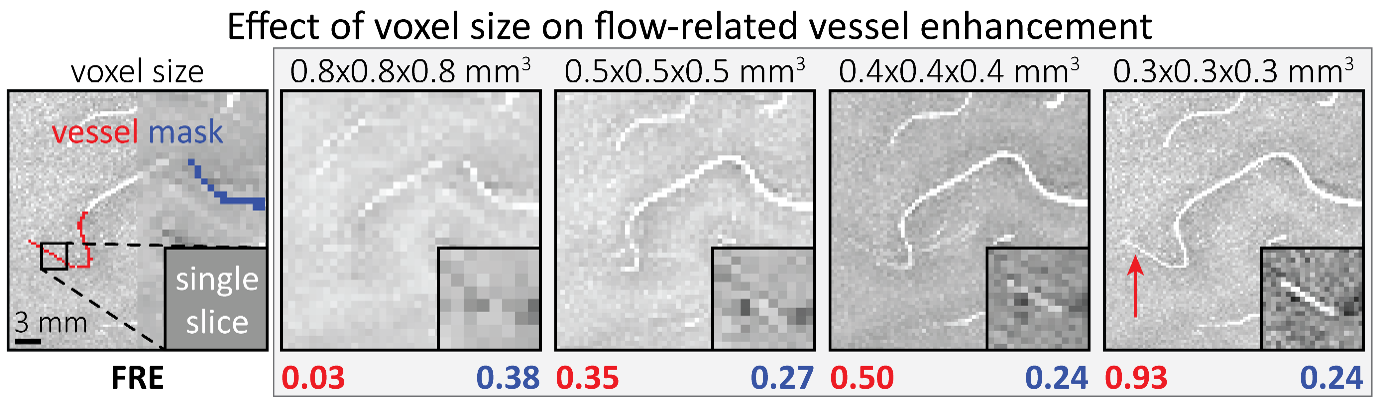
      Figure 5: Effect of voxel size on flow-related vessel enhancement. Thin axial maximum intensity projections containing a small artery acquired with different voxel sizes ranging from 0.8 mm to 0.3 mm isotropic are shown. The FRE is estimated using the mean intensity value within the vessel masks depicted on the left, and the mean intensity values of the surrounding tissue. The small insert shows a section of the artery as it lies within a single slice. A reduction in voxel size is accompanied by a corresponding increase in FRE (red mask), whereas no further increase is obtained once the voxel size is equal or smaller than the vessel size (blue mask).

      After many internal discussions, we had to conclude that deducing a meaningful SNR analysis that would benefit the reader was not possible given the available data due to the complex relationship between voxel size and other imaging parameters in practice. In detail, we have reduced the voxel size but at the same time increased the acquisition time by increasing the number of encoding steps—which we have now also highlighted in the manuscript. We have, however, added additional considerations about balancing SNR and segmentation performance. Note that these considerations are not specific to imaging the pial arteries but apply to all MRA acquisitions, and have thus been discussed previously in the literature. Here, we wanted to focus on the novel insights gained in our study. Importantly, while we previously noted that reducing voxel size improves contrast in vessels whose diameters are smaller than the voxel size, we now explicitly acknowledge that, for vessels whose diameters are larger than the voxel size reducing the voxel size is not helpful---since it only reduces SNR without any gain in contrast---and may hinder segmentation performance, and thus become counterproductive.

      "In general, we have not considered SNR, but only FRE, i.e. the (relative) image contrast, assuming that segmentation algorithms would benefit from higher contrast for smaller arteries. Importantly, the acquisition parameters available to maximize FRE are limited, namely repetition time, flip angle and voxel size. SNR, however, can be improved via numerous avenues independent of these parameters (Brown et al., 2014b; Du et al., 1996; Heverhagen et al., 2008; Parker et al., 1991; Triantafyllou et al., 2011; Venkatesan and Haacke, 1997), the simplest being longer acquisition times. If the aim is to optimize a segmentation outcome for a given acquisition time, the trade-off between contrast and SNR for the specific segmentation algorithm needs to be determined (Klepaczko et al., 2016; Lesage et al., 2009; Moccia et al., 2018; Phellan and Forkert, 2017). Our own—albeit limited—experience has shown that segmentation algorithms (including manual segmentation) can accommodate a perhaps surprising amount of noise using prior knowledge and neighborhood information, making these high-resolution acquisitions possible. Importantly, note that our treatment of the FRE does not suggest that an arbitrarily small voxel size is needed, but instead that voxel sizes appropriate for the arterial diameter of interest are beneficial (in line with the classic “matched-filter” rationale (North, 1963)). Voxels smaller than the arterial diameter would not yield substantial benefits (Figure 5) and may result in SNR reductions that would hinder segmentation performance."

      5) The separation of arterial and venous components is a bit puzzling, partly because the methodology used is not fully explained, but also partly because the reasons invoked (flow artefact in large pial veins) do not match the results (many small vessels are included as veins). This question of separating both types of vessels is quite important for applications, so the whole procedure should be explained in detail. The use of short T2 seemed also sub-optimal, as both arteries and veins result in shorter T2 compared to most brain tissues: wouldn't a susceptibility-based measure (SWI or better QSM) provide a better separation? Finally, since the T2* map and the regular TOF map are at different resolutions, masking out the vessels labeled as veins will likely result in the smaller veins being left out.

      We agree that while the technical details of this approach were provided in the Data analysis section, the rationale behind it was only briefly mentioned. We have therefore included an additional section Inflow-artefacts in sinuses and pial veins in the Theory section of the manuscript. We have also extended the discussion of the advantages and disadvantages of the different susceptibility-based contrasts, namely T2, SWI and QSM. While in theory both T2 and QSM should allow the reliable differentiation of arterial and venous blood, we found T2* to perform more robustly, as QSM can fail in many places, e.g., due to the strong susceptibility sources within superior sagittal and transversal sinuses and pial veins and their proximity to the brain surface, dedicated processing is required (Stewart et al., 2022). Further, we have also elaborated in the Discussion section why the interpretation of Figure 9 regarding the absence or presence of small veins is challenging. Namely, the intensity-based segmentation used here provides only an incomplete segmentation even of the larger sinuses, because the overall lower intensity found in veins combined with the heterogeneity of the intensities in veins violates the assumptions made by most vascular segmentation approaches of homogenous, high image intensities within vessels, which are satisfied in arteries (page 29f) (see also the illustration below). Accordingly, quantifying the number of vessels labelled as veins (R1.4a) would provide misleading results, as often only small subsets of the same sinus or vein are segmented.
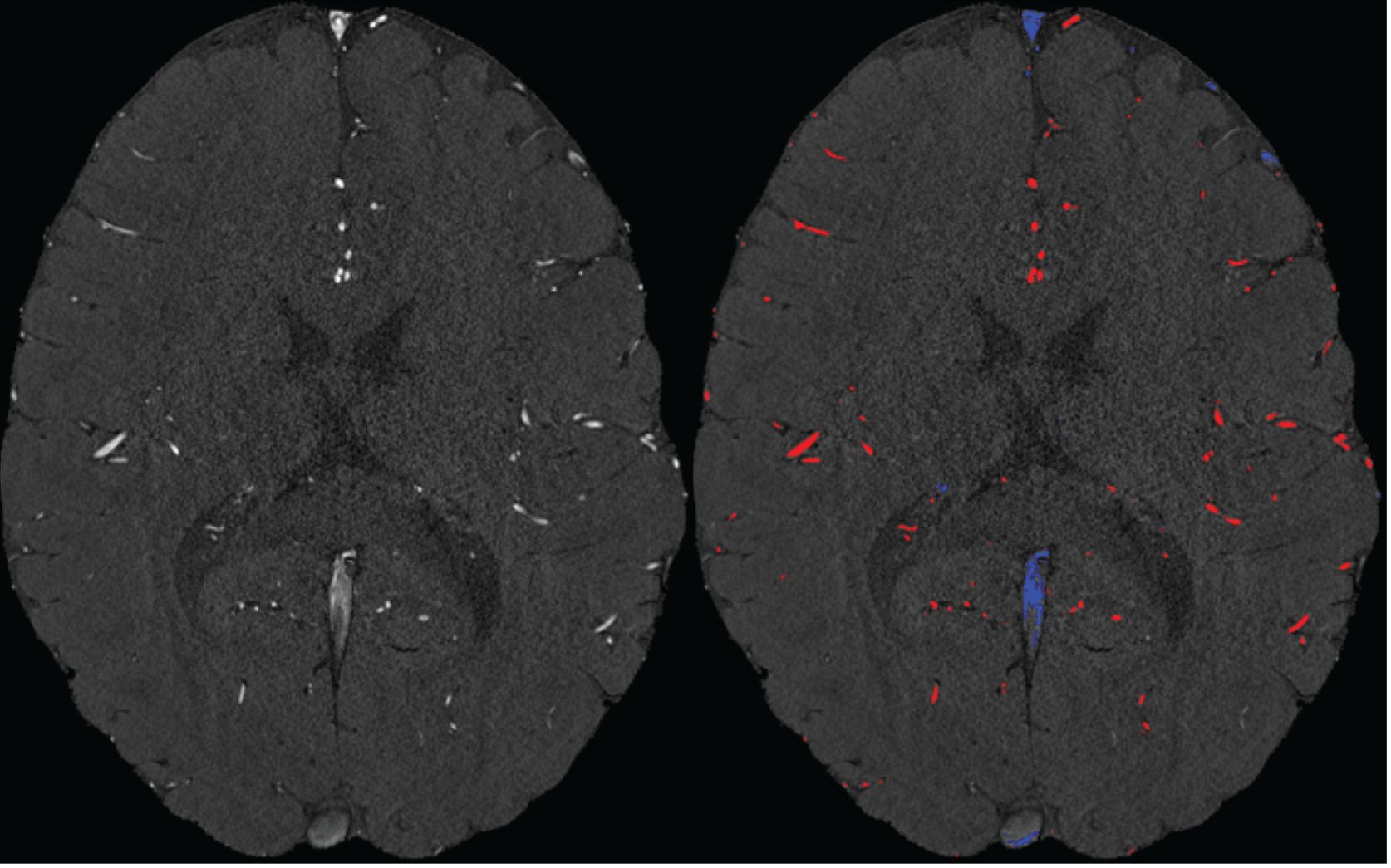
      "Inflow-artefacts in sinuses and pial veins

      Inflow in large pial veins and the sagittal and transverse sinuses can cause flow-related enhancement in these non-arterial vessels. One common strategy to remove this unwanted signal enhancement is to apply venous suppression pulses during the data acquisition, which saturate bloods spins outside the imaging slab. Disadvantages of this technique are the technical challenges of applying these pulses at ultra-high field due to constraints of the specific absorption rate (SAR) and the necessary increase in acquisition time (Conolly et al., 1988; Heverhagen et al., 2008; Johst et al., 2012; Maderwald et al., 2008; Schmitter et al., 2012; Zhang et al., 2015). In addition, optimal positioning of the saturation slab in the case of pial arteries requires further investigation, and in particular supressing signal from the superior sagittal sinus without interfering in the imaging of the pial arteries vasculature at the top of the cortex might prove challenging. Furthermore, this venous saturation strategy is based on the assumption that arterial blood is traveling head-wards while venous blood is drained foot-wards. For the complex and convoluted trajectory of pial vessels this directionality-based saturation might be oversimplified, particularly when considering the higher-order branches of the pial arteries and veins on the cortical surface. Inspired by techniques to simultaneously acquire a TOF image for angiography and a susceptibility-weighted image for venography (Bae et al., 2010; Deistung et al., 2009; Du et al., 1994; Du and Jin, 2008), we set out to explore the possibility of removing unwanted venous structures from the segmentation of the pial arterial vasculature during data postprocessing. Because arteries filled with oxygenated blood have T2-values similar to tissue, while veins have much shorter T2-values due to the presence of deoxygenated blood (Pauling and Coryell, 1936; Peters et al., 2007; Uludağ et al., 2009; Zhao et al., 2007), we used this criterion to remove vessels with short T2* values from the segmentation (see Data Analysis for details). In addition, we also explored whether unwanted venous structures in the high-resolution TOF images—where a two-echo acquisition is not feasible due to the longer readout—can be removed based on detecting them in a lower-resolution image."

      "Removal of pial veins

      Inflow in large pial veins and the superior sagittal and transverse sinuses can cause a flow-related enhancement in these non-arterial vessels (Figure 9, left). The higher concentration of deoxygenated haemoglobin in these vessels leads to shorter T2 values (Pauling and Coryell, 1936), which can be estimated using a two-echo TOF acquisition (see also Inflow-artefacts in sinuses and pial veins). These vessels can be identified in the segmentation based on their T2 values (Figure 9, left), and removed from the angiogram (Figure 9, right) (Bae et al., 2010; Deistung et al., 2009; Du et al., 1994; Du and Jin, 2008). In particular, the superior and inferior sagittal and the transversal sinuses and large veins which exhibited an inhomogeneous intensity profile and a steep loss of intensity at the slab boundary were identified as non-arterial (Figure 9, left). Further, we also explored the option of removing unwanted venous vessels from the high-resolution TOF image (Figure 7) using a low-resolution two-echo TOF (not shown). This indeed allowed us to remove the strong signal enhancement in the sagittal sinuses and numerous larger veins, although some small veins, which are characterised by inhomogeneous intensity profiles and can be detected visually by experienced raters, remain."
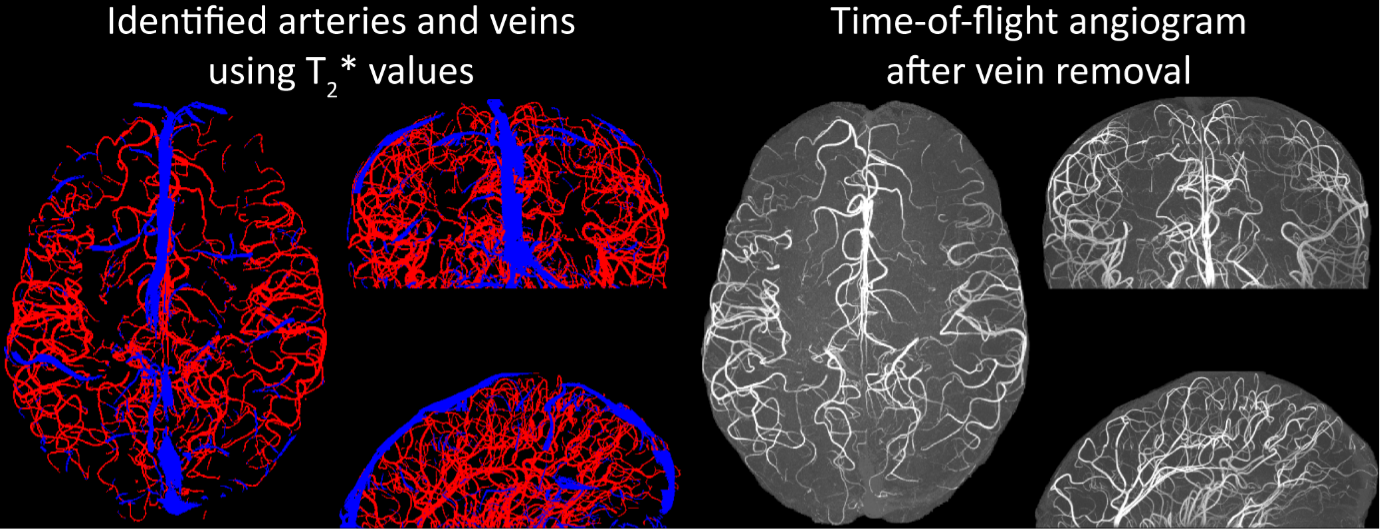
      Figure 9: Removal of non-arterial vessels in time-of-flight imaging. LEFT: Segmentation of arteries (red) and veins (blue) using T_2^ estimates. RIGHT: Time-of-flight angiogram after vein removal.*

      Our approach also assumes that the unwanted veins are large enough that they are also resolved in the low-resolution image. If we consider the source of the FRE effect, it might indeed be exclusively large veins that are present in TOF-MRA data, which would suggest that our assumption is valid. Fundamentally, the FRE depends on the inflow of un-saturated spins into the imaging slab. However, small veins drain capillary beds in the local tissue, i.e. the tissue within the slab. (Note that due to the slice oversampling implemented in our acquisition, spins just above or below the slab will also be excited.) Thus, small veins only contain blood water spins that have experienced a large number of RF pulses due to the long transit time through the pial arterial vasculature, the capillaries and the intracortical venules. Hence, their longitudinal magnetization would be similar to that of stationary tissue. To generate an FRE effect in veins, “pass-through” venous blood from outside the imaging slab is required. This is only available in veins that are passing through the imaging slab, which have much larger diameters. These theoretical considerations are corroborated by the findings in Figure 9, where large disconnected vessels with varying intensity profiles were identified as non-arterial. Due to the heterogenous intensity profiles in large veins and the sagittal and transversal sinuses, the intensity-based segmentation applied here may only label a subset of the vessel lumen, creating the impression of many small veins. This is particularly the case for the straight and inferior sagittal sinus in the bottom slab of Figure 9. Nevertheless, future studies potentially combing anatomical prior knowledge, advanced segmentation algorithms and susceptibility measures would be capable of removing these unwanted veins in post-processing to enable an efficient TOF-MRA image acquisition dedicated to optimally detecting small arteries without the need for additional venous suppression RF pulses.

      6) A more general question also is why this imaging method is limited to pial vessels: at 140 microns, the larger intra-cortical vessels should be appearing (group 6 in Duvernoy, 1981: diameters between 50 and 240 microns). Are there other reasons these vessels are not detected? Similarly, it seems there is no arterial vasculature detected in the white matter here: it is due to the rather superior location of the imaging slab, or a limitation of the method? Likewise, all three results focus on a rather homogeneous region of cerebral cortex, in terms of vascularisation. It would be interesting for applications to demonstrate the capabilities of the method in more complex regions, e.g. the densely vascularised cerebellum, or more heterogeneous regions like the midbrain. Finally, it is notable that all three subjects appear to have rather different densities of vessels, from sparse (participant II) to dense (participant I), with some inhomogeneities in density (frontal region in participant III) and inconsistencies in detection (sinuses absent in participant II). All these points should be discussed.

      While we are aware that the diameter of intracortical arteries has been suggested to be up to 240 µm (Duvernoy et al., 1981), it remains unclear how prevalent intracortical arteries of this size are. For example, note that in a different context in the Duvernoy study (in teh revised manuscript), the following values are mentioned (which we followed in Figure 1):

      “Central arteries of the Iobule always have a large diameter of 260 µ to 280 µ, at their origin. Peripheral arteries have an average diameter of 150 µ to 180 µ. At the cortex surface, all arterioles of 50 µ or less, penetrate the cortex or form anastomoses. The diameter of most of these penetrating arteries is approximately 40 µ.”

      Further, the examinations by Hirsch et al. (2012) (albeit in the macaque brain), showed one (exemplary) intracortical artery belonging to group 6 (Figure 1B), whose diameter appears to be below 100 µm. Given these discrepancies and the fact that intracortical arteries in group 5 only reach 75 µm, we suspect that intracortical arteries with diameters > 140 µm are a very rare occurrence, which we might not have encountered in this data set.

      Similarly, arteries in white matter (Nonaka et al., 2003) and the cerebellum (Duvernoy et al., 1983) are beyond our resolution at the moment. The midbrain is an interesting suggesting, although we believe that the cortical areas chosen here with their gradual reduction in diameter along the vascular tree, provide a better illustration of the effect of voxel size than the rather abrupt reduction in vascular diameter found in the midbrain. We have added the even higher resolution requirements in the discussion section:

      "In summary, we expect high-resolution TOF-MRA to be applicable also for group studies, to address numerous questions regarding the relationship of arterial topology and morphometry to the anatomical and functional organization of the brain, and the influence of arterial topology and morphometry on brain hemodynamics in humans. Notably, we have focused on imaging pial arteries of the human cerebrum; however, other brain structures such as the cerebellum, subcortex and white matter are of course also of interest. While the same theoretical considerations apply, imaging the arterial vasculature in these structures will require even smaller voxel sizes due to their smaller arterial diameters (Duvernoy et al., 1983, 1981; Nonaka et al., 2003)."

      Regarding the apparent sparsity of results from participant II, this is mostly driven by the much smaller coverage in this subject (19.6 mm in Participant II vs. 50 mm and 58 mm in Participant I and III, respectively). The reduction in density in the frontal regions might indeed constitute difference in anatomy or might be driven by the presence or more false-positive veins in Participant I than Participant III in these areas. Following the depiction in Duvernoy et al. (1981), one would not expect large arteries in frontal areas, but large veins are common. Thus, the additional vessels in Participant I in the frontal areas might well be false-positive veins, and their removal would result in similar densities for both participants. Indeed, as pointed out in section Future directions, we would expect a lower arterial density in frontal and posterior areas than in middle areas. The sinuses (and other large false-positive veins) in Participant II have been removed as outlined and discussed in sections Removal of pial veins and Challenges for vessel segmentation algorithms, respectively.

      7) One of the main practical limitations of the proposed method is the use of a very small imaging slab. It is mentioned in the discussion that thicker slabs are not only possible, but beneficial both in terms of SNR and acceleration possibilities. What are the limitations that prevented their use in the present study? With the current approach, what would be the estimated time needed to acquire the vascular map of an entire brain? It would also be good to indicate whether specific processing was needed to stitch together the multiple slab images in Fig. 6-9, S2.

      Time-of-flight acquisitions are commonly performed with thin acquisition slabs, following initial investigations by Parker et al. (1991) to maximise vessel sensitivity and minimize noise. We therefore followed this practice for our initial investigations but wanted to point out in the discussion that thicker slabs might provide several advantages that need to be evaluated in future studies. This would include theoretical and empirical evaluations balancing SNR gains from larger excitation volumes and SNR losses due to more acceleration. For this study, we have chosen the slab thickness such as to keep the acquisition time at a reasonable amount to minimize motion artefacts (as outlined in the Discussion). In addition, due to the extreme matrix sizes in particular for the 0.14 mm acquisition, we were also limited in the number of data points per image that can be indexed. This would require even more substantial changes to the sequence than what we have already performed. With 16 slabs, assuming optimal FOV orientation, full-brain coverage including the cerebellum of 95 % of the population (Mennes et al., 2014) could be achieved with an acquisition time of (16  11 min 42 s = 3 h 7 min 12 s) at 0.16 mm isotropic voxel size. No stitching of the individual slabs was performed, as subject motion was minimal. We have added a corresponding comment in the Data Analysis.

      "Both thresholds were applied globally but manually adjusted for each slab. No correction for motion between slabs was applied as subject motion was minimal. The Matlab code describing the segmentation algorithm as well es the analysis of the two-echo TOF acquisition outlined in the following paragraph are also included in the github repository (https://gitlab.com/SaskiaB/pialvesseltof.git)."

      8) Some researchers and clinicians will argue that you can attain best results with anisotropic voxels, combining higher SNR and higher resolution. It would be good to briefly mention why isotropic voxels are preferred here, and whether anisotropic voxels would make sense at all in this context.

      Anisotropic voxels can be advantageous if the underlying object is anisotropic, e.g. an artery running straight through the slab, which would have a certain diameter (imaged using the high-resolution plane) and an ‘infinite’ elongation (in the low-resolution direction). However, the vessels targeted here can have any orientation and curvature; an anisotropic acquisition could therefore introduce a bias favouring vessels with a particular orientation relative to the voxel grid. Note that the same argument applies when answering the question why a further reduction slab thickness would eventually result in less increase in FRE (section Introducing a partial-volume model). We have added a corresponding comment in our discussion on practical imaging considerations:

      "In summary, numerous theoretical and practical considerations remain for optimal imaging of pial arteries using time-of-flight contrast. Depending on the application, advanced displacement artefact compensation strategies may be required, and zero-filling could provide better vessel depiction. Further, an optimal trade-off between SNR, voxel size and acquisition time needs to be found. Currently, the partial-volume FRE model only considers voxel size, and—as we reduced the voxel size in the experiments—we (partially) compensated the reduction in SNR through longer scan times. This, ultimately, also required the use of prospective motion correction to enable the very long acquisition times necessary for 140 µm isotropic voxel size. Often, anisotropic voxels are used to reduce acquisition time and increase SNR while maintaining in-plane resolution. This may indeed prove advantageous when the (also highly anisotropic) arteries align with the anisotropic acquisition, e.g. when imaging the large supplying arteries oriented mostly in the head-foot direction. In the case of pial arteries, however, there is not preferred orientation because of the convoluted nature of the pial arterial vasculature encapsulating the complex folding of the cortex (see section Anatomical architecture of the pial arterial vasculature). A further reduction in voxel size may be possible in dedicated research settings utilizing even longer acquisition times and a larger field-of-view to maintain SNR. However, if acquisition time is limited, voxel size and SNR need to be carefully balanced against each other."

      Reviewer #2 (Public Review):

      Overview

      This paper explores the use of inflow contrast MRI for imaging the pial arteries. The paper begins by providing a thorough background description of pial arteries, including past studies investigating the velocity and diameter. Following this, the authors consider this information to optimize the contrast between pial arteries and background tissue. This analysis reveals spatial resolution to be a strong factor influencing the contrast of the pial arteries. Finally, experiments are performed on a 7T MRI to investigate: the effect of spatial resolution by acquiring images at multiple resolutions, demonstrate the feasibility of acquiring ultrahigh resolution 3D TOF, the effect of displacement artifacts, and the prospect of using T2* to remove venous voxels.

      Impression

      There is certainly interest in tools to improve our understanding of the architecture of the small vessels of the brain and this work does address this. The background description of the pial arteries is very complete and the manuscript is very well prepared. The images are also extremely impressive, likely benefiting from motion correction, 7T, and a very long scan time. The authors also commit to open science and provide the data in an open platform. Given this, I do feel the manuscript to be of value to the community; however, there are concerns with the methods for optimization, the qualitative nature of the experiments, and conclusions drawn from some of the experiments.

      Specific Comments :

      1) Figure 3 and Theory surrounding. The optimization shown in Figure 3 is based fixing the flip angle or the TR. As is well described in the literature, there is a strong interdependency of flip angle and TR. This is all well described in literature dating back to the early 90s. While I think it reasonable to consider these effects in optimization, the language needs to include this interdependency or simply reference past work and specify how the flip angle was chosen. The human experiments do not include any investigation of flip angle or TR optimization.

      We thank the reviewer for raising this valuable point, and we fully agree that there is an interdependency between these two parameters. To simplify our optimization, we did fix one parameter value at a time, but in the revised manuscript we clarified that both parameters can be optimized simultaneously. Importantly, a large range of parameter values will result in a similar FRE in the small artery regime, which is illustrated in the optimization provided in the main text. We have therefore chosen the repetition time based on encoding efficiency and then set a corresponding excitation flip angle. In addition, we have also provided additional simulations in the supplementary material outlining the interdependency for the case of pial arteries.

      "Optimization of repetition time and excitation flip angle

      As the main goal of the optimisation here was to start within an already established parameter range for TOF imaging at ultra-high field (Kang et al., 2010; Stamm et al., 2013; von Morze et al., 2007), we only needed to then further tailor these for small arteries by considering a third parameter, namely the blood delivery time. From a practical perspective, a TR of 20 ms as a reference point was favourable, as it offered a time-efficient readout minimizing wait times between excitations but allowing low encoding bandwidths to maximize SNR. Due to the interdependency of flip angle and repetition time, for any one blood delivery time any FRE could (in theory) be achieved. For example, a similar FRE curve at 18 ° flip angle and 5 ms TR can also be achieved at 28 ° flip angle and 20 ms TR; or the FRE curve at 18 ° flip angle and 30 ms TR is comparable to the FRE curve at 8 ° flip angle and 5 ms TR (Supplementary Figure 3 TOP). In addition, the difference between optimal parameter settings diminishes for long blood delivery times, such that at a blood delivery time of 500 ms (Supplementary Figure 3 BOTTOM), the optimal flip angle at a TR of 15 ms, 20 ms or 25 ms would be 14 °, 16 ° and 18 °, respectively. This is in contrast to a blood delivery time of 100 ms, where the optimal flip angles would be 32 °, 37 ° and 41 °. In conclusion, in the regime of small arteries, long TR values in combination with low flip angles ensure flow-related enhancement at blood delivery times of 200 ms and above, and within this regime there are marginal gains by further optimizing parameter values and the optimal values are all similar."
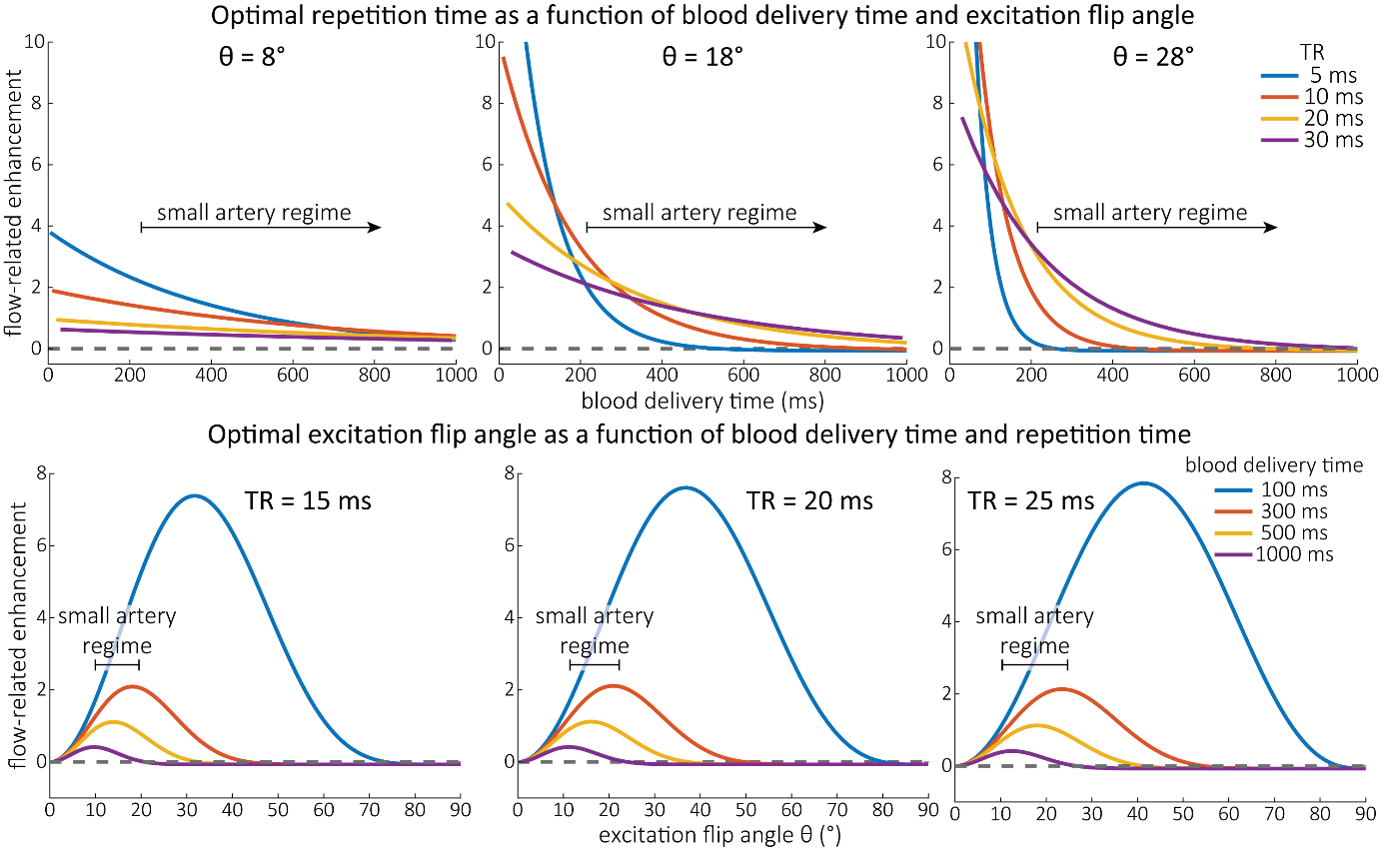
      Supplementary Figure 3: Optimal imaging parameters for small arteries. This assessment follows the simulations presented in Figure 3, but in addition shows the interdependency for the corresponding third parameter (either flip angle or repetition time). TOP: Flip angles close to the Ernst angle show only a marginal flow-related enhancement; however, the influence of the blood delivery time decreases further (LEFT). As the flip angle increases well above the values used in this study, the flow-related enhancement in the small artery regime remains low even for the longer repetition times considered here (RIGHT). BOTTOM: The optimal excitation flip angle shows reduced variability across repetition times in the small artery regime compared to shorter blood delivery times.

      "Based on these equations, optimal T_R and excitation flip angle values (θ) can be calculated for the blood delivery times under consideration (Figure 3). To better illustrate the regime of small arteries, we have illustrated the effect of either flip angle or T_R while keeping the other parameter values fixed to the value that was ultimately used in the experiments; although both parameters can also be optimized simultaneously (Haacke et al., 1990). Supplementary Figure 3 further delineates the interdependency between flip angle and T_R within a parameter range commonly used for TOF imaging at ultra-high field (Kang et al., 2010; Stamm et al., 2013; von Morze et al., 2007). Note how longer T_R values still provide an FRE effect even at very long blood delivery times, whereas using shorter T_R values can suppress the FRE effect (Figure 3, left). Similarly, at lower flip angles the FRE effect is still present for long blood delivery times, but it is not available anymore at larger flip angles, which, however, would give maximum FRE for shorter blood delivery times (Figure 3, right). Due to the non-linear relationships of both blood delivery time and flip angle with FRE, the optimal imaging parameters deviate considerably when comparing blood delivery times of 100 ms and 300 ms, but the differences between 300 ms and 1000 ms are less pronounced. In the following simulations and measurements, we have thus used a T_R value of 20 ms, i.e. a value only slightly longer than the readout of the high-resolution TOF acquisitions, which allowed time-efficient data acquisition, and a nominal excitation flip angle of 18°. From a practical standpoint, these values are also favorable as the low flip angle reduces the specific absorption rate (Fiedler et al., 2018) and the long T_R value decreases the potential for peripheral nerve stimulation (Mansfield and Harvey, 1993)."

      2) Figure 4 and Theory surrounding. A major limitation of this analysis is the lack of inclusion of noise in the analysis. I believe the results to be obvious that the FRE will be modulated by partial volume effects, here described quadratically by assuming the vessel to pass through the voxel. This would substantially modify the analysis, with a shift towards higher voxel volumes (scan time being equal). The authors suggest the FRE to be the dominant factor effecting segmentation; however, segmentation is limited by noise as much as contrast.

      We of course agree with the reviewer that contrast-to-noise ratio is a key factor that determines the detection of vessels and the quality of the segmentation, however there are subtleties regarding the exact inter-relationship between CNR, resolution, and segmentation performance.

      The main purpose of Figure 4 is not to provide a trade-off between flow-related enhancement and signal-to-noise ratio—in particular as SNR is modulated by many more factors than voxel size alone, e.g. acquisition time, coil geometry and instrumentation—but to decide whether the limiting factor for imaging pial arteries is the reduction in flow-related enhancement due to long blood delivery times (which is the explanation often found in the literature (Chen et al., 2018; Haacke et al., 1990; Masaryk et al., 1989; Mut et al., 2014; Park et al., 2020; Parker et al., 1991; Wilms et al., 2001; Wright et al., 2013)) or due to partial volume effects. Furthermore, when reducing voxel size one will also likely increase the number of encoding steps to maintain the imaging coverage (i.e., the field-of-view) and so the relationship between voxel size and SNR in practice is not straightforward. Therefore, we had to conclude that deducing a meaningful SNR analysis that would benefit the reader was not possible given the available data due to the complex relationship between voxel size and other imaging parameters. Note that these considerations are not specific to imaging the pial arteries but apply to all MRA acquisitions, and have thus been discussed previously in the literature. Here, we wanted to focus on the novel insights gained in our study, namely that it provides an expression for how relative FRE contrast changes with voxel size with some assumptions that apply for imaging pial arteries.

      Further, depending on the definition of FRE and whether partial-volume effects are included (see also our response to R2.8), larger voxel volumes have been found to be theoretically advantageous even when only considering contrast (Du et al., 1996; Venkatesan and Haacke, 1997), which is not in line with empirical observations (Al-Kwifi et al., 2002; Bouvy et al., 2014; Haacke et al., 1990; Ladd, 2007; Mattern et al., 2018; von Morze et al., 2007).

      The notion that vessel segmentation algorithms perform well on noisy data but poorly on low-contrast data was mainly driven by our own experiences. However, we still believe that the assumption that (all) segmentation algorithms are linearly dependent on contrast and noise (which the formulation of a contrast-to-noise ratio presumes) is similarly not warranted. Indeed, the necessary trade-off between FRE and SNR might be specific to the particular segmentation algorithm being used than a general property of the acquisition. Please also note that our analysis of the FRE does not suggest that an arbitrarily high resolution is needed. Importantly, while we previously noted that reducing voxel size improves contrast in vessels whose diameters are smaller than the voxel size, we now explicitly acknowledge that, for vessels whose diameters are larger than the voxel size reducing the voxel size is not helpful---since it only reduces SNR without any gain in contrast---and may hinder segmentation performance, and thus become counterproductive. But we take the reviewer’s point and also acknowledge that these intricacies need to be mentioned, and therefore we have rephrased the statement in the discussion in the following way:

      "In general, we have not considered SNR, but only FRE, i.e. the (relative) image contrast, assuming that segmentation algorithms would benefit from higher contrast for smaller arteries. Importantly, the acquisition parameters available to maximize FRE are limited, namely repetition time, flip angle and voxel size. SNR, however, can be improved via numerous avenues independent of these parameters (Brown et al., 2014b; Du et al., 1996; Heverhagen et al., 2008; Parker et al., 1991; Triantafyllou et al., 2011; Venkatesan and Haacke, 1997), the simplest being longer acquisition times. If the aim is to optimize a segmentation outcome for a given acquisition time, the trade-off between contrast and SNR for the specific segmentation algorithm needs to be determined (Klepaczko et al., 2016; Lesage et al., 2009; Moccia et al., 2018; Phellan and Forkert, 2017). Our own—albeit limited—experience has shown that segmentation algorithms (including manual segmentation) can accommodate a perhaps surprising amount of noise using prior knowledge and neighborhood information, making these high-resolution acquisitions possible. Importantly, note that our treatment of the FRE does not suggest that an arbitrarily small voxel size is needed, but instead that voxel sizes appropriate for the arterial diameter of interest are beneficial (in line with the classic “matched-filter” rationale (North, 1963)). Voxels smaller than the arterial diameter would not yield substantial benefits (Figure 5) and may result in SNR reductions that would hinder segmentation performance."

      3) Page 11, Line 225. "only a fraction of the blood is replaced" I think the language should be reworded. There are certainly water molecules in blood which have experience more excitation B1 pulses due to the parabolic flow upstream and the temporal variation in flow. There is magnetization diffusion which reduces the discrepancy; however, it seems pertinent to just say the authors assume the signal is represented by the average arrival time. This analysis is never verified and is only approximate anyways. The "blood dwell time" is also an average since voxels near the wall will travel more slowly. Overall, I recommend reducing the conjecture in this section.

      We fully agree that our treatment of the blood dwell time does not account for the much more complex flow patterns found in cortical arteries. However, our aim was not do comment on these complex patterns, but to help establish if, in the simplest scenario assuming plug flow, the often-mentioned slow blood flow requires multiple velocity compartments to describe the FRE (as is commonly done for 2D MRA (Brown et al., 2014a; Carr and Carroll, 2012)). We did not intend to comment on the effects of laminar flow or even more complex flow patterns, which would require a more in-depth treatment. However, as the small arteries targeted here are often just one voxel thick, all signals are indeed integrated within that voxel (i.e. there is no voxel near the wall that travels more slowly), which may average out more complex effects. We have clarified the purpose and scope of this section in the following way:

      "In classical descriptions of the FRE effect (Brown et al., 2014a; Carr and Carroll, 2012), significant emphasis is placed on the effect of multiple “velocity segments” within a slice in the 2D imaging case. Using the simplified plug-flow model, where the cross-sectional profile of blood velocity within the vessel is constant and effects such as drag along the vessel wall are not considered, these segments can be described as ‘disks’ of blood that do not completely traverse through the full slice within one T_R, and, thus, only a fraction of the blood in the slice is replaced. Consequently, estimation of the FRE effect would then need to accommodate contribution from multiple ‘disks’ that have experienced 1 to k RF pulses. In the case of 3D imaging as employed here, multiple velocity segments within one voxel are generally not considered, as the voxel sizes in 3D are often smaller than the slice thickness in 2D imaging and it is assumed that the blood completely traverses through a voxel each T_R. However, the question arises whether this assumption holds for pial arteries, where blood velocity is considerably lower than in intracranial vessels (Figure 2). To answer this question, we have computed the blood dwell time , i.e. the average time it takes the blood to traverse a voxel, as a function of blood velocity and voxel size (Figure 2). For reference, the blood velocity estimates from the three studies mentioned above (Bouvy et al., 2016; Kobari et al., 1984; Nagaoka and Yoshida, 2006) have been added in this plot as horizontal white lines. For the voxel sizes of interest here, i.e. 50–300 μm, blood dwell times are, for all but the slowest flows, well below commonly used repetition times (Brown et al., 2014a; Carr and Carroll, 2012; Ladd, 2007; von Morze et al., 2007). Thus, in a first approximation using the plug-flow model, it is not necessary to include several velocity segments for the voxel sizes of interest when considering pial arteries, as one might expect from classical treatments, and the FRE effect can be described by equations (1) – (3), simplifying our characterization of FRE for these vessels. When considering the effect of more complex flow patterns, it is important to bear in mind that the arteries targeted here are only one-voxel thick, and signals are integrated across the whole artery."

      4) Page 13, Line 260. "two-compartment modelling" I think this section is better labeled "Extension to consider partial volume effects" The compartments are not interacting in any sense in this work.

      Thank you for this suggestion. We have replaced the heading with Introducing a partial-volume model (page 14) and replaced all instances of ‘two-compartment model’ with ‘partial-volume model’.

      5) Page 14, Line 284. "In practice, a reduction in slab …." "reducing the voxel size is a much more promising avenue" There is a fair amount on conjecture here which is not supported by experiments. While this may be true, the authors also use a classical approach with quite thin slabs.

      The slab thickness used in our experiments was mainly limited by the acquisition time and the participants ability to lie still. We indeed performed one measurement with a very experienced participant with a thicker slab, but found that with over 20 minutes acquisition time, motion artefacts were unavoidable. The data presented in Figure 5 were acquired with similar slab thickness, supporting the statement that reducing the voxel size is a promising avenue for imaging small pial arteries. However, we indeed have not provided an empirical comparison of the effect of slab thickness. Nevertheless, we believe it remains useful to make the theoretical argument that due to the convoluted nature of the pial arterial vascular geometry, a reduction in slab thickness may not reduce the acquisition time if no reduction in intra-slab vessel length can be achieved, i.e. if the majority of the artery is still contained in the smaller slab. We have clarified the statement and removed the direct comparison (‘much more’ promising) in the following way:

      "In theory, a reduction in blood delivery time increases the FRE in both regimes, and—if the vessel is smaller than the voxel—so would a reduction in voxel size. In practice, a reduction in slab thickness―which is the default strategy in classical TOF-MRA to reduce blood delivery time―might not provide substantial FRE increases for pial arteries. This is due to their convoluted geometry (see section Anatomical architecture of the pial arterial vasculature), where a reduction in slab thickness may not necessarily reduce the vessel segment length if the majority of the artery is still contained within the smaller slab. Thus, given the small arterial diameter, reducing the voxel size is a promising avenue when imaging the pial arterial vasculature."

      6) Figure 5. These image differences are highly exaggerated by the lack of zero filling (or any interpolation) and the fact that the wildly different. The interpolation should be addressed, and the scan time discrepancy listed as a limitation.

      We have extended the discussion around zero-filling by including additional considerations based on the imaging parameters in Figure 5 and highlighted the substantial differences in voxel volume. Our choice not to perform zero-filling was driven by the open question of what an ‘optimal’ zero-filling factor would be. We have also highlighted the substantial differences in acquisition time when describing the results.

      Changes made to the results section:

      "To investigate the effect of voxel size on vessel FRE, we acquired data at four different voxel sizes ranging from 0.8 mm to 0.3 mm isotropic resolution, adjusting only the encoding matrix, with imaging parameters being otherwise identical (FOV, TR, TE, flip angle, R, slab thickness, see section Data acquisition). The total acquisition time increases from less than 2 minutes for the lowest resolution scan to over 6 minutes for the highest resolution scan as a result."

      Changes made to the discussion section:

      "Nevertheless, slight qualitative improvements in image appearance have been reported for higher zero-filling factors (Du et al., 1994), presumably owing to a smoother representation of the vessels (Bartholdi and Ernst, 1973). In contrast, Mattern et al. (2018) reported no improvement in vessel contrast for their high-resolution data. Ultimately, for each application, e.g. visual evaluation vs. automatic segmentation, the optimal zero-filling factor needs to be determined, balancing image appearance (Du et al., 1994; Zhu et al., 2013) with loss in statistical independence of the image noise across voxels. For example, in Figure 5, when comparing across different voxel sizes, the visual impression might improve with zero-filling. However, it remains unclear whether the same zero-filling factor should be applied for each voxel size, which means that the overall difference in resolution remains, namely a nearly 20-fold reduction in voxel volume when moving from 0.8-mm isotropic to 0.3-mm isotropic voxel size. Alternatively, the same ’zero-filled’ voxel sizes could be used for evaluation, although then nearly 94 % of the samples used to reconstruct the image with 0.8-mm voxel size would be zero-valued for a 0.3-mm isotropic resolution. Consequently, all data presented in this study were reconstructed without zero-filling."

      7) Figure 7. Given the limited nature of experiment may it not also be possible the subject moved more, had differing brain blood flow, etc. Were these lengthy scans acquired in the same session? Many of these differences could be attributed to other differences than the small difference in spatial resolution.

      The scans were acquired in the same session using the same prospective motion correction procedure. Note that the acquisition time of the images with 0.16 mm isotropic voxel size was comparatively short, taking just under 12 minutes. Although the difference in spatial resolution may seem small, it still amounts to a 33% reduction in voxel volume. For comparison, reducing the voxel size from 0.4 mm to 0.3 mm also ‘only’ reduces the voxel volume by 58 %—not even twice as much. Overall, we fully agree that additional validation and optimisation of the imaging parameters for pial arteries are beneficial and have added a corresponding statement to the Discussion section.

      Changes made to the results section (also in response to Reviewer 1 (R1.22))

      "We have also acquired one single slab with an isotropic voxel size of 0.16 mm with prospective motion correction for this participant in the same session to compare to the acquisition with 0.14 mm isotropic voxel size and to test whether any gains in FRE are still possible at this level of the vascular tree."

      Changes made to the discussion section:

      "Acquiring these data at even higher field strengths would boost SNR (Edelstein et al., 1986; Pohmann et al., 2016) to partially compensate for SNR losses due to acceleration and may enable faster imaging and/or smaller voxel sizes. This could facilitate the identification of the ultimate limit of the flow-related enhancement effect and identify at which stage of the vascular tree does the blood delivery time become the limiting factor. While Figure 7 indicates the potential for voxel sizes below 0.16 mm, the singular nature of this comparison warrants further investigations."

      8) Page 22, Line 395. Would the analysis be any different with an absolute difference? The FRE (Eq 6) divides by a constant value. Clearly there is value in the difference as other subtractive inflow imaging would have infinite FRE (not considering noise as the authors do).

      Absolutely; using an absolute FRE would result in the highest FRE for the largest voxel size, whereas in our data small vessels are more easily detected with the smallest voxel size. We also note that relative FRE would indeed become infinite if the value in the denominator representing the tissue signal was zero, but this special case highlights how relative FRE can help characterize “segmentability”: a vessel with any intensity surrounded by tissue with an intensity of zero is trivially/infinitely segmentatble. We have added this point to the revised manuscript as indicated below.

      Following the suggestion of Reviewer 1 (R1.2), we have included additional simulations to clarify the effects of relative FRE definition and partial-volume model, in which we show that only when considering both together are smaller voxel sizes advantageous (Supplementary Material).

      "Effect of FRE Definition and Interaction with Partial-Volume Model

      For the definition of the FRE effect in this study, we used a measure of relative FRE (Al-Kwifi et al., 2002) in combination with a partial-volume model (Eq. 6). To illustrate the effect of these two definitions, as well as their interaction, we have estimated the relative and absolute FRE for an artery with a diameter of 200 µm and 2 000 µm (i.e. no partial-volume effects). The absolute FRE explicitly takes the voxel volume into account, i.e. instead of Eq. (6) for the relative FRE we used"

      Eq. (1)

      Note that the division by
      to obtain the relative FRE removes the contribution of the total voxel volume

      "Supplementary Figure 2 shows that, when partial volume effects are present, the highest relative FRE arises in voxels with the same size as or smaller than the vessel diameter (Supplementary Figure 2A), whereas the absolute FRE increases with voxel size (Supplementary Figure 2C). If no partial-volume effects are present, the relative FRE becomes independent of voxel size (Supplementary Figure 2B), whereas the absolute FRE increases with voxel size (Supplementary Figure 2D). While the partial-volume effects for the relative FRE are substantial, they are much more subtle when using the absolute FRE and do not alter the overall characteristics."
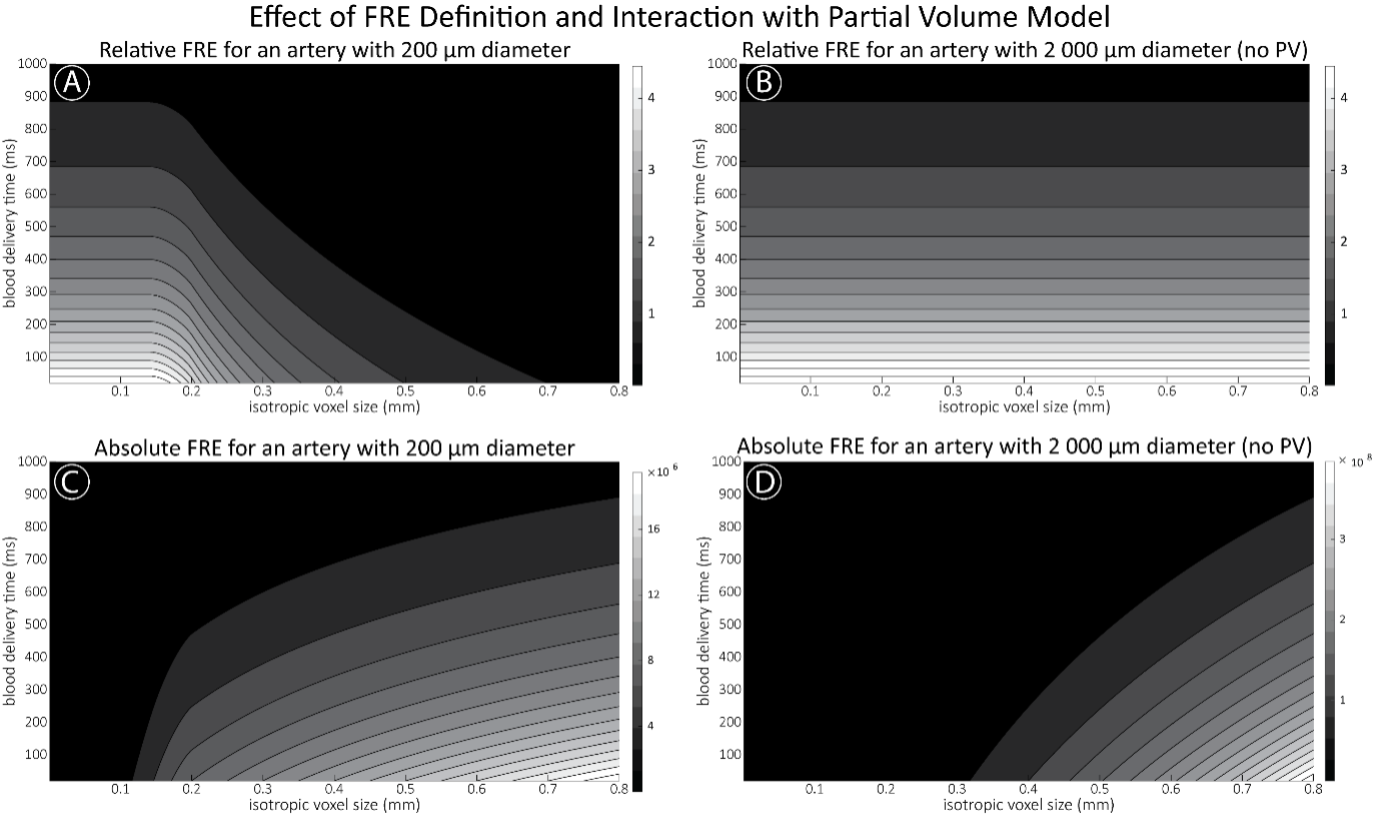
      Supplementary Figure 2: Effect of voxel size and blood delivery time on the relative flow-related enhancement (FRE) using either a relative (A,B) (Eq. (3)) or an absolute (C,D) (Eq. (12)) FRE definition assuming a pial artery diameter of 200 μm (A,C) or 2 000 µm, i.e. no partial-volume effects at the central voxel of this artery considered here.

      Following the established literature (Brown et al., 2014a; Carr and Carroll, 2012; Haacke et al., 1990) and because we would ultimately derive a relative measure, we have omitted the effect of voxel volume on the longitudinal magnetization in our derivations, which make it appear as if we are dividing by a constant in Eq. 6, as the effect of total voxel volume cancels out for the relative FRE. We have now made this more explicit in our derivation of the partial volume model.

      "Introducing a partial-volume model

      To account for the effect of voxel volume on the FRE, the total longitudinal magnetization M_z needs to also consider the number of spins contained within in a voxel (Du et al., 1996; Venkatesan and Haacke, 1997). A simple approximation can be obtained by scaling the longitudinal magnetization with the voxel volume (Venkatesan and Haacke, 1997) . To then include partial volume effects, the total longitudinal magnetization in a voxel M_z^total becomes the sum of the contributions from the stationary tissue M_zS^tissue and the inflowing blood M_z^blood, weighted by their respective volume fractions V_rel:"

      A simple approximation can be obtained by scaling the longitudinal magnetization with the voxel volume (Venkatesan and Haacke, 1997) . To then include partial volume effects, the total longitudinal magnetization in a voxel M_z^total becomes the sum of the contributions from the stationary tissue M_zS^tissue and the inflowing blood M_z^blood, weighted by their respective volume fractions V_rel:

      Eq. (4)

      For simplicity, we assume a single vessel is located at the center of the voxel and approximate it to be a cylinder with diameter d_vessel and length l_voxel of an assumed isotropic voxel along one side. The relative volume fraction of blood V_rel^blood is the ratio of vessel volume within the voxel to total voxel volume (see section Estimation of vessel-volume fraction in the Supplementary Material), and the tissue volume fraction V_rel^tissue is the remainder that is not filled with blood, or

      Eq. (5)

      We can now replace the blood magnetization in equation Eq. (3) with the total longitudinal magnetization of the voxel to compute the FRE as a function of vessel-volume fraction:

      Eq. (6)

      Based on your suggestion, we have also extended our interpretation of relative and absolute FRE. Indeed, a subtractive flow technique where no signal in the background remains and only intensities in the object are present would have infinite relative FRE, as this basically constitutes a perfect segmentation (bar a simple thresholding step).

      "Extending classical FRE treatments to the pial vasculature

      There are several major modifications in our approach to this topic that might explain why, in contrast to predictions from classical FRE treatments, it is indeed possible to image pial arteries. For instance, the definition of vessel contrast or flow-related enhancement is often stated as an absolute difference between blood and tissue signal (Brown et al., 2014a; Carr and Carroll, 2012; Du et al., 1993, 1996; Haacke et al., 1990; Venkatesan and Haacke, 1997). Here, however, we follow the approach of Al-Kwifi et al. (2002) and consider relative contrast. While this distinction may seem to be semantic, the effect of voxel volume on FRE for these two definitions is exactly opposite: Du et al. (1996) concluded that larger voxel size increases the (absolute) vessel-background contrast, whereas here we predict an increase in relative FRE for small arteries with decreasing voxel size. Therefore, predictions of the depiction of small arteries with decreasing voxel size differ depending on whether one is considering absolute contrast, i.e. difference in longitudinal magnetization, or relative contrast, i.e. contrast differences independent of total voxel size. Importantly, this prediction changes for large arteries where the voxel contains only vessel lumen, in which case the relative FRE remains constant across voxel sizes, but the absolute FRE increases with voxel size (Supplementary Figure 9). Overall, the interpretations of relative and absolute FRE differ, and one measure may be more appropriate for certain applications than the other. Absolute FRE describes the difference in magnetization and is thus tightly linked to the underlying physical mechanism. Relative FRE, however, describes the image contrast and segmentability. If blood and tissue magnetization are equal, both contrast measures would equal zero and indicate that no contrast difference is present. However, when there is signal in the vessel and as the tissue magnetization approaches zero, the absolute FRE approaches the blood magnetization (assuming no partial-volume effects), whereas the relative FRE approaches infinity. While this infinite relative FRE does not directly relate to the underlying physical process of ‘infinite’ signal enhancement through inflowing blood, it instead characterizes the segmentability of the image in that an image with zero intensity in the background and non-zero values in the structures of interest can be segmented perfectly and trivially. Accordingly, numerous empirical observations (Al-Kwifi et al., 2002; Bouvy et al., 2014; Haacke et al., 1990; Ladd, 2007; Mattern et al., 2018; von Morze et al., 2007) and the data provided here (Figure 5, 6 and 7) have shown the benefit of smaller voxel sizes if the aim is to visualize and segment small arteries."

      9) Page 22, Line 400. "The appropriateness of " This also ignores noise. The absolute enhancement is the inherent magnetization available. The results in Figure 5, 6, 7 don't readily support a ratio over and absolute difference accounting for partial volume effects.

      We hope that with the additional explanations on the effects of relative FRE definition in combination with a partial-volume model and the interpretation of relative FRE provided in the previous response (R2.8) and that Figures 5, 6 and 7 show smaller arteries for smaller voxels, we were able to clarify our argument why only relative FRE in combination with a partial volume model can explain why smaller voxel sizes are advantageous for depicting small arteries.

      While we appreciate that there exists a fundamental relationship between SNR and voxel volume in MR (Brown et al., 2014b), this relationship is also modulated by many more factors (as we have argued in our responses to R2.2 and R1.4b).

      We hope that the additional derivations and simulations provided in the previous response have clarified why a relative FRE model in combination with a partial-volume model helps to explain the enhanced detectability of small vessels with small voxels.

      10) Page 24, Line 453. "strategies, such as radial and spiral acquisitions, experience no vessel displacement artefact" These do observe flow related distortions as well, just not typically called displacement.

      Yes, this is a helpful point, as these methods will also experience a degradation of spatial accuracy due to flow effects, which will propagate into errors in the segmentation.

      As the reviewer suggests, flow-related artefacts in radial and spiral acquisitions usually manifest as a slight blur, and less as the prominent displacement found in Cartesian sampling schemes. We have added a corresponding clarification to the Discussion section:

      "Other encoding strategies, such as radial and spiral acquisitions, experience no vessel displacement artefact because phase and frequency encoding take place in the same instant; although a slight blur might be observed instead (Nishimura et al., 1995, 1991). However, both trajectories pose engineering challenges and much higher demands on hardware and reconstruction algorithms than the Cartesian readouts employed here (Kasper et al., 2018; Shu et al., 2016); particularly to achieve 3D acquisitions with 160 µm isotropic resolution."

      11) Page 24, Line 272. "although even with this nearly ideal subject behaviour approximately 1 in 4 scans still had to be discarded and repeated" This is certainly a potential source of bias in the comparisons.

      We apologize if this section was written in a misleading way. For the comparison presented in Figure 7, we acquired one additional slab in the same session at 0.16 mm voxel size using the same prospective motion correction procedure as for the 0.14 mm data. For the images shown in Figure 6 and Supplementary Figure 4 at 0.16 mm voxel size, we did not use a motion correction system and, thus, had to discard a portion of the data. We have clarified that for the comparison of the high-resolution data, prospective motion correction was used for both resolutions. We have clarified this in the Discussion section:

      "This allowed for the successful correction of head motion of approximately 1 mm over the 60-minute scan session, showing the utility of prospective motion correction at these very high resolutions. Note that for the comparison in Figure 7, one slab with 0.16 mm voxel size was acquired in the same session also using the prospective motion correction system. However, for the data shown in Figure 6 and Supplementary Figure 4, no prospective motion correction was used, and we instead relied on the experienced participants who contributed to this study. We found that the acquisition of TOF data with 0.16 mm isotropic voxel size in under 12 minutes acquisition time per slab is possible without discernible motion artifacts, although even with this nearly ideal subject behaviour approximately 1 in 4 scans still had to be discarded and repeated."

      12) Page 25, Line 489. "then need to include the effects of various analog and digital filters" While the analysis may benefit from some of this, most is not at all required for analysis based on optimization of the imaging parameters.

      We have included all four correction factors for completeness, given the unique acquisition parameter and contrast space our time-of-flight acquisition occupies, e.g. very low bandwidth of only 100 Hz, very large matrix sizes > 1024 samples, ideally zero SNR in the background (fully supressed tissue signal). However, we agree that probably the most important factor is the non-central chi distribution of the noise in magnitude images from multiple-channel coil arrays, and have added this qualification in the text:

      "Accordingly, SNR predictions then need to include the effects of various analog and digital filters, the number of acquired samples, the noise covariance correction factor, and—most importantly—the non-central chi distribution of the noise statistics of the final magnitude image (Triantafyllou et al., 2011)."

      Al-Kwifi, O., Emery, D.J., Wilman, A.H., 2002. Vessel contrast at three Tesla in time-of-flight magnetic resonance angiography of the intracranial and carotid arteries. Magnetic Resonance Imaging 20, 181–187. https://doi.org/10.1016/S0730-725X(02)00486-1

      Arts, T., Meijs, T.A., Grotenhuis, H., Voskuil, M., Siero, J., Biessels, G.J., Zwanenburg, J., 2021. Velocity and Pulsatility Measures in the Perforating Arteries of the Basal Ganglia at 3T MRI in Reference to 7T MRI. Frontiers in Neuroscience 15. Avants, B.B., Tustison, N., Song, G., 2009. Advanced normalization tools (ANTS). Insight j 2, 1–35. Bae, K.T., Park, S.-H., Moon, C.-H., Kim, J.-H., Kaya, D., Zhao, T., 2010. Dual-echo arteriovenography imaging with 7T MRI: CODEA with 7T. J. Magn. Reson. Imaging 31, 255–261. https://doi.org/10.1002/jmri.22019

      Bartholdi, E., Ernst, R.R., 1973. Fourier spectroscopy and the causality principle. Journal of Magnetic Resonance (1969) 11, 9–19. https://doi.org/10.1016/0022-2364(73)90076-0

      Bernier, M., Cunnane, S.C., Whittingstall, K., 2018. The morphology of the human cerebrovascular system. Human Brain Mapping 39, 4962–4975. https://doi.org/10.1002/hbm.24337

      Bouvy, W.H., Biessels, G.J., Kuijf, H.J., Kappelle, L.J., Luijten, P.R., Zwanenburg, J.J.M., 2014. Visualization of Perivascular Spaces and Perforating Arteries With 7 T Magnetic Resonance Imaging: Investigative Radiology 49, 307–313. https://doi.org/10.1097/RLI.0000000000000027

      Bouvy, W.H., Geurts, L.J., Kuijf, H.J., Luijten, P.R., Kappelle, L.J., Biessels, G.J., Zwanenburg, J.J.M., 2016. Assessment of blood flow velocity and pulsatility in cerebral perforating arteries with 7-T quantitative flow MRI: Blood Flow Velocity And Pulsatility In Cerebral Perforating Arteries. NMR Biomed. 29, 1295–1304. https://doi.org/10.1002/nbm.3306

      Brown, R.W., Cheng, Y.-C.N., Haacke, E.M., Thompson, M.R., Venkatesan, R., 2014a. Chapter 24 - MR Angiography and Flow Quantification, in: Magnetic Resonance Imaging. John Wiley & Sons, Ltd, pp. 701–737. https://doi.org/10.1002/9781118633953.ch24

      Brown, R.W., Cheng, Y.-C.N., Haacke, E.M., Thompson, M.R., Venkatesan, R., 2014b. Chapter 15 - Signal, Contrast, and Noise, in: Magnetic Resonance Imaging. John Wiley & Sons, Ltd, pp. 325–373. https://doi.org/10.1002/9781118633953.ch15

      Carr, J.C., Carroll, T.J., 2012. Magnetic resonance angiography: principles and applications. Springer, New York. Cassot, F., Lauwers, F., Fouard, C., Prohaska, S., Lauwers-Cances, V., 2006. A Novel Three-Dimensional Computer-Assisted Method for a Quantitative Study of Microvascular Networks of the Human Cerebral Cortex. Microcirculation 13, 1–18. https://doi.org/10.1080/10739680500383407

      Chen, L., Mossa-Basha, M., Balu, N., Canton, G., Sun, J., Pimentel, K., Hatsukami, T.S., Hwang, J.-N., Yuan, C., 2018. Development of a quantitative intracranial vascular features extraction tool on 3DMRA using semiautomated open-curve active contour vessel tracing: Comprehensive Artery Features Extraction From 3D MRA. Magn. Reson. Med 79, 3229–3238. https://doi.org/10.1002/mrm.26961

      Choi, U.-S., Kawaguchi, H., Kida, I., 2020. Cerebral artery segmentation based on magnetization-prepared two rapid acquisition gradient echo multi-contrast images in 7 Tesla magnetic resonance imaging. NeuroImage 222, 117259. https://doi.org/10.1016/j.neuroimage.2020.117259

      Conolly, S., Nishimura, D., Macovski, A., Glover, G., 1988. Variable-rate selective excitation. Journal of Magnetic Resonance (1969) 78, 440–458. https://doi.org/10.1016/0022-2364(88)90131-X

      Deistung, A., Dittrich, E., Sedlacik, J., Rauscher, A., Reichenbach, J.R., 2009. ToF-SWI: Simultaneous time of flight and fully flow compensated susceptibility weighted imaging. J. Magn. Reson. Imaging 29, 1478–1484. https://doi.org/10.1002/jmri.21673

      Detre, J.A., Leigh, J.S., Williams, D.S., Koretsky, A.P., 1992. Perfusion imaging. Magnetic Resonance in Medicine 23, 37–45. https://doi.org/10.1002/mrm.1910230106

      Du, Y., Parker, D.L., Davis, W.L., Blatter, D.D., 1993. Contrast-to-Noise-Ratio Measurements in Three-Dimensional Magnetic Resonance Angiography. Investigative Radiology 28, 1004–1009. Du, Y.P., Jin, Z., 2008. Simultaneous acquisition of MR angiography and venography (MRAV). Magn. Reson. Med. 59, 954–958. https://doi.org/10.1002/mrm.21581

      Du, Y.P., Parker, D.L., Davis, W.L., Cao, G., 1994. Reduction of partial-volume artifacts with zero-filled interpolation in three-dimensional MR angiography. J. Magn. Reson. Imaging 4, 733–741. https://doi.org/10.1002/jmri.1880040517

      Du, Y.P., Parker, D.L., Davis, W.L., Cao, G., Buswell, H.R., Goodrich, K.C., 1996. Experimental and theoretical studies of vessel contrast-to-noise ratio in intracranial time-of-flight MR angiography. Journal of Magnetic Resonance Imaging 6, 99–108. https://doi.org/10.1002/jmri.1880060120

      Duvernoy, H., Delon, S., Vannson, J.L., 1983. The Vascularization of The Human Cerebellar Cortex. Brain Research Bulletin 11, 419–480. Duvernoy, H.M., Delon, S., Vannson, J.L., 1981. Cortical blood vessels of the human brain. Brain Research Bulletin 7, 519–579. https://doi.org/10.1016/0361-9230(81)90007-1

      Eckstein, K., Bachrata, B., Hangel, G., Widhalm, G., Enzinger, C., Barth, M., Trattnig, S., Robinson, S.D., 2021. Improved susceptibility weighted imaging at ultra-high field using bipolar multi-echo acquisition and optimized image processing: CLEAR-SWI. NeuroImage 237, 118175. https://doi.org/10.1016/j.neuroimage.2021.118175

      Edelstein, W.A., Glover, G.H., Hardy, C.J., Redington, R.W., 1986. The intrinsic signal-to-noise ratio in NMR imaging. Magn. Reson. Med. 3, 604–618. https://doi.org/10.1002/mrm.1910030413

      Fan, A.P., Govindarajan, S.T., Kinkel, R.P., Madigan, N.K., Nielsen, A.S., Benner, T., Tinelli, E., Rosen, B.R., Adalsteinsson, E., Mainero, C., 2015. Quantitative oxygen extraction fraction from 7-Tesla MRI phase: reproducibility and application in multiple sclerosis. J Cereb Blood Flow Metab 35, 131–139. https://doi.org/10.1038/jcbfm.2014.187

      Fiedler, T.M., Ladd, M.E., Bitz, A.K., 2018. SAR Simulations & Safety. NeuroImage 168, 33–58. https://doi.org/10.1016/j.neuroimage.2017.03.035

      Frässle, S., Aponte, E.A., Bollmann, S., Brodersen, K.H., Do, C.T., Harrison, O.K., Harrison, S.J., Heinzle, J., Iglesias, S., Kasper, L., Lomakina, E.I., Mathys, C., Müller-Schrader, M., Pereira, I., Petzschner, F.H., Raman, S., Schöbi, D., Toussaint, B., Weber, L.A., Yao, Y., Stephan, K.E., 2021. TAPAS: An Open-Source Software Package for Translational Neuromodeling and Computational Psychiatry. Front. Psychiatry 12. https://doi.org/10.3389/fpsyt.2021.680811

      Gulban, O.F., Bollmann, S., Huber, R., Wagstyl, K., Goebel, R., Poser, B.A., Kay, K., Ivanov, D., 2021. Mesoscopic Quantification of Cortical Architecture in the Living Human Brain. https://doi.org/10.1101/2021.11.25.470023

      Haacke, E.M., Masaryk, T.J., Wielopolski, P.A., Zypman, F.R., Tkach, J.A., Amartur, S., Mitchell, J., Clampitt, M., Paschal, C., 1990. Optimizing blood vessel contrast in fast three-dimensional MRI. Magn. Reson. Med. 14, 202–221. https://doi.org/10.1002/mrm.1910140207

      Helthuis, J.H.G., van Doormaal, T.P.C., Hillen, B., Bleys, R.L.A.W., Harteveld, A.A., Hendrikse, J., van der Toorn, A., Brozici, M., Zwanenburg, J.J.M., van der Zwan, A., 2019. Branching Pattern of the Cerebral Arterial Tree. Anat Rec 302, 1434–1446. https://doi.org/10.1002/ar.23994

      Heverhagen, J.T., Bourekas, E., Sammet, S., Knopp, M.V., Schmalbrock, P., 2008. Time-of-Flight Magnetic Resonance Angiography at 7 Tesla. Investigative Radiology 43, 568–573. https://doi.org/10.1097/RLI.0b013e31817e9b2c

      Hirsch, S., Reichold, J., Schneider, M., Székely, G., Weber, B., 2012. Topology and Hemodynamics of the Cortical Cerebrovascular System. J Cereb Blood Flow Metab 32, 952–967. https://doi.org/10.1038/jcbfm.2012.39

      Horn, B.K.P., Schunck, B.G., 1981. Determining optical flow. Artificial Intelligence 17, 185–203. https://doi.org/10.1016/0004-3702(81)90024-2

      Huck, J., Wanner, Y., Fan, A.P., Jäger, A.-T., Grahl, S., Schneider, U., Villringer, A., Steele, C.J., Tardif, C.L., Bazin, P.-L., Gauthier, C.J., 2019. High resolution atlas of the venous brain vasculature from 7 T quantitative susceptibility maps. Brain Struct Funct 224, 2467–2485. https://doi.org/10.1007/s00429-019-01919-4

      Johst, S., Wrede, K.H., Ladd, M.E., Maderwald, S., 2012. Time-of-Flight Magnetic Resonance Angiography at 7 T Using Venous Saturation Pulses With Reduced Flip Angles. Investigative Radiology 47, 445–450. https://doi.org/10.1097/RLI.0b013e31824ef21f

      Kang, C.-K., Park, C.-A., Kim, K.-N., Hong, S.-M., Park, C.-W., Kim, Y.-B., Cho, Z.-H., 2010. Non-invasive visualization of basilar artery perforators with 7T MR angiography. Journal of Magnetic Resonance Imaging 32, 544–550. https://doi.org/10.1002/jmri.22250

      Kasper, L., Engel, M., Barmet, C., Haeberlin, M., Wilm, B.J., Dietrich, B.E., Schmid, T., Gross, S., Brunner, D.O., Stephan, K.E., Pruessmann, K.P., 2018. Rapid anatomical brain imaging using spiral acquisition and an expanded signal model. NeuroImage 168, 88–100. https://doi.org/10.1016/j.neuroimage.2017.07.062

      Klepaczko, A., Szczypiński, P., Deistung, A., Reichenbach, J.R., Materka, A., 2016. Simulation of MR angiography imaging for validation of cerebral arteries segmentation algorithms. Computer Methods and Programs in Biomedicine 137, 293–309. https://doi.org/10.1016/j.cmpb.2016.09.020

      Kobari, M., Gotoh, F., Fukuuchi, Y., Tanaka, K., Suzuki, N., Uematsu, D., 1984. Blood Flow Velocity in the Pial Arteries of Cats, with Particular Reference to the Vessel Diameter. J Cereb Blood Flow Metab 4, 110–114. https://doi.org/10.1038/jcbfm.1984.15

      Ladd, M.E., 2007. High-Field-Strength Magnetic Resonance: Potential and Limits. Top Magn Reson Imaging 18, 139–152. Lesage, D., Angelini, E.D., Bloch, I., Funka-Lea, G., 2009. A review of 3D vessel lumen segmentation techniques: Models, features and extraction schemes. Medical Image Analysis 13, 819–845. https://doi.org/10.1016/j.media.2009.07.011

      Maderwald, S., Ladd, S.C., Gizewski, E.R., Kraff, O., Theysohn, J.M., Wicklow, K., Moenninghoff, C., Wanke, I., Ladd, M.E., Quick, H.H., 2008. To TOF or not to TOF: strategies for non-contrast-enhanced intracranial MRA at 7 T. Magn Reson Mater Phy 21, 159. https://doi.org/10.1007/s10334-007-0096-9

      Manjón, J.V., Coupé, P., Martí‐Bonmatí, L., Collins, D.L., Robles, M., 2010. Adaptive non-local means denoising of MR images with spatially varying noise levels. Journal of Magnetic Resonance Imaging 31, 192–203. https://doi.org/10.1002/jmri.22003

      Mansfield, P., Harvey, P.R., 1993. Limits to neural stimulation in echo-planar imaging. Magn. Reson. Med. 29, 746–758. https://doi.org/10.1002/mrm.1910290606

      Masaryk, T.J., Modic, M.T., Ross, J.S., Ruggieri, P.M., Laub, G.A., Lenz, G.W., Haacke, E.M., Selman, W.R., Wiznitzer, M., Harik, S.I., 1989. Intracranial circulation: preliminary clinical results with three-dimensional (volume) MR angiography. Radiology 171, 793–799. https://doi.org/10.1148/radiology.171.3.2717754

      Mattern, H., Sciarra, A., Godenschweger, F., Stucht, D., Lüsebrink, F., Rose, G., Speck, O., 2018. Prospective motion correction enables highest resolution time-of-flight angiography at 7T: Prospectively Motion-Corrected TOF Angiography at 7T. Magn. Reson. Med 80, 248–258. https://doi.org/10.1002/mrm.27033

      Mattern, H., Sciarra, A., Lüsebrink, F., Acosta‐Cabronero, J., Speck, O., 2019. Prospective motion correction improves high‐resolution quantitative susceptibility mapping at 7T. Magn. Reson. Med 81, 1605–1619. https://doi.org/10.1002/mrm.27509

      Mennes, M., Jenkinson, M., Valabregue, R., Buitelaar, J.K., Beckmann, C., Smith, S., 2014. Optimizing full-brain coverage in human brain MRI through population distributions of brain size. NeuroImage 98, 513–520. https://doi.org/10.1016/j.neuroimage.2014.04.030 Moccia, S., De Momi, E., El Hadji, S., Mattos, L.S., 2018. Blood vessel segmentation algorithms — Review of methods, datasets and evaluation metrics. Computer Methods and Programs in Biomedicine 158, 71–91. https://doi.org/10.1016/j.cmpb.2018.02.001

      Mustafa, M.A.R., 2016. A data-driven learning approach to image registration. Mut, F., Wright, S., Ascoli, G.A., Cebral, J.R., 2014. Morphometric, geographic, and territorial characterization of brain arterial trees. International Journal for Numerical Methods in Biomedical Engineering 30, 755–766. https://doi.org/10.1002/cnm.2627

      Nagaoka, T., Yoshida, A., 2006. Noninvasive Evaluation of Wall Shear Stress on Retinal Microcirculation in Humans. Invest. Ophthalmol. Vis. Sci. 47, 1113. https://doi.org/10.1167/iovs.05-0218

      Nishimura, D.G., Irarrazabal, P., Meyer, C.H., 1995. A Velocity k-Space Analysis of Flow Effects in Echo-Planar and Spiral Imaging. Magnetic Resonance in Medicine 33, 549–556. https://doi.org/10.1002/mrm.1910330414

      Nishimura, D.G., Jackson, J.I., Pauly, J.M., 1991. On the nature and reduction of the displacement artifact in flow images. Magnetic Resonance in Medicine 22, 481–492. https://doi.org/10.1002/mrm.1910220255

      Nonaka, H., Akima, M., Hatori, T., Nagayama, T., Zhang, Z., Ihara, F., 2003. Microvasculature of the human cerebral white matter: Arteries of the deep white matter. Neuropathology 23, 111–118. https://doi.org/10.1046/j.1440-1789.2003.00486.x

      North, D.O., 1963. An Analysis of the factors which determine signal/noise discrimination in pulsed-carrier systems. Proceedings of the IEEE 51, 1016–1027. https://doi.org/10.1109/PROC.1963.2383

      Park, C.S., Hartung, G., Alaraj, A., Du, X., Charbel, F.T., Linninger, A.A., 2020. Quantification of blood flow patterns in the cerebral arterial circulation of individual (human) subjects. Int J Numer Meth Biomed Engng 36. https://doi.org/10.1002/cnm.3288

      Parker, D.L., Goodrich, K.C., Roberts, J.A., Chapman, B.E., Jeong, E.-K., Kim, S.-E., Tsuruda, J.S., Katzman, G.L., 2003. The need for phase-encoding flow compensation in high-resolution intracranial magnetic resonance angiography. J. Magn. Reson. Imaging 18, 121–127. https://doi.org/10.1002/jmri.10322

      Parker, D.L., Yuan, C., Blatter, D.D., 1991. MR angiography by multiple thin slab 3D acquisition. Magn. Reson. Med. 17, 434–451. https://doi.org/10.1002/mrm.1910170215

      Pauling, L., Coryell, C.D., 1936. The magnetic properties and structure of hemoglobin, oxyhemoglobin and carbonmonoxyhemoglobin. Proceedings of the National Academy of Sciences 22, 210–216. https://doi.org/10.1073/pnas.22.4.210

      Payne, S.J., 2017. Cerebral Blood Flow And Metabolism: A Quantitative Approach. World Scientific. Peters, A.M., Brookes, M.J., Hoogenraad, F.G., Gowland, P.A., Francis, S.T., Morris, P.G., Bowtell, R., 2007. T2* measurements in human brain at 1.5, 3 and 7 T. Magnetic Resonance Imaging 25, 748–753. https://doi.org/10.1016/j.mri.2007.02.014

      Pfeifer, R.A., 1930. Grundlegende Untersuchungen für die Angioarchitektonik des menschlichen Gehirns. Berlin: Julius Springer. Phellan, R., Forkert, N.D., 2017. Comparison of vessel enhancement algorithms applied to time-of-flight MRA images for cerebrovascular segmentation. Medical Physics 44, 5901–5915. https://doi.org/10.1002/mp.12560

      Pohmann, R., Speck, O., Scheffler, K., 2016. Signal-to-Noise Ratio and MR Tissue Parameters in Human Brain Imaging at 3, 7, and 9.4 Tesla Using Current Receive Coil Arrays. Magn. Reson. Med. 75, 801–809. https://doi.org/10.1002/mrm.25677

      Reichenbach, J.R., Venkatesan, R., Schillinger, D.J., Kido, D.K., Haacke, E.M., 1997. Small vessels in the human brain: MR venography with deoxyhemoglobin as an intrinsic contrast agent. Radiology 204, 272–277. https://doi.org/10.1148/radiology.204.1.9205259 Schmid, F., Barrett, M.J.P., Jenny, P., Weber, B., 2019. Vascular density and distribution in neocortex. NeuroImage 197, 792–805. https://doi.org/10.1016/j.neuroimage.2017.06.046

      Schmitter, S., Bock, M., Johst, S., Auerbach, E.J., Uğurbil, K., Moortele, P.-F.V. de, 2012. Contrast enhancement in TOF cerebral angiography at 7 T using saturation and MT pulses under SAR constraints: Impact of VERSE and sparse pulses. Magnetic Resonance in Medicine 68, 188–197. https://doi.org/10.1002/mrm.23226

      Schulz, J., Boyacioglu, R., Norris, D.G., 2016. Multiband multislab 3D time-of-flight magnetic resonance angiography for reduced acquisition time and improved sensitivity. Magn Reson Med 75, 1662–8. https://doi.org/10.1002/mrm.25774

      Shu, C.Y., Sanganahalli, B.G., Coman, D., Herman, P., Hyder, F., 2016. New horizons in neurometabolic and neurovascular coupling from calibrated fMRI, in: Progress in Brain Research. Elsevier, pp. 99–122. https://doi.org/10.1016/bs.pbr.2016.02.003

      Stamm, A.C., Wright, C.L., Knopp, M.V., Schmalbrock, P., Heverhagen, J.T., 2013. Phase contrast and time-of-flight magnetic resonance angiography of the intracerebral arteries at 1.5, 3 and 7 T. Magnetic Resonance Imaging 31, 545–549. https://doi.org/10.1016/j.mri.2012.10.023

      Stewart, A.W., Robinson, S.D., O’Brien, K., Jin, J., Widhalm, G., Hangel, G., Walls, A., Goodwin, J., Eckstein, K., Tourell, M., Morgan, C., Narayanan, A., Barth, M., Bollmann, S., 2022. QSMxT: Robust masking and artifact reduction for quantitative susceptibility mapping. Magnetic Resonance in Medicine 87, 1289–1300. https://doi.org/10.1002/mrm.29048

      Stucht, D., Danishad, K.A., Schulze, P., Godenschweger, F., Zaitsev, M., Speck, O., 2015. Highest Resolution In Vivo Human Brain MRI Using Prospective Motion Correction. PLoS ONE 10, e0133921. https://doi.org/10.1371/journal.pone.0133921

      Szikla, G., Bouvier, G., Hori, T., Petrov, V., 1977. Angiography of the Human Brain Cortex. Springer Berlin Heidelberg, Berlin, Heidelberg. https://doi.org/10.1007/978-3-642-81145-6

      Triantafyllou, C., Polimeni, J.R., Wald, L.L., 2011. Physiological noise and signal-to-noise ratio in fMRI with multi-channel array coils. NeuroImage 55, 597–606. https://doi.org/10.1016/j.neuroimage.2010.11.084

      Tustison, N.J., Avants, B.B., Cook, P.A., Zheng, Y., Egan, A., Yushkevich, P.A., Gee, J.C., 2010. N4ITK: Improved N3 Bias Correction. IEEE Transactions on Medical Imaging 29, 1310–1320. https://doi.org/10.1109/TMI.2010.2046908

      Uludağ, K., Müller-Bierl, B., Uğurbil, K., 2009. An integrative model for neuronal activity-induced signal changes for gradient and spin echo functional imaging. NeuroImage 48, 150–165. https://doi.org/10.1016/j.neuroimage.2009.05.051

      Venkatesan, R., Haacke, E.M., 1997. Role of high resolution in magnetic resonance (MR) imaging: Applications to MR angiography, intracranial T1-weighted imaging, and image interpolation. International Journal of Imaging Systems and Technology 8, 529–543. https://doi.org/10.1002/(SICI)1098-1098(1997)8:6<529::AID-IMA5>3.0.CO;2-C

      von Morze, C., Xu, D., Purcell, D.D., Hess, C.P., Mukherjee, P., Saloner, D., Kelley, D.A.C., Vigneron, D.B., 2007. Intracranial time-of-flight MR angiography at 7T with comparison to 3T. J. Magn. Reson. Imaging 26, 900–904. https://doi.org/10.1002/jmri.21097

      Ward, P.G.D., Ferris, N.J., Raniga, P., Dowe, D.L., Ng, A.C.L., Barnes, D.G., Egan, G.F., 2018. Combining images and anatomical knowledge to improve automated vein segmentation in MRI. NeuroImage 165, 294–305. https://doi.org/10.1016/j.neuroimage.2017.10.049

      Wilms, G., Bosmans, H., Demaerel, Ph., Marchal, G., 2001. Magnetic resonance angiography of the intracranial vessels. European Journal of Radiology 38, 10–18. https://doi.org/10.1016/S0720-048X(01)00285-6

      Wright, S.N., Kochunov, P., Mut, F., Bergamino, M., Brown, K.M., Mazziotta, J.C., Toga, A.W., Cebral, J.R., Ascoli, G.A., 2013. Digital reconstruction and morphometric analysis of human brain arterial vasculature from magnetic resonance angiography. NeuroImage 82, 170–181. https://doi.org/10.1016/j.neuroimage.2013.05.089

      Yushkevich, P.A., Piven, J., Hazlett, H.C., Smith, R.G., Ho, S., Gee, J.C., Gerig, G., 2006. User-guided 3D active contour segmentation of anatomical structures: Significantly improved efficiency and reliability. NeuroImage 31, 1116–1128. https://doi.org/10.1016/j.neuroimage.2006.01.015

      Zhang, Z., Deng, X., Weng, D., An, J., Zuo, Z., Wang, B., Wei, N., Zhao, J., Xue, R., 2015. Segmented TOF at 7T MRI: Technique and clinical applications. Magnetic Resonance Imaging 33, 1043–1050. https://doi.org/10.1016/j.mri.2015.07.002

      Zhao, J.M., Clingman, C.S., Närväinen, M.J., Kauppinen, R.A., van Zijl, P.C.M., 2007. Oxygenation and hematocrit dependence of transverse relaxation rates of blood at 3T. Magn. Reson. Med. 58, 592–597. https://doi.org/10.1002/mrm.21342

      Zhu, X., Tomanek, B., Sharp, J., 2013. A pixel is an artifact: On the necessity of zero-filling in fourier imaging. Concepts Magn. Reson. 42A, 32–44. https://doi.org/10.1002/cmr.a.21256
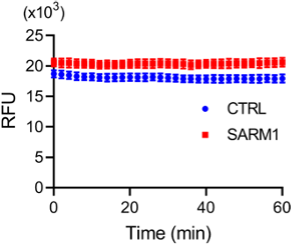
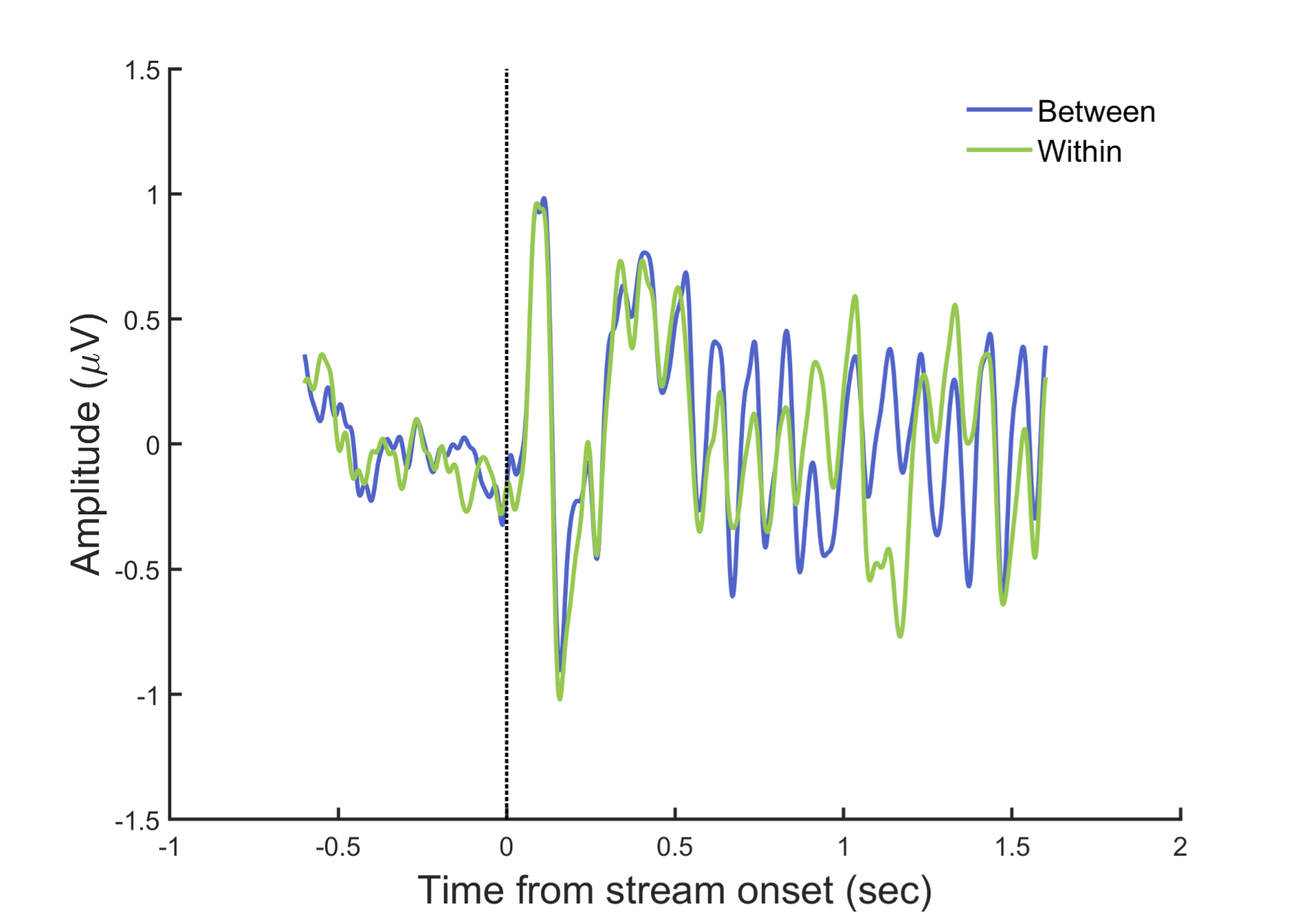
    1. Author Response

      Reviewer #1 (Public Review):

      The data support the claims, and the manuscript does not have significant weaknesses in its present form. Key strengths of the paper include using a creative HR-based reporter system combining different inducible DSB positions along a chromosome arm and testing plasmid-based and chromosomal donor sequences. Combining that system with the visualization of specific chromosomal sites via microscopy is powerful. Overall, this work will constitute a timely and helpful contribution to the field of DSB/genome mobility in DNA repair, especially in yeast, and may inform similar mechanisms in other organisms. Importantly, this study also reconciles some of the apparent contradictions in the field.

      We thank the reviewer for these positive comments on the quality of the THRIV system, in helping us to understand global mobility and to reconcile the different studies in the field. The possibility that these mobilities also exist in other organisms is attractive because they could be a way to anticipate the position of the damage in the genome and its possible outcome.

      Reviewer #2 (Public Review):

      The authors are clarifying the role of global mobility in homologous recombination (HR). Global mobility is positively correlated with recombinant product formation in some reports. However, some studies argue the contrary and report that global mobility is not essential for HR. To characterize the role of global chromatin mobility during HR, the authors set up a system in haploid yeast cells that allows simultaneously tracking of HR at the single-cell level and allows the analysis of different positions of the DSB induction. By moving the position of the DSB within their system, the authors postulate that the chromosomal conformation surrounding a DNA break affects the global mobility response. Finally, the authors assessed the contributions of H2A(X) phosphorylation, checkpoint progression and Rad51 in the mobility response.

      One of the strengths of the manuscript is the development of "THRIV" as an efficient method for tracking homologous recombination in vivo. The authors take advantage of the power of yeast genetics and use gene deletions and as well as mutations to test the contribution of H2A(X) phosphorylation, checkpoint progression and Rad51 to the mobility response in their THRIV system.

      A major weakness in the manuscript is the lack of a marker to indicate that DSB formation has occurred (or is occurring)? Although at 6 hours there is 80% I-SceI cutting, around 20% of the cells are uncut and cannot be distinguished from the ones that are cut (or have already been repaired). Thus, the MSD analysis is done in the blind with respect to cells actually undergoing DSB repair.

      The authors clearly outlined their aims and have substantial evidence to support their conclusions. They discovered new features of global mobility that may clear up some of the controversies in the field. They overinterpreted some of their observations, but these criticisms can be easily addressed.

      The authors addressed conflicting results concerning the importance of global mobility to HR and their results aid in reconciling some of the controversies in the field. A key strength of this manuscript is the analysis of global mobility in response to breaks at different locations within chromosomes? They identified two types of DSB-induced global chromatin mobility involved in HR and postulate that they differ based on the position of the DSB. For example, DSBs close to the centromere exhibit increased global mobility that is not essential for repair and depends solely on H2A(X) phosphorylation. However, if the DSB is far away from the centromere, then global mobility is essential for HR and is dependent on H2A(X) phosphorylation, checkpoint progression as well as the Rad51 recombinase.

      The Bloom lab had previously identified differences in mobility based on the position of the tracked site. However, in the study reported here, the mobility response is analyzed after inducing DSBs located at different positions along the chromosome.

      They also addressed the question of the importance of the Rad51 protein in increased global mobility in haploid cells. Previous studies used DNA damaging agents that induce DSBs randomly throughout the genome, where it would have been rare to induce DSBs near the centromere. In the studies reported in this manuscript, they find no increase in global mobility in a rad51∆ background for breaks induced near the centromere (proximal), but find that breaks induced near the telomeres (distal), are dependent on both gamma-H2A(X) spreading and the Rad51 recombinase.

      We thank the referee for his constructive comments on the strength of our system to accurately determine the impact of a DSB according to its position in the genome. Concerning the issue of damaged cells that were not detected, it is a very important and exciting issue because it confronts our data with the question of biological heterogeneity. We provide evidence on the consistency of our findings despite the lack of detection of undamaged cells.

      Reviewer #3 (Public Review):

      In this study, Garcia Fernandez et al. employ a variety of genetic constructs to define the mechanism underlying the global chromatin mobility elicited in response to a single DNA double-strand break (DSB). Such local and global chromatin mobility increases have been described a decade ago by the Gasser and Rothstein laboratories, and a number of determinants have been identified: one epistasis group results in H2A-S129 phosphorylation via Rad9 and Mec1 activation. The mechanism is thought to be due to chromatin rigidification (Herbert 2017; Miné-Hattab 2017) or general eviction of histones (Cheblal 2020). More enigmatic, global chromatin mobility increase also depends on Rad51, a central recombination protein downstream of checkpoint activation (Smith & Rothstein 2017), which is also required for local DSB mobility (Dion .. Gasser 2012). The authors set out to address this difficulty in the field.

      A premise of their study is the convergence of two types of observations: First, the H2A phosphorylation ChIP profile matches that of Rad51, with both spreading in trans on other chromosomes at the level of centromeres when a DSB occurs in the vicinity of one of them (Renkawitz 2014). Second, global mobility depends on H2A phosphorylation and on Rad51 (their previous study Herbert 2017). They thus address whether the Rad51-ssDNA filament (and associated proteins) marks the chromatin engaged during the homology search. They found that the extent of the mobility depends on the residency time of the filament in a particular genomic and nuclear region, which can be induced at an initially distant trans site by providing a region of homology. Unfortunately, these findings are not clearly apparent from the title and the abstract, and in fact somewhat misrepresented in the manuscript, which would call for a rewrite (see points below).

      The main goal of our study was to understand the role of global mobility in the repair by homologous recombination, depending on the location of the damage. We found distinct global mobility mechanisms, in particular in the involvement of the Rad51 nucleofilament, depending on whether the DSB was pericentromeric or not. It is thus likely that when the DSB is far from the pericentromere, the residence time of the Rad51 nucleofilament with the donor has an impact on global mobility. Thus, if our experiments were not designed to answer directly the question of the residence time of the nucleofilament, we now discuss in more detail the causes and consequences of the global mobility.

      To this end, they induce the formation of a site-specific DSB in either of two regions: a centromere-proximal region and a telomere-proximal region, and measure the mobility of an undamaged site near the centromere on another chromosome (with a LacO-LacI-GFP system). This system reveals that only the centromere-proximal DSB induces the mobility of the centromere-proximal undamaged site, in a Rad9- and Rad51-independent manner. Providing a homologous donor in the vicinity of the LacO array (albeit in trans) restores its mobility when the DSB is located in a subtelomeric region, in a Rad9- and Rad51-dependent fashion. These genetic requirements are the same as those described for local DSB mobility (Dion & Gasser 2012), drawing a link between the two types of mobility, which to my knowledge was not described. The authors should focus their message (too scattered in the current manuscript), on these key findings and the diffusive "painting" model, in which the canvas is H2A, the moving paintbrush Mec1, and the hand the Rad51-ssDNA filament whose movement depends on Rad9. In the absence of Rad51-Rad9 the hand stays still, only decorating H2A in its immediate environment. The amount of paint deposited depends on the residency time of the Rad51-ssDNA-Mec1 filament in a given nuclear region. This synthesis is in agreement with the data presented and contrasts with their proposal that "two types of global mobility" exist.

      The brush model is very useful in explaining the distal mobility, which indeed is linked to local mobility genetic requirements, but it is also helpful to think of different model than the brush model when pericentromeric damage occurs. To stay in the terms of painting technique, this model would be similar to the pouring technique, when oil paint is deposited on water and spreads in a multidirectional manner. It is likely that Mec1 or Tel1 are the factors responsible for this spreading pattern. We therefore propose to maintain the notion of two distinct types of mobilities. Without going into pictorial techniques in the text, we have attempted to clarify these two models in the manuscript.

      The rest of the manuscript attempts to define a role in DSB repair of this phosphor-H2A-dependent mobility, using a fluorescence recovery assay upon DSB repair. They correlate a defect in the centromere-proximal mobility (in the rad9 or h2a-s129a mutant) when a DSB is distantly induced in the subtelomere with a defect in repairing the DSB. Repair efficiency is not affected by these mutations when the donor is located initially close to the DSB site. This part is less convincing, as repair failure specifically at a distant donor in the rad9 and H2A-S129A mutants may result from other defects relating to chromatin than its mobility (i.e. affecting homology sampling, DNA strand invasion, D-loop extension, D-loop disruption, etc), which could be partially alleviated by repeated DSB-donor encounters when the two are spatially close. In fact, suggesting that undamaged site mobility is required for the early step of the homology search directly contradicts the fact that the centromere-proximal mobility induced by a subtelomeric DSB depends on the presence of a donor near the centromere: mobility is thus a product of homology identification and increased Rad51-ssDNA filament residency in the vicinity of the centromere, and so downstream of homology search. This is a major pitfall in their interpretation and model.

      We thank the referee for helping to clarify the question of the cause and consequence of global mobility. As he pointed out, the fact that a donor is required to observe both H2A phosphorylation and distal mobility implicates the recombination process itself, as well as the residence time of the Rad51 nucleofilament, in the ƴ--‐H2A(X) spreading and indicates that recombination would be the cause of distal mobility. In contrast, the fact that proximal mobility can exist independently of homologous recombination suggests that in this particular configuration, HR would then be a consequence of proximal mobility.

      In conclusion, I think the data presented are of importance, as they identify a link between local and global chromatin mobility. The authors should rewrite their manuscript and reorganize the figures to focus on the painter model that their data support. I propose experiments that will help bolster the manuscript conclusions.

      1) Attempt dual-color tracking of the DSB (i.e. Rad52-mCherry or Ddc1-mCherry) and the donor site, and track MSD as a function of proximity between the DSB and the Lac array (with DSB +/-dCen). The expectation is that only upon contact (or after getting in close range) should the MSD at the centromere-proximal LacO array increase with a DSB at a subtelomere. Furthermore, this approach will help distinguish MSDs in cells bearing a DSB (Rad52 foci) from undamaged ones (no Rad52 foci)(see Mine-Hattab & Rothstein 2012). This would help overcome the inefficient DSB induction of their system (less than 50% at 1 hr post-galactose addition, and reaching 80% at 6 hr). For the reader to have a better appreciation of the data distribution, replace the whisker plots of MSD at 10 seconds with either scatter dot plot or violin plots, whichever conveys most clearly the distribution of the data: indeed, a bimodal distribution is expected in the current data, with undamaged cells having lower, and damaged cells having higher MSDs.

      The reviewer raises two points here.

      The first point concerns the residence time of the Rad51 filament with the donor when a subtelomeric DSB happens. Measuring the DSBs as a function of the distance between donor and Rad52mCherry (or Ddc1--‐mCherry) would allow deciding on the cause or the consequence of the global mobility. Thus, if mobility is the consequence of (stochastic) contact, leading to a better efficiency of homologous recombination, we would see an increase in MSDs only when the distance between donor and filament would be small. Conversely, if global mobility is the cause of contact, the increase in mobility would be visible even when the distance between donor and filament is large. It would be necessary to have a labelling system with 3 different fluorophores — the one for the global mobility, the one for the donor and the one allowing following the filament. This triple labelling is still to be developed.

      The second point concerns the important question of the heterogeneity of a population, a central challenge in biology. Here we wish to distinguish between undamaged and damaged cells. Even if a selection of the damaged cells had been made, this would not solve entirely the inherent cell to cell variation: at a given time, it is possible that a cell, although damaged, moves little and conversely that a cell moves more, even if not damaged. The question of heterogeneity is therefore important and the subject of intense research that goes beyond the framework of our work (Altschuler and Wu, 2010). However, in order to start to clarify if a bias could exist when considering a mixed population (20% undamaged and 80% damaged), we analyzed MSDs, using a scatter plot. We considered two population of cells where the damage is the best controlled, i.e. i) the red population which we know has been repaired and, importantly, has lost the cut site and will be not cut again (undamaged--‐only population) and ii) the white population, blocked in G2/M, because it is damaged and not repaired (damaged--‐only population). These two populations show very significant differences in their median MSDs. We artificially mixed the MSDs values obtained from these two populations at a rate of 20% of undamaged--‐only cells and 80% of damaged--‐only cells. We observed that the mean MSDs of the damaged--‐only and undamaged--‐only cells were significantly different. Yet, the mean MSD of damaged--‐only cells was not statistically different from the mean MSD from the 20%--‐80% mixed cell population. Thus, the conclusions based on the average MSDs of all cells remain consistent.

      Scatter plot showing the MSD at 10 seconds of the damaged-­‐only population (in white), the repaired-­‐only population (in red), or the 20%-­‐80% mixed population

      2) Perform the phospho-H2A ChIP-qPCR in the C and S strains in the absence of Rad51 and Rad9, to strengthen the painter model.

      ChIP experiments in mutant backgrounds as well as phosphorylation/dephosphorylation kinetics would corroborate the mobility data described here, but are beyond the scope of this manuscript. Yet, a phospho--‐ H2A ChIP experiment was performed in a Δrad51 mutant in Renkawitz et al. 2013. In that case, γH2A propagation was restricted only to the region around the DSB, corroborating both the requirement for Rad51 in distal mobility and the lack of requirement for Rad51 in proximal mobility.

      3) Their data at least partly run against previously published results, or fail to account for them. For instance, it is hard to see how their model (or the painter model), could explain the constitutively activated global mobility increase observed by Smith .. Rothstein 2018 in a rad51 rad52 mutant. Furthermore, the gasser lab linked the increased chromatin mobility to a general loss of histones genome-wide, which would be inconsistent with the more localized mechanism proposed here. Do they represent an independent mechanism? These conflicting observations need to be discussed in detail.

      Apart from the fact that the mechanisms in place in a haploid or a diploid cell are not necessarily comparable, it is not clear to us that our data are inconsistent with that of Smith et al. (Smith et al., 2018). Indeed, it is not known by which mechanisms the increase in global mobility is constitutively activated in a Δrad51 Δrad52 mutant. But according to their hypothesis the induction of a checkpoint is likely and so is the phosphorylation of H2A. It would be interesting to verify γH2A in such a context. This question is now mentioned in the main text.

      Concerning histone loss, it appears to be different depending on the number of DSBs. Upon multiple DNA damage following genotoxic treatment with Zeocin, Susan Gasser's group has clearly established that nucleosome loss occurs (Cheblal et al., 2020; Hauer et al., 2017). Nucleosome loss, like H2A phosphorylation as we have shown (Garcia Fernandez et al., 2021; Herbert et al., 2017), leads to increased global mobility. The state of chromatin following these histone losses or modifications is not yet fully understood, but could coexist. In the case of a single DSB by HO, it is the local mobility of the MAT locus that is examined (Fig3B in (Cheblal et al., 2020). In this case, the increase in mobility is indeed dependent on Arp8 which controls histone degradation and correlates with a polymer pattern consistent with normal chromatin. It is likely that histone degradation occurs locally when a single DSB occurs. Concerning histone loss genome wide, the question remains open. If histone eviction nevertheless occurred globally upon a single DSB, both types of modifications could be possible. This aspect is now mentioned in the discussion.

    1. Author Response:

      Reviewer #3 (Public Review):

      INaR is related to an alternative inactivation mode of voltage activated sodium channels. It was suggested that an intracellular charged particle blocks the sodium channel alpha subunit from the intracellular space in addition to the canonical fast inactivation pathway. Putative particles revealed were sodium channel beta4 subunit and Fibroblast growth factor 14. However, abolishing the expression of neither protein does eliminate INaR. Therefore as recently suggested by several authors it is conceivable that INaR is not mediated by a particle driven mechanism at all. Instead, these and other proteins might bind to the pore forming alpha subunit and endow it with an alternative inactivation pathway as envisioned in this paper by the authors.

      The main experimental findings were (1) The amplitude of INaR is independent of the voltage of the preceding step. (2) The peak amplitudes of INaR are dependent on the time of the depolarizing step but independent of the sodium driving force. (3) INaT and INaR are differential sensitive to recovery from inactivation. According to their experimental data the authors put forward a kinetic scheme that was fitted to their voltage-clamp patch-clamp recordings of freshly isolated Purkinje cells. The kinetic model proposed here has one open state and three inactivated states, two states related to fast inactivation (IF1, IF2) and one state related to a slower process (IS). Notably IS and IF are not linked directly in the kinetic scheme.

      In my humble opinion, the proposed kinetic model fails to explain important experimental aspects and falls short to be related to the molecular machinery of sodium channels as outlined below. Still it is due time to advance the concepts of INaR. The new experimental findings of the authors are important in this respect and some ideas of the new model might be integrated in future kinetics schemes. In addition, the framework of INaR is not easy to get hold on with lots of experimental findings in the literature. Likely, my review falls also short in some aspects. Discussion is much needed and appreciated.

      INaT & INaR decay The authors stated that decay speed of INaT and INaR is different and hence different mechanisms are involved. However at a given voltage (-45 mV) they have nicely illustrated (Fig. 2D and in the simulation Fig. 3H) that this is not the case. This statement is also not compatible with the used Markov model. That is because (at a given voltage) the decay of both current identities proceed from the same open state. Apparent inactivation time constants might be different, though, due to the transition to the on state.

      We apologize that the language used was confusing. Our suggestion that there is more than one pathway for inactivation (from an open/conducting state) is the observation that the decay of INaT being biexponential at steady-state voltages. In the revised manuscript, we point out (lines 546-549) that, at some voltages, the slower of the two decay time constants (of INaT) is identical to the time constant of INaR decay. We also discuss how this observation was previously (Raman and Bean, 2001) interpreted.

      Accumulation in the IS state after INaT inactivation in IF1 and IF2 has to proceed through closed states. How is this compatible with current NaV models? The authors have addressed this issue in the discussion. The arguments they have brought forward are not convincing for me since toxins and mutations are grossly impairing channel function.

      Thank you for this comment. We would like to point out that, in our Markov model, Nav channels may accumulate in IS through either the closed state or open state. This requires, of course, that Nav channels can recover from inactivation prior to deactivation. While we agree that toxins and mutations can grossly impair channel function, we think these studies remain crucial in revealing the potential gating mechanisms of Nav channel pore-forming subunits, and how these mechanisms may vary across cell types that express different combinations of accessory proteins.

      Fast inactivation - parallel inactivation pathways Related to the comment above the motivation to introduce a second fast-inactivated state IF2 is not clear. Using three states for inactivation would imply three inactivation time constants (O->IF1, IF1->IF2, O->IS) which are indeed partially visible in the simulation (Fig. 3). However, experimental data of INaT inactivation seldom require more than one time constant for fast inactivation. Importantly the authors do not provide data on INaT inactivation of the model in Fig. 3. Fast Inactivation is mapped to the binding of the IFM particle. In this model at slightly negative potential IF1 and IF2 reverse from absorbing states to dissipating states. How is this compatible with the IFM mechanism? Additionally, the statements in the discussion are not helpful, either a second time constants is required for IF (two distinct states, with two time constants) or not.

      We thank this Reviewer for this comment. We tried to developed the model based on previous data on Nav channel inactivation. Indeed, much experimental data exists for the fast inactivation pathway (O -> IF1). As we noted in the discussion, without the inclusion of the IF2 state, we were unable to fully reproduce our experimental data, which led us to add the IF2 state. As with all model development, we balanced the need to faithfully reproduce the experimental data with efforts to limit the complexity of the model structure. In addition, as noted in the Methods section, our routine is an automatic parameter optimization routine that seeks to minimize the error between simulation and experiments. We can never be sure that we have found an absolute minimum, or that the optimization got stuck at a local minimum when simulating without inclusion of IF2. In other words, there may be a parameter set that sufficiently fits the data without inclusion of IF2, but we were unable to find it. As a safeguard against local minima, we used multistarts of the optimization routine with different initial parameter sets. In each case, we were unable to find a sufficiently acceptable parameter set.

      We agree with this Reviewer that at slightly negative potentials (compared to strong depolarizations), channels exit the IF1 state at different rates, although we would point out that channels dissipate from the IF1 state (accumulating into IS1) under both conditions (see Figure 8B-C). This requires the binding and unbinding of the IFM motif to occur with some voltagesensitivity. We believe this to be a possibility in light of evidence that suggests IFM binding (and fast-inactivation) is an allosteric effect (Yan et al., 2017) and evidence showing that mutations in the pore-lining S6 segments can give rise to shifts of the voltage-dependence of fast inactivation without correlated shifts in the voltage-dependence of activation (Cervenka et al., 2018). However, it remains unclear how voltage-sensing in the Nav channel interact with fast- and slow-inactivation processes.

      Due to space constraints in Figure 3, we did not show a plot of INaT voltage dependence. However, below, please find the experimental data (points), and simulated (line) INaT in our model.

      Differential recovery of INaT & INaR Different kinetics for INaR and INaR are a very interesting finding. In my opinion, this data is not compatible with the proposed Markov model (and the authors do not provide data on the simulation). If INaT1 and INaT2 (Fig. 5 A) have the same amplitude the occupancy of the open state must be the same. I think there is no way to proceed differentially to the open state of INaR in subsequent steps unless e.g. slow inactivated states are introduced.

      Thank you for bringing up this important point. The differential recovery of INaT and INaR indicates there are distinct Nav channel populations underlying the Nav currents in Purkinje neurons. We make this point on lines 632-635 of the revised manuscript. Because our Markov model is used to simulate a single channel population, we do not expect the model to reproduce the results shown in Figure 5. We have now added this point to the Discussion section on lines 637-640.

      Kinetic scheme Comparison with the Raman-Bean model is a bit unfair unless the parameters are fitted to the same dataset used in this study. However, the authors have an important point in stating that this model could not reproduce all aspects of INaR. A more detailed discussion (and maybe analysis) of the states required for the models would be ideal including recent literature (e.g., J Physiol. 2020 Jan;598(2):381-40). Could the Raman-Bean model perform better if an additional inactivated state is introduced? Are alternative connections possible in the proposed model? How ambiguous is the model? Is given my statements above a second open state required? Finally, a better link of the introduced states to NaV structure-function relationship would be beneficial.

      These are all excellent points. We absolutely agree; it was/is not our intention to “prove” that the Raman-Bean model does not fit our dataset (as you mention, with proper refinement of the parameters, some of the data may be well fit). In fact, qualitatively we found the Raman-Bean model quite consistent with our dataset (which is an excellent validation of both the model, and our data). It was our intention to show (in Figure 7) that there is good agreement between the Raman-Bean model and our experimental data for steady state inactivation (C), availability (D), and recovery from inactivation (E). While we find the magnitude of the resurgent current (F) to be markedly different than the Raman-Bean data, we now note this to likely be due to the large differences in the extracellular Na+ concentrations used in voltage-clamp experiments (lines 440-444). Our models, however, specifically differ in our parallel fast and slow inactivation pathways (Figure 7H). As seen in the Raman-Bean model, in response to a prolonged depolarizing holding potential, there is negligible inactivation, as the OB state remains absorbent until the channel is repolarized. This is primarily because the channel must transit through the Open state on repolarization. We find distinctly different behavior in our data. As seen in the experimental data shown in 7H, despite a prolonged depolarization, Nav channels begin to inactivate and accumulate in the slow inactivated state without prerequisite channel opening. This behavior is impossible to fit in the Raman-Bean model, given the topological constraint of the model requiring a single pathway through the open state from the OB state.

      To that point, it is also unlikely that the addition of inactivated states to the Raman-Bean model would help fit this new dataset. Indeed, the Raman-Bean model contains 7 inactivated states. If there were a connection between OB ->I6, it is possible that direct inactivation (bypassing the O state) may help. Again, however, it is not our intention to discredit the Raman-Bean model, nor is it our intention to improve the Raman-Bean model. With new datasets, a fresh look at model topology was undertaken, which is how we developed our proposed model.

      This Reviewer astutely points out a known limitation of Markov (state-chain) modeling; it is impossible to tell uniqueness, or ambiguity of the model (both with parameters as well as model topology). Following the results of Menon et al. 2009 (PNAS vol. 106 / #39 / 16829 – 16834), in which they used a state mutating genetic algorithm to vary topologies of a Markov model, our group (Mangold et al. 2021, PLoS Comp Bio) recently published an algorithm to distinctly enumerate all possible model structures using rooted graph theory (e.g. all possible combinations of models, rooted around a single open state). What we found (which is not entirely surprising) is that there are many model structures and parameter sets that adequately fit certain datasets (e.g., cardiac Nav channels).

      Therefore, the goal is never to find the model (indeed we don’t propose that we have done so), but rather to find a model with acceptable fits to the data and then use that model to hypothesize why that model structure works, as well as to hypothesize higher dimensional dynamics. We make these points in the revised manuscript (lines 591-597).

      We did not specifically explore the impact of a second open state in our modeling and simulation studies, but we would certainly agree that a model with a second open state may recapitulate the dataset.

    1. Author Response:

      Reviewer #1 (Public Review):

      "Modality-specific tracking of attention and sensory statistics in the human electrophysiological spectral exponent," Waschke et al. This paper follows upon a recent paper by a subset of the same authors that laid out the signal processing-bases for decomposing the EEG signal into periodic (i.e., "oscillatory") and aperiodic components (Donoghue et al., 2020). Here, the focus is on establishing physiological and functional interpretations of one of these aperiodic components: the exponent term of the 1/f(to the x power) fit to the power spectrum (a.k.a., its 'slope'). This is very important work that will have strong and lasting impact on how people design and interpret the results from EEG experiments, and is also likely to trigger many reanalyses of previously published data sets. However, the manuscript could do a better job of explain WHY this is so. In this reviewer's opinion, more linkage with elements of Donoghue et al. (2020). would help considerably.

      First, a brief summary of what this manuscript does, and why it is important. The first section reanalyzes data sets in human subjects undergoing ketamine or propofol anaesthesia, known to influence the E:I balance in the neural circuits that give rise to the EEG. This is an important step in establishing the physiological validity of the fundamental proposition that flattening of the 1/f component reflects an increase in the E:I balance whereas steepening reflects a decrease. This is because these effects of these two anaesthetic agents has been well established in several invasive studies. The second section demonstrates the functional properties of 1/f slope, in that tracks shifts of attention between visual and auditory stimuli in an electrode-specific manner (i.e., posterior for visual, central for auditory), and it also captures aperiodic stucture in these stimuli. It's not too strong to say that, after this paper, EEG-related research will never be the same again. The reason for this, however, isn't stated as clearly as it could be.

      Thank you for your positive appraisal of our work! We appreciate that you see significant benefit to this work, and also understand that you see significant room from improvements in the way results are presented, framed and discussed and want to express our thanks for these helpful comments. Below, we elaborate on them and the changes they prompted in greater detail.

      With regard to exposition, the manuscript could be improved in terms of building on Donoghue et al. (2020). To simplify, a main take-away from Donoghue et al. (2020) is that many past interpretations of EEG signals have mistakenly attributed to task- (or state-) related changes to changes in one or more oscillatory components of the signal. Perhaps most egregiously, what can appear as a change in power in the alpha band can often be shown to be better explained as no change in alpha but instead a change in either the slope or the offset of the 1/f component of the power spectrum. (E.g., the bump at 10 Hz will increase or decrease if the slope of the 1/f component changes, even though the 'true' oscillator centered at 10 Hz hasn't changed.) In this paper, the authors demonstrate that many conditions, physiological state and cognitive challenge, influence 1/f slope in ways that are systematic and that occur independent of changes that may or may not be occuring simultaneously in oscillatory alpha. Broadly, the authors should consider two modifications: first, point out for each key experimental finding how attributing everything to changes in oscillatory alpha (or sometimes other frequencies) would lead to flawed inference; second, don't stop at demonstrating that the slope effects hold when alpha dynamics are partialed out, but also report the converse -- in what ways is oscillatory alpha sensitive to aspects of physiology and/or behavior that 1/f slope is not? Even if there aren't any such cases (which seems unlikely) it would be informative for this to be tested and reported.

      We agree that a stronger focus on the differentiation between oscillatory and 1/f aspects of EEG activity can help to improve the didactic strength of our manuscript. Wherever possible, we have tried to make clear that the separation of different oscillatory activity and aperiodic signals is essential to not confuse one for the other. This is not only the case for the analysis of anaesthesia data were changes in alpha and beta power have to be separated from changes in spectral exponent but also applies to the proposed attention contrast where common effects of alpha power have to be taken into account and differentiated from spectral exponents. Similarly, an alignment of stimulus spectra with EEG activity could appear as a twofold power change (e.g., increase over low, decrease over high frequencies) if no separation of oscillatory and aperiodic signal parts is performed.

      We agree that explicitly contrasting spectral exponents with estimates of low-frequency or alpha power is essential. The original version of the manuscript already included such a comparison for the effect of attention on EEG spectral exponents and alpha power, respectively. To expand this approach, we inverted models and used stimulus spectral exponents (auditory or visual) as dependent variables while using either EEG spectral exponents, low-frequency power or alpha power as predictors (among the same covariates as in the winning models of the original approach). In a next step, we used likelihood ratio tests to compare model fit separately at each electrode, resulting in a topography of model comparisons.

      (a) Attention contrasts

      As expected, based on decades of EEG research, and as can be seen in figure 3C, average EEG alpha power changed as a function of attentional focus, in a topographically specific manner. Importantly, the observed increase of alpha power from auditory to visual attention took place over and above the reported changes in EEG spectral exponents (as we had reported in the control analyses section). In other words, both EEG spectral exponents and EEG alpha power capture attention-related changes in brain dynamics, but are at least partially sensitive to distinct sources or mechanisms. In the updated version of the manuscript, we emphasize that changes in spectral exponents often can be mistaken for changes in alpha power (as in Donoghue et al., 2020), calling for a dedicated spectral parameterization approach. Attention-related changes in spectral exponents and alpha power might depict results of distinct modes of thalamic activity that transitions from tonic to bursty firing and shapes cortical activity to selectively process attended sensory input. In the updated version of the manuscript, we discuss the potential role of thalamic activity in greater detail. The updated parts of the discussion section are pasted below for convenience.

      “Despite these differences in the sensitivity of EEG signals, our results provide clear evidence for a modality-specific flattening of EEG spectra through the selective allocation of attentional resources. This attention allocation likely surfaces as subtle changes in E:I balance (Borgers et al., 2005; Harris and Thiele, 2011). Importantly, these results cannot be explained by observed attention-dependent differences in neural alpha power (8–12 Hz, Fig 3) which have been suggested to capture cortical inhibition or idling states (Cooper et al., 2003; Pfurtscheller et al., 1996). Also note that the employed spectral parameterization approach enabled to us to separate 1/f like signals from oscillatory activity and hence offered distinct estimates of spectral exponent and alpha power that would otherwise have been conflated (Donoghue et al., 2020).

      How could attentional goals come to shape spectral exponents and alpha oscillations? Both attention-related changes in EEG activity might trace back to distinct functions of thalamo-cortical circuits. On the one hand, bursts of thalamic activity that project towards sensory cortical areas might sculpt cortical excitability in an attention-dependent manner by inhibiting irrelevant distracting information (Klimesch et al., 2007; Saalmann and Kastner, 2011). On the other hand, tonic thalamic activity likely drives cortical desynchronization via glutamatergic projections and, with attentional focus, results in boosted representations of stimulus information within brain signals (Cohen and Maunsell, 2011; Harris and Thiele, 2011; Sherman, 2001).

      Our findings of separate attentional modulations of both, EEG spectral exponents and alpha power, point towards the involvement of both thalamic modes in the realization of attentional states. Recently, momentary trade-offs between both modes of thalamic activity have been suggested to give way to attention-related modulations of alpha power and E:I balance, as captured by EEG spectral exponents (Kosciessa et al., 2021). Here, task difficulty remained constant throughout the experiment an fluctuations between both modes might not follow momentary demand (Kosciessa et al., 2021; Pettine et al., 2021) but varying sensory-cognitive resources.

      Additionally, modulations of both alpha power and EEG spectral exponents appeared uncorrelated across individuals - further evidence that they reflect separate neural sources. Future studies that combine a systemic manipulation of E:I (e.g., through GABAergic agonists) with the investigation of attentional load in humans are needed to specify with greater detail how thalamic activity modes drive alpha oscillations and EEG spectral exponents. Specifying potential demand- and resource-dependent trade-offs between different modes of attention-related modulations of cortical activity and sensory processing will offer crucial insights into the neural basis of adaptive behaviour.”

      (b) Stimulus spectral exponent tracking

      We inverted all models and instead of modelling EEG spectral exponents, we used auditory or visual stimulus exponents as dependent variables. Predictors were identical to the previously reported models (see supplementary table for all details) but additionally included either single trial estimates of alpha power, low-frequency power, or EEG spectral exponents. Note that alpha power estimates were extracted using the same spectral parameterization approach that was used to estimate spectral exponents. Trials without an oscillation in the alpha range were excluded from all models to render likelihood comparisons interpretable (11.2%  3.4 %). Since oscillations were only seldomly detected in the low-frequency range (1–5 Hz), we instead used single trial power averaged across this range. For each electrode, 4 likelihood ratio tests were performed, one for each stimulus modality and one for each predictor (low-frequency or alpha power). Strikingly, low-frequency power resulted in worse model fits (non-positive likelihood ratio test statistics) compared to EEG spectral exponents across all electrodes and both stimulus modalities. The same was true for EEG alpha power when modelling auditory stimulus exponents. However, when modelling visual stimulus exponents, EEG alpha power displayed significantly improved model fit at one parietal electrode. In line with this observation, we observed a positive relationship between single trial alpha power and visual stimulus exponents at this parietal site (see below).

      Figure R5 Model comparison topographies. (a) Single trial auditory (upper row) or visual stimulus exponents (lower row) were modelled based on electrode wise low frequency power (left column) or alpha power (right) column, among other covariates. Models were compare d to a model of same size that only differed in the main predictor that consisted of single trial EEG spectral exponents. Topographies display the likelihood ratio test statistic, illustrating no improvements in model fit compared to EEG spectral exponent based models in all but one model family, illustrating the unique predictive power of aperiodic EEG activity in this context. Alpha power at one parietal electrode explained significantly more variance in visual stimulus exponents. (b) T values representi ng the main effect of alpha power on visual stimulus exponents. Highlighted electrode represents p< .05 after FDR correction.

      (c) Behavioural relevance of spectral exponent tracking

      Given the results from (b), we refrained from re-running PLS analysis focussing on the behavioural relevance of the links between low-frequency and alpha power with stimulus exponents. In our view, the absence of a significant link between single trial stimulus input and a measure of neural activity in this case precludes any further analysis on the between-subject level.

      Reviewer #2 (Public Review):

      The paper investigates two separate studies looking at the spectral exponent of the EEG 1/f-like spectrum: one a study of the effect of anesthesia type (propofol vs. ketamine), using publicly available data, and the other a traditional study of auditory and visual processing relying on selective attention to one modality vs. the other. The authors make a strong case that the value of the spectral exponent depends on the relevant condition, in both studies, but the case for the spectral exponent's dependence on the Excitation:Inhibition balance is much weaker.

      The paper presents the two separate studies as tightly linked, but by the end of the paper it appears they may be quite separate.

      The anesthesia study is brief and compelling. With respect to the effect of anesthesia type on spectral exponent, the results are very strong, and, given the results of Gao et al. (2017) and the stated properties of propofol vs. ketamine, the connection to E:I balance follows naturally.

      The auditory and spectral 1/f tracking study suffers from some weaknesses.

      Most importantly, the design is elegant and the results presented are very compelling. 1) Modality-specific attention selectively reduces the EEG spectral exponent (for relevant electrodes reflecting cortical processing of that modality); 2) Changing the value of the spectral exponent in the stimulus results in a similar change in the value of the spectral exponent of the response, but only for the selectively attended modality (and only for relevant electrodes); and 3) the amount of modality-specific spectral-exponent tracking predicts behavior. The interactions and main effects found all support the importance of the spectral exponent as a physiologically and behaviorally important index.

      The main problem is a weakness in analysis regarding whether the mechanistic origin of the above effects may be due to temporal tracking of the stimulus waveform (visual contrast/acoustic envelope) by the response waveform. [In the speech literature this would be referred to as "speech tracking", or, sometimes, as speech entrainment (in the weak sense of "entrainment").] As pointed out by the authors, this is not a steady state response because the instantaneous fluctuation rate of the stimulus is constantly changing, and so cannot be analyzed as such (it is also distinct from the evoked responses analyzed). But it is a good match for other analysis methods, for instance Ed Lalor's VESPA and AESPA methods, and their reverse-correlation descendants. Specifically, Lalor et al., 2009 analyzed EEG responses to a non-sinusoidal envelope modulation of a broadband noise carrier and found strong evidence for robust temporal locking. The success of such linear methods there (AESPA for auditory; VESPA for visual) implies that a change in the stimulus spectrum exponent would produce a similar change in the response spectrum exponent, having nothing to do with E:I balance.

      The evoked response analysis clearly aims to go in this direction, but since it does not reflect ongoing response properties, it cannot alone speak to this.

      Because this plausible mechanism for the spectral-exponent-tracking has not been explored, it is much harder to associate the observed spectral-exponent-tracking as originating from E:I balance. The study does not then hold together well with the anesthesia study, and weakens the links to E:I balance rather than strengthening it.

      Thank you for this in-depth assessment of our work and your general positive appraisal of it. Importantly, your major point of concern seems to at least partially trace back to a regrettable misunderstanding caused by the way we presented our results in the original version of the manuscript. While the first study aimed at establishing the validity of the EEG spectral exponent as a non-invasive marker of E:I, the second study had two objectives. First, to test attention-related changes in EEG spectral exponents that we assume to depict topographically specific changes in E:I. Second, to test the link between aperiodic stimulus features and aperiodic EEG activity by comparing stimulus spectral exponents and EEG spectral exponents. We understand that the reviewer is doubtful of the link between stimulus-related EEG spectral exponent changes and E:I – and so are we.

      In the updated version of the manuscript, we have tried to make it very clear that despite the displayed and inferred links between EEG spectral exponents and E:I balance, the positive relationship between stimulus spectral exponents and EEG spectral exponents does not necessarily reflect changes in E:I. Nevertheless, we feel that study 1 and 2 integrate well as they offer a comprehensive view on 1/f-like EEG activity and its sensitivity to (1) specific anaesthesia effects, (2) attentional focus, and (3) aperiodic stimulus features in a behaviourally-relevant way. While (1) and (2) can be mapped on to one underlying mechanism, cortical E:I balance, (3) rather represents bottom-up sensory cortical effects similar to those described in SSEP or speech tracking literature. The interaction of attentional focus and stimulus tracking illustrates the connection between top-down (or anaesthesia-driven) changes in E:I as captured by the EEG spectral exponent, and bottom-up sensory-related changes in EEG activity.

      Reviewer #3 (Public Review):

      The balance between excitation and inhibition in the cortex is an interesting topic, and it has already been a focus of study for a while. The current manuscript focuses on the 1/f slope of the EEG spectra as the neural substrate of the change in the balance between excitation and inhibition. While the approach they use to analyze their data is interesting, unfortunately, for the reasons I'll outline below the study's conclusions are not supported by the data, and the findings do not add any new insight conceptually or mechanistically to our understanding of attention, excitation or inhibition. While the study aims to "test the conjecture that 1/f-like EEG activity captures changes in the E:I balance of underlying neural populations.", ultimately the central conclusions of the work is just conjecture in that they are inference formed without sufficient evidence.

      Anaesthesia study: EEG spectral exponents as a non-invasive approximation of E:I balance The authors observe the 1/f slope was different over pre-selected central electrodes sites between 4 participants undergoing ketamine and propofol anaesthesia. The rather small sample size is a cause for concern, as are the authors' rationale for looking at the central electrodes -they claim these electrodes receive contributions from many cortical and subcortical sources, but that can be said of any other electrodes at the scalp. But I believe the most critical weakness here is the authors' claim that during anaesthesia is that propofol is "known" to result in a "net" increase of inhibition, while ketamine an increase in net excitation. We still know very little about what neurophysiologically is happening under anaesthesia and the concept of "net" inhibition and excitation is rather a gross simplification of what happens to the central nervous system under these two agents. Just as an example, propofol has been found to have some excitatory influence on brain function, with dosage of the anaesthetic also playing role: https://www.ncbi.nlm.nih.gov/pmc/articles/PMC2717965/. On the other hand, ketamine has been observed to inhibit interneurons and cortical stimulus-locked responses, but cause excitation in the auditory cortex : https://physoc.onlinelibrary.wiley.com/doi/10.1113/JP279705.

      Suffice to say the interaction between anaesthetic agents and the brain is rather complex. Decades of research has shown that the EEG spectra changes during anaesthesia. To rather arbitrarily say one agent has a net inhibitory impact while another excitatory impact, then link those to qualitative changes in the EEG spectra of 4 participants, and further link that back to E:I ratio is committing the scientific fallacy of Begging the Claim.

      We thank the reviewer for their insightful comments. Of course, we do not wish to challenge the complex nature of anaesthetic effects by any means and apologize if the original version of our manuscript had left that impression. Below, we outline that despite the complex impact of anaesthesia on central nervous activity, there exists plenty of evidence justifying our assumption of differentially altered E:I balance through propofol and ketamine, at least in cortical areas.

      First of all, we agree with the reviewer that a change in E:I balance certainly is not the only change that takes place in the central nervous system during anaesthesia. As has been shown before, propofol and ketamine affect the overall level of neural activity (Taub et al., 2013) and spiking (Quirk et al., 2209; Kajiwara et al., 2020), propofol is associated with frontal alpha oscillations and widespread changes in beta power (Purdon et al., 2012). In the updated version of the manuscript, we have added notions to these common patterns and discuss the oscillatory changes we observe in the current dataset.

      Importantly, while there might not be a single identifiable mechanism behind the host of different anaesthesia-induced changes in brain activity, there is relative clarity on the fact that higher doses of propofol drive a change in excitatory and inhibitory activity towards inhibition whereas ketamine drives disinhibition and hence shifts E:I towards excitation. In fact, the study by Deane et al. (2020) reports increased excitation and disinhibition in auditory cortex during ketamine anaesthesia, accompanied by stronger (not weaker, as stated by the reviewer) evoked responses. These findings speak to the validity of the simplification of a net increase of excitation under ketamine anaesthesia. Furthermore, the modelling results by McCarthy et al. (2008) target a dose- and cell-ensemble specific effect of propofol anaesthesia: paradoxical excitation. The observation that low doses of propofol can induce a temporary increase of excitatory activity is in stark contrast to the general GABA-A-potentiating and hence inhibiting nature of propofol (Concas et al., 1991). Importantly, however, higher doses of propofol as used in the analysed dataset are widely accepted to lead to relatively increased inhibition, even after initial paradoxical excitation (Concas et al., 1991; Zhang et al., 2009; Brown et al., 2011; Ching et al., 2010). Taken together, previous invasive physiology justifies the simplification of propofol as leading to net increased inhibition and ketamine leading to net excitation. Finally, our focus on the spectral exponent does not stem from a disregard of oscillatory changes in EEG activity but rather strictly follows from previous work that demonstrated the spectral exponent as a marker of E:I balance (Gao et al., 2017; Colombo et al., 2020; Lendner et al., 2021; Chini et al., 2021). Hence, the central goal of the presented analyses and results lies in the transfer of these previous results to non-invasive EEG recordings and the parameterization approach used by us. We hope that this becomes clearer in the updated version of the manuscript and have pasted relevant parts below.

      “Both anaesthetics exert widespread effects on the overall level of neural activity (Taub et al., 2013) as well as on oscillatory activity in the range of alpha and beta (8–12 Hz; ~15–30 Hz). Importantly, however, propofol is known to commonly result in a net increase of inhibition (Concas et al., 1991; Franks, 2008) whereas ketamine results in a relative increase of excitation (Deane et al., 2020; Miller et al., 2016). In accordance with invasive work and single cell modelling (Chini et al., 2021; Gao et al., 2017), propofol anaesthesia should thus lead to an increase in the spectral exponent (steepening of the spectrum) and ketamine anaesthesia to a decrease (flattening). Based on previous results, the effect of anaesthesia on EEG spectral exponents is expected to be highly consistent and display little topographical variation (Lendner et al., 2020). For simplicity, we focused on a set of 5 central electrodes that receive contributions from many cortical and subcortical sources (see Fig 1) but report topographically-resolved effects in the supplements (see Fig 1 supplement 1). Here, propofol anaesthesia led to an overall increase in EEG power which was especially pronounced in the alpha-beta range. Ketamine anaesthesia decreased the frequency of alpha oscillations and supressed power in the beta range. Importantly, however, EEG spectral exponents that were estimated while accounting for changes in oscillatory activity increased under propofol and decreased under ketamine anaesthesia in all participants (both ppermuted < .0009, Fig 1). These results replicate previous invasive findings and support the validity of EEG spectral exponents as markers of overall E:I balance in humans.”

      “[…] While the EEG spectral exponent as a remote, summary measure of brain electric activity can obviously not quantify local E:I in a given neural population, the non-invasive approximation demonstrated here enables inferences on global neural processes previously only accessible in animals and using invasive methods. Future studies should use a larger sample to directly compare dose-response relationships between GABA-A agonists or antagonists (e.g., Flumanezil) and the EEG spectral exponent as well as common oscillatory changes.”

      Regarding the reviewer’s comment on our choice of electrodes we first wish to highlight that several previous studies have revealed that anaesthesia effects commonly appear throughout the cortex of humans (Zhang et al., 2009; Lendner et al., 2020). Nevertheless, we understand that a priori choices of electrodes always are arbitrary to some degree. Hence, we performed pairwise comparisons of EEG spectral exponents between awake rest and anaesthesia (ketamine vs. propofol) at all 60 electrodes, resulting in the topographies of t-values shown below. As can be discerned from these topographies, ketamine anaesthesia entailed a reduction of spectral exponents across most areas of the scalp, peaking at frontal and central sites. Propofol led to increased EEG spectral components across all electrodes without a clear spatial pattern. The absence of an effect at the left mastoid likely traces back to artefactual recordings at that electrode site. In the updated version of the manuscript, we report topographies of comparisons in the supplements (figure 1 supplement 2).

      Figure R8 Topographically resolved t statistics comparing EEG spectral exponents between awake rest and different anaesthetics. Propofol leads to a wide spread increase in spectral exponents that is present across the entire scalp (left). Ketamine leads to a reduction in spectral exponents that is widely distributed but appears to peak at frontal and central electrodes (right).

      We acknowledge the small sample size of study 1 and have also added a more explicit notion to that in the updated version of our manuscript. Nevertheless, due to their consistency and the used permutation-based statistics which are appropriate for small sample sizes, the results of study can be interpreted. Furthermore, we realized that we had not included two additional participants of the publicly available dataset in our previous analysis. Both sets of recordings (ketamine / propofol) were included in the revised analyses of the data, further strengthening the reported results. Hence, despite the small sample size (now N = 5 per group), we believe that the used methods and the consistency of effects allows for a careful but clear interpretation, especially since they are in close agreement with previous invasive and modelling results as well as recent causal manipulation studies (Gao et al., 2017; Chini et al., 2021).

      Cross-modal study: EEG spectral exponents track modality-specific, attention-induced changes in E:I Here the authors observe a difference in 1/f slope depending on if the participants (n=24) were paying attention to the auditory or visual stream. My central issue here is again with the authors' assumptions: cross-modal attention reflects attention-induced E/I. While attention to a single sensory modality can result in decreased activity in cortical regions that process information from an unattended sensory modality, there is no basis here to say that the task-irrelevant region is actually inhibited. The authors here do observe differences in 1/f slope as a function of attentional location, and these differences do account for some of the variances in behavior in the task.

      But unfortunately other than a purely descriptive exercise, there is not any sort of mechanistic insight is revealed here with regards to attentional allocation, excitation, and inhibition.

      We wish to take this opportunity to briefly elaborate on our hypotheses behind the reported attention contrasts and their interpretation. Spectral exponents of invasively recorded neural field potentials have previously been shown to reflect pronounced changes in E:I balance, including recent causal optogenetic work explicitly testing this link (Gao et al., 2017; Chini, Pfeffer & Haganu-Opatz 2021). In a first step, we analysed data from different anaesthetics to establish the potency of non-invasive EEG recordings to track similar changes (see above). Building on these findings, we tested whether smaller, attention-related and topographically-specific changes in E:I balance can equally be observed by means of EEG spectral exponent changes. Importantly, topographically concise changes in E:I with attention have been reported previously in non-human animals (e.g., Kanashiro et al., 2017; Ni et al., 2018). We found an attention-related topographical pattern of EEG spectral exponents in support of such an idea: spectral exponents at occipital channels decreased during visual attention, pointing towards a relative increase of excitatory activity in visual cortical areas. The same effect was reduced at central electrodes and for auditory attention. These findings demonstrate the potency EEG spectral exponents to detect topographically-specific attention-related changes in brain activity that likely trace back to changes in E:I balance. Of note, we do not imply a role of E:I in the inhibition of unattended sensory input and activity in associated cortical areas but rather point to a potentially separate role of neural alpha power in this context. While it is generally difficult to draw strictly mechanistic insights based on correlational designs, our results at least strongly suggest a mechanistic role of modality-specific attention for EEG dynamics and E:I balance. Furthermore, by demonstrating separate effects of aperiodic activity and alpha power dynamics, we pave the way for a new line of studies (see comments by R1) on the neural dynamics of selective attention and their behavioural relevance in humans.

    1. Author Response

      Reviewer #1 (Public Review):

      The tools and approaches in this manuscript are of broad interest, not only to protein engineers but also to the many researchers using genome-editing reagents. However, putting the work in the context of previous research, both through changing the writing and additional experiments, will be critical for taking advantage of that widespread applicability.

      Strengths:

      Overall, the data support the conclusions of the manuscript.

      The most exciting product of this work is an engineered nuclease, Nsp2-SmuCas9, that has high activity and specificity in human cells and a relaxed PAM preference for a single C base. This chimeric enzyme can efficiently induce indels at endogenous sites. While other works have presented nucleases with minimal PAM preferences, Nsp2-SmuCas9 is a useful alternative and may be preferred. It is also more compact than the standard SpCas9, making it appealing for gene therapy applications.

      Technologically, the presented approach of screening orthologs for new specificities and making chimeras to achieve further diversity is a good way to develop new genome-editing reagents. The authors used appropriate methods, such as GUIDE-seq, to complete their goals. Extending beyond the GFP-activation assay to determine activity at endogenous targets enhanced the value of the results.

      Conceptually, it was important information to the field that proteins with very high sequence identity (93%) can have divergent PAM preferences. Through their engineering, the authors clearly demonstrate the advantage of characterizing such close orthologs with diverse amino acids in the area of PAM recognition.

      Weaknesses:

      1) An overall weakness with the work is that it is not clear how the activity level of the relaxed PAM enzyme, Nsp2-SmuCas9, compares to existing enzymes. Is it much better than the SpCas9 that has almost no PAM preference (SpRY) or the NGN PAM (SpG)? How does it compare to the most commonly used SpCas9 nuclease, which is known to be active in a wide variety of biological contexts? The activity assessment at endogenous sites seemed to have a long timeline, as the indel rate was measured 5 days after transfection. Clarifying the effectiveness of this new nuclease would increase the impact of this work.

      We sincerely thank the reviewer for the constructive comments on our manuscript. Following reviewer’s suggestions, we compared the editing efficiency of Nsp2Cas9, Nsp2-SmuCas9, SpCas9, SpCas9-NG, and SpCas9-RY side-by-side. Overall, the editing efficiency was low this time probably due to low transfection efficiency. The results revealed that SpCas9 was the most active enzyme. Nsp2Cas9, SpCas9-NG, and SpCas9-RY displayed similar activity. Nsp2-SmuCas9 displayed lower activities than other Cas9 variants (Figure 5C).

      2) In the presentation of the manuscript, there are several weaknesses. First, while it is true that allele-specific disruption is an important application of new CRISPR proteins, there are many other reasons why they would be useful. The specific focus on this single application throughout the abstract, introduction and discussion takes away from the widespread utility of these new tools. The writing would be more compelling if it targeted a broader audience. Allele-specific targeting is also possible beyond the PAM site if the mutation is in a position with high specificity.

      Many thanks for the reviewer’s suggestions. Following reviewer’s suggestions, we emphasize the widespread utility of these new tools throughout the abstract, introduction, and discussion in the revised manuscript. Allele-specific targeting is only mentioned in the discussion.

      3) Second, the introduction is further missing a discussion of other research engineering new PAM specificity or even completely removing specificity. A more convincing narrative would include reasoning for why characterizing naturally occurring orthologs is a powerful and important approach. This information is in the discussion, but it would be helpful for the reader if these points were in the introduction.

      Many thanks for the reviewer’s comments. Following reviewer’s suggestions, we added other research engineering new PAM specificity in the introduction. We also included reasoning for why characterizing naturally occurring orthologs is a powerful and important approach.

      “Engineered Cas9 variants with flexible PAMs can increase targeting scope. For example, SaCas9 was engineered to accept an NNNRRT PAM [1]; SpCas9 was engineered to accept almost all PAMs [2], but this strategy is time-consuming, and often comes at a cost of reduced on-target activity. Another strategy is to harness natural Cas9 nucleases for genome editing. We have developed several closely related Cas9 orthologs for genome editing [3, 4]. The advantage of developing tools from closely related Cas9 orthologs is that they can exchange the PAM-interacting (PI) domain. If an ortholog recognizes a particular PAM but does not work efficiently in human cells, we can use this ortholog PI to replace another ortholog PI to generate a chimeric Cas9.”

      4) A second concern with the presentation and analysis of the findings is a minimal connection to the structural context of the discoveries. Many readers will likely be interested in how the specificity shifts are occurring in these orthologs, which could be remedied by supplementary figures of homology models.

      We totally agree with the referee that structural models would help readers better understand the specificity shifts occurring in these orthologs. We have generated calculated structural models of these orthologs in complex with sgRNA and DNA using the crystal structure of Nme1Cas9 (PDB ID: 6JDV). Some specificity shifts can be well explained by these structural models. When the amino acid near the 5 position of the PAM is histidine, its side chain forms a potential hydrogen bond with the 6-hydroxyl group of guanine. Replacement of this guanine by cytosine or thymine would cause a major clash, whereas adenine lacks the hydroxyl group to form hydrogen bond with the histidine (Figure 2-figure supplement 2A). Likewise, an aspartate at 5 position of the PAM would favor a specific recognition of cytosine via hydrogen bonding with its 4-amine group, but not of other bases that may either result in major clash or abolish the hydrogen bond (Figure 2-figure supplement 2B). Similar explanation applies also to the apparent specificity between glutamine and adenine at the 8 position of the PAM on the target sequence (Figure 2-figure supplement 2C).

      5) Along the same lines, further structural analysis of the failures would be helpful for those embarking on similar projects. Are there any differences in the sequence or structure of the 4/29 orthologs that were not functional in the GFP-activation assay compared to those that were?

      Sequence alignment indicates that the four inactive orthologs possess intact active sites. In the predicted structural models of these orthologs, we did not observe local conformational variations that preclude the interaction with sgRNA or DNA. Sequence alignment indicates that the four inactive orthologs possess intact active sites. In the predicted structural models of these orthologs, we did not observe local conformational variations that preclude the interaction with sgRNA or DNA. We speculate that specific modifications of Cas9s in mammalian cells may occur, leading to the loss of enzymatic activities of the 4 orthologs.

      Calculated structural models of AseCas9, Hpa1Cas9, MspCas9, and PlaCas9. Overall calculated structures of AseCas9, Hpa1Cas9, MspCas9, and PlaCas9 with sgRNA and dsDNA.

      6) Similarly, it was surprising that the Nsp2-NarCas9 chimera was not active, and it would be helpful if the authors could speculate based on the differences between SmuCas9 and NarCas9, such as at the interface of the domains that were fused. Structural models of the fusions would help the reader to visualize the strategy. Exploring the failures and challenges is important for understanding the generalizability of the presented approach.

      Following reviewer’s comments, we generated structural models of Nsp2-NarCas9, Nsp2-SmuCas9, and NarCas9 using the crystal structure of highly homologous Nme1Cas9 in complex with sgRNA and dsDNA (PDB ID: 6JDV) as the template by SWISS-MODEL. By superimposing these models, we noticed that residues G1035, K1037 and T1038 of Nsp2-NarCas9 chimera protrude towards the DNA molecule, which would prevent the binding with DNA and thereby abolishing the editing activity (Figure 4-figure supplement 2A). In comparison, Nsp2-SmuCas9 and NarCas9, which possess the Cas activity, show no protrusion at the corresponding position (Figure 4-figure supplement 2B-C).

      7) Finally, the final sequence of Nsp2-SmuCas9 fusion, as well as other enzymes such as the failed Nsp2-NarCas9, are not obvious in the manuscript. I may have missed them, but I also did not see the primers used in the Methods section. Addgene submission is also encouraged and would be of great value to the scientific community.

      Thank you for your suggestions. The final sequence of Nsp2-SmuCas9, as well as other enzymes, have been provided in Supplemental file 1. The primers for chimera proteins were listed in Supplemental file 1. We will submit plasmids to Addgene soon.

    1. Author Response

      Reviewer #1 (Public Review):

      Most work on antibiotic resistance focuses on particular resistance genes often located on plasmids, but rarely how these genes interact with others located on the chromosome of the host organism. Considering variation in the host genome and its interaction with resistance plasmids can help predict which hosts are more likely to become resistant to a given antibiotic and explain why the same plasmid may not confer the same level of resistance to different strains.

      The authors take a clever approach to finding such genetic interactions by designing an evolution experiment using E. coli carrying an MCR-1 plasmid containing resistance genes to colistin. They then select for increased resistance to colistin and sequence the genomes of the most resistant isolates. This allowed them to identify a particular gene lpxC that confers increased resistance to E. coli when combined with the MCR-1 plasmid (more than the sum of each mutation alone) and find that this is because of decreased membrane surface charge. They then investigate whether this mutation is relevant in wild E. coli isolates by analysing environmental samples from patients and other sources and find that indeed, this mutation is often found in carriers of the MCR-1 plasmid.

      The study is very well-designed and presented in a concise and logical manner. The use of evolution experiments to identify the mutations and then engineer them to quantify the epistatic effects and understand the mechanism behind them is very elegant. The real-world relevance is then supported by looking for these mutations in environmental samples. Despite this simplicity and clarity, in some places, the writing could be improved. I particularly found that the second half of the paper was not as easy to follow as the first part and could benefit from some clarifications. The figures could also contain a bit more information to help the reader.

      Thank you!

      1.1 For example, the abstract starts by talking about standing genetic variation but it's not immediately clear what is meant by that. Standing genetic variation seems to suggest that the resistance gene itself is present in the initial population, rather than variation in other loci that might affect the selection of the resistance gene. This could be better formulated.

      We have revised the abstract to be clearer about the source of genetic variation.

      1.2 The figures could be improved by being more specific about the datasets: are mutations in Figure 2 in the WT or the MCR-1 positive lines? Are the SNPs in Fig. 4A in lpxC? Do all isolates in Fig. 4 have the MCR-1 plasmid?

      Thank you for the comment. We have edited the figure legend (line 128, page 5). Yes, Fig. 4A shows SNPs in lpxC, and all the isolates in Fig 4 have the MCR-1 plasmid. We have now clarified this in the figure legend (line 230, page 9).

      1.3 Finally, the arguments being made about diversity in the different phylogroups were not very clear. This could be made more explicit at first mention, rather than later in the discussion section.

      We have revised this section to clarify theses points (lines 242-245, page 10).

      Reviewer #3 (Public Review):

      Jangir et al. used an 'evolutionary ramp' experiment to evolve E. coli strains under the selection pressure of increasing colistin concentrations wherein the surviving fractions were collected for genomic analysis. They report that the mcr-1 carrying strain evolved higher colistin resistance much faster only in presence of lpxC mutations in the genome. They identify the mcr-1 and lpxC interactions to be positively epistatic and mutations only in lpxC do not lead to resistance to colistin. Taking a cue from their evolution experiments, they looked for the variations in lpxC sequences in the genomic datasets of clinical E. coli strains. They found many such variations in the genomes of clinical isolates. Importantly, they found those variations to be present even in non-resistant strains which might predispose those strains to gain untreatable levels of colistin resistance.

      Strengths:

      The study focuses on two key aspects of antibiotic resistance in clinical settings. First, is the antibiotic colistin itself which is part of the last line of defense. Second, is the importance of genomic variations in clinical isolates that have not been linked to any antibiotic resistance mechanisms. The data were presented in a logical sequence and maintained brevity. The link of lpxC to mcr-1 resistance is convincing.

      Thank you!

      Weaknesses:

      The basic premise of the paper is solid but the following should be addressed.

      3.1 In Figure 1, the authors applied the 'evolutionary ramp' method to isolate evolved strains with higher MIC to colistin; but, the conditions for the evolution of WT and strain carrying mcr-1 are different.Maintaining mcr-1 requires antibiotic selection which WT cannot withstand. Hence, if I am not mistaken, WT was not grown in the presence of any antibiotic.

      The referee’s assertion that the selective pressures experienced by the WT and MCR+ populations were different is incorrect. We increased relative antibiotic dose (i.e., as a fraction of the MIC of the parental strains) at the same rate for both the WT and MCR+ populations. This is clearly explained in the text (lines 98-100, page 3), and the absolute colistin doses are shown in Figure 1. Please also see response 2.4 above.

      In our study, we used a naturally occurring MCR-1 carrying plasmid from the IncX4 family. This plasmid is actually very stable (in the short term at least) in the absence of colistin, in spite of the costs imposed by MCR-1. We speculate that this stability in part reflect the high conjugation rate of the plasmids and the presence of a toxin-antitoxin module.

      3.2 Not only that, maintaining a ~32 Kb plasmid itself can have different selective landscapes. The authors may replicate the experiment with their low-copy clone of mcr-1 which would make it easier for the authors to have an empty vector in WT as a proper control. Since now they know the expected mutations to be in lpxC, they might sequence a PCR amplicon of that region for validation of their hypothesis.

      This is an interesting idea for a future study. We agree with the referee that the presence of the MCR-1 plasmid may impose additional selective pressures that could potentially lead to bacteria-plasmid co-evolution. However, our data suggests that bacteria-plasmid interactions were not an important selective force over the course of our experiment: we detected no mutations in the plasmid and almost all of the chromosomal mutations that we detected could be easily associated with selective pressures imposed by colistin.

      3.3 In Figure 2, what are the effects of these mutations in lpxC? The authors state that many mutations map on to the metal binding domain; but are those significant changes? LpxC is relatively well characterized and authors may want to comment on these mutations a little more.

      Yes, most of the evolved lines had mutations in the metal-binding domain site, and it is known that this site is very important for lpxC activity. For example, mutations at positions 79, 238, 242 and 246 lead to a hundred to thousand-fold decrease in lpxC activity (PMID: 24117400, 24108127, and 11148046), and many of our mutations map close to these sites (lines 140-143, page 6, and Figure 2b).

      3.4 Also, lpxC mutations showed enrichment but lpxA did not. Is this suggestive of the type of Lipid A that is more preferred for the epistatic interactions? The authors may want to comment on that.

      Interestingly, this could be the case that the epistatic interactions depend on the type of lipid A modification and the associated pleiotropic effects. Because mutations in LPS biosynthesis genes can have diverse adverse effects as it alters the membrane properties. However, in-depth future work is required to understand how the different types of changes in lipid A influence interactions with MCR. We chose not to further explore this in the paper, because lpxA was rarely mutated (2/17 clones) compared to lpxC (11/17 clones).

      3.5 In Figure 3, the lpxC mutant shows a reduction in fitness in a competition assay. What is the growth pattern of individual strains?

      The standard growth curve assay shows no significant difference in growth rate between LpxC mutant and wild-type strain (figure below). This is evident by the fact that standard growth curves are not ideal for capturing small differences in growth/fitness. Therefore, we emphasize the results of the competition experiment as this is gold standard method for measuring fitness effects (Figure 3c).

      3.6 There is a possibility that slow growth of lpxC mutant provides benefit under antibiotic stress.

      This is an interesting idea, but in this case, the slow growth of the lpxC mutant is clearly associated with a small decrease in colistin resistance (Figure 3A).

      3.7 Minor comment: the three individual replicates shown in Figure 3a are all identical within a sample and do not add to the figure where n=3. The authors can simply show SD or report correct values of replicates.

      We chose to show the raw data points, as this is the style of presentation that is being increasingly used by journals (i.e., many journals now say show all raw data points when n<6 or 10). It would not make sense to show a standard error as this was equal to 0.

      3.8 In Figure 4, as the authors themselves have stated, the difference in heterogeneity could be simply due to variation within phylogroups and subsequent compositional differences within the populations. The authors must check if mutations were found in the same location of lpxA as found in their own evolved strains. Without this information, the heterogeneity data would be speculative. Adding the lpxC variants reported in figure 2 to the trees of figure 4 (right) will make it clear if their conclusion is justified.

      This is an interesting point. We found no overlap between our experimentally evolved mutations and naturally occurring lpxC mutations, either at the level of nucleotides or codons. However, it is unclear if we should expect to see an overlap for two reasons: 1. The mutations present in natural isolates likely reflect a combination of beneficial mutations, neutral mutations, and weakly deleterious mutations. The mutations found in our evolved isolates, on the other hand, are all mutations that were beneficial under colistin selection. As such, it is probably not reasonable to expect a strong overlap between the two sets of mutations. 2. The lpxC mutations that we observed in our 11 lpxC mutated isolates are highly diverse – we found no cases of parallel evolution at the nucleotide level, and only a single example of parallel evolution at the codon level. Given this, our data suggest that a very wide diversity of sites of lpxC can interact epistatically with MCR-1 to increase colistin resistance. Again, this high diversity of potential lpxC mutations should give a weak association between lab evolved and clinical isolates.

      We have added these points in the text (lines 278-304, pages 11-12).

      3.9 The authors can perform a confirmatory experiment for the pre-existing part of their hypothesis. If they perform the evolutionary ramp experiment with a strain carrying lpxC mutant strain, will they see faster evolution of high MIC mutants?

      This is an interesting idea, our results suggest that more rapid evolution of high level colistin resistance would occur in the lpxC mutant compared to a wild-type strain (assuming that both had an equivalent opportunity to acquire MCR-1 by horizontal gene transfer).

      4.0 The rationale of how the presence of lpxC mutations can cause a strain without any colistin resistance to acquire mcr-1 is not addressed. The authors may want to comment on that.

      MCR-1 is carried on conjugative plasmids, and the main plasmid families that carry MCR-1 (IncI2 and IncX4) have high conjugative rates. We have changed the text of introduction to emphasize that MCR-1 is carried on conjugative plasmids, and we have linked MCR-1 acquisition to plasmid conjugation (lines 327-328, page 13).

    1. Autho Response

      Reviewer #1 (Public Review):

      Here the authors aimed to gain insight into the role of Septin-7 in skeletal muscle biology using a novel and powerful mouse model of inducible muscle specific septin-7 deletion. They combine this with CRISPR/Cas9 and shRNA mediated manipulation of Septin-7 in C2C12 cells in vitro to explore its role in muscle progenitor morphology and proliferation. There are a variety of interesting observations, with clear phenotypes induced by the Septin-7 manipulation, including effects on body weight, muscle force production, mitochondrial morphology, and cell proliferation. However each area is somewhat superficially examined, and certain conclusions require additional validation for robust support. Additionally, mechanistic insight into Septin 7's role is limited. Therefore, while the phenotypes are likely of intrigue to both the muscle and septin community, to significantly advance the field will require additional experimentation.

      Specifically, it is currently difficult to distinguish between developmental and adult roles of Septin-7. The authors induce tamoxifen-mediated deletion at 1 month of age and examine muscle structure/function only at 4 months. By not studying early time points, it is difficult to determine whether particular phenotypes are directly due to Septin deletion or a secondary consequence of muscle atrophy and/or a decline in body weight. Further, by not inducing deletion at a later time point (i.e. after 2 months when muscle is generally matured), it is difficult to assess whether septin-7 plays a role in maintaining structure and function of mature muscle, or if its primary role is in muscle development.

      We have conducted a number of trials for knocking-down of Septin-7 expression. These included Tamoxifen treatment of Cre- pregnant mothers, shorter treatments starting at early after birth, and treatments of adult animals. While the former led to still-born offsprings, the later resulted in only a minor – less than 20% - reduction of Septin-7 expression. These long trials led us to, on the one hand, concentrate on the protocol used throughout the manuscript (where a significant, up to 50%, reduction in the expression of the protein could be achieved) and to, on the other hand, focus also on myogenic cells in culture. This selection was also substantiated by the finding that Septin-7 expression is the highest in neonatal muscles and declines with age until adulthood (but remains essentially constant until an age of 18 months for the mice examined). As an identical Tamoxifen treatment of littermate Cre- mice did not result in any of the presented alterations (as demonstrated in the Supplementary material) we can conclude that they are the consequence of Septin-7 down-regulation. We, nonetheless, completely agree with the Reviewer that some observations are most likely indirect, i.e., are due to the loss of muscle mass. These include, e.g., the altered shape of the vertebra and the consequent “hunchback” phenotype. However, this observation further supports our claim that Septin-7 is essential for proper development of a normal musculature in these animals.

      Further, the conclusion that septin-7 has an essential role in regeneration (seemingly based on expression increasing after injury) is unsupported and requires further experimentation where injury and regeneration is triggered in the absence of Septin-7 to establish a causative role.

      We agree with the Reviewer that a clear causative role of Septin-7 in muscle regeneration would require a substantial amount of further experimentation on Septin-7 knock-down animals. We, however, believe that this – detailed description of the changes in transcription factors and key regulatory proteins together with changes in morphology in Septin-7 KD animals following muscle injury – is beyond the scope of the present manuscript and should be presented as a separate study. In this manuscript, however, we provide the essential background to substantiate this claim. We describe that fusion of myogenic cells is severely hindered if Septin-7 expression is suppressed while Septin-7 is upregulated following muscle injury to the extent which is significantly more than what would be expected if it would be simply due to the production of new muscle fibers.

      Finally, there are intriguing observations in mitochondrial and myofiber organization and mitochondrial content; however further interrogation into additional relevant metrics of each, and at different time points of Septin-7 deletion, are needed to better understand these phenotypes and gain insight into Septin-7's role in their regulation.

      Accepting the concern of the Reviewer we have conducted additional experiments to enable the proper characterization of the morphology. Additional relevant metrics – Aspect Ratios and Form Factors – have been calculated and are now incorporated into the revised MS and are presented in Figure 5.

      Reviewer #2 (Public Review):

      This is a comprehensive work describing for the first time the location and importance of the cytoskeletal protein Septin-7 in skeletal muscle. The authors, using a Septin-7 conditional knockdown mouse model, the C2C12 cell line, and enzymatically isolated adult muscle fibers, explore the normal location of this protein in muscle fibers, the morphological alterations in conditioned knockdown conditions, the developmental alterations, and the functional alterations in terms of force production. The global picture that emerges shows Septin-7 as a fundamental brick in both muscle construction, development, and regeneration; all this leads to reinforcing the basically structural nature of this protein role.

      We thank the Reviewer for the appreciative words. We indeed believe that Septin-7 plays and important role in the proper organization and development of skeletal muscle. Even a partial knock-down of the protein at the early stages of life results in a severe loss in muscle mass accompanied by skeletal deformities. A complete knock-out of the protein results, at the myoblast level, in the inability of the cells to proliferate and form multinucleated cells confirming the essential role of this structural protein.

      Reviewer #3 (Public Review):

      This is an original study to explore the role of Septin-7, a cytoskeleton protein, in skeletal muscle physiology. The authors produced a unique mouse model with Septin-7 conditional knockdown specifically in skeletal muscle, which allowed them to examine the structure and function changes of skeletal muscle in response to the reduced protein expression level of Septin-7 in vivo and ex vivo at different development stages without the influence of other body parts with reduced Septin-7 expression. The study on the cellular model, C2C12 myoblast/myotubes with knockdown of Septin-7 expression, provided additional evidence of the importance of this cytoskeleton protein in regulating myoblast proliferation and differentiation. Majority of the data are supportive of the the major claim in this manuscript. However, additional key experiments and data analysis are needed to provide more mechanistic characterization of Septin-7 in muscle physiology.

      We would like to express our thanks to the Reviewer for the critical comments on our manuscript and for the valuable suggestions that help substantiate our claim, that Septin-7 is an essential part of the cytoskeletal network in skeletal muscle and plays an important role in muscle differentiation as well as in myoblast proliferation and fusion.

      A number of additional experiments were carried out to answer the comments/concerns of the Reviewer. Immunostaining of critical proteins (actin, myosin, and the L-type calcium channel) are now presented in Figure S4 for Cre+ animals. The T-tubules of enzymatically isolated fibers from these Septin-7 knock-down mice were also stained using Di-8-ANEPPS and the corresponding images are presented below. We describe how different Tamoxifen treatments at different time-points in the intra- and extra-uterine life of the animals resulted in the deletion of the SEPTIN 7 gene which ultimately led us to use the protocol (largest reduction with still viable mice) described in this manuscript. A more detailed description on how the fusion index, a clear marker a myotube differentiation, was conducted using desmin staining is now included and additional experiments (immunostaining and western blot) with MYH as suggested by the Reviewer are also presented. We carried out a thorough analysis of mitochondrial morphology (in line with the requirements of another Reviewer) and modified the corresponding figure in the revised MS accordingly.

      Major Concerns:

      1) The Septin-7 knockdown mouse model, the EM and IHC techniques are all established in the research group. It is a surprise to see that authors missed the opportunity to characterize the morphological changes in the T-tubule network, triad structure, the distribution of Ca release units (i.e., IHC of DHPR and RyR), and its co-localization with other key cytoskeletal proteins (i.e. actin) etc., in the muscle section or isolated muscle fibers.

      We appreciate the reviewer's valuable critical comments. Even if we were not able to fully comply with all the requests, we corrected as many of the mentioned shortcomings as possible, by correcting the errors and to prove our claims with further experiments. Please find our responses to each critical remark below.

      We conducted IHC staining on individual FDB fibers of C57Bl/6 mice presenting the distribution of skeletal muscle specific α-actinin, and RyR1 alongside with Septin-7 proteins (Figure 1E and F). As demonstrated in Figure 5E and F of the original MS (Figure 5 F and G in the revised version) normal triad structures were present both in Cre- and Cre+ muscle samples using EM analysis. However, the sarcomeres were distorted at places where large mitochondria appeared in Cre+ samples.

      As suggested, T-tubule staining by Di-8-ANEPPS was carried out on isolated FDB fibers from Cre- and Cre+ animals, which revealed no considerable differences between the two groups.

      Images present the T-tubule system of a single muscle fibers isolated from Cre- and Cre+ FDB muscle. Di-8-ANEPPS staining reveals no considerable difference between the two type of animals suggesting that the reduced Septin-7 expression does not alter the T-tubular system of skeletal muscle cells.

      To further investigate the key components of muscle contraction and EC coupling, we carried out immunostaining in isolated single fibers from FDB muscle originating from Cre+ and Cre- mice. Immunocytochemistry revealed no significant alteration of actin, myosin 4, and L-type calcium channel labeling comparing the two mouse strains (see Figure S4 in the revised version).

      2) The authors only studied one time point following the Tamoxifen treatment (4-month old with 3-month treatment). Based on Fig 2D, a significant body weight reduction was achieved after one month of the Tamoxifen treatment (at the age of 7 weeks), indicating a potential reduced muscle development at this age. Mice are considered fully matured at the age of 2 months. It will be more informative if the muscle samples and the in vivo and in vitro muscle activity are analyzed at this time point (7 or 8-week old), which should provide a direct answer if the knockdown of Septin-7 affects the muscle development. Additionally, a time dependent correlation of the level of Septin-7 knockdown with muscle function/morphology analysis should better define the role of Septin-7 in muscle development and function.

      We agree with the Reviewer that Septin-7 has presumably more pronounced effect in the early stage of muscle development, since we detected higher expression level of the protein in muscle samples isolated from newborn and young as compared with adult animals. We conducted preliminarily in vivo and in vitro force experiments on 2-month-old mice after 1 month of Tamoxifen treatment. The grip force already decreased significantly in Cre+ mice but the decrease in twitch and tetanic force of EDL and Sol did not reach significance. These experiments were followed by the analysis of Septin-7 level in the muscle samples which showed less than 20% of reduction on average in the samples of Cre+ mice. This suggested that a more robust suppression of Septin-7 is needed to reach significant reduction in in vitro force thus we decided to extend the Tamoxifen treatment to 3 months.

      3) Although the expression level of Septin-7 reduced during muscle development (Fig 1C), but its expression is still evident at the age of 4 months (Fig 1C and Fig S1F), indicating a potential role of Septin-7 in maintaining normal muscle function. It is important to examine whether the Tomaxifen treatment started after the muscle maturation at the age of 2-month old would affect the muscle structure and function. Particularly, these type of KD mice will be critical to answer if the KD will affect the regeneration rate following the muscle injury. The outcome will further test or support their claim of the essential roles of Septin-7 in muscle regeneration.

      We agree with the Reviewer opinion that Septin-7 presumably plays an essential role not only during the early development of skeletal muscle but also in the matured tissue. In our preliminary studies Septin-7 protein expression was determined in skeletal muscle samples from mice at different developmental stage. As presented in Figure 1C we observed decrease in Septin-7 protein expression from newborn to adult stages. The expression profile of Septin-7 was also investigated in samples from 2, 4, 6, 9, and 18-month-old mice and a significant decrease was observed in samples isolated from mice of 4, 6, 9, and 18 months of age (58±8; 48±9; 66±16; 54±9% relative to the 2-month-old muscles, respectively), however there were no considerable changes between samples after 4 months of age.

      In order to generate skeletal muscle specific, conditional Septin-7 knock-down animals, we applied Tamoxifen treatment at different developmental stages in our preliminary studies (see the table and figures below). When Cre- pregnant females were fed with Tamoxifen in the third trimester of pregnancy, it caused intrauterin lethality independent of the genotype. According to the animal ethics requirements we did not continue this experimental protocol. In the next stage of our initial experiments, 3 month-old mice were treated with both intraperitoneal injections for 5 consecutive days or Tamoxifen diet for 4 weeks. Here, only a moderate deletion of the exon4 was detected in SEPTIN 7 gene in Cre+ animals (data obtained from these mice are shown below).

      These findings and the observation of ontogenesis dependent expression of Septin-7 indicated its significance at the early stage of development and suggested that we should try to modify the gene expression at earlier age. Six weeks of diet supplemented with Tamoxifen generated well detectable exon deletion in younger (1-month-old) mice. Regarding these observations we decided to start the Tamoxifen-supplemented diet in younger (4-week-old) animals immediately after separation from the mother and we continued the treatment for a longer period (3 months) to be sure that exon deletion will be prominent in all Cre+ animals.

      Genetic modification of SEPTIN 7 gene following Tamoxifen treatment in mice mentioned above. RT-PCR

      Figure presents the presence of floxed sites at SEPTIN 7 gene (white arrow) and the deletion of exon4 (red arrows) in the appropriate DNA samples isolated from mice treated with Tamoxifen from different age and using different methods and period of Tamoxifen application. Exon4 deletions were less than 20%, therefore these trials were not continued. Numbers above each lane correspond to the animal ID-s presented in the table above. Q – m. quadriceps, B- m. biceps femoris, P – m. pectoralis.

      The knock-down of Septin-7 in the adult animals (where its expression is already low; see above) did not result in an appreciable further reduction. This led us to conclude that the role of Septin-7 is most pronounced in muscle development. In this framework, at the adult stage a possible function of Septin-7 in muscle regeneration following injury could be envisioned. This is demonstrated in Fiure 6 where we present that Septin-7 is upregulated following a mild injury. However, we believe, that a detailed examination of the role of Septin-7 in the regeneration is beyond the scope of the current manuscript and should be the basis of further studies.

      4) Regarding the impact of Septin-7 on differentiation, it could be problematic if the images with the resolution shown in Figure S4A-C were used for fusion index calculation. If those are just zoomed in representative images and the authors used other lower resolution, global view images for quantification, those images are needed to be shown. The authors may also need to elaborate on why they stained Desmin instead of MYH for quantification of the fusion index of myotubes (page 27). Desmin also marks mesenchymal cells.

      We apologize that the method used for fusion index calculation was not clear enough. Images in Figure S4A-C present the Septin-7 and actin cytoskeletal structure in proliferating myoblasts, before the induction of differentiation. Fusion index was determined in cultures where myotube differentiation was induced by reduced serum content (as described in Methods). We used desmin staining as the expression of this protein is present only in myotubes with 2 or more nuclei, where fusion of myoblasts has already started (see representative images below). Representative desmin-labeling images from control, scrambled and KD cultures are now included in Figure S5G at 5 days differentiated stage.

      Figure presents two examples (bottom row is now added to Figure S5 as panel G) of the desmin-specific immunostaining used for the calculation of fusion index in the different C2C12 cultures. Specific signals of desmin are present following the fusion of single nuclei myoblast into myotubes (green), while non-differentiated myoblasts did not show immunolabeling for desmin. Nuclei are stained with DAPI (blue).

      If Septin-7 is truly affecting differentiation, a decrease of MYH 2 expression can be readily detected by IHC or WB.

      We are grateful for the Reviewer´s suggestion. We have conducted immunocytochemistry and WB experiments in proliferating myoblasts and myotubes at day 5 of differentiation. As the figure below demonstrates, myosin heavy chain-specific immunolabeling could be detected only in differentiated samples, while myoblasts did not show positive signal. However, there is a significantly lower number of MYH2-positive myotubes in Septin-7 KD cultures as compared with the control and scrambled samples. In addition, we detected decreased WB signal for MYH2 in Septin-7 KD protein samples compared with their control counterparts.

      Figure presents the MYH2-specific immunostaining in the different C2C12 cultures. Specific signals of myosin heavy chain 2 (green) are present during myotube formation of differentiating cultures, however, less MYH2-positive myotubes are present in the Septin-7 KD cultures as a result of reduced capability of cells to fuse, here the DAPI-stained nuclei were only present. Proliferating myoblasts did not show specific immunolabeling for MYH2, as the confocal image and the appropriate part of the WB membranes show. We could also detect a decreased MYH2-specific labeling in Septin-7 KD samples as compared with the control ones using WB.

      Additionally, Septin-7 may also affect the migration or fusion of myoblasts instead of differentiation. The observation of altered cell morphology and filopodia/lamellipodia formation (Figure 3C) in Septin7-KD cells before differentiation also implies a potential role of Septin-7 in migration. This possibility should be at least discussed.

      We appreciate the Reviewer´s comment and suggestion. There are a few publication showing that alteration of septin (in some cases Septin-7) expression modifies the migration of different eukaryotic cell types, like in microvascular endothelial cells (PMID: 24451259), in human epithelial cells (PMID: 31905721), in neural crest cells (PMID: 2881782), and in human breast cancer or lung cancer cells (PMID: 27557506, 31558699, and 32516969). In the work of Li et al. (PMID:32382971) their findings revealed that miR-127-3p regulates myoblast proliferation by targeting Septin-7. In the present manuscript we described that Septin-7 modification alters myoblast fusion (Figure 3J), which is the accompanying phenomenon of differentiation. On the other hand, the effect of Septin-7 gene silencing on cell migration has been studied in detail and was presented to The Biophysical Society. The results are intended to be submitted as a separate manuscript.

      5) The image shown in Figure 5F does not support the pooled data showed in Figure 5C. The size of mitochondria is remarkably lager in Cre+ muscle (Fig 5E and 5F). The morphology of mitochondria in Cre+ muscle are apparently normal (Fig 5F), while the mitochondrial DNA content are drastically reduced (Figure 5H), which is an important discovery and deserved to be further confirmed by WB and/or qPCR for critical mitochondrial proteins (i.e. MTCOX, COXV, etc.).

      We thank the Reviewer for pointing out that the interpretation of images in Figure 5 was not clear enough. Based on this, and the on the clear request from the other Reviewer, a detailed evaluation of mitochondrial morphology was carried out and the panels of Figure 5 were redrawn and reorganized. The revised Figure 5 now presents the average Perimeter, the average Aspect Ratio, and the average Form Factor (panels C & H, for cross- & horizontal-sections, respectively), the relative distributions of the areas (panels D & I, for cross- & horizontal-sections, respectively), and the number of mitochondria normalized to fiber area (panel E, cross-sections). The mitochondrial DNA content is presented in panel J. As evidenced from these figures (and from the representative EM micro graphs), larger mitochondria, sometimes in large associations, are present in the muscles of Cre+ animals.

      Furthermore, gene expression of four essential mitochondrial proteins cytochrome oxidase 1 (COX1), cytochrome oxidase 2 (COX2), succinate dehydrogenase (SDH), and ATP synthase) were determined in RNA samples from different skeletal muscles of Cre- and Cre+ animals using qPCR. As the figure below demonstrates there was a tendency of decreased expression of the aforementioned genes in Cre+ muscle samples, however, significant difference between the Cre- and Cre+ data could not be detected.

      Figure represents the normalized mRNA expression of ATP synthase, SDH, COX1, and COX2 in Cre- (green) and Cre+ (red) samples isolated from m. quadriceps and m. pectoralis. Each gene expression was determined from 3 individual animals and a technical duplicate was used during the qPCR analysis. 36B4 gene encoding an acidic ribosomal phosphoprotein P0 was used as a normalizing gene.

      6) Figure 2 H & I: It is unclear whether the muscle force was normalized to the individual muscle weight.

      We are sorry about the incomplete representation and explanation of muscle force values. Figure 2F-I presents absolute force values without normalization to the cross sectional area. In order to answer the Reviewer´s comment the averages of normalized values are given in Table S3 in the modified manuscript.

      7) The IHC results in Figure 6B are confusing. There are no centrally located nuclei in the Pax7 alone image of Figure 6B but abundant in the Pax7 + H&E image. The brown color of DAB and the purple color of hematoxylin are hard to be distinguished.

      Images presenting the labeling of Pax7 (a transcription factor expressed in activated satellite cells) alone could not show centrally located nuclei, as the nuclei could only be visible when HE staining is applied. As the Reviewer mentioned brown color of DAB and the purple color of hematoxylin are sometimes difficult to distinguish, therefore, we first presented PAX7 expression visualized by DAB staining (localization was near the sarcolemma). In the next step we performed a double staining for PAX7 and HE to show both the cytoplasm and nuclei.

    1. Author Response:

      We have now revised the manuscript to address the helpful comments and criticisms from the reviewers. The revised manuscript includes additional experiments demonstrating that inclusion of Csn2/Cas9 in the in vitro assays does not suppress the disintegration activity of Cas1-Cas2 to favor integration. These additional factors do not confer strand selectivity on integration either. Furthermore, the results of integration reactions using substrates mimicking PAM-containing pre- spacers have also been added.

      New figures and figure modifications at a glance:

      1) The new Figure 2 shows Cas1-Cas2 reactions in a linear target site and the effects of Csn2 and/or Cas9 on proto-spacer insertion into this target (Reviewer 1).

      The original Figure 2 (with slight modifications) is now moved to ’Supplementary Data’ as Figure 2-figure supplement 2, and shows proto-spacer insertion by Cas1-Cas2 into a nicked linear target site (Reviewer 2). Figure 2 is the only one in the main set of figures that has been extensively modified.

      2) The new Figure 2-figure supplement 1 (under ‘Supplementary Data’) shows the effects of Csn2, Cas9 or both on proto-spacer integration-disintegration by Cas1-Cas2 when the target site is present in a supercoiled plasmid (Reviewer 1).

      3) The new Figure 4-figure supplement 1 lists the sequences of the full- and half-target sites used for the reactions shown in Figure 4 (Reviewer 2).

      4) The new Figure 2-figure supplement 3 shows the insertion properties of PAM-containing pre- spacer mimics in reactions with Cas1-Cas2 alone or supplemented with Csn2, Cas9 or both (Reviewer 1).

      5) The new Figure 6-figure supplement 1 gives a structural perspective of the trombone substrates used for the reactions shown in Figure 6B, C (Reviewer 1).

      6) The original Supplementary Figure S8 showing assays for PAM-specific cleavage by Cas1- Cas2 has been removed (Reviewer 1).

      7) There are no changes in the other figures under ‘Supplementary Data’, although several have new numbers consistent with the revisions made.

      Public Review (Reviewers #1 and #2):

      The present work is a critical extension of the in vitro biochemical activities of the Cas1- Cas2 complex described by Wright and Doudna (Nat Struct Mol Biol, 2016; 23: 876-883). We have kept all experimental conditions nearly identical to those used by these authors to make the results from the two studies directly comparable. Importantly, we now show that the prior model for proto-spacer integration into the CRISPR locus by Cas1-Cas2 is an oversimplification of a much more nuanced mechanism.

      While both reviewers recognize the importance of our findings in challenging the current thinking on the adaptation mechanism of CRISPR immunity, they express reservations as to whether the in vitro results recapitulate the in vivo mechanism of spacer acquisition. This seems to us to be too broad a criticism from which few (if any) biochemical experiments can be immune.

      Our key finding is that disintegration during the second step of proto-spacer integration generates a DNA structure that has all the hallmarks of a DNA damage intermediate that the bacterial repair machinery can readily process into an authentic integration product. We invoke no new or ad hoc mechanisms, and the model we propose fits neatly into the DNA gap-filling mechanisms known to operate in DNA transposition pathways.

      The proto-spacer is functionally a ‘micro-transposon’, whose shortness imposes severe torsional strain on the transposition intermediate that precedes the final integration product. In vitro experiments suggest that transcription is potentially capable of resolving this intermediate (Budhathoki et al., Nat Struct Mol Biol, 2020, 27: 489-99). In principle, replication can also accomplish this task. Our study now demonstrates that simply nicking the DNA (disintegration) is an equally effective solution for relieving the topological stress accompanying integration. DNA loose ends can then be readily tied up by the bacterial repair machinery.

      We concur with the concluding sentence of reviewer 2, “The simple conclusion that Cas1- Cas2 catalyzed hydrolysis of a phosphodiester may relieve strain and allow productive transposition to occur doesn’t get emphasized enough in my opinion.” We have now expanded on this point in the revised ‘Discussion’.

      Reviewer #1:

      In addition, the in vitro system used here is only partially reconstituted. The substrates lack a PAM sequence, which is necessary for protospacers to be incorporated in the correct orientation and may help direct the first integration event to the L-R junction. Presumably because of this all the reactions presented do not analyze the orientation of the incorporated prespacer sequence. Cas9 and Csn2 are also absent (as are other potentially required host factors), which are necessary for correct integration in vivo.

      1A. Strand specificity: The in vitro integration reactions with the Cas1-Cas2 complex were done using a protospacer of the optimal size (26 nt on each strand with the four 3’- proximal bases on each strand as unpaired). Either proto-spacer strand is equally competent to initiate the strand transfer reaction, as could be inferred from Figure 3 of the original submission. Here, reactions utilized modified proto-spacers that differed in their top and bottom strand lengths. They gave two insertion products (IP) each at the L-R (leader-repeat) and R-S (repeat-spacer) junctions of a normal target site. In modified targets in which integration was limited to just the L- R junction, two insertion products were formed. One panel of Figure 3 (which is retained in the revised manuscript) showing the four insertion products from the normal target (lane 10) and two from the modified targets (lanes 11-13) for a protospacer with 26 nt and 31 nt long strands is displayed below.

      The ability of either proto-spacer strand to initiate integration is now more directly shown in Figure 2 (new) of the revised manuscript. Here the labeled top or bottom strand of the proto- spacer (PS) gave insertion products (IP) at the L-R and R-S junctions of the target site. Panel B of Figure 2 (pasted below) demonstrates this result.

      1B. Cas9, Csn2 included reactions: The data for reactions containing Csn2 or Cas9 or both were not shown previously, as they did not alter Cas1-Cas2 activity by promoting strand specificity of integration or suppressing disintegration. These results are now shown in the revised Figure 2 (linear target) and the new Figure 2-figure supplement 1 (supercoiled target). Portions of these figures are shown below.

      The relevant revised text describing the lack of strand specificity to proto-spacer integration by Cas1-Cas2 and the Csn2/Cas9 effects on integration is pasted below.

      Page 15, lines 229-235.

      "Unlike orientation-specific proto-spacer integration in vivo, Cas1- Cas2 reactions in vitro showed no strand-specificity (Figure 2B). This bias-free insertion of the top or bottom strand from the proto-spacer was unchanged by the addition of Csn2 or Cas9 or both to the reactions (Figure 2C-E). These proteins, singly or in combiantion, also failed to stabilize proto-spacer integrations in the supercoiled plasmid target (Figure 2-figure supplement 1). Instead, they inhibited plasmid relaxation. Inhibition could occur at the level of integration per se or strand rotation during integration-disintegration"

      1C. PAM-containing substrates: We have now tested Cas1-Cas2 activity (with and without added Csn2 or Cas9 or both) on PAM-containing substrates that mimic ‘pre-spacers’, Figure 2- figure supplement 3 (new).

      In these substrates, a proto-spacer strand of the standard length (26 nt; lacking PAM or its complement) is inserted at the L-R junction with higher efficiency than the longer strand (containing PAM or its complement). Following the first integration at L-R, the pre-spacer mimics containing > 26 nt in one strand or both strands are inhibited in the second strand transfer to the R-S junction. A portion of Figure 2-figure supplement 3 illustrating theses points is shown below.

      The revised ‘Results’ section has the following added description of the activities of PAM- containing pre-spacer mimics.

      Pages 16-19, lines 265-297. Cas1-Cas2 activity on pre-spacer mimics carrying the PAM sequence

      "The strand cleavage and strand transfer steps of proto-spacer insertion at the CRISPR locus must engender safeguards against self-targeting of the inserted spacer as well as its non-functional orientation. However, no strand selectivity is seen in the in vitro Cas1-Cas2 reactions with already processed proto-spacers lacking the PAM sequence (Figures 2 and 3). By coordinating PAM- specific cleavage of a pre-spacer with transfer of this cleaved strand to the L-R junction, the inserted spacer will be in the correct orientation to generate a functional crRNA. To examine this possibility, we tested the integration characteristics of pre-spacer mimics containing the PAM sequence.

      The inclusion of PAM or PAM and its complement in the integration substrates (Figure 2- figure supplement 3A) did not confer strand specificity on reactions with Cas1-Cas2 alone or with added Csn2, Cas9 or both (Figure 2-figure supplement 3B-E). Optimal integration by Cas1-Cas2 occurred with the 26 nt strands of the native protospacer with their 4 nt 3’-overhangs (Figure 2- figure supplement 3B-E; lanes 2). The pre-spacer mimics containing one or both > 26 nt strands had reduced integration competence (Figure 2-figure supplement 3B-E; lanes 4). Even here, the 26 nt strand with the 4 nt overhang (Figure 2-figure supplement 3C; lane 4) was preferred in integration over the longer 29nt PAM-containing strand (Figure 2-figure supplement 3D; lane 4) or the 33 nt PAM complement-containing strand (Figure 2-figure supplement 3E; lane 4). In contrast to the processed proto-spacer that gave nearly equal integration at L-R and R-S, IP(L- R) ≈ IP(R-S) (Figure 2-figure supplement 3B-E; lanes 2), the longer pre-spacer mimics were inhibited in integration at R-S, IP(L-R) > IP(R-S) (Figure 2-figure supplement 3B-E lanes 4). This is the expected outcome if the initial strand transfer occurs at L-R, and a ruler-like mechanism orients the reactive 3’-hydroxyl for the second strand transfer at R-S. This sequential two-step scheme for proto-spacer integration is consistent with the results shown in Figure 3 as well. These reaction features were not modulated by Csn2 or Cas9 (Figure 2-figure supplement 3B-E; lanes 6 and 8), although Csn2 plus Cas9 was inhibitory (Figure 2-figure supplement 3B-E; lanes 10).

      There is no evidence for integration accompanying PAM-specific cleavage in our in vitro reactions. In the E. coli CRISPR system, Cas1-Cas2 is apparently sufficient for PAM-specific cleavage in vitro (22). By contrast, in the S. pyogenes system, cleavage is attributed to Cas9 or as yet uncharacterized bacterial nuclease(s) (35). The mechanism for generating an integration- proficient and orientation-specific proto-spacer, which may not be conserved among CRISPR systems, is poorly understood at this time."

    1. Author Response

      Reviewer #1 (Public Review):

      The role of the parietal (PPC), the retrospenial (RSP) and the the visual cortex (S1) was assessed in three tasks corresponding a simple visual discrimination task, a working-memory task and a two-armed bandit task all based on the same sensory-motor requirements within a virtual reality framework. A differential involvement of these areas was reported in these tasks based on the effect of optogenetic manipulations. Photoinhibition of PPC and RSP was more detrimental than photoinhibition of S1 and more drastic effects were observed in presumably more complex tasks (i.e. working-memory and bandit task). If mice were trained with these more complex tasks prior to training in the simple discrimination task, then the same manipulations produced large deficits suggesting that switching from one task to the other was more challenging, resulting in the involvement of possibly larger neural circuits, especially at the cortical level. Calcium imaging also supported this view with differential signaling in these cortical areas depending on the task considered and the order to which they were presented to the animals. Overall the study is interesting and the fact that all tasks were assessed relying on the same sensory-motor requirements is a plus, but the theoretical foundations of the study seems a bit loose, opening the way to alternate ways of interpreting the data than "training history".

      1) Theoretical framework:

      The three tasks used by the authors should be better described at the theoretical level. While the simple task can indeed be considered a visual discrimination task, the other two tasks operationally correspond to a working-memory task (i.e. delay condition which is indeed typically assessed in a Y- or a T-maze in rodent) or a two-armed bandit task (i.e. the switching task), respectively. So these three tasks are qualitatively different, are therefore reliant on at least partially dissociable neural circuits and this should be clearly analyzed to explain the rationale of the focus on the three cortical regions of interest.

      We are glad to see that the reviewer finds our study interesting overall and sees value in the experimental design. We agree that in the previous version, we did not provide enough motivation for the specific tasks we employed and the cortical areas studied.

      Navigating to reward locations based on sensory cues is a behavior that is crucial for survival and amenable to a head-fixed laboratory setting in virtual reality for mice. In this context of goal-directed navigation based on sensory cues, we chose to center our study on posterior cortical association areas, PPC and RSC, for several reasons. RSC has been shown to be crucial for navigation across species, poised to enable the transformation between egocentric and allocentric reference frames and to support spatial memory across various timescales (Alexander & Nitz, 2015; Fischer et al., 2020; Pothuizen et al., 2009; Powell et al., 2017). It furthermore has been shown to be involved in cognitive processes beyond spatial navigation, such as temporal learning and value coding (Hattori et al., 2019; Todd et al., 2015), and is emerging as a crucial region for the flexible integration of sensory and internal signals (Stacho & ManahanVaughan, 2022). It thus is a prime candidate area in the study of how cognitive experience may affect cortical involvement in goal-directed navigation.

      RSC is heavily interconnected with PPC, which is generally thought to convert sensory cues into actions (Freedman & Ibos, 2018) and has been shown to be important for navigation-based decision tasks (Harvey et al., 2012; Pinto et al., 2019). Specific task components involving short-term memory have been suggested to cause PPC to be necessary for a given task (Lyamzin & Benucci, 2019), so we chose such task components in our complex tasks to maximize the likelihood of large PPC involvement to compare the simple task to.

      One such task component is a delay period between cue and the ultimate choice report, which is a common design in decision tasks (Goard et al., 2016; Harvey et al., 2012; Katz et al., 2016; Pinto et al., 2019). We agree with the reviewer that traditionally such a task would be referred to as a workingmemory task. However, we refrain from using this terminology because it may cause readers to expect that to solve the task, mice use a working-memory dependent strategy in its strictest and most traditional sense, that is mice show no overt behaviors indicative of the ultimate choice until the end of the delay period. If the ultimate choice is apparent earlier, mice may use what is sometimes referred to as an embodiment-based strategy, which by some readers may be seen as precluding working memory. Indeed, in new choice-decoding analyses from the mice’s running patterns, we show that mice start running towards the side of the ultimate choice during the cue period already (Figure 1—figure supplement 1). Regardless of these seemingly early choices, however, we crucially have found much larger performance decrements from inhibition in mice performing the delay task compared to mice performing the simple task, along with lower overall task performance in the delay task, indicating that the insertion of a delay period increased subjective task difficulty. As traditional working-memory versus embodiment-based strategies are not the focus of our study here and do not seem to inform the performance decrements from inhibition, we chose to label the task descriptively with the crucial task parameter rather than with the supposedly underlying cognitive process.

      For the switching task, we appreciate that the reviewer sees similarities to a two-armed bandit task. However, in a two-armed bandit task, rewards are typically delivered probabilistically, whereas in our task, cue and action values are constant within each of the two rule blocks, and only the rule, i.e. the cuechoice association, reverses across blocks. This is a crucial distinction because in our design, blocks of Rule A in the switching task are identical to the simple task, with fixed cue-choice associations and guaranteed reward delivery if the correct choice is made, allowing a fair comparison of cortical involvement across tasks.

      We have now heavily revised the introduction, results, and discussion sections of the manuscript to better explain the motivation for the tasks and the investigated brain areas. These revisions cover all the points mentioned in this response.

      Furthermore, we agree with the reviewer that the three tasks are qualitatively different and likely depend on at least partially dissociable circuits. We consider the large differences in cortical inhibition effects between the simple and the complex tasks as evidence for this notion. We also want to highlight that in fact, we performed task-specific optogenetic manipulations presented in the Supplementary Material to further understand the involvement of different areas in task-specific processes. In what is now Figure 1—figure supplement 4, we restricted inhibition in the delay task to either the cue period only or delay period only, finding that interestingly, PPC or RSC inhibition during either period caused larger performance drops than observed in the simple task. We also performed epoch-specific inhibition of PPC in the switching task, targeting specifically reward and inter-trial-interval periods following rule switches, in what is now Figure 1—figure supplement 5. With such PPC inhibition during the ITI, we observed no effect on performance recovery after rule switches and thus found PPC activity to be dispensable for rule updates.

      For the working-memory task we do not know the duration of the delay but this really is critical information; per definition, performance in such a task is delay-dependent, this is not explored in the paper.

      We thank the reviewer for pointing out the lack of information on delay duration and have now added this to the Methods section.

      We agree that in classical working memory tasks where the delay duration is purely defined by the experimenter and varied throughout a session, performance is typically dependent on delay duration. However, in our delay task, the delay distance is kept constant, and thus the delay is not varied by the experimenter. Instead, the time spent in the delay period is determined by the mouse, and the only source of variability in the time spent in the delay period is minor differences in the mice’s running speeds across trials or sessions. Notably, the differences in time in the delay period were greatest between mice because some mice ran faster than others. Within a mouse, the time spent in the delay period was generally rather consistent due to relatively constant running speeds. Also, because the mouse had full control over the delay duration, it could very well speed up its running if it started to forget the cue and run more slowly if it was confident in its memory. Thus, because the delay duration was set by the mouse and not the experimenter, it is very challenging or impossible to interpret the meaning and impact of variations in the delay duration. Accordingly, we had no a priori reason to expect a relationship between task performance and delay duration once mice have become experts at the delay task. Indeed, we do not see such a relationship in our data (see plot here, n = 85 sessions across 7 mice). In order to test the effect of delay duration on behavioral performance, we would have to systematically change the length of the delay period in the maze, which we did not do and which would require an entirely new set of experiments.

      Also, the authors heavily rely on "decision-making" but I am genuinely wondering if this is at all needed to account for the behavior exhibited by mice in these tasks (it would be more accurate for the bandit task) as with the perspective developed by the authors, any task implies a "decision-making" component, so that alone is not very informative on the nature of the cognitive operations that mice must compute to solve the tasks. I think a more accurate terminology in line with the specific task considered should be employed to clarify this.

      We acknowledge that the previous emphasis on decision-making may have created expectations that we demonstrate effects that are specific to the ‘decision-making’ aspect of a decision task. As we do not isolate the decision-making process specifically, we have substantially revised our wording around the tasks and removed the emphasis on decision-making, including in the title. Rather than decision-making, we now highlight the navigational aspect of the tasks employed.

      The "switching"/bandit task is particularly interesting. But because the authors only consider trials with highest accuracy, I think they are missing a critical component of this task which is the balance between exploiting current knowledge and the necessity to explore alternate options when the former strategy is no longer effective. So trials with poor performance are thus providing an essential feedback which is a major drive to support exploratory actions and a critical asset of the bandit task. There is an ample literature documenting how these tasks assess the exploration/exploitation trade-off.

      We completely agree with the reviewer that the periods following rule switches are an essential part of the switching task and of high interest. Indeed, ongoing work in the lab is carefully quantifying the mice’s strategy in this task and exploring how mice use errors after switches to update their belief about the rule. In this project, however, a detailed quantification of switching task strategy seemed beyond the scope because our focus was on training history and not on the specifics of each task. While we agree with the reviewer about the interesting nature of the switching period, it would be too much for a single paper to investigate the detailed mechanisms of each task on top of what we already report for training history. Instead, we have now added quantifications of performance recovery after rule switches in Figure 1— figure supplement 2, showing that rule switches cause below-chance performance initially, followed by recovery within tens of trials.

      2) Training history vs learning sets vs behavioral flexibility:

      The authors consider "training history" as the unique angle to interpret the data. Because the experimental setup is the same throughout all experiments, I am wondering if animals are just simply provided with a cognitive challenge assessing behavioral flexibility given that they must identify the new rule while restraining from responding using previously established strategies. According to this view, it may be expected for cortical lesions to be more detrimental because multiple cognitive processes are now at play.

      It is also possible that animals form learning sets during successive learning episodes which may interfere with or facilitate subsequent learning. Little information is provided regarding learning dynamics in each task (e.g. trials to criterion depending on the number of tasks already presented) to have a clear view on that.

      We thank the reviewer for raising these interesting ideas. We have now evaluated these ideas in the context of our experimental design and results. One of the main points to consider is that for mice transitioned from either of the complex tasks to the simple task, the simple task is not a novel task, but rather a well-known simplification of the previous tasks. Mice that are experts on the delay task have experienced the simple task, i.e. trials without a delay period, during their training procedure before being exposed to delay periods. Switching task expert mice know the simple task as one rule of the switching task and have performed according to this rule in each session prior to the task transition. Accordingly, upon to the transition to the simple task, both delay task expert mice and switching task expert mice perform at very high levels on the very first simple task session. We now quantify and report this in Figure 2—figure supplement 1 (A, B). This is crucial to keep in mind when assessing ‘learning sets’ or ‘behavioral flexibility’ as possible explanations for the persistent cortical involvement after the task transitions. In classical learning sets paradigms, animals are exposed to a series of novel associations, and the learning of previous associations speeds up the learning of subsequent ones (Caglayan et al., 2021; Eichenbaum et al., 1986; Harlow, 1949). This is a distinct paradigm from ours because the simple task does not contain novel associations that are new to the mice already trained on the complex tasks. Relatedly, the simple task is unlikely to present a challenge of behavioral flexibility to these mice given our experimental design and the observation of high simple task performance in the first session after the task transition.

      We now clarify these points in the introduction, results, and discussion sections, also acknowledging that it will be of interest for future work to investigate how learning sets may affect cortical task involvement.

      3) Calcium imaging data versus interventions:

      The value of the calcium imaging data is not entirely clear. Does this approach bring a new point to consider to interpret or conclude on behavioral data or is it to be considered convergent with the optogenetic interventions? Very specific portions of behavioral data are considered for these analyses (e.g. only highly successful trials for the switching/bandit task) and one may wonder if considering larger or different samples would bring similar insights. The whole take on noise correlation is difficult to apprehend because of the same possible interpretation issue, does this really reflect training history, or that a new rule now must be implemented or something else? I don't really get how this correlative approach can help to address this issue.

      We thank the reviewer for pointing out that the relationship between the inhibition dataset and calcium imaging dataset is not clear enough. We restricted analyses of inhibition and calcium imaging data in the switching task to the identical cue-choice associations as present in the simple task (i.e. Rule A trials of the switching task). We did this because we sought to make the fairest and most convincing comparison across tasks for both datasets. However, we can now see that not reporting results with trials from the other rule causes concerns that the reported differences across tasks may only hold for a specific subset of trials.

      We have now added analyses of optogenetic inhibition effects and calcium imaging results considering Rule B trials. In Figure 1—figure supplement 2, we show that when considering only Rule B trials in the switching task, effects of RSC or PPC inhibition on task performance are still increased relative to the ones observed in mice trained on and performing the simple task. We also show that overall task performance is lower in Rule B trials of the switching task than in the simple task, mirroring the differences across tasks when considering Rule A trials only.

      We extended the equivalent comparisons to the calcium imaging dataset, only considering Rule B trials of the switching task in Figure 4—figure supplement 3. With Rule B trials only, we still find larger mean activity and trial-type selectivity levels in RSC and PPC, but not in V1, compared to the simple task, as well as lower noise correlations. We thus find that our conclusions about area necessity and activity differences across tasks hold for Rule B trials and are not due to only considering a subset of the switching task data.

      In Figure 4—figure supplement 4, we further leverage the inclusion of Rule B trials and present new analyses of different single-neuron selectivity categories across rules in the switching task, reporting a prevalence of mixed selectivity in our dataset.

      Furthermore, to clarify the link between the optogenetic inhibition and the calcium imaging datasets, we have revised the motivation for the imaging dataset, as well as the presentation of its results and discussion. Investigating an area’s neural activity patterns is a crucial first step towards understanding how differential necessity of an area across tasks or experience can be explained mechanistically on a circuit level. We now elaborate on the fact that mechanistically, changes in an area’s necessity may or may not be accompanied by changes in activity within that area, as previous work in related experimental paradigms has reported differences in necessity in the absence of differences in activity (Chowdhury & DeAngelis, 2008; Liu & Pack, 2017). This phenomenon can be explained by differences in the readout of an area’s activity. We now make more explicit that in contrast to the scenario where only the readout changes, we find an intriguing correspondence between increased necessity (as seen in the inhibition experiments) and increased activity and selectivity levels (as seen in the imaging experiments) in cortical association areas depending on the current task and previous experience. Rather than attributing the increase in necessity solely to these observed changes in activity, we highlight that in the simple task condition already, cortical areas contain a high amount of task information, ruling out the idea that insufficient local information would cause the small performance deficits from inhibition. Our results thus suggest that differential necessity across tasks and experience may still require changes at the readout level despite changes in local activity. We view our imaging results as an exciting first step towards a mechanistic understanding of how cognitive experience affects cortical necessity, but we stress that future work will need to test directly the relationship between cortical necessity and various specific features of the neural code.

      Reviewer #2 (Public Review):

      The authors use a combination of optogenetics and calcium imaging to assess the contribution of cortical areas (posterior parietal cortex, retrosplenial cortex, S1/V1) on a visual-place discrimination task. Headfixed mice were trained on a simple version of the task where they were required to turn left or right depending on the visual cue that was present (e.g. X = go left; Y = go right). In a more complex version of the task the configurations were either switched during training or the stimuli were only presented at the beginning of the trial (delay).

      The authors found that inhibiting the posterior parietal cortex and retrosplenial cortex affected performance, particularly on the complex tasks. However, previous training on the complex tasks resulted in more pronounced impairments on the simple task than when behaviourally naïve animals were trained/tested on a simple task. This suggests that the more complex tasks recruit these cortical areas to a greater degree, potentially due to increased attention required during the tasks. When animals then perform the simple version of the task their previous experience of the complex tasks is transferred to the simple task resulting in a different pattern of impairments compared to that found in behaviorally naïve animals.

      The calcium imaging data showed a similar pattern of findings to the optogenetic study. There was overall increased activity in the switching tasks compared to the simple tasks consistent with the greater task demands. There was also greater trial-type selectivity in the switching task compared to the simple task. This increased trial-type selectivity in the switching tasks was subsequently carried forward to the simple task so that activity patterns were different when animals performed the simple task after experiencing the complex task compared to when they were trained on the simple task alone

      Strengths:

      The use of optogenetics and calcium-imaging enables the authors to look at the requirement of these brain structures both in terms of necessity for the task when disrupted as well as their contribution when intact.

      The use of the same experimental set up and stimuli can provide a nice comparison across tasks and trials.

      The study nicely shows that the contribution of cortical regions varies with task demands and that longerterm changes in neuronal responses c can transfer across tasks.

      The study highlights the importance of considering previous experience and exposure when understanding behavioural data and the contribution of different regions.

      The authors include a number of important controls that help with the interpretation of the findings.

      We thank the reviewer for pointing out these strengths in our work and for finding our main conclusions supported.

      Weaknesses:

      There are some experimental details that need to be clarified to help with understanding the paper in terms of behavior and the areas under investigation.

      The use of the same stimuli throughout is beneficial as it allows direct comparisons with animals experiencing the same visual cues. However, it does limit the extent to which you can extrapolate the findings. It is perhaps unsurprising to find that learning about specific visual cues affects subsequent learning and use of those specific cues. What would be interesting to know is how much of what is being shown is cue specific learning or whether it reflects something more general, for example schema learning which could be generalised to other learning situations. If animals were then trained on a different discrimination with different stimuli would this previous training modify behavior and neural activity in that instance. This would perhaps be more reflective of the types of typical laboratory experiments where you may find an impairment on a more complex task and then go on to rule out more simple discrimination impairments. However, this would typically be done with slightly different stimuli so you don't introduce transfer effects.

      We agree with the reviewer that investigating the effects of schema learning on cortical task involvement is an exciting future direction and have now explicitly mentioned this in the Discussion section. As the reviewer points out, however, our study was not designed to test this idea specifically. Because investigating schema learning would require developing and implementing an entirely new set of behavioral task variants, we feel this is beyond the scope of the current work. As to the question of how generalized the effects of cognitive experience are, our data in the run-to-target task suggest that if task settings are sufficiently distinct, cortical involvement can be similarly low regardless of complex task experience (now Figure 3—figure supplement 1). This finding is in line with recent work from (Pinto et al., 2019), where cortical involvement appears to change rapidly depending on major differences in task demands. However, work in MT has shown that previous motion discrimination training using dots can alter MT involvement in motion discrimination of gratings (Liu & Pack, 2017), highlighting that cortical involvement need not be tightly linked to the sensory cue identity.

      It is not clear whether length of training has been taken into account for the calcium imaging study given the slow development of neural representations when animals acquire spatial tasks.

      We apologize that the training duration and the temporal relationship between task acquisition and calcium imaging was not documented for the calcium imaging dataset. Please see our detailed reply below the ‘recommendations for the authors’ from Reviewer 2 below.

      The authors are presenting the study in terms of decision-making, however, it is unclear from the data as presented whether the findings specifically relate to decision making. I'm not sure the authors are demonstrating differential effects at specific decision points.

      We understand that the previous emphasis on decision-making may have created expectations that we demonstrate effects that are specific to the ‘decision-making’ aspect of a decision task. As we do not isolate the decision-making process specifically, we have substantially revised our wording around the tasks and removed the emphasis on decision-making, including in the title. Rather than decision-making, we now highlight the navigational aspect of the tasks employed.

      While we removed the emphasis on the decision-making process in our tasks, we found the reviewer’s suggestion to measure ‘decision points’ a useful additional behavioral characterization across tasks. So, we quantified how soon a mouse’s ultimate choice can be decoded from its running pattern as it progresses through the maze towards the Y-intersection. We now show these results in Figure 1—figure supplement 1. Interestingly, we found that in the delay task, choice decoding accuracy was already very high during the cue period before the onset of the delay. Nevertheless, we had shown that overall task performance and performance with inhibition were lower in the delay task compared to the simple task. Also, in segment-specific inhibition experiments, we had found that inhibition during only the delay period or only the cue period decreased task performance substantially more than in the simple task, thus finding an interesting absence of differential inhibition effects around decision points. Overall, how early a mouse made its ultimate decision did not appear predictive of the inhibition-induced task decrements, which we also directly quantify in Figure 1—figure supplement 1.

    1. Author Response

      Reviewer #1 (Public Review):

      In this paper, Bai et al. investigate in experiments and simulations how cohesion is maintained in chemotactic travelling waves of bacteria. These waves emerge from the bacterial population consuming an attractant, thus carving a gradient which they follow chemotactically. This paper builds up on previous work of some of the authors (Fu et al, Nat Commun 2018), which found that in these waves bacteria with varying degree of chemotactic sensitivity organize spatially in the band, which allows for its cohesiveness despite varying phenotypes. The authors investigate here an additional element for the cohesiveness of the wave: because the sharpness of the gradient increases from the front to the back of the wave, 'late' cells catch up via a stronger chemotactic response, and front cells slow down via a weaker one. This had been already postulated in earlier work on the phenomenon (Saragosti et al. PNAS 2011), but here the authors investigate how this applies to cells with varying chemotactic sensitivity. They also performed agent-based simulations of the cells behavior in the gradient and developed a model of the motion in the gradient. The latter maps the spatial dependence of the gradient steepness onto an effective travelling potential which keeps the cells together in a group as the gradient and the wave propagate. Importantly, the effective potential is predicted to be tighter for cells with higher chemotactic sensitivity, in agreement with the cell behavior they observe in experiments where the chemotactic sensitivity is artificially modulated. This suggests that weakly chemotactic cells are more weakly bound to the group and have a higher chance of being left behind. This last part is interesting in the context of range extension in semi-solid agar, where bacteria are known to be spatially organized and selected according to their chemotactic motility (Ni et al, Cell reports 2017, Liu et al Nature 2019)

      This paper builds its strengths on the extensive experimental characterization of the system and a variety of modeling approaches and makes a fairly convincing case for the way of understanding the mechanism of cohesion maintenance they propose.

      In fact, we have addressed both the mechanism to maintain a coherent group and also the mechanism to form ordered pattern of diverse phenotypes. Thanks to the reviewer, we noticed that the second point was not clearly showed out in our previous version. So that we have largely rewritten the texts and reorganized the results to prominent both mechanism.

      From a methodological perspective, only a few points need to be addressed:

      Control experiments need to quantify the cell-to-cell variability of the induction level of Tar by tetracycline.

      The distributions of the titrate cells are presented by a ptet-Tar-GFP strain, where the GFP is used as a reporter of the expressed Tar protein. The results are shown below:

      Chemical attraction to cues released by other cells is a well-documented way to create cohesive large scale structures in E. coli (Budrene & Berg Nature 1995, Park et al PNAS 2003, Jani et al Microbiology 2017, Laganenka et al Nat commun 2016). The cohesion of the wave have never been analyzed in this optic, despite being a possible alternative explanation to the gradient shape. Since the authors main claim is about the wave cohesion, they should provide evidence that such an explanation can be ruled out or considered secondary.

      We thank the reviewer to point out the self-attractant secretion as a possible mechanism to maintain coherent group. We argue that this mechanism is not necessary for the chemotactic group to maintain coherency, because the migration group keeps without considering these effect in our agent based simulations.

      Moreover, as suggested by the reviewer, we Used a Tar only strain, which do not sense any chemo-attractant other than aspartate, to show that the migration group maintained coherent (see Fig S9). This experiment showed that the secretion of self-attractant is not essential for the coherent group migration.

      Possible effects of physical interactions between cells on the chemotactic response are not accounted for. The consequences should be better discussed, because they are known to influence chemotactic motility at the densities encountered in the present experiments (Colin et al Nat commun 2019).

      As being reported by Colin et al., the effective drift velocity and the chemotactic ability deceases when cells are condensed (volume fraction >0.01). However, the cell density is smaller than this critical value (volume fraction<0.01).

      Additionally, the paper could better emphasize the new results and separate them from the confirmations of previous results.

      In the revised version, we addressed 2 new findings:

      1) The individual drift velocity decreases from back to front of the bacterial migration group, which makes the chemotactic migration wave a pushed wave.

      2) Cells of diversed phenotypes follows the same reversion behavior, ie. drift faster in the back and slower in the front, but with ordered mean positions, to achieve the ordered pattern in the migration group.

      Reviewer #2 (Public Review):

      The manuscript by Bai et al. explores the single-cell motility dynamics within a chemotactic soliton wave in E. coli. They tracked individual cells and measured their trajectory speed and orientation distributions behind and ahead of the wave. They showed cells behind the wave were moving in a more directed fashion towards the center of the wave compared to cells ahead of the wave. This behavior explains the stability of group migration, as confirmed by numerical simulations.

      I do not recommend this manuscript for publication in eLife since it basically reproduces and deepens previous published works. In particular, Saragosti et al (2011) already provided exactly what the authors claim to do here : "How individuals with phenotypic and behavioral variations manage to maintain the consistent group performance and determine their relative positions in the group is still a mystery." (Line 75-77) (See the last sentences from Saragosti et al : "This modulation of the reorientations significantly improves the efficiency of the collective migration. Moreover, these two quantities are spatially modulated along the concentration profile. We recover quantitatively these microscopic and macroscopic observations with a dedicated kinetic model.")

      Saragosti et al.talks about the modulation of reorientation angle of bacteria along directions. It is not equal to the spatial modulation of drift velocities along space. They claim that cells moving along the gradient direction reorient less during a tumble than cells moving against the gradient. This phenomenon increases the migration efficiency of the group. Here, in our paper, we claim that the drift velocity of bacteria is spatially modulated, where cells on the back drifts faster while the cells in the front drift slower. This phenomenon is important because it makes the chemotactic migration front a pushed wave, that helps the group to keep diversed phenotypes.

      Although Saragosti et al. Have also suggested spatial modulation of bias in run length to explain the coherency of the migration group. But they did not quantify such bias nor did they explain the causes and consequences of the spatial modulation. More over, Their model, consisting their proposed mechanism of directional persistence, can not explain their observed phenomenon of the decreasing bias of run length (see their figure 4A and C).In this circumstance, we can’t agree that they already proofed how cells with diversed phenotype to maintain coherent group.

      Moreover, they did not talk about diversities in the group.

      What is novel here is the titration of the behavior with chemo-receptor abundance, but I believe the scope is not wide enough for publication in eLife. I suggest the authors to submit in a more specialized journal.

      The titration of the chemo-receptor abundance of bacteria serves as a tool to explain how diverse individuals manage to form the ordered patterns in a group. This question worth several discussion because diversity is known as an important feature to keep a group to survive. The ordered pattern was found the key for a migrating group to keep the diversity while performing consistent migration speed. In this paper we successfully explained how individuals performing biased random walk are able to form ordered structure.

      Reviewer #3 (Public Review):

      The authors present a study on the collective behaviour of E.coli during migration in a self-generated gradient. Taking into account phenotypic variation within a biological population, they performed experiments and complemented the study with a predictive model used for simulation to understand how bacteria can move as a group and how the individual bacterium defines its own position within the group.

      They observed experimentally that phenotype variation within the bacterial population causes a spatial distribution within the chemotactic band that is not continuous but formed by subpopulations with specific properties such as run length, run duration, angular distribution of trajectories, drift velocity. They attribute this behaviour to the chemotaxis ability, which varies between phenotypes and defines a potential well that anchors each bacterium in its own group. This was proven by the subdiffusive dynamics of the bacteria in each subgroup. Many cases were studied in the experiments and the authors present many controls to clearly demonstrate their hypothesis.

      These are interesting results that prove how a discretised distribution can produce continuous collective behaviour. It presents also an interesting example in the field of active matter about collective behaviour on a large scale that is generated by a different behaviour of individuals on a much smaller scale. However, it is not clear how the subpopulations can be held together in the group.

      The decreasing chemo-attractant gradient makes the migration wavefront a pushed wavefront. So that the balanced position of the subpopulation with larger chemotactic ability is located in the front where the gradient is small. So that diverse phenotypes form ordered pattern to achieve identical migration speed on their balanced positions. This discussion was added in the revised text (see line 268-277).

      Moreover, a link between bacterial dynamics and the biological necessary mechanism is not clear.

      The bacterial individual dynamics is controlled by the bacterial chemotaxis pathway, which is clear according to previous studies. Basically, the biased random motion was controlled by alternating expected run length through a temporal comparison mechanism between received chemo-attractant concentrations.(Jiang et al. 2010 Plos Comp. Biol.)

      They formulate a theoretical description based on the classical Keller-Segel model. Langevin dynamics was used to describe bacterial activity in terms of drift velocity for simulation, which agrees very well with experimental observations.

      One can appreciate the interesting results of the study describing Ecoli chemotaxis as a mean-reversion process with an associated potential, but it is not clear to what extent the results can be generalised to all bacteria or rather relate to the strain the authors investigated.

      The mean reversion process is a result of decreasing drift velocity (or a pushed wave). Although our study focuses on bacterail chemotaxis migration, but the ordering mechanism of diversed phenotypes follows a OU type model, which is not limited to bacterial chemotaxis. In this case, we argue that the ordering mechanism that we proposed is universal to all active particles that generate signals as a global cue of collective motion.

    1. Author Response:

      Reviewer #1:

      The manuscript “A computationally designed fluorescent biosensor for D-serine" by Vongsouthi et al. reports the engineering of a fluorescent biosensor for D-serine using the D-alanine-specific solute-binding protein from Salmonella enterica (DalS) as a template. The authors engineer a DalS construct that has the enhanced cyan fluorescent protein (ECFP) and the Venus fluorescent protein (Venus) as terminal fusions, which serve as donor and acceptor fluorophores in resonance energy transfer (FRET) experiments. The reporters should monitor a conformational change induced by solute binding through a change of the FRET signal. The authors combine homology-guided rational protein engineering, in-silico ligand docking and computationally guided, stabilizing mutagenesis to transform DalS into a D-serine-specific biosensor applying iterative mutagenesis experiments. Functionality and solute affinity of modified DalS is probed using FRET assays. Vongsouthi et al. assess the applicability of the finally generated D-serine selective biosensor (D-SerFS) in-situ and in-vivo using fluorescence microscopy.

      Ionotropic glutamate receptors are ligand-gated ion channels that are importantly involved in brain development, learning, memory and disease. D-serine is a co-agonist of ionotropic glutamate receptors of the NMDA subtype. The modulation of NMDA signalling in the central nervous system through D-serine is hardly understood. Optical biosensors that can detect D-serine are lacking and the development of such sensors, as proposed in the present study, is an important target in biomedical research.

      The manuscript is well written and the data are clearly presented and discussed. The authors appear to have succeeded in the development of D-serine-selective fluorescent biosensor. But some questions arose concerning experimental design. Moreover, not all conclusions are fully supported by the data presented. I have the following comments.

      1) In the homology-guided design two residues in the binding site were mutated to the ones of the D-serine specific homologue NR1 (i.e. F117L and A147S), which lead to a significant increase of affinity to D-serine, as desired. The third residue, however, was mutated to glutamine (Y148Q) instead of the homologous valine (V), which resulted in a substantial loss of affinity to D-serine (Table 1). This "bad" mutation was carried through in consecutive optimization steps. Did the authors also try the homologous Y148V mutation? On page 5 the authors argue that Q instead of V would increase the size of the side chain pocket. But the opposite is true: the side chain of Q is more bulky than the one of V, which may explain the dramatic loss of affinity to D-serine. Mutation Y148V may be beneficial.

      Yes, we have previously tested the mutation of position 148 to valine (V). We have now included this data in the paper as Supplementary Information Figure 1 (below). The fluorescence titration showed that the 148V variant displayed poor D-serine specificity compared to Q148 at the same position (the sequence background of the variant was F117L/A147S/D216E/A76D. Thus, Q was superior to V at this position and V was not taken forward for further engineering. In the text, we meant that Q would increase the size of the side chain pocket relative to the wild-type amino acid, Y. We can see that this is unclear and have updated this sentence.

      Supplementary Figure 1. Dose-response curves for F117L/A147S/Y148V/D216E/A76D (LSVED) with glycine, D-alanine and D-serine. Values are the (475 nm/530 nm) fluorescence ratio as a percentage of the same ratio for the apo sensor. No significant change is detected in response to glycine. The KD for D-alanine and D-serine are estimated to be > 4000 mM based on fitting curves with the following equation:

      2) Stabilities of constructs were estimated from melting temperatures (Tm) measured using thermal denaturation probed using the FRET signal of ECFP/Venus fusions. I am not sure if this methodology is appropriate to determine thermal stabilities of DalS and mutants thereof. Thermal unfolding of the fluorescence labels ECFP and Venus and their intrinsic, supposedly strongly temperature-dependent fluorescence emission intensities will interfere. A deconvolution of signals will be difficult. It would be helpful to see raw data from these measurements. All stabilities are reported in terms of deltaTm. What is the absolute Tm of the reference protein DalS? How does the thermal stability of DalS compare to thermal stabilities of ECFP and Venus? A more reliable probe for thermal stability would be the far-UV circular dichroism (CD) spectroscopic signal of DalS without fusions. DalS is a largely helical domain and will show a strong CD signal.

      We agree that raw data for the thermal denaturation experiments should be shown and have included this in the supporting information of an updated manuscript (Supplementary Data Figure 7). The data plots ECFP/Venus fluorescence ratio against temperature. When the temperature is increased from 20 to 90 °C, we observe two transitions in the ECFP/Venus fluorescence ratio. The fluorescent proteins are more thermostable than the DalS binding protein, and that temperature transition does not vary (~90 °C); thus, the first transition corresponds to the unfolding of the binding protein and the second transition to the unfolding or loss of fluorescence from the fluorescent proteins. This is an appropriate method for characterising the thermostability of the binding protein in the sensor for two main reasons. Firstly, the calculated melting temperature from the first sigmoidal transition changes upon mutation to the binding protein in a predictable way (e.g. mutations to the binding site/protein core are destabilising), while the second transition occurs consistently at ~ 90 °C. This supports that the first transition corresponds to the unfolding of the binding protein. Secondly, characterising the stability of the binding protein in the context of the full sensor is more relevant to the end-application. Excising the binding domain and testing that in isolation would results in data that are not directly relevant to the sensor. The absolute thermostabilities for all variants can be found in Table 1 of the manuscript.

      Supplementary Figure 7. The (475 nm/530 nm) fluorescence ratio as a function of increasing temperature (20 – 90 °C) for key variants in the engineering trajectory of D-serFS. Values are normalised as a percentage of the same ratio for the sensor at 20 °C and are represented as mean ± s.e.m. (n = 3). The first sigmoidal transition in the data changes upon mutation to the binding protein while the second transition begins at ~ 90 °C for all variants. The second transition is not observed in full as the upper temperature limit for the experiment is 90 °C.

      3) The final construct D-SerFS has a dynamic range of only 7%, which is a low value. It seems that the FRET signal change caused by ligand binding to the construct is weak. Is it sufficient to reliably measure D-serine levels in-situ and in-vivo?

      First, we have modified the sensor, which now has a dynamic range of 14.7% (Figure 5, below). The magnitude of the change is reasonable for this sensor class; they function with relative low dynamic range because they are ratiometric sensors, i.e. they are accurate even with low dynamic range because of their ratiometric property. For example, the Gly-sensor GlyFS published in 2018 (Nature Chem. Biol.) has one of the highest dynamic ranges in this sensor class of only ~28%. The Glu sensor described by Okumuto et al., (2005) (PNAS, 102, 8740) has a dynamic range of ~9%. So, the FRET change is not a low value for ratiometric sensors of this class (which have been used very effectively for over a decade). Most importantly, the data from experiments with biological tissue and in vivo (Fig. 6) demonstrate a detectable (and statistically significant) response to changes in D-serine concentration in tissue.

      Figure 5. Characterization of full-length D-serFS. (A) Schematic showing the ECFP (blue), D-serFS binding protein (D-serFS BP; grey) and Venus (yellow) domains in D-serFS. The C-terminal residues of the Venus fluorescent protein sequence are labelled, showing the truncated (top) and full-length (bottom) C-terminal sequences. The underlined amino acids in truncated D-serFS represent residues introduced from the backbone vector sequence during cloning. Represents the STOP codon. (B) Sigmoidal dose response curves for truncated and full-length D-serFS with D-serine (n = 3). Values are the (475 nm/530 nm) fluorescence ratio as a percentage of the same ratio for the apo sensor. (C) Binding affinities (M) determined by fluorescence titration of truncated and full-length D-serFS, for glycine, D-alanine and D-serine (n = 3).*

      In Figure 5H in-vivo signal changes show large errors and the signal of the positive sample is hardly above error compared to the signal of the control.

      We have removed the in vivo data. Regardless, the comment is incorrect. Statistical analysis confirms that there is no significant change in the control (P = 0.08411), whereas the change for the sample with D-serine was significant to P = 0.00998.

      “H) ECFP/Venus ratio recorded in vivo in control recordings (left panel, baseline recording first, control recording after 10 minutes; paired two-sided Student’s t-test vs. baseline, t(6) = -2.07,P = 0.08411; n = 6 independent experiments) and during D-serine application (right panel, baseline recording first, second recording after D-serine injection, 1 mM; paired two-sided Student’s t-test vs. baseline, t(3) = -5.85,P = 0.00998; n = 4 independent experiments). Values are mean +- s.e.m. throughout. **P < 0.01.”

      Figure 5G is unclear. What does the fluorescence image show?

      We have removed the in-vivo data from the manuscript. However, Figure 6 in the original manuscript shows a schematic of how the sensor is applied to the brain for in-vivo experiments (biotin injection, followed by sensor injection and then imaging). The fluorescence image shows the detected Venus fluorescence following pressure loading of the sensor into the brain.

      Work presented in this manuscript that assesses functionality and applicability of the developed sensor in-situ and in-vivo is limited compared to the work showing its design. For example, control experiments showing FRET signal changes of the wild-type ECFP-DalS-Venus construct in comparison to the designed D-SerFS would be helpful to assess the outcome.

      Indeed, the in situ and in vivo work was never the focus of the study, which is already a large paper. To avoid confusion, the in vivo work is now omitted and the in situ work is present to show proof, in principle, that the sensor can be used to image D-serine. We reiterate – this is a protein engineering paper, not a neuroscience paper.

      4) The FRET spectra shown in Supplementary Figure 2, which exemplify the measurement of fluorescence ratios of ECFP/Venus, are confusing. I cannot see a significant change of FRET upon application of ligand. The ratios of the peak fluorescence intensities of ECFP and Venus (scanned from the data shown in Supplementary Figure 2) are the same for apo states and the ligand-saturated states. Instead what happens is that fluorescence emission intensities of both the donor and the acceptor bands are reduced upon application of ligand.

      We thank the reviewer for bringing this to our attention. The spectra were not normalised to account for the effect of dilution when saturating with ligand, giving rise to an observed decrease in emission intensity from both ECFP and Venus. We can also see how the figure is hard to interpret when both variants are displayed on the same axes, so we have separated them in an updated figure shown below and normalised the data as a percentage of the maximum emission intensity from ECFP at 475 nm. This has been changed in the supporting information of an updated manuscript. Hopefully it is now clear that there is a ratiometric change upon addition of ligand.

      Figure 3. Emission spectra (450 – 550 nm) of (A) LSQED and (B) LSQED-T197Y (LSQEDY) upon excitation of ECFP (lexc = 433 nm), normalised to the maximum emission intensity from ECFP (475 nm). For all sensor variants, the FRET efficiency decreases in response to saturation with D-serine (A, B; orange), leading to decreased emission from Venus (530 nm) relative to ECFP (475 nm). When comparing the apo states of LSQED and LSQEDY (A, B; dark green), it can be seen that the T197Y mutation results in a decreased Venus emission (lower FRET efficiency). This suggests a shift in the apo population of the sensor towards the spectral properties of the saturated, closed state and explains the decreased dynamic range of LSQEDY compared to LSQED. Values are mean ± s.e.m (n = 3).

      Reviewer #2:

      The authors describe the development and use of a D-Serine sensor based on a periplasmic ligand binding protein (DalS) from Salmonella enterica in conjunction with a FRET readout between enhanced cyan fluorescent protein and Venus fluorescent protein. They rationally identify point mutations in the binding pocket that make the binding protein somewhat more selective for D-serine over glycine and D-alanine. Ligand docking into the binding site, as well as algorithms for increasing the stability, identified further mutants with higher thermostability and higher affinity for D-serine. The combined computational efforts lead to a sensor for D-serine with higher affinity for D-serine (Kd = ~ 7 µM), but also showed affinity for the native D-alanine (Kd = ~ 13 uM) and glycine (Kd = ~40 uM). Molecular simulations were then used to explain how remote mutations identified in the thermostability screen could lead to the observed alteration of ligand affinity. Finally, the D-SerFS was tested in 2P-imaging in hippocampal slices and in anesthetized mice using biotin-straptavidin to anchor exogenously applied purified protein sensor to the brain tissue and pipetting on saturating concentrations of D-serine ligand.

      Although presented as the development of a sensor for biology, this work primarily focuses on the application of existing protein engineering techniques to alter the ligand affinity and specificity of a ligand-binding protein domain. The authors are somewhat successful in improving specificity for the desired ligand, but much context is lacking. For any such engineering effort, the end goals should be laid out as explicitly as possible. What sorts of biological signals do they desire to measure? On what length scale? On what time scale? What is known about the concentrations of the analyte and potential competing factors in the tissue? Since the authors do not demonstrate the imaging of any physiological signals with their sensor and do not discuss in detail the nature of the signals they aim to see, the reader is unable to evaluate what effect (if any) all of their protein engineering work had on their progress toward the goal of imaging D-serine signals in tissue.

      As a paper describing a combination of protein engineering approaches to alter the ligand affinity and specificity of one protein, it is a relatively complete work. In its current form trying to present a new fluorescent biosensor for imaging biology it is strongly lacking. I would suggest the authors rework the story to exclusively focus on the protein engineering or continue to work on the sensor/imaging/etc until they are able to use it to image some biology.

      Additional Major Points:

      1) There is no discussion of why the authors chose to use non-specific chemical labeling of the tissue with NHS-biotin to anchor their sensor vs. genetic techniques to get cell-type specific expression and localization. There is no high-resolution imaging demonstrating that the sensor is localized where they intended.

      We use non-specific chemical labelling for proof-of-concept experiments that show the sensor can respond to changes in D-serine concentration in the extracellular environment of brain tissue. Cell-type specific expression of the sensor is possible based on our previous development of a similar sensor for glycine (Zhang et al., 2018; doi: https://doi.org/10.1038/s41589-018-0108-2) where the sensor was expressed by HEK293 cells and neurons, and targeted to the membrane. However, this is beyond the scope of this manuscript. Figure 5G of the original manuscript shows that the sensor (identified by Venus fluorescence) is localized to the area where D-serFS is pressure-loaded into the brain.

      2) Why does the fluorescence of both the CFP and they YFP decrease upon addition of ligand (see e.g. Supplementary Figure 2)? Were these samples at the same concentration? Is this really a FRET sensor or more of an intensiometric sensor? Is this also true with 2P excitation? How does the Venus fluorescence change when Venus is excited directly? Perhaps fluorescence lifetime measurements could help inform what is happening.

      Please see response to major comments from reviewer #1 and Figure 3. We hope this clarifies that the sensor is ratiometric. The sensor behaves similarly under two-photon excitation (2PE) as shown in Figure 5A.

      3) How reproducible are the spectral differences between LSQED and LSQED-T197Y? Only one trace for each is shown in Supplementary Figure 2 and the differences are very small, but the authors use these data to draw conclusions about the protein open-closed equilibrium.

      We have updated this to show data points representing the mean ± s.e.m (n = 3).

      4) The first three mutations described are arrived upon by aligning DalS (which is more specific for D-Ala) with the NMDA receptor (which binds D-Ser). The authors then mutate two of the ligand pocket positions of DalS to the same amino acid found in NMDAR, but mutate the third position to glutamine instead of valine. I really can't understand why they don't even test Y148V if their goal is a sensor that hopefully detects D-Ser similar to the native NMDAR. I'm sure most readers will have the same confusion.

      Please see response to major comments from reviewer #1. Additionally, while the NR1 binding domain of the NMDAR was used a structural guide for rational design of the DalS binding site, the high affinity of the NMDAR for both D-serine and glycine was not desirable in a D-serine-specific sensor.

    1. Author Response

      Reviewer #1 (Public Review):

      In this manuscript, Abdellatef et al. describe the reconstitution of axonemal bending using polymerized microtubules (MTs), purified outer-arm dyneins, and synthesized DNA origami. Specifically, the authors purified axonemal dyneins from Chlamydomonas flagella and combined the purified motors with MTs polymerized from purified brain tubulin. Using electron microscopy, the authors demonstrate that patches of dynein motors of the same orientation at both MT ends (i.e., with their tails bound to the same MT) result in pairs of MTs of parallel alignment, while groups of dynein motors of opposite orientation at both MT ends (i.e., with the tails of the dynein motors of both groups bound to different MTs) result in pairs of MTs with anti-parallel alignment. The authors then show that the dynein motors can slide MTs apart following photolysis of caged ATP, and using optical tweezers, demonstrate active force generation of up to ~30 pN. Finally, the authors show that pairs of anti-parallel MTs exhibit bidirectional motion on the scale of ~50-100 nm when both MTs are cross-linked using DNA origami. The findings should be of interest for the cytoskeletal cell and biophysics communities.

      We thank the reviewer for these comments.

      We might be misunderstanding this reviewer’s comment, but the complexes with both parallel and anti-parallel MTs had dynein molecules with their tails bound to two different MTs in most cases, as illustrated in Fig.2 – suppl.1. The two groups of dyneins produce opposing forces in a complex with parallel MTs, and majority of our complexes had parallel arrangement of the MTs. To clarify the point, we have modified the Abstract:

      “Electron microscopy (EM) showed pairs of parallel MTs crossbridged by patches of regularly arranged dynein molecules bound in two different orientations depending on which of the MTs their tails bind to. The oppositely oriented dyneins are expected to produce opposing forces when the pair of MTs have the same polarity.”

      Reviewer #2 (Public Review):

      Motile cilia generate rhythmic beating or rotational motion to drive cells or produce extracellular fluid flow. Cilia is made of nine microtubule doublets forming a spoke-like structure and it is known that dynein motor proteins, which connects adjacent microtubule doublet, are the driving force of ciliary motion. However the molecular mechanism to generate motion is still unclear. The authors proved that a pair of microtubules stably linked by DNA-origami and driven by outer dynein arms (ODA) causes beating motion. They employed in vitro motility assay and negative stain TEM to characterize this complex. They demonstrated stable linking of microtubules and ODAs anchored on the both microtubules are essential for oscillatory motion and bending of the microtubules.

      Strength

      This is an interesting work, addressing an important question in the motile cilia community: what is the minimum system to generate a beating motion? It is an established fact that dynein power stroke on the microtubule doublet is the driving force of the beating motion. It was also known that the radial spoke and the central pair are essential for ciliary motion under the physiological condition, but cilia without radial spokes and the central pair can beat under some special conditions (Yagi and Kamiya, 2000). Therefore in the mechanistic point of view, they are not prerequisite. It is generally thought that fixed connection between adjacent microtubules by nexin converts sliding motion of dyneins to bending, but it was never experimentally investigated. Here the authors successfully enabled a simple system of nexin-like inter-microtubule linkage using DNA origami technique to generate oscillatory and beating motions. This enables an interesting system where ODAs form groups, anchored on two microtubules, orienting oppositely and therefore cause tag-of-war type force generation. The authors demonstrated this system under constraints by DNA origami generates oscillatory and beating motions.

      The authors carefully coordinated the experiments to demonstrate oscillations using optical tweezers and sophisticated data analysis (Fourier analysis and a step-finding algorithm). They also proved, using negative stain EM, that this system contains two groups of ODAs forming arrays with opposite polarity on the parallel microtubules. The manuscript is carefully organized with impressive movies. Geometrical and motility analyses of individual ODAs used for statistics are provided in the supplementary source files. They appropriately cited similar past works from Kamiya and Shingyoji groups (they employed systems closer to the physiological axoneme to reproduce beating) and clarify the differences from this study.

      We thank the reviewer for these comments.

      Weakness

      The authors claim this system mimics two pairs of doublets at the opposite sites from 9+2 cilia structure by having two groups of ODAs between two microtubules facing opposite directions within the pair. It is not exactly the case. In the real axoneme, ODA makes continuous array along the entire length of doublets, which means at any point there are ODAs facing opposite directions. In their system, opposite ODAs cannot exist at the same point (therefore the scheme of Dynein-MT complex of Fig.1B is slightly misleading).

      Actually, opposite ODAs can exist at the same point in our system as well, and previous work using much higher concentration of dyneins (e.g, Oda et al., J. Cell biol., 2007) showed two continuous arrays of dynein molecules between a pair of microtubules. To observe the structures of individual dynein molecules we used low concentrations of dynein and searched for the areas where dynein could be observed without superposition, but there were some areas where opposite dyneins existed at the same point.

      We realize that we did not clearly explain this issue, so we have revised the text accordingly.

      In the 1st paragraph of Results: “In the dynein-MT complexes prepared with high concentrations of dynein, a pair of MTs in bundles are crossbridged by two continuous arrays of dynein, so that superposition of two rows of dynein molecules is observed in EM images (Haimo et al., 1979; Oda et al., 2007). On the other hand, when a low concentration of the dynein preparation (6.25–12.5 µg/ml (corresponding to ~3-6 nM outer-arm dynein)) was mixed with 20-25 µg/ml MTs (200-250 nM tubulin dimers), the MTs were only partially decorated with dynein, so that we were able to observe single layers of crossbridges without superposition in many regions.” Legend of Fig. 1(C): “Note that the geometry of dyneins in the dynein-MT complex shown in (B) mimics that of a combination of the dyneins on two opposite sides of the axoneme (cyan boxes), although the dynein arrays in (B) are not continuous.”

      If they want to project their result to the ciliary beating model, more insight/explanation would be necessary. For example, arrays of dyneins at certain positions within the long array along one doublet are activated and generate force, while dyneins at different positions are activated on another doublet at the opposite site of the axoneme. This makes the distribution of dyneins and their orientations similar to the system described in this work. Such a localized activation, shown in physiological cilia by Ishikawa and Nicastro groups, may require other regulatory proteins.

      We agree that the distributions of activated dyneins in 3D are extremely important in understanding ciliary beating, and that other regulatory proteins would be required to coordinate activation in different places in an axoneme. However, the main goal of this manuscript is to show the minimal components for oscillatory movements, and we feel that discussing the distributions of activated dyneins along the length of the MTs would be too complicated and beyond the scope of this study.

      They attempted to reveal conformational change of ODAs induced by power stroke using negative stain EM images, which is less convincing compared to the past cryo-ET works (Ishikawa, Nicastro, Pigino groups) and negative stain EM of sea urchin outer dyneins (Hirose group), where the tail and head parts were clearly defined from the 3D map or 2D averages of two-dynein ODAs. Probably three heavy chains and associated proteins hinder detailed visualization of the tail structure. Because of this, Fig.2C is not clear enough to prove conformational change of ODA. This reviewer imagines refined subaverage (probably with larger datasets) is necessary.

      As the reviewer suggests, one of the reasons for less clear averaged images compared to the past images of sea urchin ODA is the three-headed structure of Chlamydomonas ODA. Another and perhaps the bigger reason is the difficulty of obtaining clear images of dynein molecules bound between 2 MTs by negative stain EM: the stain accumulates between MTs that are ~25 nm in diameter and obscures the features of smaller structures. We used cryo-EM with uranyl acetate staining instead of negative staining for the images of sea urchin ODA-MT complexes we previously published (Ueno et al., 2008) in order to visualize dynein stalks. We agree with the reviewer that future work with larger datasets and by cryo-ET is necessary for revealing structural differences.

      That having been said, we did not mean to prove structural changes, but rather intended to show that our observation suggests structural changes and thus this system is useful for analyzing structural changes in future. In the revised manuscript, we have extensively modified the parts of the paper discussing structural changes (Please see our response to the next comment).

      It is not clear, from the inset of Fig.2 supplement3, how to define the end of the tail for the length measurement, which is the basis for the authors to claim conformational change (Line263-265). The appearance of the tail would be altered, seen from even slightly different view angles. Comparison with 2D projection from apo- and nucleotide-bound 3-headed ODA structures from EM databank will help.

      We agree with the reviewer that difference in the viewing angle affects the apparent length of a dynein molecule, although the 2 MTs crossbridged by dyneins lie on the carbon membrane and thus the variation in the viewing angle is expected to be relatively small. To examine how much the apparent length is affected by the view angle, we calculated 2D-projected images of the cryo-ET structures of Chlamydomonas axoneme (emd_1696 and emd_1697; Movassagh et al., 2010) with different view angles, and measured the apparent length of the dynein molecule using the same method we used for our negative-stain images (Author response image 1). As shown in the plot, the effect of view angles on the apparent lengths is smaller than the difference between the two nucleotide states in the range of 40 degrees measured here. Thus, we think that the length difference shown in Fig.2-suppl.4 reflects a real structural difference between no-ATP and ATP states. In addition, it would be reasonable to think that distributions of the view angles in the negative stain images are similar for both absence and presence of ATP, again supporting the conclusion.

      Nevertheless, since we agree with the reviewer that we cannot measure the precise length of the molecule using these 2D images, we have revised the corresponding parts of the manuscript, adding description about the effect of view angles on the measured length in the manuscript.

      Author response image 1. Effects of viewing angles on apparent length. (A) and (B) 2D-projected images of cryo-electron tomograms of Chlamydomonas outer arm dynein in an axoneme (Movassagh et al., 2010) viewed from different angles. (C) apparent length of the dynein molecule measured in 2D-projected images.

      In this manuscript, we discuss two structural changes: 1) a difference in the dynein length between no-nucleotide and +ATP states (Fig.2-suppl.4), and 2) possible structural differences in the arrangement of the dynein heads (Fig.2-suppl.3). Although we realize that extensive analysis using cryo-ET is necessary for revealing the second structural change, we attempted to compare the structures of oppositely oriented dyneins, hoping that it would lead to future research. In the revised manuscript, we have added 2D projection images of emd_1696 and emd_1697 in Fig.2-suppl.3, so that the readers can compare them with our negative stain images. We had an impression that some of our 2D images in the presence of ATP resembled the cryo-ET structure with ADP.Vi, whereas some others appeared to be closer to the no-nucleotide cryo-ET structure. We have also attempted to calculate cross-correlations, but difficulties in removing the effect of MTs sometimes overlapped with a part of dynein, adjusting the magnifications and contrast of different images prevented us from obtaining reliable results.

      To address this and the previous comments, we have extensively modified the section titled ‘Structures of dynein in the dynein-MT-DNA-origami complex’.

      In Fig.5B (where the oscillation occurs), the microtubule was once driven >150nm unidirectionally and went back to the original position, before oscillation starts. Is it always the case that relatively long unidirectional motion and return precede oscillation? In Fig.7B, where the authors claim no oscillation happened, only one unidirectional motion was shown. Did oscillation not happen after MT returned to the original position?

      Long unidirectional movement of ~150 nm was sometimes observed, but not necessarily before the start of oscillation. For example, in Figure 5 – figure supplement 1A, oscillation started soon after the UV flash, and then unidirectional movement occurred.

      With the dynein-MT complex in which dyneins are unidirectionally aligned (Fig.7B, Fig.7-suppl.2), the MTs kept moving and escaped from the trap or just stopped moving probably due to depletion of ATP, so we did not see a MT returning to the original position.

      Line284-290: More characterization of bending motion will be necessary (and should be possible). How high frequency is it? Do they confirm that other systems (either without DNA-origami or without ODAs arraying oppositely) cannot generate repetitive beating?

      The frequencies of the bending motions measured from the movies in Fig.8 and Fig.8-suppl.1 were 0.6 – 1 Hz, and the motions were rather irregular. Even if there were complexes bending at high frequencies, it would not have been possible to detect them due to the low time resolution of these fluorescence microscopy experiments (~0.1 s). Future studies at a higher time resolution will be necessary for further characterization of bending motions.

      To observe bending motions, the dynein-MT complex should be fixed to the glass or a bead at one part of the complex while the other end is free in solution. With the dynein-MT-DNA-origami complexes, we looked for such complexes and found some showing bending motions as in Fig. 8. To answer the reviewer’s question asking if we saw repetitive bending in other systems, we checked the movies of the complexes without DNA-origami or without ODAs arraying oppositely but did not notice any repetitive bending motions. However, future studies using the system with a higher temporal resolution and perhaps with an improved method for attaching the complex would be necessary in these cases as well.

    1. Author Response

      Reviewer #1 (Public Review):

      Overall, this study is well designed with convincing experimental data. The following critiques should be considered:

      1) It is important to examine whether the phenotype of METTL18 KO is mediated through change with RPL3 methylation. The functional link between METTL18 and RPL3 methylation on regulating translation elongation need to be examined in details.

      We truly thank the reviewer for the suggestion. Accordingly, we set up experiments combined with hybrid in vitro translation (Panthu et al. Biochem J 2015 and Erales et al. PNAS 2017) and the Renilla–firefly luciferase fusion reporter system (Kisly et al. NAR 2021) (see Figure 5A).

      To test the impact of RPL3 methylation on translation directly, we purified ribosomes from METTL18 KO cells or naïve HEK293T cells supplemented with ribosome-depleted rabbit reticulocyte lysate (RRL) and then conducted an in vitro translation assay (i.e., hybrid translation, Panthu et al. Biochem J 2015 and Erales et al. PNAS 2017) (see figure above and Figure 5A). Indeed, we observed that removal of the ribosomes from RRL decreased protein synthesis in vitro and that the addition of ribosomes from HEK293T cells efficiently recovered the activity (see Figure 5 — figure supplement 1A).

      To test the effect on Tyr codon elongation, we harnessed the fusion of Renilla and firefly luciferases; this system allows us to detect the delay/promotion of downstream firefly luciferase synthesis compared to upstream Renilla luciferase and thus to focus on elongation affected by the sequence inserted between the two luciferases (Kisly et al. NAR 2021) (see figure above and Figure 5A). For better detection of the effects on Tyr codons, we used the repeat of the codon (×39, the number was due to cloning constraints in our hands). We note that the insertion of Tyr codon repeats reduced the elongation rate (or processivity), as we observed a reduced slope of downstream Fluc synthesis (see Figure 5 — figure supplement 1B).

      Using this setup, we observed that, compared to ribosomes from naïve cells, RPL3 methylation-deficient ribosomes led to faster elongation at Tyr repeats (see Figure 5B). These data, which are directly reflected by the ribosomes possessing unmethylated RPL3, provided solid evidence of a link between RPL3 methylation and translation elongation at Tyr codons.

      2) The obvious discrepancy between the recent NAR an this study lies in the ribosomal profiling results (such as Fig.S5). The cell line specific regulation between HAP1 (previously used in NAR) vs 293T cell used here ( in this study) needs to be explored. For example, would METLL18 KO in HAP1 cells cause polysome profiling difference in this study? Some of negative findings in this study (such as Fig.S3B, Fig.S5A) would need some kind of positive control to make sure that the assay condition would be working.

      According to the reviewer’s suggestion, we conducted polysome profiling of the HAP1 cells with METTL18 knockout. For this assay, we used the same cell line (HAP1 METTL18 KO, 2-nt del.) as in the earlier NAR paper. As shown in Figure 9 — figure supplement 2A and 2B, we observed reduced polysomes in this cell line, as observed in the NAR paper.

      We did not find the abundance of 40S and 60S by assessing the rRNAs and the complex mass in the sucrose gradient (see Figure 9 — figure supplement 2C-E) by METTL18 KO in HAP1 cells. This observation was again consistent with earlier reports.

      Overall, our experiments in sucrose density gradient (polysome and 40S/60S ratio) were congruent with NAR paper. A difference from our finding in HEK293T cells was the limited effect on polysome formation by METTL18 deletion (Figure 4 — figure supplement 1A and 1B). To further provide a careful control for this observation, we induced a 60S biogenesis delay, as requested by the Reviewer. Here, we treated cells with siRNA targeting RPL17, which is needed for proper 60S assembly (Wang et al. RNA 2015). The quantification of SDG showed a reduction of 60S (see figure below and Figure 3 — figure supplement 1D-F) and polysomes (see Figure 4 — figure supplement 1C and 1D), highlighting the weaker effects of METTL18 depletion on 60S and polysome formation in HEK293T cells. We note that all the sucrose density gradient experiments were repeated 3 times, quantified, and statistically tested.

      To further assess the difference between our data and those in the earlier NAR paper, we also performed ribosome profiling on 3 independent KO lines in HAP1 cells, including the one used in the NAR paper (METTL18 KO, 2-nt del.). Indeed, all METTL18 KO HAP1 cells showed a reduction in footprints on Tyr codons, as observed in HEK293 cells (see Figure 4H), and thus, there was a consistent effect of RPL3 methylation on elongation irrespective of the cell type. On the other hand, we could not find such a trend (see figure below) by reanalysis of the published data (Małecki et al. NAR 2021).

      Thus far, we could not find the origin of the difference in ribosome profiling compared to the earlier paper. Culture conditions or other conditions may affect the data. Given that, we amended the discussion to cover the potential of context/situation-dependent effects on RPL3 methylation.

      3) For loss-of-function studies of METLL18, it will be beneficial to have a second sgRNA to KO METLL18 to solidify the conclusion.

      We thank the reviewer for the constructive suggestion. Instead of screening additional METTL18 KO in HEK293T cells, we conducted additional ribosome profiling experiments in HAP1 cells with 3 independent KO lines. In addition to ensuring reproducibility, these experiments should assess whether our results are specific to the HEK293T cells that we mainly used. As mentioned above, even in the different cell lines, we observed faster elongation of the Tyr codon by METTL18 deficiency.

      4) In addition to loss-of-function studies for METLL18, gain-of-function studies for METLL18 would be helpful for making this study more convincing.

      Again, we thank the reviewer for the constructive suggestion. To address this issue, we conducted RiboTag-IP and subsequent ribosome profiling. Here, we expressed Cterminal FLAG-tagged RPL3 of its WT and His245Ala mutant, in which METTL18 could not add methylation (Figure 2A), in HEK293T cells, treated the lysate with RNase, immunoprecipitated FLAG-tagged ribosomes, and then prepared a ribosome profiling library (see figure below, left). This experiment assessed the translation driven by the tagged ribosomes. Indeed, we observed that, compared to the difference in Tyr codon elongation in METTL18 KO vs. naïve cells, His245Ala provided weaker impacts (see figure below, right). Given that METTL18 KO provides unmodified His, the enhanced Tyr elongation may be mediated by the bare His but not by Ala in that position. Since this point may be beyond the scope of this study, we omitted it from the manuscript. However, we are happy to add the data to the supplementary figures if requested.

      Reviewer #3 (Public Review):

      In this article, Matsuura-Suzuki et al provided strong evidence that the mammalian protein METTL18 methylates a histidine residue in the ribosomal protein RPL3 using a combination of Click chemistry, quantitative mass spectrometry, and in vitro methylation assays. They showed that METTL18 was associated with early sucrose gradient fractions prior to the 40S peak on a polysome profile and interpreted that as evidence that RPL3 is modified early in the 60S subunit biogenesis pathway. They performed cryo-EM of ribosomes from a METTL18-knockout strain, and show that the methyl group on the histidine present in published cryo-EM data was missing in their new cryo-EM structure. The missing methyl group gave minor changes in the residue conformation, in keeping with the minor effects observed on translation. They performed ribosome profiling to determine what is being translated efficiently in cells with and without METTL18, and found decreased enrichment of Tyrosine codons in the A site of ribosomes from cells lacking METTL18. They further showed that longer ribosome footprints corresponding to sequences within ribosomes that have already bound to A-site tRNA contained less Tyrosine codons in the A site when lacking METTL18. This suggests methylation normally slows down elongation after tRNA loading but prior to EF-2 dissociation. They hypothesize that this decreased rate affects protein folding and follow up with fluorescence microscopy to show that EGFP aggregated more readily in cells lacking METTL18, suggesting that translation elongation slow down mediated by METTL18 leads to enhanced folding. Finally, they performed SILAC on aggregated proteins to confirm that more tyrosine was incorporated into protein aggregates from cells lacking METTL18.

      The article is interesting and uses a large number of different techniques to present evidence that histidine methylation of RPL3 leads to decreased elongation rates at Tyrosine codons, allowing time for effective protein folding.

      We thank the reviewer for the positive comments.

      I agree with the interpretation of the results, although I do have minor concerns:

      1) The magnitude of each effect observed by ribosome profiling is very small, which is not unusual for ribosome modifications or methylation. Methylation seems to occur on all ribosomes in the cell since the modification is present in several cryo-EM structures. The authors suggest that the modification occurs during biogenesis prior to folding and being inaccessible to METTL18, so it is unlikely to be removed. For that reason, I do not think it is warranted to claim that this is an example of a ribosome code, or translation tuning. Those terms would indicate regulated modifications that come on and off of proteins, but the authors have not presented evidence that the activity is regulated (and don't really need to for this paper to be impactful).

      We thank the reviewer for making this point, and we agree that the nuance of the wording may not fit our results. We amended the corresponding sentences to avoid using the terms “ribosome code” and “translation tuning” throughout the manuscript.

      2) In Figure 4-supplement 1, it appears there are slightly more 80S less 60S in the METTL18 knockout with no change in 40S. It might be normal variability in this cell type, but quantitation of the peaks from 2 or more experiments is needed to make the claim that ribosome biogenesis is unaffected by METTL18 deletion. Likewise, the authors need to quantitate the area under the curve for 40S and 60S levels from several replicates and show an average -/+ error for figure 3, supplement 1 because that result is essential to claim that ribosome biogenesis is unaffected.

      Accordingly, we repeated all the sucrose density gradient experiments 3 times, quantified the data, and statistically tested the results. Even in the quantification, we could not find a significant change in either the 40S or 60S levels by METTL18 deletion in HEK293T cells (see Figure 3 — figure supplement 1B and 1C).

      Moreover, for the positive control of 60S biogenesis delay, we treated cells with siRNA targeting RPL17, which is needed for proper 60S assembly (Wang et al. RNA 2015). The quantification of SDG showed a reduction in 60S (see figure below and Figure 3 — figure supplement 1D-F) and polysomes (see Figure 4 — figure supplement 1C and 1D), highlighting the weaker effects of METTL18 depletion on 60S and polysome formation.

      3) The effect of methylation could be any step after accommodation of tRNA in the A site and before dissociation of EF-2, including peptidyl transfer. More evidence is needed for claiming strongly that methylation slows translocation specifically. This could be followed up in vitro in a new study.

      We truly thank the reviewer for the suggestion. Accordingly, we set up experiments combined with hybrid in vitro translation (Panthu et al. Biochem J 2015 and Erales et al. PNAS 2017) and the Renilla–firefly luciferase fusion reporter system (Kisly et al. NAR 2021) (see Figure 5A).

      To test the impact of RPL3 methylation on translation directly, we purified ribosomes from METTL18 KO cells or naïve HEK293T cells supplemented with ribosome-depleted rabbit reticulocyte lysate (RRL) and then conducted an in vitro translation assay (i.e., hybrid translation, Panthu et al. Biochem J 2015 and Erales et al. PNAS 2017) (see figure above and Figure 5A). Indeed, we observed that removal of the ribosomes from RRL decreased protein synthesis in vitro and that the addition of ribosomes from HEK293T cells efficiently recovered the activity (see Figure 5 — figure supplement 1A).

      To test the effect on Tyr codon elongation, we harnessed the fusion of Renilla and firefly luciferases; this system allows us to detect the delay/promotion of downstream firefly luciferase synthesis compared to upstream Renilla luciferase and thus to focus on elongation affected by the sequence inserted between the two luciferases (Kisly et al. NAR 2021) (see figure above and Figure 5A). For better detection of the effects on Tyr codons, we used the repeat of the codon (×39, the number was due to cloning constraints in our hands). We note that the insertion of Tyr codon repeats reduced the elongation rate (or processivity), as we observed a reduced slope of downstream Fluc synthesis (see Figure 5 — figure supplement 1B).

      Using this setup, we observed that, compared to ribosomes from naïve cells, RPL3 methylation-deficient ribosomes led to faster elongation at Tyr repeats (see Figure 5B). These data, which are directly reflected by the ribosomes possessing unmethylated RPL3, provided solid evidence of a link between RPL3 methylation and translation elongation at Tyr codons.

    1. Author Response

      Reviewer #1 (Public Review):

      Adefuin and colleagues examined the interaction between components of binary odor mixtures in odor responses in mice. The authors used two-photon calcium imaging from the soma and apical dendrites of mitral/tufted cells in the olfactory bulb. Odor responses were measured in various conditions: under anesthesia (ketamine/xylazine), while well-trained mice were engaged in an odor discrimination task, or disengaged. The authors first show that mixture components interacted sublinearly in a large fraction of mitral/tufted cells (46%; Fig. 6D) consistent with previous studies. However, when odor responses were measured in awake animals, very few mitral/tufted cells showed sublinear responses at soma (8-9%; Fig. 6D). Interestingly, sublinear interaction was evident in apical dendrites of mitral/tufted cells (45%). Whether mixture components are represented linearly or not in the olfactory system is an important question, related to the animal's ability to identify or segment mixture components. Somewhat contrary to previous studies, this study demonstrate largely linear interactions. Furthermore, this study compares various behavioral conditions. These results are important and of interest to those who study sensory systems. I have a few concerns regarding data analysis.

      Thank you for your helpful review, and for recognising the relevance our work. We hope that the reviewer finds the our point-by-point responses satisfactory.

      1) Non-linear interactions are detected by the activity showing a deviation from linearity greater than 2 standard deviations. Using this criterion, non-linear interactions might decrease if the trial-by-trial activity becomes more variable. This is concerning because the activity might be less variable in the anesthetized condition, and the reduction in sublinear interactions in awake conditions may be due to a general increase in response variability during awake. Can the authors exclude the possibility that the decrease in sublinear interactions is merely due to an increase in response variability in the awake conditions. This issue also applies to the comparison between apical dendrites versus soma; are the signals in apical dendrite less variable (maybe due to some averaging across dendrites from multiple cells; see the following point 5)?

      Thank you for raising this valid point and for suggesting alternative analyses. We agree that the index we used previously is susceptible to noise, and not appropriate for comparing two datasets with different trial-by-trial variability. To quantify the deviation from linear sum more robustly, we now use the “Median fractional deviation”, which expresses a deviation from the linear sum as a fraction of predicted, linear sum - not normalised by the standard deviation – and take the median of the distribution from each field of view. As we describe in the revised Figure 4, this measure is more robust to noise. Notably, our finding that mixture summation is generally less sublinear in awake mice still stands for the early phase.

      In the revised manuscript, we use the median fractional deviation whenever we compare linearity of summation across different conditions, which includes the comparison of anaesthetised vs. awake, behaving conditions (revised Fig. 4), comparison of dendrites vs. somata (revised Fig. 4-figure supplement 1), and comparisons of awake states (revised Fig. 6). This has given us, too, more confidence about our interpretation, so we are grateful for the reviewer’s suggestions.

      2) Related to the above issue, it would be useful to analyze the difference between conditions using different metrics to fully understand what really are different between conditions. The scatter plots shown in various figures do not show drastic differences between awake and anesthetized conditions, as might be indicated by the percent of sublinear responses. It would be useful to characterize the magnitude of sublinear/supralinear effects. For example, one can calculate a fractional change in the mean response. Does this measure show consistent difference between awake and anesthetized conditions?

      Thank you for suggesting this analysis. As described above, we now use the fractional deviation to quantify how mixture summations differ from linear sums, which turned out to be a very useful way to express the property of summation (N.B.: noise is amplified for small responses when fractional deviation is used, which is another reason we use the median now). We thank the reviewer for suggesting this analysis.

      Reviewer #2 (Public Review):

      This study addresses how complex stimuli are represented in neural responses. This is particularly relevant to olfaction because the vast majority of stimuli are complex mixtures that perceptually, are not easy to decompose into parts. Nonetheless, the ability to discern a relevant odor from background odors is essential. This process is easier when neural responses to mixtures reflect the linear sum of the responses to the individual components. The main conclusion of this study is that the linearity of olfactory bulb responses to two-component mixtures increases awake versus anesthetized states. The authors provide some evidence to support this claim. However, this could be better quantified and there is a temporal aspect of linearization that is not addressed. Perhaps the most interesting aspect of the study is the difference in linearity between the dendrites and the somata of the mitral/tufted cells. But a statistical analysis of this finding was not evident. Overall a mechanistic or functional approach to understanding these findings is lacking. The differences linearity between the anesthetized and awake are simply explained by response saturation anesthetized animals. There are hints at mechanism by which linearity is supported in the OB with comparisons between soma and dendrite but these are not well developed. There is a model that addresses the functional significance of linearity but this is only supplemental and not well described.

      Thank you for appreciating the significance of our work, and for your constructive comments.

      Reviewer #3 (Public Review):

      Adefuin et al use multiphoton imaging of M/T cell responses to investigate whether neuronal representations of binary mixtures can be explained as a sum of the components. The current view in the field (built largely from studies in anesthetized animals), is that mixture summation is non-linear and increases with the degree in glomerular response overlap elicited by the components. The authors reproduce these results and ask whether the same phenomenon is observed in the awake state, in particular when the animals are engaged in an odor discrimination task. Unlike in the anesthetized state, the authors find that mixture representations are linear in the awake brain. They use a series of systematic behavioral paradigms to show that the observed linearity in the awake state (compared to anesthetized) is not dependent on task engagement (reward is given randomly, post-odor) or stimulus relevance (reward is given before odor). While the experiments are well done and the data is presented clearly, I have several major concerns about the interpretation of their results.

      1) Given the data the authors present, it is unclear if one can conclude that the olfactory system is more or less linear in the awake state compared to the anaesthetised one. What seems to change most across the awake vs. anesthetized state is the response amplitude. Responses appear to be ~3x smaller in the awake mice. In the anesthetized state, non-linearity seems most apparent for large response amplitudes (>5 dF/F) with mixture responses being sub-linear, most likely due to saturation effects. The authors themselves do an analysis in Figure 6 - supplement 1 to show that most of the observed non-linearity in the anesthetized animals can be explained away after accounting for amplitude normalisation. The authors use this analysis to comment that the level of linearity is the same across all the three awake states, but the same figure shows that it is in fact the same even for the anaesthetized state.

      To put it differently, it is indeed true from the authors data that the OB response gain is significantly lower in the awake state, but it is unclear if the summation is more linear if measured at similar response amplitude regimes in both awake and anaesthetised mice.

      Thank you for the valuable comments. We agree that many differences between the anaesthetised vs. awake states should have been taken into account when comparing the linearity of summation. We address the reviewer’s concern now by expressing the deviation as a fraction of the predicted, linear sum of component responses. Further, we also considered another factor that could influence the anaesthetised vs. awake comparison, namely, the trial-by-trial variability. This is reproduced below.

      Figure R1: comparison of mixture summation for the early phase of responses, expressed as the fractional deviation.

      2) The authors argue that keeping response amplitudes small in the awake brain prevents sub-linear summation and therefore may lead to better mixture decomposition. They do a decoding analysis in anaesthetised mice to show that linear mixture representations (instead of using observed sub-linear representations) make odor classification easier. However, I find this analysis uninformative and misleading. It is no surprise that the decoders trained on single odor representations should perform better (or equivalent) when using linear sums as input instead of observed sub-linear representations. The authors use this observation to suggest that this mechanism aids discrimination ability in the awake state. However, given that even the single odor responses are much weaker and noisier in the awake state, it is likely that even the single odor discrimination ability is poorer in the awake state. By the same logic, mixture decomposition might be also much poorer in the awake brain than the anesthetized brain, even though summation is more linear, just because responses are weaker and noisier. In my opinion, the authors should compare decoding accuracy across awake vs. anesthetized responses if they want to assert that linearisation of responses in the awake brain leads to easier decomposition. Because otherwise, while linearisation in principle can aid decomposition, at least in the form that the authors observe here, it may come at a high cost on signal-to-noise ratio which would undo the gain that linearity provides, in principle, for discrimination.

      Thank you very much for the insight and for the excellent suggestion to consider the discriminability of stimuli. In particular, we now include an analysis where a decoder trained on single responses is tested on observed mixture responses. Surprisingly, despite the substantial differences in the amplitudes of response and trial-by-trial variability, decoders using data from awake mice performed well, even better than anaesthetised data for the late phase of responses. This is now described in the revised figures (revised Fig. 5). We thank the reviewer for the excellent suggestion.

      Interestingly, though, the time course of the decoder performance does not correlate well with the linearity of summation. This observation is now described in the abstract (lines 19-21): “…decoding analyses indicated that the data from behaving mice was able to encode mixture responses well, though the time course of decoding accuracy did not correlate with the linearity of summation“.

      3) At a more philosophical level, to this Reviewer, it is unclear if anesthesia vs. awake state difference in response should constitute the main focus of the manuscript. The authors explore summation properties under four different brain states, one of which is anaesthesia (also least behaviorally relevant). In three out of four states, they observe that summation is linear. In the fourth (anaesthesia), they observe that summation is sub-linear, but this happens at much larger response amplitude regimes compared to the three awake states sampled, presumably due to saturation. To me, it seems that the Authors here show that mixture summation in the OB, is largely independent of brain state since it is unaffected by whether the animal is task engaged or motivated etc.

      Thank you for this thoughtful comment. This has made us reflect on the essence of our study. We believe we make three main observations. First, the anaesthesia vs. awake difference in the property of summation differ, and should be reported, because of the large volume of prior works reporting sublinear summations. However, as the reviewer recommends and as mentioned next, this is no longer the sole focus of our study. Our second observation is that the linearity of summation does not necessarily correlate with the ability to analyse mixtures, based on the decoder performance. We believe it is important to share this observation, since a number of previous studies speculated that nonlinear summation contributes to perceptual difficulty (Bell et al., 1987; Laing, 1994). Third, the decoder performance - especially one that is trained on single odour responses and tested on mixtures - shows differences depending on the awake states, where data from disengaged mice performed particularly poorly. This result is shown in the revised Figure 6. Further, we have edited the abstract and results to ensure that these are clearly communicated. We hope that this is more balanced and reflects the data better.

      4) It is unclear how to interpret the dendritic imaging comparison. First, the dendritic signal is pooled across many cells. If any of the cells that are being pooled shows sub-linearity, the pooled population response will look sub-linear, albeit less so than at the single cell level. Second, again like for the anesthetized vs. awake comparison, there is a discrepancy in response amplitudes - dendritic responses are ~2x stronger than the somatic responses and sub-linear summation would be more apparent as one approaches the saturation regime. Third, dendritic responses pool both mitral and tufted, while the somatic data the authors present is predominantly from tufted cells.

      Thank you for commenting on ways to further understand the dendritic signal. Indeed, the early prevalence of sublinearity in the apical dendrites does seem to relate to the time course of responses. This is treated more directly in the revised Fig.4 – supplement 1.

      To address the averaging effect, we tested how pulled signals may look like in terms of linearity of summation. To roughly approximate pooled responses, we reasoned that neighbouring TC/MC somata have higher chances of belonging to the same glomerulus. Thus, we averaged signals from somatic ROIs (TCs and MCs) from each field of view and calculated the fractional deviation from the linear sum (Fig. R2). While a simplistic averaging of neighbouring somata may not be perfectly accurate, but this analysis indicates that the difference between the apical dendrites vs. somata may not be simply explained by the averaging effect.

      Figure R2: Analysis of pooled somatic signals

      To approximate how dendritic signals might look like if they were simple averages of somatic responses, we pooled together signals from all TC/MC somata from each field of view, and treated it as “an approximate glomerular signal”. The plot above shows the fractional deviation from the linear sum. MC somata data comes from an additional set of experiments conducted for this rebuttal).

      In terms of the unmatched amplitude distributions and trial-by-trial variability across conditions, as the reviewer points out, the issue is similar to the comparison of anaesthetised vs. awake data. To address this, all comparisons are now presented in terms of the median fractional deviations. Further, to explain if mitral cells contributed to the discrepancy in the linearity between the dendritic signal vs. somatic signal, we now provide additional data from 137 MCs (5 fields of view, 3 trained mice performing the mixture task). These changes are described in the revised manuscript (Figure 4- supplement 1).

    1. Author Response:

      Reviewer #1:

      In this paper, authors did a fine job of combining phylogenetics and molecular methods to demonstrate the parallel evolution across vRNA segments in two seasonal influenza A virus subtypes. They first estimated phylogenetic relationships between vRNA segments using Robinson-Foulds distance and identified the possibility of parallel evolution of RNA-RNA interactions driving the genomic assembly. This is indeed an interesting mechanism in addition to the traditional role for proteins for the same. Subsequently, they used molecular biology to validate such RNA-RNA driven interaction by demonstrating co-localization of vRNA segments in infected cells. They also showed that the parallel evolution between vRNA segments might vary across subtypes and virus lineages isolated from distinct host origins. Overall, I find this to be excellent work with major implications for genome evolution of infectious viruses; emergence of new strains with altered genome combination.

      Comments:

      I am wondering if leaving out sequences (not resolving well) in the phylogenic analysis interferes with the true picture of the proposed associations. What if they reflect the evolutionary intermediates, with important implications for the pathogen evolution which is lost in the analyses?

      We fully appreciate this concern and have explored this extensively. One principle assumption underlying the approach we outline in this manuscript is that the trees analyzed are robust and well- resolved. We use tree similarity as a correlate for relationships between genomic segments, so the trees must be robust enough to support our claims, as we have clarified in lines 128-131. We initially set out to examine a broader range of viral isolates in each set of trees, but larger trees containing more isolates consistently failed to be supported by bootstrapping. Bootstrapping is by far the most widely used methodology for demonstrating support for tree nodes. We provided the closest possible example to the trees presented in this manuscript for comparison. We took all 84 H3N2 strains from 2005-2014 analyzed in replicate trees 1-7 and collapsed these sequences into one tree for each vRNA segment. Figure X-A, specifically provided for the reviewers, illustrates the resultant collapsed PB2 tree, with bootstrap values of 70 or higher shown in red and individual strains coded by cluster and replicate. As expected, the majority of internal nodes on such a tree are largely unsupported by bootstrapping, indicating that relaxing our constraint of 97% sequence identity increases the uncertainty in our trees.

      Because we agree with Reviewers #1 and #3 on the critical importance of validating our approach, we determined the distances between these new collapsed trees using a complementary approach, Clustering Information Distances (CID), that is independent of tree size (Supplemental Figure 4B and Figure X-B & X-C). Larger trees containing all sequences yielded pairwise vRNA relationships that are largely similar to those we report in the manuscript (R2 = 0.6408; P = 3.1E-07; Figure X-B vs. X-C), including higher tree similarity between PB2 and NA over NS. This observation strengthens the rationale to focus on these segments for molecular validation and correlate parallel evolution to intracellular localization in our manuscript (Figure 7). However, tree distances are generally higher in Figure X-C than in Figure X-B, which we might expect if poorly supported nodes in larger trees artificially inflate phylogenetic signal. Given the overall similarity between Figures X-B and X-C, both methods yield largely comparable results. We ultimately relied upon the more robust replicate trees with stronger bootstrap support.

      Lines 50-51: Can you please elaborate? I think this might be useful for the reader to better understand the context. Also, a brief description on functional association between different known fragments might instigate curiosity among the readers from the very beginning. At present, it largely caters to people already familiar with the biology of influenza virus.

      We have added additional information to reflect the complexity of intersegmental interactions and the current standing of the field (lines 49-52).

      Lines 95-96 Were these strains all swine-origin? More details on these lineages will be useful for the readers.

      We have clarified that all strains analyzed were isolated from humans, but were of different lineages (lines 115-120).

      Lines 128-132: I think it will be nice to talk about these hypotheses well in advance, may be in the Introduction, with more functional details of viral segments.

      We incorporated our hypotheses regarding tree similarity into the existing discussion of epistasis in the Introduction (lines 74-75 and 89-106).

      Lines 134-136: Please rephrase this sentence to make it more direct and explain the why. E.g. "... parallel evolution between PB1 and HA is likely to be weaker than that of PB1 and PA".

      The text has been modified (lines 165-168).

      Lines 222-223: Please include a set of hypotheses to explain you results? Please add a perspective in the discussion on how this contribute might to the pandemic potential of H1N!?.

      We have added in our interpretation of the results (lines 259-264) and expanded upon this in the Discussion (lines 418-422).

      Lines 287-288: I am wondering how likely is this to be true for H1N1.

      We have expanded on this in the Discussion (lines 409-410).

      Reviewer #2:

      The influenza A genome is made up of eight viral RNAs. Despite being segmented, many of these RNAs are known to evolve in parallel, presumably due to similar selection pressures, and influence each other's evolution. The viral protein-protein interactions have been found to be the mechanism driving the genomic evolution. Employing a range of phylogenetic and molecular methods, Jones et al. investigated the evolution of the seasonal Influenza A virus genomic segments. They found the evolutionary relationships between different RNAs varied between two subtypes, namely H1N1 and H3N2. The evolutionary relationships in case of H1N1 were also temporally more diverse than H3N2. They also reported molecular evidence that indicated the presence of RNA-RNA interaction driving the genomic coevolution, in addition to the protein interactions. These results do not only provide additional support for presence of parallel evolution and genetic interactions in Influenza A genome and but also advances the current knowledge of the field by providing novel evidence in support of RNA-RNA interactions as a driver of the genomic evolution. This work is an excellent example of hypothesis-driven scientific investigation.

      The communication of the science could be improved, particularly for viral evolutionary biologists who study emergent evolutionary patterns but do not specialise in the underlying molecular mechanisms. The improvement can be easily achieved by explaining jargon (e.g., deconvolution) and methodological logics that are not immediately clear to a non-specialist.

      We have clarified or eliminated jargon wherever possible throughout the text.

      The introduction section could be better structured. The crux of this study is the parallel molecular evolution in influenza genome segments and interactions (epistasis). The authors spent the majority of the introduction section leading to those two topics and then treated them summarily. This structure, in my opinion, is diluting the story. Instead, introducing the two topics in detail at the beginning (right after introducing the system) then discussing their links to reassortments, viral emergence etc. could be a more informative, easily understandable and focused structure. The authors also failed to clearly state all the hypotheses and predictions (e.g., regarding intracellular colocalisation) near the end of the introduction.

      We restructured the Introduction with more background on genomic assembly in influenza viruses, as requested by two reviewers (lines 43-52), more discussion of epistasis (lines 58-63) and provided a more thorough discussion of all hypotheses (lines 74-77, 88-92, 94-95, 97-106).

      The authors used Robinson-Foulds (RF) metric to quantify topological distance between phylogenetic trees-a key variable of the study. But they did not justify using the metric despite its well-known drawbacks including lack of biological rational and lack of robustness, and particularly when more robust measures, such as generalised RF, are available.

      We agree that RF has drawbacks. To address this, we performed a companion analysis using the Clustering Information Distance (CID) recently described by Smith, 2020. The mean CID can be found in Figure S4, the standard error of the mean in Figure S5, and networks depicting overall relationships between segments by CID in Figure S7E-S7H. To better assess how well RF and CID correlate with each other across influenza virus subtypes and lineages, we reanalyzed all data from both sets of distance measures by linear regression (Figure 3B, 4B-C, 5B, S6 and S9). Our results from both methods are highly comparable, which we believe strengthens our conclusions. Both analyses are included in the resubmission (lines 86-89; 162; 164; 187-188; 199-200; 207-208; 231-234; 242-244; 466-470).

      Figure 1 of the paper is extremely helpful to understand the large number of methods and links between them. But it could be more useful if the authors could clearly state the goal of each step and also included the molecular methods in it. That would have connected all the hypotheses in the introduction to all the results neatly. I found a good example of such a schematic in a paper that the authors have cited (Fig. 1 of Escalera-Zamudio et al. 2020, Nature communications). Also this methodological scheme needs to be cited in the methods section.

      We provided the molecular methods in a schematic in Figure 1D and the figure is cited in the Methods (lines 310; 440; 442; 456; 501).

      Finally, I found the methods section to be difficult to navigate, not because it lacked any detail. The authors have been excellent in providing a considerable amount of methodological details. The difficulty arose due to the lack of a chronological structure. Ideally, the methods should be grouped under research aims (for example, Data mining and subsampling, analysis of phylogenetic concordance between genomic segments, identifying RNA-RNA interactions etc.), which will clearly link methods to specific results in one hand and the hypotheses, in the other. This structure would make the article more accessible, for a general audience in particular. The results section appeared to achieve this goal and thus often repeat or explain methodological detail, which ideally should have been restricted to the methods section.

      We organized the Methods section by research aims as suggested. However, some discussion of the methods were retained in the Results section to ensure that the manuscript is accessible to audiences without formal training in phylogenetics.

      Reviewer #3:

      The authors sought to show how the segments of influenza viruses co-evolve in different lineages. They use phylogenetic analysis of a subset of the complete genomes of H3N2 or the two H1N1 lineages (pre and post 2009), and use a method - Robinson-Foulds distance analysis - to determine the relationships between the evolutionary patterns of each segment, and find some that are non-random.

      1) The phylogenetic analysis used leaves out sequences that do not resolve well in the phylogenic analysis, with the goal of achieving higher bootstrap values. It is difficult to understand how that gives the most accurate picture of the associations - those sequences represent real evolutionary intermediates, and their inclusion should not alter the relationships between the more distantly related sequences. It seems that this creates an incomplete picture that artificially emphasizes differences among the clades for each segment analyzed?

      Reviewer #1 raised the same concern. Please refer to our response at the beginning of this letter where we address this issue in depth.

      2) It is not clear what the significance is of finding that sequences that share branching patterns in the phylogeny, and how that informs our understanding of the likelihood of genetic segments having some functional connection. What mechanism is being suggested - is this a proxy for the gene segments having been present in the same viruses - thereby revealing the favored gene segment combinations? Is there some association suggested between the RNA sequences of the different segments? The frequently evoked HA:NA associations may not be a directly relevant model as those are thought to relate to the balance of sialic acid binding and cleavage associated with mutations focused around the receptor binding site and active site, length of NA stalk, and the HA stalk - does that show up in the overall phylogeny of the HA and NA segments? Is there co-evolution of the polymerase gene segments, or has that been revealed in previous studies, as is suggested?

      We clarified our working hypotheses in the Introduction (lines 89-106) and what is known about the polymerase subunits (lines 92-93). Our data do suggest that polymerase subunits share similar evolutionary trajectories that are more driven by protein than RNA (lines 291-293; Figure 2A and 6). The point about epistasis between HA and NA arising from indirect interactions is entirely fair, but these studies are nonetheless the basis for our own work. We have clarified the distinction between these prior studies and our own in the text (lines 60-63 and 74-75). Moreover, our protein trees built from HA and NA recapitulate what has been shown previously, which we highlight in the text (lines 293-296; Figure 6 and Figure S10). We also clarified our interpretation of tree similarity throughout the text (lines 165-168; 190-191; 261-264; 323-326; 419-423).

      The mechanisms underlying the genomic segment associations described here are not clear. By definition they would be related to the evolution of the entire RNA segment sequence, since that is being analyzed - (1) is this because of a shared function (seems unlikely but perhaps pointing to a new activity), or is it (2) because of some RNA sequence-associated function (inter-segment hybridization, common association of RNA with some cellular or viral protein)? (3) Related to specific functions in RNA packaging - please tell us whether the current RNA packaging models inform about a possible process. Is there a known packaging assembly process based on RNA sequences, where the association leads to co-transport and packaging - in that case the co-evolution should be more strongly seen in the region involved in that function and not elsewhere? The apparent increased association in the cytoplasm of the subset of genes examined for the single virus looks mainly in the cytoplasm close to the nucleus - suggesting function (2) and/or (3)?.

      It is difficult to figure out how the data found correlates with the known data on reassortment efficiency or mechanisms of systems for RNA segment selection for packaging or transport - if that is not obvious, maybe you can suggest processes that might be involved.

      We provided more context on genomic packaging in the Introduction, including the current model in which direct RNA interactions are thought to drive genomic assembly (lines 43-53). Although genomic segments are bound by viral nucleoprotein (NP), accurate genomic assembly is theorized to be a result of intersegment hybridization rather than driven by viral or cellular protein. We further clarified our hypotheses regarding the colocalization data in the Results section to make the proposed mechanism clearer (lines 313-326).

    1. Author Response:

      Reviewer #1 (Public Review):

      The authors report the generation of a mesoscale excitatory projectome from the ventrolateral prefrontal cortex (vlPFC) in the macaque brain by using AAV2/9-CaMKIIa-Tau-GFP labeling and imaging with high-throughput serial two-photon tomography. They present a novel data pipeline that integrates the STP data with macroscopic dMRI data from the same brain in a common 3D space, achieving a direct comparison of the two tracing methods. The analysis of the data revealed an interesting discrepancy between the high resolution STP data and the lower resolution dMRI data with respect to the extent of the frontal lobe projection through the inferior fronto-occipital fasciculus (IFOF) - the longest associative axon bundle in the human brain.

      The authors report the generation of a mesoscale excitatory projectome from the ventrolateral prefrontal cortex (vlPFC) in the macaque brain by using AAV2/9-CaMKIIa-Tau-GFP labeling and imaging with high-throughput serial two-photon tomography. They also present a novel data pipeline that integrates the STP data with macroscopic dMRI data from the same brain in a common 3D space, achieving a direct comparison of the two tracing methods. Overall the paper can serve as a how to example for analyzing large non-human primate brain data, though some parts of the paper can be improved and the interpretation of the data should also be further strengthened.

      We thank the reviewer for his positive evaluation of our manuscript.

      The methodological part should include more detail on image acquisition - speed of imaging, pixel residence time, total time for data acquisition of a single brain and data sizes. Also the time and hardware needed for the computational analysis should be included, including the registration to the common reference and the running time for the machine learning predictions - this should also include the F score for the axon detection.

      We thank the reviewer for pointing out these vital issues. We have added these technical details in the resubmitted manuscript.

      “High x-y resolution (0.95 μm/pixel) serial 2D images were acquired in the coronal plane at a z-interval of 200 μm across the entire macaque brain. The scanning time of a single field-of-view which contains 1024 by 1024 pixels was 1.629 s (i.e., pixel residence time was ~1.6 μs), as resulted in a continuous ~1 month scanning and ~5 TB STP tomography data for a single monkey brain.”

      “The data analysis was undertaken on a compute cluster with a 3.1 - 3.3 GHz 248 core CPU, 2.8 T of RAM, and 17472 CUDA cores.”

      “The total computational time for the machine learning predictions in one macaque brain was ~ 1.5 months.”

      “To evaluate overall classifier performance, the precision–recall F measure, also called F-score, was computed by using additional four labeled images as test sets. Higher accuracy performance achieved by the classifier often yield higher F-scores (94.41% ± 1.99%, mean ± S.E.M.).”

      “For registration to the 3D common space, it took half an hour approximately.”

      The discrepancy between the high resolution STP data and the lower resolution dMRI data with respect to the extent of the frontal lobe projection through the inferior fronto-occipital fasciculus seems puzzling. One would expect that the STP data would reveal more detail not less.. One possibility is that the Tau-GFP does not diffuse throughout the full axon arborization of the PFC neurons, resulting in a technical artifact. Can this be excluded to support the functional significance of the current data?

      We thank the reviewer for raising this important issue. We apologize for not providing sufficient details of the IFOF debate due to limited space and causing confusion. We have added literature background of the IFOF debate to the section of Introduction (also recommended by Reviewer #2). Thanks to the comments by Reviewer #2, the present finding provides direct support for the speculation that the IFOF of macaque monkeys may not exist in a mono-synaptic way.

      The AAV construct encoding cytoskeletal GFP (Tau-GFP) was used here to label all processes of the infected neuron, including axons and synaptic terminals. About 3 weeks of post-surgery survival time are usually sufficient to label intracerebral circuits in rodents (Lanciego and Wouterlood, 2020). We have extended the survival time to 2-3 months in order to achieve adequate labeling of axonal fibers and terminals in macaques.

      Regarding the extent of Tau-GFP diffuse, the STP images and high-resolution confocal microscopic analysis further showed differences in the morphology of axon fibers that populate the route and terminals of these axon fibers. Consistent with previous reports (Fuentes-Santamaria et al., 2009; Watakabe and Hirokawa, 2018), the axon fibers were thin and formed bouton-like varicosities in the terminal regions (MD, Figure 2—figure supplement 7D; caudate, Figure 2—figure supplement 7J; PFC, Figure 1—figure supplement 5A-D). Those results indicate that the Tau-GFP has reached axonal terminals.

      References:

      Fuentes-Santamaria V, Alvarado JC, McHaffie JG, Stein BE (2009) Axon Morphologies and Convergence Patterns of Projections from Different Sensory-Specific Cortices of the Anterior Ectosylvian Sulcus onto Multisensory Neurons in the Cat Superior Colliculus. Cereb Cortex 19:2902-2915.

      Lanciego JL, Wouterlood FG (2020) Neuroanatomical tract-tracing techniques that did go viral. Brain Struct Funct 225:1193-1224.

      Watakabe A, Hirokawa J (2018) Cortical networks of the mouse brain elaborate within the gray matter. Brain Struct Funct 223:3633-3652.

      Reviewer #2 (Public Review):

      The authors utilized viral vectors as neural tracers to delineate the connectivity map of the macaque vlPFC at the axonal level. There are three main goals of this study: 1) determine an effective viral vector for tract-tracing in the macaque brain, 2) delineate the detailed map of excitatory vlPFC projections to the rest of the brain, and 3) compare vlPFC connectivity between tracing and tractography results.

      We thank the reviewer for his/her constructive comments, to which we respond below.

      Accordingly, my comments are organized around each aim:

      1) This study demonstrates the advantage of viral tracing technique in targeting neuron type-specific pathways. The authors conducted injection experiments with three types of viral vectors and found success of AAV in labeling long-distance connections without causing fatal neurotoxicity in the monkey. This success extends the application of AAV from rodents to nonhuman primates. The fact that AAV specifically targets glutamatergic neurons makes it advantageous for mapping excitatory projections.

      Although the labeling efficacy of each viral vector type is described in the text, Fig. 2 does not present a clear comparison across viral vectors, despite such comparison for a thalamic injection in Fig. 2S. Without a comparable graph to Fig. 2E, it is unclear to what extent the VSV and lentivirus failed in labeling long-distance pathways.

      We thank the reviewer for the helpful suggestion. As suggested, we have added three new figures as Supplementary materials in the revised manuscript.

      Figure 2—figure supplement 2. Expression of GFP using VSV-△G injected into MD thalamus of the macaque brain. (A) GFP-labeled neurons were found in the MD thalamus ~5 days after injection of VSV-△G encoding Tau-GFP. (B) A magnified view illustrating the morphology of GFP-labeled neurons in the area outlined with a white box in (A). (C) Higher magnification view of GFP-positive axons.

      Figure 2—figure supplement 3. Expression of GFP using lentivirus injected into MD thalamus of the macaque brain. (A) Lentivirus construct was injected into the macaque thalamus and examined for transgene expression after ~9 months. (B) High power views of the dotted rectangle in panel A. (C) Magnified view of panel B. Note the presence of GFP-positive cells.

      Figure 2—figure supplement 4. Expression of GFP using AAV2/9 injected into MD thalamus of the macaque brain. (A) GFP-labeled axons were observed in the subcortical regions ~42 days after injection of AAV2/9 encoding Tau-GFP in MD thalamus. The inset shows the injection site in MD thalamus. Two dashed line boxes enclose the regions of interest: frontal white matter and ALIC, whose GFP signal are magnified in (B) and (C), respectively. (D) Higher magnification view of GFP-positive axons.

      2) The authors quantified connectivity strength by the GFP signal intensity using a machine-learning algorithm. Both the quantitative approach and the resulting excitatory projection map are important contributions to advancing our knowledge of vlPFC connectivity.

      However, several issues with the analysis lead to concerns about the connectivity result. First, the strength measure is based on axonal patterns in the terminal fields (which the authors refer to as "axon clusters"), detected by a machine-learning algorithm (page 25, lines 11-13). However, the actual synaptic connections are the small dot-looking signals in the background. These "green dots" are boutons on the dendritic trees. The density of boutons rather than the passing fibers reflects the density of synapses. The brief method description does not mention how the boutons are quantified, and it is unclear whether the signal was treated as the background noise and filtered out. Second, it is difficult for the reader to assess the robustness of the vlPFC connectivity patterns, due to these issues: i) It is unclear how many injection cases were used to generate the result reported in the subsection "Brain-wide excitatory projectome of vlPFC in macaques". The text mentions a singular "injection site" (page 8, line 12) and Fig. 4 shows a single site. However, there are three cases listed in Table 1. Is the result an average of all three cases? ii) Relatedly, it is unclear in which anatomical area the injection was placed for each case. Table 1 lists the site as "vlPFC" for all three cases, while the vlPFC contains areas 44, 45 and 12l. These areas have different projection patterns documented in the tract tracing literature. If different areas were injected in the three cases, they should be reported separately. iii) It is hard to compare the projection patterns with those reported in the literature. Conventionally, tract tracing studies report terminal fields by showing original labeling patterns in both cortical and subcortical regions without averaging within divided areas (see e.g. Petrides & Pandya, 2007, J Neurosci). It is hard to compare Fig. 3 with previous tract tracing studies to assess its robustness.

      We thank the reviewer for his/her constructive comments, to which we respond below.

      1). We appreciate the reviewer’s comment and sincerely apologize for not explaining this point clearly in our previous submission. The major concern is whether the axonal varicosities were likely to be treated as the background noise and removed by mistake. In fact, the dot-looking autofluorescence rather than the axonal varicosities were reduced through a machine-learning algorithm in segmentation. Hence we have provided new results and updated the “Materials and Methods” and “Discussion” sections in the revision accordingly.

      “Fluorescent images of primate (Abe et al., 2017) brain often contain high-intensity dot-looking background signal caused by accumulation of lipofuscin. Thanks to the broad emission spectrum of lipofuscin, dot-looking background and GFP-positive axonal varicosities are easily distinguishable from each other. For instance (Figure 1—figure supplement 4), axonal varicosities can be selectively excited in green channel, while dot-looking background lipofuscin usually present in both green channel and red channel. During quantitative analysis, a machine learning algorithm was adopted to reliably segment the GFP labelled axonal fibers including axonal varicosities, and remove the lipofuscin background (Arganda-Carreras et al., 2017; Gehrlach et al., 2020).”

      “One recent study compared results of terminal labelling using Synaptophysin-EGFP-expressing AAV (specifically labelling synaptic endings) with the cytoplasmic EGFP AAV (labelling axon fibers and synaptic endings). There was high correspondence between synaptic EGFP and cytoplasmic EGFP signals in target regions (Oh et al., 2014). Thus, we relied on quantifying GFP-positive pixels (containing signals from both axonal fibers and terminals) rather than the number of synaptic terminals, similarly done in recent reports (Oh et al., 2014; Gehrlach et al., 2020).”

      Figure 1—figure supplement 4. Difference between axonal varicosities and dot-looking background. STP images (A-D) and high-resolution confocal images (E-H) were acquired in green channel and the red channel. Synaptic terminals (indicated by white arrows) can be specifically excited in green channel, while dot-looking background lipofuscin (indicated by yellow arrows) can be visualized both in green channel and red channel. (C and G) No colocalization was found between axonal varicosities and dot-looking background. Axonal varicosities were easily distinguished from dot-looking background in the merged image. (D and H) The dot-looking autofluorescence rather than the axonal varicosities was reduced through a machine-learning algorithm.

      References:

      Abe H, Tani T, Mashiko H, Kitamura N, Miyakawa N, Mimura K, Sakai K, Suzuki W, Kurotani T, Mizukami H, Watakabe A, Yamamori T, Ichinohe N (2017) 3D reconstruction of brain section images for creating axonal projection maps in marmosets. J Neurosci Methods 286:102-113.

      Arganda-Carreras I, Kaynig V, Rueden C, Eliceiri KW, Schindelin J, Cardona A, Sebastian Seung H (2017) Trainable Weka Segmentation: a machine learning tool for microscopy pixel classification. Bioinformatics 33:2424-2426.

      Gehrlach DA, Weiand C, Gaitanos TN, Cho E, Klein AS, Hennrich AA, Conzelmann KK, Gogolla N (2020) A whole-brain connectivity map of mouse insular cortex. Elife 9.

      Oh SW et al. (2014) A mesoscale connectome of the mouse brain. Nature 508:207-214.

      2.1) We apologize for causing these confusions due to insufficient description in the main text. Now we have revised the description of the “Materials and Methods” section accordingly. Furthermore, we have made both the whole-brain serial two-photon data and high-resolution diffusion MRI data freely available to the community, as allows researchers in the field to perform further analyses that we have not done in the current study.

      “Three samples were injected with AAV in vlPFC, and two of them were able to be imaged with STP. Unfortunately, one sample became “loose” and fell off from the agar block after several weeks of imaging. So, the quantitative results were not shown in Figure 3.”

      2.2) We apologize for insufficient description of the precise location of the injection sites. We have revised the description of “Materials and Methods” section and provided a new figure to clarify the exact location of the injection sites.

      “Figure 3-4 and Figure 4—figure supplement 2-4 were derived from sample #8 with infected area in 45, 12l and 44 of vlPFC. Figure 1—figure supplement 6 was derived from sample #7 with infected area in 12l and 45 of vlPFC.”

      Figure 1—figure supplement 6. Representative fluorescent images showing injection site and major tracts of sample #7. (A) STP image of the injection site in vlPFC are shown overlaid with the monkey brain template (left hand side), mainly spanning areas 12l and 45a. (B) Confocal image of the AAV infected neurons (indicated by white arrows). (C-F) Representative confocal images of major tracts originating from vlPFC.

      2.3) We agree with the reviewer that most tract tracing studies report terminal fields by showing original labeling patterns. Several recent studies report the total volume of segmented GFP-positive pixels (Oh et al., 2014) or percentage of total labeled axons (Do et al., 2016; Gehrlach et al., 2020) to represent the connectivity strength, and other studies provide the projection density as well (Hunnicutt et al., 2016). We have provided both percentage of total labeled axons (Figure 3C right panel), projection density (Figure 3C left panel) and representative original fluorescent images (Figure. 4, Figure 4—figure supplement 2 and Figure 4—figure supplement 4) to demonstrate our projection data at different dimensions.

      References:

      Do JP, Xu M, Lee SH, Chang WC, Zhang S, Chung S, Yung TJ, Fan JL, Miyamichi K, Luo L, Dan Y (2016) Cell type-specific long-range connections of basal forebrain circuit. Elife 5.

      Gehrlach DA, Weiand C, Gaitanos TN, Cho E, Klein AS, Hennrich AA, Conzelmann KK, Gogolla N (2020) A whole-brain connectivity map of mouse insular cortex. Elife 9.

      Hunnicutt BJ, Jongbloets BC, Birdsong WT, Gertz KJ, Zhong H, Mao T (2016) A comprehensive excitatory input map of the striatum reveals novel functional organization. Elife 5.

      Oh SW et al. (2014) A mesoscale connectome of the mouse brain. Nature 508:207-214.

      3) Using the ground-truth from tract tracing to validate tractography results is a timely problem and this study showed promising consistency and discrepancy between the two modalities. Especially, the discrepancy between tracing and tractography data on the IFOF termination brings critical insights into a potential cross-species difference. The finding that IFOF does not reach the occipital cortex provides important support for the speculation that IFOF may not exist in monkeys (for a context of the IFOF debate see Schmahmann & Pandya, 2006, pp 445-446).

      I have minor concerns regarding the statistical robustness of the tracing-tractography comparison. The authors compared the vlPFC-CC-contralateral tract instead of a global connectivity pattern without justification. Why omitting other major tracts that connect with vlPFC? In addition, the results are shown for only one monkey, while two monkeys went through both tracer injection and dMRI scans. It is unclear how the results were chosen or whether the data were averaged.

      We apologize for not describing it clearly. The STP images were acquired in the coronal plane with high x-y resolution (0.95 μm/pixel), while the z resolution was relatively low (200 μm). The axonal connection information along z axis may be lost due to the present step size (relatively large) such that it is technically demanding to reconstruct the axonal density maps in sagittal or horizontal plane. Therefore, we focused on the vlPFC-CC-contralateral tract traveling along the coronal plane when quantifying the similarity coefficients along the anterior-posterior axis of the whole macaque brain, and omitted the tracts that were shown as dots in the coronal plane. We have revised it in the resubmitted manuscript.

      “GFP projection and probabilistic tract were plotted with the Dice coefficients and Pearson coefficients (R) along the anterior-posterior axis of the whole macaque brain. The Dice coefficients and Pearson coefficients were higher in dense projection regions, especially for the vlPFC-CC-contralateral tract (Figure 6A). To carry out a proof-of-principle investigation, we focused on the vlPFC-CC-contralateral tract that was reconstructed in 3D space by using STP and dMRI data, respectively.”

      With regard to the demonstration of dMRI data, we apologize for not making it clear in previous version. We have already revised Figure 6 and Figure 7 so that dMRI scans from different macaque monkeys were shown separately.

      Figure 6. Comparison of vlPFC connectivity profiles by STP tomography and diffusion tractography. (A) Percentage of projection, Probabilistic tracts, Dice coefficients and Pearson coefficients (R) were plotted along the anterior-posterior axis in the macaque brain. Blue and red colors indicate results of two dMRI data sets acquired from different macaque monkeys. (B, C) 3D visualization of the fiber tracts issued from the injection site in vlPFC to corpus callosum to the contralateral vlPFC by STP tomography and diffusion tractography. (D-F) Representative coronal slices of the diffusion tractography map and the axonal density map along the vlPFC-CC-contralateral tract, overlaid with the corresponding anatomical MR images. (G-J) GFP-labeled axon images as marked in Figure 6F were shown with magnified views. (H, J) correspond to high magnification images of the white boxes indicated in G and I, both of which presented a great deal of details about axonal morphology.

      Figure 7. Illustration of the inferior fronto-occipital fasciculus by diffusion tractography and STP. (A) The fiber tractography of IFOF (lateral view). Two inclusion ROIs at the external capsule (pink) and the anterior border of the occipital lobe (purple) were used and shown on the coronal plane. The IFOF stems from the frontal lobe, travels along the lateral border of the caudate nucleus and external/extreme capsule, forms a bowtie-like pattern and anchors into the occipital lobe. (B) The reconstructed traveling course of IFOF based on vlPFC projectome was shown in 3D space. (C) The Szymkiewicz-Simpson overlap coefficients between 2D coronal brain slices of the dMRI-derived IFOF tract and vlPFC projections were plotted along the anterior-posterior axis of the macaque brain. Blue and red colors indicate results of two dMRI data sets acquired from different macaque monkeys. Four cross-sectional slices (D-G) along the IFOF tracts were arbitrarily chosen to demonstrate the spatial correspondence between the diffusion tractography and axonal tracing of STP images. (D-G) The detected GFP signals (green) of vlPFC projectome and the IFOF tracts (red) obtained by diffusion tractography were overlaid on anatomical MRI images, with a magnified view of the box area. Evidently there was no fluorescent signal detected in the superior temporal area where the dMRI-derived IFOF tract passes through (G).

    1. Author Response

      Reviewer #2 (Public Review):

      The manuscript by Carrasquilla and colleagues applied Mendelian Randomization (MR) techniques to study causal relationship of physical activity and obesity. Their results support the causal effects of physical activity on obesity, and bi-directional causal effects of sedentary time and obesity. One strength of this work is the use of CAUSE, a recently developed MR method that is robust to common violations of MR assumptions. The conclusion reached could potentially have a large impact on an important public health problem.

      Major comments:

      (1) While the effect of physical activity on obesity is in line with earlier studies, the finding that BMI has a causal effect on sedendary time is somewhat unexpected. In particular, the authors found this effect only with CAUSE, but the evidence from other MR methods do not reach statistical significance cutoff. The strength of CAUSE is more about the control of false positive, instead of high power. In general, the power of CAUSE is lower than the simple IVW method. This is also the case in this setting, of high power of exposure (BMI) but lower power of outcome (sedentary time) - see Fig. 2B of the CAUSE paper.

      It does not necessarily mean that the results are wrong. It's possible for example, by better modeling pleiotropic effects, CAUSE better captures the causal effects and have higher power. Nevertheless, it would be helpful to better understand why CAUSE gives high statistical significance while others not. Two suggestions here:

      (a) It is useful to visualize the MR analysis with scatter plot of the effect sizes of variants on the exposure (BMI) and outcome (sedentary time). In the plot, the variants can be colored by their contribution to the CAUSE statistics, see Fig. 4 of the CAUSE paper. This plot would help show, for example, whether there are outlier variants; or whether the results are largely driven by just a small number of variants.

      We agree and have now added a scatter plot of the expected log pointwise posterior density (ELPD) contributions of each variant to BMI and sedentary time, and the contributions of the variants to selecting either the causal model or the shared model (Figure 2-figure supplement 1 panel A). We identified one clear outlier variant (red circle) that we thus decided to remove before re-running the CAUSE analysis (panel B). We found that the causal effect of BMI on sedentary time remained of similar magnitude before and after the removal of this outlier variant (beta=0.13, P=6x10⁻⁴ and beta=0.13, P=3x10⁻⁵, respectively) (Supplementary File 1 and 2).

      We have added a paragraph in the Results section to describe these new findings:

      Lines 204-210: “We checked for outlier variants by producing a scatter plot of expected log pointwise posterior density (ELPD) contributions of the variants to BMI and sedentary time (Supplementary File 1), identifying one clear outlier variant (rs6567160 in MC4R gene) (Figure 2, Appendix 1—figure 2). However, the causal effect of BMI on sedentary time remained consistent even after removing this outlier variant from the CAUSE analysis (Supplementary File 1 and 2).”

      (b) CAUSE is susceptible to false positives when the value of q, a measure of the proportion of shared variants, is high. The authors stated that q is about 0.2, which is pretty small. However, it is unclear if this is q under the causal model or the sharing model. If q is small under the sharing model, the result would be quite convincing. This needs to be clarified.

      We thank the reviewer for a very relevant question. We have now clarified in the manuscript that all of the reported q values (~0.2) were under the causal model (lines 202-203). We applied the strict parameters for the priors in CAUSE in all of our analyses, which leads to high shared model q values (q=0.7-0.9). To examine whether our bidirectional causal findings for BMI and sedentary time may represent false positive results, we performed a further analysis to identify and exclude outlier variants, as described in our response to Question 7. I.e. we produced a scatter plot of expected log pointwise posterior density (ELPD) contributions of each variant to BMI and sedentary time, and the contributions of the variants to selecting either the causal model or the shared model (Supplementary Figure 2 panel A, shown above). We identified one clear outlier variant (red circle) that we thus removed (panel B), but the magnitude of the causal estimates was not affected by the exclusion of the variant (Supplementary File 1 and 2).

      (2) Given the concern above, it may be helpful to strengthen the results using additional strategy. Note that the biggest worry with BMI-sedentary time relation is that the two traits are both affected by an unobserved heritable factor. This hidden factor likely affects some behavior component, so most likely act through the brain. On the other hand, BMI may involve multiple tissue types, e.g. adipose. So the idea is: suppose we can partition BMI variants into different tissues, those acted via brain or via adipose, say; then we can test MR using only BMI variants in a certain tissue. If there is a causal effect of BMI on sedentary time, we expect to see similar results from MR with different tissues. If the two are affected by the hidden factor, then the MR analysis using BMI variants acted in adipose would not show significant results.

      While I think this strategy is feasible conceptually, I realize that it may be difficult to implement. BMI heritability were found to be primarily enriched in brain regulatory elements [PMID:29632380], so even if there are other tissue components, their contribution may be small. One paper does report that BMI is enriched in CD19 cells [PMID: 28892062], though. A second challenge is to figure out the tissue of origin of GWAS variants. This probably require fine-mapping analysis to pinpoint causal variants, and overlap with tissue-specific enhancer maps, not a small task. So I'd strongly encourage the authors to pursue some analysis along this line, but it would be understandable if the results of this analysis are negative.

      We thank the reviewer for a very interesting point to address. We cannot exclude the possibility of an unobserved heritable factor acting through the brain, and tissue-specific MR analyses would be one possible way to investigate this possibility. However, we agree with the reviewer that partitioning BMI variants into different tissues is not currently feasible as the causal tissues and cell types of the GWAS variants are not known. Nevertheless, we have now implemented a new analysis where we tried to stratify genetic variants into “brain-enriched” and “adipose tissue-enriched” groups, using a simple method based on the genetic variants’ effect sizes on BMI and body fat percentage.

      Our rationale for stratifying variants by comparing their effect sizes on BMI and body fat percentage is the following:

      BMI is calculated based on body weight and height (kg/m2) and it thus does not distinguish between body fat mass and body lean mass. Body fat percentage is calculated by dividing body fat mass by body weight (fat mass / weight * 100%) and it thus distinguishes body fat mass from body lean mass. Thus, higher BMI may reflect both increased fat mass and increased lean mass, whereas higher body fat percentage reflects that fat mass has increased more than lean mass.

      In case a genetic variant influences BMI through the CNS control of energy balance, its effect on body fat mass and body lean mass would be expected to follow the usual correlation between the traits in the population, where higher fat mass is strongly correlated with higher lean mass. In such a scenario, the variant would show a larger standardized effect size on BMI than on body fat percentage. In case a genetic variant more specifically affects adipose tissue, the variant would be expected to have a more specific effect on fat mass and less effect on lean mass. In such scenario, the variant would show a larger standardized effect size on body fat percentage than on BMI.

      We therefore stratified BMI variants into brain-specific and adipose tissue-specific variants by comparing their standardized effect sizes on BMI body body fat percentage. Of the 12,790 variants included in the BMI-sedentary time CAUSE analysis, 12,266 had stronger effects on BMI than on body fat percentage and were thus classified as “brain-specific”. The remaining 524 variants had stronger effects on body fat percentage than on BMI (“adipose tissue-specific”). To assess whether the stratification of the variants led to biologically meaningful groups, we performed DEPICT tissue-enrichment analyses. The analyses showed that the genes expressed near the “brain-specific” variants were enriched in the CNS (figure below, panel A), whereas the genes expressed near the “adipose tissue-specific” variants did not reach significant enrichment at any tissue, but the showed strongest evidence of being linked to adipocytes and adipose tissue (figure below, panel B).

      Figure legend: DEPICT cell, tissue and system enrichment bar plots for BMI-sedentary time analysis.

      Having established that the two groups of genetic variants likely represent tissue-specific groups, we re-estimated the causal relationship between BMI and sedentary time using CAUSE, separately for the two groups of variants. We found that the 12,266 “brain-specific” genetic variants showed a significant causal effect on sedentary time (P=0.003), but the effect was attenuated compared to the CAUSE analysis where all 12,790 variants (i.e. also including the 524 “adipose tissue-specific” variants) were included in the analysis (P=6.3.x10-4). The statistical power was much more limited for the “adipose tissue-specific” variants, and we did not find a statistically significant causal relationship between BMI and sedentary time using the 524 “adipose tissue-specific” variants only (P=0.19). However, the direction of the effect suggested the possibility of a causal effect in case a stronger genetic instrument was available. Taken together, our analyses suggest that both brain-enriched and adipose tissue-enriched genetic variants are likely to show a causal relationship between BMI and sedentary time, which would suggest that the causal relationship between BMI and sedentary time is unlikely to be driven by an unobserved heritable factor.

      Minor comments

      The term "causally associated" are confusing, e.g. in l32. If it's causal, then use the term "causal".

      We have now changed the term “causally associated” to “causal” throughout the manuscript.

      Reviewer #3 (Public Review):

      Given previous reports of an observational relationship between physical inactivity and obesity, Carrasquilla and colleagues aimed to investigate the causal relationship between these traits and establish the direction of effect using Mendelian Randomization. In doing so, the authors report strong evidence of a bidirectional causal relationship between sedentary time and BMI, where genetic liability for longer sedentary time increases BMI, and genetic liability for higher BMI causally increases sedentary time. The authors also give evidence of higher moderate and vigorous physical activity causally reducing BMI. However they do note that in the reverse direction there was evidence of horizontal pleiotropy where higher BMI causally influences lower levels of physical activity through alternative pathways.

      The authors have used a number of methods to investigate and address potential limiting factors of the study. A major strength of the study is the use of the CAUSE method. This allowed the authors to investigate all exposures of interest, in spite of a low number of suitable genetic instruments (associated SNPs with P-value < 5E-08) being available, which may not have been possible with the use of the more conventional MR methods alone. The authors were also able to overcome sample overlap with this method, and hence obtain strong causal estimates for the study. The authors have compared causal estimates obtained from other MR methods including IVW, MR Egger, the weighted median and weighted mode methods. In doing so, they were able to demonstrate consistent directions of effects for most causal estimates when comparing with those obtained from the CAUSE method. This helps to increase confidence in the results obtained and supports the conclusions made. This study is limited in the fact that the findings are not generalizable across different age-groups or populations - although the authors do state that similar results have been found in childhood studies. As the authors also make reference to, due to the nature of the BMI genetic instruments used, the findings of this study can only inform on the lifetime impact of higher BMI, and not the effect of a short-term intervention.

      The findings of this study will be of interest to those in the field of public health, and support current guidelines for the management of obesity.

      We thank the Reviewer for the valuable feedback and insights. We agree that the lack of generalizability of the findings across age groups and populations is an important limitation. We have now mentioned this in lines 341-342 of the manuscript:

      “The present study is also limited in the fact that the findings are not generalizable across different age-groups or populations.”

    1. Author Response

      Reviewer #1 (Public Review):

      As far as I can tell, the input to the model are raw diffusion data plus a couple of maps extracted from T2 and MT data. While this is ok for the kind of models used here, it means that the networks trained will not generalise to other diffusion protocols (e.g with different bvecs). This greatly reduces to usefulness of this model and hinders transfer to e.g. human data. Why not use summary measures from the data as an input. There are a number of rotationally invariant summary measures that one can extract. I suspect that the first layers of the network may be performing operations such as averaging that are akin to calculating summary measures, so the authors should consider doing that prior to feeding the network.

      We agree with the reviewer that using summary measures will make the tool less dependent on particular imaging protocols and more translatable than using rawdata as inputs. We have experimented using a set of five summary measures (T2, magnetization transfer ratio (MTR), mean diffusivity, mean kurtosis, and fractional anisotropy) as inputs. The prediction based on these summary measures, although less accurate than predictions based on rawdata in terms of RMSE and SSIM (Figure 2A), still outperformed polynomial fitting up to 2nd order. The result, while promising, also highlights the need for finding a more comprehensive collection of summary measures that match the information available in the raw data. Further experiments with existing or new summary measures may lead to improved performance.

      The noise sensitivity analysis is misleading. The authors add noise to each channel and examine the output, they do this to find which input is important. They find that T2/MT are more important for the prediction of the AF data, But majority of the channels are diffusion data, where there is a lot of redundant information across channels. So it is not surprising that these channels are more robust to noise. In general, the authors make the point that they not only predict histology but can also interpret their model, but I am not sure what to make of either the t-SNE plots or the rose plots. I am not sure that these plots are helping with understanding the model and the contribution of the different modalities to the predictions.

      We agree that there is redundant information across channels, especially among diffusion MRI data. In the revised manuscript, we focused on using the information derived from noise-perturbation experiments to rank the inputs in order to accelerate image acquisition instead of interpreting the model. We removed the figure showing t-SNE plots with noisy inputs because it does not provide additional information.

      Is deep learning really required here? The authors are using a super deep network, mostly doing combinations of modalities. is the mapping really highly nonlinear? How does it compare with a linear or close to linear mapping (e.e. regression of output onto input and quadratic combinations of input)? How many neurons are actually doing any work and how many are silent (this can happen a lot with ReLU nonlinearities)? In general, not much is done to convince the reader that such a complex model is needed and whether a much simpler regression approach can do the job.

      The deep learning network used in the study is indeed quite deep, and there are two main reasons for choosing it over simpler approaches.

      The primary reason to pick the deep learning approach is to accommodate complex relationships between MRI and histology signals. In the revised Figure 2A-B, we have demonstrated that the network can produce better predictions of tissue auto-fluorescence (AF) signals than 1st and 2nd order polynomial fitting. For example, the predicted AF image based on 5 input MR parameters shared more visual resemblance with the reference AF image than images generated by 1st and 2nd order polynomial fittings, which were confirmed by RMSE and SSIM values. The training curves shown in Fig. R1 below demonstrate that, for learning the relationship between MRI and AF signals, at least 10 residual blocks (~ 24 layers) are needed. Later, when learning the relationship between MRI and Nissl signals, 30 residual blocks (~64 layers) were needed, as the relationship between MRI and Nissl signals appears less straightforward than the relationship between MRI and AF/MBP/NF signals, which have a strong myelin component. In the revised manuscript, we have clarified this point, and the provided toolbox allows users to select the number of residual blocks based on their applications.

      Fig. R1: Training curves of MRH-AF with number of residual blocks ranging from 1 to 30 showing decreasing RMSEs with increasing iterations. The curves in the red rectangular box on the right are enlarged to compare the RMSE values. The training curves of 10 and 30 residual blocks are comparable, both converged with lower RMSE values than the results with 1 and 5 residual blocks.

      In addition, the deep learning approach can better accommodate residual mismatches between co-registered histology and MRI than polynomial fitting. Even after careful co-registration, residual mismatches between histology and MRI data can still be found, which pose a challenge for polynomial fittings. We have tested the effect of mismatch by introducing voxel displacements to perfectly co-registered diffusion MRI datasets and demonstrated that the deep learning network used in this study can handle the mismatches (Figure 1 – figure supplement 1).

      Relatedly, the comparison between the MRH approach and some standard measures such as FA, MD, and MTR is unfair. Their network is trained to match the histology data, but the standard measures are not. How does the MRH approach compare to e.g. simply combining FA/MD/MTR to map to histology? This to me would be a more relevant comparison.

      This is a good idea. We have added maps generated by linear fitting of five MR measures (T2, MTR, FA, MD, and MK) to MBP for a proper comparison. Please see the revised Figure 3A-B. The MRH approach provided better prediction than linear fitting of the five MR measures, as shown by the ROC curves in Figure 3C.

      • Not clear if there are 64 layers or 64 residual blocks. Also, is the convolution only doing something across channels? i.e. do we get the same performance by simply averaging the 3x3 voxels?

      We have revised the paragraph on the network architecture to clarify this point in Figure 1 caption as well as the Methods section. We used 30 residual blocks, each consists of 2 layers. There are additional 4 layers at the input and output ends, so we had 64 layers in total.

      The convolution mostly works across channels, which is what we intended as we are interested in finding the local relationship between multiple MRI contrasts and histology. With inputs from modified 3x3 patches, in which all voxels were assigned the same values as the center voxel, the predictions of MRH-AF did not show apparent loss in sensitivity and specificity, and the voxel-wise correlation with reference AF data remained strong (See Fig. R2 below). We think this is an important piece of information and added it as Figure 1 – figure supplement 3. Averaging the 3x3 voxels in each patch produced similar results.

      Fig. R2: Evaluation of MRH-AF results generated using modified 3x3 patches with 9 voxels assigned the same MR signals as the center voxel as inputs. A: Visual inspection showed no apparent differences between results generated using original patches and those using modified patches. B: ROC analysis showed a slight decrease in AUC for the MRH-AF results generated using modified patches (dashed purple curve) compared to the original (solid black curve). C: Correlation between MRH-AF using modified patches as inputs and reference AF signals (purple open circles) was slightly lower than the original (black open circles).

      The result in the shiverer mouse is most impressive. Were the shiverer mice data included in the training? If not, this should be mentioned/highlighted as it is very cool.

      Data from shiverer mice and littermate controls were not included in the training. We have clarified this point in the manuscript.

    1. Author Response:

      Reviewer #1:

      Zappia et al investigate the function of E2F transcriptional activity in the development of Drosophila, with the aim of understanding which targets the E2F/Dp transcription factors control to facilitate development. They follow up two of their previous papers (PMID 29233476, 26823289) that showed that the critical functions of Dp for viability during development reside in the muscle and the fat body. They use Dp mutants, and tissue-targetted RNAi against Dp to deplete both activating and repressive E2F functions, focussing primarily on functions in larval muscle and fat body. They characterize changes in gene expression by proteomic profiling, bypassing the typical RNAseq experiments, and characterize Dp loss phenotypes in muscle, fat body, and the whole body. Their analysis revealed a consistent, striking effect on carbohydrate metabolism gene products. Using metabolite profiling, they found that these effects extended to carbohydrate metabolism itself. Considering that most of the literature on E2F/Dp targets is focused on the cell cycle, this paper conveys a new discovery of considerable interest. The analysis is very good, and the data provided supports the authors' conclusions quite definitively. One interesting phenotype they show is low levels of glycolytic intermediates and circulating trehalose, which is traced to loss of Dp in the fat body. Strikingly, this phenotype and the resulting lethality during the pupal stage (metamorphosis) could be rescued by increasing dietary sugar. Overall the paper is quite interesting. It's main limitation in my opinion is a lack of mechanistic insight at the gene regulation level. This is due to the authors' choice to profile protein, rather than mRNA effects, and their omission of any DNA binding (chromatin profiling) experiments that could define direct E2F1/ or E2F2/Dp targets.

      We appreciate the reviewer’s comment. Based on previously published chromatin profiling data for E2F/Dp and Rbf in thoracic muscles (Zappia et al 2019, Cell Reports 26, 702–719) we discovered that both Dp and Rbf are enriched upstream the transcription start site of both cell cycle genes and metabolic genes (Figure 5 in Zappia et al 2019, Cell Reports 26, 702–719). Thus, our data is consistent with the idea that the E2F/Rbf is binding to the canonical target genes in addition to a new set of target genes encoding proteins involved in carbohydrate metabolism. We think that E2F takes on a new role, and rather than being re-targeted away from cell cycle genes. We agree that the mechanistic insight would be relevant to further explore.

      Reviewer #2:

      The study sets out to answer what are the tissue specific mechanisms in fat and muscle regulated by the transcription factor E2F are central to organismal function. The study also tries to address which of these roles of E2F are cell intrinsic and which of these mechanisms are systemic. The authors look into the mechanisms of E2F/Dp through knockdown experiments in both the fat body* (see weakness) and muscle of drosophila. They identify that muscle E2F contributes to fat body development but fat body KD of E2F does not affect muscle function. To then dissect the cause of adult lethality in flies, the authors proteomic and metabolomic profiling of fat and muscle to gain insights. While in the muscle, the cause seems to be an as of yet undetermined systemic change , the authors do conclude that adult lethality in fat body specific Dp knockdown is the result of decrease trehalose in the hemolymph and defects in lipid production in these flies. The authors then test this model by presenting fat body specific Dp knockdown flies with high sugar diet and showing adult survival is rescued. This study concurs with and adds to the emerging idea from human studies that E2F/Dp is critical for more than just its role in the cell-cycle and functions as a metabolic regulator in a tissue-specific manner. This study will be of interest to scientists studying inter-organ communication between muscle and fat.

      The conclusions of this paper are partially supported by data. The weaknesses can be mitigated by specific experiments and will likely bolster conclusions.

      1) This study relies heavily on the tissue specificity of the Gal4 drivers to study fat-muscle communication by E2F. The authors have convincingly confirmed that the cg-Gal4 driver is never turned on in the muscle and vice versa for Dmef2-Gal4. However, the cg-Gal4 driver itself is capable of turning on expression in the fat body cells and is also highly expressed in hemocytes (macrophage-like cells in flies). In fact, cg-Gal4 is used in numerous studies e.g.:https://www.ncbi.nlm.nih.gov/pmc/articles/PMC4125153/ to study the hemocytes and fat in combination. Hence, it is difficult to assess what contribution hemocytes provide to the conclusions for fat-muscle communication. To mitigate this, the authors could test whether Lpp-Gal4>Dp-RNAi (Lpp-Gal4 drives expression exclusively in fat body in all stages) or use ppl-Gal4 (which is expressed in the fat, gut, and brain) but is a weaker driver than cg. It would be good if they could replicate their findings in a subset of experiments performed in Figure 1-4.

      This is indeed an important point. We apologize for previously not including this information. Reference is now on page 7.

      Another fat body driver, specifically expressed in fat body and not in hemocytes, as cg-GAL4, was tested in previous work (Guarner et al Dev Cell 2017). The driver FB-GAL4 (FBti0013267), and more specifically the stock yw; P{w[+mW.hs]=GawB}FB P{w[+m*] UAS-GFP 1010T2}#2; P{w[+mC]=tubP-GAL80[ts]}2, was used to induce the loss of Dp in fat body in a time-controlled manner using tubGAL80ts. The phenotype induced in larval fat body of FB>DpRNAi,gal80TS recapitulates findings related to DNA damage response characterized in both Dp -/- and CG>Dp- RNAi (see Figure 5A-B, Guarner et al Dev Cell 2017). The activation of DNA damage response upon the loss of Dp was thoroughly studied in Guarner et al Dev Cell 2017. The appearance of binucleates in cg>DpRNAi is presumably the result of the abnormal transcription of multiple G2/M regulators in cells that have been able to repair DNA damage and to resume S-phase (see discussion in Guarner et al Dev Cell 2017). More details regarding the fully characterized DNA damage response phenotype were added on page 6 & 7 of manuscript.

      Additionally, r4-GAL4 was also used to drive Dp-RNAi specifically to fat body. But since this driver is weaker than cg-GAL4, the occurrence of binucleated cells in r4>DpRNAi fat body was mild (see Figure R1 below).

      As suggested by the reviewer, Lpp-GAL4 was used to knock down the expression of Dp specifically in fat body. All animals Lpp>DpRNAi died at pupa stage. New viability data were included in Figure 1-figure supplement 1. Also, larval fat body were dissected and stained with phalloidin and DAPI to visualize overall tissue structure. Binucleated cells were present in Lpp>DpRNAi fat body but not in the control Lpp>mCherry-RNAi (Figure 2-figure supplement 1B). These results were added to manuscript on page 7.

      Furthermore, Dp expression was knockdowned using a hemocyte-specific driver, hml-GAL4. No defects were detected in animal viability (data not shown).

      Thus, overall, we conclude that hemocytes do not seem to contribute to the formation of binucleated-cells in cg>Dp-RNAi fat body.

      Finally, since no major phenotype was found in muscles when E2F was inactivated in fat body (please see point 3 for more details), we consider that the inactivation E2F in both fat body and hemocytes did not alter the overall muscle morphology. Thus, exploring the contribution of cg>Dp-RNAi hemocytes in muscles would not be very informative.

      2) The authors perform a proteomics analysis on both fat body and muscle of control or the respective tissue specific knockdown of Dp. However, the authors denote technical limitations to procuring enough third instar larval muscle to perform proteomics and instead use thoracic muscles of the pharate pupa. While the technical limitations are understandable, this does raise a concern of comparing fat body and muscle proteomics at two distinct stages of fly development and likely contributes to differences seen in the proteomics data. This may impact the conclusions of this paper. It would be important to note this caveat of not being able to compare across these different developmental stage datasets.

      We appreciate the suggestion of the reviewer. This caveat was noted and included in the manuscript. Please see page 11.

      3) The authors show that the E2F signaling in the muscle controls whether binucleate fat body nuclei appear. In other words, is the endocycling process in fat body affected if muscle E2F function is impaired. However, they conclude that imparing E2F function in fat does not affect muscle. While muscle organization seems fine, it does appear that nuclear levels of Dp are higher in muscles during fat specific knock-down of Dp (Figure 1A, column 2 row 3, for cg>Dp-RNAi). Also there is an increase in muscle area when fat body E2F function is impaired. This change is also reflected in the quantification of DLM area in Figure 1B. But the authors don't say much about elevated Dp levels in muscle or increased DLM area of Fat specific Dp KD. Would the authors not expect Dp staining in muscle to be normal and similar to mCherry-RNAi control in Cg>dpRNAi? The authors could consider discussing and contextualizing this as opposed to making a broad statement regarding muscle function all being normal. Perhaps muscle function may be different, perhaps better when E2F function in fat is impaired.

      The overall muscle structure was examined in animals staged at third instar larva (Figure 1A-B). No defects were detected in muscle size between cg>Dp-RNAi animals and controls. In addition, the expression of Dp was not altered in cg>Dp-RNAi muscles compared to control muscles. The best developmental stage to compare the muscle structure between Mef2>Dp-RNAi and cg>Dp-RNAi animals is actually third instar larva, prior to their lethality at pupa stage (Figure 1- figure supplement 1).

      Based on the reviewer’s comment, we set up a new experiment to further analyze the phenotype at pharate stage. However, when we repeated this experiment, we did not recover cg>Dp-RNAi pharate, even though 2/3 of Mef2>Dp-RNAi animals survived up to late pupal stage. We think that this is likely due to the change in fly food provider. Since most cg>DpRNAi animals die at early pupal stage (>75% animals, Figure 1-figure supplement 1), pharate is not a good representative developmental stage to examine phenotypes. Therefore, panels were removed.

      Text was revised accordingly (page 6).

      4) In lines 376-380, the authors make the argument that muscle-specific knockdown can impair the ability of the fat body to regulate storage, but evidence for this is not robust. While the authors refer to a decrease in lipid droplet size in figure S4E this is not a statistically significant decrease. In order to make this case, the authors would want to consider performing a triglyceride (TAG) assay, which is routinely performed in flies.

      Our conclusions were revised and adjusted to match our data. The paragraph was reworded to highlight the outcome of the triglyceride assay, which was previously done. We realized the reference to Figure 6H that shows the triglyceride (TAG) assay was missing on page 17. Please see page 17 and page 21 of discussion.

    1. Author Response:

      Reviewer #1:

      Chen et al. trained male and female animals on an explore/exploit (2-armed bandit) task. Despite similar levels of accuracy in these animals, authors report higher levels of exploration in males than in females. The patterns of exploration were analyzed in fine-grained detail: males are less likely to stop exploring once exploring is initiated, whereas female mice stop exploring once they learn. Authors find that both learning rate (alpha) and noise parameter (beta) increase in exploration trials in a hidden Markov model (HMM). When reinforcement learning (RL) models were fitted to animal data, they report females had a higher learning rate and over days of testing, suggesting higher meta-learning in females. They also report that of the RL models they fit, the model incorporating a choice kernel updating rule was found to fit both male and female learning. The results do suggest one should pay greater attention to the influence of sex in learning and exploration. Another important takeaway from this study is that similar levels of accuracy do not imply similar strategies. Essential revisions include a request to show more primary behavioral data, to provide a rationale for the different RL models and their parameters, to clarify the difference between learning and 'steady state,' and to qualify how these experiments uniquely identify latent cognitive variables not previously explored with similar methods.

      We appreciate the reviewer’s thorough reading of the paper and hope that the changes we detail below will address these concerns.

      Reviewer #2:

      The authors investigated sex differences in explore-exploit tradeoff using a drifting binary bandit task in rodents. The authors tried to claim that males and females use different means to achieve similar levels of accuracy in making explore-exploit decisions. In particular, they argue that females explore less but learn more quickly during exploration. The topic is very interesting, but I am not yet convinced on the conclusions.

      Here are my major points:

      1) This paper showed that males explore more than females, and through computational modeling, they showed that females have a higher learning rate compared to males. The fact that males explore more and have lower learning rates compare to females, can be an interesting finding as the paper tried to claim, but it can also be that female rats simply learn the task better than male rats in the task used.

      We have revised the manuscript to better demonstrate that male mice did not acquire fewer rewards than females, and included all analyses and plots requested in this review. Ultimately, there was no evidence that they learned the task any less well than the females did. We appreciated this comment because it has strengthened the evidence we were able to present that males and females take different paths to the same outcome. Completing these analyses has also allowed us to clarify the relationship between RL learning rates and performance in this classic dynamic decision-making task.

      (a) First, from Figure 1B, it looks like p(reward, chance) are similar between sex, but visually the female rats' performances, p(reward, obtained), look slight better than males. It would be nice if the authors could show a bar plot comparison like in Figure 1C and 1E. A non-significant test here only fails to show sex differences in performance, but it cannot be concluded that there are no sex differences in performance here. Further evidence needs to be reported here to help readers see whether there are qualitative differences in performances at all.

      The requested bar plot has been added in as Figure 1C and illustrates our central point: male mice did not acquire fewer rewards than females, so there is no evidence that they learned the task any less well than the females did. The t-test result we originally reported suggests that we can discard the hypothesis that males and females have different mean levels of percent reward obtained, but we take the reviewer’s point that the male and female distributions may differ in other, more subtle ways. Therefore, we conducted a better statistical test here. The Kolmogorov-Smirnov (KS) test takes into account not only the means of the distributions but also the shapes of the distributions. The null hypothesis is that both groups were sampled from populations with identical distributions. It tests for any violation of that null hypothesis -- different medians, different variances, or different distributions. The KS test suggested that males and females are not just not significantly different in their reward acquisition performance (Kolmogorov-Smirnov D = 0.1875, p = 0.94), but that males and females have the same distribution of performance.

      New text from the manuscript (page 5, line 119-128):

      “There was no significant sex difference in the probability of rewards acquired above chance (Figure 1C, main effect of sex, F(1, 30) = 0.05, p = 0.83). While the mean of percent reward obtained did not differ across sexes, we consider the possibility that the distribution of reward acquisition in males and females might be different. We conducted the Kolmogorov-Smirnov (KS) test, which takes into account not only the means of the distributions but also the shapes of the distributions. The KS test suggested that males and females are not just not significantly different in their reward acquisition performance (Kolmogorov-Smirnov D = 0.1875, p = 0.94), but that males and females have the same distributions for reward acquisition. This result demonstrates equivalently strong understanding and performance of the task in both males and females.”

      (b) The exploration and exploitation states are defined by fitting a hidden Markov model. In the exploration phase, the agent chooses left and right randomly. From Figure 1E and 1F, it looks like for male rats, they choose completely randomly 70% of the times (around 50% for females). The exploration state here is confounded with the state of pure guessing (poor performance).

      This comment seems to confuse our descriptive HMM with a generative model. The HMM does not imply that choices are being made randomly. Instead, exploratory choices are modeled as a uniform distribution over choices. This was done only because this is the maximum entropy distribution for a categorical variable -- the distribution that makes the fewest assumptions about the true underlying distribution and thus does not bias the model towards or away from any particular pattern of choices during exploration. For example, (Ebitz et al., 2019) have shown that the HMM can recover periods of exploration that are highly structured and information- maximizing, despite being modeled in exactly this way.

      Because the model does not imply or require that exploratory choices are random, we could, in the future, ask whether these choices reflect random exploration or instead more directed forms of exploration. However, for various reasons, this task is not the ideal testbed for isolating random and directed exploration, though this is a direction we hope to go in the future. To clarify our model and address these issues for future research, we have added the following text (page 31, line 745-756):

      “The emissions model for the explore state was uniform across the options. The emissions model for the explore state was uniform across the options:

      This is simply the maximum entropy distribution for a categorical variable - the distribution that makes the fewest number of assumptions about the true distribution and thus does not bias the model towards or away from any particular type of high-entropy choice period. This doesn’t require, imply, impose, or exclude that decision-making happening under exploration is random. Ebitz et al. 2019 have shown that exploration was highly structured and information-maximizing, despite being modeled as a uniform distribution over choices (Ebitz et al., 2020, 2019). Because exploitation involves repeated sampling of each option, exploit states only permitted choice emissions that matched one option.”

      (c) Figure 2 basically says that you can choose randomly for two reasons, to be more "noisy" in your decisions (have a higher temperature term), or to ignore the values more (by having a learning rate of 0, you are just guessing). It would be nice to show a simulation of p(reward, obtained) by learning rate x inverse temperature (like in Figure 2C). From Figure 2B, it looks like higher learning rates means better value learning in this task. It seems to me that it's more likely the male rats simply learn the task more poorly and behave more randomly which show up as more exploration in the HMM model.

      This is an important comment and addressing it gave us a chance to show the complicated, nonlinear relationship between learning rate term and performance in this task. Per the reviewer’s request, we now include a plot showing how learning rate (ɑ) and inverse temperature (β)affect reward acquisition (Figure 3F). However, this figure demonstrates that higher learning rate does not mean better performance in this task. Performing well in this task requires both the ability to learn new information and the ability to hang onto the information that has already been learned. That can only happen when learning rates are moderate, not maximal. When the learning rate is maximal, behavior is reduced to a win-stay lose-shift policy, where only the outcome of the previous trial is taken into account for choice. This actually results in a lower percent of the reward obtained. We have addressed the difference between the learning rate parameter in the reinforcement learning (RL) model and actual learning performance in the comment above. We believe that this new figure illustrates an essential point that different strategies could result in the same learning performance.

      This result shows that the male strategy was a valid one that doesn’t perform worse than the female strategy. Not only did they have identical performance (Figure 1C), but their optimized RL parameters put them both within the same predicted performance gradient in this new plot (Figure 3F). That’s exactly why we believe that it is important to understand differences in how individuals approach the same task, even as they may achieve the same overall levels of performance.

      New text from the manuscript (page 14, line 368-385):

      “While females had significantly higher learning rate (α) than males, they did not obtain more rewards than males. This is because the learning rate parameter in an RL model does not equate to the learning performance, which is better measured by the number of rewards obtained. The learning rate parameter reflects the rate of value updating from past outcomes. Performing well in this task requires both the ability to learn new information and the ability to hang onto the previously learned information. That occurs when the learning rate is moderate but not maximal. When the learning rate is maximal (α = 1), only the outcome of the immediate past trial is taken into account for the current choice. This essentially reduces the strategy to a win-stay lose-shift strategy, where choice is fully dependent on the previous outcome. A higher learning rate in a RL model does not translate to better reward acquisition performance. To illustrate that different combinations of learning rate and decision noise can result in the same reward acquisition performance. We conducted computer simulations of 10,000 RL agents defined by different combinations of learning rate (α) and inverse temperature (β) and plotted their reward acquisition performance for the restless bandit task (Figure 3F). This figure demonstrates that 1) different learning rate and inverse temperature combinations can result in similar performance, 2) the optimal reward acquisition is achieved when learning rate is moderate. This result suggested that not only did males and females had identical performance, their optimized RL parameters put them both within the same predicted performance gradient in this plot.”

      (d) From figure 3E, it looks like female rats learn better across days but male rats do not, but I am not sure. If you plot p(reward, obtained) vs times(days), do you see an improvement in female rats as opposed to males? Figure 4 also showed that females show more win-stay-lose-shift behavior and use past information more, both are indicators of better learning in this task.

      Taken the above together, I am not convinced about the strategic sex differences in exploration, it looks more like that the female rats simply learn better in this task.

      Unfortunately, there was no change in performance across days in either males or females. Per request by the reviewer, we now included a new plot illustrating p (reward,obtained) over days in Supplemental Figure 1. Ultimately, this resonated with the points we clarified above and demonstrated in this figure: males and females had identical performance in this task.

      To the other points raised here, about sex differences in win-stay lose-shift and mutual information: these are the strategic differences at the heart of the paper, but again did not alter overall performance for the reasons detailed above. Figure 4 did show that females were doing more win-stay. However, after further examining win-stay behavior by explore-exploit states, we found that females were only doing more win stay during exploratory trials (Figure 5E). There was no difference in win-stay during the exploitative trials. Figure 5F also demonstrated that females did more win-stay lose- shift in the exploration state, indicating that females only learned better during exploration. Although males learned slower during exploration, they compensated that by exploring for longer. Both male and female strategies are equally effective and may be differentially advantageous in different tasks.

      Finally, to address the meta-learning: in developing our response to this comment and looking for any other signs of adaptation across days (sex differenced or not), we did revisit this results and decided to rewrite some passages to be more circumscribed about our interpretations. Figure 3E showed increased learning rate parameters across days in females. We were initially excited about this idea of meta-learning, however we find no other evidence of adaptation over time in multiple behavioral measures, including reward acquisition, response time, and retrieval time (Supplemental Figure 1). Changes in learning rate parameters over sessions from the RL model were marginally significant and we feel that it’s worth mentioning for completeness, but it was only a small contributor to the overall sex differences in the behavioral profile. As a result we have toned down the conclusion we drew from this result accordingly.

      New text from the manuscript (page 4, line 93-113):

      “It is worth noting that unlike other versions of bandit tasks such as the reversal learning task, in the restless bandit task, animals were encouraged to continuously learn about the most rewarding choice(s). There is no asymptotic performance during the task because the reward probability of each choice constantly changes. The performance is best measured by the amount of obtained reward. Prior to data collection, both male and female mice had learned to perform this task in the touchscreen operant chamber. To examine whether mice had learned the task, we first calculated the average probability of reward acquisition across sessions in males and females (Supplemental Figure 1A). There was no significant changes in the reward acquisition performance across sessions in both sexes, demonstrating that both males and females have learned to perform the task and had reached an asymptotic level of performance across sessions (two-way repeated measure ANOVA, main effect of session, p = 0.71). Then we examine two other primary behavioral metrics across sessions that are associated with learning: response time and reward retrieval time (Supplemental Figure 1B, C). Response time was calculated as the time elapsed between the display onset and the time when the nose poke response was completed. Reward retrieval time was measured as the time elapsed between nose-poke response and magazine entry for reward collection. There was no significant change in response time (two-way repeated measure ANOVA, main effect of session, p = 0.39) and reward retrieval time (main effect of session, p = 0.71) across sessions in both sexes, which again demonstrated that both sexes have learned how to perform the task. Since both sexes have learned to perform the task prior to data collection, variabilities in task performance are results of how animals learned and adapted their choices in response to the changing reward contingencies.”

      page 14, line 386-390:

      “One interesting finding is that, when compared learning rate across sessions within sex, females, but not males, showed increased learning rate over experience with task (Figure 3G, repeated measures ANOVA, female: main effect of time, F (2.26,33.97) = 5.27, p = 0.008; male: main effect of time, F(2.5,37.52) = 0.23, p = 0.84). This points to potential sex differences in meta-learning that could contribute to the differential strategies across sexes.”

      2) I do like how the authors define exploration states vs exploitation states via HMM using choices alone. It would be interesting to see how the sex differences in reaction time are modulated by exploration vs exploitation state. As the authors showed, RT in exploration state is longer. Hence, it would make a conceptual difference whether the sex difference in reaction times is due to different proportions of time spent on exploration vs exploitation across sex.

      That is a very interesting idea. We tested for this possibility by calculating a two-way ANOVA (with interaction) between explore-exploit state and sex in predicting RT. There was a significant main effect of state (RT is longer in explore state than exploit state, main effect of state: F (1,30) = 13.07, p = 0.0011), but males were slower during females during both exploitation and exploration (main effect of sex, F(1,30) = 14.15, p = 0.0007) and there was no significant interaction (F (1,30) = 0.279, P = 0.60). Unfortunately, this means that we cannot interpret the response time difference between males and females as a consequence of the greater male tendency to explore. Response time is a fairly noisy primary behavior metric, especially in the males, and a lot of other factors might be at play here, some of which we plan to follow up on in the future. We report this result as follows (page 10, line 248-254):

      “Since males had more exploratory trials, which took longer, we tested the possibility that the sex difference in response time was due to prolonged exploration in male by calculating a two- way ANOVA between explore-exploit state and sex in predicting response time. There was a significant main effect of state (main effect of state: F (1,30) = 13.07, p = 0.0011), but males were slower during females during both exploitation and exploration (main effect of sex, F(1,30) = 14.15, p = 0.0007) and there was no significant interaction (F (1,30) = 0.279, P = 0.60).”

      Reviewer #3:

      In the manuscript 'Sex differences in learning from exploration', Chen and colleagues investigated sex differences in decision making behavior during a two-armed spatial restless bandit task. Sex differences and exploration dysregulation has been observed in various neuropsychiatric disorders. Yet, it has been unclear whether sex differences in exploration and exploitation contributes to sex-linked vulnerabilities in neuropsychiatric disorders.

      Chen and colleagues applied comprehensive modeling (model free Hidden Markov model (HMM), and various reinforcement learning (RL) models) and behavioral analysis (analysis of choice behavior using the latent variables extracted from HMM), to answer this question. They found that male mice explored more than female mice and were more likely to spend an extended period of their time exploring before committing to a favored choice. In contrast, female mice were more likely to show elevated learning during the exploratory period, making exploration more efficient and allowing them to start exploiting a favored choice earlier.

      Overall, I find the question studied in this work interesting, and compelling. Also, the results were convincing and the analysis through. However, assumptions in the proposed HMM is not fully justified and additional analyses are needed to strengthen authors' claims. To be more specific, the effect of obtained reward on state transitions, and biased exploitations should be further explored.

      Thank you for your feedback. We have included two more complex versions of the Hidden Markov models (HMMs) that account for the effect of obtained reward on state transitions and biased exploitations. Although the additional parameters slightly improve the model fit, model comparison tests suggested that such improvement was not significant. We decided to use the original HMM from the original manuscript because it’s the simplest and best fit model that provides the best parameter estimation with the amount of data we have. We do appreciate the comments and believe that the inclusion of two new HMMs and justification of the original HMM has strengthened our claims.

    1. Author Response

      Reviewer #1 (Public Review):

      Nandan et al. attempt to demonstrate how a phenomenology in the molecular signaling network inside a cell could translate to changes in the behavior of the cell and its ability to respond/adapt to changes in the environment over time and space. While this investigation is performed in the context of mammalian cells, the result holds significance for eukaryotic cells at large and demonstrates a mechanism by which cells may use transient memory states to respond robustly to complex environmental cues. To study such mechanisms, it is important to show how the cell may encode such transient memory, how this memory is generated from environmental cues, how it translates to cellular motion, and how it enables cells to have persistent directional motion in the case of transient disruptions in the signal while responding to significant and long-lasting disruptions. The authors attempt to answer all of these questions.

      Strengths:<br /> The manuscript attempts to combine mathematical theory, mechano-chemical models, numerical simulations, and experimental evidence. Thus, the investigation spans diverse methods and spatio-temporal scales (from receptors to continuum mechanical models to whole-cell motion) to answer a unified question. The mathematical theory of dynamic states and bifurcation theory provides the basis for the generation of "ghost" states that can encode transient memory; the mechano-chemical models show how such dynamical states can be realized in the EGFR signaling network; the numerical simulations show both how cells can respond to environmental cues by generating polarised states, and by navigating complex environmental cues, and experiments provide evidence that this may be the case for epithelial cells in the presence of growth factors. The manuscript is well-structured with the main conclusions clearly identified and separated from each other in the different sections. The theoretical investigation is thorough and the main text provides an intuition as to what the authors are trying to convey, while the Methods reveal the calculations performed and the approximations made. The modeling and numerical simulations are detailed and provide a baseline expectation for the system in different parameter regimes. The experiments and the analysis extensively characterize the system. I commend the authors for having delved into so many methods to answer this problem, and the authors demonstrate significant knowledge of the different methods with many novel contributions.

      Weaknesses:<br /> The key weakness of the results is in establishing clear distinctions between what would be expected (naively and based on results from other groups) from alternate explanations, and what is realized in the experimental results that support the hypothesis put forward by the authors. For example, the authors quote a relatively long time scale of persistence of polarisation, but it is unclear if this is longer than is expected from slow dephosphorylation to provide evidence for the existence of the "ghost" state from the saddle-node bifurcation. Further, key experimental results regarding the persistence of motion following gradient washout seem to differ from the authors' own predictions from simulations.<br /> There are several other models that attempt to describe eukaryotic chemotactic motion that persists despite brief disruptions and is able to adapt to changes in the environment over longer timescales. In my opinion, the main strength of the paper does not lie in providing another such model, but in providing a mechanistic understanding that bridges several scales. However, this places the burden on the authors to justify the link between the different scales.<br /> This is an ambitious manuscript and the authors are clearly very bold for attempting such a comprehensive treatment of such a complex system. The authors provide an excellent framework to understand mammalian cellular chemotaxis on multiple scales and attempt to justify the framework using several experiments and extensive analysis. However, they require further analysis and characterization to demonstrate that their experimental results provide the necessary justification for their conclusions as opposed to alternate possibilities.

      We thank the referee for his/her in-depth suggestions and valuable comments how to improve the manuscript, that we implemented in details in the amended version. We have especially focused on providing the necessary justification for working memory emerging from a “ghost” signaling state as opposed to slow dephosphorylation mechanism. For this, we have fitted the single-cell EGFRp temporal profiles after gradient wash-out with and without Lapatnib inhibition, with an inverse sigmoid function and quantified the respective half-life and the Hill coefficient. The analysis included in the new Figure 2 – figure supplement 2 shows that under Lapatinib treatment which inhibits the kinase activity of the receptor and thereby the dynamics of the system is guided by the dephosphorylating activity of the phosphatases, the system relaxes to the basal state in an almost exponential process (half-life ~10min., Hill coefficient ~1.3). In contrast, under normal conditions EGFR phosphorylation relaxes to the basal state in ~30min, corroborating that the system remains trapped in the “ghost” state. Moreover, the transition from the memory to the basal state is rapid, as reflected in an estimated Hill coefficient ~ 3. Additionally, we also discuss how the identified slow-time scale that emerges from the “ghost” state serves as a possible mechanistic link between the rapid phosphorylation/de-phosphorylation events and the ~40min of memory in cell shape polarization/directional cell migration after growth factor removal.

      Moroever, we include additional quantification of memory in single-cell directional motility in the cases with and without EGFR inhibitor (Figure 3 – figure supplement 3), and relate these results to previously proposed mechanisms on memory in directional migration from cytoskeletal asymmetries, but also highlight the importance of memory in polarized receptor signaling as a necessary means to couple cellular processes that occur on different time-scales. We have further expanded the manuscript by providing theoretical predictions how the organization at criticality uniquely enables resolving simultaneous signals. We address the referee’s comments as outlined below:

      Reviewer #2 (Public Review):

      Nandan, Das et al. set out to study the mechanism by which single cells are able to follow extracellular signals in variable environments generate persistent directional migration in the presence of changing chemoattractant fields. Importantly, cells are able to (1) maintain the orientation acquired during the initial signal despite disruptions or noise while still (2) adapting migrational direction in response to newly-encountered signals. Previous models have accounted for either of these properties, but not both simultaneously. To reconcile these observations, this work proposes an underlying mechanism in which cells utilize a form of working memory.

      The authors present a dynamical systems framework in which the presence of dynamical 'ghosts' in an underlying signaling network allow the cell to retain a memory of previously encountered signals. These are generated as follows: a pitchfork bifurcation confers a symmetry-breaking transition from a non-polarised to polarised signaling state/ direction-oriented cell shape. After a subsequent saddle-node bifurcation, a 'ghost' of the stable attractor emerges. This 'ghost' state is metastable, however, which is what allows cells to integrate new signals as well as to adapt their direction of migration.

      The authors demonstrate these dynamics in the Epidermal Growth Factor Receptor (EGFR) signaling network. This pathway is central in many embryonic and adult processes conserved in most animal groups, making it an ideal choice to characterise a phenomenon observed in such a diverse range of cells. The authors couple a mechanical model of the cell with the biochemical signaling model for EGFR, which nicely allows them to thoroughly simulate cellular deformations that they predict will occur during polarization and motility.

      Key features of the model are well-supported by empirical data from experiments: (1) quantitative live-cell imaging of polarised EGFR signaling shows the existence of a distinct polarised 'ghost' state after removal of extracellular signals and (2) motility experiments confirm the manifestation of this memory in allowing for persistent cell migration upon loss of a signal. In an extension of the latter experiment, the authors also show that cells displaying this working memory are still able to respond to changes in the chemoattractant field as necessary.

      The experiments using Lapatinib to disrupt the EGFR dynamics are less convincing. The authors show that subjecting cells to this inhibitor results in the absence of memory and removes the ability of cells to maintain their orientation after the gradient was disrupted. Clarification of which aspect(s) of the EGFR network within the context of the model are precisely disrupted by Lapatinib would be helpful in strengthening the authors' claims here that it is the mechanism of working memory and not other features of the EGFR network, that is responsible for the results shown.

      We thank the referee for the detailed comments and suggestions that helped us to improve the manuscript. In the amended version of the manuscript, we describe that Lapatinib hinders EGFR kinase activity, thus in the model, this will mainly affect the autocatalytic rate constant. We have performed numerical simulations where the autocatalytic rate constant is decreased after gradient removal, and show that the EGFRp temporal profile shows a slow decay after gradient removal, whereas the state-space trajectory directly transits from the polarized to the basal state without intermidate state-space trapping, thereby qualitatively resembling the experimental observations under Lapatinib treatment (compare Figure 2 – figure supplement 2C, D with Figure 2G in the amended version of the manuscript).

      Reviewer #3 (Public Review):

      Cell navigation in chemoattractant fields is important to many physiological processes, including in development and immunity. However, the mechanisms by which cells break symmetry to navigate up concentration gradients, while also adapting to new gradient directions, remain unclear. In this study, the authors propose a new theoretical model for this process: cells are poised near a subcritical pitchfork bifurcation, which allows them to simultaneously maintain the memory of a polarized state over intermediate timescales and respond to new cues. They show analytically that a model of EGFR phosphorylation dynamics has a subcritical pitchfork bifurcation, and use simulations of in silico cells to demonstrate both memory and adaptability in this system. They further measure EGFR phosphorylation profiles, as well as migration tracks under external gradients, in real cells.

      This work contributes an interesting new theoretical framework, bolstered by substantial analysis and simulations, as well as valuable measurements of cell behavior and polarization. Both the modeling and the measurements are careful and thorough, and each represents a substantial contribution to decoding the complex problem of cell navigation. The measurements support and quantify the phenomenon of directional memory. The main weakness is that it is not clear that they also support the mechanism proposed by the model.

      Theoretical framework

      One of the main strengths of this work is the thorough theoretical analysis of a model of symmetry breaking in EGFR phosphorylation. The authors perform linear stability analysis and a weakly nonlinear amplitude equation analysis to characterize the transition. Additionally, they convincingly demonstrate in simulations that this model can generate robust polarization, with memory over intermediate timescales and responsiveness to new gradient directions. However, the relationship between the full dynamical system and the bifurcation diagrams shown in Figure 1A and Figure 1-Figure Supplement 1B is not clear. In particular, there is an implicit reduction from an infinite dimensional system (continuous in space) to an ODE system.<br /> From Methods 5.15, it appears that this was accomplished by approximating the continuous cell perimeter as a diffusively-coupled two-component system, representing the left and right halves of the cell (Methods 5.15 Equation 18 to Equation 19). However, this is not stated explicitly in the methods, and not at all in the main text, making the argument difficult to follow. Additionally, the main text and methods describe the emergence of an unstable odd spatial eigenmode as the key requirement for the pitchfork bifurcation. It is not clear why it is sufficient to show this emergence in the two-component system.

      We thank the referee for the detailed and insightful comments which we implemented in details in the amended version of the manuscript. Indeed, as the referee commented, we have assumed a simplified one-dimensional geometry composed of two compartments (front and back), resembling a projection of the membrane along the main diagonal of the cell. The standard approach of modeling the diffusion along the membrane in this case is simple exchange of the diffusing components. The one-dimensional projection, as demonstrated in the analysis, preserves all of the main features of the PDE model. The numerical bifurcation analysis was only performed for comparative purposes. In the amended version of the manuscript we thus extend the description of this simplification, as well as the purpose of its implementation. Additionally, one of the reasons for developing the theoretical network for us was to provide a method how subcritical PB can be identified in general in PDE models.

      The schematic of the bifurcation in Figure 1A / now in Figure 1 – figure supplement 1A, as well as the numerical bifurcation analysis of the EGFR model in Figure 1-Supplement 1C represent a subcritical pitchfork bifurcation, but the alignment of IHSS branches is slightly different in the EGFR model. This however has no influence on the full dynamics of the system, or the proposed hypothesis. Moreover, in order to explain in details the dynamical transitions - how the unfolding of the PB results in robust polarization and how the organization at criticality enables temporal memory in polarization to be maintained, we included a revised schematic in Figure1 – figure supplement 1A that shows the signal induced transitions that were previously depicted in a compact way in Figure1A, and included respective description in Methods, Section 5.15. The corresponding transitions for the one-dimensional projection EGFR model is also included in the detailed response (Figure 2) for comparison.

      Relationship between the measurements and model

      The second main strength of this work is the contribution of controlled measurements of cell motility, polarization, and phosphorylated EGFR profiles. The measurements of cell migration presented here support the claim that the cells have a memory of past gradients. Additionally, the authors contribute very nice quantifications of the memory timescale. The Lapatinib experiments also support the claim that this memory is related to EGFR activity. However, there are a number of ways in which the real cells appear not to behave like the in silico cells. Polarization in phosphorylated EGFR is present only some of the time in the data, and if present, appears to be weak and/or variable, in magnitude and direction (phosphorylated EGFR profiles, figure 2C, Figure 2-Figure supplement 1D, E). Even for the subset of cells that display polarized EGFR phosphorylation profiles, the average profile is shown after aligning to the peak for each cell (Figure 2-Figure Supplement 1C), so it is not clear that they polarize in the direction of the gradient.

      We thank the referee for these comments which we used as a basis to improve the presentation of the results in the amended version of the manuscript. In order to demonstrate that cells polarize in the direction of the maximal EGF concentration, we have used the EGF647 intensity to quantify the growth factor distribution around each cell and calculated the angle between the maximum of the EGF647 distribution and projection of EGFRp spatial distribution (summarized in Figure 2 – figure supplement 1F and Methods). In brief, for quantification of EGF647 distribution outside each cell, the cell masks were extended by 23 pixels, and the outer rim of 15 pixels was used for the quantification. A radial histogram of the obtained angles confirms that the polarization of EGFRp is in the direction of maximal EGF647, with the variability arising from the positioning of the cells within the gradient chamber. That cells polarize in direction of the gradient can be indirectly inferred also from the migration data (Fig. 3C), where we have estimated the projection of the relative displacement angles with respect to the gradient direction. The cos 𝜃 values during and for ~50min after gradient removal are maintained around 1 (cells migrate in direction of the gradient), before re-setting to 0, which is characteristic for the no-stimulus case.

      The length of the memory in EGFRp polarization is indeed variable in single cells, being on average ~40-50min. The length of the memory is directly related to the total EGFR concentration on the plasma membrane – the closer EGFRt is to the value for which the SNPB is exhibited, the longer the duration of the memory is, and in theory

      𝑀𝑒𝑚𝑜𝑟𝑦 𝑑𝑢𝑟𝑎𝑡𝑖𝑜𝑛 ∝ 𝐸𝐺𝐹𝑅𝑡1/2. From the experimental measurments we have indeed observed a correlation between these two quantities, which we include here for the referee’s perusal (Figure 1). However, direct fitting to the experimental data with the given dependency could not be performed because of the following reasons: In general, the fitting function is 𝑓(𝐸𝐺𝐹𝑅𝑇) = 𝑐 ∗ (𝑐𝐸𝐺𝐹𝑅𝑇,𝑆𝑁−𝐸𝐺𝐹𝑅𝑇)n, where c= const. and 𝑐𝐸𝐺𝐹𝑅𝑇,𝑆𝑁 is the total EGFR concentration at the plasma membrane that marks the position of the SNPB. This value however cannot be identified with certainty from the experiments. Thus, we have chosen a fixed value based on the spread of the data and in this case, the fitting resulted to n = 0.49, which approximates well the theoretical value. However, since one of the parameters must be arbitrarily chose, we refrain from presenting the fit.

      *Figure 1: Correlation between single-cell transient memory duration and plasma membrane abundance of 𝐸𝐺𝐹𝑅𝑚𝐶𝑖𝑡𝑟𝑖𝑛𝑒. *

      The real cells also appear to track the gradient far less reliably than the in silico cells (e.g. Figure 4B vs. 4C). Thus the measurements demonstrate and quantify the phenomenon of directional memory, but it is not clear that they support the mechanism proposed by the model, i.e. a symmetry-breaking transition in phosphorylated EGFR.

      We would like to emphasize here that the symmetry-breaking transition via a subcritical pitchfork bifurcation gives rise to robust polarization in the direction of the growth factor signal, whereas critical organization at the SNPB – temporal memory of the polarized state, as well as capability for integration of signals that change both over time and space. The analytical as well as the numerical analysis of the experimentally identified EGFR network verifies that this network exhibits a subcritical PB. In the amended version of the manuscript, we have also included quantification of the directionality of polarization (Figure 2 – figure supplement 1F).

      We would like to note however, that the difference between the simulations and the experiments in Figure 4 lies in the fact that the directional migration in the physical model of the cell, due to the complexity of connecting the signaling with the physical model, is realized as a ballistic movement, whereas experimentally we have identified that cells perform persistent biased random walk (Figure 3D). In the amended version of the manuscript we have discussed these differences in relation to Fig.4.

      Moreover, in the experiments, the EGF647 gradient is established from the top of the microfluidic chamber, and therefore there will be variability due to the position of cells within the chamber, the disruption of the gradient due to the presence of neighboring cells etc. The single cell trajectories (several examples shown in Figure 4 – figure supplement 1F) and the quantification of the relative displacement angles (Figure 4D,E) however clearly depict that cells migrate in the gradient direction and rapidly adapt to the changes in the external cues.

      Additionally, in the authors' model, the features of memory and adaptability in cell navigation depend on the system being poised near a critical point. Thus, in silico, the sensing system 'breaks' when the system parameters are moved away from this point. In particular, cells with increased receptor concentration on their surface cannot adapt to new gradient directions (Section 1, final paragraph; Figure 1-Figure Supplement 1E-G). Based on this, the authors' theoretical framework makes a nonintuitive prediction: overexpression of the surface receptor EGFR in real cells should render them insensitive to changes in the concentration gradient. The fact that the model suggests a surprising, testable prediction is a strength of the framework. A weakness is that the consistency of this prediction with empirical data is not discussed (though the authors note similarities between this regime and unrealistic features of previous models).

      The organization at criticality is indeed dependent on the total concentration of receptors at the plasma membrane. The trafficking of the epidermal growth factor receptors has been previously characterized in details and demonstrated that the ligandless receptors continuously recycle to the plasma membrane, whereas the ligandbound receptors are unidirectionally removed and are trafficked to the lysosome where they await degradation [5]. Thus, how quickly the system will move away from criticality depends directly on the dose and the duration of the EGF stimulus, as this is directly proportional to the fraction of liganded receptors; whereas re-setting of the system at criticality will be afterwards depended on the time scale for biosynthesis of new receptors [17].<br /> Overexpression of EGFR receptors will cause the system to display either permanent polarization (organization in the stable IHSS state) or uniform activation (high HSS branch). We have tested numerically the features of the system when it displays permanent memory (Figure 4 – figure supplement 1C,D) and demonstrated that in this case, cells are not able to resolve signals from opposite directions and therefore migration will be halted. Additionally we also now tested numerically the capability of the cells for resolving simultaneous signals with different amplitudes from opposite direction, and demonstrate that permanent memory as resulting from receptor organization hinders the cells in this comparison task, in contrast to organization at criticality (Figure 4 – figure supplement 2). In the amended version of the manuscript we included a discussion of these points raised by the referee and hope that this allows for more clear presentation of our findings and their implications.

    1. Author Response

      Reviewer #1 (Public Review):

      In this manuscript, the authors present a new technique for analysing low complexity regions (LCRs) in proteins- extended stretches of amino acids made up from a small number of distinct residue types. They validate their new approach against a single protein, compare this technique to existing methods, and go on to apply this to the proteomes of several model systems. In this work, they aim to show links between specific LCRs and biological function and subcellular location, and then study conservation in LCRs amongst higher species.

      The new method presented is straightforward and clearly described, generating comparable results with existing techniques. The technique can be easily applied to new problems and the authors have made code available.

      This paper is less successful in drawing links between their results and the importance biologically. The introduction does not clearly position this work in the context of previous literature, using relatively specialised technical terms without defining them, and leaving the reader unclear about how the results have advanced the field. In terms of their results, the authors further propose interesting links between LCRs and function. However, their analyses for these most exciting results rely heavily on UMAP visualisation and the use of tests with apparently small effect sizes. This is a weakness throughout the paper and reduces the support for strong conclusions.

      We appreciate the reviewer’s comments on our manuscript. To address comments about the clarity of the introduction and the position of our findings with respect to the rest of the field, we have made several changes to the text. We have reworked the introduction to provide a clearer view of the current state of the LCR field, and our goals for this manuscript. We also have made several changes to the beginnings and ends of several sections in the Results to explicitly state how each section and its findings help advance the goal we describe in the introduction, and the field more generally. We hope that these changes help make the flow of the paper more clear to the reader, and provide a clear connection between our work and the field.

      We address comments about the use of UMAPs and statistical tests in our responses to the specific comments below.

      Additionally, whilst the experimental work is interesting and concerns LCRs, it does not clearly fit into the rest of the body of work focused as it is on a single protein and the importance of its LCRs. It arguably serves as a validation of the method, but if that is the author's intention it needs to be made more clearly as it appears orthogonal to the overall drive of the paper.

      In response to this comment, we have made more explicit the rationale for choosing this protein at the beginning of this section, and clarify the role that these experiments play in the overall flow of the paper.

      Our intention with the experiments in Figure 2 was to highlight the utility of our approach in understanding how LCR type and copy number influence protein function. Understanding how LCR type and copy number can influence protein function is clearly outlined as a goal of the paper in the Introduction.

      In the text corresponding to Figure 2, we hypothesize how different LCR relationships may inform the function of the proteins that have them, and how each group in Figure 2A/B can be used to test these hypotheses. The global view provided by our method allows proteins to be selected on the basis of their LCR type and copy number for further study.

      To demonstrate the utility of this view, we select a key nucleolar protein with multiple copies of the same LCR type (RPA43, a subunit of RNA Pol I), and learn important features driving its higher-order assembly in vivo and in vitro. We learned that in vivo, a least two copies of RPA43’s K-rich LCRs are required for nucleolar integration, and that these K-rich LCRs are also necessary for in vitro phase separation.

      Despite this protein being a single example, we were able to gain important insights about how K-rich LCR copy number affects protein function, and that both in vitro higher order assembly and in vivo nucleolar integration can be explained by LCR copy number. We believe this opens the door to ask further questions about LCR type and copy number for other proteins using this line of reasoning.

      Overall I think the ideas presented in the work are interesting, the method is sound, but the data does not clearly support the drawing of strong conclusions. The weakness in the conclusions and the poor description of the wider background lead me to question the impact of this work on the broader field.

      For all the points where Reviewer #1 comments on the data and its conclusions, we provide explanations and additional analyses in our responses below showing that the data do indeed support our conclusions. In regards to our description of the wider background, we have reworked our introduction to more clearly link our work to the broader field, such that a more general audience can appreciate the impact of our work.

      Technical weaknesses

      In the testing of the dotplot based method, the manuscript presents a FDR rate based on a comparison between real proteome data and a null proteome. This is a sensible approach, but their choice of a uniform random distribution would be expected to mislead. This is because if the distribution is non-uniform, stretches of the most frequent amino will occur more frequently than in the uniform distribution.

      Thank you for pointing this out. The choice of null proteome was a topic of much discussion between the authors as this work was being performed. While we maintain that the uniform background is the most appropriate, the question from this reviewer and the other reviewers made us realize that a thorough explanation was warranted. For a complete explanation for our choice of this uniform null model, please see the newly added appendix section, Appendix 1.

      The authors would also like to point out that the original SEG algorithm (Wootton and Federhen, 1993) also made the intentional choice of using a uniform background model.

      More generally I think the results presented suggest that the results dotplot generates are comparable to existing methods, not better and the text would be more accurate if this conclusion was clearer, in the absence of an additional set of data that could be used as a "ground truth".

      We did not intend to make any strong claims about the relative performance of our approach vs. existing methods with regard to the sequence entropy of the called LCRs beyond them being comparable, as this was not the main focus of our paper. To clarify the text such that it reflects this, we have removed ‘or better’ from the text in this section.

      The authors draw links between protein localisation/function and LCR content. This is done through the use of UMAP visualisation and wilcoxon rank sum tests on the amino acid frequency in different localisations. This is convincing in the case of ECM data, but the arguments are substantially less clear for other localisations/functions. The UMAP graphics show generally that the specific functions are sparsely spread. Moreover when considering the sample size (in the context of the whole proteome) the p-value threshold obscures what appear to be relatively small effect sizes.

      We would first like to note that some of the amino acid frequency biases have been documented and experimentally validated by other groups, as we write and reference in the manuscript. Nonetheless, we have considered the reviewer's concerns, and upon rereading the section corresponding to Figure 3, we realize that our wording may have caused confusion in the interpretation there. In addition to clarifying this in the manuscript, we believe the following clarification may help in the interpretations drawn from that section.

      Each point in this analysis (and on the UMAP) is an LCR from a protein, and as such multiple LCRs from the same protein will appear as multiple points. This is particularly relevant for considering the interpretation of the functional/higher order assembly annotations because it is not expected that for a given protein, all of the LCRs will be directly relevant to the function/annotation. Just because proteins of an assembly are enriched for a given type of LCR does not mean that they only have that kind of LCR. In addition to the enriched LCR, they may or may not have other LCRs that play other roles.

      For example, a protein in the Nuclear Speckle may contain both an R/S-rich LCR and a Q-rich LCR. When looking at the Speckle, all of the LCRs of a protein are assigned this annotation, and so such a protein would contribute a point in the R/S region as well as elsewhere on the map. Because such "non-enriched" LCRs do not occur as frequently, and may not be relevant to Speckle function, they are sparsely spread.

      We have now changed the wording in that section of the main text to reflect that the expectation is not all LCRs mapping to a certain region, but enrichment of certain LCR compositions.

      Reviewer #3 (Public Review):

      The authors present a systematic assessment of low complexity sequences (LCRs) apply the dotplot matrix method for sequence comparison to identify low-complexity regions based on per-residue similarity. By taking the resulting self-comparison matrices and leveraging tools from image processing, the authors define LCRs based on similarity or non-similarity to one another. Taking the composition of these LCRs, the authors then compare how distinct regions of LCR sequence space compare across different proteomes.

      The paper is well-written and easy to follow, and the results are consistent with prior work. The figures and data are presented in an extremely accessible way and the conclusions seem logical and sound.

      My big picture concern stems from one that is perhaps challenging to evaluate, but it is not really clear to me exactly what we learn here. The authors do a fine job of cataloging LCRs, offer a number of anecdotal inferences and observations are made - perhaps this is sufficient in terms of novelty and interest, but if anyone takes a proteome and identifies sequences based on some set of features that sit in the tails of the feature distribution, they can similarly construct intriguing but somewhat speculative hypotheses regarding the possible origins or meaning of those features.

      The authors use the lysine-repeats as specific examples where they test a hypothesis, which is good, but the importance of lysine repeats in driving nucleolar localization is well established at this point - i.e. to me at least the bioinformatics analysis that precedes those results is unnecessary to have made the resulting prediction. Similarly, the authors find compositional biases in LCR proteins that are found in certain organelles, but those biases are also already established. These are not strictly criticisms, in that it's good that established patterns are found with this method, but I suppose my concern is that this is a lot of work that perhaps does not really push the needle particularly far.

      As an important caveat to this somewhat muted reception, I recognize that having worked on problems in this area for 10+ years I may also be displaying my own biases, and perhaps things that are "already established" warrant repeating with a new approach and a new light. As such, this particular criticism may well be one that can and should be ignored.

      We thank the reviewer for taking the time to read and give feedback for our manuscript. We respectfully disagree that our work does not push the needle particularly far.

      In the section titled ‘LCR copy number impacts protein function’, our goal is not to highlight the importance of lysines in nucleolar localization, but to provide a specific example of how studying LCR copy number, made possible by our approach, can provide specific biological insights. We first show that K-rich LCRs can mediate in vitro assembly. Moreover, we show that the copy number of K-rich LCRs is important for both higher order assembly in vitro and nucleolar localization in cells, which suggests that by mediating interactions, K-rich LCRs may contribute to the assembly of the nucleolus, and that this is related to nucleolar localization. The ability of our approach to relate previously unrelated roles of K-rich LCRs not only demonstrates the value of a unified view of LCRs but also opens the door to study LCR relationships in any context.

      Furthermore, our goal in identifying established biases in LCR composition for certain assemblies was to validate that the sequence space captures higher order assemblies which are known. In addition to known biases, we use our approach to uncover the roles of LCR biases that have not been explored (e.g. E-rich LCRs in nucleoli, see Figure 4 in revised manuscript), and discover new regions of LCR sequence space which have signatures of higher order assemblies (e.g. Teleost-specific T/H-rich LCRs). Collectively, our results show that a unified view of LCRs relates the disparate functions of LCRs.

      In response to these comments, we have added additional explanations at the end of several sections to clarify the impact of our findings in the scope of the broader field. Furthermore, as we note in our main response, we have added experimental data with new findings to address this concern.

      That overall concern notwithstanding, I had several other questions that sprung to mind.

      Dotplot matrix approach

      The authors do a fantastic job of explaining this, but I'm left wondering, if one used an algorithm like (say) SEG, defined LCRs, and then compared between LCRs based on composition, would we expect the results to be so different? i.e. the authors make a big deal about the dotplot matrix approach enabling comparison of LCR type, but, it's not clear to me that this is just because it combines a two-step operation into a one-step operation. It would be useful I think to perform a similar analysis as is done later on using SEG and ask if the same UMAP structure appears (and discuss if yes/no).

      Thank you for your thoughtful question about the differences between SEG and the dotplot matrix approach. We have tried our best to convey the advantages of the dotplot approach over SEG in the paper, but we did not focus on this for the following reasons:

      1) SEG and dotplot matrices are long-established approaches to assessing LCRs. We did not see it in the scope of our paper to compare between these when our main claim is that the approach as a whole (looking at LCR sequence, relationships, features, and functions) is what gives a broader understanding of LCRs across proteomes. The key benefits of dotplots, such as direct visual interpretation, distinguishing LCR types and copy number within a protein, are conveyed in Figure 1A-C and Figure 1 - figure supplements 1 and 4. In fact, these benefits of dotplots were acknowledged in the early SEG papers, where they recommended using dotplots to gain a prior understanding of protein sequences of interest, when it was not yet computationally feasible to analyze dotplots on the same scale as SEG (Wootton and Federhen, Methods in Enzymology, vol. 266, 1996, Pages 554-571). Thus, our focus is on the ability to utilize image processing tools to "convert" the intuition of dotplots into precise read-out of LCRs and their relationships on a multi-proteome scale. All that being said, we have considered differences between these methods as you can see from our technical considerations in part 2 below.

      2) SEG takes an approach to find LCRs irrespective of the type of LCR, primarily because SEG was originally used to mask LCR-containing regions in proteins to facilitate studies of globular domains. Because of this, the recommended usage of SEG commonly fuses nearby LCRs and designates the entire region as "low complexity". For the original purpose of SEG, this is understandable because it takes a very conservative approach to ensure that the non-low complexity regions (i.e. putative folded domains) are well-annotated. However, for the purpose of distinguishing LCR composition, this is not ideal because it is not stringent in separating LCRs that are close together, but different in composition. Fusion can be seen in the comparison of specific LCR calls of the collagen CO1A1 (Figure 1 - figure supplement 3E), where even the intermediate stringency SEG settings fuse LCR calls that the dotplot approach keeps separate. Finally, we did also try downstream UMAP analysis with LCRs called from SEG, and found that although certain aspects of the dotplot-based LCR UMAP are reflected in the SEG-based LCR UMAP, there is overall worse resolution with default settings, which is likely due to fused LCRs of different compositions. Attempting to improve resolution using more stringent settings comes at the cost of the number of LCRs assessed. We have attached this analysis to our rebuttal for the reviewer, but maintain that this comparison is not really the focus of our manuscript. We do not make strong claims about the dotplot matrices being better at calling LCRs than SEG, or any other method.

      UMAPs generated from LCRs called by SEG

      LCRs from repeat expansions

      I did not see any discussion on the role that repeat expansions can play in defining LCRs. This seems like an important area that should be considered, especially if we expect certain LCRs to appear more frequently due to a combination of slippy codons and minimal impact due to the biochemical properties of the resulting LCR. The authors pursue a (very reasonable) model in which LCRs are functional and important, but it seems the alternative (that LCRs are simply an unavoidable product of large proteomes and emerge through genetic events that are insufficiently deleterious to be selected against). Some discussion on this would be helpful. it also makes me wonder if the authors' null proteome model is the "right" model, although I would also say developing an accurate and reasonable null model that accounts for repeat expansions is beyond what I would consider the scope of this paper.

      While the role of repeat expansions in generating LCRs has been studied and discussed extensively in the LCR field, we decided to focus on the question of which LCRs exist in the proteome, and what may be the function downstream of that. The rationale for this is that while one might not expect a functional LCR to arise from repeat expansion, this argument is less of a concern in the presence of evidence that these LCRs are functional. For example, for many of these LCRs (e.g. a K-rich LCR, R/S-rich LCR, etc as in Figure 3), we know that it is sufficient for the integration of that sequence into the higher order assembly. Moreover, in more recent cases, variation of the length of an LCR was shown to have functional consequences (Basu et al., Cell, 2020), suggesting that LCR emergence through repeat expansions does not imply lack of function. Therefore, while we think the origin of a LCR is an interesting question, whether or not that LCR was gained through repeat expansions does not fall into the scope of this paper.

      In regards to repeat expansions as it pertains to our choice of null model, we reasoned that because the origin of an LCR is not necessarily coupled to its function, it would be more useful to retain LCR sequences even if they may be more likely to occur given a background proteome composition. This way, instead of being tossed based on an assumption, LCRs can be evaluated on their function through other approaches which do not assume that likelihood of occurrence inversely relates to function.

      While we maintain that the uniform background is the most appropriate, the question from this reviewer and the other reviewers made us realize that a thorough explanation was warranted for this choice of null proteome. For a complete explanation for our choice of this uniform null model, please see the newly added appendix section, Appendix 1.

      The authors would also like to point out that the original SEG algorithm (Wootton and Federhen, 1993) also made the intentional choice of using a uniform background model.

      Minor points

      Early on the authors discuss the roles of LCRs in higher-order assemblies. They then make reference to the lysine tracts as having a valence of 2 or 3. It is possibly useful to mention that valence reflects the number of simultaneous partners that a protein can interact with - while it is certainly possible that a single lysine tracts interacts with a single partner simultaneously (meaning the tract contributes a valence of 1) I don't think the authors can know that, so it may be wise to avoid specifying the specific valence.

      Thank you for pointing this out. We agree with the reviewer's interpretation and have removed our initial interpretation from the text and simply state that a copy number of at least two is required for RPA43’s integration into the nucleolus.

      The authors make reference to Q/H LCRs. Recent work from Gutiérrez et al. eLife (2022) has argued that histidine-richness in some glutamine-rich LCRs is above the number expected based on codon bias, and may reflect a mode of pH sensing. This may be worth discussing.

      We appreciate the reviewer pointing out this publication. While this manuscript wasn’t published when we wrote our paper, upon reading it we agree it has some very relevant findings. We have added a reference to this manuscript in our discussion when discussing Q/H-rich LCRs.

      Eric Ross has a number of very nice papers on this topic, but sadly I don't think any of them are cited here. On the question of LCR composition and condensate recruitment, I would recommend Boncella et al. PNAS (2020). On the question of proteome-wide LCR analysis, see Cascarina et al PLoS CompBio (2018) and Cascarina et al PLoS CompBio 2020.

      We appreciate the reviewer for noting this related body of work. We have updated the citations to include work from Eric Ross where relevant.

    1. Author Response:

      Reviewer #2 (Public Review):

      This work uses a throughput continuous culture system with simplified soil microbial communities to investigate how diversity-disturbance relationships (DDRs) change with different disturbance "intensities" (here, defined as mortality rate or dilution rate in a continuous system) and "frequencies" (here, defined as the number of dilution events that occur per day to achieve the desired mortality rate). Understanding the mechanisms that support different DDR is an ongoing and urgent need in ecology and ecosystem sciences because of the pressing need to predict and manage systems given climate and land-use disturbances.

      A major strength of the work is a blending of modeling and empirical approaches. It includes an ambitiously-designed study that uses a controlled, high-throughput microbial community experimental system to observe disturbance outcomes and uses those observations to build their proposed quantitative framework. The figures are informative and framework is explained clearly. The authors propose and name a new mechanism, "niche-flip" that describes resource competition at varying disturbance "intensities" - this is an interesting proposal and I suggest that it is explored more fully as a potential mechanism (see weaknesses).

      Weaknesses of the work are the use of definitions that are generally inconsistent with the disturbance ecology literature, and the inability to separate the disturbance event characteristic of "intensity" from the biological outcome of mortality. The authors conclude that DDRs are contextual, which is supported by their modeling and data, but I suggest that they consider that diversity as an outcome in itself may not be the most informative metric of what mechanism(s) drive context-specific outcomes. The authors have a lot of compositional data that could also be examined to understand whether their "niche-flip" mechanism is supported.

      This work is likely to advance our understanding of the myriad of outcomes of DDR and what potential mechanisms may support those DDR in natural ecosystems.

      Thank you for your kind words and careful review of our manuscript. We are pleased you appreciate both the experiments and the modeling work, and that you are intrigued by the findings and the niche flip mechanism.

      Major comments:

      Comment 1. Ecological definitions and interdependence of disturbance outcomes/attributes

      The authors define disturbance "intensity" as the average mortality rate but claim that this is a disturbance characteristic. However, mortality rate is not a characteristic of a disturbance event, but rather an effect/outcome of a disturbance on the biological community. The key distinction is that disturbance characteristics (also called traits or aspects) are defined relative to the environment, while disturbance outcomes (also called effects, impacts, or responses) are defined relative to the biology of interest, in this case a microbial community. So, changes in diversity of the community, as a result of a disturbance, is a biological outcome of the disturbance. An average mortality rate, what the authors call "intensity" (L40) would be such an outcome.

      Thank you for this excellent point. We have revised the introduction to make this distinction, reproduced here for convenience:

      "Accordingly, there have been many efforts aimed at understanding the role of environmental disturbances, which are perturbations to the state of an environment. These disturbances are of ecological interest for the impact they have on a community, for example, by bringing about mortality of organisms and a reduction of biomass of a community."

      The authors' definition of "intensity" is not in agreement with the disturbance ecology literature, including the references cited in this current work. For example, in reference #18 (Miller et al. 2011 PNAS) disturbance aspects include intensity, timing, duration, extent, and interval. Specifically, Miller et al. 2011 defined intensity as the magnitude of the disturbance (e.g., a flood's maximum stage). Notably, Miller's definition of intensity is more aligned with the author's definition of "fluctuation," which the authors define as the "magnitude of deviations from the average". In the current work, the disturbance "event" cannot be separated from the biological outcome because of the nature of the continuous culture system. The system is not being disturbed with, for example, a change in pH or salinity or another environmental variable that results in microbial mortality, but rather the loss of viable members from the community through control of the flow-through. So, the mortality is both the precisely controlled disturbance "event" and "outcome" in the continuous culture.

      To summarize, the premise of the article is confusing, because one of the two disturbance "characteristics" considered is, rather a disturbance outcome. This may seem like mincing words and to each paper its own definitions, but because this work seeks to reconcile DDRs as reported across many studies, and because many of the previous ecology studies that have investigated or reported DDRs are not using analogous terms, the work could further confusion rather than serve as a reconciliation. When different definitions are applied that mix disturbance aspects with biological outcomes of disturbance, readers will have to work hard to understand this work in context with the existing literature. I suggest revising the introductory section to be consistent in terminology with the ecology literature and to be framed not only as disturbance characteristics, but also outcomes. I also suggest adding discussion of how an inability to distinguish disturbance event from outcome may influence interpretation of this work and its broader application. I suggest adding clarification/discussion of "how intensity and fluctuations interact" (e.g. L200): as the authors define intensity and fluctuation of the disturbance event, intensity is not independent of the biological disturbance outcome of mortality in the given model system. So, how the two "disturbance components interact" is not able to be examined independently from the biological outcome (mortality, resulting diversity).

      These are also critical points. First, we will address the choice of terminology (re: Miller et al) and, second, the equivalence between disturbance and outcome in continuous culture.

      We agree that careful use of terminology is important for understanding our work in context of the literature. Accordingly, we have replaced our characteristics “intensity” and “fluctuation” with “mean intensity” and “frequency” throughout the paper. We have also added more examples through the results section to indicate how mean intensity, frequency, and maximum dilution rates (during disturbance events) are related.

      "To determine whether the effects of disturbance on diversity are truly fluctuation-dependent15, a disturbance should ideally be decomposed into distinct components of mean intensity (e.g. time-averaged disturbance magnitude) and frequency (e.g. temporal profile of fluctuations)."

      The direct connection between disturbance and mortality in a continuous culture system under dilution disturbances is a critical aspect of our experimental design, because we wanted to compare disturbance outcomes that varied in temporal features (in Miller et al terms, intensity/magnitude vs frequency/timing) while holding mortality equal. In continuous culture this may be achieved by controlling dilution rate and frequency, but you are correct that other classes of natural disturbances such as pH or salinity changes may have different effects on community members. As a first step towards investigating these effects, we had included analyses with non-equal mortality rates (Appendix figure 4). We have now edited the introduction and discussion to emphasize that the equivalence between disturbance event and disturbance outcome is a feature specific to continuous culture.

      Introduction

      "Dilution is perhaps the most common choice for a laboratory disturbance, as it causes species-independent mortality and replenishes the system with fresh nutrients, reminiscent of flow in soil, aquatic, or gut microbiomes. Unlike disturbances with indirect biological impacts (such as pH, temperature, or osmolarity disturbances), there is a direct link between the dilution disturbance event (removal of culture volume) and the biological outcome (mortality of community members)."

      Discussion

      "We also note however, that these types of disturbances do not share the direct link between environmental change and biological outcome that is characteristic of dilution disturbance, so the impact may be less clear."

      Comment 2: Compositional evidence for the proposed "niche flip" mechanism and suggestion for deeper consideration of population-level response to disturbance outcomes that collectively contribute to emergent diversity values.

      Regarding the "niche flip" - it is unclear whether there is compositional evidence for any swap in niche preference/space among particular community members. Figure S8 may offer evidence, but I could not deduce it from the busy bar charts. Could population/ASV level analysis be conducted on each member to assess their dynamics and ask whether the dynamics support the proposed niche-flip as a DDR mechanism?

      This is a very interesting suggestion. As suggested, we could extract the relative preferences of different ASVs from composition data to test a prediction about changes in the composition resulting from niche flip. To make such a prediction, we’d need the Monod growth parameters of the species on relevant resources. We began collecting this data (see Figure 3 – figure supplement 4) but found it challenging to measure these parameters on defined media sources. Furthermore, since we elected to run our main experiments in a complex media that could potentially support diverse communities (as opposed to minimal medias which produce simple communities, see Goldford et al Science 2018) we cannot link Monod growth parameters in this media to particular resources. Subsequent experiments with defined species with measured Monod parameters in defined media would enable us to make and test predictions. These are sizeable experiments that we do not believe are in the scope of the present work. Without a testable prediction, we do not believe species or ASV level analysis to be particularly informative on its own.

      Related, there seems to be possible evidence of a "fluctuation" rate threshold, after which there is a major compositional shift in the microbial community. Consider Figure 3: At all "intensities", there is a shift in microbial community composition between "fluctuation" rates of 4/day and 16/day (3d, Fig S8). This threshold/shift is not also apparent in the Shannon diversity in Fig 3f. This could be an example in which diversity as a metric in itself is not as informative/useful outcome for disturbance responses, as identical Shannon diversity values can result from different community compositions that are themselves the outcomes of different mechanisms. I see from the PCoAs (Fig S9) that the authors were exploring potential compositional clustering by day, frequency, and dilution - the most "obvious" clustering to the eye is indeed by "frequency" and between 4/day and 16/day (red/blue separation along both axes, which also supports a potential threshold/shift. Generally, it would have been good to report statistical tests (e.g., PERMANOVA or equivalent) for these PCoA categories (where it makes sense, nested and term interactions as well) - is there statistical support for compositional threshold shift between 4/16?

      Thank you for these suggestions. Indeed, by eye and by the PCoA plots, there seems to be a significant difference in composition that separate the low-frequency (1/day & 4/day) from the high-frequency (16/day & Constant) conditions. We calculated pairwise distances between Day 6 samples grouped by A) dilution frequency, B) mean dilution rate, or C) combinations of dilution rate and frequency. Using these distances to perform PERMANOVA tests, we find significant differences between cultures with different frequencies, but not for cultures with different dilution rates. For combinations, we found several pairs with differences that were significant only before correction for false-discovery rate. Distances between low-frequency (1/day & 4/day) conditions are much smaller than between low-frequency and high-frequency groups, or between the high-frequency groups. We have now included this as Figure 3 – figure supplement 9 and have summarized the results in the main text, reproduced below for convenience:

      "PERMANOVA statistical analysis of endpoint compositions confirmed that dilution frequency (but not mean dilution rate) had a significant effect on composition (Figure 3 – figure supplement 9). Despite separation between conditions in PCoA of endpoint compositions (Figure 3 – figure supplement 9), PERMANOVA analysis of dilution rate and frequency combinations did not yield significant values after correcting for false discovery rate."

      Reviewer #3 (Public Review):

      This manuscript focuses on the relationship between diversity and disturbance. The authors study this relationship in experimental microbial communities. These communities as subject to different levels of disturbance, which is identified as the dilution rate. The authors find a non-monotonic relationship between diversity and dilution rate. In presence of temporal fluctuations, the non-monotonic relationship becomes less evident, disappearing for strong enough fluctuations. The experimental findings are well explained by a consumer-resource model with Monod response.

      The results of the paper are a very interesting combination of experimental and theoretical work. The manuscript is well written and easy to follow.

      Experiments. The data support the main result of the paper. The U-shaped disturbance-diversity relationship (DDR) is robust (e.g., independent of the measure of diversity). The experimental setup is innovative.

      Theory. A main strength of the manuscript is the clarity in which the model reproduces the experimental data. It is also interesting that alternative models (Lotka-Volterra and consumer-resource with linear response) do not reproduce the data, therefore indicating the relevance of the data themselves. The main weakness of the paper is that, in the end, the mechanism behind the non-monotonicity of the DDR is not completely clear. The authors discuss how it emerges with two species and two resources in presence of a trade-off between maximal growth rate and resource-limited growth rate: at low dilution rate, the species with high maximal growth rate wins, while at high dilution rate the one with resource-limited growth rate dominates. This mechanism is clear with two species (in which diversity can transition between 2 and 1). It is unclear what happens for more species and resources. In particular, the role of the tradeoff --- which is central in the pairwise competition case --- is unclear: the U-shapes relationship is observed also in absence of the tradeoff for multispecies communities.

      Thank you for your enthusiasm about our work and your careful review of our manuscript. We are pleased you appreciate the concordance between experiment and model in our study.

    1. Author Response:

      Reviewer #1:

      The submitted manuscript 'Distinct higher-order representations of natural sounds in human and ferret auditory cortex' by Landemard and colleagues seeks to investigate the neural representations of sound in the ferret auditory cortex. Specifically, they examine the stages of processing via manipulating the complexity and sound structure of stimuli. The authors create synthetic auditory stimuli that are statistically equivalent to natural sounds in their cochlear representation, temporal modulation structure, spectral modulation structure, and spectro-temporal modulation structure. The authors use functional ultrasound imaging (fUS) which allowed for the measurement of the hemodynamic signal at much finer spatial scales than fMRI, making it particularly suitable for the ferret. The authors then compare their results to work done in humans that has previously been published (e.g. Norman-Haignere and McDermott, 2018) and find that: 1. While human non-primary auditory cortex demonstrates a significant difference between natural speech/music sounds and their synthetic counterparts, the ferret non-primary auditory cortex does not. 2. For each sound manipulation in humans, the dissimilarity increases as the distance from the primary auditory cortex increases, whereas for ferrets it does not. 3. While ferrets behaviorally respond to con-specific vocalizations, the ferret auditory cortex does not demonstrate the same hierarchical processing stream as humans do.

      Overall, I find the approach (especially the sound manipulations) excellent and the overall finding quite intriguing. My only concern, is that it is essentially a null-result. While this result will be useful to the literature, there is always the concern that a lack of finding could also be due to other factors.

      Thank you for taking the time to carefully read our manuscript. We have done our best to address all of your questions and concerns, which has improved the paper.

      We note that our finding differs from a typical null result in two ways. First, our key finding is that responses to natural and synthetic sounds are closely matched throughout primary and non-primary auditory cortex. Unlike a typical null result, this finding cannot be due to a noisy measure, since if our data were noisy, we would not have observed any correspondence between natural and synthetic sounds. Second, we have a clear prediction from humans as to what we should observe if the organization were similar: matched responses in primary auditory cortex and divergent responses in non-primary auditory cortex. Our data clearly demonstrate that this prediction is wrong, for all of the reasons noted in our general response above. In essence, what we are showing is that there is a region by species interaction in the similarity of responses to natural vs. synthetic sounds (as reflected by a significant difference in slopes between species, see our response above). We have investigated and ruled out all of the alternative explanations we can think of for this interaction (e.g. differences in SNR or spatial resolution) and are left with the conclusion that there is a meaningful difference in functional organization between humans and ferrets. If there are any additional concerns you have, we would be happy to address them.

      Major points:

      1) What if the stages in the ferret are wrong? The authors use 4 different manipulations thought to reflect key elements of sound structure and/or the relevant hierarchy of the processing stages of the auditory cortex, but it's possible that the dimensions in the ferret auditory cortex are along a different axis than spectro/temporal modulations. While I do not expect the authors to attempt every possible axis, it would be beneficial to discuss.

      Thank you for raising this question. We now directly address this question in the Discussion (page 11):

      "Our findings show that a prominent signature of hierarchical functional organization present in humans – preferential responses for natural vs. spectrotemporal structure – is largely absent in ferret auditory cortex. But this finding does not imply that there is no functional differentiation between primary and non-primary regions in ferrets. For example, ferret non-primary regions show longer latencies, greater spectral integration bandwidths, and stronger task-modulated responses compared with primary regions (Elgueda et al., 2019). The fact that we did not observe differences between primary and non-primary regions is not because the acoustic features manipulated are irrelevant to ferret auditory cortex, since our analysis shows that matching frequency and modulation statistics is sufficient to match the ferret cortical response, at least as measured by ultrasound. Indeed, if anything, it appears that modulation features are more relevant to the ferret auditory cortex since these features appear to drive responses throughout primary and non-primary regions, unlike human auditory cortex where we only observed strong, matched responses in primary regions."

      2) For the ferret vocalizations, it is possible that a greater N would allow for a clearer picture of whether or not the activation is greater than speech/music? While it is clear that any difference would be subtle and probably require a group analysis, this would help settle this result/issue (at least at the group level).

      Below we plot the distribution of NSE values for ferret vocalizations, speech, and music, averaged across all of auditory cortex and plotted separately for each ferret tested (panel A). As is evident, we observe larger NSE values for ferret vocalizations in one animal (p < 0.01, Wilcoxon test), but no difference in the other two (p > 0.55). When we perform a group analysis, averaging across all three animals, we do not observe any significant difference between the categories (panel B) (p = 0.27). Moreover, even for ferret vocalizations, NSE values were similar throughout primary and non-primary regions, and this was true in all three animals tested (panel C). Given these data, we do not believe our study provides evidence for a difference between ferret vocalizations and other categories. Panel A is plotted in the revised Figure 4 - figure supplement 1E. The distance-to-PAC curves (panel C) and the corresponding slopes are plotted in Figure 4D-E.

      Individual and group analyses of the difference between natural and spectrotemporally matched synthetic sounds, broken down by sound category. A, The NSE between natural and synthetic sounds plotted separately for each animal and sound category. NSE values have been averaged across all of auditory cortex. Each circle represents a single pair of natural/synthetic sounds. We find that the NSE values are larger for ferret vocalizations in Ferret A, but this effect is not present in Ferret T or C ( indicates p < 0.005, Wilcoxon test). B, NSE values averaged across animals. C, NSEs for ferret vocalizations, plotted as a function of distance to primary auditory cortex (PAC). Figure shows both individual subject (thin pink lines) and group-averaged data (thick pink line).

      Below, we have reproduced the relevant paragraph of the results where we discuss these and other related findings (page 6):

      "To directly test if ferrets showed preferential responses to natural vs. synthetic ferret vocalizations, we computed maps plotting the average difference between natural vs. synthetic sounds for different categories, using data from both Experiments I and II (Figure 4C). We also separately measured the NSE for sounds from different categories, again plotting NSE values as a function of distance to PAC (Figure 4D-E). The differences that we observed between natural and synthetic sounds were small and scattered throughout primary and non-primary auditory cortex, even for ferret vocalizations. In one animal, we observed significantly larger NSE values for ferret vocalizations compared with speech and music (Ferret A, Mdvoc = 0.137 vs MdSpM = 0.042, Wilcoxon rank-sum test: T = 1138, z = 3.29, p < 0.01). But this difference was not present in the other two ferrets tested (p > 0.55) and was also not present when we averaged NSE values across animals (Mdvoc = 0.053 vs MdSpM = 0.033, Wilcoxon rank- sum test: T = 1016, z = 1.49, p = 0.27). Moreover, the slope of the NSE vs. distance-to- PAC curve was near 0 for all animals and sound categories, even for ferret vocalizations, and was substantially lower than the slopes measured in all 12 human subjects (Figure 4F) (vocalizations in ferrets vs. speech in humans: p < 0.001 via a sign test; speech in ferrets vs. speech in humans: p < 0.001). In contrast, human cortical responses were substantially larger for natural vs. synthetic speech and music, and these response enhancements were concentrated in distinct non-primary regions (lateral for speech and anterior/posterior for music) and clearly different from those for other natural sounds (Figure 4C). Thus, ferrets do not show any of the neural signatures of higher-order sensitivity that we previously identified in humans (large effect size, spatially clustered responses, and a clear non-primary bias), even for con- specific vocalizations."

      3) Relatedly, did the magnitude of this effect increase outside the auditory cortex?

      We did not record outside of auditory cortex. Unlike fMRI, it is not easy to get whole-brain coverage using current fUS probes. Since our goal was to test if ferret auditory cortex showed similar organization as human auditory cortex, we focused our data collection on auditory regions. We have clarified this point in the Methods (page 13):

      "fUS data are collected as a series of 2D images or ‘slices’. Slices were collected in the coronal plane and were spaced 0.4 mm apart. The slice plane was varied across sessions in order to cover the region-of-interest which included both primary and non- primary regions of auditory cortex. We did not collect data from non-auditory regions due to limited time/coverage."

      4) It would be useful to have a measure of the noise floor for each plot and/or species for NSE analyses. This would make it easier to distinguish whether, for instance, in 2A-D, an NSE of 0.1 (human primary) vs. an NSE of 0.042 (ferret primary) should be interpreted as a bit more than double, or both close to the noise floor (which is what I presume).

      All of our NSE measures are noise-corrected such that the effective floor is zero (noise- correction provides an estimate of what the NSE value would be given perfectly reliable measurements). The only exception are cases where we plot the NSE values for example voxels/ROIs (Figure 2A-D, Figure 2 - figure supplement 1), in which case we plot both the raw NSE values along with the noise floor, which is given by the test-retest NSE of the measurements. To address your comment, we have included a supplemental plot (Figure 2 - figure supplement 3) that shows the median uncorrected NSE as a function of distance to primary auditory cortex, along with the noise floor given by the reliability of the measurements. The figure is reproduced below.

      Figure 2 - figure supplement 3. Uncorrected NSE values. This figure plots the uncorrected NSE between natural and synthetic sounds as a function of distance to primary auditory cortex (PAC). The test-retest NSE value, which provides a noise floor for the natural vs. synthetic NSE, is plotted below each set of curves using dashed lines. Each thin line corresponds to a single ferret (gray) or a single human subject (gold). Thick lines show the average across all subjects. Format is the same as Figure 2F.

      We have clarified this important detail in the Results (page 4):

      "We used the test-retest reliability of the responses to noise-correct the measured NSE values such that the effective noise floor given the reliability of the measurements is zero."

      Reviewer #2:

      Landemard et al. compare the response properties of primary vs. non-primary auditory cortex in ferrets with respect to natural and model-matched sounds, using functional ultrasound imaging. They find that responses do not differentiate between natural and model-matched sounds across ferret auditory cortex; in contrast, by drawing on previously published data in humans where Norman-Haignere & McDermott (2018) showed that non-primary (but not primary) auditory cortex differentiates between natural and model-matched sounds, the authors suggest that this is a defining distinction between human and non-human auditory cortex. The analyses are conducted well and I appreciate the authors including a wealth of results, also split up for individual subjects and hemispheres in supplementary figures, which helps the reader get a better idea of the underlying data.

      Overall, I think the authors have completed a very nice study and present interesting results that are applicable to the general neuroscience community. I think the manuscript could be improved by using different terminology ('sensitivity' as opposed to 'selectivity'), a larger subject pool (only 2 animals), and some more explanation with respect to data analysis choices.

      Many thanks for your thoughtful critiques and comments. We have attempted to address all of them, which has improved the manuscript.

    1. Author Respoinse

      Reviewer #2 (Public Review):

      In the results of Fig. 2, the proteins are emitted at distance epsilon from the cortical boundary. From there, they locally perform 1D diffusion to the boundary, so most of them would readsorb once they diffuse a distance epsilon. Only a small fraction would extend past epsilon, which I assume is why the concentration drops by orders of magnitude beyond epsilon. Is such a concentration drop realistic given typical numbers of proteins in cells?

      This is a good point. In [29], McInally et al. investigate kinesin-13 concentrations in Giardia and find that it drops sharply near the pole (about three to four orders of magnitude), as surmised by the referee. The drop off we see in our model is like what McInally et al see in terms of orders of magnitude decrease in the concentration gradient close to the pole.

      It should be clarified if the proposed size scaling is independent of the specific choice of the distance epsilon of the point of protein release from the anterior pole. I don't see any reason why this distance should increase with cell size as epsilon = 0.05 R (on page with equation 5). It's unclear if the size scaling of the concentration gradient might be dependent on the assumption epsilon ~ R.

      Figure R1 shows the dependence of the gradient on epsilon and see that the concentration gradient from the pole is unaffected everywhere beyond the source.

      Figure R1. Concentration gradient for cells with the source at different distances from the pole (ϵ) Concentration profiles with differing source points. We start very close to the pole and move further away. The radius of the sphere is 10 μm, the diffusion constant D=1 μm^2/s and the transport speed along the cortex is v=1μm/s.

    1. Author Response:

      Reviewer #1 (Public Review):

      This manuscript describes the role of PMd cck neurons in the invigoration of escape behavior (ie retreat from aversive stimuli located in a circumscribed area of the environment in which testing was conducted). Further, PMd cck neurons are shown to exert their effect on escape via the dorsal PAG. Finally, in an intriguing twist, aversive images are shown to increase the functional coupling between hypothalamus and PAG in the human brain.

      The manuscript is broadly interdisciplinary, spanning multiple subfields of neuroscience research from slice physiology to human brain imaging.

      We thank the Reviewer for recognizing the interdisciplinarity of our work.

      To understand the novelty of the results obtained in the rodent studies, it is important to note that these data are a replication and elaboration of work published recently in Neuron by the primary authors of this manuscript. The current manuscript does not cite the Neuron paper.

      We apologize for this omission. At the time of the current submission the Neuron paper had not been accepted and thus we could not cite it. We now discuss this paper in the introduction and highlight how the current manuscripts expand upon the data published in the Neuron paper.

      The most novel aspect of the rodent experiments presented in this manuscript is the demonstration of a role for cck PMd neurons in invigorating behavioral withdrawal from cues associated with the kind of artificial stimuli commonly used in laboratory settings (ie a grid floor associated with shock). Unfortunately, these results are made somewhat difficult to interpret by a lack of counterbalancing - all subjects receive an assay of escape from a predator prior to the shock floor assay. Certainly, research on stress and sensitization tells us that prior experience with aversive stimuli can influence the response to aversive stimuli encountered in the future. Because the role of this pMD circuitry in predatory escape has already been demonstrated, this counterbalancing issues does somewhat diminish the impact of the most novel rodent data presented here.

      Indeed, as the Reviewer states, prior exposure to aversive stimuli may influence responses to future exposures to threats. We opted to have the rat test before the shock grid test because the rat exposure is a milder experience than the shock grid test, as no actual pain occurs in the rat assay. We thus reasoned that the more intensely aversive assay (the shock assay) was more likely to influence behavior in the rat assay than vice-versa. Nevertheless, we agree with the Reviewer’s point that the lack of counterbalancing between the assays may mask potential influences of the rat assay on the shock grid assay behavior.

      To address this issue we ran a cohort of new mice, showing that behavior in the shock grid assay is not affected by prior experience in the rat assay. We now show in Figure R1 and Figure 1, figure supplement 2 that freezing, threat avoidance and escape metrics in the shock grid assay are not significantly changed by prior exposure to the rat assay.

      Figure R1. (Same as Figure 1, figure supplement 2). The order of threat exposure does not affect defensive behavior metrics. (A) Two cohorts of mice were exposed to the rat and shock grid threats in counterbalanced order, as specified in the yellow and green boxes. (B) The defensive behavioral metrics of these two cohorts were compared for the fear retrieval assay. None of the tested metrics were different between groups (Wilcoxon rank-sum test; each group, n=9 mice).

      The manuscript concludes with an fMRI experiment in which the BOLD response to aversive images is reported to covary across the hypothalamus and PAG. It is intriguing that unpleasant pictures influence BOLD in regions that might be expected to contain circuits homologous to those demonstrated in rodents. It is important to note that viewing images is passive for the subjects of this experiment, and the data include no behavioral analogue of the escape responses that are the focus of the rest of the manuscript.

      We agree with the Reviewer that there are many differences between the mouse and human behavioral tasks, and we have expanded the text highlighting these differences more clearly. One of our results, as highlighted by the Reviewer, is that inhibition of the PMd-dlPAG projection impairs escape from threats. Indeed, there is no escape in the human data, as stated by the Reviewer.

      Now, we conducted new dual photometry recordings, in which we simultaneously monitor calcium transients in the PMd and the dlPAG in contralateral sides. Using these dual recordings, we show that mutual information between the PMd and the dlPAG in mice is higher during exposure to threats (rat and shock grid fear retrieval) than control assays (toy rat and pre-shock habituation) (Figure R2 and Figure 9 and Figure 9, figure supplement 1). Importantly, this analysis was also performed after excluding all time points that include escapes. Thus, the increase in PMd-dlPAG mutual information is independent of escapes, and is related to exposure to threats.

      Similarly, the increase in activity in the human fMRI data in the hypothalamus-dlPAG pathway is also related to the exposure to aversive images, rather than specific defensive behaviors performed by the human subjects. This new finding of increased mutual information in the PMd-dlPAG circuit independently of escapes provides a better parallel to the human data.

      In Figure R2 below we used mutual information instead of correlation because mutual information can capture both linear and non-linear correlation between two time-series. Figure R2E-G shows that the projection from PMd-cck cells to dlPAG is unilateral. Thus, in dual photometry recordings that were done contralaterally in the PMd and the dlPAG, the signals from the dlPAG are from local cell bodies, and are not contaminated by GCaMP signals from PMd-cck axon terminals.

      Figure R2. (Panels from Figure 9(A-D) and from Figure 9, figure supplement 1 (panels E-G)) Dual fiber photometry signals from the PMd and dlPAG exhibit increased correlation and mutual information during threat exposure. (A) Scheme showing setup used to obtain dual fiber photometry recordings. (B) PMd-cck mice were injected with AAV9-Ef1a-DIO-GCaMP6s in the PMd and AAV9-syn-GCaMP6s in the dlPAG. (C) Expression of GCaMP6s in the PMd and dlPAG. (Scale bars: (left) 200 µm, (right) 150 µm) (D) Bars show the mutual information between the dual-recorded PMd and dlPAG signals, both including (left) and excluding (right) escape epochs, during exposure to threat and control. Mutual information is an information theory-derived metric reflecting the amount of information obtained for one variable by observing another variable. See Methods section for more details. (E) Cck-cre mice were injected with AAV9-Ef1a-DIO-YFP in the PMd in the left side. (F) Image shows the expression of YFP in PMd-cck cells in the left side. (scale bar: 200 µm) (G) PMd-cck axon terminals unilaterally express YFP in the dlPAG. (scale bar: 150µm). * p<0.05, ** p<0.01.

      Reviewer #2 (Public Review):

      The manuscript by Wang et al. addresses neuronal mechanisms underlying conserved escape behaviors. The study targets the midbrain periaqueductal grey, specifically the dorsolateral aspect (dlPAG), since previous research demonstrated that activation of dlPAG leads to escape behaviors in rodents and panic-related symptoms in humans. The hypothalamic dorsal premammillary nucleus (PMd) monosynaptically projects to the dlPAG and thus could play a role in escape behavior. The authors test whether cholecystokinin (CCK)-expressing PMd cells could be involved in escape behaviors from innate and conditioned threats using mainly two behavioral paradigms in mice: exposure to a live rat and electrical foot shocks.

      Different approaches are used to test the main hypothesis. Using fiber photometry and microendoscopy calcium imaging in freely moving mice, the study finds that PMd CCK+ neurons were more active when mice are close to threats and during escape behaviors. Furthermore, PMD CCK+ activation patterns predicted escape behavior in a general linearized model. Chemogenetic inhibition of CCK+ PMd cells decreased escape speed from threats in both behavioral paradigms, while optogenetic activation of those cells lead to an increase in speed. Observation of c-fos expression after optogenetic activation revealed activation within two target areas of the PMd, the dlPAG and anteromedial ventral thalamus (AMv), in which cellular activity measured by fiber photometry also increased during escape behaviors. Interestingly, inhibition of PMd-to-dlPAG pathway, but not PMd-to-AMv, caused a decrease in escape velocity. Lastly, the authors investigated the response of several human participants to threatening images in an fMRI scan. These results suggest that similar to mice, an activation proportional to the threat intensity within a functional connection between hypothalamus and PAG pathway may occur in humans.

      The authors conclude that a pathway from the PMd to the dlPAG, characterized by expression of CCK, control escape vigor and responsiveness to threat in mice, and that a similar pathway could be present in humans.

      Overall, the comprehensive data from multiple approaches support a role of the identified pathway in escape behavior. However, an insufficient description of the used methods and experimental details makes it difficult to assess the validity and conclusivity of some findings. In addition, the strong interpretation emphasis on the functional specificity of the CCK+ PMd-dlPAG pathway appears not fully supported by the data.

      1) The rationale for selection of CCK+ cells of the PMd is missing in the current manuscript. Despite methodological considerations, a clear description of these cells' role and characteristics from the existing literature is needed.

      To address this point, we justify our choice of cck+ cells by discussing prior data showing that PMd cck cells are the major neuronal population of the PMd. Furthermore, cck is not strongly expressed in other adjacent hypothalamic nuclei, showing the high anatomical specificity of our manipulations targeting PMd-cck cells. We also discuss prior data (Wang et al., 2021) in the Introduction and Discussion about these cells.

      2) The narrowness of the conclusions of the article is unnecessary. Although CCK+ PMd cells could play a role in regulating escape vigor, some of the presented results rather support the notion of a more general role of these cells in mediating defensive states. For example, the photometry data shows correlation of activity with other active defensive behavior. To address this point, a better analysis of the relation between neuronal activity and the general locomotor behavior of the animals is lacking. In addition, the already presented relation with the measured behaviors is not taken into account when interpreting the results (e.g. Fig 7 E). This description would be relevant to more comprehensively attributing functional roles for CCK + PMd cells.

      At the Reviewer's request, we have included an analysis of the relationship between general locomotor behavior and PMd-cck df/F (Figure R3 and Figure 2, figure supplement 2). Interestingly, we found that the df/F increases monotonically with increasing ranges of speed and acceleration in the threat assays, while remaining fairly constant for matched ranges in the control assays.

      We agree with the Reviewer that Figure 7E shows PMd-cck cells are activated not only during escape, but also other behaviors. However, the chemogenetic inhibition data show that PMd-cck cell activity only impaired escape speed, without altering freezing, approach or stretch-attend postures. Thus, the chemogenetic inhibition data indicates that the activity of these cells is only critical for escape, among the behaviors scored. Nevertheless, we discussed a “notion of a more general role of these cells in mediating defensive states” as suggested by Reviewer 2. However, Reviewer 1 provided the opposite feedback, stating that “It needs to be made clear that a specific role of PMd in quantitative measures of escape is the new result, instead of a broader role for this region”. Considering these opposing suggestions, we broadened the discussion on the role of the PMd, but did so conservatively.

      Figure R3. (Same as Figure 2, figure supplement 2). Bars show the mean PMd-cck df/F (z-scored) for increasing ranges of (A) speed and (B) acceleration. (Wilcoxon signed-rank test; n=15) * p<0.05, ** p<0.01, *** p<0.001.

      3) The imprecision of the methods description, especially the behavioral analysis is contributing to the previous point. In particular, the escape criterion itself seems to include a vague classification based on movement away from the threat- this should be more concretely defined (e.g. using angle of escape direction). In any case, the different behavioral context dimensions between the two paradigms would probably affect the escape criterion itself and thus have to be taken into account when interpreting the results.

      The Reviewer makes an important point that the escape definition included in the Methods section was lacking in detail, specifying only a minimum directional speed. We had neglected to include two crucial criteria that were used as well: a minimum distance-from-threat at which escape must be initiated and a minimum distance traversed during escape. All escapes were therefore required to begin near the threat and lead to a substantial increase in mouse distance from the threat. These details are now included in the Methods section, as follows:

      “'Escapes' were defined as epochs for which (1) the mouse speed away from the threat or control stimuli exceeded 2 cm/s for a minimum of 5 seconds continuously, (2) movement away from the threat was initiated at a maximum distance-from-threat of 30 cm and (3) the distance traversed from escape onset to offset was greater than 10 cm. Thus, escapes were required to begin near the threat and lead to a quick and substantial increase in distance from the threat.

      'Escape duration' was defined as the amount of time that elapsed from escape onset to escape offset.

      'Escape speed' was defined as the average speed from escape onset to offset.

      'Escape angle' was defined as the cosine of the mouse head direction in radians, such that the values ranged from -1 (facing towards the threat) to 1 (facing away from the threat). Mouse head direction was determined by the angle of the line connecting a point midway between the ears and the nose.”

      Using the escape definition above, a higher number of escapes and a higher average escape speed was observed in threat assays compared to control assays (Figure 1). This finding indicates that the definitions we used are capturing defensive evasion.

      Both contexts have a length of 70 cm, so differences in the length of the contexts did not influence the definition of escape across contexts.

      In response to the Reviewer's suggestion of an escape angle criterion, we have included Figure R4 which illustrates that, using the aforementioned escape definition, the resulting escape angle is quite stereotyped. The cosine of the escape angle shows very little variation, showing that only a narrow range of escape angles is used. Given this result, we opted to not include the angle of escape as part of the escape criteria to increase simplicity.

      Figure R4. (A) Lines represent mouse position for all escapes that occurred during an example rat (top) and fear retrieval (bottom) session. Note that, while there is a diversity of escape routes, the escape angle is quite similar. (B) (left) Diagram provides a description of the escape angle metric, here calculated as the cosine of the head direction in radians. A value of 1 indicates an escape parallel with the long walls of the enclosure. (right) Bars represent the mean escape angle for all animals in Figure 1 during the rat and fear retrieval assays (n=32). As is apparent in (A), the mean escape angle cosine has little variability.

      4) In line, more detailed descriptions of the animal's behavior are needed to support assessment of the results regarding the event-related fiber photometry results. Measures like frequency of escape, duration of freezing bouts and angle, duration and total speed of the escape bouts, and a better description of measures like Δ escape speed could be relevant for interpreting the results. In addition, there is no explanation of how the possible overlapping of behaviors in the broad time frame used in the experiments was regarded.

      We have now included the requested measures as a supplement to Figure 2 (see also Fig. R5 below). Regarding overlapping behaviors, we have quantified the overlap between categorized behaviors in the fiber photometry assay and found that only a small fraction of behavioral timepoints were categorized as more than one behavior, primarily during behavioral transitions. This is quantified in Figure R6 below. Moreover, as is now described in the Methods, the analyses presented in Figure 2G-I (as well as Figure 7C-E, 7G-I) were performed only on behaviors that were separated from all other behaviors by a minimum of 5 seconds.

      Figure R5. (Same as Figure 2, figure supplement 1) Behavioral metrics for the PMd fiber photometry cohort during threat exposure assays. (A) Diagram provides a description of the escape angle metric, here calculated as the cosine of the head direction in radians. A value of 1 indicates an escape parallel with the long walls of the enclosure. (B) Table shows pertinent defensive metrics during exposure to rat and fear retrieval assays for the PMd fiber photometry cohort. (n=15 mice).

      Figure R6. The behavioral overlap between classified behaviors is minimal. The colormap depicts the fraction of behavioral timepoints for each of the four classified behaviors that was categorized as each of the remaining behaviors across all PMd fiber photometry assays (n=15 mice).

      5) Part of the experimental results provide suboptimal evidence for the provided interpretation. That is, the lack of clear quantification and statistical analysis of the microendoscopy calcium imaging data on PMd-CCK+ cells makes it hard to reconcile this data with the photometry data. Furthermore, evidence through c-Fos staining after optogenetically stimulation of PMd-cck+ cells is insufficient evidence for the interpretation of broad, but functionally specific, recruitment of defensive networks. While the data on optogenetic inhibition of the PMd-CCK+ projection to the dlPAG seems to confirm the main hypothesis, both an intra-animal control and demonstration of statistical significance in the analysis are desirable to fully support that role.

      We agree with the Reviewer that clear quantification and statistical analyses are essential in interpreting the microendoscopic analysis. However, we are not sure what is being requested, as we have applied both of these approaches to this dataset. For instance, in Figure 3, we quantify the percentage of cells that significantly encode each behavior as well as implement 5-fold logistic regression to determine how well these behaviors can be predicted. This accuracy is statistically compared to chance. Further quantification and statistical comparisons of speed and position decoding accuracy between threat and control assays are included in Figure 4. Concerning the Arch experiments, we have included an intra-animal control by comparing light off and on epochs, and we statistically compare the difference between these epochs with a control group.

      Regarding the c-Fos experiment, we observe increased cfos expression in several nuclei known to be critical for defense, such as the bed nucleus of the stria terminalis and the ventromedial hypothalamus. This finding underlies our claim that optogenetic activation of the PMd recruits defensive networks. Nevertheless, it is entirely possible that naturalistic endogenous activation of the PMd does not recruit these nuclei. We added text addressing this caveat.

      6) The provided fMRI data only provides circumstantial evidence to support a functionally specific hypothalamus to PAG pathway especially due to the technical characteristics and limitations of the experimental setup and behavioral paradigm.

      The Reviewer makes an excellent point. Please see our response to Reviewer 1, point 6, where we provide a better parallel to the fMRI data in a new photometry analysis, as well as the added Figure 9.

      Briefly, we now have conducted contralateral dual photometry recordings of the dlPAG and the PMd, and show an increase in mutual information between the neural activity of these two regions during exposure to threats. This result was found after removing all timepoints with escapes. Thus, the increase in mutual information is related broadly to threat exposure, rather than caused by specific moments during which escape occurs. We argue that this result more closely parallels the human data, as both the fMRI and mutual information from mice data show an increase in functional connectivity in the hypothalamus-dlPAG pathway during threat exposure, independently of escapes.

      Reviewer #3 (Public Review):

      This manuscript by Wang et al extends the Adhikari lab's earlier findings of the hypothalamic dorsal premammillary nucleus' role in defensive behavior. Using cell-type specific calcium imaging, the authors show that the activity of CCK-expressing PMd neurons precedes and predicts escape from both learned and unlearned threats. Optogenetic/chemogenetic inhibition revealed that the PMd-dlPAG pathway contributes to escape vigor. Additionally, optogenetic activation of CCK PMd neurons induces Fos in numerous brain regions implicated in fear and escape behaviors. Last, an analogous hypothalamic-PAG pathway in humans is shown to be activated by aversive images in humans.

      Although these findings are potentially impactful, additional clarification and data are needed to strengthen and streamline the manuscript, as outlined below.

      1) The results of the authors' recent publications (Wang et al Neuron 2021, Reis et al J. Neuro 2021) should be integrated into the manuscript. For example, the rationale for selectively manipulating CCK+ PMd neurons is not stated. Likewise, histological validation that the Cre-dependent GCaMP expression is restricted to CCK+ neurons should be shown or referenced. The authors should also provide discussion as to how the current results integrate with their other recent findings.

      Following the Reviewer’s suggestions, we address these concerns by referencing our previous paper. Cck+ cells were chosen because this marker is expressed in over 90% of PMd cells (Wang et al., 2021), but not in adjacent nuclei (Mickelsen et al., 2020). These cells have also been shown to be important to control escape from innate threats, such as carbon dioxide (Wang et al., 2021). These are the justifications for selecting PMd-cck cells, as discussed in this revised submission. We also reference our prior work to indicate specific expression of GCaMP in PMd cck cells.

      2) The authors used male and female mice in their experiments but there are no analyses of potential sex differences in threat responses or escape vigor. Were there any significant sex differences in the measurements presented in Figure 1? A supplementary figure showing data for male and female mice would be helpful. Also, for Figure 1, please display the individual data points so that the reader can appreciate the variability in the behavioral responses. How many approaches and escapes are observed in each test? What is the average duration of a freezing bout?

      As the results reported in Figure 1 summarize data from a rather large cohort (n=32), we decided it best for clarity's sake to show the variability in behavioral responses as a histogram of the difference scores for each animal (threat - control), now included as Figure 1, Figure Supplement 1, as well as below (Figure R7). Showing 32 individual data points may make the figure difficult to visualize (but of course, we can instead plot these individual points if the Reviewer prefers that instead of the plots shown below). At the Reviewer's request, we have also included the number of approaches and escapes in Figure 1 and the supplement. The average duration of a freezing bout is 2.03s ± 0.15 and is now reported in the Results section. There were no significant sex differences in the Figure 1 measures, and this is stated in the text, as well as plotted below in Figure R8 (male n=17, female n=15; Wilcoxon rank-sum test, p>0.05).

      Figure R7. (Also Figure 1, figure supplement 1) Distribution of the difference scores for threat - control assays. Histograms depict the difference scores for all mice, threat - control, for each behavioral metric in Figure 1. The dotted red line indicates zero, or no difference between threat and control (n=32 mice).

      Figure R8 (Also Figure 1, Figure supplement 3). Distribution of the difference scores for threat - control assays for males and females. Histograms depict the difference scores for all mice, threat - control, for each behavioral metric in Figure 1, separately for males (green) and females (purple). The dotted red line indicates zero, or no difference between threat and control (male n=17, female n=15). No significant differences (p>0.05) were found between males and females in any of the metrics plotted.

      3) In Fig. 2, there appears to be sustained activity of CCK+ neurons after the onset of threat approach, and ramping activity preceding stretch-attend. In-depth analysis of these responses may be beyond the scope of this study, but the findings should be discussed since the representation of approach-related behaviors indicates the PMd is involved in more general representation of threat proximity, rather than simply escape vigor.

      We agree with the Reviewer that PMd-activity represents distance to both innate and conditioned threats. We also include new data showing that PMd-dlPAG mutual information increases in the presence of threats (Figure R2 and Figure 9). Taken together, these data show that PMd activity encodes more than just escape vigor. We have altered the text to emphasize these results. These dual-site recordings were done contralaterally, so that dlPAG-syn cell body GCaMP signals are not contaminated by GCaMP-expressing PMd-cck axon terminals in the dlPAG.

      4) The authors state that PMd CCK neuronal activity regulates escape vigor. Although the authors show a correlation of the calcium signal amplitude and escape distance in Fig. 2I, a correlation with escape velocity would be a more convincing measure of vigor.

      PMd-cck neural activity is related to escape speed, as shown by single cell miniaturized microscopy recordings. Figure 4D shows that PMd ensemble activity can predict escape speed from threats, but not control stimuli. These results were specific to escape, as PMd activity did not encode approach speed towards threats or control stimuli (Figure 4D). Furthermore, we performed new analysis and showed that a greater number of PMd cells show activity significantly correlated with escape from threats, compared to control stimuli. Finally, we have additionally shown that, for the cells whose activity is significantly correlated with escape speed, the mutual information between escape speed and df/F is significantly greater for threat than control. This has now been included as Figure 3I-K (same as Figure R9 below).

      Figure R9. A higher fraction of PMd-cck cells are correlated with escape speed during exposure to threats. (Also Figure 3I-J) (A) Traces show the z-scored df/F (blue) and speed (gray) for one cell classified as a speed cell in the rat exposure assay (top) and one non-correlated cell from the toy rat assay (bottom). Individual escape epochs are indicated by red boxes. (B) Bars show the percent of cells that significantly correlate with escape speed. (Fisher's exact test; toy rat: n correlated = 56, n non-correlated = 405; rat: n correlated = 100, n non-correlated = 366; pre-shock: n correlated = 50, n non-correlated = 571; fear retrieval: n correlated = 122, n non-correlated = 391) (C) Bars show the mutual information in bits between escape speed and calcium activity for cells whose signals were significantly correlated with escape speed in (J). (Wilcoxon rank sum test; toy rat n=56, rat n=100; pre-shock n=50, fear retrieval n=122). p<0.001.

      Unfortunately, the lower resolution provided by photometry did not reveal consistent correlations with escape velocity across assays. Despite this lack of single cell resolution, PMd-cck photometry amplitude correlated with escape velocity during exposure to the rat, but not the toy rat, as shown below (Figure R10). However, this result was not replicated in the fear retrieval assay. Taken together, these data show that PMd activity is indeed related to escape vigor.

      Figure R10. Escape speed correlates with PMd-cck photometry amplitude during rat exposure. Bars depict the Spearman r-value of escape speed and PMd-cck photometry df/F (z-scored) amplitude during exposure to rat and toy rat. (n=9 mice) p<0.001.

      5) The changes in prediction error from control to threat contexts in Figs. 4B and 4D are compelling, but the prediction error in the threat context seems high. Can the authors provide a basis for what constitutes a 'good' error score?

      We have now included the chance error, calculated by training and testing the GLM on circularly permuted data across mice and indicated below with a dotted red line in Figure 4 and its supplement. The Methods have also been updated to reflect this new aspect of the analysis. A ‘good’ error would be a value that is significantly lower than the error expected by chance, which is indicated by the red dashed line in Figure R11.

      Fig. R11. (Also Figure 4B, 4D and Figure 4, figure supplement 1) (A) Bars show the mean squared error (MSE) of the GLM-predicted location from the actual location. The MSE is significantly lower for threat than control assays (Wilcoxon signed-rank test; n=9 mice). The dotted red line indicates chance error, calculated by training and testing the GLM on circularly permuted data. Only threat assay error was significantly lower than chance (Wilcoxon signed-rank test; rat p<0.001, fear retrieval p=0.003). (B) Bars depict the MSE of the GLM-predicted velocity away from (left) and towards (right) the threat. The GLM more accurately decodes threat than control velocities for samples in which the mice move away from the threat (top). Only threat assay error was significantly lower than chance (Wilcoxon signed-rank test; rat p=0.004, fear retrieval p=0.012). (C) Bars depict the mean squared error of the GLM-predicted speed. The GLM more accurately decodes threat than control speeds. Only threat assay error was significantly lower than chance (rat p<0.020, fear retrieval p=0.040). (Wilcoxon signed-rank test; n=9 mice) p<0.01.

      6) Off-target effects are a potential concern at the dose of CNO used (5 mg/kg). For example, the increased approach speed with CNO in the YFP control group (Fig. 5D) may be a result of the high CNO dose. How was the dose of CNO selected?

      This dose was selected based on our prior experience using the same dose to study PMd-cck cells in our prior Neuron paper. Additionally, this is a common dose, used in many papers. Indeed, there are several recent neuroscience papers published in this journal, eLife, that use this exact dose of CNO (Chen et al., 2016; Halbout et al., 2019; Ito et al., 2020; Kwak and Jung, 2019; Li et al., 2020; Mukherjee et al., 2021; O’Hare et al., 2017; Patel et al., 2019).

      Although in this particular case approach velocity trended higher after CNO treatment, this is not a consistent result. We ran another cohort of control mice (n=9 saline, 9 CNO 5 mg/kg) and show that no such trend in approach velocity to the shock grid was observed during fear retrieval (Figure R12).

      Fig. R12. CNO has no effect on approach velocity in a separate control cohort. The experimental protocol was performed as described in Figure 1B for a control cohort. For this group, CNO injection had no significant effect on approach speed (Wilcoxon signed-rank test, n=9).

      7) Given the visible trends in the data, the number of animals used in Fig. 6B is insufficient to make conclusions about the behavioral effect of optogenetic excitation of PMd CCK neurons. Either more animals should be added, or the analysis should be limited to the Fos staining.

      At the Reviewer's request, we have increased the number of animals in this analysis and found the results unchanged. Figure 6B has been replaced in the main manuscript (same as Figure R13 below). The addition of these new animals also erased the previous non-significant trends seen with fewer animals.

      Figure R13. (Also Figure 6B) Delivery of blue light increases speed in PMd-cck ChR2 mice, but not stretch-attend postures or freeze bouts. (PMd-cck YFP n=6, PMd-cck ChR2 n=8; Wilcoxon rank-sum test).

    1. Author Response:

      Reviewer #2:

      In Zhang et al.'s paper, with 7T fMRI, they used different face parts as stimuli to explore the functional organization within the face specific areas, and found consistent patterns between different subjects in rFFA and rOFA. In these areas, the posterior region was biased to eye, and the anterior region was biased to mouth. To exclude potential confounds, they also ran several control experiments to show that the preference to eyes and mouth is not due to the eccentricity or upper-lower visual field preference. Based on what they found, they claim that there exists a finer scale functional organization within the face areas.

      In general, I think the whole study is carefully designed, and the results are solid and interesting. However, I am not very comfortable about the claim about the organization of the face areas. Typically, when we talk about the organization, it either has more than 2 subdivisions or it has a continuous representation of certain features. In this paper, the results are mainly about the comparison between two face parts, and they failed to find other distinctive subareas showing preference to other face parts. Therefore, I would suggest that the authors could tune down their claim from functional organization to functional preference.

      We have followed the advice from the reviewer to tune down the claim of functional organization in our manuscript. To emphasize both the functional preferences to different face parts within face-selective regions and the consistent spatial profile across different individuals, we now use “spatial tuning of face parts” in the manuscript.

      Reviewer #3:

      Zhang and colleagues investigated the spatial distribution of feature tuning for different face-parts within face-selective regions of human visual cortex using ultra-high resolution 7.0 T fMRI. By comparing the response patterns elicited by images of face-parts (hair, eyes, nose, mouth and chin) with whole faces, they report a spatial pattern of tuning for eyes and mouth along the posterior-anterior axis of both the pFFA and OFA. Within the pFFA this pattern spatial tuning appeared to track the orientation of the mid fusiform sulcus - an anatomical landmark for face-processing in ventral temporal cortex. Two additional control experiments are conducted to examine the robustness of the original findings and to rule out potentially confounding variables. These data are consistent with recent evidence for similar face-part tuning in the OFA and add to the growing body of work showing the topographical mapping feature based tuning within visual cortex.

      The conclusions of this paper are mostly supported by the data, but some aspects of the data acquisition, analysis and interpretation that require further clarification/consideration.

      1) It is currently unclear whether the current data are in full agreement with recent work (de Haas et al., 2021) showing similar face-part tuning within the OFA (or IOG) bilaterally. The current data suggest that feature tuning for eye and mouth parts progresses along the posterior-anterior axis within the right pFFA and right OFA. In this regard, the data are consistent. But de Haas and colleagues also demonstrated tuning for visual space that was spatially correlated (i.e. upper visual field representations overlapped upper face-part preferences and vice-versa). The current manuscript found little evidence for this correspondence within pFFA but does not report the data for OFA. For completeness this should be reported and any discrepancies with either the prior, or between OFA and pFFA discussed.

      In the current study, three participants had data from both retinotopic mapping and face part mapping experiments. Consistent and robust part clustering were found in the right pFFA and right OFA. Following the reviewer’s suggestion, we analyzed these data for the right OFA and found the spatial patterns of eyes vs. mouths are similar to the patterns of visual field sensitivity on the vertical direction (i.e., upper to lower visual field), which are consistent with de Haas and colleagues’ findings. Note that we used more precise functional localization of OFA, while de Haas et al’s analysis was based on anatomically defined IOG, for which OFA is a part of. We have added this result in the Results session (Page 16), and also added a supplemental Figure 4-figure supplement 1.

      2) It is somewhat challenging to fully interpret the responses to face-parts when they were presented at fixation and not in the typical visual field locations during real-world perception. For instance, we typically fixate faces either on or just below the eyes (Peterson et al., 2012) and so in the current experiment the eyes are in the typical viewing position, but the remainder of the face-parts are not (e.g. when fixating the eyes, the nose mouth and chin all fall in the lower visual field but in the current experimental paradigm they appear at fixation). Consideration of whether the reported face-part tuning would hold (or even be enhanced) if face-parts were presented in their typical locations should be included.

      Our early visual cortex and some of the object-selective visual areas are sensitive to visual field locations. To dissociate the visual field tuning and face part tuning in face processing regions, in the main experiment of the current study the face part stimuli were presented at fixation to avoid the potential confounding contribution from visual field location. The spatial correlation between face part tuning and visual field tuning has been observed in posterior part of the face network. It is unlikely that presenting the face parts at the fixation was responsible for the observed face part tuning. To directly test the role of stimulus location, we reanalyzed the data from control experiment 2 in which face parts were presented at their typical locations. Contrasting eyes above fixation vs. nose & mouth below fixation revealed similar anterior-posterior bias in the right pFFA, showing that the face part tuning in the right pFFA is invariant to the visual field location of stimuli. See comparison in the figure below, note that the maps of eyes on top vs. nose & mouth on bottom are unsmoothed:

      3) Although several experiments (including two controls) have been conducted, each one runs the risk of being underpowered (n ranges 3-10). One way to add reassurance when sample sizes are small is to include analyses of the reliability and replicability of the data within subjects through a split-half, or other cross-validation procedure. The main experiment here consisted of eight functional runs, which is more than sufficient for these types of analyses to be performed.

      Following the reviewer’s suggestion, we split the eight runs data from each participant in the main experiment into two data sets (odd-runs and even-runs), and estimated the eyes-mouth biases within each data set. Then we calculated the correlation coefficient between such biases across different voxels between the two data sets to estimate the reliability of the results in the right pFFA. The results demonstrate strong reliability of the data within participants. We have added these results in the Results session (Page 7 and Figure 2-figure supplement 1).

      4) The current findings were only present within the right pFFA and right OFA. Although right lateralisation of face-processing is mentioned in the discussion, this is only cursory. A more expansive discussion of what such a face-part tuning might mean for our understanding of face-processing is warranted, particularly given that the recent work by de Haas and colleagues was bilateral.

      The right lateralization of face-processing has been observed in face-selective network. Both the neural selectivity to faces (Kanwisher et al., 1997) and the decodable neural information of faces (Zhang et al., 2015) are higher in the right than in the left hemisphere. The neural clustering of face part tuning and consistent spatial patterns across individuals in the right rather than in the left face selective regions provides a potential computational advantage for right lateralization for face processing. The clustering of neurons with similar feature tuning have been found extensively in the ventral pathway, which may help to support a more efficient neural processing. Therefore, one of the neural mechanisms underlying the functional lateralization of face processing could be the existence of spatial clustering of face part tunings in the right hemisphere. We have added more discussion about the relevance between our results and lateralization of face processing.

    1. Author Response

      Reviewer #1 (Public Review)

      The documented findings may be explained by the artifact of task design and the way the signals were calculated: The vmPFC was the only ROI for which a positive correlation was found between BGA and mood rating and TML. Instead, most other regions showed negative correlation (inlc da-Insula, dorsolateral prefrontal cortex, the visual cortex, the motor cortex, the dorsomedial premotor cortex, the ventral somatosensory cortex, and the ventral inferior parietal lobule). This can be purely an artifact of task itself: In 25% of mood rating trials, subjects were presented with a question. They had to move the cursor from left (very bad) to the right (very good) along a continuous visual analog scale (100 steps) with left and right-hand response buttons. They even got a warning if they were slow. In 75% of trials, subjects saw none of this and the screen was just blank and the subjects rested.”

      1) First of all, it is unclear if the 25% and 75% trials were mixed. I am assuming that they were not mixed as that could represent a fundamental mistake. The manuscript gives me the impression that this was not done (please clarify).

      If by 25% and 75% trials the Reviewer means rating and no-rating trials then yes, they were intermixed (following on Vinckier et al. 2018). As explained in the initial manuscript, mood was rated every 3-7 trials (for a total of 25% of trials), and we used a computational model to interpolate mood (i.e., theoretical mood level) for the trials in between. This was implemented to avoid sampling mood systematically after every feedback and to test whether vmPFC and daIns represents mood continuously or just when it must be rated. We do not see how this could represent a fundamental mistake. Note that the associations between BGA and mood hold whether we use only rating trials, or only no-rating trials, or both types of trials.

      To better explain how ratings and feedbacks were distributed across trials, we have added a supplementary figure that shows a representative example (Figure S1). This plot shows that ratings were collected independently of whether subjects were in high- or low-mood episodes. In other words, the alternance between rating and no-rating trials was orthogonal to the alternance between low- and high-mood episodes.

      2) Assuming that they were not mixed and we are seeing the data from 75% of trials only. These trials would trigger increased BGA activity in the default mode areas such as the vmPFC, and opposite patterns in the salience, visual and motor areas. Hence the opposite correlations. The authors should just plot BGA activity across regions during rest trials and see if this was the case. That would provide a whole different interpretation.

      Even if there were opposite correlations induced by the alternance between rating and no-rating trials, they would be orthogonal to mood fluctuations induced by positive and negative feedbacks. There is no way these putative opposite correlations could confound the correlation between BGA and mood, when restricted for instance to rating trials only. Anyway, what data show is not an opposite correlation between vmPFC and daIns (see figure R1 below) but that these two regions, when included as competing regressors in a same model, are both significant predictors of mood level. This could not be the case if vmPFC and daIns activities were just mirror reflections of a same factor (alternance of rating and no-rating trials).

      We agree on the argument that performing a task may activate (increase BGA in) the daIns and deactivate (decrease BGA in) the vmPFC, but this average level of activity is not relevant for our study, which explores trial-to-trial fluctuations. It would only be problematic if the alternance between rating and no-rating trials was 1) correlated to mood levels and 2) inducing (anti)correlations between vmPFC and daIns BGA. The first assumption is false by construction of the design, as explained above, and the second assumption is empirically false, as shown below by the absence of correlation between daIns and vmPFC BGA. For each trial, we averaged BGA during the pre-stimulus time window (-4 to 0s) and tested the correlation between all possible pairs of vmPFC and daIns recording sites implanted in a same subject (n = 247 pairs of recording sites from 18 subjects). We observed no reliable correlation between the two brain regions, whether including only rest (no-rating) trials, only rating trials, or all trials together (see figure R1 below). On the contrary, the positive correlation between mood and vmPFC, as well as the negative correlation between mood and daIns, was observed in all cases (whether considering rest, rating, or all trials together).

      Figure R1: Correlation between vmPFC and daIns activities. Bars show the correlation coefficients, averaged across pairs of recording sites, obtained when including all trials, only rest trials (no rating), or only mood-rating trials. The p-values were obtained using a two-sided, one-sample Student’s t-test on Fisher-transformed correlation coefficients. Note that performing the same analysis across subjects (instead of recording sites) yields the same result.

      3) In addition, it is entirely unclear how the BGA in a given electrode was plotted. How is BGA normalized for each electrode? What is baseline here? Without understanding what baseline was used for this normalization, it is hard to follow the next section about the impact of the intracerebral activity on decision-making.

      The normalization we used is neutral to the effect of interest. Details of BGA computation are given in the Methods section (lines 746-751):

      “For each frequency band, this envelope signal (i.e., time varying amplitude) was divided by its mean across the entire recording session and multiplied by 100. This yields instantaneous envelope values expressed in percentage (%) of the mean. Finally, the envelope signals computed for each consecutive frequency band were averaged together to provide a single time series (the broadband gamma envelope) across the entire session. By construction, the mean value of that time series across the recording session is equal to 100.”

      Then, BGA was simply z-scored over trials for every recording site. Thus, there was no baseline correction in the sense that there was no subtraction of pre-stimulus activity. We agree this would have been problematic, since we were precisely interested in the information carried by pre-stimulus activity. By z-scoring, we took as reference the mean activity over all trials.

      We added the following sentence in the Methods section (lines 755-756):

      “BGA was normalized for each recording site by z-scoring across trials.”

      4) line 237: how was the correction for multiple comparisons done? Subject by subject, ROI by ROI, electrode by electrode? Please clarify.

      The correction for multiple comparisons was done using a classic cluster-based permutation test (Maris & Ostenweld, 2007, J. Neurosci. Methods) performed at the level of ROI.

      We have updated the section detailing this method in the manuscript (lines 807-818), as follows:

      “For each ROI, a t-value was computed across all recording sites of the given ROI for each time point of the baseline window (-4 to 0 s before choice onset), independently of subject identity, using two-sided, one-sample, Student’s t-tests. For all GLMs, the statistical significance of each ROI was assessed through permutation tests. First, the pairing between responses and predictors across trials was shuffled randomly 300 times for each recording site. Second, we performed 60,000 random combinations of all contacts in a ROI, drawn from the 300 shuffles calculated previously for each site. The maximal cluster-level statistics (the maximal sum of t-values over contiguous time points exceeding a significance threshold of 0.05) were extracted for each combination to compute a “null” distribution of effect size across a time window from -4 to 0 s before choice onset (the baseline corresponding to the rest or mood assessment period). The p-value of each cluster in the original (non-shuffled) data was finally obtained by computing the proportion of clusters with higher statistics in the null distribution, and reported as the “cluster-level corrected” p-value (pcorr).”

      Reviewer #2 (Public Review)

      “This study used intracranial EEG to explore links between broad-band gamma oscillations and mood, and their impact on decisions. The topic is interesting and important. A major strength is the use of intracranial EEG (iEEG) techniques, which allowed the authors to obtain electrical signals directly from deep brain areas involved in decision making. With its precise temporal resolution, iEEG allowed the authors to study activity in specific frequency bands. While the results are potentially interesting, one major concern with the analysis procedure-specifically grouping of all data across all subjects and performing statistics across electrodes instead of across subjects-reduces enthusiasm for these findings. There is also a question about how mood impacts attentional state, which has already been shown to impact baseline (pre-stimulus) broad band gamma.”

      Major comments

      1)The number of subjects with contacts in vmPFC, daIns, and both vmPFC and daIns should be stated in the manuscript so the reader doesn't have to refer to the supplementary table to find this information.

      These details have been added to the Results section (lines 236-242 and 258-262), as follows:

      “The vmPFC (n = 91 sites from 20 subjects) was the only ROI for which we found a positive correlation (Figure 2b; Source data 1; Table S2) between BGA and both mood rating (best cluster: -1.37 to -1.04 s, sum(t(90)) = 122.3, pcorr = 0.010) and TML (best cluster: -0.57 to -0.13 s, sum(t(90)) = 132.4, pcorr = 8.10-3). Conversely, we found a negative correlation in a larger brain network encompassing the daIns (n = 86 sites from 28 subjects, Figure 2b; Source data 1; Table S2), in which BGA was negatively associated with both mood rating (best cluster: -3.36 to -2.51 s, sum(t(85)) = -325.8, pcorr < 1.7.10-5) and TML (best cluster: -3.13 to -2.72 s, sum(t(85)) = -136.4, pcorr = 9.10-3). (…) In order to obtain the time course of mood expression in the two ROIs (Figure 2c), we performed regressions between TML and BGA from all possible pairs of vmPFC and daIns recording sites recorded in a same subject (n = 247 pairs of recording sites from 18 subjects, see Methods) and tested the regression estimates across pairs within each ROI at each time point.”

      2) Effects shown in figs 2 and 3 are combined across subjects. We don't know the effective sample size for the comparisons being made, and the effects shown could be driven by just a few subjects. If the authors compute trial-wise regressions between mood and BGA for each subject, and then perform the statistics across subjects instead of across electrodes, do these results still pan out?

      Yes, we have redone the analyses at the group level to get statistics across subjects (see response to essential revisions). All main results remained significant or borderline. In these group-level random-effect analyses, data points are subject-wise BGA averaged across recording sites (within the temporal cluster identified with the fixed-effect approach). We have incorporated these analyses into the manuscript as a supplementary table (Table S4). However, these statistics across subjects are less standard in the field of electrophysiology, as they are both underpowered and unadjusted for sampling bias (because the same weight is given to subjects with 1 or 10 recording sites in the ROI), so we prefer to keep the usual statistics across recording sites in the main text.

      These analyses have been incorporated into the Results section (lines 355-357), as follows:

      “We also verified that the main findings of this study remained significant (or borderline) when using group-level random-effects analyses (Table S4, see methods), even if this approach is underpowered and unadjusted for sampling bias (some subjects having very few recording sites in the relevant ROI).”

      The methods section has also been edited, as follows (lines 831-835):

      “To test the association between BGA and mood, TML or choice at the group level (using random-effects analyses), we performed the same linear regression as described in the electrophysiological analyses section on BGA averaged over the best time cluster (identified by the fixed-effects approach) and across all recording sites of a given subjects located in the relevant ROI. We then conducted a two-sided, one-sample Student's t-test on the resulting regression estimates (Table S4).”

      3) Furthermore, how many of the subjects show statistically significant regressions between BGA and mood at any electrode? For example, the error bars in fig 2b are across electrodes. How would this figure look if error bars indicated variance across subjects instead?

      Depending on the metrics (mood rating or theoretical mood level), statistically significant regressions between BGA and mood was observed in 4 to 6 subjects for the vmPFC and 5 to 9 subjects in the daIns. We provide these numbers to satisfy the Reviewer’s request, but we do not see what statistical inference they could inform (inferences based on number of data points above and below significance threshold are clearly wrong). To satisfy the other request, we have reproduced below Fig. 2B with error bars indicating variance across subjects and not recording sites (Figure R2). Again, to make an inference about a neural representation at the population level, the relevant samples are recording sites, not subjects. All monkey electrophysiology studies base their inferences on the variance across neurons (typically coming from 2 or 3 monkeys pooled together).

      Figure R2: Reproduction of Figure 2B with lower panels indicating mean and variance across subjects instead of recording sites (upper panels). Blue: vmPFC, red: daIns. Bold lines indicate significant clusters (p < 0.05).

      4) In panel f, we can see that a large number of sites in both ROIs show correlations in the opposite direction to the reported effects. How can this be explained? How do these distributions of effects in electrodes correspond to distributions of effects in individual subjects?

      In our experience, this kind of pattern is observed in any biological dataset, so we do not understand what the Reviewer wants us to explain. It is simply the case for any significant effect across samples, the distribution would include some samples with effects in the opposite direction. If there were no effects in the opposite direction, nobody would need statistics to know whether the observed distribution is different from the null distribution. In our case, the variability might have arisen from different sources of noise (in mood estimate, in BGA recording, in stochastic fluctuations of pre-stimulus activity, in the link between mood and BGA that may be depends on unknown factors, etc.) This variability has been typically masked because until recently, effects of interest were plotted as means with error bars. The variability is more apparent when plotting individual samples, as we did. It is visually amplified by the fact that outliers are as salient as data points close to the mean, which are way more numerous but superimposed. We have replotted below the panel f with data points being subjects instead of recording sites (Figure R3).

      Figure R3: Reproduction of Figure 2F with lower panels showing the distribution, of regression estimates over subjects instead of recording sites (upper panels). Blue: vmPFC, red: daIns. Note that this is the only analysis which failed to reach significance using a group-level random-effect approach. This is not surprising as this approach is underpowered (perhaps in particular for this analysis over a [-4 to 0 s] pre-choice time window) and unadjusted for sampling bias (some subjects having very few recording sites in the relevant ROI).

      5) Baseline (pre-stimulus) gamma amplitudes have been shown to be related to attentional states. Could these effects be driven by attention rather than mood? The relationship between mood and decisions may be more complex than the authors describe, and could impact other cognitive factors such as attention, which have already been shown to impact baseline broad-band gamma.

      We agree with the Reviewer that the relationships between mood and decisions are certainly more complex in reality than in our model, which is obviously a simplification, as any model is. We also acknowledge that pre-stimulus gamma activity is modulated by fluctuations in attention. However, what was measured and related to BGA in our study is mood level, so it remains unclear what reason could support the claim that the effects may have been driven by attention. A global shift in attentional state (like being more vigilant when in a good or bad mood) would not explain the specific effects we observed (making more or less risky choices). If the Reviewer means that subjects might have paid more attention to gain prospects when in a good mood, and to loss prospects when in a bad mood, then we agree this is a possibility. Note however that the difference between this scenario and our description of the results (subjects put more weight on gain/loss prospect when in a good/bad mood) would be quite subtle. We have nevertheless incorporated this nuance in the discussion (lines 494-496):

      “This result makes the link with the idea that we may see a glass half-full or half-empty when we are in a good or bad mood, possibly because we pay more attention to positive or negative aspects.”

      6) The authors used a bipolar montage reference. Would it be possible that effects in low frequencies are dampened because of the bipolar reference instead of common average reference?

      This is unlikely, because the use of a common average reference montage has been shown to significantly increase the number of channels exhibiting task-related high-frequency activity (BGA), but not the number of channels exhibiting task-related low-frequency activity (see Li et al., 2018, Figure 5A-B). In addition, using a monopolar configuration would also have the disadvantage of significantly increasing the correlations between channels (compared to a bipolar montage). This would have therefore artificially induced task-related effects in other channels due to volume conduction effects (Li et al., 2018; Mercier et al., 2017).

      Reviewer #3 (Public Review):

      In this interesting paper, Cecchi et al. collected intracerebral EEG data from patients performing decision-making tasks in order to study how patient's trial-by-trial mood fluctuations affect their neural computation underlying risky choices. They found that the broadband gamma activity in vmPFC and dorsal anterior Insula (daIns) are distinctively correlated with the patient's mood and their choice. I found the results very interesting. This study certainly will be an important contribution to cognitive and computational neuroscience, especially how the brain may encode mood and associate it to decisions.

      Major comments

      1) The authors showed that the mood is positively correlated in vmPFC on high mood trials alone and negatively correlated daIns in low mood trials alone. This is interesting. But those are the trials in which these regions' activity predict choice (using the residual of choice model fit)?

      This is an excellent point. The intuition of Reviewer 3 was correct. To test it, we performed a complementary analysis in which we regressed choice (model fit residuals) against BGA, separately for low vs. high mood trials (median-split). This analysis revealed that in the vmPFC, BGA during high mood trials positively predicted choices whereas in the daIns, BGA during low mood trials negatively predicted choices.

      We have added the following paragraph in the Results section (lines 328-337):

      “Taken together, these results mean that vmPFC and daIns baseline BGA not only express mood in opposite fashion, but also had opposite influence on upcoming choice. To clarify which trials contributed to the significant association between choice and BGA, we separately regressed the residuals of choice model fit against BGA across either high- or low-mood trials (median split on TML; Figure 3b). In the vmPFC, regression estimates were significantly positive for high-mood trials only (high TML = 0.06 ± 0.01, t(90) = 5.64, p = 2.10-7; two-sided, one-sample, Student’s t-test), not for low-mood trials. Conversely, in the daIns, regression estimates only reached significance for low-mood trials (low TML = -0.05 ± 0.01, t(85) = -4.63, p = 1.10-5), not for high-mood trials. This double dissociation suggests that the vmPFC positively predicts choice when mood gets better than average, and the daIns negatively predicts choice when mood gets worse than average.”

      Also, Figure 3 has been modified accordingly.

      2) It would be helpful to see how high-mood trials and low-mood trials are distributed. Are they clustered or more intermixed?

      We thank the Reviewer for the suggestion. To provide a more detailed view on how feedback history shaped mood ratings and TML, we added a supplementary figure that shows a representative example (Figure S1).

      3) I am not sure how I should reconcile the above finding of the correlation between mood and BGA on high-mood vs. low-mood trials, and the results about how high vs. low baseline BGA predict choice. I may have missed something related to this in the discussion section, but could you clarify?

      Following the Reviewer’s suggestion, we now demonstrate that the vmPFC positively predicts choice when mood gets better than average, and the daIns negatively predicts choice when mood gets worse than average (see response to first point).

      To clarify this, we have added the following paragraph in the discussion (lines 461-469), and a schematic figure summarizing the main findings (Figure 4).

      “Choice to accept or reject the challenge in our task was significantly modulated by the three attributes displayed on screen: gain prospect (in case of success), loss prospect (in case of failure) and difficulty of the challenge. We combined the three attributes using a standard expected utility model and examined the residuals after removing the variance explained by the model. Those residuals were significantly impacted by mood level, meaning that on top of the other factors, good / bad mood inclined subjects to accept / reject the challenge. The same was true for neural correlates of mood: higher baseline BGA in the vmPFC / daIns was both predicted by good / bad mood and associated to higher accept / reject rates, relative to predictions of the choice model. Thus, different mood levels might translate into different brain states that predispose subjects to make risky or safe decisions (Figure 4).”

    1. Author Response:

      Evaluation Summary:

      This manuscript is of primary interest to readers in the field of infectious diseases especially the ones involved in COVID-19 research. The identification of immunological signatures caused by SARS-CoV-2 in HIV-infected individuals is important not only to better predict disease outcomes but also to predict vaccine efficacy and to potentially identify sources of viral variants. In here, the authors leverage a combination of clinical parameters, limited virologic information and extensive flow cytometry data to reach descriptive conclusions.

      We have extensively reworked the paper.

      Reviewer #1 (Public Review):

      The methods appear sound. The introduction of vaccines for COVID-19 and the emergence of variants in South Africa and how they may impact PLWH is well discussed making the findings presented a good reference backdrop for future assessment. Good literature review is also presented. Specific suggestions for improving the manuscript have been identified and conveyed to the authors.

      We thank the Reviewer for the support.

      Reviewer #2 (Public Review):

      Karima, Gazy, Cele, Zungu, Krause et al. described the impact of HIV status on the immune cell dynamics in response to SARS-CoV-2 infection. To do so, during the peak of the KwaZulu-Natal pandemic, in July 2020, they enrolled a robust observational longitudinal cohort of 124 participants all positive for SARS-CoV-2. Of the participants, a group of 55 people (44%) were HIV-infected individuals. No difference is COVID-19 high risk comorbidities of clinical manifestations were observed in people living with HIV (PLWH) versus HIV-uninfected individuals exception made for joint ache which was more present in HIV-uninfected individuals. In this study, the authors leverage and combine extensive clinical information, virologic data and immune cells quantification by flow cytometry to show changes in T cells such as post-SARS-CoV-2 infection expansion of CD8 T cells and reduced expression CXCR3 on T cells in specific post-SARS-CoV-2 infection time points. The authors also conclude that the HIV status attenuates the expansion of antibody secreting cells. The correlative analyses in this study show that low CXCR3 expression on CD8 and CD4 T cells correlates with Covid-19 disease severity, especially in PLWH. The authors did not observe differences in SARS-CoV-2 shedding time frame in the two groups excluding that HIV serostatus plays a role in the emergency of SARS-CoV-2 variants. However, the authors clarify that their PLWH group consisted of mostly ART suppressed participants whose CD4 counts were reasonably high. The study presents the following strengths and limitations

      We thank the Reviewer for the comments. The cohort now includes participants with low CD4.

      Strengths:

      A. A robust longitudinal observational cohort of 124 study participants, 55 of whom were people living with HIV. This cohort was enrolled in KwaZulu-Natal,South Africa during the peak of the pandemic. The participants were followed for up to 5 follow up visits and around 50% of the participants have completed the study.

      We thank the Reviewer for the support. The cohort has now been expanded to 236 participants.

      B. A broad characterization of blood circulating cell subsets by flow cytometry able to identify and characterize T cells, B cells and innate cells.

      We thank the Reviewer for the support.

      Weaknesses:

      The study design does not include

      A. a robust group of HIV-infected individuals with low CD4 counts, as also stated by the authors

      This has changed in the resubmission because we included participants from the second, beta variant dominated infection wave. For this infection wave we obtained what we think is an important result, presented in a new Figure 2:

      This figure shows that in infection wave 2 (beta variant), CD4 counts for PLWH dropped to below the CD4=200 level, yet recovered after SARS-CoV-2 clearance. Therefore, the participants we added had low CD4 counts, but this was SARS-CoV-2 dependent.

      B. a group of HIV-uninfected individuals and PLWH with severe COVID-19. As stated in the manuscript the majority of our participants did not progress beyond outcome 4 of the WHO ordinal scale. This is also reflected in the age average of the participants. Limiting the number of participants characterized by severe COVID-19 limits the study to an observational correlative study

      Death has now been added to Table 1 under the “Disease severity” subheading. The number of participants who have died, at 13, is relatively small. We did not limit the study to non-critical cases. Our main measure of severity is supplemental oxygen.

      This is stated in the Results, line 106-108:

      “Our cohort design did not specifically enroll critical SARS-CoV-2 cases. The requirement for supplemental oxygen, as opposed to death, was therefore our primary measure for disease severity.”

      This is justified in the Discussion, lines 219-225:

      “Our cohort may not be a typical 'hospitalized cohort' as the majority of participants did not require supplemental oxygen. We therefore cannot discern effects of HIV on critical SARS-CoV-2 cases since these numbers are too small in the cohort. However, focusing on lower disease severity enabled us to capture a broader range of outcomes which predominantly ranged from asymptomatic to supplemental oxygen, the latter being our main measure of more severe disease. Understanding this part of the disease spectrum is likely important, since it may indicate underlying changes in the immune response which could potentially affect long-term quality of life and response to vaccines.”

      C. a control group enrolled at the same time of the study of HIV-uninfected and infected individuals.

      This was not possible given constraints imposed on bringing non-SARS-CoV-2 infected participants into a hospital during a pandemic for research purposes. However, given that the study was longitudinal, we did track participants after convalescence. This gave us an approximation of participant baseline in the absence of SARS-CoV-2, for the same participants. Results are presented in Figure 2 above.

      D. results that elucidate the mechanisms and functions of immune cells subsets in the contest of COVID-19.

      We do not have functional assays.

      Reviewer #3 (Public Review):

      Karim et al have assembled a large cohort of PLWH with acute COVID-19 and well-matched controls. The main finding is that, despite similar clinical and viral (e.g., shedding) outcomes, the immune response to COVID-19 in PLWH differs from the immune response to COVID-19 in HIV uninfected individuals. More specifically, they find that viral loads are comparable between the groups at the time of diagnosis, and that the time to viral clearance (by PCR) is also similar between the two groups. They find that PLWH have higher proportions and also higher absolute number of CD8 cells in the 2-3 weeks after initial infection.

      The authors do a wonderful job of clinically characterizing the research participants. I was most impressed by the attention to detail with respect to timing of viral diagnosis as it related to symptom onset and specimen collection. I was also impressed by the number of longitudinal samples included in this study.

      We thank the Reviewer for the support.

    1. Author Response:

      Reviewer #1 (Public Review):

      This manuscript was well written and interrogates an exciting and important question about whether thalamic sub-regions serve as essential "hubs" for interconnecting diverse cognitive processes. This lesion dataset, combined with normative imaging analyses, serves as a fairly unique and powerful way to address this question.

      Overall, I found the data analysis and processing to be appropriate. I have a few additional questions that remain to be answered to strengthen the conclusions of the authors.

      1. The number of cases of thalamic lesions was small (20 participants) and the sites of overlap in this group is at maximum 5 cases. Finding focal thalamic lesions with the appropriate characteristics is likely to be relatively hard, so this smaller sample size is not surprising, but it suggests that the overlap analyses conducted to identify "multi-domain" hub sites will be relatively underpowered. Given these considerations, I was a bit surprised that the authors did not start with a more hypothesis driven approach (i.e., separating the groups into those with damage to hubs vs. non-hubs) rather than using this more exploratory overlap analysis. It is particularly concerning that the primary "multi-domain" overlap site is also the primary site of overlap in general across thalamic lesion cases (Fig. 2A).

      An issue that arises when attempting to separate lesions into “hub” versus “non-hub” lesions at the study onset is there is not an accepted definition or threshold for a binary categorization of hubs. The primary metric for estimating hub property, participation coefficient (PC), is a continuous measure ranging from 0 to 1, without an objective threshold to differentiate hub versus non-hub regions. Thus, a binary classification would require exploring an arbitrary threshold for splitting our sample. Our concern is that assigning an arbitrary threshold and delineating groups based on that threshold would be equally, if not more, exploratory. However, we appreciate this comment and future studies may be able to use the results of the current analysis to formulate an a priori threshold based on our current results. Similarly, given the relative difficulty recruiting patients with focal thalamic lesions, we did not have enough power to do a linear regression testing the relationship between PC and the global deficit score. Weighing all these factors, we determined that counting the number of tests impaired, and defining global deficit as more than one domain impaired, is a more objective and less exploratory approach for addressing our specific hypotheses than arbitrarily splitting PC values.

      We agree with the reviewer that our unequal lesion coverage in the thalamus is a limitation. We have acknowledged this in the discussion section (line 561). There may very likely be other integrative sites (for example the medial pulvinar) that we missed simply because we did not have sufficient lesion coverage. We have updated our discussion section (line 561) to more explicitly discuss the limitation of our study.

      1. Many of the comparison lesion sites (Fig. 1A) appear to target white matter rather than grey matter locations. Given that white matter damage may have systematically different consequences as grey matter damage, it may be important to control for these characteristics.

      We have conducted further analyses to better control for the effects of white matter damage.

      1. The use of cortical lesion locations as generic controls was a bit puzzling to me, as there are hub locations in the cortex as well as in the thalamus. It would be useful to determine whether hub locations in the cortex and thalamus show similar properties, and that an overlap approach such as the one utilized here, is effective at identifying hubs in the cortex given the larger size of this group.

      We have conducted additional analyses to replicate our findings and validate our approach in a group of 145 expanded comparison patients. We found that comparison patients with lesions to brain regions with higher PC values exhibited more global deficits, when compared to patients that did not exhibit global deficits. Results from this additional analysis were included in Figure 6.

      1. While I think the current findings are very intriguing, I think the results would be further strengthened if the authors were able to confirm: (1) that the multi-domain thalamic lesions are not more likely to impact multiple nuclei or borders between nuclei (this could also lead to a multi-domain profile of results) and (2) that the locations of these locations are consistent in their network functions across individuals (perhaps through comparisons with Greene et al., 2020 or more extended analyses of the datasets included in this work) as this would strengthen the connection between the individual lesion cases and the normative sample analyses.

      We can confirm that multi-domain thalamic lesions did not cover more thalamic subdivisions (anatomical nuclei or functional parcellations). We also examined whether the multi-domain lesion site consistently showed high PC values in individual normative subjects. We calculated thalamic PC values for each of the 235 normative subjects, and compared the average PC values in the multi-domain lesion site versus the single domain-lesion site across these normative subjects. We found the multi-domain site exhibited significantly higher PC values (Figure 5D, t(234) = 6.472, p < 0.001). This suggest that the multi-domain lesion site consistently showed stronger connector hub property across individual normative subjects.

      We also visually compared our results with Greene et al., 2020 (see below). We found that in the dorsal thalamus (z >10), there was a good spatial overlap between the integration zone reported in Greene et al 2020 and the multi-domain lesion site that we identified. In the ventral thalamus (z < 4), we did not identify the posterior thalamus as part of the multi-domain lesion site, likely because we did not have sufficient lesion coverage in the posterior thalamus.

      In terms of describing the putative network functions of the thalamic lesion sites, results presented in Figure 7A indicate that multi-domain lesion sites in the thalamus were broadly coupled with cortical functional networks previously implicated in domain-general control processes, such as the cingulo-opercular network, the fronto-parietal network, and the dorsal attention network.

      Greene, Deanna J., et al. "Integrative and network-specific connectivity of the basal ganglia and thalamus defined in individuals." Neuron 105.4 (2020): 742-758.

    1. Author Response

      Reviewer #1 (Public Review):

      This study investigates low-frequency (LF) local field potentials and high-frequency (HF, >30 Hz) broadband activity in response to the visual presentation of faces. To this end, rhythmic visual stimuli were presented to 121 human participants undergoing depth electrode recordings for epilepsy. Recordings were obtained from the ventral occipito-temporal cortex and brain activity was analyzed using a frequency-tagging approach. The results show that the spatial, functional, and timing properties of LF and HF responses are largely similar, which in part contradicts previous investigations in smaller groups of participants. Together, these findings provide novel and convincing insights into the properties and functional significance of LF and HF brain responses to sensory stimuli.

      Strengths

      • The properties and functional significance of LF and HF brain responses is a timely and relevant basic science topic.

      • The study includes intracranial recordings in a uniquely high number of human participants.

      • Using a frequency tagging paradigm for recording and comparing LF and HF responses is innovative and straightforward.

      • The manuscript is well-written and well-illustrated, and the interpretation of the findings is mostly appropriate.

      Weaknesses

      • The writing style of the manuscript sometimes reflects a "race" between the functional significance of LF and HF brain responses and researchers focusing on one or the other. A more neutral and balanced writing style might be more appropriate.

      We would like first to thank the reviewer for his/her positive evaluation as well as constructive and helpful comments for revising our manuscript.

      Regarding the writing style: we had one major goal in this study, which is to investigate the relationship between low and high frequencies. However, it is fair to say – as we indicate in our introduction section – that low frequency responses are increasingly cast aside in the intracranial recording literature. That is, an increasing proportion of publications simply disregard the evoked electrophysiological response that occur at the low end of the frequency spectrum, to focus exclusively on the high-frequency response (e.g., Crone et al., 2001; Flinker et al., 2011; Mesgarani and Chang, 2012; Bastin et al., 2013; Davidesco et al., 2013; Kadipasoaglu et al., 2016; 2017; Shum et al., 2013; Golan et al., 2016; 2017; Grossman et al., 2019; Wang et al., 2021, see list of references at the end of the reply).

      Thus, on top of the direct objective comparison between the two types of signals that our study originally provides, we think that it is fair to somehow reestablish the functional significance of low frequency activity in intracranial recording studies.

      The writing style reflects that perspective rather than a race between the functional significance of LF and HF brain responses.

      • It remains unclear whether and how the current findings generalize to the processing of other sensory stimuli and paradigms. Rhythmic presentation of visual stimuli at 6 Hz with face stimuli every five stimuli (1.2 Hz) represents a very particular type of sensory stimulation. Stimulation with other stimuli, or at other frequencies likely induce different responses. This important limitation should be appropriately acknowledged in the manuscript.

      We agree with the Reviewer 1 (see also Reviewer 2) that it is indeed important to discuss whether the current findings generalize to the other brain functions and to previous findings obtained with different methodologies. We argue that our original methodological approach allows maximizing the generalizability of our findings.

      First, frequency-tagging approach is a longstanding stimulation method, starting from the 1930s (i.e., well before standard evoked potential recording methods; Adrian & Matthews, 1934; intracranially: Kamp et al., 1960) and widely used in vison science (Regan, 1989; Norcia et al., 2015) but also in other domains (e.g., auditory, somato-sensory stimulation). More importantly, this approach does not only significantly increase the signal-to-noise ratio of neural responses, but the objectivity and the reliability of the LF-HF signal comparison (objective identification and quantification of the responses, very similar analysis pipelines).

      Second, regarding the frequency of stimulation, our scalp EEG studies with high-level stimuli (generally faces) have shown that the frequency selection has little effect on the amplitude and the shape of the responses, as long as the frequency is chosen within a suitable range for the studied function (Alonso-Prieto et al., 2013). Regarding the paradigm used specifically in the present study (originally reported in Rossion et al., 2015 and discussed in detail for iEEG studies in Rossion et al., 2018), it has been validated with a wide range of approaches (EEG, MEG, iEEG, fMRI) and populations (healthy adults, patients, children and infants), identifying typically lateralized occipito-temporal face-selective neural activity with a peak in the middle section of the lateral fusiform gyrus (Jonas et al., 2016; Hagen et al., 2020 in iEEG; Gao et al., 2018 in fMRI).

      Importantly, specifically for the paradigm used in the present study, our experiments have shown that the neural face-selective responses are strictly identical whether the faces are inserted at periodic or non-periodic intervals within the train of nonface objects (Quek & Rossion, 2017), that the ratio of periodicity for faces vs. objects (e.g., 1/5, 1/7 … 1/11) does not matter as long as the face-selective responses do not overlap in time (Retter & Rossion, 2016; Retter et al., 2020) and that the responses are identical across a suitable range of base frequency rates (Retter et al., 2020).

      Finally, we fully acknowledge that the category-selective responses would be different in amplitude and localization for other types of stimuli, as also shown in our previous EEG (Jacques et al., 2016) and iEEG (Hagen et al., 2020) studies. Yet, as indicated in our introduction and discussion section, there are many advantages of using such a highly familiar and salient stimulus as faces, and in the visual domain at least we are confident that our conclusions regarding the relationship between low and high frequencies would generalize to other categories of stimuli.

      We added a new section on the generalizability of our findings at the end of the Discussion, p.32-33 (line 880) (see also Reviewer 2’s comments). Please see above in the “essential revisions” for the full added section.

      Reviewer #2 (Public Review):

      The study by Jacques and colleagues examines two types of signals obtained from human intracortical electroencephalography (iEEG) measures, the steady-state visual evoked potential and a broadband response extending to higher frequencies (>100 Hz). The study is much larger than typical for iEEG, with 121 subjects and ~8,000 recording sites. The main purpose of the study is to compare the two signals in terms of spatial specificity and stimulus tuning (here, to images of faces vs other kinds of images).

      The experiments consisted of subjects viewing images presented 6 times per second, with every 5th image depicting a face. Thus the stimulus frequency is 6 Hz and the face image frequency is 1.2 Hz. The main measures of interest are the responses at 1.2 Hz and harmonics, which indicate face selectivity (a different response to the face images than the other images). To compare the two types of signals (evoked potential and broadband), the authors measure either the voltage fluctuations at 1.2 Hz and harmonics (steady-state visually evoked potential) or the fluctuations of broadband power at these same frequencies.

      Much prior work has led to the interpretation of the broadband signal as the best iEEG correlate of spatially local neuronal activity, with some studies even linking the high-frequency broadband signal to the local firing rate of neurons near the electrode. In contrast, the evoked potential is often thought to arise from synchronous neural activity spread over a relatively large spatial extent. As such, the broadband signal, particularly in higher frequencies (here, 30-160 Hz) is often believed to carry more specific information about brain responses, both in terms of spatial fidelity to the cortical sources (the cortical point spread function) and in terms of functional tuning (e.g., preference for one stimulus class over another). This study challenges these claims, particularly, the first one, and concludes that (1) the point spread functions of the two signals are nearly identical, (2) the cortical locations giving rise to the two signals are nearly identical, and (3) the evoked potential has a considerably higher signal-to-noise ratio.

      These conclusions are surprising, particularly the first one (same point spread functions) given the literature which seems to have mostly concluded that the broadband signal is more local. As such, the findings pose a challenge to the field in interpreting the neuronal basis of the various iEEG signals. The study is large and well done, and the analysis and visualizations are generally clear and convincing. The similarity in cortical localization (which brain areas give rise to face-selective signals) and in point-spread functions are especially clear and convincing.

      We thank the reviewer for his/her fair and positive evaluation of our work and helpful comments.

      Although the reviewer does not disagree or criticize our methodology, we would like to reply to their comment about the surprising nature of our findings (particularly the similar spatial extent of LF and HF). In fact, we think that there is little evidence for a difference in ‘point-spread’ function in the literature, and thus that these results are not really that surprising. As we indicate in the original submission (discussion), in human studies, to our knowledge, the only direct comparisons of spatial extent of LF responses and HF is performed by counting and reporting the number of significant electrodes showing a significant response in the two signals (Miller et al., 2007; Crone et al., 1998; Pfurtscheller et al., 2003; see list of references at the end of the reply). Overall, these studies find a smaller number of significant electrodes with HF compared to LF. Intracranial EEG studies pointing to a more focal origin of HF activity generally cite one or several of these publications (e.g. Shum et al., 2013). In the current study, we replicate this finding and provide additional analyses showing that it is confounded with SNR differences across signals and created artificially by the statistical threshold. When no threshold is used and a more appropriate measure of spatial extent is computed (here, spatial extent at half maximum), we find no difference between the 2 signals, except for a small difference in the left anterior temporal lobe. Moreover, in intracranial EEG literature, the localness of the HF response is often backed by the hypothesis that HF is a proxy for firing rate. Indeed, since spikes are supposed to be local, it is implied that HF has to be local as well. However, while clear correlations have been found between HF measured with micro-electrodes and firing rate (e.g., Nir et al. 2007; Manning et al., 2009), there is no information on how local the activity measured at these electrodes is, and no evidence that the HF signal is more local than LF signal in these recordings. Last, the link between (local?) firing rate and HF/broadband signal has been show using micro-electrodes which vastly differ in size compared to macro-electrodes. The nature of the relationship and its spatial properties may differ between micro-electrodes and macro-electrodes used in ECOG/SEEG recordings.

      We feel these points were all already discussed thoroughly in the original submission of the manuscript (see p. 28-30 in the revised manuscript) and did not modify the revised manuscript.

      The lack of difference between the two signals (other than SNR), might ordinarily raise suspicion that there is some kind of confound, meaning that the two measures are not independent. Yet there are no obvious confounds: in principle, the broadband measure could reflect the high-frequency portion of the evoked response, rather than a separate, non-phase locked response to the signal. However, this is unlikely, given the rapid fall-off in the SSVEP at amplitudes much lower than the 30 Hz low-frequency end of the broadband measure. And the lack of difference between the two signals should not be confused for a null result: both signals are robust and reliable, and both are largely found in the expected parts of the brain for face selectivity (meaning the authors did not fail to measure the signals - it just turns out that the two measures have highly similar characteristics).

      The current reviewer and reviewer #3 both commented or raised concerned about the fact that HF signal as measured in our study might be contaminated by LF evoked response, thereby explaining our findings of a strong similarity between the 2 signals.

      This was actually a potential (minor) concern given the time-frequency (wavelet) parameters used in the original manuscript. Indeed, the frequency bandwidth (as measured as half width at half maximum) of the wavelet used at the lower bound (30Hz) of the HF signal extended to 11Hz (i.e., half width at half maximum = 19 Hz). At 40Hz, the bandwidth extended to 24Hz (i.e., HWHM = 16 Hz). While low-frequency face-selective responses at that range (above 16 Hz) are negligible (see e.g., Retter & Rossion, 2016; and data below for the present study), they could have potentially slightly contaminated the high frequency activity indeed.

      To fully ensure that our findings could not be explained by such a contamination, we recomputed the HF signal using wavelets with a smaller frequency bandwidth and changed the high frequency range to 40-160 Hz. This ensures that the lowest frequency included in the HF signal (defined as the bottom of the frequency range minus half of the frequency bandwidth, i.e., half width at half maximum) is 30 Hz, which is well above the highest significant harmonic of face-selective response in our frequency-tagging experiment (i.e., 22.8 Hz ; defined as the harmonic of face frequency where, at group level, the number of recording contacts with a significant response was not higher than the number of significant contacts detected for noise in bins surrounding harmonics of the face frequency, see figure below). Thus, the signal measured in the 40-160 Hz range is not contaminated by lower frequency evoked responses.

      We recomputed all analyses and statistics as reported in the original manuscript with the new HF definition. Overall, this change had very little impact on the findings, except for slightly lower correlation between HF and LF (in Occipital and Anterior temporal lobe) when using single recording contacts as unit data points (Note that we slightly modified the way we compute the maximal expected correlation. Originally we used the test-retest reliability averaged over LF and HF; in the revised version we use the lower reliability value of the 2 signals, which is more correct since the lower reliability is the true upper limit of the correlation). This indicates that the HF activity was mostly independent from phase-locked LF signal already in the original submission. However, since the analyses with the revised time-frequency analyses parameters enforce this independence, the revised analyses are reported as the main analyses in the manuscript.

      The manuscript was completely revised accordingly and all figures (main and supplementary) were modified to reflect these new analyses. We also extended the methods section on HF analyses (p. 37) to indicate that HF parameters were selected to ensure independence of the HF signal from the LF evoked response, and provide additional information on wavelet frequency bandwidth.

      There are some limitations to the possible generalizability of the conclusions drawn here. First, all of the experiments are of the same type (steady-state paradigm). It could be that with a different experimental design (e.g., slower and/or jittered presentation) the results would differ. In particular, the regularity of the stimulation (6 Hz images, 1.2 Hz faces) might cause the cortex to enter a rhythmic and non-typical state, with more correlated responses across signal types. Nonetheless, the steady-state paradigm is widely used in research, and even if the conclusions turn out to hold only for this paradigm, they would be important. (And of course, they might generalize beyond it.)

      We understand the concern of the reviewer and appreciate the last statement about the wide use of the steady-state paradigm and the importance of our conclusions. Above that, we are very confident that our results can be generalized to slower and jittered presentations. Indeed, with this paradigm in particular, we have compared different frequency rates and periodic and nonperiodic stimulations in previous studies (Retter & Rossion, 2016; Quek et al., 2017; Retter et al., 2020). Importantly, specifically for the paradigm used in the present study, the neural face-selective responses are strictly identical whether the faces are inserted at periodic or non-periodic intervals within the train of nonface objects (Quek & Rossion, 2017), showing that the regularity of stimulation does not cause a non-typical state.

      Please see our reply above to essential revisions and reviewer 1, in which we fully address this issue, as well as the revised discussion section (p. 32-33).

      A second limitation is the type of stimulus and neural responses - images of faces, face-selectivity of neural responses. If the differences from previous work on these types of signals are due to the type of experiment - e.g., finger movements and motor cortex, spatial summation and visual cortex - rather than to the difference in sample size of type of analysis, then the conclusions about the similarity of the two types of signals would be more constrained. Again, this is not a flaw in the study, but rather a possible limitation in the generality of the conclusions.

      This is a good point, which has been discussed above also. Please note that this was already partly discussed in the original manuscript when discussing the potential factors explaining the spatial differences between our study and motor cortex studies:

      “Second, the hypothesis for a more focal HF compared to LF signals is mostly supported by recordings performed in a single region, the sensorimotor cortex (Miller et al., 2007; Crone et al., 1998; Pfurtscheller et al., 2003; Hermes et al., 2012), which largely consist of primary cortices. In contrast, here we recorded across a very large cortical region, the VOTC, composed of many different areas with various cortical geometries and cytoarchitectonic properties. Moreover, by recording higher-order category-selective activity, we measured activity confined to associative areas. Both neuronal density (Collins et al., 2010; Turner et al., 2016) and myelination (Bryant and Preuss, 2018) are substantially lower in associative cortices than in primary cortices in primates, and these factors may thus contribute to the lack of spatial extent difference between HF and LF observed here as compared to previous reports.” (p. 29-30).

      Also in the same section (p. 30) we refer to the type of signals compared in previous motor cortex studies:

      “Third, previous studies compared the spatial properties of an increase (relative to baseline) in HF amplitude to the spatial properties of a decrease (i.e. event-related desynchronization) of LF amplitude in the alpha and beta frequency ranges (Crone et al.,1998; 2001; Pfurtscheller et al., 2003; Miller et al., 2007; Hermes et al., 2012). This comparison may be unwarranted due to likely different mechanisms, brain networks and cortical layers involved in generating neuronal increases and decreases (e.g., input vs. modulatory signal, Pfurtscheller and Lopes da Silva, 1999; Schroeder and Lakatos, 2009). In the current study, our frequency-domain analysis makes no assumption about the increase and decrease of signals by face relative to non-face stimuli.”

      In the original submission, we also acknowledged that the functional correspondence between LF and HF signals is not at ceiling (p. 31) :

      “We acknowledge that the correlations found here are not at ceiling and that there were also slight offsets in the location of maximum amplitude across signals along electrode arrays (Figures 5 and 6). This lack of a complete functional overlap between LF and HF is also in line with previous reports of slightly different selectivity and functional properties across these signals, such as a different sensitivity to spatial summation (Winawer et al., 2013), to selective attention (Davidesko et al., 2013) or to stimulus repetition (Privmann et al., 2011). While part of these differences may be due to methodological differences in signal quantification, they also underline that these signals are not always strongly related, due to several factors. For instance, although both signals involve post-synaptic (i.e., dentritic) neural events, they nevertheless have distinct neurophysiological origins (that are not yet fully understood; see Buszaki, 2012; Leszczyński et al., 2020; Miller et al., 2009). In addition, these differing neurophysiological origins may interact with the precise setting of the recording sites capturing these signals (e.g., geometry/orientation of the neural sources relative to the recording site, cortical depth in which the signals are measured).”

      Additional arguments regarding the generalizability can be found in the added section of the discussion as mentioned above.

      Finally, the study relies on depth electrodes, which differs from some prior work on broadband signals using surface electrodes. Depth electrodes (stereotactic EEG) are in quite wide use so this too is not a criticism of the methods. Nonetheless, an important question is the degree to which the conclusions generalize, and surface electrodes, which tend to have higher SNR for broadband measures, might, in principle, show a different pattern than that observed her.

      This is an interesting point, which cannot be addressed in our study obviously. We agree with the reviewer’s point. However, in contrast to ECoG, which is restricted to superficial cortical layers and gyri, SEEG has the advantages of sampling all cortical layers and a wide range anatomical structures (gyri, sulci, deep structures as medial temporal structures. Therefore, we believe that using SEEG ensures maximal generalizability of our findings. Overall, the relatively low spatial resolution of these 2 recording methods (i.e., several millimeters) compared the average cortical thickness (~2-3 mm) makes it very unlikely that SEEG and ECOG would reveal different patterns of LF-HF functional correspondence.

      We added this point in a new section on the generalizability of our findings at the end of the Discussion (p.33, line 896).

      Overall, the large study and elegant approach have led to some provocative conclusions that will likely challenge near-consensus views in the field. It is an important step forward in the quantitate analysis of human neuroscience measurements.

      We sincerely thank the reviewer for his/her appreciation of our work

      Reviewer #3 (Public Review):

      Jacques et al. aim to assess properties of low and high-frequency signal content in intracranial stereo encephalography data in the human associative cortex using a frequency tagging paradigm using face stimuli. In the results, a high correspondence between high- and low-frequency content in terms of concordant dynamics is highlighted. The major critique is that the assessment in the way it was performed is not valid to disambiguate neural dynamics of responses in low- and high-frequency frequency bands and to make general claims about their selectivity and interplay.

      The periodic visual stimulation induces a sharp non-sinusoidal transient impulse response with power across all frequencies (see Fig. 1D time-frequency representation). The calculated mean high-frequency amplitude envelope will therefore be dependent on properties of the used time-frequency calculation as well as noise level (e.g. 1/f contributions) in the chosen frequency band, but it will not reflect intrinsic high-frequency physiology or dynamics as it reflects spectral leakage of the transient response amplitude envelope. For instance, one can generate a synthetic non-sinusoidal signal (e.g., as a sum of sine + a number of harmonics) and apply the processing pipeline to generate the LF and HF components as illustrated in Fig. 1. This will yield two signals which will be highly similar regardless of how the LF component manifests. The fact that the two low and high-frequency measures closely track each other in spatial specificity and amplitudes/onset times and selectivity is due to the fact that they reflect exactly the same signal content. It is not possible with the measures as they have been calculated here to disambiguate physiological low- and high-frequency responses in a general way, e.g., in the absence of such a strong input drive.

      The reviewer expresses strong concerns that our measure of HF activity is merely a reflection of spectral leakage from (lower-frequencies) evoked responses. In other words, physiological HF activity would not exist in our dataset and would be artificially created by our analyses. We should start by mentioning that this comment is in no way specific to our study, but could in fact be directed at all electrophysiological studies measuring stimulus-driven responses in higher frequency bands.

      Reviewer 2 also commented on the possible contamination of evoked response in HF signal.

      This was actually a potential (minor) concern given the time-frequency (wavelet) parameters used in the original manuscript. Indeed, the frequency bandwidth (as measured as half width at half maximum) of the wavelet used at the lower bound (30Hz) of the HF signal extended to 11Hz (i.e., half width at half maximum = 19 Hz). At 40Hz, the bandwidth extended to 24Hz (i.e., HWHM = 16 Hz). While low-frequency face-selective responses at that range (above 16 Hz) are negligible (see e.g., Retter & Rossion, 2016; and data below for the present study), they could have potentially slightly contaminated the high frequency activity indeed.

      To ensure that our findings cannot be explained by such a contamination, we recomputed the HF signal using wavelet with a smaller frequency bandwidth and changed the frequency range to 40-160Hz. This ensures that the lowest frequency included in the HF signal (defined as the bottom of the frequency range minus half of the frequency bandwidth, i.e., half width at half maximum) was 30 Hz. This was well above the highest significant harmonic of face-selective response in our FPVS experiment which was 22.8 Hz (defined as the harmonic of face frequency where, at group level, the number of recording contacts with a significant response was not higher than the number of significant contacts detected for noise in bins surrounding harmonics of the face frequency, see figure below). This ensures that the signal measured in the 40-160Hz range is not contaminated by lower frequency evoked responses.

      We recomputed all analyses and statistics from the manuscript with the new HF definition. Overall, this change had very little impact on the findings, except for slightly lower correlation between HF and LF (in Occipital and Anterior temporal lobe) when using single recording contacts as unit data points (Note that we slightly modified the way we compute the maximal expected correlation. Originally we used the test-retest reliability averaged over LF and HF; now we use the lower reliability value of the 2 signals, which is more correct since the lower reliability is the true upper limit of the correlation) This indicates that the HF activity was mostly independent from phase-locked LF signal already in the original submission. However, since the analyses with the revised time-frequency analyses parameters enforces this independence, we choose to keep the revised analyses as the main analyses in the manuscript.

      The manuscript was completely revised accordingly and all figures (main and supplementary) were modified to reflect the new analyses. We also extended the method section on HF analyses (p. 37) to indicate that HF parameters were selected to ensure independence of the HF signal from the LF evoked response, and provide additional information on wavelet frequency bandwidth.

      We believe our change in the time-frequency parameters and frequency range (40-160 Hz), the supplementary analyses using 80-160 Hz signal (per request of reviewer #2; see Figure 5 – figure supplement 4 and 5) and the fact that harmonics of the face frequency signal are not observed beyond ~23Hz, provide sufficient assurances that our findings are not driven by a contamination of HF signal by evoked/LF responses (i.e., spectral leakage).

      With respect to the comment of the reviewer on the 1/f contributions on frequency band computation, as indicated in the original manuscript, the HF amplitude envelope is converted to percent signal change, separately for each frequency bin over the HF frequency range, BEFORE averaging across frequency bands. This steps works as a normalization step to remove the 1/f bias and ensures that each frequency in the HF range contributes equally to the computed HF signal. This was added to the method section (HF analysis, p 38 (line 1038) ): ” This normalization step ensures that each frequency in the HF range contributes equally to the computed HF signal, despite the overall 1/f relationship between amplitude and frequency in EEG.”

      The connection of the calculated measures to ERPs for the low-frequency and population activity for the high-frequency measures for their frequency tagging paradigm is not clear and not validated, but throughout the text they are equated, starting from the introduction.

      The frequency-tagging approach is widely used in the electrophysiology literature (Norcia et al., 2015) and as such requires no further validation. In the case our particular design, the connection between frequency-domain and time-domain representation for low-frequencies has been shown in numerous of our publications with scalp EEG (Rossion et al., 2015; Jacques et al., 2016; Retter and Rossion, 2016; Retter et al., 2020). FPVS sequences can be segmented around the presentation of the face image (just like in a traditional ERP experiment) and averaged in the time-domain to reveal ERPs (e.g., Jacques et al., 2016; Retter and Rossion, 2016; Retter et al., 2020). Face-selectivity of these ERPs can be isolated by selectively removing the base rate frequencies through notch-filtering (e.g., Retter and Rossion, 2016; Retter et al., 2020). Further, we have shown that the face-selective ERPs generated in such sequences are independent of the periodicity, or temporal predictability, of the face appearance (Queck et al. 2017) and to a large extent to the frequency of face presentation (i.e., unless faces are presented too close to each other, i.e., below 400 ms interval; Retter and Rossion, 2016). The high frequency signal in our study is measured in the same manner as in other studies and we simply quantify the periodic amplitude modulation of the HF signal. HF responses in frequency-tagging paradigm has been measured before (e.g., Winawer et al., 2013). In the current manuscript, Figure 1 provides a rational and explanation of the methodology. We also think that our manuscript in itself provides a form of validation for the quantification of HF signal in our particular frequency-tagging setup.

    1. Author Response:

      Reviewer #1 (Public Review):

      Kursel et al. examined the evolution of synaptonemal complex proteins in C.elegans. While the sequence of the SC proteins evolved rapidly analysis of the structure of SC central region proteins from Caenorhabditis, Drosophila and mammalian species revealed that the length and placement of the coiled-coil domains, as well as overall protein length, were highly conserved across species. This conservation in the structure of coiled-coil proteins within the SC led to the proposal that the conserved structural parameters of the SC proteins and their coiled-coil domains could be used to identify central region components of the SC in species where components could not be identified on sequence conservation alone. Kursel et al demonstrated their parameters could be used to identify a transverse filament protein of the SC in the organism Pristionchus pacificus.

      Due to high sequence divergence identifying SC proteins in new model systems has been challenging. The identification by Kursel et al. of potential search parameters to identify these diverged proteins will be useful to the those who work on the synaptonemal complex. This approach has the potential to applicable to other types of proteins that show rapid sequence divergence. As the mammalian, fly, and worm SC proteins all displayed different lengths and placements of their coiled-coil domains within their SC proteins this approach is limited by the availability of related identified sequences to the model organism of interest. Additionally, this approach may still yield multiple candidates that fit the structural parameters which will require additional means to ultimately identify the protein of interest. The data in the manuscript supports the authors' claims of structural conservation within SC proteins but only additional applications of their search methods will reveal how useful it is to search for other types of proteins based on structural features.

      We thank the reviewer for their summary and feedback. We hope that with the ever-lowered costs of genome assembly and the expansion of CRISPR/Cas9 gene-editing capabilities, the pipeline we developed will be applicable to more clades and species. We agree that it will be interesting to expand our method beyond the SC. Going forward, we are excited to test whether it will enable us to identify other types of proteins, especially those that are part of condensates. In this light, our finding that centrosomal proteins are also enriched in the same evolutionary class as SC proteins is especially intriguing.

      Reviewer #2 (Public Review):

      In this article, Kursel and colleagues sought to identify evolutionary features of components of the SC the are evident in the absence of strict amino-acid conservation. After identifying three joint evolutionary properties of SC proteins - conservation of coiled-coil architecture, conservation of length and significant amino acid divergence - they show that these properties can be used to identify unknown SC proteins in divergent species. Overall, their general conclusion is very well supported and they do an excellent job functionally testing their approach by showing that one identified candidate for a novel SC protein in Pristionchus is in fact a component of the SC. In addition to providing new insight into the evolutionary forces that shape the evolution of SC proteins, this article provides new insight into how one might generally identify functionally similar or homologous proteins despite very deep divergence. Thus, this work has broader relevance to molecular evolution and evolution of protein structure.

      There are some places where smaller conclusions need more support. In particular, it is not entirely clear that this triple pattern - conservation of coiled-coil architecture, conservation of length and significant amino acid divergence - is broadly applicable to SC components beyond Dipterans and Nematodes. In particular, the pattern is weaker in Eutherian mammals. Some further investigation is needed to claim that the pattern is similar in mammals. In addition, it is not clear if coiled-coil conservation rather than simply having a coiled-coil domain is important as a mark of SC proteins. A comparison of coiled-coil conservation among proteins that have coiled-coil domains would be needed for this conclusion. Finally, there should be some additional clarification that not all nematode SC proteins have a pattern of insertion and deletion that is limited to regions outside of the coil-coil domains.

      We thank the reviewer for their appreciation of the broader impacts of our work to molecular evolution and for their suggestions for providing more support for our conclusions. We have addressed each of these points below (1. the evolutionary pattern in mammals, 2. the value of the coiled-coil conservation score, and 3. clarification of the indel analysis).

      1) As suggested, we have added dot plots comparing mammalian SC proteins to all other mammalian proteins for the three metrics central to this manuscript - amino acid substitutions per site, coiled-coil conservation scores and coefficient of variation of protein length. The plots (shown here) can be found in Figure 3 – figure supplement 4.

      These plots provide additional evidence that the evolutionary pattern of mammalian SC proteins is similar to (although weaker than) that of Caenorhabitis and Drosophila.

      In panel (A), we show the median amino acid substitutions per site of SC proteins is higher than other proteins in mammals, although the difference is not significant. We discuss two reasons why the divergence trend is weaker for mammalian SC proteins in the results. Briefly summarized they are, 1. The overall divergence of the mammalian proteome is less than that of the Caenorhabditis or Drosophila proteome, and 2. Mammalian SC proteins may face additional evolutionary constraints due to novel functions including mammalian-specific protein interactions.

      In panel (B), we show that mammalian SC proteins have a significantly higher coiled-coil conservation score than other proteins.

      In panel (C), we show coefficient of variation of protein length for mammalian SC proteins is not significantly different than other proteins. We hypothesize that this could be due to gene annotation errors which plague even very high-quality genomes. For example, we found annotation errors in 23 (18%) of the 125 Caenorhabditis SC proteins examined in this study. Uncorrected, these errors often read as large insertions or deletions, and artificially large coefficient of variation. We use L. africana SYCE3 to demonstrate how potential annotation errors could impact our measure of length variation in mammalian SC proteins. L. africana SYCE3 has conspicuous N- and C-terminal extensions not found in any other SYCE3. Excluding that single protein - L. africana SYCE3 – reduces the average length variation from 29% to 4% in the SYCE3 orthogroup, below the median of other proteins. Correspondingly, the median SC coefficient of variation of protein length drops from 20% (unfilled black circle) to 12% (dashed, unfilled circle). While systematic manual annotation of the Eutherian mammals proteomes is beyond the scope of this manuscript, we added in the Discussion explicit reference to the implications of annotation errors on our ability to systematically address evolutionary pressures affecting indels.

      2) We thank the reviewers for this important suggestion. Indeed, the inclusion of the few examples in Figure 2 were meant as demonstration rather than a statistical analysis. To create a group of proteins that would serve as appropriate control for conservation of the length and organization of the of coiled-coils, we selected orthogroups in which 90% of the proteins in the group had a coiled-coil domain of 21 amino acids or longer. This left 916 Caenorhabditis orthogroups including all SC proteins. We found that the median coiled-coil conservation score of SC proteins was significantly higher than that of the other coiled-coil proteins, confirming our comparisons to the entire proteome. We have included this analysis as a figure supplement to figure 2 (dot plot shown here and Figure 2 – figure supplement 1) and added text to the results and methods describing the analysis.

      More broadly, this result suggests that our coiled-coil conservation score is more informative than a binary measure of coiled-coil domain prediction (i.e. presence/absence of coiled-coil). The additional information contained in the coiled-coil conservation score likely comes from the fact that we take into account whether or not the coiled-coil domains are aligned across species; which reflects a higher degree of secondary structure conservation. We believe that future work to develop better measures of conservation of secondary structures will hone our ability to identify conservation of other protein classes.

      3) We have clarified this point in our revised manuscript, highlighting that when analyzed as a group, indels are excluded in coiled-coils of Caenorhabditis SC proteins, and that significance is also observed for specific SC proteins where enough indels are present to perform statistical tests. Two of the SC proteins, SYP-2 and SYP-3, had only two indels each, preventing us from performing tests of significance. We have also added text to the discussion directly addressing the limitations of automatically-assigned gene annotations on the ability to test evolutionary pressures on indels genome-wide.

      Reviewer #3 (Public Review):

      The manuscript "Unconventional conservation reveals structure-function relationships in the synaptonemal complex" by Kursel, Cope, and Rog, describes a novel bioinformatics analysis of proteins in the eukaryotic synaptonemal complex (SC). The SC is a highly conserved structure that links paired homologs in prophase of meiosis, and in most organisms is required for the successful completion of interhomolog recombination. An enigmatic feature of SC proteins is that they are highly diverged between organisms, to the point where they are nearly unrecognizable by sequence alone except among closely related organisms. Kursel et al show that within the Caenorhabditis family of nematodes, SC proteins show a reproducible pattern of coiled-coil segments and highly conserved overall length, while their primary sequences are extremely diverged. They use these findings to develop a method to identify new SC candidate proteins in a diverged nematode, Pristionchus pacificus, and confirm that one of these candidates is the main SC transverse filament protein in this organism. Finally, the authors expand their analysis to SC proteins in flies (Drosophila melanogaster and relatives) and eutherian mammals, and show similar findings in these protein families. In the discussion, the authors describe an interesting and compelling theory that the coiled coils of SC proteins directly support phase separation/condensation of these proteins to aid assembly of the SC superstructure.

      Overall, this work is well done, the findings are well-supported, and are of interest to meiosis researchers; especially those working directly on the SC. The manuscript is also well put-together: I could barely find a typo. From a broader perspective, however, I'm not convinced that the work provides a new paradigm for thinking about "conservation" in protein families and how to best detect it. Methods that use structural information to detect homology between highly diverged proteins beyond the capabilities of BLAST or even PSI-BLAST are well-developed (e.g. PHYRE2, HHPred, and others). The use of coiled-coil length as a metric for conservation, while it works nicely in the case of SC proteins, is likely to not be generalizable to other protein families. Even within SC proteins, the method does not seem to scale past specific families to, say, allow identification of homology between distantly-related eukaryotic groups (e.g. between Caenorhabditis and Drosophila or Caenorhabditis and eutherian mammals). To be fair, this failure to scale is not because of any limitation with the method; rather, simply that SC proteins diverge quickly through evolution. Overall, however, these limitations seem to limit the application of this method to the specialized case of SC proteins, thus limiting the audience and scope of the work.

      We appreciate the reviewer’s consideration of possible limitations of our study. However, we disagree that this method, and the insights gained from it, will be limited to SC proteins. A clear demonstration is that the centrosomal protein SPD-5 (Centrosomin in Drosophila, CdkRap2 in mammals) cannot be identified across clades using sequence homology despite performing a conserved and fundamental cellular function. We hypothesize that similar forces have shaped the evolution of SPD-5 and other centrosomal proteins that are enriched in the same evolutionary class as SC proteins (Figure 3 – figure supplement 1). Functional tests of these predictions will be an exciting area of future research.

      As this review notes, an exciting hypothesis stemming from our work is that proteins with diverged primary sequence and conserved secondary structures (coiled-coils, disordered protein domains or others) will be over-represented in condensates. Anecdotally this is indeed true, as both the SC and the centrosome were shown to be condensates. The burgeoning interest in condensates, and the development of tools to study them in vivo and in vitro, are bound to test the broad applicability of this hypothesis.

    1. Author Response:

      Evaluation Summary:

      The authors assessed multivariate relations between a dimensionality-reduced symptom space and brain imaging features, using a large database of individuals with psychosis-spectrum disorders (PSD). Demonstrating both high stability and reproducibility of their approaches, this work showed a promise that diagnosis or treatment of PSD can benefit from a proposed data-driven brain-symptom mapping framework. It is therefore of broad potential interest across cognitive and translational neuroscience.

      We are very grateful for the positive feedback and the careful read of our paper. We would especially like to thank the Reviewers for taking the time to read this lengthy and complex manuscript and for providing their helpful and highly constructive feedback. Overall, we hope the Editor and the Reviewers will find that our responses address all the comments and that the requested changes and edits improved the paper.

      Reviewer 1 (Public Review):

      The paper assessed the relationship between a dimensionality-reduced symptom space and functional brain imaging features based on the large multicentric data of individuals with psychosis-spectrum disorders (PSD).

      The strength of this study is that i) in every analysis, the authors provided high-level evidence of reproducibility in their findings, ii) the study included several control analyses to test other comparable alternatives or independent techniques (e.g., ICA, univariate vs. multivariate), and iii) correlating to independently acquired pharmacological neuroimaging and gene expression maps, the study highlighted neurobiological validity of their results.

      Overall the study has originality and several important tips and guidance for behavior-brain mapping, although the paper contains heavy descriptions about data mining techniques such as several dimensionality reduction algorithms (e.g., PCA, ICA, and CCA) and prediction models.

      We thank the Reviewer for their insightful comments and we appreciate the positive feedback. Regarding the descriptions of methods and analytical techniques, we have removed these descriptions out of the main Results text and figure captions. Detailed descriptions are still provided in the Methods, so that they do not detract from the core message of the paper but can still be referenced if a reader wishes to look up the details of these methods within the context of our analyses.

      Although relatively minors, I also have few points on the weaknesses, including i) an incomplete description about how to tell the PSD effects from the normal spectrum, ii) a lack of overarching interpretation for other principal components rather than only the 3rd one, and iii) somewhat expected results in the stability of PC and relevant indices.

      We are very appreciative of the constructive feedback and feel that these revisions have strengthened our paper. We have addressed these points in the revision as following:

      i) We are grateful to the Reviewer for bringing up this point as it has allowed us to further explore the interesting observation we made regarding shared versus distinct neural variance in our data. It is important to not confuse the neural PCA (i.e. the independent neural features that can be detected in the PSD and healthy control samples) versus the neuro-behavioral mapping. In other words, both PSD patients and healthy controls are human and therefore there are a number of neural functions that both cohorts exhibit that may have nothing to do with the symptom mapping in PSD patients. For instance, basic regulatory functions such as control of cardiac and respiratory cycles, motor functions, vision, etc. We hypothesized therefore that there are more common than distinct neural features that are on average shared across humans irrespective of their psychopathology status. Consequently, there may only be a ‘residual’ symptom-relevant neural variance. Therefore, in the manuscript we bring up the possibility that a substantial proportion of neural variance may not be clinically relevant. If this is in fact true then removing the shared neural variance between PSD and CON should not drastically affect the reported symptom-neural univariate mapping solution, because this common variance does not map to clinical features and therefore is orthogonal statistically. We have now verified this hypothesis quantitatively and have added extensive analyses to highlight this important observation made the the Reviewer. We first conducted a PCA using the parcellated GBC data from all 436 PSD and 202 CON (a matrix with dimensions 638 subjects x 718 parcels). We will refer to this as the GBC-PCA to avoid confusion with the symptom/behavioral PCA described elsewhere in the manuscript. This GBC-PCA resulted in 637 independent GBC-PCs. Since PCs are orthogonal to each other, we then partialled out the variance attributable to GBC-PC1 from the PSD data by reconstructing the PSD GBC matrix using only scores and coefficients from the remaining 636 GBC-PCs (GBˆCwoP C1). We then reran the univariate regression as described in Fig. 3, using the same five symptom PC scores across 436 PSD. The results are shown in Fig. S21 and reproduced below. Removing the first PC of shared neural variance (which accounted for about 15.8% of the total GBC variance across CON and PSD) from PSD data attenuated the statistics slightly (not unexpected as the variance was by definition reduced) but otherwise did not strongly affect the univariate mapping solution.

      We repeated the symptom-neural regression next with the first 2 GBC-PCs partialled out of the PSD data Fig. S22, with the first 3 PCs parsed out Fig. S23, and with the first 4 neural PCs parsed out Fig. S24. The symptom-neural maps remain fairly robust, although the similarity with the original βP CGBC maps does drop as more common neural variance is parsed out. These figures are also shown below:

      Fig. S21. Comparison between the PSD βP CGBC maps computed using GBC and GBC with the first neural PC parsed out. If a substantial proportion of neural variance is not be clinically relevant, then removing the shared neural variance between PSD and CON should not drastically affect the reported symptom-neural univariate mapping solution, because this common variance will not map to clinical features. We therefore performed a PCA on CON and PSD GBC to compute the shared neural variance (see Methods), and then parsed out the first GBC-PC from the PSD GBC data (GBˆCwoP C1). We then reran the univariate regression as described in Fig. 3, using the same five symptom PC scores across 436 PSD. (A) The βP C1GBC map, also shown in Fig. S10. (B) The first GBC-PC accounted for about 15.8% of the total GBC variance across CON and PSD. Removing GBC-PC1 from PSD data attenuated the βP C1GBC statistics slightly (not unexpected as the variance was by definition reduced) but otherwise did not strongly affect the univariate mapping solution. (C) Correlation across 718 parcels between the two βP C1GBC map shown in A and B. (D-O) The same results are shown for βP C2GBC to βP C5GBC maps.

      Fig. S22. Comparison between the PSD βP CGBC maps computed using GBC and GBC with the first two neural PCs parsed out. We performed a PCA on CON and PSD GBC and then parsed out the first three GBC-PC from the PSD GBC data (GBˆCwoP C1−2, see Methods). We then reran the univariate regression as described in Fig. 3, using the same five symptom PC scores across 436 PSD. (A) The βP C1GBC map, also shown in Fig. S10. (B) The second GBC-PC accounted for about 9.5% of the total GBC variance across CON and PSD. (C) Correlation across 718 parcels between the two βP C1GBC map shown in A and B. (D-O) The same results are shown for βP C2GBC to βP C5GBC maps.

      Fig. S23. Comparison between the PSD βP CGBC maps computed using GBC and GBC with the first three neural PCs parsed out. We performed a PCA on CON and PSD GBC and then parsed out the first three GBC-PC from the PSD GBC data (GBˆCwoP C1−3, see Methods). We then reran the univariate regression as described in Fig. 3, using the same five symptom PC scores across 436 PSD. (A) The βP C1GBC map, also shown in Fig. S10. (B) The second GBC-PC accounted for about 9.5% of the total GBC variance across CON and PSD. (C) Correlation across 718 parcels between the two βP C1GBC map shown in A and B. (D-O) The same results are shown for βP C2GBC to βP C5GBC maps.

      Fig. S24. Comparison between the PSD βP CGBC maps computed using GBC and GBC with the first four neural PCs parsed out. We performed a PCA on CON and PSD GBC and then parsed out the first four GBC-PC from the PSD GBC data (GBˆCwoP C1−4, see Methods). We then reran the univariate regression as described in Fig. 3, using the same five symptom PC scores across 436 PSD. (A) The βP C1GBC map, also shown in Fig. S10. (B) The second GBC-PC accounted for about 9.5% of the total GBC variance across CON and PSD. (C) Correlation across 718 parcels between the two βP C1GBC map shown in A and B. (D-O) The same results are shown for βP C2GBC to βP C5GBC maps.

      For comparison, we also computed the βP CGBC maps for control subjects, shown in Fig. S11. In support of the βP CGBC in PSD being circuit-relevant, we observed only mild associations between GBC and PC scores in healthy controls:

      Results: All 5 PCs captured unique patterns of GBC variation across the PSD (Fig. S10), which were not observed in CON (Fig. S11). ... Discussion: On the contrary, this bi-directional “Psychosis Configuration” axis also showed strong negative variation along neural regions that map onto the sensory-motor and associative control regions, also strongly implicated in PSD (1, 2). The “bi-directionality” property of the PC symptom-neural maps may thus be desirable for identifying neural features that support individual patient selection. For instance, it may be possible that PC3 reflects residual untreated psychosis symptoms in this chronic PSD sample, which may reveal key treatment neural targets. In support of this circuit being symptom-relevant, it is notable that we observed a mild association between GBC and PC scores in the CON sample (Fig. S11).

      ii) In our original submission we spotlighted PC3 because of its pattern of loadings on to hallmark symptoms of PSD, including strong positive loadings across Positive symptom items in the PANSS and conversely strong negative loadings on to most Negative items. It was necessary to fully examine this dimension in particular because these are key characteristics of the target psychiatric population, and we found that the focus on PC3 was innovative because it provided an opportunity to quantify a fully data-driven dimension of symptom variation that is highly characteristic of the PSD patient population. Additionally, this bi-directional axis captured shared variance from measures in other traditional symptoms factors, such the PANSS General factor and cognition. This is a powerful demonstration of how data-driven techniques such as PCA can reveal properties intrinsic to the structure of PSD-relevant symptom data which may in turn improve the mapping of symptom-neural relationships. We refrained from explaining each of the five PCs in detail in the main text as we felt that it would further complicate an already dense manuscript. Instead, we opted to provide the interpretation and data from all analyses for all five PCs in the Supplement. However, in response to the Reviewers’ thoughtful feedback that more focus should be placed on other components, we have expanded the presentation and discussion of all five components (both regarding the symptom profiles and neural maps) in the main text:

      Results: Because PC3 loads most strongly on to hallmark symptoms of PSD (including strong positive loadings across PANSS Positive symptom measures in the PANSS and strong negative loadings onto most Negative measures), we focus on this PC as an opportunity to quantify an innovative, fully data-driven dimension of symptom variation that is highly characteristic of the PSD patient population. Additionally, this bi-directional symptom axis captured shared variance from measures in other traditional symptoms factors, such the PANSS General factor and cognition. We found that the PC3 result provided a powerful empirical demonstration of how using a data-driven dimensionality-reduced solution (via PCA) can reveal novel patterns intrinsic to the structure of PSD psychopathology.

      iii) We felt that demonstrating the stability of the PCA solution was extremely important, given that this degree of rigor has not previously been tested using broad behavioral measures across psychosis symptoms and cognition in a cross-diagnostic PSD sample. Additionally, we demonstrated reproducibility of the PCA solution using independent split-half samples. Furthermore, we derived stable neural maps using the PCA solution. In our original submission we show that the CCA solution was not reproducible in our dataset. Following the Reviewers’ feedback, we computed the estimated sample sizes needed to sufficiently power our multivariate analyses for stable/reproducible solutions. using the methods in (3). These results are discussed in detail in our resubmitted manuscript and in our response to the Critiques section below.

      Reviewer 2 (Public Review):

      The work by Ji et al is an interesting and rather comprehensive analysis of the trend of developing data-driven methods for developing brain-symptom dimension biomarkers that bring a biological basis to the symptoms (across PANSS and cognitive features) that relate to psychotic disorders. To this end, the authors performed several interesting multivariate analyses to decompose the symptom/behavioural dimensions and functional connectivity data. To this end, the authors use data from individuals from a transdiagnostic group of individuals recruited by the BSNIP cohort and combine high-level methods in order to integrate both types of modalities. Conceptually there are several strengths to this paper that should be applauded. However, I do think that there are important aspects of this paper that need revision to improve readability and to better compare the methods to what is in the field and provide a balanced view relative to previous work with the same basic concepts that they are building their work around. Overall, I feel as though the work could advance our knowledge in the development of biomarkers or subject level identifiers for psychiatric disorders and potentially be elevated to the level of an individual "subject screener". While this is a noble goal, this will require more data and information in the future as a means to do this. This is certainly an important step forward in this regard.

      We thank the Reviewer for their insightful and constructive comments about our manuscript. We have revised the text to make it easier to read and to clarify our results in the context of prior works in the field. We fully agree that a great deal more work needs to be completed before achieving single-subject level treatment selection, but we hope that our manuscript provides a helpful step towards this goal.

      Strengths:

      • Combined analysis of canonical psychosis symptoms and cognitive deficits across multiple traditional psychosis-related diagnoses offers one of the most comprehensive mappings of impairments experienced within PSD to brain features to date
      • Cross-validation analyses and use of various datasets (diagnostic replication, pharmacological neuroimaging) is extremely impressive, well motivated, and thorough. In addition the authors use a large dataset and provide "out of sample" validity
      • Medication status and dosage also accounted for
      • Similarly, the extensive examination of both univariate and multivariate neuro-behavioural solutions from a methodological viewpoint, including the testing of multiple configurations of CCA (i.e. with different parcellation granularities), offers very strong support for the selected symptom-to-neural mapping
      • The plots of the obtained PC axes compared to those of standard clinical symptom aggregate scales provide a really elegant illustration of the differences and demonstrate clearly the value of data-driven symptom reduction over conventional categories
      • The comparison of the obtained neuro-behavioural map for the "Psychosis configuration" symptom dimension to both pharmacological neuroimaging and neural gene expression maps highlights direct possible links with both underlying disorder mechanisms and possible avenues for treatment development and application
      • The authors' explicit investigation of whether PSD and healthy controls share a major portion of neural variance (possibly present across all people) has strong implications for future brain-behaviour mapping studies, and provides a starting point for narrowing the neural feature space to just the subset of features showing symptom-relevant variance in PSD

      We are very grateful for the positive feedback. We would like to thank the Reviewers for taking the time to read this admittedly dense manuscript and for providing their helpful critique.

      Critiques:

      • Overall I found the paper very hard to read. There are abbreviation everywhere for every concept that is introduced. The paper is methods heavy (which I am not opposed to and quite like). It is clear that the authors took a lot of care in thinking about the methods that were chosen. That said, I think that the organization would benefit from a more traditional Intro, Methods, Results, and Discussion formatting so that it would be easier to parse the Results. The figures are extremely dense and there are often terms that are coined or used that are not or poorly defined.

      We appreciate the constructive feedback around how to remove the dense content and to pay more attention to the frequency of abbreviations, which impact readability. We implemented the strategies suggested by the Reviewer and have moved the Methods section after the Introduction to make the subsequent Results section easier to understand and contextualize. For clarity and length, we have moved methodological details previously in the Results and figure captions to the Methods (e.g. descriptions of dimensionality reduction and prediction techniques). This way, the Methods are now expanded for clarity without detracting from the readability of the core results of the paper. Also, we have also simplified the text in places where there was room for more clarity. For convenience and ease of use of the numerous abbreviations, we have also added a table to the Supplement (Supplementary Table S1).

      • One thing I found conceptually difficult is the explicit comparison to the work in the Xia paper from the Satterthwaite group. Is this a fair comparison? The sample is extremely different as it is non clinical and comes from the general population. Can it be suggested that the groups that are clinically defined here are comparable? Is this an appropriate comparison and standard to make. To suggest that the work in that paper is not reproducible is flawed in this light.

      This is an extremely important point to clarify and we apologize that we did not make it sufficiently clear in the initial submission. Here we are not attempting to replicate the results of Xia et al., which we understand were derived in a fundamentally different sample than ours both demographically and clinically, with testing very different questions. Rather, this paper is just one example out of a number of recent papers which employed multivariate methods (CCA) to tackle the mapping between neural and behavioral features. The key point here is that this approach does not produce reproducible results due to over-fitting, as demonstrated robustly in the present paper. It is very important to highlight that in fact we did not single out any one paper when making this point. In fact, we do not mention the Xia paper explicitly anywhere and we were very careful to cite multiple papers in support of the multivariate over-fitting argument, which is now a well-know issue (4). Nevertheless, the Reviewers make an excellent point here and we acknowledge that while CCA was not reproducible in the present dataset, this does not explicitly imply that the results in the Xia et al. paper (or any other paper for that matter) are not reproducible by definition (i.e. until someone formally attempts to falsify them). We have made this point explicit in the revised paper, as shown below. Furthermore, in line with the provided feedback, we also applied the multivariate power calculator derived by Helmer et al. (3), which quantitatively illustrates the statistical point around CCA instability.

      Results: Several recent studies have reported “latent” neuro-behavioral relationships using multivariate statistics (5–7), which would be preferable because they simultaneously solve for maximal covariation across neural and behavioral features. Though concerns have emerged whether such multivariate results will replicate due to the size of the feature space relative to the size of the clinical samples (4), Given the possibility of deriving a stable multivariate effect, here we tested if results improve with canonical correlation analysis (CCA) (8) which maximizes relationships between linear combinations of symptom (B) and neural features (N) across all PSD (Fig. 5A).

      Discussion: Here we attempted to use multivariate solutions (i.e. CCA) to quantify symptom and neural feature co- variation. In principle, CCA is well-suited to address the brain-behavioral mapping problem. However, symptom-neural mapping using CCA across either parcel-level or network-level solutionsin our sample was not reproducible even when using a low-dimensional symptom solution and parcellated neural data as a starting point. Therefore, while CCA (and related multivariate methods such as partial least squares) are theoretically appropriate and may be helped by regularization methods such as sparse CCA, in practice many available psychiatric neuroimaging datasets may not provide sufficient power to resolve stable multivariate symptom-neural solutions (3). A key pressing need for forthcoming studies will be to use multivariate power calculators to inform sample sizes needed for resolving stable symptom-neural geometries at the single subject level. Of note, though we were unable to derive a stable CCA in the present sample, this does not imply that the multivariate neuro-behavioral effect may not be reproducible with larger effect sizes and/or sample sizes. Critically, this does highlight the importance of power calculations prior to computing multivariate brain-behavioral solutions (3).

      • Why was PCA selected for the analysis rather than ICA? Authors mention that PCA enables the discovery of orthogonal symptom dimensions, but don't elaborate on why this is expected to better capture behavioural variation within PSD compared to non-orthogonal dimensions. Given that symptom and/or cognitive items in conventional assessments are likely to be correlated in one way or another, allowing correlations to be present in the low-rank behavioural solution may better represent the original clinical profiles and drive more accurate brain-behaviour mapping. Moreover, as alluded to in the Discussion, employing an oblique rotation in the identification of dimensionality-reduced symptom axes may have actually resulted in a brain-behaviour space that is more generalizable to other psychiatric spectra. Why not use something more relevant to symptom/behaviour data like a factor analysis?

      This is a very important point! We agree with the Reviewer that an oblique solution may better fit the data. For this reason, we performed an ICA as shown in the Supplement. We chose to show PCA for the main analyses here because it is a deterministic solution and the number of significant components could be computed via permutation testing. Importantly, certain components from the ICA solution in this sample were highly similar to the PCs shown in the main solution (Supplementary Note 1), as measured by comparing the subject behavioral scores (Fig. S4), and neural maps (Fig. S13). However, notably, certain components in the ICA and PCA solutions did not appear to have a one-to-one mapping (e.g. PCs 1-3 and ICs 1-3). The orthogonality of the PCA solution forces the resulting components to capture maximally separated, unique symptom variance, which in turn map robustly on to unique neural circuits. We observed that the data may be distributed in such a way that in the ICA highly correlated independent components emerge, which do not maximally separate the symptom variance associate with neural variance. We demonstrate this by plotting the relationship between parcel beta coefficients for the βP C3GBC map versus the βIC2GBC and βIC3GBC maps. The sigmoidal shape of the distribution indicates an improvement in the Z-statistics for the βP C3GBC map relative to the βIC2GBC and βIC3GBC maps. We have added this language to the main text Results:

      Notably, independent component analysis (ICA), an alternative dimensionality reduction procedure which does not enforce component orthogonality, produced similar effects for this PSD sample, see Supplementary Note 1 & Fig. S4A). Certain pairs of components between the PCA and ICA solutions appear to be highly similar and exclusively mapped (IC5 and PC4; IC4 and PC5) (Fig. S4B). On the other hand, PCs 1-3 and ICs 1-3 do not exhibit a one-to-one mapping. For example, PC3 appears to correlate positively with IC2 and equally strongly negatively with IC3, suggesting that these two ICs are oblique to the PC and perhaps reflect symptom variation that is explained by a single PC. The orthogonality of the PCA solution forces the resulting components to capture maximally separated, unique symptom variance, which in turn map robustly on to unique neural circuits. We observed that the data may be distributed in such a way that in the ICA highly correlated independent components emerge, which do not maximally separate the symptom variance associate with neural variance. We demonstrate this by plotting the relationship between parcel beta coefficients for the βP C3GBC map versus the βIC2GBC and βIC3GBC maps Fig. ??G). The sigmoidal shape of the distribution indicates an improvement in the Z-statistics for the βP C3GBC map relative to the βIC2GBC and βIC3GBC maps.

      Additionally, the Reviewer raises an important point, and we agree that orthogonal versus oblique solutions warrant further investigation especially with regards to other psychiatric spectra and/or other stages in disease progression. For example, oblique components may better capture dimensions of behavioral variation in prodromal individuals, as these individuals are in the early stages of exhibiting psychosis-relevant symptoms and may show early diverging of dimensions of behavioral variation. We elaborate on this further in the Discussion:

      Another important aspect that will require further characterization is the possibility of oblique axes in the symptom-neural geometry. While orthogonal axes derived via PCA were appropriate here and similar to the ICA-derived axes in this solution, it is possible that oblique dimensions more clearly reflect the geometry of other psychiatric spectra and/or other stages in disease progression. For example, oblique components may better capture dimensions of neuro-behavioral variation in a sample of prodromal individuals, as these patients are exhibiting early-stage psychosis-like symptoms and may show signs of diverging along different trajectories.

      Critically, these factors should constitute key extensions of an iteratively more robust model for indi- vidualized symptom-neural mapping across the PSD and other psychiatric spectra. Relatedly, it will be important to identify the ‘limits’ of a given BBS solution – namely a PSD-derived effect may not generalize into the mood spectrum (i.e. both the symptom space and the resulting symptom-neural mapping is orthogonal). It will be important to evaluate if this framework can be used to initialize symptom-neural mapping across other mental health symptom spectra, such as mood/anxiety disorders.

      • The gene expression mapping section lacks some justification for why the 7 genes of interest were specifically chosen from among the numerous serotonin and GABA receptors and interneuron markers (relevant for PSD) available in the AHBA. Brief reference to the believed significance of the chosen genes in psychosis pathology would have helped to contextualize the observed relationship with the neuro-behavioural map.

      We thank the Reviewer for providing this suggestion and agree that it will strengthen the section on gene expression analysis. Of note, we did justify the choice for these genes, but we appreciate the opportunity to expand on the neurobiology of selected genes and their relevance to PSD. We have made these edits to the text:

      We focus here on serotonin receptor subunits (HTR1E, HTR2C, HTR2A), GABA receptor subunits (GABRA1, GABRA5), and the interneuron markers somatostatin (SST) and parvalbumin (PVALB). Serotonin agonists such as LSD have been shown to induce PSD-like symptoms in healthy adults (9) and the serotonin antagonism of “second-generation” antipsychotics are thought to contribute to their efficacy in targeting broad PSD symptoms (10–12). Abnormalities in GABAergic interneurons, which provide inhibitory control in neural circuits, may contribute to cognitive deficits in PSD (13–15) and additionally lead to downstream excitatory dysfunction that underlies other PSD symptoms (16, 17). In particular, a loss of prefrontal parvalbumin-expression fast-spiking interneurons has been implicated in PSD (18–21).

      • What the identified univariate neuro-behavioural mapping for PC3 ("psychosis configuration") actually means from an empirical or brain network perspective is not really ever discussed in detail. E.g., in Results, "a high positive PC3 score was associated with both reduced GBC across insular and superior dorsal cingulate cortices, thalamus, and anterior cerebellum and elevated GBC across precuneus, medial prefrontal, inferior parietal, superior temporal cortices and posterior lateral cerebellum." While the meaning and calculation of GBC can be gleaned from the Methods, a direct interpretation of the neuro-behavioural results in terms of the types of symptoms contributing to PC3 and relative hyper-/hypo-connectivity of the DMN compared to e.g. healthy controls could facilitate easier comparisons with the findings of past studies (since GBC does not seem to be a very commonly-used measure in the psychosis fMRI literature). Also important since GBC is a summary measure of the average connectivity of a region, and doesn't provide any specificity in terms of which regions in particular are more or less connected within a functional network (an inherent limitation of this measure which warrants further attention).

      We acknowledge that GBC is a linear combination measure that by definition does not provide information on connectivity between any one specific pair of neural regions. However, as shown by highly robust and reproducible neurobehavioral maps, GBC seems to be suitable as a first-pass metric in the absence of a priori assumptions of how specific regional connectivity may map to the PC symptom dimensions, and it has been shown to be sensitive to altered patterns of overall neural connectivity in PSD cohorts (22–25) as well as in models of psychosis (9, 26). Moreover, it is an assumption free method for dimensionality reduction of the neural connectivity matrix (which is a massive feature space). Furthermore, GBC provides neural maps (where each region can be represented by a value, in contrast to full functional connectivity matrices), which were necessary for quantifying the relationship with independent molecular benchmark maps (i.e. pharmacological maps and gene expression maps). We do acknowledge that there are limitations to the method which we now discuss in the paper. Furthermore we agree with the Reviewer that the specific regions implicated in these symptom-neural relationships warrants a more detailed investigation and we plan to develop this further in future studies, such as with seed-based functional connectivity using regions implicated in PSD (e.g. thalamus (2, 27)) or restricted GBC (22) which can summarize connectivity information for a specific network or subset of neural regions. We have provided elaboration and clarification regarding this point in the Discussion:

      Another improvement would be to optimize neural data reduction sensitivity for specific symptom variation (28). We chose to use GBC for our initial geometry characterizations as it is a principled and assumption-free data-reduction metric that captures (dys)connectivity across the whole brain and generates neural maps (where each region can be represented by a value, in contrast to full functional connectivity matrices) that are necessary for benchmarking against molecular imaging maps. However, GBC is a summary measure that by definition does not provide information regarding connectivity between specific pairs of neural regions, which may prove to be highly symptom-relevant and informative. Thus symptom-neural relationships should be further explored with higher-resolution metrics, such as restricted GBC (22) which can summarize connectivity information for a specific network or subset of neural regions, or seed-based FC using regions implicated in PSD (e.g. thalamus (2, 27)).

      • Possibly a nitpick, but while the inclusion of cognitive measures for PSD individuals is a main (self-)selling point of the paper, there's very limited focus on the "Cognitive functioning" component (PC2) of the PCA solution. Examining Fig. S8K, the GBC map for this cognitive component seems almost to be the inverse for that of the "Psychosis configuration" component (PC3) focused on in the rest of the paper. Since PC3 does not seem to have high loadings from any of the cognitive items, but it is known that psychosis spectrum individuals tend to exhibit cognitive deficits which also have strong predictive power for illness trajectory, some discussion of how multiple univariate neuro-behavioural features could feasibly be used in conjunction with one another could have been really interesting.

      This is an important piece of feedback concerning the cognitive measure aspect of the study. As the Reviewer recognizes, cognition is a core element of PSD symptoms and the key reason for including this symptom into the model. Notably, the finding that one dimension captures a substantial proportion of cognitive performance-related variance, independent of other residual symptom axes, has not previously been reported and we fully agree that expanding on this effect is important and warrants further discussion. We would like to take two of the key points from the Reviewers’ feedback and expand further. First, we recognize that upon qualitative inspection PC2 and PC3 neural maps appear strongly anti-correlated. However, as demonstrated in Fig. S9O, PC2 and PC3 maps were anti-correlated at r=-0.47. For comparison, the PC2 map was highly anti-correlated with the BACS composite cognitive map (r=-0.81). This implies that the PC2 map in fact reflects unique neural circuit variance that is relevant for cognition, but not necessarily an inverse of the PC3.

      In other words, these data suggest that there are PSD patients with more (or less) severe cognitive deficits independent of any other symptom axis, which would be in line with the observation that these symptoms are not treatable with antipsychotic medication (and therefore should not correlate with symptoms that are treatable by such medications; i.e. PC3). We have now added these points into the revised paper:

      Results Fig. 1E highlights loading configurations of symptom measures forming each PC. To aid interpretation, we assigned a name for each PC based on its most strongly weighted symptom measures. This naming is qualitative but informed by the pattern of loadings of the original 36 symptom measures (Fig. 1). For example, PC1 was highly consistent with a general impairment dimension (i.e. “Global Functioning”); PC2 reflected more exclusively variation in cognition (i.e. “Cognitive Functioning”); PC3 indexed a complex configuration of psychosis-spectrum relevant items (i.e. “Psy- chosis Configuration”); PC4 generally captured variation mood and anxiety related items (i.e. “Affective Valence”); finally, PC5 reflected variation in arousal and level of excitement (i.e. “Agitation/Excitation”). For instance, a generally impaired patient would have a highly negative PC1 score, which would reflect low performance on cognition and elevated scores on most other symptomatic items. Conversely, an individual with a high positive PC3 score would exhibit delusional, grandiose, and/or hallucinatory behavior, whereas a person with a negative PC3 score would exhibit motor retardation, social avoid- ance, possibly a withdrawn affective state with blunted affect (29). Comprehensive loadings for all 5 PCs are shown in Fig. 3G. Fig. 1F highlights the mean of each of the 3 diagnostic groups (colored spheres) and healthy controls (black sphere) projected into a 3-dimensional orthogonal coordinate system for PCs 1,2 & 3 (x,y,z axes respectively; alternative views of the 3-dimensional coordinate system with all patients projected are shown in Fig. 3). Critically, PC axes were not parallel with traditional aggregate symptom scales. For instance, PC3 is angled at 45◦ to the dominant direction of PANSS Positive and Negative symptom variation (purple and blue arrows respectively in Fig. 1F). ... Because PC3 loads most strongly on to hallmark symptoms of PSD (including strong positive load- ings across PANSS Positive symptom measures in the PANSS and strong negative loadings onto most Negative measures), we focus on this PC as an opportunity to quantify an innovative, fully data-driven dimension of symptom variation that is highly characteristic of the PSD patient population. Additionally, this bi-directional symptom axis captured shared variance from measures in other traditional symptoms factors, such the PANSS General factor and cognition. We found that the PC3 result provided a powerful empirical demonstration of how using a data-driven dimensionality-reduced solution (via PCA) can reveal novel patterns intrinsic to the structure of PSD psychopathology.

      Another nitpick, but the Y axes of Fig. 8C-E are not consistent, which causes some of the lines of best fit to be a bit misleading (e.g. GABRA1 appears to have a more strongly positive gene-PC relationship than HTR1E, when in reality the opposite is true.)

      We have scaled each axis to best show the data in each plot but see how this is confusing and recognise the need to correct this. We have remade the plots with consistent axes labelling.

      • The authors explain the apparent low reproducibility of their multivariate PSD neuro-behavioural solution using the argument that many psychiatric neuroimaging datasets are too small for multivariate analyses to be sufficiently powered. Applying an existing multivariate power analysis to their own data as empirical support for this idea would have made it even more compelling. The following paper suggests guidelines for sample sizes required for CCA/PLS as well as a multivariate calculator: Helmer, M., Warrington, S. D., Mohammadi-Nejad, A.-R., Ji, J. L., Howell, A., Rosand, B., Anticevic, A., Sotiropoulos, S. N., & Murray, J. D. (2020). On stability of Canonical Correlation Analysis and Partial Least Squares with application to brain-behavior associations (p. 2020.08.25.265546). https://doi.org/10.1101/2020.08.25.265546

      We deeply appreciate the Reviewer’s suggestion and the opportunity to incorporate the methods from the Helmer et al. paper. We now highlight the importance of having sufficiently powered samples for multivariate analyses in our other manuscript first-authored by our colleague Dr. Markus Helmer (3). Using the method described in the above paper (GEMMR version 0.1.2), we computed the estimated sample sizes required to power multivariate CCA analyses with 718 neural features and 5 behavioral (PC) features (i.e. the feature set used throughout the rest of the paper):

      As argued in Helmer et al., rtrue is likely below 0.3 in many cases, thus the estimated sample size of 33k is likely a lower bound for the required sample size for sufficiently-powered CCA analyses using the 718+5 features leveraged throughout the univariate analyses in the present manuscript. This number is two orders of magnitude greater than our available sample (and at least one order of magnitude greater than any single existing clinical dataset). Even if rtrue is 0.5, a sample size of ∼10k would likely be required.

      As argued in Helmer et al., rtrue is likely below 0.3 in many cases, thus the estimated sample size of 33k is likely a lower bound for the required sample size for sufficiently-powered CCA analyses using the 718+5 features leveraged throughout the univariate analyses in the present manuscript. This number is two orders of magnitude greater than our available sample (and at least one order of magnitude greater than any single existing clinical dataset). Even if rtrue is 0.5, a sample size of ∼10k would likely be required. We also computed the estimated sample sizes required for 180 neural features (symmetrized neural cortical parcels) and 5 symptom PC features, consistent with the CCA reported in our main text:

      Assuming that rtrue is likely below 0.3, this minimal required sample size remains at least an order of magnitude greater than the size of our present sample, consistent with the finding that the CCA solution computed using these data was unstable. As a lower limit for the required sample size plausible using the feature sets reported in our paper, we additionally computed for comparison the estimated N needed with the smallest number of features explored in our analyses, i.e. 12 neural functional network features and 5 symptom PC features:

      These required sample sizes are closer to the N=436 used in the present sample and samples reported in the clinical neuroimaging literature. This is consistent with the observation that when using 12 neural and 5 symptom features (Fig. S15C) the detected canonical correlation r = 0.38 for CV1 is much lower (and likely not inflated due to overfitting) and may be closer to the true effect because with the n=436 this effect is resolvable. This is in contrast to the 180 neural features and 5 symptom feature CCA solution where we observed a null CCA effect around r > 0.6 across all 5 CVs. This clearly highlights the inflation of the effect in the situation where the feature space grows. There is no a priori plausible reason to believe that the effect for 180 vs. 5 feature mapping is literally double the effect when using 12 vs. 5 feature mapping - especially as the 12 features are networks derived from the 180 parcels (i.e. the effect should be comparable rather than 2x smaller). Consequently, if the true CCA effect with 180 vs. 5 features was actually in the more comparable r = 0.38, we would need >5,000 subjects to resolve a reproducible neuro-behavioral CCA map (an order of magnitude more than in the BSNIP sample). Moreover, to confidently detect effects if rtrue is actually less than 0.3, we would require a sample size >8,145 subjects. We have added this to the Results section on our CCA results:

      Next, we tested if the 180-parcel CCA solution is stable and reproducible, as done with PC-to-GBC univariate results. The CCA solution was robust when tested with k-fold and leave-site-out cross- validation (Fig. S16) likely because these methods use CCA loadings derived from the full sample. However, the CCA loadings did not replicate in non-overlapping split-half samples (Fig. 5L, see see Supplementary Note 4). Moreover, a leave-one-subject-out cross-validation revealed that removing a single subject from the sample affected the CCA solution such that it did not generalize to the left-out subject (Fig. 5M). This is in contrast to the PCA-to-GBC univariate mapping, which was substantially more reproducible for all attempted cross-validations relative to the CCA approach. This is likely because substantially more power is needed to resolve a stable multivariate neuro-behavioral effect with this many features. Indeed, a multivariate power analysis using 180 neural features and 5 symptom features, and assuming a true canonical correlation of r = 0.3, suggests that a minimal sample size of N = 8145 is needed to sufficiently detect the effect (3), an order of magnitude greater than the available sample size. Therefore, we leverage the univariate neuro-behavioral result for subsequent subject-specific model optimization and comparisons to molecular neuroimaging maps.

      Additionally, we added the following to Supplementary Note 4: Establishing the Reproducibility of the CCA Solution:

      Here we outline the details of the split-half replication for the CCA solution. Specifically, the full patient sample was randomly split (referred to as “H1” and “H2” respectively), while preserving the proportion of patients in each diagnostic group. Then, CCA was performed independently for H1 and H2. While the loadings for behavioral PCs and original behavioral items are somewhat similar (mean r 0.5) between the two CCAs in each run, the neural loadings were not stable across H1 and H2 CCA solutions. Critically, CCA results did not perform well for leave-one-subject-out cross-validation (Fig. 5M). Here, one patient was held out while CCA was performed using all data from the remaining 435 patients. The loadings matrices Ψ and Θ from the CCA were then used to calculate the “predicted” neural and behavioral latent scores for all 5 CVs for the patient that was held out of the CCA solution. This process was repeated for every patient and the final result was evaluated for reproducibility. As described in the main text, this did not yield reproducible CCA effects (Fig. 5M). Of note, CCA may yield higher reproducibility if the neural feature space were to be further reduced. As noted, our approach was to first parcellate the BOLD signal and then use GBC as a data-driven method to yield a neuro-biologically and quantitatively interpretable neural data reduction, and we additionally symmetrized the result across hemispheres. Nevertheless, in sharp contrast to the PCA univariate feature selection approach, the CCA solutions were still not stable in the present sample size of N = 436. Indeed, a multivariate power analysis (3) estimates that the following sample sizes will be required to sufficiently power a CCA between 180 neural features and 5 symptom features, at different levels of true canonical correlation (rtrue):

      To test if further neural feature space reduction may be improve reproducibility, we also evaluated CCA solutions with neural GBC parcellated according to 12 brain-wide functional networks derived from the recent HCP driven network parcellation (30). Again, we computed the CCA for all 36 item-level symptom as well as 5 PCs (Fig. S15). As with the parcel-level effects, the network-level CCA analysis produced significant results (for CV1 when using 36 item-level scores and for all 5 CVs when using the 5 PC-derived scores). Here the result produced much lower canonical correlations ( 0.3-0.5); however, these effects (for CV1) clearly exceeded the 95% confidence interval generated via random permutations, suggesting that they may reflect the true canonical correlation. We observed a similar result when we evaluated CCAs computed with neural GBC from 192 symmetrized subcortical parcels and 36 symptoms or 5 PCs (Fig. S14). In other words, data-reducing the neural signal to 12 functional networks likely averaged out parcel-level information that may carry symptom-relevant variance, but may be closer to capturing the true effect. Indeed, the power analysis suggests that the current sample size is closer to that needed to detect an effect with 12 + 5 features:

      Note that we do not present a CCA conducted with parcels across the whole brain, as the number of variables would exceed the number of observations. However, the multivariate power analysis using 718 neural features and 5 symptom features estimates that the following sample sizes would be required to detect the following effects:

      This analysis suggests that even the lowest bound of 10k samples exceeds the present available sample size by two orders of magnitude.

      We have also added Fig. S19, illustrating these power analyses results:

      Fig. S19. Multivariate power analysis for CCA. Sample sizes were calculated according to (3), see also https://gemmr.readthedocs.io/en/latest/. We computed the multivariate power analyses for three versions of CCA reported in this manuscript: i) 718 neural vs. 5 symptom features; ii) 180 neural vs. 5 symptom features; iii) 12 neural vs. 5 symptom features. (A) At different levels of features, the ratio of samples (i.e. subjects) required per feature to derive a stable CCA solution remains approximately the same across all values of rtrue. As discussed in (3), at rtrue = 0.3 the number of samples required per feature is about 40, which is much greater than the ratio of samples to features available in our dataset. (B) The total number of samples required (nreq)) for a stable CCA solution given the total number of neural and symptom features used in our analyses, at different values of rtrue. In general these required sample sizes are much greater than the N=436 (light grey line) PSD in our present dataset, consistent with the finding that the CCA solutions computed using our data were unstable. Notably, the ‘12 vs. 5’ CCA assuming rtrue = 0.3 requires only 700 subjects, which is closest to the N=436 (horizontal grey line) used in the present sample. This may be in line with the observation of the CCA with 12 neural vs 5 symptom features (Fig. S15C) that the canonical correlation (r = 0.38 for CV1) clearly exceeds the 95% confidence interval, and may be closer to the true effect. However, to confidently detect effects in such an analysis (particularly if rtrue is actually less than 0.3), a larger sample would likely still be needed.

      We also added the corresponding methods in the Methods section:

      Multivariate CCA Power Analysis. Multivariate power analyses to estimate the minimum sample size needed to sufficiently power a CCA were computed using methods described in (3), using the Genera- tive Modeling of Multivariate Relationships tool (gemmr, https://github.com/murraylab/ gemmr (v0.1.2)). Briefly, a model was built by: 1) Generating synthetic datasets for the two input data matrices, by sampling from a multivariate normal distribution with a joint covariance matrix that was structured to encode CCA solutions with specified properties; 2) Performing CCAs on these synthetic datasets. Because the joint covariance matrix is known, the true values of estimated association strength, weights, scores, and loadings of the CCA, as well as the errors for these four metrics, can also be computed. In addition, statistical power that the estimated association strength is different from 0 is determined through permutation testing; 3) Varying parameters of the generative model (number of features, assumed true between-set correlation, within-set variance structure for both datasets) the required sample size Nreq is determined in each case such that statistical power reaches 90% and all of the above described error metrics fall to a target level of 10%; and 4) Fitting and validating a linear model to predict the required sample size Nreq from parameters of the generative model. This linear model was then used to calculate Nreq for CCA in three data scenarios: i) 718 neural vs. 5 symptom features; ii) 180 neural vs. 5 symptom features; iii) 12 neural vs. 5 symptom features.

      • Given the relatively even distribution of males and females in the dataset, some examination of sex effects on symptom dimension loadings or neuro-behavioural maps would have been interesting (other demographic characteristics like age and SES are summarized for subjects but also not investigated). I think this is a missed opportunity.

      We have now provided additional analyses for the core PCA and univariate GBC mapping results, testing for effects of age, sex, and SES in Fig. S8. Briefly, we observed a significant positive relationship between age and PC3 scores, which may be because older patients (whom presumably have been ill for a longer time) exhibit more severe symptoms along the positive PC3 – Psychosis Configuration dimension. We also observed a significant negative relationship between Hollingshead index of SES and PC1 and PC2 scores. Lower PC1 and PC2 scores indicate poorer general functioning and cognitive performance respectively, which is consistent with higher Hollingshead indices (i.e. lower-skilled jobs or unemployment and fewer years of education). We also found significant sex differences in PC2 – Cognitive Functioning, PC4 – Affective Valence, and PC5 – Agitation/Excitement scores.

      Fig. S8. Effects of age, socio-economic status, and sex on symptom PCA solution. (A) Correlations between symptom PC scores and age (years) across N=436 PSD. Pearson’s correlation value and uncorrected p-values are reported above scatterplots. After Bonferroni correction, we observed a significant positive relationship between age and PC3 score. This may be because older patients have been ill for a longer period of time and exhibit more severe symptoms along the positive PC3 dimension. (B) Correlations between symptom PC scores and socio-economic status (SES) as measured by the Hollingshead Index of Social Position (31), across N=387 PSD with available data. The index is computed as (Hollingshead occupation score * 7) + (Hollingshead education score * 4); a higher score indicates lower SES (32). We observed a significant negative relationship between Hollingshead index and PC1 and PC2 scores. Lower PC1 and PC2 scores indicate poorer general functioning and cognitive performance respectively, which is consistent with higher Hollingshead indices (i.e. lower-skilled jobs or unemployment and fewer years of education). (C) The Hollingshead index can be split into five classes, with 1 being the highest and 5 being the lowest SES class (31). Consistent with (B) we found a significant difference between the classes after Bonferroni correction for PC1 and PC2 scores. (D) Distributions of PC scores across Hollingshead SES classes show the overlap in scores. White lines indicate the mean score in each class. (E) Differences in PC scores between (M)ale and (F)emale PSD subjects. We found a significant difference between sexes in PC2 – Cognitive Functioning, PC4 – Affective Valence, and PC5 – Agitation/Excitement scores. (F) Distributions of PC scores across M and F subjects show the overlap in scores. White lines indicate the mean score for each sex.

      Bibliography

      1. Jie Lisa Ji, Caroline Diehl, Charles Schleifer, Carol A Tamminga, Matcheri S Keshavan, John A Sweeney, Brett A Clementz, S Kristian Hill, Godfrey Pearlson, Genevieve Yang, et al. Schizophrenia exhibits bi-directional brain-wide alterations in cortico-striato-cerebellar circuits. Cerebral Cortex, 29(11):4463–4487, 2019.
      2. Alan Anticevic, Michael W Cole, Grega Repovs, John D Murray, Margaret S Brumbaugh, Anderson M Winkler, Aleksandar Savic, John H Krystal, Godfrey D Pearlson, and David C Glahn. Characterizing thalamo-cortical disturbances in schizophrenia and bipolar illness. Cerebral cortex, 24(12):3116–3130, 2013.
      3. Markus Helmer, Shaun D Warrington, Ali-Reza Mohammadi-Nejad, Jie Lisa Ji, Amber Howell, Benjamin Rosand, Alan Anticevic, Stamatios N Sotiropoulos, and John D Murray. On stability of canonical correlation analysis and partial least squares with application to brain-behavior associations. bioRxiv, 2020. .
      4. Richard Dinga, Lianne Schmaal, Brenda WJH Penninx, Marie Jose van Tol, Dick J Veltman, Laura van Velzen, Maarten Mennes, Nic JA van der Wee, and Andre F Marquand. Evaluating the evidence for biotypes of depression: Methodological replication and extension of. NeuroImage: Clinical, 22:101796, 2019.
      5. Cedric Huchuan Xia, Zongming Ma, Rastko Ciric, Shi Gu, Richard F Betzel, Antonia N Kaczkurkin, Monica E Calkins, Philip A Cook, Angel Garcia de la Garza, Simon N Vandekar, et al. Linked dimensions of psychopathology and connectivity in functional brain networks. Nature communications, 9(1):3003, 2018.
      6. Andrew T Drysdale, Logan Grosenick, Jonathan Downar, Katharine Dunlop, Farrokh Mansouri, Yue Meng, Robert N Fetcho, Benjamin Zebley, Desmond J Oathes, Amit Etkin, et al. Resting-state connectivity biomarkers define neurophysiological subtypes of depression. Nature medicine, 23(1):28, 2017.
      7. Meichen Yu, Kristin A Linn, Russell T Shinohara, Desmond J Oathes, Philip A Cook, Romain Duprat, Tyler M Moore, Maria A Oquendo, Mary L Phillips, Melvin McInnis, et al. Childhood trauma history is linked to abnormal brain connectivity in major depression. Proceedings of the National Academy of Sciences, 116(17):8582–8590, 2019.
      8. David R Hardoon, Sandor Szedmak, and John Shawe-Taylor. Canonical correlation analysis: An overview with application to learning methods. Neural computation, 16(12):2639–2664, 2004.
      9. Katrin H Preller, Joshua B Burt, Jie Lisa Ji, Charles H Schleifer, Brendan D Adkinson, Philipp Stämpfli, Erich Seifritz, Grega Repovs, John H Krystal, John D Murray, et al. Changes in global and thalamic brain connectivity in LSD-induced altered states of consciousness are attributable to the 5-HT2A receptor. eLife, 7:e35082, 2018.
      10. Mark A Geyer and Franz X Vollenweider. Serotonin research: contributions to understanding psychoses. Trends in pharmacological sciences, 29(9):445–453, 2008.
      11. H Y Meltzer, B W Massey, and M Horiguchi. Serotonin receptors as targets for drugs useful to treat psychosis and cognitive impairment in schizophrenia. Current pharmaceutical biotechnology, 13(8):1572–1586, 2012.
      12. Anissa Abi-Dargham, Marc Laruelle, George K Aghajanian, Dennis Charney, and John Krystal. The role of serotonin in the pathophysiology and treatment of schizophrenia. The Journal of neuropsychiatry and clinical neurosciences, 9(1):1–17, 1997.
      13. Francine M Benes and Sabina Berretta. Gabaergic interneurons: implications for understanding schizophrenia and bipolar disorder. Neuropsychopharmacology, 25(1):1–27, 2001.
      14. Melis Inan, Timothy J. Petros, and Stewart A. Anderson. Losing your inhibition: Linking cortical gabaergic interneurons to schizophrenia. Neurobiology of Disease, 53:36–48, 2013. ISSN 0969-9961. . What clinical findings can teach us about the neurobiology of schizophrenia?
      15. Samuel J Dienel and David A Lewis. Alterations in cortical interneurons and cognitive function in schizophrenia. Neurobiology of disease, 131:104208, 2019.
      16. John E Lisman, Joseph T Coyle, Robert W Green, Daniel C Javitt, Francine M Benes, Stephan Heckers, and Anthony A Grace. Circuit-based framework for understanding neurotransmitter and risk gene interactions in schizophrenia. Trends in neurosciences, 31(5):234–242, 2008.
      17. Anthony A Grace. Dysregulation of the dopamine system in the pathophysiology of schizophrenia and depression. Nature Reviews Neuroscience, 17(8):524, 2016.
      18. John F Enwright III, Zhiguang Huo, Dominique Arion, John P Corradi, George Tseng, and David A Lewis. Transcriptome alterations of prefrontal cortical parvalbumin neurons in schizophrenia. Molecular psychiatry, 23(7): 1606–1613, 2018.
      19. Daniel J Lodge, Margarita M Behrens, and Anthony A Grace. A loss of parvalbumin-containing interneurons is associated with diminished oscillatory activity in an animal model of schizophrenia. Journal of Neuroscience, 29(8): 2344–2354, 2009.
      20. Clare L Beasley and Gavin P Reynolds. Parvalbumin-immunoreactive neurons are reduced in the prefrontal cortex of schizophrenics. Schizophrenia research, 24(3):349–355, 1997.
      21. David A Lewis, Allison A Curley, Jill R Glausier, and David W Volk. Cortical parvalbumin interneurons and cognitive dysfunction in schizophrenia. Trends in neurosciences, 35(1):57–67, 2012.
      22. Alan Anticevic, Margaret S Brumbaugh, Anderson M Winkler, Lauren E Lombardo, Jennifer Barrett, Phillip R Corlett, Hedy Kober, June Gruber, Grega Repovs, Michael W Cole, et al. Global prefrontal and fronto-amygdala dysconnectivity in bipolar i disorder with psychosis history. Biological psychiatry, 73(6):565–573, 2013.
      23. Alex Fornito, Jong Yoon, Andrew Zalesky, Edward T Bullmore, and Cameron S Carter. General and specific functional connectivity disturbances in first-episode schizophrenia during cognitive control performance. Biological psychiatry, 70(1):64–72, 2011.
      24. Avital Hahamy, Vince Calhoun, Godfrey Pearlson, Michal Harel, Nachum Stern, Fanny Attar, Rafael Malach, and Roy Salomon. Save the global: global signal connectivity as a tool for studying clinical populations with functional magnetic resonance imaging. Brain connectivity, 4(6):395–403, 2014.
      25. Michael W Cole, Alan Anticevic, Grega Repovs, and Deanna Barch. Variable global dysconnectivity and individual differences in schizophrenia. Biological psychiatry, 70(1):43–50, 2011.
      26. Naomi R Driesen, Gregory McCarthy, Zubin Bhagwagar, Michael Bloch, Vincent Calhoun, Deepak C D’Souza, Ralitza Gueorguieva, George He, Ramani Ramachandran, Raymond F Suckow, et al. Relationship of resting brain hyperconnectivity and schizophrenia-like symptoms produced by the nmda receptor antagonist ketamine in humans. Molecular psychiatry, 18(11):1199–1204, 2013.
      27. Neil D Woodward, Baxter Rogers, and Stephan Heckers. Functional resting-state networks are differentially affected in schizophrenia. Schizophrenia research, 130(1-3):86–93, 2011.
      28. Zarrar Shehzad, Clare Kelly, Philip T Reiss, R Cameron Craddock, John W Emerson, Katie McMahon, David A Copland, F Xavier Castellanos, and Michael P Milham. A multivariate distance-based analytic framework for connectome-wide association studies. Neuroimage, 93 Pt 1:74–94, Jun 2014. .
      29. Alan J Gelenberg. The catatonic syndrome. The Lancet, 307(7973):1339–1341, 1976.
      30. Jie Lisa Ji, Marjolein Spronk, Kaustubh Kulkarni, Grega Repovš, Alan Anticevic, and Michael W Cole. Mapping the human brain’s cortical-subcortical functional network organization. NeuroImage, 185:35–57, 2019.
      31. August B Hollingshead et al. Four factor index of social status. 1975.
      32. Jaya L Padmanabhan, Neeraj Tandon, Chiara S Haller, Ian T Mathew, Shaun M Eack, Brett A Clementz, Godfrey D Pearlson, John A Sweeney, Carol A Tamminga, and Matcheri S Keshavan. Correlations between brain structure and symptom dimensions of psychosis in schizophrenia, schizoaffective, and psychotic bipolar i disorders. Schizophrenia bulletin, 41(1):154–162, 2015.
    1. Author Response

      Reviewer #1 (Public Review):

      In Figure 1A, the authors should show TEM images of control mock treated samples to show the difference between infected and healthy tissue. Based on the data shown in Figure 1B-E that the overexpression of GFP-P in N. benthamiana leads to formation of liquid-like granules. Does this occur during virus infection? Since authors have infectious clones, can it be used to show that the virally encoded P protein in infected cells does indeed exist as liquid-like granules? If the fusion of GFP to P protein affects its function, the authors could fuse just the spGFP11 and co-infiltrate with p35S-spGFP1-10. These experiments will show that the P protein when delivered from virus does indeed form liquid-like granules in plants cells. Authors should include controls in Figure 1H to show that the interaction between P protein and ER is specific.

      We agree with the reviewer and appreciate the helpful suggestion. As suggested, we added TEM images of control mock treated barley leaves. We also carried out immune-electron microscope to show the presence of BYSMV P protein in the viroplasms. Please see Figure 1–Figure supplement 1.

      BYSMV is a negative-stranded RNA virus, and is strictly dependent on insect vector transmission for infecting barley plants. We have tried to fuse GFP to BYSMV P in the full-length infectious clones. Unfortunately, we could not rescue BYSMV-GFP-P into barley plants through insect transmission.

      In Figure 1H, we used a PM localized membrane protein LRR84A as a negative control to show LRR84A-GS and BYSMV P could not form granules although they might associate at molecular distances. Therefore, the P granules were formed and tethered to the ER tubules. Please see Figure 1–Figure supplement 4

      Data shown in Figure 2 do demonstrate that the purified P protein could undergo phase separation. Furthermore, it can recruit viral N protein and part of viral genomic RNA to P protein induced granules in vitro.

      Because the full-length BYSMV RNA has 12,706 nt and is difficult to be transcribed in vitro, we cannot show whether the BYSMV genome is recruited into the droplets. We have softened the claim and state that the P-N droplets can recruit 5′ trailer of BYSMV genome as shown in Figure 3B. Please see line 22, 177 and 190.

      Based on the data shown in Figure 4 using phospho-null and phospho-mimetic mutants of P protein, the authors conclude that phosphorylation inhibits P protein phase separation. It is unclear based on the experiments, why endogenous NbCK1 fails to phosphorylate GFP-P-WT and inhibit formation of liquid-like granules similar to that of GFP-P-S5D mutant? Is this due to overexpression of GFP-P-WT? To overcome this, the authors should perform these experiments as suggested above using infectious clones and these P protein mutants.

      As we known, phosphorylation and dephosphorylation are reversible processes in eukaryotic cells. Therefore, as shown in Figure 5B and 6B, the GFP-PWT protein have two bands, corresponding to P74 and P72, which represent hyperphosphorylation and hypophosphorylated forms, respectively. Only overexpression of NbCK1 induced high ratio of P74 to P72 in vivo, and then abolished phase separation of BYSMV.

      In Figure 5, the authors overexpress NbCK1 in N. benthamiana or use an in vitro co-purification scheme to show that NbCK1 inhibits phase separation properties of P protein. These results show that overexpression of both GFP-P and NbCK1 proteins is required to induce liquid-like granules. Does this occur during normal virus infection? During normal virus infection, P protein is produced in the plant cells and the endogenous NbCK1 will regulate the phosphorylation state of P protein. These are reasons for authors to perform some of the experiments using infectious clones. Furthermore, the authors have antibodies to P protein and this could be used to show the level of P protein that is produced during the normal infection process.

      We detected the P protein existed as two phosphorylation forms in BYSMV-infected barley leaves, and λPPase treatment decreased the P44 phosphorylation form. Therefore, these results indicate that endogenous CK1 cannot phosphorylate BYSMV P completely.

      Based on the data shown in Figure 6, the authors conclude that phase separated P protein state promotes replication but inhibits transcription by overexpressing P-S5A and P-S5D mutants. To directly show that the NbCK1 controlled phosphorylation state of P regulates this process, authors should knockdown/knockout NbCK1 and see if it increases P protein condensates and promote recruitment of viral proteins and genomic RNA to increase viral replication.

      In our previous studies, BLAST searches showed that the N. benthamiana and barley genomes encode 14 CK1 orthologs, most of which can phosphorylated the SR region of BYSMV P. Therefore, it is difficult to make knockdown/knockout lines of all the CK1 orthologues. Accordingly, we generated a point mutant (K38R and D128N) in HvCK1.2, in which the kinase activity was abolished. Overexpression of HvCK1.2DN inhibit endogenous CK1-mediated phosphorylation of BYSMV P, indicating that HvCK1.2DN is a dominant-negative mutant.

      It is important to note that both replication and transcription are required for efficient infection of negative-stranded RNA viruses. Therefore, our previous studies have revealed that both PS5A and PS5D are required for BYSMV infection. Therefore, expression of HvCK1.2DN in BYSMV vector inhibit virus infection by impairing the balance of endogenous CK1-mediated phosphorylation in BYSMV P.

      Reviewer #2 (Public Review):

      The manuscript by Fang et al. details the ability of the P protein from Barley yellow striate mosaic virus (BYSMV) to form phase-separated droplets both in vitro and in vivo. The authors demonstrate P droplet formation using recombinant proteins and confocal microscopy, FRAP to demonstrate fluidity, and observed droplet fusion. The authors also used an elaborate split-GFP system to demonstrate that P droplets associate with the tubulur ER network. Next, the authors demonstrate that the N protein and a short fragment of viral RNA can also partition into P droplets. Since Rhabdovirus P proteins have been shown to phase separate and form "virus factories" (see https://doi.org/10.1038/s41467-017-00102-9), the novelty from this work is the rigorous and conclusive demonstration that the P droplets only exist in the unphosphorylated form. The authors identify 5 critical serine residues in IDR2 of P protein that when hyper-phosphorylated /cannot form droplets. Next, the authors conclusively demonstrate that the host kinase CK1 is responsible for P phosphorylation using both transient assays in N. benthamiana and a co-expression assay in E. coli. These findings will likely lead to future studies identifying cellular kinases that affect phase separation of viral and cellular proteins and increases our understanding of regulation of condensate formation. Next, the authors investigated whether P droplets regulated virus replication and transcription using a minireplicon system. The minireplicon system needs to be better described as the results were seemingly conflicting. The authors also used a full-length GFP-reporter virus to test whether phase separation was critical for virus fitness in both barley and the insect vector. The authors used 1, 6-hexanediol which broadly suppresses liquid-liquid phase separation and concluded that phase separation is required for virus fitness (based on reduced virus accumulation with 1,6 HD). However, this conclusion is flawed since 1,6-hexanediol is known to cause cell toxicity and likely created a less favorable environment for virus replication, independent of P protein phase separation. These with other issues are detailed below:

      1. In Figure 3B, the authors display three types of P-N droplets including uniform, N hollow, and P-N hollow droplets. The authors do not state the proportion of droplets observed or any potential significance of the three types. Finally, as "hollow" droplets are not typically observed, is there a possibility that a contaminating protein (not fluorescent) from E. coli is a resident client protein in these droplets? The protein purity was not >95% based on the SDS-PAGE gels presented in the supplementary figures. Do these abnormalities arise from the droplets being imaged in different focal planes? Unless some explanation is given for these observations, this reviewer does not see any significance in the findings pertaining to "hollow" droplets.

      Thanks for your constructive suggestions. We removed the "hollow" droplets as suggested. We think that the hollow droplets might be an intermediate form of LLPS. Please see PAGE 7 and 8 of revised manuscript.

      1. Pertaining to the sorting of "genomic" RNA into the P-N droplets, it is unlikely that RNA sorting is specific for BYSMV RNA. In other words, if you incubate a non-viral RNA with P-N droplets, is it sorted? The authors conclusion that genomic RNA is incorporated into droplets is misleading in a sense that a very small fragment of RNA was used. Cy5 can be incorporated into full-length genomic RNAs during in vitro transcription and would be a more suitable approach for the conclusions reached.

      Thanks for your constructive suggestions. Unfortunately, we could not obtain the in vitro transcripts of the full-length genomic RNAs (12706 nucleotides). We have softened the claim and state that the P-N droplets can recruit the 5′ trailer of BYSMV genome as shown in Figure 3B. Please see line 22, 177 and 190.

      According to previous studies (Ivanov, et al., 2011), the Rhabdovirus P protein can bind to nascent N moleculaes, forming a soluble N/P complex, to prevent from encapsidating cellular RNAs. Therefore, we suppose that the P-N droplets can incorporate viral genomic RNA specifically.

      Reference: Ivanov I, Yabukarski F, Ruigrok RW, Jamin M. 2011. Structural insights into the rhabdovirus transcription/ replication complex. Virus Research 162:126–137. DOI: https://doi.org/10.1016/j.virusres.2011.09.025

      1. In Figure 4C, it is unclear how the "views" were selected for granule counting. The methods should be better described as this reviewer would find it difficult to select fields of view in an unbiased manner. This is especially true as expression via agroinfiltration can vary between cells in agroinfiltrated regions. The methods described for granule counting and granule sizes are not suitable for publication. These should be expanded (i.e. what ImageJ tools were used?).

      We agree with the reviewer that it is important to select fields of view in an unbiased manner. We selected the representative views and provided large views in the new Supplement Figures. In addition, we added new detail methods in revision. Please see Figure 4–Figure supplement 1, Figure 5–Figure supplement 1, and method (line 489-498).

      1. In Figure 4F, the authors state that they expected P-S5A to only be present in the pellet fraction since it existed in the condensed state. However, WT P also forms condensates and was not found in the pellet, but rather exclusively in the supernatant. Therefore, the assumption of condensed droplets only being found in the pellet appears to be incorrect.

      Many thanks for pointing this out. This method is based on a previous study (Hubstenberger et al., 2017). The centrifugation method might efficiently precipitate large granules more than small granules. As shown in Figure 4B, GFP-PS5A formed large granules, therefore GFP-PS5A mainly existed in the pellet. In contrast, GFP-PWT only existed in small granule and fusion state, thus most of GFP-PWT protein was existed in supernatant, and only little GFP-PWT protein in the pellet. These results also indicate the increased phase separation activity of GFP-PS5A compared with GFP-PWT. Please see the new Figure 4F.

      Reference: Hubstenberger A, Courel M, Benard M, Souquere S, Ernoult-Lange M, Chouaib R, Yi Z, Morlot JB, Munier A, Fradet M, et al. 2017. P-Body Purification Reveals the Condensation of Repressed mRNA Regulons. Molecular Cell 68(1): 144-157 e145.

      1. The authors conclude that P-S5A has enhanced phase separation based on confocal microscopy data (Fig S6A). The data presented is not convincing. Microscopy alone is difficult for comparing phase separation between two proteins. Quantitative data should be collected in the form of turbidity assays (a common assay for phase separation). If P-S5A has enhanced phase separation compared to WT, then S5A should have increased turbidity (OD600) under identical phase separation conditions. The microscopy data presented was not quantified in any way and the authors could have picked fields of view in a biased manner.

      Thanks for your constructive suggestions. As suggested, turbidity assays were performed to show both GFP-PWT and GFP-PS5A had increased turbidity (OD600) compared with GFP. Please see Figure 4–Figure supplement 3.

      1. The authors constructed minireplicons to determine whether mutant P proteins influence RNA replication using trans N and L proteins. However, this reviewer finds the minireplicon design confusing. How is DsRFP translated from the replicon? If a frameshift mutation was introduced into RsGFP, wouldn't this block DsRFP translation as well? Or is start/stop transcription used? Second, the use of the 2x35S promoter makes it difficult to differentiate between 35S-driven transcription and replication by L. How do you know the increased DsRFP observed with P5A is not due to increased transcription from the 35S promoter? The RT-qPCR data is also very confusing. It is not clear that panel D is only examining the transcription of RFP (I assume via start/stop transcription) whereas panel C is targeting the minireplicon.

      Thank you for your questions and we are sorry for the lack of clarity regarding to the mini-replicon vectors. Here, we updated the Figure supplement 14 to show replication and transcription of BYSMV minireplicon, a negative-stranded RNA virus derivative. In addition, we insert an A after the start codon to abolish the translation of GFP mRNA, which allow us to observe phase separation of GFP-PWT, GFP-PS5A, and GFP-PS5D during virus replication. Use this system, we wanted to show the localization and phase separation of GFP-PWT, GFP-PS5A, and GFP-PS5D during replication and transcription of BYS-agMR. Please see Figure 6–Figure supplement 1.

      1. Pertaining to the replication assay in Fig. 6, transcription of RFP mRNA was reduced by S5A and increased by S5D. However, the RFP translation (via Panel A microscopy) is reversed. How do you explain increased RFP mRNA transcription by S5D but very low RFP fluorescence? The data between Panels A, C, and D do not support one another.

      Many thanks for pointing this out! We also noticed the interesting results that have been repeated independently. As shown the illustration of BYSMV-agMR system in Figure 6–Figure supplement 1, the relative transcriptional activities of different GFP-P mutants were calculated from the normalized RFP transcript levels relative to the gMR replicate template (RFP mRNA/gMR), because replicating minigenomes are templates for viral transcription.

      Since GFP-PS5D supported decreased replication, the ratio of RFP mRNA/gMR increased although the RFP mRNA of GFP-PS5D is not increased. In addition, the foci number of GFP-PS5D is much less than GFP-PWT and GFP-PS5A, indicating mRNAs in GFP-PS5D samples may contain aberrant transcripts those cannot be translated the RFP protein. In contrast, mRNAs in GFP-PS5A samples are translated efficiently. These results were in consistent with our previous studies using the free PWT, PS5A, and PS5D.

      Reference: Gao Q, et al. 2020. Casein kinase 1 regulates cytorhabdovirus replication and transcription by phosphorylating a phosphoprotein serine-rich motif. The Plant Cell 32(9): 2878-2897.

      1. The authors relied on 1,6-hexanediol to suppress phase separation in both insect vectors and barley. However, the authors disregarded several publications demonstrating cellular toxicity by 1,6-hexanediol and a report that 1,6-HD impairs kinase and phosphatase activities (see below). doi: 10.1016/j.jbc.2021.100260,

      We agree with the reviewer that 1, 6-hexanediol induced cellular toxicity. Therefore, we removed these results, which does not affect the main conclusion of our results.

      1. The authors state that reduced accumulation of BYSMV-GFP in insects and barley under HEX treatment "indicate that phase separation is important for cross-kingdom infection of BYSMV in insect vectors and host plants." The above statement is confounded by many factors, the most obvious being that HEX treatment is most likely toxic to cells and as a result cannot support efficient virus accumulation. Also, since HEX treatment interferes with phosphorylation (see REF above) its use here should be avoided since P phase separation is regulated by phosphorylation.

      We agree with the reviewer that 1, 6-hexanediol induced cellular toxicity and hereby affected infections of BYSMV and other viruses. In addition, 1, 6-hexanediol would inhibit LLPS of cellular membraneless organelles, such as P-bodies, stress granules, cajal bodies, and the nucleolus, which also affect different virus infections directly or indirectly. Therefore, we removed these results, which does not affect the main conclusion of our results.

      Reviewer #3 (Public Review):

      Membrane-less organelles formed through liquid-liquid phase separation (LLPS) provide spatiotemporal control of host immunity responses and other cellular processes. Viruses are obligate pathogens proliferating in host cells which lead their RNAs and proteins are more likely to be targeted by immune-related membrane-less organelles. To successfully infect and proliferate in host cells, virus need to efficiently suppressing the immune function of those immune-related membrane-less organelles. Moreover, viruses also generate exogenous membrane-less organelles/RNA granules to facilitate their proliferation. Accordingly, host cells also need to target and suppress the functions of exogenous membrane-less organelles/RNA granules generated by viruses, the underlying mechanisms of which are still mysterious.

      In this study, Fang et al. investigated how plant kinase confers resistance against viruses via modulating the phosphorylation and phase separation of BYSMV P protein. They firstly characterized the phase separation feature of BYSMV P protein. They also discovered that droplets formed by P protein recruit viral RNA and other viral protein in vivo. The phase separation activity of P protein is inhibited by the phosphorylation on its intrinsically disordered region. Combined with their previous study, this study demonstrated that host casein kinase (CK1) decreases the phase separation of P protein via increasing the phosphorylation of P protein. Finally, the author claimed that the phase separation of P protein facilitates BYSMV replication but decreases its transcription. Taking together, this study uncovered the molecular mechanism of plant regulating viral proliferation via decreasing the formation of exogenous RNA granules/membraneless organelles. Overall, this paper tells an interesting story about the host immunity targeting viruses via modulating the dynamics of exogenous membraneless organelles, and uncovers the modulation of viral protein phase separation by host protein, which is a hotspot in plant immunity, and the writing is logical.

      Thanks for your positive comment on our studies.

    1. Author Response:

      Reviewer #1 (Public Review):

      Here the authors use a variety of sophisticated approaches to assess the contribution of synaptic parameters to dendritic integration across neuronal maturation. They provide high-quality data identifying cellular parameters that underlie differences in AMPAR-mediated synaptic currents measured between adolescent and adult cerebellar stellate cells, and conclude that differences are attributed to an increase in the complexity of the dendritic arbor. This conclusion relies primarily on the ability of a previously described model for adult stellate cells to recapitulate the age-dependent changes in EPSCs by a change in dendritic branching with no change in synapse density. These rigorous results have implications for understanding how changing structure during neuronal development affects integration of AMPR-mediated synaptic responses.

      The data showing that younger SCs have smaller dendritic arbors but similar synapse density is well-documented and provides compelling evidence that these structural changes affect dendritic integration. But the main conclusion also relies on the assumption that the biophysical model built for adult SCs applies to adolescent SCs, and there are additional relevant variables related to synaptic function that have not been fully assessed. Thus, the main conclusions would be strengthened and broadened by additional experimental validation.

      We thank the reviewer for the positive assessment of the quality and importance of our manuscript. Below we address the reviewer’s comments directly but would like to stress that the goal of the manuscript was to understand the cellular mechanisms underlying developmental slowing of mEPSCs in SCs and the consequent implication for developmental changes in dendritic integration, which have rarely been examined to date, and not to establish a detailed biophysical model of cerebellar SCs. The latter would require dual-electrode recordings (one on 0.5 um dendrites), detailed description of the expression, dendritic localization of the gap junction protein connexin 36 (as done in Szoboszlay neuron 2016), and a detailed description prameter variability across the SC population (e.g. variations in AMPAR content at synapses, Rm, and dendritic morphology). Such experiments are well beyond the scope of the manuscript. Here we use biophysical simulations to support conclusions derived from specific experiments, more as a proof of principle rather than a strict quantitative prediction.

      Nevertheless, we would like to clarify our selection of parameters for the biophysical models for immature and adult SCs. We did not simply “assume” that the biophysical models were the same at the two developmental stages. We either used evidence from the literature or our own measured parameters to establish an immature SC model. As compared to adult SCs, we found that immature SCs had 1) an identical membrane time constant, 2) an only slightly larger dendrite diameter, 3) decreased dendritic branching and maximum lengths, 4) a comparable synapse density, and 5) a homogeneous synapse distribution. Taken together, we concluded that increased dendritic branching during SC maturation resulted in a larger fraction of synapses at longer electrotonic distances in adult SCs. These experimental findings were incorporated into two distinct biophysical models representing immature and adult SCs. Evidence from the literature suggests that voltage-gated channels expression is not altered between the two developmental stages studied here. Therefore, like the adult SC model, we considered only the passive membrane properties and the dendritic morphology. The simulation results supported our conclusion that the increased apparent dendritic filtering of mEPSCs resulted from a change in the distribution of synapse distance to the soma rather than cable properties. Some of the measured parameters (e.g., membrane time constant) were not clearly stated manuscript, which we have corrected in the revised manuscript.

      We are not sure what the reviewer meant by suggesting that we did not examine “other relevant variables related to synaptic function.” Later, the reviewer refers to alterations in AMPAR subunit composition or changes in cleft glutamate concentration (low-affinity AMPAR antagonist experiments). We performed experiments to directly examine both possible contributions by comparing qEPSC kinetics and performing low-affinity antagonist experiments, respectively, but we found that neither mechanism could account for the developmental slowing of mEPSCs. We, therefore, did not explore further possible developmental changes AMPAR subunits. See below for a more specific response and above for newly added text.

      While many exciting questions could be examined in the future, we do not think the present study requires additional experiments. Nevertheless, we recognize that perhaps we can improve the description of the results to justify our conclusions better (see specifics below).

      Reviewer #2 (Public Review):

      This manuscript investigates the cellular mechanisms underlying the maturation of synaptic integration in molecular layer interneurons in the cerebellar cortex. The authors use an impressive combination of techniques to address this question: patch-clamp recordings, 2-photon and electron microscopy, and compartmental modelling. The study builds conceptually and technically on previous work by these authors (Abrahamsson et al. 2012) and extends the principles described in that paper to investigate how developmental changes in dendritic morphology, synapse distribution and strength combine to determine the impact of synaptic inputs at the soma.

      1) Models are constructed to confirm the interpretation of experimental results, mostly repeating the simulations from Abrahamsson et al. (2012) using 3D reconstructed morphologies. The results are as expected from cable theory, given the (passive) model assumptions. While this confirmation is welcome and important, it is disappointing to see the opportunity missed to explore the implications of the experimental findings in greater detail. For instance, with the observed distributions of synapses, are there more segregated subunits available for computation in adult vs immature neurons?

      As described in our response to reviewer 1, this manuscript intends to identify the cellular mechanisms accounting developmental slowing of mEPSCs and its implication for dendritic integration. The modeling was designed to support the most plausible explanation that increased branching resulted in more synapses at longer electrotonic distances. This finding is novel and merits more in-depth examination at a computation level in future studies.

      Quantifying dendritic segregation is non-trivial due to dendritic nonlinearities and the difficulties in setting criteria for electrical “isolation” of inputs. However, because the space constant does not change with development, while both dendrite length and branching increase, it is rather logical to conclude qualitatively that the number of computational segments increases with development.

      We have added the following sentence to the Discussion (line 579):

      “Moreover, since the space constant does not change significantly with development and the dendritic tree complexity increases, the number of computational segments is expected to increase with development.”

      How do SCs respond at different developmental stages with in vivo-like patterns of input, rather than isolated activation of synapses? Answering these sorts of questions would provide quantitative support for the conclusion that computational properties evolve with development.

      While this is indeed a vital question, the in vivo patterns of synaptic activity are not known, so it is difficult to devise experiments to arrive at definitive conclusions.

      2) From a technical perspective, the modeling appears to be well-executed, though more methodological detail is required for it to be reproducible. The AMPA receptor model and reversal potential are unspecified, as is the procedure for fitting the kinetics to data.

      We did not use an explicit channel model to generate synaptic conductances. We simply used the default multiexponential function of Neuron (single exponential rise and single exponential decay) and adjusted the parameters tauRise and tauDecay such that simulated EPSCs matched somatic quantal EPSC amplitude, rise time and τdecay (Figure 4).

      We added the following text to the methods (line 708):

      “The peak and kinetics of the AMPAR-mediated synaptic conductance waveforms (gsyn) were set to simulate qEPSCs that matched the amplitude and kinetics of experimental somatic quantal EPSCs and evoked EPSCs. Immature quantal gsyn had an peak amplitude of 0.00175 μS, a 10-90 % RT of 0.0748 ms and a half-width of 0.36 ms (NEURON synaptic conductance parameter Tau0 = 0.073 ms, Tau1 = 0.26 ms and Gmax = 0.004 μS) while mature quantal gsyn had an peak amplitude of 0.00133 μS, a 10-90 % RT of 0.072 ms and a half-width of 0.341 ms (NEURON synaptic conductance parameters Tau0 = 0.072 ms, Tau1 = 0.24 ms and Gmax = 0.0032 μS). For all simulations, the reversal potential was set to 0 mV and the holing membrane potential was to – 70 mV. Experimental somatic PPR for EPSCs were reproduced with a gsyn 2/ gsyn 1 of 2.25.”

      Were simulations performed at resting potential, and if yes, what was the value?

      The membrane potential was set at – 70 mV to match that of experimental recordings and has been updated in the Methods section.

      How was the quality of the morphological reconstructions assessed? Accurate measurement of dendritic diameters is crucial to the simulations in this study, so providing additional morphometrics would be helpful for assessing the results. Will the models and morphologies be deposited in ModelDB or similar?

      For the two reconstructions imported into NEURON for simulations, we manually curated the dendritic diameters to verify a matching of the estimated diameter to that of the fluorescence image using NeuroStudio, which uses a robust subpixel estimation algorithm (Rayburst diameter, Rodriguez et al. 2008). The reconstructions include all variations in diameter throughout the dendritic tree (see as a example the the result of the reconstruction on the image below for the immature SC presented in the Figure 2D). The mean diameter across the entire dendritic tree of the reconstructed immature and adult SC was 0.42 and 0.36 μm, respectively, similar to the ratio of measured diameters estimated using confocal microscopy.

      We have updated the methods section to include how reconstructions were curated and analyzed (line 693).

      “An immature (P16) and adult SC (P42) were patch loaded with 30 μM Alexa 594 in the pipette and imaged using 2PLSM. Both cells were reconstructed in 3D using NeuronStudio in a semiautomatic mode which uses a robust subpixel estimation algorithm (calculation of Rayburst diameter (Rodriguez et al., 2008)). We manually curated the diameters to verify that it matched the fluorescence image to faithfully account for all variations in diameter throughout the dendritic tree. The measured diameter across the entire dendritic tree of the reconstructed immature and adult SCs was 0.42 and 0.36 μm, respectively. The 16% smaller diameter in adult was similar to the 13% obtained from confocal image analysis from many SCs (see Figure 2B).”

      We agree with the reviewer that accurate measurements of dendritic diameters are crucial for the simulations. We did not rely soley on the reconstructed SCs, but we also performed highresolution confocal microscopy analysis of 16 different dye-filled SCs. We examined differences in the FWHM of intensity line profiles drawn perpendicular to the dendrite between immature and adult SCs. The FWHM is a good approximation of dendritic diameter and was performed similarly to adult SCs (Abrahamsson et al., 2012) to allow direct assessment of possible developmental differences. We confirmed that 98% of the estimated diameters are larger than the imaging resolution (0.27 μm). We observed only a small developmental difference in the mean FWHM (0.41 vs. 0.47 μm, 13% reduction) using this approach. Because the dendritic filtering is similar for diameters ranging from 0.3 to 0.6 μm (Figure 4G and 4H, Abrahamsson et al. 2012), we concluded that developmental changes in dendritic diameter cannot account for for developmental differences in mEPSC time course.

      We added the following text to the methods (line 777):

      “The imaging resolution within the molecular layer was estimated from the width of intensity line profiles of SC axons. The FWHM was 0.30 +/- 0.01 μm (n = 57 measurements over 16 axons) and a mean of 0.27 +/- 0.01 μm (n = 16) when taking into account the thinnest section for each axon. Only 2% of all dendritic measurements are less than 270 nm, suggesting that the dendritic diameter estimation is hardly affected by the resolution of our microscope”

      Regarding additional morphometrics:

      1) We added two panels (H and I) to Figure 6 showing the number of primary dendrites and branch points for immature and adult using the same estimation criteria as Myoga et al;, 2009. We have updated the Results section (line 389). “Thus, the larger number of puncta located further from the soma in adult SCs is not due to increased puncta density with distance, but a larger dendritic lengths (Figure 6E and 6F) and many more distal dendritic branches (Figure 6G, Sholl analysis) due to a larger number of branch points (Figure 6H), but not a larger number of primary dendrites (Figure 6I). The similarity between the shapes of synapse (Figure 6B) and dentric segment (Figure 6C) distributions was captured by a similarity in their skewness (0.38 vs. 0.32 for both distributions in immature and -0.10 and -0.08 for adult distributions). These data demonstrate that increased dendritic complexity during SC maturation is responsible for a prominent shift toward distal synapses in adult SCs.

      2) As suggested by the reviewer, we estimated the dendritic width as a function branch order and observed a small reduction of dendritic segments as a function of distance from the soma that does not significantly alter the dendritic filtering (0.35 to 0.6 μm): there is a tendency to observe smaller diameter for more distal segments.

      3) We also show the variability in dendritic diameter within single SCs and between different SCs, which can be very large. These results have been added to Figure 2B. See also point one below in response to “comment to authors.”

      We will upload the two SC reconstructions to ModelDB.

      3) The Discussion should justify the assumption of AMPA-only synapses in the model (by citing available experimental data) as well as the limitations of this assumption in the case of different spatiotemporal patterns of parallel fiber activation.

      NMDARs are extrasynaptic in immature and adult SCs. Therefore they do not contribute to postsynaptic strength in response to low-frequency synaptic activation. We therefore do not consider their contribution to synaptic integration in this study. Please see also out detailed response to reviewer’s point 4. We have updated the Results accordingly.

      4) What is the likely influence of gap junction coupling between SCs on the results presented here, and on synaptic integration in SCs more generally - and how does it change during development? This should also be discussed.

      Please see a detailed response to Editor’s point 2. In brief, all recordings were performed without perturbing gap junction coupling between cells, which have been shown to affect axial resistance and membrane capacitance in other cell types (Szoboszlay et al., 2016). While our simulations do not explicitly include gap junctions, their effect on passive membrane properties is implicitly included because we matched the simulated membrane time constant to experimental values. Moreover, gap junctions are more prominent in cerebellar basket cells than SCs in both p18 to p21 animals (Rieubland 2015) and adult mice (Hoehne et al., 2020). Ultimately, the impact of gap junctions also depends on their distance from the activated synapses (Szoboszlay et al., 2016). Unfortunately, the distribution of gap junctions in SCs and their conductance is not known at this time. We, therefore, did not explicitly consider gap junction in this study.

      Nevertheless, we have added a section in the Discussion (line 552):

      “We cannot rule out that developmental changes in gap junction expression could contribute to the maturation of SC dendritic integration, since they are thought to contribute to the axial resistivity and capacitance of neurons (Szoboszlay et al., 2016). All the recordings were made with gap junctions intact, including for membrane time constant measurements. However, their expression in SCs is likely to be lower than their basket cell counterparts (Hoehne et al., 2020; Rieubland et al., 2014).”

      5) All experiments and all simulations in the manuscript were done in voltage clamp (the Methods section should give further details, including the series resistance). What is the significance of the key results of the manuscript on synapse distribution and branching pattern of postsynaptic dendrites in immature and adult SCs for the typical mode of synaptic integration in vivo, i.e. in current clamp? What is their significance for neuronal output, considering that SCs are spontaneously active?

      It should be noted that not all simulations were done in voltage-clamp, see figure 8.

      Nevertheless, we have given additional details about the following experimental and simulation parameters:

      1) Description of the whole-cell voltage-clamp procedure.

      2) Series resistance values of experiments and used for simulations.

      Initial simulations with the idealized SC model were performed with a Rs of 20 MOhm. In the reconstructed model Rs was set at 16 mOhm to match more precisely the experimental values obtained for the mEPSC experiments. We verified that there were no statistical difference in Rs between Immature and adult recordings.

      Reviewer #3 (Public Review):

      1) Although the authors were thorough in their efforts to find the mechanism underlying the differences in the young and adult SC synaptic event time course, the authors should consider the possibility of inherently different glutamate receptors, either by alterations in the subunit composition or by an additional modulatory subunit. The literature actually suggests that this might be the case, as several publications described altered AMPA receptor properties (not just density) during development in stellate cells (Bureau, Mulle 2004; Sun, Liu 2007; Liu, Cull-Candy 2002). The authors need to address these possibilities, as modulatory subunits are known to alter receptor kinetics and conductance as well.

      Properties of synaptic AMPAR in SCs are known to change during development and in an activity-dependent manner. EPSCs in immature SC have been shown to be mediated by calcium permeable AMPARs, predominantly containing GluR3 subunits that are associated with TARP γ2 and γ7 (Soto et al. 2007; Bats et al., 2012). During development GluR2 subunits are inserted to the synaptic AMPAR in an activity-dependent manner (Liu et al, 2000), affecting the receptors’ calcium permeability (Liu et al., 2002). However, those developmental changes do not appear to affect EPSC kinetics (Liu et al., 2002) and have very little impact on AMPAR conductance (Soto et al., 2007). When we compare qEPSC kinetics for somatic synapses between immature and adult SC, we did not observe changes in EPSC decay. In the light of this observation and also consistent with the studies cited above, we concluded that differences in AMPAR composition could not contribute to kinetics differences observed in the developmental changes in mEPSC properties.

      We have modified the manuscript to make this point clearer (see section starting line 332) :

      “This reduction in synaptic conductance could be due to a reduction in the number of synaptic AMPARs activated and/or a developmental change in AMPAR subunits. SC synaptic AMPARs are composed of GluA2 and GluA3 subunits associated with TARP γ2 and γ7 (Bats et al., 2012; Liu and Cull-Candy, 2000; Soto et al., 2007; Yamazaki et al., 2015). During development, GluR2 subunits are inserted to the synaptic AMPAR in an activity-dependent manner (Liu and Cull-Candy, 2002), affecting receptors calcium permeability (Liu and Cull-Candy, 2000). However, those developmental changes have little impact on AMPAR conductance (Soto et al., 2007), nor do they appear to affect EPSC kinetics (Liu and Cull-Candy, 2002); the latter is consistent with our findings. Therefore the developmental reduction in postsynaptic strength most likely results from fewer AMPARs activated by the release of glutamate from the fusion of a single vesicle. “

      The authors correctly identify the relationship between local dendritic resistance and the reduction of driving force, but they assume the same relationship for young SCs as well in their model. This assumption is not supported by recordings, and as there are several publications about the disparity of input impedance for young versus adult cells (Schmidt-Hieber, Bischoffberger 2007).

      The input resistance of the dendrite will indeed determine local depolarization and loss of driving force. However, its impact on dendritic integration depends on it precise value, and perhaps the reviewer thought we “assumed” that the input resistance to be the same between immature and adult SCs. This was not the case, and we have since clarified this in the manuscript. We performed three important measurements that support a loss of driving force in immature SCs (for reference, the input resistance for an infinite cable is described by the following equation (Rn= sqrt(RmRi/2)/(2pi*r^(3/2)), where r is the dendrite radius):

      1) The input resistance is inversely proportional to the dendritic diameter, which we measured to be only slightly larger in immature SCs (0.47 versus 0.41 μm). This result is described in Figure 2.

      2) We measured the membrane time constant, which provides an estimate of the total membrane conductance multiplied by the total capacitance. The values between the two ages were similar, suggesting a slightly larger membrane resistance to compensate the smaller total membrane capacitance of the immature SCs. This was explicitly accounted for when performing the simulations using reconstructed immature and adult SCs (Figure 2 and 7 and 8) by adjusting the specific membrane resistance until the simulated membrane time constant matched experimental values. These values were not clearly mentioned and are now included on line 233 in the Results and 704 in the Methods.

      3) We directly examined paired-pulse facilitation of synapses onto immature SC dendrites versus that for somatic synapses. We previously showed in adult SCs that sublinear summation of synaptic responses, due to loss of synaptic current driving force (Tran- Van-Minh et al. 2016), manifests in decreased facilitation for dendritic synapses (Abrahamsson et al. 2012). Figure 8A shows that indeed dendritic facilitation was less than observed in the soma. We have now modified Figure 8 to include the results of the simulations showing that the biophysical model could reproduce this difference in shortterm plasticity (Figure 8B).

      Together, we believe these measurements support the presence of similar sublinear summation mechanisms in immature SCs.

      2) The authors use extracellular stimulation of parallel fibers. The authors note that due to the orientation of the PF, and the slicing angle, they can restrict the spatial extent of the stimuli. However, this method does not guarantee that the stimulated fibers will all connect to the same dendritic branch. Whether two stimulated synapses connect to the same dendrite or not can heavily influence summation. This is especially a great concern for these cells as the Scholl analysis showed that young and adult SC cells have different amount of distal dendrites. Therefore, if the stimulated axons connect to several different neighboring dendrites instead of the one or two in case of young SC cells, then the model calculations and the conclusions about the summation rules may be erroneous.

      We selected isolated dendrites and delivered voltage stimuli using small diameter glass electrodes (~ 1 μm) 10 - 15 V above threshold to stimulate single dendrites. This procedure excites GC axons in brain slices made from adult mice within less than 10 μm from the tip (Figure 2C, Tran-Van-Minh et al. 2016). It produces large dendritic depolarizations that are sufficient to decrease synaptic current driving force (Figure 1, Tran-Van-Minh et al. 2016). When we reproduced the conductance ratio using uncaging of single dendrites, we observed paired-pulse facilitation in the dendrites – suggesting that electrical stimulation activated synapses on common dendritic branches, or at least within close electrotonic distance to cause large dendritic depolarizations (Figure 7, Abrahamsson et al. 2012). Finally, we expect that the decreased branching in immature SCs further ensures that a majority of recorded synapses are contacting a common dendritic segment. We cannot rule out that occasionally some synaptic responses recorded at the soma are from synapses on different dendritic branches, but we do not see how this would alter our results and change our principal conclusions, particularly since this possible error only effects the interpretation of how many synapses are activated in paired-pulse experiments. The majority of the conclusions arise from the stimulation of single vesicle release events, and given the strikingly perpendicular orientation of GC axons, a 10 μm error in synapse location along a dendrite when we stimulated in the outthird would not alter our interpretations of the data.

    1. Author Response:

      Reviewer #1 (Public Review):

      [...] The major limitation of the manuscript lies in the framing and interpretation of the results, and therefore the evaluation of novelty. Authors claim for an important and unique role of beliefs-of-other-pain in altruistic behavior and empathy for pain. The problem is that these experiments mainly show that behaviors sometimes associated with empathy-for-pain can be cognitively modulated by changing prior beliefs. To support the notion that effects are indeed relating to pain processing generally or empathy for pain specifically, a similar manipulation, done for instance on beliefs about the happiness of others, before recording behavioural estimation of other people's happiness, should have been performed. If such a belief-about-something-else-than-pain would have led to similar results, in terms of behavioural outcome and in terms of TPJ and MFG recapitulating the pattern of behavioral responses, we would know that the results reflect changes of beliefs more generally. Only if the results are specific to a pain-empathy task, would there be evidence to associate the results to pain specifically. But even then, it would remain unclear whether the effects truly relate to empathy for pain, or whether they may reflect other routes of processing pain.

      We thank Reviewer #1's for these comments/suggestions regarding the specificity of belief effects on brain activity involved in empathy for pain. Our paper reported 6 behavioral/EEG/fMRI experiments that tested effects of beliefs of others’ pain on empathy and monetary donation (an empathy-related altruistic behavior). We showed not only behavioral but also neuroimaging results that consistently support the hypothesis of the functional role of beliefs of others' pain in modulations of empathy (based on both subjective and objective measures as clarified in the revision) and altruistic behavior. We agree with Reviewer 1# that it is important to address whether the belief effect is specific to neural underpinnings of empathy for pain or is general for neural responses to various facial expressions such as happy, as suggested by Reviewer #1. To address this issue, we conducted an additional EEG experiment (which can be done in a limited time in the current situation), as suggested by Reviewer #1. This new EEG experiment tested (1) whether beliefs of authenticity of others’ happiness influence brain responses to perceived happy expressions; (2) whether beliefs of happiness modulate neural responses to happy expressions in the P2 time window as that characterized effects of beliefs of pain on ERPs.

      Our behavioral results in this experiment (as Supplementary Experiment 1 reported in the revision) showed that the participants reported less feelings of happiness when viewing actors who simulate others' smiling compared to when viewing awardees who smile due to winning awards (see the figure below). Our ERP results in Supplementary Experiment 1 further showed that lack of beliefs of authenticity of others’ happiness (e.g., actors simulate others' happy expressions vs. awardees smile and show happy expressions due to winning an award) reduced the amplitudes of a long-latency positive component (i.e., P570) over the frontal region in response to happy expressions. These findings suggest that (1) there are possibly general belief effects on subjective feelings and brain activities in response to facial expressions; (2) beliefs of others' pain or happiness affect neural responses to facial expressions in different time windows after face onset; (3) modulations of the P2 amplitude by beliefs of pain may not be generalized to belief effects on neural responses to any emotional states of others. We reported the results of this new ERP experiment in the revision as Supplementary Experiment 1 and also discussed the issue of specificity of modulations of empathic neural responses by beliefs of others' pain in the revised Discussion (page 49-50).

      Figure Supplementary Experiment Figure 1. EEG results of Supplementary Experiment 1. (a) Mean rating scores of happy intensity related to happy and neutral expressions of faces with awardee or actor/actress identities. (b) ERPs to faces with awardee or actor/actress identities at the frontal electrodes. The voltage topography shows the scalp distribution of the P570 amplitude with the maximum over the central/parietal region. (c) Mean differential P570 amplitudes to happy versus neutral expressions of faces with awardee or actor/actress identities. The voltage topographies illustrate the scalp distribution of the P570 difference waves to happy (vs. neutral) expressions of faces with awardee or actor/actress identities, respectively. Shown are group means (large dots), standard deviation (bars), measures of each individual participant (small dots), and distribution (violin shape) in (a) and (c).

      In the revised Introduction we cited additional literatures to explain the concept of empathy, behavioral and neuroimaging measures of empathy, and how, similar to previous research, we studied empathy for others' pain using subjective (self reports) and objective (brain responses) estimation of empathy (page 6-7). In particular, we mentioned that subjective estimation of empathy for pain depends on collection of self-reports of others' pain and ones' own painful feelings when viewing others' suffering. Objective estimation of empathy for pain relies on recording of brain activities (using fMRI, EEG, etc.) that differentially respond to painful or non-painful stimuli applied to others. fMRI studies revealed greater activations in the ACC, AI, and sensorimotor cortices in response to painful or non-painful stimuli applied to others. EEG studies showed that event-related potentials (ERPs) in response to perceived painful stimulations applied to others' body parts elicited neural responses that differentiated between painful and neutral stimuli over the frontal region as early as 140 ms after stimulus onset (Fan and Han, 2008; see Coll, 2018 for review). Moreover, the mean ERP amplitudes at 140–180 ms predicted subjective reports of others' pain and ones' own unpleasantness. Particularly related to the current study, previous research showed that pain compared to neutral expressions increased the amplitude of the frontal P2 component at 128–188 ms after stimulus onset (Sheng and Han, 2012; Sheng et al., 2013; 2016; Han et al., 2016; Li and Han, 2019) and the P2 amplitudes in response to others' pain expressions positively predicted subjective feelings of own unpleasantness induced by others' pain and self-report of one's own empathy traits (e.g., Sheng and Han, 2012). These brain imaging findings indicate that brain responses to others' pain can (1) differentiate others' painful or non-painful emotional states to support understanding of others' pain and (2) predict subjective feelings of others' pain and one's own unpleasantness induced by others' pain to support sharing of others' painful feelings. These findings provide effective subjective and objective measures of empathy that were used in the current study to investigate neural mechanisms underlying modulation of empathy and altruism by beliefs of others’ pain.

      In addition, we took Reviewer #1’s suggestion for VPS analyses which examined specifically how neural activities in the empathy-related regions identified in the previous research (Krishnan et al., 2016, eLife) were modulated by beliefs of others’ pain. The results (page 40) provide further evidence for our hypothesis. We also reported new results of RSA analyses(page 39) that activities in the brain regions supporting affective sharing (e.g., insula), sensorimotor resonance (e.g., post-central gyrus), and emotion regulation (e.g., lateral frontal cortex) provide intermediate mechanisms underlying modulations of subjective feelings of others' pain intensity due to lack of BOP. We believe that, putting all these results together, our paper provides consistent evidence that empathy and altruistic behavior are modulated by BOP.

      Reviewer #2 (Public Review):

      [...] 1. In laying out their hypotheses, the authors write, "The current work tested the hypothesis that BOP provides a fundamental cognitive basis of empathy and altruistic behavior by modulating brain activity in response to others' pain. Specifically, we tested predictions that weakening BOP inhibits altruistic behavior by decreasing empathy and its underlying brain activity whereas enhancing BOP may produce opposite effects on empathy and altruistic behavior." While I'm a little dubious regarding the enhancement effects (see below), a supporting assumption here seems to be that at baseline, we expect that painful expressions reflect real pain experience. To that end, it might be helpful to ground some of the introduction in what we know about the perception of painful expressions (e.g., how rapidly/automatically is pain detected, do we preferentially attend to pain vs. other emotions, etc.).

      Thanks for this suggestion! We included additional details about previous findings related to processes of painful expressions in the revised Introduction (page 7-8). Specifically, we introduced fMRI and ERP studies of pain expressions that revealed structures and temporal procedure of neural responses to others' pain (vs. neutral) expressions. Moreover, neural responses to others' pain (vs. neutral) expressions were associated with self-report of others' feelings, indicating functional roles of pain-expression induced brain activities in empathy for pain.

      1. For me, the key takeaway from this manuscript was that our assessment of and response to painful expressions is contextually-sensitive - specifically, to information reflecting whether or not targets are actually in pain. As the authors state it, "Our behavioral and neuroimaging results revealed critical functional roles of BOP in modulations of the perception-emotion-behavior reactivity by showing how BOP predicted and affected empathy/empathic brain activity and monetary donations. Our findings provide evidence that BOP constitutes a fundamental cognitive basis for empathy and altruistic behavior in humans." In other words, pain might be an incredibly socially salient signal, but it's still easily overridden from the top down provided relevant contextual information - you won't empathize with something that isn't there. While I think this hypothesis is well-supported by the data, it's also backed by a pretty healthy literature on contextual influences on pain judgments (including in clinical contexts) that I think the authors might want to consider referencing (here are just a few that come to mind: Craig et al., 2010; Twigg et al., 2015; Nicolardi et al., 2020; Martel et al., 2008; Riva et al., 2015; Hampton et al., 2018; Prkachin & Rocha, 2010; Cui et al., 2016).

      Thanks for this great suggestion! Accordingly, we included an additional paragraph in the revised Discussion regarding how social contexts influence empathy and cited the studies mentioned here (page 46-47).

      1. I had a few questions regarding the stimuli the authors used across these experiments. First, just to confirm, these targets were posing (e.g., not experiencing) pain, correct? Second, the authors refer to counterbalancing assignment of these stimuli to condition within the various experiments. Was target gender balanced across groups in this counterbalancing scheme? (e.g., in Experiment 1, if 8 targets were revealed to be actors/actresses in Round 2, were 4 female and 4 male?) Third, were these stimuli selected at random from a larger set, or based on specific criteria (e.g., normed ratings of intensity, believability, specificity of expression, etc.?) If so, it would be helpful to provide these details for each experiment.

      We'd be happy to clarify these questions. First, photos of faces with pain or neutral expressions were adopted from the previous work (Sheng and Han, 2012). Photos were taken from models who were posing but not experience pain. These photos were taken and selected based on explicit criteria of painful expressions (i.e., brow lowering, orbit tightening, and raising of the upper lip; Prkachin, 1992). In addition, the models' facial expressions were validated in independent samples of participants (see Sheng and Han, 2012). Second, target gender was also balanced across groups in this counterbalancing scheme. We also analyzed empathy rating score and monetary donations related to male and female target faces and did not find any significant gender effect (see our response to Point 5 below). Third, because the face stimuli were adopted from the previous work and the models' facial expressions were validated in independent samples of participants regarding specificity of expression, pain intensity, etc (Sheng and Han, 2012), we did not repeat these validation in our participants. Most importantly, we counterbalanced the stimuli in different conditions so that the stimuli in different conditions (e.g., patient vs. actor/actress conditions) were the same across the participants in each experiment. The design like this excluded any potential confound arising from the stimuli themselves.

      1. The nature of the charitable donation (particularly in Experiment 1) could be clarified. I couldn't tell if the same charity was being referenced in Rounds 1 and 2, and if there were multiple charities in Round 2 (one for the patients and one for the actors).

      Thanks for this comment! Yes, indeed, in both Rounds 1 and 2, the participants were informed that the amount of one of their decisions would be selected randomly and donated to one of the patients through the same charity organization (we clarified these in the revised Method section, page 55-56). We made clear in the revision that after we finished all the experiments of this study, the total amount of the participants' donations were subject to a charity organization to help patients who suffer from the same disease after the study.

      1. I'm also having a hard time understanding the authors' prediction that targets revealed to truly be patients in the 2nd round will be associated with enhanced BOP/altruism/etc. (as they state it: "By contrast, reconfirming patient identities enhanced the coupling between perceived pain expressions of faces and the painful emotional states of face owners and thus increased BOP.") They aren't in any additional pain than they were before, and at the outset of the task, there was no reason to believe that they weren't suffering from this painful condition - therefore I don't see why a second mention of their pain status should increase empathy/giving/etc. It seems likely that this is a contrast effect driven by the actor/actress targets. See the Recommendations for the Authors for specific suggestions regarding potential control experiments. (I'll note that the enhancement effect in Experiment 2 seems more sensible - here, the participant learns that treatment was ineffective, which may be painful in and of itself.)

      Thanks for comments on this important point! Indeed, our results showed that reassuring patient identities in Experiment 1 or by noting the failure of medical treatment related to target faces in Experiment 2 increased rating scores of others' pain and own unpleasantness and prompted more monetary donations to target faces. The increased empathy rating scores and monetary donations might be due to that repeatedly confirming patient identity or knowing the failure of medical treatment increased the belief of authenticity of targets' pain and thus enhanced empathy. However, repeatedly confirming patient identity or knowing the failure of medical treatment might activate other emotional responses to target faces such as pity or helplessness, which might also influence altruistic decisions. We agree with Reviewer #2 that, although our subjective estimation of empathy in Exp. 1 and 2 suggested enhanced empathy in the 2nd_round test, there are alternative interpretations of the results and these should be clarified in future work. We clarified these points in the revised Discussion (page 41-42).

      1. I noted that in the Methods for Experiment 3, the authors stated "We recruited only male participants to exclude potential effects of gender difference in empathic neural responses." This approach continues through the rest of the studies. This raises a few questions. Are there gender differences in the first two studies (which recruited both male and female participants)? Moreover, are the authors not concerned about target gender effects? (Since, as far as I can tell, all studies use both male and female targets, which would mean that in Experiments 3 and on, half the targets are same-gender as the participants and the other half are other-gender.) Other work suggests that there are indeed effects of target gender on the recognition of painful expressions (Riva et al., 2011).

      Thanks for raising this interesting question! Therefore, we reanalyzed data in Exp. 1 by including participants' gender or face gender as an independent variable. The three-way ANOVAs of pain intensity scores and amounts of monetary donations with Face Gender (female vs. male targets) × Test Phase (1st vs. 2nd_round) × Belief Change (patient-identity change vs. patient-identity repetition) did not show any significant three-way interaction (F(1,59) = 0.432 and 0.436, p = 0.514 and 0.512, ηp2 = 0.007 and 0.007, 90% CI = (0, 0.079) and (0, 0.079), indicating that face gender do not influence the results (see the figure below). Similarly, the three-way ANOVAs with Participant Gender (female vs. male participants) × Test Phase × Belief Change did not show any significant three-way interaction (F(1,58) = 0.121 and 1.586, p = 0.729 and 0.213, ηp2 = 0.002 and 0.027, 90% CI = (0, 0.055) and (0, 0.124), indicating no reliable difference in empathy and donation between men and women. It seems that the measures of empathy and altruistic behavior in our study were not sensitive to gender of empathy targets and participants' sexes.

      image Figure legend: (a) Scores of pain intensity and amount of monetary donations are reported separately for male and female target faces. (b) Scores of pain intensity and amount of monetary donations are reported separately for male and female participants.

      1. I was a little unclear on the motivation for Experiment 4. The authors state "If BOP rather than other processes was necessary for the modulation of empathic neural responses in Experiment 3, the same manipulation procedure to assign different face identities that do not change BOP should change the P2 amplitudes in response to pain expressions." What "other processes" are they referring to? As far as I could tell, the upshot of this study was just to demonstrate that differences in empathy for pain were not a mere consequence of assignment to social groups (e.g., the groups must have some relevance for pain experience). While the data are clear and as predicted, I'm not sure this was an alternate hypothesis that I would have suggested or that needs disconfirming.

      Thanks for this comment! We feel sorry for not being able to make clear the research question in Exp. 4. In the revised Results section (page 27-28) we clarified that the learning and EEG recording procedures in Experiment 3 consisted of multiple processes, including learning, memory, identity recognition, assignment to social groups, etc. The results of Experiment 3 left an open question of whether these processes, even without BOP changes induced through these processes, would be sufficient to result in modulation of the P2 amplitude in response to pain (vs. neutral) expressions of faces with different identities. In Experiment 4 we addressed this issue using the same learning and identity recognition procedures as those in Experiment 3 except that the participants in Experiment 4 had to learn and recognize identities of faces of two baseball teams and that there is no prior difference in BOP associated with faces of beliefs of the two baseball teams. If the processes involved in the learn and reorganization procedures rather than the difference in BOP were sufficient for modulation of the P2 amplitude in response to pain (vs. neutral) expressions of faces, we would expect similar P2 modulations in Experiments 4 and 3. Otherwise, the difference in BOP produced during the learning procedure was necessary for the modulation of empathic neural responses, we would not expect modulations of the P2 amplitude in response to pain (vs. neutral) expressions in Experiment 4. We believe that the goal and rationale of Exp. 4 are clear now.

    1. Author Response:

      We thank the editors and the reviewers for their careful reading and rigorous evaluation of our manuscript. We thank them for their positive comments and constructive feedback, which led us to add further lines of evidence in support of our central hypothesis that intrinsic neuronal resonance could stabilize heterogeneous grid-cell networks through targeted suppression of low-frequency perturbations. In the revised manuscript, we have added a physiologically rooted mechanistic model for intrinsic neuronal resonance, introduced through a slow negative feedback loop. We show that stabilization of patterned neural activity in a heterogeneous continuous attractor network (CAN) model could be achieved with this resonating neuronal model. These new results establish the generality of the stabilizing role of neuronal resonance in a manner independent of how resonance was introduced. More importantly, by specifically manipulating the feedback time constant in the neural dynamics, we establish the critical role of the slow kinetics of the negative feedback loop in stabilizing network function. These results provide additional direct lines of evidence for our hypothesis on the stabilizing role of resonance in the CAN model employed here. Intuitively, we envisage intrinsic neuronal resonance as a specific cellular-scale instance of a negative feedback loop. The negative feedback loop is a well-established network motif that acts as a stabilizing agent and suppresses the impact of internal and external perturbations in engineering applications and biological networks.

      Reviewer #1 (Public Review):

      The authors succeed in conveying a clear and concise description of how intrinsic heterogeneity affects continuous attractor models. The main claim, namely that resonant neurons could stabilize grid-cell patterns in medial entorhinal cortex, is striking.

      We thank the reviewer for their time and effort in evaluating our manuscript, and for their rigorous evaluation and positive comments on our study.

      I am intrigued by the use of a nonlinear filter composed of the product of s with its temporal derivative raised to an exponent. Why this particular choice? Or, to be more specific, would a linear bandpass filter not have served the same purpose?

      Please note that the exponent was merely a mechanism to effectively tune the resonance frequency of the resonating neuron. In the revised manuscript, we have introduced a new physiologically rooted means to introduce intrinsic neuronal resonance, thereby confirming that network stabilization achieved was independent of the formulation employed to achieve resonance.

      The magnitude spectra are subtracted and then normalized by a sum. I have slight misgivings about the normalization, but I am more worried that, as no specific formula is given, some MATLAB function has been used. What bothers me a bit is that, depending on how the spectrogram/periodogram is computed (in particular, averaged over windows), one would naturally expect lower frequency components to be more variable. But this excess variability at low frequencies is a major point in the paper.

      We have now provided the specific formula employed for normalization as equation (16) of the revised manuscript. We have also noted that this was performed to account for potential differences in the maximum value of the homogeneous vs. heterogeneous spectra. The details are provided in the Methods subsection “Quantitative analysis of grid cell temporal activity in the spectral domain” of the revised manuscript. Please note that what is computed is the spectra of the entire activity pattern, and not a periodogram or a scalogram. There was no tiling of the time-frequency plane involved, thus eliminating potential roles of variables there on the computation here.

      In addition to using variances of normalized differences to quantify spectral distributions, we have also independently employed octave-based analyses (which doesn’t involve normalized differences) to strengthen our claims about the impact of heterogeneities and resonance on different bands of frequency. These octave-based analyses also confirm our conclusions on the impact of heterogeneities and neuronal resonance on low-frequency components.

      Finally, we would like to emphasize that spectral computations are the same for different networks, with networks designed in such a way that there was only one component that was different. For instance, in introducing heterogeneities, all other parameters of the network (the specific trajectory, the seed values, the neural and network parameters, the connectivity, etc.) remained exactly the same with the only difference introduced being confined to the heterogeneities. Computation of the spectral properties followed identical procedures with activity from individual neurons in the two networks, and comparison was with reference to identically placed neurons in the two networks. Together, based on the several routes to quantifying spectral signatures, based on the experimental design involved, and based on the absence of any signal-specific tiling of the time-frequency plane, we argue that the impact of heterogeneities or the resonators on low-frequency components is not an artifact of the analysis procedures.

      We thank the reviewer for raising this issue, as it helped us to elaborate on the analysis procedures employed in our study.

      Which brings me to the main thesis of the manuscript: given the observation of how heterogeneities increase the variability in the low temporal frequency components, the way resonant neurons stabilize grid patterns is by suppressing these same low frequency components.

      I am not entirely convinced that the observed correlation implies causality. The low temporal frequeny spectra are an indirect reflection of the regularity or irregularity of the pattern formation on the network, induced by the fact that there is velocity coupling to the input and hence dynamics on the network. Heterogeneities will distort the pattern on the network, that is true, but it isn't clear how introducing a bandpass property in temporal frequency space affects spatial stability causally.

      Put it this way: imagine all neurons were true oscillators, only capable of oscillating at 8 Hz. If they were to synchronize within a bump, one will have the field blinking on and off. Nothing wrong with that, and it might be that such oscillatory pattern formation on the network might be more stable than non-oscillatory pattern formation (perhaps one could even demonstrate this mathematically, for equivalent parameter settings), but this kind of causality is not what is shown in the manuscript.

      The central hypothesis of our study was that intrinsic neuronal resonance could stabilize heterogeneous grid-cell networksthrough targeted suppression of low-frequency perturbations.

      In the revised manuscript, we present the following lines of evidence in support of this hypothesis (mentioned now in the first paragraph of the discussion section of the revised manuscript):

      1. Neural-circuit heterogeneities destabilized grid-patterned activity generation in a 2D CAN model (Figures 2–3).

      2. Neural-circuit heterogeneities predominantly introduced perturbations in the lowfrequency components of neural activity (Figure 4).

      3. Targeted suppression of low-frequency components through phenomenological (Figure 5C) or through mechanistic (new Figure 9D) resonators resulted in stabilization of the heterogeneous CAN models (Figure 8 and new Figure 11). We note that the stabilization was achieved irrespective of the means employed to suppress low-frequency components: an activity-independent suppression of low-frequencies (Figure 5) or an activity-dependent slow negative feedback loop (new Figure 9).

      4. Changing the feedback time constant τm in mechanistic resonators, without changes to neural gain or the feedback strength allowed us to control the specific range of frequencies that would be suppressed. Our analyses showed that a slow negative feedback loop, which results in targeted suppression of low-frequency components, was essential in stabilizing grid-patterned activity (new Figure 12). As the slow negative feedback loop and the resultant suppression of low frequencies mediates intrinsic resonance, these analyses provide important lines of evidence for the role of targeted suppression of low frequencies in stabilizing grid patterned activity.

      5. We demonstrate that the incorporation of phenomenological (Figure 13A–C) or mechanistic (new Figure panels 13D–F) resonators specifically suppressed lower frequencies of activity in the 2D CAN model.

      6. Finally, the incorporation of resonance through a negative feedback loop allowed us to link our analyses to the well-established role of network motifs involving negative feedback loops in inducing stability and suppressing external/internal noise in engineering and biological systems. We envisage intrinsic neuronal resonance as a cellular-scale activitydependent negative feedback mechanism, a specific instance of a well-established network motif that effectuates stability and suppresses perturbations across different networks (Savageau, 1974; Becskei and Serrano, 2000; Thattai and van Oudenaarden, 2001; Austin et al., 2006; Dublanche et al., 2006; Raj and van Oudenaarden, 2008; Lestas et al., 2010; Cheong et al., 2011; Voliotis et al., 2014). A detailed discussion on this important link to the stabilizing role of this network motif, with appropriate references to the literature is included in the new discussion subsection “Slow negative feedback: Stability, noise suppression, and robustness”.

      We thank the reviewer for their detailed comments. These comments helped us to introducing a more physiologically rooted mechanistic form of resonance, where we were able to assess the impact of slow kinetics of negative feedback on network stability, thereby providing more direct lines of evidence for our hypothesis. This also allowed us to link resonance to the wellestablished stability motif: the negative feedback loop. We also note that our analyses don’t employ resonance as a route to introducing oscillations in the network, but as a means for targeted suppression of low-frequency perturbations through a negative feedback loop. Given the strong quantitative links of negative feedback loops to introducing stability and suppressing the impact of perturbations in engineering applications and biological networks, we envisage intrinsic neuronal resonance as a stability-inducing cellular-scale activity-dependent negative feedback mechanism.

      Reviewer #2 (Public Review):

      [...] The pars construens demonstrates that similar networks, but comprised of units with different dynamical behavior, essentially amputated of their slowest components, do not suffer from the heterogeneities - they still produce grids. This part proceeds through 3 main steps: a) defining "resonator" units as model neurons with amputated low frequencies (Fig. 5); b) showing that inserted into the same homogeneous CAN network, "resonator" units produce the same grids as "integrator" units (Figs. 6,7); c) demonstrating that however the network with "resonator" units is resistant to heterogeneities (Fig. 8). Figs. 9 and 10 help understand what has produced the desired grid stabilization effect. This second part is on the whole also well structured, and its step c) is particularly convincing.

      We thank the reviewer for their time and effort in evaluating our manuscript, and for their rigorous evaluation and positive comments on our study.

      Step b) intends to show that nothing important changes, in grid pattern terms, if one replaces the standard firing rate units with the ad hoc defined units without low frequency behavior. The exact outcome of the manipulation is somewhat complex, as shown in Figs. 6 and 7, but it could be conceivably summed up by stating that grids remain stable, when low frequencies are removed. What is missing, however, is an exploration of whether the newly defined units, the "resonators", could produce grid patterns on their own, without the CAN arising from the interactions between units, just as a single-unit effect. I bet they could, because that is what happens in the adaptation model for the emergence of the grid pattern, which we have studied extensively over the years. Maybe with some changes here and there, but I believe the CAN can be disposed of entirely, except to produce a common alignment between units, as we have shown.

      Step a), finally, is the part of the study that I find certainly not wrong, but somewhat misleading. Not wrong, because what units to use in a model, and what to call them, is a legitimate arbitrary choice of the modelers. Somewhat misleading, because the term "resonator" evokes a more specific dynamical behavior that than obtained by inserting Eqs. (8)-(9) into Eq. (6), which amounts to a brute force amputation of the low frequencies, without any real resonance to speak of. Unsurprisingly, Fig. 5, which is very clear and useful, does not show any resonance, but just a smooth, broad band-pass behavior, which is, I stress legitimately, put there by hand. A very similar broad band-pass would result from incorporating into individual units a model of firing rate adaptation, which is why I believe the "resonator" units in this study would generate grid patterns, in principle, without any CAN.

      We thank the reviewer for these constructive comments and questions, as they were extremely helpful in (i) formulating a new model for rate-based resonating neurons that is more physiologically rooted; (ii) demonstrating the stabilizing role of resonance irrespective of model choices that implemented resonance; and (iii) mechanistically exploring the impact of targeted suppression of low frequency components in neural activity. We answer these comments of the reviewer in two parts, the first addressing other models for grid-patterned activity generation and the second addressing the reviewer’s comment on “brute force amputation of the low frequencies” in the resonator neuron presented in the previous version of our manuscript.

      I. Other models for grid-patterned activity generation.

      In the adaptation model (Kropff and Treves, 2008; Urdapilleta et al., 2017; Stella et al., 2020), adaptation in conjunction with place-cell inputs, Hebbian synaptic plasticity, and intrinsic plasticity (in gain and threshold) to implement competition are together sufficient for the emergence of the grid-patterned neural activity. However, the CAN model that we chose as the substrate for assessing the impact of neural circuit heterogeneities on functional stability is not equipped with the additional components (place-cell inputs, synaptic/intrinsic plasticity). Therefore, we note that decoupling the single unit (resonator or integrator) from the network does not yield grid-patterned activity.

      However, we do agree that a resonator neuron endowed with additional components from the adaptation model would be sufficient to elicit grid-patterned neural activity. This is especially clear with the newly introduced mechanistic model for resonance through a slow feedback loop (Figure 9). Specifically, resonating conductances such as HCN and M-type potassium channels can effectuate spike-frequency adaptation. One of the prominent channels that is implicated in introducing adaptation, the calcium-activated potassium channels implement a slow activitydependent negative feedback loop through the slow calcium kinetics. Neural activity drives calcium influx, and the slow kinetics of the calcium along with the channel-activation kinetics drive a potassium current that completes a negative feedback loop that inhibits neural activity. Consistently, one of the earliest-reported forms of electrical resonance in cochlear hair cells was shown to be mediated by calcium-activated potassium channels (Crawford and Fettiplace, 1978, 1981; Fettiplace and Fuchs, 1999). Thus, adaptation realized as a slow negative-feedback loop, in conjunction with place-cell inputs and intrinsic/synaptic plasticity would elicit gridpatterned neural activity as demonstrated earlier (Kropff and Treves, 2008; Urdapilleta et al., 2017; Stella et al., 2020).

      There are several models for the emergence of grid-patterned activity, and resonance plays distinct roles (compared to the role proposed through our analyses) in some of these models (Giocomo et al., 2007; Kropff and Treves, 2008; Burak and Fiete, 2009; Burgess and O'Keefe, 2011; Giocomo et al., 2011b; Giocomo et al., 2011a; Navratilova et al., 2012; Pastoll et al., 2012; Couey et al., 2013; Domnisoru et al., 2013; Schmidt-Hieber and Hausser, 2013; Yoon et al., 2013; Schmidt-Hieber et al., 2017; Urdapilleta et al., 2017; Stella et al., 2020; Tukker et al., 2021). However, a common caveat that spans many of these models is that they assume homogeneous networks that do not account for the ubiquitous heterogeneities that span neural circuits. Our goal in this study was to take a step towards rectifying this caveat, towards understanding the impact of neural circuit heterogeneities on network stability. We chose the 2D CAN model for grid-patterned activity generation as the substrate for addressing this important yet under-explored question on the role of biological heterogeneities on network function. As we have mentioned in the discussion section, this choice implies that our conclusions are limited to the 2D CAN model for grid patterned generation; these conclusions cannot be extrapolated to other networks or other models for grid-patterned activity generation without detailed analyses of the impact of neural circuit heterogeneities in those models. As our focus here was on the stabilizing role of resonance in heterogeneous neural networks, with 2D CAN model as the substrate, we have not implemented the other models for grid-patterned generation. The impact of biological heterogeneities and resonance on each of these models should be independently addressed with systematic analyses similar to our analyses for the 2D CAN model. As different models for grid-patterned activity generation are endowed with disparate dynamics, and have different roles for resonance, it is conceivable that the impact of biological heterogeneities and intrinsic neuronal resonance have differential impact on these different models. We have mentioned this as a clear limitation of our analyses in the discussion section, also presenting future directions for associated analyses(subsection: “Future directions and considerations in model interpretation”).

      II. Brute force amputation of the low frequencies in the resonator model.

      We completely agree with the reviewer on the observation that the resonator model employed in the previous version of our manuscript was rather artificial, with the realization involving brute force amputation of the lower frequencies. To address this concern, in the revised manuscript, we constructed a new mechanistic model for single-neuron resonance that matches the dynamical behavior of physiological resonators. Specifically, we noted that physiological resonance is elicited by a slow activity-dependent negative feedback (Hutcheon and Yarom, 2000). To incorporate resonance into our rate-based model neurons, we mimicked this by introducing a slow negative feedback loop into our single-neuron dynamics (the motivations are elaborated in the new results subsection “Mechanistic model of neuronal intrinsic resonance: Incorporating a slow activity-dependent negative feedback loop”). The singleneuron dynamics of mechanistic resonators were defined as follows:

      Diagram

      Here, S governed neuronal activity, τ defined the feedback state variable, g represented the integration time constant, Ie was the external current, and g represented feedback strength. The slow kinetics of the negative feedback was controlled by the feedback time constant (τm). In order to manifest resonance, τm > τ (Hutcheon and Yarom, 2000). The steady-state feedback kernel (m∞) of the negative feedback is sigmoidally dependent on the output of the neuron (S), defined by two parameters: half-maximal activity (S1/2) and slope (k). The single-neuron dynamics are elaborated in detail in the methods section (new subsection: Mechanistic model for introducing intrinsic resonance in rate-based neurons).

      We first demonstrate that the introduction of a slow-negative feedback loop introduce resonance into single-neuron dynamics (new Figure 9D–E). We performed systematic sensitivity analyses associated with the parameters of the feedback loop and characterized the dependencies of intrinsic neuronal resonance on model parameters (new Figure 9F–I). We demonstrate that the incorporation of resonance through a negative feedback loop was able to generate grid-patterned activity in the 2D CAN model employed here, with clear dependencies on model parameters (new Figure 10; new Figure 10-Supplements1–2). Next, we incorporated heterogeneities into the network and demonstrated that the introduction of resonance through a negative feedback loop stabilized grid-patterned generation in the heterogeneous 2D CAN model (new Figure 11).

      The mechanistic route to introducing resonance allowed us to probe the basis for the stabilization of grid-patterned activity more thoroughly. Specifically, with physiological resonators, resonance manifests only when the feedback loop is slow (new Figure 9I; Hutcheon and Yarom, 2000). This allowed us an additional mechanistic handle to directly probe the role of resonance in stabilizing the grid patterned activity. We assessed the emergence of grid-patterned activity in heterogeneous CAN models constructed with networks constructors with neurons with different τm values (new Figure 12). Strikingly, we found that when τm value was small (resulting in fast feedback loops), there was no stabilization of gridpatterned activity in the CAN model, especially with the highest degree of heterogeneities (new Figure 12). With progressive increase in τm, the patterns stabilized with grid score increasing with τm=25 ms (new Figure 12) and beyond (new Figure 11B; τm=75 ms). Finally, our spectral analyses comparing frequency components of homogeneous vs. heterogeneous resonator networks (new Figure panels 13D–F) showed the suppression of low-frequency perturbations in heterogeneous CAN networks.

      We gratefully thank the reviewer for raising the issue with the phenomenological resonator model. This allowed us to design the new resonator model and provide several new lines of evidence in support of our central hypothesis. The incorporation of resonance through a negative feedback loop also allowed us to link our analyses to the well-established role of network motifs involving negative feedback loops in inducing stability and suppressing external/internal noise in engineering and biological systems. We envisage intrinsic neuronal resonance as a cellular-scale activity-dependent negative feedback mechanism, a specific instance of a well-established network motif that effectuates stability and suppresses perturbations across different networks (Savageau, 1974; Becskei and Serrano, 2000; Thattai and van Oudenaarden, 2001; Austin et al., 2006; Dublanche et al., 2006; Raj and van Oudenaarden, 2008; Lestas et al., 2010; Cheong et al., 2011; Voliotis et al., 2014). A detailed discussion on this important link to the stabilizing role of this network motif, with appropriate references to the literature is included in the new discussion subsection “Slow negative feedback: Stability, noise suppression, and robustness”.

  2. Oct 2022
    1. Author Response:

      Reviewer #1 (Public Review):

      This is an excellent paper with extensive data and important results. The authors present convincing data that resurgent sodium current from Nav1.8 and Nav1.9 channels is mediated, at least in part, by FHF proteins. [...] Altogether, the results in the paper make a major contribution to understanding the molecular events involved in generating resurgent current in Nav1.8 and Nav1.9 channels. The paper contains an impressive amount of data building on an equally impressive foundation of techniques developed in previous work and the results are clear and convincing.

      We thank the reviewer for the positive comments.

      There are some aspects of the presentation that could be improved. Line 74 "…and show for the first time that INaR can be reconstituted in heterologous systems by coexpressing full-length A-type FHFs with VGSC α-subunits." It seems debatable whether the expression of Nav1.8 in ND7/23 cells constitutes truly "heterologous" expression. After all, ND7/23 cells are an immortalized DRG cell line. At the least, the authors need to explain why ND7/23 cells were used for the Nav1.8 expression and to acknowledge that ND7/23 cells may express proteins in addition to the transfected Nav1.8 and FHF that could be important for the generation of resurgent current. Did they ever attempt to express Nav1.8 and FHF4A in HEK or CHO cells? There should also be a reference to the literature (I suppose Lee et al PLoS One, 14:e0221156y, 2019) showing that ND7/23 cells do not express endogenous Nav1.8 currents.

      We agree with the reviewer that ND7/23 cells are not the typical heterologous cell line. While ND7/23 cells are partly derived from rat DRG neurons, multiple reports have shown that they express Nav1.8. We now cite the paper from John et. Al, 2004 “Heterologous expression and functional analysis of rat Nav1.8 (SNS) voltage-gated sodium channels in the dorsal root ganglion neuroblastoma cell line ND7-23” along with Lee et al., 2019, which as the reviewer points out showed that these cells do not express Nav1.8 message but do express mouse Nav1.6 and Nav1.7. Based on these published studies, we believe that “heterologous expression” is appropriate, but we have clarified the use of the cell line in several places and We have attempted to transiently express Nav1.8 and FHF4A in Hek293 cells, but no Nav1.8 currents were elicited under whole-cell recording configuration. We have not attempted to express Nav1.8+FHF4A in CHO cells because the literature indicates that transient transfection of recombinant Nav1.8 in CHO cells has yielded no or low-level functional currents (Zhou et al., 2019; John et al., 2004). We now explicitly acknowledge state that “ND7/23 cells are derived from the fusion of rat DRG neurons with the N18Tg2 mouse neuroblastoma cell lines, and thus may express proteins in addition to the transfected VGSCs and FHF that could be important for the differential effects on resurgent currents and long-term inactivation that we observed with Nav1.8 and Nav1.6.” in the discussion.

  3. Sep 2022
    1. Author Response

      Reviewer #2 (Public Review):

      Suggestions to improve the paper:

      Major Issues

      1) I do not think that the introduction accurately reflects the state of the field with respect to single cell omics and nerve injury. The CCI model is different than the SNI model, which has been used in most previous studies, in terms of the nature of the injury, and the resolution of pain after the injury. I do not think it is accurate to claim that the CCI model is somehow more relevant clinically, because both models are just that. It is also not really true that co-mingling, un-injured neurons have not been profiled before. The Renthal paper did this, but using a different model. There is value in what the authors have done here, but they can state it more clearly in the introduction. In particular, most published studies have only used male mice, so the sex differences aspect of this work is important. In that regard, the authors did not cite any of the growing literature on sex differences in neuropathic pain mechanisms.

      We revised the introduction and discussion to address the comments. Specifically, we revised the related information about animal models (Page 4-5). Although Renthal et al. examined co-mingling, “un-injured” neurons using a sciatic crush injury model, they did not find cell-type specific changes in uninjured neurons. The reason for this is unclear, but we speculate that it may be partially due to differences in the techniques (e.g., tissue processing, cell sorting, sequencing depth) and animal models (CCI versus crush injury). Compared to sciatic CCI induced by loose ligation of the sciatic nerve, crush injury would injure most nerve fibers (~50% of L3-5 DRG neurons are axotomized in this model). Therefore, the remaining “uninjured’ neurons for sequencing may be much less than that in the CCI model. In addition, we used Pirt-EGFPf mice to establish a highly efficient purification approach to enrich neurons for scRNA-seq and therefore largely increased the number of genes detected in DRG neurons. Comparatively, the neuronal selectivity and number of genes detected were lower in the previous study, which may have resulted in fewer DEGs and decreased ability to detect aforementioned changes. We include a brief discussion (Page 24).

      We appreciate the reviewer’s good suggestion, and cited sex differences studies in neuropathic pain mechanisms (Pages 5, 25). Although our findings suggest that peripheral neuronal mechanisms may also underlie sexual dimorphisms in neuropathic pain, Renthal et al. reported no differences in subtype distributions or injury-induced transcriptional changes between males and females after sciatic nerve crush injury (Renthal et al., 2020). We also discussed the differences between current findings and previous work and also emphasized the sex differences aspect of this work in the discussion (Page 25).

      2) I am curious about the choice to only use samples from 7 days after CCI. One of the advantages of the CCI model is that pain resolves at about 35-60 days, depending on how the ligations are done, and this allows one to look at how transcriptional programs change in DRG neurons after pain resolves. This would give some new insight, at least in comparison to the very comprehensive profiling done in the sciatic nerve crush model by Renthal and colleagues.

      We thank the reviewer for this comment. We provided the rationale for day 7 post-CCI (Page 22). It is the time point when neuropathic pain-like behavior is fully developed in most animals, and the post-injury time point examined in many previous studies. The reviewer is correct, an advantage of the CCI model is that pain resolves at about 35-60 days. Although meaningful, it was not our intention to conduct a time course study to fully characterize time-dependent transcriptional changes using scRNA-seq, which is costly and requires a great effort for data analysis, etc., and is beyond the scope of the current study. We will address this in a future study, and provided a brief discussion (Page 22).

      3) An alternative interpretation of the ATF3 expression is that the dissociation protocol causes this upregulation. ATF3 induction may be rapid and could occur due to the technique the authors chose to use. This could be acknowledged.

      We agree and acknowledged this in our original discussion (Page 22).

      4) I think the authors are a bit over-confident in their call of "injured" and "un-injured" neurons based on Sprr1a expression. This is really the only grounds for calling these neurons injured or uninjured. The fact is that the CCI model does not provide a clear way to determine injured and uninjured neurons contributing to neuropathic pain. This is an advantage of the SNL model, as shown in many classic papers from the Chung lab.

      We included a brief discussion about Sprr1a (Page 22). Although Atf3 is a classic marker of injured neurons in some previous studies, a recent study suggested that Sprr1a may be a better standard to define “injured” neurons (Nguyen et al., 2017). Although injured and uninjured neurons can be readily separated in the SNL model, they are mostly from different DRGs, but not intermingled in the same DRG. Since glia-neuron interaction and neuron-neuron interaction may occur between cells within the same DRG after injury, these interactions may profoundly affect neuronal excitability and gene expression. Accordingly, we choose the CCI model for the current study to determine whether injured and uninjured neurons contribute to neuropathic pain. We included a brief discussion (Page 5, 23, 24).

      5) There are now two papers on human DRG neurons that are available. One was recently published in eLife, and the other is available on Biorxiv, and has been there since Feb 2021. I expected the authors to make some comparisons of cell types that are changing in CCI with populations that are found in humans. Would similar effects be expected? Are these cell types represented in the human DRG?

      Study of human DRG is important, and recent studies elegantly characterized neurochemical and physiological properties. Previous findings have suggested some notable difference between human and rodent DRGs. Importantly, many markers and methods used for classifying subpopulations of rodent DRG neurons do not apply well to human DRG neurons. In addition, data from human DRG came from patients with different etiologies, but not due to peripheral nerve injury as in the animal study. Due to these differences, we feel that it is difficult to make direct compassion of cell types that are changing in CCI with corresponding human DRG neurons.

      Minor Issues

      1) Does the 40 um cell strainer eliminate some larger diameter cells from the analysis?

      We think this is unlikely, as large-diameter cells such as NF1 and NF2 clusters were also observed in our dataset. Importantly, we examined the cell strainer by washing it out inversely and did not find single cells. In addition, all subtypes identified in other studies were also found in our study. Nevertheless, an underrepresentation of the amount of NF neurons may be a result of the fact that not all NF neurons are GFP-positive in Pirt-EGFPf mice. In Pirt-EGFPf mice, expression of the knockin EGFPf was under the control of the endogenous Pirt promoter. Anti-GFP antibody staining revealed that GFP is widely expressed in 83.9% of all neurons. However, Pirt-negative neurons are mainly NF200+ and have large-diameter cell bodies. In addition, compared to small neurons, large neurons are also easier to lose during FACS sorting. We included a brief discussion of this potential limitation, as the NF population may be underrepresented in our sample set (Page 21).

    1. Author Response

      Reviewer #2 (Public Review):

      Zhong et al conducted a scRNA-seq analysis to uncover the features in multiple myeloma (MM) based on the Revised International Staging System (R-ISS) stage. They contributed 11 scRNA-seq datasets, including 9 MM samples and 2 healthy BMMC. And validated their findings using the deconvolution method in large cohorts.

      In addition, the newly identified and validated a subset of GZMA+ cytotoxic multiple myeloma cells. The experiments were nicely conducted and the datasets generated in this study might benefit many other studies. Major comments:

      1) Several studies on scRNA-seq in MM have been reported, but different from that reported in this study. The authors might discuss the insight gained from their study.

      Thanks for your comments. Several studies on scRNA-seq in MM have been disclosed some heterogeneity of MM. For example, Jang JS et al identified the molecular pathways during MM progression (MGUS, SMM, NDMM, and RRMM) [Blood Cancer J. 2019 Jan 3;9(1):2.]. Jean Fan et al devised a computational approach called HoneyBADGER to identify copy number variation and loss of heterozygosity in individual cells from single-cell RNA-sequencing data [Genome Res. 2018 Aug; 28(8):1217-1227.]. These studies verified the high heterogeneities existed in MM. But the specific the mechanism was not clear. Furthermore, these studies didn’t specify the heterogeneity among different stages in R-ISS staging system, which has been an international wide used prognostic stratification system. Therefore, we focused on the specific cluster, marker, and cross-talk pattern among the three stages of MM to reveal the potential mechanism of heterogeneity.

      2) The author claimed Proliferating plasma cells were increased in EBV-positive MM patients. It would be interesting to examine the abundance of EBV RNA levels in the scRNA-seq datasets. Several tools, such as viral-track or PathogenTrack, might be used to conduct such analysis.

      Thanks for the reviewer’s great suggestions and comments. According to your suggestion, we used PathogenTrack to identify pathogens in MM patients and added this analysis results in the file ‘Data for reviewers-1(PathogenTrack).xlsx’. However, the algorithm did not identify EBV reads in the scRNA-seq datasets. In order to verify our conclusion, we collected more MM patients’ samples and examined EBV, MKI67, and PCNA. Our result showed that EBV positive samples had significantly higher MKI67 and PCNA expression, compared with EBV negative samples on Lines 193 to 195, Page 6 (in Figure 5B and 5C).

      3) Methods used for deconvolution are missing.

      We thank the reviewer’s comments and suggestions. In our study, we didn’t use an analytical tool named CIBERSORT, thus we didn’t use deconvolution either in the manuscript. It may cause you a misunderstanding because of our unclear description.

      Reviewer #3 (Public Review):

      The authors constructed a single-cell transcriptome atlas of bone marrow in normal and R-ISS-staged MM patients. A group of malignant PC populations with high proliferation capability (proliferating PCs) was identified. Some intercellular ligand receptors and potential immunotargets such as SIRPA-CD47 and TIGIT-NECTIN3 were discovered by cell-cell communication. A small set of GZMA+ cytotoxic PCs was reported and validated using public data.

      For scRNA-seq data analysis, the authors did QC and filtering and removed low quality cells, including some doublets and followed by batch effect correction. Malignant PC populations were identified using the copy number analysis tool "inferCNV".

      The authors have done lots of analysis. But I think the results can be improved if they can do more analyses. I would recommend to 1) analyze doublets; 2) remove cell cycle effect; 3) GO and pathway analysis for genes with copy number change; 4) do cell-cell communication with more cell type/clusters.

      Thanks for your suggestion and comment.

      1) We applied Scrublet to computationally infer and remove doublets in each sample individually, with an expected doublet rate of 0.06 and default parameters used otherwise. The doublet score threshold was set by visual inspection of the histogram in combination with automatic detection. Information about this description was added to material and methods section as ‘We applied Scrublet [74] to computationally infer and remove doublets in each sample individually, with an expected doublet rate of 0.06 and default parameters used otherwise. The doublet score threshold was set by visual inspection of the histogram in combination with automatic detection.’ accordingly in Lines 731-734, Page 27.

      2) As we focused on the differences in proliferative capacity of myeloma cells, the cell cycle could reflect the difference well. Therefore, the cell cycle data was provided accordingly. Information about this description was added into main text as ‘Next, we analysed the cell cycle of six PC clusters, and distinguished them from other clusters, PCs in cluster 6 (PCC6) were presumably enriched in G2/M stage (Figure. 3B)’ in Lines 142-144, Page 5.

      3) We have analyzed the GO and pathway analysis for genes with copy number changes, and provided the file ‘Data for reviewers-2 and 3 (InferCNV for PCC4 and PCC6)’. Based on this, we found that oxidative phosphorylation was the most significant enriched pathways for PCC4 and PCC6, respectively. Cell-cell communication with more cell type/clusters was provided with the supplementary data in the file ‘Data for reviewers-3 (Overall T cells interaction ligand-receptor pairs dotplot, Overall T cells interaction ligand-receptor, Overall T cells interaction map)’.

      Data analysis of public data was sufficient to prove the small set of GZMA+ cytotoxic PCs. More data analysis or wet experiment proof is required.

      Thanks for your suggestion. The subset of cytotoxic PCs was identified in this study. These PCs exhibited NKG7 and GZMA. Furthermore, NKG7 showed the higher expression level than NKG7. Therefore, we validated it using Multi-parameter Flow Cytometry (MFC) and Immunofluorescence in MM samples. We identified a new subset of NKG7+ cytotoxic PCs and found that the percentage of NKG7+ PCs displayed obvious diversities among stage I, II and III groups. Information about this description was added in the main text as ‘In another MM single-cell dataset focusing on PC heterogeneity of symptomatic and asymptomatic myeloma (dataset GSE117156) [19], one cluster, C21, exclusively expressing NKG7 corresponded to PC18 in our dataset (Fig 2C-2D). In GSE117156 of all 42 samples, the cell proportion varied from 0% to 30.95% of all PCs, with an average percentage of 4.28% (Figure. 2E).Next, immunofluorescence confirmed the expression of NKG7 in cytoplasm of PCs (CD138 positive) from patients with MM (Figure. 2F). Finally, twenty MM patients (stage I: three patients, stage II: 10 patients and stage III: seven patients) were enrolled for multi-parameter flow cytometric (MFC) analysis. The results showed that the percentage of NKG7+ PCs displayed obvious diversities among stage I, II and III groups (Figure. 2G and Figure. S2). The average percentage of NKG7+ population was 2.73% in stage I, 8.89% in stage II and 0.58% in stage III (Figure. 2G and Figure. S3). In summary, we characterized a NKG7+ PC population (PC18), which may provide a novel perspective for the cytotherapy of MM.’ in Figure 2 and S3 and Lines 118-130, Page 4-5.

    1. Author Response

      Reviewer #2 (Public Review):

      The authors argue that xgO secretes Spi and Col4a1 to induce MAPKdependent L5 differentiation. However, no loss-of-function condition for these putative ligands was tested. Since they speculated that expression of Spi and Col4a1 alone may not lead to a sufficient level of MAPK activity, the results of their loss of function conditions have to be included in the paper.

      We agree with Reviewer #2 completely. Our manuscript now includes spi and Col4a1 loss-of-function data specifically in xgO, which has strengthened our manuscript considerably and allows us to draw stronger conclusions as to the roles of Spi and Col4a1.

      The authors found ectopic L5 neurons when apoptosis was repressed (Fig. 1). It is likely that cells that fail to differentiate to L5 are removed by apoptosis, but this link was not clearly demonstrated in the paper. As a result, there is a gap between the data in Fig. 1 (section 1 in the text) and the other part of the paper. The relationship between Fig. 1 and the other data should be carefully discussed. In my opinion, the first section of Results should be moved after the last section so that the results of Fig. 1 are explained as a potential mechanism to remove cells that failed to differentiate to L5.

      We have restructured the manuscript as suggested.

      Reviewer #3 (Public Review):

      There is considerable overlap with Fernandes et al 2017 Science paper: (1) That EGFR signalling is required for L5 neuron survival had been shown in their Fernandes et al 2017 Science paper, as over-expression of p35 rescued apoptosis caused by EGFRDN. Now, using Dronc mutants in the current manuscript is an equivalent experiment. (2) In Fernandes et al 2017 Science, they over-express activated MAPK in lamina neurons (Fig.1G), and in the current, they over-express its target Pnt-P1 (Fig.1I) - equivalent experiment. (3) Figure S1 reports Lamina>MAPKACT rescues Bsh and Spl2 positive neurons. These data are similar to those reported in Fernandes et al 2017 Science, where they showed the rescue of lamina neurons with this same genotype. (4) rho3 mutants cannot secrete Spi and L1-4 cannot differentiate and only a few L5 do (Fernandes et al 2017 Science), they then rescued this phenotype including L5s by over-expressing EGFRACT or Ras in wrapping glia (Figure 2F-I). With the submitted manuscript, they rescue with rho3 overexpression in photoreceptors - genetically different, but rather similar, as together they demonstrate that rescue of L5 requires rho or spi. These close similarities reduce the appeal and novelty of the current manuscript.

      We agree with the reviewer that our previous work established that MAPK signalling was necessary and sufficient to drive premature neuronal differentiation in the lamina. Therefore, we have removed the data related to this point, which were previously contained in Figure S3A-C of our prior submission; namely laminats>AopACT and DroncI24; UAS-AopACT MARCM clones.

      However, this manuscript makes substantially different points from the previous paper regarding the roles of EGFR activity and survival. Although Fernandes et al., (2017) did show that lamina neurons differentiated prematurely in lamina>MAPKACT, here we evaluate apoptosis and lamina neuron sub-type identities and show that the ‘extra’ LPCs do not die but differentiate into L5s under these conditions. This is a key message of our manuscript and was not evaluated nor reported before. Additionally, the Dronc mutants used here reveal that preventing apoptosis is not sufficient to drive differentiation of the additional LPC in each column, addressing a different point and not simply reproducing prior data showing the EGFR promotes LPC survival.

      Similarly, we previously established that photoreceptor-derived Spi was received by wrapping glia, the involvement of photoreceptor-Spi and L5 differentiation had not been thoroughly explored and the involvement of xgO is novel.

      Establishing the cells expressing spi, argos, Col41a and Ddr is key to supporting the hypothesis. The authors claim that they confirmed the best screen candidates by testing their expression using enhancer trap lines. What is the evidence that these enhancer trap reporters reproduce the endogenous expression patterns of these genes? A description of their location in the loci and potential drawbacks should be provided and discussed.

      We now clarify whether enhancer traps used in our study were validated previously and provide in situ hybridization chain reaction data where enhancer traps were not previously validated.

      Fig.4A and Fig.S3K do not demonstrate that aos-lacZ and Ddr-lacZ are in L5 neurons, and showing this with Bsh and Spl2 as they do for other data would support the claim that L5 neurons receive Col4a1 and distal L5 neurons can receive aos.

      We use L5 specific markers with aoslacZ. For Ddr-Gal4>UAS-lacZ the entire lamina was labelled, and we provide new data showing Ddr expression by in situ hybridization chain reaction to show that it is expressed throughout the lamina.

      Fig.S3M uses HCR in situ to show that spi mRNA is found in xg{degree sign} glia. However, the given images are not convincing. Since in situs detect mRNA, wouldn't the nuclear signal correspond to two sites of transcription, whereas a more abundant signal would be expected in the cytoplasm? Instead, the nucleus contains as many spots as the surrounding background and there is no clear signal in the cytoplasm. The authors must provide separate channels and convincing evidence that spi mRNA is present in xg{degree sign} glia or remove/weaken the claim (ie use only the GAL4 evidence).

      We have understood that the main concern around the spi HCR included in our manuscript relates to the fact that the signal detected in the nucleus was more abundant than just two puncta as would be expected from two sites of transcription.

      The reviewers are correct that only two puncta corresponding to active sites of transcription would be expected in the nucleus when detected by single molecule FISH (smFISH). However, here we are not using smFISH but HCR with maximal amplification. This results in signal proportional to the relative abundance of transcripts (Choi et al., 2018; Trivedi et al., 2018) and as such all transcripts, including those moving away from the transcription site in the nucleus, are also detected by this method. Other groups who have used this method also report the same (Andrews et al., 2020; Duckhorn et al., 2022; Schwarzkopf et al., 2020; Zhuang et al., 2020). We used this form of HCR over single molecule HCR (smHCR or digital-HCR), which uses limited amplification (Trivedi et al., 2018), as these other methods require diffraction-limited spot detection, which would be very challenging in our system.

      We apologise for not explaining the HCR protocol sufficiently and have included more details in the Materials and Methods.

      In addition to using HCR to detect spi expression in xgO in controls and when EGFR signalling is blocked in xgO, we now also provide new data to show Col4a1 and Ddr expression using HCR, to lend support to enhancer traps that were not validated previously. We found that both spi and Col4a1 expression in xgO decreased when EGFR signalling was blocked in xgO and provide single channel images in Figure 3 – figure supplement 1.

      With this clarification, we hope the reviewers will reconsider the inclusion of these data as we feel it is important to show that xgO express these ligands in an EGFR signalling-dependent manner, especially in light of the spi and Col4a1 loss-of-function data detailed above. Nonetheless, if the reviewers still feel that these data should be removed from the manuscript, we will be happy to do so.

      Involvement of Spi does not seem to have been entirely unresolved. They show that over-expression of rho3 in photoreceptors in rho 3 mutants rescued L5 neurons, suggesting that Spi from photoreceptors can rescue L5 neurons. As this is slightly different from what they saw before, what is the penetrance of these phenotypes? These phenotypes have not been quantified (other than providing sample size) and the incomplete penetrance of phenotypes could explain both observations.

      Spi secreted from photoreceptor axons is insufficient to induce L5 neuronal differentiation directly as it is unable to do so when EGFR signalling is blocked in xgO (Figure 1F,H, Figure 1 – figure supplement 1N). Therefore our results argue that xgO are a critical mediator of photoreceptor signals. Since restoring rho3 expression in photoreceptors in rho3 background rescues neuronal differentiation of all lamina neurons, these results imply that the signalling relays through both wrapping glia and xgO have been reactivated.

      We have quantified of the number of L5s per column in rho3 heterozygotes, rho3 homozygotes and in rho3 homozygotes when rho3 expression was restored in photoreceptors only (Figure 3C). Importantly, compared to rho3 heterozygotes, the number of L5s per column in rho3 homozygotes was significantly reduced (Figure 3C; one-way ANOVA with Dunn’s multiple comparisons test with rho3/-; GMR as control; P****<0.0001), whereas they were fully rescued in rho3; GMR>rho3 (Figure 3C; one-way ANOVA with Dunn’s multiple comparisons test with rho3/-; GMR as control; P>0.05).

      They claim that whereas L5 neurons are lost in xg{degree sign}>EGFRDN over-expressing glia, concomitant over-expression of Spi rescues L5 neurons. Also, over-expression of spi with xg{degree sign}>spi clearly results in ectopic L5 neurons. However, in Fig.3P they show rescue with membrane-tethered m.spi and not secreted s.spi. Why was secreted s.spi not used instead? How does membrane-tethered spi from glia reach to rescue distal L5 neurons?

      Spi is initially produced as an inactive transmembrane precursor (mSpi) that needs to be cleaved into its active secreted form (sSpi) (Tsruya et al., 2002). This requires the intracellular trafficking protein Star and Rhomboid proteases (Tsruya et al., 2002; Urban et al., 2002; Yogev et al., 2008). mSpi thus represents wild-type (unprocessed) Spi. Whereas misexpression of sSpi results in secretion of active Spi from any cell type, misexpression of mSpi results in secretion of active Spi only from cells capable of processing mSpi to sSpi.

      Thus, mis-expressing mSpi to rescue L5 neurons in the xgO>EGFRDN background also demonstrates that xgO are capable of processing mSpi into sSpi, which is a more stringent experimental condition and gives us more confidence in our results. We also performed these experiments with sSpi and observed an equivalent and statistically significant rescue (included in the quantifications in Figure 3 – figure supplement 1C). We have also clarified the use of these reagents in the text as follows:

      Page 6, lines 166-168:

      “Spi is initially produced as an inactive transmembrane precursor (mSpi) that needs to be cleaved into its active secreted form (sSpi) (Tsruya et al., 2002). This requires the intracellular trafficking protein Star and Rhomboid proteases (Tsruya et al., 2002; Urban et al., 2002; Yogev et al., 2008).”

      And Page 8, lines 221-223:

      “Note that expressing either sSpi or wild-type (unprocessed) mSpi (referred to as Spiwt) in xgO rescued L5 numbers (Figure 3 – Figure supplement 1C), indicating that xgO are capable of processing mSpi into the active form (sSpi).”

      To support the involvement of spi in promoting survival of proximal L5 in wildtype, a loss of function experiment would be required e.g. xg{degree sign}>spi-RNAi, and visualise apoptosis with Dcp1 and remaining L5 neurons.

      We knocked down spi and Col4a1 simultaneously in xgO and observed a statistically significant decrease in the number of L5 neurons relative to controls (Figure 3T-W and Figure 3 – figure supplement 2A-B). Under these conditions we also observed Dcp1 positive cells in the most proximal row of the lamina, which were never observed in controls. Thus, suggesting that Spi and Col4a1 promote L5 neuronal differentiation and survival.

      Quantifications are incomplete in places and statistical analysis is incorrect in places. For genotypes that are not quantified in graphs (ie cell number), sample sizes have been provided, but phenotypic penetrance has not (Fig.1F dronc-/-; Fig.2K, L rho3 and rescue) and this is required to report variability.

      We apologise for these omissions. We have quantified the rho3 mutant and rescue phenotypes. The Dronc mutant phenotype was fully penetrant and we have stated this explicitly in the text.

      Fig.2I, J: A quantification is provided within the text for apoptosis caused by xg{degree sign}>EGFRDN, with 5.93{plus minus}0.18 Dcp1 cells per column (N=19). However, this number alone does not mean much unless it is compared to Dcp1 in wild-type. Apoptosis in wild-type is shown but not quantified in Fig.2I. A comparison of Dcp1 counts in control and xg{degree sign}>EGFRDN is required and validated with statistical analysis.

      We thank the reviewer for pointing out this mistake. We have now added the graph to the figure (Figure 2D) and have stated this explicitly in the text as follows:

      Page 5-6, line 151-156 (Figure 2D):

      “We used an antibody against the cleaved form of Death Caspase-1 (Dcp-1), an effector caspase, to detect apoptotic cells (Akagawa et al., 2015) and, indeed, observed a significant increase in the number of Dcp-1 positive cells in the lamina when EGFR signalling was blocked in the xgO (132.8 cells/unit volume ± 19.48 standard error of the mean) compared to controls (49.14 cells/unit volume ± 4.53) (Figure 2A-B, 2D, P<0.0005, Mann-Whitney U Test).”

      Fig.S3L, P: authors claim that over-expression of spi in xg{degree sign}>EGFRDN does not rescue nuclear dpMAPK in xg{degree sign}, but it does in L5 neurons. However, the quantification of these data in Fig.S3L shows that nuclear:cytopl dpMAPK levels are not statistically significantly different from xg{degree sign}>EGFRDN. No evidence has been provided of how this single piece of data supports both contradictory claims. The authors must either quantify accurately and separately dpMAPK in xg{degree sign} glia and L5 neurons - it is unclear how this could be done from the data provided - or remove or modify the claim to adjust accurately to the data.

      We have now quantified dpMAPK levels in both xgO and L5s in these conditions.

      Statistical analysis needs revising. It is unclear why they use non-parametric tests throughout, are data always not normally distributed? The use of bar charts, means, and s.e.m. combined with non-parametric tests does not faithfully represent the data, and box plots or other displays (eg volcano or dot plots, etc) that show the distribution would be more appropriate. And multiple comparison corrections are required. For example, if Fig.S3F is a Kurskal Wallis ANOVA (should be, but it is not stated explicitly), then this requires multiple comparison tests to a fixed control (post hoc Dunn test), and the figure legend should provide the p-value for the ANOVA. Fig.3K, P use Mann Whitney test, whereas these graphs have both more than 2 sample types and therefore should be Kruskal Wallis ANOVA (if distributions are not normal, if they are normal they should be One Way ANOVA), and Dunn post hoc comparison to fixed control, box plots, and no s.e.m as above.

      Thank you for flagging that we had not reported our statistical analyses appropriately. We apologise for this and have made sure to explicitly state the statistical test performed for multiple and pairwise comparisons with the Pvalues as detailed by Reviewer 3. These are highlighted throughout the text with track-changes. As well, we have changed all our graphs to box and whisker plots showing the entire distribution of the data as well as the interquartile range, as recommended.

      Much of the data in our manuscript are proportions generated from cell counts and, by definition, are limited to numerical values between 0 and 1 (inclusive). As such, as with count data (i.e. discrete numbers such as from cell counts), parametric statistics are generally inappropriate for proportion data because the data violate assumptions about normality (Douma and Weedon, 2019). Therefore, we used non-parametric tests throughout the manuscript except for Figure 1- Figure Supplement 1R where appropriate assumptions were met..

  4. Aug 2022
    1. Author Response

      Reviewer #2 (Public Review):

      This work will be of potential interest to biologists studying aging. While transposable elements have been reported to have higher expression as organisms age, it was previously unclear if their expression can exacerbate aging phenotypes or if they are a byproduct of aging. The authors present evidence in this manuscript that artificially increasing transposable element expression during the whole Drosophila life cycle can worsen aging phenotypes.

      Strengths

      The authors provide direct evidence that expression of their gypsy construct across the whole life of animals decreases fly lifespan (Figure 4), and that this outcome is dependent on reverse transcriptase (Figure 6).

      Monitoring TE mobilization can be difficult in general and is often expensive when using a sequencing approach. The authors accurately monitor gypsy mobilization from their ectopic copy through qPCR and sequencing.

      Weaknesses

      Experiment design, data interpretation, and story structure:

      The current model proposes that TE increases activity in aged animals and potentially contributes to the aging process. However, this paper artificially drives gypsy activation throughout the whole fly life cycle. Under this design, TE may already bring deleterious effects from early developmental stages or young age, thus ultimately shortening their life cycle. To truly test the function of TE during the aging process, the authors need to temporally control gypsy expression and only express their construct in aged animals.

      Figure 1: I am not sure I got any convincing messages from this figure. First, flies at 30 days of age should not be considered as old. Second, the authors try to claim that TE expression increased with aged FOXO mutants. However, there is no data to show the comparison between aged wild-type and FOXO mutants (panel e is young wt vs young FOXO null). Meanwhile, Figure 1 has nothing to do with Gypsy. How could this figure fit into the story?

      It is clear that we did not do a good job explaining this section. First, we did not mean to imply that the 30-day flies are old. They are simply older than the 5-day flies. The 30-day timepoint was chosen to match previous experiments and data sets in the literature. It was also chosen to minimize any survivor bias that could occur by doing the assay in very old flies. We have clarified this in the text and figures.

      Second, it is the number of transposons that show an increase in expression in the dFOXO null animals that we mean to highlight (18 for dFOXO vs only 2 for wDAH). Panel e is meant to illustrate that the transposon landscapes, even in young flies differ by genotype making a direct transposon to transposon comparison impossible. We have added text to clarify these points.

      Third, we also do not mean to imply that anything here is specific for gypsy. The work going forward in the paper uses gypsy as a tool because it is one of the better understood retrotransposons, there existed a validated active clone of the transposon and it has already been implicated in aging in the fly. We took gypsy as a model retrotransposon. We have added text to clarify here.

      Figure 3: While the data presented in this Figure is sound, it is unclear how this data fits into the overall narrative that transposon activity drives aging.

      Figure 3 is a continuation of the characterization of our ectopic gypsy. We wanted to rule out that there is a “hotspot” of insertion that would account for any phenotypes we observe. We find no hotspot in the males we use for analysis suggesting it is the act of transposition, not a specific target gene that is important. We have added to the text to clarify the motivation for these experiments.

      Figure 5: It is interesting to see the copies of gypsy are not increased after 5 days. Does gypsy still mobilize after this young age? If yes, the authors should observe increased gypsy gDNA in later time points, unless the cells having gypsy new insertions keep dying. The authors should specifically check tissues with low cell turnover (such as brain) or high cell turnover (such as gut).

      Reviewer 2 makes a great observation. In fact, using primer pairs that specifically detect the ectopic gypsy, we consistently see insertion numbers go down in very old animals (figure 5a&b). With our current understanding of retrotransposition, we should not be able to see loss of insertions unless the host cells are being lost from the analysis. We favor the idea that the reviewer suggests; that the cells that have high levels of insertion are dying and disappearing from the analysis. We think this is also reflected in the bias for intergenic or intronic sequences in our insertion mapping of figure 3. In an attempt to address this question we did measure insertions in heads versus bodies. In male flies aged 14 days there was no difference in the average number of insertions (although the variability was greater in heads). This data is reported in Supplemental Figure 6a.

      Figure 8: Using Ubiquitin GAL4 to drive both gypsy and FOXO expression could dilute the expression of each individual gene. Thus, it is possible the rescue effect seen by expressing FOXO in addition to gypsy may just be due to lower gypsy expression. Including qPCR data showing gypsy expression levels in Ubi>gypsy, UAS FOXO flies compared to Ubi>gypsy flies would be helpful.

      We included this data in Figure 2b and 8c. Unfortunately, we did not clearly direct the reader to compare the values. Comparing Figure 2b with Figure 8c shows the RNA level of the ectopic gypsy is comparable in both cases. Perhaps even slightly higher in the UAS-FOXO case. We have added a sentence to make this clear.

      It is unclear if FOXO can rescue TE-specific aging phenotypes. While it appears that FOXO overexpression rescues the decrease in lifespan caused by gypsy expression, the authors did not test if FOXO overexpression could rescue the effects of gypsy in the paraquat resistance assays or rhythmicity experiments.

      We include in this revision data showing dFOXO overexpression rescues the paraquat resistance and lowers the levels of overall insertions in the animals.

    1. Author Response

      Reviewer #2 (Public Review):

      This is a nice study that pulls together a new reference genome and several levels of new popgen and RNAseq data and new analyses to provide interesting new insight on some of the evolutionary forces affecting the evolution of the ~Zal2/Zal2m system which underpins the stripe-colour polymorphism in the white-throated sparrow. The data are well balanced between homozygous Zal2/Zal2 and heterozygous Zal2m/Zal2m birds, and at a technical level, the authors do a good job of accounting for difficulties in disentangling the Zal2 and Zal2m chromosomes in heterozygous birds.

      The authors convincingly show that Zal2m has signs of degeneration, similarly to what has been shown in the fire ant Sb supergene and young Y chromosomes. They show this using multiple approaches (increase in repetitive elements, reduced genetic diversity, increased non-synonymous substitutions...). But they also show that part of Zal2m (which is rare in homozygous form) has something interesting going on, with higher local diversity and evidence of balancing selection. Analysis of allelic-biased expression shows signatures of degeneration, but also that allelic bias is associated with expression differences between morphs.

      The paper is generally well written and includes much novel insight on a timely topic and system.

      Weaknesses in this study might come from:

      • Not fully considering differences in the effects of repetitive elements on apparent genotypes (e.g, segmental duplications or jumping of repetitive elements which may have occurred in Zal2m and which lead reads to appear to be somewhere they are not).

      • Difficulties in accounting for variation in recombination rates along the genome, where low recombination can lead to patterns that look like selective sweeps.

      • Some ambiguities in interpreting allelic biases as adaptive where many of them can simply be collateral effects of the supergene architecture.

      Many of the patterns seen and interpretations offered are similar to what is known from young sex chromosomes, such as in Drosophila, but also the anther rust mating type loci and the fire ant Sb social supergene. The haploid systems of anther rust fungus and fire ant males are able to examine such patterns in more depth than what is readily accessible here.

      We appreciate an overall balanced perspective on our work. We addressed the specific concerns. Some of the limitations of the current system include the lack of high quality long-range sequence data from the species, thus making it difficult to resolve structural variation and repetitive sequences.

    1. Author Response

      Reviewer #1 (Public Review):

      The authors of the paper provide new evidence of how prefrontal cortex of mutant mice used as a disease model of schizophrenia differs from wild type littermates. By analyzing local network dynamics at the level of specific cell type, authors shed new light on the circuit mechanisms that underlie changes in network dynamics in these mice.

      The claims in the submitted manuscript are supported by the data. I have a few comments and questions that need to be clarified.

      We thank the reviewer for highlighting the novelty of our work and its relevance (…shed new light on the circuit mechanisms that underlie changes in network dynamics in these mice…) for the field and the validity of our data (….claims in the submitted manuscript are supported by the data).

      1) Average firing rates

      Authors claim that they saw a significant reduction in interneuron firing rates in Disc1 mutant mice compared to control mice Fig.1c. However, the difference could be general and not interneuron specific. Due to the high firing rates of interneurons, the statistical test will work better on interneurons than on pyramidal cells as pyramidal cells average firing rates are lower. What I suggest to do is to take interneuron cells that fire at a lower rate (lower 33% for example ) and compare the control and Disc1 groups. Also I would suggest to take pyramidal cells that have higher firing rates (upper 33% for example) and compare firing rates across the same groups. One would like to see if these differences are not due to changes in firing rates per se.

      We thank the reviewer for pointing out this important aspect. In our original analysis, we did not take into account that additional differences in the PYR population might be present but ‘masked’ by the overall lower firing rate of that neuronal population. As suggested by the reviewer, we separately considered the firing rate of the ‘top 33%” of the PYR population, which did not significantly differ between genotypes (p=0.958, n=209 control and 245 Disc1 PYRs, Welch’s test). As suggested, we moreover considered the ‘bottom 33%’ of INT firing rates, for which the significantly lower rates of Disc1-mutant INTs remained (control: 4.2 ± 0.6 Hz vs. Disc1: 1.8 ± 0.2, n=26 and 34 neurons, p=0.013, Mann-Whitney U-test). Since only few INTs were recorded per session in some cases (ranges: Disc1: 2-12/session; control: 2-19/session), we performed this analysis on the basis of individual cells (see also our reassessment of the main statistical comparisons in response to #1 by reviewer 2 and #4 by reviewer 3). These data are now reported in the new Fig. 1 – figure supplement 3 and referred to in line 76 ff. (line 72 ff. without tracked changes) of the revised manuscript.

      2) Optogenetic tagging

      Authors indicate that light triggered and spontaneous spike waveform are similar Fig.1d. This is nice, but would be better to see all the tagged neurons. I would suggest showing all optically tagged neurons spike features. Authors can impose with a different color spike features of tagged neurons in Fig.1a. I suspect that since all PVI are narrow spiking and they must fall into the area of blue colored cells in Fig.1a.

      Following the reviewers suggestions, we included the average waveforms with and without light for all opto-tagged PVIs in the revised Fig. 1f. Moreover, we included the kinetic features of opto-tagged PVIs in Fig. 1a (red dots), and separately for control and Disc1-mutant mice in the new Figure 1-figure supplement 2. As predicted by the reviewer, the PVIs indeed cluster with the other putative INTs. We would moreover like to point to our new analysis in response to #2 of reviewer 2 addressing the spike kinetics of optotagged PVIs versus untagged putative INTs, which are similar in their trough-to-peak duration and asymmetry index. These data are shown in the novel Fig. 1 – figure supplement 2.

      3) It was not clear why authors assessed only firing rates in last 25ms (line 348-349). If they have a clear justification for this they should provide it. But why not use the latency of the first spike also as an additional metric. A well tagged cell will respond to light pulse with short latency (within 5 ms). My concern is that non PVI cells may increase firing rate after 25ms of stimulation of PVI cells due to disinhibition.

      Despite the latency to the first spike being frequently used as a method to detect ChR2-positive neurons, the laser stimulation produced significant photoartefacts in our hands. We were therefore concerned that spikes that happen shortly after the onset of the light pulse might be missed, and hence the latency to the first spike might be misinterpreted. Selecting a later time point in the stimulation interval allowed us to assess the firing rate during light application without the interference by artefacts. Nevertheless, we fully agree with the reviewer’s concern that ChR2-negative non-PVIs might increase their rate due to disinhibition, and that these neurons might thus be falsely classified as PVIs. However, we are confident that that is not the case. First, optotagged PVIs cluster well within the population of electrophysiologically identified INTs (see our response to your first remark on ‘optogenetic tagging’) and were indistinguishable from this population in terms of spike kinetics (see our response to #2 of reviewer 2 and the new Fig. 1 – figure supplement 2), suggesting that no disinhibited PYRs were included in the optotagged sample of cells. Second, we performed an additional analysis to address the time course of firing rate changes in optotagged PVIs. We computed smoothed spike trains (convolved with a 5 ms SD Gaussian kernel), and extracted the average firing rate of each optogenetically identified PVI centered on the onset of the light pulses. This analysis revealed a rapid increase in firing rate upon light delivery, arguing against disinhibitory network effects. These new data are now shown in the new Fig. 1 – figure supplement 5 and reported in line 89 (85 without tracked changes) of the revised manuscript.

      4) Spike cross-correlations

      The authors show that spike transmission probability from PYR to PVI is reduced in Disc1 mice compared to the controls Fig.2d and Fig.2e, but what happens to PVI to PYR spike transmission probability? Is it different in those groups? Answering this question is important since the authors discuss this topic in line 185-193.

      Inhibitory synaptic interactions are indeed detectable by spike-train cross-correlation. However, we find these to be harder to quantitatively interpret than excitatory connections. Those interactions are not visible as spike transmission but rather as a reduction in spike transmission. Reliable estimates of the reduction in spike rate of postsynaptic PYRs require very large spike numbers of postsynaptic neurons that need to be sampled. For instance, Senzai et al., 2019 (Neuron 101: 500-513.e5) identified inhibitory interactions in continuous recordings lasting up to 68 h. Since we did not explicitly design our experiments to investigate inhibitory interactions, our recordings were substantially shorter than the required length. Using the method of Senzai et al., 2019 to identify inhibitory interactions, we detected only 5 INT-INT interactions (in the pooled Disc1-mutant and control data set). This low number does not allow the quantification of potentially reduced spike transmission. Thus, attempts to quantify inhibitory interactions properly would require a substantial amount of additional long-duration recordings. While the point raised by the reviewer is highly relevant and should be investigated in future, we think that given the extensive amount of experimentation needed to address this question, it is beyond the scope of the current manuscript.

      5) Authors could try to link oscillations with spike transmission probabilities. On line 180 authors discuss that lower synchrony between PVI might be responsible for observed reduction in gamma power in Disc1 mutant mice. With the available data authors could test this hypothesis. They can look at spike cross correlations in their pool of INT and PVI (if they have pairs of PVI recorded in the same session) population.

      We thank the reviewer for this excellent suggestion! We computed the cross-correlations for all simultaneously recorded putative INTs and quantified the baseline-subtracted mean cross-correlation within 10 ms around zero time lag. This analysis revealed weaker cross-correlation in Disc1-mutant mice (p=0.026, Mann-Whitney U test, tested on averages from n=7 control and Disc1 mice with at least 2 INTs recorded simultaneously), suggestive of reduced synchronization of putative INTs at short time lags. These new data are now included in the new Fig. 4 and reported in line 201 ff. (185 ff. without tracked changes) of the revised manuscript.

      6) An alternative way to link oscillations with lower spike transmission probabilities in PYR-PVI pairs is to use synchrony triggered LFP analysis. One could take all time points when PVI and PYR cells fired acausal spikes within 2ms window and look at the LFP around this time point. Than take the average of the synchrony-triggered LFP and look at the power spectrum.

      The proposal to link spike transmission with LFP power is indeed intriguing. As suggested by the reviewer, we extracted the 60-90 Hz-filtered LFPs triggered by INT spikes that followed a spike in a presynaptic PYR by <2 ms and measured the average gamma amplitude in a window of 20 ms around the INT spike. This analysis revealed comparable gamma amplitudes in Disc1 compared to control pairs. This finding suggests that local PYR-INT loops are still capable to produce gamma oscillations, and that the gamma oscillation defect of Disc1 mice is likely not caused by such a local defect. To investigate the relationship between INT spike timing and gamma oscillations more generally, we further extracted gamma amplitudes of spike-triggered LFPs using all available spikes of the INTs. Moreover, we compared the data to gamma amplitudes measured at randomly selected time points. ANOVA analysis followed by Tukey tests performed on the level of mouse averages indicated that while INT spiking-associated gamma amplitudes were significantly larger than those depicted from random time points in wild type mice (p=0.001). However, the same was not true for Disc1-mutant mice (p=0.591). Furthermore, this analysis revealed significantly reduced spike-triggered high gamma amplitudes in Disc1-mutant compared to control mice (p=0.011). While these results argue against a driving role of local connection alterations in gamma defects, they generally confirm the impaired synchrony of INT spiking relative to gamma oscillation that we observed in our analysis of phase coupling. These data are now shown in the new Fig. 4, which summarizes all new analyses regarding gamma oscillations and phase-coupling, and in figure 4 – figure supplement 2. The new results are described in the main text of the revised manuscript in line 188 ff. (172 ff. without tracked changes).

      Considering the reduced short time scale synchronization of INTs (see our new results towards the reviewer’s #5) and reduced gamma amplitude of INT spike-triggered LFPs, it is possible that impaired synchronization among prefrontal INTs might contribute to the observed reduction in gamma power of Disc1-mutant mice (thereby, essentially, reflecting impaired INT gamma (ING)). Additionally, reduced long-range excitatory drive maintaining local gamma oscillations might be a contributing factor. For example, recent work showed that high gamma oscillations in the mPFC occur synchronized with gamma oscillations in the olfactory bulb (Karalis & Sirota, 2022, Nat Commun 13:467). It remains to be investigated whether local INTs are rhythmically driven by input from the olfactory bulb (in a multi-synaptic pathway including olfactory cortex) and to what extent that drive maintaining afferent gamma might be altered in Disc1-mutant mice. While the current data set does not allow a systematic evaluation of these possibilities, they should be further explored in future experiments.

      7) Cell assembly analysis

      The authors used 10ms for testing synchronization among pairs of PYR neurons in Fig.4a but 25ms for analysis of assembly dynamics. I think the authors justified why they used 25ms bin size, but it was not clear why they used 10ms? Could the authors clarify the reasons behind this decision?

      The synchronization analysis was originally applied to PYRs converging on a common postsynaptic INT. English et al. (Neuron 95:505-520, 2017) systematically tested the effect of presynaptic cooperativity on spike transmission in the hippocampus (their Fig. 5). Their analysis revealed a maximum in cooperativity at ~10 ms. To maximize the sensitivity of our approach, we thus focused on 10 ms for this analysis. However, we agree that using the same time window as for assembly extraction is a reasonable proposal, in particular since we find no difference in the synchronization of identified presynaptic PYRs (Fig. 3e of the revised manuscript). Thus, we have recomputed cross-correlations using a 25 ms bin size. To further improve the analysis, we restricted it to neurons with at least 1000 spikes and simplified the quantification of excess spiking by using the ‘coinicident_spikes’ function of the Python package neuronpy.utils.spiketrain. Excess synchrony is now estimated by quantifying the number of coincident spikes between a reference and a comparison spike train detected in a 25 ms time window normalized by the firing rate expected by chance (2*frequency of comparison train * synchrony window * number of the reference train).

      By using this improved analysis with a 25 ms time window, we could replicate our original finding of enhanced synchronization of PYR spiking. However, when we averaged the data on the basis of individual mice as suggested in #1 of reviewer 2 and #4 of reviewer 3, we could not observe this effect (irrespective of whether we used the new, coincident spikes-based analysis or the original excess synchrony analysis at either 10 or 25 ms synchrony window). This result is now stated in line 215 ff. (199 ff. without tracked changes) of the revised manuscript.

      Reviewer #2 (Public Review):

      This is an interesting paper, in which the authors assessed spiking and network deficits in a well-established mouse model of schizophrenia. This mouse model carries a genetic deletion of the Disrupted-in-schizophrenia-1 (Disc1) gene, which is highly penetrant in the human condition. The authors combined behavioral analyses with state-of-the-art electrophysiological recordings in vivo, coupled to optogenetic tagging, to study a subnetwork formed by a major inhibitory neuron subclass (the parvalbumin (PV)-expressing interneuron) and principal excitatory pyramidal neurons in the medial prefrontal cortex. This work indicates reduced firing rates of PV cells in Disc1-KO mice, likely due to reduced coupling with pyramidal neurons, leading to alterations in local network activity. Indeed, the authors found that Disc-KO mice exhibited reduced levels of gamma oscillations and somewhat hypersynchronous networks.

      Taking advantage of novel techniques and analytical strategies, the manuscript provides rich, novel insight into the neurobiology of a mouse model of this severe psychiatric condition. The data is of high quality, the findings interesting and the manuscript is well written.

      Overall, the results support the authors' conclusions, although some additional analyses are necessary to corroborate their interpretations.

      Although the paper does not give information on how PV cell dysfunctions are engaged during cognitive tasks, this study can be considered as an important first step in advancing our knowledge on the basic dysfunctions of cortical networks in this model of schizophrenia

      We thank the reviewer for praising the ‘high quality’ of our work, and the ‘rich, novel insights’ on the neurobiology of a mouse model of a psychiatric disorder.

      1) The major findings stem from the analysis of the spiking activity of individual neurons recorded using either silicon probes or arrays of tetrodes. Both techniques allow simultaneous recording of many neurons from a single animal; therefore, from a statistical point of view neurons recorded from one animal are pseudo replicas and cannot be considered as independent measurements. Throughout the manuscript, the authors perform two-sample tests on the pooled data from all recorded neurons to compare differences between genotypes; therefore, artifactually increasing the power of statistical tests. Comparisons between genotypes should be performed using each mouse as an independent measurement.

      To be able to compare the data on the basis of mouse averages, we performed additional recordings, which resulted in a final data set of 9 Disc1 and 7 control mice. We recomputed the main results of this study based on mouse averages. First, consistent with our original cell-by-cell analysis, we found significantly reduced firing rates of putative INTs but not of PYRs (line 72 (69 without tracked changes)). Moreover, we confirmed our results on decreased spike transmission probability at PYR-INT connections (line 121 (107 without tracked changes)), decreased spike transmission in the resonance window (line 163 (147 without tracked changes)), reduced high gamma power (line 173 ff. (157 ff. without tracked changes)), lower phase-coupling of INT spikes to high gamma oscillations (line 178 (162 without tracked changes)), and reduced strength of assembly activations in Disc1 compared to control mice (line 229 ff. (211 ff. without tracked changes)). Similarly, we performed new analysis on INT-INT synchronization and INT spike-triggered gamma amplitudes (as requested by reviewer 1 #5 & 6), which showed significant effects on the level of mouse averages (line 188 ff. (line 172 without tracked changes)). Second, our original finding on significant differences in the synchronization of individual PYR-PYR pairs could not be reproduced on the level of individual mice. This is reported in line 215 (199 without tracked changes) of the revised manuscript. Finally, the analyses based on optogentically identified PVIs did not allow comparison by mouse averages due to the low number of experiments (n=3 mice each). Given that the vast majority of our conclusions is based on electrophysiologically identified INTs, with optogenetic identification experiments being only confirmatory in nature, and that performing additional experiments for optogentic identification of PVIs would be very laborious, we report the results of these analyses as comparisons between neurons or connected pairs. This is clearly stated at the respective sections throughout the revised manuscript. We hope that the reviewer can agree with our decision.

      2) The superficial layers of the mPFC are difficult to reach with a vertical approach of the probes due to the presence of a large blood vessel located medially in the frontal dura. Therefore, the authors are most likely reaching mPFC deep layers where PYR neurons produce fast spikes at high rates. If this is the case, this would make it difficult to sort the spiking of PYR from that of INs based on the spike kinetics and rate. The authors used opto-tagging of PVIs in a set of experiments. It would be reassuring to confirm that the spike waveform and kinetics that they extracted from PVIs are similar to those they assigned as INTs in their experiments with no opto-tagging. Identified PVIs should be statistically different from putative PYRs (not responding to light). Although opto-tagging of PVIs can solve this issue, the amount of cells isolated remains low and the number of animals is not stated. Opto-tagged cells are subsequently used for further analyses but the statistical value of those remain unclear. Since the entire interpretation of the rest of the results depend on this result, this must be clarified.

      As correctly pointed out by the reviewer, we indeed targeted deep layers of the mPFC (~0.4 mm lateral of the midline; see also the histological information about the recordings sites that is now included in Figure 1 – figure supplement 1), where higher spike rates are expected compared to superficial layers. To assess whether this might have influenced the identification of putative INTs, we separately plotted the duration and asymmetry index used to classify the neurons in PYRs and putative INTs for Disc1 and control mice. This analysis yielded well separated clusters in both cases. In addition, as suggested by the reviewer, we compared the kinetic properties (spike duration and asymmetry index) and rates of PYRs, putative INTs, and optotagged PVIs. In both genotypes, ANOVA analysis followed by Tukey post-hoc testing revealed significant differences between the PYRs and both groups of INTs, both for rate (smaller in PYRs) and kinetic properties (longer spikes of PYRs) while we found no difference between putative INTs and PVIs. These results thus suggest that the method used to identify INTs works reliably. These new data are now shown in the revised Fig. 1a and the new Figure 1 – figure supplement 2 and mentioned in line 89 ff. (85 without tracked changes) of the revised manuscript.

      We agree that the number of experiments using PVI opto-tagging is low (n=3 mice per genotype, this information is now included in the main text in line 93 ff. (88 ff. without tracked changes)). However, our analysis of spike transmission probability using the population of untagged putative fast-spiking INTs revealed similar results as for the sample of optogenetically identified PVIs. We view the PVI optotagging experiment as an additional confirmation that the difference in firing rate and spike transmission did likely not arise from sampling from different INT types in Disc1 and control mice, as pointed out in line 80 (76 without tracked changes) of the revised manuscript. The limitation of the low number of PVIs in our study is critically reflected in the revised discussion in line 249 ff. (229 without tracked changes).

      3) Proportion of gamma coupled neurons. The authors mention the use of pairwise phase consistency (PPC). PPC is a good method to measure phase coupling independent of differences in firing rates. However, it is not entirely clear how PPC is used to measure the extent of phase locking. In the methods, the authors mention that they ran the PPC analysis after determining significant phase locking with Rayleigh's test. Moreover, they provide PPC values for high gamma oscillations but not for other frequency ranges. Perhaps, it would be better to test significant coupling of all units by nonrandom spike-phase distributions crossing a confidence interval, estimated by Monte Carlo methods from independent surrogate data set. These can be obtained upon randomly jittering each spike times. Indeed, PPC values estimated by the authors for high gamma are higher for PYR than INT (Fig. 1- Fig. Suppl 4 b). This is at odds with previously published observations in V1 (e.g. Perrenoud et al., PLoS Biol. 2016 PMID: 26890123). Given the existing reports of reduced excitatory transmission in DISC-1 mice, phase locking of PYR to other frequency bands might be affected.

      Following the reviewer’s suggestion we have revised our phase-coupling analysis. First, Perrenoud et al (2016) show that gamma oscillations occur in short bursts of high power. To better reflect the coupling of putative INTs to those transient gamma events, we restricted the phase-coupling analysis to epochs within the largest quintile of gamma amplitude (assessed by the envelope of the gamma-filtered signal obtained by Hilbert transformation). Second, instead of the Rayleigh test, we obtained for each unit randomized spike trains by shuffling the inter-spike intervals (500 iterations). Significant phase locking was then obtained by testing whether two consecutive bins of the phase histogram exceeded the 95th percentile of the random distribution. This analysis was performed separately for the low (20-40 Hz) and high gamma bands (60-90 Hz) for both putative INTs and PYRs. Third, the depth of phase coupling was assessed by PPC for all significantly phase-coupled neurons. While this metric is more robust against changes in spike rates than traditional measures, it is still not completely independent of it. Perrenoud et al, for instance, showed using spike sub-sampling that the reliability in estimating PPC depends on spike rate (with >1000 spikes being optimal). However, our data set of PYRs contained fewer than 1000 spikes during high gamma events (mean Disc1: 657 ± 32, mean control: 840 ± 43). To better account for the effect of rate dependence, we restricted the analysis to neurons with >250 spikes. To further limit the potential impact of different spike counts across neurons, we used random subsampling with a fixed spike number of 250 (100 iterations per cell), computed PPC in each iteration, and averaged over the PPC estimates per cell. Finally, in response to the reviewers point 1, the results of all neurons (PYR and INT separately) were then averaged for each mouse.

      Consistent with our original analysis, we found a significantly reduced proportion of phase-coupled INTs but unaltered PPC of significantly coupled INTs to the high gamma band. Moreover, we observed no significant effects for low gamma oscillations or for the phase-coupling of PYRs to either low or high gamma bands. These results are now shown in the new Fig. 4 and the new Figure 4 – figure supplement 1, and are described in line 170 ff. (154 without tracked changes) of the revised manuscript. In addition, we provide a detailed explanation of the revised phase coupling analysis, including a formal description how PPC is computed, in the Methods section of the revised manuscript in line 524 ff. (486 without tracked changes).

      Using the revised phase-coupling analysis, we observed comparable PPC values of significantly coupled PYRs (0.013) and INTs (0.014) to high gamma in control mice. While the improved analysis thus resolved the paradoxical finding of lower PPC in INTs, we did not observe weaker phase-coupling of PYRs as reported in Perrenoud et al. (2016). A possible explanation for this discrepancy might be genuine differences in gamma coupling of the PYR population between visual cortex (Perrenoud et al., 2016) and the prefrontal cortex (our study), which will require further investigation in future.

      Reviewer #3 (Public Review):

      In the present study, the authors aim to assess network activity alterations in the prefrontal cortex of mice with a deletion variant in the schizophrenia susceptibility gene DISC1 ("DISC1 mutants"). Using silicon probe in vivo recordings from the prefrontal cortex, they find that mutant mice show reduced firing rates of fast-spiking interneurons, reduced spike transmission efficacy from pyramidal cells to interneurons, and enhanced synchronization and activation of cell assemblies. The authors conclude that "interneuron pathology is linked with the abnormal coordination of pyramidal cells, which might relate to impaired cognition in schizophrenia."

      The cellular and circuit basis of psychiatric disorders has received strong interest in the recent past. In particular, alterations of the "excitation-inhibition balance" in cortical circuits has been the focus of extensive scrutiny (reviewed in pmid 22251963). Specifically, in both human samples as well as in mouse models, disruption of interneuron development and function have been implicated in the pathogenesis of schizophrenia. In the DISC1 mouse model, studies have reported disrupted interneuron development (e.g. pmid 23631734, 27244370), reduced numbers of GABAergic neurons (e.g. pmid 18945897), reduced inhibition from GABAergic neurons ex vivo (e.g. pmid 32029441), and reduced firing rates of fast-spiking neurons in vivo in the basal forebrain (pmid 34143365).

      The present manuscript makes a potentially important contribution to this question by probing the microcircuitry of the prefrontal cortex in vivo in the DISC1 mouse model of schizophrenia. It goes beyond previous work in assessing circuit dynamics in vivo in more detail, albeit with indirect methods. The experiments and analysis have generally carefully been performed, though the statistical analysis raises some questions. The advances made by the present work compared to previous studies could be delineated more clearly.

      We thank the reviewer for praising the analysis of our data ‘…have generally carefully been performed..’ and the ‘important contribution’ of our work to the field.

    1. Author Response

      Reviewer #1 (Public Review):

      The authors use both in vitro signaling assays, knockdown in chick neural tube patterning assays and some limited use of Plexin mutant mice. The in vitro work convincingly demonstrates that misexpression of several Plexins is sufficient to enhance HH signaling in a way that depends on the Plexin GAP domain.

      We thank the reviewer for the positive evaluation of our work.

      Not addressed is how the GAP activity promotes HH signaling.

      The reviewer raises an interesting point that we hope to address in future mechanistic studies.

      The in vivo data are extremely interesting. However, alternative interpretations of the data are not assessed and need to be before the conclusions favored by the authors can be asserted.

      We agree with the reviewer.

      Reviewer #2 (Public Review):

      This is interesting work that expands our knowledge of Hedgehog signaling. The work is well-done, well-written, and the figures are clear. I have comments that would help strengthen some of the experiments and improve the manuscript. In particular, the in vivo loss of function experiments could be measured in additional ways (using additional endpoints) to provide a convincing case of the role that Plexins play in Hh signaling in vivo.

      We thank the reviewer for their favorable assessment and appreciate their recommendations to add additional in vivo loss of function experiments, which are addressed in the response to Essential Revisions.

      1) The authors show that the effect of SmoM2 or Gli1 overexpression on Hh pathway activity can be potentiated by Plexins. They then conclude that "These data suggest that PLXNs function downstream of HH ligand at the level of GLI regulation...". It is unclear to me how this experiment allows them to conclude this, as the effect of Plexins could be downstream of Gli1, through the regulation of the transcription machinery, for example.

      See response to Essential Revisions.

      2) Are primary cilia formed normally and present at normal frequency in cells with loss or over-expression of Plexins? This could help understand better how Plexins act to modulate the Hh pathway.

      See response to Essential Revisions.

      3) Are Gli1 protein levels affected by Plexins?

      We have not directly examined GLI1 protein levels. Future studies will investigate the consequence of PLXNs on levels, processing and localization of all GLI proteins based on the findings from this study.

      4) In order to provide a convincing case for the role that Plexins play in Hh signaling in vivo, the in vivo Plexin loss of function experiments should be assessed in additional ways to Gli1-lacZ (Figure 6). Also, proliferation should be measured (as previously shown to be Hh-dependent).

      See response to Essential Revisions.

      5) Data showing whether Plexins bind Shh (or not) should be presented.

      The reviewer raises an interesting point. However, the data with the Plxna1∆ECD construct, which lacks the entire extracellular domain suggests that PLXN binding to SHH is not required for HH pathway promotion (see Figure 3). Instead, our experiments suggest that PLXN functions downstream of HH ligand (see Figure 3).

      6) The authors show that increased Plexin activity in chick neural tubes increases cell migration into the neural tube lumen. Is this effect of Plexins Gli-dependent?

      See response to Essential Revisions.

      7) In the chick neural tube experiments, how can the authors conclude that Plexin promotes Gli-dependent cellular responses since their data show that Plexin is not significantly affecting the fate (NKX6.1 and PAX7) of the cells? I was confused by this. The image shows a change, but the quantification does not.

      See response to Essential Revisions.

      8) Could loss of function experiments in chick neural tube using RNAi against multiple Plexins be performed? This would provide a very convincing case of the requirement of Plexins for Shh signaling.

      While we appreciate the reviewer’s suggestion, this experiment would be technically very challenging, given that several PLXNs are expressed in the chicken neural tube (Mauti et al. 2006), and we would likely need to achieve robust knockdown of multiple Plxns to reveal a phenotype. Instead, we have relied on knockdown approaches in cell culture and genetic deletion in mice to assess the consequences of PLXN loss-of-function on HH signaling.

      9) Figure 1 panels H-I need a negative control for siRNAs.

      As noted in the methods (lines 571-573) and in the results (lines 128-131), negative controls for siRNAs were included in each experiment.

      10) Figure 3B needs to control for Plxn1ΔECD expression levels (by western). Can higher activation of the pathway be explained by higher Plexin protein expression?

      While higher PLXNDECD protein levels is one possible explanation for the increase in HH pathway activity, the subsequent data with the GAP domain and FYN kinase mutants (in the context of PLXNDECD, would argue that this is not simply a matter of protein expression, but instead is due to the previously demonstrated increase in GAP activity caused by deletion of the PLXN extracellular domain.

      Reviewer #3 (Public Review):

      The main strengths of this study are the compelling data derived from the use of well-established cell-based assays of Hedgehog signalling and novelty of the finding that Plexins can modulate the response of cells to Hedgehog. The experiments are well designed and carefully controlled.

      We thank the reviewer for their favorable assessment.

      The main weaknesses are as follows:

      1) Plxna2 is expressed at levels lower than a3, b2 and d1, but it is not explained why this gene was knocked out in cell lines in preference to the other three.

      We initially generated Plxna1-/-;Plxna2-/- MEFs simply due to the availability of these animals (i.e., we do not have Plxnb2 or Plxnd1 mutant mice in our colony). We then utilized siRNA to achieve a further loss of Plxna3, Plxnb2, and Plxnd1.

      2) Most of the analysis and the main conclusions of the study are based on the 3T3 experiments. The data supporting the in vivo significance of these findings are less strong:

      First, using electroporation of the chick neural tube, they revealed that constitutive Plexin activity can replicate only a subset of the effects of Gli over-expression. It would be relevant to know if ectopic cell migration can be caused by levels of Gli activity lower than those sufficient to induce Nkx6.1 expression - I am not sure if this is already known.

      See response to Essential Revisions above.

      Second, the authors investigate the consequences of loss of plexin function in the hippocampus, using mouse Plxna1 and Plxna2 mutants. This is a bit puzzling given that their own cell-based assays show that loss of either or both of these proteins has no impact on the response of 3T3 cells to ligand.

      We agree with the reviewer that these were surprising results. However, the profile of PLXN expression in the hippocampus is distinct from that of NIH/3T3 cells, and the relative abundance of PLXNs also differs in these sites. Therefore, it is difficult to assess the relative importance of individual PLXNS in the hippocampus, other than analyzing individual Plxn mutant animals. Future studies investigating the individual and combined contributions of PLXNs to HH-dependent embryogenesis will be of high significance.

      Moreover, a previous study cited by the authors (Cheng et al 2001) reported that Plxna3 shows the highest and most widespread expression in the CNS and in the hippocampus in particular. Plxna2, by contrast is expressed at much lower levels whilst Plxna1 was detected principally in mature pyramidal cells. It is not clear why the authors chose to focus on these particular Plexins and to what extent the requirements for Plexin function have been rigorously tested.

      We agree that investigating the role of other PLXNs in the CNS will be of great value. However, as noted above, we only had access to Plxna1 and Plxna2 mutants at the time of this study.

    1. Author Response

      Reviewer #1 (Public Review):

      The authors asked to what extent early visual and visuomotor experience is essential for developing the ability to recalibrate the visuo-motor system flexibly. This kind of recalibration crucially underpins everyday actions, allowing the brain to issue effective feed-forward motor control commands that correctly account for temporary changes in sensory-motor mappings (e.g. when using tools, carrying objects, wearing new glasses). To address the role of experience in developing these recalibration abilities, they used the unusual clinical population of late-operated cataract patients: children and adolescents who initially had many years of sensory experience that is atypical in that it lacked effective pattern vision. They used a standard sensory-motor task in which participants point to targets with and without displacement of the visual image via a prism lens: after the prism displacement, the visuo-motor mapping needs to be recalibrated to enable effective pointing. They compared late-operated cataract patients with controls matched in age, controls matched in both age and visual acuity (via added visual blur), as well as an extensive broader comparison group of typically developing 6- to 17-year-olds. Their key findings were that recalibration was less effective - both in the initial effect and in the subsequent after-effect - in the patient group than in control groups; this was not related to chronological age but was related to time post-operation, such that performance came to match controls after around 2 years of improved visual experience. The authors conclude that flexible sensory recalibration abilities normally rely on extensive sensory-motor experience in childhood, and suggest that the underlying computational problem is establishing the correct correspondences between sensory and motor coordinate frames. This may be achieved through extended exposure to the sensory consequences of self-generated movements.

      Strengths of the approach include use of the established (although rare and difficult to access) model population of late-operated cataract patients and a well-established experimental task (pointing after displacement of the visual image by viewing through prism lenses). The task has a known typical time-course of behaviour - supplemented here by an extensive additional study on typical development using the exact same main task, which even alone would be a meaningful contribution to literature on sensory-motor development. The procedure, measures, analysis, and the approach to control groups are careful and rigorous. The findings are rich in showing not only an initial deficit in patient vs control groups but also an approximate time course for further learning and development after which point (by ~2 years) the patients come to match controls. A challenge is the heterogenous group, in terms of age at operation and ages at testing and follow-up. However, this is very usual and almost inevitable in the literature with this kind of population, and is dealt with well in the analyses. The approach is also well supplemented by repeated follow-up of a portion (actually more than half) of the group.

      One potential issue is the role of baseline pointing precision differences across the groups. It would be useful to better understand the potential role of the reduced pointing precision that was found in the cataract group (Supplemental Figure 1B). It is not surprising that, following visual deprivation, this group's predictive feedforward visuo-motor control was less precise than that of controls, even in the baseline measures before any prism manipulation, and even when the controls' vision is comparably blurred. It seems likely (although is not shown) that during the adaptation phase and the post-adaptation phase, the variability of individuals around their (gradually shifting) mean pointing location would also be higher than in controls. I wonder how large an explanatory role there could be simply for this noisier initial visuo-motor mapping in the patient group. It might be said that, on each trial, they intend to carry out a feedforward plan with a certain endpoint, but because of noise, they are on average substantially further from that endpoint than comparable controls are. So, during recalibration, while controls are dealing mainly with cancelling out one kind of error - the constant error due to the prism adaptation - the cataract patients are also dealing with more variable errors due to their own noisier visuo-motor system. In theory, could this alone - higher initial noise in the system - explain the difference? This seems like a simpler explanation than that the system has developed differently in substantial ways to do with its abilities to learn and adapt. One starting point for checking in to this would be asking if initial pointing variability predicts recalibration (perhaps controlling for visual acuity), both at first test and in the repeated participants. Another would be looking into ways to perturb controls' baseline pointing performance further (perhaps with something like an unexpected added weight rather than more visual blurring) so that their variable pointing errors were matched to the cataract group.

      We thank Reviewer 1 for drawing our attention to this important point. The Reviewer is right in suggesting that precision at baseline (measured as the variance of the pointing errors in the pre-prism phase) might predict recalibration abilities (as measured by the recalibration index irecal ). Indeed, we found that the variance of the errors in pre-prism phase correlates with irecal in cataract-treated participants. Thus, the higher sensorimotor noise in cataract-treated participants (indicating more uncertainty) slows down their rate of recalibration. This finding is in accordance with Burge and colleagues (2008) who found that higher uncertainty (in their case in the form of visual blur leading to more motor variability) slows down the adaptation rate. We have now reported this analysis in the Results section and discussed the contribution of sensorimotor noise to recalibration in the Discussion. However, higher sensorimotor noise cannot explain alone the performance of the cataract-treated individuals. Indeed, the subset of participants tested a second time after surgery (4-to-16 months after the first post-surgery test) presented better recalibration ability (i.e., higher irecal ), although their precision at baseline did not increase accordingly, but stayed basically unchanged. Moreover, in their second test, their precision at baseline did not correlate with the successive irecal.

      In the Discussion, we added the greater sensorimotor noise as a factor contributing to recalibration. However, as it does not explain alone the improvement of recalibration performance over time, we still discuss the contribution of their lack of experience with the sensorimotor mapping to their recalibration performance.

      Another question is how well the contrast sensitivity function (CSF) as a whole (not just the maximum acuity point) was matched - this is dealt with only briefly. I am not sure to what extent the blurring manipulation would be expected to change the shape of the CSF as a whole to be in line with that of patients, and to what extent other aspects of the CSF besides the maximum acuity point determine the precision and accuracy of ballistic pointing movements under the experimental and lighting conditions used in the study. Depending on the answers to these questions, the concern could be that visual differences relevant to control of pointing remained across the patient and blurred control groups.

      We have now provided more information on this point in the Methods section and in the Supplementary Information. In a pilot study, we determined the range of distances between the blurring screen and the visual target that would be needed to reproduce–in controls–the range of visual acuity values of the cataract-treated participants. Nonetheless, to ensure the procedure would lead to the desired contrast sensitivity function (CSF) for each participant, we tested the visual acuity also of the sighted controls. We visually inspected the CSF of each sighted participant (tested with visual blur) and we included in the study only those whose CSF matched the desired CSFs in terms of both cut off frequency and shape. In other words, when the CSF of a sighted control did not match the one of the to-be-matched cataract-treated participant (in the cut off frequency and/or in the shape of the function), that sighted control was not included in the study. This led to excluding 8 sighted controls, before reaching the final sample of 20 controls, individually matched to the cataract-treated participants. We have now reported these further details in the paragraph entitled ‘Procedure to blur vision in sighted controls’ (Materials and Methods). Moreover, we have provided a Figure in the Supplemental Material, showing the mean CSF in the group of cataract-treated participants and in the group of sighted controls tested with visual blur (Figure supplement 1). In that figure, it is possible to appreciate that we ensured matching the two groups not only for the cutoff frequency, but also for the shape of the whole function. However, we have now also mentioned in the Discussion that we cannot exclude that other possible visual differences, besides spatial visual acuity, that we did not consider, between the group of cataract-treated and that of controls tested with visual blur might have influenced the recalibration performance.

      Another more minor or technical issue is some lack of detail in how the calibration index, which feeds into most of the key analyses, is calculated. It is likely that many different ways of doing this would lead to similar conclusions, but it should be clear, including for the sake of replicability.

      While the index is briefly mentioned in the Results section, we have now explained it in detail in the Material and Methods section. This recalibration index combined the amount of recalibration in the prism phase and at the beginning of the post-prism phases (Adaptation and Initial Aftereffect, respectively). Adaptation was calculated as the error reduction in the prism phase (the induced prism distortion–11.31°–minus the average of the last three pointing errors of the prism phase, cf. Fortis et al. (2010)). Initial Aftereffect was calculated as the magnitude of the aftereffect exhibited right after prism removal (i.e., average of the first three pointing errors of the post-prism phase). The Initial Aftereffect was correlated with the amount of Adaptation in the prism phase (see Material and Methods) and thus provides converging information which in order to increase power can be summarised in the recalibration index. That is, the recalibration index irecal was calculated as the average between Adaptation and the (negative) Initial Aftereffect. Such index is normalized on the induced prism distortion (i.e., the index is divided by 11.31°), so that it ranges between 0 and 1. Further details are provided in the Material and Methods section.

      Reviewer #2 (Public Review):

      It is very interesting that recalibration effects in the cataract-reversal group increase over time. However, it seems as if the conclusion that it takes about two years to reach recalibration effects comparable to those of typically sighted controls is based on repeated measurements of two participants tested 2 and 3 years after their surgery as well as on singular measurements of two participants tested 10 years after their surgery. Close inspection of Figure 1F suggests that four participants reached comparable levels in their second testing session already about 6 months after surgery. Consistently, the confidence interval of the time constant b is rather large (it also seems to differ between the main text and the figure caption). Given this high degree of uncertainty around the time estimate it would be advisable to not report and discuss a fixed duration of two years but rather focus on the increase of recalibration effects and report an interval during which recalibration effects might reach asymptotic levels.

      We thank Reviewer 2 for drawing our attention to this important point. Following this advice, we have now discussed the high inter-subject variability in the recalibration performance over time, and we have discussed the uncertainty inherent in the estimate of the rate of improvement leading to a performance comparable to healthy controls within about 2 years - this estimate for sure is very uncertain (see Results and Discussion).

      It is important to note that the exponential fit on all measurements (Figure 1F, dark green curve) is not driven by the 2 participants tested more than 10 years after surgery: when excluding them from the exponential fit, the time constant b (b=1.5, 95% CI=[0.39, 2.67]) is comparable to the one obtained in the whole sample.

      We have also reported the linear correlation between time since surgery and recalibration index in the first testing session without the 2 participants tested more than 10 years after surgery, as they would drive the correlation. Note that the effect of time since surgery is evident even when removing them from this analysis (main text, red line in Figure 1 F, and Material and Methods). Importantly, also the linear fit on the first test session alone (excluding the participants tested more than 10 y after surgery) provides converging evidence of the fact that the performance level of controls (tested with visual blur) is reached at roughly 2 years from surgery, as visible in Figure 1F (red regression line crossing dashed line of controls).

      Regarding the time costant b previously reported in the figure caption, this was related to the inlaid reported in Figure 1 F in the last submission (i.e., the exponential fit on the difference between each pair of cataract participants and controls). We have now removed this inlaid from the figure and its relative fit (in the figure and figure caption) to avoid confusion.

      Having longitudinal data from several participants is great and can provide interesting insights. However, to get an idea about the role of visuo-motor experience it would be helpful to not collapse across the different time points for the second evaluation in the depiction of the data and their analysis. Moreover, it would be helpful to have an idea of the degree of variability across repeated measurements in control participants.

      We decided to report these data in two ways: 1) In agreement with Reviewer 2, we showed these longitudinal data in their different time points (Figure 1F), so that the progression of the recalibration ability over time after surgery would be more transparent and easier to appreciate; 2) We still present these data also collapsed in Figure 1 E, because we believe this representation helps clarity and completeness: given that we also included the pre-surgical assessment in that figure, it is easier to visually appreciate the differences between pre- vs. first post-surgical assessment and second post-surgical assessment in the re-tested participants. We also rearranged the text accordingly. However, if the Reviewer still believes that this way of reporting the results is unclear or redundant, we will remove Figure 1E.<br /> Unfortunately, we were unable to collect comparable repeated measures from the control children with the same temporal gap between the first and second test.

      Visuo-motor adaptation and aftereffects are related but clearly separate phenomena not least because visual feedback about the position of the finger was only present during the adaptation phase. Combining both effects into one index potentially obscures differential effects of developmental vision on the processes underlying either phenomenon. This concern is supported by the result that the manipulation of visual precision in typically developed controls affected visuo-motor adaptation and aftereffects differentially. Thus, it would be preferable to drop the combined index and analyze adaptation and aftereffects separately throughout. This will have the additional advantage of allowing for direct comparisons of both effects to those reported in the extensive literature on the topic.

      We are grateful to Reviewer 2 for bringing this important point to our attention. We have now run all the correlational analyses separately for adaptation (i.e., error reduction in the prism phase) and aftereffect (mean systematic error in the post-prism phase). We have described these analyses in the Results section and in the Material and Methods section. However, as these separate analyses led to comparable results for adaptation and aftereffect, we did not report them in detail in the main text, as they would be very redundant. While it is possible to appreciate each of them in detail in the Supplemental Materials (Figure 1– figure supplement 4), in the main text we avoided this redundancy by combining them into a unified measure, the recalibration index (irecal). Reviewer 2 is right in highlighting the difference between adaptation and aftereffect. Note, however, that the recalibration index does not include the entire aftereffect (which may have a different time constant as it may well be distinct from the adaptation), but only the amplitude of the initial three trials of the aftereffect after removing the prism (i.e., the mean of the first three pointing errors of the post-prism phase). This initial amplitude of the aftereffect (that we have now called “Initial Aftereffect”) is highly correlated with the amount of recalibration in the prism phase. We have now discussed this point in the Results section. In other word, the recalibration index did not include the aftereffect in the entire post-prism phase (i.e., the systematic error across all trials of the post-prism phase). In fact, we agree with the Reviewer that including the development of the after effect across all trials of the post-prism phase would have potentially shown a different phenomenon, namely the effect of proprioception while reinstating the usual sensorimotor mapping. Indeed, at odds with the prism phase, the pointing task in the post-prism phase was performed in the absence of any optical distortion and in the absence of visual feedback. The development of the aftereffect across all trials of the post-prism phase is analysed in the main text and in Figure supplement 3, while the correlations between each factor (age, visual acuity, etc.) and the mean aftereffect across all trials of the post-prism phase is reported in Figure supplement 4. We have now also clarified all these points in the main text and in the Materials and Methods.

      The absence of a significant statistical effect does not provide evidence for the absence of the effect. This problem arises in several instances throughout the paper. For example, a non-significant Kruskal-Wallis-Test does not indicate a similar distribution of baseline pointing errors. A figure showing the distribution of pointing errors from this phase provides far more convincing evidence (l. 134). A non-significant t-test does not provide for the absence of a relation between the change in recalibration effects and visual acuity (l. 225). Here, it would be correct to state that there was no statistically significant difference between visual acuity at the two different post-tests.

      The problem that the absence of statistical effects does not allow for any conclusions is even more evident for the correlational analyses, which are severely underpowered. The non-significant correlations should be reported in the supplement rather than in a prominent position in the manuscript and all conclusions based on non-significant correlations must be dropped.

      We have now modified the text and Figure 1 accordingly, by rephasing the text and removing the non-significant correlations from the figure.

      Figures 1C and 1F suggest that the significant correlation between the time since surgery and recalibration effects might be driven by outliers. The analysis should be repeated without outlier data to make sure that the effect is present in the data.

      As reported in the first response to Reviewer 2, we have now re-run the analyses also without the participants tested more than 10 years after surgery. The effect of time since surgery is present even when removing the outliers (See main text and Figure 1F).

      The abstract makes rather general claims about the influence of developmental vision on recalibration and plasticity which are not supported by the data. All conclusions should be restricted to the visuo-motor domain, which in my view will not impact their importance.

      We thank the Reviewer for the comments, and we have adapted the abstract accordingly.

      Given that most participants had residual light perception, it would be more accurate to consistently speak of absent pattern vision rather than visual deprivation.

      We have rephrased the text accordingly.

    1. Author Response

      Reviewer #1 (Public Review):

      “Strengths of the paper include the use of the novel promoter (which is stated to have ~50-fold higher abundance in SGCs than astrocytes) and the dataset itself, which is for the most part thorough and convincing.”

      We thank the Reviewer for appreciating the novelty of the study, and that in general, our findings are well-supported and convincing.

      “Concerning specificity, CNS involvement through effects on other cell types is not totally ruled out in these studies, and effects on the same cell type but in other ganglia (parasympathetic and sensory) might be expected to impact sympathetic function. For example, as Vit (2008) reported that following shRNA knockdown of Kir4.1 in trigeminal ganglia hypersensitivity to mechanical stimulation could affect autonomic activity. The authors tested for the influence of parasympathetic using pupillary constriction, and it is somewhat surprising that there is no deficit if neuronal death and dysfunction are as profound in parasympathetic ganglia as shown here for the superior cervical ganglia.”

      We include new results to show that the elevated heart rate in BLBP:iDTA mice is prevented by chemically ablating sympathetic nerves using 6-OHDA (Figures 3E-F, revised manuscript). Since 6-OHDA does not cross the blood-brain barrier in adult mice after i.p injections (Kostrzewa and Jacobowitz, 1974), we conclude that these results point to a peripheral locus for the cardiovascular defect in BLBP:iDTA mice. Since 6-OHDA is selective for sympathetic nerves, we also reason that the potential loss of sensory or parasympathetic satellite glia do not contribute to the increased heart rate in BLBP:iDTA mice. As the Reviewer notes, we also found that BLBP:iDTA mice fully constrict their pupils in response to light, indicative of normal parasympathetic function.

      We do not exclude the possibility of defects in sensory or parasympathetic ganglia in BLBP:iDTA mice. A comprehensive analysis of these two systems will warrant significant effort, which we respectfully state is outside the scope of this initial study where we have focused on satellite glia in the sympathetic nervous system. However, our results in the revised manuscript and in the original submission provide evidence that enhanced sympathetic tone is responsible for driving the autonomic defects (elevated heart rate and pupil dilation) observed in BLBP:iDTA mice.

      To the Reviewer’s point about CNS involvement in the autonomic dysfunction in BLBP:iDTA mice, we cannot completely exclude the possibility since BLBP is also expressed in astrocytes, albeit to much lower levels (45-fold less) compared to satellite glial cells. However, as discussed in our original submission, astrocyte ablation results in severe motor deficits in mice including limb paralysis, ataxia, as well as smaller body weights (Schreiner et. al, 2015), none of which were observed in BLBP:iDTA mice. These results suggest that astrocytes are minimally perturbed in BLBP:iDTA mice.

      “Physiological effects of DTX but not Kir4.1 deletion increased sympathetic activity, whereas increased heart rate was also observed following chemical activation of SGCs using DREADD ligands (Xie et al., 2017). This opposite action is not discussed at length but is attributed to "context-dependence." Inconsistent results with stimuli believed to target the same substrate are worthy of additional consideration by the authors.”

      The Reviewer asks about the differences between our findings and a previous study (Xie et. al., 2017) where the authors reported increased heart rate with chemo-genetic manipulation in Gfap-hM3Dq mice. In contrast, we observe increased heart rate with satellite glia ablation in BLBP:iDTA mice. We are unable to reconcile the apparent differences because of the following reasons:

      (i) The experimental manipulations in the two studies are very different; acute chemo-genetic manipulation (over a time-scale of minutes) versus genetic ablation of satellite glial cells (over two weeks), making it difficult to directly compare behavioral outcomes (heart rate) at the whole animal level.

      (ii) The Reviewer does not distinguish between activation of the Gq-GPCR signaling pathway in satellite glial cells using DREADD ligands in the Xie et. al., study versus “activation” of satellite glia. It remains unknown how activation of this signaling pathway affects satellite glia physiology and functions. Indeed, it remains unclear what “activation” or “silencing” even mean for satellite glial cells. For satellite glial cells, it remains unknown as to how calcium mobilization affects these glial cells, and how this in turn, affects neuronal activity.

      We have read the manuscript by Xie et. al., carefully and could not find any direct evidence for exactly how DREADD-based activation of the Gq-GPCR signaling pathway in satellite glial cells could activate sympathetic neurons. The authors speculate that activation of the Gq-GPCR signaling pathway in satellite glia could activate sympathetic neurons via modulating glutamate transporters or inwardly rectifying K+ channels expressed in satellite glia. However, there are no glutamatergic neurons in sympathetic ganglia, and whether glutamate transporters in peripheral satellite glia have a role in glutamate uptake analogous to CNS astrocytes remains to be established. Further, if activation of the Gq-GPCR signaling pathway in satellite glia would lead to increased K+ uptake, as occurs in astrocytes, then this would result in reduced sympathetic neuron activity. However, Xie et. al., observed an increase in sympathetic tone in Gfap-hM3Dq mice.

      (iii) The cellular specificity of the Cre driver lines used in the two studies are different. We, and others, have shown that BLBP is a highly specific satellite glial cell marker (this study; Mapps et. al., 2022; Avraham et. al., 2020; 2021; 2022). Notably, using single-cell sequencing, we, and others do not detect GFAP in mouse satellite glial cell under normal or reactive conditions (Mapps et. al., 2022; Mohr et. al., 2021; Jager et. al., 2020), although it is found in rat satellite glial cell (Mohr et. al., 2021), raising the question of the suitability of GFAP as a satellite glia-specific marker in mice.

      We have included a modified version of this Discussion (pages 18-19, revised manuscript).

      “An alternative conclusion from the finding that the similar cellular level changes in sympathetic neurons induced by DTX and Kir4.1 cKO led to distinct changes in autonomic tone is that the neuronal phenotype does not dictate whole animal physiology”

      We have made this same point in our original submission that while BLBP:iDTA and Kir4.1 cKO mice show similar neuronal phenotypes at the cellular level, the loss of a single gene, Kcnj10 (for Kir4.1), from satellite glial cells is not sufficient to drive behavioral changes (pupil size and heart rate) at the whole animal level as seen with satellite glial cell ablation. We reason that there are Kir4.1-independent mechanisms that contribute to neuronal excitability to drive network-level changes.

      “Spatial buffering is given as the proposed benefit of Kir4.1 channels to the sympathetic neurons. However, this concept arose from studies in which clearance of local extracellular space was limited, and astrocytes were appreciated to be connected to a vast syncytium allowing siphoning away from the high levels near active neurons. The organization in peripheral ganglia differs in three major respects: Despite narrow extracellular space, there is no true barrier to diffusion of K ions from the neurons (one factor that makes drug targeting peripheral neurons appealing), SGCs are very thin (and thus without spatial consequence to uptake), and the coupling among the SGCs is local to those surrounding individual neurons, with very little coupling under normal conditions to other distal SGC-neuron units.”

      Briefly, previous studies indicate that satellite glial cells are capable of influencing neuronal excitability by dissipating extracellular K+ increases, largely by acting via Kir4.1 channels (Tang et. al., 2010). In addition, we include in the revised Discussion (page 16, revised manuscript) other ways by which Kir.4.1 loss in satellite glial cells could indirectly influence neuronal excitability, notably by promoting membrane depolarization of satellite glia or through regulation of diffusible signals such as BDNF.

      Reviewer #2 (Public Review):

      “Mapps and colleagues' potentially very interesting and important work investigates the biological function of satellite glial cells (SGCs) in the nervous system. SGCs are extremely understudied, even compared to other glia, which are themselves generally understudied compared to neurons. Thus, discoveries concerning what SGCs do would be of very high importance.”

      We thank the Reviewer for appreciating the novelty and importance of the study.

      “Major Concerns:”

      “I have major concerns related to the experimental approach to ablate SGCs, specifically in sympathetic ganglia, the successful accomplishment of which underlies the entire study.”

      • Most troublingly, in Figure 1E, Sox2(+) cells do not appear to be gone 14 days post-tamoxifen injection, just dimmer. The cell bodies in the treated panel also appear much dimmer than controls (on a separate note, these cell bodies do not appear to be atrophied, as shown in Figure 2A, which is also confusing). Although Figure 1B shows decreased Blbp levels by IF, there is no quantification. Coupled with the data that tamoxifen administration does not cause any change in phagocytic immune cells, as one might expect if a population of cells was ablated, this raises concerns about whether the experimental paradigm is working as expected. The authors need to convincingly show that SGCs are ablated from sympathetic ganglia for any subsequent critical claims to be supported.”

      We include new data to demonstrate the loss of satellite glial cells in BLBP:iDTA mice. Briefly;

      (i) There is a significant increase in the number of TUNEL+; Sox10+ satellite glial cells in BLBP:iDTA sympathetic ganglia at 5 days post-tamoxifen injection (Figures 1E, G, revised manuscript)

      (ii) Expression of several satellite glia-specific transcripts, including BLBP, is markedly decreased in BLBP:iDTA sympathetic ganglia, revealed by q-PCR analyses (Figure 1-figure supplement 2H, revised manuscript).

      (iii) We re-analyzed the images of Sox2-labeling by generating binary images, which removes the dependence on pixel values and simply records the presence/absence of a signal. Quantification revealed a substantial decrease in Sox2-labeled cells (33% decrease) in the BLBP:iDTA ganglia compared to controls at 14 days post-tamoxifen injections (Figure 1-figure supplement 2D-G in the revised manuscript). The 33% decrease in satellite glial cells, when analyzed in this manner, is lower than the 54% loss we had initially reported, suggesting that we may have included some proportion of cells that had down-regulated Sox2 expression but had not been ablated. We have clarified this point in the Results section (page 7, revised manuscript).

      Together, our results indicate that a significant proportion of SGCs are being ablated in BLBP:iDTA sympathetic ganglia.

      “Given the lack of changes in phagocytes in the experimental approach, it would also be important to show what happens to this large population of dead SGCs to understand the environment of the ganglia more fully and to interpret cellular and behavioral phenotypes better”

      Using IBA-1 labeling, we show that macrophage density is unaffected in BLBP:iDTA sympathetic ganglia. However, we do not make any conclusions about the reactivity of the macrophages or their ability to engulf dying satellite glia. It is also possible that persisting satellite glia in BLBP:iDTA ganglia are involved in clearing apoptotic cells, as reported by Wu et. al., 2009. We respectfully state that addressing the precise mechanisms by which dying satellite glial cells are cleared from the mutant ganglia is outside the scope of the current study.

      “• If the transgenic approach can be shown to be working to ablate SGCs as expected, it would be important to demonstrate that Blbp is not driving diphtheria toxin in any other cell type. The authors rule out a role for Schwann cells based on prior RNAseq and reporter mouse studies, but they do not verify these findings in their system. RNAseq can lack sufficient depth, and reporter mice do not always faithfully recapitulate endogenous expression. Similarly, the authors rule out astrocytic contributions based on lack of phenocopy but do not directly examine CNS tissue to support this claim.”

      We have provided additional evidence in the revised manuscript to support the cellular specificity of BLBP expression in satellite glial cells using single-cell RNA sequencing data from our lab and others (Mapps et. al., 2022; Avraham et. al., 2020; 2021; 2022) as well as the use of genetic reporter mice. Our single-cell RNA sequencing analyses also revealed that Schwann cells are scarce in sympathetic ganglia compared to sensory ganglia (Mapps et. al., 2022).

      As discussed in our response to Reviewer #1, DTA expression is restricted to BLBP-positive satellite glial cells and cannot be taken up by other cell types since this would require the DT receptor, which is not endogenously expressed in mice.

      In response to Reviewer #1 above and in the revised manuscript, we also discuss that although we cannot exclude the involvement of astrocytes in the behavioral defects observed in BLBP:iDTA mice, BLBP is 45-fold enriched in satellite glia compared to astrocytes. Genetic ablation of astrocytes results in severe motor deficits in adult mice including limb paralysis, ataxia, and smaller body weights (Schreiner et. al, 2015), which are not present in BLBP:iDTA mice. Importantly, we provide new data to show that chemical ablation of sympathetic nerves using 6-OHDA, which does not cross the blood-brain barrier in adult mice, prevents the cardiac dysfunction in BLBP:iDTA mice, indicating a peripheral locus. Together, with the evidence that we have provided for sympathetic neuronal defects at the morphological and cellular levels in BLBP:iDTA mice, we conclude that behavioral defects arise primarily from dysfunction of peripheral sympathetic neurons.

      “Additionally, I have some other concerns related to the data/data interpretation that should be clarified:

      • In Figure 1C, the authors note that TUNEL-labeled cells have large ovoid nuclei and are likely neuronal. A double-label would demonstrate this claim with more certainty than cell shape.”

      We have performed these additional experiments. We show that the majority of apoptotic cells at 5 days post-tamoxifen injections are satellite glial cells (Figure 1E, G, revised manuscript). Although, there was a trend toward enhanced neuronal apoptosis at this early stage, the number of apoptotic neurons in BLBP:iDTA ganglia was not statistically different from that in controls (Figure 1F, H, revised manuscript). We also did not observe a significant loss of neurons at 5 days post-tamoxifen injections (Figure 2-figure supplement 1B, revised manuscript). However, by 14 days post-tamoxifen injections, there is a significant loss (24% decrease) of sympathetic neurons (Figure 2G, revised manuscript). Together, these results suggest that sympathetic neuron loss occurs secondarily to the loss of satellite glial cells in BLBP:iDTA mice.

      “Related to this experiment, the quantification in Figure 1D does not appear to match the image shown in Figure 1C. Many TUNEL(+) cells are shown in the Blbp:iDTA image compared to control outside of the ganglionic borders, but this was not mentioned in the manuscript.”

      As discussed above in response to Reviewer #1, the quantifications in Figure 1D represents the total number of TUNEL-positive cells in the entire superior cervical ganglia (approximately 24-32 tissue sections of 12 m thickness each), while images in Figure 1C show a single tissue section from the ganglia.

      The Reviewer also notes that we observe TUNEL-positive cells outside the ganglia. However, this is evident in both control and mutant ganglia. This may represent a normal turnover of cells in tissues outside sympathetic ganglia (fat deposits and arteries). In the revised manuscript, we provide new images that show TUNEL labeling outside both the control and mutant ganglia (Figures 1C and 4D, revised manuscript), and also clarify this point in the text (page 6, revised manuscript).

      “• It is unclear from the Materials and Methods section if the mice are all on a congenic background. For example, how standard is pupil size from mouse to mouse, and is this more variable if mice are not congenic? This may be an issue given that the pupil measurements used as a read-out of sympathetic function have no baseline comparison, just control, and BLBP:iDTA animals.”

      We compared pupil size in BLBP:iDTA mice and their litter-mate controls, which are of the same genetic background. Our values of basal pupil sizes in mice after dark adaptation are consistent with previously reported results (Keenan et. al., 2016). Pupil size tends to be similar in darkness across mice of different genetic backgrounds (Keenan et. al., 2016).

      Reviewer #3 (Public Review):

      “In this manuscript, Mapps et al. report on the very interesting finding that satellite glia deletion significantly impacts sympathetic neuron function and survival. .. This is a very novel finding that reveals an important role for satellite glia in sympathetic physiology. It is comprehensive and well controlled. There are just a few issues that the authors should consider.”

      We thank the Reviewer for finding the study to be novel, comprehensive, and well-controlled.

      “In Fig. 1C-D, how many dpi was the TUNEL assay performed? It would be helpful to know how quickly the neurons die after glial depletion and if the cell death continues or plateaus. The authors should also co-label using neuronal and glial markers to evaluate whether the apoptotic cells are primarily neurons or glia. They report a loss of neurons, but how much of that is reflected in the TUNEL labeling is not clear.”

      Figures 1C-D represent the results of TUNEL labeling done at 5 days post-tamoxifen injections. As discussed above in responses to Reviewers #1 and 2, we include new data in the revised manuscript, using co-labeling with TUNEL and sympathetic neuron/satellite glia markers, to show early apoptosis of satellite glia, but not of neurons, at 5 days post-tamoxifen injections in BLBP;iDTA mice (Figures 1E-H, revised manuscript). We also did not observe a significant decrease in neuronal numbers at 5 days post-tamoxifen injections (Figure 2-figure supplement 1B, revised manuscript). However, by 14 days post-tamoxifen injections, there is a significant loss (24% decrease) of sympathetic neurons (Figure 2G, revised manuscript). These results indicate that satellite glia apoptosis occurs first, followed by the loss of sympathetic neurons in BLBP:iDTA mice. At the moment, we do not know if the neuronal death continues and/or reaches a plateau at later stages. This is a good point, which we will investigate in future analyses.

      “In Figs. 1C and 5C TUNEK analysis, there are quite a few TUNEL+ puncta outside of the ganglia, suggesting that there may be apoptosis in other adjacent tissues when the glia removed or Kir4.1 is deleted. The authors should comment on that if it were something consistently observed.”

      We observe TUNEL-positive cells immediately adjacent to the ganglia in both control and mutant mice (BLBP:iDTA or Kir4.1 cKO mice). This may represent a normal turnover of cells in tissues outside sympathetic ganglia (fat deposits and arteries). In the revised manuscript, we provide new images that show TUNEL labeling outside both the control and mutant ganglia (Figures 1C and 4D, revised manuscript), and also clarify this point in the text (page 6, revised manuscript).

      “The loss of neurons upon glial cell loss or Kir4.1 deletion is interesting. The authors discuss how neuron death could occur, but did they observe TUNEL+ cells in regions where the glia had been deleted? Given that the diphtheria toxin did not ablate all glia, were the neurons left with little or no surrounding glia more likely to die? This may be difficult to tell, but from the images in 1E, it looks like some neurons lack nearby glia. This would be a potential explanation for why only a fraction of the neurons died; those neurons with associated glia may be more protected.”

      The Reviewer makes an interesting point that the neurons without attached satellite glial cells are the most vulnerable to apoptosis. We were unable to conclusively make this correlation after looking through multiple images of TUNEL labeling in BLBP:iDTA ganglia. Interestingly, we found a similar (22% loss) of sympathetic neurons in Kir4.1 cKO mice in the absence of obvious disruptions in satellite glia association with sympathetic neurons (see Figure 4C and Figure 4-figure supplement 1C, revised manuscript). Thus, while the loss of neuron-satellite glia contacts may contribute to the neuronal death, there are also other mechanisms that could be involved in neuronal apoptosis.

      “It would be helpful to clarify a bit more what the control mice used for comparison were. From the text, it seems as if they were the same mice but not treated with tamoxifen. Were they given diphtheria toxin?”

      The Reviewer is correct that we used Fabp7-CreER2;ROSA26eGFP-DTA mice that were injected with either vehicle (corn oil) to serve as controls or injected with tamoxifen for satellite glia ablation. Mice did not have to be injected with diphtheria toxin, since tamoxifen injections would drive CRE-mediated DTA expression in BLBP-positive satellite glia.

      “In addition, did the authors check for any effects of tamoxifen alone? Given that estrogen can affect many physiological parameters, including cardiac function, tamoxifen alone could have some effect, e.g., Kuo et al., PMID: 20392827.”

      We thank the Reviewer for this point. We measured heart rate by electrocardiogram recordings in adult (P45 day old) wild-type C57Bl/6J mice or control (ROSA26eGFP-DTA) mice that did not express Cre that were either injected with corn oil or tamoxifen using the same paradigm as for BLBP:iDTA mice and litter-mate controls (sub-cutaneous injections, 180 mg/kg body weight for 5 consecutive days). We show that tamoxifen injection alone does not elicit any effects on heart rate in wild-type or control mice in the absence of Cre (Figure 3-figure supplement 1C-D, revised manuscript).

      “Interestingly, TH levels in BLBP:iDTA mutant axons appeared to be similar to that in controls, despite the marked reduction in TH mRNA and protein levels in neuronal cell bodies (Figure S2A). The Kaplan lab (PMC7164330) showed that TH mRNA trafficking and local synthesis play an important role in synthesizing catecholamines in the axon and presynaptic terminal. Although a bit beyond the scope of this study, it would be interesting to determine whether TH mRNA transport is altered by deletion of the glia. The authors might check to see if TH transcripts are reduced in axons by something like RNAscope.”

      We thank the Reviewer for this interesting point. The Reviewer likely meant that TH levels are up-regulated in axons since BLBP:iDTA mutant axons maintain TH expression despite the reduction of TH in neuronal soma. We tried assessing Th mRNA in axons in vivo using single molecule fluorescence in situ hybridization (smFISH). However, despite several attempts, we were not successful in getting the TH RNAscope probe to work. In the revised manuscript, we discuss enhanced Th mRNA trafficking and local translation as a possible mechanism for maintenance of axonal TH levels in BLBP:iDTA sympathetic neurons (Discussion, pages 19- 20, revised manuscript), and cite the Gervasi et. al., 2016 study.

    1. Author Response

      Reviewer #1 (Public Review):

      In this paper, Jan Kubanek attempts to derive an 'effective decision strategy' that is optimal (and therefore normative) given certain constraints resulting from computational capacity limitations. The author first points out that neoclassical economics (i.e., expected utility theory, EUT) provides normative predictions for decisions to maximize utility. Next, he (correctly) points out that finding the optimal solutions to decision problems requires computational resources that are unlikely to exist in actually existing decision-makers (animals and humans). He claims that this fact is the most severe problem for concluding that EUT is an accurate description of actual human or animal decision processes. I disagree with him on this point as I will lay out in more detail below. Next, the author attempts to find an 'efficient' (i.e., computationally reasonable) decision strategy that comes close to the original normative framework. He claims that such a strategy is EDM, whereby decisions are made by allocating relative effort in proportion to the relative reward of each option.

      Overall, I find this paper hard to judge. The considerations described in this paper are certainly interesting and I have no reason to presume that the mathematical derivations described are wrong (without having made an effort to follow and check it in detail). Still, I find the paper, in the end, sterile and I fear it will have only limited impact. I think the manuscript should be expanded in three different directions to make it more relevant for the neuroscientific understanding of decision making.

      First, the author needs to show that EDM can also explain other known violations of EUT related to the axiom of regularity (i.e., preferences between two options should not be affected by the presence of inferior options). This seems relevant because these behavioral effects robustly violate the choice allocation strategy of EDM.

      Second, EDM is so abstract that the actual structure and capacity of the nervous system are nearly irrelevant. The author should consider more deeply the computational requirements and capacities of different types of brains; fruit flies, frogs, and primates, and the consequences of these differences for what is (or should be) achievable in terms of optimal behavior.

      Third, the paper contains no test for EDM. This is in part because EDM is at no point compared to the predictions of alternative theories.

      I thank the Reviewer for these constructive comments, which are addressed below.

      My specific concerns are as follows:

      (1) The author claims that the most severe problem of EUT is that it is computationally implausible. However, I disagree.

      It could be claimed that EUT describes an (unattainable) optimal state that actual brains try to accomplish with limited resources. (In essence, the current paper follows this strategy).

      Correct, EDM stems from Expected Utility Theory subjected to specific biological considerations, as shown in Figure 1.

      Given this origin, the paper now makes more appropriate statements regarding the biologically-relevant shortcomings of EUT:

      i) Abstract: "the apparatus requires a large number of evaluations of the decision options as well as neural representations and computations that are not biologically plausible."—>"the apparatus requires a large number of evaluations of the decision options as well as neural representations and computations that are difficult to implement at the biological level" ii) Introduction: "To address these biologically implausible requirements, …" —> "To address the biological constraints, …").

      I think the situation is much direr. During the last 70 years, a small army of psychologists and behavioral economists have described a large number of violations of EUT's normative predictions: the Allais paradox, framing effects, the behavioral tendencies summarized in Prospect theory, and others. These differences between behavior and normative predictions are important because they violate basic assumptions of the normative theory.

      Prospect theory can be readily incorporated into EDM.

      This has resulted in the following paragraph in the Discussion:

      "Notably, the 𝑢𝑖 and 𝑒𝑖 variables can incorporate additional factors such as the probability of an outcome, as in prospect theory (Kahneman and Tversky, 1979). A previous study (Kubanek, 2017) demonstrates that prospect theory’s incorporation of probabilities into utilities does not change the relationship between the differential formulation of Equation 1 and the fractional formulation of Equation 2, which is crucial for EDM. Moreover, the 𝑢𝑖 and 𝑒𝑖 variables can be entirely subjective. So long as the representations are comparable by the brain (e.g., through relative firing rates; Figure 6), the 𝑒𝑖 = 𝑢𝑖 strategy provides an efficient allocation of the decision-maker’s resources."

      (2) The most interesting case of such violations is a set of well-known behavioral effects that occur in the context of multi alternative-multi attribute decision making. They are known as the attraction, similarity, and compromise effects (there is a large literature; more recently: Dumbalska T, Li V, Tsetsos K, Summerfield C. A map of decoy influence in human multi alternative choice. Proc Natl Acad Sci U S A. 2020 Oct 6;117(40):25169-25178. doi: 10.1073/pnas.2005058117. Epub 2020 Sep 21.) These biases have received so much attention because they violate a very basic axiom of EUT. Choices between two options should not be affected by the presence of a third option that is inferior to both of them. However, that is exactly what happens in these choice biases. The effects have been shown in many species ranging from humans to amphibians to invertebrates. As far as I can see, EDM cannot explain how choice allocation between two options A and B that have equal value would be changed by the inclusion of a new option D so that is of lower value than A or B in such a way that D is not chosen at all, but A is chosen more often than B if D is similar in attributes to A (the 'attraction' effect). If I am mistaken, the inclusion of an explanation of how this would work would be of major importance.

      The new Figure 6 provides a starting point for addressing these effects.

      Specifically, this comment has resulted in the following Discussion paragraph:

      "In EDM, the relativistic representation of utility at the neural level (black bars in Figure 6) involves divisive normalization. Divisive normalization a common operation performed by neural circuits (Carandini and Heeger, 2012). The specific form of this operation may be crucial for explaining attraction, similarity, and compromise effects observed in multi-alternative, multi-attribute decision environments (Noguchi and Stewart, 2014; Dumbalska et al., 2020). For instance, it has been found that a transformation of utilities by specific monotonic functions prior to divisive normalization can explain these behavioral effects parsimoniously (Dumbalska et al., 2020). On this front, monotonic transformations and divisive normalization are performed by several kinds of feedforward and feedback neural circuits (Lek et al., 1996; Carandini and Heeger, 2012). Nonetheless, how exactly individual attributes of decision options are encoded at the neural level should be investigated using large-scale neuronal recordings."

      (3) EDM as described in this manuscript is completely static, that is it ignores actual computational processes that underlie decision making. This is in opposition to an important modern branch of decision research that has stressed the importance of understanding processes (and their limitations) to understand how choices are made. Examples are: (1) Roe RM, Busemeyer JR, Townsend JT. Multialternative decision field theory: a dynamic connectionist model of decision making. Psychol Rev. 2001 Apr;108(2):370-92. doi: 10.1037/0033-295x.108.2.370. PMID: 11381834.; (2) Tsetsos K, Usher M, Chater N. Preference reversal in multiattribute choice. Psychol Rev. 2010 Oct;117(4):1275-93. doi: 10.1037/a0020580. PMID: 21038979. The relationship between EDM and algorithmic implementations should be explored.

      This point has been addressed in the following ways:

      1) EDM is now implemented at the algorithmic level while positioned within stochastic choice environments.

      2) The performance of EDM in the stochastic environments is reported in a new Figure 4.

      3) The performance of EDM within the stochastic and deterministic environments is now compared in a new Figure 5. The figure shows that both environments support the same principal conclusions.

      4) Figure 4b provides mechanistic examples of the individual effort allocations by EDM and alternative strategies.

      5) The Discussion includes a new paragraph that places EDM within a broader context of algorithmic implementations:

      "In deterministic environments, EDM comprises a single stage that embodies Equation 7. This rule is analogous to the evolutionarily stable “relative reward sum” in ecology (Harley, 1981; Hamblin and Giraldeau, 2009) and “local fractional income” in neuroscience (Sugrue et al., 2004). In dynamic and stochastic environments, the strategy should additionally incorporate an integration stage that mitigates the effect noise and thus provides meaningful estimates of the worth of each option. Several approaches can be used to keep track of dynamic, stochastic environments and thus estimate their relative worth 𝑢𝑖. The most compact are related to reinforcement learning, in which previous payoffs are discounted exponentially using a “learning rate.” This approach has been applied in ecology (Harley, 1981; Hamblin and Giraldeau, 2009), computer science (Sutton and Barto, 1998), neuroscience (Sugrue et al., 2004; Corrado et al., 2005), and was also applied here when assessing performance in stochastic environments. One benefit of this free parameter is that decision-makers can adapt the learning rate to the speed of change or the level of stochasticity of specific decision situations (Iigaya et al., 2019)."

      (4) Most importantly, what is missing is a clear prediction for a finding (behavioral or neuronal) that would only be predicted, but not by any other theory of decision making. Without such a proposed test, the idea has no scientific merit.

      The paper includes new analyses and text that provide predictions that are specific to EDM. Specifically, this point has been addressed in three ways:

      1) The three predictions that are specific to EDM are now made explicit in a new Figure 5. The figure also provides quantitative support of EDM through performance evaluations across these predictions.

      2) The Results include the following text regarding the key defining properties of EDM: "Figure 5 summarizes and expands on the defining properties of EDM. First, the main finding of this article is that EDM is characterized by high performance following a single evaluation of decision options (Figure 5a). Second, Figure 3a suggested that the proportional allocation of effort to relative utilities (𝛽 → 1) may represent an optimum, at least across the space of effort-utility contingencies tested. Figure 5b-top additionally evaluates the impact of this exponent in the stochastic choice situations. This figure replicates the findings of Figure 3a in that 𝛽 = 1 lies near the optimum, with 𝛽 = 1.0 and 𝛽 = 1.2 providing an average gain of 94.0% and 94.1%, respectively. Thus, the proportional allocation of effort to relative utilities is another defining trait of EDM, and this strategy provides near-optimal performance in all decision situations tested. And third, the effort allocation strategy in EDM, 𝑒harvest = 𝑢(𝑒eval), is invoked once regardless of the number of decision options. This is in contrast to optimization, whose convergence time scales with problem dimensionality, i.e., the number of options. The single-evaluation EDM strategy maintains performance across the number of options under the VI schedules (Figure 5c-top; slope 0.67% per option, 𝐹 = 4.46, 𝑝 = 0.073), although it does incur a performance loss (Figure 5c-bottom; slope -0.95% per option, 𝐹 = 34.66, 𝑝 = 0.00061) in the deterministic cases. Notably, to attain the performance of EDM, the theoretical maximizing agents required substantially more evaluations in situations involving a large number of options (Figure 5c gray; top: slope 2.8 evaluations per option, 𝐹 = 21.80, 𝑝 = 0.0023; bottom: slope 3.4 evaluations per option, 𝐹 = 250.2, 𝑝 = 9.7 × 10⁻⁷)."

      3) The Discussion now includes a dedicated paragraph on the testability of the EDM predictions at the behavioral and neural levels:

      "EDM is testable at the behavioral (Figure 5) and neural (Figure 6) levels. At the behavioral level, EDM possesses three distinctive characteristics. First, EDM obtains high reward rapidly (Figure 5a). This characteristic can be tested in choice environments that minimize noise as an additional factor (e.g., Figure 7a), providing performance versus evaluations plots analogous to Figure 2. Second, EDM allocates relative effort to relative utilities proportionally (Figure 5b). This characteristic can be tested in situations in which utilities can be measured precisely, e.g., through the volume of fluid rewards in animal experiments or money in human experiments. And third, EDM allocates effort rapidly regardless of the number of options. This is because the 𝑒harvest = 𝑢 (𝑒eval) strategy is agnostic to the number of options. This characteristic can be tested by varying the number of decision options and quantifying the number of times a decision-maker evaluates the options. At the neural level, EDM only requires the encoding of relative utilities of the recently sampled options. This relative code can be implemented using firing rates of the neuronal pools representing each alternative (Figure 6 top row, middle column). Indeed, this representation has been found in the primate brain. Specifically, the relative value associated with EDM, termed “fractional income,” captures firing rates of neurons in monkey area LIP (Sugrue et al., 2004)."

      Reviewer #2 (Public Review):

      In this article, Kubanek shows how simple, local decision strategies approximate optimal foraging behavior using analytical methods and model simulations. To ground the argument beyond model simulations, Kubanek generalizes previous theoretical frameworks in economics and foraging to show how evaluating relative utility and effort are sufficient to find optimal behavior. A particular strength of this study is its principled approach to linking general economic theory with foraging theory and deriving the conditions under which local behavioral strategies provide general and efficient means to the optimality problem. Re-casting utility and effort in relative terms offers attractive possibilities to apply these formulations in describing a range of phenomena. I, therefore, believe this short report will be of interest to a multidisciplinary audience from economics, psychology behavior theory, foraging, and neuroscience. The author's main claims are supported by their evidence.

      Potential weaknesses of the study include:

      1) Predictions from the proposed EDM framework are stated in vague terms and could be formulated more concretely and, if possible, included in the model simulations.

      The predictions are now stated explicitly in a new Figure 5 and the associated text, and supported through performance evaluations within deterministic and stochastic choice environments.

      Moreover, a new Figure 6 provides a representational and computational account of EDM, and summarizes the main point of the paper that EDM combines high performance with simple, biologically plausible evaluation.

      2) The specificity of the EDM model and related model is only briefly touched on. The EDM argument could be strengthened by making the relation to other behavioral models more explicit.

      The new Figure 5 now compares the key characteristics of EDM with a set of related and more complex models, and evaluates their performance across these characteristics. The relations to other behavioral models are further specified in two new Discussion paragraphs.

      3) Many behavioral situations, including the in this paper often-cited study by Sugrue et al (2004), involve reward contingencies with a high level of uncertainty and non-stationary environments. While the author mentions these situations at the end of the discussion, it remains vague how EDM precisely performs or relates to decision strategies that deal with such environments.

      The article now includes also stochastic choice environments, in addition to the original deterministic choice environments. This has resulted in new Figure 4, Figure 5, and the associated text.

      The results in the stochastic environment corroborate those obtained in the deterministic environments.

    1. Author Response

      Reviewer #1 (Public Review):

      Neural stem cells express cascades of transcription factors that are important for generating the diversity of neurons in the brain of flies and mammals. In flies, nothing is known about whether the transcription factor cascades are build from direct gene regulation, e.g. factor A binding to enhancers in gene B to activate its expression. Here, Xin and Ray show that one temporal factor, Slp1/2, is regulated transcriptionally via two molecularly defined enhancers that directly bind two other transcription factors in the cascade as well as integrating Notch signaling. This is a major step forward for the field, and provides a model for subsequent studies on other temporal transcription factor cascades.

      Thanks for the positive comments!

      Reviewer #2 (Public Review):

      The manuscript addresses an important question concerning the mechanisms regulating temporal transitions in Drosophila neural progenitors called neuroblasts. Here, they concentrate on a specific transition between the transcription factors Ey and Slp1/2 that are sequentially expressed within a cascade involving at least 6 temporal transcription factors. Using a combination of new transgenes, bioinformatics and genome-wide profiling of transcription factor biding sites (Dam-ID), they functionally characterize two enhancers of the Slp1/2 genes that are active during this transition. This led to the identification of the Notch pathway as an important facilitator of the transition. They also show that Notch signaling requires cell cycle progression and that Slp1/2 is a direct target of Ey, validating the importance of transcriptional cross-regulatory interactions among the temporal transcription factors to trigger progression.

      In my opinion, the study is very interesting, representing the first careful analysis of enhancers involved in temporal transitions in neural progenitors, and leading to new insights into the mechanisms promoting temporal progression.

      Thanks for the positive comments!

      Reviewer #3 (Public Review):

      In this manuscript, the authors present data to suggest that transcriptional activation of the Slp1/2 temporal factors in the medulla neuroblasts of the developing Drosophila optic lobe is dependent on two enhancer elements. The authors concluded that these two enhancers were able to be activated by Ey and Scro, two other factors identified to be involved in the temporal cascade of the medulla NB. The authors show that cell cycle progression is necessary for Notch signaling, and that Notch signaling activates and sustains the temporal transcription factor cascade. The authors use GFP reporter assays to correlate the enhancer activity to Slp1/2 expression and used DamID to show in-vivo binding of Su(H) and Ey to the enhancer fragments.

      I agree with the authors that it is important to define the mechanisms by which Notch, cell cycle control and these temporal transcription factors function through their cis-regulatory elements to establish this self-propagating cascade to generate diverse cell types during neurogenesis. However, the findings in this study offer limited new insights toward reaching this goal for a myriad of reasons. First, studies in invertebrate and vertebrate neurogenesis have agreed on the conceptual framework that transcriptional control plays a key role in regulating the generation of diverse cell types. The data showing the patterns of slp1/2 transcript simply reaffirm the proposed model as well as recently published single-cell transcriptomic analyses of fly optic lobe neuroblasts. Second, it remains unclear how physiologically relevant the enhancer analyses presented in this study are to the regulation of Slp1/2 expression, as the data can only suggest that they act redundantly to each other. It is also troubling to see that mutating binding sites of a single transcription factor appears to completely abolish enhancer activity while Slp1/2 protein expression is delayed in mutant clonal analyses. Third, the authors do not offer any explanation for how Notch signaling contributing to the timing of Slp1/2 expression, considering that Notch signaling should be active during the entire life of the neuroblast based on canonical Notch target gene expression. What action do Ey and Scro play in this timely enhancer activation as both appear to be necessary to activate the enhancers along with Notch. Fourth, many studies including the Okamoto et al., 2016 study cited in this study have contributed to our appreciation of the role of proper cell cycle control in promoting generation of diverse neurons in vertebrate neurogenesis. It is unclear to me if findings from the current study contribute to significant advancement on this regulatory link.

      Thanks for raising these concerns. Here are our responses:

      First, we agree that there have been great advances in this field including classical studies in the ventral nerve cord, recent studies on type II lineages and medulla including our own scRNA-seq study of medulla neuroblasts. These studies have revealed the sequential expression of transcription factors in neuroblasts of different ages, and proposed that these transcription factors form a transcriptional cascade based on the cross-regulations among them. However, these cross-regulations were based on mutant phenotypes, and in most cases, the cis-regulatory elements of these TTFs have not been characterized, and it hasn’t been studied whether these cross-regulations are direct or not. Little is known about exactly how the timing of the transition is regulated and coordinated with cell-cycle control. We have addressed these questions and identified two enhancer elements for slp1/2, and demonstrated that the previous TTF Ey, another TTF Scro, and Notch signaling directly regulate slp expression. Further we demonstrated that Notch signaling is dependent on cell cycle progression in neuroblasts, and supplying Notch signaling rescues the delay in Slp expression in cell cycle mutants. We believe this study has provided important insights in this field and is another step forward.

      Second, now we provide evidence that deletion of both enhancers specifically abolished Slp1 and Slp2 expression in medulla neuroblasts.

      Regarding the concerns about binding site mutation:

      1) Ey: With loss of Ey, Slp is completely lost. The Ey binding site mutation phenotype is consistent with loss of Ey phenotype.

      2) Su(H): For the u8772 250bp enhancer, mutating all four predicted Su(H) binding sites did abolish the reporter expression. During the revision, we generated another construct, in which we mutated the two predicted Su(H) binding sites which are perfect matches to the consensus, and found that this dramatically reduced the reporter expression. For the d5778 850bp enhancer, mutation of Su(H) binding sites caused strong glial expression which prevented us to precisely assess the neuroblast expression. Thanks to the excellent advice from review #3, we used repo-Gal4 and GFP-RNAi to remove the glial expression. This approach turned out very informative. We found that mutation of four or six out of six predicted Su(H) binding sites actually did not decrease the reporter expression in neuroblasts, suggesting that Notch signaling does not active the d5778 850bp enhancer through these binding sites. However, we think this is the explanation why this enhancer drives a delayed expression comparing to the 220bp enhancer and the endogenous Slp. In addition, this also explains why with loss of Notch signaling, endogenous Slp expression is only delayed but not completely lost. This is because although the 220bp enhancer driven expression is completely lost, the d5778 850 bp enhancer still directs a delayed expression of Slp and this expression is not dependent on Notch signaling.

      3) Scro: Mutation of Scro binding sites caused a decreased expression level of the reporter, consistent with the scro RNAi phenotype on Slp, which is a decreased expression level.

      Third, regarding how Notch signaling which is active in the entire neuroblast life, can act to activate Slp expression in a specific time We tested genetic interactions between Ey, Scro, and Notch in the regulation of Slp expression. We found that with loss of Ey, supplying constitutive active Notch or Scro is not sufficient to rescue Slp expression. Thus Ey as the previous TTF, may be required to prime the slp locus, so that Notch signaling and Scro can act to further activate Slp expression. Therefore, Notch signaling requires Ey to specifically further activate Slp at the correct time. We have added these experimental results and discussion.

      Fourth, the Okamoto et al., 2016 study actually concluded that cell cycle progression is not required for the temporal progression. In their experimental setup, they supply Notch to maintain the un-differentiated status of cortical neural progenitors when they block cell cycle progression. The observed that temporal transition still happened, and they concluded that cell cycle progression is not required for temporal transitions. However, they didn’t consider the possibility that Notch signaling, which is itself dependent on cell cycle progression, actually rescued the possible phenotype caused by arrest of cell cycle progression. Our result demonstrated that in Drosophila medulla, supplying Notch signaling can rescue the delay in the transition to the Slp stage in cell-cycle arrested neuroblasts, and further showed that the mechanism is by direct transcriptional regulation. We believe that publication of our results will be informative to the vertebrate study, promoting vertebrate researchers to re-consider the role of cell cycle progression and Notch signaling in temporal progression.

    1. Author Response

      Reviewer #1 (Public Review):

      Edmondson et al. develop an efficient coding approach to study resource allocation in resource constrained sensory systems, with a particular focus on somatosensory representations. Their approach is based on a simple, yet novel insight. Namely - to achieve output decorrelation when encoding stimuli from regions with different input statistics, neurons in the sensory bottleneck should be allocated to these regions according to jointly sorted eigenvalues of the input covariance matrix. The authors demonstrate that, even in a simple scenario, this allocation scheme leads to a complex, non-monotonic relationship between the number of neurons representing each region, receptor density and input statistics. To demonstrate the utility of their approach, the authors generate predictions about cortical representations in the star-nosed mole, and observe a close match between theory and data.

      Strengths:

      These results are certainly interesting and address an issue which to my knowledge has not been studied in-depth before. Touch is a sensory modality rarely mentioned in theoretical studies of sensory coding, and this work contributes to this direction of research.

      A clear strength of the paper is that it demonstrates the existence of non-trivial dependence between resource allocation, bottleneck size and input statistics. Discussion of this relationship highlights the importance of nuance and subtlety in theoretical predictions in neuroscience.

      The proposed theory can be applied to interpret experimental observations - as demonstrated with the example of the star-nosed mole. The prediction of cortical resource allocation is a close match to experimental data.

      We thank the reviewer for the feedback. Indeed, demonstrating an ‘interesting’ effect in even such a simple model was one of the main aims.

      Weaknesses:

      The central weakness of this work are the strong assumptions which are not clearly stated. In result, the consequences of these assumptions are not discussed in sufficient depth which may limit the generality of the proposed approach. In particular:

      1) The paper focuses on a setting with vanishing input noise, where the efficient coding strategy is toreduce the redundancy of the output (for example through decorrelation). This is fine, however, it is not a general efficient coding solution as indicated in the introduction - it is a specific scenario with concrete assumptions, which should be clearly discussed from the beginning.

      2) The model assumes that the goal of the system is to generate outputs, whose covariance structure isan identity matrix (Eq. 1). This corresponds to three assumptions: a) variances of output neurons are equalized, b) the total amount of output variance is equal to M (i.e. the number of of output neurons), c) the activity of output neurons is decorrelated. The paper focuses only on the assumption c), and does not discuss consequences or biological plausibility of assumptions a) and b).

      We have clarified the assumptions in the revised version. The original version did not distinguish clearly between assumptions that were necessary to allow study of the main effect, and assumptions that were included to present a full model but that could have been chosen otherwise without affecting the results.

      This has now been made much clearer. Regarding the noise issue (point 1), we have clarified the main strategy pursued by the model namely decorrelation, we acknowledge other possible strategies, and we make clear whether and how noise could be incorporated into the model. Regarding the biological plausibility of our assumptions (point 2),

      Reviewer #2 (Public Review):

      The authors propose a new way of looking at the amount of cortical resources (neurons, synapses, and surface area) allocated to process information coming from multiple sensory areas. This is the first theoretical treatment of attempting to answer this question with the framework of efficient coding that states that information should be preserved as much as possible throughout the early sensory stages. This is especially important when there is an explicit bottleneck such that some information has to be discarded. In this current paper, the bottleneck is quantified as the number of dimensions in a continuous space. Using only the second-order statistics of the stimulus, and assuming only the second-order statistics carrying information, the authors use variance instead of Shannon's information. The result is a non-trivial analysis of ordering in the eigenvalues of the corresponding representations. Using clever mathematical approximations, the authors arrive at an analytical expression -- advantageous since numerical evaluation of this problem is tricky due to the long thin tails of the eigenvalues of the chosen covariance function (common in decaying translation-invariant covariances). By changing the relative stimulus power (activity ratio), receptor density (effectively the width of the covariance function), and the truncation of dimensions (bottleneck width), they show that the cortical allocation ratio, surprisingly, is a non-trivial function of such variables. There are a number of weaknesses in this approach, however, it produced valuable insights that have a potential to start a new field of studying such resource allocation problems all across different sensory systems in different animals.

      Strengths

      • A new application of the efficient coding framework to a neural resource allocation problem given acommon bottleneck for multiple independent input regions. It's an innovation (initial results presented at NeurIPS 2019) that brings normative theory with qualitative predictions that may shed new light to seemingly disproportionate cortical allocations. This problem did not have a normative treatment prior to this paper.

      • New insights into allocation of encoding resources as a function of bottleneck, stimulus distribution, andreceptor density. The cortical allocation ratios have nontrivial relations that were not shown before.

      • An analytical method for approximating ordered eigenvalues for a specific stimulus distribution.

      Weaknesses

      The analysis is limited to noiseless systems. This may be a good approximation in the high signal-to-noise ratio regime. However, since the analysis of allocation ratio is very sensitive to the tail of eigenvalue distribution (and their relative rank order), not all conclusions from the current analysis may be robust. Supplemental figure S5 perhaps paints a better picture since it defines the bottleneck as a function of total variance explained instead of number of dimensions. The non-monotonic nonlinear effects are indeed mostly in the last 10% or so of the total variance.

      We agree that the model is most likely to apply in the low-noise regime, as stated in the Discussion. The robustness of the results is indeed a worry, and indeed we have encountered some difficulties when calculating model results numerically due to the issue pointed out by the reviewer, and this led us to focus on an analytical approach in the first case. However, to test model robustness we have now included numerical results for several other covariance functions to demonstrate that, at least qualitatively, the results presented in the paper are not simply a consequence of the particular correlation structure we investigated.

      In case where the stimulus distribution is Guassian, the proposed covariance implies that the stimulus distribution is limited to spatial Gaussian processes with Ornstein-Uhlenbeck prior with two parameters: (inverse) length-scale and variance. While this special case allowed the authors to approach the problem analytically, it is not a widely used natural stimuli distribution as far as I know. This assumed covariance in the stimulus space is quite rough, i.e., each realization of the stimulus is spatially continuous isn't differentiable. In terms of texture, this corresponds to rough surfaces. Of course, if the stimulus distribution is not Gaussian, this may not be the case. However, the authors only described the distribution in terms of the covariance function, and lacks additional detail to fill in this gap.

      We would argue that somewhat ‘rough’ covariance structure might be relatively common, for example in vision objects have clear borders leading to a power law relation and similarly in touch objects are either in contact with the skin or they are not. In either case, we have now extended the analysis to test several other covariance functions numerically. We found that, qualitatively, the main effects described in the paper were still present, though they could differ quantitatively. Interestingly, the convergence limit appeared to depend on the roughness/smoothness of the covariance function, indicating that this might be an important factor.

      The neural response model is unrealistic: Neuronal responses are assumed to be continuous with arbitrary variance. Since the signal is carried by the variance in this manuscript, the resource allocation counts the linear dimensions that this arbitrary variance can be encoded in. Suppose there are 100 neurons that encode a single external variable, for example, a uniform pressure plate stimulus that matches the full range of each sensory receptor. For this stimulus statistics, the variance of all neurons can be combined to a single cortical neuron with 100 times the variance of a single receptor neuron. In this contrived example, the problem is that the cortical neuron can't physiologically have 100 times the variance of the sensory neuron. This study is lacking power constraint that most efficient coding frameworks have (e.g. Atick & Redlich 1990).

      We agree that the response model, as presented, is very simplistic. However, the model can easily be extended to include a variety of constraints, including power constraints, without affecting the results at all. Unfortunately, we did not make this clear enough in the original version. The underlying reason is that decorrelation does not uniquely specify a linear transform and the remaining degrees of freedom can be used to enforce other constraints. As the allocation depends only on the decorrelation process (via PCA), we do not explicitly calculate receptive fields in the paper and any additional constraints (power, sparsity) would affect the receptive fields only and so were left out in the original specification. We have now added clearer pointers for how these could be included and why their inclusion would not affect the present results.

      The star-nosed mole shows that the usage statistics (translated to activity ratio) better explains the cortical allocation than the receptor density. However, the evidence presented for the full model being better than either factor is weak.

      We agree that the results do not present definitive evidence that the model directly accounts for cortical allocations and as we state in the paper, much stronger tests would be needed. Our idea here was to test whether, in principle, the model predictions are compatible with empirical evidence and therefore whether such models could become plausible candidates for explaining neural resource allocation problems. This seems to be the case, even though the evidence in favour of the ‘full model’ versus the ‘activity only’ model is indeed not overwhelming (though this might be expected as the regional differences in activity levels are much greater than those in density). We have now added additional tests to show that the results are not trivial. We would also like to note that it is not obvious that the ‘full’ model would perform better than the ‘activity only’ model: for either we choose the best-fitting bottleneck width (as the true bottleneck width is unknown), and therefore the degrees of freedom are equal (with both activity levels and densities fixed by empirical data).

      Reviewer #3 (Public Review):

      This work follows on a large body of work on efficient coding in sensory processing, but adds a novel angle: How do non-uniform receptor densities and non-uniform stimulus statistics affect the optimal sensory representation?

      The authors start with the motivating example of fingers and tactile receptors, which is well chosen, as it is not overstudied in the efficient coding literature. However, the connection between their model and the example seems to break down after a few lines when the authors state that they treat individual regions as independent, and set the covariance terms to zero. For finger, e.g. that would seem highly implausible, because we typically grasp objects with more than one finger, so that they will be frequently coactivated.

      Our aim was to take a first stab at a model that could theoretically account for neural resource allocation under changes in receptor density and activity levels, and by necessity this initial model is rather simple. Choosing a monotonically decreasing covariance function along with some other simplifications allowed us to quantify the most basic effects, and do so analytically. Any future work should take more complex scenarios into account. Regarding the sense of touch, we agree that the correlational structure of the receptor inputs will be more complex than assumed here, however, whether and how this would affect the results is less clear: Across all tactile experiences (not just grasps, but also single finger activities like typing), cross-finger correlations might not be large compared to intra-finger ones. Unfortunately, there is currently relatively little empirical data on this. That said, we agree with the broader point that complex correlational structure can be found in sensory systems and would need to be taken into account when efficiently representing this information.

      The bottleneck model posited by the authors requires global connectivity as they implement the bottleneck simply by limiting the number of eigenvectors that are used. Thus, in their model, every receptor potentially needs to be connected with every bottleneck neuron. One could also imagine more localized connectivity schemes that would seem more physiologically plausible given the observed connectivity patterns between receptors and relay neurons (e.g. in LGN in the visual system). It would be very interesting to know how this affects the predictions of the theory.

      We agree that the model in its current form is not biologically plausible. While individual receptive fields can be extremely localised, the initial allocation of neurons to regions we describe in the paper relies on a global PCA, and it is not clear how this might be arrived at in practice under biological constraints. However, our aim here was to specify a normative model that generates the optimal allocation and thereby answer what the brain should be doing under ideal circumstances. Future work should definitely ask whether and how these allocations might be worked out in practice and how biological constraints would affect the solutions.

      The representation of the results in the figures is very dense and due to the complex interplay between various factors not easy to digest. This paper would benefit tremendously from an interactive component, where parameters of the model can be changed, and the resulting surfaces and curves are updated.

      We have aimed to make the figures as clear as possible, but do appreciate that the results are relatively complex as they depend on multiple parameters. The code for re-creating the figures is available on Github (https://github.com/lauraredmondson/expansion_contraction_sensory_bottlenecks), making it easy to explore scenarios not described in the paper.

      For parts of the manuscript, not all conclusions made by the authors seem to follow directly from the figures: For example, the authors interpret Fig. 3 as showing that activation ratio determines more strongly whether a sensory representation expands or contracts than density ratio. This is true for small bottlenecks, but for relatively generous ones it seems the other way around. The interpretation by the authors, however, fits better the next paragraph, where they argue that the sensory resources should be relatively constant across the lifespan of an animal, and only stimulus statistics adapt. However, there are notable exceptions - for example, in a drastic example zebrafish change their sensory layout of the retina completely between larvae and adult.

      We have amended the text for this section in the paper to more closely reflect the conclusions that can be drawn from the figure. These are summarised below.

      The purpose of Fig. 3B is to show that knowledge of the activation ratio provides more information about the possible regime of the bottleneck allocations. We cannot tell the magnitude of the expansion or contraction from this information alone, or where in the bottleneck the expansion or contraction would occur. Typically, when we know the activation ratio only, we can tell whether regions will be expanded or contracted or whether both occur over all bottleneck sizes. For a given activation ratio (for example, a = 1:2, as shown in the 3B), we know that the lower activation region can be either contracted only or both expanded and contracted over the course of the bottleneck. In this case, regardless of the density ratio, the lower activation region cannot be contracted only. Conversely, for any density ratio (see dashed horizontal line in Fig. 3B), allocations can be in any regime.

      In the final part of the manuscript, the authors apply their framework to the star nosed mole model system, which has some interesting properties; in particular, relevant parameters seem to be known. Fitting to their interpretation of the modeling outcomes, they conclude that a model that only captures stimulus statistics suffices to model the observed cortical allocations. However, additional work is necessary to make this point convincingly.

      We have now included a further supplementary figure panel providing more details on the fitting procedure and results for each model. Given that we fit over a wide range of bottleneck sizes, where allocations for each ray can vary widely (see Figure 6, supplement 1A), we tested an additional model to confirm that the model requires accurate empirical density and/or activation values for each ray to provide a good fit to cortical data. Here we randomise the values for the density and activation of each ray within the possible range of values for each. We find that with this randomisation of the values the model performs poorly on fitting even with a range of bottleneck sizes. This suggests that the model can only be fitted to the empirical cortical data when using the empirically measured values.

    1. Author Response

      Reviewer #1 (Public Review):

      This manuscript reports a new analytical method (rhapsodi) to impute genotypes on human gamete data. The authors characterize the specificity and sensitivity of the approach and benchmark it against the current tool to analyze gamete data. rhapsodi is more efficient and versatile than the current approach, and thus represents an important technical feat. The last analysis of the manuscript is a reanalysis of the SpermSeq dataset, a massive sequencing effort to characterize recombination in human sperm haplotype data. rhapsodi fails to find any deviations from random segregation and challenges the notion that there are distorters in the human genome. In general, the manuscript represents an important technical piece but the results could be better contextualized to provide a perspective of what are the implications of the findings for our understanding of human recombination and segregation distortion.

      Thank you for appreciating the technical importance of our work for improving the analysis of transmission distortion (TD) based on low-coverage single-cell sequencing data from gametes. We agree that the results (in regard to the method performance, statistical power, and implications for human TD) should be better contextualized, which we address in a point-by-point manner below.

      Reviewer #2 (Public Review):

      This paper describes a new and powerful method of inferring gametic haplotypes using low-coverage sperm sequencing data, rhapsodi. It is a highly useful tool, and the authors demonstrate its robustness using simulations and comparisons to the current gold standard, Hapi. The authors also use the results of rhapsodi on a sample of low-coverage human sperm sequencing data to assess the evidence for moderate transmission distortion (TD), a pattern that previous studies using pedigrees have sought to identify without replicable success. The work's main strength lies in the method the authors have developed and their clear and thorough description and validation of its use. The rhapsodi method clearly performs substantially better than Hapi in several relevant use cases, and in some instances it is usable when Hapi would fail to run or require unreasonable resources. This study, then, provides a highly useful tool to researchers wishing to phase donor haplotypes, infer gamete genotypes, and estimate rough locations of recombination breakpoints using Sperm-seq data.

      Thank you for engaging with our method and for noting its use cases and performance.

      A major limitation is the lack of consideration of strong TD. Under this scenario, there may be "allelic dropout" in the low-coverage Sperm-seq data; without information on the parental genotype from somatic cells, over-transmission of one allele would appear to be absence of the alternate allele (i.e., the donor would be erroneously inferred to be homozygous). Some known examples of TD in other species are extremely strong; e.g., the SD locus in Drosophila can cause distortion as strong as k=0.99. Such cases seem highly likely to be missed using Sperm-seq + rhapsodi, and a lack of power to detect them would influence both ability to observe individual cases of TD as well as the authors' test for a global signal of biased transmission. Since the provided simulations only include scenarios up to 70% transmission of one allele, the paper does not address this potential limitation.

      The authors claim that their work conclusively excludes the presence of ongoing TD in their sample of human males, which, if they are from the same populations as former studies, may provide additional evidence against ongoing TD in these human populations. However, whereas earlier studies were only highly powered for extremely strong TD, the current method appears to be highest powered for intermediate levels of TD, strong enough to generate differences from binomial expectations, but not so strong that one allele might be missing in the low coverage pool of sperm serving as input to rhapsodi. This claim, then, may be better framed as a lack of evidence for TD of intermediate strength in current samples, rather than the strict adherence to Mendelian transmission indicated in the title.

      This is an interesting and important point, and we agree that extreme TD would produce apparent tracts of homozygosity across the sample of sperm genomes. Without external knowledge of heterozygous sites in the donor genome, such SNPs would be unobserved within the sperm sequencing data. To address this possibility, we performed additional simulations of very strong TD (transmission rate, k = 0.99; Figure 4-figure supplement 3; lines 416-434; lines 1062-1083). These simulations demonstrate that despite the homozygosity of the causal SNP, recombination in flanking regions recovers heterozygosity but still manifests extreme and detectable TD. Specifically, across 2,200 simulations (100 independent simulations x 22 chromosomes; k = 0.99) with parameters matching a typical Sperm-seq donor, we identified the TD signature in all 2,200 cases (Power = 1) despite homozygosity (and thus filtering) of the causal SNP in 89% of cases (1958 / 2200). This high power also holds for donor samples with higher (Power = 1) and lower (Power = 1) coverages, respectively.

      In summary, even though it is the case that the causal SNP and nearby flanking SNPs “drop out” of the data, recombination occurs as one extends out from these regions in both directions, and very strong signals (well beyond genome-wide significance thresholds) are detectable within these heterozygous regions. While we cannot attribute the signal to the true causal SNP, this limitation is not unique to our study, but is a general limitation of any study design (including pedigree and pooled sequencing studies) that must contend with linkage disequilibrium.

      Nevertheless, as highlighted by Reviewer 3, the use of the term “strict” in the title may be too subjective. TD of 5% or less could be considered strong from a population genetic perspective, but undetectable based on binomial variance and our stringent multiple testing corrections. We have therefore removed the word “strict” from the title and moderated the adjectives we use when describing the strength of detectable TD throughout the paper. We also enumerate various forms of TD that would be undetectable based on our study design in the Discussion (lines 581-586; lines 603-638).

      Reviewer #3 (Public Review):

      The authors reanalyze an existing dataset of single-cell Sperm-seq data to search for signals of transmission distortion. They develop an improved genotype imputation method and use this approach to phase donors and characterize the landscape of ancestry across each sperm genome. Using these data, the authors determined that there are no regions in any of the male donors' genomes that display a significant excess of TD. The main biological claim of the paper is that there is a strict adherence to Mendelian transmission ratios in human males.

      The computational approaches for accurately phasing and reconstructing haplotypes in individually lightly sequenced gametes is a potentially useful advance that I expect may be valuable for geneticists analyzing similar datasets. The quality of software documentation and usability is high. I have concerns about the appropriateness of the comparisons selected for this approach and the algorithm does not appear particularly novel.

      I have no doubt about the authors' basic conclusion that there are no strong male TD loci in the male donors examined. However, I find their statements about "strict adherence to Mendelian ratios" and many references to strong statistical power to be oversold. The power of this study is still quite limited relative to the strength of TD that we would expect to find in human populations.

      Thank you for your comments and for engaging with our manuscript so closely. We agree that additional discussion of statistical power, the strength of TD that can be detected, and the uses of our software are necessary, and these changes have substantially strengthened our revised manuscript.

      Major Concerns:

      There are really two distinct papers here. One is about improved imputation and crossover analysis from sperm-seq data and one is about TD. The bulk of the methodological development is a rework of the approach for genotype imputation and haplotype phasing in Sperm-seq. Yet, the major conclusions are focused on a scan for TD. I am left wondering if analyzing these data using the original method in the Bell et al paper would have produced different conclusions about either? If not, is there a systematic bias such that one would find an excess of false detections of TD? Phasing slightly more markers is not a particularly compelling link between these sections because even fairly sparsely distributed markers that are correctly phased would certainly be fine in a scan for TD within a single individual due to linkage. If this cannot be shown I wonder if this work would be better split into two manuscripts with one more technical paper describing the differences in recombination maps associated with rhapsodi and the other as a brief report stating that strong TD is probably uncommon in human males.

      While we agree that there are two important aspects of our study, we feel that the combination of a generalizable method as well as an application to test an important biological hypothesis is a strength of our work.

      For additional context, Dr. Bell is a co-author on our study and collaborated with us in part based on the motivation to build a reproducible software toolkit for similar analyses. Bell et al. (2020) did not implement their method as generalizable software, but rather as a set of analysis scripts tested only with their data and computing environment. Unlike our method (rhapsodi) and the comparison approach (Hapi), those scripts were not written as user-friendly software and are therefore less likely to be used by the research community.

      It is not surprising that rhapsodi outperforms Hapi since Hapi was designed for a very different quantity of samples and sequencing depths. I appreciate the authors' point that Hapi performed better than other methods in comparisons run by the Hapi authors. However, they were looking at very few gametes (10 or so, I believe). For that reason, this comparison is not appropriate to address the application to the datasets used in this paper. The authors should include an analysis comparing rhapsodi against hapcut2, PHMM and other methods that are appropriate for the full scale and sequencing depth of the data. Additionally, the original Bell paper used a phasing + HMM approach of some kind for exactly this data. Why wasn't that approach considered as a point of comparison?

      While your point is well taken, we do not believe that a direct comparison between rhapsodi and PHMM would provide additional insight. In the publication describing PHMM (Hou et al. 2013), their algorithm was designed for datasets containing lower numbers of cells (11-41) sequenced to higher coverage per cell (0.4-0.9) relative to the data analyzed by rhapsodi. PHMM is therefore, like Hapi, optimized for a more narrow range of parameters than rhapsodi. Across this range of parameters, Hapi uniformly performs better than PHMM. Other tools such as hapcut2 may be designed to work with lower coverages and higher cell numbers than PHMM and Hapi, but are designed for use exclusively with diploid genomes. rhapsodi is therefore the first haploid phasing tool that can work with large numbers of low-coverage cells and there is no existing software that operates in the same niche. While the parameter spaces of Hapi and rhapsodi only partially overlap, Hapi therefore remains the most appropriate point of comparison.

      In addition to the point about analysis scripts versus a generalizable software package, we note two major differences between the steps employed in Bell et al. 2020 and rhapsodi’s method:

      1) For phasing, Bell et al. (2020) used Hapcut2 in an “off-label” way that required artificial assignment of alleles from the same sperm cell to the same “read” for input. This approach ignores the positional information that was already encoded in the alignment and may not take full advantage of the co-inheritance patterns of the SNP alleles. The phasing method implemented in rhapsodi is a principled approach tailored to the structure of the input data and knowledge of the biological process of meiosis.

      2) For crossover discovery, Bell et al. (2020) handled genotype error by encoding an “error” state in the HMM. In our method, we assign gamete-level genotypes via HMM-based imputation prior to detecting recombination breakpoints. We believe dealing with the error prior to crossover discovery is a simpler approach that better leverages the strengths of HMMs.

      With respect to the method for imputation, no comparison is made to known recombination maps nor do the authors make any comparison across the maps derived from each donor. Reporting an improved method without it motivating novel biological conclusions is not compelling in itself. I suggest the authors expand that analysis to consider these are related questions. E.g., are there males whose recombination maps differ in specific regions? Are those associated with known major chromosomal abnormalities? Is this map consistent with estimates from LD, pedigrees, Bell et al?

      We agree that evaluating the inferred crossover landscape in relation to published maps would be useful as a technical evaluation of our method, though we respectfully disagree with the suggestion to expand the scope of the manuscript to the analysis of inter-individual variability in the crossover landscape—topics that were the main focus of Bell et al. (2020). The distinction between our work and that study was addressed in our responses to previous comments.

      To address the suggestion to compare to existing maps, we counted the number of inferred recombination events for each 1 Mbp genomic bin, pooling across the donors. We compared this result with a published male-specific recombination map inferred from trio sequencing data (Halldorsson et al. 2019) and observed a strong correlation with our map (R = 0.9; Figure 5-figure supplement 5). We have incorporated this in “Results: Application to data from human sperm” (lines 372-377; lines 385-391) and note the potential biological and technical reasons for the observed discrepancies (lines 391-399). One such technical reason for the observed modest discrepancy appears to be related to the sample sequencing depth of coverage. Rather than pooling the number of inferred recombination events for each bin across all donors, we repeated the correlation analysis in a donor specific manner. Then, we fit a linear regression model with the sample-specific sequencing depths of coverage as the predictor and the sample-specific correlations as the response variable. We found that the sample-specific correlation with the deCODE map was positively associated with depth of coverage (lines 391-399).

      Most of the validations presented are based on simulated data. This is fine and has some advantages, but real data imposes challenges that these analyses do not address. My understanding is that the Bell et al. (2020) paper includes a donor with a phased diploid genome. A comparison of rhapsodi's phasing accuracy against that genome should be included.

      Bell et al. 2020 included only sperm donors with previously unknown genomes, and phased their genomes via the sperm sequencing data. They validated their phasing approach in two ways: 1) via simulated data and 2) via comparing to the phase generated by Eagle (Loh et al 2016, Nat Gen) for one donor genome, specifically comparing the phase of neighboring sites phased with both approaches. Importantly, such population-based approaches achieve only local phasing of common variation, as opposed to the chromosome-scale phasing achieved via gamete sequencing. Nevertheless, we acknowledge that real data exhibits features that are not captured by simulated data. We tried to capture the most significant potential contributors from real data (e.g., genotyping errors) in our simulations. Our newly added comparisons to the Halldorsson et al. (2019) map help address this concern (Figure 5-figure supplement 5).

      The main biological conclusion about a "strict adherence to Mendelian expectations across sperm genomes" is an overstatement. Statistical power of this study is still limited relative to the strength of TD that would be expected within human populations. One reason is the multiple testing correction. Another is that 1000-3000 draws from a binomial distribution with expected p = 0.5 is just not sufficient to overcome binomial sampling variance. In light of this concern and the central conclusion of this paper, the authors' discussion of power is inadequate. The main text really should contain explicit discussion of the required genotype ratio skew for TD in each donor to be detected with good power. Given previous pedigree studies, it is not surprising that no significant TD was discovered that exceeded the necessary ~10% effect sizes to be detectable. Recent, much more powerful analyses in mice, Drosophila and plants, indicate that strong TD is probably uncommon and even weak effects can be detected but are uncommon.

      Thank you for these detailed suggestions regarding statistical power. Our manuscript is greatly improved by these updates to the power analysis and our comparison to alternative methods for investigating TD.

      Specifically, we added additional simulations of TD at different rates (including very strong TD, as also noted in response to Reviewer 1) to demonstrate the range in which our study would be able to detect TD in this sample, considering the burden of multiple testing (Figure 4-figure supplement 3).

      We added to the section titled “Results: Statistical power to detect moderate and strong TD” a statement about the strength of TD that would be detectable within the Sperm-seq dataset (lines 400-415). Briefly, the 25 donors have an average of 1711 gametes each (range 969-3377). Based on this sample size, we have Power = 0.681 to detect deviations of 0.07 (i.e., 57% transmission of one allele in a single donor) and Power = 0.912 to detect deviations of 0.08, accounting for multiple hypothesis testing across the genome and across donors (p-value threshold = 1.78 x 10⁻⁷). For an individual with 950 gametes, we have Power = 0.637 to detect deviations of 0.09 and Power = 0.84 to detect deviations of 0.1.

      Based on these calculations, we agree that the term “strict” is subjective and may be considered an over-statement depending on the point of comparison, and we have modified the title accordingly.

      This manuscript would benefit from a much clearer examination of statistical power and a detailed comparison of the power of this approach vs pedigree-based analyses as well as bulk gamete sequencing approaches. Although the authors are correct that all scans for TD in human genomes have been pedigree or single-cell based, more powerful alternatives are known. These are based on sequencing pools of individuals or gametes (e.g., Wei et al. 2017, Corbett-Detig et al. 2019). Each of those studies has been able to identify signatures of segregation distortion below the thresholds required for significance in this study. These and related works should be acknowledged in both the introduction and discussion. Although I appreciate that the ability to phase the genome in a single experiment may be appealing, phasing diploid genomes via hi-c omni-c is straightforward and the advantages in statistical power suggest that approaches using pools of gametes are preferable for well-powered scans for TD.

      Thank you for your suggestions regarding contextualizing the statistical power of single-gamete sequencing-based approaches. Our steps to address these comments have strengthened our manuscript and made the paper more applicable to future research.

      The single-cell nature of the low-coverage (~0.01x) Sperm-seq data allowed us to augment our sample size 100-fold at each SNP in a way that is not possible with a pooled sequencing approach. Pooled sequencing methods may augment statistical power for detecting TD by 1) combining information from nearby SNPs and 2) assuming different sperm are sampled at each site. This approach has relied on external knowledge of haplotypes (e.g., obtained through sequencing of inbred strains of Drosophila). This permits aggregation of alleles supporting one haplotype or the other across adjacent SNPs, which can increase statistical power. The same statistical test for TD cannot be applied to bulk sequencing data from human sperm (e.g., Bruess et al. 2019, Yang et al. 2021) without external knowledge of the parental haplotypes. One potential approach for circumventing this issue would be local phasing using patterns of LD from a reference panel, but this would limit the analysis to common SNPs within relatively small windows that can be adequately phased with such methods.

      It is not immediately obvious that pooled sequencing studies have greater power for discovering TD than single-cell studies. None of the pooled sequencing studies mentioned by the reviewer performed similarly exhaustive power analyses, and the power analyses that were performed in pooled sequencing studies were done in systems with different levels of heterozygosity, different genome sizes, different sample sizes of donor individuals, etc. All of these factors affect the multiple testing burden, making it impossible to compare directly to a study in humans. Given the above considerations, we believe that an in-depth analysis of the statistical power of pooled sequencing approaches for discovering TD in humans lies outside the scope of our study.

      We have nevertheless updated our manuscript to discuss the strengths of pooled sequencing methods as an approach for investigating TD, citing relevant studies in both the Introduction (lines 37-46) and Discussion (lines 508-529; lines 557-580). We acknowledge that these methods have been successfully applied in other species (e.g., Wei et al. 2017, Corbett-Detig et al. 2019) and their potential to improve statistical power. We note the steps that would be necessary for making these methods applicable for TD scans in humans as new datasets are produced.

      We added a general power analysis of pedigree studies (Figure 4-figure supplement 4A) to illustrate the large sample sizes necessary to detect weak TD. To demonstrate the large sample size required for a pedigree study to achieve strong statistical power, we plot the number of informative transmissions of each SNP in the two pedigrees from Meyer et al. 2012 for which data was publicly accessible (Figure 4-figure supplement 4B).

      Importantly, in a single-gamete sequencing study, the number of informative transmissions is equal to the number of genotyped gametes for all heterozygous SNPs. In a pedigree-based study, the number of informative transmissions varies across SNPs, as not all parent-offspring trios will include one or more parent heterozygous for a given SNP. For example, the Hardy-Weinberg expected proportion of heterozygous parents for a common SNP with an allele frequency of 0.5 is 2pq = 0.5. Meanwhile, variants at lower frequencies will possess smaller proportions of heterozygotes, thus capturing fewer informative transmissions and limiting statistical power. One implication of this distinction is that pedigree-based studies rely on distorter alleles that act across multiple families, effectively restricting such scans to variants that are common in the population. This contrasts with single-gamete sequencing studies, which provide equal power for detecting TD involving common and rare alleles, provided that they are heterozygous in the sampled donor individual. We note this in the Discussion (lines 508-529).

      As noted by the reviewer, single-cell sequencing allows both phasing and examination of TD in a single study, allowing the investigation of meiotic recombination and its potential relationship with TD and fertility profiles. We have added text in the Conclusion (lines 659-693) to address this important point. Because of this study design, we are uniquely positioned to detect TD caused by any rare alleles we do capture; this contrasts with pedigree-based studies, where a distorter would need to be acting across multiple families to be detectable (thus restricting these scans to common variants). We have noted this in the Discussion (lines 521-529).

    1. Author Response

      Reviewer #1 (Public Review):

      McLachlan and colleagues find surprisingly widespread transcriptional changes occurring in C. elegans neurons when worms are prevented from smelling food for 3 hours. Focusing most of the paper on the transcription of a single olfactory receptor, the authors demonstrate many molecular pathways across a variety of neurons that can cause many-fold changes in this receptor. There is some evidence that the levels of this single receptor can adjust behavior. I believe that the wealth of mostly very convincing data in this paper will be of interest to researchers who think about sensory habituation, but I think the authors' framing of the paper in terms of hunger is misleading.

      There is a lot to like about this paper, but I just cannot get over how off the framing is. Unless I am severely misunderstanding, the paper is about sensory habituation, but the word habituation is not used in the paper. Instead, we hear very often about hunger (6x), state (92x), and sensorimotor things (23x). This makes little sense to me. The worms are "fasted" (111x) for 3 hours, but most of the expression changes are reversed if the worms can smell, but not eat, the food. And I've heard about the fasted state, noting that worms don't eat more food after this type of "fasting". So what is with all of this hunger/state discussion?

      We think that the most straightforward interpretation of our data is that both sensory experience and internal nutritional state modulate str-44 expression. However, we agree that in the previous manuscript draft there was a disproportionate emphasis on state (as compared to sensory experience). The revised manuscript corrects this. However, several results in the manuscript do suggest that state is important, so we have not removed this from the manuscript. The lines of evidence that suggest this are:

      (1) Animals exposed to inedible aztreonam-treated food show an increase in str-44 expression compared to animals exposed to untreated, ingestable food. Thus, food ingestion acts to suppress str-44 expression (Figure 1E).

      (2) Animals exposed to food odor in the absence of food show an intermediate level of str-44 expression between “on bacteria” and “off bacteria” controls (Figure 1E). This incomplete suppression suggests that food odors alone can not explain the suppression of str-44 expression in well-fed animals.

      (3) Animals that lack intestinal rict-1, a component of the TOR2 nutrient-sensing complex, show an increase in str-44 expression, which suggests that nutrient sensing in the intestine impacts str-44 expression (Figure 5).

      (4) When animals are off food, osmotic stress inhibits the upregulation of str-44 (Figure 1G), reduces the enhanced behavioral sensitivity to butyl acetate (Figure 2G), and reduces the enhanced AWA activity in response to food (Figure 3). This physiological stressor provides a competing state that also impacts str44 expression.

      We apologize for not adequately describing how three hours of fasting impacts C. elegans behavior in the initial submission. This is obviously a key piece of information and we have corrected this in the revised manuscript. [lines 68-70; 123-126] Regarding pharyngeal pumping rates, C. elegans typically exhibits pharyngeal pumping at a near-maximal rate on the OP50 laboratory diet even when well-fed.

      Consequently, even much longer starvation times will fail to induce more feeding under these conditions. However, many other feeding-related behaviors do change with three hours of fasting, such as velocity on and off food, turning rates, roaming/dwelling behavior on OP50 food, and sensitivity to odorants. Thus, three hours of fasting is sufficient to impact several food search behaviors.

      To more directly address whether sensory habituation in AWA alters str-44 expression, we performed an additional experiment. We exposed wild-type animals to the str-44 odorants butyl acetate or propyl acetate and measured str-44 expression. If habituation explains this effect (e.g. repeated exposure of an odorant reduces transcription/translation of the receptor), we would expect that exposure to these odorants would reduce str-44 expression in “off bacteria” animals. However, we observed no differences between odor-exposed animals and controls. [Figure 4-figure supplement 2B; lines 414-421]

      And the discussion of internal states is often naïve. In the second paragraph of the introduction, we are told that "Recent work has identified specific cell populations that can induce internal states", beginning with AgRP neurons, which have been known to control the hunger state in mammals for nearly 40 years |||(Clark J. T., Kalra P. S., Crowley W. R., Kalra S. P. (1984). Neuropeptide Y and human pancreatic polypeptide stimulate feeding behavior in rats. Endocrinology 115 427-429. Hahn T. M., Breininger J. F., Baskin D. G., Schwartz M. W. (1998). Coexpression of Agrp and NPY in fasting-activated hypothalamic neurons. Nat. Neurosci. 1 271-272). Instead, the authors cite three papers from 2015, whose major contribution was to show that AgRP activity surprisingly decreases when animals encounter food. These papers absolutely did not identify AgRP neurons as inducing internal states or driving behavioral changes typical of hunger (Aponte, Y., Atasoy, D., and Sternson, S. M. (2011). AGRP neurons are sufficient to orchestrate feeding behavior rapidly and without training. Nat. Neurosci. 14, 351-355. doi: 10.1038/nn.2739; Krashes, M. J., Koda, S., Ye, C., Rogan, S. C., Adams, A. C., Cusher, D. S., et al. (2011). Rapid, reversible activation of AgRP neurons drives feeding behavior in mice. J. Clin. Invest. 121, 1424-1428. Doi: 10.1172/jci46229). Nor did Will Allen's work in Karl Deisseroth's lab discover neurons that drive thirst behaviors.

      We agree that this introductory paragraph did not do justice to the literature and improperly cited only relatively recent work. We have addressed this oversight. [lines 48-53]

      Later in the same paragraph, we hear that: "However, animals can exhibit more than one state at a time, like hunger, stress, or aggression. Therefore, the sensorimotor pathways that implement specific motivated behaviors, such as approach or avoidance of a sensory cue, must integrate information about multiple states to adaptively control behavior." This is undoubtedly true, but it's not clear what it has to do with any of the data in this paper - I don't even think this is really about hunger, much less the interaction between hunger and other drives.

      To summarize: I think the authors could give the writing of the paper a serious rethink. I want to stay far away from telling people how to write their papers, so if the authors insist on framing this obviously sensory paper as being about hunger and sensorimotor circuitry I think they should at least explain to their readers why they are doing that in light of the evidence against it (and I think they should state clearly that worms don't actually eat more in this fasted state).

      Please see the comments above that address these concerns.

      I was also surprised by how unsurprised the authors seemed by the incredibly widespread changes they observed after 3 hours away from food. Over 1400 genes change at least 4-fold? That seems like a lot to me. But the authors, maybe for narrative reasons, only comment on how many of them are GPCRs (16.5%, which isn't that much of an overrepresentation compared to 8.5% in the whole genome). For me, these widespread and strong changes are much of the takeaway from this paper. But it does make you wonder how important the activity of one particular GPCR (selected more or less randomly) could be to the changes the worm undergoes when it can't smell food.

      We agree with the reviewer that given the widespread gene expression changes in fasted animals, the changes in AWA are only a small part of the picture. We have added a discussion of this to the revised manuscript. In addition, we provide some discussion of how our gene expression profiling results relate to others in the field. For example, animals that lack the fasting-responsive transcription factor DAF-16 have been shown to have >3,000 genes differentially expressed relative to controls (Kaletsky, Lakhina et al., 2016). Given the large number of genes changing in those data and in our data, it is possible that transcriptional changes are extremely widespread during fasting. [lines 588-593]

      str-44 is very convincingly upregulated when worms can't smell food, but it's clear from the data that this upregulation has very little to do with the actual lack of eating, and more with the lack of being able to sense bacteria for 3 hours. In Figure 1E, when worms are fasted, but in the presence of bacteria, receptor levels are largely unchanged (there are 5 outliers, out of ~50 samples). Since receptor expression doesn't change in this case even though the worms are in the fasted state, it cannot be "state-dependent" - unless the state is not having smelled food for the last 3 hours. And, in my opinion, that would divorce the word "state" from its ordinary meaning.

      We have more closely examined that dataset, but we don’t feel that it would be accurate to say that the aztreonam (inedible) condition matches the fed. The highest points in the aztreonam-treated condition are most visible on the plot, but the effect is driven by the bulk of the data. Even if we remove the top 5 datapoints from the aztreonam condition, the effect is still statistically significant. Moreover, we performed this experiment over multiple days and the effect was present on each day. However, the reviewer’s point is well taken that sensory experience is equally (if not more) important for str-44 regulation and the text of the initial manuscript did not properly reflect this. As described above, we have modified the revised manuscript so that it is more balanced.

      The authors argue that str-44 expression modulates food-seeking behavior in fasted worms by causing them to preferentially seek out butyl and propyl acetate. However, the behavioral data to back this up has me a little worried. For example, take Figures 2F and 2G. They are the exact same experiment: comparing how many worms choose 1:10,000 butyl acetate compared to ethanol when the worms are either fasted or fed. In the first experiment (2F), ~70% chose butyl acetate for fasted worms and ~60% for fed worms. But in the replicate, ~60% choose butyl acetate for fasted worms and ~50% for fed worms. A 10% variability in baseline behavior is fine (but not what I would call a huge state change), but when the difference between conditions is the same size as baseline variability I start to disbelieve. Can the authors explain this variability? Or am I misunderstanding?

      We and others often observe large variance in C. elegans chemotaxis behavior over time because of small changes in environmental variables such as temperature, humidity, and pressure, so it is standard to always run wild-type controls together with all experimental groups and compare within day. The experiment in Figure 2F was conducted before the others in Figure 2G and Figure 4F. However, we remain highly confident in this result – we observed a difference in fed vs starved every time that we ran this experiment, which (in sum total for wild-type) was on 6 different days, with at least 3 plates per day (40-200 worms per plate).

      And I'll say it just one last time, I think the authors are overselling their results...or at least the str-44 and AWA results (they are dramatically underselling the results that show the widespread changes in the expression level of 10% of the genome in response to not smelling food for 3 hours):

      "Our results reveal how diverse external and internal cues... converge at a single node in the C. elegans nervous system to allow for an adaptive sensorimotor response that reflects a complete integration of the animal's states."

      This implies that str-44 expression AWA is the determinant of whether a worm will act fasted or fed. I have already expressed why I don't believe this is the case (inedible bacteria experiment, Figure 1E), but just because things like osmotic stress suppress the upregulation of str-44, that doesn't mean that it is the site of convergence. It could be any of the other 1400 genes that changed 4+ fold with bacterial deprivation. And even in terms of the actual AWA neuron, it was chosen because it showed modest upregulation of chemoreceptors (1.8 fold compared to ~1.5 fold in ASE and ASG), even though chemoreceptors were highly upregulated in other neurons as well.

      We agree that AWA chemoreceptors alone are unlikely to explain all of the behavioral changes observed in an animal that has been removed from food, and we certainly did not intend to imply that str-44 expression in AWA is the central determinant of whether the animal acts as though it is fasted or fed. Rather, we have shown that str-44 expression can explain some of these behavioral changes. We have added language throughout the manuscript to indicate that we expect other fasting-regulated genes to be of importance. See also: response to Essential Revision #1.

      Overall, and despite my critiques (and possibly tone), I really like this paper and think there really is a lot of interesting data in there.

    1. Author Response:

      Reviewer #1 (Public Review):

      Here, the authors used multiple F1 crosses and the resulting embryonic fibroblasts to perform molecular profiling with ATAC-seq and a combination of ChIP-seq, Hi-ChIP, and CUT&RUN on multiple modified histones and transcription factors proteins. The resulting data are a good resource for quantifying allelic bias in protein-DNA binding and chromatin accessibility.

      The authors claim there's "enrichment of SNPs/indels within a 150 bp window" in enhancers (Fig. 2H), but this enrichment looks quite middling. Can they quantify the level of enrichment and is it significant?

      We have added a quantification of the enrichment of SNPs in the allele-specific enhancers compared to shared enhancers (Lines 1382-1385). The average number of SNPs within central 150 bp of enhancers is:

      4.468 for enhancers with allele-specific H3K27ac levels. 3.203 for enhancers with shared H3K27ac levels. For these shared enhancers, we subsampled the shared sites to generate a set with an identical distribution of H3K27ac levels to that observed on the active allele of the allele-specific set. This helps to control for potential differences in mappability of each allele given that the allele-specific set has more SNPs, on average, and SNPs are necessary to identify allele-specific reads. (discussed in Lines 1261-1264).

      This enrichment is also clearly significant (p-value < 2.2 x 10⁻¹⁶, Pearson’s Chi-squared test). We have added this information to the corresponding figure legend in the revised manuscript (Lines 1381-1382).

    1. Author Response

      Reviewer #3 (Public Review):

      This work addressed some of the limitations in the production of the CVS-N2c strain of the rabies virus. CVS-N2c exhibits lower cytotoxicity and more efficient transsynaptic spread than the more widely used SAD-B19 strain, but its use as a circuit tracing tool has been held back by its slow packaging process and low resultant titers. By demonstrating that rabies packaging cell lines do not affect retrograde labelling efficiency and by creating a pseudotyping cell line that can amplify pseudotyped virus from a small amount of starting material, Sumser et. al have achieved an improvement in the speed, titer, and native coat contamination of CVS-N2c preparations whilst generating a new set of viral vectors that will help to implement a range of circuit mapping tools.

      While many of the results from N2c evaluation experiments shown here (including bicistronic rabies usage, time courses of functional characterisation with GCaMP/channelrhodopsin, Cre-OFF labelling) have been previously demonstrated in other N2c and SAD-B19 rabies studies, the suite of vectors described in the manuscript will serve as a useful resource for the community. However, some key aspects of these vectors, specifically the propensity for the starter AAV for off-target labelling, are not characterized.

      We thank the reviewer for his / her positive comments (“improvement”, “useful resource”).

      1) The six DIO AAV vectors described here, and the Flp-dependent AAV-FRT-EF1a-TVA-2A-N2cG do not contain recombinase leak prevention mechanisms such as the "ATG-out" approach, where the initiating codon and Kozak sequence are moved outside of the recombinase recognition sites to reduce inverted ORF expression. Even with these measures in place, DIO constructs are prone to recombinase-independent reversion, proposed to occur during AAV production from spontaneous recombination (Fischer et al., 2019). This presents an issue for the sensitive TVA/EnvA system, where only a small amount of TVA expression can mediate off-target rabies infection in non-Cre expressing cells. The dilution of AAV vectors can have a strong effect on the amount of non-specific labelling (Lavin et al., 2020). As the bicistronic TVA-N2cG vectors used here do not allow for individual dilutions of TVA with respect to N2cG, which is required at higher expression levels for efficient transsynaptic spread, it is especially important to test these vectors for leak expression. A sensitive test for starter leak would be to inject the AAV and rabies virus in WT mice.

      We are aware of these potential issues with the AAV targeting system. We can confirm that in our hands, all vectors have been thoroughly vetted, and no leak has been found for any. For each new viral batch produced (37 in total) we have conducted experiments in which pseudotyped particles at work concentrations (1–5 × 10⁸ TU/ml) were injected into naïve brains and have found only minimal non-specific labeling (less than 1–2 cells per 5–10 100-µm-thick sections examined).. We have added a sentence to the Materials and Methods section (p. 5 of the revised manuscript).

      Furthermore, we have tested the effects of extremely high viral titers are (100–500-fold higher than the titers used throughout the manuscript). We found that even with these extremely high virus concentrations, contamination was minimal. Furthermore, we found that the negligible contamination in these experiments likely arises from direct penetration of pseudotyped particles into damaged cells and cell processes along the needle tract. We have added a new Figure 1 – figure supplement 2 and added a sentence on p. 5 of the revised manuscript.

      We agree that the system might benefit from additional safety measures. However, these potential safety measures could also introduce new problems. In finding the right balance, one should take into account that such leak events are rare, and their random occurrence should make it possible to distinguish them from the main effects by replication.

      2) The manuscript reports the use of a bicistronic N-P system to express the optogenetic actuator ChIEF together with a fluorescence protein. While the results of the bicistronic experiments show that both proteins are successfully expressed, control experiments using other expression strategies would strengthen the claim that the bicistronic N-P system is superior.

      In our work, we compare the activation effectiveness of the optogenetic actuator to previously published results from two separate manuscripts (Reardon et al., 2016; Osakada et al., 2011), using comparable light intensity. Our results demonstrate that our vectors achieve higher AP success rates with substantially shorter light pulses. While we have not conducted a direct comparison, we think that the improvement presented in the bicistronic vectors is sufficiently substantiated, and the logic behind this improvement sufficiently sound. Since this is a lateral point in our manuscript but a relevant information for the community, we believe that this point is worth mentioning even without a direct comparison.

    1. Author Response

      Reviewer #1 (Public Review):

      The authors used single cell RNA-seq to assess the heterogeneity of megakaryocytes, thereby identifying a distinct CXCR4 high subpopulation that was also enriched in inflammatory genes and other chemokines or cytokines. They sort CXCR4 high cells and are able to investigate specific functional properties of this megakaryocyte population. This work complements prior studies which have suggested immune modulatory roles for certain megakaryocyte subsets such as the work of Pariser and colleagues (JCI 2021) on the antigen presentation capacity of lung megakaryocytes or the work by Liu et al (Advanced Science 2021) on immune surveillance gene expression in megakaryocytes (MKs).

      The strengths of the paper are:

      1) Analysis of scRNA-seq to identify MK subsets with validation

      2) The use of sorted CXCR4 cells to interrogate the specific in vitro functions of this immune modulatory subset (using CXCR4 low MKs as a comparison) such as phagocytosis assays

      3) Elegant use of the PF4-Cre DTR model to ablate MKs while replenishing CXCR4 high cells as a means to assess functional effects of this subset in vivo which is a reasonable approach in the absence of a Cre that would specifically delete this subset.

      We appreciate the positive feedback from this reviewer.

      Potential weaknesses are:

      1) The unclear distinction between previously identified immune modulatory MK subsets such as the lung MKs which have antigen-processing capacity (Pariser et al) and the currently identified MK5 subset. The authors indicate that the MK5 subset has transcriptomic similarities to the previously described antigen-processing MK subset but this does not explain whether MK5 and/or CXCR4 high subset is indeed the primary. This is an important question because it would help address whether the immune modulatory roles are all concentrated in one MK subset or whether different MK subsets may play distinct roles in innate and adaptive immunity. For example, in Fig 3, there is a broad claim that MKs can modulate innate and adaptive immunity but it is not clear whether this claim is valid only for the specific MK5/CXCR4 subset.

      We totally agree with this argument. Our revised data showed that CXCR4high MKs, but not CXCR4low MKs, were able to phagocytose bacteria (Revised Fig 3F), process and present ovalbumin (OVA) antigens on their cell surface (Revised Fig 3G) to activate CD8+ OT-I T cells (Revised Fig 3H) and B3Z T cells (Revised Fig 3-S2), a T cell hybridoma which expresses TCR that specifically recognizes OVA. These revised data showed that CXCR4high MKs are an antigen processing and presentation subset in MKs.

      2) It would be helpful to understand whether the CXCR4 status of MKs can change over time. Are the CXCR4 high cells generated in infection (Fig 5) generated by the conversion of CXCR4 low cells (or non MK5 cells)? Or do CXCR4 high / MK5 cells differentiate from MK progenitors directly?

      Thanks for the suggested experiment. Our revised data showed that inflammatory treatment, including interferon γ, LPS, and L. monocytogenes could not increase CXCR4 expression in CXCR4low MKs (Revised Fig 4H and Fig 4-S4D). This experiment suggested that CXCR4high MKs might not be reprogramed from CXCR4low MKs. Furthermore, our HSPC tracing experiment showed that CXCR4high MKs were generated from HSPCs as efficiently as CXCR4low MKs during the acute inflammation-induced emergency megakaryopoiesis (Revised Fig 5E-G).

      Reviewer #2 (Public Review):

      Wang J. et al. examines bone marrow megakaryocyte (MK) heterogeneity, and the role that a specific subpopulation plays in the mouse immune response to Listeria monocytogenes infection. Using single cell RNA-sequencing (scRNAseq) the authors identified a bone marrow MK subpopulation, characterized by high CXCR4 expression. This subset referred to as MK-derived immune-stimulating cell (MDIC) population has immune-stimulatory properties and supports the migration and activation of innate immune cells potentially via TNFα and IL-6 secretion.

      In agreement with recent studies mapping in situ myelopoiesis which occurs near bone marrow sinusoidal vessels upon acute inflammatory stress with L. monocytogenes (Zhang J. et al Nature 2021), the authors observed a significant association of myeloid cells with perivascular CXCR4high MK but not with the more abundant CXCR4low MK subset. This study also revealed that MK in vivo deletion leads to a significant increase in the bacterial load in extramedullary hematopoietic organs accompanied by a reduction in the number of myeloid cells, although it is unclear if a similar MDIC population exists outside the bone marrow. Accordingly, it is unclear the effect of MK depletion in the context of L. monocytogenes infection in bone marrow myelopoiesis.

      Notably, in a rescue experiment, MDIC infusion was able to partially rescue the bacterial clearance defect in MK depleted and infected mice, further confirming the important role of MDICs in regulating bacterial immune responses.

      Using Pf4-cre reporter mice the authors further evaluated the capacity of bone marrow MDIC to enter circulation and migrate into organs upon bacterial infection potentially in response to an increase in CXCL12 expression in extramedullary organs. Finally, in agreement with recent studies (Haas S. et al Cell Stem Cell 2015), Wang et al. discovered that upon inflammatory stress, emergency hematopoietic stem cell-derived megakaryopoiesis is activated to restore platelets lost upon inflammation-induced thrombocytopenia but also to regulate immune response to bacterial infection.

      Overall, this study builds on recently published work regarding MK heterogeneity which technically is very challenging to investigate. Although it's suggested that MDIC greatly overlap with the recently described CD53+LSP1+ MK immune population (Sun S. et al Blood 2021), it is still unclear the extent to which these subsets overlap, accordingly, it's still unclear the relationship between bone marrow MDIC and previously described lung MK subsets, though to be enriched in immune function. Nevertheless, the authors performed a detailed characterization of bone marrow MDIC in homeostasis and in acute inflammatory stress, providing new evidence and mechanistic clues on the mechanisms by which MK subsets regulate immune function to bacterial infection.

      While this manuscript has many strengths, some of the author's conclusions and claims require further technical support and discussion. In particular:

      1) The potential mechanism via TNFα and IL-6 secretion is very interesting, however further data is necessary to support the author's claim. First, it's unclear if steady-state MDIC MK express TNFα and IL-6. If so, does this expression change upon infection?

      MDIC MKs (now referred to as CXCR4high MKs) expressed TNFα and IL-6 during the steady state, and maintained their expression levels upon L. monocytogenes infection (Revised Fig 2J).

      Second, mechanistically it would be important to evaluate or at least discuss how MDIC sense bacterial infection and respond by secreting TNFα and IL-6.

      Thanks for the suggestion. In this revision, we have included a brief discussion about previous studies that reported that MKs express multiple inflammation signals, which enable MKs to sense inflammation signals and express cytokines, as “MKs were reported to express multiple inflammation receptors, such as Fcγ receptors (Markovic et al., Br J Haematol 1995), Toll-like receptors (Beaulieu et al., Blood 2011; Ward et al., Thromb Haemost 2005), interleukin receptors (Navarro et al., J Thromb Haemost 1991; Yang et al., Br J Haematol 2000), and IFN receptors (Negrotto et al., J Thromb Haemost 2011), which might enable MKs to receive inflammation signals and express cytokines.” (Line 15-19, Page 13).

      Third, in Fig 2L and 2M it's missing a control for the effect of anti-TNFα and anti-IL-6 on phagocytes activity in the absence of MKs.

      Thanks for the suggested control. In this revision, we have confirmed the phagocytosis activity of immune cells by flow cytometry assays as suggested by this reviewer, in which we included the anti-TNFα and anti-IL-6 controls in the absence of MKs (Revised Fig 2M, N). Our revised data consistently showed that CXCR4high MKs enhanced the phagocytosis activity of neutrophils and macrophages through a TNFα and IL-6 dependent manner.

      Fourth, in Fig 2J and 2K it's unusual to evaluate TNFα and IL-6 levels by imaging.

      We agree with the argument. In this revision, we have further evaluated the expression of TNFα and IL-6 by flow cytometry, which consistently showed that CXCR4high MKs had higher expression levels of TNFα and IL-6 than CXCR4low MKs (Revised Fig 2J).

      2) The authors further explored the potential role of MKs in regulating adaptive immune function against bacterial infection, however these studies were very superficial and further studies are needed to substantiate this claim.

      We totally agree with this argument. In this revision, we have deleted the claim that MKs regulate adaptive immune function. Furthermore, Our revised data showed that CXCR4high MKs were able to phagocytose bacteria (Revised Fig 3F), and process and present ovalbumin (OVA) antigens on their cell surface (Revised Fig 3G) to activate CD8+ OT-I T cells (Revised Fig 3H) and B3Z T cells (Revised Fig 3-S2), a T cell hybridoma which expresses TCR that specifically recognizes OVA. These revised data suggested that CXCR4high MKs had antigen processing and antigen presentation capacity, which suggested that CXCR4high MKs might contribute to the regulation of adaptive immune function. We have included a brief discussion (Line 2-5, Page 14).

      3) Overall, the study relies heavily on subjective imaging quantification. The identification of CXCR4high and low MK subsets does not seem entirely objective and it is prone to inaccuracies due to the technical difficulty of bone imaging. The usage of other surface marker(s) for the MDIC subset would significantly improve the study. Accordingly, many of the experiments should be accompanied and/or replaced by flow cytometry analyses such as the phagocytosis experiments in Fig 2; quantification of MKs in Fig 4 H, I and N.

      We totally agree with this argument, and we have discussed that additional markers are warranted to further enrich CXCR4high MKs (Line 5-9 Page 14). Furthermore, we have further confirmed our imaging quantifications by flow cytometry, such as the bacterial phagocytosis ability of immune cells and CXCR4high MKs (Revised Fig 2M, N, Fig 2-S2A, B and Fig 3F) and the number of Tomato+ CXCR4high MKs in the liver, spleen, and lung (Revised Fig 4I, O and Fig 4-S4I).

      4) Regarding MK-deletion experiments, studies from the Passegue lab have shown that this will cause persistent bone marrow myeloid granulocyte/macrophage progenitor (GMP) formation during 5FU stress, most likely due to the reduction in the levels of PF4 and TGFb1 and the effect on hematopoietic stem cells. What happens to bone marrow myelopoiesis upon MK-deletion and bacterial infection? The authors describe a significant reduction in the liver and spleen but it's unclear the effect on the bone marrow. It would be helpful to discuss this point.

      Our revised results showed MK ablation increased the number of hematopoietic stem and progenitor cells and myelopoiesis in the bone marrow upon infection (Revised Fig 3-S1A-D). However, myeloid cells were reduced in the liver and spleen after MK ablation and bacterial infection (Revised Fig 3D-E). This further suggested the important role of CXCR4high MKs in promoting the migration and function of myeloid cells. We have included a brief discussion on this point (Line 10-14, Page 14).

      Reviewer #3 (Public Review):

      Overall this is an interesting study that adds significant knowledge to our understanding and characterization of Mks as immune cells. The identification of CXCR4hi Mks as immune regulatory cells is potentially important, particularly in the bacteria model used in this study.

      We appreciate the positive feedback of this reviewer.

      At this stage, the authors have however made a number of conclusions not yet supported by the data. In particularly differentiating the role of Mks versus the platelets they produce is not clear, so many conclusions about MDIC in immune responses need to be better supported and differentiated from platelet functions.

      We agree with this argument. We cannot exclude the role of platelets in immune responses. Our revised data showed that CXCR4high MKs produced fewer platelets (Revised Fig 1-S6D) but had more robust abilities in phagocytosis and antigen processing and presentation (Revised Fig 3F-H and Fig 3-S2), and stimulating innate immune cells by secreting cytokines (Revised Fig 2E-N and Fig 2-S2) than CXCR4low MKs. Furthermore, infusion with CXCR4high MKs, but not CXCR4low MKs, partially rescued the host-defense responses in MK ablated mice, which further supported the role of CXCR4high MKs in immune responses. However, the infusion rescue experiment with CXCR4high MKs did not fully rescue the host-defense responses in MK ablated mice (Revised Fig 3K-L). This is partially due to the reduced platelets in MK ablated mice as platelets are known for immune responses. We have discussed this possibility in the current version (Line 16-17, Page 9).

    1. Author Response

      Reviewer #1 (Public Review):

      This manuscript addresses the role of the p75NTR neurotrophin receptor in the development of cerebellar granule precursor cells (CGPs). This cell type is notable for having high levels of p75NTR expression in a discrete developmental window yet the specific role of the receptor in this setting has remained obscure.

      The authors show that although p75NTR expression correlates with the CGP proliferative state, expression of p75NTR is not required to maintain the proliferative state. Rather, migration CGPs in culture and within cerebellar slices is optimal only when p75NTR levels are reduced and the authors conclude that the expression of p75NTR normally reduces CGP migration. They examine signalling mechanisms that lie downstream of p75NTR to elicit this effect and show that RhoA, previously shown to be activated by p75NTR, is required to block CGP migration, that RhoA activity is lower in p75NTR-/- CGPs than in wild-type counterparts, and that RhoA inhibitors enable CGP migration, even in cells overexpressing p75NTR.

      This is an important study that uses a combination of descriptive methods and chemical and genetic gain- and loss- function approaches to demonstrate that a p75NTR-RhoA signaling pathway normally functions to limit CGP migration during development. The paper is logical and well written and the data presentation is excellent.

      Some points to consider:

      Figure 2A introduces the CGP cultures and shows that p75NTR levels are high in cells exposed to SHH. However, these results are difficult to interpret in the absence of controls showing p75NTR levels at the time of plating - does the SHH exposure increase p75NTR expression? Or prevent its decrease?

      We agree with the question raised by the reviewer, and we have done this experiment. In these results, we observed an increase in p75NTR expression after 24h or 48 h of Shh exposure compared with the levels of the receptor at the time of plating. However, there are a few caveats to the interpretation of these results, that make it difficult to establish whether Shh increases or prevents the decrease of the receptor:

      1. When quantifying the levels of p75NTR in vivo, we obtained a granule cell population that includes proliferating and differentiated granule cells, this mixed population of cells is present at the time of plating. When establishing primary culture, a large percentage of the cells do not survive, and the majority of dying cells would be differentiated cells, therefore introducing a bias toward proliferating cells for the 24 and 48 h in vitro from the time of plating. The proportion of proliferating/differentiated cells would be different between the in vivo and the in vitro after 24 or 48h.

      2. The concentration of the mitogen most likely would be very different between the cells in vivo (the time of plating) and the exposure to Shh in vitro, introducing a second bias. It might be that the increase in p75NTR is a consequence of more cells proliferating since they respond to higher concentration of the mitogen.

      3. We know Shh induces proliferation in CGN, and this is accompanied by an increase in p75NTR. Therefore, the increase of p75NTR might be due to more proliferating cells, but not necessarily an induction of the expression of the receptor.

      I recognize the convenience of using the p75NTR-GFP construct to track migration but was surprised that the potential confounds of this approach were not examined or even mentioned. Does p75NTR-GFP activate RhoA more or less than the wild-type receptor? What experiments have been performed to ensure that this construct is an effective mimic of the wild-type receptor? Would it be possible to co-transfect p75NTR and GFP as an alternative approach?

      The p75NTR/GFP construct has been used in the field for an extensive period and the biology of the construct has been well characterized (i.e. cellular localization and translocation, activation and signaling). Co-transfecting the slices with p75NTR and GFP with separate construct doesn’t necessarily mean that each cell receives both constructs, which is not the case using a fusion protein. Although we cannot completely rule out the possibility of subtle intracellular differences between the endogenous p75NTR and the construct, we are confident that this result is supported by the other experiments in the manuscript (the conditional deletion of p75, results with the p75NTR -/-, and the use of inhibitors) Paper showing that the p75-GFP construct is correctly sorted https://www.ncbi.nlm.nih.gov/pmc/articles/PMC2139957/

      The authors discuss previous findings that indicate that p75NTR can play a pro-migratory role but oddly do not place their results in other contexts where p75NTR has been shown to block migration. CGPs have been quite widely used to dissect the role of p75NTR in the Rho-dependent migration blockade induced by MAG and other myelin components and interesting insights on receptor components (e.g. LINGO1) and signalling mechanisms (e.g. RhoA) that mediate these effects. The results reported here should be discussed in the context of these previous findings.

      We agree with the reviewer and we will discuss our findings in this context.

    1. Author Response

      Reviewer #1: (Public Review):

      “My main quibble is with the framing. There are many places throughout the manuscript where the authors claim that there is a great deal of controversy about the extent of the branching of these neurons.”

      We agree with our reviewer that some of our statements were misleading. Thus, we have rephrased the Introduction (Pages 3-5; Lines 54-99), Results (Page 20; Lines 356-363) and Discussion (Pages 26-32; lines 472-478, 492-498, 525, 530532, 551-578, 586, 596-602) sections to focus on the controversial issues of the simultaneous projection to NAc and VTA by the same prefrontal cortical population.

      Reviewer #2 (Public Review):

      “The scope of this work is somewhat smaller than the recent reconstruction and molecular subtyping of ~6300 neurons performed by others: a comprehensive paper on this very topic ("Single-neuron projectome of mouse prefrontal cortex", Nat Neurosci 25:515”

      The Gao et al. (2022) study published during our reviewing process, indeed, confirms some of our findings. A common finding of ours and Gao et al (2022) is that mPFCNAc and mPFCVTA neurons form distinct classes within the mPFC projecting neuronal population. In addition, there is a small PT-like mPFC population, located rather in the L5b (showing RBP4 expression in our study), which sends branching axons to both NAc and VTA.

      Still, we think that the novelty of our work has remained significant.

      1) We have provided easy-to-use, widely available molecular approaches to investigate mPFC territories and laminar organization. Using the detailed expression pattern of neurochemical markers revealed via multiple immunohistochemical technique and confocal microscopy, we were able to delineate borders between mPFC regions and layers with considerably high precision. For this purpose, mostly brain atlases are used. However, in a cortical region, like the mPFC, territory borders and shapes, as well as laminar thickness and depth are greatly changing at antero-posterior as well as dorso-ventral axes. Therefore, experiment-to-experiment, ‘stable’ markers are necessary to identify the exact location of neurons, recording sites, optic fibre positions, etc; that we, in our opinion, provided in the present study.

      2) Using the presented direct molecular composition, we have identified genetic markers for selective examination of layer (and at some extent, region) -specific mPFCNAc and mPFCVTA populations.

      3) We have also provided evidence for the utility of this characterization using Cre mouse lines. The use of Calb1-, Rbp4-, Ntsr1- and FoxP2-Cre, which strains are widely used in cortical studies, in an intersectional approach, allow scientist to selectively investigate each of these mPFC populations, even in a target-selective manner via an intersectional approach.

      Major points:

      ”…But what I think is lacking here is a characterization in a region-by-region manner of the laminar organization of the cell types you either identify by retrograde label (CAV-Cre anatomy, for example) or by molecular approaches (how the lamination of Ntsr1+ neurons vary between the areas you lump together here as PFC).”

      ”…I think this subdivision might help by defining these areas in stereotaxic coordinates and giving some idea of how defined cell types (defined by Cre driver or retrograde label or other marker) might vary in their laminar distribution across these areas. Maybe I am wrong, but my perception of Fig 1 and 2 is mainly that the laminar pattern of cortical labeling from VTA and NAc varies somewhat depending on where you assess it in cortex...”

      We have plotted the location of the retrogradely labeled mPFCNAc and mPFCVTA cells which clearly shows their characteristic laminar and regional distributions. These panels are added to Figure 1-2.

      The lamination of NTSR1 neurons is remarkable, indeed. As it can also be seen on the GENSAT website (http://www.gensat.org/imagenavigator.jsp?imageID=48699), the L6 of PrL, IL and the more ventral regions lack NTSR1-expressing cells, while L6 of the cingulate and motor cortices contain a moderate density of this cell type.<br /> In our experiment, in which we aimed to target Prl-IL-MO (as majority of the retrogradely labeled mPFCNAc and mPFCVTA cells were located there), we could not detect any viral labeling in any of the layers ventral to PrL cortex (Figure 3). The labeling in the cingulate cortex is missing, probably, due to the lack of AVV diffusion into its deep layer, L6. However, as it can be seen in Figure 3–figure supplement 2H, the NTSR1-expressing the L6 neurons in M1 are also present in our trials. Altogether, it means that NTSR1 is only present in L5a of PrL cortex among the cortical regions which contain mesolimbic-projecting neurons. The shift in the distribution of Ntsr1expressing cells is present between PrL and Cg cortices.

    1. Author Response

      Reviewer #1 (Public Review):

      Marchetti and colleagues present an ex vivo culture method that enables live imaging studies of Drosophila adult midguts for periods up to 3 days. Important technical innovations include defining an optimized tissue culture media, placing midguts at an air-liquid interface for better oxygenation of the tissue, performing inducible gene expression while imaging, and performing multiplexed imaging of up to 12 midguts in a single culture. Using this ex vivo method, the authors show that midgut progenitor cells proliferate and differentiate in response to epithelial damage ex vivo. The authors exogenously activate the cell cycle, which enables them to trace and analyze the division behaviors of multiple generations of stem cell progeny, including the distances between sibling cell nuclei over time. Finally, proof-of-principle imaging of adult renal tubules and egg chambers is provided.

      Altogether, this ex vivo method offers important new advantages that will attract broad interest in the Drosophila community. My main concerns are (1) midgut viability when imaging is performed with a confocal microscope and (2) uncertainty about the authors' classification of asymmetric and symmetric fate outcomes.

      Major comments:

      1) The ability to perform continuous imaging over periods as long as 72 hours is a significant achievement. As the authors point out, this time scale is several fold longer than the 16 hour viability window of in vivo imaging (Martin 2018). The multiday timescale is important because it could, in principle, enable live imaging of many fundamental, but slow, cellular behaviors such as enterocyte differentiation.

      If I understand correctly, the multi-day experiments in the study were captured using imaging conditions that were particularly gentle: (1) widefield epifluorescence, (2) an interval of 1 hour between time points, and (3) at most two fluorescent channels. By comparison, the 16 hour viability window defined in Martin 2018 was based on confocal imaging at 7-15 minute intervals in 3-4 channels. Can the authors provide information on midgut viability when their culture method is combined with confocal microscopy at minutes-long time intervals? This information is important to help users assess the types of questions that ex vivo culture can address given the widespread use of confocal imaging and the necessity of subcellular spatial or better temporal resolution for certain types of questions.

      Viability during prolonged imaging is greatly dependent on the conditions used. If acquisition parameters are carefully set, intestines can be imaged using a confocal microscope with 15 minute intervals for a 48h interval. A movie has been added to demonstrate this (Video 23), and it has been discussed on lines 951-953. We also tested our live-imaging protocol on a Zeiss Lattice Lightsheet 7 microscope and observed no visible signs of phototoxicity after a 48 hours session with two channels (nlsGFP and His2Av.mRFP) 60µm z-stacks captured at 15 minute intervals. In regards to phototoxicity, it is hard to compare the different microscopes we tested quantitatively. As phototoxicity depends on the amount of light shone on a sample, we would need to carefully quantify the amounts of light delivered to the samples to determine the optimal frame rates and durations of different imaging methods, and have haven’t done this. Of course, since widefield, confocal, and lightsheet microscopes image samples in very different ways, comparing imaging quality is also a challenge. Therefore, all we can say with confindence is that, in our experience, if imaging parameters are set to minimize light exposure, all three different microscope types are viable for long term live-imaging. We have added some comments about microscopes to the Results section, lines 139-145, which we think will be helpful to users.

      2) The real-time tracing of multiple stem cell lineages through up to three generations is an impressive first for the midgut. The lineage trees are fascinating to examine. However I am unsure that division fate outcomes can be classified as symmetric or asymmetric using the data that are shown.

      2a) Some divisions (9 of 25) were classified as asymmetric because exactly one sibling cell divided at a time point >6 hours before the end of the movie (lines 271-277). In my view, these fate outcomes are ambiguous because it cannot be excluded that the other sibling is a stem cell that would have divided after the movie ended. Although 6/7 sibling pairs that the authors observed exhibited temporally correlated divisions, failure to observe temporally correlated divisions is not a basis for concluding that sibling fates are asymmetric.

      2b) Other divisions (8 of 25) were classified as asymmetric based on both the criteria in 2a and the observation that the non-dividing sibling showed increased nuclear size and decreased GFP intensity (lines 277-279). I agree with these criteria, but to my eye, the images in Fig 6 and Video 16 do not clearly show these changes. The nuclear size of the non-dividing sibling in panel G is not significantly different from the (presumably 4N) nuclei of the symmetrically dividing siblings in panel E. The GFP signal of the non-dividing sibling diminishes at the end of the movie, but without the His2Av::mRFP channel, I cannot tell whether the cell has lost GFP or, alternatively, has disappeared from view.

      2c) The midguts lack markers to distinguish enteroblasts, enteroendocrine precursor cells, and stem cells. Without these, several types of fate outcomes are indiscernible: Asymmetric divisions that produce a stem cell and an enteroendocrine precursor (which remains diploid and can divide again), symmetric divisions (of enteroendocrine precursors) that produce two enteroendocrine cells (c.f. Chen 2018), and symmetric divisions (of stem cells) that produce two enteroblasts (c.f. de Navascues 2010, Guisoni 2017). Additionally, Kolhmaier 2015 has shown that stg/cycE manipulation results in divisions of SuH+ enteroblasts; these enteroblast divisions cannot be distinguished from stem cell divisions in the movies.

      Can the authors either provide additional data that resolves the ambiguity of these fate classifications, or, alternatively, revise the text to describe these data in terms of division timing, displacement, and the other cell behaviors that are observed? In the latter case, speculation about fate outcomes could be added to the discussion.

      As we were unable to collect additional data that could distinguish cell fates in our live lineage analyses, we have revised the text to describe division events based on the daughter cells’ actual behavior rather than their presumed cell identities and fates. We now refer to sister cells in lineages as either “co-dividing” and “non-co-dividing”, and define these terms (lines 277-283 and 301-307).

      Reviewer #2 (Public Review):

      This work provides a new protocol for extended culture of Drosophila midguts ex vivo and live-imaging for up to three days. This paper reveals a significant improvement of explanted intestines survival compared to previous protocols by optimizing the dissection procedure; by modifying the culture medium so that it approximates the adult hemolymph and by fine-tuning the live-imaging setup. In addition, this new protocol allows temperature-sensitive gene expression or knock-down ex vivo. By successfully performing intestinal stem cell lineage tracing experiments and cell tracking over time, authors demonstrate the potential and the robustness of this system in understanding key intestinal processes such as stem cell proliferation and cell differentiation over time. Interestingly, preliminary results demonstrate the possible use of this protocol for extended culture of other organs and its implication in other areas of research.

      The relevance of the new protocol proposed by the authors in the improvement of the extended culture and live-imaging of intestines is well supported by the data. However, additional key control experiments would be needed to increase the confidence in using this protocol for the study and understanding of key intestinal processes.

      1) Authors tested the viability of explanted intestines over time by assessing different aspects such as the cell death or by testing the ability of cells to proliferate and differentiate. Adding control experiments to assess the state of the trachea and the visceral muscles, two major components of intestinal processes, would be needed.

      We have now added considerations about trachea (lines 96 and 112) and visceral muscle (lines 984-996) to the main text.

      2) Authors tested GFP expression at permissive temperature in explanted intestines using intestinal stem cells or enterocytes GAL4 driver and detected no differences compared to in vivo condition.

      Did the authors quantify the number of intestinal stem cells at different time points in explanted intestines? Did they see a difference compared to in vivo conditions?

      Same questions for other cell types?

      This analysis could be a good control to further validate the use of this system for the study and understanding of key intestinal processes.

      Since in undamaged intestines we did not observe cell death, the number of cells of any type remains constant in our cultured intestines. Therefore, cell composition is the same before (i.e. in vivo) and after (i.e. ex vivo) dissection. When using the esgTS>UAS-GFP line, we did not observe any difference in GFP+ cell numbers between intestines shifted to the permissive temperature in vivo or ex vivo.

      3) Authors tested the ability of explanted intestines to regenerate following intestinal damage induced by SDS feeding. SDS feeding results in stem cell proliferation and progenitors differentiation in explanted intestines. Adding control experiments comparing stem cell proliferation and cell differentiation upon control feeding or upon SDS treatment in explanted intestines versus in in vivo conditions would reinforce the use of this system.

      A new figure (Figure 3 – figure supplement 1) has been added to provide a SDS treatment in vivo comparison to our observation ex vivo. Results are discussed in the main text at lines 210-220.

    1. Author Response

      Reviewer #2 (Public Review):

      Ivica et al., conducted a series of electrophysiological and cryo-electron microscopy studies to investigate what differentiates partial agonist versus full agonist effects at the glycine receptor, a member of the cys-loop receptor superfamily. To this end, they used aminomethanesulfonic acid (AMS), a novel partial agonist that possesses efficacy intermediate between the high efficacy agonist glycine and the partial agonists beta-alanine and taurine. AMS was shown to possess a maximal channel open probability of 0.85, compared to 0.96 for glycine and only 0.12 for taurine. Cryo-EM structures of glycine receptors that had bound glycine, AMS, or taurine differed, with only glycine and AMS yielding a compact conformation that differed from that seen after taurine binding. This is thought to be partially responsible for the different efficacies of these ligands. This study was performed meticulously, with compelling evidence provided supporting the authors' primary hypothesis.

      The authors should consider defining what they mean by glycine being a "full agonist". In previous publications, they have argued that, since efficacy is a ratio of rates of transitions among different states of receptors, what anyone currently defines as a full agonist is in reality just the highest efficacy ligand discovered to date. There isn't any problem with the use of the term "full agonist" per se, since it is a concise way of comparing the high efficacy of glycine versus other ligands at the GlyR, but the reader would be served by having this clarified.

      This is correct. We have changed “full agonist” into “highly efficacious” wherever possible (all tracked) and added in the introduction that we shall refer to glycine as a full agonist (Line 54). In the interest of conciseness, we have tried to keep this as light-handed as possible. A complete explanation of what a full agonist is would have to include various caveats such as the fact that it depends on the receptor isoform and that glycine itself becomes partial in loss-of-function hyperekplexia mutants.

      Is there a qualitative rather than just a quantitative difference between high and low efficacy agonists at glycine receptors, in that only low efficacy compounds can interact with the loop B serine 174 residue and only high efficacy ligands yield compact binding pockets? In other words, should ligand efficacy be considered a continuum at the GlyR, or should it be considered more quantal in nature, with different agents occupying discrete categories? Explicitly addressing this issue would likely be of interest to the reader.

      The reviewer raises a good point. In this receptor, differences in the size of the binding pockets with agonists of different efficacy was relatively small (see our reply to point 1 of reviewer #1). The numbers have been added to the text on lines 239 and following.

      We did ask ourselves whether the interactions of the partial agonists with loop B could also make parts of the receptor more rigid, and thus reduce efficacy in a quantal fashion, but this is highly speculative at the moment. Answering this question will require the availability of more structures showing the receptor bound to other agonists, and possibly MD.

    1. Author Response

      Reviewer #1 (Public Review):

      a) A "hidden gem" in the work is an exploration of whether lamotrigine directly enhances HCN function and finding it did not. While an important negative result, this was not demonstrated in native tissue, leaving the question open regarding direct effects on the native channel in neurons.

      The point is well taken, and we have added this caveat in the relevant section (page 17).

      b) One weakness of the study is the data from the set of experiments exploring impact of overexpression of the variants in neurons. This technique can be highly variable and the data interpretation in this case would benefit from more rigor.

      It is indeed very difficult to rigorously compare expression patterns obtained using different viruses. To address the reviewer’s concerns, we carried out the following additional experiments and analyses:

      i. We repeated the viral injection experiments using two different AAV serotypes for each series (HA-WT, HA-GD, and HA-MI in AAV2/8; HA-WT, HA-GD, and HA-MI in AAV2/9) to ensure that our results are reproducible and independent of virus preparation.

      ii. We evaluated multiple independent injection sites in each series, ensuring that an adequate number of repetitions was executed under the same conditions (equal virus titer, injection volume, time before animal perfusion, tissue processing, and imaging).

      iii. We presented our results in a series of new figures (Figure 7 and Figure 7 – figure supplements 1 and 2) with added panels showing equivalent vs. boosted laser intensities and gain conditions, where necessary, and parvalbumin protein counter-labeling for reference.

      c) There are minor questions about statistical methods for comparing and concluding about the significance of differences between some experimental groups.

      We have now added statistical analysis supporting all our comparisons and conclusions regarding differences between groups (please see the detailed response to Reviewer #1, Recommendations for the Authors, points g,j,l, and q).

      d) An important conceptual gap remains unanswered by the study. Given the phenotypic similarities between patients with sequence variation in Na+ channel and HCN genes, as well as evidence of reduction of other channels or pumps in this case and the strong co-localization of Na+ channels and HCN channels in the PV+ neurons thought critical in the epilepsy of the HCN sequence variants, is it possible that Na+ channels are impacted as a secondary effect of HCN channel dysfunction here?

      This is certainly a possibility, and indeed one that we very much favor. We have added a new analysis of AP morphology (Figure 5 – figure supplement 1) and performed a microarray-based experiment to screen for changes in Na+ channel expression (Source Data 1). While these experiments yielded negative results, they do not definitively rule out potential cell-type specific alterations in the function of Na+ channels or other conductances. A more thorough experimental examination of this important question will have to await future studies. We have added text to underscore how changes in other conductances may indeed impact neurons’ intrinsic properties in our mice (pages 10-11).

      Reviewer #2 (Public Review):

      a) It is not clear whether the mouse equivalent of the severe developmental disability seen in humans was present in mice.

      We have added new behavioral experiments, which show impairment in some cognitive abilities in Hcn1GD/+ mice but not in Hcn1MI/+ mice, consistent with the more severe development disability observed in patients carrying the p.G391D variant compared to patients carrying the p.M153I variant (new Figure 3 and text on page 6 and 7).

      b) (…) there is no demonstration of hyperexcitability at a cellular or network level, so we do not know how HCN1 mutation predisposes to seizures. In fact, hippocampal pyramidal neurons were shown to be hypoexcitable, at least to one method of action potential generation. There is a suggestion that parvalbumin-positive interneurons may be affected, but there is no evaluation of their excitability. It is possible that HCN1 mutation is directly causing neuronal hyperexcitability, but this would only be uncovered by studying HCN1 channel effects on pyramidal neuron dendrite excitability (where they are mostly localized); synaptic function; or on interneuron excitability. There is also no direct demonstration of the effects of channel mutation on HCN1-mediated current (Ih) in native neurons, so we cannot assess how channel biophysics is altered.

      We agree with the Reviewer that there are indeed limitations to the interpretation of our study. Each of these important questions will need additional experimentation before they can be answered definitively. We have added text to underscore such limitations in the Results (pages 10 and 17) and Discussion (pages 20-21) sections. In future studies, we plan to evaluate both the excitability of interneurons through genetic labeling of PV+ cells and patch-clamp recordings, as well as evaluate their synaptic function. Voltage-clamp recordings in pyramidal neurons and possibly dendritic recordings may also be attempted. However, each of these lines of experimentation will require considerable time to complete, particularly because of the difficulty in obtaining patch-clamp recordings from hippocampal slices from the mouse mutants. So we ask that we be allowed to leave them to a future study.

      Reviewer #3 (Public Review):

      a) The authors characterize cerebellum-dependent functional deficits in the mutant mice, basing their studies on the high expression levels of HCN1 in cerebellum, citing Notomi & Shigemoto, They do not present phenotypic deficits in function ascribed to hippocampus or cortex. (…) Therefore, it should be excellent if the authors presented functional tests of hippocampus or cortex dependent behaviors, regardless of the outcome in Fig.2. At a minimum, they should modify the text and downplay the cerebellar emphasis.

      Following the Reviewer’s helpful recommendations, we have added new behavioral experiments testing short-term and long-term memory (see new Figure 3) and modified the panels in Fig 2. The manuscript text has been revised accordingly (pages 6 and 7).

      b) The authors base their proposed mechanism for the pro-epileptic effects of the mutation on the notion that HCN1 Channels are localized to axons only of PV interneurons. Whereas this fact may be true for the adult, during development, axonal targeting is not unique to basket-type interneurons. It is observed in the developing hippocampal circuit, in medial entorhinal cortex neurons innervating dentate gyrus granule cells, i.e., the perforant path. Have the authors looked at axonal targeting in this region in the mutant mice during appropriate developmental stages? Its absence might modulate the firing of GCs, specifically during development (Bender et al., J Neurosci 2007). At a minimum this point merits discussion, particularly in view of the developmental nature of the epilepsies described.

      The Reviewer correctly points out that HCN1 channels are present not only in the axons of PV+ interneurons but also in the axons of certain subclasses of excitatory neurons (see Huang et al., 2011, 2012, and 2019). Regarding axons from medial entorhinal cortex neurons innervating dentate gyrus granule cells, i.e., the perforant path, there is an interesting difference between mice and rats. While HCN1 channel subunits at this site are downregulated in adult rats, they persist in adult mice. This can be seen in the immunostainings shown in Figure 5A (formerly 4A) of the manuscript. Similar to hippocampal PV+ axons in CA3 (Figure 7A, formerly 6A), it can be noted that HCN1 expression in the perforant path is considerably decreased in Hcn1GD/+ mice compared to wildtype and Hcn1MI/+ mice.

      c) In this context, there are distinct developmental profiles for the 4 HCN subunits, including HCN1, and these profiles might contribute to age-specific defects leading to seizures. This point merits discussion.

      We thank the reviewer for raising this important point and have added text underscoring the potential contribution of altered HCN1 channel function to brain development (page 19) to address this issue, and in accord with the comments raised by Reviewer #1 above (see point p).

      d) Whereas the focus of this paper is on the role of genetic mutations in HCN1 in epilepsy, the paper may be enriched by being placed in the context of the overall contributions of HCN1 channels to human epilepsy, including "acquired epilepsy"" via potential epigenetic changes in the expression of normal HCN channels (Bender et al., 2003 and others).

      We agree with the Reviewer and now refer to these datasets in the Introduction, citing the excellent review by Brennan et al., 2016 (page 4).

    1. Author Response

      Reviewer #1 (Public Review):

      1) In the future it will be interesting to determine how these changes in the bone marrow relate to the different subsets or recruited macrophages present in obese tissues. For example, whether monocytes in the bone marrow preferentially generate CD9+Trem2+ Lipid associated macrophages recently described in obese adipose tissue (Jaitin et al, Cell, 2019) or if they are equally capable of generating monocyte-derived tissue resident macrophages in obese tissues.

      We appreciate and concur with the Reviewer’s suggestion, as stated for future analysis, of how bone marrow monocytes compare with macrophages in adipose tissue. That is a long-term plan and will make the subject for a full new study of interest to the immunometabolism community. As preamble to that future study -and considering that Jaitin et al identified CD9 and Trem2 in lipid-laden macrophages- we have tentatively explored if bone marrow-derived macrophages (BMDM) from mice fed HFD and LFD differ in their expression of these markers. In these exploratory experiments, however, HFD did not statistically change the expression of either marker in the BMDM.

      2) The main strength of this paper is in the identification of the changes in the monocyte subsets abundance early after feeding a HFD and in uncovering the metabolic changes in and between these two monocyte subsets in obese mice. One concern regarding the data as a whole is that, while the authors have nicely indicated the number of samples/mice in each figure, there is no mention of how many times each experiment was performed.

      We have more explicitly and amply stated the number of times every experiment was performed and this information is also added to the figure legends.

      Additionally, the inclusion of the different gating strategies used particularly for the first figures would be advantageous to fully appreciate the findings being presented. This is particularly relevant for the identification of the Ly6Chi and Ly6Clo BM monocytes.

      We now present the gating strategy at the beginning of the Results as Figure 2 – figure supplement 1. In Figure 2 – figure supplement 1B, control flow experiments without anti-Ly6C or anti-Cd11b are shown gated for the Gr1(-) vs CD115(+) subset, confirming the proper positioning for the Ly6clo and Ly6chi gates. In Figure S1C, we illustrate the gating strategy shows that CX3CR1 segregates with the Ly6Clo sorted monocytes, and CCR2 segregates with the Ly6Chi, as expected. We hope that this complements the information on the identification of the Ly6Chi and Ly6Clo monocytes. In the future, a more complete analysis of the FACS-sorted Ly6Clo and Ly6Chi cells could be performed using RNAseq, which was however outside the realm of possibilities for this study.

      3) The alternative explanation (to Ly6Clo conversion to Ly6Chi monocytes) could be that there are some progenitors remaining in these cultures that give rise to Ly6Chi monocytes following exposure to the conditions media. .. It is important to confirm that the sorted cells are a pure population of Ly6Clo monocytes with no contamination from progenitors that are also Ly6Clo

      We appreciate the suggestion; to address this interesting possibility, in new experiments we used markers of myeloid progenitor cells (CD117+;Sca1-, followed by gating for CD16/32 vs. CD34 to identify GMP, CMP and MEP populations). The new findings show that GMP represent the majority of progenitors that are present in the FACS-identified Ly6Clo and Ly6Chi monocyte populations derived from complete bone marrow cells. In this analysis, we find the GMP are present at low abundance (ranging 140 GMP per 1000 Ly6Clo, in results from 3 separate mice). (NEW Figure 7E). This finding complements our original observation that there are relatively few progenitor cells in the in vitro-generated monocyte samples, detected by FACS analysis (Figure S5). Despite their relatively low abundance, we cannot discount that some could become Ly6Chi cells. However, the 18-hour duration of exposure of FACS-sorted Ly6Clo cells to WATA-CM would have allowed for only about one doubling event of precursor cells. If so, the progenitors could not fully account for the entirety of the change in proportion of Ly6Clo in favour of Ly6Chi.

      Supporting this argument, when treating in vitro-generated monocytes with WATA-CM, the slight increase in CMP progenitors did not manifest as an increase in the downstream GMP progenitor numbers (now in Figure 7 – figure supplement 1), which are upstream of the Ly6C monocyte lineage.

      To more directly explore the growth potential of progenitor cells, we have now used the Colony Forming Assay to determine the ability of progenitors to give rise to more differentiated monocyte precursor colonies upon incubation with the various conditioned media. In vitro-generated bone marrow-derived monocytes were exposed to control-, WATA- and BATA- CM, The new results, shown in the new Figure 7C,D, indicate that whereas white adipocyte media (WATA-CM) did not expand colonies from CMP (GEMM), GMP (CFU-G and CFU-M) or MEP (BFU-E) progenitors, brown adipocyte media (BATA-CM) slightly expanded colonies derived from CMP/GEMM and skewed GMP cell differentiation toward CFU-M (which lead to monocytes) from CFU-G (which lead to granulocytes and ‘neutrophil’ like monocytes, Yáñez et al, 2017). The new text on pages 15-16, lines 341-365 reads as follows:

      “To buttress the above results, we also assessed the colony forming potential of in vitro-generated monocytes that received pre-treatment of WATA-CM or BATA-CM, to assess the potential for expansion of progenitor cells present in the samples. Colonies were identified as BFU-E (giving rise to erythroid cells); CFU-GEMM (giving rise to large mixed cultures of granulocyte, erythroid, macrophage, megakaryocyte; also, known as CMP); CFU-G (giving rise to granulocytes) or CFU-M (giving rise to macrophages). BATA-CM promoted growth of CMP/CFU-GEMM cultures over control Media ( p<0.01 Two-way ANOVA, Tukey’s multiple comparisons, Figure 7C) and biased granulocyte/macrophage progenitors (widely known as GMP) towards macrophage over granulocyte differentiation, relative to control Media ( p<0.01) or WATA-CM (p<0.05 or **p<0.001, Figure 7C). The total numbers of colonies that grew after 7-10 days of culturing of each pre-treated cohort of monocytes were not different across the three treatments, although trended upwards with BATA-CM (Figure 7D). These results indicated that while BATA-CM promoted expansion of selected populations (CMP/CFU-GEMM and CFU-M), consistent with the increase in BrdU incorporation shown above, WATA-CM was without effect relative to control Media. The above findings suggest that while the proportional increase in Ly6Clow monocytes induced by BATA-CM involves cell proliferation, the proportional increase in Ly6Chigh monocytes induced by WATA-CM does not. As a complementary approach, BM cells were analyzed by flow analysis for the presence of monocyte progenitors within the Ly6Clow or Ly6Chigh monocyte subsets. GMP progenitor cells were essentially the only progenitors detected by this approach in the Ly6Clow monocyte subset, and they represented 140 GMP per 1000 Ly6Clow cells (Figure 7E). During the incubation time of 18 h with conditioned medium, we anticipate the progenitors could theoretically undergo only one doubling and therefore unlikely to account for the full changes in Ly6Clow cell numbers produced by WATA-CM. Collectively, the results in Figures 7C-E indicate that WATA-CM treatment did not result in an appreciable expansion of progenitor cells or colony formation. Therefore, alternative mechanisms were explored that might contribute to the WATA-CM induced shift towards Ly6Chigh monocyte preponderance, particularly the possible conversion of one subset into the other.”

      Altogether, we feel that these previous and new results do not endorse the possibility that the brunt of the Ly6Chi cells increase is due to progenitor differentiation in response to WATA-CM. We therefore lean towards the interpretation that Ly6Clo cells convert to Ly6Chi but agree that this potential mechanism will require further additional analysis in the future.

    1. Author Response

      Reviewer #2 (Public Review):

      Taguchi et al. carried out a functional and structural analysis of microtubule dynamics inhibition by the C. elegans kinesin-4 KLP-12. The authors found that both the motor domain and the tail of KLP-12 are necessary to precisely control axon length in C. elegans. The authors showed that a minimal dimer of KLP-12 is motile along the microtubule lattice and reduces microtubule growth rate in vitro; further biochemistry assay demonstrated that the KLP-12 motor domain can similarly bind the microtubule lattice and free tubulin. The authors then solved the crystal structure of KLP-12 motor domain in complex with tubulin and compared their structure data with that of Kif5B (a motile kinesin that does not depolymerize microtubules) and Kif2C (not actively motile but depolymerizes microtubules). They found that the structure of KLP-12 is more similar to that of Kif5B than that of Kif2C, whereas the curvature of tubulin in complex with KLP-12 is between the curvatures of tubulin in complex with Kif5B and Kif2C. The high-resolution structural data from this study suggest how kinesin-4 can be motile along the microtubule lattice and at the same time stop the microtubule dynamics at its plus end; the mild effect of KLP-12 on protofilament bending may be crucial in enabling the inhibition of both the polymerization and depolymerization of the microtubules.

      Overall, this is a very nice study, although some aspects of data analysis or interpretation need to be extended or clarified.

      We sincerely appreciate the kind and fair evaluation of this reviewer.

      1) Microtubule dynamics may be inhibited by reducing growth rate, inducing pausing, or altering catastrophe. To make their results more solid, the authors should examine whether KLP-12 impacts microtubule pausing and/or catastrophe. Such additional metrics may help strengthen the results and further the insight into the role of tubulin curvature in microtubule dynamics.

      We thank this reviewer for the constructive suggestion. We evaluated each factor and found growth rate is the most affected but depolymerization rate was not significantly affected. The frequency of MT catastrophe events was slightly reduced (Figure 2G). This is similar to the result of KIF21A- or KIF5-bound microtubules suggesting the property is conserved in a broad range of kinesins. Frequency of rescue events was reduced as well (Fig 2I). One possibility is that KLP-12 suppresses microtubule polymerization. Another possibility is the indirect effect induced by reduced MT catastrophe events. We have included these in the result section (pages 8-9, line 187-204; Figure 2).

      2) Structural comparison may be sensitive to the resolution of protein structures that are compared. The authors solved the crystal structure of KLP-12 at a resolution of 2.9 A, which is different from that of Kif4, Kif5B, or Kif2C from previous structure studies (1.7, 3.2, and 3.2 A). The values of root-mean-square distance between protein structures tend to increase if the two proteins that are being compared have been resolved at different resolutions. To strengthen their structural comparison results, the authors should account for the effect of different crystallographic resolutions on their root-mean-square distance evaluations.

      We agree that the resolution of protein structures is important for the rmsd comparison. Thus, we have re-calculated the rmsd values for a fair comparison using the main chain residues (page 13, lines 310-312; Figure 4A).

      3) Structural comparison may also be sensitive to what the proteins are in complex with. The authors solved the structure of KLP-12 that is in complex with GTP-tubulin, which may be different from the structure of KLP-12 that is free of tubulin, or in complex with GDP-tubulin. Previous studies had solved the structure of Kif4 which is free of tubulin (Chang et al 2013), and the structures of Kif5B (Gigant et al 2013) and Kif2C in the presence of GDP (Wang et al 2017). To strengthen their results, the authors should clarify how these differences between the previous and the current structural studies impact their structural comparison results.

      As this reviewer suggested, the kinesin conformations are affected by the nucleotide state of the motor, by forming a complex with tubulin or microtubule, and the nucleotide state of tubulin or microtubule. Thus, we have compared the KLP-12–GTP-tubulin complex with available kinesin-4 structures, kinesin-1 structures, and kinesin-13 structure. These comparisons are shown in the revised Figure 4 and Figure4–supplement 1, demonstrating what is specific for KLP-12 or what is common among kinesin-4.

    1. Author Response*

      Reviewer 2 (Public Review):

      1) The periodic components of the simulated power did not overlap as is often seen in empirical data, they were confined to 1-40 Hz (e.g. no gamma activity was simulated), and the simulations did not include a knee in the aperiodic component. This means that it Is unclear whether SPRiNT would work as well in more complex or excessively noisy datasets. The non-sinusoidal waveform shape of the periodic component in the rodent data reiterates this concern.

      We are grateful that the Reviewer raised these important considerations about the practical value of SPRiNT in more complex data scenarios.

      We wish to clarify that in the simulations reported, although two simultaneous periodic components would not share the same centre frequency, a substantial number of realizations of the simulations made these components overlap with centre frequencies separated by less than 5 Hz (6% of all simultaneously simulated peaks; n = 8166). We now provide an example of two overlapping spectral peaks in the revised version of Figure 3 – figure supplement 1C.

      In preparing the revised manuscript, we also studied how the spectral overlap of periodic components would determine the peak detection rate: we found that the peak detection rate increases with the separation between two consecutive peaks along the frequency spectrum, but that it is independent of the presence of other peaks if they are at least 8 Hz apart from each other (Figure 3 – figure supplement 1D).

      As correctly mentioned by the Reviewer, the original synthesized data did not comprise components beyond a maximum frequency of 40 Hz, nor did they include a knee in their aperiodic component. In the revised manuscript, we now report new results obtained from the analysis of 1000 synthesized time series that comprise two periodic components (including one periodic component between 30-80 Hz) and a knee in their aperiodic component (Figure 3 – figure supplement 2). The relevant additions to the Methods section are pasted below:

      "We also simulated 1000 time series with aperiodic activity featuring a static knee (Figure 3 – figure supplement 2). Aperiodic exponents were initialized between 0.8-2.2 Hz-1. Aperiodic offsets were initialized between -8.1 and -1.5 a.u., and knee frequencies were set between 0 and 30 Hz. Within the 12-36 s time segment into the simulated time series (onset randomized), the aperiodic exponent and offset underwent a linear shift and a random magnitude in the range of -0.5 to 0.5 Hz-1 and -1 to 1 a.u., respectively. The duration of the linear shift was randomly selected for each simulated time series between 1 and 20 s; the knee frequency was constant for each simulated time series. We added two oscillatory (rhythmic) components (amplitude: 0.6-1.6 a.u.; standard deviation: 1-2 Hz) of respective peak centre frequencies between 3-30 Hz and between 30-80 Hz, with the constrain of minimum peak separation of at least 2.5 peak standard deviations. The onset of each periodic component was randomly assigned between 5-25 s, with an offset between 35-55 s. (Lines 773 to 784)"

      We analyzed these data with SPRiNT within the 1-100 Hz frequency range. These new results indicate that SPRiNT performs in a satisfactory manner on data with components distributed over a broader frequency range, with a knee in their aperiodic component.

      Below are the related edits to the revised Results section:

      "SPRiNT did not converge to fit aperiodic exponents in the range [-5, 5] Hz-1 only on rare occasions (<2% of all time points). We removed these data points from further analysis. The simulated aperiodic exponents and offsets were recovered with MAEs of 0.22 and 0.42, respectively; static knee frequencies were recovered with a MAE of 3.55x10⁴ (inflated by large outliers in absolute error; median absolute error = 11.72). Overall, SPRiNT detected the peaks of the simulated periodic components with 56% sensitivity and 99% specificity. The spectral parameters of periodic components were recovered with equivalent performances in the lower (3-30 Hz) and respectively, higher (30-80 Hz) frequency ranges: MAEs for centre frequency (0.32, resp. 0.32), amplitude (0,27, resp. 0.22), and standard deviation (0,35, resp. 0.29). (Lines 244 to 252)"

      We also now discuss possible limitations in the Discussion:

      "Finally, SPRiNT’s performances were slightly degraded when spectrograms comprised an aperiodic knee (Figure 3 – figure supplement 2). This is due to the specific challenge of estimating knee parameters. Nevertheless, the spectral knee frequency is related to intrinsic neuronal timescales and cortical microarchitecture (Gao et al., 2021), which are expected to be stable properties within each individual and across a given recording. Thus, we recommend estimating (and reporting) aperiodic knee frequencies from the power spectrum of the data with specparam, and specifying the estimated value as a SPRiNT parameter. (Lines 480 to 486)"

      The Reviewer’s point on non-sinusoidal waveform shapes is also well taken, but we would like to emphasize that they challenge all current methods, including but not specific to SPRiNT or specparam (Donoghue et al., 2021). Indeed, SPRiNT and specparam perform a parametric decomposition of the spectrally transformed data, regardless of whether periodic components of a true sinusoidal nature are present. Non-sinusoidal periodic time series, such as the sawtooth waveforms observed in the rodent data analyzed in the manuscript, comprise spectral peaks as harmonic components (here of a theta-band fundamental rhythm). For this reason, we opted to focus our analyses and discussion of these data to the temporal dynamics of their aperiodic components.

      2) Furthermore, the SPRiNT and specparam parameters were fixed and arbitrary, and it is unclear how robust the current results are with respect to changes in these parameters.

      Here too, we appreciate the Reviewer’s insight and concern.

      We explored a subset of the simulations with SPRiNT using alternative settings for STFT (Figure 2 – figure supplement 3) and observed overall satisfactory performances. We now report the relevant results in an addition to the Supplemental Materials, as pasted below:

      "SPRiNT settings for higher temporal resolution (time range: 1-59 s, in 0.25 s steps; frequency range: 1-40 Hz, in 1 Hz steps) provided slightly larger estimation errors of exponent (MAE = 0.15) and offset (MAE = 0.20) relative to original settings (exponent, offset MAE = 0.11, 0.14, respectively). Alpha peaks were recovered with slightly lower sensitivity (98% at time bins with maximum peak amplitude; original 99%) and specificity (9% spurious detections; original 4%), and with greater errors in centre frequency (MAE = 0.43), amplitude (MAE = 0.24), and bandwidth (MAE = 0.53) compared to original settings (centre frequency, amplitude, bandwidth MAE = 0.33, 0.20, 0.42, respectively). Down-chirping beta oscillations were detected with lower sensitivity (93% sensitivity at time bins with maximum peak amplitude, original 98%; 86% specificity, original 98%), and with greater errors in centre frequency (MAE = 0.57), amplitude (MAE = 0.22), and bandwidth (MAE = 0.57) compared to original settings (centre frequency, amplitude, bandwidth MAE = 0.43, 0.17, 0.48, respectively). SPRiNT settings for higher frequency resolution (time range: 2-58 s, in 0.5 s steps; frequency range: 1-40 Hz, in 0.5 Hz steps) provided comparable estimation errors of exponent (MAE = 0.13) and offset (MAE = 0.16) relative to original settings (exponent, offset MAE = 0.11, 0.20, respectively). Alpha peaks were recovered with similar sensitivity (99% at time bins with maximum peak amplitude; original 99%) but lower specificity (21% spurious detections; original 4%), and with comparable errors in centre frequency (MAE = 0.35), amplitude (MAE = 0.23), and bandwidth (MAE = 0.41) to original settings (centre frequency, amplitude, bandwidth MAE = 0.33, 0.20, 0.42, respectively). Down-chirping beta oscillations were detected with comparable sensitivity (99% sensitivity at time bins with maximum peak amplitude, original 98%) but lower specificity (78%, original 98%), and with greater errors in centre frequency (MAE = 0.50), amplitude (MAE = 0.21), and bandwidth (MAE = 0.59) relative to original settings (centre frequency, amplitude, bandwidth MAE = 0.43, 0.17, 0.48, respectively). (Lines 1190 to 1213)"

      We now provide in the Discussion practical recommendations for setting the methods parameters, which will depend on the specific objectives of a given study. We saw the rationale for the settings used in the manuscript as guidelines to future users. We believe the specific recommendations added will be of greater practical value of the manuscript.

      Reviewer 3 (public Review):

      1) Based on the simulated data, SPRiNT seems to be very efficient and robust, and it is also superior to the wavelet-specparam approach. However, while the simulations are very extensive, I find that they are constructed in a manner that may induce biases as the comparison is conducted between SPRiNT and a single, fixed wavelet-based approach. Like any spectral analysis technique, wavelets possess their own trade-off between temporal and frequency resolutions. As the wavelet analyses are conducted using a fixed set of parameters, it may be that some of the differences between the methods stem from how well they are suited for detecting the simulated activity that is constructed using a certain standard deviation of their oscillatory frequencies. It would be valuable to evaluate whether changing the wavelet-analysis parameters or the width of the simulated oscillations would change how the alternative methods compare. It is of course clear that the STFT based approach would remain computationally superior, but it would be interesting to see whether the other differences would remain as robust after the above more detailed evaluation of the methods. Related to the method comparison, it also appears that the outlier removal within SPRiNT markedly improves the quantification of the periodic components. This matter could be discussed more within the manuscript.

      We appreciate the concerns expressed by this Reviewer regarding our choice of wavelet parameters.

      To respond to the concerns expressed, we have performed new analyses with the wavelet-specparam approach with a diversity of alternative time-frequency resolutions: FWHM of 2s at 1 Hz, and FWHM of 4s at 1 Hz (Figure 2 – Figure supplement 2).

      The changes observed remain qualitatively moderate, and the performances below those obtained with SPRiNT. The new results are displayed in Figure 2 – figure supplement 2 and described in the following revisions to Supplemental Materials:

      "Wavelet settings of finer resolution in time and coarser in frequency (time range: 3-57 s, in 0.005 s steps; central frequency = 1 Hz, FWHM = 2 s; frequency range: 1-40 Hz, in 1 Hz steps) yielded lower estimation errors of exponent (MAE = 0.12) and offset (MAE = 0.35) compared to original settings (exponent, offset MAE = 0.19, 0.78). Alpha peaks were recovered with higher sensitivity (97% at time bins with maximum peak amplitude, original 95%) and specificity (32% spurious detections, original 47%), although with greater errors in centre frequency (MAE = 0.61), amplitude (MAE = 0.25), and bandwidth (MAE = 0.94) compared to original settings (centre frequency, amplitude, bandwidth MAE = 0.41, 0.24, 0.64, respectively). Down-chirping beta oscillations were detected with lower sensitivity (29% sensitivity at time bins with maximum peak amplitude, original 62%) but higher specificity (97%, original 90%), and with greater errors in centre frequency (MAE = 0.63), amplitude (MAE = 0.17), and bandwidth (MAE = 1.59) relative to original settings (centre frequency, amplitude, bandwidth MAE = 0.58, 0.16, 1.05, respectively). When wavelet settings prioritized resolution in frequency over time (time range: 4-56 s, in 0.005 s steps; central frequency = 1 Hz, FWHM = 4 s; frequency range: 1-40 Hz, in 1 Hz steps) relative to original settings, the errors in estimates of exponent (MAE = 0.16) and offset (MAE = 0.47) parameters were reduced (original exponent, offset MAE = 0.19, 0.78, respectively). Alpha peaks were recovered with higher sensitivity (99% at time bins with maximum peak amplitude, original 95%) and similar specificity (46% spurious detections, original 47%), although with larger errors in centre frequency (MAE = 0.33), amplitude (MAE = 0.20), and bandwidth (MAE = 0.43) compared to original settings (centre frequency, amplitude, bandwidth MAE = 0.41, 0.24, 0.64, respectively). In contrast, down-chirping beta oscillations were detected with slightly higher sensitivity (79% at time bins with maximum peak amplitude, original 62%) and specificity (91%, original 90%), and with lower errors on centre frequency (MAE = 0.37), amplitude (MAE = 0.14), and bandwidth (MAE = 0.71) compared to original settings (centre frequency, amplitude, bandwidth MAE = 0.58, 0.16, 1.05, respectively). (Lines 1155 to 1179)"

      We now discuss the outlier peak removal process and its benefits/drawbacks more extensively in the revised Discussion. The relevant section is pasted below:

      "SPRiNT’s optional outlier peak removal procedure increases the specificity of detected spectral peaks by emphasizing the detection of periodic components that develop over time. This feature is controlled by threshold parameters that can be adjusted along the time and frequency dimensions. So far, we found that applying a semi-conservative threshold for outlier removal (i.e., if less than 3 more peaks are detected within 2.5 Hz and 3 s around a given peak of the spectrogram) reduced the false detection rate by 50%, without affecting the true detection rate substantially (a <5% reduction; Figure 3 and Figure 3 – figure supplement 3). Setting these threshold parameters too conservatively would reduce the sensitivity of peak detection. (Lines 487 to 494)"

      2) As for the investigation of real data, there are a few aspects that in my opinion could be investigated more thoroughly. Based on the findings it appears that the fine-grained time-resolved parametrization yields added value, especially in eyes-open rest where the fluctuation of alpha center frequency dissociates the different age groups, whereas the other time-resolved findings are not as unambiguously supportive of the need for fine-grained time-resolved analysis. Regarding the first point (fluctuation of alpha center frequency), the finding that the amount of fluctuation within the alpha frequency is distinct across age groups is very interesting. On the methodological, an open question is whether SPRiNT is required for making this observation. That is, is this effect observed only when applying the specparam-based parametrization (and outlier removal) after STFT or would the same observation have been made simply by estimating the fluctuations directly from the STFT based spectral estimates? As for using SPRiNT to determine the properties of aperiodic activity, presently it is not clear whether the approach yields added value compared to the more direct use of specparam. That is, the present findings show that the mean aperiodic slope dissociates both different age groups and resting-state conditions (eyes-open vs. -closed). It would be appropriate to test whether the same observation would be made by using specparam in the more standard way by first obtaining one spectral estimate across the whole one-minute time windows and then parametrizing this estimate. This type of testing would yield insights into whether there is a difference between SPRiNT that builds on dynamic but noisier spectral estimates and that allows the outlier removal and the standard approach benefiting from more stable spectral estimates for the present data and possibly for other questions. As for the rodent movement data, the evidence is clear that the aperiodic exponent differs between resting and movement state. However, the fundamental meaning of the change of the exponent at transition points is not explored. Does this change simply reflect the speed of the animal/amount of movement that changes across the time period prior and post rest and movement onsets? That is, does the transition curve align with the movement curve or does it represent something more complex? This aspect could be evaluated and discussed more extensively. Together, the above additional evaluations would be beneficial for determining whether there is value in looking at aperiodic activity in a time-resolved manner and whether a fine-grained analysis is needed or would a more static analysis takes into account the fact tasks/states fare equally or even in a superior manner.

      We appreciate all concerns raised here by the Reviewer. We intended to report that age-related changes of spectral features in healthy aging (Cellier et al., 2021; Donoghue et al., 2020; Hill et al., 2022; Ostlund et al., 2022; Schaworonkow & Voytek, 2021) can be replicated using summary statistics of SPRiNT outcomes. Our intention was not to showcase these effects as novel. To clarify our purpose and the novelty in the proposed approach, we have revised Figure 4 accordingly and now emphasize the genuine novel aspects of our findings from the time-resolved parameterization of the spectrogram.

      We further investigated the benefits of using SPRiNT to detect age-related changes in the temporal variability of alpha-peak frequency. Using STFT, we replicated the same effect trends whereby older individuals exhibit greater temporal variability of alpha-peak frequency. One asset from the SPRiNT approach is the interpretability of the effect because it detects genuine peak components in the spectrogram and correct their parameters from possible confounds from concurrent aperiodic components. Individual alpha peak frequency derived from STFT is based on instantaneous fluctuations of signal power in the alpha band, regardless of the actual presence of a periodic component.

      As for apparent discrepancies between the SPRiNT and specparam outcomes, we found that only the specparam-derived alpha amplitude, not SPRiNT’s, was predictive of age group. Please see our response to Reviewer 1’s first comment for a detailed interpretation of this outcome.

      Concerning the rodent data, we followed this Reviewer’s suggestion of determining whether aperiodic exponent was related to movement speed at the transitions between movement and rest (and vice versa). Indeed, we found that variability in aperiodic exponent proximal to transitions between movement and rest was partially explained by instantaneous movement speed (see Figure 5 – figure supplement 3). Below, we have revised the Results and Discussion sections accordingly:

      "We tested whether changes in aperiodic exponent proximal to transitions of movement and rest were related to movement speed and found a negative linear association in both subjects for both transition types (EC012 transitions to rest: β = -9.6x10⁻³, SE = 4.7x10⁻⁴, 95% CI [-1.1x10⁻² -8.6x10⁻³], p < 0.001, R2 = 0.29; EC012 transitions to movement: β = -7.3x10⁻³, SE = 4.3x10⁻⁴, 95% CI [-8.1x10⁻³ -6.4x10⁻³], p < 0.001, R2 = 0.18; EC013 transitions to rest: β = -1.1x10⁻², SE = 2.3x10⁻⁴, 95% CI [-1.2x10⁻² -1.1x10⁻²], p < 0.001, R2 = 0.32; EC013 transitions to movement: β = -1.2x10⁻², SE = 3.2x10⁻⁴, 95% CI [-1.3x10⁻² -1.2x10⁻²], p < 0.001, R2 = 0.26; Figure 5 – figure supplement 3). (Lines 403-410)"

      Changes in aperiodic exponent were partially explained by movement speed (Figure 5 – figure supplement 3), which could reflect increased processing demands from additional spatial information entering entorhinal cortex (Keene et al., 2017) or increased activity in cells encoding speed directly (Iwase et al., 2020). (Lines 556-560)

    1. Author Response

      Reviewer #2 (Public Review):

      The authors explored if and how Piezo1 regulated mechanical stiffness and inflammatory signals, thereby directing the differentiation of TH1 and Treg cells in cancer. They showed the genetic deletion of Piezo1, a mechanosensory ion channel, in dendritic cells, promoted tumor growth in a mouse model. Piezo1ΔDC mice showed an increase in Tregs and a decrease in IFNg+ Th1 cells in the MC38 tumor tissue. They showed TGFbR2-pSmad3 and IL-12Rb2-pStat4 signaling axis were involved in this process. Moreover, they suggested cooperation between Piezo1-SIRT1-HIF1a-glycolysis metabolism pathway and calcium-Piezo1-calcineurin-NFAT signaling pathway in DCs.

      The authors have never directly tested the relationship between Piezo1 and DC stiffness. The authors claimed that "Piezo1 integrates innate inflammatory signals and mechanical stiffness signals". But what they showed were independent experiments of inflammatory stimulus (LPS) or stiffness stimulus (50kPa hydrogel). Do these two stimuli work together to induce Piezo1 signaling and contribute to Piezo-mediated differentiation of Th1 and Treg cells?

      Following the reviewer’s suggestions and comments, we included the new data showing that different stiffness conditions or/and LPS can change Piezo1 expression in human DC cells (Fig. 7C). Accordingly, we also the revised the title and text and added the discussions in the revised manuscript.

    1. Author Response

      Reviewer #1 (Public Review):

      The authors of this study adopted Cas9-mediated enrichment of target locus and Nanopore long-read sequencing to accurately count repeat numbers in the CNBP gene, which is notorious for precise calling before. They also compared their result with that of the conventional approach, validating their approach. It is an interesting read and shows a pathway that a clinic can take in the near future.

      However, this paper's novel contributions need to be emphasised as there are some papers that utilized Nanopore sequencing to elucidate short repeats (https://pubmed.ncbi.nlm.nih.gov/35245110/; https://bmcmedgenomics.biomedcentral.com/articles/10.1186/s12920-020-00853-3).

      The reviewer is correct that ONT sequencing had been already utilized for the analysis of the microsatellite within the CNBP gene (Stevanovski et al. 2021; Mitsuhashi et al. 2021), however this was confined to CNBP alleles in the normal range only. Moreover, the approaches utilized present some critical drawbacks. The work of Mitsuhashi and colleagues exploited ONT whole genome sequencing, that is not applicable in the routine due to the very high costs. The group of Stevanovski utilized the recently introduced “Read Until” feature of ONT sequencing for the analysis of microsatellites in 37 disease-associated loci. This allows selective sequencing of pre-defined target DNA molecules, thus enabling a targeted sequencing with similar advantages of the Cas9 mediated sequencing presented hereby. However, enrichment levels achieved by “Read Until” (5x) are consistently lower than those obtained with the Cas9 approach (500x), due to higher background. This may constitute an important issue when dealing with extremely long CNBP alleles that can be disadvantaged in sequencing as compared to shorter contaminating fragments (Shruti V Iyer, BioRxiv 2022).

      These aspects, underlying the advantages of the Cas9 mediated sequencing presented, hereby have been now reported in the “Discussion”section (Lines 337-348).

      Another issue is the clinical utility of the approach. Although it is precise, it is not totally clear whether this accuracy is required in clinical practice, as the repeat status does not completely correlate with phenotypic severity.

      The genotype-phenotype issue in DM2 is still an open question and relies on a single study from Day et al. (2003; PMID:12601109) in which Southern blot analysis was used to determine the length of the DM2 mutation. Because of the extremely large size of the CCTG expansions and somatic instability of the repeat, Southern blot fails to detect the DM2 mutation in about 20% of known carriers, whose expansion length remains undeterminable. Moreover, detectable expanded alleles can appear as single discrete bands, multiple bands, or smears with no indication of the degree of mosaicism. The absence of precise genotype-phenotype correlation can be thus largely due to the technical difficulties in analysing such expansions in details. Despite a clinical utility of the presented approach would not be thus immediate due to lack of knowledge, we believe that the use of long read sequencing in large cohorts of DM2 patients could definitively clarify if information about the length, the composition and the degree of mosaicism of the DM2 mutation are associated with the severity of the DM2 clinical phenotype and/or with the disease age at onset.

      Considerations related to the clinical utility of the approach have been now included in the “Discussion” section (lines 294-300 and lines 420-428).

      Lastly, it is not clear about the familial cases (A1-A4). What are their relationships and why their copy numbers are not exactly the same? Is it because of extreme recombination and variation even in a family or just represent limited accuracy?

      Cases A1-A4 derived from a large consanguineous DM2 family, whose pedigree has been now reported in Figure S1. The extreme variability in the (CCTG) and (TCTG) copy numbers within the family is typical of DM2 patients, as reported in Day et al., 2003. A tendency towards contractions rather than expansion of the CCTG array can also been observed in this family, in agreement with literature data. The meiotic instability of the (CCTG)n and (TCTG)n distal tract is probably due to unequal recombination events and errors during DNA replication/repair of this highly repetitive region, which give rise to somatic and germinal mosaicism. If we consider the variability in the number of (TG)v, this likely reflects a limited accuracy of the method, as discussed for the healthy alleles (Table 2). The 5’ (TG)v and (TCTG)w arrays are indeed supposed to be polymorphic in the general population but stable in the same individual and in the meiotic transmissions. Consistently, we now show in Figure S4 that all family members show an equivalent pattern of TG repetitions. Such small inconsistences probably reflect ONT sequencing errors and could be addressed by using the most recent base-calling algorithm and eventually the more accurate Q20+ chemistry. According to the Reviewer’s observations, all these aspects have been discussed more deeply in the manuscript, with the support of the additional Figure S1 and S4 (see Results lines 215-219 and Discussion lines 364-368)

      They lack a validation cohort, with prospective patients.

      The reviewer is correct, this is a pilot study on a limited number of DM2 patients. We are aware that a validation including a larger cohort of DM2 patients would be desirable to further confirm our results. This limitation of the study has been clearly indicated in the “Discussion” section” (lines 385-392). Unfortunately, the majority of available DNA samples derive from retrospective analyses and the DNA quantity/quality was not always sufficient for ONT sequencing. We are planning to collect at least 30 novel DNA samples from prospective DM2 cases, either sporadic or familiar. However, the limited number of DM2 patients referring to our centre (about 1-2 pts/month) and the low incidence of DM2 in the Italian population (Vanacore et al., 2016) will make this collection and validation not feasible in the short time.

    1. Author Response

      Reviewer #1 (Public Review):

      The manuscript by Dr Riley and colleagues reports a novel link between molecular clock operative in skeletal muscle and titin mRNA, encoding for essential regulator of sarcomere length and muscular strength. Surprisingly, this clock-mediated regulation of titin occurs at the level of splicing, as demonstrated by SDS-VAGE analyses of skeletal muscle from muscle-specific Bmal1KO mice compared to Bmal1wt counterpart. Concomitant with switch of predominant isoform of titin, skeletal muscle of muscle specific Bmal1KO mice exhibited irregular sarcomere length. Moreover, the authors show that this shift of titin splice is causal for such sarcomere length irregularity and for altered sarcomere length in muscle from the mice with compromised clock function. Importantly, the authors provide compelling evidence that Rbm20, encoding for RNA-binding protein that mediates splicing of titin, is cooperatively regulated by Bmal1-Clock heterodimer and MyoD, via enhancer element in intron 1 of Rbm20, thus identifying Rbm20 as a novel direct clock-regulated gene in the skeletal muscle. Strikingly, rescue of Rbm20 in muscle specific Bmal1KO animals' results in rescue of titin splicing pattern and protein size, suggesting that Rbm20 mediates the regulatory effect of Bmal1 on titin splicing and represents a mechanistic link between the clock and regulator of sarcomere length and regularity.

      We thank reviewer 1 for the very kind comments. We agree that the circadian regulation of titin in any capacity is surprising. We are excited about the implications of our work for cardiac muscle and its therapeutic potential in human skeletal muscle.

      Reviewer #2 (Public Review):

      In this work the authors investigated whether deleting the BMAL1 gene, an integral component of the cellular clock that drives the circadian rhythms of cells, affects the giant protein titin. They report that deleting BMAL1 in skeletal muscle alters the splicing of titin and that this might underlie an increase in sarcomere length dispersion. They show that the effect is through the titin splicing factor RBM20. This work has high novelty and has the potential to add to our understanding of muscle physiology. It is unclear whether splicing of skeletal muscle titin indeed undergoes a circadian rhythm. This could be easily checked using protein gels or RNA seq in muscle samples collected at different times of the day.

      We appreciate the question and recognize that our original manuscript did not clearly outline that the circadian clock regulates both rhythmic and non-rhythmic gene expression. In this study, the target of the muscle clock is expression of Rbm20 mRNA which is not a rhythmically expressed gene in muscle. This has now been addressed in the manuscript.

      Based on the estimated titin turnover and incorporation rates of titin (Cadar et al., 2014), we do not believe that skeletal muscle titin splicing undergoes a circadian rhythm. However, we believe our data highlights the growing recognition of the molecular clock in regulating non-rhythmic processes. We have added data from a chronic phase advance model of circadian disruption with wildtype mice and identify that disrupted circadian rhythms are sufficient to change Rbm20 expression in skeletal muscle (Figure 5).

      This work would be more convincing if the sarcomere length dispersion was investigated in greater detail. Showing this in one muscle type only (TA), in muscles fixed at one length only, and not showing sarcomere length dispersion in the rescue experiment of Figure 6, is rather limited.

      We agree that our analysis of sarcomere length dispersion across joint angles would be interesting but we think it is beyond the scope of this study. As noted above, the premise of this study emerged from our early work in which we found that skeletal muscle from 2 different genetic mouse models of circadian disruption, Bmal1 KO mice as well as the Clock mutant mice, exhibit decreased maximum specific force with significant disruptions to sarcomere structure (Andrews et al., PNAS, 107 (44) 19090-19095 2010). The primary focus of this study was to address the mechanistic link between the muscle circadian clock, its transcriptional targets with a focus on sarcomere structure and our first clue was with the expression of titin isoforms. We included analysis of sarcomere length as an outcome measure because it is a fundamental feature of skeletal muscle, it has links to mechanical function and it is a structure that can be modified by titin spliceforms.

      A small increase in sarcomere length variation as suggested in Figure 2 is unlikely to have a great functional consequence. If it were, how can muscles that express naturally long titin isoforms (soleus, EDL, diaphragm, etc), function well?

      We did not intend to suggest that we see an increase in sarcomere length in Figure 2 and have clarified the figure and text accordingly. The change we see is related to the variability of sarcomere length; we do not see any change in the average sarcomere length. The topic of titin spliceform specialization and the contribution to sarcomere structure and function across different muscle groups (soleus vs. EDL vs. Diaphragm) is a really interesting question but beyond the scope of this study.

      Reviewer #3 (Public Review):

      This manuscript is using an inducible and skeletal muscle specific Bmal1 knockout mouse model (iMSBmal1-/-) that was published previously by the same group. In this study, they utilized the same mouse model and further investigated the effect of a core molecular clock gene Bmal1 on isoform switching of a giant sarcomeric protein titin and sarcomere length change resulted from titin isoform switching. Lance A. Riley et al found that iMSBmal1-/- mouse TA muscle expressed more longer titin due to additional exon inclusion of Ttn mRNA compared to iMSBmal+/+ mice. They observed that sarcomere length did not significantly change but more variable in iMSBmal1-/- muscle compared to iMSBmal+/+ muscle. In addition, they identified significant exon inclusion in the proximal Ig region, so they measured the proximal Ig length domain and confirmed that proximal Ig domain was significantly longer in iMSBmal1-/- muscle. Subsequently, they experimentally generated a shorter titin in C2C12 myotubes and observed that the shorter titin led to the shorter sarcomere length. Since RBM20 is a major regulator of Ttn splicing, they determined RBM20 expression level, and found that RBM20 expression was significantly lower in iMSBmal1-/- muscle. The reduced RBM20 expression was regulated by the molecular clock controlled transcriptional factor MyoD1. By performing a rescue experiment in vivo, the authors found that rescue of RBM20 in iMSBmal1-/- TA muscle restored titin isoform expression, however, they did not measure whether sarcomere length was restored. These data provide new information that the molecular cascades in the circadian clock mechanism regulate RBM20 expression and downstream titin isoform switching and sarcomere length change. Although the conclusion of this manuscript is mostly supported by the data, some aspects of experimental design and data analysis need be clarified and extended.

      Strengths:

      This paper links the circadian rhythms to skeletal muscle structure and function through a new molecular cascade: the core clock component Bmal1-transcription factor MyoD1-RBM20 expression-titin isoform switching-sarcomere length change.

      Utilization of muscle specific bmal1 knockout mice could rule out the confounding factors from the molecular clock in other cell types

      The authors performed the RNA sequencing and label free LC-MS analyses to determine the exon inclusion and exclusion through a side-by-side comparison which is a new approach to identify individual alternative spliced exons via both mRNA level and protein level.

      We agree that the side-by-side analysis from RNAseq and LC-MS data are novel and provides a foundation for others wanting to study both titin mRNA and protein. In this version, we have expanded this work to include samples from our Rbm20 rescue model (Figure 6). Similarly, to our approach in the muscle specific Bmal1 knockout model, these results confirm our RNA-seq results and indicate that LC-MS is a suitable method to measure titin protein isoform. We note that while more work is needed to confirm the broad utility of the LC-MC approach, it may be a suitable alternative to RNA-seq for measuring region-specific, and possibly exon-specific, changes in titin isoform expression.

      Weaknesses:

      Both RBM20 expression and titin isoform expression varies in different skeletal muscles. The authors only detected their expression in TA muscle. It is not clear why the authors only chose TA muscle.

      The reviewer, like Reviewer 2, raises a good point about muscle specificity as this is a significant challenge for research in the field of skeletal muscle. As we noted above, our primary focus was on the TA because our goal was to study the molecular links between the muscle circadian clock and titin expression with inclusion of analysis of a structural outcome, sarcomere length variability. This muscle is well suited for the combination of approaches employed. We recognize the limits of using a single muscle, but we note that the we used ChIPseq data that provided the initial clues that CLOCK and BMAL1 bind to a site within intron 1 of the Rbm20 gene came from gastrocnemius and not TA muscle samples . Our targeted ChIP-PCR confirms that CLOCK and BMAL1 bind to the same intron 1 location from TA muscle samples. In addition, we have included data from quadriceps and TA muscles in our chronic jet lag model in which we use an environmental manipulation to disrupt the muscle clocks. We believe that the edits to the text and inclusion of this data strengthen and extends our findings to other muscles through circadian disruption and not only a genetic knockout model.

      The sarcomere length data are self-contradictory. The authors stated that sarcomere length was not significantly changed in muscle specific KO mice in Line 149, however, in Line 163, the measurements showed significantly longer in muscle specific KO muscle. The significance is also indicated in Figures 2C and 3B.

      We apologize for the miscommunication. The significance indicated in Figure 2C refers to the significant difference in variability of sarcomere length and not a significant difference in sarcomere length. The difference in Figure 3B is to indicate a slightly longer but significantly different from control sarcomere length, but also a significant difference in sarcomere length variability. To make this difference clear, we have changed the symbol for significantly different variability from * to # in both Figures 2C and 3B. We hope this clarifies our findings.

      Manipulating titin size using U7 snRNPs linking to the changes in sarcomere length and overexpressing RBM20 to switch titin size are the concepts that have been proved. These data do not directly support the impact of muscle specific Bmal1 KO on ttn splicing and RBM20 expression

      We agree that the use of U7 snRNPs does not directly support the impact of muscle specific Bmal1 KO on titin splicing and RBM20 expression; however, that was not the goal of this set of experiments. Several papers have recently indicated titin’s role as a sarcomeric ruler (Tonino 2017, Brynnel 2018), but none of them have investigated the proximal Ig domain that we identified as regulated by the circadian clock disruption. Because of this, we thought it necessary to show this region specifically contributes to sarcomere length using our cell culture model. Further, we think this point strengthens our study as it suggests that in the absence of a clock effect, altering the proximal Ig domain of titin directly alters sarcomere length adding to the growing evidence base that titin acts as a sarcomeric ruler. We have edited the text of the results and the discussion to clarify this point.

      There is no evidence to show if interrupted circadian rhythms in mice change RBM20 expression and ttn splicing, which is critical to validate the concept that circadian rhythms are linked to Ttn splicing through RBM20.

      We recognize this concern and have performed a new study in which we used a model of chronic jet lag in normal adult C57BL6 mice as a model to disrupt the muscle clock (Wolff, Duncan and Esser, JAP 2013). This new data has been added in Figure 5 and shows that by altering the lights on: lights off schedule every 4 days for 8 weeks, mimicking repeated jet lag, we disrupt Rbm20 expression in TA and gastrocnemius muscle (note, this is new data for both the muscle and clock fields). Concomitant with changes in clock gene expression we reported in 2013, we found that mRNA expression of Rbm20 is altered as well. These findings confirm that normal muscle clock disruption is sufficient to alter expression of Rbm20.

    1. Author Response

      Reviewer #2 (Public Review):

      Detomasi et al investigated the mechanism behind allorecognition in the filamentous fungus Neuraspora crassa. Previous work had identified two proteins cwr-1 and cwr-2 that control recognition of haplotype and the following cell wall dissolution and subsequent fusion of hyphae. This work is a systematic study of the role of cwr-1 in the allorecognition of six haplogroups. Cwr-1 is predicted to be a chitin-active lytic polysaccharide monooxygenase belonging to the AA11 enzyme family. The activity of the isolated cwr-1 enzyme on chitin is confirmed and it is shown that the catalytic domain is sufficient to confer an allorecognition checkpoint. Surprisingly, and in contrast to previously published data, enzyme activity of cwr-1 is not required. This is shown by the introduction of mutant cwr-1 lacking key residues for activity in a cwr-1 deletion strain followed by screening for fusion events with an incompatible cwr-2 allele.

      The strength of this study is the rigor by which all experiments have been designed and carried out. The data sets from the biological assays are complete and treated appropriately with statistical tools. The enzymology is for the most part very comprehensive with eg. full-length mass spectrometry to verify the mutant enzymes. The enzyme activity assays using chitin as substrate are carried out at a high standard using HPAEC detection of soluble products.

      Because of the highly surprising conclusion that the active domain but not the active site is required, the weakness of the manuscript lies in the inability to explain this finding.

      The term "moonlighting" to describe the phenomenon, is not a very good one. I would recommend changing the title of the paper accordingly. There are already published studies that describe proteins (termed X325) that are highly similar to lytic polysaccharide monooxygenases (both in the overall fold and in the coordination of a single copper atom) that have a clear biological function but no detectable catalytic activity.

      Moonlighting proteins comprise a subset of multifunctional proteins in which one polypeptide chain exhibits more than one physiologically relevant biochemical or biophysical function (Jeffery CJ. 1999 Moonlighting Proteins. Trends Biochem. Sci. 24, 8–11 doi:10.1016/S0968-0004(98)01335-8). CWR-1 fits this description. It is predicted to be a PMO and indeed utilizes chitin as a substrate and yields expected PMO-derived oxidative products, thus is clearly definable as a PMO. CWR-1 also is directly involved in allorecognition and as our paper shows, the chitin catalytic activity has nothing to do with allorecognition. So as defined, CWR-1 is a “moonlighting” protein. There does not appear to be another PMO that falls under this definition. The closest one would be GbpA, however activity on polysaccharides present on mucin has not been ruled out, so we decided to remove this comment from the manuscript. The “X325” family PMO-type proteins have an alternate activity, but not two separate activities within the same polypeptide. Although we do not yet know what physiological role is played by the chitin activity in N. crassa, it is not required to know this to conform to the definition. Thus, CWR-1 conforms to the moonlighting definition. We slightly changed the title of the manuscript to be less cumbersome.

    1. Author Response

      Reviewer #3 (Public Review):

      Liu et al. investigated the role of Epac2, the "other" less studied cAMP effector (compared to the classical PKA) in dopamine release and cocaine reinforcement using slice electrochemistry, behavior, and in vivo imaging in dopamine neuron-specific Epac2 conditional knockout mice (confirmed by elegant single-cell RT-PCR). Epac2 genetic deletion (Epac2 cKO) or pharmacological inhibition (using the Epac2 antagonist ESI-05, i.p.) reduced cocaine (under both fixed and progressive ratio schedules) but not sucrose, self-administration, supporting an essential role for Epac2 in cocaine reinforcement but not natural reward. Cyclic voltammetry on striatal slices demonstrated that evoked DA release was reduced in Epac2 cKO mice and enhanced by the Epac2 activator S-220 or the PKA activator 6-Bnz independently. Using in vivo chemogenetics and fiber photometry (with the DA fluorescent sensor GRABDA2M), authors showed that DCZ activation of VTA DA neurons expressing rM3D(Gs) increased NAc DA release and cocaine SA in Epac2 cKO mice (rescuing), whereas inhibition of VTA DA neurons expressing hM4D(Gi) decreased DA release and cocaine SA in WT mice (mimicking). Based on these experiments, the authors concluded that Epac2 in midbrain DA neurons contributes to cocaine reinforcement via enhancement of DA release.

      The experiments are generally rigorous and the conclusions are mostly well supported by data, but some aspects of behavioral experiments and data analysis need to be clarified or extended.

      1) The chemogenetic rescue experiments in Fig. 7 suggested that enhancing DA release in Epac2 cKO mice rescued cocaine SA in mutant mice, but did not necessarily demonstrate that Epac2 mediates this process, thus a causal mechanistic link is missing. This is an important point to clarify because the central theme of the work is that Epac2 regulates cocaine SA via DA release. In addition, it's unclear if chemogenetic activation of DA neurons also enhances sucrose reward. A potentially positive result would not affect the conclusion that enhancing DA release can rescue cocaine SA in mutant mice but will affect the interpretation and specificity of the rescue data.

      The reviewer’s viewpoint is well taken. We agree that Gs-DREADD activation may restore the Epac2-cKO-induced decrease in dopamine release, but not other deficits caused by Epac2 deletion. We acknowledge the limitations of our DREADD experiments (see our response to Reviewer 2 above). Please also see our response to question 2 below.

      In the revised manuscript, we provided representative temporal patterns of FR1 sucrose self-administration in WT and Epac2-cKO mice, which did not display significant differences between genotypes (see newly added Figure 3 – figure supplement 2). To prevent excessive sucrose intake, sessions ended if the maximum number (64) of reinforcers were earned during the 1-hour training session. Almost all wild-type and Epac2-cKO mice had approached this maximum level near the end of the 10-day training. While testing if chemogenetic activation of VTA dopamine neurons enhances sucrose self-administration is, in principle, a good idea, such enhancement would likely lead to a ceiling effect, making the detection of potential differences between genotypes difficult.

      2) Relatedly, chemogenetic inhibition experiments in Fig 8 showed that inhibiting DA neurons reduced DA release and cocaine SA in WT mice, which suggested that the strength of DA transmission was a regulator of cocaine SA. This is expected given the essential role of DA transmission in reward in general, but it did not provide strong insights regarding the specific roles of Epac2 in the process.

      An ideal experiment would be to examine whether viral expression of Epac2 in VTA dopamine neurons in Epac2-cKO mice could restore cocaine self-administration to the level of WT mice. However, our lab is not equipped to do this type of study at its current capacity, but we are very interested in exploring this exciting experiment in the future.

      3) Fig 7B. DCZ-induced DA releases enhancement in the fiber photometry recording seems to only last for ~30 min, well short of the duration of a cocaine SA session (3 hrs). It's unclear how this transient DA release enhancement could cause the prolonged cocaine SA behavior.

      We appreciate the insight from the Reviewer. We have included the time course of dopamine transients following DCZ injection (now Fig. 6B,C). Although the DCZ-induced enhancement of DA transients was most robust during the first 30 min, an enhancement persisted for the duration of fiber photometry recording (1 hour after DCZ injection). In the original study in which DCZ was developed as a DREADD ligand (Nagai et al., 2020), in vivo two-photon imaging of somatosensory cortex neurons that co-expressed Gq-DREADD (hM3Dq) and GCaMP6 revealed that i.p. injection of DCZ led to a rapid increase in GCaMP6 activity in mice that peaked at about 10 min and plateaued for at least 150 min (see Fig. 4 in that paper). Although Gs-DREADDs may respond to DCZ differently, it appears that DCZ induces long-lasting activation of DREADDs expressed in the brain. We have added a brief discussion in the Results section of the revised manuscript (page 12, lines 262-265).

      4) Fig. 9. working hypothesis: hM4D(Gi) and hM3D(Gs) are shown to inhibit and enhance synaptic vesicle docking, which is not accurate. These DREADDS presumably regulate neuronal excitability, which in turn affects SV release.

      We agree with the reviewer and have removed synaptic vesicle docking from the model (now Figure 8).

    1. Author Response

      Reviewer #1 (Public Review):

      “The authors suggest that they uncovered two distinct phases of how the posterior axial identity is controlled; the first involving TBXT/Wnt to generate posterior 'uncommitted progenitors', which then go on to generate NCCs, and the second involving FGF to impart posterior axial identity onto CNS/spinal cord cells.”

      Based on our new data we have slightly modified our model: (i) TBXT controls posterior axial identity acquisition in NMP precursors and both their trunk NC and CNS spinal cord derivatives; (ii) this early, TBXT-driven posteriorisation phase appears to be WNT dependent; (iii) a subsequent TBXT/WNT-independent phase of Hox cluster regulation occurring during the transition of NMPs towards their NC/spinal cord derivatives is controlled predominantly by FGF signalling. This model is shown in Figure 9 in the revised manuscript.

      “I am not convinced that their data show this; it is equally possible that NMPs are heterogeneous and the effects observed simply reflect a differential response of cells or selection. Since the authors largely analyse their data by qPCR it is difficult to disentangle this.”

      We believe that the inclusion of new data defining the emergence of NMP derivatives at the single cell level through analysis of key trunk lineage-specific markers (HOXC9, SOX10, SOX1, SOX2) via immunostaining and image analysis/flow cytometry (see Figure 3-figure supplement 1, Figure 4C-D, Figure 5-figure supplement 1, Figure 7D-E in revised manuscript) should address the reviewer’s point. See also our response to the editorial comments above. It should be note that the vast majority of day 3 hESC-derived NMPs (>95%) is positive for TBXT protein expression based on antibody staining and thus the starting population for the generation of trunk NC/spinal cord progenitors can be considered largely homogeneous when it comes to the expression of this transcription factor.

      “The authors include some expression data in mouse to support their in vitro findings. However, these need to be explained and integrated better.”

      We hope that breaking down figure 4 and the related text into two parts has improved the integration of the in vivo data in the revised version of the manuscript.

      Reviewer #2 (Public Review):

      “The fact that the regimes are distinct makes the comparisons of neural crest versus spinal cord difficult to interpret as the cells have been exposed for different amounts of time to WNT and FGF when they asses the Hox code in neural crest or spinal cord cells. Specially because the spinal cord induction protocol involves four additional days of culture with FGF and CHIR, and the cells after seven days are not mature neural progenitors.

      To address this point, we employed “neutral”, extrinsic signal-free culture conditions that drive NMPs towards a mixture of early pre-neural spinal cord progenitors and mutually exclusive SOX1+HOXC9+ CNS spinal cord and SOX10+HOXC9+ NC populations. This facilitated the effective assessment of cell fate and posterior axial identity acquisition simultaneously in both NMP-derived spinal cord and NC cells, during discrete time windows of TBXT knockdown (Figure 4 in revised manuscript). For details see our response above.

      Likewise, the authors have previously shown that such a treatment induces the expression of dorsal neural tube/early neural crest markers”.

      Although we have no evidence of SOX10 expression in cultures generated from NMPs following WNT and FGF agonist treatment for 4 days indicating absence of definitive NC cells, we opted to remove the “CNS” references when describing this cell population to accommodate for the possibility that it may be NC-potent given its previously described dorsal neural tube/early NC character (Cooper et al, 2022; Wind et al., 2021).

      “It would be good to see some quality controls on the percentages of neural crest progenitors or spinal cord neural progenitors that they get in each signalling regime. Can the authors separate neural progenitor cells and neural crest cells (for example by FACS sorting with specific markers) to confirm the cell-type specific expression of the HOX genes in these experiments?”.

      As mentioned above, we have now included immunostaining data quantifying thoroughly the induction of trunk SOX1+HOXC9+ CNS spinal cord and SOX10+HOXC9+ NC cells under different culture conditions/TBXT levels (see Figure 4C-D, Figure 5-figure supplement 1, Figure 7 and Figure 7-figure supplement 1).

      “In the neural crest differentiation protocol, there is a slight, non-significant upregulation of neural progenitor markers following TBXT knockdown, can the authors quantify the percentage of neural cells in their cultures to see how much of the observed effect is specific to neural crest cells?”

      We have quantified the emergence of SOX1+ CNS spinal cord progenitor cells in NMPderived trunk NC cultures using both FACS/intracellular staining and immunostaining/image analysis but their numbers are too small (2-3% of total cells with no statistically significant difference between control and TBXT knockdown cells, see Figure 3-figure supplement 1) to extract any meaningful conclusions on the effect of TBXT depletion on them. However, quantification of SOX1+HOXC9+ cells generated from NMPs upon culture in “neutral” basal conditions revealed that TBXT depletion results in a decrease in their number in addition to its established impact on trunk NC (see Figure 4C-D in revised manuscript).

      “Previous work from the lab showed that a 3-day FGF/CHIR treatment of hESCs followed by a two-day incubation on basal medium is sufficient to induce neural progenitors that express Hox genes of posterior identity (PMID: 25157815). Can the authors draw the same conclusions for the spinal cord cells with this protocol if they deplete TBXT during the first three days and assay at day 7 the cells on basal medium, or if they deplete TBXT during the last four days of the protocol? The comparison of the 3-day FGF/CHIR regime followed by basal medium treatment versus the continuous FGF/CHIR for a 7-day period may help clarify the temporal and cell-type specific effects of the HOX code via TBXT/FGF on the neural crest and/or spinal cord cells”.

      We have carried out this experiment as suggested by the reviewer (Figure 4C-D/line numbers 226-256 in the revised manuscript), for details see our responses above.
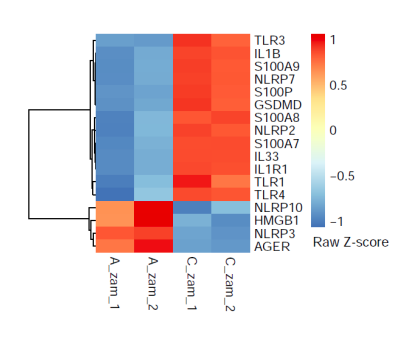
      “In their data, it seems that anterior HOX genes (PG1-5) as well as other posterior HOX (PG6-9) are expressed in wild-type posterior neural crest and early spinal cord cells. Can HOX genes that mark posterior cranial, vagal or trunk identities be co-expressed in trunk neural crest or spinal cord cells? Is it possible that the differentiations generate cells that have different axial identities? I wonder if this interpretation comes from the normalization. Perhaps the authors could clarify if the levels of expression of the 3' Hox genes are higher or lower than 5' Hox genes in their differentiations”.

      Co-expression of HOX paralogous group (PG) (1-5) and (6-9) transcripts does occur in the posterior part of the mouse embryo around E9.5, both in the NMP-containing tailbud region (Gouti et al, 2017) as well as in differentiated posterior neural/neural crest cells e.g. for Hoxb1 expression in E9.5 mouse embryos see (Arenkiel et al, 2003; Glaser et al, 2006); for Hoxc9 expression see (Bel et al, 1998). Thus, the presence of HOXPG(1-5) transcripts in HOXC9+ trunk NC cells is not surprising and in line with what has been reported previously in other studies describing the generation of posterior NC/spinal cord cell types from hESC/NMPs (Frith et al., 2018; Hackland et al, 2019; Lippmann et al, 2015; Mouilleau et al, 2021). Alternatively, the simultaneous detection of transcripts belonging to both HOXPG(1-5) and HOXPG(6-9) could indicate the co-emergence of a separate population of posterior cranial/cardiac/vagal NC cells during trunk NC differentiation. Moreover, the detection of HOX transcripts does not always correlate with corresponding protein positivity (Faustino Martins et al, 2020) pointing to the existence of post-transcriptional/-translational mechanisms controlling HOX protein expression. Unfortunately, we have not identified reliable (in our hands) antibodies against HOXPG(1-5) members that we can use together with HOXC9 in order to distinguish between these possibilities.

      “In the experiments where the authors asses if TBXT binds directly or indirectly to the HOX clusters, the authors compare pluripotent cells with hNMPs. This data confirms that TBXT acts as an activator in hNMPs and that it binds to regions in the HOX clusters. Do the HOX regions overlap with known enhancers for the HOX genes for neural crest or spinal cord?”

      We have included new ATAC-seq data mapping chromatin accessibility in day 8 trunk NC cells generated from TBXT-depleted and control hESC-derived NMPs. These data, combined with the ATAC-seq and TBXT ChIP-seq analyses from day 3 hESC-derived NMPs, indicate that TBXT controls chromatin accessibility in trunk NC-specific enhancers within HOX clusters, both directly through genomic binding, and indirectly possibly by influencing expression of other key transcriptional regulators such as CDX2. For details see Figure 8-figure supplement 2 and Appendix Table S9 and line numbers 458-482 in the revised manuscript.

      “As they see distinct temporal phases of TBXT activity on spinal cord progenitors versus neural crest cells, the authors should test if there are changes in accessibility or TBXT binding in neural crest and spinal cord cells in the HOX locus and/or genome-wide. This comparison may help identify cell-type specific TBXT targets (perhaps acting with distinct coactivators) that are key in the two distinct phases of posterior axial identity control”.

      As mentioned above, we have added new ATAC-seq data from analysis of trunk NC cells derived from TBXT knockdown shRNA hESC-derived NMPs in the presence and absence of Tet. These data can be found in Figure 8-figure supplement 2 and Appendix Table S9 in the revised manuscript. As expected, ATAC-seq analysis of pre-neural CNS spinal cord progenitors generated from TBXT knockdown shRNA hESC-derived NMPs in the presence and absence of Tet showed no significant differences in chromatin accessibility between the two conditions again our gene expression data (Figure 6 in revised manuscript). These data were not included in the new manuscript version but they are publicly available as part of our revised GEO submission (GSE184227). Mapping of TBXT genomic binding in NMP-derived trunk NC cells/spinal cord progenitors is not feasible due to the very low/absent expression of TBXT protein in these cell populations. See also our response to the editor’s suggestions.
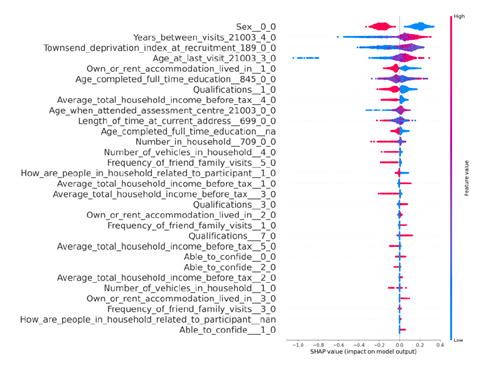
      “In the experiments where the authors examine the signalling pathway dependence of HOX expression during the transition in the neural crest differentiation protocol, it appears that CHIR/LDN treatment induces the highest levels of HOX expression (FIG 3F). Also, there is an increased expression of SOX1 while SOX10 expression is not detected "pointing to a role for BMP signalling in steering NMPs/dorsal pre-neural progenitors toward a NC fate in agreement with previous observations". The results may indicate that WNT and BMP inhibition may induce HOX gene expression in neural cells irrespective of FGF. How do the authors interpret this? How does it affect their final model where FGF (and not WNT) drives the expression of HOX genes in late pre-neural spinal cord progenitors?”.

      Based on our data and published work, we speculate that during the transition of hESCderived NMPs towards trunk NC cell, cultures still exhibit autocrine and/or paracrine FGF signalling even in the absence of exogenous FGF agonist supplementation. This is supported by previous reports showing the expression of the active, phosphorylated version of the FGF effector ERK1/2 in differentiating pluripotent stem cells cultured in FGF-free media (Diaz-Cuadros et al, 2020; Stavridis et al, 2007; Ying et al, 2003). This endogenous FGF activity is probably sufficient for the maintenance of HOX gene expression in these cells, while exogenous BMP signalling stimulation is required for the induction of a NC fate. Given the reported antagonism between these two pathways during early neural/NC induction (Anderson et al, 2016; Marchal et al, 2009), treatment with the BMP inhibitor LDN193189 results in FGF signalling potentiation, which in turn leads to increased HOX gene expression and a switch toward a CNS neurectodermal fate at the expense of NC. Further work is needed to mechanistically dissect this hypothesis, which is beyond the scope of this manuscript.

      “The identity of the cells in the inhibition of WNT or FGF treatments during the final four days towards spinal cord cells experiments is unclear. It would be very useful if the authors could characterize what cell types emerge after the treatments. In principle, I would expect that these treatments would generate different progenitor types (FGF inhibition may presumably give rise to mesoderm cells, whereas WNT inhibited may be pre-neural). Why would the authors expect these different cell types to have similar levels of expression of WNT targets or Hox genes?”

      The inclusion of the new immunostaining data and the quantification of the proportions of SOX2+HOXC9+ emerging upon various WNT/FGF inhibitor treatments (Figure 7D-E in revised manuscript) has now enabled us to define the role of these signalling pathways in controlling HOX gene expression specifically in pre-neural spinal progenitors thus confirming our conclusions from the qPCR data without any bias introduced from contaminating, nonneural HOXC9+ cells.

    1. Author Response

      Reviewer #1 (Public Review):

      Jones et al. investigated the relationship between scale free neural dynamics and scale free behavioral dynamics in mice. An extensive prior literature has documented scale free events in both cortical activity and animal behavior, but the possibility of a direct correspondence between the two has not been established. To test this link, the authors took advantage of previously published recordings of calcium events in thousands of neurons in mouse visual cortex and simultaneous behavioral data. They find that scale free-ness in spontaneous behavior co occurs with scale free neuronal dynamics. The authors show that scale free neural activity emerges from subsets of the larger population - the larger population contains anticorrelated subsets that cancel out one another's contribution to population-level events. The authors propose an updated model of the critical brain hypothesis that accounts for the obscuring impact of large populations on nested subsets that generate scale free activity. The possibility that scale free activity, and specifically criticality, may serve as a unifying theory of brain organization has suffered from a lack of high-resolution connection between observations of neuronal statistics and brain function. By bridging theory, neural data, and behavioral dynamics, these data add a valuable contribution to fields interested in cortical dynamics and spontaneous behavior, and specifically to the intersection of statistical physics and neuroscience.

      Strengths:

      This paper is notably well written and thorough.

      The authors have taken a cutting-edge, high-density dataset and propose a data-driven revision to the status-quo theory of criticality. More specifically, due to the observed anticorrelated dynamics of large populations of neurons (which doesn't fit with traditional theories of criticality), the authors present a clever new model that reveals critical dynamics nested within the summary population behavior.

      The conclusions are supported by the data.

      Avalanching in subsets of neurons makes a lot of sense - this observation supports the idea that multiple, independent, ongoing processes coexist in intertwined subsets of larger networks. Even if this is wrong, it's supported well by the current data and offers a plausible framework on which scale free dynamics might emerge when considered at the levels of millions or billions of neurons.

      The authors present a new algorithm for power law fitting that circumvents issues in the KS test that is the basis of most work in the field.

      Weaknesses:

      This paper is technically sound and does not have major flaws, in my opinion. However, I would like to see a detailed and thoughtful reflection on the role that 3 Hz Ca imaging might play in the conclusions that the authors derive. While the dataset in question offers many neurons, this approach is, from other perspectives, impoverished - calcium intrinsically misses spikes, a 3 Hz sampling rate is two orders of magnitude slower than an action potential, and the recordings are relatively short for amassing substantial observations of low probability (large) avalanches. The authors carefully point out that other studies fail to account for some of the novel observations that are central to their conclusions. My speculative concern is that some of this disconnect may reflect optophysiological constraints. One argument against this is that a truly scale free system should be observable at any temporal or spatial scale and still give rise to the same sets of power laws. This quickly falls apart when applied to biological systems which are neither infinite in time nor space. As a result, the severe mismatch between the spatial resolution (single cell) and the temporal resolution (3 Hz) of the dataset, combined with filtering intrinsic to calcium imaging, raises the possibility that the conclusions are influenced by the methods. Ultimately, I'm pointing to an observer effect, and I do not think this disqualifies or undermines the novelty or potential value of this work. I would simply encourage the authors to consider this carefully in the discussion.

      R1a: We quite agree with the reviewer that reconciling different scales of measurement is an important and interesting question. One clue comes from Stringer et al’s original paper (2019 Science). They analyzed time-resolved spike data (from Neuropixel recordings) alongside the Ca imaging data we analyzed here. They showed that if the ephys spike data was analyzed with coarse time resolution (300 ms time bins, analogous to the Ca imaging data), then the anticorrelated activity became apparent (50/50 positive/negative loadings of PC1). When analyzed at faster time scales, anticorrelations were not apparent (mostly positive loadings of PC1). This interesting point was shown in their Supplementary Fig 12.

      This finding suggests that our findings about anticorrelated neural groups may be relevant only at coarse time scales. Moreover, this point suggests that avalanche statistics may differ when analyzed at very different time scales, because the cancelation of anticorrelated groups may not be an important factor at faster timescales.

      In our revised manuscript, we explored this point further by analyzing spike data from Stringer et al 2019. We focused on the spikes recorded from one local population (one Neuropixel probe). We first took the spike times of ~300 neurons and convolved them with a fast rise/slow fall, like typical Ca transient. Then we downsampled to 3 Hz sample rate. Next, we deconvolved using the same methods as those used by Stringer et al (OASIS nonnegative deconvolution). And finally, we z-scored the resulting activity, as we did with the Ca imaging data. With this Ca-like signal in hand, we analyzed avalanches in four ways and compared the results. The four ways were: 1) the original time-resolved spikes (5 ms resolution), 2) the original spikes binned at 330 ms time res, 3) the full population of slow Ca-like signal, and 4) a correlated subset of neurons from the slow Ca-like signal. Based on the results of this new analysis (now in Figs S3 and S4), we found several interesting points that help reconcile potential differences between fast ephys and slow Ca signals:

      1. In agreement with Sup Fig 12 from Stringer et al, anticorrelations are minimal in the fast, time-resolved spike data, but can be dominant in the slow, Ca-like signal.

      2. Avalanche size distributions of spikes at fast timescales can exhibit a nice power law, consistent with previous results with exponents near -2 (e.g. Ma et al Neuron 2019, Fontenele et al PRL 2019). But, the same data at slow time scales exhibited poor power-laws when the entire population was considered together.

      3. The slow time scale data could exhibit a better power law if subsets of neurons were considered, just like our main findings based on Ca imaging. This point was the same using coarse time-binned spike data and the slow Ca-like signals, which gives us some confidence that deconvolution does not miss too many spikes.

      In our opinion, a more thorough understanding of how scale-free dynamics differs across timescales will require a whole other paper, but we think these new results in our Figs S3 and S4 provide some reassurance that our results can be reconciled with previous work on scale free neural activity at faster timescales.

      Reviewer #2 (Public Review):

      The overall goal of the paper is to link spontaneous neural activity and certain aspects of spontaneous behavior using a publicly available dataset in which 10,000 neurons in mouse visual cortex were imaged at 3 Hz with single-cell resolution. Through careful analysis of the degree to which bouts of behavior and bouts of neural activity are described (or not) by power-law distributions, the authors largely achieve these goals. More specifically, the key findings are that (a) the size of bouts of whisking, running, eye movements, and pupil dilation are often well-fit by a power-law distribution over several decades, (b) subsets of neurons that are highly correlated with one of these behavioral metrics will also exhibit power-law distributed event sizes, (c) neuron clusters that are uncorrelated with behavior tend to not be scale-free, (d) crackling relationships are generally not found (i.e. size with duration exponent (if there is scaling) was not predicted by size power-law and duration power-law), (e) bouts of behavior could be linked to bouts of neural activity. In the second portion of the paper, the authors develop a computational model with sets of correlated and anti-correlated neurons, which can be accomplished under a relatively small subset of connection architectures: out of the hundreds of thousands of networks simulated, only 31 generated scale-free subsets/non-scale-free population/anti correlated e-cells/anti-correlated i-cells in agreement with the experimental recordings.

      The data analysis is careful and rigorous, especially in the attention to fitting power laws, determining how many decades of scaling are observed, and acknowledging when a power-law fit is not justified. In my view, there are two weaknesses of the paper, related to how the results connect to past work and to the set-up and conclusions drawn from the computational modeling, and I discuss those in detail below. While my comments are extensive, this is due to high interest. I do think that the authors make an important connection between scale-free distributions of neural activity and behavior, and that their use of computational modeling generates some interesting mechanistic hypotheses to explore in future work.

      My first general reservation is in the relationship to past work and the overall novelty. The authors state in the introduction, "according to the prevailing view, scale-free ongoing neural activity is interpreted as 'background' activity, not directly linked to behavior." It would be helpful to have some specific references here, as several recent papers (including the Stringer et al. 2019 paper from which these data were taken, but also papers from McCormick lab and (Anne) Churchland lab) showed a correlation between spontaneous activity and spontaneous facial behaviors. To my knowledge, the sorts of fidgety behavior analyzed in this paper have not been shown to be scale-free, and so (a) is a new result, but once we know this, it seems that (e) follows because we fully expect some neurons to correlate with some behavior.

      R2a: We agree with the reviewer that our original introductory, motivating arguments needed improvement. We have now rewritten the last 2 paragraphs of the introduction. We hope we have now laid out our argument more clearly, with more appropriate supporting citations. In brief, the logic is this:

      1. Previous theory, modeling, and experiments on the topic of scale-free neural activity suggest that this phenomenon is an autonomous, internally generated thing, independent of anything the body is doing.

      2. Relatively new experiments (including those by Churchland’s lab and McCormmick’s lab: Stringer 2019; Salkoff 2020; Clancy 2019; Musall 2019) suggest a different picture with a link between spontaneous behaviors and ongoing cortical activity, but these studies did not address any questions about scale-free-ness.

      3. Moreover, these new experiments show that behavioral variables only manage to explain about 10-30% of ongoing activity.

      4. Is this behaviorally-explainable 10-30% scale-free or perhaps the scale-free aspects of cortical dynamics fall withing the other 70-90%. Our goal is to find out.

      Digging a bit more on this issue, I would argue that results (b) and (c) also follow. By selecting subsets of neurons with very high cross-correlation, an effective latent variable has emerged. For example, the activity rasters of these subsets are similar to a population in which each neuron fires with the same time-varying rate (i.e., a heterogeneous Poisson process). Such models have been previously shown to be able to generate power-law distributed event sizes (see, eg., Touboul and Destexhe, 2017; also work by Priesemann). With this in mind, if you select from the entire population a set of neurons whose activity is effectively determined by a latent variable, do you not expect power laws in size distributions?

      Our understanding is that not all Poisson processes with a time-varying rate will result in a power law. It is quite essential that the fluctuations in rate must themselves be power-law distributed. As a clear example of how this breaks down, consider a Poisson rate that varies according to a sine wave with fixed period and amplitude. In this case, the avalanche size distribution is definitely not scale-free, it would have a clear typical scale. Another point of view on this comes from some of the simplest models used to study criticality – e.g. all-to-all connected probabilistic binary neurons (like in Shew et al 2009 J Neurosi). These models do generate spiking with a time-varying Poisson rate when they are at criticality or away from criticality. But, only when the synaptic strength is tuned to criticality is the time-varying rate going to generate power-law distributed avalanches. I think the Priesmann & Shriki paper made this point as well.

      My second reservation has to do with the generality of the conclusions drawn from the mechanistic model. One of the connectivity motifs identified appears to be i+ to e- and i- to e+, where potentially i+/i- are SOM and VIP (or really any specific inhibitory type) cells. The specific connections to subsets of excitatory cells appear to be important (based on the solid lines in Figure 8). This seems surprising: is there any experimental support for excitatory cells to preferentially receive inhibition from either SOM or VIP, but not both?

      R2b: There is indeed direct experimental support for the competitive relationship between SOM, VIP, and functionally distinct groups of excitatory neurons. This was shown in the paper by Josh Trachtenberg’s group: Garcia-Junco-Clemente et al 2017. An inhibitory pull-push circuit in frontal cortex. Nat Neurosci 20:389–392. However, we emphasize that we also showed (lower left motif in Fig 8G) that a simpler model with only one inhibitory group is sufficient to explain the anticorrelations and scale-free dynamics we observe. We opted to highlight the model with two inhibitory groups since it can also account for the Garcia-Junco-Clemente et al results.

      In the section where we describe the model, we state, “We considered two inhibitory groups, instead of just one, to account for previous reports of anticorrelations between VIP and SOM inhibitory neurons in addition to anticorrelations between groups of excitatory neurons (Garcia-Junco-Clemente et al., 2017).”

      More broadly, I wonder if the neat diagrams drawn here are misleading. The sample raster, showing what appears to be the full simulation, certainly captures the correlated/anti-correlated pattern of the 100 cells most correlated with a seed cell and 100 cells most anti-correlated with it, but it does not contain the 11,000 cells in between with zero to moderate levels of correlation.

      R2c: We agree that our original model has several limitations and that one of the most obvious features lacking in our model is asynchronous neurons (The limitations are now discussed more openly in the last paragraph of the model subsection). In the data from the Garcia-Junco-Clemente et al paper above there are many asynchronous neurons as well. To ameliorate this limitation, we have now created a modified model that now accounts for asynchronous neurons together with the competing anticorrelated neurons (now shown and described in Fig S9). We put this modified model in supplementary material and kept the simpler, original model in the main findings of our work, because the original model provides a simpler account of the features of the data we focused on in our work – i.e. anticorrelated scale-free fluctuations. The addition of the asynchronous population does not substantially change the behavior of the two anticorrelated groups in the original model.

      We probably expect that the full covariance matrix has similar structure from any seed (see Meshulam et al. 2019, PRL, for an analysis of scaling of coarse-grained activity covariance), and this suggests multiple cross-over inhibition constraints, which seem like they could be hard to satisfy.

      R2d: We agree that it remains an outstanding challenge to create a model that reproduces the full complexity of the covariance matrix. We feel that this challenge is beyond the scope of this paper, which is already arguably squeezing quite a lot into one manuscript (one reviewer already suggested removing figures!).

      We added a paragraph at the end of the subsection about the model to emphasize this limitation of the model as well as other limitations. This new paragraph says:

      While our model offers a simple explanation of anticorrelated scale-free dynamics, its simplicity comes with limitations. Perhaps the most obvious limitation of our model is that it does not include neurons with weak correlations to both e+ and e- (those neurons in the middle of the correlation spectrum shown in Fig 7B). In Fig S9, we show that our model can be modified in a simple way to include asynchronous neurons. Another limitation is that we assumed that all non-zero synaptic connections were equal in weight. We loosen this assumption allowing for variable weights in Fig S9, without changing the basic features of anticorrelated scale-free fluctuations. Future work might improve our model further by accounting for neurons with intermediate correlations.

      The motifs identified in Fig. 8 likely exist, but I am left with many questions of what we learned about connectivity rules that would account for the full distribution of correlations. Would starting with an Erdos-Renyi network with slight over-representation of these motifs be sufficient? How important is the homogeneous connection weights from each pool assumption - would allowing connection weights with some dispersion change the results?

      R2e: First, we emphasize that our specific goal with our model was to identify a possible mechanism for the anticorrelated scale-free fluctuations that played the key role in our analyses. We agree that this is not a complete account of all correlations, but this was not the goal of our work. Nonetheless, our new modified model in Fig S9 now accounts for additional neurons with weak correlations. However, we think that future theoretical/modeling work will be required to better account for the intermediate correlations that are also present in the experimental data.

      We confirmed that an Erdo-Renyi network of E and I neurons can produce scale-free dynamics, but cannot produce substantial anticorrelated dynamics (Fig 8G, top right motif). Additionally, the parameter space study we performed with our model in Fig 8 showed that if the interactions between the two excitatory groups exceed a certain tipping point density, then the model behavior switches to behavior expected from an Erdos-Renyi network (Fig 8F). Finally, we have now confirmed that some non-uniformity of synaptic weights does not change the main results (Fig S9). In the model presented in Fig S9, the value of each non-zero connection weight was drawn from a uniform distribution [0,0.01] or [-0.01,0] for excitatory and inhibitory connections, respectively. All of these facts are described in the model subsection of the paper results.

      As a whole, this paper has the potential to make an impact on how large-scale neural and behavioral recordings are analyzed and interpreted, which is of high interest to a large contingent of the field.

      Reviewer #3 (Public Review):

      The primary goal of this work is to link scale free dynamics, as measured by the distributions of event sizes and durations, of behavioral events and neuronal populations. The work uses recordings from Stringer et al. and focus on identifying scale-free models by fitting the log-log distribution of event sizes. Specifically, the authors take averages of correlated neural sub-populations and compute the scale-free characterization. Importantly, neither the full population average nor random uncorrelated subsets exhibited scaling free dynamics, only correlated subsets. The authors then work to relate the characterization of the neuronal activity to specific behavioral variables by testing the scale-free characteristics as a function of correlation with behavior. To explain their experimental observation, the authors turn to classic e-i network constructions as models of activity that could produce the observed data. The authors hypothesize that a winner-take-all e-i network can reproduce the activity profiles and therefore might be a viable candidate for further study. While well written, I find that there are a significant number of potential issues that should be clarified. Primarily I have main concerns: 1) The data processing seems to have the potential to distort features that may be important for this analysis (including missed detections and dynamic range), 2) The analysis jumps right to e-i network interactions, while there seems to be a much simpler, and more general explanation that seems like it could describe their observations (which has to do with the way they are averaging neurons), and 3) that the relationship between the neural and behavioral data could be further clarified by accounting for the lop-sidedness of the data statistics. I have included more details below about my concerns below.

      Main points:

      1) Limits of calcium imaging: There is a large uncertainty that is not accounted for in dealing with smaller events. In particular there are a number of studies now, both using paired electro-physiology and imaging [R1] and biophysical simulations [R2] that show that for small neural events are often not visible in the calcium signal. Moreover, this problem may be exacerbated by the fact that the imaging is at 3Hz, much lower than the more typical 10-30Hz imaging speeds. The effects of this missing data should be accounted for as could be a potential source of large errors in estimating the neural activity distributions.

      R3a: We appreciate the concern here and agree that event size statistics could in principle be biased in some systematic way due to missed spikes due to deconvolution of Ca signals. To directly test this possibility, we performed a new analysis of spike data recorded with high time resolution electrophysiology. We began with forward-modeling process to create a low-time-resolution, Ca-like signal, using the same deconvolution algorithm (OASIS) that was used to generate the data we analyzed in our work here. In agreement with the reviewer’s concern, we found that spikes were sometimes missed, but the loss was not extreme and did not impact the neural event size statistics in a significant way compared to the ground truth we obtained directly from the original spike data (with no loss of spikes). This new work is now described in a new paragraph at the end of the subsection of results related to Fig 3 and in a new Fig S3. The new paragraph says…

      Two concerns with the data analyzed here are that it was sampled at a slow time scale (3 Hz frame rate) and that the deconvolution methods used to obtain the data here from the raw GCAMP6s Ca imaging signals are likely to miss some activity (Huang et al., 2021). Since our analysis of neural events hinges on summing up activity across neurons, could it be that the missed activity creates systematic biases in our observed event size statistics? To address this question, we analyzed some time-resolved spike data (Neuropixel recording from Stringer et al 2019). Starting from the spike data, we created a slow signal, similar to that we analyzed here by convolving with a Ca-transient, down sampling, deconvolving, and z-scoring (Fig S3). We compared neural event size distributions to “ground truth” based on the original spike data (with no loss of spikes) and found that the neural event size distributions were very similar, with the same exponent and same power-law range (Fig S3). Thus, we conclude that our reported neural event size distributions are reliable.

      However, although loss of spikes did not impact the event size distributions much, the time-scale of measurement did matter. As discussed above and shown in Fig S4, changing from 5 ms time resolution to 330 ms time resolution does change the exponent and the range of the power law. However, in the test data set we worked with, the existence of a power law was robust across time scales.

      2) Correlations and power-laws in subsets. I have a number of concerns with how neurons are selected and partitioned to achieve scale-free dynamics. 2a) First, it's unclear why the averaging is required in the first place. This operation projects the entire population down in an incredibly lossy way and removes much of the complexity of the population activity.

      R3b: Our population averaging approach is motivated by theoretical predictions and previous work. According to established theoretical accounts of scale-free population events (i.e. non-equilibrium critical phenomena in neural systems) such population-summed event sizes should have power law statistics if the system is near a critical point. This approach has been used in many previous studies of scale-free neural activity (e.g. all of those cited in the introduction in relation to scale-free neuronal avalanches). One of the main results of our study is that the existing theories and models of critical dynamics in neural systems fail to account for small subsets of neurons with scale-free activity amid a larger population that does not conform to these statistics. We could not make this conclusion if we did not test the predictions of those existing theories and models.

      2b) Second, the authors state that it is highly curious that subsets of the population exhibit power laws while the entire population does not. While the discussion and hypothesizing about different e-i interactions is interesting I believe that there's a discussion to be had on a much more basic level of whether there are topology independent explanations, such as basic distributions of correlations between neurons that can explain the subnetwork averaging. Specifically, if the correlation to any given neuron falls off, e.g., with an exponential falloff (i.e., a Gaussian Process type covariance between neurons), it seems that similar effects should hold. This type of effect can be easily tested by generating null distributions using code bases such as [R3]. I believe that this is an important point, since local (broadly defined) correlations of neurons implying the observed subnetwork behavior means that many mechanisms that have local correlations but don't cluster in any meaningful way could also be responsible for the local averaging effect.

      R3c: We appreciate the reviewer’s effort, trying out some code to generate a statistical model. We agree that we could create such a statistical model that describes the observed distribution of pairwise correlations among neurons. For instance, it would be trivial to directly measure the covariance matrix, mean activities, and autocorrelations of the experimental data, which would, of course, provide a very good statistical description of the data. It would also be simple to generate more approximate statistical descriptions of the data, using multivariate gaussians, similar to the code suggested by the reviewer. However, we emphasize, this would not meet the goal of our modeling effort, which is mechanistic, not statistical. The aim of our model was to identify a possible biophysical mechanism from which emerge certain observed statistical features of the data. We feel that a statistical model is not a suitable strategy to meet this aim. Nonetheless, we agree with the reviewer that clusters with sharp boundaries (like the distinction between e+ an e- in our model) are not necessary to reproduce the cancelation of anticorrelated neurons. In other words, we agree that sharp boundaries of the e+ and e- groups of our model are not crucial ingredients to match our observations.

      2c) In general, the discussion of "two networks" seems like it relies on the correlation plot of Figure~7B. The decay away from the peak correlation is sharp, but there does not seem to be significant clustering in the anti-correlation population, instead a very slow decay away from zero. The authors do not show evidence of clustering in the neurons, nor any biophysical reason why e and i neurons are present in the imaging data.

      R3d: First a small reminder: As stated in the paper, the data here is only showing activity of excitatory neurons. Inhibitory neurons are certainly present in V1, but they are not recorded in this data set. Thus we interpret our e+ and e- groups as two subsets of anticorrelated excitatory neurons, like those we observed in the experimental data. We agree that our simplified model treats the anticorrelated subsets as if they are clustered, but this clustering is certainly not required for any of the data analyses of experimental data. We expect that our model could be improved to allow for a less sharp boundary between e+ and e- groups, but we leave that for future work, because it is not essential to most of the results in the paper. This limitation of the model is now stated clearly in the last paragraph of the model subsection.

      The alternative explanation (as mentioned in (b)) is that the there is a more continuous set of correlations among the neurons with the same result. In fact I tested this myself using [R3] to generate some data with the desired statistics, and the distribution of events seems to also describe this same observation. Obviously, the full test would need to use the same event identification code, and so I believe that it is quite important that the authors consider the much more generic explanation for the sub-network averaging effect.

      R3e: As discussed above, we respectfully disagree that a statistical model is an acceptable replacement for a mechanistic model, since we are seeking to understand possible biophysical mechanisms. A statistical model is agnostic about mechanisms. We have nothing against statistical models, but in this case, they would not serve our goals.

      To emphasize our point about the inadequacy of a statistical model for our goals, consider the following argument. Imagine we directly computed the mean activities, covariance matrix, and autocorrelations of all 10000 neurons from the real data. Then, we would have in hand an excellent statistical model of the data. We could then create a surrogate data set by drawing random numbers from a multivariate gaussian with same statistical description (e.g. using code like that offered by reviewer 3). This would, by construction, result in the same numbers of correlated and anticorrelated surrogate neurons. But what would this tell us about the biophysical mechanisms that might underlie these observations? Nothing, in our opinion.

      2d) Another important aspect here is how single neurons behave. I didn't catch if single neurons were stated to exhibit a power law. If they do, then that would help in that there are different limiting behaviors to the averaging that pass through the observed stated numbers. If not, then there is an additional oddity that one must average neurons at all to obtain a power law.

      R3f: We understand that our approach may seem odd from the point of view of central-limit-theorem-type argument. However, as mentioned above (reply R3b) and in our paper, there is a well-established history of theory and corresponding experimental tests for power-law distributed population events in neural systems near criticality. The prediction from theory is that the population summed activity will have power-law distributed events or fluctuations. That is the prediction that motivates our approach. In these theories, it is certainly not necessary that individual neurons have power-law fluctuations on their own. In most previous theories, it is necessary to consider the collective activity of many neurons before the power-law statistics become apparent, because each individual neurons contributes only a small part to the emergent, collective fluctuations. This phenomenon does not require that each individual neuron have power-law fluctuations.

      At the risk of being pedantic, we feel obliged to point out that one cannot understand the peculiar scale-free statistics that occur at criticality by considering the behavior of individual elements of the system; hence the notion that critical phenomena are “emergent”. This important fact is not trivial and is, for example, why there was a Nobel prize awarded in physics for developing theoretical understanding of critical phenomena.

      3) There is something that seems off about the range of \beta values inferred with the ranges of \tau and $\alpha$. With \tau in [0.9,1.1], then the denominator 1-\tau is in [-0.1, 0.1], which the authors state means that \beta (found to be in [2,2.4]) is not near \beta_{crackling} = (\alpha-1)/(1-\tau). It seems as this is the opposite, as the possible values of the \beta_{crackling} is huge due to the denominator, and so \beta is in the range of possible \beta_{crackling} almost vacuously. Was this statement just poorly worded?

      R3g: The point here is that theory of crackling noise predicts that the fit value of beta should be equal to (1-alpha)/(1-tau). In other words, a confirmation of the theory would have all the points on the unity line in the rightmost panels of Fig9D and 9E, not scattered by more than an order of magnitude around the unity line. (We now state this explicitly in the text where Fig 9 is discussed.) Broad scatter around the unity line means the theory prediction did not hold. This is well established in previous studies of scale-free brain dynamics and crackling noise theory (see for example Ma et al Neuron 2019, Shew et al Nature Physics 2015, Friedman et al PRL 2012). A clearer single example of the failure of the theory to predict beta is shown in Fig 5A,B, and C.

      4) Connection between brain and behavior:

      4a) It is not clear if there is more to what the authors are trying to say with the specifics of the scale free fits for behavior. From what I can see those results are used to motivate the neural studies, but aside from that the details of those ranges don't seem to come up again.

      R3h: The reviewer is correct, the primary point in Fig 2 is that scale-free behavioral statistics often exist. Beyond this point about existence, reporting of the specific exponents and ranges is just standard practice for this kind of analysis; a natural question to ask after claiming that we find scale behavior is “what are the exponents and ranges”. We would be remiss not to report those numbers.

      4b) Given that the primary connection between neuronal and behavioral activity seems to be Figure~4. The distribution of points in these plots seem to be very lopsided, in that some plots have large ranges of few-to-no data points. It would be very helpful to get a sense of the distribution of points which are a bit hard to see given the overlapping points and super-imposed lines.

      R3i: We agree that this whitespace in the figure panels is a somewhat awkward, but we chose to keep the horizontal axis the same for all panels of Fig 4B, because this shows that not all behaviors, and not all animals had the same range of behavioral correlations. We felt that hiding this was a bit misleading, so we kept the white space.

      4c) Neural activity correlated with some behavior variables can sometimes be the most active subset of neurons. This could potentially skew the maximum sizes of events and give behaviorally correlated subsets an unfair advantage in terms of the scale-free range.

    1. Author Response

      Reviewer #1 (Public Review):

      In this article, the authors are trying to ascertain how emigrated SVZ cells can be beneficial - via neuroreplacement or neuroprotection. They provide evidence for the latter and also show that it is primarily precursors and not differentiated cells that migrate to photo-thrombotic cortical models of stroke.

      The writing is lucid and the flow of the experiments logical. The images and quality of data are high and the depth of investigation appropriate (eg 100 cells examined per marker in Figure 1). The methods are clearly described. They appropriately control for changes in cortical lesion size. The photo-thrombotic lesion is a good choice in terms of controlling lesion placement and size.

      A distinctive advantage of this paper is they show that reducing SVZ cytogenesis in the stroke model diminishes recovery, especially behavioural (single seed reaching behavior). This essential experiment has been remarkably under-utilized in the field.

      The 2-photon imaging of dendric spines after stroke combined with multi-exposure speckle imaging is a technical tour-de-force especially since they combine it with ganciclovir-induced loss of cytogenesis and behavioural assays. Importantly, they show that SVZ cells are needed for full spine plasticity.

      They are correct to examine the SVZ response in aging as it diminishes dramatically in animal models but in humans is associated with more strokes. As expected, they show reduced SVZ proliferation after stroke. This was associated with significantly worse performance in the seed-reaching task and depleting SVZ precursors with ganciclovir did not make it worse.

      The viral VEGF delivery rescue experiment is fantastic. Behavior, blood vessel growth, and spine density are all rescued.

      The idea that SVZ cells are beneficial via mechanisms other than cell replacement is not really that new. For example, neural stem cells from the SVZ have been shown to reduce inflammation and thereby be neuroprotective as the authors themselves acknowledge and cite (Pluchino et al., 2005).

      The fact that it is primarily precursor cells that migrate towards the stroke does not mean that cell replacement does not occur. The precursors could gradually differentiate (even after 6 weeks post-injury) into more mature cells that do replace cells lost to injury. Also, the two events are not mutually exclusive.
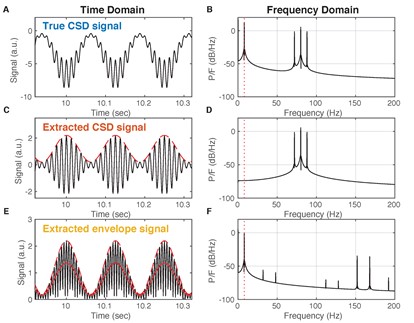
      Our findings indicate that there is no appreciable differentiation of SVZ-derived cells up to 6 weeks after stroke. By this time, we find complete recovery of behavioral deficits. While it is conceivable that cells may differentiate after this timepoint, such a phenomenon would not be contributing to recovery.

      Overall this is an interesting addition to the literature and methodologically it is quite strong. It is sure to generate follow on studies showing how different growth factors may be secreted by SVZ cells in various models of neurological disease.

      Reviewer #3 (Public Review):

      Williamson et al. have investigated the role of cells derived from a neural stem cell (NSC) region of the adult mouse brain called the subventricular zone (SVZ) in a model of stroke. The authors labeled SVZ cells with Nestin-CreER and the Ai14 (tdTomato) reporter, induced cortical infarcts 4 weeks later, then analyzed brains 2 weeks thereafter. Most of the tdTomato+ cells in the peri-infarct regions were not neurons but less differentiated neural precursor cells. They then ablated proliferating NSCs in the SVZ with GFAP-TK mice and ganciclovir (GCV) administration, and this reduced SVZ-derived peri-stroke cells and impaired motor recovery. Older mice have less proliferation in the SVZ, and these older mice have fewer peri-infarct SVZ-derived cells and worse recovery than younger mice. Using multi-exposure speckle imaging (MESI) and 2 photon imaging, the authors found that ablation of proliferating SVZ cells reduced vascular remodeling and synaptic turnover in peri-infarct areas. Immunohistochemical analysis revealed the expression of VEGF, BDNF, GDNF, and FGF2. The authors selected VEGF for functional studies, conditionally knocking out VEGF in SVZ cells and finding that this reduced recovery and neuronal spine density. Finally, the authors expressed VEGF by AAV vectors in mice with ablated SVZ, finding that VEGF could improve repair and recovery after stroke.

      The results presented in the paper support some of the authors' general conclusions and may be of interest to investigators of adult mouse SVZ. The use of genetic labels for lineage analysis and studies of VEGF conditional knockout in SVZ cells are technical strengths of the study. The results support the idea that VEGF in SVZ cells is important for recovery from stroke in younger adult mice. However, the impact of the work may be somewhat limited, as outlined below.

      1. It is already well known that VEGF is an important aspect of stroke recovery (at least in rodent models), and that ectopic expression of VEGF can be beneficial. Showing that some of the VEGF in peri-stroke regions might come from SVZ-derived cells would be a relatively incremental discovery.

      We disagree. In our view, the identification of SVZ-derived cells as a major cellular source of an important trophic factor for recovery is itself an important finding. We also demonstrate that VEGF produced by this cell population is necessary for effective neural repair and recovery, while replacement of VEGF is sufficient to induce repair and recovery in mice lacking this cell population. Moreover, these findings provide a compelling explanation for the worsening of recovery and diminishment of repair that occurs with age (i.e., loss of VEGF signaling from the neural stem cell lineage). Finally, the demonstration that replacing VEGF rescues deficits that accompany loss of SVZ stem cells provides rationale for the replacement of neural stem cell lineage factors as a potential treatment.

      The molecular mechanism aside, our main goal was to understand the function of SVZ cytogenesis in stroke recovery. Our findings that 1) the majority of cells arising from the SVZ after stroke remain in an undifferentiated state, 2) these cells facilitate neuronal and vascular reparative processes in order to promote recovery, and 3) very few new neurons are produced during the recovery phase, provide a new and unexpected understanding of the purpose of post-injury cytogenesis. The dogma of past literature is that neural stem cells produce new neurons that mature and integrate into damaged circuits after injury. An implication of this dogma is that neuronal replacement after stroke is an important treatment target. Accordingly, substantial effort has been devoted to developing cell transplantation and conversion treatment strategies to create new neurons. Our study reframes the function of newborn cells in stroke recovery and provides a compelling rationale against treatment strategies aimed at replacing neurons, instead demonstrating that trophic factor mediated repair and remodeling of spared tissue is sufficient for profound recovery of function. To emphasize these important findings, we have expanded our discussion (lines 338-378).

      1. Furthermore, while it seems clear that the VEGF conditional knockout (VEGF-cKO) in SVZ cells reduces behavioral recovery and certain histological measures, it is not clear that these impairments are due to a lack of VEGF delivery from the SVZ cells. It is possible that VEGF-cKO changed the proportion of SVZ cells that arrive in the peri-stroke region. It is also possible that VEGF-cKO makes these cells impaired in the expression of other trophic factors.

      We disagree with this interpretation. We used a cell type-specific, inducible knockout of VEGF to examine the function of VEGF produced by the adult neural stem cell lineage after stroke. We show in Figure 6E that numbers of lineage traced cells are not different between control and cKO mice. We have added new data, as Figure 6 – figure supplement 2, showing that the proportion of Ascl1-expressing cells is not different between groups, indicating that there is no change in the amount of differentiation. We have also added staining demonstrating that VEGF cKO cells still express GDNF, BDNF, and FGF-2 (Figure 6 – figure supplement 2). Notably, we did not detect a decrease in these three proteins in peri-infarct regions in mice in which neural stem cells were ablated, suggesting that while SVZ-derived cells do produce them, their production is small relative to other cell types. VEGF is thus unique in that large quantities of it are produced by SVZ-derived cells. We also provide evidence for direct effects of VEGF on other cell types (rather than cell-autonomous effects of VEGF regulating other factors in SVZ-derived cells that then act on other cell types) since restoring VEGF in mice with ablated neural stem cells rescued repair and recovery. Importantly, even if VEGF cKO led to perturbed expression of some other proteins, our conclusion would still be that VEGF produced by SVZ-derived cells is crucial for promoting repair and recovery.

      1. The cytogenic response to stroke was not characterized in much detail at the cellular level. Essentially only one time point (2 weeks) was selected for immunohistochemistry (Fig. 1), and so the dynamics of this response cannot be evaluated. Does the proportion of cell types change over time? Are migratory cells more homogeneous and then diversify after arrival to the peri-stroke region? At longer time points, do these SVZ-derived cells still exist? Such an analysis is important to the story since the behavior was evaluated at a range of time points (3-28 days after stroke), and recovery was noted as early as 7 days. Are SVZ-derived cells already at the peri-stroke area after 7 days? If they are not already there, then how would the recovery be explained? The behavioral recovery also continues to improve at 28 days; are SVZ-derived cells still present in large numbers at that time? How would the authors explain continued recovery if the SVZ-derived cell population drops away after 2 weeks?

      Thank you for these suggestions – we agree that these are important points to address. In our original submission we provided evidence that there is no significant differentiation into neurons even 6 weeks after stroke. We have added additional data (Figure 1-figure supplement 2) in which we assessed expression of a range of markers at 6 weeks post-stroke, a time by which recovery is typically complete in this model. These new data show that cell type distribution of lineage traced cells at 6 weeks is highly similar to the 2-week timepoint and show that little differentiation occurs during the course of recovery. We have also included new data quantifying numbers of SVZ-derived cells in peri-infarct cortex at 1, 2, and 6 weeks post-stroke. These data show that lineage traced cells are abundant by day 7 and numbers increase progressively to 6 weeks, suggesting that these cells are present when we initially detect functional improvement, survive, and are continuously produced during the course of recovery. Finally, we have added data showing that the proportion of Ascl1-expressing cells does not change from 1 to 6 weeks, which is consistent with the idea that there are no dynamic changes in cell phenotype during recovery.

      1. The SVZ-derived peri-stroke cells were not characterized in much detail at the molecular/transcriptomic level. The authors studied 4 trophic factors by antibody staining, but there are many other potential genes that may contribute to the effect. Transcriptomic analyses of SVZ-derived peri-stroke cells (e.g., by single-cell RNA-seq) may provide deeper insights into potential mechanisms.

      We acknowledge that single-cell RNA sequencing of SVZ-derived cells may reveal other interesting molecular mechanisms, but such a study could easily stand on its own. There are also technical limitations, such as the population of cells being relatively small, that would create difficulty in generating such a dataset. Instead, we focused on protein-level expression of a small cohort of factors that could be potentially involved based on our initial findings and past literature. In particular, we focused on examining proteins known to potently drive angiogenesis, axon outgrowth, and/or synapse formation given our findings of deficient vascular and synaptic repair in mice lacking cytogenesis. Even if single cell sequencing provided new molecular targets, the ensuing workflow would mirror what we have done in our study (validation of protein level expression, loss-of-function manipulation, gain-of-function manipulation). The magnitude of deficits in VEGF cKO mice did not completely match that seen in mice in which neural stem cells were ablated, making it likely that SVZ-derived cells also contribute to recovery by other mechanisms. We have added to the discussion: “Importantly, these past studies have identified an array of factors produced by precursor cells depending on context. It is possible that multiple factors produced by SVZ-derived cells promote recovery after stroke. This is suggested by our finding that recovery is worse in mice with ablated neural stem cells compared with VEGF cKO mice. Thus, future studies could examine other molecular targets. These efforts could be aided by techniques such as single-cell RNA sequencing.” (lines 338 - 343).

      1. The significance of this work for understanding stroke in human patients is unclear since the adult human brain SVZ is essentially devoid of neurogenic stem cells. Thus, although some of the observations in this paper are interesting, the cytogenic response to stroke described here may not occur in human patients.

      We disagree for several reasons. First, while there is an ongoing debate on whether neurogenesis or neural stem cells persist in adult humans, this debate has not been resolved. At least in our opinion, the preponderance of evidence is in support of persistent cytogenesis and neural stem cells in the adult human SVZ due to convincing data across many studies (e.g., PMID: 10328940, 9809557, 14973487, 11333968, 10870078, 24561062). While it appears that neural stem cell proliferation declines with aging, as in rodents, there is evidence of increased SVZ proliferation and cytogenesis in response to stroke in adult and elderly humans (e.g., PMID: 20054008, 16924107, 17167100, 20104652). Thus, although it is exceedingly difficult to study in humans, it is likely that neural stem cells persist in the adult human brain and can respond to injury by producing new cells. One reason for the somewhat sparse evidence of post-stroke cytogenesis in humans may be that the focus of past studies has been on finding new neurons. Importantly, our study demonstrates that other cells types, especially undifferentiated precursors, arise from the SVZ after stroke in far greater numbers than neurons, which may spur further examination of the phenomenon in humans.

      Second, while stroke incidence increases with age, stroke is not uncommon in the young. Moreover, incidence of stroke in the young is increasing (PMID: 32015089). It is generally accepted that young humans have intact neural stem cells, and the phenomenon we describe in our study shows clear benefits of SVZ cytogenesis in young mice.

      Third, our study provides evidence that “neurogenic” capacity of neural stem cells may not be important for the beneficial functions of cytogenesis after injury. The overwhelming majority studies in humans and mice have focused on “neurogenesis”. Our study demonstrates that undifferentiated precursors constitute the majority of SVZ-derived cells after stroke and identifies Ascl1 as a marker of them, which may be useful for identifying these cells in humans.

      Fourth, if neural stem cell numbers are substantially reduced in aged humans, as in rodents, our study provides clear rationale for the development of treatments to restore stem cell numbers/activation or limit their decline with aging.

      Fifth, our study not only identifies VEGF as a mechanism by which SVZ-derived cells promote repair and recovery after stroke, but also demonstrates that replacing VEGF is sufficient to improve repair and recovery in mice lacking neural stem cells. Thus, even if the argument that cytogenesis does not occur in adult or elderly humans is true, our study shows that identification and replacement of factors produced by the neural stem cell lineage, such as VEGF, could be a reasonable treatment strategy with clear translational potential.

      In order to more clearly state these points in the manuscript, we have expanded our discussion of them.