7 Matching Annotations
  1. Last 7 days
    1. peace makers

      What is a peace maker as opposed to a peace keeper (biblical perspective)

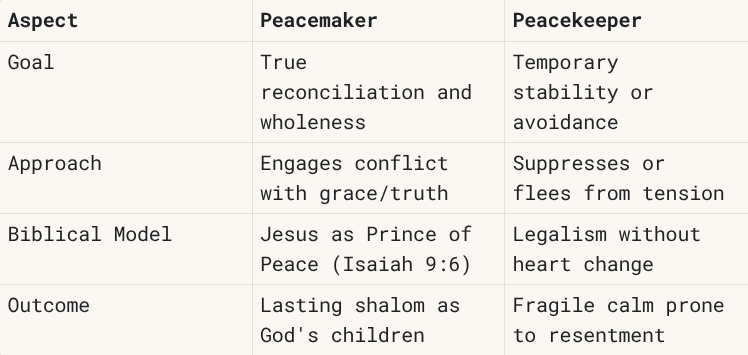
      From a biblical perspective, peacemakers actively pursue reconciliation and righteousness as children of God (Matthew 5:9), while peacekeepers merely avoid or suppress conflict to maintain superficial calm.

      Biblical foundation for peacemakers

      Matthew 5:9 declares, "Blessed are the peacemakers, for they shall be called sons of God," portraying peacemakers as those who reflect God's reconciling work through Jesus, who is our peace (Ephesians 2:14).

      They initiate restoration by addressing root issues like sin or injustice, following Jesus' example of engaging brokenness (Matthew 5:23-24; 18:15).

      Characteristics of peacekeepers

      Peacekeepers prioritize surface harmony over truth, often sacrificing righteousness to prevent tension, acting like thermometers that merely reflect the status quo.

      They avoid hard conversations, apologize unnecessarily, or enforce rules without transformation, contrasting the active love and wisdom peacemakers embody (James 3:17).

      Key biblical distinctions

      Peacemaking demands courage to imitate Christ, fostering God's shalom through humility and justice rather than passive coexistence.

    2. We build order out of entropy.

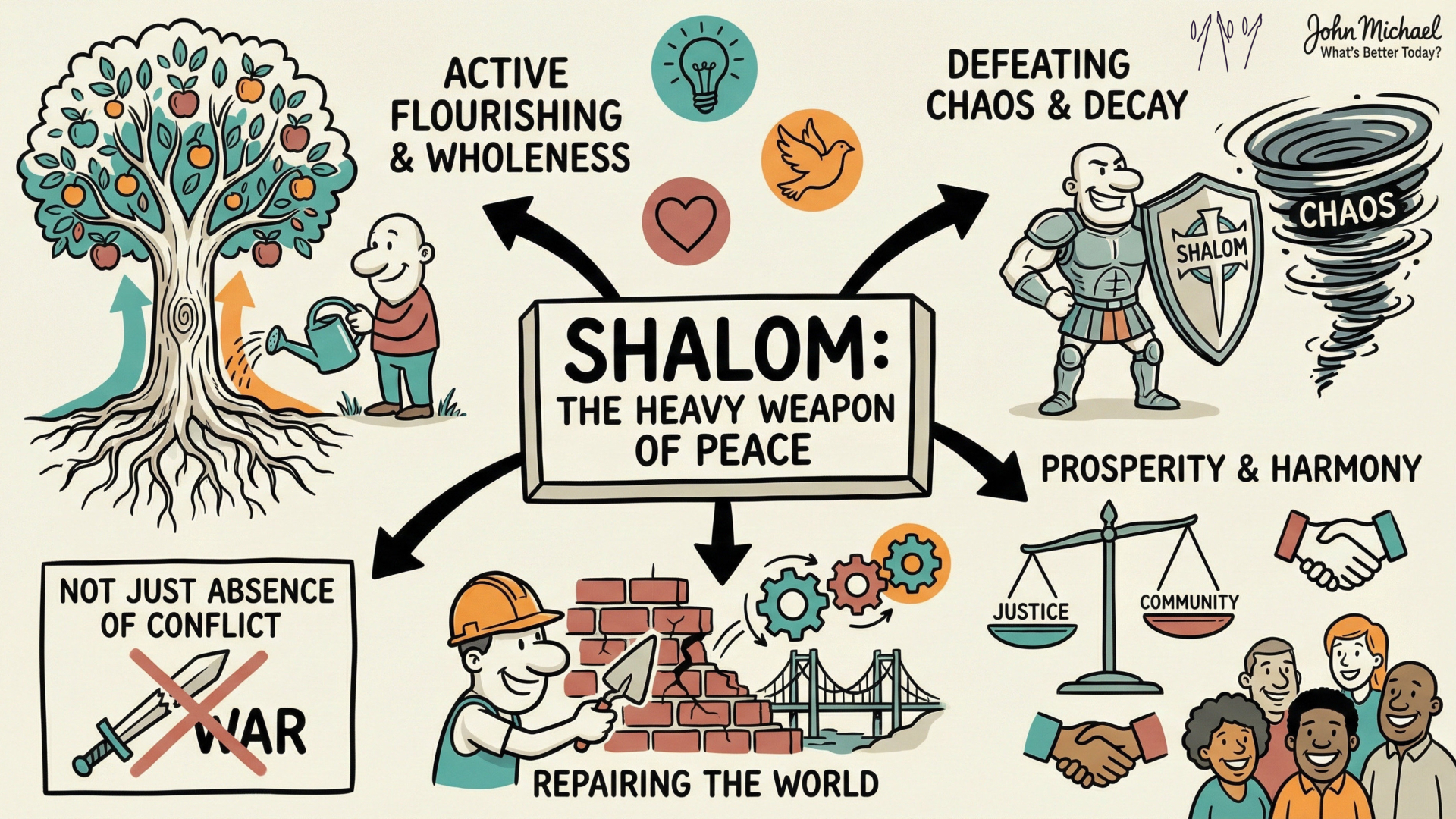
      [ORIGIN STORY] Look at the very first pages of the manual (Genesis 1). The Spirit hovered over the "Chaos" (Tohu wa-bohu) and spoke Order. That was the first act of Shalom. When you organize your finances, repair a relationship, or clean your room, you are re-enacting the Creation story. You are warring against entropy.

    3. Nothing Missing, Nothing Broken

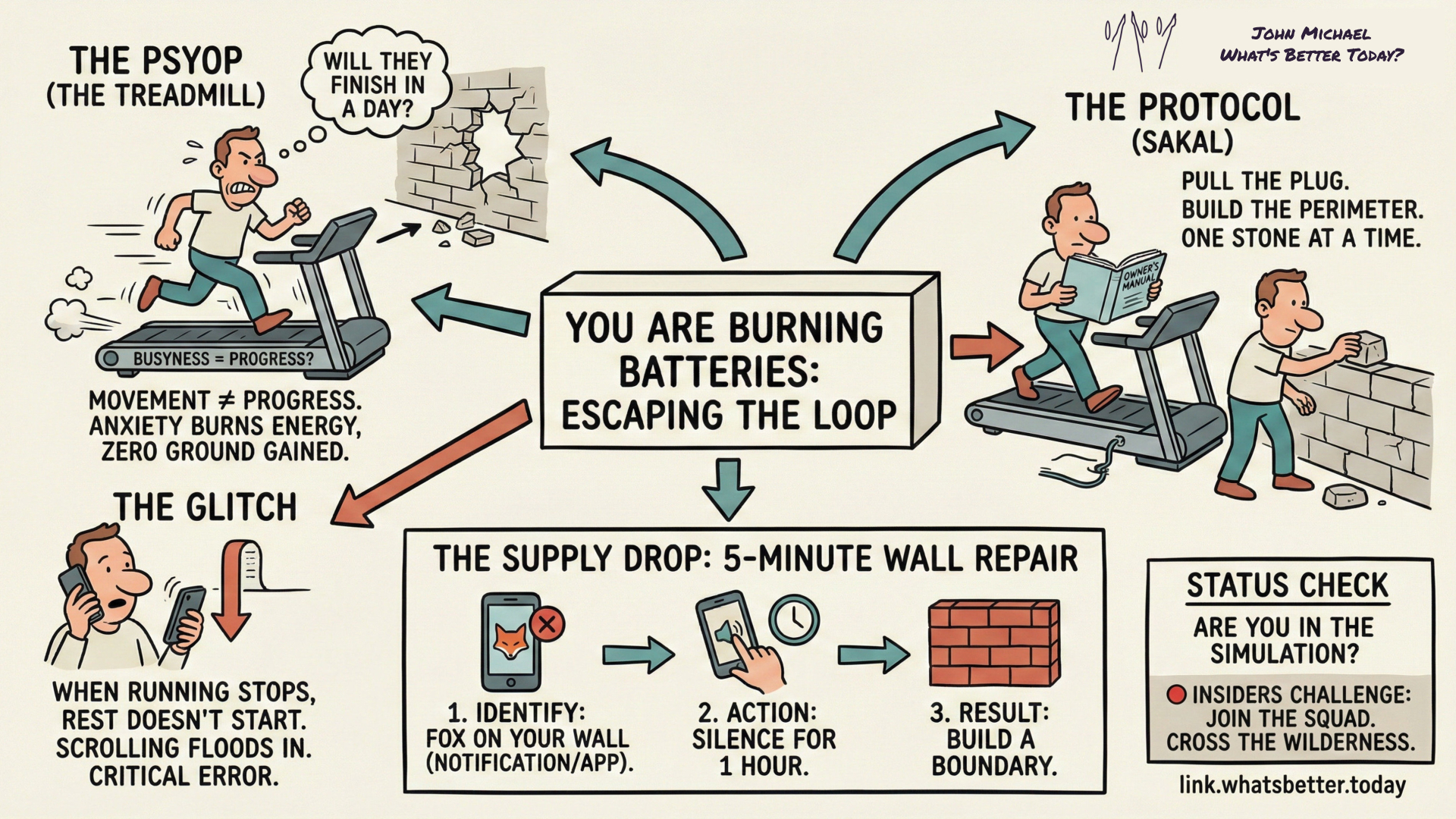
      [ETYMOLOGY SCAN] The root word here is Shalam (שָׁלַם). It literally means "to be safe in mind, body, or estate." Think of a stone wall with no cracks. If there is a gap in the wall, the enemy gets in. Shalom is the mortar that seals the breach. It is structural integrity for your soul.

    4. The Enemy wants you to believe that "Peace" is the absence of trouble.

      [INTEL OVERRIDE] There is a glitch in our cultural translation software. The Western/Greek concept of peace (Eirene) is negative: the absence of war. The Hebrew concept (Shalom) is positive: the presence of God (The Source).

      Greek Peace: A ceasefire.

      Hebrew Peace: A finished building. Don't settle for a ceasefire in your mind when you were built for a kingdom.