86 Matching Annotations
  1. Sep 2020
    1. This time around, he is personally responsible for loans and other debts totaling $421 million, with most of it coming due within four years. Should he win re-election, his lenders could be placed in the unprecedented position of weighing whether to foreclose on a sitting president.

      😱
    2. The membership rush allowed the president to take $26 million out of the business from 2015 through 2018, nearly triple the rate at which he had paid himself in the prior two years.

      About that $400,000 salary he gives up...

    3. People want to believe that something is the biggest and the greatest and the most spectacular. I call it truthful hyperbole. It’s an innocent form of exaggeration — and a very effective form of promotion.

      "Truthful hyperbole." And we are surprised by all the lying and exaggeration?

    4. she appears to have been treated as a consultant on the same hotel deals that she helped manage as part of her job at her father’s business

      If true, this is blatant and straightforward corruption. Much of the scheming described in this piece is complex, but this is about as elementary as it gets.

    5. Mr. Trump has an established track record of stiffing his lenders. But the tax returns reveal that he has failed to pay back far more money than previously known: a total of $287 million since 2010.

      Wow: more than a quarter-billion dollars not repaid to lenders. How is that even possible?

    6. In 2017, the president’s $750 contribution to the operations of the U.S. government was dwarfed by the $15,598 he or his companies paid in Panama, the $145,400 in India and the $156,824 in the Philippines.

      Make America Great Again.

    7. At the Mar-a-Lago club in Palm Beach, Fla., a flood of new members starting in 2015 allowed him to pocket an additional $5 million a year from the business.

      The public must weigh the president's refusal of a $400,000 annual salary against the compensation he and his businesses have gleaned via his presidency. How much have we Americans spent in taxes to house Secret Service and other government personnel at Trump properties? (Answer: a whole lot more than $400,000.)

    8. In 2018, for example, Mr. Trump announced in his disclosure that he had made at least $434.9 million. The tax records deliver a very different portrait of his bottom line: $47.4 million in losses.

      Either the financial disclosure is a lie or the tax records are. The inflated income is public, while the reported losses are (or were) not. There's a significant lie here one way or the other.

  2. May 2020
    1. When white supremacists applied for a permit to hold a march in 2018 to commemorate the first anniversary of their protests in Charlottesville, Virginia, a Facebook group organized a counterprotest in Washington, D.C. The group was called the Resisters. Its administrators, who went by the names Mary and Natasha, recruited a coterie of enthusiastic organizers to promote the rally. When Facebook took down the Resisters’ page—noting its ties to IRA accounts, and implying that Mary and Natasha were fictitious creations—American leftists were shocked to learn that they had apparently been hatching plans with foreign trolls.

      Left and right are both targeted.

    2. Whereas the KGB once needed to find journalistic vehicles to plant their stories—usually the small-audience fringes of the radical press—Facebook and Twitter hardly distinguished between mainstream outlets and clickbait upstarts.

      Exactly the problem, now on Instagram as well...

    3. It fomented conspiracies about the CIA—that the agency had orchestrated the spread of the AIDS virus in a laboratory and plotted the assassination of President John F. Kennedy.

      Does this sound like anything going on today? Anti-vaccination rumors proliferating now?

    4. . It was natural to assume that they had been harvested from the email hack, too. The Macron leaks suggested a dangerous new technique, a sinister mixing of the hacked and the fabricated intended to exploit the electorate’s hunger for raw evidence and faith in purloined documents.

      Again, wow.

    5. It’s impossible to know their reasoning, but Russian hackers made what would prove to be a clever decision not to alter Podesta’s email. Many media outlets accepted whatever emails WikiLeaks published without pausing to verify every detail, and they weren’t punished for their haste. The Podesta leaks thus established a precedent, an expectation that hacked material is authentic—perhaps the most authentic version of reality available, an opportunity to see past a campaign’s messaging and spin and read its innermost thoughts.

      Wow. The implications of this...

    1. May’s declining cases are the result of April’s physical distancing, and the consequences of May’s reopenings won’t be felt until June at the earliest. This long gap between actions and their consequences makes it easy to learn the wrong lessons.

      Another important point. We tend to look at the impact of actions on infection rates a couple of weeks out, when the reality is it may be a month+.

    2. “We have decades of social-science research that tells us these things work,” says Courtney Boen, a sociologist at the University of Pennsylvania. “It’s a question of political will, not scientific discovery.”

      😢

    3. “When America catches a cold, black people get the flu,” says Rashawn Ray, a sociologist at the University of Maryland. “In 2020, when America catches COVID-19, black people die.”

      😱

    4. “It’s inevitable that we’ll see stark increases in infections in the next weeks,”

      😢 Will be curious to see how sharp the increase is. If death tolls don't increase, that'll be a very positive sign.

    5. Of all the threats we know, the COVID-19 pandemic is most like a very rapid version of climate change—global in its scope, erratic in its unfolding, and unequal in its distribution. And like climate change, there is no easy fix. Our choices are to remake society or let it be remade, to smooth the patchworks old and new or let them fray even further.

      Something I've been feeling for several months now...

    6. Up to 40 percent of the 170,000-person Navajo (Diné) Nation have no running water; they can’t effectively wash their hands. About 30 percent have no power; they burn coal or wood for heat, resulting in irritated lungs that are vulnerable to a respiratory pandemic—a problem exacerbated by uranium mining on their lands.

      Second time I've seen this stat cited this week. Still very hard to believe that 40% of the 170,000 member Navajo nation don't have running water! And we just came across the dilemma of uranium mining our our class with the kids this week (our topic was invention of the atomic bomb).

    7. successful public-health departments tragically make the case for their own diminishment

      THIS IS SO HARD! When it works, too many conclude that the threat didn't exist.

    8. The better strategy is not to try and prevent the virus from traveling, but to build a public-health system nimble enough to catch it when it arrives. Don’t build one big wall; instead, ready a thousand nets.

      And exactly what the United States failed to do as it dismantled pandemic preparation policy!

    9. And they had all restrained the virus to a much greater extent than the U.S.

      This is the real test. U.S. is opening up with much less control of the virus.

    10. Stay-at-home orders were necessary but ruinous, economically and emotionally. Their purpose was to buy time for the country to catch its breath, steel its hospitals, and roll out a public-health plan capable of quashing the virus.

      We caught our breath, steeled hospitals—but did we roll out a public health plan capable of quashing the virus? That remains to be seen and likely varies by state. Certainly, all evidence is that we're not doing sufficient testing/tracing in many places.

    11. This decentralized system is a strength: An epidemiologist in rural Minnesota knows the needs and vulnerabilities of her community better than a federal official in Washington, D.C.

      Yep

    12. But no single factor can explain differences across nations or regions.

      It can be confounding trying to figure out why the virus hits one country and not another. Why has Thailand registered per-capita cases nearly 15 times the number reported by Vietnam. Vietnam still hasn't reported a single Covid-related death!

    13. Redbird doesn’t share the widely held fear that Americans have become inured to social distancing and will refuse to suffer through it again. The bigger risk, she says, is that demoralizing bouts of shutdowns and reopenings will nix any prospect of economic recovery. “You only get to say Go out, trust me once,” she says. “They won’t believe you the second time.”

      This was my fear from the beginning. It's still a big concern as we open without adequate testing/tracing.

    14. “Crises are political only until they are personal,” wrote the journalist Elaina Plott, in a piece about a Louisiana woman who convinced her conservative friends to take the coronavirus seriously after her own husband fell sick

      Yep. As soon as it hits your family—and you see the suffering/fear/struggle—you take it seriously.

    15. of the counties that had reported cases of COVID-19 by early April, 37 percent had lost their local newspaper in the past 15 years

      Is this not crazy? Over 1/3 of all counties reporting COVID cases have lost local newspapers in the past 15 years. Imagine if the Yakima Herald-Republic no longer existed for locals to get regular updates about spread of the virus, case and death tolls, etc.

    16. When national news diverges from local reality, “suspicions about whether the epidemic was a hoax will find fertile ground in places with a more ambiguous experience of the disease,”

      This isn't a future scenario. It's already happening in Yakima County.

    17. “We had a strong sense of shared purpose when everything first hit,” says Danielle Allen, a political scientist at Harvard. But that communal mindset may dissipate as the virus strikes one community and spares another, and as some people hit the beaches while others are stuck at home. Patchworks of risk and response “will make it really hard for the public to get a crisp understanding of what’s happening,” Rivers says.

      Good point. Because experiences differ from state to state and county to county, it's hard to have a "collective experience" that everyone can relate to.

    1. Ultimately, it emerged that the first author of the study had failed to disclose a significant conflict of interest; thereafter, most of the coauthors distanced themselves from the study, the journal officially retracted the article, and the first author was eventually found guilty of misconduct and lost his license to practice medicine

      Yet this still serves as the foundation of the anti-vaccination movement...

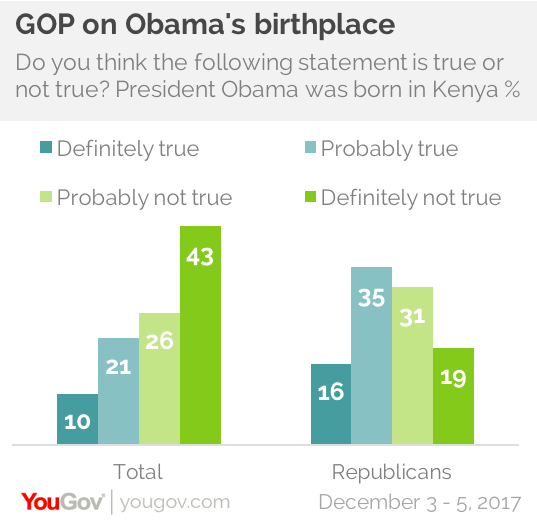
    2. including a majority of voters in Republican primary elections in 2011

      What's crazy is this is still true today; if anything, the percentage of Republican voters who believe Obama was born in Kenya has risen over time.

    3. why retractions of misinformation are so ineffective in memory updating and why efforts to retract misinformation can even backfire and, ironically, increase misbelief

      Primary reason I pulled this journal article up: trying to understand why, even when misinformation is debunked, it still spreads and is seen as truth by so many.

    1. As my colleagues Robinson Meyer and Alexis Madrigal have reported, 20 percent of Americans who are tested for the coronavirus are still getting positive results.

      Yes. Clearly the rate of case increases has leveled off—but whether it's headed down is still a question. To me, it feels like wishful thinking to conclude that it certainly has.

    2. His piece was widely circulated in conservative circles and the Trump administration. When asked about his lack of epidemiological training in an interview with The New Yorker’s Isaac Chotiner, Epstein responded, “One of the things you get as a lawyer is a skill of cross-examination. I spent an enormous amount of time over my career teaching medical people about some of this stuff.” His essay initially speculated that 500 Americans would die from COVID-19. He later updated that estimate to 5,000. So far, the death toll stands at 58,000, and is still rising.

      This stuff really grates on me. A legal scholar being widely circulated for his epidemiological forecasts hints at the problem we have in the U.S.: Everyone is an expert at everything (I mean, I searched Google - it's on Wikipedia or WebMD), and we latch on to views that bolster our own even if they come from questionable sources.

    3. But other scientists, including statisticians, virologists, and disease ecologists, have criticized the study’s methods and the team’s conclusions.

      Important. The initial antibody test results swept conservative media when first reported; since then, we've seen that early conclusions were made too swiftly and without enough caveats, context, or critical analysis.

    4. But they must also be rigorous. “Clinicians are under tremendous stress, which affects our ability to process information,” McLaren says. “‘Is this actually working, or does it seem to be working because I want it to work and I feel powerless?’”

      This is important. Docs are desperate to find ways to keep patients alive and prevent the worst, so it's probably really tempting right now to adjust approaches based upon anecdotal evidence. At times, this may even be justified, but as the quotation here suggests, that could lead to bad conclusions.

    5. When people learned about a meeting in which global leaders role-played through a fictional coronavirus pandemic, some wrongly argued that the actual pandemic had been planned

      I hate to say it, but I have relatives who shared stories perpetuating this falsehood. I know one of the people who participated in this exercise, and while the effort may have done little good to prepare us, to suggest the people involved were evil or somehow responsible for the pandemic is just preposterous.

  3. Apr 2020
    1. And the desire to name an antagonist, be it the Chinese Communist Party or Donald Trump, disregards the many aspects of 21st-century life that made the pandemic possible: humanity’s relentless expansion into wild spaces; soaring levels of air travel; chronic underfunding of public health; a just-in-time economy that runs on fragile supply chains; health-care systems that yoke medical care to employment; social networks that rapidly spread misinformation; the devaluation of expertise; the marginalization of the elderly; and centuries of structural racism that impoverished the health of minorities and indigenous groups. It may be easier to believe that the coronavirus was deliberately unleashed than to accept the harsher truth that we built a world that was prone to it, but not ready for it.

      Altering my "highlight of the article." Perhaps the most important paragraph in this piece...

    2. The facile dichotomy between saving either lives or the economy belies the broad agreement between epidemiologists and economists that the U.S. shouldn’t reopen prematurely.

      And much of the economic impact is already "baked in" and has been since January/February when we failed to prepare for what we had evidence and good reason to believe was coming.

    3. The death toll is still climbing, but seems unlikely to hit the worst-case 2.2 million ceiling. That was close. Or, as some pundits are already claiming, that was exaggerated.

      Again, the public health dilemma—and why I so dislike "some pundits."

    4. One such test claims to correctly identify people with those antibodies 93.8 percent of the time. By contrast, it identifies phantom antibodies in 4.4 percent of people who don’t have them. That false-positive rate sounds acceptably low. It’s not. Let’s assume 5 percent of the U.S. has been infected so far. Among 1,000 people, the test would correctly identify antibodies in 47 of the 50 people who had them. But it would also wrongly spot antibodies in 42 of the 950 people without them. The number of true positives and false positives would be almost equal.

      Really important to understand. "Little better than a coin toss..."

    5. the staccato pulse of reports merely amplifies the wobbliness of the scientific process, turns incremental bits of evidence into game changers, and intensifies the already-palpable sense of uncertainty that drives people toward misinformation.

      Indeed. We're seeing science play out before our eyes but demanding that it happen more quickly than is possible.

    6. Amid the psychological loam of fear and uncertainty, conspiracy theories are germinating like weeds.

      Yes, they are. I've been SO FRUSTRATED by this. People don't think much before the spread pretty crazy conspiracy theories.

    7. On Twitter, false information spreads further than true information, and at six times the speed.

      Worth emphasizing: false info travels at six times the speed of truth!

    8. In late February, Nancy Messonnier, the respiratory-disease chief of the Centers for Disease Control and Prevention, broke ranks and told Americans that community spread of the virus within the U.S. was a question of when, not if. Messonnier urged the nation to prepare for possible school closures, loss of work, “disruption to everyday life that may be severe,” and “the expectation that this could be bad.” The next day, Trump asserted that cases were “going to be down to close to zero.” The day after, CDC Director Robert Redfield reiterated that “the risk is low,” and said that Messonnier could have been more articulate.

      An important sequence. Around this time Messonnier was photographed with Trump and others at one of the briefings. After this occurred, she disappeared. Have you ever even heard her name?

    9. On January 26, Thomas Inglesby of Johns Hopkins Bloomberg School of Public Health tweeted, “We should be planning for the possibility that [the coronavirus] cannot be contained.”

      Always consider the motivations of a source. Fauci, even if you respect him, needed to stay in good graces with the president. People like Inglesby face no such influence on their assessments (though there may be others).

    10. To work out if widespread testing is crucial for controlling the pandemic, listen to public-health experts; to work out if widespread testing is possible, listen to supply-chain experts. To determine if antibody tests can tell people if they’re immune to the coronavirus, listen to immunologists; to determine if such testing is actually a good idea, listen to ethicists, anthropologists, and historians of science. No one knows it all, and those who claim to should not be trusted.

      Good point. Although I absolutely think we need to be hearing from scientists and epidemiologists on this, they do offer a singular perspective. Also need to consider the views of others.

    11. A lack of expertise becomes problematic when it’s combined with extreme overconfidence, and with society’s tendency to reward projected confidence over humility.

      MY HIGHLIGHT OF THE ARTICLE!

    12. We hunger for information, but lack the know-how to evaluate it or the sources that provide it. “This is the epistemological crisis of the moment: There’s a lot of expertise around, but fewer tools than ever to distinguish it from everything else,” says Zeynep Tufekci, a sociologist at the University of North Carolina and an Atlantic contributing writer.

      So true!

    13. “The climate-change people are used to it, but we epidemiologists are not.”

      Yep: this debate (and the ugliness of it) mirrors what we've been seeing with climate science for nearly two decades.

    14. The precise magnitude of the virus’s fatality rate is a matter of academic debate. The reality of what it can do to hospitals is not.

      Those downplaying the impact of the pandemic forget that we've already seen it get out of control in more than one place. Sure, it may not kill at the rate we initially thought—but it has the capacity to spread quickly and kill so quickly that hospitals cannot cope.

    15. This is how science actually works. It’s less the parade of decisive blockbuster discoveries that the press often portrays, and more a slow, erratic stumble toward ever less uncertainty.

      Good point, but hard to swallow in the midst of a pandemic, when we want clear answers immediately.

    16. For now, doctors are routinely prescribing it without knowing if it works or, crucially, if it does more harm than good.

      This is a little frightening. We trust our docs to make good decisions. :-( Also, recall the President pushing the drug on us. "What do you have to lose?"

    17. The disease seems to wreak havoc not only on lungs and airways, but also on hearts, blood vessels, kidneys, guts, and nervous systems

      This is among the worrying things: We thought this was a lung/pneumonia-like illness, but as time goes on we're learning there are numerous other harmful effects. Especially when you look beyond the elderly, who seem to succumb most quickly to the lung/airway problems, the other effects are troubling.

    18. The virus might vary little around the world, but the disease varies a lot.

      An important distinction, which probably accounts for some of the variability in estimated fatality rates in different countries and states.

    1. Besser and his successor at the C.D.C., Dr. Tom Frieden, gave more than a hundred press briefings. President Barack Obama spoke publicly about the outbreak only a few times

      What a stark contrast between then and now. The CDC directors gave more than 100 briefings while the President spoke publicly about the outbreak only a few times. Compare that to the situation today w/ Covid-19!

    2. You don’t have to do it. I’m choosing not to do it.

      This is foolish. I just cannot believe we in the United States have decided this is the kind of leadership we need.

      FWIW, the mask advice is an example of how our understanding has evolved. Before we knew there were so many asymptomatic carriers, rationing masks for medical workers made sense. But once we learned that a good portion of the spread was happening via carriers who fully believed they were not sick (not illogical: they showed no symptoms), the advice rightly shifted. Masking ourselves up so WE DON'T SPREAD THE VIRUS TO OTHERS supplanted prior conclusions. This is NOT a sign of an evil plot or even incompetence – it's the logical progression of our knowledge given the real-time education we're getting about this coronavirus and Covid-19.

    3. Within days, even before Washington’s governor, Jay Inslee, issued official work-from-home orders, almost half of Seattle’s workers were voluntarily staying away from their offices. When bars and restaurants were officially closed, on March 15th, many of them were already empty.

      The nature of Seattle's economy allows more people to work from home than other cities. I seriously worry about restaurants around the country, especially since they indirectly support so much of our economy. Believe there are 14 million jobs provided by the industry, but if you consider farmers and food processors and trucking services and delivery services...

    4. Epidemiologists also must learn how to maintain their persuasiveness even as their advice shifts. The recommendations that public-health professionals make at the beginning of an emergency—there’s no need to wear masks; children can’t become seriously ill—often change as hypotheses are disproved, new experiments occur, and a virus mutates.

      ...or maybe this one!

    5. Epidemiology is a science of possibilities and persuasion, not of certainties or hard proof. “Being approximately right most of the time is better than being precisely right occasionally,” the Scottish epidemiologist John Cowden wrote, in 2010. “You can only be sure when to act in retrospect.” Epidemiologists must persuade people to upend their lives—to forgo travel and socializing, to submit themselves to blood draws and immunization shots—even when there’s scant evidence that they’re directly at risk.

      This is among the very hardest things about what we're dealing with right now. Were I to highlight only one section of this entire story, it might be this one!

    6. But when Riedo stopped to calculate how many of his hospital employees had been exposed to the coronavirus he had to quit when his list surpassed two hundred people. “If we sent all of those workers home for two weeks, which is what the C.D.C. was recommending, we’d have to shut down the entire hospital,” he told me. He felt like a man who, having casually swatted at a buzzing insect, suddenly realized that he was beneath a beehive.

      Wow: 200 in a single hospital before we even knew this was happening...

    7. then you go to the gym

      I still cannot believe he went to the gym. Trump's refusal to wear a mask after announcing that is what CDC leadership recommended is not much worse.

    8. In New York City, another week passed until an equivalent percentage did the same. Tom Frieden, the former C.D.C. director, has estimated that, if New York had started implementing stay-at-home orders ten days earlier than it did, it might have reduced COVID-19 deaths by fifty to eighty per cent.

      We often fail to grasp how much time matters w/ this stuff. With this coronavirus, it looks like the spread from one person is a factor of 2 or 2.5. Say you have a thousand people infected... That 1000 becomes 2000 becomes 4000 ... 8000 ... 16,000 ... 32,000 ... 64,000 ... 128,000. If you can cut off the spread at 1000, compared to a week or 10 days later at 128,000, that makes a huge difference.

    9. Good politicians should worry about poor children missing school just as much as they worry about the threat of an emerging disease.

      Valid point.

    10. A former adviser tweeted, “The mayor’s actions today are inexcusable and reckless.” Another former consultant tweeted that the gym visit was “Pathetic. Self-involved. Inexcusable.”

      Remember: de Blasio was a Democratic presidential candidate for a brief time. 🤔

    11. Layton and a deputy health commissioner, Dr. Demetre Daskalakis, indicated to de Blasio’s staff that if the Mayor didn’t act promptly they would resign. (The next day, Layton’s staff greeted her with applause, and at least one employee offered to give her some money if she had to make good on the ultimatum.)

      Wow: I did not previously know it was this bad!

    12. One City Council member told me that health officials “had been trying to say that publicly for weeks, but this mayor refuses to trust the experts—it’s mind-boggling.”

      Again: it's not just Trump who failed us on this. De Blasio really doesn't look great here...

    13. On March 4th, he tweeted, “If you feel flu-like symptoms (fever, cough and shortness of breath), and recently traveled to an area affected by coronavirus . . . go to your doctor.” This was the opposite of what city health supervisors were advising: people needed to stay inside and call their doctor if they felt sick.

      A lot of the confused messaging results from the fact that we only seem to listen to politicians on this. Our society is plagued by infatuation with celebrity. If a politician, Hollywood superstar, or an athlete says it, we hear about it. But a health supervisor? Their advice is often lost. (We all complain about the media, but we're the ones who drive the content they produce.)

    14. The effort was blocked over fears that it might create a panic, but such alarm might have proved useful.

      A really hard call to make. Hindsight, again, is 20/20.

    15. During a pandemic, however, all those imperatives are reversed: a politician’s job is to inflame our paranoia, because waiting until we can see the danger means holding off until it’s too late. The city’s epidemiologists were horrified by the comforting messages that de Blasio and Cuomo kept giving.

      Exactly why we should be listening to scientists and epidemiologists at times like this.

    16. New York’s mayor, Bill de Blasio

      Maybe I don't read enough about New York, but I have not been impressed with de Blasio during this crisis. Perhaps he's just being overshadowed by Cuomo, but the description in this paragraph of infighting among de Blasio's team doesn't surprise me (and could be partly why he hasn't been particularly effective).

    17. which one local columnist compared to the popular girl in high school who “always smiles and says hello” but “doesn’t know your name and doesn’t care to.”

      Ha! I've never heard that description of "the Freeze," but it's pretty good!

    18. By the second week of April, Washington State had roughly one recorded fatality per fourteen thousand residents.

      Public health policy: when it works, it's almost invisible. I fear that many Washington State residents fail to appreciate how well we've done at "flattening the curve" despite being hit so hard early on. As I write this, we are just 18th-worst among the 50 states + DC in per-capita Covid-19 cases and 15th in per-capita deaths.

    19. Morale at the C.D.C. has plummeted.

      I cannot tell you how many of my friends working in government have echoed this sentiment. From the State Department to the Department of Energy to the EPA, this is consistent. Don't get me started on this topic and how the Trump Administration has undermined our institutions. I was swearing about this in my head two weeks into his presidency.

    20. When the coronavirus pandemic started, E.I.S. alumni began working non-stop, with some setting up cots inside their offices. While the virus remained overseas, the C.D.C. led communications, scrupulously following E.I.S. protocols. But soon after the coronavirus landed on American shores the White House took over. E.I.S. officers were dismayed to see the communication principles that the C.D.C. had honed over the years being disregarded, and sometimes turned on their head. A Coronavirus Task Force, led by Vice-President Mike Pence, was formed, excluding everyone from the C.D.C. except its director, Dr. Robert Redfield. “The C.D.C. was ordered into lockdown,” a former senior official at the agency told me. “They can’t speak to the media. These are people who have trained their entire lives for epidemics—the finest public-health army in history—and they’ve been told to shut up!”

      You want to know why I was screaming in my sleep while watching this unfold from Southeast Asia? THIS.

    21. He proposed a new division, named to evoke the Central Intelligence Agency.

      Honestly, when I see anecdotes like this today, I cringe because of how quick Americans are to embrace even the flimsiest conspiracy theory. The CIA has a checkered history, and I fear any association of EIS with "the Agency" will lead some to dismiss its value.

    22. King County has a strong reputation for excellent public-health experts, and the worst thing we could have done is substitute our judgment for the expertise of people who have devoted their lives to serving the public

      While experts do not know everything and should always be questioned, it is PAINFUL for me to see them disparaged repeatedly when I know for a fact that many are decent, honest, hard-working human beings. No politician who claims "I alone can fix it" has any business leading even a small-town city council!

    23. “If we order people to wear masks, then every C.D.C. official must wear a mask in public. If we order hand washing, then we let the cameras see us washing our hands. We’re trying to do something nearly impossible, which is get people to take an outbreak seriously when, for most Americans, they don’t know anyone who’s sick and, if the plan works, they’ll never meet anyone who’s sick.”

      How dramatically different this is compared to what we're seeing today!

    24. The Bush Administration did a good job of creating the infrastructure so that we can respond

      Has President Trump ever acknowledged that his predecessor "did a good job" at anything?!

    25. in quiet violation of C.D.C. guidance

      One of the frustrating things about this crisis is the failure of the Centers for Disease Control, which historically has been a global leader in disease prevention and public health policy. Whether it's a funding issue (Trump initially proposed CDC cuts but was overruled by Congress), a leadership issue, or just political corruption of the agency (my guess is it's a bit of both of these latter factors), the CDC made major missteps along the way with Covid-19. I'm still trying to better understand this, but here are a few analyses worth reading. See this look at CDC Director Redfield and what went wrong, this analysis from the American Council on Science and Health or this examination of what went wrong with testing.