Waco and Rome.”
Geography bended like it is in The Waste Land where talks of Mylae are happening in London. Here, a singular place remains Slim of two seemingly distinct places: Waco and Rome.
Waco and Rome.”
Geography bended like it is in The Waste Land where talks of Mylae are happening in London. Here, a singular place remains Slim of two seemingly distinct places: Waco and Rome.
“Suttingly didn’t look Fo’ you, Mr. Greer, How it happens you comes To visit here?”
St. Peter and Satan, too figures the Nordic rely so heavily on, have been given a non-Nordic way of speaking. It's a powerful way of claiming what oppressors thought was theirs.
By shunting dirt and misery to you. You sang: Me an’ muh baby gonna shine, shine
Despite the dirt and sunshine, the "You" doesn't care. So connected to their roots as evidenced by the diction of their singing one can say the 'You' are on the side of the racial mountain which does not care what the white man things or says.
huddled you spoon-fashion
This but dirtier and with people:

‘Den I went an’ stood upon some high ol’ lonesome hill, An’ looked down on the place where I used to live.’
Ma Rainey's singing leads people up to the hill as opposed to keeping them on one side of the hill. People are forced to look down where they used to live and perhaps also at where they now must fit in. This is sad, it makes people cry having to go up the hill and modernize, and yet know one can resist her singing. No one can avoid the double consciousness. To Brown, perhaps Hughes was too idealistic.
Dey comes to hear Ma Rainey from de little river settlements,
It's hard to tell if Hughes would too go listen to Ma Rainey. To listen to her one must leave their 'little river settlements,' must leave their hometown, their roots. Also, in listening to her people are reminded of their 'hard luck' which one might assume is in relation to the white experience. Hughes encouraged sticking to one's roots and smiling on one side of the racial mountain as opposed to being in the middle and feeling the sorrow of being pulled by both. However, that struggle is part of the black experience.
jes a-laughin’ an’ a-cacklin’
Language is definitely not Nordic. Hughes would probably praise the full embracing of one's own dialect as opposed to inheriting another's.
I’s gwine to quit ma frownin’ And put ma troubles on the shelf.”
I imagine the singer cracking a smile during the song. Not a full on news anchor grin, just the slight lift of the corner of his lip. It's a lift only sad songs can provide. Catharsis does not say everything's going to be okay, but it does say you are not alone and that is enough to cause a lift. Perhaps in expressing his pain the singer is providing himself catharsis.
And then run?
Raisins, stink, syrup, sag, a running sore–perhaps the worst outcome for a dream deferred is it lasts. A dream deferred, according to most of the metaphors in the poem, refuses to die. I think of people who didn't follow their dreams and can only look back and wonder "What if?" Whether it explodes into existence or the opposite, the final line is a relief. The dream is at least gone.
Besides, They’ll see how beautiful I am And be ashamed—
Ashamed of shunning someone so beautiful? Or ashamed of their own lack of beauty unnoticed until the presence of someone truly beautiful? Or both? Perhaps the interpretation depends on the eyes.
but he must also never be afraid to do what he must choose.
Suggests there is a right sort of art to be making. Perhaps Hughes is right, there are times where art must become agenda-driven. However, during those times so many people passionate about promoting an agenda through art have it covered. If you're not as passionate, why present a lesser piece than the other passionate artists? Why not write about what you really want to write about, despite the times? If it is honest, it will be heard, if not by all, then by at the very least you.
as though his own racial world were not as interesting as any other world
Putting words in his mouth. Maybe the poet would admit that it is interesting, but just not as interesting to her as it is to Hughes and so he writes about something else. I agree with the core of this text, America zapped the heritage out of some people by drowning them in white culture. I just don't know if going after a poet who may have just wanted to be a different version of themselves that did not emphasize race and heritage as heavily as Hughes was the right in.
Most of my own poems are racial in theme and treatment, derived from the life I know.
Maybe the other poet did not live a life like yours, and therefore could not write the same poetry which would satisfy you. However, it might've spoken to a fellow typical 'colored middle class' person who did not feel Hughes' poetry spoke to them.
Let’s be dull like the Nordics,” they say, in effect.
To him it's dull. To her maybe it is genuinely fun in that introverted "staying home and binging everything is fun" sort of way. Some people like ballads; some people like bangers. Perhaps being in America introduced the woman to a tradition she felt more at home in.
because they still hold their own individuality in the face of American standardizations.
But what if they make jazz their child because everybody else around them is doing it. What if some, like the poet, are innately more American or simply feel more at home under that label. To some, maybe those standardizations are simply natural ways of being while seeing 'the lazy world go round' never felt quite right.
himself and his people.
Assumes that the self is linked directly to heritage. Again, I have to point to Frantz Fanon's 'Black Skin, White Masks' as a counter argument. Perhaps discovery of the self requires discovery of one's people, but I see the latter more as a stepping stone to the prior whereas Hughes sees both as a singular goal.
Instead there will perhaps be more aping of things white than in a less cultured or less wealthy home.
Funny idea seeing as now the major concern is white people appropriating black, Indian, Asian, etc. cultures rather than the other way around.
He is taught rather not to see it, or if he does, to be ashamed of it when it is not according to Caucasian patterns.
Maybe the poet is not ashamed when her beauty does not line up with Caucasian patterns. Maybe he is doing as Du Bois wished African Americans could one day do–lower the veil and meld the African and American lying within.
One sees immediately how difficult it would be for an artist born in such a home to interest himself in interpreting the beauty of his own people.
Perhaps the poet is interpreting a different angle of said beauty. The sentence implies there is only one sort of beauty to be interested in when there are many angles to every culture depending on what setting the people of said culture find themselves in. In writing with a typical 'colored middle class' perspective, the poet might be shining a light on a different type of beauty present in his people than that which Hughes shined a light on.
And the mother often says “Don’t be like niggers” when the children are bad.
to be as little Negro and as much American as possible.
Or, as much 'myself' as possible. Can't help but notice how the initial slippery slope has left Hughes jumping to conclusion that may have been true to some, but perhaps not all?
with his desire to run away spiritually from his race, this boy would ever be a great poet.
Or, in transcending race to find a truer self beneath the skin, she'd be one of the greatest.
for no great poet has ever been afraid of being himself
Hughes assumes the poet in question was, in truth, a Negro poet. Perhaps she did not identify as Negro. Perhaps he subscribed to an ideology similar to the one presented by Frantz Fanon in 'Black Skin, White Masks' where embracement of a self separated from heritage and skin color was preferred.
“I want to be a poet–not a Negro poet,” meaning, I believe, “I want to write like a white poet”; meaning subconsciously, “I would like to be a white poet”; meaning behind that, “I would like to be white.”
I read this line in another class. It's possible the poet Hughes is responding to is Countee Cullen who did write using more traditional forms of poetry that, when help up against the blues form often utilized by Hughes, could be considered 'white.' However, the content was what separated Cullen's poetry from, say, Keats. The black struggle with things like double consciousness was explored using white language, presenting an argument for using the conqueror's language against them.
Wheel
Repetition. I feel the concept of an ever turning wheel relates to the unreal, undying city which persists in its attempt at progress but never really goes anywhere. Reminds me of Sisyphus. Perhaps this poem has the bones of existentialism.
Flowed
Like water. Death by water. These moving men of industry will be the death of you. What seems like progress is really cyclical and, to Eliot, fatal.
prolonged candle-flames,
Prolonged = won't die. Zombie flame.
I remember Those are pearls that were his eyes.
Cycle, happening again. He's seen this event before just like we've seen many of the references in the poem before. Separated, the references seem unique, but when put together one sees how little keeps them apart in terms of content. The form or language might change, but the handful of messages remain the same.
We think of the key, each in his prison Thinking of the key, each confirms a prison
Keys lead to open doors to step through and progress. This concept of progression is the prison we are in.
Falling towers Jerusalem Athens Alexandria Vienna London Unreal
It all keeps happening. That's the un-realness: how un-unique the falling towers of these cities is.
But dry sterile thunder without rain
Is this Eliot's dream world? A place without rain? A place where no one is trying?
Amongst the rock one cannot stop or think
Glorious. You can't move on. You have to remain like the rock.
He passed the stages of his age and youth Entering the whirlpool.
Whirlpools keep going. Life keeps going the same way, just different bodies. Perhaps the death is realizing this and dying because of it. Drowning in the cliche thought of "What's the point?"
And puts a record on the gramophone.
The record cycles, moves like a wheel and just goes on and on even when the music stops (when the leaves which make progress look pretty are gone). Too cyclical for comfort. Brings to mind the 'Me, too' movement and how many women have expressed how unsurprised they are at the amount of women who have been harassed. Too too cyclical for comfort.
he assaults at once;
Philomel happening again.
throbbing between two lives,
The pain of doubleness characterized in Tiresias. Yes, you see more, but worth it?
sink into the wet bank
The clutching leaf drowns in a combined effort to clutch for the sake of remaining and progressing.
HURRY UP PLEASE ITS TIME HURRY UP PLEASE ITS TIME Goonight Bill. Goonight Lou. Goonight May. Goonight. Ta ta. Goonight. Goonight. Good night, ladies, good night, sweet ladies, good night, good night.
Repetition. Cycle. Wheel. Sisyphus. Same words, same sentiment, no matter the voice. How scary.
What you get married for if you don’t want children?
Point of marriage, a traditional concept, is to offer a space in which one can contribute to making sure the human race persists, move forward, stays alive to keep the wheel turning and make people feel like progress is happening.
It’s them pills I took, to bring it off, she said.
Interesting. To stop reproduction = to stop her 'beauty.' Even pharmaceutical companies don't want progress to end. Want reproduction and efforts to achieve (what?) to continue. Wonder what Eliot thought about abortion. Perhaps lurking beneath anti-abortion arguments is this inability to conceive of the cycle continuing.
You ought to be ashamed, I said, to look so antique.
Where's your make-up? Why do you look like you're dying? Why aren't you prideful and striving?
HURRY UP PLEASE ITS TIME
Urgency. Get going. Everything around us is telling us to move.
The hot water at ten. And if it rains, a closed car at four. And we shall play a game of chess, Pressing lidless eyes and waiting for a knock upon the door.
The answer almost seems routine. The plans are always the same.
“What shall we ever do?”
Anxiety of progress. The need to plan. I've always found planning annoying. In my experience, it only leads to fighting and disappointment when things don't work out the way one expected. Perhaps Eliot saw a planning America and hopes to prevent its disappointment in some way.
Glowed into words, then would be savagely still.
For a moment the progress glows, seems worth it, but in the end–'savagely still.'
sad light a carvéd dolphin swam.
Swim to live, to get somewhere. That's bad. Sad light because it's a sad attempt.
And drowned the sense in odours
I just read Doc Faust so all this decoration makes me think of Pride. It hangs all these ornaments on itself and that is sinful because it is an attempt to look better than god's design. Pride is ambitious. Pride wants to progress. Therefore, Eliot depicts this prideful place as one drowning under perfumes, under its ugly ambition.
wrought with fruited vines
Not 'decorated' with fruited vines, 'wrought.' The vines almost seem to attack because they are things which grow.
walking round in a ring.
Repetition. Wheel. Sisyphus. The lady of the rocks is showing us things we fear.
Fear death by water.
Water previously associated with those cruel April showers. To fear death by water might mean to fear death by progress.
Rocks
Was she who was speaking under the red rock? Will she show us the handful of dust?
I will show you fear in a handful of dust.
Perhaps the handful of dust is this poem and the fear he is revealing is the illusion of progress. I think forward to A Game of Chess where domestic issues are displayed in three setting, perhaps three time periods. The same things keep happening, and that is our fear. In a culture obsessed with progress, the fact that we are not progressing at all–that the same tropes are being used, same lines being quotes, different voices expressing the same thought–can be frightening. A poem which carries this message too is frightening.
Your shadow at morning striding behind you Or your shadow at evening rising to meet you;
Something different from things moving, things striding, rising, progressing. Rock is sedentary, not progressing like the dead trees which tried to shoot up and crickets who chirp to attract mates and progress through reproduction. The imagery supports the idea that Eliot is showing us something different–a poem that is anti-progress.
page ages.
The page ages. Lets keep it fresh. Lets say 'page ages' over and over again.
Saturday. Please come to Susan.
Saturday + Susan = Satan, a character concerned with apples whose purpose purpose was black.
Pinkie.
Random. As much as Stein may be serious about this heavily veiled manifesto, she seems to have fun with these one off words that just sound funny. Seinfeld once said its the hard consonant sounds that are funniest, and 'Pinkie' has that strong 'k.' It pops, its fun after a line that implies a conversation which means Pinkie might be a person. Hahaha, I say.
hurry
We just saw 'barber' used the appropriate way, but now 'hurry,' a verb, is being used the same way as 'barber,' a noun. Some might see the breaking of conventions as something meant to relieve us of our duty to serve the mythic, while others might see the breaking of conventions as something meant to out rage us, or maybe not meant to out rage us but just meant to be outrageous.
.
That these all end with periods says that these are all considered sentences. Whatever one believes to be a sentence or to be grammatically correct is meant to be thrown out the window when reading the poem or else it will offend.
Never the less
A word torn apart carries a completely different meaning. Instead of saying 'in spite of tenderness' this line seems to say a person never goes for less tenderness. That second part might not be true, but that's the point. The lack of clarity in the line highlights the lack of clarity potential in all language, a lack of clarity that allows for a poem as horriful and beautifying as 'Sacred Emily.'
Door. Do or.
I love how Stein tries to justify perceived meanings of words by cracking them open and seeing their parts. By splitting 'door' into 'do' and 'or.' one sees the options a door provides: you either do or you're done. Perhaps this is her claim to supporting the modernist movement of making it new. Go through doors, progress, or else the sentence will end.
illigitimate
Prior to this line there is sum somerization of lines and words previously used in the poem. Maybelline this is Stein acknowledging how 'wrong' her poeting is, but the fact that she still spells illegitimate wrong shows she's a honey badger at heart. 
china
Seeing as Stein is playing with words and what they represent and how they represent and what they represent and words, I tilted my head like a confused doggy when this line assailed my me. "Wait, does she mean china the country?" I asked for a second. The next lines (such party poopers) show that she did mean china the glass, but I found the concept of burying china and not capitalizing the letter of a country quite Hume or us.
whether
All this use of 'climate' I expected 'weather' instead of 'whether.' Making you anticipate one thing and delivering another–'whether' is the punchline to the set ups that are the prior use of 'climate.' Weather its a funny punchline, I don't know, but a punchline doesn't need to be funny to be a punch line.
a
It's so nice of the letter 'a' to stand there and support 'c' and 'n' in there time of need. Without 'a' and its hospitality, we would have no way of saying 'can' except those different ways you can say 'can' if 'a' abandoned 'c' and 'n.'
They enter the new world naked, cold, uncertain of all save that they enter.
Couldn't help but think of Adam and Eve here. It is interesting to consider the 'they' as Adam and Eve seeing as the 'profound change' is not the apple, but entrance into the new world. Birth itself would inevitably lead to an awakening. Like I did with "To Elsie," I get the feeling Williams sees anti tradition as a state we are doomed to inhabit as opposed to one some will choose to inhabit.
they grew used to him
Perhaps the poor are those who get used to things. The School Physician is constantly tormenting them with reminders, but they only need reminders because there is a constant problem which they are not fixing–the lice. This interpretation one I'm not comfortable with since it places blame on the poor as victims to no one. I don't agree with the stance I think the poem has, but it's a way of reading the poem.
“This is just to say”
The overall 'simplicity' of the poem brought to mind Shklovsky's idea of art being something which slows you down. I'm sure it's happened where someone came across this poem, breezed through, and moved on, but every time I've come across this poem it makes me stop and think "Why say this? Why take the time to turn such nothing into poetry?" Perhaps the poem is a response to more complicated works like "The Waste Land" and "Nude Descending a Staircase": "This is just to say simplicity can prolong the process of perception too."
No one to witness and adjust, no one to drive the car
The poem seems to come to the conclusion that all which made the world make sense has flown out the window, an idea hinted at earlier in describing the 'guads' which can only flutter and flaunt because they were made 'from imaginations which have no peasant traditions to give them character.' There is no tradition to give the world character, no one to witness us and arouse shame, no one to adjust us when something shameful is done. As Nietzsche said, 'God is dead.' Instead of presenting anti-tradition as a stance to take like Marinetti, Williams seems to see anti-tradition as the destructive state we are in whether we like it or not.
Somehow it seems to destroy us
I find a lot of sadness in this line. To say 'somehow' makes it seem like the speaker does not understand how our longing for something better than the earth under our feet destroys us. However, it makes sense. The speaker, presumably, is human and has also felt their imagination strain for something shinier than the present moment. All one can do is see it destroys us, but because that one also participates in said destruction that one cannot explain why it would cause destruction.
voluptuous water expressing with broken brain the truth about us—
I think these lines sum up the poem itself. It is voluptuous in the sense that it is full of rich language. Also, it is voluptuous in its presentation. Each stanza, except for the last two where the lines become more lopsided, is set up so that the first and last lines are longer than the middle. This makes looking down at each stanza not exactly feel like, but I guess feel like looking down a pair of breasts. I know it's a crazy reading, but what if? Moving on, the poem is like water in its minimal use of punctuation. The words are allowed to trickle down with a stutter in the form of a dash every once in awhile. Despite being fluid, however, the poem is physically broken in stanzas and sentences are torn apart grammatically, Despite this broken state, however, the poem, like Elsie, manages to deliver the truth about us.
her great ungainly hips and flopping breasts addressed to cheap jewelry and rich young men with fine eyes
The word 'addressed' stood out to me. It turns 'her' into an object to be sent and adorned with jewelry and admired by rich young men who are more likely to look over the ungainly hips and flopping breasts in favor of the jewelry covering up what they might consider to be imperfections. It's a sickening portrait of a society who favors image over substance, but to Williams that is 'the truth about us.' We are all addressed bodies.
The actual language and phrasing is often as bad as that of our elders
I can not put all of them into Mosaic negative.

A FEW DON’TS
It comes from the writer’s not realizing that the natural object is always the adequate symbol.

Use no superfluous word, no adjective which does not reveal something.
Use no superfluous word, no adjective which does not reveal something.
that sense of sudden growth, which we experience in the presence of the greatest works of art.
Direct treatment of the “thing” whether subjective or objective. To use absolutely no word that does not contribute to the presentation. As regarding rhythm: to compose in the sequence of the musical phrase, not in sequence of a metronome.

The coarse defeats the twice-refined,
In so many of these texts we see something coarse defeat something refined. In the mystery text, the coarse Bill defeats the refined Freddie, in "Stopping in the woods" the horseman arguably chooses the coarse woods over the more refined village, in "The Yellow Wallpaper" we see Gilman's protagonist choose the coarse woman in the wallpaper over her more refined self. Perhaps here Millay admits the rose's refined armour will fall, but in the end she still encourages one to build their "iron cortex." However, that iron cortex is for the mind, not the body, perhaps suggesting the body will always move to a more coarse appearance, but the mind is what can be preserved and remain refined.
none to mourn him but the sea
In thinking about what kind of person the sea might mourn I remembered Heart of Darkness and a characterization of the sea as a person who "had known and served all the men of whom the nation is proud," and "had borne all the ships whose names are like jewels." Perhaps the sea in this poem is mourning those "great men," the conquerors of lands now silenced and "tunneled like an aspen tree." In the face of industrialization, there is no Man, just another hand in the machine, another mouth in the crow.
Freddie Drummond and Bill Totts were two totally different creatures. The desires and tastes and impulses of each ran counter to the other’s.
And yet they both exist in him. Reminds me of Du Bois and his double consciousness, and also the way Adams is written, the possibility of two I's existing in a single body.
He learned many things, and generalized much and often erroneously, all of which can be found in the pages of “The Unskilled Laborer.”
In trying to understand the people beyond the veil we end up generalizing (stereotyping?). This makes me think of the Masters and Robinson poetry where the rural characters are made to fit certain roles in order to get a point across. In an effort to uncover the veil, certain authors had to generalize about what is beyond it.
Whose woods these are I think I know. His house is in the village though; He will not see me stopping here To watch his woods fill up with snow.
This brought to mind The Dead Village, but instead of the village dying its something even more rural, the actual woods. It is filling up with snow, becoming frozen in time much like many stereotypically think the rural south is frozen in time while those who leave, whether to a more modern village or city, progress.
I shall be telling this with a sigh Somewhere ages and ages hence:
This brought to mind Lucinda Matlock, another older person reflecting on the life they lived. Masters tells us how ultimately disappointing the rural life so many longed for the return of was. Eight of her kids die, she's stuck at home doing what women were expected to do, all of a sudden she's 96 and all she can do is say she's had enough. In Frost's poem, the details of life are avoided. Never are we given a positive of taking the road less taken, never is it made explicit what 'the difference' is that taking it has made. Much like Masters, Frost refrains from saying the positives of choosing the more rural-seeming road. Perhaps that's because there is nothing positive. Perhaps that sigh is a heavy one.
“Why do they make good neighbors? Isn’t it Where there are cows? But here there are no cows. Before I built a wall I’d ask to know What I was walling in or walling out, And to whom I was like to give offense. Something there is that doesn’t love a wall, That wants it down.”
This brought to mind The Clerks and our class discussion on the ways rural life is perceived. What one considers a, isolated hill billy place on a farm full of cows another might consider a neighborly, close-knit place on a farm full of cows. The Clerks sees rural life under both lights, on one hand the men who remained clerks are "just as good... just as human as they ever were," but on the other they remained clerks. In the passage, the 'something' that doesn't like walls is mentioned again which suggests another doubleness. On one hand the speaker questions the need for good neighbors, almost criticizes by associating neighborly behavior with cow land, but on the other hand there is something in there that want to be in cow land, where there is no wall to prevent neighborly behavior.
He raised again the jug regretfully And shook his head, and was again alone.
Earlier we are shown Mr. Flood take great care in placing the jug down on stable Earth. Here he picks it up again with regret, perhaps hating that he is losing his stability again by drinking. Assuming that what is in the jug is alcohol (how else would he see two moons?) him getting drunk makes him lose his balance of emotion. He is reminded that he is alone. The illusions caused by the drink don't seem to sit well with him.

I did not think that I should find them there When I came back again; but there they stood,
His use of 'they' and later on 'you' in the poems showed me an attempt at dissociation from the situation being depicted. The narrator admires the men who never left what is presumed to be the home town they grew up in and criticizes the poets and kings who seek greatness and do not recognize they will end up being clerks too. What the speaker does not call attention to however is itself. It also ended up in the place all do, it had to in order to see the men who never left. By pointing it out, perhaps he feels it has transcended the inevitable clerk status. 
Degenerate sons and daughters, Life is too strong for you–
'Degenerate' seems like an odd word to use. Up to this point, the poem seems celebratory of a simple life, but once the potential of life is presented, Lucinda Matlock attacks. Perhaps Masters is implying that death is a step into a higher state of being in which you can look back and see life, despite all its trials and tribulations, as something that was pretty nice. In death, the living and their lack of perspective seem degenerate.
what little iambics, While Homer and Whitman roared in the pines?
I interpreted this as Petit, the poet, seeing something simpler in the world than Homer's epics and Whitman's musings on nature. Petit sees the beauty in the simple sound of an iamb. He pays attention to the ticks, little iambics perhaps considered even less beautiful than a leaf of grass, despite Homer and Whitman trying to distract him from it with their roars. There are more poetic things in the world than what has been turned into poetry, like seeds in a dry pod.
the circulating library
The word 'circulating' caught my attention. It made me think of the library as a comic book spinner rack. Having the books designed to educate what is good through an education on what is evil in a revolving structure suggests that the selection of books changes. One day "Faust' might be used, the next day "Heart of Darkness," the next day the Bible, the next who knows. At first glance the poem seems to end with affirmation of objective evil, but remembering the library is spinning suggests that there is no objective evil, just different points in time where different things are seen as evil. Depending on the point in history, the selection on what is evil changes.
A colonial mansion
I very much read this with concepts of "the other" and oppression in mind. I think the story taking place in a colonial mansion justifies that kind of reading. John is the conqueror keeping his wife under his eye. He attempts to govern her moves and thoughts. Only logical that he is retaliated against. 
He has no patience with faith, an intense horror of superstition, and he scoffs openly at any talk of things not to be felt and seen and put down in figures.
For some reason this sentence brought privilege to mind. Du Bois talked about how peculiar of a sensation a double-consciousness is, and Gilman ends the story with her escape from his captivity. Being greatly defined by outside eyes and feeling you are a captive are experiences John, a seemingly well to-do physician, does not have to deal with. He does not have to feel. Faith, superstition, the unseen is inessential to him whereas people like Gilman and Du Bois had to have faith that those unasked questions which separated them from the world did exist, for unasked questions may one day be asked and allow worlds to merge. If they didn't look beyond the physical differences, chances at merging would be nil.
this sense of always looking at one’s self through the eyes of others,
The irony of looking like a self (body and all), but having no sense of self without another's gaze, a condition which Simone de Beauvoir also prescribed to woman in The Second Sex. She is not her, but what man thinks of her. Perhaps this irony of appearing a self but not being a self is shared amongst those deemed "other."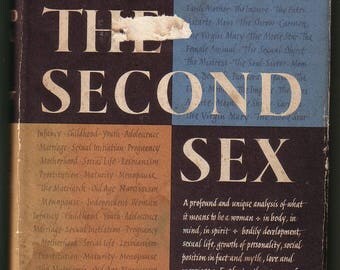
there is no true American music but the wild sweet melodies of the Negro slave; the American fairy tales and folklore are Indian and African;
Cases of irony escalate with rising hybridity. What is said to be all American Elvis blues has roots in those "wild sweet melodies of the Negro slave." As more from either side of the veil mingle, more perspectives and resulting stories will tangle to create stories with no singular origin. "American" becomes everything it wished to keep separated from through nationalism.
No, not that, but each alone was over-simple and incomplete,—the dreams of a credulous race-childhood, or the fond imaginings of the other world which does not know and does not want to know our power.
Here we see Du Bois carefully make readers striving for self-consciousness aware of the bitter irony of their striving. The steps taken thus far have not been wrong, but they very well may have been exactly what the powers which bar one from self-consciousness wanted one to take. They seem to strengthen when really they weaken, thus his call for the melting and welding of ideals from both sides of the veil. 
Before the end, one began to pray to it
Before what end? Perhaps Adams was speculating here on the influence the dynamo and the rise of technology it signifies would have on the future. If the end he is talking about is the time we are currently in, this is a very prophetic line. In many ways we are beginning to pray to our phones, hoping they connect to the internet, or stay alive through the night, or wake us up in the morning. Even the way we walk with our tech, with our handheld close carrying them and our head bowed down to them, is almost prayer like.  )
)
exercising vastly more attraction over the human mind than all the steam-engines and dynamos ever dreamed of; and yet this energy was unknown to the American mind.
This reminds me of the rift between people who love movies like The Goonies and Hook and people who see the flaws in them. Usually the people who love those movies grew up with them, those were their Virgin and Venus, but people who didn't grow up with them (often people born at a different time) have seen the steam-engines and dynamos that are the CGI-driven children's movies of today.
The rays that Langley disowned, as well as those which he fathered, were occult, supersensual, irrational; they were a revelation of mysterious energy like that of the Cross;
This reminded me of Nolan's The Prestige and its theme of careful storytelling and science being real magic. Prior to technology, we were left with nothing but faith in something we felt was worthy of our faith (the Cross). Technology does not demand as much blind faith. Perhaps in the early 1900s it did because it was still fairly primitive compared to today, but you could already see with your own eyes what the dyanamo was doing. It could physically be taken apart and studied and reconstructed into something better, whereas the Cross was just the Cross. If seeing is believing, it makes sense that the physically real dynamo took the place of the Cross as what people put their faith in in a still young America. 
And all that was hidden burning on the oil-stained earth They feed they Lion and he comes.
Maybe all that is hidden and burning are all the wants and feelings Americans are expected to withhold from the public. We can't show our inner pig or inner oak tree; we have to hide the pig under a business suit, turn the tree into a house. In other words, the cost of being an American is repression of the natural self, but one can only hold back for so long. As Levine points out, the Lion is coming, perhaps maul all artificial rules which have invaded its natural kingdom.
From the oak turned to a wall, they Lion,
A natural oak morphed into something it maybe wasn't mean to be, a wall. "Wall" could be a synecdoche meant to reference a home, one of they key items needed to achieve the conventional American Dream. But a home is unnatural. Much like the ferocious pig pissed off at having been driven to holiness, perhaps the American people encouraged to sacrifice natural desires for the sake of a conventional home are also getting pissed, are also slowly becoming more Lion, more natural than robotic, more human than American.
From the ferocity of pig driven to holiness,
To be holy means to be above earthly desires, but a pig is most well known for its earthly desires (food, mud). A holy pig is a taught pig, a leashed pig, and this leash might be what drove the pig to such ferocity. Perhaps Levine means to match the common American to this leashed pig, an animal driven to something outside of its nature by societal expectations. 
