Nevertheless, for the rote tasks that are the bread and butter of most scientific research, gamification can be a natural complement
Gamification for the betterment of humanity!!!
Nevertheless, for the rote tasks that are the bread and butter of most scientific research, gamification can be a natural complement
Gamification for the betterment of humanity!!!
Eventually, their efforts could aid in the development of new cancer drugs.
No longer can your parents, spouse, significant other, friends, etc. complain that you have been wasting your time playing video games. Join EVE online Project Discovery, and let them know you are working on a cure for cancer.
The fun comes from the feeling of mastery.
Again, intrinsic motivation. Ryan, Rigby and Przybylski showed that, "motivation is accounted for by how well the game satisfies our three basic psychological needs - autonomy, competence, and relatedness" How do you think this game meets these needs?
EVE Online’s designers have cast it as an extension of the game’s broader fiction.
Although the game offers a variety of extrinsic motivation, there is a definite attempt to employ intrinsic motivation by appealing to the player's higher motivations. Become a part of the scientific community working to solve real problems such as cancer, Alzheimers, and other diseases. You don't need a degree in a scientific field in order to contribute.
simple game within the game, finding commonalities and differences between some thirteen million microscope images
Check out this brief video introduction.
Human Protein Atlas
Find out more about this project here.
the tremendous amount of time and energy that people put into games could be co-opted in the name of human progress.
Taking advantage of the addictive, repetitive qualities of gaming. Ara Shirinian (game designer) states, "Repetition" is usually a bad word -- and in games, often associated with grinding. Can it be the path to unlocking something more rewarding for players when properly utilized?"
the problem is that, in providing players with a sense of accomplishment, games may distract our species from genuine achievement
A different take on the perils of playing video games. How do we find a lasting and fulfilling sense of accomplishment? Video games don't typically provide anything but in game satisfaction. Revaz and Szantner found a way to combine community service with playing video games.
"You are all working together and you learn teamwork. You learn what skills you have and how you can rise to the occasion. I think those are all intrinsic rewards—and I think that's what prepares
"The key to understanding intrinsic motivation lies in developing an understanding of your audience’s values. While extrinsic motivation can create some initial success on its own, humans are pre-disposed to boredom and will move on from tasks that we no longer find personally challenging." Zach Watson (2014)
I'm trying to teach them, I'm not trying to trick them
So often, it seems we are trying to teach them how to memorize facts, not really learn the topic. As a teacher, do you think allowing students to take exams multiple times helps the student learn the subject?
Larry Graykin, a language arts teacher at Barrington Middle School in New Hampshire
Also known as "Game Master of the Kingdom of Diddorol" "Within my class, when I introduce an assignment, it's embedded within a storyline," he said."I'm making up a story as I go, often strongly influenced by suggestions from the students. They'll create an entire subplot basically, but, basically it's a reason. The reason you need to take this test is because there is a peril in the kingdom and we need people to go up against this
Even failure is attractive in the game universe,
This is also different from traditional education. "Beginning at an early age, mistakes or errors are not embraced as a positive outcome in the current educational system, at least not in the USA." Simpson A., Maltese A. (2016)
games offer a rich and complex environment that demands experimentation, problem-solving and quick thinking.
By implication, a serious indictment of traditional education (i.e., they don't offer experimentation, problem solving, and quick thinking). Do you agree?
Not being a teacher by training, he says, he ran his class in traditional fashion: one person lecturing, everyone else listening, the typical dr
"Every 'multiplayer class' started life as a standard lecture course, so I admit I was somewhat in stealth mode. I did mention the idea to my colleagues at Indiana University, including my chair. Some liked it, some didn’t. But no one told me I couldn’t do it, so I did....My courses were simply taught in a different manner from the sessions taught by colleagues"- Lee Sheldon (2011)
the Industrial Revolution one-size-fits-all model
Our K-12 system largely still adheres to the century-old, industrial-age factory model of education...But the factory model of education is the wrong model for the 21st century. Today, our schools must prepare all students for college and careers--and do far more to personalize instruction and employ the smart use of technology. – US Secretary of Education Arne Duncan (2010)
Lee Sheldon
Currently at Worcester Polytechnic Institute, Lee Sheldon is still active with games and learning, including a best selling book The Multiplayer Classroom: Designing Coursework as a Game, and developing applied game projects like Secrets: A cyber-culture mystery game.
a game whose aim is to explore that miniature epiphany we feel when we solve puzzles
Do you experience miniature epiphanys when playing games?
Works that we really value in the long term are the ones that aren't afraid of ambiguity,”
The success of The Witness surprised even Blow to a certain extent. His expectations of his audience perhaps lowered by events like Gamergate. "“I of course think it’s a very involved and sophisticated game with a lot of interesting things in it...I didn’t expect that to be as universally seen as it is, especially early on.” Jonathon Blow, 2016.
If the video-game industry once hoped to find mainstream acceptance as a viable art form through games like Braid, Gamergate has made the task that much harder.
Blow, as usual, put it in a way that everyone could understand, " I think the mainstream game industry is a fucked-up den of mediocrity,...There are some smart people wallowing in there, but the environment discourages creativity and strength and rigor, so what you get is mostly atrophy.” Jonathan Blow, 2012
There are elements of spatial reasoning and lateral thinking.
How does this enhance the skills that gamers are learning from playing other games? Do you feel these skills are transferable?
Jonathan Blow
Jonathan Blow - an independent game developer. But don't expect a lot of flash. Check out his home page here.
2008’s Braid,
Find our more about Braid here.

A lot of games today are only interested in making players feel smart, rather than have players actually be smart.
“You know, if you watch it being played on Twitch you don’t get the magic of the game at all, really, because the thing that makes the game good doesn’t happen on the screen. It happens in your mind when you figure the things out.”, Jonathan Blow, 2016
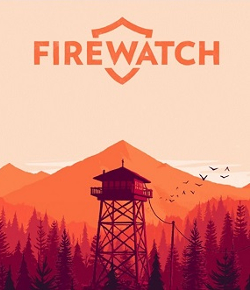
Firewatch
Find it here.
Life is Strange
Find out more here.

The majority of games are basically porn—the onus is on us to make more things that are worth a reasonable person’s time.”
Jonathan Blow thinks that video games have much more to offer than just the "porn" that is out there now. He has a long history of expecting more out of video games, which he harshly criticized as, "juvenile, silly, and intellectually lazy" back in 2012. His standing as a game developer lends credence to his criticisms.