41 Matching Annotations
  1. Dec 2022
    1. who talked continuously seventy hours from park to pad to bar to Bellevue to museum to the Brooklyn Bridge, a lost batallion of platonic conversationalists jumping down the stoops off fire escapes off windowsills off Empire State out of the moon yacketayakking screaming vomiting whispering facts and memories and anecdotes and eyeball kicks and shocks of hospitals and jails and wars,

      Kerouac: Essentials of Spontaneous Prose

      Part of what makes Howl, and other Ginsberg/beat writings of the era, so captivating is the style of writing that the beats were known to employ in their works. Ginsberg's literary blitzkrieg mirrors the chaos of the world he lives in, which he is forced to survive in amidst the disarray and confusion of living within a society that punishes the non-conformers.
    2. Moloch!

      Moloch!

      Moloch, originally a god of the Caananites, is used by Ginsberg in these passages as a representation of the "machinery" of the real world "Molochs" (capitalism, imperialism, etc) which consume the minds and bodies of the "Children" which he mentions in the line previous to this annotation (fitting, as Moloch is historically associated with child sacrifice).

    3. angelheaded hipsters burning for the ancient heavenly connection to the starry dynamo in the machinery of night,

      One of the major themes of "Howl" is the glorification of counter-culture in direct opposition to mainstream society. Ginsberg was living proof of what he's writing about in these passages as a gay man in the 1950s, and the way he glorifies these drug-addicts & burnouts in these passages highlights the disdain that Ginsbergs harbors towards the world he lives in.

  2. Nov 2022
    1. O Ma Rainey, Sing yo’ song; Now you’s back Whah you belong, Git way inside us, Keep us strong. . . . O Ma Rainey, Li’l an’ low; Sing us ’bout de hard luck Roun’ our do’; Sing us ’bout de lonesome road We mus’ go. . . .

      Sterling Brown writes about Ma Rainey in these passages as more of a spiritual figure, or possibly even a representation of some collective consciousness borne of shared lived experience through a connection in racial identity.

    2. Dey stumble in de hall, jes a-laughin’ an’ a-cacklin’, Cheerin’ lak roarin’ water, lak wind in river swamps.

      The heavy usage of dialect in these passages is striking. Of course, it is intentionally written this way. I am reminded of Hughes' essay "The Racial Mountain", and the criticisms he raises towards Black writers/artists who cater their work towards White audiences in pursuit of making money from their art rather than the pursuit of great and genuine art. Sterling Brown seems to embrace the racial voice that Hughes wrote about, incorporating it within the dialect of the piece.

    3. When Ma Rainey Comes to town, Folks from anyplace Miles aroun’, From Cape Girardeau, Poplar Bluff, Flocks in to hear Ma do her stuff; Comes flivverin’ in, Or ridin’ mules, Or packed in trains, Picknickin’ fools. . . .

      The frenzied excitement that Ma Rainey's presence drums up serves as a uniting factor across different socio-economic levels, "comes flivverin' in, / or ridin' mules / or packed in trains". The assumption to be made from the narrator's observation of how the rabid fans of Ma Rainey get to her concert, traveling from far and wide, vary from walking to taking a train, indicating the unifying factor of music (or art, in a larger sense) as a thematic central point in the introductory verse.

    1. She doesn’t care for the Winold Reiss’ portraits of Negroes because they are “too Negro.” She does not want a true picture of herself from anybody. She wants the artist to flatter her, to make the white world believe that all negroes are as smug and as near white in soul as she wants to be. But, to my mind, it is the duty of the younger Negro artist, if he accepts any duties at all from outsiders, to change through the force of his art that old whispering “I want to be white,” hidden in the aspirations of his people, to “Why should I want to be white? I am a Negro–and beautiful”?

      Here, Hughes provides his insight into what the "whitewashing" of Black identity in art leads to within the culture it appears in: the gradual disdain, and subsequent erasure, of the traces of Black art & artists. Through the metaphor of the Philadelphia clubwoman, Hughes paints a picture of the older generation of Black artists, who have already developed their disdain for the true representation of Black individuality and existence (as evidenced by the presence of the faces from the portraits in the passage), before assigning the task of reorienting that trend in American art in the opposite direction, towards accepting and propping up the authentic voice/experience of Black art.

    2. And when he chooses to touch on the relations between Negroes and whites in this country, with their innumerable overtones and undertones surely, and especially for literature and the drama, there is an inexhaustible supply of themes at hand. To these the Negro artist can give his racial individuality, his heritage of rhythm and warmth, and his incongruous humor that so often, as in the Blues, becomes ironic laughter mixed with tears.

      For such a seminal figure in the history of African-American art & history, particularly that of the Harlem Renaissance, I am particularly curious what "overtones and undertones" Hughes is referring to as points of relation between Black and White folks in early 20th century America. Hughes also makes a compelling point within this passage about how instead of focusing on making themselves more palatable to White audiences, Black artists would much better serve both the artistic community, as well as the cause of Black art & artists, by taking a more individualistic approach to their artistic voice.

    3. They furnish a wealth of colorful, distinctive material for any artist because they still hold their own individuality in the face of American standardizations. And perhaps these common people will give to the world its truly great Negro artist, the one who is not afraid to be himself. Whereas the better-class Negro would tell the artist what to do, the people at least let him alone when he does appear. And they are not ashamed of him–if they know he exists at all. And they accept what beauty is their own without question.

      Hughes implies here that the sense of superiority which stems from the white-centric culture of the United States rewards the assimilation of Black people to its modalities and functions more than it does the expression of Black individuality, thereby stripping the art of its authenticity, and its merit, by quite literally "whitewashing" it.

  3. Oct 2022
    1. And I will show you something different from either Your shadow at morning striding behind you Or your shadow at evening rising to meet you; I will show you fear in a handful of dust.

      https://www.youtube.com/watch?v=-m2173-KWAo

      I was reminded of another Loma Prieta song in this passage. These passages, to me, point out that existential dread can be most prominently found in the mundane spaces of life. A pile of dust is much more intimidating under the assumption that you will turn into that one day, and in a similar way, this song observes the mundane details of life that make living as frightening as it can be.

    2. I see crowds of people, walking round in a ring.

      white rose

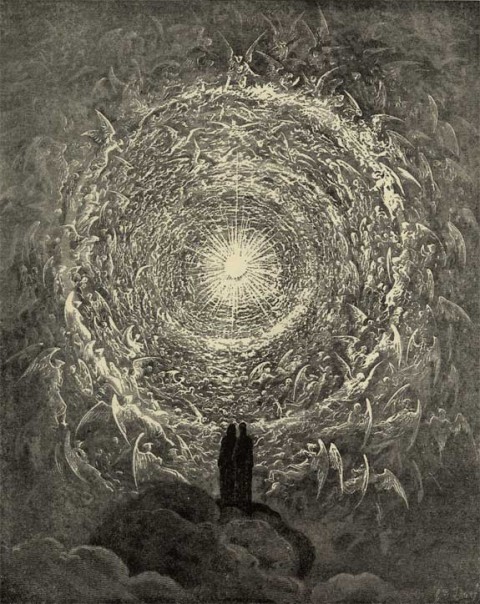
      The immediate comparison that came to mind in reading this passage was that of the Hajj at Mecca, wherein thousands of Muslims walk in a circle around the Kabba, but given the subject matter of the piece, I suppose Eliot was aiming for a visual similar to what Gustave Dore depicts in The White Rose

    3. You cannot say, or guess, for you know only A heap of broken images, where the sun beats,

      https://www.youtube.com/watch?v=95EiOnJ4guc

      These passages remind me of the words from the end of a song I enjoy called "Apparition" by Loma Prieta. 'Why do we worry about what is real? I'm imagined, an apparition. This cracked reflection is clear.' The imagery of the 'broken image' and the 'cracked reflection' bear some similar significance, as the themes of unfamiliarity/uncertainty are present in both works.

    1. If there were only water amongst the rock Dead mountain mouth of carious teeth that cannot spit Here one can neither stand nor lie nor sit There is not even silence in the mountains But dry sterile thunder without rain There is not even solitude in the mountains But red sullen faces sneer and snarl From doors of mudcracked houses

      Lack of water, vegetation, and the lack of silence due to the dry thunder in the mountain range creates an unlivable/dead and hostile environment, rendering the mountains something of a zombie.

    2. I could not Speak, and my eyes failed, I was neither Living nor dead, and I knew nothing,

      Characteristic traits of zombie behavior. Mindless, unable to speak, "neither living nor dead."

    3. stirring Dull roots with spring rain.

      Allusion to a mixing of death and life, a space occupied by zombies, as well as the "stirring" possibly referring to an awakening of the dead.

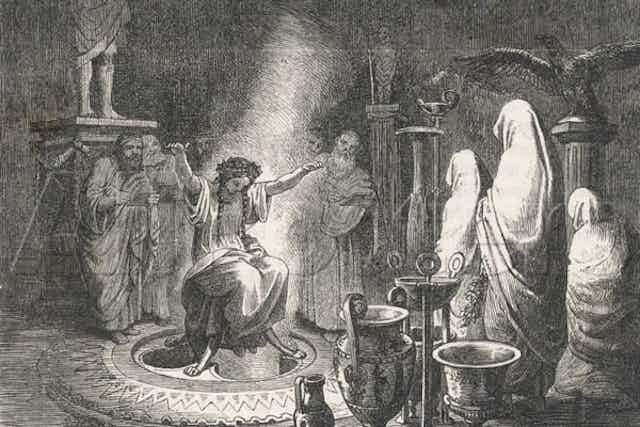
    4.   Madame Sosostris, famous clairvoyante, Had a bad cold, nevertheless Is known to be the wisest woman in Europe, With a wicked pack of cards. Here, said she, Is your card, the drowned Phoenician Sailor, (Those are pearls that were his eyes. Look!) Here is Belladonna, the Lady of the Rocks, The lady of situations. Here is the man with three staves, and here the Wheel, And here is the one-eyed merchant, and this card, Which is blank, is something he carries on his back, Which I am forbidden to see. I do not find The Hanged Man. Fear death by water. I see crowds of people, walking round in a ring. Thank you. If you see dear Mrs. Equitone, Tell her I bring the horoscope myself: One must be so careful these days.

      There are numerous references to Greek mythology in this passage, hence my accompanying image of the oracle of Delphi.
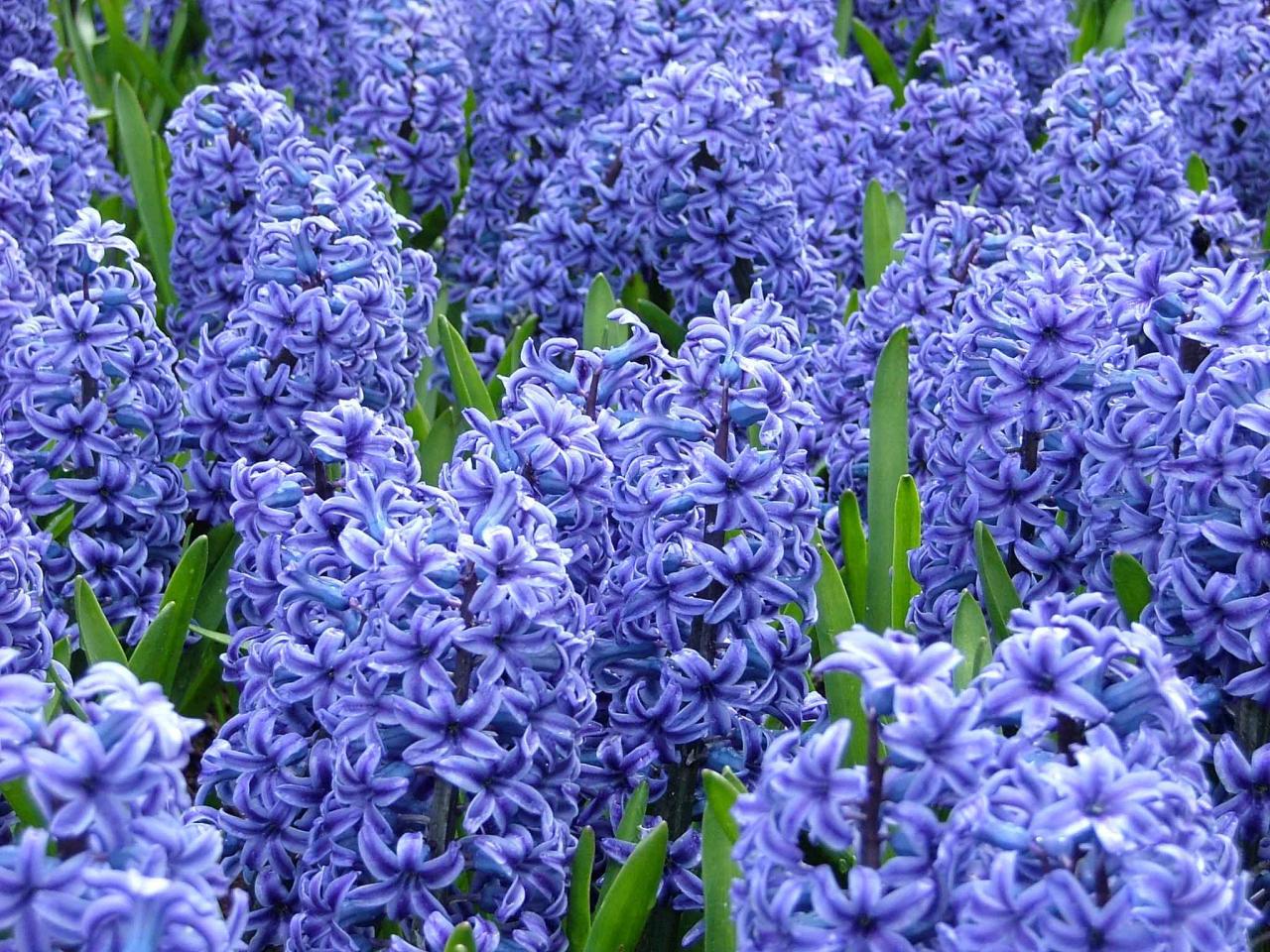
    5. “You gave me hyacinths first a year ago; “They called me the hyacinth girl.”

      The hyacinth has two symbolic meanings, depending on how you choose to interpret the context: The first is either a sense of jealously, which stems from the Greek myth of the origin of the flower's name, and the second is newfound love. Given the context of modernism as background information for when this piece was written & published, I am inclined to believe that the appearance of the hyacinth in this poem is meant to evoke the latter. The hyacinth has two symbolic meanings, depending on how you choose to interpret the context: The first is either a sense of jealously, which stems from the Greek myth of the origin of the flower's name, and the second is newfound love. Given the context of modernism as background information for when this piece was written & published, I am inclined to believe that the appearance of the hyacinth in this poem is meant to evoke the latter.

    6. Living nor dead, and I knew nothing, Looking into the heart of light, the silence.

      These lines evoke the imagery of Sascha Schneider's famous painting, *Hypnosis*, to me. The hyacinth girl is a contrast to the narrator's conflict between the living world and the dead, which perhaps ties back into the theme of doubleness we explored recently. These lines evoke the imagery of Sascha Schneider's famous painting, Hypnosis, to me. The hyacinth girl is a contrast to the narrator's conflict between the living world and the dead, which perhaps ties back into the theme of doubleness we explored recently.

    1. It is only in isolate flecks that something is given off No one to witness and adjust, no one to drive the car

      Perhaps these passages suggest that destiny is both infrequently within our control, and infrequently revealed to us through "isolate flecks"

    2. sheer rags-succumbing without emotion save numbed terror

      The subject of these lines seems to be the victim of assault, possibly a victim of trafficking, as evidenced by the "tricked out" like earlier.

  4. Sep 2022
    1. Before he arose to the surface from that first plunge into the underworld he discovered that he was a good actor and demonstrated the plasticity of his nature. He was himself astonished at his own fluidity. Once having mastered the language and conquered numerous fastidious qualms, he found that he could flow into any nook of working-class life and fit it so snugly as to feel comfortably at home.

      Doubleness, irony, alienation, and possibly confinement appear as thematic concerns in this passage. Doubleness, as Freddie has to contend with living in the world of the working class (which he is entirely foreign to), while he researches for his writing. Meanwhile, part of the irony of Freddie's dedication to living and working among the working class while he researches for his writing lies in his tendency to generalize, and in those generalizations he overlooks all of the nuances that constitute the day-to-day struggles of working class life.

    1. Most various Man, cut down to spring no more; Before his prime, even in his infancy Cut down, and all the clamour that was he, Silenced; and all the riveted pride he wore,

      "man" "infancy", "clamour" "Silenced" The language here implies chaos, or disorder. Perhaps Millay is observing that chaotic order of nature here?

    2. I might be driven to sell your love for peace, Or trade the memory of this night for food. It well may be. I do not think I would.

      The language in this passage conveys a borderline "trapped" tone. As if the narrator is confessing that they could not leave their love even if they wanted to. Does Stockholm Syndrome qualify as a theme for these readings?

    1. We keep the wall between us as we go. To each the boulders that have fallen to each. And some are loaves and some so nearly balls We have to use a spell to make them balance: “Stay where you are until our backs are turned!”

      Alienation and confinement are certainly present thematically in this passage. This section also reminds me of the Greek myth of Sisyphus, who was condemned to roll a boulder up a hill for all of eternity.

    2. Two roads diverged in a wood, and I- I took the one less traveled by, And that has made all the difference.

      Doubleness now connecting to a theme of alienation here, as Frost writes he "took the [road] less traveled by, / And that has made all the difference." The observation that Frost took the road that had less wear, though it meant uncertainty in what lie ahead, clearly displays some sense of isolation

    3. Two roads diverged in a yellow wood, And sorry I could not travel both

      An allusion to doubleness. Frost could be expressing regret, or maybe to a less pessimistic degree a nostalgic curiosity at how certain events could have panned out differently had he taken the alternate road.

    1. Triolets, villanelles, rondels, rondeaus, Seeds in a dry pod, tick, tick, tick, Tick, tick, tick, what little iambics, While Homer and Whitman roared in the pines?

      The same repeating phrase from before, completing the rondeau. I believe the seeds are the writers who Masters is addressing in this poem. They are small, and their quarrels are tiny and insignificant, as referenced in the "like mites in a quarrel" line from earlier. Masters rounds out the poem by comparing the petulant fights of these writers to the much louder, and much more daring in relation to the boundaries of the medium of storytelling, works of Homer and Walt Whitman.

    2. Life all around me here in the village: Tragedy, comedy, valor and truth, Courage, constancy, heroism, failure–

      I think Masters is criticizing writers who want to stick within boxes of rules in order to produce their work instead of working with less structure and making something that pushes the medium. He notes in this passage that there is much nuance within the observable world that one might draw influence from.

    3. Triolets, villanelles, rondels, rondeaus, Ballades by the score with the same old thought:

      Masters is criticizing these old forms of poetry by utilizing them. Rondels and rondeaus both utilize repeating phrases at the beginning and end of a poem, which Masters also utilizes here

    1. John is away all day, and even some nights when his cases are serious. I am glad my case is not serious!

      I loved this set-up & punchline. There's some commentary on the treatment of women within the healthcare system contained in this passage as well

    2. they suddenly commit suicide—plunge off at outrageous angles, destroy themselves in unheard of contradictions.

      Jarring tonal shift in this passage. Possible plot foreshadowing?

    1. Whisperings and portents came home upon the four winds: Lo! we are diseased and dying, cried the dark hosts; we cannot write, our voting is vain; what need of education, since we must always cook and serve? And the Nation echoed and enforced this self-criticism, saying: Be content to be servants, and nothing more; what need of higher culture for half-men?

      Interesting that DuBois notes the sentiment of the Nation in response to the desperation of Black people in America, as that same argument has remained consistent as a right-wing talking point through the Civil Rights era, even until now, but I was unaware that it went as far back as the Civil War.

    2. And why not? Had not votes made war and emancipated millions? Had not votes enfranchised the freedmen? Was anything impossible to a power that had done all this?

      The anaphora of questions near the end of the passage seems rather tongue-in-cheek, almost as if DuBois is questioning the validity of the system of power which created the conditions for such war and emancipation in the first place.

    3. The ballot, which before he had looked upon as a visible sign of freedom, he now regarded as the chief means of gaining and perfecting the liberty with which war had partially endowed him. And why not? Had not votes made war and emancipated millions? Had not votes enfranchised the freedmen? Was anything impossible to a power that had done all this?

      Seems like DuBois is comparing the effectiveness of war and voting in this passage. Though he frames voting as the method for "gaining and perfecting liberty", he also makes it clear that war had at least "partially" been responsible for the emancipation of Black people in America.

  5. Aug 2022
    1. He cared nothing for the sex of the dynamo until he could measure its energy.

      Interesting that Adams notes a lack of interest in the dynamo's sex here when he just compared the dynamo to powerful women in an energetic sense a few short paragraphs ago. Adams' opinion on sex seems muddled, but perhaps that is what he means to accomplish, possibly to insert the narrative that sex does not determine a person's "force".

    2. As he grew accustomed to the great gallery of machines, he began to feel the forty-foot dynamos as a moral force, much as the early Christians felt the Cross.

      Adams attaches both sentimental value, as well as religious value/divine inspiration to the dynamos. Potentially simultaneously planting the seed of divine purpose within the narrative of the protagonist's journey.

    3. The knife-edge along which he must crawl, like Sir Lancelot in the twelfth century, divided two kingdoms of force which had nothing in common but attraction.

      Sir Lancelot, another Hero's Journey-type story. There's a consistent theme of opposites attracting throughout this chapter (ignorance vs. education, steam vs. electricity, etc). Perhaps an allusion to Adams' characteristic opposition, or unlikely attraction to the grander purpose of his journey?

    1. They feed they Lion and he comes.

      This final repetition of the titular line, in conjunction with the remainder of the final stanza, stands out to me. After the narrator has given all they have (in body with their five arms, and in spirit with their white sins), the "oil-stained Earth" remains, and the Lion comes back for that as well, as it knows that there is always something to eat since "they" continue to feed the Lion. The Lion is not the antagonist, "they" are.

    2. Out of the gray hills Of industrial barns,

      Interesting imagery. Describing factories as "industrial barns" furthers the motif of the working-class struggle against capitalism

    3. bearing butter

      "bearing butter" Conjures an image of butter, made from milk, but also insinuates a connection to machinery. Contrast between the rural working class rustic means of living and the luxuries that the middle/upper class are more readily afforded.