X
After reading this section: * Who is or what is X? And later, who is or what is Y? * Why is this essay titled 'Odyssey' (i.e. odyssey of what?) * What is the key ecological concept implied in this essay?
X
After reading this section: * Who is or what is X? And later, who is or what is Y? * Why is this essay titled 'Odyssey' (i.e. odyssey of what?) * What is the key ecological concept implied in this essay?
Odyssey
Read this section
The prodigality of pine pollen should convince anyone of thereckless exuberance of the season, even when the song of thekinglet has failed to do so
https://www.youtube.com/watch?v=RbBkxPN9Cq0
A nice video showing how the pinecone is adapted to structural changes influenced by moisture levels. Link this to dispersal of pine pollen.
Few people know that pines bear flower
Pines are gymnosperms (non-flowering vascular plants) and not angiosperms (flowering vascular plants). Here, the reference is to 'flowering' (i.e. production of reproductive structures) rather than 'flowers'. How are pines dispersed?
It is a curious circumstance that only pines in full sunlightare bitten by weevils; shaded pines are ignored.
Hypothesise why this pattern might occur?
A deer full ofcorn is too lazy to nip branches more than four feet above theground; a really hungry deer rises on his hind legs and nips ashigh as eight feet. Thus I learn the gastronomic status of theCopy & Paste Unavailabledec ember 77deer without seeing them, and I learn, without visiting his field,whether my neighbor has hauled in his cornshocks.
this is a nice alignment with our first workshop, one of the themes being that there are ecological surveying techniques that can be utilised to indicate presence of an animal in the absence of sighting the animal (non-invasive ecological surveying techniques)
When one pine shows a short year but his neighbors do not,you may safely interpolate some purely local or individual ad-versity: a fire scar, a gnawing meadowmouse, a windburn, orsome local bottleneck in that dark laboratory we call the soil.
what are some ecological processes being implied here?
hey never paycurrent bills out of current earnings; they live solely on theirsavings of the year before.
Link this to what you know about temperate ecosystems and resource availability for plants.
terminal bud
A terminal bud, also called an apical bud, is the primary growth point at the tip of a plant stem or branch, responsible for vertical growth and overall plant architecture.
clodhopper
a foolish, awkward, or clumsy person
Pines above the Snow
Read this section
Aldo Leopold
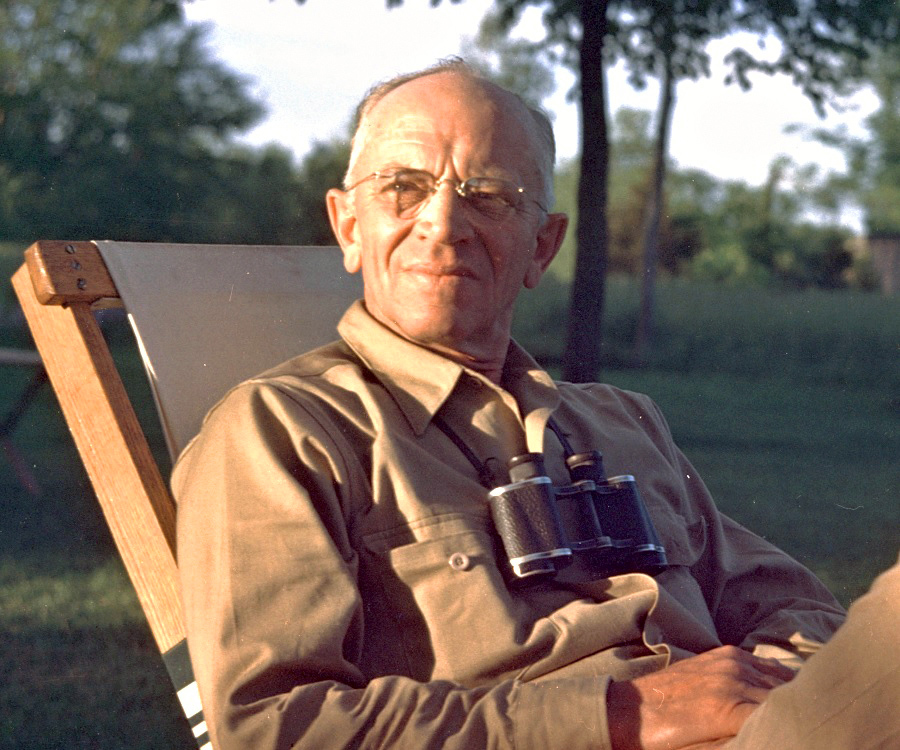
That land is a community is the basic concept of ecology, butthat land is to be loved and respected is an extension of ethics.
What is community ecology?
mechanized man
consider what technology looked like when this book was authored in 1949
Abrahamic concept of land
religious origin: that land is 'promised' to man
law of diminishing returns
What is a 'law of diminishing returns'? (Do some quick online research)
asque-flower
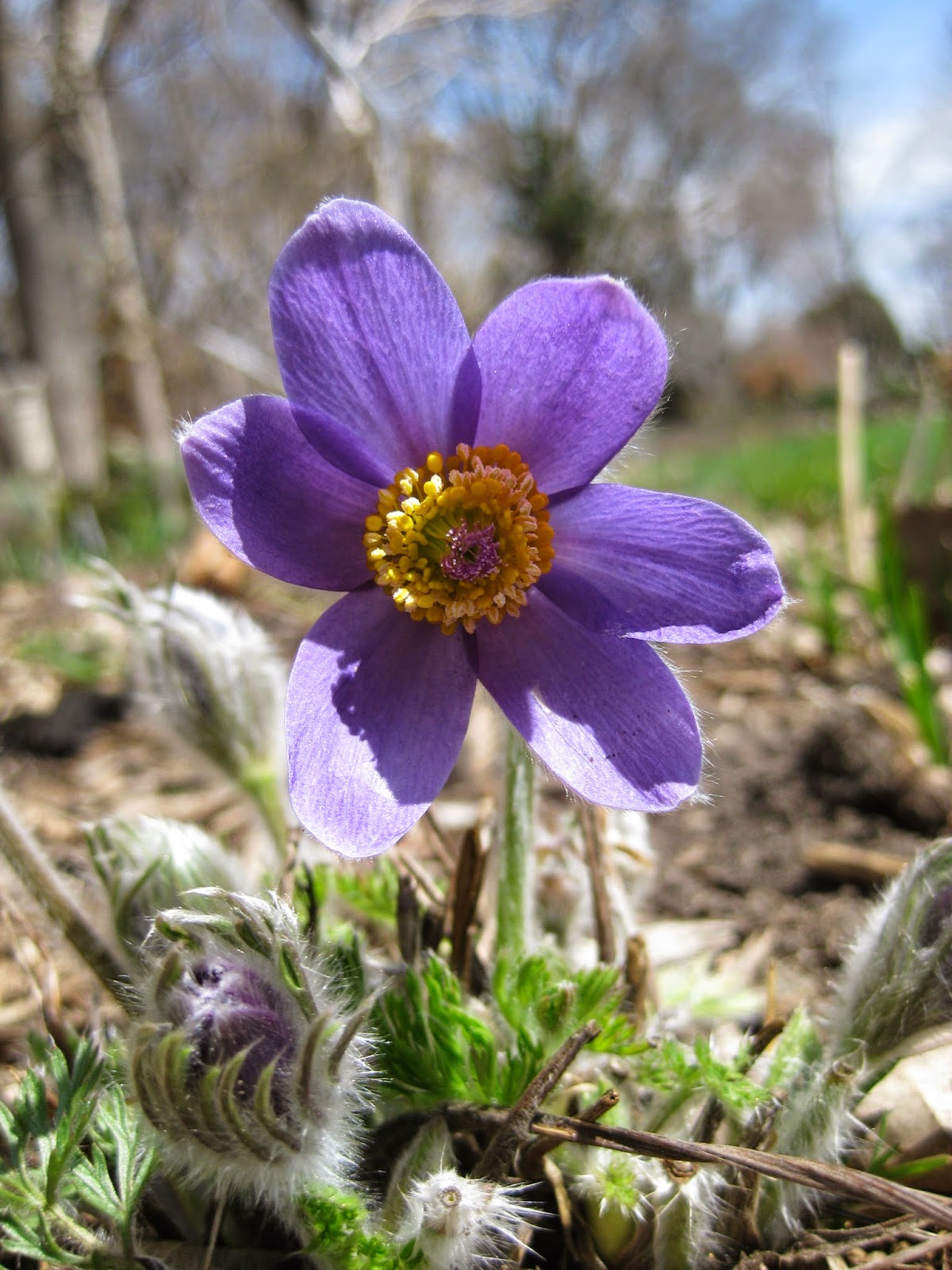 Pulsatilla genus
For us of the minority
Who is 'us'?
Foreword
Read this section.
Aldo Leopold
Welcome to Journal Club 2. You do not need to read the entire book! You will read three parts of this book for this Journal Club -- the "Foreword", "Pines Above The Snow", and "Odyssey".
Salinity sensitivity score and salinity index
After reading this section, you should be able to answer: * What is/are the measured variable(s) in the study? * What is/are the significance of these measured variable(s)? * Why have the authors chosen to develop an index based on salinity sensitivities of the taxa in each habitat?
Australian River Assessment System (AusRivAS)
https://ausrivas.ewater.org.au/index.php/introduction

edge
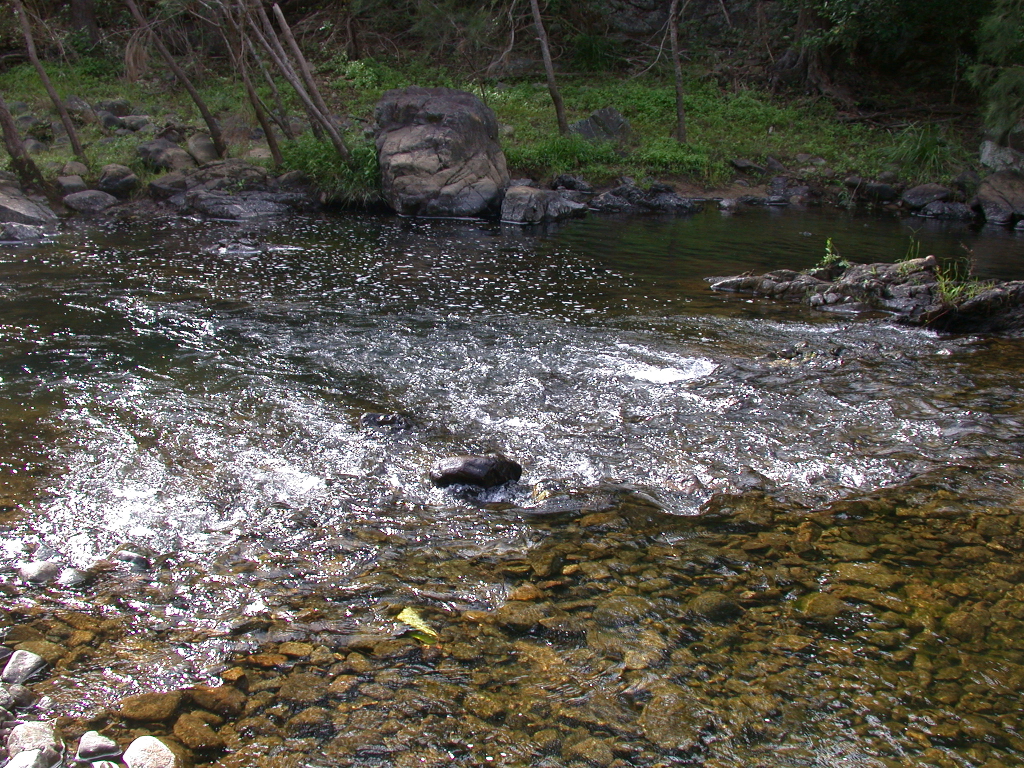
Edge habitat refers to the edge of streams or rivers, where the water meets the terrestrial riparian land and vegetation. Riffle habitat refers to shallow, fast‑flowing, oxygen‑rich areas of streams or rivers where water tumbles over rocks and gravel.
riffle
Parastacidae

which are generally considered salinity sensitive (Hart et al. 1991), were scored as very tolerant in this study, which might only be true for the conductivity range considered in this study.
How would you overcome this limitation in a future study?
It has been shown that steady substitute of salt-sensitive taxa by opportunistic and salt-tolerant taxa does occur, even with relatively small increase in EC.
Link this conclusion with the specific evidence provided above.
The method involves sampling 10 m of habitat using a 250-µm mesh dip net with live picking in the field and identification of samples in the laboratory
You will use a similar technique for Prac Module 1.
Sampling sites
What are some trends you can identify based on the map of the sampling sites?
Statistical methods
Next few paragraphs discuss statistical approaches. It is OK to not understand it / appreciate it completely. If you're enrolled in BIOL2006/BIOL2106 you will cover GLMs and PCA in the weeks to come.
Introduction
After reading the Introduction, you should be able to answer: * What is the relationship of electric conductivity to salinity? * What is the relationship between life stage of an animal and its salinity tolerance?
Keywords
Note that keywords do not appear in the title of the paper. Why do you think this is?
macroinvertebrates
A macroinvertebrate is an invertebrate animal that is large enough to be seen with the naked eye, typically larger than about 0.5 mm. Macroinvertebrates include groups such as insects (and their larvae), spiders, crustaceans, snails, worms, and others. They are commonly used in ecological studies because they are easy to sample and their presence, abundance, and diversity provide valuable information about ecosystem health (especially in soil and freshwater environments).
Research Article
Welcome to Journal Club 1. You'll find annotations signposted throughout the reading to keep you on track with your reading. At some points, there are thought exercises (questions) for you to expand your understanding of ecology. You should write your responses down and bring them to class for discussion.
Varroa destructor
Meet the varroa mite! 
Significant differences between treatments were tested by the Tukey-Kramer (HSD) test.
in case you're interested in the statistics used for Figure 7 above.
Regimen of honey bee feeding with Varroa dsRNA The experiment with Varroa dsRNA was conducted in mini-hives, 12 mini-hives per replicate, and was repeated three times. In each replicate, a cup of bees and a laying queen were placed in each mini-hive. Three mini-hives were randomly assigned to one of four netted enclosures, each representing a different feeding treatment. Bees were fed 5 ml of 50% sucrose solution in troughs placed in each mini-hive. The four treatments were: 1) sucrose solution only (untreated control), 2) Mixture I (200 µg each of five dsRNAs added to the sugar solution), 3) Mixture II (200 µg each of 14 dsRNAs added to the sugar solution), and 4) dsRNA-GFP (200 µg dsRNA) serving as an inert dsRNA control. Mini-hives that fully consumed the treatment solutions were supplemented with candy (67% sugar powder and 33% honey). In addition, the bees were routinely fed pollen patties (70% pollen and 30% sugar powder). Each replicate of the experiment lasted for 60 days (Figure 4). Bees in each treatment were fed the respective solution daily for the first 10 days and for the last 14 days, and twice a week in the interim. Varroa mites were introduced into each mini-hive from day 7 till day 14. In the first replicate, 30 mites were introduced into each mini-hive; in the latter two replicates, 100 mites were introduced into each mini-hive. On day 60, all mature bees were collected, counted and shaken with 70% ethanol overnight in order to collect and count Varroa mites that fell off the bees. All capped brood cells were opened to collect and count Varroa mites. We calculated mites per bee (mature and developing). Varroa mites, adult bees, emerging bees and pupae were stored for molecular analyses.
This section is required reading for the above interpretation of the graph. Additionally, use this section to unpack some methodological limitations with this study. We will discuss further in class.
Varroa infestation was reduced in mini-hives treated with Varroa dsRNA compared to the controls (F3,29 = 5.65, P = 0.0035; Figure 7). The effect was greater with Mixture II, which targeted more genes than Mixture I, reducing Varroa populations by an average 53% compared to the dsRNA-GFP control, and by 61% compared to the untreated control.
This is the figure we will discuss properly in class. In preparation, answer these questions: * Validate the use of dsGFP as an additional treatment group. * Distinguish Mixtures I and II (see further below in Methods section). * Complete the sentence: The number of varroa mites per bee provided with Mixture II was ______ fewer than the number of mites per bee in the untreated control.
Bidirectional horizontal transfer
After reading this section (two paragraphs), answer these questions: * What is the significance of successful bidirectional horizontal transfer of dsRNA between bees? * What is the limitation with the application of dsRNA in commercial hives based on the information provided here?
To test for direct horizontal transfer
We already described horizontal transfer of genetic information in class. Answer these questions: * What is GFP and how is it used? (Google search) * What is the purpose of including a dsRNA-GFP treatment?
dsRNAs
We would have discussed generally how dsRNAs work just before this activity. Read on if interested (but not necessary).
Abstract
Read this for quick overview.
However
From this paragraph, you should be able to: * briefly summarise the impact of varroa mite on honeybee health * identify the current practice of varroa mite control (at the time of the study) * identify the proposed strategy to combat varroa mite used in this study
common-garden studies
(critical thinking question) Relative to this study, what do the authors mean by ‘common-garden experiments’? And what was the significance of these experiments to our understanding of the ecology of Bahamas mosquitofish life history?
Each day
How realistic was the feeding regiment for these experiments?
To measure fecundity
What behaviour of adult fish (revealed in this paragraph) may have influenced the data collected on offspring number?
Livebearing fishes
What is a ‘livebearing’ fish? What are the implications of this on mother’s body size and brood size?
Introduction
Overarching question you should be able to answer by the end of the paper: What are key traits of r and K reproductive strategies? In which situation are Bahamas mosquitofish more r-selected, and which are they more K-selected? (recommendation: use a table)
Predation and Resource Availability Interact to Drive Life-History Evolution in an Adaptive Radiation of Livebearing Fish
Recall reproductive strategies (most of you would have learnt this in BIOL1030) where you learnt about r-selected versus K-selected strategies. This paper demonstrates how there can be plasticity within the same species for varied reproductive strategies (i.e. under specific environmental conditions, you could be more r-selected, or you could be more K-selected).
The implications for NRM are profound and multi-dimensional. Wetj and an ontology of co-becoming confound many Western assumptions. First, it tells us that there is not an easy distinction between human and nature, between what is ‘natural’ (native animals, native plants) and unnatural (pens, rubbish, exotics), between what is ‘nature’ and what is a ‘resource’, or between active managers (humans) and a passive nature. Sometimes, Country needs humans to get things done. Sometimes it cares for humans; sometimes it does not. Certainly there is no sense that humans can or should control non-humans or that non-humans can or should control humans. Humans are not the focal point of Country. In place of a language of separation, human centredness and control, there is a language of mutuality, of connectedness, of becoming-together, diversely, respectfully, carefully in the world.
The authors list the implications of a 'co-becoming' ontology for Natural Resource Management (NRM).
Can you describe some implications for ecology?
Perhaps recall a concept or case study from class.
The miyapunu are special animals to us. We have gathered them in this way for as long as this world has existed. We know how to make sure that we don't take too much. We respect those miyapunu and their own lives. We see that their wellbeing and our wellbeing are connected. That is part of the great pattern of kinship … We care for them and they for us. We sustain them, and they sustain us. We also sing their songs, dance and cry. The most significant for us, the one with the songline, is dhalwat'pu, the green turtle.
What Western scientific concepts do you see in action in this part of the 'miyapunu mapu'-gathering story?
How do these concepts relate to 'wetj'?
In a Yolŋu ontology of co-becoming, sharing and responsibility are fundamental to this ongoing emergence together. In this paper we consider the implications of this sharing and responsibility through the notion of wetj. We do not want to privilege the notion of wetj but rather use it as an entry point into the Yolŋu ontology of co-becoming in which all concepts are intimately interconnected. Wetj illustrates an ontology of co-becoming in practice, how Yolŋu and the beings of the Yolŋu world become together.
Describe the relationship between 'co-becoming' and 'wetj' in your own words.
In this paper we discuss our understandings and experiences of a Yolŋu ontology of co-becoming through the gathering of miyapunu mapu and the concept of wetj.
What is 'wetj'?
What words can you use to describe this concept, from your own first language?
Country is a word in Aboriginal English which includes not just the territorial, land-based notion of a home land, but encompasses humans as well as waters, seas and all that is tangible and non-tangible and which become together in a mutually caring and multi-directional manner to create and nurture a homeland.
How does this definition of 'Country' fit with the notion of 'co-becoming'?
How does this definition compare with your understanding of an 'ecosystem'?
co-becoming
What is 'co-becoming'?
The authors give examples of co-becoming throughout the paper. Describe your own example of co-becoming.
Author statements
Skim these Author statements. Have you read positionality statements before?
Fig. 1.
Read this figure. Which parts of this figure do you have personal experience with? Which parts resonate with you the most?
Select one settler-colonial fallacy. Where have you witnessed or experienced this fallacy in action?
Now select one technique for shift. How can this technique help you or others combat “ontological supremacy”?
Box 1. Indigenous kinship and cultural responsibility
Read this whole box. How can this information help you re-interpret some of the ecological concepts you are learning in BIOL2010/2910? For example, consider “ecosystem services” and species “colonisations” and “invasions”.
Glossary
Important terms are helpfully defined here. You can see "positionality" in action by reading the "Author statements" right before the references.
Because of the formatting of the webpage and original publication format of the paper, you will need to find answers to the below questions without highlighted sections to guide you (sorry!).
Which ecological surveying techniques were used to monitor hare populations? What is a key limitation of each of these techniques?
How does the paper provide evidence that predation is a non-random process?
Based on the evidence provided in the paper, are you convinced that snowshoe hare population cycles are indeed cyclical?
We chose 1-km2 blocks of und
From this section, you should be able to answer this question: What were the five treatment groups used in the study? For which treatment can we describe a ‘synergistic interaction’ in the response?
r cyc
What does 'cycle' imply? (Another way to think about this question: what does it mean to have a cyclical pattern?)
Impact of Food and Predation on theSnowshoe Hare Cyc
Krebs et al. (1995) studied snowshoe hare populations over a ten-year period in boreal forests of the Yukon, Canada – a relatively low energy environment. It was suggested that the tritrophic interaction between plants – hares (herbivore) – predators (carnivores) best explain cyclical patterns in snowshoe hare population dynamics. You should think critically as to whether the paper presents sufficient evidence for this.
Oviposition preference in cages
What was the key finding in terms of preference for oviposition by diamondback moth for intact versus induced plants for each cabbage species? (fill in the blanks below with 'intact' or 'induced')
We used a choice test to determine the searching and oviposition preference of female DBM towards the different plant species and different treatments of the same species.
You will set up choice experiments in Practical 1 in a similar way. Note what was measured.
Larvae-damaged plants (LD)
Y-tube olfactometer
What is an olfactometer? What can we infer about preferences of herbivores for host plants?

Plant treatments
What are some ways of inducing herbivory without using actual caterpillars to damage the plant? (Hint: one way is featured in this section; another isn’t…)
Bonus question: what plant treatment is missing from this list to ensure the results collected is genuinely a reflection of jasmonic acid application?
oviposition
What is oviposition?

Introduction
After reading the Introduction section, review the material on UQExtend related to plant defences, and you should be able to answer this question:
What is the difference between a constitutive defense and an induced defense in plants? Give an example of each used by cabbages, and whether these examples would be characterised as ‘direct’ or ‘indirect’ defenses.
Contrary effects of jasmonate treatment of two closely related plant species on attraction of and oviposition by a specialist herbivore
Lu et al. (2004) introduces us to an interesting contrary oviposition response of an important agricultural pest, the diamondback moth Plutella xylostella to two different cabbage plant species. Understanding their findings is important as you will base your investigation in Practical 1 on this work to extend their investigation.
Originally, pesticides were an effective control method to manage diamondback moth populations, but the species has developed resistance to many commercial chemicals. Ecologists who work in integrated pest management are often looking for alternative methods to control this pest, including the use of plant elicitors to exploit plant defense systems.