45 Matching Annotations
  1. May 2017
    1. A little-known pastor, new to town and only 26 years old

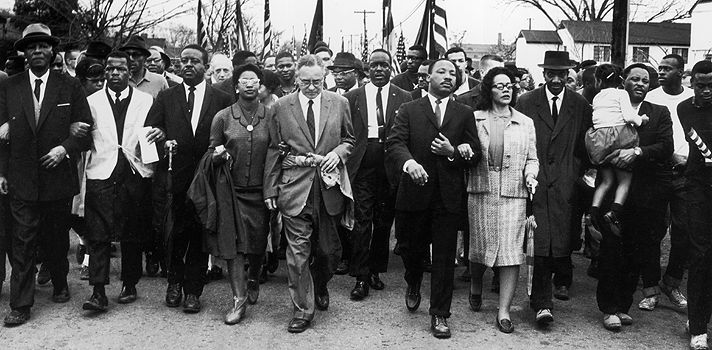
      According to this article called "Martin Luther King, Jr: fighting for rights in America," it states that King became involved in his first major civil rights campaign in Montgomery, Alabama, where buses were racially segregated." It was civil rights activists like Martin Luther King, Jr. that fought with Mrs. Parks to end segregation. His character was needed in Obama's speech because he showed his audience how with the help of others anything is possible.

    2. who’ve shaped this nation’s course.

      Here Obama refers to other people who have fought for civil rights. An example is Claudette Colvin. Nine months before Rosa Parks became an icon, there was Claudette Colvin. She was only 15-years-old when she refused to give up her seat in the 1950's before Rosa Parks famous protest. Unfortunately, she wasn't qualified to be an icon for America. She was a teen, pregnant, and was an unwed mother; however, her message was still heard, and it persuaded others to do the same such as Rosa Parks. We celebrate her too. It is African Americans like them that shape our nation as a whole.

      https://www.youtube.com/watch?v=VMACKNh5MuY

    3. expand our conception of justice

      He uses a shared value, kindness and wisdom to bring his audience together. An act of kindness can change our world, specifically the world for the younger generation. Here he appeals to the children in his audience.

    4. She defied the odds, and she defied injustice.

      This is a logical appeal by referring to Mrs. Parks values. Obama is showing his audience why Rosa Parks is known as a hero. She fought for injustice and discrimination all throughout her life, but on the day she refused to give up her seat she fought for much more.

    5. Rosa Parks

      This speech is an example of epideictic rhetoric. Throughout this speech, we can see how he constantly praises her for what she had done for our nation. This is precisely his argument, how Rosa Parks is known as a heroic icon. Her image, her voice, and what she done to change our world are aspects that make her a good hero for us. The civil rights movement (with the help of Rosa Parks) is what created opportunities such Obama being president in America.

    6. children hungry in a land of plenty, entire neighborhoods ravaged by violence, families hobbled by job loss or illness

      Obama uses Toulmin model of 'presenting a procedure for establishing argumentation.' According to Toulmin, if you want to prove something, you need evidence to back it up. With that being said, Obama uses scenarios (e.g. children hungry in a land of plenty) to appeal to his Politicians, and civil rights activists audience. He is using a logical appeal for his audience can see what happens when you don't do anything to change your life.

    7. We do well by placing a statue of her here.  But we can do no greater honor to her memory than to carry forward the power of her principle and a courage born of conviction.

      This is another one of Chaim Perelman's arguments from his book The Realm of Rhetoric, argumentation. He states, "The only general advice that a theory of argumentation can give is to ask speakers to adapt themselves to their audience" (13). Obama does that here. He was able to capture her story, her voice, and how it all shaped into this statue. He adapted himself into the audience by referring to key values; courage, and rightness. These are strong values that connects the audience with Obama and with the memory of Mrs. Parks.

    8. she helped change America -- and change the world.

      This is essentially one of the arguments in Chaim Perelman's book The Realm of Rhetoric, presence. Perelman argues that the rhetor choices what facts and ideas to emphasize over others in order to secure the attention of an audience. Obama does this by putting more emphasis on how Mrs. Parks helped change America. It is words like "helped change America," and "change the world" that influences his entire audience in seeing why she is a heroic icon.

    9. fighting for voting rights, rallying against discrimination in the criminal justice system, serving in the local chapter of the NAACP

      I believe this is an effective rhetorical strategy appealing to logos. His intended audience here is everyone. We see how Obama is using a shared valued here, freedom and equality, as the premise to his argument for Rosa Parks being a hero. Her accomplishments were what provided us with the right to vote, the right to have a voice, and the right to feel equal.

    10. Martin Luther King, Jr.

      Here Obama is appealing to the civil rights activists in his audience. In this section, he makes sure to honor Martin Luther King, Jr. for his role in defining Parks as a heroic icon. Martin Luther King, Jr. chose to stand by her because of her "good standing with the community, her employment, and her marital status." Her image, and the person she was before she got arrested for civil disobedience is what made Martin Luther King, Jr. fight for her, and fight for her freedom.

    11. Her quiet leadership

      Obama here is appealing to his entire audience for arguing on why Mrs. Parks is our hero. Quiet leaders are powerful. They focus on action, instead of words. In this section, he focuses on Rosa Parks courageous act of civil disobedience. Quiet leaders like her is why Obama celebrates her.

    12. Rosa Parks tell us there’s always something we can do

      This is why Obama praises Rosa Parks. She is a true definition of what a hero is. Again, this is where his argument ties. In this section, his intended audience is everyone. He uses this moment to draw his attention to what Rosa Parks courageous act. He is encouraging his audience to be like her.

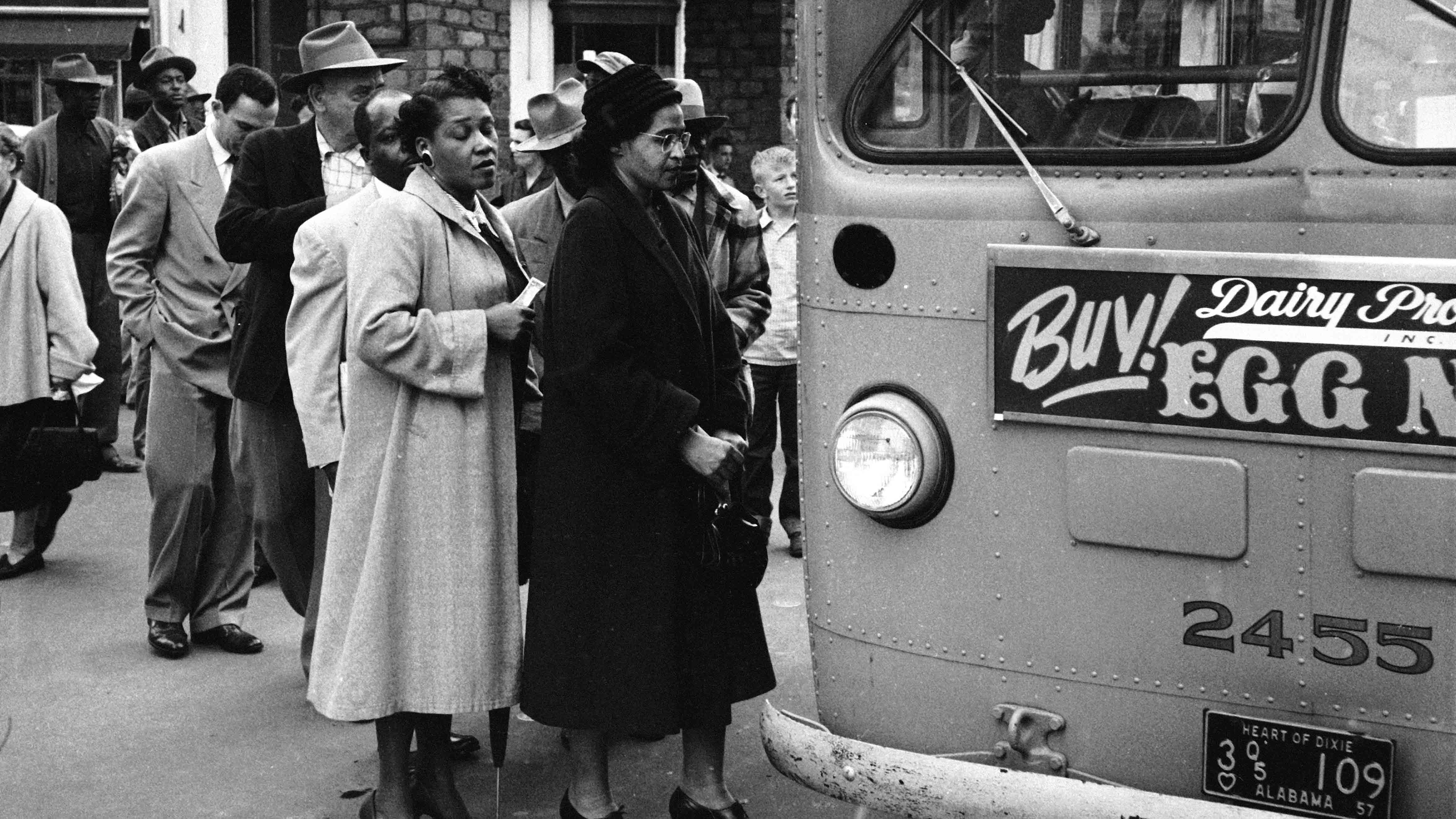
    13. -- Ms. Parks alone in that seat, clutching her purse, staring out a window, waiting to be arrested.  That moment tells us something about how change happens, or doesn’t happen; the choices we make, or don’t make.

      This shows an appeal to ethos in my opinion. Here Obama is speaking to his entire audience on what Rosa Parks experienced that day when she got arrested, and how she confronted the entire situation on her own. It demonstrated credible and ethical for his argument.

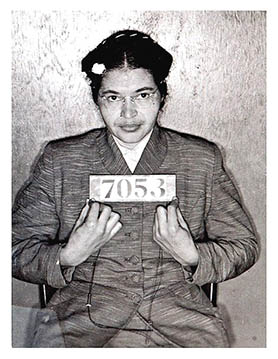
      In Scholastic she states, "The policemen walked down and asked me why I didn't stand up, and I said I didn't think I should stand up. "Why do you push us around?" I asked him. And he said, "I don't know. But the law is the law and you are under arrest." By using this appeal it shows the audience how a leader was born.

    14. That’s what an Alabama driver learned on December 1, 1955.  Twelve years earlier, he had kicked Mrs. Parks off his bus

      Mrs. Parks had encountered this same White bus driver twice in her life. The first time was in 1943, and the second time was in 1955. Here Obama uses a rhetorical strategy from Aristotle, cause and effect to appeal to his civil rights activists audience. This White driver was the reason why she refused to give up her seat. She was determined for the bus driver to know that she did not deserve to be treated in that matter. His actions persuaded her to stand for her rights.

    15. February

      Since February is Black History Month, Obama is using this specific point in time to seize a kairotic moment and celebrate Rosa Parks's contributions to civil rights to his African American members of the United Stated congress, and the civil rights activist part of his audience. Throughout the speech, we can see how his appeals are aimed at the right audience at the right time.

    16. Rosa Parks’s singular act of disobedience launched a movement

      Here he uses an appeal to logos, where he gives us reasons why they dedicated a statue for Rosa Parks. He redefines to his audience what is freedom, and how one's choices can impact the lives of others. Again, this shows why it is an epideictic rhetoric. He captures his audience attention by restating what she did as a civil rights activist. It also sums up why he chose to speak about her.

    17. she became an icon of the civil rights movement

      Obama here speaks of leadership values. This is essentially one of Lloyd Bitzer's argument, audience. The audience are people who can relate to the speech. Obama does this by using a shared value that his entire audience can relate to. Throughout his speech, we can see why she was choosing as the 'mother of the civil rights movement.' She was respect by many because of her hard work as a civil rights activist, and her accomplishments.

      In "Rosa Parks Biography: Became Civil Rights Hero Overnight, Quietly Refused to Move, Actions Inspired Bus Boycott" it states, "Overnight Rosa Parks became a symbol for hundreds of thousands of frustrated black Americans who suffered outrageous indignities in a racist society."

    18. walking for respect, walking for freedom, driven by a solemn determination to affirm their God-given dignity.

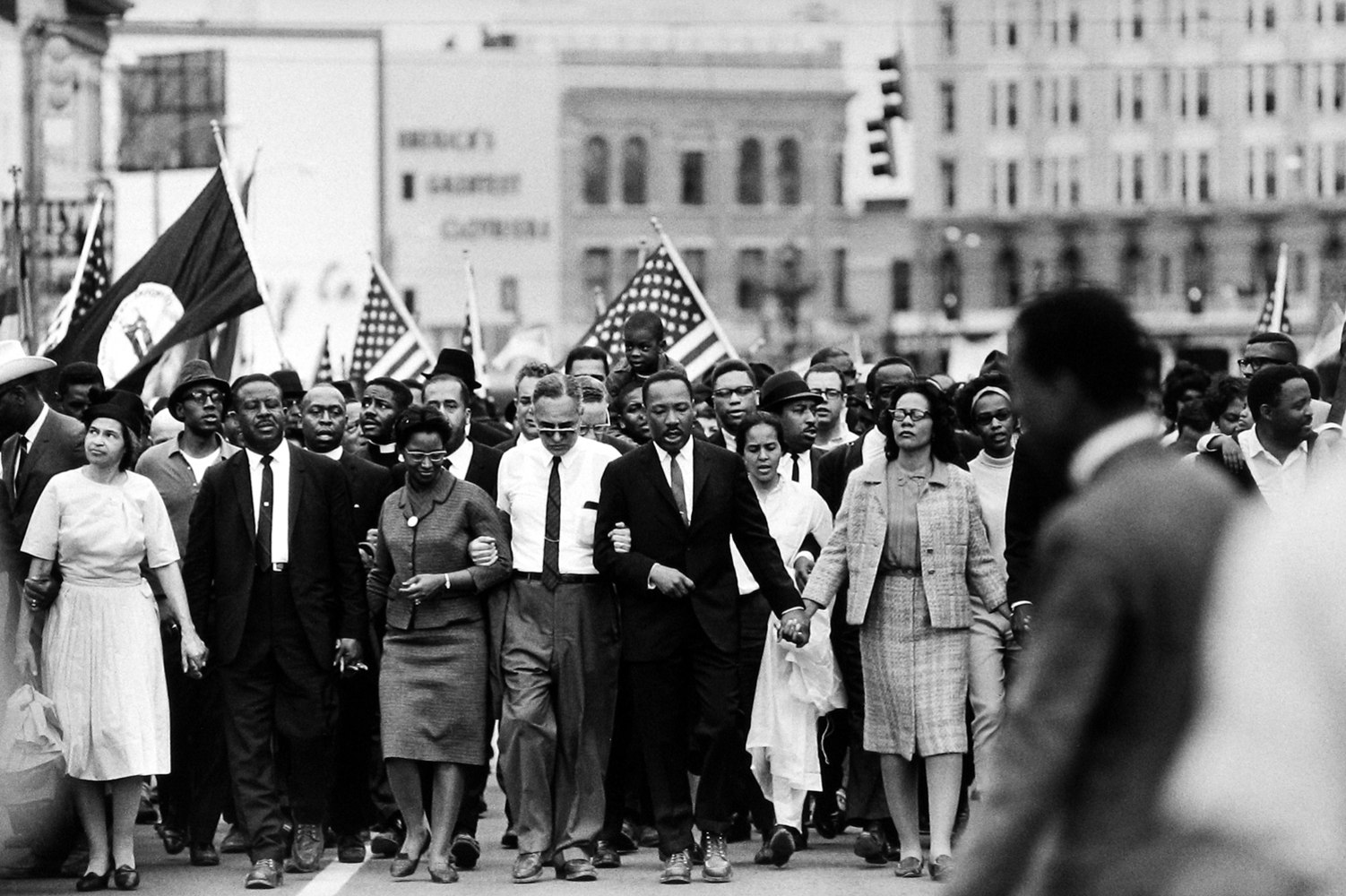
      Here Obama is speaking about the values of unity, and how 17,000 black citizens launched the Montgomery Bus Boycott. Here is speaking towards the African American people in his audience. He wants them to listen why we still consider Mrs. Parks as a hero. She was considered an icon because of her ability to get others (like herself) to march and protest with her to fight for everyone's basic human rights.

    19. Rosa Parks challenged her arrest. 

      Obama shows his audience an act of courage that Mrs. Parks took. By her challenging the arrest, it showed why we consider her as a hero for all Americans. She knew that if she fought harder that the law of racial segregation of public buses will eventually end.

    20. You may do that

      Here Obama uses a logical appeal. He wants his audience (specifically the civil rights activists, and black people) to see how her choice of being arrested was a decision she had to take for White people to take her serious. He wants us to reflect on the values of America such as equality, liberty and unity. She knew being arrested was part of her consequence for standing up for blacks, and that is why we can easily connect with who she is.

    21. I thank all those persons, in particular the members of the Congressional Black Caucus, both past and present, for making this moment possible.  (Applause.)

      This goes back to his audience. His audience here are also African American members of the United States congress. In this section, he makes sure to honor the Congressional Black Caucus for their role in defining Parks as a heroic icon. In doing so, he makes the audience of the CBC heroes as well.

    22. statue belongs in this hall

      Rosa Parks was the first African-American woman to ever receive a statue in Washington DC. According to Rosa Parks statue unveiled Ms. Goodin states, “President Obama joined the congressional leadership in unveiling the statue, which features Parks sitting, clutching her purse, much as she did in the bus protest that made her famous.”

      Here Obama refers to logos by telling his audience why this statue was placed in Washington D.C. It shows certain values that reflect America such as courage, determination, freedom, respect, justice, and kindness. Obama redefines the definition of a hero. We all have a little bit of Rosa Parks in us, we just need to find it.

    23. Mr. Speaker, Leader Reid, Leader McConnell, Leader Pelosi, Assistant Leader Clyburn;

      In this speech Obama has three audience, which are: politicians, civil rights activists, and young children. This speech was intended to celebrate Rosa Parks for the person she was, for her values and for what she did to end segregation on public buses. In addition, he celebrates why she is considered our hero.

    24. the boycott ended.

      This Montgomery Bus Boycott was one of the largest and most successful mass movements against racial segregation in history. Here Obama uses logic for his audience to realize how long it took for African Americans to protest against racial segregation, and how everyday was counted towards getting closer to their goal -fighting for change. It was a victory worth celebrating.

    1. Three hundred and eighty-five days after Rosa Parks refused to give up her seat, the boycott ended.  Black men and women and children re-boarded the buses of Montgomery, newly desegregated, and sat in whatever seat happen to be open.  And with that victory, the entire edifice of segregation, like the ancient walls of Jericho, began to slowly come tumbling down.

      Rosa Parks is known as the "mother of civil rights movement" for this reason. Parks along with the boycott fought to change the rules of segregation for public buses. She wanted the Blacks to feel as equal as the Whites did on the bus. By Mrs. Parks refusing to give up her seat for a white passenger, she was fighting for change. However, she wasn't the only person to resist her seat for a white passenger. There were others like Claudette Colvin who refused to give up her seat. In this article, Margot Adler argued how she deserved to be recognized for her courageous act. She encountered tough consequences just like Mrs. Parks. The only difference was her image and age, which stood away from her being the civil rights icon. Few people know of the black women like her who fought for the same thing. Colvin was the first to challenge the law in court. She states, "My head was just too full of black history, you know, the oppression that we went through. it felt like Sojourner Truth was on one side pushing me down, and Harriet Tubman was on the other side of me pushing me down. I couldn't get up." It was women like Colvin that led Parks into fighting for the same act in the same bus system. They both had their reasons why they refused to give up her seat, but it was their reasons why that brought them together to fight for all Blacks. They wanted to end segregation. Colvin wasn't chosen as a civil rights icon because of her age, and look. Mrs. Parks was chosen because she was an adult. According to the article mentioned in this post Mrs. Parks was chosen because she had the right hair and the right look. It was also said that, "her skin texture was the kind that people associate with the middle class." Sometimes the people need some sort of connection to the public eye (like Mrs. Parks) in order to feel that they can be just like them.

    2. to the friends and family of Rosa Parks;

      Rosa Parks family was very engaged in civil rights and because of this her family and her friends stood by her as she faced her consequences for refusing to give up her seat. She was tired of obeying the laws and the rules that were set for Blacks. She had enough.

      Reading this article What if I don't move to the back of the bus? reminded me of why Rosa Parks was selected as an activist for the civil rights movement in the first place. Her courageous act is what reflects America. Her passion to fight for basic human rights is why we celebrate her. He is targeting an audience that has the same values as she did such as self-reliance, and risk taking. Values that reflect America for what it has become.

      It states, “Rosa Parks, with her flawless character, quiet strength, and moral fortitude, was seen as an ideal candidate. And those community leaders were right: Rosa Parks’ subsequent arrest by local police sparked a collective and sustained community response.”

      Obama chose to speak about her because of how much she has impacted his life, as well as others. He not only convinces us on why she is still being spoken off years later, but why her work is so important in our lives. The civil rights movement (with the help of Rosa Parks) is what created opportunities such as the United States of America having a Black president. It is values like this one that brings our country together.

    3. Rosa Parks tell us there’s always something we can do.  She tells us that we all have responsibilities, to ourselves and to one another.  She reminds us that this is how change happens -- not mainly through the exploits of the famous and the powerful, but through the countless acts of often anonymous courage and kindness and fellow feeling and responsibility that continually, stubbornly, expand our conception of justice -- our conception of what is possible.

      This entire section shows another ethical appeal that Obama uses to target his audience. Obama is providing us with reasons why we still talk about Mrs. Parks, and why we celebrate her every year on Black history month. We are all entitle to do something for ourselves and for others. He is also building trust with his audience by providing his opinion about Rosa Parks, and how if it wasn’t for her sitting down on that public bus, we wouldn’t have found the courage to stand for justice. He redefines to his audience why change happens, and why we should just go for it -change someone's life, or even change our own.

    4. Like the bus driver, but also like the passengers on the bus, we see the way things are -- children hungry in a land of plenty, entire neighborhoods ravaged by violence, families hobbled by job loss or illness -- and we make excuses for inaction, and we say to ourselves, that's not my responsibility, there’s nothing I can do.

      In this section, Obama uses another logical appeal. He is telling his audience what truly is going on in this world, and to open our eyes to what is actually happening. There are homeless people, children starving, and people losing jobs, but not a lot of people offer a hand to help. I personally think that people rather mind their business then help someone who needs help. There were a lot of black people who refused to disobey with the rules because they did not want to get in trouble; however, Rosa Parks thought otherwise. She stood up for freedom, even if it meant she had to do jail time. Her act to defend Blacks was what began the Civil Rights Movement, which further lead to ending legal segregation in America. She inspired her generation, as well as ours to fight for civil rights, and fight for what you deserve. Being mistreated by Whites was not an option for Mrs. Parks, and it shouldn't be for anyone at all.

      We live in a world, where we can’t control our surroundings; however, we can control how we should be treated. We need more brave people that are willing to take risks like Mrs. Parks did to create a world where violence doesn't exist.

      Here is an image of President Obama with Terrell Anderson, 3. This image demonstrates that we can introduce children at a young age about civil rights leaders, where we teach them how to help others in any way possible, how to be brave, and to never let anyone their age or older than them to mistreat them in a way that Mrs. Parks was throughout her life.

    5. And yet our minds fasten on that single moment on the bus -- Ms. Parks alone in that seat, clutching her purse, staring out a window, waiting to be arrested.  That moment tells us something about how change happens, or doesn’t happen; the choices we make, or don’t make.

      Obama's use of a pathetic appeal shows how he captures his audience through emotion. He is reminding us of the day Rosa Parks sat on that public bus on a seat that was for Whites. This is when she realized she did not want to be pushed around anymore. She was willing to get arrested, and face the consequences such as loosing her job. Her decision was what led to many other black people avoiding to use public buses. This was the first step to ending segregation for all blacks.

      Furthermore, it makes one wonder that change can happen anywhere in life. We must have faith and believe that the choices we make in life all have a purpose for something. Rosa Parks had a purpose; it was to fight for equality for all blacks. She was determined for it to be known how it felt to be discriminated.

      The Civil Rights Movement all started with Mrs. Parks act, which encouraged other leaders to take action such as Martin Luther King Jr. and Malcolm X. Their protests led to the Supreme Court to pass the Voting Rights Act in 1965.

    6. “You may do that.”  And he did.

      By Obama referring to what occurred on December 1, 1955, he is using a logical appeal. He wants us to reflect on the values of America such as equality and liberty and unity. Sometimes in life one has to take risks to recognize what is important in our life. She did not want to live another day of her life being treated as a "nobody" because she was Black. He wants the audience to see how her choice of being arrested was a decision she had to take for White people to take her serious. Her values of dedication, commitment, belief of others, and respect is what reflects America. She knew being arrested was the right choice, and that is why we can easily connect with who she is.

    7. Twelve years earlier, he had kicked Mrs. Parks off his bus simply because she entered through the front door when the back door was too crowded.  He grabbed her sleeve and he pushed her off the bus.  It made her mad enough, she would recall, that she avoided riding his bus for a while. 

      This was the first encounter she had with this White bus driver. The second encounter she had with this particular bus driver was on December 1st when she refused to give up her seat. Rosa Parks had experience racial discrimination and activism for racial equality throughout her whole life. Around this time, Whites felt superior to African Americans. This segregated bus led her to not wanting to be pushed around anymore by Whites. Obama focuses on this particular day by reflecting on the values of America, which is equality, individualism, and progress and change (belief in changing self and country).

      In an interview Mrs. Parks has with scholastic she describes in vivid details how she felt when she refused to give up her seat. She states, "I felt I had a right to stay where I was... I did it because I wanted this particular driver to know that we were being treated unfairly as individuals and as people." She was willing to go to jail in order for the world to know that black people endured too much pain because of their skin, and how they deserved better treatment in segregated buses.

    8. They began a boycott -- teachers and laborers, clergy and domestics, through rain and cold and sweltering heat, day after day, week after week, month after month, walking miles if they had to, arranging carpools where they could, not thinking about the blisters on their feet, the weariness after a full day of work -- walking for respect, walking for freedom, driven by a solemn determination to affirm their God-given dignity

      This is how change starts, when we are united with others fighting for the same thing. This goes back to American values, which is independence.

      This section also reminds me of the text "Menexenus" by Plato, where it speaks on how women were not allowed to have rights or express themselves through art and other forms. We live in a world, where women can express their rights and where they can have a public voice. She stand for everyones individual rights as a human being by creating protests such as the Montgomery Bus Boycott. In this protest African Americans refused to ride buses in Montgomery, Alabama to protest for their rights. There were other women like Rosa Parks who fought for the same act such as Claudette Colvin. If it wasn't for women like Mrs. Parks and Ms. Colvin who provided a voice for all women, who knows how much longer it did take for the laws of segregation to end. In this article called "Montgomery Boycott," it states "Nine months before Rosa Parks' arrest for refusing to give up her bus seat, 15-year-old Claudette Colvin (1939-) was arrested in Montgomery for the same act. The city's black leaders prepared to to protest, until it was discovered Colvin was pregnant and deemed an inappropriate symbol for their cause." Claudette may have been too young, and made decisions like getting pregnant by a married man; however, she still managed to find her voice and fight for equality. This just shows that gender, age, and image can make a difference in who we chose as our leader. It didn't take just one voice like Rosa Parks to make a difference; it took many more. Now we have women leaders like Shirley Sherrod, and Oprah Winfrey, who all fought for the rights of Blacks, the same way Claudette and Rosa did in the 1900's. All it takes is one voice to persuade others to fight for the same thing.

    9. Whether out of inertia or selfishness, whether out of fear or a simple lack of moral imagination, we so often spend our lives as if in a fog, accepting injustice, rationalizing inequity, tolerating the intolerable. 

      This part of the speech reminded me of the time that I watched a video clip of Rosa Parks a couple years ago. It is called "Rosa Parks biography: In her own words:" https://www.youtube.com/watch?v=ceY69qSXfZs

      The pastor Bill Adkins states “It took her sitting down to get the people to stand up.” We are sometimes so afraid to stand for what we believe, that we sometimes let it happen right before our eyes. Obama shows his audience that we shouldn’t accept anything we don’t deserve.

    10. Three hundred and eighty-five days after Rosa Parks refused to give up her seat, the boycott ended.  Black men and women and children re-boarded the buses of Montgomery, newly desegregated, and sat in whatever seat happen to be open.

      Mrs. Parks showed us that we can all be a part of change. By her challenging the arrest, it showed courage. She knew that if she fought harder that the law of racial segregation of public buses will eventually end.

    11. I thank all those persons, in particular the members of the Congressional Black Caucus, both past and present, for making this moment possible.

      This goes back to his audience. His audience here are also African American members of the United States congress. This speech is for all kind of races, where we feel united as one. Rosa Parks fought for Blacks to be treated the same way as Whites. She was one of many that helped Blacks realize that they deserved to have the same rights as White. This speech is for them. For all the people that fought along with Rosa Parks, and for the people who stand by her today.

    12. she helped change America -- and change the world.

      Here Obama celebrates Rosa Parks. He refers to how she fought to change the rules of equal rights on buses. She made a huge difference in the civil rights movement by refusing to give up her seat. She helped changed the world by showing how one should not be pushed around because of your color of skin. Her courageous act changed the way people thought of segregation.

    13. He grabbed her sleeve and he pushed her off the bus.  It made her mad enough, she would recall, that she avoided riding his bus for a while.

      Obama uses pathos to show emotions to his audience by retelling how Rosa Parks felt the day it all happened. He is targeting an audience that knows what it feels like to be mistreated by others. (We all have been mistreated verbally, or physically by someone for whatever reason it is.) By Obama demonstrating the pain she felt it creates unity with the audience. He wanted the audience to feel what she felt that day.

      This section shows directness, honesty and efficiency.

  2. Apr 2017
    1. And that is why this statue belongs in this hall -- to remind us, no matter how humble or lofty our positions, just what it is that leadership requires; just what it is that citizenship requires.  Rosa Parks would have turned 100 years old this month. We do well by placing a statue of her here.  But we can do no greater honor to her memory than to carry forward the power of her principle and a courage born of conviction.

      He uses an effective strategy here by using a logical appeal. This section reminds me of an article I read when they revealed her statue. It is called, Rosa Parks statue unveiled. She was the first African-American woman to ever receive a statue in Washington DC. Ms. Goodin describes in detail the statue of Rosa Parks in her article. She states, “President Obama joined the congressional leadership in unveiling the statue, which features Parks sitting, clutching her purse, much as she did in the bus protest that made her famous.” This statue is a reminder of why we should stand for what we believe. We all have courage in us, and Rosa Parks is an example of it.

    2. Rosa Parks’s singular act of disobedience launched a movement.  The tired feet of those who walked the dusty roads of Montgomery helped a nation see that to which it had once been blind.  It is because of these men and women that I stand here today.  It is because of them that our children grow up in a land more free and more fair; a land truer to its founding creed.

      Here he uses a logical appeal where he gives us reasons why they dedicated a statue for Rosa Parks. He retells to his audience what Rosa Parks and the Montgomery boycott did in 1955 to fight for freedom for all Blacks. He redefines what is freedom, and how if it wasn’t for her choice we wouldn’t live in a world where Blacks and Whites can sit on the same bus together. It took something as simple as not giving up her seat for Black people to unite together to fight for something they deserved. They stand together as one to fight for desegregation, and for all other rights that made them feel as equal as Whites.

      Furthermore, we all need a reminder in life, where we are reminded if it wasn’t for a certain someone we won’t be where we are today.

    3. Her quiet leadership would continue long after she became an icon of the civil rights movement, working with Congressman Conyers to find homes for the homeless, preparing disadvantaged youth for a path to success, striving each day to right some wrong somewhere in this world.

      This is exactly why Rosa Parks is still being spoken off today. I believe this is an effective rhetorical strategy appealing to ethos. Obama uses persuasion to tell his audience of why Rosa Parks is so important to our lives. She is a symbol of leadership, and we can all learn something from what she has accomplished in this world.

    4. They began a boycott -- teachers and laborers, clergy and domestics, through rain and cold and sweltering heat, day after day, week after week, month after month, walking miles if they had to, arranging carpools where they could, not thinking about the blisters on their feet, the weariness after a full day of work -- walking for respect, walking for freedom, driven by a solemn determination to affirm their God-given dignity. 

      This boycott was the start of social change. These people saw power in starting this boycott, and they used that power to change the world. Having more than one voice fight to end racial segregation does make a difference to the world. It takes time, effort, planning and organization to create a group like the boycott, where they joined together to fight for freedom, and for respect for all Blacks.

    5. A few days later, Rosa Parks challenged her arrest.

      Mrs. Parks showed us that we can all be a part of change. By her challenging the arrest, it showed courage. She knew that if she fought harder that the law of racial segregation of public buses will eventually end.

    6. Mr. Speaker, Leader Reid, Leader McConnell, Leader Pelosi, Assistant Leader Clyburn

      The audience here is not just the politicians mentioned in his speech, but for everyone. He wants everyone to listen to who Rosa Parks is and how she changed the world by not standing up when sitting on a White seat in a public bus on 1955.