How to survive
The thesis of the book
How to survive
The thesis of the book
The most important things I learned as a child Were in that book I read over and over
What were the lessons of the book? That the world is cruel? What else?
Chito was killed over and over again
How? This brings the work out of the realm of realism into myth and magical realism. If Chito can't be killed then maybe Chito is an idea, which cannot die. Chito is hope. Chito is freedom.
The more they hunted her The more clearly things came into focus
Parallelism
still I followed my nose
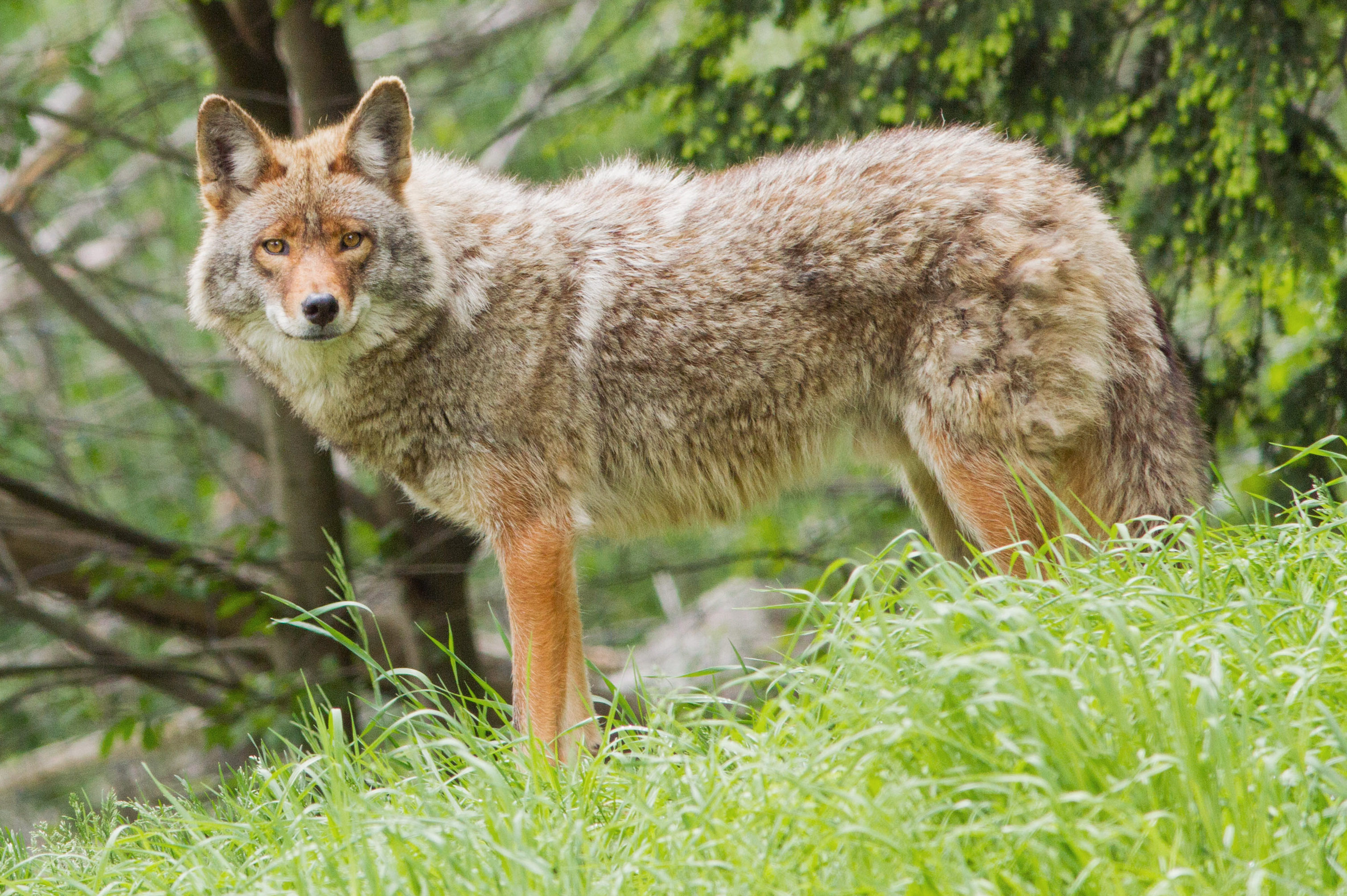
reminiscent of the coyote. Dogs have the best sense of smell of any animal. They can detect cancer, the coronavirus, they can find the tiniest particle of a chemical from 2km away. She is following in the footsteps of the coyote.
know what I wanted to know I didn’t know where to go I didn’t know whom to ask
Parallelism, rhyme, emphasize there is a structure to the confusion, there is hope in the midst of meandering.
howl
A howl is loud and uncomfortable, but also honest, clear, and natural. A way of naturally expressing pain or excitement, the inner reality of your heart comes to the surface. There is something very compelling about a coyote howl.
coyote
Coyotes are also people who smuggle illegal immigrants over the border, so there may be a double meaning.
Neither squealed Nor resisted ...
Why the emphasis on these two lines? Could they be symbolic of Asian experience? Anything else?
too cruel for today’s youth, nowadays kids are used to killing one another in the virtual world
highlighting and juxtaposing the irony and hypocrisy of modern censor culture.
discard
Is this symbolism? What could it be representing?
Published in 1901, reprinted in 1967
The little details add power and authenticity to the narrative
Amazon
This is jarring and surprising. Often poetry won't mention such banal and modern things like Amazon, it takes us out of the magic of a poem. But perhaps this is intentional. Perhaps the author wants us back in the real world for a moment.
I lost
Anaphora of "I lost" to really emphasize all of the things that the author lost.
was kept constantly on a leash
symbolic of the lack of freedom the author felt too. Able to move about, but only so far.
wisdom of rabbits, wolves, wild boars
W alliteration
over and over, over and over,
This phrase is repeated throughout the poem. There is a power and tradition involved in repetition.
Lobo the Wolf King
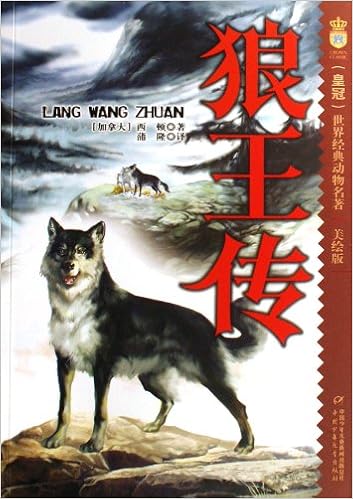
Seton’s Animals for Boys and Girls

coyotes
the Democrats largely lacked killer instincts
a key insight
It would waste resources, he warned, to try “to boil the ocean.
great idiom/metaphor
plagues
Likely referring to STD's
I caught them, squeezed them until the air went out of them, and then stuffed them away in the box in the attic.
Why is he so angry?
studied French
If you were the mom would you be insulted that Jack studied French instead of learning Chinese?
At my request, Mom also made
Mom listens to him a lot, how often in this story does he listen to what his mom wants?
"That was the last page of the catalog I saw,
What do you think it was about this picture of his mom that so drew the dad to her and made him cross the ocean to get her?
I didn't know this at the time, but Mom's kind was special.
This seems pretty astonishing. Why did he never realize that magical paper animals are not normal?
wrapping paper, white background with red candy canes and green Christmas trees.
What is the symbolism of using Christmas paper, a Christian tradition, to make a paper tiger, a Chinese tradition?
"Use the Force!"
Is there any irony in the comparison between the two toys?
I didn't have any toys except my paper menagerie
What does this say about Jack's father? Was his father very attentive to his needs? It seems the mom cared more about making sure he had some toys.
Also, what did it say about how rich they were?
The women hushed
This is interesting. Why did they hush? Did they not realize that he could hear them from the beginning of their racist chatter? Do you think they cared whether or not that he could hear them or they just suspected he only spoke Chinese because of his mom?
eighteen, loved to dance, and spoke good English
Why would the company lie if it would be easy to find out the truth? Also, why these three things in particular?
Year of the Tiger
Is there any significance to that? What does the Tiger represent in Chinese culture?
Contempt felt good, like wine.
In what ways is contempt like wine?
One of my earliest memories starts with me sobbing.
Is this a good opening line? Why or why not?
“Without publicity, no good is permanent: under the auspices of publicity, no evil can continue.”
This is a very bold claim. Do you think he is correct?
The Constitution was meant to mark the end of an age of political mystery.
This is a huge innovation in politics. Do you think it was overall positive or negative? By having everything a matter of public record there is less room for backroom dealing, compromise and working out sorts of solutions that work for both sides and don't upset the electorate.
n extraordinary fuss about eavesdropping started in the spring of 1844
Why start with this story? What makes it interesting or effective?
“The most unusual thing in the house is Mr. Ripley,”
Why do you think that is? Was that a good or a bad thing?
He thinks the word “freak” has an unpleasant connotation and insists that the two-headed fishes, human pincushions, fork-tongued ladies, eyeless infants, four-footed chickens, and three-headed calves to which he has drawn international attention are not freaks. “An oddity is a high-class freak,”
Maybe this is why so many trusted him, he acknowledged that they were odd but never made fun of them or considered them freaks. Perhaps because his teeth made him a bit of a freak/oddity himself?
“Probly best known man in world.”
Who would be the best known man in the world today?
He had a girlfriend called Okie and a dog named Dokie
Haha, was that her real name or nickname?
he looked remarkably like a vampire
Does this foreshadow his interest in the grotesque and dark?
Speedtalk
Ironically, Ithkuil seems very difficult and slow to speak simply because of its complexity.
quixotic
extremely idealistic; unrealistic and impractical.
“Natural languages are adequate, but that doesn’t mean they’re optimal,” John Quijada
Play the Ithkuil game, featuring this phrase!
knight
You filthy K-niggets! https://www.youtube.com/watch?v=QSo0duY7-9s
constellation
Implies a multitude like the stars, it also fits into the idea of something we learn through seeing a certain way.
glimpse, glance
All the alliteration in similar adjectives. They pair up well phonetically and even metrically
But if thoughts and words exist on different planes, then expression must always be an act of compromise.
Here is the thesis of the whole article. How can we connect thoughts and words more closely? Where should we make the compromises?
Ithkuil is an incredible language because it doesn't compromise on pretty much any specifics, features, or possibilities. Instead, the main downside is that it is incredibly hard to learn and to speak quickly. It is an almost unspeakable language.
here are so many ways for speakers of English to see the world.
What a wonderful way to start. This sentence can be taken at least two ways. The first is the meaning that the second sentence builds upon, that we have a lot of different ways "to see" in terms of vocabulary describing it. The second is that language greatly influences the way we see the world. The other interesting thing is the way it is balanced metrically and phonetically. The "s" and "w" sounds are repeated in "So many ways" and "See the world"
One such part involves boredom, routine and petty frustration
This is perhaps the true test of character. It's much easier to be exciting, charismatic, and exceptional when all eyes are on you. But who you are when no one is looking is likely much more emblematic of who you really are. How do we respond to boredom, routine, and petty frustration?
learning how to think really means learning how to exercise some control over how and what you think
He repeats his central premise here. This is water. This is water.
Please don’t worry that I’m getting ready to lecture you about compassion or other-directedness or all the so-called virtues
There is this very post-modern fear of patronizing, moral certitudes, and sermonizing. However, in some ways no matter how much he tries to avoid it, it is ultimately what he is doing. It is an important message and I feel he does not need to be so hesitant, although it is comforting that he is wrestling with it and does not simply jump in with an easier moralizing.
Which is fine, except we also never end up talking about just where these individual templates and beliefs come from
Then he begins analyzing the analysis. This is the strength of the speech, he willingly participates in the conventions of the genre, shares the cliches, deconstructs and analyzes them and throws out what does not value and shows what value still remains in them.
The epitome of this is in his closing line "I wish you way more than luck", he shares the cliche "I wish you luck" but then takes it to a different place and makes us rethink it.
that special intensity that comes after about the fourth beer
it's the little observant details like this that make the story come alive with realism.
Here’s another didactic little story
He sort of belittles them but clearly they are important to his speech. He ends up basing his three main points on three "little didactic stories". At the beginning he does qualify that they are "one of the better, less bullshitty conventions of the genre".
the really significant education in thinking that we’re supposed to get in a place like this isn’t really about the capacity to think, but rather about the choice of what to think about
This is the building block of his entire thesis. First he dismantles defensive attitudes, then he lays out what sort of thinking choices we can make.
The point of the fish story is merely that the most obvious, important realities are often the ones that are hardest to see and talk about
He does not talk down to his audience but he also makes himself explicitly clear. Each of his major points is spelled out like this.
This is a standard requirement of US commencement speeches
In a speech largely about meta-cognition he practices meta-analysis of the speech genre. It fits.
There are these two young fish
It's fascinating how quickly he jumps into the story. There are no wasted words in this speech, no polite pleasantries, or banal but useless anecdotes.