56 Matching Annotations
  1. Apr 2018
    1. An’ Slim Say, “Peter, I really cain’t tell, The place was Dixie That I took for hell.” Then Peter say, “you must Be crazy, I vow, Where’n hell dja think Hell was, Anyhow?

      This sort of irony reminds me of an M. Night Shamalan plot twist. The point of the story is powerful though: the south is a living hell for black folks.

    2. The strong men . . . coming on The strong men gittin’ stronger. Strong men. . . . Stronger. . . .

      This part reminds me of "They Feed They Lion" because it talks about an eminent presence. Here, Brown is implying that black folks are going to continue to grow and populate the country, and that they cannot be contained by racism and segregation.

    3. Sing us ’bout de hard luck Roun’ our do’; Sing us ’bout de lonesome road We mus’ go. . . .

      This part of the poem is about the beauty that comes from the pain and sadness that life brings. That's essentially what the blues are.

    1. What happens to a dream deferred?

      This reminds me of the quote "justice too long delayed is justice denied". Dr. King used that quote in his Letter From Birmingham Jail. I'm sure it existed prior to that letter, but it is a sentence that attaches itself to the minds of the oppressed.

    2. He did a lazy sway . . . He did a lazy sway . . . To the tune o’ those Weary Blues.

      The jazz/blues imagery reminds me of Blue Dementia, and a lot of other odes to music from black poets during the "new negro movement".

    3. I bathe in the Euphrates when dawns were young. I built my hut near the Congo and it lulled me to sleep. I looked upon the Nile and raised the pyramids above it. I heard the singing of the Mississippi when Abe Lincoln went down to New Orleans,* and I’ve seen its muddy bosom turn all golden in the sunset.

      Egypt --> Congo --> Mississippi --> New Orleans

      Hughes covered a timeline of black anthropology, starting in Ancient Egypt, and ending in New Orleans when Lincoln was close to signing the emancipation proclamation.

  2. Mar 2018
    1. The day of “aunties,” “uncles” and “mammies” is equally gone. Uncle Tom and Sambo have passed on, and even the “Colonel” and “George” play barnstorm roles from which they escape with relief when the public spotlight is off

      All of these names are racist characters or stereotypes, that are supposedly "gone" at this point in time.

    1. Father is often dark but he has usually married the lightest woman he could find. The family attend a fashionable church where few really colored faces are to be found. And they themselves draw a color line. In the North they go to white theaters and white movies. And in the South they have at least two cars and house “like white folks.” Nordic manners, Nordic faces, Nordic hair, Nordic art (if any), and an Episcopal heaven. A very high mountain indeed for the would-be racial artist to climb in order to discover himself and his people.

      This highlights the internalized racism that many families of color, living in a racist society, carry with them. Again, Toni Morrison wrote about these very issues.

    2. The whisper of “I want to be white” runs silently through their minds.

      This poem -- specifically this line -- reminds me of the writings of Toni Morrison. Much of what Morrison writes is about the black experience in white america. Here, it is clear that the pressures to be "american" are one in the same with whiteness.

    1. That now is the time to end capitalism.

      This quote ties in the common connection between the labor movement and the support for communism/the end of capitalism. This sort of idea led to the suppression of labor unions throughout history, namely during the McCarthy era.

    2. On this day the small deeds of the year, infinitesimal, unnoticed in the smoke of skirmish, cleave fiercely together

      This phrase is so poignant, especially given the March For Our Lives movement that just occurred internationally. This sentence captures the coalescing of anger and frustration all into one big event.

    1. “I shall rush out as I am, and walk the street “With my hair down, so. What shall we do tomorrow? “What shall we ever do?

      This calls back to the flower girl, and the ebb and flow of communication between lovers

    2. April is the cruellest month, breeding Lilacs out of the dead land, mixing Memory and desire, stirring Dull roots with spring rain.

      Having read the poem a second time, here's what I see: to see such beauty in the springtime after such tragedy has occurred is cruel, because it gives one hope or something sweet to look at, though the reality is dire.

    3. “That corpse you planted last year in your garden, “Has it begun to sprout? Will it bloom this year?

      More death...I mean, it may be cheating, since we know the title of the collection is "The Wasteland" but it sounds like something happened in this world that changed what we see as normal. Everything is backwards, death is among them, and those still alive are trying to make sense of it all.

    4. I was neither Living nor dead

      This ties back somewhat to the changing of states. The in-betweenness and contradictions of a snow in spring, rain in summer, warmth in winter.

  3. Feb 2018
    1. So great so great Emily. Sew grate sew grate Emily.

      When I think of Emily, this woman comes to mind. A tired, working-class seamstress who still must incessantly worry about appearances.

    2. Egg in places. Egg in few insists.

      I'm not sure why, but this poem gives me farm-y vibes. PS I've included some non-armory pics in here as well, just because I didn't read through the prompt well the first time. However, i still got a kick out of them, so they're around there somewhere.

    3. A firm terrible a firm terrible hindering, a firm hindering have a ray nor pin nor.

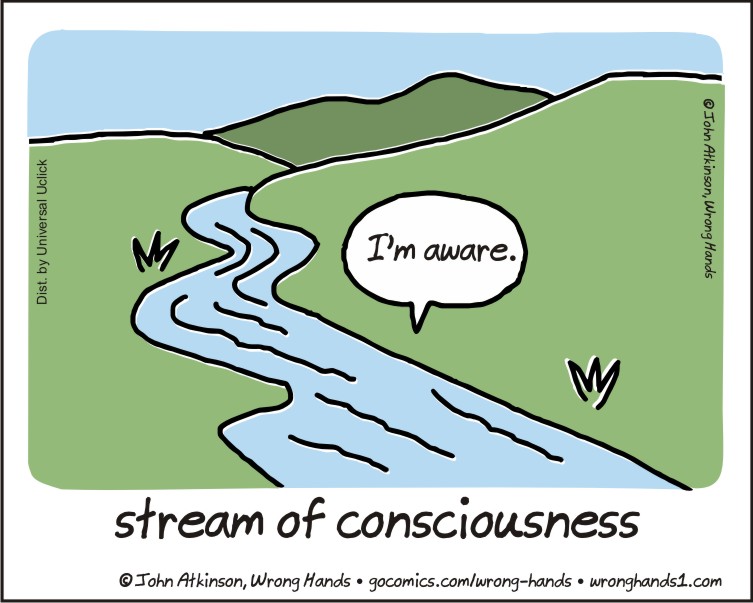
      This entire work seems to be written in stream of consciousness, which is cool, but very confusing. Here's a pun.

    1. They enter the new world naked, cold, uncertain of all save that they enter. All about them the cold, familiar wind—

      We all enter this world the same way. Once we get here, we gotta start figuring shit out.

    2. I have eaten the plums that were in the icebox

      I just got deja vu. People, I think, have joked about this poem online. It's a bummer that he stole someone's plums (plum-one's?)

    3. Unless it be that marriage perhaps with a dash of Indian blood will throw up a girl so desolate so hemmed round with disease or murder that she’ll be rescued by an agent— reared by the state and sent out at fifteen to work in some hard-pressed house in the suburbs—

      https://static.rogerebert.com/uploads/movie/movie_poster/legends-of-the-fall-1995/large_uh0sJcx3SLtclJSuKAXl6Tt6AV0.jpg

      This quote reminds me of Legends of the Fall w/ Brad Pitt. Brad Pitt married a native woman, and for that, faced a great number of challenges and harassment by law enforcement, as well as scorn by the general public. They also have two children.

    1. but as the result of long contemplation, which, even if it is some one else’s contemplation, may be worth consideration.

      These guidelines aren't strict rules, created to be obeyed, but rather, they are lessons learned over time, used to inform new writers, so that they may skip the some of the antiquated struggles of their predecessors.

    2. cautions gained by experience.

      A nice sentiment about older writers using their experience to talk about younger writers. What's funny is that my mind first went to the "old school" rappers talking down about the rap music of today. This sort of criticism has been going on since art's inception-- people always feel like their "time" was the best, and the modern deviations from that time are ruining the sanctity of the art.

    1. Better to go down dignified With boughten friendship at your side Than none at all. Provide, provide!

      Surprisingly dark and blunt for a Frost poem. I like it! As Def Leppard said, "It's better to burn out than to fade away".

    2. Assorted characters of death and blight Mixed ready to begin the morning right,

      Death is a part of nature. The fact that such nature as life and death surrounds us at all times is astounding, but we've learn to ignore it. What I thought of when reading this was if Frost had rescued the moth from the spider's grasp, essentially playing God.

    3. Two roads diverged in a wood, and I- I took the one less traveled by, And that has made all the difference.

      Classic. I've always appreciated the simple truth in this poem, that taking a less conventional path to your "destination" can teach you something that you wouldn't otherwise learn. This is in tandem with the whole "life's about the journey" idea.

    4. Oh, just another kind of outdoor game, One on a side. It comes to little more: There where it is we do not need the wall: He is all pine and I am apple orchard. My apple trees will never get across And eat the cones under his pines, I tell him.

      This poem reminds me of all the unspoken social rules that we follow as human beings. It makes me think of how we're constantly walking by other human beings, many of whom intentionally do not make eye contact, although they too clearly recognize the human passing by them. Yet we continue with these unspoken social conventions, because going against them might make others uncomfortable. The notion of the natural borders that separate Frost from his neighbor serve to show how ridiculous and ambiguous our social "rules" are, although we still devoutly follow them.

    1. At ninety–six I had lived enough, that is all, And passed to a sweet repose. What is this I hear of sorrow and weariness,

      Aww, this is a nice sentiment. "Don't mourn my loss. Celebrate my incredible life!" This is truly #deathgoals

    2. Blind to all of it all my life long.

      The narrator is just now realizing the beauty and depth of nature. A bond with nature seems to be the recurring theme from all of these selections.

    1. With trembling care, knowing that most things break;

      This is a symbolic gesture. Mr. Flood is aware that, just as he is alone, having before had friendship, all things in life do end. That's why he is gentle with the jug.

    2. Poets and kings are but the clerks of Time, Tiering the same dull webs of discontent,

      To me, I see this poem as a nod to human nature and the advancement of civilization. Humans have always struggled with the problems of existence, and no one is exempt from it. Not young or old, rich or poor, ancient or modern.

    1. I have locked the door and thrown the key down into the front path. I don’t want to go out, and I don’t want to have anybody come in, till John comes. I want to astonish him. I’ve got a rope up here that even Jennie did not find. If that woman does get out, and tries to get away, I can tie her! But I forgot I could not reach far without anything to stand on! This bed will NOT move! I tried to lift and push it until I was lame, and then I got so angry I bit off a little piece at one corner—but it hurt my teeth. Then I peeled off all the paper I could reach standing on the floor. It sticks horribly and the pattern just enjoys it! All those strangled heads and bulbous eyes and waddling fungus growths just shriek with derision! I am getting angry enough to do something desperate. To jump out of the window would be admirable exercise, but the bars are too strong even to try. Besides I wouldn’t do it. Of course not. I know well enough that a step like that is improper and might be misconstrued. I don’t like to LOOK out of the windows even—there are so many of those creeping women, and they creep so fast.

      This seems to be a moment of mania. Has the narrator gone mad? What has happened to where she needs to react this way, it being the final day before she goes home?

    2. It is a very bad habit I am convinced, for you see I don’t sleep. And that cultivates deceit, for I don’t tell them I’m awake—O no! The fact is I am getting a little afraid of John.

      The narrator desires body autonomy, and fears that something is gravely wrong. However, her husband, who is also a doctor, uses his authority as a man and his title as a doctor to suppress the narrator's feelings, which have now turned to uneasiness towards him.

    3. Looked at in one way each breadth stands alone, the bloated curves and flourishes—a kind of “debased Romanesque” with delirium tremens—go waddling up and down in isolated columns of fatuity.

      The attention to detail is reminiscent of doctor's room visits and bathroom lines. Without much to capture our attention, we tend to fixate on the things that we would otherwise overlook. Here, Gilman focuses on the wallpaper, noting every inch of detail.

  4. Jan 2018
    1. the training of deft hands, quick eyes and ears, and above all the broader, deeper, higher culture of gifted minds and pure hearts. The power of the ballot we need in sheer self-defence,—else what shall save us from a second slavery? Freedom, too, the long-sought, we still seek,—the freedom of life and limb, the freedom to work and think, the freedom to love and aspire. Work, culture, liberty,—all these we need, not singly but together, not successively but together, each growing and aiding each, and all striving toward that vaster ideal that swims before the Negro people, the ideal of human brotherhood, gained through the unifying ideal of Race; the ideal of fostering and developing the traits and talents of the Negro, not in opposition to or contempt for other races, but rather in large conformity to the greater ideals of the American Republic, in order that some day on American soil two world-races may give each to each those characteristics both so sadly lack

      Here is DuBois call to action, if you will. A call to strengthen and focus on education, voting, culture, liberty, and good work.

    2. Whisperings and portents came home upon the four winds: Lo! we are diseased and dying, cried the dark hosts; we cannot write, our voting is vain; what need of education, since we must always cook and serve?

      The limits of being a black person in a society that does not include you.

    3. But alas! while sociologists gleefully count his bastards and his prostitutes, the very soul of the toiling, sweating black man is darkened by the shadow of a vast despair.

      Not only are black people burdened by untrue and blatantly racist stereotypes, they must also deal with the deeply entrenched poverty that is left over from not being allowed to read or gain wealth since the first slave ships landed in America.

    4. To be a poor man is hard, but to be a poor race in a land of dollars is the very bottom of hardships.

      Someone could say this exact thing now and it would have the same impact

    5. The holocaust of war, the terrors of the Ku-Klux Klan, the lies of carpet-baggers, the disorganization of industry, and the contradictory advice of friends and foes, left the bewildered serf with no new watchword beyond the old cry for freedom.

      This line really sticks out to me, and it hits me hard. DuBois is saying that, even after the abolition of slavery, the new freed men had hope dangled in front of them, yet it never came. They were only left to beg for freedom, as they had before the abolition.

    6. swarthy spectre sits in its accustomed seat at the Nation’s feast. In vain do we cry to this our vastest social problem:—

      This line is evocative of the Dynamo and the Virgin, as well as the example given about Marx, in that there's a spectre, a ghost, that is sitting outside of the real world and watching.

    7. Just how I would do it I could never decide: by reading law, by healing the sick, by telling the wonderful tales that swam in my head,—some way

      It's unfortunate how relevant this poem still feels. Often, in being an "outsider" in a society that puts white cishet men as the "normal" citizen, people that do not fit such a mold are forced to be exceptional in order to fit into this society, and even then, the fit is not a natural one, compared to what is deemed "normal".

    8. they say, I know an excellent colored man in my town;

      This is the earliest example that I've seen regarding microaggressions-- the idea that those of the "other world", presumably white folks, wanting to come off progressive while still possessing racist ideologies, say something to another person of color that they of the other world think is a compliment, while that person receives the sting of sugar-coated racism.

    1. The result had satisfied him as little as at Harvard College.

      This is another allusion to the futility of education, and the ignorance it can breed. Adams sees this sort of educational pissing contest as an utter waste of time, and how, at once with the advent of technologies such as the dynamos, all of one's knowledge can be made obsolete or irrelevant.

    2. the literary knowledge counted for nothing until some teacher should show how to apply it.

      I really enjoyed this line. It brings to light the idea that a genius ahead of his time often dies in obscurity, and it is not until someone comes along and interprets their work that the genius' true contribution is recognized. The idea is both comforting (in that, in you haven't felt appreciated for your contribution to the world, it may take longer than your lifetime) and saddening (many great minds go uncelebrated and die without the satisfaction of knowing the impact of their work).

    1. pig driven to holiness,

      Calling back to the setting of Detroit around the time of the riots, I gather that "pig" here is used to refer to the police. Pig is a commonly

    2. industrial barns

      This is a callback to the previous lines about "acids...tar...creosote,gasoline, drive shafts". Drive shafts + Detroit. The setting must be a car manufacturing plant.