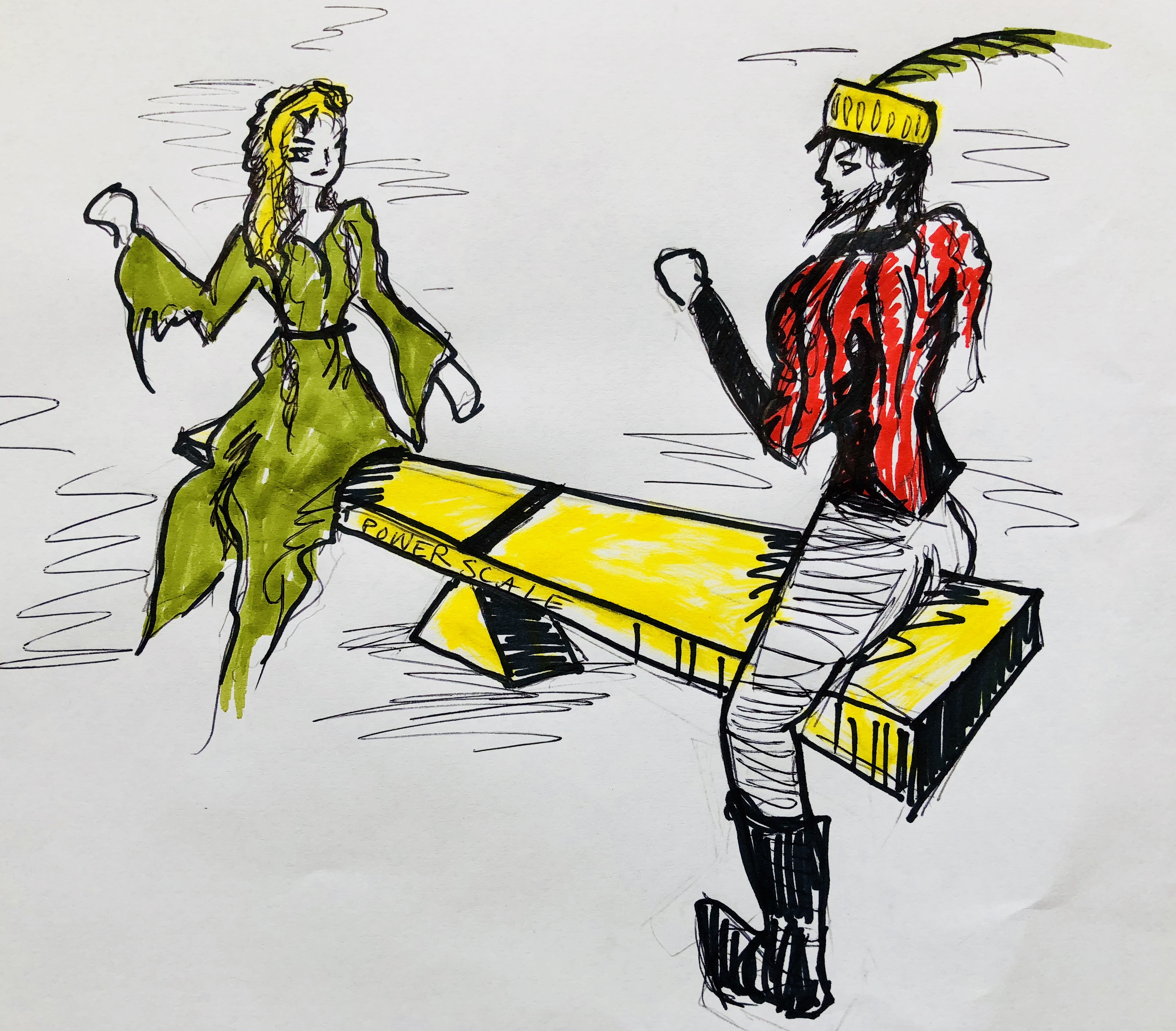
In this excerpt, Katherine grows skeptical of Petruchio’s strange behavior. She uses a comparison to draw a parallel between herself and the beggars who ask for food at her father’s doorstep, for in her eyes, they are better off than she is presently. The short incorporation of anaphora as a literary technique at the start of this section highlights the correlation of causality Katherine attempts to make in regards to her most recent treatment. Katherine is helpless; she has lost her stature and power to fight back. However, the difference between her and the beggar is that the latter is able to scavenge for food and spare change elsewhere when turned down. Katherine, on the other hand, has nowhere to go and no one to turn to. She is trapped with her newlywed husband in his house. Katherine is losing in her power struggle with Petruchio. She is forcibly starved and denied proper care in extremely manipulative ways, so much that it catches her off guard. Petruchio’s lack of direct confrontation changes the rules of the game for Katherine, for she is not used to being treated this way. Because of her spiteful nature, Katherine has been treated with disdain from members of the town and prospective husbands. By contrast, Petruchio hides his abusive intentions between a facade of love, falsely claiming that Katherine’s mistreatment is a mere result of his lust for her. The reference to “beggars” additionally showcases the bride’s confusion because it is unclear to her if she is being treated with care or with neglect. Part of her wishes to believe that she is in good hands, for she appears to be living a luxurious life at first. However, in reality, she is worn out and starving. Furthermore, the allusion could even be interpreted as comparing the people of the lowest financial status to women, both second-class citizens for their time: the two are treated in inferior ways than other members of society.