social psychology
Social psychology is a subdiscipline of psychology that studies how people interact with their social environment, and how their thoughts and behaviors are affected by others.
social psychology
Social psychology is a subdiscipline of psychology that studies how people interact with their social environment, and how their thoughts and behaviors are affected by others.
selection biases
Selection bias here refers to systematic error in the way studies are included or excluded in the sample of studies which would be replicated. An unbiased selection would be truly random, such that the sample of studies used for replication would be representative of the population of studies available.
transparency
Transparency here means that the process in which a specific result was achieved is made as accessible for other researchers as possible, by explaining publicly, and in detail, everything that was done in a study to arrive at a specific result..
false negative
A false negative is a result that erroneously indicates no effect exists: although the data do not suggest that an effect exists, in reality, this effect does exist.
false positive
A false positive is a result that erroneously indicates an effect exists: although the data suggests an effect exists, in reality, the effect does not exist.
moderate
In statistics, moderation refers to the dependence of the relationship between two variables on a third variable.
For example, the positive relationship between socioeconomic status and health (the higher one's status, the better one's health) could be moderated by one's sense of control: people in low income groups with high sense of control might show health levels comparable with people from high-income groups, whereas people in low income groups with low sense of control have worse health (Lachman & Weaver, 1998).
bias
Bias refers to a systematic error or a process that interferes with accurate results.
confidence interval
A confidence interval is the range of values in which the true value of the variable of interest would fall, if the experiment were to be repeated again and again. In the case of the 95% confidence interval, the true value would fall in this range in 95% of all cases. Confidence intervals are often referred to with the abbreviation "CI".
effects
An effect is an observed phenomenon, where differences in one circumstance lead to observable differences in an outcome.
recruiting
Recruitment refers to the successful addition of new individuals to a population.
succession
Ecological succession is the predictable change in a community over time, usually referring to changes after a disturbance or initial colonization of a habitat.
polychaetes
Polychaetes are a diverse group of worms. Polychaetes are commonly found at the bottom of the ocean and are an important part of marine food webs.
bottom topography
The shape and features of the bottom of the ocean.
Demersal plankton
The demersal zone is the layer of water nearest to the bottom of the ocean. Plankton are tiny microscopic organisms that live in the water column.
schooling
Swimming together in a group. Schooling behavior provides benefits to individual fish, such as safety in numbers.
Motile organisms
Motile organisms are organisms that can move around, such as shrimp or fish. Sessile organisms, like corals, do not move for the majority of their lives.
encrusting
Encrusting animals form a thin layer (i.e. a "crust") over another hard surface.
patchy
Uneven, with some spots being affected more than others.
substratum
The substratum is the underlying layer of rock or sediment. This refers to the surface that the corals attach to.
breaker zone
As ocean waves move towards shallower waters, they eventually become unstable and break. A breaker zone is a region where waves begin breaking.
taxonomic
Taxonomy is the science of describing, identifying and classifying species. Taxonomic differences, in this context, are differences in the species present.
cortical layering
Development of the layers of the brain.
caspase 3/7
Caspases are endoproteases (a type of enzyme that breaks down proteins) that play a critical role in both inflammation and cell death.
The presence of caspase 3 and 7 can be used as a sign that cells are preparing to die.
pyknotic
A nucleus whose chromatin has condensed in preparation for apoptosis (programmed cell death)
Apoptotic nuclei
A nucleus that has started to prepare for programmed cell death (apoptosis).
glial
Cells located in the central nervous system which protect and support neurons in their function.
Glial cells differ from neurons since they do not participate in electrical signaling.
ultrastructural
Smaller than what can be seen with a light microscope
in vitro
In a controlled experimental environment.
Student’s t test
A statistical test that is used to determine if two sets of data are significantly different from each other.
MOI
The "multiplicity of infection," which is the average number of virus particles that infect a cell.
neural stem cells
Undifferentiated cells in the nervous system that have the potential to develop into any type of cell.
induced pluripotent stem (iPS)
These are differentiated cells which have been reprogrammed into pluripotent ones. This means that they have the ability to develop into any type of cell.
amniotic fluid
The liquid that surrounds the fetus for its protection, keeping a constant temperature and environment.
placenta
An organ that develops only during pregnancy to provide oxygen and nutrients needed for the growth of the baby.
flavivirus
A type of viruses usually spread through mosquito and tick bites. They include West Nile and dengue virus.
Syphilis
Syphilis is a sexually transmitted infection caused by a bacteria known as Treponema pallidum.
Herpes virus
Herpes virus infections take place around mouth, lips, genitals, or rectum.
Cytomegalovirus
CMV infections spread through contact with body fluids, and often occur in those with weak immune systems.
Rubella
Rubella is an RNA virus that is normally spread through the air by coughing or breathing.
Toxoplasmosis
A disease caused by a parasite called Toxoplasma gondiiand.
It is usually transmitted by eating uncooked food that contains cysts or by exposure to infected cat feces.
external insults
Brain injuries.
etiology
The cause of a disease or disorder.
heterogeneous
Diverse.
abrogates
Prevents.
electron microscopy
A technique that uses a beam of electrons as a light source and has a magnification of up to 1,000,000x (a light microscope's magnification power is 1,500x).
immunocytochemistry
A microscopy technique for seeing cellular components by targeting them in tissue samples.
organoids
An organ bud (miniature organ) that is anatomically similar to the organ it models. Organoids are used to study organ development and function.
neurospheres
A three-dimensional culture system made up of free-floating clusters of neural stem cells. They are used to study neural precursor cells in vitro.
microcephaly
An abnormally small head due to failure of the brain to grow sufficiently. It is associated with mental disability.
The growth of the brain can be impaired by many genetic and environmental factors, including infections by viruses and genetic syndromes.
Zika virus (ZIKV)
A RNA virus transmitted by mosquitos and sexual interaction with a carrier.
It was first isolated from the Zika Forest of Uganda in 1947. It was previously only known to occur in a narrow range in Africa and Asia. However, in 2015 there was a Zika outbreak in Brazil.
Matthew effect
The Matthew Effect can be summarized as, "the rich get richer and the poor get poorer." It describes the idea that benefits are distributed unevenly, and that those who already have benefits will continue to accumulate them while those without will not have the chance.
In scientific publication, the Matthew Effect refers to the phenomenon where researchers who are established publish more often simply because they are established (and regardless of the quality of their work).
regression
Regression is a measure of the relation between the mean value of one variable and corresponding values of other variables. There are different types of regression, all of which are used to identify trends in data.
Poisson regressions
A Poisson regression is a form of regression analysis where we have a random variable, which is equal to the number of events over a period of time if these events are independent and occur at a constant speed.
institutional affiliation
An applicant's institutional affiliation is the organization that has agreed to be the legal recipient of the grant. This organization can be a nonprofit, a university, or an employer.
standard deviation (SD)
Standard deviation is a statistical measure that is used to describe how much variation there is in a data set. A high standard deviation means that the data is very spread out.
value-added
Value-added is the amount by which the value of the product is increased. Here, it means by how much peer review increases new insights about the quality of grant applications.
U.S. National Institutes of Health
A grant is a money given to enterprises, organizations, and individuals for research, development, and education. Grants do not have to be returned, but most granting organizations require a report about the progress of the outcome.
peer-review
Peer-review is the review process for scientific articles, research, or ideas by scientific experts in the same field.
forme fruste
An atypical or less severe form of a disease.
Here, the authors use the term to mean that although their mouse model replicates most of the major signs of CTE, it is limited in not developing the mature NFTs seen in human cases.
contemporaneous
Occurred at the same time.
escape latencies
The length of time it takes to escape the maze.
Barnes maze
A tool used to study spatial learning and memory. The fact that blast-exposed mice took longer to escape and had poorer memories of the maze suggests a cognitive deficit due to blast exposure.
candidate mechanisms
Although we understand a lot about the hippocampus and its function, there is still a lot of active research into the exact way that learning and memory work. Because of this, the word "candidate" is used to qualify this statement.
long-term potentiation
Long-term potentiation (LTP) is a measure of synaptic plasticity, or the ability of synapses to adapt and change. LTP is important to learning and memory. If it is impaired, it can cause cognitive deficits, specifically in processes important to memory.
axonal conduction
The movement of electrophysiological signals along the axon. Slowed (or prolonged) conduction is a sign of a defect in the relaying of signals between different parts of the brain.
bilaterally
On both sides of the brain.
inclusion bodies
Clumps of stable molecules found in the nuclei and cytoplasm of cells. They are usually a sign of viral infection and are the site of viral multiplication, but they can also indicate neurological disease.
dystrophic myelinated nerve fibers
Some axons are surrounded by a layer of myelin, a fatty, white substance that helps regulate signal transmission.
stratum radiatum
A region of the hippocampus.
paucity
Scarcity.
stratum pyramidale
A region of the hippocampus.
pathology
Abnormalities.
Ultrastructural
Refers to a scale that is beyond detection by light microscopy, requiring a magnification that can only be achieved by electron microscope.
Purkinje cells
Cells that help regulate nerve impulses.
dystrophic axons
Axons that are wasting away.
pyknotic
Neurons whose nuclear chromatin has condensed and gathered within the nucleus. This is a step that cells undergo during apoptosis or necrosis, two methods of cell death. Pyknotic neurons are either dead or dying.
chromatolytic
Dead or dying neurons. These neurons have suffered a breakdown of Nissl bodies, large granular bodies that are the site of protein synthesis.
brain parenchyma
"Parenchyma" refers to the bulk component of a tissue. The brain parenchyma includes the dense network of brain cells and their processes, but does not include membranes, vascular elements, etc.
dynamic pressure
Dynamic pressure is more complex than static pressure. It includes not only the pressure that results from particles in natural, random motion, but collisions of particles that result from movement in the flow direction.
static (incident) pressure profile
Like all moving fluids, blast shockwaves have two different pressure measures: static and dynamic. Static pressure is the pressure exerted on one particle of the fluid when it is at rest. Dynamic pressure incorporates the movement of the fluid (or gas), and is a measure of the kinetic energy of the fluid.
Static pressure can be measured with a "side-on" sensor.
murine
Mouse.
U-fibers
A type of fiber that connects different gyri (ridges) in the brain.
multifocal axonopathy
Damage to axons in multiple locations.
astrocytosis
An increase in the number of astrocytes that is due to damage to the nervous system and a sign of neurodegenerative disease.
cardiac arrhythmia
An irregular heartbeat (too fast, too slow, or the wrong rhythm).
OxyContin
An opioid pain medication with a high risk of addiction. If too high of a dose is taken, it can be fatal.
exacerbation
Worsening.
psychomotor speed
Reduced reaction time in movements related to mental processes.
posttraumatic stress disorder (PTSD)
A disorder that develops in some people who have a terrifying or dangerous experience. There are many symptoms, but the major signs are increased anxiety, flashbacks, nightmares, and uncontrollable thoughts about the event.
analgesics
Pain relievers.
aspiration pneumonia
An infection that occurs after inhaling food, liquid, or vomit into the lungs.
microglia
Microglia are immune cells in the brain that are related to the cells in our peripheral immune system. Cells from our peripheral immune system cannot enter the brain, so the brain has to develop its own innate immune system. Microglia are a key component of this.
perivascular foci
Spaces around blood vessels.
glial tangles
Similar to NFTs but in glial cells instead of neurons. These tangles are also associated with abnormal tau protein accumulation and, when they are observed in the brain, are an indicator of disease.
intracerebral hemorrhage
Bleeding in the brain.
An intracerebral hemorrhage can disrupt blood flow and deprive the brain of oxygen, put pressure on brain tissue around the hemorrhage, and introduce toxins into the brain.
Intracerebral hemorrhage can be fatal.
basilar aneurysm
Weakness in the walls of the basilar artery at the base of the brain, resulting in ballooning. Rupture of this blood vessel can cause sudden onset of neurological symptoms and is often lethal.
normal controls of comparable ages without a history of blast exposure
A control is a group or individual that is used as a standard of comparison in experiments.
clinicopathological correlation
The relationship between the sequence of events that led up to the death of the patient or subject and the findings from an autopsy.
oscillation
Back and forth movement.
hemorrhage
Occurs when blood vessels are punctured and blood begins to flow out of them.
neuropsychiatric spectrum disorder
A group of psychiatric disorders with underlying neurological causes.
the mechanisms of injury
How exposure to blasts injures the brain.
urban design
Urban design is the process of organizing cities (including buildings, roads, and green spaces) that relies on principles from many disciplines in architecture, engineering, and planning.
catalyst
A person serves as a catalyst if she or he inspires or stimulates an activity or event.
take-make-waste model
Western-industrial countries tend to extract resources from the earth (e.g., mine for minerals and ore), then make products for people to purchase (e.g., cellphones), and when people are done using the product, they throw it away.
sustainable living
Lifestyles that can be maintained indefinitely, without adversely impacting others (human and nonhuman), including future generations.
status inequalities
Certain people, races, and social classes are valued more in some societies.
cultural worldviews
Everyone develops a worldview. Worldviews are implicit (i.e. unquestioned or undoubted) sets of assumptions and beliefs. We experience worldviews as just the way things are.
social modeling
Setting an example for others through one's own actions.
denial
Claiming that anxiety-producing information is false. For instance, "climate change deniers."
salience
Noticeable; attention-grabbing.
anthropocentric
Human-focused (as opposed to considering the entire ecosystem).
trajectory
Path, course, route.
informal
Informal social collectives are groups of people that form because of shared interests, preferences, or physical proximity. For instance, people in a neighborhood don't necessarily know anyone when they move in and they are not obligated to interact. Yet, they may join together with other neighbors to solve a neighborhood-level problem or to socialize.
Urbanization
The increasing trend toward city-living, as compared to living in smaller communities or having a rural lifestyle.
perpetuating or redirecting situational forces
Each of us can choose to either support (perpetuate) or change (redirect) unsustainable social contexts (situational forces).
situational drivers
Cues about how to behave. Cues can be provided by the way buildings are designed, sets of rules, and social feedback. People pay attention to cues about how they should behave in order to avoid negative consequences such as making mistakes and being laughed at.
“choice architecture”
The way that different options are presented to someone making a choice.
formal social collectives
Formal social collectives are groups of people who have an official purpose. Businesses, religious groups (e.g, parishes, synagogues, mosques, sangas, etc.), governmental bodies, and schools are examples of formal social collectives. This can be used interchangeably with "formal organizations."
Formal organizations
Formal organizations are groups of people who have an official purpose. Businesses, religious groups (e.g, parishes, synagogues, mosques, sangas, etc.), governmental bodies, and schools are examples of formal organizations.
Place-based collectives
Groups of people who share a physical space, such as a neighborhood.
industrial infrastructure
The large physical systems that communities develop to manage shared resources such as energy creation and delivery, water purification and delivery, communication (e.g., fiberoptics), sewage and waste collection, and transportation (e.g., roads, bridges, subways, trains).
motivated cognition
Human thinking is not neutral and unbiased; instead, the brain looks for information and makes judgements consistent with already-existing beliefs.
cognitive limits
Things that the human brain cannot do well.
urban planners
Professionals who design plans for land use in cities and towns.
ecologically-consistent organizational learning
Learning organizations have cultures that support change. In these type of organizations, members are continuously encouraged to learn and try new things. These kinds of organizations are flexible and dynamic, and thus well-equipped to change and adjust to new circumstances.
The Natural Step is just one of several programs that help learning organizations adapt specifically to the new ecological realities of our planet, such as limited resources.
grassroots initiatives
When ordinary people, rather than elected or appointed leaders, start activities and projects to solve local problems.
“biophilic” designs
Techniques for creating buildings that reflect the natural habitat in which humans evolved. Buildings can directly use nature in their design (e.g., using walls of vegetation) or are built with natural materials. More commonly, biophilic design uses textures, shapes, and forms that mimic the natural environment.
growth economy
The assumption that over time an economy has the capacity to produce more goods and services per person.
indigenous cultures
People with historical roots to a geographical area. Often used to refer to the people who originally occupied land.
Traditional Ecological Knowledge
Traditional Ecological Knowledge (TEK) is the body of knowlege acquired by indigenous people over the course of hundreds of years by paying close attention to the natural environment around them.
For more information see the U.S. Fish and Wildlife Service fact sheet: https://www.fws.gov/nativeamerican/pdf/tek-fact-sheet.pdf
mitigate
Reduce; lessen in severity.
nerve sheath
Nerves do not very often just hang out by themselves; they usually are part of a nerve sheath, a collection of nerves bundled together.
A major type of cell responsible for "bundling" or ensheathing these cells are Schwann cells. These cells are discussed below.
You can think of these as the cords connecting to your computer, most of you likely have all of your cords nicely wrapped and bound together. You don't have single cords going everywhere.
http://www.highlands.edu/academics/divisions/scipe/biology/faculty/harnden/2121/images/neurium.jpg
axons
The "fingerlike" extensions from the body of a nerve cell. For a diagram of a nerve cell, see:
http://www.bbc.co.uk/staticarchive/5d3d66ef622165ae607b3c02f6e603c524eececf.gif
peripheral nerves
Nerves of the peripheral nervous system that innervate the limb. Does not include nerves found solely in the spinal cord or brain.
glycosylphosphatidylinosotol (GPI)–anchored protein
You have very likely heard of transmembrane proteins, proteins that integrate into the plasma membrane of a cell. A glycosylphosphatidylinosotol (GPI)-anchored protein is a very similar idea.
In the case of GPI-anchored protein, GPI is what actually integrates into the plasma membrane as opposed to the protein itself as in in a transmembrane protein. Because GPI is bonded to the protein it becomes anchored along with GPI. Now, a protein that was once free-floating and cytoplasmic is now bound to the plasma membrane.
Although it does have the same structure as GPI, the following diagram does show conceptually what is happening:
limb blastema
The limb blastema is the site of regeneration. It is the region where the salamander's limb has been damaged and/or removed and the limb will regrow.
The limb blastema is composed of mesenchymal progenitor cells. These cells are able to become mesenchymal tissue such as cartilage, muscle, and connective tissue.
The blastema is formed after "healing," which ensures there isn't serious blood loss. For a picture, see:
http://openi.nlm.nih.gov/imgs/512/397/2656220/2656220_jbiol105-1.png
electroporation
A method for making cells permeable to macromolecules by passing electric current though them.
denervation
Removal of the limb nerve supply.
distal
Away from the point of attachment. For example, your fingers are distal to your shoulder.
For a picture, see:
https://www.geol.umd.edu/~jmerck/geol431/images/directions.jpg
limb blastemal cells
The limb blastema is the site of regeneration. It is the region where the salamander's limb has been damaged and/or removed and the limb will regrow. The limb blastema cells are composed of specialized cells that are able to regenerate structures of the limb.
The blastema is formed after "healing," which ensures there isn't serious blood loss. For a picture see:
[http://openi.nlm.nih.gov/imgs/512/397/2656220/2656220_jbiol105-1.png] (http://openi.nlm.nih.gov/imgs/512/397/2656220/2656220_jbiol105-1.png)
galvanize
Motivate, mobilize.
surmount
Overcome.
heuristic
A mental shortcut.
affinity
Those we like or admire.
injunctive norms
Behaviors that are generally approved of by others.
descriptive norms
Descriptive norms are typical behaviors; what most people do.
distraction
Shifting attention to activities that are less stressful, such as changing the channel when disturbing news comes on.
existential threats
Mortality; literally, threats to our existence.
stymied
Blocked, thwarted.
curtail
Inhibit, reduce.
industrialization
The Industrial Revolution about 200 years ago introduced factories, various chemical processes, and other technologies that altered society and our relationship with the natural world.
reticent
Reluctant or slow.
contingency trap
The conflict between short- and long-term interests. Short-term benefits usually outweigh long-term costs, and short- term costs often discourage action, even when it would lead to long-term benefits.
anthropogenic
Human-caused.
surrounding infrastructure
Facilities and systems. For example, public transit is more energy efficient than driving personal cars, but many communities don't have bus or train service.
social milieu
The social and cultural context; i.e., what other people are doing.
counterproductive
Actions that oppose a goal.
counterintuitive
Not what you would expect.
test
This is a test annotation for view only test role
G2
This is the second gap phase of the cell cycle, between DNA replication (S phase) and mitosis (M phase). During G2, the cell prepares to divide.
To move on to the next phase (the M phase), a checkpoint ensures that all chromosomes are fully replicated and have no other types of damage.
DNA complements of 2n or 4n
The number of full chromosome sets in a cell is indicated as a multiple of n. A eukaryotic cell with two complete sets of chromosomes is therefore described as being "2n" (or "diploid").
After DNA replication in the S phase, the cell's DNA content doubles, and it now contains four complete copies of the genome, making it "4n." Then, after the cell divides in the M phase, there are two daughter cells, each with two complete sets of chromosomes (2 x 2n cells).
Most cells cycle between being 2n and 4n. Sperm and egg cells (gametes), however, are special cases: They are "haploid" and contain only one set of chromosomes, making them 1n or simply n. Gametes therefore cycle between being 1n and 2n.
cell cycle
Each time the cell divides into two, it goes through a sequence of events that may include growth, DNA replication, preparation to divide, and finally division. We collectively refer to these events as the "cell cycle," and to the four major events as "phases" (G1, S, G2, and M phase).
Specialized proteins called "cell cycle regulators" or "checkpoint proteins" regulate the progression from one phase to the next. The progression through these checkpoints is a strictly regulated process that usually works without errors. When errors do occur, they can have catastrophic consequences, including the development of cancer.
Use this interactive tutorial to learn more: http://www.hhmi.org/biointeractive/eukaryotic-cell-cycle-and-cancer
segregation analyses
A technique used to determine how a trait is inherited, and if it is inherited in a standard (Mendelian) way.
autosomal
Refers to the autosomes, or the 22 numbered chromosomes (which do not include the sex chromosomes).
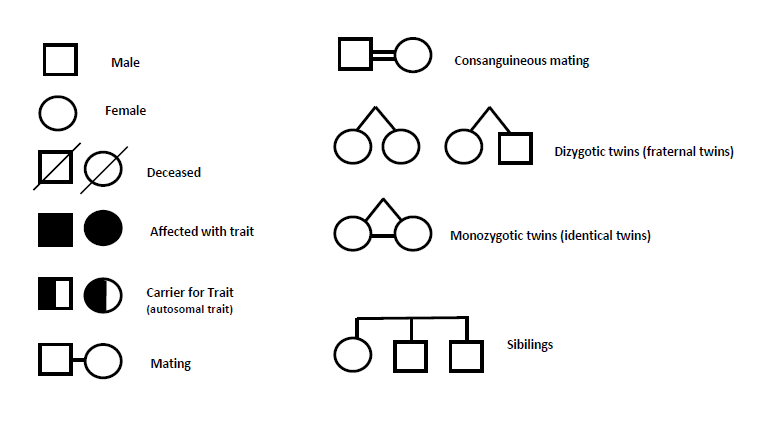
pedigrees
Refers to both the family tree and the ancestry of the subjects.
In biology, pedigrees are represented with a standard set of symbols:
syndromic autism
Here, "syndromic" means common varities of autism.
monogenic neurological disorders
Disorders caused by a single gene.
copy number variants
Phenomenon in which sections of the genome are repeated (2), deleted (1) or inverted (3).
 It has been shown that CNVs at specific locations increase the risk to develop autism.
de novo mutation
A mutation is de novo when it appears for the first time in an individual, rather than being inherited. It is usually the result of a mutation in a germ cell of one of the parents, or a mutation that arises in the fertilized egg itself. It is also known as a new mutation.
neuropsychiatric
A mental disorder that is caused by the nervous system.
homozygosity mapping
A method for mapping genes that are involved in rare, recessive disorders. It is used in inbred populations (populations where many individuals are related to each other). Because these populations are very highly related, individuals will share large areas of their chromosomes surrounding target genes.
whose level of expression changes in response to neuronal activity
Synapses-the electric signals sent by the nervous system-regulates the expression of certain genes.
homozygous deletions
Deletions in which the genetic information is missing on both chromosomes.
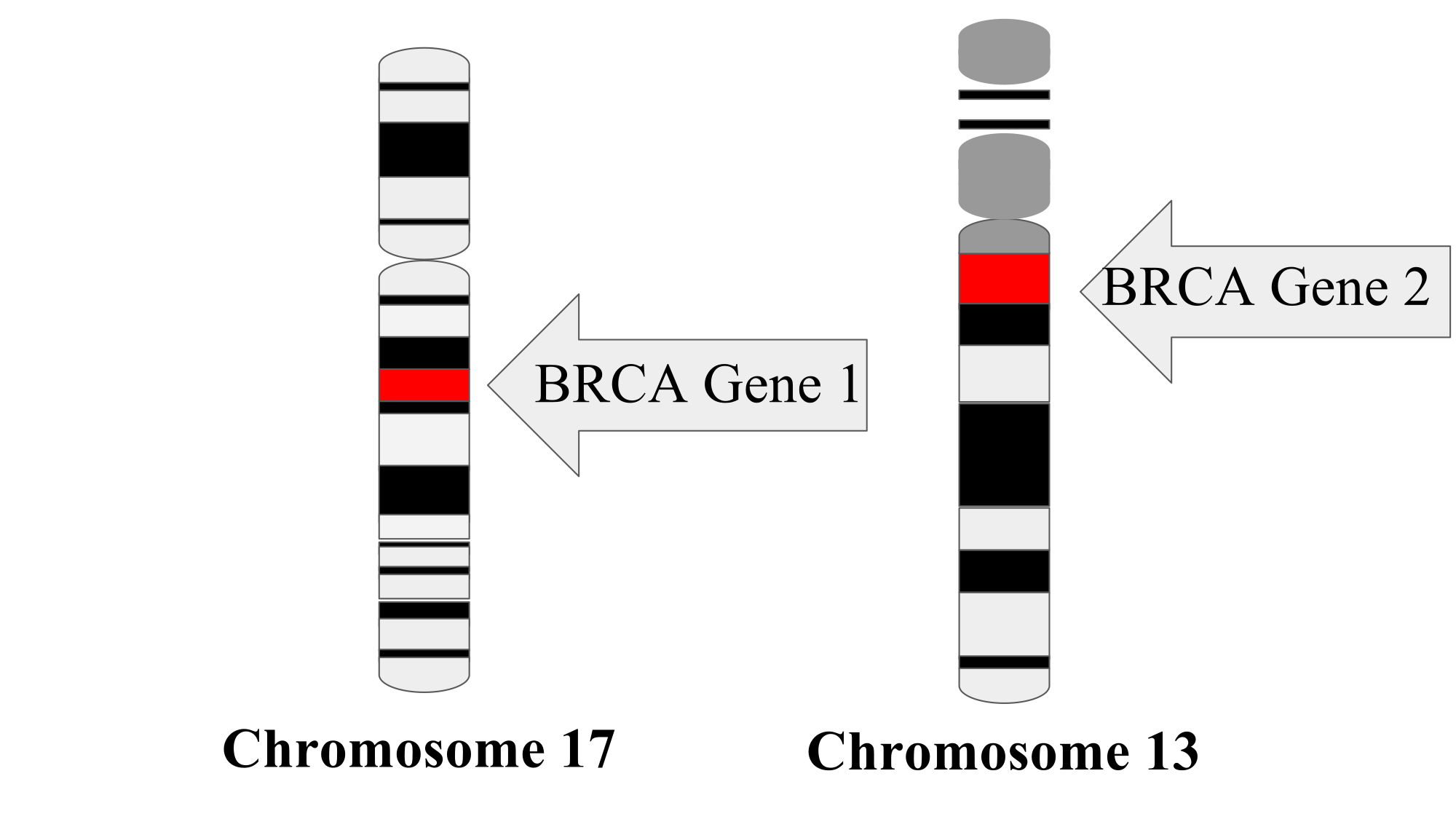
mapped several loci
Locus (pl. Loci.) : The locus of a gene is its physical location on a specific chromosome.
Mapping consists of locating the genes on the chromosomes.
Example for the gene BRCA:
autism-spectrum disorders
Autism-spectrum disorders (ASD), sometimes referred to collectively as "autism," are a family of developmental disorders that have different symptoms and intensities.
PSGL-1
P-selectin glycoprotein ligand 1 interacts with the P-selectin found on platelets.
For reference, P-selectin functions as a cell adhesion molecule on activated platelets. Ligands are molecules that produce a signal by binding to a site on a target protein (in this case, the P-selectin on platelets).
bottom topography
the shape and features of the bottom of the ocean
brittle stars
Sea stars from the class Ophiuroidea. Brittle stars are named so for their fragile thin arms.
schooling
Swimming together in a group. Schooling behavior provides benefits to individual fish, such as safety in numbers.
cryptic
camouflaged
Montastrea annularis
Montastrea annularis (now known as Orbicella annularis) is a species of coral that can grow into giant boulder-shaped heads. It is commonly known as boulder star coral.
Succession
Ecological succession is the predictable change in a community over time, usually referring to changes after a disturbance or initial colonization of a habitat.
Coral reefs
Corals are a group of colonial marine animals that form hard calcium skeletons. They have stinging cells that can be used to catch and kill small prey but also often carry symbiotic algae inside that they can use to convert sunlight into cellular energy.
When corals live together in large groups, they can form a buildup of sediment and minerals in the ocean called a reef. The complex structures of reefs are habitats for many other ocean animals.
nanoscale
Nanoscale relates to objects whose characteristic dimensions lie between 1 and 999 nm (=10<sup>-9</sup> m). It is the scale below the microscopic scale.
Fisher’s method
Fisher's method is a statistical procedure for conducting meta analyses, in which the results of all included studies are combined. The procedure examines the p-values of the individual studies, and allows inferences on whether the null hypothesis (that there are, in fact, no effects) holds.
transparency
Transparency here means that the process in which a specific result was achieved is made as accessible for other researchers as possible, by explaining publicly, and in detail, everything that was done in a study to arrive at a specific result..
nonprimate
Any animal that is not a member of the group of animals that includes human beings, apes, and monkeys.
eudaimonic
Eudaimonic well-being, as compared with hedonic well-being, relates more to the achievement/fulfillment of meaning in life.
It relates to happiness/well-being that is achieved through a virtuous or transcendent life.
autotrophs
Organisms such as plants and algae that use sunlight to produce their own energy source. They do not need to eat.
moieties
Sections of a molecule
zenith angle
How high in the sky the sun will get during the day
photomineralization
Breakdown of organic carbon to carbon dioxide driven by sunlight
quantified concurrently
Measured at the same time
water column
From the surface of the water to the bottom
photodegradation
Breakdown by sunlight
chromophoric
Light-absorbing (yes, this word is redundant)
photostimulated
Sunlight-driven
C cycling
Carbon "cycling" happens when carbon changes forms in the environment, for example, when dissolved organic carbon oxidizes to form carbon dioxide (CO<sub>2</sub>), or when plants use CO<sub>2</sub> for photosynthesis. Carbon is not destroyed in the environment, but it frequently changes forms.
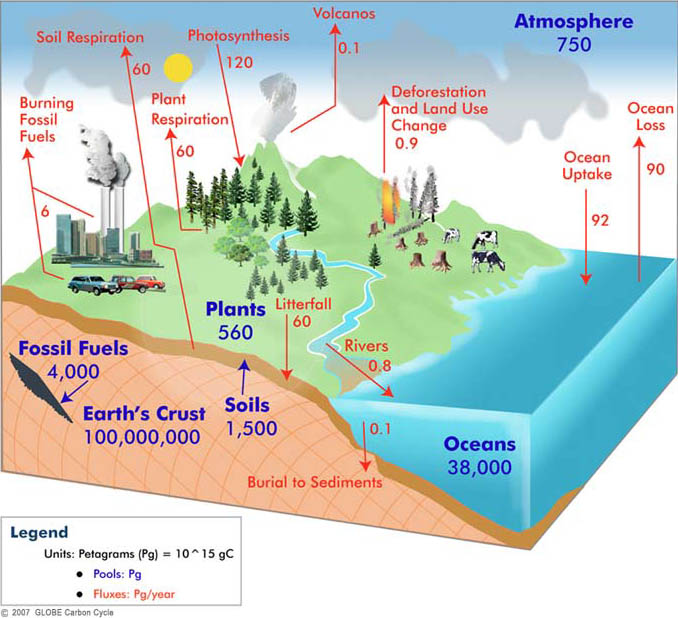 Image from globecarboncycle.unh.edu
flux
Amount transfered