11 Matching Annotations
  1. Aug 2026
    1. Scaling Kubernetes pods with KEDA based on Amazon SQS queue depth
      • Core Premise: Traditional CPU/memory metrics fail for asynchronous, queue-based workloads; SQS queue depth (backlog) serves as the true scaling metric.
      • Architecture Flow: Producers publish messages to Amazon SQS -> KEDA polls queue backlog metrics -> KEDA updates Kubernetes Horizontal Pod Autoscaler (HPA) -> HPA scales consumer deployment pods dynamically.
      • AWS Authentication: Recommends granting minimal IAM permissions (sqs:GetQueueAttributes, sqs:ReceiveMessage, sqs:DeleteMessage, etc.) to workers via IRSA or EKS Pod Identity.
      • Replica Calculation: KEDA determines total outstanding messages (ApproximateNumberOfMessages + ApproximateNumberOfMessagesNotVisible) and calculates desired pods via ceil(outstanding messages / queueLength), bounded by minReplicaCount (allows scale-to-zero) and maxReplicaCount.
      • Key Configuration Parameters:
        • queueLength: Target number of messages per pod.
        • activationQueueLength: Threshold to trigger initial scale-up from zero.
        • cooldownPeriod & HPA behavior: Manage scale-down delay and stabilization windows.
      • Troubleshooting & Production Advice: Tune queueLength based on consumer throughput, decide whether in-flight messages count (scaleOnInFlight), and configure fallback replicas for operational resilience.
  2. May 2020
  3. Apr 2020
    1. Amazon SQS supports dead-letter queues, which other queues (source queues) can target for messages that can't be processed (consumed) successfully. Dead-letter queues are useful for debugging your application or messaging system because they let you isolate problematic messages to determine why their processing doesn't succeed.
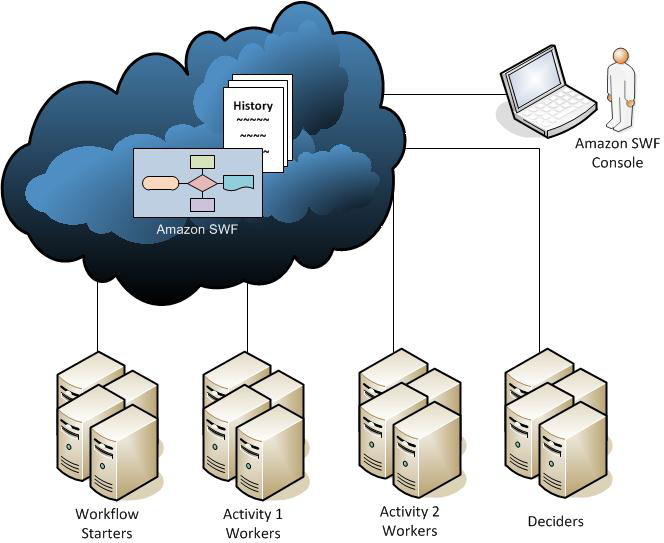
    1. SQS is a fully managed message queuing service that enables you to decouple and scale microservices, distributed systems, and serverless applications. SQS eliminates the complexity and overhead associated with managing and operating message oriented middleware, and empowers developers to focus on differentiating work. Using SQS, you can send, store, and receive messages between software components at any volume, without losing messages or requiring other services to be available.SWF helps developers build, run, and scale background jobs that have parallel or sequential steps. You can think of Amazon SWF as a fully-managed state tracker and task coordinator in the Cloud.

    1. SNS is a distributed publish-subscribe system. Messages are pushed to subscribers as and when they are sent by publishers to SNS. SQS is distributed queuing system. Messages are NOT pushed to receivers. Receivers have to poll or pull messages from SQS.
  4. Dec 2016
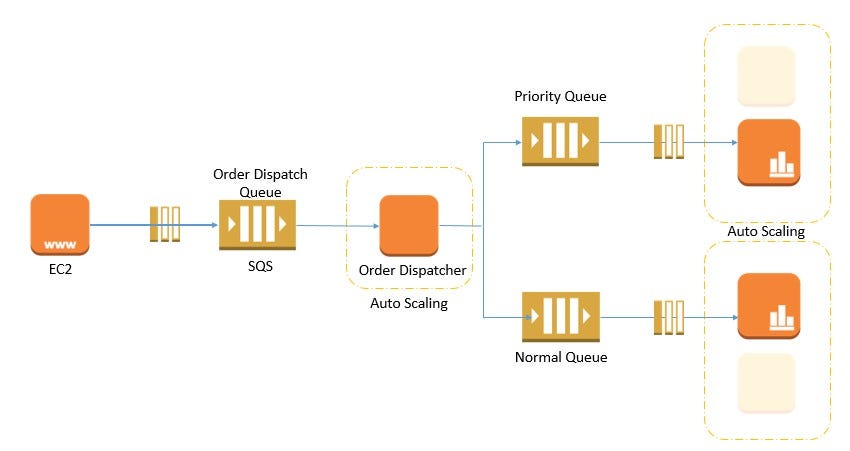
    1. Amazon SQS can help you build a distributed application with decoupled components, working closely with the Amazon Elastic Compute Cloud (Amazon EC2) and other AWS infrastructure web services.

      Instâncias EC2 produtoras colocam mensagens em uma fila SQS p/ serem consumidas por instâncias EC2 consumidoras.

    2. With Amazon SQS, you can move data between diverse, distributed application components without losing messages and without requiring each component to be always available.

      Permite desacoplar componentes da aplicação. Acho que pode ser acessado por aplicações fora da infra do AWS

    3. Amazon SQS offers a reliable, highly-scalable, hosted queue for storing messages in transit between computers

      Serviço gerenciado com auto scaling automático e redundância. Usa polling para acesso às msg da fila.