4 Matching Annotations
  1. Last 7 days
    1. Cornell, though, conducted its own investigation.

      Why do Universities conduct their own investigations?

      Is it to help the victim feel "heard" in a "process" which inevitably almost always ends up papering over the harm and the continued issues?

      Is it to make it seem like they're doing something while maintaining the status quo?

      Is it to cover their ass in some sense?

      In this case of the Cornell Seven, the fact that they didn't relay the ultimate harm to the district attorney is highly suspicious.

      Who do university police actually represent? Do they represent the "corporate" University or the community? How do they treat victims as a result?

  2. May 2016
    1. "Historic trove of documents discovered in city attic," Herald.ie (2016-05-16) http://www.herald.ie/news/historic-trove-of-documents-discovered-in-city-attic-34707155.html

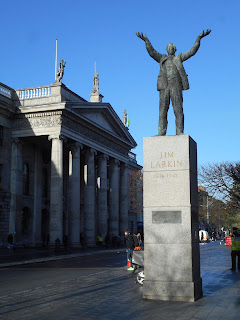
      The four missing volumes of Prisoner Books listing the arrests of more than 30,000 people between 1905 and 1918 include the "crimes" of labour leaders Jim Larkin (seditious conspiracy), James Connolly (incitement to crime), revolutionary Maud Gonne MacBride (defence of the realm), and suffragette Hanna Sheehy-Skeffington (glass-breaking with other suffragettes).

    2. "Dublin Metropolitan Police Prisoner Books 1905-1918," The British GENES blog (2016-05-12) http://britishgenes.blogspot.ie/2016/05/dublin-metropolitan-police-prisoner.html

      University College Dublin's Digital Library (http://digital.ucd.ie) has just uploaded digitised editions of four Dublin Metropolitan Police prisoners books from 1905-1908, and 1911-1918, at http://digital.ucd.ie/view/ucdlib:43945.