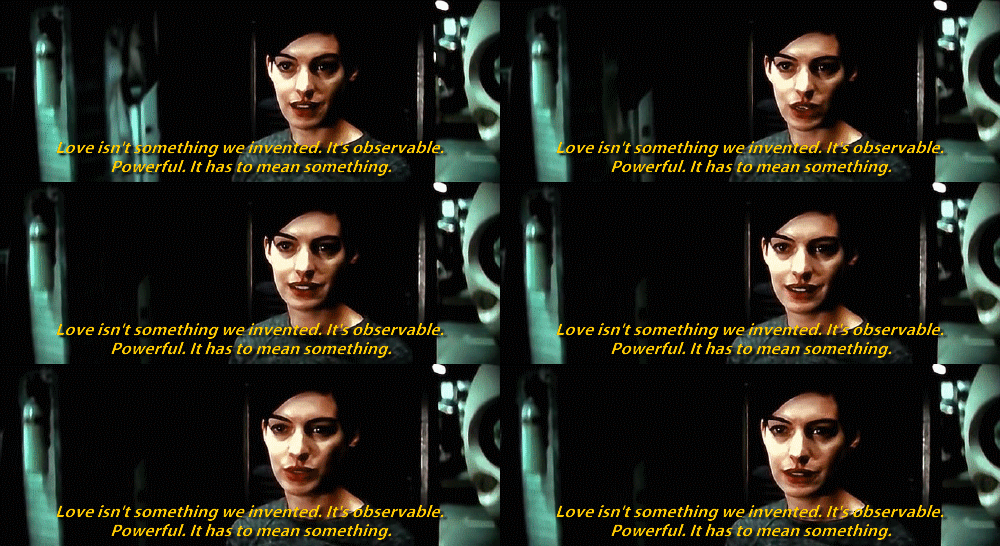
Sometimes we don't see enough. Sometimes we find enough and see enough and still tell it wrong. Sometimes we fail to judge either the events within our narrative or the people, places, things, and ideas that might enter our narrative
This sounds an awful lot like the Rashomon Effect, a term that was popularized by Akira Kurosawa's film Rashomon in which a murder is described by a number of witnesses in contradictory manners. The Rashomon Effect describes the phenomenon when an event is interpreted and reconstructed by a number of individuals in inconsistent manners. A number of filmmakers including Orson Welles, Christopher Nolan, and Quentin Tarantino have all made films that build off of this idea of Kurosawa's. All of these films construct a unique narrative by combining a number of "flawed" narratives -- that is, if a "flawed narrative" can even exist, a subtler assertion of Kurosawa and his imitators.