- May 2022
-
thelatinlibrary.com thelatinlibrary.com
-
limum
limus, -i: mud
-
alveus
alveus, -i: a hollow channel, riverbed
-
madida
last syllable is long
-
in latum
"into a wide [opening]"
-
conchaeque sonanti inspirare iubet

-
turbine
turbo, -inis: a spiral, coil, whirl
-
tortilis
tortilis, -e (adj): twisted
-
innato murice
murex, -icis, m: a sea snail used to make Imperial purple dye
-
tricuspide telo
i.e. his trident
-
stagnare
stagno, -are: to form a pool/lake, overflow
-
oracla
This later became the oracle of Apollo at Delphi, when he killed the monster Python at Mount Parnassus
-
Themin
Themis is a Greek word for justice, and worshipped as the goddess of law/justice
-
Corycidas nymphas
nymphs local to this region - https://www.theoi.com/Nymphe/NymphaiKorykiai.html
-
tori
torus, -i, m. bed, marriage bed
-
latus
latus, -a, -um - wide (as opposed to latus, lateris, n.)
-
Phocis
-
pepercit
parco, -ere, peperci: to spare +dative
-
prosunt
prosum: to do good, to help +dative
-
Nereides
"Daughters of Nereus" - sea nymphs
-
habenas
the reins which control or hold back a horse
-
canis
canus, -a -um - gray/white
-
vineta
vinetum, -i. vineyard
-
ulmo
ulmus, -i, f. elm tree
-
adunca
aduncus, -a, -um: hooked, curved
-
cumba
cumba, ae - a small boat
-
omnia pontus erant
This has some similarities to Greek mythology, the Biblical story of Noah's ark, and the Mesopotamian myth Atrahasis, pointing to shared traditions between Greeks and Near Eastern cultures. https://en.wikipedia.org/wiki/Ancient_Greek_flood_myths
-
satis
sero, seri, sevi, satum - to sow, grow as a crop
-
exspatiata
exspatio, -are = erro, -are (Ovid invented this word)
-
terram percussit
Neptune is also the god of earthquakes
-
caeruleus frater
i.e. Neptune, Jove's brother, god of the sea
-
Aeoliis
Aeolus is the god of the winds. In the Odyssey, he puts the winds in a bag for Odysseus in order to let him sail safely home, but Odysseus' sailors open the bag while he is asleep, and they get blown off course. In the Aeneid, Juno offers to let Aeolus marry a nymph in exchange for causing a storm to blow Aeneas off course, but Aeolus says she only needs to ask. Neptune, when he realizes what is happening, puts an end to the storm.
-
Cyllene
ablative; a mountain in Arcadia where Hermes was said to have been born (his mother, a nymph, is also named Cyllene)
-
inritus
inritus (adv): in vain
-
coloni
colonus = agricola
-
fragor
fragor, -oris: crash, break
-
rorant
roro, -are: to drip
-
flamina
antecedent of quaecumque, which is the subject of fugant
-
Notum
= Auster
-
Aquilonem
the Roman equivalent of Boreas
-
cyclopum
The Cyclopes (plural of Cyclops) are monsters who work the forge of Vulcan/Hephaestus in Mt Etna, according to mythology
-
adfore tempus
A Stoic idea about the cosmos: https://en.wikipedia.org/wiki/Ekpyrosis
-
axis
axis, -is: the North Pole, or the whole sky
-
sibi
i.e. to Jupiter
-
tura
tus, turis: incense
-
orbae
orbus, -a, -um: orphaned, bereft, deprived of
-
iactura
iactura, -ae: loss, throwing away (subject of est)
-
partes adsensibus inplent
impleo, -ere: to fulfill (as in, to play a role, with partes) adsensus, -us: agreement
-
frementi
fremo, fremere: to roar, resound
-
rabiem
rabies, -ei: madness, frenzy
-
delabor
delabor, delabi (deponent): to slip down, to descend
-
admissum
admitto, -ere: to commit, as a crime
-
talia
object of ausum
-
- Apr 2022
-
thelatinlibrary.com thelatinlibrary.com
-
Tonantis
Tonans, Tonantis - "Thundering," an epithet of Jove
-
Lycaoniae
Lycaon tried to trick Jove into eating human flesh (story below)
-
altaque congestos struxisse ad sidera montis
The Giants were supposed to have attacked the gods by piling three mountains (Olympus, Ossa, and Pelion) on top of each other
-
ocius
sooner, more quickly
-
Erinys
A Fury, a goddess of vengeance, violence, and rage: https://en.wikipedia.org/wiki/Erinyes
-
villos
villus, -i: tuft of hair, fur
-
obsidis
obses, obsidis: hostage
-
gravem somno
i.e. "me" (Jupiter)
-
necopina
necopinus, -a, -um: unexpected
-
crepuscula
crepusculum, -i: twilight
-
pineta
pinetum, -i: pine grove
-
latebris
latebrae, -arum: shadows, den(s)
-
Maenala
Maenalus is a mountainous part of Arcadia (a wild inland part of Greece, in mythology)
-
lustro
lustro, -are: to wander through, examine, review, look at
-
substitit
subsisto, -ere: to stop, halt
-
inmedicabile
"untreatable," "incurable"
-
Nereus
A sea god: https://en.wikipedia.org/wiki/Nereus
-
flumina
i.e. the river Styx, which the gods swear oaths on
-
qua centum quisque parabat inicere anguipedum captivo bracchia caelo
The "Hundred-Handers" were another group of mythological monsters - in other versions they help Zeus overthrow the Titans: https://en.wikipedia.org/wiki/Hecatoncheires
-
caesariem
caesaries, -ei: dark hair
-
Palatia
The Palatine hill was where the Romans with the greatest wealth and social status lived in Republican times, and where the emperors and their families lived beginning with Augustus
-
pater
i.e. Jove/Jupiter, son of Saturn
-
perfusam multo natorum sanguine Terram
Terra, or Gaia, was said to be the mother of the Giants in Greek mythology; children of Gaia are usually sinister, destructive, monstrous enemies to the Olympian gods
-
gigantas
-
novercae
"wicked stepmothers" in myth include Medea (also a poisoner) and Phaedra
-
socer a genero
A famous father-in-law and son-in-law pair from Ovid's own time were Pompey and Caesar (Pompey married Caesar's daughter Julia, so he was Caesar's son-in-law until she died in 53 BCE), who fought a civil war in 49-46 BCE
-
aetas
The "myth of ages" or "ages of man" is an idea first found in Hesiod's Theogony in classical literature - his version is slightly different from Ovid's: https://en.wikipedia.org/wiki/Ages_of_Man
-
prius
goes with communem
-
insultavere
insulto: to leap on, leap along
-
venae peioris
literally a less valuable vein of ore
-
frutices
frutex: shrub, hedge
-
canduit
candeo, -ere - to glow
-
canebat
caneo, canere: to go white/pale
-
aera
Greek accusative; agrees w habendum
-
vindice
vindex: avenger, punisher, enforcer
-
induit
induo, -ere: to put on (like clothing)
-
sublime
sublimis, -e: high, lofty
-
dedit
subject is Prometheus again
-
satus
born to - i.e., son of Iapetus (Prometheus)
-
nitidis
nitidus: shining
-
orba
orbus: orphaned, deprived of + abl of separation
-
dissaepserat
dissaepio: to fence off, pen in
-
lanient
lanio, laniare: to tear, lacerate
-
recessit
give up; separate
-
septemque triones
The Septem Triones are the seven stars of what we call Ursa Major or the Big Dipper, including/pointing to the North Star
-
tepescunt
tepesco, -ere: to grow warm
-
matutinis
matutinus, -a, -um: of morning
-
quin
negative purpose - "so that they don't"
-
flamina
flamen, flaminis, n. breath, blast
-
- Mar 2022
-
thelatinlibrary.com thelatinlibrary.com
-
plagae
plaga, -ae: region, climate
-
quae, diversa locis, partim sorbentur ab ipsa, 40 in mare perveniunt partim campoque recepta liberioris aquae pro ripis litora pulsant.
antecedent of quae is flumina<br> quae, diversa locis, <br>partim sorbentur ab ipsa, <br /> in mare perveniunt partim <br> campoque recepta liberioris aquae / pro ripis litora pulsant.
-
glomeravit
glomero: to make a globe or sphere<br> [in speciem magni orbis]
-
exemit
eximo, -ere: to remove, release
-
spisso
spissus, -a, -um: thick, dense
-
diremit
dirimo, -ere: to split up, end
-
litem
lis, litis: quarrel (like litigation)
-
egens
"lacking" + genitive of the thing missing
-
Titan
i.e. Helios/Sol
-
dixere
3rd person plural perfect
-
toto naturae
dative of possession
-
coeptis
- meis
"beginnings," "things begun"
-
In nova fert animus mutatas dicere formas corpora
mutatas formas [in nova corpora] <br>dicere <br>fert animus
Tags
Annotators
URL
-
-
thelatinlibrary.com thelatinlibrary.com
-
Praetor intellegens negare sibi placere, quod senatus consultum ratum esse non deberet, id me Romam deportare.
Praetor intellegens negare * sibi placere, * __quod senatusconsultum ratum esse non deberet, * id me Romam deportare.
-
cum fratre meo
He specifies later that he's talking about his first cousin, Lucius. Cicero's brother is Quintus Tullius Cicero, who had a political career of his own: he was Cicero's campaign manager for the consulship in 63, helped Cicero get recalled from exile in 57, and later served with Caesar in Gaul in 54.
-
me
the subject of adferre; vim is its object
-
Theoractum
A Greek pun - Theo comes from the word for god; Mnastus from the word for remembering; and ractus from the word for breaking
-
tabellas non commendaticias sed tributarias
litterae commendaticiae = recommendation letter written for a friend or client to get them access and support; tabellae tributariae = letter of credit, i.e. a record of a loan
-
optime convenisset
i.e. was on very good terms
-
germanum
usually means twin or sibling, but here = verum
-
discessio
a division, i.e. into yeas and nays in the debate
Tags
Annotators
URL
-
- Feb 2022
-
thelatinlibrary.com thelatinlibrary.com
-
rationem
an accounting, like a ledger
-
praefuerat
praesum, praeesse: to be in charge of + dative
-
olei
olive oil is rubbed on athletes in the palaestra, hence the connection
-
dicendo
gerund - "by speaking"
-
quantum
"as much as", "to the extent that"
-
in ius
in court, in an official audience/capacity
-
fratre
actually his cousin (his uncle's son)
-
cecidisset
<caedo, caedere - to strike
-
commonefaceret
commonefacio: moneo + facio, to bring to mind, to remind of
-
ipso senatus consulto
a senatus consultum is a decree or decision of the senate, the announcement of the outcome of their debate
-
de Sex. Peducaeo, qui de illa civitate totaque provincia optime meritus esset, sese antea, cum audissent ei negotium facessitum, cumque eum publice pro plurimis eius et maximis meritis laudare cuperent, a C. Verre prohibitos esse; iniquum esse, tametsi Peducaeus eorum laudatione iam non uteretur, tamen non id prius decernere quod aliquando voluissent quam quod tum cogerentur.
de Sex. Peducaeo, * qui de illa civitate totaque provincia optime meritus esset, sese antea, * cum audissent ei negotium facessitum, * cumque eum publice pro plurimis eius et maximis meritis laudare cuperent, <br><br>a C. Verre prohibitos esse; iniquum esse, * tametsi Peducaeus eorum laudatione iam non uteretur, <br>tamen non id prius decernere * quod aliquando voluissent * quam * __quod tum cogerentur.
-
ut
purpose clause
-
qua de re ad senatum referant
senate debates are announced beforehand on a particular topic; "refero" is the verb used for referring or proposing a matter to the senate for debate, and the topic is "de re publica" generally or "de" + a specific topic.
In Rome (as opposed to Syracuse or Greek cities), senatorial debates go in a particular order, starting with the consuls elect and going down the hierarchy from there; only senators can speak. At public assemblies, only praetors, tribunes, consuls, or specifically invited orators can speak.
-
multo plus illi laudatio mali quam boni posset adferre
mali and boni are partitive genitives with plus
-
laudationem
i.e. of Verres
-
eo minus
adverbial - "that much less", "because of that...less"
-
illam statuam
i.e. the one in the Curia
-
ipsum
i.e. Verres
-
palaestritis
palaestrita, ae, m., = παλαιστρίτης, the director of a wrestling-school
-
sententiam
an opinion or speech given in a senate debate
-
consurgitur
impersonal - by the senators
-
Heracli
Heraclius, a Syracusan citizen introduced below
-
Mamertinam
the Mamertina civitas is Messana (see above)
-
nam turpitudinem summam esse arbitrantur referri in tabulas publicas pretio adductam civitatem, et pretio parvo, ea quae accepisset a maioribus vendidisse atque abalienasse
- nam turpitudinem summam esse ... <br>arbitrantur
- ...referri in tabulas publicas
- __pretio adductam civitatem, et pretio parvo, ea ...
- ____quae accepisset a maioribus
- __...vendidisse atque abalienasse
-
Graecos homines
as opposed to Roman people, he's suggesting
-
hospites
object of ducere
-
pretio adductam
i.e. motivated by money
-
qui
=aliquis
-
desierunt
<desino, -ere - to stop
-
Licet
impersonal - "let's say that...", "granted that..."
-
gravius
comparative adjective with quam
-
mystagogos
mystagogus, i, m., = μυσταγωγός,
one who conducts a person through secret and sacred places as a guide, an initiator, a mystagogue
-
quem cum audisset interfectum permoleste tulisse
quem antecedent is Archimedem, subject of audisset and tulisse is Marcellus
- __quem ...
- cum audisset
- __...interfectum <br>permoleste tulisse
-
Archimedem
-
pluris esse a Syracusanis istius adventu deos quam victoria Marcelli homines desideratos
pluris...quam sets up a comparison between deos and homines desideratos
-
habetote
2nd person plural imperative - "think of it this way," "understand the situation this way"
-
in Capitolio, hoc est in terrestri domicilio Iovis
in Capitolio = in terrestri domicilio Iovis
-
Ponti
"The Sea," i.e. the Black Sea/Euxine Sea; Pontus is also the name of a kingdom on the shore of that sea, now northeastern Turkey. https://en.wikipedia.org/wiki/Kingdom_of_Pontus
-
Flamininus
-
Aristaei
-
Paeanis
-
studia ac delicias
negative connotations - obsessions, hobbies
-
homo elegantissimus atque eruditissimus, Verres
heavy sarcasm
-
Sappho
A Greek female poet: https://en.wikipedia.org/wiki/Sappho
-
argumenta
argumentum, -i: figure, representation
-
esto
archaic imperative - "let it be so," "granted"
-
operari
operarius: a working man, a manual laborer (derogative, referring to Verres)
-
aedilibus
Aediles are junior magistrates in charge of infrastructure, games, and exhibitions
-
Tusculanum
a Tusculan villa, a status symbol - Cicero ended up buying one later in his political career (and was resented by the old-money crowd for it). Tusculum is a town just outside Rome.
-
Silanionis
-
gramineas
gramineus, -a, -um: made of grass or bamboo
-
bullas
bulla, -ae: knob, stud
-
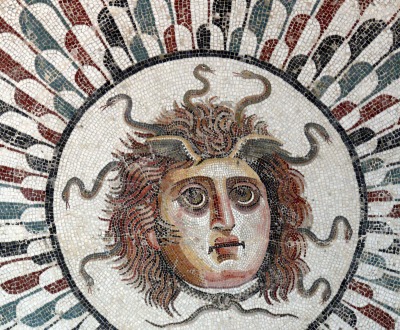
Gorgonis
-
honestius
comparative neuter singular adjective: "a more respectable thing"
-
verum tamen honestius est rei publicae nostrae, iudices, ea quae illis pulchra esse videantur imperatorem nostrum in bello reliquisse quam praetorem in pace abstulisse
verum tamen honestius est rei publicae nostrae, iudices, * ea * __quae illis pulchra esse videantur * imperatorem nostrum in bello reliquisse * __quam praetorem in pace abstulisse
-
dictu
supine form - "unbelievable to say/in saying"
-
liquido
adverb - =plane, certe
-
primarios
=nobiles, honestos
-
Vereor ne haec qui non viderunt omnia me nimis augere atque ornare arbitrentur; quod tamen nemo suspicari debet, tam esse me cupidum ut tot viros primarios velim, praesertim ex iudicum numero, qui Syracusis fuerint, qui haec viderint, esse temeritati et mendacio meo conscios
Vereor * ne haec ... * __qui non viderunt * ...omnia me nimis augere atque ornare * arbitrentur; quod tamen nemo suspicari debet, * tam esse me cupidum * __ut tot viros primarios velim, [praesertim ex iudicum numero], * _qui Syracusis fuerint, * _qui haec viderint, * __esse temeritati et mendacio meo conscios
-
Siciliae regum ac tyrannorum
-
tabulas
-
meretriciam
see note on section 71
-
Aedis Minervae
-
ornamento urbi
double dative - ornamento is a dative of purpose, urbi a dative of advantage
-
aedibus
i.e. suis
-
rationem
reasoning, calculation
-
aedem Honoris et Virtutis
-
victoriae
-
pepercit
parco, -ere: to spare, leave unharmed (takes a dative object)
-
periculi nihil
periculi is a partitive genitive with nihil: no amount of danger
-
quam ad summam
"at the highest point of which"
-
Neapolis
Greek for "new city" (nea + polis)
-
Tycha
Tyche or Tycha is the Greek word for Fortune
-
prytanium
= πρυτανεῖον,
the town-hall, a public building in some of the Grecian states, where the Prytanes assembled and dined, and where those who had done special service to the State were entertained at the public expense
-
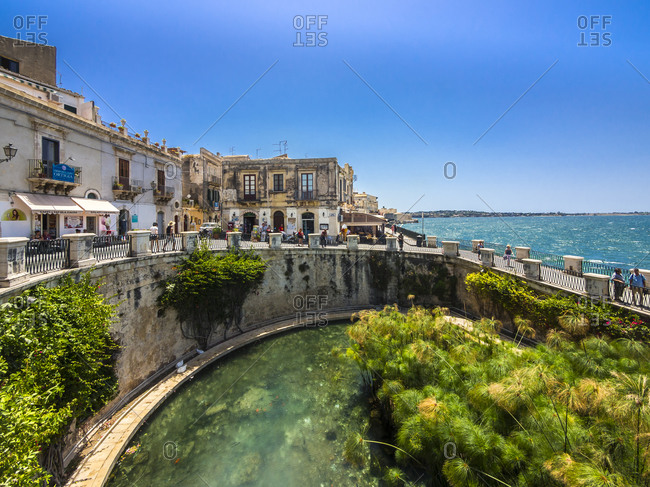
fons
-
operiretur
operio, -ire: to cover, overwhelm
-
Arethusa
-
Hieronis
-