domestic
Domestic watewaters are produced in our homes, whereas industrial wastewaters, as the name implies, are produced as a result of an industrial activity.
domestic
Domestic watewaters are produced in our homes, whereas industrial wastewaters, as the name implies, are produced as a result of an industrial activity.
Sulfide
Inorganic anion (a negatively charged ion) of sulfur
drinking water treatment
Here is a fun video showing drinking water treatment.
nerve dependence of limb regeneration.
That is, for a limb to regenerate it depends on, or needs the nerve.
Without the nerve supply to the limb, it fails to regenerate.
sequelae
Sequelae simply means a negative after-effect.
In this case, it is the long-term negative impact on the bodies defense system (immune system) following a measles infection. This negative impact is also known as immunosuppression.
typified
Typified means "characteristic of", as in basically all measles virus infections will behave this way.
vaccination targets remain unmet
Unmet vaccination targets mean that countries are failing to vaccinate enough of their populations to achieve herd immunity and provide adequate protection to prevent the spread of the measles disease.
polymicrobial
Polymicrobial
Poly = many, like how a polyhedron is a shape with many sides
Microbial = having to do with microorganisms, or living things that are too small to see with the naked eye. Like viruses, bacteria and fungi, some of which can make you sick, and some which can be beneficial (like yogurt!)
all-cause infectious disease
All-cause infectious disease in this paper aims to describes infectious diseases other than measles. In other words, diseases caused by all infectious agents.
B and T lymphocytes
B and T lymphocytes are important cell types that make up the long-term response of your immune system.
When the body fights off disease it uses some generic, built-in responses to be able to start controlling an infection right away, but this innate response is rarely able to cure you. After about a week, your body learns the specific pathogen that is making you sick and makes B and T lymphocytes to effectively fight off that specific pathogen, and importantly, to remember it in case you get sick with the same thing again. Using this learning response (called an adaptive immune response because it adapts to the infection you have) is how vaccines work.
If the B and T lymphocytes you made against a specific pathogen are killed then you loose that specific response, the "memory" you built to defend yourself.
If the number of B and T lymphocytes you have is reduced, this can also impair your ability to fight off a pathogen no matter if you have done so before.
To learn more about how the immune system works to fight off infection you can read this free Chapter from the textbook "Molecular Biology of the Cell"
interannual fluctuations in nonmeasles deaths
Interannual fluctuations in nonmeasles deaths is another way to say "the yearly change in the numbers of nonmeasles deaths." In other words, the number of children who die from diseases other than measles changes from year to year.
The authors in this paper will use these changes in the number of deaths, correlated to the number of measles cases, to demonstrate the long-term effect of measles caused immunosuppression.
pre- and post-vaccine eras
The pre-vaccine era is before the measles vaccine became available for the public for use in the 1960's.
The post-vaccine era continues today, when the measles vaccine (MMR) is available to those who wish to receive it.
disease mortality
Disease mortality is the scientific term used for the amount of death a disease causes. The flu, which kills many people every year, has a HIGHER mortality than the common cold.
more prolonged effect
A more prolonged effect simply means a change which lasts longer. In this case it is a longer effect on host resistance (see next annotation).
predispose
Predispose means to make something easier to happen, in this case easier to get sick. For example, if you do not exercise and eat right you are predisposed to (or more likely to become) obese.
population-level data
Population-level data is a term that is used in statistics to describe including the entire population in your analysis. This is in contrast to using a smaller sample population to infer (make an educated guess) things about the whole population.
For example, imagine that your entire school is the population you wish to study. If you want to collect population-level data you will need to ask everyone if they like chocolate ice cream. Sometimes this isn't possible so scientists collect the data from a smaller sample, like just your class. They learn that 75% of your class likes chocolate ice cream and so they infer that 75% of the entire school likes chocolate ice cream. This approach is easier, but it is still more accurate to survey the entire class.
In this study, the use of full population-level data, not inferences from sample data, makes their conclusions stronger.

Food for thought: What is the population that is really important to study in this research? In other worlds, the population of a single country is really a sample of what even larger population?
Facial Action Coding System (FACS)
The Facial Action Coding System (FACS) is a system for identifying and categorizing changes in facial expression.
Even minute anatomical changes in facial muscles (i.e., contraction or relaxation of specific muscles in the face) can be coded as distinct "action units," and there is extensive training involved in being able to identify and code these facial movements.
The head scientist involved in designing the FACS system, Paul Ekman, is known for using FACS to detect microexpressions—brief, involuntary facial movements that can be used, among other things, in the detection of deception.
The television show Lie To Me was loosely based on Ekman and his work.
Duchenne smiling
Named after 19th century French physician Guillaume Duchenne, a "Duchenne smile" is one that involves both the mouth and the eyes; it is considered to be a more "genuine" display of happiness, compared with a smile that only involves the mouth.
Here's an example, modeled by psychologist Paul Ekman, who is an expert on facial expressions and emotion.

Can you tell which one is which?
Test yourself with this short video!
Linguistic Inquiry Word Count software (LIWC)
The Linguistic Inquiry Word Count (LIWC, pronounced "Luke") software is text analysis software that can analyze linguistic content for specific words and/or categories of words.
orbicularis oculi (AU6)
This is the muscle that circles around the eye. It controls blinking, squinting, and the movement at the corners of the eyes that relates to Duchenne smiles.

hedonic
Hedonic well-being is characterized by the achievement/fulfillment of pleasure. It is often considered to be a relatively short-term form of happiness.
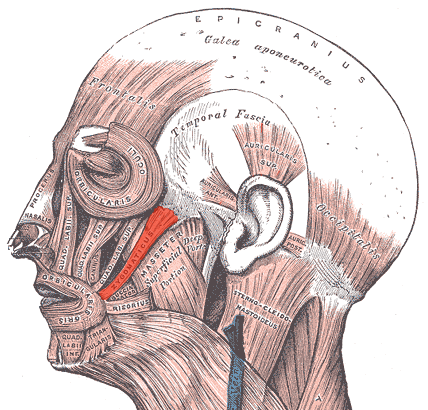
zygomatic major (AU12)
This is the muscle that controls the corners of the mouth.
ego defensiveness
"Ego defensiveness" is very similar to self-protection. The idea is that people have psychological mechanisms that are commonly used to protect/defend the "ego," or the self.
political ideology
"Political ideology" refers to how people identify themselves on the spectrum between liberalism and conservatism.
self-report measures
"Self-report measures" involve responses to basic survey questions. For example, asking participants how happy they are, on a scale from 1 to 10, would be a self-report measure.
leukocytes
Leukocytes are also called white blood cells. The vast majority of immune cells are leukocytes, neutrophils being one of them.
integrins
Integrins are another class of cell adhesion molecules. These receptors are known to interact with the extracellular matrix or surface proteins on endothelial cells, and help in the process of leukocyte extravasation, a process that involves the movement of leukocytes (white blood cells) through the walls of the blood vessels into the site of infection.
chemokine
Chemokines are proteins released by cells that can recruit other cells by forming a chemical gradient (similar to a trail of scent).
Chemokines and selectins become alert/activated during an infection and, in turn, activate/trigger the integrins to initiate cellular recruitment.
In case of cellular responses, activation involves biochemical changes in the structure of molecules, which now allow it to bind/release from certain other molecules.
A series of such activation events is what induces a signaling cascade in cells.
endothelial selectins
Selectins are carbohydrate-binding molecules present on cell surfaces. Endothelial cells line the the walls of blood vessels.
E-selectins are produced by endothelial cells. During an infection, selectins serve to recruit immune cells to the site of inflammation.
inflammatory injury
Inflammation, meaning swelling with redness and pain, is one of the major consequences of an immune response. However, sometimes excessive inflammation can be harmful to the host, hence referred to as inflammatory injury (injury inflicted upon the host by the body's immune system).
immune response
In general, when the mammalian body encounters a foreign object, be it a pathogen causing disease or an allergic nonpathogenic molecule, the immune cells in the system are triggered and begin a cascade of reactions in an attempt to contain and eventually eliminate the foreign entity.
leukocytes
White blood cells
somatic
Somatic refers to all the cells of the body that are not germline cells (eggs or sperm).
germline
Germline cells are the sex cells in the body (sperm in males and eggs in females).
Drosophila
A genus of flies that are often used as model organisms in research. They are commonly called "fruit flies."
chimeric
A chimeric fly has two distinct cell populations. In this case, a mutagenic event occurred early in the development of the female chimera, causing it to have one genotype on one half of its body, and a different genotype on the other half.
wild-type
Refers to the phenotype of an organism as it was found in nature. In contrast to a mutant allele, the wildtype phenotype is the product of the "normal" allele for a particular gene.
autocatalytic
A genetic element is autocatalytic if it converts the companion chromosome to its own state.
homology arms
Homology arms are DNA sequences in a plasmid that are identical to a specific genomic DNA sequence. The homology arms are used to direct homologous recombination of a plasmid into the genome.
mosaics
Mosaic organisms have multiple cells populations with different genotypes. In this case, the mosaic flies had small patches of brown color but were mostly yellow.
inland waters
Lakes, rivers, streams, etc. (NOT the ocean)
surface waters
Lakes, rivers, streams
labile
susceptible
residence time
Amount of time a molecule exists before it is broken down
wavelength
Light travels from place to place in the form of a wave. All types of light have a characteristic wavelength. In the visible spectrum, red light has the longest wavelengths and purple has the shortest. UV light has shorter wavelengths than visible light.
shallow-headwater stream
Headwater streams are small, shallow streams that carry water from the surrounding land area into a main river.
glacial-fed
Indicates that the water in this river came from melting glaciers
residence times
The amount of time that water stays in a lake before evaporating or flowing into another body of water.
benthic
Benthic is a word used to describe things that take place in the sediments at the bottom of a body of water.
bacterial respiration
Bacterial respiration is when microbes “eat” organic carbon, causing it to break down into smaller molecules. In most cases, bacteria require oxygen to break down organic carbon.
photochemical oxidation
Photochemical oxidation is when sunlight and oxygen react with organic carbon, causing it to break down into smaller molecules
ultraviolet (UV) light
The invisible component for sunlight that is responsible for sunburn and breaks down organic compounds. UV light has a shorter wavelength than visible light. See this link for more information.
photochemical degradation
This video, made by people who work with primary author Rose Cory, explains what photodegradation is.
At the basin scale
In other words, over the area where rain water flows into the river and lake system we studied.
mineralization
Mineralization refers to the break down of organic molecules to inorganic molecules. For the purposes of this paper, it means conversion of organic carbon to carbon dioxide.
N
N represents the number of samples tested.
quantum yields
Quantum yield is a measurement of how much of a chemical reacts when exposed to light. For example, in this study it would be the amount of carbon dioxide produced divided by the amount of UV sunlight absorbed by dissolved organic carbon.
ice-out
The day in the spring when all of the ice in a lake has melted.
Areal rates
Areal rate refers to the amount of something that happens over an amount of surface area. For example the rate of bacterial respiration is measured as the amount of oxygen released per day, but the areal rate would be measured as the amount of oxygen released per square meter per day.
attribution bias
This refers to how we interpret our own behavior as well as the behaviors of the people we interact with.
remediation
Remediation means trying to resolve a problem once it has already occurred. In this case, the author is referring to remediating violence.
About 20% had been arrested at baseline, and just over 20% had been victimized
Baseline measurements are measurements that report on the sample population prior to the experiment. In this case, prior to the start of the jobs summer jobs program, 20% of the youth in the study had been arrested and 20% had been victims of violent activity.
operative mechanism
By operative mechanism, the author is referring to the thing or factor that helps us understand why this summer jobs program helps reduce violent crime.
The empirical literature
Empirical literature refers to articles that are based on data that has been collected in a field (real-world) or laboratory setting. Because science is a process that builds upon itself, scientists are always looking to see what the existing empirical literature establishes so that a study that presents something new can be designed.
outcome measures
In this experimental study, outcome measures refer to violent activity as well as other types of crime and schooling outcomes. This paper reports specifically on whether summer jobs have any affect on violent activity.
disturbance
What is a disturbance, in this context? In ecology, a disturbance is anything that changes the ecosystem. For example, a forest fire, tornado, human activity (building more houses in an area that used to be a grassland), etc.
moratorium
Not being allowed to do a particular activity (in this case, cut down forests) for a set amount of time
aggregate dynamic
Aggregate dynamic refers to the combination of forest loss and gain.
slower regrowth dynamics
Why do boreal forests grow slower than other forest types? For starters, boreal forests have shorter growing seasons. Also, boreal forests have only conifer tree species that do not grow as quickly as deciduous trees.
carbon storage
Why is carbon storage important? Find out by following this link to explore carbon "sequestration" (just a fancy term for "storage") and how this process can help curb global warming.
importance of forest ecosystem services
What are important ecosystem services that forests provide?
First, let's break this down into what an ecosystem service is. These services include any benefit that an ecosystem can provide to people.
So, what can forests provide that benefit people? Here are some examples: Forests provide timber, store carbon, purify air and water, and provide space for recreation (e.g., hiking in the woods!).
biodiversity richness
Richness is simply the number of different species.
Biodiversity refers to the diversity of biology (a.k.a. the number of different species).
Putting this all together, we can determine that forests, compared with other types of ecosystems (e.g., deserts), have a lot of different species of plants, animals, bacteria, etc. (this is especially the case in tropical forests).
spatially explicit
Describes where things are in relation to each other. In this case, the satellite images of Earth provide a clear picture of where forests are located and distributed.
Imagine having spatially explicit data of Earth's surface, all collected at the same time. This is what satellite-based imaging systems do. By examining these pictures over time, we are able to map forest loss and gain. Imagine trying to do this task from the ground. It would be very hard indeed.
tropical, subtropical, temperate, and boreal
Tropical: Areas near Earth's equator that are warm/hot year-round with consistent or seasonal rainfall.
Subtropical: Areas with hot and humid summers and mild winters.
Temperate: Areas with four seasons (summer, fall/autumn, winter, and spring) divided mainly by differences in temperature.
Boreal: Subarctic areas with long, cold winters and short, cool summers.
Check out where these climate domains/zones are around the world on this map.
deforestation dynamics
"Deforestation dynamics" refers to changes (i.e., dynamics) in forests due to cutting down trees and replacing them with nonforest land uses, such as agriculture or development (houses, buildings, etc.).
statistically significant trend
This wording implies that Hansen and colleagues ran a statistical model to determine whether the loss or gain in forest cover over time was more or less than what you would expect if forest cover did not change.
The tropics experienced a clear increasing rate of forest loss, expressed in units of forest area loss per year, whereas other climate domains (e.g., temperate, boreal, subtropical) all lost and gained forest cover
However, when you add all of the subtropical regions of Earth together, for instance, there isn't a clear net loss or gain in forest cover. This is because of the fact that most forest change in the subtropics is due to forestry land uses where trees are grown as a crop. In forestry land uses, trees are continuously grown and cut down to make products such as lumber and paper.
short-cycle tree planting and harvesting
This statement refers to "short rotation forestry," which is a type of forestry that densely plants fast-growing tree species (e.g., poplar trees).
Once these trees reach a certain size (e.g., stems that are 10–20 cm in diameter at breast height), they are then cut down and harvested for lumber, pulp, and paper products, or energy.
The trees then regrow from the stumps, sending up new trunks. This process of cutting down a tree to stimulate regrowth is called "coppice."
systematic global image acquisitions
In this context, the authors are describing the satellite images—these images are widespread (e.g., systemic) in that they photograph the entire surface of Earth.
Google cloud
The authors used Google Earth Engine to process the Landsat images.
The Google Earth Engine is a cloud platform, meaning that a network of thousands of computers works together to perform a task that a single computer would take years to do.
Similarly, Google Cloud provides the same features. Google Cloud allows you to store, manage, and process information on computer servers that are accessed through the Google Cloud website.
Cloud computing is especially helpful for processing large amounts of data/information.
Hansen and colleagues processed 700,000 images of Earth. Processing this information through the Google Earth Engine with 10,000 computers took approximately 15 days. If the authors only had one computer to work with, these calculations would have taken a few years!
bead
a small object often used as part of a piece of jewelry. This could for instance be a string of perles.
junction
a place where two or more roads or railway lines meet
Plant
annotating the word plant.
cortical networks
Connections in the brain between brain cells (neurons) in the cortex (the surface level, grey-matter of the brain).
catastrophizing
The belief that something is much worse than it actually is.
interpersonal interactions
interactions between people, for example when you have a conversation with someone or work with other people to solve a problem.
olfactory
Smells
auditory
Sounds
SWS × REM sleep duration
A measure that reflects the amount of time participants spent in slow-wave sleep and rapid-eye-movement sleep.
It is calculated by multiplying the number of minutes of SWS by the number of minutes of REM sleep.
declarative
Declarative memories are memories of facts (e.g. the U.S. Declaration of Independence was signed in 1776) and personal life events (e.g. your 10th birthday).
Declarative memories are generally able to be consciously recalled.
DNA binding protein
DNA binding proteins recognize and bind with specific DNA sequences. They are useful not only in genomic editing but also in regulation. http://www.wiley.com/college/pratt/0471393878/student/structure/dna_binding_proteins/index.html
homologs
Other genes derived from a common ancestor
ZFNs and TALENs
These are the two existing commonly used genetic editing strategies.
Sanger sequencing
Sanger sequencing is a method of reading DNA codes which relies on normal and modified deoxynucleosidetriphosphates (dNTPs). The modified dNTPs terminate the sequence prematurely, and the sequence is then assayed https://www.thermofisher.com/us/en/home/life-science/sequencing/sanger-sequencing/sanger_sequencing_method.html
polymerase chain reaction (PCR)
This is a method for rapidly increasing the amount of a sample of DNA by artificially replicating the DNA using a polymerase.
oligo donor
A DNA sequence derived from self.
multiplexed editing
Editing using more than one targeting strategy.
NHEJ events
In non-homologous end joining splices in DNA are repaired by splicing rather than by referring to an intact complementary strand of DNA. This method of repair is less accurate than homologous recombination.
GFP reporter assay
This is the integrated reporter mentioned earlier in the paragraph.
PGP1 human induced pluripotent stem (iPS) cells
Induced pluripotent stem cells come from adult cells which have been artificially changed to exhibit stem cell properties. These properties are immortality and the ability to develop into various different cell types. These cells are thus unspecialized. https://www.thermofisher.com/us/en/home/references/protocols/cell-culture/stem-cell-protocols/ipsc-protocols/generation-human-induced-pluripotent-stem-cells-fibroblasts.html
K562 cells
This cell line is derived from myelogenous leukemia cells and is considered an excellent target to test the function of natural killer cells. http://www.atcc.org/products/all/CCL-243.aspx
293Ts
These cells are the human embryonic kidney cells mentioned above.
ubiquitously expressed
These are genes which are expressed in almost all the cells or an organism.
chromosome 19
Chromosome 19 includes about 1500 genes and 59 million base pairs. For a brief summary of chromosome 19 see http://ghr.nlm.nih.gov/chromosome/19
PPP1R12C gene
This is a gene concerned with protein phosphatase regulation http://www.genecards.org/cgi-bin/carddisp.pl?gene=PPP1R12C
AAVS1 locus
This is a site on human chromosome 19 which the adeno associated virus type 1 targets.
native locus
The researchers now turned to modifying a natural DNA sequence.
integrated reporter
The integrated reporter was the green fluorescent DNA sequence which was integrated into the target DNA. The green fluorescent sequence could then be manipulated, and the results could be measured.
DNA methyl transferase 3a (DNMT3a
3′ end
DNA strands have 2 ends, a 3' end and a 5' end. The 3' end is joined to the 5' end of the complementary strand.
Cas9D10A
This is an enzyme which nicks specific sites in the genome without damaging unintended sites.
heterodimer
Heterodimers are molecules composed of two different macromolecular chains.
TAL effector nuclease
A transcription activator-like effector nuclease is an artificial restriction enzyme (enzyme that cuts DNA at a specific spot). Talens are created by fusing DNA binders to DNA cleavers. They are modeled from proteins secreted by Xanthomonas bacteria. http://bfg.oxfordjournals.org/content/early/2014/06/06/bfgp.elu013.full
multiplex editing
Multiplex editing aims either to make several different changes at once or changes in several different locations of the genome at once.
exons
Exons are parts of genes that code for proteins.
Homologous recombination
Homologous recombination is a naturally occurring method of repairing breaks to DNA. This method relies on the unbroken strand of DNA to correct errors on the broken strand. https://www.qiagen.com/us/shop/genes-and-pathways/pathway-details/?pwid=143
AAVS1 locus
This is a site on human chromosome 19 which the adeno associated virus type 1 targets.
68-bp
Since DNA consists of a double strand, the bases form into pairs such that cytosine always pairs with guanine and adenine always pairs with thymine. A 68 bp sequence would contain 68 of these pairs.
genomically integrated GFP coding sequence
This means that the green fluorescent protein is integrated into the host's DNA
stable cell line
A stable cell line is one in which there is little variation from one cell to another. Another desirable characteristic of stable cell lines is that most of the cells are not actively dividing unless they are stimulated to do so by the researcher. https://www.mirusbio.com/tech-resources/tips/generate-stable-cell-lines
human embryonic kidney HEK 293T cells
These cells were developed from the kidney of a human embryo. They are easy to grow, and it is easy to introduce foreign nucleic acids (RNA and DNA fragments) into them. http://www.atcc.org/products/all/CRL-3216.aspx#documentation
GN20GG
The system can target sequences between one guanine (G) followed by 20 nucleotides (pairs of amino acides) and ending with two guanines in a row (GG).
U6
The U6 gene is commonly found throughout the human genome. It is also a well studied gene
PAM (protospacer-adjacent motif)
The PAM is a short DNA sequence close to the targeted DNA sequence of the invading organism. The PAM is crucial for the system to recognize whether or not the DNA sequence is self or not self. If the PAM is missing the system will not be activated
human U6 polymerase III promoter
An enzyme important in the production of short RNA
Cas9 protein
The Cas9 protein is the hallmark protein of type II CRISPR systems
genome engineering
Genome engineering is targeted change in the DNA sequence.
RNA
In contrast to DNA, which is a double strand of linked amino acids, RNA is a single strand. The four "letters" in the DNA alphabet are adenine, thymine, cytosine, and guanine. RNA is made up of adenine, thymine, and cytosine, but in place of guanine it has uracil.
cleaving
Breaking
eukaryotic
Eukaryotic cells have a membrane around their nucleus, in contrast to prokaryotic cells such as bacteria or archaea.
DNA
Deoxyribonucleic acid (DNA) is a double stranded helix (coiled in a spiral) of proteins which form a sort of "alphabet" to encode genetic information. The "letters" of this alphabet consist of adenine, thymine, cytosine, and guanine.
Adenine always pairs with thymine, and cytosine always pairs with guanine, thus, when the two strands are divided the complete DNA molecule can be exactly reproduced. http://ghr.nlm.nih.gov/handbook/basics/dna
plasmid
Plasmids are circular double stranded DNA fragments which can insert themselves in a cell and thenceforth be reproduced in cell divisions even while staying apart from the cell's own DNA. Plasmids can spread resistance to antibiotics from one strain of bacteria to another. They are also important for genetic engineering because they can be used for targeted DNA changes. http://www.nature.com/scitable/definition/plasmid-plasmids-28
viral
Viruses are submicroscopic parasites with a simple structure. Their main parts are a strand of nucleic acid (DNA or RNA) and an surrounding protein shell called a capsid. Some viruses also have an outer viral envelope surrounding their capsid. Viruses are not capable of reproducing on their own, but rather must invade a cell and commandeer that cell's resources to reproduce themselves http://www.ncbi.nlm.nih.gov/books/NBK21523/
CRISPR-associated (Cas) proteins
CRISPR associated proteins are proteins which act in concert with the rest of the CRISPR system to mediate its activities. These proteins are grouped in families. The types of proteins present characterize the distinction between type I, type II, and type III CRISPR systems http://www.biologydirect.com/content/6/1/38
CRISPR RNAs
CRISPR RNAs are short strands of RNA transcribed from the CRISPR loci which play an important role in targeting foreign DNA https://www.neb.com/tools-and-resources/feature-articles/crispr-cas9-and-targeted-genome-editing-a-new-era-in-molecular-biology
induced pluripotent stem cells
Induced pluripotent stem cells are cells derived from adult tissue which have been artificially made to act like stem cells. In other words, they have been forced to be capable expressing the full range of their gene capacities instead of specializing as adult cells normally do http://stemcells.nih.gov/info/basics/pages/basics10.aspx
K562 cells
293T cells were originally derived from the kidney tissue of a human embryo. They have been modified to contain the SV40 T antigen, thus giving this cell line advantages for work with retroviruses. http://www.atcc.org/products/all/CRL-3216.aspx#characteristics
SV40 T antigen is associated with Simian Virus 40, a tumor producing virus which is in the Polyomavridae family http://www.nature.com/onc/journal/v24/n52/full/1209046a.html
guide RNA
Guide RNA is a genetically engineered fusion of crRNA and tracrRNA. It targets the RNA sequence of interest and enables it to bind with the Cas9 nuclease https://www.addgene.org/CRISPR/guide/
type II bacterial CRISPR system
There are three types of CRISPR systems: Type I, II, and III. Type II is the simplest type and is characterized by an operon (functional DNA unit) of only four genes: cas9, cas1, cas2, and either cas4 or csn2. https://dpb.carnegiescience.edu/sites/dpb.carnegiescience.edu/files/Bhaya_ARG.pdf
clustered regularly interspaced short palindromic repeats
Clustered regularly interspaced short palindromic repeats (CRISPRs) are strands of DNA with repeating sequences (repeats) interspersed with other sequences which don't repeat (spacers).
archaea
Like bacteria, archaea are also prokaryotes. Archaea have similar appearance and behavior to bacteria but differ greatly from bacteria in their genetic structure. Many archaea live in extreme environments such as extremely hot or cold areas or areas with high salt concentrations http://www.microbeworld.org/types-of-microbes/archaea/42-what-is-a-microbe-sp-828/types-of-microbes/149-archaea
Bacteria
Bacteria are prokaryotes. This means that they don't have a nucleus to contain their DNA. In contrast, eukaryotes have a nucleus which contains their DNA. http://www.microbeworld.org/types-of-microbes/bacteria
fully defined
Fully defined systems are standardized. Individual variations are minimized, thus enabling to system to yield predictable results.
in vitro
In vitro means "in glass". This is used to refer to an experiment conducted in laboratory containers rather than in a natural environment
cognitive
Having to do with mental processes for example memory, language, problem solving, and creativity.
affective
Having to do with emotions
memory consolidation
The process by which memories become more stable (less likely to be forgotten). The authors' work is based on previous findings that sleep is particularly important for memory consolidation.
racial profiling
The use of race, ethnicity, religion, or national origin to determine on which people law enforcement agencies conduct stops, searches, and other investigative procedures. Racial profiling is based on the false assumption that one race is more likely to commit crimes than another.
rapid-eye-movement sleep
Also known as REM. This period of sleep is when most dreams are thought to occur.
slow-wave sleep
Also known as 'deep sleep.'
implicit
Unconscious, outside of awareness and control
egalitarianism
The idea that all people are equal and deserve equal treatment
augue at suspendisse
Glossary test
cras mollis aliquam sapien
Yar yar
e human face and skull is largely genetically determined. However, the genomic basis of craniofacial morphology is incom
Foo bar
nanoparticles as building blocks
hello!
formation of amphiphilic cylindrical
test test test
Winter storms
winter is here
midwestern
A region
seismicity
Big term
Recent observations of large numbers of distant-acting
Heavy!
most clearly seen1 in sites with
critical state
Near the threshold for fault slip and earthquakes
corona
The outside of a micelle.
core
The center of a micelle.
turbid
This term is used to describe solutions that have limited to no transparency; cloudy, opaque.
epitaxial
The growth of one crystalline material on the surface of another crystalline.
In this case, the crystalline surface upon which epitaxial growth occurs is the exposed crystalline core of the cylindrical micelle. The exposed core can continue to elongate as more block copolymers are added to the solution.
colloidal dispersions
A solution that has evenly dispersed particles that are 1 nm to 1000 nm. The particles are in solution and do not settle out. An example of a colloidal dispersion is milk.
contour length
Maximum end-to-end distance of a linear polymer chain.
coil block
In a block copolymer, a block which lacks crystallinity and has great freedom of rotation due to its flexible nature.
ring-opening metathesis polymerization
A type of polymerization mechanism that uses strained cyclic olefins (alkene) as the monomer source to produce polymer chains.
amphiphilic
A chemical compound that has a hydrophilic (water-loving) component and lipophilic (fat-loving) component.
cross-linking
A cross-link bonds together different polymer chains together at a specific site (i.e., double bonds, sulfur atoms) to form a larger polymer network.
non-centrosymmetric
Glossary: Molecules have different degrees of molecular symmetry. A molecule that is noncentrosymmetric will not contain an inversion center or a center of symmetry. An example of a molecule that is centrosymmetric is a benzene ring (C6H6) where the inversion center is the center of the ring.
shape anisotropy
Anisotropy is defined as having a directional dependence. In the case of shape, anisotropy it is referring to an object that is not spherical.
nanoparticles
Particles of any shape that have at least one dimension less than 100 nm or less in size.
hierarchical assemblies
The formation of complex structures from a bottom-up approach.
unidirectionally
From one direction or side.
micelle corona
A micelle is an aggregate comprised of amphiphilic molecules. A micelle will have a core (inside-lipophilic) and a corona (outside-hydrophilic).
The individual components that make up this aggregate are referred to as unimers.
Although most micelles are have hydrophobic cores and hydrophilic corona, these micelles don't fit this classification. The corona is PI (hydrophobic) and the core is PFS (also hydrophobic). Self-assembly is induced because hexane/decane are poor solvents for PFS but good for PI .
self-assembly
Molecular self-assembly is the process in which a disordered group of molecules occupy some organized arrangement without direction from an outside source.
block copolymers
A block copolymer is a polymer chain comprised of homopolymer subunits linked by a covalent bond.
For example:
Homopolymer (where A is the monomer unit) : A-A-A-A-A-A-A-A
Block copolymer (where A and B are monomer units): A-A-A-A-B-B-B-B
Abstract
As the field of nanotechnology continues to grow, the ability to carefully control nanoparticle size, shape, and composition still remains a challenge. Most nanoparticles exhibit a great deal of symmetry. The authors of this paper focused on developing a method to create block copolymer micelles that had very little symmetry (i.e., noncentrosymmetric). They were able to achieve their goal through unidirectional micelle growth. The authors later used this same strategy to synthesize a "supermicelle."
cytoskeleton
Cytoskeleton is a network of fibers composed of proteins (microfilaments made of actin and microtubules made of tubulin) contained within a cell's cytoplasm.
coimmunoprecipitated
Coimmunoprecipitation (Co-IP) is the immunoprecipitation of intact protein complexes. Co-IP works by selecting an antibody that targets a known protein that is believed to be a member of a larger complex of proteins. By targeting this known member with an antibody it may become possible to pull the entire protein complex out of solution and thereby identify unknown members of the complex.
Immunoprecipitation (IP) is the technique of precipitating a protein antigen out of solution using an antibody that specifically binds to that particular protein. This process can be used to isolate and concentrate a particular protein from a sample containing many thousands of different proteins.
Western blot
Western blot is an analytical technique used to detect specific proteins in a sample of tissue homogenate or extract.
n vitro pull-down assay
The pull-down assay is an in vitro method used to determine a physical interaction between two or more proteins.
Triton X-100
Triton X-100 is a detergent widely used to lyse cells to extract protein or organelles, or to permeabilize the membranes of living cells.
point mutations
Point mutation is a technique in which a single base nucleotide is replaced with another nucleotide. As a result, the mutant protein has a different primary sequence with respect to the wild-type protein.
zinc-finger
Zinc finger is any small, functional, independently folded protein domain that requires coordination of one or more zinc ions to stabilize its structure and is essential for DNA- or RNA-binding protein-protein interactions and membrane association. http://www.ncbi.nlm.nih.gov/pubmed/11179890
viral titers
Viral titer is a way to express concentration. It refers to the concentration of viruses in a sample.
intratracheally
IAV was introduced into the trachea of mice.
RNA interference (RNAi)
RNAi is a biological process in which RNA molecules inhibit gene expression, typically by causing the destruction of specific mRNA molecules. The final result is the depletion of specific target proteins.
aggresome
Aggresomes are dynamic structures, formed of improperly folded proteins.
ubiquitin
Ubiquitin is a small regulatory protein that has been found in almost all eukaryotic cells. Ubiquitin binds to proteins and labels them for destruction.
tubulin
Tubulin is the protein that polymerizes into long chains or filaments that form microtubules, hollow fibers which serve as a skeletal system for living cells.
hemagglutinin
Hemagglutinin is a glycoprotein found on the surface of the influenza viruses. It is responsible for binding the virus to cells.
conformational change
A conformational change is a change in the shape of a macromolecule, often induced by environmental factors.
endosomes
Endosomes are membrane-bound vesicles, formed via a complex family of processes collectively known as endocytosis, and found in the cytoplasm of virtually every animal cell.
host cell
A host cell is a living cell invaded by or capable of being invaded by an infectious agent (as a bacterium or a virus).
helical viral ribonucleoproteins (vRNPs)
The genome of influenza A viruses consists of eight segments of single-stranded, negative-sense RNA that are encapsidated as individual rod-shaped ribonucleoprotein complexes (RNPs). Each RNP contains a viral RNA, a viral polymerase and multiple copies of the viral nucleoprotein (NP).
supramacromolecular
A supramolecular complex is a well-defined assembly of molecules held together by noncovalent bonds. While a supramolecular assembly can be simply composed of two molecules (e.g., a DNA double helix), it is more often used to denote larger complexes of molecules that form sphere-, rod-, or sheetlike species.