Punnett square
Punnett square(潘尼特方格)— with appropriate images



English (thorough explanation)
1) What a Punnett square is (core idea)
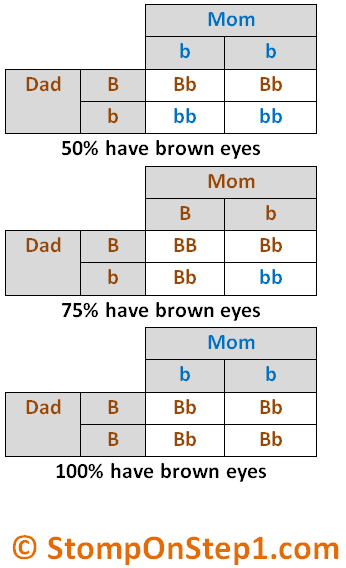
A Punnett square is a diagram used to predict the possible genetic outcomes of a cross between two parents.
It shows:
- Which alleles parents can pass on
- All possible allele combinations in the offspring
- The probability of each genotype and phenotype
In simple terms: 👉 Punnett square = a tool to predict inherited traits
2) Why Punnett squares are used
Punnett squares help us:
- Understand inheritance patterns
- Predict offspring traits
- Calculate genetic probabilities
- Visualize dominant and recessive traits
They are widely used in Biology 9–11 and genetics problems.
3) Basic terms you must know
- Gene: a segment of DNA controlling a trait
- Allele: different versions of a gene (e.g., A or a)
- Genotype: genetic makeup (AA, Aa, aa)
- Phenotype: observable trait (tall, short)
- Dominant allele: expressed if present
- Recessive allele: expressed only if both alleles are recessive
4) How to make a simple Punnett square (monohybrid cross)
A monohybrid cross looks at one trait.
Example:
Let A = dominant, a = recessive Both parents are heterozygous (Aa)
Steps:
- Draw a 2 × 2 grid
- Put one parent’s alleles across the top (A, a)
- Put the other parent’s alleles down the side (A, a)
- Fill in the boxes by combining alleles
Results:
- AA
- Aa
- Aa
- aa
Genotype ratio: 1 AA : 2 Aa : 1 aa
Phenotype ratio: 3 dominant : 1 recessive
5) Dihybrid Punnett square (two traits)
A dihybrid cross tracks two traits at once.
- Uses a 4 × 4 grid
- Each parent produces four types of gametes
- More combinations → more variation
Example traits:
- Seed color
- Seed shape
This is more advanced but follows the same logic.
6) Probability and Punnett squares
Punnett squares show likelihood, not certainty.
Example:
- 25% chance of aa
- 50% chance of Aa
- 25% chance of AA
Each offspring is an independent event, like flipping a coin.
7) Common mistakes (exam tips)
- Mixing up genotype vs phenotype
- Forgetting that dominant ≠ common
- Writing alleles incorrectly (capital vs lowercase)
- Thinking probabilities guarantee outcomes
中文(详细解释)
1)什么是潘尼特方格(Punnett square)
潘尼特方格是一种用来预测父母杂交后代遗传结果的表格图示。
它可以显示:
- 父母可能传递的等位基因
- 后代所有可能的基因组合
- 每种结果出现的概率
一句话: 👉 潘尼特方格 = 预测遗传性状的工具
2)潘尼特方格有什么用
潘尼特方格可以帮助我们:
- 理解遗传规律
- 预测后代性状
- 计算遗传概率
- 区分显性与隐性
是中学遗传学的核心工具。
3)必须掌握的基础术语
- 基因:控制性状的 DNA 片段
- 等位基因:同一基因的不同版本
- 基因型:基因组合(AA、Aa、aa)
- 表现型:外在性状
- 显性:只要有就表现
- 隐性:必须两个都有才表现
4)单因子杂交(最常见)
单因子杂交只研究一个性状。
例子:
A = 显性 a = 隐性 父母都是 Aa
步骤:
- 画一个 2 × 2 方格
- 父母的等位基因分别放在上方和左侧
- 依次填格子
结果:
- AA
- Aa
- Aa
- aa
基因型比例: 1 AA : 2 Aa : 1 aa
表现型比例: 3 显性 : 1 隐性
5)双因子杂交(进阶)
双因子杂交研究两个性状:
- 使用 4 × 4 方格
- 每个亲本产生 4 种配子
- 组合更多,变化更大
6)概率的意义
潘尼特方格显示的是概率,不是保证。
即使概率是 25%, 也不代表四个孩子一定有一个是这种性状。
7)常见考试错误
- 混淆基因型和表现型
- 认为“显性”=“更常见”(错误)
- 大小写不规范
- 把概率当作必然结果
一句话总结(双语)
- Punnett square = a tool to predict genetic outcomes
- 潘尼特方格 = 预测遗传结果的表格工具
如果你愿意,我可以下一步帮你做: ✔️ Biology 10 常考题逐步演示 ✔️ 单因子 vs 双因子对照表 ✔️ 可打印 / 可交互的 Punnett square 模板