The Climate Snow Job
Overall scientific credibility: 'very low' to 'low', according to 10 scientists who analyzed this article.

Find more details in the reply+annotations below and in Climate Feedback's analysis
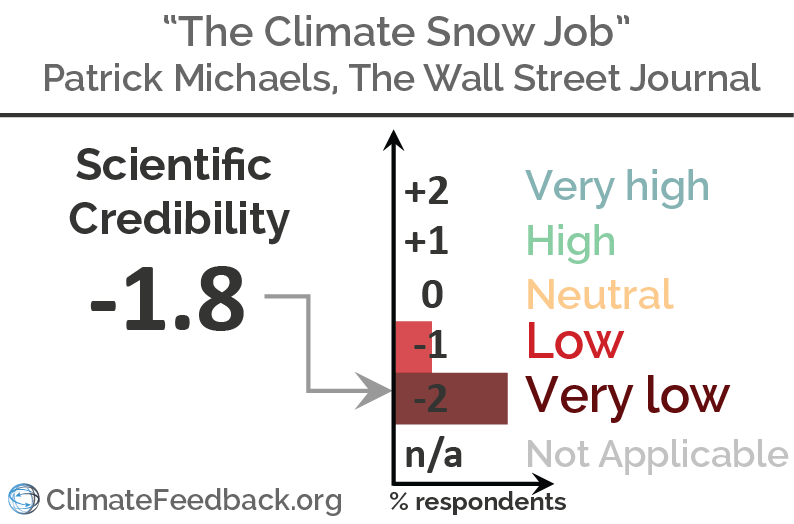
The Climate Snow Job
Overall scientific credibility: 'very low' to 'low', according to 10 scientists who analyzed this article.

Find more details in the reply+annotations below and in Climate Feedback's analysis
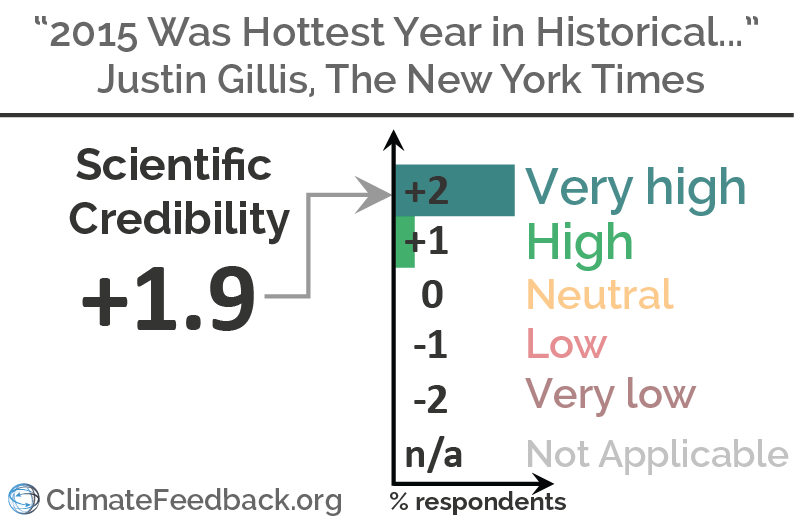
2015 Was Hottest Year in Historical Record, Scientists Say
Overall scientific credibility: 'very high', according to 8 scientists who analyzed this article.

Find more details in the reply+annotations below and in Climate Feedback's analysis
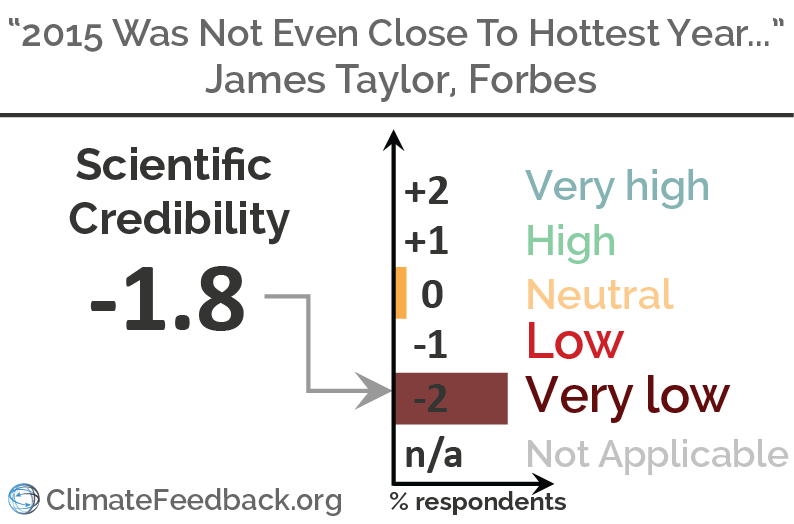
2015 Was Not Even Close To Hottest Year On Record
Overall scientific credibility: 'very low', according to 10 scientists who analyzed this article.

Find more details in the reply+annotations below and in Climate Feedback's analysis
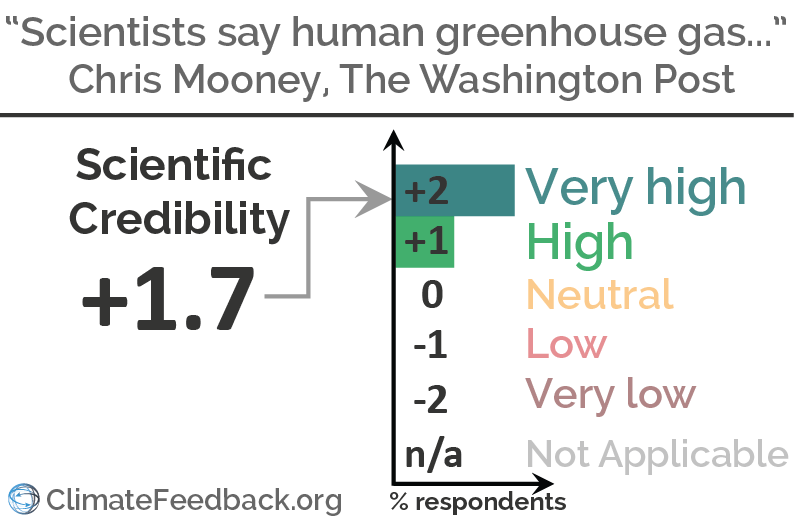
Scientists say human greenhouse gas emissions have canceled the next ice age
Overall scientific credibility: 'very high', according to 8 scientists who analyzed this article.

Find more details in the reply+annotations below and in Climate Feedback's analysis
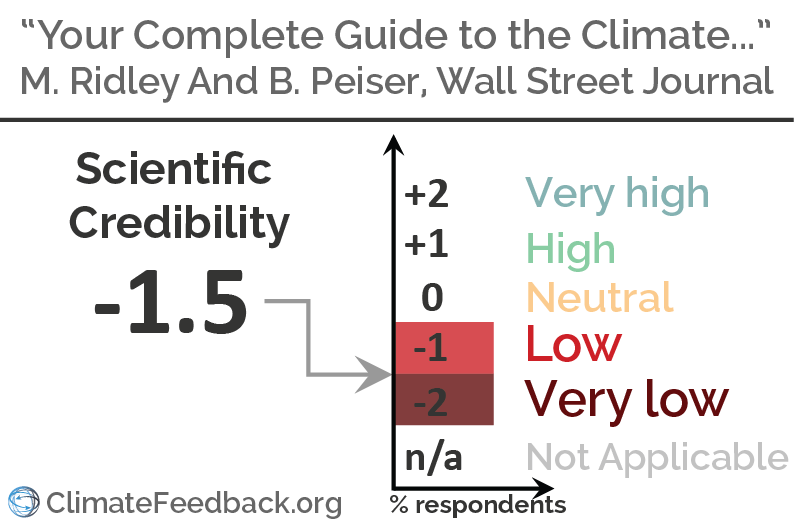
Your Complete Guide to the Climate Debate
Overall scientific credibility: 'very low' to 'low', according to 12 scientists who analyzed this article.

Find more details in the reply+annotations below and in Climate Feedback's analysis
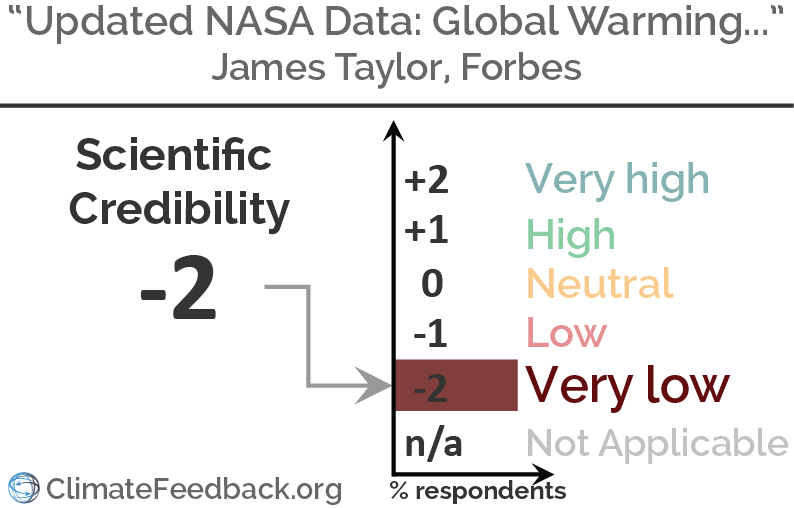
Updated NASA Data: Global Warming Not Causing Any Polar Ice Retreat
Overall scientific credibility: 'very low', according to 9 scientists who analyzed this article.

Find more details in the reply+annotations below and in Climate Feedback's analysis
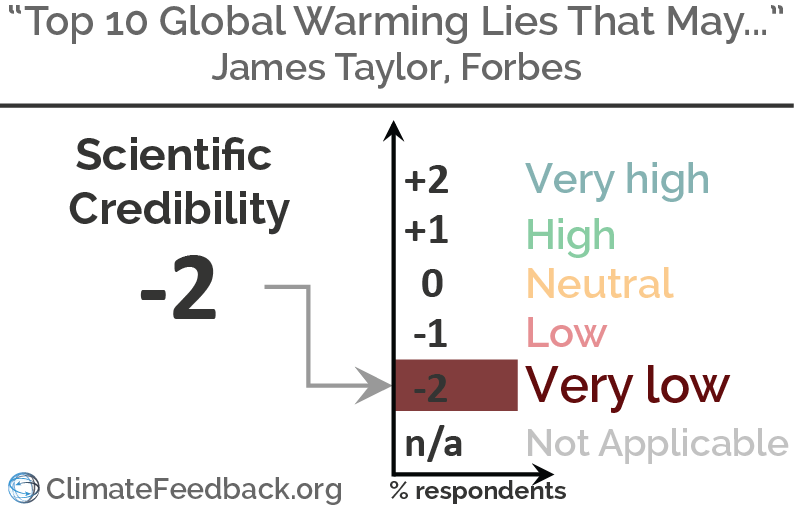
Top 10 Global Warming Lies That May Shock You
Overall scientific credibility: 'very low', according to 12 scientists who analyzed this article.

Find more details in the reply+annotations below and in Climate Feedback's analysis
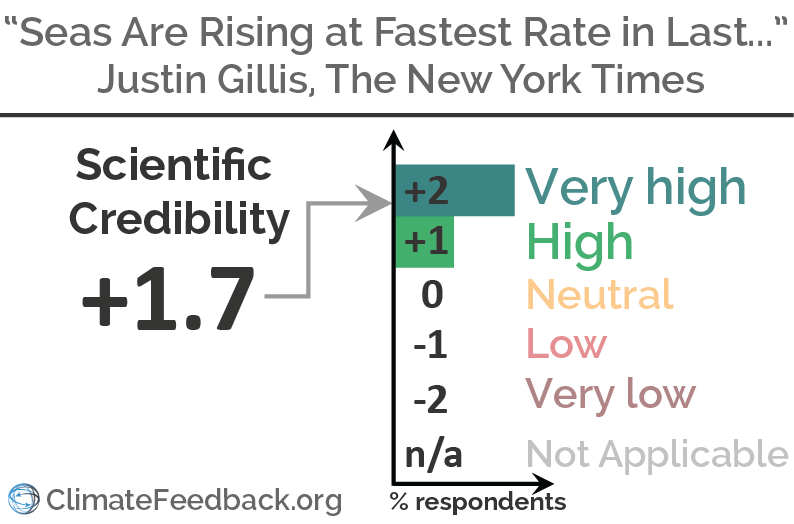
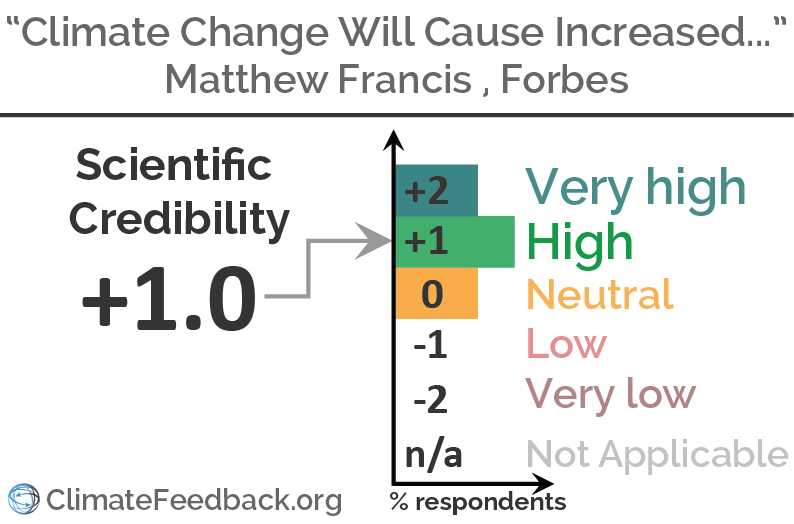
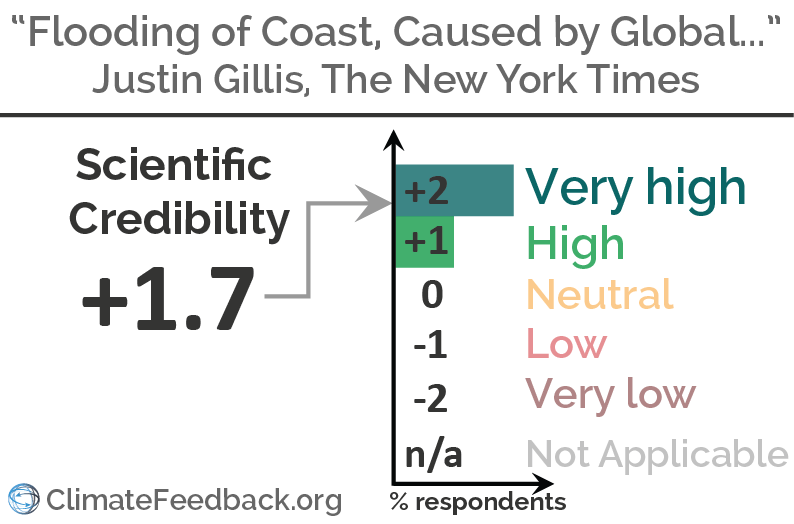
Climate Change Will Cause Increased Flooding In Coastal Cities
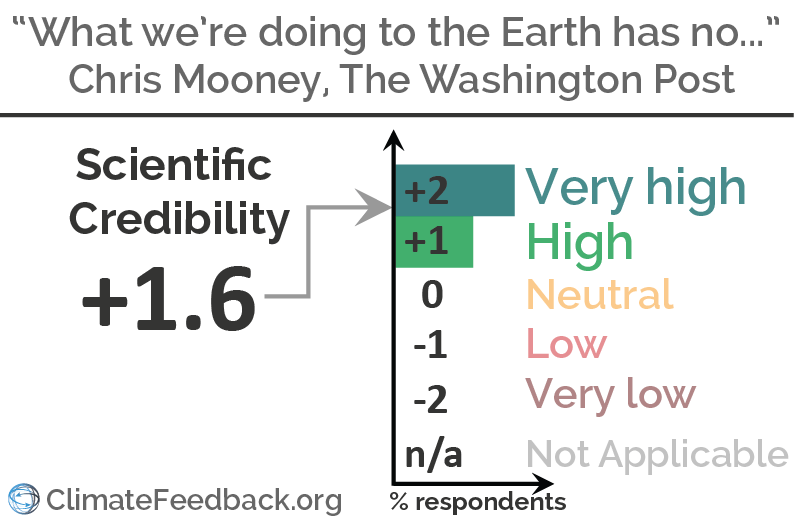
Overall scientific credibility: 'high', according to 6 scientists who analyzed this article.

Find more details in the reply+annotations below and in Climate Feedback's analysis
The vested interests at play mean the evidence we see from the research community isn’t always objective. So instead of allowing “experts” to determine the best course of action, why not ask the public? We could demand independent, objective evidence
Underplays the vast independent scientific research literature that is already out there.
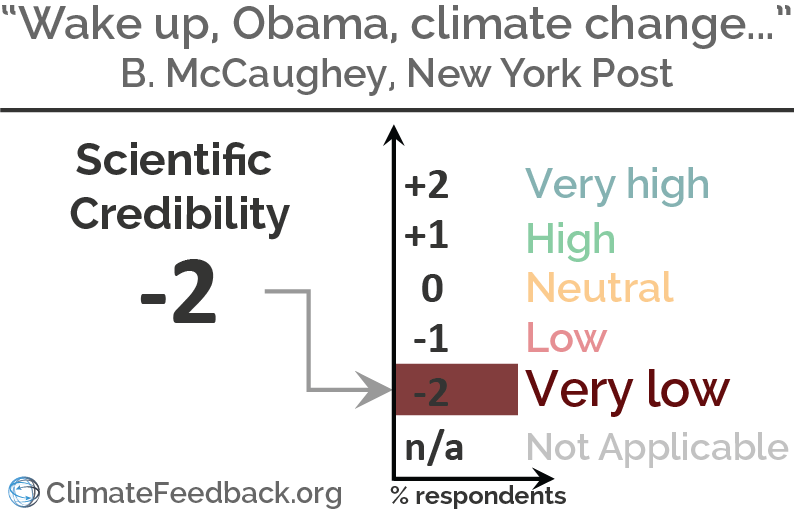
Wake up, Obama, climate change has been happening forever
Overall scientific credibility: 'very low', according to 9 scientists who analyzed this article.

Find more details in the reply+annotations below and in Climate Feedback's analysis
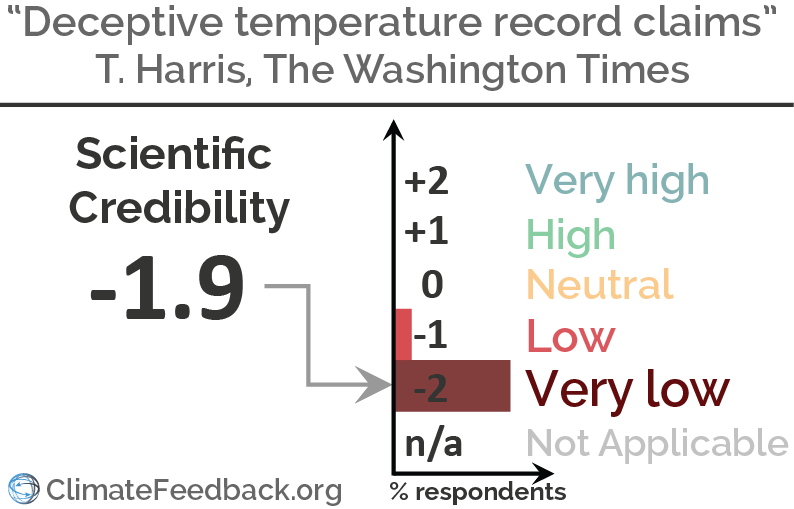
Deceptive temperature record claims
Overall scientific credibility: 'very low', according to 7 scientists who analyzed this article.

Find more details in the reply+annotations below and in Climate Feedback's analysis
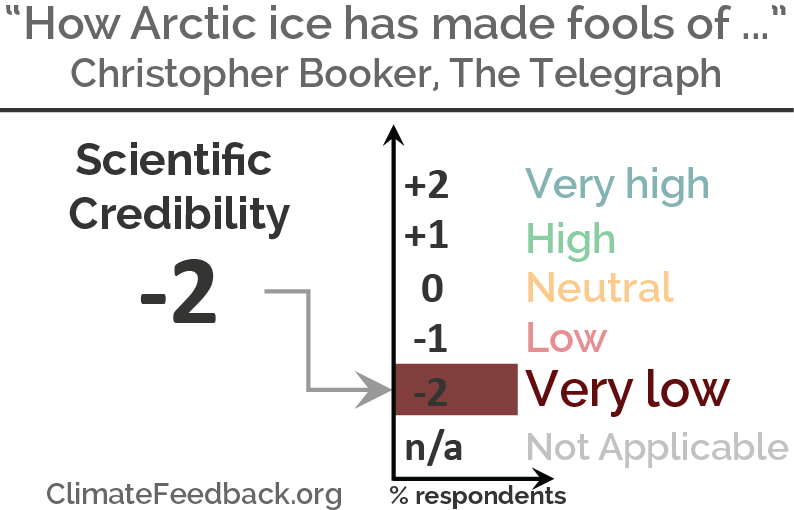
How Arctic ice has made fools of all those poor warmists
Overall scientific credibility: 'very low', according to the 8 scientists who analyzed this article.

Find more details in the reply+annotations below and in Climate Feedback's analysis
ENCYCLICAL LETTER LAUDATO SI’
Overall scientific credibility: 'high', according to the 9 climate scientists who analyzed this article.

Find more details in the reply+annotations below and in ClimateFeedback's analysis
FTT, as it applies to reasoning, is adapted from dual process models of human cognition. It differs from the traditional dual process model in that it makes a distinction between impulsivity and intuition—which are combined in System 1 according to traditional dual process theories—and then makes the claim that expertise and advanced cognition relies on intuition.[57] The distinction between intuition and analysis depends on what kind of representation is used to process information. The mental representations described by FTT are categorized as either gist or verbatim representations: Gist representations are bottom-line understandings of the meaning of information or experience, and are used in intuitive gist processing. Verbatim representations are the precise and detailed representations of the exact information or experience, and are used in analytic verbatim processing.
2014 Breaks Heat Record
Overall scientific credibility: 'high' to 'very high', according to 8 climate scientists who evaluated this article.

Find more details in the annotations below and here
jgdwyer:
This article accurately describes global warming and puts the news that 2014 is the hottest year on record into appropriate context. The article does a very good job of distinguishing between climate variability and climate change with helpful discussion on ENSO and the relatively cold temperatures in the Eastern United States (while staying within the bounds of the mainstream climate science understanding).
karmour:
Very good article overall. I do wish the author had fact checked the incorrect claim by Dr. Christy (that global temperatures have not changed since the end of the 20th century) prior to including his quote in the article.
aklocker:
Scientifically this article seems to be correct but it could be a bit more precise in some of its statements. One thing I like is that it mentions different opinions on some points where scientists do not agree rather than giving a biased story.
bmv:
This article does a good job of putting the 2014 temperature record in context with quotes from experts and good descriptions of relevant issues such as El Nino. References to "skeptics" were appropriately followed up by evidence of their misinterpretation/mischaracterization of the data.
aalpert:
This article provides an accurate and well supported evaluation of the finding that 2014 was the hottest year on record.
emvincent:
Overall, this article is fair in its representation of the 2014 temperature record event and in reminding the context of the long-term warming trend+natural climate variability.
alexis.tantet:
The quality of this article is overall higher than most newspaper articles on climate change as it avoids the usual pitfalls such as confusing year to year variability with long-term change. It also addresses issues prone to confusion, such as why eastern USA did not experience such a warm year as most of the globe, which can help the readers to put the science in perspective with the seasonal climate they have actually experienced. The fact that the article focuses mostly on the observational record and not on theoretical or modeling studies may be a weakness, but the scope of an article cannot be too broad.
Sobel, D. M. & Kirkham, N.Z. (2012). The influence of social information on children’s statistical and causal inferences. In F.Xu (Ed.). Rational constructivism in cognitive development.
Sobel, D. M., & Kirkham, N. Z. (2006). Blickets and babies: The development of causal reasoning in toddlers and infants. Developmental Psychology, 42, 1103-1115.
Sobel, D. M., & Kirkham, N. Z. (2007). Bayes nets and Babies: Infants’ developing representations of causal knowledge. Developmental Science, 10, 298-306.
Majority Reasoning: (Justice Blackmun) A. Rule: The State of Texas asserts it’s rule (a law banning all abortions) is furthered by 2 interests: (1) Protecting prenatal life and (2) the medical safety of woman. The court accepts these interests, but rejects Texas’s absolute rule because: 1. There are 2 counter-weighing interests of the woman: a. The woman has a privacy right grounded in a "penumbra" of Amendments 1, 4, 5, 9, 14, because "activities relating to marriage, procreation, family relationships, and child rearing and education" are "fundamental" and "implicit in the concept of ordered liberty." b. The woman also has an interest in avoiding possible severe physical and psychological harm if an abortion is denied. 2. Also, a fetus is not a "person" within the meaning of the constitution, so it doesn’t get protection as a person. 3. Therefore, a proper rule balances the interests of the state v. the interests of the woman: in the early stages of pregnancy, the woman has stronger interests than the state, but as a fetus becomes more advanced, the state interests in prenatal life and a woman’s health grow to be "compelling," thus overriding the woman’s interests. This results in a 3-part RULE (trimester framework) the court announces: a. first trimester of pregnancy: no/little state interest in regulating abortion, so most abortion regulations are invalid. b. second trimester: moderate state interest (medical health of woman) so most medical regulations are okay. c. third trimester: Compelling state interest (fetal viability) so can outlaw abortion except to save woman’s life. B. Application: Here (in this case) Texas’s law violates this framework, because it outlaws abortions not just in the third trimester, but also in the first and second trimesters of pregnancy.
Reasoning: This is the most important part of your brief as it describes why the court ruled the way it did; some law professors dwell on facts more than others, some more on procedural history, but all spend the most time on the court’s reasoning as it combines all parts of the case rolled in one, describing the application of the rule of law to the facts of the case, often citing other court’s opinions and reasoning or public policy considerations in order to answer the issue presented. This part of your brief traces the court’s reasoning step by step, so be sure that you record it without gaps in logic as well.
The testimony makes it manifest that he was a special police officer to some extent identified with the work of the prosecutor's office, and that position, upon well-settled grounds of public policy, required him to assist, at least, in the prosecution of offenders against the law. The services he rendered, in this instance, must be presumed to have been rendered in pursuance of that public duty, and for its performance he was not entitled to receive a special quid pro quo.
Court finds sufficient evidence to characterize this fellow as a public official.
His interaction with the prosecutor's office weighed in as a factor in suggesting he had a legal duty.
Since he is characterized within the rule as a public official, he cannot, as a matter of law, receive a reward for the performance of his duties.
Reasoning The reasoning gives the reader insight into how the court arrived at its decision. It is instructive in nature. Courts often back their holdings with several lines of reasoning, each of which should be summarized in this section. Unnecessary repetition of facts or the issue should be avoided. A court�s rationale for its holding might be a simple explanation of its thought process. Alternatively, the reasoning might be based on the plain language of the statute, Congressional intent, the re-enactment doctrine, or other common means of resolving judicial disputes.
Several lines of reasoning may be used to back the Court's holdings and may be:
Once you abandon entirely the crazy idea that the type of a value has anything whatsoever to do with the storage, it becomes much easier to reason about it. Of course, my point above stands: you don't need to reason about it unless you are writing unsafe code or doing some sort of heavy interoperating with unmanaged code. Let the compiler and the runtime manage the lifetime of your storage locations; that's what its good at.
Understanding what you should (and should not) reason about in the language you are using is an important part of good programming; and a language that lets you reason (nee worry) about only the things you need to worry about is an important part of a good programming language.