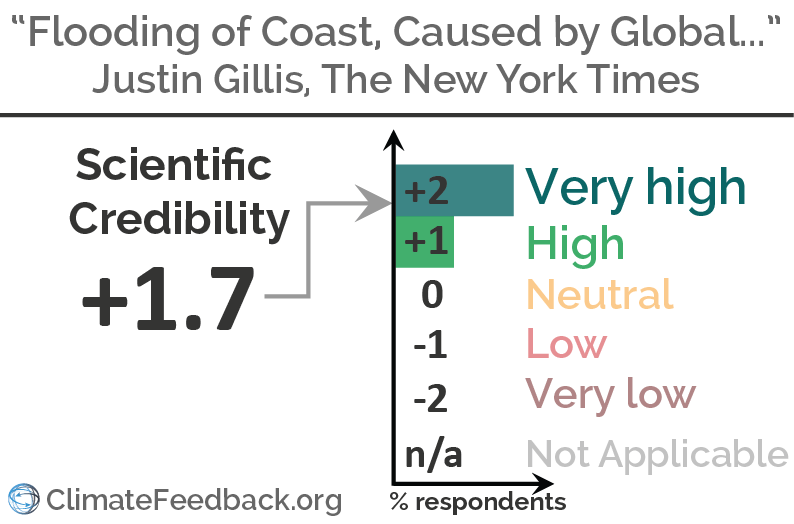
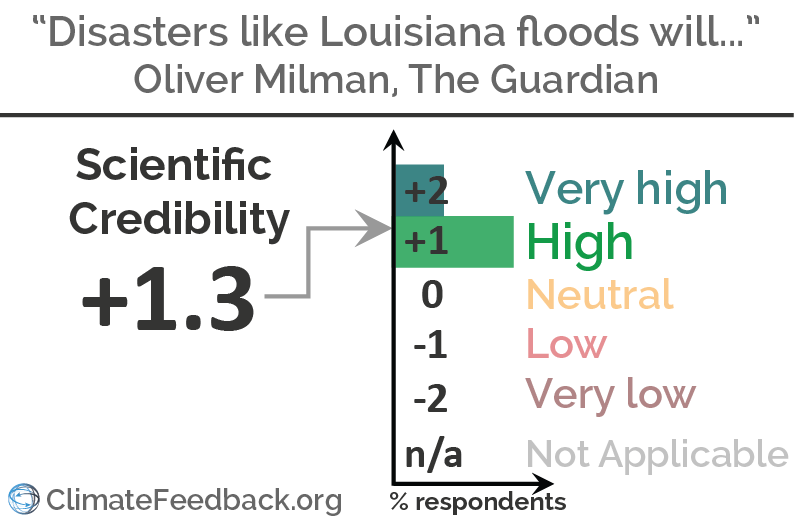
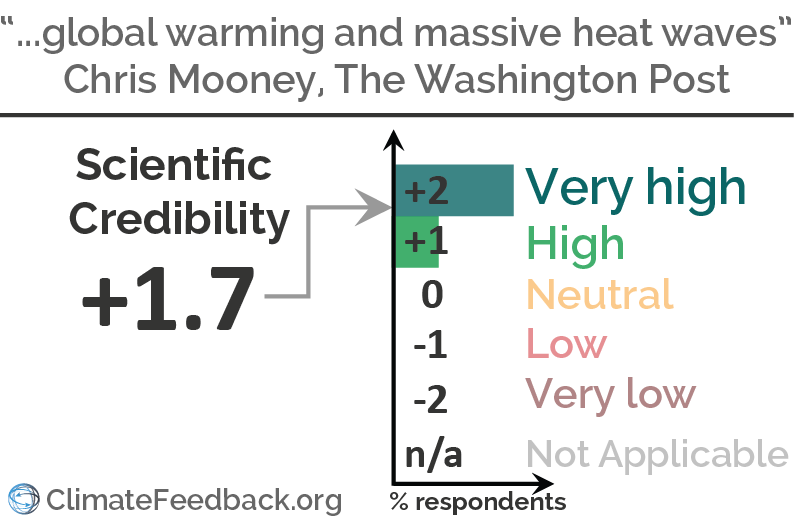
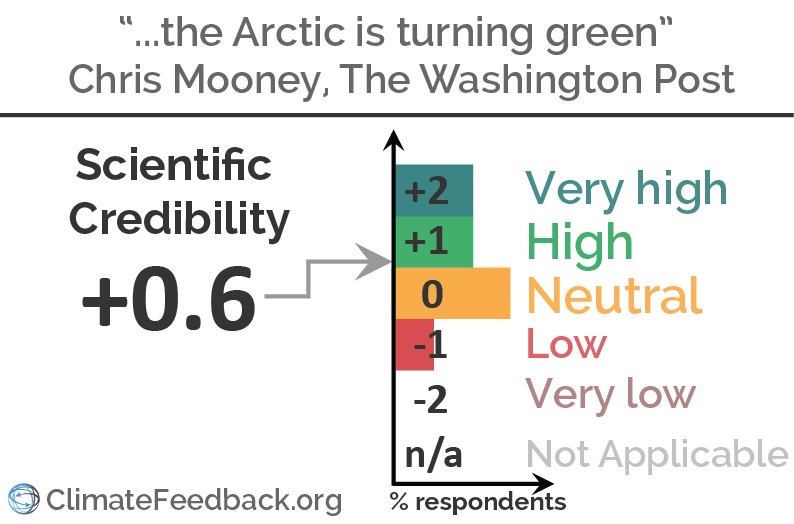
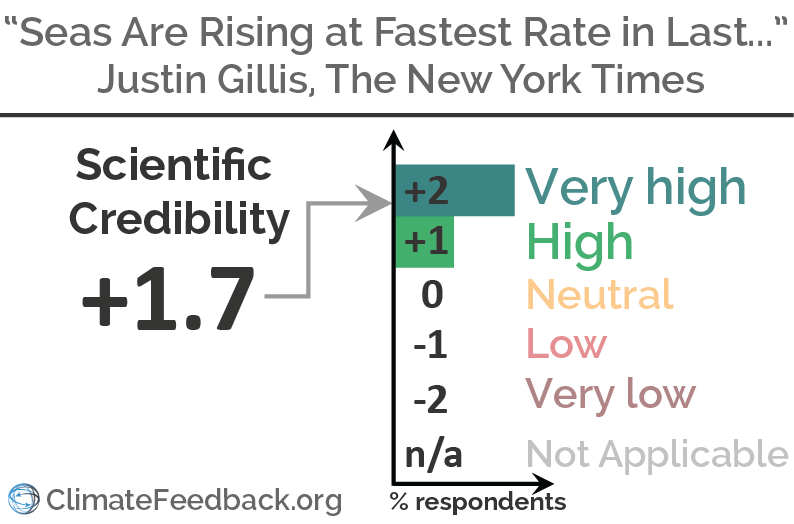
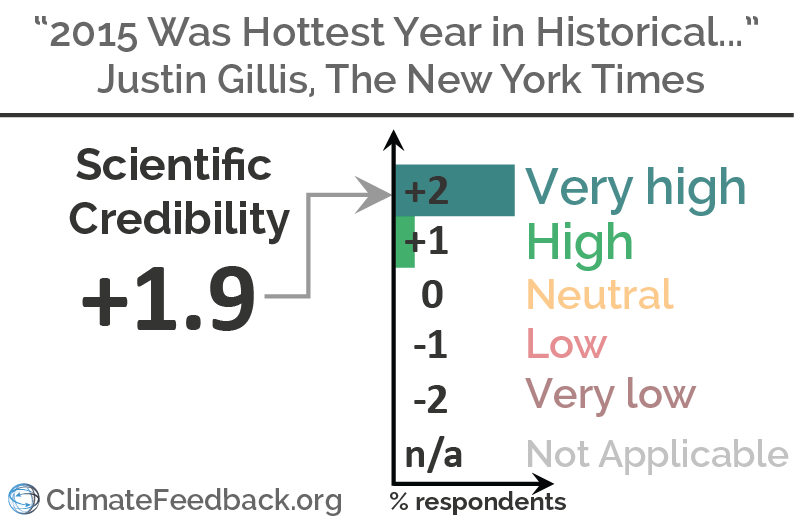
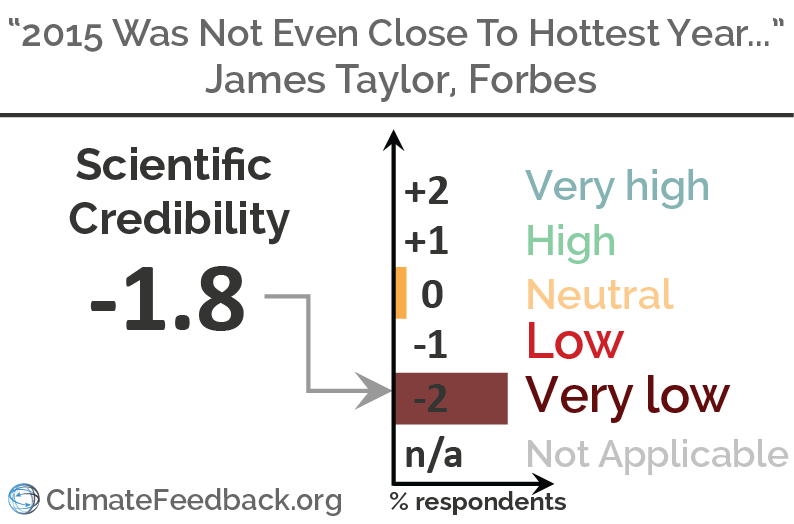
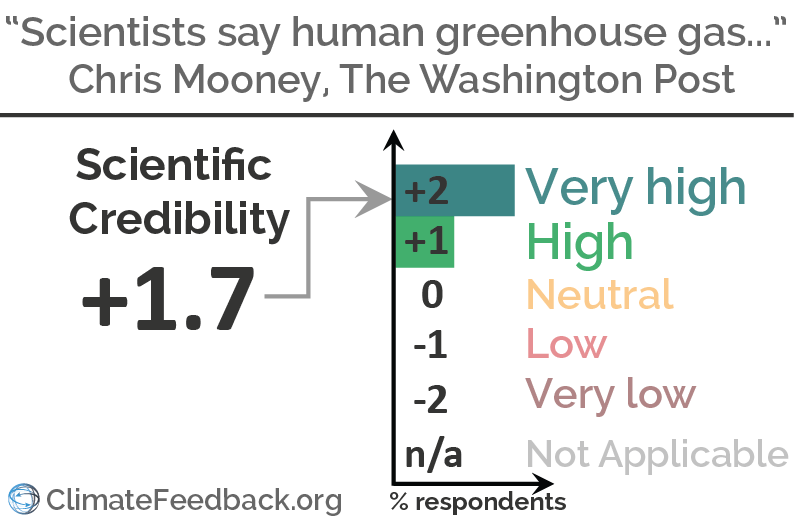
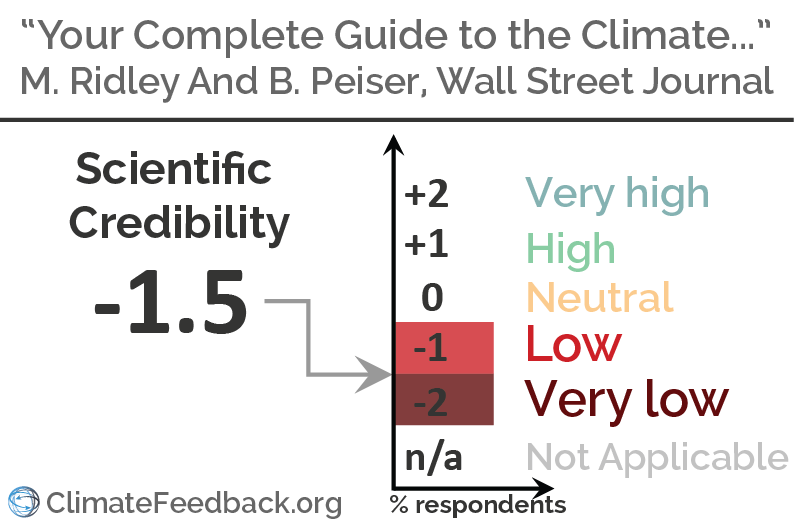
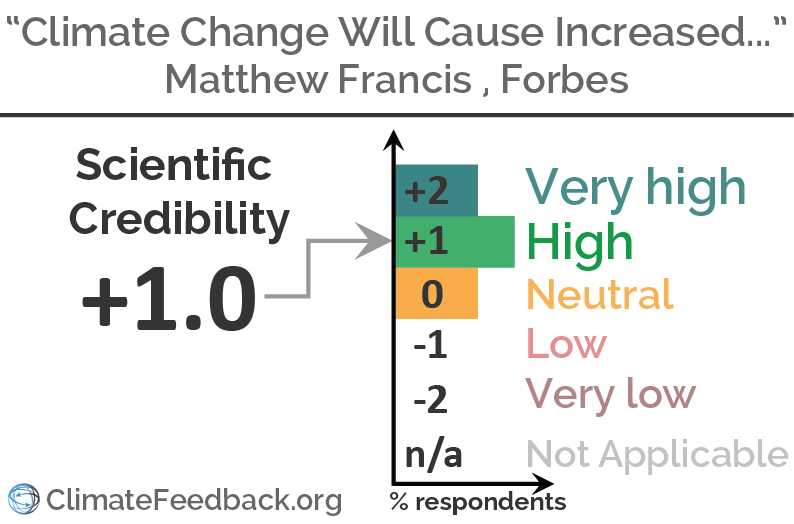
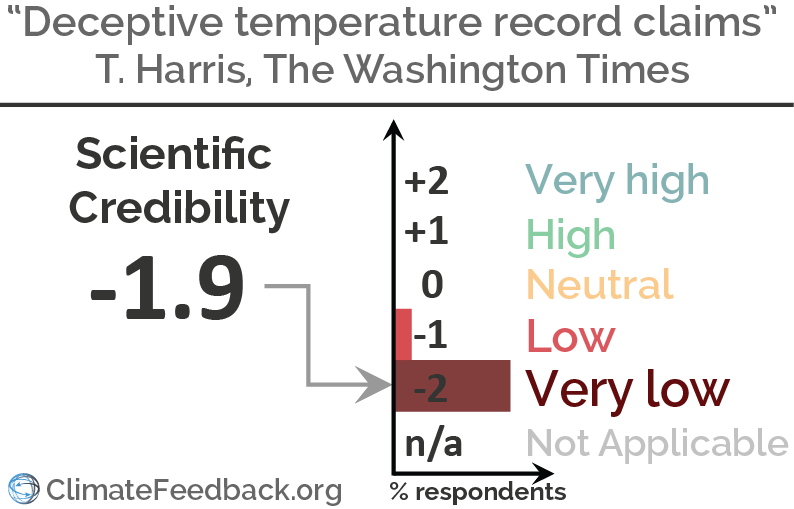
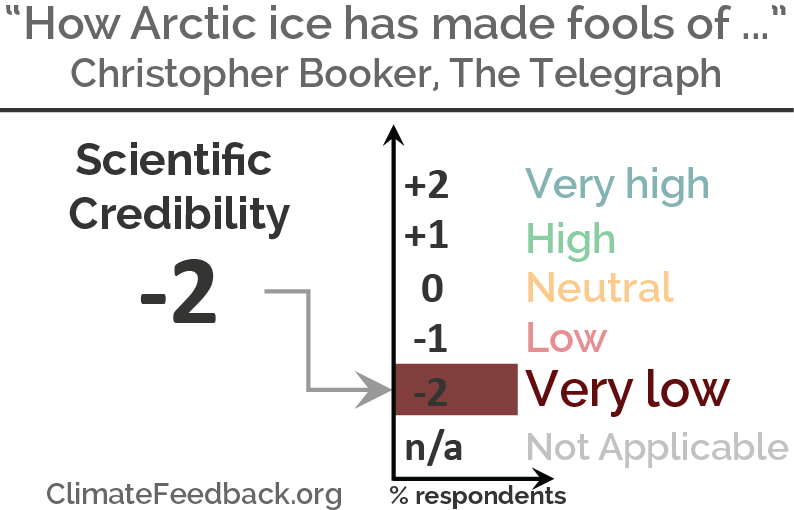
Overall scientific credibility: 'high' to 'very high', according to 8 climate scientists who evaluated this article.

Find more details in the annotations below and here
jgdwyer:
This article accurately describes global warming and puts the news that 2014 is the hottest year on record into appropriate context. The article does a very good job of distinguishing between climate variability and climate change with helpful discussion on ENSO and the relatively cold temperatures in the Eastern United States (while staying within the bounds of the mainstream climate science understanding).
karmour:
Very good article overall. I do wish the author had fact checked the incorrect claim by Dr. Christy (that global temperatures have not changed since the end of the 20th century) prior to including his quote in the article.
aklocker:
Scientifically this article seems to be correct but it could be a bit more precise in some of its statements. One thing I like is that it mentions different opinions on some points where scientists do not agree rather than giving a biased story.
bmv:
This article does a good job of putting the 2014 temperature record in context with quotes from experts and good descriptions of relevant issues such as El Nino. References to "skeptics" were appropriately followed up by evidence of their misinterpretation/mischaracterization of the data.
aalpert:
This article provides an accurate and well supported evaluation of the finding that 2014 was the hottest year on record.
emvincent:
Overall, this article is fair in its representation of the 2014 temperature record event and in reminding the context of the long-term warming trend+natural climate variability.
alexis.tantet:
The quality of this article is overall higher than most newspaper articles on climate change as it avoids the usual pitfalls such as confusing year to year variability with long-term change.
It also addresses issues prone to confusion, such as why eastern USA did not experience such a warm year as most of the globe, which can help the readers to put the science in perspective with the seasonal climate they have actually experienced.
The fact that the article focuses mostly on the observational record and not on theoretical or modeling studies may be a weakness, but the scope of an article cannot be too broad.