10 million Americans were involved in living communally.
What's happened to this culture? How do we bring it back?
10 million Americans were involved in living communally.
What's happened to this culture? How do we bring it back?
Etymology
According to Wiktionary, Etymology can be defined in three ways: 1. The study of the historical development of languages, particularly as manifested in individual words. 2. The origin and historical development of a word; the derivation. 3. An account of the origin and historical development of a word as presented in a dictionary or the like.
What are the similarities and differences between Etymology and Linguistics?
an interface between two binary program modules
也就是编译后的最终加载到内存的那些玩意,按道理其实这些才是应该我们手工写的。
Outline of academic disciplines
https://en.m.wikipedia.org/wiki/Outline_of_academic_disciplines
Broad area outline of academic disciplines - humanities - social science - natural science - formal science - applied science
Compare these with the original trivium and quadrivium or early humanities and arts and sciences designations.
Gardin worked with the organizations UNESCO and the European Atomic Energy Community in the 1950s to the 1960s, leading the creation of an indexing language, the SYNTOL (Syntagmatic Organization Language).
Jean-Claude Gardin (3 April 1925 - 8 April 2013) was a French archaeologist who is recognized as being one of the founders of archaeological computing.
Scientists with experience in animal cloning have encountered low rates of success per implantation, where cloned fetuses are often malformed and dead before birth. Regardless, people continue to be surprised that Clonaid appears to have overcome those problems; either Clonaid has been extremely lucky in discovering a superior method of cloning, or the company is making false claims
Another useful cite:
QUOTE "From what we can see now, it looks like a hoax," says Gerard Magill, PhD, director of the Center for Health Care Ethics at St. Louis Univer-sity. "They are not a scientifically reputable body and have yet to come forward with any data. Given the difficulty of the technology, it is extraordinarily unlikely they could accomplish such a goal." ...
QUOTE "All of the reports from cloning experiments describe a high incidence of late abortion or the birth of dead animals," said Randall Prather, MD, PhD, distinguished professor of reproductive biotechnology at the University of Missouri-Columbia, on Jan. 6. "When live cloned offspring have been produced, many have been subject to abnormalities that were apparent only after birth. These abnormalities include premature death at different ages, respiratory failure, absence of an immune response, and inadequate kidney function."
QUOTE Such problems are believed to be the a consequence of inappropriate gene expression resulting from incomplete "reprogramming" of the adult cell used in cloning, he continued. "There is absolutely no reason to expect the situation to be different in humans."
https://www.reliasmedia.com/articles/27340-experts-say-clonaid-isn-8217-t-likely-to-have-cloned-baby
He was featured as a backup on the National League All-Star Team in the Nintendo game R.B.I. Baseball.
I love that this trivia about R.B.I. Baseball is included on John Kruk's Wikipedia page. Makes me want to include a line about R.B.I. Baseball on all the other players' Wikipedia pages.
1952
That is a LONG time ago.
determine the caliphate; and another group led by Mu'awiya in the Levant, who demanded revenge for Uthman's blood. He defeated the first group in the Battle of the Camel; but in the end,
this is another post
The monastic practice of Lectio Divina was first established in the 6th century by Benedict of Nursia and was then formalized as a four-step process by the Carthusian monk Guigo II during the 12th century.[3] In the 20th century, the constitution Dei verbum of the Second Vatican Council recommended Lectio Divina to the general public and its importance was affirmed by Pope Benedict XVI at the start of the 21st century.
Traditionally, Lectio Divina has four separate steps: read; meditate; pray; contemplate. First a passage of scripture is read, then its meaning is reflected upon. This is followed by prayer and contemplation on the Word of God.
the Lisp machines were designed as personal workstations for software development in Lisp
The machine code - and the disassemble command that allows the introspection of it - is fascinating! We should be able to introspect every aspect of our computers in this fashion.
make expiation for the whole community and they would be forgiven.
This provides a prooftext justifying the use of first person plural commonly found in the Jewish liturgy.
And when a resident alien wanted to present an offering, the same law would apply.
This language, and other similar instances, are some of the bases of "equal protection under the law" in the broader context of Jewish jurisprudence.
Riemann integral instead of Lebesgue integral,
?
are too strong
?
Proof for Taylor's theorem in one real variable
和 同济教材 一样 证明 余项极限为0
Therefore, since it holds for k = 1, it must hold for every positive integer k.
leads cauchy form
leads to the same result than using the mean value theorem.
?
pplies for the Riemann integral assuming that f(k) is continuous
?
to absolute continuity of
? why use this
iyoshi Kuromiya (May 9, 1943 – May 10, 2000) was an American author and civil rights, anti-war, gay liberation, and HIV/AIDS activist. Born in Wyoming at the World War II–era Japanese American internment camp known as Heart Mountain,[1] Kuromiya became an aide to Martin Luther King Jr. and a prominent opponent of the Vietnam War during the 1960s.
hi there
In 1968, he resigned as Secretary of Defense to become President of the World Bank.
Similarly Paul Wolfowitz was U.S. Deputy Secretary of Defense running the U.S. war in Iraq before leaving to become the 10th President of the World Bank.
McNamara was the 5th President of the World Bank.
Among other things, Coryat's book introduced the use of the fork to England[3] and, in its support of continental travel, helped to popularize the idea of the Grand Tour that rose in popularity later in the century. The book also included what is likely the earliest English rendering of the legend of William Tell.
I can't remember what brought me to this page, but some fascinating culture hiding here.
This is so cool!
A complex system that works is invariably found to have evolved from a simple system that worked. A complex system designed from scratch never works and cannot be patched up to make it work. You have to start over with a working simple system.
Gall's Law is a rule of thumb for systems design from Gall's book Systemantics: How Systems Really Work and How They Fail.
It reminds me of the TCP/IP versus OSI network stack wars.
Gall's Law is a rule of thumb for systems design from Gall's book Systemantics: How Systems Really Work and How They Fail. It states: .mw-parser-output .templatequote{overflow:hidden;margin:1em 0;padding:0 40px}.mw-parser-output .templatequote .templatequotecite{line-height:1.5em;text-align:left;padding-left:1.6em;margin-top:0}A complex system that works is invariably found to have evolved from a simple system that worked. A complex system designed from scratch never works and cannot be patched up to make it work. You have to start over with a working simple system.
This feels like an underlying and underpinning principle of how the IndieWeb which focuses on working real world examples which are able to build up more complex systems instead of theoretical architecture astronomy which goes no where.
Reference: John Gall (1975) Systemantics: How Systems Really Work and How They Fail p. 71
Wikipedia carries the general disclaimer that it can be "edited by anyone at any time" and maintains an inclusion threshold of "verifiability, not truth". This editing model is highly concentrated, as 77% of all articles are written by 1% of its editors, a majority of whom have chosen to remain anonymous.[1][2]
This points to the problem of a large amount of work being attributed to a small amount of anonymous people. This would suggest that even if the facts are straight there is bound to be an amount of subjectivity meaning that the majority of articles are written with a similar worldview in mind. It may not effect the accuracy of work but it may affect was is and is not included in what is considered a comprehensive account on any given subject
Mean Value Theorem
think \(b-a\) in lagrange is \(\beta (t)-\alpha (t)\)
Mean value theorems and functional equations
also prove based on rolle
Kirshna's Real Analysis: (General).
prove based on rolle
Governor Ronald Reagan, who was coincidentally present on the capitol lawn when the protesters arrived, later commented that he saw "no reason why on the street today a citizen should be carrying loaded weapons" and that guns were a "ridiculous way to solve problems that have to be solved among people of good will." In a later press conference, Reagan added that the Mulford Act "would work no hardship on the honest citizen."
The Mulford Act was a 1967 California bill that prohibited public carrying of loaded firearms without a permit.[2] Named after Republican assemblyman Don Mulford, and signed into law by governor of California Ronald Reagan, the bill was crafted with the goal of disarming members of the Black Panther Party who were conducting armed patrols of Oakland neighborhoods, in what would later be termed copwatching.[3][4] They garnered national attention after Black Panthers members, bearing arms, marched upon the California State Capitol to protest the bill.
WTF!
continuous
needed by the extreme value theorem
then the right- and left-hand derivatives exist at every inner point
?
It is also the basis for the proof of Taylor's theorem.
~~?~~ https://www.math.cuhk.edu.hk/course_builder/1516/math1010c/Taylor.pdf
for every natural number n {\displaystyle n} , there exists an x n ∈ [ a , b ] {\displaystyle x_{n}\in [a,b]} such that f ( x n ) > n {\displaystyle f(x_{n})>n} .
similar to http://www-groups.mcs.st-andrews.ac.uk/~john/analysis/Lectures/L21.html
基于 sequence 性质
This defines a sequence {dn}.
主要 利用 Bolzano–Weierstrass theorem
Therefore, 1/(M − f(x)) is continuous on [a, b].
主要 利用 continuous 性质 推导出矛盾
first principles
?
主要利用supremacy
supremacy of M {\displaystyle M} and completes the proof.
? ~~应该是 f(s)~~
~~这句话表明 存在一个 supremum > f(s) 无限递归下去,f(s)=M~~
supremacy indicate \(\forall \epsilon>0,\exist x,f(x)\le M - \epsilon\) so contradicts
increases from f ( a ) {\displaystyle f(a)} to M {\displaystyle M} as x {\displaystyle x} increases from a {\displaystyle a} to b {\displaystyle b} .
关键点
from the supremacy of s {\displaystyle s}
relation with the following sentences ?
Suppose the contrary
always use this underlied thoughts
Proof using the hyperreals
说白了 就是 强行用 无穷小 证明
for all real x
based on infinitesimal
overlaps
cover
then all points between a {\displaystyle a} and e {\displaystyle e} also belong to B {\displaystyle B} .
通过 连续 的有限性性质
不断迭代 证明 有界
bounded on [ a , p ] {\displaystyle [a,p]} .
domain
supremum
?
we know that f ( x n k ) {\displaystyle f(x_{{n}_{k}})} converges
heine theorem
Gilbert Baker (artist)
Annotation by Gilbert Baker.
</br> “Numbered 001, this Rainbow LGBT flag created by Gilbert Baker is mounted on a white board in a black frame and includes the eight original colors from the 1978 San Francisco Pride Parade. The colors and their corresponding meanings are: hot pink - sex; red – life; orange – healing; yellow – sunlight; green – nature; turquoise - magic or art; indigo – serenity; and violet - spirit.” Baker gave this original, signed and numbered, hand-dyed cotton flag to President Obama on June 9th, 2016. Happy Pride! #Annotate22 152/365

 Image credit: National Archives.
established their reputation as a respected rock act
"respected"? Try "established their reputation as one of the best live acts in rock."
standard part function,
把无限小扔掉 可以理解为线性主部
This put to rest the fear that any proof involving infinitesimals might be unsound,
?
exists a number x ∈ A {\displaystyle x\in A} , such that x > s {\displaystyle x>s}
?
properties of the supremum
po also use continuity
there exists some
?
Maus criticized the American left-wing as inferior to its European counterpart
Unfortunately, America has a lot more to ask of its people now than do European countries... the social fabric is so, so different, and radical southern and eastern cultures, religious and otherwise, and a distrust of government (as an intrusive force that potentially obscures agency) is rampant here. Many European countries don't have these issues or have not faced them in the same radical ways; they pose very different roadblocks to policy success than exist in Europe today.
he politics of aesthetics [comes in]
What are the politics of aesthetics?
varies greatly along social, ethnic, and geographical lines
This is such an important key point.
Warm and pressurized regions in the Moon's interior might still contain liquid water
Lingam, M. and Loeb, A., 2020. Potential for liquid water biochemistry deep under the surfaces of the moon, mars, and beyond. The Astrophysical Journal Letters, 901(1), p.L11. Press release Could Live exist deep underground on Mars?
Nāgārjuna (approximately around 150 CE).[2]
middle way
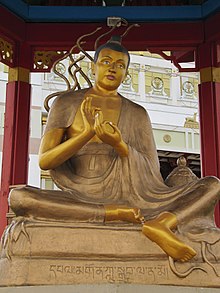
an inherent self-sufficiency that was not caused by something else.
inherent self-sufficiency
The MMK makes use of reductio arguments to show how all phenomena (dharmas) are empty of svabhava (which has been variously translated as essence, own-being, or inherent existence).
dharma void of inherent existence
projection
projection indicate orthonormalizing
rank-one linear maps
?
self-directed education, supported by intentional social relations in fluid informal arrangements
!- for : value prop : IndyWeb
**self-directed education
intentional social relations
fluid informal arrangement**
decentralized webs
it should be interpersonal webs =
"learning webs"
learning webs
Deschooling Society

Tools for Conviviality
!- for : value prop - (IndyHub|IndyDig)
!- for : feature : Forward Linking | IndyDig
https://hyp.is/xseHaN2cEeynld9RtxcOAA/subconscious.substack.com/p/second-subconscious
examplle of digital gardening on the margins
The TrailMark
!- for :
marks the target pages to include links to this page
think of it as future links, forward links
!- for : slogan - Social Annotation makes Digital Gardening Social
!- for : IndyAnnote !-- stub : IndyWeb intgrates socail annotations with digital gardening on the margins
additional notational conventions just made up recently
use Italic to write new content in this context to be used in the context indicated by the trailmarks '!- for :' ast the top of the annotation
use Bold for things that are really salient, keywords such like

Knowledge panel data
Knowledge Card

A desire path (often referred to as a desire line in transportation planning, and also known as a game trail, social trail, fishermen trail, herd path, cow path, elephant path, goat track, pig trail, use trail, and bootleg trail) is a path created as a consequence of erosion caused by human or animal traffic. The path usually represents the shortest or most easily navigated route between an origin and destination. The width and severity of erosion are often indicators of the traffic level that a path receives. Desire paths emerge as shortcuts where constructed paths take a circuitous route, have gaps, or are non-existent.
!- for : concept - TrailMark
its all trails
shortest
most easily navigable route between origin and destination

E-Prime
English Prime
Since 2005
I believe this section is important to include since Hurricane Katrina was such a devastating event.
Epidemics
I'm not sure if the coronavirus should be added to this section because it impacted the entire world.
Areas of the French Quarter and Central Business District, which were long oriented towards local residential and business uses, increasingly catered to the tourist industry.
This is interesting because the French Quarter is currently one of the biggest tourist attractions in the city of New Orleans.
In 1923 the Industrial Canal opened, providing a direct shipping link between Lake Pontchartrain and the Mississippi River.
During this time prohibition was going on in the United States. Due to the fact that New Orleans is known for drinking, my question is were speakeasies common during this time period?
The city was named in honor of the then Regent of France, Philip II, Duke of Orléans.
I noticed there's so much more French influence than Spanish influence.
The population of the city doubled in the 1830s with an influx of settlers.
This makes me question if the amount of epidemics that were spread in the city were caused by new settlers coming in.
The bayou flowed into Lake Pontchartrain. This became an important trade route. Archaeological evidence has shown settlement here dated back to at least 400 A.D.
It's incredible how they can date back this far in time.
The population of New Orleans and other settlements in south Louisiana suffered from epidemics of yellow fever, malaria, cholera, and smallpox, beginning in the late 18th century and periodically throughout the 19th century. Doctors did not understand how the diseases were transmitted; primitive sanitation and lack of a public water system contributed to public health problems, as did the highly transient population of sailors and immigrants.
This makes me wonder just how much faster did these epidemics spread due the large amounts of water in the state that multiple people had to access because of the lack of a public water system. I also want know if the amount of ports in the sate spread the diseases quicker due to foreign goods being imported and exported.
Hurricane Katrina
The last article lacked information about Hurricane Katrina but this one seems to list a good majority of its facts.
War of 1812
Why is the War of 1812 listed under the 19th century information?
Biloxi
When you click on the Biloxi link it goes to Biloxi, Mississippi. Could there possibly be an elaboration on why New Orleans replaced Biloxi and mention how Biloxi is now considered Mississippi?
With it being the largest city in the South at the start of the Civil War (1861–1865), it was an early target for capture by Union forces
The site started off strong with the first paragraph. I like how we were given some facts and also how New Orleans being a large port effected NOLA in that time.
The largest suburb today is Metairie, an unincorporated subdivision of Jefferson Parish that borders New Orleans to the west
Driving through metairie and New Orleans it looks like two different places.
The effort was a success and the disease was stopped before reaching epidemic proportions. President Theodore Roosevelt visited the city to demonstrate the safety of New Orleans. It has had no cases of Yellow Fever since.
This is a direct contradiction to New Orleans reaction to covid. It was one of the worst covid infested places in the u.s.
The political and commercial importance of New Orleans, as well as its strategic position,
The so-called strategic position of New Orleans back then has sure backfired in the long run.
The importance of New Orleans as a commercial center was reinforced when the United States Federal Government established a branch of the United States Mint there in 1838, along with two other Southern branch mints at Charlotte, North Carolina, and Dahlonega, Georgia. Although there was an existing coin shortage, the situation became much worse because in 1836 President Andrew Jackson had issued an executive order, called a specie circular, which demanded that all land transactions in the United States be conducted in cash,
Crazy thing is there is once again a coin shortage mixed with inflation. What a time to be alive and grown.
Much of the colonial population in early days was of the wildest and, in part, of the most undesirable character: deported galley slaves, trappers, gold-hunters
The author mentions that the people there were undesirable slaves as if they asked to be there.
With its rich and unique cultural and architectural heritage, New Orleans remains a major destination for live music, tourism, conventions, and sporting events and annual Mardi Gras celebrations. After the significant destruction and loss of life resulting from Hurricane Katrina in 2005, the city would bounce back and rebuild in the ensuing years.
You would think the government would have tried harder in the rehabilitation of New Orleans being that it is a major tour site.
White men led by officials of the territory formed militia companies to hunt down
I feel like to have a strong article, you should have more facts and be less general saying it was a white man is a little to general because during this time it was many white men
I think this is important information but should involve more statistics like how much were they paid or something.
Child labor at Lane Cotton Mill, 1913. Photo by Lewis Hine.
Child labor is a very huge thing back then. I remember reading how much it affected New York back then.
In 1897 the quasi-legal red light district called Storyville opened and soon became a famous attraction of the city.
The word quasi is used a lot throughout war history. Makes me think of many wars.
On September 14, 1874 armed forces led by the White League defeated the integrated Republican metropolitan police and their allies in pitched battle in the French Quarter and along Canal Street. The White League forced the temporary flight of the William P. Kellogg government, installing John McEnery as Governor of Louisiana.
The name Kellogg sounds familiar, but it makes me think of Frosted Flakes.
The city again served as capital of Louisiana from 1865 to 1880. Throughout the years of the Civil War and the Reconstruction period the history of the city is inseparable from that of the state. All the constitutional conventions were held here, the seat of government again was here (in 1864–1882) and New Orleans was the center of dispute and organization in the struggle between political and ethnic blocks for the control of government.
So what I’m reading is New Orleans use to be the capital of Louisiana. I wonder what changed then.
New Orleans Mardi Gras in the early 1890s.
Loved how this picture shows early Mardi Gras.
By 1840, the city's population was approximately 102,000 and it was now the third-largest in the U.S, the largest city away from the Atlantic seaboard as well as the largest in the South.[23]
The population growth back then was a huge number for them versus now.
Between 64 and 125 enslaved men marched from sugar plantations near present-day LaPlace on the German Coast toward the city of New Orleans.
Mind blowing that so many men were enslaved to work a plantation. Some of these plantations you can see today actually.
While Governor Claiborne and other officials wanted to keep out additional free black men, French Creoles wanted to increase the French-speaking population. As more refugees were allowed into the Territory of Orleans, Haitian émigrés who had gone to Cuba also arrived. Nearly 90 percent of the new immigrants settled in New Orleans.
Why was the governor at the time trying to keep those people out? I feel people deserve a different life and they were changing the population for the better.
From early days the city was noted for its cosmopolitan polyglot population and mixture of cultures. It grew rapidly, with influxes of Americans, African, French and Creole French (people of French descent born in the Americas) and Creoles of color (people of mixed European and African ancestry), many of the latter two groups fleeing from the violent revolution in Haiti.
With this many people coming in from different places caused much of a population change and even created something new. Creole is a very big thing in New Orleans.
On August 26, tracks which had previously indicated the hurricane was heading towards the Florida Panhandle shifted 150 miles (240 km) westward, initially centering on Gulfport/Biloxi, Mississippi and later shifted further westward to the Mississippi/Louisiana state line. The city became aware that a major hurricane hit was possible and issued voluntary evacuations on Saturday, August 27. Interstate 10 in New Orleans East and Jefferson and St. Charles parishes was converted to all-outbound lanes heading out of the city as well as Interstates 55 and 59 in the surrounding area, a maneuver known as "contraflow."
All the lanes on I-10 and I-55 were going out of the city and into Jackson and Baton Rouge.
In 1849 Baton Rouge replaced New Orleans as the capital of the state.
Baton Rouge is the current capital of Louisiana and the State Capitol building is one of the four highrise capitol buildings in the country. The other three states that have highrise State Capitol Buildings are: Florida, Nebraska, and North Dakota. I still say that the LA State Capitol looks like a normal historic office tower.
Two large lakes (in reality estuaries) in the vicinity, Lake Pontchartrain and Lake Maurepas, commemorate respectively Louis Phelypeaux, Count Pontchartrain, minister and chancellor of France, and Jean Frederic Phelypeaux, Count Maurepas, minister and secretary of state.
The Lake Pontchartrain Causeway is the longest 24-mile bridge in the country.
Throughout the 19th century, New Orleans was the largest port in the Southern United States, exporting most of the nation's cotton output and other products to Western Europe and New England.
I still say that today, the port of New Orleans still remains the largest in the US along with the ports of Corpus Christi, Mobile, and Miami.
t was adjacent to the trading route and portage between the Mississippi and Lake Pontchartrain via Bayou St. John, offering access to the Gulf of Mexico port of Biloxi without going downriver 100 miles; and it offered control of the entire Mississippi River Valley, at a safe distance from Spanish and English colonial settlements.[5][6][7]
Exporting & Importing is a forever lasting business. New Orleans using this to build their economy is why I think it flourished, so much so quickly. People saw the way this business connected them to networks all over the world. Increasing income flow and economic statues in New Orleans.
Two large lakes (in reality estuaries) in the vicinity, Lake Pontchartrain and Lake Maurepas, commemorate respectively Louis Phelypeaux, Count Pontchartrain, minister and chancellor of France, and Jean Frederic Phelypeaux, Count Maurepas, minister and secretary of state.
I'm currently learning about the functions of art. Of the six functions one is commemoration. While I don't think most people would consider lakes or geography in general to be art. The naming of these bodies of water maintains the same purpose and staying power that the creation of a mural or monument does.
I like the use of the parenthesis because it clarifies that the lakes aren't technically lakes at all. In general it's a reminder that ponds, lakes, rivers, oceans, and seas are used interchangeably although it's inaccurate.
The city's river levees narrowly escaped being topped in t
I've never heard of this flood before
Fifteen shops and 456 hotel rooms were demolished.
I think the article would definitely benefit from visual of the wreckage
December 14,
my birthday
all-outbound lanes
does this mean no one was could come into the city?
are $10 to 25 billion
that's crazy
Iberia Parish
I lived in New Iberia (Iberia Parish) at the time of Katrina
Half of these were senior citizens
No one ever really thinks about senior citizens in these situations
refused to leave home
I'll never understand why people do this.. like yes I understand this is your home where you raised your family but you and the house might end up being gone...
On the morning of October 12, 2019, a portion of the Hard Rock Hotel building at 1031 Canal Street collapsed during construction.[48] On August 29, 2021, Hurricane Ida made landfall in Louisiana, passing through New Orleans on the 16th anniversary of Hurricane Katrina. A citywide power outage and significant damage was reported.[49] The post-Katrina levee system successfully defended the city, but some suburbs without levees or where levees were still under construction flooded.
Most of this section could use some editing and rearranging but here, I'm wondering how they're able to repair these damages that happen so frequently. Although they have little to no resources, it's still logical to think about preventing or having a plan in place for these occurrences.
Some areas that initially seemed to suffer little from the storm found themselves flooded by rapidly rising water on August 30. As much as 80% of the city—parts of which are below sea level and much of which is only a few feet above—was flooded, with water reaching a depth of 25 feet (7.6 m) in some areas.
The specifics of the damages help put everything into perspective visually.
During the War of 1812, the British sent a large force to conquer the city, but they were defeated early in 1815 by Andrew Jackson's combined forces some miles downriver from the city at Chalmette's plantation, during the Battle of New Orleans. The American government managed to obtain early information of the enterprise and prepared to meet it with forces (regular, militia, and naval) under the command of Maj. Gen. Andrew Jackson. Privateers led by Jean Lafitte were also recruited for the battle.
Interesting to see that major battles centered around New Orleans never cause significant damage to the city itself
great demand for "fancy girls": young, light-skinned, good looking, sexual toys for well-to-do gentlemen.
Although this being a "demand" is disturbing, I'm not surprised.
In 1849 Baton Rouge replaced New Orleans as the capital of the state.
I agree with Kricha28, I also didn't know the capital because New Orleans is always the central topic of Louisiana.
African American History Alliance of Louisiana
This is my first time hearing this and I'm not exactly sure what it is.
The United States Army Corps of Engineers designed the levee and floodwall system incorrectly, and contractors failed to build the system in places to the requirements of the Corps of Engineers' contracts
So was it because the U.S Army Corps of engineers designed it wrong? Or was it because the contractors failed to follow design instructions?
In the 1920s an effort to "modernize" the look of the city removed the old cast-iron balconies from Canal Street, the city's commercial hub. In the 1960s another "modernization" effort replaced the Canal Streetcar Line with buses. Both of these moves came to be regarded as mistakes long after the fact, and the streetcars returned to a portion of Canal Street at the end of the 1990s, and construction to restore the entire line was completed in April 2004.
Modernizing much of New Orleans would be to rid itself of much of what gives it a unique experience. I wonder if that was taken in account when they chose to bring back the street cars.
two massive fires burned the great majority of the city's buildings. The Great New Orleans Fire of 1788 destroyed 856 buildings in the city
This makes me believe that nothing can be withheld for a substantial amount of time before it's destroyed.
New Orleans was founded in early 1718 by the French as La Nouvelle-Orléans, under the direction of Louisiana governor Jean-Baptiste Le Moyne de Bienville.
After being in New Orleans for over a year, this explains the French culture and background throughout the city.
Epidemics
No mention of the recent Covid-19 Virus? Seems strange to title a section Epidemics and not highlight the most recent and impactful one.
In 1849 Baton Rouge replaced New Orleans as the capital of the state
I think their should be a little bit more information on this matter. Maybe a little more information as to why that decision was made?
While the slave insurgency was the largest in U.S. history, the rebels killed only two white men. Confrontations with militia and executions after locally-held tribunals killed ninety-five black people
Notable that the largest slave revolt in U.S history wasn't necessarily the most violent.
Observers at the time and historians since believe there was an undercount and the true population was about 10,000.[13]
I wonder if it has to with the documentation of slave labor? Seeing as slaves were akin to cattle it would not be surprising if there were more that just weren't documented.
The priest-chronicler Pierre François Xavier de Charlevoix described New Orleans in 1721 as a place of a hundred wretched hovels in a malarious wet thicket of willows and dwarf palmettos, infested by serpents and alligators; he seems to have been the first, however, to predict for it an imperial future.
In terms of early settlements I'm sure most would have assumed that an area such as this one would have been one of the worst places to settle. Despite this it would flourish in later decades.
Throughout the 19th century, New Orleans was the largest port in the Southern United States, exporting most of the nation's cotton output and other products to Western Europe and New England. With it being the largest city in the South at the start of the Civil War (1861–1865), it was an early target for capture by Union forces.
Interesting that it was the largest city in the south for a while. A stark contrast from how it is now with Texas and Florida hosting a few cities larger than New Orleans now.
The French also built a small fort, "St. Jean" (known to later generations of New Orleanians as "Old Spanish Fort") at the mouth of the bayou in 1701, using as a base a large Native American shell midden dating back to the Marksville culture.[3] In 1708, land grants along the Bayou were given to French settlers from Mobile, but the majority left within the next two years due to the failure of attempts to grow wheat there.
It's odd to me that land grants were given in the first place but given who received them it makes sense. What doesn't make sense is that the land was obviously procured somehow. However, during what was apparently a seven year period no one did their due diligence to ensure that the land itself was suitable. In particular, the soil so that settlers would have stable ground to build on and healthy soil that would bear the fruit of their labor. I would have thought that by this point given the definition that was provided for midden that a basic inspection would have deemed the land poor.
*With that being said the land was given away to settlers whom I presume were from Mobile, Alabama. As a result it's likely they had no way of inspecting the land beforehand. Which could explain why the land was given away in the first place and to those specific recipients. To be frank the French settlers should have consulted or "befriended" (as history books would claim) the Native Americans to learn something before they decided to inhabit the land. But I digress.
known to the natives as Bayouk Choupique
I appreciate that an editor decided to include the name and spelling that Native Americans used for this Bayou.
The land mass that was to become the city of New Orleans was formed around 2200 BC when the Mississippi River deposited silt creating the delta region.
I wasn't expecting to read about the literal formation of the geography of the city. I just expected to read about the early history regarding White settlers and Native Americans.
Throughout the 19th century, New Orleans was the largest port in the Southern United States, exporting most of the nation's cotton output and other products to Western Europe and New England.
Given that New Orleans is located at the tip of the Mississippi River as evidenced by the map I attached below. It's easy to see how New Orleans was integral to the success of the cash crop during slavery.
Hoisting of American Colors over Louisiana. Painting depicting first raising of the USA flag with the Louisiana Purchase, in main plaza (now Jackson Square), New Orleans. Ceremony was December 20, 1803. Painting by Thure de Thulstrup on commission to commemorate centennial of the event. The painting has been praised for the research and historical accuracy which went into the period depiction. Painting is on display in the Cabildo Museum.
*Again I couldn't select the photo so I selected the text that describes the events being depicted in the photo.
I love that a piece of commissioned art was chosen to be the first image a reader sees when they begin reading this Wikipedia page. I also like how thorough the description is regarding the name of the artist, where the artwork is currently located, and the location of where the depicted events are taking place. Although the commissioned artist wasn't an American I appreciate that he specialized in war and naval history.
https://www.crt.state.la.us/louisiana-state-museum/collections/visual-art/artists/thure-de-thulstrup
They could have explain the shooting more that happen in 2003 at john mcdonough high school
An estimated 1 million people evacuated from Greater New Orleans
I have never realized the actual number of people that had to evacuate.
they viewed black woman as walking sex object on legs for men not actual person in society back then.
The situation worsened when levees on four of the city's canals were breached. Storm surge was funneled in via the Mississippi River Gulf Outlet, which breached in multiple places. This surge also filled the Industrial Canal which breached either from the surge or the effects of being hit by a loose barge (the ING 4727). The London Avenue Canal and the 17th Street Canal were breached by the elevated waters of Lake Pontchartrain. Some areas that initially seemed to suffer little from the storm found themselves flooded by rapidly rising water on August 30. As much as 80% of the city—parts of which are below sea level and much of which is only a few feet above—was flooded, with water reaching a depth of 25 feet (7.6 m) in some areas.
They are giving a lot of informative details about the damage the hurricanes caused.
The 2017 New Orleans tornado touched down in New Orleans East and left approximately 10,000 homes without electric power.[46] John Bel Edwards declared a state of emergency.[47] In 2018 LaToya Cantrell took office as Mayor of New Orleans, the first woman to do so. On the morning of October 12, 2019, a portion of the Hard Rock Hotel building at 1031 Canal Street collapsed during construction.[48]
This part of the article was put here to show more destruction that has happened in New Orleans after Katrina but it does not seem to be useful.
This gave the 19th-century city the shape of a crescent along a bend of the Mississippi,
I have always wondered how this shape happened.
For two decades the three Municipalities were essentially governed as separate cities, with the office of Mayor of New Orleans having only a minor role in facilitating discussions between municipal governments.
It is interesting to known that know that the city was split and governed differently.
Antebellum
reminds be of the movie Antebellum
African American History Alliance of Louisiana
haven't heard of this before
In 1795 and 1796, the sugar processing industry was first put upon a firm basis.
this was around the time the slave trade came about
New Orleans was founded in early 1718 by the French as La Nouvelle-Orléans, under the direction of Louisiana governor Jean-Baptiste Le Moyne de Bienville.
this explains the French food and language throughout the city
Since 2005
This part of the page is a little lacking because there is no way this is all the history of new orleans since 2005, there have been too many current events from 2022 alone thus far that can be looked into further
New Orleans was the biggest slave trading center in the country. In the 1840s, there were about 50 people-selling companies. Some whites went to the slave auctions for entertainment. Especially for travelers, the markets were a rival to the French Opera House and the Théâtre d’Orléans. The St. Louis Hotel#slave market and New Orleans Exchange held important markets. There was great demand for "fancy girls": young, light-skinned, good looking, sexual toys for well-to-do gentlemen.[25]
That's sick especially the demand for "fancy girls" like what?!
n 1849 Baton Rouge replaced New Orleans as the capital of the state. In
I went all this time thinking new orleans was the capital of louisiana ust because it's a major city in the state
, abolishing the Spanish
how did the city keep it's strong catholic presence?
In September 1722, a hurricane struck the city, blowing most of the structures down. After this, the administrators enforced the grid pattern dictated by Bienville but hitherto previously mostly ignored by the colonists. This grid plan is still seen today in the streets of the city's "French Quarter"
so the harsh weather conditions and natural disasters have been happening for centuries. I wonder how were they able to recover with the resources they had?
The history of New Orleans, Louisiana,
Before I start reading I think I have a fairly basic understanding of the history of new orleans because I like to just google stuff a lot but I did not know the major parts New Orleans played in the Civil Rights Movements which was so interesting learning.
New Orleans was the biggest slave trading center in the country. In the 1840s, there were about 50 people-selling companies. Some whites went to the slave auctions for entertainment. Especially for travelers, the markets were a rival to the French Opera House and the Théâtre d’Orléans.
This is a interesting topic, maybe going deeper into the slave trade and how New Orleans became the biggest slave trade center.
Since 2005[edit] While many residents and businesses returned to the task of rebuilding the city, the effects of the hurricane on the economy and demographics of the city are expected to be dramatic and long term. As of March 2006, more than half of New Orleanians had yet to return to the city, and there were doubts as to how many more would. By 2008, estimated repopulation had topped 330,000.[44][needs update] The New Orleans Saints won Super Bowl XLIV in the 2009 NFL season, bringing hope and joy to the city still recovering from Hurricane Katrina. In 2010 Louisiana Lieutenant Governor Mitch Landrieu won the mayor's race over ten other candidates with some 66% of the vote on the first round, with widespread support across racial, demographic, and neighborhood boundaries.[45] The 2017 New Orleans tornado touched down in New Orleans East and left approximately 10,000 homes without electric power.[46] John Bel Edwards declared a state of emergency.[47] In 2018 LaToya Cantrell took office as Mayor of New Orleans, the first woman to do so. On the morning of October 12, 2019, a portion of the Hard Rock Hotel building at 1031 Canal Street collapsed during construction.[48]
I feel as this put here out of the want to fill up the page, the main problem of this whole article is that information has no structure and it needs to be heavily updated.
Hurricane Katrina[edit] On August 29, 2005, an estimated 600,000 people were temporarily evacuated from Greater New Orleans when projected tracks of Hurricane Katrina included a possible major hit of the city. It missed, although Katrina wreaked considerable havoc on the Gulf Coast east of Louisiana.
This article has be updated so that it represents information about Hurricane Ida because it's the most recent hurricane not Katrina.
On April 14, 2003, the 2003 John McDonogh High School shooting occurred at John McDonogh High School.
Very blank and flavorless fact with little to none details.
In May 2002, businessman Ray Nagin was elected mayor. A former cable television executive, Nagin was unaligned with any of the city's traditional political blocks, and many voters were attracted to his pledges to fight corruption and run the city on a more business-like basis. In 2014 Nagin was convicted on charges that he had taken more than $500,000 in payouts from businessmen in exchange for millions of dollars' worth of city contracts. He received a 10-year sentence.[40]
Okay this information is fine but since it's the 21st century, there should be some talk about Mayor Cantrell.
In 1986, Sidney Barthelemy was elected mayor of the Crescent City; he was re-elected in spring of 1990, serving two terms.
What effect did this have on the city itself and so forth to lead to the next election?
On October 15, 1890, Chief-of-Police David C. Hennessy was shot, and reportedly his dying words informed a colleague that he was shot by "Dagos", an insulting term for Italians. On March 13, 1891, a group of Italian Americans on trial for the shooting were acquitted. However, a mob stormed the jail and lynched eleven Italian-Americans. Local historians still debate whether s
Why wasn't there a Law and Legislation subheading put in this article that way they wouldn't have to title this as "1890s" which is very vague.
Main articles: Third Treaty of San Ildefonso and Louisiana Purchase In 1800 Spain and France signed the secret Treaty of San Ildefonso stipulating that Spain give Louisiana back to France, although it had to remain under Spanish control as long as France wished to postpone the transfer of power. There was another relevant treaty in 1801, the Treaty of Aranjuez, and later a royal bill issued by King Charles IV of Spain in 1802; these confirmed and finalized the retrocession of Spanish Louisiana to France.
I feel as if this whole section right has content gaps because it exhibits small bits and pieces of the story, very much well underdeveloped. I feel like the editor tried to make up for it with hyperlinks. But it could be a lot more said here.
After the significant destruction and loss of life resulting from Hurricane Katrina in 2005, the city would bounce back and rebuild in the ensuing years.
I agree with @aconyers, Hurricane Katrina is not the most recent cause of damage to the city of New Orleans.
In September 1722, a hurricane struck the city, blowing most of the structures down.
Which hurricane there are so many! So maybe a hyperlink to which hurricane it is would be best instead of the simple definition of a hurricane.
Law's Mississippi Company collapsed, stopping the flow of investment money to New Orleans.[8] Nonetheless, in 1722, New Orleans was made the capital of French Louisiana, replacing Biloxi in that role.
So how did Biloxi come to be in Mississippi? Like was it not a part of the Louisiana purchase, so that's why it's considered a part of a different state?
Much of the 18th-century architecture still present in the French Quarter was built during this time, including three of the most impressive structures in New Orleans—St. Louis Cathedral, the Cabildo and the Presbytere. The architectural character of the French Quarter, including multi-storied buildings centered around inner courtyards, large arched doorways, and the use of decorative wrought iron, were ubiquitous in parts of Spain and the Spanish colonies,
It's interesting see how each ruler (Spain and French) had some sort of effect on the architecture, but when you think of New Orleans, you think more about its French background.
After the significant destruction and loss of life resulting from Hurricane Katrina in 2005, the city would bounce back and rebuild in the ensuing years.
It's still trying to bounce back and with Hurricane Ida being not that long ago, that just increased the time gap.
Damage to levees and cities along the Mississippi River adversely affected southern crops and trade for the port city for some time, as the government tried to restore infrastructure. The nationwide Panic of 1873 also slowed economic recovery.
As I read through this page, the amount of text that relates to levees breaking or being under construction is way too much.
With a relatively large educated black (including a self-described "Creole" or mixed-race) population that had long interacted with the white population, racial attitudes were comparatively liberal for the Deep South.
I'm really surprised by this. I kind of thought that all of the south was the same.
Following studies begun by the Drainage Advisory Board and the Sewerage and Water Board of New Orleans in the 1890s, in the 1900s and 1910s engineer and inventor A. Baldwin Wood enacted his ambitious plan to drain the city, including large pumps of his own design that are still used when heavy rains hit the city. Wood's pumps and drainage allowed the city to expand greatly in area.
It's interesting to see that some of New Orleans' greatest inventions had to do being able to drain the city. I don't think I've never seen drainage being included in history.
In 2014 Nagin was convicted on charges that he had taken more than $500,000 in payouts from businessmen in exchange for millions of dollars' worth of city contracts. He received a 10-year sentence.
It's one thing after another for this city.
On August 29, 2021, Hurricane Ida made landfall in Louisiana, passing through New Orleans on the 16th anniversary of Hurricane Katrina. A citywide power outage and significant damage was reported.[49] The post-Katrina levee system successfully defended the city, but some suburbs without levees or where levees were still under construction flooded.
I feel like the city should be more prepared for these types of things. If you know the city is susceptible to flooding and power outages so soon, I feel like they should be more prepared for the aftereffects of storms, so month long support to rebuild and regain power can be shortened,
In 1805, a census showed a heterogeneous population of 8,500, comprising 3,551 whites, 1,556 free blacks, and 3,105 slaves.
I wonder how many of those enslaved people were fee slaves mistaken for being enslaved.
In the final third of the Spanish period, two massive fires burned the great majority of the city's buildings. The Great New Orleans Fire of 1788 destroyed 856 buildings in the city on Good Friday, March 21 of that year.
Why is that as soon as the city is getting to a good standpoint, there is some form of sabotage to ruin it.
On October 27, 1768, a mob of local residents, spiked the guns guarding New Orleans and took control of the city from the Spanish.[44] The rebellion organized a group to sail for Paris, where it met with officials of the French government.
This shows and insightful turning point for what is the foundation of New Orleans and I feel like the spotlight should be on this topic more.
By 1731, the Natchez people had been killed, enslaved, or dispersed among other tribes, but the campaign soured relations between France and the territory's Native Americans leading directly into the Chickasaw Wars of the 1730s
I think that when writing article sometimes you can add too many facts and I believe this line add some type of emotion to the article so it not too structured.
Crime is an ongoing problem in New Orleans. As in comparable U.S. cities, the incidence of homicide and other violent crimes is highly concentrated in certain impoverished neighborhoods.
I love the recognition of the crime rate in New Orleans, but I believe the author should give reasons to why this is the case besides it just being highly concentrated in impoverished neighborhoods.
Catholicism is reflected in French and Spanish cultural traditions, including its many parochial schools, street names, architecture and festivals, including Mardi Gras.
I think this would have been a good place to give a short explanation of the origins of Mardi Gras.
On August 29, 2021, Hurricane Ida, a category 4 hurricane, made landfall in New Orleans, where the Hurricane Ida tornado outbreak caused damage.
I don't understand why such limited information was added. It took out the power of New Orleans for weeks. It greatly impacted the communities surrounding the city such as St. John Parish. I have childhood friends who couldn't live in their own homes for months after the damages of Hurricane Ida.
Thereafter, the city grew rapidly with influxes of Americans, French, Creoles and Africans. Later immigrants were Irish, Germans, Poles and Italians.
This definitely makes sense to me because my mother's family consists of African, French, German, and Irish backgrounds.
The Ursuline sisters after being sponsored by the Company of the Indies, founded a convent in the city in 1727.[42] At the end of the colonial era, the Ursuline Academy maintained a house of 70 boarding and 100 day students.
This interests me because I am familiar with Ursuline Academy high school. I wonder what other schools may have a connection to the Ursuline sisters.
The city has historically been very vulnerable to flooding, due to its high rainfall, low lying elevation, poor natural drainage, and proximity to multiple bodies of water. State and federal authorities have installed a complex system of levees and drainage pumps in an effort to protect the city.
This section is really important because it describes the natural landscape of New Orleans and what makes the city susceptible to natural disasters like Hurricane Katrina. The last sentence in particular is revealing because it addresses how the local and national government has attempted to respond to one of the city's most persistent threats. This is clearly a major issue because it kills citizens, damages the culture and infrastructure, and harms the economy.
Despite its role in the slave trade, New Orleans at the time also had the largest and most prosperous community of free persons of color in the nation, who were often educated, middle-class property owners.
This sentence is an interesting one. On one hand it seems like it should provoke joy in the reader because not every "person of color" was subjugated by way of slavery. However, even today it's clear that the term "person of color" is a gloss over term seemingly encompassing everyone who is non-white. As evidenced by the last two paragraphs under the section titled United States territorial era it's clear that even in the late 1700s/early 1800s the distinction was made between Black, Biracial, and White. This contradicts the majority of claims that people continue to make today regarding the so-called one-drop rule.
Additionally, earlier in this wikipedia page the settlement of Filipinos was listed as an event that began to occur in the 1760s. Although we know that Asians immigrants were a part of early America and have experienced many hardships. I unaware of their specific experiences in the general South or New Orleans specifically. Either way I wish the term "people of color" in this context was more defined.
The last significant snowfall in New Orleans was on the morning of December 11, 2008.
I liked this sentence because it really sums up the lack of seasons that exist in New Orleans. This is cool because the climate of an area affects tourism, culture, and the atmosphere that can be cultivated.
ens of thousands of residents who had remained were rescued or otherwise made their way to shelters of last resort at the Louisiana Superdome or the New Orleans Morial Convention Center. More than 1,500 people were recorded as having died in Louisiana
The site of people seeking help on top of buildings and their own homes is a sight that always sticks with me. I can say the city was destroyed, but the people came together stronger than ever at this time. Shows our resilience as a city which I love and it motivates me.
New Orleans has always had to consider the risk of hurricanes, but the risks are dramatically greater today due to coastal erosion from human interference.[116] Since the beginning of the 20th century, it has been estimated that Louisiana has lost 2,000 square miles (5,000 km2) of coast (including many of its barrier islands), which once protected New Orleans against storm surge. Following Hurricane Katrina, the Army Corps of Engineers has instituted massive levee repair and hurricane protection measures to protect the city.
One of the main causes of destruction with Hurricane Katrina was that the levees were destroyed which brought in more flooding. It is interesting because even though New Orleans is at greater risks to hurricanes there will probably never be one as destructive as Katrina again.
New Orleans is world-famous for its abundance of architectural styles that reflect the city's multicultural heritage. Though New Orleans possesses numerous structures of national architectural significance, it is equally, if not more, revered for its enormous, largely intact (even post-Katrina) historic built environment.
This is interesting because most of the French Quarter remained unflooded during Hurricane Katrina, while other parts of the city were left completely destroyed.
In the 20th century, New Orleans' government and business leaders believed they needed to drain and develop outlying areas to provide for the city's expansion. The most ambitious development during this period was a drainage plan devised by engineer and inventor A. Baldwin Wood, designed to break the surrounding swamp's stranglehold on the city's geographic expansion. Until then, urban development in New Orleans was largely limited to higher ground along the natural river levees and bayous.
This eventually lead to New Orleans becoming the victim of multiple floodings that still continue on even today.
After the Louisiana Purchase, numerous Anglo-Americans migrated to the city. The population doubled in the 1830s and by 1840, New Orleans had become the nation's wealthiest and the third-most populous city, after New York and Baltimore.[56]
New Orleans was once the nation's wealthiest city and now it is leading in highest poverty rates amongst big cities in America.
French policy-makers in Paris attempted to set political and economic norms for New Orleans. It acted autonomously in much of its cultural and physical aspects, but also stayed in communication with the foreign trends as well.
This is interesting because of the amount of French influence over the city of New Orleans. This includes the names of streets, businesses, and even in everyday lingo.
The slaves were collectively valued at half a billion dollars.
This is still beyond believable to me. Humans were seen as objects. I'll never get used to the narrative
The Revolt took place in what is now Natchez National Historical Park in Natchez, Mississippi.
This tidbit of information is nice because you're able to understand where a historical event took place. More so, this information could explain why the federal government protects and preserves the land today.
The colonists turned to African slaves to make their investments in Louisiana profitable. In the late 1710s the transatlantic slave trade imported enslaved Africans into the colony.
This information addresses a major part of the city's history because it ultimately made Louisiana a slave state. Additionally, the State of Louisiana was a member of the Confederate States of America. This is really important because the state obviously contributed to certain events in the American Civil War.
https://en.wikipedia.org/wiki/Bob%27s_your_uncle
I've been hearing this phrase more lately. Today was the third or fourth time in about two weeks.