College instructor turns to typewriters to curb AI-written work<br /> by [[Jocelyn Gecker]] | AP News<br /> accessed on 2026-03-31T08:39:49
28 Matching Annotations
- Last 7 days
-
apnews.com apnews.com
-
-
“I was so confused. I had no idea what was happening. I’d seen typewriters in movies, but they don’t tell you how a typewriter works,” said Catherine Mong, 19, a freshman in Phelps’ Intro to German class. “I didn’t know there was a whole science to using a typewriter.”
-
-
www.youtube.com www.youtube.com
Tags
Annotators
URL
- Mar 2026
-
www.youtube.com www.youtube.com
-
Mail Time March 2026<br /> by [[Joe Van Cleave]] on YouTube<br /> accessed on 2026-03-16T13:17:39
-
- Oct 2025
-
www.berkley-fishing.com www.berkley-fishing.com
-
https://www.berkley-fishing.com/collections/line-tools/products/line-counter
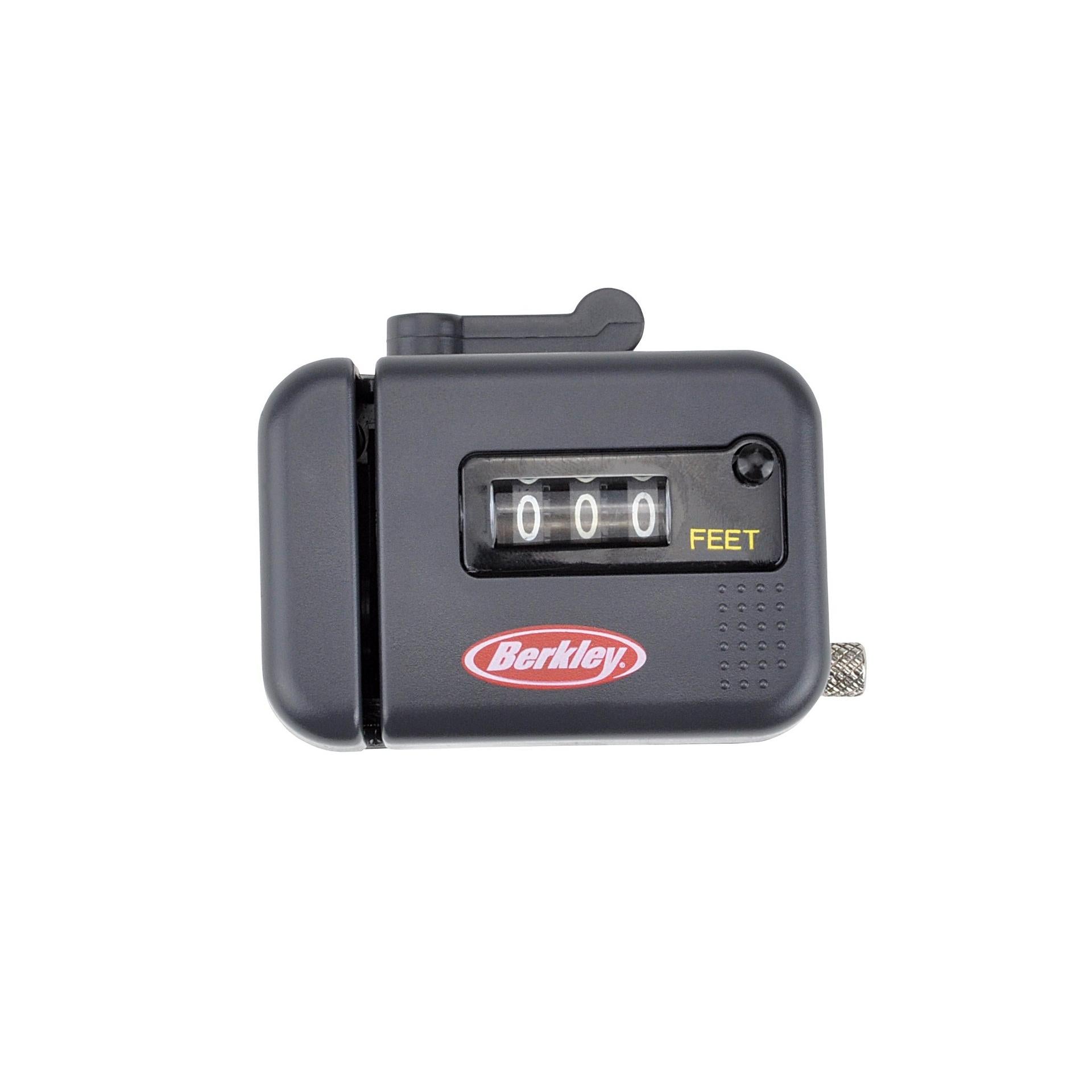
Off-label use of a line counter with typewriter ribbon length?
-
-
www.walmart.com www.walmart.com
-
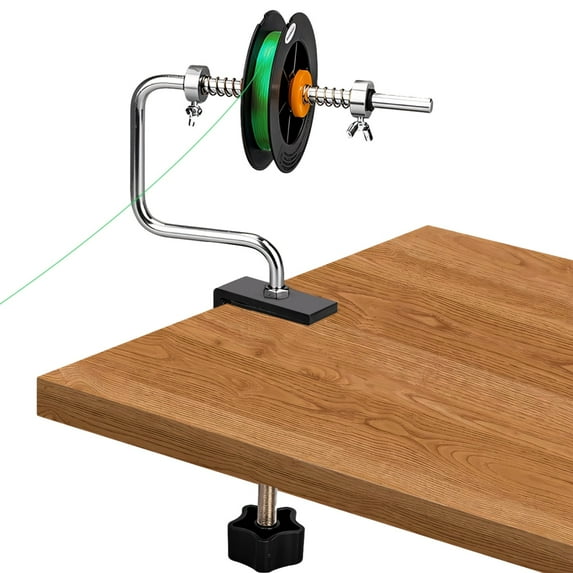
Off-label uses for linewinders as typewriter ribbon winders?
- https://www.walmart.com/ip/Fishing-Line-Winder-Spooler-Aluminum-Alloy-Spooling-Station-Adjustable-Rotating-Axis-Steel-Frame-Clamp-Workbench-Fishing-Line-Spooler-Machine-Multipl/17084510284?classType=REGULAR
- https://www.walmart.com/ip/Fishing-Line-Spoolers-Adjustable-Fishing-Line-Winders-Spoolers-Machine-Spinnings-Baitcasting-Reel-Spooling/17886252799?classType=VARIANT
- https://www.walmart.com/ip/Apooke-Spinning-Reel-Fishing-Line-Fishingline-Winder-Equipment-Winder-Spooler-Machine-with-Suction-Cup-Fishing-Line-Spooler/5648376830?classType=REGULAR
Tags
- typewriter spools
- typewriter ribbon winder
- linewinders
- fishing
- photos
- fishing line
- off-label use cases
Annotators
URL
-
-
www.trianglesport.com www.trianglesport.com
-
https://www.trianglesport.com/
Potential off-label use cases for their line winders with respect to spooling typewriter ribbon?
-
- Sep 2025
-
www.reddit.com www.reddit.com
-
Reddit Search for typewriter uses:<br /> https://www.reddit.com/r/typewriters/search/?q=typewriter+uses
Tags
Annotators
URL
-
-
www.reddit.com www.reddit.com
-
www.reddit.com www.reddit.com
-
reply to u/todddiskin at https://www.reddit.com/r/typewriters/comments/1nlodr0/how_do_you_use_your_machines/
Some various recent uses:
- I've got writing projects sitting in two different machines.
- I use one on my primary desk for typing up notes on index cards, recipes, my commonplace "book", letters, and other personal correspondence.
- I use a few of my portables on the porch in the mornings/evenings for journaling.
- One machine in the hallway is for impromptu ideas and poetry and an occasional bit of typewriter art.
- One machine near the kitchen is always gamed up for adding to the ever-growing shopping list.
- I'll often get one out for scoring baseball games.
- Participating in One Typed Page and One Typed Quote
- Typing up notes in zoom calls - I've got a camera mount over a Royal KMG that has its own Zoom account so people can watch the notes typed in real time.
- Labels for folders, index card dividers, and sticky labels.
- Addressing envelopes.
- Writing out checks.
- Typecasting
- Hiding a flask or two of bourbon (the Fold-A-Matic Remingtons are great for this)
- Supplementing the nose of my bourbon and whisky collection.
At the end of the day though, unless you're Paul Sheldon, typewriters are unitaskers and are designed to do one thing well: put text on paper. All the rest are just variations on the theme. 😁🤪☠️
see also: https://www.reddit.com/r/typewriters/search/?q=typewriter+uses
-
- Aug 2025
-
www.youtube.com www.youtube.com
-
Ray Bradbury's Rules to Writing: Don't Think!<br /> accessed on 2025-08-12T09:45:59
"...you must never think at the typewriter, you must feel." —Ray Bradbury
This also cleverly goes against the idea that "writing is thinking". Bradbury frames it as "writing is feeling" or "writing is being."
-
-
www.reddit.com www.reddit.com
-
Use and maintenance
The use and maintenance details you might be looking for: https://boffosocko.com/2025/06/06/typewriter-use-and-maintenance-for-beginning-to-intermediate-typists/
Typewriter Manuals
In case you need a manual: https://site.xavier.edu/polt/typewriters/tw-manuals.html Your specific manual may be helpful for the tiny specifics like where the carriage lock is or how to properly thread your ribbon, but all the "good" stuff may be in much older manuals for other machines, especially in the 1920s by which time most typewriter technology and features were roughly standardized. Later manuals became less dense as it was assumed that newer users had friends/family/teachers to show them the "missing manual" portions for how to use them.
Typewriter repair
If you need to or decide to (for fun) go down the repair rabbit hole: https://boffosocko.com/2024/10/24/learning-typewriter-maintenance-and-repair/
from reply to u/FarInsect3003 at https://reddit.com/r/typewriters/comments/1mggp8g/olivetti_lettera_32_uppercase_smudge/
-
- Jul 2025
-
archive.org archive.org
-
www.reddit.com www.reddit.com
-
in olden timey days, they taught more or less like this: hyphenate between syllables, in general, more than half the word should be on the first line. If the bell has gone off, then generally don’t start a long word. After the bell, there is room for 7, or 6 plus a hyphen. If your word is longer than that, save it for the next line. Use the margin release sparingly. For example, you might need a comma after the last word. ,
via u/LycO-145b2 at https://reddit.com/r/typewriters/comments/1m2vc8m/rules_for_endofline_hyphens/n3soefg/
-
Rules for end-of-line hyphens? by u/Heavyduty35
Back in the heyday of typewriters in the office books like Dougherty's Instant Spelling Dictionary were kept on the desks of most typists and secretaries for looking up words for hyphenating. Standard dictionaries also provide this functionality, but obviously tend to be 10x the length and size and take longer to look up words, so for doing this at greater speed, these spelling books were common tools in the office.
See: https://archive.org/details/texts?tab=collection&query=instant+spelling+dictionary
-
-
www.reddit.com www.reddit.com
-
reply to u/MarkC64 at https://reddit.com/r/typewriters/comments/1lyq6o8/smith_premier_model_50_60_help_needed_plz/ on typewriter manuals
While it's nice to have the exact manual for your typewriter or even something close enough, there isn't a huge amount of variability in typewriter functionality by the time your machine was built, so pick almost any manual you like and you're probably good to go: https://site.xavier.edu/polt/typewriters/tw-manuals.html
Because of the disparity in general knowledge as typewriters became more ubiquitous in society, manuals from the 1930s are going to have lots more detail in them than the manuals from the 1960s.
If you need more help on general usage and functionality try some of the films at: https://boffosocko.com/2025/06/06/typewriter-use-and-maintenance-for-beginning-to-intermediate-typists/
-
-
www.reddit.com www.reddit.com
-
it probably needs new feet too. I snagged a rubber urethane jeweler's pad off Amazon for $9 and it's enough for 4+ machines. Better than the $35 I saw online. The feet are just 1x1x1/2 in blocks. I cut them a hair big with a utility knife and many passes and sanded them to fit. Kinda messy.
-
-
www.reddit.com www.reddit.com
-
www.reddit.com www.reddit.com
-
That's an important question with several answers. Give it to someone as a gift. Give it to someone as a punishment. Store it in a safe place. Send it to a type pal. Give it to recycling. Rub yourself down with (mud? molasses? butter? beer? blood? snow?) and burn it in a bonfire. Throw it in the sea. Throw it in a volcano. Throw it in a hallway. Throw it in a drawer. Take a picture of it and submit it on one typed page. Type over it in another colour. Type over it in the same colour. Eat it. (The last should only be considered for very little amounts. Please use common sense.)
reply from u/andrebartels1977 to u/Electrical_Raise_345's question: "Hey what should I do with my type writing." at https://reddit.com/r/typewriters/comments/1lru709/hey_what_should_i_do_with_my_type_writing/
-
- Jun 2025
-
www.reddit.com www.reddit.com
-
https://www.reddit.com/r/typewriters/comments/1l8m84q/putting_the_imperial_back_into_service_again/
Use of a typewriter in inhospitable environments (cold, no cell service, remote)
-
-
incowrimo.org incowrimo.org
-
InCoWriMo is the short name for International Correspondence Writing Month, otherwise known as February. With an obvious nod to NaNoWriMo for the inspiration, InCoWriMo challenges you to hand-write and mail/deliver one letter, card, note or postcard every day during the month of February.
-
- May 2025
-
www.reddit.com www.reddit.com
-
https://www.reddit.com/r/typewriters/comments/1kzw0fk/your_typewriter_collection/?sort=old
-
reply to u/Back2Analog at https://old.reddit.com/r/typewriters/comments/1kzw0fk/your_typewriter_collection/?sort=old
-
Total: I currently have 53 with 2 incoming and 1 outbound. About 12 are standards, 7 ultra-portables, and the remainder are portables. Maybe a dozen non-standard typefaces including 2 Vogues and a Clarion Gothic. You can find most of the specifics at https://typewriterdatabase.com/typewriters.php?hunter_search=7248 or on my site at https://boffosocko.com/research/typewriter-collection/#My%20Typewriter%20Collection
-
Display: I've usually got eight displayed in various places around the house including three on desks, but ready to actively type on. The remainder are in cases either behind our living room couch or a closet for easy access and rotation. I'm debating a large credenza or cabinet for additional display/storage space. There are two machines out in the garage, and one currently disassembled on our dining room table (my wife isn't a fan of this one right now).
-
About 25 have been cleaned and mostly restored, most are functional/usable, but need to be cleaned, repaired, or restored to some level. One is a parts machine. I always have a Royal KMG, a Royal FP, and two other standards out ready to go and rotate the others on a semi-weekly basis. There's usually at least one portable in my car for typing out in the wild.
-
Use cases: I spend a few hours a day writing on one or more machines and use them for nearly every conceivable case from quick notes (zettels), letters, essays, lists, snide remarks, poetry, etc., etc. I should spend more time typing for the typosphere. Because I enjoy restoring machines maybe even more than collecting them, I've recently started taking mechanic/restoration commissions.
-
At 50 machines, I'm about at the upper limit of my collecting space. I've given away a few to interested parties, and sold a small handful that I didn't use as frequently. I'm currently trying to balance incoming versus outgoing and might like to get my collection down to a tighter 35-40 machines in excellent condition.
-
Next typewriters: I'm currently looking for an Olympia SG1, a Royal Ten, a Hermes Ambassador, and a Hermes 3000. I'm also passively looking for either very large (6 or 8 CPI) or very small typefaces (>12CPI). I'm definitely spending less time actively hunting these days and more time restoring. I'm tending towards being far more selective in acquisitions compared to my earlier "acquisition campaign".
-
Miscellaneous: I enjoy writing about typewriter collecting and repair to help out others: https://boffosocko.com/research/typewriter-collection/
-
-
Writing letters mostly to people from InCoWriMo or (more frequently) TypePals.com I often will write short stories for my kids or journaling entries, though I have been writing more journal entries with fountain pens these days.
via u/brianlpowers at https://www.reddit.com/r/typewriters/comments/1kzw0fk/your_typewriter_collection/?sort=old
-
- Apr 2025
-
www.reddit.com www.reddit.com
-
I’m so excited by the wide carriage, I use my typewriter to edition prints and drawings, and I’m so excited to be able to edition larger ones now.
https://www.reddit.com/r/typewriters/comments/1k6zfvl/help_with_id_i_cant_find_anything_online/
via u/Pinkbumblebee-666
-
-
thirty81press.com thirty81press.com
-
www.reddit.com www.reddit.com
-
Mathematics with Typewriters
What you're suggesting is certainly doable, and was frequently done in it's day, but it isn't the sort of thing you want to subject yourself to while you're doing your Ph.D. (and probably not even if you're doing it as your stress-releiving hobby on the side.)
I several decades of heavy math and engineering experience and really love typewriters. I even have a couple with Greek letters and other basic math glyphs available, but I wouldn't ever bother with typing out any sort of mathematical paper using a typewriter these days.
Unless you're in a VERY specific area that doesn't require more than about 10 symbols, you're highly unlikely to be pleased with the result and it's going to require a huge amount of hand drawn symbols and be a pain to add in the graphs and illustrations. Even if you had a 60's+ Smith-Corona with a full set of math fonts using their Chageable Type functionality, you'd spend far more time trying to typeset your finished product than it would be worth.
You can still find some typewritten textbooks from the 30s and 40s in math and even some typed lecture notes collections into the 1980s and they are all a miserable experience to read. As an example, there's a downloadable copy of Claude Shannon's master's thesis at MIT from 1940, arguably one of the most influential and consequential masters theses ever written, that only uses basic Boolean Algebra and it's just dreadful to read this way: https://dspace.mit.edu/handle/1721.1/11173 (Incidentally, a reasonable high schooler should be able to read and appreciate this thesis today, which shows you just how far things have come since the 1940s.)
If you're heavily enough into math to be doing a Ph.D. you not only should be using TeX/LaTeX, but you'll be much, much, much happier with the output in the long run. It's also a professional skill any mathematician should have.
As a professional aside, while typewriten mathematical texts may seem like a fun and quirky thing to do, there probably isn't an awful lot of audience that would appreciate them. Worse, most professional mathematicians would automatically take a typescript verison as the product of a quack and dismiss it out of hand.
tl;dr in terms of The Godfather: Buy the typewriter, leave the thesis in LaTeX.
a reply to u/Quaternion253 RE: Typing a maths PhD thesis using a typewriter at https://reddit.com/r/typewriters/comments/1js3cs5/typing_a_maths_phd_thesis_using_a_typewriter/
-
-
www.reddit.com www.reddit.com