his is because religion is thetwin of modern science
?
his is because religion is thetwin of modern science
?
ng, ‘religion’ (for example as opposed to secularism), highlights the very modern, very global,
I do think a real point is raised here: that it is only in a modern, secular world that we are able to have the "study of religion." Yet I am skeptical of the idea that this means religion itself is also a modern phenomenon.
any, perhaps even most or all,people who practice a religion today have some understanding of themselves as doing thisbroader, second order thing, ‘religion’, and this would seem perfectly natural to us
Maybe, but ofc the Evangelical "relationship, not religion" people.
Even a distinctionsuch as that between Christianity and ‘Heathenism’, for example, could have been made withoutrecourse to the general category of religion
But what about Christianity vs. atheism or "superstition"?
‘religion’
A monk definitely would! And early Christians have terms (θρησκεία, θεοσέβεια) that can certainly be translated as "religion."
Religion, in other words, is the product of contingency, anaccident.
Is it? This assumes a lot about the causality of these "definite historical circumstances." Augustine or Pascal, for instance, would disagree, as would any "natural theologian."
That ‘religion’ is a thoroughly modern phenomenon (perhaps even an epiphenomenon ofmodernity), one whose history is necessarily tied up with the study of religion. There wasno chemistry before there were chemists, and there was no religion before there werescholars of religion.
This seems like a category error to me. There have always been religious people, it seems, and even the discipline of studying religious practice goes pretty far back. Yet chemists are the one doing chemistry.
uncovered
Not so much uncovered as assumed.
hey nevertheless remainsdistinct regions of human experience.
This assumes a lot about the audience/who is studying religion.
we understandimplicitly
Do we?
But is it not the case that in our average understanding religion and science are so oftenopposed, or if not outright opposed, then somehow at odds?
"Average understanding"? Maybe to a post-Enlightenment European, but even many of those see no opposition.
At this point, we might feel equally compelled to ask, “what isreligion?”
True!
itment, selectio
test
How can artificial intelligence impact learning and teaching in my classroom?
This is a practice annotation from Prof Daly.
But Kurt Skelton was an actual human (in spite of the well done video claiming he was fake). He was just trolling his audience. Professor Casey Fiesler [c16] talked about it on her TikTok channel:
This actually got me. When I watched the first video and it was "revealed" that the creator was "not real," I fully believed it because I've definitely been tricked by AI videos before. After watching the second video by Professor Casey Fiesler, I was genuinely shocked, both because I fell for it so fast and because I felt double tricked. I might've believed it as fast as I did because I've never seen any of Kurt Skelton's videos before, so it was easy for me to imagine that he might've just been curated by another creator. Maybe had I seen that creator's videos prior to that video, I would've been more skeptical since I would've seen a longer history of the creator and his personality. Definitely a shocker to me either way though!
Asserting “basic biology” will not be ignored, the IDW proclaims. “Facts don’t care about your feelings.”
Sun is trying to appeal to supporters of transgender rights, as well a skeptics who believe their views are scientifically grounded and need to be challenged on those terms.
Antiscientific sentiment bombards our politics, or so says the Intellectual Dark Web (IDW).
Responding to groups like the IDW that claim to defend science while using it to argue against transgender rights is motivated by the growing influence of arguments in politics and public discourse around these issues.
By Simón(e) D Sun
The author matters because Sun is a neuroscientist writing about biological sex and gender from a scientific stand point. Her background establishes credibility and helps explain why the article focuses on correcting scientific misunderstandings rather than debating gender purely as a social issue.
Actual research shows that sex is anything but binary
Sun’s article argues that biological sex cannot be reduced to a simple binary and that scientific research contradicts the “basic biology” often cited to oppose transgender identities.
We also would like to point out that there are fake bots as well, that is real people pretending their work is the result of a Bot. For example, TikTok user Curt Skelton posted a video claiming that he was actually an AI-generated / deepfake character:
Today, we are exposed to a growing number of AI-generated videos on platforms like Instagram and YouTube. While some are clearly AI, others appear highly realistic, often prompting viewers to question whether the content was created by a human or AI. This ongoing uncertainty has begun to shape a habitual way of thinking, where we instinctively evaluate the authenticity of what we see. As AI and bots become further integrated into digital media, this shift raises important questions about how trust, perception, and credibility may evolve in the future.
“I’ve gotten a rush of tweets – coordinated tweets. Like, somewhere else on the internet there’s like a group on the internet saying, ‘Okay, everyone tweet Rian Johnson.’ All from Russian accounts, and all begging me not to kill Admiral Hux in this movie.”
This phenomenon appears frequently with celebrities. Bots are often used to generate coordinated hate comments or manipulate online discourse, which can significantly harm celebrities’ digital presence. Such misuse undermines personal expression, damages mental well-being, and disrupts the sense of personalization and safety within their online spaces.
Some bots are intended to be helpful, using automation to make tasks easier for others or to provide information, such as:
I was already familiar with harmful bots, but it was interesting to learn about friendly bots! I learned more about their abilities while reading this section, which I was previously unaware of.
We also would like to point out that there are fake bots as well, that is real people pretending their work is the result of a Bot. For example, TikTok user Curt Skelton posted a video claiming that he was actually an AI-generated / deepfake character:
The “fake bot” idea is wild because it flips the usual problem—now humans can pretend to be AI to get attention, seem mysterious, or dodge accountability (“it wasn’t me, it was the bot”). That makes trust even harder, since it blurs what’s real automation versus just performance. It also makes me think platforms might need clearer disclosure norms, because otherwise people get rewarded for deception either way.
As one example, in 2016, Rian Johnson, who was in the middle of directing Star Wars: The Last Jedi, got bombarded by tweets that all originated in Russia (likely making at least some use of bots).
It’s kinda scary how coordinated bot/troll activity can make a backlash look way bigger (and more “real”) than it actually is, which can totally warp what people think the general public believes. The stat about a lot of negative tweets being politically motivated or not even human really shows why “online outrage” isn’t always a reliable measure of real opinion. It also feels unfair to creators, because they can get pressured or harassed by something that’s basically manufactured.
conversations
It amazes me how quickly the internet tries to corrupt these bots. As another comment mentioned, the same thing is also happening to Twitter's Grok, as well as many other similar bots in recent days.
Antagonistic bots can also be used as a form of political pushback that may be ethically justifiable. For example, the “Gender Pay Gap Bot” bot on Twitter is connected to a database on gender pay gaps for companies in the UK. Then on International Women’s Day, the bot automatically finds when any of those companies make an official tweet celebrating International Women’s Day and it quote tweets it with the pay gap at that company:
I find it fascinating that while antagonist bots can be used negatively, there are ones, like the gender pay gap bot, that are used to create a positive impact and bring attention to issues like these. It's nice to see that, like all things, even 'antagonist bots' can also be used towards a positive change.
On the other hand, some bots are made with the intention of harming, countering, or deceiving others. For example, people use bots to spam advertisements at people. You can use bots as a way of buying fake followers, or making fake crowds that appear to support a cause (called Astroturfing)
In addition to bots that were made to spam advertisements or as a way for influencers to gain more followers, some bots can help some influencers gain more recognition. Aside from just followers, some will buy bots just to comment on their posts or share them, which can make them seem more popular, leading them to appear on more people's feeds and social media, thus gaining more real-life followers.
Does the fact that it is a bot change how you feel about its actions?
Not really. I think in a lot of controversial cases involving bot behavior are often not excused because at the end of the day, someone programmed it. Maybe it's because I don't know exactly how bots work, but I feel like a bot's actions are limited to what its programmer allows it to do, so if a bot is able to do something (such as post racist comments, as explained in an earlier section of this chapter), then something in its code allowed it to process racist information and express it. In the case from earlier this chapter, it probably should've been considered that if the bot is using other twitter users' tweets toward the company and that information is public, there probably should've been safeguards to detect racial remarks and block it from the bot's vocabulary and processing. It could be argued that that scenario slipped from their minds, but I think that anything that will be released to the public should be tested and be given feedback from a smaller community before released to the mass public. Surely someone would've thought that the bot could pick up racist tweets.
This raises the question as to whether interpretivereconstruction encourages cumulative scholarly development rather than interpretive pluralismas an end in itself.
This is the danger.
proliferation of interpretations
Relativism!
clear criteria
And this is the challenge of the scholar!
Additionally, this construal may simply reflect my own temperamental preference andacademic training to date.
It's good to note this.
outside of practitioners’ understandings.
Well, here is the tricky part: do they operate outside of their understandings? The problem of description is that they can be made apart from what a practitioner actually believes...
hey also emerge within specific social, political, andmaterial conditions that shape what can be thought, said, and done. An emphasis on intelligibilitymay therefore leave insufficient room for analyzing how religious forms are produced
But can't these elements simply be integrated into an intelligible account?
I argue that an assumption of coherence is methodologically necessary forunderstanding how practitioners experience religious objects as meaningful, but that this must betreated as a heuristic tool rather than as a description of lived religious reality.
Agreed.
ow such judgments are to be disciplined,without abandoning the reconstructive task altogether, is a live methodological question.
Any proposals for how to go about this?
what ispresented as a practitioner’s worldview reflects the scholar’s own assumptions or theoreticalinterests.
This is a crucial point.
At every stage, interpretation involves judgment aboutwhat counts as relevant and what can be reasonably ascribed to adherents
Good point.
If coherence is, at least in part, an achievementof interpretation rather than a given of religious life, then the study of religion must remainattentive to the heuristic character of its reconstructions.
True.
The problem becomes even greater when disagreement among practitioners is taken intoaccount.
Or disagreements between the observer and the practitioners (if such a distinction is to be made).
risks overstating the unity of lived religiousexperience
Also true.
ithout some appeal to coherence, reconstructionrisks collapsing into mere aggregation, offering only description rather than understanding.
Valid point.
are in fact coherent enough to be reconstructed by the scholar in the first place
Is this not circular?
interpretive reconstruction
But this strikes me as very "external." What is the "internal" sense that I am supposed to get?
The academic study of religion is primarily concerned with understanding how religioustexts, material objects, and practices make sense to those who inhabit them.
Is it?
: how religious texts, material objects,and practices (frequently referred to with the shorthand “religious objects” below
What makes something a "religious object" though? Does this concept not commit us to some idea of what "religion" is?
The Aché, a foraging group living in the subtropical rainforest in Paraguay, eat 33 different kinds of mammals, more than 15 species of fish, the adult forms of 5 insects, 10 types of larvae, and at least 14 kinds of honey. This is in addition to finding and collecting 40 species of plants.[5] The !Kung foragers, who live in the Kalahari Desert in southern Africa, treasure the mongongo nut, which is tasty, high in protein, and abundant for most of the year, but they also hunt giraffes, six species of antelope, and many kinds of smaller game like porcupine.[6]
I once would have said this was disgusting, but I have grown beyond that
Many of the foods regularly eaten by foragers, such as insects and worms, would not necessarily be considered edible by many people in the United States.
Unless we were starving and we'd be forced to, but hey, I wonder what they taste like
Foraging societies tend to have what is called a broad spectrum diet: a diet based on a wide range of resources
That, I would assume, is incredibly nutritious
Imagine if we could bring world-class healthcare, education, finance and creative services to anyone for almost zero cost. People able to afford these services don’t doomscroll looking for more stuff. They goal seek to flourish more.
Not only is production at a low cost but distribution is now at the point and available hyper targeted.
biosocial
Although this likely pertains to more contemporary times, I think this is a great reminder that biology, although often seen solely as physical, can also be molded through social and cultural constructs. Thus, in interpreting skeletal remains, it is important to consider what biology may reveal about the social environment the individual inhabited during life. In deep time, this obviously may be difficult, but I think it serves to demonstrate that great thought must be devoted when attempting to assign individual anatomy to larger populations.
yielded even strongercorrelations with final exam scores than using sequentially ordered quiz results (Figure 6).
Makes sense with interleaving in mind.
The local variable or parameter must be declaredto be final or, if it is not explicitly declared final, then it must be “effectively final.
why was this restriction added.
perperson
Perhaps it is mentioned elsewhere, but what does this mean by 'per person?' Does this refer to every maxilla/mandible that had articulated teeth? I feel like teeth would fall out fairly easily within a burial context, though I may be wrong. If the teeth are disarticulated, it seems it would be rather difficult to assign them to a particular person before analysis was conducted on them.
control the story
I think this relates to one of the reading questions: "The commitment on the part of the HWN to allow this biological material to be retained is beneficial to researchers, but is it beneficial to them?" While I do think the research was beneficial for the Huron-Wendat as it revealed scientific data regarding their past, one has to question how much authority the group actually had in 'controlling their story.' Though sometimes individuals from Indigenous groups may be involved in the research, often times it will be individuals outside of these groups running the tests in labs and publishing papers. In this sense, though the Huron-Wendat did play an important role in this research, one has to question how much authority they actually have in 'controlling their story' within a scientific context. I don't know if there is a simple, practical solution to this, however.
you combine pieces of the language together according to specific rules in order to create meaning.
I have very little coding experience, so I am unfamiliar with how a bot is structured. This section of the textbook was helpful in educating me on how to create a bot in Python, as well as other programming languages.
Dear authors, congratulations on the beautiful work. - This is clearly a very important work to define the ON-DSGC subtype and investigate the developmental regulation of the subtype using genetic and functional approaches. I have a minor critique - For Figure 6, I suggest that your revised/peer-reviewed paper should cite the original publication (PMID: 35524141) in both text/method on mWGA-mCherry as (mWmC+) instead of saying a generic (WGA+), as your staining was RFP (the mWmC fusion ) but not WGA-protein. The fusion protein (but not the original plant lectin from Yoshihara 1999) made visualization robust and quantifiable.
functional
The functional perspective is one of three main ways CEStoicism looks at things.
a way to make some number of copies from it, possibly with variations.
CEStoicism encourages both the formation of groups following its own nomic and entailment net, as well as similarly-concerned groups with different forms of self-coordination.
an additional mechanism which controls the behavior and production of the S-subsystems
Specifically, this mechanism is our nomic and entailment net.
In some situations the control mechanisms may come from a place external of the systems under control. For example, from a farmer (C) that controls many of the conditions/inputs of the plants (Sn) on the farm (S').
But in the situation of a true democracy (S'), the control mechanism (perhaps better called a coordination mechanism) comes from the people themselves (Sn). This coordination mechanism (C) is composed of a good-faith process where the people (Sn) create and edit the rules they agree to live under.
Constraint
Major transitions in evolution (Maynard Smith and Szathmary 1995) mark the generation of new coherences - that is, of new and overarching constitutive regimes that are the outcome of interlocking context-independent and context-dependent constraints.
A. Juarrero, Context Changes Everything, p.51
knowledge
existence
ultimate good
In Stoicism, the ultimate good is Eudaimonia.
Ecological Economics says we do not yet know what the ultimate end is.
specific deep questions
Such as these Eternal Philosophical Questions.
process
See Process.
Webster's dictionary.
See here. From that page:
Broadly speaking, philosophy has three concerns: how the world hangs together, how our beliefs can be justified, and how to live. — Jim Holt, New York Times Book Review, 15 Feb. 2009
protect
There is no previous basis for the "tails" to have to "protect" themselves from water. This would be a great place to add the term amphipathic to go along with hydrophobic and hydrophilic. Also to unpack polar and nonpolar molecules interacting. I have used magnets as my example for polar molecules and plastic as the nonpolar so students grab the idea that polar molecules stick together while nonpolar molecules have no affinity for the polar molecules.
states of affairs that they try to achieve and maintain, in spite of obstacles or perturbations
CEStoicism defines eudaimonia as a goal, attained by living with virtue.
equifinality
Besides stable equilibrium, equifinality also describes the 'release' stage of the adaptive cycle.
A goal, on the other hand, is something that determines a process, yet lies in the future.
The goal as something that is not present, but which the system works towards is an example of an absential.
The problem of ultimate values is the central problem of our present society. What should we live for after our basic needs are so easily satisfied by the modern production system? What should we see as Good and what as Evil? Where are the ultimate criteria for judging social organization?
CEStoicism generally follows Principia Cybernetica's view of philosophy.
Also see Ecological Economic's ultimate ends.
16.Evolution and immortality Cybernetic integration of humans must preserve the creative core of human individual, because it is the engine of evolution. And it must make it immortal, because for the purpose of evolution there is no sense in killing humans. In natural selection, the source of change is the mutation of the gene; nature creates by experimenting on genes and seeing what kind of a body they produce. Therefore, nature has to destroy older creations in order to make room for the newer ones. The mortality of multicellular organisms is an evolutionary necessity. At the present new stage of evolution, the evolution of human-made culture, the human brain is the source of creativity, not an object of experimentation. Its loss in death is unjustifiable; it is an evolutionary absurdity. The immortality of human beings is on the agenda of Cosmic Evolution. 17.Evolution of the human person The future immortality of the human person does not imply its frozen constancy. We can understand the situation by analogy with the preceding level of organization. Genes are controllers of biological evolution and they are immortal, as they should be. They do not stay unchanged, however, but undergo mutations, so that human chromosomes are a far cry from the chromosomes of primitive viruses. Cybernetically immortal human persons may mutate and evolve in interaction with other members of the super-being, while possibly reproducing themselves in different materials. Those human persons who will evolve from us may be as different from us as we are different from viruses. But the defining principle of the human person will probably stay fixed, as did the defining principle of the gene.
CEStoicism does not desire the immortality of the individual, to which points 16 and 17 aspire. The evolution of culture/worldview/p-individual can occur with or without the indefinite continuation of individuals. Instead, creative immortality and cultural P-individual immortality suffice.
10.Global integration Turning to the future we predict that social integration will continue in two dimensions, which we can call width and depth. On the one hand (width), the growth of existing cultures will lead to the formation of a world society and government, and the ecological unification of the biosphere under human control. The ethics of cybernetical world-view demands that each of us act so as to preserve the species and the ecosystem, and to maximize the potential for continued integration and evolution. 11.Human super-beings On the other hand (depth), we foresee the physical integration of individual people into "human super-beings", which communicate through the direct connection of their nervous systems. This is a cybernetic way for an individual human person to achieve immortality.
On both points 10 and 11, CEStoicism differs with Principia Cybernetica. Rather than humanity integrating into a 'world society and government', CEStoicism believes that people are gaining more opportunities to discover an increasing number of non-geographic cultures/worldviews (which are themselves stable conceptual systems (SCSs), which they may explore and possibly join. SCSs converse with each other through conflict and cooperation, through interaction. These conversations may result in the emergence of more complex SCSs capable of broader and deeper conversation. Potentially, these SCSs may be semi-immortal in the sense that they have the possibility to continue propagating through human generations, if they maintain fitness. We de-emphasize the idea of human minds integrating through a technological/physical connection of their nervous systems. Instead, we see language and culture as the connection, which technology may support.
old religious systems are slowly but surely losing their influence.
CEStoicism is unsure if older religious systems, and the idea of metaphysical immortality, are losing their influence. However, we do agree that other forms of immortality are gaining appeal, including the immortality of stable conceptual systems (SCSs).
by using the model it becomes possible to know something about the modelled process without actually running it, or predict developments before they actually happen.
We come, therefore, to the following definition: a piece of knowledge is an object which we can use to produce (generate) predictions or other pieces of knowledge.
The definition we are most interested in.
survival
Links to Survival.
proliferation
See r vs. k selection for two types of proliferation/survival strategies.
Values
a framework that ties everything together
A coherent framework.
understand society, the world, and our place in it, and that could help us to make the critical decisions which will shape our future
The understanding is knowledge.
model
We understand knowledge as a model.
the theory of knowledge
Who are we
“Life is the universe experiencing itself, in endless variety.” -Alan Watts.
"Through our eyes, the universe is perceiving itself. Through our ears, the universe if listening to its harmonies. We are the witness through which the universe become conscious on its glory, of its magnificence." -Alan Watts.
See Pantheism.
world view
A world view is a broad stable conceptual system (SCS).
How should we act?
Stoic disciplines and virtues offer guidance for individual action. Deep Ecology, Ecological Economics and the Solidarity Economics offer guidance for collective action.
Link in page 227 of 'Neither Ghost Nor Machine'
explain
CDStoicism is an incomplete worldview, however the explanations of the world that it offers include cybernetics, ecology, cybernetics, biosemiotics.
(Help make it more complete)[https://cestoicism.neocities.org/Nomic.html].
In cybernetics an autonomous system or agent is conceptualized as a control system, which tries to achieve its goals or values by initiating the right actions that compensate for the disturbances produced by the environment. For that, it needs to perceive or get information about the effects of its actions and the effects of the events happening in the world.
A perception-action cycle
Glossary
Add afferent and efferent pathway to the list as noted earlier.
Sensor/Receptor: A sensor, also known as a receptor, monitors a physiological value, such as temperature, respiratory rate, blood pressure, etc. This value is reported to the control center. Control Center: The control center compares the value to the normal range. If the value has changed too much from the set point, then the control center activates an effector. Effector: An effector reverses the situation and returns the value to the set point or normal range.
Afferent and efferent pathways would be good terms to add to this list.
cybernetic immortality
CE Stoicism de-emphasizes and is uninterested in the idea of "up-loading" one's mind and instead emphasizes the idea of creative immortality achieved by an contantly-evolving Stable Conceptual System (SCS) that maintains high fitness.
Continuing constructive evolution is a possibility but not a necessity. Acts of will can contribute to evolution or counter it. Because of the natureof evolution, there is a fundamental difference between constructive and destructive contributions.
Living parts of existence that continue to survive) have periods of constructive evolution in the K-phase of their adaptive cycle, and also demonstrate resilience both within one cycle and throughout many cycles in a panarchy.
Mean and Clean
A really fun short story!
survival of the fittest
This is meant in its literal sense: That systems well-suited to their environmental niche are likely to recreate themselves in that niche.
Others misapplied this phrase to assert that the behavior of social groups is fixed and genetically-determined. This use of the phrase is called Social Darwinism, and is often used to justify racism. CEStocism does not agree with this interpretation and use of the phrase.
ultimate goals
See ultimate ends as defined in by Ecological Economics.
How much a given system will invest in one strategy at the expense of the other one depends on the selective environment. In biology, this is called r-K selection: in an r-situation, organisms will invest in quick reproduction, in a K-situation they will rather invest in prolonged development and long life.
The r- and K-situations correspond to different phases in the adaptive cycle. r is the growth or exploitation phase. K is the conservation phase.
An agent is the carrier of will, the entity that chooses between possible actions.
For a non-anthropomorphic agent like nature, 'choice' is done non-anthropomorphically, through randomness or by natural law/principle.
In accordance with Naturalistic Pantheism, we choose to not anthropomorphize nature.
representation
"Taking the transcendental idealism of Immanuel Kant as his starting point, Schopenhauer argues that the world we experience around us—the world of objects in space and time and related in causal ways—exists solely as ‘representation’ (Vorstellung) dependent on a cognizing subject, not as a world that can be considered to exist in itself (i.e. independently of how it appears to the subject’s mind). Our knowledge of objects is thus knowledge of mere phenomena rather than things-in-themselves. Schopenhauer identifies the thing-in-itself—the inner essence of everything—as will: a blind, unconscious, aimless striving devoid of knowledge, outside of space and time, and free of all multiplicity. The world as representation is, therefore, the ‘objectification’ of the will."
From Wikipedia's The World as Will and Representation
We understand will as the quality that allows to choose between the (possible) options and act.
For a non-anthropomorphic agent like nature, we believe 'choice' is done non-anthropomorphically, such as through randomness or by natural law/principle.
In accordance with Naturalistic Pantheism, we choose to not anthropomorphize nature.
It seems reasonable to speak of an agent which comes into being for the express purpose of causing an act of radioactive decay. At each moment in time this agent makes a choice bewteen decay and not decay. This immediately explains the exponential law of radioactivity
Again, for a non-anthropomorphic agent like nature, 'we believe choice' is done non-anthropomorphically, such as through randomness or by natural law/principle.
We differ from PcP here: Nature as an agent does not come into being. Rather nature itself is being, and exists throughout all time and space (as does nature's agency).
Pleura: The pleura is the serous membrane surrounding the lungs, reducing friction between the lungs and the chest wall. Pericardium: The pericardium is the serous membrane that surrounds the heart, reducing friction caused by the beating of the heart. Peritoneum: The peritoneum is the serous membrane that surrounds several organs in the abdominopelvic cavity, reducing friction between the organs and the abdominal wall
At the end of this section it would help to see the visceral and parietal terms used with the membrane/cavity terms. ie. visceral pericardium and parietal pericardium to help students see the pattern of naming membranes. This has been a difficult concept for students to grasp for a long time.
Thoracic cavity
A further break down of the thoracic cavity to include the pleural cavity, pericardial cavity, and superior mediastinum terms would be helpful here. The information is a part of the diagram, but the terms are not found in the descriptive text.
Create a note by selecting some text and clicking the button
Table 1.5.
I don't see "intermediate" in the list of terms. That would be good to add.
Fig. 3.1 A photo that is likely from a click-farm, where a human computer is paid to do actions through multiple accounts, such as like a post or rate an app. For our purposes here, we consider this a type of automation, but we are not considering this a “bot,” since it is not using (electrical) computer programming.
This is my first time seeing a click-farm, and I usually associate these accounts with bot accounts because they perform similar things. Both are used to boost inauthentic engagement for posts, advertisements, or other content.
Note that sometimes people use “bots” to mean inauthentically run accounts, such as those run by actual humans, but are paid to post things like advertisements or political content. We will not consider those to be bots, since they aren’t run by a computer. Though we might consider these to be run by “human computers” who are following the instructions given to them, such as in a click farm:
I like this clarification because “bot” gets thrown around so loosely online. It makes sense to draw the line at whether an account is actually run by software versus a human, even if that human is being paid and tightly scripted. Calling click-farm workers “human computers” is kind of unsettling, but it does a good job of showing how inauthentic behavior isn’t always automated in a technical sense.
bootstrapping
See Bootstrapping
agreement between the different cognitive patterns of different individuals
Agreement between several p-individuals across several m-individuals. See Pask's Conversation Theory.
distinguishes us from the animals
We respect the specific definition of 'thought' defined by Principia Cybernetica, but we feel the real distinction of the human animal from other animals is humans' extensive use of fine-grained signs. We also stress that self-consciousness, tool making, imagination, planning, play, sense of humor and esthetic feelings are likely abilities/activities shared by some other animals, although maybe not to the same fine-grained ability as humans. We further stress that human are still animals.
which will bring us to a yet higher level of complexity or consciousness, transcending individual thought. This emergent level is perhaps best described by the metaphor of the social superorganism and its global brain.
CEStocism believes various forms of media already allow humanity to transcend individual thought, however the use and quality of media ranges widely, and this variety leads us to disbelieve that a single coherent superorganism or global brain will come about. Rather, we see the continuing evolution, interaction, merging and splitting of distinct worldviews or stable conceptual systems.
We also believe the future holds a chance of either or both: (a) A novel metasystem transition that allows for a continued greater conservation phase. (b) A significant risk of either a consequential collapse, release and reorganization of societal resources
In this example, some clever protesters have made a donkey perform the act of protest: walking through the streets displaying a political message. But, since the donkey does not understand the act of protest it is performing, it can’t be rightly punished for protesting. The protesters have managed to separate the intention of protest (the political message inscribed on the donkey) and the act of protest (the donkey wandering through the streets). This allows the protesters to remain anonymous and the donkey unaware of it’s political mission.
This example shows how separating intention from action can be used to avoid responsibility. This can be applied to bots, since people who deploy them can hide behind the automated actions while denying responsibility for what the bot produces.
Only in Oman has the occasional donkey…been used as a mobile billboard to express anti-regime sentiments. There is no way in which police can maintain dignity in seizing and destroying a donkey on whose flank a political message has been inscribed.”
The donkey example actually made this click for me. It’s a really clear way to show how intention and action can be separated, and how responsibility gets blurred when the “actor” doesn’t understand what it’s doing. Seeing bots framed this way helps me think less about blaming the account itself and more about the people behind it, likewho designed it, deployed it, or benefit from it, even if they’re far removed from the actual action.
Bots present a similar disconnect between intentions and actions. Bot programs are written by one or more people, potentially all with different intentions, and they are run by others people, or sometimes scheduled by people to be run by computers. This means we can analyze the ethics of the action of the bot, as well as the intentions of the various people involved, though those all might be disconnected.
I believe it is crucial to analyze the intentions of the various people involved, as they are the root of how a bot behaves online. This also draws back to the fact that all actions made by the bots should be traced back to the programmers, as bots are not autonomous and do not know the difference between right and wrong; only the people who are giving them instructions know.
An idea can furthermore support another idea by providing an explanation, evidence or arguments why the latter idea should be true
See Entailment Net
constructivism
See Constructivisim
selection
See https://cestoicism.neocities.org/selection
Also see Rachel Burnham's review (http://rachelburnham.blogspot.com/2019/07/review-of-curation-power-of-selection.html) of Michael Bhaskar's book "Curation. The power of selection in a world of excess" describes curation in terms of selection:
[Bhaskar] describes curation as 'using acts of selection and arrangement (but also refining, reducing, displaying, simplifying, presenting and explaining) to add value.

...

He sees expert selection as at the start of good curation and quotes from Maria Popova, curator of the highly thought of 'Brain Pickings': "The art of curation isn't about the individual pieces of content, but about how these pieces fit together, what story they tell by being placed next to each other, and what statement the context they create makes about the culture and the world at large. This is, she argues, a process of 'pattern recognition'. Seeing how things fit together, understanding connections (which multiply in a networked environment), but then also, crucially, creating new ones by recombining them, is a massive part of curation."
shells include
I found my shell on my MacBook is not Bash. What is it?
Under these conditions, ironically, the OLP might for the time being remain ‘a democratic procedure for regulatory issues only’. However, the passage to bicameralism is real, and intergovernmental carve outs and parliamentary conservatism are part and parcel of the deepening of co-decision. The OLP compels Member States to ‘manage’ the EP in areas of sensitive issues where they would rather just ignore it. Likewise, it exposes MEPs to the growing public expectations of civil society organizations. EU bicameralism is growing out of the straitjacket of intergovernmental relations—even in sensitive cases of market regulation.
Basically, all this resistence from Member States i in fact (as author argues) EVIDENCE OF CO - DECISION AND INTEGRATION WORKING - > necssary hurdles to overcome -> successful negortaions processes.
OLP makes Member States "manage" the EP in areas where BEFORE LISBON they would have ignored it (selective exits? Less possible after Lisbon. Good queston idk)
OLP is theoretically now ONLY for regulatory issues but that IS changing (ad evidenced)
In conc -> trilogues need to be more transparent, EP needs better procedures for it. Need to connect Member States and citizens more -> therefore need more open dialogue.
"Under these conditions, ironically, the OLP might for the time being remain ‘a democratic procedure for regulatory issues only’. However, the passage to bicameralism is real, and intergovernmental carve outs and parliamentary conservatism are part and parcel of the deepening of co-decision. The OLP compels Member States to ‘manage’ the EP in areas of sensitive issues where they would rather just ignore it. Likewise, it exposes MEPs to the growing public expectations of civil society organizations. EU bicameralism is growing out of the straitjacket of intergovernmental relations—even in sensitive cases of market regulation."
Summing u
"Summing up the comparative observations on these three dimensions, these cases show the strengths and weaknesses of EU bicameralism, as it enters into new, sensitive areas of market regulation. Member States do not yet consider EU bicameralism as the only game in town; in this respect, agriculture is no different from financial regulation. However, MEPs still have a considerable influence on the daily process of bicameral law-making by instituting democratic control and pluralistic representation. The analysis shows that faced with pressure, MEPs reacted very differently in agriculture and in financial affairs, resulting in a lower degree of EP autonomy from the Council in agriculture than in financial affairs. These different outcomes probably reflect a range of circumstances and conditions, which researchers now need to disentangle. They likely include the extent to which EP committees are used to working with co-decision, the intensity of public pressure, and the configuration of policy networks."
On virtually all aspects of policy-making, agriculture and finance are so different that any similarities in the process or outcome of EU bicameralism would have to be taken seriously.
LASTLY -> last way to measure impact of cultural / political effects of OLP are via looking at specific SECTORS of legislation -> in this case agricultural and financial market policy -> use these two exampels because they are SO DIFFERENT -> therefore any post OLP / Lisbon treaty trends must be related/
"On virtually all aspects of policy-making, agriculture and finance are so different that any similarities in the process or outcome of EU bicameralism would have to be taken seriously."
All in all, the democratic effects of the co-decision and OLP procedures seem to trickle down in everyday law-making through a sedimental process where democratic norms play a certain, but not uncontested, role.
Anyway, existence of trilogues (they are regulated -> EP has reporting requirements on them, but still controversial) is evidence of DEMOCRATIZATION of co-decision process -> i.e., not those macro treaty level things, but in DAILY PRACTICE -> in other words, Democratic effects of the OLP and co-decision being codified are influence on EVERY DAY actings of legislative bodies and this is EVIDENCED by the existence of trilogues.
Trilogue "socialization" is the "realist" interpretation of co-decision.
"the trilogues themselves have generated their own norms and expectations as part and parcel of the broader process of socialization between the Commission, EP, and Council participants. It has been argued that trilogue socialization has promoted a more ‘realist’ interpretation of co-decision, which has moderated the reformist ambitions of the EP by linking its credibility to expectations of ‘responsible’ legislator (Ripoll Servent 2012). All in all, the democratic effects of the co-decision and OLP procedures seem to trickle down in everyday law-making through a sedimental process where democratic norms play a certain, but not uncontested, role."
importance of institutionalization: the moment when legal rules and procedures acquire substance and stability.
KEY -> Cultural / political measurement of OLP / Lisbon impact can also be seen as the importance of INSTITUTIONALIZATION -> i.e., the increasing legitimacy of legal rules and procedures -> when these acquire "substance and stability" (in OLP's case is INSTITUTIONALIZATION of the co-decision procedure, which already existed -> here is saying that this is a MOMENT IN TIME when such a procedure is absolutely codified into law)
"importance of institutionalization: the moment when legal rules and procedures acquire substance and stability. "
hereditary
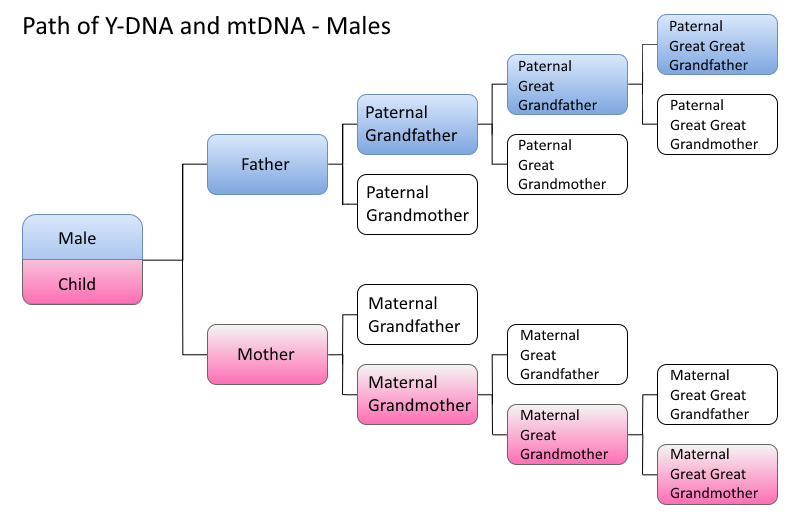
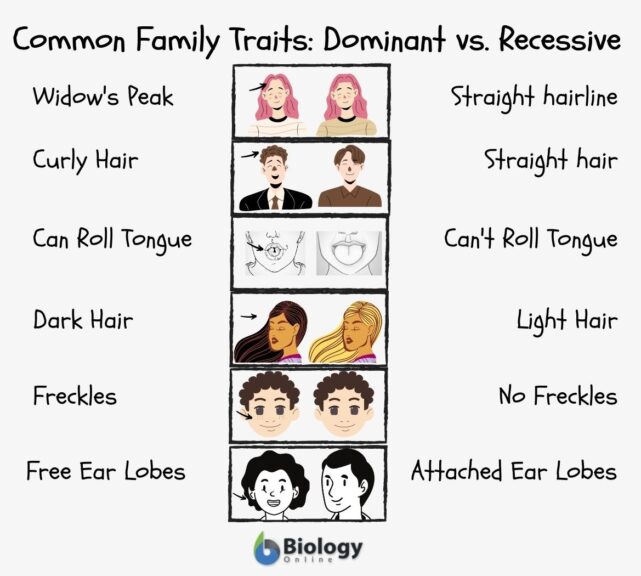
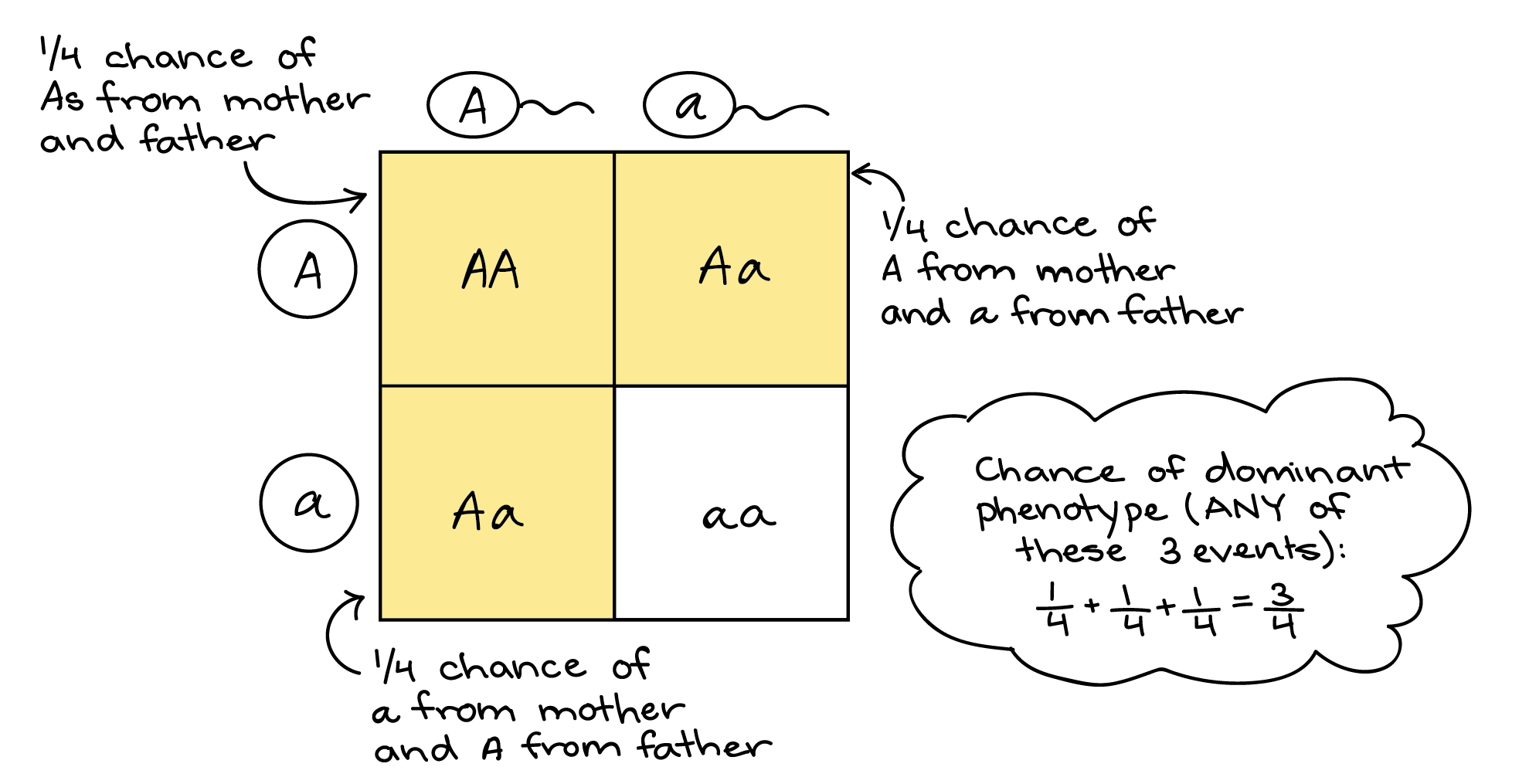

Hereditary means passed from parents to offspring through genes. If something is hereditary, it can be inherited biologically because it is encoded in DNA.
Each person usually inherits two versions of a gene (alleles):
one from the mother
These alleles influence:
traits (eye color, hair texture)
Important:
遗传的(hereditary) 指 通过基因从父母传给子女的性状或特征,本质上与 DNA 有关。
等位基因共同决定:
外貌或生理性状
遗传 ≠ 一定会发生
有些人携带基因,但并不表现症状
看到 hereditary,可以立刻联想到这条逻辑链: DNA → 基因 → 等位基因 → 遗传方式 → 性状 / 疾病
如果你愿意,我可以下一步把它做成 中英对照生物词卡(flashcards),或直接嵌入你之前的 Unit 1 DNA HTML 教学页面。
incomplete dominance
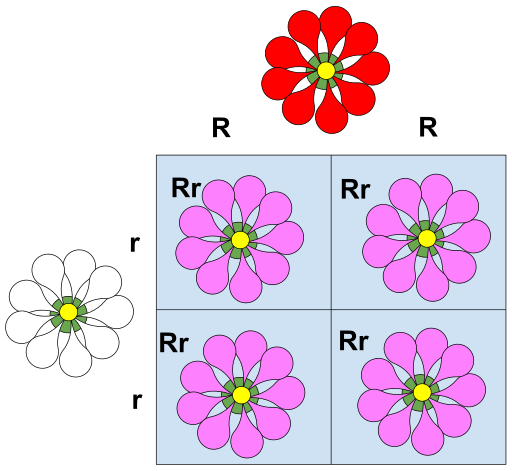
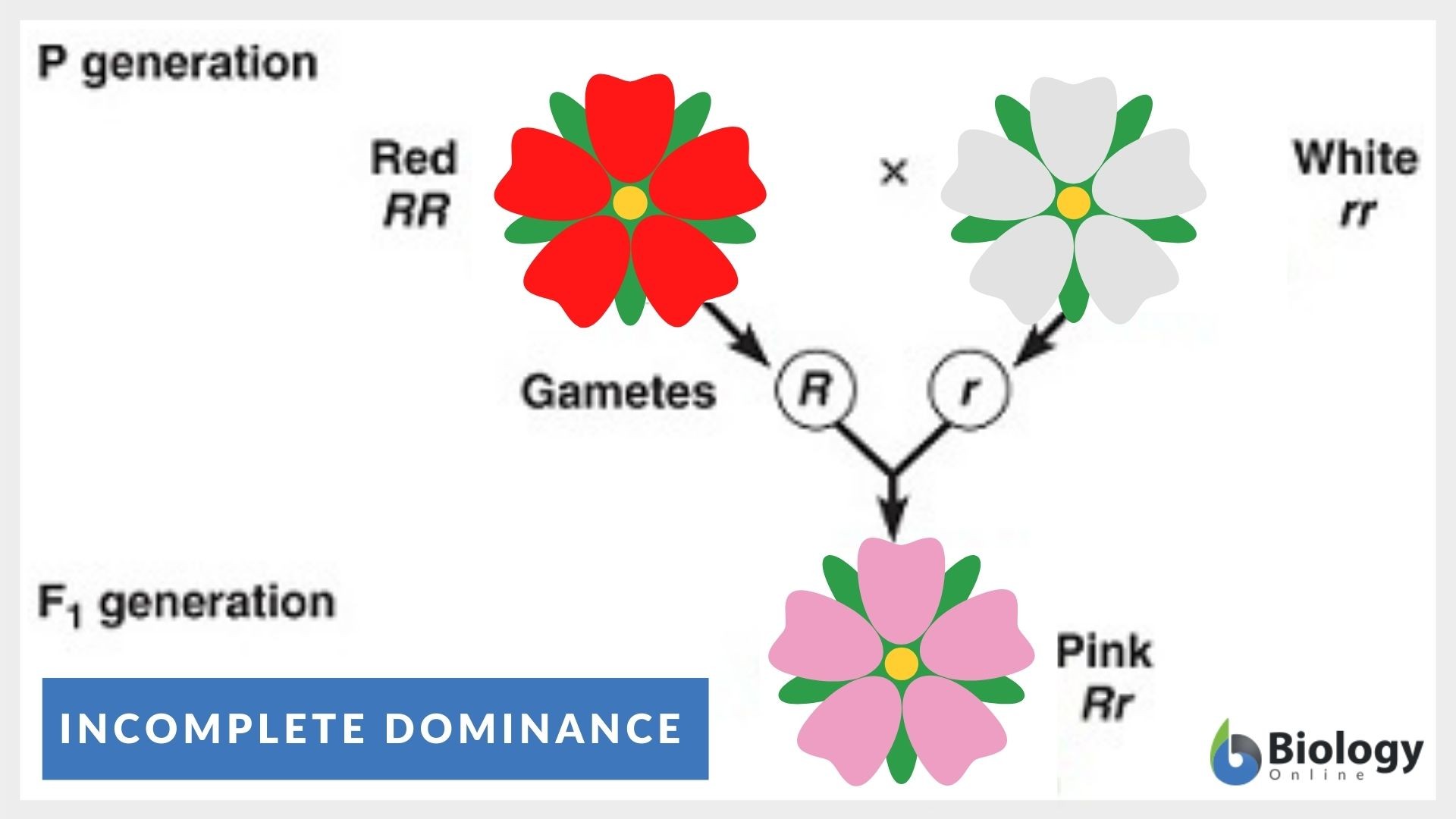
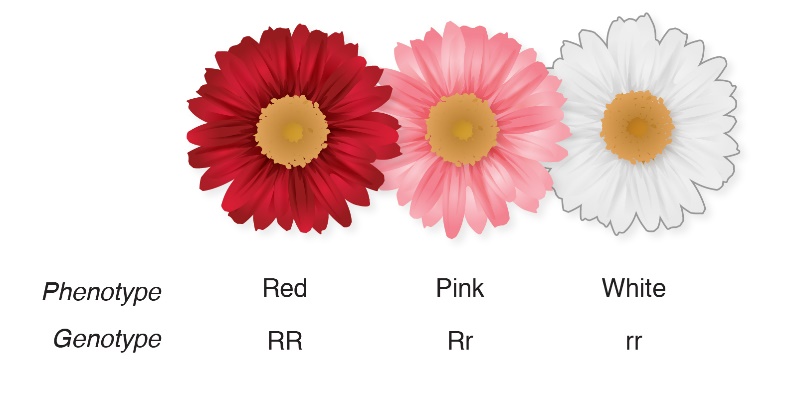
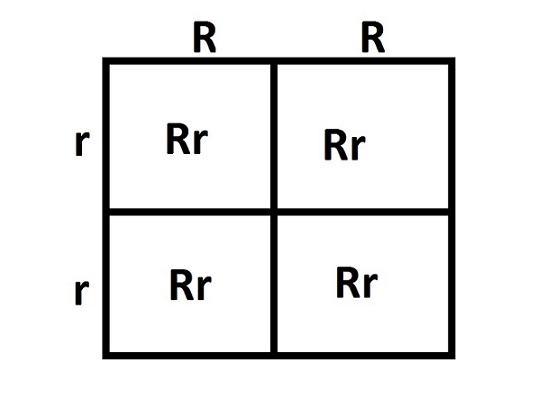
Incomplete dominance is an inheritance pattern in which neither allele is completely dominant, so the heterozygous phenotype is an intermediate (blended) form of the two homozygous phenotypes.
Incomplete dominance = blending of traits in heterozygotes
Let:
Cross: RR × WW
Offspring:
📌 Pink is not a new allele; it’s the intermediate phenotype.
Parents: RW × RW
Possible offspring:
Phenotype ratio: 1 red : 2 pink : 1 white
📌 Notice: phenotype ratio = genotype ratio in incomplete dominance.
| Pattern | Heterozygous result | Example | | ------------------------ | ------------------------- | ------------------ | | Dominant–recessive | Dominant trait only | Brown eyes | | Incomplete dominance | Blended trait | Red × white → pink | | Codominance | Both traits fully visible | AB blood type |
Incomplete dominance:
Incomplete dominance occurs when heterozygous individuals show an intermediate, blended phenotype.
不完全显性是指: 两个等位基因中没有一个完全显性,杂合体表现为中间型性状。
不完全显性 = 性状混合表现
花的颜色:
杂交后:
📌 粉红不是新基因,而是红和白的中间表现。
父母:RW × RW
后代比例:
👉 表现型比例 = 基因型比例
| 遗传方式 | 表现结果 | | ----- | ---------- | | 不完全显性 | 中间型(混合) | | 共显性 | 两种性状同时清楚出现 |
不完全显性指杂合体表现为两种性状的中间型。
如果你愿意,我可以把 dominant / recessive / incomplete dominance / codominance 整理成 Science 10 中英对照对比表、潘尼特方格练习或互动闪卡,非常适合系统复习与教学。
不完全显性(incomplete dominance) EN: A condition in which neither allele for a gene completely conceals the presence of the other, resulting in an intermediate expression of a trait. Example: In four o’clock plants, red flowers crossed with white flowers produce pink offspring, an intermediate phenotype. 中文:两种等位基因互不完全掩盖对方,从而产生介于双亲之间的中间型表现。 例子:紫茉莉红花与白花杂交产生粉红花,就是不完全显性的例子。
traits
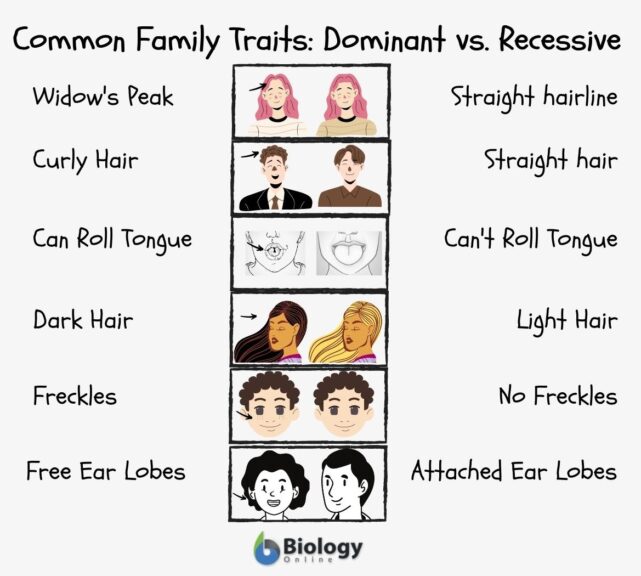
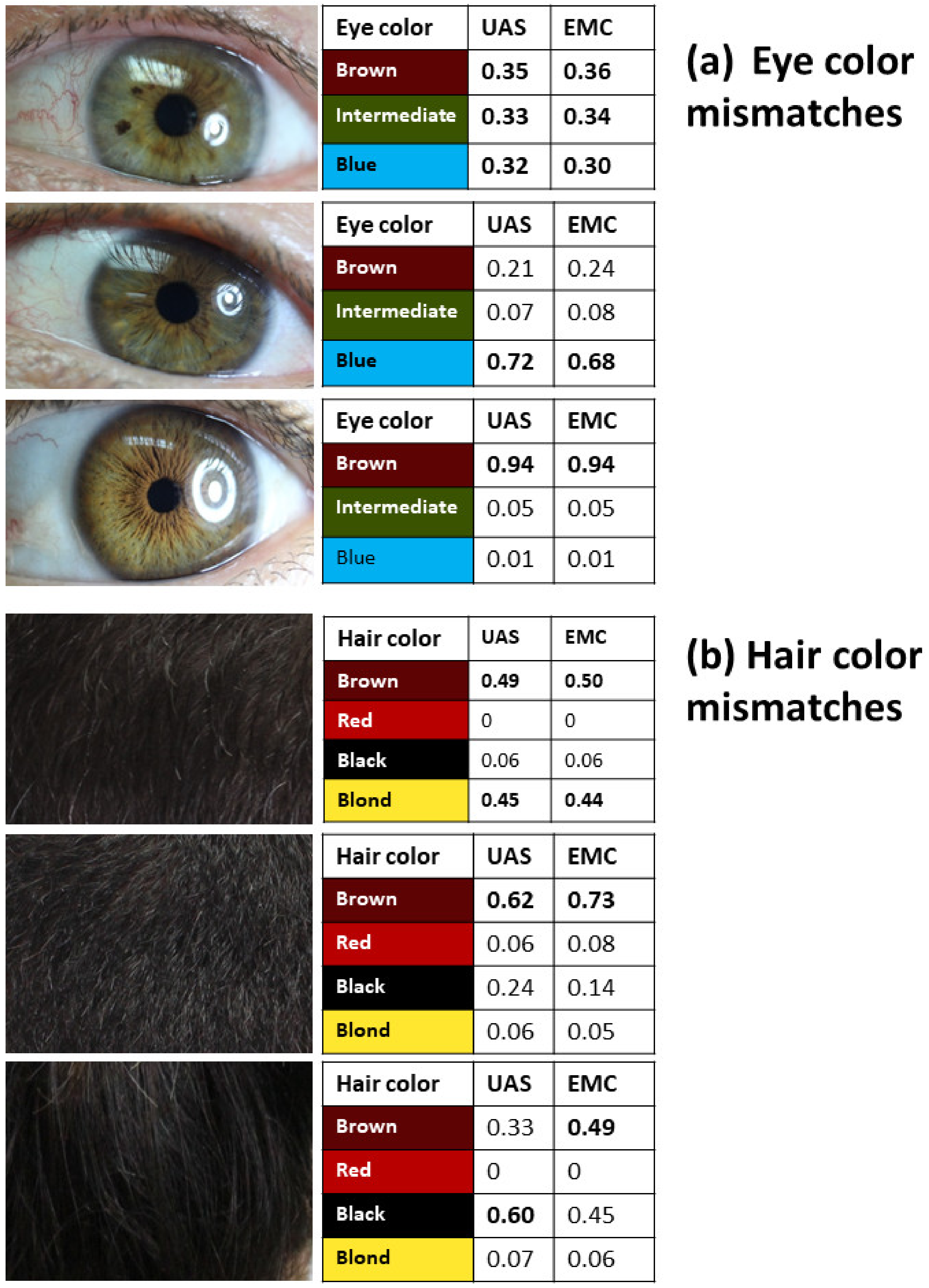
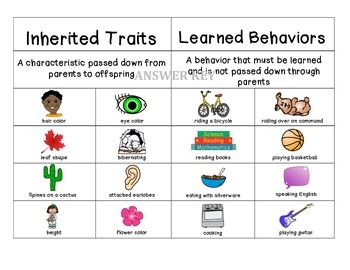
Traits are characteristics or features of an organism. They describe how an organism looks, behaves, or functions.
Trait = a characteristic of a living thing
Traits can be:
These traits are controlled by genes and passed from parents to offspring.
Examples:
📌 These traits are present from birth.
These traits develop due to life experiences or environment.
Examples:
📌 These traits are not inherited genetically.
Many traits result from both heredity and environment.
Examples:
In genetics, traits are:
📌 Example:
Punnett squares are used to predict traits in offspring.
| Term | Meaning | Example | | --------- | ------------------- | ---------- | | Genotype | Genetic makeup | Bb | | Phenotype | Physical expression | Brown eyes |
📌 Traits are what you see (phenotype), based on genes (genotype).
Traits:
Traits are characteristics of organisms that can be inherited, acquired, or influenced by both genes and environment.
性状(traits)是指生物表现出来的特征或特点。
性状 = 生物的特征
由基因决定,从父母传给子女。
例子:
由环境或经历造成。
例子:
| 概念 | 含义 | | --- | ---- | | 基因型 | 基因组合 | | 表现型 | 外在性状 |
性状是生物的特征,由遗传和环境共同决定。
如果你需要,我可以把 traits / inherited traits / acquired traits / Punnett squares 做成 Science 10 中英对照闪卡或课堂练习题,直接用于教学或复习。
性状(trait) EN: An inherited characteristic, such as eye colour or hair colour. Example: Traits like seed colour in pea plants or the ability to taste bitterness are controlled by genes. 中文:一种可遗传的特征,如眼睛颜色、头发颜色等。 例子:豌豆的种子颜色、是否能尝出苦味,都是由基因控制的性状。
alleles

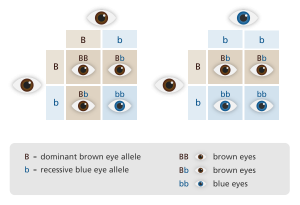


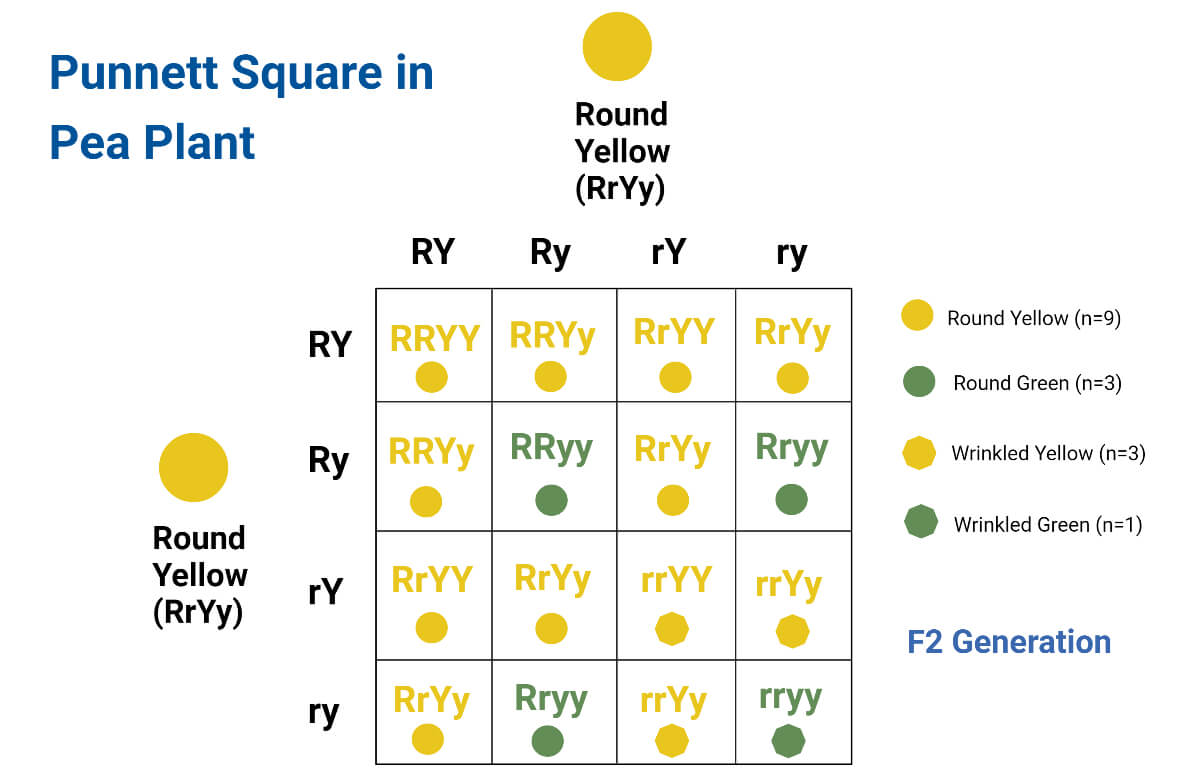
Alleles are different versions of the same gene. They control variations of a trait, such as eye color or flower color.
Allele = one version of a gene
Each gene can have two or more alleles, but an individual organism usually carries two alleles per gene (one from each parent).
📌 This is why offspring show traits from both parents.
Trait: Seed color
Possible allele combinations:
These combinations affect the trait that appears.
Dominant allele
Recessive allele
📌 Example:
| Term | Meaning | Example | | --------- | ------------------ | ---------- | | Allele | Version of a gene | A or a | | Genotype | Allele combination | Aa | | Phenotype | Physical trait | Brown eyes |
Alleles determine the genotype, which determines the phenotype.
Punnett squares:
📌 Example: Parents: Aa × Aa
Alleles:
Alleles are different versions of the same gene that determine variations in traits.
等位基因(alleles)是指同一基因的不同版本,决定同一性状的不同表现。
等位基因 = 同一基因的不同形式
性状:豌豆高度
组合可能是:
📌 Tt → 显性性状 📌 tt → 隐性性状
等位基因是控制同一性状的不同基因形式。
如果你愿意,我可以把 alleles → genotype → phenotype → Punnett squares 整理成 Science 10 中英对照闪卡或互动练习,直接用于复习或教学。
等位基因(allele) EN: Different versions of the same gene that may produce different forms of a trait. Example: For pea flower colour, one allele codes for purple and another for white. 中文:位于同源染色体相同位置、控制同一性状的基因的不同形式。 例子:例如花色基因可以有紫花等位基因和白花等位基因。
Joan Westenberg on blogging
The blog won't save us. But it's one of the tools we'll need if we're going to save ourselves.
Blogs as self care
We're not going to get a better internet by waiting for platforms to become less extractive. We build it by building it. By maintaining our own spaces, linking to each other, creating the interconnected web of independent sites that the blogosphere once was and could be again.
yes, build what you want to have.
He kept going because the infrastructure mattered, because how we structure the presentation of ideas affects the ideas themselves.
encyclopedie as infra, in the sense of having a stable set of refs for all. Not blogs therefore (except for uris).
Virginia Woolf wrote about the importance of having a room of one's own: physical space for creative work, free from interruption and control. A blog is a room of your own on the internet. It's a place where you decide what to write about and how to write about it,
A room of one's own (Virginia Woolf) digitally is a blog. Disagree, bc it's public, which is the opposite. It is a window on the output of that room.
And the fragmentation of social media is actually creating demand for alternatives. Every time a platform implodes (Twitter's ongoing collapse, Instagram's slow retirement // decay into a metaphorical Floridian condo, TikTok's uncertain status, Facebook's demographic hollowing) people start looking for more stable ground. The infrastructure exists. It's waiting.
I do think there's more people who get fed up with the empty carbs of socmed yes. I also think they don't see alternatives, def not writing for themselves at any length. An issue is that bringing in all those people doesn't scale the writing. At first everyone blogged bc that was how you participated in the conversation, so it attracted those that were ok with writing
Newsletters are still a discovery layer, no matter how many people pronounce their untimely death. You can write on your own site and distribute via email, getting the permanence of a blog with the push distribution of a newsletter. The writing lives at your domain; the email is notification infrastructure.
newsletters seem to still work well imo. Consistency and rhythm is a challenge though.
RSS never actually died.
RSS is plumbing so it's invisible to most. My team doesn't realise there's an easy way to follow my blog. Readersoftware isn't common anymore.
Search engines still index blogs far better than social media posts. A well-written blog post on a specific topic can draw readers for year
blogposts still get indexed well by search engines, and certainly way better than socmed utterings.
I keep thinking about how many interesting folks have essentially stopped writing anything substantial because they've moved their entire intellectual presence to Twitter or Substack Notes. These are people who used to produce ten-thousand-word explorations of complex topics, and now they produce dozens of disconnected fragments per day, each one optimized for immediate engagement and none of them building toward anything coherent.
Sees bloggers switching to socmed or substack and impoverishing themselves intellectually in the process.
Social media flattens all of this into statements: Everything you post is implicitly a declaration
In contrast socmed stuff is declarative, taking up a position to only get opposition.
Michel de Montaigne arguably invented the essay in the 1570s, sitting in a tower in his French château, writing about whatever interested him: cannibals, thumbs, the education of children, how to talk to people who are dying. He called these writings essais, meaning "attempts" or "tries." The form was explicitly provisional. Montaigne was trying out ideas, seeing where they led, acknowledging uncertainty as a fundamental feature rather than a bug to be eliminated.The blog, at its best (a best I aspire one day to reach) is Montaigne's direct descendant.
Blogging as essays, attempts to put something into words, acknowledging the uncertainty.
Diderot understood that the container shapes the contents. The Encyclopédie was a collection of facts, yes, but more fundamentally it was an argument about how knowledge should be organized. Cross-references between entries were themselves a form of commentary, connecting ideas that authorities wanted kept separate.
Posits the original encyclopedia was both a k organising attempt and a network of references between ideas, thus bringing them together
Everything I produce has to compete, in real-time, with everything else that could possibly occupy that user's attention.
Platform stuff is in a competition for attention. And that is its only purpose.
When I write a blog post, I'm writing for an imagined reader who has arrived at this specific URL because they're interested in this specific topic; I can assume a baseline of engagement; I can make my case over several thousand words, trusting that anyone who's made it to paragraph twelve probably intends to make it to paragraph twenty.
blogging has an imagined audience, and any output can be referred to.
The platform has no interest in whether your post is found next week or next year; it has a vested interest in keeping users scrolling through new content right now.
platforms have no interest in permanence, only in engagement in the now
But it also produced actual intellectual communities. Remember those?People wrote long responses to each other's posts, those responses generated further responses, and you could follow the thread of an argument across multiple sites and weeks of discussion. The format rewarded careful thinking because careful thinking was legible in a way that it simply isn't on platforms designed for rapid-fire engagement.
describing the distributed conversations that were important to me for blogging too. Not sure we were as exalted though.
And I think the fix, or at least part of it = going backwards to a technology we've largely abandoned: the blog, humble // archaic as it may seem.
Blog as a more prudent way to spread ideas than the twitter type short messages
When people talk about the Enlightenment as if it were an intellectual garden party where everyone sipped wine and agreed about reason, they're missing the part where producing and distributing ideas was (in fact) dangerous and thankless work
Enlightenment was not a salon, but an era where coming up with ideas and spreading them carried risk.
Till Python:
Typo, maybe "To Python:"
ith these definitions, τ 0Oe takesa positive value, by Ampère’s law,
Naively, looks like it should take a negative value. H_oe points in -Y by amperes law. for a magnetization with phi=0, then by right hand rule the torque points down.
However, torque and tau are related by a minus sign, because tau is defined as mhatdot
Good night, ladies, good night, sweet ladies, good night, good night.
Farewell words of Ophelia, in her madness, to the ladies of the court of the King of Denmark
Ta ta
"Thanks" in Cockney.
to bring it off
Abortion pills.
chemist
Pharmacist.
demobbed
Released from military service.
HURRY UP PLEASE ITS TIME
The barman is telling everyone to get out.
O O O O that Shakespeherian Rag
Folk song.
Those are pearls that were his eyes.
"The Tempest."
dolphin
In medieval art, the dolphin was associated with love.
Cupidon
God of love.
Jug Jug
The sound of the nightingale.
Philomel
Mentions of abuse.
laquearia
The panels of a coffered ceiling.
Unstoppered, lurked her strange synthetic perfumes,Unguent, powdered, or liquid—troubled, confusedAnd drowned the sense in odours; stirred by the airThat freshened from the window,
The first ecounter of Enea and Didone in Virgil's "Aeneid".
throne
Shakespeare's "Antony and Cleopatra".
A Game of Chess
Satyrical play of Thomas Middleton "A game at chess".
Ethan Mollick prompts Claude AI to come up with something that people will pay for and could make $1k/month
(via [[Stephen Downes p]])
[[Pieter Colpaert p]] introduces the concept of n:: eventual interoperability
Vgl [[Adversarial Interoperability 20200729143434]] [[EU Interoperability Framework EIF]]
By [[Laurens Hof p]] X is geen platform probleem maar een machtsprobleem. Nog lezen wat hij exact bedoelt. Imo denk ik dat elk platform dat het type beslissingen neemt dat X doet, geen platform in (US) juridische zin meer is, en dus ook inhoudelijk verantwoordelijk is en daarmee aansprakelijk.
Some good pointers to [[Brian Eno c]] work and thinking, to follow up.
Also good anecdote from one of those links on Rem Koolhaas notion of n:: premature sheen Making things look nice early takes away from thinking about other points of quality. Jeremy applies it to AI too, the premature sheen generate awe, but not quality output.
"I think of Cognitive Debt as ‘where we have the answers, but not the thinking that went into producing those answers”. It is a phenomenal largely (but not exclusively) fuelled by the deployment of LLMs at scale. Answers are now much, much cheaper to come by.
Additionally, I am most interested in exploring Cognitive Debt not from an individual perspective, but from a group one. It is critical to thinking through the implications of using these technologies inside an organisation, or between an organisation and its employees, a government and its citizens, and so on and so forth."
n:: cognitive debt - [ ] return
UAE to move to AI driven governance. Key diff is that in UAE there's no need for accountability in processes and decisions to the populace.
on llms in qualitative research: the only winning move is not to play
Techdebt, maintenance costs due to expedient choices in development to accelerate development.
Applies to software dev w AI too.
Shantih shantih shantih
Sanskrit word, "peace".
Hieronymo
Thomas Kyd's "The Spanish Tragedie".
O swallow swallowLe Prince d’Aquitaine à la tour abolie
"The Prince of Aquitaine, of the ruined tower", a line which Eliot refers to its source in the sonnet ‘El Desdichado’ (‘The Disinherited’) by Gérard de Nerval.
Quando fiam uti chelidon
A line from the anonymous poem Pervigilium Veneris, which ends with a reference to Philomela.
Poi s’ascose nel foco che gli affina
Last line of Canto 26 of Dante's Purgatorio, in which he meets Arnauld Daniel.
London Bridge is falling down falling down falling down
Nursery rhyme.
Fishing, with the arid plain behind me
The Fisherman King.
Turn in the door once and turn once only
Count Ugolino, XXXIII of Dante's Inferno.
Which an age of prudence can never retract
Paolo and Francesca, second circle of Dante's Inferno.
Damyata
Imperative, "control".
Coriolanus
Hero of Shakespeare's play.
Dayadhvam
Imperative "be compassionate".
Datta
Imperative "give".
Himavant
Holy mountain in the Himalaya range.
Ganga
River Ganges.
Only a cock stood on the rooftree
The betrayal of Judas.
bells
The church bells of London.
Who are those hooded hordes swarming
The image of the knights looking for the Holy Grail is introduced.
Cracks and reforms and bursts in the violet airFalling towersJerusalem Athens AlexandriaVienna LondonUnreal
Bertrand Russell told Eliot that he had dreamt of London collapsing.
Who is the third who walks always beside you?
Jesus, God or perhaps Tiresias.
If there were water we should stop and drink
God’s instruction to Moses, to relieve the thirst of the Israelites, having led them through the desert.
thunder
According to the Bible, the earth shook when Christ died.
He who was living is now dead
The first scene of the last part of the poem represents the cruxification of Christ.
Wikipedia pagina over Jan Lucas van der Baan