Mac 的灵魂 macOS 就脱胎于 NeXT ComPuter 的系统,世界首个应用商店 AppWrapper 也是在 NeXT 电脑上构建的。
当时电脑还是个时髦的玩意,使用的人并不算太多,人们获取软件也并不方便,甚至于只能开车前往像 Egg Head 这样的软件零售店购买软件,费时又费力。
AppWrapper 解决了这个问题,根据参与构建 AppWrapper 的开发者 Jesse Tayler 介绍,起初他们也是用杂志目录加邮寄 CD 的方式分发应用。
Mac 的灵魂 macOS 就脱胎于 NeXT ComPuter 的系统,世界首个应用商店 AppWrapper 也是在 NeXT 电脑上构建的。
当时电脑还是个时髦的玩意,使用的人并不算太多,人们获取软件也并不方便,甚至于只能开车前往像 Egg Head 这样的软件零售店购买软件,费时又费力。
AppWrapper 解决了这个问题,根据参与构建 AppWrapper 的开发者 Jesse Tayler 介绍,起初他们也是用杂志目录加邮寄 CD 的方式分发应用。
After the drying process is complete, raisins are sent to processing plants where they are cleaned with water to remove any foreign objects that may have become embedded during the drying process.[
to remove any foregin objects
Mutual credit

Massively multiplayer online role-playing game
Scenario: students follow lesson links to this page, having
...and, all bundled in one tool [or a new browser]...
...then plug content from another space (i.e., Canvas, or maybe WebQuests) and sky's the limit.
当时苏联唯一的国营跨境旅游机构“Intourist”,相当于“苏联国旅”。通过投放在海外市场的海报,我们看到了一个不同的苏联——不是苏联官方对本国人宣传的样子,也不是西方主流媒体宣传的样子。一个美丽、富饶、热情好客的大国。
Intourist 成立于1929年,出于商业和意识形态的原因,它构建了一套特别的外宣审美体系。在吸引国外游客的同时,又不让他们被过强的政治元素“吓到”。
Intourist 在海外开设了30多个办事处,致力于宣传苏联的温泉度假村、文化活动和苏维埃生活方式的乐趣——尽管完全是乌托邦式的,但很诱人。
This system was invented by Carl Linnaeus,[1] around 1760.
How is it not so surprising that Carl Linnaeus, the creator of a huge taxonomic system, also came up with the idea for index cards in 1760.
How does this fit into the history of the commonplace book and information management? Relationship to the idea of a zettelkasten?
it is clear to both that it is just as she feared. Her usefulness to him, and thus their relationship, is now over
Gosh this is such a real statement.
Found this movie in Girl Land (book).
有明确史料记载的第一辆实用自行车出现在 1817 年,距今恰是 200 年。德国巴登公爵领地上的一名林务员 Karl von Drais 制造出 celerifere 的升级版 Laufmanschine,同样是两个尺寸相同的车轮,装在一个木制车架上,骑行者可以坐在位于车身中间的鞍座上,身体前倾,两脚轮流大步蹬地推动自己前行。一年之后,Karl von Drais 为他的设计注册了专利,也奠定了现代自行车的基本轮廓。
1956 年,弗兰克·劳埃德·赖特(Frank Lloyd Wright)做客美国 CBS 著名电视娱乐节目《明星猜猜看》(What’s My Line?)。
他先是在一个黑板上写下自己的名字,然后回答蒙着眼睛的社会名流(包括专栏作家、演员、诗人等)组成的讨论小组提出的一系列“是与不是”问题——他只能回答 Yes 或 No,然后由提问者猜测身份。
赖特接到的问题,包括“您的声音那么好听跟您从事的职业是否相关”,“您的工作是否涉及法律”,“您会不会画画”,“人们是不是常去找您”等等,当被问到“既然您会画画您是不是设计师或是建筑师,就像弗兰克·劳埃德·赖特那样”时,现场观众爆发出热烈的掌声,而这时距离赖特上场不过 7 分钟时间。
the flâneur
curious to read more about how Walter Benjamin created the idea of the flâneur!
The chronostratigraphic term "Jurassic" is linked to the Jura Mountains, a mountain range mainly following the France–Switzerland border.
oh interesting — just read about belloc's journey across these
The climate of the Jurassic was warmer than the present, and there were no ice caps.
the true non-ice-age period.
The Earth is expected to continue to transition between glacial and interglacial periods until the cessation of the Quaternary Ice Age where it will enter another Greenhouse state.
technically, we are in an ice age — and when people say "last ice age" they actually mean the last "glacial period." the opposite of an ice age is not a temperate europe — it's jurassic humidity and heat
As a methodology, its aim is to nurture emergence of the previously unthinkable as possibilities or prospects through the collaboration of designers within interdisciplinarity 'metadesign' teams.
methodology, nurture emergence, unthinkable as possible
an emerging conceptual framework aimed at defining and creating social, economic and technical infrastructures in which new forms of collaborative design can take place
Ha! This is almost exactly what I expected it to be about.
<small><cite class='h-cite via'>ᔥ <span class='p-author h-card'>Alan Jacobs</span> in re-setting my mental clock – Snakes and Ladders (<time class='dt-published'>07/01/2021 14:58:05</time>)</cite></small>
While not referred to specifically as Zettelkasten by their non-German speaking users, there is a tradition of keeping similar notes in a commonplace book-like tradition in other countries. American comedians Phyllis Diller (with 52,000 3x5 inch index cards)[10] [11], Joan Rivers (over a million 3x5 inch index cards)[12], Bob Hope (85,000 pages in files)[13], and George Carlin (paper notes in folders)[14] were known for keeping joke or gag files throughout their careers. They often compiled their notes from scraps of paper, receipts, laundry lists, and matchbooks which served the function of waste books.
While not referred to specifically as Zettelkasten by their non-German speaking users, there is a tradition of keeping similar notes in a commonplace book-like tradition in other countries. American comedians Phyllis Diller (with 52,000 3x5 inch index cards)[10] [11], Joan Rivers (over a million 3x5 inch index cards)[12], Bob Hope (85,000 pages in files)[13], and George Carlin (paper notes in folders)[14] were known for keeping joke or gag files throughout their careers. They often compiled their notes from scraps of paper, receipts, laundry lists, and matchbooks which served the function of waste books.
accommodate the social and political order of the polis
testing agora integration
Duck curve
problem with solar energy generation
Dispatchable generation
coordination problem for renewable-heavy systems; gets even more complicated when generators are comunity run
In publications, "crunk" can be traced back to 1972 in the Dr. Seuss book Marvin K. Mooney Will You Please Go Now!. He uses the term "Crunk-Car" without any given definition
I love this
energy
cellular
Photosynthesis
microscopy
Cell
Life
Biology
Supermassive black holes are classically defined as black holes with a mass above 0.1 million to 1 million M☉.[9] Some astronomers have begun labeling black holes of at least 10 billion M☉ as ultramassive black holes.[10][11] Most of these (such as TON 618) are associated with exceptionally energetic quasars. Even larger ones have been dubbed stupendously large black holes (SLAB) with masses greater than 100 billion M☉.[12] Although they noted there is currently no evidence that stupendously large black holes are real, they noted that supermassive black holes almost that size do exist.[13] Some studies have suggested that the maximum mass that a black hole can reach, while being luminous accretors, is of the order of ~50 billion M☉.[14][15]
this is going to make a big difference in the light of other worlds
Language Oriented Programming in MetaLisp Gyuri Lajos's thesis 1992 University of Leeds The system used the very same Top Down Parsing Language algorithm that powered Tree-Meta
Language Oriented Pro-Gramming Paradim
But Need Graph Grammars as Meta Graph
It is not Abstract Syntax Trees we need but Abstract Graphs Forget about (knowledge)representation. Abstract Syntax Graphs are Universal. Think about Intents and Their Presentations as Abstarct Syntax Graphs (MindGraph) for Human Comprehension first Instead of Syntax we can mark intended semantics with Trail Marks
Nuclear Explosions for the National Economy (Russian: Ядерные взрывы для народного хозяйства, romanized: Yadernyye vzryvy dlya narodnogo khozyaystva; sometimes referred to as Program #7[1]) was a Soviet program to investigate peaceful nuclear explosions (PNEs).
If I needed a band name, "Nuclear Explosions for the National _" would be it. ("for National Agriculture"? "for National Ergonomics"? "for the National Spirit")
The x86 "PC" version GNU GRUB 2 has a vbeinfo command for printing out available video modes and vbetest for trying a specific mode. They use a built-in table instead of Funcion 01h. For other platforms, including x86 EFI, they are replaced by the more generic videoinfo and videotest.
The commands vbeinfo and videoinfo can be used to print all supported resolutions. To exit vbetest or videotest in grub, need to send "ctrl+alt+delete" to go back to grub menu list.
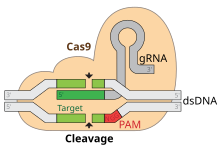
CRISPR gene editing
It must have been late 1941 or early 1942. Jews were required to wear the Star of David and to obey a 6 p.m. curfew. I had gone to play with a Christian friend and had stayed too late. I turned my brown sweater inside out to walk the few blocks home. As I was walking down an empty street, I saw a German soldier approaching. He was wearing the black uniform that I had been told to fear more than others – the one worn by specially recruited SS soldiers. As I came closer to him, trying to walk fast, I noticed that he was looking at me intently. Then he beckoned me over, picked me up, and hugged me. I was terrified that he would notice the star inside my sweater. He was speaking to me with great emotion, in German. When he put me down, he opened his wallet, showed me a picture of a boy, and gave me some money. I went home more certain than ever that my mother was right: people were endlessly complicated and interesting. (Kahneman, 2003, p. 417)
My god... I don't even know what to make of this. That's a hell of a story.
Daniel Kahneman (/ˈkɑːnəmən/; Hebrew: דניאל כהנמן; born March 5, 1934) is an Israeli psychologist and economist
Interesting that he is notable for these two separate subjects. They're not subjects I expect to see together.
Splinternet
Contents
The remainder of the entry provides a more in-depth examination of the following topics:
Rhetoric typically provides heuristics for understanding, discovering, and developing arguments for particular situations, such as Aristotle's three persuasive audience appeals: logos, pathos, and ethos. The five canons of rhetoric or phases of developing a persuasive speech were first codified in classical Rome: invention, arrangement, style, memory, and delivery.
The initial definition continues with an overview of the essential topics and additional keywords most closely associated with in-depth study of rhetoric.
(/ˈrɛtərɪk/)[note 1] is the art of persuasion, which along with grammar and logic (or dialectic – see Martianus Capella), is one of the three ancient arts of discourse. Rhetoric aims to study the techniques writers or speakers utilize to inform, persuade, or motivate particular audiences in specific situations.[5] Aristotle defines rhetoric as "the faculty of observing in any given case the available means of persuasion" and since mastery of the art was necessary for victory in a case at law, for passage of proposals in the assembly, or for fame as a speaker in civic ceremonies; he calls it "a combination of the science of logic and of the ethical branch of politics".[6]
Most Wikipedia entries start with basic definition. You'll note these significant features:
results
public test note
Useful in the near future for Middle and Old Welsh...
*COLORS杂志:每季出版一次,以世界各地的年轻人为对象,分为三种版本,通过四种语言在40个国家发刊。COLORS最初构想由Luciano Benetton 与 Oliviero Toscani提出,1991年由Tibor Kalman负责创立,编辑方针上尊重文化歧异、所有文化价值均等。该杂志于2015年停刊。
Narcotizing dysfunction is a theory that as mass media inundates people on a particular issue, they become apathetic to it, substituting knowledge for action.
Correct posture towards an issue substituting for responsibility of doing something
Measure theory was initially created to provide a useful abstraction of the notion of length of subsets of the real line—and, more generally, area and volume of subsets of Euclidean spaces. In particular, it provided a systematic answer to the question of which subsets of ℝ have a length. As later set theory developments showed (see non-measurable set), it is actually impossible to assign a length to all subsets of ℝ in a way that preserves some natural additivity and translation invariance properties. This suggests that picking out a suitable class of measurable subsets is an essential prerequisite.
Not all sets can be ascribed with the attribute of length on the real line.
Intuitive interpretation

This means that a measure is any function μ defined on a certain class X of subsets of a set E, which satisfies a certain list of properties. These properties can be shown to hold in many different cases.
The largest possible subset of $$E$$ is always the [[power set]]
integrals on these functions
What are integral on the functions?
POMDP's policy is a mapping from the observations (or belief states) to the actions
将策略定为从当前观测到动作的映射是不合适的,因为观测序列不是markov的,最优动作不能仅由当前观测所确定。 正确的说,应该是从观测历史到动作的映射,或者说是内部状态到动作的映射
Commonplace book
Thanks, @ChrisAldrich!
Saint John's Fires, explained the monk of Winchcombe, were to drive away dragons, which were abroad on St. John's Eve, poisoning springs and wells.
I would love to read more about how wells were talked about -- holy, poisoned...
In England, the earliest reference to this custom occurs on in the 13th century AD,[17] in the Liber Memorandum of the parish church at Barnwell in the Nene Valley, which stated that parish youth would gather on the day to sing songs and play games.[17] A Christian monk of Lilleshall Abbey, in the same century, wrote:[17] In the worship of St John, men waken at even, and maken three manner of fires: one is clean bones and no wood, and is called a bonfire; another is of clean wood and no bones, and is called a wakefire, for men sitteth and wake by it; the third is made of bones and wood, and is called St John's Fire.[17]
Does bone mean literal bone here?
If Christ's conception and birth took place on the 'growing days', it was fitting that John the Baptist's should take place on the 'lessening days' ('diebus decrescentibus'), for the Baptist himself had proclaimed that 'he must increase; but I must decrease' (John 3:30). By the late sixth century, the Nativity of John the Baptist (24 June) had become an important feast, counterbalancing at midsummer the midwinter feast of Christmas.— Professor Éamonn Ó Carragáin
By the late sixth century is early enough for me!
Since it is a single dose vaccine, it has been a popular vaccine to distribute to the homeless,[125][126][127][128] the incarcerated,[129][130][128] and refugee
homeless incarcerated refugees
That same month, human error at a plant run by Emergent BioSolutions in Baltimore resulted in the spoilage of up to fifteen million doses of the Johnson & Johnson vaccine.
spoilage?
The interim analysis was based on 468 cases of symptomatic COVID-19 among 43,783 adult volunteers in Argentina, Brazil, Chile, Colombia, Mexico, Peru, South Africa, and the United States. No deaths related to COVID-19 were reported in the vaccine group, while five deaths in the placebo group were related to COVID-19.[63] During the trial, no anaphylaxis was observed in participants.[63
size of a trial
Heath Robinson 1872 年出生于英国伦敦一个艺术家世家,经历了两次世界大战,看着科技如何急速改变世界。他父亲及兄长都从事美术和插画工作,在耳濡目染下,他在皇家艺术学院主修美术,希望成为风景画家 ,不过现实是他在出版社当插画家展开了一生事业。
刚开始是为爱伦坡诗集、安徒生童话、一千零一夜和莎士比亚的著作绘制插画。在1902年他开始为他自己的第一本儿童读物《鲁宾叔叔历险记》作画,故事里这位与他同名的英雄的任务是照顾他的侄子彼得,一天侄子被一只大鸟带走了。随后,鲁宾开始了一系列机器辅助的冒险,他自行建造了一系列飞艇和潜水船来寻找他:开始了成为“小玩意儿人”的旅程。
从这里开始,Heath Robinson 打开了一个真正属于他的世界,开始“发明”一系列复杂的机械装置来“解决”普通生活中的日常问题,比如不妨碍楼下睡觉的“静音party”,把人直接打造成形的“减肥引擎”,向前一步往外扩展的折叠花园……
SvalSat卫星站是一个巨大的白色圆形球体,外表面又被切割成一个又一个神秘的三角形,顶部的红色小灯一直闪烁,每一秒,它都在接收距地面约840公里的轨道上的卫星传来的数据。这些卫星被称为“极轨卫星”,它们的轨道与太阳同步,每天,会两次飞越地球表面上的同一个点,而且总在同一个时刻。
建筑师巴克敏斯特·富勒 (Buckminster Fuller) 在自己的作品“曼哈顿上空的穹顶”(Dome over Manhattan)中构建了乌托邦——一个将部分城市置于网格穹顶之下的计划。虽然该方案仍旧停留在纸上,但富勒的结构却被广泛应用于温室,以提供植物生长繁衍所需要的人工性气候。
Donald Shoup在其《The High Cost of Free Parking》一书中指出,表面上“免费”的停车——想想杂货店、购物中心、公寓楼和其他地方——只是以其他方式转嫁了无形的成本,让整个社区,包括司机,都肩负重担。
在当年出版的The Digger Papers上,有这样的描述:
“‘挖掘者’认定免费商店是为了解放人性。首先是释放空间、商品和服务。让经济学理论遵循社会事实。一旦免费商店被证实有用,人类想要的和给予的,需要的和接受的,都会向即兴转变。”
A study accepted for publication in May 2021 postulates that the centre of Sgr A* may actually be a consolidation of dark matter rather than a black hole, as is currently held. This was derived from the observation of S2 and G2 objects' orbits.[
Noting that there is a published article arguing that it's dark matter an not a black hole in the center of the Milky Way.
According to Cattell's psychometrically-based theory, general intelligence (g) is subdivided into gf and gc.
G is divided into crystalized versus fluid intelligence according to Cottrell.
<small><cite class='h-cite via'>ᔥ <span class='p-author h-card'>Jeet Heer</span> in Freedom to Teach in North Carolina - The Time of Monsters (<time class='dt-published'>06/17/2021 09:41:33</time>)</cite></small>
Journalist and writer Paul Barker points out that "irony is a dangerous freight to carry" and suggests that in the 1960s and '70s it was read "as a simple attack on the rampant meritocrats", whereas he suggests it should be read "as sociological analysis in the form of satire".
"irony is a dangerous freight to carry" —Paul Barker
a great aphorism
Michael Young coined the term,[1] formed by combining the Latin root "mereō" and Ancient Greek suffix "cracy", in his essay to describe and ridicule such a society, the selective education system that was the Tripartite System, and the philosophy in general.
Meritocracy was coined to describe and ridicule a society and its selective education system.
"fallibilism" has been used to describe the claim that:
whose metropolitan area is
I also am still not completly sure what metropolitan area is.
Sir Francis Drake's famous raids on Panama in 1572–73 and John Oxenham's crossing to the Pacific Ocean were aided by Panama cimarrons, and Spanish authorities were only able to bring them under control by making an alliance with them that guaranteed their freedom in exchange for military support in 1582.[26]
They could only control them by making them alliances with them, which guarenteed them freedom for military
Africans called cimarrons
Ive never heard of "cimarrons" before.
Silver cargoes were landed at Panama and then taken overland to Portobello or Nombre de Dios on the Caribbean side of the isthmus for further shipment. Asides frrom the European route, there was also an Asian-American route, which led to traders and adventurers carrying silver from Peru going through Panama to reach Acapulco, Mexico before sailing to Manila, Philippines using the famed Manila Galleons.[25]
So Panama actually was a huge part to spain, because of how big Panama's transships were.
Spanish authorities had little control over much of the territory of Panama. Large sections managed to resist conquest and missionization until very late in the colonial era. Because of this, indigenous people of the area were often referred to as "indios de guerra" (war Indians) who resisted Spanish attempts to conquer them or missionize them.
What exactly did the spanish authorities have control over?
Panama was under Spanish rule for almost 300 years (1538–1821), and became part of the Viceroyalty of Peru, along with all other Spanish possessions in South America.
Whats the spanish rule?
Gold and silver were brought by ship from South America, hauled across the isthmus, and loaded aboard ships for Spain.
I never knew that the isthmus was used to ship gold and silver
Rodrigo de Bastidas sailed westward from Venezuela in 1501 in search of gold, and became the first European to explore the isthmus of Panama.
first European to explore the isthmus of Panama.
When Panama was colonized, the indigenous peoples fled into the forest and nearby islands. Scholars believe that infectious disease was the primary cause of the population decline of American natives.
Scholars believe that infectious disease was the primary cause of the population decline of American natives.
The monumental monolithic sculptures at the Barriles (Chiriqui) site are also important traces of these ancient isthmian cultures.
I looked up some pictures of the sculptures, and they look really intresting.
The earliest discovered artifacts of indigenous peoples in Panama include Paleo-Indian projectile points. Later central Panama was home to some of the first pottery-making in the Americas,
I didnt know that Panama was one of the first to start pottery making.
polychrome pottery
I would like to know what polychrome pottery is.
isthmus
a narrow piece of land connecting two larger areas across an expanse of water by which they are otherwise separated.[
The official definition and origin of the name as promoted by Panama's Ministry of Education is the "abundance of fish, trees and butterflies".
Does this mean that the actual orgin of the name is still unknown, and they all agreed to a end agreement?
In 1519, Pedrarias Dávila decided to establish the Spanish Empire's Pacific port at the site.
In 1519, Pedrarias Dávila decided to establish the Spanish Empire's Pacific port at the site.
The exact location of the village is unknown
It seems that many things in the history, have missing puzzle peices, and a lot is unkown.
The definite origin of the name Panama is unknown. There are several theories. One states that the country was named after a commonly found species of tree (Sterculia apetala, the Panama tree). Another states that the first settlers arrived in Panama in August, when butterflies are abundant, and that the name means "many butterflies" in one or several of the indigenous Amerindian languages that were spoken in the territory prior to Spanish colonization. The most scientifically corroborated theory by Panamanian linguists, states that the word is a hispanicization of the Kuna language word "bannaba" which means "distant" or "far away".[18]
Overall the name Panama has no solid orgin, but there are many theories people have came up with. Some say it has something to do with A tree, or when the butterflies are abundant, or it can be apart of indigenous Amerindian languages that were spoken in the territory prior to Spanish colonizatio
The definite origin of the name Panama is unknown
Im curious on how the name Panama is unknown. Does this meansthat the name "panama" has no history?
inhabited by indigenous tribes before Spanish colonists arrived in the 16th century. It broke away from Spain in 1821 and joined the Republic of Gran Colombia,
inhabited by indigenous tribes before Spanish colonists arrived in the 16th century. It broke away from Spain in 1821 and joined the Republic of Gran Colombia,
Covering around 40 percent of its land area, Panama's jungles are home to an abundance of tropical plants and animals – some of them found nowhere else on earth.[17]
What kind of plants are in Panama's jungles that aren't anywhere else?
In 2019 Panama ranked 57th in the world in terms of the Human Development Index.[9]
I didn't even know that the world had a ranking to "Human Development" but i find it intresting that Panama ranked 57 in the world.
With the backing of the United States, Panama seceded from Colombia in 1903, allowing the construction of the Panama Canal to be completed by the US Army Corps of Engineers between 1904 and 1914.
I would like to know more about the Panama canal since its a huge part of Panama but i dont know much about it.
transcontinental country in Central America[10] and South America
I have never heard transcontinental country before, until i looked up the definition.
If you find a suitable archive URL, then you can add it to the citation. If the citation uses one of the common templates (e.g. {{cite web}}, {{cite news}}, {{Citation}}), then you can edit as follows: Leave the |url= unchanged, pointing to the source URL. Add |archive-url=, pointing to the archive URL. Add |archive-date=, specifying the date when the archived copy was saved. YYYY-MM-DD format is usually easiest but any format can be used. Add or change |url-status=. Use |url-status=dead if the old URL does not work. Use |url-status=unfit or |url-status=usurped if the old URL has been usurped for the purposes of spam, advertising, or is otherwise unsuitable. Use |url-status=live if |url= still works and still gives the correct information, but you want to preemptively add an |archive-url=. Leave the |access-date= unchanged, referring to the date when a previous editor last accessed the |url=. Some editors believe |access-date= should be removed once a working |archive-url= is established since the |url= is no longer available, maintaining an |access-date= is redundant clutter.
Bookmarklets to check common archive sites for archives of the current page(all open in a new tab or window) Archive site Bookmarklet Archive.org javascript:void(window.open('https://web.archive.org/web/*/'+location.href)) UKGWA javascript:void(window.open('http://webarchive.nationalarchives.gov.uk/*/'+location.href))
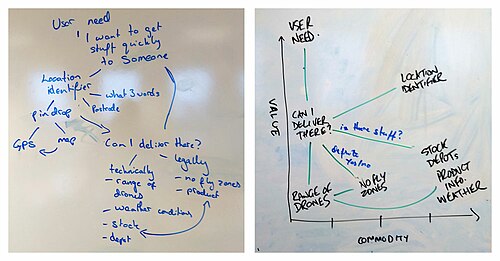
Wardley map
Great Oxidation Event

Similar to 403 Forbidden, but specifically for use when authentication is required and has failed or has not yet been provided. The response must include a WWW-Authenticate header field containing a challenge applicable to the requested resource.
Levels
White-box testing (also known as clear box testing, glass box testing, transparent box testing, and structural testing) is a method of software testing that tests internal structures or workings of an application, as opposed to its functionality (i.e. black-box testing)
trunk
this is an annotation
More history here on the page than I would have thought.
Definitely worth digging into some of the older examples going back to [[Conrad Gessner]] and [[Johann Jacob Moser]].
When faced with the same request from Caesar, Cato used the device of filibuster, speaking continuously until nightfall, to prevent the senate from voting on the issue of whether or not Caesar would be allowed to stand for consul in absentia. Thus Caesar was forced to choose between a Triumph or a run for the consulship. Caesar chose to forgo the Triumph and entered Rome in time to register as a candidate in the 59 BC election, which he won. Caesar's consular colleague was Marcus Bibulus, the husband of Cato's daughter Porcia.
Cato did this with both Pompey and now Caesar.
vow
Later, Cato was married to a woman called Atilia. By her, he had a son, Marcus Porcius Cato, and a daughter, Porcia, who would become the second wife of Marcus Junius Brutus.
Cato killed himself because of Caesar. His son-in-law kills Caesar. Wow.
DigiNotar was a Dutch certificate authority owned by VASCO Data Security International, Inc.[1][2] On September 3, 2011, after it had become clear that a security breach had resulted in the fraudulent issuing of certificates, the Dutch government took over operational management of DigiNotar's systems.[3]
Dutch Certificate Authority gets hacked.
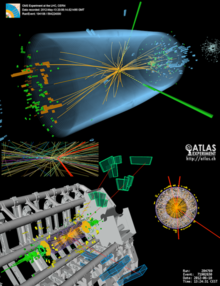
In the mainstream media, the Higgs boson has often been called the "God particle" from the 1993 book The God Particle by Nobel Laureate Leon Lederman,[10] although the nickname is not endorsed by many physicists.[11][12]
福柯曾在1976年3月17日于法兰西科学院的一次演讲中,提出过一个概念,叫“生物政治”(biopolitics)。福柯说,在生物政治的时代,统治者不再像是过去的君王或大革命后的共和国,它并不关心改变某个特殊的现象,或者惩罚某个具体的人,而是关注作为统计数字的“人口”:调节寿命、出生率、死亡率等一系列指标,优化生活状态。在“生物政治”思路的指引下,人命必须是要经过准确和细致衡量的,必要时该付的代价是必须的,只是我们要尽可能通过计算,让代价最小化。
1919年,一位加利福尼亚工程师威廉·亨利·史密斯(William Henry Smyth)就提出了“技术统治”(Technocracy)这个术语。他写了一篇《“技术统治”——实现工业民主的道路与方法》(“Tchnocracy” — Ways and Means to Gain Industrial Democracy)的文章,认为只有让人民从科学家和工程师中选举代表治理国家,才能有效实现民主统治。
ISO 639-3 extends the ISO 639-2 alpha-3 codes with an aim to cover all known natural languages.
The terms autonym and xenonym also had different applications,[3] thus leaving endonym and exonym as the preferred forms.
nativeName in https://gist.github.com/piraveen/fafd0d984b2236e809d03a0e306c8a4d is the endonym for the language.
Through a linkpin called "Property Value Alias", Unicode has made a 1:1 connection between a script defined, and its ISO 15924 standard.
The following standards are referred to as indispensable by ISO 15924.
To put it succinctly, differential topology studies structures on manifolds that, in a sense, have no interesting local structure. Differential geometry studies structures on manifolds that do have an interesting local (or sometimes even infinitesimal) structure.
Differential topology take a more global view and studies structures on manifolds that have no interesting local structure while differential geometry studies structures on manifolds that have interesting local structures.
As of 4 September 2020[update], 98 out of 193 (51%) United Nations (UN) member states, 22 out of 27 (81%) European Union (EU) member states, 26 out of 30 (87%) NATO member states, and 31 out of 57 (54%) Organisation of Islamic Cooperation (OIC) member states have recognised Kosovo. The government of Serbia does not recognise it as a sovereign state.
is a part of the United Kingdom that is variously described as a country, province, territory or region
Similarities in dialects[edit]
The lexicon (or, roughly, the base or essential vocabulary – such as "say" but not "said, tell, told")
Coupling (computer programming)

National Conference of Black Mayors
What happened?
In late 2014, a number of technology-oriented companies such as Google, Microsoft, Facebook, eBay, and Yahoo! announced that they were ending their ties to ALEC. Multiple companies cited environmental concerns as a point of contention with the organization
2014 is the shift change
Many ALEC legislators say the organization converts campaign rhetoric and nascent policy ideas into legislative language.[5]
hmm
《Aniara》是诺贝尔奖得主Harry Mattinson在1956年完成的小说,同时也是电影《安尼亚拉号(Aniara)》的原著。这部小成本科幻作品,在释放出人类通过高科技逃离生存危机的欣喜之后,又一点点将其剥夺,最终把极低的生存希望拉长到了天文数字般的年限后才能达成——这时我们大概才会如梦初醒:所谓的时间,原来只不过是神用来把玩人类的道具罢了。
从工业机器诞生之日开始,我们就已经幻想这些非碳基生物有一天会成为人类的精神主宰了:1909 年,英国作家E.M.福斯特的科幻短篇《大机器停止(The Machine Stops)》,就已经描述了一个人类被机器控制甚至拜机器为神的极端工业化时代。
Historically, the uncertainty principle has been confused[5][6] with a related effect in physics, called the observer effect, which notes that measurements of certain systems cannot be made without affecting the system, that is, without changing something in a system.
the uncertainty principle actually states a fundamental property of quantum systems and is not a statement about the observational success of current technology.
Such variable pairs are known as complementary variables or canonically conjugate variables
Cross-site scripting (XSS) vulnerabilities (even in other applications running on the same domain) allow attackers to bypass essentially all CSRF preventions.
The NoScript extension for Firefox mitigates CSRF threats by distinguishing trusted from untrusted sites, and removing authentication & payloads from POST requests sent by untrusted sites to trusted ones. The Application Boundary Enforcer module in NoScript also blocks requests sent from internet pages to local sites (e.g. localhost), preventing CSRF attacks on local services (such as uTorrent) or routers.
The Self Destructing Cookies extension for Firefox does not directly protect from CSRF, but can reduce the attack window, by deleting cookies as soon as they are no longer associated with an open tab.
The advantage of this technique over the Synchronizer pattern is that the token does not need to be stored on the server.
The same-origin policy prevents an attacker from reading or setting cookies on the target domain, so they cannot put a valid token in their crafted form.
.
Security of this technique is based on the assumption that only JavaScript running on the client side of an HTTPS connection to the server that initially set the cookie will be able to read the cookie's value.
As the token is unique and unpredictable, it also enforces proper sequence of events (e.g. screen 1, then 2, then 3) which raises usability problem (e.g. user opens multiple tabs). It can be relaxed by using per session CSRF token instead of per request CSRF token.
In particular, the convention has been established that the GET and HEAD methods SHOULD NOT have the significance of taking an action other than retrieval. These methods ought to be considered "safe". This allows user agents to represent other methods, such as POST, PUT and DELETE, in a special way, so that the user is made aware of the fact that a possibly unsafe action is being requested.
.
Attacks were launched by placing malicious, automatic-action HTML image elements on forums and email spam, so that browsers visiting these pages would open them automatically, without much user action. People running vulnerable uTorrent version at the same time as opening these pages were susceptible to the attack.
.
Details were not released, citing "obvious security reasons".
.
Cross-site request forgery is an example of a confused deputy attack against a web browser because the web browser is tricked into submitting a forged request by a less privileged attacker.
This link may be placed in such a way that it is not even necessary for the victim to click the link. For example, it may be embedded within an html image tag on an email sent to the victim which will automatically be loaded when the victim opens their email.
A user who is authenticated by a cookie saved in the user's web browser could unknowingly send an HTTP request to a site that trusts the user and thereby causes an unwanted action.
Can a user really unknowingly send an HTTP request? Or would it be more accurate to say the browser (user agent) sends the HTTP request, unknown to its (supposed) operator (user)?
Data tainting[edit] Netscape Navigator briefly contained a taint checking feature. The feature was experimentally introduced in 1997 as part of Netscape 3.[10] The feature was turned off by default, but if enabled by a user it would allow websites to attempt to read JavaScript properties of windows and frames belonging to a different domain. The browser would then ask the user whether to permit the access in question.
seems to have nothing to do with tainted data, more about trusting frames from other domains?!
This mechanism bears a particular significance for modern web applications that extensively depend on HTTP cookies[1] to maintain authenticated user sessions, as servers act based on the HTTP cookie information to reveal sensitive information or take state-changing actions. A strict separation between content provided by unrelated sites must be maintained on the client-side to prevent the loss of data confidentiality or integrity.
.
Cross-site scripting attacks are a case of code injection.
is-a hyponym
A reflected attack is typically delivered via email or a neutral web site. The bait is an innocent-looking URL, pointing to a trusted site but containing the XSS vector. If the trusted site is vulnerable to the vector, clicking the link can cause the victim's browser to execute the injected script.
explains how
By finding ways of injecting malicious scripts into web pages, an attacker can gain elevated access-privileges to sensitive page content, to session cookies, and to a variety of other information maintained by the browser on behalf of the user.
.
Exploiting one of these, attackers fold malicious content into the content being delivered from the compromised site. When the resulting combined content arrives at the client-side web browser, it has all been delivered from the trusted source, and thus operates under the permissions granted to that system.
.
Any code designed to do more than spread the worm is typically referred to as the "payload".
the "tangled" code
tangled code
Literate programming is a programming paradigm introduced by Donald Knuth in which a computer program is given an explanation of its logic in a natural language, such as English, interspersed with snippets of macros and traditional source code, from which compilable source code can be generated.
programming paradigm
explanation interspersed with snippets of source code
Post/Redirect/Get (PRG) is a web development design pattern that lets the page shown after a form submission be reloaded, shared, or bookmarked without ill effects, such as submitting the form another time.
.
. Given b ( s ) {\displaystyle b(s)} , then after taking action a {\displaystyle a} and observing o {\displaystyle o} ,
Pr(s' | b,a,o) proportional to Pr(o | b,a,s') x Pr(s'|b,a)
s'的先验概率可以由我的belief和我的动作和环境状态转移算出。 在观测到o 之后的后验概率可以由贝叶斯定理算出。就这么简单
Polemics are mostly seen in arguments about controversial topics.
Polemics is distinct from most academic writing in that academic writing does not focus on conflict between parties, but rather distinct and controlled contributions to a problem. It would be incorrect, however, to suggest academics do not engage in polemics. Perhaps the communicative mode or medium might be worth focus here.
Polemics often concern issues in religion or politics.
Contentious people, contentious issues. The connection is important to understand as we seldom come to clear and easy answers with such topics.
A polemic (/pəˈlɛmɪk/) is contentious rhetoric that is intended to support a specific position by forthright claims and undermining of the opposing position.
Unlike philosophical or some political argumentation, the polemicist's goal is assert the dominant argument. Most polemists assume they have arrived at the best informed argument.
make inferences about the antecedents of a communication describe and make inferences about characteristics of a communication make inferences about the effects of a communication.
Almost but not quite past, present and future.
"To make valid inferences from the text, it is important that the classification procedure be reliable in the sense of being consistent: Different people should code the same text in the same way".[
Notice the word 'should' here, as well as the following content on reliability. Coding text often demands correspondence and scrutiny, as we are discussing language and culture. Answers and interpretations aren't always simple, but differences can contribute to more refined understanding.
Qualitative and quantitative content analysis
Understanding what either approach tells us is important for critical consideration. For example, what would a frequency count tell us about one category's presence in text?
Content analysis is best understood as a broad family of techniques. Effective researchers choose techniques that best help them answer their substantive questions. That said, according to Klaus Krippendorff, six questions must be addressed in every content analysis:[5]
When we see content analysis applied in non-fiction writing, we obviously have a different expectation for this than with research writing. For example, sample data might be cherry picked to make a point, or little information in method is presented.
Content analysis is the study of documents and communication artifacts, which might be texts of various formats, pictures, audio or video. Social scientists use content analysis to examine patterns in communication in a replicable and systematic manner.[1]
Let's understand that "text" can have many definitions:
then that the "desolation" will last for 1290 days (12:11); and finally, 1335 days (12:12). Verse 12:11 was presumably added after the lapse of the 1150 days of chapter 8, and 12:12 after the lapse of the number in 12:11
It's amazing how they avoid interpreting the text accurately. They think these various numbers were just appended onto the text when the previous predictions failed. Their commentary is quite useless, because if they took the text seriously they would see that the numbers are referring to different events.
~ ~ ~ ~ ~ ~ ~ ~ ~ ~ ~ ~ ~ ~
So, what's the conclusion from this review of this Wiki article? If you want to get a better understanding of something biblical, do not read Wikipedia. It is overtly anti-Christian and will deceive and mislead the reader to achieve its end. Go to one of the good, reputed bible commentaries. https://biblehub.com/ is a great place to start.
I haven't addressed damaging claims in other Wikipedia articles, such as:
These probably come up in other Wikipedia articles, though they are easily answerable.
The stories of the first half are legendary in origin
Again, another anti-divine claim made as a lone statement, alleging to be a fact. The atheistic agenda is apparent, so there's little reason to take all its claims at face value without getting the other side of the story from a bible-affirming source.
the predicted war between the Syrians and the Egyptians (11:40–43) never took place, and the prophecy that Antiochus would die in Palestine (11:44–45) was inaccurate (he died in Persia).[29] The obvious conclusion is that the account must have been completed near the end of the reign of Antiochus but before his death in December 164 BCE, or at least before news of it reached Jerusalem, and the consensus of modern scholarship is accordingly that the book dates to the period 167–163 BCE
First of all, according to the text in Daniel itself, it was written around 530 BCE. That is a far cry from the 165 BCE date claimed by this article. Whilst there are good reasons for landing on the earlier date, scholars who don't actually believe the bible prefer the later date for Daniel. That is because it would put Daniel's book after the main events it prophesies about. That means Daniel was not writing prophecy, but simply recording history, pretending it was originally a prophecy. Many modern scholars like this because it removes the supernatural element from Daniel.
The Wiki author says this view is the 'consensus of modern scholarship'. Understand that 'modern scholarship' is not referring primarily to bible-believing scholars, but those who study the bible as a piece of ancient literature, usually saying it is a mixture of myths and history. They are secular scholars, often not even believing that God exists. They study the bible and other ancient texts for their literary and cultural value. It is therefore not surprising that the later date for Daniel -- the date that essentially makes the book out to be fake -- finds a lot of acceptance amongst 'modern scholars'.
Regarding the apparently failed prophecies of Daniel mentioned here, those prophecies have not failed. As you might know, when it comes to biblical prophecy, there are often different interpretive theories (the book of Revelation is a prime example). In this case, this article has chosen an interpretation that does not fit the data in Daniel.
This is where the intentions of the author (that is, of 'modern scholars') shines through. Instead of presenting other options which do work for Daniel's prophecy, the Wiki author sticks to this failed interpretation, and leverages it to claim support for his erroneous dating of Daniel.
The author's argument is false. Daniel's prophecy was referring to the Roman Emperor, not the Syrians, and in this the prophecy works simply. Daniel spoke the plain truth, and there's no reason to doubt that the book was written when it says it was, in the 6th century BCE. That, of course, would not be discussed or admitted in an article on Wikipedia, because it gives too much legitimacy to the bible, and particularly to Divine realities.
From the point of view of the Maccabean era, Jeremiah's promise was obviously not true
Their selective analysis makes one laugh and cry at the same time. Yes, if we insist on interpreting Jeremiah's prophecy only through the lens of the Maccabean era, then it is wrong. But why would you do that? The Maccabean era has nothing to do with Jeremiah's prophecy. If we interpret it instead through the lens that Jeremiah gives us -- the exile of Judah -- then the prophecy is spot on. The Wiki author has no real interest in the facts, only in pushing their worldview, regardless of how dishonest they must be with the facts along the way. There is no reason, from Jeremiah's words, to bring in the Maccabeans.
There are actually two options to see the 70 years fulfilled:
The temple of Solomon was destroyed by Babylon in 587 BC. The Second temple was completed and dedicated in 517 B.C., which is exactly 70 years. Notice that Daniel prayed in Daniel 9: "Lord, look with favor on your desolate sanctuary," suggesting a prophetic focus on the temple.
Calculate the date from the first invasion of Nebuchadnezzar in 605 B.C. to the laying of the foundation of the Second Temple in 536 B.C. That was exactly 70 years (to the very day, apparently).
(Source: https://www.robertjmorgan.com/uncategorized/jeremiahs-seventy-years/ )
Notice how this article's author (i.e. 'modern (secular) scholars') bypass data that doesn't fit their narrative? Then they pretend that's all the data there is to see. They simply cannot allow the possibility that Scripture is divine, that prophecy is real, and that God reigns over the earth.
Daniel reinterprets Jeremiah's "seventy years" prophecy
The author is suggesting that Daniel supposedly noticed that Jeremiah's 70-years prophecy (about the exile of Judah) was supposedly wrong, so Daniel decided to 'reinterpret' Jeremiah's prophecy, turning it into a new 70-week (490 year) prophecy (which is found in Daniel 9), hoping that by extending the timeline of the prophecy by 490 years, it might eventually come to pass. Thankfully that is not what biblical prophecy is like!
This line of reasoning would never be entertained by a Christian scholar, only by someone who has interest in dismantling the accuracy of Scripture. Needless to say, they are wrong. Jeremiah's 70-year prophecy was fulfilled quite nicely.
resembles the portrayal of the Canaanite god El as an ancient divine king presiding over the divine court.
Yes, which is why the name 'El' is used of God Most High in the bible (https://hebrew4christians.com/Names_of_G-d/El/el.html ). It is an ancient term for God. It is not surprising that other people's also understood that El reigns over the divine council. This is simply the truth. It doesn't mean Daniel borrowed the concept from anyone.
However, for an atheist who does not believe that God exists, then they would see the same idea in other literature and think that Daniel got this 'mythical' idea from there. Thus this Wiki author's reasoning is wrong, but it makes sense in light of their disbelief in God to start with.
the four "beasts from the sea" in chapter 7 reflect Hosea 13:7–8
This is an extremely loose correlation. Look up Hosea 13:7-8 and see if you can find Daniel's vision reflected there. One would not in the least think of Daniel's vision of four kingdoms reading these two verses.
By writing that Daniel "reflects Hosea 13:7-8", this article is attempting to build up the narrative that the book of Daniel is not an authentic work on its own, but that it largely borrowed and embellished other people's works a long later in the 2nd century BCE.
To conclude that an entire vision in Daniel is actually just reflecting a brief passing comment in Hosea, even though the two passages have no contextual correlation or relevance at all, is poor scholarship, and it shows the Wiki author is grasping at straws to delegitimise Daniel.
comes from Persian writings
This is truly laughable. Again, looking at the source material (Niskanan, 2004, pp.27,31, see URL below), we see that two Persian texts are of interest here. They are 'Zand-i Wahman yasn (Bhaman Yasht)' and 'Denkard'. There is only one problem though... the former text is from the medieval period, and the latter is from the 9th century CE. The author there (Niskanan) even states explicitly that they came after Daniel. So unless Daniel could time-travel to many centuries into the future, then guess who got the idea from whom? The Persians got it from Daniel, not the other way around.
The willful aberration of facts by Wikipedia to peddle their own narrative is shocking and truly unscholarly. It's no wonder that their conclusions differ so much from genuine biblical scholarship.
Niskanan, 2004: https://books.google.com.au/books?id=G0YFSrClQOkC&lpg=PP1&pg=PA31#v=onepage&q&f=false
stems from Greek theories of mythological history
Not true if Daniel was written when the book says it was written, in the 6th century BCE. That's too early for there to have been any Greek influence. Of course, the Wiki article cannot accept that date because it would legitimise Daniel's prophecies, so they go with the 2nd century BCE, which would theoretically allow the possibility of Greek influence.
However, even then, the correlation with Greek thought is barely there, and certainly not to the extent that this article intimates. If one refers to the source cited in this Wiki article (Niskanan, 2004, pp.27,31, see URL below), then it is seen that the concept in Greek thought was not specifically four successive world empires as in Daniel's vision, but simply the general notion that empires will routinely come and go in succession throughout history, instead of one empire ruling the world forever. This basic idea was, apparently, a particularly Greek perspective on world history. That is a very small correlation. Suffice to say, if anything, it is the Greeks who got the idea from Daniel, for his vision predates them by a couple of centuries.
Niskanan, 2004: https://books.google.com.au/books?id=G0YFSrClQOkC&lpg=PP1&pg=PA27#v=onepage&q&f=false
drawn from a wide range of sources
This is an assumption. You see, the Wiki author would like to attribute as much of Daniel as they can to 'other sources'. This would delegitimise Daniel as an authentic, divine revelation, which is what the Wiki author wants. However, as we shall see, the 'other sources' that this article mentions are not so compelling. Daniel remains unique and authoritative in its own right, not simply a mish-mash rehash of other people's ideas.
and pseudonymity (false authorship)
This is not of concern to us. Some books of the bible had anonymous input or authorship, though what these anonymous authors recorded was accurate history. For example, we say Moses wrote Deuteronomy, but the end of Deuteronomy includes Moses' death and the events immediately afterwards. Moses would have provided the primary source material, and scribes after him would have filled in the missing details. It would appear that a scribe after Daniel compiled some of Daniel's history with Daniel's own records of his visions, and put them together into one book, the book of Daniel today. This is fine. It is not an issue for Scripture.
Book of Daniel From Wikipedia, the free encyclopedia
Wikipedia is not the place I would go to for anything related to the interpretation or critique of Scripture. The simple reason is that Wikipedia is moderated by the culture at large, and our culture has an active interest in de-affirming Scripture. The desired (and intended) outcome is to downplay the authenticity of Scripture, and remove all its divine/supernatural realities.
Removing the divine is done by:
For an example of all this, look at Wikipedia's treatment of the historicity of Jesus' resurrection (https://en.wikipedia.org/wiki/Resurrection_of_Jesus#Historicity_and_origin_of_the_resurrection_of_Jesus). Note how brief the section is for such an immense topic, and note the absence of any suggestion that there is actually a logical, evidenced-based case for the resurrection.
Taking Wikipedia as an authority on Scriptural matters is like taking Richard Dawkins as an authority on biblical creation. It's shooting yourself in the foot.
We should therefore approach the claims of this article with due skepticism.
I have started my comments in the section, 'Historical Background', and they continue sporadically for nearly the rest of the article. So head down there now and click on the highlight texts to read my comments. I have not commented on everything that is questionable, only what particularly caught my attention.
probably the High Priest Onias III
So because they deviously apply Daniel's 70-week prophecy to the exile, instead of to the time of the decree to rebuild Jerusalem (Dan 9:25), they think the 'anointed one' in the 70th week is Onias III. I'm sure Onias III would be quite chuffed that he gets a mention here, but he'd be scratching his head at their logic. Their intent to avoid the obvious conclusion of Daniel's prophecy is quite shocking.
If we don't say that Daniel was 'reinterpreting' Jeremiah's prophecy, and we just let Daniel's 70-week prophecy stand on its own merits, applying it to the inter-testimental period as it is supposed to be, then guess who the anointed one in the 70th week turns out to be who? The date lands right in the lap of the Messiah, Jesus, in the very week of his death in fact, when he is 'cut off' as Daniel says.
In fact, this 70-week prophecy is possibly the most amazing prophecy in all Scripture, for it accurately predicted when the Messiah would die, yet the prophecy itself spans nearly five centuries of history (70 weeks of years = 490 years). Again, secular scholars would not go anywhere near admitting all that, so they prefer to come up with really odd ideas instead.
Daniel's attempt
See again how secular their view is? They say that Daniel was merely attempting, of his own ability, to predict how long until 'the end'. There is no room for the Holy Spirit in their view. We should not be surprised, then, that their conclusions drift so far from any true biblical scholarship. They don't even think Daniel was talking to a real angel (for it was the angel telling Daniel when the end would come, not 'Daniel attempting' it by himself). They essentially think Daniel was making all this up about the angel, etc.
to the real prophecy with which the passage ends
Notice which part of Daniel they call 'real prophecy' (i.e. a real prediction of the future) -- only the last part of chapter 12, supposedly about the death of Antiochus. That's because the rest of what Daniel prophesied before that is so unavoidably historically accurate that they are forced to say, "It can't be prophecy, there is no God, and no human can predict things that accurately, so it must have been written after the events." So for the Wiki author, the only bit they would concede as an attempt at prophecy is a bit that they explain away as wrong. (As I said at the start, they either reinterpret a prophecy to make it look wrong, or they will change the date of writing to be after the events, not before.)
Since they interpret last part of chapter 12 wrongly, they escape its real fulfillment and claim Daniel was just guessing.
That is the only form of biblical prophecy which they will allow... just people taking a human-minded guess at what might happen in the future, with no divine input.
draws on almost every book of the Old Testament except Daniel, leading scholars to suppose that its author was unaware of it.
A misleading statement. Yes, the Sirach was written in the 2nd century BCE as claimed, however the Sirach omits other key figures like Ezra. Does that mean Ezra wasn't written until after the Sirach as well? No, not according to Wikipedia. This time, Wikipedia accepts the biblical view that Ezra was written about 450 BCE, a very long time before Sirach. So why does Daniel's omission from Sirach mean it was written after Sirach? That's only because Daniel contains prophecies, and the atheistic scholar can't allow the Divine. Ezra does not contain prophecies, it is just historical narrative, so there is no problem accepting its textual date of ~450 BCE, despite the Sirach not referencing it.
Again, keep in mind that we're reading an atheist's opinion on the book of Daniel where their agenda is to support their own worldview, not the facts. I see the same thing in evolutionary literature regularly -- contradictory reasoning, dubious reinterpretation of data, and selective omission of unwanted data.
closed around 200 BCE
Yes, the canonicity of the Nevi'im was settled around 200 BCE, but this is a moot point since Daniel was not grouped with the Nevi'im writings, but with the Ketuvim writings (which was also part of the Hebrew canon). It does not matter when the Nevi'im was closed. What matters is when the Ketuvim was closed (but the author won't discuss this, because it does not support their agenda).
Regarding the Ketuvim, it is actually hard to get data on when its canonicity was settled, but the general consensus appears to be that it was anywhere from the 6th to the 2nd centuries BCE. That means Daniel was written anywhere in or before that time (which is consistent with the text of Daniel), not strictly in the 2nd century BCE as this Wiki author claims.
As with the other dating claims made in this article, there is a clear bias away from a plain and reasonable assessment of the information at hand. There is, instead, a clear priority to only permit discussion on what fits the atheistic worldview.
Daniel is excluded from the Hebrew Bible's canon of the prophets
This statement is misleading and is worded as a deliberate attack on the authenticity of Daniel. It sounds like the Hebrew people EXCLUDED Daniel from their original canon of Scripture.
Note that the text mentions not 'the canon', but 'the canon OF THE PROPHETS'. That is just one section of the Hebrew canon. It's just like we divide the Old Testament into the Pentateuch, Major Prophets, Minor Prophets, etc. It's just categories, but it's all Scripture.
Daniel was not EXCLUDED from the Hebrew canon in any sense. Using that word 'excluded', as if there was an active renunciation of the book of Daniel by the Hebrews, is not only factually false, but it is designed to lead the reader against accepting Daniel as legitimate.
The truth is that Daniel was in the Hebrew canon, but just classified in the section called the Ketuvim ('Writings'), along with Ezra, Nehemiah and 10 other books of the Old Testament (see https://en.wikipedia.org/wiki/Ketuvim). Daniel was no doubt classified there because so much of his book is historical narrative (like Ezra and Nehemiah), not primarily prophetic like Isaiah, Ezekiel, etc. Daniel was in the canon, and was not excluded from it at all.
Again, it is clear this Wiki author has an agenda and will deceptively present his ideas accordingly.
Further evidence of the book's date
Note that the author claims they're citing "evidence of the book's date", in a general sense. The unsuspecting reader would assume that what they are about to read is a good summary of all the data pertaining to the book's date. In reality, however, the author is only going to cite (loose) evidence of the date that THEY want to support, which is the 2nd century BCE. Why do they want this date, and what other dates might we consider?
They want (need) this date because then Daniel's amazingly accurate prophecies are not prophecies at all, and were actually just someone writing known history well after the events, and PRETENDING it was originally a prophecy. Thus this Wiki author avoids the notion of divine prophecy in Daniel and attempts to refute the inspiration of Scripture.
This would put the book in the inter-testimental period (that period of silence between the close of the Old Testament and Jesus' birth). But this is in contrast with the actual text of the book, which says it was penned in the 6th century BCE.
Normally, the actual text of the book would be considered primary evidence of when it was penned, but in this case it's ignored entirely because that would mean accepting that divine prophecy is real. Their materialistic worldview cannot tolerate a Divine essence. In the words of evolutionary Professor Richard Lewontin, "Materialism is absolute, for we cannot allow a Divine Foot in the door."
a collection of Aramaic court tales
Notice that the claim that Daniel is essentially 'court tales' is made as a statement of fact, not an opinion, and to the exclusion of all other perspectives. The author's mind is already made up -- the book of Daniel is false -- and they write in a way to condition the reader to not consider or be aware of other possibilities. That's the definition of propaganda (https://www.wordnik.com/words/propaganda). This article is not a scholarly investigation. We need to read it like propaganda, as it truly is.
(Wikipedia is framed as an Encyclopedia, yet it is often 'hijacked' for very biased and closed-minded reporting. It is thus often simply a propaganda tool, and I don't think many people realise this, wrongly treating it as an unbiased source of information. As I've said, it is decidedly atheistic and I would not use it for serious biblical analysis. There are plenty of good bible websites for that.)
The failure of prophecy helps pinpoint the date of composition
Their way of assessing the date of composition is very deviant. If they can't explain away the fulfillment of a prophecy, they it wasn't a prophecy, it was written after the events and only recounting known history. If they can explain away the fulfillment and make the prophecy out to be wrong, then they say, "Aha, that was when the biblical author was trying to predict the future, and he got it wrong, so the book must have been written before those events."
If they weren't so intent on distorting the text to try and diminish the bible's authority, then they would see that these prophecies were comfortably fulfilled.
are folktales
Another baseless claim instead of reviewing the evidence.
there is a broad consensus that the book was completed shortly after that crisis ended
This is wrong, but they say it is because Daniel's prophecies are so precise. It was written about 540-530 BCE, not in the second century BCE as they say here. For more discussion on Wikipedia's treatment of the date of Daniel, see my annotations at: https://hyp.is/go?url=https%3A%2F%2Fen.wikipedia.org%2Fwiki%2FBook_of_Daniel&group=__world__
modify their environment using architectural constructions
left pic
Key sentence