10,000 Matching Annotations
  1. Oct 2019
    1. A painting or a television show just blares at its viewer, requiring essentially zero effort to enact that viewing.

      Unless you're a brainless automaton, this is bullshit. It may require less effort from certain parts of the brain, but the notion that watching TV or observing a painting requires "essentially zero effort" is absolute bullshit. If you are actually watching something out of a desire to do so, your brain is doing a lot of intellectual work to put together pieces, identify patterns, create connections for analysis, interpret information, etc. Most of that activity is done by the viewer. Deliberately. That's how you can get to the end of that TV show episode and get into a 30 minute conversation about themes, etc. You were already thinking about that stuff while watching.

      Thinking, as it turns out, is effort.

      Maybe as academics, we forget that because we do it all the time. I don't, but then again, I had to fight my way up to a PhD.

    2. And in the process, they spare the majority of goose fans the need to pick up the controls and operate the game to get there.

      How? This is an unsubstantiated claim. The "meme-ness" of Untitled Goose Game has no immediate and obvious relationship to the "need" to play the game. Indeed, I'm led to wonder: do you think you were required to play this game for some reason? Is that how you think games work? By some kind of implied social force?

      I've got news: YOU DON'T HAVE TO PLAY IF YOU DON'T WANT TO. You're a fully grown adult person creature. Make better choices or whatever.

    3. But as images both real and fake have proliferated, their volume has become oppressive. The hundreds your Instagram or Facebook friends post daily. The thousands on Pinterest that show up, welcome or not, with every Google search.

      You sound older than my late grandmother when she first discovered email. She would go on to use Facebook and text messages. Odd how she managed to figure out how memes work on her own in this supposed sea of whatever. It's almost like maybe, just maybe, this is all bullshit.

    4. Only the eyeballs move in the skull. An image, even a disturbing one, always goes down smooth.

      At this point, I have to ask: What the fuck are you even talking about? What doe this have to do with your claims about Untitled Goose Game? I get that this connection is coming up, but holy hell, my dude, this is pointless.

    5. It might please or it might disturb, but either way, it ends as quickly as it begins.

      Again with the general, universal statements of truthiness.

      MOST memes fizzle out. SOME are shared, re-shared, remixed, re-purposed, and continually adapted. I seriously question someone's understanding of digital media if they don't know this about memes. So much of the research on memes is about how they are replicated, shared, etc.

      Memes are also packed with cultural references and meaning, so much so that there is an entire website dedicated to attempting to catalogue, historicize, and analyze memes.

    6. Memes are remixes, and taking them out of their original context erases some—and sometimes all—reference to the material they sample. Memeification doesn’t necessarily return any spoils to the thing memed.

      To quote Star Wars.

    7. Instead, they delegate the effort to a smaller group, which delivers parcels of enjoyment by condensing them into bite-size memes.

      This is literally how all games work. There's an entire industry of meme makers, actual plays, etc. designed to give people who may or may not play vicarious enjoyment. We've had this for about a decade or so now. Any game created today could fit into this paradigm. Untitled Goose Game isn't unique here...

    8. The walking simulator offers one response to the risk of instrumental reason: Remove as much game-play as possible in order to guard against transforming play into a means for measuring, and maximizing, utility.

      Or it's just a different kind of gameplay for a different kind of gamer. Why does this need to be an oppositional practice? People who play games come to games with a variety of interests and needs. The fact that there are games for people who would prefer to simply wander around a virtual world for fun just tells us that a need is being met. At the same time, there are others who would prefer a more action-oriented FPS or a strategy game or whatever.

      Again: I understand perfectly why people have accused Prof. Bogost of dismissing games and gamers. This oppositional framing makes it very clear that he views games as hierarchical, with some having more value than others.

      Loathe as I am to point to popularity in an argument, the vast majority of gamers aren't playing these games, certainly not with any regularity. Am I to believe that these gamers have been duped into wasting their leisure time by working? If so, I'm not buying it.

    9. The work quickly devolves from curiosity to chore.

      FOR YOU.

      Again: Prof. Bogost constantly asserts as general things that apply only to himself. It's a chore FOR YOU. the easy answer to this problem is that you stop playing games that make you feel this way and use your time for more productive activities, such as ones that actually make you happy as opposed to a miserable curmudgeon who poopoos on the things that others do for their own pleasure.

    10. The certain sight gag of piloting a virtual goose around gives way to the nuisance of piloting a goose around. The bird’s awkward lumber gets in the way of the tasks it’s supposed to make funny.

      Or, for those of us who are actually fun at parties: we'll still get a giggle out of the game because the wonky play is part of the fun.

      And as I keep implying throughout these annotations: sometimes the release from completing a difficult task (you chose) is incredibly valuable.

    11. to carry out a set of tasks, recorded for you on a to-do list, by any means possible.

      Translation:

      The game's function is that of a game, but it's bad because games being games is making you do game things or whatever...

    12. “doing the job of a goose.”

      Translation:

      The game about playing a goose asks you to do things that a goose does. I am so annoyed that I have to do goose things while playing a game that asks me to play a goose. I could have gone and done literally anything else with my life, but instead, I'm going to be annoyed that I chose to play a goose game that asks me to play a goose by doing goose things.

      CTFO...

    13. unknowable, really, but surely unconcerned with our civilization and its trials

      It's a fucking goose game, dude. It doesn't need to deal with anything but a goofy goose doing goofy shit. It doesn't have to be about "our real world."

      This is the kind of thing that people despise about academics. Everything must be a Very Serious Subject (TM). Prof. Bogost has essentially admitted that Untitled Goose Game is anything but a Very Serious Subject (TM), so rather than just say "well, it's not that, and that's cool," he has to make dismissive statements about it.

    14. It’s the same catharsis that violent or antisocial games such as Hitman or Grand Theft Auto offer up, but rewritten in the dialect of English pastoral politesse, appropriate for all ages.

      If only your article took seriously the value of catharsis in the context of games.

    15. As Brexit looms, the seas rise, and private wealth balloons, what a pleasure it is to upend the sleepy lives of a small band of villagers: to soak the gardener by luring him into the path of his own sprinkler;

      You're not dismissive of games at all. No, sir. You couldn't possibly be accused of being dismissive by making a passing reference to Very Serious Subjects (TM) while highlighting the silliness of a game.

      After all, grown adults must take seriously Very Serious Subjects (TM) when considering whether to play a game where you run around as a goofy goose that ruins the day of imaginary characters.

    16. Even when a game does not literally exploit its players’ leisure for its creator’s gain, it orients the player toward formal, often numerical goals that structure progress and, by extension, define enjoyment. The fact that consultants and entrepreneurs have applied game metrics such as points, levels, and badges in institutional settings, dubbing the effort “gamification,” only further entrenches the connection between games and work.

      So does building a chair, going on vacation, etc. Leisure in and of itself is structured by a measure of progress, especially when we engage in certain activities we find pleasurable that have structure to them.

      Basically, this is a criticism of games on the basis that they have a structure to them and, therefore, a goal for the user. But the same could be said about books, movies, etc., which explains why some people who are more structurally oriented than others may react negatively to media products that lack such structure.

      Structure, however, is not the same as framing games within the rhetoric of labor. It may define the contours of the type of enjoyment on offer, but, again, the user's agency comes into play here: if they don't want that kind of enjoyment, they can simply do something else.

      As for the claims about gamification in the job market: that is hardly the fault of games, which have fought for decades to be taken seriously as a field of humanities research, but a fault of corporate and work culture. If you have issues there, take it up in the correct context.

    17. Likewise, when you feel obliged to check work email or Slack at all hours, you confuse work with leisure until no boundary exists between the two.

      This example has nothing to do with games, which, again, are played for personal enjoyment.

    18. The game theorist Julian Kücklich even coined a portmanteau, playbor, to describe the fusion of work and leisure in contemporary life.

      It is incumbent upon you to provide an alternative that would be pure leisure. I submit that no such thing exists that would be appealing to most people.

    19. Role-playing gamers sometimes talk about “grinding”— completing boring, repetitive tasks to advance their character’s abilities in order to make progress—a term that exactly mirrors the drudgery and toil of labor.

      This is horribly reductive. For RPG players, the act of grinding comes with a payoff that materially changes the game experience. Grinding takes time and effort, but it is distinct from the type of labor/work Prof. Bogost refers to here. The payoff of grinding is the product of the player's agency and choice. They choose to do this; it is not something thrust upon them by necessity. So the repetitive tasks involved in grinding share superficial similarities to the kind of labor/work I have to assume Prof. Bogost is referring to: the everyday, just doing it for a paycheck even though I am not fulfilled by what I'm doing work.

      That is NOT a description of work in games.

    20. It’s easy to pass the eyes over the pages of a book, or to bathe in the waves of image and sound at the cinema or in your living room.

      As someone who has taught a LOT of literature in his time as an educator, there is nothing "easy" about reading a book. Some books may "read easier" for some, but that will be based on personal enjoyment, not the fact that books are inherently easy.

      The notion that a book is not work is, for someone who presumably earned a PhD that involved reading, bonkers. The same type of work (for pleasure or enjoyment) we find with games exists for books, too. The mechanisms may differ (one is more intellectual than another and requires an active imagination -- depending on the work), but you can approach both fro the same position of desire.

    21. Game-play—the work of working a game—is fundamentally irritating, at least in comparison with other media forms.

      Only if you don't actually enjoy playing games.

      The problem with this article thus far is its incessant need to make universal pronouncements about games that really only apply to the individual writing the article. Based on Professor Bogost's Twitter feed, he is aware that his perspective will rankle feathers, which raises the question: Why take a universalist approach to your subjective claims if your intention is not to confuse the reader by giving the wrong impression of what you actually think?

      Well, we have the answer to that: https://twitter.com/ibogost/status/1187004935487004673

    22. And like all labor, the best way to get it done is to farm it out to others. Let the memers honk their geese so you don’t have to.

      Or, here's a novel idea: if you want to play the game, play it.

    23. t might even be more fun not to play the game than to play it.

      Then...don't? Like, a goose didn't come into your house a month ago and say, "You better play Untitled Goose Game or I will cut you." Even as a so-called academic of media studies, this is a bizarre framing to take.

    24. That’s not a slight or a dodge. It doesn’t disrespect the game, its creators, or the fans who truly do enjoy actually playing it.

      I am aware of Professor Bogost's efforts on Twitter to make this particular line stick, but given the bulk of the content of his article, I am hard pressed to take seriously his claim that he is not dismissing or slighting games and the people who play them. If his position were solely personal, he might have led quite clearly with a declaration of both facts; that he chose not to do so may be a consequence of the medium (entertainment "journalism"), but given that we share a connection by field in academia, I am, again, disinclined to accept this reasoning largely because engaging in clickbait practices is unethical.

      We are also left with the same questions I raised at the start:

      Why are you doing this in the first place? Having a professional interest in something only goes so far here. At some point, your inability to truly enjoy the material you are studying should lead you to consider studying something else. I didn't enjoy Troubadour poetry during my undergraduate education, and so I have not dedicated part of my professional career to interrogating why Troubadour poetry requires work, why I don't enjoy it, etc. I went on to study postcolonial literature, digital rhetoric, and science fiction (and all permutations therein) because those things interested me and I continue to get genuine enjoyment out of the work that I do.

      Why have you reduced work to a singular definition that removes its potential for pleasure through productivity? On what basis should we accept this interpretation of work that excludes work for pleasure, which is embodied in all forms of leisure activities outside of literally sitting in a chair staring at nothingness? That is not apparent here.

    25. of the quandary of game-play’s fundamental aggravation: Someone has to play the game, but that someone needn’t be you.

      Have you ever talked to the average video game player? The only one who seems aggravated about playing this game is you and the colleague you'll mention later on. And the question the becomes: why are you playing video games in the first place if the act of play is, for you, an aggravation? What are you doing with your life that you're deliberately doing something you don't enjoy so you can write an article rambling out nonsensical defenses of your unenjoyment?

      I answered my own question.

    26. The only problem is that you have to play the game to do so.

      This is not a problem to literally anybody who actually enjoys games, whether video, board, card, or RPG. It becomes clear here that the "it's fun" was, in fact, sarcastic.

      I'll also add that there is nothing inherently wrong with putting in effort on something you actually enjoy. This can, in fact, be fun. Folks who like carving wood in their spare time do it because it brings them pleasure. Carving wood is, arguably, far more difficult than playing a goofy goose in a video game, and yet people still do it because it brings them pleasure. Video games -- and all games, for that matter -- bring a lot of people pleasure even if they take time and effort.

      But we'll come back to this shortly...

    27. It’s fun!

      This is where the review should have ended. "It's fun." Fin. Done.

      But we're not going to stop here. No. You just can't help yourself, you curmudgeonly goose hater.

    28. geese are notoriously annoying

      Anti-goose propaganda. Geese are notoriously delightful creatures with wonderful personalities. Respect the goose and the goose will respect you.

    1. Howmanyofthemaredead?Likewhatpercentage?KELLYAsinfulltimers?(shrug)Eighty.Eighty-five.

      Most of the people in San Junipero have already passed over. There were several mentions before that gave a hint that this was a virtual reality game. Here, virtual reality has advanced enough to retain a person's conscious even after death.

    Tags

    Annotators

    1. In order to find genuine excitement in learning a subject, students need to be comfortable with the game.

      I think this applies to not only games but just about anything that people have to learn or want to do.

    2. he way we understand the expectations and promises of today’s game-based approaches will have a long-term impact on how we imagine and implement them in the future.

      Games for learning in the future will be something that is going to be expected for new generations to have.

    3. Teachers see this motivation translating into academic performance too: 78 percent of teachers using digital games saw improved performance on curricular subjects due to gameplay and 71 percent saw improvement in extracurricular subjects

      Students have to engage in the game making it easier for them to learn.

    4. Civilization is sometimes criticized for not being historically accurate, but Gilbert sees that flaw as a teachable moment. “You can turn the things that might not be necessarily correct into learning experiences,” he said

      This is smart, if a game does not meet the learning skills of a student then the teacher should fill in those gaps and fix the wrongs.

    5. He’s been using game simulations in his classroom since 1995, but when he started playing the commercial game Civilization IV for fun, he immediately recognized its potential to get 6th graders hooked on history

      Is this the earliest adaptation of game-based learning?

    6. “Game mechanics” learn to adjust settings and manipulate the relationship between components within a particular framework

      I worked with a similar program in 8th however it was not very well developed and left us stuck about what to do.

    7. When you engage with the game, you not only try to see the game from the perspective of your students, you also understand how the game presents the material.

      Games help with students being able to critically engage with their situation or surroundings.

    8. What platforms (hardware) do you have available in your class? Is yours a BYOD (bring your own device) classroom, or do you have school-owned hardware to work with? Will games be a full-class activity or just one station in a room full of learning activities

      This could perhaps be a new problem with game-based learning. Not everyone has access to these resources.

    9. Just adding the alphabet to popular games like Angry Birds or Temple Run might make parents more willing to whip out their credit cards, but it won’t necessarily teach their children how to read.

      Would this be considered game-based learning?

    10. Students experimented with the digital model prior to doing an actual DNA extraction in the lab

      Minecraft in itself is a good platform for students to learn. They even have a "educational edition" that is different from console and pc versions of the game.

    1. We are resolved to force no oneto drink more than he wants.

      I think it would be fun if ancient philosophers had a drinking game they played before philosophizing

    Annotators

    1. The Institute of Play provides game design and development exper-tise for students and teachers and serves as a primary conduit to the professional game-development community.

      When creating these games, its not like they have one set of mind and they go with what they said. They have multiple people who have different mindsets that do different games workers or works with students to creative something magical and different for the students to love

    2. Students not only will develop these capacities within the curricular experiences of the school but will be supported in their development through internships, community service, service-learning opportunities, and capstone research projects, especially within the upper grades.

      They will reflect back on their own life from what they have learn form this game based learning system

    3. Recruit appropriate resources and practices essential to com-prehend, analyze, evaluate, develop, and present information in an articulate, persuasive, and appropriate manner for spe-cific purposes—through speech, with visual demonstrations, in writing, and through games and digital communication tools in a manner that demonstrates awareness of diverse points of reference

      Not only are they using the skills they have gain they are also finding new tools to help gain more access to win the game

    4. Use game design and system thinking as lenses through which to view society and culture as well as through which to express ideas and emotions.

      I really like this bullet point. Talking about throughout the course not only would it be a game for fun but it would force the student to think and learn about themselves. To think more about what they want to think about.

    5. Thus, throughout the Q2L curriculum, game design is used as a learning strategy for students.

      Challenges students into learning more about what they are learning in the game. Engages the player to learn more.

    6. Games are not only models for helping students think about how the world works, but also a dynamic medium through which to engage socially and to develop a deeper understanding of their place in the world.

      It depends on the game, and how its represented

    7. Students might play a role-play-ing game where they have to choose to play both a “good” and “bad” character and compare differences in strategy, choice, and values held by those characters.

      Learning could be done in many different ways such as finding out in game that there is objects or things that are objectively better. While other things or objects may be subjectively better usually based on a case through case bases.

    8. alienation from learning that high school dropouts experience as a result of schooling.

      The interactivity and engagement of game based learning solves many of these issues (as long as it is done well)

    9. students play SimCity to learn about urban planning or Civiliza-tion IV to learn about history.

      The bases of the game is used for one of its most prominent features to understand how it works in real life or in other areas.

    1. But as for this little one here, it is the key to the closet at the end of the great hall on the ground floor.

      This is a game of trust otherwise there would be no reason to give her the key.

    1. Unreal City Under the brown fog of a winter noon

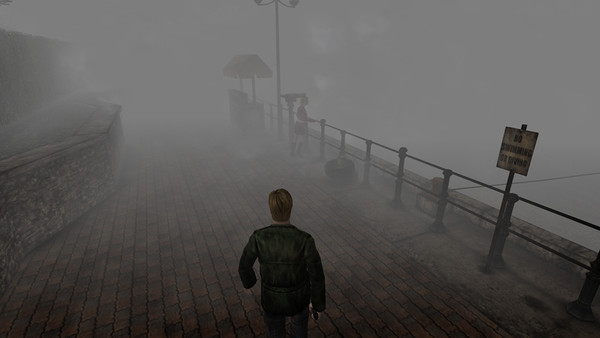
      Eliot's depiction of this wasteland is enhanced even further with the menacing backdrop of a thick dusty fog. It reminds me of the horror video game Silent Hill 2, which uses a thick fog in certain segments to great effect and creates an intense atmosphere of dread.

    2.   II. A Game of Chess

      Portrait of Chess Player

      Eliot's naming of the second part of the epic poem, 'A Game of Chess' reminded me of Duchamp's painting, 'Portrait of Chess Player' in the Armory Show. What links these two images most specifically for me, is the chaos in which surrounds a simple game of chess. Eliot employs an abundance of differing and contrasting voices, speakers and images in this part of the poem, while Duchamp's use of cubism in his painting gives the portrait a chaotic and confusing feel. This disorganisation and confusion is somewhat ironic in both instances as a game of chess is, traditionally, very simple and plain, in other words, in black and white.

    3. And we shall play a game of chess

      Marcel Duchamp's "Portrait of Chess Players" comes to mind for me here considering the obvious, the painting and the passage both involve chess. Furthermore, the passage suggests a game of chess be used to kill time in the event of a rainy day. Duchamp's painting shows two figures completely absorbed in their game of chess that they no longer look like they belong to any kind of reality.

    1. This is what he remembered. Heat. A baseball field. Yellow grass, the whirr of insects, himself leaning against a tree as the boys of the neighborhood gather for a pickup game. He looks on as the others argue the relative genius of Mantle and Mays. They have been worrying this subject all summer, and it has become tedious to Anders: an oppresssion, like the heat

      The tense shifts here from past to present. The act of remembering in this story converts an event from past tense to present tense, as the character is re-experiencing the event. The earlier paragraphs were in past tense because he didn't remember them, and so they were stuck in the past. As he is dying, he experiences this memory, and so it is in present tense.

    1. Dr Willie Soon's chart showing a correlation between Sun activity and surface temperature  Credit: Dr Willie Soon

      Firstly, the correlation isn't particularly compelling. But, secondly, why choose daily high temperature over Mexico? It smacks of a very spectacular cherry-pick. Searching over enough regions and metrics and playing the wiggle matching game one could likely createv similarly impressive graphs for any posited mechanism somewhere on earth. But that doesn't mean that there is a meaningful link between the two.

    2. Dr Willie Soon's chart showing a correlation between Sun activity and surface temperature  Credit: Dr Willie Soon

      Firstly, the correlation isn't particularly compelling. But, secondly, why choose daily high temperature over Mexico? It smacks of a very spectacular cherry-pick. Searching over enough regions and metrics and playing the wiggle matching game one could likely createv similarly impressive graphs for any posited mechanism somewhere on earth. But that doesn't mean that there is a meaningful link between the two.

    1. and “telling him what to do when he can fig-ure it out for himself.”

      A child would rather figure out sometime on their own such as a game. That is how they learn, it makes them engage with their surroundings.

    2. I am mainly concerned with the sorts of videogames in which the player takes on the role of a fantasy character movingthrough an elaborate world, solving various problems (violently or not), orin which the player builds and maintains some complex entity, like an army,a city, or even a whole civilization. There are, of course, lots of other typesof video games

      These types of video games help the player with their critical thinking skills. It makes the player feels as if they're in the game itself.

    3. If a game has poorlearning principles built into its design, then it won’t get learned or playedand won’t sell well.

      Not necessarily, many people buy games because the setting looks interesting, or it has an interesting mechanic , and then they'll hop into the game and find out that it really does have poor learning principles and is hard to learn, but its already been bought. Heck, they might even love the game, like Dark Souls for instance.

    4. When I played the game I was quite surprised to find out it was fairlylong and pretty challenging, even for an adult.

      This seems too provide a sort of false sense of how age plays into skill at games. While you do get better with age somewhat, for the most part the reason you get better isn't the year you were born getting farther away, but the amount of time you have spent playing games.

    1. Theclassdiscussionwasanimated,tothepointwherethevideocam-erasintheroomwhereunabletoreliablypickupstudents’comments.Studentsnowwereinvestedinparticulartheoriesandarguments.Inthisexample,fourgirlshuddledaroundatable,examiningtheirdocuments

      It kind of amazes me how a game can changed the way students act in the classroom.

    2. Shedescribed,“Infact,someofthemmadeprettystrongcasesforthewrongthings.But,theymadeastrongcaseandtheytalkedtooneanother.Theywouldarguewhowasrightandwhowaswrong.Itwasexciting.

      Just from game-based learning, students seem to be turned around when it came to their knowledge. They become very confident with their findings.

    3. hiswasbutoneexampleofgameplayleadingtoscientificargumen-tationthatengagedstudents’priorexperienceandevidencegatheredingame.Situatingthegameasafictionalizedbuthypotheticallypossibleprobleminvitedstudentstobringpersonalexperiencesintoproblem-solving

      This game allows students to be engaged with their environment. I only wish i had a game-based learning experience rather than a traditional lecture.

    1. This can be true for any type of deice whether it be an iPhone, iPad, tablet, game console, etc. Any amount attention to these types of technology over an extended amount of time can distract from a social life engaging with the physical word.

    2. As we grow older, time spent on devices often replaces time spent engaging in physical activity or socially with other people

      This can be true for any type of deice whether it be an iPhone, iPad, tablet, game console, etc. Any amount attention to these types of technology over an extended amount of time can distract from a social life engaging with the physical word.

    1. And, some at the protest asked, are you really doxxing a person if he or she is marching on a public street, face revealed and apparently proud? It is not as though they are hiding their identities.

      This ties back to a prompt from the discussion thread about whether or not people who put themselves or content on the internet is fair game. I think in this situation it is fair game if someone is marching proudly in a parade without hiding their identity.

    2. The next year, doxxing became a tool by in the “GamerGate” controversy, an online dispute purportedly about ethics in video game journalism that became a foundational moment for some of today’s fringe far right. Mostly male video-game players began to publish personal information — including home address and phone numbers — for women in their community, typically journalists and game designers who they said were unfairly politicizing gaming culture.

      I am rather concerned that people have no privacy anymore. I like these examples of people policing other people.

    1. Hellblade: Senua’s Sacrifice was one example, with Pratchett pointing out the help provided by the Wellcome Trust’s Public Engagement Fund. The trust is a foundation in England that gives grants to projects in film, TV and video games that have a biological or neurological component. Part of the grant process also comes with support from consultants, who work with recipients. For Hellblade, that meant replicating Senua’s psychosis in a convincing and sensitive way, and so University of Cambridge’s Professor Paul Fletcher became integral to the game’s development.

      I didn't play Senua's Sacrifice personally, I saw a let's play of it on YouTube. And it was amazing. It makes so much sense now that there was such a great collaboration between the company, Trust fund, Uni and writer(s) - because the psychosis reflected in the game that you experience through Senua's perspective WAS really well done, and done with care/sensitivity. It also is the way mental illnesses should be done in games from now on.

    1. he confirmed that children performed slightly better when they played the game in pairs compared to when they played alone

      Do people in competitive environments feel happier?

    1. When memes or the subjects of a meme are used for commercial purposes without permission, the meme creator may sue, as the effect of the commercial use on the market value of the original meme usually prevents a finding of fair use. In 2013, the owners of the cats featured in the “Nyan Cat” and “Keyboard Cat” memes won a lawsuit against Warner Bros. and 5th Cell Media for respectively distributing and producing a video game using images of their cats.

      I think that is fair from the creator to sue if someone use a meme for commercial purposes, because it could lost all the credibility.

    2. In 2003, the parents of the unwilling star of the “Star Wars Kid” video sued their son’s classmates for posting the video online. Though the suit was settled, the video did not disappear, and the Star Wars Kid learned to deal with his fame.

      An example of, if t is posted on the web it is fair game! Even thought the suit was settled the meme posted was all over the web and impossible to eliminate. As I have seen before, memes have a way of giving some people a form of "fame."

    1. Ranging from the networks' morning shows (NBC's Today, ABC's Good Morning America, CBS's This Morning) distributed nationally by the networks to the syndicated shows that plug the off-network holes in affiliates' schedules (such as Oprah Winfrey, Donahue, Geraldo, Ricki Lake, and Sally ]essy Ra-phael), the talk show remains a staple of women's television.

      I have noticed that a lot of talk shows are more geared towards women than men, as the ones I've seen have an all-female set of hosts, audience and topics. Things like sports shows are also guilty of this, as they are mainly former players (mostly men) who talk about the game and really focuses on their target audience than including other viewers.

    2. Early morning series such as Everyday Workout, Old MacDonald's Sing-Along Farm, and Your Baby & Child addressed homemakers and their young children. Mid-day has variously been programmed with game shows (Supermarket Sweep, Shop Til You Drop), talk shows (Barbara Walters Interviews of a Lifetime, Live from Queens), syndicated "reality" shows (Unsolved Mysteries), programs on domestic arts (Our Home, The Frugal Gour-met), movies, or syndicated series (Sisters, thirtysomething). Late after-noon has also featured movies, syndicated shows, and game shows.

      I think many channels choose to follow this model. I always noticed how when I was younger and would be home from school, the TV shows that played were different than what I normally watched. For example, Nickelodeon would play TV shows for little kids between the morning and afternoon, and when I'd get home from school around 3, Spongebob or Fairly Odd Parents would come on. Then late at night, the more adultish TV shows came on. This catered to little kids who stayed home during the daytime, then to kids who would come home from school, then teenagers or adults when the kids went to bed.

    Annotators

    1. Boredom: Our technological distractions promise us brief bursts of pleasure — something that becomes especially tempting when we are pursuing a difficult or repetitive task. Even such tasks can be made more interesting, though. Driving to work every day represents a boring task that may spur us to check our phones while behind the wheel; one easy and obvious solution would be to vary your route occasionally. For academic tasks that require serious concentration the strategy mentioned above may work best: Alternate intensive periods of focus with deliberately planned phases of reward time in which you indulge your desire for distraction. For academic tasks that require less concentration, though, the authors suggest we give ourselves a break: "Having a more enjoyable time multitasking … may actually be what allows you to accomplish a set of low-priority tasks that really just need to get done."

      when I have long projects that takes hours to do, i find myself, telling myself every mins that i need to take a break and play a game on my phone to help me relax and not stress about the project as much. but lately i have found that staying on the project until i have had accomplished getting a bulk of work done has been more effective than taking breaks because of the stress or being "bored" with working on the same thing.

    1. would be used to demonstrate their incompetence in elementary staff work.

      <br>

      Source Excerpt (Source 1): "The arrival in the field of the first-line divisions could not by any means be taken to indicate that the Russian armies were forthwith in a state of readiness. The officers of the General Staff had never received proper training, either at the Staff College or on their later service, in the technique of the administration of higher formations. The armies after mobilization ought to have had a certain time at their disposal, in order to get the administrative, supply, and lines-of-communications organizations into working order. The following fact will serve as a clear illustration of this unpreparedness regarding the administration of higher units. The 'Regulation of Army Administration in the Field,' published before the Japanese war, was considered unsatisfactory: nevertheless right up to 1914 no new one could be completed; commissions worked upon it, and drafts were prepared, but were not decided upon, and the new 'Regulations' were hastily issued just before the war itself. But the most characteristic peculiarity of the Kiev war game was the circumstance that the working of lines of communications and supply services was ignored. This shows the futile ideas of strategy of the Chief Directorate, which made the war game into an exercise in adventures upon the map and into juggling with figures." (38-39)

      Data Sources:<br> Source 1: https://doi.org/10.5064/F6KW5CXS/PEZMZA <br> Source 2: https://doi.org/10.5064/F6KW5CXS/RY7P5J

      Full Citation (Source 1): N. N. Golovin, The Russian Campaign of 1914 (Ft. Leavenworth, Kans.: Command and Staff School Press, 1933) p. 38-9.

      Full Citation (Source 2): A. A. Polivanov, Iz dnevnikov i vozpominanii po dolzhnosti voennogo ministra i ego pomoshchika, 1907-1916 gg. (Moscow: Vysshii voennyi redaktsionnyi sovet, 1924), p. 99.

    2. a 1914 Danilov operational memorandum employ this assumption.

      <br>

      Source Excerpt (Source 2): LIST OF PARTICIPANTS The War Game Director-in-Chief: War Minister General Sukhomlinov. Chief of Staff of the Director-in-Chief: Chief of the General Staff General Yanushkevich. Quartermaster-General: General Danilov. The World War Commander-in-Chief: the Grand Duke Nikolai Nikolaievich. Chief of Staff to the Commander-in-Chief: General Yanushkevich. Quartermaster-General: General Danilov North-Western Group of Armies G.O.C.: General Jilinsky. Chief of Staff: General Oranovksy Commander of the First Army: General Rennenkampf Chief of Staff: General Mileant Commander of the Second Army: General Baron Raush von Traubenberg Chief of Staff: General Leontiev G.O.C.: General Jilinsky Chief of Staff: General Oranovsky Commander of the First Army: General Rennenkampf Chief of Staff: General Mileant Commander of the Second Army: General Samsonov Chief of Staff: General Postovsky "The main idea of the Kiev war game was based upon the supposition that Russia and France were at war with Germany, Austria-Hungary, and Italy: Russia had gone as far as mobilization, but was awaiting events. This being the state of affairs politically, the strategic position was supposed to be as follows: Germany was aiming her first blow against France. In Eastern Prussia she was deploying a force of ten first-line and eleven reserve infantry divisions, which were to take the offensive upon the Middle Nyeman on the front Grodno-Olita. The object of the German operations was supposed to be to shatter our unprepared advance troops on the Middle Nyeman by means of a sharp and sudden blow, and to drive off as many as possible of the Russian forces, in order to facilitate the operations of the Austro-Hungarian armies advancing on the front Sedlitz- Brest-Litovsk-Kobrin." (36)

      Data Sources:<br> Source 1: https://doi.org/10.5064/F6KW5CXS/I11OIK <br> Source 2: https://doi.org/10.5064/F6KW5CXS/I3FYW2

      Full Citation (Source 1): A. M. Zaionchkovskii, Podgotovka Rossii k imperialisticheskoi voine (Moscow: Gosvoenizdat, 1926), p. 9.

      Full Citation (Source 2): N. N. Golovin, The Russian Campaign of 1914 (Ft. Leavenworth, Kans.: Command and Staff School Press, 1933), p. 36.

    3. despite French prodding to countermobilize against the Austrians.

      <br>

      Analytic Note (Source 1): The standard historical literature has portrayed Sukhomlinov as advocating at this time a relatively large scale partial mobilization against Austria, based on a misleading account in the memoirs of the chairman of the Council of Ministers.

      Source Excerpt (Source 1): "Sukhomlinov said that he had not informed us, since he believed it best that we should learn from the Tsar himself what he had in mind. Then the Tsar, opening a map on the table before him, began to explain, calmly and clearly, the ratio of Russian and Austrian military forces on our frontier, the weakness of our infantry, numbering not over 90 rifles to a company while the Austrian infantry numbered 200, the slowness of our transport, and the consequent necessity for considerably increasing the troops stationed near the frontier."

      Source Excerpt (Source 2): "Под нажимом французской дипломатии в высших правительственных сферах России неоднократно обсуждался вопрос о военных мероприятиях против Австро-Венгрии. Однако Россия не была готова к войне." "...Меры по мобилизации (выдвигание кавалерии к границе, вручение мобилизационных билетов запасным в пограничных округах и др), предложенные Сухомлиновым, советом министров отклонены..."

      Source Excerpt Translation (Source 2): [FULL] The highest Russian governmental circles discussed the question of military activities against Austria-Hungary multiple times under pressure by French diplomats. Nevertheless, Russia was not ready for a war. Furthermore, the ruling circles in Russia treated the French position with suspicion because while the political and military figures of the Third Republic were broadcasting unofficial promises to the Russian representatives, at the same time the French government stubbornly avoided making any official statements whatsoever. This suspicion was reflected, partially, in the 1912 "Plan for the Defense of Russia in the Event of a General European War" drawn up by the Russian General Staff, where it was stated that "recent experience showed that Russia can hardly count on French assistance in those cases where French interests are not directly affected... The contemporary policy of that country clearly indicates that France will take into account above all its own interests and not the interests of the alliance. Therefore, if at the time of a conflict, French interests are also affected, Russia can then see a faithful and active ally; in the opposite case, France can easily play the same waiting game in the twin alliance, as Italy -- in the triple one. In general, we are not at all guaranteed the kind of energetic diplomatic support by France and the unconditional active cooperation of all its armed forces, as Germany and Austria have already promised to one another on numerous occasions." And the ruling circles in Russia had even lower hopes for active support on the part of England. All these considerations motivated the tsarist government to be especially circumspect regarding its Balkan deals and to refrain from any steps that could drag Russia into a war. As Kokovtsov writes in his Vospominania (Memoirs), on 23 (10) of November, 1912, at a meeting with Nicholas II at which, in addition to himself, Sazonov, Sukhomlinov, Zhilinskiy and the Minister of Railways Rukhlov were present, the Minister of War suggested conducting a mobilization of the whole Kiev and Warsaw districts, as well as preparing for the mobilization of the Odessa district. Kokovtsov, Sazonov and Rukhlov expressed opposition to these measures. On Kokovtsov's suggestion, it was decided instead of mobilization, 'to prolong by 6 months everybodys last service term across Russia and in this way to increase at once our army's membership by a full one-quarter." On December 12 and 18 (November 29 and December 5), 1912 meetings of the Council of Ministers took place also dedicated to the question "Of some measures for military precaution, provoked by the present-day political situation." In the special minutes dedicated to these sessions, it is discussed that the Minister of War addressed the Chairman of the Council of Ministers in confidential letters in which, while noting the fact that "the Austro-Hungarian government has lately initiated military activities directed squarely against Russia and which far exceed the boundaries of precautions brought on by the current political situation," he offered to take the following measures for strengthening the Russian military position on the Austrian border: 1) Strengthen the cavalry units located at the border in the Kiev and Warsaw districts, at the expense of the internal resources of those districts. 2) In addition, move out to the southern front of the Warsaw military district two separate cavalry units from the Moscow military district. 3) Bring up to wartime levels the numbers of the infantry units of the Warsaw and Kiev districts by calling up the reserves for training exercises. In this way, several units with special types of weapons could be brought up to full strength as a set. 4) Increase the number of horses for the cavalry and infantry units in the border areas of the Warsaw and Kiev military districts. 5) Strengthen the defense of the railway bridges with military units, as well as that of some of the bridges on the roadways in the Warsaw and Kiev military districts. 6) Ban the foreign export of horses out of European Russia. Kokovtsov and Sazonov again spoke against Sukhomlinov's proposals. "In the opinion of the Chairman and the Minister of Foreign Affairs -- it is recorded in the Council of Ministers' special minutes from November 29 and December 5, 1912 the political situation at the present time appears tense to a maximum degree and any reckless step on our part can bring about the most frightening of consequences - toward armed conflict with Austria, which in its turn will inevitably lead to a conflict with Germany, i.e., to a Europe-wide war. Meanwhile, we cannot consider the military support to us of all the countries of the Triple Entente as unconditionally secured. In these circumstances, a war with the Triple Alliance led by Germany seems to us at the present time a certain disaster, furthermore since we have no active naval forces in the Baltic Sea and the army has not yet been brought up to a sufficient degree of preparedness, while the internal status of the country is far from the kind of high-patriotic attitude that might permit us to rely on a mighty upheaval of national spirit and intense immediate support." As a result, drawing on the necessity for "further developments of our military preparation to be subordinated to the demand for political prudence and special caution," the Council of Ministers, accepted points 1, 4 and 5 from Sukhomlinov's proposal and "did not pursue [points 2, 3 and 6] for the time being, yet leaving their implementation contingent on the further course of events." In a private letter to Ignatiev, the clerk at the French desk of the headquarters of the General Staff Vineken reported, "In the Council of Ministers, Kokovtsov and Sazonov are the most peace-loving; Tsarskoe [Selo] also seems absolutely opposed to war. Public opinion is rather indifferent; the press and a part of the public figures exaggerate the Slavic movement. The mobilization measures (bringing forward the cavalry at the border, handing out mobilization tickets to the reservists in the border regions, etc.) that Sukhomlinov proposed were turned down by the Council of Ministers, hence a certain annoyance on the part of our boss."

      Source Excerpt (Source 3): "Up to October 7, the reports show that Russia- 'without doubt in connection with the Balkan crisis'- had undertaken the following measures: 1. Wide calling for reservists in all circles of Russian Poland for training which is to be ended October 20th (all arms of the years 1905, 1907; parts of the levy of 1904, 1906). 2. Retention of the third year's levy [dritter Prasenzjahr gang] in the same region. 3. Preparedness for a trial mobilization in certain circles of Russian Poland, the carrying out of which, however, is to be ordered later (16th-19th Oct). 4. Completion of the peacetime strength, partial increase of "erhohte Friedenstande" in the region of Warsaw. 5. Completion of certain troop movements." (158-59) "On the other side, Russia had spent eighty million rubles completing the supplies for the army and still retained her third year levy under colors. This meant that the Russian army had been increased by approximately 350,000, of which about 150,000 were kept on the eastern frontier." (257)

      Data Sources:<br> Source 1: https://doi.org/10.5064/F6KW5CXS/B7I3WE <br> Source 2: https://doi.org/10.5064/F6KW5CXS/C3JQDT <br> Source 3: https://doi.org/10.5064/F6KW5CXS/7IWEMG

      Full Citation (Source 1): V. N. Kokovtsov, Out of My Past (Stanford: Stanford University Press, 1935), pp. 344ff.

      Full Citation (Source 2): V. I. Bovykin, Iz istorii vozniknoveniia pervoi mirovoi voiny: Otnosheniia Rossii i Frantsii v 1912-1914 gg. (Moscow: Moskovskii Universitet, 1961), pp. 151-53.

      Full Citation (Source 3): E.C. Helmreich, The Diplomacy of the Balkan Wars, 1912-1913 (Cambridge: Harvard University Press, 1938), pp, 158-59, 257-58.

    1. Stands amused, complacent, compassionating, idle, unitary, Looks down, is erect, or bends an arm on an impalpable certain rest, Looking with side-curved head curious what will come next, Both in and out of the game and watching and wondering at it.

      there is a self that is an aloof onlooker (who is kind of a self-righteous dick tbh. "look at me I'm standing all amused and peaceful, and compassionate like a god, watching in wonderment"). What a way to see yourself. Where's whitman getting this self-esteem

    1. Although clinicians were recommending apps to clients, they noted that “a lot of clients will tell me they have no memory left to download apps. They have to delete stuff to add an app, and it has to be more important than their game”—Adult 1. As this topic was expanded upon, it became clear that smartphone access did not translate into reliable means of communication between client and clinicians, nor did it mean that clients were always able to take advantage of the full spectrum of opportunities available through smartphones.

      we all know there's a lot of friction when it comes to having patients actually download an app - need to design web-based apps that don't require users to download new updated versions

    1. Joe Simons, said during a congressional oversight hearing on Tuesday that the regulator would look into the in-game loot boxes, a response that came after Sen. Maggie Hassan, D-N.H., sent a letter to the Entertainment and Software Ratings Board (ESRB) asking it to investigate loot box practices.

      Legal action against loot boxes is being considered.

    2. not affect the gun’s in-game effectiveness — are currently up for sale for hundreds and thousands of dollars.

      So far does not give player's a competitive advantage.

    3. in-game items that made players stronger, sparking outrage after it created what some gamers called a “pay to win” system.

      Example of competitive advantage. Resulted in negative reaction from community.

    1. However, presentingmultiple game options also means that teachers will probably not be aware of the distinctdiscourse practices within the gaming spaces chosen by students. Another option is to selectone game for the entire class, become proficient in it, and lead students through it (e.g. Zhenget al., 2012). This option may allow the teacher to better understand fai led participation attemptsand more precisely direct student attention to particular practices than an approach that includesthe option of students selecting their own game and using general prompts in a gaming journal

      Teacher knowledge of the game could be a vital component of game-enhanced learning and teaching

    2. The need to progress in the games they were playing also supported participation

      Would be nice to see a breakdown of participation level and game played.

    3. Moreover, Rama et al.(2012) described how the socialization affordanceswithin an online multiplayer game differed for two learners at different L2 proficiency and gaminglevels.

      yep, classic!

    1. A very great number them recognize, with aesthetic sensibility if not with theoretical conceptuality, just how rotten their product is and continue producing it

      I found this statement to be very interesting to explore. I think there are a lot of creators who know/think that what they have made is not high quality, "garbage" or not creative at all. However, they have to use it because it's what people like or what makes the most money. A lot of people wonder why hospital dramas and crime shows are commonly done or why shows don't experiment more with lesser-known topics or controversial ones. The same can be said about streamers playing the same game as everyone else or YouTubers making the same kind of video(s). All of it has to do with money and if it will be successful (aka results).

    Annotators

    1. Straits Times

      Hello, I am the Citerpress bot :) I think this sentence is mentioning a news article without an explicit link. I looked in my news database and here is what I found:

      Hit #1 (score of 34.5)

      I did my best! My annotations will get better and better with time, as I index new pages every day.

    1. hus, television is the source of a dispute between the couple, a disrute that arises from the housewife's inability to rerform her productive function while enjoying an afternoon program.

      I feel like I see this more in television now with men, especially with sports. The woman will ask him to do some chores and comes back to find him still glued to the television. They absolutely have to watch the game and not be expected to do anything during that time.

    Annotators

    1. media often have to travel to far-off parts of the world with little or no amenities or infrastructure, with expensive equipment in tow.

      It is truly sad to know that people are trying to point blame at each other over the death of people. It's almost as though the people were only mere puppets played in a game of Life.

    1. This is false. "We know steroids can be used with a reasonable measure of safety," says Charles Yesalis, a Penn State [Pennsylvania State University] epidemiologist, steroid researcher for more than 25 years, and author of the 1998 book The Steroids Game. "We know this because they're used in medicine all the time, just not to enhance body image or improve athletic performance." Yesalis notes that steroids were first used for medical purposes in the 1930s, some three decades before the current exacting standards of the Food and Drug Administration (FDA) were in place.

      This is an important reference for my argument

    1. reposts of popular material across multiple subreddits (thus the vast spread of material from The Fappening and GG across Reddit) and comments that reflect the general ethos of Reddit’s culture in terms of its cyber/technolibertarian bent, gender politics, and geek sensibilities

      would these not be ways to "game the system" in favor of generating karma?

    1. Anything that is served up by the culture industry, simply by virtue of the function of advertising avowed in America, offers itself as a commodity, an art consumption.

      It's really interesting to consider how product placement in TV shows (and in movies) has been highly commercialized and is now a considered a very effective way to advertise. In an episode of Game of Thrones, they accidentally left a Starbucks cup in one scene and was shown for about 10 seconds. Advertisers speculate that if Starbucks paid for the product placement, it would have cost close to a half a million dollars.

    Annotators

    1. Straits Times

      Hello, I am the Citerpress bot :) I think this sentence is mentioning a news article without an explicit link. I looked in my news database and here is what I found:

      Hit #1 (score of 36.9)

      I did my best! My annotations will get better and better with time, as I index new pages every day.

    1. Orange County Register

      Hello, I am the Citerpress bot :) I think this sentence is mentioning a news article without an explicit link. I looked in my news database and here is what I found:

      Hit #1 (score of 100.0)

      Hit #2 (score of 92.1)

      Hit #3 (score of 91.9)

      Hit #4 (score of 83.9)

      Hit #5 (score of 83.7)

      I did my best! My annotations will get better and better with time, as I index new pages every day.

    1. Daily Beast

      Hello, I am the Citerpress bot :) I think this sentence is mentioning a news article without an explicit link. I looked in my news database and here is what I found:

      Hit #1 (score of 39.0)

      Hit #2 (score of 33.7)

      Hit #3 (score of 30.6)

      I did my best! My annotations will get better and better with time, as I index new pages every day.

    1. Daily Beast

      Hello, I am the Citerpress bot :) I think this sentence is mentioning a news article without an explicit link. I looked in my news database and here is what I found:

      Hit #1 (score of 39.0)

      Hit #2 (score of 33.7)

      Hit #3 (score of 30.6)

      I did my best! My annotations will get better and better with time, as I index new pages every day.

    1. Orange County Register

      Hello, I am the Citerpress bot :) I think this sentence is mentioning a news article without an explicit link. I looked in my news database and here is what I found:

      Hit #1 (score of 100.0)

      Hit #2 (score of 92.0)

      Hit #3 (score of 91.9)

      Hit #4 (score of 83.9)

      Hit #5 (score of 83.7)

      I did my best! My annotations will get better and better with time, as I index new pages every day.

  2. Sep 2019
    1. BuzzFeed News

      Hello, I am the Citerpress bot :) I think this sentence is mentioning a news article without an explicit link. I looked in my news database and here is what I found:

      Hit #1 (score of 55.8)

      Hit #2 (score of 55.8)

      Hit #3 (score of 53.7)

      Hit #4 (score of 48.1)

      Hit #5 (score of 48.1)

      I did my best! My annotations will get better and better with time, as I index new pages every day.

    1. Tennessean

      Hello, I am the Citerpress bot :) I think this sentence is mentioning a news article without an explicit link. I looked in my news database and here is what I found:

      Hit #1 (score of 31.1)

      Hit #2 (score of 30.1)

      I did my best! My annotations will get better and better with time, as I index new pages every day.

    1. Press-Enterprise

      Hello, I am the Citerpress bot :) I think this sentence is mentioning a news article without an explicit link. I looked in my news database and here is what I found:

      Hit #1 (score of 33.1)

      I did my best! My annotations will get better and better with time, as I index new pages every day.

    1. Some years after McLuhan's death the personal computer screen added the tactile pleas-ures of hand-eye coordination afforded by the joystick and the mouse but-ton.

      I feel like the connection to video games as a "cool" medium is a little disingenuous, seeing as games are more participatory than television. A game will not play itself, so the audience (the player) has to actively consider what actions to take constantly. If anything, it's a more "hot" medium, even more so than radio.

    Annotators

    1. Houston Chronicle

      Hello, I am the Citerpress bot :) I think this sentence is mentioning a news article without an explicit link. I looked in my news database and here is what I found:

      Hit #1 (score of 53.5)

      Hit #2 (score of 41.4)

      Hit #3 (score of 37.0)

      Hit #4 (score of 34.0)

      Hit #5 (score of 33.9)

      I did my best! My annotations will get better and better with time, as I index new pages every day.

    1. this art piece

      I'm assuming you mean IAW? Name-dropping IAW here again would probably make this more clear (unless you're talking about board game making as an art?)

    1. from video-- bringing together formal and informal learning. Also, I liked comment from prof form USC, that often these skills are discussed as school or workplace skills and not creative/game playing skills.

    1. Another neat feature of Cargo is that you can run the cargo doc --open command, which will build documentation provided by all of your dependencies locally and open it in your browser.

      This is awesome! Wouldn't it be great if JS did this? lol

    1. Straits Times

      Hello, I am the Citerpress bot :) I think this sentence is mentioning a news article without an explicit link. I looked in my news database and here is what I found:

      Hit #1 (score of 49.3)

      Hit #2 (score of 46.1)

      Hit #3 (score of 43.4)

      Hit #4 (score of 37.2)

      Hit #5 (score of 35.0)

      I did my best! My annotations will get better and better with time, as I index new pages every day.

    1. Build a place for music to live and breath, and music will grow in ways you couldn't imagine. That's exactly what is happening on SoundCloud. Advertisement"SoundCloud is where music culture happens on the web. It's where it originates,"

      I think Soundcloud's most interesting and game changing characteristic is the accessibility and how that was able to keep the platform from being gentrified (Soundcloud vs Spotify). It's like a local band bar vs a concert venue. The former is where the musical core is originated, where it grows, while the latter is where the music is presented when 100% ready.

    1. suggesting that the I now has linguistic labels that can be applied reflexively to itself: I call myself “me.”

      notion of self and property happens early especially with recognizing "your" mother, "your" game...

    2. “All the world’s a stage, and all the men and women merely players.”

      It's like we are all confused and not sure what will happen next and it's really just a game to find out what the meaning of our life is

    1. But when the Sultan Mehmed II besieged Constantinople in 1453 he had a new weapon. There had been various techniques of siege craft before, but they were very difficult and slow. Cannons changed all that, ultimately making city walls obsolete. They had been around for about 100 years but there had never been a cannon like this before. The sultan had a Hungarian foundryman make for him an enormous cannon that could fire stone balls seven feet in circumference from a distance of a mile. This was referred to as the Horrible Bombard by one of the sources and it relentlessly battered the city walls of Constantinople in the spring of 1453, when the city eventually fell.
      1. MX/US wall would create jobs & spur a technological revolution in MX subvert the wall. {jk}
      2. I can't help but think of the mega crossbow in Game of Thrones.
    1. Daily Iowan

      Hello, I am the Citerpress bot :) I think this sentence is mentioning a news article without an explicit link. I looked in my news database and here is what I found:

      Hit #1 (score of 100.7)

      Hit #2 (score of 91.9)

      Hit #3 (score of 70.2)

      I did my best! My annotations will get better and better with time, as I index new pages every day.

    1. SPIN

      Hello, I am the Citerpress bot :) I think this sentence is mentioning a news article without an explicit link. I looked in my news database and here is what I found:

      Hit #1 (score of 49.8)

      Hit #2 (score of 42.3)

      Hit #3 (score of 32.8)

      I did my best! My annotations will get better and better with time, as I index new pages every day.

    1. Everybody around me was like, ‘No, this never happened before. Every artist that had a baby, they already put in years in the game. This is your first year. You’re going to mess it up. How are you going to make it?’ ”

      Having a baby is only a setback, but it does not mean you cannot move forward after.

    2. Everybody around me was like, ‘No, this never happened before. Every artist that had a baby, they already put in years in the game. This is your first year. You’re going to mess it up. How are you going to make it?’

      I love how Cardi B proved everyone wrong. She had her baby and is successful and she actually made it with a baby on her arms. Being successful doesn't mean to follow everyone's steps sometimes success comes to those who go their own tracks.

    3. Everybody around me was like, ‘No, this never happened before. Every artist that had a baby, they already put in years in the game. This is your first year. You’re going to mess it up. How are you going to make it?’ 

      When people see something new or just something that hasn’t happen before they just think the worst. Cardi is doing just fine or even better. I think her baby gave her more motivation to push her career to become more successful.

    1. You’ll find the solution if you look for the human element.

      this is promising. human element means :Human Element was an online multiplayer video game under development by Robotoki for Microsoft Windows, PlayStation 4, and Xbox One. Development was halted when the studio was closed.. so if i need solution to this type of matters, i have to look itno human element

    1. And yet in another way it is not like that at all, for though the items may be various, the television experience has in some important ways unified them.

      A Tide commercial, and infomercial, and an advertisment to stop smoking are all very different subject and products. However, they are all a part of the television experience. We may think these are out of place next to a football game. However the act of all of these things together makes the television experience.

    2. e' (cf. Feuer, 1983). Take sports events, for instance, where instant replays in slow motion have become central to all television coverage. The coverage of any major public event will often include pre-taped background materials, various uses of computer graphics, etc

      I've always wondered when attending a sports game, how it looks on television or when the TV breaks are happening. It doesn't seem when you're there that there are many breaks, but watching on TV includes so many highlights, advertisements and lull time

    Annotators

    1. In (d) there is an evident sequence -in effect a flow -from to Io.o

      The sequence d is something that I still see often today. It includes the typical news times, game shows, and popular television series. The different types of shows could keep a viewer interested for hours, not having to change the channel. Since this type of sequence is still popular today, do you think that it will ever change or will we find a better way?

    Annotators

    1. Cleveland Plain Dealer

      Hello, I am the Citerpress bot :) I think this sentence is mentioning a news article without an explicit link. I looked in my news database and here is what I found:

      Hit #1 (score of 44.7)

      Hit #2 (score of 41.5)

      Hit #3 (score of 37.6)

      Hit #4 (score of 37.1)

      Hit #5 (score of 35.8)

      I did my best! My annotations will get better and better with time, as I index new pages every day.

    1. I am writing this review for the Drummond and Sauer comment on Mathur and VanderWeele (2019). To note, I am familiar with the original meta-analyses considered (one of which I wrote), the Mathur and VanderWeele (henceforth MV2019) article, and I’ve read both Drummond and Sauer’s comment on MV2019 and Mathur’s review of Drummond and Sauer’s comment on MV2019 (hopefully that wasn’t confusing). On balance, I think Drummond and Sauer’s (henceforth DSComment) comment under review here is a very important contribution to this debate. I tended to find DSComment to be convincing and was comparatively less convinced by Mathur’s review or, indeed, MV2019. I hope my thoughts below are constructive.

      It’s worth noting that MV2019 suffered from several primary weaknesses. Namely:

      1. On one hand, it didn’t really tell us anything we didn’t already know, namely that near-zero effect sizes are common for meta-analyses in violent video game research.
      2. MV2019, aside from one brief statement as DSComment notes, neglected the well-known methodological issues that tend to spuriously increase effect sizes (unstandardized aggression measures, self-ratings of violent game content, identified QRPs in some studies such as the Singapore dataset, etc.) This resulted in a misuse of meta-analytic procedures.
      3. MV2019 naïvely interprets (as does Mathur’s review of DSComment) near-zero effect sizes as meaningful, despite numerous reasons not to do so given concerns of false positives.
      4. MV2019, for an ostensible compilation of meta-analyses, curiously neglect other meta-analyses, such as those by John Sherry or Furuyama-Kanamori & Doi (2016).

      At this juncture, publication bias, particularly for experimental studies, has been demonstrated pretty clearly (e.g. Hilgard et al., 2017). I have two comments here. MV2019 offered a novel and not well-tested alternative approach (highlighted again by Mathur’s review) for bias, however, I did not find the arguments convincing as this approach appears extrapolative and produces results that simply aren’t true. For instance, the argument that 100% of effect sizes in Anderson 2010 are above 0, is quickly falsified merely by looking at the reported effect sizes in the studies included, at least some of which are below .00. Therefore, this would appear to clearly indicate some error in the procedure of MV2019.

      Further, we don't need statistics to speculate about publication bias in Anderson et al. (2010) as there are actual specific examples of published null studies missed by Anderson et al. (see Ferguson & Kilburn, 2010). Further, the publication of null studies in the years immediately following (e.g. von Salisch et al., 2011) indicate that Anderson's search for unpublished studies was clearly biased (indeed, I had unpublished data at that time but was not asked by Anderson and colleagues for it). So there's no need at all for speculation given we have actual examples of missed studies and a fair number of them.

      It might help to highlight also that traditional publication bias techniques probably are only effective with small sample experimental studies. For large sample correlational/longitudinal studies, effect sizes tend to be a bit more homogeneous, hovering closely to zero. In such studies the accumulation of p-values near .05 is unlikely given the power of small studies. Relatively simple QRPs can make p-values jump rapidly from non-significance to something well below.05. Thus, traditional publication bias procedures may return null results for this pool of studies, despite QRPs, and thus, publication bias having taken place.

      It might also help to note that meta-analyses with weak effects are very fragile to unreported null studies, which probably exist in greater numbers (particularly for large n studies) that would be indicated by publication bias techniques.

      I agree with Mathur’s comment about experiments not always offering the best evidence, given lack of generalizability to real-world aggression (indeed, that’s been a long-standing concern). However, it might help DSComment to note that, by this point, probably the pool of evidence least likely to find effects are longitudinal studies. I’ve got two preregistered longitudinal analyses of existing datasets myself (here I want to make clear that citing my work is by no means necessary for my positive evaluation of any revisions on DSComment), and there are other fine studies (such as Lobel et al., 2017, Breuer et al., 2015, Kuhn et al., 2018; von Salisch et al., 2011, etc.) The authors may also want to note Przybylski and Weinstein (2019) which offer an excellent example of a preregistered correlational study.

      Indeed, in a larger sense, as far as evidence goes, DSComment could highlight recent preregistered evidence from multiple sources (McCarthy et al., 2016; Hilgard et al., 2019, Przybylski & Weinstein, 2019, Ferguson & Wang, 2019, etc.) This would seem to be the most crucial evidence and, aside from one excellent correlational study (Ivory et al.) all of the preregistered results have been null. Even if we think the tiny effect sizes in existing metas provide evidence in support of hypotheses (and we shouldn’t), these preregistered studies suggest we shouldn’t trust even those tiny effects to be “true.”

      The weakest aspect of MV2019 was the decision to interpret near-zero effects as meaningful. Mathur, argues that tiny effects can be important once spread over a population. However, this is merely speculation, and there’s no data to support it. It’s kind of a truthy thing scholars tend to say defensively when confronted by the possibility that effect sizes don’t support their hypotheses. By making this argument, Mathur invites an examination of population data where convincing evidence (Markey, Markey & French, 2015; Cunningham et al., 2016; Beerthuizen, Weijters & van der Laan, 2017) shows that violent game consumption is associated with reduced violence in society. Granted, some may express caution about looking at societal-level data, but here is where scholars can’t have it both ways: One can’t make claims about societal-level effects, and then not want to look at the societal data. Such arguments make unfalsifiable claims and are unscientific in nature.

      The other issue is that this line of argument makes effect sizes irrelevant. If we’re going to interpret effect sizes no matter how near to zero as hypothesis supportive, so long as they are “statistically significant” (which, given the power of meta-analyses, they almost always are), then we needn’t bother reporting effect sizes at all. We’re still basically slaves to NHST, just using effect sizes as a kind of fig leaf for the naked bias of how we interpret weak results.

      Also, that’s just not how effect sizes work. They can’t be sprinkled like pixie dust over a population to make them meaningful.

      As DSComment points out, effect sizes that are this small have high potential for Type 1 error. Funder and Ozer (2019) recent contributed to this discussion in a way I think was less than helpful (to be very clear I respect Funder and Ozer greatly, but disagree with many of their comments on this specific issue). Yet, as they note, interpretation of tiny effects is based on such effects being “reliable”, a condition clearly not in evidence for violent game research given the now extensive literature on the systematic methodological flaws in that literature.

      In her comment Dr. Mathur dismisses the comparison with ESP research, but I disagree with (or dismiss?) this dismissal. The fact that effect sizes in meta-analyses for violent game research are identical to those for “magic” is exactly why we should be wary of interpreting such effect sizes as hypothesis supportive. Saying violent game effects are more plausible is irrelevant (and presumably the ESP people would disagree). However, the authors of DSComment might strengthen their argument by noting that some articles have begun examining nonsense outcomes within datasets. For example, in Ferguson and Wang (2019) we show that the (weak and in that case non-significant) effects for violent game playing are no different in predicting aggression than nonsense variables (indeed, the strongest effect was for the age at which one had moved to a new city). Orben and Przybylski (2019) do something similar and very effective with screen time. Point being, we have an expanding literature to suggest that the interpretation of such weak effects is likely to lead us to numerous false positive errors.

      The authors of DSComment might also note that MV2019 commit a fundamental error of meta-analysis, namely assuming that the “average effect size wins!” When effect sizes are heterogeneous (as Mathur appears to acknowledge unless I misunderstood) the pooled average effect size is not a meaningful estimator of the population effect size. That’s particularly true given GIGO (garbage in, garbage out). Where QRPs have been clearly demonstrated for some studies in this realm (see Przybylski & Weinstein, 2019 for some specific examples of documentation involving the Singapore dataset), the pooled average effect size, however it is calculated, is almost certainly a spuriously high estimate of true effects.

      DSComment could note that other issues such as citation bias are known to be associated with spuriously high effect sizes (Ferguson, 2015), another indication that researcher behaviors are likely pulling effect sizes above the actual population effect size.

      Overall, I don’t think MV2019 were very familiar with this field and, appearing unaware of the serious methodological errors endemic in much of the literature which pull effect sizes spuriously high. In the end, they really didn’t say anything we didn’t already know (the effect sizes across metas tend to be near zero), and their interpretation of these near-zero effect sizes was incorrect.

      With that in mind, I do think DSComment is an important part of this debate and is well worth publishing. I hope my comments here are constructive.

      Signed, Chris Ferguson
    2. [This was a peer review for the journal "Meta-Psychology", and I am posting it via hypothes.is at the journal's suggestion.]

      I thank the authors for their response to our article. For full disclosure, I previously reviewed an earlier version of this manuscript. The present version of the manuscript shows improvement, but does not yet address several of my substantial concerns, each of which I believe should be thoroughly addressed if a revision is invited. My concerns are as follows:

      1.) The publication bias corrections still rely on incorrect statistical reasoning, and using more appropriate methods yields quite different conclusions.

      Regarding publication bias, the first analysis of the number of expected versus observed p-values between 0.01 and 0.05 that is presented on page 3 (i.e., “Thirty nine…should be approximately 4%”) cannot be interpreted as a test of publication bias, as described in my previous review. The p-values would only be uniformly distributed if the null were true for every study in the meta-analysis. If the null does not hold for every study in the meta-analysis, then we would of course expect more than 4% of the p-values to fall in [0.01, 0.05], even in the absence of any publication bias. I appreciate that the authors have attempted to address this by additionally assessing the excess of marginal p-values under two non-null distributions. However, these analyses are still not statistically valid in this context ; they assume that every study in the meta-analysis has exactly the same effect size (i.e., that there is no heterogeneity), which is clearly not the case in the present meta-analyses. Effect heterogeneity can substantially affect the distribution and skewness of p-values in a meta-analysis (see Valen & Yuan, 2007). To clarify the second footnote on page 3, I did not suggest this particular analysis in my previous review, but rather described why the analysis assuming uniformly distributed p-values does not serve as a test of publication bias.

      I would instead suggest conducting publication bias corrections using methods that accommodate heterogeneity and allow for a realistic distribution of effects across studies. We did so in the Supplement of our PPS piece (https://journals.sagepub.com/doi/suppl/10.1177/1745691619850104) using a maximum-likelihood selection model that accommodates normally-distributed, heterogeneous true effects and essentially models a discontinuous “jump” in the probability of publication at the alpha threshold of 0.05. These analyses did somewhat attenuate the meta-analyses’ pooled point estimates, but suggested similar conclusions to those presented in our main text. For example, the Anderson (2010) meta-analysis had a corrected point estimate among all studies of 0.14 [95% CI: 0.11, 0.16]. The discrepancy between our findings and Drummond & Sauer’s arises partly because the latter analysis focuses only on pooled point estimates arising from bias correction, not on the heterogeneous effect distribution, which is the very approach that we described as having led to the apparent “conflict” between the meta-analyses in the first place. Indeed, as we described in the Supplement, publication bias correction for the Anderson meta-analyses still yields an estimated 100%, 76%, and 10% of effect sizes above 0, 0.10, and 0.20 respectively. Again, this is because there is substantial heterogeneity. If a revision is invited, I would (still) want the present authors to carefully consider the issue of heterogeneity and its impact on scientific conclusions.

      2.) Experimental studies do not always yield higher-quality evidence than observational studies.

      Additionally, the authors focus only the subset of experimental studies in Hilgard’s analysis. Although I agree that “experimental studies are the best way to completely eliminate uncontrolled confounds”, it is not at all clear that experimental lab studies provide the overall strongest evidence regarding violent video games and aggression. Typical randomized studies in the video game literature consist, for example, of exposing subjects to violent video games for 30 minutes, then immediately having them complete a lab outcome measure operationalizing aggression as the amount of hot sauce a subject chooses to place on another subject’s food. It is unclear to what extent one-time exposures to video games and lab measures of “aggression” have predictive validity for real-world effects of naturalistic exposure to video games. In contrast, a well-conducted case-control study with appropriate confounding control and assessing violent video game exposure in subjects with demonstrated violent behavior versus those without might in fact provide stronger evidence for societally relevant causal effects (e.g., Rothman et al., 2008).

      3.) Effect sizes are inherently contextual.

      Regarding the interpretation of small effect sizes, we did indeed state several times in our paper that the effect sizes are “almost always quite small”. However, to universally dismiss effect sizes of less than d = 0.10 as less than “the smallest effect size of practical importance” is too hasty. Exposures, such as violent video games, that have very broad outreach can have substantial effects at the population level when aggregated across many individuals (VanderWeele et al., 2019). The authors are correct that small effect sizes are in general less robust to potential methodological biases than larger effect sizes, but to reiterate the actual claim we made in our manuscript: “Our claim is not that our re-analyses resolve these methodological problems but rather that widespread perceptions of conflict among the results of these meta-analyses—even when taken at face value without reconciling their substantial methodological differences—may in part be an artifact of statistical reporting practices in meta-analyses.” Additionally, the comparison to effect sizes for psychic phenomena does not strike as particularly damning for the violent video game literature. The prior plausibility that psychic phenomena exist is extremely low, as the authors themselves describe, and it is surely much lower than the prior plausibility that video games might increase aggressive behavior. Extraordinary claims require extraordinary evidence, so any given effect size for psychic phenomena is much less credible than for video games.

      Signed, Maya B. Mathur Department of Epidemiology Harvard University

      References

      Johnson, Valen, and Ying Yuan. "Comments on ‘An exploratory test for an excess of significant findings’ by JPA loannidis and TA Trikalinos." Clinical Trials 4.3 (2007): 254.

      Rothman, K. J., Greenland, S., & Lash, T. L. (2008). Modern epidemiology (Vol. 3). Philadelphia: Wolters Kluwer Health/Lippincott Williams & Wilkins.

      VanderWeele, T. J., Mathur, M. B., & Chen, Y. (2019). Media portrayals and public health implications for suicide and other behaviors. JAMA Psychiatry.

    1. Toronto Sun

      Hello, I am the Citerpress bot :) I think this sentence is mentioning a news article without an explicit link. I looked in my news database and here is what I found:

      Hit #1 (score of 34.2)

      I did my best! My annotations will get better and better with time, as I index new pages every day.

    1. Our Team Has Collectively Served

      If we wanted to, we could pick some logos up from my portfolio page, and turn this into a scrolling slider. Hey, if we want to talk about clients the team has collectively worked with, all of my old ones are technically fair game! :D

    1. From written components to artistic or theatrical, you can differentiate the ways that students are summatively assessed. Their passions actively come into play here.

      Enabling students to use their creativity and passions in different way in the classroom makes their overall learning experience more enjoyable. Leaving a project more open ended when it comes what avenue is used to show the different required components creates a deeper connection between the child and their learning. Students could show their understanding of an assigned story's events by creating a skit, a video summary, or even a board game.

    2. Perhaps you offer mini-lessons or center work to support your students’ learning, or maybe you show students a variety of resources from which to learn, including videos, games, and readings.

      Mini-lessons are a perfect option for learning because its giving choice in the students are doing. They're able to take ownership of their learning and thrive. An idea for mini- lesson could circle around watching a video and playing a game that puts into action the knowledge they just acquired.

    1. Jordan Peterson on The Necessity of Virtue

      "When you limit yourself, sometimes arbitrarily, and play the game, whole new possibilities emerge."

      "Being is not possible without limitation. The price you pay for being is limitation and the price for limitation is suffering."

    1. By rewarding virtue explicitly, you create incentives to game the signifiers of virtue in order to exploit the system.

      Reputation measures value and this argument can be applied to any system dealing with value:

      We incentivize robbers by putting gold into banks. If the bank is robbed, it goes bankrupt.

    1. short-term memory is enhanced when people are able tochunk information into familiar patterns

      This can be seen in how people remember letters or names based on the first letter. In one of my classes, the teacher and students played a game where the student would say a word that started with the first letter of their name. This helped the teacher remember their names while playing a fun game with them. I've also seen episodes of brain games where they would have a list of objects and you have to remember each object by keeping in mind the first letter of each word so when you saw them again, you could name the ones that were shown previously.

    1. Bennett and his coaching staff were questioned by parents about something after every game.

      These parents believe that they do everything they can to make their children good at sports. So when the children do not do good, they need someone to blame so they go to the coach and blame them for what they may think of as bad coaching or training.

    1. Detroit Free Press

      Hello, I am the Citerpress bot :) I think this sentence is mentioning a news article without an explicit link. I looked in my news database and here is what I found:

      Hit #1 (score of 44.3)

      Hit #2 (score of 44.1)

      Hit #3 (score of 43.2)

      Hit #4 (score of 43.0)

      Hit #5 (score of 42.8)

      I did my best! My annotations will get better and better with time, as I index new pages every day.

    1. So, while a person using the term ‘new media’ may have one thing in mind (the Internet),others may mean something else (digital TV, new ways of imaging the body, a virtual envi-ronment, a computer game, or a blog)

      Frankly this is partially why I think the New Media term is a bit useless, at least without being more exactly defined

    2. this database could be anything from the entire World Wide Web to a particularlearning package, an adventure game, or the hard drive on your own PC

      The meaning of words is broadening

    3. directly intervene in and change theimages and texts that they access

      This makes sense, but also what makes a video game full of different character/story choices different from a complex choose your own adventure book? This new and old media both behave similarly in terms of being "interactive"

    1. Town & Country

      Hello, I am the Citerpress bot :) I think this sentence is mentioning a news article without an explicit link. I looked in my news database and here is what I found:

      Hit #1 (score of 31.2)

      Hit #2 (score of 30.6)

      Hit #3 (score of 30.6)

      I did my best! My annotations will get better and better with time, as I index new pages every day.

    1. Town & Country

      Hello, I am the Citerpress bot :) I think this sentence is mentioning a news article without an explicit link. I looked in my news database and here is what I found:

      Hit #1 (score of 31.2)

      Hit #2 (score of 30.6)

      Hit #3 (score of 30.6)

      I did my best! My annotations will get better and better with time, as I index new pages every day.

    1. Ethics become much murkier in game spaces, where identities are assumed and actions are fic-tive, designed to allow broader rein to explore darker fantasie

      Read today, this passage seems to predict Gamer Gate

    2. “what if ”

      This is a great question for a child/student to ask. This explains that these students are thinking of new ways of perhaps making the game better, or looking for new ways to interpret something. This is creative thinking.

    3. 15Games such as SimLife

      The way how media is shaping people and giving people a new way of learning a skills based on a game that the main goals was just to entertain them

    1. Modelsinvolvinggamesandmovesareoftenusedtodescribeinteractions.

      I really liked this analogy. I am a gamer myself and I enjoyed the whole "the game is the same for all players" when it really isn't. Most games these days involve random chance and luck, and I could really connect to the analogy and it helped me understand the topic better.

    1. o that viewers can be as involved or disaffected as they like and still continue to watch.

      Do all game shows follow this format? I have been watching game shows recently and haven't thought of needing both "luck" and skill. I always assumed these people were very smart, but now I will look at them as needing some great luck along with their smarts!

    2. In a crucial sense, the whole show becomes a sort of continuous advertisement as each new object and product within these games is described in detail by brand name.

      I didn't think about game shows in this way before. I guess this extends to competition shows in general. Even in shows like Shark Tank, it is a competition show, but also an advertisement at the same time, for a product and for the person selling the product as well.

    Annotators

    1. Though President Trump in a 2017 tweet called trophy hunting a “horror show,” his administration has reversed Obama-era restrictions on the import of endangered elephant and lion trophies from several African countries. Donald Trump Jr. and Eric Trump, the president’s sons, have hunted big game and photos from a 2012 hunting trip drew criticism.

      I agree with trump this is out of control

    1. A syntagmatic arrangement of game shows might be based on their sequence in programming-their place on the TV schedule, with morning shows first and evening shows later.

      I've never thought that television genre could be defined in this way. I'm still not sure that this can be considered a hard and fast rule though, and I think the concept of a syntagm has changed drastically as streaming has become the main form of TV viewing. What is the streaming equivalent to a TV schedule? How do you syntagmatically arrange streamed shows?

    Annotators

  3. inst-fs-iad-prod.inscloudgate.net inst-fs-iad-prod.inscloudgate.net
    1. And the one who says "mine" about the greatest number of things is, according to the game which they've agreed to among themselves, the one they consider the most happy. I don't know the point of all this, but it's true.

      amazing.

    1. In contrast, when a line ends with a form of punctuation, or with a complete phrase, we refer to those lines as end-stopped.

      for example, the final line in the excerpt is END-STOPPED. "with lice and maggots." That ends with a period, so it's like saying, Game Over! But any piece of punctuation at the end of the line--a comma, a dash, an exclamation point, etc.--makes a line end-stopped.

    1.  interpretation is the only game  in town

      A game has its set of rules, but strategy is unique. Therefore, interpretation is "strategy". In other words, everyone will view the text differently, but these interpretations will all connect with each other.

    1. This shows how it effects how student may learn through the technology and not just at home but other area. when Luis started out in this technology discovers and how he wanted to use his way of his design the clubs helped him by supporting him and connecting him to game design companies to help him.

    2. He also was able to generate design process ideas from examples in mass media,

      Another wonderful form of learning displayed by Luis: imitation. I really love the context of it too, learning concept art from video game extras.

    1. For example in the first photo you see how I am playing myself in a game. The reason why I included this was to show how I constantly am my own worst enemy, I end up fighting with myself more than I do anyone else.

      Your picture was a really good representation of how you feel.

    1. Dear Nate,

      I enjoyed reading your essay. I saw a different side of you I don't see in class. I liked how you were honest in your writing and gave the reader an insight of who you are as a person. I also played baseball growing up and am a fan of the game. My love for the game went away though when I was 12 and thats also the age when I stopped playing. But I still like to watch and root for the Cubs. But even though you're a sox fan, I wont judge your poor decision. Joking obviously. But I hope you really achieve your goal because its a really good goal and something i hope you follow through with.

    1. Most Baruch graduates, he added, are making more money than their parents as soon as they start their first post-college job.

      This to is very impressive, but I would also understand why those in the lower class would be more successful than those who were already coming into ivy schools from middle/upper classes. Those who are in the lower class have already endured so much emotionally, physically and mentally to let alone be going to college, then to get into an Ivy League, whether it be on scholarship or taking out massive amounts of loans to even attend both are crucial. Attending on scholarship, they must remain at the top of the top on their A game, or they won't be able to afford school, and if they took out loans, obviously the massive amount of loans will have to be paid off, and worth it somehow. Therefore those of lower income families will obviously work 100X harder in college because it was already100x harder for them to even be there, and they want to break the cycle of poverty, they want to "make it."

    1. “Today I run a venture capital firm and back the next generation of innovators who are, as I was throughout my earlier career, dead-focused on eating your lunch,”

      If you do not stay on top of your game and, think of the next cool big thing then, someone else will. A great thought to keep in the back of your head when trying to find motivation

    1. For trade to occur, it must make both parties better off. This is a positive-sum game, not a zero-sum game, because both sides gain. However, this does not mean that everyone is better off. The costs and benefits of trade extend beyond the actual buyer and seller in the transaction. And, once third parties are included, it is clear that trade can create winners and

      Trade should make both sides better off. This does not necessarily mean that both sides will actually be better off. Trade can create both a winner and a loser.

    1. Suppose that you make 100 encounters for a storyworld, and the average game lasts 50 turns. On a player’s second game, they will experience the same encounters 25 times; by the player’s fifth game, they will have experienced three encounters every single game, and only three encounters will never have been experienced. If we establish the simple rule that the player loses interest when having seen at least half of the available encounters twice, then the story lasts only 3 trials before the rule is satisfied. That’s just not acceptable.

      What's the math behind this?

    1. Each nar-rator has a choice between the singulative, the repetitive, and the itera-tive. That is to say, a narrator can: tell once what happened once (one shot of the quarterback's brilliant pass); tell n times what happened once (re-playing the shot of the pass n times); or tell once what happened n times (using one shot of one brilliant pass to stand for all the brilliant passing the quarterback did in that game.)

      This is a really interesting and methodical way to think about storytelling with discourse frequency; I wonder in certain situations of storytelling, which of these would be most useful, or even persuasive, when thinking about a specific niche of television storytelling like advertising.

    2. harmony must be restored at the end of each sitcom; detectives will solve the crime; investigative reporters will uncover a scandal, and so on.

      I feel that this is continuously changing. Television shows are no longer guaranteeing a happy ending or giving the viewers what they want. There are a few modern examples I can think of; the first is Grey’s Anatomy, one of the beloved main character dies unexpectedly. Fans were absolutely devastated and it is the last thing anybody expected to happen. Another one is the last season/episode of Game of Thrones. With a huge following, the viewers were expecting the last season to be amazing, but many were let down and called for a “redo” of the season. Yes everything was solved, but the viewers were not left with the feeling of harmony. My last thought is how this ties in with reality television. It is unpredictable and doesn’t always end in harmony. For instance, this last season of the Bachelorette, the beloved Hannah B did not find her happy ending. Do people crave this more because it is less predictable? Is reality tv the new preferred television?

    3. Series refers to those shows whose characters and setting are recycled, NARRATIVE THEORY 9 I but the story concludes in each individual episode. By contrast, in a serial the story and discourse do not come to a conclusion during an episode, and the threads are picked up again after a given hiatus.

      I feel shameful to admit that I didn't know this. A show like Game of Thrones is a serial and Spongebob Squarepants is a series?

    4. Yet even in such cases, narrative may infiltrate: football games, for instance, can be seen as stories of one team's triumph and the other's defeat, narrated by the sports announcers.

      This kind of made me laugh. It seems uncommon but still completely legitimate to view a regular sports game as a story or narrative of triumph and defeat.

    Annotators

    1. This is all affected by the technology. Everything that is around us is now effected by technology. Its crazy because this is really true. When kids hangout with their friend sits about playing games or watching movies. Its never playing a board game or card game way you have to interact with the guest, instead of ignoring them

    1. When I click on Twitter or, say, the Asphalt 6 driving game, I have a mental orientation that says “Hey! Let me entertain myself, enliven my brain, take a break, and maybe find something funny.”

      Sometimes with school assignments I have to take a mental break. I have to walk away so I won't get overwhelmed or frustrated.

    1. Rather, I want to see us recognize the work of the educators

      I completely agree with this. Both of my parents were teachers and they never stopped working. People get paid millions of dollers to play a game, but the people who taught him or her the basic skills to survive

    1. Part of the problem with Twitter, insiders told me in February, is that the company never set clear guidelines for what kind of language or behavior will get somebody banned—a quandary that has led Twitter to continually move the goalposts for people like Donald Trump.

      The fact that there are no clear guidelines might come from following reasons:

      • they're still being defined,
      • it's better to keep them hidden so people don't 'game' the system (for the same reason, SEO rules are hidden).
    1. your previ-ous reading experiences can be useful to your current, college-level reading assignments.

      No matter how little or grand you read, n college its a different ball game and you will feel like a beginner again

    1. Jason Sellers: Text-Based Video Games

      I would have not thought of this but it's a good thought. I have read other articles how educational videos game are not the best for learning so I would want to know more about how this worked out in his classroom.
