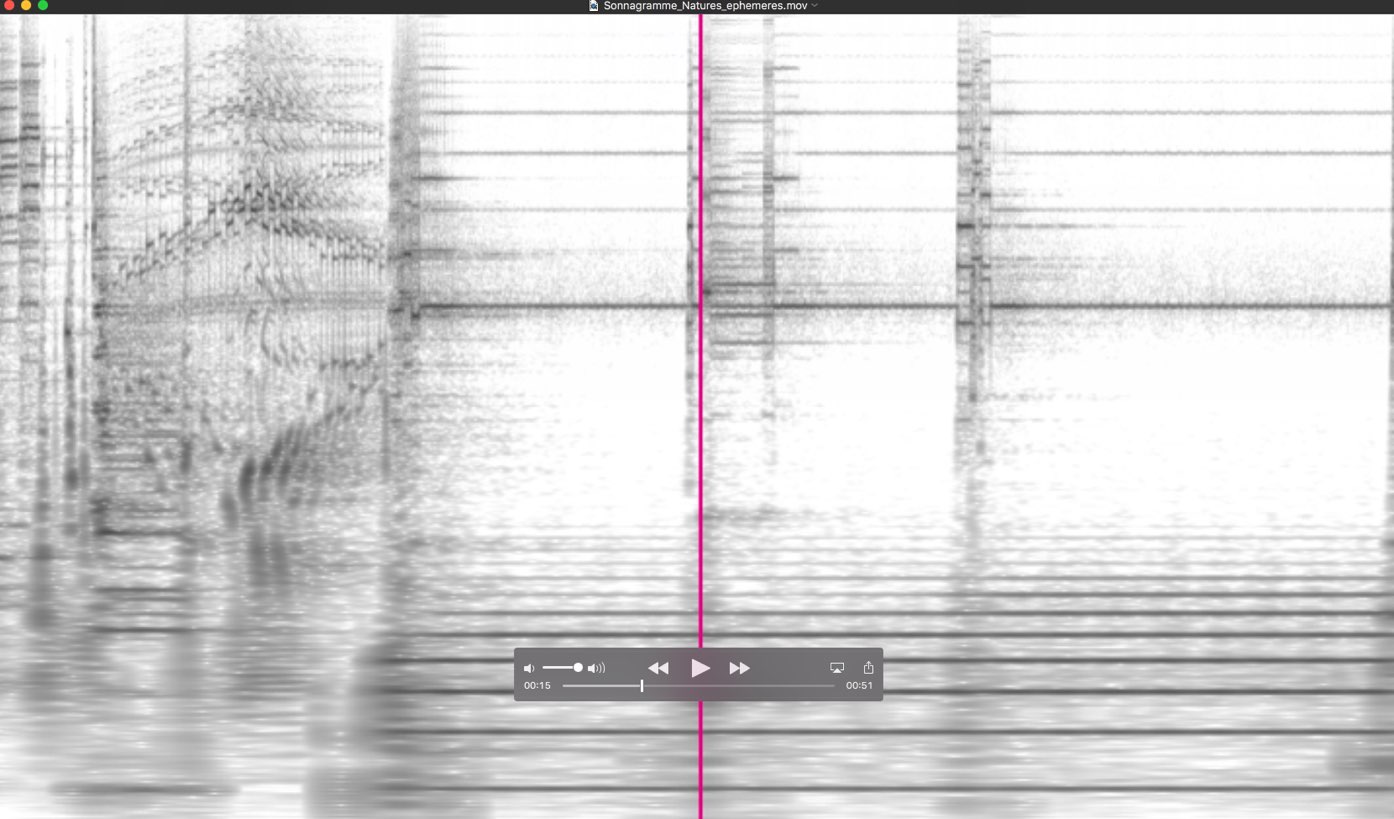
113 Matching Annotations
- May 2026
-
www.freesound.org www.freesound.org
Tags
Annotators
URL
-
- Mar 2026
-
thefeltstore.com thefeltstore.com
-
F-15 (minimum 55% wool) and F-55 (minimum 80% wool) black are the two industrial felts recommended for use as acoustic panels.
-
-
www.youtube.com www.youtube.com
-
Olympia Typewriter, Replaced Felt On Inside of Top Lid Cover, Repair Detail<br /> by [[Phoenix Typewriter]] on YouTube<br /> accessed on 2026-02-28T23:33:24
Duane Jensen replaces the felt in the hood of an Olympia SG1. Create a paper template, trace it out onto felt and cut it. Glue it in with contact cement. Some stores felt with self-adhesive on them as well.
-
- Nov 2025
-
www.youtube.com www.youtube.com
-
going back to Sanskrit and other indigenous languages understanding that sound creates form
for - language - ancient - sound creates form - question - language creates form - what is she exactly saying?
-
- Jan 2025
-
blog.archive.org blog.archive.org
-
Welcome to the Public Domain in 2025 by [[Internet Archive]]
-
-
www.goodvibrationswellbeing.com www.goodvibrationswellbeing.com
- Nov 2024
-
www.theatlantic.com www.theatlantic.com
-
Over a few weeks, I came to comprehend that the sound of one hand clapping is an illusion. The hand’s movement mimics clapping, but the only way to make the illusion a reality is to add a second hand. The sound of one hand clapping can be imagined, but the clap doesn’t exist until another hand is present. With that realization, I recognized the koan’s question as a way to understand the Buddhist doctrine of emptiness (śūnyavāda in Sanskrit), which says that no individual thing or person has any intrinsic existence, but exists only relationally, dependent on everything else. The concept of an individual nature is, like one hand clapping, an illusion.
How does this speak to (or not) the idea of coherence in quantum mechanics?
-
-
www.youtube.com www.youtube.com
-
you know play tones you feel the buzz and uh and after eight weeks it's driven the tenus down it it's not a cure people don't H have a lack of tenus but it's clinically very significant
for - tinnitus - mitigation via the Clarify - sensory substitution - vibrate at the same time as the sound - to decrease amplitude of tinnitus - Neosensory - David Eagleman
-
when you hear something you know your eardrum is vibrating that goes your CIA stuff happens ships off to your brain but it's all happening in here and yet you believe you hear the dog out there and it turns out the same thing happens after about half a year of wearing this
for - sensory substitution - after 6 month - signal on skin - sounds like there is an external source of sound - same thing happens with our ear - David Eagleman
Tags
- tinnitus - mitigation via the Clarify - sensory substitution - vibrate at the same time as the sound - to decrease amplitude of tinnitus - Neosensory - David Eagleman
- sensory substitution - after 6 month - signal on skin - sounds like there is an external source of sound - same thing happens with our ear - David Eagleman
Annotators
URL
-
-
medium.com medium.com
-
for - article - Medium - Translating vision into sound - A deep learning perspectiive - Viktor Toth - 21 April, 2019 - from - search - Google - android app "The Voice" translates images into audio signal - https://hyp.is/OJKKmJ1MEe-TAp_w_0SK_Q/www.google.com/search?q=android+app+%22The+Voice%22+translates+images+into+audio+signal&sca_esv=6fa4053b1bfce2fa&sxsrf=ADLYWIK_UqZZZ9OCRCwH4D6FoSaykbMTpQ:1731013461104&ei=VSstZ4eCBqi8xc8P5KP_kAU&ved=0ahUKEwjHgM3Tj8uJAxUoXvEDHeTRH1IQ4dUDCA8&uact=5&oq=android+app+%22The+Voice%22+translates+images+into+audio+signal&gs_lp=Egxnd3Mtd2l6LXNlcnAiO2FuZHJvaWQgYXBwICJUaGUgVm9pY2UiIHRyYW5zbGF0ZXMgaW1hZ2VzIGludG8gYXVkaW8gc2lnbmFsMggQABiABBiiBDIIEAAYgAQYogQyCBAAGIAEGKIEMggQABiABBiiBDIIEAAYgAQYogRI2xdQpglYjRJwAXgCkAEAmAGZA6ABmQOqAQM0LTG4AQPIAQD4AQGYAgOgAqADwgIKEAAYsAMY1gQYR8ICBBAAGEeYAwDiAwUSATEgQIgGAZAGCJIHBTIuNC0xoAewBA&sclient=gws-wiz-serp
-
-
www.google.com www.google.com
-
for - search - Google - android app "The Voice" translates images into audio signal - from - webcast - Michael Levin - Can we create new senses for humans? - interview - David Eagleman - https://hyp.is/BHS6up09Ee-1qefERFpeQg/www.youtube.com/watch?v=YCvFgrpfNGM - to - Medium - article Translating vision into sound. A deep learning perspective - Viktor Toth - April 2019 - https://hyp.is/lQL4Yp1MEe-66-dpgenOBA/medium.com/mindsoft/translating-vision-into-sound-443b7e01eced
Tags
- search - Google - android app "The Voice" translates images into audio signal
- from - webcast - Michael Levin - Can we create new senses for humans? - interview - David Eagleman
- to - Medium - article Translating vision into sound. A deep learning perspective - Viktor Toth - April 2019
Annotators
URL
-
- Aug 2024
-
en.wikipedia.org en.wikipedia.org
-
Their success from a technical aspect was based in part on separating the camera from the sound recording device (David used a Nagra) by accurately controlling the speed of the camera and the tape recorder, allowing the two devices to be moved independently with respect to each other, an impossibility in commercially available equipment at the time. Long takes with ordinary equipment of the era would invariably lose synchronization.
-
- Jun 2024
-
wiki.p2pfoundation.net wiki.p2pfoundation.net
-
from - youtube - Folia Sound Studio critique of AI music tools - Suno - Udio https://hyp.is/NGScyjB_Ee-rSYNhe9Fuug/docdrop.org/video/wEQ9Vg2YKcU/
-
- May 2024
-
-
FastCut adds animated captions, b-rolls & sound effects to your videos. FastCut은 동영상에 애니메이션 캡션, 비롤 및 음향 효과를 추가합니다.
Tags
Annotators
URL
-
-
meta.stackexchange.com meta.stackexchange.com
-
"that post is written in a very indirect and unclear way" -- that is intentional, no? The company has been communicating in this style for quite some time now. Lots of grandiose phrases to bamboozle the audience while very little is actually being said. It's infuriating.
-
On the surface, this is a very nice sentiment - one that we can all get behind.
-
- Apr 2024
-
apps.apple.com apps.apple.com
-
The Mzanzi kids multilingual language learning App was created for children between the ages of 2-6 years in South Africa. It was designed to stimulate visual, speech and language literacy skills at an early age by understanding basic everyday concepts and highlighting the correct pronunciation of speech in six (6) different languages; English, Afrikaans, IsiXhosa, IsiZulu, Sepedi and Setswana. The integration of images and phonetics provides a good foundation for children to learn and speak in their mother tongue or home language with confidence and fluency, but most importantly comprehend and appreciate the diversity of languages used by South Africans. This multilingual App provides a good introduction before entering a schooling environment, and offers a non-threatening, playful and fun way of learning languages using innovative technology.
This is an app for multilingual language learning. Mine will focus on the mother tongue.
I tried it out for a bit and found the audio very repetitive, which could be problematic. Minecraft had such good audio - C14 or C11? It is fantastically immersive, and the popularity of the game and audio is irrefutable if you look at longevity (games come and go often, and very few manage to stick and have a continuous impact, Minecraft is a good example of an exception to this, alongside other well adjusted and designed games.
I had fun learning the clicks in isiXhoso - something I want to practice, but the audio became too much as i hit the image repeatedly.
There's room for more resources. This application does not speak to all children, and no one application ever will, hence the need for many across a broad range of cultures and diversities.
-
-
www.ncbi.nlm.nih.gov www.ncbi.nlm.nih.gov
-
The success of the different multimedia tools that have been used on the various target groups and subjects can be attributed to the technologies and components embedded as shown in Tables 4 and and5.5. In most cases where text, audio, video, graphics and animations were the components of choice, significant improvements in teaching and learning are used, as reported in the studies reviewed (Blevins, 2018; Huang et al., 2017; Zhang, 2012).
-
-
www.ramotion.com www.ramotion.com
-
cognitive skills. Therefore, keeping the designs clean and safe from clutter and distractions is essential. This will help kids get the b
Which sounds work best for my age group/target audience?
-
What are some of the best practices for kids’ UX design?
-
- Feb 2024
-
Local file Local file
-
Not so the tenth-century John of Gorze, who issaid to have pored continuously over the psalms with a soft buzzing‘in morem apis’: in the manner of a bee.8
quoted portion via:<br /> John of St Arnulf, ‘Vita Joannis abbatis Gorziensis’, Patrologia Latina, 137.280D.
relationship to collecting like the bees (rhetoric)
relationship to humming and rocking practices of Hassidic readers/learners/memorizers
-
- Jul 2023
-
fresques.ina.fr fresques.ina.fr
-
inagrm.com inagrm.com
-
www.mixcloud.com www.mixcloud.com
-
www.mixcloud.com www.mixcloud.com
- Jun 2023
-
levidigitalcommentary.org levidigitalcommentary.org
-
Qui mi fermo e cerco di tradurre
The late Stuart Woolf (1936-2021) must have smiled to himself when he first translated these lines, as a young historian working on his PhD in 1950s Turin. Woolf is the only published English translator of SQ; his fluid and immediate rendering of Levi’s words remains the version known to millions of anglophone readers. While the task of a translator is never easy, it may be that the clarity and simplicity of Levi’s style lends itself to translation and grants his writing a certain universality - almost like a chemical formula.
‘The Canto of Ulysses’ can be read as an ode to translation, not just from one language to another, but in a metaphorical sense, in the repositioning of meaning between people and time. This goes back to the idea implied in the etymology of the word ‘translation’, which comes from the Latin translatio, to ‘carry over’, to ‘bring across’. In this chapter, instances of translation form a mise en abyme that ‘carries over’ from Homer to Virgil, Virgil to Dante, Dante to Levi, Levi to Pikolo, Italian to French, Italian to English, and text to reader.
This more conceptual idea of ‘translation’ has become a way of understanding the testimonial act, central to Holocaust studies (Insana 2009; Felman and Laub 1992). Witnesses ‘translate’ into words their experience and their trauma. This process is often thought of as entailing a loss: an ineffable residue that cannot be communicated through language. However, the exchange that takes place between Levi and Jean in ‘The Canto of Ulysses’ invites us to rethink translation in terms of expansion, with each new version becoming part of the original’s harvest. The non-Italian reader’s lack of familiarity with ‘Who Dante is’, ‘What the Comedy is’, may at first seem a disadvantage. And yet, this has the enriching effect of aligning us with Jean: the reader/Pikolo attempts to overcome a linguistic and cultural barrier, to be in communion with the narrator/Levi. Conversely, Italian readers are likely to identify more closely with Levi, as they try, with him, to remember lines learned in their schooldays.
The new interpretative perspectives created by the translated text respond to the original and form a polyphony. This polyphonic effect works on two different levels: first, just as a piece of music sounds different when sung by a different voice, a translation performs a text in another language, with another instrument. Second, by co-existing in the literary universe of the original text, the many translations of this chapter embody the multiple voices that have resonated from Levi’s writing. As Levi and Jean walk, we see the process of translation unfold. As they come to understand each other, communication through words falters, and another kind of translation begins to happen:
O forse è qualcosa di piú: forse, nonostante la traduzione scialba e il commento pedestre e frettoloso, ha ricevuto il messaggio, ha sentito che lo riguarda, che riguarda tutti gli uomini in travaglio
The ‘something more’ is in the polyphony of their exchange, where the ensemble is greater than any individual line. It takes on a special significance in Woolf’s translation - or in any translation of these lines, for it becomes another performance, or layer, of the initial translational act. The message of the original seems to swell, rather than subside. And, just as a melody transcends individual notes, the concern for individual words is eventually superseded by the harmony between Levi and Jean. Describing Dante’s approach to divine grace in Paradiso, George Steiner writes:
But as the poet draws near the Divine presence, the heart of the rose of fire, the labour of translation into speech grows ever more exacting. Words grow less and less adequate to the task of translating immediate revelation (Steiner 1967).
Levi draws us to a similar source, one that sounds ‘like the blast of a trumpet, like the voice of God’. This ‘something more’ that is not bound to language has the universality of music. It reaches towards an inexpressible goodness or enlightenment. This is in direct contrast to the negative ‘ineffability’ that is so often used to describe elements of testimony in Levi and others, in the challenge the Holocaust posed to language, in the impossibility of its translation. Here, language does not drift towards a void of suffering, but towards a chorus of joyful expression, a blast of trumpets. Unlike elsewhere in SQ, the ambiguity present in the meeting of languages is not represented as a chaotic and hellish Tower of Babel, but as a fecund, creative space. Translation is momentarily reclaimed, and acts as an implicit resistance to the obsessive uniformity of Nazi ideology. But their ‘canto’ is interrupted by the cacophony of Auschwitz, and this revelatory chink is closed with a tragic, symphonic surge:
Infin che ’l mar fu sopra noi rinchiuso.
RMur
-
strascicando i piedi
The prisoners’ gait is in focus throughout. The minimal characterisation of Limentani here (his name, his origin, his hidden bowl) is striking for its emphasis on his ambulatio, the result of his wooden clogs – ‘strascicando i piedi’. Shoes are a recurrent obsession of Levi and all the prisoners in SQ, as established in ‘Sul fondo’: ‘Né si creda che le scarpe, nella vita del Lager, costituiscano un fattore d’importanza secondaria. La morte incomincia dalle scarpe.’ The stakes of this gait are summarised early in the work: ‘Dobbiamo camminare diritti, senza strascicare gli zoccoli [...] per restare vivi, per non cominciare a morire’ (‘Iniziazione’). The brief exchange between Levi and Limentani here, which Jean listens in on attentively, is then also one between living and dead.
Jean, at the beginning of this chapter, was recognised by his clogs (‘appena si riconobbero le sue scarpe [...], tutti smisero di raschiare’) – as Pikolo, he has a right to discarded clothes and shoes, ‘vestiti e scarpe “nuovi”’ (‘Le nostre notti’). These clogs, ‘zoccoli’, frequently impede the kind of conversation which Levi and Jean accomplish today, drowning out even furtive exchanges: ‘si può tentare di scambiare qualche parola attraverso l’acciottolio delle diecimila paia di zoccoli di legno’ (‘Esame di chimica’), or clamorously announcing a presence too abject for human exchange: ‘I nostri zoccoli di legno sono insupportabilmente rumorosi [...]. Con noi non parlano, e arriciano il naso quando ci vedono trascinarsi [...] disadatti e malfermi sugli zoccoli’ (‘Die drei Leute vom Labor’).
Here their clop must accompany the ‘pleasant walk’ in which the Italian lesson takes place. Perhaps the clogs scan the rhythm of the lines, or are audible in Jean’s recitation of new words, “Zup-pa, cam-po, ac-qua”, or indeed in Levi’s ‘pedestrian commentary’.
RP
Tags
Annotators
URL
-
-
levidigitalcommentary.org levidigitalcommentary.org
-
strascicando i piedi
The prisoners’ gait is in focus throughout. The minimal characterisation of Limentani here (his name, his origin, his hidden bowl) is striking for its emphasis on his ambulatio, the result of his wooden clogs – ‘strascicando i piedi’. Shoes are a recurrent obsession of Levi and all the prisoners in SQ, as established in ‘Sul fondo’: ‘Né si creda che le scarpe, nella vita del Lager, costituiscano un fattore d’importanza secondaria. La morte incomincia dalle scarpe.’ The stakes of this gait are summarised early in the work: ‘Dobbiamo camminare diritti, senza strascicare gli zoccoli [...] per restare vivi, per non cominciare a morire’ (‘Iniziazione’). The brief exchange between Levi and Limentani here, which Jean listens in on attentively, is then also one between living and dead.
Jean, at the beginning of this chapter, was recognised by his clogs (‘appena si riconobbero le sue scarpe [...], tutti smisero di raschiare’) – as Pikolo, he has a right to discarded clothes and shoes, ‘vestiti e scarpe “nuovi”’ (‘Le nostre notti’). These clogs, ‘zoccoli’, frequently impede the kind of conversation which Levi and Jean accomplish today, drowning out even furtive exchanges: ‘si può tentare di scambiare qualche parola attraverso l’acciottolio delle diecimila paia di zoccoli di legno’ (‘Esame di chimica’), or clamorously announcing a presence too abject for human exchange: ‘I nostri zoccoli di legno sono insupportabilmente rumorosi [...]. Con noi non parlano, e arriciano il naso quando ci vedono trascinarsi [...] disadatti e malfermi sugli zoccoli’ (‘Die drei Leute vom Labor’).
Here their clop must accompany the ‘pleasant walk’ in which the Italian lesson takes place. Perhaps the clogs scan the rhythm of the lines, or are audible in Jean’s recitation of new words, “Zup-pa, cam-po, ac-qua”, or indeed in Levi’s ‘pedestrian commentary’.
RP
Tags
Annotators
URL
-
- May 2023
-
soundcloud.com soundcloud.com
- Mar 2023
-
gorillazforbeginners.com gorillazforbeginners.com
- Feb 2023
-
-
If the answer to this is "no" with some set of reasons, that's a perfectly reasonable outcome.
-
- Dec 2022
-
www.newyorker.com www.newyorker.com
-
The band began rehearsing in Eno’s house, with Eno acting as “sound manipulator,” a cross between a live-sound engineer and a band member.
Sound manipulator, what a great title for a business card.
-
-
github.com github.com
-
Peace Peace is a GUI for manipulating parametric eq filters with EqualizerAPO. Peace also has visualization for the end result equalization frequency response, profile manager for multiple different eq settings and a switch for disabling everything among other features. Load eq settings into Peace by clicking Import button and select the ParametricEQ.txt file. Set the preamp to value mentioned in the results.
How to setup peace / equalizerAPO
Tags
Annotators
URL
-
- Nov 2022
-
www.youtube.com www.youtube.com
-
Changing the order in which you do things. —Brian Eno, Oblique Strategies
This sounds like the sort of shift Walter Murch made in his sound editing by doing his first cut completely without sound. If you can't tell the story visually without sound the whole thing will fall apart. But you can use the sound, music, etc. to supplement, gild, and improve a picture.
-
- Aug 2022
-
en.wikipedia.org en.wikipedia.org
-
https://en.wikipedia.org/wiki/Bouba/kiki_effect
The bouba/kiki effect might be an interesting thing to use for memorizing birdsong patterns.
-
- Jun 2022
-
www.nasa.gov www.nasa.gov
Tags
Annotators
URL
-
-
bernardparmegiani.bandcamp.com bernardparmegiani.bandcamp.com
-
www.capitalfm.com www.capitalfm.com
-
soundcloud.com soundcloud.com
-
www.hq.nasa.gov www.hq.nasa.gov
- Mar 2022
-
thegrio.com thegrio.com
-
https://thegrio.com/2022/03/29/sometimes-people-get-smacked/
real stuff do be happening…
-
-
link.springer.com link.springer.com
-
Based on the ISO 12913-2, albeit with small changes, the most appropriate causal/sematic classifications found here with respect to heritage could therefore be ‘social communal, ‘electro-mechanical, ‘voice and instrument’, ‘transport sounds’, and ‘other’ sounds. The accessibility of these classifications could then lead to a framework with a view to determine potential heritage importance of sounds.
A well thought out set of categories for urban sounds, designed for the preservation of heritage
-
- Nov 2021
-
hcommons.org hcommons.org
-
Sound when we think of sound we think of waves that travels through the air and hit are ear. But it is also a way of communication. We listen to music and we have a communication with are self getting emotional or empowered. We listen to friends professors and parents talk to us and have honest conversations. Or just droning on in class. Sounds can also have a scary sense to them too. Which is also communication. Like when the fire alarm goes off. It means there’s a loud sound and you must get away from it. Or when the tornado siren goes off and it’s not Tuesday or 10 o’clock. It means get in or underground. Heck even with sound cars can communicate with each other with people honking the horn‘s Long honks means I’m impatient and angry and I just want to go home. Short honk could mean anything hi hello or hey there’s somebody it might be the police slowdown. Or you just scared me what the hell are you doing.
-
- Oct 2021
-
ios.clubhouse.com ios.clubhouse.com
-
w/ Jurgis Didžiulis, Mark Smith, Amanda Joy Ravenhill, Turquoise Sound, Tamas David-Barrett — 📡 Re&Co RADIO | a weekly transmission of regenerative thinking & musical co-creation |cross-disciplinary conversations, synesthesic jams, and other fluxus | 📡 KPCR.fm 🔴rec
-
- Sep 2021
-
blogs.dickinson.edu blogs.dickinson.edu
-
–
Recording of Aubade done by the author, Phillip Larkin.
-
- Aug 2021
-
neural.it neural.it
-
The process, the visuals, the sound - this is appealing. Not sure if/where/how it fits, but I appreciate knowing about this.
-
- Mar 2021
-
www.chevtek.io www.chevtek.io
-
But I believe the core philosophy of tiny modules is actually sound and easier to maintain than giant frameworks.
-
- Aug 2020
-
www.nationalgeographic.com www.nationalgeographic.com
-
Why antibodies may not be the key to beating coronavirus
Overall scientific credibility: 'very high', according to scientists who analyzed this article.
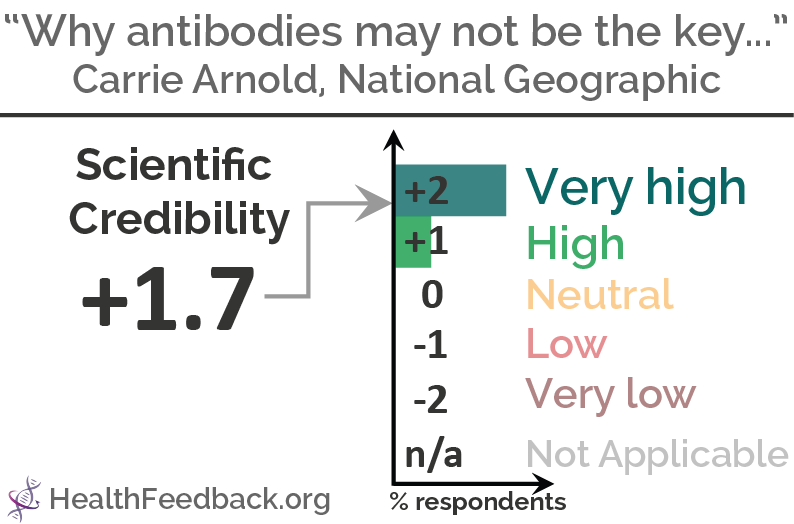
Find more details in Health Feedback's analysis
-
- Jul 2020
-
theartsdesk.com theartsdesk.com
-
African Head Charge Songs of Praise + In Pursuit of Shashamane Land + Vision of a Psychedelic Africa + Voodoo of the Godsent + Churchical Chant of the Iyabinghi (On-U Sound)Following the Early Years reissues a few years back, these are a second tranche of releases exploring the back catalogue of African Head Charge, the band whose nexus was - and is - British-Jamaican percussionist supremo Bonjo Iyabinghi Noah and post-punk dub-meister Adrian Sherwood, with a revolving cast of On-U sorts popping in and out. These albums range over the band’s career since 1990: Songs of Praise from 1990, In Pursuit of Shashamane Land from 1993, Vision of a Psychedelic Africa from 2005, and Voodoo of the Godsent from 2011, while Churchical Chant of the Iyabinghi is a lovingly rendered collection of outtakes and dubs based on the first two of those albums. Songs of Praise may be the best-loved oAfrican Head Charge album, but perhaps this is because it hit a historical sweet spot when ravers needed something exactly like it to come down to after an ecstatic night out. That’s my story anyway. Like all the others, it comes as a two record set with the second disc devoted to previously unheard cuts, as well as a 12” x 24” insert containing an interview with Noah. Full of chants and explicit spirituality, it has an earthy quality, the whole built around endless pattering bongos as much as dub reggae. You can get lost in it and many of us frequently did. The follow-up, In Pursuit of Shashamane Land takes that blueprint and produces it up. Alongside the Jah vibes, there’s a conscious sense of connectivity with the newly rising electronic dance scene (check the groove on the sensibly titled “No, Don’t Follow Fashion”). After that, while Noah continued to release Head Charge albums here and there, and moved to Ghana (where he is to this day), the On-U Sound connection broke down (although he and Sherwood remained close). When they reconvened for Vision of a Psychedelic Africa, they hauled in the whole of Tackhead (Skip McDonald, Doug Wimbish and Keith LeBlanc), as lethal a rhythm section as anyone could ask for. The result, while absolutely Head Charged, has an added musicality to it, as well as a cleaner forward-thrusting pulse and playful instrumentation (check the twangy guitar on “Surfari”). Voodoo of the Godsent - which has Adamski on synths and also features original Aswad bassist George Oban – is also a shinier outing (“Stoned Age Man” has an almost Pink Floyd feel), with a tendency towards actual songs. But let’s not give the wrong impression, it’s still spaced out, oddball music, that smells strongly of ganja overload in the best way.
-
- Jun 2020
-
nofilmschool.com nofilmschool.com
-
Location Audio Levels Delivery Audio Levels
-
- Dec 2019
-
-
See how global warming has changed the world since your childhood
Overall scientific credibility: 'very high' according to the scientists who analyzed this article.
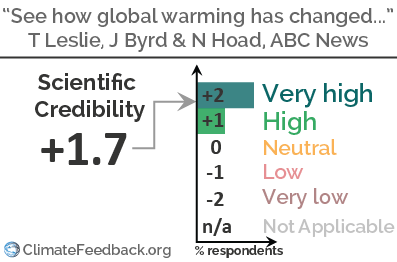
Find more details in Climate Feedback's analysis
-
-
www.nytimes.com www.nytimes.com
-
More Polio Cases Now Caused by Vaccine Than by Wild Virus
Overall scientific credibility: 'high', according to scientists who analyzed this article.
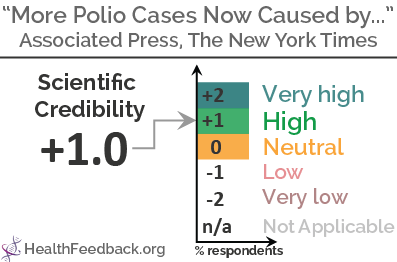
Find more details in Health Feedback's analysis
-
- Jul 2019
-
cdn.inst-fs-iad-prod.inscloudgate.net cdn.inst-fs-iad-prod.inscloudgate.net
-
with their habits. Sometimes I heard four or five at once in different parts of the wood, by accident one a bar behind another, and so near me that I distinguished not only the cluck after each note, but often that singular buzzing sound like a fly in a spider’s web, only prop
i think he compare wood to natural, Just like he heard four or five different sounds from wood, Natural is also crowded with different sounds.
-
- Jun 2019
-
iphysresearch.github.io iphysresearch.github.io
-
MelNet: A Generative Model for Audio in the Frequency Domain
本文的主要贡献如下:
提出了 MelNet。一个语谱图的生成模型,它结合了细粒度的自回归模型和多尺度生成过程,能够同时捕获局部和全局的结构。
展示了 MelNet 在长程依赖性上卓越的性能。
展示了 MelNet 在多种音频生成任务上优秀的能力:无条件语音生成任务、音乐生成任务、文字转语音合成任务。而且在这些任务上,MelNet 都是端到端的实现。
-
- Jan 2019
-
static1.squarespace.com static1.squarespace.com
-
Acoustic archaeologists have found that images areoften placed carefully for particular sounds and echoes, underscoring the point that ancientpeoples explored the full potential of the cave environment, including its deep darkness andunique sonic properties.
This is dope, and it makes me think of the ways in which spaces/places of worship are also spaces/places where acoustic performances happen (sermons, singing of religious songs).
-
-
www.theguardian.com www.theguardian.com
-
Huge reduction in meat-eating ‘essential’ to avoid climate breakdown
Overall scientific credibility: 'high', according to scientists who analyzed this article.
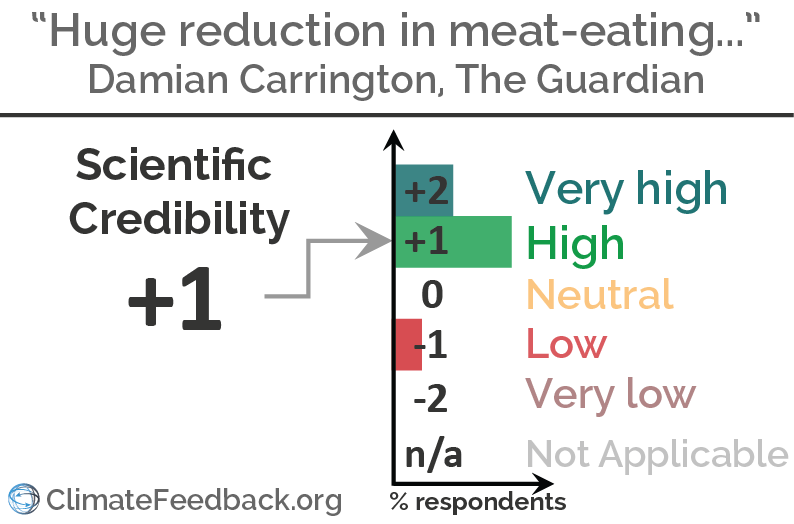
Find more details in Climate Feedback's analysis
-
-
www.washingtonpost.com www.washingtonpost.com
-
North Pole surges above freezing in the dead of winter, stunning scientists
Overall scientific credibility: 'very high', according to scientists who analyzed this article.
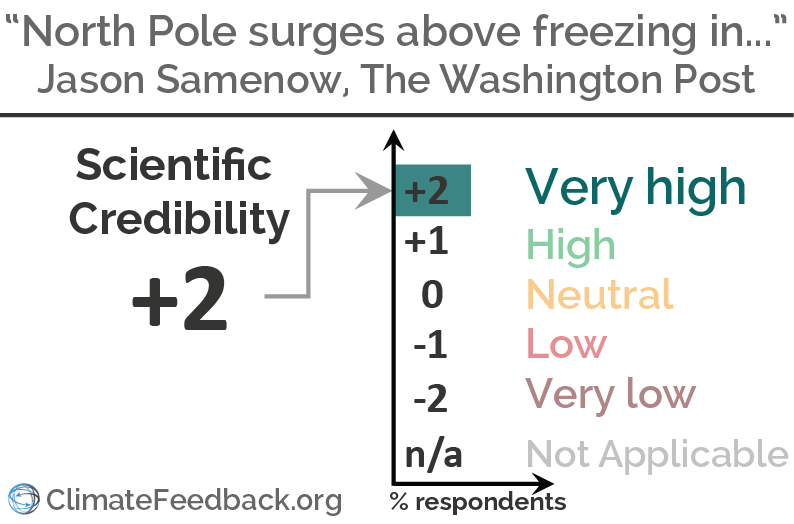
Find more details in Climate Feedback's analysis
-
- Dec 2018
-
iphysresearch.github.io iphysresearch.github.io
-
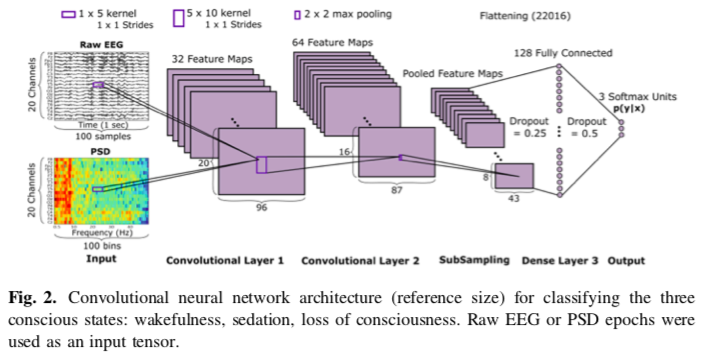
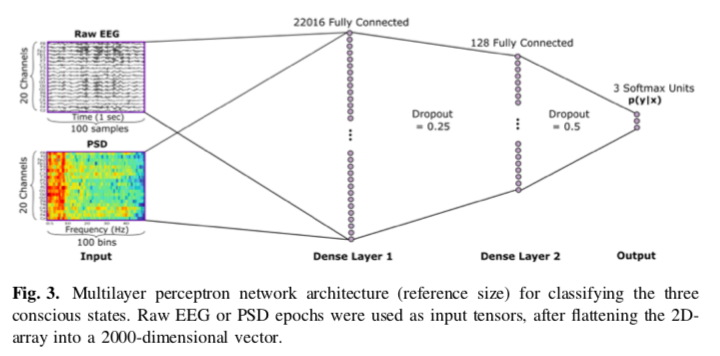
Deep Neural Networks for Automatic Classification of Anesthetic-Induced Unconsciousness
spatio-temporo-spectral features.
-
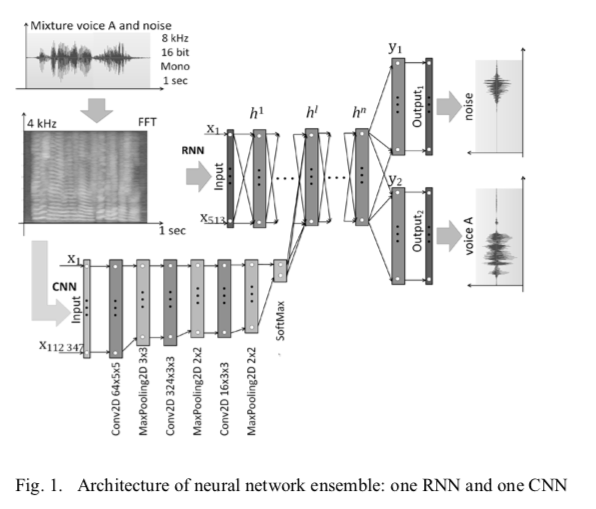
Using Convolutional Neural Networks to Classify Audio Signal in Noisy Sound Scenes
先辨别信号位置,再过滤出信号,这和 LIGO 找event波形的套路很像~ ;又看到 RNN与CNN 结合起来的应用~
-
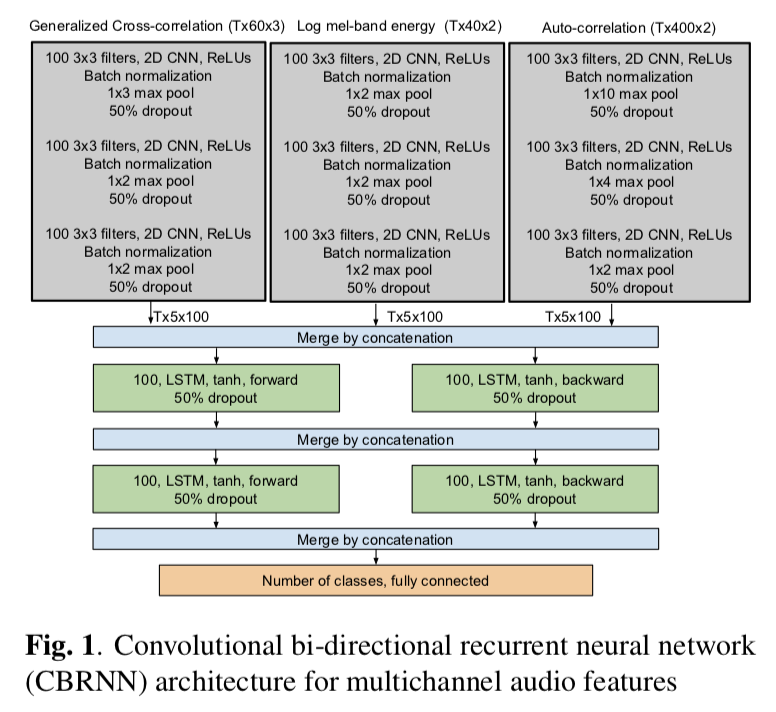
Sound Event Detection Using Spatial Features and Convolutional Recurrent Neural Network.
输入数据是多通道音频信号,网络是结合了CNN 和 LSTM。
-
- Nov 2018
-
iphysresearch.github.io iphysresearch.github.io
-
Interpretable Convolutional Filters with SincNet
一篇值得我高度关注的 paper,来自 AI 三巨头之一 Yoshua Bengio!其背后的核心是将数字信号处理DSP中卷积的激励函数(滤波器)进行了重新设计,不仅会保留了卷积的特性(线性性+时间平移不变性)还在滤波器上添加待学习参数来学习合适的高低频截断位置。
-
Stochastic Adaptive Neural Architecture Search for Keyword Spotting
一篇讲 identifying keywords in a real-time audio stream 的 paper。这和引力波探测中的数据处理很接近哦~!此文提出 end-end 的“随机自适应神经构架搜寻” (SANAS) 实现高效准确的训练效果。这显然对 real-time 特点的类型数据应用带来启发。FYI:人家源码还开放了。。。
-
WaveGlow: A Flow-based Generative Network for Speech Synthesis
一篇来自 NVIDIA 的小文。提出的实时生成网络 WaveGlow 结合了 Glow 和 WaveNet 的特点,实现了更快速高效准确的语音合成。
-
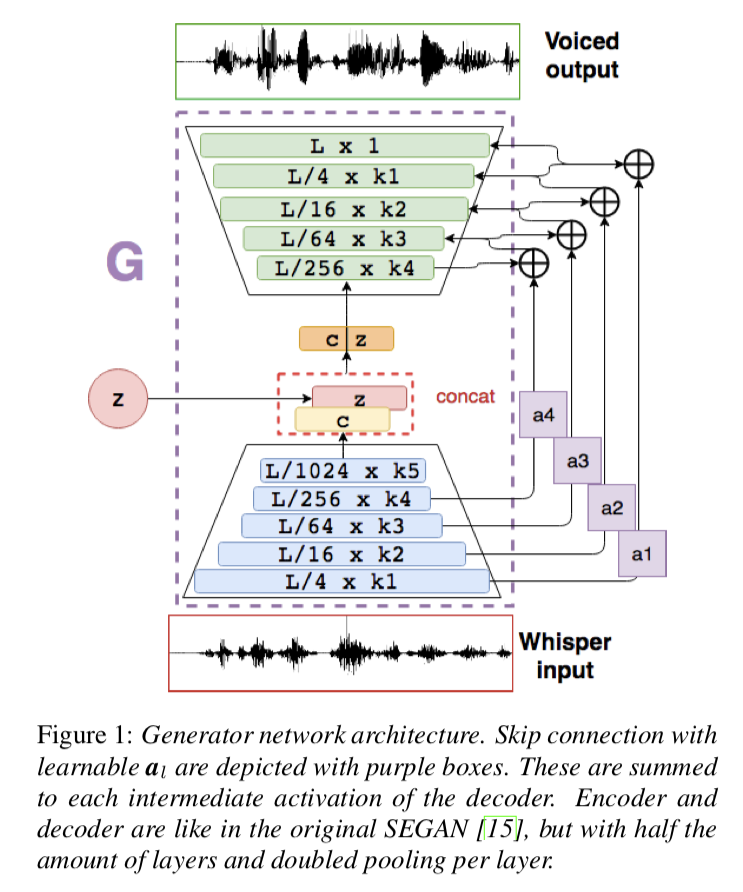
Whispered-to-voiced Alaryngeal Speech Conversion with Generative Adversarial Networks
这是一篇用 GAN 来做 Voiced Speech Restoration 的,并且使用了作者自己提出的 speech enhancement using GANs (SEGAN) 。
于我而言,亮点有二:
- 数据是时序语音
- 利用 GAN 对语音的增强效果似乎对降噪有些启发
- 网络结构图画的蛮好看的:
-
End-to-end music source separation: is it possible in the waveform domain?
讨论的是 Music source separation 问题。
作者认为前人基于spectrogram的输入数据都忽略了相位信息,所以提出了直接waveform-based的模型得到了明显更好的效果。
-
-
-
Here's How to Tell if You Have a Cold or the Flu
Overall scientific credibility: 'high' to 'very high', according to scientists who analyzed this article.
Find more details in Health Feedback's analysis
-
-
www.washingtonpost.com www.washingtonpost.com
-
Startling new research finds large buildup of heat in the oceans, suggesting a faster rate of global warming
Overall scientific credibility: 'high', according to scientists who analyzed this article.
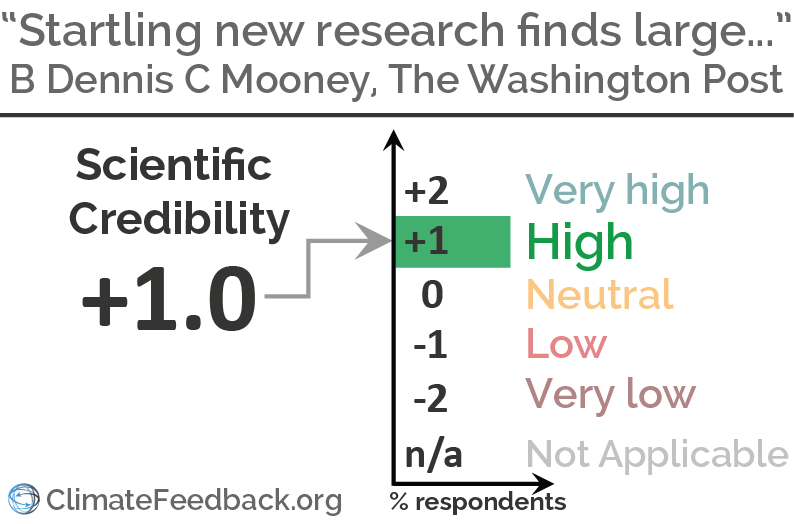
Find more details in the annotations below and in Climate Feedback's analysis
-
- Jun 2018
-
news.nationalgeographic.com news.nationalgeographic.com
-
Hurricanes Are Moving Slower—And That's a Huge Problem
Overall scientific credibility: 'very high', according to scientists who analyzed this article.
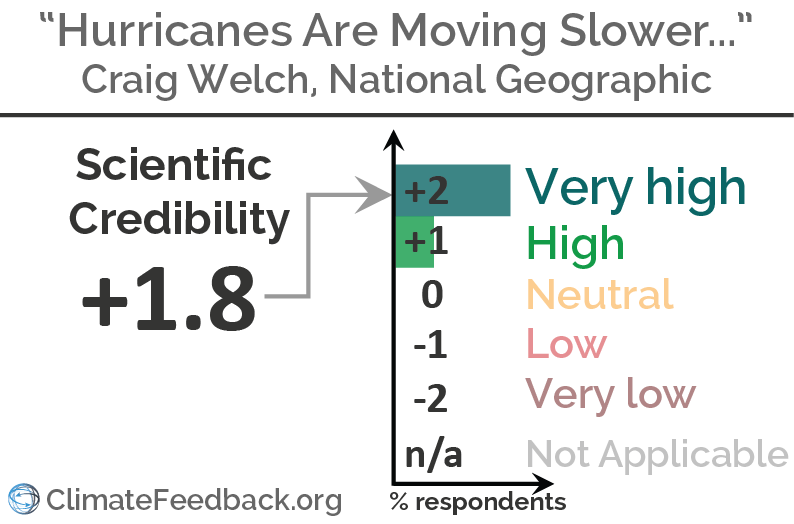
Find more details in the annotations below and in Climate Feedback's analysis
-
- May 2018
-
www.nytimes.com www.nytimes.com
-
In a Warming West, theRio Grande Is Drying Up
Overall scientific credibility: 'high', according to scientists who analyzed this article.
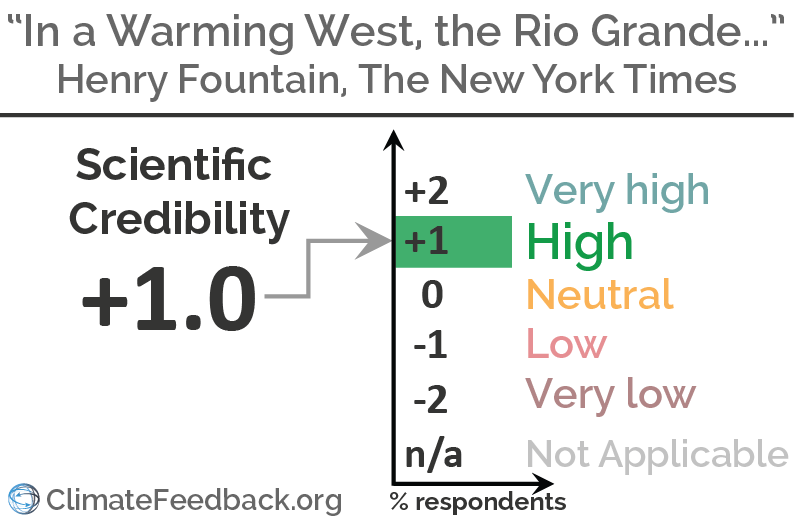
Find more details in the annotations below and in Climate Feedback's analysis
-
- Feb 2018
-
www.cnn.com www.cnn.com
-
Satellite observations show sea levels rising, and climate change is accelerating it
Overall scientific credibility: 'very high', according to scientists who analyzed this article.
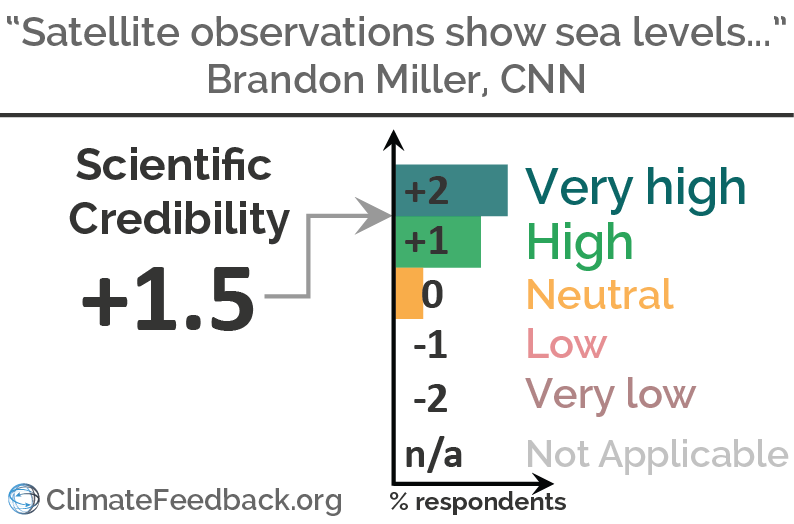
Find more details in the annotations below and in Climate Feedback's analysis
-
- Jan 2018
-
www.nytimes.com www.nytimes.com
-
Arctic’s Winter Sea Ice Drops to Its Lowest Recorded Level
Overall scientific credibility: 'high', according to scientists who analyzed this article.
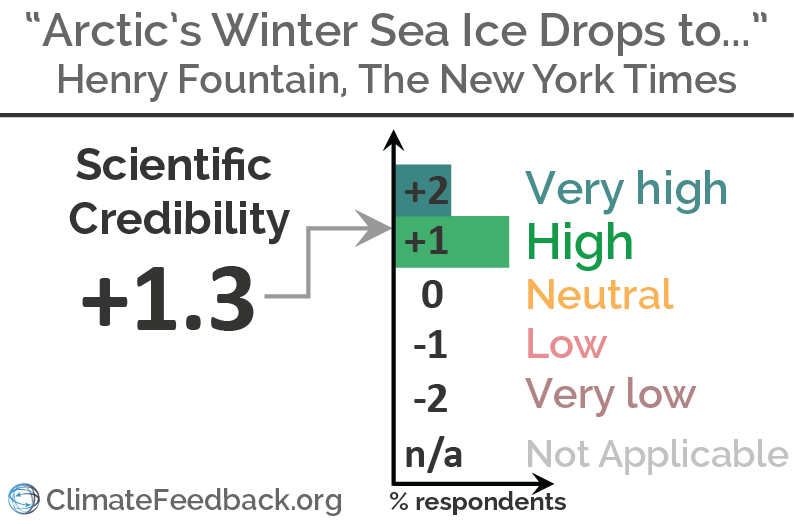
Find more details in the annotations below and in Climate Feedback's analysis
-
-
www.nytimes.com www.nytimes.com
-
Earth Sets a Temperature Record for the Third Straight Year
Overall scientific credibility: 'very high', according to scientists who analyzed this article.
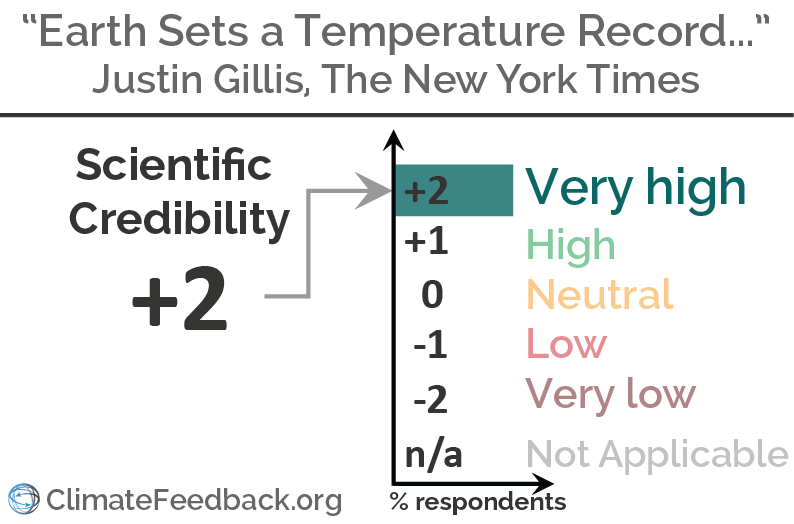
Find more details in the annotations below and in Climate Feedback's analysis
-
- Nov 2017
-
-
Ice Apocalypse
Overall scientific credibility: 'high', according to scientists who analyzed this article.
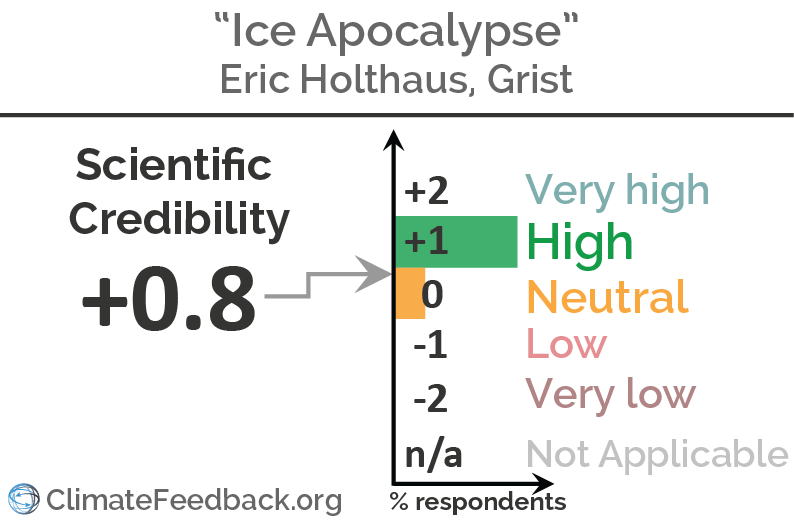
Find more details in the annotations below and in Climate Feedback's analysis
-
-
brooklyn.libapps.com brooklyn.libapps.com
-
From the perspective of a musician, anything that is capable of producing sound is a potential instrument for musical exploitation. What we perceive as sound are vibrations (sound waves) traveling through a medium (usually air) that are captured by the ear and converted into electrochemical signals that are sent to the brain to be processed. Since sound is a wave, it has all of the properties attributed to any wave, and these attributes are the four elements that define any and all sounds. They are the frequency, amplitude, wave form and duration, or in musical terms, pitch, dynamic, timbre (tone color), and duration.
test
Tags
Annotators
URL
-
- Oct 2017
-
rampages.us rampages.us
-
poetry and music have always been closely related. poetry can contain many different kind of rhythm at the same time to create a complex rhythmic.
-
-
s18.pdarrington.net s18.pdarrington.net
-
sound effects
One of my favorite sound effects in movies is called the "Shepard's Tone" and I consider it's impact as an aural mode to be surprisingly effective.
https://www.youtube.com/watch?v=LVWTQcZbLgY
This video explains how Hans Zimmer composed the soundtrack of the movie "Dunkirk" using the Shepard's Tone and shows examples of it in other movies directed by Christopher Nolan or soundtracks composed by Hans Zimmer. In the video, the musical mechanics behind the Shepard's Tone are explained. From 0:41 to 1:28 the video analyzes the process of using "several tones separated by an octave layered on top of each other" to create an illusion of a constant ascending tone that never ends. This effect causes viewers of the movies the soundtracks are featured in to feel a rising sensation of suspense. I consider this to be one of the most powerful aural modes for communicating intensity and suspense in a soundtrack or movie.
-
volume of sound
The volume of a sound plays a big role on the importance we give to it over other sounds, and tha amplitude of the mood created by it. In the real world a sound that is constantly increasing causes us to instinctively focus our attention on it because it indicates that an object is getting closer. An example of this is our instinct to look in the direction of an increasing volume of engine sound when crossing the road, as a way of avoiding collision with approaching cars. Volume can also play an affect on how we perceive it. For example, the volume of a happy comment could indicate the level of excitement the person saying it is experiencing. Another example is the volume of dark music during a horror film. The viewer is able to recognize how eminent a threat is to the character simply through the increase or decrease of the music's volume. This communication of a "threat-level" can greatly impact the fear a viewer feels even when lowering the volume, by creating a sense of safety and then suddenly switching to a "jump-scare."
-
- Sep 2017
-
www.theatlantic.com www.theatlantic.com
-
Has Climate Change Intensified 2017’s Western Wildfires?
Overall scientific credibility: 'very high', according to scientists who analyzed this article.
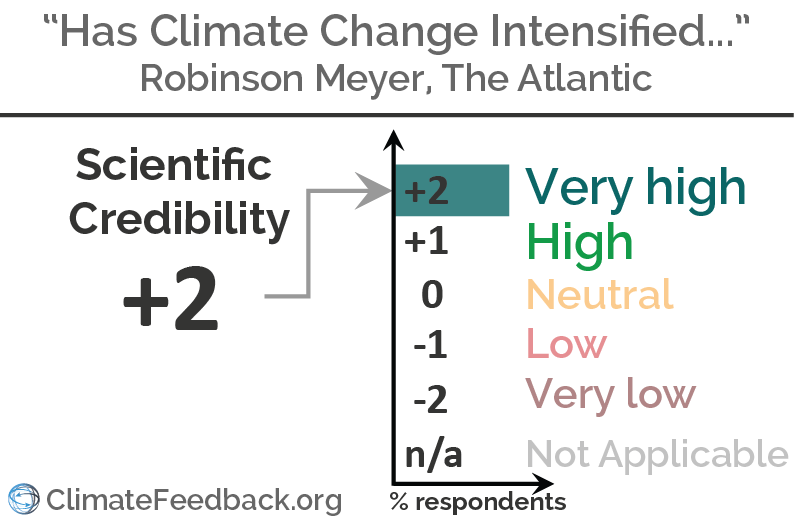
Find more details in the annotations below and in Climate Feedback's analysis
-
- Aug 2017
-
www.nytimes.com www.nytimes.com
-
Alaska’s PermafrostIs Thawing
Overall scientific credibility: 'high' to 'very high', according to scientists who analyzed this article.
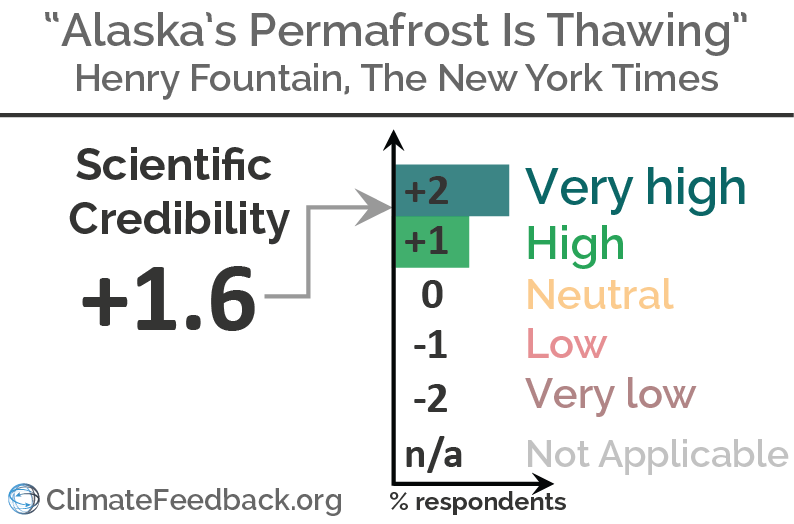
Find more details in the annotations below and in Climate Feedback's analysis
-
- May 2017
-
www.nytimes.com www.nytimes.com
-
Racing to Find Answers in the Ice
Overall scientific credibility: 'high' to 'very high', according to 9 scientists who analyzed this article.
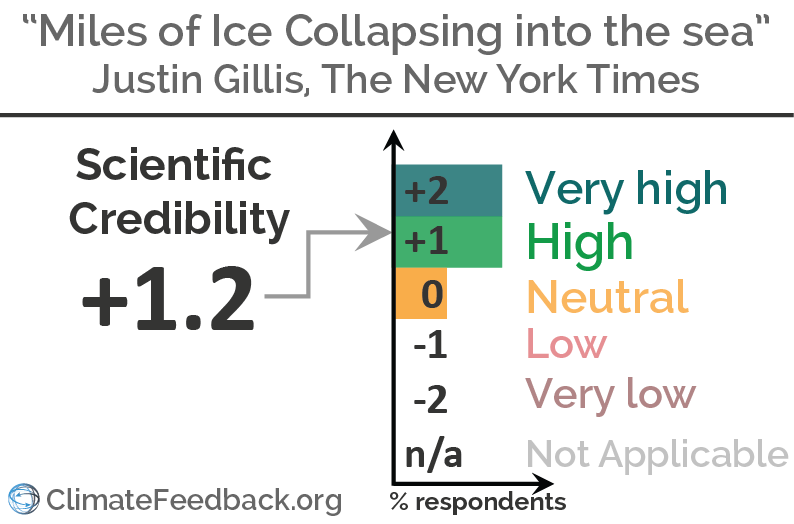
Find more details in the annotations below and in Climate Feedback's analysis
-
- Apr 2017
-
www.latimes.com www.latimes.com
-
From extreme drought to record rain: Why California's drought-to-deluge cycle is getting worse
Overall scientific credibility: 'high', according to 4 scientists who analyzed this article.
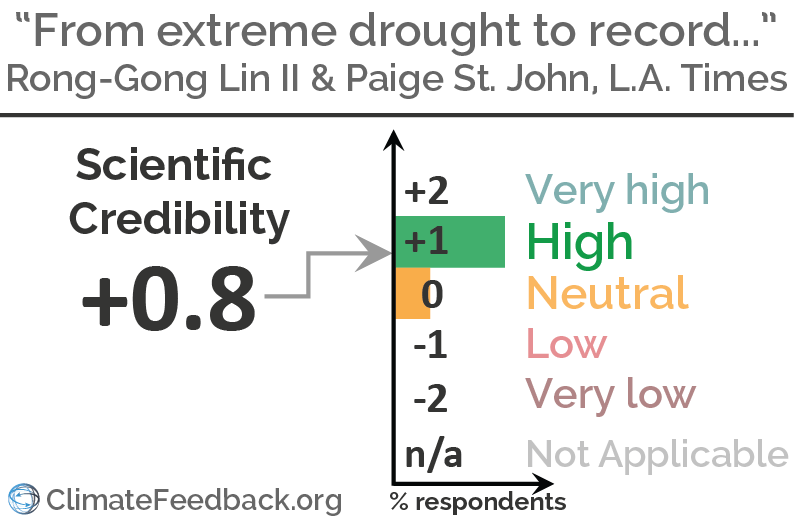
Find more details in the annotations below and in Climate Feedback's analysis
-
- Feb 2017
-
-
El Niño, explained: Why this year's could be one of the strongest on record
Overall scientific credibility: 'very high' to 'high', according to 5 scientists who analyzed this article.
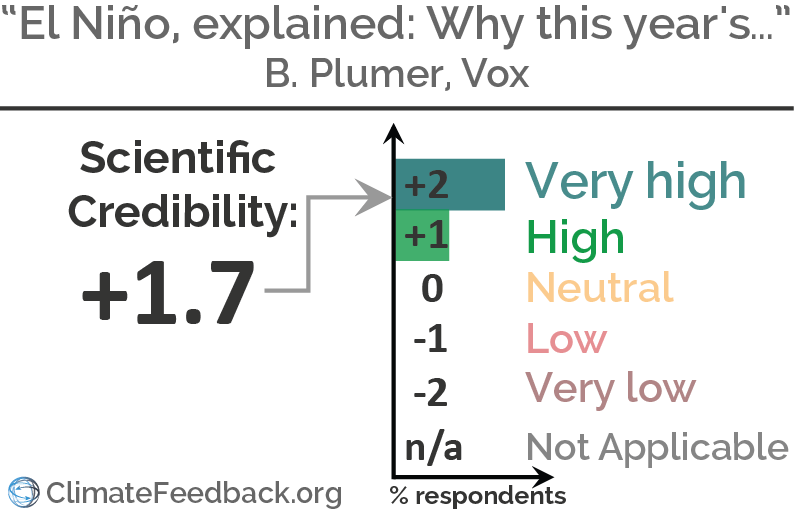
Find more details in the reply+annotations below and in Climate Feedback's analysis
-
-
static1.squarespace.com static1.squarespace.com
-
What is a word? It is the copy in sound of a nerve stimulus.
-
-
static1.squarespace.com static1.squarespace.com
-
word which in itself embodies the most important part of the idea lo be conveyed, especially when that idea is an emotional one, may often with advantage be a polysyllabic word. Thus it seems more forcible to say, "h is magnificent," than "It is grand."
I think we're getting the intricate connection between writing and speaking here and how important the sound of the words, including the number of syllables, influences our reading and hence the impact of the writing.
-
-
www.csicop.org www.csicop.org
-
Conspiracy theorists have connected a lot of dots
Blair-"True rhetoric and sound logic are very nearly allied."
-
-
static1.squarespace.com static1.squarespace.com
-
The propositions, "Twelve arc a dozen," "twenty are a score," unless considered as explications of the words dozen and score, arc equally insignificant with the former. But when the thing, though in effect coinciding, is consid-ered under a different aspect; when what is single in the subject is divided in the predicate, and con-versely; or when what is a whole in the one is re-garded as a part of something else in the other; such propositions lead to the discovery of innu-merable and apparently remote relations. One added to four may be accounted no other than a definition of the word Jive, as was remarked above. But when I say, "Two added to three arc equal lo five," I advance a truth, which, though equally clear, is quite distinct from the preceding.
A bit of a mix between Locke's simple knowledge and the idea that "sounds have no natural connection with our ideas." (817 near the bottom right)
EDIT: cue Locke's Three Minute Philosophy
-
-
www.poetryfoundation.org www.poetryfoundation.org
-
Snatchesof my salacious dreams, sandwiched
The sibilant alliteration here also stands out. For what effects?
-
-
static1.squarespace.com static1.squarespace.com
-
1 am aware it will be said, that written lan-guage is only a copy of that which is spoken, and has a constant reference to articulation; the char-aclers upon paper, being only symbols of articu-late sounds
I know we're not supposed to say "I disagree," so I'll try to go about this a bit more cautiously. This line of thinking is, I think, one of the more pervasive misconceptions about composition still today. When considering accessibility options, a lot of people with disabilities are often told, "Just get some dictation software." But this very rarely does what people need it to do, not just because of the editing difficulty, but because the ways we talk (and listen) are often just too different than the ways we write (and read).
-
- Jan 2017
-
www.washingtonpost.com www.washingtonpost.com
-
U.S. scientists officially declare 2016 the hottest year on record. That makes three in a row. The inside track on Washington politics. Be the first to know about new stories from PowerPost. Sign up to follow, and we’ll e-mail you free updates as they’re published. You’ll receive free e-mail news updates each time a new story is published. You’re all set! Sign up *Invalid email address Got it Got it
Overall scientific credibility: 'very high', according to 12 scientists who analyzed this article.
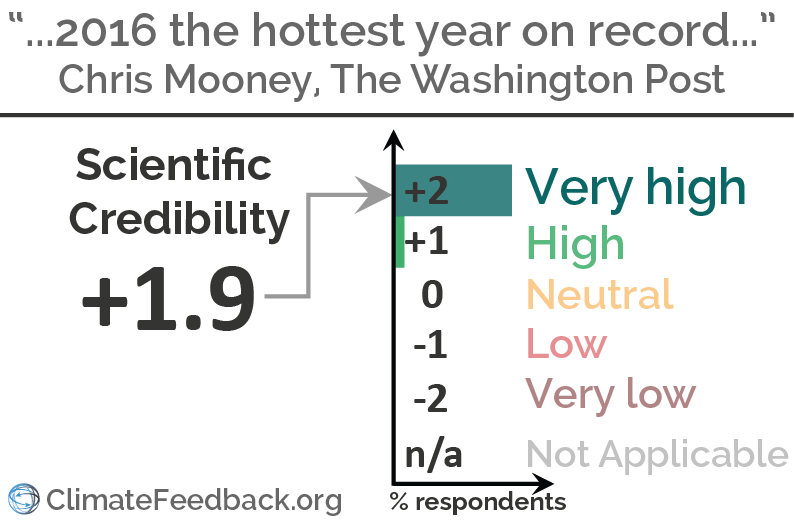
Find more details in the annotations below and in Climate Feedback's analysis
-
- Dec 2016
-
www.usatoday.com www.usatoday.com
-
Australia’s Great Barrier Reef has worst coral die-off ever
Overall scientific credibility: 'high' to 'very high', according to 5 scientists who analyzed this article.
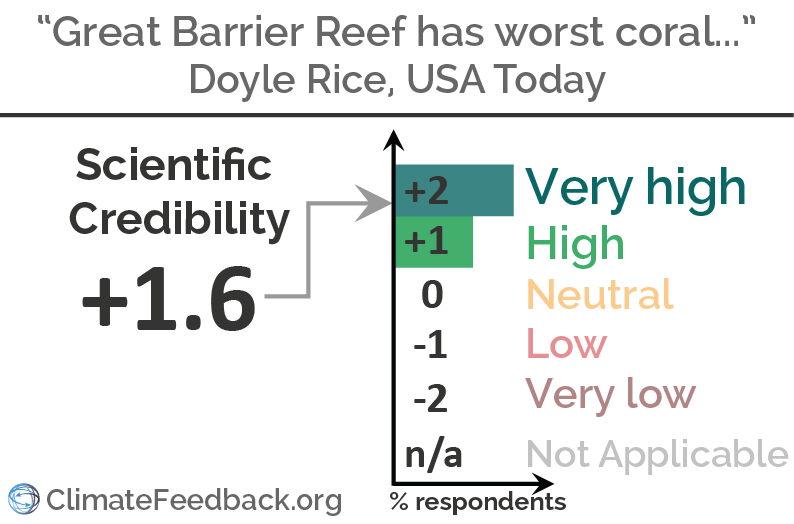
Find more details in the annotations below and in Climate Feedback's analysis
-
- Sep 2016
-
www.theguardian.com www.theguardian.com
-
Greenland's huge annual ice loss is even worse than thought
Overall scientific credibility: 'very high', according to 7 scientists who analyzed this article.
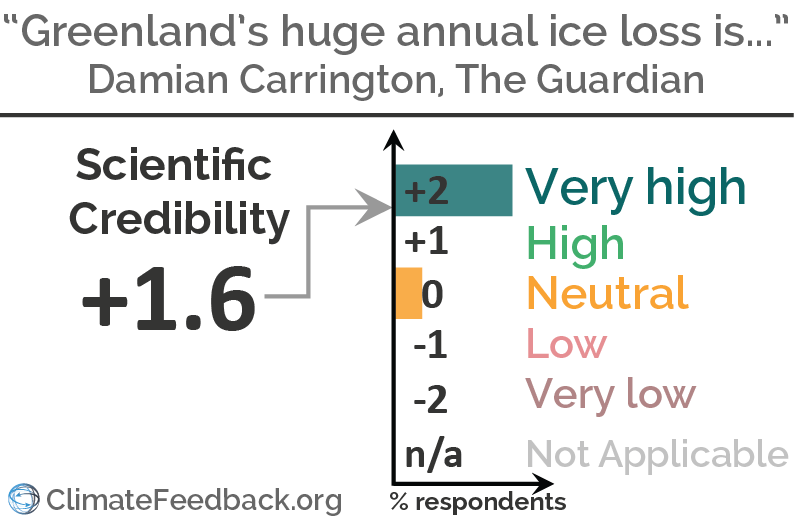
Find more details in the annotations below and in Climate Feedback's analysis
-
-
-
Flooding of Coast,Caused by Global Warming,Has Already Begun
Overall scientific credibility: 'very high', according to 12 scientists who analyzed this article.
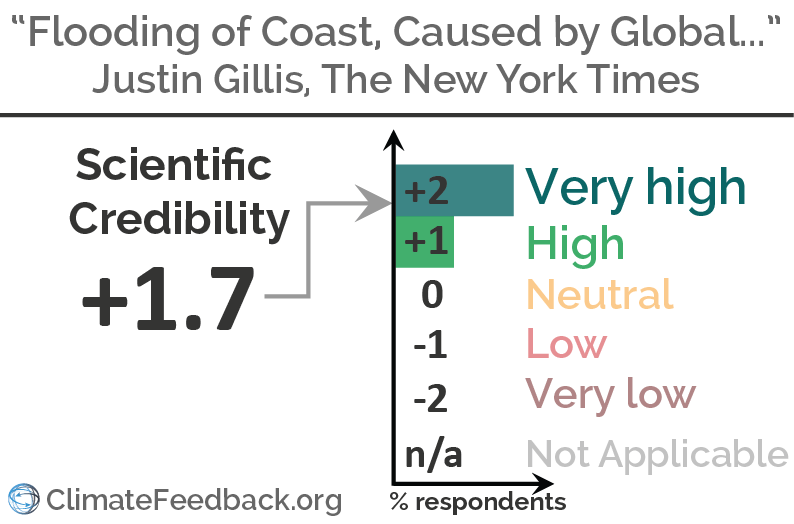
Find more details in the annotations below and in Climate Feedback's analysis
-
- Aug 2016
-
www.theguardian.com www.theguardian.com
-
Disasters like Louisiana floods will worsen as planet warms, scientists warn
Overall scientific credibility: 'high', according to the 7 scientists who analyzed this article.
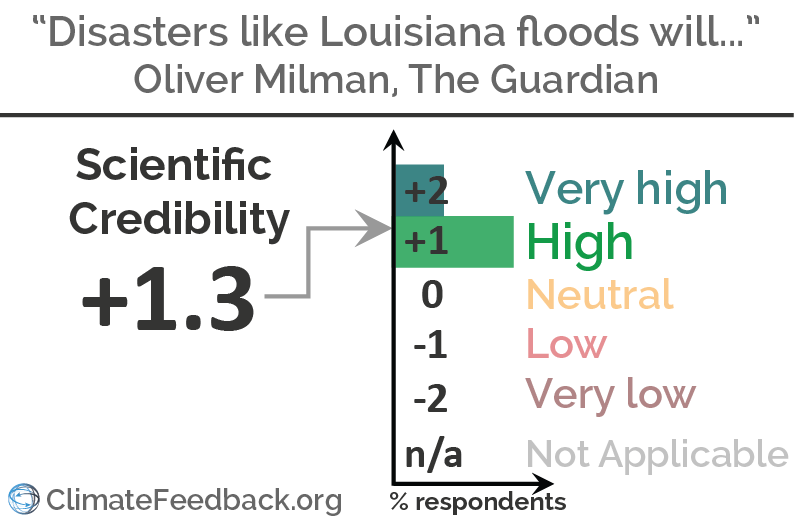
Find more details in the annotations below and in Climate Feedback's analysis
-
- Jul 2016
-
www.washingtonpost.com www.washingtonpost.com
-
What science can tell us about the links between global warming and massive heat waves The inside track on Washington politics. Be the first to know about new stories from PowerPost. Sign up to follow, and we’ll e-mail you free updates as they’re published. You’ll receive free e-mail news updates each time a new story is published. You’re all set! Sign up *Invalid email address Got it Got it
Overall scientific credibility: 'very high' to 'high', according to the 10 scientists who analyzed this article.
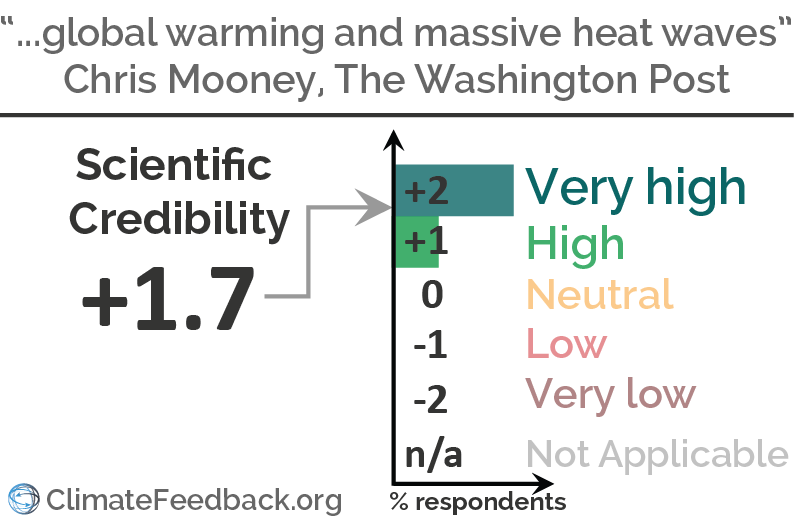
Find more details in the annotations below and in Climate Feedback's analysis
-
-
www.washingtonpost.com www.washingtonpost.com
-
Thanks to climate change, the Arctic is turning green The inside track on Washington politics. Be the first to know about new stories from PowerPost. Sign up to follow, and we’ll e-mail you free updates as they’re published. You’ll receive free e-mail news updates each time a new story is published. You’re all set! Sign up *Invalid email address Got it Got it
Overall scientific credibility: 'neutral' to 'high', according to the 8 scientists who analyzed this article.
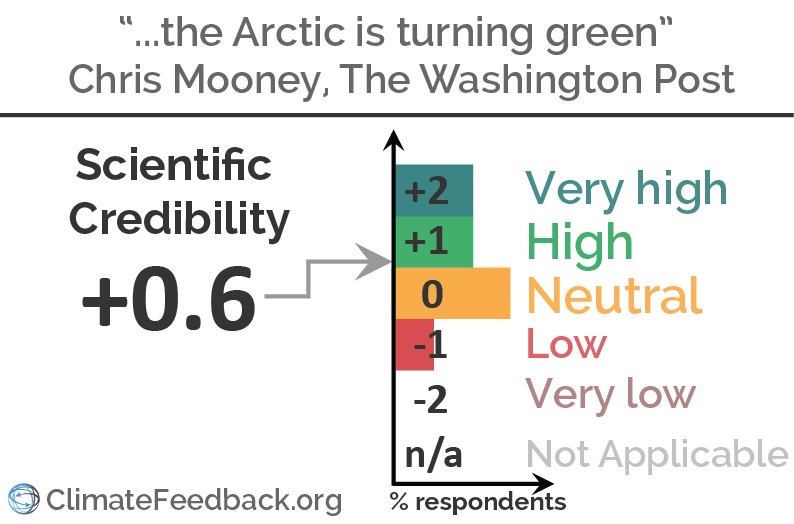
Find more details in the annotations below and in Climate Feedback's analysis
-
- Mar 2016
-
www.washingtonpost.com www.washingtonpost.com
-
What we’re doing to the Earth has no parallel in 66 million years, scientists say The inside track on Washington politics. Be the first to know about new stories from PowerPost. Sign up to follow, and we’ll e-mail you free updates as they’re published. You’ll receive free e-mail news updates each time a new story is published. You’re all set! Sign up *Invalid email address Got it Got it .hideText{position:absolute;left:-10000px}
Overall scientific credibility: 'very high' to 'high', according to 7 scientists who analyzed this article.
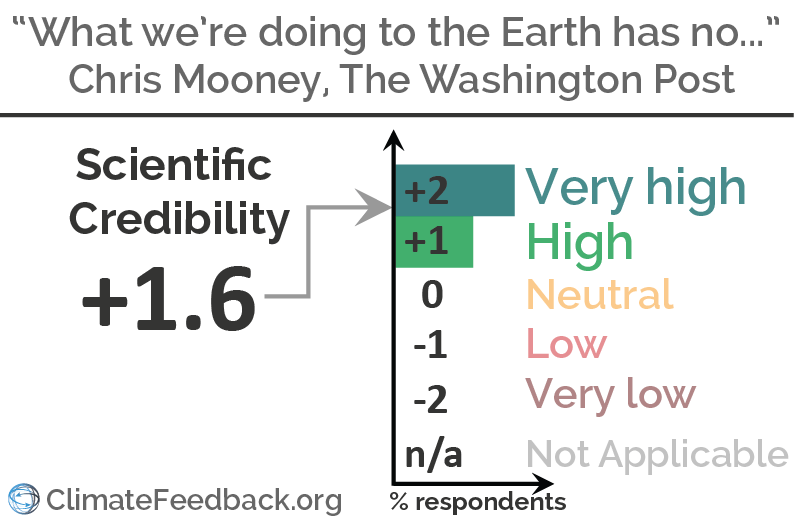
Find more details in the reply+annotations below and in Climate Feedback's analysis
-
- Feb 2016
-
www.nytimes.com www.nytimes.com
-
Seas Are Rising at Fastest Rate in Last 28 Centuries
Overall scientific credibility: 'very high' to 'high', according to 7 scientists who analyzed this article.
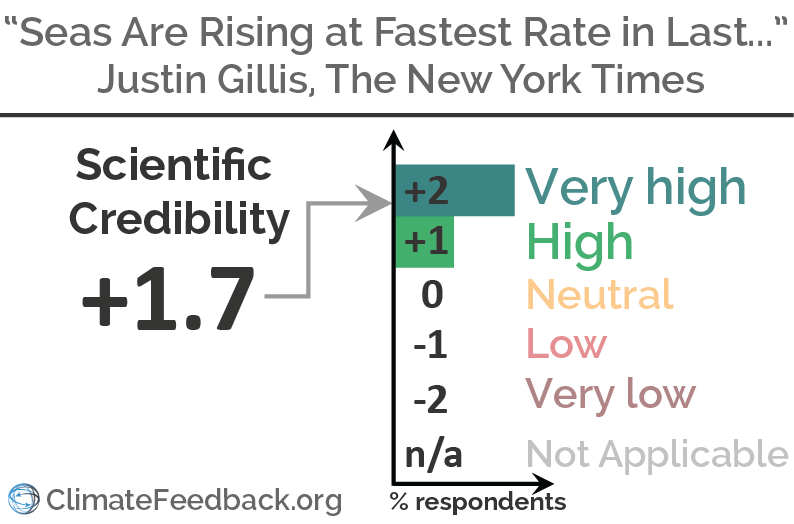
Find more details in the reply+annotations below and in Climate Feedback's analysis
-
- Jan 2016
-
www.nytimes.com www.nytimes.com
-
2015 Was Hottest Year in Historical Record, Scientists Say
Overall scientific credibility: 'very high', according to 8 scientists who analyzed this article.
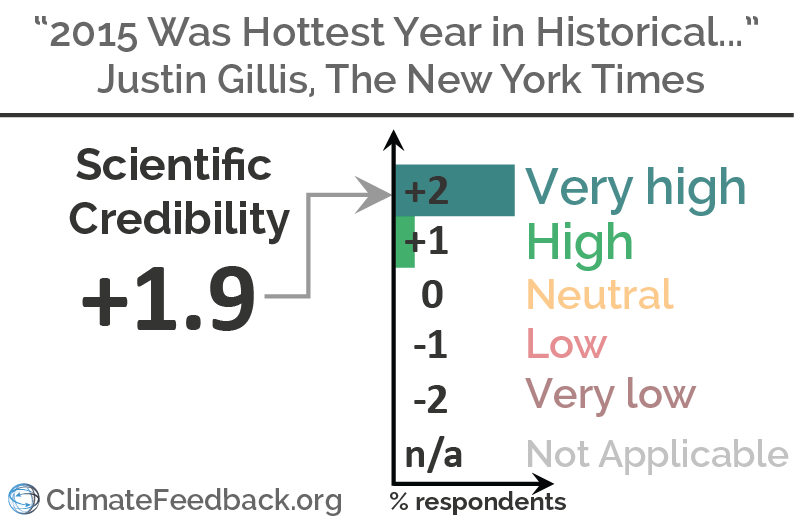
Find more details in the reply+annotations below and in Climate Feedback's analysis
-
-
www.washingtonpost.com www.washingtonpost.com
-
Scientists say human greenhouse gas emissions have canceled the next ice age
Overall scientific credibility: 'very high', according to 8 scientists who analyzed this article.
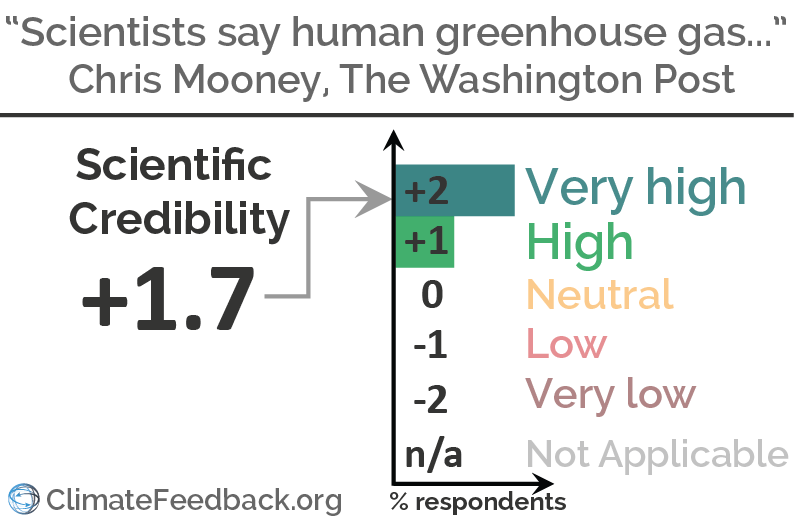
Find more details in the reply+annotations below and in Climate Feedback's analysis
-
-
forums.tumult.com forums.tumult.com
-
Audio in general is not reliable,
Wonder if something could be done with MIDI. Actually, maybe there are new standards to replace MIDI in those situations (OSC doesn’t sound like it’d fit).
-
- Oct 2015
-
-
Climate Change Will Cause Increased Flooding In Coastal Cities
Overall scientific credibility: 'high', according to 6 scientists who analyzed this article.
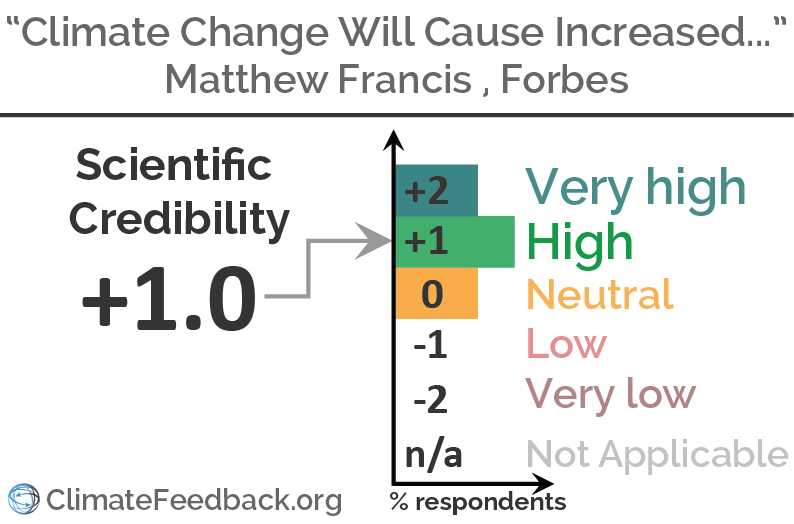
Find more details in the reply+annotations below and in Climate Feedback's analysis
-
-
teaching.lfhanley.net teaching.lfhanley.net
-
singing
-
fiddled whisper music on those strings
-
What the Thunder Said
The natural world deciding to make its opinion known
-
frosty silence
-
shouting and the crying
-
- Jun 2015
-
www.vatican.va www.vatican.va
-
ENCYCLICAL LETTER LAUDATO SI’
Overall scientific credibility: 'high', according to the 9 climate scientists who analyzed this article.

Find more details in the reply+annotations below and in ClimateFeedback's analysis
-
-
caseyboyle.net caseyboyle.net
-
Modernity, as many scholars have shown, is ocularcentric. 8 The very devel- opment of photography in 1839 and its rapid flourishing thereafter testify to this urgent primacy of the visual. As Roland Barthes claims despairingly in his meditation on photography, "One of the marks of our world is [that] we live according to a generalized image repertoire." 9 In modernity, the image mediates not only our desires but who we imagine ourselves to be. In- deed, Alan Trachtenberg argues that photography has made us see ourselves as images. 10 Among the myriad, often conflicting and never disinterested im- ages modernity offers us, the picture of ourselves as disabled is an image fraught with a tangle of anxiety, distance, and identification.
really good account for the ocularcentricism and alternative is Viet Erlmann's "Reason & Resonance" that traces the visual-rational dominance and offers an alternative in sound-resonance. GREAT read.
Tags
Annotators
URL
-
- May 2015
-
caseyboyle.net caseyboyle.net
-
stirred air stirs meaning
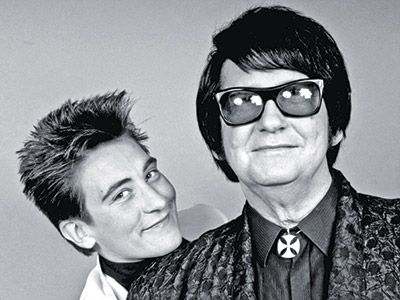
This makes me think of k.d. lang discussing the experience of recording with Roy Orbison: "when you’re standing that close to a vocalist, you can feel the air move, and the body resonating, and everything. And Roy was very operatic, so he had a great deal of air moving, and even though he may look meek, he used his body a lot to get that projection."
Tags
Annotators
URL
-
-
caseyboyle.net caseyboyle.net
-
be disseminated digitally
Haven't tried it yet, but there's an iPhone app that shares such soundwalks: https://www.detour.com/
Tags
Annotators
URL
-
- Jan 2015
-
www.nytimes.com www.nytimes.com
-
2014 Breaks Heat Record
Overall scientific credibility: 'high' to 'very high', according to 8 climate scientists who evaluated this article.

Find more details in the annotations below and here
jgdwyer:
This article accurately describes global warming and puts the news that 2014 is the hottest year on record into appropriate context. The article does a very good job of distinguishing between climate variability and climate change with helpful discussion on ENSO and the relatively cold temperatures in the Eastern United States (while staying within the bounds of the mainstream climate science understanding).
karmour:
Very good article overall. I do wish the author had fact checked the incorrect claim by Dr. Christy (that global temperatures have not changed since the end of the 20th century) prior to including his quote in the article.
aklocker:
Scientifically this article seems to be correct but it could be a bit more precise in some of its statements. One thing I like is that it mentions different opinions on some points where scientists do not agree rather than giving a biased story.
bmv:
This article does a good job of putting the 2014 temperature record in context with quotes from experts and good descriptions of relevant issues such as El Nino. References to "skeptics" were appropriately followed up by evidence of their misinterpretation/mischaracterization of the data.
aalpert:
This article provides an accurate and well supported evaluation of the finding that 2014 was the hottest year on record.
emvincent:
Overall, this article is fair in its representation of the 2014 temperature record event and in reminding the context of the long-term warming trend+natural climate variability.
alexis.tantet:
The quality of this article is overall higher than most newspaper articles on climate change as it avoids the usual pitfalls such as confusing year to year variability with long-term change. It also addresses issues prone to confusion, such as why eastern USA did not experience such a warm year as most of the globe, which can help the readers to put the science in perspective with the seasonal climate they have actually experienced. The fact that the article focuses mostly on the observational record and not on theoretical or modeling studies may be a weakness, but the scope of an article cannot be too broad.
-