10,000 Matching Annotations
  1. Dec 2025
    1. Although the proposed project was rejected, the caseindicates the state’s interest in specific advantages ofgames and play.

      But also its dissinterest in games and play, as forms of culture. Culture is more often than not, anti-hegemonic, and Russian university students that aspire to design games could flip the purposes of this games engine. Anyhow, it's not like they couldn't use Open Source ones...

    2. Rainbowism or “rainbow nationalism“ (Gqola: 2001,qf Slade 2015) is described as an ‘unintentional‘ act of“invoking the rainbow nation as means of silencingdissenting voices with regards to the status quo in thecountry...[...] and with regards to race and apartheid past“(Slade; 2015: 3). The concept of the rainbow nation;censorship

      He's talking about self-censorship, burying the past, avoiding historical memory. The fears are in place, I'd argue, but simultaneously, for a society to really move on it must reconcile with its past and repair those who had been wronged, else the "survivors" remain silenced, displaced, existing but unseen... and this too can be the seed of radicalisation and accumulating hatred.

    3. For me, the task at hand was beyond fighting embarrassment,but finding accommodating tactics to initiate what I called“Incoko” (Dialogue in IsiXhosa language) around the oftenunderplayed and hidden forms of racialized domination in theSA videogames industry. Instead of asking “Who is theoppressor?” I thought it is appropriate for everybody toassume that the scene is already racialized, therefore anygenuine discussion must root from there, as opposed to thedichotomous shaming and defense strategies that prevail inmost settings. This to me is inspired by Boaventura de SousaSantos’s transformative critical tenor that “We don’t needalternatives; we need rather alternative thinking ofalternatives” (2018, viii). That we’ve been asking samequestions, and subsequently proposing redundant andirrelevant solutions for years

      Sure, infantilisation besets resentment... and skewed representations may co-opt/tokenise marginalised individuals as diversity hires... but don't we need to give visibility to them as a means to redistribute power? What is it we white males can do, if not taking a step back, staying in silence, and giving space?

    4. (young) adults, ready to do any kind of work as a refugee,just to escape crippling oppression, thus ridding theoppressive regimes of their dissidents while at the sametime providing cheap workforce for the global supporters ofthose regimes as merely another resource they can exploitas modern colonists, while constantly bringing war to theMiddle East for decades, all in the name of bringingdemocracy – or a fetishized version of it that is advertisedas synonymous with all kinds of freedom and prosperity

      Sure, sure... but, where are the references and how is this related to the article? I mean, I get the capitalist criticism, but this is vague and unexhaustive. Why import workers when you can outsource production and emissions as a whole, in less regulated places?

    5. “Some peoplesay... I mean our producers...” which shows how media reflectthe opinions of the people who control them.

      But that's terrible, don't you see! It leads to the generalisation that any journalist is untransparent, and that their reporting is missguided. How can watchdog independent journalism survive like this when it is tagged of ad-hoc political targetting?

    6. game gave theplayer “the opportunity to act out popular-culture fantasiesof middle-class youths,” and he also explained that “thereis a sense of the public sphere as a site of danger and awithdrawal from any commitment to political or collectivesocial agency that runs throughout the game.”

      Can you engage in activism, in farming, in policy reunions, teaching, cleaning, or other volunteering? No, you but you can go to shops of any kind!

    7. Interestingly, in GTA IV,an article on the in-game Internet says, “Long-termhealthcare can put a tremendous strain on finances,” whichreminds us that America might be the land of opportunity butonly until people get sick. In addition, when Roman, Niko’scousin, asks him if he likes America, he says it is allabout advertising, and the opportunities are not realbecause people get in debt for those opportunities and becomea slave for the rest of their lives. Moreover, thedescription of the game on the publisher’s websiteexplicitly states that Liberty City is a nightmare for thepeople who do not have money or status (Rockstar Games,n.d.).

      But you know what will happen right? This is anecdotal, often optional content, and its subtext goes unoticed for the main attraction which is actually following a materialist gaze: Guns, cars, mansions, designer clothes, prostitutes, riches of any kinds: Luxury, and being above law because you are an oligarch.

    8. Most guys, when they see a girl, instantly conclude thatshe plays badly. Even if she’s actually a good player,it’s not enough for guys. If a guy and a girl of an equalskill make a mistake in-game, it’s okay for the guy, ithappens, but in case with the girl, she would do it “be-cause she’s a girl”, and not because even top tier playerssometimes make mistakes. Youtube has lots of fail montagesfrom female tournaments. Why point it out specifically,if any tournament has tons of mistakes.

      Indeed! Reminds me of cherry picked Islamophobic assault compilations. Ragebait. Polarisation devices. This can also lead perhaps not too trauma, but to imposter syndrome, to loss of confidence, to de-motivation, and burnout. Surely, males experience these too, but less frequently, and notably, on their own. Not sharing and taking a stoic toxic masculinity stance then builds up to projection, hate, impotency, outward attacks not so much as inner pitying (it's others who are wrong, and I must defend myself). There is a certain dread and anguish I feel sorry males have to go through, much unhealthier than fems.

    9. Most male pros can quit university and dedicate themselvesto their gaming career, while females can not afford this.

      Wouldn't say "most", but sure! Sports too is very, very skewed male, which additionally gives them access to special grants and scholarships which women just don't get (particularly in Ivy US Universitites).

    10. Due largely to unwelcoming public reception, all-femaleteams rarely compete with all-male teams in public, and whenthey do, they usually demonstrate lower results. However,if one looks at the average scores of female and male playerswho competed in roughly equivalent tournaments, it becomesmuch more difficult to justify the difference between prizepools. According to in-game statistics, professional femaleplayers are only 7% behind professional male players interms of skill-related metrics

      To be fair, there are many less women players, but still 7% is a notable difference at least in high leagues. Wouldn't say noticeable for most viewers, though.

    Annotators

    1. eLife Assessment

      This study provides a useful advance in generating mouse oligodendrocytes by direct lineage conversion from cortical astrocytes. The authors demonstrate that Sox10 converts astrocytes to MBP+ oligodendrocytes, whereas Olig2 expression converts astrocytes to PDFRalpha+ oligodendrocyte progenitor cells. The data supporting the conclusions are solid, but there are concerns regarding select figures and the absence of functional validation.

    2. Author response:

      The following is the authors’ response to the original reviews.

      Reviewer #1 (Public Review):

      Faiz et al. investigate small molecule-driven direct lineage reprogramming of mouse postnatal mouse astrocytes to oligodendrocyte lineage cells (OLCs). They use a combination of in vitro, in vivo, and computational approaches to confirm lineage conversion and to examine the key underlying transcription factors and signaling pathways. Lentiviral delivery of transcription factors previously reported to be essential in OLC fate determination-Sox10, Olig2, and Nkx2.2-to astrocytes allows for lineage tracing. They found that these transcription factors are sufficient in reprogramming astrocytes to iOLCs, but that the OLCs range in maturity level depending on which factor they are transfected with. They followed up with scRNA-seq analysis of transfected and control cultures 14DPT, confirming that TF-induced astrocytes take on canonical OLC gene signatures. By performing astrocyte lineage fate mapping, they further confirmed that TF-induced astrocytes give rise to iOLCs. Finally, they examined the distinct genetic drivers of this fate conversion using scRNA-seq and deep learning models of Sox10- astrocytes at multiple time points throughout the reprogramming. These findings are certainly relevant to diseases characterized by the perturbation of OLC maturation and/or myelination, such as Multiple Sclerosis and Alzheimer's Disease. Their application of such a wide array of experimental approaches gives more weight to their findings and allows for the identification of additional genetic drivers of astrocyte to iOLC conversion that could be explored in future studies. Overall, I find this manuscript thoughtfully constructed and only have a few questions to be addressed. 

      (1) The authors suggest that Sox10- and Olig2- transduced astrocytes result in distinct subpopulations iOLCs. Considering it was discussed in the introduction that these TFs cyclically regulate one another throughout differentiation, could they speculate as to why such varying iOLCs resulted from the induction of these two TFs? 

      We thank the Reviewer for the opportunity to speculate. We hypothesize that Sox10 and Olig2 may induce different OLCs as a result of differential activation of downstream genes within the gene regulatory network, which are important for OPC, committed OLC and mature OL identity [1]. In support of this, we found different expression levels of genes involved in downstream OLC specification networks [1], including Sox6, Tcfl2 and Myrf, at D14 (Author response image 1), following further analysis of our RNA-seq data.

      Author response image 1.

      Expression of OLC regulatory network genes in Sox10- and Olig2- cultures. Violin plots show gene expression levels (log-normalized) of downstream OLC regulatory genes (Sox6, Zeb2, Tcf7l2, Myrf, Zfp488, Nfatc2, Hes5, Id2) between Sox10 and Olig2 treated OLCs at 14 days post transduction. Analysis was performed on oligodendrocyte progenitor and mature oligodendrocyte clusters (from Manuscript Figure 1D, clusters 3 and 8).

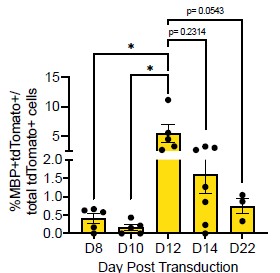
      (2) In Figure 1B it appears that the Sox10- MBP+ tdTomato+ cells decreases from D12 to D14. Does this make sense considering MBP is a marker of more mature OLCs? 

      Thank you for this comment. To address this, we compared the number of MBP+tdTomato+ Sox10 cells across reprogramming timepoints. We saw no difference between the number of MBP+tdTomato+ OLs at D12 and D14 (Author response image 2, p = 0.2314). However,  we do see a [nonsignificant] decrease in MBP+tdTomato+ Sox10 cells from D12 to D22 (Manuscript Supplementary Figure 3B, Author response image 2, p= 0.0543), which suggests that culture conditions are not optimal for longer-term cell survival [2], [3], [4].  

      Author response image 2.

      Comparison of Sox10- induced MBP+tdTomato+ iOLCs over time. Quantification of MBP<sup>+</sup>tdTomato<sup>+</sup> iOLs in Sox10 cultures at D8 (n=5), D10 (n=5), D12 (n=5), D14 (n=7) and D22 (n=3) post transduction. Data are presented as mean ± SEM, each data point represents one individual cell culture experiment, Brown-Forsythe and Welch ANOVA on transformed percentages with Dunnett’s T3 multiple comparisons test (*= p<0.05).  

      (3) Previous studies have shown that MBP expression and myelination in vitro occurs at the earliest around 4-6 weeks of culturing. When assessing whether further maturation would increase MBP positivity, authors only cultured cells up to 22 DPT and saw no significant increase. Has a lengthier culture timeline been attempted? 

      We agree with the Reviewer that previous studies of pluripotent stem cell derived (hESCs or iPSCs) have shown MBP+ OLCs in vitro around 4-6 weeks [5], [6], [7]. However,  studies of neural stem cells [8] or fibroblasts [9] conversion show OLC appearance after 7 and 24 days, respectively, demonstrating that OLCs can be generated in vitro within 1-3 weeks of plating. Moreover, as noted above in response to #2, we see fewer MBP+ cells at  22DPT, suggesting that extended time in culture may require additional factors for support. Therefore, we did not attempt longer timepoints. 

      (4) Figure S4D is described as "examples of tdTomatonegzsGreen+OLCmarker+ cells that arose from a tdTomatoneg cell with an astrocyte morphology." The zsGreen+ tdTomato- cell is not convincingly of "astrocyte morphology"; it could be a bipolar OLC. To strengthen the conclusions and remove this subjectivity, more extensive characterizations of astrocyte versus OLC morphology in the introduction or results are warranted. This would make this observation more convincing since there is clearly an overlap in the characteristics of these cell types.  

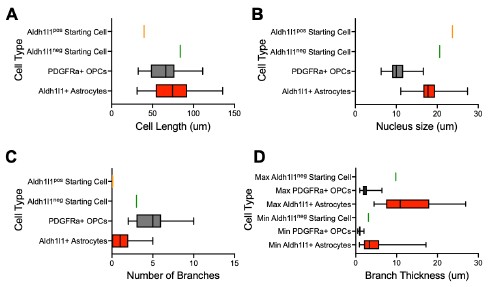
      We thank the reviewer for this excellent suggestion. To assess astrocyte morphology, we measured the cell size, nucleus size, number of branches and branch thickness of 70 Aldh1l1+tdTomato+ astrocytes in tamoxifen-labelled Aldh1l1-CreERT2;Ai14 cultures (new Supplemental Table 1). To assess OPC morphology, we  performed IHC for PDGFRa in iOLC cultures and measured the same parameters in 70 PDGFRa+ OPCs (new Supplemental Table 1).  We found that astrocytes were characterized by larger branch thickness, cell length and nucleus size, while OPCs showed a larger number of branches (new Supplemental Figure 1, and Author response image 3 below). Based on this framework, the AAV9-GFAP::zsGreen<sup>pos</sup>Aldh1l1-tdTomato<sup>neg</sup> and AAV9-GFAP::zsGreen<sup>pos</sup>Aldh1l1-tdTomato<sup>pos</sup>starting cells tracked fall within the bounds of ‘astrocytes’. We have revised the manuscript to include this more rigorous characterization (Line 119-124, Page 4; Line 307-312, Page 9; Line 323-326, Page 9). We also demonstrate (below) that the GFAP::zsGreen<sup>pos</sup> Aldh1l1-tdTomato<sup>pos</sup> and GFAP::zsGreen<sup>pos</sup>Aldh1l1-tdTomato<sup>neg</sup> starting cell depicted in Figure 2G and Supplemental Figure 5D is consistent with astrocyte morphology (Author response image 3). 

      Author response image 3.

      Morphological characterization of astrocytes, oligodendrocyte lineage cells, and starting cells. Quantification of the (A) cell length, (B) nucleus size, (C) number of branches, and (D) branch thickness iAldh1l1+tdTomato+ and PDGFRα+ OPCs (n= 70 per cell type, data are presented as mean ± SEM). Orange line indicates parameter value for GFAP::zsGreen<sup>pos</sup>Aldh1l1-tdTomato<sup>pos</sup> starting cell in Figure 2G. Green line indicates parameter value for GFAP::zsGreen<sup>pos</sup> Aldh1l1-tdTomato<sup>neg</sup> starting cell in Supplemental Figure 5D.

      Reviewer #2 (Public Review):             

      The study by Bajohr investigates the important question of whether astrocytes can generate oligodendrocytes by direct lineage conversion (DLR). The authors ectopically express three transcription factors - Sox10, Olig2 and Nkx6.2 - in cultured postnatal mouse astrocytes and use a combination of Aldh1|1-astrocyte fate mapping and live cell imaging to demonstrate that Sox10 converts astrocytes to MBP+ oligodendrocytes, whereas Olig2 expression converts astrocytes to PDFRalpha+ oligodendrocyte progenitor cells. Nkx6.2 does not induce lineage conversion. The authors use single-cell RNAseq over 14 days post-transduction to uncover molecular signatures of newly generated iOLs.  

      The potential to convert astrocytes to oligodendrocytes has been previously analyzed and demonstrated. Despite the extensive molecular characterization of the direct astrocyteoligodendrocyte lineage conversion, the paper by Bajohr et al. does not represent significant progress. The entire study is performed in cultured cells, and it is not demonstrated whether this lineage conversion can be induced in astrocytes in vivo, particularly at which developmental stage (postnatal, adult?) and in which brain region. The authors also state that generating oligodendrocytes from astrocytes could be relevant for oligodendrocyte regeneration and myelin repair, but they don't demonstrate that lineage conversion can be induced under pathological conditions, particularly after white matter demyelination. Specific issues are outlined below. 

      We thank the reviewer for this summary. We agree that there are a handful of reports of astrocytelike cells to OLC conversion [10], [11]. However, our study is the first study to confirm bonafide astrocyte to OLC conversion, which is important given the recent controversy in the field of in vivo astrocyte to neuron reprogramming [12]. In addition, the extensive characterization of the molecular timeline of reprogramming, highlights that although conversion of astrocytes is possible by ectopic expression of any of the three factors, the subtypes of astrocytes converted and maturity of OLCs produced may vary depending on the choice of TF delivered. Our findings will inform future in vivo studies of iOLC generation that aim to understand the impact of brain region, age, pathology, and sex, which are especially important given the diversity of astrocyte responses to disease [13], [14], [15].

      (1) The authors perform an extensive characterization of Sox10-mediated DLR by scRNAseq and demonstrate a clear trajectory of lineage conversion from astrocytes to terminally differentiated MBP+ iOLCs. A similar type of analysis should be performed after Olig2 transduction, to determine whether transcriptomics of olig2 conversion overlaps with any phase of sox10 conversion.

      We thank the Reviewer for this excellent comment. We chose to include an in-depth analysis of Sox10 in the manuscript, as Sox10-transduced cultures showed a higher percentage of mature iOLCs compared to Olig2 in our studies. We have added this specific rationale to the manuscript (Line 329-330-Page 9). 

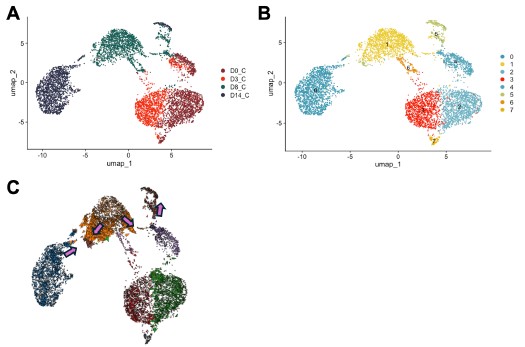
      Nonetheless, we also agree that understanding the underpinnings of Olig2-mediated conversion is important. Therefore, we used Cell Oracle [16] to understand the regulation of cell identity by Olig2.  in silico overexpression of Olig2 in our control time course dataset (D0, D3, D8 and D14) showed cell movement from cluster 1, characterized by astrocyte genes [Mmd2[17], Entpd2[18], H2-D1[19]], towards cluster 5, characterized by OPC genes [Pdgfra[20], Myt1[21]] validating astrocyte to OLC conversion by Olig2 (Author response image 4).

      We hypothesize that reprogramming via Sox10 and Olig2 take different conversion paths to oligodendrocytes for the following reasons. 

      (1) Differential astrocyte gene expression at D14 when cells are exposed to Sox10 and Olig2 (Manuscript Figure 1D-E [Sox10 characterized by Lcn2[19], C3[19]; Olig2 characterized by Slc6a11[22], Slc1a2[23]].

      (2) Differential expression of key OLC gene regulatory network genes at D14 between cells treated with Sox10 and Olig2 (Author response image 1). 

      Author response image 4.

      in silico modeling of Olig2 reprogramming (A) UMAP clustering of Cre control treated cells from 0, 3, 8, and 14 days post transduction (DPT). (B) UMAP clustering from (A) overlayed with timepoint and treatment group. (C) Cell Oracle modeling of predicted cell trajectories following Olig2 knock in (KI), overlaid onto UMAP plot. Arrows indicate cell movement prediction with Olig2 KI perturbation.  

      (2) A complete immunohistochemical characterization of the cultures should be performed at different time points after Sox10 and Olig2 transduction to confirm OL lineage cell phenotypes. 

      We performed a complete immunohistochemical characterization of Ai14 cultures transduced with GFAP::Sox10-Cre and GFAP::Olig2-Cre. This system allows permanent labelling and therefore, enabled the tracking of transduced cells through the process or DLR, which we believe is the most appropriate way to characterize iOLC conversion efficiencies. We then confirmed the conversion of Aldh1l1+ astrocytes in Aldh1l1-CreERT2;Ai14 cultures transduced with GFAP::Sox10-zsGreen and GFAP::Olig2-zsGreen. In this system, GFAP drives the expression of zsGreen, and therefore, may not faithfully track all cells and lead to an underestimate of the numbers of converted cells. For example, iOLCs from Aldh1l1<sup>neg</sup> astrocytes or iOLCs that have lost zsGreen expression following conversion. Therefore we use this system only to confirm astrocyte origin.

      Nonetheless, we appreciate this comment and recognize that there may be differences in conversion efficiencies when analyzing Aldh1l1+ astrocytes versus all transduced cells. Therefore, we have softened the language in the manuscript (see below) regarding Olig2 and Sox10 generating different OLC phenotypes and now claim iOLC generation from both Sox10 and Olig2. We thank the Reviewer for this comment, and believe it has strengthened the discussion. 

      Line 240, Page 7

      Line 261-263, Page 8

      Line 304-307, Page 8/9

      Line 413-414, Page 11

      References

      (1) E. Sock and M. Wegner, “Using the lineage determinants Olig2 and Sox10 to explore transcriptional regulation of oligodendrocyte development,” Dev Neurobiol, vol. 81, no. 7, pp. 892–901, Oct. 2021, doi: 10.1002/dneu.22849.

      (2) B. A. Barres, M. D. Jacobson, R. Schmid, M. Sendtner, and M. C. Raff, “Does oligodendrocyte survival depend on axons?,” Current Biology, vol. 3, no. 8, pp. 489–497, Aug. 1993, doi: 10.1016/0960-9822(93)90039-Q.

      (3) A.-N. Cho et al., “Aligned Brain Extracellular Matrix Promotes Differentiation and Myelination of Human-Induced Pluripotent Stem Cell-Derived Oligodendrocytes,” ACS Appl. Mater. Interfaces, vol. 11, no. 17, pp. 15344–15353, May 2019, doi: 10.1021/acsami.9b03242.

      (4) E. G. Hughes and M. E. Stockton, “Premyelinating Oligodendrocytes: Mechanisms Underlying Cell Survival and Integration,” Front. Cell Dev. Biol., vol. 9, Jul. 2021, doi: 10.3389/fcell.2021.714169.

      (5) M. Ehrlich et al., “Rapid and efficient generation of oligodendrocytes from human induced pluripotent stem cells using transcription factors,” Proc Natl Acad Sci U S A, vol. 114, no. 11, pp. E2243–E2252, Mar. 2017, doi: 10.1073/pnas.1614412114.

      (6) Y. Liu, P. Jiang, and W. Deng, “OLIG gene targeting in human pluripotent stem cells for motor neuron and oligodendrocyte differentiation,” Nat Protoc, vol. 6, no. 5, pp. 640–655, May 2011, doi: 10.1038/nprot.2011.310.

      (7) S. A. Goldman and N. J. Kuypers, “How to make an oligodendrocyte,” Development, vol. 142, no. 23, pp. 3983–3995, Dec. 2015, doi: 10.1242/dev.126409.

      (8) M. Faiz, N. Sachewsky, S. Gascón, K. W. A. Bang, C. M. Morshead, and A. Nagy, “Adult Neural Stem Cells from the Subventricular Zone Give Rise to Reactive Astrocytes in the Cortex after Stroke,” Cell Stem Cell, vol. 17, no. 5, pp. 624–634, Nov. 2015, doi:10.1016/j.stem.2015.08.002.

      (9) F. J. Najm et al., “Transcription factor–mediated reprogramming of fibroblasts to expandable, myelinogenic oligodendrocyte progenitor cells,” Nat Biotechnol, vol. 31, no. 5, pp. 426–433, May 2013, doi: 10.1038/nbt.2561.

      (10) A. Mokhtarzadeh Khanghahi, L. Satarian, W. Deng, H. Baharvand, and M. Javan, “In vivo conversion of astrocytes into oligodendrocyte lineage cells with transcription factor Sox10; Promise for myelin repair in multiple sclerosis,” PLoS One, vol. 13, no. 9, p. e0203785, Sep. 2018, doi: 10.1371/journal.pone.0203785.

      (11) S. Farhangi, S. Dehghan, M. Totonchi, and M. Javan, “In vivo conversion of astrocytes to oligodendrocyte lineage cells in adult mice demyelinated brains by Sox2,” Mult Scler Relat Disord, vol. 28, pp. 263–272, Feb. 2019, doi: 10.1016/j.msard.2018.12.041.

      (12) L.-L. Wang, C. Serrano, X. Zhong, S. Ma, Y. Zou, and C.-L. Zhang, “Revisiting astrocyte to neuron conversion with lineage tracing in vivo,” Cell, vol. 184, no. 21, pp. 5465-5481.e16, Oct. 2021, doi: 10.1016/j.cell.2021.09.005.

      (13) I  Matias, J. Morgado, and F. C. A. Gomes, “Astrocyte Heterogeneity: Impact to Brain Aging and Disease,” Front. Aging Neurosci., vol. 11, Mar. 2019, doi: 10.3389/fnagi.2019.00059.

      (14) N. Habib et al., “Disease-associated astrocytes in Alzheimer’s disease and aging,” Nat Neurosci, vol. 23, no. 6, pp. 701–706, Jun. 2020, doi: 10.1038/s41593-020-0624-8.

      (15)  M. A. Wheeler et al., “MAFG-driven astrocytes promote CNS inflammation,” Nature, vol. 578, no. 7796, pp. 593–599, Feb. 2020, doi: 10.1038/s41586-020-1999-0.

      (16) K. Kamimoto, B. Stringa, C. M. Hoffmann, K. Jindal, L. Solnica-Krezel, and S. A. Morris, “Dissecting cell identity via network inference and in silico gene perturbation,” Nature, vol. 614, no. 7949, pp. 742–751, Feb. 2023, doi: 10.1038/s41586-022-05688-9.

      (17) P. Kang et al., “Sox9 and NFIA coordinate a transcriptional regulatory cascade during the initiation of gliogenesis,” Neuron, vol. 74, no. 1, pp. 79–94, Apr. 2012, doi:10.1016/j.neuron.2012.01.024.

      (18) K. Saito et al., “Microglia sense astrocyte dysfunction and prevent disease progression in an Alexander disease model,” Brain, vol. 147, no. 2, pp. 698–716, Nov. 2023, doi:10.1093/brain/awad358.

      (19) S. A. Liddelow et al., “Neurotoxic reactive astrocytes are induced by activated microglia,” Nature, vol. 541, no. 7638, pp. 481–487, Jan. 2017, doi: 10.1038/nature21029.

      (20) Q. Zhu et al., “Genetic evidence that Nkx2.2 and Pdgfra are major determinants of the timing of oligodendrocyte differentiation in the developing CNS,” Development, vol. 141, no. 3, pp. 548–555, Feb. 2014, doi: 10.1242/dev.095323.

      (21) J. A. Nielsen, J. A. Berndt, L. D. Hudson, and R. C. Armstrong, “Myelin transcription factor 1 (Myt1) modulates the proliferation and differentiation of oligodendrocyte lineage cells,” Mol Cell Neurosci, vol. 25, no. 1, pp. 111–123, Jan. 2004, doi:10.1016/j.mcn.2003.10.001.

      (22) J. Liu, X. Feng, Y. Wang, X. Xia, and J. C. Zheng, “Astrocytes: GABAceptive and GABAergic Cells in the Brain,” Front. Cell. Neurosci., vol. 16, Jun. 2022, doi:10.3389/fncel.2022.892497.

      (23) A. Sharma et al., “Divergent roles of astrocytic versus neuronal EAAT2 deficiency on cognition and overlap with aging and Alzheimer’s molecular signatures,” Proceedings of the National Academy of Sciences, vol. 116, no. 43, pp. 21800–21811, Oct. 2019, doi:10.1073/pnas.1903566116

    1. Reviewer #1 (Public review):

      This study explores the connectivity patterns that could lead to fast and slow undulating swim patterns in larval zebrafish using a simplified theoretical framework. The authors show that a pattern of connectivity based only on inhibition is sufficient to produce realistic patterns with a single frequency. Two such networks couple with inhibition but with distinct time constants can produce a range of frequencies. Adding excitatory connections further increases the range of obtainable frequencies, albeit at the expense of sudden transitions in mid-frequency range.

      Strengths:

      (1) This is an eloquent approach to answering the question of how spinal locomotor circuits generate coordinated activity using a theoretical approach based on moving bump models of brain activity.

      (2) The models make specific predictions on patterns of connectivity while discounting the role of connectivity strength or neuronal intrinsic properties in shaping the pattern.

      (3) The models also propose that there is an important association between cell-type-specific intersegmental patterns and the recruitment of speed-selective subpopulations of interneurons.

      (4) Having a hierarchy of models creates a compelling argument for explaining rhythmicity at the network level. Each model builds on the last and reveals a new perspective on how network dynamics can control rhythmicity. I liked that each model can be used to probe questions in the next/previous model.

      Comments on revisions:

      I am very happy to see the simplified biophysical model supporting the original findings. The authors have done an excellent job addressing my comments.

      Just a small note, please change C. Elegans to C. elegans.

    2. Author response:

      The following is the authors’ response to the original reviews.

      Reviewer #1 (Public review):

      (1)How is this simplified model representative of what is observed biologically? A bump model does not naturally produce oscillations. How would the dynamics of a rhythm generator interact with this simplistic model?

      Bump models naturally produce sequential activity, and can be engineered to repeat this sequential activity periodically (Zhang, 1996; Samsonovich and McNaughton, 1997; Murray and Escola, 2017). This is the basis for the oscillatory behavior in the model presented here. As we describe in our paper, such a model is consistent with numerous neurobiological observations about cell-type-specific connectivity patterns. The reviewer is, however, correct to point out that our model does not incorporate other key neurobiological features--in particular, intracellular dynamical properties--that have been shown to play important roles in rhythm generation. Our aim in this work is to establish a circuit-level mechanism for rhythm generation, complementary to classical models that rely on intracellular dynamics for rhythm generation. Whether and how these mechanisms work together is something that we plan to explore in future work, and we have added a sentence to the Discussion to this effect.

      (2) Would this theoretical construct survive being expressed in a biophysical model? It seems that it should, but even a simple biological model with the basic patterns of connectivity shown here would greatly increase confidence in the biological plausibility of the theory.

      We thank the reviewer for pointing out this way to strengthen our paper. We implemented the connectivity developed in the rate models in a spiking neuron model which used EI-balanced Poisson noise as input drive. We found that we could reproduce all the main results of our analysis. In particular, with a realistic number of neurons, we observed swimming activity characterized by (i) left-right alternation, (ii) rostal-caudal propagation, and (iii) variable speed control with constant phase lag. The spiking model demonstrates that the connectivity-motif based mechanisms for rhythmogenesis that we propose are robust in a biophysical setting.

      We included these results in the updated manuscript in a new Results subsection titled “Robustness in a biophysical model.”

      (3) How stable is this model in its output patterns? Is it robust to noise? Does noise, in fact, smooth out the abrupt transitions in frequency in the middle range?

      The newly added spiking model implementation of the network demonstrates that the core mechanisms of our models are robust to noise,  since the connectivity is randomly chosen and the input drive is Poisson noise.

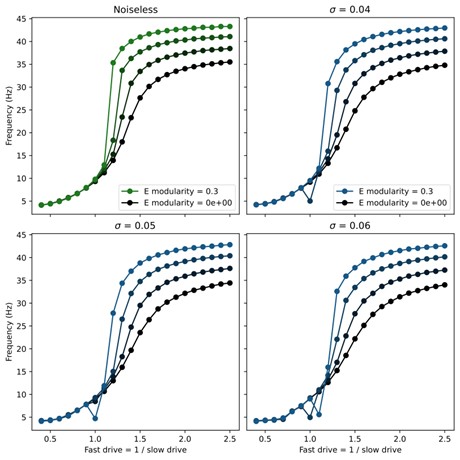
      To test the effect of noise as it is parametrically varied, we also added noise directly to the rate models in the form of white noise input to each unit. Namely, the rate model was adapted to obey the stochastic differential equation

      \[

      \tau_i \frac{dr_i(t)}{dt} = -r_i(t) + \left[ \sum_j W_{ij} r_j(t - \Delta_{ij}) + D_i + \sigma\xi_t \right]_+

      \]

      Here $\xi_t$ is a standard Gaussian white noise and $\sigma$ sets the strength of the noise. We found that the swimming patterns were robust at all frequencies up to $\sigma =  0.05$. Above this level, coherent oscillations started to break down for some swim frequencies. To investigate whether the noise smoothed out abrupt transitions, we swept through different values of noise and modularity of excitatory connections. The results showed very minor improvement in controllability (see figure below), but this was not significant enough to include in the manuscript.

      Author response image 1.

      (4) All figure captions are inadequate. They should have enough information for the reader to understand the figure and the point that was meant to be conveyed. For example, Figure 1 does not explain what the red dot is, what is black, what is white, or what the gradations of gray are. Or even if this is a representative connectivity of one node, or if this shows all the connections? The authors should not leave the reader guessing.

      All figure captions have been updated to enhance clarity and address these concerns.

      Reviewer #2 (Public review):

      (1) Figure 1A, if I interpret Figure 1B correctly, should there not be long descending projections as well that don't seem to be illustrated?

      Thank you for highlighting this potential point of confusion. The diagram in question was only intended to be a rough schematic of the types of connections present in the model. We have added additional descending connections as requested

      (2)Page 5, It would be good to define what is meant by slow and fast here, as this definition changes with age in zebrafish (what developmental age)?

      We have updated the manuscript to include the sentence: “These values were chosen to coincide with observed ranges from larval zebrafish.” with appropriate citation.

      Reviewer #3 (Public review):

      (1) The authors describe a single unit as a neuron, be it excitatory or inhibitory, and the output of the simulation is the firing rate of these neurons. Experimentally and in other modeling studies, motor neurons are incorporated in the model, and the output of the network is based on motor neuron firing rate, not the interneurons themselves. Why did the authors choose to build the model this way?

      We chose to leave out the motor neurons from our models for a few reasons. While motor neurons read out the rhythmic activity generated by the interneurons and may provide some feedback, they are not required for rhythmogenesis. In fact, interneuron activity (especially in the excitatory V2a neurons (Agha et al., 2024)) is highly correlated with the ventral root bursts within the same segment. This suggests that motor neurons are primarily a local readout of the rhythmic activity of interneurons; therefore, the rhythmic swimming activity can be deduced directly from the interneurons themselves.

      Moreover, there is a lack of experimental observation of the connectivity between all the cell types considered in our model and motor neurons. Hence, it was unclear how we should include them in the model. To address this, we are currently developing a data-driven approach that will determine the proper connectivity between the motor neurons and the interneurons, including intrasegmental connections.

      (2) In the single population model (Figure 1), the authors use ipsilateral inhibitory connections that are long-range in an ascending direction. Experimentally, these connections have been shown to be local, while long-range ipsilateral connections have been shown to be descending. What were the reasons the authors chose this connectivity? Do the authors think local ascending inhibitions contribute to rostrocaudal propagation, and how?

      The long-range ascending ipsilateral inhibitory connections arises from a limitation of our modeling framework. The V1 neurons that provide these connections have been shown experimentally to fire later than other neurons (especially descending V2a  neurons) within the same hemisegment (Jay et al., J Neurosci, 2023); however, our model can only produce synchronized local activity. Hence, we replace local phase offsets with spatial offsets to produce correctly structured recurrent phasic inputs. We are currently investigating a data-driven method for determining intrasegmental connectivity which should be able to produce the local phase offset and address this concern; however, this is beyond the scope of the current paper.

      (3) In the two-population model, the authors show independent control of frequency and rhythm, as has been reported experimentally. However, in these previous experimental studies, frequency and amplitude are regulated by different neurons, suggesting different networks dedicated to frequency and amplitude control. However, in the current model, the same population with the same connections can contribute to frequency or amplitude depending on relative tonic drive. Can the authors please address these differences either by changes in the model or by adding to the Discussion?

      Our prior  experimental results that suggested a separation of frequency and amplitude control circuits focus on motor neuron recruitment, instead of interneuron activity (Jay et al., J Neurosci 2023; Menelaou and McLean, Nat Commun 2019). To avoid potential confusion about amplitudes of interneurons vs. of motor neurons, we have removed the results from Figure 3 about control of amplitude in the 2-population model, instead focusing this figure on the control of frequency via speed-module recruitment. For the same reason, we have removed the panel showing the effects of targeted ablations on interneuron amplitudes in Figure 7. We have kept the result about amplitude control in our Supplemental Figure S2 for the 8-population model, but we try to make it clear in the text that any relationship between interneuron amplitude and motor neuron amplitude would depend on how motor neurons are modeled, which we do not pursue in this work.

      (4) It would be helpful to add a paragraph in the Discussion on how these results could be applicable to other model systems beyond zebrafish. Cell intrinsic rhythmogenesis is a popular concept in the field, and these results show an interesting and novel alternative. It would help to know if there is any experimental evidence suggesting such network-based propagation in other systems, invertebrates, or vertebrates.

      We have expanded a paragraph in the Discussion to address these questions. In particular, we highlight how a recent study of mouse locomotor circuits produced a model with similar key features (Komi et al., 2024). These authors made direct use of experimentally determined connectivity structure and cell-type distributions, which informed a model that produced purely network-based rhythmogenesis. We also point out that inhibition-dominated connectivity has been used for understanding oscillatory behavior in neural circuits outside the context of motor control (Zhang, 1996; Samsonovich and McNaughton, 1997; Murray and Escola, 2017). Finally, we address a study that used the cell-type specific connectivity within the C. Elegans locomotor circuit as the architecture for an artificial motor control system and found that the resulting system could more efficiently learn motor control tasks than general machine learning architectures (Bhattasali et al. 2022). Like our model, the Komi et al. and Bhattasali et al. models generate rhythm via structured connectivity motifs rather than via intracellular dynamical properties, suggesting that these may be a key mechanism underlying locomotion across species.

      Reviewer #1 (Recommendations for the authors):

      (1) Express this modeling construct in a simple biophysical model.

      See the new Results subsection titled “Robustness in a biophysical model.”

      (2) Please cite the classic models of Kopell, Ermentrout, Williams, Sigvardt etc., especially where you say "classic models".

      We have added relevant citations including the mentioned authors.

      (3) "Rhythmogenesis remain incompletely understood" changed to "Rhythmogenesis remains incompletely understood".

      We chose not to make this change since the ‘remain’ refers to the plural ‘core mechanisms’ not the singular ‘rhythmogenesis’.

      Reviewer #3 (Recommendations for the authors):

      (1) The figures are well made; however, it would help to add more details to the figure legends. For example, what neuron's firing rate is shown in Figure 1C? What is the red dot in 1B? Figures 3E,F,G: what is being plotted? Mean and SD? Blue dot in Figure 5C?

      All figure captions have been updated to enhance clarity and address these concerns.

      (2) A, B text missing in Figure 7.

      We have revised this figure and its caption; please see our response to Comment 3 above.

      (3) It would be nice to see the tonic drive pattern that is fed to the model for each case, along with the different firing rates in the figures. It would help understand how the tonic drive is changed to rhythmic activity.

      The tonic drive in the rate models is implemented as a constant excitatory input that is uniform across all units within the same speed-population. There is no patterning in time or location to this drive.

      References

      (1) Moneeza A Agha, Sandeep Kishore, and David L McLean. Cell-type-specific origins of locomotor rhythmicity at different speeds in larval zebrafish. eLife, July 2024

      (2) Nikhil Bhattasali, Anthony M Zador, and Tatiana Engel. Neural circuit architectural priors for embodied control. In S. Koyejo, S. Mohamed, A. Agarwal, D. Belgrave, K. Cho, and A. Oh, editors, Advances in Neural Information Processing Systems, volume 35, pages 12744–12759. Curran Associates, Inc., 2022.

      (3) Salif Komi, August Winther, Grace A. Houser, Roar Jakob Sørensen, Silas Dalum Larsen, Madelaine C. Adamssom Bonfils, Guanghui Li, and Rune W. Berg. Spatial and network principles behind neural generation of locomotion. bioRxiv, 2024

      (4) James M Murray and G Sean Escola. Learning multiple variable-speed sequences in striatum via cortical tutoring. eLife, 6:e26084, May 2017.

      (5) Alexei Samsonovich and Bruce L McNaughton. Path integration and cognitive mapping in a continuous attractor neural network model. Journal of Neuroscience, 17(15):5900–5920, 1997.

      (6) K Zhang. Representation of spatial orientation by the intrinsic dynamics of the head-direction cell ensemble: a theory. Journal of Neuroscience, 16(6):2112–2126, 1996.

    1. Author response:

      The following is the authors’ response to the previous reviews

      Public Reviews:

      We thank the Reviewers for their thorough attention to our paper and the interesting discussion about the findings. Before responding to more specific comments, here some general points we would like to clarify:

      (1) Ecological niche models are indeed correlative models, and we used them to highlight environmental factors associated with HPAI outbreaks within two host groups. We will further revise the terminology that could still unintentionally suggest causal inference. The few remaining ambiguities were mainly in the Discussion section, where our intent was to interpret the results in light of the broader scientific literature. Particularly, we will change the following expressions:

      -  “Which factors can explain…” to  “Which factors are associated with…” (line 75);

      -  “the environmental and anthropogenic factors influencing” to “the environmental and anthropogenic factors that are correlated with” (line 273);

      -  “underscoring the influence” to “underscoring the strong association” (line 282).

      (2) We respectfully disagree with the suggestion that an ecological niche modelling (ENM) approach is not appropriate for this work and the research question addressed therein. Ecological niche models are specifically designed to estimate the spatial distribution of the environmental suitability of species and pathogens, making them well suited to our research questions. In our study, we have also explicitly detailed the known limitations of ecological niche models in the Discussion section, in line with prior literature, to ensure their appropriate interpretation in the context of HPAI.

      (3) The environmental layers used in our models were restricted to those available at a global scale, as listed in Supplementary Information Resources S1 (https://github.com/sdellicour/h5nx\_risk\_mapping/blob/master/Scripts\_%26\_data/SI\_Resource\_S1.xlsx). Naturally, not all potentially relevant environmental factors could be included, but the selected layers are explicitly documented and only these were assessed for their importance. Despite this limitation, the performance metrics indicate that the models performed well, suggesting that the chosen covariates capture meaningful associations with HPAI occurrence at a global scale.

      Reviewer #1 (Public review):

      The authors aim to predict ecological suitability for transmission of highly pathogenic avian influenza (HPAI) using ecological niche models. This class of models identify correlations between the locations of species or disease detections and the environment. These correlations are then used to predict habitat suitability (in this work, ecological suitability for disease transmission) in locations where surveillance of the species or disease has not been conducted. The authors fit separate models for HPAI detections in wild birds and farmed birds, for two strains of HPAI (H5N1 and H5Nx) and for two time periods, pre- and post-2020. The authors also validate models fitted to disease occurrence data from pre-2020 using post-2020 occurrence data. I thank the authors for taking the time to respond to my initial review and I provide some follow-up below.

      Detailed comments:

      In my review, I asked the authors to clarify the meaning of "spillover" within the HPAI transmission cycle. This term is still not entirely clear: at lines 409-410, the authors use the term with reference to transmission between wild birds and farmed birds, as distinct to transmission between farmed birds. It is implied but not explicitly stated that "spillover" is relevant to the transmission cycle in farmed birds only. The sentence, "we developed separate ecological niche models for wild and domestic bird HPAI occurrences ..." could have been supported by a clear sentence describing the transmission cycle, to prime the reader for why two separate models were necessary.

      We respectfully disagree that the term “spillover” is unclear in the manuscript. In both the Methods and Discussion sections (lines 387-391 and 409-414), we explicitly define “spillover” as the introduction of HPAI viruses from wild birds into domestic poultry, and we distinguish this from secondary farm-to-farm transmission. Our use of separate ecological niche models for wild and domestic outbreaks reflects not only the distinction between primary spillover and secondary transmission, but also the fundamentally different ecological processes, surveillance systems, and management implications that shape outbreaks in these two groups. We will clarify this choice in the revised manuscript when introducing the separate models. Furthermore, on line 83, we will add “as these two groups are influenced by different ecological processes, surveillance biases, and management contexts”.

      I also queried the importance of (dead-end) mammalian infections to a model of the HPAI transmission risk, to which the authors responded: "While spillover events of HPAI into mammals have been documented, these detections are generally considered dead-end infections and do not currently represent sustained transmission chains. As such, they fall outside the scope of our study, which focuses on avian hosts and models ecological suitability for outbreaks in wild and domestic birds." I would argue that any infections, whether they are in dead-end or competent hosts, represent the presence of environmental conditions to support transmission so are certainly relevant to a niche model and therefore within scope. It is certainly understandable if the authors have not been able to access data of mammalian infections, but it is an oversight to dismiss these infections as irrelevant.

      We understand the Reviewer’s point, but our study was designed to model HPAI occurrence in avian hosts only. We therefore restricted our analysis to wild birds and domestic poultry, which represent the primary hosts for HPAI circulation and the focus of surveillance and control measures. While mammalian detections have been reported, they are outside the scope of this work.

      Correlative ecological niche models, including BRTs, learn relationships between occurrence data and covariate data to make predictions, irrespective of correlations between covariates. I am not convinced that the authors can make any "interpretation" (line 298) that the covariates that are most informative to their models have any "influence" (line 282) on their response variable. Indeed, the observation that "land-use and climatic predictors do not play an important role in the niche ecological models" (line 286), while "intensive chicken population density emerges as a significant predictor" (line 282) begs the question: from an operational perspective, is the best (e.g., most interpretable and quickest to generate) model of HPAI risk a map of poultry farming intensity?

      We agree that poultry density may partly reflect reporting bias, but we also assumed it a meaningful predictor of HPAI risk. Its importance in our models is therefore expected. Importantly, our BRT framework does more than reproduce poultry distribution: it captures non-linear relationships and interactions with other covariates, allowing a more nuanced characterisation of risk than a simple poultry density map. Note also that we distinguished in our models intensive and extensive chicken poultry density and duck density. Therefore, it is not a “map of poultry farming intensity”. 

      At line 282, we used the word “influence” while fully recognising that correlative models cannot establish causality. Indeed, in our analyses, “relative influence” refers to the importance metric produced by the BRT algorithm (Ridgeway, 2020), which measures correlative associations between environmental factors and outbreak occurrences. These scores are interpreted in light of the broader scientific literature, therefore our interpretations build on both our results and existing evidence, rather than on our models alone. However, in the next version of the paper, we will revise the sentence as: “underscoring the strong association of poultry farming practices with HPAI spread (Dhingra et al., 2016)”. 

      I have more significant concerns about the authors' treatment of sampling bias: "We agree with the Reviewer's comment that poultry density could have potentially been considered to guide the sampling effort of the pseudo-absences to consider when training domestic bird models. We however prefer to keep using a human population density layer as a proxy for surveillance bias to define the relative probability to sample pseudo-absence points in the different pixels of the background area considered when training our ecological niche models. Indeed, given that poultry density is precisely one of the predictors that we aim to test, considering this environmental layer for defining the relative probability to sample pseudo-absences would introduce a certain level of circularity in our analytical procedure, e.g. by artificially increasing to influence of that particular variable in our models." The authors have elected to ignore a fundamental feature of distribution modelling with occurrence-only data: if we include a source of sampling bias as a covariate and do not include it when we sample background data, then that covariate would appear to be correlated with presence. They acknowledge this later in their response to my review: "...assuming a sampling bias correlated with poultry density would result in reducing its effect as a risk factor." In other words, the apparent predictive capacity of poultry density is a function of how the authors have constructed the sampling bias for their models. A reader of the manuscript can reasonably ask the question: to what degree are is the model a model of HPAI transmission risk, and to what degree is the model a model of the observation process? The sentence at lines 474-477 is a helpful addition, however the preceding sentence, "Another approach to sampling pseudo-absences would have been to distribute them according to the density of domestic poultry," (line 474) is included without acknowledgement of the flow-on consequence to one of the key findings of the manuscript, that "...intensive chicken population density emerges as a significant predictor..." (line 282). The additional context on the EMPRES-i dataset at line 475-476 ("the locations of outbreaks ... are often georeferenced using place name nomenclatures") is in conflict with the description of the dataset at line 407 ("precise location coordinates"). Ultimately, the choices that the authors have made are entirely defensible through a clear, concise description of model features and assumptions, and precise language to guide the reader through interpretation of results. I am not satisfied that this is provided in the revised manuscript.

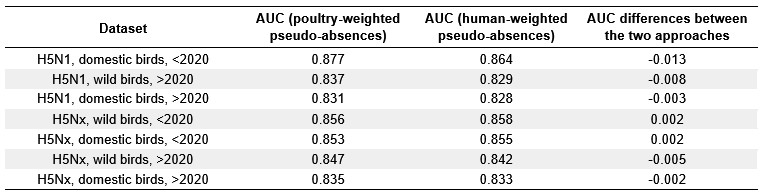
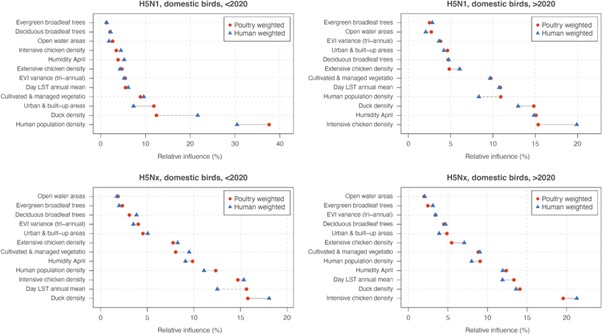
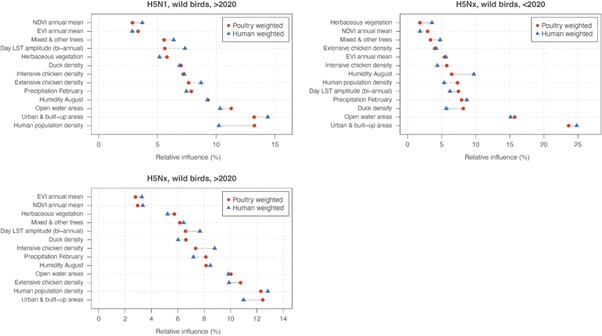
      We thank the Reviewer for this important point. To address it, we compared model predictive performance and covariate relative influences obtained when pseudo-absences were weighted by poultry density versus human population density (Author response table 1). The results show that differences between the two approaches are marginal, both in predictive performance (ΔAUC ranging from -0.013 to +0.002) and in the ranking of key predictors (see below Author response images 1 and 2). For instance, intensive chicken density consistently emerged as an important predictor regardless of the bias layer used.

      Note: the comparison was conducted using a simplified BRT configuration for computational efficiency (fewer trees, fixed 5-fold random cross-validation, and standardised parameters). Therefore, absolute values of AUC and variable importance may differ slightly from those in the manuscript, but the relative ranking of predictors and the overall conclusions remain consistent.

      Given these small differences, we retained the approach using human population density. We agree that poultry density partly reflects surveillance bias as well as true epidemiological risk, and we will clarify this in the revised manuscript by noting that the predictive role of poultry density reflects both biological processes and surveillance systems. Furthermore, on line 289, we will add “We note, however, that intensive poultry density may reflect both surveillance intensity and epidemiological risk, and its predictive role in our models should be interpreted in light of both processes”.

      Author response table 1.

      Comparison of model predictive performances (AUC) between pseudo-absence sampling were weighted by poultry density and by human population density across host groups, virus types, and time periods. Differences in AUC values are shown as the value for poultry-weighted minus human-weighted pseudo-absences.

      Author response image 1.

      Comparison of variable relative influence (%) between models trained with pseudo-absences weighted by poultry density (red) and human population density (blue) for domestic bird outbreaks. Results are shown for four datasets: H5N1 (<2020), H5N1 (>2020), H5Nx (<2020), and H5Nx (>2020).

      Author response image 2.

      Comparison of variable relative influence (%) between models trained with pseudo-absences weighted by poultry density (red) and human population density (blue) for wild bird outbreaks. Results are shown for three datasets: H5N1 (>2020), H5Nx (<2020), and H5Nx (>2020).

      The authors have slightly misunderstood my comment on "extrapolation": I referred to "environmental extrapolation" in my review without being particularly explicit about my meaning. By "environmental extrapolation", I meant to ask whether the models were predicting to environments that are outside the extent of environments included in the occurrence data used in the manuscript. The authors appear to have understood this to be a comment on geographic extrapolation, or predicting to areas outside the geographic extent included in occurrence data, e.g.: "For H5Nx post-2020, areas of high predicted ecological suitability, such as Brazil, Bolivia, the Caribbean islands, and Jilin province in China, likely result from extrapolations, as these regions reported few or no outbreaks in the training data" (lines 195-197). Is the model extrapolating in environmental space in these regions? This is unclear. I do not suggest that the authors should carry out further analysis, but the multivariate environmental similarly surface (MESS; see Elith et al., 2010) is a useful tool to visualise environmental extrapolation and aid model interpretation.

      On the subject of "extrapolation", I am also concerned by the additions at lines 362-370: "...our models extrapolate environmental suitability for H5Nx in wild birds in areas where few or no outbreaks have been reported. This discrepancy may be explained by limited surveillance or underreporting in those regions." The "discrepancy" cited here is a feature of the input dataset, a function of the observation distribution that should be captured in pseudo-absence data. The authors state that Kazakhstan and Central Asia are areas of interest, and that the environments in this region are outside the extent of environments captured in the occurrence dataset, although it is unclear whether "extrapolation" is informed by a quantitative tool like a MESS or judged by some other qualitative test. The authors then cite Australia as an example of a region with some predicted suitability but no HPAI outbreaks to date, however this discussion point is not linked to the idea that the presence of environmental conditions to support transmission need not imply the occurrence of transmission (as in the addition, "...spatial isolation may imply a lower risk of actual occurrences..." at line 214). Ultimately, the authors have not added any clear comment on model uncertainty (e.g., variation between replicated BRTs) as I suggested might be helpful to support their description of model predictions.

      Many thanks for the clarification. Indeed, we interpreted your previous comments in terms of geographic extrapolations. We thank the Reviewer for these observations. We will adjust the wording to further clarify that predictions of ecological suitability in areas with few or no reported outbreaks (e.g., Central Asia, Australia) are not model errors but expected extrapolations, since ecological suitability does not imply confirmed transmission (for instance, on Line 362: “our models extrapolate environmental suitability” will be changed to “Interestingly, our models extrapolate geographical”). These predictions indicate potential environments favorable to circulation if the virus were introduced.

      In our study, model uncertainty is formally assessed when comparing the predictive performances of our models (Fig. S3, Table S1), the relative influence (Table S3) and response curves (Fig. 2) associated with each environmental factor (Table S2). All the results confirming a good converge between these replicates. Finally, we indeed did not use a quantitative tool such as a MESS to assess extrapolation but did rely on qualitative interpretation of model outputs.

      All of my criticisms are, of course, applied with the understanding that niche modelling is imperfect for a disease like HPAI, and that data may be biased/incomplete, etc.: these caveats are common across the niche modelling literature. However, if language around the transmission cycle, the niche, and the interpretation of any of the models is imprecise, which I find it to be in the revised manuscript, it undermines all of the science that is presented in this work.

      We respectfully disagree with this comment. The scope of our study and the methods employed are clearly defined in the manuscript, and the limitations of ecological niche modelling in this context are explicitly acknowledged in the Discussion section. While we appreciate the Reviewer’s concern, the comment does not provide specific examples of unclear or imprecise language regarding the transmission cycle, niche, or interpretation of the models. Without such examples, it is difficult to identify further revisions that would improve clarity.

      Reviewer #2 (Public review):

      The geographic range of highly pathogenic avian influenza cases changed substantially around the period 2020, and there is much interest in understanding why. Since 2020 the pathogen irrupted in the Americas and the distribution in Asia changed dramatically. This study aimed to determine which spatial factors (environmental, agronomic and socio-economic) explain the change in numbers and locations of cases reported since 2020 (2020--2023). That's a causal question which they address by applying correlative environmental niche modelling (ENM) approach to the avian influenza case data before (2015--2020) and after 2020 (2020--2023) and separately for confirmed cases in wild and domestic birds. To address their questions they compare the outputs of the respective models, and those of the first global model of the HPAI niche published by Dhingra et al 2016.

      We do not agree with this comment. In the manuscript, it is well established that we are quantitatively assessing factors that are associated with occurrences data before and after 2020. We do not claim to determine the causality. One sentence of the Introduction section (lines 75-76) could be confusing, so we intend to modify it in the final revision of our manuscript. 

      ENM is a correlative approach useful for extrapolating understandings based on sparse geographically referenced observational data over un- or under-sampled areas with similar environmental characteristics in the form of a continuous map. In this case, because the selected covariates about land cover, use, population and environment are broadly available over the entire world, modelled associations between the response and those covariates can be projected (predicted) back to space in the form of a continuous map of the HPAI niche for the entire world.

      We fully agree with this assessment of ENM approaches.

      Strengths:

      The authors are clear about expected bias in the detection of cases, such geographic variation in surveillance effort (testing of symptomatic or dead wildlife, testing domestic flocks) and in general more detections near areas of higher human population density (because if a tree falls in a forest and there is no-one there, etc), and take steps to ameliorate those. The authors use boosted regression trees to implement the ENM, which typically feature among the best performing models for this application (also known as habitat suitability models). They ran replicate sets of the analysis for each of their model targets (wild/domestic x pathogen variant), which can help produce stable predictions. Their code and data is provided, though I did not verify that the work was reproducible.

      The paper can be read as a partial update to the first global model of H5Nx transmission by Dhingra and others published in 2016 and explicitly follows many methodological elements. Because they use the same covariate sets as used by Dhingra et al 2016 (including the comparisons of the performance of the sets in spatial cross-validation) and for both time periods of interest in the current work, comparison of model outputs is possible. The authors further facilitate those comparisons with clear graphics and supplementary analyses and presentation. The models can also be explored interactively at a weblink provided in text, though it would be good to see the model training data there too.

      The authors' comparison of ENM model outputs generated from the distinct HPAI case datasets is interesting and worthwhile, though for me, only as a response to differently framed research questions.

      Weaknesses:

      This well-presented and technically well-executed paper has one major weakness to my mind. I don't believe that ENM models were an appropriate tool to address their stated goal, which was to identify the factors that "explain" changing HPAI epidemiology.

      Here is how I understand and unpack that weakness:

      (1) Because of their fundamentally correlative nature, ENMs are not a strong candidate for exploring or inferring causal relationships.

      (2) Generating ENMs for a species whose distribution is undergoing broad scale range change is complicated and requires particular caution and nuance in interpretation (e.g., Elith et al, 2010, an important general assumption of environmental niche models is that the target species is at some kind of distributional equilibrium (at time scales relevant to the model application). In practice that means the species has had an opportunity to reach all suitable habitats and therefore its absence from some can be interpreted as either unfavourable environment or interactions with other species). Here data sets for the response (N5H1 or N5Hx case data in domestic or wild birds ) were divided into two periods; 2015--2020, and 2020--2023 based on the rationale that the geographic locations and host-species profile of cases detected in the latter period was suggestive of changed epidemiology. In comparing outputs from multiple ENMs for the same target from distinct time periods the authors are expertly working in, or even dancing around, what is a known grey area, and they need to make the necessary assumptions and caveats obvious to readers.

      We thank the Reviewer for this observation. First, we constrained pseudo-absence sampling to countries and regions where outbreaks had been reported, reducing the risk of interpreting non-affected areas as environmentally unsuitable. Second, we deliberately split the outbreak data into two periods (2015-2020 and 2020-2023) because we do not assume a single stable equilibrium across the full study timeframe. This division reflects known epidemiological changes around 2020 and allows each period to be modeled independently. Within each period, ENM outputs are interpreted as associations between outbreaks and covariates, not as equilibrium distributions. Finally, by testing prediction across periods, we assessed both niche stability and potential niche shifts. These clarifications will be added to the manuscript to make our assumptions and limitations explicit.

      Line 66, we will add: “Ecological niche model outputs for range-shifting pathogens must therefore be interpreted with caution (Elith et al., 2010). Despite this limitation, correlative ecological niche models  remain useful for identifying broad-scale associations and potential shifts in distribution. To account for this, we analysed two distinct time periods (2015-2020 and 2020-2023).”

      Line 123, we will revise “These findings underscore the ability of pre-2020 models in forecasting the recent geographic distribution of ecological suitability for H5Nx and H5N1 occurrences” to “These results suggest that pre-2020 models captured broad patterns of suitability for H5Nx and H5N1 outbreaks, while post-2020 models provided a closer fit to the more recent epidemiological situation”.

      (3) To generate global prediction maps via ENM, only variables that exist at appropriate resolution over the desired area can be supplied as covariates. What processes could influence changing epidemiology of a pathogen and are their covariates that represent them? Introduction to a new geographic area (continent) with naive population, immunity in previously exposed populations, control measures to limit spread such as vaccination or destruction of vulnerable populations or flocks? Might those control measures be more or less likely depending on the country as a function of its resources and governance? There aren't globally available datasets that speak to those factors, so the question is not why were they omitted but rather was the authors decision to choose ENMs given their question justified? How valuable are insights based on patterns of correlation change when considering different temporal sets of HPAI cases in relation to a common and somewhat anachronistic set of covariates?

      We agree that the ecological niche models trained in our study are limited to environmental and host factors, as described in the Methods section with the selection of predictors. While such models cannot capture causality or represent processes such as immunity, control measures, or governance, they remain a useful tool for identifying broad associations between outbreak occurrence and environmental context. Our study cannot infer the full mechanisms driving changes in HPAI epidemiology, but it does provide a globally consistent framework to examine how associations with available covariates vary across time periods.

      (4) In general the study is somewhat incoherent with respect to time. Though the case data come from different time periods, each response dataset was modelled separately using exactly the same covariate dataset that predated both sets. That decision should be understood as a strong assumption on the part of the authors that conditions the interpretation: the world (as represented by the covariate set) is immutable, so the model has to return different correlative associations between the case data and the covariates to explain the new data. While the world represented by the selected covariates \*may\* be relatively stable (could be statistically confirmed), what about the world not represented by the covariates (see point 3)?

      We used the same covariate layers for both periods, which indeed assumes that these environmental and host factors are relatively stable at the global scale over the short timeframe considered. We believe this assumption is reasonable, as poultry density, land cover, and climate baselines do not change drastically between 2015 and 2023 at the resolution of our analysis. We agree, however, that unmeasured processes such as control measures, immunity, or governance may have changed during this time and are not captured by our covariates.

      Recommendations for the Authors:

      Reviewer #1 (Recommendations for the authors):

      - Line 400-401: "over the 2003-2016 periods" has an extra "s"; "two host species" (with reference to wild and domestic birds) would be more precise as "two host groups".

      - Remove comma line 404

      Many thanks for these comments, we have modified the text accordingly.

      Reviewer #2 (Recommendations for the authors):

      Most of my work this round is encapsulated in the public part of the review.

      The authors responded positively to the review efforts from the previous round, but I was underwhelmed with the changes to the text that resulted. Particularly in regard to limiting assumptions - the way that they augmented the text to refer to limitations raised in review downplayed the importance of the assumptions they've made. So they acknowledge the significance of the limitation in their rejoinder, but in the amended text merely note the limitation without giving any sense of what it means for their interpretation of the findings of this study.

      The abstract and findings are essentially unchanged from the previous draft.

      I still feel the near causal statements of interpretation about the covariates are concerning. These models really are not a good candidate for supporting the inference that they are making and there seem to be very strong arguments in favour of adding covariates that are not globally available.

      We never claimed causal interpretation, and we have consistently framed our analyses in terms of associations rather than mechanisms. We acknowledge that one phrasing in the research questions (“Which factors can explain…”) could be misinterpreted, and we are correcting this in the revised version to read “Which factors are associated with…”. Our approach follows standard ecological niche modelling practice, which identifies statistical associations between occurrence data and covariates. As noted in the Discussion section, these associations should not be interpreted as direct causal mechanisms. Finally, all interpretive points in the manuscript are supported by published literature, and we consider this framing both appropriate and consistent with best practice in ecological niche modelling (ENM) studies.

      We assessed predictor contributions using the “relative influence” metric, the terminology reported by the R package “gbm” (Ridgeway, 2020). This metric quantifies the contribution of each variable to model fit across all trees, rescaled to sum to 100%, and should be interpreted as an association rather than a causal effect.

      L65-66 The general difficulty of interpreting ENM output with range-shifting species should be cited here to alert readers that they should not blithely attempt what follows at home.

      I believe that their analysis is interesting and technically very well executed, so it has been a disappointment and hard work to write this assessment. My rough-cut last paragraph of a reframed intro would go something like - there are many reasons in the literature not to do what we are about to do, but here's why we think it can be instructive and informative, within certain guardrails.

      To acknowledge this comment and the previous one, we revised lines 65-66 to: “However, recent outbreaks raise questions about whether earlier ecological niche models still accurately predict the current distribution of areas ecologically suitable for the local circulation of HPAI H5 viruses. Ecological niche model outputs for range-shifting pathogens must therefore be interpreted with caution (Elith et al., 2010). Despite this limitation, correlative ecological niche models  remain useful for identifying broad-scale associations and potential shifts in distribution.”

      We respectfully disagree with the Reviewer’s statement that “there are many reasons in the literature not to do what we are about to do”. All modeling approaches, including mechanistic ones, have limitations, and the literature is clear on both the strengths and constraints of ecological niche models. Our manuscript openly acknowledges these limits and frames our findings accordingly. We therefore believe that our use of an ENM approach is justified and contributes valuable insights within these well-defined boundaries.

      Reference: Ridgeway, G. (2007). Generalized Boosted Models: A guide to the gbm package. Update, 1(1), 2007.

    1. Reviewer #1 (Public review):

      Summary:

      Davis and co-authors used many mouse models to investigate mechanisms that regulate the contractility of mouse popliteal collecting vessels, primarily chronotropy. Many of the mechanisms studied were previously shown to regulate pressure-induced constriction in small arteries. The authors use prior literature from the vasculature as a framework to test similar concepts in lymphatic vessels. The mouse models used provide evidence for and against the involvement of multiple proteins in regulating chronotropy and other contractile properties in lymphatic vessels. They propose that mechano-activation of GNAQ/GNA11-coupled GPCRs generates IP3, which induces Ca2+ release through IP3R1 and drives depolarization through the activation of ANO1 Cl- channels. Major concerns include the author's major conclusion that GNAQ/GNA11-coupled GPCRs contribute to chronotropy. This conclusion is not supported by the data presented.

      Strengths:

      One major strength of the study lies in the vast number of mouse knockout models that were used to test the importance of ion channels and G protein signaling pathways in the regulation of lymphatic vessel contractility. In this regard, the study is a valiant effort. The authors achieved several objectives to find that ANO1 and IP3R1 regulate chronotropy, and many other potential proteins do not regulate chronotropy. This study will have a major impact on the field if additional support for G proteins is provided.

      Weaknesses:

      Major conclusions concerning the involvement of G proteins are drawn from the global Gna11 knockout mouse models. This conclusion is weak. Global Gna11 knockout mice are highly likely to have a multifactorial phenotype that could create significant differences in the data. Control experiments need to be performed on vessels from the global knockout mice if these major conclusions are to be made. Similarly, pharmacological tools or alternative approaches to manipulate G proteins should be used to support the data from these mouse models to draw these major conclusions.

      The Gnaq smKO mice are the most specific G protein model studied here. However, there is no phenotype. Do not discuss trends in the data. If the data are not significant, conclude so. If more experiments are required to reach significance, provide more data in the manuscript.

      The conclusions repeatedly refer to a signaling pathway wherein the upstream component is GPCRs, which activate G proteins. While this may be the case, no GPCRs were identified here, and the involvement of G proteins is questionable, as the authors outline in lines 693-695 and noted above. The conclusions should be tempered, including in the abstract, unless additional experiments are performed to support the involvement of G proteins. Perhaps then the authors may be able to infer that GPCRs are involved.

      Line 318. The point regarding the choice to use popliteal vessels versus IALVs will be unclear to the uninitiated, particularly as the authors previously used IALVs. Including additional justification in the text and/or data from IALVs in Figure 1, which compares IALVs to popliteal vessels, would better explain the logic.

      The conclusions drawn for TRPC6 and TRPC3 are less convincing. Germline global knockout mice, which are known to undergo compensation, were used, and high data variability is apparent. Using TRPC3 and TRPC6 blockers in the mouse models studied in Figure 4 would strengthen the arguments made regarding these proteins.

      Did you perform power analysis to ensure that experimental numbers were sufficient to conclude that no statistical difference exists between datasets? If not, this needs to be done. For example, data shown in Figure 5C for tone and 6C for frequency and tone appear to be significantly different, but are concluded not to be so.

      At the end of each result section, a concluding statement is made regarding the effects on pressure-induced chronotrophy. In many cases, there are additional effects of manipulating protein expression on other contractile properties. One example is for TRPC3 and TRPC6 (lines 414-416), but others are TRPV4, TRPV3, ENaC, Kir, Cav3.1/3.2, etc. Some interpretation is in the Discussion, but the concluding statements at the end of each result section should be expanded to summarize what the authors think the other significant differences in the data represent.

      Kv7.4 channels. You state you have data (not shown) with linopiridine and XE991. Why not show those results here to support the experiments with the Kcnq4 smKO mice? Otherwise, I suggest you remove the statement from the unpublished data.

      Figure 13A. Kcnj2 is modestly expressed in LECs, but very little is present in LMCs. This likely underlies the effect of barium. If you remove the endothelium, does the effect of barium disappear? While this is not the major focus of the study, the effects of barium are dramatic, and it should be made clear whether this is due to inhibition of Kir channels in smooth muscle or endothelial cells.

      Figure 18C tone. Several values for losartan look different but are not labelled as such. Please clarify and discuss if different.

      The manuscript should include raw data traces in figures that show the major pathways that you conclude regulate chronotropy.

    2. Reviewer #2 (Public review):

      Summary:

      In this study, Davis et al. embarked on the quest for the molecular elements responsible for the regulation of lymphatic phasic contractile activity in response to variation of transmural pressure, a mechanism (termed pressure-induced lymphatic chronotropy by the authors) critical for drainage of interstitial fluid from the tissue and transport of lymph back to the blood circulation. Their aim was to investigate the mechanism(s) involved in the pressure-induced regulation of lymphatic pumping, and test whether activation of cation channels, shown in other systems to play mechanosensitive roles are directly at play, and/or whether mechano-activation of GNAQ/GNA11-coupled GPCRs is necessary to generate second messengers to activate those channels, as it has been suggested for the regulation of myogenic tone in arteries. To achieve their goal, the authors used their well-described, highly reliable protocols of mouse lymphatic vessel isolation, pressure myography, and data acquisition to obtain frequency-pressure relationships and other contractile function parameters from transgenic mice where specific channels or molecular elements of interest have been ablated. They combined these data with scRNAseq analysis of these gene targets to determine their respective role and levels of expression in lymphatic muscle cells. Their conclusion is that none of the exhaustive list of tested ion channels was critical, except ANO1 Cl channels, part of the contractile pacemaker mechanism, but that transmural pressure activates GNAQ/GNA11-coupled GPCRs, which generate IP3 to induce SR Ca2+ release through IP3R1 and activate ANO1-mediated depolarization.

      Strengths:

      The manuscript's strengths reside primarily in very robust, clean, and unequivocal pressure myography data and analysis. The research team is mastering these techniques they developed more than a decade ago and have implemented in mouse lymphatics to study their contractile properties, with consistent and convincing outcomes. They also provide data from an impressive list of transgenic mice in order to determine the role of the targeted gene in pressure-induced lymphatic chronotropy, relying on pharmacological small molecule inhibitors only when necessary. Finally, the use of scRNAseq analysis they gathered from previously published datasets brings novelty with respect to the expression of the genes of interest in all populations of cells comprising the lymphatic vessels, but more critically, to validate or contrast the potential impact of genetic alteration of the given gene on the ability of lymphatic muscles to respond to a change in pressure.

      Weaknesses:

      The main weakness may reside in the fact that while the authors provide a convincing demonstration that GNAQ/GNA11 are involved in the regulation of the F-P relationship, they give little evidence of the involvement of "upstream" receptors. Indeed, inhibition of AT1R, shown to be involved in myogenic regulation of arteries (a phenomenon the authors rightfully compare to pressure-induced lymphatic chronotropy), didn't lead toa similar effect (decrease in F-P) in lymphatic vessels. Arguably, other GPCRs might be involved in lymphatic vessels, but as such information is not provided in the manuscript, the author's conclusions should be dampened. More in-depth discussion would be required. In fact, it can be argued that the discussion is very restricted with respect to the amount of data and information the manuscript provides.

      Overall, the authors convincingly achieved their aim by performing an impressive number of technically challenging experiments, leading to solid datasets. While these support their main conclusions, a more elaborate discussion might be required to refine them.

      This study is likely to have an important impact on the field as it provides some answers to the lingering question of how lymphatic vessels regulate their contractile activity to variation in transmural pressure and certainly proposes an experimental means to further explore and address that question.

    3. Reviewer #3 (Public review):

      In this manuscript, Davis and colleagues aimed to identify the molecular sensors and signaling cascade that enable collecting lymphatic vessels to increase their spontaneous contraction frequency in response to intraluminal pressure (pressure-induced chronotropy). They tested whether the process is similar to blood vessel myogenic constriction by relying on cation channels (TRPC6, TRPM4, PKD2, PIEZO1, etc.) or instead require the activation of G-protein-coupled receptors (presumably mechanosensitive GNAQ/GNA11-coupled receptors), using ex vivo pressure myography of mouse popliteal lymphatics, smooth muscle-specific conditional knockouts, quantitative PCR validation, and single-cell RNA sequencing for target prioritization. The authors convincingly demonstrate that pressure-induced chronotropy does not require the cation channels implicated in arterial myogenic tone but is blunted by deletion of GNAQ/GNA11 or IP3 receptor 1, supporting a model of GPCR > IP3 > Ca2+ release > Cl⁻ channel activation > depolarization. The core conclusion is robust. The work redefines lymphatic pacemaking as G-protein-coupled receptor-dependent mechanotransduction, distinct from arterial mechanisms, and provides a genetically validated toolkit that is useful for studying lymphatic function and dysfunction.

      Strengths:

      (1) The data are of high quality and highly sensitive functional readouts

      (2) The systematic genetic targeting is a major strength that overcomes pharmacological artifacts

      (3) Careful quantitative analyses of frequency-pressure slopes

      Weaknesses:

      (1) The use of inguinal-axillary vessels for single-cell RNA sequencing rather than the popliteal segment studied functionally.

      (2) No direct testing of the specific G-protein-coupled receptor involved.

    4. Author response:

      We thank the reviewers and editors for their insightful comments on our manuscript. We intend to submit a revised manuscript that addresses all concerns raised by the reviewers. A major limitation identified by the reviewers was our inability to identify one or more specific mechanosensitive GPCRs in lymphatic muscle cells (LMCs). To address this concern, we plan to include several additional figures in the revised manuscript. One figure will list the 136 GPCRs identified in LMCs by our scRNAseq analysis, based on the list of validated GPCRs in https://esbl.nhlbi.nih.gov/Databases/GPCRs/index.html and olfactory GPCRs listed in https://esbl.nhlbi.nih.gov/Databases/GPCRs/MouseHumanRatORs.html. We plan to arrange the data in a hierarchical manner according to their expression level and denote their heterotrimeric GTP-binding protein alpha subunit(s), if known. To reinforce our finding that pressure-induced chronotropy in LMCs is mediated through Gq/11, we will present additional data testing the effects of acute Gq/11  inhibition with YM-254890 (a selective Gq/11 inhibitor) on the frequency-pressure relationship of popliteal vessels, as suggested by one reviewer. We will address concerns regarding the potential regional differences in lymphatic contractile regulation arising from our use of popliteal lymphatic vessels for contraction assays and expression analysis of LMCs obtained from Inguinal-Axillary lymphatic vessels (IALVs). To account for possible differences between the two, we will test pressure responses of IALVs from double Gq/11 knockout mice and test responses of wild-type IALVs to acute administration of YM-25489.

      Our preliminary analysis of the 136 GPCRs in LMCs revealed a shorter list of 10 GPCRs that are expressed in at least 50% of LMCs (based on the IALV scRNAseq dataset). Since existing evidence from our studies, and those of other investigators, suggests that any LMC is capable of initiating pacemaking, we consider it reasonable to impose this requirement.

      Author response table 1.

      We plan to use pharmacologic inhibitors to test as many of these candidates as possible. Unfortunately, inhibitors are not available for many of the GPCRs listed above, but we will test Npr3, Npy1R, and Ednra; a negative result for Tbxa2r has already been documented in a previous study (Schulz et al. ATVB 2025). Even if this strategy does not lead to identification of one or more specific GPCRs involved in LMC pressure transduction, it will narrow the list of possible candidates that need to be tested in future experiments.

    1. The nodes need to be able to talk to eachother for the clustering to work. I know in older versions it needed multicast, not sure if that's still true. I believe some people have had success setting up nodes to vpn to eachother, and using the vpn as the cluster network, but it was slow.

      ^

    1. Reviewer #1 (Public review):

      Summary:

      The work of Bechara Rahme and colleagues provides an explanation as to how bacterially infected flies eventually die. While widespread tissue and multiorgan damage are to be expected in the latest stages of a systemic infection, the mechanisms leading to the host's death remain unresolved. To this end, this work illustrates the role of PrtA, a metalloproteinase found within Outer Membrane Vesicles (OMVs) secreted by Serratia marcescens, in inducing neuronal apoptosis and paralysis before death. Another interesting aspect of the work is the compromise of blood blood-brain barrier (BBB) by OMVs. BBB is different between mammals and flies; however, it merits scientific attention.

      Strengths:

      The strength of evidence lies in a wealth of experiments involving disparate innate immune mechanisms that either contribute (Imd, PPO1/2, Nox, Duox, SOD2) or oppose (hemocytes and Hayan protease) host defense. Moreover, the role of neuronal JNK and apoptic signaling is shown to contribute to host death.

      Genetics is supported by experiments using chemical treatments (Vitamin C and mito-TEMPO) as host-protecting antioxidants, and the biochemical purification and quantification of OMVs and the PrtA protease.

      Weaknesses:

      However, the reliance on non-isogenised flies to provide quantitative data is unsafe, and at this point, the strength of the evidenceis apparently incomplete. The mutant flies used for the genes Key, Myd88, Hayan, and Nos are doubtfully comparable to the control fly strains used in terms of the general genetic background. The latter is of utmost importance in assessing quantitative traits.

      The general background difference between control and test flies is also an issue when using tissue-specific expression via GAL4/UAS, because the UAS lines used are only apparently but not truly isogenic to the w flies used as controls.

    2. Reviewer #3 (Public review):

      Summary:

      The authors investigate deficiencies in various immune responses, and also the prtA toxin's role in OMV toxicity. Some key interpretations are that the Imd pathway contributes to preventing OMV toxicity, but not Toll, and that Hayan and Eater somehow mediate OMV or PrtA toxicity. This descriptive effort is a solid set of experiments, although some experimental results may require further validation.

      Strengths:

      The breadth of experiments tests multiple immune parameters, providing a systematic effort that ensures a number of potentially relevant interactions can be recovered. Certain findings, such as the PrtA toxicity to flies, appear solid, and some interesting findings regarding Hayan and eater will be of interest to the fly immunity field.

      Weaknesses:

      It appears almost all results rely on the use of a single mutant representing the deletion of the gene. It's not clear if the mutations are always in the same genetic background, but this can be clarified. There are a couple of results that are confusing and may be internally contradicting, and should be additionally validated and clarified.

    3. Author response:

      We thank the reviewers and editors for the careful evaluation of our manuscript. Below, we provide a first refutation of some of the concerns expressed by reviewers.

      Both reviewer 1 &3 underscore the importance of controlling for genetic backgrounds. This is actually an issue only for a limited part of the study and this criticism should not apply to major findings of this study, with some exceptions, as detailed below.

      It is important to note that we have identified ourselves several of the mutant lines we have been using. For instance, key and MyD88 mutant alleles have been identified in the Exelixis transposon insertion collection that we have screened in collaboration with this firm (e.g., [3, 4, 5]). This resource has been generated in a isogenized w [A5001] strain[6], which we are using as matched control for these mutants (Figs 1B,D). Of note, while they share a common genetic background, the phenotypes of key and MyD88 are opposite in terms of sensitivity to OMV challenge. The imd<sup>shadok</sup> null allele had been identified during our chemical mutagenesis screen with EMS in a yw cn bw background [5, 7, 8, 9], which was used as a control (FigS1A).

      With respect to Hayan (Fig. 2C, Fig. S2C) and eater (Fig. S2A-B) mutants[10, 11, 12], we find a similarly strong phenotype with two independent mutants in distinct genetic backgrounds (actually three for Hayan, as we have not included in our original manuscript the Hayan<sup>SK3</sup>allele generated in the Lemaitre laboratory in which OMVs displayed also impaired virulence). We have shown that the Hayan mutants do display the expected phenotype in terms of PPO cleavage (Fig. S2D). Please, also note that in Fig. S2C the two mutant alleles are tested in the same experiment: even though there is some variation between the w<sup>1118</sup> and the w[A5001] strains, the two mutants behave in a remarkably similar manner. As regards the role of the cellular response, we note that we obtained results similar to those obtained with eater mutants using genetic ablation of hemocytes (Fig. 2A) or by saturating the phagocytosis apparatus (Fig. 2B), a confirmation by two totally-independent approaches.

      Of note, the observed eater and Hayan phenotypes are strong and not relatively small and thus unlikely to be due to the genetic background.

      The PPO mutants have been isogenized in the w<sup>1118</sup> by the lab of Bruno Lemaitre[13, 14] and are also validated biochemically in Fig. S2D. These mutants have been extensively tested in the Lemaitre laboratory[13, 14, 15].

      With respect to RNAi silencing driven ubiquitously or in specific tissues using the UAS-Gal4 system, we have mostly used transgenes from the Trip collection and have used as a control the mCherry RNAi provided by this resource[16]. As the RNAi transgenes have been generated in the same genetic background, it follows that independently of the driver used, the genetic background used in mCherry and genes-of-interest (Duox, Nox, Jafrac2) silenced flies is controlled for (Fig. 3D,E).

      For UAS-Gal4-mediated overexpression of fly superoxide dismutase genes, we have used SOD1 and SOD2 transgenes that have both been generated by the same laboratory (Phillips laboratory, University of Guelph) presumably in the same genetic background. Using two distinct drivers we find a strongly enhanced susceptibility phenotype when using UAS-SOD2 but not UAS-SOD1 transgenes (Fig. 3F, Fig. 4E). Importantly, the former is associated with mitochondria whereas the other is expressed in the endoplasmic reticulum: we independently confirm this phenotype using the mitoTempo mitochondrial ROS inhibitor.

      We shall thus address the criticism with NOS mutants, where genetic background control is indeed critical and for the UAS-kay RNAi line using a Trip line and its associated mCherry RNAi control transgene.

      With respect to the Toll pathway mutants, we agree that some of the variability of the phenotypes may be due to the genetic background, especially as regards tube and pelle. The SPE and grass mutants have been retrieved in a screen performed by the group of Jean-Marc Reichhart in our Research Unit. They thus have been generated in the same genetic background, yet grass displays a mildly decreased virulence of injected OMVs whereas SPE mutants display an opposite phenotype (compare Fig. S1E to S1I; the survival experiment shave been performed in the same set of experiments and have been separated for clarity). We do not intend to analyze further the mutants of the Toll pathway as our data suggest that the canonical Toll pathway, likely activated through psh (Fig. S1F) appears to be activated to detectable levels too late by comparison with the time course of OMV pathogenicity. In our opinion, the contribution of the Toll pathway in the host defense against OMV pathogenicity is minor, albeit we acknowledge that some of the findings, especially with SPE are puzzling.

      With respect to the IMD pathway, we shall test also PGRP-LC and Relish mutants, as suggested by reviewers 2&3.

      Reviewer 2 query: “It is unclear how many Serratia marcescens cells a 69 nL injection of 0.1 ng/nL OMVs corresponds to.”

      OMVs were purified from 600 mL of SmDb11 cultures grown to an average OD<sub>600</sub> of 2.0. Based on a cell density of 0.8 × 10<sup>8</sup> cells/mL per OD unit, this corresponds to approximately 9.6 × 10<sup>10</sup> total bacterial cells.

      Each OMV preparation was concentrated into a final volume of 400 µL, resulting in a concentration factor of ~1500× relative to the original culture. Therefore, an injection dose of 69 nL of OMVs is equivalent to 0.1 mL of the starting bacterial culture, which corresponds to:

      0.2 OD units

      Approximately 1.6 × 10<sup>7</sup> bacterial cells

      It is likely that such high concentrations occur only toward the end of the infection, if OMVs are produced at the same rate in the host and in vitro.

      With respect to other Reviewer 2 queries, we shall give a try at labeling OMVs with the FM4-64 lipophilic dye and examining whether they are taken up by hemocytes. However, an issue may arise with potentially high background, which has been encountered in cell culture. Of note, OMVs are known to attack cultured human THP1 cells, a monocyte cell line [17].Of note, determining whether OMVs are taken up by hemocytes may only be a starting point to understand how they promote the pathogenicity of OMVs. This question constitutes the topic of a full study that we are currently unable to undertake.

      We shall also test whether we can document phospho-JNK expression in neural tissues.

      Finally, we shall also confirm the data obtained with two elav-Gal4 drivers (including an inducible one) with the nsyb-Gal4 driver line.

      References

      (1) Xu R, et al. The Toll pathway mediates Drosophila resilience to Aspergillus mycotoxins through specific Bomanins. EMBO Rep 24, e56036 (2023).

      (2) Huang J, et al. A Toll pathway effector protects Drosophila specifically from distinct toxins secreted by a fungus or a bacterium. Proc Natl Acad Sci U S A 120, e2205140120 (2023).

      (3) Gobert V, et al. Dual Activation of the Drosophila Toll Pathway by Two Pattern Recognition Receptors. Science 302, 2126-2130 (2003).

      (4) Gottar M, et al. Dual Detection of Fungal Infections in Drosophila via Recognition of Glucans and Sensing of Virulence Factors. Cell 127, 1425-1437 (2006).

      (5) Gottar M, et al. The Drosophila immune response against Gram-negative bacteria is mediated by a peptidoglycan recognition protein. Nature 416, 640-644 (2002).

      (6) Thibault ST, et al. A complementary transposon tool kit for Drosophila melanogaster using P and piggyBac. Nat Genet 36, 283-287 (2004).

      (7) Rutschmann S, Jung AC, Hetru C, Reichhart J-M, Hoffmann  JA, Ferrandon D. The Rel protein DIF mediates the antifungal, but not the antibacterial,  response in Drosophila. Immunity 12, 569-580 (2000).

      (8) Rutschmann S, Jung AC, Rui Z, Silverman N, Hoffmann JA, Ferrandon D. Role of Drosophila IKKg in a Toll-independent antibacterial immune response. Nat Immunology 1, 342-347 (2000).

      (9) Jung A, Criqui M-C, Rutschmann S, Hoffmann J-A, Ferrandon D. A microfluorometer assay to measure the expression of ß-galactosidase and GFP reporter genes in single Drosophila flies. Biotechniques 30, 594- 601 (2001).

      (10) Nam HJ, Jang IH, You H, Lee KA, Lee WJ. Genetic evidence of a redox-dependent systemic wound response via Hayan protease-phenoloxidase system in Drosophila. Embo J 31, 1253-1265 (2012).

      (11) Kocks C, et al. Eater, a transmembrane protein mediating phagocytosis of bacterial pathogens in Drosophila. Cell 123, 335-346 (2005).

      (12) Bretscher AJ, et al. The Nimrod transmembrane receptor Eater is required for hemocyte attachment to the sessile compartment in Drosophila melanogaster. Biology open 4, 355-363 (2015).

      (13) Binggeli O, Neyen C, Poidevin M, Lemaitre B. Prophenoloxidase activation is required for survival to microbial infections in Drosophila. PLoS Pathog 10, e1004067 (2014).

      (14) Dudzic JP, Kondo S, Ueda R, Bergman CM, Lemaitre B. Drosophila innate immunity: regional and functional specialization of prophenoloxidases. BMC Biol 13, 81 (2015).

      (15) Dudzic JP, Hanson MA, Iatsenko I, Kondo S, Lemaitre B. More Than Black or White: Melanization and Toll Share Regulatory Serine Proteases in Drosophila. Cell reports 27, 1050-1061 e1053 (2019).

      (16) Perkins LA, et al. The Transgenic RNAi Project at Harvard Medical School: Resources and Validation. Genetics 201, 843-852 (2015).

      (17) Goman A, et al. Uncovering a new family of conserved virulence factors that promote the production of host-damaging outer membrane vesicles in gram-negative bacteria. J Extracell Vesicles 14, e270032 (2025).

    1. Research suggests that while marital conflict does not provide an ideal childrearing environment, going through a divorce can be damaging

      I think this depends how just how broken a marriage is and if it really is due for a divorce. I know many people who face relief when their parent's finally split because they dont need to deal with endless conflict and stress. Yes, no one wants their parents to split but I feel like that's not the kids place to choose in the relationship.

    1. Many couples view cohabitation as a “trial run” for marriage.

      I think cohabitation is a good way to learn how to live with your partner, get to know them a little and test's their relationship and boundaries. But I don't believe that it can be a significant factor in a succesful marriage. Marriage truly gets tested when other factors have to be taken into consideration such as kids or sickness, maybe loss.

    2. he causes range from parental mental health issues, drug use, or incarceration, as well as physical or sexual abuse of the children by the parent, or abandonment by the parent.

      I think it's so sad how often parents lack the ability to care for themselves to the point where they have no other choice but to abandon their own child or children. It's sad that people aren't as careful and aware of what consequences they will face when being immature. And the cost of that is going to be a future traumatized and broken child because that child will always know neglect and abandonment.

    3. only 66 percent of children under seventeen years old live in a household with two married parents.

      Im not suprised by this stat. And with that 10 percent decrease from 1980, I feel like in today's world the decrease is going to get significantly worse. I feel like the economic and political state of the world plays a role in that but also what the societal standards are now, especially for young adults.

    4. Researchers found that the person with the most access to value resources held the most power

      This can be a really dangerous thing for marriages, but for couples in general who live with each other. If one person revolves their value around their successes and achievements, there will be a power trip. This may be even more dangerous when children are involved and the cost of that power because anger and rage when things go wrong.

    1. Though they can appear benign at first glance, these ideas are shot through with dangerous racial, ableist and gender biases about which parts of humanity are worth enhancing and saving – and which could be sacrificed for the supposed good of the whole.

      Many of these ideas that carry these characteristics end up sticking with people. This means some people end up taking to heart these negative ideas do not benefit anyone but those in power.

    1. In terms of the SDT, they were motivated because they had a goal to achieve. When learners become interested in the people and culture speaking another language, they are expected to have a higher motivational quality that will result in better performance (Ryan & Deci, 2000). In response to Item 6, students placed a utilitarian value on language learning, such as to improve one's career potential or gain social recognition or economic advantages.

      Students would start with the intention of learning English for their career or social recognition, but it would often change later for the people and culture behind the language.

    2. This study investigated the motivational benefits of translanguaging in EFL classes in the monolingual Arabic environment of Saudi Arabia through the lens of self-determination theory.

      This study primarily focused on the self-determination of students to want to learn, but some factors did influence students' decision to commit such as being able to speak their native tongue and understanding the value of the language being learned.

    1. The authors found that the majority of students in their study held conflicting viewpoints about AAVE, demonstrated by their beliefs that AAVE is just as good as privileged English dialects but that the learning of privileged English dialects is necessary to be successful in academic and professional settings.

      This overall says the students report the African American Vernacular English is just as good as the fancy English but being able to perform the privileged English is necessary to be successful in academic and professional settings.

    1. Today, education is perhaps the most important function of state and local governments.

      The Court is reminding us that education isn’t just another public service but it’s the foundation for everything else in life. School is where kids learn how to navigate society, build skills, and prepare for adulthood. So if a child is denied a fair shot at school because of segregation, it’s not a small issue but it affects their entire future. That’s why the Court treats this as such a big constitutional problem.

    1. By 1200 Venice had become one of the Mediterranean world's major trade hubs. But at the same time, a northern European trade alliance was growing in a region around the Baltic Sea that had long been dominated by Scandinavian merchants descended from the Vikings.

      Venice became very important for Mediterranean trade, while in northern Europe, merchants formed alliances to control trade in the Baltic Sea. This shows that trade networks were growing in many parts of Europe at the same time.

    2. Baghdad became a center for not only imperial administration and scholarship, but Silk Road trade. As had been the case with the Silk Road contact between the Roman and Han empires, this was not a direct trading relationship between the Abbasids and the Chinese, although the Abbasids did acquire paper-making technology that led to an expansion of literacy in a battle against Tang forces at Talas (Kyrgyzstan) in 751.

      Baghdad was a busy city for both government and learning. The Abbasids learned how to make paper from the Chinese, which let more people read and write, helping the empire run more smoothly and share knowledge.

    3. The Kingdom of Italy, you may recall, was established by a German military leader named Odoacer, who deposed the last "Emperor" of Rome, Romulus Augustulus, in 476. Although Odoacer had only taken the title of king and had acknowledged the Eastern Roman Empire's authority, in 489 the Emperor Zeno in Constantinople sent a rival for the western throne to invade Italy.

      Odoacer ended the Western Roman Empire by removing its last emperor. Even though he ruled as king, he still recognized the Eastern Roman Empire, which shows that he wanted authority but also legitimacy from Rome.

    4. But the Umayyads had their opponents, and many Muslims resented their rule. Non-Arab Muslims were taxed at a higher rate and barred from holding high office. The caliphate was treated as an inherited kingship rather than an elected office. And the lavish court in Damascus clashed with the ascetic ideals of early Islam.

      It’s interesting that many Muslims opposed the Umayyads because of unfair taxes, limited opportunities, and lavish courts. I find it fascinating how these issues clashed with early Islamic ideals.

    5. While the Council of Nicaea was a significant step forward for the legitimacy of the church in Roman society, in 325 christians were still only about 10% to 20% of all Romans. Constantine continued to favor the church, funding churches such as the Basilica of St. Peter in Rome, exempting clergy from taxes, and appointing Christians to high office. But it wasn't until 380 that Emperor Theodosius declared Nicene Christianity the official religion of the empire and banned pagan worship.

      It’s interesting that even after the Council of Nicaea, Christians were still only 10–20% of the population. I find it fascinating how Constantine supported the church, but Christianity didn’t become the official religion until Theodosius in 380.

    6. The Senate, fearing mob violence, granted the conspirators amnesty but also pardoned Caesar's allies, whom they had been planning to prosecute.

      It’s surprising that the Senate gave amnesty to both the conspirators and Caesar’s allies. I find it interesting how they tried to prevent mob violence while balancing justice.

    7. The envoy was captured by the Xiongnu and held for a decade, but he escaped and completed his mission, traveling over 12,000 miles through modern Xinjiang and Uzbekistan. He returned to China in 126 BCE with maps of thirty-six kingdoms, exotic goods, and credible stories of an interconnected world beyond the Pamir Mountains.

      It’s amazing that the envoy survived a decade of captivity and still completed his mission. I find it fascinating that he traveled over 12,000 miles and brought back maps, goods, and stories of faraway lands.

    8. . His conquests added vast territories, wealth, and loyal legions, and the Commentarii reveals Caesar’s strategic mind. Caesar’s conquests reshaped Roman politics but sparked civil war

      It’s fascinating to see how Caesar’s conquests brought wealth and power while showing his strategic mind. I’m especially interested in how they reshaped Roman politics and led to civil war.

    1. Throughout history, cash has typically been a last resort, used only by people who are total strangers, who will never do business with each other again. It is perfect for anonymous, one-off transactions; but unnecessary where ongoing networks can be formed.

      Cash was mostly used when people didn’t know or trust each other, because it allowed quick, anonymous transactions. In relationships where people did business regularly, cash wasn’t needed since trust and repeated dealings made other methods, like credit or trade agreements, more practical.

    1. The dialect shifting-reading achievement hypothesis predicts that African American students who are speakers of AAE but who shift toward SAE in literacy tasks presented in SAE will outperform students who do not make this shift

      This suggests a definitive opinion that drifting towards SAE is the preferred outcome for students.

    2. Influences such as these were not part of the model and likely contributed to the approximately 60% of variance in reading scores not explained by the variables considered in this investigation

      This references that the influence of poverty can impact school readiness across early elementary grades but were not part of this research, and also likely contributed to the 60% variance in reading scores.

    1. The people who judged him harshly because of the way he spoke were wrong. But that didn’t stop them from doing it.

      It seems like one side is arguing in favor a fevered Utopia dream-like environment, and the other is accounting for the limitations of the human experience.

    2. I understand the reasoning and sympathize to a degree — but ultimately reject those arguments

      FINALLY! SOMEONE in Academia with a pragmatic view and a spine.

    1. Our news journalists obtained a quote from the research from the Polytechnic University of Valencia, "Taking a computer-mediated, discourse-centred ethnographic approach to online discourse, the study has shown that, in this specific trilingual online community of language teachers, language choice and the choice of a specific written variety is intimately related to audience. The group members mix Catalan, English and Spanish regularly, their language choice and code-switching strategies serving to establish in-group solidarity, familiarity and lessen face-threatening acts. Switches to English, sometimes followed by a switch to Catalan, are usually employed for humorous word play."

      The researchers found that people switch between Catalan, English, and Spanish depending on who they’re talking to (their audience).

      Language choice online is not random but helps build relationships.

    1. __________________________________________________________________

      It has almost no impact on my studies and academic performance. Some times my grades might drop a little due to the stress but not much.

    1. I love getting better and better at things.  The process of finding out how an endeavor works, and then moving through limitation and frustration to build skills and knowledge, and being able to operate at ever more challenging levels - I love that.

      I can relate to this because I feel like getting better at things requires finding out the process of them and figuring it out, but also failing in the process to better improve yourself. In order to improve, you must first learn from your failures in the past.

    1. Results of clearance tests on C. nucula showed low clearance rates, compared with values reported elsewhere [13], [14]; retention rates, however, were high, that is, the sponge expressed a strong impact on suspended bacteria.

      It’s interesting that the sponge didn’t have super high clearance rates but still managed to hold onto a ton of bacteria. That makes me think that maybe clearance isn’t the best thing to judge these sponges by. Honestly, retention seems way more important if the goal is bioremediation, so I like that the authors highlight that difference.

    1. explainable signals

      this wording doesn't quite reflect what's in the details below. something more data-focused would be a better fit, especially if that is the source of your value.

      "signals" makes sense, but "explainable signals" doesn't work here. "contextualized", for example, may work.

    2. primarily serving wealth managers, private banks, and family offices.

      this implies large-cap clients, but I find that Jeff's bio makes it more explicit with the "to high-net-worth investors" inclusion. Add just a bit more oomph.

    3. Built for Alternatives

      This reads as more of a parent company than a slogan where it's currently situated. but "built for alternatives" doesn't return anything related on Google. If a slogan, consider italicizing and putting the brand name on top.

    1. Mapping the latent CRBN-molecular glue degrader interactome

      The combination of MaSIF-mimicry and GluePCA provides a powerful framework for mapping the latent CRBN-MGD interactome, and the scale at which you identify both ZF and non-ZF binders is impressive. The work makes a strong case that CRBN’s binding landscape is far broader than its known degradome.

      I have a few questions about the bonsai library, its expression in yeast, and the interpretation of the latent interactome:

      Because all bonsai constructs are expressed in yeast, some human ZFs and non-ZF fragments may misfold, fail to coordinate Zn²⁺, or depend on mammalian PTMs or chaperones. These would appear as GluePCA negatives even if they are true binders in human cells. Have you assessed folding in yeast, estimated how much of the “non-binder” space may reflect yeast-specific false negatives, or tested any GluePCA-negative constructs in a mammalian binding assay?

      GluePCA reports proximity-driven binding, but degradation requires a very specific geometry relative to the CRL4^CRBN ubiquitination machinery. Many binders may be sterically dead: capable of engaging CRBN-MGD but oriented such that lysines are inaccessible to the E2. Have you explored whether certain ZF orientations, linker patterns, lysine positions, or accessory elements distinguish productive binders from non-productive ones? And do you think the dataset is sufficient to computationally separate these classes? Such an analysis could help predict productively oriented binders that are more amenable to rational MGD design.

    1. algae

      Its interesting to me that algae is the largest producer of oxygen on the planet, but in order for it to survive in rural areas, it harms the water, making it a trade off of one necessary resource for another

    1. We therefore explored an initial approach to divide each trait’s PGS into functionally defined components for downstream testing.

      Another idea for a way to partition PGSs is by the sign of the PGS SNP effect size. Perhaps if a SNP significantly interacts with negative-effect-size PGS SNPs (but not positive), or vice-versa, this could help with placing causal SNPs/genes relative to other known players in a pathway or distinguishing between a pathways' functions in contrasting diseases. However this may not work since networks are complex and involve maybe activating and inhibitory interactions.

    2. Having identified a considerable number of independent SNP×PGS interactions, we then leveraged these signals to find SNP×SNP interactions by running a GWAS of pairwise interaction for each SNP×PGS interaction hit. As this required running only a few GWASs for each of the 52 phenotypes for which we had identified SNP×PGS interactions, the number of statistical tests performed for each phenotype was of the same order of magnitude as a standard GWAS, therefore incurring only modest computational cost and requiring the usual Bonferroni correction for multiple testing.

      Perhaps you could reduce complexity even further by building a PGS per chromosome, testing all chromosome PGS x chromosome PGS interactions, and then doing a subsequent SNPxSNP GWAS between the SNPs on the implicated chromosomes. I'm not sure how many SNPs are on each chromosome, but this could potentially reduce computational needs and the multiple testing burden since the number of epistatic interactions per trait is very small.

    3. We assume that relevant covariates (especially age, sex and a measure of ancestry to control for population structure, for which we use Ancestry Components [29]) have been regressed out from the phenotype in advance, which simplifies model fitting in practice.

      If you didn't regress out ancestry, could the PGS term already sufficiently account for population structure? It may not be necessary to remove ancestry components if the PGS term absorbs polygenic background and therefore ancestry, allowing you to use a larger and more diverse population to estimate the SNPxPGS term. It's unclear to me whether it would fully account for this, but may be something to try.

    1. Lands

      Lands are collective places and imaginary places, but, if we think about it, when we travel to somewhere different than our birthplace or place of residence, aren't they unknown places that let us discover ourselves more?

    1. Dome

      The Dome is also a spiritual place, but, as previously said in the other annotations, there is no need to go there, because her Home is as good as, or even better than, a Church or a Dome.

    2. Home

      This is considered a personal place, but, in this case, she finds his spiritual place in a personal place as she believes that there is no need to go to church in order to pray, praying God can also be done at home by praying with sincerity.

    1. God

      Can God be considered a place? Not sure, but praying to God might be a personal place where one is in a conversation with Him, a moment of reflection that nourishes one's soul.

    1. The old subconscious “white is best” runs through her mind.

      This is when Hughes criticizes internalized racism, but the passage is based on the male point of view. We don't hear much from Black women, queer artists, or people living in rural Southern areas. Their lives would help us understand race and art in a deeper way.

    2. But this is the mountain standing in the way of any true Negro art in America

      Black artist in New York were becoming more well-known during the Harlem Renaissance (1920s), when Hughes is writing. Black artist were under pressure to live up to white expectations due to racism and internalized colorism.

    1. Just as Big Oil has repeatedly failed to deliver on pledges to begin decarbonising, so too the promises of plastics companies have been hollow. In the early 1990s, for example, Coca-Cola announced its intention to make its bottles from 25 per cent recycled plastic, only to quietly ditch the target four years later, after political and consumer pressure had eased.

      This is like how online platforms promised to demonetise bad actors online but never quite get round to doing so once The attention has waned.

    1. Authorities have identified the driver of the Cybertruck that exploded in front of the Trump hotel in Las Vegas as 37-year-old Master Sgt.

      This lead does not explain the occurrence but instead dives right into who the driver was.

    1. Today, reptiles live in a wide range of habitats. They can be found on every continent except Antarctica. Many turtles live in the ocean, while others live in freshwater or on land. Lizards are all terrestrial, but their habitats may range from deserts to rainforests, and from underground burrows to the tops of trees. Most snakes are terrestrial and live in a wide range of habitats, but some snakes are aquatic. Crocodilians live in and around swamps or bodies of freshwater or salt water.

      Zis is true

    1. the song was originally written as a minstrel song satirizing Black participation in northern winter activities.[2]

      I will do more research on this but if that's true, that is so hurtful.

    1. believing that AI tools would speed up work by 20%, when in reality they slowed down their work by about 20% for a range of reasons, including having to fix AI errors.

      AI does speed up tasks. But if we simply outsource all time-consuming work to AI, we sacrificing our own learning and it will end up taking more time since you will have to edit the AI work.

    1. It’s easy to remember the pot of boiling water when you’re staring at it, but not when you leave the room. Your attention is redirected toward the laundry on the couch you still haven’t folded, the snacks you left on the coffee table, or the latest posts on the Instagram feed you thought you’d scroll through while you waited for the water to boil.

      This is why I always love when we stay in a small cabin or Airbnb. I'll never forget how viscerally peaceful I felt in that cabin in the Redwoods. It had everything we needed for simple functioning. It's all I wanted. It's why I lament modern life and our large homes and endless possessions. There's way too much for me to forget/lose track of when it's not in front of me.

    1. Fig. 3: View of selected dividers in ZK 19: “Religion – Myth”, “Mythology pragmatic”, “Venus and her entourage”, “Ancient Superstition Afterlife”, “Mysteries”. © Warburg Institute

      Somewhat curious of the dates/times of the creation of these tabbed cards. Surely made in the 20th century, but since Warburg was likely creating notes in the late 1800s, where does this sit with respect to the invention of the tab card in 1894 claimed by Progressive Indexing and Filing (Remington Rand, 1950, p205)?

    2. In a much cited anecdote by Fritz Saxl, Warburg’s long-term academic collaborator and first director of the Warburg Institute, we find Aby “standing tired and distressed, bent over his boxes with a packet of index cards, trying to find for each one the best place within the system”.[6]

      [6] Fritz Saxl, The History of Warburg’s Library (1886-1944) cited in Gombrich 1970, p. 329; Marchand 2023, p. 186; Steiner 2013, p. 155; Wedepohl 2014, p. 389.

      It's only in a physical card system one might worry a bit about "best place" for a card. Some of it is down to one's future self being able to find it, but cross-references could have been placed or an amanuensis might have created an exact copy for multiple copies in many locations.

      What does Ernst Bernheim have to say on the topic of filing?

    1. I N MY WORK AS A SOCIAL SCIENTIST, I have visited dozens of class-rooms-surely more than a hundred-and observed, both systemati-cally and informally, exceptional teachers working in various environments across the United States-urban, suburban, and rural. Some of these are places that those on the outside might consider inadequate or substandard.

      This sentence shows that the writer has actually been to many classrooms and seen really good teachers in all kinds of schools, even in places that outsiders usually think are “bad” or “not enough.” It kind of breaks the easy idea that good education only happens in rich or famous schools, and that poor schools equal poor teaching. It reminds me of how some people think community college or less “prestige” schools must be low quality, but then you meet one prof who change the whole way you think about a subject. My question is, who really has the right to call a school “substandard” if they never sit inside the classroom and watch what happens there?

    2. A black person grows up in this country-and in many places-know-ing that racism will be as familiar as salt to the tongue. Also, it can be as dangerous as too much salt.

      Angelou is saying that for a Black person in this country, racism is not a surprise but something they expect from childhood, as common and close as the taste of salt in the mouth, and just like too much salt harms the body over time, constant racism quietly hurts people’s lives and health. This image shows how danger can hide inside what feels “normal,” and it makes me think about how I sometimes treat small comments on my accent or background as nothing, even when they sting a little. It pushes me to ask myself, at what point should I stop just swallowing these “salty” moments and start naming them as real harm?

    3. While district and school culture can propel a teacher's success, con-versely, it can also produce obstacles. The support, or lack thereof, of col-leagues, parents in the community, and/or the school administration can determine just how far reform can actually go in helping students and their families.

      Reform within the education system is possible with the cooperation of educators, the community, and the school administration. Together, these groups can push for changes meant to help students. Maintaining hope that change is possible is also crucial. Reform is possible within time and with the necessary work and effort put into the changes. It is not something that will come about within a few years but over time.

    4. Research has shown that some students will not learn from teachers with whom they do not have a meaningful relationship, yet it is difficult to develop such connections in large classrooms, where as many as thirty students have nuanced, individual (often traumatic), and complex needs. 38 Students rely on the school, and the school is not well equipped to support this reliance.

      I agree, a lot of students aren't comfortable opening up with their teachers. With smaller classrooms teachers would be able to invest more time developing relationships with their students. This way students would be more willing to reach out to their teachers not only for educational purposes but also to confide in them. Although teachers play a huge role in educating students, schools are often a second home to students and thus educators need to make sure they can help make them feel safe.

    5. To achieve real reform, I contend that states, districts, and schools must work toward these goals:

      Community involvement with schools could help students become more engaged in their learning. My high school was very involved with the community and often hosted events with local community organizations. Because of this we often saw high attendance for school events and a high number of students willing to participate in school activities. I think my school did a good job at involving parents in student lives and made sure they too felt welcomed. In a way, my school was implementing some of the practices in a multicultural education school, but still needed improvements.

    6. Finley and Diversi make an important point: ~any believe people are home1ess due to an ethos of irresponsibility or bad choices. This inaccu-rate view also applies to many people who live in poverty. Unfortunately, this perception leads some to believe that people deserve to be in the situ-ations they are.

      This is another place where the victims are constantly blamed for the position they're in. There are a lot of institutional barriers which make it difficult for people to have access to food and shelter. Living is expensive. People cannot afford to pay the necessary money to start renting out a place to live. People aren't in a bad situation because they want to but because it is difficult to get out. Like with the education system, the necessary support needs to be provided to ensure individuals can move past those barriers which are keeping them down.

    7. In fact, to an extent, I still believe this: individual teachers can and do make a difference in the lives of students. But I also now believe that constructing a deliberate fight -... against poverty through our educational system requires a much broader, 29

      It is most definitely true that individual teachers can make a difference in the lives of students. I attribute a lot of my current. success to individual teachers who played a special role in my education. Given that individual teachers can make such a huge impact, one can only imagine the possible impact when all teachers and the education system as a whole attempts to make an impact in student lives. While the support from individuals is reassuring, community support plays a bigger impact. Only as a whole can educators and the education system make a difference at the scale need.

    8. Although people living in rural poverty tend to have some land around their homes, those living in poverty in large urban areas often reside in apartment-style homes, typically known as housing projects, which are government supported. Those living in urban poverty experience higher levels of crime than in rural areas, but they do benefit from public transpor-tation and other large-city conveniences.

      This passage contrasts rural and urban poverty, showing how environment shapes daily realities. Rural families may have more space but fewer services, while urban poverty often involves crowded government housing, higher crime, yet better access to transportation and resources. It highlights how poverty is not uniform and requires context-specific solutions.

    1. eLife Assessment

      This study tested the specific hypothesis that age-related changes to hearing involve a partial loss of synapse connections between sensory cells in the ear and the nerve fibers that carry information about sounds to the brain, and that this interferes with the ability to discriminate rapid temporal fluctuations in sounds. Physiological, behavioral, and histological analyses provide a powerful combination to test this hypothesis in gerbils. Contrary to previous suggestions, it was found that chemically-induced isolated synaptopathy (at similar levels as observed in aged gerbils) did not result in worse performance on a behavioral task measuring sensitivity to temporal fine-structure, nor did it produce degradations in auditory-nerve fiber encoding of fine structure. Aged gerbils showed degraded behavior and stronger than normal envelope responses, but temporal fine-structure coding was not affected; interpreted by the authors as suggesting central processing contributions to aging effects on discrimination. These findings are important for advancing our knowledge of the mechanistic bases for age-related changes to hearing, and the evidence provided is solid with the results largely supporting the claims made and minor limitations related to possible confounds discussed in reasonable depth.

    2. Reviewer #2 (Public review):

      Summary:

      Using a gerbil model, the authors tested the hypothesis that loss of synapses between sensory hair cells and auditory nerve fibers (which may occur due to noise exposure or aging) affects behavioral discrimination of the rapid temporal fluctuations of sounds. In contrast to previous suggestions in the literature, their results do not support this hypothesis; young animals treated with a compound that reduces the number of synapses did not show impaired discrimination compared to controls. Additionally, their results from older animals showing impaired discrimination suggest that age-related changes aside from synaptopathy are responsible for the age-related decline in discrimination.

      Strengths:

      (1) The rationale and hypothesis are well-motivated and clearly presented.

      (2) The study was well conducted with strong methodology for the most part, and good experimental control. The combination of physiological and behavioral techniques is powerful and informative. Reducing synapse counts fairly directly using ouabain is a cleaner design than using noise exposure or age (as in other studies), since these latter modifiers have additional effects on auditory function.

      (3) The study may have a considerable impact on the field. The findings could have important implications for our understanding of cochlear synaptopathy, one of the most highly researched and potentially impactful developments in hearing science in the past fifteen years.

      Weaknesses:

      (1) I have concerns that the gerbils may not have been performing the behavioral task using temporal fine structure information.

      Human studies using the same task employed a filter center frequency that was (at least) 11 times the fundamental frequency (Marmel et al., 2015; Moore and Sek, 2009). Moore and Sek wrote: "the default (recommended) value of the centre frequency is 11F0." Here, the center frequency was only 4 or 8 times the fundamental frequency (4F0 or 8F0). Hence, relative to harmonic frequency, the harmonic spacing was considerably greater in the present study. However, gerbil auditory filters are thought to be broader than those in human. In the revised version of the manuscript, the authors provide modelling results suggesting that the excitation patterns were discriminable for the 4F0 conditions, but may not have been for the 8F0 conditions. These results provide some reassurance that the 8F0 discriminations were dependent on temporal cues, but the description of the model lacks detail. Also, the authors state that "thus, for these two conditions with harmonic number N of 8 the gerbils cannot rely on differences in the excitation patterns but must solve the task by comparing the temporal fine structure." This is too strong. Pulsed tone intensity difference limens (the reference used for establishing whether or not the excitation pattern cues were usable) may not be directly comparable to profile-analysis-like conditions, and it has been argued that frequency discrimination may be more sensitive to excitation pattern cues than predicted from a simple comparison to intensity difference limens (Micheyl et al. 2013, https://doi.org/10.1371/journal.pcbi.1003336).

      I'm also somewhat concerned that the masking noise used in the present study was too low in level to mask cochlear distortion products. Based on their excitation pattern modelling, the authors state (without citation) that "since the level of excitation produced by the pink noise is less than 30 dB below that produced by the complex tones, distortion products will be masked." The basis for this claim is not clear. In human, distortion products may be only ~20 dB below the levels of the primaries (referenced to an external sound masker / canceller, which is appropriate, assuming that the modelling reported in the present paper did not include middle-ear effects; see Norman-Haignere and McDermott, 2016, doi: 10.1016/j.neuroimage.2016.01.050). Oxenham et al. (2009, doi: 10.1121/1.3089220) provide further cautionary evidence on the potential use of distortion product cues when the background noise level is too low (in their case the relative level of the noise in the compromised condition was only a little below that used in the present study). The masking level used in the present study may have been sufficient, but it would be useful to have some further reassurance on this point.

      (2) The synapse reductions in the high ouabain and old groups were relatively small (mean of 19 synapses per hair cell compared to 23 in the young untreated group). In contrast, in some mouse models of the effects of noise exposure or age, a 50% reduction in synapses is observed, and in the human temporal bone study of Wu et al. (2021, https://doi.org/10.1523/JNEUROSCI.3238-20.2021) the age-related reduction in auditory nerve fibres was ~50% or greater for the highest age group across cochlear location. It could be simply that the synapse loss in the present study was too small to produce significant behavioral effects. Hence, although the authors provide evidence that in the gerbil model the age-related behavioral effects are not due to synaptopathy, this may not translate to other species (including human).

      (3) The study was not pre-registered, and there was no a priori power calculation, so there is less confidence in replicability than could have been the case. Only three old animals were used in the behavioral study, which raises concerns about the reliability of comparisons involving this group. Statistical analyses on very small samples can be unreliable due to problems of power, generalisability, and susceptibility to outliers.

    3. Reviewer #3 (Public review):

      This study is a part of the ongoing series of rigorous work from this group exploring neural coding deficits in the auditory nerve, and dissociating the effects of cochlear synaptopathy from other age-related deficits. They have previously shown no evidence of phase-locking deficits in the remaining auditory nerve fibers in quiet-aged gerbils. Here, they study the effects of aging on the perception and neural coding of temporal fine structure cues in the same Mongolian gerbil model.

      They measure TFS coding in the auditory nerve using the TFS1 task which uses a combination of harmonic and tone-shifted inharmonic tones which differ primarily in their TFS cues (and not the envelope). They then follow this up with a behavioral paradigm using the TFS1 task in these gerbils. They test young normal hearing gerbils, aged gerbils, and young gerbils with cochlear synaptopathy induced using the neurotoxin ouabain to mimic synapse losses seen with age.

      In the behavioral paradigm, they find that aging is associated with decreased performance compared to the young gerbils, whereas young gerbils with similar levels of synapse loss do not show these deficits. When looking at the auditory nerve responses, they find no differences in neural coding of TFS cues across any of the groups. However, aged gerbils show an increase in the representation of periodicity envelope cues (around f0) compared to young gerbils or those with induced synapse loss. The authors hence conclude that synapse loss by itself doesn't seem to be important for distinguishing TFS cues, and rather the behavioral deficits with age are likely having to do with the misrepresented envelope cues instead.

      The manuscript is well written, and the data presented are robust. Some of the points below will need to be considered while interpreting the results of the study, in its current form. These considerations are addressable if deemed necessary, with some additional analysis in future versions of the manuscript.

      Spontaneous rates - Figure S2 shows no differences in median spontaneous rates across groups. But taking the median glosses over some of the nuances there. Ouabain (in the Bourien study) famously affects low spont rates first, and at a higher degree than median or high spont rates. It seems to be the case (qualitatively) in figure S2 as well, with almost no units in the low spont region in the ouabain group, compared to the other groups. Looking at distributions within each spont rate category and comparing differences across the groups might reveal some of the underlying causes for these changes. Given that overall, the study reports that low-SR fibers had a higher ENV/TFS log-z-ratio, the distribution of these fibers across groups may reveal specific effects of TFS coding by group.

      [Update: The revised manuscript has addressed these issues]

      Threshold shifts - It is unclear from the current version if the older gerbils have changes in hearing thresholds, and whether those changes may be affecting behavioral thresholds. The behavioral stimuli appear to have been presented at a fixed sound level for both young and aged gerbils, similar to the single unit recordings. Hence, age-related differences in behavior may have been due to changes in relative sensation level. Approaches such as using hearing thresholds as covariates in the analysis will help explore if older gerbils still show behavioral deficits.

      [Update: The issue of threshold shifts with aging gerbils is still unresolved in my opinion. From the revised manuscript, it appears that aged gerbils have a 36dB shift in thresholds. While the revised manuscript provides convincing evidence that these threshold shifts do not affect the auditory nerve tuning properties, the behavioral paradigm was still presented at the same sound level for young and aged animals. But a potential 36 dB change in sensation level may affect behavioral results. The authors may consider adding thresholds as covariates in analyses or present any evidence that behavioral thresholds are plateaued along that 30dB range].

      Task learning in aged gerbils - It is unclear if the aged gerbils really learn the task well in two of the three TFS1 test conditions. The d' of 1 which is usually used as the criterion for learning was not reached in even the easiest condition for aged gerbils in all but one condition for the aged gerbils (Fig. 5H) and in that condition, there doesn't seem to be any age-related deficits in behavioral performance (Fig. 6B). Hence dissociating the inability to learn the task from the inability to perceive TFS 1 cues in those animals becomes challenging.

      [Update: The revised manuscript sufficiently addresses these issues, with the caveat of hearing threshold changes affecting behavioral thresholds mentioned above].

      Increased representation of periodicity envelope in the AN - the mechanisms for increased representation of periodicity envelope cues is unclear. The authors point to some potential central mechanisms but given that these are recordings from the auditory nerve what central mechanisms these may be is unclear. If the authors are suggesting some form of efferent modulation only at the f0 frequency, no evidence for this is presented. It appears more likely that the enhancement may be due to outer hair cell dysfunction (widened tuning, distorted tonotopy). Given this increased envelope coding, the potential change in sensation level for the behavior (from the comment above), and no change in neural coding of TFS cues across any of the groups, a simpler interpretation may be -TFS coding is not affected in remaining auditory nerve fibers after age-related or ouabain induced synapse loss, but behavioral performance is affected by altered outer hair cell dysfunction with age.

      [Update: The revised manuscript has addressed these issues]

      Emerging evidence seems to suggest that cochlear synaptopathy and/or TFS encoding abilities might be reflected in listening effort rather than behavioral performance. Measuring some proxy of listening effort in these gerbils (like reaction time) to see if that has changed with synapse loss, especially in the young animals with induced synaptopathy, would make an interesting addition to explore perceptual deficits of TFS coding with synapse loss.

      [Update: The revised manuscript has addressed these issues]

    4. Author response:

      The following is the authors’ response to the current reviews.

      Reviewer #2 (Public review):

      Summary:

      Using a gerbil model, the authors tested the hypothesis that loss of synapses between sensory hair cells and auditory nerve fibers (which may occur due to noise exposure or aging) affects behavioral discrimination of the rapid temporal fluctuations of sounds. In contrast to previous suggestions in the literature, their results do not support this hypothesis; young animals treated with a compound that reduces the number of synapses did not show impaired discrimination compared to controls. Additionally, their results from older animals showing impaired discrimination suggest that age-related changes aside from synaptopathy are responsible for the age-related decline in discrimination.

      Strengths:

      (1) The rationale and hypothesis are well-motivated and clearly presented.

      (2) The study was well conducted with strong methodology for the most part, and good experimental control. The combination of physiological and behavioral techniques is powerful and informative. Reducing synapse counts fairly directly using ouabain is a cleaner design than using noise exposure or age (as in other studies), since these latter modifiers have additional effects on auditory function.

      (3) The study may have a considerable impact on the field. The findings could have important implications for our understanding of cochlear synaptopathy, one of the most highly researched and potentially impactful developments in hearing science in the past fifteen years.

      Weaknesses:

      (1) I have concerns that the gerbils may not have been performing the behavioral task using temporal fine structure information.

      Human studies using the same task employed a filter center frequency that was (at least) 11 times the fundamental frequency (Marmel et al., 2015; Moore and Sek, 2009). Moore and Sek wrote: "the default (recommended) value of the centre frequency is 11F0." Here, the center frequency was only 4 or 8 times the fundamental frequency (4F0 or 8F0). Hence, relative to harmonic frequency, the harmonic spacing was considerably greater in the present study. However, gerbil auditory filters are thought to be broader than those in human. In the revised version of the manuscript, the authors provide modelling results suggesting that the excitation patterns were discriminable for the 4F0 conditions, but may not have been for the 8F0 conditions. These results provide some reassurance that the 8F0 discriminations were dependent on temporal cues, but the description of the model lacks detail. Also, the authors state that "thus, for these two conditions with harmonic number N of 8 the gerbils cannot rely on differences in the excitation patterns but must solve the task by comparing the temporal fine structure." This is too strong. Pulsed tone intensity difference limens (the reference used for establishing whether or not the excitation pattern cues were usable) may not be directly comparable to profile-analysis-like conditions, and it has been argued that frequency discrimination may be more sensitive to excitation pattern cues than predicted from a simple comparison to intensity difference limens (Micheyl et al. 2013, https://doi.org/10.1371/journal.pcbi.1003336

      We can assume that our conclusions based on the excitation patterns are adequate when putting gerbil auditory filter data, frequency difference limens and intensity difference limens together into perspective. Kittel et al. (2002) observed an about factor 2 larger auditory-filter bandwidth in the gerbil than in humans reducing the number of independent frequency channels in the analysis of excitation patterns. The gerbil frequency-difference limen for pure tones being an indicator for the sensitivity to make use of excitation patterns is more than an order of magnitude larger than the corresponding human frequency difference limen (Klinge and Klump 2009, https://doi.org/10.1121/1.3021315). Finally, the gerbil intensity-difference limen of 2.8 dB observed for 1-kHz pure tones is considerably larger than the 0.75 dB observed for humans in the same study (Sinnott et al. 1992). Thus, taken together these lines of evidence indicate that our conclusions regarding the potential use of excitation patterns are not too strong.

      I'm also somewhat concerned that the masking noise used in the present study was too low in level to mask cochlear distortion products. Based on their excitation pattern modelling, the authors state (without citation) that "since the level of excitation produced by the pink noise is less than 30 dB below that produced by the complex tones, distortion products will be masked." The basis for this claim is not clear. In human, distortion products may be only ~20 dB below the levels of the primaries (referenced to an external sound masker / canceller, which is appropriate, assuming that the modelling reported in the present paper did not include middle-ear effects; see Norman-Haignere and McDermott, 2016, doi: 10.1016/j.neuroimage.2016.01.050). Oxenham et al. (2009, doi: 10.1121/1.3089220) provide further cautionary evidence on the potential use of distortion product cues when the background noise level is too low (in their case the relative level of the noise in the compromised condition was only a little below that used in the present study). The masking level used in the present study may have been sufficient, but it would be useful to have some further reassurance on this point.

      In the method section, we provide the citation for estimating the size of the distortion products and the estimated signal-to-noise ratio making the basis for our estimates clear.

      We consulted Oxenham et al. (2009, doi: 10.1121/1.3089220) who suggested that distortion products may have been used in human subjects. However, in Fig. 1 of their paper, they convincingly demonstrate that even for humans that have more narrow auditory filters than gerbils, spectral cues cannot be used to evaluate the frequency shift in harmonic complex tones. We are confident that the same limitation applies to gerbils that have wider auditory filters than humans and a lower ability to use spectral cues as indicated by their higher frequency-difference limens and intensity-difference limens compared to humans.

      (2) The synapse reductions in the high ouabain and old groups were relatively small (mean of 19 synapses per hair cell compared to 23 in the young untreated group). In contrast, in some mouse models of the effects of noise exposure or age, a 50% reduction in synapses is observed, and in the human temporal bone study of Wu et al. (2021, https://doi.org/10.1523/JNEUROSCI.3238-20.2021) the age-related reduction in auditory nerve fibres was ~50% or greater for the highest age group across cochlear location. It could be simply that the synapse loss in the present study was too small to produce significant behavioral effects. Hence, although the authors provide evidence that in the gerbil model the age-related behavioral effects are not due to synaptopathy, this may not translate to other species (including human).

      (3) The study was not pre-registered, and there was no a priori power calculation, so there is less confidence in replicability than could have been the case. Only three old animals were used in the behavioral study, which raises concerns about the reliability of comparisons involving this group.

      Reviewer #3 (Public review):

      This study is a part of the ongoing series of rigorous work from this group exploring neural coding deficits in the auditory nerve, and dissociating the effects of cochlear synaptopathy from other age-related deficits. They have previously shown no evidence of phase-locking deficits in the remaining auditory nerve fibers in quiet-aged gerbils. Here, they study the effects of aging on the perception and neural coding of temporal fine structure cues in the same Mongolian gerbil model.

      They measure TFS coding in the auditory nerve using the TFS1 task which uses a combination of harmonic and tone-shifted inharmonic tones which differ primarily in their TFS cues (and not the envelope). They then follow this up with a behavioral paradigm using the TFS1 task in these gerbils. They test young normal hearing gerbils, aged gerbils, and young gerbils with cochlear synaptopathy induced using the neurotoxin ouabain to mimic synapse losses seen with age.

      In the behavioral paradigm, they find that aging is associated with decreased performance compared to the young gerbils, whereas young gerbils with similar levels of synapse loss do not show these deficits. When looking at the auditory nerve responses, they find no differences in neural coding of TFS cues across any of the groups. However, aged gerbils show an increase in the representation of periodicity envelope cues (around f0) compared to young gerbils or those with induced synapse loss. The authors hence conclude that synapse loss by itself doesn't seem to be important for distinguishing TFS cues, and rather the behavioral deficits with age are likely having to do with the misrepresented envelope cues instead.

      The manuscript is well written, and the data presented are robust. Some of the points below will need to be considered while interpreting the results of the study, in its current form. These considerations are addressable if deemed necessary, with some additional analysis in future versions of the manuscript.

      Spontaneous rates - Figure S2 shows no differences in median spontaneous rates across groups. But taking the median glosses over some of the nuances there. Ouabain (in the Bourien study) famously affects low spont rates first, and at a higher degree than median or high spont rates. It seems to be the case (qualitatively) in figure S2 as well, with almost no units in the low spont region in the ouabain group, compared to the other groups. Looking at distributions within each spont rate category and comparing differences across the groups might reveal some of the underlying causes for these changes. Given that overall, the study reports that low-SR fibers had a higher ENV/TFS log-z-ratio, the distribution of these fibers across groups may reveal specific effects of TFS coding by group.

      [Update: The revised manuscript has addressed these issues]

      Threshold shifts - It is unclear from the current version if the older gerbils have changes in hearing thresholds, and whether those changes may be affecting behavioral thresholds. The behavioral stimuli appear to have been presented at a fixed sound level for both young and aged gerbils, similar to the single unit recordings. Hence, age-related differences in behavior may have been due to changes in relative sensation level. Approaches such as using hearing thresholds as covariates in the analysis will help explore if older gerbils still show behavioral deficits.

      [Update: The issue of threshold shifts with aging gerbils is still unresolved in my opinion. From the revised manuscript, it appears that aged gerbils have a 36dB shift in thresholds. While the revised manuscript provides convincing evidence that these threshold shifts do not affect the auditory nerve tuning properties, the behavioral paradigm was still presented at the same sound level for young and aged animals. But a potential 36 dB change in sensation level may affect behavioral results. The authors may consider adding thresholds as covariates in analyses or present any evidence that behavioral thresholds are plateaued along that 30dB range].

      Since we do not have behavioural detection thresholds from our individual animals, only CAP thresholds that represent the auditory-nerve data and cannot be translated to behavioural thresholds directly, we want to refrain from using these indirect measures as covariates in the present analysis. In addition, the study by Hamann et al. (2002, https://doi.org/10.1016/S0378-5955(02)00454-9) indicates that age-related behavioural threshold increases are smaller than threshold increases obtained from auditory brainstem response measurements. Finally, statistical analyses on very small samples can be unreliable due to problems of power, generalisability, and susceptibility to outliers.

      Moore and Sek (2009) in their paper on the TFS1 test pointed out that the effect of signal level on the TFS1 threshold in normal hearing human subjects was small when the signal-to-noise ratio between the broadband masking noise and the complex tone was kept constant. Furthermore, the masking noise will raise the thresholds of normal hearing gerbils and old gerbils with an audibility threshold increase to about the same signal-to-noise ratio. Thus, as long as the signal remains audible to the behaviourally tested gerbil which can be expected at an overall signal level of 68 dB SPL, we expect little effect of raised audibility thresholds on the TFS1 threshold. The lack of temporal processing deficits in the auditory-nerve fibers of old, mildly hearing impaired gerbils compared to those in normal hearing young adult gerbils further strengthens this argument.

      Task learning in aged gerbils - It is unclear if the aged gerbils really learn the task well in two of the three TFS1 test conditions. The d' of 1 which is usually used as the criterion for learning was not reached in even the easiest condition for aged gerbils in all but one condition for the aged gerbils (Fig. 5H) and in that condition, there doesn't seem to be any age-related deficits in behavioral performance (Fig. 6B). Hence dissociating the inability to learn the task from the inability to perceive TFS 1 cues in those animals becomes challenging.

      [Update: The revised manuscript sufficiently addresses these issues, with the caveat of hearing threshold changes affecting behavioral thresholds mentioned above].

      As we argued above, an audibility threshold increase in the old gerbils is unlikely to explain the raised TFS1 thresholds in the old gerbils.

      Increased representation of periodicity envelope in the AN - the mechanisms for increased representation of periodicity envelope cues is unclear. The authors point to some potential central mechanisms but given that these are recordings from the auditory nerve what central mechanisms these may be is unclear. If the authors are suggesting some form of efferent modulation only at the f0 frequency, no evidence for this is presented. It appears more likely that the enhancement may be due to outer hair cell dysfunction (widened tuning, distorted tonotopy). Given this increased envelope coding, the potential change in sensation level for the behavior (from the comment above), and no change in neural coding of TFS cues across any of the groups, a simpler interpretation may be -TFS coding is not affected in remaining auditory nerve fibers after age-related or ouabain induced synapse loss, but behavioral performance is affected by altered outer hair cell dysfunction with age.

      [Update: The revised manuscript has addressed these issues]

      Emerging evidence seems to suggest that cochlear synaptopathy and/or TFS encoding abilities might be reflected in listening effort rather than behavioral performance. Measuring some proxy of listening effort in these gerbils (like reaction time) to see if that has changed with synapse loss, especially in the young animals with induced synaptopathy, would make an interesting addition to explore perceptual deficits of TFS coding with synapse loss.

      [Update: The revised manuscript has addressed these issues]

      Reviewer #3 (Recommendations for the authors):

      Thank you for your revisions. They largely address most of my initial concerns. The issue of threshold shifts potentially affecting behavioral thresholds still remains unresolved in my opinion. The new data about unaltered tuning curves is convincing that the auditory nerve fiber recordings are unaffected by threshold shifts. But am I correct in my understanding that the threshold shift with age was 36 dB relative to the young (L168)? If so, wouldn't the fact that behavior was performed at 68 dB SPL regardless of group affect the behavioral thresholds with age? Is there any additional evidence that suggests that behavioral performance plateaus along that ~30dB range that the authors could include to strengthen this claim?

      In our response above to reviewer #3 and to reviewer #2 we provided additional arguments why we think that an audibility threshold increase in old gerbils cannot explain their compromised TFS1 thresholds.


      The following is the authors’ response to the original reviews.

      Reviewer #1(Public review)  

      Summary:  

      The authors investigate the effects of aging on auditory system performance in understanding temporal fine structure (TFS), using both behavioral assessments and physiological recordings from the auditory periphery, specifically at the level of the auditory nerve. This dual approach aims to enhance understanding of the mechanisms underlying observed behavioral outcomes. The results indicate that aged animals exhibit deficits in behavioral tasks for distinguishing between harmonic and inharmonic sounds, which is a standard test for TFS coding. However, neural responses at the auditory nerve level do not show significant differences when compared to those in young, normalhearing animals. The authors suggest that these behavioral deficits in aged animals are likely attributable to dysfunctions in the central auditory system, potentially as a consequence of aging. To further investigate this hypothesis, the study includes an animal group with selective synaptic loss between inner hair cells and auditory nerve fibers, a condition known as cochlear synaptopathy (CS).CS is a pathology associated with aging and is thought to be an early indicator of hearing impairment. Interestingly, animals with selective CS showed physiological and behavioral TFS coding similar to that of the young normal-hearing group, contrasting with the aged group's deficits. Despite histological evidence of significant synaptic loss in the CS group, the study concludes that CS does not appear to affect TFS coding, either behaviorally or physiologically.  

      We agree with the reviewer’s summary.

      Strengths:  

      This study addresses a critical health concern, enhancing our understanding of mechanisms underlying age-related difficulties in speech intelligibility, even when audiometric thresholds are within normal limits. A major strength of this work is the comprehensive approach, integrating behavioral assessments, auditory nerve (AN) physiology, and histology within the same animal subjects. This approach enhances understanding of the mechanisms underlying the behavioral outcomes and provides confidence in the actual occurrence of synapse loss and its effects. The study carefully manages controlled conditions by including five distinct groups: young normal-hearing animals, aged animals, animals with CS induced through low and high doses, and a sham surgery group. This careful setup strengthens the study's reliability and allows for meaningful comparisons across conditions. Overall, the manuscript is well-structured, with clear and accessible writing that facilitates comprehension of complex concepts.

      Weaknesses:

      The stimulus and task employed in this study are very helpful for behavioral research, and using the same stimulus setup for physiology is advantageous for mechanistic comparisons. However, I have some concerns about the limitations in auditory nerve (AN) physiology. Due to practical constraints, it is not feasible to record from a large enough population of fibers that covers a full range of best frequencies (BFs) and spontaneous rates (SRs) within each animal. This raises questions about how representative the physiological data are for understanding the mechanism in behavioral data. I am curious about the authors' interpretation of how this stimulus setup might influence results compared to methods used by Kale and Heinz (2010), who adjusted harmonic frequencies based on the characteristic frequency (CF) of recorded units. While, the harmonic frequencies in this study are fixed across all CFs, meaning that many AN fibers may not be tuned closely to the stimulus frequencies. If units are not responsive to the stimulus further clarification on detecting mistuning and phase locking to TFS effects within this setup would be valuable. Since the harmonic frequencies in this study are fixed across all CFs, this means that many AN fibers may not be tuned closely to the stimulus frequencies, adding sampling variability to the results.

      We chose the stimuli for the AN recordings to be identical to the stimuli used in the behavioral evaluation of the perceptual sensitivity. Only with this approach can we directly compare the response of the population of AN fibers with perception measured in behavior.

      The stimuli are complex, i.e., comprise of many frequency components AND were presented at 68 dB SPL. Thus, the stimuli excite a given fiber within a large portion of the fiber’s receptive field. Furthermore, during recordings, we assured ourselves that fibers responded to the stimuli by audiovisual control. Otherwise it would have cost valuable recording time to record from a nonresponsive AN fiber.

      Given the limited number of units per condition-sometimes as few as three for certain conditions - I wonder if CF-dependent variability might impact the results of the AN data in this study and discussing this factor can help with better understanding the results. While the use of the same stimuli for both behavioral and physiological recordings is understandable, a discussion on how this choice affects interpretation would be beneficial. In addition a 60 dB stimulus could saturate high spontaneous rate (HSR) AN fibers, influencing neural coding and phase-locking to TFS. Potentially separating SR groups, could help address these issues and improve interpretive clarity.  

      A deeper discussion on the role of fiber spontaneous rate could also enhance the study. How might considering SR groups affect AN results related to TFS coding? While some statistical measures are included in the supplement, a more detailed discussion in the main text could help in interpretation.  We do not think that it will be necessary to conduct any statistical analysis in addition to that already reported in the supplement.  

      We considered moving some supplementary information back into the main manuscript but decided against it. Our single-unit sample was not sufficient, i.e. not all subpopulations of auditory-nerve fibers were sufficiently sampled for all animal treatment groups, to conclusively resolve every aspect that may be interesting to explore. The power of our approach lies in the direct linkage of several levels of investigation – cochlear synaptic morphology, single-unit representation and behavioral performance – and, in the main manuscript, we focus on the core question of synaptopathy and its relation to temporal fine structure perception. This is now spelled out clearly in lines 197 - 203 of the main manuscript.  

      Although Figure S2 indicates no change in median SR, the high-dose treatment group lacks LSR fibers, suggesting a different distribution based on SR for different animal groups, as seen in similar studies on other species. A histogram of these results would be informative, as LSR fiber loss with CS-whether induced by ouabain in gerbils or noise in other animals-is well documented (e.g., Furman et al., 2013).  

      Figure S2 was revised to avoid overlap of data points and show the distributions more clearly. Furthermore, the sample sizes for LSR and HSR fibers are now provided separately.

      Although ouabain effects on gerbils have been explored in previous studies, since these data already seems to be recorded for the animal in this study, a brief description of changes in auditory brainstem response (ABR) thresholds, wave 1 amplitudes, and tuning curves for animals with cochlear synaptopathy (CS) in this study would be beneficial. This would confirm that ouabain selectively affects synapses without impacting outer hair cells (OHCs). For aged animals, since ABR measurements were taken, comparing hearing differences between normal and aged groups could provide insights into the pathologies besides CS in aged animals. Additionally, examining subject variability in treatment effects on hearing and how this correlates with behavior and physiology would yield valuable insights. If limited space maybe a brief clarification or inclusion in supplementary could be good enough.  

      We thank the reviewer for this constructive suggestion. The requested data were added in a new section of the Results, entitled “Threshold sensitivity and frequency tuning were not affected by the synapse loss.” (lines 150 – 174). Our young-adult, ouabain-treated gerbils showed no significant elevations of CAP thresholds and their neural tuning was normal. Old gerbils showed the typical threshold losses for individuals of comparable age, and normal neural tuning, confirming previous reports. Thus, there was no evidence for relevant OHC impairments in any of our animal groups.   

      Another suggestion is to discuss the potential role of MOC efferent system and effect of anesthesia in reducing efferent effects in AN recordings. This is particularly relevant for aged animals, as CS might affect LSR fibers, potentially disrupting the medial olivocochlear (MOC) efferent pathway. Anesthesia could lessen MOC activity in both young and aged animals, potentially masking efferent effects that might be present in behavioral tasks. Young gerbils with functional efferent systems might perform better behaviorally, while aged gerbils with impaired MOC function due to CS might lack this advantage. A brief discussion on this aspect could potentially enhance mechanistic insights.  

      Thank you for this suggestion. The potential role of olivocochlear efferents is now discussed in lines 597 - 613.

      Lastly, although synapse counts did not differ between the low-dose treatment and NH I sham groups, separating these groups rather than combining them with the sham might reveal differences in behavior or AN results, particularly regarding the significance of differences between aged/treatment groups and the young normal-hearing group.  

      For maximizing statistical power, we combined those groups in the statistical analysis. These two groups did not differ in synapse number, threshold sensitivity or neural tuning bandwidths.

      Reviewer #2 (Public review):

      Summary:  

      Using a gerbil model, the authors tested the hypothesis that loss of synapses between sensory hair cells and auditory nerve fibers (which may occur due to noise exposure or aging) affects behavioral discrimination of the rapid temporal fluctuations of sounds. In contrast to previous suggestions in the literature, their results do not support this hypothesis; young animals treated with a compound that reduces the number of synapses did not show impaired discrimination compared to controls. Additionally, their results from older animals showing impaired discrimination suggest that agerelated changes aside from synaptopathy are responsible for the age-related decline in discrimination. 

      We agree with the reviewer’s summary.

      Strengths: 

      (1) The rationale and hypothesis are well-motivated and clearly presented. 

      (2) The study was well conducted with strong methodology for the most part, and good experimental control. The combination of physiological and behavioral techniques is powerful and informative. Reducing synapse counts fairly directly using ouabain is a cleaner design than using noise exposure or age (as in other studies), since these latter modifiers have additional effects on auditory function. 

      (3) The study may have a considerable impact on the field. The findings could have important implications for our understanding of cochlear synaptopathy, one of the most highly researched and potentially impactful developments in hearing science in the past fifteen years.  

      Weaknesses: 

      (1) My main concern is that the stimuli may not have been appropriate for assessing neural temporal coding behaviorally. Human studies using the same task employed a filter center frequency that was (at least) 11 times the fundamental frequency (Marmel et al., 2015; Moore and Sek, 2009). Moore and Sek wrote: "the default (recommended) value of the centre frequency is 11F0." Here, the center frequency was only 4 or 8 times the fundamental frequency (4F0 or 8F0). Hence, relative to harmonic frequency, the harmonic spacing was considerably greater in the present study. By my calculations, the masking noise used in the present study was also considerably lower in level relative to the harmonic complex than that used in the human studies. These factors may have allowed the animals to perform the task using cues based on the pattern of activity across the neural array (excitation pattern cues), rather than cues related to temporal neural coding. The authors show that mean neural driven rate did not change with frequency shift, but I don't understand the relevance of this. It is the change in response of individual fibers with characteristic frequencies near the lowest audible harmonic that is important here.  

      The auditory filter bandwidth of the gerbil is about double that of human subjects. Because of this, the masking noise has a larger overall level than in the human studies in the filter, prohibiting the use of distortion products. The larger auditory filter bandwidth precludes that the gerbils can use excitation patterns, especially in the condition with a center frequency of 1600 Hz and a fundamental of 200 Hz and in the condition with a center frequency of 3200 Hz and a fundamental of 400 Hz. In the condition with a center frequency of 1600 Hz and a fundamental of 400 Hz, it is possible that excitation patterns are exploited. We have now added  modeling of the excitation patterns, and a new figure showing their change at the gerbils’ perception threshold, in the discussion of the revised version (lines 440 - 446 and Fig. 8).

      The case against excitation pattern cues needs to be better made in the Discussion. It could be that gerbil frequency selectivity is broad enough for this not to be an issue, but more detail needs to be provided to make this argument. The authors should consider what is the lowest audible harmonic in each case for their stimuli, given the level of each harmonic and the level of the pink noise. Even for the 8F0 center frequency, the lowest audible harmonic may be as low as the 4th (possibly even the 3rd). In human, harmonics are thought to be resolvable by the cochlea up to at least the 8th.  

      This issue is now covered in the discussion, see response to the previous point.

      (2) The synapse reductions in the high ouabain and old groups were relatively small (mean of 19 synapses per hair cell compared to 23 in the young untreated group). In contrast, in some mouse models of the effects of noise exposure or age, a 50% reduction in synapses is observed, and in the human temporal bone study of Wu et al. (2021, https://doi.org/10.1523/JNEUROSCI.3238-20.2021) the age-related reduction in auditory nerve fibres was ~50% or greater for the highest age group across cochlear location. It could be simply that the synapse loss in the present study was too small to produce significant behavioral effects. Hence, although the authors provide evidence that in the gerbil model the age-related behavioral effects are not due to synaptopathy, this may not translate to other species (including human). This should be discussed in the manuscript. 

      We agree that our results apply to moderate synaptopathy, which predominantly characterizes early stages of hearing loss or aged individuals without confounding noise-induced cochlear damage. This is now discussed in lines 486 – 498.

      It would be informative to provide synapse counts separately for the animals who were tested behaviorally, to confirm that the pattern of loss across the group was the same as for the larger sample.  

      Yes, the pattern was the same for the subgroup of behaviorally tested animals. We have added this information to the revised version of the manuscript (lines 137 – 141).

      (3) The study was not pre-registered, and there was no a priori power calculation, so there is less confidence in replicability than could have been the case. Only three old animals were used in the behavioral study, which raises concerns about the reliability of comparisons involving this group.  

      The results for the three old subjects differed significantly from those of young subjects and young ouabain-treated subjects. This indicates a sufficient statistical power, since otherwise no significant differences would be observed.

      Reviewer #3 (Public review):

      This study is a part of the ongoing series of rigorous work from this group exploring neural coding deficits in the auditory nerve, and dissociating the effects of cochlear synaptopathy from other agerelated deficits. They have previously shown no evidence of phase-locking deficits in the remaining auditory nerve fibers in quiet-aged gerbils. Here, they study the effects of aging on the perception and neural coding of temporal fine structure cues in the same Mongolian gerbil model. 

      They measure TFS coding in the auditory nerve using the TFS1 task which uses a combination of harmonic and tone-shifted inharmonic tones which differ primarily in their TFS cues (and not the envelope). They then follow this up with a behavioral paradigm using the TFS1 task in these gerbils. They test young normal hearing gerbils, aged gerbils, and young gerbils with cochlear synaptopathy induced using the neurotoxin ouabain to mimic synapse losses seen with age. 

      In the behavioral paradigm, they find that aging is associated with decreased performance compared to the young gerbils, whereas young gerbils with similar levels of synapse loss do not show these deficits. When looking at the auditory nerve responses, they find no differences in neural coding of TFS cues across any of the groups. However, aged gerbils show an increase in the representation of periodicity envelope cues (around f0) compared to young gerbils or those with induced synapse loss. The authors hence conclude that synapse loss by itself doesn't seem to be important for distinguishing TFS cues, and rather the behavioral deficits with age are likely having to do with the misrepresented envelope cues instead.  

      We agree with the reviewer’s summary.

      The manuscript is well written, and the data presented are robust. Some of the points below will need to be considered while interpreting the results of the study, in its current form. These considerations are addressable if deemed necessary, with some additional analysis in future versions of the manuscript. 

      Spontaneous rates - Figure S2 shows no differences in median spontaneous rates across groups. But taking the median glosses over some of the nuances there. Ouabain (in the Bourien study) famously affects low spont rates first, and at a higher degree than median or high spont rates. It seems to be the case (qualitatively) in Figure S2 as well, with almost no units in the low spont region in the ouabain group, compared to the other groups. Looking at distributions within each spont rate category and comparing differences across the groups might reveal some of the underlying causes for these changes. Given that overall, the study reports that low-SR fibers had a higher ENV/TFS log-zratio, the distribution of these fibers across groups may reveal specific effects of TFS coding by group.  

      As the reviewer points out, our sample from the group treated with a high concentration of ouabain showed very few low-spontaneous-rate auditory-nerve fibers, as expected from previous work. However, this was also true, e.g., for our sample from sham-operated animals, and may thus well reflect a sampling bias. We are therefore reluctant to attach much significance to these data distributions. We now point out more clearly the limitations of our auditory-nerve sample for the exploration of  interesting questions beyond our core research aim (see also response to Reviewer 1 above).  

      Threshold shifts - It is unclear from the current version if the older gerbils have changes in hearing thresholds, and whether those changes may be affecting behavioral thresholds. The behavioral stimuli appear to have been presented at a fixed sound level for both young and aged gerbils, similar to the single unit recordings. Hence, age-related differences in behavior may have been due to changes in relative sensation level. Approaches such as using hearing thresholds as covariates in the analysis will help explore if older gerbils still show behavioral deficits.  

      Unfortunately, we did not obtain behavioral thresholds that could be used here. We want to point out that the TFS 1 stimuli had an overall level of 68 dB SPL, and the pink noise masker would have increased the threshold more than expected from the moderate, age-related hearing loss in quiet. Thus, the masked thresholds for all gerbil groups are likely similar and should have no effect on the behavioral results.

      Task learning in aged gerbils - It is unclear if the aged gerbils really learn the task well in two of the three TFS1 test conditions. The d' of 1 which is usually used as the criterion for learning was not reached in even the easiest condition for aged gerbils in all but one condition for the aged gerbils (Fig. 5H) and in that condition, there doesn't seem to be any age-related deficits in behavioral performance (Fig. 6B). Hence dissociating the inability to learn the task from the inability to perceive TFS 1 cues in those animals becomes challenging.  

      Even in the group of gerbils with the lowest sensitivity, for the condition 400/1600 the animals achieved a d’ of on average above 1. Furthermore, stimuli were well above threshold and audible, even when no discrimination could be observed. Finally, as explained in the methods, different stimulus conditions were interleaved in each session, providing stimuli that were easy to discriminate together with those being difficult to discriminate. This approach ensures that the gerbils were under stimulus control, meaning properly trained to perform the task. Thus, an inability to discriminate does not indicate a lack of proper training.  

      Increased representation of periodicity envelope in the AN - the mechanisms for increased representation of periodicity envelope cues is unclear. The authors point to some potential central mechanisms but given that these are recordings from the auditory nerve what central mechanisms these may be is unclear. If the authors are suggesting some form of efferent modulation only at the f0 frequency, no evidence for this is presented. It appears more likely that the enhancement may be due to outer hair cell dysfunction (widened tuning, distorted tonotopy). Given this increased envelope coding, the potential change in sensation level for the behavior (from the comment above), and no change in neural coding of TFS cues across any of the groups, a simpler interpretation may be -TFS coding is not affected in remaining auditory nerve fibers after age-related or ouabain induced synapse loss, but behavioral performance is affected by altered outer hair cell dysfunction with age. 

      A similar point was made by Reviewer #1. As indicated above, new data on threshold sensitivity and neural tuning were added in a new section of the Results which indirectly suggest that significant OHC pathologies were not a concern, neither in our young-adult, synaptopathic gerbils nor in the old gerbils.  

      Emerging evidence seems to suggest that cochlear synaptopathy and/or TFS encoding abilities might be reflected in listening effort rather than behavioral performance. Measuring some proxy of listening effort in these gerbils (like reaction time) to see if that has changed with synapse loss, especially in the young animals with induced synaptopathy, would make an interesting addition to explore perceptual deficits of TFS coding with synapse loss.  

      This is an interesting suggestion that we now explore in the revision of the manuscript. Reaction times can be used as a proxy for listening effort and were recorded for all responses. The the new analysis now reported in lines 378 - 396 compared young-adult control gerbils with young-adult gerbils that had been treated with the high concentration of ouabain. No differences in response latencies was found, indicating that listening effort did not change with synapse loss.  

      Reviewer #1 (Recommendations for the authors): 

      Figure 2: The y-axis labeled as "Frequency" is potentially misleading since there are additional frequency values on the right side of the panels. It would be helpful to clarify more in the caption what these right-side frequency values represent. Additionally, the legend could be positioned more effectively for clarity.

      Thank you for your suggestion. The axis label was rephrased.

      Figure 7: This figure is a bit unclear, as it appears to show two sets of gerbil data at 1500 Hz, yet the difference between them is not explained.  

      We added the following text to the figure legend: „The higher and lower thresholds shown for the gerbil data reflect thresholds at  fc of 1600 Hz for fundamentals f0 of 200 Hz and 400 Hz, respectively.“

      Maybe a short description of fmax that is used in Figure 4 could help or at least point to supplementary for finding the definition.  

      We thank the reviewer for pointing out this typo/inaccuracy. The correct terminology in line with the remainder of the manuscript is “fmaxpeak”. We corrected the caption of figure 5 (previously figure 4) and added the reference pointing to figure 11 (previously figure 9), which explains the terms.

      I couldn't find information about the possible availability of data. 

      The auditory-nerve recordings reported in this paper are part of a larger study of single-unit auditorynerve responses in gerbils, formally described and published by Heeringa (2024) Single-unit data for sensory neuroscience: Responses from the auditory nerve of young-adult and aging gerbils. Scientific Data 11:411, https://doi.org/10.1038/s41597-024-03259-3. As soon as the Version of Record will be submitted, the raw single-unit data can be accessed directly through the following link:  https://doi.org/10.5061/dryad.qv9s4mwn4. The data that are presented in the figures of the present manuscript and were statistically analyzed are uploaded to the Zenodo repository (https://doi.org/10.5281/zenodo.15546625).  

      Reviewer #2 (Recommendations for the authors): 

      L22. The term "hidden hearing loss" is used in many different ways in the literature, from being synonymous with cochlear synaptopathy, to being a description of any listening difficulties that are not accounted for by the audiogram (for which there are many other / older terms). The original usage was much more narrow than your definition here. It is not correct that Schaette and McAlpine defined HHL in the broad sense, as you imply. I suggest you avoid the term to prevent further confusion.  

      We eliminated the term hidden hearing loss.

      L43. SNHL is undefined.

      Thank you for catching that. The term is now spelled out.

      L64. "whether" -> "that"  

      We corrected this issue.

      L102. It would be informative to see the synapse counts (across groups) for the animals tested in the behavioral part of the study. Did these vary between groups in the same way?  

      Yes, the pattern was the same for the subgroup of behaviorally tested animals. We have added this information to the revised version of the manuscript (lines 137 – 141).

      L108. How many tests were considered in the Bonferroni correction? Did this cover all reported tests in the paper?  

      The comparisons of synapse numbers between treatment groups were done with full Bonferroni correction, as in the other tests involving posthoc pair-wise comparisons after an ANOVA.

      Figure 1 and 6 captions. Explain meaning of * and ** (criteria values).  

      The information was added to the figure legends of now Figs. 1 and 7. 

      L139. I don't follow the argument - the mean driven rate is not important. It is the rate at individual CFs and how that changes with frequency shift that provides the cue.

      L142. I don't follow - individual driven rates might have been a cue (some going up, some down, as frequency was shifted).  

      Yes, theoretically it is possible that the spectral pattern of driven rates (i.e., excitation pattern) can be specifically used for profile analysis and subsequently as a strong cue for discriminating the TFS1 stimuli. In order to shed some light on this question with regard to the actual stimuli used in this study, we added a comprehensive figure showing simulated excitation patterns (figure 8). The excitation patterns were generated with a gammatone filter bank and auditory filter bandwidths appropriate for gerbils (Kittel et al. 2002). The simulated excitation patterns allow to draw some at least semi-quantitative conclusions about the possibility of profile analysis: 1. In the 200/1600 Hz and 400/3200 Hz conditions (i.e., harmonic number of fc is 8), the difference between all inharmonic excitation patterns and the harmonic reference excitation pattern is far below the threshold for intensity discrimination (Sinnott et al. 1992). 2. In the same conditions, the statistics of the pink noise make excitation patterns differences at or beyond the filter slopes (on both high and low frequency limits) useless for frequency shift discrimination. 3. In the 400/1600 Hz condition (i.e., harmonic number of fc is 4), there is a non-negligible possibility that excitation pattern differences were a main cue for discrimination. All of these conclusions are compatible with the results of our study.

      L193. Is this p-value Bonferroni corrected across the whole study? If not, the finding could well be spurious given the number of tests reported.  

      Yes, it is Bonferroni corrected

      L330. TFS is already defined.  

      L346. AN is already defined.  

      L408. "temporal fine structure" -> "TFS"  

      It was a deliberate decision to define these terms again in the Discussion, for readers who prefer to skip most of the detailed Results. 

      L364-366. This argument is somewhat misleading. Cochlear resolvability largely depends on the harmonic spacing (i.e., F0) relative to harmonic frequency (in other words, on harmonic rank). Marmel et al. (2015) and Moore and Sek (2009) used a center frequency (at least) 11 times F0. Here, the center frequency was only 4 or 8 times F0. In human, this would not be sufficient to eliminate excitation pattern cues.  

      We have now included results from modeling the excitation patterns in the discussion with a new figure demonstrating that at a center frequency of 8 times F0, excitation patterns provide no useful cue while this is a possibility at  a center frequency of 4 times F0 (Fig. 8, lines 440 - 446).

      L541. Was that a spectrum level of 20 dB SPL (level per 1-Hz wide band) at 1 kHz? Need to clarify.  

      The power spectral density of the pink noise at 1 kHz (i.e., the level in a 1 Hz wide band centered at 1 kHz) was 13.3 dB SPL. The total level of the pink noise (including edge filters at 100 Hz and 11 kHz) was 50 dB SPL.

      L919. So was the correction applied across only the tests within each ANOVA? Don't you need to control the study-wise error rate (across all primary tests) to avoid spurious findings?  

      We added information about the family-wise error rate (line 1077 - 1078). Since the ANOVAs tested different specific research questions, we do not think that we need to control the study-wise error rate.

      Reviewer #3 (Recommendations for the authors): 

      There was no difference in TFS sensitivity in the AN fiber activity across all the groups. Potential deficits with age were only sound in the behavioral paradigm. Given that, it might make it clearer to specify that the deficits or lack thereof are in behavior, in multiple instances in the manuscript where it says synaptopathy showed no decline in TFS sensitivity (For example Line 342-344).  

      We carefully went through the entire text and clarified a couple more instances.

      L353 - this statement is a bit too strong. It implies causality when there is only a co-occurrence of increased f0 representation and age-related behavioral deficits in TFS1 task.  

      The statement was rephrased as “Thus, cue representation may be associated with the perceptual deficits, but not reduced synapse numbers, as originally proposed.”

      L465-467 - while this may be true, I think it is hard to say this with the current dataset where only AN fibers are being recorded from. I don't think we can say anything about afferent central mechanisms with this data set.  

      We agree. However, we refer here to published data on central inhibition to provide a possible explanation. 

      Hearing thresholds with ABRs are mentioned in the methods, but that data is not presented anywhere. Would be nice to see hearing thresholds across the various groups to account or discount outer hair cell dysfunction. 

      This important point was made repeatedly and we thank the Reviewers for it. As indicated above, new data on threshold sensitivity and neural tuning were added in a new section of the Results which indirectly suggest that significant OHC pathologies were not a concern, neither in our young-adult, synaptopathic gerbils nor in the old gerbils.

    1. Reviewer #1 (Public review):

      Summary:

      Grasper et al. present a combined analysis of the role of temporal mutagenesis in cancer, which includes both theoretical investigation and empirical analysis of point mutations in TCGA cancer patient cohorts. They find that temporal elevated mutation rates contribute to cancer fitness by allowing fast adaptation when the fitness drops (due to previous deleterious mutations). This may be relevant in the case of tumor suppressor genes (TSG), which follow the 2-hit hypothesis (i.e., biallelic 2 mutations are necessary to deactivate TS), and in cases where temporal mutagenesis occurs (e.g. high APOBEC, ROS). They provide evidence that this scenario is likely to occur in patients, in some cancer types. This is an interesting and potentially important result that merits the attention of the target audience. Nonetheless, I have some questions (detailed below) regarding the design of the study, the tools and parametrization of the theoretical analysis and the empirical analysis - that I think if addressed would make the paper more solid and the conclusion more substantiated.

      Strengths:

      Combined theoretical investigation with empirical analysis of cancer patients

      Weaknesses:

      Parametrization and systematic investigation of theoretical tools and their relevant to tumor evolution

      Comments on revisions:

      The authors have adequately addressed my suggestions. I think some of the details provided in some of the replies to my comments (specifically with regard to my points 1, 4, 6ii; minor point 6) could be integrated into relevant text in the introduction , discussion and methods, to help the readers follow better the model and its interpretation - but this is up to the authors to decide what to emphasize.

    2. Reviewer #2 (Public review):

      This work presents theoretical results concerning the effect of punctuated mutation on multistep adaptation along with empirical analysis of multistep adaptation in cancer. The empirical results are claimed to demonstrate the acceleration of multistep adaptation predicted theoretically. However, there is an important disconnect between the theoretical results and the empirical observations, such that it is not clear that punctuated mutation can produce the phenomena observed empirically. Furthermore, there are other plausible explanations for the empirical observations.

      The theoretical work emphasizes the positive effect of punctuated mutation on the rate of crossing a "fitness valley", i.e., multistep adaptation where the first mutation is deleterious. The empirical work, however, focuses on inactivation of both alleles of a tumor suppressor gene (TSG), for which the first mutation--inactivation of one gene copy--is expected to be neutral or slightly advantageous, not maladaptive as suggested by the authors. Pairs of genes with putative synergystic effects were also analyzed, but there is no indication that these generally involve fitness valleys either.

      This disconnect is most glaring in Figure 4, in which the simulations are supposed to confirm that punctuated mutation can produce the empirical phenomena reported for TSG inactivation. If this is the case, it should be possible to produce such results in simulations in which inactivation of just one allele is neutral. Instead, simulations assuming a substantial fitness penalty (0.05) for the first mutation are presented. Contrary to what is claimed in the text (line 212), this is not a "biologically realistic" parameter value for TSG inactivation. The insensitivity of results to the size the fitness penalty is irrelevant: a substantial fitness penalty is qualitatively different from no penalty at all.

      The paper does report a small (15%) effect of punctuation on the rate of multistep adaptation in the absence of a fitness valley. This effect is much smaller than the fourfold increase in the presence of a fitness valley. The results presented--a single stochastic run for each condition--are insufficient to establish that there is any effect at all: if we assume that the number of pairs of fixations (about 150-180 in each simulation) is Poisson distributed, the 15% difference is not statistically significant.

      Assuming that this effect is genuine, it is likely due to a mutation rate that is unrealisitcally high (considering that "rescue" requires inactivation of a particular gene). Theoretical considerations suggest that punctuated mutation has little or no effect in the absence of a fitness valley in the limit of low mutation rate:

      (A1) The authors' theoretical results for a Galton-Watson process (SI2) imply that there is no effect without a fitness valley in that limit. This is so because there is no effect in the "supercritical" regime. Cancer cells must be supercritical (otherwise there would be no net growth), and a neutral or advantangeous mutant would remain in the supercritical regime.

      (A2) Fig. S2D indicates, as far as I can tell from the colors, that punctuation makes little or no difference to the rate of adaptation in the absence of a fitness valley, i.e., for vertical axis values of 1 or more. I am not sure why the authors (line 129) point to this figure as evidence that punctuation speeds two-step adaptation when the first mutation is not maladaptive; the figure appears to say that it does not. The fraction of events due to "stochastic tunneling" of course increases with punctuation, but that does not change the fact that adaptation is no faster.

      (A3) The authors' verbal argument to the contrary (line 124ff) is flawed. Despite the fact that even a mildly advantageous mutant is likely to go extinct, its expected frequency only increases with time, and that of a neutral allele remains constant over time. Thus, the average number of opportunities for a second mutation does not decrease with time since the first mutation, as it does when the first muation is deleterious.

      (A4) I ran some simulations for a Wright-Fisher population, and they seem to confirm the lack of an effect in the low mutation rate limit.

      Thus, it is unclear whether punctuated mutation can explain the reported phenomena or should be expected to have major effects on the rate or nature of cancer cell adaptation.

      I would also note that routes to inactivation of both copies of a TSG that are not accelerated by punctuation will dilute any effects of punctuation. An example is a single somatic mutation followed by loss of heterozygosity. Such mechanisms are not included in the theoretical analysis nor assessed empirically. If, for example, 90% of double inactivations were the result of such mechanisms with a constant mutation rate, a factor of two effect of punctuated mutagenesis would increase the overall rate by only 10%. Consideration of the rate of apparent inactivation of just one TSG copy and of deletion of both copies would shed some light on the importance of this consideration.

      Several factors besides the effects of punctuated mutation might explain or contribute to the empirical observations. Though these are now mentioned in the paper, I will list them here for clarity:

      (B1) High APOBEC3 activity can select for inactivation of TSGs (references in Butler and Banday 2023, PMID 36978147). This could explain the empirical correlations.

      (B2) Without punctuation, the rate of multistep adaptation is expected to rise more than linearly with mutation rate. Thus, if APOBEC signatures are correlated with a high mutation rate due to the action of APOBEC, this alone could explain the correlation with TSG inactivation.

      (B3) The nature of mutations caused by APOBEC might explain the results. Notably, one of the two APOBEC mutation signatures, SBS13, is particularly likely to produce nonsense mutations. The authors count both nonsense and missense mutations, but nonsense mutations are more likely to inactivate the gene, and hence to be selected.

    3. Author response:

      The following is the authors’ response to the original reviews

      eLife Assessment

      his valuable study presents a theoretical model of how punctuated mutations influence multistep adaptation, supported by empirical evidence from some TCGA cancer cohorts. This solid model is noteworthy for cancer researchers as it points to the case for possible punctuated evolution rather than gradual genomic change. However, the parametrization and systematic evaluation of the theoretical framework in the context of tumor evolution remain incomplete, and alternative explanations for the empirical observations are still plausible.

      We thank the editor and the reviewers for their thorough engagement with our work. The reviewers’ comments have drawn our attention to several important points that we have addressed in the updated version. We believe that these modifications have substantially improved our paper.

      There were two major themes in the reviewers’ suggestions for improvement. The first was that we should demonstrate more concretely how the results in the theoretical/stylized modelling parts of our paper quantitatively relate to dynamics in cancer.

      To this end, we have now included a comprehensive quantification of the effect sizes of our results across large and biologically-relevant parameter ranges. Specifically, following reviewer 1’s suggestion to give more prominence to the branching process, we have added two figures (Fig S3-S4) quantifying the likelihood of multi-step adaptation in a branching process for a large range of mutation rates and birth-death ratios. Formulating our results in terms of birth-death ratios also allowed us to provide better intuition regarding how our results manifest in models with constant population size vs models of growing populations. In particular, the added figure (Fig S3) highlights that the effect size of temporal clustering on the probability of successful 2-step adaptation is very sensitive to the probability that the lineage of the first mutant would go extinct if it did not acquire a second mutation. As a result, the phenomenon we describe is biologically likely to be most effective in those phases during tumor evolution in which tumor growth is constrained. This important pattern had not been described sufficiently clearly in the initial version of our manuscript, and we thank both reviewers for their suggestions to make these improvements.

      The second major theme in the reviewers’ suggestions was focused on how we relate our theoretical findings to readouts in genomic data, with both reviewers pointing to potential alternative explanations for the empirical patterns we describe.

      We have now extended our empirical analyses following some of the reviewers’ suggestions. Specifically, we have included analyses investigating how the contribution of reactive oxygen species (ROS)-related mutation signatures correlates with our proxies for multi-step adaptation; and we have included robustness checks in which we use Spearman instead of Pearson correlations. Moreover, we have included more discussion on potential confounds and the assumptions going into our empirical analyses as well as the challenges in empirically identifying the phenomena we describe.

      Below, we respond in detail to the individual comments made by each reviewer.

      Public Reviews:

      Reviewer #1 (Public review):

      Summary:

      Grasper et al. present a combined analysis of the role of temporal mutagenesis in cancer, which includes both theoretical investigation and empirical analysis of point mutations in TCGA cancer patient cohorts. They find that temporally elevated mutation rates contribute to cancer fitness by allowing fast adaptation when the fitness drops (due to previous deleterious mutations). This may be relevant in the case of tumor suppressor genes (TSG), which follow the 2-hit hypothesis (i.e., biallelic 2 mutations are necessary to deactivate TS), and in cases where temporal mutagenesis occurs (e.g., high APOBEC, ROS). They provide evidence that this scenario is likely to occur in patients with some cancer types. This is an interesting and potentially important result that merits the attention of the target audience. Nonetheless, I have some questions (detailed below) regarding the design of the study, the tools and parametrization of the theoretical analysis, and the empirical analysis, which I think, if addressed, would make the paper more solid and the conclusion more substantiated.

      Strengths:

      Combined theoretical investigation with empirical analysis of cancer patients.

      Weaknesses:

      Parametrization and systematic investigation of theoretical tools and their relevance to tumor evolution.

      We sincerely thank Reviewer 1 for their comments. As communicated in more detail in the point-by-point replies to the “Recommendations for the authors”, we have revised the paper to address these comments in various ways. To summarize, Reviewer 1 asked for (1) more comprehensive analyses of the parameter space, especially in ranges of small fitness effects and low mutation rates; (2) additional clarifications on details of mechanisms described in the manuscript; and (3) suggested further robustness checks to our empirical analyses. We have addressed these points as follows: we have added detailed analyses of dynamics and effect sizes for branching processes (see Sections SI2 and SI3 in the Supplementary Information, as well as Figures S3 and S4). As suggested, these additions provide characterizations of effect sizes in biologically relevant parameter ranges (low mutation rates and smaller fitness effect sizes), and extend our descriptions to processes with dynamically changing population sizes. Moreover, we have added further clarifications at suggested points in the manuscript, e.g. to elaborate on the non-monotonicities in Fig 3. Lastly, we have undertaken robustness checks using Spearman rather than Pearson correlation coefficients to quantify relations between TSG deactivation and APOBEC signature contribution, and have performed analyses investigating dynamics of reactive oxygen species-associated mutagenesis instead of APOBEC.

      Reviewer #2 (Public review):

      This work presents theoretical results concerning the effect of punctuated mutation on multistep adaptation and empirical evidence for that effect in cancer. The empirical results seem to agree with the theoretical predictions. However, it is not clear how strong the effect should be on theoretical grounds, and there are other plausible explanations for the empirical observations.

      Thank you very much for these comments. We have now substantially expanded our investigations of the parameter space as outlined in the response to the “eLife Assessment” above and in the detailed comments below (A(1)-A(3)) to convey more quantitative intuition for the magnitude of the effects we describe for different phases of tumor evolution. We agree that there could be potential additional confounders to our empirical investigations besides the challenges regarding quantification that we already described in our initial version of the manuscript. We have thus included further discussion of these in our manuscript (see replies to B(1)-B(3)), and we have expanded our empirical analyses as outlined in the response to the “eLife Assessment”.

      For various reasons, the effect of punctuated mutation may be weaker than suggested by the theoretical and empirical analyses:

      (A1) The effect of punctuated mutation is much stronger when the first mutation of a two-step adaptation is deleterious (Figure 2). For double inactivation of a TSG, the first mutation--inactivation of one copy--would be expected to be neutral or slightly advantageous. The simulations depicted in Figure 4, which are supposed to demonstrate the expected effect for TSGs, assume that the first mutation is quite deleterious. This assumption seems inappropriate for TSGs, and perhaps the other synergistic pairs considered, and exaggerates the expected effects.

      Thank you for highlighting this discrepancy between Figure 2 and Figure 4. For computational efficiency and for illustration purposes, we had opted for high mutation rates and large fitness effects in Figure 2; however, our results are valid even in the setting of lower mutation rates and fitness effects. To improve the connection to Figure 4, and to address other related comments regarding parameter dependencies, we have now added more detailed quantification of the effects we describe (Figures SF3 and SF4) to the revised manuscript. These additions show that the effects illustrated in Figure 2 retain large effect sizes when going to much lower mutation rates and much smaller fitness effects. Indeed, while under high mutation rates we only see the large relative effects if the first mutation is highly deleterious, these large effects become more universal when going to low mutation rates.

      In general, it is correct that the selective disadvantage (or advantage) conveyed by the first mutation affects the likelihood of successful 2-step adaptations. It is also correct that the magnitude of the ‘relative effect’ of temporal clustering on valley-crossing is highest if the lineage with only the first of the two mutations is vanishingly unlikely to produce a second mutant before going extinct. If the first mutation is strongly deleterious, the lineage of such a first mutant is likely to quickly go extinct – and therefore also more likely to do so before producing a second mutant.

      However, this likelihood of producing the second mutant is also low if the mutation rate is low. As our added figure (Figure SF3) illustrates, at low mutation rates appropriate for cancer cells, is insensitive to the magnitude of the fitness disadvantage for large parts of the parameter space. Especially in populations of constant size (approximated by a birth/death ratio of 1), the relative effects for first mutations that reduce the birth rate by 0.5 or by 0.05 are indistinguishable (Figure SF3f).

      Moreover, the absolute effect , as we discuss in the paper (Figures SF2 and SF3) is largest in regions of the parameter space in which the first mutant is not infinitesimally unlikely to produce a second mutant (and 𝑓<sub>𝑘</sub> and 𝑓<sub>1</sub> would be infinitesimally small), but rather in parameter regions in which this first mutant has a non-negligible chance to produce a second mutant. The absolute effect therefore peaks around fitness-neutral first mutations. While the next comment (below) says that our empirical investigations more closely resemble comparisons of relative effects and not absolute effects, we would expect that the observations in our data come preferentially from multi-step adaptations with large absolute effect since the absolute effect is maximal when both 𝑓<sub>𝑘</sub> and 𝑓<sub>1</sub>are relatively high.

      In summary, we believe Figure 2, while having exaggerated parameters for very defendable reasons, is not a misleading illustration of the general phenomenon or of its applicability in biological settings, as effect sizes remain large when moving to biologically realistic parameter ranges. To clarify this issue, we have largely rewritten the relevant paragraphs in the results section and have added two additional figures (Figures SF3 and SF4) as well as a section in the SI with detailed discussion (SI2).

      (A2) More generally, parameter values affect the magnitude of the effect. The authors note, for example, that the relative effect decreases with mutation rate. They suggest that the absolute effect, which increases, is more important, but the relative effect seems more relevant and is what is assessed empirically.

      Thank you for this comment. As noted in the replies to the above comments, we have now included extensive investigations of how sensitive effect sizes are to different parameter choices. We also apologize for insufficiently clearly communicating how the quantities in Figure 4 relate to the findings of our theoretical models.

      The challenge in relating our results to single-timepoint sequencing data is that we only observe the mutations that a tumor has acquired, but we do not directly observe the mutation rate histories that brought about these mutations. As an alternative readout, we therefore consider (through rough proxies: TSGs and APOBEC signatures) the amount of 2-step adaptations per acquired/retained mutation. While we unfortunately cannot control for the average mutation rate in a sample, we motivate using this “TSG-deactivation score” by the hypothesis that for any given mutation rate, we expect a positive relationship between the amount of temporal clustering and the amount of 2-step adaptations per acquired/retained mutation. This hypothesis follows directly from our theoretical model where it formally translates to the statement that for a fixed , is increasing in .

      However, while both quantities 𝑓<sub>𝑘</sub>/𝑓<sub>1</sub>  or from our theoretical model relate to this hypothesis – both are increasing in 𝑘–, neither of them maps directly onto the formulation of our empirical hypothesis.

      We have now rewritten the relevant passages of the manuscript to more clearly convey our motivation for constructing our TSG deactivation score in this form (P. 4-6).

      (A3) Routes to inactivation of both copies of a TSG that are not accelerated by punctuation will dilute any effects of punctuation. An example is a single somatic mutation followed by loss of heterozygosity. Such mechanisms are not included in the theoretical analysis nor assessed empirically. If, for example, 90% of double inactivations were the result of such mechanisms with a constant mutation rate, a factor of two effect of punctuated mutagenesis would increase the overall rate by only 10%. Consideration of the rate of apparent inactivation of just one TSG copy and of deletion of both copies would shed some light on the importance of this consideration.

      This is a very good point, thank you. In our empirical analyses, the main motivation was to investigate whether we would observe patterns that are qualitatively consistent with our theoretical predictions, i.e. whether we would find positive associations between valley-crossing and temporal clustering. Our aim in the empirical analyses was not to provide a quantitative estimate of how strongly temporally clustered mutation processes affect mutation accumulation in human cancers. We hence restricted attention to only one mutation process which is well characterized to be temporally clustered (APOBEC mutagenesis) and to only one category of (epi)genomic changes (SNPs, in which APOBEC signatures are well characterized). Of course, such an analysis ignores that other mutation processes (e.g. LOH, copy number changes, methylation in promoter regions, etc.) may interact with the mechanisms that we consider in deactivating Tumor suppressor genes.

      We have now updated the text to include further discussion of this limitation and further elaboration to convey that our empirical analyses are not intended as a complete quantification of the effect of temporal clustering on mutagenesis in-vivo (P. 10,11).

      Several factors besides the effects of punctuated mutation might explain or contribute to the empirical observations:

      (B1) High APOBEC3 activity can select for inactivation of TSGs (references in Butler and Banday 2023, PMID 36978147). This selective force is another plausible explanation for the empirical observations.

      Thank you for making this point. We agree that increased APOBEC3 activity, or any other similar perturbation, can change the fitness effect that any further changes/perturbations to the cell would bring about. Our empirical analyses therefore rely on the assumption that there are no major confounding structural differences in selection pressures between tumors with different levels of APOBEC signature contributions. We have expanded our discussion section to elaborate on this potential limitation (P. 10-11).

      While the hypothesis that APOBEC3 activity selects for inactivation of TSGSs has been suggested, there remain other explanations. Either way, the ways in which selective pressures have been suggested to change would not interfere relevantly with the effects we describe. The paper cited in the comment argues that “high APOBEC3 activity may generate a selective pressure favoring” TSG mutations as “APOBEC creates a high [mutation] burden, so cells with impaired DNA damage response (DDR) due to tumor suppressor mutations are more likely to avert apoptosis and continue proliferating”. To motivate this reasoning, in the same passage, the authors cite a high prevalence of TP53 mutations across several cancer types with “high burden of APOBEC3-induced mutations”, but also note that “this trend could arise from higher APOBEC3 expression in p53-mutated tumors since p53 may suppress APOBEC3B transcription via p21 and DREAM proteins”.

      Translated to our theoretical framework, this reasoning builds on the idea that APOBEC3 activity increases the selective advantage of mutants with inactivation of both copies of a TSG. In contrast, the mechanism we describe acts by altering the chances of mutants with only one TSG allele inactivated to inactivate the second allele before going extinct. If homozygous inactivation of TSGs generally conveys relatively strong fitness advantages, lineages with homozygous inactivation would already be unlikely to go extinct. Further increasing the fitness advantage of such lineages would thus manifest mostly in a quicker spread of these lineages, rather than in changes in the chance that these lineages survive. In turn, such a change would have limited effect on the “rate” at which such 2-step adaptations occur, but would mostly affect the speed at which they fixate. It would be interesting to investigate these effects empirically by quantifying the speed of proliferation and chance of going extinct for lineages that newly acquired inactivating mutations in TSGs.

      Beyond this explicit mention of selection pressures, the cited paper also discusses high occurrences of mutations in TSGs in relation to APOBEC. These enrichments, however, are not uniquely explained by an APOBEC-driven change in selection pressures. Indeed, our analyses would also predict such enrichments.

      (B2) Without punctuation, the rate of multistep adaptation is expected to rise more than linearly with mutation rate. Thus, if APOBEC signatures are correlated with a high mutation rate due to the action of APOBEC, this alone could explain the correlation with TSG inactivation.

      Thank you for making this point. Indeed, an identifying assumption that we make is that average mutation rates are balanced between samples with a higher vs lower APOBEC signature contribution. We cannot cleanly test this assumption, as we only observe aggregate mutation counts but not mutation rates. However, the fact that we observe an enrichment for APOBEC-associated mutations among the set of TSG-inactivating mutations (see Figure 4F) would be consistent with APOBEC-mutations driving the correlations in Fig 4D, rather than just average mutation rates. We have now added a paragraph to our manuscript to discuss these points (P. 10-11).

      (B3) The nature of mutations caused by APOBEC might explain the results. Notably, one of the two APOBEC mutation signatures, SBS13, is particularly likely to produce nonsense mutations. The authors count both nonsense and missense mutations, but nonsense mutations are more likely to inactivate the gene, and hence to be selected.

      Thank you for making this point.  We have included it in our discussion of potential confounders/limitations in the revised manuscript (P. 10-11).  

      Recommendations for the authors:

      Reviewer #1 (Recommendations for the authors):

      Specific questions/comments/suggestions:

      (1) For the theoretical investigation, the authors use the Wright-Fisher model with specific parameters for the decrease/increase in the fitness (0.5,1.5). This model is not so relevant to cancer, because it assumes a constant population size, while in cancer, the population is dynamic (increasing, if the tumor grows). Although I see they mention relevance to the branching process (in SI), I think the branching process should be bold in the main text and the Wright-Fisher in SI (or even dropped).

      Thank you for this comment. We agree that too little attention had been given to the branching process in the original version of our manuscript. While the Wright-Fisher process is computationally efficient to simulate and thus lends itself to clean simulations for illustrative examples, it did lead us to put undue emphasis on populations of constant size.

      The added Figures SF2 and SF3 now focus on branching processes, and we have substantially expanded our discussion of how dynamics differ as a function of the population-size trajectory (constant vs growing; SI2, P. 4,9,10). Generally, we do believe that it is appropriate to consider both regimes. If tumors evolve from being confined within their site of origin to progressively invading adjacent tissues and organ compartments, they traverse different regions of the birth-death ratio parameter space. Moreover, the timing of transitions between phases of more or less constrained growth is likely closely tied to adaptation dynamics, since breaching barriers to expansion requires adapting to novel environments and selection pressures.

      We hope that the revised version of the manuscript conveys these points more clearly, and thank you for alerting us to this imbalance in the original version of our manuscript.

      (2) The parameters 0.5 (decrease in fitness) and 1.5 (increase in fitness) seem exaggerated (the typical values for the selective advantage are usually much lower (by an order of magnitude). The same goes for the mutation rate. The authors chose values of the order 0.001, while in cancer (and generally) it is much lower than that (10-5 - 10-6). I think that generally, the authors should present a more systematic analysis of the sensitivity of the results to these parameters.

      Thank you very much for this very important comment. We have made this a major focus in our revisions (see our reply to the editor’s comments). As suggested, we have now added further analyses to explore more biologically relevant parameter regimes. Reviewer 2 has made a similar remark, and to avoid redundancies, we point for a more detailed response to our response to that comment (A1).

      (3) In Figure 3, the authors explore the sensitivity to mu (mutation rate) and k (temporal clustering) and find a non-monotonic behavior (Figure 3C). However, this behavior is not well explained. I think some more explanations are required here.

      Thank you for pointing this out. We had initially relegated the more detailed explanations to the SI2 (which in the revised manuscript became SI4), but are happy to provide more elaboration in the main text, and have done so now (P. 5).

      For , the non-monotonicity reflects the exploration-exploitation tradeoff that this section is dedicated to very small  values (little exploration) prevent the population from finding fitness peaks. In contrast, once a fitness peak is reached, excessively large  values (little exploitation) scatter the population away from this peak to points of lower fitness.

      For , the most relevant dynamic is that at high , the population becomes unable to find close-by fitness improvements (1-step adaptations) if it is not in a burst. As 𝑘 increases, this delay in adaptation (until a burst occurs) eventually comes to outweigh the benefits of high 𝑘 (better ability to undergo multi-step adaptations). Additionally, if 𝑘 ∙ μ becomes very large, clonal interference eventually leads to diminishing exploration-returns when 𝑘 is increased further (Fig 5C), as the per-cell likelihood of finding a specific fitness peak eventually saturates and increasing  only causes multiple cells to find the same peak, rather than one cell finding this peak and its lineage fixating in the population.

      (4) In Figure 5, where the authors show the accumulation of the first (red; deleterious mutation) and second (blue; advantageous mutation), it seems that the fraction of deleterious mutations is much lower than that of advantageous mutations. This is opposite to the case of cancer, where most of the mutations are 'passengers', (slightly) deleterious or neutral mutations. Can the author explain this discrepancy and generally the relation of their parametrization to deleterious vs. advantageous mutations?

      Thank you for this comment. In general, we have focused attention in our paper on sequences of mutations that bring about a fitness increase. We call those sequences ‘adaptations’ and categorize these as one-step or multi-step, depending on whether or not they contain intermediates states with a fitness disadvantage.

      In our modelling, we do not consider mutations that are simply deleterious and are not a necessary part of a multi-step adaptation sequence. The motivation for this abstraction is, firstly, to focus on adaptation dynamics, and secondly, that in certain limits (small mu and large constant population sizes), lineages with only deleterious mutations have a probability close to one of going extinct, so that any emerging deleterious mutant would likely be 'washed out’ of the population before a new mutation emerges.

      However, whether the dynamics of how neutral or deleterious passenger mutations are acquired also vary relevantly with the extent of temporal clustering is a valid and interesting question that would warrant its own study. The types of theoretical arguments for such an investigation would be very similar to the ones we use in our paper.

      (5) The theoretical investigation assumes a multi/2-step adaptation scenario where the first mutation is deleterious and the second is advantageous. I think this should be generalized and further explored. For example, what happens when there are multiple mutations that are slightly deleterious (as probably is the case in cancer) and only much later mutations confer a selective advantage? How stable is the "valley crossing" if more deleterious mutations occur after the 2 steps?

      This is also an important point and relates in part to the previous comment (4).  For discussion of interactions with deleterious mutations, please see the reply to comment (4).  

      Regarding generalizations of this valley-crossing scenario, note that any sequence of mutations that increases fitness can be decomposed into sequences of either one-step or multi-step adaptations, as defined  in the paper. Therefore, if all intermediate states before the final selectively advantageous state have a selective disadvantage making the lineages of such cells likely to go extinct, then our derivations in S1 apply, and the relative effect of temporal clustering becomes where n is the number of intermediate states. If, conversely, any of the intermediate states already had a selective advantage, then our model would consider the subsequence until this first mutation with a selective advantage as its individual (one-step or multi-step) “adaptation”.

      The second question, “How stable is the "valley crossing" if more deleterious mutations occur after the 2 steps?”, touches on a different property of the population dynamics, namely on how the fate of a mutant lineage depends on how this lineage emerged. In our paper, we compare different levels of temporal clustering for a fixed average mutation rate. This choice implies that, if we assume that the mutant that emerges from a valley-crossing does not go extinct, then the number of deleterious mutations expected to occur in this lineage, once emerged, will not depend on the extent of temporal clustering. However, if in-burst mutation rates increased the expected burden of early acquired deleterious mutations sufficiently much to affect the probability that the lineage with a multi-step adaptation goes extinct before the burst ends, then there may indeed be an interaction between effects of deleterious passengers and temporal clustering. We would, however, expect effects on this probability of early extinction to be relatively minor, since such a lineage with a selective advantage would quickly grow to large cell-numbers implying that it would require a large number of co-occurring and sufficiently deleterious mutations across these cells for the lineage to go extinct.

      (6) For the empirical analysis of TCGA cohorts, the authors focus on the contribution of APOBEC mutations (via signature analysis) to temporal mutagenesis. They find only a few cancer types (Figure 4D) that follow their prediction (in Figure 4C) of a correlation between TSG deactivation and temporal mutations in bursts. I think two main points should be addressed:

      Thank you for this comment. We will respond in detail to the corresponding points below, but would like to note here that while we find this correlation “in only a few cancer types”, we also show that only few cancer types have relevant proportions of mutations caused by APOBEC, and it is precisely in these cancer types that we find a correlation.  We have clarified this aspect in the revised version of the manuscript (P.7).

      (i) APOBEC is not the only cause for temporal mutagenesis. For example, elevated ROS and hypoxia are also potential contributors - it might therefore be important to extend the signature analysis (to include more possible sources for temporal mutagenesis). Potentially, such an extension may show that more cancer types follow the author's prediction.

      Thank you for this interesting suggestion. We have now included analogous analyses for contributions of signature SBS18 which is associated with ROS mutagenesis, and for the joint contribution of signatures SBS17a, SBS17b, SBS18 and SBS36, which all have been shown (some in a more context-dependent manner) to be associated with ROS mutagenesis. When doing so, we do not find a clear trend. However, we also do not find these signatures to account for substantial proportions of the acquired mutations, meaning that ROS mutagenesis likely also does not account for much of the variation in how temporally clustered the mutation rate trajectories of different tumors are. We have incorporated these results and their discussion in the manuscript (SI5 and Fig S8).

      (ii) The TSG deactivation score used by the authors only counts the number of mutations and does not consider if the 2 mutations are biallelic, which is highly important in this case. There are ways to investigate the specific allele of mutations in TCGA data (for example, see Ciani et al. Cell Sys 2022 PMID: 34731645). Given the focus on TSG of this study, I think it is important to account for this in the analysis.

      Thank you for making this point. We did initially consider inferring allele-specific mutation status, but decided against it as this would have shrunk our dataset substantially, thus potentially introducing unwanted biases. Determining whether two mutations lie on the same or on different alleles requires either (1) observing sequencing reads that either cover the loci of both mutations, or (2) tracing whether (sets of) other SNPs on the same gene co-occur exclusively with one of the two considered mutations. These requirements lead to a substantial filtering of the observed mutations. Moreover, this filtering would be especially strong for tumors with a small overall mutation burden, as these would have fewer co-occurring SNPs to leverage in this inference. We would have hence preferentially filtered out TSG-deactivating mutations in tumors with low mutation burden. We have modified the text to address this point (P.14).

      (7) To continue point 4. I wonder why some known cancer types with high APOBEC signatures (e.g., lung, mentioned in the introduction) do not appear in the results of Figure 4. Can the author explain why it is missed?

      We do provide complete results for all categories in Supplementary Figure 3. To not overwhelm the figure in the main text, we only show the four categories with the highest average APOBEC signature contribution, beyond those four, average APOBEC signature contributions quickly drop. Lung-related categories do not feature in these top four (Lung squamous cell carcinoma are fifth and Lung adenocarcinoma are eighth in this ordering).

      Minors:

      (1) It is worth mentioning the relevance to resistance to treatment (see https://www.nature.com/articles/s41588-025-02187-1).

      Thank you for this suggestion. We have included a mention of the relation to this paper in the discussion section (P. 11).

      (2) Some of the figures' resolution should be improved - specifically, Figures 4, S1, and S5, which are not clear/readable.

      Thank you for pointing this out. This was the result of conversion to a word document. We will provide tif files in the revisions to have better resolution.

      (3) Regarding Figure 3e,f. How come that moving from K=1 to K=I doesn't show any changes in fitness - it looks as if in both cases the value fluctuates around comparable mean fitness? Is that the case?

      While fitness differences between simulations with different k manifest robustly over long time-horizons (see Fig 3C with results over  generations), there are various sources of substantial stochasticity that make the fitness values in these short-term plots (Fig3D-F) imperfect illustrations of how long-term average fitness behaves. For instance, fitness landscapes are drawn randomly which introduces variability in how high and how close-by different fitness peaks are. Similarly, there is substantial randomness since both the type (direction on the 2-D fitness landscape) and the timing of mutation are stochastic.

      The short-term plots in Fig3D-F are intended to showcase representative dynamics of transitions between points on the genotype space with different fitness values following a redrawing of the landscape – but not necessarily to provide a comparison between the height of the attained (local) fitness-maxima.  

      (4) Figures 4c,d - correlation should be Spearman, not Pearson (it's not a linear relationship).

      Thank you for this comment. As a robustness check, we have generated the same figures using Spearman and not Pearson correlations and find results that are qualitatively consistent with the initially shown results. Indeed, using Spearman correlations, all four cancer types from Fig 4D have significant correlations.

      (5) Typo for E) "...in samples of the cancer types in (C) were caused by APOBEC" - it should be D (not C) I guess.

      Thank you for catching this. We fixed the typo.

      (6) Figure 5 - the mutation rate is too high (0.001), sensitivity to that? Also the fitness change is exaggerated (0.5, 1.5), and the division of mutations to 100 and 100 (200 in total) loci is not clear.

      Thank you for making this point. In this simulation setting it is unfortunately computationally prohibitively expensive to perform simulations at biologically realistic mutation rates. Therefore, we have scaled up the mutation rate while scaling down the population size. Moreover, the choice of model here is not meant to resemble a biologically realistic dynamic, but rather to create a stylized setting to be able to consider the interplay between clonal interference and facilitated valley-crossing in isolation. The key result from this figure is the separation of time scales at which low or high temporal clustering maximizes adaptability.

      However, known parameter dependencies in these models allow us to reason about how tuning individual parameters of this stylized model would affect the relative importance of effects of clonal interference. This relative importance is largest when mutants are likely to co-occur on different competing clones in a population. The likelihood of such co-occurrences decreases substantially if decreasing the mutation rate to biologically realistic values. However, this likelihood also sensitively depends on the time that it takes a clone with a one-step adaptation to spread through the population. Smaller fitness advantages, as well as larger population sizes, slow down this process of taking over the population, which increases the likelihood of clonal interference. We now discuss these points in our revised manuscript (P. 8).

      7) In the results text (last section) "Performing simulations for 2-step adaptations, we found that fixation rates are non-monotone in k. While at low k increasing k leads to a steep increase in the fixation rate, this trend eventually levels off and becomes negative, with further increases in k leading to a decrease in the fixation rate". Where are the results of this? It should be bold and apparent.

      Thank you for alerting us that this is unclear. The relevant figure reference is indeed Fig 5C as in the preceding passage in the manuscript. However, we noticed that due to the presence of the steadily decreasing black line for 1-step adaptations, it is not easy to see that also the blue line is downward sloping. We have added a further reference to Fig 5C, and have adapted the grid spacing in the background of that figure-panel to make this trend more easily visible.

      (8) Although not inconceivable, conclusions regarding resistance in the discussion are overstated. If you want to make this statement, you need to show that in resistant tumors, the temporal mutagenesis is responsible for progression vs. non-resistant/sensitive cases (is that the case), otherwise this should be toned down.

      Thank you for pointing this out. We have tempered these conclusions in the revised version of the manuscript (P. 11).

      Reviewer #2 (Recommendations for the authors):

      (1) It might be useful to look specifically at X-linked TSGs. On the authors' interpretation, their relative inactivation rates should not be correlated with APOBEC signatures in males (but should be in females), though the size of the dataset may preclude any definite conclusions.

      Thank you for this suggestion. Indeed, the size of the dataset unfortunately makes such analyses infeasible. Moreover, it is not clear whether X-linked TSGs might have structurally different fitness dynamics than TSGs on other chromosomes. However, this is an interesting suggestion worth following up on as more synergistic pairs confined to the X-chromosome are getting identified.

      (2) Might there be value in distinguishing tumors that carry mutations expected to increase APOBEC expression from those that do not? Among several reasons, an APOBEC signature due to such a mutation and an APOBEC signature due to abortive viral infection may differ with respect to the degree of punctuation.

      This is also an interesting suggestion for future investigations, but for which we unfortunately do not have sufficient information to build a meaningful analysis. In particular, it is unclear to what extent the degree and manifestation of episodicity/punctuation varies between these different mechanisms. Burst duration and intensity, as well as out-of-burst baseline rates of APOBEC mutagenesis likely differ in ways that are yet insufficiently characterized, which would make any result of analyses like these in Fig 4 hard to interpret.

      (3) Also, in that paragraph, is "proportional to" used loosely to mean "an increasing function of"?

      Thank you for this comment. We are not quite sure which paragraph is meant, but we use the term “proportional” in a literal sense at every point it is mentioned in the paper.

      For the occurrences of the term on pages 3, 10 and 11, the word is used in reference to probabilities of reproduction (division in the branching process, or ‘being drawn to populate a spot in the next generation’ in the WF process) being “proportional” to fitness. These probabilities are constructed by dividing each individual cell’s fitness by the total fitness summed across all cells in the population. As the population acquires fitness-enhancing mutations, the resulting proportionality constant (1/total_fitness) changes, so that the mapping from ‘fitness’ to probability of reproduction in the next reproduction event changes over time. Nevertheless, this mapping always remains fitness-proportional.

      On page 4, the term is used as follows: “the absolute rates 𝑓<sub>𝑘</sub> and 𝑓<sub>1</sub> are proportional to µ<sup>n+1”</sup>. Here, proportionality in the literal sense follows from the equations on page 20, when setting , so that the second factor becomes µ<sup>n+1</sup>.  We have included a clarifying sentence to address this in the derivations (SI1).

      (4) It could be mentioned in the main text that the time between bursts (d) must not be too short in order for the effect to be substantial. I would think that the relevant timescale depends on how deleterious the initial mutation is.

      Thank you for making this interesting and very relevant point. We have included a section (SI3) and Figure (Fig S4) in the supplement to investigate the dependence on d. In short, we find that effects are weaker for small inter-burst intervals. The sensitivity to the burst size is highest for inter-burst intervals that are sufficiently small so that the lineage of the first mutant has relevant probability of surviving long enough to experience multiple burst phases.

      (5) Why not report that relative rate for Figure 2E as for 2D, as the former would seem to be more relevant to TSGs? And why was it assumed that the first inactivation is deleterious in the simulations in Figure 4 if the goal is to model TSGs?

      Thank you for noting this. For how we revised the paper to better connect Figures 2 and 4, please see our comment (A1) above. In general, neither 2E nor 2D should serve as quantitative predictions for what effect size we should expect in real world data, but are rather curated illustrations of the general phenomenon that we describe: we chose high mutation rates and exaggerated fitness effects so that dynamics become visually tractable in small simulation examples.

      For figure 4, assuming that the first inactivation is deleterious achieves that the branching process for the mutant lineage becomes subcritical, which keeps the simulation example simple and illustrative. For more comprehensive motivation of the approach in 4D, and especially the discussion of how fitness effects of different magnitudes may or may not be subject to the effects we describe depending on whether the population is in a phase of constant or growing population size, we refer the reader to our added section SI2, and the added discussion on pages 6 and 10.

      (6) Figure 2, D and E. I'm not sure why heatmaps with height one were provided rather than simple plots over time. It is difficult, for example, to determine from a heatmap whether the increase is linear or the relative rates with and without punctuation.

      Thank you for this comment. These are not heatmaps with height one, but rather for every column of pixels, different segments of that column correspond to different clones within that population. This approach is intended to convey the difference in dynamics between the results in Fig 2 and the analogous results for a branching process in Fig S1. In Fig 2, valley-crossings happen sequentially, with subsequent fixations of adapted mutants. In Fig S1, with a growing population size, multiple clones with different numbers of adaptations coexist. We have now adapted the caption of Fig 2 to clarify this point.

      (7) Page 3: "High mutation rates are known to limit the rate of 1-step adaptations due to clonal interference." This is a bit misleading, as it makes it sound like increasing the mutation rate decreases the rate of one-step adaptations.

      Thank you for alerting us to this poor phrasing. We have changed it in the revised version of the manuscript (P. 3).

      (8) Page 4: "proportional to \mu^{n+1}" Is "proportional" being used loosely for "an increasing function of"?

      It is meant in the literal mathematical sense (see response to comment (3))

      (9) Page 5, near bottom: "at least two mutations across the population". In the same genome?

      We counted mutations irrespective of whether they emerged in the same genome, to remain analogous to the TCGA analyses for which we also do not have single cell-resolved information.

      (10) Page 6: "missense or nonsense mutation". What about indels? If these are not affected by APOBEC, omitting them will exaggerate the effect of punctuation.

      Thank you for pointing out that this focus on single nucleotide substitutions conveys an exaggerated image of the importance of this effect of APOBEC-driven mutagenesis. There are of course several other classes of (epi)genomic alterations (e.g. chromatin modifications, methylation changes, copy number changes) that we do not consider in this part of our analysis. APOBEC mutagenesis serves as an example of a temporally clustered mutation process, which we investigate in its domain of action.

      We have added further discussion (P. 10-11) to convey that our empirical results merely constitute an investigation of whether empirical patterns are consistent with our hypothesis, but that the narrow focus on only SNVs, only TSGs, and only APOBEC mutagenesis does not allow for a general quantitative statement about the in-vivo relevance of the phenomena we describe.

      (11) Page 6: "normalized by the total number of single nucleotide substitutions." It is difficult to know how to normalize correctly, but I might think that the square of the number of substitutions would be more appropriate. Perhaps the total numbers are close enough that it matters little.

      Thank you for noting this. In the revised manuscript we have now expanded this passage in the text to more clearly convey our motivations for why we normalize by the total number of single nucleotide substitutions. While the likelihood for crossing a fitness valley with 2 mutations is indeed proportional to the square of the mutation rate, we do not directly observe mutation rates from our data.  Rather, we observe the number of acquired single nucleotide substitutions for every tumor sample, but since tumors in our data differ in the time since initiation and therefore differ in the numbers of divisions their cells have undergone before being sequenced, we cannot directly infer mutation rates. One way to phrase our main result about valley-crossing is that temporally clustered mutation processes have an increased rate of successful valley-crossings per attempted valley crossing. Our TSG deactivation score is constructed to reflect this idea. The number of TSGs serves as a proxy for successful valley-crossings and the total mutation burden serves as a proxy for attempted valley-crossings.

      To convey these points more clearly, we have rewritten the first paragraph in the Section “Proxies for valley crossing and for temporal clustering found in patient data” (P.6)

      (12) Perhaps embed links to the COSMIC web pages for SBS2 and SBS13 in the text.

      Thank you for this suggestion. We have embedded the links at the first mention of SBS2 and SBS13 in the text.

    1. The presumption that men and women occupied dichotomous spheres was helpful for organizing women’s experience and explaining their perpetually lower status. But the model was rigid, leaving little room to imagine women as anything but victims of patriarchal forces.

      example of difference between women and gender histories = patriarchal equilibriums still show women as victims rather than agents

    2. official, written documents; but few of these sources provided insight into the agency of women, since most women, as yet, had no legal status as property holders or political beings

      link to history from below

    3. bscured women’s longstanding relationship to the historical enterprise—not just as historians but also as subjects of history.

      left out of history writing since it became professionalised in the 19th/20th

    1. I wonder how the writers meant for Timothy's lover's enduring love to be interpreted. In the original play, only Lysander is given the antidote for the love potion, so the pairing of Demetrius and Helena, while good for the happy ending, can be viewed as unnatural. However, it is implied that Timothy cured everyone in the town, but his lover still loves him. It is never stated why this is, as he could secretly already had a crush on Timothy, or not actually been cured, or maybe Ms. Tebbit did something. I feel like this is left ambiguous on purpose, but to me it is important because it plays a role into the writers' message the article mentions about true acceptance, versus the forced acceptance that Timothy inflicts upon the town

    2. In the movie, Mrs. Tebbit initially seems supportive of Timothy's goals, but slowly begins to reprimand him as he goes further and further. I initially assumed she would be a representation of Oberon or Titania, she didn't really seem to fit into the either of those roles, at least as I understand them. in this case, I wonder exactly who the writers intended her to represent.

    3. I love how the movie incorporated Shakespeare's original text by warping it into songs. As the article says, the language served as a way to echo the original themes and stay true to the writing, but also managed to convey a completely different meaning. I'm glad that we were able to see where the lyrics came from in class before watching the movie, because it allowed an entirely different watching experience.

    4. I think it's worthy to note that even though she didn't accept it at the beginning, it seemed to be becuase of judgement from others and preconceived beleifs, but even with such, she still supported him and made his wings

    5. I think this is valid, but I think they only became accepting because they were able to experience queerness from their own perspective. I wonder if their acceptance was because of embarrassment becuase of that expereince or if they truly realized it was valid

    1. In Plato’s Phaedrus [u1] (~370BCE), Socrates tells (or makes up[1]) a story from Egypt critical of the invention of writing:

      The part about Plato and the invention of writing made me laugh a bit, because it feels exactly like when adults now complain that TikTok is destroying attention spans. It makes me think maybe every generation just believes new technology is dangerous. But the examples like Eli Whitney or infinite scroll also remind me that sometimes the negative effects are real. So I’m kinda stuck between thinking “people always overreact” and “sometimes they’re totally right.” This section made me realize tech creators should slow down more, but honestly these days nobody slows down.

    2. Thamus replied: […] this discovery of yours will create forgetfulness in the learners’ souls, because they will not use their memories; they will trust to the external written characters and not remember of themselves. The specific which you have discovered is an aid not to memory, but to reminiscence, and you give your disciples not truth, but only the semblance of truth; they will be hearers of many things and will have learned nothing; they will appear to be omniscient and will generally know nothing; they will be tiresome company, having the show of wisdom without the reality.

      This reminds me of how some people thought the invention of calculators would make people dumber and unable to do calculations themselves. However calculators just enabled people to learn harder math. I wonder what other inventions we judge too pessimistically at first.

    3. Fig. 21.3 Tweet parodying how tech innovator often do blatantly unethical things [u7]# Many

      I remember when this tweet was popular and how it was very much a commentary on not just unethical inventors, but specifically about Mark Zuckerberg and Meta trying to make the Metaverse, which was originally conceptualized by sci-fi author Neal Stephenson's novel Snow Crash. If I remember correctly the book showed the idea of the metaverse in a negative light and explored the consequences of having a virtual world, which the tweet parodies.

    4. 21.2. Ethics in Tech# In the first chapter of our book we quoted actor Kumail Nanjiani on tech innovators’ lack of consideration of ethical implications of their work. Of course, concerns about the implications of technological advancement are nothing new. In Plato’s Phaedrus [u1] (~370BCE), Socrates tells (or makes up[1]) a story from Egypt critical of the invention of writing: Now in those days the god Thamus was the king of the whole country of Egypt, […] [then] came Theuth and showed his inventions, desiring that the other Egyptians might be allowed to have the benefit of them; […] [W]hen they came to letters, This, said Theuth, will make the Egyptians wiser and give them better memories; it is a specific both for the memory and for the wit. Thamus replied: […] this discovery of yours will create forgetfulness in the learners’ souls, because they will not use their memories; they will trust to the external written characters and not remember of themselves. The specific which you have discovered is an aid not to memory, but to reminiscence, and you give your disciples not truth, but only the semblance of truth; they will be hearers of many things and will have learned nothing; they will appear to be omniscient and will generally know nothing; they will be tiresome company, having the show of wisdom without the reality. In England in the early 1800s, Luddites [u2] were upset that textile factories were using machines to replace them, leaving them unemployed, so they sabotaged the machines. The English government sent soldiers to stop them, killing and executing many. (See also Sci-Fi author Ted Chiang on Luddites and AI [u3]) Fig. 21.1 The start of an xkcd comic [u4] compiling a hundred years of complaints about how technology has speed up the pace of life. (full transcript of comic available at explainxkcd [u5])# Inventors ignoring the ethical consequences of their creations is nothing new as well, and gets critiqued regularly: Fig. 21.2 A major theme of the movie Jurassic Park (1993) [u6] is scientists not thinking through the implications of their creations.# Fig. 21.3 Tweet parodying how tech innovator often do blatantly unethical things [u7]# Many people like to believe (or at least convince others) that they are doing something to make the world a better place, as in this parody clip from the Silicon Valley show [u8] (the one Kumail Nanjiani was on, though not in this clip): But even people who thought they were doing something good regretted the consequences of their creations, such as Eli Whitney [u9] who hoped his invention of the cotton gin would reduce slavery in the United States, but only made it worse, or Alfred Nobel [u10] who invented dynamite (which could be used in construction or in war) and decided to create the Nobel prizes, or Albert Einstein regretting his role in convincing the US government to invent nuclear weapons [u11], or Aza Raskin regretting his invention infinite scroll. [1] In response to Socrates’ story, his debate partner Phaedrus says, “Yes, Socrates, you can easily invent tales of Egypt, or of any other country.”

      What stood out to me is how every generation thinks new technology is going to ruin everything, whether it’s writing, machines, or even social media today. It makes me wonder if our fears about tech—like AI or algorithms—are actually about the tech itself or more about us not wanting to adapt. At the same time, I don’t think these concerns are pointless. The examples of Eli Whitney and Alfred Nobel show that even good intentions can lead to huge negative consequences. So I feel like the real issue isn’t whether technology is good or bad, but whether the people creating it are actually thinking ahead about the impact. Honestly, most of the time it feels like they’re not, especially when companies rush to build something new just because they can. It makes me question: what current tech are we going to look back on in 20 years and say, “Wow, that messed things up more than we expected”?

  2. social-media-ethics-automation.github.io social-media-ethics-automation.github.io
    1. Alfred Nobel. December 2023. Page Version ID: 1189282550. URL: https://en.wikipedia.org/w/index.php?title=Alfred_Nobel&oldid=1189282550 (visited on 2023-12-10).

      I looked at the Alfred Nobel page listed here, and what surprised me is how similar his situation feels to modern tech founders. He invented something powerful (dynamite), and even though he probably thought it would help construction and industry, it also increased violence. Reading this made me think about modern tools like AI or data mining — people create them hoping for good uses, but they can easily turn harmful too. It kinda makes the “ethical responsibility” feel more real, because even someone famous like Nobel couldn’t control how his invention was used. So I think this source fits really well with the book’s idea that inventors should think more about long-term consequences.

    2. Britney Nguyen. Ex-Twitter engineer says he quit years ago after refusing to help sell identifiable user data, worries Elon Musk will 'do far worse things with data'. November 2022. URL: https://www.businessinsider.com/former-twitter-engineer-worried-how-elon-musk-treat-user-data-2022-11 (visited on 2023-12-10).

      The article goes over how and ex software engineer at Twitter was asked by a telco company to allow them to peer in on user data. After some back and fourth, the telco company made it clear that they wanted data to tell them everything about a particular user, and Twitter confirmed that something like that wouldn't break any of their guidelines. The engineer left shortly after, but he explains his worries about Elon Musk and his ownership and how it will likely be worse.

    3. Britney Nguyen. Ex-Twitter engineer says he quit years ago after refusing to help sell identifiable user data, worries Elon Musk will 'do far worse things with data'. November 2022. URL: https://www.businessinsider.com/former-twitter-engineer-worried-how-elon-musk-treat-user-data-2022-11 (visited on 2023-12-10).

      This article describes an engineer at twitter (now X) who quit after voicing concerns of unethical data collection. I wanted to see if there was any ethics principles that would support data collection in unethical ways, and I couldn't find any that would except maybe Kantian, but even then I found that they would at best be neutral.

    4. Steve Krenzel [@stevekrenzel]. With Twitter's change in ownership last week, I'm probably in the clear to talk about the most unethical thing I was asked to build while working at Twitter. 🧵. November 2022. URL: https://twitter.com/stevekrenzel/status/1589700721121058817 (visited on 2023-12-10).

      This is a tweet by Steve Krenzel talking about how since the owners of twitter have switched, he can speak about the most unethical thing he has done for twitter. This not only reveals that twitter does unethical things but also that other social media sites most likely do the same, possibly violating our privacy and gathering very private data we don't want them to consume.

    5. Britney Nguyen. Ex-Twitter engineer says he quit years ago after refusing to help sell identifiable user data, worries Elon Musk will 'do far worse things with data'. November 2022. URL: https://www.businessinsider.com/former-twitter-engineer-worried-how-elon-musk-treat-user-data-2022-11 (visited on 2023-12-10).

      This article was eye opening to me. It highlights the moral challenge engineers face over being asked to violate user data. I think it is admirable that Steve left over this but it makes me think about all of them that didnt.

    6. Britney Nguyen. Ex-Twitter engineer says he quit years ago after refusing to help sell identifiable user data, worries Elon Musk will 'do far worse things with data'. November 2022. URL

      This article was very disturbing to me, but honestly not surprising. Steve Krenzel is a former twitter engineer and in this article it explains how he came out and said that he quit after an absurd request to violate users' data. A company wanted to know all sorts of information about users of twitter so that they could use it against competitors. Steve was trying to do this request in a way that still protected users' privacy, but the company kept getting angry and saying that they needed more. They even said they get much more information from other tech companies. Steve says the he is worried the Elon Musk will grossly mishandle users' data and I would agree. I think that all social media companies handle users' data poorly but him specifically will be a terrible person to have that power.

    7. Ted Chiang. Will A.I. Become the New McKinsey? The New Yorker, May 2023. URL: https://www.newyorker.com/science/annals-of-artificial-intelligence/will-ai-become-the-new-mckinsey (visited on 2023-12-10).

      I think Chiang's warning is necessary - many people have utopian expectations of AI, hoping it will liberate the workforce and make life easier. But the reality is likely to be - if no constraints are imposed and the system remains unchanged, AI will eventually become a tool for capital to enhance control, exploit workers, and exacerbate inequality.

    8. [u3]

      This article draws similarities between McKinsey the consulting firm and AI as a whole. I honestly don't think its a very good analogy but I'll do my best. They say similar to McKinsey normalizing mass layoffs as a firm AI is going to take away a lot of jobs. I think that McKinsey is way, way worse because those are actual people being evil not an Ai that may tell you to do something evil.

    1. Reviewer #1 (Public review):

      Summary:

      In this study, Jeong and Choi examine neural correlates of behavior during a naturalistic foraging task in which rats must dynamically balance resource acquisition (foraging) with the risk of threat. Rats first learn to forage for sucrose reward from a spout, and when a threat is introduced (an attack-like movement from a "LobsterBot"), they adjust their behavior to continue foraging while balancing exposure to the threat, adopting anticipatory withdraw behaviors to avoid encounter with the LobsterBot. Using electrode recordings targeting the medial prefrontal cortex (mPFC), they identify heterogenous encoding of task variables across prelimbic and infralimbic cortex neurons, including correlates of distance to the reward/threat zone and correlates of both anticipatory and reactionary avoidance behavior. Based on analysis of population responses, they show that prefrontal cortex switches between different regimes of population activity to process spatial information or behavioral responses to threat in a context-dependent manner. Characterization of the heterogenous coding scheme by which frontal cortex represents information in different goal states is an important contribution to our understanding of brain mechanisms underlying flexible behavior in ecological settings.

      Strengths:

      As many behavioral neuroscience studies employ highly controlled task designs, relatively less is generally known about how the brain organizes navigation and behavioral selection in naturalistic settings, where environment states and goals are more fluid. Here, the authors take advantage of a natural challenge faced by many animals - how to forage for resources in an unpredictable environment - to investigate neural correlates of behavior when goal states are dynamic. They investigate how prefrontal cortex (mPFC) activity is structured to support different functional "modes" (here, between a navigational mode and a threat-sensitive foraging mode) for flexible behavior. Overall, an important strength and real value of this study is the design of the behavioral experiment, which is trial-structured, permitting strong statistical methods for neural data analysis, yet still rich enough for unconstrained, natural behavior structured by the animal's volitional goals. The experiment is also phased to measure behavioral changes as animals first encounter a threat, and then learn to adapt their foraging strategy to its presence. Characterization of this adaptation process is itself quite interesting and sets a foundation for further study of threat learning and risk management in the foraging context. Finally, the characterization of single-neuron and population dynamics in mPFC in this naturalistic setting with fluid goal states is an important contribution to the field. Previous studies have identified neural correlates of spatial and behavioral variables in frontal cortex, but how these representations are structured, or how they are dynamically adjusted when animals shift their goals, has been less clear. The authors synthesize their main conclusions into a conceptual model for how mPFC could encode task variables in a context-dependent manner, and provide a useful framework for thinking about circuit-level mechanisms that may support mode switching.

      Weaknesses:

      The task design in this study is intentionally stimulus-rich and places minimal constraint on the animal to preserve naturalistic behavior, and this introduces some confounds that place some limits on the interpretability of neural responses. For example, some variables which are the target of neural correlation analysis, such as spatial/proximity coding and coding of threat and threat-related behaviors, are naturally entwined. In their revisions, the authors have included extensive analyses and control conditions to disambiguate these confounds. Within the limits of their task design, this provides compelling evidence that mPFC neurons encode threat, decision, and spatial information in a context-dependent manner. Future experiment designs, which intentionally separate task contexts (e.g. navigation vs. foraging), could serve to further clarify the structure of coding across contexts and/or goal states.

      While the study provides an important advance in our understanding of mPFC coding structure under naturalistic conditions, the study still lacks functional manipulations to establish any form of causality. This limitation is acknowledged in the text, and the report is careful not to over interpret suggestions of causal contribution, instead setting a foundation for future investigations.

    2. Author response:

      The following is the authors’ response to the original reviews

      Public Reviews:

      Reviewer #1 (Public review):

      Summary:

      In this study, Jeong and Choi examine neural correlates of behavior during a naturalistic foraging task in which rats must dynamically balance resource acquisition (foraging) with the risk of threat. Rats first learn to forage for sucrose reward from a spout, and when a threat is introduced (an attack-like movement from a "LobsterBot"), they adjust their behavior to continue foraging while balancing exposure to the threat, adopting anticipatory withdraw behaviors to avoid encounter with the LobsterBot. Using electrode recordings targeting the medial prefrontal cortex (PFC), they identify heterogenous encoding of task variables across prelimbic and infralimbic cortex neurons, including correlates of distance to the reward/threat zone and correlates of both anticipatory and reactionary avoidance behavior. Based on analysis of population responses, they show that prefrontal cortex switches between different regimes of population activity to process spatial information or behavioral responses to threat in a context-dependent manner. Characterization of the heterogenous coding scheme by which frontal cortex represents information in different goal states is an important contribution to our understanding of brain mechanisms underlying flexible behavior in ecological settings.

      Strengths:

      As many behavioral neuroscience studies employ highly controlled task designs, relatively less is generally known about how the brain organizes navigation and behavioral selection in naturalistic settings, where environment states and goals are more fluid. Here, the authors take advantage of a natural challenge faced by many animals - how to forage for resources in an unpredictable environment - to investigate neural correlates of behavior when goal states are dynamic. Related to his, they also investigate prefrontal cortex (PFC) activity is structured to support different functional "modes" (here, between a navigational mode and a threat-sensitive foraging mode) for flexible behavior. Overall, an important strength and real value of this study is the design of the behavioral experiment, which is trial-structured, permitting strong statistical methods for neural data analysis, yet still rich enough to encourage natural behavior structured by the animal's volitional goals. The experiment is also phased to measure behavioral changes as animals first encounter a threat, and then learn to adapt their foraging strategy to its presence. Characterization of this adaptation process is itself quite interesting and sets a foundation for further study of threat learning and risk management in the foraging context. Finally, the characterization of single-neuron and population dynamics in PFC in this naturalistic setting with fluid goal states is an important contribution to the field. Previous studies have identified neural correlates of spatial and behavioral variables in frontal cortex, but how these representations are structured, or how they are dynamically adjusted when animals shift their goals, has been less clear. The authors synthesize their main conclusions into a conceptual model for how PFC activity can support mode switching, which can be tested in future studies with other task designed and functional manipulations.

      Weaknesses:

      While the task design in this study is intentionally stimulus-rich and places minimal constraint on the animal to preserve naturalistic behavior, this also introduces confounds that limit interpretability of the neural analysis. For example, some variables which are the target of neural correlation analysis, such as spatial/proximity coding and coding of threat and threat-related behaviors, are naturally entwined. To their credit, the authors have included careful analyses and control conditions to disambiguate these variables and significantly improve clarity.

      The authors also claim that the heterogenous coding of spatial and behavioral variables in PFC is structured in a particular way that depends on the animal's goals or context. As the authors themselves discuss, the different "zones" contain distinct behaviors and stimuli, and since some neurons are modulated by these events (e.g., licking sucrose water, withdrawing from the LobsterBot, etc.), differences in population activity may to some extent reflect behavior/event coding. The authors have included a control analysis, removing timepoints corresponding to salient events, to substantiate the claim that PFC neurons switch between different coding "modes." While this significantly strengthens evidence for their conclusion, this analysis still depends on relatively coarse labeling of only very salient events. Future experiment designs, which intentionally separate task contexts (e.g. navigation vs. foraging), could serve to further clarify the structure of coding across contexts and/or goal states.

      Finally, while the study includes many careful, in-depth neural and behavioral analyses to support the notion that modal coding of task variables in PFC may play a role in organizing flexible, dynamic behavior, the study still lacks functional manipulations to establish any form of causality. This limitation is acknowledged in the text, and the report is careful not to over interpret suggestions of causal contribution, instead setting a foundation for future investigations.

      Thank you for the positive comment. We also acknowledge the inherent drawbacks of studying naturalistic behavior. As you also mentioned in the second round of review, separating navigation and foraging tasks in a larger apparatus, such as the one illustrated below, could better distinguish neural activity patterns associated with these different task types. To address the limitations of the current study, we have revised the report to avoid overinterpretation or unwarranted assumptions, and we appreciate that you have recognized this effort.

      Author response image 1.

      Reviewer #2 (Public review):

      Summary:

      Jeong & Choi (2023) use a semi-naturalistic paradigm to tackle the question of how the activity of neurons in the mPFC might continuously encode different functions. They offer two possibilities: either there are separate dedicated populations encoding each function, or cells alter their activity dependent on the current goal of the animal. In a threat-avoidance task rats procurred sucrose in an area of a chamber where, after remaining there for some amount of time, a 'Lobsterbot' robot attacked. In order to initiate the next trial rats had to move through the arena to another area before returning to the robot encounter zone. Therefore the task has two key components: threat avoidance and navigating through space. Recordings in the IL and PL of the mPFC revealed encoding that depended on what stage of the task the animal was currently engaged in. When animals were navigating, neuronal ensembles in these regions encoded distance from the threat. However, whilst animals were directly engaged with the threat and simultaneously consuming reward, it was possible to decode from a subset of the population whether animals would evade the threat. Therefore the authors claim that neurons in the mPFC switched between two functional modes: representing allocentric spatial information, and representing egocentric information pertaining to the reward and threat. Finally, the authors propose a conceptual model based on these data whereby this switching of population encoding is driven by either bottom-up sensory information or top-down arbitration.

      Strengths:

      Whilst these multiple functions of activity in the mPFC have generally been observed in tasks dedicated to the study of a singular function, less work has been done in contexts where animals continuously switch between different modes of behaviour in a more natural way. Being able to assess whether previous findings of mPFC function apply in natural contexts is very valuable to the field, even outside of those interested in the mPFC directly. This also speaks to the novelty of the work; although mixed selectivity encoding of threat assessment and action selection has been demonstrated in some contexts (e.g. Grunfeld & Likhtik, 2018) understanding the way in which encoding changes on-the-fly in a self-paced task is valuable both for verifying whether current understanding holds true and for extending our models of functional coding in the mPFC.

      The authors are also generally thoughtful in their analyses and use a variety of approaches to probe the information encoded in the recorded activity. In particular, they use relatively close analysis of behaviour as well as manipulating the task itself by removing the threat to verify their own results. The use of such a rich task also allows them to draw comparisons, e.g. in different zones of the arena or different types of responses to threat, that a more reduced task would not otherwise allow. Additional in-depth analyses in the updated version of the manuscript, particularly the feature importance analysis, as well as complimentary null findings (a lack of cohesive place cell encoding, and no difference in location coding dependent on direction of trajectory) further support the authors' conclusion that populations of cells in the mPFC are switching their functional coding based on task context rather than behaviour per se. Finally, the authors' updated model schematic proposes an intriguing and testable implementation of how this encoding switch may be manifested by looking at differentiable inputs to these populations.

      Weaknesses:

      The main existing weakness of this study is that its findings are correlational (as the authors highlight in the discussion). Future work might aim to verify and expand the authors' findings - for example, whether the elevated response of Type 2 neurons directly contributes to the decision-making process or just represents fear/anxiety motivation/threat level - through direct physiological manipulation. However, I appreciate the challenges of interpreting data even in the presence of such manipulations and some of the additional analyses of behaviour, for example the stability of animals' inter-lick intervals in the E-zone, go some way towards ruling out alternative behavioural explanations. Yet the most ideal version of this analysis is to use a pose estimation method such as DeepLabCut to more fully measure behavioural changes. This, in combination with direct physiological manipulation, would allow the authors to fully validate that the switching of encoding by this population of neurons in the mPFC has the functional attributes as claimed here.

      I wanted to add a minor comment about interpreting the two possible accounts presented in fig. 8 to suggest a third possibility: that both bottom-up sensory and top-down arbitration mechanisms can occur simultaneously to influence whether the activity of the population switches. Indeed, a model where these inputs are balanced or pitted against each other, so to speak, to continuously modulate encoding in the mPFC seems both adaptive and likely. Further, some speculation on the source of the 'arbitrator' in the top-down account would make this model more tractable for future testing of its validity.

      We thank the reviewer for highlighting this important perspective. We fully agree that an intricate and recurrent interaction between bottom-up and top-down modulations is a highly plausible account of how the mPFC changes its encoding mode. In line with this suggestion, we have incorporated this idea as a third possibility in the revised Discussion, alongside an updated version of Figure 8 that explicitly illustrates this competitive model.

      Although we were unable to identify a definitive study directly measuring how the mPFC switches encoding modes across tasks, we did find relevant human EEG and fMRI studies addressing this issue. Based on these findings, we now propose the anterior cingulate cortex (ACC) as a potential hub for top-down arbitration. We have added a paragraph in the Discussion describing this possibility and its implications for future testing.

      “Which brain region might act as this arbitrator? Evidence from human neuroimaging studies implicates the anterior cingulate cortex (ACC) as a central hub for switching cognitive modes. During task switching, the ACC shows increased activation (Hyafil et al., 2009), enhances connectivity with task-specific regions (Aben et al., 2020), correlates with multitask performance (Kondo et al., 2004), and monitors the reliability of competing decision systems (Lee et al., 2014). Collectively, these findings point to a pivotal role for the ACC in coordinating task assignment. Rodent studies also link the ACC to strategic mode switching (Tervo et al., 2014), suggesting that the rodent ACC could similarly arbitrate between strategies, determining which task-relevant variables are represented in the ventral mPFC, including the PL and IL. Future studies combining multi-context tasks with causal manipulations will be essential to determine whether these functional shifts are driven primarily by top-down arbitration or by bottom-up sensory inputs.”

      Reviewer #3 (Public review):

      Summary:

      This study investigates how various behavioral features are represented in the medial prefrontal cortex (mPFC) of rats engaged in a naturalistic foraging task. The authors recorded electrophysiological responses of individual neurons as animals transitioned between navigation, reward consumption, avoidance, and escape behaviors. Employing a range of computational and statistical methods, including artificial neural networks, dimensionality reduction, hierarchical clustering, and Bayesian classifiers, the authors sought to predict from neural activity distinct task variables (such as distance from the reward zone and the success or failure of avoidance behavior). The findings suggest that mPFC neurons alternate between at least two distinct functional modes, namely spatial encoding and threat evaluation, contingent on the specific location.

      Strengths:

      This study attempt to address an important question: understanding the role of mPFC across multiple dynamic behaviors. The authors highlight the diverse roles attributed to mPFC in previous literature and seek to explain this apparent heterogeneity. They designed an ethologically relevant foraging task that facilitated the examination of complex dynamic behavior, collecting comprehensive behavioral and neural data. The analyses conducted are both sound and rigorous.

      Weaknesses:

      Because the study still lacks experimental manipulation, the findings remain correlational. The authors have appropriately tempered their claims regarding the functional role of the mPFC in the task. The nature of the switch between functional modes encoding distinct task variables (i.e., distance to reward, and threat-avoidance behavior type) is not established. Moreover, the evidence presented to dissociate movement from these task variables is not fully convincing, particularly without single-session video analysis of movement. Specifically, while the new analyses in Figure 7 are informative, they may not fully account for all potential confounding variables arising from changes in context or behavior.

      Regarding the claim of highly stereotyped behavior, there are some inconsistencies. While the authors assert this, Figure 1F shows inter-animal variability, and the PETHs, representing averaged activity, may not fully capture the variability of the behavior across sessions and animals. To strengthen this aspect, a more detailed analysis that examines the relationship between behavior and neural activity on a trial-by-trial basis, or at minimum, per session, could help.

      We thank the reviewer for this thoughtful recommendation and the opportunity to clarify our use of the term “stereotyped behavior.” By this, we were specifically referring to the animals’ consistent licking behavior in the E-zone, rather than to the latency of head withdrawal, which indeed varied across trials and animals. Because licking tempo and body posture during sucrose consumption were highly consistent, the decision to avoid or stay (AW vs. EW) could not be predicted from overt behavior alone. This consistency strengthens our conclusion that the significant predictive power of the Bayesian decoding analysis reflects intrinsic firing patterns of the mPFC neural network, rather than simple behavioral correlates of avoidance.

      We also note that the Bayesian model was conducted on a trial-by-trial basis, and the reported prediction accuracy of 73% represents the average across all individual trials (Figure 6B, C). Thus, the analysis inherently captures variability across trials and animals, directly addressing the reviewer’s concern.

      The reviewer is correct that the PETHs shown in Figure 5 are based on session-averaged activity aligned to head-entry and head-withdrawal events. The purpose of this analysis was to illustrate that certain modulation patterns could be grouped into 2–3 distinct categories. While averaged activity can provide insight into collective responses to external events, we agree that trial-based analyses provide a more rigorous demonstration of the link between neural ensemble activity and behavioral decisions. This is precisely why we complemented the PETH analysis with Bayesian decoding, which provides stronger evidence that mPFC ensemble activity is predictive of the animal’s choice to avoid or stay.

      Similarly, the claim regarding the limited scope of extraneous behavior (beyond licking) requires further substantiation. It would be more convincing to quantify potential variations in licking vigor and to provide evidence for the absence of significant postural changes.

      To address this concern, we quantified licking vigor using the inter-lick interval (ILI) as an indirect index. A lick was defined as the period from tongue contact with the IR beam (Lick-On) to withdrawal (Lick-Off), and the ILI was calculated as the time between a Lick-Off and the subsequent Lick-On. Across all animals, ILIs were clustered within a narrow range with a median of 0.155 s (see Author response image 4, left panel).

      We analyzed licking vigor at two levels: within trials and within sessions. Because reduced vigor or satiation would lengthen ILIs, comparing the first half and the last half of ILIs within a trial or within a session provides a sensitive proxy for licking consistency.

      Within trials: For each of 2,820 trials, we compared the mean ILI of the first half of licks to that of the second half. The average difference was only ~ 17 ms (middle panel). Across sessions: Trial-averaged ILIs were compared between the first and last halves of each session, yielding a mean difference ~ 1.7 ms per session (right panel).

      These analyses demonstrate that rats maintained stable licking vigor whenever they entered the E-zone, regardless of avoidance outcome.

      Author response image 2.

      Concerning the ANN model, while I understand the choice of a 4-layer network for its performance, the study could have benefited from exploring simpler models. A model where weight corresponds directly to individual neurons could improve interpretability and facilitate the investigation of dynamic changes in neuronal 'modes' (i.e., weight adjustments) over time.

      We fully agree with the reviewer on the importance of biologically interpretable models. While artificial neural networks (ANNs) share certain similarities with neural computation, they are not intended to capture biological realism. For example, the error correction mechanism used in ANNs, such as backpropagation has no direct counterpart in mammalian neural circuits. Although we considered approaches that would link each computational node more directly to the activity of individual neurons, building such a model would require temporally sensitive, mechanistic frameworks (e.g., leaky integrate-and-fire networks) and an extensive behavioral alignment effort, which is beyond the scope of the current study.

      Our use of an ANN was intended solely as an analytical tool to uncover hidden patterns in multi-unit activity that may not be detectable with traditional methods. Among various machine-learning algorithms, we selected a four-layer ANN regressor because it achieved significantly lower decoding errors (Supplementary Figure S3) and showed robustness to hyperparameter variation (Glaser et al., 2020). To acknowledge the limitations of this approach and suggest future directions, we have revised the Results section to explicitly discuss these points.

      “Among various machine learning algorithms, we selected a robust tool for decoding underlying patterns in the data, rather than to model the architecture of the mPFC. We implemented a four-layer artificial neural network regressor (ANN; see Materials and Methods for a detailed structure), as the ANN achieves significantly lower decoding errors (Supplementary Figure S3) and has robustness to hyperparameter changes (Glaser et al., 2020).”

    1. Author response:

      The following is the authors’ response to the previous reviews

      Reviewer #1 (Public review): 

      In their revised manuscript, Chen et al. have added additional data that establishes GPR30 spinal neurons as a population of excitatory neurons, half of which express CCK. These data help to position GPR30 neurons in the existing framework of spinal neuron populations that contribute to neuropathic pain, strengthening the author's findings.

      Thank you very much for your positive feedback and for recognizing the value of our additional data.

      Reviewer #3 (Public review):

      The authors did an excellent job addressing many of the critiques raised. Despite acknowledging that a direct functional corticospinal projection to CCK/GPR30+neurons is not supported by the data and revising the title, these claims still persist throughout the manuscript. Manipulating gene expression or the activity of postsynaptic neurons through a trans-synaptic labeling strategy does not directly support any claim that those upstream neurons are directly modulating spinal neurons through the proposed pathway. Indeed they might, but that is not demonstrated here.

      We sincerely thank the reviewer for this critical insight. We fully agree that our trans-synaptic approach does not provide a direct functional connection. In response, we have revised the manuscript to remove any overstated claims of "direct" modulation and instead emphasize the critical role of spinal GPR30+ neurons. Moreover, we have added a statement in the Discussion to acknowledge this limitation and to highlight that the precise function role of this connection requires further investigation in further studies.

      Reviewer #1 (Recommendations for the authors): 

      I recommend 2 minor corrections to the text and figures

      (1)  Line 131 : "What's more, near-universal CCK+ neurons were co-localized with GPR30 (Fig 2F and G)."

      The additional quantification of the overlap between GPR30 and tdTomato provided by the authors is useful, but there are inconsistencies with how the data are reported in the figures and text, making them difficult to interpret. 2F supports the author's conclusion that approximately 90% of CCK⁺ neurons express GPR30, and about 50% of GPR30⁺ neurons co-express CCK. However, the x-axis labels in 2G appear to have been switched, and suggest that the opposite is true (i.e., most GRPR neurons are CCK+, while only 50% of CCK neurons are GPR30+). Please clarify which is correct throughout the results and discussion sections.

      Thank you for identifying this important error. We apologized for the confusion caused by the mislabeled x-axis in Fig. 2G. The x-axis labels were indeed inadvertently switched. The correct data is that approximately 90% of CCK<sup>+</sup> neurons express GPR30. We have corrected the figure and have carefully reviewed the entire manuscript to ensure all related descriptions and discussions are consistent with the accurate quantification.

      (2) The following sentence describing Figure 5 was hard to follow: Lines 190-192, "Consistent with prior observations, we found that these SDH downstream neurons exhibited colocalization with CCK+ neurons, with 28.1% of mCherry+ neurons expressing CCK (Fig 5I and J)." Since the authors are describing a common population of neurons, a statement describing the coexpression (rather than the colocalization" would more simply summarize their data.

      We thank the reviewer for this helpful suggestion. We fully agree that "coexpression" is a more precise term for the description. We have revised the sentence on Lines 189-190 to read: "Consistent with prior observations, we found that 28.1% of mCherry+ S1-SDH downstream neurons coexpressed CCK (Fig 5I and J)."

      Reviewer #3 (Recommendations for the authors): 

      Additional Recommendations

      The authors did a commendable job revising the manuscript text to improve readability; however, several informal phrases from the original version still persist, or were added (e.g. "by the way").

      We thank the reviewer for this valuable feedback regarding the language. We have conducted a line-by-line review of the entire manuscript to identify all remaining informal phrases, and replaced them with more appropriate phrasing.

      It should be clearly mentioned that spontaneous E/IPSCs were recorded in Figure 4 and Fig S5.

      We thank the reviewer for this helpful suggestion. We have now clearly indicated the spontaneous E/IPSCs in Fig. 4 and Fig. S5 and manuscript.

      The rationale for recording EPSCs from GFP-labeled CCK+ neurons because "a significant proportion of spinal CCK+ neurons form excitatory synapses with upstream neurons" does not make any sense. Do the authors instead mean that CCK neurons receive excitatory inputs from other spinal neurons and intend to test if those synaptic connections are modulated by GPR30?

      We thank the reviewer for this critical correction. Our intended meaning was indeed that CCK<sup>+</sup> neurons receive excitatory inputs from other neurons, and we aimed to test whether those synaptic connections are modulated by GPR30. To avoid confusion, we have revised the manuscript to remove the erroneous statement “Since CCK+ neurons mainly receive excitatory synaptic inputs from upstream neurons, we then intended to test whether GPR30 modulated these synaptic connections.”

      I am confused by the statement on Page 8 "to examine whether GPCR30-mediated EPSCs depend on AMPA mediated currents." Given that sEPSCs were recorded at -70 mV in low Cl internal I'm not sure what other glutamate receptor would be involved. Perhaps the intention was to more directly test whether GPR30 activation acutely modulates AMPAR-mediated EPSCs? However, as the authors acknowledged, this experiment does not necessarily support a solely post-synaptic AMPAR-dependent mechanism.

      We thank the reviewer for this insightful comment and apologize for the lack of clarity. Our intention was indeed to test whether GPR30 activation modulates AMPAR-mediated currents. We have revised the text. In addition, we also emphasize in the Discussion that our data did not rule out the potential pre-synaptic contributions to this effect.

      An elevation in EPSCs within a cell does not necessarily mean that the cell is more excitable, only that it is receiving more excitatory inputs or has an increase in synaptic receptors. The cell may scale down its activity to compensate for this increase. I recommend only drawing conclusions from what the experiments actually tested.

      We thank the reviewer for this crucial clarification. We have revised the manuscript to remove any claims that the cells were "more excitable". Our conclusions now strictly focus on the specific findings that GPR30 activation enhanced the excitatory transmission onto CCK<sup>+</sup> neurons.

    1. "If I don't like school now, why would I go to more school? If school is boring and I don't see myself reflected in what I'm learning and its relevance to my life, then why_ go for more?"

      See I found this funny when I read it but it is also realistic. If a student is not feeling represented or motivated than it is going to be difficult for them to want to show up. This is connected to the readings on YPAR because how can we expect students to show interest and care about their education when they don't feel like others do that for them?

    2. S tudents of color access higher education opportunities at rates far lower than their White and Asian peers, largely because they face restricted access to the resources at the K-12 level that support college preparation and college going.

      This line reframes the issue away from individual ability and toward structural barriers. It makes it clear that college-going gaps are not just about motivation or “working harder”, but about unequal access to guidance counselors, rigorous coursework, funding, and supportive school environments. This line makes me think about equity in a more systemic way as well as challenges the assumption that all students are starting from the same place.

    3. Teachers note with pride how well their students do despite the school's limited resources, but they far less often discuss the toll that supporting such achievement takes on their own lives.

      Educators dedicate a lot of time to their students. It's important o recognize the work and dedication they put into their profession. Teachers are in fact the backbone of the country. Without them we wouldn't have the success that we do, in terms of individuals. While there is still a lot of work to do, educators have made sure that students can learn and continue to different professions where they too can make an impact in peoples lives.

    4. teacher's background story not only humanizes the teacher but also, more important, provides a reference point for the student that he or she did not have before

      I remember in elementary school a few of my teachers would share a bit about their life. How they grew up, their school experiences, etc. which always made me more comfortable in the classroom. What I enjoyed most was when teachers shared about their experiences and realized they were similar to mine. It gave me hope that I too could follow in similar footsteps despite barriers. Often times students give up because they think things are impossible. It is only when they hear that someone like them was capable of success that they are inspired to do the same.

    5. We do not assume that all students will go or want to go to college. Establishing a district-wide college-going culture is not about convincing every child to try for the Ivy League; it is about making that a realistic option for those who dream of doing so

      I think this is the most important part. Of course not everyone will want to pursue a higher education. But, everyone should have the ability to do so if so they choose. No one should be disadvantaged when it comes to choosing their future plans. Multicultural education is not about pushing everyone toward higher education, it's about providing students with the necessary education and resources to do so if they so plan. This is something that must be acknowledged for multicultural education to succeed. If a student decides they don't want to continue their education that does not mean the education system failed them. Students should have the ability to choose given they are properly informed of all their options.

    1. Reviewer #1 (Public review):

      In the Late Triassic (around 230 Ma ago), southern Wales and adjacent parts of England were a karst landscape. The caves and crevices accumulated remains of small vertebrates. These fossil-rich fissure fills are being exposed in limestone quarrying. In 2022 (reference 13 of the article), a partial articulated skeleton and numerous isolated bones from one fissure fill were named Cryptovaranoides microlanius and described as the oldest known squamate - the oldest known animal, by some 50 Ma, that is more closely related to snakes and some extant lizards than to other extant lizards. This would have considerable consequences for our understanding of the evolution of squamates and their closest relatives, especially for its speed and absolute timing, and was supported in the same paper by phylogenetic analyses based on different datasets.

      In 2023, the present authors published a rebuttal (ref. 18) to the 2022 paper, challenging anatomical interpretations and the irreproducible referral of some of the isolated bones to Cryptovaranoides. Modifying the datasets accordingly, they found Cryptovaranoides outside Squamata and presented evidence that it is far outside. In 2024 (ref. 19), the original authors defended most of their original interpretation and presented some new data, some of it from newly referred isolated bones. The present article discusses anatomical features and the referral of isolated bones in more detail, documents some clear misinterpretations, argues against the widespread but not justifiable practice of referring isolated bones to the same species as long as there is merely no known evidence to the contrary, further argues against comparing newly recognized fossils to lists of diagnostic characters from the literature as opposed to performing phylogenetic analyses and interpreting the results, and finds Cryptovaranoides outside Squamata again.

      Although a few of the character discussions can probably still be improved, I see no sign that the discussion is going in circles or otherwise becoming unproductive. I can even imagine that the present contribution will end it.

    2. Reviewer #3 (Public review):

      Summary:

      The study provides an interesting contribution to our understanding of Cryptovaranoides relationships, which is a matter of intensive debate among researchers. The authors have modified the manuscript according to most of my suggestions. My main concerns are about the wording of some statements but the authors have the right to put it as they want in the end. Overall the discussion and data are well prepared. I would recommend to publish the manuscript after very minor revisions.

      Strengths:

      Detailed analysis of the discussed characters. Illustrations of some comparative materials.

      Weaknesses:

      Abstract: "Our team challenged this identification and instead suggested †Cryptovaranoides had unclear affinities to living reptiles"

      Unfortunately I have to disagree again. "unclear affinities to living reptiles" can mean anything including a crown lizard. First, the 2023 paper clearly rejected the squamate hypothesis and presented some evidence that potentially places Cryptovaranoides among Archosauromorpha. In this context "unclear where it would belong within the latter" does not really matter. Second, we are not discussing here if Cryptovaranoides is a squamate or a stem-squamate. We have many more options on the table, so "unclear affinities" is too imprecise. Please change it to "could be an archosauromorph or an indeterminate neodiapsid" in the abstract to show the scale of conflicting evidence.

    3. Author response:

      The following is the authors’ response to the original reviews.

      Reviewer #1 (Public review):

      In the Late Triassic and Early Jurassic (around 230 to 180 Ma ago), southern Wales and adjacent parts of England were a karst landscape. The caves and crevices accumulated remains of small vertebrates. These fossil-rich fissure fills are being exposed in limestone quarrying. In 2022 (reference 13 of the article), a partial articulated skeleton and numerous isolated bones from one fissure fill of end-Triassic age (just over 200 Ma) were named Cryptovaranoides microlanius and described as the oldest known squamate - the oldest known animal, by some 20 to 30 Ma, that is more closely related to snakes and some extant lizards than to other extant lizards. This would have considerable consequences for our understanding of the evolution of squamates and their closest relatives, especially for their speed and absolute timing, and was supported in the same paper by phylogenetic analyses based on different datasets.

      In 2023, the present authors published a rebuttal (reference 18) to the 2022 paper, challenging anatomical interpretations and the irreproducible referral of some of the isolated bones to Cryptovaranoides. Modifying the datasets accordingly, they found Cryptovaranoides outside Squamata and presented evidence that it is far outside. In 2024 (reference 19), the original authors defended most of their original interpretation and presented some new data, some of it from newly referred isolated bones. The present article discusses anatomical features and the referral of isolated bones in more detail, documents some clear misinterpretations, argues against the widespread but not justifiable practice of referring isolated bones to the same species as long as there is merely no known evidence to the contrary, further argues against comparing newly recognized fossils to lists of diagnostic characters from the literature as opposed to performing phylogenetic analyses and interpreting the results, and finds Cryptovaranoides outside Squamata again.

      Although a few of the character discussions and the discussion of at least one of the isolated bones can probably still be improved (and two characters are addressed twice), I see no sign that the discussion is going in circles or otherwise becoming unproductive. I can even imagine that the present contribution will end it.

      We appreciate the positive response from reviewer 1!

      Reviewer #2 (Public review):

      Congratulations on this thorough manuscript on the phylogenetic affinities of Cryptovaranoides.

      Thank you.

      Recent interpretations of this taxon, and perhaps some others, have greatly changed the field's understanding of reptile origins- for better and (likely) for worse.

      We agree, and note that while it is possible for challenges to be worse than the original interpretations, both the original and subsequent challenges are essential aspects of what make science, science.

      This manuscript offers a careful review of the features used to place Cryptovaranoides within Squamata and adequately demonstrates that this interpretation is misguided, and therefore reconciles morphological and molecular data, which is an important contribution to the field of paleontology. The presence of any crown squamate in the Permian or Triassic should be met with skepticism, the same sort of skepticism provided in this manuscript.

      We agree and add that every testable hypothesis requires skepticism and testing.

      I have outlined some comments addressing some weaknesses that I believe will further elevate the scientific quality of the work. A brief, fresh read‑through to refine a few phrases, particularly where the discussion references Whiteside et al. could also give the paper an even more collegial tone.

      We have followed Reviewer 2’s recommendations closely (see below) and have justified in our responses if we do not fully follow a particular recommendation.

      This manuscript can be largely improved by additional discussion and figures, where applicable. When I first read this manuscript, I was a bit surprised at how little discussion there was concerning both non-lepidosauromorph lepidosaurs as well as stem-reptiles more broadly. This paper makes it extremely clear that Cryptovaranoides is not a squamate, but would greatly benefit in explaining why many of the characters either suggested by former studies to be squamate in nature or were optimized as such in phylogenetic analyses are rather widespread plesiomorphies present in crownward sauropsids such as millerettids, younginids, or tangasaurids. I suggest citing this work where applicable and building some of the discussion for a greatly improved manuscript. In sum:

      (1) The discussion of stem-reptiles should be improved. Nearly all of the supposed squamate features in Cryptovaranoides are present in various stem-reptile groups. I've noted a few, but this would be a fairly quick addition to this work. If this manuscript incorporates this advice, I believe arguments regarding the affinities of Cryptovaranoides (at least within Squamata) will be finished, and this manuscript will be better off for it.

      (2) I was also surprised at how little discussion there was here of putative stem-squamates or lepidosauromorphs more broadly. A few targeted comparisons could really benefit the manuscript. It is currently unclear as to why Cryptovaranoides could not be a stem-lepidosaur, although I know that the lepidosaur total-group in these manuscripts lacks character sampling due to their scarcity.

      We are responding to (1) and (2) together. We agree with the Reviewer that a thorough comparison of Cryptovaranoides to non-lepidosaurian reptiles is critical. This is precisely what we did in our previous study: Brownstein et al. (2023)— see main text and supplementary information therein. As addressed therein, there is a substantial convergence between early lepidosaurs and some groups of archosauromorphs (our inferred position for Cryptovaranoides). Many of those points are not addressed in detail here in order to avoid redundancy and are simply referenced back to Brownstein et al. (2023). Secondly, stem reptiles (i.e., non-lepidosauromorphs and non-archosauromorphs), such as suggested above (millerettids, younginids, or tangasaurids), are substantially more distantly related to Cryptovaranoides (following any of the published hypotheses). As such, they share fewer traits (either symplesiomorphies or homoplasies), and so, in our opinion, we would risk directing losing the squamate-focus of our study.

      We thus respectfully decline to engage the full scope of the problem in this contribution, but do note that this level of detailed work would make for an excellent student dissertation research program.

      (3) This manuscript can be improved by additional figures, such as the slice data of the humerus. The poor quality of the scan data for Cryptovaranoides is stated during this paper several times, yet the scan data is often used as evidence for the presence or absence of often minute features without discussion, leaving doubts as to what condition is true. Otherwise, several sections can be rephrased to acknowledge uncertainty, and probably change some character scorings to '?' in other studies.

      We strongly agree with the reviewer. Unfortunately, the original publication (Whiteside et al., 2021) did not make available the raw CT scan data to make this possible. As noted below in the Responses to Recommendations Section, we only have access to the mesh files for each segmented element. While one of us has observed the specimens personally, we have not had the opportunity to CT scan the specimens ourselves.

      Reviewer #3 (Public review):

      Summary:

      The study provides an interesting contribution to our understanding of Cryptovaranoides relationships, which is a matter of intensive debate among researchers. My main concerns are in regard to the wording of some statements, but generally, the discussion and data are well prepared. I would recommend moderate revisions.

      Strengths:

      (1) Detailed analysis of the discussed characters.

      (2) Illustrations of some comparative materials.

      Thank you for noting the strengths inherent to our study.

      Weaknesses:

      Some parts of the manuscript require clarification and rewording.

      One of the main points of criticism of Whiteside et al. is using characters for phylogenetic considerations that are not included in the phylogenetic analyses therein. The authors call it a "non-trivial substantive methodological flaw" (page 19, line 531). I would step down from such a statement for the reasons listed below:

      (1) Comparative anatomy is not about making phylogenetic analyses. Comparative anatomy is about comparing different taxa in search of characters that are unique and characters that are shared between taxa. This creates an opportunity to assess the level of similarity between the taxa and create preliminary hypotheses about homology. Therefore, comparative anatomy can provide some phylogenetic inferences.

      That does not mean that tests of congruence are not needed. Such comparisons are the first step that allows creating phylogenetic matrices for analysis, which is the next step of phylogenetic inference. That does not mean that all the papers with new morphological comparisons should end with a new or expanded phylogenetic matrix. Instead, such papers serve as a rationale for future papers that focus on building phylogenetic matrices.

      We agree completely. We would also add that not every study presenting comparative anatomical work need be concluded with a phylogenetic analysis.

      Our criticism of Whiteside et al. (2022) and (2024) is that these studies provided many unsubstantiated claims of having recovered synapomorphies between Cryptovaranoides and crown squamates without actually having done so through the standard empirical means (i.e., phylogenetic analysis and ancestral state reconstruction). Both Whiteside et al. (2022) and (2024) indicate characters presented as ‘shared with squamates’ along with 10 characters presented as synapomorphies (10). However, their actual phylogenetically recovered synapomorphies were few in number (only 3) and these were not discussed.

      Furthermore, Whiteside et al. (2022) and (2024) comparative anatomy was restricted to comparing †Cryptovaranoides to crown squamates., based on the assumption that †Cryptovaranoides was a crown squamate and thus only needed to be compared to crown squamates.

      In conclusion, we respectfully, we maintain such efforts are “non-trivial substantive methodological flaw(s)”.

      (2) Phylogenetic matrices are never complete, both in terms of morphological disparity and taxonomic diversity. I don't know if it is even possible to have a complete one, but at least we can say that we are far from that. Criticising a work that did not include all the possibly relevant characters in the phylogenetic analysis is simply unfair. The authors should know that creating/expanding a phylogenetic matrix is a never-ending work, beyond the scope of any paper presenting a new fossil.

      Respectfully, we did not criticize previous studies for including an incomplete phylogeny. Instead, we criticized the methodology behind the homology statements made in Whiteside et al. (2022) and Whiteside et al. (2024).

      (3) Each additional taxon has the possibility of inducing a rethinking of characters. That includes new characters, new character states, character state reordering, etc. As I said above, it is usually beyond the scope of a paper with a new fossil to accommodate that into the phylogenetic matrix, as it requires not only scoring the newly described taxon but also many that are already scored. Since the digitalization of fossils is still rare, it requires a lot of collection visits that are costly in terms of time.

      We agree on all points, but we are unsure of what the Reviewer is asking us to do relative to this study.

      (4) If I were to search for a true flaw in the Whiteside et al. paper, I would check if there is a confirmation bias. The mentioned paper should not only search for characters that support Cryptovaranoides affinities with Anguimorpha but also characters that deny that. I am not sure if Whiteside et al. did such an exercise. Anyway, the test of congruence would not solve this issue because by adding only characters that support one hypothesis, we are biasing the results of such a test.

      We would refer the Reviewer to their section (1) on comparative anatomy. As we and the Reviewer have pointed out, Whiteside et al. did not perform comparative anatomical statements outside of crown Squamata in their original study. More specifically, Whiteside et al. (2022, Fig. 8) presented a phylogeny where Cryptovaranoides formed a clade with Xenosaurus within the crown of Anguimorpha or what they termed “Anguiformes”, and made comparisons to the anatomies of the legless anguids, Pseudopus and Ophisaurus. Whiteside et al. (2024), abandoned “Anguiformes”, maintained comparisons to Pseudopus and emphasized affinities with Anguimorpha (but almost all of their phylogenies as published, they do not recover a monophyletic Angumimorpha unless amphisbaenians and snakes are considered to be anguimorphans. Thus, we agree that confirmation bias was inherent in their studies.

      To sum up, there is nothing wrong with proposing some hypotheses about character homology between different taxa that can be tested in future papers that will include a test of congruence. Lack of such a test makes the whole argumentation weaker in Whiteside et al., but not unacceptable, as the manuscript might suggest. My advice is to step down from such strong statements like "methodological flaw" and "empirical problems" and replace them with "limitations", which I think better describes the situation.

      We agree with the first sentence in this paragraph – there is nothing wrong with proposing character homologies between different taxa based on comparative anatomical studies. However, that is not what Whiteside et al. (2022) and (2024) did. Instead, they claimed that an ad hoc comparison of Cryptovaranoides to crown Squamata confirmed that Cryptovaranoides is in fact a crown squamate and likely a member of Anguimorpha. Their study did not recognize limitations, but rather, concluded that their new taxon pushed the age of crown Squamata into the Triassic.

      As noted by Reviewer 2, such a claim, and the ‘data’ upon which it is based, should be treated with skepticism. We have elected to apply strong skepticism and stringent tests of falsification to our critique.

      Reviewer #1 (Recommendations for the authors):

      (1) Lines 596-598 promise the following: "we provide a long[-]form review of these and other features in Cryptovaranoides that compare favorably with non-squamate reptiles in Supplementary Material." You have kindly informed me that all this material has been moved into the main text; please amend this passage.

      This has been deleted.

      (2) Comments on science

      41: I would rather say "an additional role".

      This has been edited accordingly.

      43: Reconstructing the tree entirely from extant organisms and adding fossils later is how Hennig imagined it, because he was an entomologist, and fossil insects are, on average,e extremely rare and usually very incomplete (showing a body outline and/or wing venation and little or nothing else). He was wrong, indeed wrong-headed. As a historical matter, phylogenetic hypotheses were routinely built on fossils by the mid-1860s, pretty much as soon as the paleontologists had finished reading On the Origin of Species, and this practice has never declined, let alone been interrupted. As a theoretical matter, including as many extinct taxa as possible in a phylogenetic analysis is desirable because it breaks up long branches (as most recently and dramatically shown by Mongiardino Koch & Parry 2020), and while some methods and some kinds of data are less susceptible to long-branch attraction and long-branch repulsion than others, none are immune; and while missing data (on average more common in fossils) can actively mislead parametric methods, this is not the case with parsimony, and even in Bayesian inference the problem is characters with missing data, not taxa with missing data. Some of you have, moreover, published tip-dated phylogenetic analyses. As a practical matter, molecular data are almost never available from fossils, so it is, of course, true that analyses which only use molecular data can almost never include fossils; but in the very rare exceptions, there is no reason to treat fossil evidence as an afterthought.

      We agree and have changed “have become” to “is.”

      49-50, 59: The ages of individual fissure fills can be determined by biostratigraphy; as far as I understand, all specimens ever referred to Cryptovaranoides [13, 19] come from a single fill that is "Rhaetian, probably late Rhaetian (equivalent of Cotham Member, Lilstock Formation)" [13: pp. 2, 15].

      We appreciate this comment; the recent literature, however, suggests that variable ages are implied by the biostratigraphy at the English Fissure Fills, so we have chosen to keep this as is. Also note that several isolated bones were not recovered with the holotype but were discussed by Whiteside et al. (2024). The provenance of these bones was not clearly discussed in that paper.

      59-60: Why "putative"? Just to express your disagreement? I would do that in a less misleading way, for example: "and found this taxon as a crown-group squamate (squamate hereafter) in their phylogenetic analyses." - plural because [19] presented four different analyses of two matrices just in the main paper.

      We have removed this word.

      121-124: The entepicondylar foramen is homologous all the way down the tree to Eusthenopteron and beyond. It has been lost a quite small number of times. The ectepicondylar foramen - i.e., the "supinator" (brachioradialis) process growing distally to meet the ectepicondyle, fusing with it and thereby enclosing the foramen - goes a bit beyond Neodiapsida and also occurs in a few other amniote clades (...as well as, funnily enough, Eusthenopteron in later ontogeny, but that's independent).

      We agree. However, the important note here is that the features on the humerus of Cryptovaranoides are not comparable (differ in location and morphology) to the ent- and ectepondylar foramina in other reptiles, as we discuss at length. As such, we have kept this sentence as is.

      153: Yes, but you [18] mistakenly wrote "strong anterior emargination of the maxillary nasal process, which is [...] a hallmark feature of archosauromorphs" in the main text (p. 14) - and you make the same mistake again here in lines 200-206! Also, the fact [19: Figure 2a-c] remains that Cryptovaranoides did not have an antorbital fenestra, let alone an antorbital fossa surrounding it (a fossa without a fenestra only occurs in some cases of secondary loss of the fenestra, e.g., in certain ornithischian dinosaurs). Unsurprisingly, therefore, Cryptovaranoides also does not have an orbital-as-opposed-to-nasal process on its maxilla [19: Figure 2a-c].

      Line 243-249 (in original manuscript) deal with the emargination of maxillary nasal process (but this does not imply a full antorbital fenestra).  We explicitly state that this feature alone "has limited utility" for supporting archosauromorph affinity.

      158-173: The problem here is not that the capitellum is not preserved; from amniotes and "microsaurs" to lissamphibians and temnospondyls, capitella ossify late, and larger capitella attach to proportionately larger concave surfaces, so there is nothing wrong with "the cavity in which it sat clearly indicates a substantial condyle in life". Instead, the problem is a lack of quantification (...as has also been the case in the use of the exact same character in the debate on the origin of lissamphibians); your following sentence (lines 173-175) stands. The rest of the paragraph should be drastically shortened.

      We appreciate this comment. We note that the ontogenetic variation of this feature is in part the issue with the interpretation provided by Whiteside et al. (2024). The issue is the lack of consistency on the morphology of the capitellum in that study. We are unclear on what the reviewer means by ‘quantification,’ as the character in question is binary. 

      250-252: It's not going to matter here, but in any different phylogenetic context, "sphenoid" would be confusing given the sphenethmoid, orbitosphenoid, pleurosphenoid, and laterosphenoid. I actually recommend "parabasisphenoid" as used in the literature on early amniotes (fusion of the dermal parasphenoid and the endochondral basisphenoid is standard for amniotes).

      We have added "(=parabasisphenoid)" on first use but retain use of sphenoid because in the squamate and archosauromorph literature, sphenoid (or basisphenoid) is used more frequently.

      314-315: Vomerine teeth are, of course, standard for sarcopterygians. Practically all extant amphibians have a vomerine toothrow, for example. A shagreen of denticles on the vomer is not as widespread but still reaches into the Devonian (Tulerpeton).

      We agree, but vomerine teeth are rare in lepidosaurs and archosaurs and occur only in very recent clades e.g. anguids and one stem scincoid. Their presence in amphibians is not directly relevant to the phylogenetic placement of Cryptovaranoides among reptiles.

      372: Fusion was not scored as present in [13], but as unknown (as "partial" uncertainty between states 0 and 1 [19:8]), and seemingly all three options were explored in [19].

      We politely disagree with the reviewer; state 1 is scored in Whiteside et al. (2024).

      377-383: Together with the partially fused NHMUK PV R37378 [13: Figure 4B, C; 19: 8], this is actually an argument that Cryptovaranoides is outside but close to Unidentata. The components of the astragalus fuse so early in extant amniotes that there is just a single ossification center in the already fused cartilage, but there are Carboniferous and Permian examples of astragali with sutures in the expected places; all of the animals in question (Diadectes, Hylonomus, captorhinids) seem to be close to but outside Amniota. (And yet, the astragalus has come undone in chamaeleons, indicating the components have not been lost.) - Also, if NHMUK PV R37378 doesn't belong to a squamate close to Unidentata, what does it belong to? Except in toothless beaks, premaxillary fusion is really rare; only molgin newts come to mind (and age, tooth size, and tooth number of NHMUK PV R37378 are wholly incompatible with a salamandrid).

      The relevance of the astragalus is to the current discussion is unclear as we do not mention this element in our manuscript.  We discuss the fusion in the premaxillae in response to previous comment. 

      471-474: That thing is concave. (The photo is good enough that you can enlarge it to 800% before it becomes too pixelated.) It could be a foramen filled with matrix; it does not look like a grain sticking to the outside of the bone. Also, spell out that you're talking about "suc.fo" in Figure 3j.

      We are also a bit confused about this comment, as we state:

      “Finally, we note here that Whiteside et al. [19] appear to have labeled a small piece of matrix attached to a coracoid that they refer to †C. microlanius as the supracoroacoid [sic] foramen in their figure 3, although this labeling is inferred because only “suc, supracoroacoid [sic]” is present in their figure 3 caption.” (L. 519-522, P. 17). We cannot verify that this structure is concave, as so we keep this text as is.

      476-489: [19] conceded in their section 4.1 (pp. 11-12) that the atlas pleurocentrum, though fused to the dorsal surface of the axis intercentrum as usual for amniotes and diadectomorphs, was not fused to the axis pleurocentrum.

      This is correct, as we note in the MS. The issue is whether these elements are clearly identifiable.

      506-510: [19:12] did identify what they considered a possible ulnar patella, illustrated it (Figure 4d), scored it as unknown, and devoted the entire section 4.4 to it.<br /> 512-523: What I find most striking is that Whiteside et al., having just discovered a new taxon, feel so certain that this is the last one and any further material from that fissure must be referable to one of the species now known from there.

      We agree with these points and believe we have devoted adequate text to addressing them. Note that the reviewer does not recommend any revisions to these sections.

      553: Not that it matters, but I'm surprised you didn't use TNT 1.6; it came out in 2023 and is free like all earlier versions.

      We have kept this as is following the reviewer comment, and because we were interested in replicating the analyses in the previous publications that have contributed to the debate about the identity of this taxon.  For the present simple analyses both versions should perform identically, as the search algorithms for discrete characters are identical across these versions.

      562: Is "01" a typo, or do you mean "0 or 1"? In that case, rather write "0/1" or "{01}".

      This has been corrected to {01}

      (3) Comments on nomenclature and terminology

      55, 56: Delete both "...".

      This has been corrected.

      100: "ent- and ectepicondylar"

      For clarity, we have kept the full words.

      107-108: I understand that "high" is proximal and "low" is distal, but what is "the distal surface" if it is not the articular surface in the elbow joint?

      This has been corrected.

      120: "stem pan-lepidosaurs, and stem pan-squamates"; Lepidosauria and Squamata are crown groups that don't contain their stems

      This has been corrected.

      122, 123: Italics for Claudiosaurus and Delorhynchus.

      This has been corrected.

      130: Insert a space before "Tianyusaurus" (it's there in the original), and I recommend de-italicizing the two genus names to keep the contrast (as you did in line 162).

      This has been corrected.

      130, 131: Replace both "..." by "[...]", though you can just delete the second one.

      This has been corrected.

      174: Not a capitulum, but a grammatically even smaller (double diminutive) capitellum.

      This has been corrected.

      209, 224, Table 1: Both teams have consistently been doing this wrong. It's "recessus scalae tympani". The scala tympani ("ladder/staircase of the [ear]drum") isn't the recess, it's what the recess is for; therefore, the recess is named "recess of the scala tympani", and because there was no word for "of" in Classical Latin ("de" meant "off" and "about"), the genitive case was the only option. (For the same reason, the term contains "tympani", the genitive of "tympanum".)

      This has been corrected.

      415-425: This is a terminological nightmare. Ribs can have (and I'm not sure this is exhaustive): a) two separate processes (capitulum, tuberculum) that each bear an articulating facet, and a notch in between; b) the same, but with a non-articulating web of bone connecting the processes; c) a single uninterrupted elongate (even angled) articulating facet that articulates with the sutured or fused dia- and parapophysis; d) a single round articulating facet. Certainly, a) is bicapitate and d) is unicapitate, but for b) and c) all bets are off as to how any particular researcher is going to call them. This is a known source of chaos in phylogenetic analyses. I recommend writing a sentence or three on how the terms "unicapitate" & "bicapitate" lack fixed meanings and have caused confusion throughout tetrapod phylogenetics, and that the condition seen in Cryptovaranoides is nonetheless identical to that in archosauromorphs.

      This has been added: “This confusion in part stems from the lack of a fixed meaning for uni- and bicapitate rib heads; in any case, †C. microlanius possesses a condition identical to archosauromorphs as we have shown.”  (L.475-477, P.16).

      439-440: Other than in archosaurs, some squamates and Mesosaurus, in which sauropsids are dorsal intercentra absent?

      We are unclear about the relevance of the question to this section. The issue at hand is that some squamate lineages possess dorsal intercentra, so the absence of dorsal intercentra cannot be considered a squamate synapomorphy without the optimization of this feature along a phylogeny (which was not accomplished by Whiteside et al.).

      458: prezygapophyses.

      This has been corrected.

      516: "[...]".

      This has been corrected.

      566: synapomorphies.

      This has been corrected.

      587: Macrocnemus.

      This has been corrected.

      585: I strongly recommend either taking off and nuking the name Reptilia from orbit (like Pisces) or using it the way it is defined in Phylonyms, namely as the crown group (a subset of Neodiapsida). Either would mean replacing "neodiapsid reptiles" with "neodiapsids".

      This has been corrected to “neodiapsids.”

      625: Replace "inclusive clades" by "included clades", "component clades", "subclades", or "parts," for example.

      This has been kept as is because “inclusive clades” is common terminology and is used extensively in, for example, the PhyloCode. 

      659: Please update.

      References are updated.

      Fig. 8: Typo in Puercosuchus.

      This has been corrected.

      (4) Comments on style and spelling

      You inconsistently use the past and the present tense to describe [13, 19], sometimes both in the same sentence (e.g., lines 323 vs. 325). I recommend speaking of published papers in the past tense to avoid ascribing past views and acts to people in their present state.

      This has been corrected to be more consistent throughout the manuscript.

      48: Remove the second comma.

      This has been corrected.

      91: Replace "[13] and WEA24" by "[13, 19]".

      This has been corrected.

      100: Commas on both sides of "in fact" or on neither

      This has been corrected.

      117: I recommend "the interpretation in [19]". I have nothing against the abbreviation "WEA24", but you haven't defined it, and it seems like a remnant of incomplete editing. - That said, eLife does not impose a format on such things. If you prefer, you can just bring citation by author & year back; in that case, this kind of abbreviation would make perfect sense (though it should still be explicitly defined).<br /> 129, 145: Likewise.

      We have modified this [13] and [19] where necessary.

      192-198: Surely this should be made part of the paragraph in lines 158-175, which has the exact same headline?

      This has been corrected.

      200-206: Surely this should be made part of the paragraph in lines 148-156, which has the exact same headline?

      These sections deal with different issues pertaining to the analyses of Whiteside et al. (2024) and so we have kept to organization as is.

      214: Delete "that".

      This has been deleted.

      312: "Vomer" isn't an adjective; I'd write "main vomer body" or "vomer's main body" or "main body of the vomer".

      This has been corrected.

      350: "figured"

      This has been corrected.

      400: Rather, "rearticulated" or "worked to rearticulate"? - And why "several"? Just write "two". "Several" implies larger numbers.

      These issues have been corrected.

      448, 500: As which? As what kind of feature? I'm aware that "as such" is fairly widely used for "therefore", but it still confuses me every time, and I have to suspect I'm not the only one. I recommend "therefore" or "for this reason" if that is what you mean.

      “As such” has been deleted.

      452: Adobe Reader doesn't let me check, but I think you have two spaces after "of".

      This has been corrected.

      514, 539, 546, 552, 588, Fig. 3, 5, 6, Table 1: "WEA24" strikes again.

      This has been corrected.

      515: Remove the parentheses.

      This has been corrected.

      531: Insert a space after the period.

      This has been corrected.

      532: Remove both commas and the second "that".

      This has been corrected.

      538: Remove the comma.

      This has been kept as is because changing it would render the sentence grammatically incorrect.

      545: "[...]" or, better, nothing.

      This has been corrected.

      547: Spaces on both sides of the dash or on neither (as in line 553).

      This has been corrected.

      552: Rather, "conducted a parsimony analysis".

      This has been corrected.

      556: Space after "[19]".

      This has been corrected.

      560: Comma after "narrow".

      This has been corrected.

      600: Comma after "above" to match the one in the preceding line - there's an insertion in the sentence that must be flanked by commas on both sides.

      This has been corrected.

      603: Compound adjectives like "alpha-taxonomic" need a hyphen to avoid tripping readers up.

      This has been corrected.

      612: Similarly, "ancestral-state reconstruction" needs one to make immediately clear it isn't a state reconstruction that is ancestral but a reconstruction of ancestral states.

      This has been corrected.

      613: If you want to keep this comma, you need to match it with another after "Cryptovaranoides" in line 611.

      We have kept this as is, because removing this comma would render the sentence grammatically incorrect.

      615: Likewise, you need a comma after "and" because "except for a few features" is an insertion. The other comma is actually optional; it depends on how much emphasis you want to place on what comes after it.

      this has been added.

      622: Comma after "[48, 49]".

      this has been added.

      672: Missing italics and two missing spaces.

      This has been corrected.

      678, 680-681, 693, 700-701, 734, 742, 747, 788, 797, 799, 803, 808, 810-811, 814, 817, 820, 823, 828, 841, 843: Missing italics.

      This has been corrected.

      683, 689: These are book chapters. Cite them accordingly.

      This has been corrected.

      737: Missing DOI.

      No DOI is available.

      793: Missing Bolosaurus major; and I'd rather cite it as "2024" than "in press", and "online early" instead of "n/a".

      This has been corrected.

      835: Hoffstetter, RJ?

      This has been corrected.

      836: Is there something missing?

      This has been corrected.

      839: This is the same reference as number 20 (lines 683-684), and it is miscited in a different way...!

      This has been corrected.

      Reviewer #2 (Recommendations for the authors):

      (1) There is a brief mention of a phylogenetic analysis being re-run, but it is unclear if any modifications (changes in scoring) based on the very observations were made. Please state this explicitly.

      This is explained from lines 600-622, P.20-21, in the section “Apomorphic characters not empirically obtained.”  "In order to check the characters listed by Whiteside et al. [19] (p.19) as “two diagnostic characters” and “eight synapomorphies” in support of a squamate identity for †Cryptovaranoides, we conducted a parsimony analysis of the revised version of the dataset [32] provided by Whiteside et al. [19] in TNT v 1.5 [91]. We used Whiteside et al.’s [19] own data version"

      (2) Line 20: There is almost no discussion of non‑lepidosaur lepidosauromorphs. I suggest including this, as the archosauromorph‑like features reported in Cryptovaranoides appear rather plastic. Furthermore, diagnostic features of Archosauromorpha in other datasets (e.g., Ezcurra 2016 or the works of Spiekman) are notably absent (and unsampled) in Cryptovaranoides. Expanding this comparison would greatly strengthen the manuscript.

      The brief discussion (although not absent) of non-lepidosaur lepidosauromorphs is largely a function of the poor fossil record of this grade. But where necessary, we do discuss these taxa. Also see our previous study (Brownstein et al. 2023) for an extensive discussion of characters relevant to archosauromorphs.

      (3) Line 38: I suggest removing "Archosauromorpha" from the keywords. The authors make a compelling case that Cryptovaranoides is not a squamate, yet they do not fully test its placement within Archosauromorpha (as they acknowledge). Perhaps use "Reptilia" instead?

      We have removed this keyword.

      (4) Line 99: The authors' points here are well made and largely valid. The presence of the ent‑ and ectepicondylar foramina is indeed an amniote plesiomorphy and cannot confirm a squamate identity. Their absence, however, can be informative - although it is unclear whether the CT scans of the humerus are of sufficient resolution, and Figure 4 of Brownstein et al. looks hastily reconstructed (perhaps owing to limited resolution). Moreover, the foramina illustrated by Whiteside do resemble those of other reptiles, albeit possibly over‑prepared and exaggerated.

      The issue with the noted figure is indeed due to poor resolution from the scans. Although we agree with the reviewer, we hesitate to talk about absence in this taxon being phylogenetically informative given the confounding influence of ontogeny.

      (5) I encourage the authors to provide slice data to support the claim that the foramina are absent (which could certainly be correct!); otherwise, the assertion remains unsubstantiated.

      We only have access to the mesh files of segmented bones, not the raw (reconstructed slice) data.

      (6) PLEASE NOTE - because the specimen is juvenile, the apparent absence of the ectepicondylar foramen is equivocal: the supinator process develops through ontogeny and encloses this foramen (see Buffa et al. 2025 on Thadeosaurus, for example).

      See above.

      (7) Line 122: Italicize 'Delorhynchus'

      This has been corrected.

      (8) Lines 131‑132: I'd suggest deleting the final sentence; it feels a little condescending, and your argument is already persuasive.

      This has been corrected.

      (9) Line 129: Please note that owenettid "parareptiles" also lack this process, as do several other stem‑saurians. Its absence is therefore not diagnostic of Squamata.<br /> Also: Such plasticity is common outside the crown. Milleropsis and Younginidae develop this process during ontogeny, even though a lower temporal bar never fully forms.

      We appreciate this point. See discussion later in the manuscript.

      (11) Line 172: Consider adding ontogeny alongside taphonomy and preservation. A juvenile would likely have a poorly developed radial condyle, if any. Acknowledging this possibility will add some needed nuance.

      This sentence has been modified, but we have not added in discussion of ontogeny here because it is not immediately relevant to refuting the argument about inference of the presence of this feature when it is not preserved.

      (12) Line 177: The "septomaxilla" in Whiteside et al. (2024, Figure 1C) resembles the contralateral premaxilla in dorsal view, with the maxillary process on the left and the palatal (or vomerine) process on the right (the dorsal process appears eroded). The foramen looks like a prepalatal foramen, common to many stem and crown reptiles. Consequently, scoring the septomaxilla as absent may be premature; this bone often ossifies late. In my experience with stem‑reptile aggregations, only one of several articulated individuals may ossify this element.

      We agree that presence of a late-ossifying septomaxilla cannot be ruled out, but our point remains (and in agreement with Referee) that scoring the septomaxilla as present based on the amorphous fragments is premature.

      (13) Line 200: Tomography data should be shown before citing it. The posterior margin of the maxilla appears rather straight, and the maxilla itself is tall for an archosauromorph. It would be more convincing to score this feature as present only after illustrating the relevant slices - and, as you note, the trait is widespread among non‑archosauromorphs.

      See above and Brownstein et al. (2023).

      (14) Line 208: Well argued: how could Whiteside et al. confidently assign a disarticulated element? Their "vagus" foramen actually resembles a standard hypoglossal foramen - identical to that seen in many stem reptiles, which often have one large and one small opening.

      Thank you!

      (15) Line 248: Again, please illustrate this region. One cannot argue for absence without showing the slice data. Note that millerettids and procolophonians - contemporaneous with Cryptovaranoides - possess an enclosed vidian canal, so the feature is broadly distributed.

      See above.

      (16) Line 258: The choanal fossa is intriguing: originally created for squamate matrices, yet present (to varying degrees) in nearly every reptile I have examined. It is strongly developed in millerettids (see Jenkins et al. 2025 on Milleropsis and Milleretta) and younginids, much like in squamates - Tiago appropriately scores it as present. Thus, it may be more of a "Neodiapsida + millerettids" character. In any case, the feature likely forms an ordered cline rather than a simple binary state.

      We agree and look forward to future study of this feature.

      (17) Line 283: Bolosaurids are not diapsids and, per Simões, myself, and others, "Diapsida" is probably invalid, at least how it is used here. Better to say "neodiapsids" for choristoderes and "stem‑reptiles" or "sauropsids" for bolosaurids. Jenkins et al.'s placement is largely a function of misidentifying the bolosaurid stapes as the opisthotic.

      We are not entirely clear on this point since bolosaurids are not mentioned in this section.

      (18) Line 298: Here, you note that the CT scans are rather coarse, which makes some earlier statements about absence/presence less certain (e.g., humeral foramina). It may strengthen the paper to make fewer definitive claims where resolution limits interpretation.

      We appreciate this point. However, in the case of the humeral foramina the coarseness of the scans is one reason why we question Whiteside et al. scoring of the presence of these features.

      (19) Line 314: Multiple rows of vomerine teeth are standard for amniotes; lepidosauromorphs such as Paliguana and Megachirella also exhibit them (though they may not have been segmented in the latter's description). Only a few groups (e.g., varanopids, some millerettids) have a single medial row.

      We appreciate this point and have added in those citations into the following added sentence: “Multiple rows of vomerine teeth are common in reptiles outside of Squamata [76]; the presence of only one row is restricted to a handful of clades, including millerettids [77,78], †Tanystropheus [49], and some [79], but not all [71,80] choristoderes.” (L. 360-363, P. 12).

      (20) Line 317: This is likely a reptile plesiomorphy - present in all millerettids (e.g., Milleropsis and Milleretta per Jenkins et al.). Citing these examples would clarify that it is not uniquely squamate. Could it be secondarily lost in archosauromorphs?

      We appreciate this point and have cited Jenkins et al. here. It is out of the scope of this discussion to discuss the polarity of this feature relative to Archosauromorpha.

      (21) Line 336: Unfortunately, a distinct quadratojugal facet is usually absent in Neodiapsids and millerettids; where present, the quadratojugal is reduced and simply overlaps the quadrate.

      We appreciate this point but feel that reviewing the distribution of this feature across all reptiles is not relevant to the text noted.

      (22) Line 357: Pterygoid‑quadrate overlap is likely a tetrapod plesiomorphy. Whiteside et al. do not define its functional or phylogenetic significance, and the overlap length is highly variable even among sister taxa.

      We agree, but in any case this feature is impossible to assess in Cryptovaranoides.

      (23) Line 365: Another well‑written section - clear and persuasive.

      Thank you!

      (24) Line 385: The cephalic condyle is widespread among neodiapsids, so it is not uniquely squamate.

      We agree.

      (25) Character 391: Note that the frontal underlapping the parietal is widespread, appearing in both millerettids and neodiapsids such as Youngina.

      We appreciate this point, but the point here deals with the fact that this feature is not observable in the holotype of Cryptovaranoides.

      (26) Line 415: The "anterior process" is actually common among crown reptiles, including sauropterygians, so it cannot by itself place Cryptovaranoides within Archosauromorpha.

      We agree but also note that we do not claim this feature unambiguously unites Cryptovaranoides with Archosauromorpha.

      (28) Line 460: Yes - Whiteside et al. appear to have relabeled the standard amniote coracoid foramen. Excellent discussion.

      Thank you!

      (29) Line 496: While mirroring Whiteside's structure, discussing this mandibular character earlier, before the postcrania, might aid readability.

      We have chosen to keep this structure as is.

      (30) Lines 486-588: This section oversimplifies the quadrate articulation.

      We are unclear how this is an oversimplification.

      (31) Both Prolacerta and Macrocnemus possess a cephalic condyle and some mobility (though less than many squamates). In Prolacerta (Miedema et al. 2020, Figure 4), the squamosal posteroventral process loosely overlaps the quadrate head.

      We assume this comment refers to the section "Peg-in-notch articulation of quadrate head"; we appreciate clarification that this feature occurs in variable extent outside squamates, but this does not affect our statement that the material of Cryptovaranoides is too poorly preserved to confirm its presence.

      (32) Where is this process in Cryptovaranoides? It is not evident in Whiteside's segmentation of the slender squamosal - please illustrate.

      We are unclear as to which section this comment refers.

      (33) Additionally, the quadrate "conch" of Cryptovaranoides is well developed, bearing lateral and medial tympanic crests; the lateral crest is absent in the cited archosauromorphs.

      We note that no vertebrate has a medial tympanic crest (it is always laterally placed for the tympanic membrane, when present). If this is what the reviewer refers to, this is a feature commonly found across all tetrapods bearing a tympanum attached to the quadrate (e.g., most reptiles), and so it is not very relevant phylogenetically. Regarding its presence in Cryptovaranoides, the lateral margin of the quadrate is broken (Brownstein et al., 2023), so it cannot be determined. This incomplete preservation also makes an interpretation of a quadrate conch very hard to determine. But as currently preserved, there is no evidence whatsoever for this feature.

      (34) Line 591: The cervical vertebrae of Cryptovaranoides are not archosauromorph‑like. Archosauromorph cervicals are elongate, parallelogram‑shaped, and carry long cervical ribs-none of which apply here. As the manuscript lacks a phylogenetic analysis, including these features seems unnecessary. Should they be added to other datasets, I suspect Cryptovaranoides would align along the lepidosaur stem (though that remains to be tested).

      We politely disagree. The reviewer here mentions that the cervical vertebrae of archosauromorphs are generally shaped differently from those in Cryptovaranoides. The description provided (“elongate, parallelogram‑shaped, and carry long cervical ribs-none”) is basically limited to protorosaurians (e.g., tanystropheids, Macrocnemus) and early archosauriforms. We note that archosauromorph cervicals are notoriously variable in shape, especially in the crown, but also among early archosauromorphs. Further, the cervical ribs, are notoriously similar among early archosauromorphs (including protorosaurians) and Cryptovaranoides, as discussed and illustrated in Brownstein et al., 2023 (Figs. 2 and 3), especially concerning the presence of the anterior process.

      Further, we do include a phylogenetic analysis of the matrix provided in Whiteside et al. (2024) as noted in our results section. In any case, we direct the reviewer to our previous study (Brownstein et al., 2023), in which we conduct phylogenetic analyses that included characters relevant to this note.

      Reviewer #3 (Recommendations for the authors):

      (1) The authors should use specimen numbers all over the text because we are talking about multiple individuals, and the authors contest the previous affinity of some of them. For example, on page 16, line 447, they mention an isolated vertebra but without any number. The specimen can be identified in the referenced article, but it would be much easier for the reader if the number were also provided here

      Agreed and added.

      (2) Abstract: "Our team questioned this identification and instead suggested Cryptovaranoides had unclear affinities to living reptiles."

      That is very imprecise. The team suggested that it could be an archosauromorph or an indeterminate neodiapsid. Please change accordingly.

      We politely disagree. We stated in our 2023 study that whereas our phylogenetic analyses place this taxon in Archosauromorpha, it remains unclear where it would belong within the latter. This is compatible with “unclear affinities to living reptiles”.

      (3) Page 7, line 172: "Taphonomy and poor preservation cannot be used to infer the presence of an anatomical feature that is absent." Unfortunate wording. Taphonomy always has to be used to infer the presence or absence of anatomical features. Sometimes the feature is not preserved, but it leaves imprints/chemical traces or other taphonomic indicators that it was present in the organism. Please remove or rewrite the sentence.

      We agree and have modified the sentence to read: “Taphonomy and poor preservation cannot be used alone to justify the inference that an anatomical feature was present when it is not preserved and there is no evidence of postmortem damage. In a situation when the absence of a feature is potentially ascribable to preservation, its presence should be considered ambiguous.” (L. 141-145, P.5).

      (4) Page 4, line 91, please explain "WEA24" here, though it is unclear why this abbreviation is used instead of citation in the manuscript.

      This has been corrected to Whiteside et al. [19].

      (5) Page 6, line 144: "Together, these observations suggest that the presence of a jugal posterior process was incorrectly scored in the datasets used by WEA24 (type (ii) error)." That sentence is unclear. Why did the authors use "suggest"? Does it mean that they did not have access to the original data matrix to check it? If so, it should be clearly stated at the beginning of the manuscript.

      See earlier; this has been modified and “suggest” has been removed.

      (6) Page 7, line 174: "Finally, even in the case of the isolated humerus with a preserved capitulum, the condyle illustrated by Whiteside et al. [19] is fairly small compared to even the earliest known pan-squamates, such as Megachirella wachtleri (Figure 4)." Figure 4 does not show any humeri. Please correct.

      The reference to figure 4 has been removed.

      (7) Page 8, line 195-198: "This is not the condition specified in either of the morphological character sets that they cite [18,38], the presence of a distinct condyle that is expanded and is by their own description not homologous to the condition in other squamates." This is a bit unclear. Could the authors explain it a little bit further? How is the condition that is specified in the referred papers different compared to the Whiteside et al. description?

      We appreciate this comment and have broken this sentence up into three sentences to clarify what we mean:

      “The projection of the radial condyle above the adjacent region of the distal anterior extremity is not the condition specified in either of the morphological character sets that Whiteside et al. [19] cite [18,32]. The condition specified in those studies is the presence of a distinct condyle that is expanded. The feature described in Whiteside et al. [19] does not correspond to the character scored in the phylogenetic datasets.” (L.220-225, P.8).

      (8) Page 16, line 446: "they observed in isolated vertebrae that they again refer to C. microlanius without justification". That is not true. The referred paper explains the attribution of these vertebrae to Cryptovaranoides (see section 5.3 therein). The authors do not have to agree with that justification, but they cannot claim that no justification was made. Please correct it here and throughout the text.

      We have modified this sentence but note that the justification in Whiteside et al. (2024) lacked rigor. Whiteside et al. (2024) state: “Brownstein et al. [5] contested the affinities of three vertebrae, cervical vertebra NHMUK PV R37276, dorsal vertebra NHMUK PV R37277 and sacral vertebra NHMUK PV R37275. While all three are amphicoelous and not notochordal, the first two can be directly compared to the holotype. Cervical vertebra NHMUK PV R37276 is of the same form as the holotype CV3 with matching neural spine, ventral keel (=crest) and the posterior lateral ridges or lamina (figure 3c,d) shown by Brownstein et al. [5, fig. 1a]. The difference is that NHMUK PV R37276 has a fused neural arch to the pleurocentrum and a synapophysis rather than separate diapophysis and parapophysis of the juvenile holotype (figure 3c). Neurocentral fusion of the neural arch and centrum can occur late in modern squamates, ‘up to 82% of the species maximum size’ [28].

      The dorsal surface of dorsal vertebra NHMUK PV R37277 (figure 3e) can be matched to the mid-dorsal vertebra in the †Cryptovaranoides holotype (figure 4d, dor.ve) and has the same morphology of wide, dorsally and outwardly directed, prezygapophyses, downwardly directed postzygapophyses and similar neural spine. It is also of similar proportions to the holotype when viewed dorsally (figures 3e and 4d), both being about 1.2 times longer anteroposteriorly than they are wide, measured across the posterior margin. The image in figure 4d demonstrates that the posterior vertebrae are part of the same spinal column as the truncated proximal region but the spinal column between the two parts is missing, probably lost in quarrying or fossil collection.”

      This justification is based on pointing out the presence of supposed shared features between these isolated vertebrae and those in the holotype of Cryptovaranoides, even though none of these features are diagnostic for that taxon. We have changed the sentence in our manuscript to read:

      “Whiteside et al. [19] concur with Brownstein et al. [18] that the diapophyses and parapophyses are unfused in the anterior dorsals of the holotype of †Cryptovaranoides microlanius, and restate that fusion of these structures is based on the condition they observed in isolated vertebrae that they refer to †C. microlanius based on general morphological similarity and without reference to diagnostic characters of †C. microlanius” (L. 502-507, P. 17).

      (9) Figure 2. The figure caption lacks some explanations. Please provide information about affinity (e.g., squamate/gekkotan), ag,e and locality of the taxa presented. Are these left or right palatines? The second one seems to be incomplete, and maybe it is worth replacing it with something else?

      The figure caption has been modified:

      “Figure 2. Comparison of palatine morphologies. Blue shading indicates choanal fossa. Top image of †Cryptovaranoides referred left palatine is from Whiteside et al. [19]. Middle is the left palatine of †Helioscopos dickersonae (Squamata: Pan-Gekkota) from the Late Jurassic Morrison Formation [62]. Bottom is the right palatine of †Eoscincus ornatus (Squamata: Pan-Scincoidea) from the Late Jurassic Morrison Formation [31].”

      (10) Figure 8. The abbreviations are not explained in the figure caption.

      These have been added.
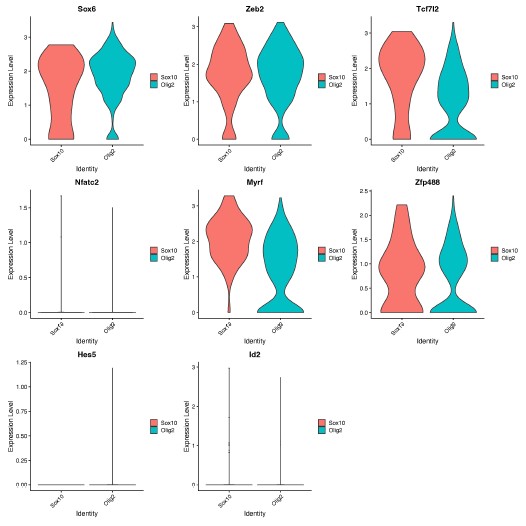
    1. Reviewer #2 (Public review):

      Summary:

      This study provides a library of RNA sequencing analysis from brown fat, liver and white fat of mice treated with two stressors - cold challenge and methionine restriction - alone and in combination (interaction between diet and temperature). They characterize the physiologic response of the mice to the stressors, including effects on weight, food intake and metabolism. This paper provides evidence that while both stressors increase energy expenditure, there are complex tissue-specific responses in gene expression, with additive, synergistic and antagonistic responses seen in different tissues.

      Strengths:

      The study design and implementation is solid and well-controlled. Their writing is clear and concise. The authors do an admirable job of distilling the complex transcriptome data into digestible information for presentation in the paper. Most importantly, they do not over reach in their interpretation of their genomic data, keeping their conclusions appropriately tied to the data presented. The discussion is well thought out addresses some interesting points raised by their results.

      Weaknesses:

      The major weakness of the paper is the almost complete reliance on RNA sequencing data, but it is presented as a transcriptomic resource.

    2. Author response:

      The following is the authors’ response to the original reviews.

      Reviewer #1 (Public review): 

      Summary: 

      Activation of thermogenesis by cold exposure and dietary protein restriction are two lifestyle changes that impact health in humans and lead to weight loss in model organisms - here, in mice. How these affect liver and adipose tissues has not been thoroughly investigated side by side. In mice, the authors show that the responses to methionine restriction and cold exposure are tissue-specific, while the effects on beige adipose are somewhat similar.

      Strengths: 

      The strength of the work is the comparative approach, using transcriptomics and bioinformatic analyses to investigate the tissue-specific impact. The work was performed in mouse models and is state-of-the-art. This represents an important resource for researchers in the field of protein restriction and thermogenesis. 

      Weaknesses: 

      The findings are descriptive, and the conclusions remain associative. The work is limited to mouse physiology, and the human implications have not been investigated yet.

      We thank Reviewer 1 for their thoughtful review and for highlighting the strength of our comparative, tissue-specific analyses. We acknowledge that our study is descriptive and limited to mouse physiology, and agree that translation to humans will be an important next step. By making these data broadly accessible, we aim to provide a useful resource for future mechanistic and translational studies on dietary amino acid restriction and thermogenesis.

      Reviewer #2 (Public review): 

      Summary: 

      This study provides a library of RNA sequencing analysis from brown fat, liver, and white fat of mice treated with two stressors - cold challenge and methionine restriction - alone and in combination (interaction between diet and temperature). They characterize the physiologic response of the mice to the stressors, including effects on weight, food intake, and metabolism. This paper provides evidence that while both stressors increase energy expenditure, there are complex tissue-specific responses in gene expression, with additive, synergistic, and antagonistic responses seen in different tissues.

      Strengths: 

      The study design and implementation are solid and well-controlled. Their writing is clear and concise. The authors do an admirable job of distilling the complex transcriptome data into digestible information for presentation in the paper. Most importantly, they do not overreach in their interpretation of their genomic data, keeping their conclusions appropriately tied to the data presented. The discussion is well thought out and addresses some interesting points raised by their results.

      Weaknesses: 

      The major weakness of the paper is the almost complete reliance on RNA sequencing data, but it is presented as a transcriptomic resource.

      We thank Reviewer 2 for their positive evaluation of our study and for highlighting the strengths of our design, analyses, and interpretation. We acknowledge the limitation of relying primarily on RNA-seq, and emphasize that our intent was to provide a comprehensive transcriptomic resource to guide future mechanistic work by the community.

      Reviewer #3 (Public review): 

      Summary: 

      Ruppert et al. present a well-designed 2×2 factorial study directly comparing methionine restriction (MetR) and cold exposure (CE) across liver, iBAT, iWAT, and eWAT, integrating physiology with tissue-resolved RNA-seq. This approach allows a rigorous assessment of where dietary and environmental stimuli act additively, synergistically, or antagonistically. Physiologically, MetR progressively increases energy expenditure (EE) at 22{degree sign}C and lowers RER, indicating a lipid utilization bias. By contrast, a 24-hour 4 {degree sign}C challenge elevates EE across all groups and eliminates MetR-Ctrl differences. Notably, changes in food intake and activity do not explain the MetR effect at room temperature.

      Strengths: 

      The data convincingly support the central claim: MetR enhances EE and shifts fuel preference to lipids at thermoneutrality, while CE drives robust EE increases regardless of diet and attenuates MetR-driven differences. Transcriptomic analysis reveals tissue-specific responses, with additive signatures in iWAT and CE-dominant effects in iBAT. The inclusion of explicit diet×temperature interaction modeling and GSEA provides a valuable transcriptomic resource for the field.

      Weaknesses: 

      Limitations include the short intervention windows (7 d MetR, 24 h CE), use of male-only cohorts, and reliance on transcriptomics without complementary proteomic, metabolomic, or functional validation. Greater mechanistic depth, especially at the level of WAT thermogenic function, would strengthen the conclusions.

      We thank Reviewer 3 for their thorough review and for recognizing the strengths of our factorial design, physiological assessments, and transcriptomic analyses. We acknowledge the limitations of short intervention windows, male-only cohorts, and the reliance on transcriptomics. Our aim was to generate a well-controlled comparative dataset as a resource, and we agree that future work incorporating longer interventions, both sexes, and additional mechanistic layers will be important to build on these findings.

      Reviewer #1 (Recommendations for the authors): 

      In my opinion, the comparative analysis between tissues and treatments could be expanded.

      We thank the reviewer for this suggestion. We included top30 DEG heatmaps for the comparison MetR_CEvsCtrl_RT for up and downregulated genes in the figures for each tissue. We also provide additional data in the supplementary, including top30 heatmaps for Ctrl_CEvsCtrl_RT, MetR_RTvsCtrl_RT, the interaction term, as well as one excel sheet per tissue for all DEGs (p<0.05 and FC +/- 1.5 and for all gene sets (GSEA).

      Reviewer #3 (Recommendations for the authors): 

      (1) CE robustly increases food intake, yet MetR mice at room temperature, despite elevated EE, do not appear to increase feeding to maintain energy balance. The authors should discuss this discrepancy, as it represents an intriguing avenue for follow-up.

      See answer below.

      (2) CE raises EE to ~0.9 kcal/h irrespective of diet, suggesting that the additive weight loss seen with MetR+CE (Fig. 1H) must be due to reduced intake. This raises the possibility that MetR mice fail to appropriately sense negative energy balance, even under CE, and do not compensate with higher feeding. 

      We thank the reviewer for comments 1 and 2. We did not put an emphasis on this finding, as the literature on the effects on food intake under sulfur amino acid restriction are very inconsistent. Intial studies (e.g. by Gettys group) most often report on food intake per gram bodyweight and report an increase in caloric intake. We think that this reporting is flawed and should rather be reported as cumulative food intake. The recent paper by the Dixit group also reports that there is no effect on food intake, in line with our data. The recent paper by the Nudler group reports a decrease in food intake.

      (3) Report effect sizes and sample sizes alongside p-values in all figure panels, and ensure the GEO accession (currently listed as "GSEXXXXXX") is provided.

      We thank the reviewer for noticing this. So far we were unable to upload the datasets to GEO. We’re unable to connect to the NIH servers, presumably due to the US government shutdown. We are commited to sharing this dataset as soon as possible and will update the manuscript in the future accordingly. We included the sample size for experiment 1 and 2 in the figure legends and described our outlier detection method in the methods section. Significances are explained in the figure legends.

      (4) Explicitly define the criteria for "additive," "synergistic," and "antagonistic" interactions (both at the gene and pathway levels) to help readers align the text with the figures.

      We thank the reviewer for this helpful comment. We added an description of how we defined and computed the regulatory logic in the method section.

      (5) Revise the introduction to address recent data from the Dixit group (ref. #38), which shows that EE induced by cysteine restriction and weight loss is independent of FGF21 and UCP1. As written, the introduction states: "Recent studies have shown that DIT via dietary MetR augments energy expenditure in a UCP1-dependent...fashion". 

      See answer below.

      (6) "Mechanistically, MetR...results in secretion of FGF21. In turn, FGF21 augments EE by activating UCP1-driven thermogenesis in brown adipose tissue via β-adrenergic signaling (4,7)." This should be updated for accuracy and balance.

      We thank the reviewers for both comments 5 and 6. Both recent publications by the Dixit and the Nudler groups (now ref 9 and 10) provide very interesting further mechanistic detail into the bodyweight loss in response to dietary sulfur amino acid restriction. However, there are also older papers by the Gettys group that in part contradict their findings, particularly, when it comes to the importance of UCP1 for the adaptation to sulfur amino acid restriction. Overall, we think that further work is required to determine the importance of UCP1-driven EE from alternative mechanisms that ultimately drive body and fat mass loss. We rewrote the referenced paragraph in the introduction to reflect this.

    1. Another error beginners often make is to drop in a quote without any context

      This part explains clearly why dropping quotes without context makes writing confusing. I used to think that adding a citation was enough, but readers need to know who the author is, why their idea matters, and how it supports my argument. The example in this section shows how a quote can feel “ghostly” if it appears suddenly. This reminds me to always introduce and explain every quote I use.

    2. Combine research findings from multiple sources to make a larger summary argument. You might find that none of the sources you’re working with specifically claim that early 20th century British literature was preoccupied with changing gender roles but that, together, their findings all point to that broader conclusion. Combine research findings from multiple sources to make a claim about their implications. You might review papers that explore various factors shaping voting behavior to argue that a particular voting-reform proposal will likely have positive impacts. Identify underlying areas of agreement. You may argue that the literature on cancer and the literature on violence both describe the unrecognized importance of prevention and early intervention in order to claim that insights about one set of problems may be useful for the other. Identify underlying areas of disagreement. You may find that the controversies surrounding educational reform—and its debates about accountability, curricula, school funding—ultimately stem from different assumptions about the role of schools in society. Identify unanswered questions. Perhaps you review studies of the genetic and behavioral contributors to diabetes in order to highlight unknown factors and argue for more in-depth research on the role of the environment.

      Before reading this chapter, I didn’t realize there were so many ways to develop an original thesis using sources. I used to think my only job was to agree or disagree with one article. This list helps me see that I can combine studies, look for patterns, or point out unanswered questions. It gives me more creative options for building my own argument instead of just repeating what sources say.

    1. K-12 school districts are starting to not just adopt, but to focus on teaching teachers how to effectively use OER in ways that improve student learning. Content partners like Open Up Resources have joined forces with OER publishers to produce openly licensed, full-course curriculum that school districts throughout the United States can adopt and adapt to local contexts. At the same time, organizations like UnboundEd, Gooru Learning, and ISKME are working on professional development opportunities with teachers. This excellent work has been bolstered by support from the U.S. Department of Education’s #GoOpen project, which has seen over 100 districts and 20 states make commitments to begin using OER.

      This paragraph highlights how K–12 schools in the U.S. are moving beyond simply adopting OER to actively training teachers to use them effectively. It also shows how collaborations between OER creators and organizations support the development of full-course, openly licensed curricula. The #GoOpen initiative demonstrates strong institutional support, helping districts commit to OER use and professional development.

      LiDA101

    1. Reviewer #2 (Public review):

      Summary:

      This study aims to test the hypothesis that microsaccades are linked to the shifting of spatial attention, rather than the maintenance of attention at the cued location. In two experiments, participants were required to judge an orientation change at either a validly cued location (80% of the time) or an invalidly cued location (20% of the time). This change was presented at varying intervals (ranging from 500 to 3,200 ms) after cue onset. Accuracy and reaction times both showed attentional benefits at the valid versus invalid location across the different cue-target intervals. In contrast, microsaccade biases were time-dependent. The authors report a directional bias primarily observed around 400 ms after the cue, with later intervals (particularly in Experiment 2) exhibiting no biases in microsaccade direction towards the cued location. The authors argue that this finding supports their initial hypothesis that microsaccade biases reflect shifts in attention, but that maintaining attention at the cued location after an attention shift is not correlated with microsaccade direction.

      Strengths:

      The results are straightforward given the chosen experimental design. The manuscript is clearly written, and the presentation of the study and its visualisations are both of a high standard.

      Weaknesses:

      The major weakness of this paper is its incremental contribution to a widely studied phenomenon. The link between attention and microsaccades has been the subject of extensive research over the past two decades. This study merely provides a limited overview of the key insights gained from these papers and discussions. In fact, it attempts to summarise previous work by stating that many experiments found a link, while others did not, and provides only a relatively small number of references. To make a significant contribution, I believe the authors should evaluate the field more thoroughly, rather than merely scratching the surface.

      The authors then present a potential solution to the conflicting past findings, arguing that attention should be considered a dynamic process that can be broken down into an attention shift and a sustained attention phase. Although the authors present this as a novel concept, I cannot think of anyone in the field who considers spatial attention to be a static entity. Nevertheless, I was curious to see how the authors would attempt to determine the precise timing of the attention shift and manipulate the different stages individually. However, the authors only varied the interval between the onset of the attention cue and the test stimulus, failing to further pinpoint their dynamic attention concept.

      The current version of the experiment, therefore, takes a correlational approach, similar to initial studies by Engbert and Kliegl (2003) and Hafed and Clark (2002). Meanwhile, we have learned a great deal about the link between microsaccades and attention. Below, I will list just a few of these findings to demonstrate how much we already know. It is important to note that, while the present study cites some of these papers, it does not provide a clear overview of how the current study goes beyond previous research.

      (1) Yuval-Greenberg and colleagues (2014) presented stimuli contingent on online-detected microsaccades. A postcue indicated the target for a visual task, and the target could be congruent or incongruent with the microsaccade direction. The authors showed higher visual accuracy in congruent trials. The authors cited that paper, but it is still important to emphasize how this study already tried to go beyond purely correlational links on a single trial level.

      (2) The Desimone lab (Lower et al., 2018) showed that firing rates in monkey V4 and IT were increased when a microsaccade was generated in the direction of the attended target.

      (3) However, attention can modulate responses in the superior colliculus even in the absence of microsaccades (Yu et al., 2022)

      (4) Similarly, Poletti, Rucci & Carrasco (2017) observed attentional modulations in the absence of microsaccades, or comparable attention effects irrespective of whether a microsaccade occurred or not (Roberts & Carrasco, 2019).

      Thus, in light of these insights, I believe the current study only adds incrementally to our understanding of the link between microsaccades and spatial attention.

      In general, it is important to have an independent measure of the dynamics of an attention shift. I think a shift of 200-600 ms is quite long, and defining this interval is rather arbitrary. Why consider such a long delay as the shift? Rather than taking a data-driven approach to defining an interval for an attention shift, it would be more convincing to derive an interval of interest based on past research or an independent measure.

      The present analyses report microsaccade statistics across all trials, but do not directly link single-trial microsaccades to accuracy. Similarly, reaction times and accuracy were analyzed only with respect to valid vs. invalid trials. Here, it would be important to link the findings between microsaccades and performance on a single-trial level. For instance, can the authors report reaction times and accuracy also separately for trials with vs. without microsaccades, and for trials with congruent vs. incongruent microsaccades?

      The study would benefit greatly from including a neutral condition to substantiate claims of attentional benefits and costs. It is highly probable that invalid trials would also demonstrate costs in terms of reaction times and accuracy. It would be interesting to observe whether directional biases in microsaccades are also evident when compared to a neutral condition.

    2. Author response:

      We wish to thank the reviewers and the editors for their careful evaluation of our article and for their valuable input that we will embrace to strengthen our article. We will still respond in full when we have had time to perform further analyses, which we anticipate will corroborate our main conclusions and make our article more comprehensive. 

      For now, we provide a provisional response to the major points brought forward by both the editorial summary and the public reviews. As we understood, the two main points that were raised regard: (1) the novelty and, accordingly, the theoretical importance of our work and (2) the (in)completeness of our results. We provide our provisional response to both of these points below.

      Novelty and theoretical relevance of the work

      Regarding the novelty of our work, we believe the reviews—and, by extension, the editorial summary— underappreciated the main theoretical value of the question we addressed. Our work set out to investigate whether microsaccades track covert attentional shifting, attentional maintenance, or both. We fully recognise that there are ample prior studies that investigated and reported a link between microsaccades and covert attention, but also underscore how other studies report seemingly contradicting evidence by reporting that there is no such link. One such example is a recent high profile paper by Willett & Mayo in PNAS (2023). Prompted by the recent hypothesis that this seemingly conflicting evidence may be due to prior work investigating attention ‘in di erent stages’ (van Ede, PNAS, 2023), we set out to address precisely this using a dedicated task that we designed for this purpose. As acknowledged by the summary and public reviews, this helps to reconcile seemingly opposing views in the literature. In our view, such reconciliation has substantial theoretical value.

      While we appreciate that our reported insights may resonate and appear plausible to those working on this topic, we are not aware of any prior studies that directly addressed whether the link between covert attention and microsaccades may fundamentally depend on the ‘stage’ of attentional deployment (‘shift’ vs. ‘maintain’). 

      To fill this key gap and address this timely issue, we developed a dedicated experiment designed to evaluate the relationship between microsaccades and the di erent stages of attention within a single paradigm. We did so by varying the cue-target intervals to uniquely incentivise early shifting (by having short intervals), while also being able to assess microsaccade biases during subsequent maintenance (in the longer trials). To our knowledge, no previous task has jointly examined these components in this manner. Moreover, our inclusion of two widely adopted approaches to fixational control provides yet another source of novelty. Together, we believe that these features position our work as a substantive advance that reconciles seemingly opposing theoretical views.

      Completeness of results

      Regarding the completeness of our results, the editorial summary points to “the absence of independent measures, single-trial analyses, and neutral-condition controls needed to substantiate the central claims”. In our view, while the raised points are valuable, they pertain to issues that are tangential to our primary question and stem from misunderstandings of key analytical choices. We consider our results complete and comprehensive with regards to the main question our studies set out to answer. We briefly clarify each of the raised points below, and will respond more elaborately as part of our forthcoming revision.

      First, regarding the portrayed “need” for independent measures to define the ‘shift window’ of interest, we wish to clarify how our main analysis is completely agnostic to predetermined time windows, as we employ a cluster-based permutation approach to assess our rich time-resolved data across the full time axis. For the complementary analyses that address the ‘shift’ and ‘maintain’ windows more directly, we use a priori defined windows that are based on ample prior literature (from prior literature studying microsaccade biases, as well as from prior literature on the time course of top-down attention as studied through SOA manipulations). Accordingly, even these ‘zoomed in’ analyses rely on time windows that are empirically grounded in ample prior research. 

      Second, regarding the use of single-trial analyses, we want to emphasise that single-trial predictability is not where our theoretical question resides. We start from the perspective that the relationship between covert visual-spatial attention and microsaccades is inherently probabilistic. Our aim is not to address or question this. Rather, our aim is to determine whether this probabilistic relationship behaves similarly during attentional shifting and maintenance—an issue our analyses directly and appropriately address. In addition, we also explicitly discuss how the link between microsaccades and attention is fundamentally probabilistic at the single-trial level in our discussion, and prompted by the valuable feedback, we plan to expand on this important contextualisation as part of our revision.

      Finally, regarding the portrayed “need” for a neural-attention control condition, we agree that inclusion of a neutral attention condition could be informative for disentangling the ‘benefits’ versus ‘costs’ of attentional cueing. However, such disambiguation is tangential to our central aim. Rather, our behavioural data primarily serve to verify attentional ‘allocation’ at later cue-target intervals. Observing a di erence between valid and invalid cues su          ices for this central aim. We also note how inclusion of a neutral condition would have reduced trial-numbers and statistical power for our critical conditions of interest. Accordingly, we do not see this as a limitation that in any way challenges our main conclusions. Prompted by this reflection, during our revision we will ensure to not mention selective ‘benefits’ or ‘costs’ of our cueing manipulation, but to refer to ‘the presence of an attentional modulation’ instead. 

      Therefore, we believe that the explicit design and analysis choices that we made aligned with the theoretical aims of our study, and that our data provide a complete and coherent test of our central question. The raised points are valuable and we will leverage them to improve our article, but they do not render our findings “incomplete” (as currently portrayed) with regards to the key goal of our article.

      Future changes

      Naturally, we consider the feedback from the editors and the reviewers of great value, and we will incorporate their suggestions to further strengthen our article. Concretely, we plan to implement the following revisions:

      • In our introduction we plan to elaborate on the prior state of knowledge to provide a more complete context.

      • We plan to add precise clarifications throughout the paper, ranging from methodological details and methodological choices to interpretation of the results. This should increase the comprehensiveness and transparency of our article.

      •  We will run and incorporate the outcomes of various additional analyses that we anticipate will further substantiate our conclusions and provide a more comprehensive view of our data and key findings.

      We are confident that these revisions will enhance clarity and accessibility while reinforcing the theoretical contributions of the work.

      References

      Willett, S. M., & Mayo, P. J. (2023). Microsaccades are directed toward the midpoint between targets in a variably cued attention task. Proceedings of the National Academy of Sciences of the United States of America, 120(20). https://doi.org/10.1073/pnas.2220552120

    1. Material hope is one element of the critical hope that teachers can cultivate in their students, and it comes from the sense of control young people have when they are given the resources to “deal with the forces that affect their lives” (Syme, 2004, p. 3). It seems like a simple point, but teachers who want to build material hope must understand that quality teaching is the most signifi-cant “material” resource they have to offer youth. The best of the research in our field defines “quality” in teaching by our ability to produce student growth across assessment measures (grades, social development, test scores, student engagement, etc.). To accomplish this, we have to bust the false binary that suggests we must choose between an academically rigorous pedagogy and one geared toward social justice.

      The discussion of Material Hope and the importance of teaching and teaching quality to its success are among the most significant points made by the author. The dedication of the teacher and the ability of the teacher to relate a topic or subject to the student on that student's level are critical to education, especially for students that feel alienated to the system. Dedication and a true desire to help the student is essential if a teacher wants to connect with the student on a personal level. Students can always detect and respond positively to a caring and passionate teacher. In the end, a teacher is only a guide, and a great teacher is one who can motivate the student to take control of their own development.

    2. At the end of the day, effective teaching depends most heavily on one thing: deep and caring relationships.

      This one sentence sums up my belief in effective teaching. The idea of developing deep and caring relationships between a teacher and their students sound simple but is actuallt very complex. On the surface, this sounds like it is primarily an emotional relationship - one in which the student and teacher care about and like one another. In fact, for a teacher to demonstrate a deeply caring attitude means that that teacher needs to invest the time and effort to ensure that the student learns and develops the lessons of the classroom and the lessons of life. Caring about your students means you are not satisfied unless your students mature and develop to fulfill their potential.

    3. Obama has given us license to reinsert hope into the mainstream educational discourse. He has called for a “radical transformation” of urban schools, plac-ing emphasis on the “recruitment and training of transformative principals and more effective teachers”

      While this new sense of hope is necessary, the changes one looks for will only be possible if people are willing to commit to the necessary work. Changes within the educational system are possible, but not as quickly as we'd like. Only through continuous attempts and constant hope can the possibility of change become a reality. One must not lose hope when it doesn't happen when we want, we need to understand it is a slow process that will eventually come to fruition.

    4. The idea that hope alone will transform the world, and action undertaken in that kind of naïveté, is an excellent route to hopelessness, pessimism, and fatal-ism. But the attempt to do without hope, in the struggle to improve the world, as if that struggle could be reduced to calculated acts alone, or a purely scientific approach, is a frivolous illusion.

      This quote is very powerful. It is true, hope aloe will not produce change. Attempting to create change without having hope of its possibility is also pointless. But, both together are powerful and form the first step to actually achieving change. A lot of people know that there are issues within the education system that have to be changes and are willing to do the work but lack confidence in the possibility of change. When people have hope it pushes them more to achieve their goal. It's not only about knowing what to do, or only having the confidence, it's about what is possible with both together.

    1. Reviewer #1 (Public review):

      Summary:

      The authors report intracranial EEG findings from 12 epilepsy patients performing an associative recognition memory task under the influence of scopolamine. They show that scopolamine administered before encoding disrupts hippocampal theta phenomena and reduces memory performance, and that scopolamine administered after encoding but before retrieval impairs hippocampal theta phenomena (theta power, theta phase reset) and neural reinstatement but does not impair memory performance. This is an important study with exciting, novel results and translational implications. The manuscript is well-written, the analyses are thorough and comprehensive, and the results seem robust.

      Strengths:

      (1) Very rare experimental design (intracranial neural recordings in humans coupled with pharmacological intervention).

      (2) Extensive analysis of different theta phenomena.

      (3) Well-established task with different conditions for familiarity versus recollection.

      (4) Clear presentation of findings and excellent figures.

      (5) Translational implications for diseases with cholinergic dysfunction (e.g., AD).

      (6) Findings challenge existing memory models, and the discussion presents interesting novel ideas.

      Weaknesses:

      (1) One of the most important results is the lack of memory impairment when scopolamine is administered after encoding but before retrieval (scopolamine block 2). The effect goes in the same direction as for scopolamine during encoding (p = 0.15). Could it be that this null effect is simply due to reduced statistical power (12 subjects with only one block per subject, while there are two blocks per subject for the condition with scopolamine during encoding), which may become significant with more patients? Is there actually an interaction effect indicating that memory impairment is significantly stronger when scopolamine is applied before encoding (Figure 1d)? Similar questions apply to familiarity versus recollection (lines 78-80). This is a very critical point that could alter major conclusions from this study, so more discussion/analysis of these aspects is needed. If there are no interaction effects, then the statements in lines 84-86 (and elsewhere) should be toned down.

      (2) Further, could it simply be that scopolamine hadn't reached its major impact during retrieval after administration in block 2? Figure 2e speaks in favor of this possibility. I believe this is a critical limitation of the experimental design that should be discussed.

      (3) It is not totally clear to me why slow theta was excluded from the reinstatement analysis. For example, despite an overall reduction in theta power, relative patterns may have been retained between encoding and recall. What are the results when using 1-128 Hz as input frequencies?

      (4) In what way are the results affected by epileptic artifacts occurring during the task (in particular, IEDs)?

    2. Author response:

      Reviewer #1 (Public review):

      Summary:

      The authors report intracranial EEG findings from 12 epilepsy patients performing an associative recognition memory task under the influence of scopolamine. They show that scopolamine administered before encoding disrupts hippocampal theta phenomena and reduces memory performance, and that scopolamine administered after encoding but before retrieval impairs hippocampal theta phenomena (theta power, theta phase reset) and neural reinstatement but does not impair memory performance. This is an important study with exciting, novel results and translational implications. The manuscript is well-written, the analyses are thorough and comprehensive, and the results seem robust.

      Strengths:

      (1) Very rare experimental design (intracranial neural recordings in humans coupled with pharmacological intervention).

      (2) Extensive analysis of different theta phenomena.

      (3) Well-established task with different conditions for familiarity versus recollection.

      (4) Clear presentation of findings and excellent figures.

      (5) Translational implications for diseases with cholinergic dysfunction (e.g., AD).

      (6) Findings challenge existing memory models, and the discussion presents interesting novel ideas.

      Weaknesses:

      (1) One of the most important results is the lack of memory impairment when scopolamine is administered after encoding but before retrieval (scopolamine block 2). The effect goes in the same direction as for scopolamine during encoding (p = 0.15). Could it be that this null effect is simply due to reduced statistical power (12 subjects with only one block per subject, while there are two blocks per subject for the condition with scopolamine during encoding), which may become significant with more patients? Is there actually an interaction effect indicating that memory impairment is significantly stronger when scopolamine is applied before encoding (Figure 1d)? Similar questions apply to familiarity versus recollection (lines 78-80). This is a very critical point that could alter major conclusions from this study, so more discussion/analysis of these aspects is needed. If there are no interaction effects, then the statements in lines 84-86 (and elsewhere) should be toned down.

      The reviewer highlights important concerns regarding the statistical power of the behavioral effects. We address these concerns in the revised manuscript in two ways: (1) we provide a supplemental analysis using a matched number of blocks between the placebo and scopolamine conditions to avoid statistical bias related to differing trial counts, and (2) we include a supplemental figure illustrating paired comparisons between blocks.

      (2) Further, could it simply be that scopolamine hadn't reached its major impact during retrieval after administration in block 2? Figure 2e speaks in favor of this possibility. I believe this is a critical limitation of the experimental design that should be discussed.

      The reviewer raises an important methodological concern regarding the time required for scopolamine's effect to manifest and the subsequent impact on the study outcomes. Previous studies report that the average time to maximum serum concentration after intravenous (IV) scopolamine administration is approximately 5 minutes (Renner et al., 2005), with the corresponding clinical onset estimated at 10 minutes. In our study, the retrieval period in Block 2 commenced at 15 ± 0.2 post-injection across all subjects. Given this timing, there is sufficient reason to conclude that scopolamine had reached its major impact during the Block 2 retrieval phase. Furthermore, the observation of significant disruptions to theta oscillations during this same retrieval phase provides strong evidence that the drug was in full effect at that time.

      (3) It is not totally clear to me why slow theta was excluded from the reinstatement analysis. For example, despite an overall reduction in theta power, relative patterns may have been retained between encoding and recall. What are the results when using 1-128 Hz as input frequencies?

      Slow theta (2–4 Hz) was excluded from the reinstatement analysis to avoid potential confounding effects. Given the observed disruption to slow theta power following scopolamine administration, any subsequent changes in slow theta reinstatement would be causally ambiguous, potentially arising directly from the power effects. Therefore, we would be unable to determine whether changes in slow theta reinstatement were genuinely independent of changes in power.

      (4) In what way are the results affected by epileptic artifacts occurring during the task (in particular, IEDs)?

      To exclude abnormal events and interictal activity, a kurtosis threshold of 4 was applied to each trial, effectively filtering out segments exhibiting significant epileptic artifacts.

      Reviewer #2 (Public review):

      Summary:

      In this study, performed in human patients, the authors aimed at dissecting out the role of cholinergic modulation in different types of memory (recollection-based vs familiarity and novelty-based) and during different memory phases (encoding and retrieval). Moreover, their goal was to obtain the electrophysiological signature of cholinergic modulation on network activity of the hippocampus and the entorhinal cortex.

      Strengths:

      The authors combined cognitive tasks and intracranial EEG recordings in neurosurgical epilepsy patients. The study confirms previous evidence regarding the deleterious effects of scopolamine, a muscarinic acetylcholine receptor antagonist, on memory performance when administered prior to the encoding phase of the task. During both encoding and retrieval phases, scopolamine disrupts the power of theta oscillations in terms of amplitude and phase synchronization. These results raise the question of the role of theta oscillations during retrieval and the meaning of scopolamine's effect on retrieval-associated theta rhythm without cognitive changes. The authors clearly discussed this issue in the discussion session. A major point is the finding that the scopolamine-mediated effect is selective for recollection-based memory and not for familiarity- and novelty-based memory.

      The methodology used is powerful, and the data underwent a detailed and rigorous analysis.

      Weaknesses:

      A limited cohort of patients; the age of the patients is not specified in the table.

      To comply with human subject privacy protection policies, age was not reported; however, we did not find any significant effects of age on the behavioral or neural measures.

    1. Joint Public Review:

      Summary

      Non-alcoholic fatty liver disease (NAFLD) is a widespread metabolic disease associated with obesity. Endoplasmic reticulum and calcium dysregulation are hallmarks of NAFLD. Here, the authors explore whether the secreted liver protein transthyretin (TTR), which has been previously shown to modulate calcium signaling in the context of insulin resistance, could also impact NAFLD. The study is motivated by a small cohort of NASH patients who show elevated TTR levels. The authors then overexpress TTR in two mouse obesogenic models, which leads to elevated liver lipid deposition. In contrast, liver-specific TTR knockdown improves some liver lipid levels, reduces inflammation markers, and improves glucose tolerance, overall improving the NAFLD markers. These phenotypic findings are overall convincing and largely consistent in two different diet models.

      Because of TTR's connection to calcium regulation, the authors then assess whether the knockdown affects ER stress and impacts SERCA2 expression. However, the direct mechanistic evidence supporting the central claim that TTR physically interacts with and inhibits the SERCA2 calcium pump is preliminary and requires further validation. Whether the broader effects on lipid accumulation, inflammation markers, and glucose tolerance are mechanistically connected remains to be determined.

      Strengths

      The premise of the study is built on prior work from the authors identifying a link between increased transthyretin secretion and the development of insulin resistance, a related obesity condition. The in vivo studies are comprehensive, using human NASH samples, two distinct diet-induced mouse models (HFD and GAN), and in vitro hepatocyte models. The phenotypic data showing that TTR knockdown alleviates steatosis, inflammation, and insulin resistance are robust and convincing across these systems.

      Weaknesses

      The mechanistic studies in Figures 6-9 are incomplete. There are several issues encompassing experimental design, rigor, and interpretation that, if properly addressed, would make the study much stronger.

      (1) Exogenous TTR that is endocytosed by cells is unlikely to ever find itself inside the lumen of the ER. Conversely, endogenous TTR that is produced in cells and that has not yet been secreted is almost certain to have an ER lumenal localization (as in Figures 7B and 9A, and where an apparent colocalization with SERCA is likely to be incidental). In a model where TTR, acting as a hepatokine, has inhibitory effects on SERCA, these would almost certainly be realized from the cytosolic side of the ER membrane-a region inaccessible to lumenal endogenous TTR. It is possible that the overexpression and knockdown of endogenous TTR have the effects seen due to its secretion and uptake (that is, cell-non-autonomous effects), but this possibility was not directly tested through Transwell or similar assays. Given the identity of TTR as a secretory pathway client protein, the only localization data for TTR that are unexpected are those suggesting an ER localization of exogenously added TTR (Figure 7A), but this localization seems to involve only a minor population of TTR, is hindered by a technical issue with cell permeabilization (see below), and lacks orthogonal approaches to convincingly demonstrate meaningful localization of exogenous TTR at the ER membrane.

      (2) The experimental logic in Figure 8 is problematic. The authors use Thapsigargin (Tg), a potent and specific SERCA inhibitor, to probe SERCA function. However, since both Tg and TTR are proposed to inhibit SERCA2, the design lacks a critical control to demonstrate that TTR's effects are indeed mediated through SERCA2. SERCA2 activity should, in principle, be fully and irreversibly inhibited by Tg treatment, especially using such a high concentration (5 µM). If TTR's effect on calcium flux is exclusively through SERCA2, then SERCA2 impairment by TTR should have no additional effect in the presence of Tg, as Tg would already be maximally inhibiting the pump. The current data (Figures 8G-H) showing an effect of TTR-KD even with Tg present is difficult to interpret and may suggest off-target or compensatory mechanisms.

      (3) The coIP data in Figure 9 need to be better controlled, including by overexpression of FLAG- and MYC-tagged irrelevant proteins, ideally also localized to the ER. The coIP of overexpressed TTR with endogenous SERCA in Figure 9D, in addition to requiring a more rigorous control, is itself of relatively low quality, with the appearance of a possible gel/blotting artifact.

      (4) The ER stress markers in Figure 6 are not convincing. Molecular weight markers and positive controls (for example, livers from animals injected with tunicamycin) are missing. In addition, the species of ATF6 that is purportedly being detected (cleaved or full-length) is not indicated, and this protein is also notoriously difficult to detect with convincing specificity in mouse tissues. As well, CHOP protein is usually not detectable in control normal diet mouse livers, raising questions of whether the band identified as CHOP is, in fact, CHOP. These issues, along with the observation that ER stress-regulated RNAs are not altered (Figure S5), raise the question of whether ER stress is involved at all. Likewise, the quantification of SERCA2 levels from Figure 6 requires more rigor. For all blots, it isn't clear that analyzing only 3 or 4 of the animals provides adequate and unbiased power to detect differences; in addition, in Figure 6C, at least the SERCA2 exposure (assuming SERCA2 is being specifically detected; see above) is well beyond the linear range of quantification.

      In addition, the following important issues were raised:

      (5) n=4 for overexpression might not provide adequate statistical power.

      (6) The error for human NASH samples and controls in Figure 1A is surprisingly small. Larger gene expression data sets from NASH cohorts exist and should be used to test the finding in a larger population.

      (7) For experiments involving two independent variables (e.g., diet and TTR manipulation, as in Figures 2, 3, 4, 5), a Two-way ANOVA must be used instead of One-way ANOVA or t-tests. Also, the ND-TTR-KD group is missing - these data are an essential control to show the specificity of the knockdown and its effects in a non-diseased state.

      (8) Figure 7A: The co-localization signal between TTR-Alexa488 and the ER marker is not strong or convincing, which could be due to the inappropriate immunofluorescence protocol used, of permeabilization prior to fixation. The standard and recommended order is fixation first (to preserve cellular architecture), followed by permeabilization.

    1. You may have heard that “knowledge is power,” or that information, the raw material of knowledge, is power. But the truth is that only some information is power: reliable information.

      This statement challenges the common idea that all information leads to power. It highlights an important distinction: only reliable, verified, and accurate information creates real power. Unreliable or unchecked information can actually mislead learners and weaken decision-making. The author is emphasizing the need for critical evaluation rather than assuming all information is equally valuable.

      LiDA101

    1. a) assign bus and rooming lists yourself; (b) if you want students to sign up themselves, require students to have representatives from different groups (sections, classes, etc.); or (c) if you are on a longer trip, have a different rooming list every night.

      I’ve never thought about trips like that. Some of them I can see a practical use for like assigning bus and rooming lists yourself but in my opinion switching the rooms every night might be a little more trouble than what it’s worth.

    2. His daily routine is coming into the classroom and taking his shoes off because the material sometimes irritates him. His teacher encourages him to leave them on at all times, but we have an agreement that he leaves them near the door in case he needs to put them on quickly. We have also discussed that if he chooses to slide around the room in his socks, he will have to put his shoes back on.

      I wonder what other accommodations Carson has in his class besides just the shoes. I also wonder if he has enough accommodations after reading the next paragraph. It seems like he might have a hyper sensitivity that is not being addressed.

    1. Influencer Brendan Ruh said, “I don’t like AI music there’s enough real artists out there to listen to and I like personality behind the music. Like it can sound cool it’s interesting but not as good as normal music.”

      Direct quote

    1. Writing is more than producing grammatically correct, coherently structured sentences; it requires developing cognitive abilities, such as critical thinking, argument construction, and independent reasoning. Traditional instruction encourages students to practice these skills over time, reinforcing long-term retention by incorporating exercises, discussions, and feedback loops [21]. AI provides students with a polished product, but it does not require them to engage fully in the writing and learning process. Although AI enhances short-term writing proficiency, it does not foster long-term retention of writing skills to the same extent as traditional instruction [32].

      AI cannot do the most important parts of writing

    2. AI writing tools provide polished, well-structured responses but often lack genuine insight, critical analysis, and the writer’s unique voice.

      AI's lack of creativity

    1. That is, while nobody remains under the effects ofPuck’s potions, nobody is returned to the preciseposition he or she formerly occupied. Homosex-uality is not the new standard, but it is accommo-dated in the new understanding of masculinity.

      After the chaos ends, the characters don’t go back to their original, rigidly homophobic attitudes. While the town doesn’t become entirely queer, it becomes more accepting, and masculinity is redefined to allow space for homosexuality

    1. Public Broadcasting Service (PBS) developed out of a report by the Carnegie Commission on Educational Television, which examined the role of educational, noncommercial television on society. The report recommended that the government finance public television in order to provide diversity of programming during the network era—a service created “not to sell products” but to “enhance citizenship and public service.”

      I believe that PBS plays a very important role in providing educational content. I learned so much from PBS programs as a child.

    1. Generative AI used to help plan Tesla Cybertruck explosion outside Trump hotel in Las Vegas, police say

      This article comes out 6 days after the initial explosion but shows a different perspective of the planning of the explosion in relation to an earlier news story posted again by PBS.

    1. While McMahill and others officials only referred to the driver as the “subject” and “person of interest,” they showed a photo of Livelsberger and gave his name at the news conference.

      This is largely important fact within this developing news story at the time. Why would law enforcement show the image of Livelsberger but not identify him with his name?

    2. Livelsberger was an Army Special Forces operations master sergeant, a senior enlisted rank, according to four US officials. He was on active duty in Germany with the 10th Special Forces Group but was on leave at the time of the incident, three officials said.

      This brings in an emotional appeal to humanize the suspect in a way.

    1. Katherine Jellison, a historian at Ohio University and a scholar of first ladies.

      Irie Senter is the author, but Katherine Jellison is interviewed for the story. A historian and scholar of first ladies. This matters because she gives an expert opinion on first ladies and the East Wing's connection and importance to first ladies.

    1. looking into any possible connections to the deadly attack in New Orleans earlier Wednesday but had not yet discovered any.

      Based off the proximity of these two events because they occured very quickly after one another.

    1. But beginning in the 1st century BCE, the kingdom of Aksum (or Axum) emerged during the decline of Ptolemaic Egypt and flourished as a trade center that linked Rome, India, Arabia, and sub-Saharan Africa.

      It’s fascinating that Aksum rose as Ptolemaic Egypt declined and became a major trade hub. I’m really interested in how it connected so many regions across Africa and beyond.

    1. This list has received positive feedback. It seems to have struck a nerve. Sending it to coincide with Monday morning to help folks navigate their week.Take care of yourself. Your brain is working overtime—all the time. Practice “radical” recovery.You may spend a lot longer thinking about things than most people. Pace your delivery.If you go deep first, and then simplify…keep in mind that you don’t need to show all of your work.Your default description of (almost) any problem will be too threatening/overwhelming.Do your deepest thinking with co-conspirators (not the people you’re trying to influence).Informal influence is often not formally recognized. Prepare mentally for this.The people you’re trying to influence spend 98% of their day overwhelmed by business as usual.Remember to also do the job you were hired to do (if you don’t you’ll be easier to discount).Seek “quick wins”, but know that most meaningful things will take a while.Some things take ages to materialize. It is discontinuous, not continuous.Make sure to celebrate your wins. They will be few and far between, so savor the moment.The people who support you in private may not be able to support you in public. Accept that.Hack existing power structures—it’s much easier than trying to change them.Consider becoming a formal leader. It’s harder in many ways, but you’ll have more leverage. What’s stopping you?In lieu of being a formal leader, make sure to partner with people who actually “own” the area of change.Watch out for imposing your worldview on people. Have you asked about what people care about?.You’ll need a support network. And not just a venting network. Real support.“Know when to fold ‘em”. Listen to Kenny Rogers The Gambler. Leave on your own terms.Don’t confuse being able to sense/see system dynamics, with being about to “control” them. You can’t.Grapple with your demons, and make sure not to wrap up too much of your identity in change.
    1. But the images that emerged this week of construction equipment demolishing the facade have prompted outrage over the lack of oversight of the project and raised questions about its scope.

      This line uses key words to construct the story, stating "prompted outrage" indicates a strong emotional reaction to the news event. "Lack of oversight" suggests that this is occurring with to regard for the interest of the people or preservation.

    1. A 56% majority of Americans oppose the construction of the ballroom, including 45% who "strongly" oppose it, according to the poll taken in October.

      This is framing, the approach of this is to highlight the majority of Americans who oppose, but what is left out is who conducted the poll, where it was conducted and whether that poll has changed more recently, as it was an October poll and this article was published in November.

    1. Other researchers admit that individuals prone to violent acts are indeed drawn to violent media; however, they claim that by keeping these individuals in a movie theater or at home, violent media have actually contributed to a reduction in violent social acts.

      It is important to understand the connection between violent media and real-world violent behavior. It makes sense that video games may be affecting people's emotions and thoughts, but there is likely another factor in a situation like the Columbine shooting.

    1. Simply adding Two-Spirit to the list of LGBTQ fails to fully account for the underlying systems ofpower and knowledge that continue to shape possibilities for solidarity be-tween queer and Indigenous communities.

      This relates to Combahee Collective's (2022) criticism of “add-and-stir” feminism that includes but does not transform systems. Inclusion that ignores power is not decolonization; it is reproducing existing colonial structures.

    2. The term is not intended to mark a singular identity category,but is an indigenously defined pan-Native North American term that refersto a diversity of Indigenous LGBTQ identities, as well as culturally specificnon-binary expressions of gender

      The discussion of Two-Spirit identity deepened my understanding of gender diversity as rooted in specific Indigenous worldviews; not just Western LGBTQ+ frameworks.

    3. taught Sarah about colonialism, social justice, and definitions of communitythat were not rooted in identity politics but in everyday actions.

      When is storytelling decolonial, and when is it simply therapeutic for settlers?

    Annotators

    1. Note: This preprint has been reviewed by subject experts for Review Commons. Content has not been altered except for formatting.

      Learn more at Review Commons


      Referee #2

      Evidence, reproducibility and clarity

      Summary:

      In this manuscript, the authors generate a novel reporter mouse ESC line to track SOX2 and TBXT dynamics in neuromesodermal progenitors. The authors leverage multiple systems (in vitro differentiation, chimeric embryos and gastruloids) to address how SOX2/TBXT levels impact the contribution of neuromesodermal progenitors towards neural versus mesodermal fates. They show that the levels of TBXT can predict differentiation outcomes, whereby certain thresholds of TBXT influence the differentiation towards a mesodermal identity. In gastruloids, perturbing either WNT or NOTCH signalling coincides with diminished axial elongation. In vitro, the bias mediated by TBXT is also somewhat influenced by the substrate.

      Major comments:

      There are some key items to clarify that are important to resolve the interpretation of the results and clarify the main advances for a broader readership.

      With respect to the mESC differentiation into NMPs (using an established protocol from Gouti et al 2014), after Day 3, cells are cultured in conditions where they are exposed to both CHIR and FGF for a further two days. As these extended CHIR/FGF conditions don't appear to be characterised by Gouti et al., 2014, what proportions and progenitors are generated in the dish under these conditions? The loss of SOX2 by day 5 suggests mesodermal progenitors are the main derivatives but further characterization (eg Meox1/Msgn1) would be needed to verify this claim.

      Further validation of the generated derivatives would also be useful in the re-plating experiments (Figure 3) to test whether the double negative cells are transitioning to a mesodermal (eg Meox1/Msgn1) or neural derivative (eg Sox1/Pax6). Similarly, at day 5 and 6 of the differentiation, there appears to be a loss of Sox2 expression in some of the replated cells from the Sox2-positive population (see Figure 3D). Could the authors please clarify whether the double negative cells represent neural progenitors, and/or alternative cell types? Do the replated cells transiently adopt Tbxt? This would be possible by staining with neural (SOX1), or (pre)somitic mesoderm genes (MSGN1,MEOX1) or adjusting the text to reflect the uncertainty.

      At line 172 "The cells posterior to the node expressed only TBXT." Do these cells have low SOX2 expression that is hard to detect? Are these TBXT-positive cells derived from the primitive streak? Would staining with the primitive streak marker TBX6 enable visualization of these distinct cell types, and/or could the authors please label the figure in more detail.

      Could the authors please comment on the design of the reporter system in a bit more detail? For example, please clarify the necessity to generate a TBXT reporter that includes a H2B-GFP, unlike Sox2, which does not include a H2B. Can the authors distinguish between an increase in the threshold of TBXT, versus an increase detected due to the stability of the H2B-GFP? The low versus high TBXT cells may reflect early versus late TBXT expressing cells. Are the changes in TBXT expression (eg Supplementary Figure 2) significantly changed between the low versus high GFP populations? Additionally, why is the level of GFP similar across low and high GFP populations in Sup Fig 2? Could the in vivo data be used to quantify differences in TBXT (similar to what has been shown previously in Ivanovitch et al., 2021 PMID: 33999917)?

      Optional

      • Altering extrinsic cues (such as RA/CHIR) could clarify how reversible the high TBXT state is as cells progress towards mesoderm. Can you redirect the TBXT-high cells to a neural fate or are they already irreversibly committed?
      • Line 283: Flk1 is also expressed in TBXT-low cells. It would be interesting to test whether the TBXT-low cells and the SOX2neg/TBXTpos can generate lateral plate mesoderm or whether this competence to generate lateral plate mesoderm is limited to TBXT-high cells.
      • Line 324: The lack of elongation in gastruloids following the inhibition of WNT/NOTCH is clear. Do the authors expect that the reintroduction of TBXT would rescue axis elongation in the WNT/NOTCH inhibited gastruloids?

      Minor comments:

      Figure 3B - The SOX2+/TBXT- population only shows a moderate level of SOX1 by RT-qPCR. Using pre-neural markers (e.g. NKX1-2) might be helpful here to show progression towards a neural progenitor identity.

      Line 310 - Can you comment on the general efficiency in generating elongating gastruloids compared to WT cells and/or previous literature?

      Line 236 - Add "at constant SOX2 levels" (when comparing orange and yellow populations)

      Figure 5

      Fig5C and E take time to understand. Potentially expanding the figure legend slightly could be helpful to the reader.

      Supplementary Figure 2

      Line 864 - refer to Fig3A

      Line 350 - The link with testing the different substrates is a bit abrupt. Please can you make it clearer by modifying the text to explain the hypothesis being tested here.

      Line 363 - Could you comment in relation to what happens in the embryo to future mesoderm progenitors that seem to have a more motile phenotype compared to neural progenitors (eg Romanos et al 2021 PMID: 34607629)?

      Significance

      In this work, the authors have explored how the dynamics of SOX2/TBXT impact the decision process of neuromesodermal progenitors (NMPs). They have engineered and validated a novel dual fluorescent reporter ESC line to track SOX2 and TBXT. The work combines in vitro, in vivo and modelling approaches to understand how NMPs make decisions - a highly relevant and important question for multiple fields spanning developmental and quantitative biology, and the engineering of cell types in vitro from pluripotent cells. The authors propose a critically important finding: that discrete thresholds of TBXT influence the outcome of NMPs. However, further clarification is required to solidify these claims (discussed above).

      The data generated from this study also suggests that in contrast to Tbxt, the level of Sox2 does not appear to impact the NMP fate decision. While these are interesting and important findings, it is not entirely clear in this version of the manuscript how these advances relate with previous studies that have highlighted critical roles mediated by Sox2 and its level of expression (including the work of Koch et al 2017 - PMID: 28826820 and Blassberg et al PMID: 35550614). We expect that a broader discussion will in turn broaden the general interest and value of the work to a wider readership.

    2. Note: This preprint has been reviewed by subject experts for Review Commons. Content has not been altered except for formatting.

      Learn more at Review Commons


      Referee #1

      Evidence, reproducibility and clarity

      The work of Binagui-Casas, Granes and colleagues, investigates in a rigorous way the origin and potential of murine NMPs. The authors first validated a dual reporter system, which monitors Sox2 and Tbxt expression. Next, they identified the location in the embryo and the sequence of gene activation (Sox2 first, then Tbxt) leading to NMPs specification. Importantly, the in vitro model faithfully mimics the in vivo ontogeny of NMPs. Among Sox2+ NMCs, the authors observed different levels of Tbxt, which they proposed mark different stages of mesoderm maturation, with high Tbxt corresponding to more mature mesodermal state. Through sorting and replating of different populations, the authors convincingly showed that Sox2+/Tbxt-low cells are still bipotent, while Sox2+/Tbxt-high are committed towards the mesoderm lineage. Using a gastruloid model, the authors then showed that Tbxt expression correlates with axis elongation, as both are reduced upon inhibition of either WNT or NOTCH Finally, single-cell sorting followed by differentiation in FGF/CHIR and high throughput microscopy confirmed that double Sox2/Tbxt positive cells behave as NMPs and that high levels of Tbxt predispose cells towards mesoderm differentiation. These conclusions were further supported by mathematical modelling. The manuscript is easy to read, and figures are very clear. I have only minor suggestions, as I find the manuscript quite solid and complete.

      Minor points:

      1. The reporter system is based on stable fluorescent proteins, whose half-life is generally much longer than the endogenous proteins. This could generate a discrepancy between expression of reporters and the endogenous proteins. I find this relevant for Tbxt, as it is very clear that Tbxt reporter levels dictates the differentiation propensity, but I wonder whether, Tbxt low cells actually express TBXT protein or not. It might be the case that only a fraction of Tbxt low cells actually express TBXT protein, or none. It would enough to sort the populations showed in Figure 3A and perform immunostaining for endogenous SOX2 and TBXT. This could reveal even better correlations between their levels and cell behaviour.
      2. In the experiments in which IWP2 and LY411575 are used, I would suggest to asses cell viability, as the two inhibitors could induce toxicity. Staining for cleaved caspase-3 or a TUNEL assay would be enough. It would also be important to confirm that IWP2 blocks WNT signalling (by looking at WNT target genes or staining for active beta-cateinin) and that LY411575 blocks NOTCH signalling.
      3. I would define in the figure legends what the black line in figure 5E represents.

      Referees cross-commenting

      I agree with Reviewer #2 comment about "Further validation of the generated derivatives" by staining for additional markers.

      I also made a comment related to GFP stability, as Reviewer #2 did (i.e. The low versus high TBXT cells may reflect early versus late TBXT expressing cells ).

      Significance

      Overall, the manuscript uses an elegant approach and address an important question about NMPs behaviour. The results presented are an important advance in knowledge of NMP biology. I am confident that both stem cell and developmental biologist would be interested in this manuscript. I am an expert of pluripotency, signaling and models of early mammalian development.

    1. Because she couldn’t exercise, she was struggling to focus in class

      exercise is a common method of coping for people with executive function issues but good job on making it sound like this student didn't deserve these diagnoses.

    2. “When it comes to a disorder like ADHD, we all have those symptoms sometimes,” Lindstrom told me. “But most of us aren’t impaired by them.”

      SCREAMS IN TRAUMATIZED ND RAGE

    3. Having ADHD or anxiety, for example, might make it difficult to focus. But focusing is a skill that the educational system is designed to test.

      YUP, THE AUTHOR DOESN'T KNOW ANYTHING ABOUT ADHD

    1. The medium was able to downplay regional differences and encourage a unified sense of the American lifestyle—a lifestyle that was increasingly driven and defined by consumer purchases. “Americans in the 1920s were the first to wear ready-made, exact-size clothing…to play electric phonographs, to use electric vacuum cleaners, to listen to commercial radio broadcasts, and to drink fresh orange juice year round.”Digital History, “The Formation of Modern American Mass Culture,” The Jazz Age: The American 1920s, 2007, www.digitalhistory.uh.edu/dat...y.cfm?hhid=454(accessed July 15, 2010). This boom in consumerism put its stamp on the 1920s, and, ironically, helped contribute to the Great Depression of the 1930s.

      This is true for certain demographics, but it can't be understated how consumer culture has become synonymous with American culture.

    1. However, during the 19th century, several crucial inventions—the internal combustion engine, steam-powered ships, and railways, among others—led to other innovations across various industries. Suddenly, steam power and machine tools meant that production increased dramatically. But some of the biggest changes coming out of the Industrial Revolution were social in character. An economy based on manufacturing instead of agriculture meant that more people moved to cities, where techniques of mass production led to an emphasis on efficiency both in and out of the factory. Newly urbanized factory laborers no longer had the skill or time to produce their own food, clothing, or supplies and instead turned to consumer goods. Increased production led to increases in wealth, though income inequalities between classes also started to grow as well. Increased wealth and nonrural lifestyles led to the development of entertainment industries.

      Industrialization has forever changed our world. The advancements in technology and changes to labor that resulted from the industrial revolution changed the production and spread of mass media.

    1. Reviewer #1 (Public review):

      Summary:

      The novel advance by Wang et al is in the demonstration that, relative to a standard extinction procedure, the retrieval-extinction procedure more effectively suppresses responses to a conditioned threat stimulus when testing occurs just minutes after extinction. The authors provide solid evidence to show that this "short-term" suppression of responding involves engagement of the dorsolateral prefrontal cortex.

      Strengths:

      Overall, the study is well-designed and the results are valuable. There are, however, a few issues in the way that it is introduced and discussed. It would have been useful if the authors could have more explicitly related the results to a theory - it would help the reader understand why the results should have come out the way that they did. More specific comments are presented below.

      Please note: The authors appear to have responded to my original review twice. It is not clear that they observed the public review that I edited after the first round of revisions. As part of these edits, I removed the entire section titled Clarifications, Elaborations and Edits

      Theory and Interpretation of Results

      (1) It is difficult to appreciate why the first trial of extinction in a standard protocol does NOT produce the retrieval-extinction effect. This applies to the present study as well as others that have purported to show a retrieval-extinction effect. The importance of this point comes through at several places in the paper. E.g., the two groups in study 1 experienced a different interval between the first and second CS extinction trials; and the results varied with this interval: a longer interval (10 min) ultimately resulted in less reinstatement of fear than a shorter interval. Even if the different pattern of results in these two groups was shown/known to imply two different processes, there is nothing in the present study that addresses what those processes might be. That is, while the authors talk about mechanisms of memory updating, there is little in the present study that permits any clear statement about mechanisms of memory. The references to a "short-term memory update" process do not help the reader to understand what is happening in the protocol.

      In reply to this point, the authors cite evidence to suggest that "an isolated presentation of the CS+ seems to be important in preventing the return of fear expression." They then note the following: "It has also been suggested that only when the old memory and new experience (through extinction) can be inferred to have been generated from the same underlying latent cause, the old memory can be successfully modified (Gershman et al., 2017). On the other hand, if the new experiences are believed to be generated by a different latent cause, then the old memory is less likely to be subject to modification. Therefore, the way the 1st and 2nd CS are temporally organized (retrieval-extinction or standard extinction) might affect how the latent cause is inferred and lead to different levels of fear expression from a theoretical perspective." This merely begs the question: why might an isolated presentation of the CS+ result in the subsequent extinction experiences being allocated to the same memory state as the initial conditioning experiences?<br /> This is not addressed in the paper. The study was not designed to address this question; and that the question did not need to be addressed for the set of results to be interesting. However, understanding how and why the retrieval-extinction protocol produces the effects that it does in the long-term test of fear expression would greatly inform our understanding of how and why the retrieval-extinction protocol has the effects that it does in the short-term tests of fear expression. To be clear; the results of the present study are very interesting - there is no denying that. I am not asking the authors to change anything in response to this point. It simply stands as a comment on the work that has been done in this paper and the area of research more generally.

      (2) The discussion of memory suppression is potentially interesting but raises many questions. That is, memory suppression is invoked to explain a particular pattern of results but I, as the reader, have no sense of why a fear memory would be better suppressed shortly after the retrieval-extinction protocol compared to the standard extinction protocol; and why this suppression is NOT specific to the cue that had been subjected to the retrieval-extinction protocol. I accept that the present study was not intended to examine aspects of memory suppression, and that it is a hypothesis proposed to explain the results collected in this study. I am not asking the authors to change anything in response to this point. Again, it simply stands as a comment on the work that has been done in this paper.

      (3) The authors have inserted the following text in the revised manuscript: "It should be noted that while our long-term amnesia results were consistent with the fear memory reconsolidation literatures, there were also studies that failed to observe fear prevention (Chalkia, Schroyens, et al., 2020; Chalkia, Van Oudenhove, et al., 2020; Schroyens et al., 2023). Although the memory reconsolidation framework provides a viable explanation for the long-term amnesia, more evidence is required to validate the presence of reconsolidation, especially at the neurobiological level (Elsey et al., 2018). While it is beyond the scope of the current study to discuss the discrepancies between these studies, one possibility to reconcile these results concerns the procedure for the retrieval-extinction training. It has been shown that the eligibility for old memory to be updated is contingent on whether the old memory and new observations can be inferred to have been generated by the same latent cause (Gershman et al., 2017; Gershman and Niv, 2012). For example, prevention of the return of fear memory can be achieved through gradual extinction paradigm, which is thought to reduce the size of prediction errors to inhibit the formation of new latent causes (Gershman, Jones, et al., 2013). Therefore, the effectiveness of the retrieval-extinction paradigm might depend on the reliability of such paradigm in inferring the same underlying latent cause." ***It is perfectly fine to state that "the effectiveness of the retrieval-extinction paradigm might depend on the reliability of such paradigm in inferring the same underlying latent cause..." This is not uninteresting; but it also isn't saying much. Ideally, the authors would have included some statement about factors that are likely to determine whether one is or isn't likely to see a retrieval-extinction effect, grounded in terms of the latent state theories that have been invoked here. Presumably, the retrieval-extinction protocol has variable effects because of procedural differences that affect whether subjects infer the same underlying latent cause when shifted into extinction. Surely, the clinical implications of any findings are seriously curtailed unless one understands when a protocol is likely to produce an effect; and why the effect occurs at all? This question is rhetorical. I am not asking the authors to change anything in response to this point. Again, it stands as a comment on the work that has been done in this paper; and remains a comment after insertion of the new text, which is acknowledged and appreciated.

      (4) The authors find different patterns of responses to CS1 and CS2 when they were tested 30 min after extinction versus 24 h after extinction. On this basis, they infer distinct memory update mechanisms. However, I still can't quite see why the different patterns of responses at these two time points after extinction need to be taken to infer different memory update mechanisms. That is, the different patterns of responses at the two time points could be indicative of the same "memory update mechanism" in the sense that the retrieval-extinction procedure induces a short-term memory suppression that serves as the basis for the longer-term memory suppression (i.e., the reconsolidation effect). My pushback on this point is based on the notion of what constitutes a memory update mechanism; and is motivated by what I take to be a rather loose use of language/terminology in the reconsolidation literature and this paper specifically (for examples, see the title of the paper and line 2 of the abstract).

      To be clear: I accept the authors' reply that "The focus of the current manuscript is to demonstrate that the retrieval-extinction paradigm can also facilitate a short-term fear memory deficit measured by SCR". However, I disagree with the claim that any short-term fear memory deficit must be indicative of "update mechanisms other than reconsolidation", which appears on Line 27 in the abstract and very much indicates the spirit of the paper. To make the point: the present study has examined the effectiveness of a retrieval-extinction procedure in suppressing fear responses 30 min, 6 hours and 24 hours after extinction. There are differences across the time points in terms of the level of suppression, its cue specificity, and its sensitivity to manipulation of activity in the dlPFC. This is perfectly interesting when not loaded with additional baggage re separable mechanisms of memory updating at the short and long time points: there is simply no evidence in this study or anywhere else that the short-term deficit in suppression of fear responses has anything whatsoever to do with memory updating. It can be exactly what is implied by the description: a short-term deficit in the suppression of fear responses. Again, this stands as a comment on the work that has been done; and remains a comment for the revised paper.

      (5) It is not clear why thought control ability ought to relate to any aspect of the suppression that was evident in the 30 min tests - that is, I accept the correlation between thought control ability and performance in the 30 min tests but would have liked to know why this was looked at in the first place and what, if anything, it means. The issue at hand is that, as best as I can tell, there is no theory to which the result from the short- and long-term tests can be related. The attempts to fill this gap with reference to phenomena like retrieval-induced forgetting are appreciated but raise more questions than answers. This is especially clear in the discussion, where it is acknowledged/stated: "Inspired by the similarities between our results and suppression-induced declarative memory amnesia (Gagnepain et al., 2017), we speculate that the retrieval-extinction procedure might facilitate a spontaneous memory suppression process and thus yield a short-term amnesia effect. Accordingly, the activated fear memory induced by the retrieval cue would be subjected to an automatic fear memory suppression through the extinction training (Anderson and Floresco, 2022)." There is nothing in the subsequent discussion to say why this should have been the case other than the similarity between results obtained in the present study and those in the literature on retrieval induced forgetting, where the nature of the testing is quite different. Again, this is simply a comment on the work that has been done - no change is required for the revised paper.

    2. Reviewer #2 (Public review):

      Summary

      The study investigated whether memory retrieval followed soon by extinction training results in a short-term memory deficit when tested - with a reinstatement test that results in recovery from extinction - soon after extinction training. Experiment 1 documents this phenomenon using a between-subjects design. Experiment 2 used a within-subject control and sees that the effect is also observed in a control condition. In addition, it also revealed that if testing is conducted 6 hours after extinction, there is not effect of retrieval prior to extinction as there is recovery from extinction independently of retrieval prior to extinction. A third Group also revealed that retrieval followed by extinction attenuates reinstatement when the test is conducted 24 hours later, consistent with previous literature. Finally, Experiment 3 used continuous theta-burst stimulation of the dorsolateral prefrontal cortex and assessed whether inhibition of that region (vs a control region) reversed the short-term effect revealed in Experiments 1 and 2. The results of control groups in Experiment 3 replicated the previous findings (short-term effect), and the experimental group revealed that these can be reversed by inhibition of the dorsolateral prefrontal cortex.

      Strengths

      The work is performed using standard procedures (fear conditioning and continuous theta-burst stimulation) and there is some justification of the sample sizes. The results replicate previous findings - some of which have been difficult to replicate and this needs to be acknowledged - and suggest that the effect can also be observed in a short-term reinstatement test.

      The study establishes links between the memory reconsolidation and retrieval-induced forgetting (or memory suppression) literatures. The explanations that have been developed for these are distinct and the current results integrate these, by revealing that the DLPFC activity involved in retrieval-extinction short-term effect. There is thus some novelty in the present results, but numerous questions remain unaddressed.

      Weakness

      The fear acquisition data is converted to a differential fear SCR and this is what is analysed (early vs late). However, the figure shows the raw SCR values for CS+ and CS- and therefore it is unclear whether acquisition was successful (despite there being an "early" vs "late" effect - no descriptives are provided).

      In Experiment 1 (Test results) it is unclear whether the main conclusion stems from a comparison of the test data relative to the last extinction trial ("we defined the fear recovery index as the SCR difference between the first test trial and the last extinction trial for a specific CS") or the difference relative to the CS- ("differential fear recovery index between CS+ and CS-"). It would help the reader assess the data if Fig 1e presents all the indexes (both CS+ and CS-). In addition, there is one sentence which I could not understand "there is no statistical difference between the differential fear recovery indexes between CS+ in the reminder and no reminder groups (P=0.048)". The p value suggests that there is a difference, yet it is not clear what is being compared here. Critically, any index taken as a difference relative to the CS- can indicate recovery of fear to the CS+ or absence of discrimination relative to the CS-, so ideally the authors would want to directly compare responses to the CS+ in the reminder and no-reminder groups. In the absence of such comparison, little can be concluded, in particular if SCR CS- data is different between groups. The latter issue is particularly relevant in Experiment 2, in which the CS- seems to vary between groups during the test and this can obscure the interpretation of the result.

      In experiment 1, the findings suggest that there is a benefit of retrieval followed by extinction in a short-term reinstatement test. In Experiment 2, the same effect is observed to a cue which did not undergo retrieval before extinction (CS2+), a result that is interpreted as resulting from cue-independence, rather than a failure to replicate in a within-subjects design the observations of Experiment 1 (between-subjects). Although retrieval-induced forgetting is cue-independent (the effect on items that are supressed [Rp-] can be observed with an independent probe), it is not clear that the current findings are similar, and thus that the strong parallels made are not warranted. Here, both cues have been extinguished and therefore been equally exposed during the critical stage.

      The findings in Experiment 2 suggest that the amnesia reported in experiment 1 is transient, in that no effect is observed when the test is delayed by 6 hours. The phenomena whereby reactivated memories transition to extinguished memories as a function of the amount of exposure (or number of trials) is completely different from the phenomena observed here. In the former, the manipulation has to do with the number of trials (or total amount of time) that the cues are exposed. In the current Experiment 2, the authors did not manipulate the number of trials but instead the retention interval between extinction and test. The finding reported here is closer to a "Kamin effect", that is the forgetting of learned information which is observed with intervals of intermediate length (Baum, 1968). Because the Kamin effect has been inferred to result from retrieval failure, it is unclear how this can be explained here. There needs to be much more clarity on the explanations to substantiate the conclusions.

      There are many results (Ryan et al., 2015) that challenge the framework that the authors base their predictions on (consolidation and reconsolidation theory), therefore these need to be acknowledged. These studies showed that memory can be expressed in the absence of the biological machinery thought to be needed for memory performance. The authors should be careful about statements such as "eliminate fear memores" for which there is little evidence.

      The parallels between the current findings and the memory suppression literature are speculated in the general discussion, and there is the conclusion that "the retrieval-extinction procedure might facilitate a spontaneous memory suppression process". Because one of the basic tenets of the memory suppression literature is that it reflects an "active suppression" process, there is no reason to believe that in the current paradigm the same phenomenon is in place, but instead it is "automatic". In other words, the conclusions make strong parallels with the memory suppression (and cognitive control) literature, yet the phenomena that they observed is thought to be passive (or spontaneous/automatic). Ultimately, it is unclear why 10 mins between the reminder and extinction learning will "automatically" supress fear memories. Further down in the discussion it is argued that "For example, in the well-known retrieval-induced forgetting (RIF) phenomenon, the recall of a stored memory can impair the retention of related long-term memory and this forgetting effect emerges as early as 20 minutes after the retrieval procedure, suggesting memory suppression or inhibition can occur in a more spontaneous and automatic manner". I did not follow with the time delay between manipulation and test (20 mins) would speak about whether the process is controlled or automatic. In addition, the links with the "latent cause" theoretical framework are weak if any. There is little reason to believe that one extinction trial, separated by 10 mins from the rest of extinction trials, may lead participants to learn that extinction and acquisition have been generated by the same latent cause.

      Among the many conclusions, one is that the current study uncovers the "mechanism" underlying the short-term effects of retrieval-extinction. There is little in the current report that uncovers the mechanism, even in the most psychological sense of the mechanism, so this needs to be clarified. The same applies to the use of "adaptive".

      Whilst I could access the data in the OFS site, I could not make sense of the Matlab files as there is no signposting indicating what data is being shown in the files. Thus, as it stands, there is no way of independently replicating the analyses reported.<br /> The supplemental material shows figures with all participants, but only some statistical analyses are provided, and sometimes these are different from those reported in the main manuscript. For example, the test data in Experiment 1 is analysed with a two-way ANOVA with main effects of group (reminder vs no-reminder) and time (last trial of extinction vs first trial of test) in the main report. The analyses with all participants in the sup mat used a mixed two-way ANOVA with group (reminder vs no reminder) and CS (CS+ vs CS-). This makes it difficult to assess the robustness of the results when including all participants. In addition, in the supplementary materials there are no figures and analyses for Experiment 3.

      One of the overarching conclusions is that the "mechanisms" underlying reconsolidation (long term) and memory suppression (short term) phenomena are distinct, but memory suppression phenomena can also be observed after a 7-day retention interval (Storm et al., 2012), which then questions the conclusions achieved by the current study.

      References:

      Baum, M. (1968). Reversal learning of an avoidance response and the Kamin effect. Journal of Comparative and Physiological Psychology, 66(2), 495.<br /> Chalkia, A., Schroyens, N., Leng, L., Vanhasbroeck, N., Zenses, A. K., Van Oudenhove, L., & Beckers, T. (2020). No persistent attenuation of fear memories in humans: A registered replication of the reactivation-extinction effect. Cortex, 129, 496-509.<br /> Ryan, T. J., Roy, D. S., Pignatelli, M., Arons, A., & Tonegawa, S. (2015). Engram cells retain memory under retrograde amnesia. Science, 348(6238), 1007-1013.<br /> Storm, B. C., Bjork, E. L., & Bjork, R. A. (2012). On the durability of retrieval-induced forgetting. Journal of Cognitive Psychology, 24(5), 617-629.

      Comments on revisions:

      Thanks to the authors for trying to address my concerns.

      (1 and 2) My point about evidence for learning relates to the fact that in none of the experiments an increase in SCR to the CSs+ is observed during training (in Experiment 1 CS+/CS- differences are even present from the outset), instead what happens is that participants learn to discriminate between the CS+ and CS- and decrease their SCR responding to the safe CS-. This begs the question as to what is being learned, given that the assumption is that the retrieval-extinction treatment is concerned with the excitatory memory (CS+) rather than the CS+/CS- discrimination. For example, Figures 6A and 6B have short/Long term amnesia in the right axes, but it is unclear from the data what memory is being targeted. In Figure 6C, the right panels depicting Suppression and Reconsolidation mechanisms suggest that it is the CS+ memory that is being targeted. Because the dependent measure (differential SCR) captures how well the discrimination was learned (this point relates to point 2 which the authors now acknowledge that there are differences between groups in responding to the CS-), then I struggle to see how the data supports these CS+ conclusions. The fact that influential papers have used this dependent measure (i.e., differential SCR) does not undermine the point that differences between groups at test are driven by differences in responding to the CS-.

      (3, 4 and 5) The authors have qualified some of the statements, yet I fail to see some of these parallels. Much of the discussion is speculative and ultimately left for future research to address.

      (6) I can now make more sense of the publicly available data, although the files would benefit from an additional column that distinguishes between participants that were included in the final analyses (passed the multiple criteria = 1) and those who did not (did not pass the criteria = 0). Otherwise, anyone who wants to replicate these analyses needs to decipher the multiple inclusion criteria and apply it to the dataset.

    3. Author response:

      The following is the authors’ response to the previous reviews

      Reviewer #1 (Public review):

      Introduction & Theory

      (1) It is difficult to appreciate why the first trial of extinction in a standard protocol does NOT produce the retrieval-extinction effect. This applies to the present study as well as others that have purported to show a retrieval-extinction effect. The importance of this point comes through at several places in the paper. E.g., the two groups in Study 1 experienced a different interval between the first and second CS extinction trials; and the results varied with this interval: a longer interval (10 min) ultimately resulted in less reinstatement of fear than a shorter interval. Even if the different pattern of results in these two groups was shown/known to imply two different processes, there is nothing in the present study that addresses what those processes might be. That is, while the authors talk about mechanisms of memory updating, there is little in the present study that permits any clear statement about mechanisms of memory. The references to a "short-term memory update" process do not help the reader to understand what is happening in the protocol.

      We agree with the reviewer that whether and how the retrieval-extinction paradigm works is still under debate. Our results provide another line of evidence that such a paradigm is effective in producing long term fear amnesia. The focus of the current manuscript is to demonstrate that the retrieval-extinction paradigm can also facilitate a short-term fear memory deficit measured by SCR. Our TMS study provided some preliminary evidence in terms of the brain mechanisms involved in the causal relationship between the dorsolateral prefrontal cortex (dlPFC) activity and the short-term fear amnesia and showed that both the retrieval interval and the intact dlPFC activity were necessary for the short-term fear memory deficit and accordingly were referred to as the “mechanism” for memory update. We acknowledge that the term “mechanism” might have different connotations for different researchers. We now more explicitly clarify what we mean by “mechanisms” in the manuscript (line 99) as follows:

      “In theory, different cognitive mechanisms underlying specific fear memory deficits, therefore, can be inferred based on the difference between memory deficits.”

      In reply to this point, the authors cite evidence to suggest that "an isolated presentation of the CS+ seems to be important in preventing the return of fear expression." They then note the following: "It has also been suggested that only when the old memory and new experience (through extinction) can be inferred to have been generated from the same underlying latent cause, the old memory can be successfully modified (Gershman et al., 2017). On the other hand, if the new experiences are believed to be generated by a different latent cause, then the old memory is less likely to be subject to modification. Therefore, the way the 1stand 2ndCS are temporally organized (retrieval-extinction or standard extinction) might affect how the latent cause is inferred and lead to different levels of fear expression from a theoretical perspective." This merely begs the question: why might an isolated presentation of the CS+ result in the subsequent extinction experiences being allocated to the same memory state as the initial conditioning experiences? This is not yet addressed in any way.

      As in our previous response, this manuscript is not about investigating the cognitive mechanism why and how an isolated presentation of the CS+ would suppress fear expression in the long term. As the reviewer is aware, and as we have addressed in our previous response letters, both the positive and negative evidence abounds as to whether the retrieval-extinction paradigm can successfully suppress the long-term fear expression. Previous research depicted mechanisms instigated by the single CS+ retrieval at the molecular, cellular, and systems levels, as well as through cognitive processes in humans. In the current manuscript, we simply set out to test that in addition to the long-term fear amnesia, whether the retrieval-extinction paradigm can also affect subjects’ short-term fear memory.

      (2) The discussion of memory suppression is potentially interesting but, in its present form, raises more questions than it answers. That is, memory suppression is invoked to explain a particular pattern of results but I, as the reader, have no sense of why a fear memory would be better suppressed shortly after the retrieval-extinction protocol compared to the standard extinction protocol; and why this suppression is NOT specific to the cue that had been subjected to the retrieval-extinction protocol.

      Memory suppression is the hypothesis we proposed that might be able to explain the results we obtained in the experiments. We discussed the possibility of memory suppression and listed the reasons why such a mechanism might be at work. As we mentioned in the manuscript, our findings are consistent with the memory suppression mechanism on at least two aspects: 1) cue-independence and 2) thought-control ability dependence. We agree that the questions raised by the reviewer are interesting but to answer these questions would require a series of further experiments to disentangle all the various variables and conceptual questions about the purpose of a phenomenon, which we are afraid is out of the scope of the current manuscript. We refer the reviewer to the discussion section where memory suppression might be the potential mechanism for the short-term amnesia we observed (lines 562-569) as follows:

      “Previous studies indicate that a suppression mechanism can be characterized by three distinct features: first, the memory suppression effect tends to emerge early, usually 10-30 mins after memory suppression practice and can be transient (MacLeod and Macrae, 2001; Saunders and MacLeod, 2002); second, the memory suppression practice seems to directly act upon the unwanted memory itself (Levy and Anderson, 2002), such that the presentation of other cues originally associated with the unwanted memory also fails in memory recall (cue-independence); third, the magnitude of memory suppression effects is associated with individual difference in control abilities over intrusive thoughts (Küpper et al., 2014).”

      (3) Relatedly, how does the retrieval-induced forgetting (which is referred to at various points throughout the paper) relate to the retrieval-extinction effect? The appeal to retrieval-induced forgetting as an apparent justification for aspects of the present study reinforces points 2 and 3 above. It is not uninteresting but lacks clarification/elaboration and, therefore, its relevance appears superficial at best.

      We brought the topic of retrieval-induced forgetting (RIF) to stress the point that memory suppression can be unconscious. In a standard RIF paradigm, unlike the think/no-think paradigm, subjects are not explicitly told to suppress the non-target memories. However, to successfully retrieve the target memory, the cognitive system actively inhibits the non-target memories, effectively implementing a memory suppression mechanism (though unconsciously). Therefore, it is possible our results might be explained by the memory suppression framework. We elaborated this point in the discussion section (lines 578-584): 

      “In our experiments, subjects were not explicitly instructed to suppress their fear expression, yet the retrieval-extinction training significantly decreased short-term fear expression. These results are consistent with the short-term amnesia induced with the more explicit suppression intervention (Anderson et al., 1994; Kindt and Soeter, 2018; Speer et al., 2021; Wang et al., 2021; Wells and Davies, 1994). It is worth noting that although consciously repelling unwanted memory is a standard approach in memory suppression paradigm, it is possible that the engagement of the suppression mechanism can be unconscious.”

      (4) I am glad that the authors have acknowledged the papers by Chalkia, van Oudenhove & Beckers (2020) and Chalkia et al (2020), which failed to replicate the effects of retrieval-extinction reported by Schiller et al in Reference 6. The authors have inserted the following text in the revised manuscript: "It should be noted that while our long-term amnesia results were consistent with the fear memory reconsolidation literature, there were also studies that failed to observe fear prevention (Chalkia, Schroyens, et al., 2020; Chalkia, Van Oudenhove, et al., 2020; Schroyens et al., 2023). Although the memory reconsolidation framework provides a viable explanation for the long-term amnesia, more evidence is required to validate the presence of reconsolidation, especially at the neurobiological level (Elsey et al., 2018). While it is beyond the scope of the current study to discuss the discrepancies between these studies, one possibility to reconcile these results concerns the procedure for the retrieval-extinction training. It has been shown that the eligibility for old memory to be updated is contingent on whether the old memory and new observations can be inferred to have been generated by the same latent cause (Gershman et al., 2017; Gershman and Niv, 2012). For example, prevention of the return of fear memory can be achieved through gradual extinction paradigm, which is thought to reduce the size of prediction errors to inhibit the formation of new latent causes (Gershman, Jones, et al., 2013). Therefore, the effectiveness of the retrieval-extinction paradigm might depend on the reliability of such paradigm in inferring the same underlying latent cause." Firstly, if it is beyond the scope of the present study to discuss the discrepancies between the present and past results, it is surely beyond the scope of the study to make any sort of reference to clinical implications!!!

      As we have clearly stated in our manuscript that this paper was not about discussing why some literature was or was not able to replicate the retrieval-extinction results originally reported by Schiller et al. 2010. Instead, we aimed to report a novel short-term fear amnesia through the retrieval-extinction paradigm, above and beyond the long-term amnesia reported before. Speculating about clinical implications of these finding is unrelated to the long-term, amnesia debate in the reconsolidation world. We now refer the reader to several perspectives and reviews that have proposed ways to resolve these discrepancies as follows (lines 642-673).

      Secondly, it is perfectly fine to state that "the effectiveness of the retrieval-extinction paradigm might depend on the reliability of such paradigm in inferring the same underlying latent cause..." This is not uninteresting, but it also isn't saying much. Minimally, I would expect some statement about factors that are likely to determine whether one is or isn't likely to see a retrieval-extinction effect, grounded in terms of this theory.

      Again, as we have responded many times, we simply do not know why some studies were able to suppress the fear expression using the retrieval-extinction paradigm and other studies weren’t. This is still an unresolved issue that the field is actively engaging with, and we now refer the reader to several papers dealing with this issue. However, this is NOT the focus of our manuscript. Having a healthy debate does not mean that every study using the retrieval-extinction paradigm must address the long-standing question of why the retrieval-extinction paradigm is effective (at least in some studies).

      Clarifications, Elaborations, Edits

      (5) Some parts of the paper are not easy to follow. Here are a few examples (though there are others):

      (a) In the abstract, the authors ask "whether memory retrieval facilitates update mechanisms other than memory reconsolidation"... but it is never made clear how memory retrieval could or should "facilitate" a memory update mechanism.

      We meant to state that the retrieval-extinction paradigm might have effects on fear memory, above and beyond the purported memory reconsolidation effect. Sentence modified (lines 25-26) as follows:

      “Memory reactivation renders consolidated memory fragile and thereby opens the window for memory updates, such as memory reconsolidation.”

      (b) The authors state the following: "Furthermore, memory reactivation also triggers fear memory reconsolidation and produces cue specific amnesia at a longer and separable timescale (Study 2, N = 79 adults)." Importantly, in study 2, the retrieval-extinction protocol produced a cue-specific disruption in responding when testing occurred 24 hours after the end of extinction. This result is interesting but cannot be easily inferred from the statement that begins "Furthermore..." That is, the results should be described in terms of the combined effects of retrieval and extinction, not in terms of memory reactivation alone; and the statement about memory reconsolidation is unnecessary. One can simply state that the retrieval-extinction protocol produced a cue-specific disruption in responding when testing occurred 24 hours after the end of extinction.

      The sentence the reviewer referred to was in our original manuscript submission but had since been modified based on the reviewer’s comments from last round of revision. Please see the abstract (lines 30-35) of our revised manuscript from last round of revision:

      “Furthermore, across different timescales, the memory retrieval-extinction paradigm triggers distinct types of fear amnesia in terms of cue-specificity and cognitive control dependence, suggesting that the short-term fear amnesia might be caused by different mechanisms from the cue-specific amnesia at a longer and separable timescale (Study 2, N = 79 adults).”

      (c) The authors also state that: "The temporal scale and cue-specificity results of the short-term fear amnesia are clearly dissociable from the amnesia related to memory reconsolidation, and suggest that memory retrieval and extinction training trigger distinct underlying memory update mechanisms." ***The pattern of results when testing occurred just minutes after the retrieval-extinction protocol was different to that obtained when testing occurred 24 hours after the protocol. Describing this in terms of temporal scale is unnecessary; and suggesting that memory retrieval and extinction trigger different memory update mechanisms is not obviously warranted. The results of interest are due to the combined effects of retrieval+extinction and there is no sense in which different memory update mechanisms should be identified with the different pattern of results obtained when testing occurred either 30 min or 24 hours after the retrieval-extinction protocol (at least, not the specific pattern of results obtained here).

      Again, we are afraid that the reviewer referred to the abstract in the original manuscript submission, instead of the revised abstract we submitted in the last round. Please see lines 37-39 of the revised abstract where the sentence was already modified (or the abstract from last round of revision).

      The facts that the 30min, 6hr and 24hr test results are different in terms of their cue-specificity and thought-control ability dependence are, to us, an important discovery in terms of delineating different cognitive processes at work following the retrieval-extinction paradigm. We want to emphasize that the fear memories after going through the retrieval-extinction paradigm showed interesting temporal dynamics in terms of their magnitudes, cue-specificity and thought-control ability dependence.

      (d) The authors state that: "We hypothesize that the labile state triggered by the memory retrieval may facilitate different memory update mechanisms following extinction training, and these mechanisms can be further disentangled through the lens of temporal dynamics and cue-specificities." *** The first part of the sentence is confusing around usage of the term "facilitate"; and the second part of the sentence that references a "lens of temporal dynamics and cue-specificities" is mysterious. Indeed, as all rats received the same retrieval-extinction exposures in Study 2, it is not clear how or why any differences between the groups are attributed to "different memory update mechanisms following extinction"

      The term “facilitate” was used to highlight the fact that the short-term fear amnesia effect is also memory retrieval dependent, as study 1 demonstrated. The novelty of the short-term fear memory deficit can be distinguished from the long-term memory effect via cue-specificity and thought-control ability dependence. Sentence has been modified (lines 97-101) as follows:

      “We hypothesize that the labile state triggered by the memory retrieval may facilitate different memory deficits following extinction training, and these deficits can be further disentangled through the lens of temporal dynamics and cue-specificities. In theory, different cognitive mechanisms underlying specific fear memory deficits, therefore, can be inferred based on the difference between memory deficits.”

      Data

      (6A) The eight participants who were discontinued after Day 1 in Study 1 were all from the no reminder group. The authors should clarify how participants were allocated to the two groups in this experiment so that the reader can better understand why the distribution of non-responders was non-random (as it appears to be).

      (6B) Similarly, in study 2, of the 37 participants that were discontinued after Day 2, 19 were from Group 30 min and 5 were from Group 6 hours. The authors should comment on how likely these numbers are to have been by chance alone. I presume that they reflect something about the way that participants were allocated to groups: e.g., the different groups of participants in studies 1 and 2 could have been run at quite different times (as opposed to concurrently). If this was done, why was it done? I can't see why the study should have been conducted in this fashion - this is for myriad reasons, including the authors' concerns re SCRs and their seasonal variations.

      As we responded in the previous response letters (as well as in the revised the manuscript), subjects were excluded because their SCR did not reach the threshold of 0.02 S when electric shock was applied. Subjects were assigned to different treatments daily (eg. Day 1 for the reminder group and Day 2 for no-reminder group) to avoid potential confusion in switching protocols to different subjects within the same day. We suspect that the non-responders might be related to the body thermal conditions caused by the lack of central heating for specific dates. Please note that the discontinued subjects (non-responders) were let go immediately after the failure to detect their SCR (< 0.02 S) on Day 1 and never invited back on Day 2, so it’s possible that the discontinued subjects were all from certain dates on which the body thermal conditions were not ideal for SCR collection. Despite the number of excluded subjects, we verified the short-term fear amnesia effect in three separate studies, which to us should serve as strong evidence in terms of the validity of the effect.

      (6C) In study 2, why is responding to the CS- so high on the first test trial in Group 30 min? Is the change in responding to the CS- from the last extinction trial to the first test trial different across the three groups in this study? Inspection of the figure suggests that it is higher in Group 30 min relative to Groups 6 hours and 24 hours. If this is confirmed by the analysis, it has implications for the fear recovery index which is partly based on responses to the CS-. If not for differences in the CS- responses, Groups 30 min and 6 hours are otherwise identical. That is, the claim of differential recovery to the CS1 and CS2 across time may simply an artefact of the way that the recovery index was calculated. This is unfortunate but also an important feature of the data given the way in which the fear recovery index was calculated.

      We have provided detailed analysis to this question in our previous response letter, and we are posting our previous response there:

      Following the reviewer’s comments, we went back and calculated the mean SCR difference of CS- between the first test trial and the last extinction trial for all three studies (see Author response image 1 below). In study 1, there was no difference in the mean CS- SCR (between the first test trial and last extinction trial) between the reminder and no-reminder groups (Kruskal-Wallis test , though both groups showed significant fear recovery even in the CS- condition (Wilcoxon signed rank test, reminder: P = 0.0043, no-reminder: P = 0.0037). Next, we examined the mean SCR for CS- for the 30min, 6h and 24h groups in study 2 and found that there was indeed a group difference (one-way ANOVA,F<sub>2.76</sub> = 5.3462, P = 0.0067, panel b), suggesting that the CS- related SCR was influenced by the test time (30min, 6h or 24h). We also tested the CS- related SCR for the 4 groups in study 3 (where test was conducted 1 hour after the retrieval-extinction training) and found that across TMS stimulation types (PFC vs. VER) and reminder types (reminder vs. no-reminder) the ANOVA analysis did not yield main effect of TMS stimulation type (F<sub>1.71</sub> = 0.322, P = 0.572) nor main effect of reminder type (F<sub>1.71</sub> = 0.0499, P = 0.824, panel c). We added the R-VER group results in study 3 (see panel c) to panel b and plotted the CS- SCR difference across 4 different test time points and found that CS- SCR decreased as the test-extinction delay increased (Jonckheere-Terpstra test, P = 0.00028). These results suggest a natural “forgetting” tendency for CS- related SCR and highlight the importance of having the CS- as a control condition to which the CS+ related SCR was compared with.

      Author response image 1.

      (6D) The 6 hour group was clearly tested at a different time of day compared to the 30 min and 24 hour groups. This could have influenced the SCRs in this group and, thereby, contributed to the pattern of results obtained.

      Again, we answered this question in our previous response. Please see the following for our previous response:

      For the 30min and 24h groups, the test phase can be arranged in the morning, in the afternoon or at night. However, for the 6h group, the test phase was inevitably in the afternoon or at night since we wanted to exclude the potential influence of night sleep on the expression of fear memory (see Author response table 1 below). If we restricted the test time in the afternoon or at night for all three groups, then the timing of their extinction training was not matched.

      Author response table 1.

      Nevertheless, we also went back and examined the data for the subjects only tested in the afternoon or at nights in the 30min and 24h groups to match with the 6h group where all the subjects were tested either in the afternoon or at night. According to the table above, we have 17 subjects for the 30min group (9+8),18 subjects for the 24h group (9 + 9) and 26 subjects for the 6h group (12 + 14). As Author response image 2 shows, the SCR patterns in the fear acquisition, extinction and test phases were similar to the results presented in the original figure.

      Author response image 2.

      (6E) The authors find different patterns of responses to CS1 and CS2 when they were tested 30 min after extinction versus 24 h after extinction. On this basis, they infer distinct memory update mechanisms. However, I still can't quite see why the different patterns of responses at these two time points after extinction need to be taken to infer different memory update mechanisms. That is, the different patterns of responses at the two time points could be indicative of the same "memory update mechanism" in the sense that the retrieval-extinction procedure induces a short-term memory suppression that serves as the basis for the longer-term memory suppression (i.e., the reconsolidation effect). My pushback on this point is based on the notion of what constitutes a memory update mechanism; and is motivated by what I take to be a rather loose use of language/terminology in the reconsolidation literature and this paper specifically (for examples, see the title of the paper and line 2 of the abstract).

      As we mentioned previously, the term “mechanism” might have different connotations for different researchers. We aim to report a novel memory deficit following the retrieval-extinction paradigm, which differed significantly from the purported reconsolidation related long-term fear amnesia in terms of its timescale, cue-specificity and thought-control ability. Further TMS study confirmed that the intact dlPFC function is necessary for the short-term memory deficit. It’s based on these results we proposed that the short-term fear amnesia might be related to a different cognitive “mechanism”. As mentioned above, we now clarify what we mean by “mechanism” in the abstract and introduction (lines 31-34, 97-101).

      Reviewer #2 (Public review):

      The fear acquisition data is converted to a differential fear SCR and this is what is analysed (early vs late). However, the figure shows the raw SCR values for CS+ and CS- and therefore it is unclear whether acquisition was successful (despite there being an "early" vs "late" effect - no descriptives are provided).

      (1) There are still no descriptive statistics to substantiate learning in Experiment 1.

      We answered this question in our previous response letter. We are sorry that the definition of “early” and “late” trials was scattered in the manuscript. For example, we wrote “the late phase of acquisition (last 5 trials)” (Line 375-376) in the results section. Since there were 10 trials in total for the acquisition stage, we define the first 5 trials and the last 5 trials as “early” and “late” phases of the acquisition stage and explicitly added them into the first occasion “early” and “late” terms appeared (lines 316-318).

      In the results section, we did test whether the acquisition was successful in our previous manuscript (Line 316-325):

      “To assess fear acquisition across groups (Figure 1B and C), we conducted a mixed two-way ANOVA of group (reminder vs. no-reminder) x time (early vs. late part of the acquisition; first 5 and last 5 trials, correspondingly) on the differential fear SCR. Our results showed a significant main effect of time (early vs. late; F<sub>1,55</sub> \= 6.545, P \= 0.013, η<sup>2</sup> \= 0.106), suggesting successful fear acquisition in both groups. There was no main effect of group (reminder vs. no-reminder) or the group x time interaction (group: F<sub>1,55</sub> \= 0.057, P \= 0.813, η<sup>2</sup> \= 0.001; interaction: F<sub>1,55</sub> \= 0.066, P \= 0.798, η<sup>2</sup> \= 0.001), indicating similar levels of fear acquisition between two groups. Post-hoc t-tests confirmed that the fear responses to the CS+ were significantly higher than that of CS- during the late part of acquisition phase in both groups (reminder group: t<sub>29</sub> \= 6.642, P < 0.001; no-reminder group: t<sub>26</sub> = 8.522, P < 0.001; Figure 1C). Importantly, the levels of acquisition were equivalent in both groups (early acquisition: t<sub>55</sub> \= -0.063, P \= 0.950; late acquisition: t<sub>55</sub> \= -0.318, P \= 0.751; Figure 1C).”

      In Experiment 1 (Test results) it is unclear whether the main conclusion stems from a comparison of the test data relative to the last extinction trial ("we defined the fear recovery index as the SCR difference between the first test trial and the last extinction trial for a specific CS") or the difference relative to the CS- ("differential fear recovery index between CS+ and CS-"). It would help the reader assess the data if Fig 1e presents all the indexes (both CS+ and CS-). In addition, there is one sentence which I could not understand "there is no statistical difference between the differential fear recovery indexes between CS+ in the reminder and no reminder groups (P=0.048)". The p value suggests that there is a difference, yet it is not clear what is being compared here. Critically, any index taken as a difference relative to the CS- can indicate recovery of fear to the CS+ or absence of discrimination relative to the CS-, so ideally the authors would want to directly compare responses to the CS+ in the reminder and no-reminder groups. In the absence of such comparison, little can be concluded, in particular if SCR CS- data is different between groups. The latter issue is particularly relevant in Experiment 2, in which the CS- seems to vary between groups during the test and this can obscure the interpretation of the result.

      (2) In the revised analyses, the authors now show that CS- changes in different groups (for example, Experiment 2) so this means that there is little to conclude from the differential scores because these depend on CS-. It is unclear whether the effects arise from CS+ performance or the differential which is subject to CS- variations.

      There was a typo in the “P = 0.048” sentence and we have corrected it in our last response letter. Also in the previous response letter, we specifically addressed how the fear recovery index was defined (also in the revised manuscript).

      In most of the fear conditioning studies, CS- trials were included as the baseline control. In turn, most of the analyses conducted also involved comparisons between different groups. Directly comparing CS+ trials across groups (or conditions) is rare. In our study 2, we showed that the CS- response decreased as a function of testing delays (30min, 1hr, 6hr and 24hr). Ideally, it would be nice to show that the CS- across groups/conditions did not change. However, even in those circumstances, comparisons are still based on the differential CS response (CS+ minus CS-), that is, the difference of difference. It is also important to note that difference score is important as CS+ alone or across conditions is difficult to interpret, especially in humans, due to noise, signal fluctuations, and irrelevant stimulus features; therefore trials-wise reference is essential to assess the CS+ in the context of a reference stimulus in each trial (after all, the baselines are different). We are listing a few influential papers in the field that the CS- responses were not particularly equivalent across groups/conditions and argue that this is a routine procedure (Kindt & Soeter 2018 Figs. 2-3; Sevenster et al., 2013 Fig. 3; Liu et al., 2014 Fig. 1; Raio et al., 2017 Fig. 2).

      In experiment 1, the findings suggest that there is a benefit of retrieval followed by extinction in a short-term reinstatement test. In Experiment 2, the same effect is observed to a cue which did not undergo retrieval before extinction (CS2+), a result that is interpreted as resulting from cue-independence, rather than a failure to replicate in a within-subjects design the observations of Experiment 1 (between-subjects). Although retrieval-induced forgetting is cue-independent (the effect on items that are suppressed [Rp-] can be observed with an independent probe), it is not clear that the current findings are similar, and thus that the strong parallels made are not warranted. Here, both cues have been extinguished and therefore been equally exposed during the critical stage.

      (3) The notion that suppression is automatic is speculative at best

      We have responded the same question in our previous revision. Please note that our results from study 1 (the comparison between reminder and no-reminder groups) was not set up to test the cue-independence hypothesis for the short-term amnesia with only one CS+. Results from both study 2 (30min condition) and study 3 confirmed the cue-independence hypothesis and therefore we believe interpreting results from study 2 as “a failure to replicate in a within-subject design of the observations of Experiment 1” is not the case.

      We agree that the proposal of automatic or unconscious memory suppression is speculative and that’s why we mentioned it in the discussion. The timescale, cue-specificity and the thought-control ability dependence of the short-term fear amnesia identified in our studies was reminiscent of the memory suppression effects reported in the previous literature. However, memory suppression typically adopted a conscious “suppression” treatment (such as the think/no-think paradigm), which was absent in the current study. However, the retrieval-induced forgetting (RIF), which is also considered a memory suppression paradigm via inhibitory control, does not require conscious effort to suppress any particular thought. Based on these results and extant literature, we raised the possibility of memory suppression as a potential mechanism. We make clear in the discussion that the suppression hypothesis and connections with RIF will require further evidence (lines 615-616):

      “future research will be needed to investigate whether the short-term effect we observed is specifically related to associative memory or the spontaneous nature of suppression as in RIF (Figure 6C).”

      (4) It still struggle with the parallels between these findings and the "limbo" literature. Here you manipulated the retention interval, whereas in the cited studies the number of extinction (exposure) was varied. These are two completely different phenomena.

      We borrowed the “limbo” term to stress the transitioning from short-term to long-term memory deficits (the 6hr test group). Merlo et al. (2014) found that memory reconsolidation and extinction were dissociable processes depending on the extent of memory retrieval. They argued that there was a “limbo” transitional state, where neither the reconsolidation nor the extinction process was engaged. Our results suggest that at the test delay of 6hr, neither the short-term nor the long-term effect was present, signaling a “transitional” state after which the short-term memory deficit wanes and the long-term deficit starts to take over. We make this idea more explicit as follows (lines 622-626):

      “These works identified important “boundary conditions” of memory retrieval in affecting the retention of the maladaptive emotional memories. In our study, however, we showed that even within a boundary condition previously thought to elicit memory reconsolidation, mnemonic processes other than reconsolidation could also be at work, and these processes jointly shape the persistence of fear memory.”

      (5) My point about the data problematic for the reconsolidation (and consolidation) frameworks is that they observed memory in the absence of the brain substrates that are needed for memory to be observed. The answer did not address this. I do not understand how the latent cause model can explain this, if the only difference is the first ITI. Wouldn't participants fail to integrate extinction with acquisition with a longer ITI?

      We take the sentence “they observed memory in the absence of the brain substrates that are needed for memory to be observed” as referring to the long-term memory deficit in our study. As we responded before, the aim of this manuscript was not about investigating the brain substrates involved in memory reconsolidation (or consolidation). Using a memory retrieval-extinction paradigm, we discovered a novel short-term memory effect, which differed from the purported reconsolidation effect in terms of timescale, cue-specificity and thought-control ability dependence. We further showed that both memory retrieval and intact dlPFC functions were necessary to observe the short-term memory deficit effect. Therefore, we conclude that the brain mechanism involved in such an effect should be different from the one related to the purported reconsolidation effect. We make this idea more explicit as follows (lines 546-547):

      “Therefore, findings of the short-term fear amnesia suggest that the reconsolidation framework falls short to accommodate this more immediate effect (Figure 6A and B).”

      Whilst I could access the data in the OFS site, I could not make sense of the Matlab files as there is no signposting indicating what data is being shown in the files. Thus, as it stands, there is no way of independently replicating the analyses reported.

      (6) The materials in the OSF site are the same as before, they haven't been updated.

      Last time we thought the main issue was the OSF site not being publicly accessible and thus made it open to all visitors. We have added descriptive file to explain the variables to help visitors to replicate the analyses we took.

      (7) Concerning supplementary materials, the robustness tests are intended to prove that you 1) can get the same results by varying the statistical models or 2) you can get the same results when you include all participants. Here authors have done both so this does not help. Also, in the rebuttal letter, they stated "Please note we did not include non-learners in these analyses " which contradicts what is stated in the figure captions "(learners + non learners)"

      In the supplementary materials, we did the analyses of varying the statistical models and including both learners and non-learners separately, instead of both. In fact, in the supplementary material Figs. 1 & 2, we included all the participants and performed similar analysis as in the main text and found similar results (learners + non-learners). Also, in the text of the supplementary material, we used a different statistical analysis method to only learners (analyzing subjects reported in the main text using a different method) and achieved similar results. We believe this is exactly what the reviewer suggested us to do. Also there seems to be a misunderstanding for the "Please note we did not include non-learners in these analyses" sentence in the rebuttal letter. As the reviewer can see, the full sentence read “Please note we did not include non-learners in these analyses (the texts of the supplementary materials)”. We meant to express that the Figures and texts in the supplementary material reflect two approaches: 1) Figures depicting re-analysis with all the included subjects (learners + non learners); 2) Text describing different analysis with learners. We added clarifications to emphasize these approaches in the supplementary materials.

      (8) Finally, the literature suggesting that reconsolidation interference "eliminates" a memory is not substantiated by data nor in line with current theorising, so I invite a revision of these strong claims.

      We agree and have toned down the strong claims.

      Overall, I conclude that the revised manuscript did not address my main concerns.

      In both rounds of responses, we tried our best to address the reviewer’s concerns. We hope that the clarifications in this letter and revisions in the text address the remaining concerns. Thank you for your feedback.

      Reference:

      Kindt, M. and Soeter, M. 2018. Pharmacologically induced amnesia for learned fear is time and sleep dependent. Nat Commun, 9, 1316.

      Liu, J., Zhao, L., Xue, Y., Shi, J., Suo, L., Luo, Y., Chai, B., Yang, C., Fang, Q., Zhang, Y., Bao, Y., Pickens, C. L. and Lu, L. 2014. An unconditioned stimulus retrieval extinction procedure to prevent the return of fear memory. Biol Psychiatry, 76, 895-901.

      Raio, C. M., Hartley, C. A., Orederu, T. A., Li, J. and Phelps, E. A. 2017. Stress attenuates the flexible updating of aversive value. Proc Natl Acad Sci U S A, 114, 11241-11246.

      Sevenster, D., Beckers, T., & Kindt, M. 2013. Prediction error governs pharmacologically induced amnesia for learned fear. Science (New York, N.Y.), 339(6121), 830–833.

    1. Generative AI can mimic some of the work done by historians and history educators. This should not be mistaken for teaching or for learning.

      AI can write paragraphs that look like real history, but that doesn’t mean students are actually learning anything. Real learning happens when a person thinks, analyzes evidence, and makes sense of the past. Something AI cannot do.

    1. eLife Assessment

      This study offers valuable insights into how humans detect and adapt to regime shifts, highlighting distinct contributions of the frontoparietal network and ventromedial prefrontal cortex to sensitivity to signal diagnosticity and transition probabilities. The combination of an innovative task design, behavioral modeling, and model-based fMRI analyses provides a solid foundation for the conclusions; however, the neuroimaging results have several limitations, particularly a potential confound between the posterior probability of a switch and the passage of time that may not be fully controlled by including trial number as a regressor. The control experiments intended to address this issue also appear conceptually inconsistent and, at the behavioral level, while informing participants of conditional probabilities rather than requiring learning is theoretically elegant, such information is difficult to apply accurately, as shown by well-documented challenges with conditional reasoning and base-rate neglect. Expressing these probabilities as natural frequencies rather than percentages may have improved comprehension. Overall, the study advances understanding of belief updating under uncertainty but would benefit from more intuitive probabilistic framing and stronger control of temporal confounds in future work.

    2. Reviewer #1 (Public review):

      Summary:

      The study examines human biases in a regime-change task, in which participants have to report the probability of a regime change in the face of noisy data. The behavioral results indicate that humans display systematic biases, in particular, overreaction in stable but noisy environments and underreaction in volatile settings with more certain signals. fMRI results suggest that a frontoparietal brain network is selectively involved in representing subjective sensitivity to noise, while the vmPFC selectively represents sensitivity to the rate of change.

      Strengths:

      - The study relies on a task that measures regime-change detection primarily based on descriptive information about the noisiness and rate of change. This distinguishes the study from prior work using reversal-learning or change-point tasks in which participants are required to learn these parameters from experiences. The authors discuss these differences comprehensively.

      - The study uses a simple Bayes-optimal model combined with model fitting, which seems to describe the data well. The model is comprehensively validated.

      - The authors apply model-based fMRI analyses that provide a close link to behavioral results, offering an elegant way to examine individual biases.

      Weaknesses:

      The authors have adequately addressed most of my prior concerns.

      My only remaining comment concerns the z-test of the correlations. I agree with the non-parametric test based on bootstrapping at the subject level, providing evidence for significant differences in correlations within the left IFG and IPS.

      However, the parametric test seems inadequate to me. The equation presented is described as the Fisher z-test, but the numerator uses the raw correlation coefficients (r) rather than the Fisher-transformed values (z). To my understanding, the subtraction should involve the Fisher z-scores, not the raw correlations.

      More importantly, the Fisher z-test in its standard form assumes that the correlations come from independent samples, as reflected in the denominator (which uses the n of each independent sample). However, in my opinion, the two correlations are not independent but computed within-subject. In such cases, parametric tests should take into account the dependency. I believe one appropriate method for the current case (correlated correlation coefficients sharing a variable [behavioral slope]) is explained here:

      Meng, X.-l., Rosenthal, R., & Rubin, D. B. (1992). Comparing correlated correlation coefficients. Psychological Bulletin, 111(1), 172-175. https://doi.org/10.1037/0033-2909.111.1.172

      It should be implemented here:

      Diedenhofen B, Musch J (2015) cocor: A Comprehensive Solution for the Statistical Comparison of Correlations. PLoS ONE 10(4): e0121945. https://doi.org/10.1371/journal.pone.0121945

      My recommendation is to verify whether my assumptions hold, and if so, perform a test that takes correlated correlations into account. Or, to focus exclusively on the non-parametric test.

      In any case, I recommend a short discussion of these findings and how the authors interpret that some of the differences in correlations are not significant.

    3. Reviewer #3 (Public review):

      This study concerns how observers (human participants) detect changes in the statistics of their environment, termed regime shifts. To make this concrete, a series of 10 balls are drawn from an urn that contains mainly red or mainly blue balls. If there is a regime shift, the urn is changed over (from mainly red to mainly blue) at some point in the 10 trials. Participants report their belief that there has been a regime shift as a % probability. Their judgement should (mathematically) depend on the prior probability of a regime shift (which is set at one of three levels) and the strength of evidence (also one of three levels, operationalized as the proportion of red balls in the mostly-blue urn and vice versa). Participants are directly instructed of the prior probability of regime shift and proportion of red balls, which are presented on-screen as numerical probabilities. The task therefore differs from most previous work on this question in that probabilities are instructed rather than learned by observation, and beliefs are reported as numerical probabilities rather than being inferred from participants' choice behaviour (as in many bandit tasks, such as Behrens 2007 Nature Neurosci).

      The key behavioural finding is that participants over-estimate the prior probability of regime change when it is low, and under estimate it when it is high; and participants over-estimate the strength of evidence when it is low and under-estimate it when it is high. In other words participants make much less distinction between the different generative environments than an optimal observer would. This is termed 'system neglect'. A neuroeconomic-style mathematical model is presented and fit to data.

      Functional MRI results how that strength of evidence for a regime shift (roughly, the surprise associated with a blue ball from an apparently red urn) is associated with activity in the frontal-parietal orienting network. Meanwhile, at time-points where the probability of a regime shift is high, there is activity in another network including vmPFC. Both networks show individual differences effects, such that people who were more sensitive to strength of evidence and prior probability show more activity in the frontal-parietal and vmPFC-linked networks respectively.

      Strengths

      (1) The study provides a different task for looking at change-detection and how this depends on estimates of environmental volatility and sensory evidence strength, in which participants are directly and precisely informed of the environmental volatility and sensory evidence strength rather than inferring them through observation as in most previous studies<br /> (2) Participants directly provide belief estimates as probabilities rather than experimenters inferring them from choice behaviour as in most previous studies<br /> (3) The results are consistent with well-established findings that surprising sensory events activate the frontal-parietal orienting network whilst updating of beliefs about the word ('regime shift') activates vmPFC.

      Weaknesses

      (1) The use of numerical probabilities (both to describe the environments to participants, and for participants to report their beliefs) may be problematic because people are notoriously bad at interpreting probabilities presented in this way, and show poor ability to reason with this information (see Kahneman's classic work on probabilistic reasoning, and how it can be improved by using natural frequencies). Therefore the fact that, in the present study, people do not fully use this information, or use it inaccurately, may reflect the mode of information delivery.

      (2) Although a very precise model of 'system neglect' is presented, many other models could fit the data.

      For example, you would get similar effects due to attraction of parameter estimates towards a global mean - essentially application of a hyper-prior in which the parameters applied by each participant in each block are attracted towards the experiment-wise mean values of these parameters. For example, the prior probability of regime shift ground-truth values [0.01, 0.05, 0.10] are mapped to subjective values of [0.037, 0.052, 0.069]; this would occur if observers apply a hyper-prior that the probability of regime shift is about 0.05 (the average value over all blocks). This 'attraction to the mean' is a well-established phenomenon and cannot be ruled out with the current data (I suppose you could rule it out by comparing to another dataset in which the mean ground-truth value was different).

      More generally, any model in which participants don't fully use the numerical information they were given would produce apparent 'system neglect'. Four qualitatively different example reasons are: 1. Some individual participants completely ignored the probability values given. 2. Participants did not ignore the probability values given, but combined them with a hyperprior as above. 3. Participants had a reporting bias where their reported beliefs that a regime-change had occurred tend to be shifted towards 50% (rather than reporting 'confident' values such 5% or 95%). 4. Participants underweighted probability outliers resulting in underweighting of evidence in the 'high signal diagnosticity' environment (10.1016/j.neuron.2014.01.020 )

      In summary I agree that any model that fits the data would have to capture the idea that participants don't differentiate between the different environments as much as they should, but I think there are a number of qualitatively different reasons why they might do this - of which the above are only examples - hence I find it problematic that the authors present the behaviour as evidence for one extremely specific model.

      (3) Despite efforts to control confounds in the fMRI study, including two control experiments, I think some confounds remain.

      For example, a network of regions is presented as correlating with the cumulative probability that there has been a regime shift in this block of 10 samples (Pt). However, regardless of the exact samples shown, doesn't Pt always increase with sample number (as by the time of later samples, there have been more opportunities for a regime shift)? Unless this is completely linear, the effect won't be controlled by including trial number as a co-regressor (which was done).

      On the other hand, two additional fMRI experiments are done as control experiments and the effect of Pt in the main study is compared to Pt in these control experiments. Whilst I admire the effort in carrying out control studies, I can't understand how these particular experiment are useful controls. For example in experiment 3 participants simply type in numbers presented on the screen - how can we even have an estimate of Pt from this task?

      (4) The Discussion is very long, and whilst a lot of related literature is cited, I found it hard to pin down within the discussion, what the key contributions of this study are. In my opinion it would be better to have a short but incisive discussion highlighting the advances in understanding that arise from the current study, rather than reviewing the field so broadly.

      Editors’ note: Reviewer #2 was unavailable to re-review the manuscript. Reviewer #3 was added for this round of review to ensure two reviewers and because of their expertise in the computational and modelling aspects of the work.

    4. Author response:

      The following is the authors’ response to the current reviews.

      eLife Assessment<br /> This study offers valuable insights into how humans detect and adapt to regime shifts, highlighting distinct contributions of the frontoparietal network and ventromedial prefrontal cortex to sensitivity to signal diagnosticity and transition probabilities. The combination of an innovative task design, behavioral modeling, and model-based fMRI analyses provides a solid foundation for the conclusions; however, the neuroimaging results have several limitations, particularly a potential confound between the posterior probability of a switch and the passage of time that may not be fully controlled by including trial number as a regressor. The control experiments intended to address this issue also appear conceptually inconsistent and, at the behavioral level, while informing participants of conditional probabilities rather than requiring learning is theoretically elegant, such information is difficult to apply accurately, as shown by well-documented challenges with conditional reasoning and base-rate neglect. Expressing these probabilities as natural frequencies rather than percentages may have improved comprehension. Overall, the study advances understanding of belief updating under uncertainty but would benefit from more intuitive probabilistic framing and stronger control of temporal confounds in future work.

      We thank the editors for the assessment. The editor added several limitations based on the new reviewer 3 in this round, which we address below.

      With regard to temporal confounds, we clarified in the main text and response to Reviewer 3 that we had already addressed the potential confound between posterior probability of a switch and passage of time in GLM-2 with the inclusion of intertemporal prior. After adding intertemporal prior in the GLM, we still observed the same fMRI results on probability estimates. In addition, we did two other robustness checks, which we mentioned in the manuscript.

      With regard to response mode (probability estimation rather than choice or indicating natural frequencies), we wish to point out that the in previous research by Massey and Wu (2005), which the current study was based on, the concern of participants showing system-neglect tendencies due to the mode of information delivery, namely indicating beliefs through reporting probability estimates rather than through choice or other response mode was addressed. Massy and Wu (2005, Study 3) found the same biases when participants performed a choice task that did not require them to indicate probability estimates.

      With regard to the control experiments, the control experiments in fact were not intended to address the confounds between posterior probability and passage of time. Rather, they aimed to address whether the neural findings were unique to change detection (Experiment 2) and to address visual and motor confounds (Experiment 3). These and the results of the control experiments were mentioned on page 18-19.

      Finally, we wish to highlight that we had performed detailed model comparisons after reviewer 2’s suggestions. Although reviewer 2 was unable to re-review the manuscript, we believe this provides insight into the literature on change detection. See “Incorporating signal dependency into system-neglect model led to better models for regime-shift detection” (p.27-30). The model comparison showed that system-neglect models that incorporate signal dependency are better models than the original system-neglect model in describing participants probability estimates. This suggests that people respond to change-consistent and change-inconsistent signals differently when judging whether the regime had changed. This was not reported in previous behavioral studies and was largely inspired by the neural finding on signal dependency in the frontoparietal cortex. It indicates that neural findings can provide novel insights into computational modeling of behavior.           

      Public Reviews:

      Reviewer #1 (Public review):

      Summary:

      The study examines human biases in a regime-change task, in which participants have to report the probability of a regime change in the face of noisy data. The behavioral results indicate that humans display systematic biases, in particular, overreaction in stable but noisy environments and underreaction in volatile settings with more certain signals. fMRI results suggest that a frontoparietal brain network is selectively involved in representing subjective sensitivity to noise, while the vmPFC selectively represents sensitivity to the rate of change.

      Strengths:

      - The study relies on a task that measures regime-change detection primarily based on descriptive information about the noisiness and rate of change. This distinguishes the study from prior work using reversal-learning or change-point tasks in which participants are required to learn these parameters from experiences. The authors discuss these differences comprehensively.

      - The study uses a simple Bayes-optimal model combined with model fitting, which seems to describe the data well. The model is comprehensively validated.

      - The authors apply model-based fMRI analyses that provide a close link to behavioral results, offering an elegant way to examine individual biases.

      We thank the reviewer for the comments.

      Weaknesses:

      The authors have adequately addressed most of my prior concerns.

      We thank the reviewer for recognizing our effort in addressing your concerns.

      My only remaining comment concerns the z-test of the correlations. I agree with the non-parametric test based on bootstrapping at the subject level, providing evidence for significant differences in correlations within the left IFG and IPS.

      However, the parametric test seems inadequate to me. The equation presented is described as the Fisher z-test, but the numerator uses the raw correlation coefficients (r) rather than the Fisher-transformed values (z). To my understanding, the subtraction should involve the Fisher z-scores, not the raw correlations.

      More importantly, the Fisher z-test in its standard form assumes that the correlations come from independent samples, as reflected in the denominator (which uses the n of each independent sample). However, in my opinion, the two correlations are not independent but computed within-subject. In such cases, parametric tests should take into account the dependency. I believe one appropriate method for the current case (correlated correlation coefficients sharing a variable [behavioral slope]) is explained here:

      Meng, X.-l., Rosenthal, R., & Rubin, D. B. (1992). Comparing correlated correlation coefficients. Psychological Bulletin, 111(1), 172-175. https://doi.org/10.1037/0033-2909.111.1.172

      It should be implemented here:

      Diedenhofen B, Musch J (2015) cocor: A Comprehensive Solution for the Statistical Comparison of Correlations. PLoS ONE 10(4): e0121945. https://doi.org/10.1371/journal.pone.0121945

      My recommendation is to verify whether my assumptions hold, and if so, perform a test that takes correlated correlations into account. Or, to focus exclusively on the non-parametric test.

      In any case, I recommend a short discussion of these findings and how the authors interpret that some of the differences in correlations are not significant.

      Thank you for the careful check. Yes. This was indeed a mistake from us. We also agree that the two correlations are not independent. Therefore, we modified the test that accounts for dependent correlations by following Meng et al. (1992) suggested by the reviewer.

      We referred to the correlation between neural and behavioral sensitivity at change-consistent (blue) signals as , and that at change-inconsistent (red) signals as 𝑟<sub>𝑟𝑒𝑑</sub>. To statistically compare these two correlations, we adopted the approach of Meng et al. (1992), which specifically tests differences between dependent correlations according to the following equation

      where  is the number of subjects, 𝑧<sub>𝑟𝑖</sub> is the Fisher z-transformed value of 𝑟<sub>𝑖</sub>, 𝑟<sub>1</sub> = 𝑟<sub>𝑏𝑙𝑢𝑒</sub> and 𝑟<sub>2</sub> = 𝑟<sub>𝑟𝑒𝑑</sub>. 𝑟<sub>𝑥</sub> is the correlation between the neural sensitivity at change-consistent signals and change-inconsistent signals.

      Where is the mean of the , and 𝑓 should be set to 1 if > 1.

      We found that among the five ROIs in the frontoparietal network, two of them, namely the left IFG and left IPS, the difference in correlation was significant (one-tailed z test; left IFG: 𝑧 = 1.8908, 𝑝 = 0.0293; left IPS: 𝑧 = 2.2584, 𝑝 = 0.0049). For the remaining three ROIs, the difference in correlation was not significant (dmPFC: 𝑧 = 0.9522, 𝑝 = 0.1705; right IFG: 𝑧 = 0.9860, 𝑝 = 0.1621; right IPS: 𝑧 = 1.4833, 𝑝 = 0.0690). We chose one-tailed test because we already know the correlation under the blue signals was significantly greater than 0. These updated results are consistent with the nonparametric tests we had already performed and we will update them in the revised manuscript.

      Reviewer #3 (Public review):

      This study concerns how observers (human participants) detect changes in the statistics of their environment, termed regime shifts. To make this concrete, a series of 10 balls are drawn from an urn that contains mainly red or mainly blue balls. If there is a regime shift, the urn is changed over (from mainly red to mainly blue) at some point in the 10 trials. Participants report their belief that there has been a regime shift as a % probability. Their judgement should (mathematically) depend on the prior probability of a regime shift (which is set at one of three levels) and the strength of evidence (also one of three levels, operationalized as the proportion of red balls in the mostly-blue urn and vice versa). Participants are directly instructed of the prior probability of regime shift and proportion of red balls, which are presented on-screen as numerical probabilities. The task therefore differs from most previous work on this question in that probabilities are instructed rather than learned by observation, and beliefs are reported as numerical probabilities rather than being inferred from participants' choice behaviour (as in many bandit tasks, such as Behrens 2007 Nature Neurosci).

      The key behavioural finding is that participants over-estimate the prior probability of regime change when it is low, and under estimate it when it is high; and participants over-estimate the strength of evidence when it is low and under-estimate it when it is high. In other words participants make much less distinction between the different generative environments than an optimal observer would. This is termed 'system neglect'. A neuroeconomic-style mathematical model is presented and fit to data.

      Functional MRI results how that strength of evidence for a regime shift (roughly, the surprise associated with a blue ball from an apparently red urn) is associated with activity in the frontal-parietal orienting network. Meanwhile, at time-points where the probability of a regime shift is high, there is activity in another network including vmPFC. Both networks show individual differences effects, such that people who were more sensitive to strength of evidence and prior probability show more activity in the frontal-parietal and vmPFC-linked networks respectively.

      We thank the reviewer for the overall descriptions of the manuscript.

      Strengths:

      (1) The study provides a different task for looking at change-detection and how this depends on estimates of environmental volatility and sensory evidence strength, in which participants are directly and precisely informed of the environmental volatility and sensory evidence strength rather than inferring them through observation as in most previous studies

      (2) Participants directly provide belief estimates as probabilities rather than experimenters inferring them from choice behaviour as in most previous studies<br /> (3) The results are consistent with well-established findings that surprising sensory events activate the frontal-parietal orienting network whilst updating of beliefs about the word ('regime shift') activates vmPFC.

      Thank you for these assessments.

      Weaknesses:

      (1) The use of numerical probabilities (both to describe the environments to participants, and for participants to report their beliefs) may be problematic because people are notoriously bad at interpreting probabilities presented in this way, and show poor ability to reason with this information (see Kahneman's classic work on probabilistic reasoning, and how it can be improved by using natural frequencies). Therefore the fact that, in the present study, people do not fully use this information, or use it inaccurately, may reflect the mode of information delivery.

      We appreciate the reviewer’s concern on this issue. The concern was addressed in Massey and Wu (2005) as participants performed a choice task in which they were not asked to provide probability estimates (Study 3 in Massy and Wu, 2005). Instead, participants in Study 3 were asked to predict the color of the ball before seeing a signal. This was a more intuitive way of indicating his or her belief about regime shift. The results from the choice task were identical to those found in the probability estimation task (Study 1 in Massey and Wu). We take this as evidence that the system-neglect behavior the participants showed was less likely to be due to the mode of information delivery.

      (2) Although a very precise model of 'system neglect' is presented, many other models could fit the data.

      For example, you would get similar effects due to attraction of parameter estimates towards a global mean - essentially application of a hyper-prior in which the parameters applied by each participant in each block are attracted towards the experiment-wise mean values of these parameters. For example, the prior probability of regime shift ground-truth values [0.01, 0.05, 0.10] are mapped to subjective values of [0.037, 0.052, 0.069]; this would occur if observers apply a hyper-prior that the probability of regime shift is about 0.05 (the average value over all blocks). This 'attraction to the mean' is a well-established phenomenon and cannot be ruled out with the current data (I suppose you could rule it out by comparing to another dataset in which the mean ground-truth value was different).

      We thank the reviewer for this comment. It is true that the system-neglect model is not entirely inconsistent with regression to the mean, regardless of whether the implementation has a hyper prior or not. In fact, our behavioral measure of sensitivity to transition probability and signal diagnosticity, which we termed the behavioral slope, is based on linear regression analysis. In general, the modeling approach in this paper is to start from a generative model that defines ideal performance and consider modifying the generative model when systematic deviations in actual performance from the ideal is observed. In this approach, a generative model with hyper-prior would be more complex to begin with, and a regression to the mean idea by itself does not generate a priori predictions.

      More generally, any model in which participants don't fully use the numerical information they were given would produce apparent 'system neglect'. Four qualitatively different example reasons are: 1. Some individual participants completely ignored the probability values given. 2. Participants did not ignore the probability values given, but combined them with a hyperprior as above. 3. Participants had a reporting bias where their reported beliefs that a regime-change had occurred tend to be shifted towards 50% (rather than reporting 'confident' values such 5% or 95%). 4. Participants underweighted probability outliers resulting in underweighting of evidence in the 'high signal diagnosticity' environment (10.1016/j.neuron.2014.01.020 )

      In summary I agree that any model that fits the data would have to capture the idea that participants don't differentiate between the different environments as much as they should, but I think there are a number of qualitatively different reasons why they might do this - of which the above are only examples - hence I find it problematic that the authors present the behaviour as evidence for one extremely specific model.

      Thank you for raising this point. The modeling principle we adopt is the following. We start from the normative model—the Bayesian model—that defined what normative behavior should look like. We compared participants’ behavior with the Bayesian model and found systematic deviations from it. To explain those systematic deviations, we considered modeling options within the confines of the same modeling framework. In other words, we considered a parameterized version of the Bayesian model, which is the system-neglect model and examined through model comparison the best modeling choice. This modeling approach is not uncommon, and many would agree this is the standard approach in economics and psychology. For example, Kahneman and Tversky adopted this approach when proposing prospect theory, a modification of expected utility theory where expected utility theory can be seen as one specific model for how utility of an option should be computed.

      (3) Despite efforts to control confounds in the fMRI study, including two control experiments, I think some confounds remain.

      For example, a network of regions is presented as correlating with the cumulative probability that there has been a regime shift in this block of 10 samples (Pt). However, regardless of the exact samples shown, doesn't Pt always increase with sample number (as by the time of later samples, there have been more opportunities for a regime shift)? Unless this is completely linear, the effect won't be controlled by including trial number as a co-regressor (which was done).

      Thank you for raising this concern. Yes, Pt always increases with sample number regardless of evidence (seeing change-consistent or change-inconsistent signals). This is captured by the ‘intertemporal prior’ in the Bayesian model, which we included as a regressor in our GLM analysis (GLM-2), in addition to Pt. In short, GLM-1 had Pt and sample number. GLM-2 had Pt, intertemporal prior, and sample number, among other regressors. And we found that, in both GLM-1 and GLM-2, both vmPFC and ventral striatum correlated with Pt.

      To make this clearer, we updated the main text to further clarify this on p.18:

      On the other hand, two additional fMRI experiments are done as control experiments and the effect of Pt in the main study is compared to Pt in these control experiments. Whilst I admire the effort in carrying out control studies, I can't understand how these particular experiment are useful controls. For example in experiment 3 participants simply type in numbers presented on the screen - how can we even have an estimate of Pt from this task?

      We thank the reviewer for this comment. The purpose of Experiment 3 was to control for visual and motor confounds. In other words, if subjects saw the similar visual layout and were just instructed to press numbers, would we observe the vmPFC, ventral striatum, and the frontoparietal network like what we did in the main experiment (Experiment 1)?

      The purpose of Experiment 2 was to establish whether what we found about Pt was unique to change detection. In Experiment 2, subjects estimated the probability that the current regime is the blue regime (just as they did in Experiment 1) except that there were no regime shifts involved. In other words, it is possible that the regions we identified were generally associated with probability estimation and not particularly about change detection. And we used Experiment 2 to examine whether this were true.

      (4) The Discussion is very long, and whilst a lot of related literature is cited, I found it hard to pin down within the discussion, what the key contributions of this study are. In my opinion it would be better to have a short but incisive discussion highlighting the advances in understanding that arise from the current study, rather than reviewing the field so broadly.

      Thank you. We received different feedbacks from previous reviews on what to include in Discussion. To address the reviewer’s concern, we will revise the Discussion to better highlight the key contributions of the current study at the beginning of Discussion.

      Recommendations for the authors:

      Reviewer #3 (Recommendations for the authors):

      Many of the figures are too tiny - the writing is very small, as are the pictures of brains. I'd suggest adjusting these so they will be readable without enlarging.

      Thank you. We will enlarge the figures to make them more readable.


      The following is the authors’ response to the original reviews.

      Public Reviews:

      Reviewer #1 (Public review):

      Summary:

      The study examines human biases in a regime-change task, in which participants have to report the probability of a regime change in the face of noisy data. The behavioral results indicate that humans display systematic biases, in particular, overreaction in stable but noisy environments and underreaction in volatile settings with more certain signals. fMRI results suggest that a frontoparietal brain network is selectively involved in representing subjective sensitivity to noise, while the vmPFC selectively represents sensitivity to the rate of change.

      Strengths:

      (1) The study relies on a task that measures regime-change detection primarily based on descriptive information about the noisiness and rate of change. This distinguishes the study from prior work using reversal-learning or change-point tasks in which participants are required to learn these parameters from experiences. The authors discuss these differences comprehensively.

      Thank you for recognizing our contribution to the regime-change detection literature and our effort in discussing our findings in relation to the experience-based paradigms.

      (2) The study uses a simple Bayes-optimal model combined with model fitting, which seems to describe the data well.

      Thank you for recognizing the contribution of our Bayesian framework and systemneglect model.

      (3) The authors apply model-based fMRI analyses that provide a close link to behavioral results, offering an elegant way to examine individual biases.

      Thank you for recognizing our execution of model-based fMRI analyses and effort in using those analyses to link with behavioral biases.

      Weaknesses:

      My major concern is about the correlational analysis in the section "Under- and overreactions are associated with selectivity and sensitivity of neural responses to system parameters", shown in Figures 5c and d (and similarly in Figure 6). The authors argue that a frontoparietal network selectively represents sensitivity to signal diagnosticity, while the vmPFC selectively represents transition probabilities. This claim is based on separate correlational analyses for red and blue across different brain areas. The authors interpret the finding of a significant correlation in one case (blue) and an insignificant correlation (red) as evidence of a difference in correlations (between blue and red) but don't test this directly. This has been referred to as the "interaction fallacy" (Niewenhuis et al., 2011; Makin & Orban de Xivry 2019). Not directly testing the difference in correlations (but only the differences to zero for each case) can lead to wrong conclusions. For example, in Figure 5c, the correlation for red is r = 0.32 (not significantly different from zero) and r = 0.48 (different from zero). However, the difference between the two is 0.1, and it is likely that this difference itself is not significant. From a statistical perspective, this corresponds to an interaction effect that has to be tested directly. It is my understanding that analyses in Figure 6 follow the same approach.

      Relevant literature on this point is:

      Nieuwenhuis, S, Forstmann, B & Wagenmakers, EJ (2011). Erroneous analyses of interactions in neuroscience: a problem of significance. Nat Neurosci 14, 11051107. https://doi.org/10.1038/nn.2886

      Makin TR, Orban de Xivry, JJ (2019). Science Forum: Ten common statistical mistakes to watch out for when writing or reviewing a manuscript. eLife 8:e48175. https://doi.org/10.7554/eLife.48175

      There is also a blog post on simulation-based comparisons, which the authors could check out: https://garstats.wordpress.com/2017/03/01/comp2dcorr/

      I recommend that the authors carefully consider what approach works best for their purposes. It is sometimes recommended to directly compare correlations based on Monte-Carlo simulations (cf Makin & Orban). It might also be appropriate to run a regression with the dependent variable brain activity (Y) and predictors brain area (X) and the model-based term of interest (Z). In this case, they could include an interaction term in the model:

      Y = \beta_0 + \beta_1 \cdot X + \beta_2 \cdot Z + \beta_3 \cdot X \cdot Z

      The interaction term reflects if the relationship between the model term Z and brain activity Y is conditional on the brain area of interest X.

      Thank you for the suggestion. In response, we tested for the difference in correlation both parametrically and nonparametrically. The results were identical. In the parametric test, we used the Fisher z transformation to transform the difference in correlation coefficients to the z statistic. That is, for two correlation coefficients, 𝑟<sub>1</sub> (with sample size 𝑛<sub>1</sub>) and 𝑟<sub>2</sub>, (with sample size 𝑛<sub>2</sub>), the z statistic of the difference in correlation is given by

      We referred to the correlation between neural and behavioral sensitivity at change-consistent (blue) signals as 𝑟<sub>𝑏𝑙𝑢𝑒</sub>, and that at change-inconsistent (red) signals as 𝑟<sub>𝑟𝑒𝑑</sub>. For the Fisher z transformation 𝑟<sub>1</sub>= 𝑟<sub>𝑏𝑙𝑢𝑒</sub> and 𝑟<sub>2</sub> \= 𝑟<sub>𝑟𝑒𝑑</sub>. We found that among the five ROIs in the frontoparietal network, two of them, namely the left IFG and left IPS, the difference in correlation was significant (one-tailed z test; left IFG: 𝑧 = 1.8355, 𝑝 =0.0332; left IPS: 𝑧 = 2.3782, 𝑝 = 0.0087). For the remaining three ROIs, the difference in correlation was not significant (dmPFC: 𝑧 = 0.7594, 𝑝 = 0.2238; right IFG: 𝑧 = 0.9068, 𝑝 = 0.1822; right IPS: 𝑧 = 1.3764, 𝑝 = 0.0843). We chose one-tailed test because we already know the correlation under the blue signals was significantly greater than 0.

      In the nonparametric test, we performed nonparametric bootstrapping to test for the difference in correlation (Efron & Tibshirani, 1994). We resampled with replacement the dataset (subject-wise) and used the resampled dataset to compute the difference in correlation. We then repeated the above for 100,000 times so as to estimate the distribution of the difference in correlation coefficients, tested for significance and estimated p-value based on this distribution. Consistent with our parametric tests, here we also found that the difference in correlation was significant in left IFG and left IPS (left IFG: 𝑟<sub>𝑏𝑙𝑢𝑒</sub> − 𝑟<sub>𝑟𝑒𝑑</sub> \= 0.46, 𝑝 = 0.0496; left IPS: 𝑟<sub>𝑏𝑙𝑢𝑒</sub> − 𝑟<sub>𝑟𝑒𝑑</sub> \= 0.5306, 𝑝 = 0.0041), but was not significant in dmPFC, right IFG, and right IPS (dmPFC: 𝑟<sub>𝑏𝑙𝑢𝑒</sub> − 𝑟<sub>𝑟𝑒𝑑</sub> \= 0.1634, 𝑝 = 0.1919; right IFG: 𝑟<sub>𝑏𝑙𝑢𝑒</sub> − 𝑟<sub>𝑟𝑒𝑑</sub> \= 0.2123, 𝑝 = 0.1681; right IPS: 𝑟<sub>𝑏𝑙𝑢𝑒</sub> − 𝑟<sub>𝑟𝑒𝑑</sub> \= 0.3434, 𝑝 = 0.0631).

      In summary, we found that neural sensitivity to signal diagnosticity in the frontoparietal network measured at change-consistent signals significantly correlated with individual subjects’ behavioral sensitivity to signal diagnosticity (𝑟<sub>𝑏𝑙𝑢𝑒</sub>). By contrast, neural sensitivity to signal diagnosticity measured at change-inconsistent did not significantly correlate with behavioral sensitivity (𝑟<sub>𝑟𝑒𝑑</sub>). The difference in correlation, 𝑟<sub>𝑏𝑙𝑢𝑒</sub> − 𝑟<sub>𝑟𝑒𝑑</sub>, however, was statistically significant in some (left IPS and left IFG) but not all brain regions within the frontoparietal network.

      To incorporate these updates, we added descriptions of the methods and results in the revised manuscript. In the Results section (p.26-27):

      “We further tested, for each brain region, whether the difference in correlation was significant using both parametric and nonparametric tests (see Parametric and nonparametric tests for difference in correlation coefficients in Methods). The results were identical. In the parametric test, we used the Fisher 𝑧 transformation to transform the difference in correlation coefficients to the 𝑧 statistic. We found that among the five ROIs in the frontoparietal network, two of them, namely the left IFG and left IPS, the difference in correlation was significant (one-tailed z test; left IFG: 𝑧 = 1.8355, 𝑝 = 0.0332; left IPS: 𝑧 = 2.3782, 𝑝 = 0.0087). For the remaining three ROIs, the difference in correlation was not significant (dmPFC: 𝑧 = 0.7594, 𝑝 = 0.2238; right IFG: 𝑧 = 0.9068, 𝑝 = 0.1822; right IPS: 𝑧 = 1.3764, 𝑝 = 0.0843). We chose one-tailed test because we already know the correlation under change-consistent signals was significantly greater than 0. In the nonparametric test, we performed nonparametric bootstrapping to test for the difference in correlation. We referred to the correlation between neural and behavioral sensitivity at change-consistent (blue) signals as 𝑟<sub>𝑏𝑙𝑢𝑒</sub>, and that at change-inconsistent (red) signals as 𝑟<sub>𝑟𝑒𝑑</sub>. Consistent with the parametric tests, we also found that the difference in correlation was significant in left IFG and left IPS (left IFG: 𝑟<sub>𝑏𝑙𝑢𝑒</sub> − 𝑟<sub>𝑟𝑒𝑑</sub> \= 0.46, 𝑝 = 0.0496; left IPS: 𝑟<sub>𝑏𝑙𝑢𝑒</sub> − 𝑟<sub>𝑟𝑒𝑑</sub> \= 0.5306, 𝑝 = 0.0041), but was not significant in dmPFC, right IFG, and right IPS (dmPFC: 𝑟<sub>𝑏𝑙𝑢𝑒</sub> − 𝑟<sub>𝑟𝑒𝑑</sub> \=0.1634, 𝑝 = 0.1919; right IFG: 𝑟<sub>𝑏𝑙𝑢𝑒</sub> − 𝑟<sub>𝑟𝑒𝑑</sub> \= 0.2123, 𝑝 = 0.1681; right IPS: 𝑟<sub>𝑏𝑙𝑢𝑒</sub> − 𝑟<sub>𝑟𝑒𝑑</sub> \= 0.3434, 𝑝 = 0.0631). In summary, we found that neural sensitivity to signal diagnosticity measured at change-consistent signals significantly correlated with individual subjects’ behavioral sensitivity to signal diagnosticity. By contrast, neural sensitivity to signal diagnosticity measured at change-inconsistent signals did not significantly correlate with behavioral sensitivity. The difference in correlation, however, was statistically significant in some (left IPS and left IFG) but not all brain regions within the frontoparietal network.”

      In the Methods section, we added on p.53:

      “Parametric and nonparametric tests for difference in correlation coefficients. We implemented both parametric and nonparametric tests to examine whether the difference in Pearson correlation coefficients was significant. In the parametric test, we used the Fisher 𝑧 transformation to transform the difference in correlation coefficients to the 𝑧 statistic. That is, for two correlation coefficients, 𝑟<sub>1</sub> (with sample size 𝑛<sub>2</sub>) and 𝑟<sub>2</sub>, (with sample size 𝑛<sub>1</sub>), the 𝑧 statistic of the difference in correlation is given by

      We referred to the correlation between neural and behavioral sensitivity at changeconsistent (blue balls) signals as 𝑟<sub>𝑏𝑙𝑢𝑒</sub>, and that at change-inconsistent (red balls) signals as 𝑟<sub>𝑟𝑒𝑑</sub>. For the Fisher 𝑧 transformation, 𝑟<sub>1</sub> \= 𝑟 𝑟<sub>𝑏𝑙𝑢𝑒</sub> and 𝑟<sub>2</sub> \= 𝑟<sub>𝑟𝑒𝑑</sub>. In the nonparametric test, we performed nonparametric bootstrapping to test for the difference in correlation (Efron & Tibshirani, 1994). That is, we resampled with replacement the dataset (subject-wise) and used the resampled dataset to compute the difference in correlation. We then repeated the above for 100,000 times so as to estimate the distribution of the difference in correlation coefficients, tested for significance and estimated p-value based on this distribution.”

      Another potential concern is that some important details about the parameter estimation for the system-neglect model are missing. In the respective section in the methods, the authors mention a nonlinear regression using Matlab's "fitnlm" function, but it remains unclear how the model was parameterized exactly. In particular, what are the properties of this nonlinear function, and what are the assumptions about the subject's motor noise? I could imagine that by using the inbuild function, the assumption was that residuals are Gaussian and homoscedastic, but it is possible that the assumption of homoscedasticity is violated, and residuals are systematically larger around p=0.5 compared to p=0 and p=1. Relatedly, in the parameter recovery analyses, the authors assume different levels of motor noise. Are these values representative of empirical values?

      We thank the reviewer for this excellent point. The reviewer touched on model parameterization, assumption of noise, and parameter recovery analysis. We answered these questions point-by-point below.

      On how our model was parameterized

      We parameterized the model according to the system-neglect model in Eq. (2) and estimated the alpha parameter separately for each level of transition probability and the beta parameter separately for each level of signal diagnosticity. As a result, we had a total of 6 parameters (3 alpha and 3 beta parameters) in the model. The system-neglect model is then called by fitnlm so that these parameters can be estimated. The term ‘nonlinear’ regression in fitnlm refers to the fact that you can specify any model (in our case the system-neglect model) and estimate its parameters when calling this function. In our use of fitnlm, we assume that the noise is Gaussian and homoscedastic (the default option).

      On the assumptions about subject’s motor noise

      We actually never called the noise ‘motor’ because it can be estimation noise as well. In the context of fitnlm, we assume that the noise is Gaussian and homoscedastic.

      On the possibility that homoscedasticity is violated

      We take the reviewer’s point. In response, we separately estimated the residual standard deviation at different probability intervals ([0.0–0.2), [0.2–0.4), [0.4–0.6), [0.6– 0.8), and [0.8–1.0]). The result is shown in the figure below. The black data points are the average residual standard deviation (across subjects) and the error bars are the standard error of the mean. The residual standard deviation is indeed heteroscedastic— smallest at 0.1 probability and increasing as probability increases and asymptote at 0.5 (Fig. S4).

      To examine how this would affect model fitting (parameter estimation), we performed parameter recovery analysis based on these empirically estimated, probabilitydependent residual standard deviation. That is, we simulated subjects’ probability estimates using the system-neglect model and added the heteroscedastic noise according to the empirical values and then estimated the parameter estimates of the system-neglect model. The recovered parameter estimates did not seem to be affected by the heteroscedasticity of the variance. The parameter recovery results were identical to the parameter recovery results when homoscedasticity was assumed. This suggested that although homoscedasticity was violated, it did not affect the accuracy of the parameter estimates (Fig.S4).

      We added a section ‘Impact of noise homoscedasticity on parameter estimation’ in Methods section (p.47-48) and a figure in the supplement (Fig. S4) to describe this:

      On whether the noise levels in parameter recovery analysis are representative of empirical values

      To address the reviewer’s question, we conducted a new analysis using maximum likelihood estimation to simultaneously estimate the system-neglect model and the noise level of each individual subject. To estimate each subject’s noise level, we incorporated a noise parameter into the system-neglect model. We assumed that probability estimates are noisy and modeled them with a Gaussian distribution where the noise parameter (𝜎,-./&) is the standard deviation. At each period, a probability estimate of regime shift was computed according to the system-neglect model where Θ is the set of parameters including parameters in the system-neglect model and the noise parameter. The likelihood function, 𝐿(Θ), is the probability of observing the subject’s actual probability estimate at period 𝑡, 𝑝), given Θ, 𝐿(Θ) = 𝑃(𝑝)|Θ). Since we modeled the noisy probability estimates with a Gaussian distribution, we can therefore express 𝐿(Θ) as 𝐿(Θ)~𝑁(𝑝); 𝑝)*+, 𝜎,-./&) where 𝑝)*+ is the probability estimate predicted by the system-neglect (SN) model at period 𝑡. As a reminder, we referred to a ‘period’ as the time when a new signal appeared during a trial (for a given transition probability and signal diagnosticity). To find that maximum likelihood estimates of ΘMLE, we summed over all periods the negative natural logarithm of likelihood and used MATLAB’s fmincon function to find ΘMLE. Across subjects, we found that the mean noise estimate was 0.1735 and ranged from 0.1118 to 0.2704 (Supplementary Figure S3).”

      Compared with our original parameter recovery analysis where the maximum noise level was set at 0.1, our data indicated that some subjects’ noise was larger than this value. Therefore, we expanded our parameter recovery analysis to include noise levels beyond 0.1 to up to 0.3. The results are now updated in Supplementary Fig. S3.

      We updated the parameter recovery section (p. 47) in Methods:

      The main study is based on N=30 subjects, as are the two control studies. Since this work is about individual differences (in particular w.r.t. to neural representations of noise and transition probabilities in the frontoparietal network and the vmPFC), I'm wondering how robust the results are. Is it likely that the results would replicate with a larger number of subjects? Can the two control studies be leveraged to address this concern to some extent?

      We can address the issue of robustness through looking at the effect size. In particular, with respect to individual differences in neural sensitivity of transition probability and signal diagnosticity, since the significant correlation coefficients between neural and behavioral sensitivity were between 0.4 and 0.58 for signal diagnosticity in frontoparietal network (Fig. 5C), and -0.38 and -0.37 for transition probability in vmPFC (Fig. 5D), the effect size of these correlation coefficients was considered medium to large (Cohen, 1992).

      It would be challenging to use the control studies to address the robustness concern. The two control studies did not allow us to examine individual differences – in particular with respect to neural selectivity of noise and transition probability – and therefore we think it is less likely to leverage the control studies. Having said that, it is possible to look at neural selectivity of noise (signal diagnosticity) in the first control experiment where subjects estimated the probability of blue regime in a task where there was no regime change (transition probability was 0). However, the fact that there were no regime shifts changed the nature of the task. Instead of always starting at the Red regime in the main experiment, in the first control experiment we randomly picked the regime to draw the signals from. It also changed the meaning and the dynamics of the signals (red and blue) that would appear. In the main experiment the blue signal is a signal consistent with change, but in the control experiment this is no longer the case. In the main experiment, the frequency of blue signals is contingent upon both noise and transition probability. In general, blue signals are less frequent than red signals because of small transition probabilities. But in the first control experiment, the frequency of blue signals may not be less frequent because the regime was blue in half of the trials. Due to these differences, we do not see how analyzing the control experiments could help in establishing robustness because we do not have a good prediction as to whether and how the neural selectivity would be impacted by these differences.

      It seems that the authors have not counterbalanced the colors and that subjects always reported the probability of the blue regime. If so, I'm wondering why this was not counterbalanced.

      We are aware of the reviewer’s concern. The first reason we did not do these (color counterbalancing and report blue/red regime balancing) was to not confuse the subjects in an already complicated task. Balancing these two variables also comes at the cost of sample size, which was the second reason we did not do it. Although we can elect to do these balancing at the between-subject level to not impact the task complexity, we could have introduced another confound that is the individual differences in how people respond to these variables. This is the third reason we were hesitant to do these counterbalancing.

      Reviewer #2 (Public review):

      Summary:

      This paper focuses on understanding the behavioral and neural basis of regime shift detection, a common yet hard problem that people encounter in an uncertain world.

      Using a regime-shift task, the authors examined cognitive factors influencing belief updates by manipulating signal diagnosticity and environmental volatility. Behaviorally, they have found that people demonstrate both over and under-reaction to changes given different combinations of task parameters, which can be explained by a unified system-neglect account. Neurally, the authors have found that the vmPFC-striatum network represents current belief as well as belief revision unique to the regime detection task. Meanwhile, the frontoparietal network represents cognitive factors influencing regime detection i.e., the strength of the evidence in support of the regime shift and the intertemporal belief probability. The authors further link behavioral signatures of system neglect with neural signals and have found dissociable patterns, with the frontoparietal network representing sensitivity to signal diagnosticity when the observation is consistent with regime shift and vmPFC representing environmental volatility, respectively. Together, these results shed light on the neural basis of regime shift detection especially the neural correlates of bias in belief update that can be observed behaviorally.

      Strengths:

      (1) The regime-shift detection task offers a solid ground to examine regime-shift detection without the potential confounding impact of learning and reward. Relatedly, the system-neglect modeling framework provides a unified account for both over or under-reacting to environmental changes, allowing researchers to extract a single parameter reflecting people's sensitivity to changes in decision variables and making it desirable for neuroimaging analysis to locate corresponding neural signals.

      Thank you for recognizing our task design and our system-neglect computational framework in understanding change detection.

      (2) The analysis for locating brain regions related to belief revision is solid. Within the current task, the authors look for brain regions whose activation covary with both current belief and belief change. Furthermore, the authors have ruled out the possibility of representing mere current belief or motor signal by comparing the current study results with two other studies. This set of analyses is very convincing.

      Thank you for recognizing our control studies in ruling out potential motor confounds in our neural findings on belief revision.

      (3) The section on using neuroimaging findings (i.e., the frontoparietal network is sensitive to evidence that signals regime shift) to reveal nuances in behavioral data (i.e., belief revision is more sensitive to evidence consistent with change) is very intriguing. I like how the authors structure the flow of the results, offering this as an extra piece of behavioral findings instead of ad-hoc implanting that into the computational modeling.

      Thank you for appreciating how we showed that neural insights can lead to new behavioral findings.

      Weaknesses:

      (1) The authors have presented two sets of neuroimaging results, and it is unclear to me how to reason between these two sets of results, especially for the frontoparietal network. On one hand, the frontoparietal network represents belief revision but not variables influencing belief revision (i.e., signal diagnosticity and environmental volatility). On the other hand, when it comes to understanding individual differences in regime detection, the frontoparietal network is associated with sensitivity to change and consistent evidence strength. I understand that belief revision correlates with sensitivity to signals, but it can probably benefit from formally discussing and connecting these two sets of results in discussion. Relatedly, the whole section on behavioral vs. neural slope results was not sufficiently discussed and connected to the existing literature in the discussion section. For example, the authors could provide more context to reason through the finding that striatum (but not vmPFC) is not sensitive to volatility.

      We thank the reviewer for the valuable suggestions.

      With regard to the first comment, we wish to clarify that we did not find frontoparietal network to represent belief revision. It was the vmPFC and ventral striatum that we found to represent belief revision (delta Pt in Fig. 3). For the frontoparietal network, we identified its involvement in our task through finding that its activity correlated with strength of change evidence (Fig. 4) and individual subjects’ sensitivity to signal diagnosticity (Fig. 5). Conceptually, these two findings reflect how individuals interpret the signals (signals consistent or inconsistent with change) in light of signal diagnosticity. This is because (1) strength of change evidence is defined as signals (+1 for signal consistent with change, and -1 for signal inconsistent with change) multiplied by signal diagnosticity and (2) sensitivity to signal diagnosticity reflects how individuals subjectively evaluate signal diagnosticity. At the theoretical level, these two findings can be interpreted through our computational framework in that both the strength of change evidence and sensitivity to signal diagnosticity contribute to estimating the likelihood of change (Eqs. 1 and 2). We added a paragraph in Discussion to talk about this.

      We added on p. 36:

      “For the frontoparietal network, we identified its involvement in our task through finding that its activity correlated with strength of change evidence (Fig. 4) and individual subjects’ sensitivity to signal diagnosticity (Fig. 5). Conceptually, these two findings reflect how individuals interpret the signals (signals consistent or inconsistent with change) in light of signal diagnosticity. This is because (1) strength of change evidence is defined as signals (+1 for signal consistent with change, and −1 for signal inconsistent with change) multiplied by signal diagnosticity and (2) sensitivity to signal diagnosticity reflects how individuals subjectively evaluate signal diagnosticity. At the theoretical level, these two findings can be interpreted through our computational framework in that both the strength of change evidence and sensitivity to signal diagnosticity contribute to estimating the likelihood of change (Equations 1 and 2 in Methods).”

      With regard to the second comment, we added a discussion on the behavioral and neural slope comparison. We pointed out previous papers conducting similar analysis (Vilares et al., 2011; Ting et al., 2015; Yang & Wu, 2020), their findings and how they relate to our results. Vilares et al. found that sensitivity to prior information (uncertainty in prior distribution) in the orbitofrontal cortex (OFC) and putamen correlated with behavioral measure of sensitivity to prior. In the current study, transition probability acts as prior in the system-neglect framework (Eq. 1) and we found that ventromedial prefrontal cortex represents subjects’ sensitivity to transition probability. Together, these results suggest that OFC (with vmPFC being part of OFC, see Wallis, 2011) is involved in the subjective evaluation of prior information in both static (Vilares et al., 2011) and dynamic environments (current study).

      We added on p. 37-38:

      “In the current study, our psychometric-neurometric analysis focused on comparing behavioral sensitivity with neural sensitivity to the system parameters (transition probability and signal diagnosticity). We measured sensitivity by estimating the slope of behavioral data (behavioral slope) and neural data (neural slope) in response to the system parameters. Previous studies had adopted a similar approach (Ting et al., 2015a; Vilares et al., 2012; Yang & Wu, 2020). For example, Vilares et al. (2012) found that sensitivity to prior information (uncertainty in prior distribution) in the orbitofrontal cortex (OFC) and putamen correlated with behavioral measure of sensitivity to the prior.

      In the current study, transition probability acts as prior in the system-neglect framework (Eq. 2 in Methods) and we found that ventromedial prefrontal cortex represents subjects’ sensitivity to transition probability. Together, these results suggest that OFC (with vmPFC being part of OFC, see Wallis, 2011) is involved in the subjective evaluation of prior information in both static (Vilares et al., 2012) and dynamic environments (current study). In addition, distinct from vmPFC in representing sensitivity to transition probability or prior, we found through the behavioral-neural slope comparison that the frontoparietal network represents how sensitive individual decision makers are to the diagnosticity of signals in revealing the true state (regime) of the environment.”

      (2) More details are needed for behavioral modeling under the system-neglect framework, particularly results on model comparison. I understand that this model has been validated in previous publications, but it is unclear to me whether it provides a superior model fit in the current dataset compared to other models (e.g., a model without \alpha or \beta). Relatedly, I wonder whether the final result section can be incorporated into modeling as well - i.e., the authors could test a variant of the model with two \betas depending on whether the observation is consistent with a regime shift and conduct model comparison.

      Thank you for the great suggestion. We rewrote the final Results section to specifically focus on model comparison. To address the reviewer’s suggestion (separately estimate beta parameters for change-consistent and change-inconsistent signals), we indeed found that these models were better than the original system-neglect model.

      To incorporate these new findings, we rewrote the entire final result section “Incorporating signal dependency into system-neglect model led to better models for regime-shift detection “(p.28-30).

      Recommendations for the authors:

      Reviewer #1 (Recommendations for the authors):

      (1) Use line numbers for the next round of reviews.

      We added line numbers in the revised manuscript.

      (2) Figure 2b: Can the empirical results be reproduced by the system-neglect model? This would complement the analyses presented in Figure S4.

      Yes. We now add Figure S6 based on system-neglect model fits. For each subject, we first computed period-by-period probability estimates based on the parameter estimates of the system-neglect model. Second, we computed index of overreaction (IO) for each combination of transition probability and signal diagnosticity. Third, we plot the IO like we did using empirical results in Fig. 2b. We found that the empirical results in Fig. 2b are similar to the system-neglect model shown in Figure S6, indicating that the empirical results can be reproduced by the model.

      (3) Page 14: Instead of referring to the "Methods" in general, you could be more specific about where the relevant information can be found.

      Fixed. We changed “See Methods” to “See System-neglect model in Methods”.

      (4) Page 18: Consider avoiding the term "more significantly". Consider effect sizes if interested in comparing effects to each other.

      Fixed. On page 19, we changed that to

      “In the second analysis, we found that for both vmPFC and ventral striatum, the regression coefficient of 𝑃) was significantly different between Experiment 1 and Experiment 2 (Fig. 3C) and between Experiment 1 and Experiment 3 (Fig. 3D; also see Tables S5 and S6 in SI).”

      (5) Page 30: Cite key studies using reversal-learning paradigms. Currently, readers less familiar with the literature might have difficulties with this.

      We now cite key studies using reversal-learning paradigms on p.32:

      “Our work is closely related to the reversal-learning paradigm—the standard paradigm in neuroscience and psychology to study change detection (Fellows & Farah, 2003; Izquierdo et al., 2017; O'Doherty et al., 2001; Schoenbaum et al., 2000; Walton et al., 2010). In a typical reversal-learning task, human or animal subjects choose between two options that differ in the reward magnitude or probability of receiving a reward. Through reward feedback the participants gradually learn the reward contingencies associated with the options and have to update knowledge about reward contingencies when contingencies are switched in order to maximize rewards.”

      Reviewer #2 (Recommendations for the authors):

      (1) Some literature on change detection seems missing. For example, the author should also cite Muller, T. H., Mars, R. B., Behrens, T. E., & O'Reilly, J. X. (2019). Control of entropy in neural models of environmental state. elife, 8, e39404. This paper suggests that medial PFC is correlated with the entropy of the current state, which is closely related to regime change and environmental volatility.

      Thank you for pointing to this paper. We have now added it and other related papers in the Introduction and Discussion.

      In Introduction, we added on p.5-6:

      “Different behavioral paradigms, most notably reversal learning, and computational models were developed to investigate its neurocomputational substrates (Behrens et al., 2007; Izquierdo et al., 2017; Payzan-LeNestour et al., 2011, 2013; Nasser et al., 2010; McGuire et al., 2014; Muller et al., 2019). Key findings on the neural implementations for such learning include identifying brain areas and networks that track volatility in the environment (rate of change) (Behrens et al., 2007), the uncertainty or entropy of the current state of the environment (Muller et al., 2019), participants’ beliefs about change (Payzan-LeNestour et al., 2011; McGuire et al., 2014; Kao et al., 2020), and their uncertainty about whether a change had occurred (McGuire et al., 2014; Kao et al., 2020).”

      In Discussion (p.35), we added a new paragraph:

      “Related to OFC function in decision making and reinforcement learning, Wilson et al. (2014) proposed that OFC is involved in inferring the current state of the environment. For example, medial OFC had been shown to represent probability distribution on possible states of the environment (Chan et al., 2016), the current task state (Schuck et al., 2016) and uncertainty or entropy associated with the state of the environment (Muller et al., 2019). In the context of regime-shift detection, regimes can be regarded as states of the environment and therefore a change in regime indicates a change in the state of the environment. Muller et al. (2019) found that in dynamic environments where changes in the state of the environment happen regularly, medial OFC represented the level of uncertainty in the current state of the environment. Our finding that vmPFC represented individual participants’ probability estimates of regime shifts suggest that vmPFC and/or OFC are involved in inferring the current state of the environment through estimating whether the state has changed. Our finding that vmPFC represented individual participants’ sensitivity to transition probability further suggest that vmPFC and/or OFC contribute to individual participants’ biases in state inference (over- and underreactions to change) in how these brain areas respond to the volatility of the environment.”

      (2) The language used when describing the selective relationship between frontoparietal network activation and change-consistent signal can be clearer. When describing separating those two signals, the authors refer to them as when the 'blue' signal shows up and when the 'red' signal shows up, assuming that the current belief state is blue. This is a little confusing cuz it is hard to keep in mind what is the default color in this example. It would be more intuitive if the author used language such as the 'change consistent' signal.

      Thank you for the suggestion. We have changed the wording according to your suggestion. That is, we say ‘change-consistent (blue) signals’ and ‘change-inconsistent (red) signals’ throughout pages 22-28.

      (3) Figure 4B highlights dmPFC. However, in the associated text, it says p = .10 so it is not significant. To avoid misleading readers, I would recommend pointing this out explicitly beyond saying 'most brain regions in the frontoparietal network also correlated with the intertemporal prior'.

      Thank you for pointing this out. We now say on p.20

      “With independent (leave-one-subject-out, LOSO) ROI analysis, we examined whether brain regions in the frontoparietal network (shown to represent strength of change evidence) correlated with intertemporal prior and found that all brain regions, with the exception of dmPFC, in the frontoparietal network correlated with the intertemporal prior.”

      (4) There is a full paragraph in the discussion talking about the central opercular cortex, but this terminology has not shown up in the main body of the paper. If this is an important brain region to the authors, I would recommend mentioning it more often in the result section.

      Thank you for this suggestion. We have now added central opercular cortex in the Results section (p.18):

      “For 𝑃<sub>𝑡</sub>, we found that the ventromedial prefrontal cortex (vmPFC) and ventral striatum correlated with this behavioral measure of subjects’ belief about change. In addition, many other brain regions, including the motor cortex, central opercular cortex, insula, occipital cortex, and the cerebellum also significantly correlated with 𝑃<sub>𝑡</sub>.”

      (5) The authors have claimed that people make more extreme estimates under high diagnosticity (Supplementary Figure 1). This is an interesting point because it seems to be different from what is shown in the main graph where it seems that people are not extreme enough compared to an ideal Bayesian observer. I understand that these are effects being investigated under different circumstances. It would be helpful if for Supplementary Figure 1 the authors could overlay, or generate a different figure showing what an ideal Bayesian observer would do in this situation.

      We thank the reviewer for pointing this out. We wish to clarify that when we said “more extreme estimates under high diagnosticity” we meant compared with low diagnosticity and not with the ideal Bayesian observer. We clarified this point by rephrasing our sentence on p.11:

      “We also found that subjects tended to give more extreme Pt under high signal diagnosticity than low diagnosticity (Fig. S1 in Supplementary Information, SI).”

      When it comes to comparing subjects’ probability estimates with the normative Bayesian, subjects tended to “underreact” under high diagnosticity. This can be seen in Fig. 4B, which shows a trend of increasing underreaction (or decreasing overreaction) as diagnosticity increased (row-wise comparison for a given transition probability).

      We see the reviewer’s point in overlaying the Bayesian on Fig. S1 and update it by adding the normative Bayesian in orange.

    1. How have your views on social media changed (or been reinforced)?

      I would say my views on social media are the same as when I came into this class, but they have been reinforced even more. My view on social media is a negative view. I think it is interesting and kind of cool that people across the entire world can share ideas and connect on the internet and social media. Human beings across the world have never been this connected, 100 years ago, even less actually, you would not have been able to communicate with someone in Europe from the United States so easily. We can do it within seconds nowadays and social media is one of the things that can create a collection of ideas from all different countries. That is what I enjoy about social media. But I believe it is made to be addictive and a lot of the time that people spend on social media these days is not productive or helpful. It can suck away the time in a day and make people lazy. It gives instant gratification and the companies behind social medias are not looking for the users best interest. All they want are to maximize the amount of time users' eyes are looking at their app. This view has not changed since reading this textbook and it had been even more reinforced.

    2. If you could design a new social media site, what would you want to do that other social media sites do? What would you want to do differently than other social media sites?

      If I could design a new social media, I would like to make an app that allows people to chat with friends, like snapchat. But this app won't only have messaging, it can also allow users to pay, see the locations of friends(with permission), and post. In China, WeChat already has all the functions above, so people don't need to bring cash and cards. All they need to take with is just a phone. I would also add some mini-programs for entertainment and official accounts.

    3. How have your views on social media changed (or been reinforced)?

      Even worse than before! I don’t want to post anything on social media anymore, not for a long time, at least. I don’t know what the future will bring, but I will definitely not get involved in writing negative comments toward creators, and I’ll be more mindful when using social media.

    1. A student with an IQ of 150, however, is often in an inclusion situation with no services or accommodations. Their IQs are equally different from those students who are considered average (IQ 100); however, the attention paid to their educational needs is vastly unequal (Silverman, 1993). Webb et al. (1994) explain: “Gifted children are not simply decorated normal children—they are, indeed, fundamentally different. A child with IQ 145 is as different from the normal IQ of 100 as the child of IQ 55” (p. 31).

      Both ends of the bell curve require differentiated instruction, but unfortunately only one typically receives it.

    2. Students who are highly gifted may find themselves waiting after assignments are completed for as much as 50% of their school day, and students who are profoundly gifted may “waste” 75% of their school day (Webb et al., 1994)

      This shocked me. Imagine being intellectually ready for advanced content but trapped repeating basics daily, no wonder many disengage.

    1. We hope that by the end of this book, you have a familiarity with applying different ethics frameworks, and considering the ethical tradeoffs of uses of social media and the design of social media systems. Again, our goal has been not necessarily to come to the “right” answer, but to ask good questions and better understand the tradeoffs, unexpected side-effects, etc.

      After taking this course, I learned so many ethical frameworks, and I tried to utilized it when I faced a problem. I also slowly developed my own ethical framework.

    2. We hope that by the end of this book you know a lot of social media terminology (e.g., context collapse, parasocial relationships, the network effect, etc.), that you have a good overview of how social media works and is used, and what design decisions are made in how social media works, and the consequences of those decisions.

      During this quarter's lecture, I have come to understand the multifaceted nature of social media, from data and algorithms to harassment, mental health, and even capitalism and colonialism, all demonstrating its complexity. It made me realize that social media is not only a technical platform, but also supported by many backgrounds. After understanding these concepts, I have gained a clearer understanding of how the platform operates and how its decisions affect users and society.

    1. Reviewer #3 (Public review):

      Summary:

      The authors developed an interesting novel paradigm to probe the effects of cerebellar climbing fiber activation on short-term adaptation of somatosensory neocortical activity during repetitive whisker stimulation. Normally, RWS potentiated whisker responses in pyramidal cells and weakly suppressed them in interneruons, lasting for at least 1h. Crusii Optogenetic climbing fiber activation during RWS reduced or inverted these adaptive changes. This effect was generally mimicked or blocked with chemogenetic SST or VIP activation/suppression as predicted based on their "sign" in the circuit.

      Strengths:

      The central finding about CF modulation of S1 response adaptation is interesting, important, and convincing, and provides a jumping-off point for the field to start to think carefully about cerebellar modulation of neocortical plasticity.

      Weaknesses:

      The SST and VIP results appeared slightly weaker statistically, but I do not personally think this detracts from the importance of the initial finding (if there are multiple underlying mechanisms, modulating one may reproduce only a fraction of the effect size). I found the suggestion that zona incerta may be responsible for the cerebellar effects on S1 to be a more speculative result (it is not so easy with existing technology to effectively modulate this type of polysynaptic pathway), but this may be an interesting topic for the authors to follow up on in more detail in the future.

      Comments on revisions:

      The authors have appropriately addressed my comments.

    2. Author response:

      The following is the authors’ response to the original reviews

      Public Reviews:

      Reviewer #1 (Public review):

      Summary:

      Silbaugh, Koster, and Hansel investigated how the cerebellar climbing fiber (CF) signals influence neuronal activity and plasticity in mouse primary somatosensory (S1) cortex. They found that optogenetic activation of CFs in the cerebellum modulates responses of cortical neurons to whisker stimulation in a cell-type-specific manner and suppresses potentiation of layer 2/3 pyramidal neurons induced by repeated whisker stimulation. This suppression of plasticity by CF activation is mediated through modulation of VIP- and SST-positive interneurons. Using transsynaptic tracing and chemogenetic approaches, the authors identified a pathway from the cerebellum through the zona incerta and the thalamic posterior medial (POm) nucleus to the S1 cortex, which underlies this functional modulation.

      Strengths:

      This study employed a combination of modern neuroscientific techniques, including two-photon imaging, opto- and chemo-genetic approaches, and transsynaptic tracing. The experiments were thoroughly conducted, and the results were clearly and systematically described. The interplay between the cerebellum and other brain regions - and its functional implications - is one of the major topics in this field. This study provides solid evidence for an instructive role of the cerebellum in experience-dependent plasticity in the S1 cortex.

      Weaknesses:

      There may be some methodological limitations, and the physiological relevance of the CFinduced plasticity modulation in the S1 cortex remains unclear. In particular, it has not been elucidated how CF activity influences the firing patterns of downstream neurons along the pathway to the S1 cortex during stimulation.

      Our study addresses the important question of whether CF signaling can influence the activity and plasticity of neurons outside the olivocerebellar system, and further identifies the mechanism through which this indeed occurs. We provide a detailed description of the involvement of specific neuron subtypes and how they are modulated by climbing fiber activation to impact S1 plasticity. We also identify at least one critical pathway from the cerebellar output to the S1 circuit. It is indeed correct that we did not investigate how the specific firing patterns of all of these downstream neurons are affected, or the natural behaviors in which this mechanism is involved. Now that it is established that CF signaling can impact activity and plasticity outside the olivocerebellar system -- and even in the primary somatosensory cortex -- these questions will be important to further investigate in future studies.

      (1) Optogenetic stimulation may have activated a large population of CFs synchronously, potentially leading to strong suppression followed by massive activation in numerous cerebellar nuclear (CN) neurons. Given that there is no quantitative estimation of the stimulated area or number of activated CFs, observed effects are difficult to interpret directly. The authors should at least provide the basic stimulation parameters (coordinates of stim location, power density, spot size, estimated number of Purkinje cells included, etc.).

      As discussed in the paper, we indeed expect that synchronous CF activation is needed to allow for an effect on S1 circuits under natural or optogenetic activation conditions. The basic optogenetic stimulation parameters (also stated in the methods) are as follows: 470 nm LED; Ø200 µm core, 0.39 NA rotary joint patch cable; absolute power output of 2.5 mW; spot size at the surface of the cortex 0.6 mm; estimated power density 8 mW/mm2. A serious estimate of the number of Purkinje cells that are activated is difficult to provide, in particular as ‘activation’ would refer to climbing fiber inputs, not Purkinje cells directly.

      (2) There are CF collaterals directly innervating CN (PMID:10982464). Therefore, antidromic spikes induced by optogenetic stimulation may directly activate CN neurons. On the other hand, a previous study reported that CN neurons exhibit only weak responses to CF collateral inputs (PMID: 27047344). The authors should discuss these possibilities and the potential influence of CF collaterals on the interpretation of the results.

      A direct activation of CN neurons by antidromic spikes in CF collaterals cannot be ruled out. However, we believe that this effect will not be substantial. The activation of the multi-synaptic pathway that we describe in this study is more likely to require a strong nudge as resulting from synchronized Purkinje cell input and subsequent rebound activation in CN neurons (PMID: 22198670), rather than small-amplitude input provided by CF collaterals (PMID: 27047344). A requirement for CF/PC synchronization would also set a threshold for activation of this suppressive pathway.

      (3) The rationale behind the plasticity induction protocol for RWS+CF (50 ms light pulses at 1 Hz during 5 min of RWS, with a 45 ms delay relative to the onset of whisker stimulation) is unclear.

      a) The authors state that 1 Hz was chosen to match the spontaneous CF firing rate (line 107); however, they also introduced a delay to mimic the CF response to whisker stimulation (line 108). This is confusing, and requires further clarification, specifically, whether the protocol was designed to reproduce spontaneous or sensory-evoked CF activity.

      This protocol was designed to mimic sensory-evoked CF activity as reported in Bosman et al (J. Physiol. 588, 2010; PMID: 20724365).

      b) Was the timing of delivering light pulses constant or random? Given the stochastic nature of CF firing, randomly timed light pulses with an average rate of 1Hz would be more physiologically relevant. At the very least, the authors should provide a clear explanation of how the stimulation timing was implemented.

      Light pulses were delivered at a constant 1 Hz. Our goal was to isolate synchrony as the variable distinguishing sensory-evoked from spontaneous CF activity; additionally varying stochasticity, rate, or amplitude would have confounded this. Future studies could explore how these additional parameters shape S1 responses.

      (4) CF activation modulates inhibitory interneurons in the S1 cortex (Figure 2): responses of interneurons in S1 to whisker stimulation were enhanced upon CF coactivation (Figure 2C), and these neurons were predominantly SST- and PV-positive interneurons (Figure 2H, I). In contrast, VIP-positive neurons were suppressed only in the late time window of 650-850 ms (Figure 2G). If the authors' hypothesis-that the activity of VIP neurons regulates SST- and PVneuron activity during RWS+CF-is correct, then the activity of SST- and PV-neurons should also be increased during this late time window. The authors should clarify whether such temporal dynamics were observed or could be inferred from their data.

      Yes, we see a significant activity increase in PV neurons in this late time window (see updates to Data S2). Activity was also increased in SST neurons, though this did not reach statistical significance (Data S2). One reason might be that – given the small effect size overall – such an effect would only be seen in paired recordings. Chemogenetic activity modulation in VIP neurons, which provides a more crude test, shows, however, that SST- and PV-positive interneurons are indeed regulated via inhibition from VIP-positive interneurons (Fig. 5).

      (5) Transsynaptic tracing from CN nicely identified zona incerta (ZI) neurons and their axon terminals in both POm and S1 (Figure 6 and Figure S7).

      a) Which part of the CN (medial, interposed, or lateral) is involved in this pathway is unclear.

      We used a dual-injection transsynaptic tracing approach to specifically label the outputs of ZI neurons that receive input from the deep cerebellar nuclei. The anterograde viral vector injected into the CN is unlabeled (no fluorophore) and therefore, it is not possible to reliably assess the extent of viral spread in those experiments as performed. However, we have previously performed similar injections into the deep cerebellar nuclei and post hoc histology suggest all three nuclei will have at least some viral expression (Koster and Sherman, 2024). Due to size and injection location, we will mostly have reached the lateral (dentate) nuclei, but cannot exclude partial transsynaptic tracing from the interposed and medial nuclei.  

      b) Were the electrophysiological properties of these ZI neurons consistent with those of PV neurons?

      Although most recorded cells demonstrated electrophysiological properties consistent with PV+ interneurons in other brain regions (i.e. fast spiking, narrow spike width, non-adapting; see Tremblay et al., 2016), interneuron subtypes in the ZI have been incompletely characterized, with SST+ cells showing similar features to those typically associated with PV+ cells (if interested, compare Fig. 4 in DOI: 10.1126/sciadv.abf6709 vs. Fig. S10 in https://doi.org/10.1016/j.neuron.2020.04.027). Therefore, we did not attempt to delineate cell identity based on these characteristics.

      c) There appears to be a considerable number of axons of these ZI neurons projecting to the S1 cortex (Figure S7C). Would it be possible to estimate the relative density of axons projecting to the POm versus those projecting to S1? In addition, the authors should discuss the potential functional role of this direct pathway from the ZI to the S1 cortex.

      An absolute quantification is difficult to provide based on the images that we obtained. However, any crude estimate would indicate the relative density of projections to POm is higher than the density of projections to S1 (this is apparent from the images themselves). While the anatomical and functional connections from POm to S1 have been described in detail (Audette et al., 2018), this is not the case for the direct projections to ZI. A direct ZI to S1 projection would potentially involve a different recruitment of neurons in the S1 circuit. Any discussion on the specific consequences of the activation of this direct pathway would be purely speculative.

      Reviewer #2 (Public review):

      Summary:

      The authors examined long-distance influence of climbing fiber (CF) signaling in the somatosensory cortex by manipulating whiskers through stimulation. Also, they examined CF signaling using two-photon imaging and mapped projections from the cerebellum to the somatosensory cortex using transsynaptic tracing. As a final manipulation, they used chemogenetics to perturb parvalbumin-positive neurons in the zona incerta and recorded from climbing fibers.

      Strengths:

      There are several strengths to this paper. The recordings were carefully performed, and AAVs used were selective and specific for the cell types and pathways being analyzed. In addition, the authors used multiple approaches that support climbing fiber pathways to distal regions of the brain. This work will impact the field and describes nice methods to target difficult-to-reach brain regions, such as the inferior olive.

      Weaknesses:

      There are some details in the methods that could be explained further. The discussion was very short and could connect the findings in a broader way.

      In the revised manuscript, we provide more methodological details, as requested. We provided as simple as possible explanations in the discussion, so as not to bias further investigations into this novel phenomenon. In particular, we avoid an extended discussion of the gating effect of CF activity on S1 plasticity. While this is the effect on plasticity specifically observed here, we believe that the consequences of CF signaling on S1 activity may entirely depend on the contexts in which CF signals are naturally recruited, the ongoing activity of other brain regions, and behavioral state. Our key finding is that such modulation of neocortical plasticity can occur. How CF signaling controls plasticity of the neocortex in all contexts remains unknown, but needs to be thoughtfully tested in the future.

      Reviewer #3 (Public review):

      Summary:

      The authors developed an interesting novel paradigm to probe the effects of cerebellar climbing fiber activation on short-term adaptation of somatosensory neocortical activity during repetitive whisker stimulation. Normally, RWS potentiated whisker responses in pyramidal cells and weakly suppressed them in interneurons, lasting for at least 1h. Crusii Optogenetic climbing fiber activation during RWS reduced or inverted these adaptive changes. This effect was generally mimicked or blocked with chemogenetic SST or VIP activation/suppression as predicted based on their "sign" in the circuit.

      Strengths:

      The central finding about CF modulation of S1 response adaptation is interesting, important, and convincing, and provides a jumping-off point for the field to start to think carefully about cerebellar modulation of neocortical plasticity.

      Weaknesses:

      The SST and VIP results appeared slightly weaker statistically, but I do not personally think this detracts from the importance of the initial finding (if there are multiple underlying mechanisms, modulating one may reproduce only a fraction of the effect size). I found the suggestion that zona incerta may be responsible for the cerebellar effects on S1 to be a more speculative result (it is not so easy with existing technology to effectively modulate this type of polysynaptic pathway), but this may be an interesting topic for the authors to follow up on in more detail in the future.

      Our interpretation of the anatomical and physiological findings is that a pathway via the ZI is indeed critical for the observed effects. This pathway also represents perhaps the most direct pathway (i.e. least number of synapses connecting the cerebellar nuclei to S1). However, several other direct and indirect pathways are plausible as well and we expect distinct activation requirements and consequences for neurons in the S1 circuit. These are indeed interesting topics for future investigation.

      Recommendations for the authors:

      Reviewer #1 (Recommendations for the authors):

      (1) Line 77: "CF transients" is not a standard or widely recognized term. Please use a more precise expression, such as "CF-induced calcium transients."

      We now avoid the use of the term “CF transients” and replaced it with “CF-induced calcium transients.”

      (2) Titer of AAVs injected should be provided.

      AAV titers have been included in an additional data table (Data S9).

      (3) Several citations to the figures are incorrect (for example, "Supplementary Data 2a (Line 398)" does not exist).

      We apologize for the mistakes in this version of the article. Incorrect citations to the figures have been corrected.

      (4) Line 627-628: "The tip of the patch cable was centered over Crus II in all optogenetic stimulation experiments." The stereotaxic coordinate of the tip position should be provided.

      The stereotaxic coordinate of the tip position has been provided in the methods.

      (5) Line 629: "Blue light pulses were delivered with a 470 nm Fiber-Coupled LED (Thorlabs catalog: M470F3)." The size of the light stim and estimated power density (W/mm^2) at the surface of the cortex should be provided.

      The spot size and estimated power density at the surface of the cortex has been provided in the methods.

      (6) Line 702-706: References for DCZ should be cited.

      We now cited Nagai et al, Nat. Neurosci. 23 (2020) as the original reference.

      (7) Two-photon image processing (Line 807-809): The rationale for normalizing ∆F/F traces to a pre-stimulus baseline is unclear because ∆F/F is, by definition, already normalized to baseline fluorescence: (Ft-F0)/F0. The authors should clarify why this additional normalization step was necessary and how it affected the interpretation of the data.

      A single baseline fluorescence value (F₀) was computed for each neuron across the entire recording session, which lasted ~120-minutes. However, some S1 neurons exhibit fluctuations in baseline fluorescence over time—often related to locomotive activity or spontaneous network oscillations—which can obscure stimulus-evoked changes. To isolate fluorescence changes specifically attributable to whisker stimulation, we normalized each ∆F/F trace to the prestimulus baseline for that trial. This additional normalization allowed us to quantify potentiation or depression of sensory responses themselves, independently of spontaneous oscillations or locomotion-related changes in the ongoing neural activity.

      Reviewer #2 (Recommendations for the authors):

      (1) Did the climbing fiber stimulation for Figure 1 result in any changes to motor activity? Can you make any additional comments on other behaviors that were observed during these manipulations?

      Acute CF stimulation did not cause any changes in locomotive or whisking activity. The CF stimulation also did not influence the overall level of locomotion or whisking during plasticity induction.

      (2) Figure 3B and F- it is very difficult to see the SST+ neurons. Can this be enhanced?

      We linearly adjusted the brightness and contrast for the bottom images in Figure 3B and F to improve visualization of SST+ neurons. Note the expression of both hM3D(Gq) and hM4D(Gi) in SST+ neurons is sparse, which was necessary to avoid off-target effects.

      (3) Can you be more specific about the subregions of cerebellar nuclei and cell types that are targeted in the tracing studies? Discussions of the cerebellar nuclei subregions are missing and would be interesting, as others have shown discrete pathways between cerebellar nuclei subregions and long-distance projections.

      See our response to comment 5a from Reviewer 1 (copied again here): we used a dual-injection transsynaptic tracing approach to specifically label the outputs of ZI neurons that receive input from the deep cerebellar nuclei. The anterograde viral vector injected into the CN is unlabeled (no fluorophone) and therefore, it is not possible to reliably assess the extent of viral spread in those experiments as performed. However, we have previously performed similar injections into the deep cerebellar nuclei and post hoc histology suggest all three nuclei will have at least some viral expression (Koster and Sherman, 2024). Due to size and injection location, we will mostly have reached the lateral (dentate) nuclei, but cannot exclude partial transsynaptic tracing from the interposed and medial nuclei.  

      It would indeed be interesting to further investigate the effect of CFs residing in different cerebellar lobules, which preferentially target different cerebellar nuclei, on targets of these nuclei.

      (4) Did you see any connection to the ventral tegmental area? Can you comment on whether dopamine pathways are influenced by CF and in your manipulations?

      We did not specifically look at these pathways and thus are not able to comment on this.

      (5) These are intensive surgeries, do you think glia could have influenced any results?

      This was not tested and seems unlikely, but we cannot exclude such possibility.

      (6) It is unclear in the methods how long animals were recorded for in each experiment. Can you add more detail?

      Additional detail was added to the methods. Recordings for all experimental configurations did not last more than 120 minutes in total. All data were analyzed across identical time windows for each experiment.

      (7) In the methods it was mentioned that recording length can differ between animals. Can this influence the results, and if so, how was that controlled for?

      There was a variance in recording length within experimental groups, but no systematic difference between groups.

      (8) I do not see any mention of animal sex throughout this manuscript. If animals were mixed groups, were sex differences considered? Would it be expected that CF activity would be different in male and female mice?

      As mentioned in the Methods (Animals), mice of either sex were used. No sex-dependent differences were observed.

      (9) Transsynaptic tracing results of the zona incerta are very interesting. The zona incerta is highly understudied, but has been linked to feeding, locomotion, arousal, and novelty seeking. Do you think this pathway would explain some of the behavioral results found through other studies of cerebellar lobule perturbations? Some discussion of how this brain region would be important as a cerebellar connection in animal behavior would be interesting.

      Since the multi-synaptic pathway from the cerebellum to S1 involves several brain regions with their own inputs and modulatory influences, it seems plausible to assume that behaviors controlled by these regions or affecting signaling pathways that regulate them would show some level of interaction. Our study does not address these interactions, but this will be an interesting question to be addressed in future work.

      Reviewer #3 (Recommendations for the authors):

      General comments on the data presentation:

      I'm not a huge fan of taking areas under curves ('AUC' throughout the study) when the integral of the quantity has no physical meaning - 'normalizing' the AUC (1I,L etc) is even stranger, because of course if you instead normalize the AUC by the # of data points, you literally just get the mean (which is probably what should be used instead).

      Indeed, AUC is equal to the average response in the time window used, multiplied by the window duration (thus, AUC is directly proportional to the mean). We choose to report AUC, a descriptive statistic, rather than the mean within this window. In 1I and L, we normalize the AUC across animals, essentially removing the variability across animals in the ‘Pre’ condition for visualization. Note the significance of these comparisons are consistent whether or not we normalize to the ‘Pre’ condition (non-normalized RWS data in I shows a significant increase in PN activity, p = 0.0068, signrank test; non-normalized RWS+CF data in I shows a significant decrease in PN activity, p = 0.0135, paired t-test; non-normalized RWS data in L shows a significant decrease in IN activity, p <0.001, paired t-test; non-normalized RWS+CF data in L shows no significant change in IN activity, p = 0.7789, paired t-test).

      I think unadorned bar charts are generally excluded from most journals now. Consider replacing these with something that shows the raw datapoints if not too many, or the distribution across points.

      We have replaced bar charts with box plots and violin plots. We have avoided plotting individual data points due to the quantity of points.

      In various places, the statistics produce various questionable outcomes that will draw unwanted reader scrutiny. Many of the examples below involve tiny differences in means with overlapping error bars that are "significant" or a few cases of nonoverlapping error bars that are "not significant." I think replacing the bar charts may help to resolve things here if we can see the whole distribution or the raw data points. As importantly, I think a big problem is that the statistical tests all seem to be nonparametric (they are ambiguously described in Table S3 as "Wilcoxon," which should be clarified, since there is an unpaired Wilcoxon test [rank sum] and a paired Wilcoxon test [sign rank]), and thus based on differences in the *median* whereas the bar charts are based on the *mean* (and SEM rather than MAD or IQR or other medianappropriate measure of spread). This should be fixed (either change the test or change the plots), which will hopefully allay many of the items below.

      We thank the reviewer for this important point. As mentioned in the Statistics and quantification section, Wilcoxon signed rank tests were used for non-normal data. We have replaced the bar charts with box plots which show the IQR and median, which indeed allays may of the items below.

      Here are some specific points on the statistics presentation:

      (1) 1G, the test says that following RWS+CF, the decrease in PN response is not significant. In 1I, the same data, but now over time, shows a highly significant decrease. This probably means that either the first test should be reconsidered (was this a paired comparison, which would "build in" the normalization subsequently used automatically?) or the second test should be reconsidered. It's especially strange because the n value in G, if based on cells, would seem to be ~50-times higher than that in I if based on mice.

      In Figure 1G, the analysis tests whether individual pyramidal neurons significantly changed their responses before vs. after RWS+CF stimulation. This is a paired comparison at the single-cell level, and here indicates that the average per-neuron response did not reliably decrease after RWS+CF when comparing each cell’s pre- and post-values directly. In contrast, Figure 1I examines the same dataset analyzed across time bins using a two-way ANOVA, which tests for effects of time, group (RWS vs. RWS+CF), and their interaction. The analysis showed a significant group effect (p < 0.001), indicating that the overall level of activity across all time points differed between RWS and RWS+CF conditions. The difference in significance between these two analyses arises because the first test (Fig. 1G) assesses within-neuron changes (paired), whereas the second test (Fig. 1I) assesses overall population-level differences between groups over time (independent groups). Thus, the tests address related but distinct questions—one about per-cell response changes, the other about how activity differs across experimental conditions.

      (2) 1J RWS+CF then shows a much smaller difference with overlapping error bars than the ns difference with nonoverlapping errors in 1G, but J gets three asterisks (same n-values).

      Bar graphs have been replaced with box plots.

      (3) 1K, it is very unclear what is under the asterisk could possibly be significant here, since the black and white dots overlap and trade places multiple times.

      See response to point 1. A significant group effect will exist if the aggregate difference across all time bins exceeds within-group variability. The asterisk therefore reflects a statistically significant main group effect (RWS versus RWS+CF) rather than differences at any single time point. Note, however, the very small effect size here.

      (4) 2B, 2G, 2H, 2I, 3G, 3H, 5C etc, again, significance with overlapping error bars, see suggestions above.

      Bar graphs have been replaced with box plots.

      (5) Time windows: e.g., L149-153 / 2B - this section reads weirdly. I think it would be less offputting to show a time-varying significance, if you want to make this point (there are various approaches to this floating around), or a decay rate, or something else.

      Here, we wanted to understand the overall direction of influence of CFs on VIP activity. We find that CFs exert a suppressive effect on VIP activity, which is statistically significant in this later time window. The specific effect of CF modulation on the activity of S1 neurons across multiple time points will be described in more detail in future investigations.

      (6) 4G, 6I, these asterisks again seem impossible (as currently presented).

      Bar graphs have been replaced with box plots.

      The writing is in generally ok shape, but needs tightening/clarifying:

      (1) L45 "mechanistic capacity" not clear.

      We have simplified this term to “capacity.” We use the term here to express that the central question we pose is whether CF signals are able to impact S1 circuits. We demonstrate CF signals indeed influence S1 circuits and further describe the mechanism through which this occurs, but we do not yet know all of the natural conditions in which this may occur. We feel that “capacity” describes the question we pose -- and our findings -- very well.

      (2) L48-58 there's a lot of material here, not clear how much is essential to the present study.

      We would like to give an overview of the literature on instructive CF signaling within the cerebellum. Here, we feel it is important to describe how CFs supervise learning in the cerebellum via coincident activation of parallel fiber inputs and CF inputs. Our results demonstrate CFs have the capacity to supervise learning in the neocortex in a similar manner, as coincident CF activation with sensory input modulates plasticity of S1 neurons.

      (3) L59 "has the capacity to" maybe just "can".

      This has been adopted. We agree that “can” is a more straightforward way of saying “has the capacity to” here. In this sentence, “can” and “has the capacity to” both mean a general ability to do something, without explicit knowledge about the conditions of use.

      (4) L61-62 some of this is circular "observation that CF regulates plasticity in S1..has consequences for plasticity in S1".

      We now changed this to read “…consequences for input processing in S1.”

      (5) L91 "already existing whisker input" although I get it, strictly speaking, not clear what this means.

      This sentence has been reworded for clarity.

      (6) L94 "this form of plasticity" what form?

      Edited to read “sensory-evoked plasticity.”

      (7) L119 should say "to test the".

      This has been corrected.

      (8) L120 should say "well-suited to measure receptive fields".

      We agree; this wording has been adopted.

      (9) L130 should say "optical imaging demonstrated that receptive field".

      This has been adopted.

      (10) L138, the disclaimer is helpful, but wouldn't it be less confusing to just pick a different set of terms? Response potentiation etc.

      Perhaps, but we want to stress that components of LTP and LTD (traditionally tested using electrophysiological methods to specifically measure synaptic gain changes) can be optically measured as long as it is specified what is recorded.

      (11) L140, this whole section is not very clear. What was the experiment? What was done and how?

      The text in this section has been updated.

      (12) L154, 156, 158, 160, 960, what is a "basic response"? Is this supposed to contrast with RWS? If so, I would just say "we measured the response to whisker stimulation without first performing RWS, and compared this to the whisker stimulation with simultaneous CF activation."

      What we meant by “basic response” was the acute response of S1 neurons to a single 100 ms air puff. Here, we indeed measured the acute responses of S1 neurons to whisker stimulation (100 ms air puff) and compared them to whisker stimulation with simultaneous CF activation (100 ms air puff with a 50 ms light pulse; the light pulse was delayed 45 ms with respect to the air puff). This paragraph has been reworded for clarity.

      (13) L156 "comprised of a majority" unclear. You mean most of the nonspecific IN group is either PV or SST?

      Yes, that was meant here. This paragraph has been reworded for clarity.

      (14) L165 tense. "are activated" "we tested" prob should be "were activated."

      This sentence was reworded.

      (15) L173 Not requesting additional experiments, but demonstrating that the effect is mimicked by directly activating SST or suppressing VIP questions the specificity of CF activation per se, versus presumably many other pathways upstream of the same mechanisms, which might be worth acknowledging in the text.

      We indeed observe that directly activating SST or suppressing VIP neurons in S1 is sufficient to mediate the effect of CF activation on S1 pyramidal neurons, implicating SST and VIP neurons as the local effectors of CF signaling. In the text, we wrote “...the notion of sufficiency does not exclude potential effects of plasticity processes elsewhere that might well modulate effector activation in this context and others not yet tested.” Here, we mean that CFs are certainly not the only modulators of the inhibitory network in S1. One example we highlight in the discussion is that projections from M1 are known to modulate this disinhibitory VIP-to-SST-to-PN microcircuit in S1. We conclude from our chemogenetic manipulation experiments that CFs ultimately have the capacity to modulate S1 interneurons, which must occur indirectly (either through the thalamus or “upstream” regions as this reviewer points out). The fact that many other brain regions may also modulate the interneuron network in S1 -- or be modulated by CF activity themselves -- only expands the capacity of CFs to exert a variety of effects on S1 neurons in different contexts.

      (16) L247 "induced ChR2" awkward.

      We changed this to read “we expressed ChR2.”

      (17) 6C, what are the three colors supposed to represent?

      We apologize for the missing labels in this version of the manuscript. Figure 6C and the figure legend have been updated.

    1. Reviewer #1 (Public review):

      The study aims to determine the role of Slit-Robo signaling in the development and patterning of cardiac innervation, a key process in heart development. Despite the well-studied roles of Slit axon guidance molecules in the development of the central nervous system, their roles in the peripheral nervous system are less clear. Thus, the present study addresses an important question. The study uses genetic knockout models to investigate how Slit2, Slit3, Robo1, and Robo2 contribute to cardiac innervation

      Using constitutive and cell type-specific knockout mouse models, they show that the loss of endothelial-derived Slit2 reduces cardiac innervation. Additionally, Robo1 knockout, but not Robo2 knockout, recapitulated the Slit2 knockout effect on cardiac innervation, leading to the conclusion that Slit2-Robo1 signaling drives sympathetic innervation in the heart. Finally, the authors also show a reduction in isoproterenol-stimulated heart rate but not basal heart rate in the absence of endothelial Slit2.

      The conclusions of this paper are mostly well supported by the data, but there are several limitations:

      (1) It is well established that Slit ligands undergo proteolytic cleavage, generating N- and C-terminal fragments with distinct biological functions. Full-length Slit proteins and their fragments differ in cell association, with the N-terminal fragment typically remaining membrane-bound, while the C-terminal fragment is more diffusible. This distinction is crucial when evaluating the role of Slit proteins secreted by different cell types in the heart. However, this study does not examine or discuss the specific contributions of different Slit2 fragments, limiting its mechanistic insight into how Slit2 regulates cardiac innervation. While these points are mentioned in the discussion, they are not incorporated into the interpretation of the data or the presented model.

      (2) The endothelial-specific deletion of Slit2 leads to its loss in endothelial cells across various organs and tissues in the developing embryo. Therefore, the phenotypes observed in the heart may be influenced by defects in other parts of the embryo, such as the CNS or sympathetic ganglia, and this possibility cannot be ruled out. The data presented in the manuscript does not dissect the relative contributions of endothelial Slit2 loss in the heart versus secondary effects arising from other organ systems. Without tissue-specific rescue or complementary conditional models, it remains unclear whether the observed cardiac phenotypes are a direct consequence of local endothelial Slit2 deficiency or an indirect outcome of broader developmental perturbations.

    2. Author response:

      The following is the authors’ response to the original reviews

      Public Reviews:

      Reviewer #1 (Public review):

      The study aims to determine the role of Slit-Robo signaling in the development and patterning of cardiac innervation, a key process in heart development. Despite the well-studied roles of Slit axon guidance molecules in the development of the central nervous system, their roles in the peripheral nervous system are less clear. Thus, the present study addresses an important question. The study uses genetic knockout models to investigate how Slit2, Slit3, Robo1, and Robo2 contribute to cardiac innervation.

      Using constitutive and cell type-specific knockout mouse models, they show that the loss of endothelial-derived Slit2 reduces cardiac innervation. Additionally, Robo1 knockout, but not Robo2 knockout, recapitulated the Slit2 knockout effect on cardiac innervation, leading to the conclusion that Slit2-Robo1 signaling drives sympathetic innervation in the heart. Finally, the authors also show a reduction in isoproterenol-stimulated heart rate but not basal heart rate in the absence of endothelial Slit2.

      The conclusions of this paper are mostly well supported by the data, but some should be modified to account for the study's limitations and discussed in the context of previous literature.

      We would like to thank the reviewer for their positive evaluation of our manuscript and in response to the reviewer’s comments we have extended the discussion as indicated below.

      (1) It is well established that Slit ligands undergo proteolytic cleavage, generating N- and C-terminal fragments with distinct biological functions. Full-length Slit proteins and their fragments differ in cell association, with the N-terminal fragment typically remaining membrane-bound, while the C-terminal fragment is more diffusible. This distinction is crucial when evaluating the role of Slit proteins secreted by different cell types in the heart. However, this study does not examine or discuss the specific contributions of different Slit2 fragments, limiting its mechanistic insight into how Slit2 regulates cardiac innervation.

      This is a valid point and it will be of interest for future studies to investigate the specific effects of the full length versus N- and C-terminal fragments in the context of cardiac innervation development. We have updated our discussion with a clearer reference to the proteolytic cleavage of Slit2.

      (2) The endothelial-specific deletion of Slit2 leads to its loss in endothelial cells across various organs and tissues in the developing embryo. Therefore, the phenotypes observed in the heart may be influenced by defects in other parts of the embryo, such as the CNS or sympathetic ganglia, and this possibility cannot be ruled out.

      We agree and we have now added this possibility to the discussion.

      Reviewer #2 (Public review):

      The aims of investigating Slit-Robo signaling in cardiac innervation were achieved by the experiments designed. While questions remain regarding signal regulation and interplay between established axon guidance signals and further role of other Slit ligands and Robo expression in endothelium, the results strongly support the conclusions drawn.

      Writing and presentation are easy to follow and well structured, Appropriate controls are used, statistical analysis applied appropriately, and experiments directly test aims following a logical story.

      The authors demonstrate a novel mechanism for Slit-Robo signaling in cardiac sympathetic innervation. The data establishes a framework for future studies.

      We would like to thank the reviewer for these positive comments.

      Recommendations:

      Further assessment of interplay between Slit ligands as well as other signaling pathways (Semaphorin, NGF, etc) could be investigated. Is it possible to rescue the phenotype by modulation of other signaling pathways? Can combined Slit2/Slit3 KO rescue? Additionally, as the authors state, conditional Robo1 knockouts will be important to validate the findings of constitutive knockout.

      Our study has provided the first data on the role of Slit-Robo signalling during cardiac innervation development and a base for exploring the interesting further questions the reviewer raises.  

      Recommendations for the authors:

      Reviewer #1 (Recommendations for the authors):

      There is a typo on line 83 (disease).

      This has been corrected.

    1. Suicide conveyed several distinct meanings in the Romantic period – unlike today, when it is most often attributed to mental illness. This meaning also existed in the long eighteenth century, but it was understood more broadly as irrationality and popularized through the emphasis on extreme passion and emotionalism as related to suicide in the literature of sentiment. William Godwin capitalized on this widely recognized and – to some extent – culturally ameliorative significance of suicide by casting his dead wife, Mary Wollstonecraft, as a character in a novel of sensibility when he reported her two suicide attempts in the Memoirs (1798). In doing so, however, Godwin fictionalizes Wollstonecraft's suicide attempts as acts of passion, whereas she explains clearly in her letters that her suicidal desires were utterly rational. Wollstonecraft further explores the concept of rational suicide by presenting it as an act of protest in her fictional works, Mary (1788) and The Wrongs of Woman (1798). In both novellas about the marital enslavement of women, Wollstonecraft draws upon the discourse surrounding slave-suicide as a logical response to insupportable tyranny and her protagonists' death wishes as willed acts of protest.

      she was suicidal

    1. In education, students are using generative AI to compose essays, summarise books, and solve problems in seconds.

      It's good, we can ask AI help us to have some idea or summary before our reading, but after that we should read the whole, because after our reading we will give summary how we understand, not how AI analyzed at that moment. Brief description can help students given by AI, but analyzation should be done by ourselves.

    1. There are three major diversification strategies: (1) concentric diversification, where the new business produces products that are technically similar to the company’s current product but that appeal to a new consumer group; (2) horizontal diversification, where the new business produces products that are totally unrelated to the company’s current product but that appeal to the same consumer group; and (3) conglomerate diversification, where the new business produces products that are totally unrelated to the company’s current product and that appeal to an entirely new consumer group.

      Diversification Methods

    1. __________________________________________________________________

      You already know that studying full-time helps you finish faster but takes more money and time, while part-time or online classes are easier to balance but take longer. You also know that starting a family now may make school harder, and waiting could give you more stability. What you still need to know includes the exact cost of a four-year program, your financial aid options, how much a degree improves job opportunities, and how your work schedule can change. You can get this information by talking to your college adviser, checking financial aid offices, researching game-design careers, and discussing schedules with your wife. The pros of continuing school are better skills, more career options, and long-term growth; the cons are higher cost, more stress, and less free time. The pros of delaying school are more stability and less pressure, while the cons are slower career progress and fewer opportunities in the short term.

    2. __________________________________________________________________

      The core problem is deciding whether to pursue a four-year degree to better prepare for a career in video game design while also balancing work, finances, and plans to start a family soon. Related issues include the cost of more schooling, the time commitment, and how it will affect your home life and future stability. A successful solution must support your career goals, remain financially realistic, and still allow room for family responsibilities. A good metaphor for this situation is choosing between two paths—one easier and shorter now, and one longer but potentially leading to greater opportunities.

    1. The term ‘code-mixing’ is a fluid one that overlaps with ‘code-switching’ and ‘mixed code’ (see Code-switching: Overview; Intertwined Languages), but can be distinguished from them in some ways.

      words are mixed up - not everyone agrees on whats what

    2. a person may speak in a mixed code A-B to a friend, but only use A with parents and only B with a schoolmaster

      shows how people switch/mix differently depending on the situation

    1. His steadiness, his freedom from all dissipation, his incessant industry (except when he chose to throw himself into a standing revery behind his screen), his great, stillness, his unalterableness of demeanor under all circumstances, made him a valuable acquisition.

      [INT] Though his passivity angers the lawyer, Bartleby's behavior still mesmerizes him. This is a prime example of Bartleby as a stuplime figure, who dumbfounds the people around him but leaves them with an "open feeling" (Ngai "Ugly Feelings", 284).

    2. But I waive the biographies of all other scriveners for a few passages in the life of Bartleby, who was a scrivener of the strangest I ever saw or heard of.

      [INT] Introduction of Bartleby as an uncommon copyist.

    1. https://youtube.com/watch?v=TAQ7yBLRZ3U&feature=shared

      Certainly! Here’s a detailed summary and key insights from the YouTube talk “Use.GPU - Declarative/Reactive 3D Graphics by Steven Wittens #LambdaConf2024” (link to video):


      Overview

      Steven Wittens introduces Use.GPU, a TypeScript library for driving WebGPU with a declarative and reactive programming model. The talk explores the motivation, design, and technical underpinnings of Use.GPU, emphasizing productivity, maintainability, and the bridging of web and graphics paradigms.


      Key Topics Covered

      1. The Problem with Traditional 3D Graphics Development

      • High Complexity & Maintenance Cost: Building custom 3D graphics (e.g., configurators, data visualizations, CAD apps) is often slow, expensive, and results in code that’s hard for teams to maintain.
      • Specialization Barrier: The field is so specialized that many companies avoid using advanced GPU graphics due to the expertise required.

      2. The Permutation Problem

      • Example: A 3D house configurator requires manually assembling assets and coding every possible combination of options, leading to exponential complexity.
      • Customization Pain: Existing visualization libraries (like Deck.gl) are hard to deeply customize without forking and maintaining complex codebases.

      3. The Web vs. Graphics Divide

      • Graphics World: Driven by games/CAD, large teams, offline delivery, monolithic codebases, and focus on rendering performance.
      • Web World: Driven by SaaS, small teams, continuous delivery, focus on compatibility, composition, and reuse.
      • Different Priorities: These differences make it hard to bring GPU graphics into mainstream web development.

      4. Live: A React-like Runtime

      • What is Live? A React-inspired, incremental, and reactive runtime that allows for declarative UI and graphics code.
      • Key Features:
      • Incremental updates: Only re-executes code in response to changes.
      • Implicit, one-way data flow.
      • Declarative side effects: Auto-mounting and disposal.
      • Enables features like undo/redo and multiplayer state management.
      • Unique Twist: Live allows data to flow back from child to parent components—something not possible in React—which is crucial for certain graphics/data workflows.

      5. Use.GPU: Declarative WebGPU

      • Goal: Make GPU graphics as easy to use and maintain as modern web UIs.
      • Approach: Use familiar JSX-like syntax and React-style components to describe 3D scenes and behaviors.
      • Incremental Rendering: The system is designed as if rendering one frame, and only reruns necessary parts for interactivity/animation.
      • Bridging the Gap: By combining Live’s reactive model with WebGPU, Use.GPU makes advanced graphics accessible to web developers.

      6. Technical Insights

      • Immediate vs. Retained Mode:
      • Immediate mode (e.g., Canvas): Easy but doesn’t scale for complex interactivity.
      • Retained mode (e.g., GPU): More efficient but much harder to program and maintain.
      • GPU as a Pure Function Applicator: The challenge is efficiently feeding unique data to millions of parallel shader invocations, with memory bandwidth as a key constraint.
      • Use.GPU’s Innovation: Abstracts away much of the boilerplate and complexity, letting developers focus on high-level structure and reactivity.

      Why This Matters

      • Productivity: Use.GPU aims to democratize GPU programming for web developers, reducing the need for deep graphics expertise.
      • Maintainability: Declarative, reactive patterns make complex interactive graphics more maintainable and composable.
      • New Possibilities: Opens the door for more sophisticated, interactive, and visually rich web applications.

      Further Resources


      TL;DR

      Use.GPU is a new TypeScript/WebGPU library that brings React-style declarative, reactive programming to 3D graphics in the browser. Built on the “Live” runtime, it enables maintainable, high-performance graphics apps with familiar web development patterns—potentially revolutionizing how interactive graphics are built on the web.


      If you want a specific section of the talk summarized, or code examples from Use.GPU, let me know!

      Citations: [1] watch?v=TAQ7yBLRZ3U https://www.youtube.com/watch?v=TAQ7yBLRZ3U

  3. pressbooks.library.torontomu.ca pressbooks.library.torontomu.ca
    1. Joe Starks didn’t know the words for all this, but he knew the feeling. So he struck Janie with all his might and drove her from the store.

      Joe Starks, despite his obsession with control, ironically loses control of his own emotions.

    1. Perhaps you remember an assignment from highschool when your teacher required you to create a Prezi or PowerPointpresentation, and she referred to it as a “multimodal project,” but you werenot exactly sure what that meant. Or perhaps you only remember writingfive paragraph essays in high school and have never heard or read the word“multimodal.

      Definitely only remember using the 5 paragraph essay method