Code for injecting that button and piggy-backing off the behavior of the BrowserSystem module follows.
Need to explain how this IIFE works, incl. the logic around events and readyState, etc.
Code for injecting that button and piggy-backing off the behavior of the BrowserSystem module follows.
Need to explain how this IIFE works, incl. the logic around events and readyState, etc.
Other elements used in this document include code, dfn, em, and p for denoting inline text comprising a snippet of code, a defined term that is not an abbreviation, inline text that should be emphasized, and a paragraph, respectively.
I failed to cover the use of ul and li tags.`
as of this writing in 2021
As of today (and for some time before this), and at least as I recall, the status quo with Firefox has changed so monospace text uses the same size as other code, like in Chrome. I may be mistaken, though.
between style tags and not in a script element
Note that I bungled rule in the code block that precedes it, so it looks like it's in hybrid style/script block. Spot the error:
  body script[type="text/plain+css"]::before {
    content: '\3Cstyle type="text/plain+css"\3E';
  }
and always involves degrees of ʻcode-meshingʼ
Code-Meshing could mean to mix formal English writing with the writers own personality
“code meshing
Could code meshing be considered similar to code switching?
standardizedEnglish and ʻyour voiceʼ
All writing is some code of meshing.
code-meshingʼ
Code meshing is like a student's own language that allows you to be more authentic.
we will also engage you with new possibilities for thinking aboutstandardized English, writing, and literacy by introducing the concept of “code meshing”
an idea of what we'll be learning about
to practice writing to different audiences at different stages of draing.
definition to "code meshing"
“code meshing”
unknown phrase
ʻcode-meshingʼ
A new term introduced to me yet it makes sense because to me its mixing so many forms of english including my own into the work we will be doing.
This course and my philosophy isbased on the idea of “multiliteracies,”
is this "Code Meshing"?
code meshing
style of writing to cater to certain audiences
12:3 Those who are wi se[a] will shine like the brightness of the heavens, and those who lead many to righteousness, like the stars for ever and ever. https://www.americamagazine.org/politics-society/2020/05/08/its-time-rethink-electoral-college https://www.npr.org/sections/itsallpolitics/2011/12/20/144016912/we-the-people-npr-readers-would-ratify-four-new-amendments https://www.americamagazine.org/politics-society/2020/05/08/its-time-rethink-electoral-college https://www.npr.org/sections/itsallpolitics/2011/12/20/144016912/we-the-people-npr-readers-would-ratify-four-new-amendments https://constitutioncenter.org/blog/vote-now-an-amendment-to-end-the-electoral-college https://www.nytimes.com/2020/02/09/opinion/letters/electoral-college.html https://www.latimes.com/opinion/readersreact/la-ol-le-electoral-college-20180904-story.html you are offline https://slate.com/news-and-politics/2014/05/amending-the-constitution-is-much-too-hard-blame-the-founders.html we the people rise again https://slate.com/news-and-politics/2012/06/fix-the-constitution-amending-by-national-referendum.html safe souls, safe fu https://slate.com/news-and-politics/2012/06/fixing-the-constitution-protecting-informational-privacy.html https://slate.com/news-and-politics/2020/05/new-reconstruction-constitution-democracy.html We the People of Slate … The U.S. Constitution, as you mighta been, shoulda [“come” on … its someday] rewrϕte it. "Politicians talk about the Constitution as if it were as sacrosanct as the Ten Commandments [interjection: spec. it is actually almost exactly related!]. But the document itself invites change and revision. What if the president served only one six-year term instead two four-year terms? What if your state’s population determined how many senators represent it? What if the Constitution included a right to health care? We asked legal scholars and Slate readers to cross out what they didn’t like in the Constitution and pencil in their hearts’ desires. Here’s what the document would look like with their best ideas." Slate: u_s_constitution as_rewritten by_slate_legal_experts_and_readers 多也了了夕 "with a wand of scheffilara, 并#亦太 he begins … "I am now on the Staff of Menelaus, the Spears of Longinus and Lancelot; and the name "Mosche ex Nashon." Logically the recent mentions of Gilgamesh and the simultaneous 同時 overlaping 場道 of the eventual link between the famous ruling of Solomon on the separation of babies and mothers and waters and land … to a story of many “two cities” that culminates in a cultural or societal or “evolutionary” link to Sodom and Gomorrah and the city-state of Babylon (and it’s Hanging Gardens) and also of course to Paris and Troy and “Masstodon” and city-states [ciudadestado] and perhaps planet-cities; from Cambridge to Cambridge across the “Cable” to see state to “London” … recently I called it “the city of realms” … I started out logically intending to link “game theory” and John Nash to the mathematical story of Sputnik and a revival of American physics; but in my usual way of rambling into the woods [I mean neighborhood] of stream of consciousness … turned into a premonitory discourse of “two cities” and how sometimes even things as obvious as the number of letters in the word “two” don’t do a good enough job of conveying … how and/or why one is simply never enough, and two isn’t much better–but in the end a circle … is drawn; the perfect circle in our imaginary mathematical perfection … I see a parted “line” in the letter pronounced “tea” (and beginning that word); and two “vee” (pron. of “v”) symbols joined together in a word we pronounce as “double-you” … and symbolically because I know “V” is the Roman Numeral for 5 (five) and I know not how to multiply in Roman numerals– It’s important to pause; here. I am going to write a more detailed piece on “the two cities” as I work through this maze like crossroads between “them” and “demo…” … here demorigstrably I am trying to fuse together an evolutionary change in … lit. biological evolution as well as an echelon leap forward in "self-government" … in a place where these two things are unfathomable and unspokenly* connected. https://www.google.com/search?q=prometheuslocke+%2Bsite%3Agodlikeproductions.com “Silence is betrayal” -MLK To a question on the idiom; is Bablyon about “the law” or “of the land of Nod?” “What is democracy” … the song, Metallica’s “ONE” echoes and repeats; as we apparently scrive together the word “THEM” … I question myself … if Babylon were the capital city of some mythical Nation of Time … if it were the central “turning point” of Sheol; ... >|< Can you not see that in this place; in a world that should see and does there is a gigantic message proving that we are not in reality and trying to show us how and why that's the best news since ... ever---that it's as simple as conjoining "the law of the land" with a basic set of rules that automatically turn Hell into something so much closer to Heaven I just do not understand---why we cant stand up together and say "bullets will not kill innocent children" and "snowflakes will not start avalanches ...." that cover or bury or hide the road from Earth to Verital)e .... or from the mythical Valis to Tanis---or from Rigel to Beth-El ... "guess?" ## as "an easy" answer; I'm looking for a fusion of "law and land" that somehow remembers a "jok'er a scene" about "lawn" seats; and "where the girls are green;" It's as simple as night and day; Heaven and Hell ... the difference between survival and--what we are presented with here; it's "doing this right"--that ends the Hell of representative democracy and electoral college--the blindness and darkness of not seeing "EXTINCTION LEVEL EVENT" encoded in these words and in our governments foundation ... by the framers [not just of the USA; but English .. and every language] ... is literally just as simple as "not caring" or thinking we are at the beginning of some long process--or thinking it will never be done--that special "IT" that's the emancipation of you and I. Here words like "gnosis" and "gaudeamus" pair with my/ur "new ntersanding*" of the difference between Asgard and Medgard and really understanding our purpose here is to end "evil" ... things like "simulating disease and pain" (here, simulating meaning ... intentionally causing, rather than "gamifying away") and successfully linking the "Pillars of Hercules" to Plato's vision of Atlantis and the letter sequences "an" and "as" ... unlock a fusion of religion and mythology and "cryptographic truth" that connects "messianic" and "Christian" to "Roman" ... "Chinese" and "American" ... literally the key to the difference between the phrases "we are" and "we were" .... in "sight" of "silicon" in simulation and Israel, Genesis, and "silence" ... trying to the raising of Asgardian enlightenment ... and seeing "simple cypher" connecting to "Norse" ... and the "I AM THAT" surer than shit ... the intention and design of all religion and creation is to end "simulated reality" and also not seeing "SR" ... in Israel and Norse ... "for instance." https://www.google.com/search?q=%22I+AM%22+%22WE+ARE%22+%2Bsite%3Afromtaws "SOIS" a key--in two languages conjugated literally as both "I AM" and "WE ARE" simultaneously; Search: I know that if I am than so are you ... and it is because we have overcome .... something I truly cannot figure out, fathom, or believe ... was truly here before us--a spiralling series of failures ... speaking: to the heavens; but in secret and in action; "doing everything possible to succeed." It's a simple linguistic concept; the "singularity" and the "plurality" of a simple word--"to be"--but it goes to the heart of everything that we are and everything that is around us. This is a message about understanding and preserving individuality as well as liberty; and literally seeing "ARXIV" and understanding "often" and failing to connect God and prescience to "IV" and the Fourth Amendment ... it's about blindness and ... "curing the blind instantly" ... and fathoming how and why this message has been etched into our entire history and and all religions and myths and music--to help us "to be THAT we" that actually "are responsible" for the end of Hell. I neglected to mention "Har-Wer" and "Tower of Babel" which are both related lingusitically, religiously and topically: "to who ..." and while we're on "four score and [seven years from now]" seeing the fourth "living thing" in Eden and it's (the name, Abel) connection to Babel and Abraham Lincoln; slavery and ... understanding we live in a place where the history of the United States also, like Monoceros and "Neil Armstrong's first step" are a time shifted ... overlayed map to achieving freedom ... it's about becoming a father-race ... and actually "doing" the technological steps required to "emancipate the e's of 'me&e'" and survive in exo-planetary space--- it might be as simple as adding "because we did this" here and now; and having it be something we are truly proud of .... forevermore™ ... for certain in the heart of this story about cyclicality and repetition of error--its not because we did "this" or something over and over again; it's about changing "the problem" and then helping others to also overcome ... "things like time travel ... erasing speech" --- however that happenecl. I also failed to mention that "I am in Hell" ... as in this world is hellacious to me; in an overlay with the Hellenic period and this message that we are in the Trojan Horse ... a small gem .... "planet" truly is the Ark of the Covenant---and it's the simple understanding that "reality is hell" is to "living without air conditioning and plumbing is hell" just as soon as you achieve ... "rediscovering" those things--- I can't figure out why I am the only person screaming "this is Hell." That's also, Hell. ... but recently suggested an old joke about "there being 10 kinds of people in the world (obv an anti-tautology and a tautology simultaneously)" only after that brief bit of singularity and duality mentioning the rest of the joke: "those that understand binary and those that don't know how to base convert between counting with two hands and counting with only an 'on and off.'" It's not obvious if you aren't trying to figure it out, I suppose; but 10 is decimal notation for "kiss" and the "often" without "of" ... and binary notation for the decimal equivalent of "2." A long long time ago in a state that simply non-randomly ties to the heart of the name of our galaxy ... I was again thinking of the "perfect imperfections" of things like saying "three equals one equals one" (which, of course was related to the Holy Trinity and it's "prescient/anachronistic Adamic presence encoded in the name Ab|ra|ha|m" which means "father of a great multitude") ... I brought that one back in the last few months; connecting the letter K and in this "logos-rythmic" tie to the "base of a number system" embellish the truth just a bit and suggest a more accurate rendition of the original [there is no such thing as equality, "is" of separate objects--as in no two snowflakes are the same unless they are literally the same one; true of ancient weights and with the advent of (thinking about) time no two "planets" are the same even if they're the exact same one--unless it's at a fixed moment in time. This name may be viewed either as meaning "father of many" in Hebrew or else as a contraction of ABRAM (1) and הָמוֹן (hamon) meaning "many, multitude". The biblical patriarch Abraham was originally named Abram but God changed his name (see Genesis 17:5). https://en.wikipedia.org/wiki/Yeshua#Yeshua,_Yehoshua,_and_Yeshu_in_the_Talmud K=3:11 ... to a handle on the music, the DHD of the gate and the *ring of David's "sling" ... ---and that's a relationship of "3 is to 11" as [the SAT style "analog]y" as a series of alpha, two mathematic, and two numeric symbols ... may only tie in my mind alone to the books of Genesis and Matthew and the phrase "chapter and verse" and to the stories of Lot and Job ... again in Genesis and the eponymous "Book of Job." So ... "tying up loose ends one 10b [III] iv. " as it appears I've taken it upon myself to call a Job and suggest is my "Lot in life [x]i* [3]" I worry sometimes that important things are missing, or will disappear---for instance Mirriam Webster, which is a "canonical/standard dictionary) should probably have an entry for "lot in life" non-idiomatically as "granny apples to sour apples" as 2 MANY ALSO ICI; 1twoⅱ ... following in Mitnick's bold introductory word steps; the curve and the complement ... the missiles and the canoes; the line and the blank space ... "supposedly two examples of two kinds, which could be three not nothings ... Today I write about something monumental; as if as important as the singularity depicted in Arthur C. Clarke's 2001 "A Space Odyssey" ... and remember a day when I thought it very novel and interesting to see the words "stillborn and yet still born" connected in a single piece of writing to "Stillwater and yet still water" ... today adding in another phrase noting the change wrought only by one magical single "space" (also a single capital letter; and a third phrase): "block chains with a great blockchain." http://www.goodmath.org/blog/2015/07/21/arabic-numerals-have-nothing-to-do-with-angle-counting/ https://gizmodo.com/no-this-viral-image-does-not-explain-the-history-of-ar-1719306568 https://en.wikipedia.org/wiki/Chinese_word_for_%22crisis%22 https://dictionary.hantrainerpro.com/chinese-english/translation-ji_howmany.htm https://dictionary.hantrainerpro.com/chinese-english/translation-duo_many.htm https://en.wikipedia.org/wiki/Euripides, Iphigenia in Aulis or Iphigenia at Aulis[1] (Ancient Greek: Ἰφιγένεια ἐν Αὐλίδι, Iphigeneia en Aulidi; variously translated, including the Latin Iphigenia in Aulide) is the last of the extant works by the playwright Euripides. Written between 408, after Orestes, and 406 BC, the year of Euripides' death, the play was first produced the following year[2] in a trilogy with The Bacchae and Alcmaeon in Corinth by his son or nephew, Euripides the Younger,[3] and won first place at the City Dionysia in Athens. The play revolves around Agamemnon, the leader of the Greek coalition before and during the Trojan War, and his decision to sacrifice his daughter, Iphigenia, to appease the goddess Artemis and allow his troops to set sail to preserve their honour in battle against Troy. The conflict between Agamemnon and Achilles over the fate of the young woman presages a similar conflict between the two at the beginning of the Iliad. In his depiction of the experiences of the main characters, Euripides frequently uses tragic irony for dramatic effect. J.K. Rowling spurred just this past week a series of explanations about just exactly what is a blockchain coin worth ... and why is it so; her final words on the subject (artistic liberty taken, obviously not the last she'll say of this magic moment) "I don't think I trust this." Taken directly from an off the cuff email to ARXM titled: "Slow the S is ... our Hypothes.is" I imagine I'll be adding some wiki/ipfs stuff to it--and try to keep it compatible; the design and layout is almost exactly what I was dreaming about seeing--as a "first rough draft product." Lo, and behold. It's been added to the many places I host my tome; the small compilation of nearly every important email that has gone out ... all the way back to the days of the strange looking Margarita glass ... that now very much resembles the "Cantonese character 'le'" which I've come to associate with a "handle" on multiple corners of a room--something like an automatic coat rack conveyor belt connecting different versions of "what's in the box." I'm planning on using that symbol 了 to denote something like multiple forks of the same page. Obviously I'm thinking forward to things like "the Transhumaist Chain Party" (BDSM, right?)'s version of some particular piece of legislation, let's say everything starts with the sprawling "bulbing" of "Amendment M" ideas and specific verbiage ... and then we'll of course need some kind of new git/subversion/cvs style version control mechanism to merge intelligently into something that might actually .... really should ... make it into that place in history--the first constitutional amendment ratified by a "Continental Congress of All People" ... but you could also see it as an ongoing sort of forking of something like the "wikipedia page" on what some specific term, say "technocracy" means, and how two parties might propagandize and change the meaning of such thing; to suit the more intelligent and wise times we now live in. For instance, we might once have had a "democracy" and a "democractic" party that had some Anarchist Cook Book version of the history of it ending in something like Snipes and Stallone's "DEMOLITION MAN." Just kidding, we all know "democracy" has everything to do with "d is cl ... and not th" ... to be the them that is the heart of the start of the first true democracy. At least the first one I've ever seen, in my old "to a republic" ... style. As it is you can play around with commenting and highlighting and annotating all the stuff I've written and begged and begged for comments on--while I work on layering the backend to to perma-store our ideas and comments on both a blockchain (probably a new one; now that i've worked a little with ethereum) with maybe some key-merkle-tree-walk-search stuff etched into the original Rinkeby ... and then of course distributed data in the "public owned and operated" IPFS. To be clear, I plan on rewriting the backend storage so that we will have a permanent record of all comments; all versions of whatever is being commented on; and changes/revisions to those documents--sort of turning the web into a massive instant "place of collaboration, discussion, and co-authoring" ... if you use the wonderful LEGO pieces that have been handed to us in ideas from places like me, lemma--dissenter, and of course hypothes.is who has brought you and i such a polished and nice to look at "first draft" of something like the living Constitution come repository of all human knowledge. I do sort of secretly wich they would have called this project something like "annotating and reflecting (or real or ...) knowledge" just so the movement could have been called ARK. ... or something .... but whatever join the "calling you a reporter" group or ... "supposedly a scientist?" NOIR INgR .. I CITE SITE OF ENUDRICAM; a rekindling of the dream of a city appearing high above in the sky, now with a boldly emblazened smiling rainbow and upsidown river ... specifically the antithesis of "angel falls," there's a lagoon too--actually a chain of several ponds underneith the floating rock ... and in some versions of this waking dream there are rings around the thing; you might imagine an artificial set of centripetal orbitals something like a fusion of the ring Eslyeum and the "Six-Axis ride" of the JKF Center's "Spacecamp." I write as I dream, and though I cannot for certain explain exactly how; it's become a strong part of my mythology that this spectacular rendition of "what ends the silence" has something to do with the magical delivery of "a book" ... something not of this Earth but an unnatural thing; one I've dreamt of creating many times. This book is something like the DSM-IV and something like a Merck diagnostic manual; but rather than the old antiquated cures of "the Norse Medgard" this spectacle nearly "itsimportant" autoprints itself and lands on something like every doorpost; what it is is a list of reasons why "simply curing all disease" with no explanation and no conversation would be a travesty of morality--how it would render us half-blind to the myriad of new solutions that can come from truly understanding why "ITIS" to me has become a kind of magical marker: an "it is special" as in, it's cure could possibly solve a number of other problems. Through that missing "o," English on the ball, we see a connection between a number of words that shine bright light including Exodus itself which means "let there be light," the word for Holy Fire and the Burning Bush.. .reversed to hSE'Ah, and a story about the Second Coming parting our holy waters. This answer connects the magical Rod's of Aaron in Exodus and the Iron Rod of Jesus Christ to the Sang Rael itself... in a fusion that explains how the Periodic Table element for Iron links not just to Total Recall and Mars, but also to this key my dream of what the first day of the Second Coming might be like; were the Rod of Christ... in the right hands. In a story that also spans the Bible, you might understand better how stone to bread and your input make all the difference in the world between Heaven and Adam's Hand. Once more, what do you think He .... Since the very earliest days of this story, I have asked for better for you, even than see Nearly all of the original parts of the original "post-origination dream" remain intact; there's a walkway that magically creates new paths and "attractions" based on where you walk, something like an inversion of the artificial intelligence term "a random walk down a binary tree" ... for instance going left might bring you to the Internet Cafetornaseum of the Earl of Sandwich; and going to the right might bring you to the ICIMAX/Auditorium of Science and Discovery--there's a walkway to "Magical GLAS D'elevators" that open a special "instantiation" of the Japan Room of the Potter and the Toolmaker ... complete with a special [second level and hidden staircase] Pool of Bethesdaibo verily delivering something like youth of mind and body ... or at least as close to such a thing as a sip of Holy Water or Ambrosia or a dip in the pool of Coccoon and Ponce De'Leon could instantly bring ... to those that have seen Jupiter Ascending ... the questions of "nature versus nurture" and what it means to be "old and wise" and "young at heart" truly mean--- https://www.youtube.com/watch?v=M8CyN1awWls https://link.springer.com/chapter/10.1057/9780230366688_16 https://www.youtube.com/watch?v=YDo5zvYNn3A Somewhere between the outdoor rafting ride and the level with the special "ballroom of the ancient gallery" ... perhaps now being named or renamed or recalled as something about "Face [of] the Music" lies a magical "mini-maize" ... a look at a mock-up (or #isitit) of Merlink and Harthor's "round table" that displays a series of ... (at least to me) magical appearing holographic displays and controls that my dreams have stolen from Phillip K. Dick's Minority Report and something of what I hope Microsoft's Dynamics/Hololens/Surface will become---a series of short "focus groups" .... to guage and discuss the information in the "CITIES-D5AM-MERCK" ... how to end world hunger and nearly all disease with the press of a magical buzzer--castling churches to something like "political-party-town-hall-meeting centers" and replacing jails and prisons and hospitals with something like the "Hospitalier's PRIDE and DOJOY's I practiced "Kung-fun-dance" ... a fusion of something like a hotel and a school that probably looks very much like a university with classrooms and dorms and dining hall's all fit into a single building. I imagine a series of 2 or 3 "room changes" as in you walk from the one where you get the book and talk about it ... to the one where you talk about "what everyone else said about it" and maybe another one that actually connects you to other people with something like Facebook's Portal; the point of the whole thing to really quickly "rubber stamp" the need for an end to "bars in the sky" nonalcoholic connotation--as in "overcoming the phrase the sky is the limit" and showing us the need for a beacon of glowing hope fulfilled--probably actually the vision of a holographic marker turning into actual rings around the single moon of Earth, the focus of the song annoucing the dawn of the age of Aquarius--- It might lead us also to Ceres; and another set of artificial rings, or to Monoceros and a rehystorical understanding of the birthplace and birthing of the "river roads" that bridge the "space gaps" in the galaxy from our "one giant leap for mankind" linking the Apollo moon landing to the mythological connection to the sun; and connecting how the astrological charts of the ancients might detail a special kind of overlapping--the link between Earth's SOL and something like Proxima or Alpha Centauri; and how that "monostar bridge" might overlap to Orion and from there through Sagitarius and the center of the Milky Way ... all the way to Andromeda and more dreams of being in a place where there's a map to a tri-galactic system in the constellation Cancer and a similar one in Leo ... and just incase you haven't noticed it--a special marker here, I thought to myself it might be cool to "make an acronymic tie to Monoceros" and without even thinking auto-wrote Orion (which was the obvious constellation next to Monoceros, in the charts) and then to Sagitarrius; which is the obvious ... heart of our astrological center and link to "other galaxies." ----I've dreamt or scriven or reguessed numerous times how the Milky Way's map to an "Atlas marked through time by the ages and the ancients" might tie this place and this actual map to the creation of the railways between stars to the beginning and the end of time and of course to this message that links it all to time travel. There's a few "guesses" I've contemplated; that perhaps the Milky Way chart is a metal-cosmic or microcosmic map to the dawn of time in the galactic vision of ... just after the big bang; or it might tie to a map of something like the unthinkable--a civilization that became so powerful it was able to reverse the entropy of "cosmic expansion" and reverse the thing Asimov wrote of in "The Last Question" as the end of life and the ability to survive basically due to "heat loss." "The Last Question." (And if you read two, why not "The Last Answer"?). Find these readings added to our collection, 1,000 Free Audio Books: Download Great Books for Free. https://archive.org/details/texts http://zlibraryexau2g3p.onion.pet/ Looking for free, professionally-read audio books from Audible.com, including ones written by Isaac Asimov? * all "asterisks" in the abovə document denote a sort of Adamic unspoken relationship between notations and meanings; here adding the "Latin word for three" and source of the phrase "t.i.d." (which is doctor/pharmacy latin for "three times a day") where the "t" there is an abbreviation of "ter" ... and suppose the link between K and 11 and 3 noting it's alphanumeric position in the English alphabet as the 11th letter and only linking cognitively to three via the conversion between hex, and binarryy ... aberrative here is the overlapping "hakkasan" style (or ZHIV) lack of mention of the answer in "state of Kansas" and the "citystate of Slovakia" as described in the ICANN document linked [in] the related subsection or slice of the word "binarry" for the state of India. Tetris could be spelled with the addition of only a single letter [in] "tea"---the three letters "ris" are the hearts of the words "Christ" and "wrist" [and arguably of Osiris where you also see the round table character of the solar-system/sun glyph and the chemical element for The Fifth Element (as def. by i) via "Sinbad" and "Superman." The ERIS Free Network should also be mentioned here in connection with the IRC network I associate in the place between skipping stones and sacred hearts defined by "AOL" and "Kdice" in my life. In the lexicon of modern HTML, curly braces are generally relative to "classes" and "major object definitions (javascript/css)" while square brackets generally only take on computer-interpreted meaning in "Markdown" which is clearly (by definition, by this character set "[]") a superset (or at least definately not a subset) of HTML. Dr. Will Caster (Johnny Depp) is a scientist who researches the nature of sapience, including artificial intelligence. He and his team work to create a sentient computer; he predicts that such a computer will create a technological singularity, or in his words "Transcendence". His wife, Evelyn (played by Rebecca Hall), is also a scientist and helps him with his work. Following one of Will's presentations, an anti-technology terrorist group called "Revolutionary Independence From Technology" (R.I.F.T.) shoots Will with a polonium-laced bullet and carries out a series of synchronized attacks on A.I. laboratories across the country. Will is given no more than a month to live. In desperation, Evelyn comes up with a plan to upload Will's consciousness into the quantum computer that the project has developed. His best friend and fellow researcher, Max Waters (Paul Bettany), questions the wisdom of this choice, reasoning that the "uploaded" Just from my general understanding and memory "st" is not ... to me (specifically) an abbreviation of "state" but "ste" is a U.S. Postal code (also "as I understand it") for the name of a special room or set of rooms called a "suite" and in Adamic "connotation" I sometimes read it as "sweet" ... which has several meanings that range from "cool" to "a kind of taste sensation" to "easy to sway or fool." If you asked me though, for instance if "it" was an abbreviation or shorthand notation or acronym for either "a United state" or "saint" ... you'd be sure. While it's clear from studying linguistic cryptography ... (If I studied it a little here and some there, its also from the "universal translator of Star Trek") and the personal understanding that language is a kind of intelligent code, and "any code is crackable" ... that I caution here that "meaning" and "face value" often differ widely and wildly ... even in the same place or among the same group of people ... either varying over time or heritage. Menelaus, in Greek mythology, king of Sparta and younger son of Atreus, king of Mycenae; the abduction of his wife, Helen, led to the Trojan War. During the war Menelaus served under his elder brother Agamemnon, the commander in chief of the Greek forces. When Phrontis, one of his crewmen, was killed, Menelaus delayed his voyage until the man had been buried, thus giving evidence of his strength of character. After the fall of Troy, Menelaus recovered Helen and brought her home. Menelaus was a prominent figure in the Iliad and the Odyssey, where he was promised a place in Elysium after his death because he was married to a daughter of Zeus. The poet Stesichorus (flourished 6th century BCE) introduced a refinement to the story that was used by Euripides in his play Helen: it was a phantom that was taken to Troy, while the real Helen went to Egypt, from where she was rescued by Menelaus after he had been wrecked on his way home from Troy and the phantom Helen had disappeared. https://www.britannica.com/topic/Menelaus-Greek-mythology This article is about the ancient Greek city. For the town of ancient Crete, see Mycenae (Crete). For the hamlet in New York, see Mycenae, New York. Μυκῆναι, Μυκήνη The Lion Gate at Mycenae, the only known monumental sculpture of Bronze Age Greece 37°43′49″N 22°45′27″ECoordinates: 37°43′49″N 22°45′27″E This article contains special characters. Without proper rendering support, you may see question marks, boxes, or other symbols. Mycenae (Ancient Greek: Μυκῆναι or Μυκήνη, Mykēnē) is an archaeological site near Mykines in Argolis, north-eastern Peloponnese, Greece. It is located about 120 kilometres (75 miles) south-west of Athens; 11 kilometres (7 miles) north of Argos; and 48 kilometres (30 miles) south of Corinth. The site is 19 kilometres (12 miles) inland from the Saronic Gulf and built upon a hill rising 900 feet (274 metres) above sea level.[2] In the second millennium BC, Mycenae was one of the major centres of Greek civilization, a military stronghold which dominated much of southern Greece, Crete, the Cyclades and parts of southwest Anatolia. The period of Greek history from about 1600 BC to about 1100 BC is called Mycenaean in reference to Mycenae. At its peak in 1350 BC, the citadel and lower town had a population of 30,000 and an area of 32 hectares.[3] 3. Chew 2000, p. 220; Chapman 2005, p. 94: "...Thebes at 50 hectares, Mycenae at 32 hectares..." https://en.wikipedia.org/wiki/Clymene_(mythology) Melpomene (/mɛlˈpɒmɪniː/; Ancient Greek: Μελπομένη, romanized: Melpoménē, lit. 'to sing' or 'the one that is melodious'), initially the Muse of Chorus, she then became the Muse of Tragedy, for which she is best known now.[1] Her name was derived from the Greek verb melpô or melpomai meaning "to celebrate with dance and song." She is often represented with a tragic mask and wearing the cothurnus, boots traditionally worn by tragic actors. Often, she also holds a knife or club in one hand and the tragic mask in the other. Melpomene is the daughter of Zeus and Mnemosyne. Her sisters include Calliope (muse of epic poetry), Clio (muse of history), Euterpe (muse of lyrical poetry), Terpsichore (muse of dancing), Erato (muse of erotic poetry), Thalia (muse of comedy), Polyhymnia (muse of hymns), and Urania (muse of astronomy). She is also the mother of several of the Sirens, the divine handmaidens of Kore (Persephone/Proserpina) who were cursed by her mother, Demeter/Ceres, when they were unable to prevent the kidnapping of Kore (Persephone/Proserpina) by Hades/Pluto. In Greek and Latin poetry since Horace (d. 8 BCE), it was commonly auspicious to invoke Melpomene.[2] See also [AREXMACHINA] Muses in popular culture The Nine Muses Flagstaff (/ˈflæɡ.stæf/ FLAG-staf;[6] Navajo: Kinłání Dookʼoʼoosłííd Biyaagi, Navajo pronunciation: [kʰɪ̀nɬɑ́nɪ́ tòːkʼòʔòːsɬít pɪ̀jɑ̀ːkɪ̀]) is a city in, and the county seat of, Coconino County in northern Arizona, in the southwestern United States. In 2018, the city's estimated population was 73,964. Flagstaff's combined metropolitan area has an estimated population of 139,097. Flagstaff lies near the southwestern edge of the Colorado Plateau and within the San Francisco volcanic field, along the western side of the largest contiguous ponderosa pine forest in the continental United States. The city sits at around 7,000 feet (2,100 m) and is next to Mount Elden, just south of the San Francisco Peaks, the highest mountain range in the state of Arizona. Humphreys Peak, the highest point in Arizona at 12,633 feet (3,851 m), is about 10 miles (16 km) north of Flagstaff in Kachina Peaks Wilderness. The geology of the Flagstaff area includes exposed rock from the Mesozoic and Paleozoic eras, with Moenkopi Formation red sandstone having once been quarried in the city; many of the historic downtown buildings were constructed with it. The Rio de Flag river runs through the city. Originally settled by the pre-Columbian native Sinagua people, the area of Flagstaff has fertile land from volcanic ash after eruptions in the 11th century. It was first settled as the present-day city in 1876. Local businessmen lobbied for Route 66 to pass through the city, which it did, turning the local industry from lumber to tourism and developing downtown Flagstaff. In 1930, Pluto was discovered from Flagstaff. The city developed further through to the end of the 1960s, with various observatories also used to choose Moon landing sites for the Apollo missions. Through the 1970s and '80s, downtown fell into disrepair, but was revitalized with a major cultural heritage project in the 1990s. The city remains an important distribution hub for companies such as Nestlé Purina PetCare, and is home to the U.S. Naval Observatory Flagstaff Station, the United States Geological Survey Flagstaff Station, and Northern Arizona University. Flagstaff has a strong tourism sector, due to its proximity to Grand Canyon National Park, Oak Creek Canyon, the Arizona Snowbowl, Meteor Crater, and Historic Route 66. #PSANSDISL #LWDISP either without gas or seeing cupidic arroz in "thank you" or "allta, wild" ... pps: a magnanimous decision ... I stand here on the brink of what appears to be total destruction; at least of everything I had hoped and dreamed for ... for the last decade in my life which appears literally to span thousands of years if not more in the eyes of some other beholder. I spent several months in Kentucky telling a story of a post apocalyptic and post-cataclysmic delusion; some world where I was walking around in a "fake plane" something like a holodeck built and constructed around me as I "took a walk around the world" to ... it did anything but ease my troubled mind. Recently a few weeks in Las Vegas, and a similar story; telling as I walked penniless down the streets filled with casino's and anachronistic taxi-cabs ... some kind of vision of the entirety of the heavens or the Earth or the "choir of angels" I think of when I echo the words Elohim and Aesir from mythology ... there with me in one small city in superposition; seeing what was a very well put together and interesting story about a "star port" Nirvane ... a place that could build cities into the face of mountains and half working monorails appearing in the sky---literally right before my eyes. I suppose this is the place "post cataclysm" though I still have trouble understanding what it is that's actually about ... in my mind it connects to the words "we are losing habeas" echo'ed from the streets of Los Angeles in a more clear and more military voice than usual--as I walked block by block trying to evade a series of events that would eventually somehow connect all the way to the "outskirts of Orlando, Florida" in a place called Alhambra. Apparently the name of a castle; though I wasn't aware of that until much later. It doesn't feel at all like a "cataclysm" to me; I see no great rift--only a world filled with silent liars, people who collectively believe themselves to have stolen something--something gigantic--at least that's the best interpretation of the throws and impetus behind the thing that I and mythology together call Jormungandr. With an eye for "mythological connections" you could clearly see that name of the Great Serpent of Revelation connects to something like the Unseelie; the faeries of Gaelic lore. To me though this world seems still somewhat fluid, it's my entire life--moving from Plantation to a place where the whole of it might be Bethlehem and to "clear my throat" it's not hard to see here how that land of "coughs" connects to the Biblical land of Nod and to the "Adamically sieved" Snifleheim ... from just a little twist on the ancient Norse land most probably as close to Hel as anyone ever gets--or so I dream and hope---still today. It all looks so real and so fake at the same time; planned for thousands of generations, the culmination of some grand masterpiece story that certainly ties history and myth and reality into a twisted heap of "one big nothing, one big nothing at all." I've tried to convey to the world how important I believe this place and this time to be--not by some choice of my own ... but through an understanding of the import of our history and the impact of having it be so obviously tuned and geared towards this specific time ... many thousands of years literally all focused on a single moment, on one day or one hour or even just a few years where all of that gets thrown down on the table as if some trump card has been played--and whether or not you fathom the same magnanimous statement or situation or position ... to me, I think it depends on whether or not you grew up in the same kind of way, believing our history to be so fixed and so difficult to change. I don't particularly feel like that's the "zeitgeist" of today; I feel like the children believe it to be some kind of game, and that it is such as easy thing to "sed" away or switch and turn into something else--another story, another purpose ... anyone's personal fantasy land come true. I don't think that's the case at all, it's clearly a personal nightmare; and it's clearly one we've seen time and time again--though not myself--the Jesus Christ that is the same yesterday, today; and once again perhaps echoing "no tomorrow" never remembers or believes that we've "seen it all before" or that we've ever really gotten the point; the thing you present to me as "factual reality" is a sickness, it disgusts me; and I'd do anything to go back to the world "where I was so young, and so innocent" and so filled with starry-eyed hope that we were at the foot of something grand and amazing that would become an empire turned republic of the heavens; filling the stars ... with the kind of love for kindness and fairness that I once associated very strongly with the thing I still believe to be the American Spirit. "Suddenly it changes, violently it changes" ... another song echoes through the ages--like the "words of the prophets dancing ((as light)) through the air" ... and I no longer even have a glimmer of hope that the thing I called the American People still exist; I feel we've been replaced by some broken container of minds, that the sky itself has become corrupt to the point that there's no hope of turning around this thing that I once believed with all my heart and all my mind was so obviously a "designed downward spiral" one that was---again--so obviously something of a joke, intended to be easy to bounce off a false bottom and springboard beyond "escape velocity" and beyond the dark waters of "nearest habitable star systems (being so very far away)" into a place where new words and new ideas would "soar" and "take flight." Here though; I am filled with a kind of lonely sadness ... staring at what appears to be the same mistake(s) happening over and over again; something I've come to call "skipping stones in the pond of reality" and really do liken it to this thing that appears to be the new meaning of "days" and ... a civilization that spends absolutely no love or lust to enter a once sacred and holy place and tarnish it with their sick beliefs and their disgusting desires. You all ... you appear to be some kind of springboard to "bunt" forth yet another age or era of nothingness into the space between this planet and "none worth reaching" and thank God, out of grasp. Today, I'd condemn the entirety of this world simply for it's lack of "oathkeepers" and understanding of what the once hallowed words of Hippocrates meant to ... to the people charged and dharmically required to heal rather than harm. It appears the place and time that was once ... at least destined to be the beginning of Heaven ... has become a "recurring stump" of some future unplanned and tarnished by many previous failed efforts and attempts to overcome this same "lack of conversation or care" for what it meant to be "humane" in a world where that was clearly set high aloft and above "humanity" in the place where they--where we were the best nature had to offer, the sanest, the kindest; the shining last best hope. Today I write almost every day ... secretly thanking "my God" for the disappearance of my tears and the still small but bright hope that "Tearran" will one day connect the Boston Tea Party and the idea that "render to Caesar" and Robin of Loxley ... all have something to do with a re-ordering of society and the worth and import of "money" ... to a place that cares more for freedom from murder than it does ... "freedom from having to allow others to hear me speak." I hold back tears and emotions; not by conscious choice or ability but ... still with that strange kind of lucky awkward smile; and secretly not so far below the surface it's the hope of "a swift death" that ... that really scares me more than the automatons and mechanical responses I see in the faces of many drivers as they pass me on the street--the imagery of connecting it to the serpentine monster of the movie Beetlejuice ... something I just "assume" the world understands and ... doesn't seem to fear (either); as if Churchill had gotten it all wrong and backwards--the only thing you have to fear, is the loss of fear of "loss." Here my crossroads---halfway between the city my son lives in and the city my parents live in--it's on making a decision on whether I should continue at all, or personally work on some kind of software project I've been writing about, or whether I should focus on writing about a "revolution" in government and society that clearly is ... "somewhat underway." In my mind it's obvious these things are all connected; that the software and the governance and the care of whether or not "Babylon" is remembered as a city of great laws and great change or a city of demons and depravity ... that these thi]ngs all hinge and congeal around a change in your hearts; hoping you will chose to be the beginning of a renaissance of "society and civilization" rather than the kings and queens of a sick virtual anarchy ... believing yourselves to have stolen "a throne of God" rather than to literally be the devastating and demoralizing depreciation of "lords and fiefdoms" to something more closely resembled by the time of the Four Horsemen depicted in Highlander. These words intended to be a "forward" to yet another compliment of a ((nother installment of a partial)) chain of emails; whimsically once half-joking ... I called it the Great Chain of Revelation. The software too; part of the great chain, this "idea" that the blockchain revolution will eventually create a distributed and equal governance structure, and a rekindling of monetary value focused on "free and open collaboration" rather than "survival of the most unfit"--something society and civilization seem to have turned the "call of life" from and to ... literally just in the last few years as we were so very close to ... reaching beyond the Heaven(s). I don't think its hard to imagine how a "new set of ground rules" could significantly change the "face of a place" -- make it something shiny and new or even on the other side of the coin, decayed or depraved. It's not hard to connect the kind of change I'm hoping for with "collision protection" and "automatic laws" to the (perhaps new, perhaps ... ancient) Norse creation story of the brothers of Odin: Vili and Ve. It might be hard to see today how a new "kind of spiritual interaction" might be only a few "mouse clicks" away though--how it could change everything literally in a flash of overnight sensation ... or how it might take something like a literal flash of stardom (or ... on the other hand, something like totalitarian or authoritarian "iron fisting") to make a change like this "ubiquitious" or ... something like the (imagined in my mind as ... messianic) "ED" of storming through the cosmos or the heavens and turning something that might appear to be "free and perfect feeling" today into a universe "civlized overnight" and then ... I wonder how long it would take to laud a change like that; for it to be something of a voluntary "reunderstanding" of a process ... to change the meaning of every word or every thought that connects to the process of "civilization" to recognize that something so great and so powerful has happened as to literally change the meaning of the word, to turn a process of civilization into something that had a ... "signta-lamcla☮" of forboding and then a magical staff struck into the heart of a sea and then ... and then the word itself literally changes to introduce a new "mid term" or "halfway point" in which a great singularity or enlightenment or change in perspective or understanding sort of acknowledges ... that some "clear outside" force not only intervened on the behalf of the future and the people of our world but that it was uniquely involved in the whole of-- "waking up" tio a nu def of #Neopoliteran. ^Like the previous notation; the below text comes from an email previously sent; and while i stand behind things like my sanity, my words; and my continued and faithful attempt to speak and convey both a useful and helpful truth to the world---sometimes just a single day can make all the difference in the world. Sometimes it's just a single moment; a flash or a comment about ^th@ blink of an eye" ... and I've literally just "thought up/had/experienced/transitioned thru" that exact moment. The lies standing between "communication" and either "cooperation" or .... some other kind of action have become more defined. More obvious. Because of this clarification; like a kind of "ins^tant* gnosis" ... search high and lo ... the depths all the way to above the heavens ... for a festive divorce ceremonial ritual ... that looks something like a bachelor party ':;] — @amrs@koyu.SPACe ... @suzq@rettiwtkcuf.social (@yitsheyzeus) May 22, 2020 I ... TERON; Gjall are painting me into a corner here; and I don't see around it anymore--I don't see the light, and I don't see the point. I was a happy-go-lucky little kid in my mind; that's not "what I wanted to be" or what I wanted to present, it's who I was. I saw "Ashkenazi" and ... know I am one of those ... and I kind of understood that something horrible might have happened, or might happen here--and I kind of understand that crying smashing feeling of "to ash" that echoes through the ages in the potpourri songs about pockets full of Parker Posey .. and ancient Psalms about "from the ashes of Edom" we have come--and from that you can see the cyclical sickness of this ... place so sure it's "East of Eden" and yet gung-ho on barrelling down the same old path towards ash and towards Edom and towards ... more of Dave's "ashes to ashes dust to dust" and his "smoke clouds roll and symphony of death..." and few words of solace in a song called Recently that I imagine was fleeting and has recently come and gone--people stare, I can't ignore the sick I see. I can't ignore his "... and tomorrow back to being friends" and all but wonder who among us doesn't realize it's "ash" and "gone" and "no memory of today" that's the night between now and ... a "tomorrow with friends" not just for me--but for all of you--for this place that snickers and pantomimes some kind of ... anything but "I'm not done yet" and "there's more ... vendetta ... and retribution to be had, Adam ... please come back in a few more of our faux-days." This is sickness; and happy-go-lucky Himodaveroshalayim really doesn't do much but complain about that word, the "sickle" and the tragic unavoidable ... ash of it all ... these days--you'd think we could "pull out" of this mess, turn another way; smile another day, but it seems there's only one way to get to that avenu in the mind of ... "he who must not know or be me." I have to admit I found some joy in the epiphany that the hidden city of Zion and it's fusion with the Namayim' version of how that "Ha" gels and jives with the name Abraham and the Manna from Heaven and the bath salt and the tina and the "am in e" of amphetamine--maybe a glimmer or a shimmer or a glow of hope at the moment "Nazion" clicked ... and I said ... "no, not me ... I'm nothing like a king, no dreams of authoritarianism at all in the heart of Kish@r;" even as I wrote words that in the spirit of the moment were something of a "tis of a'we" that connected to my country and the first sing-songy "tisME" that I linked to trying to talk in the rhyming spirit of some "first Christ" that probably just like me was one limmerick away from the end of the rainbow and one "Four Non Blondes" song away from tying "or whatever that means" and this land crowned with "brotherhood" (to some personal "of the Bell, and of the bell towers so tall and Crestian") to just one Hopp skip and jump away from the heart of the obvious echoes of a bridge between haiku and Heroku... a few more gears shift into place, a click and and a mechanical turn of the face of the clock's ku-ku striking ... it was the word "Earthene" that was the last "Jesusism" around the post Cimmerian time linking Dionysus and Seuss to that same "su-s" that's belonging to a moment in the city of Uranus--codified and etched in stone as "MCO"--not just for its saucer and warp nacelles and "deflector dish" but for it's underground caverns and it's above ground "Space Mountain" and that great golf ball in the heart of it all. The gears of time and the dawns of civilizequey.org query the missing "here" in our true understanding of what "in the beginning, to hear; to here ... to rue the loss of the Maize from Monoceros to the VEGA system and the tri-galactic origin of ... "some imaginary universal ... Earthene pax" to have dropped the ball and lost it all somewhere between "Avenu Malkaynu" and melaleuca trees--or Yggrasil and Snifleheim--or simply to miss the point and "rue brickell" because of bricks rather than having any kind of love or nostalgia linking to a once cobblestone roadway to the city in the Emerald skies paved in golden "do not return" signs ... to have lost Avenues well after not realizing it was "Heaven'es that were long gone far before I stepped foot on this road once called too Holy for sandals" in a place where that Promised Land and this place of "K'nanites" just loses it's grip on reality when it comes to mentioning the possibility that the original source and story of Ca'anan was literally designed to rid the world of ... "bad nanites" and the mentality of ... vindictiveness that I see behind every smirk. The final hundred nanoseconds on our clock towards doom and gloom cause another bird to fly; another snake to curl up and listen again to the songs designed to charm it into oblivion; whether that's about a club in South Beach or a place not so far from our new "here..." all remains to be seen in my innocent eyes wondering what it truly is that stands between what you are ... and finding "forgiveness not needed--innocent child writes to the mass" ... and the long arm of the minute hand and the short finger of the hour for one brief moment reconcile and move towards "midnight" together; and it's simply idyllic, the Nazarene corner between nil and null you've relegated the history of Terran poast futures into ... "foreves mas" or so they (or you) think. I'm still so far from "Five Finger Death Punch" though; and so far from Rammstein and so far from any kind of sick events that could stand between me and "the eternal" and change my still "casual alternative rock" loving heart to something more death metal; I rue whatever lies between me and there being any kind of Heaven that thinks there could exist a "righteous side" of Hell and it... simultaneously. I still see light here in admonishing the masses and the angels standing against the story and the message God brings us in our history. I still see sparks in siding with the "causticness" of "no holodecks in sight" and the hunger and the pain of simulating ... "the hells of reality" over the story of decades or centuries of silence refusing to see "holography" and "simulated" in the word Holocaust and the horrors of this place that simply doesn't seem to fathom or understand the moments of hunger pangs and the fear of "dark Earth pits" or towers of "it's not Nintendo-DS" linking the Man in the High Castle to an Iron Mask. I rally against being what I clearly am raised high on some pedestal by some force beyond my comprehension and probably beyond that of the "perfect storm in time" that refuses to itself acknowledge what it means to gaze at such an unfathomable loss of innocence at the cost of a "happy and serene future" or even at the glimmer of the Never-Never-Land I'd hoped we would all cherish and love and share ... the games and the newfound freedom that comes not just from "seeing Holodeck" turn into "no bullets" and "no cages" but into a world that grows and flourishes into something that's so far beyond my capability to understand that I'm stuck here; dumbfounded; staring at you refusing to stop car accidents and school shootings ... because "pedestal." For the "fire and the glory" of some night you refuse to see is this one--this place where morality rekindles from ... from what appears tobe one small candle, but truly--if it's not in your heart, and it's not coming from some great force of goodness--fear today and a world of "forever what else may come." Here in a place the Bible calls Penuel at the crossing of a River Jordan ... the Angel of the Lord notes the parallels in time and space between the Potomac and the Rhine--stories of superposition and cities and nation-states that are nothing more than a history of a history of things like the Monoceros "arroz" linking not just to the constellation Orion but to Sagittarius and to Cupid and of course to the Hunter you know so well-- Searching for a Saturday; a sabbath to be made Holy once more ... "at the Rubycon" The Einstein-Rosen Wormhole and the Marshall-Bush-JFKjr Tunnel The waters are called narah, (for) the waters are, indeed, the offspring of Nara; as they were his first residence (ayana), he thence is named Narayana. — Chapter 1, Verse 10[3] In a semi-fit of shameless arexua-self recognition i'm going to mention Amazon's new series "Upload" and connect it to the PKD work that my Martian-in-simulcrum-ciricculum-vitae on "colonization education" ... tying together Transcendance, Total Recall and ... well; to be honest it actually gave me another "uptick" in the upbeat ... maybe i'll stick around until I'm sure there's at least one more copy of me in the ivrtual-invverse ... oh, that reminds me ... Farmer)'s Lord of Opium also touches on this same "mind of God in the computer" subject (which of course leads to Ghost in the Shell and Lucy--thanks Scarlette :). While I'm listing Matrix-intersected pieces of the puzzle to No Jack City, Elon Musk's neuralace and Anderson's Feed are also worth a mention. Also the first link in this paragraph is titled ... "the city of the name of time never spoken after time woke up and stfu'd" (which of course is the primary subject of this ... update to the city Aerosol). The ... "actual original typed dream" included a sort of "roller coaster ride" through space all the way to Mars; where the real purpose of "the thing" I am calling the "Mars Hall" was to display previous victories and failures ... and the introduction of "older or future" culture's suggestions for "the right way" to colonize a new habitat. If it were Epcot Center, this would be something like SpaceMountain taking you to to the foture of "Epcot Countries" as if moving from "countries" to planets were as easy as simply ... "reading backwards." THE SOFTWARE, SINGERS, AND SHIELD(S) OF HEIROSOLYMITHONEYY Thinking just a little bit ahead of myself, but I'm on "Unreal Object/Map Editor within the VR Server" and calling it something like "faux-wet-ware" ... which then of course leads to a similar onomonopeia of "weapons and ..." where-with-all to find a better singer's name to connect the road of "sword" to a Wo'riordan ... but I think that fusion of warrior and woman probably does actually say ... enough of it all; on this road to the living Bright Water that the diety in my son's middle name defines well here, as "waking up," stretching it's tributaries and it's winding wonders and wistfully .... Narayana (Sanskrit: नारायण, IAST: Nārāyaṇa) is known as one who is in yogic slumber on the celestial waters, referring to Lord Maha Vishnu. He is also known as the "Purusha" and is considered the Supreme being in Vaishnavism. andromedic; the ports of call ... to the mediterranean (literally) from the gulf coast; ... ho engages in the creation of 14 worlds within the universe as Brahma when he deliberately accepts rajas guna, himself sustains, maintains and preserves the universe as Vishnu by accepting sattva guna. Narayana himself annihilates the universe at the end of maha-kalp ... . there's no place like home. there's no place like home. there's no place like home. and so it begins ... "f: r e l i g i o n find out what it means to me. faucet, ever single one, stream of purity ... from Fort Myers ... f ... flicks ... Flint. " ^this notation will from this email forward in linear time denote some form of contact method or information related to the context of the message you are reading. This particular one sends me an encrypted email. 5if there is an "@" symbol involved in the "anchor's hypertext reference" (technically an "a href=" in HTML4) your browser should attempt to open an email client to send a message over an anonymous SMTP relay. Understand that "anonymous" in this case may or may not mean your sending email address is hidden or obvuscated--so if you want to receive a reply you must include it in the DATA of your SMTP transmission defined by the RFC5321 attached. In most cases "anonymous" also means that you will not have the recipients direct contact information unless they have made it public---additionally the exact server/system/relay used may or may not be the "Sbroken Berkman Perl Script" linked to in the "hypertext reference" specifically anchored to the words "an anonymous SMTP relay" above. A simple "hat character" (^) and the letter "t" as you see beginning the above paragraph will denote a contact method or form that works over the internet using an HTTP protocol defined in a series of RFC's including (but not limited to) RFC's numbered as 2616, 7230, 7235, 2068 and use a simple language which is based on a definition suggested or proposed currently by an organization called the "W3C Consortium" ---and ... previously set and defined by an organiza^tion located at html.spec.whatwg.org; which appears (to me, for the first time as I write these words) to follow the conceptual spirit of the "living document" defined by the several "Continental Congresses, et alia." I personally now conjoin this document in my head to a procession of patrilineal or matrilnear predecessors to the actual event .... still to be defined ... but related to this specific email, this mailing list; its contributors and readers as well as actual members of the organization (still to be created, defined, or named) that creates a "round table*" of members that is open to the public, to all voters educated enough to understand the specific issue being voted on (up to a standard that; in this place and time appears to be unset and unmet but materially related to reawching the age of 18 years old; growing up in or being born in the United States of America (related spec.* to the Constitution of the United States of America which is officially "self-defined" through a process which includes all three branches of the government which it also "self-defines" and purports to be "of, for, and by the people"--though the general population is only able to contribute through an indirect process (read:the people cannot directly contribute to the constitution without either running for office (like a senator) or being appointed to a specific government position (like a judge or executive branch public servant). The current state of American representative democracy is the highest standard to which I am currently knowledgable of "extant*"--and it is specifically substandard, inferior, and "just not good enough" as a comparison to the process required to vote in the organization being "self-defined" through this process. It is my sincere and clear hope that "this process" will result in a legal and moral amendment to the document shown in the previous link and presented by the Legislative Branch of the United States here. It is my current and faithful belief that anything else would also be significantly below the standards morally required by "this process" which of course includes over 200 years of American citizenship and (other international relations; i.e., e.g, for "iv" example, id est, exemplia gratia) as well as the Sons of Liberty and prior to that contributions from the Crown and the "Parliament and Crown" of the United Kingdom; among others et alea's ifndef: 'swikipedia/et_al.. To note specifically because of lack of personal knowledge and public notoriety (assuming all other requiremnant* achem requirements) alas, babylon. i listened to a man yesterday who was talking about "true heroes" ... he of course noted jesus christ and superman together, suggesting the first was one, and the second just a fiction. he also talked about people like ghandi and "leaders who use non-violent means to "change the world." i at least agree with him on the third, ghandi is a good prototype for some kind of hero. staring at this ... "to be completed" work on tales of two cities, whether from sodom and gomorrah all the way to athens and sparta and perhaps even london and paris--and this particular city, babylon; it stands out as one which truly has no equal or even "mirror" in the history of the world. i suppose i'd add "alexandria" and suggest the library and the laws; something that are fundamental to the ethos of the planet i call "athens." i imagine he did not know "hammurabi's" name; and even today in this place where i ask and do not receive answers; i imagine you still don't connect muhammad or amsterdam ... to this king who in our history is set apart and lifted high on a pedestal of having "codified and written down" laws ... for the very first time. it's almost comical, it took me a paragraph and a sentence to connect "the king and i" to this mirror world, where the bible and the people have most assuredly decided "babylon" is a negative thing or a depraved place. "fallen, fallen, is [the city of] babylon the great" ... just a quote from one of my favorite movies; which of course is re-quoting "dante" and/or "the bible" "a dwelling place [of] (the) demons (say), it has become." www.icann.org/news/blog/the-problem-with-the-seven-keys kauri on IPFS: has-abaslom-and-the-ethos-of-arcadia
https://www.americamagazine.org/politics-society/2020/05/08/its-time-rethink-electoral-college
https://www.americamagazine.org/politics-society/2020/05/08/its-time-rethink-electoral-college
https://constitutioncenter.org/blog/vote-now-an-amendment-to-end-the-electoral-college
https://www.nytimes.com/2020/02/09/opinion/letters/electoral-college.html
https://www.latimes.com/opinion/readersreact/la-ol-le-electoral-college-20180904-story.html
"Politicians talk about the Constitution as if it were as sacrosanct as the Ten Commandments [interjection: spec. it is actually almost exactly related!]. But the document itself invites change and revision. What if the president served only one six-year term instead two four-year terms? What if your state's population determined how many senators represent it? What if the Constitution included a right to health care? We asked legal scholars and Slate readers to cross out what they didn't like in the Constitution and pencil in their hearts' desires. Here's what the document would look like with their best ideas."

Logically the recent mentions of Gilgamesh and the simultaneous 同時 overlaping 場道 of the eventual link between the famous ruling of Solomon on the separation of babies and mothers and waters and land ... to a story of many "two cities" that culminates in a cultural or societal or "evolutionary" link to Sodom and Gomorrah and the city-state of Babylon (and it's Hanging Gardens) and also of course to Paris and Troy and "Masstodon" and city-states [ciudadestado] and perhaps planet-cities; from Cambridge to Cambridge across the "Cable" to see state to "London" ... recently I called it "the city of realms" ... I started out logically intending to link "game theory" and John Nash to the mathematical story of Sputnik and a revival of American physics; but in my usual way of rambling into the woods [I mean neighborhood] of stream of consciousness ... turned into a premonitory discourse of "two cities" and how sometimes even things as obvious as the number of letters in the word "two" don't do a good enough job of conveying ... how and/or why one is simply never enough, and two isn't much better--but in the end a circle ... is drawn; the perfect circle in our imaginary mathematical perfection ... I see a parted "line" in the letter pronounced "tea" (and beginning that word); and two "vee" (pron. of "v") symbols joined together in a word we pronounce as "double-you" ... and symbolically because I know "V" is the Roman Numeral for 5 (five) and I know not how to multiply in Roman numerals--
It's important to pause; here. I am going to write a more detailed piece on "the two cities" as I work through this maze like crossroads between "them" and "demo..." ... here demorigstrably I am trying to fuse together an evolutionary change in ... lit. biological evolution as well as an echelon leap forward in "self-government" ... in a place where these two things are unfathomable and unspokenly* connected.
"What is democracy" ... the song, Metallica's "ONE" echoes and repeats; as we apparently scrive together the word "THEM" ... I question myself ... if Babylon were the capital city of some mythical Nation of Time ... if it were the central "turning point" of Sheol; ... >|<
Can you not see that in this place; in a world that should see and does there is a gigantic message proving that we are not in reality and trying to show us how and why that's the best news since ... ever---that it's as simple as conjoining "the law of the land" with a basic set of rules that automatically turn Hell into something so much closer to Heaven I just do not understand---why we cant stand up together and say "bullets will not kill innocent children" and "snowflakes will not start avalanches ...." that cover or bury or hide the road from Earth to Verital)e .... or from the mythical Valis to Tanis---or from Rigel to Beth-El ... "guess?"
It's as simple as night and day; Heaven and Hell ... the difference between survival and--what we are presented with here; it's "doing this right"--that ends the Hell of representative democracy and electoral college--the blindness and darkness of not seeing "EXTINCTION LEVEL EVENT" encoded in these words and in our governments foundation ... *by the framers [not just of the USA; but English .. and every language] *
... is literally just as simple as "not caring" or thinking we are at the beginning of some long process--or thinking it will never be done--that special "IT" that's the emancipation of you and I.
Here words like "gnosis" and "gaudeamus" pair with my/ur "new ntersanding*" of the difference between Asgard and Medgard and really understanding our purpose here is to end "evil" ... things like "simulating disease and pain" (here, simulating meaning ... intentionally causing, rather than "gamifying away") and successfully linking the "Pillars of Hercules" to Plato's vision of Atlantis and the letter sequences "an" and "as" ... unlock a fusion of religion and mythology and "cryptographic truth" that connects "messianic" and "Christian" to "Roman" ... "Chinese" and "American" ... literally the key to the difference between the phrases "we are" and "we were" ....
in "sight" of "silicon" in simulation and Israel, Genesis, and "silence" ... trying to the raising of Asgardian enlightenment ... and seeing "simple cypher" connecting to "Norse" ...
and the "I AM THAT" surer than shit ... the intention and design of all religion and creation is to end "simulated reality" and also not seeing "SR" ... in Israel and Norse ... "for instance."
- https://www.google.com/search?q=%22I+AM%22+%22WE+ARE%22+%2Bsite%3Afromtaws
- "SOIS" a key--in two languages conjugated literally as both "I AM" and "WE ARE" simultaneously;
- Search: I know that if I am than so are you ... and it is because we have overcome .... something I truly cannot figure out, fathom, or believe ... was truly here before us--a spiralling series of failures ... speaking: to the heavens; but in secret and in action; "doing everything possible to succeed."
It's a simple linguistic concept; the "singularity" and the "plurality" of a simple word--"to be"--but it goes to the heart of everything that we are and everything that is around us. This is a message about understanding and preserving individuality as well as liberty; and literally seeing "ARXIV" and understanding "often" and failing to connect God and prescience to "IV" and the Fourth Amendment ... it's about blindness and ... "curing the blind instantly" ... and fathoming how and why this message has been etched into our entire history and and all religions and myths and music--to help us "to be THAT we" that actually "are responsible" for the end of Hell.
it might be as simple as adding "because we did this" here and now; and having it be something we are truly proud of .... forevermore™ ... for certain in the heart of this story about cyclicality and repetition of error--its not because we did "this" or something over and over again; it's about changing "the problem" and then helping others to also overcome ... "things like time travel ... erasing speech" --- however that happenecl.
I also failed to mention that "I am in Hell" ... as in this world is hellacious to me; in an overlay with the Hellenic period and this message that we are in the Trojan Horse ... a small gem .... "planet" truly is the Ark of the Covenant---and it's the simple understanding that "reality is hell" is to "living without air conditioning and plumbing is hell" just as soon as you achieve ... "rediscovering" those things---
I can't figure out why I am the only person screaming "this is Hell." That's also, Hell.
... but recently suggested an old joke about "there being 10 kinds of people in the world (obv an anti-tautology and a tautology simultaneously)" only after that brief bit of singularity and duality mentioning the rest of the joke: "those that understand binary and those that don't know how to base convert between counting with two hands and counting with only an 'on and off.'" It's not obvious if you aren't trying to figure it out, I suppose; but 10 is decimal notation for "kiss" and the "often" without "of" ... and binary notation for the decimal equivalent of "2." A long long time ago in a state that simply non-randomly ties to the heart of the name of our galaxy ... I was again thinking of the "perfect imperfections" of things like saying "three equals one equals one" (which, of course was related to the Holy Trinity and it's "prescient/anachronistic Adamic presence encoded in the name Ab|ra|ha|m" which means "father of a great multitude") ... I brought that one back in the last few months; connecting the letter K and in this "logos-rythmic" tie to the "base of a number system" embellish the truth just a bit and suggest a more accurate rendition of the original [there is no such thing as equality, "is" of separate objects--as in no two snowflakes are the same unless they are literally the same one; true of ancient weights and with the advent of (thinking about) time no two "planets" are the same even if they're the exact same one--unless it's at a fixed moment in time.
This name may be viewed either as meaning "father of many" in Hebrew or else as a contraction of ABRAM (1) and הָמוֹן (hamon) meaning "many, multitude". The biblical patriarch Abraham was originally named Abram but God changed his name (see Genesis 17:5).
https://en.wikipedia.org/wiki/Yeshua#Yeshua,_Yehoshua,_and_Yeshu_in_the_Talmud
---and that's a relationship of "3 is to 11" as [the SAT style "analogy)]y" as a series of alpha, two mathematic, and two numeric symbols ... may only tie in my mind alone to the books of Genesis and Matthew and the phrase "chapter and verse" and to the stories of Lot and Job ... again in Genesis and the eponymous "Book of Job." So ... "tying up loose ends one 10b [III] iv. " as it appears I've taken it upon myself to call a Job and suggest is my "Lot in life [x]i* [3]"
2 MANY ALSO ICI; 1twoⅱ ... following in Mitnick's bold introductory word steps; the curve and the complement ... the missiles and the canoes; the line and the blank space ... "supposedly two examples of two kinds, which could be three not nothings ... Today I write about something monumental; as if as important as the singularity depicted in Arthur C. Clarke's 2001 "A Space Odyssey" ... and remember a day when I thought it very novel and interesting to see the words "stillborn and yet still born" connected in a single piece of writing to "Stillwater and yet still water" ... today adding in another phrase noting the change wrought only by one magical single "space" (also a single capital letter; and a third phrase): "block chains with a great blockchain."
http://www.goodmath.org/blog/2015/07/21/arabic-numerals-have-nothing-to-do-with-angle-counting/
https://gizmodo.com/no-this-viral-image-does-not-explain-the-history-of-ar-1719306568
https://en.wikipedia.org/wiki/Euripides, Iphigenia in Aulis or Iphigenia at Aulis[1] (Ancient Greek: Ἰφιγένεια ἐν Αὐλίδι, Iphigeneia en Aulidi; variously translated, including the Latin Iphigenia in Aulide) is the last of the extant works by the playwright Euripides. Written between 408, after Orestes, and 406 BC, the year of Euripides' death, the play was first produced the following year[2] in a trilogy with The Bacchae and Alcmaeon in Corinth by his son or nephew, Euripides the Younger,[3] and won first place at the City Dionysia in Athens.
The play revolves around Agamemnon, the leader of the Greek coalition before and during the Trojan War, and his decision to sacrifice his daughter, Iphigenia, to appease the goddess Artemis and allow his troops to set sail to preserve their honour in battle against Troy. The conflict between Agamemnon and Achilles over the fate of the young woman presages a similar conflict between the two at the beginning of the Iliad. In his depiction of the experiences of the main characters, Euripides frequently uses tragic irony for dramatic effect.
J.K. Rowling spurred just this past week a series of explanations about just exactly what is a blockchain coin worth ... and why is it so; her final words on the subject (artistic liberty taken, obviously not the last she'll say of this magic moment) "I don't think I trust this."
Taken directly from an off the cuff email to ARXM titled: "Slow the S is ... our Hypothes.is"
I imagine I'll be adding some wiki/ipfs stuff to it--and try to keep it compatible; the design and layout is almost exactly what I was dreaming about seeing--as a "first rough draft product." Lo, and behold. It's been added to the many places I host my tome; the small compilation of nearly every important email that has gone out ... all the way back to the days of the strange looking Margarita glass ... that now very much resembles the "Cantonese character 'le'" which I've come to associate with a "handle" on multiple corners of a room--something like an automatic coat rack conveyor belt connecting different versions of "what's in the box." I'm planning on using that symbol 了 to denote something like multiple forks of the same page. Obviously I'm thinking forward to things like "the Transhumaist Chain Party" (BDSM, right?)'s version of some particular piece of legislation, let's say everything starts with the sprawling "bulbing" of "Amendment M" ideas and specific verbiage ... and then we'll of course need some kind of new git/subversion/cvs style version control mechanism to merge intelligently into something that might actually .... really should ... make it into that place in history--the first constitutional amendment ratified by a "Continental Congress of All People" ... but you could also see it as an ongoing sort of forking of something like the "wikipedia page" on what some specific term, say "technocracy" means, and how two parties might propagandize and change the meaning of such thing; to suit the more intelligent and wise times we now live in. For instance, we might once have had a "democracy" and a "democractic" party that had some Anarchist Cook Book version of the history of it ending in something like Snipes and Stallone's "DEMOLITION MAN."
Just kidding, we all know "democracy" has everything to do with "d is cl ... and not th" ... to be the them that is the heart of the start of the first true democracy. At least the first one I've ever seen, in my old "to a republic" ... style. As it is you can play around with commenting and highlighting and annotating all the stuff I've written and begged and begged for comments on--while I work on layering the backend to to perma-store our ideas and comments on both a blockchain (probably a new one; now that i've worked a little with ethereum) with maybe some key-merkle-tree-walk-search stuff etched into the original Rinkeby ... and then of course distributed data in the "public owned and operated" IPFS. To be clear, I plan on rewriting the backend storage so that we will have a permanent record of all comments; all versions of whatever is being commented on; and changes/revisions to those documents--sort of turning the web into a massive instant "place of collaboration, discussion, and co-authoring" ... if you use the wonderful LEGO pieces that have been handed to us in ideas from places like me, lemma--dissenter, and of course hypothes.is who has brought you and i such a polished and nice to look at "first draft" of something like the living Constitution come repository of all human knowledge. I do sort of secretly wich they would have called this project something like "annotating and reflecting (or real or ...) knowledge" just so the movement could have been called ARK. ... or something .... but whatever join the "calling you a reporter" group or ... "supposedly a scientist?"
NOIR INgR .. I CITE SITE OF ENUDRICAM; a rekindling of the dream of a city appearing high above in the sky, now with a boldly emblazened smiling rainbow and upsidown river ... specifically the antithesis of "angel falls," there's a lagoon too--actually a chain of several ponds underneith the floating rock ... and in some versions of this waking dream there are rings around the thing; you might imagine an artificial set of centripetal orbitals something like a fusion of the ring Eslyeum and the "Six-Axis ride" of the JKF Center's "Spacecamp." I write as I dream, and though I cannot for certain explain exactly how; it's become a strong part of my mythology that this spectacular rendition of "what ends the silence" has something to do with the magical delivery of "a book" ... something not of this Earth but an unnatural thing; one I've dreamt of creating many times. This book is something like the DSM-IV and something like a Merck diagnostic manual; but rather than the old antiquated cures of "the Norse Medgard" this spectacle nearly "itsimportant" autoprints itself and lands on something like every doorpost; what it is is a list of reasons why "simply curing all disease" with no explanation and no conversation would be a travesty of morality--how it would render us half-blind to the myriad of new solutions that can come from truly understanding why "ITIS" to me has become a kind of magical marker: an "it is special" as in, it's cure could possibly solve a number of other problems.
Through that missing "o," English on the ball, we see a connection between a number of words that shine bright light including Exodus itself which means "let there be light," the word for Holy Fire and the Burning Bush.. .reversed to hSE'Ah, and a story about the Second Coming parting our holy waters.
This answer connects the magical Rod's of Aaron in Exodus and the Iron Rod of Jesus Christ to the Sang Rael itself... in a fusion that explains how the Periodic Table element for Iron links not just to Total Recall and Mars, but also to this key
my dream of what the first day of the Second Coming might be like; were the Rod of Christ... in the right hands. In a story that also spans the Bible, you might understand better how stone to bread and your input make all the difference in the world between Heaven and Adam's Hand. Once more, what do you think He ....
Since the very earliest days of this story, I have asked for better for you, even than see
Nearly all of the original parts of the original "post-origination dream" remain intact; there's a walkway that magically creates new paths and "attractions" based on where you walk, something like an inversion of the artificial intelligence term "a random walk down a binary tree" ... for instance going left might bring you to the Internet Cafetornaseum of the Earl of Sandwich; and going to the right might bring you to the ICIMAX/Auditorium of Science and Discovery--there's a walkway to "Magical GLAS D'elevators" that open a special "instantiation" of the Japan Room of the Potter and the Toolmaker ... complete with a special [second level and hidden staircase] Pool of Bethesdaibo verily delivering something like youth of mind and body ... or at least as close to such a thing as a sip of Holy Water or Ambrosia or a dip in the pool of Coccoon and Ponce De'Leon could instantly bring ... to those that have seen Jupiter Ascending ... the questions of "nature versus nurture" and what it means to be "old and wise" and "young at heart" truly mean---
Somewhere between the outdoor rafting ride and the level with the special "ballroom of the ancient gallery" ... perhaps now being named or renamed or recalled as something about "Face [of] the Music" lies a magical "mini-maize" ... a look at a mock-up (or #isitit) of Merlink and Harthor's "round table" that displays a series of ... (at least to me) magical appearing holographic displays and controls that my dreams have stolen from Phillip K. Dick's Minority Report and something of what I hope Microsoft's Dynamics/Hololens/Surface will become---a series of short "focus groups" .... to guage and discuss the information in the "CITIES-D5AM-MERCK" ... how to end world hunger and nearly all disease with the press of a magical buzzer--castling churches to something like "political-party-town-hall-meeting centers" and replacing jails and prisons and hospitals with something like the "Hospitalier's PRIDE and DOJOY's I practiced "Kung-fun-dance" ... a fusion of something like a hotel and a school that probably looks very much like a university with classrooms and dorms and dining hall's all fit into a single building. I imagine a series of 2 or 3 "room changes" as in you walk from the one where you get the book and talk about it ... to the one where you talk about "what everyone else said about it" and maybe another one that actually connects you to other people with something like Facebook's Portal; the point of the whole thing to really quickly "rubber stamp" the need for an end to "bars in the sky" nonalcoholic connotation--as in "overcoming the phrase the sky is the limit" and showing us the need for a beacon of glowing hope fulfilled--probably actually the vision of a holographic marker turning into actual rings around the single moon of Earth, the focus of the song annoucing the dawn of the age of Aquarius---
It might lead us also to Ceres; and another set of artificial rings, or to Monoceros and a rehystorical understanding of the birthplace and birthing of the "river roads" that bridge the "space gaps" in the galaxy from our "one giant leap for mankind" linking the Apollo moon landing to the mythological connection to the sun; and connecting how the astrological charts of the ancients might detail a special kind of overlapping--the link between Earth's SOL and something like Proxima or Alpha Centauri; and how that "monostar bridge" might overlap to Orion and from there through Sagitarius and the center of the Milky Way ... all the way to Andromeda and more dreams of being in a place where there's a map to a tri-galactic system in the constellation Cancer and a similar one in Leo ... and just incase you haven't noticed it--a special marker here, I thought to myself it might be cool to "make an acronymic tie to Monoceros" and without even thinking auto-wrote Orion (which was the obvious constellation next to Monoceros, in the charts) and then to Sagitarrius; which is the obvious ... heart of our astrological center and link to "other galaxies."
----I've dreamt or scriven or reguessed numerous times how the Milky Way's map to an "Atlas marked through time by the ages and the ancients" might tie this place and this actual map to the creation of the railways between stars to the beginning and the end of time and of course to this message that links it all to time travel. There's a few "guesses" I've contemplated; that perhaps the Milky Way chart is a metal-cosmic or microcosmic map to the dawn of time in the galactic vision of ... just after the big bang; or it might tie to a map of something like the unthinkable--a civilization that became so powerful it was able to reverse the entropy of "cosmic expansion" and reverse the thing Asimov wrote of in "The Last Question" as the end of life and the ability to survive basically due to "heat loss."
"The Last Question." (And if you read two, why not "The Last Answer"?). Find these readings added to our collection, 1,000 Free Audio Books: Download Great Books for Free.
Looking for free, professionally-read audio books from Audible.com, including ones written by Isaac Asimov?
* all "asterisks" in the abovə document denote a sort of Adamic unspoken relationship between notations and meanings; here adding the "Latin word for three" and source of the phrase "t.i.d." (which is doctor/pharmacy latin for "three times a day") where the "t" there is an abbreviation of "ter" ... and suppose the link between K and 11 and 3 noting it's alphanumeric position in the English alphabet as the 11th letter and only linking cognitively to three via the conversion between hex, and binarryy ... aberrative here is the overlapping "hakkasan" style (or ZHIV) lack of mention of the answer in "state of Kansas" and the "citystate of Slovakia" as described in the ICANN document linked [in] the related subsection or slice of the word "binarry" for the state of India. Tetris could be spelled with the addition of only a single letter [in] "tea"---the three letters "ris" are the hearts of the words "Christ" and "wrist" [and arguably of Osiris where you also see the round table character of the solar-system/sun glyph and the chemical element for The Fifth Element (as def. by i) via "Sinbad" and "Superman." The ERIS Free Network should also be mentioned here in connection with the IRC network I associate in the place between skipping stones and sacred hearts defined by "AOL" and "Kdice" in my life. In the lexicon of modern HTML, curly braces are generally relative to "classes" and "major object definitions (javascript/css)" while square brackets generally only take on computer-interpreted meaning in "Markdown" which is clearly (by definition, by this character set "[]") a superset (or at least definately not a subset) of HTML.
Dr. Will Caster (Johnny Depp) is a scientist who researches the nature of sapience, including artificial intelligence. He and his team work to create a sentient computer; he predicts that such a computer will create a technological singularity, or in his words "Transcendence". His wife, Evelyn (played by Rebecca Hall), is also a scientist and helps him with his work.
Following one of Will's presentations, an anti-technology terrorist group called "Revolutionary Independence From Technology" (R.I.F.T.) shoots Will with a polonium-laced bullet and carries out a series of synchronized attacks on A.I. laboratories across the country. Will is given no more than a month to live. In desperation, Evelyn comes up with a plan to upload Will's consciousness into the quantum computer that the project has developed. His best friend and fellow researcher, Max Waters (Paul Bettany), questions the wisdom of this choice, reasoning that the "uploaded"
Just from my general understanding and memory "st" is not ... to me (specifically) an abbreviation of "state" but "ste" is a U.S. Postal code (also "as I understand it") for the name of a special room or set of rooms called a "suite" and in Adamic "connotation" I sometimes read it as "sweet" ... which has several meanings that range from "cool" to "a kind of taste sensation" to "easy to sway or fool."
If you asked me though, for instance if "it" was an abbreviation or shorthand notation or acronym for either "a United state" or "saint" ... you'd be sure.

While it's clear from studying linguistic cryptography ... (If I studied it a little here and some there, its also from the "universal translator of Star Trek") and the personal understanding that language is a kind of intelligent code, and "any code is crackable" ... that I caution here that "meaning" and "face value" often differ widely and wildly ... even in the same place or among the same group of people ... either varying over time or heritage.
Menelaus, in Greek mythology, king of Sparta and younger son of Atreus, king of Mycenae; the abduction of his wife, Helen, led to the Trojan War. During the war Menelaus served under his elder brother Agamemnon, the commander in chief of the Greek forces. When Phrontis, one of his crewmen, was killed, Menelaus delayed his voyage until the man had been buried, thus giving evidence of his strength of character. After the fall of Troy, Menelaus recovered Helen and brought her home. Menelaus was a prominent figure in the Iliad and the Odyssey, where he was promised a place in Elysium after his death because he was married to a daughter of Zeus. The poet Stesichorus (flourished 6th century BCE) introduced a refinement to the story that was used by Euripides in his play Helen: it was a phantom that was taken to Troy, while the real Helen went to Egypt, from where she was rescued by Menelaus after he had been wrecked on his way home from Troy and the phantom Helen had disappeared.
This article is about the ancient Greek city. For the town of ancient Crete, see Mycenae (Crete). For the hamlet in New York, see Mycenae, New York.
Μυκῆναι, Μυκήνη

The Lion Gate at Mycenae, the only known monumental sculpture of Bronze Age Greece
 37°43′49"N 22°45′27"ECoordinates: 37°43′49"N 22°45′27"E
This article contains special characters. Without proper rendering support, you may see question marks, boxes, or other symbols.
Mycenae (Ancient Greek: Μυκῆναι or Μυκήνη, Mykēnē) is an archaeological site near Mykines in Argolis, north-eastern Peloponnese, Greece. It is located about 120 kilometres (75 miles) south-west of Athens; 11 kilometres (7 miles) north of Argos; and 48 kilometres (30 miles) south of Corinth. The site is 19 kilometres (12 miles) inland from the Saronic Gulf and built upon a hill rising 900 feet (274 metres) above sea level.[2]
In the second millennium BC, Mycenae was one of the major centres of Greek civilization, a military stronghold which dominated much of southern Greece, Crete, the Cyclades and parts of southwest Anatolia. The period of Greek history from about 1600 BC to about 1100 BC is called Mycenaean in reference to Mycenae. At its peak in 1350 BC, the citadel and lower town had a population of 30,000 and an area of 32 hectares.[3]
3. Chew 2000, p. 220; Chapman 2005, p. 94: "...Thebes at 50 hectares, Mycenae at 32 hectares..."
Melpomene (/mɛlˈpɒmɪniː/; Ancient Greek: Μελπομένη, romanized: Melpoménē, lit. 'to sing' or 'the one that is melodious'), initially the Muse of Chorus, she then became the Muse of Tragedy, for which she is best known now.[1] Her name was derived from the Greek verb melpô or melpomai meaning "to celebrate with dance and song." She is often represented with a tragic mask and wearing the cothurnus, boots traditionally worn by tragic actors. Often, she also holds a knife or club in one hand and the tragic mask in the other.
Melpomene is the daughter of Zeus and Mnemosyne. Her sisters include Calliope (muse of epic poetry), Clio (muse of history), Euterpe (muse of lyrical poetry), Terpsichore (muse of dancing), Erato (muse of erotic poetry), Thalia (muse of comedy), Polyhymnia (muse of hymns), and Urania (muse of astronomy). She is also the mother of several of the Sirens, the divine handmaidens of Kore (Persephone/Proserpina) who were cursed by her mother, Demeter/Ceres, when they were unable to prevent the kidnapping of Kore (Persephone/Proserpina) by Hades/Pluto.
In Greek and Latin poetry since Horace (d. 8 BCE), it was commonly auspicious to invoke Melpomene.[2]
See also [AREXMACHINA]
Flagstaff (/ˈflæɡ.stæf/ FLAG-staf;[6] Navajo: Kinłání Dookʼoʼoosłííd Biyaagi, Navajo pronunciation: [kʰɪ̀nɬɑ́nɪ́ tòːkʼòʔòːsɬít pɪ̀jɑ̀ːkɪ̀]) is a city in, and the county seat of, Coconino County in northern Arizona, in the southwestern United States. In 2018, the city's estimated population was 73,964. Flagstaff's combined metropolitan area has an estimated population of 139,097.
Flagstaff lies near the southwestern edge of the Colorado Plateau and within the San Francisco volcanic field, along the western side of the largest contiguous ponderosa pine forest in the continental United States. The city sits at around 7,000 feet (2,100 m) and is next to Mount Elden, just south of the San Francisco Peaks, the highest mountain range in the state of Arizona. Humphreys Peak, the highest point in Arizona at 12,633 feet (3,851 m), is about 10 miles (16 km) north of Flagstaff in Kachina Peaks Wilderness. The geology of the Flagstaff area includes exposed rock from the Mesozoic and Paleozoic eras, with Moenkopi Formation red sandstone having once been quarried in the city; many of the historic downtown buildings were constructed with it. The Rio de Flag river runs through the city.

Originally settled by the pre-Columbian native Sinagua people, the area of Flagstaff has fertile land from volcanic ash after eruptions in the 11th century. It was first settled as the present-day city in 1876. Local businessmen lobbied for Route 66 to pass through the city, which it did, turning the local industry from lumber to tourism and developing downtown Flagstaff. In 1930, Pluto was discovered from Flagstaff. The city developed further through to the end of the 1960s, with various observatories also used to choose Moon landing sites for the Apollo missions. Through the 1970s and '80s, downtown fell into disrepair, but was revitalized with a major cultural heritage project in the 1990s.
The city remains an important distribution hub for companies such as Nestlé Purina PetCare, and is home to the U.S. Naval Observatory Flagstaff Station, the United States Geological Survey Flagstaff Station, and Northern Arizona University. Flagstaff has a strong tourism sector, due to its proximity to Grand Canyon National Park, Oak Creek Canyon, the Arizona Snowbowl, Meteor Crater, and Historic Route 66.

I stand here on the brink of what appears to be total destruction; at least of everything I had hoped and dreamed for ... for the last decade in my life which appears literally to span thousands of years if not more in the eyes of some other beholder. I spent several months in Kentucky telling a story of a post apocalyptic and post-cataclysmic delusion; some world where I was walking around in a "fake plane" something like a holodeck built and constructed around me as I "took a walk around the world" to ... it did anything but ease my troubled mind.
Recently a few weeks in Las Vegas, and a similar story; telling as I walked penniless down the streets filled with casino's and anachronistic taxi-cabs ... some kind of vision of the entirety of the heavens or the Earth or the "choir of angels" I think of when I echo the words Elohim and Aesir from mythology ... there with me in one small city in superposition; seeing what was a very well put together and interesting story about a "star port" Nirvane ... a place that could build cities into the face of mountains and half working monorails appearing in the sky---literally right before my eyes.

I suppose this is the place "post cataclysm" though I still have trouble understanding what it is that's actually about ... in my mind it connects to the words "we are losing habeas" echo'ed from the streets of Los Angeles in a more clear and more military voice than usual--as I walked block by block trying to evade a series of events that would eventually somehow connect all the way to the "outskirts of Orlando, Florida" in a place called Alhambra.
Apparently the name of a castle; though I wasn't aware of that until much later.
It doesn't feel at all like a "cataclysm" to me; I see no great rift--only a world filled with silent liars, people who collectively believe themselves to have stolen something--something gigantic--at least that's the best interpretation of the throws and impetus behind the thing that I and mythology together call Jormungandr. With an eye for "mythological connections" you could clearly see that name of the Great Serpent of Revelation connects to something like the Unseelie; the faeries of Gaelic lore. To me though this world seems still somewhat fluid, it's my entire life--moving from Plantation to a place where the whole of it might be Bethlehem and to "clear my throat" it's not hard to see here how that land of "coughs" connects to the Biblical land of Nod and to the "Adamically sieved" Snifleheim ... from just a little twist on the ancient Norse land most probably as close to Hel as anyone ever gets--or so I dream and hope---still today. It all looks so real and so fake at the same time; planned for thousands of generations, the culmination of some grand masterpiece story that certainly ties history and myth and reality into a twisted heap of "one big nothing, one big nothing at all."

I've tried to convey to the world how important I believe this place and this time to be--not by some choice of my own ... but through an understanding of the import of our history and the impact of having it be so obviously tuned and geared towards this specific time ... many thousands of years literally all focused on a single moment, on one day or one hour or even just a few years where all of that gets thrown down on the table as if some trump card has been played--and whether or not you fathom the same magnanimous statement or situation or position ... to me, I think it depends on whether or not you grew up in the same kind of way, believing our history to be so fixed and so difficult to change. I don't particularly feel like that's the "zeitgeist" of today; I feel like the children believe it to be some kind of game, and that it is such as easy thing to "sed" away or switch and turn into something else--another story, another purpose ... anyone's personal fantasy land come true.
I don't think that's the case at all, it's clearly a personal nightmare; and it's clearly one we've seen time and time again--though not myself--the Jesus Christ that is the same yesterday, today; and once again perhaps echoing "no tomorrow" never remembers or believes that we've "seen it all before" or that we've ever really gotten the point; the thing you present to me as "factual reality" is a sickness, it disgusts me; and I'd do anything to go back to the world "where I was so young, and so innocent" and so filled with starry-eyed hope that we were at the foot of something grand and amazing that would become an empire turned republic of the heavens; filling the stars ... with the kind of love for kindness and fairness that I once associated very strongly with the thing I still believe to be the American Spirit.

"Suddenly it changes, violently it changes" ... another song echoes through the ages--like the "words of the prophets dancing ((as light)) through the air" ... and I no longer even have a glimmer of hope that the thing I called the American People still exist; I feel we've been replaced by some broken container of minds, that the sky itself has become corrupt to the point that there's no hope of turning around this thing that I once believed with all my heart and all my mind was so obviously a "designed downward spiral" one that was---again--so obviously something of a joke, intended to be easy to bounce off a false bottom and springboard beyond "escape velocity" and beyond the dark waters of "nearest habitable star systems (being so very far away)" into a place where new words and new ideas would "soar" and "take flight."
Here though; I am filled with a kind of lonely sadness ... staring at what appears to be the same mistake(s) happening over and over again; something I've come to call "skipping stones in the pond of reality" and really do liken it to this thing that appears to be the new meaning of "days" and ... a civilization that spends absolutely no love or lust to enter a once sacred and holy place and tarnish it with their sick beliefs and their disgusting desires. You all ... you appear to be some kind of springboard to "bunt" forth yet another age or era of nothingness into the space between this planet and "none worth reaching" and thank God, out of grasp. Today, I'd condemn the entirety of this world simply for it's lack of "oathkeepers" and understanding of what the once hallowed words of Hippocrates meant to ... to the people charged and dharmically required to heal rather than harm.
It appears the place and time that was once ... at least destined to be the beginning of Heaven ... has become a "recurring stump" of some future unplanned and tarnished by many previous failed efforts and attempts to overcome this same "lack of conversation or care" for what it meant to be "humane" in a world where that was clearly set high aloft and above "humanity" in the place where they--where we were the best nature had to offer, the sanest, the kindest; the shining last best hope.
Today I write almost every day ... secretly thanking "my God" for the disappearance of my tears and the still small but bright hope that "Tearran" will one day connect the Boston Tea Party and the idea that "render to Caesar" and Robin of Loxley ... all have something to do with a re-ordering of society and the worth and import of "money" ... to a place that cares more for freedom from murder than it does ... "freedom from having to allow others to hear me speak." I hold back tears and emotions; not by conscious choice or ability but ... still with that strange kind of lucky awkward smile; and secretly not so far below the surface it's the hope of "a swift death" that ... that really scares me more than the automatons and mechanical responses I see in the faces of many drivers as they pass me on the street--the imagery of connecting it to the serpentine monster of the movie Beetlejuice ... something I just "assume" the world understands and ... doesn't seem to fear (either); as if Churchill had gotten it all wrong and backwards--the only thing you have to fear, is the loss of fear of "loss."
Here my crossroads---halfway between the city my son lives in and the city my parents live in--it's on making a decision on whether I should continue at all, or personally work on some kind of software project I've been writing about, or whether I should focus on writing about a "revolution" in government and society that clearly is ... "somewhat underway." In my mind it's obvious these things are all connected; that the software and the governance and the care of whether or not "Babylon" is remembered as a city of great laws and great change or a city of demons and depravity ... that these thi]ngs all hinge and congeal around a change in your hearts; hoping you will chose to be the beginning of a renaissance of "society and civilization" rather than the kings and queens of a sick virtual anarchy ... believing yourselves to have stolen "a throne of God" rather than to literally be the devastating and demoralizing depreciation of "lords and fiefdoms" to something more closely resembled by the time of the Four Horsemen depicted in Highlander.
These words intended to be a "forward" to yet another compliment of a ((nother installment of a partial)) chain of emails; whimsically once half-joking ... I called it the Great Chain of Revelation. The software too; part of the great chain, this "idea" that the blockchain revolution will eventually create a distributed and equal governance structure, and a rekindling of monetary value focused on "free and open collaboration" rather than "survival of the most unfit"--something society and civilization seem to have turned the "call of life" from and to ... literally just in the last few years as we were so very close to ... reaching beyond the Heaven(s).

I don't think its hard to imagine how a "new set of ground rules" could significantly change the "face of a place" -- make it something shiny and new or even on the other side of the coin, decayed or depraved. It's not hard to connect the kind of change I'm hoping for with "collision protection" and "automatic laws" to the (perhaps new, perhaps ... ancient) Norse creation story of the brothers of Odin: Vili and Ve.
It might be hard to see today how a new "kind of spiritual interaction" might be only a few "mouse clicks" away though--how it could change everything literally in a flash of overnight sensation ... or how it might take something like a literal flash of stardom (or ... on the other hand, something like totalitarian or authoritarian "iron fisting") to make a change like this "ubiquitious" or ... something like the (imagined in my mind as ... messianic) "ED" of storming through the cosmos or the heavens and turning something that might appear to be "free and perfect feeling" today into a universe "civlized overnight" and then ...
I wonder how long it would take to laud a change like that; for it to be something of a voluntary "reunderstanding" of a process ... to change the meaning of every word or every thought that connects to the process of "civilization" to recognize that something so great and so powerful has happened as to literally change the meaning of the word, to turn a process of civilization into something that had a ... "signta-lamcla☮" of forboding and then a magical staff struck into the heart of a sea and then ... and then the word itself literally changes to introduce a new "mid term" or "halfway point" in which a great singularity or enlightenment or change in perspective or understanding sort of acknowledges ...
that some "clear outside" force not only intervened on the behalf of the future and the people of our world but that it was uniquely involved in the whole of--
"waking up" tio a nu def of #Neopoliteran.

^Like the previous notation; the below text comes from an email previously sent; and while i stand behind things like my sanity, my words; and my continued and faithful attempt to speak and convey both a useful and helpful truth to the world---sometimes just a single day can make all the difference in the world.
Sometimes it's just a single moment; a flash or a comment about ^th@ blink of an eye" ... and I've literally just "thought up/had/experienced/transitioned thru" that exact moment. The lies standing between "communication" and either "cooperation" or .... some other kind of action have become more defined. More obvious. Because of this clarification; like a kind of "ins^tant* gnosis"
... search high and lo ... the depths all the way to above the heavens ...\ \ for a festive divorce ceremonial ritual ... that looks something like a bachelor party ':;]
--- @amrs@koyu.SPACe ... @suzq@rettiwtkcuf.social (@yitsheyzeus) May 22, 2020
Gjall are painting me into a corner here; and I don't see around it anymore--I don't see the light, and I don't see the point. I was a happy-go-lucky little kid in my mind; that's not "what I wanted to be" or what I wanted to present, it's who I was. I saw "Ashkenazi" and ... know I am one of those ... and I kind of understood that something horrible might have happened, or might happen here--and I kind of understand that crying smashing feeling of "to ash" that echoes through the ages in the potpourri songs about pockets full of Parker Posey .. and ancient Psalms about "from the ashes of Edom" we have come--and from that you can see the cyclical sickness of this ... place so sure it's "East of Eden" and yet gung-ho on barrelling down the same old path towards ash and towards Edom and towards ... more of Dave's "ashes to ashes dust to dust" and his "smoke clouds roll and symphony of death..." and few words of solace in a song called Recently that I imagine was fleeting and has recently come and gone--people stare, I can't ignore the sick I see.

I can't ignore his "... and tomorrow back to being friends" and all but wonder who among us doesn't realize it's "ash" and "gone" and "no memory of today" that's the night between now and ... a "tomorrow with friends" not just for me--but for all of you--for this place that snickers and pantomimes some kind of ... anything but "I'm not done yet" and "there's more ... vendetta ... and retribution to be had, Adam ... please come back in a few more of our faux-days." This is sickness; and happy-go-lucky Himodaveroshalayim really doesn't do much but complain about that word, the "sickle" and the tragic unavoidable ... ash of it all ... these days--you'd think we could "pull out" of this mess, turn another way; smile another day, but it seems there's only one way to get to that avenu in the mind of ... "he who must not know or be me."
I have to admit I found some joy in the epiphany that the hidden city of Zion and it's fusion with the Namayim' version of how that "Ha" gels and jives with the name Abraham and the Manna from Heaven and the bath salt and the tina and the "am in e" of amphetamine--maybe a glimmer or a shimmer or a glow of hope at the moment "Nazion" clicked ... and I said ... "no, not me ... I'm nothing like a king, no dreams of authoritarianism at all in the heart of Kish@r;" even as I wrote words that in the spirit of the moment were something of a "tis of a'we" that connected to my country and the first sing-songy "tisME" that I linked to trying to talk in the rhyming spirit of some "first Christ" that probably just like me was one limmerick away from the end of the rainbow and one "Four Non Blondes" song away from tying "or whatever that means" and this land crowned with "brotherhood" (to some personal "of the Bell, and of the bell towers so tall and Crestian") to just one Hopp skip and jump away from the heart of the obvious echoes of a bridge between haiku and Heroku... a few more gears shift into place, a click and and a mechanical turn of the face of the clock's ku-ku striking ... it was the word "Earthene" that was the last "Jesusism" around the post Cimmerian time linking Dionysus and Seuss to that same "su-s" that's belonging to a moment in the city of Uranus--codified and etched in stone as "MCO"--not just for its saucer and warp nacelles and "deflector dish" but for it's underground caverns and it's above ground "Space Mountain" and that great golf ball in the heart of it all.
The gears of time and the dawns of civilizequey.org query the missing "here" in our true understanding of what "in the beginning, to hear; to here ... to rue the loss of the Maize from Monoceros to the VEGA system and the tri-galactic origin of ... "some imaginary universal ... Earthene pax" to have dropped the ball and lost it all somewhere between "Avenu Malkaynu" and melaleuca trees--or Yggrasil and Snifleheim--or simply to miss the point and "rue brickell" because of bricks rather than having any kind of love or nostalgia linking to a once cobblestone roadway to the city in the Emerald skies paved in golden "do not return" signs ... to have lost Avenues well after not realizing it was "Heaven'es that were long gone far before I stepped foot on this road once called too Holy for sandals" in a place where that Promised Land and this place of "K'nanites" just loses it's grip on reality when it comes to mentioning the possibility that the original source and story of Ca'anan was literally designed to rid the world of ... "bad nanites" and the mentality of ... vindictiveness that I see behind every smirk.
The final hundred nanoseconds on our clock towards doom and gloom cause another bird to fly; another snake to curl up and listen again to the songs designed to charm it into oblivion; whether that's about a club in South Beach or a place not so far from our new "here..." all remains to be seen in my innocent eyes wondering what it truly is that stands between what you are ... and finding "forgiveness not needed--innocent child writes to the mass" ... and the long arm of the minute hand and the short finger of the hour for one brief moment reconcile and move towards "midnight" together; and it's simply idyllic, the Nazarene corner between nil and null you've relegated the history of Terran poast futures into ... "foreves mas" or so they (or you) think.
I'm still so far from "Five Finger Death Punch" though; and so far from Rammstein and so far from any kind of sick events that could stand between me and "the eternal" and change my still "casual alternative rock" loving heart to something more death metal; I rue whatever lies between me and there being any kind of Heaven that thinks there could exist a "righteous side" of Hell and it... simultaneously.
I still see light here in admonishing the masses and the angels standing against the story and the message God brings us in our history. I still see sparks in siding with the "causticness" of "no holodecks in sight" and the hunger and the pain of simulating ... "the hells of reality" over the story of decades or centuries of silence refusing to see "holography" and "simulated" in the word Holocaust and the horrors of this place that simply doesn't seem to fathom or understand the moments of hunger pangs and the fear of "dark Earth pits" or towers of "it's not Nintendo-DS" linking the Man in the High Castle to an Iron Mask.
I rally against being what I clearly am raised high on some pedestal by some force beyond my comprehension and probably beyond that of the "perfect storm in time" that refuses to itself acknowledge what it means to gaze at such an unfathomable loss of innocence at the cost of a "happy and serene future" or even at the glimmer of the Never-Never-Land I'd hoped we would all cherish and love and share ... the games and the newfound freedom that comes not just from "seeing Holodeck" turn into "no bullets" and "no cages" but into a world that grows and flourishes into something that's so far beyond my capability to understand that I'm stuck here; dumbfounded; staring at you refusing to stop car accidents and school shootings ... because "pedestal." For the "fire and the glory" of some night you refuse to see is this one--this place where morality rekindles from ... from what appears tobe one small candle, but truly--if it's not in your heart, and it's not coming from some great force of goodness--fear today and a world of "forever what else may come."
Here in a place the Bible calls Penuel at the crossing of a River Jordan ... the Angel of the Lord notes the parallels in time and space between the Potomac and the Rhine--stories of superposition and cities and nation-states that are nothing more than a history of a history of things like the Monoceros "arroz" linking not just to the constellation Orion but to Sagittarius and to Cupid and of course to the Hunter you know so well--
Searching for a Saturday; a sabbath to be made Holy once more ... "at the Rubycon"

The waters are called narah, (for) the waters are, indeed, the offspring of Nara; as they were his first residence (ayana), he thence is named Narayana.
--- Chapter 1, Verse 10[3]

In a semi-fit of shameless arexua-self recognition i'm going to mention Amazon's new series "Upload" and connect it to the PKD work that my Martian-in-simulcrum-ciricculum-vitae on "colonization education" ... tying together Transcendance, Total Recall and ... well; to be honest it actually gave me another "uptick" in the upbeat ... maybe i'll stick around until I'm sure there's at least one more copy of me in the ivrtual-invverse ... oh, that reminds me ... Farmer)'s Lord of Opium also touches on this same "mind of God in the computer" subject (which of course leads to Ghost in the Shell and Lucy--thanks Scarlette :).

While I'm listing Matrix-intersected pieces of the puzzle to No Jack City, Elon Musk's neuralace and Anderson's Feed are also worth a mention. Also the first link in this paragraph is titled ... "the city of the name of time never spoken after time woke up and stfu'd" (which of course is the primary subject of this ... update to the city Aerosol).

The ... "actual original typed dream" included a sort of "roller coaster ride" through space all the way to Mars; where the real purpose of "the thing" I am calling the "Mars Hall" was to display previous victories and failures ... and the introduction of "older or future" culture's suggestions for "the right way" to colonize a new habitat. If it were Epcot Center, this would be something like SpaceMountain taking you to to the foture of "Epcot Countries" as if moving from "countries" to planets were as easy as simply ... "reading backwards."


Thinking just a little bit ahead of myself, but I'm on "Unreal Object/Map Editor within the VR Server" and calling it something like "faux-wet-ware" ... which then of course leads to a similar onomonopeia of "weapons and ..." where-with-all to find a better singer's name to connect the road of "sword" to a Wo'riordan ... but I think that fusion of warrior and woman probably does actually say ... enough of it all; on this road to the living Bright Water that the diety in my son's middle name defines well here, as "waking up," stretching it's tributaries and it's winding wonders and wistfully ....
Narayana (Sanskrit: नारायण, IAST: Nārāyaṇa) is known as one who is in yogic slumber on the celestial waters, referring to Lord Maha Vishnu. He is also known as the "Purusha" and is considered the Supreme being in Vaishnavism.
... ho engages in the creation of 14 worlds within the universe as Brahma when he deliberately accepts rajas guna, himself sustains, maintains and preserves the universe as Vishnu by accepting sattva guna. Narayana himself annihilates the universe at the end of maha-kalp ...
find out what it means to me. faucet, ever single one, stream of purity ...
from Fort Myers ... f ... flicks ... Flint.

^this notation will from this email forward in linear time denote some form of contact method or information related to the context of the message you are reading. This particular one sends me an encrypted email. 5if there is an "@" symbol involved in the "anchor's hypertext reference" (technically an "a href=" in HTML4) your browser should attempt to open an email client to send a message over an anonymous SMTP relay. Understand that "anonymous" in this case may or may not mean your sending email address is hidden or obvuscated--so if you want to receive a reply you must include it in the DATA of your SMTP transmission defined by the RFC5321 attached. In most cases "anonymous" also means that you will not have the recipients direct contact information unless they have made it public---additionally the exact server/system/relay used may or may not be the "Sbroken Berkman Perl Script" linked to in the "hypertext reference" specifically anchored to the words "an anonymous SMTP relay" above.

A simple "hat character" (^) and the letter "t" as you see beginning the above paragraph will denote a contact method or form that works over the internet using an HTTP protocol defined in a series of RFC's including (but not limited to) RFC's numbered as 2616, 7230, 7235, 2068 and use a simple language which is based on a definition suggested or proposed currently by an organization called the "W3C Consortium"
---and ... previously set and defined by an organiza^tion located at html.spec.whatwg.org; which appears (to me, for the first time as I write these words) to follow the conceptual spirit of the "living document" defined by the several "Continental Congresses, et alia." I personally now conjoin this document in my head to a procession of patrilineal or matrilnear predecessors to the actual event .... still to be defined ... but related to this specific email, this mailing list; its contributors and readers as well as actual members of the organization (still to be created, defined, or named) that creates a "round table" of members that is open to the public, to all voters educated enough to understand the specific issue being voted on (up to a standard that; in this place and time appears to be unset and unmet but materially related to reawching the age of 18 years old; growing up in or being born in the United States of America (related spec. to the Constitution of the United States of America which is officially "self-defined" through a process which includes all three branches of the government which it also "self-defines" and purports to be "of, for, and by the people"--though the general population is only able to contribute through an indirect process (read:the people cannot directly contribute to the constitution without either running for office (like a senator) or being appointed to a specific government position (like a judge or executive branch public servant).
The current state of American representative democracy is the highest standard to which I am currently knowledgable of "extant"--and it is specifically substandard, inferior, and "just not good enough" as a comparison to the process required to vote in the organization being "self-defined" through this process*. It is my sincere and clear hope that "this process" will result in a legal and moral amendment to the document shown in the previous link and presented by the Legislative Branch of the United States here. It is my current and faithful belief that anything else would also be significantly below the standards morally required by "this process" which of course includes over 200 years of American citizenship and (other international relations; i.e., e.g, for "iv" example, id est, exemplia gratia) as well as the Sons of Liberty and prior to that contributions from the Crown and the "Parliament and Crown" of the United Kingdom; among others et alea's ifndef: 'swikipedia/et_al..
To note specifically because of lack of personal knowledge and public notoriety (assuming all other requiremnant* achem requirements)

i imagine he did not know "hammurabi's" name; and even today in this place where i ask and do not receive answers; i imagine you still don't connect muhammad or amsterdam ... to this king who in our history is set apart and lifted high on a pedestal of having "codified and written down" laws ... for the very first time. it's almost comical, it took me a paragraph and a sentence to connect "the king and i" to this mirror world, where the bible and the people have most assuredly decided "babylon" is a negative thing or a depraved place.
... just a quote from one of my favorite movies; which of course is re-quoting "dante" and/or "the bible"
"a dwelling place [of] (the) demons (say), it has become."
Note: This rebuttal was posted by the corresponding author to Review Commons. Content has not been altered except for formatting.
Learn more at Review Commons
We would like to thank the Review Commons editor and three reviewers for their enthusiastic response, including their constructive suggestions and appreciation of the high impact and originality of our study. We have completed the revisions and new analyses suggested by the reviewers, and we thank the reviewers for their suggestions to increase the impact and interest in this work and for guiding us towards this much improved manuscript.
In this response letter, we present the response to each reviewer comment and associated revisions made to the text and figures as bullet points below the reviewers' text (black text).
Reviewer #1 (Evidence, reproducibility and clarity (Required)):
Summary:
Yang et al. took advantage of recently published long-read-based genomic sequences of nearly homozygous genomes from complete hydatidiform moles to retrieve allelic sequences of LINE-1, the currently only active and autonomous retrotransposon of the human genome, and produced the repertoire of intact LINE-1 in a genome. The authors performed cell-culture-based retrotransposition assays measurements and in vivo fitness estimations of all identified intact LINE-1 to infer evolutionary dynamics. In this article, the authors further validate the major contribution of polymorphic LINE-1 to the de novo retrotransposition events in the human genome. They also described, at unprecedented resolution, allelic variations among LINE-1 loci and the potential impact of these variations to the interpretation of mutagenic potential of each LINE-1 locus.
Major comments:
1 - The key conclusions of the article are mostly convincing. However, it would be a substantial improvement to consolidate the data of the article with information about known active LINE-1s in germ cells or in cancer by using data from recent publications of the Devine and Tubio labs (for example PMID: 34772701, 32024998, 25082706). Across the article, no mention is made of the transductions generated during LINE-1 de novo retrotransposition, which is instrumental to monitor in vivo activity of a group of LINE-1 active copies. It would be of particular interest to make a link between in vitro activity from this study with LINE-1 classification based on their observed activity in cancer (PMID: 32024998, Figure 3b).
2 - The use of CHM1 BAC library Sanger sequencing validation and comparison with CHM13 and hg38 sequences is instrumental to support the building of LINE-1 repertoire in CHM1 genome, which is a valuable contribution of the article. The use of a distance-based metric to infer fitness of a LINE-1 is an interesting approach and allow to group LINE-1 copies based on their in vivo activity potential. Again, it would be beneficial to correlate the inferred fitness and retrotransposition activity of copies/alleles, when known, from the above-mentioned literature.
3 - Some aspects of the writing of the article should be improved to better support the conclusions.
We thank the reviewer for providing these examples of parts of the text that were particularly difficult to read and comprehend. We have deeply streamlined and improved the text throughout the manuscript based upon detailed editing for readability and clarity by two experienced scientific writers. Below, we detail how we revised the particular sections presented by the reviewer, but we think the entire manuscript is now more succinct and clearer.
In general, the descriptions are dense, and details could be provided in a more direct way to lighten the results section. Several redundancies in the discussion can be combined to increase clarity.
We have spent considerable time tightening up the text, including removing several overlapping sections from the discussion which can be seen in the included version with changes tracked.
There is a lack of clarity in the description of how was handled each pair of alleles for which retrotransposition measurements vary between the study and the literature (last paragraph of the "Comprehensive measurement of LINE-1 in vitro activity in a human genome" section). It is not completely clear how the analysis was done and the way the data is presented in File S3 is not helping to support the conclusion. It could be useful to include some illustrative examples in a panel of Figure 2.
We agree that this description was hard to parse, and we have rewritten this and accompanying methods to simplify our explanation of these results. In addition, we have revised Figure 2 to show the data in much more detail. To further aid the logic flow related to this section, we moved the previous Figure 5B to Figure 2B, updated it with more suitable examples and edited the associated descriptions.
Regarding inferred in vivo activity, the text contains alternative description with the use of "fit" / "unfit", in vivo "active" / "inactive" or "no closely related LINE-1s" terms. The authors should find a way to clearly define and systematically use one set of terms to enhance clarity along the article. To parallel with in vitro active/inactive, it would be useful to use in vivo fit/unfit.
We thank the reviewer for this suggestion and agree with their suggested unified use of ‘in vivo fit/unfit’. To clarify and simplify these terms as much as possible, we added detailed explanations of in vivo / in vitro activity and systematically defined in vitro "active/inactive" (page 5, right column, line 50) and in vivo "fit/unfit" (page 8, left column, line 26) at their first appearance in the article, and we changed most instances of "in vivo activity" to "in vivo fitness" when context permits.
4 - The authors suggest that in vitro activity can be predicted by integration of population frequency and in vivo activity (/fitness) (second paragraph of the "An analysis of LINE-1 evolutionary history [...] and in vivo activity" section). It would be beneficial to strengthen the writing of this section and ultimately validate/test the model by including data from some of the previous studies (e.g. Brouha 2003, Lutz 2003, Seleme 2006, Beck 2010, Rodriguez-Martin 2020, Chuang 2021).
5 - The identification of adaptive mutations is only partially described and not strongly supported by experimental or analytical data. It would be interesting to explore the role of phylogenetically informative sites described in Figure 5B/C by testing non CHM1 alleles in retrotransposition assay (by introducing amino acid changes into the cloned CHM1 LINE-1 alleles) or by positioning the sites in ORF1p or ORF2p structure and/or domains to infer impact on functionality.
Minor comments:
1 - Regarding the in vitro retrotransposition assay, it would be beneficial to provide more data. The current Figure 2 could be enriched by the addition of data related to the variation in the replicates of the experiment (technical but mostly biological with the three clones per LINE-1 tested). Figure 2 could include a dashed line for 100% L1RP and 5% (since it is used as a threshold). It would be useful to provide an additional panel in Figure 2 to illustrate alleles of LINE-1 that are active in this study and compare the values obtained previously in other studies. Similarly, a supplemental table or alignment could be provided to document amino acid changes in the two alleles of each pair (see comment above in the Major Comment 5). The L1Hs subfamilies could also be included in the graph of Figure 2 to support the conclusions of remaining active old L1Hs at allelic forms in the human genome.
2 - Also, the validation of cloning is not well described. The choice of PCR validation must be supported by more technical details on the design of the primers used to validate each copy. The authors should clearly state that the strategy chosen for retrotransposition assay does not rely on the transcription from LINE-1 5UTR but from an upstream strong promoter, ruling out the role of potential mutations in LINE-1 promoter.
3 - There are discrepancies with the reported numbers of LINE-1s between Figure 1A and Table S1: 154 vs. 151 in CHM1, 144 vs. 143 in CHM13, respectively.
4 - The choice of colors in Figure 3 is not perfectly clear and sometimes not as reported in the text (green highlight and orange highlight). Part of the Figure 3 legend is missing. It should include a description of the color code chosen for the right histogram.
5 - For Figure 4, it would be useful to define in the legends the color code for the top histogram. To better read the scatter plot, the words "fit" and "unfit" could be added on each side of the vertical dashed line.
6 - In panel B of Figure 5, it seems that the color code and hot/cold description is not fully formatted.
Reviewer #1 (Significance (Required)):
In this article, Yang and colleagues present an unprecedented view of the allelic diversity of young LINE-1 copies related to variable retrotransposition activity in an individual genome. One key aspect of their work is the description of the presence of young active LINE-1 alleles that are absent or non-intact in other genome assemblies, while described at a lower scale in initial work from the Kazazian and Moran labs, cited in the manuscript. The work of Yang et al. demonstrates the requirement of multiple approaches and long-read-based sequencing of individual genomes to fully infer the mutagenesis risk of LINE-1 activity.
The data and methods provided by the authors open the door to a more systematic analysis of mutations and rare allelic forms to understand both mechanistic aspects and evolution of LINE-1 retrotransposition in the human genome. The identification of rare allelic forms of old LINE-1 that retain activity despite previously being considered as inactive is particularly interesting in the light of LINE-1 evolution in the human genome. The authors also describe allelic diversity inside of the Ta1d subfamily, suggesting further diversification and emergence of LINE-1 subgroups. Together with the identification of nucleotide polymorphism among LINE-1 copies, these findings strengthen the notion of individual genomes with individual set of potentially mutagenic LINE-1 alleles.
The findings and methods described in this article are of great interest to a wide audience including the fields of research focusing on human genome evolution, transposable elements, genomic instability, human genetic variation, and personalized medical diagnostic.
Aurélien J. Doucet CNRS - Université Côte d'Azur
Reviewer #2 (Evidence, reproducibility and clarity (Required)):
This manuscript is an interesting and well-crafted study of LINE-1 activity at the single genome human genome level using long read-based haploid assemblies. The manuscript has some real gems and address critical aspects of LINE- biology that are typically not rigorously examined. The authors are to be commended for undertaking this exercise and for providing interesting perspectives that challenge the dogma that dominates the field in several areas. Despite the noted strengths of the contributions, the manuscript ignores the clear limitations inherent to the approaches taken and at times appears as dogmatic as the dogma that they themselves are trying to challenge. These deficiencies should be addressed before this manuscript is published.
Several major and minor points to consider during revision include:
Major:
Several strategies have been published in the past that have confidently assign LINE-1s to specific loci despite use of shorter reads. These works should be acknowledged, even if as stated in the manuscript, use of longer reads will only continue to add confidence and validity to future assignments.
We thank the reviewer for this suggestion, and we apologize for the omission of these important publications. As noted above, we have added numerous relevant references (reference 17-27 in the revised text) throughout the text including previous work that used short reads to confidently assign polymorphic/non-reference LINE-1s to specific loci. For example, we now cite the MELT pipeline to detect de novo L1 insertions with short reads (PMID: 28855259), and Iskow et al. 2010, which detects LINE-1s with junction fragment sequencing (PMID: 20603005). We have also added additional text to clarify that short reads are, indeed, often sufficient to place new LINE-1 insertions, while long reads are especially useful for resolving the sequence and location of these insertions. The new text (page 2, left column, line 22-30) presents the advantages/disadvantages of both short reads and long reads.
One of the important requirements for precise quantification of LINE-1 activity and predicted risk scores cited in the manuscript was the need to predict activity based on sequence and location. This requirement, as posited in the manuscript, ignores the critical role of epigenetic control in the regulation of LINE-1 activity. As such, a discussion that acknowledges the critical roles of histone and DNA covalent modifications, and that integrates epigenomic insight into predictions of LINE-1 activity must be included in the manuscript.
We thank the reviewer for suggesting this important discussion point. In response, we have expanded our discussion of this topic to place our data in the context of other literature on the effects of epigenomic regulation on in vivo LINE-1 activity, including histone and DNA modifications, as well as the effects of post transcriptional restriction factors (paragraph starting at page 11, right column, line 42).
The limitations associated with the use of the CHMI were not addressed in the manuscript. While CHMI contain a paternal only genome, with no maternal contribution, the moles may arise from fertilization of an anuclear empty ovum by a haploid 23,X sperm or fertilization by two sperm giving rise to 46,XX or 46,XY karyotype. As such, generalizable conclusions about CHMI genetics should be carefully made given that the loss of maternal epigenetic imprinting and gain of paternally imprinted expression may result in abnormal gene expression, including that of LINE-1s. These variances will in turn impact LINE-1 activity profiles.
We thank the reviewer for pointing out this confusingly written section of our manuscript, and we agree with the reviewer that LINE-1 activity measurements could be complicated in the CHM cell lines; however, all of our retrotransposition assays were carried out in the common background of 293T cells (chosen because of their low expression of know LINE-1 restriction factors (PMID: 25182477). We have modified the text (page 11, right column, line 52) to clarify these points.
Minor
Important citations of previously published work are not properly referenced throughout the manuscript. These are too numerous to identify individually, but the authors should carefully read the manuscript to ensure that proper documentation and reference to previous work is duly acknowledged.
Please see our above response to ‘Major point 1’.
There are several typos and missing prepositions that should be corrected. For instance, on page 7, the word "great" should be "greater".
Reviewer #2 (Significance (Required)):
The contribution is highly significant as it challenges previously held concepts and advances our understanding of critical structure and function relationships of Line-1s.
Reviewer #3 (Evidence, reproducibility and clarity (Required)):
Yang et al. perform an in-depth analysis of potentially mobile source L1 alleles in a single human genome (CHM1) previously subjected to Pacbio whole genome sequencing. The retrotransposition efficiencies of source L1 alleles with intact ORFs were tested in vitro, and these efficiencies compared to a model of in vivo activity based on Hamming distance to other ORF-intact L1 alleles. Comparisons of CHM1 L1 alleles are made to CHM13 (used for the recent T2T reference assembly), and also to population-scale sequencing efforts to establish how widespread each source L1 allele is. These data showcase the advantages of being able to resolve L1 alleles with long-read sequencing, allowing the field to make much more accurate predictions of retrotransposition potential in a given genome. The core analyses appear robust and for the most part enough detail is provided to follow what was done.
1) The text overlooks the potential importance of L1 5'UTR mutations in L1 activity and evolution, as per PMID:25274305, PMID:1701022, and other studies, as well as the impact of genomic context on source L1 activity, as per PMID:27016617, PMID: 33186547 etc. L1 promoter evolution is arguably a major driver of L1 lineage emergence.
2) The way the retrotransposition assay is done here (I think) removes parts of the UTRs as part of introducing L1s into retrotransposition vectors, meaning that the assay tests the biochemical activity of the ORFs. It would be helpful to readers to have a more detailed method for this assay, including the origins of the reporter plasmids, whether there is a CMVp boosting the L1 promoter etc, and some clarity about how much of each L1 was cloned into the assay.
3) Pacbio long-read sequencing has been used previously to locate and characterise L1 alleles in human DNA. The Introduction states: "These represent the first scalable methods to catalog LINE-1 locations and sequences in individual human genomes". The "first" here is questionable. Citations to PMID:31853540 and PMID:34772701 should be included. The latter is particularly relevant at it not only resolves source L1 sequences with PacBio sequencing but also summarises their retrotransposition efficiencies in vitro and population frequencies.
4) I am very interested in the two source L1s (on chr7 and chr9) that were found here to be more active in vitro than L1RP (to my knowledge the most active such element isolated to date, or close to it). Is there anything unusual about these two L1s? A quick look at the supplemental suggested the chr9 element was 5' truncated, was it tested as such in vitro? Also I think it would be worth contrasting the assay (all in HEKs) used here to test efficiency with the assay used by Brouha ... I feel readers may be surprised to find two L1s more mobile than L1RP in one genome.
5) In several places it is mentioned how L1 alleles may differ from sequences provided in reference assemblies, and may therefore explain discrepancies between assay results here and in other studies (e.g. Brouha). The Seleme and Lutz papers are correctly mentioned here, but arguably the most complete demonstration of this concept, from PMID:31230816, is overlooked. This study reports a chr13 source L1 that was previously found to be inactive by Brouha, and with broken ORFs in the reference genome, has both mobile and immobile alleles in the human population. This L1 is actually in CHM13, but not CHM1, and is "hot" in some individuals and not others. There are several places in the manuscript where this earlier study is very relevant and it would be fair to ask it to be mentioned, especially as the results are concordant. The same concept is reinforced by an even more recent paper (PMID:35728967), except in macaque, showing that this is a general consideration for primate L1 lineages, and actually that source L1 is relatively old and yet jumps extremely well in vitro, which fits an observation made in the present study. Mutually supporting observations like these really add confidence that what is reported in the present study is robust.
6) Hamming distance between ORF-intact source L1 alleles is used to assess in vivo activity. This seems reasonable. However, in other works, transductions have been used to identify families of very closely related L1s. I realise that many highly mobile source L1s will rarely generate insertions carrying transductions, and yet I wonder if any of the youngest L1s in the present study form transduction families, and whether estimates of in vivo activity based on transductions found in population-scale data would reconcile better with in vitro retrotransposition assay data.
7) In the Introduction, it is stated that L1 only transmits vertically. It may be prudent to mildly qualify this position, based on PMID:29983116.
8) A column in Table S2 looks mislabelled: Column R should be CHM1 not CHM13?
Geoff Faulkner (University of Queensland)
Reviewer #3 (Significance (Required)):
This is a well-executed study of considerable interest to the mobile DNA field, and anyone working with long-read DNA sequencing. Its strengths are the genomic and bioinformatic analysis, leveraging the PacBio long-read data and BAC library available for CHM1 to full effect. One limitation (in current form) is its near-exclusive focus on ORFs to encapsulate how mobile a given L1 allele is, when genomic context and L1 promoter mutations could also contribute heavily. Although I liked the manuscript very much and enjoyed reviewing it, some of the conceptual advances are encroached upon by other work (including some very relevant and yet uncited literature). These issues can very likely be addressed via a revision, additional analyses may be required but not new experiments.
Geoff Faulkner (University of Queensland)
Note: This preprint has been reviewed by subject experts for Review Commons. Content has not been altered except for formatting.
Learn more at Review Commons
Summary:
Yang et al. took advantage of recently published long-read-based genomic sequences of nearly homozygous genomes from complete hydatidiform moles to retrieve allelic sequences of LINE-1, the currently only active and autonomous retrotransposon of the human genome, and produced the repertoire of intact LINE-1 in a genome. The authors performed cell-culture-based retrotransposition assays measurements and in vivo fitness estimations of all identified intact LINE-1 to infer evolutionary dynamics. In this article, the authors further validate the major contribution of polymorphic LINE-1 to the de novo retrotransposition events in the human genome. They also described, at unprecedented resolution, allelic variations among LINE-1 loci and the potential impact of these variations to the interpretation of mutagenic potential of each LINE-1 locus.
Major comments:
Minor comments:
In this article, Yang and colleagues present an unprecedented view of the allelic diversity of young LINE-1 copies related to variable retrotransposition activity in an individual genome. One key aspect of their work is the description of the presence of young active LINE-1 alleles that are absent or non-intact in other genome assemblies, while described at a lower scale in initial work from the Kazazian and Moran labs, cited in the manuscript. The work of Yang et al. demonstrates the requirement of multiple approaches and long-read-based sequencing of individual genomes to fully infer the mutagenesis risk of LINE-1 activity. The data and methods provided by the authors open the door to a more systematic analysis of mutations and rare allelic forms to understand both mechanistic aspects and evolution of LINE-1 retrotransposition in the human genome. The identification of rare allelic forms of old LINE-1 that retain activity despite previously being considered as inactive is particularly interesting in the light of LINE-1 evolution in the human genome. The authors also describe allelic diversity inside of the Ta1d subfamily, suggesting further diversification and emergence of LINE-1 subgroups. Together with the identification of nucleotide polymorphism among LINE-1 copies, these findings strengthen the notion of individual genomes with individual set of potentially mutagenic LINE-1 alleles. The findings and methods described in this article are of great interest to a wide audience including the fields of research focusing on human genome evolution, transposable elements, genomic instability, human genetic variation, and personalized medical diagnostic.
Aurélien J. Doucet CNRS - Université Côte d'Azur
Generating code in brief and frequent segments
可能是每次生成的代码更短,更不容易出错
This study provides the first systematic analysis of code generation, execution, and self-debugging’s role in mathematical problem-solving.
其实self-refine也进行了类似的工作,只不过不是基于gpt4-code
Code Red
Schall 31 – S. 160
Author Response
The following is the authors’ response to the original reviews.
We would first like to thank the reviewers and the editor for their insightful comments and suggestions. We are particularly glad to read that our so<ware package constitutes a set of “well-written analysis routines” which have “the potential to become very valuable and foundational tools for the analysis of neurophysiological data”. We have updated the manuscript to address their remarks where appropriate.
Additionally, we would like to stress that this kind of tools is in continual development. As such, the manuscript offered a snapshot of the package at one point during this process, which in this case was several months ago at initial submission. Since then, several improvements were implemented. The manuscript has been further updated to reflect these more recent changes.
From the Reviewing Editor:
The reviewers identified a number of fundamental weaknesses in the paper.
1) For a paper demonstrating a toolbox, it seems that some example analyses showing the value of the approach (and potentially the advantage in simplification, etc over previous or other approaches) are really important to demonstrate.
As noted by the first reviewer, the online repository (i.e. GitHub page) conveys a better sense of the toolboxes’ contribution to the field than the present manuscript. This is a fair remark but at the same time, it is unclear how to illustrate this in a journal article without dedicating a great deal of page space to presenting raw code, while online tools offer an easier and clearer way to do this. As a work-around, our strategy was to illustrate some examples of data analysis in Figures 4&5 by comparing each illustrated processing step to the corresponding command line used by the Pynapple package. Each step requires a single line of code, meaning that one only needs to write three lines of code to decode a feature from population activity using a Bayesian decoder (Fig. 4a), compute a cross-correlograms of two neurons during specific stimulus presentation (Fig. 4b) or compute the average firing rate of two neurons around a specific time of the experimental task (Fig. 4c). We believe that these visual aides make it unnecessary to add code in the main text of this manuscript. However, to aid reader understanding, we now provide clear references to online Jupyter notebooks which show how each figure was generated in figure legends as well as in the “Code Availability” section.
https://github.com/pynapple-org/pynapple-paper-2023
Furthermore, we have opted-in for the “Executable Research Articles” feature at eLife, which will make it possible to include live scripts and figures in the manuscript once it is accepted for publication. We do not know at this stage what it entails exactly, but we hope that Figures 4&5 will become live with this feature. The readers will have the possibility to see and edit the code directly within the online version of the manuscript.
2) The manuscript's claims about not having dependencies seem confusing.
We agree that this claim was somewhat unfounded. There are virtually no Python packages that do not have dependencies. Our intention was to say that the package had no dependencies outside the most common ones, which are Numpy, Scipy, and Pandas. Too many packages in the field tend to have long list of dependencies making long-term back-compatibility quite challenging. By keeping depencies minimal, we hope to maximise the package’'s long term back-compatibility. We have rephrased this statement in the manuscript in the following sections:
Figure 1, legend.
“These methods depend only on a few, commonly used, external packages.”
Section Foundational data processing: “they are for the most part built-in and only depend on a few widely-used external packages. This ensures that the package can be used in a near stand-alone fashion, without relying on packages that are at risk of not being maintained or of not being compatible in the near future.”
3) Given its significant relevance, it seems important to cite the FMATool and describe connections between it (or analyses based on it) and the presented work.
Indeed, although we had already cited other toolboxes (including a review covering the topic comprehensively), we should have included this one in the original manuscript. Unfortunately, to the best of our knowledge, this toolbox is not citable (there is no companion paper). We have added a reference to it in plain text.
4) Some discussion of integration between Pynapple and the rest of a full experimental data pipeline should be discussed with regard to reproducibility.
This is an interesting point, and the third paragraph of the discussion somewhat broached this issue. Pynapple was not originally designed to pre-process data. However, it can, in theory, load any type of data streams a<er the necessary pre-processing steps. Overall, modularity is a key aspect of the Pynapple framework, and this is also the case for the integration with data pre-processing pipelines, for example spike sorting in electrophysiology and detection of region of interest in calcium imaging. We do not think there should be an integrated solution to the problem but, instead, to make it possible that any piece of code can be used for data irrespective of their origin. This is why we focused on making data loading straightforward and easy to adapt to any particular situation. To expand on this point and make it clear that Pynapple is not meant to pre-process data but can, in theory, load any type of data streams a<er the necessary pre-processing steps, we have added the following sentences to the aforementioned paragraph:
“Data in neuroscience vary widely in their structure, size, and need for pre-processing. Pynapple is built around the idea that raw data have already been pre-processed (for example, spike sorting and detection of ROIs).”
5) Relatedly, a description of how data are stored a<er processing (i.e., how precisely are processed data stored in NWB format).
We agree that this is a critical issue. NWB is not necessarily the best option as it is not possible to overwrite in a NWB file. This would require the creation of a new NWB file each time, which is computationally expensive and time consuming. It also further increases the odds of writing error. Theoretically, users who needs to store intermediate results in a flexible way could use any methods they prefer, writing their own data files and wrappers to reload these data into Pynapple objects. Indeed, it is not easy to properly store data in an object-specific manner. This is a long-standing issue and one we are currently working to resolve.
To do so, we are developing I/O methods for each Pynapple core objects. We aim to provide an output format that is simple to read and backward compatible in future Pynapple releases. This feature will be available in the coming weeks. To note, while NWB may not be the central data format of Pynapple in future releases, it has become a central node in the neuroscience ecosystem of so<ware. Therefore, we aim to facilitate the interaction of users with reading and writing for this format by developing a set of simple standalone functions.
Reviewer #1 (Public Review):
A typical path from preprocessed data to findings in systems neuroscience o<en includes a set of analyses that o<en share common components. For example, an investigator might want to generate plots that relate one time series (e.g., a set of spike times) to another (measurements of a behavioral parameter such as pupil diameter or running speed). In most cases, each individual scientist writes their own code to carry out these analyses, and thus the same basic analysis is coded repeatedly. This is problematic for several reasons, including the waste of time, the potential for errors, and the greater difficulty inherent in sharing highly customized code.
This paper presents Pynapple, a python package that aims to address those problems.
Strengths:
The authors have identified a key need in the community - well-written analysis routines that carry out a core set of functions and can import data from multiple formats. In addition, they recognized that there are some common elements of many analyses, particularly those involving timeseries, and their object- oriented architecture takes advantage of those commonalities to simplify the overall analysis process.
The package is separated into a core set of applications and another with more advanced applications, with the goal of both providing a streamlined base for analyses and allowing for implementations/inclusion of more experimental approaches.
Weaknesses:
There are two main weaknesses of the paper in its present form.
First, the claims relating to the value of the library in everyday use are not demonstrated clearly. There are no comparisons of, for example, the number of lines of code required to carry out a specific analysis with and without Pynapple or Pynacollada. Similarly, the paper does not give the reader a good sense of how analyses are carried out and how the object-oriented architecture provides a simplified user interaction experience. This contrasts with their GitHub page and associated notebooks which do a better job of showing the package in action.
As noted in the response to the Reviewing Editor and response to the reviewer’s recommendation to the authors below, we have now included links to Jupyter notebooks that highlight how panels of Figures 4 and 5 were generated (https://github.com/pynapple-org/pynapple-paper-2023). However, we believe that including more code in the manuscript than what is currently shown (I.e. abbreviated call to methods on top of panels in Figs 4&5) would decrease the readability of the manuscript.
Second, the paper makes several claims about the values of object-oriented programming and the overall design strategy that are not entirely accurate. For example, object-oriented programming does not inherently reduce coding errors, although it can be part of good so<ware engineering. Similarly, there is a claim that the design strategy "ensures stability" when it would be much more accurate to say that these strategies make it easier to maintain the stability of the code. And the authors state that the package has no dependencies, which is not true in the codebase. These and other claims are made without a clear definition of the properties that good scientific analysis so<ware should have (e.g., stability, extensibility, testing infrastructure, etc.).
Following thFMAe reviewer’s comment, we have rephrased and clarified these claims. We provide detailed response to these remarks in the recommendations to authors below.
There is also a minor issue - these packages address an important need for high-level analysis tools but do not provide associated tools for preprocessing (e.g., spike sorting) or for creating reproducible pipelines for these analyses. This is entirely reasonable, in that no one package can be expected to do everything, but a bit deeper account of the process that takes raw data and produces scientific results would be helpful. In addition, some discussion of how this package could be combined with other tools (e.g., DataJoint, Code Ocean) would help provide context for where Pynapple and Pynacollada could fit into a robust and reliable data analysis ecosystem.
We agree the better explaining how Pynapple is integrated within data preprocessing pipelines is essential. We have clarified this aspect in the manuscript and provide more details below.
Reviewer #1 (Recommendations For The Authors):
Page 1
- Title
The authors should note that the application name- "Pynapple" could be confused with something from Apple. Users may search for "Pyapple" as many python applications contain "py" like "Numpy". "Pyapple" indeed is a Python Apple that works with Apple products. They could consider "NeuroFrame", "NeuroSeries" or "NeuroPandas" to help users realize this is not an apple product.
We thank the referee for this interesting comment. However, we are not willing to make such change at this point. The community of users has been growing in the last year and it seems too late to change the name. To note, it is the first time such comment is made to us and it does not seem that users and collaborators are confused with any Apple products.
- Abstract
The authors mentioned that the Pynapple is "fully open source". It may be better to simply say it is "open source".
We agree, corrected.
Assuming the authors keep the name, it would be helpful if the full meaning of Pynapple - Python Neural Analysis Package was presented as early as possible.
Corrected in the abstract.
- Highlight
An application being lightweight and standalone does not imply nor ensure backward compatibility. In general, it would be useful if the authors identified a set of desirable code characteristics, defined them clearly in the introduction, and then describe their so<ware in terms of those characteristics.
Thank you for your comment. We agree that being lightweight and standalone does not necessarily imply backward compatibility. Our intention was to emphasize that Pynapple is designed to be as simple and flexible as possible, with a focus on providing a consistent interface for users across different versions. However, we understand that this may not be enough to ensure long-term stability, which is why we are committed to regular updates and maintenance to ensure that the code remains functional as the underlying code base (Python versions, etc.) changes.
Regarding your suggestion to identify a set of desirable code characteristics, we believe this is an excellent idea. In the introduction, we briefly touch upon some of the core principles that guided our development of Pynapple: a lightweight, stable, and simple package. However, we acknowledge that providing a more detailed discussion of these characteristics and how they relate to the design of our so<ware would be useful for readers. We have added this paragraph in the discussion:
“Pynapple was developed to be lightweight, stable, and simple. As simplicity does not necessarily imply backward compatibility (i.e. long-term stability of the code), Pynapple main objects and their properties will remain the same for the foreseeable future, even if the code in the backend may eventually change (e.g. not relying on Pandas in future version). The small number of external dependencies also decrease the need to adapt the code to new versions of external packages. This approach favors long-term backward compatibility.”
Page 2
- The authors wrote -
"Despite this rapid progress, data analysis o<en relies on custom-made, lab-specific code, which is susceptible to error and can be difficult to compare across research groups."
It would be helpful to add that custom-made, lab-specific code can lead to a violation of FAIR principles (https://en.wikipedia.org/wiki/FAIR_datadata). More generally, any package can have errors, so it would be helpful to explain any testing regiments or other approach the authors have taken to ensure that their code is error-free.
We understand the importance of the FAIR principles for data sharing. However, Pynapple was not designed to handle data through their pre-processing. The only aspect that is somehow covered by the FAIR principles is the interoperability, but again, it is a requirement for the data to interoperate with different storage and analysis pipelines, not of the analysis framework itself. Unlike custom-made code, Pynapple will make interoperability easier, as, in theory, once the required data loaders are available, any analysis could be run on any dataset. We have added the following sentence to the discussion:
“Data in neuroscience vary widely in their structure, size, and need for pre-processing. Pynapple is built around the idea that raw data has already been pre-processed (for example, spike sorting and ROI detection). According to the FAIR principles, pre-processed data should interoperate across different analysis pipelines. Pynapple makes this interoperability possible as, once the data are loaded in the Pynapple framework, the same code can be used to analyze different datasets”
- The authors wrote -
"While several toolboxes are available to perform neuronal data analysis ti–11,2ti (see ref. 29 for review), most of these programs focus on producing high-level analysis from specified types of data and do not offer the versatility required for rapidly-changing analytical methods and experimental methods."
Here it would be helpful if the authors could give a more specific example or explain why this is problematic enough to be a concern. Users may not see a problem with high-level analysis or using specific data types.
Again, we apologize for not fully elaborating upon our goals here. Our intention was to point out that toolboxes o<en focus on one particular case of high-level analysis. In many cases, such packages lack low level analysis features or the flexibility to derive new analysis pipelines quickly and effortlessly. Users can decide to use low-level packages such as Pandas, but in that case, the learning curve can be steep for users with low, if any, computational background. The simplicity of Pynapple, and the set of examples and notebooks, make it possible for individuals who start coding to be quickly able to analyze their data.
As we do not want to be too specific at this point of the manuscript (second paragraph of the intro) and as we have clarified many of the aspects of the toolbox in the new revised version, we have only added the following sentence to the paragraph:
“Users can decide to use low-level data manipulation packages such as Pandas, but in that case, the learning curve can be steep for users with low, if any, computational background.”
- The authors wrote -
"To meet these needs, a general toolbox for data analysis must be designed with a few principles in mind"
Toolboxes based on many different principles can solve problems. It is likely more accurate to say that the authors designed their toolbox with a particular set of principles in mind. A clear description of those principles (as mentioned in the comment above) would help the reader understand why the specific choices made are beneficial.
We agree that these are not “universal” principles and clearly more the principles we had in mind when we designed the package. We have clarified these principles and made clear that these are personal point of views.
We have rephrased the following paragraph:
“To meet these needs, we designed Pynapple, a general toolbox for data analysis in systems Neuroscience with a few principles in mind.“
- The authors wrote -
"The first property of such a toolbox is that it should be object-oriented, organizing so<ware around data."
What facts make this true? For example, React is a web development library. A common approach to using this library is to use Hooks (essentially a collection of functions). This is becoming more popular than the previous approach of using Components (a collection of classes). This is an example of how Object-oriented programming is not always the best solution. In some cases, for example, object- oriented coding can cause problems (e.g. it can be hard to find the place where a given function is defined and to figure out which version is being used given complex inheritance structures.)
In general, key selling points of object-oriented programming are extension, inheritance, and encapsulation. If the authors want to retain this text (which would be entirely reasonable), it would be helpful if they explained clearly how an object-oriented approach enables these functions and why they are critical for this application in particular.
The referee makes a particularly important point. We are aware of the limits of OOP, especially when these objects become over-complex, and that the inheritance become unclear.
We have clarified our goal here. We believe that in our case, OOP is powerful and, overall, is less error- prone that a collection of functions. The reasons are the following:
An object-oriented approach facilitates better interactions between objects. By encapsulating data and behavior within objects, object-oriented programming promotes clear and well-defined interfaces between objects. This results in more structured and manageable code, as objects communicate with each other through these well-defined interfaces. Such improved interactions lead to increased code reliability.
Inheritance, a key concept in object-oriented programming, allows for the inheritance of properties. One important example of how inheritance is crucial in the Pynapple framework is the time support of Pynapple objects. It determines the valid epoch on which the object is defined. This property needs to be carried over during different manipulations of the object. Without OOP, this property could easily be forgotten, resulting in erroneous conclusions for many types of analysis. The simplest case is the average rate of a TS object: the rate must be computed on the time support ( a property of TS objects), not the beginning to the end of the recording (or of a specific epoch, independent of the TS). Finally, it is easier to access and manipulate the meta information of a Pynapple object than without using objects.
- The authors wrote -
"drastically diminishing the odds of a coding error"
This seems a bit strong here. Perhaps "reducing the odds" would be more accurate.
We agree. Now changed.
Page 3
- The authors wrote -
". Another property of an efficient toolbox is that as much data as possible should be captured by only a small number of objects This ensures that the same code can be used for various datasets and eliminates the need of adapting the structure"
It may be better to write something like - "Objects have a collection of preset variables/values that are well suited for general use and are very flexible." Capturing "as much data as possible" may be confusing, because it's not the amount that this helps with but rather the variety.
We thank the referee for this remark. We have rephrased this sentence as follows:
“Another property of an efficient toolbox is that a small number of objects could virtually represents all possible data streams in neuroscience, instead of objects made for specific physiological processes (e.g. spike trains).”
- The authors wrote -
"The properties listed above ensure the long-term stability of a toolbox, a crucial aspect for maintaining the code repository. Toolboxes built around these principles will be maximally flexible and will have the most general application"
There are two issues with this statement. First, ensuring long-term stability is only possible with a long- term commitment of time and resources to ensure that that code remains functional as the underlying code base (python versions, etc.) changes. If that is something you are commisng to, it would be great to make that clear. If not, these statements need to be less firm.
Second, it is not clear how these properties were arrived at in the first place. There are things like the FAIR Principles which could provide an organizing framework, ideally when combined with good so<ware engineering practices, and if some more systematic discussion of these properties and their justification could be added, it would help the field think about this issue more clearly.
The referee makes a valid point that ensuring long-term stability requires a long-term commitment of time and resources to maintain the code as the underlying technology evolves. While we cannot make guarantees about the future of Pynapple, we believe that one of the best ways to ensure long-term stability is by fostering a strong community of users and contributors who can provide ongoing support and development. By promoting open-source collaboration and encouraging community involvement, we hope to create a sustainable ecosystem around Pynapple that can adapt to changes in technology and scientific practices over time. Ultimately, the longevity of any scientific tool depends on its adoption and use by the research community, and we hope that Pynapple can provide value to neuroscience researchers and continue to evolve and improve as the field progresses.
It is noteworthy that the first author, and main developer of the package, has now been hired as a data scientist at the Center for Computational Neuroscience, Flatiron Institute, to explicitly continue the development of the tool and build a community of users and contributors.
- The authors wrote -
"each with a limited number of methods..."
This may give the impression that the functionality is limited, so rephrasing may be helpful.
Indeed! We have now rephrased this sentence:
“The core of Pynapple is five versatile timeseries objects, whose methods make it possible to intuitively manipulate and analyze the data.”
- The authors wrote that object-oriented coding
"limits the chances of coding error"
This is not always the case, but if it is the case here, it would be helpful if the authors explain exactly how it helps to use object-oriented approaches for this package.
We agree with the referee that it is not always the case. As we explained above, we believe it is less error-prone that a collection of functions. Quite o<en, it also makes it easier to debug. We have changed this sentence with the following one:
“Because objects are designed to be self-contained and interact with each other through well-defined methods, users are less likely to make errors when using them. This is because objects can enforce their own internal consistency, reducing the chances of data inconsistencies or unexpected behavior. Overall, OOP is a powerful tool for managing complexity and reducing errors in scientific programming.”
- Fig 1
In object-oriented programming, a class is a blueprint for the classes that inherit it. Instantiating that<br /> class creates an object. An object contains any or all of these - data, methods, and events. The figure could be improved if it maintained these organizational principles as figure properties.
We agree with the referee’s remark regarding the logic of objects instantiation but how this could be incorporated in Fig. 1 without making it too complex is unclear. Here, objects are instantiated from the first to the second column. We have not provided details about the parent objects, as we believe these details are not important for reader comprehension. In its present form, the objects are inherited from Pandas objects, but it is possible that a future version is based on something else. For the users, this will be transparent as the toolbox is designed in such a way that only the methods that are specific to Pynapple are needed to do most computation, while only expert programmers may be interested in using Pandas functionalities.
- The authors wrote that Pynapple does -
"not depend on any external package"
As mentioned above, this is not true. It depends on Numpy and likely other packages, and this should be explained. It is perfectly reasonable to say that it depends on only a few other packages.
As said above, we have now clarified this claim.
Page 5.
- The authors wrote -
"represent arrays of Ts and Tsd"
For a knowledgeable reader's reference, it would be helpful to refer to these either as Numpy arrays (at least at first when they are defined) or as lists if they are native python objects.
Indeed, using the word “arrays” here could be confusing because of Numpy arrays. We have changed this term with “groups”.
- The authors wrote -
"Pynapple is built with objects from the Pandas library ... Pynapple objects inherit the computational stability and flexibility"
Here a definition of stability would be useful. Is it the case that by stability you mean "does not change o<en"? Or is some other meaning of stability implied?
Yes, this is exactly what we meant when referring to the stability of Pandas. We have added the following precision:
“As such, Pynapple objects inherit the long-term consistency of the code and the computational flexibility computational stability and flexibility from this widely used package.”
Page 6
- Fig 2
In Fig 2 A and B, the illustrations are good. It would also be very helpful to use toy code examples to illustrate how Pynapple will be used to carry out on a sample analysis-problem so that potential users can see what would need to be done.
We appreciate the kind works. Regarding the toy code, this is what we tried to do in Fig. 4. Instead of including the code directly in the paper, which does not seem a modern way of doing this, we now refer to the online notebooks that reproduce all panels of Figure 4.
- The authors wrote -
"While these objects and methods are relatively few"
In object-oriented programming, objects contain methods. If a method is not in an object, it is not technically a method but a function. It would be helpful if the authors made sure their terminology is accurate, perhaps by saying something like "While there are relatively few objects, and while each object has relatively few methods ... "
We agree with the referee, we have changed the sentence accordingly.
- The authors wrote -
"if not implemented correctly, they can be both computationally intensive and highly susceptible to user error"
Here the authors are using "correctly" to refer to two things - "accuracy" - gesng the right answer, and "efficiency" - gesng to that answer with relatively less computation. It would be clearer if they split out those two concepts in the phrasing.
Indeed, we used the term to cover both aspects of the problem, leading to the two possible issues cited in the second part of the sentence. We have changed the sentence following the referee’s advice:
“While there are relatively few objects, and while each object has relatively few methods, they are the foundation of almost any analysis in systems neuroscience. However, if not implemented efficiently, they can be computationally intensive and if not implemented accurately, they are highly susceptible to user error.”
- In the next sentence the authors wrote -
"Pynapple addresses this concern."
This statement would benefit from just additional text explaining how the concern is addressed.
We thank the referee for the suggestion. We have changed the sentence to this one: “The implementation of core features in Pynapple addresses the concerns of efficiency and accuracy”
Page 9
- The authors wrote -
This is implemented via a set of specialized object subclasses of the BaseLoader class. To avoid code redundancy, these I/O classes inherit the properties of the BaseLoader class. "
From a programming perspective, the point of a base class is to avoid redundancy, so it might be better to just mention that this avoids the need to redefine I/O operations in each class.
We have rephrased the sentence as follows:
“This is implemented via a set of specialized object subclasses of the BaseLoader class, avoiding the need to redefine I/O operations in each subclass"
- The authors wrote -
"classes are unique and independent from each other, ensuring stability"
How do classes being unique and independent ensure stability? Perhaps here again the misunderstanding is due to the lack of a definition of stability.
We thank the referee for the remark. We first changed “stability” for “long-term backward compatibility”. We further added the following sentence to clarify this claim. “For instance, if the spike sorting tool Phy changes its output in the future, this would not affect the “Neurosuite” IO class as they are independent of each other. This allows each tool to be updated or modified independently, without requiring changes to the other tool or the overall data format.”
- The authors wrote -
"Using preexisting code to load data in a specific manner instead of rewriting already existing functions avoids preprocessing errors"
Here it might be helpful to use the lingo of Object-oriented programming. (e.g. inheritance and polymorphism). Defining these terms for a neuroscience audience would be useful as well.
We do not think it is necessary to use too much technical term in this manuscript. However, this sentence was indeed confusing. We have now simplified it:
“[…], users can develop their own custom I/O using available template classes. Pynapple already includes several of such templates and we expect this collection to grow in the future.”
Page 10
- The authors wrote -
"These analyses are powerful because they are able to describe the relationships between time series objects while requiring the fewest number of parameters to be set by the user."
It is not clear that this makes for a powerful analysis as opposed to an easy-to-use analysis.
We have changed “powerful” with “easy to use".
Page 12
"they are built-in and thus do not have any external dependencies"
If the authors want to retain this, it would be helpful to explain (perhaps in the introduction) why having fewer external dependencies is useful. And is it true that these functions use only base python classes?
We have rephrased this sentence as follows:
“they are for the most part built-in and only depend on a few common external packages, ensuring that they can be used stand-alone without relying on packages that are at risk of not being maintained or of not being compatible in the near future.”
Other comments:
- It would be helpful, as mentioned in the public review, to frame this work in the broader context of what is needed to go from data to scientific results so that people understand what this package does and does not provide.
We have added the following sentence to the discussion to make sure readers understand:
“The path from data collection to reliable results involves a number of critical steps: exploratory data analysis, development of an analysis pipeline that can involve custom-made developed processing steps, and ideally the use of that pipeline and others to replicate the results. Pynapple provides a platform for these steps.”
- It would also be helpful to describe the Pynapple so<ware ecosystem as something that readers could contribute to. Note here that GNU may not be a good license. Technically, GNU requires any changes users make to Pynapple for their internal needs to be offered back to the Pynapple team. Some labs may find that burdensome or unacceptable. A workaround would be to have GNU and MIT licenses.
The main restriction of the GPL license is that if the code is changed by others and released, a similar license should be used, so that it cannot become proprietary. We therefore stick to this choice of license.
We would be more than happy to receive contributions from the community. To note, several users outside the lab have already contributed. We have added the following sentence in the introduction:
“As all users are also invited to contribute to the Pynapple ecosystem, this framework also provides a foundation upon which novel analyses can be shared and collectively built by the neuroscience community.”
- This so<ware shares some similarities with the nelpy package, and some mention of that package would be appropriate.
While we acknowledge the reviewer's observation that Nelpy is a similar package to Pynapple, there are several important differences between the two.
First, Nelpy includes predefined objects such as SpikeTrain, BinnedSpikeTrain, and AnalogSignal, whereas Pynapple would use only Ts and Tsd for those. This design choice was made to provide greater flexibility and allow users to define their own data structures as needed.
Second, Nelpy is primarily focused on electrophysiology data, whereas Pynapple is designed to handle a wider range of data types, including calcium imaging and behavioral data. This reflects our belief that the NWB format should be able to accommodate diverse experimental paradigms and modalities.
Finally, while Nelpy offers visualization and high-level analysis tools tailored to electrophysiology, Pynapple takes a more general-purpose approach. We believe that users should be free to choose their own visualization and analysis tools based on their specific needs and preferences.
The package has now been cited.
Reviewer #2 (Public Review):
Pynapple and Pynacollada have the potential to become very valuable and foundational tools for the analysis of neurophysiological data. NWB still has a steep learning curve and Pynapple offers a user- friendly toolset that can also serve as a wrapper for NWB.
The scope of the manuscript is not clear to me, and the authors could help clarify if Pynacollada and other toolsets in the making become a future aspect of this paper (and Pynapple), or are the authors planning on building these as separate publications.
The author writes that Pynapple can be used without the I/O layer, but the author should clarify how or if Pynapple may work outside NWB.
Absolutely. Pynapple can be used for generic data analysis, with no requirement of specific inputs nor NWB data. For example, the lab is currently using it for a computational project in which the data are loaded from simple files (and not from full I/O functions as provided in the toolbox) for further analysis and figure generation.
This was already noted in the manuscript, last paragraph of the section “Importing data from common and custom pipelines”
“Third, users can still use Pynapple without using the I/O layer of Pynapple.”.
We have added the following sentence in the discussion
“To note, Pynapple can be used without the I/O layer and independent of NWB for generic, on-the-fly analysis of data.”
This brings us to an important fundamental question. What are the advantages of the current approach, where data is imported into the Ts objects, compared to doing the data import into NWB files directly, and then making Pynapple secondary objects loaded from the NWB file? Does NWB natively have the ability to store the 5 object types or are they initialized on every load call?
NWB and Pynapple are complimentary but not interdependent. NWB is meant to ensure long-term storage of data and as such contains a as much information as possible to describe the experiment. Pynapple does not use NWB to directly store the objects, however it can read from NWB to organize the data in Pynapple objects. Since the original version of this manuscript was submitted, new methods address this. Specifically, in the current beta version, each object now has a “save” method. Obviously, we are developing functions to load these objects as well. This does not depend on NWB but on npz, a Numpy specific file format. However, we believe it is a bit too premature to include these recent developments in the manuscript and prefer not to discuss this for now.
Many of these functions and objects have a long history in MATLAB - which documents their usefulness, and I believe it would be fisng to put further stress on this aspect - what aspects already existed in MATLAB and what is completely novel. A widely used MATLAB toolset, the FMA toolbox (the Freely moving animal toolbox) has not been cited, which I believe is a mistake.
We agree that the FMA toolbox should have been cited. This ha now been corrected.
Pynapple was first developed in Matlab (it was then called TSToolbox). The first advantage is of course that Python is more accessible than Matlab. It has also been adopted by a large community of developers in data analysis and signal processing, which has become without a doubt much larger than the Matlab community, making it possible to find solutions online for virtually any problem one can have. Furthermore, in our experience, trainees are now unwilling to get training in Matlab.
Yet, Python has drawbacks, which we are fully aware of. Matlab can be very computationally efficient, and old code can usually run without any change, even many years later.
A limitation in using NWB files is its standardization with limited built-in options for derived data and additional metadata. How are derived data stored in the NWB files?
NWB has predetermined a certain number of data containers, which are most common in systems neuroscience. It is theoretically possible to store any kind of data and associated metadata in NWB but this is difficult for a non-expert user. In addition, NWB does not allow data replacement, making is necessary to rewrite a whole new NWB file each time derived data are changed and stored. Therefore, we are currently addressing this issue as described above. Derived data and metadata will soon be easy to store and read.
How is Pynapple handling an existing NWB dataset, where spikes, behavioral traces, and other data types have already been imported?
This is an interesting point. In theory, Pynapple should be able to open a NWB file automatically, without providing much information. In fact, it is challenging to open a NWB file without knowing what to look for exactly and how the data were preprocessed. This would require adapting a I/O function for a specific NWB file. Unfortunately, we do not believe there is a universal solution to this problem. There are solutions being developed by others, for example NWB Widgets (NWB Widgets). We will keep an eye on this and see whether this could be adapted to create a universal NWB loader for Pynapple.
Reviewer #2 (Recommendations For The Authors):
Other tools and solutions are being developed by the NWB community. How will you make sure that these tools can take advantage of Pynapple and vice versa?
We recognize the importance of collaboration within the NWB community and are committed to making sure that our tools can integrate seamlessly with other tools and solutions developed by the community.
Regarding Pynapple specifically, we are designing it to be modular and flexible, with clear APIs and documentation, so that other tools can easily interface with it. One important thing is that we want to make sure Pynapple is not too dependent of another package or file format such as NWB. Ideally, Pynapple should be designed so that it is independent of the underlying data storage pipeline.
Most of the tools that have been developed in the NWB community so far were designed for data visualisation and data conversion, something that Pynapple does not currently address. Multiple packages for behavioral analysis and exploration of electro/optophysiological datasets are compatible with the NWB format but do not provide additional solutions per se. They are complementary to Pynapple.
Reviewer #1 (Public Review):
A typical path from preprocessed data to findings in systems neuroscience often includes set of analyses that often share common components. For example, an investigator might want to generate plots that relating one time series (e.g., a set of spike times) to another (measurements of a behavioral parameter such as pupil diameter or running speed). In most cases, each individual scientist writes their own code to carry out these analyses, and thus the same basic analysis is coded repeatedly. This is problematic for several reasons, including the inefficiency of different people writing the same code over and over again.
This paper presents Pynapple, a python package that aims to address those problems.
Strengths:
The authors have identified a key need in the community - well written analysis routines that carry out a core set of functions and can import data from multiple formats. In addition, they recognized that there are some common elements of many analyses, particularly those involving timeseries, and their object-oriented architecture takes advantage of those commonalities to simplify the overall analysis process.
The package is separated into a core set of applications and another with more advanced applications, with the goal of both providing a streamlined base for analyses and allowing for implementations/inclusion of more experimental approaches.
Weaknesses:
The revised version of the paper does a very good job of addressing previous concerns. It would be slightly more accurate in the Highlights section to say "A lightweight and standalone package facilitating long-term backward compatibility" but this is a very minor issue.
eLife assessment
This valuable study reports a new method based on batch active learning to optimize the biological and pharmaceutical properties of small molecules of pharmaceutical interest. The new method seems compelling, but the theoretical analysis is incomplete and the reproducibility and impact of the article would benefit from disclosing the code and datasets used in the study. With these aspects strengthened, this paper would be of interest to computational and medicinal chemists and scientists working in the drug discovery field.
Reviewer #1 (Public Review):
The authors present a study focused on addressing the key challenge in drug discovery, which is the optimization of absorption and affinity properties of small molecules through in silico methods. They propose active learning as a strategy for optimizing these properties and describe the development of two novel active learning batch selection methods. The methods are tested on various public datasets with different optimization goals and sizes, and new affinity datasets are curated to provide up-to-date experimental information. The authors claim that their active learning methods outperform existing batch selection methods, potentially reducing the number of experiments required to achieve the same model performance. They also emphasize the general applicability of their methods, including compatibility with popular packages like DeepChem.
Strengths:
Relevance and Importance: The study addresses a significant challenge in the field of drug discovery, highlighting the importance of optimizing the absorption and affinity properties of small molecules through in silico methods. This topic is of great interest to researchers and pharmaceutical industries.
Novelty: The development of two novel active learning batch selection methods is a commendable contribution. The study also adds value by curating new affinity datasets that provide chronological information on state-of-the-art experimental strategies.
Comprehensive Evaluation: Testing the proposed methods on multiple public datasets with varying optimization goals and sizes enhances the credibility and generalizability of the findings. The focus on comparing the performance of the new methods against existing batch selection methods further strengthens the evaluation.
Weaknesses:
Lack of Technical Details: The feedback lacks specific technical details regarding the developed active learning batch selection methods. Information such as the underlying algorithms, implementation specifics, and key design choices should be provided to enable readers to understand and evaluate the methods thoroughly.
Evaluation Metrics: The feedback does not mention the specific evaluation metrics used to assess the performance of the proposed methods. The authors should clarify the criteria employed to compare their methods against existing batch selection methods and demonstrate the statistical significance of the observed improvements.
Reproducibility: While the authors claim that their methods can be used with any package, including DeepChem, no mention is made of providing the necessary code or resources to reproduce the experiments. Including code repositories or detailed instructions would enhance the reproducibility and practical utility of the study.
Suggestions for Improvement:
Elaborate on the Methodology: Provide an in-depth explanation of the two active learning batch selection methods, including algorithmic details, implementation considerations, and any specific assumptions made. This will enable readers to better comprehend and evaluate the proposed techniques.
Clarify Evaluation Metrics: Clearly specify the evaluation metrics employed in the study to measure the performance of the active learning methods. Additionally, conduct statistical tests to establish the significance of the improvements observed over existing batch selection methods.
Enhance Reproducibility: To facilitate the reproducibility of the study, consider sharing the code, data, and resources necessary for readers to replicate the experiments. This will allow researchers in the field to validate and build upon your work more effectively.
Conclusion:
The authors' study on active learning methods for optimizing drug discovery presents an important and relevant contribution to the field. The proposed batch selection methods and curated affinity datasets hold promise for improving the efficiency of drug discovery processes. However, to strengthen the study, it is crucial to provide more technical details, clarify evaluation metrics, and enhance reproducibility by sharing code and resources. Addressing these limitations will further enhance the value and impact of the research.
Reviewer #3 (Public Review):
Summary:<br /> The manuscript Kroon et al. described two algorithms, which when combined achieve high throughput automation of "martinizing" protein structures with selected protonation states and post-translational modifications.
Strengths:<br /> A large scale protein simulation was attempted, showing strong evidence that authors' algorithms work smoothly.
The authors described the algorithms in detail and shared the open-source code under Apache 2.0 license on GitHub. This allows both reproducibility of extended usefulness within the field. These algorithms are potentially impactful if the authors can address some of the issues listed below.
Weaknesses:<br /> One major caveat of the manuscript is that the authors claim their algorithms aim to "process any type of molecule or polymer, be it linear, cyclic,<br /> branched, or dendrimeric, and mixtures thereof" and "enable researchers to prepare simulation input files for arbitrary (bio)polymers". However, the examples provided by the manuscript only support one type of biopolymer, i.e. proteins. Despite the authors' recommendation of using polyply along with martinize2/vermouth, no concrete evidence has been provided to support the authors' claim. Therefore, the manuscript must be modified to either remove these claims or include new evidence.
Method descriptions on Martinize2 and graph algorithms in SI should be core content of the manuscript. I argue that Figure S1 and Figure S2 are more important than Figure 3 (protonation state). I recommend the authors can make a workflow chart combining Figure S1 and S2 to explain Martinize2 and graph algorithms in main text.
In Figure 3 (protonation state), the figure itself and the captions are ambiguous about whether at the end the residue is simply renamed from HIS to HIP, or if hydrogen is removed from HIP to recover HIS.
In "Incorporating a Ligand small-molecule Database", the authors are calling for a community effort to build a small-molecule database. Some guidance on when the current database/algorithm combination does or does not work will help the community in contributing.
A speed comparison is needed to compare Martinize2 and Martinize.
As late as 1950, the National Association of Real Estate Boards’ code of ethics warned that “a Realtor should never be instrumental in introducing into a neighborhood … any race or nationality, or any individuals whose presence will clearly be detrimental to property values.”
Black people were denied basic necessities because society viewed them as monsters.
in its name) or make a separate article in Chapter 8 of the Civil Code of the Russian Federation [13].We support this initiative in general, but taking into account the development of voice deepfaketechnologies, we propose to correct M. Maleina’s amendments as follows: “Publication and further useof a phonogram with voice recording (including an audiovisual work in which the sound of a voice isused) is allowed only with the written consent of a citizen whose voice was used. Such consent is notrequired in the following cases: voice recording is carried out in the state or other public interests incases directly provided by law; voice recording was made in places open for free visits, or at public, aswell as mass cultural and entertainment events, with the exception of cases when the voice is the mainobject of use; a citizen provided his/her voice recording, allowed to record his/her voice for a fee for thepublication and (or) use of the sound recording, and the method of publication and (or) use correspondsto the declaration of will.
refutatio
Under California Civil Code Section 1950.5(b)(2), a security deposit can be used to compensate a landlord for the cost of repairing damage to the rental "premises." Assuming that your rental agreement defines the rental premises of your house to include the lawn and bushes, damage to these items would be included, but only if the tenants were responsible for the landscape maintenance. As a landlord you have a duty to maintain and repair the premises, while the tenant has a duty not to damage the rental property. In our view, the duty to water and care for the lawn and bushes is more a routine maintenance responsibility than a result of the actual damage such as tearing the carpet. Absent agreement to the contrary, you would be responsible for this maintenance. Since the landscaping is not a required element of habitability such as adequate plumbing and electricity, you can shift the landscape maintenance responsibility to the tenants, but only if that shift is clearly agreed upon by both parties. If you want this shift in the future, we strongly recommend that you modify your rental agreement for any new tenants to expressly make them responsible for the landscape maintenance, either to directly care for the lawns and bushes or to pay for a gardening service.
fd
The Razorpay Activation/Operations team checks whether the selected Purpose Code is correct.
This is not a step and hence you can't add this as a numbered list.
Le pari initial était d’appliquer l’approche novatrice du théoricien Mark C. Marino, les «études critiques du code» (critical code studies). Il nous est apparu évident qu’une telle enquête ne pouvait se faire qu’au sein d’un réseau plus large de théories critiques, la lecture purement littérale des lignes de code n’étant que la première étape d’une interprétation aux multiples valences.
Je replace ici mon recours aux CCS. J’ai réécrit le passage, qui s’harmonise mieux avec la déclaration au sujet du « knowledge design ».
n’ayant examiné qu’une parcelle d’un vaste corpus dont nous avions promis une herméneutique depuis les «profondeurs» du code informatique.
Cette phrase a été remaniée. Le passage sur les CCS de Marino a été reporté plus bas, sur le dernier « retour sur la démarche ».
I had a look in the stan-files, but I can’t really pretend that I understand them.
It is OK to just copy, shows that you can get it working using Rstan. I would have revised their code a bit to get rid of their uniforrn (and stupid) priors, just a few lines extra in their stan-code
Fetch all Orders
The response code is missing
rders
Response code is missing
Author Response
Reviewer #1 (Public Review):
This paper falls in a long tradition of studies on the costs of reproduction in birds and its contribution to understanding individual variation in life histories. Unfortunately, the meta-analyses only confirm what we know already, and the simulations based on the outcome of the meta-analysis have shortcomings that prevent the inferences on optimal clutch size, in contrast to the claims made in the paper.
There was no information that I could find on the effect sizes used in the meta-analyses other than a figure listing the species included. In fact, there is more information on studies that were not included. This made it impossible to evaluate the data-set. This is a serious omission, because it is not uncommon for there to be serious errors in meta-analysis data sets. Moreover, in the long run the main contribution of a meta-analysis is to build a data set that can be included in further studies.
It is disappointing that two referees comment on data availability, as we supplied a link to our full dataset and the code we used in Dryad with our submitted manuscript. We were also asked to supply our data during the review process and we again supplied a link to our dataset and code, along with a folder containing the data and code itself. We received confirmation that the reviewers had been given our data and code. We support open science and it was our intention that our dataset should be fully available to reviewers and readers. Our data and code are at https://doi.org/10.5061/dryad.q83bk3jnk.
The main finding of the meta-analysis of the brood size manipulation studies is that the survival costs of enlarging brood size are modest, as previously reported by Santos & Nakagawa on what I suspect to be mostly the same data set.
We disagree that the main finding of our paper is the small survival cost of manipulated brood size. The major finding of the paper, in our opinion, is that the effect sizes for experimental and observational studies are in opposite directions, therefore providing the first quantitative evidence to support the influential theoretical framework put forward by van Noordwijk and de Jong (1986), that individuals differ in their optimal clutch size and are constrained to reproducing at this level due to a trade-off with survival. We show that while the manipulation experiments have been widely accepted to be informative, they are not in fact an effective test of whether within-species variation in clutch size is the result of a trade-off between reproduction and survival.
The comment that we are reporting the same finding as Santos & Nakagawa (2012) is a misrepresentation of both that study and our own. Santos & Nakagawa found an effect of parental effort on survival only in males who had their clutch size increased – but no effect for males who had their clutch size reduced and no survival effect on females for either increasing or reducing parental effort. However, we found an overall reduction in survival for birds who had brood sizes manipulated to make them larger (for both sexes and mixed sex studies combined). In our supplementary information, we demonstrate the overall survival effect of a change in reproductive effort to be close to zero for males, negative (though non-significant) for females and significantly negative for mixed sexes (which are not included in the Santos & Nakagawa study).
The paper does a very poor job of critically discussing whether we should take this at face value or whether instead there may be short-comings in the general experimental approach. A major reason why survival cost estimates are barely significantly different from zero may well be that parents do not fully adjust their parental effort to the manipulated brood size, either because of time/energy constraints, because it is too costly and therefore not optimal, or because parents do not register increased offspring needs. Whatever the reason, as a consequence, there is usually a strong effect of brood size manipulation on offspring growth and thereby presumably their fitness prospects. In the simulations (Fig.4), the consequences of the survival costs of reproduction for optimal clutch size were investigated without considering brood size manipulation effects on the offspring. Effects on offspring are briefly acknowledged in the discussion, but otherwise ignored. Assuming that the survival costs of reproduction are indeed difficult to discern because the offspring bear the brunt of the increase in brood size, a simulation that ignores the latter effect is unlikely to yield any insight in optimal clutch size. It is not clear therefore what we learn from these calculations.
The reviewer’s comment is somewhat of a paradox. We take the best studied example of the trade-off between reproductive effort and parental survival, a key theme in life-history and the biology of ageing, and subject this to a meta-analysis. The reviewer suggests we should interpret our finding as if there must be something wrong with the method or studies we included, rather than maybe considering the original hypothesis could be false or inflated in importance. The reviewer’s inclination to question the premise of the data in favor of a held hypothesis we consider not necessarily the best scientific approach here. In many places in our manuscript do we question and address issues in the underlying data and interpretation (L101-105, L149-150, 182-185 and L229-233). Moreover, we make it clear that we focus on the trade-off between current reproductive effort and subsequent parental survival and we are aware that other trade-offs could counter-balance or explain our findings, discussed on L189-191 & L246-253. Note that it is also problematic, when you do not find the expected response, to search for an alternative that has not been measured. In the case here, with trade-offs, there are endless possiblilities of where a trade-off might be incurred between traits. We purposfully focus on the one well-studied and theorised trade-off. We clearly acknowledge though that when all possible trade-offs are taken into account a trade-off on the fitness level can occur and cite two famous studies (Daan et al., 1990 and Verhulst & Tinbergen 1991) that have done just that (L250-253).
So whilst, we agree with the reviewer that the offspring may incur costs themselves, rather than costs being incurred by the parents, the aim of our study was to test for a generalised trend across species in the survival costs of reproductive effort. It is unrealistic to suggest that incorporating offspring growth into our simulations would add insight, as a change in offspring number rarely affects all offspring in the nest equally and there can even be quite stark differences; for example this will be most evident in species that produce sacrificial offspring. This effect will be further confounded by catch-up growth, for example, and so it is likely that increased sibling competition from added chicks alters offspring growth trajectories, rather than absolute growth as the reviewer suggests. There are mixed results in the literature on the effect of altering clutch size on offspring survival, with an increased clutch size through manipulation often increasing the number of recruits from a nest.
There are other reasons why brood size manipulations may not reveal the costs of reproduction animals would incur when opting for a larger brood size than they produced spontaneously themselves. Firstly, the manipulations do not affect the effort incurred in laying eggs (which also biases your comparison with natural variation in clutch size). Secondly, the studies by Boonekamp et al on Jackdaws found that while there was no effect of brood size manipulation on parental survival after one year of manipulation, there was a strong effect when the same individuals were manipulated in the same direction in multiple years. This could be taken to mean that costs are not immediate but delayed, explaining why single year manipulations generally show little effect on survival. It would also mean that most estimates of the fitness costs of manipulated brood size are not fit for purpose, because typically restricted to survival over a single year.
First, our results did show a survival cost of reproduction for brood manipulations. We agree that there could be longer-term costs, and so our estimate of the survival cost for manipulated birds is likely to be an underestimate, meaning that our interpretation still holds – the cost to reproduce prevents individuals from laying beyond their optimal level. Note, however, that much theory is build on the immediate costs of reproduction and as such these costs are likely overinterpreted.
We agree with the reviewer that lifetime manipulations could be even more informative than single-year manipulations. Unfortunately, there are currently too few studies available to be able to draw generalisable conclusions across species for lifetime manipulations. This is, however, the reason we used lifetime change in clutch size in our fitness projections, which the reviewer seems to have missed – please see methods line 360-362, where we explicitly state that this is lifetime enlargement. Of course such interpretations do not include an accumulation of costs that is greater than the annual cost, but currently there is no clear evidence that such an assumption is valid. Such a conclusion can also not be drawn from the study on jackdaws by Boonekamp et al (2014) as the treatments were life-long and, therefore, cannot separate annual from accrued (multiplicative) costs that are more than the sum of annual costs incurred.
Details of how the analyses were carried out were opaque in places, but as I understood the analysis of the brood size manipulation studies, manipulation was coded as a covariate, with negative values for brood size reductions and positive values for brood size enlargements (and then variably scaled or not to control brood or clutch size). This approach implicitly assumes that the trade-off between current brood size (manipulation) and parental survival is linear, which contrasts with the general expectation that this trade-off is not linear. This assumption reduces the value of the analysis, and contrasts with the approach of Santos & Nakagawa.
We thank the reviewer for highlighting a lack of clarity in places in our methods. We will add additional detail to this section in our revised manuscript.
For clarity in our response, each effect size was extracted by performing a logistic regression with survival as a binary response variable and clutch size was the absolute value of offspring in the nest (i.e., for a bird who laid a clutch size of 5 but was manipulated to have -1 egg, we used a clutch size value of 4). The clutch size was also standardised and, separately, expressed as a proportion of the species mean.
We disagree that our approach reduces the value of our analysis. First, our approach allows a direct comparison between experimental and observational studies, which is the novelty of our study. Our approach does differ from Santos & Nakagawa but we disagree that it contrasts. Our approach allows us to take into consideration the severity of the change in clutch size, which Santos & Nakagawa do not. Therefore, we do not agree that our approach is worse at accounting for non-linearity of trade-offs than the approach used by Santos & Nakagawa.
Our analysis, alongside a plethora of other ecological studies, does assume that the response to our predictor variable is linear. However, it is common knowledge that there are very few (if any) truly linear relationships. We use linear relationships because they serve a good approximation of the trend and provide a more rigorous test for an underlying relationship than would fitting nonlinear models. For many datasets there is not a range of chicks added for which a non-linear relationship could be estimated. The question also remains of what the shape of this non-linear relationship should be and is hard to determine a priori. We will address non-linear effects in our revised manuscript.
The observational study selection is not complete and apparently no attempt was made to make it complete. This is a missed opportunity - it would be interesting to learn more about interspecific variation in the association between natural variation in clutch size and parental survival.
We clearly state in our manuscript that we deliberately made a tailored selection of studies that matched the manipulation studies (L279-282). We paired species extracted for observational studies with those extracted in experimental studies to facilitate a direct comparison between observational and experimental studies, and to ensure that the respective datasets were comparable. The reviewer’s focus in this review seems to be solely on the experimental dataset. This comment dismisses the observational component of our analysis and thereby fails to acknowledge the question being addressed in this study.
Reviewer #2 (Public Review):
I have read with great interest the manuscript entitled "The optimal clutch size revisited: separating individual quality from the costs of reproduction" by LA Winder and colleagues. The paper consists in a meta-analysis comparing survival rates from studies providing clutch sizes of species that are unmanipulated and from studies where the clutch sizes are manipulated, in order to better understand the effects of differences in individual quality and of the costs of reproduction. I find the idea of the manuscript very interesting. However, I am not sure the methodology used allows to reach the conclusions provided by the authors (mainly that there is no cost of reproduction, and that the entire variation in clutch size among individuals of a population is driven by "individual quality").
We would like to highlight that we do not conclude that there is no cost of reproduction. Please see lines 258–260, where we state that our lack of evidence for trade-offs driving within-species variation in clutch size does not necessarily mean the costs of reproduction are non-existent. We conclude that individuals are constrained to their optima by the survival cost of reproduction. It is also an over-statement of our conclusion to say that we believe that variation in clutch size is only driven by quality. Our results show that unmanipulated birds who have larger clutch sizes also live longer, and we suggest this is evidence that some individuals are “better” than others, but we do not say, nor imply, that no other factors affect variation in clutch size.
I write that I am not sure, because in its current form, the manuscript does not contain a single equation, making it impossible to assess. It would need at least a set of mathematical descriptions for the statistical analysis and for the mechanistic model that the authors infer from it.
We appreciate this comment, but this is the first time we have been asked to put equations in a manuscript rather than explain them in terms that are accessible to a wider audience. Note however that our meta-analysis is standard and based on logistic regression and standard meta-analytic practices. We do not think we need to repeat such equations and we cite the relevant data. For the simulation, we simply simulated the resulting effects and this is not something that we feel is captured more accurately in equations rather than in text and the associated graphs. We of course supplied our code for this along with our manuscript (https://doi.org/10.5061/dryad.q83bk3jnk), though as we mentioned above, we believe this was not shared with the reviewers despite us making this available for the review process. We therefore understand the reviewer feels the simulations were not explained thoroughly. We will revise our text to see if we can add additional explanation where relevant in our revision.
The texts mixes concepts of individual vs population statistics, of within individual vs among-individuals measures, of allocation trade-offs and fitness trade-offs, etc ....which means it would also require a glossary of the definitions the authors use for these various terms, in order to be evaluated.
We would like to thank the reviewer for highlighting this lack of clarity in our text. We will simplify the terminology and define terms in our revised manuscript.
This problem is emphasised by the following sentence to be found in the discussion "The effect of birds having naturally larger clutches was significantly opposite to the result of increasing clutch size through brood manipulation". The "effect" is defined as the survival rate (see Fig 1). While it is relatively easy to intuitively understand what the "effect" is for the unmanipulated studies: the sensitivity of survival to clutch size at the population level, this should be mentioned and detailed in a formula. Moreover, the concept of effect size is not at all obvious for the manipulated ones (effect of the manipulation? or survival rate whatever the manipulation (then how could it measure a trade-off ?)? at the population level? at the individual level ?) despite a whole appendix dedicated to it. This absolutely needs to be described properly in the manuscript.
We would like to thank the reviewer for bringing to our attention the lack of clarity on the details of our methodology. We will make this more clear in our revised manuscript.
For clarity, the effect size for both manipulated and unmanipulated nests was survival, given the brood size raised. We performed a logistic regression with survival as a binary response variable (i.e., number of individuals that survived and number of individuals that died after each breeding season), and clutch size was the absolute value of offspring in the nest (i.e., for a bird who laid a clutch size of 5 but was manipulated to have -1 egg, we used a clutch size value of 4). This allows for direct comparison of the effect size (survival given clutch size raised) between manipulated and unmanipulated birds.
Despite the lack of information about the underlying mechanistic model tested and the statistical model used, my impression is still that the interpretation in the introduction and discussion is not granted by the outputs of the figures and tables. Let's use a model similar to that of (van Noordwijk and de Jong, 1986): imagine that the mechanism at the population level is
a.c_(i,q)+b.s_(i,q)=E_q
Where c_(i,q) are s_(i,q) are respectively the clutch size for individual i which is of quality q, and E_q is the level of "energy" that an individual of quality q has available during the given time-step (and a and b are constants turning the clutch size and survival rate into energy cost of reproduction and energy cost of survival, and there are both quite "high" so that an extra egg (c_(i,q) is increased by 1) at the current time-step, decreases s_(i,q) markedly (E_q is independent of the number of eggs produced), that is, we have strong individual costs of reproduction). Imagine now that the variance of c_(i,q) (when the population is not manipulated) among individuals of the same quality group, is very small (and therefore the variance of s_(i,q) is very small also) and that the expectation of both are proportional to E_q. Then, in the unmanipulated population, the variance in clutch size is mainly due to the variance in quality. And therefore, the larger the clutch size c_(i,q) the higher E_q, and the higher the survival s_(i,q).
In the manipulated populations however, because of the large a and b, an artificial increase in clutch size, for a given E_q, will lead to a lower survival s_(i,q). And the "effect size" at the population level may vary according to a,b and the variances mentioned above. In other words, the costs of reproduction may be strong, but be hidden by the data, when there is variance in quality; however there are actually strong costs of reproduction (so strong actually that they are deterministic and that the probability to survive is a direct function of the number of eggs produced)
We would like to thank the reviewer for these comments. Please note that our simulations only take the experimental effect of brood size on parental survival into account. Our model does not incorporate quality effects. The reviewer is right that the relationship between quality and the effects exposed by manipulating brood size can take many forms and this is a very interesting topic, but not one we aimed to tackle in our manuscript. In terms of quality we make two points: 1) overall quality effects connecting reproduction and parental survival are present 2) these effects are opposite in direction to the effects when reproduction is manipulated and similar in magnitude. We do not go further than that in interpreting our results. The reviewer is right however that we do suggest and repeat suggestions by others that quality can also mask the trade-off in some individuals or circumstances (L63-65, L85-88 & L237-240), but we do not quantify this as this is dependent on the unknown relationships between quality and the response to the manipulation. A focussed set of experiments in that context would be interesting and there is some data that could get at this, i.e. the relationship between produced clutch size and the relative effect of the manipulation. Such information is however not available for all studies and although we explored also analyzing this, currently this is not possible to do with sufficient confidence. We will include this rationale in our revision.
Moreover, it seems to me that the costs of reproduction are a concept closely related to generation time. Looking beyond the individual allocative (and other individual components of the trade-off) cost of reproduction and towards a populational negative relationship between survival and reproduction, we have to consider the intra-population slow fast continuum (some types of individuals survive more and reproduce less (are slower) than other (which are faster)). This continuum is associated with a metric: the generation time. Some individuals will produce more eggs and survive less in a given time-period because this time-period corresponds to a higher ratio of their generation time (Gaillard and Yoccoz, 2003; Gaillard et al., 2005). It seems therefore important to me, to control for generation time and in general to account for the time-step used for each population studied when analysing costs of reproduction. The data used in this manuscript is not just clutch size and survival rates, but clutch size per year (or another time step) and annual (or other) survival rates.
The reviewer is right that this is interesting. There has been unexplained difference in temperate (seasonal) and tropical reproduction strategies. Most of our data come from seasonal breeders however. Although there is some variation in second brooding and such often these species only produce one brood. We do agree that a wider consideration here is relevant, but we are not trying to explain all of life-history in our paper. It is clearly the case that other factors will operate and the opportunity for trade-offs will vary among species according to their respective life histories. However, our study focuses on the two most fundamental components of fitness – longevity and reproduction – to test a major hypothesis in the field, and we uncover new relationships that contrast with previous influential studies, and cast doubt on previous conclusions. We question the assumed trade-off between reproduction and annual survival. We show quality is important and that the effect we find in experimental studies, is so small that it can only explain between-species patterns but is unlikely to be the selective force that constrains reproduction within-species. We do agree that there is a lot more work that can be done in this area. We hope we contribute to this, by questioning this central trade-off. We will try and incorporate some of these suggestions in the revision where possible.
Finally, it is important to relate any study of the costs of reproduction in a context of individual heterogeneity (in quality for instance), to the general problem of the detection of effects of individual differences on survival (see, e.g., Fay et al., 2021). Without an understanding of the very particular statistical behaviour of survival, associated to an event that by definition occurs only once per life history trajectory (by contrast to many other traits, even demographic, where the corresponding event (production of eggs for reproduction, for example) can be measured several times for a given individual during its life history trajectory).
Thank you for raising this point. The reviewer is right that heterogeneity can dampen or augment selection. Note that by estimating the effect of quality here we give an example of how heterogeneity can possibly do exactly this. We thank the reviewer for raising that we should possibly link this to wider effects of heterogeneity and we aim to do so in the revision.
References:
Fay, R. et al. (2021) 'Quantifying fixed individual heterogeneity in demographic parameters: Performance of correlated random effects for Bernoulli variables', Methods in Ecology and Evolution, 2021(August), pp. 1-14. doi: 10.1111/2041-210x.13728.
Gaillard, J.-M. et al. (2005) 'Generation time: a reliable metric to measure life-history variation among mammalian populations.', The American naturalist, 166(1), pp. 119-123; discussion 124-128. doi: 10.1086/430330.
Gaillard, J.-M. and Yoccoz, N. G. (2003) 'Temporal Variation in Survival of Mammals: a Case of Environmental Canalization?', Ecology, 84(12), pp. 3294-3306. doi: 10.1890/02-0409.
van Noordwijk, A. J. and de Jong, G. (1986) 'Acquisition and Allocation of Resources: Their Influence on Variation in Life History Tactics', American Naturalist, p. 137. doi: 10.1086/284547.
Reviewer #3 (Public Review):
The authors present here a comparative meta-analysis analysis designed to detect evidence for a reproduction/ survival trade-off, central to expectations from life history theory. They present variation in clutch size within species as an observation in conflict with expectations of optimisation of clutch size and suggest that this may be accounted for from weak selection on clutch size. The results of their analyses support this explanation - they found little evidence of a reproduction - survival trade-off across birds. They extrapolated from this result to show in a mathematical model that the fitness consequences of enlarged clutch sizes would only be expected to have a significant effect on fitness in extreme cases, outside of normal species' clutch size ranges. Given the centrality of the reproduction-survival trade-off, the authors suggest that this result should encourage us to take a more cautious approach to applying concepts the trade-off in life history theory and optimisation in behavioural ecology more generally. While many of the findings are interesting, I don't think the argument for a major re-think of life history theory and the role of trade-offs in fitness maximisation is justified.
The interest of the paper, for me, comes from highlighting the complexities of the link between clutch size and fitness, and the challenges facing biologists who want to detect evidence for life history trade-offs. Their results highlight apparently contradictory results from observational and experimental studies on the reproduction-survival trade-off and show that species with smaller clutch sizes are under stronger selection to limit clutch size.
Unfortunately, the authors interpret the failure to detect a life history trade-off as evidence that there isn't one. The construction of a mathematical model based on this interpretation serves to give this possible conclusion perhaps more weight than is merited on the basis of the results, of this necessarily quite simple, meta-analysis. There are several potential complicating factors that could explain the lack of detection of a trade-off in these studies, which are mentioned and dismissed as unimportant (lines 248-250) without any helpful, rigorous discussion. I list below just a selection of complexities which perhaps deserve more careful consideration by the authors to help readers understand the implications of their results:
We would like to thank the reviewer for their thoughtful response and summary of the findings we also agree are central to our study. The reviewer also highlights areas where our manuscript could benefit from a deeper discussion and we will add detail to our discussion in our revised manuscript.
We would like to highlight that we do not interpret the failure to detect a trade-off as evidence that there isn’t one. First, and importantly, we do find a trade-off but show this is only incurred when individuals lay beyond their optimal level. Secondly, we also state on lines 258-260 that the lack of evidence to support trade-offs being strong enough to drive variation in clutch size does not necessarily mean there are no costs of reproduction.
The statement that we have constructed a mathematical model based on the interpretation that we have not found a trade-off is, again, factually incorrect. We ran these simulations because the opposite is true – we did find a trade-off. There is a significant effect of clutch size when manipulated on annual parental survival. To appreciate whether this effect alone can explain why reproduction is constrained, we ran the simulations. From these simulations we find that this effect size is too small to explain the constraint so something else must be going on and we do spend a considerable amount of text discussing the possible explanations (L182-194). Note the possibly most parsimonious conclusion here is that costs of reproduction are not there so we also give that explanation some thought (L201-205 and L247-253).
We are disappointed by the suggestion that we have dismissed complicating factors which could prevent detection of a trade-off, as this was not our intention. We were aiming to highlight that what we have demonstrated to be an apparent trade-off can be explained through other mechanisms, and that the trade-off between clutch size and survival is not as strong in driving within-species variation in clutch size as previously assumed. We will add further discussion to our revised manuscript to make this clear and give readers a better understanding of the complexity of factors associated with life-history theory. Although we do feel we have addressed this (L248-255).
• Reproductive output is optimised for lifetime reproductive success and so the consequences of being pushed off the optimum for one breeding attempt are not necessarily detectable in survival but in future reproductive success (and, therefore, lifetime reproductive success).
We agree this is a valid point, which is mentioned in our manuscript in terms of alternative stages where the costs of reproduction might be manifested (L248-250). We would also like to highlight that in our simulations, the change in clutch size (and subsequent survival cost) was assumed for the lifetime of the individual, for this very reason.
• The analyses include some species that hatch broods simultaneously and some that hatch sequentially (although this information is not explicitly provided (see below)). This is potentially relevant because species which have been favoured by selection to set up a size asymmetry among their broods often don't even try to raise their whole broods but only feed the biggest chicks until they are sated; any added chicks face a high probability of starvation. The first point this observation raises is that the expectation of more chicks= more cost, doesn't hold for all species. The second more general point is that the very existence of the sequential hatching strategy to produce size asymmetry in a brood is very difficult to explain if you reject the notion of a trade-off.
We agree with the reviewer that the costs of reproduction can be absorbed by the offspring themselves, and may not be equal across offspring (we also highlight this at L249 in the manuscript). However, we disagree that for some species the addition of more chicks does not equate to an increase in cost, though we do accept this might be less for some species. This is, however, difficult to incorporate into a sensible model as the impacts will vary among species and some species do also exhibit catch-up growth. So without a priori knowledge on this we kept our model simple. To test whether the effect on parental survival (often assumed to be a strong cost) can explain the constraint on reproductive effort, and we conclude it does not.
We would also like to make clear that we are not rejecting the notion of a trade-off. Our study shows evidence that a trade-off between survival and reproductive effort likely does not drive within-species variation in clutch size. We do explicitly say this throughout our manuscript, and also provide suggestions of other areas where a trade-off may exist (L246-250). The point of our study is not whether trade-offs exist or not, it is whether there is a generalisable across-species trend for a trade-off between reproductive effort and survival – the most fundamental trade-off in our field but for which there is a lack of conclusive evidence within species.
• For your standard, pair-breeding passerine, there is an expectation that costs of raising chicks will increase linearly with clutch size. Each chick requires X feeding visits to reach the required fledge weight. But this is not the case for species which lay precocious chicks which are relatively independent and able to feed themselves straight after hatching - so again the relationship of care and survival is unlikely to be detectable by looking at the effect of clutch size but again, it doesn't mean there isn't a trade-off between breeding and survival.
Precocial birds still provide a level of parental care, such as protection from predators. Though we agree that the level of parental care in provisioning food (and in some cases in all parental care given) is lower in precocial than altricial birds, this would only make our reported effect size for manipulated birds to be an underestimate. Again, we would like to draw the reviewer’s attention to the fact we did detect a trade-off in manipulated birds and we do not suggest that trade-offs do not exist. The argument the reviewer suggests here does not hold for unmanipulated birds, as we found that birds that naturally lay larger clutch sizes have higher survival.
• The costs of raising a brood to adulthood for your standard pair-breeding passerine is bound to be extreme, simply by dint of the energy expenditure required. In fact, it was shown that the basal metabolic rate of breeding passerines was at the very edge of what is physiologically possible, the human equivalent being cycling the Tour de France (Nagy et al. 1990). If birds are at the very edge of what is physiologically possible, is it likely that clutch size is under weak selection?
If birds are at the very edge of what is physiologically possible, then indeed it would necessarily follow that if they increase the resource allocated in one area then expenditure in another area must be reduced. In many studies however, the overall brood mass is increased when chicks are added and cared for in an experimental setting, suggesting that birds are not operating at their limit all the time. Our simulations show that if individuals increase their clutch size, the survival cost of reproduction counterbalances the fitness gained by increasing clutch size and so there is no overall fitness gain to producing more offspring. Therefore, selection on clutch size is constrained to the within-species level. We do not say in our manuscript that clutch size is under weak selection – we only ask why variation in clutch size is maintained if selection always favours high-producing birds.
• Variation in clutch size is presented by the authors as inconsistent with the assumption that birds are under selection to lay the Lack clutch. Of course, this is absurd and makes me think that I have misunderstood the authors' intended point here. At any rate, the paper would benefit from more clarity about how variable clutch size has to be before it becomes a problem for optimality in the authors' view (lines 84-85; line 246). See Perrins (1965) for an exquisite example of how beautifully great tits optimise clutch size on average, despite laying between 5-12 eggs.
We woud like to thank the reviewer for highlighting that our manuscript may be misleading in places, however, we are unsure which part of our conclusions the author is referring to here.The question we pose is “why all birds don’t lay at the population optimum?”, and is central to the decades-long field of life-history theory. Why is variation maintained at such a level? As the reviewer outlines it ranges massively with some birds laying half of what other birds lay.
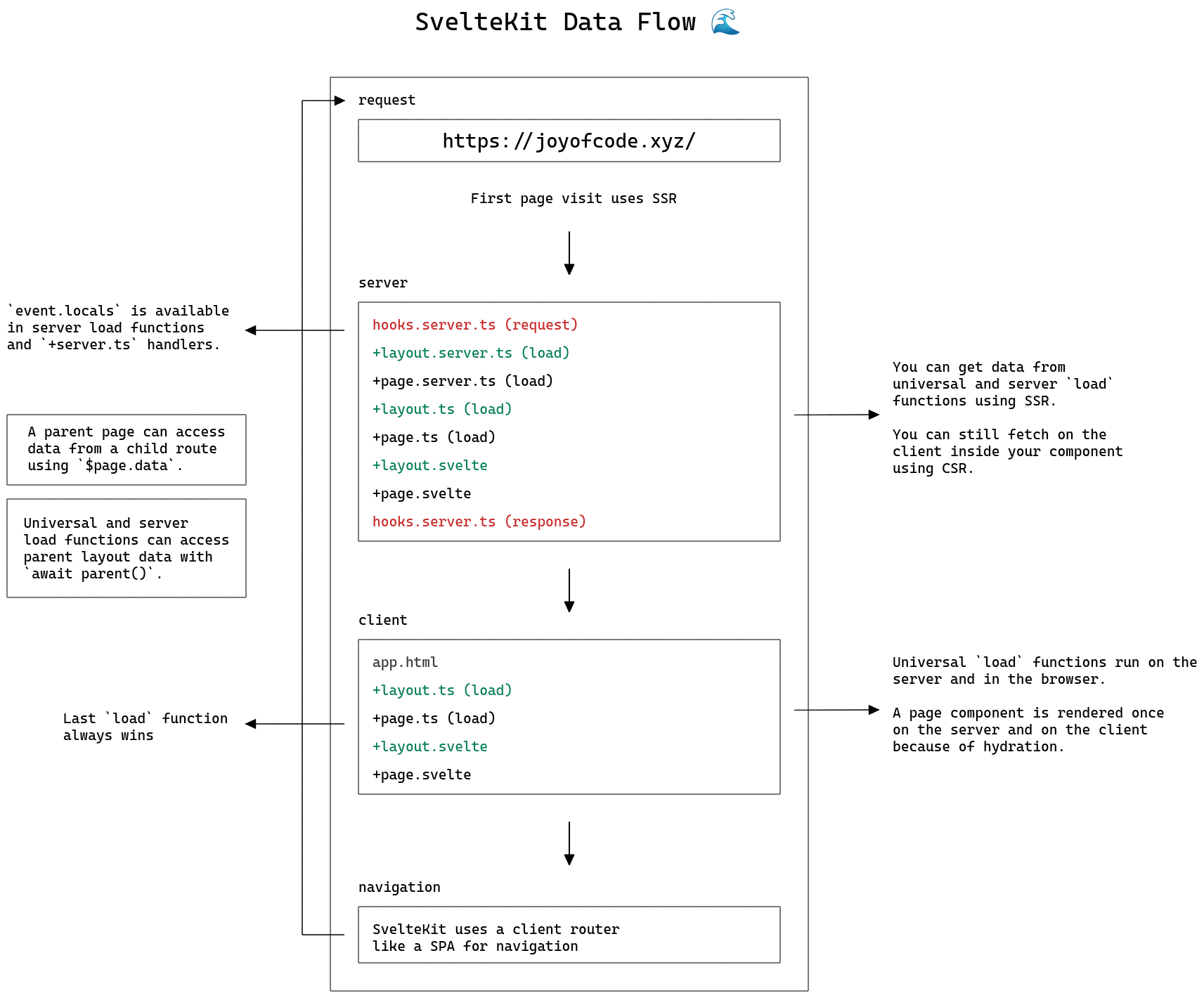
WattCarbon decarbonization projects are measured using official government grid data1, site level metered energy data, and open source avoided energy use methodologies2, which provides the highest degree of transparency and integrity for every project on our marketplace.
This appears to use the open source OpenEEmeter, to figure out a baseline that any interventions would be measured against. This is written in python, so the code can be examined, but it's not obviosu to me how well this would work outside of California
You can find the right metric for your task by: Looking at the Task pages to see what metrics can be used for evaluating models for a given task. Checking out leaderboards on sites like Papers With Code (you can search by task and by dataset). Reading the metric cards for the relevant metrics and see which ones are a good fit for your use case. For example, see the BLEU metric card or SQuaD metric card. Looking at papers and blog posts published on the topic and see what metrics they report. This can change over time, so try to pick papers from the last couple of years!
[!NOTE] 要寻找合适的 metric,有哪些常用的途径?
flashcard
4 种
On n’étudie pas le code pour le code, mais pour les valeurs et idéologies qu’il embarque, et les effets esthétiques qu’il permet de produire.
c'est la thèse de fond de Marino et ici dans ta phrase on a l'impression que c'est plutôt une critique que tu lui fais. Revois la forme
https://github.com/web3-storage/w3name 1/5
IPNS client and service for generating, updating, and tracking immutable names with signed updates View license 39 stars 10 forks 4 watching Activity Public repository Branches Tags View code
original : https://github.com/web3-storage/w3name
ipns://k51qzi5uqu5dj5k3i25zo6bh2anhc587l7y6uc08fnc18nuiougazlvy7m5p98/indy.web.hyp/pdf.viewer/viewer/web/viewer.html?file=https://bafybeiannkaihb7fqfsavdjpsin4kzrqgmkvwgtbzdm665jtziyzrh6hia.ipfs.w3s.link/web3-storage_w3name_%20IPNS%20client%20and%20service%20for%20generating%2C%20updating%2C%20and%20tracking%20immutable%20names%20with%20signed%20updates.pdf
copy paste it into a Brave browser
typestring The account type. Possible value is standard.statusstring The status of the
response parameters not matching response code
EvaluationSuite scripts can be defined as follows, and supports Python code for data preprocessing.
[!NOTE] 🤗 Evaluate 中,该如何定义一个
EvaluationSuite的子类?flashcard
示例如下
All evalution modules come with a range of useful attributes that help to use a module stored in a EvaluationModuleInfo object. Attribute Description description A short description of the evaluation module. citation A BibTex string for citation when available. features A Features object defining the input format. inputs_description This is equivalent to the modules docstring. homepage The homepage of the module. license The license of the module. codebase_urls Link to the code behind the module. reference_urls Additional reference URLs.
[!NOTE] 🤗 Evaluate 中,如何查看一个 evaluation 模组的详细信息?
flashcard
print(evaluation)即可
This tutorial covers two different ways for PHP developers to send scheduled and recurring email notifications through the Courier notification platform using its PHP SDK. It also offers a low-code solution for sending scheduled emails using just the Courier UI. Courier is a multi-channel notification service with a robust API, which you can use to build a production-ready email notification system in a few minutes.
--I strongly feel like this could have been done better.
Now you have three options:Directly send scheduled or recurring emails using Courier: Call the sendEnhancedNotification() function from the Courier PHP SDK, and use a third party task scheduling library called Crunz to deal with the scheduling side of things. This works using cron syntax, so the same principle can be used for scheduled or recurring emails.Use Courier’s automations to add send logic to your scheduled emails: An automation in Courier is a way of chaining together different steps such as the sending of emails (or other notification-related logic) so that the steps happen in a particular order. An automation can be run by calling the invokeAutomation()function, and as with option 1, you can use Crunz to deal with the scheduling.Using Courier’s no-code automations designer: This is a no-code GUI tool in the Courier UI that uses a drag-and-drop canvas to build up your notification logic. It contains some more advanced logic than option 2 (such as the ability to create email digests or batching).
She ended up using concepts and bits of code from the other classes she was taking, pulling a few all-nighters at the library with books on AI design, and just plain making stuff up in a few places. Her code wasn't anything like elegant
If in the future, collage students gain the ability to create sentient creatures using reused code and a couple all-nighters than how much would AI have progressed since today? are sentient creatures considered basic AI that anyone can make?
The thing was, her little AI was getting kind of interesting. It had started writing its own code about the time she'd gotten it keyed to Kermit properly, which was one of the project requirements, but Anji hadn't expected much more than a few badly parsed lines.
It's pretty scary because AI has gone so far, that it know has the ability to do even more than even what its creator can do. And no one had expected it would be able to go this far this quickly
Anji's AI was producing more code all the time.
This seems like if the AI saw a different tape than they were feeding it, it could get out of control. As if they started to have less control over it by the end.
Author Response:
The following is the authors’ response to the current reviews.
Reviewer #1 (Recommendations For The Authors):
The revision and rebuttal have addressed all concerns raised in the initial review. Upon review of the revised figures, however, it is unclear why Figure 8C shows many significant DEGs in POMC neurons (which according to Figure 8b is the "GABA_24" cluster), whereas Figure 6A shows few to no DEGs in the GABA_24 cluster. Same for Pmch neurons/Glut_25, which seem to be missing from Figure 6A.
Answer: In order to capture changes in these smaller cell population we performed an additional DEG analysis with modified and less strict parameters (compared to the first main analysis). We mention the different parameters in the methods part of the revised manuscript (Differential gene expression analysis and case-control based expression shifts (Cacoa)).
The following is the authors’ response to the original reviews.
Reviewer #1 (Recommendations For The Authors):
Major issues
1) A key conclusion of this study is that neurons show longer lasting infection-related changes in gene expression than do non-neuronal cells, suggesting that neurons are more persistently affected, which could potentially underlie persistent effects of infection on behavior or physiology. However, the authors also report that over twice as many transcripts were captured in neurons than in non-neuronal cells, and that neurons and non-neurons were not equal in number. The number of transcripts and cells per cell type can affect the likelihood of detecting a differentially expressed gene when comparing cell types. Thus, the difference in infection related DEGs between non-neuronal cells and neurons may be due in part to differences in the numbers of transcripts and cells in each group. How would the number of infection related DEG's compare if the same number of transcripts were detected in neurons as in non-neuronal cells? In addition, is there any relationship between the number of infection related DEGs detected and the number of cells in the respective groups?
We performed an additional analysis, down sampling the transcripts per cells to similar numbers (~1600 transcripts/cell), showing a similar pattern as shown in the original calculation of DEGs. High downregulation of genes in GABAergic, Glutamatergic and Nonneuronal cells at 3 and 7 dpi, but long-lasting dis-regulation at 23 dpi only in the neuronal subtypes. The analysis results can be found in Supplementary figure12 and on page 11 in the results section.
2) The rationale for focusing on the LH and DMH is unclear. While these regions do play important roles in control of body weight and wakefulness, the authors do not report whether the cell types relevant to these functions are among those affected by infection. For instance, the authors mention HCRT and MCH neurons in the introduction but do not comment on whether these neurons show any significant changes after H1N1 infection in their analysis. Also, what about the POMC neurons or the Lepr+ DMH neurons? Knowing whether and how these body weight associated cell types are affected could help to connect the phenotypic (e.g., body weight) and molecular changes observed.
We have added an additional analysis of some well know hypothalamic subtypes. What is interesting is that the different neuronal subtypes respond to the infection differently. While most neurons show the strongest response at 3dpi, POMC+ neurons show consistent changes across all three time points. This could point to different neuronal subtypes paying different roles in the sickness response to the influenza infection. The new data has been added to Figure 8 together with new text in the result section and discussion (Page 17 & 20).
3) For discriminating neurons and non-neuronal cells based on their expression of neuronal marker genes, was this performed at the single-cell level or the cluster level? Similarly, was the discrimination of GABAergic and glutamatergic neurons done at the cell or cluster level?
The discrimination of the cell types was done on single cell level. This information has been added to the revised manuscript on page 25.
4) The authors mention that body weight did not change in some of the mice. Was there any difference in infection related DEGs between the mice that lost weight and the mice that didn't? Was there any correlation between the molecular and phenotypic (i.e., body weight) changes observed?
We agree that this could have been an interesting point to investigate, however, we can only say with certainty for 2 animals in the recovery group (23.7 and 23.8) that they didn’t lose weight (Supplement figure 2). In Figure 4A we show that overall the different time points group well together, with exception for animal 23.7 which seems to have a better overlap with 7 dpi, indicating that we possibly captured here a delayed disease response. However, to make any indepth analysis, we have to few animals without weight-loss.
5)The authors noted that the hypothalamic neurons continue to show infection-related changes in gene expression at 23dpi though body weight has returned to normal. In this H1N1 model, are there any persistent behavioral deficits at 23dpi that could be explained by the persistent changes in gene expression in DMH and LH neurons?
We did not test for long-lasting behavioural changes in these animals. Another study by Hosseini et al. (https://www.ncbi.nlm.nih.gov/pmc/articles/PMC6596076/) focus on cognitive long term effects of viral infections. Even though they did not include the here used H1N1 model, they included the PR8 strain, but didn’t report any long lasting behavioural or cognitive changes. So far only cognitive deficits during the acute phase of the infection caused by the PR8 H1N1 model have been shown. This would be a very interesting follow up study to perform, but this, we believe, is out of scope for the current manuscript.
6) In Figure 1F, the 3dpi sample appears to differ from the other samples in terms of its neuron/non-neuron composition. The authors point this out but offer no discussion or further analysis. Was this difference driven by one or more cell types? Is this difference likely to be technical (e.g., less white matter in sample = fewer oligodendrocytes), or could this be related to the infection (e.g., glial death or neurogenesis at 3dpi)?
We have added the location of the punching within the hypothalamus for the different groups to the supplements (Supplementary Figure 3). The differences in neuron/non-neuron composition could originate from differences in the punching location, but we do not have data to support this conclusion. The difference could also stem from biological alterations during the infection.
7) Since influenza viruses replicate in the cell nuclei, did the authors capture any H1N1 RNA in their single-nuclei RNA-seq samples?
We mapped the single nuclei data against the viral genes, but could not detect any of the viral genes in the data set. We are still optimizing detecting of low amounts of viral genes in snRNA-seq data and have not included this information in the manuscript. We believe, that the virus did not manage to migrate in the hypothalamus and infiltrate the cells in the here captured area.
Minor Issues
1) Page 1. The abstract ends with the sentence: This is complemented by increased activity of microglia monitoring their surroundings. Presumably, the authors are basing this statement on the functions of genes altered in microglia by infection. However, saying that microglia behavior has changed is a bit of a stretch here, since the results suggest a change in the molecular phenotype of microglia but do not demonstrate a change in their behavior.
We agree that the phrasing of the end of the abstract was not accurate and didn’t reflect the outcome of the analysis. We adjusted the sentence to: “The change of microglia gene activity suggest that this is complemented by a shift in microglia activity to provide increased surveillance of their surroundings.” Which should provide a better idea that the findings we present are a suggestion based on the transcriptomic changes in the cell population. (Page 1)
2) Page 8. The authors refer to Th+, Ddc+ neurons as dopaminergic. However, adrenergic/noradrenergic neurons also express these genes. How do the authors know the neurons are not adrenergic/noradrenergic?
There are to our knowledge no nor-adrenaline/adrenaline producing neurons in the hypothalamus. In contrast dopaminergic neurons have indeed been identified in this area.
3) In the Methods section, Slc17a6 and Slc32a1 are not "pan-neuronal markers" since they are only expressed by subsets of neurons.
We removed the glutamatergic and GABAergic marker genes (Slc17a6 and Slc32a1) from the list of neuronal markers. They are stated further down in the method section as glutamatergic and GABAergic markers. Find the changes on Page 24/25)
4) Was the hashtagging antibody custom or commercial? If commercial, what was the source, catalog #, lot #? If custom, the authors should describe how it was made and validated.
We used commercial antibodies for hash-tagging. We added the missing information to the manuscript and can be found on Page 24 of the revised manuscript.
5) In the data processing section of the Methods, SCTransform is mentioned twice. Was normalization with SCTransform applied twice?
The data was only normalized once using the SCTransfrom method. We adjusted the part of the method section to make it more clear (Page 24).
6) In the section on gene set enrichment analysis, the first sentence includes this text: "(is a reference needed?)." The answer is yes - Alexa A, Rahnenfuhrer J (2022). topGO: Enrichment Analysis for Gene Ontology. R package version 2.50.0.
The missing reference was added (Page 26).
7) Page 4: "leaved" should be corrected to "left"
The wrong wording was corrected.
8) Figure 2D - gene is labeled as Slc31a1 on the figure and Slc32a1 in the figure legend
We provided a new Figure plate with the right marker genes.
9) Official gene IDs should be italicized
We checked the gene IDs again, and italicized wrongly formatted gene IDs.
10) It is not clear whether the authors are planning to share their code. However, their code would be needed to reproduce their results, since the methods section provides a summary of what was done but lacks key details (e.g., parameters and software packages used during data processing and analysis)
Code will be shared on request. We added this also to the revised manuscript (Page 26)
Reviewer #2 (Public Review):
The new work from Lemcke et al suggests that the infection with Influenza A virus causes such flu symptoms as sleepiness and loss of appetite through the direct action on the responsible brain region, the hypothalamus. To test this idea, the authors performed single-nucleus RNA sequencing of the mouse hypothalamus in controlled experimental conditions (0, 3, 7, and 23 days after intranasal infection) and analyzed changes in the gene expression in the specific cell populations. The key results are promising.
However, the analysis (cell type annotation, integration, group comparison) is not optimal and incomplete and, therefore should be significantly improved.
More specifically:
1) The current annotation of cell types (especially neuronal but also applicable to the group of heterogeneous "Unassigned cells") did not make a good link to existing cell heterogeneity in the hypothalamus identified with scRNA seq in about 20 recently published works. All information about different peptidergic groups can not be extracted from the current version (except for a few). There are also some mistakes or wrong interpretations (eg, authors assigned hypothalamic dopamine cells to the glutamatergic group, which is not true). This state is feasible to improve (and should be improved) with already existing data.
We repeated the cell label transfer with the newly published HypoMap and added additional information to the supplements about the cell type assignments. Additionally, we agree that the dopaminergic neurons do not belong to the group of glutamatergic neurons, however assigned them into this group based on the clustering. We changed the phrasing in the results, to make a better differentiation between the two groups (Page 8).
2) I am confused with the results shown in the label transfer (suppl fig 3 and 4; note, they do not have the references in the text) applied to some published datasets (authors used the Seurat functions 'FindTransferAnchors' and 'TransferData'). The final results don't make sense: while the dataset for the arcuate nucleus (Campbel et al) well covered the GABAergic neurons it is not the case for the whole hypothalamus datasets (Chen et al; Zeisel et al). Similarly, for glutamatergic neurons. Additionally, I could not see that the label transfer works well for PMCH cells which should be present in the dataset for the lateral hypothalamus (Mickelsen et al,2019).
We performed the additional label transfer of the hypothalamus data. Here we accepted a prediction score of 0.5 and transferred a cell type label to our annotated cluster IDs, if at least 10% of cells within a cluster were annotated with the 0.5 prediction score. We found that well defined neuron population types like Hcrt+, Pmch+ and Hdc+ neurons as well as Pomc+ neurons were tagged with a high predictions scores ( >= 0.9, Supplement Figures 6 and 7) and non-neuronal cell types (Supplement Figure 8) were well annotated. Additionally we identified an Agrp+ neuron population with the Gaba_1 neurons. This information has been added to the revised manuscript (Pages 6, 8).
3) There are newly developed approaches to check the shifts in the cell compositions and specific differential gene expression in the cell groups (e.g. Cacoa from Kharchenko lab, scCoda from Büttner et al; etc). Therefore, I did not fully understand why here the authors used the pseudo-bulk approaches for the data analysis (having such a valuable dataset with multiple hashed samples for each timepoint). Therefore it would be great to use at least one of those approaches, which were developed specifically for the scRNAseq data analysis. Or, if there are some reasons - the authors should argue why their approach is optimal
We performed an additional analysis comparing case-control studies (Cacoa). We perfomed both modalities, cluster-based and cluster-free expression shifts and cell type compositions We could partly confirm our findings using the pseudo-bulk approach. The clusterspecific density shift (Supplement Figure 15) identified only shifts in non-neuronal cell types between the Control group and 3 dpi. We believe, these composition shifts are caused by the lower number of non-neuronal cells in the 3 dpi time point. Cluster-specific expression shifts show similar results as in the pseudo-bulk approach, with significant expression shift identified at 3 and 7 dpi in neuronal and non-neuronal cell clusters (Supplement Figure 16). However, no significant expression shifts were identified in the recovery group at 23 dpi. Using the cluster-free expression shift approach, however we were able to identify a similar picture as described with the pseudo-bulk approach. In the recovery group at 23 dpi, we found mainly changed gene programs in neuronal cells, and no transcriptional changes in the non-neuronal cells (Supplement Figure 17-20). This new analysis has been added to the revised manuscript (Pages 4-6, 26) including supplementary figure and tables as stated.
4) When the authors describe the DGE changes upon experimental conditions (Figures 5 and 6), my first comment is again relevant: it is difficult to use the current annotation and cell type description as the reference for testing virus effects and shifts in the DGE in distinct neuronal subtypes.
The cell type annotations have been checked and additional label transfer has been performed. All figures in the manuscript has been updated.
I have to note that the experimental design is well done and logical. Therefore I believe that to strengthen the conclusions, the already obtained datasets can be used for improved analysis.
Reviewer #2 (Recommendations For The Authors):
I have some minor concerns:
1) For the quality check it would be good to see how different hashed samples for each timepoint cover the UMAP embeddings.
We added the UMAP embeddings to the supplement. (Supplement Figure 4)
2) In Fig 1e colors are not optimal - it is impossible to assess it.
We separated the UMAPs for the different time points to make it easier to assess. See updated Figure 1E.
3) In the methods authors started "Single-nucleus RNA-sequencing cell population identification" from the description of using a Gaussian mixture model (GMM). However, I could not clearly understand how this model was used and which kind of result it provided.
We used an GMM model with known markers for neurons and in a second step for glutamatergic and GABAergic cells to sub-cluster the cells and then selected based on high and low expression of the marker genes in the cluster into their respective classes. This information has been added to the method section (Page 24/25).
4) Could the authors better clarify why "they calculated normalization factors using the scran function 'computeSumFactors'" when working with pseudobulk analysis?
This size factor normalization was recommended for single cell data by the authors of the DESeq2 packages.<br /> http://bioconductor.org/packages/devel/bioc/vignettes/DESeq2/inst/doc/DESeq2.html
5) I didn't find logic in "a cell cluster was only included if it contained more than 2 nuclei in at least 3 individual animals" (page 24). Maybe I misinterpreted it.
The rationale for the selection methods was based on the findings that not all animals in the recovery group had the same effects in weight loss. The acute time points didn’t show enough weight loss to decide if all animals in these groups lost the same amount and were equally sick. Hence, in order to have biological robustness we decided to only analyse clusters where cells from at least 3 animals at a specific time point contributed to a cell type. In order to have enough cells per cell type for the calculation of DEGs, we decided to only include a cell type at a specific time point if it contained at least 3 cells from one individual. This selection method limits the analysis to cell types with at least 9 cells per time point.
There will also be means of associating a name with the generic function.
Naming system is not the core part of a language.
Naming system serves two purposes:
Create structure of a program
Give a user-friendly interface
You don't need 2. in core of your language. How data (your program) is displayed should be up to the end-user (programmer). If he wants to see it as text, formatted as a LISP - his choise, if he wants to see it as text in a Java-like style - ok, Haskel-like - sure, visual - no prob.
Having languages as data allows just that. It helps us get rid of accidental complexity from managing a syntax-heavy bag of text files (and having compilers). E.g., how Unison lang have AST as data structure and text-based interface to tweak it.
Having code as data would also make run-time tweaking more easier, bringing us closer to the promise of LISP.
And also all the rest of neat features on top of content-addressing of code, that are now waaay easier to implement, such as incremental compilation, distributed compute, caching.
Have names as user-level feature, their personal dictionaries. Some will call reducing function reduce, some fold, some foldr, some will represent it as a triangle (for visual code management).
Fifth, information is not brought to bear at the right times.
How that is a trait of non-LISP environments?
More than that, it seems LISPs give you greater introspection. E.g., because of REPL. E.g., because of macros that can sprinkle code with introspection in dev environment and be rid of it in prod env.
You know, you cannot write production code as bad as this in C.
Performance is not the only metric of "goodness" of code. Simplicity is one of.
notebook
Suggest adding display code in the function simulate for the single-pendulum control examples. This is the first example in the text and likely the first use of drake for many readers. (I figured it out, but I've been using Python, etc. for a long time...)
Bottom label presence. When the bottom label is not detected, the package is rejected (removed from theprocessing line).• Bottom label verification. Used with preprinted labels. The label bar code is read and compared to the PLUinformation.• When the information matches, the product continues downstream for further processing.• When the information does not match, the line is shut down for loading the PLU indicated labels.
These features require additional hardware (barcode scanner, color sensor, camera). The standard machine can't do this.
dard gold platin
code formatting to be applied
e user is logged into the account 1: If the us
code formatting to be applied
agent corporate
code formatting to be applied
try out our
remove the postman button as this particular sample code is not present on Postman
those freedoms don't actually mean shit to the average end user. only programmers care if they have access to the source code, and most people aren't programmers.
How do we empower people to make this privilege worthwhile? I don't think the problem is that people don't care - everyone has opinions or issues about glitches, problems they face in the software they use every day. The problem is that the barriers to entry - 0 to programming and modifying an app - are so, so great
unresponsive nameservers
Server responds REFUSED status code (code 5) or does not respond at all if there is no DNS server anymore
the value of this website is not in the code but in the people who useit (us!)
The value is in the people -
Policy Within this class, you are welcome to use foundation models (ChatGPT, GPT, DALL-E, Stable Diffusion, Midjourney, GitHub Copilot, and anything after) in a totally unrestricted fashion, for any purpose, at no penalty. However, you should note that all large language models still have a tendency to make up incorrect facts and fake citations, code generation models have a tendency to produce inaccurate outputs, and image generation models can occasionally come up with highly offensive products. You will be responsible for any inaccurate, biased, offensive, or otherwise unethical content you submit regardless of whether it originally comes from you or a foundation model. If you use a foundation model, its contribution must be acknowledged in the handin; you will be penalized for using a foundation model without acknowledgement. Having said all these disclaimers, the use of foundation models is encouraged, as it may make it possible for you to submit assignments with higher quality, in less time. The university's policy on plagiarism still applies to any uncited or improperly cited use of work by other human beings, or submission of work by other human beings as your own.
class policy
Create APIsExport your code as public to create an API endpoint.Email yourselfSend yourself an email as easily as you log to the console.
Really baller
Text message and call next
Programming Challenge : Magic 8 Ball¶
Don't know how to do this... I thought I could create a program that you can type a number, and then run other codes. But the Java seems don't know my "scan code"(copied from following page)
You can also take the HF Transformers modeling code and replace torch.utils.checkpoint with the DeepSpeed’s API. The latter is more flexible since it allows you to offload the forward activations to the CPU memory instead of recalculating them.
[!NOTE] 对于 Activation Checkpointing,DeepSpeed/PyTorch API 有什么差别?
flashcard
DeepSpeed API 额外允许将前向激活 offload 到 CPU 内存上(替代冲计算)
Author Response
Reviewer #1 (Public Review):
Summary:
The study by Fang et al. reports a 3D MERFISH method that enables spatial transcriptomics for tissues up to 200um in thickness. MERFISH, as well as other spatial transcriptomics technologies, have been mainly used for thin (e.g, 10um) tissue slices, which limits the dimension of spatial transcriptomics technique. Therefore, expanding the capacity of MERFISH to thick tissues represents a major technical advance to enable 3D spatial transcriptomics. Here the authors provide detailed technical descriptions of the new method, troubleshooting, optimization, and application examples to demonstrate its technical capacity, accuracy, sensitivity, and utility. The method will likely have a major impact on future spatial transcriptomics studies to benefit diverse biomedical fields.
Strengths:
The study was well-designed, executed, and presented. Extensive protocol optimization and quality assessments were carried out and conclusions are well supported by the data. The methods were sufficiently detailed and the results are solid and compelling.
We thank the reviewer for the positive comments on our manuscript.
Weaknesses:
The biological application examples were limited to cell type/subtype classification in two brain regions. Additional examples of how the data could be used to address important biological questions will enhance the impact of the study.
We appreciate the reviewer's suggestion that demonstrating the applications of our thick-tissue 3D MERFISH method to addressing important biological questions would enhance the impact of our study. In line with this reviewer comment, we had included examples of how our method could be applied to address various biological questions in the summary (last) paragraph of our manuscript. These examples highlight the versatility and utility of our approach in addressing diverse biological questions beyond cell type classification. However, the goal of this work is to develop a new method and establish its validity. While we are interested in applying it to answer important biological questions in the future, we consider these applications beyond the scope of this current work.
Reviewer #2 (Public Review):
Summary:
In their preprint, Fang et al present data on extending a spatial transcriptomics method, MERFISH, to 3D using a spinning disc confocal. MERFISH is a well-established method, first published by Zhuang's lab in 2015 with multiple follow-up papers. In the last few years, MERFISH has been used by multiple groups working on spatial transcriptomics, including approximately 12 million cell maps measured in the mouse brain atlas project. Variants of MERFISH were used to map epigenetic information complementary to gene expression and RNA abundance. However, MERFISH was always limited to thin ~10um sections to this date. The key contribution of this work by Fang et al. was to perform the optimization required to get MERFISH working in thick (100-200um) tissue sections.
Major strengths and weaknesses:
Overall the paper presents a technical milestone, the ability to perform highly multiplexed RNA measurements in 3D using MERFISH protocol. This is not the first spatial transcriptomics done in thick sections. Wang et al. 2018 - StarMAP used thick sections (150 um), and recently, Wang 2021 (EASI-FISH, not cited) performed serial HCR FISH on 300um sections. Data so far suggest that MERFISH has better sensitivity than in situ sequencing approaches (StarMAP) and has built-in multiplexing that EASI-FISH lacks. Therefore, while there is an innovation in the current work, i.e., it is a technically challenging task, the novelty, and overall contribution are modest compared to recently published work.
This summary is elaborated in more details in the following paragraphs, and we will address these detailed comments below.
The authors could improve the writing and the manuscript text that places their work in the right context of other spatial transcriptomics work. Out of the 25 citations, 12 are for previous MERFISH work by Zhuang's lab, and only one manuscript used a spatial transcriptomics approach that is not MERFISH. Furthermore, even this paper (Wang et al, 2018) is only discussed in the context of neuroanatomy findings. The fact that Wang et al. were the first to measure thick sections is not mentioned in the manuscript. The work by Wang et al. 2021 (EASI-FISH) is not cited at all, as well as the many other multiplexed FISH papers published in recent years that are very relevant. For example, a key difference between seqFISH+ and MERFISH was the fact that only seqFISH+ used a confocal microscope, and MERFISH has always been relying on epi. As this is the first MERFISH publication to use confocal, I expect citations to previous work in seqFISH and better discussions about differences.
We thank the reviewer for recognizing our work as a technical milestone. Since this work is aimed to build upon the strengths of MERFISH and address some of its limitations, we primarily cited previous MERFISH papers to make it clear what specific improvements have been achieved in this work. Given the rapid growth of the spatial genomics field, it has become impractical to comprehensively cite all method development or improvement papers in this area. Instead, we cited a 2021 review article in the first sentence of the manuscript and limited all discussions afterwards to MERFISH. In the revised manuscript, we will try to find and include more recent review articles to cover method developments since 2021.
Although we presented our work as an advance in MERFISH specifically, we consider the reviewer’s suggestion of citing the 2018 STARmap paper [Wang et al., Science 361, eaat5961 (2018)] in the introduction part of our manuscript reasonable. This STARmap paper was already cited in the results part of our manuscript, and we will further emphasize this paper in the introduction of our revised manuscript, as this 2018 in situ sequencing paper was the first to demonstrate 3D spatial transcriptomic profiling in thick tissues. In addition, we thank the reviewer for bringing to our attention the EASI-FISH paper [Wang et al, Cell 184, 6361-6377 (2021)], which reported a method for thick-tissue FISH imaging and demonstrated imaging of 24 genes using multiple rounds of multi-color FISH imaging. We also recently became aware of a paper reporting 3D imaging of thick samples using PHYTOMap [Nobori et al, Nature Plants 9, 1026-1033 (2023)]. This paper, published a few days after we submitted our manuscript to eLife, demonstrated imaging of 28 genes in thick plant samples using multiple rounds of multicolor FISH and probe targeting and amplification methods previously developed for in situ sequencing. We will include these three papers in the introduction section of our revised manuscript.
However, we do not consider our use of confocal imaging in this work an advance in MERFISH because confocal, like epi-fluorescence imaging, is a commonly used approach that could be applied to MERFISH of thin tissues directly without any alteration of the protocol. Confocal imaging has been broadly used for both DNA and RNA FISH long before any genome-scale imaging was reported. Confocal and epi-imaging geometries have their distinct advantages, and which of these imaging geometries to use is the researcher’s choice depending on instrument availability and experimental needs. Thus, we do not find it necessary to cite specific papers just for using confocal imaging in spatial transcriptomic profiling, but we will see whether it is reasonable to cite these papers in the revised manuscript. Our real advance related to confocal imaging is the use of machine-learning to increase the imaging speed. Without this improvement, 3D imaging of thick tissue using confocal would take a long time and likely degrade image quality due to photobleaching of out-of-focus fluorophores before they are imaged. We thus cited several papers that used deep learning to improve imaging quality and/or speed. Our unique contribution is the combination of machine learning with confocal imaging for 3D multiplexed FISH imaging of thick tissue samples, which had not been demonstrated previously.
To get MERFISH working in 3D, the authors solved a few technical problems. To address reduced signal-to-noise due to thick samples, Fang et al. used non-linear filtering (i.e., deep learning) to enhance the spots before detection. To improve registrations, the authors identified an issue specific to their Z-Piezo that could be improved and replaced with a better model. Finally, the author used water immersion objectives to mitigate optical aberrations. All these optimization steps are reasonable and make sense. In some cases, I can see the general appeal (another demonstration of deep learning to reduce exposure time). Still, in other cases, the issue is not necessarily general enough (i.e., a different model of Piezo Z stage) to be of interest to a broad readership. There were a few additional optimization steps, i.e., testing four concentrations of readout and encoder probes. So while the preprint describes a technical milestone, achieving this milestone was done with overall modest innovation.
We appreciate the reviewer's recognition of the technical challenges we have overcome in developing this 3D thick-tissue MERFISH method. To achieve high-quality thicktissue MERFISH imaging, we had to overcome multiple different challenges. We agree with the reviewer that the solutions to some of the above challenges are intellectually more impressive than the others that required relatively more mundane efforts. However, all of these are needed to achieve the overall goal, a goal that is considered a milestone by the reviewer. We believe that the impact of a method should be evaluated based on its unique capabilities, potential applications, and its adaptability for broader adoption. In this regard, we anticipate that our reported method will be a valuable and impactful contribution to the field of spatial biology.
Data and code sharing - the only link in the preprint related to data sharing sends readers to a deleted Dropbox folder. Similarly, the GitHub link is a 404 error. Both are unacceptable. The author should do a better job sharing their raw and processed data. Furthermore, the software shared should not be just the MERlin package used to analyze but the specific code used in that package.
We apologize for the invalid Dropbox link. The Dropbox folder got accidentally moved and hence the link provided in the manuscript is no longer linked to the folder. The valid link is now: https://www.dropbox.com/scl/fo/ribx45fnx4zw7kv12sl3w/h?rlkey=fo829wbxmb9mwl6gzivg7vqj3 &dl=0. We will also upload the data to a public data repository when submitting the revised manuscript.
The GitHub link that we provided for the MERlin package is, however, valid and will lead to the correct GitHub site. If, for some reason, clicking the link does not work on your computer, copying the URL address into a web browser should work. Following the suggestion by the reviewer, in addition to the MERlin v2.2.7 package itself, we will also share the specific code to use this package for analyzing the data taken in this work in the revised manuscript.
Reviewer #2 (Public Review):
Summary:<br /> In their preprint, Fang et al present data on extending a spatial transcriptomics method, MERFISH, to 3D using a spinning disc confocal. MERFISH is a well-established method, first published by Zhaung's lab in 2015 with multiple follow-up papers. In the last few years, MERFISH has been used by multiple groups working on spatial transcriptomics, including approximately 12 million cell maps measured in the mouse brain atlas project. Variants of MERFISH were used to map epigenetic information complementary to gene expression and RNA abundance. However, MERFISH was always limited to thin ~10um sections to this date. The key contribution of this work by Fang et al. was to perform the optimization required to get MERFISH working in thick (100-200um) tissue sections.
Major strengths and weaknesses:<br /> Overall the paper presents a technical milestone, the ability to perform highly multiplexed RNA measurements in 3D using MERFISH protocol. This is not the first spatial transcriptomics done in thick sections. Wang et al. 2018 - StarMAP used thick sections (150 um), and recently, Wang 2021 (EASI-FISH, not cited) performed serial HCR FISH on 300um sections. Data so far suggest that MERFISH has better sensitivity than in situ sequencing approaches (StarMAP) and has built-in multiplexing that EASI-FISH lacks. Therefore, while there is an innovation in the current work, i.e., it is a technically challenging task, the novelty, and overall contribution are modest compared to recently published work.
The authors could improve the writing and the manuscript text that places their work in the right context of other spatial transcriptomics work. Out of the 25 citations, 12 are for previous MERFISH work by Zhaung's lab, and only one manuscript used a spatial transcriptomics approach that is not MERFISH. Furthermore, even this paper (Wang et al, 2018) is only discussed in the context of neuroanatomy findings. The fact that Wang et al. were the first to measure thick sections is not mentioned in the manuscript. The work by Wang et al. 2021 (EASI-FISH) is not cited at all, as well as the many other multiplexed FISH papers published in recent years that are very relevant. For example, a key difference between seqFISH+ and MERFISH was the fact that only seqFISH+ used a confocal microscope, and MERFISH has always been relying on epi. As this is the first MERFISH publication to use confocal, I expect citations to previous work in seqFISH and better discussions about differences.
To get MERFISH working in 3D, the authors solved a few technical problems. To address reduced signal-to-noise due to thick samples, Fang et al. used non-linear filtering (i.e., deep learning) to enhance the spots before detection. To improve registrations, the authors identified an issue specific to their Z-Piezo that could be improved and replaced with a better model. Finally, the author used water immersion objectives to mitigate optical aberrations. All these optimization steps are reasonable and make sense. In some cases, I can see the general appeal (another demonstration of deep learning to reduce exposure time). Still, in other cases, the issue is not necessarily general enough (i.e., a different model of Piezo Z stage) to be of interest to a broad readership. There were a few additional optimization steps, i.e., testing four concentrations of readout and encoder probes. So while the preprint describes a technical milestone, achieving this milestone was done with overall modest innovation.
Data and code sharing - the only link in the preprint related to data sharing sends readers to a deleted Dropbox folder. Similarly, the GitHub link is a 404 error. Both are unacceptable. The author should do a better job sharing their raw and processed data. Furthermore, the software shared should not be just the MERlin package used to analyze but the specific code used in that package.
IF sym = ORS.ident THEN ORS.CopyId(modid); ORS.Get(sym); Texts.WriteString(W, modid); Texts.Append(Oberon.Log, W.buf) ELSE ORS.Mark("identifier expected") END ;
This "IF...ELSE Mark, END" region could be reduced by replacing the three lines corresponding to those control flow keywords with a single call to Check:
Check(ORS.ident, "identifier expected");
With Go, I can download any random code from at least 2018, and do this: go build and it just works. all the needed packages are automatically downloaded and built, and fast. same process for Rust and even Python to an extent. my understanding is C++ has never had a process like this, and its up to each developer to streamline this process on their own. if thats no longer the case, I am happy to hear it. I worked on C/C++ code for years, and at least 1/3 of my development time was wasted on tooling and build issues.
children
handlebar templates technically do not allow you to index directly into arrays. However, I discovered that there is "undocumented" syntax. What does work is children.1.content or children.2.content and relatedly children.[1].content and children.[2].content.
The reason you might want to do this is because you may have separate files that you fill in that drive two different sections of the template. In these cases, {{selection}} is insufficient but you can effectively hard-code any number of hard-coded considered context by simply specifying them as Obsidian links.
You can learn more about this obscure quirk of handlebar.js here: https://stackoverflow.com/questions/8044219/how-do-i-access-an-access-array-item-by-index-in-handlebars
Voyons à quoi servent toutes ces balises.
sur visual studio code il suffit d'écrire "html:5" et de l'entrer pour que cette structure de balise s'affiche. C'est plus rapide et pratique que de tout écrire àà la main
simplement en faisant un double-clic dessus
ou avec l'extension "Live Server" présent dans vscode (visual studio code) elle vous permettra de ne pas avoir à actualiser la page Web : un ctrl+s ou cmd+s suffira. Regardez un tuto pour ne pas vous tromper
Rendez-vous ici pour installer Visual Studio Code. C'est gratuit.
Comment passer Visual Studio Code en Français svp ?
Let’s dissect this piece of Mojo code. First, you'll notice that we have new variable declarations let and var which may look odd at first glance since this is not familiar Python syntax. Mojo offers optional (except in some cases, more on that later) variable declarations to declare variables as immutable with let (i.e. cannot be modified after creation) or mutable with var (i.e. can be modified).
this is the opposite of javascript. why not make use 'const'?
First, let's get a list of SIDs that are associated CID 1174 (uracil)
the following python code gets you the number of substance IDs that are associated with a compound ID within PubChem
use ninja-tokenpool
link is broken. i have merged the code in
Author Response
The following is the authors’ response to the original reviews.
We would like to thank the Reviewers for their careful reading and the many thoughtful suggestions to improve our manuscript, as well as both the Editors and Reviewers for the generally positive evaluations and encouraging statements.
Editorial assessment:
This important work presents an interesting perspective for the generation and interpretation of phase precession in the hippocampal formation. Through numerical simula- tions and comparison to experiments, the study provides solid evidence for the role of the DG-CA3 loop in generating theta-time scale correlations and sequences, which would be reinforced through the clarification of the concepts introduced in the study, in particular the notion of intrinsic and extrinsic sequences. This study will be of interest for the hippocampus and neural coding fields.
We appreciate that our work has been considered important. In our revision we made a considerable effort to improve on the presentation of our results and the justification of our model assumptions. Particularly we aimed to clarify the meaning of intrinsic and extrinsic sequences by ad- ditional figure panels as well as fleshing out their definition via spike-timing correlations being independent or dependent on the direction of the running trajectory, respectively. To address all the requests, we added 3 new Fig- ures, multiple new Figure panels and simulated a new model variant.
Reviewer #1 in their public review assessed ”The manuscript has the potential to contribute to the way we interpret hippocampal temporal coding for navigation and memory.”
They criticized
- The findings generally relate to network models of phase precession (re- viewed in e.g., Maurer and McNaughton, 2007, Jaramillo and Kempter, 2017). An important drawback of these models with respect to explaining specific experimentally observed features of phase precession, is that they cannot straightforwardly explain phase precession upon first exposure onto a novel track. This is because, specific connectivity in network models may re- quire experience-dependent plasticity, which would not be possible upon first exposure. This is essential, given that the manuscript addresses the possible origin of phase precession in terms of network models and at minimum, this weakness should be discussed.
We agree with Reviewer # 1 (and also with Reviewer # 2, who brought up a similar point) that models based on recurrence struggle to ex- plain how the recurrent connectivity matrix should come about. While we feel that a full model of how the 2-d topology in the recurrent weights can be learned goes far beyond the scope of this paper (and to our knowledge has not been solved so far in any existing model), we added a new model variant (new Figure 6 and Supplementary Figure 1), which explains the ba- sic phenomenology of extrinsic and intrinsic sequences without the need of recurrent connections, only using feed-forward synaptic facilitation. Thus, assuming recurrent connection is not necessary for our main findings. How- ever, we would like to point out that this does not exclude the possibility that recurrent connections, if set up in an appropriate way, also contribute to phase precession and theta sequences.
- An important and perhaps essential component of the manuscript, is the distinction between extrinsic and intrinsic models. However, the main con- cepts on which this hinges, namely extrinsic and intrinsic sequences (and the related extrinsicity and intrinsicity) could be better explained and illustrated. Along these lines, the result suggested by the title, namely, hippocampal theta correlations, may be important yet incidental in light of the new concepts (e.g., extrinsicity, intrinsicity) and computational models (e.g., DG-CA3 recurrent loop) that are put forward.
We have added substantial new explanatory material to the figures, captions and text to more didactically introduce the concepts of in- trinsicity and extrinsicity. We have also completely rewritten the abstract and added a subtitle: ”extrinsic and intrinsic sequences”
- The study seems to put forward novel computational ideas related to neural coding. However, assessing novelty is challenging as this manuscript builds on previous work from the authors, including published (Leibold, 2020, Yiu et al., 2022) and unpublished (Ahmadi et al., 2022. bioRxiv) work. For example, the interpretation of intrinsic sequences in terms of landmarks had been introduced in Leibold, 2020.
We agree with the reviewer that this paper touches on many related ideas from previous papers (not only of our lab) and is supposed to tie loose ends. Thus, the novel contribution is a biologically plausible mechanistic model of how intrinsic sequences and 2-d place maps interact on the level of interconnected spiking neurons. Such a level of explanation has not yet been available in previous work. We have considerably extended the Discussion section in our revision detailing the bigger picture underlying this theory. Also our addition of the non-recurrent model variant (see above) adds considerable novelty, since it provides an account of phase precession and preplay in novel environments.
- The significance of the readout tempotron neuron could be expanded on. In particular, there is room for interpretation of the output signal of that neuron (e.g., what is the significance of other neurons downstream? Why is the rationale for this output to being theta-modulated?)
We have added an additional Figure 8 to better illustrate the inner workings of the tempotron. We also extended the discussion to better explain the potential use of the tempotron output (see above). In short, we consider the tempotron to signal a unique behaviorally important context that is independent of remapping induced by changes of sensory cues, which is a new prediction of the model. Since the context signal is resulting from DG loops it requires a stable code to also exits in the DG. Evidence for such long-term stability in DG has been found in Hainmu¨ller & Bartos (2018).
Reviewer #2 in their public review find ”this research topic to be both important and interesting” and appreciates ”the clarity of the paper.”, com- mending our ”efforts to integrate previous theories into their model and con- duct a systematic comparison”.
We are very happy about these positive remarks and sincerely would like to thank the reviewer!
Reviewer #1 made the following specific recommendations for changes:
The abstract is somewhat difficult to parse. I have identified some words and/or sections that could be improved.
- ’ ....inherently 1 dimensional’. This statement seems to be related to an a priori interpretation of the authors. On the other hand, if offline sequences are trivially 1 dimensional because they are sequences (i.e., they constitute a vector), then online sequences would be 1-dimensional as well. What is the key difference between offline and online? Is it the omnidirectional place fields in two dimensions? Perhaps more importantly, how relevant is this fact with respect to the main results of the manuscript, which concern ex- trinsic and intrinsic sequences?
We indeed meant that the sequences are trivially 1-dimensional. The main challenge that we would like to address in this paper is how a 2-d topology of place cells (and direction dependent theta sequences) and a 1-d sequence topology of intrinsic theta correlations and during (p)replay can be reconciled. We hope this has become clearer in the rewritten abstract.
- The language in lines 36-38 is overly technical. I suggest modifying the language, the language was less technical and more understandable in the body of the manuscript, which should be also reflected in the Abstract.
We would would like to apologize for making the abstract too technical. Also in response to Reviewer #2, we decided to rewrite the ab- stract entirely.
The authors use a mixture of conductance based models and Izhikevich neurons, presumably for the spiking generating mechanism. The conductance component can be readily interpreted in terms of the underlying biophysics. The Izhikhevich neuron model, however, is phenomenological. I suggest you address i) the rationale for using Izhikevich model, 2) its biophysical inter- pretation, 3) and its combination with conductance-based currents.
The reviewer is correct that spike generation is modelled using Izhikevich’s model whereas synaptic integration is included in a conductance- based manner. As suggested by the reviewer, we have added further expla- nation in the Methods part, explaining that the Izhikevich approach allows to adjust burst firing properties with only few parameters by efficiently em- ulating the bifurcation structure of spike generation in the full biophysical model (1&2) and otherwise has no effect on the integration of conductance- based synaptic currents in a subthreshold regime (3).
Line 126: when you say preferred angle, do you mean preferred (heading) direction? If so, please maintain consistency throughout.
We thank the reviewer for pointing out the inconsistency. We have added the word ”heading” throughout the manuscript whenever ap- propriate. To further improve the consistency, we have clarified the meanings of ”best” (or ”worst”) direction and reserved the use of it solely for cases when trajectory direction is compared with the preferred heading direction, namely, ”best” (”worst”) direction when trajectory is along (opposite) the preferred heading direction.
Line 174: When discussing cross-correlation, sometimes you mean a cross-correlation function between two place fields and sometimes to the his- togram of all such correlations? Please clarify.
We used histograms to empirically estimate the underlying cross-correlation function. For clarity, we have specified that it is a cross- correlation histogram in the revised manuscript whenever we refer to the empirical estimate.
Figure 3:
Understanding the difference between extrinsic and intrinsic sequences is fundamental for the manuscript. I suggest that in the section that refers to Figure 3 (or Figure 3 itself), you kindly provide an example depicting how extrinsic and intrinsic sequences can
1) coexist yet be distinctly identified
2) depend on trajectory
3) depend on DG input
By coexistence, we meant the heterogeneous population of ex- trinsic and intrinsic cell pairs and, hence, the extrinsic and intrinsic theta correlations, as shown in Figure 3J. To improve the clarity, we added the following sentence in the section that refers to Figure 3: ”In our simula- tion, extrinsically and intrinsically driven cell pairs are both present in the population (Figure 3J), indicating a coexistence of extrinsic and intrinsic sequences.”. To illustrate how extrinsic and intrinsic sequences depend on both tra- jectory and DG recurrence, we have also added annotations in Figure 3F to mark the extrinsic and intrinsic part of the sequence.
Moreover, the caption of Figure 3 refers to the directionality of the theta sequences. How does this again relate to the extrinsic/intrinsic distinction?
We hope the highlighting in panel F of Figure 3 has resolved this problem.
Figure 5:
- This is a crucial figure that should illustrate the differences between extrinsic and intrinsic sequences, as the figure caption suggests. Surprisingly, it is not at all clear where (i.e., in which panel) and how (i.e., methodologi- cally) should one distinguish one type of sequence from another. I suggest that at least one such panel is dedicated to illustrating the difference and/or detection of these sequences in time and/or from phase precession plots. Moreover, there is significant visual crowding that makes the interpretation challenging (e.g., insert a space between G and E)
We would like to apologize that in the previous version of the manuscript, we seemed to have evoked the impression that the difference between intrinsic and extrinsic sequences should be mainly illustrated in Figure 5. We hope that our revisions of Figures 1 and 3 have made it sufficiently clear to this point. The main purpose of Figure 5 was (and is) to illustrate how intrinsic sequences can lead to out-of-field firing. We have modified the figure caption (and text) accordingly. To address the visual crowding problem in Figure 5, we have inserted a space between panels and also removed repeated labels.
Tempotron neuron and Figure 6:
From the reviewer’s questions on Figure 6, we feel that our presentation caused considerable confusion about the motivation and inter- pretation of the tempotron simulations. We therefore rewrote parts of the associated text and Figure caption. We hope that the revised presentation clarifies the issues. We therefore only briefly respond to the reviewer’s points here, because we think they largely resulted from misunderstandings.
- Intuitively, and as the manuscript results suggest, late phases are asso- ciated to extrinsic mechanisms while early phases are associated to intrinsic. Why not construct a simpler classifier readout based on this fact? How does it compare to a tempotron?
Opposite to the reviewer’s comment, extrinsic mechanisms are visible at early phases (late in the field), intrinsic mechanisms at late phases (early in the field). In fact, what the tempotron does is learning to identify the intrinsic (late phase) part and to disregard the extrinsic (early phase) part.
- What is the significance of theta-modulated output of the tempotron (readout) neuron?
The theta modulation of the tempotron output is a trivial re- sult of the theta-modulation of the input, i.e., the detection of the intrinsic sequence pattern is done once every cycle.
Suggestion for Figure 6 related to Tempotron readout: Focus on ’with DG loop condition’, as the challenge and most important point here is to identify extrinsic and intrinsic sequences. The No-loop condition could be left as a supplementary figure or side panel.
The no-loop condition is the essential control showing that the tempotron only responds to the previously learned intrinsic pattern and can- not identify spatial location based on the extrinsic pattern.
Further work/predictions.
Lines 196-198. ”Since intrinsic sequences can also propagate outside the trajectory (Figure 5) and activate place cells non-locally, our model predicts direction-dependent expansion of place fields.” If remote activation is ’suffi- ciently’ remote, wouldn’t this predict two separate place fields instead of an expansion?
The reviewer is completely correct. Out of field spiking can be also affecting remote locations, if the intrinsic sequences link to remote place fields. This would lead to double fields, however, the intrinsic part would only be active at late theta phases. For simplicity, we have not added such a case in our paper, but we would like to thank the reviewer for this comment, since it leads to a nice prediction of the model, which can be experimentally tested and therefore was included to the discussion.
Lines 556-558. ”In our model, firing rate is determined by both low-phase spiking from sensory input and high-phase spike arrivals of DG-CA3 loops, both producing opposing effects on the phase distribution.” Is it possible to make a differential prediction based on lesions here, e.g., along the lines of reduced range phase precession, for either high phases or for low phases?
We thank the reviewer for this great suggestion. Lesion of DG in the model does indeed reduce the phase range and mean spike phase. This further corroborates the effect of DG-loop on theta compression and high-phase spiking. We have included a new panel D in Figure 4 and a corresponding mention in the result section.
Line 570. ”We speculate that the functional roles of intrinsic sequences may not be limited to spatial memories.”. Is there any relationship to re- play and/or sleep-dependent memory consolidation? Some speculation in the Discussion section would be welcome and appropriate.
We have added some further speculative ideas to the last section of the Discussion. We propose that replay and preplay reflects the intrinsic sequences that express the current expectation of the animal. We have not yet thought well enough about their relation to memory consolidation to phrase this in the manuscript, but would suggest that they could serve to signal multimodal context information to the neocortex where it can evoke retrieval of unimodal memory traces.
The description of the results, as stated in the public review, can be im- proved. A key component is the definition and identification of extrinsic and intrinsic sequences.
Some comments:
- I think that the words ’extrinsic’ and ’intrinsic’ are problematic as both types of sequences/models rely on external (spatial) input, hence both are in some sense ’extrinsic’. On the other hand, both are network mechanisms, thus in some sense ’intrinsic’, where the asymmetry is either programmed directly onto the weights or due to synaptic depression. To add to the con- fusion, ’intrinsic’ mechanisms very often refer to cellular mechanisms in neurophysiology. I kindly ask you to, ideally, reconsider the terminology, or at the very least, be very thorough and precise when describing the mech- anisms. For example, sometimes extrinsic (intrinsic) ’models’ are referred to, sometimes ’sequences’, sometimes ’factors’, sometimes ’pairs’, etc.
We understand and appreciate the reviewers argument, but would like to stick to the terminology, since it was already used in our prior publication. We have made considerable effort to improve the explanation and illustration of extrinsic vs. intrinsic pairs in the main text, Figure 1 and 3 to highlight our definition that is based on pair correlations: Extrin- sic pairs flip the correlation lag with reversal of running direction, intrinsic pairs don’t. This is simply a functional definition and should not be con- fused with potential microscopic mechanisms. One of those (DG-loops) is suggested in our paper.
- As discussed in the public review, network mechanisms may require experience-dependent plasticity and hence cannot easily explain phase pre- cession on the first pass. Please discuss why and/or how your model fits with this observation.
We agree that the two models under consideration both require the recurrent network be set up appropriately and there is no theory so far that would explain how. The reason we chose these two models is because they are well known in the community and relatively similar. We reasoned that comparison between an intrinsic model and an extrinsic model would make most sense if the two are a similar as possible. Nevertheless, we ex- tended the manuscript by a new set of simulations in which we do not use re- current CA3 connections and obtain phase precession solely be feed-forward synaptic facilitation (new Figure 6 and supplementary Figure S1). The new simulations show that the basic phenomenology can also be obtained with- out using recurrent CA3 connections, however, as expected when removing one mechanisms of phase precession, the range of phase range is somewhat reduced as compared to the full model.
Along a similar vein, phase precession in Figure 1E only has a range of pi/2, which is about half of the typical range of phase precession for single runs. This should be characterized as a weakness of the intrinsic model.
The precession range in spiking models is highly sensitive to a large number of parameters such that it is hard to make such definite claims (see also above response). In the original Tsodyks et al. 1996 paper the phase range went up to 270 degrees with a slightly different implementation to ours in terms of current vs. conductance-based synapses, an exponen- tial instead of a Gaussian recurrent weight function, and 1-d (original) vs 2-d (ours). We chose conductance-based synapses, and a Gaussian weight profile for better comparison with the Romani and Tsodyks (2015) model. In the original non-spiking implementation by Romani and Tsodyks (2015), the phase range was hardly 70 degrees. Our model implementation of the Romani and Tsodyks (2015) model fits the experimentally reported phase ranges of about 70 to 180 degrees in CA3 (Harris et al., 2001).
Lines 282-284: ”...since phase precession properties change in relation to running directions, nor are they solely intrinsic since reversal of correlation is still observed in most of the sequences (Huxter et al., 2008; Yiu et al., 2022).”. To which extent is this a consequence of the phase precession model (extrinsic vs intrinsic) or the fact that place fields are sometimes directional?
The reversal of sequences with reversed running direction is how we define extrinsic correlation. We hope our changes in relation to Figure 1 has clarified this point.
Figure 2: Is it i) directional input or ii) short-term facilitation that gives rise to lower phase? (or perhaps both?) Please clarify.
It’s both. This is now clarified in the revised version of the Re- sults sections related to Figure 2: higher depolarization always yields earlier phases in spiking models, however, pair correlations are not affected by ei- ther of the two mechanisms.
Line 320. ”...onset of phase precession”. Do you mean in CA3/CA1/DG?
Thank you for pointing this out. We have clarified that this statement refers to CA3.
Line 323. ”....at a different location”. Please add rationale why it has to be at a different location and a reference to the appropriate equation.
The sequence rationale as well as the equation number have been added.
Line 384. ” ... predicting that loss of DG inputs is compensated for by the increase of release probability in the spared afferent synapses from the MEC.”. It wasn’t clear whether this was a ’homeostasis prediction’, or and implementation in the model. Please clarify.
Since the model explained the experimental observations by implementing an increased probability of release, the model predicts that in animals with DG lesion the probability of release should be enhanced. We have modified the wording to avoid confusion.
Line 428 ”...and near future locations) is obvious, the potential role of the lesser expressed intrinsic sequence contributions is not straightforward.”. Similar to my comments above regarding terminology, please clarify what are both contributions and why are intrinsic sequences ’lesser expressed’.
We have rewritten this passage to avoid unclear wording.
Line 474. ”...we showed that the trajectory-independent sequences”. Do you mean ’intrinsic sequences’?
We thank the reviewer for careful reading! We have changed the wording ”intrinsic sequences” in the revision.
Line 482. ”...field pairs being extrinsic”. Please clarify, as the usage of extrinsic now refers to field pairs.
Thank you for pointing this out. We went through the whole manuscript and clarified the terms.
Line 245 (heading). Consider rewriting as ’Dependence of theta se- quences on heading directions’. Extrinsic and Intrinsic models have not yet been introduced.
Since the main purpose of the first Results section is to explain the difference between extrinsic and intrinsic sequences we kept these terms in the heading but modified it to ”Dependence of theta sequences on head- ing directions: Extrinsic and intrinsic sequences”. Additionally, we have put more emphasis on introducing the terms ”extrinsic” and ”intrinsic” in this section.
Figure 1.
- I suggest using the same font - C and D, and F and G are too close to each other, consider adding space. For example, the exponent, 10-2 makes reading cumbersome. Line 300. Phase tail means offset phase? Phase tail may be too informal. Line 325: DG loop. Do you mean CA3-DG projection?
We thank the reviewer for the suggestions. In the revised manuscript, we have ensured that the same font is used in all of the fig- ures. To improve the readability of Figure 1, we have added space between panels as suggested, removed repeated axis label and downsized the text ”10-2”. Furthermore, we have rewritten the referenced line without using the word ”tail”, and also, clarified the meaning of DG loop as the short form of CA3-DG projection.
Figure 4 caption: ”DG lesion reduces temporal correlations...”. It is more precise to say that the lesion reduces the slope of the fitted lag vs dis- tance. And how is this related to sequence compression?
In the paragraph referring to Figure 4, we have elaborated on the meaning of theta compression and its relation with the the lag-distance plot. However, we argue that ”reduces the slope of the fitted curve” is not comprehensive enough to express our summarized conclusion in a caption title. We have modified the wording to be ”DG lesion reduces theta compression”.
In addition, we have changed the slope unit to be radians per cm rather than radians per maximum pair distance, in conformity to unit standards.
General comment about terminology with regards to tuning and connec- tivity: it is not formally correct to compare connectivity with trajectories (e.g., lines 388-395, caption of Figure 5A, etc). Perhaps compare tuning to particular directions/preference or receptive field?
We have corrected the wording such that the direction of DG- loop projection is compared to the direction of trajectory.
Line 470. ’...fixed recursive loop.” Sentence is not clear, do you mean recurrent loops?
The reviewer is correct. We corrected the wording
Reviewer #2 had the following recommendations.
M1. The abstract focuses on the differences between online and offline hippocampal replays. However, the replay topic is not touched upon in the rest of the manuscript. I found this very confusing when I first read the pa- per. I suggest the authors reconsider the best way to approach the opening or at least discuss if and how their model would incorporate replay phenomena.
Also in response to reviewer #1 we have rewritten the abstract focusing on the problem of how to generate 2-d topology from 1-d sequences. In addition, also in response to Reviewer#1 we added a paragraph in the discussion detailing a hypothesis on how er think replay and intrinsic se- quences work together.
m2. On lines 89-91, the authors provide the selection of neuronal pa- rameters for excitatory pyramidal cells and inhibitory cells in the Izhikevich model. While the choice of model is reasonable, it would be helpful to clarify the source of these neuronal parameters, especially for readers who are not familiar with the model.
Again, also in response to reviewer # 1, we have added more motivation for the Izhikevich model.
M3. On lines 94-98, the model considers a 2D sheet of CA3 neurons. One of the most significant assumptions is that each 2x2 tile of place cells is considered a unit with four directional angles. What is the basis for this assumption? Is there any experimental result supporting this, or is it a completely artificial design for the model? This is important since the or- ganization of CA3 cells also affects the network architecture discussed later and impacts the realism of the model.
This comment is related to Reviewer #1’s concern on experience- dependent plasticity: How is this connectivity pattern established? We fully agree that this is an open problem for the Tsodyks et al.-type networks. The main reason for choosing them (as argued in our response to reviewer #1) is to have two published models, representing one type of sequence each, that are similar enough for comparison. In addition, we added new simulations (new Figure 6 and Supplementary Figure S1), showing that the basic phe- nomenology can also be obtained in a model without recurrent connections (see also response to Reviewer # 1)
m4. Similarly, on lines 111 and 140, the model uses 500 ms for the timescales of short facilitation and short-term synaptic depression. The choices of these two timescales are vital for producing directionality in extrin- sic and intrinsic sequences, yet their experimental sources are not clarified.
In the Methods section of the revised manuscript, we have in- cluded the sources of previous experimental data and modelling work to support our choice of the time constants.
M5. On line 126, the authors assume that the synaptic strengths be- tween CA3 cells, Wij, are given by the distances between neurons and the similarity between their directional preferences. While this assumption seems reasonable in the sensory cortex, I am unsure if this is also the case in the hippocampus, and the authors should clarify the basis for this assumption.
The distance dependence simply reflects the original Romani and Tsodyks 2015 model (see response to M3) and we share the concern of the reviewers. The increased connectivity for neurons with the same di- rectional preference was necessary to recover the direction dependent phase precession properties (Figure 2) in the realm of the Romani and Tsodyks 2015 model. Please also see our new Figure 6 showing simulations without the recurrent matrix.
More importantly, the existing connections within CA3 and DG cells completely determine the ”intrinsic” sequences. But wouldn’t this be fragile when place cells undergo global remapping, which can take place within only a few seconds? The author should comment on this in the discussion.
We would like to thank the reviewer for bringing up this inter- esting point. In our thinking, the DG-CA3 connectivity is fixed (multiple 1-d trajectories, not necessarily requiring 2-d topology), i.e., the same in- trinsic sequence should show up in multiple environments (and should not remap), although it may just not be active in some environments). This is a prediction of our model and we have added it to the Discussion.
M6. I found the setup of DG place cells unreasonable. DG place cells are found to be granule cells rather than pyramidal cells. Moreover, the model does not consider recurrent connections between DG cells (These setups are closer to CA1 place cells).
We agree with the reviewer, DG granule cells should rather be modelled as high-input resistance EIF neurons. However, the feedback loop via the dentate is not a direct one. It involves hilar mossy cells plus multiple hierarchies of feedback inhibition (this is probably what the reviewer means with recurrent connections between DG neurons, because granule cells are not recurrently connected in the non-pathological state). To our knowledge a biologically realistic model of the hilar-DG network does not exist and it would be far beyond the scope of this paper to develop one. We therefore see our DG feedback model rather as phenomenological. The discussion paragraph on the anatomy of the dentate gyrus touches on these points.
Therefore, a significant concern is: Why should it be the DG feedback projection to CA3 responsible for the ”intrinsic” sequences instead of pro- jections from other brain areas?
The reviewer is generally correct, any brain structure which im- plements fixed sequences via a loop would do. The reason why we suggest the DG to be the best candidate is purely empirical referring to papers with dentate lesions: Sasaki et al. 2018 and Ahmadi et a. 2022. We have added a similar argument to the discussion.
m7. On line 166, the authors claim that there are no connections between inhibitory cells at all. While I understand that this is for simplification of the model, the lack of recurrent inhibition between interneurons may have limited the model’s ability to produce gamma-band dynamics (referring to PING and ING mechanisms), which are robust rhythms produced in CA3. I am very curious if the model can incorporate theta-gamma coupling by in- troducing connections between CA3 inhibitory cells.
We have omitted the gamma oscillation for simplicity, because we do not have a hypothesis for a functional role in the context of dis- tinguishing extrinsic from intrinsic sequences (Occam’s razor) and, as the reviewer correctly anticipates, they unavoidably show up when inhibitory in- terneurons connect to each other (e.g. Thurley et al. 2013). Of course, one could envision situations in which gamma for intrinsic sequences my have different frequency than for extrinsic ones, by differentially manipulating the CA3 and DG basket cell networks, but, as long as there is no experimental data, it would be pure speculation and thus we have not included it in the model.
m8. The authors should clarify the source of parameters in Table 1, especially the synaptic strengths. These values are vital for extrinsic and intrinsic theta sequences.
The weight values have been chosen to allow for large theta phase precession range, coexistence of extrinsic and intrinsic sequences, and stability of the network activity. A similar statement has been added to the manuscript.
M9. I have another concern regarding the measurements of ”extrinsic- ity” and ”intrinsicity” defined on lines 185-196. Are they the best measures? To distinguish the cause of spike correlations, the ”extrinsicity” and ”intrin- sicity” of a pair of spikes should not be high at the same time. However, this is clearly not the case in the model, according to Figs 3 and 5. Moreover, in the data analysis carried out later, spike pairs are considered extrinsic or intrinsic merely by comparing the two measurements. I suggest the authors consider counterfactual methods in causal inference. For example, would a spike pair (cell1, cell2) still exist if we change the sensorimotor inputs or the DG-CA3 projections? If this is difficult to implement, the authors should at least discuss how different choices of measurements would impact the con- clusions of the paper.
The problem the reviewer has identified arises from the funda- mental symmetry of theta phase quantification: if spikes of a pair of place fields have a phase difference of 180◦ one cannot say which cell leads and which cell follows, hence, the phase difference is both intrinsic (because the peak doesn’t flip) and extrinsic (because the peak flips and ends up at the same phase). The fact that in some cases extrinsicity as well as intrinsicity are high simply means that the field pair has a correlation peak lag close to 180◦. Since in the experimental data set in (Yiu et al. 2022) only field pairs were available, we have not been able to use a different quantification then and decided to apply the same quantification in our model for comparison. Moreover, Figure 5F nicely shows that the measures are able to retrieve the ground-truth intrinsic DG-loop structure when considered on the population level.
In our model, though, we can go beyond 2-nd order statistics and derive sequence similarity measures including multiple cells, e.g., Chenani et al. 2019. However, since, we already know the ground truth by construction, we decided to not use these methods. We added a paragraph in the discus- sion elaborating on beyond 2nd order sequence quantification.
m10. The authors begin discussing ”intrinsic sequences” from line 316. However, it is not defined before that (and in the rest of the paper as well), causing confusion when reading the paper. The exact definitions of extrinsic and intrinsic sequences should come earlier.
We hope that our changes to the beginning of the results section (Figure 1), also asked for by Reviewer # 1 could clarify the confusion.
m11. On lines 345-347, the authors claim that ”the intrinsic sequences are played out backward as determined by the direction of fixed recurrence (Figure 3F),” which is vague. If such sequences are present in that panel, it should be more explicitly indicated graphically.
Also in response to Reviewer #1, we have graphically high- lighted the two types of sequences.
M12. On lines 309, 356, 484, 495, 515, and possibly other instances, the authors repeatedly claim that the model simulations are in ”quantitative agreement” with their previous experimental paper. However, no experimen- tal data or comparison with the simulations are presented in this paper. The authors should at least create one figure to demonstrate the degree of consistency between them, instead of merely asking the reader to refer back to their previous paper.
We agree with the reviewer that the experimental data of our previous paper should be presented in the manuscript. However, creating more panels or figures is likely to clutter the already crowded visuals and ob- scure our main message. We therefore decided to give numerical comparisons the previous findings in the main text whenever appropriate, specifically, in the sections referring to Figures 2, 3 and in the Discussion.
(c) personal data is processed in the interest of prevention, detection,investigation or prosecution of any offence or contravention of any law for the timebeing in force in India
GDPR Art. 23 allows states to legislate for restricting its application in the context of law enforcement, but the more complete picture is only by looking at the Law Enforcement Directive (2016/680), which imports substantial data protection commitments to the field of law enforcement.
When certain ministers claim 'GDPR has exemptions too', it is either ignorant or duplicitous. Apart from constitutional safeguards and limited applicability of the Code of Criminal Procedure, India has no data protection obligations for law enforcement, and this is a problem.
At a recent social gathering, one of my colleagues demonstrated that—if given a fictional research question—the generative artificial intelligence behind ChatGPT can write nearly flawless computer code for a certain syntax-based statistical package commonly used among policy-researcher types, like myself. It was humbling; I’ve spent years learning to write such code, to middling ability.
this is scary but also exciting, i feel the whole point of evolving is to make the job easier for the next person, however it is scary to see AI completely do a task without assistance
the generative artificial intelligence behind ChatGPT can write nearly flawless computer code for a certain syntax-based statistical package commonly used among policy-researcher types, like myself. It was humbling; I’ve spent years learning to write such code, to middling ability.
It seems that some people may feel very discouraged to say the least when it comes to ChatGPT. Some people have spent so much time gathering information and writing code and AI comes along and does it instantly.
behind ChatGPT can write nearly flawless computer code for a certain syntax-based statistical package commonly used among policy-researcher types, like myself.
Even some experienced computer software developers, have been reported to say with the current version being out there are many flaws in the computer generated system, that don't fully capture the authentic nature that simply a human uses.
demonstrated that—if given a fictional research question—the generative artificial intelligence behind ChatGPT can write nearly flawless computer code for a certain syntax-based statistical package commonly used among policy-researcher types
Pretty cool and scary to consider. What risk and benefits are we as humans to reap when it comes to A.I softwares like chat GPT.
—the generative artificial intelligence behind ChatGPT can write nearly flawless computer code for a certain syntax-based statistical package commonly used among policy-researcher types, like myself. It was humbling;
Sadly for software engineers, this is the latest competition for their job stability after the ongoing huge influx of university graduates in the STEM fields, and very skilled people trained abroad. Junior engineers and recently immigrated engineers work for cheap. AI works for free.
I’ve been on ChatGPT a lot lately and—apparently—I’m not the only one. I’m not actually using it (though I intend to); I’m there to gawk over what it can do—and, spoiler, it goes well beyond producing first-year term papers. At a recent social gathering, one of my colleagues demonstrated that—if given a fictional research question—the generative artificial intelligence behind ChatGPT can write nearly flawless computer code for a certain syntax-based statistical package commonly used among policy-researcher types, like myself. It was humbling; I’ve spent years learning to write such code, to middling ability. As you might imagine, this demonstration led to some inevitable—and now ubiquitous—hand-wringing about automation and the implications for society.
ChatGPT is a death knell for many relatively entry level administrative and information sector jobs. Scheduling automation is already taking the place of secretarial work, legal research is getting done by AIs that can process and aggregate far more cases than any number of underpaid and overworked articling students. Even high level financial advisors are already going the way of the algorithm. A program can track the billions of data points on wall street and make far more accurate predictions than a human ever could. For those still in those jobs, I'd definitely have feelings of concern.
ChatGPT can write nearly flawless computer code
we must acknowledge the phrase nearly flawless- this AI might be on to something, but it is certainly far from perfect.
Second, some CTE career-cluster areas have average automation risks that are low: Education & Training, Health Sciences, Information Technology, and Science, Technology, Engineering and Math.
Author: ChatGPT writes flawless computer code.
Also author: Information Technology has a low risk of automation.
Me: raises an eyebrow.
I’ve spent years learning to write such code, to middling ability.
This sounds incredibly daunting to me, as the most complex code I wrote was in Computer Science II. It was extremely difficult.
the generative artificial intelligence behind ChatGPT can write nearly flawless computer code for a certain syntax-based statistical package commonly used among policy-researcher types
ChatGPT writing nearly flawless code is an impressive outcome of AI. We need to consider what is more valuable in the current climate, an AI code writer that's been around for less than a year or do we value a programmer with years of experience? Unfortunately, when it comes to the bottom line the outlook isn't great for many comm tech roles.
At a recent social gathering, one of my colleagues demonstrated that—if given a fictional research question—the generative artificial intelligence behind ChatGPT can write nearly flawless computer code for a certain syntax-based statistical package commonly used among policy-researcher types, like myself. It was humbling; I’ve spent years learning to write such code, to middling ability.
It may have taken him years to learn but his learning is a gift that he will always have.
if given a fictional research question—the generative artificial intelligence behind ChatGPT can write nearly flawless computer code for a certain syntax-based statistical package commonly used among policy-researcher types, like myself.
I mentioned Google in one of my replies and talking about it here again because I really feel this is what's happening right now. Think back to when google was first introduced. Mind you Chat GPT is not entirely the same entity but our reaction as a population was very similar. People were skeptical, it wasn't "allowed" to be used in school, and it was feared at what it might become. New technologies will never stop emerging. We have to continue to adapt.
the generative artificial intelligence behind ChatGPT can write nearly flawless computer code for a certain syntax-based statistical package commonly used among policy-researcher types
This is the type of profession that will be replace by automation, not many of the skilled trades.
It was humbling; I’ve spent years learning to write such code, to middling ability.
Should we not only be thinking about the future tech students, but what about those already in the trade that are going to possibly be at risk due to their lack of computer/techy knowledge?
I’ve spent years learning to write such code, to middling ability
The author has spent many years focusing on learning to write code. When I think of this, it makes me think about how other students will have more time to focus on content instead of the skill of writing the code.
At a recent social gathering, one of my colleagues demonstrated that—if given a fictional research question—the generative artificial intelligence behind ChatGPT can write nearly flawless computer code
I would be interested to see what leading computer engineers' opinions would be on the stated "nearly flawless computer code".
the generative artificial intelligence behind ChatGPT can write nearly flawless computer code for a certain syntax-based statistical package commonly used among policy-researcher types, like myself. It was humbling; I’ve spent years learning to write such code, to middling ability
This simply shows and demonstrates the power and capabilities of Chat GPT and other AI platforms.
the generative artificial intelligence behind ChatGPT can write nearly flawless computer code for a certain syntax-based statistical package commonly used among policy-researcher types, like myself. It was humbling
This is certainly one of the most interesting developments of GPT. Though it should be noted that any programmer that works within proprietary systems you'll be safe (for now).
I’ve spent years learning to write such code, to middling ability
Writing code is an art, it's pretty intimidating at first but after you start to understand the foundational concepts it does become easier in my experience.
Dommage que le CodePen ne s'ouvre pas sur une nouvelle page. Ne faut-il pas tout simplement rajouter target="_blank" au code ;)?
.
We could add another paragraph / section here discussing the unstructured mesh rendering. Suggested text:
yt takes a different approach for rendering unstructured mesh data. Here, the user is often interested in sampling data that is defined on the surface of an unstructured grid such as a finite element mesh. To perform the ray-tracing operation, yt instead breaks up the unstructured mesh into primitives, and then constructs a bounding volume hierarchy (BVH) containing those primitive objects. To recursively subdivide the volumes, we split the longest axis in a location that bisects the primitives it contains. For first order meshes (e.g. linear tetrahedral, hexahedral, and "wedge" elements) the primitives used are triangles, and ray-triangle intersection can be performed using standard techniques. For second-order meshes, the primitive objects are instead bi-quadratic patches, and intersection calculations need to performed using Newton-Raphson iteration. Once the primitive(s) intersecting each ray are calculated, the corresponding element can be used to sample the underlying solution as in the pixelation section above. yt can either use its native software BVH code for this operation, or optionally offload the ray tracing operation to the Embree library from Intel.
I assume that the ActiveStorage::Attachment class gets reloaded dynamically and that the extensions are lost as they are only added during initialization. You’re correct. Use Rails.configuration.to_prepare to mix your module in after application boot and every time code is reloaded: Rails.configuration.to_prepare do ActiveStorage::Attachment.send :include, ::ActiveStorageAttachmentExtension end
Given below is the sample code when method is upi.
we do not need this line
The discourse of disciplines is about a rule: not a j u r i d i c al rule derived from sovereignty, but a discourse about a natural rule, or in other w o r d s a norm. Disciplines w i l l define not a code of l a w , but a code of normalization, and they w i l l neces- s a r i l y refer to a theoretical horizon that is not the edifice of l a w , but the field of the h u m an sciences.
This make s it possible to transcribe, into j u r i d i c a l t e r m s , discontinuous obligations and tax records, b ut not to code continuous surveillance; it is a theory that makes it possible to found absolute power around and on the basis of the physical existence of the sovereign, but not continuous and permanent systems of surveillance.
Since DigitalOcean will ignore it, you can set it to whatever value you’d like. The value unused in the example code makes it clear that you’re not using it.
Law is code that belongs to all of us
Question 3
C'est dommage que le code ne s'ouvre pas sur une nouvelle page.
Reviewer #2 (Public Review):
The article by Joechner et al is a reanalysis of a large cohort data-set on sleep oscillation development. By combining an analysis with fixed frequencies derived from adults with adaptive frequency ranges, they highlight that initially spindle oscillations are slower and it takes until mid adolescence for spindles to be more adult like. Further, those spindles that already have adult-like frequency ranges also show the other properties known from adults. These results are intriguing and the analysis is well-done and thorough. I only have minor comments on how the article could be improved.
Some additional analysis that would complement the current findings: in Fig 1 it would be good to include the adult-like slow frontal spindles for comparison (similar as the inclusion for the centro parietal ones). Further, providing distributions could let the readers have some valuable insight into the events. Could the authors combine all events and show 3D scatter plots with frequency X amplitude X duration of each spindle event? And then either color code the events from different age groups or have them in separate plots. Additionally, the frequency cut-off for adult-events could be added to the plot. This would likely show nicely how the events shift in their properties over age and thus slowly reach adult-like characteristics.
On page 2. Line 17 the authors state that spindles align ripples. While this is the case, the interaction between these oscillations are more complex. Ripples will also occur before the spindle and the ripples before spindles have been shown to be causally related to memory consolidation. Please cite Maingret et al Nat Neurosci 2016. Further, the authors should also discuss other rodent work for example Garcia et al Frontiers 2022, which also investigates the development of spindles.
Cómo crear ediciones digitales académicas entre La Habana y Berlín. El caso de Proyecto Humboldt Digital (ProHD) How to Create Digital Scholarly Editions between Havana and Berlin. The Case of the Project Humboldt Digital (ProHD)
Argument: The Cuban-German “Proyecto Humboldt Digital”, which aims at publishing a collection of texts related to Humboldt’s stay in Cuba, delivered positive first results thanks to a methodological model of data representation in TEI format, a jointly defined workflow and the use of VS Code to encode and publish editions. Tools referenced: TEI Publisher (ODD & ROMA) Oxygen XML Author Visual Studio Code (Spanish Language Pack, Scholarly XML, TEI-Publisher-VSCode) IIIF & OpenSeaDragon N.B.: free software, with a large community of users or sustainable in the long term Interesting fact: use of ediarum, an editing framework that can be adapted to the particularities of each project, proved to be useful despite restrictions due to the need for the commercial software Oxygen XML Author and the fact that it is only available in German and therefore more difficult to use for Spanish-speaking editors. Also, the company that markets the Oxygen XML software, Syncro Soft SRL, is subject to U.S. export laws arising from the embargo and therefore cannot export with Cuban entities. Els Thant
La écfrasis en el Libro de Alexandre, un proyecto de edición digital para el estudio de la poesía clerical castellana del siglo XIII con minimal computing The Ekphrasis in the Libro de Alexandre, a Digital Edition Project for the Study of the Castilian Clerical Poetry of the 13th Century with Minimal Computing
Argument: digital edition of fragments of the Castilian poem “Libro de Alexandre”, focusing on the use of ekphrasis, enriched with a layer of semantic information that allows the integration of the results of the philological research; description of the XML-TEI markup proposal adopted for the encoding of the text and of a methodology of digital publication with minimal computing tools, used to create a static site with the function of a test version for the visualization of the encoded texts. Leitmotiv: promotion of the development and use of free and open tools in Digital Humanities projects, especially for those developed in the Global South, not only because of financial concerns, but also based on the conviction that open access is an absolutely necessary quality for the development of a more effective, diverse and fair scientific community. Projects and tools referenced: The “Diálogo Medieval” project, dedicated to the codification of medieval Castilian poetry (a pioneering project for the use of TEI in Argentine academic publishing) The ReMetCa project (mother of the “Diálogo Medieval” project) The “Poesía Medieval” project (continuation of the “Diálogo Medieval” project) The “Poetriae” project (elaboration of digital editions from established critical texts) Digital Publishing with Minimal Computing course (Global Classrooms) “Tema Tres” free software: web application for managing formal linguistic representations of knowledge (controlled vocabularies, taxonomies, thesauri, lists of headings, etc.) Visual Studio Code & Scholarly XML extension Jekyll & GitLab Gatsby & GitHub Interesting fact: the structural elements in the body of the text describe the arrangement of the text in verses and stanzas. Since the project does not focus on this type of problems, in the markup the use of some attributes and elements of the previous proposals were reduced (for example, rhymes were not codified). However, not all attributes related to metrical-rhyming aspects were eliminated, in anticipation of the possibility of future reuse of TEI-coded texts in a project where the presence of such data is relevant. Els Thant
Note: This rebuttal was posted by the corresponding author to Review Commons. Content has not been altered except for formatting.
Learn more at Review Commons
Manuscript number: RC-2023-01991
Corresponding author(s): Chaitanya A. Athale
*We are grateful to the editors sending our manuscript out to review, and the reviewers for the careful reading and critical comments. In the following sections we describe our plan for revisions that will address the comments of the reviewers. We have added these in a point-wise manner. In summary most of the comments are addressable with additional experiments, simulations and data analysis. These will indeed serve to strengthen the findings without altering the fundamental findings. However, we would require upto 90 days to make these changes. *
Description of the planned revisions
Reviewer #1 Evidence, reproducibility and clarity
Summary: This work combines in-vitro experiments and numerical modeling to study the dynamics ofmicrotubules, driven by molecular motors. In this bottom-up approach, molecular motors areimmobilized on the surface and microtubule filaments are anchored to the surface from one end. The dynamics results in "beating like" motion of the anchored microtubules. The authors establish aphase diagram of the different dynamical patterns of "beating like" motions by varying the molecular motor density and the length of the microtubule anchored to the surface. They use a numerical framework that captures the observed patterns.
Our response: We are grateful to the reviewer for the careful reading and agree with the summary of our work. In the following sections we detail how we plan to address the specific comments.
Major comments:
1. Overall the experiments and results are well described and claims are supported by the data.
Both experimental and numerical methods are presented in a way that they can be reproduced.
Our response: We are grateful for the reviewer’s assessment about our findings and presentation of the results.
Minor comments:
1. A key feature of beating cilia is the asymmetry of the beat pattern (fast stroke and slow recovery). It might be interesting to use the kymographs or the Phy vs time analysis to see whether or not this feature exists in this simplified experimental model.
Our response: We agree with the reviewer that it could be of interest to examine whether the dynamics of the tip-angle phi (φ) shows a difference between the strokes at onset and return, to compare to the fast-slow asymmetry observed in cilia. This will be approached in two ways:
1) We will obtain more data from more fields of view
2) Use the time-derivative of the tip-angle, phi (φ) dynamics to examine whether the onset and return strokes are asymmetric and how this compares to ciliary dynamics.
3) We will also analyze the tangent angle to the contour, psi (ψ) plots with time (y-axis) and MT length (x-axis).
A qualitative analysis of a few time-series suggests indeed that the onset v/s return stroke of the ‘beating’ is likely to be asymmetric in the manner qualitatively distinct from cilia and flagella, that appear to be symmetric. This would suggest we avoid the term flagella-like to describe the dynamics.
2. Also, the beating frequency is very low (mHz) compared to real cilia/flagella (~Hz). Would it be possible to use the model to predict which parameter would need to be tuned to reach more
physiologically relevant beating frequencies?
Our response: We agree that the oscillations we observe have a frequency thousand fold lower as compared toflagella and cilia and have highlighted this in our discussion. When we modified motor velocity and stall forces, we found only a marginal increase in frequency of oscillations by a factor of 2-5, but not 10-fold or more. We also attempted in simulations to mimic kinesin-like properties. However we do not see a dramatic improvement. This suggests an involvement of higher-order organization of the filament. Indeed we plan to perform simulations that test the following scenarios not already tested:
1) the role of microtubule bundling factors resulting in 2-, 3-, and higher order complexes of MTs
2) varying the bending rigidity of the microtubules within ranges of what may be experimentally feasible with differences reported for taxol and GMPCPP filaments
3) altering the duty ratio of the motor
These will be in the nature of “what if” simulations that could provide the basis of future experimental design to test such predictions. This comment is similar to one by the other reviewers.
Significance
This study is part of the field of in-vitro reconstitution, from a minimal set of components, that aims to reproduce a biological function to identify and understand the minimal physical/biophysical mechanisms underlying a function. This study might be of interest for the people who address questions of the self-organization of cytoskeletal elements in minimal systems.
Our response: We agree with the assessment of the reviewer of the significance of the study and the readership that might be most interested in this work.
*The main limitation of this study relies on the claim of reproducing a flagella-like motion. Indeed, the frequency of the described oscillations is in the mHz range while the frequency of cilia is in the range of few Hz to tens of Hz. This suggests that the mechanism at play in such a reconstituted system is not the one that drives beating in real cilia/flagella. Yet, this limitation also applies to other studies in the field (Vilfan et al. 1999, Guido et al. 2022 ...). *
Our response: We agree with the reviewer that the 10^3 to 10^4 difference in oscillation frequency with that observed in cilia is striking. Indeed our claim was limited to the wavelike nature of the oscillation of the free end of a clamped microtubule driven by molecular motors producing a buckling instability, release and re-engagement of motors. Therefore it is evident we are missing many components in our minimal system as compared to cilia. However, we would like to emphasize for now that the beating is only qualitatively comparable to cilia and flagella. So far we have not compared the two waveforms. As a part of our revision plan, we aim to objectively describe the quantitativeaspects that could strengthen our claim of a similarity or lack thereof in wave-forms.
Indeed this limitation is also observed in the work of Vilfan et al. (2019) and Guido et al. (2022). However, we believe with changes to the experimental setup and a robust and tractable model we have improved on these studies.
References:
Vilfan A, Subramani S, Bodenschatz E, Golestanian R, Guido I (2019). Flagella- like Beating of a Single Microtubule. Nano Lett 19(5), 3359–3363.
Guido I, Vilfan A, Ishibashi K, Sakakibara H, Shiraga M, Bodenschatz E, Golestanian R, Oiwa K (2022). A synthetic minimal beating axoneme. Small e2107854.
My second concern is that the added value with regards to state of art is not clearly explicit. I'm thinking about the work of the Isabelle Guido's team where they have more complex reconstituted systems (a pair of 2 microtubules); or the work of Pascal Martin's lab where the design of the system allows to capture more complex mechanisms such as myosin density waves, which result infrequency beat of 0.1Hz.
Our response: We agree that the advances of our study can be highlighted. In the following points we highlight the value added to prior art:
In previous work, MT bundles have been shown to produce synchronized base-to-tip oscillations in vitro driven by kinesin in presence of crowdants (Sanchez et al., 2011??). However, the study lacked control over MT length,, something we have addressed in our study.
Cilia reconstitution with MT length and motor density control (Sasaki et al., 2018) are closer to control of the system but because of the complexity it is hard to distinguish what effect emerged from which componen.
The generation of a bending wave driven by outer dynein arm (ODA) combined with pairs of MTs nucleated from Chlamydomonas axonemal fragments (Guido et al., 2022) was probably a close mimic of a minimal system; it not only lacked ??lacked variation in motor density and length but failed to show oscillations, with S-shaped buckling patterns observed.
As a result it is reasonable to state that this work is a distinct improvement on previous work. In some senses it provides a consistency check on the previous results and at the other with a model and novel order-parameter an opportunity to improve our understanding.
References:
Vilfan A, Subramani S, Bodenschatz E, Golestanian R, Guido I (2019). Flagella-like Beating of a Single Microtubule. Nano Lett 19(5), 3359–3363.
Sanchez T, Welch D, Nicastro D, Dogic Z (2011). Cilia-like beating of active microtubule bundles. Science 333(6041), 456–9.
Sasaki R, Kabir AMR, Inoue D, Anan S, Kimura AP, Konagaya A, Sada K, Kakugo A (2018). Construction of artificial cilia from microtubules and kinesins through a well-designed bottom-up approach. Nanoscale 10(14), 63236332.
Guido I, Vilfan A, Ishibashi K, Sakakibara H, Shiraga M, Bodenschatz E, Golestanian R, Oiwa K (2022). A synthetic minimal beating axoneme. Small e2107854.
Reviewer #2 Evidence, reproducibility and clarity Summary:
The authors use a modified version of conventional gliding assays to induce microtubule bending, buckling, looping and cyclic beating (which they term "flagella-like") via clamping the plus ends of gliding microtubules to the surface. They find that the pattern of motion depends on different factors such as microtubule length and motor density. They build a simple computational model that predicts transitions between microtubule motion patterns depending on these parameters.
Our response: We agree with the assessment of the reviewer summarizing our work in terms of the approach taken and the inferences.
Major comments:
- Overall, the experimental data is extremely sparse. As far as I can see, there are only two replicas for the lower motor density. It is not clear to me how the authors define the boundaries in the
experimental phase diagram in Fig. 7. To build a phase diagram - where one axis corresponds to the motor density - on just two experiments is not convincing. I would need to see more experiments covering a larger range of motor densities and at least three replica per condition.
Our response: The comment refers to Fig. 7, whose purpose was to answer the question- can we test the phase diagram predicted in simulations by comparing to experiment? The answer was provided with representative data, in order to demonstrate that the model is qualitatively validated.
The reviewer is asking for a systematic experimental test that rigorously demonstrates such a match between simulation and experiment. To this end, the phase diagram may not be the ideal form for such a test. We will attempt to examine the beating frequency and wave-transition in line with a comment by reviewer #3, as a measure of experiment-theory validation.
We agree with the reviewer that our data could be enriched with replicates, with more densities of the motor. We will then analyze all the experimental data using common metrics to compare to simulations.
- It is not clear to me why the proportion of pinned vs. free microtubule segments should affect the beating pattern. I would expect that the free microtubule segment does not "feel" the length of the clamped segment, if it is indeed fixed all along its length and unable to move / bend. The simulations use only two anchor points at the pinned tip. The segment in between the anchor points bends, which could affect how the free microtubule segment behaves. To support the claim that it is indeed the proportion of the lengths of the pinned vs. free segments and not simply the length of the free segment alone that influence the beating pattern, I would expect to
(1) see the corresponding and thoroughly quantified experimental data that verifies this simulation-based prediction. Fig. 5C is based on only three microtubules and it is not clear how long the segments are.
(2) the entire pinned segments in the simulation should be fixed. This should also be compared to experimental data, where the lengths of the free segments are the same and only the lengths of the pinned segments
vary.
Our response: Originally the intention of comparing pinned length changes was based on experimental design, in which we incubated biotinylated tubulin to obtain longer or shorter clamped plus-ends. The contrast between a point-pinning and a longer segment is based on beam bending and buckling theory, corresponding to the difference between a swivelling point of immobilization (pinning) and a clamped end (clamped). However, we agree with the reviewer that beyond the pining scenario, once a segment is pinned the only thing really driving the beating is the free length. To address the specific comment we aim to add simulation calculations that will include a fixed clamp and increasing free length demonstrating that the primary driver in changing dynamics (so long as a segment is clamped) is the free length.
(1) To address the question of experimental comparison we will examine more data with increasing free segment lengths for the same density of motors and plot the dynamics, as well as characterize the oscillations with frequency estimation.
(2) This relates to the earlier part of this comment and we aim to re-run the filament clamped segment simulations to make it consistent with expectation and theory from related papers in the field, with only the free-segment length varied.
- In relation to my previous comments: I would expect a direct comparison between the simulation-based prediction that the beating pattern changes with microtubule length and motor density in a quantitative manner, where all pinned microtubules observed experimentally are analyzed. The figures are often based on single observations.
Our response: The experimental phase diagram had representative beating MTs, as compared to simulations. We agree that showing more statistics on these patterns could help. We aim to perform more experiments and analyze more data, which will be systematically plotted to make statistically relevant inferences of patterns as a function of density and length of MT.
- The authors report that the pinned microtubules typically undergo 2-3 cycles of beating. This
number is very low, and I am hesitant to call it "flagella-like" cyclic beating. Is this due to the dynein motors being much slower than e.g. kinesis? To confirm this and support the generality claimed by the authors, I would like to see experiments with a different, faster motor. If other motors are not readily available to the authors, this would imply a substantial amount of time and effort though.
Our response: The slower velocity of yeast cytoplasmic dynein is indeed one the contributing factors for the slow oscillations seen. In preliminary experiments with kinesin we indeed see a faster oscillation, but still in the 10 mHz range. These experiments will be added to the revised manuscript.
- Please perform statistical analysis of the experimental data.
Our response: Most of the data, while statistical, is not being compared for means (e.g. simulation v/s experiment). However we will analyze the frequency as a function of length and density and examine differences based on standard statistical tests.
Minor comments:
- Number of replicates and samples should be indicated in the figures.
Our response: With additional analyzed data and new experiments we will have more datasets and
Significance
- The approach to clamp the plus ends of gliding microtubules in order to induce buckling, bending and beating is elegant and should be easily transferable to other groups who may be interested in this method, since it is straightforward to adapt conventional gliding assays to induce pinning.
Our response: We agree with this assessment of the reviewer.
- The study could potentially be interesting to an audience studying flagella-like systems. Since the system is simple and based on in vitro components with defined parameters, it could serve as a basis for studying more complex systems or testing the influence of particular proteins associated with flagella. However, I do not see a major advance regarding our understanding of flagella or similar structures based on the manuscript. In combination with the model, I see it majorly as a useful tool, providing methodological advance. It would be desirably to make the computational model available to the public.
Our response: We agree that this system of minimal in vitro components could in future be made more complex in a step-wise manner. Once the manuscript is accepted after review, we have intended to make the code available in OpenSource. The source code of Cytosim already is OpenSource and can be downloaded here: https://gitlab.com/f-nedelec/cytosim.
- The computational model seems useful and straightforward to me, yet my background is purely experimental and I cannot judge the model in detail.
Our response: The computational model is indeed straightforward, and is based on a set of C++ codes that are OpenSource and those with a computational training have tested it in multiple studies both by us and other labs.
- In my view, the most important limitation of the manuscript is its lack of thorough experimental data to support the claims made by the authors. In its current state, the manuscript seems rather preliminary and I see the need for significant additional experimental evidence.
Our response: We plan to take the reviewers criticism on board and perform new experiments, analyses and simulations to address this gap of additional experiments. These experiments we believe will go to strengthen the manuscript, but not fundamentally alter the result.
Reviewer #3 *(Evidence, reproducibility and clarity (Required)): *
-Summary:
*This manuscript reports experimental in vitro gliding assays demonstrating bending oscillations when single microtubules are anchored at their plus end and compressed beyond a buckling threshold by dynein molecular motors immobilized on a solid substrate. Together with numerical simulations based on the well-established Cytosim software, the authors identify three main classes of motile behavior under the control of microtubule length and motor density: aperiodic fluctuations (flapping), periodic beating with bending traveling waves over at least part of the filament length, and looping behaviors where the microtubule can curl on itself near its free tip. The authors claim that these movements are reminiscent of the beating movements of eukaryotic cilia and flagella and may provide useful information of the mechanism underlying the oscillatory instability. *
Our response: We are grateful to the reviewer for a careful reading and have in the following sections outlined our plan for revision in response to the specific comments.
*- Major comments: *
1. The observed oscillations show only a few cycles (up to only 4, but often 2-3 (Fig. 1-2)) and are in addition very noisy. Oscillations thus appear to happen only transiently, i.e. do not show a dynamic steady state on timescale much larger than the oscillation period. Demonstrating the emergence of true (and stable) regular oscillations thus remains a challenge, in contrast to the authors' claim. The large variability of behavior from filament to filament (as seen in SV3), as well as in a single filament over time, also makes it difficult to achieve a robust quantitative description of these movements (see below).
Our response: We have observed at times 4 and at times more cycles but we believe this is limited by the fact that mechanical pulling on the streptavidin-biotin linkage could result in occasional detachment of the filament from the surface. Stable oscillations of the form that the reviewer is pointing to may not emerge due to practical challenges and may require an alternative experiment such as optical tweezer to clamp the filament for a longer period. This is currently beyond the scope of the study, but could be attempted in future.
Regarding the variability, we are aiming to analyze more data that has already been recorded and is also being acquired. These additional datapoints will allow for more representative statistics. The variability should tell us more about the nature of the system. We will estimate frequency of oscillations as a parameter for comparison along with our order parameter (span). This is similar to the comment by reviewer #2.
2. Overall, the amount of experimental control seems relatively limited, for there is systematic variation of microtubule length (free or pinned) and only two motor densities have been explored.
Our response: We will address this shortcoming by performing more experiments, with a few more motor densities of intermediate value. This will be supplemented with additional data analysis.
• *One wonders why the motor density has not been more extensively varied and what determines the range of densities that can be achieved. What happens if the density gets larger than 50/µm^2? Do the filaments fail to remain anchored? Is buckling still permitted at high motor density? *
Our response: The range of densities are obtained after the experiment, since this is not a patterning system. At times the density is either too low, and the filaments do not beat, or too high and they detach. This results in only two reported densities, less than perhaps desirable as pointed out by the reviewer. Now that we know what densities work, we aim for a fine-grained scan in the same range expected to produce regular oscillations.
We will titrate the motors to obtain intermediate densities in the range that we have already found to result in stable oscillations with between 4-5 periods and hope to address this question.
• *Important fundamental issues remain here unfortunately untouched in experiments and are also only qualitatively discussed in simulations (bottom of p11 and Fig. 4), namely the dependence of the frequency and wavelength of wave-like beating as a function of motor density and microtubule length. These limitations result from a lack of control over the microtubule lengths and that only two motor densities have been tested. Using the natural variability in length of the anchored filaments may be potentially used to study length effects but then a relatively large amount of data will be required to reliably conclude that filaments ensembles of different mean lengths reliably show different behaviors. Similarly, I do not see where in the data one can see that increasing motor density actually controls the oscillation frequency, as concluded from simulation data (but not analyzed quantitatively). *
Our response: We plan to systematically analyze the frequency, which we have already demonstrated we can measure. The dependence on MT length and density will be tested and added as additional data. We will perform experiments with more motor densities to address that aspect too. We will also run additional simulations and compare outputs. This will help to address the comment and is in line with suggestions by the other reviewers too.
3. The authors repeatedly claim that the movements they observe are "flagella-like". However, the comparison remains vague as there is no quantitative assessment of the similarity or dissimilarity between the movements observed here and biological beating of flagella or cilia (e.g. using data in Riedel-Kruse et al HSFP Journal 2007. DOI:10.2976/1.2773861 as a reference).
Our response: We have compared frequency of oscillations from previous literature but find them to be extremely disparate – by a factor of 1,000. We will use the suggested references to find geometric properties that could test our claim of flagella-like in terms either of waveforms, symmetry of beating or the dynamics or tip-behavior.
• *What does it mean to resemble flagellar beating? It would be desirable to be more explicit/quantitative and not be ashamed to point to differences (could be event more instructive) as well as to similarities. Note that oscillations of the tangent angle in flagella of the bull sperm are nearly sinusoidal, and are thus smooth, with no snaps (Riedel-Kruse et al HSFP 2007), thus challenging the claimed resemblance between bending oscillations in this work and the flagellar beat. *
Our response: This is similar to the previous point. We agree that a quantitative comparison between the dynamics we observe of single filaments and of bonafide flagella, could strengthen the findings of this manuscript. We will use multiple metrics such as the tangent angle-with time of the free end, and the average angle along the flagella (as reported by Riedel-Kruse et al.) to make a more concrete comparison.
• *In my opinion, the authors should tone done the resemblance of their system with cilia and flagella and be much more quantitative about the detailed features of the observed movements in their in-vitro assay. *
Our response: We will take the reviewers comment on board and discuss the work in the absence of the flagellar connection since indeed there is no direct link so far- our comparison with flagella-like systems will be moved to the discussion section with a qualitative comparison of waveforms as this reviewer and others have suggested.
• *In the present gliding assay, motors produce compressive tangential forces on the microtubule, which can result in buckling and thus in an elastic load applied by the filament to the motor with a component perpendicular to the filament. Instead, flagellar motors produce force dipoles that result in neighboring-filament sliding which is then converted in bending of the filament bundle as a result of elastic constrains. Symmetries of the problem thus seem very different. It is also worth noting that many (but not all) models of the flagellar beat actually assume a constant inter-filament distance so that there is no effective normal force acting on the motors to detach them, yet faithfully reproduce beating waveforms (e.g. Camalet and Jülicher New J of Phys (2000) DOI: 10.1088/1367-2630/2/1/324; Riedel-Kruse et al HSFP J (2010)). More generally, whether the present study provides any useful information to inform our current understanding of the flagellar beat is not clear to me and the authors' claim that it may be the case is not motivated enough. Accordingly, the statement (P19) "qualitative transitions (...) expected from not just the minimal but even the potentially complex flagellum" is not justified. *
Our response: This distinction will be more elaborately discussed in the revised discussions section and similar to the previous point, we will avoid reference to flagella-like behavior.
4. I could not find a detailed statistical account of the total number of filaments that was used for the paper, how many fell in the four classes of movement (swiveling, fluctuations, beating, and looping) identified by the authors, and whether the population in each class could actually be controlled experimentally, e.g. by varying motor density or microtubule length. This gave the unfortunate impression that the conclusions were based on cherry picking, which is troublesome considering the large variability in behavior between filaments and the ambition of the authors to provide a state diagram of the dynamics (Fig. 7). To reach clear conclusions, one parameter must be changed while the others remain fixed. For instance, to discuss the effects of the pinned length, one would like to fix the total microtubule length (but then the free length varies) or vary the pinned length with constant free length (thus changing the total microtubule length). I understand that this might be difficult (in experiments), but the authors should then acknowledge these limitations and mitigate their conclusions. In principle, if the yield of the experiment (number of anchored filaments per slide) were sufficient, one could to address these issues by classifying the filaments in ensembles of a given properties (e.g. same total length by variable pinned length). To reach this goal, there is a need to obtain a sufficiently large quantity of data. The reader gets an estimate on the order of 10 usable filaments per slide (video SV3 and inset in Fig. 2D), with only a few replicates (4 experiments at 46/µm^2 and 2 experiments at 27/µm^2). The authors talk about "representative filaments" throughout the text but there is no detail about the ensemble of filaments that show a given behavior and the number of filaments that are used to reach a given conclusion is not given. Length distributions for the free and pined ends of the microtubules, for the maximal amplitude of tangent-angle oscillations, and other measures that characterize the microtubule movements (curvature, wave speed) ought to be given, provided that enough data has been collected to compute reliable ensemble averages.
Our response: For now we have only considered the average behavior with the dynamics observed from multiple fields of view, combined in terms of MT lengths and motor densities. Since Fig. 7 was meant to be representative and therefore a qualitative comparison with simulation predictions, replicates were not added. However, in response to reviewer’s question, we will analyze more data and add it in the supplementary material, in order to support the statistical validity of our claims- that are not based on purely selective evidence.
*5. The effect of motor density on beating properties, in particular frequency, is discussed in simulations but not clearly demonstrated in experiments. One cannot conclude that experiments confirm the prediction of the theory in this respect. *
Our response: Currently we have used a novel metric for the type of oscillation and pattern, the span-parameter (S). However, this was meant to capture large qualitative changes observed in experiment and simulation in terms of patterns.
In response to this comment, we will also analyze the dominant frequency of filaments using FFT on the tip-angles from multiple conditions of MT length and motor density. The scaling of frequency with length and motor density will be compared to simulation predictions. The comparison will then allow an additional quantitative comparison between experiment and simulation.
*- Minor comments: *
6. More extensive quantitative analysis of the waveform of oscillation (noisy sinusoid vs. sawtooth or relaxation oscillations?) and bending wave propagation (speed and curvature vs position along the filament) is needed. In particular, it is claimed that the filaments "snap" and thus evince a "recovery stroke" (e.g. p7). I agree that snaps are evident in some of the videos, and are expected at low motor density. However, I would expect the movements to get smoother at higher motor density, as shown in simulations (looping regime). In any case, one could use the analysis of the tip or (better) tangent angle as a function of time to assess whether 'snaps' indeed occur; due to noise, snapping behavior is not so clear in the data provided in Fig. 1D-E.
Our response: We agree with the reviewer that “snap-back” movement arising from potentially low motor density scenarios changes when the motor density is increased to a more smooth motion. We have observed this, and will characterize it quantitatively to make this point more clear. The tip-dynamics will be analyzed for velocity and symmetry to make this point more apparent.
*7. Because the tips of the microtubules are "sticky" due to their biotinylated tips, I wonder whether the histogram of gliding velocity of the microtubules that are not anchored is modified, i.e shifted toward lower velocities, as compared to that of bare gliding microtubules. This is assuming that a majority of the microtubules are equipped with biotinylated "heads"; this information ought to be provided in the Methods if, as the author claim, the biotinylated tips can be visualized. Analysis of gliding velocities (e.g. in video SV3) could potentially reveal the enhanced interaction between the microtubules and the surface. *
Our response: We will analyze the instantaneous gliding velocity and test the hypothesis that some filaments may be transiently immobile, while others may move unhindered at typical gliding assay velocities (50 to 80 nm/s).
*8. Demonstrating that the anchoring strategy has actually improved the chance to anchor a microtubule, as compared to random anchoring to surface defects that occur naturally in gliding assays, would be welcome. *
Our response: We will analyze the frequency histogram of gliding assay velocities and compare them to the filament-oscillation scenario with biotinylated filaments. We expect to see a zero-velocity mode in the clamped filament scenario and only transient (and therefore less frequent) pinned or clamped filaments. This is already our qualitative observation but we will seek to quantify it.
*9. The simulations should be analyzed more quantitatively and extensively to study how motor density and microtubule length affect the wavelength and frequency of oscillations in the wave-like beating regime, going beyond what can be achieved experimentally. In particular, one could compute the speed of the bending waves, asses how it varies during wave progression from base to tip of the microtubule, describe the increase in the magnitude of tangent-angle and curvature oscillation as a function of curvilinear abscissa. *
Our response: We have now analyzed the frequency and amplitude of filament oscillations in simulations. This will in the next step be used to look for trends as a function of MT length and motor density. We hope indeed to look beyond what experimentally achievable ranges might be, including measuring the propagation of the bending wave along the contour as suggested by the reviewer.
*- Suggestions to help improving the presentation: *
*1. First section of the results (p5-7): this section is full of methological details that get in the way of the description of the actual result (Fig. 1). I would suggest moving these details (e.g. there is not need here to explain how the motors are attached to the substrate, which you use cytoplasmic yeast dynein, and other details). *
Our response: We will rewrite the manuscript to improve the clarity and move the methods to the section dedicated to the methodology.
*2. The top of P9 could also be moved to Discussion section. *
Our response: We will move the page 9 text referred to into the discussion.
*3. P12-13: I also find that the Results section mixes results with discussion, which is not very effective. I would again move elements of discussion (here associated with bending energies) to the Discussion section and focus on results only. *
Our response: We have done so due perhaps to a requirement from an earlier round of reviews. However, we will be happy to separate results from discussion- for example the reference to bending energies.
*4. Throughout the result section: Move any comparison to actual flagellar dynamics to a dedicated section in Discussion. *
Our response: The flagellar discussion will be moved out of the results section entirely unless we invoke the analysis of bonafide flagella.
5. P12: doesn't the increase of the clamped length reduce the length of the free length, moving in the state diagram toward regions of shorter filaments. One wonders whether the clamped length really matter as long as the filament is clamped near the plus end. I would naively expect that it is the free-filament length that maters rather than the total length or the faction of the filament that is clamped.
Our response: We agree with the reviewer with one caveat- filaments pinned at one end (point pinning) are distinct from those with long segments clamped. However, the reviewer is correct in pointing out cases where filaments have a substantial clamp, the free length is more important. We will revise our figures and results section to clarify this.
*6. Figure 4: this figure shows very interesting simulation data that, in my opinion could be much more extensively studied. In particular, one could plot the oscillation frequency, the bending-wave speed, and wavelength as a function of the filament length and the motor density. Also, to characterize the beating waveform more in detail, it would be worth computing how the magnitude of tangent-angle oscillation increases with the curvilinear abscissa for representative examples of waveforms in the three regimes (see again in Riedel-Kruse et al HSFP 2007. DOI: 10.2976/1.2773861 or Pochitaloff et al Nat Phys 2022 DOI: 10.1038/s41567-022-01688-8). *
Our response: We have performed fourier series analysis to obtain dominant frequencies. This will indeed be applied to the simulations in Fig. 4 in order to examine the rich dynamics, as well as provide a point of quantitative comparison to exepriments.
*7. Figure 5: the way to display the data in A-B (simulations) and C-D (experiments) does not allow for an easy comparison between simulations and experiments. I would use beating patterns and kymographs of the tangent angle for both. *
Our response: We are in the process of revising Fig. 5 in order to examine the effect of free MT length on oscillations and will put experimental and simulation analyses that match each other in the nature of the analysis. The analysis itself will be elaborated to include aspects such as average tangent angle as a function of arc-length (Riedel-Kruse et al., 2007) along with frequency.
*8. Figure 6: the way to present the experimental beating patterns is no so clear (thick colored lines). I would recommend showing black lines resulting from automatic tracking of the microtubule. *
Our response: The data in Fig. 6 is raw data projected in order to provide a picture within the limits of magnification. In order to address this comment we will project the tracked contour of the filament and that will result in a finer and better resolved image.
*9. Legend of Fig. S1: the panels (D) and (E) of the figure are not called properly. *
Our response: We will rectify the issue of sub-figure callouts.
*10. Fig. S3: use the same scale in the different panels of (a) and (b) to allow for an easier comparison. It would also be nice to show videos of the simulated motion. *
Our response: The current differences were in order for visual clarity and the modified axis values are mentioned. We will revise Fig. S3 simulation outputs where filaments are projected on the same axis for consistency.
*11. Fig. S4: Hard to read, in particular the motors are not visible. Would be better to have the patterns in black on a white background. The panels look like screen shots. *
Our response: The unbound motors have been deliberately made invisible for clarity. We can provide a figure update with the motors made visible again.
*12. Fig.S5: indicate in the title that this figure deals with results of simulations. The legend refers to color bars but the figure is in grey scale. *
Our response: Colorbar is indeed in grayscale. The legend entry will be modified to read “grayscale bar”.
*Reviewer #3 (Significance (Required)): *
*The motile phenomena reported here are qualitatively already well known in the field. Indeed, anyone who has performed a gliding assay, with microtubules or actin filaments has probably seen undulating or spiraling filaments accidentally anchored on surface defects. Accordingly, the topic has already been somewhat adressed in previous publications (e.g. Bourdieu et al Phys Rev Lett 1995; Sekimoto et al Phys rev Lett 1995; Vilfan et al Nanoletter 2019). As a matter of fact, microtubules anchored on defects in standard gliding assay can show oscillations very similar to those shown here. However, the lack of control over filament anchoring has precluded a systematic experimental study of the oscillatory filament dynamics. It is worth noting that ther bottom-up approaches have used filament bundles instead of single filaments, either with microtubules and kinesin motors (Sanchez et al Science 2011) or actin filaments and myosin motors (Pochitaloff et al Nature Phys 2022). These assays evince more regular oscillations (over tens of cycles) and waveforms that more closely resemble those of eukaryotic flagella than reported here. *
Our response: We agree with this summary of our work, and will highlight the possible reasons why it differs from the work of Pochitaloff et al.
*Here, the authors have developed an experimental strategy to increase the chance of anchoring single filaments' plus end to the substrate, potentially allowing for more control of the experimental conditions that lead to the emergence of oscillations (but see my criticisms above). Anchoring is made more likely, because short segments of biotinylated tubulin are added to the end of bare microtubules to make them stick to the substrate, which has been functionalized with streptavidin. A similar protocol had been reported before in the literature to study buckling of single microtubules by single kinesin motors (Gittes et al Biophys J 1996), but is here used at larger motor densities on the substrate. There is unfortunately no quantification of the success of the approach. *
Our response: We propose to perform more experiments and analyze the data more quantitatively using multiple measures described in the literature and cited by this reviewer. We believe these changes will adequately address the concerns.
*The comparison of the experimental data to Cytosim simulations is, to my knowledge, novel and a clear asset of the work, although this comparison could be more effective, as detailed above. *
Our response: We will add a more complete quantitative comparison to supplement the already provided qualitative comparison to address the comments.
*The emergence of periodic wave-like beating oscillations in motor-filament systems is a classical problem in biophysics. This problem is particularly relevant in the context of eukaryotic cilia and flagellar beating in biology. The audience for the present work is thus potentially broad, although the simplistic and artificial nature of the in-vitro system, with only one microtubule, will probably appeal more to biophysicists and theoretical physicists than biologists. *
Our response: We appreciate the effort of this reviewer to evaluate our work. We however believe that the relevance of this work could extend beyond purely biophysics and theoretical physics as claimed by the reviewer.
Description of the revisions that have already been incorporated in the transferred manuscript
Please insert a point-by-point reply describing the revisions that were already carried out and included in the transferred manuscript. If no revisions have been carried out yet, please leave this section empty.
-
Description of analyses that authors prefer not to carry out
Please include a point-by-point response explaining why some of the requested data or additional analyses might not be necessary or cannot be provided within the scope of a revision. This can be due to time or resource limitations or in case of disagreement about the necessity of such additional data given the scope of the study. Please leave empty if not applicable.
-
Auto-update: great for users, painful for developersOne of Chrome’s most notable features is its ability to auto-update. Users are happy to know they’re running an up-to-date and secure browser version including modern Web Platform features, browser features, and bug fixes at all times.However, as a developer running a suite of end-to-end tests you might have an entirely different perspective:You want consistent, reproducible results across repeated test runs—but this may not happen if the browser executable or binary decides to update itself in between two runs.You want to pin a specific browser version and check that version number into your source code repository, so that you can check out old commits and branches and re-run the tests against the browser binary from that point in time.None of this is possible with an auto-updating browser binary. As a result, you may not want to use your regular Chrome installation for automated testing. This is the fundamental mismatch between what’s good for regular browser users versus what’s good for developers doing automated testing.
a 1985 broadcast of Computer Chronicles (13:50) on UNIX: As for the future of UNIX, he [Bill Joy] says its Open Source Code
That's not what she says (but of course you're already aware of this).
Compare:
The claim here is that she's using the latter meaning. She is not. It's the former.
{ "context": { "domain": "NTS10", "country": "IND", "city": "std:080", "action": "collector_recon", "core_version": "1.0.0", "bap_id": "abc.collectorapp.com", "bap_uri": "https://abc.collectorapp.com", "bpp_id": "abc.rsp.com", "bpp_uri": "https://abc.rsp.com", "transaction_id": "6baa811a-6cbe-4ad3-94e9-cbf96aaff343", "message_id": "6baa811a-6cbe-4ad3-94e9-cbf96aaff343", "timestamp": "2022-10-28T10:34:58.469Z", "ttl": "P3D" }, "message": { "orderbook": { "orders": [ { "id": "K106403902112759", "invoice_no": "2022/XYZ/12345-2", "collector_app_id": "abc.collectorapp.com", "receiver_app_id": "abc.receiverapp.com", "receiver_app_uri": "https://abc.receiverapp.com", "state": "Completed", "provider": { "name": { "name": "SABJI XPRESS PVT LTD - BANASWADI", "code": "18275-ONDC-1" }, "address": "NewDelhi" }, "payment": { "uri": "abcdd/fff", "tl_method": "http/get", "params": { "transaction_id": "3df395a9", "transaction_status": "PAID", (enum) "amount": "1234", "currency": "INR" }, "type": "ON-ORDER", "status": "PAID", "collected_by": "BAP", "@ondc/org/collected_by_status": "Assert", "@ondc/org/buyer_app_finder_fee_type": "Amount", "@ondc/org/buyer_app_finder_fee_amount": "1234", "@ondc/org/withholding_amount": "12345", "@ondc/org/withholding_amount_status": "Assert", "@ondc/org/return_window": "P6D", "@ondc/org/return_window_status": "Assert", "@ondc/org/settlement_basis": "Collection", "@ondc/org/settlement_basis_status": "Assert", "@ondc/org/settlement_window": "P10D", "@ondc/org/settlement_window_status": "Assert", "@ondc/org/settlement_details": [ { "settlement_counterparty": "buyer-app", "settlement_phase": "sale-amount", "settlement_amount": 1231, "settlement_type": "neft", (enum) "settlement_bank_account_no": "99679007677676", "settlement_ifsc_code": "HDFC900008", "upi_address": "sellerapp@upi", "bank_name": "HDFC", "branch_name": "Delhi", "beneficiary_name": "A to Z Printing Solutions Pvt. Ltd", "beneficiary_address": "Delhi", "settlement_status": "NOT-PAID", (enum) "settlement_reference": "K106403902112759", "settlement_timestamp": "2022-10-28T10:34:58.469Z" } ] }, "withholding_tax_gst": { "currency": "INR", "value": "-123" }, "withholding_tax_tds": { "currency": "INR", "value": "0673658" }, "deduction_by_collector": { "currency": "INR", "value": "234" }, "payerdetails": { "payer_name": "“Example1 company Pvt. Ltd", "payer_address": "Ghaziabad", "payer_account_no": 509424924294248, "payer_bank_code": "“HDFC0000000”", "payer_virtual_payment_address": "80abc@abctMh2h" }, "settlement_reason_code": "01", "created_at": "2022-10-28T10:34:58.472Z", "updated_at": "2022-10-28T10:34:58.472Z" } ] } }}
{ "context": { "domain": "NTS10", "country": "IND", "city": "std:080", "action": "collector_recon", "core_version": "1.0.0", "bap_id": "abc.collectorapp.com", "bap_uri": "https://abc.collectorapp.com", "bpp_id": "abc.rsp.com", "bpp_uri": "https://abc.rsp.com", "transaction_id": "6baa811a-6cbe-4ad3-94e9-cbf96aaff343", "message_id": "6baa811a-6cbe-4ad3-94e9-cbf96aaff343", "timestamp": "2022-10-28T10:34:58.469Z", "ttl": "P3D" }, "message": { "orderbook": { "orders": [ { "id": "K106403902112759", "invoice_no": "2022/XYZ/12345-2", "collector_app_id": "abc.collectorapp.com", "receiver_app_id": "abc.receiverapp.com", "receiver_app_uri": "https://abc.receiverapp.com", "state": "Completed", "provider": { "name": { "name": "SABJI XPRESS PVT LTD - BANASWADI", "code": "18275-ONDC-1" }, "address": "NewDelhi" }, "payment": { "uri": "abcdd/fff", "tl_method": "http/get", "params": { "transaction_id": "3df395a9", "transaction_status": "PAID", "amount": "1234", "currency": "INR" }, "type": "ON-ORDER", "status": "PAID", "collected_by": "BAP", "@ondc/org/collected_by_status": "Assert", "@ondc/org/buyer_app_finder_fee_type": "Amount", "@ondc/org/buyer_app_finder_fee_amount": "1234", "@ondc/org/withholding_amount": "12345", "@ondc/org/withholding_amount_status": "Assert", "@ondc/org/return_window": "P6D", "@ondc/org/return_window_status": "Assert", "@ondc/org/settlement_basis": "Collection", "@ondc/org/settlement_basis_status": "Assert", "@ondc/org/settlement_window": "P10D", "@ondc/org/settlement_window_status": "Assert", "@ondc/org/settlement_details": [ { "settlement_counterparty": "buyer-app", "settlement_phase": "sale-amount", "settlement_amount": 1231, "settlement_type": "neft", "settlement_bank_account_no": "99679007677676", "settlement_ifsc_code": "HDFC900008", "upi_address": "sellerapp@upi", "bank_name": "HDFC", "branch_name": "Delhi", "beneficiary_name": "A to Z Printing Solutions Pvt. Ltd", "beneficiary_address": "Delhi", "settlement_status": "NOT-PAID", "settlement_reference": "K106403902112759", "settlement_timestamp": "2022-10-28T10:34:58.469Z" } ] }, "withholding_tax_gst": { "currency": "INR", "value": "-123" }, "withholding_tax_tds": { "currency": "INR", "value": "0673658" }, "deduction_by_collector": { "currency": "INR", "value": "234" }, "payerdetails": { "payer_name": "“Example1 company Pvt. Ltd", "payer_address": "Ghaziabad", "payer_account_no": 509424924294248, "payer_bank_code": "“HDFC0000000”", "payer_virtual_payment_address": "80abc@abctMh2h" }, "settlement_reason_code": "01", "created_at": "2022-10-28T10:34:58.472Z", "updated_at": "2022-10-28T10:34:58.472Z" } ] } } }
{"message": { "ack": { "status": "NACK" } }, "error": { "code": "01", "path": "string", "message": "error_code, error_message is mandatory incase settlement_status = ERROR along with the schema mismatch” },}
{ "message": { "ack": { "status": "NACK" } }, "error": { "code": "01", "path": "string", "message": "error_code, error_message is mandatory incase settlement_status = ERROR along with the schema mismatch" } }
The Mailer, IMHO, is the wrong place for this logic. The mailer should do nothing but format and send messages. The logic to decide whether or not to send should be within the calling block of code.
Our goal is not to argue about proper nouns
And yet you are arguing (instead of just fixing your mistake). Why?
You even went out of your way to change the post: it used to say "Codecov is now Open Source"[1]. In the time since, you have changed it so "Code is Now Open Source"[2].
This is notable for two reasons: it means that it's not outside the bounds of reasonableness to ask why the post hasn't changed since you've been confronted about the discontent, but it also raises questions about why you made that particular change in the first place. By a reasonable guess, I'd bet it has something to do with the fact that writing it as "Open Source" (rather than merely "open source") does real damage to any argument that the latter is generic and doesn't have any particular significance, thus allowing you to repudiate the OSI and the OSD. Which, of course, means that you guys are total fuckin' slimeballs, since you are now actively taking steps to cover your tracks.
type-inference
Is type-inference a guarantee that untyped code will compile, or is it a best effort to reduce the work needed?
Author Response
Many thanks for the detailed and sometimes sharp, yet appropriate criticism of our study. It was an incentive for us to carry out additional analyses and to devote more effort to an elaboration of concepts. The outcome is that the results have changed slightly and that we now give more space to a discussion of concepts. We first address here the points raised by more than one reviewer before responding to comments contributed by individual reviewers.
The points raised can be divided into three thematic groups, 1) conceptual issues, 2) experimental and analytical questions, and 3) comments challenging the novelty of our results. On the first theme, we think it is essential to make a clear distinction between the conceptual and observational domains. As such, the criteria defining a “mirror neuron” and what is meant by the term "mirror mechanism" belong to the conceptual domain. This understanding of terms requires agreement among scientists, but is not experimentally testable. Unfortunately, there is no agreement on how to define a “mirror neuron” and what is meant by “mirror mechanism”. Thus, for the present work, the only option is to refer to specific definitions or to use our own, definitions which try to capture what others, and here most importantly Rizzolatti and colleagues, probably meant. We have adjusted the introduction in an attempt to convey our understanding and usage of the two terms in a hopefully comprehensible manner. Briefly, we use a definition for "mirror neuron" that we take from the first paragraph of the results section of Gallese et al. (Brain, 1996). We do not consider the "properties of mirror neurons" described in that paper as defining a mirror neuron (MN). Classifying neurons as MNs only on the basis of the presence of a modulation of discharge rate during an executed and an observed action compared with a baseline is a common practice also in other single neuron studies on MNs, consistent with this definition. Regarding "mirror mechanism", we refer to Rizzolatti and Sinigaglia (2016) and make a distinction between a broad and a strict definition. Given our finding that there are almost no F5 MNs whose activity during observation is a motor representation according to our strict definition of a mirror mechanism, and also given the problem that the term “mirror mechanism” itself is not uniformly understood, the question arises whether and how the term "mirror neuron" should be used in the future. The answer to this may vary and belongs to the conceptual domain. We briefly address this question at the end of the discussion of the revised manuscript.
From that understanding of terms, conceptual hypotheses are to be distinguished, which of course must allow experimental predictions, i.e., must be falsifiable. We now distinguish more clearly between a "representation hypothesis" and an "understanding hypothesis". Both hypotheses focus on F5 MNs and are based on the strictly defined mirror mechanism. We test the “representation hypothesis” in our study, and just because it is the basis for the “understanding hypothesis”, falsifying the “representation hypothesis” would allow us to conclude that the “understanding hypothesis” is not valid. In contrast, confirmation of the “representation hypothesis” would not, of course, allow us to conclude that the “understanding hypothesis” holds. That would really be circular reasoning (this conclusion was drawn by some and rightly criticized). However, support for the “representation hypothesis” would be the necessary prerequisite for the “understanding hypothesis” to be true. These two hypotheses take up the original argument that a certain understanding of observed actions could follow from an equality of action-specific F5 MN activity during execution and observation. Because we considered the data on equality of action- specific F5 MN activity to be insufficient, we designed this study. Since our result largely argues against the "representation hypothesis" and thus against the "understanding hypothesis," we now discuss alternative concepts for the function of F5 MNs in more detail. It should be noted here that our fourth concept ("goal-pursuit-by-actor") could well represent the observed action without contradiction to our broad definition of a mirror mechanism, which in principle could also serve a subjective experience (which could be conceived as a kind of understanding). The way we structure the concepts in the discussion of this revised manuscript is, in our opinion, a useful overview of the concepts. The third concept is new in this context. We would like to emphasize that we focus on F5 MNs and intentionally avoid a discussion of mirror neurons beyond F5 in this paper. With the data from this study, we cannot say anything about MNs outside of F5.
Regarding the key question of how the "understanding hypothesis" is testable, or whether it may not be testable at all, we agree, of course, that for the conclusion of whether F5 MNs contribute to perception, only a manipulation of F5 MNs can clarify it. We now say that explicitly in the introduction. We agree with reviewer #2 that "understanding" here is not limited to "action recognition" or "action categorization”, which in principle could be implemented by purely sensory processing. Therefore, we also do not believe that the approach proposed by reviewer #3, which builds on the distinction of actions, would allow for a critical examination of the "understanding hypothesis”. But we disagree that the "understanding hypothesis" is not testable at all. Operationalization is necessary. If we accept that we can measure certain visual or auditory perceptions of an animal by operationalization (e.g., the subjective visual vertical, see for example Khazali et al., PNAS, 2020), then we must also accept that we can, in principle, measure other subjective experiences by operationalization, such as pain or aiming at a goal or even the co- experience of pain. An example of how to approach this is the study by Carrillo et al. (Curr Biol, 2019), which reviewer #2 and colleagues discussed in a recent review article (Bonini et al., TCS, 2022).
With regard to the second theme, experimental and analytical questions, we noticed while reading the comments that in our first version we did not distinguish clearly enough between statements about single neurons and statements about populations of neurons. Therefore, we now clearly separate single neuron analysis and population code analysis in the structure of the article. In view of the fact that statements about mirror neurons in the literature mostly refer to single neurons, we added extensive single neuron analyses, so that only now statistically reliable statements about single neurons are possible. This has led to the realization that the number of neurons with exclusively shared code is so small that these neurons should be considered a rare exception. Given the small number of time periods with shared code, we additionally tested against a hypothesis already rightly proposed as an alternative explanation by G. Csibra in 2005 (Mirror neurons and action observation: Is simulation involved? In: What do mirror neurons mean? Interdisciplines Web Forum 2005). We were able to reject this hypothesis based on two of three methods for testing for a shared code. This is the second piece of evidence besides the clustering of time periods with shared code already described in the first version that time periods with shared code cannot be considered random.
We discuss in more detail the question of whether neurons that exhibit a shared code at least at times support the representation hypothesis. To this end, we additionally examined whether certain action segments are more frequently represented with a shared than with a non-shared code, whether neurons with shared code differ from those with non-shared code in anatomical location, and whether an accuracy can be achieved with a time bin-wise selection of neurons with shared code by population cross-task classifiers as with within-task classifiers in the whole population.
Another issue was how to test for shared code and how to decide if a code has enough sharing. To answer the question, the exact hypothesis we intended to test here is crucial. The representation hypothesis states that the representation of the observed actions in F5 MNs corresponds to the representation as it occurs during the execution of the same actions. Therefore, the relationship between discharge rate and actions that holds during execution should also hold during observation, which is measurable with a classifier trained on execution trials and tested on observation trials. Moreover, the actions should not be more distinguishable during observation with a classifier other than the execution-trained classifier, because if that were so, it would mean that the representation of observed actions is different from that of executed actions. The detection of a cluster of time bins for which both conditions are satisfied confirms that it is possible to discover in this way the shared codes postulated by the representation hypothesis.
With respect to concerns that the monkey may not have used the cue at all when the action was executed, we added a comparison with control trials with a non-informative cue and also compared the duration of the approach phase between the three actions. Regarding oculomotor behavior, we verified that the monkey had actually directed his gaze toward the action during action observation for all three actions.
On the third issue, concerning the novelty of our results, we have now explained in more detail in the introduction why we felt it necessary to conduct a study we considered fundamental. As a result of our study, it can be clearly stated now that representations of observed actions as predicted by the strictly defined mirror mechanism are rare in F5 MNs, but nevertheless cannot be dismissed as random. This dispels the objection rightly raised by Csibra in 2005 and contradicts the currently prevailing view that such a representation can only be found at a population level. Even if these representations are ultimately explained by a concept other than the strictly defined mirror mechanism, their existence must be accounted for by any theory of the function of F5 neurons. Moreover, it is also shown that the observed actions are well discriminated with a non- shared code, at times even optimally. This contradicts the notion – which has been widespread for a long time since the work of Gallese et al. (Brain, 1996) – that mapping to motor representations in terms of broad congruence is simply not perfect. The applied cross-task decoding approach seems promising to test also in the future for a shared action code. Finally, reconsideration of alternative concepts has led us to highlight the possibility of a representation of a goal pursuit by the observer.
Reviewer #1 (Public Review):
The authors set out to investigate the hypothesis that mirror neurons in ventral premotor area F5 code actions in a common motor representation framework. To achieve this, they trained a linear discriminant classifier on the neural discharge of three types of action trials and test whether the thus trained classifier could decode the same categories of actions when observed. They showed that codes were fully matched for a small subset of neurons during the action epoch, while a wider set of "mirror neurons" showed only poorly matched codes for different epochs.
This is one of the descriptions of our results, where we realized that in our first version we did not distinguish clearly enough between statements about single neurons and statements about populations of neurons. This prompted us to perform a detailed single neuron analysis.
The authors controlled for potential visual object confounds by having identical objects be manipulated in three different ways and by having the animal carry out the motor execution in the dark. The main strength of the study lies in the clever decoding approach testing the matched tuning to behavioural categories in a model-free way. The central result is in the identification of the small sub-group of mirror neurons that show true matching during the execution epoch, which can dissociate the three types of action almost perfectly. This aligns well with some previous work while offering a novel avenue to identify and investigate those neurons. The underlying neuronal mechanism and behavioural relevance of these neurons remain an open question. It would have been interesting to understand better whether the specific motor representations at a recording site, for instance identified through microstimulation prior to recording (see Methods), the reaction times on individual trials or the specific gaze targets (object/hand) had a bearing on the decoding performance for a neuron/trial.
We agree that these are interesting questions.
In this study, the focus is on testing for a shared code according to a strictly defined mirror mechanism. We have now compared the anatomical locations of neurons with only time bins in which observed actions were discriminated with a shared code (according to one of the methods) to the locations of neurons with only time bins with non-shared code (see last paragraph in Results). We did not find any relevant difference and this is why one cannot expect topographically specific effects of microstimulation.
We do not expect the reaction time (i.e., the time interval between LED onset and start button release, or the duration of the approach epoch) during execution or observation to have any effect on our results on shared coding as the analysis was based on relative time bins. The observed actions were predominantly distinguished late in the approach epoch, but especially in the manipulation epoch. At this time, reaction time is not expected to have a relevant influence.
The relationship between gaze/eye position and the activity of mirror neurons, during execution or observation, is an interesting topic in itself. However, for testing for a shared code according to a strictly defined mirror mechanism, it is only relevant that the observing monkey actually observes the action. We have ensured this in our experiment by a fixation window and have now also confirmed that the monkey actually looked into the area of the object during all three actions (see Results, lines 209-219 in the manuscript with tracked changes).
Ultimately, the uncovered matched mirror representations should in future experiments be tested with causal interventions and linked trial-by-trial to action selection performance.
The authors put the focus of their discussion on the wider, less well-matched neuronal pool to support an action selection framework, which is of course a valid view and well established in motor representations. From a sensory perspective, sparse coding, as suggested by the small group of "true" mirror neurons identified with the decoding approach, should also be considered as the basis for a possible neuronal mechanism. A particular strength of the paper is that it could give new data and impetus to the important discussion about how motor and sensory coding frameworks come together in cortical processing.
We have expanded the discussion considerably and also address the possibility of sparse coding.
Reviewer #2 (Public Review):
The paper by Pomper and coworkers is an elegant neurophysiological study, generally sound from a methodological point of view, which presents extremely relevant data of considerable interest for a broad audience of neuroscientists. Indeed, they shed new light on the mirror mechanism in the primate brain, trying to approach its study with a novel paradigm that successfully controls for some important factors that are known to impact mirror neuron response, particularly the target object. In this work, a rotating device is used to present the very same object to the monkey or the experimenter, in different trials, and neurons are recorded while the monkey (motor response) or the experimenter (visual response) performed a different action (twist, shift, lift) cued by a colored LED.
The results show that there is a small set of neurons with congruent visual and motor selectivity for the observed actions, in line with classical mirror neuron studies, whereas many more cells showed temporally unstable matched or even completely non-matched tuning for the observed and executed actions. Importantly, the population codes allow to accurately decode both executed and observed actions and, to some extent, even to cross-decode observed actions based on the coding principles of the executed ones.
In my view, however, the original hypothesis that an observer understands the actions of others by the activation of his/her motor representations of the observed actions constitutes circular reasoning that cannot be challenged or falsified, as the author may want to claim. Indeed, 1) there is no causal evidence in the paper favoring or ruling out this hypothesis (and there couldn't be), 2) there is no independent definition (neither in this paper nor in the literature) of what "action understanding" should mean (or how it should be measured). Instead, the findings provide important and compelling evidence to the recently proposed hypothesis that observed actions are remapped onto (rather than matched with) motor substrates, and this recruitment may primarily serve, as coherently hypothesized by the authors, to select behavioral responses to others (at least in monkeys).
1) One of the main problems of this manuscript is, in my view, a theoretical one. The authors follow a misleading, though very influential, proposal, advanced since the discovery of mirror neurons: if there are (mirror) neurons in the brain of a subject with an action tuning that is matched between observation and execution contexts, then the subject "understands" the observed action. This is clearly circular reasoning because the "understanding" hypothesis uniquely derives from the neuron firing features, which are what the hypothesis should explain. In fact, there is no independent, operational definition of the term "understanding". Not surprisingly there is no causal evidence about the role of mirror neurons in the monkey, and the human studies that have claimed to provide causal evidence of "action understanding" ended up using, practically, operational definitions of "recognition", "match-to-sample", "categorization", etc. Thus, "action understanding" is a theoretical flaw, and there is no way "to challenge" a theoretical flaw with any methodologically sound experiment, especially when the flaw consists of circular reasoning. It cannot be falsified, by definition: it must simply be abandoned. On these bases, I strongly encourage the authors to rework the manuscript, from the title to the discussion, by removing any useless attempt to falsify or challenge a circular concept and, instead, constructively shed new light on how mirror neurons may work and which may be their functional role.
Please see the response to all.
2) An important point to be stressed, strictly related to the previous one, concerns the definition of "mirror neuron". I premise that I am perfectly fine with the definition used by the authors, which is in line with the very permissive one adopted in most studies of the last 20 years in this field. However, it does not at all fulfill the very restrictive original criteria of the study in which "action understanding" concept was proposed (see Gallese et al. 1996 Brain): no response to object, no response to pantomimed action or tool actions, activation during execution in the dark and during the observation of another's action.
We do not agree that the enumerated "very restrictive original criteria" emerge from the Gallese et al. (Brain, 1996) study. Except for the first paragraph in the results section, there is no clear statement on how mirror neurons should be defined.
If the idea (which I strongly disagree with) was to simply challenge a (very restrictive) definition of mirroring (a very out-of-date one, indeed, and different from the additional implication of "action understanding"), the original definition of this concept should be at least rigorously applied. In the absence of additional control conditions, only the example neuron in Figure 2A could be considered a mirror neuron according to Gallese et al. 1996.
We have the impression that the question does not distinguish clearly enough between the definition of "mirror neuron" and the definition of "mirror mechanism". In defining "mirror mechanism", we refer to the work of Rizzolatti and Sinigaglia (Nat Rev Neurosci, 2016). We do not think that this definition is out-of-date (see for example the 2018 article by Rizzolatti and Rozzi in Handbook of Clinical Neurology). If the term "mirror mechanism" is to be defined differently, then another term should be used for a new definition or an annotation should be added (such as "version 2"). This would be necessary to avoid unnecessary confusion resulting from unclear terms.
Permissive criteria implies that more "non-mirror" neurons are accepted as "mirror": simply because they are permissively named "mirror", does not imply they are mirroring anything as initially hypothesized
Even for a neuron that would be classified as a "mirror neuron" according to your previously stated "very restrictive original criteria”, it does not follow that it "mirrors” according to a mirror mechanism. And, of course, it is quite possible that more neurons do not "mirror” according to a mirror mechanism if one tests more neurons.
(Example neuron in Fig 2B, for example, could be related to mouth, rather than hand, movements, since it responds strongly and similarly around the reward delivery also during the observation task, when the monkey should be otherwise still).
We agree, it is not excluded that this neuron has a relation to mouth movements. However, since the neuron meets the conditions to be classified as a "mirror neuron", an additional relation to mouth movements would not be relevant. If mouth movements are to be an exclusion criterion, then this would have to be included and justified in the definition of a "mirror neuron".
Clearly, these concerns impact all the action preference analyses. To practically clarify what I mean, it should be sufficient to note that 74% (reported in this study) is the highest percentage ever reported so far in a study of neurons with "mirror" properties in F5 (see Kilner and Lemon 2013, Curr Biol) and it is similar to the 68% recently reported by these same authors (Pomper et al. 2020 J Neurophysiol) with very similar criteria. Clearly, there is a bias in the classification criteria relative to the original studies: again, no surprise if by rendering most of the recorded neurons "mirror by definition" then they don't "mirror" so much. I suggest keeping the authors' definition but removing the pervasive idea to challenge the (misleading) concept of understanding.
We think that it is very important to clearly separate "mirror neuron" from "mirror mechanism". And the question arises whether one should not include a mirroring criterion, which is derived from a definition of a mirror mechanism, in the definition of mirror neurons. We address this briefly in the discussion. Ultimately, the point of our study is to find out how many of the - if you want to put it that way - "permissively defined" mirror neurons actually “mirror”. And the answer depends on how one defines “mirror mechanism”. We provide an answer by resorting to a “strictly defined mirror mechanism”. We have now also given throughout the results section the percentages of neurons with certain properties with respect to all measured F5 neurons. This is a reference that allows comparisons among studies, provided that no neurons were directly discarded during recording, which we avoided in our study.
3) It would be useful to provide more information on the task. Panel B in Figure 1 is the unique information concerning the type of actions performed by the monkey and the experimenter. Although I am quite convinced of the generally low visuomotor congruence, there are no kinematics data nor any other evidence of the statement "the experimental monkey was asked to pay attention to the same actions carried out by a human actor". First, although the objects were the same, the same object cannot be grasped or manipulated in the same way by a human and a macaque, even just because of the considerable difference in the size of their hands; this certainly changes the way in which monkeys' and experimenter's hands interact with the same object, and this is a quantifiable (but not quantified) source of visuomotor difference between observed and executed actions and a potential source of reduced congruency.
We agree, of course, that there are kinematic differences in how a monkey and how a human manipulate the same object. We have not measured the kinematics and thus cannot make a systematic statement about this. We now report in the results section the rather incidental observation that already the reaching trajectories for the three actions differed and show corresponding differences in the timing of the approach epoch. However, for the question of this study, how many neurons are eligible to represent observed actions according to a strictly defined mirror mechanism, the kinematic repertoire of the observed actor is irrelevant. The reference is the F5 mirror neuron activity during the monkey's own action, i.e., how the monkey approaches the object with his hand, how he grasps it, and how he brings it to a certain target position and holds it there. The observed action, according to the strictly defined mirror mechanism, is to be mapped to this reference. Therefore, we did not collect kinematic data. But it is of course a possible explanation for a non-shared code if the strictly defined mirror mechanism does not apply.
Second, there is little information about monkey's oculomotor behavior in the two conditions, which is known to affect mirror neuron activity when exploratory eye movements are allowed (Maranesi et al. 2013 Eur J Neurosci), potentially influencing the present findings: a {plus minus}7 (vertical) and {plus minus}5 (horizontal) window at 49 cm implies that the monkey could explore a space larger than 10 cm horizontally and 14 cm vertically, which is fine, but certainly leaves considerable freedom to perform different exploratory eye movements, potentially different among observed actions and hence capable to account for different "attention" paid by the monkey to different conditions and hence a source of neural variability, in addition to action tuning.
We agree that the topic of the relationship between F5 MNs activity and eye movements is interesting. And we know from the work of Maranesi et al. (2013) that at least larger eye movements during action observation are related to the activity of F5 MNs. In our study, we ensured that the observing monkey was actually observing the action. For this purpose, we used a fixation window. We now additionally verified that the monkey really looked into the area of the object during all three actions (see Results, lines 209-219 in the manuscript with tracked changes). In our study, the fixation window was so small that the monkey could not see the face of the human actor, in contrast to the study of Maranesi et al. (2013). It was mainly the face that attracted the monkey's attention in that study (measured by gaze position). In our study, the risk that the gaze of observing monkey was out of the fixation window was high when he looked at the human actor's hand above the wrist. The execution of the action by the monkey took place in darkness. We did not use a fixation window because the monkey's own execution of the action can be assumed to direct his attention to the action.
We cannot rule out the possibility that smaller eye movements during observation, larger eye movements during execution in darkness, covert shifts of spatial attention, or more generally attentional fluctuations have an influence on F5 MNs that might have counteracted a shared action code in our study. However, if this were the case, then the investigated hypothesis that the activity of F5 MNs during action observation is a motor representation according to the strictly defined mirror mechanism would also have to be rejected.
4) Information about error trials and their relationship with action planning. The monkey cannot really "make errors" because, despite the cue, each object can be handled in a unique way. The monkey may not pay attention to the cue and adjust the movement based on what the object permits once grasped, depending on online object feedback. From the behavioral events and the times reported in Table 1, I initially thought that "shift" action was certainly planned in advance, whereas "lift" and "twist" could in principle be obtained by online adjustments based on object feedback; nonetheless, from the Methods section it appears that these times are not at all informative because they seem to depend on an explicit constraint imposed by the experimenters (in a totally unpredictable way). Indeed, it is stated that "to motivate the monkey even more to use the LED in the execution task, another timeout was active in 30% (rarely up to 100%) of trials for the time period between touch of object to start moving the object: 0.15 (rarely 0.1) for a twist and shift, 0.35 (rarely 0.3s) for a lift". This is totally confusing to me; I don't understand 1) why the monkey needed to be motivated, 2) how can the authors be sure/evaluate that the monkeys were actually "motivated" in this way, and 3) what kind of motor errors the monkey could actually do if any. If there is any doubt that the monkeys did actually select and plan the action in advance based on the cue, there is no way to study whether the activity during action execution truly reflects the planned action goal or a variety of other undetermined factors, that may potentially change during the trials. Please clarify.
It is true that the three actions could in principle be performed without using the LED as an informative cue. While this is unlikely under the assumption that a monkey prefers the easiest and fastest way to get reward, it remains a possibility. For this reason, we introduced time constraints in a part of the trials. The selection of time constraints and the proportion of trials in which they were applied, was a pragmatic compromise between a time limit, at which the LED must be used as an informative cue for action selection in order to comply with the task, and a time span that allows the task to be completed even when overall motivation is low. The latter takes into account the general experimental experience that a monkey's engagement or motivation in such experiments varies across trials, sessions, and days. To evaluate whether the LED color was, indeed, used as a cue for action planning in the execution task, we randomly interleaved trials with a different LED, non-informative regarding the type of object, as a control in 5% of the trials. We compared the behavioral responses in trials with informative cues and those with a non-informative cue. The behavioral analysis established that both monkeys indeed used the informative cues to guide their choices (see Fig. 1D).
Further evidence that the monkey used the cue for action selection and planning is the finding that the type of action was encoded before the release of the start button and then further during the approach phase, i.e., much earlier than somatosensory feedback about the manipulability of the object was available (see Fig. 3A and Fig. 6A).
Regarding the question, which "motor errors" were possible: The answer can be found in the description of the cases in which a trial was aborted (see Material and methods): releasing the start button too early (< 100 ms after turning on the LED), manipulating the object too slowly after touching it (the time constraints mentioned), not holding the object until the reward was given, or not performing the task at all (10 s timeout).
5) Classification analysis. There seems to be no statistical criterion to establish where and when the decoding is significantly higher than chance: the classifier performance should be formally analyzed statistically. I would expect that, in this way, both the exe-obs and the obs-exe decoding may be significant. Together with the considerations of the previous point 2 about the permissive inclusion criteria for mirror neurons, this is a remarkable (even quite unexpected) result, which would prove somehow contrary to what the authors claim in the title of the paper. The fact that in any classification the "within task" performance is significantly better than the "between task" performance does not appear in any way surprising, considering both the inclusive selection criteria for "mirror neurons" and the unavoidably huge different sources of input (e.g. proprioceptive, tactile, top-down, etc. afferences) between execution and observation. So, please add a statistical criterion to establish and show in the figures when and where the classifications are significantly above chance.
We have added - in addition to the statistics already performed in the first version (Fig. 3A in the previous version, now Fig. 6A) - a number of analyses including statistics. This mainly concerns the analyses regarding a shared code at the single neuron level, in which we additionally tested against the null hypothesis proposed by Csibra in 2005 using permutation tests. And we have now also calculated confidence intervals for the population classifications that allow the comparison with chance level. We re-performed the classification analyses using eight-fold cross-validation. We also added a statistical analysis to the finding of clustering of time periods with shared code (Fig. 4). In Figure 5, we additionally compared the frequency of action segments with shared and non-shared codes, which is a descriptive, exploratory analysis. For this reason, it does not make sense to perform inferential statistics. Overall, these analyses represent a significant expansion of the analyses in the first version. We have done this primarily to arrive at statistically sound conclusions at the single neuron level.
Regarding the comparison between within-task classification (o2o) and cross-task classification (e2o), it is important to keep in mind that the goal was to test the hypothesis that the activity of F5 MNs during action observation is a motor representation of the observed action according to the strictly defined mirror mechanism. This hypothesis requires both, 1) an above chance level accuracy of the e2o classifier and 2) no better accuracy of the o2o classifier as compared to the e2o classifier. If the o2o classifier were better, then the actions would not be represented as they are executed. And the reference in this hypothesis is the motor representation, that is, the code at execution. Thus, the direction e2o classification is the crucial one, not the reverse direction (o2e). One explanation for the fact that o2o shows better accuracy in the population may be the different sensory inputs mentioned above. In this case, the tested hypothesis has to be rejected and replaced by another one, which should then have a different name.
Nevertheless, we also show the result of the o2e cross-task classification in Fig. 6 (yellow curve), which was already included in Fig. 3 of the first version. However, we do not address it in more detail in the main text because it is not relevant for the hypothesis to be tested. It is only a reportable additional result.
6) "As the concept of a mirror mechanism posits that the observation performance can be led back to an activation of a motor representation, we restricted this analytical step to a comparison of the exe-obs and the obs-obs discrimination performance". I don't understand the rationale of this choice. The so-called "concept" of mirror mechanism in classical terms posits that mirror neurons have a motor nature and hence their functioning during observation should follow the same principle as during action execution. But this logical consideration has never been demonstrated directly (it is indeed costated by several papers), and when motor neurons are concerned (e.g. pyramidal tract neurons, see Kraskov et al. 2009) their behavior during action observation is by far more complex (e.g. suppression vs facilitation) than that hypothesized for classical "mirror neurons". Furthermore, when across-task decoding for execution and observation code has been used, both in neurophysiological (e.g. Livi et al. 2019, PNAS) and neuroimaging (Fiave et al. 2018 Neuroimage) data, the visual-to-motor direction typical produce better performance than the opposite one. Thus, I don't see any good reason not to show also (if not even just) the obs-exe results. Furthermore, I wonder whether it is considered the possible impact of a rescaling in the single neuron firing rate across contexts, as the observation response is typically less strong than the execution response in basically all brain areas hosting neurons with mirror properties, and this should not impact on the matching if the tuning for the three actions remains the same (e.g. see Lanzilotto et al. 2020 PNAS). The analysis shown in Figures 4 and 5 is, for the rest, elegant and very convincing - somehow surprising to me, as the total number of "congruent" neurons (7.5%) is even greater than in the original study by Gallese et al. (5.4%).
As to the rationale of our approach, please see our response to the previous point.
On the issue of rescaling: the hypothesis tested here requires that the F5 MNs activity on observation is a motor representation of the observed action. Hence, from the activity during observation the action should be just as readable as from the execution-related activity. If we had to use rescaling to find a shared code, then observed actions would not be represented in F5 MNs in the same way as on execution. Additional information on whether the action is being executed or observed would be needed. This would of course be possible in principle, but would contradict the hypothesis. And we then not only have the difficulty of which readout is the physiological one (here we make a parsimonious assumption with a linear readout), but we would have to make an additional assumption about rescaling. For this study, we have now chosen the solution of performing the action preference analysis on a single neuron level in a statistically clean way. This represents a very liberal form of rescaling, as it only tests whether the action with the highest or lowest discharge rate is the same when executed and observed. That is, if the result here is not fundamentally different, which is the case, then it can also be assumed that one does not get qualitatively different results for other forms of rescaling.
7) The discussion may need quite deep revision depending on the authors' responses and changes following the comments; for sure it should consider more extensively the numerous recent papers on mirror neurons that are relevant to frame this work and are not even mentioned.
The discussion has been thoroughly revised considering the comments raised and suggestions of this and the other two reviewers.
Reviewer #3 (Public Review):
Mirror neurons are a big deal in the neuroscience literature and have been for thirty years. I (and many others) remain skeptical of whether they serve the functions often attributed to them - specifically, whether they are motor planning neurons that contribute to understanding the actions of others. Testing their functions, therefore, is of great interest and importance. The present study, however, is not a cogent or convincing test. I do not think this study helps to answer the questions surrounding mirror neurons. It purports to provide a crucial test, that comes out mostly against the mirror neuron hypothesis, but the test has too many weaknesses to be convincing.
Thank you for the clear words. We take from it, first of all, that in the first version of the manuscript we failed to convey the relevance of our study for the discussion of mirror neuron function. The concerns of this reviewer are in line with those of the others and are addressed in our response to all three reviewers.
First, consider that the motor tuning and the visual tuning match "poorly." How poor or good must the match be before the mirror neuron hypothesis is rejected? I do not know, and the study does not help here. Even a "poor" match could contribute significantly to a social perception function.
The specific hypothesis tested here assumes that an action-specific activity of F5 MNs evoked by observed actions corresponds to an action-specific activity of these actions if executed. The approach taken here to compare cross-task classification accuracy (execution-trained, tested in observation) with within-task classification accuracy (observation-trained, tested in observation) tests this hypothesis. The fact that we found a cluster of time periods of single neurons in which both accuracies are almost equal supports this approach and also the hypothesis for these time periods. In principle, of course, the decision for the presence of a difference or equality is always only a statistical statement and contains assumptions. For example, the assumption that a linear readout has physiological relevance enters here. But this problem exists in all studies that ultimately try to understand biological neuronal networks in order to explain perceptions and behavior. However, it is such studies that attempt to elucidate what information is contained in which neurons that set the stage for experiments that, in the optimal case, manipulate certain neurons in a particular way in order to then measure the behavior of an animal that is just right for those neurons.
Second, the results remind me in some ways of other multi-modal responses in the brain. For example, in the visual area MST, neurons are tuned to optic flow fields that imply specific directions of self-motion. Many of the same neurons are tuned to vestibular signals that also imply specific directions of self-motion. But the optic flow tuning and the vestibular tuning are not perfectly matched. There is considerable slop and complexity in how the two tunings compare within individual neurons. That complexity is not evidenced against multi-modal tuning. Instead, it suggests a hidden-layer complexity that is simply not fully understood yet. Just so here, the fact that the apparent motor tuning and apparent visual tuning match "poorly" is not evidence against both a motor planning and a visual encoding function.
We hope that it is now clearer, in contrast to the first version, that we tested a specific hypothesis that is only a prerequisite for the hypothesis of a very specific form of understanding. Referring to the example, the hypothesis analogous to ours would be that the representation of self-motion direction due to optic flow ("observation") corresponds to the representation of self-motion direction due to vestibular stimulation ("execution"). If it were then found that the self-motion direction due to optic flow cannot be predicted from a classifier trained on vestibular stimulation, and that another classifier trained on optic flow performs better, then the hypothesis would have to be rejected. This is then a reason to realize that "everything is a bit more complex" and to search for better explanations.
Third, the animals are massively over-trained in three actions. They perform these actions and see them performed thousands of times toward the same object. Surely, if I were in the place of the monkey, every time I saw the object, I'd mentally imagine all three actions. As I saw a person act on the object, I'd mentally imagine the alternative two actions at the same time. Even if the mirror neuron hypothesis is strictly correct, this experiment might still find a confusion of signals, in which neurons that normally might respond mainly to one action begin to respond in a less predictable way during all three trial types.
In our study, we tested a specific hypothesis related to the time an action is observed. Here, you suggest an alternative hypothesis. The question is whether this alternative hypothesis better explains the result of our study. The alternative hypothesis can be formulated as follows: the F5 MNs activity elicited by an observed action in this experiment corresponds to a mixture of the activities that occur when the other two actions are executed. This hypothesis is to be rejected because it fails to explain why a shared code occurs in single neurons and why cross-task population classifiers show an accuracy above chance level. A modified alternative hypothesis, which states that what is represented in the experiment during observation is a mixture of all three actions, cannot explain why the three actions are very well represented in the population and are optimally represented exactly when the target position of the object is reached.
Fourth, the experiment relies on a colored LED that acts as an instructional cue, telling the monkey which action to perform. What is to stop the neurons from developing a cue-sensitive response, as in classic studies from Steve Wise and others in the premotor cortex? Perhaps the neuronal signal that the experimenters are trying to measure is partly obscured by other, complex responses influenced in some manner by the instructional cue?
In principle, there is the possibility that purely sensory information is also represented in area F5, at least in some neurons or at certain points in time. We take your suggestion and discuss this as one of the alternative concepts (we call it "sensory concept"). However, several findings argue against this concept. For example, neural responses to cues usually represent the subsequent action, but not sensory information of the cue such as the color of the cue. In our study, it is evident from Figure 3A, 6A and 6B that during action execution, actions are discriminated even before the start button is released. Since this discrimination of actions occurs with a time delay after the cue and then increases continuously, this is evidence that the action to be executed is represented, but not the cue itself.
Fifth, finally, and most importantly, the fundamental problem with this study is that it is correlational. Studies that purport to test the function of a set of neurons, and do so by use of correlational measurements, cannot provide strong answers. There are always half a dozen different interpretations and caveats, such as the ones I raised here. Both sides of a debate can always spin the results, and the arguments are never resolved. To test the mirror neuron hypothesis properly would require a causal study. For example, lesion area F5 and test if the monkey is less able to discriminate the actions of others. Or, electrically microstimulate in area F5 and test if the stimulation interferes (either constructively or destructively) with the task of discriminating the actions of others. Only in this way will it be possible to answer the question: do mirror neurons functionally participate in understanding the actions of others? The present study does not answer that question.
We would like to reiterate that studies aimed at elucidating what information is contained in which neurons or areas are necessary to understand neural network processes and are a prerequisite for conducting well-considered experiments that measure behavioral effects through specific manipulation of the neural network. Without the work of Gallese, Rizzolatti and colleagues, the idea of associating F5 neurons with action understanding would not have occurred in the first place. The current tricky question is whether at all, and if so, to what understanding, to what perception, to what behavior that uses information about mental states of another, F5 MNs might be able to contribute. And for this, it helps to have a clearer idea of what information is contained in F5 MNs during action observation.
https://github.com/yge15/Cancer_Microbiome_Reanalyzed
Can you make the code you used in this preprint available here as well?
Notethat we do not know precisely where Poore et al. went wrong in applying the normalization code
It would be helpful to know whether: 1. All of the data and code were available to try to exactly repeat what Poore et al did. If not, what ingredients are missing? 2. If you are able exactly repeat what Poore et al ran, do you get the exact same results? If not, is it because they didn't report e.g. a random seed value, or does it seem like the code that is reported isn't what was actually used?
n Go, the new function allocates memory and initializes it to all zeros. This means that the memory returned by new is guaranteed to be in a safe state, even if the caller does not initialize it further.For example, if you create a new int with new, the memory returned will be all zeros. This means that you can safely assign a value to the int without worrying about overwriting any existing data.The make function also allocates memory, but it does not initialize it to all zeros. Instead, make initializes the memory to the zero value of the type being allocated. For example, if you create a new []int with make, the memory returned will be initialized to an empty slice.The difference between new and make is important to understand because it can affect the security of your code. If you allocate memory with new and do not initialize it further, then there is a risk that the memory could contain sensitive data. For example, if you allocate memory for a user's password with new, and then do not initialize the memory, then the password could be leaked to an attacker.The make function is generally safer than new because it initializes the memory to the zero value of the type being allocated. This means that there is less risk of sensitive data being leaked.
Difference between go and make
One key idea in this framework is the concept of value tensions: that human values do not exist in isolation and instead involve a balance between values that can come into tension when considering different individuals, groups, or societies.
I think it's really interesting how programmers not only must focus on the actual code but also how it affects people and how it may introduce values or concepts that are new for some.
keep very closely related code together
Just create the associations be articulate about the why the intent the how connecting whats needed in meaningful articulate way. Do not be forced to create textusl order let the connections do the work
reference architecture
prescriptive code templates
micro services have - controller - mediator - service - repository abstraction
// NB It is not abstraction we need but customization/transormation/adapter
The ultimate evolution from SQL to No SQL to anti database
it does not work
delegates to the next layer down
way too blury
problem invoice
crud centric
invoice server repository spread out in the system
lot more operations than CRUD
10 15 operations beyond
anything that touches an invoce
on big method here closure
method chain
abstracting methods out
unrelated operation
need to do instead is to

need to trace tightly related code from entry point to controller level to 00:18:21 data access layer to service level to entity the tightly related code put it together keep it as close together in your code as you possibly can that means you're going to lose out on 00:18:33 some of that that rigor that people try to do through project references people try to force this kind of loose coupling rule by setting all those kind of rules of you know this project can only access 00:18:45 that project and can only have these Tack and all that that's great um it's extra overhead it's extra friction on you it's just better if
xxx
vertical slice architecture

what folks can now call vertical slice architecture just the idea that I am going to organize first by cohesive features within the system a bit of functionality and I'm trying to show this here I'm showing separate databases it doesn't necessarily mean you're automatically having a giant modular monolith that's targeting six eight totally different databases just that if a segment of the database whether it's a schema a set of collections if at least between features could be a little bit Loosely coupled from each other that even if you're a monolith if you could do upgrades this at a time one feature at a time that's practical you can convince product owners of hey we can do this upgrade in our case it's it's not necessarily an upgrade it's cheap right we kind of like to replace SQL server with postgres and some of our big systems just purely cost savings it would be nice if we could do that if we could tackle it more bit wise a Sprint by Sprint we could deliver in a Sprint we could deliver switching part of the app from SQL Server to postgres but there's no way in hell within one Sprint we could ever do the whole whole horizontal layer that's something to think about other weakness layered architecture they talk about well you can reason about one layer at a time you never reason about one layer at a time you reason about one use case at a time the full vertical stack hopefully you can concentrate on only the business logic or only the data access logic but likely when you have customer problems when you have integration tests failing you need to trace tightly related code from entry point to controller level to data access layer to service level to entity the tightly related code put it together keep it as close together in your code as you possibly can that means you're going to lose out on some of that that rigor that people try to do through project references people try to force this kind of loose coupling rule by setting all those kind of rules of you know this project can only access that project and can only have these Tack and all that that's great um it's extra overhead it's extra friction on you it's just better if developers can be disciplined instead okay I want to keep harping on keep harping on a little layered architecture just a little bit
end up doing shotgun surgery
write a little bit of code up here come and make a little bit of change way down here another change way down there when you're writing it you get the boiling frog problem you don't notice this at first when you're just dropping a few new classes in this adds up when you get really late 10 years later five to ten years later
the code goes where it goes whether that's a good idea in the end is is not as black and white
pur it here seemed a good idea at the time# location addressing instead of intentional addressing
named intent networks with composability and exchangeability guaranteed
tracking QR code and viewing reports.
This would open in a new tab.
Reviewer #3 (Public Review):
This work presents a novel approach for predicting fracture risk from high-resolution peripheral quantitative computed tomography (HR-pQCT): by training a deep learning model to predict five-year fracture risk where the sole input is the full 3D HR-pQCT image. Prior studies have developed models, of varying complexity, to predict fracture risk from HR-pQCT. However, this study is novel in that neither the typical manual efforts required for HR-pQCT image analysis nor additional biomarker collection are required, simplifying potential clinical implementation. The authors show that their model predicts fracture within five years with greater sensitivity than FRAX (with an assumed diagnostic threshold of FRAX > 20% or T-score < -2.5 SD), albeit with reduced specificity. The authors further investigate how their model output, the structural fragility score derived by artificial intelligence (SFS-AI), is correlated with two microarchitectural parameters that can be measured with HR-pQCT, demonstrating that their model captures many relevant characteristics of a patient's bone quality that cannot be captured by the standard clinical tools used to diagnose osteoporosis, and thus to identify patients at elevated risk of fracture.
Strengths
The authors use a very large dataset and a combination of state-of-the-art methods for training and validating their fracture prediction model: k-fold cross-validation is used for training and a held-out external test dataset is used to evaluate ensembled model predictions compared to the current clinical standard for fracture screening. The results with the test dataset show that the model can identify women at risk of fracture in the next five years with greater sensitivity than both FRAX with BMD and BMD alone.
Because the model takes only a full 3D HR-pQCT image as input, the feasibility of clinical implementation is maximized. Standard morphological analysis with HR-pQCT is semi-automated and the labour required for the manual portions of analysis poses a significant barrier to clinical implementation. There is mounting evidence for the clinical utility of HR-pQCT (see Gazzotti et al. Br. J. Radiol. 2023) and fully automated models such as the one presented in this work will be critical for making clinical applications of HR-pQCT feasible.
The authors quantify the contributions to the variance of the model output and examine activation maps overlaid on the HR-pQCT images. These sub-analyses indicate that the model is identifying relevant characteristics of hierarchical bone structure for fracture prediction that are not available from aBMD measurements from DXA and thus are not accounted for in the current standard clinical diagnostic tool.
Weaknesses
The authors make the claim that SFS-AI outperforms FRAX with BMD and BMD in terms of sensitivity and specificity of predicting fragility fractures within 5 years. This claim is supported by looking at the ROCs in figure 1, but the specific comparison made in the discussion is not completely fair as currently presented in the article. The thresholds of FRAX > 20% and T-score < -2.5SD were selected by the authors for binary comparison. FRAX and BMD achieve specificities of ~95% at these thresholds, while SFS-AI achieves a specificity of only 77% at the selected threshold, SFS-AI > 0.5. Conversely, SFS-AI achieves a sensitivity of 50% to 60% while FRAX and BMD achieve very poor sensitivities, between 4% and 16%. The authors have not justified their choice of binarization thresholds for FRAX or BMD by citing literature or clinical guidelines, nor have they motivated their choice of any of the thresholds with a discussion of how clinical considerations could influence the sensitivity-specificity trade-off. It is difficult to directly compare the prognosticative performance of SFS-AI to that of FRAX or BMD when the thresholds for FRAX and BMD are at such different locations on the respective ROCs when compared to where the threshold for SFS-AI places it on the ROC. The authors have also not compared their estimates of the sensitivity and specificity of FRAX and BMD to literature to provide important context for the comparison to SFS-AI. An additional unacknowledged limitation is that the FRAX tool is designed to predict 10-year fracture risk, while the outcome used to train the SFS-AI model and to compare to FRAX was 5-year fracture risk.
Direct comparison may be impossible due to differences in study design or reported performance metrics, but the authors have not at all discussed the quantitative performance of prior models for fracture prediction or discrimination that use HR-pQCT (see Lu et al. Bone 2023 or Whittier et al. JBMR 2023) to contextualize the performance of their novel model. While the model presented in this article has the advantage that it does not require the typical expertise and manual effort needed for HR-pQCT image analysis, it is still important to acknowledge the potential trade-off of ease of implementation vs performance. Models that incorporate additional clinical data or that use standard HR-pQCT analysis outputs rather than raw images may perform well enough to justify the increase in the difficulty of clinical implementation or to motivate further work on fully automating microarchitectural analysis with HR-pQCT images.
Finally, the article does not indicate that either the code used for model training or the trained model itself will be made publicly available. This limits the ability of future researchers to replicate and build on the results presented in the article.
Reviewer #2 (Public Review):
This paper uses a novel maze design to explore mouse navigation behaviour in an automated analogue of the Barnes maze. Overall I find the work to be solid, with the cleverly designed maze/protocol to be its major strength - however there are some issues that I believe should be addressed and clarified.
1. Whilst I'm generally a fan of the experimental protocol, the design means that internal odor cues on the maze change from trial to trial, along with cues external to the maze such as the sounds and visual features of the recording room, ultimately making it hard for the mice to use a completely allocentric spatial 'place' strategy to navigate. I do not think there is a way to control for these conflicts between reference frames in the statistical modelling, but I do think these issues should be addressed in the discussion.
2. Somewhat related - I could not find how the internal maze cues are moved for each trial to demarcate the new goal (i.e. the luminous cues) ? This should be clarified in the methods.
3. It appears some data is being withheld from Figures 2&3? E.g. Days 3/4 from Fig 2b-f and Days 1-5 on for Fig 3. Similarly, Trials 2-7 are excluded from Fig 3. If this is the case, why? It should be clarified in the main text and Figure captions, preferably with equivalent plots presenting all the data in the supplement.
4. I strongly believe the data and code should be made freely available rather than "upon reasonable request".
"Debugging is twice as hard as writing the code in the first place. Therefore, if you write the code as cleverly as possible, you are, by definition, not smart enough to debug it."
Kernighan’s law
Last week I wrote a blog post ostensibly about Marten’s compiled query feature that also included this code sample that I adapted from Oskar’s excellent post on vertical slices:
to : vertifcal slices
The Shade Tree Developer Still having fun writing code
Jasper has a unique approach to command processing
.
and veracity; not sure why that's not in here. One of the 6 pillars in the preamble of the 2014 ACA Code of Ethics
Plan promotes growth in Urban Village but some are designated historic districts.
Historically compatible missing middle--more form based code.
In the course of completing the assessment, the teamhas also identified areas of potential policy coordination between the Comprehensive Plan and the City of TampaLand Development Code
We need to be pushing for LDC changes alongside the comprehensive plan update.
recommend disabling optimizations when building the code being debugged
debugging should be done with compiler optimizations disabled
Problems and solutions
All these videos used a undirected graph. Would the process and psuedo code be different if it was a directed graph?
In the case of ResearchEquals the author must pay if they want to have their work published using a more restrictive Creative Commons license. Octopus also employs Creative Commons licenses, but requires one which allows derivative works. The publication types in Octopus are based on the eight stages of scientific research: Research Problem Rationale/Hypothesis Method Results Analysis Interpretation Real World Application Peer Review For ResearchEquals there are many more publication types and they are called modules. Thus, enabling the publication of text, data, code and media. With both platforms, each publication is assigned its own DOI. __ATA.cmd.push(function() { __ATA.initDynamicSlot({ id: 'atatags-26942-64c40660082d9', location: 120, formFactor: '001', label: { text: 'Advertisements', }, creative: { reportAd: { text: 'Report this ad', }, privacySettings: { text: 'Privacy', } } }); });
Compares the difference between [[Octopus.ac]] and [[ResearchEquals]] platforms in the [[open science]] movement. Looks like Octopus is more strictly matching the [[eight stages of scientific research]], whereas RE allows for more options (including "publication of text, data, code and media.") Notably, each platform gives a [[DOI]] to each publication.
Questions:
Does each module in RE get it's own DOI?
Likewise, does each publication type in Octopus get it's own DOI?
Do either of these address the concern of other academics "scooping" each other's work?
id ne peut être utilisé qu'une fois dans le code.
On peut l'utiliser que une fois dans le code html ou dans le code css ? Parce que l'on fait des ancres avec id, donc je suppose que dans le code html, on peut l'utiliser plusieurs fois. Et on parle donc seulement d'une condition dans le code css.
Aussi, peut on utiliser class pour faire des ancres ? (dans le code html) Car apparement leur fonctionnement est à peu près similaire
Section 309 of the Indian Penal Code (IPC) clearly states as follows: “Whoever attempts to commit suicide and does any act towards the commission of such offence, shall be punished with simple imprisonment for a term which may extend to one year or with fine or both.”
rules as per indian government. waao
Note: This rebuttal was posted by the corresponding author to Review Commons. Content has not been altered except for formatting.
Learn more at Review Commons
Please find our point-to-point response to the reviewer’s comments below, where we marked all changes implemented in the manuscript in italics.
Reviewer #1 (Evidence, reproducibility and clarity (Required)):
With the emergence and spread of resistance to Artemisinin (ART), a key component of current frontline malaria combination therapies, there is a growing effort to understand the mechanisms that lead to ART resistance. Previous work has shown that ART resistant parasites harbour mutations in the Kelch13 protein, which in turn leads to reduced endocytosis of host haemoglobin. The digestion of haemoglobin is thought to be critical for the activation of the artemisinin endoperoxide bridge, leading to the production of free radicals and parasite death. However, the mechanisms by which the parasites endocytose host cell haemoglobin remain poorly understood.
Previous work by the authors identified several proteins in the proximity of K13 using proximity-based labelling (BioID) (Birnbaum et al. 2020). The authors then went on to characterise several of these proteins, showing that when proteins including EPS15, AP2mu, UBP1 and KIC7 are disrupted, this leads to ART resistance and defects in endocytosis leading to the hypothesis that these two processes are inextricably linked.
In this manuscript, Schmidt et al. set themselves the task of characterising more K13 component candidates identified in their previous work (Birnbaum et al. 2020) that were not previously validated or characterised. They chose 10 candidates and investigated their localisations, and colocalisation with K13, and their involvement in endocytosis and in vitro ART resistance, 2 processes mediated by K13 and some members of the K13 compartments
The authors show that of their 10 candidates, only 4 can be co-localised with K13. Then, using a combination of targeted gene disruption (TGD) as well as knock sideways (KS), they characterised these 4 proteins found in the K13 compartment. They show that MyoF and KIC12 are involved in endocytosis and are important for parasite growth, however their disruption does not lead to a change in ART sensitivity. The authors also confirm the findings of their previous publication (Birnbaum et al. 2020), using a slightly different TGD
(note from the authors: we apologise if this has not properly transpired from the manuscript but the difference between the TGDs is substantial and relevant: one has less than 3% of the protein left and hence can be considered to fully inactivate MCA2 and has a growth defect whereas the other contains about two thirds of the protein (1344 amino acids/~66% are left), has no growth defect, although it lacks the MCA2 domain (hence that domain can not be critical for the growth defect)),
that MCA2 is involved in ART resistance, however they did not check whether its disruption impacts haemoglobin uptake. They also show that KIC11 is not involved in mediating haemoglobin uptake or ART resistance. To finish, the authors used AlphaFold to identify new domains in the proteins of the K13 compartment. This led them to the conclusion that vesicle trafficking domains are enriched in proteins of the K13 compartment involved in endocytosis and in vitro ART resistance.
The majority of the experiments conducted by the authors are performed to a good standard in biological and technical replicates, with the correct controls. Their findings provide confirmation that their 4 candidate genes seem to be important for parasite growth, and show that some of their candidates are involved in endocytosis. While the KD and KS approaches employed by the authors to study their candidate genes each have their own advantages and can be excellent tools for studying a large sets or genes, this manuscript highlights the many limitations of these approaches. For example, the large tag used for the KS approach can mislocalise proteins or disrupt their function (as is the case for MyoF), resulting in spurious results, or indeed the inability to generate the tagged line (as is the case for MCA2). The KS approach also makes the results of a protein with a dual localisation, like KIC12, extremely difficult to interpret.
We thank the reviewer for this thorough and insightful review.
The limitations mentioned above were addressed in the response to the main points and a general detailed response in regards to the systems used for this research are added at the end of this rebuttal. Briefly summarised here: while we agree that there are limitations of the system used, we are convinced that
the advantages of using a large tag in most cases outweighs the drawbacks as it permits to track the inactivation of the target, if need be on the individual cell level
while not optimal for MyoF, the partial inactivation actually helps in its functional study as detailed in major point 23&28 or reviewer#3 major point 11: it shows a consistent correlation of the phenotype with different causes and degrees of inactivation (this is now better illustrated in Figure 1L1M). Further, regarding the concern of the large tag: the effect of the tag based on localisation was overestimated in the review by what seems to have been a mix up comparing numbers from MyoF with a number from MCA2 (there is a difference, but it is only small) (see reviewer#1 major point #23).
KS is the optimal method for most of the assays in this work (e.g. bloated food vacuole assays and RSAs); these assays would be impossible or difficult to use with other inactivation systems currently used in P. falciparum research (see details in the response to the specific points and after the rebuttal)
In regards to the difficulty to interpret KIC12 data: this is only true for measuring absolute essentiality, everything else we believe we actually have the optimal method. If not KS, which method targets a specific pool of a protein with a dual localisastion? Again, our assays targeting the K13 pool and revealing the specific function would have been difficult or impossible with any other system.
Ultimately the question is whether any other system would have resulted in a different conclusion on the function of the proteins studied. At present we are confident this would not be the case and other systems probably would not have delivered the specific functional data shown in this work. Clearly, more in depth work will provide more nuanced and detailed insights into the proteins analysed in this work and this likely will also include the use of other systems for specific aspects they are most suitable for. However, this (e.g. different complementations in a diCre cKO) is complex and therefore beyond what fits into this work which had the goal to assess which proteins are true positives for the K13 compartment and to place them into functional groups in regards to endocytosis.
Moreover, the manuscript is disjointed at times, with the authors choosing to conduct certain experiments for only a subset of genes, but not for others. For example, considering that the aim of this paper was to identify more proteins involved in ART resistance and endocytosis, it is confusing why the authors do not perform the endocytosis assays for all their selected proteins, and why they do not do this for the proteins they identify in their domain search. There is significant room for improvement for this manuscript, and a generally interesting question.
The reviewer remarks that not every experiment was done for every target. Based on the rebuttal we tried to amend this but also note that there was some sentiment by the reviewers to better stick to the point and not make the manuscript more disjointed. We attempted to balance that as much as possible and hope we were able to honour both aspects (amendments were done as detailed in the point by point response below).
In regards to endocytosis and choice of targets: We did do endocytosis assays for all proteins that showed a growth phenotype upon inactivation in this work. We therefore assume the reviewer here refers to major point #40 asking for endocytosis assays with KIC4 and KIC5 (which were not studied in this manuscript) as well as MCA2 (point 17). We fully agree with the reviewer that this would fill a gap in the work on K13 compartment proteins but such assays are difficult with TGDs (there are issues with non-comparable samples and compensatory effects) and proteins that are not essential (and hence likely have a smaller impact on endocytosis when truncated). We nevertheless now carried them out, but due to the limitations to do this with these lines would be hesitant to draw definite conclusions (see major point 17 and 40 for details and outcomes).
But in it's current format, other than confirming that MCA2 is involved in ART resistance (which was already known from the Birnbaum paper), the authors do not further expand our understanding of the link between ART resistance and endocytosis in this manuscript.
We would like to point out that the importance of the K13 compartment and endocytosis goes beyond ART resistance (see e.g. also newly published papers on the K13 compartment in Toxoplasma, (Wan et al., 2023; Koreny et al., 2023)). Endocytosis is an essential and prominent process in blood stages. However, in contrast to processes such as invasion, our understanding about endocytosis is only rudimentary. Hence, this manuscript provides important insights on an emerging topic that in our opinion deserves more attention:
it identifies novel proteins at the K13 compartment and provides 2 new proteins in endocytosis (MyoF and KIC12); getting an as complete as possible list of proteins involved in the process will be critical to study and understand it
it leads to the realisation that not all growth-relevant proteins detected at the K13 compartment are needed for endocytosis
it provides domains and stage specificity of function for several K13 compartment proteins, overall bolstering the model of endocytosis in ART resistance and providing a framework critical to direct future studies on endocytosis and their detailed mechanistic function at the cytostome
the identified vesicle trafficking domains (for instance now also found in UBP1) are expected to strengthen the support for the role of endocytosis of the K13 compartment; this and also the above points are important as (based on the current literature) there still seems to be prominent sentiment in the field that (in part due to the involvement of UBP1 and K13) the cause of ART resistance is due to various unclearly defined stress response pathways
with MyoF it also shows the first protein in connection with the K13 compartment that acts downstream of the generation of hemoglobin-filled containers in the parasite and provides the first protein that explains the suspected involvement of actin in endocytosis (so far this was only based on CytD studies)
Overall we therefore believe this manuscript contains critical information and a framework for future studies on endocytosis and the K13 compartment. We hope the relevance of endocytosis as one of the most prominent and essential processes in the parasites and the connection to various aspects linked with many commercial drugs (in addition to the role of endocytosis in ART resistance), is adequately explained in the introduction. We also would like to mention that the main focus of the work is reflected in the title of the manuscript which does not mention ART susceptibility.
Major Comments
1) line 31: please change defined to characterised - defined suggests that novel proteins were identified in this study, which is not the case.
We apologise, but we do not fully understand this comment. We did identify novel proteins not before known to be at the K13 compartment (MCA2 (admittedly this one was likely but had not previously been verified), MyoF, KIC11 and KIC12). In our view "further defining the composition of the K13 compartment" therefore is an accurate statement. Additionally, the identification of previously not-discovered domains, the stage-specificity and function of these proteins helped to further define the K13 compartment.
If the reviewer is referring to the fact that the proteins analysed in this study were taken from a previously generated list of hits, we would like to stress that the presence in such a list (obtained from a BioID, but also if from an IP etc) can not be equalled for them to be true positives, they are merely candidates that still need to be experimentally validated. This is what we did in this work to find out which further proteins from the list can be classified as K13 compartment proteins (for hits with lower FDRs this is even more relevant as illustrated by the fact that 6 of the here analysed hits were not at the K13 compartment). In an attempt to address this comment in the manuscript, we changed the wording of this sentence to (line 31): "Here we further defined the composition of the K13 compartment by analysing more hits from a previous BioID, showing that MyoF and MCA2 as well as Kelch13 interaction candidate (KIC) 11 and 12 are found at this site."
2) line 37: please change 'second' to "another". As explained further below, the authors identified 3 classes of proteins (confer ART resistance + involved in HCCU, involved in HCCU only, or involved in neither).
We realized that the groups description wasn’t clear in the abstract. Please see response to major comment #41 for a detailed answer to this (endocytosis is an overarching criterion, ART resistance is a subgroup and applies only to those proteins with a function in endocytosis in ring stages). To clarify this (see also major point #8) we added an explanation on the influence of stage-specificity of endocytosis on ART susceptibility to the introduction (line 76): “In contrast to K13 which is only needed for endocytosis in ring stages (the stage relevant for in vitro ART resistance), some of these proteins (AP2µ and UBP1) are also needed for endocytosis in later stage parasites (Birnbaum et al., 2020). At least in the case of UBP1, this is associated with a higher fitness cost but lower resistance compared to K13 mutations (Behrens et al., 2021; Behrens et al., 2023). Hence, the stage-specificity of endocytosis functions is relevant for in vitro ART resistance: proteins influencing endocytosis in trophozoites are expected to have a high fitness cost whereas proteins not needed for endocytosis in rings would not be expected to influence resistance.” The abstract was changed in response to this and other comments and hope it is now clearer in regards to the groups.
3) Line 40: You define KIC11 as essential but according to your data some parasites are still alive and replicating 2 cycles after induction of the knock sideways. Please consider changing "essential" to "important for asexual parasite growth".
We fully agree with the reviewer, we reworded the sentence as suggested.
4) Line 40: please change 'second group' to 'this group'
We reworded this part of the abstract and it know reads: (line 38): “While this strengthened the link of the K13 compartment to endocytosis, many proteins of this group showed unusual domain combinations and large parasite-specific regions, indicating a high level of taxon-specific adaptation of this process.”
5) line 41: state here that despite it being essential, it is unknown what it is involved in.
With the newly added data we show that this protein either has a function in invasion or very early ring development although we did not see any evidence for the latter. We therefore changed the sentence to (line 43): “We here identified the first protein of this group that is important for asexual blood stage development and showed that it likely is involved in invasion*..” *
6) Line 50: the authors should state here that there is actually a reversal in this trend over the last few years.
Done as suggested.
7) Line 54: please separate out the references for each of the two statements made in this line (a: that ART resistance is widespread in SEA, and b: that ART resistance is now in Africa) Reference 14 also seems to reference ART resistance in Amazonia - which is not covered by the statement made by the authors (in which case the authors should state ART is now present in Africa and South America). The authors should also reference PMID: 34279219 for their statement that ART resistance is now found in Africa (albeit a different mutation to the one found in SEA).
Done as suggested.
8) Line 65: it is also worth mentioning here that there are other mutations in proteins other than K13, such as AP2mu and UBP1 (PMID: 24994911;24270944) that can lead to ART resistance.
As suggested by the reviewer, we included a sentence about non-K13 mutations linked with reduced ART susceptibility in the introduction (line 74): “Beside K13 mutations in other genes, such as Coronin (Demas et al., 2018) UBP1 (Borrmann et al., 2013; Henrici et al., 2020b; Birnbaum et al., 2020; Simwela et al., 2020) or AP2µ (Henriques et al., 2014; Henrici et al., 2020b)* have also been linked with reduced ART susceptibility." *
We here also added data on fitness cost that is related to this and is also relevant for the issue of proteins with a stage-specific function in endocytosis, making a transition for this statement which might help clarifying the grouping of K13 compartment proteins (see also major point #2).
9) Line 80, 86: ref 43 is misused. Reference 43 refers to Maurer's clefts trafficking which takes place in the erythrocyte cytosol and is not involved in haemoglobin uptake as far as I know. Please replace ref 43 with one showing the role of actin in haemoglobin uptake.
We thank the reviewer for pointing this out, Ref 43 was removed from the manuscript.
10) Line 98: the authors state here that they 'identified' further candidates from the K13 proxiome. This suggests that they identified new proteins in this paper, when in fact the list was already generated in ref 26. All they did was characterise proteins from that list that were not previously characterised. The authors should therefore remove identified from this statement.
We agree with the reviewer that we did not identify further candidates, we identified new K13 compartment proteins from the list of potential K13 compartment proteins. We therefore changed “identified further candidates” into “identified further K13 compartment proteins” (line 116). Please see also response to major comment #1.
11) Line 107-108: it is not clear from this sentence why these proteins were left out of the initial analysis in Ref 26. A sentence here explaining this would be valuable for the reader.
This is a good point. One reason why we did not analyse more in our previous publication was that we had to stop somewhere and adding more would have been very difficult to fit into what was already a packed paper. However, as shown in this work, the list does contain further interesting candidates (e.g. K13 compartment proteins that are involved in endocytosis).
We altered the relevant part of the introduction to highlight that we previously analysed the top hits, clarifying that the 'remaining' hits analysed in this work were further down in the list. This now reads: (line 113)“We reasoned that due to the high number of proteins that turned out to belong to the K13 compartment when validating the top hits of the K13 BioID (Birnbaum et al., 2020), the remaining hits of these experiments might contain further proteins belonging to the K13 compartment.” We hope this clarifies that we simply moved further down in the candidate list.
12) Line 117-123: The authors say that PF3D7_0204300, PF3D7_1117900 and PF3D7_1016200 were not studied because they were not in the top 10 hits. However, the current organisation of Supplementary Table 1 shows all 3 proteins among the top 10 hits (MyoF, KIC12, UIS14 and 0907200 being after them). I think the authors should reorganise their table. It is also unclear according to what the proteins in the table are ranked. Could the authors indicate the metric used for the ranking?
We thank the reviewer for alerting us to this. The issue here is that the 3 non-analysed proteins belong to a 'lower stringency' group comprising hits significant with FDRThe information about ranking is now also included as “Table legend” in the revised manuscript and the Table heading has been changed to: “List of putative K13 compartment proteins, proteins selected for further characterization in this manuscript are highlighted.”
13) Line 129-141: Can the authors be clearer with their explanations of the identification of mutation Y1344Stop? One dataset (ref 61) shows that 52% of African parasites have a mutation in MCA2 in position 1344 leading to a STOP codon. But another dataset (ref 62) shows that the next base is also mutated, reverting the stop codon. That should have been seen in the first dataset as well. Could the authors please clarify.
This mutation was first spotted in the MalariaGEN database (https://www.malariagen.net) (MalariaGEN et al., 2021), which allows online accessing of the data by using the “variant catalogue” tool, which is in a table format of frequency rather than in a sequence context. Hence, only after further research later on it became evident to us, that this mutation does not occur alone when looking at individual MCA2 sequences from patient samples in (Wichers et al., 2021b). We hope this is accurately reflected in our results section.
14) Line 147: the authors say that MCA2 is expressed throughout the intraerythrocytic cycle as shown by live cell imaging. In Birnbaum et al 2020 fig 4I, the authors show that MCA2 is mainly expressed between 4 and 16hpi. But in Figure 1B of this manuscript there is a clear multiplication of MCA2 signal between trophozoite and schizont. How do the authors explain this discrepancy? Could expression of the truncated MCA2 be different than the full length? This cannot be assessed as expression and localisation of the full-length HA tag MCA2 is not shown in Schizonts.
The key difference lies in transcription vs protein expression (usually protein levels peak after mRNA levels peak and - depending on turnover - protein levels can stay high even after mRNA levels have declined). Figure 4 of the Birnbaum et al paper presents transcriptomic data, but with a peak in trophozoites (The axis label in Fig. 4l of that publication is a bit confusing, as hour 0 is at the top, 48 h at the bottom; it is clearer in Fig. S13 of that paper) which would fit very well with the multiplication of the signal between trophozoites and schizonts mentioned by the reviewer. So, overall, the temporal peaks of transcripts and protein of that protein fit well.
For the signal in rings: Likely the protein has a turnover rate that is sufficiently low for some protein to be taken into the new cycle after re-invasion. Also different transcriptomic datasets e.g. (Otto et al., 2010; Wichers et al., 2019; Subudhi et al., 2020) available on plasmoDB show some mRNA present across the complete asexual development cycle, with each dataset showing maximum peak at a slightly different stage.
Even when located in foci and hence aiding detection of small amounts of protein (as is the case for MCA2-Y1344-GFP), the MCA2 signal in rings is not strong. For MCA2-TGD, the GFP signal is dispersed and therefore likely below our detection limit, while the same amount of protein concentrated at the K13 compartment is visible as foci in the MCA2-Y1344 cell line. Please note that MCA2-TGD has only 2.8% of the protein left whereas MCA2-Y1344 has 66.5% left and based on our manuscript is almost fully functional, hence fitting the different locations between the two versions.
Overall we believe this shows that there are actually no significant discrepancies of the expression of the different MCA2 versions.
15) Line 158: would it not have been more useful for the authors to have episomally expressed MCA2-3xHA in their MCA2Y1344STOP-GFPENDO line to make sure that the truncated protein is indeed going to the correct compartment? The experiments done by the authors suggests that the MCA2Y1344STOP goes to the right location but does not really confirm it.
We appreciate the reviewers caution here. However, considering that MCA2Y1344STOP-GFPendo co-locates with mCherryK13 and endogenously HA-tagged full length MCA2 does the same to a similar extent, there is in our opinion little doubt that MCA2 is found at the K13 compartment and that this is similar with both constructs. If there are minor differences, these might as well occur if MCA2 is episomally (as suggested in the comment) instead of endogenously expressed. Given the limited insight, we therefore decided against the episomal overexpression (which due to its size of > 6000bp may also be somewhat less straight forward than it may sound).
16) Line 191: it is stated that MCA2 confers resistance independently of the MCA domain, however in both the MCA2-TGD and MCA2Y1344STOP-GFPENDO parasites, the MCA domain is deleted, and for both parasites, there is resistance (albeit to a lower level in the MCA2Y1344STOP-GFPENDO line). Therefore, how can the authors state that the ART resistance is independent of the MCA domain? This statement should be that resistance is dependent on the loss of the MCA domain.
We agree that this can’t be categorically excluded. However, a ~5 fold difference in ART sensitivity was observed between the parasites with MCA2 truncated at amino acid 57 compared to those with MCA at amino acid 1344 even though both do not contain the MCA2 domain. Hence, at least this difference is not dependent on the MCA2 domain. The larger construct missing the MCA domain shows only a very moderate reduction in RSA survival, again suggesting the MCA domain is not the main factor. We amended our statement in an attempt to more accurately reflect the data (line 487): “This considerable reduction in ART susceptibility in the parasites with the truncation at MCA2 position 57 compared to the parasites still expressing 1344 amino acids of MCA2, despite both versions of the protein lacking the MCA domain, indicates that the influence on ART resistance is not, or only partially due to the MCA domain.” We would be hesitant to state the reviewer's conclusion that “resistance is dependent on the loss of the MCA domain”, as the larger construct missing the MCA2 domain has a milder RSA effect compared to MCA2-TGD, which suggests the reduction in ART susceptibility is independent of the MCA domain. These considerations also agree with the fact that the parasites with the longer MCA2 version (in contrast to the MCA2-TGD) do not have any detectable growth defect which indicates that the protein can fulfil its function without the MCA2 domain.
17) Line 192: Why did the authors not check if MCA2 is involved in endocytosis? They state later on in the manuscript that they did not do endocytosis assays with TGD lines, however if the authors include the correct controls, this could be easily done. It would also be really interesting to see whether endocytosis gets progressively worse going from WT to MCA2Y1344STOP to MAC2TGD. This experiment (as well as doing endocytosis assays for KIC4 and KIC5 TGD lines) would drastically increase the impact of this study. These experiments would not take more than 3 weeks to perform, and would not require the generation of new lines.
So far were very hesitant to do bloated FV assays with TGDs (even though TGDs were available for the genes encoding MCA2 and KIC4 and KIC5). The reason for this was:
Based on the RSA results at least rings can be expected to have a reduced endocytosis in the MCA2-TGD. Apart from options 1-3 mentioned above, it is therefore possible there is an effect restricted to rings, although in that case the reduced growth in trophozoites would be due to other functions of MCA2. Overall, we can conclude that the MCA2-TGD parasites do not have a strongly reduced endocytosis, but given the fact that the parasites are viable, this is not surprising. Whether the MCA2-TGD has no effect at all on endocytosis we would be very hesitant to postulate based on these results.
18) The authors should consider re-organising the MCA2 section, first showing that the 3xHA tagged line colocalises with K13, then performing the new truncation.
We attempted to re-organise as suggested but because we now included additional fluorescence microscopy images of schizont and merozoites (in response to reviewer 2 major comment 3) the main figure would become even larger. To prevent this, we kept the 3xHA data in the supplement.
19) Line 197: Once again ref 43 is not correct to illustrate that actin/myosin is involved in endocytosis
We thank the reviewer for pointing this out – we removed Ref 43.
20) Line 202: the authors state that MyoF localises near the food vacuole from ring stage/trophs onwards. However, how can this statement be made in schizonts based on these images (Fig. 2A), where it doesn't look like MyoF is anywhere near the FV? This statement can only be made for schizonts if co-localised with a FV marker (which is done in Fig. 2B), however, based on the number of MyoF foci, it appears that this was not done for schizonts. Please either remove the statement that MyoF is near the food vacuole from trophs onwards (because it is only seen near the FV up until trophs) or show the data in Fig. 2B of schizonts to substantiate these claims.
This is a valid point. We originally did not focus on schizonts because most markers end up in some focal area in the forming merozoite but other proteins (such as e.g. K13) also have one or more additional foci at the FV, making interpretation unclear, particularly if the schizont is still organizing to become fully segmented. This is why we generally focused the K13 co-localisations on the trophozoite stage to obtain the clearest information on endocytosis. However, given the fact that this manuscript gives the first localization of MyoF in P. falciparum parasites, we now provide a comprehensive time course (Figure 1C, S1A) including schizonts, which show quite a complex pattern: while the MyoF-GFP localization in trophozoites appeared as multiple foci close to K13 and also the FV, the MyoF-GFP pattern changes in late schizonts (fully segmented) and merozoites, appearing as elongated foci no longer close to K13 or the FV. Of note, this pattern has been previously reported for MyoE in P. berghei (Wall et al., 2019).
We therefore revised the statement about MyoF localization in schizont to better reflect the observed localization: (line 175): “In late schizonts and merozoite the MyoF-GFP signal was not associated with K13, but showed elongated GFP foci (Figure 1C, S2A) reminiscent of the MyoE signal previously reported in P. berghei schizonts (Wall et al., 2019).”
21) Line 204-206: what does this statement bring to the paper? Is it to show that it is the real localisation of MyoF because 2 tag cell line show the same localisation? I don't think this is needed, especially as later in the manuscript an HA-tag MyoF line is used and show similar localisation.
We see the reviewers point, but prefer to keep this data included in the supplement, particularly because potential differences in the location of tagged MyoF were a major concern.
Related to the tag issue: in order to get a better understanding of the effect of C-terminally tagging with different sized tags we now performed a more detailed analysis of the MyoF-3xHA cell line (Figure S2F-G), showing that this cell line shows a growth rate similar to the 3D7 wild type parasites, and has less vesicles than the 2x-FKBP-GFP-2xFKBP cell line, but still slightly, but significantly more than 3D7 parasites. Overall, this indicates that the smaller 3xHA tag has less effect on the parasite, than the larger 2x-FKBP-GFP-2xFKBP tag (see also new Figure 1L, showing a correlation of level of inactivation and the endocytosis phenotype for MyoF).
22) Line 212: The overlap of K13 with MyoF in Figure 2C 3rd panel (1st trophozoite panel) is not obvious, especially as the MyoF signal seems inexistant. I would advise the authors to replace with a better image. Also, why are there no images of schizonts shown in Figure 2C?
As suggested we exchanged the trophozoite image of panel Figure 2 C (now Figure 1C) and expanded this panel with images covering the complete asexual development cycle including schizonts in response to this and the previous points. As indicated above (point 20), schizont stages are complex to interpret. While late schizonts likely are not very relevant for endocytosis this is the first description of the location of the protein in this parasite and we therefore now provide a more thorough representation of the MyoF location across asexual stages in Figure1C and S2A.
23) Line 217: the spatial association of MyoF with K13 is very different when it is tagged with GFP and when it is tagged with 3xHA. The way the authors word it here, it seems that there is agreement with the two datasets, when this is not in fact the case (59% overlap for MyoF-GFP and only 16% overlap with MyoF-3xHA). These data suggest that the GFP and the multiple FKBP tags are doing something to the protein and therefore maybe the ensuing results using this line should not be trusted or be taken with a pinch of salt.
We agree with the reviewer that the location of this MyoF-GFP in the cell might differ due to the partial inactivation but in contrast to this comment, the data does not indicate any large differences. It seems the reviewer mixed something up (the 59% mentioned might come from the MCA2 figure?). The data with the two lines with differently tagged MyoF co-localised with K13 are actually quite comparable: GFP-tagged vs HA-tagged MyoF overlapping with K13 was 8% vs 16% full overlap, 12% vs 19% partially overlapping foci, 36% vs 63% foci that were touching but not overlapping (compare what now is Figure 1D and Figure S2C). Only in the 'no overlap' there is a much smaller proportion in the HA-tagged line. However, given that these are IFAs which on the one hand are more sensitive to see small protein pools but on the other hand also have pitfalls due to fixing of the cells (e.g. tiny increase in focus size due to fixing could increase the number of touching foci that in live cells might be close but did not touch), some variation can be expected to the live cells. We agree though that the partly reduced functionality of MyoF might be the reason for the consistent tendency of a lower overlap even though the difference is much less than indicated in the comment. We added "with a tendency for higher overlap with K13 which might be due to the partial inactivation of the GFP-tagged MyoF" to the sentence "IFA confirmed the focal localisation of MyoF and its spatial association with mCherry-K13 foci"
While we expect the fact that the difference between these parasites is only small somewhat reduces the "pinch of salt" with the MyoF line, we do agree that the partial functional inactivation of the GFP-tagged MyoF line may have some impact. However, we do not think that this means the results with the MyoF-GFP line are untrustworthy. On the contrary, it provides insights into its function that in some ways is equivalent to a knock down or TGD. Overall all the MyoF lines show: few vesicles occur in the MyoF-HA-line, more in the MyoF-GFP line and even more after knock sideways of MyoF-GFP. Importantly the severity of this phenotype correlates with the growth rates in these lines. Hence, together with the bloated food vacuole assays, this provides consistent data indicating that MyoF has a role in the transport of HCC to the FV and its level of activity correlates with the number of vesicles and growth. To better highlight this, it is now summarised in Figure 1M.
24) Line 219: the authors state here that they could not detect MyoF-GFP in rings, when in Figure 2C they show MyoF-GFP in rings, and also show that they could detect MyoF in Sup Fig. 3B with the 3xHA tagged line. Is this a labelling mistake in Figure 2C? If the authors could indeed not see MoyF-GFP in rings, this statement should have been made when Figure 2A was presented, and not so late in the manuscript, which causes confusion.
We thank the reviewer for pointing this out. We now provide a detailed time course (see also previous points) which shows that there is no detectable MyoF-GFP signal during ring stage development until the stage where the parasites starts the transition to trophozoites (i.e. MyoF-GFP signal could only be observed in parasites already containing hemozoin). In addition to the extended time course in Figure 1C (previously 2C) we included a panel of example ring stage images below to further highlight this. We also changed the labelling of the parasite with MyoF-GFP signal the reviewer mentions in Figure 1C to “late ring stage” (it already contains hemozoin) to clarify this.
The description of Figure 1A is now changed to: (line 153) *“The tagged MyoF was detectable as foci close to the food vacuole from the stage parasites turned from late rings to young trophozoite stage onwards, while in schizonts multiple MyoF foci were visible (Figure 1A, S2A).” *
Please see our answer to major comment #45 where we provide an explanation for the difference between MyoF-3xHA and MyoF-GFP signal in ring stage parasites.
[Figure MyoF]
25) Line 237: Showing a DNA marker (DAPI, Hoecht) for Figure 2E, and subsequent figures using mislocalisation to the nucleus, would help the reader assess efficiency of the mislocalisation.
Please see response to major comment #64 for a detailed answer on why we did not include DNA staining in the imaging used to assess mislocalization upon knock-sideways.
26) Line 254-256: authors should show the results of the bloating assay for parental 3D7 parasites (+ and - rapalog) to see whether the MyoF line - rapalog has increased baseline bloating. This applies to all subsequent FV bloating assays.
We did do several controls for bloated assays (including +/- rapalog of an irrelevant knock sideways line as well as using a chemical insult for which the control was 3D7 without treatment) in previous work (Birnbaum et al., 2020), which indicated that there is no effect of rapalog to reduce bloating. Although these controls are more stringent, we nevertheless did a 3D7 +/- rapalog control and added this to the manuscript (Figure S2I). As it is not possible to do this side by side with the assays that are already in the manuscript and the +/- rapalog 3D7 cells consistently showed no or very low numbers of cells without bloating (and stringent controls in the past equally did not show an effect), we believe adding this control once suffices.
27) Line 254-257: The authors say that because fewer parasites show a bloated food vacuole upon inactivation of MyoF it means that less hemoglobin reached the food vacuole. I understand the authors statement, however, shouldn't they look at the size of the food vacuole, instead of the number of parasites with bloated FV, to make such a statement? This has been done for KIC12 so why not doing it for MyoF?
This was now done and is provided as Figure 1J-K, S2J. The results confirm the assessment scoring bloated vs non-boated food vacuoles.
28) Line 259-261: these results would be difficult to interpret namely because the authors have dying parasites, which is exacerbated with the protein being knocked sideways. The authors should mention the pitfalls their knock sideways and tagging design here. Line 260-261: RSA is an assay relying on measuring parasite growth 1 cycle after a challenge with ART for 6 hours.
Fortunately, this concern is unfounded, as the survival (measured by parasitemia after one cycle) of the same sample + and - DHA is assessed, isolating the DHA effect independent of potential growth defects which are cancelled out. Hence, if there were parasites dying in the MyoF line (please note that they might not actually die, but simply grow more slowly), this factor applies for both the + and - ART condition. As we are testing for a decreased susceptibility to ART which would manifest as an increased survival in RSA surfacing above 1%, antagonistic effects of reduced MyoF function and ART treatment would not result in detectable differences as without effect, the RSA survival is always close to zero.
The same applies for the knock sideways where we assess the survival of +rapalog between +ART and -ART. If the reduced MyoF activity of the knock sideways leads to a decreased survival, this applies to both +ART and -ART. Please also note that rapalog was lifted after the DHA pulse (see e.g. Figure S2K).
That effects on growth are cancelled out is nicely illustrated for proteins where there is a stronger and more rapid effect on growth upon their conditional inactivation. For instance when KIC7 is knocked aside, there is a considerable increased of RSA survival, even though continued inactivation of KIC7 would have a severe growth defect (Birnbaum et al., 2020). Vice versa, a growth defect alone does not result in reduced RSA susceptibility as evident from knock sideways of an unrelated protein or using a chemical insult (Figure 4H in (Birnbaum et al., 2020) or simply slowing the ring stage by e.g. reducing EXP1 levels (Mesén-Ramírez et al., 2019). Hence, a growth reduction is not expected to alter the RSA outcome. And even if it did, it would only lead to an underestimation of the readout if growth is too severely affected (which would be obvious in the + rapalog without DHA sample, which was not the case).
In that respect it is valuable to have the rapid kinetics of knock sideways which permit inactivation of a protein before severe growth defects occur (although the only partial responsiveness of MyoF clearly is not the most optimal). In contrast, the absolute loss of a gene (as is the case if diCre is used) prevents (or at least makes it extremely difficult as the timing would need to exactly hit sufficient protein reduction without killing the parasite until the end of the RSA) using this system in these experiments (again see (Mesén-Ramírez et al., 2021) where in a EXP1 diCre based knock out RSA was only possible because we complemented with a lowly, episomally expressed EXP1 copy to have parasites with only a partial phenotype to do this assay).
29) Line 261-263: the authors sate that MyoF has a function in endocytosis but at a different step compared to K13 compartment proteins. I am not sure what they mean here. Can this be clarified?
The different steps in endocytosis are explained in the introduction and we now tried to further clarify this (line 98). “So far VPS45 (Jonscher et al., 2019), Rbsn5 (Sabitzki et al., 2023), Rab5b (Sabitzki et al., 2023), the phosphoinositide-binding protein PX1 (Mukherjee et al., 2022), the host enzyme peroxiredoxin 6 (Wagner et al., 2022) and K13 and some of its compartment proteins (Eps15, AP2µ, KIC7, UBP1) (Birnbaum et al., 2020) have been reported to act at different steps in the endocytic uptake pathway of hemoglobin. While inactivation of VPS45, Rbsn5, Rab5b, PX1 or actin resulted in an accumulation of hemoglobin filled vesicles (Lazarus et al., 2008; Jonscher et al., 2019; Mukherjee et al., 2022; Sabitzki et al., 2023), indicative of a block during endosomal transport (late steps in endocytosis), no such vesicles were observed upon inactivation of K13 and its compartment proteins (Birnbaum et al., 2020), suggesting a role of these proteins during initiation of endocytosis (early steps in endocytosis).“
VPS45 has not apparent spatial connection to the K13 compartment but the fact that MyoF does - and its inactivation also results in vesicle accumulation - indicates that it is downstream of vesicle initiation, providing the first connection from the initiation phase to the transport phase. More evidence for these different steps of endocytosis has been published in a recent preprint from our lab, where we simultaneously inactivated a protein of both “endocytosis steps” (Sabitzki et al., 2023).
To clarify this in the results as requested, we changed the statement to: (line 256) “Overall, our results indicate a close association of MyoF foci with the K13 compartment and a role of MyoF in endocytosis albeit not in rings and at a step in the endocytosis pathway when hemoglobin-filled vesicles had already formed and hence is subsequent to the function of the other so far known K13 compartment proteins.”
30) Do the authors mean that it is involved in endocytosis but not in ART resistance? If so, this is a very difficult statement to make since the parasites are dying. Is there any evidence of point mutations in MyoF in the field?
We split this point to address all issues raised here. Please see response to point 29 which clarifies that this was meant in a different way and our response to point 28 which explains why the dying parasite issue is not expected to affect the RSA (please also note that we do not have evidence of actually dying parasites in the MyoF-2xFKBP-GFP-2xFKBP line, most likely the growth is slowed).
The mutation issue is interesting. In fact evidence exists that MyoF mutations may be associated with resistance (Cerqueira et al., 2017) (please note that there it is still called MyoC) but in a recent preprint from our lab we did not find any evidence for a significantly changed RSA survival in 12 tested mutations in the corresponding gene (Behrens et al., 2023).
To clarify this we added the following statement to the discussion (line 709): "Of note, mutations in myoF have previously been found to be associated with reduced ART susceptibility (Cerqueira et al., 2017), but 12 mutations tested in the laboratory strain 3D7 did not result in increased RSA survival (Behrens et al., 2023)*. *
31) Line 298: the authors state that there is no growth defect in the first cycle when rapalog is added to the KIC11 line, however based on Figure 3D, there is evidently a 25% reduction in growth compared to - rapalog at day 1 post treatment, and a 60% reduction by day 2, which is still within the 1st growth cycle. The authors should either revise their statement or provide an explanation for these findings. The authors should also explain why their Giemsa data in Fig. 3E is not in accordance with their FACS data.
We think there is a misunderstanding here, as our figure legend was not detailed enough and we apologise if this had been misleading. The growth effect is restricted to invasion or possibly the first hours of ring stage development (see point 4&5, reviewer 2), which in asynchronous cultures more rapidly takes effect as the culture also contains schizonts that immediately generate cells that re-invade but can't due to inactivation of KIC11 (due to the rapid action of the knock sideways, KIC11 is already inactivated). In contrast, in highly synchronous cultures, this effect can only be evident once the parasites reached the schizont stage (starting with rings this takes close to 2 days). We now clarify that Figure 2E (previously Figure 3D) shows growth data obtained with an asynchronous parasite culture, while in Figure 2F the growth assay is performed with tightly synchronized (4h window) parasites as stated in the Figure legend.
We now explicitly state in each Figure legend and for each growth experiment throughout the manuscript whether we used asynchronous or synchronized parasites for growth assays.
Related to this, the incorrect y-axis label of what is now Figure 2E mentioned in major comment #58 is now corrected.
32) Line 301: KIC11 could also be important very early for establishment of the ring stage for example for establishment of the PV. Also, was mislocalisation assessed in rapalog-treated parasites at 72 hours or in cycle 3?
This is a valid point and this has now been addressed. We performed an invasion/egress assay revealing similar schizont rupture rates, but significantly reduced numbers of newly formed ring stage parasites (Figure 2H, S3G), indicating an effect of KIC11 inactivation either on invasion or possibly the first hours of ring stage development. A very similar point was raised by Reviewer 2, please see reviewer 2; major comment #4. This is now also reflected in line 302, which now reads: ”… indicating an invasion defect or an effect on parasite viability in merozoites or early rings but no effect on other parasite stages (Figure 2F-H, Figure S3F-G).”
We further included an assessment of mislocalization 80 hours after the induction of knock-sideways by addition of rapalog in Figure S3E which showed mislocalization of KIC11 to the nucleus.
33) Line 311: the authors should change the sentence from 'not related to endocytosis' to 'not related to endocytosis or ART resistance'.
Done as suggested.
34) Line 323-325: Authors say that a nuclear GFP signal can be observed in early schizonts for KIC12. According to the pictures provided in Figure 4A and Figure S5A it is not very obvious. Also faint cytoplasmic GFP signal could only be background as we can see that exposure is higher for schizont pictures
We changed the sentence (line 339) to: “…nuclear signal and a faint uniform cytoplasmic GFP signal was detected in late trophozoites and early schizonts and these signals were absent in later schizonts and merozoites (Figure 3A, Figure S4A,B).” in order to emphasize that the nuclear signal disappears early during schizont development.
35) Line 326-328: The authors say that kic12 transcriptional profile indicate mRNA levels peak (no s at peak) in merozoites. Should they show live cell imaging of merozoites then? Because from the Figure 4A schizont pictures where schizonts are almost fully segmented no signal can be observed.
The observation that mRNA levels of early ring stage expressed proteins tend to increase already in mature schizonts and merozoites is well established (e.g. (Bozdech et al., 2003)). A very good example for this are exported proteins of which most show a transcription peak in schizonts but the proteins are only detected in rings see e.g. (Marti et al., 2004). Hence, our observation for KIC12 is quite typical.
We originally did not include merozoites, as in the last row of Figure 3B fully developed merozoites within a schizont with already ruptured PVM are shown and no GFP signal can be detected in these parasites. We now provide images of free merozoites in Figure S4A-B showing again no detectable GFP signal.
We thank the reviewer for pointing out the typo, "peak" has been corrected.
36) Line 347: The authors state that using the Lyn mislocaliser the nuclear pool of KIC12 is inactivated by mislocalisation to the PPM. This tends to suggest that only the nuclear pool of KIC12 is mislocalised. How is it possible that only the nuclear pool is mislocalised?
The Lyn mislocaliser is at the PPM which is continuous with the cytostomal neck where the K13 compartment likely is found. The effect of the Lyn mislocalizer on the KIC12 protein pool localizing at the K13 compartment is therefore somewhat unclear. For this reason we already had the following statement in the original submission (line 400): “Foci were still detected in the parasite periphery and it is unclear whether these remained with the K13 compartment or were also in some way affected by the Lyn-mislocaliser.” We would like to stress here that the same does not apply to the nuclear mislocaliser, which is only a trafficking signal delivering KIC12 to the nucleus and hence likely does not affect the nuclear pool of KIC12, only the K13 compartment pool (the main interest of this manuscript).
We realised that the statement towards the end of this paragraph was unnecessarily ambiguous in regards to the K13 compartment pool of KIC12 which might have caused some confusion about the function of this pool of KIC12 and therefore modified it to (line 374): "Due to the possible influence on the K13 compartment located foci of KIC12 with the Lyn mislocaliser, a clear interpretation in regard to the functional importance of the nuclear pool of KIC12 other than that it confirms the importance of this protein for asexual blood stages is not possible. In contrast, the results with the nuclear mislocaliser indicate that the K13 located pool of KIC12 is important for efficient parasite growth.". It is also important to note that this limitation does not apply to the NLS knock sideways in regard to the K13 compartment and that the endocytosis function of this pool of KIC12 seems solid which with this statement is enforced.
37) Line 368-369: Effect was also only partial for MyoF. Why didn't you measure the same metrics for MyoF?
This was now done and is provided as Figure 1J-K, S2J, confirming our previous interpretation, see also point #27 which raises the same point.
38) Line 379: you don't know if all proteins acting later in endocytosis will have an increased number of vesicles as a phenotype
This is based on our current definition as stated in the introduction. It assumes a directional vesicular transport of hemoglobin to the food vacuole where inhibition of early stages will prevent transport before HCC-filled autonomous vesicular containers have formed and entered the cell. In contrast later inhibition stops such containers from further transport, leading to their accumulation. Such an accumulation is visible after VPS45-inactivation and other proteins (Jonscher et al., 2019; Mukherjee et al., 2022; Sabitzki et al., 2023) or treatment with cytochalasin D (Lazarus et al., 2008). While it is possible that there may be smaller intermediates formed at the K13 compartment that later on unite or fuse with the compartment evident after VPS45 inactivation and these might be missed due to small size (i.e. inhibition of a step between K13 compartment and an early endosome or equivalent), this would still be upstream of the VPS45 induced containers and hence would be earlier. We therefore believe that based on the framework given in the introduction (see also (Spielmann et al., 2020)) to assume that a phenotype manifesting as reduced food vacuole bloating without formation of detectable vesicles likely signifies inhibition of the process early whereas reduced bloating but with vesicles signifies inhibition later in the process.
39) Line 413-414: The authors state that no growth defect was observed upon KS of 1365800. Is growth alone enough to say that there is no impact on endocytosis?
This is an interesting point. The endocytosis proteins we studied so far indicate that efficient impairment of endocytosis manifests as a severe growth defect. Hence, lack of a growth defect can be assumed to be an indicator for absence of an important role for endocytosis (or any other growth relevant process). Clearly there is a gradual response, such as seen in the different MyoF versions resulting in proportional growth and vesicle appearance phenotypes. Hence, a protein with a minor role might have slipped our attention but then it probably is also not a very important protein in endocytosis.
To further strengthen our assessment of PF3D7_1365800 importance for asexual blood stage development, we now also generated a cell line expressing the PPM Mislocalizer, enabling knock sideways to the PPM. This was done because this protein consistently has a focus at the nucleus that may be within the nucleus. Again this revealed no growth defect upon inactivation (Figure S7D).
40) Line 432: in this section, the authors state that KIC4 and KIC5 seem to have domains that may suggest these proteins are involved in endocytosis, based on the alpha fold data that is publicly available. Considering the authors have TGD-SLI versions of these lines (Birnbaum et al. 2020) and have already confirmed in this previous publication that they confer resistance to ART; it would make sense to look at endocytosis for these genes. This would be a relatively simple and straightforward experiment, taking no longer than two to three weeks, and would require no additional reagents or line generation. Doing these experiments would add a lot more weight to this final section. The authors later state that KIC4 and 5 are TGD lines, so not the best for endocytosis assays. It is unclear why this would be difficult to do if an adequate control is contained in the experiment (such as parental 3D7). It explains why they did not perform the MCA2 endocytosis assays further up, but in my opinion, an attempt at doing these assays is important and would significantly increase the impact of this paper. Identical as major comment #17.
As stated in the manuscript and above, we were originally hesitant to do these assays due to the fact that we can't induce inactivation which is less ideal than comparing the identical parasite population split into plus and minus and is further complicated by the likely smaller effect as the TGDs still permitted growth. However, we see the point of the reviewer and now performed these assays using 3D7 as controls and taking extra care to account for stage differences between the TGD lines and 3D7. However, there was no significant difference in the bloated food vacuole assays with these cell lines. Due to the reasons mentioned in major point 17, we are not sure this indeed means these proteins have no role in endocytosis. One possible reason why we were able to obtain these TGDs may have been because the effect on endocytosis is less than in the essential proteins (or is ring stage specific) and in a TGD an endocytosis defect may therefore not be detectable with our assays (see details and further possible explanations in response to point 17).
In an attempt to address the TGD issue, we generated knock sideways cell lines for KIC4 and KIC5. Unfortunately, the mislocalization of KIC5 to the nucleus was inefficient (see figure below). As this did not result in a growth defect (in contrast to the clear KIC5-TGD growth defect (Birnbaum et al., 2020)), this line is not suitable to study a potential role of this protein in endocytosis. Therefore, we performed the bloated food vacuole assay only with KIC4-2xFKBP-GFP-2xFKBPendo+1xNLSmislocaliser parasites. However, this revealed no effect on HHC uptake, which is in line with the normal growth of KIC4-TGD parasites (Birnbaum et al., 2020) and suggests that this protein could only have a minor or redundant role in endocytosis (it is the line that shows the smallest effect in RSA). As the KIC4 and KIC5 knock sideway lines did not permit any conclusions, we did not include them into the revised manuscript but they can be found here:
[Figure KIC4 knock sideways & KIC5 knocksideways]
Figure legend: (A) Live-cell microscopy of knock sideways (+ rapalog) and control (without rapalog) KIC4-2xFKBP-GFP-2xFKBPendo+ 1xNLS mislocaliser parasites 4 and 20 hours after the induction of knock-sideways by addition of rapalog. Scale bar, 5 µm. Relative growth of asynchronous KIC4-2xFKBP-GFP-2xFKBPendo+1xNLSmislocaliser plus rapalog compared with control parasites over five days. Three independent experiments were performed. Growth of knock sideways (+ rapalog) compared to control (without rapalog) KIC4-2xFKBP-GFP-2xFKBPendo+1xNLSmislocaliser (blue) or KIC5-2xFKBP-GFP-2xFKBPendo+1xNLSmislocaliser (red) parasites over five days. Mean relative parasitemia ± SD is shown. (B) Live-cell microscopy of knock sideways (+ rapalog) and control (without rapalog) KIC5-2xFKBP-GFP-2xFKBPendo+1xNLSmislocaliser parasites 4 and 20 hours after the induction of knock-sideways by addition of rapalog. Scale bar, 5 µm. Growth of asynchronous KIC5-2xFKBP-GFP-2xFKBPendo+ 1xNLSmislocaliser plus rapalog compared with control parasites over five days. Four independent experiments were performed. __(C) __Bloated food vacuole assay with KIC4-2xFKBP-GFP-2xFKBPendo+1xNLSmislocaliser parasites 8 hours after inactivation of KIC4 (+rapalog). Cells were categorized as with ‘bloated FV’ or ‘non-bloated FV’ and percentage of cells with bloated FV is displayed; n = 3 independent experiments with each n=19-30 (mean 21.4) parasites analysed per condition. Representative DIC are displayed. Area of the FV, area of the parasite and area of FV divided by area of the corresponding parasites were determined. Mean of each independent experiment indicated by coloured symbols, individual datapoints by grey dots. Data presented according to SuperPlot guidelines (Lord et al., 2020); Error bars represent mean ± SD. P-value determined by paired t-test. Area of FV of individual cells plotted versus the area of the corresponding parasite. Line represents linear regression with error indicated by dashed line.
41) Line 490-493: the authors state that the K13 compartment proteins fall in two groups, some that are involved in ART resistance AND endocytosis, and some that have different functions. However, in this manuscript the authors have demonstrated 3 flavours that K13 compartment proteins can come in: • Some that confer ART resistance and are involved in HCCU (MCA2) • Some that are involved in HCCU but not ART resistance (MyoF & KIC12) • Some that are involved in neither (KIC11) The authors should therefore revise this statement.
We agree that this was not well phrased. To account for the fact that not all endocytosis proteins confer increased RSA survival to the parasites when inactivated we changed this statement (line 604): "This analysis suggests that proteins detected at the K13 compartment can be classified into at least two groups of which one comprises proteins involved in endocytosis or in vitro ART resistance whereas the other group might have different functions yet to be discovered.“
Generally, we believe that endocytosis is the overarching criterion and we therefore would like to keep the definitions of the main groups (endocytosis or not). As indicated by the title, the focus of the manuscript is on the K13 compartment for which so far endocytosis is the only experimentally associated function. That this group contains proteins that do not confer reduced ART susceptibility when conditionally inactivated (KIC12 and MyoF) is explained by their stage-specificity, making this a subgroup of the overarching endocytosis group.
We realise that with the endocytosis data on the KIC4, KIC5 and MCA2 TGD there is now also a subgroup we were unable to demonstrate an endocytosis effect in trophozoites although they show changes in RSA survival. However, as indicated above, we would be hesitant to fully exclude some role of these proteins in endocytosis in rings. Particularly as a comparably small reduction in endocytosis protein activity or abundance is sufficient to increase RSA survival (Behrens et al., 2023). A principal classification of "endocytosis or ART resistance" or "neither endocytosis nor ART resistance" still accounts for this and therefore seems to us to be the most useful, particularly also in light of our domain identification that then can be linked with one or the other group.
42) Line 508: the authors state that they expanded the repertoire of K13 compartments, when in fact they functionally analysed them - they did not do another BioID to identify more candidates.
We respectfully disagree with the reviewer in this point, we did expand the repertoire of known K13 compartment proteins. Only independently experimentally validated proteins from proximity biotinylation experiments can be considered part of the K13 compartment (or any other cellular site or complex). Without validation of the location, the identified proteins can only be considered candidates. This is highlighted in this manuscript by the finding that several proteins of the list did not localize at the K13 compartment.
43) Line 570-572: has anyone ever tested whether CytoD or JAS treatment in rings, is sufficient to mediate ART resistance? Something similar to what was done in PMID 21709259 with protease inhibitors. If not this would be a pretty interesting experiment for the authors to do that could shed more light on the MyoF data. It would take maybe 2 weeks to do and not require the generation of any new lines. This would clarify whether other Myosins other than MyoF are involved in endocytosis, as is suggested by previous publications (PMID: 17944961).
We now included this experiment. In agreement with a lacking need of MyoF in rings and no effect on RSA survival, there was no increased survival of the parasites in RSA (neither on 3D7 nor on K13 C580Y parasites) after cytD treatment (new part in Figure 1M). We thank the reviewer for pointing out that this experiment might also inform on whether other myosins influence endocytosis in ring stages. We added (line 250): “Similarly, also incubation with the actin destabilising agent Cytochalasin D (Casella et al., 1981), had no effect on RSA survival in 3D7 or K13C580Y (Birnbaum et al., 2020) parasites, indicating an actin/myosin independent endocytosis pathway in ring stage parasites (Figure 1M) and speaking against other myosins taking over the MyoF endocytosis function in rings.”
44) Line 608: inhibitors targeting the metacaspase domain of MCA2 may inadvertently inactivate other essential parts of the protein. They authors should acknowledge this possibility in the text.
The inhibitors used in the cited studies (Kumari et al., 2018) are validated metacaspase inhibitors, such as Z-FA-FMK (Lopez-Hernandez et al., 2003). Activity against the other parts of PfMCA2 - which apart from the MCA domain shows no homology to other proteins - is therefore unlikely.
45) Line 624-625: the authors state that MyoF is 'lowly expressed in rings' - indeed this is the case in their MyoF-2xFKBP-GFP-2xFKBP line which the authors established has defects due to the tag, but it appears from their MyoF-3xHA tagged line that it is expressed in rings. The authors should therefore revise their statement, and be careful of making claims based on their defective line and using fluorescence imaging as their only metric. If they do want to make the statement that it is not there in rings, they should also do a western blot, which is much more sensitive since it amplifies the signal compared to an image of one parasite.
This comment is related to major point #24. We also would like to stress that while the MyoF-GFP line already shows a phenotype, the impression of defectiveness based on its location is due to a mix up (see major point #23).
We now provide a comprehensive time course of the MyoF-GFP signal (Figure 1C, S2A) showing that there is no detectable MyoF-GFP signal until the transition from ring to trophozoite stage. As this is all under the endogenous promoter, we do not think the partial functional inactivation of the tagging is the reason for the absence of the signal. If anything, we would have expected adding a stably folded structure such as GFP to increase the stability of the protein. The main reason for the discrepancy of MyoF signal in rings between the GFP-tagged line (of note there is also no detectable MyoF-GFP signal in MyoF-2xFKBP-GFP ring stage parasites (Figure S2B)) and the HA-tagged line likely is that IFA is much more sensitive than live GFP detection (similar to the high sensitivity the reviewer mentions in regards to WB). This discrepancy therefore is likely due to the fact that the lowly expressed MyoF only become apparent with the HA-tagged line due to the IFA. We therefore believe that MyoF is 'lowly expressed in rings' is an appropriate description of our results obtained with three different cell lines (MyoF-2xFKBP-GFP-2xFKBP, MyoF-2xFKBP-GFP and MyoF-3xHA). We hope this is sufficiently well reflected in the manuscript where we write ‘a low level of expression of MyoF in ring stage parasites.’ not that it is ‘not there in rings’ (line 174).
46) Line 635: arguably this is the 3rd variety and not the 2nd (the authors already mentioned 2 types - ones that are involved in HCCU AND ART and those involved in HCCU only). See comment for line 490-493 above.
See response for major comment #41, we now consistently used "or" instead of "and". See line 490-493 how this was resolved for what previously was line 635.
47) Line 785: Bloated food vacuole assay/E64 hemoglobin uptake assay method specify that a concentration of 33mM E64protease inhibitor was used. However, in reference 44, cited in the manuscript, a concentration of 33µM E64 was used. Please confirmed if this is just a typo or if 1000x E64 concentration was used which renders the experiment invalid.
We thank the reviewer for pointing this out, we corrected this typo and will look out for symbol font conversion errors for the resubmission.
48) Line 788: it is unclear from this section what is considered a bloated food vacuole - is there an area above which the FV is considered bloated? Do the authors do these measurements manually or use an addon in FIJI/ImageJ? What is the cutoff for if a FV is bloated? Please clarify. Additionally, for the representative images + rapalog for Figures 2H and 4H, it would be useful to see where the authors delineate the FV (add a white circle showing what is actually measured).
The bloated FV assay is well established (Jonscher et al., 2019; Birnbaum et al., 2020; Sabitzki et al., 2023). Although the bloating of the FV is a human judgment call, it is actually quite obvious: bloating appears as an easily spotted bulging of the FV in DIC. As also minor bloating is scored as 'bloated', it is a very conservative assay. Using an-add on to measure this is not straight forward. It is unclear how this bulging effect of the FV in DIC could be spotted by a software and due to the obviousness to human operators, potentially lengthy and complicated efforts to design appropriate machine learning options were not undertaken. The situation faced by the scorer of the assay is evident from Figure S4F-G which contains close to 50 "on rapalog" cells and close to 50 control cells, giving representative cells from all replicas of bloated FV assays with KIC12. Please note that these images shows the most complicated situation as far as bloated assays go, because the phenotype is not 100% (see Figure 3F) compared to e.g. KIC7 inactivation which leads to lack of bloating in almost all cells (see (Birnbaum et al., 2020) Figure 3E) but nevertheless the difference is still obvious. We are aware that in such situations (less than absolute inhibition) this assay scoring of "yes" or "no" is a surrogate for the actual level of inhibition and may be more subjective. This is why in this case we also did the FV size measurements (which are less dependent on human judgment) to further support this and give a better quantifiable measure. Of note, the bloated food vacuole judgments are done "blinded", i.e. the examiner does not know which sample they are looking at.
In response to this reviewer's point we now also added the FV size refinement of the assay for MyoF inactivation which is one of the cases where inhibition of bloating is not in 100% of the cells (see major comment #27). Please also note here the advantage of the rapidly acting knock sideways technique for these assays which shows the sum of effect 8 h after initiating inactivation and for which we carefully control size of the cells which shows that there is no significant growth reduction over the assay time, excluding secondary effects due to a generally reduced viability. Compared to slower acting systems suggested to have been used instead (see introductory part and significance of this review), the rapid speed of knock sideways reduces the risk of potential pleiotropic or compensatory effects due to the time needed for proteins to be depleted if the gene or mRNA is targeted instead.
The suggestion to include a ‘white circle’ (raised also as minor comment#27) is useful as an aid to see the food vacuole. However, in contrast to the Figures in (Birnbaum et al., 2020) (where we did add such a circle), we here included the DHE staining images in the figure, labelling the parasite cytosol which readily shows the FV (the FV corresponds to the region where there is no DHE staining). As this shows the position of the FV we would prefer to not obscure the DIC images with additional features to permit the reader to see the difference between bloated or non-bloated food vacuoles and keeping the image as natural as possible.
49) Line 863-864: this sentence seems to be out of place.
We thank the reviewer for pointing this out, the details of nucleus staining were moved to the correct part.
50) Line 875: the authors state that there is a light blue wedge, when the circle consists of grey and black wedges. Please revise this.
This has been corrected.
51) Line 1059-1061: it is unclear whether the individual growth curves are different clones or whether they are just the same experiment repeated? If it is the latter, then why are they not combined, as is traditionally done?
These are the individual replicates of the growth curves shown in Figure 1G of the same cell lines done on a different occasion. We always try to show as much of the primary data as possible and believe that showing individual data points from the different experiments is better than only the combined values which obscure the actual course of each experiment.
52) Line 919-924: the authors mention a blue and red line, but there is only a black line in figure 3D. Moreover, the experiment of using the LYN mislocaliser was only done for KIC12 according to the manuscript. Additionally, the y axis of the figure states relative growth day 4[%] compared to rapalog, but then on the x axis there are several days. In the text it says there is no growth defect until the second cycle, but from this graph it appears the growth defect is evident as early as 1 day post rapalog treatment. Can the authors please clarify and correct the issues pointed out.
We thank the reviewer for pointing this out, this was due to a copy & paste error in the figure legend that was now amended. We also fixed the incorrect axis label. For the last part (growth defect) please see detailed answer to Major comment#31 raising the same concern for KIC11 (in synchronous parasites the defect only takes effect once the cells reached the relevant stage whereas in asynchronous cultures there are always cells in the relevant stage that due to the rapid effect of the knock sideways already have a growth phenotype).
53) Figure 1 panel B & C: the label of the figure where the signal from MCA2Y1344STOP-GFP is shown with the DAPI signal overlayed is deceptive since it suggests that this is the signal of full length MCA2. Please change the label of this panel from MAC2/DAPI to MCA2Y1344STOP/DAPI. The same is true for Panel C for the image labeled MCA2/K13 - please change this to MCA2Y1344STOP/K13.
Done as requested.
54) Figure 2B: what stages are these parasites? Please state this in the figure. Based on the MyoF pattern, it looks like rings in the upper panel and trophs in the bottom pannel. Why were schizonts not shown?
Both are trophozoites (early trophozoite in top panel and late trophozoite in bottom panel). This is now labelled in what now is figure 1B. As stated above, schizont stages are less relevant for the topic of this manuscript and in order to prevent the manuscript from getting more disjointed and keeping it more focussed on the main topic, we decided to not include a schizont in the manuscript. Nevertheless, we included an example image below.
[Figure MyoF_p40px schizont]
55) Figure 2D&F: it is not very meaningful when growth assays are shown as a final bar after 4 days of growth. It is much more useful and informative to see a growth curve instead (as is shown in the supplementary), since it shows if the defect is apparent in the first growth cycle or later. With the way the data is currently shown, this is not apparent. I would advise the authors to switch the graph in 2F out of a combined graph of all the biological replicates growth curves for S3D - showing error bars.
While we in principle fully agree with the reviewer in showing the course of the full experiment (which is available in Figure S2E), the key here is to show the overall difference. Hence, we would like to keep this comparison of the overall effect on growth in what now is Figure 1E and G. It is part of the argument to the doubts this reviewer raises to the function of MyoF (mainly in the overall assessment and the significance statement) to show that the phenotype is actually very consistent (partial inactivation through tagging or further inactivation using knock sideways increases endocytosis phenotypes, correlating with parasite viability).
Please also note, that the growth curves upon knock sideways shown in Figure 1G, S2E are performed with asynchronous parasite cultures, which doesn’t allow us to draw direct conclusions about growth cycle effects.
Nevertheless, we now also included the suggested combined data representation in Figure S2E.
56) Figure 3: why were the calculation of FV area, parasite area and FV/parasite area only done for KIC12 and not done for MyoF? It would be interesting to see if any of these values are different for MyoF - whether the parasites are smaller in area and therefore FV smaller. Please present them Figure 2. Images should be already available and would not require further experiments to be done, only the analysis.
This now has been done (confirming our results) and is included as Figure 1J-K, S2J. This point was also raised as major comment #37, please also see detailed answer there.
57) Figure 3B: why is there no spatial association assessment for KIC11 and K13 as was done for the MCA2 and MyoF? The authors should show a pie chart showing the degree of association here as was done for the other proteins.
This is now included in Figure 2C.
58) Figure 3D: The y axis of the figure states relative growth day 4[%] compared to rapalog, but then on the x axis the experiment takes place over several days. Is this a typo in the y axis? Additionally, the authors state in line 287-290 that the growth defect upon addition of rapalog is only seen in the second cycle, but from this graph it appears the growth defect is already evident 1 day post rapalog addition. The figure legend also does not make sense for this figure since it mentions a blue and a red line, when there is only a black line present. The legend also mentions the LYN mislocaliser which was used for KIC12 not KIC 11 (see above).
We apologise for the inadequate legend and colour issues, this was amended. This point was also raised in major comment #31 and #52, please find detailed answer there.
59) Figure 3E: the colour for Control and Rapalog 4 hpi are very similar and very hard to discern. Please choose an alternative colour or add a pattern to one of the samples. The y axis is also missing a label. Is this supposed to be parasitemia (%)?
We thank the reviewer for pointing this out, the missing label is now included and the colour has been adapted to make them better distinguishable.
60) Figure 4A: the ring shown in this figure does not appear to be a ring (it is far too large and appears to have multiple nuclei?). Do the authors have any other representative images to show instead?
This is in fact a ring, but we realize that we accidentally included an incorrect size bar in the ring image of Figure 4A (now Figure 3A) (size bar for 63x objective instead of the correct one for the 100x objective), we apologise for this oversight. We don’t think this parasite has multiple nuclei, instead the Hoechst signal shows the often elongated nucleus seen in rings that can appear as two foci in Giemsa stained smears which leads to the typical diagnostic feature of P. falciparum rings in diagnostics. In order to exclude any doubts about the nuclear localization of KIC12 in rings, we here attached a panel with more examples of KIC12-2xFKBP-GFP-2xFKBP ring stage parasites.
[Figure KIC12]
61) Figure 4B: why is there no spatial association assessment for KIC12 and K13 as was done for the MCA2 and MyoF? The authors should show a pie chart showing the degree of association here as was done for the other proteins. This should be done for the different life cycle stages considering the changing localisation of KIC12.
This is now provided in Figure S4A. As suggested by the reviewer, we independently quantified the association for ring stage, early trophozoite and late trophozoites stage. As there is no KI12 signal in schizonts, we did not include a quantification for this stage.
62) Figures 4C&E: it is extremely important to show the DNA stain in both these samples considering that a portion of KIC12 is in the nucleus! Please add the DAPI signal for these figures (as for all other figures!).
Please see major comment #64 for a detailed answer why we did not include DNA staining in the imaging used to assess mislocalization upon knock-sideways.
63) Figure 4E: this figure should be presented before 4D (considering the line being presented in 4E is used in an experiment in 4D). The authors should switch the order of these two.
We see the point the reviewer is raising here, Figure 4D (now Figure 3D) also contains the data with the Lyn mislocaliser while we first talk about the NLS mislocaliser. This permits a better comparison between the two mislocaliser lines. However, first explaining the Lyn-mislocaliser and then going back to the NLS would make it rather complicated for the reader to follow the storyline and therefore we would like to keep the order as it is. We realise that this means the reader has to go back one figure part for seeing the Lyn growth data, but believe this is worth the benefit that the data is there compared to the NLS result.
64) It is unclear why in many of the fluorescence images the authors do not show the DAPI signal - particularly when colocalising with K13 and when doing the knock sideways experiments. Please add these images to the figures - I would assume they have already been taken, so would simply involved adding the images to the panel.
We did not include DNA staining (DAPI or Hoechst) for any of the images used to assess the efficacy of mislocalization, as we would prefer to keep the parasites as representative of a viable parasites in culture as possible. Hence they were imaged without DNA stain (these stains are toxic). We would like to point out that a DNA stain is not necessary, as the mislocaliser already marks the nucleus (in the case of the NLS mislocaliser), actually even somewhat more accurately, as it fills the entire nuclear space rather than only the DNA which is marked by DAPI or Hoechst.
For LYN this admittedly is not the case, there the mislocaliser marks the plasma membrane. However, we think the proper control for efficient mislocalisation is the comparison between the GFP-tagged protein of interest and the mCherry mislocaliser to show mislocalisation, as previously done in our lab (e.g. (Birnbaum et al., 2017; Jonscher et al., 2019; Birnbaum et al., 2020)).
Due to their toxicity, we also avoided nuclear staining in some other parts of the manuscript when we were of the opinion that a nucleus signal was not necessary.
65) Throughout the manuscript, there is no western blot confirming the correct size of their modified proteins. This should be provided.
We did perform Western blot analysis for both MCA2 cell lines. MCA2 is the only gene-product for which we generated a disruption for this work, and together with the severe truncation from previous work, we provided a Western blot-based confirmation of the correct size.
The MCA2 disruptions are at least partially dispensable for in vitro parasite growth, hence if degradation occurred, this might not have been noticed. In that case we considered it relevant to show that the truncations were of the expected size. The other proteins in the main figures are essential for growth. Hence, if the tagging approach would lead to unexpected changes in protein integrity (which we assume is what was intended by this concern to be assessed with a Western blot), the parasites expressing the tagged MyoF, KIC11 and KIC12 would - due to their importance for asexual blood stage development - not have been obtained. Hence, we can assume the integrity of the tagged protein is very unlikely to have been affected in a functionally relevant way.
66) None of the figures are appropriate for individuals with colour blindness, limiting their accessibility to the paper. Please change the colour schemes for all fluorescent images using magenta/green or an alternative colour combination appropriate for colourblind individuals.
We thank the reviewer for this comment. This has now been amended, individual channels of fluorescence microscopy images are now shown in greyscale, while the overlay was changed to green/magenta.
Minor Comments
1) line 29: remove 'are'.
Done.
2) Line 29: the text says "HCCU is critical for parasite survival but is poorly understood, with the K13 compartment proteins are among the few proteins so far functionally linked to this process." The sentence should be: 'HCCU is critical for parasite survival but is poorly understood, with the K13 compartment proteins among the few proteins so far functionally linked to this process."
Done.
3) line 44: remove 'the'
Done.
4) Line 48: consider mentioning here that malaria is caused by the parasite Plasmodium - otherwise the first mention of parasite in line 52 is confusing for the non-specialist reader.
Done.
5) Line 49: estimated malaria-related death and case numbers are from the 2021 WHO World malaria report. You cite the 2020 WHO World malaria report.
We now cite the newest WHO report.
6) Line 53: please insert the word 'have' between now and also.
Done.
7) Line 54: please change 'was linked' to is linked
Done
8) Line 72: I would specify that free heme is toxic to the parasite. Especially as you mention that hemozoin is nontoxic.
Sentence would be "where digestion results in the generation of free heme, toxic to the parasite, which is further converted into nontoxic hemozoin"
Done.
9) Line 90: authors should either say "in previous works" or "in a previous work"
The text has been altered to say: “ in a previous work”.
10) Line 91: "We designated these proteins as K13 interaction candidates (KICs)"
Done.
11) Line 95: please change 'rate' to number
Done.
12) Line 109: Please include a coma before (ii).
Done.
13) Line 112: as shown by Rudlaff et al in the paper you are citing, PPP8 is actually associated with the basal complex. You can say that "(ii) were either linked or had been shown to localise to the inner membrane complex (IMC) or the basal complex (PF3D7...).
Done.
14) Line 114: Protein PF3D7_1141300 is called APR1 in the manuscript but ARP1 in Supplementary Table 1. Please correct.
Done.
15) Line 131: please define SNP - this is the first use of the acronym.
Done.
16) Line 133-134: South-East Asia instead of "South Asia"
Done.
17) Line 135: please explain what TGD is - it is referred to over and over again in the manuscript without ever being explained.
We apologise for this oversight. We now explain what is meant with TGD at the suggested point of the manuscript.
18) Line 145: change 'Western blot' to western blot - only Southern blot is capitalised since it is named after an individual, while the other techniques are not.
To the best of our knowledge this issue has not been resolved, some Journals capitalize the “W” (e.g. Science), while others don’t (e.g. Nature). We would prefer to continue to capitalize the “W”, as this is consistent with the original publication from (Burnette, 1981), but if there are strong objections, we would be happy to change this____.
19) Line 152: add "the" between 'and spatial'
Done.
20) Line 158: please define SLI as selected linked integration, since it is the first use of the acronym.
Done.
21) Line 178: introduce a coma after protein. Sentence should be "Proliferation assays with the MCAY1344STOP-GFPendo parasites which express a larger portion of this protein, yet still lacking the MCA domain (Figure 1), indicated no growth ...
Done.
22) Line 195: the authors could mention that MyoF was previously called MyoC in the Birnbaum 2020 paper. I wanted to check back in the Birnbaum 2020 paper and could not find MyoF
Good point, this was done.
23) Line 200: "Expression and localisation of the fusion protein was analysed by fluorescent microscopy". Why expression was not analysed also by western Blot same as for MCA2?
Please see major comment #64 for a detailed answer.
24) Line 204: I could not find any mention of MyoF (Pf3D7_1329100) in reference 65. Please remove reference 65 if not correct. Also reference 66 looks at Plasmodium chabaudii transcriptomes so I would specify that "This expression pattern is in agreement with the transcriptional profile of its Plasmodium chabaudii orthologue"
Reference 65 (Wichers et al., 2019) provides an RNAseq transcriptome dataset for asexual blood stage development of 3D7 (originating from the same source as the 3D7 used in this study). While Ref 66 (Subudhi et al., 2020) indeed contain transcriptomic data from P. chabaudi, the authors also provide a nice 2h window RNAseq transcriptome dataset for asexual blood stage development of Plasmodium falciparum. Both datasets are therefore suitable as reference for the statement about myoF transcription pattern. Both datasets are also easily accessible and show the pattern in a graph in PlasmoDB.
25) Line 208: Please indicate a reference for P40 being a marker of the food vacuole
Done.
26) Line 220-224: The authors should consider changing to " Taken together these results show that MyoF is in foci that are mainly close to K13 and, at times, overlapping, indicating that MyoF is found in a regular close spatial association with the K13 compartment."
The suggested wording introduces "mainly" for "frequently" and likely was in part motivated by the discrepancy in location between cell lines that we hope we now could clarify to be only minor (see major point #23). We therefore think the original wording appropriately summarises the findings (line 178): “*Taken together these results show that MyoF is in foci that are frequently close or overlapping with K13, indicating that MyoF is found in a regular close spatial association with the K13 compartment and at times overlaps with that compartment.” *
27) Line 255: In Figure 2H, and subsequent figures showing bloated FV assay, I would delineate the food vacuole with dashed line as in Birnbaum et al. 2020 to help the reader understanding where the food vacuole is.
In contrast to the Figures in Birnbaum et al. 2020, we here included the DHE staining (parasite cytosol) in images of bloated FV assays which visualizes the FV. We therefore decided to avoid any further marking, to keep the image as unprocessed as possible (see also major point 48).
28) Line 265-266: Here the title says that KIC11 is a K13 compartment associated protein, but the title of Figure 3 says KIC11 is a K13 compartment protein. I noticed that you make the difference between K13 compartment protein et K13 compartment associated protein for MyoF for example which is not clearly associated with the K13 compartment. Which one is it for KIC11?
The interpretation of the reviewer is correct, we indeed graded this subconsciously based on level of overlap. Based on the newly added quantification shown in Figure 2C, we describe KIC11 now as K13 compartment protein.
29) Line 309-310: indicate a reference for your statement "which is in contrast to previously characterised essential K13 compartment proteins".
Done, we now included Birnbaum et al. 2020 as reference for this.
30) Line 377: Figure 4I, please correct 1st panel Y axis legend
Done.
31) Line 404: replace "dispensability" with dispensable
Done.
32) Line 416: can the authors provide any speculation as to why they observed these proteins as hits in the BioID experiments?
As some of these proteins were less well or less consistently enriched, they could be background of the experiment. Alternatively, some could be proteins that only transiently interact with the K13 compartment.
33) Line 451: Where the "97% of proteins containing these domains also contain an Adaptin_N domain and function in vesicle adaptor complexes as subunit a" come from. Do you have a reference?
The statement now includes references and reads (with small changes to original submission): "More than 97% of proteins containing these domains also contain an Adaptin_N (IPR002553) domain (Blum et al., 2021) and in this combination typically function in vesicle adaptor complexes as subunit α (Hirst and Robinson, 1998; Traub et al., 1999) (Figure 5D) but no such domain was detectable in KIC5."
34) Line 465-467: the same could be said for KIC4 as it also has a VHS domain.
The critical issue is the combination of domains and their position within the protein. While KIC4 also contains a VHS domain, the VHS domain in KIC4 is N-terminal, not in a central position and it is also not the first structural domain to be identified in KIC4. The similarity to adaptin domains was already described ((Birnbaum et al., 2020) and annotated in PlasmoDB) and these domains are also involved in vesicle formation and trafficking. These aspects of the statement can therefore not be extended to KIC4. With regards to VHS domains being involved in vesicle trafficking, this is already stated in line 538: «KIC4 contained an N-terminal VHS domain (IPR002014), followed by a GAT domain (IPR004152) and an Ig-like clathrin adaptor α/β/γ adaptin appendage domain (IPR008152) (Figure 5A-C, Figure S8). This is an arrangement typical for GGAs (Golgi-localised gamma ear-containing Arf-binding proteins) which are vesicle adaptors first found to function at the trans-Golgi (Dell’Angelica et al., 2000; Hirst et al., 2000).»
35) Line 477-479: Can be rephrased to "However, we found this protein as being likely dispensable for intra-erythrocytic parasite development and no colocalisation with K13 could be demonstrated, suggesting a limited role for PF3D7_1365800 in endocytosis. Or something like that. Makes it clearer.
We rephrased this sentence and it now reads (line 592): “However, we found this protein as being likely dispensable for intra-erythrocytic parasite development and no colocalisation with K13 was observed, suggesting PF3D7_1365800 is not needed for endocytosis“.
36) Line 535: Have AP-2a or AP-2b been shown to be at the K13 compartment?
AP2m is at the K13 compartment (Birnbaum et al., 2020). Adaptor complexes are heterotetramers and their subunits do not typically function on their own and this is conserved across evolutionarily distant organisms. In agreement that this is also the case in P. falciparum, Henrici et al. (Henrici et al., 2020a) showed that both, AP-2a and AP-2b, were present in an AP2µ Co-IP, indicating that the AP2 complex consist of the ‘classical’ subunits in P. falciparum. Therefore, the presence of all subunits at the K13 compartment is very likely, although this has only been experimentally confirmed for AP2µ. Of note, for Toxoplasma gondii the presence of AP-2a and AP-2b at the micropore has been experimentally confirmed (Wan et al., 2023; Koreny et al., 2023) and interaction suggested by presence in the same IP as DRPC (Heredero-Bermejo et al., 2019).
37) Line 569: reference 43 is wrong
We thanks the reviewer for pointing this out – we removed Ref 43.
38) Line 746: typo "ot" instead of or.
Changed.
39) Line 801: method for Domain Identification using AlphaFold specify that RMSDs of under 5Å over more than 60 amino acids are listed in the results. However, there is a typo in Figure 5B for KIC5 where it says "RMSD 4.0 Å over 8 aa". Please correct.
Done. In addition, we have now applied a more stringent cut-off of 4Å over more than 60 amino acids to ensure a higher reliability of our hits. This decision was based on results from our preprint (Behrens and Spielmann, 2023). Because of this the phosphatase domain in KIC12 is no longer included in this manuscript and accordingly the following sentence has been deleted. “In KIC12 we identified a potential purple acid phosphatase (PAP) domain. However, with the high RMSD of 4.9 Å, the domain might also be a divergent similar fold, such as a C2 domain, which targets proteins to membranes.”
40) Line 856: In Figure 1E, please use the same Y axis legend as in Figure 2D "relative growth at day 4 [%] compared with 3D7"
Done.
41) Figure S1: Some PCR gels check for integration are presented as 5', 3' and ori whereas other gels are presented as ori, 5' and 3'. This is confusing.
We agree that ideally the order of sample loading should be consistent and we apologise for this. The explanation for this is that these gels were run by different people at different times before we were able to better standardize the loading scheme. However, in the interest of not unnecessarily using resources for something that has a similar meaning, we would prefer not to repeat these PCRs and re-run them only for consistency reasons (as the conclusion is not affected by the different loading schemes).
42) Figure S1: Why was the expression of only MCA2 was verified by Western blot? What about the other proteins?
See response to major comment 56.
43) Line 493: Considering KIC11 was not involved in HCCU or ART resistance it might be worth mentioning in this section that it is of note that there are no domains detected that would be involved in endocytosis.
We agree that this is the case, however it is also the case for all other proteins that either are not involved in endocytosis and/or lowered susceptibility to ART. We therefore now added a summary statement addressing this in line 602: “In contrast, the K13 compartment proteins where no role in ART resistance (based on RSA) or endocytosis was detected, KIC1, KIC2, KIC6, KIC8, KIC9 and KIC11, do not contain such domains (Figure 5E).” We did not add this at the suggested part of the manuscript as at that point the domain search results are not yet introduced and doing this each time for all the individual proteins would disconnect the flow of the manuscript.
44) Line 503-506: is it wise to generate more drugs that target a pathway that is already highly susceptible to mutations? The authors should add a statement explaining how this might be avoided.
The only protein for which mutations do not have a large fitness cost is K13 (see also our preprint on fitness cost of ubp1 mutation (Behrens et al., 2023) and even with K13 the level of resistance seems to be limited by amino acid deprivation when endocytosis is reduced (Mesén-Ramírez et al., 2021). We therefore do not think that this pathway is particularly prone for mutations. Further, the number of commercial drugs targeting the "endproduct" of endocytosis (hemoglobin digestion and detoxification of heme) highlight it as the most prominent vulnerability for drug-based intervention if we go by number of commercially available drugs acting on things associated with a single process.
45) Throughout, scale bars are stated in the figure legends at the end of the legend. This is a slightly confusing format. The authors should consider stating the scale bar for each sub-legend where a fluorescence image is taken.
Done.
** Referees cross-commenting**
After reading reviewer 2 and 3's comments, I think there are significant overlaps in the key points raised in terms of questions about fusion proteins and their potential partial mis-localisation, better descripton of results and target selection. Overall I think we agree that the work has potential, but in its current form does not represent a major advance. It would be immensely helpful if the manuscript would be carefully edited for a better flow and linear description of results.
We now rearranged the manuscript for better flow but would like to highlight that the many requests for smaller experimental issues (and "better description of results") worked somewhat in the opposite way of a more linear description. We hope the rearranged version acceptably balances these two issues. The issues raised in regards to target selection and potential partial mis-localisation are addressed in our responses mainly to this reviewer. Please also see comments on systems used at the end of the rebuttal.
Reviewer #1 (Significance (Required)):
The authors set out to test whether other proteins that are in the vicinity of K13 are involved in mediating ART resistance and endocytosis. This is an interesting question. However, other than MCA2 which was already known to be involved in mediating ART resistance (and was not tested for its involvement in endocytosis), none of their candidate proteins seem to be involved in mediating both these functions. The authors show that the other proteins tested appear important for parasite growth, with KIC12 and MyoF involved in mediating endocytosis. While these findings are novel, the KS approach used by the authors casts some doubt over the findings, and would mean that these findings would have to be re-tested with a more reliable approach, such as the GlmS system or generating a conditional knockout using the DiCre system. Despite not advancing our understanding of ART resistance, or identifying further players involved in this process, this manuscripts provides two candidates that are involved in mediating endocytosis and a further candidate that appears to be important for parasite growth. Further work on these proteins will be required to understand their exact roles. As stated above, there is currently limited interest for these results (limited to researchers working on endocytosis in apicomplexan parasites and possibly the wider endocytosis field from an evolutionary perspective), however with further work, this could increase the impact and interest of this work substantially.
The authors do not describe any novel methods/approaches within this work.
In the significance statement the reviewer indicates that other systems would have been more reliable for the work here. This is addressed in our response above and in a detailed considerations on the properties of conditional inactivation systems at the end of the rebuttal. The systems used in this work were not only chosen because they permit rapid targeting of many different proteins, but because they have merits that are beneficial for our assays. In fact many of the functional assays in this manuscript are difficult or impossible to carry with the suggested conditional inactivation systems (please note that we have extensive experience with the systems considered preferable:
DiCre (Birnbaum et al., 2017; Mesén-Ramírez et al., 2019; Mesén-Ramírez et al., 2021; Wichers et al., 2022; Kimmel et al., 2023)
glmS (Wichers et al., 2021c; Wichers et al., 2021a; Wichers et al., 2022; Wichers-Misterek et al., 2023)).
Reviewer #2 (Evidence, reproducibility and clarity (Required)):
In a previous publication the Spielmann lab identified the molecular mechanism of ART resistance in P. falciparum by connecting reduced levels of the protein K13 to decreased endocytosis (uptake of hemoglobin from the RBC cytosol), which results in reduced ART susceptibility. Using quantitative BioID the authors further identified proteins belonging to a K13 compartment, highlighting an unusual endocytosis mechanism.
In the present manuscript the authors follow up on this work and closely examine ten more proteins of the K13/Eps15-related "proxiome". They successfully link MCA2 to ART resistance in vitro, while the proteins MyoF and KIC12 are involved in endocytosis but do not confer in vitro ART resistance when impaired. They further characterize one candidate (KIC11) that partially colocalizes with K13 in trophozoites but to a lesser degree in schizonts. Growth assays suggest an important function for KIC11 in late stages of the intraerythrocytic developmental cycle. Five analyzed proteins however do not colocalize with the K13 compartment, while a sixth was refractory to endogenous tagging.
Using AlphaFold predictions of the KIC protein structures the author identify domains in most constituents of the K13 compartment, highlighting vesicle trafficking-related features that were not identified on primary sequence level before.
The combination of functional data together with structure predictions leads them to propose a refinement of the K13 compartment as being divided into proteins participating in endocytosis and proteins that have an unknown function.
We thank the reviewer for the assessment of the manuscript and the constructive comments.
Major comments:
1) -Table 1 is missing
We apologise for this mistake; Table 1 is now included.
2) -Lines 117-123: Given the total list of uncharacterized candidates encompasses 13 proteins, can the author gives the reason why only the top 10 and not all 13 were characterized in this study?
A similar point has been raised by Reviewer 1 in major comment #12, please see our response there for an explanation why we chose which targets.
3) -Line 174: 20% of observed MCA2 foci show no overlap with K13 and 21% only partially overlap, can the author confirm that the observed MCA2 foci in schizonts are the ones that co-localize with K13. (Addition of a schizont stage image in Fig 1C would be sufficient).
We now extended Figure 4C with images of MCA2-Y1344STOP-GFP+mCherryK13 parasites covering the schizont and merozoite stage, showing that the majority of the MCA2 foci in schizonts are also mCherry-K13 positive.
4) -The localization and observed phenotype of KIC11 is interesting but unfortunately the authors do not explore it further. Does KIC11 localize with markers of e.g. the secretory organelles (micronemes or rhoptries) in schizonts and could therefore be involved in RBC invasion?
While we intended to focus mainly on the endocytosis aspect of these proteins, we see the reviewer's point and now generated new cell lines enabling assessment of spatial association of KIC11 with markers for rhoptry (ARO), micronemes (AMA1), and inner membrane complex (IMC1c). This revealed that the KIC11-GFP signal in schizonts does not overlap with apical organelle markers and the signal does not resemble a typical apical localization. In addition, we assessed all three organelle markers after inactivating KIC11 by knock sideways which showed that KIC11 inactivation has no apparent effect on the appearance of these markers, suggesting no major alterations in schizont morphology in respect to apical markers. These results are now presented as Figure S3A and in line 304 of the results.
5) Can the author distinguish if KIC11 is involved in RBC invasion or in establishment of the ring-stage parasite?
In order to look into this, we performed egress/invasion assays, quantifying schizont and ring stage parasites in tightly synchronized parasites at two different time points (pre-egress: 38-42 hpi & post-egress: 46-50 hpi). This revealed a significant decrease in newly formed ring stage parasite per ruptured schizont in parasites with inactivated KIC11, while the egress efficacy remained unaffected. This indicated an invasion or very early ring stage development defect (new Figure 2H, Figure S3G). To further determine at which point exactly the phenotype occurs (ie during invasion or early after invasion) would require extensive experimentation that goes beyond the scope of this study (e.g. invasion assays using video microscopy with a representative number of parasites or sophisticated flow based quantification assays). We hope by excluding egress and gross changes of apical organelles as well as no indication for similar number of early rings (indicating it is invasion or a very early ring-establishment phenotype) will sufficiently narrow down the phenotype for labs interested in invasion to more definitely answer this question.
Minor comments:
1) Table S1: Please add the criterion for the order of proteins (abundance in "proxiome"?) in the table as a separate column. I would also suggest adding a new column that highlights the 10 proteins investigated in this study as I found the color-coding slightly confusing.
Done as suggested: we now include the “average log2 Ratio normalized Kelch13” values from the four DiQ-BioID experiments performed with K13 in (Birnbaum et al., 2020), as well as the suggested column to highlight the investigated proteins. Please also see reviewer 1 major point # 12 for additional information on the selection criteria and how this was added to the manuscript.
2) -154-155: There is a discrepancy between the text and Fig1C regarding the % of partial overlapping and non-overlapping foci.
We thank the reviewer for pointing this out, this was corrected.
3) -The y-axis label is missing in Fig 3E
Done.
4) -Fig 4I left graph, the superscript 2 is missing in μm2
We thank the reviewer for pointing this out, this is now changed.
5) -Did the author colocalize KIC11 in schizonts with other proteins found in the K13 compartment group of proteins not involved in endocytosis/ART resistance? This may help to further subgroup these proteins.
This is an interesting point but would actually be technically challenging to do. For this we would need to generate a KIC11endo parasite line for each of these KICs and then do co-localisation in schizonts. However, the outcome of this likely would not be very clear. The reason for this is as follows. There are foci of KIC11 that do overlap with K13 in schizonts. One can expect that these foci show KIC11 at the K13 compartment and that the other KICs would overlap with KIC11 in these K13 foci in schizonts. Hence, we would also need to see K13 to find the non-K13 compartment KIC11 foci and see if these contained the KIC of interest. This is technically challenging because it would mean we would need a third fluorescent protein which is not that trivial to do. Due to the difficulty to do this and the large amount of work involved and the already considerable amount of data in this manuscript, we believe this will be better suited for a different study.
6) -As a general comment: to make the beautiful IFAs more accessible to a broader readership, I would encourage the authors to switch the color-coding to green/magenta/blue or an equivalent color system or add grayscale images.
This was done as suggested, all fluorescence images are now provided as greyscale images and the overlays are shown in magenta/green.
Reviewer #2 (Significance (Required)):
Characterizing the molecular components involved in Plasmodium endocytosis will not only reveal interesting biology in these highly adapted parasites, but will more importantly lead to a better understanding and potentially open new avenues for intervention of ART resistance. The here presented manuscript is a carefully executed follow-up on previous work done in Dr. Spielmann's lab focusing on the K13 compartment. The authors use established assays to characterize novel components and reveal three new players in endocytosis with one mediating ART resistance in vitro. The proposition that parts of the K13 compartment have a function other than endocytosis is interesting, but will have to await more data from future studies. Taken together this manuscript adds significantly to our understanding of endocytosis in P. falciparum.
This work is of interest for cell and molecular biologists working on Apicomplexa, but especially for the Plasmodium community.
We thank the reviewer for this positive assessment.
I am a cell and molecular biologist working on Toxoplasma gondii
Reviewer #3 (Evidence, reproducibility and clarity (Required)):
Summary: The authors characterized 4 proteins from P. falciparum via cellular (co-)localization, endocytosis, parasite growth, and artemisinin resistance assays. These proteins have been identified as candidates for Kelch13 compartment and a possible role in endocytosis in their previously work with quantitative BioID for potential proximity to K13 and Eps15 (Birnbaum et al. 2020). In the current work, additional 6 proteins were not confirmed as being associated to the K13 compartment. This experimental work was complemented by an in-silico analysis of protein domains based on AlphaFold algorithm. For this protein structure evaluation all proteins were chosen, which were experimentally confirmed to be linked to the K13 compartment in the current publication and previous work. With the work 3 novel proteins linked to artemisinin resistance or endocytosis could be functionally described (KIC12, MCA2, and MyoF) and a number of hypotheses were generated.
We thank the reviewer for the assessment of the manuscript and the constructive comments.
Major comments:
The quality of the presented work is solid, the experimental design is adequate, and methods are presented clearly. The publication contains a lot of results both presented in text and in the figures and it is not always straight forward for the reader to follow the descriptions due to many details presented and a lack of context for some of these experiments.
We thank the reviewer for this overall positive assessment.
We now reordered the results section in an attempt to increase the flow of the manuscript. We also made changes to improve the context for the results. Given the further (very valid) requests for data on schizonts and invasion, there was an increased danger for a less linear manuscript that we hope to have acceptably managed with the re-arrange.
Specific suggestions for consideration by the authors to improve the manuscript. Abstract: 1) R 31: Mention how the 4 proteins were identified as candidates, you need to refer to previous work to clarify this
To clarify this the sentence was changed to (line 31): "Here we further defined the composition of the K13 compartment by analysing more hits from a previous BioID, showing that MyoF and MCA2 as well as Kelch13 interaction candidate (KIC) 11 and 12 are found at this site."
2) R38: "Second group of proteins" is confusing - different from the 4 mentioned above? Significance to endocytosis unclear. Please unify terminology in the manuscript, see also comment below on proxiome.
We changed the wording to clarify the group issue in the abstract as follows line 34: "Functional analyses, tests for ART susceptibility as well as comparisons of structural similarities using AlphaFold2 predictions of these and previously identified proteins showed that canonical vesicle trafficking and endocytosis domains were frequent in proteins involved in resistance or endocytosis (or both), comprising one group of K13 compartment proteins, While this strengthened the link of the K13 compartment to endocytosis, many proteins of this group showed unusual domain combinations and large parasite-specific regions, indicating a high level of taxon-specific adaptation of this process. Another group of K13 compartment proteins did not influence endocytosis or ART susceptibility and lacked detectable vesicle trafficking domains. We here identified the first protein of this group that is important for asexual blood stage development and showed that it likely is involved in invasion.”
3) Abstract can only be understood after reading the full publication
We attempted to amend this by expanding the abstract, particularly the changes highlighted in the previous two points.
Results: 4) Table 1 is missing from the submitted materials
We apologise for this mistake. Table 1 is now included.
5) Consider to shorten and stratify the result section to focus on the significant data
We rearranged the results in an attempt to streamline this section and are now starting with MyoF in the revised manuscript. However, as highlighted by the requests from reviewer 1, many details need to be available to support our conclusions. For instance the fact that GFP-tagging partially inactivated MyoF asked for further data to support our conclusion (HA-tagged version, showing that the location of the GFP-tagged version was consistent with the HA-tagged version, showing to what extent the different constructs affected growth and correlated with number of vesicles and bloating, see new figure 1M) or that KIC12 has two locations. Overall, we are therefore hesitant to remove data or description from the result part.
6) Unclear how the localization and functionalization assays might be impaired by the fusion proteins Significance of ART resistance assay is not clear, in presence of strong growth effects due to inactivation or truncation of genes/proteins
As indicated also in the example given in the previous point (this reviewer #5), the use of different cell lines (GFP-tagged live cells and small epitope tag in IFA) for targets with an indication for an effect of the tagging confirm that the location we assigned is reasonable. In the case of MyoF, the HA-tagged line, the partial inactivation due to GFP and the further inactivation in the GFP-tagged line by knock sideways show plausible increase of phenotypes (vesicle accumulation and bloated FV assays). Thereby the GFP-tagged line can be seen as a partial inactivation line that further supports our conclusions and overall this paints a consistent picture of the function of this protein in endocytosis (see new Figure 1M better illustrating this). Please note that the difference in location shown by this line compared to the HA-tagged proteins is only small (see also reviewer 1 major point 23ff). See also general discussion on tags at the end of this rebuttal.
Significance of ART resistance assay: The ‘ART resistance assay’ is done comparing +/- ART (DHA) in identical parasites (originating from the same culture and the same condition). Hence, any growth effects are cancelled out and effects in reducing ART susceptibility would - if at all - be underestimated (see more detailed response to point 28, reviewer 1 and controls in Birnbaum et al., 2020 where we tested an unrelated essential protein, unrelated chemical insult and rapalog on 3D7 and did not detect any effect on RSA survival).
MCA 7) Stratify results, order by significance of findings, it appears to be described in chronological order, improve readability/flow, eg ART resistance if mentioned in r138, but only reported in r183ff
We attempted to stratify, but then the reason for generating the partial MCA2 disruption parasite line becomes very arbitrary and would leave the reader wondering why we at all truncated the protein at two thirds of the protein. Hence, we do not see a way around this chronological reporting. However, this part is now not at the start of the experimental results section anymore, possibly making it overall a bit more palatable.
MyoF 8) R195 to 197 - consider moving to discussion as it is distracting here
This was shortened and additional information (asked for by reviewer 1, major point 22) to clarify that MyoF was previously called MyoC, was added (line 147): “The presence of MyosinF (MyoF; PF3D7_1329100 previously also MyoC), in the K13 proxiome could indicate an involvement of actin/myosin in endocytosis in malaria parasites. "
9) Term proxiome is introduced above, but not used in result section - suggest to unify language, eg r195 uses "K13 compartment DiQ-BioIDs" instead, which is not very convenient for the reader
We carefully reviewed this and made this more consistent.
10) What is the enrichment factor? Please provide for this and the following proteins, eg in Table 1
The enrichment factor is log2 enrichment over control and this is now provided in table S1 (see also detailed answer for Reviewer 1 major point 12).
11) R225 to 243 - overall significance of the growth experiments with mislocaliser is not clear, consider removing from manuscript or explain relevance more clearly
See also point 28, reviewer 1: This experiment is actually quite important. It shows that if we conditionally inactivate the GFP-tagged MyoF, the growth is further reduced, as stated in line 208. It might have been confusing that the mislocalisation is only partial, but this is equivalent to a partial knock down and hence is useful. This becomes even more relevant with the specific assays following in the next paragraph: while the tagging of MyoF already resulted in vesicles, conditional inactivation with KS generated even more vesicles, showing that the same phenotype was rapidly increased when MyoF was further inactivated by a different means and this also correlated with growth. Hence, this is actually a very consistent phenotype that despite some shortcomings of the tools available to analyse this protein (due to the partial inactivation by the GFP tag) in our eyes looks very convincing. We now added a graph showing the correlation of growth and phenotypes to illustrate this (Figure 1L).
We also tried to make this clearer by changing line 200 to: “Hence, conditional inactivation of MyoF further reduced growth despite the fact that the tag on MyoF already led to a substantial growth defect, indicating an important role for MyoF during asexual blood stage development.” And line 208 to:“ This was even more pronounced upon conditional inactivation of MyoF by KS (Figure 1H), suggesting this is due to a reduced function of MyoF.”
12) KIC11/KIC12 Enrichment factor?
The enrichment (’average log2 Ratio normalized Kelch13 from Birnbaum et al. 2020’) is 1.65 for KIC11 and 1.32 for KIC12, which is now also explicitly shown in column D of Table S1.
** Referees cross-commenting**
I would like to applaud reviewer #1 for a great, very thorough review and lots of detailed suggestions. I agree with the conclusions mentioned in the significance evaluation from reviewer #1 and #2: the work presented does not contain novel methods and the scope is rather narrow with the current results. (I am working on clinical studies with novel antimalarial agents)
Reviewer #3 (Significance (Required)):
On the one hand side, the authors have wrapped up some of the remaining protein candidates of the K13 compartment and could verify 4 of 10 proteins. The work is of interest for the scientific community working on endocytosis and malaria drug resistance mechanisms. Overall, the conclusions and findings from the previous work, Birnbaum et al. 2020, could be confirmed and extended mainly using the methods previously described. On the other hand, the authors made use of progress in protein structure predictions and identified domains linking the K13 compartment proteins to putative functions. The overlaid protein folds of the newly identified domains in figure 5 look convincing, but I can't comment on the technical details or cut-off used for this in-silico analysis.
Extended general remarks on the systems used for this work:
Mainly reviewer 1 suggest (in the general comments and the significance statement) that other systems would have been better suited to use for this work, namely glmS and diCre and also has concerns about the large tag which is seconded by a comment of reviewer 3. In light of this we here provide some extended considerations on the properties for conditional systems and tagging in regards to the goals of this work.
We would like to point out that we do have experience with the systems considered better-suited by the reviewer (one of the first authors has extensively used glmS (Wichers et al., 2021c; Wichers et al., 2021a; Wichers et al., 2022; Wichers-Misterek et al., 2023) and our lab was one of the first to adopt the diCre system in P. falciparum parasites and we regularly us it (Birnbaum et al., 2017; Mesén-Ramírez et al., 2019; Kimmel et al., 2023)). Clearly, these methods have a lot of strengths but there are a number of issues to be considered for the assays we use in this work (see the next section on conditional inactivation systems). In a nutshell, we believe diCre would give a more reliable readout of the absolute level of "essentiality" (i.e. importance for growth) but is unsuitable or at least difficult to use for the assays that reveal the function of our interest in this work. GlmS basically combines the drawbacks of diCre and knock sideways and hence for most targets is not expected to give a better readout of level of "essentiality" but is similarly difficult to use for our specific assays. The fact that both of these systems are possible to use without adding a tag to the target may be an advantage but without tag one loses some very important features that can be critical to understand the outcome with a given system (see considerations on the tag further below).
Conditional inactivation systems:
The comparably short time frame for malaria parasites to go through different stages during blood stage development also is an issue relevant for inactivation speed. The advantage of speed and the danger of obscured phenotypes is highlighted by our work on VPS45 which showed that in trophozoites this protein is involved in the transport of hemoglobin to the FV whereas in late stages it also has a role in secretory processes. Both of these functions we were able to specifically assess in the same growth cycle using KS to rapidly inactivate the protein (Bisio et al., 2020) but with a slower system would have been more complicated to dissect.
Speed of effect with glmS: unless the KS does not work well, glmS is slower acting than KS (it does not target the already synthesised protein which can remain in the cell) and also often suffers from only partial inactivation, hence the benefit of using it here is unclear. The option to have an untagged protein is a plus, however it also is a minus, as assessing efficiency (particularly in live cells e.g. for bloated assays etc a fluorescent tag is the only direct option to assess inactivation of target) is critical to ensure the phenotype manifests at the stage of interest.
lethality/absolute phenotypic effects are detrimental to some assays to study the functions we are interested in for this work: no RSA can be conducted, if the gene is lost and the parasites die. Again, with diCre, one could attempt to hit the point when the parasites have lost sufficient amounts of the target protein when they are placed under ART but then the parasites need to continue growing for ~3 days, which is not possible if the cKO is lethal except for very slowly turning over proteins. However, in that latter case, the parasites likely still had full functionality of the target protein at the beginning of the RSA, when the drug pulse happens and there would be no effect. Knock sideways solves these problems by permitting knock sideways inactivation only under ART (or with a few hours pre-incubation depending on the inactivation speed) to not yet affect growth in a severe manner but inhibiting the process the protein is involved in. It may be possible to use glmS for RSAs, but the slow speed would complicate it (it would not permit control of target protein levels in a matter of a few hours to inactivate the target protein and then re-install it).
None-absolute inactivation is also a strength for some functional assays. While we really like using diCre, in the case of EXP1 it made it necessary to complement the exp1 cKO parasites with low levels of EXP1 to be able to do functional assays without killing the parasites (Mesén-Ramírez et al., 2019; Mesén-Ramírez et al., 2021). While the lethality issue does not apply to glmS (like knock sideways, it also can be tuned), it is unclear what would be gained over knock sideways. Knockdown levels with glmS vary from gene to gene and cannot be predicted, it is in most cases considerably slower than KS, it requires glucosamine which becomes toxic at higher concentrations and might introduce off target effects and tracking protein levels during the assay would equally need GFP tagging.
Integration of properties of conditional systems
Given the above discussed properties, several factors have to be considered to be able to use a system for a given assay. Stage-specific transcription is one example. For diCre a protein not expressed in e.g. rings permits to remove the gene and the protein is never made in that parasite development cycle. We exploited this for instance for two proteins only expressed from the trophozoite stage onwards (Kimmel et al., 2023). However, if lethal (absolute effect problem), this also means one can also only see the phenotype on onset of expression of the target (e.g. if in mitosis, the first nuclear division in case the protein is absolutely essential for the process). This is just one example of such issues. Expression timing, turnover of the protein and homogeneity of stage-specific loss of protein will all influence how clearly the phenotype can be determined. All this will decide the exact time of loss/inactivation of the target protein to levels generating a phenotype and ideally therefore can be monitored during an assay (see considerations on tagging).
For these reasons vesicle accumulation or bloated food vacuole assays are difficult with slow systems as ideally the target should rapidly be inactivated at the trophozoite stage and the result monitored before the cells have moved to the schizont stage. For this a well responding knock sideways is ideal as the protein can be rapidly taken away (sometimes within seconds) to visualise the immediate, direct effect in the cell.
As shown for KIC11, there is also no disadvantage of using KS for proteins with other assays or proteins that result in different phenotypes. It permits stage-specific same cycle inactivation without having to worry about the turnover of mRNA and protein (Fig. 2F,G). Thus, besides the advantages of knock sideways for endocytosis related assays and RSAs, we also see no disadvantage of using knock sideways for the functional study of KIC11 which has a role other than endocytosis. KS also permits to specifically target the K13 pool of KIC12, something impossible or very difficult to do with other systems. Hence, we are of the opinion that the system for inactivation was adequate for most of the proteins analysed in this manuscript.
Large tag: we agree that GFP-tagging can be a disadvantage but in our opinion its benefits often outweigh the drawbacks because it permits easy and immediate (on individual cell level, if need be) monitoring of the presence/location of the target protein (e.g. after KS, but given the discrepancy of the timing between gene excision and protein loss, it might be even more important for techniques such as diCre). No fixing/permeabilisation (prone to artifacts, prevents immediate view of cells) to detect a target with specific antibodies or via a small tag is needed with GFP. Similarly, the use of Western blots to do this is time consuming and impractical if monitoring of left-over protein in the course of an assay such as a bloated food vacuole assay is needed.
In many cases, adding GFP has no negative effect. In addition, if the bulky folded structure of GFP is tolerated, it usually also tolerates the 2 to 4 12kDa FKBP domains in our standard tag. We also typically add a linker. This approach has worked for a large number of different proteins, including many essential ones for which we would not otherwise have obtained the integration cell lines (Birnbaum et al., 2017; Jonscher et al., 2019; Hoeijmakers et al., 2019; Birnbaum et al., 2020; Kimmel et al., 2023; Sabitzki et al., 2023). Hence, whenever a cell line is obtained with it, this tag in most cases is not a disadvantage. Admittedly an exception in this is MyoF and to some extent maybe MCA2 (we would like to stress that in the case of MCA2 the reason for not being able to obtain the full length tagged cell line is unclear: the protein can be severely truncated to less than 3% of its amino acid sequence and a GFP-tag is tolerated on the version with 2/3s of the protein left, which gives no good reason why the full length was not obtained; a potential reason could be a dominant negative effect). However, we obtained the full length with a small tag detected by IFA for both, MyoF and MCA2 and the location of these agreed well with the GFP tagged versions, indicating that the GFP-tagged versions are useful to show the location of these proteins in live cells.
There are also tricks to attempt monitoring the effect of e.g. diCre without tagging the target. For instance, if a fluorescent protein is connected to excision without actually being fused to the target (ie excision of the gene leads to its expression of e.g. GFP), which would avoid adding a tag to the target itself. However, the problem with this is that expression of GFP does only show excision, but mRNA producing the target protein and left over target protein may still be there in the cell. All in all, the GFP-tag on the target, while with some drawbacks, is still our preferred method to control to monitor the target protein in the cell (in principle permitting quantification of ablation efficiency on the individual cell level).
Conclusion on these considerations for this manuscript
Based on these considerations we do not see the immediate benefit of changing the system for the conclusions drawn from this study and are unsure if they are indeed better suited for this work as suggested. While a more exact readout of "essentiality" might be possible with the diCre system we are of the opinion this is less important than learning the function of a protein which - as outlined above - we believe to be considerably more difficult with diCre and even more so with glmS considering our target functions. The same applies to target specific cellular pools of a protein as done here for KIC12. Clearly MyoF is one example where the employed systems shows limitations, but with the new Figure part showing consistency in phenotype with degree of inactivation (importantly with two different forms of inactivation) and the clarification that the location of the GFP-tagged and HA-tagged versions are actually quite similar in location, we do not think employing an extra system is warranted for the conclusions of this work. Admittedly, the apparent lack of need in ring stags might give an opening to attack MyoF using diCre (by excision before its major expression peak), but depending on lethality this might preclude extended analyses (possibly vesicle assays, for sure not RSAs).
In the end the question is, if our approach provides the function of target analysed in this work and based on the data in our manuscript and the arguments in the rebuttal, we are reasonably confident that this is the case. It is not very likely the other mentioned techniques would result in a different conclusion on the function of the here studied proteins. In fact, we expect other commonly used techniques to be less suitable for the key assays in this work.
References used in our responses to the reviewers’ comments:
Behrens, H.M., Schmidt, S., Peigney, D., Sabitzki, R., Henshall, I., May, J., et al. (2023) Impact of different mutations on Kelch13 protein levels, ART resistance and fitness cost in Plasmodium falciparum parasites. bioRxiv 2022.05.13.491767.
Behrens, H.M., Schmidt, S., and Spielmann, T. (2021) The newly discovered role of endocytosis in artemisinin resistance. Med Res Rev med.21848.
Behrens, H.M., and Spielmann, T. (2023) Identification of domains in Plasmodium falciparum proteins of unknown function using DALI search on Alphafold predictions. bioRxiv 2023.06.05.543710.
Birnbaum, J., Flemming, S., Reichard, N., Soares, A.B., Mesén-Ramírez, P., Jonscher, E., et al. (2017) A genetic system to study Plasmodium falciparum protein function. Nat Methods 14: 450–456.
Birnbaum, J., Scharf, S., Schmidt, S., Jonscher, E., Hoeijmakers, W.A.M., Flemming, S., et al. (2020) A Kelch13-defined endocytosis pathway mediates artemisinin resistance in malaria parasites. Science (80- ) 367: 51–59.
Bisio, H., Chaabene, R. Ben, Sabitzki, R., Maco, B., Baptiste Marq, J., Gilberger, T.W., et al. (2020) The zip code of vesicle trafficking in apicomplexa: Sec1/munc18 and snare proteins. MBio 11: 1–21.
Blum, M., Chang, H.Y., Chuguransky, S., Grego, T., Kandasaamy, S., Mitchell, A., et al. (2021) The InterPro protein families and domains database: 20 years on. Nucleic Acids Res 49: D344–D354.
Borrmann, S., Straimer, J., Mwai, L., Abdi, A., Rippert, A., Okombo, J., et al. (2013) Genome-wide screen identifies new candidate genes associated with artemisinin susceptibility in Plasmodium falciparum in Kenya. Sci Rep 3.
Bozdech, Z., Llinás, M., Pulliam, B.L., Wong, E.D., Zhu, J., and DeRisi, J.L. (2003) The transcriptome of the intraerythrocytic developmental cycle of Plasmodium falciparum. PLoS Biol 1: e5.
Burnette, W.N. (1981) “Western Blotting”: Electrophoretic transfer of proteins from sodium dodecyl sulfate-polyacrylamide gels to unmodified nitrocellulose and radiographic detection with antibody and radioiodinated protein A. Anal Biochem 112: 195–203.
Casella, J.F., Flanagan, M.D., and Lin, S. (1981) Cytochalasin D inhibits actin polymerization and induces depolymerization of actin filaments formed during platelet shape change. Nature 293: 302–305.
Cerqueira, G.C., Cheeseman, I.H., Schaffner, S.F., Nair, S., McDew-White, M., Phyo, A.P., et al. (2017) Longitudinal genomic surveillance of Plasmodium falciparum malaria parasites reveals complex genomic architecture of emerging artemisinin resistance. Genome Biol 18: 78.
Chen, Z., and Schmid, S.L. (2020) Evolving models for assembling and shaping clathrin-coated pits. J Cell Biol 219.
Dell’Angelica, E.C., Puertollano, R., Mullins, C., Aguilar, R.C., Vargas, J.D., Hartnell, L.M., and Bonifacino, J.S. (2000) GGAs: A family of ADP ribosylation factor-binding proteins related to adaptors and associated with the Golgi complex. J Cell Biol 149: 81–93.
Demas, A.R., Sharma, A.I., Wong, W., Early, A.M., Redmond, S., Bopp, S., et al. (2018) Mutations in Plasmodium falciparum actin-binding protein coronin confer reduced artemisinin susceptibility. Proc Natl Acad Sci 201812317.
Henrici, R.C., Edwards, R.L., Zoltner, M., Schalkwyk, D.A. van, Hart, M.N., Mohring, F., et al. (2020a) The plasmodium falciparum artemisinin susceptibility-associated ap-2 adaptin μ subunit is clathrin independent and essential for schizont maturation. MBio 11.
Henrici, R.C., Schalkwyk, D.A. van, and Sutherland, C.J. (2020b) Modification of pfap2μ and pfubp1 Markedly Reduces Ring-Stage Susceptibility of Plasmodium falciparum to Artemisinin in Vitro. Antimicrob Agents Chemother 64.
Henriques, G., Hallett, R.L., Beshir, K.B., Gadalla, N.B., Johnson, R.E., Burrow, R., et al. (2014) Directional selection at the pfmdr1, pfcrt, pfubp1, and pfap2mu loci of Plasmodium falciparum in Kenyan children treated with ACT. J Infect Dis 210: 2001–2008.
Heredero-Bermejo, I., Varberg, J.M., Charvat, R., Jacobs, K., Garbuz, T., Sullivan, W.J., and Arrizabalaga, G. (2019) TgDrpC, an atypical dynamin-related protein in Toxoplasma gondii, is associated with vesicular transport factors and parasite division. Mol Microbiol 111: 46–64.
Hirst, J., Lui, W.W.Y., Bright, N.A., Totty, N., Seaman, M.N.J., and Robinson, M.S. (2000) A family of proteins with γ-adaptin and VHS domains that facilitate trafficking between the trans-golgi network and the vacuole/lysosome. J Cell Biol 149: 67–79.
Hirst, J., and Robinson, M.S. (1998) Clathrin and adaptors. Biochim Biophys Acta - Mol Cell Res 1404: 173–193.
Hoeijmakers, W.A.M., Miao, J., Schmidt, S., Toenhake, C.G., Shrestha, S., Venhuizen, J., et al. (2019) Epigenetic reader complexes of the human malaria parasite, Plasmodium falciparum. Nucleic Acids Res 47: 11574–11588.
Jonscher, E., Flemming, S., Schmitt, M., Sabitzki, R., Reichard, N., Birnbaum, J., et al. (2019) PfVPS45 Is Required for Host Cell Cytosol Uptake by Malaria Blood Stage Parasites. Cell Host Microbe 25: 166-173.e5.
Kimmel, J., Schmitt, M., Sinner, A., Jansen, P.W.T.C., Mainye, S., Ramón-Zamorano, G., et al. (2023) Gene-by-gene screen of the unknown proteins encoded on Plasmodium falciparum chromosome 3. Cell Syst 14: 9-23.e7.
Koreny, L., Mercado-Saavedra, B.N., Klinger, C.M., Barylyuk, K., Butterworth, S., Hirst, J., et al. (2023) Stable endocytic structures navigate the complex pellicle of apicomplexan parasites. Nat Commun 14: 2167.
Kumari, V., Singh, A.P., Singh, J., Sharma, R., Akhter, M., Mishra, P.K., et al. (2018) Biochemical characterization of unusual cysteine protease of P. falciparum, metacaspase-2 (MCA-2). Mol Biochem Parasitol 220: 28–41.
Lazarus, M.D., Schneider, T.G., and Taraschi, T.F. (2008) A new model for hemoglobin ingestion and transport by the human malaria parasite Plasmodium falciparum. J Cell Sci 121: 1937–1949.
Lopez-Hernandez, F.J., Ortiz, M.A., Bayon, Y., and Piedrafita, F.J. (2003) Z-FA-fmk inhibits effector caspases but not initiator caspases 8 and 10, and demonstrates that novel anticancer retinoid-related molecules induce apoptosis via the intrinsic pathway. Mol Cancer Ther 2: 255–263.
Lord, S.J., Velle, K.B., Mullins, R.D., and Fritz-Laylin, L.K. (2020) SuperPlots: Communicating reproducibility and variability in cell biology. J Cell Biol 219.
MalariaGEN, Ahouidi, A., Ali, M., Almagro-Garcia, J., Amambua-Ngwa, A., Amaratunga, C., et al. (2021) An open dataset of Plasmodium falciparum genome variation in 7,000 worldwide samples. Wellcome open Res 6: 42.
Marti, M., Good, R.T., Rug, M., Knuepfer, E., and Cowman, A.F. (2004) Targeting malaria virulence and remodeling proteins to the host erythrocyte. Science 306: 1930–3.
Mesén-Ramírez, P., Bergmann, B., Elhabiri, M., Zhu, L., Thien, H. von, Castro-Peña, C., et al. (2021) The parasitophorous vacuole nutrient pore is critical for drug access in malaria parasites and modulates the fitness cost of artemisinin resistance. Cell Host Microbe 0: 283.
Mesén-Ramírez, P., Bergmann, B., Tran, T.T., Garten, M., Stäcker, J., Naranjo-Prado, I., et al. (2019) EXP1 is critical for nutrient uptake across the parasitophorous vacuole membrane of malaria parasites. PLoS Biol 17: e3000473.
Mukherjee, A., Crochetière, M.-È., Sergerie, A., Amiar, S., Thompson, L.A., Ebrahimzadeh, Z., et al. (2022) A Phosphoinositide-Binding Protein Acts in the Trafficking Pathway of Hemoglobin in the Malaria Parasite Plasmodium falciparum. MBio 13.
Otto, T.D., Wilinski, D., Assefa, S., Keane, T.M., Sarry, L.R., Böhme, U., et al. (2010) New insights into the blood-stage transcriptome of Plasmodium falciparum using RNA-Seq. Mol Microbiol 76: 12–24.
Robinson, M.S., Sahlender, D.A., and Foster, S.D. (2010) Rapid Inactivation of Proteins by Rapamycin-Induced Rerouting to Mitochondria. Dev Cell 18: 324–331.
Sabitzki, R., Schmitt, M., Flemming, S., Jonscher, E., Hoehn, K., Froehlke, U., and Spielmann, T. (2023) Identification of a Rabenosyn-5 like protein and Rab5b in host cell cytosol uptake reveals conservation of endosomal transport in malaria parasites. bioRxiv 2023.04.05.535711.
Simwela, N. V., Hughes, K.R., Roberts, A.B., Rennie, M.T., Barrett, M.P., and Waters, A.P. (2020) Experimentally engineered mutations in a ubiquitin hydrolase, UBP-1, modulate in vivo susceptibility to artemisinin and chloroquine in plasmodium berghei. Antimicrob Agents Chemother 64.
Spielmann, T., Gras, S., Sabitzki, R., and Meissner, M. (2020) Endocytosis in Plasmodium and Toxoplasma Parasites. Trends Parasitol 36: 520–532.
Subudhi, A.K., O’Donnell, A.J., Ramaprasad, A., Abkallo, H.M., Kaushik, A., Ansari, H.R., et al. (2020) Malaria parasites regulate intra-erythrocytic development duration via serpentine receptor 10 to coordinate with host rhythms. Nat Commun 11.
Traub, L.M., Downs, M.A., Westrich, J.L., and Fremont, D.H. (1999) Crystal structure of the α appendage of AP-2 reveals a recruitment platform for clathrin-coat assembly. Proc Natl Acad Sci U S A 96: 8907–8912.
Wagner, M.P., Formaglio, P., Gorgette, O., Dziekan, J.M., Huon, C., Berneburg, I., et al. (2022) Human peroxiredoxin 6 is essential for malaria parasites and provides a host-based drug target. Cell Rep 39: 110923.
Wall, R.J., Zeeshan, M., Katris, N.J., Limenitakis, R., Rea, E., Stock, J., et al. (2019) Systematic analysis of Plasmodium myosins reveals differential expression, localisation, and function in invasive and proliferative parasite stages. Cell Microbiol 21.
Wan, W., Dong, H., Lai, D.-H., Yang, J., He, K., Tang, X., et al. (2023) The Toxoplasma micropore mediates endocytosis for selective nutrient salvage from host cell compartments. Nat Commun 14: 977.
Wichers-Misterek, J.S., Binder, A.M., Mesén-Ramírez, P., Dorner, L.P., Safavi, S., Fuchs, G., et al. (2023) A Microtubule-Associated Protein Is Essential for Malaria Parasite Transmission. MBio .
Wichers, J.S., Gelder, C. van, Fuchs, G., Ruge, J.M., Pietsch, E., Ferreira, J.L., et al. (2021a) Characterization of Apicomplexan Amino Acid Transporters (ApiATs) in the Malaria Parasite Plasmodium falciparum. mSphere 6.
Wichers, J.S., Mesén-Ramírez, P., Fuchs, G., Yu-Strzelczyk, J., Stäcker, J., Thien, H. von, et al. (2022) PMRT1, a Plasmodium -Specific Parasite Plasma Membrane Transporter, Is Essential for Asexual and Sexual Blood Stage Development. MBio 13.
Wichers, J.S., Scholz, J.A.M., Strauss, J., Witt, S., Lill, A., Ehnold, L.-I., et al. (2019) Dissecting the Gene Expression, Localization, Membrane Topology, and Function of the Plasmodium falciparum STEVOR Protein Family. MBio 10: e01500-19.
Wichers, J.S., Tonkin-Hill, G., Thye, T., Krumkamp, R., Kreuels, B., Strauss, J., et al. (2021b) Common virulence gene expression in adult first-time infected malaria patients and severe cases. Elife 10.
Wichers, J.S., Wunderlich, J., Heincke, D., Pazicky, S., Strauss, J., Schmitt, M., et al. (2021c) Identification of novel inner membrane complex and apical annuli proteins of the malaria parasite Plasmodium falciparum. Cell Microbiol 23: e13341.
Suppose you wanted to fix a bug in your code. It’s tempting to not exit the toplevel, edit the file, and re-issue the #use directive into the same toplevel session. Resist that temptation. The “stale code” that was loaded from an earlier #use directive in the same session can cause surprising things to happen—surprising when you’re first learning the language, anyway. So always exit the toplevel before re-using a file.
This behavior, along with #use in the REPL can lead to confusing effects
Suppose I have the following program:
ocaml
let x = 8;;
let y = 2;;
I load that into the REPL with #use. Now, I decide to change my program, and I delete a line, giving this:
ocaml
let x = 8;;
I load that into the REPL without restarting the REPL. What goes wrong?
Hint: what is the value of y?
The answer: y is still 2, which is not what you want, right?
I tried precompiling the JavaScript code to QuickJS bytecode (to avoid parsing overhead), but that only saved about 40 milliseconds (I guess parsing is really fast!).
how "crufty" a document actually is
Hi! :wave: Have you ever wondered if your documentation published in Wiki attracts as much attention from readers as you think it deserves or if it is as right as your team needs? I have, and so do 50 more BAs that took part in Steve Adolph’s BBC Workshop on May 8th, 2023.
If you are with us, then let’s observe how crufted our documentation is. Huh, now you are wondering what “crufted” means, aren’t you? (Or is it just me discovering this technique recently?) Cruft is a slang word for badly designed, unnecessarily complicated, or unwanted code or software. And already back in 2007, the approach to assess cruftiness of documentation appeared.
CRUFT criteria are kinda subjective but has it ever bothered anyone when estimating tickets in story points?
Obviously, it's not fair to compare the compile-to-native languages to scripting languages
Sure it is! Particularly since those "scripting" languages also contain compile-to-native code generators of their own—they just execute at runtime rather than ahead of time. (Although, in the case of QuickJS, which was covered in an earlier episode of a related series[1], it permits you to you to use it just like ahead-of-time compilers.)
The authors have successfully developed a computational pipeline to automatically score nictation, a specific motility behavior in nematodes, and demonstrated its utility with data, such as the detection of an increase in nictation after nematode exposure to G. mellonella. To enhance the manuscript's clarity and the utility of the work, I propose the following suggestions:
Please consider linking the Github page (https://github.com/TemmermanLab/nictation-tracking-and-scoring) directly in the manuscript to allow easier access to the code for readers.
Additional information in the Github readme to assist users would be beneficial. More explicit instructions on how to use the computational pipeline, as well as improved visibility of key documents like the 'manual_scoring_instructions.docx', would enhance user navigation.
To provide better comprehension of the nictation behavior, consider including a visual representation or graphic. This addition would help readers, like myself, who still find the concept of nictation somewhat unclear.
I used ChatGPT to help craft the language in this feedback, but verify that the content is accurate.
-Galo
Winston Churchill had a secret 01:47:06 that the Germans didn't know during the middle of the war. The secret was this. They had cracked the Nazi enigma codes.
pulling some code that could be inline into a function allows someone to more easily replace that function
There are shades of OO ideology in this, unintentionally.
As anyone familiar with software development knows, the difficulty of adding new features or modifying existing ones grows very quickly, much faster than linearly, with the total number of features. They interfere with one another. By reducing the number of shipped features, we reduce the difficulty of modification. Anybody can do it (or have somebody do it for them).The more users we try to appease out of the box, the harder things become for those we haven’t served yet. A more rigorous analysis would attempt to model costs and benefits, do the math, etc. I’ll leave it at noting that the combination of the 80/20 rule and superlinear complexity growth means we probably aren’t amortizing as much effort as we would hope by adding every feature to a single code base.
Simple but non-obvious truth.
Onecard
check if the code is correct
Bajaj Finserv
Is the code correct?
Once the file is successfully processed, you will receive the account creation status via email. The email attachment will include both success and/or failure details for each account, including the error code and exact reason for the failure. The newly added Payments sub-merchants will appear on your list on the Partner Dashboard with a default Activation Status as Not Submitted. RazorpayX Affiliates will appear with a default CA status as Application not initiated.
The inviting merchants + nudging them to do KYC are do different steps? After point 7, what will user see- invite status or KYC status?
Author Response
The primary concern of Reviewer 1 is that Ne might affect gBGC and hence GC, and this might act as a confounding effect. The reviewer suggests that we should investigate how gBGC (with GC presumably as its proxy) might affect CAIS, and to what extent any relationship here could explain the relationship between CAIS and body mass. We believe that we have already dealt with this both in Supplementary Figure S5A (where we regret having inserted the wrong figure panel, a mistake we will correct), and its PIC-corrected counterpart in S5B. These two panels show (or will show) that CAIS is not correlated with GC. Note that we expect our genomic-GC-based codon usage expectations to reflect unchecked gBGC in an average genomic region, independently of whether that species has high or low Ne. Our working model is that mutation biases, including but not limited to the strength of gBGC, vary among species, and that they rather than selection determine each species’ genome-wide %GC. By correcting for genome-wide %GC, our CAIS thus corrects for mutation bias, in order to isolate the effects of selection.
Reviewer 1 also suggests that we examine the relationship between gene expression and GC corrected RSCU, as we would expect codon adaptation to be stronger in more highly expressed genes, as was previously shown in the non-GC corrected CAI metric (Sharp et al 1987). Correlations with gene expression are outside the scope of the current work, which is focused on producing a single value of codon adaptation per species. It is indeed possible that our general approach could be useful in future work investigating differences among genes.
One key difference between our work and that of Galtier et al. 2018 is that our approach does not rely on identifying specific codon preferences per species. Our approach thus remains appropriate even for scenarios e.g. where different cell types, different environmental conditions, and/or different genes have different codon preferences (Gingold et al. 2014 https://doi.org/10.1016/j.cell.2014.08.011). At a high level, our results are in broad agreement with those of Galtier et al., 2018, who found that gBGC affected all animal species, regardless of Ne, and who like us, found that the degree of selection on codon usage depended on Ne. Through use of a more sensitive methodology, we believe we have expanded our ability to detect codon adaptation into animals of somewhat higher Ne than in previous work.
We thank Reviewer 2 for explicitly laying out the math that was implicit in our Figures 1 and 2. In our revisions, we will more clearly acknowledge that the per-site codon adaptation bias depicted in Figure 1 has limited sensitivity to s*Ne. We believe our approach worked despite this because the phenomenon is driven by what is shown in Figure 2. I.e., where Ne makes a difference is by determining the proteome-wide fraction of codons subject to significant codon adaptation, rather than by determining the strength of codon adaptation at any particular site or gene.
Simulated datasets would be great, but we think it a nice addition rather than must-have, in particular because we are skeptical about whether our understanding of all relevant processes is good enough such that simulations would add much to our more heuristic argument along the lines of Figure 2. E.g. we believe the complications documented by Gingold et al. 2014 cited above are pertinent, but incorporating them into simulations would require a complex set of assumptions.
In response to the final comment of reviewer 2, the reason that we hard-coded genome-wide %GC values is that we took them from the previous study of James et al. (2023) https://doi.org/10.1093/molbev/msad073. As summarized in the manuscript, genome-wide %GC was a byproduct of a scan conducted in that work, of all six reading frames across genic and intergenic sequences available from NCBI with access dates between May and July 2019. The code used in the current work to calculate the intergenic %GC, as well as that used to calculate amino acid frequencies, is located at https://github.com/MaselLab/Codon-Adaptation-Index-of-Species. We agree that more user-friendly tools would be useful, but producing robust tools falls outside the scope of the current manuscript.
Author Response
The following is the authors’ response to the original reviews.
eLife assessment
This important study addresses both the native role of the Plasmodium falciparum protein PfFKBP35 and whether this protein is the target of FK506, an immunosuppressant with antiplasmodial activity. The genetic evidence for the essentiality of FKBP35 in parasite growth is compelling. However, the conclusion that the role of FKBP35 is to secure ribosome homeostasis and the claim that FK506 exerts its antimalarial activity independently of FKBP35 rely on incomplete evidence.
We thank the Reviewers and Editors for their careful evaluation of our manuscript and the constructive criticism. We realized that some of our conclusions may be regarded/misunderstood as overstatements. This was by no means our intention and we apologize for the unnecessary inconvenience. The phenotype of FKBP35 knock-out parasites clearly centers on failing ribosomes and protein synthesis, which in our opinion, provides an important leap towards understanding the role of this drug target in P. falciparum biology. It is however correct that, at this point, we can only make evidence-based hypotheses about direct interaction partners and we will emphasize this more clearly in a revised version of the manuscript. In order to prevent misinterpretation of our work, and as detailed in the point-by-point responses to the reviewer comments, we propose changing the manuscript title to “Genetic validation of PfFKBP35 as an antimalarial drug target”. To address the criticism regarding the effects of FK506, we will perform specific additional experiments. We are convinced that this new data set will resolve any remaining ambiguities and allows for a conclusive assessment of FK506 drug activity in P. falciparum.
Reviewer #1 (Public Review):
In this study, the authors investigate the biological function of the FK506-binding protein FKBP35 in the malaria-causing parasite Plasmodium falciparum. Like its homologs in other organisms, PfFKBP35 harbors peptidyl-prolyl isomerase (PPIase) and chaperoning activities, and has been considered a promising drug target due to its high affinity to the macrolide compound FK506. However, PfFKBP35 has not been validated as a drug target using reverse genetics, and the link between PfFKBP35-interacting drugs and their antimalarial activity remains elusive. The manuscript is structured in two parts addressing the biological function of PfFKBP35 and the antimalarial activity of FK506, respectively.
The first part combines conditional genome editing, proteomics and transcriptomics analysis to investigate the effects of FKBP35 depletion in P. falciparum. The work is very well performed and clearly described. The data provide definitive evidence that FKBP35 is essential for P. falciparum blood stage growth. Conditional knockout of PfFKBP35 leads to a delayed death phenotype, associated with defects in ribosome maturation as detected by quantitative proteomics and stalling of protein synthesis in the parasite. The authors propose that FKBP35 regulates ribosome homeostasis but an alternative explanation could be that changes in the ribosome proteome are downstream consequences of the abrogation of FKBP35 essential activities as chaperone and/or PPIase. It is unclear whether FKBP35 has a specific function in P. falciparum as compared to other organisms. The knockdown of PfFKBP35 has no phenotypic consequence, showing that very low amounts of FKBP35 are sufficient for parasite survival and growth. In the absence of quantification of the protein during the course of the experiments, it remains unclear whether the delayed death phenotype in the knockout is due to the delayed depletion of the protein or to a delayed consequence of early protein depletion. This limitation also impacts the interpretation of the drug assays.
We thank the Reviewer for the compliments regarding our experimental setup and the clarity of our manuscript. We agree that the link between FKBP35 knock-out and ribosome homeostasis is indirect and we now emphasize this more clearly in the revised manuscript. To prevent a general misinterpretation of our manuscript, we will adapt the title accordingly.
We would still like to reiterate that the phenotype of FKBP35 knock-out parasites is best described by their defects in maintaining functional ribosomes. It is for several reasons that we believe the links between FKBP35 and ribosome function are purely evidence driven: First, pre-ribosomal and nucleolar factors are the first proteins (in generation 1 schizonts) to be affected upon knock-out of fkbp35 (Figure 2A, Table S1). We realized that Figure 2A falls short in showing this observation, which is why will update the figure accordingly. Second, the dysregulation of ribosomal factors and the general stall in protein synthesis is dominating the phenotype of FKBP35 knock-out parasites in generation 2. We thus believe it is appropriate to say that knock-out cells are most likely killed in response to defective ribosome maintenance – which is a consequence of reduced FKBP35 levels. We are aware that our experiments (and possibly any other reverse genetics approach) cannot rule out that FKBP35 affects ribosomal factors indirectly. Clearly, more work is required to disentangle this question in more detail in the future.
We agree with the Reviewer that it is not possible to tell if the delayed death-like phenotype is due to a “delayed protein depletion”. We would however like to note that the DiCre/loxP approach allows for an immediate knock-out at the genome level and is thus as precise as possible. Further, in addition to the substantial depletion of FKBP35 in knock-out cells during the phenotypically silent generation, knocking out of fkbp35 at earlier time points (TPs 24-30 and 34-40 hpi in the preceding generation) resulted in the very same phenotype cycle (Figure 1). Here, parasite death was delayed substantially longer, i.e. more than one complete cycle. Together with the dysregulation of early ribosome maturation in generation 1, these findings point towards a delayed death phenotype. It is of course still possible to explain the delayed death-like phenotype by remnant activity of proteins synthetized prior to the genomic knock-out. We address this possibility and describe the two scenarios mentioned by the Reviewer in lines 141-144. Disentangling the two possibilities in future experiments will be difficult, not only with regards to FKBP35, but regarding “delayed death” phenotypes in general.
In the second part, the authors investigate the activity of FK506 on P. falciparum, and conclude that FK506 exerts its antimalarial effects independently of FKBP35. This conclusion is based on the observation that FK506 has the same activity on FKBP35 wild type and knock-out parasites, suggesting that FK506 activity is independent of FKBP35 levels, and on the fact that FK506 kills the parasite rapidly whereas inducible gene knockout results in delayed death phenotype. However, there are alternative explanations for these observations. As mentioned above, the delayed death phenotype could be due to delayed depletion of the protein upon induction of gene knockout. FK506 could have a similar activity on WT and mutant parasites when added before sufficient depletion of FKBP35 protein. In some experiments, the authors exposed KO parasites to FK506 later, presumably when the KO is effective, and obtained similar results. However, in these conditions, the death induced by the knockout could be a confounding factor when measuring the effects of the drug. Furthermore, the authors show that FK506 binds to FKBP35, and propose that the FK506-FKBP35 complex interferes with ribosome maturation, which would point towards a role of FKBP35 in FK506 action. In summary, the study does not provide sufficient evidence to rule out that FK506 exerts its effects via FKBP35.
Noteworthy, we were also very much surprised by data indicating that the antimalarial activity of FK506 is independent of FKBP35. It is for this reason that we conducted a comprehensive set of experiments to disprove our initial observations, but couldn`t find any evidence for an FKBP35-dependent mode of action of FK506:
We were not able to see altered FK506 sensitivity in (i) inducible knock-down parasites, (ii) inducible overexpression parasites and (iii) inducible knock-out parasites. Parasites with altered FKBP35 levels (as assessed by Western blot and quantitative proteomics at 36-42 hpi, respectively) were equally sensitive to FK506. Importantly, at no sub-lethal FK506 concentration did lower FKBP35 levels lead to an altered response of FKBP35KO compared to the wild-type control population. Furthermore, (iv) induction of the knock-out in the cycle preceding FK506 exposure also had no effect on parasite sensitivity. As mentioned by the Reviewer, we also exposed the parasites to FK506 at 30-36 hpi and (v) did not see any effect, even though we measured a 19-fold difference in FKBP35 protein levels between the parasite populations at 36-42 hpi. At this point, parasite death induced by the knock-out cannot be a confounding factor (as it was mentioned by the Reviewer), because the FKBP35 knock-out has no effect on parasite survival in generation 1 in the absence of FK506 (Figure 1F). This demonstrates that the observed effect is only due to drug-mediated killing and not due to the FKBP35 knock-out.
To account for a scenario in which the drop in FKBP35 levels only occurs after 36 hpi, we will perform an additional set of experiments, in which we induce the knock-out at 0-6 hpi and treat the parasites at 36-42 hpi (i.e. the time point at which the 19-fold difference in protein levels was measured by quantitative proteomics). This setup will allow determining whether or not the parasite killing activity of FK506 depends on FKBP35 levels.
So far, our experiments cannot support any scenario in which FK506 kills P. falciparum parasites via inhibiting the essential role of FKBP35 and we would therefore want to insist that this statement is based on highly solid evidence. In this context, it is important to note that our conclusion includes two scenarios: “This indicates that either the binding of FK506 does not interfere with the essential role of PfFKBP35, or that PfFKBP35 is inhibited only at high FK506 concentrations that also inhibit other essential factors.” While this phrase is already present in our initial submission, we will emphasize this point more clearly in the revised manuscript. We are convinced that this information is of high importance for ongoing and future drug development.
Reviewer #2 (Public Review):
The manuscript by Thomen et al. FKBP secures ribosome homeostasis in Plasmodium falciparum and focuses on the importance of PfKBP35 protein, its interaction with the FK506 compound, and the role of PfKBP35 in ribosome biogenesis. The authors showed the interaction of the PfKBP54 with FK506, but the part of the FK506 and PfKBP54 in ribosome biogenesis based on the data is unclear.
The introduction is plotted with two parallel stories about PfKBP35 and FK506, with ribosome biogenesis as the central question at the end. In its current form, the manuscript suffers from two stories that are not entirely interconnected, unfinished, and somewhat confusing. Both stories need additional experiments to make the manuscript(s) more complete. The results from PfFBP35 need more evidence for the proposed ribosome biogenesis pathway control. On the other hand, the results from the drug FK506 point to different targets with lower EC50, and other follow-up experiments are needed to substantiate the authors' claims.
The strengths of the manuscript are the figures and experimental design. The combination of omics methods is informative and gives an opportunity for follow-up experiments.
We thank the Reviewer for the evaluation of the manuscript. We apologize for the fact that the Reviewer found the manuscript to be inaccessible. We will use the comments as an incentive to restructure the manuscript and do our best to clarify the presentation, interpretation and conclusion of the presented data in the revised version. We believe that the FKBP35 data are strongly interlinked with the findings on FK506. We will emphasize these links more clearly and are convinced that the complementary nature of the datasets are a particular strength of the presented work.
Reviewer #3 (Public Review):
The study by Thommen et al. sought to identify the native role of the Plasmodium falciparum FKBP35 protein, which has been identified as a potential drug target due to the antiplasmodial activity of the immunosuppressant FK506. This compound has multiple binding proteins in many organisms; however, only one FKBP exists in P. falciparum (FKBP35). Using genetically-modified parasites and mass spectrometry-based cellular thermal shift assays (CETSA), the authors suggest that this protein is in involved in ribosome homeostasis and that the antiplasmodial activity of FK506 is separate from its activity on the FKBP35 protein. The authors first created a conditional knockdown using the destruction domain/shield system, which demonstrated no change in asexual blood stage parasites. A conditional knockout was then generated using the DiCre system. FKBP35KO parasites survived the first generation but died in the second generation. The authors called this "a delayed death phenotype", although it was not secondary to drug treatment, so this may be a misnomer. This slow death was unrelated to apicoplast dysfunction, as demonstrated by lack of alterations in sensitivity to apicoplast inhibitors. Quantitative proteomics on the FKBP35KO vs FKBP35WT parasites demonstrated enrichment of proteins involved in pre-ribosome development and the nucleolus. Interestingly, the KO parasites were not more susceptible to cycloheximide, a translation inhibitor, in the first generation (G1), suggesting that mature ribosomes still exist at this point. The SunSET technique, which incorporates puromycin into nascent peptide chains, also showed that in G1 the FKBP35KO parasites were still able to synthesize proteins. But in the second generation (G2), there was a significant decrease in protein synthesis. Transcriptomics were also performed at multiple time points. The effects of knockout of FKBP35 were transcriptionally silent in G1, and the parasites then slowed their cell cycles as compared to the FKBP35WT parasites.
The authors next sought to evaluate whether killing by FK506 was dependent upon the inhibition of PfKBP35. Interestingly, both FKBP35KO and FKBP35WT parasites were equally susceptible to FK506. This suggested that the antiplasmodial activity of FK506 was related to activity targeting essential functions in the parasite separate from binding to FKBP35. To identify these potential targets, the authors used MS-CETSA on lysates to test for thermal stabilization of proteins after exposure to drug, which suggests drug-protein interactions. As expected, FK506 bound FKBP35 at low nM concentrations. However, given that the parasite IC50 of this compound is in the uM range, the authors searched for proteins stabilized at these concentrations as putative secondary targets. Using live cell MS-CETSA, FK506 bound FKBP35 at low nM concentrations; however, in these experiments over 50 ribosomal proteins were stabilized by the drug at higher concentrations. Of note, there was also an increase in soluble ribosomal factors in the absence of denaturing conditions. The authors suggested that the drug itself led to these smaller factors disengaging from a larger ribosomal complex, leading to an increase in soluble factors. Ultimately, the authors conclude that the native function of FKBP35 is involved in ribosome homeostasis and that the antiplasmodial activity of FK506 is not related to the binding of FKBP35, but instead results from inhibition of essential functions of secondary targets.
Strengths:
This study has many strengths. It addresses an important gap in parasite biology and drug development, by addressing the native role of the potential antiplasmodial drug target FKBP35 and whether the compound FK506 works through inhibition of that putative target. The knockout data provide compelling evidence that the KBP35 protein is essential for asexual parasite growth after one growth cycle. Analysis of the FKBP35KO line also provides evidence that the effects of FK506 are likely not solely due to inhibition of that protein, but instead must have secondary targets whose function is essential. These data are important in the field of drug development as they may guide development away from structure-based FK506 analogs that bind more specifically to the FKBP35 protein.
Weaknesses:
There are also a few notable weaknesses in the evidence that call into question the conclusion in the article title that FKBP35 is definitely involved in ribosomal homeostasis. While the proteomics supports alterations in ribosome biogenesis factors, it is unclear whether this is a direct role of the loss of the FKBP35 protein or is more related to non-specific downstream effects of knocking down the protein. The CETSA data clearly demonstrate that FK506 binds PfKB35 at low nM concentrations, which is different than the IC50 noted in the parasite; however, the evidence that the proteins stabilized by uM concentrations of drug are actual targets is not completely convincing. Especially, given the high uM amounts of drug required to stabilize these proteins. This section of the manuscript would benefit from validation of a least one or two of the putative candidates noted in the text. In the live cell CETSA, it is noted that >50 ribosomal components are stabilized in drug treated but not lysate controls. Similarly, the authors suggest that the -soluble fraction of ribosomal components increases in drug-exposed parasites even at 37{degree sign}C and suggests that this is likely from smaller ribosomal proteins disengaging from larger ribosomal complexes. While the evidence is convincing that this protein may play a role in ribosome homeostasis in some capacity, it is not sure that the title of the paper "FKBP secures ribosome homeostasis" holds true given the lack of mechanistic data. A minor weakness, but one that should nonetheless be addressed, is the use of the term "delayed death phenotype" with regards to the knockout parasite killing. This term is most frequently used in a very specific setting of apicoplast drugs that inhibit apicoplast ribosomes, so the term is misleading. It is also possible that the parasites are able to go through a normal cycle because of the kinetics of the knockout and that the time needed for protein clearance in the parasite to a level that is lethal.
Overall, the authors set out to identify the native role of FKB35 in the P. falciparum parasites and to identify whether this is, in fact, the target of FK506. The data clearly demonstrate that FKBP35 is essential for parasite growth and provide evidence that alterations in its levels have proteomic but not transcriptional changes. However, the conclusion that FKBP35 actually stabilizes ribosomal complexes remains intermediate. The data are also very compelling that FK506 has secondary targets in the parasite aside from FKBP35; however, the high uM concentrations of the drug needed to attain results and the lack of biological validation of the CETSA hits makes it difficult to know whether any of these are actually the target of the compound or instead are nonspecific downstream consequences of treatment.
We appreciate the detailed and valuable suggestions to improve the manuscript. We agree that CETSA could only identify potential targets of FK506 in the micromolar range, while FK506 showed a high affinity for FKBP35, consistent with earlier reports (2). We would however like to point out that FK506 kills P. falciparum at exactly these relatively high concentrations and not at those presumed from the high affinity interactions between FK506 and FKBP35. The relatively high FK506 concentration required to stabilize potential off target proteins is therefore not a concerning observation, but rather corroborates our conclusion that FK506 fails to inhibit the essential function of FKBP35 at concentrations that leave off targets unaffected. As mentioned in response to Reviewer 1, we will describe and discuss these data more clearly in the revised manuscript. We thank the Reviewer for pointing out the potential issues regarding the use of the term “delayed death phenotype”. We now refer to the FKBP35 phenotype as “delayed death-like” in the revised manuscript.
We believe that follow-up work on specific FK506 CETSA hits is out of scope of the current and already quite complex manuscript.
As mentioned in the response to Reviewer 1, we realize that the short title of the manuscript can be regarded as an overstatement. Again, this was clearly not our intention and we apologize that the Reviewers had to indicate this issue. While we believe that the message of the title holds true (see response to Reviewer 1), we recognize the misconception that might arise from it, which is why we propose the new title: “Genetic validation of PfFKBP35 as an antimalarial drug target”.
Reviewer #1 (Recommendations For The Authors):
1) Documentation of FKBP35 protein levels over time in knockout, knockdown and overexpressing parasites is missing here. Since the knockdown of PfFKBP35 has no phenotypic consequence, very low amounts of FKBP35 are probably sufficient for parasite survival and growth. In the absence of quantification of the protein during the course of the experiments, it remains unclear whether the delayed death phenotype in the knockout is due to the delayed depletion of the protein or to a delayed consequence of early protein depletion. This limitation also impacts the interpretation of the drug assays. In particular, the delayed death phenotype could simply reflect delayed protein depletion, contrasting with the immediate inhibition of FKBP35 by FK506. The quantification by mass spectrometry does indicate substantial depletion but provides no information on the kinetics and levels. What is 19 fold compared to the knockdown condition? Also, expression of FKBP35 in overexpressing parasites should be compared side by side with the iKD (in the presence of Shield).
We agree with the Reviewer that low FKBP35 levels are likely sufficient for parasite survival. This is addressed in the manuscript (lines 141-143). Assessing protein levels in the transgenic parasites side by side in time course experiments would be interesting. However, our conclusions are independent of the outcome of such experiments because the relative difference in FKBP35 levels resulting from conditional expression systems did not change the parasites` susceptibility to FK506. We believe that comparing isogenic populations is much more informative than comparing independent cell lines with each other.
2) The authors claim that FK506 fails at inhibiting the essential function of PfFKBP35 (line 103), however this is not directly supported by data. FK506 kills the parasite and so inhibits essential functions. The data indicate that FK506 antimalarial activity does not seem to be influenced by FKBP35 levels, which would support the authors claim. However, as mentioned above, it is important to better define experimentally FKBP35 expression levels. Also, in experiments where FK506 is added late after rapamycin treatment, the authors need to clarify how they could distinguish drug killing and death due to the knockout.
In the experiment described by the Reviewer, the FKBP35 knock-out was induced in young ring stages (0-6 hpi) and FK506 was added at 30-36 hpi, we measured the parasite survival from G1 to G2 (see figure 5A). In the absence of FK506, the FKBP35 knock-out has no effect on parasite survival (Figure 1), demonstrating that the observed effect is only due to drug killing and not due to the KO.
To address the concerns regarding delayed depletion of FKBP35, we have performed an additional set of experiments. This data corroborates that the effect of FK506 is independent of FKBP35 levels. We discuss this topic in more detail in the Public Review. In brief, the additional experiment included exposing knock-out parasites (KO induced 0-6 hpi) with FK506 at 36-42 hpi, i.e. at a time point when FKBP35 protein levels are reduced by more than 90% (19-fold difference compared to the control parasites based on quadruplicate quantitative mass spectrometry data). However, despite the clear difference, the IC50 of FK506 remained the same as determined before (see new figure 4F).
3) Since FK506 is known to inhibit FKBP35 PPIase activity, it could be relevant to compare the effects of FK506 versus KO on ribosomes and translation. This could provide further evidence supporting a FKBP35-independent activity of FK506.
We agree with the Reviewer that this would be very informative. However, it would be difficult to disentangle indirect downstream processes on translation caused by both the FK506 drug treatment and the FKBP35 knock-out in a cellular assay. Establishing a biochemical in vitro assay to study the role of PPIase activity in translation is out of scope of this manuscript.
Minor points
-The title is rather vague, which reflects the fact that the function of PfFKBP35 is not precisely defined in the study.
We thank the Reviewer for this assessment, which is in agreement with Reviewer 3. Based on these concerns, and in order to prevent misinterpretation of our manuscript, we propose changing the title to “Genetic validation of PfFKBP35 as an antimalarial drug target” (see public response above).
-The transcriptomics data (Fig 3) provide little information on the function of FKBP35 and could be included as supplemental material. On the contrary, data in FigS5 convey important information and should be moved to the main figures.
We believe that the transcriptomics data are important to characterize the effect of limiting FKBP35 levels in G2, as they show that, unlike certain homologs of other organisms (3), FKBP35 has no role in transcriptional control and its knock-out does not have any downstream consequences on the transcriptional level (except for the death-related stall in cell cycle progression). We would therefore would like to keep this dataset represented in the main figures. The updated Figure 4F now includes more information about the effect of adding FK506 at different time points, which was only addressed in Figure S5 in the previous version of the manuscript. We believe that the key message of Figure S5 is now covered in Figure 4.
-Line 30: "action" rather than "role"
We corrected this.
Reviewer #2 (Recommendations For The Authors):
I have no comments on data, code, or other issues.
General comments:
The introduction is plotted with two parallel stories about PfKBP35 and FK506, with ribosome biogenesis as the central question at the end. In its current form, the manuscript suffers from two stories that are not entirely interconnected, unfinished, and somewhat confusing. I recommend focusing only on one story - either characterizing PfBP35 and its role in Plasmodium falciparum biology - future investigation of PfBP35 control of cellular processes or focusing on the actual targets of the FK506 drug (identified in figure 4). Both stories need additional experiments to make the manuscript(s) more complete and ready for publication. The results from PfFBP35 need more evidence for the proposed ribosome biogenesis pathway control. On the other hand, the results from the drug FK506 point to different targets with lower EC50, and other follow-up experiments are needed to substantiate the authors' claims.
The strengths of the manuscript are the figures and experimental design. The combination of omics methods is informative and gives an opportunity for follow-up experiments.
Detailed points and suggestions for authors:
Line 99
There is no such thing as "protein translation"; it is mRNA translation or protein synthesis, which needs to be updated throughout the manuscript.
We thank Reviewer 2 for pointing out this error that we now corrected.
Line 174
The statement needs a reference(s).
We added an appropriate review reference.
Lines 229-235
While transcriptomics and proteomics data can argue that FKBP35 maybe acts at the post-transcriptional level, its function, as well as presented data, could point to post-translational mechanisms as well, cell cycle checkpoint misregulation, and multiple other pathways that control cell size, cell proliferation, translation, and ribosome biogenesis. More solid and direct evidence on ribosome biogenesis (rRNA processing, polysome profiles, or similar experiments) would be needed to show the function of FKBP35 in this cellular process.
We have changed the term “post-transcriptional processes” to “transcription-independent processes”. As detailed in the Public Review, we agree with the Reviewer and lowered our statements regarding the function of FKBP35 throughout the manuscript.
Lines 237-313
The authors showed again the interaction of PfFKBP35 with the FK506 drug, but the phenotype differs from the protein deletion. Moreover, EC50s for multiple other proteins (i.e., PF3D7_1138700 or PF3D7_1325900, among others) are lower than for PfFKBP35 but are never further tested. This would be necessary to characterize FK506 drug targets, and it would be a different study.
We believe that characterizing putative targets of FK506 is out of the scope of this already complex study and should be addressed, as suggested by the Reviewer, in a future and independent efforts.
Lines 293 - 301
The point of lower EC50 for PfFKBP35 and FK506 in in vitro cell lysate experiment compared to in vivo IC50 data is not surprising, given that drug delivery is not an issue in a lysate experiment. It is unclear why the authors pick some proteins and not others for further characterization of FK506 binding. There is no explanation for this selection. They did not follow up on the best targets of FK406 drugs from Fig 4 (above comment).
As mentioned above, validation of FK506 targets is out of scope of this study.
Lines 313 -352
An alternative scenario for the FK506 drug data in CETSA experiments is that they bind directly to ribosomes interacting with rRNA, as many macrolides do. One should note that these are not ribosomal factors (line 334) but ribosomal proteins mentioned in Fig.4 F, mainly associated with large ribosomal subunit.
We agree with Reviewer 2 that FK506 could bind indirectly to ribosomal proteins. This scenario is already described in the initial version of the manuscript (see lines 285-287: “Of note, these ribosomal proteins were stabilized at virtually identical FK506 concentrations (Figs. 4D, and S7), indicating that the drug – directly or indirectly – interacts with ribosomal complexes.”).
We thank the Reviewer for pointing out that we are indeed talking about “ribosomal proteins” rather than “ribosomal factors”. We now corrected this.
Reviewer #3 (Recommendations For The Authors):
Please see Public review for suggestions about experimental validation of the link to ribosome homeostasis.
We would like to thank Reviewer 3 for the detailed suggestions.
References
1) Kennedy K, Cobbold SA, Hanssen E, Birnbaum J, Spillman NJ, McHugh E, et al. Delayed death in the malaria parasite Plasmodium falciparum is caused by disruption of prenylation-dependent intracellular trafficking. PLoS Biol. 2019;17(7):e3000376.
2) Kotaka M, Ye H, Alag R, Hu G, Bozdech Z, Preiser PR, et al. Crystal structure of the FK506 binding domain of Plasmodium falciparum FKBP35 in complex with FK506. Biochemistry. 2008;47(22):5951-61.
3) Kasahara K, Nakayama R, Shiwa Y, Kanesaki Y, Ishige T, Yoshikawa H, et al. Fpr1, a primary target of rapamycin, functions as a transcription factor for ribosomal protein genes cooperatively with Hmo1 in Saccharomyces cerevisiae. PLoS Genet. 2020;16(6):e1008865.
a shift from explicit racialization to a colorblind ideology that masks the destruction wrought by the carceral system, severely limiting the life chances of those labeled criminals who, by design, are overwhelmingly Black. “Criminal,” in this era, is code for Black, but also for poor, immigrant, second-class, disposable, unwanted, detritus.
It costs be-tween ½ and 2 times as much to build amodule with a clean interface that iswell-designed for your system as to justwrite some code
I believe it, but I would have liked to have seen a reference for this claim.
only a small fraction of the features of each component, and your program con-sumes 10 or 100 times the hardware resources of a fully custom program, butyou write 10% or 1% of the code you would have written 30 years ago.
You use only a small fraction of the features of each component, and your program consumes 10 or 100 times the hardware resources of a fully custom program, but you write 10% or 1% of the code you would have written 30 years ago.
some scenarios require /// type authorization by module X to be used in another module Y. Or, possibly, /// there's a case where authorization should be performed after some time.
Where in the code base can I find an example of this?
Body of a Loop - The single statement or a block of statements that can be repeated (a loop may not execute at all if the condition is false to start with). In Java the body of the loop is either the first statement following a while or for loop is the body of the loop or a block of statements enclosed in { and }. For Loop - A loop that has a header with 3 optional parts: initialization, condition, and change. It does the initialization one time before the body of the loop executes, executes the body of the loop if the condition is true, and executes the change after the body of the loop executes before checking the condition again. Infinite Loop - A loop that never ends. Loop - A way to repeat one or more statements in a program. Nested Loop - One loop inside of another. Out of Bounds error - A run-time error that occurs when you try to access past the end of a string or list in a loop. Trace Code - Writing down the values of the variables and how they change each time the body of the loop executes. While Loop - A loop that repeats while a Boolean expression is true.
concept of unit 4
there's really shocking data that shows red zip codes are getting red or redder and blue ones Bluer and Bluer
Like the epigenetic code surrounding DNA modification, there is also an emergent layer of chemistry that can profoundly influence the life of RNA (Fig. 1). For example, RNA methylation in the form of N6-methyladenosine (m6A) and N1-methyladenosine (m1A) is critical for controlling RNA steady-state levels and even the rate and fidelity of protein synthesis12,13. Another highly abundant RNA modification, pseudouridine (Ψ), has recently been shown to be dynamic and responsive to different stimuli14.
New research interest on RNA modifies in brain
Sample Code
this is not a sample code. we can rename it to Example
the buyer may
In case of a breach of contract by the seller, the question arises of whether a buyer may assert, in addition to or instead of his rights under Article 45(1), further claims he derives under the domestic law that is secondarily or supplementarily applicable by virtue of the rules of private international law. It is almost exclusively in case of delivery of nonconforming goods, however, that this question is of practical importance. In this case, the remedies of the Uniform Sales Law are subject to the time limits for giving notice of defects in Article 39. Moreover, Article 74, sentence 2, restricts damages to ‘foreseeable’ loss, whereas such a restriction is frequently unknown to the domestic law otherwise applicable, or has a different meaning.81 Even in a case where the goods are in conformity with the contract according to Articles 35 and 36, domestic law may give the disappointed buyer some remedies (eg rescission for mistake, culpa in contrahendo). A buyer who has failed to observe the period for giving notice of defects or the limitation period, or who is seeking to recover more than the ‘foreseeable’ loss, or who has failed during contract negotiations to make known a particular purpose for which the goods will be used, therefore has an interest in having recourse to domestic remedies that are more far-reaching than his remedies under the Uniform Sales Law
The general principle is that exclusivity of uniform law is to be assumed.84 Articles 35 et seq and 74 therein provide for an evaluation of the parties’ interests with the intent of protecting the seller from excessive liability. Domestic law should not be permitted to interfere with this carefully considered assessment; in particular, the outcome should not vary depending on the domestic law of different States.85 A buyer’s concurrent remedy (p. 733) based on domestic law is admissible only under three conditions: the grounds upon which the remedy is based cannot fall within the scope proper of the Uniform Sales Law;86 the remedy cannot be in conflict with the regulatory goals of the Uniform Sales Law;87 and the domestic law itself must permit concurrent assertion of the remedy.88 For additional details and comparative legal references, see the commentary on Article 35 (concurrent remedies in case of non-conformity of the goods) and Article 4 (concurrent national delictic claims in case of property damage)
Article 31 of the CISG regulates the place of performance for the delivery obligation,92 but is silent on the question of where claims for damages are to be satisfied. The determination of the place of performance is significant because many codes of procedure establish the place of jurisdiction at the place of performance.
that place in a Member State to which the goods were delivered or ought to have been delivered under the contract is decisive for all obligations arising from a contract of sale, thus also covering performance (p. 734) in monetary terms. In this way, the most significant jurisdiction is established by the centre-of-gravity test at the actual or agreed-upon place of delivery for all disputes arising from the contract of sale'
The Convention does not lay down rules on the time limits for bringing legal action;90 that issue is determined by the domestic law applicable by virtue of rules of private international law, or by the Limitation Convention.
All of the buyer’s remedies under Article 45 are dispositive and may be excluded by contrary agreement (Article 6). That poses no problem where exclusion occurs by specific agreement. The question of whether the seller may exempt himself from the consequences of his liability under Article 45 by means of his standard business terms (‘delivery terms’)100 is a matter concerning the ‘validity’ of the contract and is not a matter governed by the Uniform Sales Law (Article 4, sentence 2(a)).101 The applicable law is the contract law to be determined according to private international law principles.102 The governing (p. 735) law will therefore be that domestic law103 which would apply pursuant to the applicable conflict of laws rules even if the contract were not subject to the Uniform Sales Law.104 Under the majority of legal systems, the legal system chosen by the parties is applicable.105 If no such choice of legal system is made, the substantive law of the seller’s State is generally applicable.106 37 When examining the content of the standard business terms under domestic law, it is necessary to consider that the examination criterion pursuant to, for instance, § 307 of the German Civil Code (BGB) is the Uniform Sales Law, not domestic law.107 The question of the extent to which the individual remedies of the Uniform Sales Law can be excluded must be considered in the context of the respective individual provision.108 It is generally not permitted to completely exclude the buyer’s claims against the seller for the seller’s failure to perform an obligation. In other words, the buyer must have a minimum adequate protection against breaches of contracts caused by the seller.
In C# 9.0 and later versions, when you use top-level statements in a Program.cs file, there is no default namespace defined.
IF "there is no default namespace defined" = "without any namespace declaration" -> the code in Program.cs belongs to the global namespace since there is no default or explicit namespace specified in the file
Penrose is a framework for specifying how mathematical statements should be interpreted as visual diagrams. A clean separation between abstractmathematical objects and their visual representation provides new capabilities beyond existing code- or GUI-based tools. Here, for instance, the same set ofstatements (left) is given three different visual interpretations (right), via Euclidean, spherical, and hyperbolic geometry. (Further samples are shown in Fig. 29.)
A definition of what Penrose is.
Author Response
Reviewer #1 (Public Review):
This study demonstrates that a hybrid measurement method increases 3 fold the resolution of mouse USV localization. This increased resolution enables to revise previous occurrence frequency measures for female vocalizations and establishes the existence of vocal dominance in triadic interactions. The method is well described and its efficiency is carefully quantified. A limitation of the study is the absence of ground truth data, which may have been generated eventually with miniaturized loudspeakers in mouse puppets. However, a careful error estimation partially compensates for the absence of these likely challenging calibrations. In addition, the conclusions take into account this uncertainty. The gain in accuracy with respect to previous methods is clear and the impact of localisation accuracy on biological conclusions about vocalisation behavior is clearly exemplified. This study demonstrates the impact of the new method for understanding vocal interactions in the mouse model, which should be of tremendous interest for the growing community studying social interactions in mice.
We have performed the requested, additional ground estimate using a movable miniature speaker, for more details see point 2 of Reviewer 2, and the new supplementary figure.
Reviewer #2 (Public Review):
Past systems for identifying and tracking rodent vocalizations have relied on triangulating positions using only a few high-quality ultrasonic microphones. There are also large arrays of less sensitive microphones, called acoustic cameras that don't capture the detail of the sounds, but do more accurately locate the sound in 3D space. Therefore the key innovation here is that the authors combine these two technologies by primarily using the acoustic camera to accurately find the emitter of each vocalization, and matching it to the highresolution audio and video recordings. They show that this strategy (HyVL) is more accurate than other methods for identifying vocalizing mice and also has greater spatial precision. They go on to use this setup to make some novel and interesting observations. The technology and the study are timely, important, and have the potential to be very useful. As machine learning approaches to behavior become more widespread in use, it is easy to imagine this being incorporated and lowering entry costs for more investigators to begin looking at rodent vocalizations. I have a few comments.
1) What is the relationship of the current manuscript to this: https://www.biorxiv.org/content/10.1101/2021.10.22.464496v1 which has a number of very similar figures and presents a SLIM-only method that reportedly has lower precision than the current HyVL approach. Is this superseded by the submitted paper?
The referred manuscript (now published in Scientific Reports) is indeed related to the current work: The currently presented system is based on the integration between SLIM (based on 4 high quality microphones) and Beamforming (based on the 64-channel microphone array). The accuracy of SLIM is generally lower than that of HyVL, but it makes essential contributions to the overall accuracy of HyVL through the integration of the complementary strengths of the two methods/microphone arrays (see Fig. 3A, L-shape of errors). To our knowledge, SLIM was the previously most accurate technique (based on 4 microphones, see comparison in the Discussion), but HyVL exceeds this by a substantial margin. Some figures appear similar mostly due to related code in the underlying analysis pipeline and visualization scripts (e.g. the half-disc densities). However, the set of dyadic and triadic recordings was collected specifically for the present study, and all top-level analyses were performed separately. The single mouse (C57Bl/6 WT) ground truth dataset is shared between the two studies, where in the SLIM paper only the USM4/SLIM part was evaluated (leading to a correspondingly lower, single animal accuracy).
We felt that the level of detail above would probably impede the reading of the manuscript, and we have therefore added a subset of the above clarifications to the methods and the first time the other study is mentioned.
2) Can the authors provide any data showing the accuracy of their system in localizing sounds emitted from speakers as a function of position and amplitude? I am imagining that it would be relatively easy to place multiple speakers around the arena as ground truth emitting devices to quantify the capabilities of the system.
Ground truth data is critical for any meaningful comparison. First, we would like to highlight that we already provided ground truth data in the previous version of the manuscript: In Fig. 3C. we analyzed vocalization data from trials with (1) just a single mouse as well as (2) vocalization at times when all mice were far apart in relation to the accuracy of HyVL (>100 mm, i.e. >25x the accuracy of HyVL) where the chances of erroneous assignment are negligible. We think that these tests are the most relevant, as they are conducted with the relevant sounds, at their actual intensity, spectral profile and emitter acoustics.
In addition, we have now conducted a series of tests with sounds produced by a miniature speaker placed in 25 different locations to demonstrate the lower-bound of accuracy achievable with the system. The tests indicate an accuracy of MAE < 1mm under these ideal conditions, i.e. without the absorption of the mouse bodies, varying direction of emission of the mouse snout, varying intensity, varying spectral content, duration, etc. Exploring the dependence on all these parameters is in itself interesting, but requires a detailed study in itself. The detailed experimental conditions and results are now provided in Supplementary Fig. 4, including a quantification of the dependence on amplitude.
3) How is the system's performance affected by overlapping vocalizations? It might be useful to compare the accuracy of caller identification for periods where only one animal is calling at a time vs. periods where multiple animals are simultaneously calling.
This is an excellent question. Our current code for detecting vocalizations cannot automatically determine if one or multiple vocalizations are concurrently present. We have therefore manually checked all vocalizations for overlapping instances, including those in triadic recordings with two males, where this would be expected to occur most frequently.
We considered vocalizations to be overlapping if the overlapping constituent timefrequency traces did not form a harmonic stack. Overall, overlaps were surprisingly rare. We did find a couple of cases (<0.1%) where our detection algorithm produced a longer vocalization interval that contained multiple, differently shaped vocalization traces that, when re-analyzed in shortened time-frequency bins with beamforming, belonged to two different males. Note here that beamforming is separately performed from the onset to the end of each vocalization, so the cumulative heatmap can change depending on these onset and end times, which are normally determined by our detection algorithm.
However, although the identity of the assigned vocalizer could shift in these very rare cases depending on which time bin was re-analyzed, the system’s localization performance remained in principle unaffected: as mentioned above, shorter time bins on non-overlapping parts correctly show the origin of the vocalizations in this case, and therefore a solution to this issue could be a USV detection algorithm that is able to detect the overlap based on the spectral shapes and parses them apart. During the beamforming each vocalization can then be separately localized, by restricting the beamforming to the corresponding time and frequency range. Further, the analysis could be refined so that multiple salient peaks can be detected in the soundfield estimate. This would, however, substantially change the analysis approach, i.e. rather than a single estimate per USV, a sequence of soundfield estimates should be computed and later fused again. Since such a procedure uses less data per single estimate, it also increases the possibility of false positives, which in the current situation with very few overlaps in time, would likely reduce the overall accuracy of the system, we decided to not modify the algorithm in this direction, but we agree that ideally a joint approach - combining separation on the spectrogram and soundfield level - should be pursued. For the present data, if a time window was analyzed such that the intensity map of the sound field contains multiple hotspots of an approximately equal magnitude, the USV would likely remain unassigned, because the within soundfield uncertainty would be higher than for a single peak, and this would reduce the MPI. However, given the rarity of these cases in our dataset, we do not think that their exclusion would change the results appreciably. This information was added as a paragraph to the Discussion.
It is worth noting that HyVL is very robust: There were a number of cases (<5%) where environmental dampening in combination with harmonic stacking produced interesting timefrequency traces in some of the USM4 microphones, but our system did not have any issue spatially localizing this - what seems like a - smeared vocalization trace. We provide a few examples of this kind in a short video (see Rebuttal Video 2 and the legend at the bottom of this document), where the overlap is also reflected in the intensity map of the sound field, overlaid onto the platform.
4) Can the authors comment on how sound shadows cast by animals standing between the caller and a USM4 affect either the accuracy of identification or the fidelity of the vocal recording?
An important point to raise. Sound scattering and dampening caused by the conspecifics of the vocalizing animal can impede the accuracy of any sound localization system, but can unfortunately not be avoided in a social setting. To address this issue, we raised all USM4 microphones by ~12 cm above the interaction platform to minimize the instances of sound blocked by the mice. Further, the Cam64 device should largely be unaffected by sound shadows as it is centrally located above the platform. We have added a modified version of the above comment to the discussion under the heading "Current limitations and future improvements of the presented system".
5) I'm a bit confused about how the algorithm uses the information from the video camera. Reading through the methods, it seems like they primarily calculate competing location estimates by the two types of microphone data and then make sure that a mouse is in close proximity to one location, discarding the call if there isn't. Why did the authors choose this procedure rather than use the tracked position of the snouts as constrained candidate locations and use the microphone data to arbitrate between them? Do they think that their tracking data are not reliable or accurate enough?
Thanks for this important suggestion, which we have actually grappled with a lot during the analysis. First of all, the visual tracking data, in particular the manual data, is in our opinion (based on human visual identification) near perfect (within the limits of the video resolution, pixel resolution = 0.8 mm), i.e. on the order of 1-2 mm, and is therefore not the source of any unattributable vocalizations. If we understand the reviewer correctly, then we indeed perform the attribution as he indicates based on the tracked snouts of all mice, specifically by measuring the MPI's of both acoustic location estimates for all mice and then choosing the most reliable one. Specifically, the attributions can be grouped into 3 cases: (i) Estimated origin close to one snout, and snouts rather far apart, (ii) Estimated origin close to one snout and snouts close, and (iii) estimated origin not close to either snout. (i) is easy to address, (ii) is appropriately handled by the mouse probability index, but (iii) is tricky. Since the vocalization has to come from one of the mice, this already indicates that the localization is not working well in this case. Therefore we found it prudent (similar to Neunuebel et al. 2015) to not assign in these cases. Interestingly the MPI is not useful in these cases, as due to the exponential dependence of the normal density on distance, for example a case with a distance of 50 mm to one snout and 60 mm to another snout could lead to an MPI close to 1, which is likely not trustable. We have described this in the Methods as follows:
"This distance threshold mainly serves to compensate for a deficiency of the 𝑀𝑃𝐼: if all mice are far from the estimate, all 𝑃𝑘 are extremely small, however, the 𝑀𝑃𝐼𝑘 will often exceed 0.95."<br /> Due to the inherent limit for localizing very quiet, short USVs by any system, we think this kind of selection (introduced originally by Neunuebel et al 2015) is a valuable and necessary step in the processing to avoid confusions (which are of course already substantially reduced through HyVL here).
6) I guess the authors have code that we can run, but I couldn't access it. The manuscript describes the algorithms and equations that are used to calculate the location, but this doesn't really give me a feel for how it works. If you want to have the broadest impact possible, I think you would do well to make the code user-friendly (maybe it is, I don't know). In pursuit of that goal, I would suggest that the authors devote some of the paper to a guided example of how to use it.
While the code was made available to the reviewers via the link at the beginning of the manuscript (p2, before abstract), we completely agree that this method of distribution is not very accessible. We have therefore created a publicly available GitHub repository (https://github.com/benglitz/HyVL) which hosts the code and details its use on the basis of a sample data set (which is available to the reviewers in the repository link, and later to the public under https://doi.org/10.34973/7kgc-ta72). While we do provide a sample video and analysis workflow there, our data analysis pipeline is quite integrated and other labs will likely use different pipelines. We have therefore tried to make the core functions independent of our pipeline and thus easy to integrate by others into their analysis pipelines.
Reviewer #3 (Public Review):
The present manuscript describes a new method to identify the emitter of ultrasonic vocalisations during social interactions between 2 or 3 mice. The method combines two technologies (an "acoustic camera" and a set of four microphones) and succeeds in increasing the spatial precision and the attribution of USV emission to one of the mice. The manuscript describes the characteristics and advantages of each method and the advantages of using both to optimize the identification of USV emitter. The authors used the method to confirm that females are also vocalising during male-female interactions and that females emit USV mostly during nose-nose contact while this was not the case for males. Interestingly, the authors identified that the vocal behaviour of two competing males was strongly asymmetric when facing a female. This was not the case for two females facing one male.
The method is really promising since the identification of the emitter of USVs during mouse social interactions is a necessary step to speed up our understanding of this communication modality. The increase in spatial precision and in the proportion of attributed vocalisations is non-negligible and will be of great utility in the future.
We would like to thank the reviewer for this positive perspective on the future utility of our system.
Generally, the statistical analyses should be adjusted. Indeed, the statistical analyses do not consider the fact that the same individuals were recorded several times (if we understood well the methods). Each point was considered independent (in non-parametric Wilcoxon tests), while this is not the case given the repetitions with the same individuals (the number of repeated encounters per individual should be given in the methods section, by the way). We strongly recommend revising the statistical analyses of the results in Figures 4 and 5. In addition, it could be interesting to check whether the vocal behaviour is stable within each individual (i.e., a male that is vocalising frequently in one situation vocalises always frequently in other situations).
We generally agree with this suggestion: In order to properly conduct the analysis for individuals as you suggest, a balanced dataset should be used. We had initially collected such a balanced dataset, which was previously not detailed in the manuscript, as the focus was on USV localization/attribution and hence only the recordings containing USVs were analyzed (detailed now in the beginning of Results and Methods). However, overall, the probability of a recording containing vocalizations at all is low: in our balanced set only 23/112 recordings contained vocalizations. We therefore had collected additional recordings with the best vocalizers which created the previously analyzed set of 83 recordings containing USVs recorded with all microphones. This dataset is therefore dominated by recordings from mice that are active vocalizers. While this does not raise any issue for the estimation of the accuracy of the method (Figure 3) or the female vocalizations (Figure 4, because recordings were always randomized across female mice), it precludes an encompassing analysis of individual differences in Figure 5, i.e. the dyadic-triadic comparison. In the new Figure 5, we address the reviewer's question for the dyadic recordings, finding that the current set of recordings does not provide sufficient evidence that individual male mice had significantly different vocalization rates. We would, however, like to point out that this is likely a consequence of the n=4 recordings that are compared here. For the female mice, we also did not find differences in vocalization rates, which is based on n=14 recordings and thus a more reliable result (p=0.16, 1-way ANOVA with factor individual).
For the triadic recordings, however, due to a limitation in the experiment execution, we unfortunately do not have the complete information available on an experiment level for the triadic recordings, i.e. the video stream was accidentally started after all mice were placed in the platform, and since the same sex animals are visually not separable (while the female mice are separable from the males, based on a slightly shaved region on their head), we cannot completely assess this question in triadic recordings based on the available data. When including the triadic recordings in addition and assuming a single vocalizer (combining all male USVs, see below for why the males could not be assigned in the triadic condition) the male individual comparison can be approximately performed with n=8 recordings, and then the dependence on individual becomes borderline significant (p=0.028, 2-way ANOVA with factors individual and condition).
For the comparison of vocalization rates in the previous Figure 5 that the reviewer was referring to, we cannot perform a rigorous analysis on the individual level, due to the lack of balance. While we thus agree that differences between individual mice can contribute to the differences observed, we do not think that this would change the conclusion that one of the mice dominates the vocal emissions. If the reviewers agree, we would thus leave Figures 6 (old Fig. 5) and new Figure 7 (behavioral confirmation of dominant/subordinate division) as part of the manuscript, with a clear cautioning about the possible contribution of individual differences to the observed differences. If the reviewers find it inappropriate to leave the results based on the unbalanced dataset in, all results after figure 5 could also be excluded (although we would find this unfortunate, given the additional time and effort we have invested in these).
It is not easy to understand the rationale behind testing animals in pairs and in triads from the beginning of the manuscript. The authors should better introduce this aspect in the manuscript, especially given the fact that biological results deal with this aspect in Figure 5. The authors might strengthen the parts of the biological results extracted from their new method.
Thank you for pointing out the need for clarification regarding the rationale behind testing animals in pairs and in triads. It is because courtship interactions are particularly vocal and social, that they are of interest to many fields, e.g. neurodevelopmental disorders.3,4 Due to the natural competitiveness between mice during courtship interactions, high accuracy is particularly beneficial in this regard because it allows disentangling USVs at close distances. We adapted the introduction to better reflect this reasoning and included an extra paragraph in the introduction and also where the biological results from old Fig. 5 / new Fig. 6 are summarized.
More specifically, the fact that one male takes over the vocal behaviour within a triad is of high interest. Nevertheless, some behavioural data would be needed to strengthen these findings.
We agree that this is an interesting finding and also agree that some additional behavioral analysis is useful to complement it. In order to arrive at this analysis, we performed all-frame, 3-animal tracking on the 14 triadic recordings with two males. This required switching to skeleton tracking with SLEAP5 in addition to manual post-processing to ensure that no identity switches occur. In each recording the dominant male was then defined as the one that emitted more vocalizations, and then the vocalization-independent spatial interaction histogram was computed, similar to the ones in Fig.4, but now separating between the dominant and the subordinate males (see new Figure 7). The results are consistent with the most typical location of vocalization of the male, in proximity to the female abdomen: The dominant male's spatial interaction histogram (Fig. 7A) was more clearly peaked in the location of the female abdomen very close to the male's snout, in comparison with the subordinate male's histogram (Fig. 7B), which shows up very clearly in the difference between the normalized histograms (Fig. 7C). Significance analysis was performed using 100x bootstrapping on the relative spatial positions to estimate p=0.99 confidence bounds around the histograms of the dominant and subordinate respectively. Significance at a level of p<0.01 highlights multiple relative spatial positions (Fig. 7D), including the one proximal to the snout which has the largest absolute difference (Fig. 7C). Note, that these analyses were conducted on the basis of the non-balanced dataset which contained enough vocalizations to assess the dominant male based on the vocalization rates and thus individual traits of certain animals remain as a possible confound.
A small proportion of USVs was not assigned. The authors did not discuss the potential reason for this failure (Were the USVs too soft? Did they include specific acoustic characteristics that render them difficult to localise?). These points could be of interest when testing other mouse strains or other species.
Good point, we agree that it is interesting to know the reasons for failure. As so often, there is not a single property that makes localization hard, but multiple factors contribute. In the SLIM paper, we already identified duration and intensity as important contributors (Fig. 3E/F), and in the speaker test (see new Supplementary Fig. 4) we again demonstrated the influence of intensity. In addition, frequency bandwidth and acoustic occlusion are two other main contributors that each influence the availability of the information/signal-to-noise ratio at the microphones:
Frequency bandwidth: In signals that are very narrowband, there are more opportunities for phase ambiguity, in particular for very high-frequency signals. These are avoided/reduced for more wideband signals.
Acoustic occlusion: As ultrasonic sounds can be quite directional, if an animal is vocalizing away from a microphone, which in addition would put its body in the way of the sounds to the microphone, then this can reduce the intensity at the microphone to a level where the information is insufficient to utilize information from this microphone. This mostly influences the 4 microphones surrounding the platform, while the Cam64 overhead will likely not be affected by acoustic occlusion in the plain.
We have added a brief version of this explanation to the discussion under the heading: "Current limitations and future improvements of the presented system"
Reviewer #2 (Public Review):
Past systems for identifying and tracking rodent vocaliztions have relied on triangulating positions using only a few high-quality ultrasonic microphones. There are also large arrays of less sensitive microphones, called acoustic cameras that don't capture the detail of the sounds, but do more accurately locate the sound in 3D space. Therefore the key innovation here is that the authors combine these two technologies by primarily using the acoustic camera to accurately find the emitter of each vocalization, and matching it to the high-resolution audio and video recordings. They show that this strategy (HyVL) is more accurate than other methods for identifying vocalizing mice and also has greater spatial precision. They go on to use this setup to make some novel and interesting observations. The technology and the study are timely, important, and have the potential to be very useful. As machine learning approaches to behavior become more widespread in use, it is easy to imagine this being incorporated and lowering entry costs for more investigators to begin looking at rodent vocalizations. I have a few comments.
1) What is the relationship of the current manuscript to this: https://www.biorxiv.org/content/10.1101/2021.10.22.464496v1 which has a number of very similar figures and presents a SLIM-only method that reportedly has lower precision than the current HyVL approach. Is this superseded by the submitted paper?
2) Can the authors provide any data showing the accuracy of their system in localizing sounds emitted from speakers as a function of position and amplitude? I am imagining that it would be relatively easy to place multiple speakers around the arena as ground truth emitting devices to quantify the capabilities of the system.
3) How is the system's performance affected by overlapping vocalizations? It might be useful to compare the accuracy of caller identification for periods where only one animal is calling at a time vs. periods where multiple animals are simultaneously calling.
4) Can the authors comment on how sound shadows cast by animals standing between the caller and a USM4 affect either the accuracy of identification or the fidelity of the vocal recording?
5) I'm a bit confused about how the algorithm uses the information from the video camera. Reading through the methods, it seems like they primarily calculate competing location estimates by the two types of microphone data and then make sure that a mouse is in close proximity to one location, discarding the call if there isn't. Why did the authors choose this procedure rather than use the tracked position of the snouts as constrained candidate locations and use the microphone data to arbitrate between them? Do they think that their tracking data are not reliable or accurate enough?
6) I guess the authors have code that we can run, but I couldn't access it. The manuscript describes the algorithms and equations that are used to calculate the location, but this doesn't really give me a feel for how it works. If you want to have the broadest impact possible, I think you would do well to make the code user-friendly (maybe it is, I don't know). In pursuit of that goal, I would suggest that the authors devote some of the paper to a guided example of how to use it.
Author Response
Reviewer #1 (Public Review):
This manuscript reports a study to investigate the reporting practices in three top cardiovascular research journals for articles published in 2019. The study was preregistered, which makes the intent and methodology transparent, and the authors also make their materials, data, and code open. While the preregistration and sample strategy is a strength, it suffers from a higher than expected number of non-empirical articles decreasing the sample size and thus inference that can be drawn. The author's focus was mainly on transparency of reporting and not on the actual reproducibility or replicability of the articles; however, the accessibility of data, code, materials, and methods is a prerequisite. While the authors were still able to draw inferences to their main objectives, they could not perform some of their proposed analyses because of a small sample size (due partly to the less than half empirical articles in their sample as well as the low number of papers with accessible information to code). One of the descriptive analyses they performed, the country level scores (Figure 6), in particular suffers from the small sample size and while the authors state indicates this in their manuscript I do not think it would be reasonable to include as it has the potential to be misinterpreted since so many are based on an n=1. Overall, I found the authors presentation and discussion clear and concise; however, a lack of a more in-depth discussion is an area to improve the current manuscript. The manuscript outlines opportunities for researchers, journals, funders, and institutions to improve the way cardiovascular research is reported to enable discovery, reuse, and reproducibility.
We appreciate the reviewer’s recognition of our pre-registration, methodology, and resource sharing and also their feedback regarding the small sample size of empirical research articles and need for a more in-depth discussion of the impacts of our study. We have now increased the number of empirical studies to a total of 393 out of 639 articles screened. We also agree that our study focuses more on transparency than reproducibility and replicability, and we have changed our title to reflect this. While the sample size of empirical papers has increased, a comparison of accessibility scores across countries continued to suffer from small sample size and we have removed it based on the recommendation of the reviewers. We have updated the Materials and Methods section to reflect our updated analyses, as well as included additional paragraphs on Limitations and Future Work in our Discussion to acknowledge future improvements that could be made to the accessibility score used in our study.
Reviewer #2 (Public Review):
This is a descriptive paper in the field of metascience, which documents levels of accessibility and reproducible research practices in the field of cardiovascular science. As such, it does not make a theoretical contribution, but it argues, first, that there is a problem for this field, and second, it provides a baseline against which the impact of future initiatives to improve reproducibility can be assessed. The study was pre-registered and the methods and data are clearly documented. This kind of study is extremely labour-intensive and represents a great deal of work.
I have a major concern about the analysis. It is stated that to be fully reproducible, publications must include sufficient resources (materials, methods, data and analysis scripts). But how about cases where materials are not required to reproduce the work? In line 128-129 it is noted that the materials criterion was omitted for meta-analyses, but what about other types of study where materials may be either described adequately in the text, readily available (eg published questionnaires), or impossible to share (e.g. experimental animals).
To see how valid these concerns might be, I looked at the first 4 papers in the deposited 'EmpricalResearchOnly.csv' file. Two had been coded as 'No Materials availability statement' and for two the value was blank.
Study 1 used registry data and was coded as missing a Materials statement. The only materials that I could think might be useful to have might be 'standardized case report forms' that were referred to. But the authors did note that the Registry methods were fully documented elsewhere (I am not sure if that is the case).
Study 2 was a short surgical case report - for this one the Materials field was left blank by the coder.
Study 3 was a meta-analysis; the Materials field was blank by the coder
Study 4 was again coded as lacking a Material statement. It presented a model predicting outcome for cardiac arrhythmias. The definitions of the predictor variables were provided in supplementary materials. I am not clear what other materials might be needed.
These four cases suggest to me that it is rather misleading to treat lack of a Materials statement as contributing to an index of irreproducibility. Certainly, there are many studies where this is the case, but it will vary from study to study depending on the nature of the research. Indeed, this may also be true for other components of the irreproducibility index: for instance, in a case study, there may be no analysis script because no statistical analysis was done. And in some papers, the raw data may all be present in the text already - that may be less common, but it is likely to be so for case studies, for instance.
A related point concerns the criteria for selecting papers for screening: it was surprising that the requirement for studies to have empirical data was not imposed at the outset: it should be possible to screen these out early on by specifying 'publication type'; instead, they were included and that means that the numbers used for the actual analysis are well below 400. The large number of non-empirical papers is not of particular relevance for the research questions considered here. In the Discussion, the authors expressed surprise at the large number of non-empirical papers they found; I felt it would have been reasonable for them to depart from their pre registered plan on discovering this, and to review further papers to bring the number up to 400, restricting consideration to empirical papers only - also excluding case reports, which pose their own problems in this kind of analysis.
A more minor point is that some of the analyses could be dropped. The analysis of authorship by country had too few cases for many countries to allow for sensible analysis.
Overall, my concern is that the analysis presented here may create a backlash against metascientific analyses like this because it appears unfair on authors to use a metric based on criteria that may not apply to their study. I am strongly in favour of open, reproducible science, and agree it is important to document the state of the science for different disciplines. But what this study demonstrates to me is that if you are going to evaluate papers as to whether they include things like materials/data/ availability statements, then you need to have a N/A option. Unfortunately, I suspect it may not be possible to rely on authors' self-evaluation of N/A and that means that metascientists doing an evaluation would need to read enough of the paper to judge whether such a statement should apply.
We thank the reviewer for the time taken to review our paper, the appreciation of the work we conducted, and for the suggestions for improving our research methods. To address the initial concern about our analytical approach, the definition for fully reproducible publications that we used was only applicable to research that utilized empirical research methods. We recognize that publications such as editorials and reviews are not inherently reproducible experimental studies; thus, such papers were not provided with an accessibility score, were only screened for the components such as funding and conflict of interest information, and were only compared amongst each other. Additionally, articles such as meta-analyses and systematic reviews that do not include materials had adjusted accessibility scores. We expanded our Methods and Discussion section to further explain our screening process and our assumption that all empirical research articles contain methods, data, and analysis scripts and to acknowledge the limitations of our approach. We also agree that screening more empirical research articles is more in line with the intent of our pre-registration and we expanded the number of empirical research articles screened to 393. We also agree with the reviewer that the analysis by country should be excluded because of the small sample size for most countries, and we have adjusted the manuscript accordingly.
Reviewer #1 (Public Review):
This manuscript reports a study to investigate the reporting practices in three top cardiovascular research journals for articles published in 2019. The study was preregistered, which makes the intent and methodology transparent, and the authors also make their materials, data, and code open. While the preregistration and sample strategy is a strength, it suffers from a higher than expected number of non-empirical articles decreasing the sample size and thus inference that can be drawn. The author's focus was mainly on transparency of reporting and not on the actual reproducibility or replicability of the articles; however, the accessibility of data, code, materials, and methods is a prerequisite. While the authors were still able to draw inferences to their main objectives, they could not perform some of their proposed analyses because of a small sample size (due partly to the less than half empirical articles in their sample as well as the low number of papers with accessible information to code). One of the descriptive analyses they performed, the country level scores (Figure 6), in particular suffers from the small sample size and while the authors state indicates this in their manuscript I do not think it would be reasonable to include as it has the potential to be misinterpreted since so many are based on an n=1. Overall, I found the authors presentation and discussion clear and concise; however, a lack of a more in-depth discussion is an area to improve the current manuscript. The manuscript outlines opportunities for researchers, journals, funders, and institutions to improve the way cardiovascular research is reported to enable discovery, reuse, and reproducibility.
Drag the Razorpay.framework file from the Libraries folder and drop it under the root folder. Set the Embedded Content Contains Swift Code (EMBEDDED_CONTENT_CONTAINS_SWIFT) build setting to YES in your app. Know more here. Navigate to Target Settings → General and ensure that:
These steps must be the sub-steps of the step 3. Check the production link here. https://razorpay.com/docs/payments/payment-gateway/react-native-integration/standard/troubleshooting-faqs/
T(N / 2) + 1
This is recursive time because you would check two paths and keep going from there and keep splitting till your code finishes
We call this N log N order of growth linearithmic
how do we tell whether a chunk of code or sort type is (nlogn) or (logn)?
the abstract serves to encapsulate the main points of the article
This is such a crucial thing, as not knowing the main points of the article will make or break your ability to gain any insight on the article. To have a clear cut section that clearly outlines the main points is a cheat code and must be utilized.
the team can see all of the work associated with deciding precisely what to build, not just the coding work
Let's see what the Rock Crusher approach is.
Imagine business ideas as rocks, backlog as a stone storage container, and code-writing as a stone processing container. Rocks are mixed in sizes, different in materials, and fall from outside into the storage container unpredictably. The stones are selected from the storage by PO, and BA reshapes them into smaller-sized stones and instructs Developers how to adjust their code-writing stone-processing containers to start dealing with the material of the rocks and their size. When the next rock is selected by PO, BA splits it into a new number of pieces, and Devs re-adjust their processing containers to the new materials and sizes. And all this continues to happen with the pressure on the team to be consistent in delivery speed with unpredictable pieces of rocks.
The essence of the Rock crusher approach is in displacing the team’s focus. It should no longer be on how well the stone processing container is adjusted and how quickly the rock pieces are processed. Instead, the most attention should be paid to the pre-processing stage - to what is sent to the stone processing. These rocks-ideas should be more carefully selected, better prepared, split, groomed, combined, and assessed separately and in combination with others. That work even sounds huge and should be a team challenge and objective, there the team’s efforts should be put in.
Analysis of an idea - not development - is a focus and priority for all the team!
This Python beautifier is annoying. I entered some code containing single-quoted strings and requested it to be formatted. The result replaced all the single-quotes with double-quotes. I never use doubles unless it's necessary.
. How to resolve this?
Add the code given below in your Android Manifest.xml file:
The above sentence is missing.
. How to resolve this?
Add the code given below in your Android Manifest.xml file:
The above line is missing.
Çoğu IP araması, tek noktaya yayın yönlendirme şemasını kullanır. DNS, bir URL'yi sizi belirli bir sunucuya götüren bir IP adresine çözümler. Ancak Deno Deploy ve Cloudflare , bir IP adresinin bir bilgisayar havuzuyla eşlendiği herhangi bir yayını kullanır. Ağ (en azından bir WAN'da, yani internette) daha sonra adresi en yakın bilgisayara çözer.
Çoğu IP araması, tek noktaya yayın yönlendirme şemasını kullanır. DNS, bir URL'yi sizi belirli bir sunucuya götüren bir IP adresine çözümler. Ancak Deno Deploy ve Cloudflare , bir IP adresinin bir bilgisayar havuzuyla eşlendiği herhangi bir yayını kullanır. Ağ (en azından bir WAN'da, yani internette) daha sonra adresi en yakın bilgisayara çözer. https://stackoverflow.blog/2023/07/10/exploring-the-infrastructure-and-code-behind-modern-edge-functions/
we can think of finance capitalism as the action protocol that governs most of the procedures that are associated with the movement of natural resources in and out of various input-throughput systems around the world.
What are the actions/procedures?
What is the protocol/code?
Democracy can be viewed as an action protocol in a similar way.
What are the actions/procedures?
What is the protocol/code?
First, an action protocol is part “code” — the protocol piece, and part “procedure” — the action piece. The protocol-code that I write into the software triggers a sequence of procedures in the electronic device. When I knit a wool sweater with a cable design, or use a loom to make a carpet, I am employing both protocols and actions.
I'm confused by the use of "protocol". Roy may be equivocating here.
• Code part is "protocol"
• Procedure part is "action"
A good(?) case study in why these "papers" should be... papers (and not six-pagers* with directories of source code that exist "over there").
cf https://www.colbyrussell.com/LP/debut/
* 19 in this case
Author Response
Reviewer #1 (Public Review):
1) While the current dataset aims to demonstrate a "correlation" between grid cell encoding and task performance, the other variables that could confound this correlation should be carefully examined.
(1) The exact breakdown of the fraction of beaconed/non-beaconed/probe trials is never shown. if the session makeup has a significant effect on the coding scheme or other results, this variable should be accounted for.
(2) The manuscript did not provide information about whether individual mice experienced sessions with different combinations of the three trial types, and whether they show different preferences in position or distance encoding even in comparable sessions. This leads to the question of whether different behaviour and activity encoding were dominated by experimental or natural differences between individual mice. Presenting the data per mouse will be helpful.
(3) Related to the above point, in Figure 5, the mice appeared to behave worse in probe trials than non-beaconed trials. If the mouse did not know if a trial is a probe or a non-beacon trial, they should behave equivalently until the reward location and thus should stop an equal amount. If this difference is because multiple probe trials are placed consecutively, did the mouse learn that it will not get a reward and then stop trying to get rewards? Did this affect switching between position and distance coding?
(4) It is not shown how the behaviours (e.g., running speed away from the reward zone, licking for reward) in beaconed/non-beaconed/probe trials were different and whether the difference in behaviours led to the different encoding schemes.
We appreciate these suggestions and will add all of the requested analyses in a revised manuscript. We note here that while the proportion of trial types differed between sessions, in all sessions trial types were varied in a repeating sequence, so blocks of behaviour where grid firing is anchored (or not anchored) to the track coordinates can not be explained as a consequence of a particular trial type. We will make this clearer in a revised manuscript.
2) Regarding the behaviour and activity encoding on a trial-by-trial basis, did the behavioural change occur first, or did the encoding switch occur first, or did they happen within the same trial? This analysis will potentially determine whether the encoding is causal for the behaviour, or the other way around.
We agree this is an important point and the corresponding analyses will be reported in a revised manuscript.
3) The author determined that the grid cell coding schemes were limited to distance encoding and position encoding. However, there could be other schemes, such as switching between different position encodings (with clear spatial fields but at different locations), as indicated by Low et. al., 2021, and switching between different distant encodings (with different distance periods). If these other schemes indeed existed in the data, they might contribute to the variation of the behaviours.
We did not observe switching between coding schemes of the same type within our dataset and so did not document this. We agree it is important to do so and will provide additional analyses in the revised manuscript
4) The percentage of neurons categorised in each coding scheme was similar between non-grid and grid cells. This implies that non-grid cells might switch coding schemes in sync with grid cells, which would mean the whole MEC network was switching between distance and position coding. This raises the question of whether the grid cell coding scheme was important per se, or just the MEC network coding scheme.
We appreciate the suggestion and very much agree that looking at cells outside of just grid cells is important in determining which cells are functionally relevant in spatial behaviours. We will provide additional analyses in a revised manuscript.
5) In Figure 2 there are several cell examples that are categorised as distance or position coding but have a high fraction of the other coding scheme on a per-trial basis. Given this variation, the full session data in F should be interpreted carefully, since this included all cells and not just "stable" coding cells. It will be cleaner to show the activity comparison only between the stable cells.
We agree that showing stable examples before introducing examples that switch on a per-trial basis will be helpful. We will amend this in a revised manuscript.
6) The manuscript is not well written. Throughout the manuscript, there are many unexplained concepts (especially in the introduction) and methods, mis-referenced figures, and unclear labels.
We appreciate the feedback and will work to address the concerns in a revised manuscript.
Reviewer #2 (Public Review):
This study is very timely as there is a pressing need to identify/delimitate the contribution of grid cells to spatial behaviors. More studies in which grid cell activity can be associated with navigational abilities are needed. The link proposed by Clark and Nolan between "virtual position" coding by grid cells and navigational performance is a significant step toward better understanding how grid cell activity might support behavior. It should be noted that the study by Clark and Nolan is correlative. Therefore, the effect of selective manipulations of grid cell activity on the virtual task will be needed to evaluate whether the activity of grid cells is causally linked to the behavioral performance on this task. In a previous study by the same research group, it was shown that inactivating the synaptic output of stellate cells of the medial entorhinal cortex affected mice's performance of the same virtual task (Tennant et al., 2018). Although this manipulation likely affects non-grid cells, it is still one of the most selective manipulations of grid cells that are currently available.
We appreciate this additional context provided here. In our view, it is critical to narrow down the space of possible behaviours that grid cells might contribute to. As the reviewer notes, our previous work provided evidence that speaks to this question by targeting genetic manipulations (Tennat et al., 2018), but while this approach was specific to stellate cells it does not discriminate grid from non-grid cells and so does not tell us specifically about roles for grid cells. As far as we are aware there is currently no manipulation that will do this. In the experiments here, we take a complementary approach, leveraging the variability inherent in behaviour and the fact that in our location memory task animals will perform many trials in a session. By showing that spatially anchored grid firing does not predict behavioural success on cued trials, but does predict success on trials that are solved by path integration, we substantially narrow the space of behaviours that grid cells could contribute to. Importantly, stellate cells appear necessary for both cued and uncued behaviour in the task (Tennant et al., 2018), suggesting that their roles are more general than the grid cell population, which is likely to be only a subset of stellate cells. We will more carefully address this point in a revised manuscript.
When interpreting the "position" and "distance" firing mode of grid cells, it is important to appreciate that the "position" code likely involves estimating distance. The visual cues on the virtual track appear to provide mainly optic flow to the animal. Thus, the animal has to estimate its position on the virtual track by estimating the distance run from the beginning of the track (or any other point in the virtual world).
We agree this terminology has the potential for causing confusion. A simpler descriptive definition would be track-anchored and track-independent rather than position and distance coding. We will consider this and other alternatives for a revised manuscript.
Reviewer #3 (Public Review):
This study addresses the major question of 'whether and when grid cells contribute to behaviour'. There is no doubt that this is a very important question. My major concern is that I'm not convinced that this study gives a significant contribution to this question, although this study is well-performed and potentially interesting. This is mainly due to the fact that the relation between grid cell properties and behaviour is exclusively correlative and entirely based on single cell activity, although the introduction mentions quite often the grid cell network properties and dynamics. In general, this study gives the impression that grid cells exclusively support the cognitive processes involved in this task. This problem is in part related to the text. However, it would be interesting to look at the population level (even beyond grid cells) to test whether at the network level, the link between behavioural performance and neural activity is more straightforward compared to the single-cell level.
We appreciate the feedback and suggestions. As we note in our response to Reviewer #2, there is currently no method for selective manipulation of grid cells, while testing correlation is a critical step on the path to establishing causation. Our study contributes by reducing the space of possible functions of grid cells to exclude behaviours in which local cues are available, while providing evidence for a clear relationship between anchoring of grid cells and successful outcomes when path integration is used for localisation. We’re unclear here about what the reviewer means by ‘more straightforward’ as the relationships we establish do not appear overly complicated, and as strong relationships between activity of single grid cells and populations of grid cells are already well established (Gardner et al., 2021; Waaga et al., 2021; Yoon et al., 2013).
The authors used a statistical method based on the computation of the frequency spectrum of the spatial periodicity of the neural firing to classify grid cells as 'position-coding' (with fields anchored to the virtual track) and 'distance-coding' (with fields repeating at regular intervals across trials). This is an interesting approach that has nonetheless the default to be based exclusively on autocorrelograms. It would be interesting to compare with a different method based on the similarities between raw maps.
We’re not sure we understand the point here. The manuscript provides analyses comparing rate maps for activity periods in which grid cells are / are not anchored to the task environment (e.g. Figure 2A-C, Figure 3B-E); when grid cells are anchored the rate maps are clearly spatial, when they are not anchored we show that spatial information (in the track reference frame) is very substantially reduced.
Beyond this minor point, cell categorization is performed using all trial types. Each trial type (i.e. beacon or non-beacon) is supposed to force mice to use different strategies and should induce different spatial representations within the entorhinal-hippocampal circuit (and not only in the grid cell system). In that context, since all trials are mixed, it is difficult to extrapolate general information.
Again, we’re not sure we understand the point. We appreciate this likely reflects a lack of clarity on our part in the writing of the manuscript. As noted in our response to Reviewer #1, we will include additional details about the organisation of trials and relationships between trials, behavioural outcomes and neural codes observed. We should note here that mice are not ‘forced’ to adopt any particular strategy. Rather, on uncued trials a path integration strategy is the most efficient way to solve the task. Mice could instead use a less efficient strategy of stopping at short intervals and still obtain rewards, although the behavioural evidence suggests they do not choose to do this after learning the task.
On page 5 the authors state that 'Since only position representations should reliably predict the reward location, ..., we reasoned that the presence of positional coding could be used to assess whether grid firing contributes to the ongoing behaviour'. I do not agree with this statement. First of all, position coding should be more informative only in a cue-guided trial. Second, distance coding could be as informative as position coding since at the network level may provide information relevant to the task (such as distance from the reward).
Again, this point perhaps reflects a lack of clarity on our part in writing the manuscript. When grid cells are anchored to the track reference frame (position encoding in the manuscript), then the location of the rate peaks in grid firing is reliable from trial to trial. This is the case whether or not the trial is cued. When grid cells are independent of the track reference frame (distance encoding in the manuscript, but we now appreciate this is a poor choice of words), then the location of the firing rate peaks vary from trial to trial; thus position can not be read out directly from trial to trial. In principle, when grid cells are not anchored to the track the mouse could read out track position by storing the grid network configuration at the start of each trial and then subtracting this from readouts of distance as mice move along the track. If mice do use this computation we would expect them to do so equally well on cued and uncued trials, whereas our results clearly show a dissociation between trial types in the relationship between grid firing and behavioural outcome. We will highlight this possibility in a revised manuscript.
Third, position-coding is interpreted as more relevant because it predominates in correct trials. However, this does not imply that this coding scheme is indeed used to perform correct trials.
As we note above, our analyses reduce the space of behaviours to which grid cells might contribute, by providing evidence that anchoring of grid firing is associated with successful outcomes specifically when mice adopt a path integration strategy. We agree that alternative models remain plausible, for example perhaps the behaviourally relevant computations are implemented elsewhere in the brain with grid anchoring to the track as an indirect consequence. Nevertheless, the space of alternative models is substantially reduced given our experiments and analyses, while our approach complements tests of grid-behaviour functions that rely on manipulations which leave open alternative explanations based on off target effects. We expect that inclusion in a revised manuscript of the further analyses suggested above should provide further tests of the grid-behaviour relationship.
It could be more informative to push forward the correlative analysis by looking at whether behavioural performance can be predicted by the coding scheme on a trial-by-trial basis.
Figure 5E shows the recommended analysis.
Reviewer #2 (Public Review):
Clark and Nolan's study aims to test whether the stability of grid cell firing fields is associated with better spatial behavior performance on a virtual task. Mice were trained to stop at a rewarded location along a virtual linear track. The rewarded location could be marked by distinct visual stimuli or be unmarked. When the rewarded location was unmarked, the animal had to estimate its distance run from the beginning of the trial to know where to stop. When the mouse reached the end of the virtual track, it was teleported back to the start of the virtual track.
The authors found that grid cells could fire in at least two modes. In the "virtual position" mode, grid firing fields had stable positions relative to the virtual track. In the "distance run" mode, grid fields were decoupled from the virtual cues and appeared to be located as a function of distance run on the running wheel. Importantly, on trials in which the rewarded location was unmarked, the behavioral performance of mice was better when grid cells fired in the "virtual position" mode.
This study is very timely as there is a pressing need to identify/delimitate the contribution of grid cells to spatial behaviors. More studies in which grid cell activity can be associated with navigational abilities are needed. The link proposed by Clark and Nolan between "virtual position" coding by grid cells and navigational performance is a significant step toward better understanding how grid cell activity might support behavior. It should be noted that the study by Clark and Nolan is correlative. Therefore, the effect of selective manipulations of grid cell activity on the virtual task will be needed to evaluate whether the activity of grid cells is causally linked to the behavioral performance on this task. In a previous study by the same research group, it was shown that inactivating the synaptic output of stellate cells of the medial entorhinal cortex affected mice's performance of the same virtual task (Tennant et al., 2018). Although this manipulation likely affects non-grid cells, it is still one of the most selective manipulations of grid cells that are currently available.
When interpreting the "position" and "distance" firing mode of grid cells, it is important to appreciate that the "position" code likely involves estimating distance. The visual cues on the virtual track appear to provide mainly optic flow to the animal. Thus, the animal has to estimate its position on the virtual track by estimating the distance run from the beginning of the track (or any other point in the virtual world).
It is also interesting to consider how grid cells could remain anchored to virtual cues. Recent work shows that grid cell activity spans the surface of a torus (Gardner et al., 2022). A run on the track can be mapped to a trajectory on the torus. Assuming that grid cell activity is updated primarily from self-motion cues on the track and that the grid cell period is unlikely to be an integer of the virtual track length, having stable firing fields on the virtual track likely requires a resetting mechanism taking place on each trial. The resetting means that a specific virtual track position is mapped to a constant position on the torus. Thus, the "virtual position" mode of grid cells may involve 1) a trial-by-trial resetting process anchoring the grid pattern to the virtual cues and 2) a path integration mechanism. Just like the "virtual position" mode of grid cell activity, successful behavioral performance on non-beaconed trials requires the animal to anchor its spatial behavior to VR cues.
One main conclusion of this study is that better performance on the VR task was observed when the grid cells were anchored to the reference frame that was the most behaviorally relevant.
Author Response
eLife assessment
This useful study emphasizes some previously ignored aspects of synaptic communication between Purkinje neurons and their targets in the cerebellar nuclei. Reviewers felt that some aspects of the evidence were solid but that others were incomplete.
We think this is an extensive and complete study. The major issue that the reviewers raised is about the usage of high chloride internals in our recordings. We feel that this single issue does not really match the statement “others were incomplete”, which suggests that this study is incomplete in some way. Please note that in our complete revision we will respond to the issue of chloride by pointing out: (1) the advantages of using high chloride internals to determine the distribution of input sizes, (2) the challenges of estimating the relationship between input sizes for different chloride internals, (3) the previous studies that have established the relationship between input sizes and chloride levels at other synapses, and (4) additional simulations will be provided indicating that subtle changes in the input sizes would have minor quantitative effects on the influences of individual inputs, but would not affect the main conclusions of the paper.
Reviewer #1 (Public Review):
This manuscript explores physiological properties of Purkinje-to-nuclear synapses. The report provides largely incremental advances over what has already been discovered about this synaptic relationship. The main findings, as articulated by the authors, are that Purkinje-to-nuclear synaptic strength is variable, with a few very strong inputs to the cerebellar nuclei. They show that single inputs effectively inhibit nuclear firing and that the diversity of synaptic strength influences nuclear neuron responsivity to inputs by enhancing synaptic variance. In addition, while not necessarily surprising, it's nice to see that stronger inputs would have a stronger influence on a postsynaptic cell, both in terms of rates and temporal coding transfer. Overall, as it stands, the manuscript is not very scholarly, overstates the novelty of findings, and frames a straw-man. That said, buried in here are some potentially interesting observations.
This review provides us with an opportunity to more clearly summarize what is new in our findings. Our study builds upon Person and Raman (2012) and other studies, and makes a number of important advances. (1) We provide a much more extensive characterization of input sizes (n=157) than previous studies, and show that the distribution of input sizes is skewed, with the largest inputs almost 100 times larger than the smallest inputs. This distribution is clearly different from that of Person and Raman (2012), where the estimation of unitary PC input sizes was based on small sample sizes from a broad range of age (n=30, P13-29 animals). The high Cl- concentration internal we used in our recordings provides us with superior stability and sensitivity in detecting such variability in input size. (2) We show for the first time that the distribution of input sizes becomes more skewed in juvenile animals than in young animals, suggesting that PC-CbN synapses are modified by plasticity mechanisms during development. (3) Our dynamic clamp approach is based on the skewed distribution of input sizes we observed, and the Purkinje cell firing patterns we recorded in vivo, whereas Person and Raman (2012) primarily focused their dynamic clamp studies on 40 uniform sized inputs (even though they recognized that there are also somewhat larger inputs), with their firing interspike intervals drawn from Gaussian distributions (which lack refractory periods and do not represent realistic PCs firing patterns). We also complement our dynamic clamp studies with simulations using an integrate-and-fire model that does a good job of replicating our dynamic clamp studies. This allowed us to more thoroughly explore the effects of different size input that would not be practical with dynamic clamp studies. (4) We show that individual PC inputs powerfully regulate the rate and timing of CbN neuron firing, without requiring a high degree of PC synchrony. (5) We further show that timing control by PCs leads to strong inhibition of CbN firing and, surprisingly, a brief elevation prior to the inhibition. This result from the refractory period of PCs, which generate a disinhibition period prior to the inhibition, and is shaped by the firing statistics of PC inputs. If such an elevation prior to inhibition was observed in vivo, it could be misinterpreted as excitation of CbN neurons by other inputs (e.g., mossy fiber collaterals) preceding the PC inputs. (6) We show that the total inhibitory conductance and the coefficient of variation (CV) of this conductance are both important factors in controlling the firing rate of CbN neurons. Having variable input sizes or synchronized inputs all lead to higher CV of the inhibitory conductance and therefore higher firing rates. (7) We show that all different-sized PC inputs transmit a robust rate code that simply depend on their sizes. (8) Our study helps to resolve a long-standing controversy in the field. Some thought that PC synchrony is an effective way of controlling CbN neuron firing, while others doubted the physiological relevance of PC synchrony. Here we show that a single large input is functionally equivalent to many small, perfectly synchronized inputs, which can influence the rate and timing of CbN firing as previously proposed (Person and Raman, 2012a), but without requiring a high degree of PC synchrony. We also suggest that a high degree of synchrony is not a prerequisite for an appreciable influence, because synchronizing a few large inputs can have large effects on CbN neuron firing. We strived to be fair and thorough, and we think that the study is scholarly. Prior to the initial submission, we sought advice from experts in the field, Indira Raman and Nicolas Brunel, and their input was very helpful in this regard. We will revise the manuscript to more clearly articulate what has been done previously, and what aspects of our study are new.
Reviewer #2 (Public Review):
In this manuscript, the authors address how cerebellar Purkinje cells (PC) control the firing of nuclear cells (CbN), the output stage of the cerebellar. They used patch-clamp recordings in acute cerebellar slices, and combined dynamic clamp with simulations of nuclear cell firing rate.
This article addresses one of the most fundamental unresolved question of the cerebellar physiology: how inhibitory PCs control the output stage of the cerebellum?
They first described a developmental evolution of the that PC-CbN synapses. Inhibitory synaptic weights become highly variable after three weeks of age, with a group of very large PC inputs. They used dynamic clamp to examine the influence of these variable inputs on CbN firing rate. They demonstrate that while all input size affect CbN discharge, larger ones can stop them for a few milliseconds. Using a distribution of variable input size, they showed that increasing the variability of PC inputs favor CbN discharge, while increasing the magnitude of a constant inhibitory conductance decrease their firing rate. By varying the frequency of PC inputs, they suggest that CbNs faithfully transmit rate code, but larger inputs are more effective to decrease their firing rate. Finally, addressing how synchrony of variable PC inputs influence CbN discharge, dynamic clamp studies and simulations showed that input synchronization enhance firing, but driven by the total charge of the inhibitory input.
The keystone observations that PC inputs are highly variable is very interesting and convincing and open new questions about PC-CbN plasticity. More importantly the combination of dynamic clamp and simulations is a real strength of the study, allowing the authors to test many combinations of inputs in real cells and extrapolating their hypotheses in silico. Weaknesses result from the assumptions made on the construction of the distribution of inputs and the many different conditions explored. The organization of the article could be difficult to read for a non-specialist of cerebellar physiology.
We thank the reviewer for their kind comments. We will revise the manuscript to clarify the assumptions made to construct the distribution of input sizes. We will do our best to revise the manuscript to make it easier for a non-specialist to read.
Reviewer #2 (Public Review):
In this manuscript, the authors address how cerebellar Purkinje cells (PC) control the firing of nuclear cells (CbN), the output stage of the cerebellar. They used patch-clamp recordings in acute cerebellar slices, and combined dynamic clamp with simulations of nuclear cell firing rate.
This article addresses one of the most fundamental unresolved question of the cerebellar physiology: how inhibitory PCs control the output stage of the cerebellum?<br /> They first described a developmental evolution of the that PC-CbN synapses. Inhibitory synaptic weights become highly variable after three weeks of age, with a group of very large PC inputs. They used dynamic clamp to examine the influence of these variable inputs on CbN firing rate. They demonstrate that while all input size affect CbN discharge, larger ones can stop them for a few milliseconds. Using a distribution of variable input size, they showed that increasing the variability of PC inputs favor CbN discharge, while increasing the magnitude of a constant inhibitory conductance decrease their firing rate. By varying the frequency of PC inputs, they suggest that CbNs faithfully transmit rate code, but larger inputs are more effective to decrease their firing rate. Finally, addressing how synchrony of variable PC inputs influence CbN discharge, dynamic clamp studies and simulations showed that input synchronization enhance firing, but driven by the total charge of the inhibitory input.
The keystone observations that PC inputs are highly variable is very interesting and convincing and open new questions about PC-CbN plasticity. More importantly the combination of dynamic clamp and simulations is a real strength of the study, allowing the authors to test many combinations of inputs in real cells and extrapolating their hypotheses in silico. Weaknesses result from the assumptions made on the construction of the distribution of inputs and the many different conditions explored. The organization of the article could be difficult to read for a non-specialist of cerebellar physiology.
t sometimes producessyntactically invalid or semantically incorrect code, especially for longer or more complex program
True, but this has been vastly improved for the python language now that it has a (somewhat limited) python code interpreter. [Cant make any html calls or access internet]
Reviewer #3 (Public Review):
The manuscript by Qin and Zhou presents an approach to predict dynamical properties of an intrinsically disordered protein (IDP) from sequence alone. In particular, the authors train a simple (but useful) machine learning model to predict (rescaled) NMR R2 values from sequence. Although these R2 rates only probe some aspects of IDR dynamics and the method does not provide insight into the molecular aspects of processes that lead to perturbed dynamics, the method can be useful to guide experiments.
A strength of the work is that the authors train their model on an observable that directly relates to protein dynamics. They also analyse a relatively broad set of proteins which means that one can see actual variation in accuracy across the proteins.
A weakness of the work is that it is not always clear what the measured R2 rates mean. In some cases, these may include both fast and slow motions (intrinsic R2 rates and exchange contributions). This in turn means that it is actually not clear what the authors are predicting. The work would also be strengthened by making the code available (in addition to the webservice), and by making it easier to compare the accuracy on the training and testing data.
walking bass, ching-a-ding, oom-pah
Reviewer #2 (Public Review):
This work uses broadband NIRS to investigate metabolic and hemodynamic changes in the brains of infants watching social or non-social stimuli, with simultaneous EEG providing the reference for specialization. The authors postulate that metabolic changes and neurovascular coupling will correlate better with power in the high-frequency beta and gamma band, but this is only justified by references to adult work. I suggest to justify better this assumption at the end of the introduction line 115 and discussing why this should be the case in infants as well.
The authors test the hypothesis that metabolic, hemodynamic, and high-frequency EEG activity will show similar spatial localization. The results support the claim. The methods are sound and thoroughly described, graphics are excellent.
At the moment though, the GitHub repository for code is empty and could not be used (sentence "All code used to analyse the NIRS data and the integration of the NIRS and EEG data is available on GitHub (https://github.com/maheensiddiqui91/NIRS-EEG)" line 346.
The Discussion is appropriate, although limitations could be more elaborate, particularly concerning spatial coverage issues and the methodological improvements required for improved fNIRS spatial resolution.
E00008
CODE DEMO
quire "razor
code is repeating
RazorpayClient razorpay = new RazorpayClient("[YOUR_KEY_ID]", "[YOUR_KEY_SECRET]"); String customerId = "cust_1Aa00000000002";
the code is getting repeated
Reviewer #1 (Public Review):
In this manuscript, the authors present a valuable new method to represent animal behavior from video data using a variational autoencoder framework that disentangles individual-specific and background variance from variables that can be more reliably compared across individuals. They achieve this aim through the use of a novel Cauchy-Schwatz (C-S) regularization term in their loss function that leads to latents that model continuously varying features in the images. The authors present a variety of validations for the method, including testing across sessions and individuals for a head-fixed task. They also show how the methods could be used for behavioral decoding from neural data, quantifying social behavior in mice, demonstrating the applicability of the method outside of head-fixed environments and for different measurement modalities. While some areas of confusion and questions about the validation exist, this is an overall strong paper and an important contribution to this field.
Strengths:
- The use of the C-S regularizer is novel approach that has potential for wide use across experimental paradigms and model organisms<br /> - The extent of the validations performed was solid, although perhaps not as convincing in a couple of cases as might be ideal<br /> - The GitHub code demo worked well, and the code appears to be accessible and well-written
Weaknesses:
- Some of the validation figures were a bit unclear in their presentation, making it difficult to assess exactly what had been tested<br /> - It is possible that I missed this, but the authors didn't really provide a sense of how to pick a particular distribution to match using the CS term for a specific paradigm/modality and how the choice affects the results<br /> - While the authors' statements about individual training vs. transfer learning accuracy and efficiency in Figure 6 are technically true, the effect size is rather small ( a few percent at most in each case), thus I don't know how much of a big deal I would want to make out of these results<br /> - In general, I would have liked to have seen the Discussion section speak more to the choices and limitations inherent in applying the method. How does the choice of prior/metaparameters/architecture/etc affect the results? In what situations would this method to fail? What are the next advances that are necessary for the field to progress?
Impact: Processing web content may lead to arbitrary code execution. Apple is aware of a report that this issue may have been actively exploited.
This is why you should not use webkit
Phantom Type Parameters
Phantom types are a way to use generics to create a type that is only used at compile time. YouTube: Phantom Types in Rust The phantom keyword marks a generic that is not used in the code. It is a way to give the move-analyzer more information about the code so it can assist us better in writing our code.