Jamie Lee Curtis Confirms ‘Murder, She Wrote’ Reboot In Works: “Oh, It’s Happening” by [[Glenn Garner]]
1,384 Matching Annotations
- Jul 2025
-
deadline.com deadline.com
-
www.amazon.com www.amazon.com
-
https://www.amazon.com/dp/B074SV5WTX
Drive belts u/NisKildegaard recommends for SMC electric typewriters. via https://new.reddit.com/r/typewriters/comments/1f7mhz6/comment/llb1peu/
-
-
www.youtube.com www.youtube.com
-
Electric Repair Tip: Drive Belt Replacements by [[Sarah Everett]] of [[Just My Typewriter]]
-
-
www.reddit.com www.reddit.com
-
reply to u/VampySiren on https://reddit.com/r/typewriters/comments/1m7yz1m/silveretti_ribbon_vibrator_getting_stuck_in/
On most machines, the ribbon vibrator is meant to slide up and down freely and it typically returns with just gravity. 9 times out of 10 the reason that the vibrator doesn't go back down because it's either dirty/gummy or has been slightly bent. Put a few drops of mineral spirits or similar degreaser on it and give it a light scrub with a toothbrush. If it doesn't move freely after a round or two of this, is it bent and hanging on something? If so, bend it so that it moves freely.
The other 1 of 10 times, it's the ribbon that's been installed correctly.
-
-
www.youtube.com www.youtube.com
-
Populaire Official US Release Trailer #1 (2013) - Bérénice Bejo Movie HD
The typing technique in this movie is DREADFUL! It's obviously more about the relationships.
Tags
Annotators
URL
-
-
sketchfab.com sketchfab.com
-
IBM Wheelwriter keyboard height adjustment lever 3d printed replacement (Free download)
-
-
www.reddit.com www.reddit.com
-
www.reddit.com www.reddit.com
-
reply to u/HomosexualTypewriter at https://old.reddit.com/r/typewriters/comments/1m5qd7e/how_to_remove_stuckon_felt/
How to remove stuck-on felt?
Generally I've dusted the worst off into the trash and then used a mild soap and soft bristle brush to clean the remainder. You won't get 100%, but it's not visible and doesn't affect performance, so I don't worry about remaining residue. You could try light solvents that won't affect the paint too much or attempt some light sanding. Another alternate is to replace the old foam with new felt and you won't see anything.
I just pulled out my '57 FP that has foam with a black, molasses-like adhesive to hold it on. Goo Gone works incredibly well at removing that adhesive and any residual foam without damaging the paint. I put a small patch of Goo Gone soaked paper towel on top of the adhesive smudge to let it soak for a few minutes and then was able to relatively easily remove all of the adhesive without any issues. A pass or two removed it pretty quickly.
My later '61 FP has the somewhat more standard industrial felt which was in reasonable condition, so I've left it on and not tested that.
Honestly, unless it's really thick or cumbersome and you're replacing it with felt, simply gluing over the original is probably your bet course of action.
-
-
www.reddit.com www.reddit.com
-
Thanks, Chris! I gotta say some of your articles and the resources you compiled deserve a LOT of credit here.
via u/ArchitectOfFate at https://old.reddit.com/r/typewriters/comments/1m4o7uv/my_first_restoration/n4886nt/
for assistance in restoring an Olympia SM4
-
-
przemobania.com przemobania.com
-
Vintage Typewriter Office by [[Przemo Bania]]
content farm intro to typewriters for decor and use in an office... very meh.
Read it because it linked to my website
-
-
chrisosmond.com chrisosmond.com
-
Let Yourself Be Partial by [[Chris Osmond]]
On writing and first drafts... meh
-
-
online.wsj.com online.wsj.com
-
Typewriters Still Find a Few Key Customers by [[Laura Kusisto]]
-
Swintec thrived on this type of government business, but sales were declining by the late 1990s. Then the company stumbled on an idea: a clear typewriter for prisons. The company's owner, Dominic Vespia, says they were inspired by other transparent products designed to prevent smuggling of contraband, from televisions to toothpaste tubes.
-
Though Swintec is profitable, it has slimmed down to about 10 employees from about 85 employees, Mr. Michael says. He says the company sold "thousands and thousands" of typewriters at the peak but declined to be specific. Swintec still sells about 3,000 to 5,000 typewriters a year, to customers including universities, senior centers and state and federal prisons.
-
Brother International Corp., a Japan-based company with U.S. headquarters in Bridgewater, N.J., still sells typewriters, although unlike Swintec its business is diverse, including everything from printers to sewing machines.
Brother was still manufacturing typewriters in 2013.
-
And Swintec executives found a way to save their business a decade ago with a new client: prisons.
Swintec began their typewriters in prison business around 2003.
Tags
- form follows function
- typewriter manufacturing
- Moonachie, N.J.
- Brother International Corp.
- Brother typewriters
- clear typewriters
- Brother
- read
- typewriter revolution
- Dominic Vespia
- typewriter manufacturers
- prisons
- typewriters
- typewriter business
- Swintec
- funeral homes
- 2013
- death certificates
- electronic calculators
Annotators
URL
-
-
erikwinkowski.substack.com erikwinkowski.substack.com
-
The Written Image by [[Erik Winkowski]]
-
-
www.neighborhoodarchive.com www.neighborhoodarchive.com
-
Mister Rogers arrives with a card showing the word "typewriter" on one side and a picture of a typewriter on the other. In the kitchen, he has a real typewriter set up which he demonstrates for viewers. Mister Rogers talks about mothers and fathers who use typewriters before he sings I'd like to Be Just Like Mom and Dad. As he sings, a short film is shown about mothers and fathers.
https://www.neighborhoodarchive.com/mrn/episodes/1083/index.html
-
-
www.reddit.com www.reddit.com
-
www.reddit.com www.reddit.com
-
you can adjust the strike of individual typebars by either filing or peening the ring-stop tab, file to hit harder & peen to lighten it. for your situation, you will want to file the ring-stop down a bit; make sure to tilt the machine up(or on its side) so the debris created doesn’t fall down into the pivot segment, then blow the area out with compressed air. if you go to Hobby Lobby or an RC model shop, you should be able to get a cheap set of needle files which will do the job; follow up with 600-800 grit sandpaper to remove burrs
via u/TypewriterJustice at https://reddit.com/r/typewriters/comments/1m1w6s2/tune_up_key_strokes/n42glpz/

-
roller pliers are for adjusting the height of individual letters(increasing the arc to lower & decreasing arc to raise, which in extreme case can then require adjustment of the slug to put it ‘square’ again relative to the platen) adjusting the strike for most models is done by either filing or peening the ring-stop tab near the base of the typebar(as is the case for OP’s smith corona)
via u/TypewriterJustice https://www.reddit.com/r/typewriters/comments/1m1w6s2/tune_up_key_strokes/
-
-
www.reddit.com www.reddit.com
-
Small differences in typewriter cases for the Olympia SM3: - Older versions (circa 1954) were simply painted inside and didn't have the flocking - Older versions also had Bakelite handles rather than the flexible plastic strap - Older versions also didn't have the plastic curved feet molded into the (typewriter half of the) bottom of the case.
-
-
www.reddit.com www.reddit.com
-
www.reddit.com www.reddit.com
-
in olden timey days, they taught more or less like this: hyphenate between syllables, in general, more than half the word should be on the first line. If the bell has gone off, then generally don’t start a long word. After the bell, there is room for 7, or 6 plus a hyphen. If your word is longer than that, save it for the next line. Use the margin release sparingly. For example, you might need a comma after the last word. ,
via u/LycO-145b2 at https://reddit.com/r/typewriters/comments/1m2vc8m/rules_for_endofline_hyphens/n3soefg/
-
Rules for end-of-line hyphens? by u/Heavyduty35
Back in the heyday of typewriters in the office books like Dougherty's Instant Spelling Dictionary were kept on the desks of most typists and secretaries for looking up words for hyphenating. Standard dictionaries also provide this functionality, but obviously tend to be 10x the length and size and take longer to look up words, so for doing this at greater speed, these spelling books were common tools in the office.
See: https://archive.org/details/texts?tab=collection&query=instant+spelling+dictionary
-
-
www.reddit.com www.reddit.com
-
https://www.reddit.com/r/typewriters/comments/1lu9173/turns_out_mineral_spirits_are_illegal_in/
Traditional mineral spirits are illegal in some states in the US including California. As an alternative odorless mineral spirits are low VOC, safer, and a solid alternative. Typewriter shops like Typewriter Justice in Keller, TX recommend it. Some who have access to cheaper mineral spirits still prefer the odorless version for the reduced residual smell.
Nashville Typewriter, another shop, recommends camping fuel (aka white gas) which is mostly naphtha. Zippo lighter fluid is primarily naphtha, but is much more expensive. In Germany, it goes under the names of Testbenzin or Reinigungsbenzin.
Jennifer Colombo, a repair person of Colombo Collection suggests linseed oil to clean and protect metal surfaces and create a barrier against rust and oxidation.
-
-
www.youtube.com www.youtube.com
-
The Molle! Disassembling, Cleaning, and Aligning a Rare 106 Year Old Molle No. 3 Typewriter by [[Dynamically Typed]]
Rust removal and polishing of some of the brights on a Molle typewriter.
Molle only lasted for a few years as a brand in the early 1900s, but as a typewriter repairman, he was interested in easy access for repair for the mechanic in the overall typewriter design.
-
-
typewriterdatabase.com typewriterdatabase.com
-
San Diego, California.
https://typewriterdatabase.com/typewriters.php?hunter_search=7870
GK Mandigo
also u/HumorPuzzleheaded407 <br /> with link via https://www.reddit.com/r/typewriters/comments/1m10qih/comment/n3hni2q/
-
-
www.reddit.com www.reddit.com
-
Fulgentin
Fulgentin is a Swedish polishing agent which can be used to polish up a typewriter.
-
So I’m sitting here drinking my tea about to get dressed and go pick up my latest typewriter; already got the heads up she’s arrived. Savouring the moment a little. I paid five dollars for her, no one else bid. And she does loOk kind of rough; rust spots everywhere, perhaps a dent in the top cover, dirty and grimy and probably smells like an old basement. But you know; I felt a little sorry for her. Although not top of the line she is a reputable model, as far as british typewriters go anyway. And I was sort of impressed by her slightly more extravagant sister. Wondering how bad can it really be? Some elbow grease, isopropyl, and Fulgentin will sort her out, surely? Worrying about did she survive the journey, did they pack her properly, or will she turn out to be a mangled pile of rusty parts when I open the box? So many questions. And I am wondering is this maybe the best part? But no - the best part is opening the case for the first time and seeing her in the flesh; or steel, I suppose, for the first time. That is the a moment I cherish. Better get going. See you in a bit, little darling! <3
https://www.reddit.com/r/typewriters/comments/1m18qlk/anticipation/
A lovely little piece on the anticipation of a new typewriter by collector u/IrmaBecx.
-
-
www.reddit.com www.reddit.com
-
jbird8550 0 points1 point2 points an hour ago (0 children)also, Idk where you are, I am quoting Southern California prices
https://www.reddit.com/r/typewriters/comments/1m0majf/is_it_worth_it_underwood_for_99/
u/jbird8550 is in Southern California
-
-
www.reddit.com www.reddit.com
-
If all the digital power that it takes to type up a book could be gathered into one blow, it would probably knock a hole through the Empire State Building
quote attributed to Patricia Highsmith by u/Suspicious-Sound7338 at https://reddit.com/r/typewriters/comments/1ly0fei/guess_the_quote/
It is Patricia Highsmith, she said it in her diaries/notebooks cahiers, she had been keeping them all her life since 17 years olds://myoldtypewriter.com/2025/06/16/good-enough-is-very-fine-royal-kmg-tabulator-issue/
-
-
www.reddit.com www.reddit.com
-
reply to u/FriendlyAd4234 at https://www.reddit.com/r/typewriters/comments/1cn004l/olympia_sg1_dust_cover/
Other than the traditional fabric-like dust covers, you might consider doing a thicker plastic/acrylic cover, particularly if you've got several machines and are using them for display purposes. I live in Los Angeles and there are half a dozen places that do this sort of custom work all the time for very reasonable rates. Searching for "plastic fabricator memoriabilia case" along with variations of plastics (acrylic, lucite, plexiglass) should get you what you want locally. (Here's a few examples I've used in Los Angeles before to give you an idea: https://solterplastics.com/, https://www.plasticfactoryinc.com/, https://www.customacrylicproducts.com/, https://plexidisplays.com/). Search for something similar in your area for easier communication and pick up/shipping.
If you search around for companies that make plastic displays, particularly for memorabilia (baseball bats, baseball cards, etc.), you can have them design and make a custom sized clear plastic box/enclosure that will keep the dust and dirt out, but still allow you to see the machine inside.
-
-
www.reddit.com www.reddit.com
-
How to display Typewriters properly?
You can certainly keep them out on shelves and rely on occasional dusting.
If they're in a dustier-than-typical room or you have compounding factors, like the presence of cats or dogs (like my German Shedder, I meant German Shepherd), and don't want to go the route of traditional fabric-like dust covers, you might consider doing a thicker plastic/acrylic cover which will give you a clear plastic layer of protection, but still show off your machines.
I live in Los Angeles and there are half a dozen places that do this sort of custom plastic work all the time for very reasonable rates. Searching for "plastic fabricator memorabilia case" along with variations of plastics (acrylic, lucite, plexiglass) should get you what you want locally. (Here's a few examples I've used in Los Angeles before to give you an idea: https://solterplastics.com/, https://www.plasticfactoryinc.com/, https://www.customacrylicproducts.com/, https://plexidisplays.com/). Search for something similar in your area for easier communication and cheaper pick up/shipping.
If you search around for companies that make plastic displays, particularly for memorabilia (baseball bats, baseball cards, etc.), you can have them design and make a custom sized clear plastic box/enclosure that will keep the dust and dirt out, but still allow you to see the machine inside. If done well it may actually make them appear more precious because you've taken the additional precaution.
Enclosed glass shelving is also a potential solution as well, but requires a larger investment and also requires more work to rotate machines out for regular use.
Most of my machines get daily use, so I'm not really using them for display or presentation purposes (except for one machine which sits on our library card catalog, but even then, it is frequently used as a standing desk, for occasional poetry by everyone in the family, or for guests who want to try their hand). I go through lots of index cards, so I'll usually temporarily protect against dust, dirt, and fur by slipping an index card on top of the hood or slightly into it to protect the segment.
But at the end of the day, as long as you haven't used WD-40 or some other lubricant on your segment and typebars (and what typewriter monster would do such barbaric things?), you should easily be able to go long periods between dustings and still have a highly functional machine. After all, who hasn't bought a machine full of dirt, dust, White Out, and eraser shavings/crumbs that still works like a dream?
It may bear brief mention for those who display their machines and forget, that you might also disengage the paper lock/paper release lever which will release the tension on your rubber rollers against the platen so that they don't go "flat" or become misshapen when not in use for long periods.
Expansion of https://hypothes.is/a/NjoVMA1REe-f47d0T4ZOkg
Reply to u/Styr0foam at https://www.reddit.com/r/typewriters/comments/1djgjv2/how_to_display_typewriters_properly/
-
-
www.reddit.com www.reddit.com
-
https://old.reddit.com/r/typewriters/comments/1g2z5r9/displaying_your_typewrtiers/
The IKEA KALLAX and their FABRIKÖR make pretty nice typewriter display cabinets.
-
-
www.reddit.com www.reddit.com
-
reply to u/MarkC64 at https://reddit.com/r/typewriters/comments/1lyq6o8/smith_premier_model_50_60_help_needed_plz/ on typewriter manuals
While it's nice to have the exact manual for your typewriter or even something close enough, there isn't a huge amount of variability in typewriter functionality by the time your machine was built, so pick almost any manual you like and you're probably good to go: https://site.xavier.edu/polt/typewriters/tw-manuals.html
Because of the disparity in general knowledge as typewriters became more ubiquitous in society, manuals from the 1930s are going to have lots more detail in them than the manuals from the 1960s.
If you need more help on general usage and functionality try some of the films at: https://boffosocko.com/2025/06/06/typewriter-use-and-maintenance-for-beginning-to-intermediate-typists/
-
-
www.reddit.com www.reddit.com
-
Near the beginning of the new Superman movie, there's a scene in Lois Lane's apartment with a typewriter in a number of shots behind her. Couldn't make out the model or make in the theatre, anyone else?
https://reddit.com/r/typewriters/comments/1lyed0l/lois_lanes_typewriter/
Lois Lane in Superman (2025) has a typewriter in her apartment.
-
-
www.reddit.com www.reddit.com
-
https://www.reddit.com/r/typewriters/comments/1lyef05/slug_work/
James Grooms use a brass wheel brush on his Dremel tool for cleaning his typeslugs.
-
-
www.reddit.com www.reddit.com
-
the mark says AR for Albert Rodrian, one half of RaRo. If you ever see an R inside an octagon thats the mark for the other half, Alfred Ransmayer.
via Koponewt (aka Otto Koponen) https://www.reddit.com/r/typewriters/comments/1kg83kz/olympia_typeface/
-
Not exactly, no. Ro85 and Ro87 (Pica and Elite Cubic) are very close to OP's type sample but the W's have sloped sides and the numerals are different. It's not a copy of Sentorial either, the most apparent differences are the Capital Q and K. I could not find Ro83 in any of my catalogs either, it's a bit weird. I've seen RaRo slugs on Olympias before, it's possible this was something they only did for them. Ro87 Elite-Cubic: https://i.imgur.com/3seKddd.jpeg Olympia Senatorial: https://i.imgur.com/yuTlzQh.jpeg
-
-
-
https://archive.org/details/typewriterephemera
Typewriter ephemera on the Internet Archive<br /> Collected by Otto aka u/Koponewt
-
-
typecast.munk.org typecast.munk.org
-
6 pitch would be 4.2 m/m
-
-
www.reddit.com www.reddit.com
-
Reply to u/Charlea1776 at https://old.reddit.com/r/typewriters/comments/1lx86q0/1950_smith_corona_sterling/ on how to mount a typewriter to a typing desk:
If you're a room or two away, the noise may not be too bad for sleeping children. Typing on a felted wool mat may also be helpful.
The specially made typing desks made of wood, often had holes drilled into them that allowed one to insert bolts from below that threaded into custom holes in the frame of the typewriter. Generally these only worked with standard machines which were manufactured to be used this way and it's reasonably obvious where the two holes were (usually about midway up the bottom of the frame). When not in use, the top of the desk flips over and hides the typewriter upside down near where one's legs would be positioned. When flipped in typing position, the top of the desk on which the typewriter sits is often lower (25-26" off the floor) than the rest of the desk top (28-29" off the floor).
I would suspect that your 1950 Sterling, being a portable machine, does not have the requisite mounting holes in the typewriter's chassis for allowing this to happen. Being a portable, these were designed to be put in the case and stowed into a closet or credenza when not in use.
If you have a later mid-century 20 gauge steel tanker desk, some of those were made with a cabinet section which had a springloaded metal platform which allowed the typewriter to swing up and out of the desk and into position. If this is the type you have, your typewriter might work with this sort of configuration, but these typically didn't have or require mounting hardware like the wooden versions.
-
-
www.reddit.com www.reddit.com
-
Not clean enough. There is only one solution, you take the body panels off and clean it. The keys here need cleaned with a 50/50 mix Simple Green and water. The comb area gets cleaned and blown out with mineral spirits. The basket gets cleaned, carefully, with lacquer thinner. If the insulation is really bad, you take it out and glue in new. I like EVA foam. But I will wash the insulation with SG and water and rinse it in the sink and then let dry and retest if it is in good condition otherwise. Case insides can tolerate some water if you don't like soak it. I use a pet spray, scrub it fast, rinse and get it dried off fast Then out in the sun or a fan blowing on it. Once it is dry, if it still smells, I take a few paper towels, spray Glade air freshener in them, set it in a tin foil pan and into the case. Then out in the sun closed up. That will kill most anything.
u/jbhusker's cleaning out a typewriter
-
https://www.reddit.com/r/typewriters/comments/1lngsj1/smelly_machine_please_help/?sort=old
De-smelling a typewriter:<br /> - sunshine<br /> - airing it out<br /> - baking soda scrub<br /> - toothpaste on the shell, esp. with baking soda<br /> - ozone<br /> - replace felt/foam<br /> - clean case<br /> - car fresheners<br /> - vodka spray and then put in freezer?!?
-
it probably needs new feet too. I snagged a rubber urethane jeweler's pad off Amazon for $9 and it's enough for 4+ machines. Better than the $35 I saw online. The feet are just 1x1x1/2 in blocks. I cut them a hair big with a utility knife and many passes and sanded them to fit. Kinda messy.
-
-
www.reddit.com www.reddit.com
-
www.reddit.com www.reddit.com
-
https://www.reddit.com/r/typewriters/comments/1lvzn34/say_hello_to_the_monpti/
The Montpi typewriter in 1968 presaged the Olivetti Valentine.
-
-
www.cbs.com www.cbs.com
-
https://www.cbs.com/shows/video/8CdH0yFjbLTaKXqHIh7X9UcODIFs1guk/
3:48 in, Carl Gottlieb with his Smith-Corona typewriter
-
-
www.reddit.com www.reddit.com
-
www.facebook.com www.facebook.com
-
Very sad to report that Jerry Wallace, my typewriter maintenance and repairman passed away last year. This news is new to me since I lost contact with him when he retired and moved to Northern California. What a loss to the typewriter community. I used to take my typewriters to Jerry to fix and polish up at his Salinas home repair shop.
https://www.facebook.com/groups/4770669677/?multi_permalinks=10162232824949678
Reported via Elisabeth Paton.
-
-
www.ebay.com www.ebay.com
-
https://www.ebay.com/usr/spanghew
A gentleman in MA named Nis Kildegaard heavily refurbishes and sells various electric and mechanical typewriters on eBay under the seller name "spanghew." via Derrell Sherrod https://www.facebook.com/groups/705152958470148/posts/1023976513254456/?comment_id=1024077156577725
See also: https://www.youtube.com/c/NisKildegaard
-
-
docs.google.com docs.google.com
-
https://docs.google.com/spreadsheets/d/1_Wt-mzuzLVhNtRyw_Sz9iNRDn37axBO0HAePv7-_dG4/edit?gid=0#gid=0
Typewriter collection of u/JoelBerger via https://www.reddit.com/r/typewriters/comments/1ltj1eh/comment/n1tszxi/
-
-
www.youtube.com www.youtube.com
-
US Navy Underwood Universal<br /> by [[Joe Van Cleave]]
-
-
www.youtube.com www.youtube.com
-
Royal Arrow by [[Joe Van Cleave]]
-
https://youtu.be/qrlt6VyC8D0?si=nqMErXlEd-rfkQL0&t=409
I love that Joe sets up a camera inside the case of the Royal Arrow to show how the metal fixtures on the case dovetail with the machine. In one instance the piece on the right has been bent while the one on the left properly tucks the carriage return arm inside.
-
-
www.reddit.com www.reddit.com
-
That's an important question with several answers. Give it to someone as a gift. Give it to someone as a punishment. Store it in a safe place. Send it to a type pal. Give it to recycling. Rub yourself down with (mud? molasses? butter? beer? blood? snow?) and burn it in a bonfire. Throw it in the sea. Throw it in a volcano. Throw it in a hallway. Throw it in a drawer. Take a picture of it and submit it on one typed page. Type over it in another colour. Type over it in the same colour. Eat it. (The last should only be considered for very little amounts. Please use common sense.)
reply from u/andrebartels1977 to u/Electrical_Raise_345's question: "Hey what should I do with my type writing." at https://reddit.com/r/typewriters/comments/1lru709/hey_what_should_i_do_with_my_type_writing/
-
-
www.reddit.com www.reddit.com
-
https://reddit.com/r/typewriters/comments/1lrkpuy/whats_inside_your_typewriter/
"The Hermes 3000 Mk2 I picked up last Saturday had a purple Polish pencil (still sharp), a marble, a drawing pin, and a well-mouldy green Smartie."
also: - broken glass<br /> - ball bearings<br /> - receipts<br /> - picture of a cat - typewriter servicing receipt - eraser shavings - multiple safety razor blades<br /> - paper clips - disintegrated foam
-
-
www.reddit.com www.reddit.com
-
I'm totally prejudiced as I work at a local typewriter repair shop in Bremerton, Washington. We also have a space where we sell them. In general if the local shop has a bunch of machines that you can put on a table to try out, that is good. If they don't want you futzing with the typewriters, I'm not sure the value. Do they have a warranty? If not, then stick to the internet and local antique shops and buy as low as you can. At least that way when you need repair you have a cost buffer.
-
Hindsight - I wish I could have just gone to a typewriter shop and bought just two or three machines (desktop standard, portable, and ultraportable).
via u/brianlpowers who spent a lot of time buying and repairing/restoring typewriters. https://old.reddit.com/r/typewriters/comments/1awrqb3/whats_the_consensus_on_typewriter_stores/
I'm a bit curious about just how much "profit" he's made on them? What would his hourly wage be?
-
We recommend people come to our shop and type. We charge $5 an hour or you can look into our rental programs. We have a lot of people come in just to hang out and type. No plans on actually owning one, and that's fine with us. Come in, play, leave without the 10-30 pounds of metal with you lol. We also sell and service machine. Prices vary some. But all our machine have a 60 day guarantee from date of purchase. We do ship machines as well if you find something on our website that you like. Assuming you aren't near the Dayton Ohio area.
u/Dangerous-Ratio6448 is a typewriter repair person at TB Writers Plus
-
-
www.reddit.com www.reddit.com
-
We use three ultrasonic cleaners in the shop. The two smaller ones we bought on eBay. One is small for screws, springs and such. The slightly larger one is for small to medium size machines, carriages and other long stuff. The large cleaner is a commercial item used mostly for Selectrics.
Bremerton Typewriter uses three different ultrasonic cleaners in their shop.
via u/palump at https://reddit.com/r/typewriters/comments/1ad9hge/ultrasonic_cleaner_for_mid_size_portable/kk0npc2/
-
https://www.reddit.com/r/typewriters/comments/1ad9hge/ultrasonic_cleaner_for_mid_size_portable/
-
-
www.reddit.com www.reddit.com
-
Yep, some times hard to tell from the listings. Look for the inside dimensions of the unit. We have a three gallon (screws and small bits), 13 gallon (carriages and dunking half a typewriter) and a gargantuan gallon for Selectric machines.
via u/palump at Bremerton Typewriter https://reddit.com/r/typewriters/comments/1jzels9/ultrasonic_cleaner_for_parts/
-
We switched to Ultra 3 detergent after using Dawn detergent for years. A quantum leap in effectiveness. When we got the new Ultra 2100 cabinet ultrasonic unit it came with a gallon of detergent. We used it ONE TIME and the parts came out so much cleaner, almost brand new. The detergent is expensive, yet we've never gone back.
via u/palump at Bremerton Typewriter
Ultra 3 Detergent: https://shop.ultrasonicllc.com/collections/ultrasonic-cleaning-solutions/products/ultra-3-multi-purpose-ultrasonic-detergent
-
-
www.reddit.com www.reddit.com
-
https://www.reddit.com/user/palump/
Works at Bremerton Office Machine Co., 245 Fourth St, Suite 503, Bremerton, WA 98310
Given the screen name, it's likely Paul Lundy? Bremerton Typewriter
Cross reference: - https://reddit.com/r/typewriters/comments/1lgaptx/how_do_you_source_parts/myw369m/
-
-
www.instagram.com www.instagram.com
-
We are often asked what ultrasonic cleaners we use in the shop. We have three. The large cabinet model that holds large typewriters such as Selectrics, a medium sized 12"X20", and a smaller cleaner 10"X12". The medium and smaller ones you can buy on eBay all day. The models change, and the sizes are all similar. The medium sized cleaner is used for small to medium sized typewriters and the small machine is mostly for nuts, screws and other tiny stuff.
https://www.instagram.com/p/C2u5EkVrnq3/
via Bremerton Typewriter<br /> - PS-100A Ultrasonic Cleaner<br /> - Ultra 2100 from Ultrasonic, LLC
-
-
www.reddit.com www.reddit.com
-
https://old.reddit.com/r/typewriters/comments/1i0w488/do_you_tip_for_machine_servicing/
Tipping is generally not encouraged at typewriter shops.
-
-
www.reddit.com www.reddit.com
-
At our shop we know that we'll age out. Everyone does. To seed the typewriter field we have a 12 week apprentice training program. Hopefully a few get the repair mojo and open up their own shop. Or just become more adept at the hobby. I can only hope once the time comes we have someone willing.
via u/palump at https://reddit.com/r/typewriters/comments/1i1ydyz/nobody_in_boston_big_enough_to_fill_these_shoes/m7e497l/
Bremerton Typewriter has a 12 week apprentice training program as a means of helping to create the next generation of typewriter repair people.
-
-
www.reddit.com www.reddit.com
-
Reese Electronics on Westwood Blvd in Los Angeles. Helmut was a mechanical engineer for Olivetti.
https://reddit.com/r/typewriters/comments/160pen0/typewriter_repair_shops_in_the_usa/jxryjns/
-
-
www.reddit.com www.reddit.com
-
www.reddit.com www.reddit.com
-
www.honest-broker.com www.honest-broker.com
-
(1) EVERYTHING WAS HANDWRITTEN—WE DIDN’T EVEN HAVE TYPEWRITERS.
-
-
-
A free-form typewritten scorecard by u/joe_skidiachi_irl
-
-
www.berkeleyside.org www.berkeleyside.org
-
Ken Alexander worked for 20 years at California Typewriter as the shop’s principal technician on manual typewriters. But these days he’s working three days a week at Berkeley Typewriter, “though that number will likely go up,” he said.
-
-
www.nytimes.com www.nytimes.com
-
Tom Furrier, who owns the Cambridge Typewriter Company in Massachusetts, has sold several typewriters to Mr. Cidoni and said that high school and college students have become a staple of his business.
-
-
www.berkeleyside.org www.berkeleyside.org
-
Typewriters are making a comeback in Berkeley by [[Edward Derbes]] 2011-06-22
-
Edward Derbes earned his B.A. in Rhetoric from UC Berkeley last year. He still resides in Berkeley, and can often be found on the front steps of his apartment building reading Kierkegaard and Nelson Algren.
Fascinating to see that it sounds like a guy who would have his own typewriter possibly writing about a typewriter comeback.
-
Joe Banuelos, its third owner, has run the shop for nearly twenty years. Joe’s brother, Jesse Banuelos, who works as a typewriter technician at the store
-
Herbert Permillion, who runs California Typewriter Company on San Pablo Avenue, said he was also at a loss to explain the trend. “I’m almost in awe to some extent, but then I can sort of understand that some people tend to reach back and some people want things a little simpler.”
-
California Typewriter Company was opened as California Typewriter on Shattuck Avenue by Glenn Tuttle in 1949. Permillion bought the shop in 1981 from its second owner, Joseph Mundy, at its second location on University and moved it to its current location on San Pablo in 1986.
-
Jesse said that he sold a typewriter for $350 just minutes before this reporter’s arrival. Most of the restored typewriters in the store sell from between $295 to $400.
-
A fascination with vintage typewriters also accounts for the recent rise in sales, said Joe. In particular, people in Japan are buying typewriters built in the 1920s, 30s, and 40s. The store will charge $250 to repair a classic Olivetti, but that machine can be resold for $1,000 in Japan, said Joe. “They buy them because they are antique. There’s a big demand because they are part of American history.”
from 2011
-
- Jun 2025
-
typecast.munk.org typecast.munk.org
-
typecast.munk.org typecast.munk.org
-
www.reddit.com www.reddit.com
-
archive.org archive.org
-
www.reddit.com www.reddit.com
-
https://www.reddit.com/r/typewriters/comments/1lo8jr5/asking_the_important_questions/?sort=old

Apparently the first instance of Snoopy with a typewriter on July 12, 1965.
-
-
en.wikipedia.org en.wikipedia.org
-
La Machine à écrire is a three-act play written by French dramatist Jean Cocteau, premiered on 29 April 1941 at the Théâtre Hébertot in Paris. It has been translated into English as The Typewriter by Ronald Duncan.[
-
-
www.reddit.com www.reddit.com
-
Which keys are those? It's possible that they slow down keys which would otherwise risk penetrating the page. If they're on period, comma etc then this is likely the case.
via Koponewt:
https://www.reddit.com/r/typewriters/comments/1ln920i/missing_springs/
-
-
www.biedlers-belts.com www.biedlers-belts.com
-
en.wikipedia.org en.wikipedia.org
-
The destroyed typewriter was recovered from the Jackson Park Lagoon on June 7.
-
-
www.facebook.com www.facebook.com
-
https://www.facebook.com/groups/705152958470148/posts/1013993200919454/

Royal X typewriter in Tintin in America
-
-
clickamericana.com clickamericana.com
-
https://clickamericana.com/topics/science-technology/vintage-portable-manual-typewriters
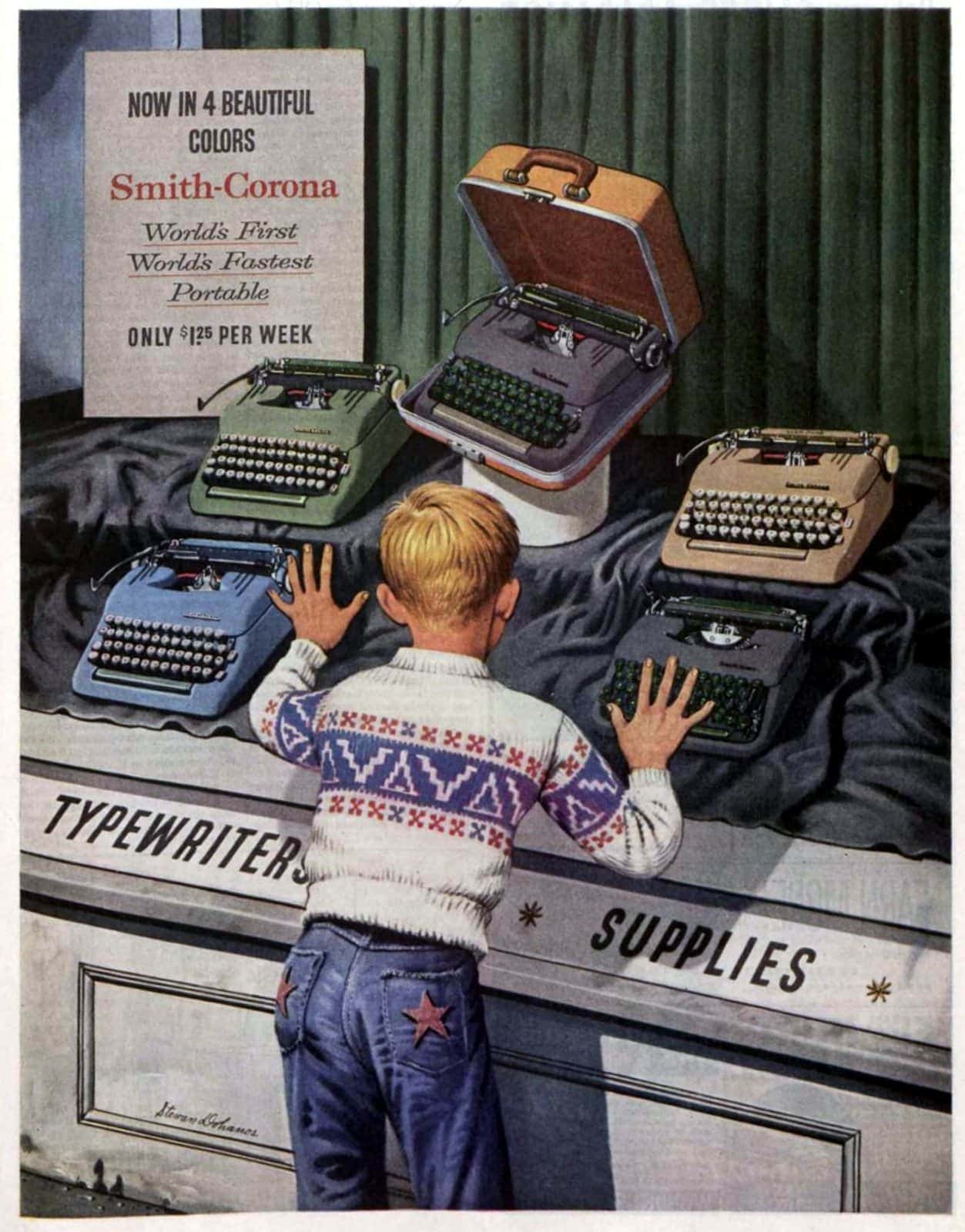
The Smith-Coronas were offered in 4 different colors.

The Remington Quiet-Riter was eventually offered in white sand, desert sage, mist green, and French gray,

The Royal HH was offered in 6 colors including green, pink, and blue. Brown was the most ubiquitous.
-
-
-
https://reddit.com/r/typewriters/comments/1ll06y7/metal_balls_came_out_of_my_typewriter_and_now_i/
We R Memory Keepers with ball bearings that fell out.
-
-
www.youtube.com www.youtube.com
-
Repairing typewriter broken carriage spring. #typewriters #Olympia #repairing by [[Subham Kumar]]
Tags
Annotators
URL
-
-
typewriterdatabase.com typewriterdatabase.com
-
Reinier Verkleij, a typewriter collector, aka u/DonaldDutchie on reddit via https://www.reddit.com/r/typewriters/comments/1ljl9xq/fraktur_erika_2/ and uploading of https://typewriterdatabase.com/1915-erika-2.25838.typewriter with Fraktur typeface.
-
-
www.reddit.com www.reddit.com
-
www.reddit.com www.reddit.com
-
www.facebook.com www.facebook.com
-
www.facebook.com www.facebook.com
-
https://www.facebook.com/groups/705152958470148/posts/988157953502979/

Dr. Who appearance of an Imperial typewriter
-
-
www.reddit.com www.reddit.com
-
https://old.reddit.com/r/typewriters/comments/1leoo6j/what_are_these_extra_symbols_on_this_erika_2/
Capital glyphs with ligatures can be indicators of Fraktur typefaces on German typewriters.
-
-
www.reddit.com www.reddit.com
-
www.reddit.com www.reddit.com
-
www.reddit.com www.reddit.com
-
-
https://www.reddit.com/r/typewriters/comments/1lhemm3/olympia_sm9_1973_model_platen_and_feed_roller/
Notes for platen removal on an Olympia SM9.
-
-
www.youtube.com www.youtube.com
-
when 17:54 I'm looking to add to my collection now 17:56 I want something a little bit different 17:58 and this this remette is that it's not a 18:01 portable it's not an ultra portable it's 18:03 really loud it doesn't have all of its 18:06 parts the top cover doesn't belong to it 18:08 and is Rusty there's a lot not going for 18:11 this machine but that's what I like 18:13 about it
-
-
www.facebook.com www.facebook.com
-
Gerren HotRod TypewriterCoThey are tough to install. It's not the taking things apart that gets you, it's putting it back together. I recommend not pulling a Royal carriage unless it's broken to the point there is no other option. If you like the color you can buy another $25 QDL and put the body on the new one. There is almost no reason to remove the carriage on these unless you need to replace it with another or swap out the main escapement
https://www.facebook.com/groups/705152958470148/posts/1010406587944782/
Removing the carriage of the Royal Quiet De Luxe is generally not recommended.
-
-
www.facebook.com www.facebook.com
-
My filmmaking crew is working on the script for a new typewriter documentary. The most prominent so far, California typewriter, was made in 2016 and much has changed.
via Gery L. Deer at https://www.facebook.com/groups/705152958470148/posts/1010578854594222/
-
-
www.reddit.com www.reddit.com
-
Several peoples' thoughts on new typewriters...
-
I saw one last week at Gary’s Typewriters in Long Beach, Ca. - someone just gave it to him as a joke or something - his review: “They ought to be ashamed of themselves!” I tried it, and he was being generous. It’s a piece of garbage. For the money you can get a nice restored machine. Or you could just light your money on fire. Either way it’d be a better experience.
u/georgeisamonkey is in the LA area https://www.reddit.com/r/typewriters/comments/1lenfgq/why_does_every_new_typewriter_look_like_garbage/
-
-
www.facebook.com www.facebook.com
-
site.xavier.edu site.xavier.edu
-
Olympia SG1 service manual: text, illustrations Olympia SG1 parts catalog and price list (1961)
Repair manual and parts catalogs and price list for Olympia SG1 typewriters
-
Olympia SG1 Olympia SG1 (Dutch)
manuals for the Olympia SG1 typewriter
-
-
www.amazon.com www.amazon.com
-
https://www.amazon.com/Pattern-Thermos-Insulated-Stainless-Tumbler/dp/B0DQT9J4WM?th=1
Gift idea for typewriter restorers, repairpeople, etc. h/t Bryan of Typing Pint.

-
-
www.cbsnews.com www.cbsnews.com
-
A classroom full of typewriters gets the ultimate reward — letters from Tom Hanks by [[Lee Cowan]], [[Analisa Novak]]
Also: Students wrote letters to Tom Hanks using typewriters. He responded to each message. by [[CBS Mornings]]
Pittsburgh area school sent letters via typewriter to Tom Hanks.
-
-
www.reddit.com www.reddit.com
-
$600 for refurbishing a machine that only cost $250 is not a great investment. I think your prices are a bit unrealistic. As far as the posts go: there are always two sides to every story🤷♀️
reply to u/SisterGoldenHair70 at https://reddit.com/r/typewriters/comments/1lbjr5f/sorry_to_say/mxz1ag2/
I'm honestly curious about your definition of a "machine that only cost $250" is? Make/Model? Where was it bought? What is the actual condition (both cosmetic exterior and mechanical interior as well as cleanliness)? Also, what is your definition of investment with respect to how you're going to use it? Is it a display machine? Is it for display and the occasional addressed envelope or grocery store list? Or is it something you're planning on giving moderate to heavy use on a daily or weekly basis as a professional writer?
Most typewriter repair shops won't spend more than $20 on purchasing a machine and typically they're getting machines donated for free (or for the cost of coming to pick them up); then they spend hours to clean, oil, adjust, repair and restore them for sale in the $400-600 range unless they've got rarer colors or typefaces. (At this level, you're probably not getting any new rubber at all.) The level of restoration is definitely a choice as there are restorers out there who can easlily charge in the $1,500+ range depending on how much work you want done and to what level.
As an example, if someone chooses to spend $120-200 pus shipping on something like an old/dirty Olympia SM3 with old gaskets from an outlet like ShopGoodwill.com (the current going rate for one in unknown condition and only using photos) that is going to need several hundred dollars of repair work, that's their choice. If they don't have the expertise, it's far better to buy one outright in the $500 range from a shop. Usually people are just keeping that $120 machine and limping along with what it offers instead of cleaning it up or they attempt to do the clean up work themselves. This work may seem "free", but it's time, effort, and expense of one sort or another. Economists call this opportunity cost.
There is a massive information imbalance in the typewriter market between buyers and sellers, because incredibly few people really have any idea of what they've got and what sort of condition it is in. This imbalance means that most professional shops are an absolute steal if you're looking for something in excellent condition that's going to be a work-a-day typewriter or be in good shape for another 50-75 years.
As a small example, an indiviual could call JJ Short and get a platen recovered for around $100 plus two way shipping, but you take it to a shop and you're probably looking at $180 because they're going to charge you for the time, effort, and cost of knowing what to do, where to ship it, taking it off, putting it back on, and doing the appropriate ring & cylinder, on-feet, and motion adjustments on
-
reply to u/TypewriterJustice at https://old.reddit.com/r/typewriters/comments/1lbjr5f/sorry_to_say/mxunsb6/
I think the real crime here was the quote of $200 for all this work. $200 should just barely cover the recovered platen, rollers, and new feet with any margin. The full clean, oil, and adjust is a few more hours at $40-75/hour and that's not even getting to the parts or labor on the tougher troubleshooting and repair portions. With this rough diagnosis and potential issues, I (and many others I'm sure) would be quoting closer to $500-600 for a refurbish job at this level.
Living in the LA area, I'm blessed to have 7 shops within a reasonable drive, but if I put a machine into the queue at most of them it'd be a two or three month's wait time at the very best. Most of them have been at the game for decades much less in the midst of also recently setting up a brick and mortar shop.
As a point of comparison, Lucas Dul publishes his wait list on his website (currently 84 people) where he states "Average repair cost is $300-350 for general cleaning, service, and minor repairs. Average turnaround time is 2-3 weeks." Perhaps Charlie might benefit from creating a wait list and not taking machines into the shop until his time and attention can turn directly to them?
It's not often addressed here in this fora how much one should expect to either pay or wait for repair services which aren't evenly distributed across the United States and likely even less so in many other countries. In the broader scheme of things, I think that you get a far better deal at professional shops than you're going to find within the broader public of so-called typewriter sellers (antique shops, thrift stores, etc.)
As a point of reference, I'm an advanced hobbyist with my own garage-based shop for my personal collection and even I get one or two queries a week about repairing or restoring the machines of others, so I'm at least reasonably aware of what some of the wait times can look like. I wish I had the time or stock of parts machines to do more than a handful of friends and family repairs on top of my own personal repair work.
Sadly, at the end of the day, it sounds like both sides were potentially not good at communicating expectations about how long repairs would take. If nothing else we should all be sharing more details about these issues to help level set how this all works for the broader typewriter community.
-
-
www.reddit.com www.reddit.com
-
https://www.reddit.com/r/typewriters/comments/1lbsu6s/need_help_to_identify_a_typewriter/
Screencapture of a typewriter from Indiana Jones and the Last Crusade<br />

My impression:<br /> The hood profile shape says Royal while a lot of the body says '49/50s Remington (maybe the All-New), but the scoop in the hood says Rheinmetall Gs all the way. For comparison: https://typewriterdatabase.com/Rheinmetall.Gs.62.bmys
-
-
www.reddit.com www.reddit.com
-
www.reddit.com www.reddit.com
-
Typewriter repair people on r/typewriters:
- Lucas Dul of Typewriter Chicago: u/Lucasdul2 #
- Kirk Jackson of Nashville Typewriter: u/NashvilleTypewriter
- Scott Connnors of Stephentown Typewriter: u/scottconnors #
- Typewriter Justice of Keller, TX: u/TypewriterJustice
-
-
www.reddit.com www.reddit.com
-
typewriter repairman here - with magnification & needle files it is sometimes possible to reshape the squashed portion of the slug(which usually requires repositioning it afterwards to get an even print) but my advice is to embrace it as part of what makes that particular machine unique…there’s literally no such thing as perfection, and twenty years from now you’ll be able to look at something you wrote & go “ohhhh this was done on that Olivetti…” (and yes, you could also replace the slug completely, but that’s a whole different can of worms)
via TypewriterJustice at https://www.reddit.com/r/typewriters/comments/1lb8brp/type_slug_question/
-
-
www.reddit.com www.reddit.com
-
www.reddit.com www.reddit.com
-
Example of using a typewriter and a roll of cash register paper to score a baseball game.
-
-
www.bbc.co.uk www.bbc.co.uk
-
'Last' UK typewriter built in Wrexham
Brother manufactured 5.9 million typewriters in Wrexham, Wales from 1985-2012.
-
-
www.reddit.com www.reddit.com
-
https://www.reddit.com/r/typewriters/comments/1l8m84q/putting_the_imperial_back_into_service_again/
Use of a typewriter in inhospitable environments (cold, no cell service, remote)
-
-
www.youtube.com www.youtube.com
-
Tom Hanks' love of typewriters by [[CBS Sunday Morning]] by Lee Cowan
-
-
www.youtube.com www.youtube.com
-
Typewriter Typefaces: Pica vs Elite, an explainer https://www.youtube.com/watch?v=qwCD69jUPps
Pica machines (10 characters per inch) will usually have a scale up to about 80-84.
Elite machines (12 characters per inch) will have a scale up to 100.
On Olympia machines, script only comes in Elite sizes (scale to 100 on platen).
Edit: fixed the appropriate CPI numbers
-
-
www.reddit.com www.reddit.com
-
www.ebay.com www.ebay.com
-
https://www.ebay.com/itm/336005327511
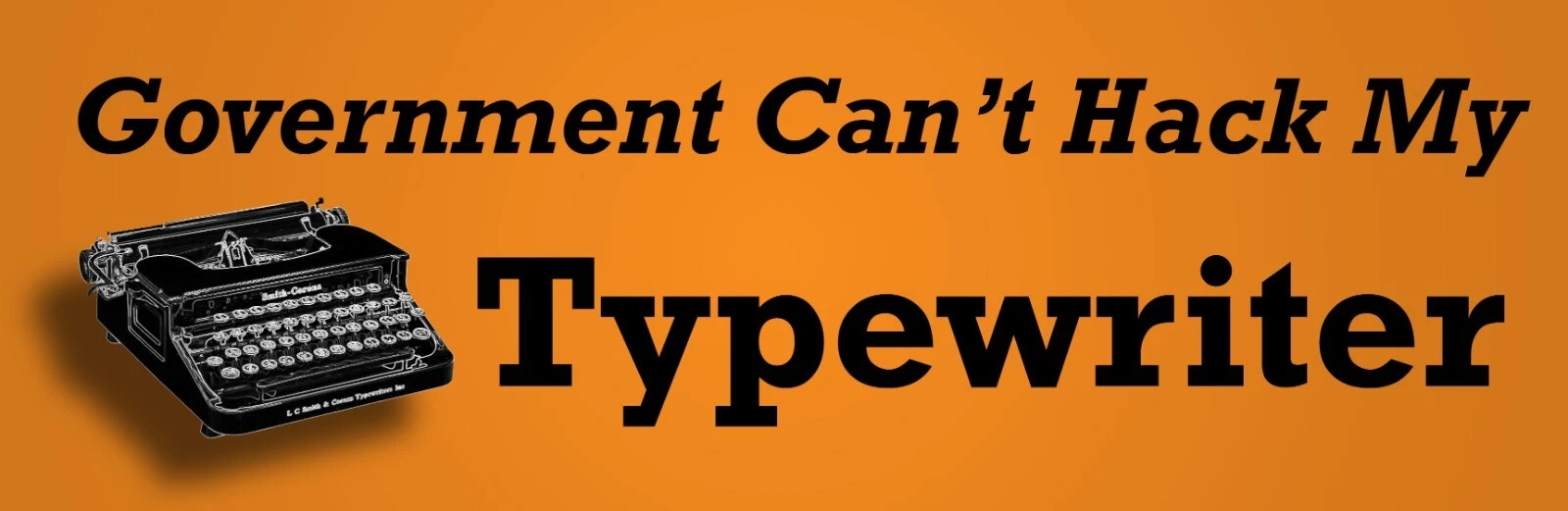 A bumper sticker that reads: "Government Can't Hack My Typewriter" with an image of a Smith-Corona flattop.
-
-
www.reddit.com www.reddit.com
-
www.reddit.com www.reddit.com
-
www.reddit.com www.reddit.com
-
7.6 is the motion (distance between the baseline of lower- and uppercase characters) in millimeters.
-
Ro1T is RaRo Modern Pica typeface.
-
-
www.reddit.com www.reddit.com
-
www.reddit.com www.reddit.com
-
www.reddit.com www.reddit.com
-
www.youtube.com www.youtube.com
-
https://www.youtube.com/watch?v=4rYHNg3pM34
Second edition of this video...
The Secretary: Transcribing (Second Edition) Coronet Instructional Films, a division of Esquire, Inc., 1966<br /> James R. Meehan, Ed.D, Dean of Administration Hunter College of the City University of New York
-
-
www.youtube.com www.youtube.com
-
Typing Skills: Fields of Typing. 16 mm, Instructional film. Periscope Film, 1972. https://www.youtube.com/watch?v=LvF0atKsggY.
Typing Skills: Fields of Typing <br /> Coronet Instructional Films, a division of Esquire, Inc., 1972<br /> Lawrence W. Erickson, Ed.D. Professor of Education, University of California, Los Angeles<br /> Production: Coronet Films and Creative Establishment, Inc.<br /> Director and Writer: Don B. Klugman<br /> Photography Robert Flaxman<br /> Editing: Barbara Kaplan
Periscope Film XD72104 archived at https://stock.periscopefilm.com/xd72104-typing-skills-fields-of-typing-1972-typewriter-based-careers-educational-film/
Alternate version at https://www.youtube.com/watch?v=lMmsE6GMIR8
Warm ups of fingers
Rules of good typing - concentrate on the copy
Typewriters in the piece: <br /> - Olivett editor 5<br /> - Others...
- copy typing - types material already written or typed
- setting margins
- centering letters on page
- formatting and spacing
- double spacing with wide margins
- editor's marks
Backspace from center method for setting tab stops
Uses for typewriters:<br /> - check writing - billing - chain feeding - financial records and reports - filling in forms - carbon copies
index and file cards - inserted into a pleated page which may have lines.
-
-
www.youtube.com www.youtube.com
-
Successful Secretary Presented by Royal Office Typewriters. A Thomas Craven Film Corporation Production, 1966. https://www.youtube.com/watch?v=If5b2FiDaLk.
Script: Lee Thuna<br /> Educational Consultant: Catharine Stevens<br /> Assistant Director: Willis F. Briley<br /> Design: Francisco Reynders<br /> Director & Producer: Carl A. Carbone<br /> A Thomas Craven Film Corporation Production
"Mother the mail"
gendered subservience
"coding boobytraps"
"I think you'll like the half sheet better. It is faster." —Mr. Typewriter, timestamp
A little bit of the tone of "HAL" from 2001: A Space Odyssey (1968). This is particularly suggestive as H.A.L. was a one letter increment from I.B.M. and the 1966 Royal 660 was designed to compete with IBM's Selectric
This calm voice makes suggestions to a secretary while H.A.L. does it for a male astronaut (a heroic figure of the time period). Suddenly the populace feels the computer might be a bad actor.
"We're living in an electric world, more speed and less effort."—Mr. Typewriter<br /> (techno-utopianism)
Tags
- productivity
- IBM selectric
- 2001: A Space Odyssey (1968)
- Royal typewriters
- efficiency
- effort
- 1966
- quotes
- typewriter shortcuts
- H.A.L.
- power over
- voice over
- Royal 660
- artificial intelligence as overlord
- Mr. Typewriter
- gendered subservience
- typewriters
- techno-utopianism
- secretaries
- typewriter ads
Annotators
URL
-
-
www.reddit.com www.reddit.com
-
www.reddit.com www.reddit.com
-
Not unusual to see regular pica spaced rulers on very small (18-21 cpi). They weren't common enough to warrant making new rulers.
via u/Koponewt (Otto)
-
https://www.reddit.com/r/typewriters/comments/1l2ayq1/any_font_smaller_than_elite/
-
-
www.gettyimages.com www.gettyimages.com
-
www.nytimes.com www.nytimes.com
-
Jack Handey Is the Envy of Every Comedy Writer in America by [[Dan Kois]]

-
-
www.reddit.com www.reddit.com
-
blog.bruchez.name blog.bruchez.name
-
www.reddit.com www.reddit.com
-
I've been wanting to learn electroplating so I bought the variable power supply and an anode. I had the rest. I made my own nickel acetate with vinegar and my own pickle with water and muriatic acid, baking soda in water to neutralize. Mother's to polish metals. It's my go to. Fabric was denim and poly canvas. Cheap poly grosgrain ribbon to hide my sins. 3M spray adhesive, contact cement, and fabric glue. I used double cap rivets for the hardware.
-
https://www.reddit.com/r/typewriters/comments/1l15xt2/1951_smith_corona_sterling_recovered_case/
-
-
www.reddit.com www.reddit.com
-
www.reddit.com www.reddit.com
-
https://www.reddit.com/r/typewriters/comments/1l0o9ax/what_is_the_difference_if_any_between_de_luxe/
Differences in Olympia SG1 typewriters
-
-
www.reddit.com www.reddit.com
-
https://www.reddit.com/r/typewriters/comments/1l11y1d/not_for_the_purists/
PB B'laster apparently doesn't destroy the plastic keys of a Smith-Corona 5 series.
Simple Green will peel the paint off of a typewriter in a few days.
-
-
-
If you're looking for pink, here's a shop that repairs and refinishes them (repaints) in pink: https://karlbusinessmachines.com/pink-typewriters/
As for natural pink manufactured typewriters, you're probably primarily looking at the Royal Quiet De Luxe (circa '55-58), Royal Futura 800, Royal FP (a larger heavy, standard desktop machine), the late 50's Smith-Corona 5 series (Clippers, Sterlings, Silent Supers). There were a few later in the 60s and 70s, but they're more difficult to find in the US and aren't as solid. These aren't rare typewriters, but generally because the collector's market likes color, you should expect to pay a $50-150 premium for pink in most online markets. Professional shops are much less likely to charge this sort of premium on pink unless it's for a machine they've had to strip down and repaint. (See also: https://www.reddit.com/r/typewriters/comments/1kw5jxh/what_are_your_thoughts_on_these_and_the_prices/)
For colloquial experience from a typewriter hunter from the Los Angeles area, I'll say I've been looking for a Cameo Pink smooth Royal FP for over a year and finally found one in solid, but restorable shape for $35, but it's taken a year of searching and it'll take a half-day's labor and some parts to clean it up to what a professional shop would consider solid working condition. In that time I've seen maybe half a dozen in online shops sell them in similar rough condition going for anywhere between $100 and $300. For your budget range, getting one from a professional shop is really the best, most economical way to go.
Please note that you positively don't want any of the new pink plastic typewriters made by "Royal Classic" or "We R Memory Keepers" (etc.) which you'll find on Amazon, Michaels, Home Depot, etc. for $200-300. They are dreadful machines, and if you really want one, save the money and buy one from ShopGoodwill.com for $5-15 instead.
If you wanted to go custom in your particular budget range, you might check out Gerren's work at Hot Rod Typewriter Co. where he does some truly gorgeous paint jobs on excellent typewriters. I suspect a pink Olympia SM3 from him would be a thing to behold.
Reply to u/dtja1l at https://old.reddit.com/r/typewriters/comments/1l0l6pi/help_finding_a_thoughtful_typewriter_as_a_gift/ with regard to buying a pink typewriter for a birthday present
-
-
karlbusinessmachines.com karlbusinessmachines.com
-
www.reddit.com www.reddit.com
- May 2025
-
www.reddit.com www.reddit.com
-
Try a toothbrush with a long, thin handle and a small head.
The brushes sold with many metal and rubber straws or thin bottle brushes are also excellent for reaching into places like this. Sometimes you can find similar thin brushes in the baby bottle section of big box retailers or specialty stores doing baby goods.
Similarly a plastic oiler with mineral spirits in combination with an air compressor/blow gun or canned air is also a solid way to go.
Long handle cotton swabs can also be used if necessary.
reply to u/General-Writing-1764 at https://old.reddit.com/r/typewriters/comments/1l05a17/i_dont_think_that_superficial_dust_should_be_a/
-
-
www.reddit.com www.reddit.com
-
https://www.reddit.com/r/typewriters/comments/1kzw0fk/your_typewriter_collection/?sort=old
-
reply to u/Back2Analog at https://old.reddit.com/r/typewriters/comments/1kzw0fk/your_typewriter_collection/?sort=old
-
Total: I currently have 53 with 2 incoming and 1 outbound. About 12 are standards, 7 ultra-portables, and the remainder are portables. Maybe a dozen non-standard typefaces including 2 Vogues and a Clarion Gothic. You can find most of the specifics at https://typewriterdatabase.com/typewriters.php?hunter_search=7248 or on my site at https://boffosocko.com/research/typewriter-collection/#My%20Typewriter%20Collection
-
Display: I've usually got eight displayed in various places around the house including three on desks, but ready to actively type on. The remainder are in cases either behind our living room couch or a closet for easy access and rotation. I'm debating a large credenza or cabinet for additional display/storage space. There are two machines out in the garage, and one currently disassembled on our dining room table (my wife isn't a fan of this one right now).
-
About 25 have been cleaned and mostly restored, most are functional/usable, but need to be cleaned, repaired, or restored to some level. One is a parts machine. I always have a Royal KMG, a Royal FP, and two other standards out ready to go and rotate the others on a semi-weekly basis. There's usually at least one portable in my car for typing out in the wild.
-
Use cases: I spend a few hours a day writing on one or more machines and use them for nearly every conceivable case from quick notes (zettels), letters, essays, lists, snide remarks, poetry, etc., etc. I should spend more time typing for the typosphere. Because I enjoy restoring machines maybe even more than collecting them, I've recently started taking mechanic/restoration commissions.
-
At 50 machines, I'm about at the upper limit of my collecting space. I've given away a few to interested parties, and sold a small handful that I didn't use as frequently. I'm currently trying to balance incoming versus outgoing and might like to get my collection down to a tighter 35-40 machines in excellent condition.
-
Next typewriters: I'm currently looking for an Olympia SG1, a Royal Ten, a Hermes Ambassador, and a Hermes 3000. I'm also passively looking for either very large (6 or 8 CPI) or very small typefaces (>12CPI). I'm definitely spending less time actively hunting these days and more time restoring. I'm tending towards being far more selective in acquisitions compared to my earlier "acquisition campaign".
-
Miscellaneous: I enjoy writing about typewriter collecting and repair to help out others: https://boffosocko.com/research/typewriter-collection/
-
-
I recently found the Remington Mark II as a compromise since I have not been able to find a Torpedo 18B at a decent price and they are mechanically identical.
-
Writing letters mostly to people from InCoWriMo or (more frequently) TypePals.com I often will write short stories for my kids or journaling entries, though I have been writing more journal entries with fountain pens these days.
via u/brianlpowers at https://www.reddit.com/r/typewriters/comments/1kzw0fk/your_typewriter_collection/?sort=old
-
-
www.youtube.com www.youtube.com
-
https://youtu.be/_rqIW9SszPg?si=Qii9SO0-N8u1NKMD&t=511
Keanu Reeves has a typewriter collection of 5 typewriters according to a Toronto Film Fest interview in 2013.
Tags
Annotators
URL
-
-
www.womenshealthmag.com www.womenshealthmag.com
-
"I collect vintage typewriters. I like the sound and feel of the keys. There's something satisfying about having a thought, then seeing it on the page."
Keanu Reeves via Keanu Reeves: 'I Worry That People Won't Like What I Do' by [[Cathryne Keller]] for Women's Health
-
-
parade.com parade.com
-
Q: Do you use a pen to write?A: Actually, I prefer a typewriter. I enjoy the sensation of sitting down and taking time to think about what I want to say and then, typing, which has a kind of physicalness to it as the imprint goes on the paper. It's also something that doesn't take batteries.
-
-
www.reddit.com www.reddit.com
-
Reply to u/eJelly at https://old.reddit.com/r/typewriters/comments/1kyf66p/ribbon_replacements_for_smith_corona_corsair/
Typically Corsair spools are 1 5/8" in diameter and sometimes listed as 1 2/3" in diameter. Ribbons Unlimited carries them if you need both the spools AND the ribbon: https://www.ribbonsunlimited.com/category-s/12685.htm
Otherwise, if you have spools that already fit, then just buy the ribbon and spool it onto your empty spools to save the $10-15 for the extra spools. See: https://site.xavier.edu/polt/typewriters/tw-faq.html#q1
The eyelets are for doing the ribbon auto-reverse on Smith-Corona machines, but your print will go faint when you reach the end and you can do the reverse manually if necessary.
As a pending birthday stop-gap, I have done the trick before of typing on a blank sheet with a carbon paper and a second sheet behind it. You won't be able to easily see what is on the first sheet, but you'll have the carbon copy behind it!
If you're in a bind, many of the big-box office supply stores carry 1/2 inch wide ribbon for calculators which you could spool into your existing typewriter spools as well. Typically these are much shorter in length, but they'll work in a pinch.
-
-
site.xavier.edu site.xavier.edu
-
Screenwriters, Directors, Actors, and playwrights * Woody Allen Olympia SM3 * Julie Andrews IBM Selectric I * Paul Auster: Olympia SM9 * Ingrid Bergman: Smith-Corona Skyriter * Ray Bradbury: Underwood (No. 5?), Royal KMM * Marlon Brando: Royal Arrow or Aristocrat * Bertolt Brecht: Erika * Richard Brooks: Royal KMM, Royal Portable (30s or 40s) * Mikhail Bulgakov: Olympia 8 * George Burns: Royal HH * Stephen J. Cannell: IBM Selectric II or III * Johnny Carson: Royal KMM (or maybe a KMG), Olivetti Lettera 22 * Paddy Chayefsky: Underwood Standard Model 6, Royal HH, Olympia SG3 * Francis Ford Coppola: Olivetti Lettera 32 * Norman Corwin: Flattop Corona, Royal KMM * Noel Coward: Royal KH, Imperial Standard, Olivetti-Underwood Studio 44 * Michael Crichton: Olympia electric, IBM Selectric I * Bing Crosby: Corona 3, 1920s Royal portable * Bette Davis: Remington Noiseless portable * Joe Eszterhas: Olivetti Lettera 35 * Douglas Fairbanks: Underwood 5 * Federico Fellini: Olivetti Studio 44 * Jodie Foster: Olivetti Lettera 35 * Stephen Fry: Hermes 3000 * Greta Garbo: Olympia SM 7 * William Gibson: Hermes 2000 * William Goldman: Olympia SM9, Olympia SM9, Hermes Baby, Olympia Traveller<br /> Matt Groening: Hermes Rocket<br /> Oscar Hammerstein II: Royal portable * Tom Hanks: Smith-Corona Clipper, Hermes 2000, Hermes 3000<br /> Katherine Hepburn: Royal De Luxe * Alfred Hitchcock: '30s black Underwood Champion portable * John Hughes (director): Olympia SM3 * Eric Idle: Adler J3 * Elia Kazan: Royal KMG, Royal HH<br /> Buster Keaton: Blickensderfer no. 5 * Grace Kelly: Remington Super-Riter * Stanley Kubrick: IBM Model C, Adler Tippa S * Ring Lardner: L. C. Smith * Stan Lee: Remington noiseless portable, Olympia SG1 * Ernest Lehman: Royal Electress * David Letterman: Royal Empress * David Mamet: Smith-Corona portable, Olympia SM4, Olympia SM9, IBM Selectric * Terrence McNally: Olympia SG3 * Arthur Miller: Smith-Corona portable in the late '30s50s Smith; -Corona Silent Super; Royal KMG * Henry Miller: Underwood * F. W. Murnau: Remington portable no. 2 * David Niven: Royal Quiet DeLuxe, 1940s * Christopher Nolan: 1940s (?) Royal portable * Conan O'Brien: Royal 10 * Clifford Odets (1962): Royal Quiet DeLuxe, ca. 1957 * Louis Pollack (screenwriter): Royal desktop * Mario Puzo: Royal HH * Carl Reiner: Royal KMG, 1950s Smith-Corona Silent * Gene Roddenberry: IBM Selectric I, IBM Selectric II or III, Panasonic * Fred Rogers (Mr. Rogers): 1930s Royal portable (Model O?), Royal KMG * Rod Serling: Royal KMG * George Bernard Shaw: Bar-Lock; Remington portable no. 1; Smith Premier (Remington); Remington Noiseless Portable * Sam Shepard: '60s Hermes 3000, Olympia SM9 * Neil Simon: Olympia SM9 * Steven Spielberg: Smith-Corona Coronamatic 2200 * John Millington Synge: Blickensderfer #5 * Shirley Temple: white Student (Bing variant), white Underwood Champion portable, white Remington portable no. 5 or similar * David Thewlis: Olympia SM9 * James Thurber: Underwood no. 5 * Dalton Trumbo: Underwood, Royal KHM, IBM A or B * John Waters: ca. 1950 Underwood, IBM A or B * Orson Welles: 1926 woodgrain Underwood portable, ’30s Underwood Noiseless Portable, Smith-Corona (?) * Tennessee Williams: Remington portable no. 2, 1936 Corona Junior, mid-1940s Corona Sterling, Royal KMM, Hermes Baby, Olivetti Studio 44, Remington portable #5 flat top, Remington Standard M, Olympia SM8
-
-
timpanogos.blog timpanogos.blog
-
https://timpanogos.blog/2013/07/20/typewriter-of-the-moment-supermans-1950s-television/

-
-
www.reddit.com www.reddit.com
-
www.youtube.com www.youtube.com
-
Typewriter Video Series - Episode 189: Underwood SX by [[Joe Van Cleave]]
Joe mentions, again, how standards fill up your field of view and aid in cutting out distractions so you can focus more while writing.
At the end Joe talks about the hobby of repairing typewriters.
Tags
Annotators
URL
-
-
www.reddit.com www.reddit.com
-
archive.org archive.org
-
The average American is seldom far removed from Henry Dreyfuss’s influence. When he picks up a Bell telephone, rides a John Deere tractor, scoots a Hoover vacuum over a rug, writes with an Eversharp pen, pounds a Royal Typewriter, awakens to a Westclox Big Ben, thumbs a Minneapolis-Honeywell thermostat, sprawls in a Statler Hotel room in Washington, yanks open the door of a GE refrigerator, focuses an Ansco camera, shoots a 105millimeter ack-ack gun, or swats a fly with a U.S. Manufacturing €orp. fly swatter, he is utilizing Henry Dreyfuss’s skill and pay-‘ing him a tribute which runs annually intoseven figures.
-
DESIGN:The Dreyfuss Touch
Newsweek Staff. “Design: The Dreyfuss Touch.” Newsweek, October 4, 1948. Http://archive.org/details/sim_newsweek-us_1948-10-04_32_14. Internet Archive. https://archive.org/details/sim_newsweek-us_1948-10-04_32_14/page/62/mode/2up.
-
-
www.reddit.com www.reddit.com
-
archive.org archive.org
-
The Motive Puzzle: The tip which led to Bolton’s arrest had come from John Miller of Highland Park, now awaiting sentence with John Pantello for burglary. Miller told the police: “Bolton offered me and John Pantello fifteen grand to bump off Reuther.” Later, he added, Bolton hid two shotguns in Miller’s home. Several hours before the near-fatal shooting, Bolton came after the guns. “I want my two typewriters,” he said, according to Miller. “[’m going out and kill me a redheaded Communist,” Bolton was quoted as adding, with complete disregard of Reuther’s staunch anti-Communism.
p. 41 of Newsweek (US Edition) 1948-10-18: Vol 32 Iss 16
https://archive.org/details/sim_newsweek-us_1948-10-18_32_16/page/40/mode/2up?q=typewriter
Typewriters as a colloquialism for shotguns in a murder investigation in 1948 Michigan.
-
-
www.reddit.com www.reddit.com
-
I repaired it using 2-part epoxy, and fiberglass dry wall tape. First routed out the path of the crack, and created a little reservoir for the glue just past the end of the crack, then applied the tape and worked the epoxy into the voids. I've been using it for a week now, and it looks like it's going to hold just fine.
-
-
www.reddit.com www.reddit.com
-
https://www.reddit.com/r/typewriters/comments/1kunlxr/the_rules_of_typewriter_club/
Just like most areas of life relating to expertise, it's nice to have a broad set of rules when you start out. Then as your knowledge of the arts and sciences grow, you can begin to "paint outside the lines."
Once you've used, tinkered on, collected, repaired, or restored more machines than there are rules, then you can consider them more like guidelines and feel free to experiment more freely. By that point you'll have enough experience to be a true typewriter artist. ⛵🧑🎨🎨🏴☠️
-
-
www.reddit.com www.reddit.com
-
https://www.reddit.com/r/typewriters/comments/1kvhyol/anybody_else_used_these/
NOS Scotch Typewriter Cleaner No. 575
-
-
www.reddit.com www.reddit.com
-
A house is not a home without a typewriter.
via u/leapwolf at https://boffosocko.com/2025/05/17/acquisition-1966-underwood-touch-master-five-standard-typewriter/
-
-
www.reddit.com www.reddit.com
-
www.reddit.com www.reddit.com
-
https://www.reddit.com/r/typewriters/comments/1kukxjf/another_cotton_vs_nylon_ribbon_comparison/
cotton typewriter ribbon vs. nylon typewriter ribbon

-
-
www.reddit.com www.reddit.com
-
It's oil cloth, but not the kind made today, sadly. Contact cement is fine. For a refurb, take lots of pictures. Undo any screwed in components (usually the handle and a couple springs). Using a dremel or similar rotary tool, gently grind down the inside cap of each rivet. It's easiest to use a pin and hammer to knock them out and avoid damaging the wood rather than prying the hardware up. Set aside the hardware for cleaning. Sometimes they're split rivets (which I loathe) and you have to be VERY careful to not wreck the wood pulling those. LOATHE. Get the case WET. It'll soften the glue, make it far easier to remove and keep the glue dust out of your lungs. Pay attention to the order in which it comes off and where the various cuts are made. Scrub the case clean. Let it FULLY dry. Sand any uneven areas and patch what needs patching. Make placement templates in case you have trouble locating the original holes for the hardware. Ensure your rivets or attachment parts will work with the existing holes, modify if needed. Install the internal top and bottom lining. Install the hardware with a pop rivet gun. Put the outside upholstery on. Install the handles/feet/rest. Put the sidewall lining in. Seal any surfaces as desired. Done. If the wooden case is beyond repair but hardware is good, you can build a new case and use the same hardware provided the internal dimensions and hardware placements match the original. I'm mid process on two portable wooden cases or I'd show pics.
https://www.reddit.com/r/typewriters/comments/1ksx0qy/adhesive_to_fix_peeling_covering_on_cases/
-
-
www.youtube.com www.youtube.com
-
these 7:36 are the ones i picked up and these were 7:38 three and three-fourths by four by 7:40 one-eighth
Sarah Everett has used water filter o-rings of 3 3/4 x 4 1/8 to replace the drive belts of her electric typewriters.
-
-
www.youtube.com www.youtube.com
-
Smith Corona H Electronic Typewriter Repair High Pitch Buzz Rattle Disassemble Fix by [[Phoenix Typewriter]]
-
-
www.amazon.com www.amazon.com
-
onmilwaukee.com onmilwaukee.com
-
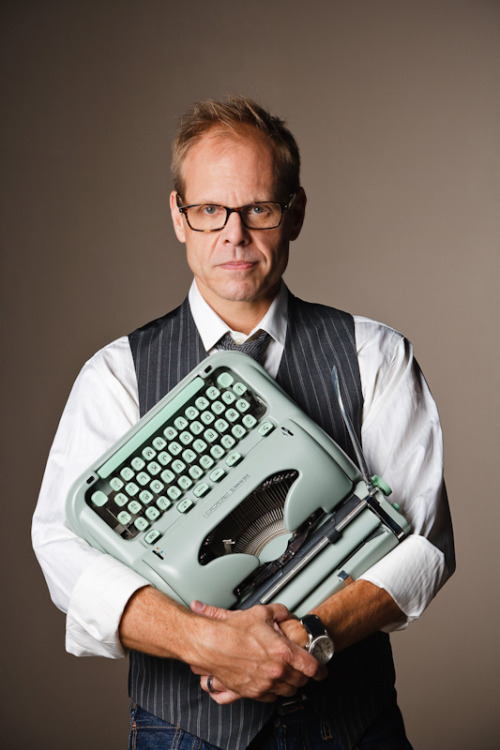
The one on the cover of your book, the Hermes 3000, is that your favorite? Absolutely. It’s a rock solid portable. I have four of them. I also like the Hermes Rocket, Olympias, Olivettis. I use them constantly.
-
How many typewriters do you own? Currently, about 15.
In 2025, Alton Brown indicated that he owned 15 typewriters.
-
-
typecast.munk.org typecast.munk.org
-
www.youtube.com www.youtube.com
-
What Did The Late Show Get Trump For His 70th Birthday? by Stephen Colbert
This office set up for Stephen Colbert includes a black Underwood portable typewriter in a black case in the background.
-
-
www.tumblr.com www.tumblr.com
-
www.facebook.com www.facebook.com
-
Alton Brown Verified accountSeptember 6, 2015 · Shared with PublicBehold the sublime Hermes 3000. Still my favorite writing device.
-
-
www.reddit.com www.reddit.com
-
writingball.blogspot.com writingball.blogspot.com
-
www.reddit.com www.reddit.com