Within functions, you may want to check that you are not referencing something that is not valid (i.e., null) and that array lengths are valid before referencing elements, especially on all temporary/local instantiations.
10,000 Matching Annotations
- Apr 2021
-
en.wikipedia.org en.wikipedia.org
-
-
In this practice, only errors from outside the program's control are to be handled (such as user input); the software itself, as well as data from within the program's line of defense, are to be trusted in this methodology.
-
-
en.wikipedia.org en.wikipedia.org
-
Operating systems implement a command-line interface in a shell for interactive access to operating system functions or services.
-
Today, many users rely upon graphical user interfaces and menu-driven interactions. However, some programming and maintenance tasks may not have a graphical user interface and may still use a command line.
-
-
-
en.wikipedia.org en.wikipedia.org
-
If no file is detected (in case, it's being run as part of a script or the command is being piped)
How does it detect that it's being run non-interactively as part of a script?
Is that distinct/different from detecting whether the command is being piped?
-
The command also can be run in silent mode (tty -s) where no output is produced, and the command exits with an appropriate exit status.
-
-
en.wikipedia.org en.wikipedia.org
-
The role of the terminal emulator process is:
Shows the relationship between a "terminal emulator" and a pseudoterminal, as alluded to in the intro:
is a pair of pseudo-devices, one of which, the slave, emulates a hardware text terminal device, the other of which, the master, provides the means by which a terminal emulator process controls the slave.
-
TTY is right there in the name, but this article makes no attempt to clarify what exactly the relationship between a pseudoterminal and a TTY. I feel like a whole paragraph about the relation to TTY would be warranted, including a link to TTY article, of course, which does link [back] to and explain some of the relation to pseudoterminal:
In many computing contexts, "TTY" has become the name for any text terminal, such as an external console device, a user dialing into the system on a modem on a serial port device, a printing or graphical computer terminal on a computer's serial port or the RS-232 port on a USB-to-RS-232 converter attached to a computer's USB port, or even a terminal emulator application in the window system using a pseudoterminal device.
-
Screen and Tmux are used to add a session context to a pseudoterminal, making for a much more robust and versatile solution. For example, each provides terminal persistence, allowing a user to disconnect from one computer and then connect later from another computer.
-
The terminal emulator process must also handle terminal control commands, e.g., for resizing the screen.
-
The Windows Console was extended to have a PTY interface called ConPTY in 2018.
-
In the BSD PTY system, the slave device file, which generally has a name of the form /dev/tty[p-za-e][0-9a-f], supports all system calls applicable to text terminal devices.
Tags
- layers that build upon other layers to add more features (software)
- screen/tmux
- cross-linking
- easy to forget
- compatibility
- better late than never
- TTY
- role/job/responsibility/function/purpose
- terminal
- what is the relationship between?
- annotation meta: may need new tag
- missed opportunity
- terminal emulator
- pseudoterminal
Annotators
URL
-
-
en.wikipedia.org en.wikipedia.org
-
Example
This clarifies that (one of) the terminal's responsibility is:
- provides line editing
-
Streams could also be used for inter-process communication, by connecting two processes to pseudoterminals.
-
STREAMS originated in Version 8 Research Unix, as Streams (not capitalized).
-
In this framework, a stream is a chain of coroutines that pass messages between a program and a device driver (or between a pair of programs)
coroutines message passing
-
-
en.wikipedia.org en.wikipedia.org
-
The agent stimulates the body's immune system to recognize the agent as a threat, destroy it, and to further recognize and destroy any of the microorganisms associated with that agent that it may encounter in the future
second annotation
-
A vaccine is a biological preparation that provides active acquired immunity to a particular infectious disease.[1] A vaccine typically contains an agent that resembles a disease-causing microorganism and is often made from weakened or killed forms of the microbe, its toxins, or one of its surface proteins. The agent stimulates the body's immune system to recognize the agent as a threat, destroy it, and to further recognize and destroy any of the microorganisms associated with that agent that it may encounter in the future. Vaccines can be prophylactic (to prevent or ameliorate the effects of a future infection by a natural or "wild" pathogen), or therapeutic (to fight a disease that has already occurred, such as cancer).[
first annotation
-
-
en.wikipedia.org en.wikipedia.org
-
In many computing contexts, "TTY" has become the name for any text terminal, such as an external console device, a user dialing into the system on a modem on a serial port device, a printing or graphical computer terminal on a computer's serial port or the RS-232 port on a USB-to-RS-232 converter attached to a computer's USB port, or even a terminal emulator application in the window system using a pseudoterminal device.
It's still confusing, but this at least helps/tries to clarify.
-
-
-
en.wikipedia.org en.wikipedia.org
-
Windows Subsystem for Linux provides a Linux-compatible kernel interface developed by Microsoft and containing no Linux code
-
Functional UNIX[edit] Broadly, any Unix-like system that behaves in a manner roughly consistent with the UNIX specification, including having a "program which manages your login and command line sessions";[14] more specifically, this can refer to systems such as Linux or Minix that behave similarly to a UNIX system but have no genetic or trademark connection to the AT&T code base.
-
Some add a wildcard character to the name to make an abbreviation like "Un*x"[2] or "*nix", since Unix-like systems often have Unix-like names such as AIX, A/UX, HP-UX, IRIX, Linux, Minix, Ultrix, Xenix, and XNU. These patterns do not literally match many system names, but are still generally recognized to refer to any UNIX system, descendant, or work-alike, even those with completely dissimilar names such as Darwin/macOS, illumos/Solaris or FreeBSD.
-
-
en.wikipedia.org en.wikipedia.org
-
Genericization or "loss of secondary meaning"
-
A generic trademark, also known as a genericized trademark or proprietary eponym, is a trademark or brand name that, because of its popularity or significance, has become the generic term for, or synonymous with, a general class of products or services, usually against the intentions of the trademark's owner.
-
-
en.wikipedia.org en.wikipedia.org
-
Windows Subsystem for Linux, also known as WSL, is a compatibility layer for running Linux binary executables natively on Windows 10 using a Linux image
-
Not to be confused with Unix, Unix-like, or Linux.
-
-
-
en.wikipedia.org en.wikipedia.org
-
en.wikipedia.org en.wikipedia.org
-
Uniform tilings in hyperbolic plane
-
-
en.wikipedia.org en.wikipedia.org
-
The Northwoods are the boreal forest of North America, covering about half of Canada and parts of Minnesota, Maine, Montana, Wisconsin, Michigan, New Hampshire, New York, and Vermont.[1] For the part within the borders of the Midwestern United States, see North Woods. The Boreal forest and its alpine cousins are host to a wide variety of deer, ranging from the large moose (inset, right) to the whitetail deer. All of these large herbivores prefer the cool forest lest they overheat in the sun, but all need open land on which to graze. Of the deer, moose are perhaps best adapted to wetlands and thrive in the boggy boreal forest. The temperate conifer forests of the United States contain more than forty important cone-bearing forest tree species.
operation south of the antarctic "ahem of this garmauntlet
-
-
en.wikipedia.org en.wikipedia.org
-
"the mother of all conspiracies"

-
-
en.wikipedia.org en.wikipedia.org
-
Several nudge units exist around the world at the national level

-
-
en.wikipedia.org en.wikipedia.org
-
All formats designed for digital cinematography are progressive scan,
format of displaying, storing, or transmitting moving images in which all the lines of each frame are drawn in sequence. This is in contrast to interlaced video used in traditional analog television systems where only the odd lines, then the even lines of each frame (each image called a video field) are drawn alternately, so that only half the number of actual image frames are used to produce video
-
-
en.wikipedia.org en.wikipedia.org
-
受到中美洲地区热带雨林的启发,古巴知名画家托马斯·桑切斯(Tomás Sánchez)从上世纪八十年代时,便开始了他以热带雨林为题材的相关绘画创作并持续至今。
桑切斯的作品,乍看似乎是将现实中的雨林景观像摄影一般复制到了画纸之上,但仔细观察你就会发现,每幅作品中那些被作者刻意无限拔高了的树木,让画面整体呈现出了一种如梦幻天堂般的崇高感。
多年亲自在森林漫步和冥想的经历让桑切斯相信,宇宙中的一切其实都是由至高无上的力量造就,人与自然原本就是一体,所以桑切斯也经常在他的画作中放入一个渺小的人类身影,借此强调他的自然观——只有在森林里,你才会感觉到自己的微不足道。
在创作这些雨林景观的同时,桑切斯其实还在同时进行着一个有关城市垃圾场的系列创作。这些作品的画风与雨林系列迥然相反,画面中的城市垃圾铺天盖地,但对画家自己来说而言,这两个系列其实是相辅相成的:前者是人类在自然面前的平静与超然,后者则是人类攫取自然资源填补自我之时,像无底洞一样空虚的心
为了寻求更加多元的创作氛围,桑切斯于九十年代去往美国发展并且颇受好评。“纽约观察家“报刊就称赞他的作品“将史诗般的视野带入了风景描绘”。今年73岁的他,已经是国际公认的、现存最重要的古巴艺术家之一。
-
-
en.wikipedia.org en.wikipedia.org
-
en.wikipedia.org en.wikipedia.org
-
en.wikipedia.org en.wikipedia.org
-
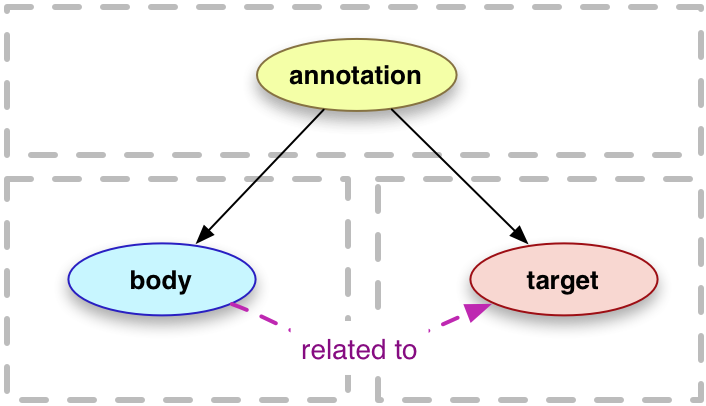
The basic data structures of Web Annotation
-
Web annotation

-
-
en.wikipedia.org en.wikipedia.org
-
Other physicists and mathematicians at the turn of the century came close to arriving at what is currently known as spacetime. Einstein himself noted, that with so many people unraveling separate pieces of the puzzle, "the special theory of relativity, if we regard its development in retrospect, was ripe for discovery in 1905."
Interesting. This acts as evidence for the hypothesis that environments/conditions are powerful forcing functions.
It also acts as evidence against the argument of the "lone genius".
-
-
en.wikipedia.org en.wikipedia.org
-
while a student at New York University in 2000. He later co-created and starred in the MTV sketch comed
test
-
-
en.wikipedia.org en.wikipedia.org
-
marijuana entrepreneur and hand surgeon Jason Pirozzolo
Interesting combo.
-
-
en.wikipedia.org en.wikipedia.org
-
Internet From Wikipedia, the free encyclopedia Jump to navigation Jump to search Global system of connected computer networks This article is about the worldwide computer network. For the global system of pages accessed via URLs, see World Wide Web.
"connected computer networks"
"global system"
"URLs"
-
-
en.wikipedia.org en.wikipedia.org
-
Social media From Wikipedia, the free encyclopedia Jump to navigation Jump to search Internet services for sharing personal information and ideas Social media are interactive digitally mediated technologies that facilitate the creation or sharing/exchange of information, ideas, career interests, and other forms of expression via virtual communities and networks.[1][2] While challenges to the definition of social media arise due to the broad variety of stand-alone and built-in social-media services currently available, there are some common features:[2] Social media are interactive Web 2.0 Internet-based applications.[2][3]
Interactive Digitally Mediated technologies that facilitate creation or sharing/exchange of information
-
-
en.wikipedia.org en.wikipedia.org
-
Digital economy refers to an economy that is based on digital computing technologies, although we increasingly perceive this as conducting business through markets based on the internet and the World Wide Web.[1] The digital economy is also referred to as the Internet Economy, New Economy, or Web Economy. Increasingly, the digital economy is intertwined with the traditional economy, making a clear delineation harder. It results from billions of everyday online connections among people, businesses, devices, data, and processes. It is based on the interconnectedness of people, organizations, and machines that results from the Internet, mobile technology and the internet of things
"digital" economy is focused on markets on the Internet and the world wide web.
Online connections among people
Internet, Mobile Technology, Internet of things
-
-
en.wikipedia.org en.wikipedia.org
-
Virtual communities are used for a variety of social and professional groups; interaction between community members vary from personal to purely formal. For example, an email distribution list could serve as a personal means of communicating with family and friends, and also formally to coordinate with coworkers.
the purpose for some "digital" forms of texts and communities
-
A virtual community is a social network of individuals who connect through specific social media, potentially crossing geographical and political boundaries in order to pursue mutual interests or goals. Some of the most pervasive virtual communities are online communities operating under social networking services.
relation of social network
social media and online communities
-
-
en.wikipedia.org en.wikipedia.org
-
It generally refers at least to the cultures of virtual communities,
"Virtual" as in another word for intangible medium physically that exist on a different plane (online)
-
-
en.wikipedia.org en.wikipedia.org
-
Information Age
link between the Information Age and the Digital Revolution
-
-
en.wikipedia.org en.wikipedia.org
-
This marks the transition from load time (and dynamic link time, if present) to run time.
-
-
en.wikipedia.org en.wikipedia.org
-
2.2 billion years older than the Sun, at 6.9 billion years old
The cite and the diagram says it is 8.2 billion years old. Not 6.9 billion years old.
-
-
en.wikipedia.org en.wikipedia.org
-
Pennsylvan
Note
-
-
en.wikipedia.org en.wikipedia.org
Tags
Annotators
URL
-
-
en.wikipedia.org en.wikipedia.org
-
Amazing how many muslim temples existed in Athens circa 1831, as shown in this drawing about king Otto's marriage in Greece.
Tags
Annotators
URL
-
-
en.wikipedia.org en.wikipedia.org
-
these events can break the flow of the game and force the player to repeat sections until they master the event, adding false difficulty to the game.
-
-
en.wikipedia.org en.wikipedia.org
-
Blessed Anna Maria Taigi (1769–1837) is the most known seer of the Three Days of Darkness and describes the event in this way:
This is sourced to a website that sells blessed candles. https://www.virgosacrata.com/three-days-of-darkness.html They in turn source it to a book "The prophets and our Times" from 1941 by Gerald Culleston. It in turn gives as its sources
Providence-Sligo: Life of Ven. Anna Maria Taigi Thompson : Life of Ven. Anna Maria Taigi
https://archive.org/stream/TheProphetsAndOurTimes/TheProphetsAndOurTimes_djvu.txt
-
-
en.wikipedia.org en.wikipedia.org
-
哲学家、哈佛大学教授诺齐克(Nozick,1938—2002)写过一本书,叫《反省的人生》。他在其中谈到,苏格拉底“未经反省的人生不值得活”的说法也许有些苛刻,但是,对人生的反省虽然可能不会助人成功,给人以一种冲过终点的感觉,却能让人成熟、让生活充实,还很有可能产生一种定向或调整的作用。这种反省,就像自己创作一幅自画像,而不是自拍一幅“快照”。自画一幅油画像不可能在短时间内完成,它需要不断审视,不断修改,最后它不仅成为一个艺术品,还成为一种自己对自己的深刻认识。
-
-
en.wikipedia.org en.wikipedia.org
-
en.wikipedia.org en.wikipedia.org
-
A bodhisattva vow ritual text attributed to Nāgārjuna, of the second-third century CE, states the vow as follows: "Just as the past tathāgata arhat samyaksambuddhas, when engaging in the behavior of a bodhisattva, generated the aspiration to unsurpassed complete enlightenment so that all beings be liberated, all beings be freed, all beings be relieved, all beings attain complete nirvana, all beings be placed in omniscient wisdom, in the same way, I whose name is so-and-so, from this time forward, generate the aspiration to unsurpassed complete enlightenment so that all beings be liberated, all beings be freed, all beings be relieved, all beings attain complete nirvana, all beings be placed in omniscient wisdom."[31]
bodhisattva vow

-
Bodhisattva

-
- Mar 2021
-
en.wikipedia.org en.wikipedia.org
-
An event space, which is a set of events F {\displaystyle {\mathcal {F}}} F
可以把omega看作是可能宇宙集合,事件看作是一个propostion。
-
-
en.wikipedia.org en.wikipedia.org
-
The thermophoresis of a fluorescently labeled molecule A
fluorescent label is needed? here the molecule A is protein or ligand?
Tags
Annotators
URL
-
-
en.wikipedia.org en.wikipedia.org
-
-
Influenced byC, Smalltalk
-
-
en.wikipedia.org en.wikipedia.org
-
en.wikipedia.org en.wikipedia.org
Tags
Annotators
URL
-
-
en.wikipedia.org en.wikipedia.org
-
en.wikipedia.org en.wikipedia.org
Tags
Annotators
URL
-
-
en.wikipedia.org en.wikipedia.org
-
-
In the Camerer, Loewenstein and Weber's article, it is mentioned that the setting closest in structure to the market experiments done would be underwriting, a task in which well-informed experts price goods that are sold to a less-informed public. Investment bankers value securities, experts taste cheese, store buyers observe jewelry being modeled, and theater owners see movies before they are released. They then sell those goods to a less-informed public. If they suffer from the curse of knowledge, high-quality goods will be overpriced and low-quality goods underpriced relative to optimal, profit-maximizing prices; prices will reflect characteristics (e.g., quality) that are unobservable to uninformed buyers ("you get what you pay for").[5] The curse of knowledge has a paradoxical effect in these settings. By making better-informed agents think that their knowledge is shared by others, the curse helps alleviate the inefficiencies that result from information asymmetries (a better informed party having an advantage in a bargaining situation), bringing outcomes closer to complete information. In such settings, the curse on individuals may actually improve social welfare.
How might one exploit this effect to more proactively improve and promote social welfare?
-
Such research drew from Baruch Fischhoff's work in 1975 surrounding hindsight bias, a cognitive bias that knowing the outcome of a certain event makes it seem more predictable than may actually be true.[5] Research conducted by Fischhoff revealed that participants did not know that their outcome knowledge affected their responses, and, if they did know, they could still not ignore or defeat the effects of the bias.
-
This curse of knowledge also explains the danger behind thinking about student learning based on what appears best to faculty members, as opposed to what has been verified with students.
Are there other axes or criteria that might be used other than these two? One seems better than the other, but what appears best to teachers is potentially better than nothing. (Though in cases it could be so bad that nothing may be preferable to a teacher's viewpoint.)
-
-
en.wikipedia.org en.wikipedia.org
-
The hypothesis, being insecure, needs to have practical implications leading at least to mental tests and, in science, lending themselves to scientific tests.
Exactly. The hypothesis is kind of an abstract thing to predict from. It's the predictions that you test, not the hypothesis directly. If the hypothesis lets you make predictions that turn out true with testing, then the hypothesis is more-or-less confirmed. If its predictions turn out inaccurate, then the hypothesis is falsified.
-
Test the hypothesis
or, more specifically, test predictions from the hypothesis.
-
-
en.wikipedia.org en.wikipedia.org
-
-
This tendency is known as the “actor-observer effect”. What this means is that people often attribute their own behavior to situational causes, while observers attribute the actor's behavior to the personality or disposition of the actor. For example, an actor's common reason to be late is due to the situational reason, traffic. Observers’ lack of contextual knowledge about the traffic, i.e. common ground, leads to them attributing the lateness due to ignorance or laziness on the actor's part. This tendency towards dispositional attribution is especially magnified when the stakes are higher and the situation is more complex. When observers are relatively calm, the tendency towards dispositional attribution is less strong.[25]
[[actor-observer effect]]
-
Common ground in communication has been critical in mitigating misunderstandings and negotiations.
All the fun of watching the Newlywed Game is in seeing the communication and mis-communication in realizing how much common ground a couple has or doesn't.
-
It comprises the collection of "mutual knowledge, mutual beliefs, and mutual assumptions" that is essential for communication between two people.
I've seen a few people with websites that have a grouping of some of their past posts to help orient new readers into their way of thinking and understanding to help provide common grounding for new readers.
Colin Walker is an example that has had one in the past, but it looks like the move from WordPress to his new system, the original link to that data is gone now. His page was called "required" and an archived version of his example(s) can be found archived here: https://web.archive.org/web/2020*/https://colinwalker.blog/required/
-
-
en.wikipedia.org en.wikipedia.org
-
Visible spectrum wrapped to join blue and green in an additive mixture of cyan
the rainbow as a continuous (repeating) circle instead of semicircle
-
-
-
en.wikipedia.org en.wikipedia.org
Tags
Annotators
URL
-
-
en.wikipedia.org en.wikipedia.org
-
Thinking about "just" and "simply" in technical documents.
-
-
en.wikipedia.org en.wikipedia.org
-
chronicled in the New Testament.
what does this mean?
-
Jesus is the Christ, whose coming as the Messiah was prophesied in the Hebrew Bible, called the Old Testament in Christianity
couldn't this be a coincidence?
-
-
en.wikipedia.org en.wikipedia.org
-
Structure and Interpretation of Classical Mechanics
-
-
en.wikipedia.org en.wikipedia.org
-
Yoneda lemma

-
-
en.wikipedia.org en.wikipedia.org
-
the interweaving of opposites – and implies the process of an object being moulded into unity.
interweawing of opposites
object moulded into unity
-
-
en.wikipedia.org en.wikipedia.org
-
art created as a result of such a chance-determined process
art by chance
-
for compositions resulting from "actions made by chance"
creations resulting from actions made by chance
-
-
en.wikipedia.org en.wikipedia.org
-
Heraclitus

-
-
en.wikipedia.org en.wikipedia.org
-
Nevertheless, co-hyponyms are not necessarily incompatible in all senses. A queen and mother are both hyponyms of woman but there is nothing preventing the queen from being a mother.
not necessarily incompatible in all senses.
so is this only a concern/possibility when the word in question is a polyseme?
but there is nothing preventing the queen from being a mother
The meaning of the "incompatibility" relation seems really ambiguous. What does that mean precisely?
And how would we know for sure if an incompatibility (such as a peach is not a plum) or lack of incompatibility (a queen can be a mother and a mother can be a queen) is a sufficient condition to cause it to be or not be a co-hyponym?
Oh. I guess it says
Co-hyponyms are often but not always related to one another by the relation of incompatibility.
so it actually can't ever be used to prove or disprove (sufficient/necessary condition) that something is a co-hyponym. So that observation, while interesting, is not helpful in a practical / deterministic way...
-
It consists of two relations; the first one being exemplified in "An X is a Y" (simple hyponymy) while the second relation is "An X is a kind/type of Y". The second relation is said to be more discriminating and can be classified more specifically under the concept of taxonomy.
So I think what this saying, rather indirectly (from the other direction), if I'm understanding correctly, is that the relationships that can be inferred from looking at a taxonomy are ambiguous, because a taxonomy includes 2 kinds of relationships, but encodes them in the same way (conflates them together as if they were both hyponyms--er, well, this is saying that the are both kinds of hyponyms):
- "An X is a Y" (simple hyponymy)
- "An X is a kind/type of Y".
Actually, I may have read it wrong / misunderstood it... While it's not ruling out that simple hyponymy may sometimes be used in a taxonomy, it is be saying that the "second relation" is "more specifically under the concept of taxonomy" ... which is not really clear, but seems to mean that it is more appropriate / better for use as a criterion in a taxonomy.
Okay, so define "simple hyponymy" and name the other kind of hyponymy that is referenced here.
-
This shows that compatibility may be relevant.
-
A synonym of co-hyponym based on same tier (and not hyponymic) relation is allonym (which means "different name").
-
Should mention/define all the possible subtypes of hyponym relationships, including
direct hyponym direct hypernym
-
The hierarchical structure of semantic fields can be mostly seen in hyponymy.
Good explanation about semantic fields.
I assume the same or an even stronger statement can be made about semantic classes (which to me are like more clear-cut, distinct semantic fields), then? 
-
-
A hyponym is a word or phrase whose semantic field is more specific than its hypernym.
-
A hyponym refers to a type. A meronym refers to a part. For example, a hyponym of tree is pine tree or oak tree (a type of tree), but a meronym of tree is bark or leaf (a part of tree).
Tags
- lexical semantics
- I have a question about this
- confusing
- polyseme
- direct hyponym
- relationship: type of
- set theory
- unclear
- missing/lacking
- co-hyponyms
- good explanation
- is-a/hyponymy
- ambiguous
- semantics
- meronym
- relationship: is a
- language
- distinction
- relationship between
- hyponym
- please elaborate
- how?
- good point
- hierarchical
- taxonomy
- relationship
- semantic field
- direct hypernym
- semantic class
- relationship: subset
- what does this actually mean?
Annotators
URL
-
-
en.wikipedia.org en.wikipedia.org
-
The Taylor series of a real or complex-valued function f (x) that is infinitely differentiable at a real or complex number a is the power series f ( a ) + f ′ ( a ) 1 ! ( x − a ) + f ″ ( a ) 2 ! ( x − a ) 2 + f ‴ ( a ) 3 ! ( x − a ) 3 + ⋯ , {\displaystyle f(a)+{\frac {f'(a)}{1!}}(x-a)+{\frac {f''(a)}{2!}}(x-a)^{2}+{\frac {f'''(a)}{3!}}(x-a)^{3}+\cdots ,}
What's the connection between a series and the function?
-- because of the phrase: "the Taylor series of a ... function "
Tags
Annotators
URL
-
-
en.wikipedia.org en.wikipedia.org
Tags
Annotators
URL
-
-
en.wikipedia.org en.wikipedia.org
-
Lexical (semiotics) or content word, words referring to things, as opposed to having only grammatical meaning
Tags
Annotators
URL
-
-
en.wikipedia.org en.wikipedia.org
-
-
faithful functor
-
-
en.wikipedia.org en.wikipedia.org
-
Intuitively, a subcategory of C is a category obtained from C by "removing" some of its objects and arrows.
-
-
-
en.wikipedia.org en.wikipedia.org
-
is the vocabulary of a language or branch of knowledge (such as nautical or medical)
-
-
-
en.wikipedia.org en.wikipedia.org
-
The lexicon of a language is its vocabulary. Lexicon is also a synonym for a dictionary or encyclopedic dictionary
-
-
en.wikipedia.org en.wikipedia.org
-
Windshield phenomenon
This windscreen evidence is very controversial. It may tell us something, but if so it is probably about the impact of roads on insects. Manu Sanders, who did her PhD on edge effects such as roads on insects has found only one published study on the insect abundance.
People often claim the ‘windscreen phenomenon’ is established evidence and proven fact. But a search of academic journal databases returns only one published study that has used car windscreens to measure changes in local insect abundance. In that study, Anders Møller compared insect abundance (although it’s not clear from the Methods if he actually measured density) with breeding rates of insectivorous birds in an agricultural landscape in Denmark. Data was collected in the same way at the same location for 20 years, which is very impressive, and analysis showed an 80% decline in insects across the period. She says that it is a good study, especially the parallel declines in birds and their insect foods. But it is only one location and one environmental context. She continues: This tells us about insect splatter on car windscreens in that location, not the world. There are more than 21 million km of roads across the world. Generally roads have negative effects on insect abundance. There are a lot more studies measuring broader-scale effects of roads on insects. But, as with all ecological questions, there is never one single factor influencing a dataset. A recent review found only 50 studies that had investigated the ecological impact of roads on insects (the review was published in 2015 and there have been a few more studies published since then). Overall the authors found generally negative effects on insect abundance and diversity. They also found there are lots of factors within the broader ‘road – insect’ interaction that affect results. For example, during my PhD, we investigated edge effects on wild insect pollinators in almond orchards (the edge was a two-lane low-traffic road between monoculture almond orchards and native mallee woodland). The road wasn’t a barrier, but we found that the edge effect varied across time as the floral resource pulse of the orchards on one side peaked and declined. First, it depends mainly on the verges. Nowadays we trim the verges of roads much more and this impacts on the numbers of insects on the roads.
See The windscreen phenomenon: anecdata is not scientific evidence
Also she mentions bug deflectors. You can get these to attach to a car to reduce the insect splatter.
https://www.carid.com/articles/age-old-debate-do-bug-deflectors-work.html
-
-
en.wikipedia.org en.wikipedia.org
-
In a broader sense, taxonomy also applies to relationship schemes other than parent-child hierarchies, such as network structures. Taxonomies may then include a single child with multi-parents, for example, "Car" might appear with both parents "Vehicle" and "Steel Mechanisms"
-
Taxonomies are often represented as is-a hierarchies where each level is more specific (in mathematical language "a subset of") the level above it. For example, a basic biology taxonomy would have concepts such as mammal, which is a subset of animal, and dogs and cats, which are subsets of mammal. This kind of taxonomy is called an is-a model because the specific objects are considered as instances of a concept. For example, Fido is-an instance of the concept dog and Fluffy is-a cat.
-
Mutually exclusive categories can be beneficial. If categories appear several places, it's called cross-listing or polyhierarchical. The hierarchy will lose its value if cross-listing appears too often. Cross-listing often appears when working with ambiguous categories that fits more than one place.
-
Researchers reported that large populations consistently develop highly similar category systems. This may be relevant to lexical aspects of large communication networks and cultures such as folksonomies and language or human communication, and sense-making in general.
-
In the simple biology example, dog is a hypernym and Fido is one of its hyponyms. A word can be both a hyponym and a hypernym. For example, dog is a hyponym of mammal and also a hypernym of Fido.
I wish they hadn't used tokens/objects in this example. Wouldn't it be just as clear or clearer if they had stuck to only comparing types/classes?
It may be okay to mix them like that in some contexts, but in other cases it seems like this would be suffering from ignoring/conflating/[better word?] the Type–token distinction.
Does linguistics just not make the https://en.wikipedia.org/wiki/Type%E2%80%93token_distinction ?
This statement seems to reinforce that idea:
words that are examples of categories are hyponyms
because an example of a category/class/type could be either a sub-class or an instance of that category/class/type, right?
-
words that are examples of categories are hyponyms
So linguistics doesn't make the https://en.wikipedia.org/wiki/Type%E2%80%93token_distinction ?
-
Two of the predominant types of relationships in knowledge-representation systems are predication and the universally quantified conditional.
-
Mathematically, a hierarchical taxonomy is a tree structure of classifications for a given set of objects.
-
Taxonomy is different from meronomy, which is dealing with the categorisation of parts of a whole.
Tags
- poor example
- knowledge representation
- category list/tree
- trend/phenomenon
- dichotomous thinking
- strictly enforced rules/conventions: benefits
- interesting
- different way of thinking about something
- predicate (mathematical logic)
- is-a/hyponymy
- mutually exclusive
- meronym
- linguistics
- relationship: is a
- tree structure
- no longer having any meaning
- distinction
- relationship between
- hyponym
- graph (discrete mathematics)
- indicative conditional
- hierarchical
- broadly speaking
- taxonomy
- outline (list/tree)
- type–token distinction
Annotators
URL
-
-
en.wikipedia.org en.wikipedia.org
-
Tree (data structure)
-
Tree structure
-
-
en.wikipedia.org en.wikipedia.org
-
In computer science, a tree is a widely used abstract data type that simulates a hierarchical tree structure
a tree (data structure) is the computer science analogue/dual to tree structure in mathematics
-
Not to be confused with tree (graph theory), a specific type of mathematical object.
Confusing: https://en.wikipedia.org/wiki/Tree_(data_structure) says
Not to be confused with tree (graph theory) "Tree (graph theory)"), a specific type of mathematical object. but https://en.wikipedia.org/wiki/Tree_(graph_theory) redirects to https://en.wikipedia.org/wiki/Tree_structure and https://en.wikipedia.org/wiki/Tree_structure is in category Trees (data structures) So is one a subtype/hyponym of the other ... or what?? How are they related? Skimming the articles a bit, esp. the first paragraph which clearly states as much ( :) ), I believe the answer is: a tree (data structure) is an implementation (in a programming language) of / or a "type that simulates" a hierarchical tree structure. a tree (data structure) is the computer science analogue/dual to tree structure in mathematics
-
Not to be confused with trie, a specific type of tree data structure. Not to be confused with tree (graph theory), a specific type of mathematical object.
-
-
en.wikipedia.org en.wikipedia.org
-
How can they miss the opportunity to explain/describe the relationship/similarity/difference to/from graphs, graph theory, and/or graph data??
Tags
Annotators
URL
-
-
en.wikipedia.org en.wikipedia.org
-
graph theory is the study of graphs, which are mathematical structures used to model pairwise relations between objects
-
-
en.wikipedia.org en.wikipedia.org
-
Is this topic part of linguistics too? Or only semantics?
-
This should link to / explain the relationship to: https://en.wikipedia.org/wiki/Class_(computer_programming) (which I believe is a way of expressing / codifying semantic classes into source code).
It should also link to / explain the relationship to: https://en.wikipedia.org/wiki/Type_theory
-
A semantic class contains words that share a semantic feature.
-
For example within nouns there are two sub classes, concrete nouns and abstract nouns.
-
The concrete nouns include people, plants, animals, materials and objects while the abstract nouns refer to concepts such as qualities, actions, and processes.
-
Semantic classes may intersect. The intersection of female and young can be girl.
More examples are given at https://en.wikipedia.org/wiki/Semantic_feature:
- 'female' + 'performer' = 'actress'
-
(Not answered on this stub article)
What, precisely, is the distinction/difference between a semantic class and a semantic field? At the very least, you would say that they are themselves both very much within the same semantic field.
So, is a semantic class distinct from a semantic field in that semantic class is a more well-defined/clear-cut semantic field? And a semantic field is a more fluid, nebulous, not well-defined field (in the same sense as a magnetic field, which has no distinct boundary whatsoever, only a decay as you move further away from its source) ("semantic fields are constantly flowing into each other")?
If so, could you even say that a semantic class is a kind of (hyponym) of semantic field?
Maybe I should pose this question on a semantics forum.
Tags
- intersection (semantic classes)
- I have a question about this
- abstract noun
- categorization
- semantic class
- indistinct/nebulous
- missed opportunity
- distinction
- relationship between
- important point
- definition
- example
- good example
- semantic field
- semantic feature
- to do
- +0.9
- concrete noun
- semantics
Annotators
URL
-
-
en.wikipedia.org en.wikipedia.org
-
How is it that https://en.wikipedia.org/wiki/Type_theory links to https://en.wikipedia.org/wiki/Type_(model_theory) but the latter does not have any link to or mention of https://en.wikipedia.org/wiki/Type_theory
Neither mentions the relationship between them, but both of them should, since I expect that is a common question.
-
-
en.wikipedia.org en.wikipedia.org
-
Model theory recognizes and is intimately concerned with a duality: it examines semantical elements (meaning and truth) by means of syntactical elements (formulas and proofs) of a corresponding language
-
-
-
en.wikipedia.org en.wikipedia.org
-
Roughly speaking, a category may be thought of as a type theory shorn of its syntax.
-
In fact categories can themselves be viewed as type theories of a certain kind
-
-
en.wikipedia.org en.wikipedia.org
-
-
Some types exist as descriptions of objects, but not as tangible physical objects. One can show someone a particular bicycle, but cannot show someone, explicitly, the type "bicycle", as in "the bicycle is popular."
-
Property types (e.g. "height in metres" or "thorny") are often understood ontologically as concepts. Property instances (e.g. height = 1.74) are sometimes understood as measured values, and sometimes understood as sensations or observations of reality.
-
The words type, concept, property, quality, feature and attribute (all used in describing things) tend to be used with different verbs. E.g. Suppose a rose bush is defined as a plant that is "thorny", "flowering" and "bushy". You might say a rose bush instantiates these three types, or embodies these three concepts, or exhibits these three properties, or possesses these three qualities, features or attributes.
-
The distinction in computer programming between classes and objects is related, though in this context, "class" sometimes refers to a set of objects (with class-level attribute or operations) rather than a description of an object in the set, as "type" would.
-
The distinction is important in disciplines such as logic, linguistics, metalogic, typography, and computer programming.
-
The sentence "they drive the same car" is ambiguous. Do they drive the same type of car (the same model) or the same instance of a car type (a single vehicle)?
Tags
- distinction
- good point
- English
- same meaning in different contexts/fields
- important distinction
- interesting
- distinction?
- classification
- distinction: hard to see
- good example
- semantic feature
- class (programming)
- semantic class
- type (programming)
- subtle distinction
- semantics
- type–token distinction
Annotators
URL
-
-
en.wikipedia.org en.wikipedia.org
-
en.wikipedia.org en.wikipedia.org
-
A semantic similarity network (SSN) is a special form of semantic network.[1] designed to represent concepts and their semantic similarity. Its main contribution is reducing the complexity of calculating semantic distances.
-
-
-
en.wikipedia.org en.wikipedia.org
-
There is obvious connections between the flow paths of a use case and its test cases. Deriving functional test cases from a use case through its scenarios (running instances of a use case) is straightforward.
-
With content based upon an action or event flow structure, a model of well-written use cases also serves as an excellent groundwork and valuable guidelines for the design of test cases
-
Originally he had used the terms usage scenarios and usage case – the latter a direct translation of his Swedish term användningsfall – but found that neither of these terms sounded natural in English, and eventually he settled on use case.
-
-
en.wikipedia.org en.wikipedia.org
-
The is-a relationship may also be contrasted with the instance-of relationship between objects (instances) and types (classes): see Type–token distinction.
-
-
en.wikipedia.org en.wikipedia.org
-
en.wikipedia.org en.wikipedia.org
-
In autoepistemic logic, which rejects the law of excluded middle, predicates may be true, false, or simply unknown
-
The precise semantic interpretation of an atomic formula and an atomic sentence will vary from theory to theory.
-
A predicate whose quantifiers all apply to individual elements, and not to sets or predicates, is called a first-order predicate.
-
-
en.wikipedia.org en.wikipedia.org
-
While propositional logic can only express facts, autoepistemic logic can express knowledge and lack of knowledge about facts.
-
The autoepistemic logic is a formal logic for the representation and reasoning of knowledge about knowledge.
-
-
en.wikipedia.org en.wikipedia.org
-
'female' + 'performer' = 'actress'
-
An individual semantic feature constitutes one component of a word's intention, which is the inherent sense or concept evoked.
Would this be referring, then, to explicit meaning or implicit meaning -- or neither?
-
-
The semantic features of a word can be notated using a binary feature notation common to the framework of componential analysis.[11] A semantic property is specified in square brackets and a plus or minus sign indicates the existence or non-existence of that property.
-
-
en.wikipedia.org en.wikipedia.org
-
a class is an implementation—a concrete data structure and collection of subroutines—while a type is an interface
-
but narrowly speaking objects have type
-
In casual use, people often refer to the "class" of an object
-
-
en.wikipedia.org en.wikipedia.org
-
Semantic class
-
semantic fields are constantly flowing into each other
See https://hyp.is/PKGOeo0_Eeuj5FeXF3jzng/en.wikipedia.org/wiki/Semantic_class
-
The English word "man" used to mean "human being" exclusively, while today it predominantly means "adult male," but its semantic field still extends in some uses to the generic "human"
-
Synonymy requires the sharing of a sememe or seme, but the semantic field is a larger area surrounding those.
-
A general and intuitive description is that words in a semantic field are not necessarily synonymous, but are all used to talk about the same general phenomenon.
-
-
en.wikipedia.org en.wikipedia.org
-
There may only be historical reasons that, for example, the periodic table is called a classification rather than a taxonomy
-
Taxonomy was first used in biology, but the term has spread to other domains.
-
Categorization is, for example, mostly used by cognitive psychologists for what other call classification
-
Synonyms and near-synonyms for the term classification
-
-
en.wikipedia.org en.wikipedia.org
-
Categorization is sometimes considered synonymous with classification
-
Categorization is grounded in the features that distinguish the category's members from nonmembers.
distinguish = make a distinction between
-
Categorization is the human ability and activity of recognizing shared features or similarities between the elements of the experience of the world (such as objects, events, or ideas), organizing and classifying experience by associating them to a more abstract group (that is, a category, class, or type),[1][2] on the basis of their traits, features, similarities or other criteria.
-
-
-
en.wikipedia.org en.wikipedia.org
-
en.wikipedia.org en.wikipedia.org
-
en.wikipedia.org en.wikipedia.org
-
place
place?
to me that connotes a physical location.
How can they be using that in semantics? Is that a common term/jargon used in the terminology/lexicon of semantics?
-
semantic domain or semantic field
What, then, is the difference between a semantic domain and a semantic field? The way they are used here, it's almost as if they are listing them in order to emphasis that they are synonyms ... but I'm not sure.
From the later examples of basketball (https://hyp.is/ynKbXI1BEeuEheME3sLYrQ/en.wikipedia.org/wiki/Semantic_domain) and coffee shop, however, I am pretty certain that semantic domain is quite different from (broader than) semantic field.
-
For instance English has a domain ‘Rain’, which includes words such as rain, drizzle, downpour, raindrop, puddle.
"rain" seems more like a semantic field — a group of very related or nearly synonymous words — than a semantic field.
Esp. when you consider the later example of basketball (https://hyp.is/ynKbXI1BEeuEheME3sLYrQ/en.wikipedia.org/wiki/Semantic_domain) and coffee shop, which are more like the sense of "field" that means (academic/scientific/etc.) discipline.
-
For instance, in basketball there are many words that are specific to the sport. Free throw, court, half court, three pointer, and point guard are all terms that are specific to the sport of basketball. These words make very little sense when used outside of the semantic domain of basketball.
But this example seems so different than the first example they gave, "rain", which seems more like a semantic field — a group of very related or nearly synonymous words.
-
In lexicography a semantic domain or semantic field is defined as "an area of meaning and the words used to talk about it
-
Semantic domains are the foundational concept for initial stages of vernacular dictionary building projects.
-
This uses techniques such as SIL International's Dictionary Development Process (DDP),[4][5] RapidWords, or software such as WeSay[6] or FLEx. These techniques rely on extensive lists of semantic domains that are relevant to vernacular languages.
-
-
en.wikipedia.org en.wikipedia.org
-
Sometimes lexicography is considered to be a part or a branch of lexicology, but properly speaking, only lexicologists who write dictionaries are lexicographers.
-
Some consider this a distinction of theory vs. practice.
-
An allied science to lexicology is lexicography, which also studies words, but primarily in relation with dictionaries – it is concerned with the inclusion of words in dictionaries and from that perspective with the whole lexicon
-
Not to be confused with lexicography.
-
-
en.wikipedia.org en.wikipedia.org
-
For example, in the Dyirbal language, the morpheme balam marks each entity in its noun class with the semantic property of edibility,[8] and Burmese encodes the semantic property for the ability to cut or pierce. Encoding the functional property for transportation, housing, and speech are also attested in world languages.
-
meaningful or meaningless – for example, whether a given word is part of a language's lexicon with a generally understood meaning
-
Basic semantic properties include being meaningful or meaningless – for example, whether a given word is part of a language's lexicon with a generally understood meaning
The "for example" being where it is, is confusing, and I believe should be left out.
I think this would have been better written as:
Basic semantic properties include, for example, being meaningful or meaningless (that is, whether a given word is part of a language's lexicon with a generally understood meaning); polysemy, ..
-
-
-
en.wikipedia.org en.wikipedia.org
-
en.wikipedia.org en.wikipedia.org
-
Every woman talked to a student. This has two interpretations. Under one reading, every woman talked to the same student (the class president, for example), and here the noun phrase a student is specific. Under the second reading, various students were talked to. In this case, a student is non-specific.
-
-
en.wikipedia.org en.wikipedia.org
-
a stative verb is one that describes a state of being, in contrast to a dynamic verb, which describes an action
-
