offline world this includes notice boards, traffic signs, billboards, shop windows, posters, flags, banners, graffiti, menus, T-shirts, tattoos, etcetera.
Offline World
offline world this includes notice boards, traffic signs, billboards, shop windows, posters, flags, banners, graffiti, menus, T-shirts, tattoos, etcetera.
Offline World
for Windows
We should delete this part
waves of activity
The map from which this narrative is derived has limits as evidence of the riot’s chronology. Only 40% (69/173) of the events on the map appear on the timeline; for the majority there is no information on when they took place. That is particularly the case for stores with broken windows; only 4 of 49 appear in the timeline. Nonetheless, the map does confirm the pattern reported in other sources. See Mapping the disorder
DRM
Windows Media DRM or WMDRM, is a Digital Rights Management service for the Windows Media platform. It is designed to provide delivery of audio or video content over an IP network to a PC or other playback device in such a way that the distributor can control how that content is used.
While reading Jingle Dancer, which is set in the present day,show the Muscogee Nation website as a complementary source. Jenna’s house is in an everyday neighborhood and she is wearing clothes similar to kids in the classroom. She is a person of the present day.
I love this. Connecting past and present, using text sets that provides windows for outsiders to build more knowledge about the Muscogee Creek Nation.
I have been adding a “curtain” to Bishop’s (1990) “mirrors, windows, and sliding glass doors” metaphor when I talk or write about Native stories.
This is such an important addition. I had never thought about this, but it's so true. I think about my own cultural histories, and family histories and what can be told to the outside and what stays within our homes.
ment environment the first thing you need to do is install h’s system dependen
Hello everyone, I have a question: It's possible to install Hypothesis in Windows platforms? Thanks
It’s not only a big win for HP, but a big win for the Windows Mixed Reality (WMR) platform, which arrived with a bit of a thud, but now has a headset truly worthy of seriously competing with HTC and Oculus .
I'm not sure whether it's such a big win for HP as the VR-market is still in a kind of infancy (for quite some time), but yes, it's an interesting alternative for VR-quality seekers.
He notes that however bad your carbon dioxide levels are during the day they’re probably much worse at night, when you shut yourself up in a small room, close all the doors and windows, and just breathe for like eight hours straight
that's so true!
On the left side we have a caricature of black person washing the windows. The subtext here is that while African Americans are allowed in the US, they are not to be educated, they are here to act as obedient servants. The facial depiction is particularly offensive and recalls minstrel show depictions.
When the number of references drops to zero, the object deletes itself. The last part is worth repeating: The object deletes itself
How does that work? How does an object delete itself?
CALLBACK is the calling convention for the functio
What is a calling convention?
Then I poked through the house, in each cranny and nook,But I found somebody each place that I looked.
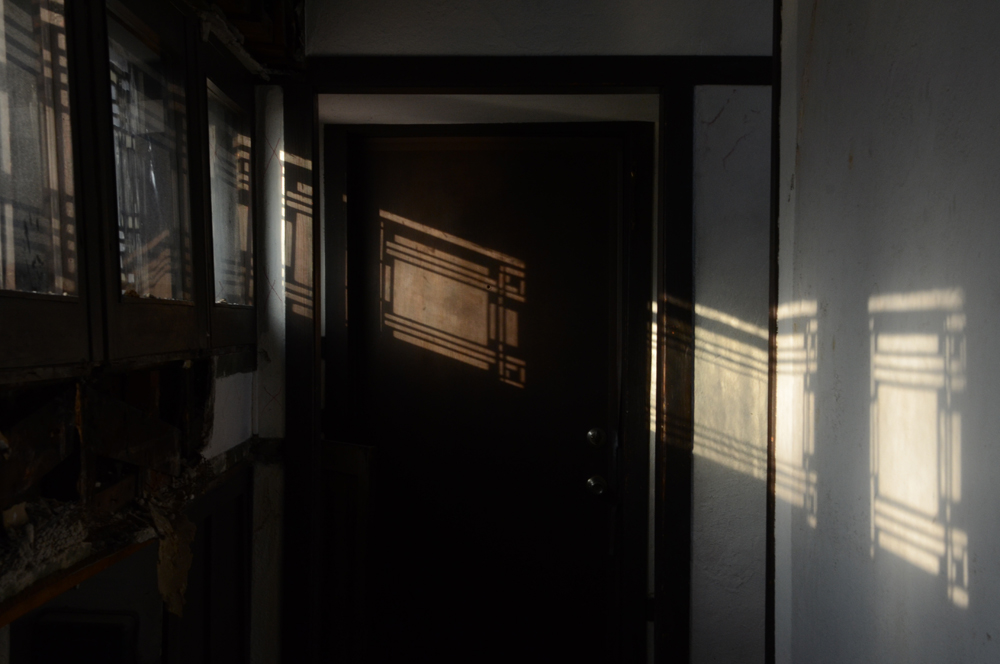
These two lines reminded me of shadows in a house. This photo is from Frank Lloyd Wright's design of the the front hall windows at the Thomas P. Hardy House. The house itself is, "a complex and thoughtfully considered relationship with its surroundings."The shadows are apparent, but they also represent nothingness.
hello-world # Our project folder ├─ src # The CLJS source code for our project │ └─ hello_world # Our hello_world namespace folder │ └─ core.cljs # Our main file ├─ cljs.jar # (Windows only) The standalone Jar you downloaded earlier └─ deps.edn # (macOS/Linux only) A file for listing our dependencies
Seriously? Create a tree of stuff before even begin to program a line of code?
“Windows, yes windows
The comparison that Wolf makes here is very interesting because she talks about how the audience begins to misconstrue the meaning of words and do the opposite. Does Woolf make this comparison to describe her audience while they read her pieces?
Written up opposite us in the railway carriage are the words: “Do not lean out of the window.” At the first reading the useful meaning, the surface meaning, is conveyed; but soon, as we sit looking at the words, they shuffle, they change; and we begin saying, “Windows, yes windows — casements opening on the foam of perilous seas in faery lands forlorn.”
I find it amazing how so little can lead to such a creative daydream/train of thought when commuting. It is how I imagine many people on the Subway make the commute easier for themselves, myself included. I daydream all the time when travelling between boroughs; not only because it is fun but because with all the weird and wacky things we see in the city, it helps ad more spice to it.
create publication quality figures
Can do with matplotlib windows and even get pdf, but can't do with specviz window.
the middle of the Ocean
Setting: At first, the reader is led to believe that we are going to have a stable setting, the house in the middle of the ocean. The lines that follow the first line continue to encourage that interpretation by giving the house architectural details -- the windows and walls and the windowpanes. The entire first stanza feels like a set up for a poem that compares the poet with a house in the middle of the ocean. We are therefore thinking about the isolated artist, the alienation of the soul where sorrow (rivers flowing from eyes) seems endless and possibly meaningless (as it flows directly into the vast ocean).
Certainly, houses in the middle of the ocean exist:

Though this one seems to lack attacking octopi.
The thing that troubled me most was that I could not make out his face. It is very difficult to do so when you see a person only through two windows, your own and his.
My, this is loaded
Anzaldua, Gloria. “How to Tame a Wild Tongue.” Fifty Great Essays . Boston: Pearson, 2011. 30-41. Print King, Martin Luther Junior “Letter to Birmingham Jail.” King Research and Education Institute. 16 April 1963. file:///C:/Users/kxmen/AppData/Local/Microsoft/Windows/INetCache/IE/HAGD1H8E/630416-019.pdf Livingston, Donovan “Lift off.” Harvard Graduate School of Education. 25 May 2017. https://www.youtube.com/watch?v=9XGUpKITeJM
close to MLA format no need for bullets include web addresses for each of the three sources and dates of access
Its walls are built of coral, and the long, gothic windows are of the clearest amber
Addressing the wealth of the sea kingdom and the similarities between the architecture between the surface and the sea world which the sea also has fancy and tall buildings.
We open windows to each but we live alone in the house of the heart. Perhaps we must.
Things= We, windows, house, heart Verbs or doing= open, live, must. Joining = but, in, of, perhaps Adjectives or describing= alone
Increase Font Size Toggle Menu HomeReadSign in Search in book: Search Contents I. The Middle Ages (ca. 476-1485) 1. Bede (ca. 672-735) Bede: BiographyCaedmon’s Hymn 2. Dream of the Rood Dream of the Rood 3. Beowulf: Parts I & II Introduction: BeowulfStory SummaryThemesHistorical BackgroundLiterary StyleReading:Part IPart II 4. Beowulf: Part III Part III 5. Judith Judith6. The Wanderer 7. Wulf and Eadwacer Wulf and Eadwacer 8. The Wife's Lament The Wife’s Lament 9. The Ruin The Ruin 10. Selection of Old English Riddles Selections from Old English Poems 11. The Myth of Arthur's Return Geoffrey of Monmouth: From The History of the Kings of BritainWace: From Roman de BrutLayamon: From Brut II. Irish Literature 12. Cúchulainn’s Boyish Deeds Cúchulainn: IntroductionCuchulainn’s Boyish Deeds III. Anglo-Norman Literature 13. Tristan and Iseult Introduction: Tristan and IseultThe Story SummaryLiterary ThemesReading: Tristan and Yseult 14. Guide for Anchoresses (Ancrene Wisse) The Sweetness and Pain of Enclosure15. Romances of Marie de France IV. Middle English Literature in the 14th and 15th Century 16. Sir Gawain and the Green Knight (ca. 1375-1400) 17. Sir Gawain: Parts I & II Part IPart II 18. Sir Gawain: Parts III & IV Part IIIPart IV19. Geoffrey Chaucer: The Canterbury Tales 20. Canterbury Tales: General Prologue Prologue 21. Canterbury Tales: Miller's Prologue and Tale The Miller’s PrologueThe Miller’s Tale22. Canterbury Tales: The Wife of Bath's Prologue and Tale23. Canterbury Tales: The Pardoner's Prologue and Tale24. Canterbury Tales: The Nun's Priest's Tale25. Canterbury Tales: Close of Canterbury Tales26. Julian of Norwich: Revelations of Divine Love (Selections) 27. Margery Kempe: Excerpts from The Book of Margery Kempe The Birth of Her First Child and Her First VisionHer Pride and Attempts to Start a Business28. The Wakefield Second Shepherd's Play29. Middle English Lyrics30. Robert Henryson: The Cock and the Jasp31. Everyman32. Thomas Malory: Le Morte d'Arthur V. The Sixteenth Century 33. Sir Thomas More: Utopia UTOPIA34. From: The Book of Common Prayer 35. WOMEN IN POWER: Selected Readings Mary I (Tudor)Lady Jane GreyMary Queen of ScotsElizabeth I36. Edmund Spencer: the Faerie Queene (Book I) 37. Sir Walter Raleigh: Poems and From: The Discovery of the Large, Rich and Beautiful Empire of Guiana Poems38. Sir Philip Sidney: From Astrophil and Stella 39. THE WIDER WORLD: Selected Readings The Wider World: Selected Readings Hakluyt’s Dedicatory Epistle to The Principal Navigations, 1589Leo Africanus on the North Africans, 1526An English Traveller’s Guide to the North Africans, 1547Voyage to the Arctic, 1577, with Reflections on Racial DifferenceAmadas and Barlowe’s Voyage to Virginia, 1584Hariot’s Report on Virginia, 1585General History of the Turks, 1603 40. Christopher Marlowe: Hero and Leander Hero and Leander 41. Christopher Marlowe: Doctor Faustus The Tragical History of Doctor Faustus 42. William Shakespeare: Selected Sonnets Selected Sonnets 43. William Shakespeare: Taming of the Shrew THE TAMING OF THE SHREW VI. Early Seventeenth Century 44. John Dunne: Selections Songs and SonnetsA Selection of Holy SonnetsFrom: Devotions upon Emergent Occasions45. Aemilia Lanyar: Salve Deus Rex Judaeorum 46. Ben Jonson: Epigrams and Poetry EpigramsPoemsFrom: Underwood 47. GENDER RELATIONS: Conflict and Counsel From: The Arraignment of Lewd, Idle, Froward, and Unconstant Women: Or the Vanity of Them Choose you WhetherRachel Speght: From A Muzzle for Melastomus William Gouge: From Domestical Duties48. Francis Bacon: Essays49. Margaret Cavendish: The Blazing World 50. George Herbert: The Temple The Temple 51. CRISIS OF AUTHORITY: The Beheading of Charles I From: King Charles, His Trial (1649)From: A Perfect Diurnal of Some Passages in Parliament, no. 288Robert Filmer: From Patriarcha John Milton: From The Tenure of Kings and Magistrates Gerrard Winstanley: From A New Year’s Gift Sent to the Parliament and ArmyThomas Hobbes: From Leviathan 52. CRISIS OF AUTHORITY: Political Writing Robert Filmer: From Patriarcha John Milton: From The Tenure of Kings and Magistrates Gerrard Winstanley: From A New Year’s Gift Sent to the Parliament and ArmyThomas Hobbes: From Leviathan 53. CRISIS OF AUTHORITY: Writing the Self Lucy Hutchinson: From Memoirs of the Life of Colonel John HutchinsonEdward Hyde, Earl of Clarendon: From The History of the RebellionLady Anne Halkett: From The Memoires 54. John Milton: Poems and Sonnets LycidasSonnets 55. John Milton: Paradise Lost (Books 1-3) BOOK 1BOOK 2BOOK 3 56. John Milton: Paradise Lost (Books 4-6) BOOK 4BOOK 5BOOK 6 57. John Milton: Paradise Lost (Books 7-9) BOOK 7BOOK 8BOOK 9 58. John Milton: Paradise Lost (Books 10-12) BOOK 10BOOK 11BOOK 12 Appendix An Open Companion for British Literature I 13 Tristan and Iseult Introduction: Tristan and Iseult by Noel Wallace Tristan and Isolde by Herbert James Draper (1863-1920). Wikimedia Commons. The story of Tristan and Iseult is an Anglo-Norman story of a love between two tragic lovers fated to be set apart. The origins of the original text are unknown adding to the mystery of the story. There are also many different versions of the story. Each version just a little different. For clarity purposes of this paper, I will refer to the French version by Joseph Bedier. How daring the legend. How legendary. How incredibly naive. However, are not all young lovers naive? For it takes time to develop skepticism. Cynicism does not belong in the beginning of a story. It only belongs in the end. The lovers begin as two innocent and hopeful characters. Tristan represents the embodiment of all that is chivalrous. The desire to do only what is right by the laws his society. As the novel progresses, the audience will begin to question things as the characters change. At the very end both characters will die tragically apart. Both will have become cynical and heartbroken. Perhaps, you have heard of the two young lovers yourself? Perhaps you have heard how the tragedy of the poisonous wine brought about death and destruction? Was the wine an element of foreshadow? Maybe you are just looking for a great read. Either way the story of the two lovers will indeed be of interest. The Story Summary Set in the medieval era, this is the story of Tristan and Iseult and their tragic love affair. The story begins in Tristan’s childhood and covers a series of youthful adventures which shape him into a Knight. Then Tristan embarks on his biggest quest yet. He journeys to Ireland to obtain Princess Iseult. The plan was to bring the princess back to Ireland to marry King Mark of Cornwall. However, the Queen of Ireland was concerned for her daughter’s wellbeing and concocted an eternal love potion to be consumed by King Mark and Princess Iseult. Accidently Tristan and Iseult consume the potion and fall in love. King Mark and Iseult marry despite the potion. However, Tristan and Iseult are still in love. Though keeping pure, the two often meet in secret. King Mark eventually find out and banishes Tristan. Tristan goes off to another land and finds favor in a new king, marrying his daughter. Despite this Tristan still desperately loves Iseult and she him. In the final chapter Tristan falls ill after an ambus. He sends a messenger to retrieve Iseult the fair. However, he dies before she reaches him. Upon discovering Tristan’s death Iseult dies too. Literary Themes The story of Tristan and Iseult is filled with many themes. Morality was a common element in medieval literature. Thus, one can interpret many moral themes throughout the content. A few examples of these themes include: loyalty, love, fate, courage, and judgement. The theme of love is shown so many times. One could argue that if you took the theme of love out, there would be no story. How can you have a tragic love story without love? There is motherly love, fatherly love, romantic love, and love of a duty. Queen Blanchefleur demonstrates motherly love in that of her new born baby. King Mark, Rohalt, and Squire Gorvenal demonstrate fatherly love. Tristan and Iseult’s relationship demonstrate romantic love. Lastly, one can see love of duty in the actions of Tristan when he gives up his romantic love for a love of duty to King Mark. Another theme is loyalty. Tristan is constantly loyal to Mark even when Mark is not loyal in return. Mark betrays Tristan by allowing his advisors to manipulate his mind. Loyalty is even seen as soon in the story as the second paragraph when King Rivalen of Lyonesse comes to the aid of his ally, Mark of Cornwall. “When Mark was King over Cornwall, Rivalen, King of Lyonesse, heard that Mark’s enemies waged war on him; so, he crossed the sea to bring him aid (page 1).” The themes of Fate and judgement go together. This leads to the idea if something is truly fated, then how can one be judged? Works Cited: “Author ProfileJoseph Bedier.” PublicBookshelf, www.publicbookshelf.com/author/Joseph-Bedier. Britannica, The Editors of Encyclopaedia. “Tristan and Isolde.” Encyclopædia Britannica, Encyclopædia Britannica, Inc., 8 Feb. 2012, www.britannica.com/topic/Tristan-and-Isolde. “Joseph Bédier.” Wikipedia, Wikimedia Foundation, 14 Nov. 2018, en.wikipedia.org/wiki/Joseph_Bédier. “Tristan and Iseult.” Wikipedia, Wikimedia Foundation, 18 Jan. 2019, en.wikipedia.org/wiki/Tristan and Iseult. “Tristan and Isolde.” Myths Encyclopedia, www.mythencyclopedia.com/Tr-Wa/Tristan-and-Isolde.html. Draper, Herbert James. Tristan and Isolde. 1901, en.wikipedia.org/wiki/Herbert James Draper. Discussion Questions: Fate vs. accident: If Tristan and Iseult were fated to be together was it really the wine causing them to fall in love? If fate were in play and there was no wine, would they not have fallen in love anyway? A titanic question: Why do you think that Tristan and Iseult choose to stay in the woods rather than return to Ireland or Lyonesse? A perspective switch: Was King Mark a villain? Judgement Question: The hermit of Ogrin begged Tristan and Iseult to give penance under the laws of Rome for what he saw as a sin. However later Iseult is declared innocent by the hot-iron test. Give an example today that society may see as one thing as a sin, but may not be. Was Tristan wrong to return Iseult to Mark after he sent her to the lepers? At what point, would you consider a relationship over? Further Resources for Students: Fab Audio Books. “Tristan and Isolde: complete unabridged audiobook.” Youtube.com 17 Sept. 2013 https://www.youtube.com/watch?v=OelPOx-Xg5c&t=4s WLMi5514. “Tristan and Isolde (2006) Trailer.” Youtube.com 24 Feb 2010 https://www.youtube.com/watch?v=LAJJay0Uv4M WagneroperaNET. “Leonard Bernstein: Tristan und Isolde, Vorspiel Act 1.” Youtube.com 12 Jan. 2012 https://www.youtube.com/watch?v=Xa7Wo8PkpBs Carls, Alice-Catherine. “Love in the Last Days: After Tristan and Iseult.” World Literature Today, vol. 92, no. 2, Mar. 2018, pp. 86–87. EBSCOhost, lsproxy.austincc.edu/login?url=http://search.ebscohost.com.lsproxy.austincc.edu/login.aspx?direct=true&db=lfh&AN=128273558&site=eds-live&scope=site. http://eds.a.ebscohost.com.lsproxy.austincc.edu/eds/detail/detail?vid=0&sid=29ca0eca-ebb3-4339-88f3-a9326f4cf7c2%40sessionmgr4008&bdata=JnNpdGU9ZWRzLWxpdmUmc2NvcGU9c2l0ZQ%3d%3d#db=lfh&AN=128273558&anchor=TextToSpeech Reading: Tristan and Yseult PART THE FIRST THE CHILDHOOD OF TRISTAN My lords, if you would hear a high tale of love and of death, here is that of Tristan and Queen Iseult; how to their full joy, but to their sorrow also, they loved each other, and how at last they died of that love together upon one day; she by him and he by her. Long ago, when Mark was King over Cornwall, Rivalen, King of Lyonesse, heard that Mark’s enemies waged war on him; so he crossed the sea to bring him aid; and so faithfully did he serve him with counsel and sword that Mark gave him his sister Blanchefleur, whom King Rivalen loved most marvellously. He wedded her in Tintagel Minster, but hardly was she wed when the news came to him that his old enemy Duke Morgan had fallen on Lyonesse and was wasting town and field. Then Rivalen manned his ships in haste, and took Blanchefleur with him to his far land; but she was with child. He landed below his castle of Kanoël and gave the Queen in ward to his Marshal Rohalt, and after that set off to wage his war. Blanchefleur waited for him continually, but he did not come home, till she learnt upon a day that Duke Morgan had killed him in foul ambush. She did not weep: she made no cry or lamentation, but her limbs failed her and grew weak, and her soul was filled with a strong desire to be rid of the flesh, and though Rohalt tried to soothe her she would not hear. Three days she awaited re-union with her lord, and on the fourth she brought forth a son; and taking him in her arms she said: “Little son, I have longed a while to see you, and now I see you the fairest thing ever a woman bore. In sadness came I hither, in sadness did I bring forth, and in sadness has your first feast day gone. And as by sadness you came into the world, your name shall be called Tristan; that is the child of sadness.” After she had said these words she kissed him, and immediately when she had kissed him she died. Rohalt, the keeper of faith, took the child, but already Duke Morgan’s men besieged the Castle of Kanoël all round about. There is a wise saying: “Fool-hardy was never hardy,” and he was compelled to yield to Duke Morgan at his mercy: but for fear that Morgan might slay Rivalen’s heir the Marshal hid him among his own sons. When seven years were passed and the time had come to take the child from the women, Rohalt put Tristan under a good master, the Squire Gorvenal, and Gorvenal taught him in a few years the arts that go with barony. He taught him the use of lance and sword and ’scutcheon and bow, and how to cast stone quoits and to leap wide dykes also: and he taught him to hate every lie and felony and to keep his given word; and he taught him the various kinds of song and harp-playing, and the hunter’s craft; and when the child rode among the young squires you would have said that he and his horse and his armour were all one thing. To see him so noble and so proud, broad in the shoulders, loyal, strong and right, all men glorified Rohalt in such a son. But Rohalt remembering Rivalen and Blanchefleur (of whose youth and grace all this was a resurrection) loved him indeed as a son, but in his heart revered him as his lord. Now all his joy was snatched from him on a day when certain merchants of Norway, having lured Tristan to their ship, bore him off as a rich prize, though Tristan fought hard, as a young wolf struggles, caught in a gin. But it is a truth well proved, and every sailor knows it, that the sea will hardly bear a felon ship, and gives no aid to rapine. The sea rose and cast a dark storm round the ship and drove it eight days and eight nights at random, till the mariners caught through the mist a coast of awful cliffs and sea-ward rocks whereon the sea would have ground their hull to pieces: then they did penance, knowing that the anger of the sea came of the lad, whom they had stolen in an evil hour, and they vowed his deliverance and got ready a boat to put him, if it might be, ashore: then the wind, and sea fell and the sky shone, and as the Norway ship grew small in the offing, a quiet tide cast Tristan and the boat upon a beach of sand. Painfully he climbed the cliff and saw, beyond, a lonely rolling heath and a forest stretching out and endless. And he wept, remembering Gorvenal, his father, and the land of Lyonesse. Then the distant cry of a hunt, with horse and hound, came suddenly and lifted his heart, and a tall stag broke cover at the forest edge. The pack and the hunt streamed after it with a tumult of cries and winding horns, but just as the hounds were racing clustered at the haunch, the quarry turned to bay at a stones throw from Tristan; a huntsman gave him the thrust, while all around the hunt had gathered and was winding the kill. But Tristan, seeing by the gesture of the huntsman that he made to cut the neck of the stag, cried out: “My lord, what would you do? Is it fitting to cut up so noble a beast like any farm-yard hog? Is that the custom of this country?” And the huntsman answered: “Fair friend, what startles you? Why yes, first I take off the head of a stag, and then I cut it into four quarters and we carry it on our saddle bows to King Mark, our lord: So do we, and so since the days of the first huntsmen have done the Cornish men. If, however, you know of some nobler custom, teach it us: take this knife and we will learn it willingly.” Then Tristan kneeled and skinned the stag before he cut it up, and quartered it all in order leaving the crow-bone all whole, as is meet, and putting aside at the end the head, the haunch, the tongue and the great heart’s vein; and the huntsmen and the kennel hinds stood over him with delight, and the Master Huntsman said: “Friend, these are good ways. In what land learnt you them? Tell us your country and your name.” “Good lord, my name is Tristan, and I learnt these ways in my country of Lyonesse.” “Tristan,” said the Master Huntsman, “God reward the father that brought you up so nobly; doubtless he is a baron, rich and strong.” Now Tristan knew both speech and silence, and he answered: “No, lord; my father is a burgess. I left his home unbeknownst upon a ship that trafficked to a far place, for I wished to learn how men lived in foreign lands. But if you will accept me of the hunt I will follow you gladly and teach you other crafts of venery.” “Fair Tristan, I marvel there should be a land where a burgess’s son can know what a knight’s son knows not elsewhere, but come with us since you will it; and welcome: we will bring you to King Mark, our lord.” Tristan completed his task; to the dogs he gave the heart, the head, offal and ears; and he taught the hunt how the skinning and the ordering should be done. Then he thrust the pieces upon pikes and gave them to this huntsman and to that to carry, to one the snout to another the haunch to another the flank to another the chine; and he taught them how to ride by twos in rank, according to the dignity of the pieces each might bear. So they took the road and spoke together, till they came on a great castle and round it fields and orchards, and living waters and fish ponds and plough lands, and many ships were in its haven, for that castle stood above the sea. It was well fenced against all assault or engines of war, and its keep, which the giants had built long ago, was compact of great stones, like a chess board of vert and azure. And when Tristan asked its name: “Good liege,” they said, “we call it Tintagel.” And Tristan cried: “Tintagel! Blessed be thou of God, and blessed be they that dwell within thee.” (Therein, my lords, therein had Rivalen taken Blanchefleur to wife, though their son knew it not.) When they came before the keep the horns brought the barons to the gates and King Mark himself. And when the Master Huntsman had told him all the story, and King Mark had marvelled at the good order of the cavalcade, and the cutting of the stag, and the high art of venery in all, yet most he wondered at the stranger boy, and still gazed at him, troubled and wondering whence came his tenderness, and his heart would answer him nothing; but, my lords, it was blood that spoke, and the love he had long since borne his sister Blanchefleur. That evening, when the boards were cleared, a singer out of Wales, a master, came forward among the barons in Hall and sang a harper’s song, and as this harper touched the strings of his harp, Tristan who sat at the King’s feet, spoke thus to him: “Oh master, that is the first of songs! The Bretons of old wove it once to chant the loves of Graëlent. And the melody is rare and rare are the words: master, your voice is subtle: harp us that well.” But when the Welshman had sung, he answered: “Boy, what do you know of the craft of music? If the burgesses of Lyonesse teach their sons harp—play also, and rotes and viols too, rise, and take this harp and show your skill.” Then Tristan took the harp and sang so well that the barons softened as they heard, and King Mark marvelled at the harper from Lyonesse whither so long ago Rivalen had taken Blanchefleur away. When the song ended, the King was silent a long space, but he said at last: “Son, blessed be the master that taught thee, and blessed be thou of God: for God loves good singers. Their voices and the voice of the harp enter the souls of men and wake dear memories and cause them to forget many a mourning and many a sin. For our joy did you come to this roof, stay near us a long time, friend.” And Tristan answered: “Very willingly will I serve you, sire, as your harper, your huntsman and your liege.” So did he, and for three years a mutual love grew up in their hearts. By day Tristan followed King Mark at pleas and in saddle; by night he slept in the royal room with the councillors and the peers, and if the King was sad he would harp to him to soothe his care. The barons also cherished him, and (as you shall learn) Dinas of Lidan, the seneschal, beyond all others. And more tenderly than the barons and than Dinas the King loved him. But Tristan could not forget, or Rohalt his father, or his master Gorvenal, or the land of Lyonesse. My lords, a teller that would please, should not stretch his tale too long, and truly this tale is so various and so high that it needs no straining. Then let me shortly tell how Rohalt himself, after long wandering by sea and land, came into Cornwall, and found Tristan, and showing the King the carbuncle that once was Blanchefleur’s, said: “King Mark, here is your nephew Tristan, son of your sister Blanchefleur and of King Rivalen. Duke Morgan holds his land most wrongfully; it is time such land came back to its lord.” And Tristan (in a word) when his uncle had armed him knight, crossed the sea, and was hailed of his father’s vassals, and killed Rivalen’s slayer and was re-seized of his land. Then remembering how King Mark could no longer live in joy without him, he summoned his council and his barons and said this: “Lords of the Lyonesse, I have retaken this place and I have avenged King Rivalen by the help of God and of you. But two men Rohalt and King Mark of Cornwall nourished me, an orphan, and a wandering boy. So should I call them also fathers. Now a free man has two things thoroughly his own, his body and his land. To Rohalt then, here, I will release my land. Do you hold it, father, and your son shall hold it after you. But my body I give up to King Mark. I will leave this country, dear though it be, and in Cornwall I will serve King Mark as my lord. Such is my judgment, but you, my lords of Lyonesse, are my lieges, and owe me counsel; if then, some one of you will counsel me another thing let him rise and speak.” But all the barons praised him, though they wept; and taking with him Gorvenal only, Tristan set sail for King Mark’s land. THE MORHOLT OUT OF IRELAND When Tristan came back to that land, King Mark and all his Barony were mourning; for the King of Ireland had manned a fleet to ravage Cornwall, should King Mark refuse, as he had refused these fifteen years, to pay a tribute his fathers had paid. Now that year this King had sent to Tintagel, to carry his summons, a giant knight; the Morholt, whose sister he had wed, and whom no man had yet been able to overcome: so King Mark had summoned all the barons of his land to Council, by letters sealed. On the day assigned, when the barons were gathered in hall, and when the King had taken his throne, the Morholt said these things: “King Mark, hear for the last time the summons of the King of Ireland, my lord. He arraigns you to pay at last that which you have owed so long, and because you have refused it too long already he bids you give over to me this day three hundred youths and three hundred maidens drawn by lot from among the Cornish folk. But if so be that any would prove by trial of combat that the King of Ireland receives this tribute without right, I will take up his wager. Which among you, my Cornish lords, will fight to redeem this land?” The barons glanced at each other but all were silent. Then Tristan knelt at the feet of King Mark and said: “Lord King, by your leave I will do battle.” And in vain would King Mark have turned him from his purpose, thinking, how could even valour save so young a knight? But he threw down his gage to the Morholt, and the Morholt took up the gage. On the appointed day he had himself clad for a great feat of arms in a hauberk and in a steel helm, and he entered a boat and drew to the islet of St. Samson’s, where the knights were to fight each to each alone. Now the Morholt had hoisted to his mast a sail of rich purple, and coming fast to land, he moored his boat on the shore. But Tristan pushed off his own boat adrift with his feet, and said: “One of us only will go hence alive. One boat will serve.” And each rousing the other to the fray they passed into the isle. No man saw the sharp combat; but thrice the salt sea-breeze had wafted or seemed to waft a cry of fury to the land, when at last towards the hour of noon the purple sail showed far off; the Irish boat appeared from the island shore, and there rose a clamour of “the Morholt!” When suddenly, as the boat grew larger on the sight and topped a wave, they saw that Tristan stood on the prow holding a sword in his hand. He leapt ashore, and as the mothers kissed the steel upon his feet he cried to the Morholt’s men: “My lords of Ireland, the Morholt fought well. See here, my sword is broken and a splinter of it stands fast in his head. Take you that steel, my lords; it is the tribute of Cornwall.” Then he went up to Tintagel and as he went the people he had freed waved green boughs, and rich cloths were hung at the windows. But when Tristan reached the castle with joy, songs and joy-bells sounding about him, he drooped in the arms of King Mark, for the blood ran from his wounds. The Morholt’s men, they landed in Ireland quite cast down. For when ever he came back into Whitehaven the Morholt had been wont to take joy in the sight of his clan upon the shore, of the Queen his sister, and of his niece Iseult the Fair. Tenderly had they cherished him of old, and had he taken some wound, they healed him, for they were skilled in balms and potions. But now their magic was vain, for he lay dead and the splinter of the foreign brand yet stood in his skull till Iseult plucked it out and shut it in a chest. From that day Iseult the Fair knew and hated the name of Tristan of Lyonesse. But over in Tintagel Tristan languished, for there trickled a poisonous blood from his wound. The doctors found that the Morholt had thrust into him a poisoned barb, and as their potions and their theriac could never heal him they left him in God’s hands. So hateful a stench came from his wound that all his dearest friends fled him, all save King Mark, Gorvenal and Dinas of Lidan. They always could stay near his couch because their love overcame their abhorrence. At last Tristan had himself carried into a boat apart on the shore; and lying facing the sea he awaited death, for he thought: “I must die; but it is good to see the sun and my heart is still high. I would like to try the sea that brings all chances. … I would have the sea bear me far off alone, to what land no matter, so that it heal me of my wound.” He begged so long that King Mark accepted his desire. He bore him into a boat with neither sail nor oar, and Tristan wished that his harp only should be placed beside him: for sails he could not lift, nor oar ply, nor sword wield; and as a seaman on some long voyage casts to the sea a beloved companion dead, so Gorvenal pushed out to sea that boat where his dear son lay; and the sea drew him away. For seven days and seven nights the sea so drew him; at times to charm his grief, he harped; and when at last the sea brought him near a shore where fishermen had left their port that night to fish far out, they heard as they rowed a sweet and strong and living tune that ran above the sea, and feathering their oars they listened immovable. In the first whiteness of the dawn they saw the boat at large: she went at random and nothing seemed to live in her except the voice of the harp. But as they neared, the air grew weaker and died; and when they hailed her Tristan’s hands had fallen lifeless on the strings though they still trembled. The fishermen took him in and bore him back to port, to their lady who was merciful and perhaps would heal him. It was that same port of Whitehaven where the Morholt lay, and their lady was Iseult the Fair. She alone, being skilled in philtres, could save Tristan, but she alone wished him dead. When Tristan knew himself again (for her art restored him) he knew himself to be in the land of peril. But he was yet strong to hold his own and found good crafty words. He told a tale of how he was a seer that had taken passage on a merchant ship and sailed to Spain to learn the art of reading all the stars,—of how pirates had boarded the ship and of how, though wounded, he had fled into that boat. He was believed, nor did any of the Morholt’s men know his face again, so hardly had the poison used it. But when, after forty days, Iseult of the Golden Hair had all but healed him, when already his limbs had recovered and the grace of youth returned, he knew that he must escape, and he fled and after many dangers he came again before Mark the King. THE QUEST OF THE LADY WITH THE HAIR OF GOLD My lords, there were in the court of King Mark four barons the basest of men, who hated Tristan with a hard hate, for his greatness and for the tender love the King bore him. And well I know their names: Andret, Guenelon, Gondoïne and Denoalen. They knew that the King had intent to grow old childless and to leave his land to Tristan; and their envy swelled and by lies they angered the chief men of Cornwall against Tristan. They said: “There have been too many marvels in this man’s life. It was marvel enough that he beat the Morholt, but by what sorcery did he try the sea alone at the point of death, or which of us, my lords, could voyage without mast or sail? They say that warlocks can. It was sure a warlock feat, and that is a warlock harp of his pours poison daily into the King’s heart. See how he has bent that heart by power and chain of sorcery! He will be king yet, my lords, and you will hold your lands of a wizard.” They brought over the greater part of the barons and these pressed King Mark to take to wife some king’s daughter who should give him an heir, or else they threatened to return each man into his keep and wage him war.
Now they are sort of forcing him to have a child so they are not kingless.
“I didn’t realize that other people went through the same things we [African Americans] did.”
Choosing texts that provide mirrors of students' own lives and windows into the lives of others is the most effective way for us to help our youth connect to each other and the world around them.
leaving the Cloud and Enterprise team and Applications and Services Group free to focus on building their businesses on top of all platforms
windows platform slowing down, so if other things subservient to that, miss out. launch services on other platforms - iOS, android.
Smartphones first addressed needs the PC couldn’t, then over time started taking over PC functionality directly
disruption. innovators dilemma. starts small in some small mkt, not targeting mainstream user (big) or their needs. better in some dimension - size, convenience, user experience. But weak in some critical dimensions that mainstream customer care about - power. But over time, get good in that "power" dimension also, so can perform jobs for customer in mainstream mkt.
Because the latest version of Windows is always asking for information in the guise of being helpful, it's easy to think that Microsoft's the poster child for the collective attack on your digital privacy. But it's not.In fact, there are plenty of other companies who feel perfectly entitled to require you to hand over your personal info before they open their doors
Seems like this article is making point against user data collection; could use to explain significance of this topic in my research.
Software WiBe 21 (Version 3.0) wurde 2000/2001 für die Betriebssysteme MS Win-dows®1 95, 98 und Windows NT
Veraltete Systeme
Differidoo is a 100% pure Java application and runs on all operating systems for which a Java Virtual Machine version 8 or higher is available (including Linux, macOS and Windows).
Iets zeggen over de afhankelijkheid van Saxon?
Část A: Vytvoření bootovacího USB
Instrukce v této sekci jsou platné pouze pro Windows. Pokud máte Linux, následujte instrukce v jednom z následujících návodů:
The average print run of Pote and Poets Press, for instance, which publishes poets like Rachel Blau du Plessis, is less than one thousand copies; the average print run of a university press poetry series is two thousand; Louise Glück's books sell more than 50,000 copies; a book by Billy Collins might sell 100,000 copies. Compare this to the million copies sold of every novel featured on Oprah's book club. Historically, of course, poetry has always had a smaller audience than fiction because reading poetry--even that of Billy Collins--takes more effort than reading prose. Poetry offers, in Emily Dickinson's words, "more windows and doors" than prose. In other words, to various degrees, poetry challenges the dominant ideology because it emphasizes convention and form--the white space that makes us read differently and changes the rhythms of our breath and speech. Readers of poetry can change themselves--and subsequently their worlds--because they breathe "outside the box" of convention.
Good breakdown of poetry vs. prose, both in terms of audience and accessibility.
but 64-bit compiler can only run on 64-bit Windows
64位的编译器只能在64位的电脑上运行。
Finding the right compiler for your operating platform (Windows, Mac OS X, Ubuntu), for your JDK (32-bit, 64-bit), and figuring out the correct compiler options is the hardest part to get the JNI working!!!
为您的操作平台(Windows、Mac OS X、Ubuntu)和JDK(32位、64位)找到正确的编译器,并找出正确的编译器选项是让JNI正常工作最困难的部分!!!
The SSISDB catalog and the SSISDB database support Windows PowerShell.
Windows PowerShell, which may be replaced by default with PowerShell Core in Azure.
Also, make sure to be wary of older SQL Server versions that may be different or lesser APIs on systems that do already have it.
One morning, as Gregor Samsa was waking up from anxious dreams, he discovered that in bed he had been changed into a monstrous verminous bug.
Anxious Dream: Gregor was hopelessly lost, surrounded by a swirling gray mist. Through the mist he sees a gloomy gray city. Gregor picked up his suitcase and began to walk through the city, when suddenly his boss appeared, reprimanding him for laziness and lateness. Gregor backed away from the menacing boss figure into the thick fog, and ran through the fog down a side alley, where another, even more menacing boss figure appeared. The figures seemed to swarm out of the buildings, windows, and from the fog itself, until Gregor was backed into the corner, huddled into a mass of nerves and fear on the pavement. The fog grew thicker and swirled around him, surrounding him. He shut his eyes. When he opened the again, he saw that he was under a gigantic glass dome, with grooves and curves leading up to an unnaturally flat top. He tried to move, but he couldn't. He looked down at his body and was shocked to discover six little legs, pitifully thin, flailing in the air, and a hulking brown shell on his torso. Gregor looked out through the distorted glass, tapping his legs on it, looking for breaks or an escape route. All of a sudden, Gregor's briefcase, just outside the glass, hinged open and swarms of millions of little creatures poured out, no more than the size of an ant. As Gregor examined them more closely, he discovered that they were, in fact, his mother, sister, and father. The little family-ants climbed the glass dome, and soon reached the top. They covered every inch of the glass dome, which Gregor now understood to be an empty water glass, and blocked out all the light. Gregor was alone in the darkness, and once again backed into a corner, this time within the glass. (Oron Tal)
beyond these windows the government buildings smothered, schools and libraries buried, the post office lost
This poem carries undertones of violence and destruction that are undeniable when you compare it to revolutions of the past and present.
beyond these windows

Coral in North Carolina?
The map isn't showing up sometimes in the live site, error: initMap is not a function. There are several things that could be causing this, and several solutions. Try declaring the initMap function in the head of your HTML. I've heard that often fixes the intermittent fail problem.
Also, I think you said you were planning to make info windows for each the coral icons. Definitely do that; users will expect it.
Examples
I would have these examples available as modal windows higher up in the article; when users click on the rappers' names, these videos come up. I think your audience will want to hear the examples as they're reading.
Sources × Sources... News API Books API YouTube API Coding for modal windows Google Font Images
A few things about this sources button. First of all, change it to an About section that appears as a modal. Include info about the project (it was for a UNC class assignment etc.). Move it to the top, especially if you're going to have the sticky banner; put it in the banner with a logo link to your portfolio in the left corner. That way, the banner is an actual menu and makes more sense. As it is now, it's way to small and awkward; it leaves a ton of negative space, doesn't serve much a purpose for your audience (aside from me, of course), and comes before the News section, making that section seem arbtiirary, like an afterthought.
summer collection to he
Modal windows! Nice. But keep working on the content, layout and visual design. They look unfinished and don't add much value to the story. They only have one, off-center item in them. Users will expect multiple items, hence collection. Add more images with links and horizontal scroll inside the modals
without opening a separate tab)
"In general, it is better not to open new windows and tabs since they can be disorienting for people, especially people who have difficulty perceiving visual content."
Its Functions in a similar fashion as the Sliding Windows, The Panels are made to Slide on the Track, The are used for Commercial Building and Residential Building.
Sliding doors function in a similar fashion as sliding windows.The panels are made to slide on the track. They are used in both commercial and residential applications.
It functions by Tilting and Turning 180 degrees, It is used for Commercial building and Residential Building.
These windows function by tilting and turning 180 degrees. They are used for commercial and residential buildings.
It can be opened horizontally and Vertically. It is used for both Commercial buildings and Residential Buildings. It’s a Solution for High rises where periodic cleaning are required.
Tilt and turn windows can be opened horizontally and vertically. They are used for both commercial and residential buildings. They are a great solution for high rise buildings where periodic cleaning from the inside is required.
Functioms by pushing out the Panels and are used for Toilets in both Commercial and Residential Buildings
Projected windows function by pushing out on the handle. These windows are designed for bathrooms in residential and commercial buildings.
Are windows that open outward,it is used for Residential buildings
Casement windows open outward. They are designed for residential buildings.
t
It functions. Not Its functions.
Also, please remove all the random capitalizations on te entire site. Teach you people this rule: You only capitalize words that are at the beginning of a sentence or a proper noun like someone's name. You don't capitalize words that you think are important. So Sliding and Track and Frame should be lower case.
A bed supported on massive pillars of mahogany, hung with curtains of deep red damask, stood out like a tabernacle in the centre; the two large windows, with their blinds always drawn down, were half shrouded in festoons and falls of similar drapery; the carpet was red; the table at the foot of the bed was covered with a crimson cloth; the walls were a soft fawn colour, with a blush of pink in it; the wardrobe, the toilet-table, the chairs were of darkly polished old mahogany
asyndoten to make it overwhelming? so much stuff so much red/pink darkly polished old...
Win+Prntscrn on Windows 10
remember note
Great! Thanks. I tried the second method and it works.
Why is this so crazy difficult? Why did Windows pick the original name from my list of Wifi connections (and it was the wrong one)?
The network name is regularly shown to the user very prominently, initially picked from a random WIFI SSID, and you can not change it (easily) - Windows bad.
Evernote Web Clipper is a simple extension for your web browser that lets you capture full-page articles, images, selected text, important emails, and any web page that inspires you. Save everything to Evernote and keep it forever. Available for Chrome, Safari, Internet Explorer (IE) 7+, Firefox, Opera, and Microsoft Edge (for Windows 10 or higher)
=Murray adds an annotation.
Windows
This is public
I’m currently running chrome on Windows 10 (no insider build). Go to chrome://flags and disable the Direct Manipulation Stylus option.
SOLVED!
Ash’s apartment was incredibly clean, there was very few places to hide something. Mav checked behind tapestries and paintings for hidden safes, underneath the bed and rugs for trap doors, and inside the cabinets, dresser and closet for hidden compartments. Despite searching the apartment quite thoroughly, Mav couldn’t find anything. He was still suspicious of Ash and her actions, but he couldn’t justify them. Standing facing the floor-to-ceiling windows Mav looked out over the downtown heart of the Hub, the neon lights on full blast and a new storm seemed to be approaching off the horizon. Before leaving Ash’s apartment Mav set about preparing all of his gear, an old school hunting rifle, sleeping gear, ammunition for both the rifle and handgun, meal rations, camouflage, and a telephoto lense camera. With his gear set up and his route planned Mav set out for his final destination, closing the door to Ash’s apartment behind him.
I like this portion of description, and think that you could also add more of the smell aspect. Also, one way you could think of adding to the earlier scenes would be to shoot it like a movie. As someone who writes too much description, I think it would be nice if you took a couple seconds to dwell on the tensions between Ash and Mav or the unclear emotions between them. Also, I like the scenes where Ash and Mav interact so far, and think you could add aspect to aspect shots for this interaction, such as what part of Ash Mav looks at the closest or even the wariness and uncertainty towards her character.
locking every single window
how would john know the computers blocked the windows if it blocked them? He wouldn't be able to see them. I know this is a nitpick!
The client and server computers must be part of the same Windows domain, or in trusted domains. A Service Principal Name (SPN) must be registered with Active Directory, which assumes the role of the Key Distribution Center in a Windows domain. The SPN, after it is registered, maps to the Windows account that started the SQL Server instance service. If the SPN registration has not been performed or fails, the Windows security layer cannot determine the account associated with the SPN, and Kerberos authentication will not be used.
2 main criteria for linked servers to pass through AD credentials
exec master.sys.xp_loginconfig 'login mode'
How to find whether an SQL instance is windows authentication only or mixed mode
Why does Microsoft Windows play music upon startup?
first line is a question
EMEL BUILDING MATERIALS
This should be eps. Not Emel Building products.
Replace text with:
eps is a part of the Emel Group, a leading business conglomerate operating in Nigeria since 1969. We are a one-stop-shop for building materials and installation, offering a wide array of products for interiors and exteriors including aluminum windows, doors, ceilings, railings, glass and more. We supply a wide range of customers including dealers and end-users such as architects, developers, builders, and construction companies all over Nigeria.
Building Products Our building products include Windows, Doors, Partitioning, Roofing, Hand Railings,Curtain Walling, etc.
This is still in Title Caps. Only proper nouns and words at the beginning of sentences should be in title caps.
Emel Projects Solutions Is A Division Of Emel Building Materials That Offers The Building Materials Products Which Include A Varied Range Of Aluminium Windows, Doors, Partitioning, Roofing, Stainless Steel Hand Railings, Aluminium Composite Panels (ACP), Curtain Walling, Frameless Glass Doors, Wooden Doors, Security Doors, Suspended Ceiling (False Ceiling),Automatic Doors, Danpalone etc.
This should not be in Title Caps. Only words in the beginning of sentences and proper nouns are capitalized.
With over 60 years of providing world class service to their customers on the asset side, a need to provide a one stop shop for a” true customer service logistic solution” was introduced. By adding this dimension to an already dynamic and customer centric asset based provider, we feel we bring a total solution
Get rid of this and add some FAQs. Like: How quickly can you supply aluminum windows and doors. Answer: Since we are manufacturing locally, typical turnaround time for windows and doors is measured in weeks, not months.
What if we have our own installers? Answer: Our expert project managers and site supervisors can work with your installers to ensure the end result is exactly how you imagined it.
What is your warranty on products and installation? We warranty all our products and installation for 6 months.
Where is your office located? Our office is at 10 Ojora Colony road in Lagos. You are welcome to come visit. Our factory is not far from the office, we can arrange a visit there if you like.
What are typical payment terms? Generally payment is due in advance. For larger clients with a payment history, we can accept payment on delivery.
Lorem ipsum dolor sit amet, consectetur adipiscing elit. Morbi ac neque at mi elementum gravida elit.
We offer a wide range of aluminum windows and doors for both commercial and residential use.
Building Products Our building products include Windows, Doors, Partitioning, Roofing, Hand Railings,Curtain Walling, etc.
Should not be in title caps
Emel Projects Solutions is a Unit in Emel Building Materials that offers the Building Materials Products which include a varied range of Aluminium Windows, Doors, Partitioning, Roofing, Stainless Steel Hand Railings, Aluminium Composite Panels (ACP), Curtain Walling, Frameless Glass Doors, Wooden Doors, Security Doors, Suspended Ceiling (False Ceiling),Automatic Doors, Danpalone etc.
This should not be in Title Caps. Only proper nouns and words at the beginning of sentences should be capitalized. Also should say "is a division of" not "a Unit in"
Board Meeting Q1/2018|MINUTESMeeting date | time14 June| 1 10 0hr s| Meeting l ocationRaffles H otel Confer ence Room 1Meeting called byMichelle LaiType of meetingBo
jijijj
Camtasia Studio (With .edu license for $179 PC; $75 Mac). Camtasia Studio is robust. It can take you through every step of the production process from recording, editing, and formatting your video for the web. This program is ideal if you want your videos to look professional, plan to do extensive editing, and it has some great options for integrating PowerPoint presentations (such as generating a table of contents and captions from your presentations notes). Snagit (With .edu license $29.95). From the same developers as Camtasia, Snagit is great if you're only looking to record your screen and want to forego extensive editing and formatting. This is ideal if you just want to record what's on your screen with a voiceover and then quickly publish to the web. Explain Everything - (iOS, Android, Windows, $4.99/month with group education licenses available). This app is great if you're working with a touch interface (i.e. tablet or touch enabled screen) and can incorporate images, illustrations, and animation. The app lets you edit on the fly, and given the relatively low monthly fee, it could be good for a trial run.
What about Panopto??? That's what I would use.
Oh! It's then I realize that I am locked up to the metallic ceiling and not just a wall, where the floor is heated up and probably the sensors would be detecting as soon as I'd step on the floor. I think hard and analyze the room, empty with strong neon lights on the ceiling which I was locked to and luckily on of it right above my head; with no windows just one door that too didn't have any knobs or slits to it and a small exhaust turbo to the opposite corner.
This is good for establishing your character's intelligence! What are some more hints of how this relates to her other traits/the rest of her personality? I really like the suspense that you keep throughout the story by switching between the past and the present, along with adding areas where even Zienna is confused.
In the workplace, the barriers and hierarchies have started to come down as women have become more prominent. With Mother Nature becoming more important, sustainability started coming into play, and an emphasis on windows, daylight, and views has accompanied that. People are also craving more softness in interiors, with the open plan, the influence of hospitality, and an emphasis on tactile and textural materials like carpeting and textiles.
This is the effect the author thinks women have on workplace design
Gabriel Metsu's Woman Reading a Letter created in 1664-6 and Johannes Vermeer's Woman Writing a Letter, with her Maid created in 1670-71. Metsu's has a much brighter color palette while Vermeer's colors are darker. Both women are positioned similarly in each painting as the maids are standing while the other women are sitting. Metsu's rendering has the woman reading a letter, though, while Vermeer's woman is depicted writing her letter. The composition of both paintings is very similar since all figures are positioned in front of large paintings and sitting next to windows. However, Vermeer's woman is seated at a table while the other is simply sitting in her chair.
But I can write when she is out, and see her a long way off from these windows.
why she can write when she is out?
But hey, we're not running Windows 95 anymore! The current branch of windows is based on Windows NT, not Win95. But Windows NT wanted compatibility with DOS/Windows programs. And XP merged the two lines. So these special files still work, FORTY FOUR FUCKING YEARS LATER
special files today 44 years later--backwards compatibility
my harts theese
Hard to construe. "My heart [sing.] chose these [windows] to vex me"?
The symbol is monolingual (Spanish), and is located in Woodside, on Northern Blvd and 53rd Street. I drive past there nearly everyday on my way home, and it is there, or in that area, quite often.
It is not a symbol, it is a sign - make sure to check this site: https://lingscape.uni.lu/whats-in-a-sign/ and the followig questions in order to describe in more details the sign, the languages use and so on: How many and what languages occur on signs in a specific public space Are the signs monolingual, bilingual, multilingual and in what ways, i.e. what combinations of languages do occur Are different languages used for different contents and in different domains In what forms do signs occur (notice boards, traffic signs, billboards, shop windows, posters, flags, banners, graffiti, menus, T-shirts , Facebook, Twittter, Instagram, Blogs, Websites) What about the language in terms of normativity: orthography, handwriting conventions, lexicon, syntax, literacy level
bilingual sign
Lizbeth, it is a bilingual sign, but provide a more detailed description of it - imagine that the reader does not have access to it - make sure to check this site: https://lingscape.uni.lu/whats-in-a-sign/ and the followig questions in order to describe in more details the sign, the languages use and so on: How many and what languages occur on signs in a specific public space Are the signs monolingual, bilingual, multilingual and in what ways, i.e. what combinations of languages do occur Are different languages used for different contents and in different domains In what forms do signs occur (notice boards, traffic signs, billboards, shop windows, posters, flags, banners, graffiti, menus, T-shirts , Facebook, Twittter, Instagram, Blogs, Websites) What about the language in terms of normativity: orthography, handwriting conventions, lexicon, syntax, literacy level
This sign is multilingual meaning it contains several different languages to help distribute an important message to the public.
Norely, give more details about the sign (imagine that the reader does not have access to the image). make sure to check this site: https://lingscape.uni.lu/whats-in-a-sign/ and the followig questions in order to describe in more details the sign, the languages use and so on: How many and what languages occur on signs in a specific public space Are the signs monolingual, bilingual, multilingual and in what ways, i.e. what combinations of languages do occur Are different languages used for different contents and in different domains In what forms do signs occur (notice boards, traffic signs, billboards, shop windows, posters, flags, banners, graffiti, menus, T-shirts , Facebook, Twittter, Instagram, Blogs, Websites) What about the language in terms of normativity: orthography, handwriting conventions, lexicon, syntax, literacy level
It was subordinately surrounded by a cluster of other and smaller buildings, some of which, from their cheap, blank air, great length, gregarious windows, and comfortless expression, no doubt were boarding-houses of the operatives.
From Early Factory Labor in New England by Harriet H. Robinson (1889):
"Life in the boarding-houses was very agreeable. These houses belonged to the corporation, and were usually kept by widows (mothers of some of the mill-girls), who were often friends and advisers of their boarders. Each house was a village or community itself. There fifty or sixty young women from different parts of New England met and lived together...These boarding-houses were considered so attractive that strangers, by invitation, often came to look in upon them, and see for themselves how the mill-girls lived" (8-9).
"It was their [the mill-girls] custom the first of every month, after paying their board bill 9$1.25 a week0, to put their wages in the savings bank" (10).
While banner is mostly in English, the actual name is in Chinese
make sure to check this site: https://lingscape.uni.lu/whats-in-a-sign/ and the followig questions in order to describe in more details the sign, the languages use and so on: How many and what languages occur on signs in a specific public space Are the signs monolingual, bilingual, multilingual and in what ways, i.e. what combinations of languages do occur Are different languages used for different contents and in different domains In what forms do signs occur (notice boards, traffic signs, billboards, shop windows, posters, flags, banners, graffiti, menus, T-shirts , Facebook, Twittter, Instagram, Blogs, Websites) What about the language in terms of normativity: orthography, handwriting conventions, lexicon, syntax, literacy level
English and Chinese
Xavier - make sure to check this site: https://lingscape.uni.lu/whats-in-a-sign/ and the followig questions in order to describe in more details the sign, the languages use and so on: How many and what languages occur on signs in a specific public space Are the signs monolingual, bilingual, multilingual and in what ways, i.e. what combinations of languages do occur Are different languages used for different contents and in different domains In what forms do signs occur (notice boards, traffic signs, billboards, shop windows, posters, flags, banners, graffiti, menus, T-shirts , Facebook, Twittter, Instagram, Blogs, Websites) What about the language in terms of normativity: orthography, handwriting conventions, lexicon, syntax, literacy level
Even though anime is a huge part of the Japanese culture, the size of the community overseas is way better than it is in Japan.
Wiliam this sign is really rich - make sure to check this site: https://lingscape.uni.lu/whats-in-a-sign/ and the followig questions in order to describe in more details the sign, the languages use and so on: How many and what languages occur on signs in a specific public space Are the signs monolingual, bilingual, multilingual and in what ways, i.e. what combinations of languages do occur Are different languages used for different contents and in different domains In what forms do signs occur (notice boards, traffic signs, billboards, shop windows, posters, flags, banners, graffiti, menus, T-shirts , Facebook, Twittter, Instagram, Blogs, Websites) What about the language in terms of normativity: orthography, handwriting conventions, lexicon, syntax, literacy level
This afternoon was the colour of water falling through sunlight; The trees glittered with the tumbling of leaves; The sidewalks shone like alleys of dropped maple leaves, And the houses ran along them laughing out of square, open windows. Under a tree in the park, Two little boys, lying flat on their faces, Were carefully gathering red berries To put in a pasteboard box.
The speaker describes a picturesque scene of the world in the nearing autumn season. It's a joyful picture, infused with sunlight, and the quiet of life carrying on against the contrast of a warring year. Youth and beauty are depicted in this image, and the speaker is in a peaceful contemplation of these things.
The advancing speck was observed by the blacks. Their shouts attracted the attention of Don Benito, who, with a return of courtesy, approaching Captain Delano, expressed satisfaction at the coming of some supplies, slight and temporary as they must necessarily prove. Captain Delano responded; but while doing so, his attention was drawn to something passing on the deck below: among the crowd climbing the landward bulwarks, anxiously watching the coming boat, two blacks, to all appearances accidentally incommoded by one of the sailors, violently pushed him aside, which the sailor someway resenting, they dashed him to the deck, despite the earnest cries of the oakum-pickers. “Don Benito,” said Captain Delano quickly, “do you see what is going on there? Look!” But, seized by his cough, the Spaniard staggered, with both hands to his face, on the point of falling. Captain Delano would have supported him, but the servant was more alert, who, with one hand sustaining his master, with the other applied the cordial. Don Benito restored, the black withdrew his support, slipping aside a little, but dutifully remaining within call of a whisper. Such discretion was here evinced as quite wiped away, in the visitor’s eyes, any blemish of impropriety which might have attached to the attendant, from the indecorous conferences before mentioned; showing, too, that if the servant were to blame, it might be more the master’s fault than his own, since, when left to himself, he could conduct thus well. His glance called away from the spectacle of disorder to the more pleasing one before him, Captain Delano could not avoid again congratulating his host upon possessing such a servant, who, though perhaps a little too forward now and then, must upon the whole be invaluable to one in the invalid’s situation. “Tell me, Don Benito,” he added, with a smile–“I should like to have your man here, myself–what will you take for him? Would fifty doubloons be any object?” “Master wouldn’t part with Babo for a thousand doubloons,” murmured the black, overhearing the offer, and taking it in earnest, and, with the strange vanity of a faithful slave, appreciated by his master, scorning to hear so paltry a valuation put upon him by a stranger. But Don Benito, apparently hardly yet completely restored, and again interrupted by his cough, made but some broken reply. Soon his physical distress became so great, affecting his mind, too, apparently, that, as if to screen the sad spectacle, the servant gently conducted his master below. Left to himself, the American, to while away the time till his boat should arrive, would have pleasantly accosted some one of the few Spanish seamen he saw; but recalling something that Don Benito had said touching their ill conduct, he refrained; as a shipmaster indisposed to countenance cowardice or unfaithfulness in seamen. While, with these thoughts, standing with eye directed forward towards that handful of sailors, suddenly he thought that one or two of them returned the glance and with a sort of meaning. He rubbed his eyes, and looked again; but again seemed to see the same thing. Under a new form, but more obscure than any previous one, the old suspicions recurred, but, in the absence of Don Benito, with less of panic than before. Despite the bad account given of the sailors, Captain Delano resolved forthwith to accost one of them. Descending the poop, he made his way through the blacks, his movement drawing a queer cry from the oakum-pickers, prompted by whom, the negroes, twitching each other aside, divided before him; but, as if curious to see what was the object of this deliberate visit to their Ghetto, closing in behind, in tolerable order, followed the white stranger up. His progress thus proclaimed as by mounted kings-at-arms, and escorted as by a Caffre guard of honor, Captain Delano, assuming a good-humored, off-handed air, continued to advance; now and then saying a blithe word to the negroes, and his eye curiously surveying the white faces, here and there sparsely mixed in with the blacks, like stray white pawns venturously involved in the ranks of the chess-men opposed. While thinking which of them to select for his purpose, he chanced to observe a sailor seated on the deck engaged in tarring the strap of a large block, a circle of blacks squatted round him inquisitively eying the process. The mean employment of the man was in contrast with something superior in his figure. His hand, black with continually thrusting it into the tar-pot held for him by a negro, seemed not naturally allied to his face, a face which would have been a very fine one but for its haggardness. Whether this haggardness had aught to do with criminality, could not be determined; since, as intense heat and cold, though unlike, produce like sensations, so innocence and guilt, when, through casual association with mental pain, stamping any visible impress, use one seal–a hacked one. Not again that this reflection occurred to Captain Delano at the time, charitable man as he was. Rather another idea. Because observing so singular a haggardness combined with a dark eye, averted as in trouble and shame, and then again recalling Don Benito’s confessed ill opinion of his crew, insensibly he was operated upon by certain general notions which, while disconnecting pain and abashment from virtue, invariably link them with vice. If, indeed, there be any wickedness on board this ship, thought Captain Delano, be sure that man there has fouled his hand in it, even as now he fouls it in the pitch. I don’t like to accost him. I will speak to this other, this old Jack here on the windlass. He advanced to an old Barcelona tar, in ragged red breeches and dirty night-cap, cheeks trenched and bronzed, whiskers dense as thorn hedges. Seated between two sleepy-looking Africans, this mariner, like his younger shipmate, was employed upon some rigging–splicing a cable–the sleepy-looking blacks performing the inferior function of holding the outer parts of the ropes for him. Upon Captain Delano’s approach, the man at once hung his head below its previous level; the one necessary for business. It appeared as if he desired to be thought absorbed, with more than common fidelity, in his task. Being addressed, he glanced up, but with what seemed a furtive, diffident air, which sat strangely enough on his weather-beaten visage, much as if a grizzly bear, instead of growling and biting, should simper and cast sheep’s eyes. He was asked several questions concerning the voyage–questions purposely referring to several particulars in Don Benito’s narrative, not previously corroborated by those impulsive cries greeting the visitor on first coming on board. The questions were briefly answered, confirming all that remained to be confirmed of the story. The negroes about the windlass joined in with the old sailor; but, as they became talkative, he by degrees became mute, and at length quite glum, seemed morosely unwilling to answer more questions, and yet, all the while, this ursine air was somehow mixed with his sheepish one. Despairing of getting into unembarrassed talk with such a centaur, Captain Delano, after glancing round for a more promising countenance, but seeing none, spoke pleasantly to the blacks to make way for him; and so, amid various grins and grimaces, returned to the poop, feeling a little strange at first, he could hardly tell why, but upon the whole with regained confidence in Benito Cereno. How plainly, thought he, did that old whiskerando yonder betray a consciousness of ill desert. No doubt, when he saw me coming, he dreaded lest I, apprised by his Captain of the crew’s general misbehavior, came with sharp words for him, and so down with his head. And yet–and yet, now that I think of it, that very old fellow, if I err not, was one of those who seemed so earnestly eying me here awhile since. Ah, these currents spin one’s head round almost as much as they do the ship. Ha, there now’s a pleasant sort of sunny sight; quite sociable, too. His attention had been drawn to a slumbering negress, partly disclosed through the lacework of some rigging, lying, with youthful limbs carelessly disposed, under the lee of the bulwarks, like a doe in the shade of a woodland rock. Sprawling at her lapped breasts, was her wide-awake fawn, stark naked, its black little body half lifted from the deck, crosswise with its dam’s; its hands, like two paws, clambering upon her; its mouth and nose ineffectually rooting to get at the mark; and meantime giving a vexatious half-grunt, blending with the composed snore of the negress. The uncommon vigor of the child at length roused the mother. She started up, at a distance facing Captain Delano. But as if not at all concerned at the attitude in which she had been caught, delightedly she caught the child up, with maternal transports, covering it with kisses. There’s naked nature, now; pure tenderness and love, thought Captain Delano, well pleased. This incident prompted him to remark the other negresses more particularly than before. He was gratified with their manners: like most uncivilized women, they seemed at once tender of heart and tough of constitution; equally ready to die for their infants or fight for them. Unsophisticated as leopardesses; loving as doves. Ah! thought Captain Delano, these, perhaps, are some of the very women whom Ledyard saw in Africa, and gave such a noble account of. These natural sights somehow insensibly deepened his confidence and ease. At last he looked to see how his boat was getting on; but it was still pretty remote. He turned to see if Don Benito had returned; but he had not. To change the scene, as well as to please himself with a leisurely observation of the coming boat, stepping over into the mizzen-chains, he clambered his way into the starboard quarter-gallery–one of those abandoned Venetian-looking water-balconies previously mentioned–retreats cut off from the deck. As his foot pressed the half-damp, half-dry sea-mosses matting the place, and a chance phantom cats-paw–an islet of breeze, unheralded, unfollowed–as this ghostly cats-paw came fanning his cheek; as his glance fell upon the row of small, round dead-lights–all closed like coppered eyes of the coffined–and the state-cabin door, once connecting with the gallery, even as the dead-lights had once looked out upon it, but now calked fast like a sarcophagus lid; and to a purple-black tarred-over, panel, threshold, and post; and he bethought him of the time, when that state-cabin and this state-balcony had heard the voices of the Spanish king’s officers, and the forms of the Lima viceroy’s daughters had perhaps leaned where he stood–as these and other images flitted through his mind, as the cats-paw through the calm, gradually he felt rising a dreamy inquietude, like that of one who alone on the prairie feels unrest from the repose of the noon. He leaned against the carved balustrade, again looking off toward his boat; but found his eye falling upon the ribbon grass, trailing along the ship’s water-line, straight as a border of green box; and parterres of sea-weed, broad ovals and crescents, floating nigh and far, with what seemed long formal alleys between, crossing the terraces of swells, and sweeping round as if leading to the grottoes below. And overhanging all was the balustrade by his arm, which, partly stained with pitch and partly embossed with moss, seemed the charred ruin of some summer-house in a grand garden long running to waste. Trying to break one charm, he was but becharmed anew. Though upon the wide sea, he seemed in some far inland country; prisoner in some deserted château, left to stare at empty grounds, and peer out at vague roads, where never wagon or wayfarer passed. But these enchantments were a little disenchanted as his eye fell on the corroded main-chains. Of an ancient style, massy and rusty in link, shackle and bolt, they seemed even more fit for the ship’s present business than the one for which she had been built. Presently he thought something moved nigh the chains. He rubbed his eyes, and looked hard. Groves of rigging were about the chains; and there, peering from behind a great stay, like an Indian from behind a hemlock, a Spanish sailor, a marlingspike in his hand, was seen, who made what seemed an imperfect gesture towards the balcony, but immediately as if alarmed by some advancing step along the deck within, vanished into the recesses of the hempen forest, like a poacher. What meant this? Something the man had sought to communicate, unbeknown to any one, even to his captain. Did the secret involve aught unfavorable to his captain? Were those previous misgivings of Captain Delano’s about to be verified? Or, in his haunted mood at the moment, had some random, unintentional motion of the man, while busy with the stay, as if repairing it, been mistaken for a significant beckoning? Not unbewildered, again he gazed off for his boat. But it was temporarily hidden by a rocky spur of the isle. As with some eagerness he bent forward, watching for the first shooting view of its beak, the balustrade gave way before him like charcoal. Had he not clutched an outreaching rope he would have fallen into the sea. The crash, though feeble, and the fall, though hollow, of the rotten fragments, must have been overheard. He glanced up. With sober curiosity peering down upon him was one of the old oakum-pickers, slipped from his perch to an outside boom; while below the old negro, and, invisible to him, reconnoitering from a port-hole like a fox from the mouth of its den, crouched the Spanish sailor again. From something suddenly suggested by the man’s air, the mad idea now darted into Captain Delano’s mind, that Don Benito’s plea of indisposition, in withdrawing below, was but a pretense: that he was engaged there maturing his plot, of which the sailor, by some means gaining an inkling, had a mind to warn the stranger against; incited, it may be, by gratitude for a kind word on first boarding the ship. Was it from foreseeing some possible interference like this, that Don Benito had, beforehand, given such a bad character of his sailors, while praising the negroes; though, indeed, the former seemed as docile as the latter the contrary? The whites, too, by nature, were the shrewder race. A man with some evil design, would he not be likely to speak well of that stupidity which was blind to his depravity, and malign that intelligence from which it might not be hidden? Not unlikely, perhaps. But if the whites had dark secrets concerning Don Benito, could then Don Benito be any way in complicity with the blacks? But they were too stupid. Besides, who ever heard of a white so far a renegade as to apostatize from his very species almost, by leaguing in against it with negroes? These difficulties recalled former ones. Lost in their mazes, Captain Delano, who had now regained the deck, was uneasily advancing along it, when he observed a new face; an aged sailor seated cross-legged near the main hatchway. His skin was shrunk up with wrinkles like a pelican’s empty pouch; his hair frosted; his countenance grave and composed. His hands were full of ropes, which he was working into a large knot. Some blacks were about him obligingly dipping the strands for him, here and there, as the exigencies of the operation demanded. Captain Delano crossed over to him, and stood in silence surveying the knot; his mind, by a not uncongenial transition, passing from its own entanglements to those of the hemp. For intricacy, such a knot he had never seen in an American ship, nor indeed any other. The old man looked like an Egyptian priest, making Gordian knots for the temple of Ammon. The knot seemed a combination of double-bowline-knot, treble-crown-knot, back-handed-well-knot, knot-in-and-out-knot, and jamming-knot. At last, puzzled to comprehend the meaning of such a knot, Captain Delano addressed the knotter:– “What are you knotting there, my man?” “The knot,” was the brief reply, without looking up. “So it seems; but what is it for?” “For some one else to undo,” muttered back the old man, plying his fingers harder than ever, the knot being now nearly completed. While Captain Delano stood watching him, suddenly the old man threw the knot towards him, saying in broken English–the first heard in the ship–something to this effect: “Undo it, cut it, quick.” It was said lowly, but with such condensation of rapidity, that the long, slow words in Spanish, which had preceded and followed, almost operated as covers to the brief English between. For a moment, knot in hand, and knot in head, Captain Delano stood mute; while, without further heeding him, the old man was now intent upon other ropes. Presently there was a slight stir behind Captain Delano. Turning, he saw the chained negro, Atufal, standing quietly there. The next moment the old sailor rose, muttering, and, followed by his subordinate negroes, removed to the forward part of the ship, where in the crowd he disappeared. An elderly negro, in a clout like an infant’s, and with a pepper and salt head, and a kind of attorney air, now approached Captain Delano. In tolerable Spanish, and with a good-natured, knowing wink, he informed him that the old knotter was simple-witted, but harmless; often playing his odd tricks. The negro concluded by begging the knot, for of course the stranger would not care to be troubled with it. Unconsciously, it was handed to him. With a sort of congé, the negro received it, and, turning his back, ferreted into it like a detective custom-house officer after smuggled laces. Soon, with some African word, equivalent to pshaw, he tossed the knot overboard. All this is very queer now, thought Captain Delano, with a qualmish sort of emotion; but, as one feeling incipient sea-sickness, he strove, by ignoring the symptoms, to get rid of the malady. Once more he looked off for his boat. To his delight, it was now again in view, leaving the rocky spur astern. The sensation here experienced, after at first relieving his uneasiness, with unforeseen efficacy soon began to remove it. The less distant sight of that well-known boat–showing it, not as before, half blended with the haze, but with outline defined, so that its individuality, like a man’s, was manifest; that boat, Rover by name, which, though now in strange seas, had often pressed the beach of Captain Delano’s home, and, brought to its threshold for repairs, had familiarly lain there, as a Newfoundland dog; the sight of that household boat evoked a thousand trustful associations, which, contrasted with previous suspicions, filled him not only with lightsome confidence, but somehow with half humorous self-reproaches at his former lack of it. “What, I, Amasa Delano–Jack of the Beach, as they called me when a lad–I, Amasa; the same that, duck-satchel in hand, used to paddle along the water-side to the school-house made from the old hulk–I, little Jack of the Beach, that used to go berrying with cousin Nat and the rest; I to be murdered here at the ends of the earth, on board a haunted pirate-ship by a horrible Spaniard? Too nonsensical to think of! Who would murder Amasa Delano? His conscience is clean. There is some one above. Fie, fie, Jack of the Beach! you are a child indeed; a child of the second childhood, old boy; you are beginning to dote and drule, I’m afraid.” Light of heart and foot, he stepped aft, and there was met by Don Benito’s servant, who, with a pleasing expression, responsive to his own present feelings, informed him that his master had recovered from the effects of his coughing fit, and had just ordered him to go present his compliments to his good guest, Don Amasa, and say that he (Don Benito) would soon have the happiness to rejoin him. There now, do you mark that? again thought Captain Delano, walking the poop. What a donkey I was. This kind gentleman who here sends me his kind compliments, he, but ten minutes ago, dark-lantern in had, was dodging round some old grind-stone in the hold, sharpening a hatchet for me, I thought. Well, well; these long calms have a morbid effect on the mind, I’ve often heard, though I never believed it before. Ha! glancing towards the boat; there’s Rover; good dog; a white bone in her mouth. A pretty big bone though, seems to me.–What? Yes, she has fallen afoul of the bubbling tide-rip there. It sets her the other way, too, for the time. Patience. It was now about noon, though, from the grayness of everything, it seemed to be getting towards dusk. The calm was confirmed. In the far distance, away from the influence of land, the leaden ocean seemed laid out and leaded up, its course finished, soul gone, defunct. But the current from landward, where the ship was, increased; silently sweeping her further and further towards the tranced waters beyond. Still, from his knowledge of those latitudes, cherishing hopes of a breeze, and a fair and fresh one, at any moment, Captain Delano, despite present prospects, buoyantly counted upon bringing the San Dominick safely to anchor ere night. The distance swept over was nothing; since, with a good wind, ten minutes’ sailing would retrace more than sixty minutes, drifting. Meantime, one moment turning to mark “Rover” fighting the tide-rip, and the next to see Don Benito approaching, he continued walking the poop. Gradually he felt a vexation arising from the delay of his boat; this soon merged into uneasiness; and at last–his eye falling continually, as from a stage-box into the pit, upon the strange crowd before and below him, and, by-and-by, recognizing there the face–now composed to indifference–of the Spanish sailor who had seemed to beckon from the main-chains–something of his old trepidations returned. Ah, thought he–gravely enough–this is like the ague: because it went off, it follows not that it won’t come back. Though ashamed of the relapse, he could not altogether subdue it; and so, exerting his good-nature to the utmost, insensibly he came to a compromise. Yes, this is a strange craft; a strange history, too, and strange folks on board. But–nothing more. By way of keeping his mind out of mischief till the boat should arrive, he tried to occupy it with turning over and over, in a purely speculative sort of way, some lesser peculiarities of the captain and crew. Among others, four curious points recurred: First, the affair of the Spanish lad assailed with a knife by the slave boy; an act winked at by Don Benito. Second, the tyranny in Don Benito’s treatment of Atufal, the black; as if a child should lead a bull of the Nile by the ring in his nose. Third, the trampling of the sailor by the two negroes; a piece of insolence passed over without so much as a reprimand. Fourth, the cringing submission to their master, of all the ship’s underlings, mostly blacks; as if by the least inadvertence they feared to draw down his despotic displeasure. Coupling these points, they seemed somewhat contradictory. But what then, thought Captain Delano, glancing towards his now nearing boat–what then? Why, Don Benito is a very capricious commander. But he is not the first of the sort I have seen; though it’s true he rather exceeds any other. But as a nation–continued he in his reveries–these Spaniards are all an odd set; the very word Spaniard has a curious, conspirator, Guy-Fawkish twang to it. And yet, I dare say, Spaniards in the main are as good folks as any in Duxbury, Massachusetts. Ah good! At last “Rover” has come. As, with its welcome freight, the boat touched the side, the oakum-pickers, with venerable gestures, sought to restrain the blacks, who, at the sight of three gurried water-casks in its bottom, and a pile of wilted pumpkins in its bow, hung over the bulwarks in disorderly raptures. Don Benito, with his servant, now appeared; his coming, perhaps, hastened by hearing the noise. Of him Captain Delano sought permission to serve out the water, so that all might share alike, and none injure themselves by unfair excess. But sensible, and, on Don Benito’s account, kind as this offer was, it was received with what seemed impatience; as if aware that he lacked energy as a commander, Don Benito, with the true jealousy of weakness, resented as an affront any interference. So, at least, Captain Delano inferred. In another moment the casks were being hoisted in, when some of the eager negroes accidentally jostled Captain Delano, where he stood by the gangway; so, that, unmindful of Don Benito, yielding to the impulse of the moment, with good-natured authority he bade the blacks stand back; to enforce his words making use of a half-mirthful, half-menacing gesture. Instantly the blacks paused, just where they were, each negro and negress suspended in his or her posture, exactly as the word had found them–for a few seconds continuing so–while, as between the responsive posts of a telegraph, an unknown syllable ran from man to man among the perched oakum-pickers. While the visitor’s attention was fixed by this scene, suddenly the hatchet-polishers half rose, and a rapid cry came from Don Benito. Thinking that at the signal of the Spaniard he was about to be massacred, Captain Delano would have sprung for his boat, but paused, as the oakum-pickers, dropping down into the crowd with earnest exclamations, forced every white and every negro back, at the same moment, with gestures friendly and familiar, almost jocose, bidding him, in substance, not be a fool. Simultaneously the hatchet-polishers resumed their seats, quietly as so many tailors, and at once, as if nothing had happened, the work of hoisting in the casks was resumed, whites and blacks singing at the tackle. Captain Delano glanced towards Don Benito. As he saw his meagre form in the act of recovering itself from reclining in the servant’s arms, into which the agitated invalid had fallen, he could not but marvel at the panic by which himself had been surprised, on the darting supposition that such a commander, who, upon a legitimate occasion, so trivial, too, as it now appeared, could lose all self-command, was, with energetic iniquity, going to bring about his murder. The casks being on deck, Captain Delano was handed a number of jars and cups by one of the steward’s aids, who, in the name of his captain, entreated him to do as he had proposed–dole out the water. He complied, with republican impartiality as to this republican element, which always seeks one level, serving the oldest white no better than the youngest black; excepting, indeed, poor Don Benito, whose condition, if not rank, demanded an extra allowance. To him, in the first place, Captain Delano presented a fair pitcher of the fluid; but, thirsting as he was for it, the Spaniard quaffed not a drop until after several grave bows and salutes. A reciprocation of courtesies which the sight-loving Africans hailed with clapping of hands. Two of the less wilted pumpkins being reserved for the cabin table, the residue were minced up on the spot for the general regalement. But the soft bread, sugar, and bottled cider, Captain Delano would have given the whites alone, and in chief Don Benito; but the latter objected; which disinterestedness not a little pleased the American; and so mouthfuls all around were given alike to whites and blacks; excepting one bottle of cider, which Babo insisted upon setting aside for his master. Here it may be observed that as, on the first visit of the boat, the American had not permitted his men to board the ship, neither did he now; being unwilling to add to the confusion of the decks. Not uninfluenced by the peculiar good-humor at present prevailing, and for the time oblivious of any but benevolent thoughts, Captain Delano, who, from recent indications, counted upon a breeze within an hour or two at furthest, dispatched the boat back to the sealer, with orders for all the hands that could be spared immediately to set about rafting casks to the watering-place and filling them. Likewise he bade word be carried to his chief officer, that if, against present expectation, the ship was not brought to anchor by sunset, he need be under no concern; for as there was to be a full moon that night, he (Captain Delano) would remain on board ready to play the pilot, come the wind soon or late. As the two Captains stood together, observing the departing boat–the servant, as it happened, having just spied a spot on his master’s velvet sleeve, and silently engaged rubbing it out–the American expressed his regrets that the San Dominick had no boats; none, at least, but the unseaworthy old hulk of the long-boat, which, warped as a camel’s skeleton in the desert, and almost as bleached, lay pot-wise inverted amidships, one side a little tipped, furnishing a subterraneous sort of den for family groups of the blacks, mostly women and small children; who, squatting on old mats below, or perched above in the dark dome, on the elevated seats, were descried, some distance within, like a social circle of bats, sheltering in some friendly cave; at intervals, ebon flights of naked boys and girls, three or four years old, darting in and out of the den’s mouth. “Had you three or four boats now, Don Benito,” said Captain Delano, “I think that, by tugging at the oars, your negroes here might help along matters some. Did you sail from port without boats, Don Benito?” “They were stove in the gales, Señor.” “That was bad. Many men, too, you lost then. Boats and men. Those must have been hard gales, Don Benito.” “Past all speech,” cringed the Spaniard. “Tell me, Don Benito,” continued his companion with increased interest, “tell me, were these gales immediately off the pitch of Cape Horn?” “Cape Horn?–who spoke of Cape Horn?” “Yourself did, when giving me an account of your voyage,” answered Captain Delano, with almost equal astonishment at this eating of his own words, even as he ever seemed eating his own heart, on the part of the Spaniard. “You yourself, Don Benito, spoke of Cape Horn,” he emphatically repeated. The Spaniard turned, in a sort of stooping posture, pausing an instant, as one about to make a plunging exchange of elements, as from air to water. At this moment a messenger-boy, a white, hurried by, in the regular performance of his function carrying the last expired half hour forward to the forecastle, from the cabin time-piece, to have it struck at the ship’s large bell. “Master,” said the servant, discontinuing his work on the coat sleeve, and addressing the rapt Spaniard with a sort of timid apprehensiveness, as one charged with a duty, the discharge of which, it was foreseen, would prove irksome to the very person who had imposed it, and for whose benefit it was intended, “master told me never mind where he was, or how engaged, always to remind him to a minute, when shaving-time comes. Miguel has gone to strike the half-hour afternoon. It is now, master. Will master go into the cuddy?” “Ah–yes,” answered the Spaniard, starting, as from dreams into realities; then turning upon Captain Delano, he said that ere long he would resume the conversation. “Then if master means to talk more to Don Amasa,” said the servant, “why not let Don Amasa sit by master in the cuddy, and master can talk, and Don Amasa can listen, while Babo here lathers and strops.” “Yes,” said Captain Delano, not unpleased with this sociable plan, “yes, Don Benito, unless you had rather not, I will go with you.” “Be it so, Señor.” As the three passed aft, the American could not but think it another strange instance of his host’s capriciousness, this being shaved with such uncommon punctuality in the middle of the day. But he deemed it more than likely that the servant’s anxious fidelity had something to do with the matter; inasmuch as the timely interruption served to rally his master from the mood which had evidently been coming upon him. The place called the cuddy was a light deck-cabin formed by the poop, a sort of attic to the large cabin below. Part of it had formerly been the quarters of the officers; but since their death all the partitioning had been thrown down, and the whole interior converted into one spacious and airy marine hall; for absence of fine furniture and picturesque disarray of odd appurtenances, somewhat answering to the wide, cluttered hall of some eccentric bachelor-squire in the country, who hangs his shooting-jacket and tobacco-pouch on deer antlers, and keeps his fishing-rod, tongs, and walking-stick in the same corner. The similitude was heightened, if not originally suggested, by glimpses of the surrounding sea; since, in one aspect, the country and the ocean seem cousins-german. The floor of the cuddy was matted. Overhead, four or five old muskets were stuck into horizontal holes along the beams. On one side was a claw-footed old table lashed to the deck; a thumbed missal on it, and over it a small, meagre crucifix attached to the bulk-head. Under the table lay a dented cutlass or two, with a hacked harpoon, among some melancholy old rigging, like a heap of poor friars’ girdles. There were also two long, sharp-ribbed settees of Malacca cane, black with age, and uncomfortable to look at as inquisitors’ racks, with a large, misshapen arm-chair, which, furnished with a rude barber’s crotch at the back, working with a screw, seemed some grotesque engine of torment. A flag locker was in one corner, open, exposing various colored bunting, some rolled up, others half unrolled, still others tumbled. Opposite was a cumbrous washstand, of black mahogany, all of one block, with a pedestal, like a font, and over it a railed shelf, containing combs, brushes, and other implements of the toilet. A torn hammock of stained grass swung near; the sheets tossed, and the pillow wrinkled up like a brow, as if who ever slept here slept but illy, with alternate visitations of sad thoughts and bad dreams. The further extremity of the cuddy, overhanging the ship’s stern, was pierced with three openings, windows or port-holes, according as men or cannon might peer, socially or unsocially, out of them. At present neither men nor cannon were seen, though huge ring-bolts and other rusty iron fixtures of the wood-work hinted of twenty-four-pounders. Glancing towards the hammock as he entered, Captain Delano said, “You sleep here, Don Benito?” “Yes, Señor, since we got into mild weather.” “This seems a sort of dormitory, sitting-room, sail-loft, chapel, armory, and private closet all together, Don Benito,” added Captain Delano, looking round. “Yes, Señor; events have not been favorable to much order in my arrangements.” Here the servant, napkin on arm, made a motion as if waiting his master’s good pleasure. Don Benito signified his readiness, when, seating him in the Malacca arm-chair, and for the guest’s convenience drawing opposite one of the settees, the servant commenced operations by throwing back his master’s collar and loosening his cravat. There is something in the negro which, in a peculiar way, fits him for avocations about one’s person. Most negroes are natural valets and hair-dressers; taking to the comb and brush congenially as to the castinets, and flourishing them apparently with almost equal satisfaction. There is, too, a smooth tact about them in this employment, with a marvelous, noiseless, gliding briskness, not ungraceful in its way, singularly pleasing to behold, and still more so to be the manipulated subject of. And above all is the great gift of good-humor. Not the mere grin or laugh is here meant. Those were unsuitable. But a certain easy cheerfulness, harmonious in every glance and gesture; as though God had set the whole negro to some pleasant tune. When to this is added the docility arising from the unaspiring contentment of a limited mind and that susceptibility of blind attachment sometimes inhering in indisputable inferiors, one readily perceives why those hypochondriacs, Johnson and Byron–it may be, something like the hypochondriac Benito Cereno–took to their hearts, almost to the exclusion of the entire white race, their serving men, the negroes, Barber and Fletcher. But if there be that in the negro which exempts him from the inflicted sourness of the morbid or cynical mind, how, in his most prepossessing aspects, must he appear to a benevolent one? When at ease with respect to exterior things, Captain Delano’s nature was not only benign, but familiarly and humorously so. At home, he had often taken rare satisfaction in sitting in his door, watching some free man of color at his work or play. If on a voyage he chanced to have a black sailor, invariably he was on chatty and half-gamesome terms with him. In fact, like most men of a good, blithe heart, Captain Delano took to negroes, not philanthropically, but genially, just as other men to Newfoundland dogs. Hitherto, the circumstances in which he found the San Dominick had repressed the tendency. But in the cuddy, relieved from his former uneasiness, and, for various reasons, more sociably inclined than at any previous period of the day, and seeing the colored servant, napkin on arm, so debonair about his master, in a business so familiar as that of shaving, too, all his old weakness for negroes returned. Among other things, he was amused with an odd instance of the African love of bright colors and fine shows, in the black’s informally taking from the flag-locker a great piece of bunting of all hues, and lavishly tucking it under his master’s chin for an apron. The mode of shaving among the Spaniards is a little different from what it is with other nations. They have a basin, specifically called a barber’s basin, which on one side is scooped out, so as accurately to receive the chin, against which it is closely held in lathering; which is done, not with a brush, but with soap dipped in the water of the basin and rubbed on the face. In the present instance salt-water was used for lack of better; and the parts lathered were only the upper lip, and low down under the throat, all the rest being cultivated beard. The preliminaries being somewhat novel to Captain Delano, he sat curiously eying them, so that no conversation took place, nor, for the present, did Don Benito appear disposed to renew any. Setting down his basin, the negro searched among the razors, as for the sharpest, and having found it, gave it an additional edge by expertly strapping it on the firm, smooth, oily skin of his open palm; he then made a gesture as if to begin, but midway stood suspended for an instant, one hand elevating the razor, the other professionally dabbling among the bubbling suds on the Spaniard’s lank neck. Not unaffected by the close sight of the gleaming steel, Don Benito nervously shuddered; his usual ghastliness was heightened by the lather, which lather, again, was intensified in its hue by the contrasting sootiness of the negro’s body. Altogether the scene was somewhat peculiar, at least to Captain Delano, nor, as he saw the two thus postured, could he resist the vagary, that in the black he saw a headsman, and in the white a man at the block. But this was one of those antic conceits, appearing and vanishing in a breath, from which, perhaps, the best regulated mind is not always free. Meantime the agitation of the Spaniard had a little loosened the bunting from around him, so that one broad fold swept curtain-like over the chair-arm to the floor, revealing, amid a profusion of armorial bars and ground-colors–black, blue, and yellow–a closed castle in a blood red field diagonal with a lion rampant in a white. “The castle and the lion,” exclaimed Captain Delano–“why, Don Benito, this is the flag of Spain you use here. It’s well it’s only I, and not the King, that sees this,” he added, with a smile, “but”–turning towards the black–“it’s all one, I suppose, so the colors be gay;” which playful remark did not fail somewhat to tickle the negro. “Now, master,” he said, readjusting the flag, and pressing the head gently further back into the crotch of the chair; “now, master,” and the steel glanced nigh the throat. Again Don Benito faintly shuddered. “You must not shake so, master. See, Don Amasa, master always shakes when I shave him. And yet master knows I never yet have drawn blood, though it’s true, if master will shake so, I may some of these times. Now master,” he continued. “And now, Don Amasa, please go on with your talk about the gale, and all that; master can hear, and, between times, master can answer.” “Ah yes, these gales,” said Captain Delano; “but the more I think of your voyage, Don Benito, the more I wonder, not at the gales, terrible as they must have been, but at the disastrous interval following them. For here, by your account, have you been these two months and more getting from Cape Horn to St. Maria, a distance which I myself, with a good wind, have sailed in a few days. True, you had calms, and long ones, but to be becalmed for two months, that is, at least, unusual. Why, Don Benito, had almost any other gentleman told me such a story, I should have been half disposed to a little incredulity.” Here an involuntary expression came over the Spaniard, similar to that just before on the deck, and whether it was the start he gave, or a sudden gawky roll of the hull in the calm, or a momentary unsteadiness of the servant’s hand, however it was, just then the razor drew blood, spots of which stained the creamy lather under the throat: immediately the black barber drew back his steel, and, remaining in his professional attitude, back to Captain Delano, and face to Don Benito, held up the trickling razor, saying, with a sort of half humorous sorrow, “See, master–you shook so–here’s Babo’s first blood.” No sword drawn before James the First of England, no assassination in that timid King’s presence, could have produced a more terrified aspect than was now presented by Don Benito. Poor fellow, thought Captain Delano, so nervous he can’t even bear the sight of barber’s blood; and this unstrung, sick man, is it credible that I should have imagined he meant to spill all my blood, who can’t endure the sight of one little drop of his own? Surely, Amasa Delano, you have been beside yourself this day. Tell it not when you get home, sappy Amasa. Well, well, he looks like a murderer, doesn’t he? More like as if himself were to be done for. Well, well, this day’s experience shall be a good lesson. Meantime, while these things were running through the honest seaman’s mind, the servant had taken the napkin from his arm, and to Don Benito had said–“But answer Don Amasa, please, master, while I wipe this ugly stuff off the razor, and strop it again.” As he said the words, his face was turned half round, so as to be alike visible to the Spaniard and the American, and seemed, by its expression, to hint, that he was desirous, by getting his master to go on with the conversation, considerately to withdraw his attention from the recent annoying accident. As if glad to snatch the offered relief, Don Benito resumed, rehearsing to Captain Delano, that not only were the calms of unusual duration, but the ship had fallen in with obstinate currents; and other things he added, some of which were but repetitions of former statements, to explain how it came to pass that the passage from Cape Horn to St. Maria had been so exceedingly long; now and then, mingling with his words, incidental praises, less qualified than before, to the blacks, for their general good conduct. These particulars were not given consecutively, the servant, at convenient times, using his razor, and so, between the intervals of shaving, the story and panegyric went on with more than usual huskiness. To Captain Delano’s imagination, now again not wholly at rest, there was something so hollow in the Spaniard’s manner, with apparently some reciprocal hollowness in the servant’s dusky comment of silence, that the idea flashed across him, that possibly master and man, for some unknown purpose, were acting out, both in word and deed, nay, to the very tremor of Don Benito’s limbs, some juggling play before him. Neither did the suspicion of collusion lack apparent support, from the fact of those whispered conferences before mentioned. But then, what could be the object of enacting this play of the barber before him? At last, regarding the notion as a whimsy, insensibly suggested, perhaps, by the theatrical aspect of Don Benito in his harlequin ensign, Captain Delano speedily banished it. The shaving over, the servant bestirred himself with a small bottle of scented waters, pouring a few drops on the head, and then diligently rubbing; the vehemence of the exercise causing the muscles of his face to twitch rather strangely. His next operation was with comb, scissors, and brush; going round and round, smoothing a curl here, clipping an unruly whisker-hair there, giving a graceful sweep to the temple-lock, with other impromptu touches evincing the hand of a master; while, like any resigned gentleman in barber’s hands, Don Benito bore all, much less uneasily, at least than he had done the razoring; indeed, he sat so pale and rigid now, that the negro seemed a Nubian sculptor finishing off a white statue-head. All being over at last, the standard of Spain removed, tumbled up, and tossed back into the flag-locker, the negro’s warm breath blowing away any stray hair, which might have lodged down his master’s neck; collar and cravat readjusted; a speck of lint whisked off the velvet lapel; all this being done; backing off a little space, and pausing with an expression of subdued self-complacency, the servant for a moment surveyed his master, as, in toilet at least, the creature of his own tasteful hands. Captain Delano playfully complimented him upon his achievement; at the same time congratulating Don Benito. But neither sweet waters, nor shampooing, nor fidelity, nor sociality, delighted the Spaniard. Seeing him relapsing into forbidding gloom, and still remaining seated, Captain Delano, thinking that his presence was undesired just then, withdrew, on pretense of seeing whether, as he had prophesied, any signs of a breeze were visible. Walking forward to the main-mast, he stood awhile thinking over the scene, and not without some undefined misgivings, when he heard a noise near the cuddy, and turning, saw the negro, his hand to his cheek. Advancing, Captain Delano perceived that the cheek was bleeding. He was about to ask the cause, when the negro’s wailing soliloquy enlightened him. “Ah, when will master get better from his sickness; only the sour heart that sour sickness breeds made him serve Babo so; cutting Babo with the razor, because, only by accident, Babo had given master one little scratch; and for the first time in so many a day, too. Ah, ah, ah,” holding his hand to his face. Is it possible, thought Captain Delano; was it to wreak in private his Spanish spite against this poor friend of his, that Don Benito, by his sullen manner, impelled me to withdraw? Ah this slavery breeds ugly passions in man.–Poor fellow! He was about to speak in sympathy to the negro, but with a timid reluctance he now re-entered the cuddy. Presently master and man came forth; Don Benito leaning on his servant as if nothing had happened. But a sort of love-quarrel, after all, thought Captain Delano. He accosted Don Benito, and they slowly walked together. They had gone but a few paces, when the steward–a tall, rajah-looking mulatto, orientally set off with a pagoda turban formed by three or four Madras handkerchiefs wound about his head, tier on tier–approaching with a saalam, announced lunch in the cabin. On their way thither, the two captains were preceded by the mulatto, who, turning round as he advanced, with continual smiles and bows, ushered them on, a display of elegance which quite completed the insignificance of the small bare-headed Babo, who, as if not unconscious of inferiority, eyed askance the graceful steward. But in part, Captain Delano imputed his jealous watchfulness to that peculiar feeling which the full-blooded African entertains for the adulterated one. As for the steward, his manner, if not bespeaking much dignity of self-respect, yet evidenced his extreme desire to please; which is doubly meritorious, as at once Christian and Chesterfieldian. Captain Delano observed with interest that while the complexion of the mulatto was hybrid, his physiognomy was European–classically so. “Don Benito,” whispered he, “I am glad to see this usher-of-the-golden-rod of yours; the sight refutes an ugly remark once made to me by a Barbadoes planter; that when a mulatto has a regular European face, look out for him; he is a devil. But see, your steward here has features more regular than King George’s of England; and yet there he nods, and bows, and smiles; a king, indeed–the king of kind hearts and polite fellows. What a pleasant voice he has, too?” “He has, Señor.” “But tell me, has he not, so far as you have known him, always proved a good, worthy fellow?” said Captain Delano, pausing, while with a final genuflexion the steward disappeared into the cabin; “come, for the reason just mentioned, I am curious to know.” “Francesco is a good man,” a sort of sluggishly responded Don Benito, like a phlegmatic appreciator, who would neither find fault nor flatter. “Ah, I thought so. For it were strange, indeed, and not very creditable to us white-skins, if a little of our blood mixed with the African’s, should, far from improving the latter’s quality, have the sad effect of pouring vitriolic acid into black broth; improving the hue, perhaps, but not the wholesomeness.” “Doubtless, doubtless, Señor, but”–glancing at Babo–“not to speak of negroes, your planter’s remark I have heard applied to the Spanish and Indian intermixtures in our provinces. But I know nothing about the matter,” he listlessly added. And here they entered the cabin. The lunch was a frugal one. Some of Captain Delano’s fresh fish and pumpkins, biscuit and salt beef, the reserved bottle of cider, and the San Dominick’s last bottle of Canary. As they entered, Francesco, with two or three colored aids, was hovering over the table giving the last adjustments. Upon perceiving their master they withdrew, Francesco making a smiling congé, and the Spaniard, without condescending to notice it, fastidiously remarking to his companion that he relished not superfluous attendance. Without companions, host and guest sat down, like a childless married couple, at opposite ends of the table, Don Benito waving Captain Delano to his place, and, weak as he was, insisting upon that gentleman being seated before himself. The negro placed a rug under Don Benito’s feet, and a cushion behind his back, and then stood behind, not his master’s chair, but Captain Delano’s. At first, this a little surprised the latter. But it was soon evident that, in taking his position, the black was still true to his master; since by facing him he could the more readily anticipate his slightest want. “This is an uncommonly intelligent fellow of yours, Don Benito,” whispered Captain Delano across the table. “You say true, Señor.” During the repast, the guest again reverted to parts of Don Benito’s story, begging further particulars here and there. He inquired how it was that the scurvy and fever should have committed such wholesale havoc upon the whites, while destroying less than half of the blacks. As if this question reproduced the whole scene of plague before the Spaniard’s eyes, miserably reminding him of his solitude in a cabin where before he had had so many friends and officers round him, his hand shook, his face became hueless, broken words escaped; but directly the sane memory of the past seemed replaced by insane terrors of the present. With starting eyes he stared before him at vacancy. For nothing was to be seen but the hand of his servant pushing the Canary over towards him. At length a few sips served partially to restore him. He made random reference to the different constitution of races, enabling one to offer more resistance to certain maladies than another. The thought was new to his companion. Presently Captain Delano, intending to say something to his host concerning the pecuniary part of the business he had undertaken for him, especially–since he was strictly accountable to his owners–with reference to the new suit of sails, and other things of that sort; and naturally preferring to conduct such affairs in private, was desirous that the servant should withdraw; imagining that Don Benito for a few minutes could dispense with his attendance. He, however, waited awhile; thinking that, as the conversation proceeded, Don Benito, without being prompted, would perceive the propriety of the step. But it was otherwise. At last catching his host’s eye, Captain Delano, with a slight backward gesture of his thumb, whispered, “Don Benito, pardon me, but there is an interference with the full expression of what I have to say to you.” Upon this the Spaniard changed countenance; which was imputed to his resenting the hint, as in some way a reflection upon his servant. After a moment’s pause, he assured his guest that the black’s remaining with them could be of no disservice; because since losing his officers he had made Babo (whose original office, it now appeared, had been captain of the slaves) not only his constant attendant and companion, but in all things his confidant. After this, nothing more could be said; though, indeed, Captain Delano could hardly avoid some little tinge of irritation upon being left ungratified in so inconsiderable a wish, by one, too, for whom he intended such solid services. But it is only his querulousness, thought he; and so filling his glass he proceeded to business. The price of the sails and other matters was fixed upon. But while this was being done, the American observed that, though his original offer of assistance had been hailed with hectic animation, yet now when it was reduced to a business transaction, indifference and apathy were betrayed. Don Benito, in fact, appeared to submit to hearing the details more out of regard to common propriety, than from any impression that weighty benefit to himself and his voyage was involved. Soon, his manner became still more reserved. The effort was vain to seek to draw him into social talk. Gnawed by his splenetic mood, he sat twitching his beard, while to little purpose the hand of his servant, mute as that on the wall, slowly pushed over the Canary. Lunch being over, they sat down on the cushioned transom; the servant placing a pillow behind his master. The long continuance of the calm had now affected the atmosphere. Don Benito sighed heavily, as if for breath. “Why not adjourn to the cuddy,” said Captain Delano; “there is more air there.” But the host sat silent and motionless. Meantime his servant knelt before him, with a large fan of feathers. And Francesco coming in on tiptoes, handed the negro a little cup of aromatic waters, with which at intervals he chafed his master’s brow; smoothing the hair along the temples as a nurse does a child’s. He spoke no word. He only rested his eye on his master’s, as if, amid all Don Benito’s distress, a little to refresh his spirit by the silent sight of fidelity. Presently the ship’s bell sounded two o’clock; and through the cabin windows a slight rippling of the sea was discerned; and from the desired direction. “There,” exclaimed Captain Delano, “I told you so, Don Benito, look!” He had risen to his feet, speaking in a very animated tone, with a view the more to rouse his companion. But though the crimson curtain of the stern-window near him that moment fluttered against his pale cheek, Don Benito seemed to have even less welcome for the breeze than the calm. Poor fellow, thought Captain Delano, bitter experience has taught him that one ripple does not make a wind, any more than one swallow a summer. But he is mistaken for once. I will get his ship in for him, and prove it. Briefly alluding to his weak condition, he urged his host to remain quietly where he was, since he (Captain Delano) would with pleasure take upon himself the responsibility of making the best use of the wind. Upon gaining the deck, Captain Delano started at the unexpected figure of Atufal, monumentally fixed at the threshold, like one of those sculptured porters of black marble guarding the porches of Egyptian tombs. But this time the start was, perhaps, purely physical. Atufal’s presence, singularly attesting docility even in sullenness, was contrasted with that of the hatchet-polishers, who in patience evinced their industry; while both spectacles showed, that lax as Don Benito’s general authority might be, still, whenever he chose to exert it, no man so savage or colossal but must, more or less, bow. Snatching a trumpet which hung from the bulwarks, with a free step Captain Delano advanced to the forward edge of the poop, issuing his orders in his best Spanish. The few sailors and many negroes, all equally pleased, obediently set about heading the ship towards the harbor. While giving some directions about setting a lower stu’n’-sail, suddenly Captain Delano heard a voice faithfully repeating his orders. Turning, he saw Babo, now for the time acting, under the pilot, his original part of captain of the slaves. This assistance proved valuable. Tattered sails and warped yards were soon brought into some trim. And no brace or halyard was pulled but to the blithe songs of the inspirited negroes. Good fellows, thought Captain Delano, a little training would make fine sailors of them. Why see, the very women pull and sing too. These must be some of those Ashantee negresses that make such capital soldiers, I’ve heard. But who’s at the helm. I must have a good hand there. He went to see. The San Dominick steered with a cumbrous tiller, with large horizontal pullies attached. At each pully-end stood a subordinate black, and between them, at the tiller-head, the responsible post, a Spanish seaman, whose countenance evinced his due share in the general hopefulness and confidence at the coming of the breeze. He proved the same man who had behaved with so shame-faced an air on the windlass. “Ah,–it is you, my man,” exclaimed Captain Delano–“well, no more sheep’s-eyes now;–look straight forward and keep the ship so. Good hand, I trust? And want to get into the harbor, don’t you?” The man assented with an inward chuckle, grasping the tiller-head firmly. Upon this, unperceived by the American, the two blacks eyed the sailor intently. Finding all right at the helm, the pilot went forward to the forecastle, to see how matters stood there. The ship now had way enough to breast the current. With the approach of evening, the breeze would be sure to freshen. Having done all that was needed for the present, Captain Delano, giving his last orders to the sailors, turned aft to report affairs to Don Benito in the cabin; perhaps additionally incited to rejoin him by the hope of snatching a moment’s private chat while the servant was engaged upon deck. From opposite sides, there were, beneath the poop, two approaches to the cabin; one further forward than the other, and consequently communicating with a longer passage. Marking the servant still above, Captain Delano, taking the nighest entrance–the one last named, and at whose porch Atufal still stood–hurried on his way, till, arrived at the cabin threshold, he paused an instant, a little to recover from his eagerness. Then, with the words of his intended business upon his lips, he entered. As he advanced toward the seated Spaniard, he heard another footstep, keeping time with his. From the opposite door, a salver in hand, the servant was likewise advancing. “Confound the faithful fellow,” thought Captain Delano; “what a vexatious coincidence.” Possibly, the vexation might have been something different, were it not for the brisk confidence inspired by the breeze. But even as it was, he felt a slight twinge, from a sudden indefinite association in his mind of Babo with Atufal. “Don Benito,” said he, “I give you joy; the breeze will hold, and will increase. By the way, your tall man and time-piece, Atufal, stands without. By your order, of course?” Don Benito recoiled, as if at some bland satirical touch, delivered with such adroit garnish of apparent good breeding as to present no handle for retort. He is like one flayed alive, thought Captain Delano; where may one touch him without causing a shrink? The servant moved before his master, adjusting a cushion; recalled to civility, the Spaniard stiffly replied: “you are right. The slave appears where you saw him, according to my command; which is, that if at the given hour I am below, he must take his stand and abide my coming.” “Ah now, pardon me, but that is treating the poor fellow like an ex-king indeed. Ah, Don Benito,” smiling, “for all the license you permit in some things, I fear lest, at bottom, you are a bitter hard master.” Again Don Benito shrank; and this time, as the good sailor thought, from a genuine twinge of his conscience. Again conversation became constrained. In vain Captain Delano called attention to the now perceptible motion of the keel gently cleaving the sea; with lack-lustre eye, Don Benito returned words few and reserved. By-and-by, the wind having steadily risen, and still blowing right into the harbor bore the San Dominick swiftly on. Sounding a point of land, the sealer at distance came into open view. Meantime Captain Delano had again repaired to the deck, remaining there some time. Having at last altered the ship’s course, so as to give the reef a wide berth, he returned for a few moments below. I will cheer up my poor friend, this time, thought he. “Better and better,” Don Benito, he cried as he blithely re-entered: “there will soon be an end to your cares, at least for awhile. For when, after a long, sad voyage, you know, the anchor drops into the haven, all its vast weight seems lifted from the captain’s heart. We are getting on famously, Don Benito. My ship is in sight. Look through this side-light here; there she is; all a-taunt-o! The Bachelor’s Delight, my good friend. Ah, how this wind braces one up. Come, you must take a cup of coffee with me this evening. My old steward will give you as fine a cup as ever any sultan tasted. What say you, Don Benito, will you?” At first, the Spaniard glanced feverishly up, casting a longing look towards the sealer, while with mute concern his servant gazed into his face. Suddenly the old ague of coldness returned, and dropping back to his cushions he was silent. “You do not answer. Come, all day you have been my host; would you have hospitality all on one side?” “I cannot go,” was the response. “What? it will not fatigue you. The ships will lie together as near as they can, without swinging foul. It will be little more than stepping from deck to deck; which is but as from room to room. Come, come, you must not refuse me.” “I cannot go,” decisively and repulsively repeated Don Benito. Renouncing all but the last appearance of courtesy, with a sort of cadaverous sullenness, and biting his thin nails to the quick, he glanced, almost glared, at his guest, as if impatient that a stranger’s presence should interfere with the full indulgence of his morbid hour. Meantime the sound of the parted waters came more and more gurglingly and merrily in at the windows; as reproaching him for his dark spleen; as telling him that, sulk as he might, and go mad with it, nature cared not a jot; since, whose fault was it, pray? But the foul mood was now at its depth, as the fair wind at its height. There was something in the man so far beyond any mere unsociality or sourness previously evinced, that even the forbearing good-nature of his guest could no longer endure it. Wholly at a loss to account for such demeanor, and deeming sickness with eccentricity, however extreme, no adequate excuse, well satisfied, too, that nothing in his own conduct could justify it, Captain Delano’s pride began to be roused. Himself became reserved. But all seemed one to the Spaniard. Quitting him, therefore, Captain Delano once more went to the deck. The ship was now within less than two miles of the sealer. The whale-boat was seen darting over the interval. To be brief, the two vessels, thanks to the pilot’s skill, ere long neighborly style lay anchored together.
Mapping Melville: An Exploration of the Literature Responding to Benito Cereno Using Story Maps
his glance fell upon the row of small, round dead-lights–all closed like coppered eyes of the coffined–and the state-cabin door, once connecting with the gallery, even as the dead-lights had once looked out upon it, but now calked fast like a sarcophagus lid
Melville imbues this seemingly merely descriptive passage of the state of disarray of the Saint Dominick with foreboding images of death.
Delano's glance falls on the deadlights, which the OED defines as "a strong wooden or iron shutter fixed outside a cabin-window or port-hole in a storm, to prevent water from entering." He then notes that they are "closed like the coppered eyes of the coffined" referring to the practice of placing coins on the eyes of the dead--a gesture evolved from the ancient Greek tradition of providing a corpse with "Charon's obol" (see reference below)--money to pay the ferryman Charon to cross the River Styx to the underworld. He rounds the passage with an even more final closing of the windows behind the deadlights, noting they are "now calked fast like a sarcophagus lid" and referencing the most lasting of burial options: the stone coffin.
References to these formal and ancient burial methods serve not only serve as ominous observations, but they provide stark contrast to the grotesque reversal of funerary rites given to Benito Cereno's best friend, Don Alexandro Aranda. Rather than be sealed up and given his fare to the next life, the slaves have laid his bones bare and nailed them to the prow, forcing his spirit ever to wander the sea. In the deposition that follows the initial episode, Cereno reports his desperation over exactly that fate, asking Babo about his friend's remains and "if still on board, whether they were to be preserved for interment ashore, entreating him [Babo] so to order it."
For more on Charon's obol, see: Stevens, Susan T. “Charon's Obol and Other Coins in Ancient Funerary Practice.” Phoenix, vol. 45, no. 3, 1991, pp. 215–229. JSTOR, JSTOR, www.jstor.org/stable/1088792.
efugees streamed out of Boston; we saw them on the roads, carrying everything they owned. Many had no place to go. The plague banners still hung from the windows of our house
This part makes me think of when a lot of immigrants came from Germany, Italy, Ireland, etc... On how they didn't have any options on what they could do. It was a new life, and its hard to start over, and with the plague going around it makes it that much more scary...
6.1399 и Disable Win Tracking 3.2.1.
а Windows Privacy Dashboard тут не надо указать?
For most of human history, it would be taken for granted that a great story would take many different forms, enshrined in stain glass windows or tapestries, told through printed words or sung by bards and poets, or enacted by traveling performers.
So stories have always been told in many different forms and enhanced storytelling is not something that has been created by digital. But using digital tools creatively can enhance a good story.
Something even stranger happens to her, some time later, in the Salle de la Joconde in the Louvre. To get to this cult icon of the Da Vinci code, hundreds of thousands of visitors enter through two doors that are separated by a huge framed painting, Veronese’s Nozze di Cana, a dark giant of a piece that directly faces the tiny Mona Lisa, barely visible through her thick antifanatic glass. Now the visitor is really stunned. In the Hollywood machinery of the miraculous wedding, she no longer recognizes the facsimile that she had the good fortune of seeing at the end of 2007 when she was invited by the Fondazione Cini to the island of San Giorgio, in Venice. There it was, she remembers vividly, a painting on canvas, so thick and deep that you could still see the brush marks of Veronese and feel the cuts that Napoleon’s orderlies had to make in order to tear the painting from the wall, strip by strip, before rolling it like a carpet and sending it as a war booty to Paris in 1797-a cultural rape very much in the mind of all Venetians, up to this day. But there, in Palladio’s refectory, the painting (yes, it was a painting, albeit produced through the intermediary of digital techniques) had an altogether different meaning: it was mounted at a different height, one that makes sense in a dining room; it was delicately lit by the natural light of huge east and west windows so that at about 5 p.m. on a summer afternoon the light in the room exactly coincides with the light in the painting; it had, of course, no frame; and, more importantly, Palladio’s architecture merged with admirable continuity within Veronese’s painted architecture, giving this refectory of the Benedictine monks such a trompe l’oeil depth of vision that you could not stop yourself from walking slowly back and forth and up and down the room to enter deeper and deeper into the mystery of the miracle.
– Feast at Cana. The original has been displaced and reconstructed. Is meaning lost outside of its original location? Does the facsimile supplant the original if it occupies the originals location?
Pages 144-145.
Katherine N. Hayles writes in Writing Machines, "Zampanò suggests this chapter should be called "The Labyrinth", a title that makes explicit what is already implicit in typgraphy, that house of leaves mirrors the House on Ashtree Lane, both of which are figured as a labyrinth, a motif already embossed in black-on-black on the cover" (p. 122).
Shapes resembling "windows" from the house repeatedly come up in the book. On the left page, an object - seemingly a flower pot, is removed from the page.
On the literature stack exchange, Zyerah answers a question about whether House of Leaves would function well as an e-book by providing a number of examples of the importance of the book's physical presence, although they mention that prior knowledge of how the book is supposed to work may allow it to be read in e-book form later on.
One example that Zyerah brings up is visible on this page - the text often moves in different directions, which is very difficult to read on a computer screen. In this case, the text is read-able, but makes itself very difficult to read.
Google has an answer to that question (about 150 children in the United States die from falls from roofs, windows and balconies annually),
Mike believes that the children wont fall off the roof while climbing around it but Melanie throws out there that about 150 kids die from these exact kids of behaviors that Mike supports.
Try Microsoft Edge A fast and secure browser that's designed for Windows 10
For real? Microsoft is going down. Linux won the fight the minute they open sourced all the patents.
Does any one else think that Microsoft is harming the end users windows 10 system stability with a malicious reason behind it? This has been brought up several times in the security forums.
COMPANY NAMEWebsiteStreet AddressCity, ST ZIP CodePhone:PhoneE-mail:EmailName of Recipient, T
@aayush what do you think?
For what is happiness but growth in peace, The timeless sense of time when furniture Has stood a life's span in a single place, And as the air moves, so the old dreams stir The shining leaves of present happiness? No one has heard thought or listened to a mind, But where people have lived in inwardness The air is charged with blessing and does bless; Windows look out on mountains and the walls are kind.
The final stanza of this piece seems to be a point reiterating the speaker's stance at the beginning of the poem that happiness is a peaceful encounter with solitude, and the growth that arises in such a peace. Time, in this contemplative solitude, seems to collapse in on itself, and the "old dreams" seem also present in the moment of contemplation. The final couple of lines seem to end on the idea that although you cannot share your inward soul with others, places where you have connected with solitude can connect others in that very same "blessing"/peace you received in finding joy in the silence.
The air is charged with blessing and does bless; Windows look out on mountains and the walls are ki
much of this piece feels reminiscent of the sentiments of Whitman
This is typical of tyrants. See "defenestration".
https://www.history.com/this-day-in-history/strange-death-of-jan-masaryk
http://mentalfloss.com/article/72588/8-times-historical-leaders-threw-their-opponents-out-windows
skeuonwryh is a design feature that is no longer functional in itself but that refers back to a feature that was functional at an earlier time
Perfect example: shutters on houses that are in fact attached to the exterior wall and no longer need to serve the purpose of protecting windows which technology has advanced over time
Function vs aesthetics seems to be an ongoing contradictory conversation in architecture... why is it that these are always opposing each other? Modern architecture has begun to adapt the idea of merging these two features... function can be beautiful, and aesthetics can have a functional purpose.
première évolution
.Net Core 3.0 est cross platforme, c'est juste les packs de compatibilité WinForms et WPF qui sont Windows uniquement. Et ce n'est pas la première fois, Windows Compatibility Pack était déjà Standard 2.0 et CoreApp2.0 et 2.1.
Indépendance à Windows Update et la version installée sur le PC
Ta phrase donne l'impression qu'il s'agit d'un mode de fonctionnement imposé alors que c'est juste une possibilité.
that
Public annoy 1
d
Whoa
especially
Yo yo homey singh
byMichelle
Wassup yo
使用带有 -d 选项的 tracert 命令时,TRACERT 将不会对每个 IP 地址执行 DNS 查找,这样,TRACERT 将报告靠近的路由器接口的 IP 地址。
do not comprehend
featuring overturned cars, smashed windows, a shot fired from somewhere and 137 arrests.
Riots over a draft that featured such terrible crimes.
to make this template your own. To replace placeholder text, just select it and sta
i find this interesting
rickety wooden building stood in its place, with great gaping windows, some of them broken
replaced but worse
ClientSession.app
Again pointing out the ClientSession.app is client_session.exe in windows and we use client_session.exe in the example
The men overwhelmed law and order. They pulled down road signs. They smashed windows of the congested streetcars. They toppled telephone booths and lit newspaper kiosks on fire. They heaved bricks from a nearby construction site through the Forum windows
This seems a little over the top. It amazes me the passion these people had
paying law-enforcement attention to minor infractions because ignoring them encourages worse offenses by sending the signal that the social order is breaking down
Broken windows policing
... And so the church is finished-a beautiful stone church, with pictures on the walls and coloured glass in the windows ... How splendid that must be!
This helps the reader in vision what they church looks like.
n atmosphere of disorder in a neighbor-hood. This scared law-abiding citizens away. The dark and empty streets they left behind were breeding grounds for serious crime. The antidote was for society to resist the spread of disorder. This included fixing broken windows, cleaning up graffiti-covere
I get this, but who gets to decide the "antidote" and why. Sad outcome, this was actually coming from a good place.
this is page 1
check this out](http://insert-your-link-here.com))
is markedbya variety of festivals. Festival dates are calculated using the lunar calendar, sodo not fall on the same day each yearin the Western calendar. Three of the main festivals are describedbel
i think this is cool
empowers your company
discussions that emerged during this inquiry stage were quite dynamic, in part because students were eager to share their own perspectives and experience
Various backgrounds and mentalities can open new windows and create more potential solutions than a closed-minded, static group.
you will identify key
this is public
e industry that yo
this a test
new produc
Test 56
Its walls are built of coral, and the long, gothic windows are of the clearest amber.
This continues on with the metaphorical comparison between the land and the sea, even going as far as architecture of a building.
For today’s students, who are used to multiple windows being opened on their desktops and multiple things happening simultaneously, this space seems second nature.
Does it, though? This sounds a little stressful to me. Again, I could see this being an occasionally useful exercise, but there's something to be said for helping students to focus on one thing at a time, and for helping students to figure out how to learn through methods other than screens.
But the 1nore "wifinished" the fihn is, the rnore danger there is that the audience will not meet it half way. The commentary in the supplementary films helps fill in what the filtns leave out.
So contrary to a lot of modern and western film, which I guess he wants to mean highly edited and controlled, Kiarostami is incredibly different in that he will leave numerous shots in the movie that might not mean anything, for the sake of normalizing the film for the audience, like the 1 minute scene at the end of the film where we witness the old windowmaker taking off his shoes and closing the windows. At the same time, as this essay points out, scenes like that have a danger of alienating an audience to the point where they question the whole point of the movie, if "everything is up to their enterpretation" and the filmmaker is essentially giving them the control.
Those are the thjngs I don't like in movies. I think a good film is one that has a lasting power, and you start to reconstruct it right after you leave the theater.
Right after I watched this movie, I did start to reconstruct it and come up with a few central themes. It seemed there was a big focus on obedience and respecting old traditions, and even a reoccurring theme from Cairo Station regarding the battle between the new and the old. You could see this through dispute about replacing all of the wooden doors and windows with new iron doors that last forever.
Unix commands EXTEND the unix kernel and its shells by adhering to their standard invocation protocol which is based on fork, exec, argv and open file descriptors.
This is very low level. At the level at which the user interacts with them, there are tons of gratuitous inconsistencies. As someone who gave up Windows in the 90s I find Unix to be barely one step up the ladder, still very much the product of "a combination of megalomania, hubris and unmitigated arrogance" -- actually just different people thinking differently while trying to produce a result they deem acceptable. Whatever the motives, the effects are as bad. I so very much wish I'd got into Forth in the 90s or earlier, I just didn't realise Forth was an operating system.
commodo
Remove Windows Store button
This leads me to say that delicate persons do not know, in France, how to protect themselves from the cold; those rooms so well carpeted, those doors so well fitted, and those windows closed with so much care, serve only to make its effects more keenly felt; it is an enemy from whom one wins almost more by holding out one's hands to him than by waging a cruel war upon him.
I like how they express that sometimes, you win more through kindness than through brute force.
Paintings crowd the walls. Works of sculpture, antiquities, and musical instru-ments share the space with a globe, maps, and exotic warm-water shells. The table by the windows at left displays an early version of the barometer, a device renowned in the seventeenth century as a perpetual motion machine.
I find these types of konstkamer paintings very interesting. They seem to me to essentially be a vehicle in which the patron can show off his or her wealth, status, education level and so forth. However, where would a konstkamer painting be placed to serve its purpose as a bit of a "bragging" method? The article discusses how the viewer would easily be able to understand by looking at the painting that it's patron was wealthy, and cultured given the art collection they owned. However, who was the paintings intended audience? If the painting was just hung in the home, as I assume it would have been given these painting were private commission, how could they possible serve their purpose? Were they just paintings made solely for the the patrons viewing pleasure?
Her refugee students, she said, have had coffee or other objects thrown at them from windows
real life consequence of anti refugee online behavior.
Data Loss and Corruption
In Grafoscopio's case. data loss and corruption was minimal, once the STON serialization of the notebooks was done. There are still some glitches and usability improvements, while closing usaved notebook windows, importing huge data into the notebook nodes and some playgrounds execution, but in our use cases, they don't present frequently (but anyway, they need to be addressed).
we see something different”(70) through each of these windows; and because, as Marx stressed, wecannot properly understand circulation as a whole without examining (allof) its component parts and the specialized roles taken on at differentjunctures by productive capitalists, merchant (commodity) capitalists,and money (finance) capitalists.
Breaking this down into smaller segments is a way to simplify.
Any alternative, which even may be superior technically, while not resolving anything socially, must be said to be in fact inferior, on proper accounting
This is absolutely astonishing and ridiculous. By this logic, PayPal is superior to Bitcoin, if the people using it are more friendly to each other. This thinking is absolutely contrary to reality, and so wrong it beggars belief. It also explains why they are wiling to turn Bitcoin into PayPal 2.0. They are not at all aligned with Bitcoin’s purpose, and never understood it at all. This is manifestly clear.
In their inverted reality, a bad result is preferable to a good result if “the community” is unified by the bad result. This is what we would expect out of the USSR or North Korea, not from someone who makes a claim to being a Libertarian or a rational man.
This thinking is closely related to the Broken Window Fallacy; breaking windows is a good thing because it makes work for people. Thankfully, these people will not be allowed to taint Bitcoin with this utter insanity.
All the native Indians of this land relate and affirm that the Incas Ccapac originated in this way. Six leagues S.S.W. of Cuzco by the road which the Incas made, there is a place called Paccari-tampu, at which there is a hill called Tampu-tocco, meaning "the house of windows." It is certain that in this hill there are three windows, one called "Maras-tocco," the other "Sutic-tocco," while that which is in the middle, between these two, was known as "Ccapac-tocco," which means "the rich window," because they say that it was ornamented with gold and other treasures. From the window called "Maras-tocco" came forth, without parentage, a tribe of Indians called Maras. There are still some of them in Cuzco. From the "Sutic-tocco" came Indians called Tampus, who settled round the same hill, and there are also men of this lineage still in Cuzco. From the chief window of "Ccapac-tocco," came four men and four women, called brethren. These knew no father nor mother, beyond the story they told that they were created and came out of the said window by order of Ticci Viracocha, and they declared that Viracocha created them to be lords. For this reason they took the name of Inca, which is the same as lord. They took "Ccapac" as an additional name because they came out of the window "Ccapac-tocco," which means "rich," although afterwards they used this term to denote the chief lord over many.
very confusing part for me because of all the names and translations
They said that they were the sons of Viracocha Pachayachachi, the Creator, and that they had come forth out of certain windows to rule the rest of the people. As they were fierce, they made the people believe and fear them, and hold them to be more than men, even worshipping them as gods. Thus they introduced the religion that suited them. The order of the fable they told of their origin was as follows.
back to the creator
n times of energy transition and scarce resources, the architectural concept of Concrete Apartments Cologne is based on the requirements of the future - it is designed as an energy-saving passive house. This contains • a 26 cm thick external insulation made of rock wool, • triple glazed windows, • optimum recovery of radiated heat from residents and household appliances, • a ventilation system with a constant base temperature of 20 ° C - summer and winter - as well as • a digital control system that directs the use of luminaires and large consumers. Only those who like it even warmer must turn on the heating controller. All rooms are equipped with presence detectors, which automatically switch off lamps, for example, when not in use - this also saves energy. Of course, residents can also make the scheme manually. The energy and heat for the Boarding House creates its own, energy-efficient combined heat and power plant. State-of-the-art technology is also used here: surplus electricity is optionally fed into the public grid or used for the charging station for electric vehicles in the courtyard.
Smart Homes Cologne
The mural is both funny and gorgeous, but its expression of personal pique disrupts the room’s serenity like a street noise in the night. On one count, the new installation adds a new poetic charm. So interesting, individually, are Freer’s pieces that you may feel frustrated as the room’s higher shelves raise scores of them far above the reach of scrutiny. But I was put in mind of a painting by Fra Angelico in which saints and angels ascend, dancing, to Heaven. As my gaze moved upward, I rather felt that I was tagging along toward such a destination, too. ♦
Despite the not so positive feed backs there are those who really seem to communicate with Whistler's choice of design. From the position of the room's supporting details like the shelves, windows. The audience is also the one to tell on what they feel and see about the room.
Dirk and his classmates didn’t care just about themselves, their neighborhood, and their city, they cared about other people’s lives too.
I bring this mentality into the classroom by trying to provide my students with texts that mirror their own lives but also open windows for them to look into the lives of others. Sometimes this just means framing an older, more "traditional" text in a modern context by pairing it with music, news articles, or other texts from today.
Sustainability Lorem ipsum dolor sit amet, consectetur adipiscing elit. Nulla eget vehicula eros. Vivamus eu libero a justo tincidunt pulvinar. Praesent est justo, lobortis at purus facilisis, mollis aliquet sem. Pellentesque feugiat eu magna nec efficitur. Duis aliquet urna et est tincidunt commgiat eu magna nec efficitur. Duis aliquet urna et est tincidunt commoodo. Praesent placerat finibus lectus non elementum. Proin egestas massa ac dui faucibus, vel eleifend nibh maximus. Praesent placerat finibus lectus non elementum. Proin egestas massa ac dui faucibus, vel eleifend nibh maximus.
Quality Standards As part of our commitment to high standards we hold the following memberships:
The Glass and Glazing Federation is a trade association for companies who make, supply or fit double glazing, replacement windows, doors, conservatories and other glass products. As members, we have signed up to the federation's Code of Good Practice and work to its Technical Standards.
Fensa is a government authorised Competent Person Scheme for the replacement of windows, doors, roof windows and roof lights in England and Wales against the relevant Building Regulations
About Clearview Commercial Lorem ipsum dolor sit amet, consectetur adipiscing elit. Nulla eget vehicula eros. Vivamus eu libero a justo tincidunt pulvinar. Praesent est justo, lobortis at purus facilisis, mollis aliquet sem. Pellentesque feugiat eu magna nec efficitur. Duis aliquet urna et est tincidunt commgiat eu magna nec efficitur. Duis aliquet urna et est tincidunt commoodo. Praesent placerat finibus lectus non elementum. Proin egestas massa ac dui faucibus, vel eleifend nibh maximus. Praesent placerat finibus lectus non elementum. Proin egestas massa ac dui faucibus, vel eleifend nibh maximus.
We’re proud to be one of the leading PVC-u and aluminium windows and doors manufacturers and installers in the UK. As a fully accredited supplier to the commercial market, Clearview combine quality products with competitive prices, all delivered by our in-house manufacturing and in-house fitting teams.
From local businesses to nationwide brands, we have the experience, products and attention to detail to meet your exact specifications.
Aluminium Windows Lorem ipsum dolor sit amet, consectetur adipiscing elit. Maecenas fringilla hendrerit magna, vel semper dui. Maecenas quis nunc elementum, ultricies enim maximus, cursus eros. Donec leo mi, lacinia at sagittis vitae, varius sed neque. Sed facilisis urna massa, eget consequat urna lobortis non. Ut eu velit in sapien hendrerit tristique. Fusce lobortis, urna vitae condimentum tempus, est lectus euismod eros, vitae venenatis justo nunc non nibh.
Aluminium windows offer a slim, sleek alternative to other materials. This cost-effective solution is often called upon because of their thermal and sound insulation and the effect this can have on a property’s energy bills. Aluminium windows can achieve significant reductions in external heat loss as well as internal heat gain and reduces a property’s carbon footprint. Perfect for properties that call for a contemporary finish, aluminium windows are low maintenance, long lasting, durable and can have a range of decorative finishes.
The casement window is stylish yet simple with a combination of comfort and security. Our enormous experience in the industry means our casement windows are expertly designed using only the finest materials. There is a number of benefits to purchasing a casement window, see the main advantages below: Easy to open and close Excellent ventilation One of the most energy efficient windows Available in a variety of design features
Clearview UPVC windows are available in a wide range of configurations, from different styles and sizes to colours, finishes, glazing options and accessories. Stylish yet simple, UPVC casement windows are easy to open and close, offer excellent ventilation and are one of the more energy efficient types of window available on the market. Advanced security features, coupled with superior insulation and their noise reduction ability, make casement windows the contemporary choice for new build projects, renovations and local authorities.
Clearview boast many years of experience in manufacturing and fitting windows and this is not only reflected in the quality of products we offer, but the high levels of customer service and customer satisfaction that we’re proud of. From casement to tilt and turn, sliding sash to roof windows, we’ve got the experience and resources to deliver one-off products or large scale projects.
this Firmament [ 175 ] Of Hell
An echo of the flood in Gen 7.11
the same day were all the fountains of the great deep broken up, and the windows of heaven were opened.
Which itself is an undoing of creation (Gen 1.6)
6 And God said, Let there be a firmament in the midst of the waters, and let it divide the waters from the waters.
7 And God made the firmament, and divided the waters which were under the firmament from the waters which were above the firmament: and it was so.
8 And God called the firmament Heaven. And the evening and the morning were the second day.
just as the swallows fly into our houses when we open the windows; only the fishes swam up to the princesses, ate out of their hands, and allowed themselves to be stroked.
This use of first person point of view sets the tone of this story, making it feel as though he is talking directly to the reader. Just as grandmothers are known for telling stories of myths and legends to their grandchildren, the author uses a tone in which the reader feels as though they are being told a story from someone they know and trust.
Its walls are built of coral, and the long Gothic windows are of the clearest amber. The roof is formed of shells that open and close as the water flows over them.
The castle underwater is built similar to the ones built on land. It is similar in architecture but it has elements specific to the sea such as walls of coral instead of concrete or brick (the materials it would be made of if on land). The similar architecture could represent a relationship between the sea and land.
The annual influenza vaccine is recommended every year. 23 JP should also be given 2 doses of the recombinant zoster vaccine 2 to 6 months apart. 23 PCV13 should be administered followed by PPSV23 at least 1 year later. 23 If there is no record of JP ever receiving the Tdap, administer this vaccination. If there is a record of her receiving the Tdap, administer a Td booster since it has been more than 10 years since her last Td booster. 23 function draw1() { var canvas=document.getElementById("pdf"); var pdf=canvas.getContext("2d"); pdf.fillStyle="rgb(0, 0, 0)"; setFontSize('t1_1','12','206'); setFontSize('t2_1','12','707'); setFontSize('t3_1','12','82'); setFontSize('t5_1','12','643'); setFontSize('t6_1','12','203'); setFontSize('t8_1','12','525'); setFontSize('t9_1','12','738'); setFontSize('t10_1','12','135'); setFontSize('t11_1','8','25'); setFontSize('t12_1','12','561'); setFontSize('t13_1','12','93'); setFontSize('t14_1','8','11'); setFontSize('t15_1','12','633'); setFontSize('t17_1','12','734'); setFontSize('t18_1','12','227'); setFontSize('t19_1','8','11'); setFontSize('t20_1','12','471'); setFontSize('t21_1','8','9'); setFontSize('t22_1','12','117'); setFontSize('t23_1','12','407'); setFontSize('t24_1','8','16'); setFontSize('t25_1','12','328'); setFontSize('t26_1','12','144'); setFontSize('t27_1','8','16'); setFontSize('t28_1','12','545'); setFontSize('t29_1','12','49'); setFontSize('t31_1','12','59'); setFontSize('t32_1','12','742'); setFontSize('t33_1','12','157'); setFontSize('t34_1','8','16'); setFontSize('t35_1','12','574'); setFontSize('t36_1','12','643'); setFontSize('t37_1','8','16'); setFontSize('t38_1','12','85'); setFontSize('t39_1','12','532'); setFontSize('t40_1','8','28'); setFontSize('t41_1','12','162'); setFontSize('t42_1','12','711'); setFontSize('t43_1','8','20'); setFontSize('t44_1','12','723'); setFontSize('t45_1','12','549'); setFontSize('t46_1','8','21'); setFontSize('t47_1','12','152'); setFontSize('t48_1','12','459'); setFontSize('t49_1','8','21'); setFontSize('t50_1','12','147'); setFontSize('t51_1','12','739'); setFontSize('t52_1','12','422'); setFontSize('t53_1','8','28'); setFontSize('t54_1','12','270'); setFontSize('t55_1','12','541'); setFontSize('t56_1','8','16'); setFontSize('t57_1','12','186'); setFontSize('t58_1','12','529'); setFontSize('t59_1','8','28'); setFontSize('t60_1','12','157'); setFontSize('t61_1','12','747'); setFontSize('t62_1','12','58'); setFontSize('t63_1','8','16'); setFontSize('t64_1','12','523'); setFontSize('t65_1','8','16'); setFontSize('t66_1','12','129'); setFontSize('t67_1','12','747'); setFontSize('t68_1','12','135'); setFontSize('t69_1','8','28'); setFontSize('t70_1','12','164'); setFontSize('t71_1','12','749'); setFontSize('t72_1','12','297'); setFontSize('t73_1','8','21'); setFontSize('t74_1','12','429'); setFontSize('t75_1','12','73'); setFontSize('t76_1','8','9'); setFontSize('t77_1','12','620'); setFontSize('t78_1','12','401'); setFontSize('t79_1','8','21'); setFontSize('t80_1','12','300'); setFontSize('t81_1','12','139'); setFontSize('t82_1','8','9'); setFontSize('t83_1','12','529'); setFontSize('t84_1','8','9'); setFontSize('t85_1','12','49'); setFontSize('t86_1','12','564'); setFontSize('t87_1','8','9'); setFontSize('t88_1','12','155'); setFontSize('t89_1','12','608'); setFontSize('t91_1','12','86'); setFontSize('t92_1','12','579'); setFontSize('t93_1','8','28'); setFontSize('t94_1','12','121'); setFontSize('t95_1','12','728'); setFontSize('t96_1','12','188'); setFontSize('t97_1','8','9'); setFontSize('t98_1','12','537'); setFontSize('t99_1','12','379'); setFontSize('t100_1','8','32'); setFontSize('t101_1','12','326'); setFontSize('t102_1','12','724'); setFontSize('t103_1','12','416'); setFontSize('t104_1','8','44'); setFontSize('t105_1','12','119'); setFontSize('t106_1','12','592'); setFontSize('t107_1','8','16'); setFontSize('t108_1','12','125'); setFontSize('t109_1','12','640'); setFontSize('t110_1','8','16'); setFontSize('t111_1','12','86'); setFontSize('t112_1','12','588'); setFontSize('t113_1','8','16'); setFontSize('t114_1','12','137'); setFontSize('t115_1','12','263'); setFontSize('t116_1','8','9'); setFontSize('t117_1','12','446'); setFontSize('t118_1','12','303'); setFontSize('t119_1','8','9'); setFontSize('t120_1','12','434'); setFontSize('t121_1','12','284'); setFontSize('t123_1','12','459'); setFontSize('t124_1','12','236'); setFontSize('t125_1','8','9'); setFontSize('t126_1','12','378'); setFontSize('t127_1','8','9'); setFontSize('t128_1','12','92'); setFontSize('t129_1','12','734'); setFontSize('t130_1','12','107'); setFontSize('t131_1','8','9'); setFontSize('t132_1','12','156'); setFontSize('t133_1','12','752'); setFontSize('t134_1','12','121'); setFontSize('t136_1','12','580'); setFontSize('t137_1','12','228'); setFontSize('t139_1','12','509'); setFontSize('t140_1','12','472'); setFontSize('t142_1','12','273'); setFontSize('t143_1','12','65'); setFontSize('t144_1','8','9'); setFontSize('t145_1','12','515'); setFontSize('t146_1','8','9'); setFontSize('t147_1','12','103'); setFontSize('t148_1','12','320'); setFontSize('t149_1','8','9'); setFontSize('t150_1','12','384'); setFontSize('t151_1','12','735'); setFontSize('t152_1','12','114'); setFontSize('t153_1','8','9'); } #t1_2 { left:50px; top:1207.7999811172485px; FONT-SIZE: 16px; FONT-WEIGHT: bold; FONT-FAMILY: Arial, Helvetica, sans-serif; color:rgb(0,0,0); } #t2_2 { left:50px; top:1242.7999811172485px; FONT-SIZE: 12px; FONT-WEIGHT: bold; FONT-FAMILY: Arial, Helvetica, sans-serif; color:rgb(0,0,0); } #t3_2 { left:133px; top:1242.7999811172485px; FONT-SIZE: 12px; FONT-FAMILY: Arial, Helvetica, sans-serif; color:rgb(0,0,0); } #t4_2 { left:50px; top:1257.7999811172485px; FONT-SIZE: 12px; FONT-FAMILY: Arial, Helvetica, sans-serif; color:rgb(0,0,0); } #t5_2 { left:184px; top:1257.7999811172485px; FONT-SIZE: 12px; FONT-STYLE: italic; FONT-FAMILY: Arial, Helvetica, sans-serif; color:rgb(0,0,0); } #t6_2 { left:470px; top:1257.7999811172485px; FONT-SIZE: 12px; FONT-FAMILY: Arial, Helvetica, sans-serif; color:rgb(0,0,0); } #t7_2 { left:492px; top:1257.7999811172485px; FONT-SIZE: 8px; FONT-FAMILY: Arial, Helvetica, sans-serif; color:rgb(0,0,0); } #t8_2 { left:503px; top:1257.7999811172485px; FONT-SIZE: 12px; FONT-FAMILY: Arial, Helvetica, sans-serif; color:rgb(0,0,0); } #t9_2 { left:50px; top:1272.7999811172485px; FONT-SIZE: 12px; FONT-FAMILY: Arial, Helvetica, sans-serif; color:rgb(0,0,255); } #t10_2 { left:699px; top:1272.7999811172485px; FONT-SIZE: 12px; FONT-FAMILY: Arial, Helvetica, sans-serif; color:rgb(0,0,0); } #t11_2 { left:50px; top:1288.7999811172485px; FONT-SIZE: 12px; FONT-FAMILY: Arial, Helvetica, sans-serif; color:rgb(0,0,0); } #t12_2 { left:50px; top:1320.7999811172485px; FONT-SIZE: 12px; FONT-WEIGHT: bold; FONT-FAMILY: Arial, Helvetica, sans-serif; color:rgb(0,0,0); } #t13_2 { left:133px; top:1320.7999811172485px; FONT-SIZE: 12px; FONT-FAMILY: Arial, Helvetica, sans-serif; color:rgb(0,0,0); } #t14_2 { left:50px; top:1335.7999811172485px; FONT-SIZE: 12px; FONT-FAMILY: Arial, Helvetica, sans-serif; color:rgb(0,0,0); } #t15_2 { left:113px; top:1335.7999811172485px; FONT-SIZE: 12px; FONT-FAMILY: Arial, Helvetica, sans-serif; color:rgb(0,0,255); } #t16_2 { left:483px; top:1335.7999811172485px; FONT-SIZE: 12px; FONT-FAMILY: Arial, Helvetica, sans-serif; color:rgb(0,0,0); } #t17_2 { left:50px; top:1367.7999811172485px; FONT-SIZE: 12px; FONT-WEIGHT: bold; FONT-FAMILY: Arial, Helvetica, sans-serif; color:rgb(0,0,0); } #t18_2 { left:133px; top:1367.7999811172485px; FONT-SIZE: 12px; FONT-FAMILY: Arial, Helvetica, sans-serif; color:rgb(0,0,0); } #t19_2 { left:50px; top:1382.7999811172485px; FONT-SIZE: 12px; FONT-FAMILY: Arial, Helvetica, sans-serif; color:rgb(0,0,0); } #t20_2 { left:91px; top:1382.7999811172485px; FONT-SIZE: 12px; FONT-FAMILY: Arial, Helvetica, sans-serif; color:rgb(0,0,255); } #t21_2 { left:461px; top:1382.7999811172485px; FONT-SIZE: 12px; FONT-FAMILY: Arial, Helvetica, sans-serif; color:rgb(0,0,0); } #t22_2 { left:50px; top:1414.7999811172485px; FONT-SIZE: 12px; FONT-WEIGHT: bold; FONT-FAMILY: Arial, Helvetica, sans-serif; color:rgb(0,0,0); } #t23_2 { left:133px; top:1414.7999811172485px; FONT-SIZE: 12px; FONT-FAMILY: Arial, Helvetica, sans-serif; color:rgb(0,0,0); } #t24_2 { left:50px; top:1430.7999811172485px; FONT-SIZE: 12px; FONT-FAMILY: Arial, Helvetica, sans-serif; color:rgb(0,0,0); } #t25_2 { left:91px; top:1430.7999811172485px; FONT-SIZE: 12px; FONT-FAMILY: Arial, Helvetica, sans-serif; color:rgb(0,0,255); } #t26_2 { left:461px; top:1430.7999811172485px; FONT-SIZE: 12px; FONT-FAMILY: Arial, Helvetica, sans-serif; color:rgb(0,0,0); } #t27_2 { left:50px; top:1462.7999811172485px; FONT-SIZE: 12px; FONT-WEIGHT: bold; FONT-FAMILY: Arial, Helvetica, sans-serif; color:rgb(0,0,0); } #t28_2 { left:133px; top:1462.7999811172485px; FONT-SIZE: 12px; FONT-FAMILY: Arial, Helvetica, sans-serif; color:rgb(0,0,0); } #t29_2 { left:50px; top:1477.7999811172485px; FONT-SIZE: 12px; FONT-FAMILY: Arial, Helvetica, sans-serif; color:rgb(0,0,0); } #t30_2 { left:91px; top:1477.7999811172485px; FONT-SIZE: 12px; FONT-FAMILY: Arial, Helvetica, sans-serif; color:rgb(0,0,255); } #t31_2 { left:461px; top:1477.7999811172485px; FONT-SIZE: 12px; FONT-FAMILY: Arial, Helvetica, sans-serif; color:rgb(0,0,0); } #t32_2 { left:50px; top:1509.7999811172485px; FONT-SIZE: 12px; FONT-WEIGHT: bold; FONT-FAMILY: Arial, Helvetica, sans-serif; color:rgb(0,0,0); } #t33_2 { left:133px; top:1509.7999811172485px; FONT-SIZE: 12px; FONT-FAMILY: Arial, Helvetica, sans-serif; color:rgb(0,0,0); } #t34_2 { left:50px; top:1524.7999811172485px; FONT-SIZE: 12px; FONT-FAMILY: Arial, Helvetica, sans-serif; color:rgb(0,0,0); } #t35_2 { left:219px; top:1524.7999811172485px; FONT-SIZE: 12px; FONT-FAMILY: Arial, Helvetica, sans-serif; color:rgb(0,0,255); } #t36_2 { left:651px; top:1524.7999811172485px; FONT-SIZE: 12px; FONT-FAMILY: Arial, Helvetica, sans-serif; color:rgb(0,0,0); } #t37_2 { left:50px; top:1557.7999811172485px; FONT-SIZE: 12px; FONT-WEIGHT: bold; FONT-FAMILY: Arial, Helvetica, sans-serif; color:rgb(0,0,0); } #t38_2 { left:133px; top:1557.7999811172485px; FONT-SIZE: 12px; FONT-FAMILY: Arial, Helvetica, sans-serif; color:rgb(0,0,0); } #t39_2 { left:50px; top:1572.7999811172485px; FONT-SIZE: 12px; FONT-FAMILY: Arial, Helvetica, sans-serif; color:rgb(0,0,0); } #t40_2 { left:91px; top:1572.7999811172485px; FONT-SIZE: 12px; FONT-FAMILY: Arial, Helvetica, sans-serif; color:rgb(0,0,255); } #t41_2 { left:483px; top:1572.7999811172485px; FONT-SIZE: 12px; FONT-FAMILY: Arial, Helvetica, sans-serif; color:rgb(0,0,0); } #t42_2 { left:50px; top:1604.7999811172485px; FONT-SIZE: 12px; FONT-WEIGHT: bold; FONT-FAMILY: Arial, Helvetica, sans-serif; color:rgb(0,0,0); } #t43_2 { left:133px; top:1604.7999811172485px; FONT-SIZE: 12px; FONT-FAMILY: Arial, Helvetica, sans-serif; color:rgb(0,0,0); } #t44_2 { left:50px; top:1619.7999811172485px; FONT-SIZE: 12px; FONT-FAMILY: Arial, Helvetica, sans-serif; color:rgb(0,0,0); } #t45_2 { left:113px; top:1619.7999811172485px; FONT-SIZE: 12px; FONT-FAMILY: Arial, Helvetica, sans-serif; color:rgb(0,0,255); } #t46_2 { left:483px; top:1619.7999811172485px; FONT-SIZE: 12px; FONT-FAMILY: Arial, Helvetica, sans-serif; color:rgb(0,0,0); } #t47_2 { left:50px; top:1651.7999811172485px; FONT-SIZE: 12px; FONT-WEIGHT: bold; FONT-FAMILY: Arial, Helvetica, sans-serif; color:rgb(0,0,0); } #t48_2 { left:133px; top:1651.7999811172485px; FONT-SIZE: 12px; FONT-FAMILY: Arial, Helvetica, sans-serif; color:rgb(0,0,0); } #t49_2 { left:50px; top:1667.7999811172485px; FONT-SIZE: 12px; FONT-FAMILY: Arial, Helvetica, sans-serif; color:rgb(0,0,0); } #t50_2 { left:158px; top:1667.7999811172485px; FONT-SIZE: 12px; FONT-FAMILY: Arial, Helvetica, sans-serif; color:rgb(0,0,255); } #t51_2 { left:551px; top:1667.7999811172485px; FONT-SIZE: 12px; FONT-FAMILY: Arial, Helvetica, sans-serif; color:rgb(0,0,0); } #t52_2 { left:50px; top:1699.7999811172485px; FONT-SIZE: 12px; FONT-WEIGHT: bold; FONT-FAMILY: Arial, Helvetica, sans-serif; color:rgb(0,0,0); } #t53_2 { left:141px; top:1699.7999811172485px; FONT-SIZE: 12px; FONT-FAMILY: Arial, Helvetica, sans-serif; color:rgb(0,0,0); } #t54_2 { left:50px; top:1714.7999811172485px; FONT-SIZE: 12px; FONT-FAMILY: Arial, Helvetica, sans-serif; color:rgb(0,0,0); } #t55_2 { left:158px; top:1714.7999811172485px; FONT-SIZE: 12px; FONT-FAMILY: Arial, Helvetica, sans-serif; color:rgb(0,0,255); } #t56_2 { left:551px; top:1714.7999811172485px; FONT-SIZE: 12px; FONT-FAMILY: Arial, Helvetica, sans-serif; color:rgb(0,0,0); } #t57_2 { left:50px; top:1746.7999811172485px; FONT-SIZE: 12px; FONT-WEIGHT: bold; FONT-FAMILY: Arial, Helvetica, sans-serif; color:rgb(0,0,0); } #t58_2 { left:141px; top:1746.7999811172485px; FONT-SIZE: 12px; FONT-FAMILY: Arial, Helvetica, sans-serif; color:rgb(0,0,0); } #t59_2 { left:50px; top:1762.7999811172485px; FONT-SIZE: 12px; FONT-FAMILY: Arial, Helvetica, sans-serif; color:rgb(0,0,0); } #t60_2 { left:91px; top:1762.7999811172485px; FONT-SIZE: 12px; FONT-FAMILY: Arial, Helvetica, sans-serif; color:rgb(0,0,255); } #t61_2 { left:461px; top:1762.7999811172485px; FONT-SIZE: 12px; FONT-FAMILY: Arial, Helvetica, sans-serif; color:rgb(0,0,0); } #t62_2 { left:50px; top:1794.7999811172485px; FONT-SIZE: 12px; FONT-WEIGHT: bold; FONT-FAMILY: Arial, Helvetica, sans-serif; color:rgb(0,0,0); } #t63_2 { left:141px; top:1794.7999811172485px; FONT-SIZE: 12px; FONT-FAMILY: Arial, Helvetica, sans-serif; color:rgb(0,0,0); } #t64_2 { left:50px; top:1809.7999811172485px; FONT-SIZE: 12px; FONT-FAMILY: Arial, Helvetica, sans-serif; color:rgb(0,0,0); } #t65_2 { left:353px; top:1809.7999811172485px; FONT-SIZE: 12px; FONT-FAMILY: Arial, Helvetica, sans-serif; color:rgb(0,0,255); } #t66_2 { left:50px; top:1824.7999811172485px; FONT-SIZE: 12px; FONT-FAMILY: Arial, Helvetica, sans-serif; color:rgb(0,0,255); } #t67_2 { left:50px; top:1840.7999811172485px; FONT-SIZE: 12px; FONT-FAMILY: Arial, Helvetica, sans-serif; color:rgb(0,0,255); } #t68_2 { left:769px; top:1840.7999811172485px; FONT-SIZE: 12px; FONT-FAMILY: Arial, Helvetica, sans-serif; color:rgb(0,0,0); } #t69_2 { left:50px; top:1855.7999811172485px; FONT-SIZE: 12px; FONT-FAMILY: Arial, Helvetica, sans-serif; color:rgb(0,0,0); } #t70_2 { left:50px; top:1887.7999811172485px; FONT-SIZE: 12px; FONT-WEIGHT: bold; FONT-FAMILY: Arial, Helvetica, sans-serif; color:rgb(0,0,0); } #t71_2 { left:141px; top:1887.7999811172485px; FONT-SIZE: 12px; FONT-FAMILY: Arial, Helvetica, sans-serif; color:rgb(0,0,0); } #t72_2 { left:50px; top:1902.7999811172485px; FONT-SIZE: 12px; FONT-FAMILY: Arial, Helvetica, sans-serif; color:rgb(0,0,0); } #t73_2 { left:113px; top:1902.7999811172485px; FONT-SIZE: 12px; FONT-FAMILY: Arial, Helvetica, sans-serif; color:rgb(0,0,255); } #t74_2 { left:483px; top:1902.7999811172485px; FONT-SIZE: 12px; FONT-FAMILY: Arial, Helvetica, sans-serif; color:rgb(0,0,0); } #t75_2 { left:50px; top:1934.7999811172485px; FONT-SIZE: 12px; FONT-WEIGHT: bold; FONT-FAMILY: Arial, Helvetica, sans-serif; color:rgb(0,0,0); } #t76_2 { left:141px; top:1934.7999811172485px; FONT-SIZE: 12px; FONT-FAMILY: Arial, Helvetica, sans-serif; color:rgb(0,0,0); } #t77_2 { left:50px; top:1950.7999811172485px; FONT-SIZE: 12px; FONT-FAMILY: Arial, Helvetica, sans-serif; color:rgb(0,0,0); } #t78_2 { left:304px; top:1950.7999811172485px; FONT-SIZE: 12px; FONT-STYLE: italic; FONT-FAMILY: Arial, Helvetica, sans-serif; color:rgb(0,0,0); } #t79_2 { left:397px; top:1950.7999811172485px; FONT-SIZE: 12px; FONT-FAMILY: Arial, Helvetica, sans-serif; color:rgb(0,0,0); } #t80_2 { left:50px; top:1982.7999811172485px; FONT-SIZE: 12px; FONT-WEIGHT: bold; FONT-FAMILY: Arial, Helvetica, sans-serif; color:rgb(0,0,0); } #t81_2 { left:141px; top:1982.7999811172485px; FONT-SIZE: 12px; FONT-FAMILY: Arial, Helvetica, sans-serif; color:rgb(0,0,0); } #t82_2 { left:50px; top:1997.7999811172485px; FONT-SIZE: 12px; FONT-FAMILY: Arial, Helvetica, sans-serif; color:rgb(0,0,0); } #t83_2 { left:50px; top:2012.7999811172485px; FONT-SIZE: 12px; FONT-STYLE: italic; FONT-FAMILY: Arial, Helvetica, sans-serif; color:rgb(0,0,0); } #t84_2 { left:304px; top:2012.7999811172485px; FONT-SIZE: 12px; FONT-FAMILY: Arial, Helvetica, sans-serif; color:rgb(0,0,0); } #t85_2 { left:472px; top:2012.7999811172485px; FONT-SIZE: 12px; FONT-FAMILY: Arial, Helvetica, sans-serif; color:rgb(0,0,255); } #t86_2 { left:755px; top:2012.7999811172485px; FONT-SIZE: 12px; FONT-FAMILY: Arial, Helvetica, sans-serif; color:rgb(0,0,0); } #t87_2 { left:50px; top:2028.7999811172485px; FONT-SIZE: 12px; FONT-FAMILY: Arial, Helvetica, sans-serif; color:rgb(0,0,0); } #t88_2 { left:50px; top:2060.7999811172485px; FONT-SIZE: 12px; FONT-WEIGHT: bold; FONT-FAMILY: Arial, Helvetica, sans-serif; color:rgb(0,0,0); } #t89_2 { left:141px; top:2060.7999811172485px; FONT-SIZE: 12px; FONT-FAMILY: Arial, Helvetica, sans-serif; color:rgb(0,0,0); } #t90_2 { left:50px; top:2075.7999811172485px; FONT-SIZE: 12px; FONT-FAMILY: Arial, Helvetica, sans-serif; color:rgb(0,0,0); } #t91_2 { left:615px; top:2075.7999811172485px; FONT-SIZE: 12px; FONT-STYLE: italic; FONT-FAMILY: Arial, Helvetica, sans-serif; color:rgb(0,0,0); } #t92_2 { left:683px; top:2075.7999811172485px; FONT-SIZE: 12px; FONT-FAMILY: Arial, Helvetica, sans-serif; color:rgb(0,0,0); } #t93_2 { left:50px; top:2090.7999811172485px; FONT-SIZE: 12px; FONT-FAMILY: Arial, Helvetica, sans-serif; color:rgb(0,0,0); } #t94_2 { left:50px; top:2122.7999811172485px; FONT-SIZE: 12px; FONT-WEIGHT: bold; FONT-FAMILY: Arial, Helvetica, sans-serif; color:rgb(0,0,0); } #t95_2 { left:141px; top:2122.7999811172485px; FONT-SIZE: 12px; FONT-FAMILY: Arial, Helvetica, sans-serif; color:rgb(0,0,0); } #t96_2 { left:581px; top:2122.7999811172485px; FONT-SIZE: 12px; FONT-FAMILY: Arial, Helvetica, sans-serif; color:rgb(0,0,255); } #t97_2 { left:50px; top:2138.7999811172485px; FONT-SIZE: 12px; FONT-FAMILY: Arial, Helvetica, sans-serif; color:rgb(0,0,255); } #t98_2 { left:252px; top:2138.7999811172485px; FONT-SIZE: 12px; FONT-FAMILY: Arial, Helvetica, sans-serif; color:rgb(0,0,0); } .text { position:absolute; white-space:nowrap; overflow:visible; } References Reference 1: Peron EP, Slattum PW, Powers KE, Hobgood SE. Chapter 54: Alzheimer Disease. In: DiPiro JT, Talbert RL, Yee GC, Matzke GR, et al. Pharmacotherapy: A Pathophysiologic Approach . 10 th edition. New York. NY: McGraw-Hill; 2017. https://accesspharmacy-mhmedical-com.ezproxy2.umc.edu/content.aspx?bookid=1861§ionid=146028752 . Accessed August 13, 2018. Reference 2: Amlodipine. In: Lexi-Drugs Online. Hudson, OH: Lexi-Comp, Inc.; [Updated August 10, 2018; Accessed August 13, 2018]. http://online.lexi.com/lco/action/doc/retrieve/docid/patch_f/6337 . Reference 3: Celecoxib. In: Lexi-Drugs Online. Hudson, OH: Lexi-Comp, Inc.; [Updated August 10, 2018; Accessed August 13, 2018]. http://online.lexi.com/lco/action/doc/retrieve/docid/patch_f/6565 . Reference 4: Vitamin B 12. In: Lexi-Drugs Online. Hudson, OH: Lexi-Comp, Inc.; [Updated July 31, 2018; Accessed August 13, 2018]. http://online.lexi.com/lco/action/doc/retrieve/docid/patch_f/6669 . Reference 5: Aspirin. In: Lexi-Drugs Online. Hudson, OH: Lexi-Comp, Inc.; [Updated August 1, 2018; Accessed August 13, 2018]. http://online.lexi.com/lco/action/doc/retrieve/docid/patch_f/6388 . Reference 6: Multivitamins. In: AHPS DI (Adult and Pediatric). Hudson, OH: Lexi-Comp, Inc.; [Updated February 27, 2018; Accessed August 13, 2018]. http://online.lexi.com/lco/action/doc/retrieve/docid/complete_ashp/413838 . Reference 7: Vitamin E. In: Lexi-Drugs Online. Hudson, OH: Lexi-Comp, Inc.; [Updated July 27, 2018; Accessed August 13, 2018]. http://online.lexi.com/lco/action/doc/retrieve/docid/patch_f/5725222 . Reference 8: Acetaminophen. In: Lexi-Drugs Online. Hudson, OH: Lexi-Comp, Inc.; [Updated July 26, 2018; Accessed August 13, 2018]. http://online.lexi.com/lco/action/doc/retrieve/docid/patch_f/6264 . Reference 9: Diphenhydramine. In: Lexi-Drugs Online. Hudson, OH: Lexi-Comp, Inc.; [Updated August 10, 2018; Accessed August 13, 2018]. http://online.lexi.com/lco/action/doc/retrieve/docid/patch_f/1827019 . Reference 10: Gingko biloba. In: Natural Products Database. Hudson, OH: Lexi-Comp, Inc.; [Updated July 20, 2018; Accessed August 13, 2018]. http://online.lexi.com/lco/action/doc/retrieve/docid/fc_rnp2/3750163 . Reference 11: Donepezil. In: Lexi-Drugs Online. Hudson, OH: Lexi-Comp, Inc.; [Updated August 3, 2018; Accessed August 13, 2018]. http://online.lexi.com/lco/action/doc/retrieve/docid/patch_f/6783 . Reference 12: Press P, Alexander M. Cholinesterase inhibitors in the treatment of dementia. UpToDate. Waltham, MA: UpToDate, Inc. Date last modified March 26, 2018. https://www-uptodate-com.ezproxy2.umc.edu/contents/cholinesterase- inhibitors-in-the-treatment-of- dementia?search=donepezil&source=search_result&selectedTitle=2~45&usage_type=default&display_rank=4#references . Accessed August 13, 2018. Reference 13: Memantine. In: Lexi-Drugs Online. Hudson, OH: Lexi-Comp, Inc.; [Updated August 1, 2018; Accessed August 13, 2018]. http://online.lexi.com/lco/action/doc/retrieve/docid/patch_f/7239 . Reference 14: Fisher A, Carney G, Bassett K, Dormuth CR. Tolerability of Cholinesterase Inhibitors: A Population-Based Study of Persistence, Adherence, and Switching. Drugs & Aging. 2017 March;34(3):221-231. doi: 10.1007/s40266-017-0438-x. Reference 15: Jones RW. Soininen H, Hager K, Aarsland D, Passmore P, Murthy A, et al. A multinational, randomized, 12- week study comparing the effects of donepezil and galantamine in patients with mild to moderate Alzheimer�??s disease. International Journal of Geriatric Psychiatry . 2004 January;19(1):58-67. https://www.ncbi.nlm.nih.gov/pubmed/14716700 . Accessed August 13, 2018. Reference 16: Santoro A, Siviero P, Minicuci N, Bellavista E, Mishto M, Olivieri F, et al. Effects of donepezil, galantamine and rivastigmine in 938 Italian patients with Alzheimer�??s disease: a prospective, observational study. CNS Drugs . 2010 February;24(2):163-76. Doi: 10.2165/11310960-000000000-00000. Reference 17: Donepezil Prices, Coupons and Patient Assistance Programs. Drugs.com. https://www.drugs.com/price- guide/donepezil#oral-tablet-10-mg . Accessed August 13, 2018. var isMobile = { Android: function() { return navigator.userAgent.match(/Android/i) ? true : false; }, BlackBerry: function() { return navigator.userAgent.match(/BlackBerry/i) ? true : false; }, iOS: function() { return navigator.userAgent.match(/iPhone|iPad|iPod/i) ? true : false; }, Windows: function() { return navigator.userAgent.match(/IEMobile/i) ? true : false; }, any: function() { return (isMobile.Android() || isMobile.BlackBerry() || isMobile.iOS() || isMobile.Windows()); } }; function draw2() { var canvas=document.getElementById("pdf"); var pdf=canvas.getContext("2d"); pdf.fillStyle="rgb(0, 0, 0)"; setFontSize('t1_2','16','90'); setFontSize('t2_2','12','79'); setFontSize('t3_2','12','662'); setFontSize('t4_2','12','129'); setFontSize('t5_2','12','285'); setFontSize('t6_2','12','21'); setFontSize('t7_2','8','7'); setFontSize('t8_2','12','250'); setFontSize('t9_2','12','648'); setFontSize('t10_2','12','68'); if (isMobile.any()) { pdf.drawImage(document.getElementById("F414_2") ,50.4,1287.39,649.46,1.01); } else { pdf.drawImage(document.getElementById("svgF414_2") ,0,0); } setFontSize('t11_2','12','100'); setFontSize('t12_2','12','79'); setFontSize('t13_2','12','651'); setFontSize('t14_2','12','58'); setFontSize('t15_2','12','370'); if (isMobile.any()) { pdf.drawImage(document.getElementById("F664_2") ,113.27,1350.05,370.68,1.01); } else { pdf.drawImage(document.getElementById("svgF664_2") ,0,0); } setFontSize('t18_2','12','666'); setFontSize('t19_2','12','36'); setFontSize('t20_2','12','370'); if (isMobile.any()) { pdf.drawImage(document.getElementById("F854_2") ,91.06,1397.43,370.68,1.01); } else { pdf.drawImage(document.getElementById("svgF854_2") ,0,0); } setFontSize('t23_2','12','665'); setFontSize('t24_2','12','36'); setFontSize('t25_2','12','370'); if (isMobile.any()) { pdf.drawImage(document.getElementById("F1021_2") ,91.06,1444.8,370.68,1.01); } else { pdf.drawImage(document.getElementById("svgF1021_2") ,0,0); } setFontSize('t28_2','12','641'); setFontSize('t29_2','12','36'); setFontSize('t30_2','12','370'); if (isMobile.any()) { pdf.drawImage(document.getElementById("F1212_2") ,91.06,1492.18,370.68,1.01); } else { pdf.drawImage(document.getElementById("svgF1212_2") ,0,0); } setFontSize('t33_2','12','638'); setFontSize('t34_2','12','165'); setFontSize('t35_2','12','431'); if (isMobile.any()) { pdf.drawImage(document.getElementById("F1537_2") ,219.77,1539.6,431.83,1.01); } else { pdf.drawImage(document.getElementById("svgF1537_2") ,0,0); } setFontSize('t38_2','12','646'); setFontSize('t39_2','12','36'); setFontSize('t40_2','12','392'); if (isMobile.any()) { pdf.drawImage(document.getElementById("F1777_2") ,91.06,1587.14,392.88,1.01); } else { pdf.drawImage(document.getElementById("svgF1777_2") ,0,0); } setFontSize('t43_2','12','660'); setFontSize('t44_2','12','58'); setFontSize('t45_2','12','370'); if (isMobile.any()) { pdf.drawImage(document.getElementById("F1982_2") ,113.27,1634.52,370.68,1.01); } else { pdf.drawImage(document.getElementById("svgF1982_2") ,0,0); } setFontSize('t48_2','12','644'); setFontSize('t49_2','12','104'); setFontSize('t50_2','12','392'); if (isMobile.any()) { pdf.drawImage(document.getElementById("F2207_2") ,158.45,1681.89,392.85,1.01); } else { pdf.drawImage(document.getElementById("svgF2207_2") ,0,0); } setFontSize('t53_2','12','657'); setFontSize('t54_2','12','104'); setFontSize('t55_2','12','392'); if (isMobile.any()) { pdf.drawImage(document.getElementById("F2385_2") ,158.45,1729.27,393.53,1.01); } else { pdf.drawImage(document.getElementById("svgF2385_2") ,0,0); } setFontSize('t58_2','12','659'); setFontSize('t59_2','12','36'); setFontSize('t60_2','12','370'); if (isMobile.any()) { pdf.drawImage(document.getElementById("F2577_2") ,91.06,1776.67,370.68,1.01); } else { pdf.drawImage(document.getElementById("svgF2577_2") ,0,0); } setFontSize('t63_2','12','609'); setFontSize('t64_2','12','299'); setFontSize('t65_2','12','414'); if (isMobile.any()) { pdf.drawImage(document.getElementById("F2867_2") ,353.54,1824.05,414.69,1.01); } else { pdf.drawImage(document.getElementById("svgF2867_2") ,0,0); } setFontSize('t66_2','12','171'); if (isMobile.any()) { pdf.drawImage(document.getElementById("F2982_2") ,50.4,1839.34,171.56,1.01); } else { pdf.drawImage(document.getElementById("svgF2982_2") ,0,0); } setFontSize('t67_2','12','718'); if (isMobile.any()) { pdf.drawImage(document.getElementById("F3010_2") ,50.4,1854.63,719.01,1.01); } else { pdf.drawImage(document.getElementById("svgF3010_2") ,0,0); } setFontSize('t70_2','12','86'); setFontSize('t71_2','12','644'); setFontSize('t72_2','12','58'); setFontSize('t73_2','12','369'); if (isMobile.any()) { pdf.drawImage(document.getElementById("F3325_2") ,113.27,1917.29,370.68,1.01); } else { pdf.drawImage(document.getElementById("svgF3325_2") ,0,0); } setFontSize('t76_2','12','658'); setFontSize('t77_2','12','249'); setFontSize('t78_2','12','88'); setFontSize('t79_2','12','360'); setFontSize('t80_2','12','86'); setFontSize('t81_2','12','634'); setFontSize('t82_2','12','695'); setFontSize('t83_2','12','254'); setFontSize('t84_2','12','163'); setFontSize('t85_2','12','282'); if (isMobile.any()) { pdf.drawImage(document.getElementById("F4198_2") ,472.32,2027.37,283.49,1.01); } else { pdf.drawImage(document.getElementById("svgF4198_2") ,0,0); } setFontSize('t88_2','12','86'); setFontSize('t89_2','12','647'); setFontSize('t90_2','12','561'); setFontSize('t91_2','12','66'); setFontSize('t92_2','12','36'); setFontSize('t93_2','12','394'); setFontSize('t94_2','12','86'); setFontSize('t95_2','12','435'); setFontSize('t96_2','12','171'); if (isMobile.any()) { pdf.drawImage(document.getElementById("F4811_2") ,581.04,2137.41,171.72,1.01); } else { pdf.drawImage(document.getElementById("svgF4811_2") ,0,0); } setFontSize('t97_2','12','201'); setFontSize('t98_2','12','169'); if (isMobile.any()) { pdf.drawImage(document.getElementById("F4956_2") ,50.4,2152.69,201.63,1.01); } else { pdf.drawImage(document.getElementById("svgF4956_2") ,0,0); } } #t1_3 { left:50px; top:2366.599962234497px; FONT-SIZE: 12px; FONT-WEIGHT: bold; FONT-FAMILY: Arial, Helvetica, sans-serif; color:rgb(0,0,0); } #t2_3 { left:141px; top:2366.599962234497px; FONT-SIZE: 12px; FONT-FAMILY: Arial, Helvetica, sans-serif; color:rgb(0,0,0); } #t3_3 { left:50px; top:2381.599962234497px; FONT-SIZE: 12px; FONT-FAMILY: Arial, Helvetica, sans-serif; color:rgb(0,0,255); } #t4_3 { left:506px; top:2381.599962234497px; FONT-SIZE: 12px; FONT-FAMILY: Arial, Helvetica, sans-serif; color:rgb(0,0,0); } #t5_3 { left:50px; top:2397.599962234497px; FONT-SIZE: 12px; FONT-FAMILY: Arial, Helvetica, sans-serif; color:rgb(0,0,0); } #t6_3 { left:50px; top:2429.599962234497px; FONT-SIZE: 12px; FONT-WEIGHT: bold; FONT-FAMILY: Arial, Helvetica, sans-serif; color:rgb(0,0,0); } #t7_3 { left:141px; top:2429.599962234497px; FONT-SIZE: 12px; FONT-FAMILY: Arial, Helvetica, sans-serif; color:rgb(0,0,0); } #t8_3 { left:50px; top:2444.599962234497px; FONT-SIZE: 12px; FONT-FAMILY: Arial, Helvetica, sans-serif; color:rgb(0,0,0); } #t9_3 { left:345px; top:2444.599962234497px; FONT-SIZE: 12px; FONT-STYLE: italic; FONT-FAMILY: Arial, Helvetica, sans-serif; color:rgb(0,0,0); } #t10_3 { left:725px; top:2444.599962234497px; FONT-SIZE: 12px; FONT-FAMILY: Arial, Helvetica, sans-serif; color:rgb(0,0,0); } #t11_3 { left:50px; top:2459.599962234497px; FONT-SIZE: 12px; FONT-FAMILY: Arial, Helvetica, sans-serif; color:rgb(0,0,0); } #t12_3 { left:50px; top:2491.599962234497px; FONT-SIZE: 12px; FONT-WEIGHT: bold; FONT-FAMILY: Arial, Helvetica, sans-serif; color:rgb(0,0,0); } #t13_3 { left:141px; top:2491.599962234497px; FONT-SIZE: 12px; FONT-FAMILY: Arial, Helvetica, sans-serif; color:rgb(0,0,0); } #t14_3 { left:50px; top:2507.599962234497px; FONT-SIZE: 12px; FONT-STYLE: italic; FONT-FAMILY: Arial, Helvetica, sans-serif; color:rgb(0,0,0); } #t15_3 { left:370px; top:2507.599962234497px; FONT-SIZE: 12px; FONT-FAMILY: Arial, Helvetica, sans-serif; color:rgb(0,0,0); } #t16_3 { left:50px; top:2539.599962234497px; FONT-SIZE: 12px; FONT-WEIGHT: bold; FONT-FAMILY: Arial, Helvetica, sans-serif; color:rgb(0,0,0); } #t17_3 { left:141px; top:2539.599962234497px; FONT-SIZE: 12px; FONT-FAMILY: Arial, Helvetica, sans-serif; color:rgb(0,0,0); } #t18_3 { left:417px; top:2539.599962234497px; FONT-SIZE: 12px; FONT-STYLE: italic; FONT-FAMILY: Arial, Helvetica, sans-serif; color:rgb(0,0,0); } #t19_3 { left:535px; top:2539.599962234497px; FONT-SIZE: 12px; FONT-FAMILY: Arial, Helvetica, sans-serif; color:rgb(0,0,0); } #t20_3 { left:50px; top:2554.599962234497px; FONT-SIZE: 12px; FONT-FAMILY: Arial, Helvetica, sans-serif; color:rgb(0,0,255); } #t21_3 { left:382px; top:2554.599962234497px; FONT-SIZE: 12px; FONT-FAMILY: Arial, Helvetica, sans-serif; color:rgb(0,0,0); } #t22_3 { left:50px; top:2586.599962234497px; FONT-SIZE: 12px; FONT-WEIGHT: bold; FONT-FAMILY: Arial, Helvetica, sans-serif; color:rgb(0,0,0); } #t23_3 { left:141px; top:2586.599962234497px; FONT-SIZE: 12px; FONT-FAMILY: Arial, Helvetica, sans-serif; color:rgb(0,0,0); } #t24_3 { left:50px; top:2601.599962234497px; FONT-SIZE: 12px; FONT-FAMILY: Arial, Helvetica, sans-serif; color:rgb(0,0,255); } #t25_3 { left:331px; top:2601.599962234497px; FONT-SIZE: 12px; FONT-FAMILY: Arial, Helvetica, sans-serif; color:rgb(0,0,0); } #t26_3 { left:50px; top:2634.599962234497px; FONT-SIZE: 12px; FONT-WEIGHT: bold; FONT-FAMILY: Arial, Helvetica, sans-serif; color:rgb(0,0,0); } #t27_3 { left:141px; top:2634.599962234497px; FONT-SIZE: 12px; FONT-FAMILY: Arial, Helvetica, sans-serif; color:rgb(0,0,0); } #t28_3 { left:50px; top:2649.599962234497px; FONT-SIZE: 12px; FONT-FAMILY: Arial, Helvetica, sans-serif; color:rgb(0,0,0); } #t29_3 { left:50px; top:2664.599962234497px; FONT-SIZE: 12px; FONT-FAMILY: Arial, Helvetica, sans-serif; color:rgb(0,0,255); } #t30_3 { left:562px; top:2664.599962234497px; FONT-SIZE: 12px; FONT-FAMILY: Arial, Helvetica, sans-serif; color:rgb(0,0,0); } #t31_3 { left:50px; top:2680.599962234497px; FONT-SIZE: 12px; FONT-FAMILY: Arial, Helvetica, sans-serif; color:rgb(0,0,0); } .text { position:absolute; white-space:nowrap; overflow:visible; } Reference 18: Medicare National Plans Coverage of Alzheimer�??s Drugs for 2018. Alzheimer�??s Association. https://www.alz.org/media/Documents/medicare-natl-drug-plans-coverage.pdf . Published October 12, 2017. Accessed August 13, 2018. Reference 19: Doody RS, Ferris S, Salloway S, Yijun S, Goldman R, Yikang X, et al. Safety and tolerability of donepezil in mild cognitive impairment: open-label extension study. American Journal of Alzheimer�??s Disease and Other Dementias. 2010 March;25(2):155-9. Doi: 10.1177/1533317509352334. Reference 20: Gharaei H, Shadlou H. A brief report on the efficacy of donepezil in pain management in Alzheimer�??s disease. Journal of Pain and Palliative Care Pharmacotherapy. 2014 March;28(1):37-9. Doi: 10.3109/15360288.2013.876484. Reference 21: Berman BD. Neuroleptic Malignant Syndrome. The Neurohispitalist . 2011 January;1(1):41-47. https://www.ncbi.nlm.nih.gov/pmc/articles/PMC3726098/ . Accessed August 14, 2018. Reference 22: Rhabdomyolysis. MedlinePlus. U.S. National Library of Medicine. https://medlineplus.gov/ency/article/000473.htm . Updated August 2, 2018. Accessed August 14, 2018. Reference 23: Advisory Committee on Immunization Practices. Centers of Disease Control and Prevention. Recommended Immunization Schedule for Adults Age 19 Years or Older, United States, 2018. https://www.cdc.gov/vaccines/schedules/downloads/adult/adult-combined-schedule.pdf . Updated: February 2018. Accessed August 14, 2018.
You need to specify route, dose, etc. BE SPECIFIC.
In addition to the escalators and new forms of lighting, new department stores featured another marvel of modern technology: central air. The heating, air-conditioning, and bright lights eliminated the need for windows, so in the 1950s and ’60s, stores without windows were built inside new shopping malls.
Escalators would also come off as classy when it was rare to see in department stores and holds a representational meaning to malls that is not only used as a service but an expensive equipment.
It was a bright Sunday morning of early summer, promising heat, but with a fresh breeze blowing. All the windows of the boarding house were open and the lace curtains ballooned gently towards the street beneath the raised sashes.
The windows allow a "fresh breeze" to enter Mrs. Mooney's house, opening up a circulatory channel between the house's interior and the summery world that surrounds it. A concordance and dispersion plot of the word "window" would allow us to trace the figure of the window across all of the stories. After all, the window paradoxically enables characters like Eveline to behold the outside world--and all of the openings and escapes that the view suggests--but blocks immediate access to wider horizons.
the Dr. Memory directory inside your profile directory
%APPDATA%\Dr. Memory
Leila was sure if her partner didn’t come and she had to listen to that marvellous music and to watch the others sliding, gliding over the golden floor, she would die at least, or faint, or lift her arms and fly out of one of those dark windows that showed the stars.
Mainsfield was amazing! She did so well in describing the mental world of girls. I always have the feeling like"what about flying out of windows now to escape from the awkward situation now?" I have waiting for long time at my first ball ( not a formal one) and it was really, really hard.
Take a deep breath.
hahaha nice! Definitely a good first step
Solution 7 – Press the Esc key Many users reported that they managed to solve left mouse button drag problems simply by pressing the Esc key. This is an unusual solution, but it works according to users. If your mouse won’t drag, simply press the Esc key and the problem should be resolved. Several users reported that this solution solved the problem for them, so be sure to try it out.
Well that was weird, but this worked for me!
is edition will of course have many hypertextual features: the ability to move direcdy from the text to an image of the printed page or from the text to a critical apparatus, the ability to set different versions of poems side by side for purposes of comparison, and even (we are told) simultaneous scrolling of open text windows. But it would be a mistake, I believe, to re gard it simply as a "hypertext," at least in the sense in which promoters and theorists of hypertext have intended the term. We are not interested in "nonlinear" modes of thought; rather, we are intent on providing scholars with evidence that will allow them to draw very "linear" conclusions about this collection of poems. We are not interested in creating a vast, complex web of documents, at the center of which is a Lyrical Ballads poem, but which is so rich in annotation that the poem is buried beneath the weight of its associated texts
Windows Microsoft launched its first retail version of Microsoft Windows on November 20, 1985. In August of the following year, the company struck a deal with IBM to develop a separate operating system called OS/2. Although the two companies successfully developed the first version of the new system, the partnership deteriorated due to mounting creative differences.[56] Management style
bella
Inquiring at the hotel, I received the necessary directions for finding the Sergeant’s cottage. It was approached by a quiet bye-road, a little way out of the town, and it stood snugly in the middle of its own plot of garden ground, protected by a good brick wall at the back and the sides, and by a high quickset hedge in front. The gate, ornamented at the upper part by smartly-painted trellis-work, was locked. After ringing at the bell, I peered through the trellis-work, and saw the great Cuff’s favourite flower everywhere; blooming in his garden, clustering over his door, looking in at his windows. Far from the crimes and the mysteries of the great city, the illustrious thief-taker was placidly living out the last Sybarite years of his life, smothered in roses!
Right here, the tenderness of Sergeant Cuff emerged again. The adjectives used to describe his cottage and his lifestyle could be extracted to delineate a clearer profile of the Sergeant.
little mermaid swam close to the cabin windows
The beginning of the story had little parallels to the movie, with the little mermaid being much more obedient than Ariel is in the movie. Now with the little mermaid's coming of age, the similarities are more solid.
walls are built of coral, and the long Gothic windows are of the clearest amber
Though the castle is underwater, it still parallels castles we see on land since a popular style of castles on land is Gothic architecture.
Fix 2: Update your device drivers
GET BACK TO IT
On 2017 Jun 29, Antoine Depaulis commented:
This study presents interesting behavioral observations during seizures in absence epilepsy (AE). However, there are many overstatements that could be misinterpreted. This begins with the flawed premise that anything less than full loss of consciousness during spike-wave discharges (SWD) is not AE. The broad group of experts in absence epilepsy who signed this response strongly disagree as outlined below. A more complete collective response can be found at: <https://dl.dropboxusercontent.com/u/3541791/Collective reply to Taylor et al_2017.pdf>
Partial consciousness during SWD The authors claim that patients with AE experience "profound loss of consciousness" during seizures. On the contrary, some preservation of consciousness is quite common in human AE. Many clinical studies have shown highly variable responsiveness depending both on task difficulty and vigilance level, even from one SWD to the next in the same individual (Blumenfeld, 2005, Guo et al., 2016). Perception of sensory stimuli, discrimination between relevant and irrelevant stimuli during absence seizures and preservation of some cortical processing has been shown in both rat models and human patients (e.g., Inoue et al, 1992, Chipaux et al., 2013, Berman et al., 2010, Drinkenburg et al., 2003, Guo et al., 2016). In addition, as the authors acknowledge, external stimuli like those in this study can increase vigilance and reduce SWD. Therefore, preserved ability to respond during a task or to modulate seizure severity is not a surprise; instead it provides further support for face validity of rodent SWD for human absence seizures.
SWD occur in several rodent strains The occurrence of SWD in some animals from outbred rodent strains has been published many times since the 60’s (Marescaux et al., 1992). However, SWDs are not observed in many individual animals in most inbred or outbred rodent strains (e.g., Letts et al., 2014). For example, when rats with SWD (about 30%) were selected from the initial Wistar colony of Strasbourg to produce the GAERS substrain, about 70 % of the colony did not have SWD and were bred as the non-epileptic control (NEC) strain. No NEC display SWD, even when over one year old (Depaulis et al., 2016). Why SWD are so prevalent in some outbred strains is unknown but might be due to preferential selection of dominantly inherited mutated AE genes in docile animals chosen for breeding. The many examples of single gene mutations in mice that lead to SWD/AE not seen in wild type littermates (Maheshwari and Noebels, 2014), provide further evidence that SWD are not normal in rodents. Some monogenic mutations likely result from genetic drift, such as the spontaneous Gria4 gene mutation causing SWD in C3H/HeJ mice, modulated by SWD suppressor mutations in other genes (Beyer et al., 2008, Frankel et al., 2014). Several additional differences between rodents with or without SWD make it very doubtful that SWD reflect “typical rodent behavior” (see PubMed commons for further details).
SWD/immobility as a model of absence epilepsy The authors disregard 4 decades of work firmly demonstrating the face validity, pharmacological predictivity and construct validity of rats and mice with SWD as models for AE (see Jarre et al., 2017 for a recent review).These animals fulfill many features relevant to the human AE (Guillemain et al., 2012). In addition to SWD, immobility and mild facial clonus, rodents models exhibit behavioral, structural, molecular and functional co-morbidities not seen in animals without SWD, but also observed in human patients (Shaw, 2007). Furthermore, the anti-epileptic drug profile in rodent AE models corresponds remarkably well with effects in human patients (Depaulis and van Luijtelaar, 2005, Shaw, 2007, Jarre et al., 2017). Over 20 single gene mutations associated with SWD, have been identified in mice and in rats that are consistent with findings in human AE (Powell et al., 2009, Noebels and Sidman, 1979) (Maheshwari and Noebels, 2014). Finally, many electrophysiological (see Depaulis et al., 2017 for a recent review), and fMRI studies (David et al., 2008, Mishra et al., 2011, 2013) in rat AE models agree with clinical data (Westmijse et al., 2009, Hamandi et al., 2008).
Based on these lines of evidence, we assert that SWD/immobility represents a form of epilepsy in rodents. In our view, these episodes are not a natural behavior nor do all individuals display this trait. Studying SWD, in both outbred and inbred strains as well as single gene mutations, has already enabled 1) the development of predictive models of the efficacy of antiepileptic drug efficacy (Tringham et al., 2012, Marks et al., 2016, Glauser et al., 2017), and 2) enhanced understanding of the pathophysiology of cortico-thalamic circuitry that generates and maintains SWD and the mechanisms underlying associated comorbidities.
Contributors and institutions (by alphabetical order) Hal Blumenfeld, Yale University, New Haven, CT, USA Stéphane Charpier, Pierre and Marie Curie University and INSERM, France Doug Coulter, University of Pennsylvania, Philadelphia, USA Vincenzo Crunelli, Cardiff University, Cardiff, UK. Antoine Depaulis, Grenoble Alpes University and INSERM, France Wayne Frankel, Columbia University, NY, USA Martin J. Gallagher, Vanderbilt University, Nashville, TN, USA John Huguenard, Stanford University, Stanford, CA, USA Cian McCafferty, Yale University, New Haven, CT, USA Richard Ngomba, University of Lincoln, UK Jeffrey Noebels, Baylor College of Medicine, TX, USA Jeanne T. Paz, Univ California & Gladstone Institute of Neurological Disease, San Francisco, USA Terence J. O’Brien, University of Melbourne, Melbourne, Australia Filiz Onat, Marmara University, Turkey Gilles van Luijtelaar, Donders Centre for Cognition, Radboud University, Nijmegen, the Netherlands Laurent Vercueil, Grenoble University Hospital, Neurology Department, Grenoble, France
REFERENCES Berman R et al. (2010) Epilepsia 51:2011–2022. Beyer B et al. (2008) Human Molecular Genetics 17:1738–1749. Blumenfeld H (2005) Epilepsia 46 Suppl 9:21–33. Chipaux M et al. (2013) PLoS One 8:e58180. David O et al. (2008) Plos Biol 6:e315–e2697. Depaulis A, Charpier S (2017) Neurosci Letters 17:30141-6. Depaulis A et al. (2016) J Neurosci Meth 260:159–174. Depaulis A, van Luijtelaar G (2005) In: Models of seizures and epilepsy (Pitkänen A, Schwartzkroin P, Moshe S, eds), pp 233–248. Amsterdam: Oxford: Elsevier Academic. Drinkenburg WHIM et al. (2003) Behavioural Brain Research 143:141–146. Frankel WN et al. (2014) PLoS Genet 10:e1004454. Glauser TA et al. (2017) Ann Neurol 81:444–453. Guillemain I et al. (2012) Epileptic Disord 14:217–225. Guo JN et al. (2016) The Lancet 15:1336-1345 Hamandi K et al. (2008) NeuroImage 39:608–618. Inoue M et al. (1992) Electroencephalogr Clin Neurophysiol. 84:172-9. Jarre G et al. (2017) In: Models of seizure and epilepsy. Second edition (Pitkänen A, Buckmaster P, Galanopoulou AS, Moshe SM, eds). Elsevier, in press. Letts VA et al. (2014) Genes, Brain and Behavior 13:519–526. Maheshwari A, Noebels JL (2014) Monogenic models of absence epilepsy: windows into the complex balance between inhibition and excitation in thalamocortical microcircuits, 1st ed. Elsevier B.V. Marescaux C et al. (1992) J Neural Trans - S35:37–69. Marks WN et al. (2016) Eur J Neurosci 43:25–40. Mishra AM et al. (2013) Epilepsia 54:1214–1222. Mishra AM et al. (2011) J Neurosci 31:15053–15064. Noebels JL, Sidman RL (1979) Science 204:1334–1336. Powell KL et al. (2009) J Neurosci 29:371–380. Shaw FZ (2007) 7-12 Hz J Neurophysiol 97:238–247. Tringham E et al. (2012) Science Transl Med 4:121ra19–121ra19. Westmijse I et al. (2009) Epilepsia 50:2538–2548.
On 2017 Jan 03, Daniel Schwartz commented:
The BC Cardiac Surgical Intensive Care Score is available online or via the Calculate mobile app for iOS, Android and Windows 10 at https://www.qxmd.com/calculate/calculator_36/bc-cardiac-surgical-intensive-care-score
Conflict of interest: Medical Director, QxMD
On 2017 Apr 25, Paul Grossman commented:
Quintana et al. (2016) suggest that individual difference in respiration rate is only correlated with high-frequency heart-rate variability (HF-HRV), i.e. respiratory sinus arrhythmia (RSA) among seriously mentally ill people, but not among healthy individuals. The data presented has several methodological problems that seem very likely to severely compromise the authors' conclusions:
The authors report respiration frequency as the peak frequency in a band range between 0.15-0.40 Hz. Resting respiration rate (i.e. frequency), however, is rarely a constant phenomenon for most people within a resting period of several minutes: some breaths are longer, some are shorter, and the peak frequency does not necessarily reflect average breathing rate; in fact, there are very likely to be different peaks, and only the highest peak would have been used to estimate (or misestimate) average respiratory frequency. Spectral frequency analysis, therefore, is a highly imprecise method to calculate mean breathing frequency (perhaps, the difference in relations found between mentally ill vs. healthy people were merely due to increased variability of respiratory frequency among the ill individuals; see Fig. 1F). In any case, this may be be sufficient to disqualify the main conclusions of the study.
However, there is may be even a more serious problem that invalidates the conclusions of this investigation. As already mentioned, the authors examined respiration frequencies only between 0.15-0.40 Hz; this corresponds to a range between 9 and 24 breaths/minute. Already in 1992, we demonstrated among a group of healthy participants that a sizable proportion of participants manifest substantial proportions of resting breathing cycles below 9 cycles per minute: among 16 healthy individuals carefully assessed for respiration rate during a 10-minute resting period, we found that half of the participants showed 1/5 of their total breathing cycles to be slower than 9 cycles/minute (cpm); over 60% of participants showed >10% of their cycles to be slower than 9 cpm (also very likely thqat a substantial proportion of breaths occurred beyond 24 cpm). Thus, accurate estimation of mean resting respiration frequency is also seriously compromised by the insufficient range of frequencies included in the analysis. See Grossman (1992, Fig. 5): Grossman, P. Biological Psychology 34 (1992) 131 -161
It is also unfortunate that the authors merely cited a single investigation that unusually showed no relation between individual differences in respiration frequency and RSA magnitude (i.e. Denver et al., 2007), but none of the many studies that have found correlations in the range of r's= 0.3-0.5; e.g. https://www.researchgate.net/publication/279615441_Respiratory_Sinus_Arrhythmia_and_Parasympathetic_Cardiac_Control_Some_Basic_Issues_Concerning_Quantification_Applications_and_Implications
http://journal.frontiersin.org/article/10.3389/fphys.2016.00356/Fülle
https://pdfs.semanticscholar.org/6e44/e75dd2061a43cc69a4354171540e8a98e6a5.pdf
The Denver et al. study, additionally, used the same methods inaccurately to calculate respiration rate.
Paul Grossman Pgrossman0@gmail.com
On 2015 Sep 23, Guangchuang Yu commented:
tmp <- sessionInfo() mySession <- ifelse(length(grep("Windows",tmp))==0, "L","W")
I recommend you use Sys.info() to extract platform information.
if (mySession=="W") sink(paste(tempdir(),"\",name,sep="")) else sink(file.path(tempdir(),name,fsep = .Platform$file.sep))
actually '/' works fine with Windows and Unix-like system in R. Why not just use:
name = tempfile()
and write your python script to that file?
On 2015 Sep 20, Xinan Holly Yang commented:
Thank you for pointing out. We have fixed the bug in the seq2pathway version >=1.1.6 as described below:
1) The new seq2pathway package runs on both Windows and Linux-like systems.
2) We activated a demon code:
data(ChipseqPeakdemo)
runseq2gene(inputfile=ChipseqPeakdemo)
3) We replaced the absolute path with Sys.which("python").
The significance of the package for the end-users could be:
1) It provides a detailed map and a flexible search of the human and mouse genome. Compared to other tools using the UCSC genome, we processed the newest GENCODE data thus can provide more information for the non-coding regions. Importantly, the runseq2gene() function is designed to find more target gene candidates for a given genomic locus using a customized search radius, which will help users to study trans-regulation. In fact, we have applied the method for the biological knowledge discovery (PLoS Genet. 2014 Oct; 10(10): e1004604, PLoS Genet. 2014 Oct; 10(10): e1004604.http://www.ncbi.nlm.nih.gov/pmc/articles/PMC4214600/).
2) The se2pathway package implements a unique gene2pathway algorithm termed FAIME (PLoS Comput Biol. 2014 May;10(5):e1003609. http://www.ncbi.nlm.nih.gov/pubmed/22291585) and other three widely-used gene-set analysis (GSA) approaches. It also provides a way to include user-defined gene-sets, which is an adding to the current GSA tools and is important for the discovery of function. Unlike conventional GSA approaches, the package also calculates a corrected background for a more accurate Fisher's exact test (We have introduced the algorithm at BMC Medical Genomics 2015, 8(Suppl 2):S6 http://www.biomedcentral.com/1755-8794/8/S2/S6).
3) Furthermore, the package provides end-users a one-command option to find enriched pathways from 'omic' data.
Looking forwards to more users and comments and we will further improve the package.
-Holly
On 2016 Jan 10, Simon Young commented:
Badawy and Dougherty raise a number of important points in this paper, but there are number of issues that need discussion.
The authors suggest that the original 100g amino acid mixture used for acute tryptophan depletion (ATD), which remains the most commonly used mixture in ATD studies, lacks specificity and causes a lowering of dopamine and possibly norepinephrine. The authors say the 100g mixture lacks specificity because the mixture causes a decrease in the plasma [Phe + Tyr]/[CAA] ratio (an index of the transport of the catecholamine precursors into brain) thereby decreasing Tyr availability to the brain. However, they neglect to mention a study that investigated this issue through measurements on cerebrospinal fluid (CSF). Samples of CSF were taken before and after healthy volunteers received the 100g tryptophan-deficient amino acid mixture Carpenter LL, 1998. CSF tyrosine remained unchanged for the first few hours after the amino acid mixture, but rose slightly between about 5 and 10 hours after the mixture. CSF levels of the dopamine metabolite homovanillic acid (HVA) remained unchanged. Why do tyrosine and HVA not decline if the [Phe + Tyr]/[CAA] ratio decreases? Rat brain tyrosine hydroxylase can hydroxylate both phenylalanine and tyrosine, but it is not known whether this is true for the human brain enzyme. However, results from patients with phenylketonuria (PKU), who have very high phenylalanine levels, suggest that the activity of the human brain enzyme towards phenylalanine is not functionally significant. Thus, untreated PKU patients with phenylketonuria have low CSF tyrosine and HVA levels. When patients are treated with a low phenylalanine diet, or with tyrosine, CSF HVA levels increase Lykkelund C, 1988 Lou HC, 1985. Thus, the appropriate ratio to use as an index of tyrosine availability for catecholamine synthesis is [Tyr]/[CAA]. Badawy has stated that [Tyr]/[CAA] declines in a similar way to [Phe + Tyr]/[CAA] after ATD Badawy AA, 2013. However, others have reported that the control and tryptophan-depleted amino acid mixture cause the [Tyr]/[CAA] ratio to decrease slightly Leyton M, 2000, or not at all Golightly KL, 2001. These latter results are consistent with the CSF studies mentioned above. Although the conclusion is not definitive, the results available at this time suggest that the original 100g amino acid mixture does not decrease catecholamine synthesis and there is no convincing evidence it lacks specificity. Thus, there is no need to decrease the CAA in the 100g formula.
The authors suggest that the control mixture (the 100g ATD mixture plus 2.3g tryptophan) is inappropriate because it lowers the plasma [Trp/CAA] ratio. A study in which healthy participants were fed diets containing different levels of protein, and their blood was taken during the course of a day, demonstrated that the plasma [Trp/CAA] ratio varies over a two-fold range depending on the protein content of the meals and diurnal variation Fernstrom JD, 1979. The original ATD control mixture is based on the amino acid profile in human milk, so its effects would not be unphysiological to any important extent Young SN, 2013. There is a big separation between the effect of the control and depleting amino acid mixtures, as the level of CSF tryptophan after the depletion mixture is only 16.3% of the level after the control mixture Moreno FA, 2010. Some studies have used a 25g ATD mixture as a control for the 100g ATD mixture and no mood changes were seen after the control treatment e.g. Booij L, 2005. Thus, using a control mixture that causes a small decline in the [Trp/CAA] ratio does not seem to be a problem and, being a conservative control, may decrease the chance of a type I error.
The paper suggests various criteria for the ideal amino acid depletion and loading formulations. One of these is “Robust and reproducible changes in the study parameters”. Presumably the “study parameters” refer to biochemical changes rather than changes in mood, cognition or other outcomes. The main parameters the paper refers to are changes in plasma levels of amino acids, and in particular ratios such as [Trp/CAA]. The [Trp/CAA] is a rough index of the uptake of Trp into brain, which will be rough index of the brain tryptophan level, which is only one of several factors that regulates brain serotonin synthesis. A more valid method to obtain information is to look at measures related more directly to brain tryptophan levels and brain serotonin synthesis. An index of these can be obtained by the measurement of tryptophan and 5-HIAA in CSF. The original 100g ATD mixture has been shown to decrease human brain tryptophan and serotonin synthesis in 5 studies using measurements on CSF Carpenter LL, 1998, Moreno FA, 2000, Moreno FA, 2010, Salomon RM, 2003, Williams WA, 1999, and to decrease human brain serotonin synthesis in one study using a positron emission tomography method Nishizawa S, 1997. Currently no other method for ATD has been validated in this way. Another criterion is “Freedom from, or acceptable (tolerable), side effects not leading to attrition”. In discussing this issue the authors fail to mention two important issues. First, serotonin receptors in the gut and brain are involved in nausea and emesis Hasler WL, 1999. Second, bright light, relative to dim light, decreases side effects after ATD aan het Rot M, 2008. This suggests that central changes may be partly responsible for nausea, and that a greater lowering of serotonin, which may be more likely to reveal effects of ATD on mood, behavior or cognition, may also be more likely to induce nausea. Furthermore, there is currently no direct comparison of the 100g mixture with any alternative mixture, so direct evidence that the 100g mixture causes greater side effects is lacking.
Standardizing the amino acid formulation for ATD is only one factor that will help to increase the comparability of research reported in different studies. Some important factors have not always been controlled, while others cannot be controlled across studies. For example, the expectations that participants will have, that might influence their responses, could be influenced by the wording of the consent form and the demeanor and empathy of the person interacting with the participants. Other factors can be controlled. For example, bright light can reverse mood effects of ATD aan het Rot M, 2008 so studies should not be carried out in rooms with windows that can let in sunlight, and the light level should be standardized at a particular level. I suggest 200-300 lux. Between taking the amino acid mixture and being tested there is a period of several hours. If the participants are allowed to interact with others during this period this may influence their mood. For most people agreeable interactions are associated with better mood and quarrelsome interactions are associated with worse mood Côté S, 1998. Therefore interactions between research participants and research staff should be minimized. This can be done by keeping research participants by themselves in a room, and minimizing their interactions with research staff, while giving them access to relatively affectively neutral reading material and movies to avoid boredom between giving them the amino acid mixtures and testing. This has been done in my laboratory, e.g. Benkelfat C, 1994, and I suggest that this should also be standard practice in ATD studies.
In conclusion, the original ATD mixture is the only mixture that has been shown to lower serotonin synthesis in human brain, and criticisms of the method are not well supported. Currently it remains the best candidate for a standard mixture to use in ATD studies, although future studies may change this conclusion.
On 2015 May 31, Marc Girard commented:
In accordance with my previous criticism regarding the methodological reliability of most studies presented as confirming the safety of vaccines, this investigation raises a number of serious concerns.
Case ascertainment – Whereas the study title makes special emphasis on multiple sclerosis (MS: ICD code 340), case identification includes no less than nine ICD codes, some of which (optic neuritis or acute disseminated encephalomyelitis being sometimes difficult to differentiate from genuine MS, whereas others [transverse myelitis] are generally considered as distinct). The most expected result of such a diagnosis blending is to weaken statistical power and to blur epidemiological evidence.
Vaccination assessment – Only 4.0% of the 3885 controls were exposed to hepatitis B vaccine in the 3 years before the index rate; this may be compared with the study by Hernán MA, 2004 (the design of which was fairly similar), where 2,4% of the 1565 controls were exposed to a recombinant hepatitis B vaccine. The trouble is that this immunization was highly selective in the latter population (UK), whereas it was massive in the former (USA). In spite of this major discrepancy in the vaccine policy between the two countries, the surprisingly small difference between these two percentages raises the hypothesis that, for one reason or another, vaccination recording was incomplete in the American sample. Although duly pointed out as remarkable by Langer-Gould et al., low vaccine exposure in their sample was not seriously discussed by the authors.
Control selection – Although a black ethnicity was the most prominent risk factor identified by the authors in their previous study on the incidence of demyelinating syndromes (quoted as reference 17 in their current paper), one may wonder why their control selection did not include race in their matching method. As it happens, imbalance in the distribution of black race between cases and controls was the most striking feature of the baseline samples characteristics.
Index date – Although the timing of symptoms appearance is generally a crucial argument for causality in drug monitoring (there may be exceptions to this rule), this parameter is never properly considered in investigations devoted to post-vaccine MS. Actually, as the disease may remain clinically silent for years, the relevant parameter is neither the date of diagnosis nor that of the late symptoms which lead to the investigations leading to positive diagnosis. In spite of this, what investigators mean by “symptoms onset date” is never clearly defined: which symptoms? For example, in their abovementioned reference 17 (Table 1), Langer-Gould et al. estimated at 0.9 month the median time from symptom onset to diagnosis, after having stipulated that, defining MS required two or more episodes of MS “separated in time”: is unlikely that 0.9 month is a sufficient time interval to separate two distinct MS episodes… At the opposite side of the clinical spectrum, the very first symptoms of a MS are often an unexplained fatigue, mild paresthesia, etc. the onset of which may be quite close to the time of vaccine injection (a few days or weeks), but which may last for years before onset of more significant symptoms: thus, if one focus on the late significant symptoms, this very long time lag is almost always interpreted as speaking against a vaccine role whereas, when considering the whole of symptoms sequence from its very beginning (i.e. from the time of quite discrete symptoms just after injection), it is on the contrary highly suggestive of a vaccine causality. I have never seen this crucial problem properly taken into account in any database, so that most investigations about the time between vaccination and the onset of MS symptoms are essentially misleading.
Regarding MS and in spite of their denials, the authors ended up to a result very close to that of Hernan et al.’s., namely an overrepresentation of cases (4.2%) as compared to the controls (3.1%) within a time windows of 3 years. Of course, this difference just failed to reach statistical significance but: i) as documented above, the methodological tendency of the authors contributed to decrease the power of their results; ii) amongst the published case/control studies supposed to exclude a post-vaccine risk of MS (by means of like strategies of dilution of the cases or of insufficient observation period), the number of those suggesting (even in a nonsignificant way) an overrepresentation of cases in vaccinated subjects is clearly higher than those suggesting an underrepresentation, and the difference between the two groups of studies is clearly significant from a statistical point of view.
Finally and as with most papers devoted to the safety of hepatitis B vaccines, the authors cannot refrain from concluding that no “change in vaccine policy” is warranted: yet, their investigation is totally devoid of the slightest element likely to validate any vaccine policy, whose potential shortcomings (included issues of cost, of resources allocation, of individual and collective efficacy, of nonneurological risks, etc.) go far beyond the sole issue of MS. In psychoanalysis, such optimism (going far beyond the available evidence from a given investigation) is called “the return of the repressed”…
On 2016 Apr 01, Zhiyong Mi commented:
Just downloaded ImageJ from https://imagej.nih.gov/ij/ Image J (bundled with 32-bit Java 1.6.0-24; 44MB ). Running imageJ on Lenovo 7483 with Windows 7 OS.<br> The glitch is not fixed yet; the black box still shows up. Users should be aware.
On 2015 Nov 12, University of Kansas School of Nursing Journal Club commented:
Reviewer (Team 2): Jennifer Patton, Jessica Reed, Kendal Miller, Brittanny Nedblake, Christena Beer, Melissa Zanski-Loughlin, & Haydee Fewell (Senior Nursing Students Class of 2016)
Background and Introduction:
Healthcare is currently going through a major reform due to multiple factors, including a change in government funding and a decline in the economy. As this is reforming, work environments in the health professions are becoming more stressful. Studies have shown that empowered healthcare providers have more of an effect on improving work environments, and effective leadership helps empower the workplace. The purpose of this article was “to test a model linking authentic leadership of manager with nurses’ perceptions of structural empowerment, self-rated performance, and job satisfaction” (Wong & Laschinger, 2012, p. 948). Leadership styles of nurse managers contribute immensely to a healthy work environment and researchers want to test the effectiveness of the authentic leadership style, since it is relatively new. Our team chose this article because we feel that it proved how well authentic leadership could positively affect the nursing work environment and how it can be applied to a wide range of settings.
Methods:
Our group used Google scholar to find research articles related to what we have been discussing in class. We searched the phrase “authentic leadership” and made sure parameters were set to articles that were published in the last five years and found an article that encompassed many of the topics we have discussed in class this year including: authentic leadership, healthy work environments, structural empowerment, and job satisfaction. The study first started out by gathering data from a random sample of 600 registered nurses (excluding manager, charge, or educator positions). They were sent questionnaires that evaluated their current work environments. The Authentic Leadership Questionnaire measured nurses’ perception of how their manager’s leadership style matched up to be an authentic leader. The Conditions of Work Effectiveness Questionnaire II was used to measure their working environment’s empowerment. The Global Job Satisfaction Survey was used to measure job satisfaction, and overall job performance was measured using the General Performance scale (Wong et al., 2012). Due to a 48% response rate, a final sample of 280 participants was utilized for the study. The data received from these surveys was analyzed using SPSS version 19.0 for Windows and the hypothesized model (authentic leadership’s direct affects on structural empowerment which then indirectly impacts job satisfaction and performance) was examined with the AMOS 19.0 version. The target population in this study was registered nurses, because they were the ones that were being affected the most by the leadership styles and empowerment of the nurse manager. The problem of stressful work environments impacts both nurses and patients. Stressful working environments lead to nurses who don’t give as good of care to the patients as they would if they were more content with their job. Restoring a healthier work environment would improve patient safety and better patient health outcomes.
Findings:
The average age of nurses in the sample used for the research study was 43.4 years and these nurses had about 19 years of experience in the nursing field, working on medical-surgical units or ICU’s. Another important demographic to note is the education level. The majority of nurses represented were diploma prepared. Nurses’ described moderate job satisfaction and performance, which is indicated with a mean of 3.65 and 3.72, and standard deviation of 1.01 and 0.49, respectively. After analyzing the data collected through the different surveys, the researchers found some inconsistencies between the hypothetical model and covariance data that would suggest a direct, instead of indirect, relationship between authentic leadership and nurses’ job satisfaction (Wong et al., 2012). The final model proved to be statistically significant. According to the evidence, “structural empowerment mediated the relationship between authentic leadership and job satisfaction and performance” (Wong et al., 2012, p. 953). It was also determined that “authentic leadership had a statistically significant positive direct and indirect effect on job satisfaction through empowerment” (Wong et al., 2012, p. 954). Because this study is one of the first to observe how authentic leadership affects structural empowerment, which in turn impacts nurses’ job satisfaction and performance, further studies of this kind need to be done in order to provide higher external validity and make it transferable to other populations. Another limitation of this study was that it used self-report measures; so common method variance could potentially be a factor. The authors also note that other studies should be done in order to explore other possible mediators between authentic leadership and job satisfaction and performance (Wong et al., 2012). This study was done in Ontario, Canada, so its important to be aware of the differences between possible studies performed here in the U.S. The demographics in the U.S. may be slightly different, altering the data results. As compared to Canada, nurses working in the U.S. are mainly ADN or BSN prepared nurses. This education level can impact the degree of job satisfaction and performance as described in the surveys.
Implications:
This article is one of many that play a key role in nursing practice, because it offers insight on how certain leadership styles can positively influence nursing work environments. When nurse managers empower their employees, they create an atmosphere where nurses are more satisfied and perform their tasks more efficiently. This ultimately increases patient outcomes and leads to higher, quality nursing care. Components of an authentic leader include “transparency, balanced processing, self-awareness, and high ethical standards” (Wong et al., 2012, p. 955). By understanding the qualities that are needed for effective leadership, nurses can further the movement to creating healthy work environments. As future nurses, we believe that this study provides certain criteria that are critical as we begin to search for jobs. We see the value in leadership styles and how that impacts the overall work environment. In addition, according to Kanter’s theory of structural empowerment by having access to opportunity, resources, support and information, nurses feel more autonomous in their jobs and report more meaningful work environments (Laschinger, Gilbert, Smith & Leslie, 2010). All these components are interrelated and strongly impact the microsystem. Our role as healthcare providers is to offer our patients the highest, quality care that results in better patient outcomes. In order to accomplish this, we must establish relationships with our coworkers that are respectful, open and encouraging so that we then feel empowered to practice to the fullest extent of our nursing education. This will transform the nursing profession and the care provided to our patients.
References
Wong, C.A. & Laschinger H.K.S (2012). Authentic leadership, performance and job satisfaction: the mediating role of empowerment. Journal of Advanced Nursing 69(4). 947-959.
Laschinger, H.K.S., Gilbert, S., Smith, L.M., & Leslie, K. (2010). Towards a comprehensive theory of nurse/patient empowerment: Applying Kanter’s empowerment theory of patient care. Journal of Nursing Management. DOI: 10.1111/j.1365-2834.2009.01046.x
just as the swallows fly into our houses when we open the windows; only the fishes swam up to the princesses, ate out of their hands, and allowed themselves to be stroked.
Again comparing it to the world that we see as humans, but then turns it into something magical and extraordinary.
Gothic windows
Gothic architecture had a focus on becoming larger and grander than anything seen before. The design of Gothic windows, in addition to other elements, enabled designers to build even taller buildings. Their intricacy and imposing presence supports the idea of beauty and luxury being an important aspect of this kingdom.
With over 6 million users, the open source Anaconda Distribution is the fastest and easiest way to do Python and R data science and machine learning on Linux, Windows and Mac OS X. It's the industry standard for developing, testing and training on a single machine
With over 6 million users, the open source Anaconda Distribution is the fastest and easiest way to do Python and R data science and machine learning on Linux, Windows and Mac OS X. It's the industry standard for developing, testing and training on a single machine
First, you should have a conversation with students about where they like to learn and why.
I have learned that my students LOVE to be in unconventional spaces! They love the floor, the windows, and the counters. It works more than most of the time!
Windows Video Tutorial Download the Git for Windows installer. Run the installer and follow the steps bellow: Click on "Next". Click on "Next". Keep "Use Git from the Windows Command Prompt" selected and click on "Next". If you forgot to do this programs that you need for the workshop will not work properly. If this happens rerun the installer and select the appropriate option. Click on "Next". Keep "Checkout Windows-style, commit Unix-style line endings" selected and click on "Next". Keep "Use Windows' default console window" selected and click on "Next". Click on "Install". Click on "Finish". If your "HOME" environment variable is not set (or you don't know what this is): Open command prompt (Open Start Menu then type cmd and press [Enter]) Type the following line into the command prompt window exactly as shown: setx HOME "%USERPROFILE%" Press [Enter], you should see SUCCESS: Specified value was saved. Quit command prompt by typing exit then pressing [Enter] This will provide you with both Git and Bash in the Git Bash program.
Instruções de instalção do git para windows
When I rolled up the windows in my car today, I managed to get my hair caught in the window without realizing that I had.
I've done that. Long hair also gets caught in doors, under backpack shoulder straps, in one's mouth, and a myriad of other places. That's probably why I rarely actually wear it free-flowing. Usually it is pulled back and contained in some way. Otherwise it is just a pain, but it is better than the alternative when short... maybe I'm still traumatized from childhood memories of old ladies telling me that my short, fluffy, ball-shaped, curly hair reminded them of their Toy Poodle dogs.
Similarly OER should be stored and distributed using open standards and formats which are easily editable. In this way we can ensure that: All users will have unrestricted access to the tools required to revise and remix OER content. All users should be free to use the software of their choice, and should not be required to sacrifice their freedoms or be forced to purchase software licenses in order to participate freely in the 4Rs. Therefore, digital content which necessitates the user to acquire a software license in order to modify or adapt the source materials imposes restrictions in the 4R activities. So for example, video files should avoid using closed file formats like Windows Media Video (WMV) or Flash Video Format (FLV) which may force some users to sacrifice their freedoms by requiring the installation of patented or encumbered codecs for editing these files. Educators and OER developers should be encouraged to respect the freedoms of future users by providing open file formats of their creative works. All users have the capacity to edit an OER to suit their local needs. For example, while the Portable Document Format (PDF) is an open standard for document exchange it is not easy to edit other than minor changes. OER offered in this format only cannot be revised easily for suitable local use.
Totally agree with these points. We should be able to use the OER free of any such restrictions that requires use of proprietary software for editing content.
The following video captures the sound of the automatic weapons fire — and even appears to capture at least TWO weapons firing simultaneously — yet shows no muzzle flashes from the 32nd floor windows of the Mandalay Bay hotel.
Question:What kind of evidence do they give?
Answer:The article provides facts and uses logic to question the practicality of the story presented by the media.
Highlight:
The following video captures the sound of the automatic weapons fire — and even appears to capture at least TWO weapons firing simultaneously — yet shows no muzzle flashes from the 32nd floor windows of the Mandalay Bay hotel.
The following video captures the sound of the automatic weapons fire — and even appears to capture at least TWO weapons firing simultaneously — yet shows no muzzle flashes from the 32nd floor windows of the Mandalay Bay hotel.
Question:What evidence is given for the primary claim? Select all that apply.
Answer:Other kind of evidence
Highlight:
The following video captures the sound of the automatic weapons fire — and even appears to capture at least TWO weapons firing simultaneously — yet shows no muzzle flashes from the 32nd floor windows of the Mandalay Bay hotel.
Their purpose must be to facilitate access for the learner: to allow him to look into the windows of the control room or the parliament, if he cannot get in by the door.
Her, too.
EFI way of handling the boot entry became the defacto.
Windows: ESP /EFI/microsoft/boot/bcd | bootmgfw.efi
Repair Windows BCD - Windows 10/8.1/7/Vista
Related command you need disk related: diskpart
bcd related bcdboot bcdedit
https://www.veritas.com/support/en_US/article.100000533
http://www.uefi.org/sites/default/files/resources/UEFI-Plugfest-WindowsBootEnvironment.pdf
bcdboot c:\windows /s d: /f UEFI
You need to see the BCD is created under \EFI\Microsoft\Boot\BCD
It wasn’t difficult finding Sharma’s home. With money from the foundry and regular gifts of cash from Nikhil, Sharma had purchased several hectares of hilltop land and built a concrete slab of a house, garrisoned with a garden of squash, cucumber, and egg plant, and with large windows marking the combined living and dining area. Nikhil found the structure too modern, but that was Sharma’s way — he had never swooned over the old colonials of Kakulia Lane.
Talks about how Sharma used the cash gifted to him by Nikhil
“The stylistic changes in 1930s retail were starting to reflect ideas of streamlining and European moderne, based on looking at World’s Fairs and what was happening in industrial design,” Wood says. “In the ’30s, a Federal Housing Administration-backed program gave loans to Main Street businesses in small towns to help them modernize their stores. The government believed the upgrade would bolster the economy during the Depression. So people were talking about what a modern retail space should look like—with large-plate glass display windows, chrome hardware, and modern lighting—and that became central to what a modern department store was. In the ’40s and the ’50s, these ideas were pushed even further, so they start to incorporate not just materials but also modern conveniences.”
a great move to improve the thoughts of the great look, which usually leads to improve the artistic look and create beautiful spaces in the area.
Once this was complete, I created a still storyboard type visual and read my script aloud to make sure it went with each photo. I uploaded all of the photos in order to Windows Movie Maker. I recorded each part of the script separately in Audacity and then brought it into WMM. I also added some soft ambient music and some clapping at the end. This was a complicated genre, but once I organized it, it went pretty smooth.
I really appreciate the precise detail here
can’t repaint the object fast enough to keep up with your mouse
In Windows, there is a setting to avoid the repainting a window, and rather just show the bounding box of the window as it is dragged. I think it is a similar concept.
“It’s a swell suite,” whispered Jordan respectfully, and every one laughed.“Open another window,” commanded Daisy, without turning around.“There aren’t any more.”“Well, we’d better telephone for an axe ——”“The thing to do is to forget about the heat,” said Tom impatiently. “You make it ten times worse by crabbing about it.”He unrolled the bottle of whiskey from the towel and put it on the table.
This was one of the things that i saw as kind of dual purposed when we did the deep reading of this passage (I did it twice as it was coincidentally the passage I chose initially on my own, as well). Anyways, when Daisy is stressing out about the heat and the windows it is not only literal, but the heat is also this conflict in the room. On the other hand you have Tom Buchanan, who doesn't want them to open the window, because he feels it is a rite of passage to Daisy and Gatsby's relationship. He doesn't want them to escape his grasp.
Windows
This can't currently be done using PowerShell Core.
probably UTF-8
Almost certainly UTF-8 on macOS and Linux. I'm not sure about Windows.
In addition to the escalators and new forms of lighting, new department stores featured another marvel of modern technology: central air. The heating, air-conditioning, and bright lights eliminated the need for windows, so in the 1950s and ’60s, stores without windows were built inside new shopping malls. “It was all a part of creating this shopping atmosphere that felt modern,” Wood says. “Everything about it made people want to shop. Air-conditioning, which most people didn’t have at home, was a huge draw, especially in places like Texas where it’s oppressively hot.”
Like the varied forms of technological advances that were used in the 19th and the 20th centuries to attract the consumers, in the 21st century, the internet sites used the same technological advances to attract the shoppers for a convenient shopping experience. The various online sites, whether brands or independent portals have made use of the technological advances such as smart phone application technology, easier and safer payment modes including cashless transactions, convenient exchange systems and even doorstep trial options. The growing competition in the internet market has led to development of more innovative ideas for the promotion.
Building capacity between the private emergency food system and the local food movement: Working toward food justice and sovereignty in the global NorthMcEntee, Jesse C; Naumova, Elena N. Journal of Agriculture, Food Systems, and Community Development; Ithaca Vol. 3, Iss. 1, (Fall 2012): 235-253. Full textFull text - PDFDetailsReferences 74Hide highlighting $j(function($) { //$('.psycArticlesImage, .textPlusGraphicsImageClass').addClass('imageViewerZoom'); jQuery('.psycArticlesImage, .textPlusGraphicsImageClass') .filter(function() { return jQuery(this).closest(".research_topic").length == 0; }) .addClass('imageViewerZoom'); var viewerOptions = { url: 'data-original', hidden: function(e) { //console.log("Closed Image Viewer"); pqga.pushEventToGA('closeImageViewerFullTextView'); } }; var fieldDivId = fulltext_field_MSTAR_1285242266.id; if (jQuery(".research_topic").length == 0) { $('#' + fieldDivId).viewer(viewerOptions); } else { var decodeHtml = function(html) { var txt = document.createElement("textarea"); txt.innerHTML = html; return txt.value; } jQuery(".research_topic .intraDocLink") .each(function(idx, el) { var imgEl = jQuery("img", jQuery(el).parent()); imgEl.wrap(el.outerHTML); imgEl.attr('title', decodeHtml(imgEl.attr('title'))); imgEl.attr('alt', decodeHtml(imgEl.attr('alt'))); }); } }); Translate Full textUndo Translation TranslateUndo Translation Press the Escape key to close FromArabicChinese (Simplified)Chinese (Traditional)EnglishFrenchGerman ItalianJapaneseKoreanPolishPortugueseRussianSpanishTurkishToArabicChinese (Simplified)Chinese (Traditional)FrenchGermanItalianJapaneseKoreanPolishPortugueseRussianSpanishTurkishTranslateTips.images = '/assets/r20181.3.0.390.2236/pqc/javascript/prototip/images/prototip/';Translation in progress... [[missing key: loadingAnimation]]The full text may take 40-60 seconds to translate; larger documents may take longer.Cancel OverlayEndTurn on search term navigationTurn on search term navigationJump to first hitListen Headnote Abstract One area of food system research that remains overlooked in terms of making urban-rural distinctions explicit is the private emergency food system of food banks, food pantries, soup kitchens, and emergency shelters that exists throughout the United States. This system is an important one for millions of food-insecure individuals and today serves nearly as many individuals as public food assistance. In this article, we present an exploratory case that presents findings from research looking at the private emergency food system of a rural county in northern New England, U.S. Specifically, we examine the history of this national network to contextualize our findings and then discuss possibilities for collaboration between this private system and the local food movement (on behalf of both the public and the state). These collaborations present an opportunity in the short term to improve access to high quality local foods for insecure populations, and in the long term to challenge the systemic income and race-based inequalities that increasingly define the modern food system and are the result of prioritizing market-based reforms that re-create inequality at the local and regional levels. We propose alternatives to these approaches that emphasize the ability to ensure adequate food access for vulnerable populations, as well as the right to define, structure, and control how food is produced beyond food consumerism (i.e., voting with our dollars), but through efforts increasingly aligned with a food sovereignty agenda. Keywords emergency food, food justice, food sovereignty, rural and urban Introduction The rural private emergency food system is an overlooked area of research. The popularity of local food has increased in urban and rural areas alike, yet despite the social and economic capital driving this innovative food movement, foodinsecure populations remain ignored to a large degree. We know that the rural food environment is substantively different than the urban food environment (Sharkey, 2009). People in rural areas generally have less money to spend on food and they live further from markets where local food producers sell their products (Morton & Blanchard, 2007). Producers are predominantly located in rural areas where land and water resources are abundant, yet the most profitable markets for their products more often than not are located in urban centers where they can more easily access a concentrated population center with greater financial capital. These urban-rural distinctions can be made about multiple aspects of food systems research. For instance, early applications of the food desert concept (and the corresponding efforts to identify them) were overwhelmingly situated in urban places. Today, there is recognition that there is not a single food desert definition that can be universally applied. Researchers as well as government authorities have recognized this; for instance, the United States Department of Agriculture (USDA) has adopted different criteria for urban and rural food deserts. In examinations of local food, some have identified key urban-rural distinctions. For example, McEntee's (2010) contemporary and traditional conceptualization has been used to distinguish between a broad base of activities that are local in terms of geographical scale, but potentially exclusive in terms of their social identity and obstacles to adequate access. Access in this sense is not represented by a Cartesian notion of physical proximity, however; it is also indicative of access barriers in terms of financial ability as well as structural and historical (e.g., institutional racism) processes that privilege some, but harm others (McEntee 2011a).1 These concerns are increasingly recognized as part of growing food justice and food sovereignty agendas. The private emergency food system (PEFS) is a national network of food banks, food pantries, soup kitchens, and shelters that operate largely to redistribute food donated by individuals, businesses, and the state. This is a tremendously important system that serves both urban and rural food-insecure populations. Based on a review of this system's functionality, urban-based critiques of this system, and findings from an exploratory qualitative study, we propose that there are key distinctions between the urban and rural PEFSs that have been overlooked (in the same manner that urban and rural local food systems are conflated). The PEFS serves as a safety net for many, yet it struggles financially and lacks access to the high-quality foods (e.g., fresh produce and meat) that clients of this system often prefer. In this article we present emergent opportunities to develop the collaborative capacity between the PEFS and the rural local food system in ways that address the needs of the PEFS and utilize the assets of the burgeoning local food movement. Furthermore, we explain how these synergies potentially contribute to food justice by providing high-quality food to low-income populations. We begin the article with a review of pertinent literatures. This is followed by a depiction of the PEFS, summary of existent critiques, and presentation of our data. We propose that livelihood strategies related to traditional localism (McEntee, 2010) contribute to food justice and food sovereignty agendas by focusing on the natural and social assets of rural communities. We conclude with a discussion of the possibilities for not only remediating the PEFS, but challenging the corporate food regime that currently institutionalizes it. Local Foods, Food Justice, and Food Sovereignty Consumer confidence in the conventional food sector has decreased as a result of food scares (Morgan, Marsden, & Murdoch, 2006), with consumers feeling alienated from modern-day food production (Sims, 2009). From these consumerbased concerns over food safety and a general alienation from modern-day food production, alternative food initiatives and movements have surfaced (including local food initiatives). Feenstra (1997) made the case for local foods as an economically viable alternative to the global industrial system by providing specific steps to be taken by citizens to facilitate the transition between the local and the global; it is these forces that have become the focus of food provisioning studies (Winter, 2003). These efforts include more sustainable farming methods, fair trade, and food and farming education, among others; these have been reviewed extensively elsewhere, such as by Kloppenburg, Lezberg, De Master, Stevenson, and Hendrickson (2000) and Allen, FitzSimmons, Goodman, and Warner (2003). Essentially, all are categorized by a desire to create socially just, economically viable, and environmentally sustainable food systems (Allen et al., 2003) and the majority are now collectively referred to as the dominant food movement narrative (Alkon & Agyeman, 2011). It is from this narrative that the local food movement emerges. Food justice efforts have successfully utilized food localization efforts to improve food access opportunities for low-income and minority communities. These efforts typically occur in urban areas and target low-income minority populations (Alkon & Norgaard, 2009; Gottlieb and Joshi 2010; Wekerle, 2004; Welsh & MacRae, 1998). The concept of food justice supports the notion that people should not be viewed as consumers, but as citizens (Levkoe, 2006); by linking low-income and minority populations with alternative modes of food production and consumption, advocates prioritize human well-being above profit and alongside democratic and social justice values (Welsh & MacRae, 1998). This represents "more than a name change" departure from conventional food security concerns; it is rather a systemic transformation that alters people's involvement in food production and consumption (Wekerle, 2004, p. 379). Increasingly substantiated by racial and income-based exclusion, food justice operates to prioritize just production, distribution, and access to food within the communities being impacted. This is the focus of the food justice movement, though environmental and economic benefits often result from these efforts as well. A recently published volume edited by Alkon and Agyeman (2011) unpacks various forms of food justice, ranging from issues of production (e.g., farmworker rights) to distribution, consumption, and access. In this article we are concerned with the consumption element of the food chain; food justice efforts in this realm often take the form of alternative food initiatives that create new market-based or charity-based solutions to inadequate food access (e.g., farm-to-school programming that link schools and local farmers, slidingscale payment plans for low-income consumers at farmers' markets that are subsidized by wealthier patrons, or agricultural gleaning programs) that stress social equity and solutions that are implemented by and for the people impacted by inadequate access to food. This latter element is a definitive characteristic of food justice initiatives. Most recently, Alkon and Mares (2012) situated food justice in relation to food sovereignty, finding that although food justice and community food security frameworks often challenge conventional agricultural and food marketing systems, the food sovereignty framework is the only one to explicitly underscore "direct opposition to the corporate food regime" (p. 348). This is because both contemporary food justice and (community) food security frameworks often operate within traditional markets that are agents of the industrial agricultural system representative of a neoliberal political economy. This marks a departure between food justice and food sovereignty; La Via Campesina, a major proponent of food sovereignty, defines the concept as: the right of peoples to healthy and culturally appropriate food produced through sustainable methods and their right to define their own food and agriculture systems. It develops a model of small scale sustainable production benefiting communities and their environment. It puts the aspirations, needs and livelihoods of those who produce, distribute and consume food at the heart of food systems and policies rather than the demands of markets and corporations. (La Via Campesina, 2011, para. 2) Whereas food justice often works to create solutions in sync with market structures by filling the gaps in government services, food sovereignty focuses on dismantling the corporate food regime. History and Structure of the PEFS An area of the food system where food justice advocates have increasingly engaged in an urban setting is the PEFS. Operating on a charity basis, emergency food assistance provides food to individuals whose earnings, assets, and social insurance options have not met their needs (Wu & Eamon, 2007). Public government-run assistance programs include welfare, the Supplemental Nutrition Assistance Program (SNAP), Medicaid, and subsidized housing. Private emergency food assistance is provided by nonprofit organizations and includes soup kitchens, food pantries, food banks, food rescue operations (Poppendieck, 1998), and "emergency shelters serving short-term residents" (emphasis added) (Feeding America, 2010a, p. 1). Largely in reaction to dissatisfaction with the federal food stamp program, Congress passed the Omnibus Budget Reconciliation Act in 1982. This act allowed federally owned surplus commodity food to be distributed by the government for free to needy populations. Prior to its passage, the vast majority of food assistance in the U.S. was governmentally provided through the food stamp program (now the Supplemental Nutrition Assistance Program [SNAP]) and the majority of food that food pantries received came from individuals and businesses. The act's success was followed by the Temporary Emergency Food Assistance Act (TEFAP) in 1983, which began the process of routinely distributing excess commodities through private emergency food programs, such as food banks and food pantries (Daponte & Bade, 2006). Food pantries flourished as a result of commoditysourcing, since they now began receiving a reliable stream of food. Businesses that previously did not want to be involved in emergency food provisioning activities could now dispose of unwanted inventory for a much cheaper rate by giving it away (Daponte & Bade, 2006) (see figure 1). In fiscal year 2009, Congress appropriated USD299.5 million for the program, made up of USD250 million for food purchases and USD49.5 million for administrative support (USDA FNS, 2010). In the U.S., companies defined as C corporations by tax code (the majority of U.S. companies) can collect an enhanced tax deduction for donating surplus property, including food. Thus when food businesses donate food to a charity, including food banks and pantries, the businesses can take a deduction equal to 50 percent of the donated food's appreciated value. In addition, the Bill Emerson Good Samaritan Food Donation Act of 1996 provides safeguards for entities donating food and groceries to charitable organizations by minimizing the risk of legal action against donors. Companies are not required to publicly disclose deductions for food donations, though in 2001 corporations wrote offUSD10.7 billion in deductions (Alexander, 2003). Feeding America received USD663,603,071 in charitable donations in 2006. In a 2003 Chicago Tribune article, Delroy Alexander described how America's Second Harvest received USD450 million in donated provisions in 2001, USD210 million of which came from just 10 major food companies, such as Kraft, Coca-Cola, General Mills, ConAgra Foods, Pfizer, and Tropicana (Alexander, 2003). The top five donors each gave more than USD20 million in food, with the top contributor at USD38 million. Current figures are unavailable, though many companies proudly display pounds of food donated on their websites. For instance, Walmart's website states: From November 2008 to November 2009, the Walmart stores and Sam's Club locations have already donated more than 90 million pounds [41,000,000 kg] of food....By giving nutritious produce, meat, and other groceries, we've become Feeding America's largest food donor. (Walmart, 2010) This arrangement allows for unwanted food (food that would otherwise be considered waste) to be utilized; it acts as a vent for unwanted food, allowing large corporate entities to dump surplus product of questionable nutritional quality upon the PEFS. Simultaneously, these corporations are receiving tax breaks and benefiting from policies that minimize their legal risk. Approximately 80 percent of food banks belong to Feeding America, a member organization that acts as an advocate and mediator in soliciting food from major food companies and bulk emergency food providers. This network has 205 food bank members that distribute food and grocery products to charitable organizations. Nationwide, more than 37 million people accessed Feeding America's private food assistance network in 2009 (up 46 percent from 2005), while 127,200 accessed it in New Hampshire (Feeding America, 2010b). Critiques of the PEFS Critical assessments of the PEFS range from those focused on political-economic relations to on-theground implementation of this redistributive system. In the following section we have grouped these appraisals into four main points. First, the PEFS is largely "emergency" in name only. Second, distribution of food in the PEFS is largely unregulated. Third, nutritional content of donated items is frequently overlooked for the sake of its quantity. Fourth, because of their limited budget and foodstorage capacity, the PEFS requests nonperishable, and resultantly, low-nutrition donations. Related to this point, perpetuation of the PEFS as it currently operates supports a short-term food strategy that supports immediate caloric need while sacrificing long-term health (and ignoring its associated costs). A prominent critique of the PEFS is that it is "emergency" in name only, and examples highlight the emergency programmatic emphasis of programs even though their services appear to be operating in a nonemergency manner. The U.S. government describes TEFAP as a program that "helps supplement the diets of low-income needy persons...by providing them with emergency food" (USDA FNS, 2010). Feeding America, "the nation's largest organization of emergency food providers," describes food pantries as "distributing food on a short-term or emergency basis" (the NHFB shares this definition) (Feeding America, 2010a, p. 13). According to Feeding America's Hunger in America 2010 report, approximately 79.2 percent of clients interviewed reported that they had used a pantry in the past year, indicating that they were not new clients. Multiple researchers have observed that many food pantries are being used on a regular, long-term basis (Beggs, 2006; Bhattarai, Duffy, & Raymond, 2005; Daponte, Lewis, Sanders, & Taylor, 1998; Hilton, 1993; Molnar, Duffy, Claxton, & Conner, 2001; Mosley & Tiehen, 2004; Tarasuk & Eakin, 2005; Warshawsky, 2010). Along these lines, others have cited how the PEFS is unregulated to its detriment; for instance, many private donations do not have any federal or state laws regulating their distribution (Bhattarai et al., 2005). The unregulated nature of any charity brings both benefits and burdens, and one benefit to the PEFS has been the ability to utilize the efforts of a large volunteer base. However, it has been proposed that pantries that operate with a largely volunteer workforce employ subjective eligibility criteria and a "they should be satisfied with whatever they get" mindset on behalf of workers (volunteers as well as paid staff) (Tarasuk & Eakin, 2005, p. 182). Food pantry clients may have limited rights and entitlement to the food being distributed, "further reinforcing that people are unable to provide for themselves" (Molnar et al., 2001, p. 189) in this redistributive system. In fact, it has been shown that workers "routinely eschew the aesthetic values that dominate our retail system" where "distribution of visibly substandard or otherwise undesirable products is achieved because clients have few if any rights" and "are in desperate need of food" (Tarasuk & Eakin, 2005, p. 184). The belief of some workers that clients should be satisfied with whatever items they receive underlies the non-nutritional focus threaded throughout the private emergency food system. This is especially evident from the supply side. Government commodities serve as a major source of food for the PEFS. Commodity foods are provided to food banks, directly to independent agencies, and to Feeding America (Feeding America, 2012c). The original intents of this commodity program were to distribute surplus agricultural commodities and reduce federal food inventories and storage costs, while simultaneously helping food-insecure populations. In 1988, however, much of the federal government's surplus had been exhausted, and as a result the Hunger Prevention Act of 1988 appropriated funds for the purchase of commodities for TEFAP (USDA FNS, 2010). The PEFS's other major contributor, private corporations, do not explicitly concentrate on the nutritional content of their donations. Corporations benefit from considerable tax incentives along with liability protection; they can donate food that would otherwise be wasted, forgoing dumping costs while engaging in what many of these entities now call "corporate social responsibility." For instance, pounds of donated food are showcased and used as progress markers to show how successfully hunger is being combated. Feeding America states that it distributes 3 billion pounds (1.4 billion kg) of food every year (Feeding America, 2012a). Clicking on a few of Feeding America's "Leadership Partners" on its homepage website (Feeding America, 2012b) yields similar language. For instance, ConAgra states that, "In the last dozen years, ConAgra Foods has provided more than 166 million pounds of food to families in need" (ConAgra, 2009, para. 5), Food Lion (part of the Delhaize Group) has "donated more than 21 million pounds of food" (Food Lion, 2010), and "just last year, Procter & Gamble contributed nearly 30 million pounds of product" (Procter & Gamble, 2010). These figures provide no indication of nutritional content, although one pound of naturally flavored drink boxes has different nutritional composition than one pound of fresh produce. If success is measured in terms of quantity, then this will be the criterion that drives emergency food provisioning. Charities are easy targets for critique; they often operate on a shoestring, use labor with different levels of knowledge and experience, and much of the time are put in a financially and socially powerless position, at the whims of donors. One result is that nonperishable or lowperishability items are preferred (Tiehen, 2002; Verpy, Smith, & Reicks, 2003); these last longer and do not require refrigeration. Their long shelf life means handling and transport is not timesensitive. These products cost less and are more likely to be donated. Nutrient-poor foods are less healthy overall (Monsivais & Drewnowski, 2007); previous food pantry investigations discovered the poor nutrient composition of donated items, especially in regards to adequate levels of calcium, vitamin A, and vitamin C (Akobundu, Cohen, Laus, Schulte, & Soussloff, 2004; Irwin, Ng, Rush, Nguyen & He, 2007). Donating large amounts is important since donation quantity is prioritized by agency recipients. Rock, McIntyre, and Rondeau (2009) found a misalignment between donor intent and client preference indicative of the "ignorance among food-secure people of what it is like to be food-insecure" (p. 167). Food banks and food pantries are pressured to accept foods on unfair grounds, just as clients are pressured to accept whatever food is handed to them. In at least one other case, food pantry donors "did not consciously consider nutrition when deciding which foods to donate" (Verpy et al., 2003, p.12). A demand-side perspective of private emergency food provisioning reveals somewhat complementary conditions that support the acquisition and distribution of low-quality foods. The longterm health consequences associated with the consumption of low-quality foods can be overlooked to satisfy immediate food needs, thereby reinforcing the value placed on the low-quality supply being donated. While expenses like shelter, heat, and medical expenses are relatively inelastic, food is flexible and can be adjusted based on these demands. On a limited budget, it is often the case that whatever money is leftover is used for food (Furst, Connors, & Bisogni, 1996; McEntee, 2010). As reported by McEntee, a homeless shelter resident commented: It's likes this, your oil's almost out, your electricity's high and they're going to shut it off, what are going to do? Well, we're going to have to cut down on our food budget. Do what you gotta do. . . you can buy your family packs and suck it up and eat ramen noodles. (McEntee, 2010, p. 795) Sometimes these types of food are chosen out of necessity (that is the only type of food offered) and other times it is out of habit (they are used to eating it).2 With the recent recession in the U.S. economy, purchases of cheap, ready-to-eat processed foods have increased. An Associated Press article entitled, "ConAgra Foods 3Q profit rises, maintains outlook" (Associated Press, 2010, para. 1) states: Strong sales of low-priced meals such as Banquet and Chef Boyardee and lower costs pushed ConAgra Foods Inc.'s third-quarter profit up 19 percent. Cheap prepared foods like those that ConAgra offers have appealed to customers during the recession as they look for ways to save money and eat at home more. Methods and Research Setting Approximately 7.7 percent of New Hampshire's population is food-insecure (Nord, Andrews & Carlson, 2008); 8 percent of the state's population lives in poverty, while 9.4 percent of Grafton County's population lives in poverty (U.S. Census Bureau, 2008). Grafton County was selected as the research site based on proximity to researchers as well as the existence of food insecurity. Grafton County (figure 2) has a population of 81,743 and a population density of 47.7 people per square mile (18.4 people per square kilometer) (U.S. Census Bureau, 2008). Unlike the other two primarily rural northern counties of New Hampshire (Carroll and Coos counties), Grafton County contains two universities that serve as educational and cultural centers (Dartmouth University in Hanover and Plymouth State University in Plymouth). Accordingly these areas attract residents with above-average educational attainment and income, thus offering a variegated set of social and economic conditions which are differentiated from the rest of the county. There are 14 registered food pantries in Grafton County (of a total of 165 in New Hampshire) (New Hampshire Food Bank, 2010). In 2012, there were 92 SNAP-authorized stores within the county, marking a 13 percent increase from 2008 (USDA FNS, 2012a). Approximately 16 percent of students were free lunch eligible in 2008 (USDA FNS, 2012b). In terms of local food potential, there were 10 farmers' markets in 2010 (USDA AMS, 2012) with 3.3 percent of farm sales attributable to direct to consumer sales ; U.S. Census of Agriculture, 2012). A purposive sampling method (Light, Singer, & Willett, 1990) was used to identify respondents (N = 16) who work regularly in Grafton County's PEFS. This included state employees, although the majority were workers and volunteers at food banks, soup kitchens, food pantries, and homeless shelters. These respondents were selected based on their above-average knowledge about hunger, food insecurity, and private emergency food provisioning in Grafton County (beyond their personal experience). Although some questions were specific to the respondent's area of expertise, the same general open-ended question template was used to facilitate informative discussion on topics related to food access, such as affordability, nutrition, and food provisioning (see table 1). The one-on-one semistructured interviews (Morgan & Krueger, 1998) with this group of respondents lasted between 60 and 90 minutes and took place in an office setting, community center, or over the phone (when in-person meetings were difficult to arrange). All interviews were recorded, transcribed, and coded. Participant observation (Flowerdew & Martin, 1997) was conducted at a Plymouth-area soup kitchen that served weekly hot meals for free to attendees. Data from interviews as well as field notes were coded and analyzed using NVivo, qualitative analysis software ( QSR International, 2010). After data was cleaned, data was examined as a whole to gain a general sense of overall meaning and depth. Open coding was undertaken, where material was organized into groups or segments of related information (Rossman & Rallis, 1998). We developed a qualitative codebook for efficient and consistent code assignment. Codes were examined, as well as the overall corpus of information. We identified underlying themes based primarily on respondent narratives. Over time, themes and trends emerged. Overlaps and differences between themes were identified, thus allowing their properties to be refined, ultimately resulting in progressively clear theme categories. Following theme assessment, interconnections and relations between themes were identified through concept mapping and triangulation (Fielding & Fielding, 1986). The authors conducted all interviews and observation, processed all data, and conducted all analysis. Institutional Review Board approval was obtained and all standard research protocols used. Findings from Grafton County Some of the data emerging out of the Grafton County case echoes previous observations about the PEFS. The preliminary data we present in this article is the product of field work, policy evaluation, and literature review. We do not claim that these findings are externally generalizable, although we do see similarities between our observations and those of other researchers, indicating that our data may be indicative of trends elsewhere, especially in rural areas of the northeastern United States where similar demographic and cultural traits exist. In this way, we also see potential in terms of research trajectories and policy reforms for those looking to build capacity between the PEFS and the local food system. Reliance upon Volunteers In relation to the existing criticisms that the PEFS is actually serving a long-term and sustained need and not a short-term or emergency one, many food pantry workers indicated that longterm usage by clients was common. For instance, one pantry worker explained that "most of the people that come in here are...I don't know if I would say chronic, but regulars" (0607).3 In these pantries, representatives talked about getting to know clients over the course of months and years of use; some clients stay and talk with pantry workers for emotional support during food pickups. This long-term usage has been critiqued and connected to the fact that the PEFS is so heavily reliant upon volunteer labor that resultantly there are opportunities for inconsistencies to develop (Lipsky, 1985; Molnar et al., 2001). Ad hoc administration of private emergency food distribution has consequences, such as inconsistent eligibility requirements and quality control (Daponte & Bade, 2006). In Grafton County pantries, eligibility was determined through a combination of criteria, such as pantry worker's personal judgment and preset income criteria. In one large pantry, more refined conditions were followed by staffand volunteers. In this pantry, if it was a client's first visit, then they were allowed to get food no matter what. However, in order to get food on subsequent visits they would need to bring proof of income (their income had to be below a certain amount based on number of household members). The director of this pantry explained, "the only time I turn them away is if they're using the other food pantries....Most of the time they trip themselves up" (0505). When asked about the consequences of using more than one pantry, the same respondent said, "I turn them offfor a whole year....To me, that's stealing food because that's government food involved in both places" (0505). This was not a set rule or policy of the pantry, but a guideline created by the director. Another worker explained that clients needed to fill out a TEFAP form (which determines eligibility under the rubrics of "Program" (already receiving a form of public assistance) and "Income" (one-person weekly income at or below USD370)), but that "it [the form] doesn't turn anybody away" (1215). The downside of a more subjective, informal system is that pantries can be run in a potentially inequitable manner (Daponte & Bade, 2006). In addition, a client who offended a staffmember or volunteer in the past will not be safeguarded against as they would be in a government-run system. A pantry director from a small church-run pantry was asked about assistance eligibility and replied that: We don't ask a lot of questions...We don't take any financial information and you don't need to qualify. I just tell people, "if you need it, you can use it."...You can tell by looking at them, you know? The car they drive, their clothes, you could tell they're not living high offthe hog, so to speak. (0607, emphasis added) In New Hampshire, 92 percent of food pantries and 100 percent of soup kitchens use volunteer labor, while 64 percent of pantries and 46 percent of soup kitchens rely completely on volunteer labor (Feeding America, 2010b). Volunteers partnered with pantry staffto perform tasks. Food has to be inspected, sorted, organized, and in some cases cleaned before it is handed out; how these tasks are carried out varies by pantry. In all pantries visited as part of this research, clients waited in line with other recipients (visible to each other) where nonpantry visitors to the agency could see them openly. In one venue, while pantry clients picked their food from a closet in a church, people working to set up a church dinner worked in the same room; these individuals and the pantry clients were visible openly to each other. These patterns show that by engaging in this private form of food assistance, clients give up any right to confidentiality they may be afforded through other forms of assistance, such as those offered by federal or state forms of food assistance. Another consequence of reliance on volunteer labor is that food standards are frequently disregarded. A set of pantry workers explained how they went to great lengths to utilize some squash donated from a nearby farm: We discovered a couple years ago that he can't keep it here [the pantry] because it will spoil...and then I said I'll take it, I got a place....So now I've got squashes and I keep an eye on them to make sure they aren't spoiling....So I have a room downstairs [in her house] that has no windows and it's about 55 [degrees]. And I put them down in the basement and then I bring them up into the garage and they're stored in the garage where it doesn't freeze. (0506) Pantry and food bank workers often clean and repackage food that is inconveniently packaged (e.g., in bulk) or has been broken open.4 These findings not only underscore the role of volunteer subjectivity, but they more broadly illustrate the negative externalities that can emerge in this unregulated system. Food Preferences: "Change Your Taste Buds" Depending on the agency, food preferences of clients may have minimal influence over foods received. Nutritional, cultural, or taste preferences can be disregarded, while pantry staffbeliefs dictate allotments. A volunteer who worked at a pantry and soup kitchen and also served on the board of the pantry said, "the younger ones [clients] are very, very fussy, they are turning their nose up at different things....Whereas if you're hungry, you accept and you learn to do it and change your taste buds" (0506, emphasis added). In the same interview as the one quoted above, this respondent reflected that "we're a spoiled society" and "there's a lot of honest need, but I think there's also those that are needy who don't help themselves" (0506). This respondent seems to believe that clients should be thankful for whatever they get, no matter what, since it is better than nothing. This is similar in a sense to how pantries are pressured into being thankful for all donations out of fear that refusal of items would jeopardize future giving (for an example, see Winne (2005)). Believing that clients should "change their taste buds" to accommodate the food available at the pantry food represents a misalignment between clients' nutritional well-being and the pantry objective of efficiently distributing all donated food. This respondent held a position of power within the pantry and was able to make managerial-level decisions. Following through on her sentiments means that clients should adjust their personal taste preferences to whatever donors decide to donate. Client preferences are interpreted by pantry staffin number of ways; consider the experience of this employee who worked at a smaller pantry in a northern part of the county: I had a guy call me today and wanted me to take his name offthe list here and I said "OK." I said "did you get a job?" I know he was looking for a job, "no, but I can't eat that crap." He said, "I like to eat organic now, natural food." He said, "I can't eat this stuff, processed kind of food." He said, "not that I don't appreciate what you're doing for me, but I just can't eat that kind of food." I said, "well, get a job" or that's what I felt like saying....Do you know how much that stuffcosts? We're not the end all, we're just supplemental here, we can't provide food for you for the week. I mean its just not going to happen. (0607) This employee appeared offended by this man's decision to stop accessing the pantry. By participating in the PEFS, these individuals relinquish rights and standards they may have in the public retail sphere (i.e., where federally and state enforced food safety regulations are upheld) and as a result are forced to gamble on the whims of the largely unregulated PEFS . This removal of food rights places food-insecure individuals in an even more food-precarious state, disempowering them beyond that which is accomplished through retail markets. One pantry worker explained that when individuals donate food, "lots of times it's ramen noodles because you can donate a lot at a low price" (0709). Food-pantry representatives working with a food-insecure population indicated that this group prefers quick and easy meals in the form of processed products, and also lacks adequate knowledge about nutrition and cooking to make informed food selections. Simultaneously, those accessing pantries revealed that food was a flexible budget item that could be adjusted according to the demands of other expenses. This often leads to trading down of items purchased - from more expensive, healthy items to cheaper, less healthy items. Food pantry representatives commented on how clients, especially young ones, prefer quick and easy products because "it's so much easier to open a can...things that are quick" (0506). Another pantry worker commented that "it's great when they say they cook....It just makes it so much easier to give them bags of nutritional food, but sometimes they'll just want the canned spaghetti, macaroni and cheese, hot dogs...foods that are easy to prepare for families," which she acknowledged as "a problem" (0709). Efforts to reform these eating habits were evident; one pantry worker reflected on how they had tried to switch from white to wheat bread, but found that "the wheat bread was not a hit" (1215). A nutrition professional working at a nonprofit described an attempt to change her clients' eating habits. She explained that her efforts were aimed at making people more nutritionally informed by showing them that eating healthier can be more affordable: We will do a comparison and we will make a meal with Hamburger Helper and we'll make basically homemade Hamburger Helper....I'll do a comparison of what Hamburger Helper costs and what it costs to make it from scratch. It's always of course cheaper to make it from scratch and then we do a taste test. And unfortunately many of the people have grown up with Hamburger Helper so that's what they like....They don't see the difference; how salty and awful it tastes....We'll do a whole cost analysis and they'll see it's about 59 cents a serving if you make it from scratch compared to about 79 cents a serving for Hamburger Helper. (1013) Another pantry worker explained: I think it's pricing, but then we have people, you know I believe it comes from how you grew up. You know, a lot of people shop the way their moms or dads shopped. And some people were just brought up on frozen boxed food and not cooked homemade meals and so that's all they know how to purchase. (0303) This may explain why pantries experience a demand for these easy-to-cook processed foods. While some pantries might push more nutritional options, others send contradictory nutritional messages. Not far from where the abovementioned nutritional professional worked, another pantry worker at the same agency remarked that "the stuffthat's easy for us to get is pasta, canned stuff, pasta mixes, and it's not highly nutritional....Tuna or some kind of a tinned meat, you know, with a Tuna Helper, that's the kind of stuffwe get here because we don't have any way to give them fresh meat" (0607). The food being donated is free for the pantry and free for the clients, made possible through private, often corporate donors. This represents a seemingly collaborative alignment between the need to dispose of unwanted food on behalf of corporate donors and the need for foodinsecure clients to consume food, yet this arrangement is rooted in a short-term outlook and power imbalance where corporate food entities are able to dump unwanted food for free upon a foodinsecure population, thereby realizing short-term profit gains (for the business) at the cost of longterm health of food-insecure individuals and its effect on governments. Assessing Collaborative Potential The rural PEFS appears to be similar to the urban PEFS in a number of ways. It is heavily reliant upon volunteer labor and it serves a significant proportion of the population, often on a regular basis. In the rural context there is a dispersed population. While centralized population centers like cities provide efficient and short-distance transportation networks, rural networks are decentralized with people living in remote areas, often requiring automobile access. This has a few practical consequences. A dispersed population also means that community food-growing opportunities like neighborhood gardens are more difficult to organize and implement when compared to a city where a group of neighbors can have a small vegetable plot within walking distance. Contrastingly, in many rural places the transportation cost of getting to a community space where a garden may be located represents another financial and logistical barrier. Cities are also places where people can more easily congregate to meet and organize reactive and proactive responses to inadequate food access (for example, to grow a neighborhood garden in response to being located in a "food desert"). In urban areas for instance, these have manifested in food justice efforts. In rural areas, the PEFS is the chief response to hunger and food insecurity (in addition to federal and state mandated programs). However, the rural PEFS operates on a smaller scale with fewer numbers of people accessing it and a high degree of malleability. As described earlier in this essay, this informality has been criticized; however, this ability to adapt means that individuals who operate PEFS entities (like food pantries) can take advantage of opportunities without having to obtain approval from higher levels of bureaucracy. In addition, the rural PEFS is often located where the land, soil, water, and air resource base for growing food is abundant. In contrast to the literature that supports the claims that low-income populations prefer processed foods (Drewnowski & Specter, 2004), data from the Grafton County case shows that in the pantries that were able to obtain small amounts of fresh, perishable foods (meats and fresh fruits and vegetables), these quickly became the most popular items. As one pantry worker explained: Most people know that an apple is healthier than a hot dog, but those [hot dogs] are way cheaper, you know, not that they're the same in any way....Here [at the food pantry] they would go for the things that they don't normally get their hands on, which is why those dairy products go fast and those veggies go fast. But I think in general when they are shopping they go for the cheapest, easiest thing to get through to the next week. (1215) In another study of Grafton County, a food pantry employee described how a local hunter donated moose meat: Interviewer: What are the most popular items that you have here in the pantry? Respondent 1: Meat. It's the most expensive... Respondent 2: Oh, was it last year we got the moose meat? We got 500 pounds [230 kg]. And we're thinking, what are we gonna do with all this moose meat? And it flew out of here. I mean, people were calling us and asking us for some. (McEntee, 2011b, p. 251) A key question emerging from this research is, "how do we harness the assets of both the PEFS and local food system to better serve the needs of food-insecure populations?" There is a demand for locally produced produce and meat on behalf of food-insecure individuals (as others have shown; see Hinrichs and Kremer (2002)). The desires of low-income consumers to eat fresh meat and produce (which often is locally produced) as well as to participate in some local food production activities (whether it be hunting or growing vegetables) have been overlooked by researchers. People accessing the PEFS in rural areas are accessing pantries, but also growing their food because it is an affordable way to obtain high-quality food they may otherwise not be able to afford (McEntee, 2011b). Based on the information provided in this article, potential synergies between the PEFS and the local food system in the rural context exist. Specifically, a traditional localism engages "participants through non-capitalist, decommodified means that are affordable and accessible" where "food is grown/raised/hunted, not with the intention to gain profit, but to obtain fresh and affordable food" (McEntee, 2011, pp. 254-255). Traditional localism allows for local food to become an asset for many food-insecure and poor communities that are focusing on the need to address inadequate food access. How could the rural PEFS source more food locally, thereby strengthening the local economy? How could private emergency food entities like food pantries and local food advocates promote food-growing, food-raising, and hunting activities as a means to increase grassroots, local, and affordable access to food? Like many places throughout the U.S., Grafton County is home to small-scale local agriculture operations supported by an enthusiastic public and sympathetic state. Simultaneously, there is the presence of food insecurity and a PEFS seeking to remediate this persistent problem. The actual structure of the PEFS could be thoroughly assessed (beyond the borders of Grafton County). If warranted, this system could be redesigned to prioritize privacy and formalize procedures in terms of ensuring that client food choices are respected. A crucial next step in reforming this system to benefit lowincome and minority clients is to emphasize the ability to grow, raise, and hunt food for their own needs5 through the traditional local concept. This would represent a transformation in which these activities could not only be supported by the PEFS, but also draw upon the social capital of communities in the form of memories and practices of rural people from the near past, all while reducing reliance upon corporate waste. If traditional local efforts were organized on a cooperative model, based on community need and not only the needs of individuals, it would benefit all those participating, drawing on collective community resources, such as food-growing knowledges and skills, access to land, and tools, thereby enhancing the range of rural livelihood strategies. In this sense, these activities are receptive to racial and economic diversity as well as alliance-formation across social groups and movements, all of which are characteristic of the food sovereignty movement (Holt- Giménez & Wang, 2011). In moving forward additional research is needed. While our findings highlight potential shortcomings, there is a lack of data exploring the rural PEFS experience. Specifically, from the demand side, we need more data about the users of this system, specifically in regard to their satisfaction with food being given to them. Are they happy with it? Do they want something different that is not available? Do they lack the ability to cook certain foods being handed out by the pantry? Feeding America's Hunger in America survey asks about client satisfaction; in its 2010 report, only 62.7 percent of surveyed clients were "very satisfied" with the overall quality of the food provided.6 Additionally, the fact that this survey is administered by the same personnel who are distributing food donations raises methodological biases. More needs to be discovered about why such a large proportion of users is not "very satisfied." From the supply side, we need to know more about food being distributed and its nutritional value. Currently, the food being donated and distributed is unregulated to a large degree, especially in rural pantries. Also on the supply side, the source of food provided to Feeding America as well as individual state food banks and food pantries needs to be inventoried with more information beyond just its weight. Knowing the quantity of specific donated products as well as the financial benefit (in terms of tax write-offs) afforded to donors would add transparency. Conclusion: Neoliberal Considerations and Future Directions The findings we have presented in this article are intended to reveal important policy questions about the PEFS and local food movement; we do acknowledge, however, that it also has raised some important questions. In summary, we see opportunities to move forward in enacting a food sovereignty agenda with both local and global scales in mind. First, value-added, market-based local solutions used to address the inadequacies of the current food system are immediately beneficial. However, these should not be accepted as the endall solution. Looking beyond them to determine what else can be accomplished to change the structure of the food system to shiftpower away from oligarchic food structures of the corporate food regime to food citizens, not only food consumers, would result in systemic change. A key consideration in realizing any reform in the PEFS, and simultaneously challenging and transforming the unsustainable global food regime, is recognizing the neoliberal paradigm in which government and economic structures exist. Neoliberalism can be defined as a political philosophy that promotes market-based rather than state-based solutions to social problems, while masking social problems as personal deficiencies. The PEFS is essentially acting as a vent for unwanted food in this system that also provides a financial benefit to the governing food entities (i.e., food businesses). Too often alternatives are hailed as opposing the profit-driven industrial food system simply because they are geographically localized; in reality, they may re-create the classist and racist structures that permeate the larger global system.7 The PEFS is an embedded neoliberal response to food insecurity; while public-assistance enrollment is on the rise, so is participation in the PEFS. This is a shiftin responsibility in who is providing assistance to food-insecure populations from the government to the private sector. In this sense it is a market-based approach to addressing food insecurity (i.e., by dumping food on the private charity sector, market retailers cut their own waste disposal costs), and the result is continual scarcity and the establishment of a system that reinforces the idea that healthy food is a privilege, only accessible to those with adequate financial and social capital. Along these same lines, a form of food localism exists that is arguably detrimental to those without financial and social capital; these efforts have and continue to frame food access solely as an issue of personal responsibility related to economic status and nutritional knowledge (a narrative thoroughly discussed by Guthman (2007, 2008)). This prioritizes market-based solutions to developing local food systems as well as universal forms of food education that emphasize individual health. As Alkon and Mares (2012) explain, Neoliberalism creates subjectivities privileging not only the primacy of the market, but individual responsibility for our own wellbeing. Within U.S. food movements, this refers to an emphasis on citizen empowerment, which, while of course beneficial in many ways, reinforces the notion that individuals and community groups are responsible for addressing problems that were not of their own making. Many U.S. community food security and food justice organizations focus on developing support for local food entrepreneurs, positing such enterprises as key to the creation of a more sustainable and just food system. The belief that the market can address social problems is a key aspect of neoliberal subjectivities. (p. 349) Though elements of both the PEFS and the local food system have arguably been folded into neoliberalization processes through market-based mechanisms, incremental steps to change these dynamics are possible. Reframing issues of food accessibility (including food insecurity, hunger, food deserts, etc.) as issues of food justice moves us beyond an absolute spatial understanding of food issues. For instance, when we only look at physical access to food, we often disregard the more important considerations of class, race, gender (see Alkon and Agyeman, 2011), and sexual orientation that define a person's present position (and over which they often have no control) and which dictate how they engage with the food system. These considerations are present in current food-justice efforts, which seek to ensure that communities have control over the food grown, sold, and consumed there. Rural food justice has been defined using the traditional localism concept: Traditional localism in rural areas engages participants through non-capitalist, decommodified means that are affordable and accessible. Food is grown/raised/hunted, not with the intention to gain profit, but to obtain fresh and affordable food. A traditional localism disengages from the profit-driven food system and illustrates grassroots food production where people have direct control over the quality of the food they consume - a principal goal of food justice. (McEntee, 2011b, pp. 254-255) Utilizing this rural form of food justice involves more than promoting individual food acquiring techniques; it involves developing organizational and institutional strategies that improve the quality of food available to PEFS entities. This is currently accomplished by some, such as when pantries obtain fresh produce through farmer donations or when a food bank develops food-growing capacity. 8 But these types of entities are in the minority. The next stage of realizing food justice, we posit, is to determine how a food sovereignty approach can be utilized in a global North context. Food justice predominantly operates to find solutions within a capitalist framework (and it has been criticized as such) while food sovereignty is explicitly geared toward the dismantling of this system in order to achieve food justice. Regime change and transformation requires more than recognition and control over food-growing resources; it requires alliance and partnership-building between groups to "to address ownership and redistribution over the means of production and reproduction" (Holt- Giménez & Wang, 2011, p.98). Adopted by organizations predominantly located in the global South, food sovereignty is focused on the causes of food system failures and subsequently looks toward "local and international engagement that proposes dismantling the monopoly power of corporations in the food system and redistributing land and the rights to water, seed, and food producing sources" (Holt-Giménez, 2011, p. 324). There is an opportunity for people in the global North not only to learn from the global South food sovereignty movements, but to form connections and alliances between North and South iterations of these movements.9 As discussed above, the dominant food movement narrative is in sync with the economic and development goals of government (e.g., state-sanctioned buy-local campaigns) as well as marketing prerogatives of global food corporations (e.g., "local" being used as marketing label). Building a social movement powerful enough to place meaningful political pressure upon government to support a food system that prioritizes human wellbeing, not profit, is an immediate challenge. Incremental solutions are necessary in order to improve the lives of people now. However, these local solutions, such as innovative farm-to-school programming and other viable models between the local food environment and the PEFS that we have discussed in this article, would be more effective at affecting long-term systemic change if they were coupled with collective approaches to acknowledge and limit the power of the corporate food regime to prevent injustice, while also holding the state accountable for its responsibility to citizens, which it has successfully "relegated to voluntary and/or market-based mechanisms" (Alkon and Mares, 2012, p. 348). Food sovereignty offers more than an oppositional view of neoliberalism, however. The food sovereignty movement advances a model of food citizenship that asserts food as a nutritional and cultural right and the importance of democratic on-the-ground control over one's food. These qualities resonate with food-insecure and disenfranchised communities, urban and rural, in both the global North and South. Sidebar Citation: McEntee, J. C., & Naumova, E. N. (2012). Building capacity between the private emergency food system and the local food movement: Working toward food justice and sovereignty in the global North. Journal of Agriculture, Food Systems, and Community Development, 3(1), 235-253. http://dx.doi.org/10.5304/jafscd.2012.031.012 Copyright © 2012 by New Leaf Associates, Inc. Footnote 1 Cartesian understandings of space utilize a grid-based measurement of physical proximity. These types of proximitybased understandings of food access (i.e., food access is primarily a matter of bringing people physically closer to food retailers, as is promoted by the USDA Food Desert Locator) tend to overlook other nuanced forms of food access based on knowledge, culture, race, and class. 2 The amount of processed food, especially in the form of prepared meals and meals eaten outside the home, is steadily increasing in the United States (Stewart, Blisard, & Jolliffe, 2006). 3 The four-digit number indicates interview location and respondent IDs. 4 A leading antihunger effort in New Hampshire is the New Hampshire Food Bank (NHFB), the state's only food bank and a member of Feeding America. In 2008 the NHFB "distributed over 5 million pounds of donated, surplus food to 386 food pantries, soup kitchens, shelters, day care centers and senior citizen homes" (N.H. Food Bank, 2010). In total N.H. has 441 agencies registered with NHFB that provide food to 71,417 people annually. Grafton County has 18 food pantries, which "distribute non-prepared foods and other grocery products to needy clients, who then prepare and use these items where they live" and where "[F]ood is distributed on a short-term or emergency basis until clients are able to meet their food needs" (N.H. Food Bank, 2010). 5 A noteworthy example of an organization that has begun to accomplish these objectives is The Stop Community Food Centre in Toronto, which was recently described by Levkoe and Wakefield (2012). 6 The remaining categories are: "Somewhat satisfied" (31.3 percent), "Somewhat dissatisfied" (4.8 percent), and "Very dissatisfied" (1.3 percent). 7 For additional discussion of the political economic transition from government to governance, such as the transfer of state functions to nonstate and quasistate entities, see Purcell (2002). 8 An example of this type of effort is that of the Vermont Food Bank, which purchased a farm in 2008 in order to supply the food bank with fresh, high-quality produce as well as to sell the produce. 9 The U.S. Food Sovereignty Alliance has recognized the importance of building these coalitions: "As a US-based alliance of food justice, anti-hunger, labor, environmental, faith-based, and food producer groups, we uphold the right to food as a basic human right and work to connect our local and national struggles to the international movement for food sovereignty" (US Food Sovereignty Alliance, n.d., para. 1). References References Akobundu, U.O., Cohen, N. L., Laus, M. J., Schulte, M. J., & Soussloff, M. N. (2004). Vitamins A and C, calcium, fruit, and dairy products are limited in food pantries. Journal of the American Dietetic Association, 104(5), 811-813. http://dx.doi.org/10.1016/j.jada.2004.03.009 Alexander, D. (2003, 25 May). Bigger portions for food banks. Chicago Tribune. Retrieved from http://www.chicagotribune.com Alkon, A. H., & Agyeman, J. (Eds.) (2011). Cultivating Food Justice. Cambridge, Massachusetts: MIT Press. Alkon, A. H., & Mares, T. M. (2012). Food sovereignty in US food movements: Radical visions and neoliberal constraints. Agriculture and Human Values, 29(3), 347-359. http://dx.doi.org/10.1007/s10460- 012-9356-z Alkon, A. H., & Norgaard, K. M. (2009). Breaking the food chains: An investigation of food justice activism. Sociological Inquiry, 79(3), 289-305. http://dx.doi.org/10.1111/j.1475- 682X.2009.00291.x Allen, P., FitzSimmons, M., Goodman, M., and Warner, K. (2003). Shifting plates in the agrifood landscape: the tectonics of alternative agrifood initiatives in California. Journal of Rural Studies, 19(1), 61-75. http://dx.doi.org/10.1016/S0743-0167(02)00047-5 Associated Press. (2010, 25 March). ConAgra Foods 3Q profit rises, maintains outlook. Associated Press. New York. Retrieved from http://www.boston.com/ business/articles/2010/03/25/conagra_foods_ 3q_profit_rises_maintains_outlook/ Beggs, J. J. (2006). Coping with food vulnerability: The role of social networks in the lives of Missouri food pantry clients. Unpublished graduate thesis). University of Missouri, Columbia, Missouri. Bhattarai, G. R., Duffy, P. A., & Raymond, J. (2005). Use of food pantries and food stamps in lowincome households in the United States. The Journal of Consumer Affairs, 39(2), 276-298. http://dx.doi.org/10.1111/j.1745- 6606.2005.00015.x ConAgra. (2009). ConAgra Foods' First Corporate Responsibility Report Now Available. Retrieved 1 January 2011 from http://media.conagrafoods. com/phoenix.zhtml?c=202310&p=irolnewsArticle& ID=1269902&highlight= Daponte, B. O., & Bade, S. (2006). How the private food assistance network evolved: Interactions between public and private responses to hunger, Nonprofit and Voluntary Sector Quarterly, 35(4), 668- 690. Daponte, B. O., Lewis, G. H., Sanders, S., & Taylor, L. (1998). Food pantry use among low-income households in Allegheny County, Pennsylvania. Journal of Nutrition Education, 30(1), 50-57. http://dx.doi.org/10.1016/S0022-3182(98)70275-4 Drewnowski, A., & Specter, S. E. (2004). Poverty and obesity: The role of energy density and energy costs. The American Journal of Clinical Nutrition, 79(1), 6-16. Feeding America. (2010a). Hunger in America 2010 national report. Chicago: Feeding America and Mathematica Policy Research, Inc. Retrieved from http://feedingamerica.issuelab.org/resource/ hunger_in_america_2010_national_report Feeding America. (2010b.) Hunger in America 2010: Local report prepared for the New Hampshire Food Bank. Chicago: Feeding America. Retrieved from http://www.nhfoodbank.org/about-hunger/ hunger-study.html Feeding America. (2012a). Food, Grocery Donations and Food Drives. Retrieved from http://feedingamerica.org/ways-to-give/foodgrocery- food-drives.aspx Feeding America. (2012b). Leadership Partners. Retrieved from http://feedingamerica.org/howwe- fight-hunger/our-partners/leadershippartners. aspx Feeding America. (2012c). Programs & Services. Retrieved from http://feedingamerica.org/howwe- fight-hunger/programs-and-services.aspx Feenstra, G. W. (1997). Local food systems and sustainable communities. American Journal of Alternative Agriculture, 12(1), 28-36. http://dx.doi.org/10.1017/S0889189300007165 Fielding, N., & Fielding, J. (1986). Linking data. Beverly Hills, California: Sage. Flowerdew, R., & Martin, D. (1997). Methods in human geography: A guide for students doing a research project. London: Sage. Food Lion. (2010). Food Lion community connections. Retrieved 1 January 2011 from http://www.foodlion.com/Charities/Feeding- America Furst, T., Connors, M., & Bisogni, C. (1996). Food choice: A conceptual model of the process. Appetite, 26(3), 247-266. http://dx.doi.org/10.1006/appe.1996.0019 Gottlieb, R., & Joshi, A. (2010). Food justice. Cambridge, Massachusetts: MIT Press. Guthman, J. (2007). The Polanyian way? Voluntary food labels as neoliberal governance. Antipode, 39(3), 456-478. http://dx.doi.org/10.1111/j.1467- 8330.2007.00535.x Guthman, J. (2008). "If they only knew": Color blindness and universalism in California alternative food institutions. The Professional Geographer, 60(3), 387-397. http://dx.doi.org/10.1080/00330120802013679 Hilton, K. (1993). Close down the food banks. Canadian Dimension, 27(4), 22-23. Hinrichs, C. C., & Kremer, K. S. (2002). Social inclusion in a Midwest local food system project. Journal of Poverty, 6(1), 65-90. http://dx.doi.org/10.1300/J134v06n01_04 Holt-Giménez, E. (2011). Food security, food justice, or food sovereignty? Crises, food movements, and regime change. In A. H. Alkon & J. Agyeman (Eds.), Cultivating food justice (pp. 309-330). Cambridge, Massachusetts: MIT Press. Holt-Giménez, E., & Wang, Y. (2011). Reform or transformation? The pivotal role of food justice in the U.S. food movement. Race/Ethnicity: Multidisciplinary Global Contexts, 5(1), 83-102. http://dx.doi.org/10.2979/racethmulglocon.5.1.83 Irwin, J. D., Ng, V. K., Rush, T. J., Nguyen, C., & He, M. (2007). Can food banks sustain nutrient requirements? A case study in Southwestern Ontario. Canadian Journal of Public Health, 98(1), 17- 20. Kloppenburg, Jr., J., Lezberg, S., De Master, K., Stevenson, G. W., & Hendrickson, J. (2000). Tasting food, tasting sustainability: Defining the attributes of an alternative food system with competent, ordinary people. Human Organization, 59(2), 177-186. La Via Campesina. (2011). Defending food sovereignty. Retrieved 9 November 2012 from http://viacampesina.org/en/index.php/ organisation-mainmenu-44 Levkoe, C. (2006). Learning democracy through food justice movements. Agriculture and Human Values, 23(1), 89-98. http://dx.doi.org/10.1007/s10460- 005-5871-5 Levkoe, C. Z., & Wakefield, S. (2012). The Community Food Centre: Creating space for a just, sustainable, and healthy food system. Journal of Agriculture, Food Systems, and Community Development, 2(10), 249-268. Light, R. J., Singer, J., & Willett, J. (1990). By design: Conducting research on higher education. Cambridge, Massachusetts: Harvard University Press. Lipsky, M. (1985). Prepared statement before the Subcommittee on Domestic Marketing, Consumer Relations, and Nutrition of the Committee on Agriculture of the U.S. House of Representatives, 99th Cong., 2nd session. McEntee, J. C. (2010). Contemporary and traditional localism: A conceptualisation of rural local food. Local Environment, 15(9), 785-803. http://dx.doi.org/10.1080/13549839.2010.509390 McEntee, J.C. (2011a). Shifting rural food geographies and the spatial dialectics of just sustainability. (Doctoral dissertatiaon). Cardiff, UK: CardiffUniversity. http://library.cardiff.ac.uk/vwebv/ holdingsInfo?bibId=945965 McEntee, J. C. (2011b). Realizing rural food justice: Divergent locals in the northeastern United States. In A. H. Alkon and J. Agyeman (Eds.), Cultivating food justice (pp. 239-260). Cambridge, Massachusetts: MIT Press. Molnar, J. J., Duffy, P. A., Claxton, L. & Conner, B. (2001). Private food assistance in a small metropolitan area: Urban resources and rural needs. Journal of Sociology and Social Welfare, 28(3), 187-209. Monsivais, P., & Drewnowski, A. (2007). The rising cost of low-energy-density foods. Journal of the American Dietetic Association, 107(12), 2071-2076. http://dx.doi.org/10.1016/j.jada.2007.09.009 Morgan, D. L., & Krueger, R. A. (1998). The focus group kit. Thousand Oaks, California: Sage Publications. Morgan, K., Marsden, T., & Murdoch, J. (2006). Worlds of food. Oxford: Oxford University Press. Morton, L. W., & Blanchard, T. C. (2007). Starved for access: Life in rural America's food deserts. Rural Realities, 1(4), 1-10. Mosley, J., & Tiehen, L. (2004). The food safety net after welfare reform: Use of private and public food assistance in the Kansas City metropolitan area. Social Service Review, 78(2), 267-283. http://dx.doi.org/10.1086/382769 New Hampshire Food Bank [N.H. Food Bank]. (2010). New Hampshire Food Bank. Retrieved 1 April 2010 from http://www.nhfoodbank.org/index.php? option=com_content&view=frontpage&Itemid=1 Nord, M., Andrews, M., & Carlson, S. (2008). Measuring food security in the United States: Household food security in the United States, 2007 (Food Assistance and Nutrition Research Report No. 66). Washington, D.C.: United States Department of Agriculture. QSR International. (2010). NVivo [qualitative research software]. Cambridge, Massachusetts: QSR International. Procter & Gamble, 2010. P&G and Feeding America: Fighting hunger. Retrieved 2 April 2010 from http://www.pg.com/en_US/sustainability/ social_responsibility/feeding_america.shtml Poppendieck, J. (1998). Sweet charity? Emergency food and the end of entitlement. New York: Penguin. Purcell, M. (2002). Excavating Lefebvre: The right to the city and its urban politics of the inhabitant. Geoforum, 58(2-3), 99-108. Rock, M., McIntyre, L., & Rondeau, K. (2009). Discomforting comfort foods: Stirring the pot on KraftDinner and social inequality in Canada. Agriculture and Human Values, 26(3), 167-176. http://dx.doi.org/10.1007/s10460-008-9153-x Rossman, G., & Rallis, S. F. (1998). Learning in the field: An introduction to qualitative research. Thousand Oaks, California: Sage. Sharkey, J. R. (2009). Measuring potential access to food stores and food-service places in rural areas in the U.S. American Journal of Preventative Medicine, 36(4S), S151-S155. Sims, R. (2009). Food, place and authenticity: Local food and the sustainable tourism experience. Journal of Sustainable Tourism, 17(3), 321-336. http://dx.doi.org/10.1080/09669580802359293 Stewart, H., Blisard, N., & Jolliffe, D. (2006). Let's eat out: Americans weigh taste, convenience, and nutrition (Economic Information Bulletin No. EIB-19). Washington, D.C.: United State Department of Agriculture. Tarasuk, V., & Eakin, J. M. (2005). Food assistance through ''surplus'' food: Insights from an ethnographic study of food bank work. Agriculture and Human Values, 22(2), 177-186. http://dx.doi.org/10.1007/s10460-004-8277-x Tiehen, L. (2002). Issues in food assistance: Private provision of food aid: The emergency food Assistance system (Food Assistance and Nutrition Research Report No. 26-5). Washington, D.C.: United States Department of Agriculture. U.S. Census Bureau. (2008). Census 2000, American FactFinder. Retrieved from http://factfinder. census.gov/home/saff/main.html?_lang=en U.S. Department of Agriculture. (2012). United States Department of Agriculture, Census of Agriculture. Available from: http://www.agcensus.usda.gov/ Publications/2007/index.php U.S. Department of Agriculture, Agricultural Marketing Service [USDA AMS]. (2012). United States Department of Agriculture, Agricultural Marketing Service. Retrieved from http://search.ams.usda.gov/farmersmarkets/ U.S. Department of Agriculture, Food and Nutrition Service [USDA FNS]. (2010). United States Department of Agriculture, Food and Nutrition Service. The Emergency Food Assistance Program. Retrieved from http://www.fns.usda.gov/fdd/programs/tefap/ USDA FNS. (2012a). United States Department of Agriculture, Food and Nutrition Service. SNAP Retailer Locator. Retrieved from http://www.snapretailerlocator.com/ USDA FNS. (2012b). Program data. Retrieved from http://www.fns.usda.gov/pd/cnpmain.htm/ U.S. Food Sovereignty Alliance. (n.d.). About the Alliance. Retrieved 1 June 2012 from http://www.usfoodsovereigntyalliance.org/about Verpy, H., Smith, C., & Reicks, M. (2003). Attitudes and behaviors of food donors and perceived needs and wants of food shelf clients. Journal of Nutrition Education and Behavior, 35(1), 6-15. http://dx.doi.org/10.1016/S1499-4046(06)60321-7 Walmart. (2010). Walmart Corporate: Feeding America. Retrieved 1 March 2010 from http://walmartstores.com/CommunityGiving/ 8803.aspx Warshawsky, D. N. (2010). New power relations served here: The growth of food banking in Chicago. Geoforum, 41(5), 763-775. http://dx.doi.org/10.1016/j.geoforum.2010.04.008 Wekerle, G. R. (2004). Food justice movements: Policy, planning, and networks. Journal of Planning Education and Research, 23(4), 378-386. http://dx.doi.org/10.1177/0739456X04264886 Welsh, J., & MacRae, R. (1998). Food citizenship and community food security. Canadian Journal of Development Studies, 19, 237-55. http://dx.doi.org/10.1080/02255189.1998.9669786 Winne, M. (2005). Waste not, want not? Agriculture and Human Values, 22(2), 203-205. http://dx.doi.org/10.1007/s10460-004-8279-8 Winter, M. (2003). Embeddedness, the new food economy and defensive localism. Journal of Rural Studies, 19(1), 23-32. http://dx.doi.org/10.1016/S0743-0167(02)00053-0 Wu, C., & Eamon, M. K. (2007). Public and private sources of assistance for low-income households. Journal of Sociology & Social Welfare, 34(4), 121-149. AuthorAffiliation Jesse C. McEntee a Food Systems Research Institute and Tufts Initiative for the Forecasting and Modeling of Infectious Diseases Elena N. Naumova b Department of Civil and Environmental Engineering, Tufts University, and Tufts Initiative for the Forecasting and Modeling of Infectious Diseases Submitted 2 May 2012 / Revised 28 June and 26 July 2012 / Accepted 27 July 2012 / Published online 4 December 2012 aCorresponding author: Jesse C. McEntee, PhD, Managing Partner, Food Systems Research Institute LLC; P.O. Box 1141; Shelburne, Vermont 05482 USA; +1-802-448-2403; www.foodsystemsresearchinstitute.com; jmcentee@foodsri.com b Elena N. Naumova, PhD, Associate Dean for Research, School of Engineering; Professor, Department of Civil and Environmental Engineering, Tufts University; also Tufts Initiative for the Forecasting and Modeling of Infectious Diseases (InForMID) (http://informid.tufts.edu/); elena.naumova@tufts.edu Acknowledgments: The authors are grateful to the Economic and Social Research Council's Centre for Business Relationships, Accountability, Sustainability and Society at CardiffUniversity as well as the Center for Rural Partnerships at Plymouth State University for financial support during this research. The authors are also grateful to the three anonymous reviewers who provided constructive feedback on earlier drafts of this article. Word count: 11055Show lessYou have requested "on-the-fly" machine translation of selected content from our databases. This functionality is provided solely for your convenience and is in no way intended to replace human translation. Show full disclaimerNeither ProQuest nor its licensors make any representations or warranties with respect to the translations. The translations are automatically generated "AS IS" and "AS AVAILABLE" and are not retained in our systems. PROQUEST AND ITS LICENSORS SPECIFICALLY DISCLAIM ANY AND ALL EXPRESS OR IMPLIED WARRANTIES, INCLUDING WITHOUT LIMITATION, ANY WARRANTIES FOR AVAILABILITY, ACCURACY, TIMELINESS, COMPLETENESS, NON-INFRINGMENT, MERCHANTABILITY OR FITNESS FOR A PARTICULAR PURPOSE. Your use of the translations is subject to all use restrictions contained in your Electronic Products License Agreement and by using the translation functionality you agree to forgo any and all claims against ProQuest or its licensors for your use of the translation functionality and any output derived there from. Hide full disclaimer Translations powered by LEC.Translations powered by LEC. Copyright New Leaf Associates, Inc. Fall 2012More like this
More like this Building capacity between the private emergency food system and the local food movement: Working toward food justice and sovereignty in the global NorthMcEntee, Jesse C; Naumova, Elena N. Journal of Agriculture, Food Systems, and Community Development; Ithaca Vol. 3, Iss. 1, (Fall 2012): 235-253. Full textFull text - PDFDetailsReferences 74Hide highlighting $j(function($) { //$('.psycArticlesImage, .textPlusGraphicsImageClass').addClass('imageViewerZoom'); jQuery('.psycArticlesImage, .textPlusGraphicsImageClass') .filter(function() { return jQuery(this).closest(".research_topic").length == 0; }) .addClass('imageViewerZoom'); var viewerOptions = { url: 'data-original', hidden: function(e) { //console.log("Closed Image Viewer"); pqga.pushEventToGA('closeImageViewerFullTextView'); } }; var fieldDivId = fulltext_field_MSTAR_1285242266.id; if (jQuery(".research_topic").length == 0) { $('#' + fieldDivId).viewer(viewerOptions); } else { var decodeHtml = function(html) { var txt = document.createElement("textarea"); txt.innerHTML = html; return txt.value; } jQuery(".research_topic .intraDocLink") .each(function(idx, el) { var imgEl = jQuery("img", jQuery(el).parent()); imgEl.wrap(el.outerHTML); imgEl.attr('title', decodeHtml(imgEl.attr('title'))); imgEl.attr('alt', decodeHtml(imgEl.attr('alt'))); }); } }); Translate Full textUndo Translation TranslateUndo Translation Press the Escape key to close FromArabicChinese (Simplified)Chinese (Traditional)EnglishFrenchGerman ItalianJapaneseKoreanPolishPortugueseRussianSpanishTurkishToArabicChinese (Simplified)Chinese (Traditional)FrenchGermanItalianJapaneseKoreanPolishPortugueseRussianSpanishTurkishTranslateTips.images = '/assets/r20181.3.0.390.2236/pqc/javascript/prototip/images/prototip/';Translation in progress... [[missing key: loadingAnimation]]The full text may take 40-60 seconds to translate; larger documents may take longer.Cancel OverlayEndTurn on search term navigationTurn on search term navigationJump to first hitListen Headnote Abstract One area of food system research that remains overlooked in terms of making urban-rural distinctions explicit is the private emergency food system of food banks, food pantries, soup kitchens, and emergency shelters that exists throughout the United States. This system is an important one for millions of food-insecure individuals and today serves nearly as many individuals as public food assistance. In this article, we present an exploratory case that presents findings from research looking at the private emergency food system of a rural county in northern New England, U.S. Specifically, we examine the history of this national network to contextualize our findings and then discuss possibilities for collaboration between this private system and the local food movement (on behalf of both the public and the state). These collaborations present an opportunity in the short term to improve access to high quality local foods for insecure populations, and in the long term to challenge the systemic income and race-based inequalities that increasingly define the modern food system and are the result of prioritizing market-based reforms that re-create inequality at the local and regional levels. We propose alternatives to these approaches that emphasize the ability to ensure adequate food access for vulnerable populations, as well as the right to define, structure, and control how food is produced beyond food consumerism (i.e., voting with our dollars), but through efforts increasingly aligned with a food sovereignty agenda. Keywords emergency food, food justice, food sovereignty, rural and urban Introduction The rural private emergency food system is an overlooked area of research. The popularity of local food has increased in urban and rural areas alike, yet despite the social and economic capital driving this innovative food movement, foodinsecure populations remain ignored to a large degree. We know that the rural food environment is substantively different than the urban food environment (Sharkey, 2009). People in rural areas generally have less money to spend on food and they live further from markets where local food producers sell their products (Morton & Blanchard, 2007). Producers are predominantly located in rural areas where land and water resources are abundant, yet the most profitable markets for their products more often than not are located in urban centers where they can more easily access a concentrated population center with greater financial capital. These urban-rural distinctions can be made about multiple aspects of food systems research. For instance, early applications of the food desert concept (and the corresponding efforts to identify them) were overwhelmingly situated in urban places. Today, there is recognition that there is not a single food desert definition that can be universally applied. Researchers as well as government authorities have recognized this; for instance, the United States Department of Agriculture (USDA) has adopted different criteria for urban and rural food deserts. In examinations of local food, some have identified key urban-rural distinctions. For example, McEntee's (2010) contemporary and traditional conceptualization has been used to distinguish between a broad base of activities that are local in terms of geographical scale, but potentially exclusive in terms of their social identity and obstacles to adequate access. Access in this sense is not represented by a Cartesian notion of physical proximity, however; it is also indicative of access barriers in terms of financial ability as well as structural and historical (e.g., institutional racism) processes that privilege some, but harm others (McEntee 2011a).1 These concerns are increasingly recognized as part of growing food justice and food sovereignty agendas. The private emergency food system (PEFS) is a national network of food banks, food pantries, soup kitchens, and shelters that operate largely to redistribute food donated by individuals, businesses, and the state. This is a tremendously important system that serves both urban and rural food-insecure populations. Based on a review of this system's functionality, urban-based critiques of this system, and findings from an exploratory qualitative study, we propose that there are key distinctions between the urban and rural PEFSs that have been overlooked (in the same manner that urban and rural local food systems are conflated). The PEFS serves as a safety net for many, yet it struggles financially and lacks access to the high-quality foods (e.g., fresh produce and meat) that clients of this system often prefer. In this article we present emergent opportunities to develop the collaborative capacity between the PEFS and the rural local food system in ways that address the needs of the PEFS and utilize the assets of the burgeoning local food movement. Furthermore, we explain how these synergies potentially contribute to food justice by providing high-quality food to low-income populations. We begin the article with a review of pertinent literatures. This is followed by a depiction of the PEFS, summary of existent critiques, and presentation of our data. We propose that livelihood strategies related to traditional localism (McEntee, 2010) contribute to food justice and food sovereignty agendas by focusing on the natural and social assets of rural communities. We conclude with a discussion of the possibilities for not only remediating the PEFS, but challenging the corporate food regime that currently institutionalizes it. Local Foods, Food Justice, and Food Sovereignty Consumer confidence in the conventional food sector has decreased as a result of food scares (Morgan, Marsden, & Murdoch, 2006), with consumers feeling alienated from modern-day food production (Sims, 2009). From these consumerbased concerns over food safety and a general alienation from modern-day food production, alternative food initiatives and movements have surfaced (including local food initiatives). Feenstra (1997) made the case for local foods as an economically viable alternative to the global industrial system by providing specific steps to be taken by citizens to facilitate the transition between the local and the global; it is these forces that have become the focus of food provisioning studies (Winter, 2003). These efforts include more sustainable farming methods, fair trade, and food and farming education, among others; these have been reviewed extensively elsewhere, such as by Kloppenburg, Lezberg, De Master, Stevenson, and Hendrickson (2000) and Allen, FitzSimmons, Goodman, and Warner (2003). Essentially, all are categorized by a desire to create socially just, economically viable, and environmentally sustainable food systems (Allen et al., 2003) and the majority are now collectively referred to as the dominant food movement narrative (Alkon & Agyeman, 2011). It is from this narrative that the local food movement emerges. Food justice efforts have successfully utilized food localization efforts to improve food access opportunities for low-income and minority communities. These efforts typically occur in urban areas and target low-income minority populations (Alkon & Norgaard, 2009; Gottlieb and Joshi 2010; Wekerle, 2004; Welsh & MacRae, 1998). The concept of food justice supports the notion that people should not be viewed as consumers, but as citizens (Levkoe, 2006); by linking low-income and minority populations with alternative modes of food production and consumption, advocates prioritize human well-being above profit and alongside democratic and social justice values (Welsh & MacRae, 1998). This represents "more than a name change" departure from conventional food security concerns; it is rather a systemic transformation that alters people's involvement in food production and consumption (Wekerle, 2004, p. 379). Increasingly substantiated by racial and income-based exclusion, food justice operates to prioritize just production, distribution, and access to food within the communities being impacted. This is the focus of the food justice movement, though environmental and economic benefits often result from these efforts as well. A recently published volume edited by Alkon and Agyeman (2011) unpacks various forms of food justice, ranging from issues of production (e.g., farmworker rights) to distribution, consumption, and access. In this article we are concerned with the consumption element of the food chain; food justice efforts in this realm often take the form of alternative food initiatives that create new market-based or charity-based solutions to inadequate food access (e.g., farm-to-school programming that link schools and local farmers, slidingscale payment plans for low-income consumers at farmers' markets that are subsidized by wealthier patrons, or agricultural gleaning programs) that stress social equity and solutions that are implemented by and for the people impacted by inadequate access to food. This latter element is a definitive characteristic of food justice initiatives. Most recently, Alkon and Mares (2012) situated food justice in relation to food sovereignty, finding that although food justice and community food security frameworks often challenge conventional agricultural and food marketing systems, the food sovereignty framework is the only one to explicitly underscore "direct opposition to the corporate food regime" (p. 348). This is because both contemporary food justice and (community) food security frameworks often operate within traditional markets that are agents of the industrial agricultural system representative of a neoliberal political economy. This marks a departure between food justice and food sovereignty; La Via Campesina, a major proponent of food sovereignty, defines the concept as: the right of peoples to healthy and culturally appropriate food produced through sustainable methods and their right to define their own food and agriculture systems. It develops a model of small scale sustainable production benefiting communities and their environment. It puts the aspirations, needs and livelihoods of those who produce, distribute and consume food at the heart of food systems and policies rather than the demands of markets and corporations. (La Via Campesina, 2011, para. 2) Whereas food justice often works to create solutions in sync with market structures by filling the gaps in government services, food sovereignty focuses on dismantling the corporate food regime. History and Structure of the PEFS An area of the food system where food justice advocates have increasingly engaged in an urban setting is the PEFS. Operating on a charity basis, emergency food assistance provides food to individuals whose earnings, assets, and social insurance options have not met their needs (Wu & Eamon, 2007). Public government-run assistance programs include welfare, the Supplemental Nutrition Assistance Program (SNAP), Medicaid, and subsidized housing. Private emergency food assistance is provided by nonprofit organizations and includes soup kitchens, food pantries, food banks, food rescue operations (Poppendieck, 1998), and "emergency shelters serving short-term residents" (emphasis added) (Feeding America, 2010a, p. 1). Largely in reaction to dissatisfaction with the federal food stamp program, Congress passed the Omnibus Budget Reconciliation Act in 1982. This act allowed federally owned surplus commodity food to be distributed by the government for free to needy populations. Prior to its passage, the vast majority of food assistance in the U.S. was governmentally provided through the food stamp program (now the Supplemental Nutrition Assistance Program [SNAP]) and the majority of food that food pantries received came from individuals and businesses. The act's success was followed by the Temporary Emergency Food Assistance Act (TEFAP) in 1983, which began the process of routinely distributing excess commodities through private emergency food programs, such as food banks and food pantries (Daponte & Bade, 2006). Food pantries flourished as a result of commoditysourcing, since they now began receiving a reliable stream of food. Businesses that previously did not want to be involved in emergency food provisioning activities could now dispose of unwanted inventory for a much cheaper rate by giving it away (Daponte & Bade, 2006) (see figure 1). In fiscal year 2009, Congress appropriated USD299.5 million for the program, made up of USD250 million for food purchases and USD49.5 million for administrative support (USDA FNS, 2010). In the U.S., companies defined as C corporations by tax code (the majority of U.S. companies) can collect an enhanced tax deduction for donating surplus property, including food. Thus when food businesses donate food to a charity, including food banks and pantries, the businesses can take a deduction equal to 50 percent of the donated food's appreciated value. In addition, the Bill Emerson Good Samaritan Food Donation Act of 1996 provides safeguards for entities donating food and groceries to charitable organizations by minimizing the risk of legal action against donors. Companies are not required to publicly disclose deductions for food donations, though in 2001 corporations wrote offUSD10.7 billion in deductions (Alexander, 2003). Feeding America received USD663,603,071 in charitable donations in 2006. In a 2003 Chicago Tribune article, Delroy Alexander described how America's Second Harvest received USD450 million in donated provisions in 2001, USD210 million of which came from just 10 major food companies, such as Kraft, Coca-Cola, General Mills, ConAgra Foods, Pfizer, and Tropicana (Alexander, 2003). The top five donors each gave more than USD20 million in food, with the top contributor at USD38 million. Current figures are unavailable, though many companies proudly display pounds of food donated on their websites. For instance, Walmart's website states: From November 2008 to November 2009, the Walmart stores and Sam's Club locations have already donated more than 90 million pounds [41,000,000 kg] of food....By giving nutritious produce, meat, and other groceries, we've become Feeding America's largest food donor. (Walmart, 2010) This arrangement allows for unwanted food (food that would otherwise be considered waste) to be utilized; it acts as a vent for unwanted food, allowing large corporate entities to dump surplus product of questionable nutritional quality upon the PEFS. Simultaneously, these corporations are receiving tax breaks and benefiting from policies that minimize their legal risk. Approximately 80 percent of food banks belong to Feeding America, a member organization that acts as an advocate and mediator in soliciting food from major food companies and bulk emergency food providers. This network has 205 food bank members that distribute food and grocery products to charitable organizations. Nationwide, more than 37 million people accessed Feeding America's private food assistance network in 2009 (up 46 percent from 2005), while 127,200 accessed it in New Hampshire (Feeding America, 2010b). Critiques of the PEFS Critical assessments of the PEFS range from those focused on political-economic relations to on-theground implementation of this redistributive system. In the following section we have grouped these appraisals into four main points. First, the PEFS is largely "emergency" in name only. Second, distribution of food in the PEFS is largely unregulated. Third, nutritional content of donated items is frequently overlooked for the sake of its quantity. Fourth, because of their limited budget and foodstorage capacity, the PEFS requests nonperishable, and resultantly, low-nutrition donations. Related to this point, perpetuation of the PEFS as it currently operates supports a short-term food strategy that supports immediate caloric need while sacrificing long-term health (and ignoring its associated costs). A prominent critique of the PEFS is that it is "emergency" in name only, and examples highlight the emergency programmatic emphasis of programs even though their services appear to be operating in a nonemergency manner. The U.S. government describes TEFAP as a program that "helps supplement the diets of low-income needy persons...by providing them with emergency food" (USDA FNS, 2010). Feeding America, "the nation's largest organization of emergency food providers," describes food pantries as "distributing food on a short-term or emergency basis" (the NHFB shares this definition) (Feeding America, 2010a, p. 13). According to Feeding America's Hunger in America 2010 report, approximately 79.2 percent of clients interviewed reported that they had used a pantry in the past year, indicating that they were not new clients. Multiple researchers have observed that many food pantries are being used on a regular, long-term basis (Beggs, 2006; Bhattarai, Duffy, & Raymond, 2005; Daponte, Lewis, Sanders, & Taylor, 1998; Hilton, 1993; Molnar, Duffy, Claxton, & Conner, 2001; Mosley & Tiehen, 2004; Tarasuk & Eakin, 2005; Warshawsky, 2010). Along these lines, others have cited how the PEFS is unregulated to its detriment; for instance, many private donations do not have any federal or state laws regulating their distribution (Bhattarai et al., 2005). The unregulated nature of any charity brings both benefits and burdens, and one benefit to the PEFS has been the ability to utilize the efforts of a large volunteer base. However, it has been proposed that pantries that operate with a largely volunteer workforce employ subjective eligibility criteria and a "they should be satisfied with whatever they get" mindset on behalf of workers (volunteers as well as paid staff) (Tarasuk & Eakin, 2005, p. 182). Food pantry clients may have limited rights and entitlement to the food being distributed, "further reinforcing that people are unable to provide for themselves" (Molnar et al., 2001, p. 189) in this redistributive system. In fact, it has been shown that workers "routinely eschew the aesthetic values that dominate our retail system" where "distribution of visibly substandard or otherwise undesirable products is achieved because clients have few if any rights" and "are in desperate need of food" (Tarasuk & Eakin, 2005, p. 184). The belief of some workers that clients should be satisfied with whatever items they receive underlies the non-nutritional focus threaded throughout the private emergency food system. This is especially evident from the supply side. Government commodities serve as a major source of food for the PEFS. Commodity foods are provided to food banks, directly to independent agencies, and to Feeding America (Feeding America, 2012c). The original intents of this commodity program were to distribute surplus agricultural commodities and reduce federal food inventories and storage costs, while simultaneously helping food-insecure populations. In 1988, however, much of the federal government's surplus had been exhausted, and as a result the Hunger Prevention Act of 1988 appropriated funds for the purchase of commodities for TEFAP (USDA FNS, 2010). The PEFS's other major contributor, private corporations, do not explicitly concentrate on the nutritional content of their donations. Corporations benefit from considerable tax incentives along with liability protection; they can donate food that would otherwise be wasted, forgoing dumping costs while engaging in what many of these entities now call "corporate social responsibility." For instance, pounds of donated food are showcased and used as progress markers to show how successfully hunger is being combated. Feeding America states that it distributes 3 billion pounds (1.4 billion kg) of food every year (Feeding America, 2012a). Clicking on a few of Feeding America's "Leadership Partners" on its homepage website (Feeding America, 2012b) yields similar language. For instance, ConAgra states that, "In the last dozen years, ConAgra Foods has provided more than 166 million pounds of food to families in need" (ConAgra, 2009, para. 5), Food Lion (part of the Delhaize Group) has "donated more than 21 million pounds of food" (Food Lion, 2010), and "just last year, Procter & Gamble contributed nearly 30 million pounds of product" (Procter & Gamble, 2010). These figures provide no indication of nutritional content, although one pound of naturally flavored drink boxes has different nutritional composition than one pound of fresh produce. If success is measured in terms of quantity, then this will be the criterion that drives emergency food provisioning. Charities are easy targets for critique; they often operate on a shoestring, use labor with different levels of knowledge and experience, and much of the time are put in a financially and socially powerless position, at the whims of donors. One result is that nonperishable or lowperishability items are preferred (Tiehen, 2002; Verpy, Smith, & Reicks, 2003); these last longer and do not require refrigeration. Their long shelf life means handling and transport is not timesensitive. These products cost less and are more likely to be donated. Nutrient-poor foods are less healthy overall (Monsivais & Drewnowski, 2007); previous food pantry investigations discovered the poor nutrient composition of donated items, especially in regards to adequate levels of calcium, vitamin A, and vitamin C (Akobundu, Cohen, Laus, Schulte, & Soussloff, 2004; Irwin, Ng, Rush, Nguyen & He, 2007). Donating large amounts is important since donation quantity is prioritized by agency recipients. Rock, McIntyre, and Rondeau (2009) found a misalignment between donor intent and client preference indicative of the "ignorance among food-secure people of what it is like to be food-insecure" (p. 167). Food banks and food pantries are pressured to accept foods on unfair grounds, just as clients are pressured to accept whatever food is handed to them. In at least one other case, food pantry donors "did not consciously consider nutrition when deciding which foods to donate" (Verpy et al., 2003, p.12). A demand-side perspective of private emergency food provisioning reveals somewhat complementary conditions that support the acquisition and distribution of low-quality foods. The longterm health consequences associated with the consumption of low-quality foods can be overlooked to satisfy immediate food needs, thereby reinforcing the value placed on the low-quality supply being donated. While expenses like shelter, heat, and medical expenses are relatively inelastic, food is flexible and can be adjusted based on these demands. On a limited budget, it is often the case that whatever money is leftover is used for food (Furst, Connors, & Bisogni, 1996; McEntee, 2010). As reported by McEntee, a homeless shelter resident commented: It's likes this, your oil's almost out, your electricity's high and they're going to shut it off, what are going to do? Well, we're going to have to cut down on our food budget. Do what you gotta do. . . you can buy your family packs and suck it up and eat ramen noodles. (McEntee, 2010, p. 795) Sometimes these types of food are chosen out of necessity (that is the only type of food offered) and other times it is out of habit (they are used to eating it).2 With the recent recession in the U.S. economy, purchases of cheap, ready-to-eat processed foods have increased. An Associated Press article entitled, "ConAgra Foods 3Q profit rises, maintains outlook" (Associated Press, 2010, para. 1) states: Strong sales of low-priced meals such as Banquet and Chef Boyardee and lower costs pushed ConAgra Foods Inc.'s third-quarter profit up 19 percent. Cheap prepared foods like those that ConAgra offers have appealed to customers during the recession as they look for ways to save money and eat at home more. Methods and Research Setting Approximately 7.7 percent of New Hampshire's population is food-insecure (Nord, Andrews & Carlson, 2008); 8 percent of the state's population lives in poverty, while 9.4 percent of Grafton County's population lives in poverty (U.S. Census Bureau, 2008). Grafton County was selected as the research site based on proximity to researchers as well as the existence of food insecurity. Grafton County (figure 2) has a population of 81,743 and a population density of 47.7 people per square mile (18.4 people per square kilometer) (U.S. Census Bureau, 2008). Unlike the other two primarily rural northern counties of New Hampshire (Carroll and Coos counties), Grafton County contains two universities that serve as educational and cultural centers (Dartmouth University in Hanover and Plymouth State University in Plymouth). Accordingly these areas attract residents with above-average educational attainment and income, thus offering a variegated set of social and economic conditions which are differentiated from the rest of the county. There are 14 registered food pantries in Grafton County (of a total of 165 in New Hampshire) (New Hampshire Food Bank, 2010). In 2012, there were 92 SNAP-authorized stores within the county, marking a 13 percent increase from 2008 (USDA FNS, 2012a). Approximately 16 percent of students were free lunch eligible in 2008 (USDA FNS, 2012b). In terms of local food potential, there were 10 farmers' markets in 2010 (USDA AMS, 2012) with 3.3 percent of farm sales attributable to direct to consumer sales ; U.S. Census of Agriculture, 2012). A purposive sampling method (Light, Singer, & Willett, 1990) was used to identify respondents (N = 16) who work regularly in Grafton County's PEFS. This included state employees, although the majority were workers and volunteers at food banks, soup kitchens, food pantries, and homeless shelters. These respondents were selected based on their above-average knowledge about hunger, food insecurity, and private emergency food provisioning in Grafton County (beyond their personal experience). Although some questions were specific to the respondent's area of expertise, the same general open-ended question template was used to facilitate informative discussion on topics related to food access, such as affordability, nutrition, and food provisioning (see table 1). The one-on-one semistructured interviews (Morgan & Krueger, 1998) with this group of respondents lasted between 60 and 90 minutes and took place in an office setting, community center, or over the phone (when in-person meetings were difficult to arrange). All interviews were recorded, transcribed, and coded. Participant observation (Flowerdew & Martin, 1997) was conducted at a Plymouth-area soup kitchen that served weekly hot meals for free to attendees. Data from interviews as well as field notes were coded and analyzed using NVivo, qualitative analysis software ( QSR International, 2010). After data was cleaned, data was examined as a whole to gain a general sense of overall meaning and depth. Open coding was undertaken, where material was organized into groups or segments of related information (Rossman & Rallis, 1998). We developed a qualitative codebook for efficient and consistent code assignment. Codes were examined, as well as the overall corpus of information. We identified underlying themes based primarily on respondent narratives. Over time, themes and trends emerged. Overlaps and differences between themes were identified, thus allowing their properties to be refined, ultimately resulting in progressively clear theme categories. Following theme assessment, interconnections and relations between themes were identified through concept mapping and triangulation (Fielding & Fielding, 1986). The authors conducted all interviews and observation, processed all data, and conducted all analysis. Institutional Review Board approval was obtained and all standard research protocols used. Findings from Grafton County Some of the data emerging out of the Grafton County case echoes previous observations about the PEFS. The preliminary data we present in this article is the product of field work, policy evaluation, and literature review. We do not claim that these findings are externally generalizable, although we do see similarities between our observations and those of other researchers, indicating that our data may be indicative of trends elsewhere, especially in rural areas of the northeastern United States where similar demographic and cultural traits exist. In this way, we also see potential in terms of research trajectories and policy reforms for those looking to build capacity between the PEFS and the local food system. Reliance upon Volunteers In relation to the existing criticisms that the PEFS is actually serving a long-term and sustained need and not a short-term or emergency one, many food pantry workers indicated that longterm usage by clients was common. For instance, one pantry worker explained that "most of the people that come in here are...I don't know if I would say chronic, but regulars" (0607).3 In these pantries, representatives talked about getting to know clients over the course of months and years of use; some clients stay and talk with pantry workers for emotional support during food pickups. This long-term usage has been critiqued and connected to the fact that the PEFS is so heavily reliant upon volunteer labor that resultantly there are opportunities for inconsistencies to develop (Lipsky, 1985; Molnar et al., 2001). Ad hoc administration of private emergency food distribution has consequences, such as inconsistent eligibility requirements and quality control (Daponte & Bade, 2006). In Grafton County pantries, eligibility was determined through a combination of criteria, such as pantry worker's personal judgment and preset income criteria. In one large pantry, more refined conditions were followed by staffand volunteers. In this pantry, if it was a client's first visit, then they were allowed to get food no matter what. However, in order to get food on subsequent visits they would need to bring proof of income (their income had to be below a certain amount based on number of household members). The director of this pantry explained, "the only time I turn them away is if they're using the other food pantries....Most of the time they trip themselves up" (0505). When asked about the consequences of using more than one pantry, the same respondent said, "I turn them offfor a whole year....To me, that's stealing food because that's government food involved in both places" (0505). This was not a set rule or policy of the pantry, but a guideline created by the director. Another worker explained that clients needed to fill out a TEFAP form (which determines eligibility under the rubrics of "Program" (already receiving a form of public assistance) and "Income" (one-person weekly income at or below USD370)), but that "it [the form] doesn't turn anybody away" (1215). The downside of a more subjective, informal system is that pantries can be run in a potentially inequitable manner (Daponte & Bade, 2006). In addition, a client who offended a staffmember or volunteer in the past will not be safeguarded against as they would be in a government-run system. A pantry director from a small church-run pantry was asked about assistance eligibility and replied that: We don't ask a lot of questions...We don't take any financial information and you don't need to qualify. I just tell people, "if you need it, you can use it."...You can tell by looking at them, you know? The car they drive, their clothes, you could tell they're not living high offthe hog, so to speak. (0607, emphasis added) In New Hampshire, 92 percent of food pantries and 100 percent of soup kitchens use volunteer labor, while 64 percent of pantries and 46 percent of soup kitchens rely completely on volunteer labor (Feeding America, 2010b). Volunteers partnered with pantry staffto perform tasks. Food has to be inspected, sorted, organized, and in some cases cleaned before it is handed out; how these tasks are carried out varies by pantry. In all pantries visited as part of this research, clients waited in line with other recipients (visible to each other) where nonpantry visitors to the agency could see them openly. In one venue, while pantry clients picked their food from a closet in a church, people working to set up a church dinner worked in the same room; these individuals and the pantry clients were visible openly to each other. These patterns show that by engaging in this private form of food assistance, clients give up any right to confidentiality they may be afforded through other forms of assistance, such as those offered by federal or state forms of food assistance. Another consequence of reliance on volunteer labor is that food standards are frequently disregarded. A set of pantry workers explained how they went to great lengths to utilize some squash donated from a nearby farm: We discovered a couple years ago that he can't keep it here [the pantry] because it will spoil...and then I said I'll take it, I got a place....So now I've got squashes and I keep an eye on them to make sure they aren't spoiling....So I have a room downstairs [in her house] that has no windows and it's about 55 [degrees]. And I put them down in the basement and then I bring them up into the garage and they're stored in the garage where it doesn't freeze. (0506) Pantry and food bank workers often clean and repackage food that is inconveniently packaged (e.g., in bulk) or has been broken open.4 These findings not only underscore the role of volunteer subjectivity, but they more broadly illustrate the negative externalities that can emerge in this unregulated system. Food Preferences: "Change Your Taste Buds" Depending on the agency, food preferences of clients may have minimal influence over foods received. Nutritional, cultural, or taste preferences can be disregarded, while pantry staffbeliefs dictate allotments. A volunteer who worked at a pantry and soup kitchen and also served on the board of the pantry said, "the younger ones [clients] are very, very fussy, they are turning their nose up at different things....Whereas if you're hungry, you accept and you learn to do it and change your taste buds" (0506, emphasis added). In the same interview as the one quoted above, this respondent reflected that "we're a spoiled society" and "there's a lot of honest need, but I think there's also those that are needy who don't help themselves" (0506). This respondent seems to believe that clients should be thankful for whatever they get, no matter what, since it is better than nothing. This is similar in a sense to how pantries are pressured into being thankful for all donations out of fear that refusal of items would jeopardize future giving (for an example, see Winne (2005)). Believing that clients should "change their taste buds" to accommodate the food available at the pantry food represents a misalignment between clients' nutritional well-being and the pantry objective of efficiently distributing all donated food. This respondent held a position of power within the pantry and was able to make managerial-level decisions. Following through on her sentiments means that clients should adjust their personal taste preferences to whatever donors decide to donate. Client preferences are interpreted by pantry staffin number of ways; consider the experience of this employee who worked at a smaller pantry in a northern part of the county: I had a guy call me today and wanted me to take his name offthe list here and I said "OK." I said "did you get a job?" I know he was looking for a job, "no, but I can't eat that crap." He said, "I like to eat organic now, natural food." He said, "I can't eat this stuff, processed kind of food." He said, "not that I don't appreciate what you're doing for me, but I just can't eat that kind of food." I said, "well, get a job" or that's what I felt like saying....Do you know how much that stuffcosts? We're not the end all, we're just supplemental here, we can't provide food for you for the week. I mean its just not going to happen. (0607) This employee appeared offended by this man's decision to stop accessing the pantry. By participating in the PEFS, these individuals relinquish rights and standards they may have in the public retail sphere (i.e., where federally and state enforced food safety regulations are upheld) and as a result are forced to gamble on the whims of the largely unregulated PEFS . This removal of food rights places food-insecure individuals in an even more food-precarious state, disempowering them beyond that which is accomplished through retail markets. One pantry worker explained that when individuals donate food, "lots of times it's ramen noodles because you can donate a lot at a low price" (0709). Food-pantry representatives working with a food-insecure population indicated that this group prefers quick and easy meals in the form of processed products, and also lacks adequate knowledge about nutrition and cooking to make informed food selections. Simultaneously, those accessing pantries revealed that food was a flexible budget item that could be adjusted according to the demands of other expenses. This often leads to trading down of items purchased - from more expensive, healthy items to cheaper, less healthy items. Food pantry representatives commented on how clients, especially young ones, prefer quick and easy products because "it's so much easier to open a can...things that are quick" (0506). Another pantry worker commented that "it's great when they say they cook....It just makes it so much easier to give them bags of nutritional food, but sometimes they'll just want the canned spaghetti, macaroni and cheese, hot dogs...foods that are easy to prepare for families," which she acknowledged as "a problem" (0709). Efforts to reform these eating habits were evident; one pantry worker reflected on how they had tried to switch from white to wheat bread, but found that "the wheat bread was not a hit" (1215). A nutrition professional working at a nonprofit described an attempt to change her clients' eating habits. She explained that her efforts were aimed at making people more nutritionally informed by showing them that eating healthier can be more affordable: We will do a comparison and we will make a meal with Hamburger Helper and we'll make basically homemade Hamburger Helper....I'll do a comparison of what Hamburger Helper costs and what it costs to make it from scratch. It's always of course cheaper to make it from scratch and then we do a taste test. And unfortunately many of the people have grown up with Hamburger Helper so that's what they like....They don't see the difference; how salty and awful it tastes....We'll do a whole cost analysis and they'll see it's about 59 cents a serving if you make it from scratch compared to about 79 cents a serving for Hamburger Helper. (1013) Another pantry worker explained: I think it's pricing, but then we have people, you know I believe it comes from how you grew up. You know, a lot of people shop the way their moms or dads shopped. And some people were just brought up on frozen boxed food and not cooked homemade meals and so that's all they know how to purchase. (0303) This may explain why pantries experience a demand for these easy-to-cook processed foods. While some pantries might push more nutritional options, others send contradictory nutritional messages. Not far from where the abovementioned nutritional professional worked, another pantry worker at the same agency remarked that "the stuffthat's easy for us to get is pasta, canned stuff, pasta mixes, and it's not highly nutritional....Tuna or some kind of a tinned meat, you know, with a Tuna Helper, that's the kind of stuffwe get here because we don't have any way to give them fresh meat" (0607). The food being donated is free for the pantry and free for the clients, made possible through private, often corporate donors. This represents a seemingly collaborative alignment between the need to dispose of unwanted food on behalf of corporate donors and the need for foodinsecure clients to consume food, yet this arrangement is rooted in a short-term outlook and power imbalance where corporate food entities are able to dump unwanted food for free upon a foodinsecure population, thereby realizing short-term profit gains (for the business) at the cost of longterm health of food-insecure individuals and its effect on governments. Assessing Collaborative Potential The rural PEFS appears to be similar to the urban PEFS in a number of ways. It is heavily reliant upon volunteer labor and it serves a significant proportion of the population, often on a regular basis. In the rural context there is a dispersed population. While centralized population centers like cities provide efficient and short-distance transportation networks, rural networks are decentralized with people living in remote areas, often requiring automobile access. This has a few practical consequences. A dispersed population also means that community food-growing opportunities like neighborhood gardens are more difficult to organize and implement when compared to a city where a group of neighbors can have a small vegetable plot within walking distance. Contrastingly, in many rural places the transportation cost of getting to a community space where a garden may be located represents another financial and logistical barrier. Cities are also places where people can more easily congregate to meet and organize reactive and proactive responses to inadequate food access (for example, to grow a neighborhood garden in response to being located in a "food desert"). In urban areas for instance, these have manifested in food justice efforts. In rural areas, the PEFS is the chief response to hunger and food insecurity (in addition to federal and state mandated programs). However, the rural PEFS operates on a smaller scale with fewer numbers of people accessing it and a high degree of malleability. As described earlier in this essay, this informality has been criticized; however, this ability to adapt means that individuals who operate PEFS entities (like food pantries) can take advantage of opportunities without having to obtain approval from higher levels of bureaucracy. In addition, the rural PEFS is often located where the land, soil, water, and air resource base for growing food is abundant. In contrast to the literature that supports the claims that low-income populations prefer processed foods (Drewnowski & Specter, 2004), data from the Grafton County case shows that in the pantries that were able to obtain small amounts of fresh, perishable foods (meats and fresh fruits and vegetables), these quickly became the most popular items. As one pantry worker explained: Most people know that an apple is healthier than a hot dog, but those [hot dogs] are way cheaper, you know, not that they're the same in any way....Here [at the food pantry] they would go for the things that they don't normally get their hands on, which is why those dairy products go fast and those veggies go fast. But I think in general when they are shopping they go for the cheapest, easiest thing to get through to the next week. (1215) In another study of Grafton County, a food pantry employee described how a local hunter donated moose meat: Interviewer: What are the most popular items that you have here in the pantry? Respondent 1: Meat. It's the most expensive... Respondent 2: Oh, was it last year we got the moose meat? We got 500 pounds [230 kg]. And we're thinking, what are we gonna do with all this moose meat? And it flew out of here. I mean, people were calling us and asking us for some. (McEntee, 2011b, p. 251) A key question emerging from this research is, "how do we harness the assets of both the PEFS and local food system to better serve the needs of food-insecure populations?" There is a demand for locally produced produce and meat on behalf of food-insecure individuals (as others have shown; see Hinrichs and Kremer (2002)). The desires of low-income consumers to eat fresh meat and produce (which often is locally produced) as well as to participate in some local food production activities (whether it be hunting or growing vegetables) have been overlooked by researchers. People accessing the PEFS in rural areas are accessing pantries, but also growing their food because it is an affordable way to obtain high-quality food they may otherwise not be able to afford (McEntee, 2011b). Based on the information provided in this article, potential synergies between the PEFS and the local food system in the rural context exist. Specifically, a traditional localism engages "participants through non-capitalist, decommodified means that are affordable and accessible" where "food is grown/raised/hunted, not with the intention to gain profit, but to obtain fresh and affordable food" (McEntee, 2011, pp. 254-255). Traditional localism allows for local food to become an asset for many food-insecure and poor communities that are focusing on the need to address inadequate food access. How could the rural PEFS source more food locally, thereby strengthening the local economy? How could private emergency food entities like food pantries and local food advocates promote food-growing, food-raising, and hunting activities as a means to increase grassroots, local, and affordable access to food? Like many places throughout the U.S., Grafton County is home to small-scale local agriculture operations supported by an enthusiastic public and sympathetic state. Simultaneously, there is the presence of food insecurity and a PEFS seeking to remediate this persistent problem. The actual structure of the PEFS could be thoroughly assessed (beyond the borders of Grafton County). If warranted, this system could be redesigned to prioritize privacy and formalize procedures in terms of ensuring that client food choices are respected. A crucial next step in reforming this system to benefit lowincome and minority clients is to emphasize the ability to grow, raise, and hunt food for their own needs5 through the traditional local concept. This would represent a transformation in which these activities could not only be supported by the PEFS, but also draw upon the social capital of communities in the form of memories and practices of rural people from the near past, all while reducing reliance upon corporate waste. If traditional local efforts were organized on a cooperative model, based on community need and not only the needs of individuals, it would benefit all those participating, drawing on collective community resources, such as food-growing knowledges and skills, access to land, and tools, thereby enhancing the range of rural livelihood strategies. In this sense, these activities are receptive to racial and economic diversity as well as alliance-formation across social groups and movements, all of which are characteristic of the food sovereignty movement (Holt- Giménez & Wang, 2011). In moving forward additional research is needed. While our findings highlight potential shortcomings, there is a lack of data exploring the rural PEFS experience. Specifically, from the demand side, we need more data about the users of this system, specifically in regard to their satisfaction with food being given to them. Are they happy with it? Do they want something different that is not available? Do they lack the ability to cook certain foods being handed out by the pantry? Feeding America's Hunger in America survey asks about client satisfaction; in its 2010 report, only 62.7 percent of surveyed clients were "very satisfied" with the overall quality of the food provided.6 Additionally, the fact that this survey is administered by the same personnel who are distributing food donations raises methodological biases. More needs to be discovered about why such a large proportion of users is not "very satisfied." From the supply side, we need to know more about food being distributed and its nutritional value. Currently, the food being donated and distributed is unregulated to a large degree, especially in rural pantries. Also on the supply side, the source of food provided to Feeding America as well as individual state food banks and food pantries needs to be inventoried with more information beyond just its weight. Knowing the quantity of specific donated products as well as the financial benefit (in terms of tax write-offs) afforded to donors would add transparency. Conclusion: Neoliberal Considerations and Future Directions The findings we have presented in this article are intended to reveal important policy questions about the PEFS and local food movement; we do acknowledge, however, that it also has raised some important questions. In summary, we see opportunities to move forward in enacting a food sovereignty agenda with both local and global scales in mind. First, value-added, market-based local solutions used to address the inadequacies of the current food system are immediately beneficial. However, these should not be accepted as the endall solution. Looking beyond them to determine what else can be accomplished to change the structure of the food system to shiftpower away from oligarchic food structures of the corporate food regime to food citizens, not only food consumers, would result in systemic change. A key consideration in realizing any reform in the PEFS, and simultaneously challenging and transforming the unsustainable global food regime, is recognizing the neoliberal paradigm in which government and economic structures exist. Neoliberalism can be defined as a political philosophy that promotes market-based rather than state-based solutions to social problems, while masking social problems as personal deficiencies. The PEFS is essentially acting as a vent for unwanted food in this system that also provides a financial benefit to the governing food entities (i.e., food businesses). Too often alternatives are hailed as opposing the profit-driven industrial food system simply because they are geographically localized; in reality, they may re-create the classist and racist structures that permeate the larger global system.7 The PEFS is an embedded neoliberal response to food insecurity; while public-assistance enrollment is on the rise, so is participation in the PEFS. This is a shiftin responsibility in who is providing assistance to food-insecure populations from the government to the private sector. In this sense it is a market-based approach to addressing food insecurity (i.e., by dumping food on the private charity sector, market retailers cut their own waste disposal costs), and the result is continual scarcity and the establishment of a system that reinforces the idea that healthy food is a privilege, only accessible to those with adequate financial and social capital. Along these same lines, a form of food localism exists that is arguably detrimental to those without financial and social capital; these efforts have and continue to frame food access solely as an issue of personal responsibility related to economic status and nutritional knowledge (a narrative thoroughly discussed by Guthman (2007, 2008)). This prioritizes market-based solutions to developing local food systems as well as universal forms of food education that emphasize individual health. As Alkon and Mares (2012) explain, Neoliberalism creates subjectivities privileging not only the primacy of the market, but individual responsibility for our own wellbeing. Within U.S. food movements, this refers to an emphasis on citizen empowerment, which, while of course beneficial in many ways, reinforces the notion that individuals and community groups are responsible for addressing problems that were not of their own making. Many U.S. community food security and food justice organizations focus on developing support for local food entrepreneurs, positing such enterprises as key to the creation of a more sustainable and just food system. The belief that the market can address social problems is a key aspect of neoliberal subjectivities. (p. 349) Though elements of both the PEFS and the local food system have arguably been folded into neoliberalization processes through market-based mechanisms, incremental steps to change these dynamics are possible. Reframing issues of food accessibility (including food insecurity, hunger, food deserts, etc.) as issues of food justice moves us beyond an absolute spatial understanding of food issues. For instance, when we only look at physical access to food, we often disregard the more important considerations of class, race, gender (see Alkon and Agyeman, 2011), and sexual orientation that define a person's present position (and over which they often have no control) and which dictate how they engage with the food system. These considerations are present in current food-justice efforts, which seek to ensure that communities have control over the food grown, sold, and consumed there. Rural food justice has been defined using the traditional localism concept: Traditional localism in rural areas engages participants through non-capitalist, decommodified means that are affordable and accessible. Food is grown/raised/hunted, not with the intention to gain profit, but to obtain fresh and affordable food. A traditional localism disengages from the profit-driven food system and illustrates grassroots food production where people have direct control over the quality of the food they consume - a principal goal of food justice. (McEntee, 2011b, pp. 254-255) Utilizing this rural form of food justice involves more than promoting individual food acquiring techniques; it involves developing organizational and institutional strategies that improve the quality of food available to PEFS entities. This is currently accomplished by some, such as when pantries obtain fresh produce through farmer donations or when a food bank develops food-growing capacity. 8 But these types of entities are in the minority. The next stage of realizing food justice, we posit, is to determine how a food sovereignty approach can be utilized in a global North context. Food justice predominantly operates to find solutions within a capitalist framework (and it has been criticized as such) while food sovereignty is explicitly geared toward the dismantling of this system in order to achieve food justice. Regime change and transformation requires more than recognition and control over food-growing resources; it requires alliance and partnership-building between groups to "to address ownership and redistribution over the means of production and reproduction" (Holt- Giménez & Wang, 2011, p.98). Adopted by organizations predominantly located in the global South, food sovereignty is focused on the causes of food system failures and subsequently looks toward "local and international engagement that proposes dismantling the monopoly power of corporations in the food system and redistributing land and the rights to water, seed, and food producing sources" (Holt-Giménez, 2011, p. 324). There is an opportunity for people in the global North not only to learn from the global South food sovereignty movements, but to form connections and alliances between North and South iterations of these movements.9 As discussed above, the dominant food movement narrative is in sync with the economic and development goals of government (e.g., state-sanctioned buy-local campaigns) as well as marketing prerogatives of global food corporations (e.g., "local" being used as marketing label). Building a social movement powerful enough to place meaningful political pressure upon government to support a food system that prioritizes human wellbeing, not profit, is an immediate challenge. Incremental solutions are necessary in order to improve the lives of people now. However, these local solutions, such as innovative farm-to-school programming and other viable models between the local food environment and the PEFS that we have discussed in this article, would be more effective at affecting long-term systemic change if they were coupled with collective approaches to acknowledge and limit the power of the corporate food regime to prevent injustice, while also holding the state accountable for its responsibility to citizens, which it has successfully "relegated to voluntary and/or market-based mechanisms" (Alkon and Mares, 2012, p. 348). Food sovereignty offers more than an oppositional view of neoliberalism, however. The food sovereignty movement advances a model of food citizenship that asserts food as a nutritional and cultural right and the importance of democratic on-the-ground control over one's food. These qualities resonate with food-insecure and disenfranchised communities, urban and rural, in both the global North and South. Sidebar Citation: McEntee, J. C., & Naumova, E. N. (2012). Building capacity between the private emergency food system and the local food movement: Working toward food justice and sovereignty in the global North. Journal of Agriculture, Food Systems, and Community Development, 3(1), 235-253. http://dx.doi.org/10.5304/jafscd.2012.031.012 Copyright © 2012 by New Leaf Associates, Inc. Footnote 1 Cartesian understandings of space utilize a grid-based measurement of physical proximity. These types of proximitybased understandings of food access (i.e., food access is primarily a matter of bringing people physically closer to food retailers, as is promoted by the USDA Food Desert Locator) tend to overlook other nuanced forms of food access based on knowledge, culture, race, and class. 2 The amount of processed food, especially in the form of prepared meals and meals eaten outside the home, is steadily increasing in the United States (Stewart, Blisard, & Jolliffe, 2006). 3 The four-digit number indicates interview location and respondent IDs. 4 A leading antihunger effort in New Hampshire is the New Hampshire Food Bank (NHFB), the state's only food bank and a member of Feeding America. In 2008 the NHFB "distributed over 5 million pounds of donated, surplus food to 386 food pantries, soup kitchens, shelters, day care centers and senior citizen homes" (N.H. Food Bank, 2010). In total N.H. has 441 agencies registered with NHFB that provide food to 71,417 people annually. Grafton County has 18 food pantries, which "distribute non-prepared foods and other grocery products to needy clients, who then prepare and use these items where they live" and where "[F]ood is distributed on a short-term or emergency basis until clients are able to meet their food needs" (N.H. Food Bank, 2010). 5 A noteworthy example of an organization that has begun to accomplish these objectives is The Stop Community Food Centre in Toronto, which was recently described by Levkoe and Wakefield (2012). 6 The remaining categories are: "Somewhat satisfied" (31.3 percent), "Somewhat dissatisfied" (4.8 percent), and "Very dissatisfied" (1.3 percent). 7 For additional discussion of the political economic transition from government to governance, such as the transfer of state functions to nonstate and quasistate entities, see Purcell (2002). 8 An example of this type of effort is that of the Vermont Food Bank, which purchased a farm in 2008 in order to supply the food bank with fresh, high-quality produce as well as to sell the produce. 9 The U.S. Food Sovereignty Alliance has recognized the importance of building these coalitions: "As a US-based alliance of food justice, anti-hunger, labor, environmental, faith-based, and food producer groups, we uphold the right to food as a basic human right and work to connect our local and national struggles to the international movement for food sovereignty" (US Food Sovereignty Alliance, n.d., para. 1). References References Akobundu, U.O., Cohen, N. L., Laus, M. J., Schulte, M. J., & Soussloff, M. N. (2004). Vitamins A and C, calcium, fruit, and dairy products are limited in food pantries. Journal of the American Dietetic Association, 104(5), 811-813. http://dx.doi.org/10.1016/j.jada.2004.03.009 Alexander, D. (2003, 25 May). Bigger portions for food banks. Chicago Tribune. Retrieved from http://www.chicagotribune.com Alkon, A. H., & Agyeman, J. (Eds.) (2011). Cultivating Food Justice. Cambridge, Massachusetts: MIT Press. Alkon, A. H., & Mares, T. M. (2012). Food sovereignty in US food movements: Radical visions and neoliberal constraints. Agriculture and Human Values, 29(3), 347-359. http://dx.doi.org/10.1007/s10460- 012-9356-z Alkon, A. H., & Norgaard, K. M. (2009). Breaking the food chains: An investigation of food justice activism. Sociological Inquiry, 79(3), 289-305. http://dx.doi.org/10.1111/j.1475- 682X.2009.00291.x Allen, P., FitzSimmons, M., Goodman, M., and Warner, K. (2003). Shifting plates in the agrifood landscape: the tectonics of alternative agrifood initiatives in California. Journal of Rural Studies, 19(1), 61-75. http://dx.doi.org/10.1016/S0743-0167(02)00047-5 Associated Press. (2010, 25 March). ConAgra Foods 3Q profit rises, maintains outlook. Associated Press. New York. Retrieved from http://www.boston.com/ business/articles/2010/03/25/conagra_foods_ 3q_profit_rises_maintains_outlook/ Beggs, J. J. (2006). Coping with food vulnerability: The role of social networks in the lives of Missouri food pantry clients. Unpublished graduate thesis). University of Missouri, Columbia, Missouri. Bhattarai, G. R., Duffy, P. A., & Raymond, J. (2005). Use of food pantries and food stamps in lowincome households in the United States. The Journal of Consumer Affairs, 39(2), 276-298. http://dx.doi.org/10.1111/j.1745- 6606.2005.00015.x ConAgra. (2009). ConAgra Foods' First Corporate Responsibility Report Now Available. Retrieved 1 January 2011 from http://media.conagrafoods. com/phoenix.zhtml?c=202310&p=irolnewsArticle& ID=1269902&highlight= Daponte, B. O., & Bade, S. (2006). How the private food assistance network evolved: Interactions between public and private responses to hunger, Nonprofit and Voluntary Sector Quarterly, 35(4), 668- 690. Daponte, B. O., Lewis, G. H., Sanders, S., & Taylor, L. (1998). Food pantry use among low-income households in Allegheny County, Pennsylvania. Journal of Nutrition Education, 30(1), 50-57. http://dx.doi.org/10.1016/S0022-3182(98)70275-4 Drewnowski, A., & Specter, S. E. (2004). Poverty and obesity: The role of energy density and energy costs. The American Journal of Clinical Nutrition, 79(1), 6-16. Feeding America. (2010a). Hunger in America 2010 national report. Chicago: Feeding America and Mathematica Policy Research, Inc. Retrieved from http://feedingamerica.issuelab.org/resource/ hunger_in_america_2010_national_report Feeding America. (2010b.) Hunger in America 2010: Local report prepared for the New Hampshire Food Bank. Chicago: Feeding America. Retrieved from http://www.nhfoodbank.org/about-hunger/ hunger-study.html Feeding America. (2012a). Food, Grocery Donations and Food Drives. Retrieved from http://feedingamerica.org/ways-to-give/foodgrocery- food-drives.aspx Feeding America. (2012b). Leadership Partners. Retrieved from http://feedingamerica.org/howwe- fight-hunger/our-partners/leadershippartners. aspx Feeding America. (2012c). Programs & Services. Retrieved from http://feedingamerica.org/howwe- fight-hunger/programs-and-services.aspx Feenstra, G. W. (1997). Local food systems and sustainable communities. American Journal of Alternative Agriculture, 12(1), 28-36. http://dx.doi.org/10.1017/S0889189300007165 Fielding, N., & Fielding, J. (1986). Linking data. Beverly Hills, California: Sage. Flowerdew, R., & Martin, D. (1997). Methods in human geography: A guide for students doing a research project. London: Sage. Food Lion. (2010). Food Lion community connections. Retrieved 1 January 2011 from http://www.foodlion.com/Charities/Feeding- America Furst, T., Connors, M., & Bisogni, C. (1996). Food choice: A conceptual model of the process. Appetite, 26(3), 247-266. http://dx.doi.org/10.1006/appe.1996.0019 Gottlieb, R., & Joshi, A. (2010). Food justice. Cambridge, Massachusetts: MIT Press. Guthman, J. (2007). The Polanyian way? Voluntary food labels as neoliberal governance. Antipode, 39(3), 456-478. http://dx.doi.org/10.1111/j.1467- 8330.2007.00535.x Guthman, J. (2008). "If they only knew": Color blindness and universalism in California alternative food institutions. The Professional Geographer, 60(3), 387-397. http://dx.doi.org/10.1080/00330120802013679 Hilton, K. (1993). Close down the food banks. Canadian Dimension, 27(4), 22-23. Hinrichs, C. C., & Kremer, K. S. (2002). Social inclusion in a Midwest local food system project. Journal of Poverty, 6(1), 65-90. http://dx.doi.org/10.1300/J134v06n01_04 Holt-Giménez, E. (2011). Food security, food justice, or food sovereignty? Crises, food movements, and regime change. In A. H. Alkon & J. Agyeman (Eds.), Cultivating food justice (pp. 309-330). Cambridge, Massachusetts: MIT Press. Holt-Giménez, E., & Wang, Y. (2011). Reform or transformation? The pivotal role of food justice in the U.S. food movement. Race/Ethnicity: Multidisciplinary Global Contexts, 5(1), 83-102. http://dx.doi.org/10.2979/racethmulglocon.5.1.83 Irwin, J. D., Ng, V. K., Rush, T. J., Nguyen, C., & He, M. (2007). Can food banks sustain nutrient requirements? A case study in Southwestern Ontario. Canadian Journal of Public Health, 98(1), 17- 20. Kloppenburg, Jr., J., Lezberg, S., De Master, K., Stevenson, G. W., & Hendrickson, J. (2000). Tasting food, tasting sustainability: Defining the attributes of an alternative food system with competent, ordinary people. Human Organization, 59(2), 177-186. La Via Campesina. (2011). Defending food sovereignty. Retrieved 9 November 2012 from http://viacampesina.org/en/index.php/ organisation-mainmenu-44 Levkoe, C. (2006). Learning democracy through food justice movements. Agriculture and Human Values, 23(1), 89-98. http://dx.doi.org/10.1007/s10460- 005-5871-5 Levkoe, C. Z., & Wakefield, S. (2012). The Community Food Centre: Creating space for a just, sustainable, and healthy food system. Journal of Agriculture, Food Systems, and Community Development, 2(10), 249-268. Light, R. J., Singer, J., & Willett, J. (1990). By design: Conducting research on higher education. Cambridge, Massachusetts: Harvard University Press. Lipsky, M. (1985). Prepared statement before the Subcommittee on Domestic Marketing, Consumer Relations, and Nutrition of the Committee on Agriculture of the U.S. House of Representatives, 99th Cong., 2nd session. McEntee, J. C. (2010). Contemporary and traditional localism: A conceptualisation of rural local food. Local Environment, 15(9), 785-803. http://dx.doi.org/10.1080/13549839.2010.509390 McEntee, J.C. (2011a). Shifting rural food geographies and the spatial dialectics of just sustainability. (Doctoral dissertatiaon). Cardiff, UK: CardiffUniversity. http://library.cardiff.ac.uk/vwebv/ holdingsInfo?bibId=945965 McEntee, J. C. (2011b). Realizing rural food justice: Divergent locals in the northeastern United States. In A. H. Alkon and J. Agyeman (Eds.), Cultivating food justice (pp. 239-260). Cambridge, Massachusetts: MIT Press. Molnar, J. J., Duffy, P. A., Claxton, L. & Conner, B. (2001). Private food assistance in a small metropolitan area: Urban resources and rural needs. Journal of Sociology and Social Welfare, 28(3), 187-209. Monsivais, P., & Drewnowski, A. (2007). The rising cost of low-energy-density foods. Journal of the American Dietetic Association, 107(12), 2071-2076. http://dx.doi.org/10.1016/j.jada.2007.09.009 Morgan, D. L., & Krueger, R. A. (1998). The focus group kit. Thousand Oaks, California: Sage Publications. Morgan, K., Marsden, T., & Murdoch, J. (2006). Worlds of food. Oxford: Oxford University Press. Morton, L. W., & Blanchard, T. C. (2007). Starved for access: Life in rural America's food deserts. Rural Realities, 1(4), 1-10. Mosley, J., & Tiehen, L. (2004). The food safety net after welfare reform: Use of private and public food assistance in the Kansas City metropolitan area. Social Service Review, 78(2), 267-283. http://dx.doi.org/10.1086/382769 New Hampshire Food Bank [N.H. Food Bank]. (2010). New Hampshire Food Bank. Retrieved 1 April 2010 from http://www.nhfoodbank.org/index.php? option=com_content&view=frontpage&Itemid=1 Nord, M., Andrews, M., & Carlson, S. (2008). Measuring food security in the United States: Household food security in the United States, 2007 (Food Assistance and Nutrition Research Report No. 66). Washington, D.C.: United States Department of Agriculture. QSR International. (2010). NVivo [qualitative research software]. Cambridge, Massachusetts: QSR International. Procter & Gamble, 2010. P&G and Feeding America: Fighting hunger. Retrieved 2 April 2010 from http://www.pg.com/en_US/sustainability/ social_responsibility/feeding_america.shtml Poppendieck, J. (1998). Sweet charity? Emergency food and the end of entitlement. New York: Penguin. Purcell, M. (2002). Excavating Lefebvre: The right to the city and its urban politics of the inhabitant. Geoforum, 58(2-3), 99-108. Rock, M., McIntyre, L., & Rondeau, K. (2009). Discomforting comfort foods: Stirring the pot on KraftDinner and social inequality in Canada. Agriculture and Human Values, 26(3), 167-176. http://dx.doi.org/10.1007/s10460-008-9153-x Rossman, G., & Rallis, S. F. (1998). Learning in the field: An introduction to qualitative research. Thousand Oaks, California: Sage. Sharkey, J. R. (2009). Measuring potential access to food stores and food-service places in rural areas in the U.S. American Journal of Preventative Medicine, 36(4S), S151-S155. Sims, R. (2009). Food, place and authenticity: Local food and the sustainable tourism experience. Journal of Sustainable Tourism, 17(3), 321-336. http://dx.doi.org/10.1080/09669580802359293 Stewart, H., Blisard, N., & Jolliffe, D. (2006). Let's eat out: Americans weigh taste, convenience, and nutrition (Economic Information Bulletin No. EIB-19). Washington, D.C.: United State Department of Agriculture. Tarasuk, V., & Eakin, J. M. (2005). Food assistance through ''surplus'' food: Insights from an ethnographic study of food bank work. Agriculture and Human Values, 22(2), 177-186. http://dx.doi.org/10.1007/s10460-004-8277-x Tiehen, L. (2002). Issues in food assistance: Private provision of food aid: The emergency food Assistance system (Food Assistance and Nutrition Research Report No. 26-5). Washington, D.C.: United States Department of Agriculture. U.S. Census Bureau. (2008). Census 2000, American FactFinder. Retrieved from http://factfinder. census.gov/home/saff/main.html?_lang=en U.S. Department of Agriculture. (2012). United States Department of Agriculture, Census of Agriculture. Available from: http://www.agcensus.usda.gov/ Publications/2007/index.php U.S. Department of Agriculture, Agricultural Marketing Service [USDA AMS]. (2012). United States Department of Agriculture, Agricultural Marketing Service. Retrieved from http://search.ams.usda.gov/farmersmarkets/ U.S. Department of Agriculture, Food and Nutrition Service [USDA FNS]. (2010). United States Department of Agriculture, Food and Nutrition Service. The Emergency Food Assistance Program. Retrieved from http://www.fns.usda.gov/fdd/programs/tefap/ USDA FNS. (2012a). United States Department of Agriculture, Food and Nutrition Service. SNAP Retailer Locator. Retrieved from http://www.snapretailerlocator.com/ USDA FNS. (2012b). Program data. Retrieved from http://www.fns.usda.gov/pd/cnpmain.htm/ U.S. Food Sovereignty Alliance. (n.d.). About the Alliance. Retrieved 1 June 2012 from http://www.usfoodsovereigntyalliance.org/about Verpy, H., Smith, C., & Reicks, M. (2003). Attitudes and behaviors of food donors and perceived needs and wants of food shelf clients. Journal of Nutrition Education and Behavior, 35(1), 6-15. http://dx.doi.org/10.1016/S1499-4046(06)60321-7 Walmart. (2010). Walmart Corporate: Feeding America. Retrieved 1 March 2010 from http://walmartstores.com/CommunityGiving/ 8803.aspx Warshawsky, D. N. (2010). New power relations served here: The growth of food banking in Chicago. Geoforum, 41(5), 763-775. http://dx.doi.org/10.1016/j.geoforum.2010.04.008 Wekerle, G. R. (2004). Food justice movements: Policy, planning, and networks. Journal of Planning Education and Research, 23(4), 378-386. http://dx.doi.org/10.1177/0739456X04264886 Welsh, J., & MacRae, R. (1998). Food citizenship and community food security. Canadian Journal of Development Studies, 19, 237-55. http://dx.doi.org/10.1080/02255189.1998.9669786 Winne, M. (2005). Waste not, want not? Agriculture and Human Values, 22(2), 203-205. http://dx.doi.org/10.1007/s10460-004-8279-8 Winter, M. (2003). Embeddedness, the new food economy and defensive localism. Journal of Rural Studies, 19(1), 23-32. http://dx.doi.org/10.1016/S0743-0167(02)00053-0 Wu, C., & Eamon, M. K. (2007). Public and private sources of assistance for low-income households. Journal of Sociology & Social Welfare, 34(4), 121-149. AuthorAffiliation Jesse C. McEntee a Food Systems Research Institute and Tufts Initiative for the Forecasting and Modeling of Infectious Diseases Elena N. Naumova b Department of Civil and Environmental Engineering, Tufts University, and Tufts Initiative for the Forecasting and Modeling of Infectious Diseases Submitted 2 May 2012 / Revised 28 June and 26 July 2012 / Accepted 27 July 2012 / Published online 4 December 2012 aCorresponding author: Jesse C. McEntee, PhD, Managing Partner, Food Systems Research Institute LLC; P.O. Box 1141; Shelburne, Vermont 05482 USA; +1-802-448-2403; www.foodsystemsresearchinstitute.com; jmcentee@foodsri.com b Elena N. Naumova, PhD, Associate Dean for Research, School of Engineering; Professor, Department of Civil and Environmental Engineering, Tufts University; also Tufts Initiative for the Forecasting and Modeling of Infectious Diseases (InForMID) (http://informid.tufts.edu/); elena.naumova@tufts.edu Acknowledgments: The authors are grateful to the Economic and Social Research Council's Centre for Business Relationships, Accountability, Sustainability and Society at CardiffUniversity as well as the Center for Rural Partnerships at Plymouth State University for financial support during this research. The authors are also grateful to the three anonymous reviewers who provided constructive feedback on earlier drafts of this article. Word count: 11055Show lessYou have requested "on-the-fly" machine translation of selected content from our databases. This functionality is provided solely for your convenience and is in no way intended to replace human translation. Show full disclaimerNeither ProQuest nor its licensors make any representations or warranties with respect to the translations. The translations are automatically generated "AS IS" and "AS AVAILABLE" and are not retained in our systems. PROQUEST AND ITS LICENSORS SPECIFICALLY DISCLAIM ANY AND ALL EXPRESS OR IMPLIED WARRANTIES, INCLUDING WITHOUT LIMITATION, ANY WARRANTIES FOR AVAILABILITY, ACCURACY, TIMELINESS, COMPLETENESS, NON-INFRINGMENT, MERCHANTABILITY OR FITNESS FOR A PARTICULAR PURPOSE. Your use of the translations is subject to all use restrictions contained in your Electronic Products License Agreement and by using the translation functionality you agree to forgo any and all claims against ProQuest or its licensors for your use of the translation functionality and any output derived there from. Hide full disclaimer Translations powered by LEC.Translations powered by LEC. Copyright New Leaf Associates, Inc. Fall 2012More like this
Windows
Sería muy valioso que se agregaran los comandos de Windows, pues en cmd no funcionan igual los comandos que están descrito en la página.
Emacs, for example, you can edit the same file buffer in two different windows, each of which has a different cursor.
What does this situation actually mean? Since I've not used Emacs at all, so I cannot understand what this means
Fairly comfortable. Good ordinary earnings.
Note how the comfortable middle-classes (pink) are lining the streets. Even in the poorer areas of the city, the wealthiest (relative to the region) line the streets where the housing is more open, likely with windows and balconies overlooking the street, and also where they are more visible to the world. The poorest individuals are hidden away in their cramped windowless tenements and pushed toward the river Thames, which was a heavily polluted open sewage system until 1866 and remained a rank, smelly river through the end of the century. Certain ports along the Thames were also known hubs for crime and prostitution, with incoming sailors looking for "comfort" while on land and with abandoned pregnant women tossing themselves in the river, with no other options present to them.
For the Candle Reading assignment, I chose to do it in my bathroom as it was free of windows and any natural light.
Keep in mind that these are formal blogs, so you should aim to have an introduction that contextualizes the ideas/arguments of the post rather than jumping in to the setting.
Another way to look at it: The .NET Framework has essentially two forks. One fork is provided by Microsoft and is Windows only. The other fork is Mono which you can use on Linux and Mac. With .NET Core we’re able to develop an entire .NET stack as a full open source project. Thus, having to maintain separate forks will no longer be necessary: together with the Mono community we’ll make .NET Core great for Windows, Linux and Mac OSX. This also enables the Mono community to innovate on top of the leaner .NET Core stack as well as taking it to environments that Microsoft isn’t interested in.
.NET core开源模式开发,适配三个平台 最终会取代.NET framework和mono
palky
A Palky, also commonly called a litter, was a mode of transportation that included a wheel-less carriage with poles attached to the sides so that servants could carry it. In her book, Marston states that for Hindu women, the palky was a plain black box with no windows. She also includes the following image.
Robust It is this flirty declarative nature makes HTML so incredibly robust. Just look at this video. It shows me pulling chunks out of the Amazon homepage as I browse it, while the page continues to run. Let’s just stop and think about that, because we take it for granted. I’m pulling chunks of code out of a running computer application, AND IT IS STILL WORKING. Jut how… INCREDIBLE is that? Can you imagine pulling random chunks of code out of the memory of your iPhone or Windows laptop, and still expecting it to work? Of course not! But with HTML, it’s a given.
decorate our windows with holiday decoration
Very client-centered!
In his game, Felix "fixes" windows by hitting them with a hammer
This is an example of a genetic fallacy, because in Felix's game he fixes windows with a hammer. When indeed in real life, you could never successfully fix a window with a hammer.
tocurrencies like Bitcoin and Ethereum, the Windows-maker concludes tha
well suited and more interesting work