10,000 Matching Annotations
  1. Jul 2023
    1. three uh boundaries
      • three boundaries that industry should have abided by but have been violated:
        • don't put them on the open internet until you solve the control problem
        • don't teach them to code because that enables them to learn and develop on their own
        • Don't allow other AI's prompting them, other AI agents working with them
    1. For example, the following code represents the linked list [1, 2, 3].

      LinkedList = singlyLinkedList (onlyForwards) DoubleLinkedLIsts = LinkedDeques

    2. The actual Java implementation of the ArrayList class contains a little more code to create a new array double the current capacity when more space is needed, which is why we call this data structure the dynamic array.

      When resizing an array, should we always resize it to be double the current capacity?

    3. Asymptotic analysis is a way of evaluating the efficiency of an algorithm on large inputs.

      In what occasion, asymptotic analysis is useful. Why do we need to evaluate the efficiency of the code?

    4. In software engineering, there’s a distinction between being a client of a program versus being an implementer of a program.

      Whenever a developer implements code, will they always have to manually create tests themselves to test implementation? Is there a more time efficient way to handle testing or is there no other way around it?

    1. CodeT5+: Open Code Large Language Mo

      This is Salesforce's second iteration of the CodeT5+ model. The first one already obtained SOA results, but apparently the second one has been trained with an instruct-based dataset, which allows it to be conversational on top of its adeptness for the purposes of code generation.

  2. bafybeiead3bqioruin7ltpooexizzruzc3fgtt3pqjb22hgcrkhyvnueou.ipfs.w3s.link bafybeiead3bqioruin7ltpooexizzruzc3fgtt3pqjb22hgcrkhyvnueou.ipfs.w3s.link
    1. Colaroid’s unique ap-proach to literate programming is to bring together the rich textediting affordances of notebooks together with automated creationof contextualized code snippets showing code differences, and closeintegration of the literate document into an IDE where code can betinkered with.

      This misses the point of LP—the true "fundamental theorem of LP" is basically that the compiler should be made to accept the preferred form.

    Tags

    Annotators

    1. hese methods havethe stability and reliability of trust-region methods but are much simpler to implement, requiringonly few lines of code change to a vanilla policy gradient implementation, applicable in more generalsetting
    1. Compiler - Software that translates the Java source code into the Java class file which can be run on the computer. Compiler or syntax error - An error that is found during the compilation. Main method - Where execution starts in a Java program. Variable - A name associated with a memory location in the computer. Declare a Variable - Specifying the type and name for a variable. This sets aside memory for a variable of that type and associates the name with that memory location. Initializing a Variable - The first time you set the value of a variable. data type - determines the size of memory reserved for a variable, for example int, double, boolean, String. integer - a whole number like 2 or -3 boolean - An expression that is either true or false. Camel case - One way to create a variable name by appending several words together and uppercasing the first letter of each word after the first word (myScore). Casting a Variable - Changing the type of a variable using (type) name. Operator - Common mathematical symbols such as + for addition and * for multiplication. Compound assignment or shortcut operators - Operators like x++ which means x = x + 1 or x *=y which means x = x * y. modulo - The % operator which returns the remainder from one number divide by another. arithmetic expression - a sequence of operands and operators that describe a calculation to be performed, for example 3*(2 + x) operator precedence - some operators are done before others, for example *, /, % have precedence over + and -, unless parentheses are used.

      The key concept for whole unit 1

    1. “Utter the Word of Majesty and Terror!      True without lie, and certain without error,      And of the essence of The Truth. I know      The things above are as the things below,      The things below are as the things above,      To wield the One Thing's Thaumaturgy – Love.      As all from one sprang, by one contemplation,      So all from one were born, by permutation.      Sun sired, Moon bore, this unique Universe;      Air was its chariot, and Earth its nurse.      Here is the root of every talisman      Of the whole world, since the whole world began.      Here is the fount and source of every soul.      Let it be spilt on earth! its strength is whole.      Now gently, subtly, with thine Art conspire      To fine the gross, dividing earth and fire.      Lo! it ascendeth and descendeth, even      And swift, an endless band of earth and heaven;      Thus it receiveth might of duplex Love,      The powers below conjoined with those above,      So shall the glory of the world be thine      And darkness flee before thy SOVRAN shrine.      This is the strong strength of all strength; surpass      The subtle and subdue it; pierce the crass      And salve it; so bring all things to their fated      Perfection: for by this was all created. [196]      O marvel of miracle! O magic mode!      All things adapted to one circling code!      Since three parts of all wisdom I may claim,      Hermes thrice great, and greatest, is my name.      What I have written of the one sole Sun,      His work, is here divined, and dared, and done.”

      it might be worth comparing this with the ordinary versions

    1. Reviewer #2 (Public Review):

      In this work, Hänisch and colleagues investigate the relationship between neurotransmitter transporter and receptor's spatial heterogeneity and well-studied functional and structural brain gradients in the human brain. They calculate the spatial similarity between the distribution of the neurotransmitter transporters and receptors for each parcel, thus obtaining a new brain distribution comprising a similarity index of all neurotransmitters mapped to each brain area. They employ a nonlinear dimensionality reduction on this neurotransmitter similarity map to reveal three spatial gradients for cortical and subcortical levels, respectively. Based on this, they characterize their significance by comparing them with functional fMRI meta-analytic activations, MRI microstructure, architectural contextualization, MRI-based structural and functional connectivity, and gray matter atrophy-derived disease maps.

      The claim of the work is broad, and the motivation is general, but the data presented is specific and biologically diverse. The neurotransmitter system operates at different pre- and post-synaptic synaptic levels, and the general assumption that transporters are equivalent to receptors lacks appropriate discussion for supporting this claim. The motivations of the work are very broad, and the analysis used is sufficient for the general claims, but the data presented is specific and biologically diverse.

      Besides these conceptual issues, I find this work interesting as it jointly characterizes the cortical and subcortical PET neurotransmitter's distribution maps and their structural and functional meaning for the first time. In essence, the study presents several arguments to consider the organization of the characterized maps as an additional layer of brain organization. The results are convincing and clearly presented. Although this is a correlative study using unconnected datasets, I appreciate the use of multiple brain maps. I also appreciate that the authors made the data and code available for reproducibility. The data and analysis used in the current draft enable a powerful set of tools for hypothesis testing in the human brain's natural distribution of neurotransmitters beyond the usual pharmacological intervention strategy traditionally used in neurotransmitters' brain mapping area.

    1. Code for processing data samples can get messy and hard to maintain; we ideally want our dataset code to be decoupled from our model training code for better readability and modularity.

      Code for data processing and model training should be separated as different modules.

    1. Reviewer #3 (Public Review):

      In this paper, the authors analyze a large previously published deep mutational scanning data set using a reference-free regression approach. They extract the contributions of single locus and epistatic effects to the functionality of the sequence (no, weak or strong transcription activation of two response elements). They find that pairwise epistasis plays a crucial and dominant role at creating functional sequences and at connecting the functional sequence space.

      I enjoyed reading the paper and the topic (role of epistasis at creating and connecting functional sequences; development of measures of epistasis) is very exciting to me. However, I found it difficult to judge the strength of the paper both because it is written in a rather dense and yet potentially redundant fashion (see comment 1) and because I was left with a number of questions upon reading. I will focus on conceptual questions in the following comments, since I am not able to judge the statistical approach in detail.

      1/ Regarding the biological result (importance of pairwise epistasis) I was wondering how potentially redundant the consecutive sections of the paper are. In which situation would the authors expect that pairwise epistasis does *not* play a crucial role for mutational steps, trajectories, or space connectedness, if it is dominant in the genotype-phenotype landscape? I would also appreciate an explanation of how much new biological results this paper delivers as compared with the paper in which the data were published (which I, unfortunately, cannot access at the moment of writing this report).

      2a/ Regarding the regression approach: I very much appreciate a reference-free approach to the estimation of epistasis. However, I would enjoy an explanation of how the results would have been (potentially) different if a reference-based approach was used, and how it compares with other reference-free approaches to estimating epistasis (e.g., linear regression or the gamma statistics of Ferretti et al. 2015).

      2b/ When comparing the outcomes with and without epistasis, I understood that the authors compare the estimated "full model" with the outcome if epistatic effects were ignored - but without a new estimation of main effects if epistasis is ignored. Wouldn't that be a more fair comparison?

      2c/ Where do the authors see the applicability of their approach to data beyond those analyzed in the present study? What are the requirements to use it? Does it only work for combinatorially complete landscapes? I did not have a chance to look at the code - how easily could other researchers apply the approach to their data?

    1. Reviewer #3 (Public Review):

      In this manuscript, Rossato and colleagues present a method for real-time decoding of EMG into putative single motor units. Their manuscript details a variety of decision points in their code and data collection pipeline that lead to a final result of recording on the order of ~10 putative motor units per muscle in human males. Overall the manuscript is highly restricted in its potential utility but may be of interest to aficionados. For those outside the field of human or nonhuman primate EMG, these methods will be of limited interest.

      Notes<br /> 1. Artificial data should be used with this method to provide ground truth performance evaluations. Without it, the study assumptions are unchallenged and could be seriously flawed.

      2. From the point of view of a motor control neuroscientist studying movement in animals other than humans or non-human primates, the title was misleadingly hopeful. The use case presented in this study requires human participants to perform isometric contractions, facilitating spatially redundant recordings across the muscle for the algorithm to work. It is unclear whether these methods will be of utility to use cases under more physiological conditions (ie. dynamic movement).

      3. The text states that "EMG signals recorded with an array of electrodes can be considered and instantaneous mixture of the original motor unit spike trains and their delayed versions." While this may be a true statement, it is not a complete statement, since motor units at distal sites may be shared, not shared, or novel. It was not clear to me whether the diversity of these scenarios would affect the performance of the software or introduce artifacts. In other words, if at site 1 you can pick up the bulk signal of units 1,2,3,4; at site two you pick up the signals of units 2,3,4,5 and site three you pick up the signal of units 3,4,5,6, what does the algorithm assume is happening and what does it report and why?

      4. I could not fully appreciate the performance gap solved by the current methods. What was not achievable before that is now achievable? The 125 ms speed of deconvolution? What was achievable before? Intro text around ln 85 states that 'most of the current implementations of this approach rely on offline processing, which restricts its ability to be used..." but no reference is provided here about what the non 'most' of can achieve.

      5. Relatedly, it would have been nice to see a proof of concept using real-time feedback for some kind of biofeedback signal. If that is the objective here, why not show us this? I found the actual readout metrics of performance rather esoteric. They may be of interest to very close experts so I will defer to them for input.

      6. I was disappointed to see that only male participants are used because of some vague statement that 'it is widely known in the field' that more motor units can be resolved in males, without thorough referencing. It seems that the objective of the algorithm is the speed of analysis, not the number of units, which makes the elimination of female participants not justified.

      7. Human curation is often used in spike sorting, but the description of criteria used in this step or how the human curation choices are documented is missing.

      8. The authors might try to add text to be more circumspect about the contributions of this method. I would recommend emphasizing the conceptual advances over the specifics of the performance of the algorithm since processor speed and implementation of the ideas in a faster environment (Matlab can be slow) will change those outcomes in a trivial way. Yet, much of the results section is very focused on these metrics.<br /> Minor<br /> Ln 115, "inversing" is not a word. "inverse" is not a verb<br /> Ln 186, typo, bioadhesive<br /> MVC should be defined on first use. It is currently defined on 3rd use or so.<br /> The term rate is used in a variety of places without units. Eg line 465 but not limited to that

    1. Reviewer #1 (Public Review):

      The main objective of this paper is to report the development of a new intramuscular probe that the authors have named Myomatrix arrays. The goal of the Myomatrix probe is to significantly advance the current technological ability to record the motor output of the nervous system, namely fine-wire electromyography (EMG). Myomatrix arrays aim to provide large-scale recordings of multiple motor units in awake animals under dynamic conditions without undue movement artifacts and maintain long-term stability of chronically implanted probes. Animal motor behavior occurs through muscle contraction, and the ultimate neural output in vertebrates is at the scale of motor units, which are bundles of muscle fibers (muscle cells) that are innervated by a single motor neuron. The authors have combined multiple advanced manufacturing techniques, including lithography, to fabricate large and dense electrode arrays with mechanical features such as barbs and suture methods that would stabilize the probe's location within the muscle without creating undue wiring burden or tissue trauma. Importantly, the fabrication process they have developed allows for rapid iteration from design conception to a physical device, which allows for design optimization of the probes for specific muscle locations and organisms. The electrical output of these arrays are processed through a variety of means to try to identify single motor unit activity. At the simplest, the approach is to use thresholds to identify motor unit activity. Of intermediate data analysis complexity is the use of principal component analysis (PCA, a linear second-order regression technique) to disambiguate individual motor units from the wide field recordings of the arrays, which benefits from the density and numerous recording electrodes. At the highest complexity, they use spike sorting techniques that were developed for Neuropixels, a large-scale electrophysiology probe for cortical neural recordings. Specifically, they use an estimation code called kilosort, which ultimately relies on clustering techniques to separate the multi-electrode recordings into individual spike waveforms.

      An account of the major strengths and weaknesses of the methods and results.<br /> The biggest strength of this work is the design and implementation of the hardware technology. It is undoubtedly a major leap forward in our ability to record the electrical activity of motor units. The myomatrix arrays trounce fine-wire EMGs when it comes to the quality of recordings, the number of simultaneous channels that can be recorded, their long-term stability, and resistance to movement artifacts.

      The primary weakness of this work is its reliance on kilosort in circumstances where most of the channels end up picking up the signal from multiple motor units. As the authors quite convincingly show, this setting is a major weakness for fine-wire EMG. They argue that the myomatrix array succeeds in isolating individual motor unit waveforms even in that challenging setting through the application of kilosort.

      Although the authors call the estimated signals as well-isolated waveforms, there is no independent evidence of the accuracy of the spike sorting algorithm. The additional step (spike sorting algorithms like kilosort) to estimate individual motor unit spikes is the part of the work in question. Although the estimation algorithms may be standard practice, the large number of heuristic parameters associated with the estimation procedure are currently tuned for cortical recordings to estimate neural spikes. Even within the limited context of Neuropixels, for which kilosort has been extensively tested, basic questions like issues of observability, linear or nonlinear, remain open. By observability, I mean in the mathematical sense of well-posedness or conditioning of the inverse problem of estimating single motor unit spikes given multi-channel recordings of the summation of multiple motor units. This disambiguation is not always possible. kilosort's validation relies on a forward simulation of the spike field generation, which is then truth-tested against the sorting algorithm. The empirical evidence is that kilosort does better than other algorithms for the test simulations that were performed in the context of cortical recordings using the Neuropixels probe. But this work has adopted kilosort without comparable truth-tests to build some confidence in the application of kilosort with myomatrix arrays? Furthermore, as the paper on the latest version of kilosort, namely v4, discusses, differences in the clustering algorithm is the likely reason for kilosort4 performing more robustly than kilosort2.5 (used in the myomatrix paper). Given such dependence on details of the implementation and the use of an older kilosort version in this paper, the evidence that the myomatrix arrays truly record individual motor units under all the types of data obtained is under question.

      There is an older paper with a similar goal to use multi-channel recording to perform source-localization that the authors have failed to discuss. Given the striking similarity of goals and the divergence of approaches (the older paper uses a surface electrode array), it is important to know the relationship of the myomatrix array to the previous work. Like myomatrix arrays, the previous work also derives inspiration from cortical recordings, in that case it uses the approach of source localization in large-scale EEG recordings using skull caps, but applies it to surface EMG arrays. Ref: van den Doel, K., Ascher, U. M., & Pai, D. K. (2008). Computed myography: three-dimensional reconstruction of motor functions from surface EMG data. Inverse Problems, 24(6), 065010.

      The incompleteness of the evidence that the myomatrix array truly measures individual motor units is limited to the setting where multiple motor units have similar magnitude of signal in most of the channels. In the simpler data setting where one motor dominates in some channel (this seems to occur with some regularity), the myomatrix array is a major advance in our ability to understand the motor output of the nervous system. The paper is a trove of innovations in manufacturing technique, array design, suture and other fixation devices for long-term signal stability, and customization for different muscle sizes, locations, and organisms. The technology presented here is likely to achieve rapid adoption in multiple groups that study motor behavior, and would probably lead to new insights into the spatiotemporal distribution of the motor output under more naturally behaving animals than is the current state of the field.

    1. Reviewer #2 (Public Review):

      The authors provide a comprehensive investigation of self-citation rates in the field of Neuroscience, filling a significant gap in existing research. They analyze a large dataset of over 150,000 articles and eight million citations from 63 journals published between 2000 and 2020. The study reveals several findings. First, they state that there is an increasing trend of self-citation rates among first authors compared to last authors, indicating potential strategic manipulation of citation metrics. Second, they find that the Americas show higher odds of self-citation rates compared to other continents, suggesting regional variations in citation practices. Third, they show that there are gender differences in early-career self-citation rates, with men exhibiting higher rates than women. Lastly, they find that self-citation rates vary across different subfields of Neuroscience, highlighting the influence of research specialization. They believe that these findings have implications for the perception of author influence, research focus, and career trajectories in Neuroscience.

      Overall, this paper is well written, and the breadth of analysis conducted by authors, with various interactions between variables (eg. gender vs. seniority), shows that the authors have spent a lot of time thinking about different angles. The discussion section is also quite thorough. The authors should also be commended for their efforts in the provision of code for the public to evaluate their own self-citations. That said, here are some concerns and comments that, if addressed, could potentially enhance the paper:

      1. There are concerns regarding the data used in this study, specifically its bias towards top journals in Neuroscience, which limits the generalizability of the findings to the broader field. More specifically, the top 63 journals in neuroscience are based on impact factor (IF), which raises a potential issue of selection bias. While the paper acknowledges this as a limitation, it lacks a clear justification for why authors made this choice. It is also unclear how the "top" journals were identified as whether it was based on the top 5% in terms of impact factor? Or 10%? Or some other metric? The authors also do not provide the (computed) impact factors of the journals in the supplementary.

      By exclusively focusing on high impact journals, your analysis may not be representative of the broader landscape of self-citation patterns across the neuroscience literature, which is what the title of the article claims to do.

      2. One other concern pertains to the possibility that a significant number of authors involved in the paper may not be neuroscientists. It is plausible that the paper is a product of interdisciplinary collaboration involving scientists from diverse disciplines. Neuroscientists amongst the authors should be identified.

      3. When calculating self-citation rate, it is important to consider the number of papers the authors have published to date. One plausible explanation for the lower self-citation rates among first authors could be attributed to their relatively junior status and short publication record. As such, it would also be beneficial to assess self-citation rate as a percentage relative to the author's publication history. This number would be more accurate if we look at it as a percentage of their publication history. My suspicion is that first authors (who are more junior) might be more likely to self-cite than their senior counterparts. My suspicion was further raised by looking at Figures 2a and 3. Considering the nature of the self-citation metric employed in the study, it is expected that authors with a higher level of seniority would have a greater number of publications. Consequently, these senior authors' papers are more likely to be included in the pool of references cited within the paper, hence the higher rate.

      While the authors acknowledge the importance of the number of past publications in their gender analysis, it is just as important to include the interplay of seniority in (1) their first and last author self-citation rates and (2) their geographic analysis.

      4. Because your analysis is limited to high impact journals, it would be beneficial to see the distribution of the impact factors across the different countries. Otherwise, your analysis on geographic differences in self-citation rates is hard to interpret. Are these differences really differences in self-citation rates, or differences in journal impact factor? It would be useful to look at the representation of authors from different countries for different impact factors.

      5. The presence of self-citations is not inherently problematic, and I appreciate the fact that authors omit any explicit judgment on this matter. That said, without appropriate context, self-citations are also not the best scholarly practice. In the analysis on gender differences in self-citations, it appears that authors imply an expectation of women's self-citation rates to align with those of men. While this is not explicitly stated, use of the word "disparity", and also presentation of self-citation as an example of self-promotion in discussion suggest such a perspective. Without knowing the context in which the self-citation was made, it is hard to ascertain whether women are less inclined to self-promote or that men are more inclined to engage in strategic self-citation practices.

    1. Modern web

      این Routing در واقع برای map کردن یک HTTP Request به یک Function است. مثل اینکه این Routing میتونن به انواع و اقسام HTTP Requst جواب بدن مثل GET و POST و غیره. در واقع در نهایت یک Routing Table درست میشه که هر URL به یک تیکه کدی وصل می کنه و به این Routing Table یا Routing Engine کفته می شود.(یاد مفهوم Routing Table در لایه 3 یا network افتادم)

      برای status code می تونی بعد اون return سااده بنویسی 200 return "Would you like some tea?", 200

    1. return resp

      همیشه برای Return شدن میومدیم از render_template استفاده می کردیم ولی ایندفعه کار باحالی کرده و با make_response این کار را کرده. چه جالب اینجوری Set می کنه. دقت داشته باش که با این make response میشه خیلی کارا کرد از جمله Set کردن Status Code برای Response و mimetype و headers.

      • myResponse = make_response('Response')
      • myResponse.headers['customHeader'] = 'This is a custom header'
      • myResponse.status_code = 403
      • myResponse.mimetype = 'video/mp4'
    1. Scripts are ephemeral code snippets that are not published in global storage.

      Where to find example scripts for sui? I know about tests. Or interaction via ts scripts but not via move files.

    1. REPLs are nice but they work well only for reasonably isolated code with few dependencies. It's hard to set up a complex object to pass into a function. It's harder still to set up an elaborate context of dependencies around that function.

      I wonder how much of this is accomplishable by automatically parameterizing code by the types that aren't used internally so they implementation can forget about the specifics. In addition some sort of meta-programming capability to automatically generate arbitrary instances or a richer form of trace types for user types would go a long way to simplifying the trace generation.

    1. Shareable Code

      For a second there, I thought this website was promoting open source and was actually sharing the (source) code for their website...

      But alas, it's actually for sharing a different kind (QR) of code instead...

    1. And R_VERSION is mentioned inside setup.sh script file which let us install and compile source code of different R versions by just changing its value.

      We can probably delete this for the moment. That makes for simpler instructions

    1. Note: This preprint has been reviewed by subject experts for Review Commons. Content has not been altered except for formatting.

      Learn more at Review Commons


      Referee #1

      Evidence, reproducibility and clarity

      Uromodulin (Tamm-Horsfall protein) is the most abundant protein excreted in human urine.<br /> It plays role in protection against urinary tract infections and renal stones. Mutations in UMOD gene encoding uromodulin cause Autosomal Dominant Tubulointerstitial Disease (ADTKD) that slowly progresses to chronic kidney disease.

      In this manuscript, Schiano et al. isolate 12 missense UMOD mutations, which they classify into two groups by age occurrence. They then proceed to study two of these mutations: one from the earlier-onset - Arg185Ser - and the second from the later-onset - Cys170Tyr.

      The authors generate UmodC171Y and UmodR186S knock-in mice with distinct dynamic pathways impacting on ADTKD progression. These mutations are equivalent with UMOD mutations (C170Y and R185S) in patients. UmodC171Y and UmodR186S knock-in mice show impaired uromodulin biogenesis, with strong allelic and gene-dosage effects. The trafficking problem of ADTKD-UMOD mutants, involving ER retention, ER stress, and activation of the UPR is recapitulated in mIMCD-3 cells, where the R185S mutant reveals more aggregates that are triggering PERK and IRE1 pathways and ER stress responses.

      The manuscript is well written, experiments are in general well described and performed, results offer important insights on cellular events eventually leading to organ damage in ADTKD resulting from missense mutation in the UMOD gene.<br /> The part of the work investigating the degradation mode of two different UMOD mutants, one relying on proteasomal and one relying on lysosomal clearance, is the most interesting for a general audience. Unfortunately, this last part of the work is too preliminary to be accepted as it is.

      Comments/Suggestions:

      • Selection of the UMOD variants, page 5: "R185S and C170Y are the most prevalent mutants in the clusters" please document/add reference.
      • Fig. 1D: please show the position of the insets in the UMOD and BiP panels. Please separate the IF panels from the Picrosirius red panels (these are not the same samples that are shown),<br /> Formally, the BiP panels in Fig. 1D reveal that there is more BiP in cells expressing R185S. That this correlates with UPR induction (as confirmed in Fig. x) should be written at the end of page 5 to make this issue clear for non-experts.<br /> In Fig. 1D, the signal of BiP is not visible in WT and C170Y tissue/cells, which is odd because BiP is abundant protein. Moreover, the differences in BiP levels quantified in WB (semi-quantitative analyses) are not that dramatic in the mouse model (SFig. 3). Which panel in SFig. 3 (mouse) should be representative of the IF shown in Fig. 1D (patients)?<br /> Fig. 1D: Magnification of these images is not sufficient to conclude that R185S accumulates in the ER, and that WT and C170Y are at the apical cell's membrane as written (page 5). Authors should refer to Suppl Fig 1C, where individual cells are visible.<br /> Authors should briefly explain at the end of page 5 how the P. red staining in Fig. 1D informs on fibrosis.
      • In the analyses of misfolded UMOD mutants (e.g., Fig. 2, 3, 4, ...) one would expect a test showing that BiP associates with R185S>C170Y>WT.
      • Fig. 2F: in R186S there is a dramatic enlargement (at least 2x) of nuclei. Can the authors comment on that?
      • Fig. 7E: Shouldn't one expects apical signal for C170Y?
      • Fig. 7F: Why there is apical signal for R185S (and not for C170Y)?

      • The part covering the degradation of the two UMOD variants would be of great interest for a wide audience of cell biologists. However, these data are too preliminary and, in this form, inconclusive.<br /> Few examples: MG132 is a non-specific inhibitor of the proteasome, which may enhance endogenous and trans-gene expression (check in Pubmed "mg132 promoter" for relevant literature). Thus, an increase in the intracellular level of C170Y on MG132 treatment does not necessarily indicate inhibition of the protein's proteasomal turnover. It could also, at least in part, be caused by an increased synthesis of UMOD. The authors should show that MG132 does not increase synthesis of mutant UMOD (or use the more selective proteasome inhibitor PS-341 in their experiments); similarly, the data on R185S do not prove that this protein is client of autophagy. They rather show that autophagy removes the protein when cells are under nutrient restriction (note that starvation activates bulk autophagy, the non-selective lysosomal clearance of cellular components). To show that misfolded R185S is removed from cells by misfolded protein-induced ER-phagy (i.e., ER-to-lysosome-associated degradation), the authors should monitor in WB the accumulation of R185S in the presence of BafA1 and/or in IF the accumulation of R185S within lysosomes in the presence of BafA1.

      Minor comments

      • Figure 1B: dotted lines should be defined in the legend.
      • Figure 1C: "phenotypes are denoted as indicated". The color-code used for the phenotype is unclear to me. For example, what is the phenotype of the V.2 (grey square)?
      • The meaning of "Unlike in UMOD R185S cells, higher SQSTM1 puncta colocalizing with uromodulin were initially present in C170Y mutant cells and further accumulated in MG132-treated cells (Supplementary Figures 10A, B). These data suggest that mutant cells respond differently to UPS inhibition, with C170Y mutant uromodulin being mainly targeted to this pathway." (page 14) and the interpretation of the results shown in 10A and 10B is unclear to me.
      • Page 7: "The UmodC171Y mice showed a progressive increase in BUN at 4 months" please define BUN.
      • Please, provide a complete list of primary antibodies used for immunoblotting, immunohistochemistry, and immunofluorescence staining.

      Significance

      The manuscript is well written, experiments are in general well described and performed, results offer important insights on cellular events eventually leading to organ damage in ADTKD resulting from missense mutation in the UMOD gene.<br /> The part of the work investigating the degradation mode of two different UMOD mutants, one relying on proteasomal and one relying on lysosomal clearance, is the most interesting for a general audience. Unfortunately, this last part of the work is too preliminary to be accepted as it is.

      My expertise: protein quality control, ER-phagy

    1. Note: This rebuttal was posted by the corresponding author to Review Commons. Content has not been altered except for formatting.

      Learn more at Review Commons


      Reply to the reviewers

      1. General Statements [optional]

      Reply to general assessment of referee #2:

      1. General assessments: The current study adds some to these observations…some of these observations are incremental…biological significance is limited. While this reviewer does not suggest additional experimentation, this manuscript would be suitable as a resource paper.

      Reply: It appears we were not clear enough in explaining the novel aspects of our study.

      The starting points are two published studies from our lab demonstrating a global increase of ISGF3 association with ISG promoters in IFNγ-treated cells and a remarkable similarity of IFN-γ and type I IFN-induced early transcriptome changes. These findings challenge the notion in the field (as mentioned by the referee) that IFNγ specificity is produced by the predominant deployment of STAT1 homodimers. We thus tested the hypothesis that the specificity of the IFNγ-induced transcriptome is generated over time, rather than during the early response, and relies on secondary responses to transcription factors such as IRF1. In contrast, IRF1 plays no or only a small role in the type I IFN response that utilises ISGF3 and/or unknown secondary factors in the delayed response. We tested this hypothesis with PRO-seq technology to rule out confounding effects of mRNA processing over a 48h period. The data are clear in showing that many genes associated with the antibacterial or anti parasite profile of activated macrophages are indeed much more abundant in late-stage rather than briefly IFNγ-treated macrophages and these delayed changes are to a large extent dependent on IRF1. Our findings are based on the best available technologies, a combination of nascent transcript analysis with genetics and protein interaction studies. In addition, our findings rule out alternative models of sustained or secondary ISG transcription, such as the employment of alternative ISGF3 complexes (such as STAT2-IRF9) or of ISGF3 complexes formed with unphosphorylated STAT1 and STAT2. We provide evidence for higher order waves of transcription caused by unknow transcription factors that are produced by transcriptional activation of ISGF3 or IRF1 target genes and identify candidates among the AP1 and Ets transcription factor families. We agree that some of the data are confirmatory rather than novel (i.e. some of the genes we describe were known from previous literature to be IRF1 targets), but it is the systems approach of our study, and particularly the delineation of conditions under which the largely neglected delayed response diverts the IFNβ and IFNγ-induced transcriptomes, that generates a comprehensive and conclusive view of IFNγ acting predominantly as a macrophage activating factor, and IFNβ being an essential antiviral cytokine. We do think this main outcome is immunologically meaningful and not incremental. For this reason, we would prefer to publish the paper as a relevant contribution to innate immunology rather than a resource. Emphasizing our point, a paper appeared in ‘Cell’ while our study was under review, showing that human IRF1 mutations cause mendelian susceptibility to mycobacterial disease (MSMD), a term coined by JL Casanova and colleagues for immunological defects that reduce the ability of macrophages to cope with intracellular bacteria (new ref. 65). This important study emphasizes the main conclusions of our study about the relevance of IRF1 for macrophage activation. We discuss this paper on p. 14 lines 9-14.

      Revision: We tried to better explain the scientific motivation for this study and the significance of the results (p. 4, lines, lines 12-25).

      Revision plan: n. a.

      2. Description of the planned revisions

      Referee #3; major comment 1:

      In Fig. 1d is difficult to interpret and misleading for many reasons. First, the cluster numbering is disconnected from the cluster order; why not numbering them based on the hierarchical clustering and writing the cluster number besides the cluster itself? Second, having a 2-color gradient is misleading; negative values shouldn't be in the same color tone than the positive values. Third, the authors did not provide adequate rationale behind using only the top 1,000 most expressed gene? Why not using all the differentially expressed genes in at least one of the condition to provide a comprehensive analysis? Could this potentially lead to bias in the data, and is there any information lost by not using the - lower - expressed genes fraction? Fourth, it is not clear what the color scale is representing and how the data was transformed. Was a mean centering of the expression values of the log2FC applied to the RNA-seq data to facilitate clustering? Mean centering and z-scoring is a common technique used to adjust expression data, but it can potentially exaggerate differences between samples. More information about the data and analysis should be provided, as it is difficult to determine whether this was a valid approach or not.

      Reply:

      • To create the heatmap, we used the pheatmap package from R and the cutree_rows option to separate 11 clusters with strikingly different patterns of gene expression based on visual exploration. The numbering was autogenerated by the program.
      • The data is now shown in red-blue.
      • We restricted our list to only 1000 genes from each comparison as we aimed to analyze the prominent patterns of gene expression across timepoints. Considering all differentially expressed genes based on a padj value would also include genes expressed at very low levels as evident from the low baseMean values obtained from DESeq2. Hence, we applied a selection of 1000 genes which effectively represented the major patterns of gene expression across timepoints.
      • Variance stabilized transformation was applied on read counts obtained from PRO-seq using the DESeq2 package. The transformed reads were z-score normalized and used for performing hierarchical clustering by the “Ward.D2” method using the pheatmap package in R. A total of 3126 genes were used for this analysis. 11 distinct clusters were defined using cutree_rows option. The color scale represents z-score normalized counts. The genes represented in the heatmap were selected based on the following criteria: each timepoint of interferon treatment was compared to the homeostatic condition (untreated sample) in wildtype BMDMs. The differentially expressed genes from each comparison were selected based on the filtering criteria: absolute log2FoldChange >=1 and adjusted p value <0.01 by Wald test. Following the differential analysis, the first 1000 differentially expressed genes in each treatment condition (ordered based on adjusted p values) were selected for both IFN types and combined and selected for creating a list which consisted of 3126 unique genes. The scale in the heatmap represents z-scores of variance-stabilized reads, calculated across all genotype and treatment conditions, separately for each IFN type.

      Revision plan: We will label the clusters with the cluster number next to it in addition to the color codes.

      Referee #3; major comment 3:

      The large standard deviation bars in the claim that ChIP data confirmed the binding of ISGF3 components to the promoter of Mx2 cast doubt on the validity of the results and conclusions. The authors should consider additional experiments or complementary analyses to validate their findings. Or alternative, to adjust their claims accordingly.

      Reply: To demonstrate sufficient quality of the data the ratio of Stat1/ Stat2 was calculated for early (1.5hrs) and late (48h) separately. The unpaired two-tailed t test comparing this ratio between 1.5 hrs and 48hs, shows that they are not significantly different. This indicates that all ISGF3 components are associated with ISG during both early and delayed responses, i. e., that STAT2/IRF9 complexes are unlikely to contribute to delayed ISG control. However, we agree with the referee that the standard deviations of the kinetic ChIP experiment are high and that it would be good to generate additional data.

      Revision plan: We will perform additional ChIP experiments to improve the statistical power of the results in fig. S2c.

      Referee #3, major comment 6:

      The authors interpret their ATAC-seq and ChIP-seq results based on a 2kb window to the TSS of genes, not considering relatively close enhancers or longer range cis-regulatory interactions in their interpretation. For example, they mention on p.7 "Contrasting the strong binding of IRF9 and IRF1 to the Mx2 (cluster 2) and Gbp2 (cluster 9) promoters, respectively, we saw no evidence for direct binding to Lrp11 (cluster 3) and Ptgs2 (cluster 10)", but on Fig 3d they show only the proximal regions. No scale bars are shown either. Moreover, exploring the same published IRF1 ChIP-seq dataset, there is a clear IRF1 binding site at the promoter of Ptgs2, while the authors report none.

      Reply:

      • According to the literature (e. g. refs. 11, 27), most IFN-induced accessibility changes occur in the vicinity of the TSS of ISG. This is further strengthened by the data shown in this manuscript. In addition, most functionally validated GAS and ISRE sequences are in the DNA interval chosen for our analysis. While distal ISG enhancers have been reported (e. g. DOI: 10.26508/lsa.202201823), an analysis beyond the placement of most control regions increases the risk of wrong assignments between ISG and their regulatory elements, hence the causality between transcription factor binding and accessibility changes.
      • We extended the regions for the analysis of the Lrp11 and Ptgs2 regulatory regions and found no evidence for the binding of ISGF3 or IRF1. We find no evidence for a clear peak in the Ptgs2 promoter. There is a peak called by the Macs2 algorithm, but visual inspection of the track (bigwig file) shows it consists of a minor increase in reads above background that does not suggest a bona fide IRF1 binding site (see below). This view is supported by our inability to find an IRF binding site in the vicinity of the peak.

      IRF1 binding indicated by bigWig browser tracks and corresponding peakfiles detected at the locus. We identified the peakfile from Langlais et al., 2016 and identified peaks using MACS2, however using mm10 genome as the analysis in the original paper was done with mm9 genome. The peak identified here appears to be an artefact of the MACS2 program as there is no evident enrichment at the gene promoter region upon inspection of the bigWig files.

      Revision plan: Scales will be added to the browser tracks as requested.

      Referee #3, major comment 7:

      Lack of statistical analysis on chromatin accessibility claims: The authors claim that ATAC-seq data in BMDMs stimulated with IFNβ or IFNγ for a short (1.5 hours) or long (48 hours) period reveals a striking similarity between transcription and the general trends of chromatin accessibility at regions up to 1000 bp upstream of the TSS (Fig. 2a), suggesting continuous chromatin remodeling during the transcriptional response. However, I would like to know if this conclusion is well-supported by the correlation between the chromatin accessibility from ATAC-seq data from only one sample and the PRO-seq data.

      Reply: See revision plan.

      Revision plan: We will analyze single experiments whether they support the conclusions derived from the z-score of the triplicate samples.

      Referee #3, major comment 8:

      The need for additional experiments to verify claims such as the dependence of Ifi44 on IRF1 for gaining ATAC signal, as stated in the claim, "Expression required IRF1 for both, but accessibility of the Ifi44 regulatory region depended upon IRF1 whereas that of Gbp2 acquired an open structure independently of IRF1 (Fig. 5c).

      Reply: We think the lack of clarity might be related to the size of figures 5a and 5b and the density of the dots in some areas of the plot. We agree it is very difficult to assign our gene labels unambiguously to a single dot.

      Fig. 5a combines ATACseq data in wt and IRF1 knockout cells with the expression data from the Pro-seq experiment, Fig. 5b is the same set-up, but IRF9-deficient macrophages are analyzed.

      Blue dots show ATACseq signals induced by IFN treatment. Violet dots represent genes that require IRF1 (Fig. 5a) or IRF9 (Fig. 5b) for transcriptional induction. Yellow dots mark genes such as IFI44 requiring IRF1 (Fig. 5a) or IRF9 (Fig. 5b) for both expression and the accessibility change in the promoter region. Fig. 5c visualizes representative examples of genes whose accessibility is coupled to the transcription factor dependence of the transcriptional induction (IFI44), or not (Gbp2). Thus Fig. 5c must be interpreted based on the dot color code in fig. 5a and we admit this has been difficult with the figure in its present form.

      Revision plan: We will improve the clarity of figs 5a and 5b in several ways:

      • We will label the panels to better indicate the intersected data sets.
      • We will increase the size of the panels and figure legends and make sure that the correspondence between gene names and dots are unambiguous.
      • We will include trend lines of the Ifi44 and Gbp2 genes to visualize their induction and IRF1 dependence.

      Referee #3, major comment 13 (see also section 3):

      The authors have not adequately addressed the methodological limitations in their discussion, which extends beyond the aforementioned comments. It is suggested they include a comprehensive discussion of the claims made pertaining to the necessity of IRF1 for accessibility and the potential biases in the interactomes, along with their associated consequences.

      Reply: The contribution of IRF1 to the accessibility of ISG promoters emerges from the data in figures 5a, whose clarity will be improved (see reply to point 8). We do not interpret the impact of IRF1 beyond the data, in fact we state a relatively minor effect of IRF1 in the control of promoter accessibility (p. 10, lines 20-22) and we have added a reference in agreement with an impact of IRF1 on basal expression of antiviral genes (ref. 39, as suggested by the referee).

      We have added discussion on potential limitations of the TurboID approach (p. 11, lines 22-24 and p. 15, lines 3-11).

      Revision plan: Improvement of fig 5a (see ref. #3, point 8).

      Referee #3, minor comment 2

      Fig 1e. The color scales on the GO enrichment graphs are misleading since they use the same blue-to-red gradient for adj p-values ranging from 10-25 to 10-49 and 0.008 to 0.016, which could be considered non significant.

      Reply: We agree that this is confusing. It results from automated assignments of the color gradients by the software.

      Revision plan: We will investigate possibilities to change color codes for different ranges of p values.

      Referee #3, minor comment 4

      The incomplete schema in Figure 1a, which only focuses on PRO-seq and does not include the ATAC-seq element.

      Reply: We will add a new figure to visualize the set-up of the ATAC seq experiments and their intersection with the Pro-seq data.

      Revision plan: We will add a new figure in accordance with the referee’s request.

      Referee #3, minor comment 6

      The clearer labeling of Figure 5a and 5b.

      Reply: Please refer to our reply to major point 8.

      Referee #3, minor comment 10

      Fig S1b, S3b. The PRO-seq was generated in triplicates, hence these graphs should include the Log2FC for the individual data points.

      Reply: The Log2FC from DESeq2 were calculated from the triplicates, the software does not compute Log2FC from individual replicates.

      Revision plan: We mention the p-values for the Log2FC to show the degree of consistency (figure legends). We will provide a table with log2FC and corresponding padj values of the genes represented at each timepoint (table_showing_padj_values_and_log2fc).

      Referee #3, minor comment 12

      In the genomic snapshot shown, only bars or fading triangles are shown in place of the gene body. The authors should provide an accurate gene structure; i.e., exons and introns.

      Reply: We will try to include the exon-intron structure wherever the size of the figure allows this.

      Revision: n. a.

      Revision plan: If figure size permits, we will add the exon-intron structure of the genes in browser tracks as requested.

      3. Description of the revisions that have already been incorporated in the transferred manuscript

      Referee #1, major comment 1

      Figure 2. Difficult to interpret data as it is presented. Consider quantifying figure 2C in order to make "changes in Pol II pausing were more pronounced during IFNb signaling" statement more apparent.

      Reply: We presented the pausing data in two different graphic representations (figures 2c and S2) to make the understanding of the information content easier. In hindsight we may have generated more confusion than clarity.

      Revision: We removed the original figure 2c and replaced it with original figure S2. This representation is quite intuitive as the graphs represent a direct quantitative logarithmic display whether and how much the relative amount of paused polymerase changes when comparing IFN-treated and untreated cells. The calculation of these ratios is now explained better in the legend to figure 2.

      Referee #1, major comment 2

      How are you distinguishing autocrine signaling in the BMDMs driven by IFN treatment from late transcripts (for example, at 48 hours are differential genes due to autocrine cytokine signaling or are they truly late transcripts)?

      Reply: We do not exclude autocrine effects. In case of ISG, the most likely autocrine factor would be secreted interferon. According to our Proseq data, the differentially expressed genes do not include any interferon genes. That being said, it is possible that the transcription factors from the AP1 family we hypothesize as drivers of secondary or tertiary waves of transcription are activated by non-IFN cytokines secreted from IFN-treated cells (see also reply to comment 3).

      Revision: We now mention that enhanced IFN production is not sustaining ISG responses (p.5 lines 18/20). We mention the possibility that secreted factors may drive secondary or tertiary waves of ISG transcription (p. 8, lines 21/23).

      Referee #1, major comment 3

      Figure 3D. Authors choose Gbp2 (as positive control for IFNg driven gene), but don't show that Gbp2 is a IFNb independent gene. Consider using IRF1 KO BMDMs in this data as well.

      Reply: This is a misunderstanding. Gbp2 is not shown as an IFNγ-specific gene (it’s induction by both IFN types has been shown previously and emerges from our Pro-seq analysis, see also response to minor issue no. 2). It represents the cluster of genes that are sustained specifically after IFNγ treatment in an IRF1-dependent manner. The purpose of fig. 3D is to show that not all ISGF3/IRF9-dependent genes have promoter binding sites for ISGF3 and not all IRF1-dependent genes have binding sites for IRF1. This suggests indirect effects of both transcription factors in sustaining IFN-induced transcription (in line with the referee’s comment 1).

      Previous figure S3e (now S2f) confirms binding of IRF1 to the GBP2 promoter by ChIP with kinetics correlating to its transcriptional effect. This experiment is normalized with an IgG control. IRF1 knockout cells did not produce a ChIP signal with IRF1 antibody, as expected (data not shown).

      Revision: We better explain the rationale behind the experiments shown in figure 3D (text on p8, lines 12-16). In addition, we show the trend line of Gbp2 expression in WT vs IRF1KO as well as that of additional genes showing delayed/sustained responses in the new Figure S3.

      Referee #1, minor comment 2

      Define known IFNg and IFNb driven genes when they are introduced in figure 2 rather than in discussion.

      Reply: Following the referee’s suggestion we provide the examples of IFNβ and IFNγ-controlled genes and the characteristics of their regulation in the context of our description of the results displayed by fig. 2 (p.6 lines 15-21). This includes Gbp2 (see major issue no. 3).

      Revision: The text on p. 6 lines 15-21 has been modified in accordance with the request.

      Referee #1, minor comment 4

      Unclear whether IRF1 expression in figure 3A is from whole cell lysate or nuclear fraction.

      Reply: We indicate in the figure legend that whole cell lysates were used.

      Revision: We added a sentence with the relevant information in the legend of figure 3.

      Referee #1, minor comment 5

      Authors suggest IFNb treatment induces less IRF1 at later time points, however loading control also seems slightly lower than other considerations. Is it possible that IFNb treated cells are dying at later time points, given that type I IFN signaling can be pro-apoptotic.

      Reply: The graph below the blot represents quantified IRF1 signals, normalized to the loading control. It shows that the differences are not generated by unequal loading of the blotted gel. We and others have shown that IFNβ may indeed enhance macrophage death, however only when the cells are simultaneously infected with an intracellular pathogen (e.g. new ref. 25). These studies also show that treatment with IFNβ alone over periods used in the present study does not affect macrophage viability.<br /> Revision: We added a sentence about the viability of IFN-treated macrophages (p. 4, lines 31-32).

      Revision plan: n. a.

      Referee #2, major comment 3

      The sequencing and BioID data are not submitted to public databases.

      Reply: An accession number has been added.

      Revision: The accession number was added on p.29, line 25.

      Referee #3, major comment 1 (see also revision plan, section 2):

      Revision: The rationale for using the top 1.000 genes is explained (p.5, lines 7-9). The description of the pro-seq read count processing has been extended in accordance with our reply to the referee in the legend of figure 1d and in the methods section (p. 33, lines following line 10.)

      Referee #3, major comment 2

      Fig 2c. The authors claim that RNA Pol II pausing is a major factor in controlling the dynamics of ISG transcription. However, they did not provide sufficient explanation of the results, and in all fairness there is not much variation between the clusters to sustain the claim that this is a major factor in ISG transcriptional control.

      Reply: We agree with the referee that we cannot posit RNA pol II pausing as a major factor for the differences of transcriptional control of ISG in individual clusters. We have made sure to remove any statements suggesting this possibility. We also try to better integrate our findings with RNA pol II pausing into the existing literature.

      Revision: We added relevant literature on p. 6 lines 28-30 and p. 7, lines 4-6.

      Referee #3, major comment 4

      On p.5, the authors mention "Representative browser tracks from the Gbp2 and Slfn1 genes further validate this observation" but they are simply referring to genome browser snapshot, i.e., specific genomic examples, extracting from the same single dataset. Without using an independent dataset, this can not "further validate" the initial findings.

      Reply: We agree the wording is incorrect.

      Revision: We changed the paragraph describing this experiment (p. 6, lines 15-21).

      Referee #3, major comment 5

      IRF1 was successfully pulled down with STAT1 bait but not in the reciprocal experiment. The author should discuss this point as it is important for the conclusions. Could it potentially indicate issues with the technique used, and if this could introduce any bias into the results. The statement, "In contrast, interactors of the IRF1 bait did not include STAT1. This discrepancy could result from steric constraints of the tagged proteins due to the limitation of the 10nm distance reached by the biotin ligase," does not seem to be sufficient to explain this discrepancy.

      Reply: STAT1 was present in the IRF1 pull-down and the interaction increased significantly after IFN treatment but after normalization to the NLS control it did not conform to our criterium of a 95% confidence interval for the FDR. To be consistent we did not include it in the list of IRF1 interactors. We have observed on several occasions that the significance of proximity is not reciprocal, even for well- documented physical interactions. A prime example for this is the interaction between STAT1 and IRF9 in IFN-treated cells which is recorded in the STAT1 pull-down, but not that with IRF9 (ref. 10). Apart from steric reasons the lack of reciprocity may result from different signal/noise ratios in pull downs with different baits.

      Revision: We mention that IRF1 was a STAT1 interactor below the statistical cut-off (p. 11, lines 26-28) as well as the possibility of different signal/noise ratios in the IRF1 and STAT1 pull-downs on p.11, lines 22-24.

      Referee #3, major comment 9

      In the figure legends, there is missing information about the number of times experiments were replicated, suggesting that some were done a single time. Moreover, some graphs are missing statistical analysis, e.g., in Fig S3cS3e, S3f, the ChIP-qPCR experiments were done on biological triplicates, there is no mention of statistical test performed, it is not mentioned what the error bars represents (SD, SEM, etc.) and the variance is large, but the authors still interpret these results as significant enrichment of the transcription factors to the Mx2 promoter.

      Reply: Where missing the relevant information has been added to figure legends. In brief, all experiments represent at least three biological replicates. The only exception is the western blot shown in figure S3a, (no S2a) which represents two independent replicates. Here, the clarity of the difference of IRF1 expression and the fact that the only purpose is to show that Raw264.7 macrophages behave like bone marrow-derived macrophages in fig. 3a justifies the omission of another replicate (please see also answer to point 3).

      Revision: The relevant information has been added to figure legends where necessary (figs. 1, a, 3a, 6a-f, S1, S4, S5).

      Referee #3, major comment 10

      Another example are the RNA Pol II pausing index ratios, which show minor variations and not are supported by statistics to support a possible significance. Proper description, replication and statistical analyses of the results are critical.

      Reply: We agree.

      Revision: Statistics underlying the RNA Pol II pausing data are included in supplementary data 2.

      Referee #3, major comment 11

      The authors used CRISPR-Cas9 genome editing to generate knockout cell lines. However, they did not verify the knockouts at the protein level. Further experiments could confirm that the targeted proteins are not expressed in the knockout cell lines.

      Reply: We included a western blot showing the lack of IRF1 and STAT1 expression in the respective cell lines.

      Revision: New figure S6.

      Referee #3, major comment 12

      On p.9, it is mentioned "IRF1 affects chromatin structure ...". Here chromatin structure is related to minor changes in chromatin accessibility, this can not be qualified as changes in chromatin structure.

      Reply: ‘structure’ has been changed in accordance with the request.

      Revision: ‚structure‘ has been replaced with ‘accessibility’. (p. 10, lines 19 and 21).

      Referee #3, major comment 13 (see also section 2, revision plan, major comment 8)

      The authors have not adequately addressed the methodological limitations in their discussion, which extends beyond the aforementioned comments. It is suggested they include a comprehensive discussion of the claims made pertaining to the necessity of IRF1 for accessibility and the potential biases in the interactomes, along with their associated consequences.

      Reply: The contribution of IRF1 to the accessibility of ISG promoters emerges from the data in figures 5a, whose clarity will be improved (see reply to point 8). We do not interpret the impact of IRF1 beyond the data, in fact we state a relatively minor effect of IRF1 in the control of promoter accessibility (p. 10, lines 20-22) and we have added a reference in agreement with an impact of IRF1 on basal expression of antiviral genes (ref. 39, as suggested by the referee).

      We have added discussion on potential limitations of the TurboID approach (p. 11, lines 22-24 and p. 15, lines 3-11).

      Revision: Change of the discussion section (p. 11, lines 22-24 and p. 15, lines 3-11).

      Revision plan: Improvement of fig 5a (see ref. #3, point 8).

      Referee #3, major comment 15

      The work should be discussed in the context of the demonstrated physiopathological evidence of the IRF1 and IRF9 functions. IRF9 (Hernandez et al., JEM 2018) and more recently IRF1 (Rosain et al Cell, 2023) were identified as causing non overlapping phenotypes in human patients carrying loss-of-function mutations for these genes. The authors must interpret their results in this context.

      Reply: We thank the referee for reminding us about the importance of these papers for our work.

      Revision: The papers have been mentioned and discussed (p. 13 lines 19-28 and p.14, lines 9-14).

      Referee #3, minor comment 3

      The inconsistency in the title referring to IFNb as Type 1 but using IFNg instead of Type 2 nomenclature, perhaps consistency is best.

      Reply: We agree about the importance of consistency but find ourselves in yet another quandary. While the use of ‘type I IFN’ is clearly indicated and widely used as a collective name for this group of cytokines, the use of ‘type II IFN’ for IFNγ is rare because it is the only member of this type. Hence, we decided for sticking with convention at the expense of a bit of consistency. We agree about the title, though, and have changed type I IFN to IFNβ.

      Revision: We adapted the title in agreement with the referee’s comment.

      Referee #3, minor comment 5

      Figure 6d includes a color scale of -1 to +3, but it is unclear what these values represent and how they were calculated per interactor. The figure legend should be revised to clarify this information.

      Reply: We agree. The relevant information has been added to the figure legend.

      Revision: We added information (log2FC with regard to the NLS control) to the legend of fig. 6d.

      Referee #3, minor comment 9

      Fig 1e, S1c. Graphs having circles of varying sizes in function of a value are named "bubble plots" and not "dot plots".

      Reply: Thank you for pointing this out, we corrected our mistake.

      Revision: We changed dot plot to bubble plot in legend to figure S1c.

      Referee #3, minor comment 11

      Fig S3c legend. It is mentioned "Graph represents RT-qPCR of genomic Mx2". RT-qPCR usually stands for reverse transcription quantitative PCR, hence we suggest to change to "ChIP-qPCR" or qPCR. Confusingly, in the literature the term "RT-PCR" is used for real-time PCR and "qPCR" for quantitative PCR. Also, the authors should be specific about the "genomic" region targeted; the graphs mention "promoter", hence it would be appropriate to use the same designation in the legend.

      Reply: We agree and thank the referee for correction of the terminology.

      Revision: We changed RT-PCR to qPCR throughout the manuscript. Moreover, we specifically refer to ‘promoter region’ as the amplified DNA.

      Referee #3, minor comment 12

      Fig S3e. The y-axis names are missing.

      Reply: Thanks for spotting this.

      Revision: The y axis in the figure received its proper label.

      Referee #3, minor comment 14

      Raw cells are sometimes spelled as "Raw" and other times as "RAW". Please choose one for consistency.

      Revision: This inconsistency has been corrected

      Referee #3, minor comment 15

      In p.10 l.20, the figure number is missing.

      Revision: We corrected this mistake.

      4. Description of analyses that authors prefer not to carry out

      Referee #1, minor comment 1

      Simplify figure 4B- consider focusing on most differentially expressed genes between clusters

      Reply: The purpose of fig. 4B is to provide a visual overview of the kinetics of eRNA transcription in response to both IFN types and of the effects of IRF9 and IRF1 knockouts. This information needs to be given to demonstrate the similarities and differences between the control of eRNA and the corresponding ISG transcripts in the different regulatory clusters (as shown in figs. 1d and 2a).

      Simplifying the figure would mean to separate it according to time point, IFN type treatment or knock-out effect. We think this would require to mentally reassemble the figure to understand the interrelationships between these parameters. To our opinion the visual display of the data interrelationship in fig. 4B facilitates the impropriation of the information content.

      Revision: n. a. - we hope our reasoning has become sufficiently clear.

      Revision plan: n. a.

      Referee #1, minor comment 3

      Clarify which cell types (IRF1 KO vs IRF9 KO) are used in figure 5 A/B.

      Reply: The cell type (bone marrow-derived macrophages) is mentioned in the first sentence of the figure legend. Since all experiments except the Bio-ID experiment were performed with this cell type we decided not to label each figure.

      Revision: n. a.

      Revision plan: n. a.

      Referee #2, major comment 2 and referee #3, major comment 14

      Ref #2: Biological significance is limited as this study is largely descriptive and they do not test the hits obtained from BioID.

      Ref #3: Although the TurboID experiments identify known STAT1 and IRF1 interactors, the proposed new interactors are numerous, and none are validated through independent co-IP experiments. Moreover, the results are very noisy, with little differences between untreated BMDMs (where IRF1 is barely expressed) and IFN-treated conditions.

      Reply: The big advantage of BioID or TurboID is the ability to score proximity and very transient interactions. Validating BioID hits with technologies such as coIP is not particularly useful as the two technologies will obviously produce different interactomes. In fact, we show in this manuscript that IRF1 and STAT1 show proximity, but they do not form a stable complex under co-IP conditions. This leaves genetic approaches (LOF or GOF) as alternatives. However, apart from the workload (> 100 genes would have to be knocked out or their products overexpressed), most of our hits are expected to produce very broad effects in such experiments, hard to interpret regarding ISGF3 and IRF1 activities.

      In view of this situation, we publish exclusively the high confidence nuclear interactors identified in our screen: biological replicates were performed in triplicate, a stringent internal control (TurboID-NLS) was used, and a stringent statistical cut-off for high-confidence interactors (95% FDR between groups) was applied. We further account for the experimental situation by limiting interpretation of the data to confirmed molecular events. For example, STAT1 dimers and the ISGF3 complex are required for histone acetylation in response to IFN, and ISGF3 is known to contribute to the exchange of the H2AZ histone variant (refs 11, 14, 71, 72). Our data show that IRF1 contributes to promoter accessibility changes and this is in line with its proximity to a remodelling complex. Thus, the BioID data indeed validate previous findings. However, in agreement with the referee’s comment, some of the data remain descriptive (such as the intriguing proximity of both STAT1 and IRF1 to nuclear products of ISG). To determine the importance of this molecular proximity is a major undertaking and beyond the scope of this study.

      Revision: We added discussion to state the difficulty of validating TurboID-based interactions and the limitations of the TurboID experiments (p.15 lines 3-11).

      Referee #3, minor comment 1

      In most graphs the expression values or log2FC are shown separately for IFNb and IFNg, however in the heatmaps (Fig 1d, S1d) the IFNb and IFNg results are intercalated keeping them side-by-side for each time point, which makes them more difficult to interpret.

      Reply: We are in a quandary about the design of the figure. On the one hand our goal is to visualize gene clusters with distinct behaviors for each IFN type. For this purpose, it would be advantageous to separate the IFN types. On the other hand, we aim at showing similarities and differences between genes induced by each IFN type, for this purpose it is better to maintain the current sample order. While understanding the referee’s point, we prefer to keep the figure as it is, because the suggested change will not increase its overall clarity.

      Revision: n. a.

      Revision plan: n. a.

      Referee #3, minor comment 7

      The statement that "IFN-I are the more important mediators of antiviral immunity" is not entirely accurate and may be an oversimplification, as there are certainly articles which suggest a larger role for type ll IFN elements than type l (ref: Yamane D et al., 2019 Nature microbiology). While yes, IFN-I plays a critical role in the innate immune response to viral infections, IFNγ also has antiviral activity and is involved in the adaptive immune response to viral infections, and in some instances to a larger extent than IFN l.

      Reply: The Yamane et al study (now mentioned on p 10, lines 22-25 and referenced) agrees with our findings because it shows that IRF1 contributes to the basal expression of an ISRE-driven ISG subset. Our statement about the predominant role of type I IFN versus IFNγ refers to genetic data in both humans (mainly Casanova’s work including effects of autoantibodies against type I IFN, see also the paper about human STAT2 deficiency in the June 15th issue of the JCI, https://doi.org/10.1172/JCI168321) and mice (hundreds of papers) showing that disruption of type I IFN synthesis or response causes profound effects of antiviral immunity (i.e. resulting susceptibilities are first and foremost to viral pathogens) whereas susceptibilities as a consequence of disrupting the IFNγ pathway are first and foremost to intracellular nonviral pathogens such a mycobacteria. In fact, the term mendelian susceptibility to mycobacterial disease (MSMD) was coined by Casanova and colleagues to describe a variety of human mutations that include those of the IFNγ, but not the type I IFN pathway.

      Maybe more importantly, the Rosain et al. paper mentioned by the referee which appeared in ‘Cell’ while our study was under review, shows that human IRF1 mutations also fall into the MSMD category (new ref. 65). In contrast, the authors did not observe diminished antiviral immunity. This emphasizes the main conclusions of our study about the relevance of IRF1 for macrophage activation. We discuss this paper on p 14. lines 9-14.

      Obviously, this does not exclude a role of type I IFN in nonviral infection or of IFNγ in viral infection, in fact much of our own work has been dedicated to a role of type I IFN in infections with L. monocytogenes. Nevertheless, we think that in a generic statement about the difference between type I IFN and IFNγ it is correct to label the former as predominantly antiviral and the latter predominantly as a macrophage activating factor against nonviral, intracellular pathogens.

      Revision: We added discussion of Rosain et al. (ref. 65) on p 14. lines 9-14.

      Referee #3, minor comment 8

      The authors claim that a significant portion of ISG promoters is associated with ISGF3 upon IFNγ receptor engagement and that the transcriptomes of macrophages treated briefly with IFNβ or IFNγ exhibit remarkable similarity and sensitivity to Irf9 deletion. However, I am uncertain about the extent of consensus on this claim.

      Reply: The data were surprising but supported by ChIP-seq and RNA-seq in wt and IRF9 ko macrophages (ref 10). Data in a follow-up study (ref. 11) and in this manuscript support our original conclusion by demonstrating the impact of the IRF9 ko on IFNγ responses. Importantly, we don’t claim this is true in all cell types, it may well depend on STAT/IRF9 expression levels and tonic IFN signaling.

      Revision: n. a.

      Revision plan: n. a.

    1. en

      Ajouter l'éco index pour l'éco conception étant donné qu'il a été codé, et s'il n'est pas trop lourd avec les animations (= crédibilité pour éviter greenwashing/petwashing). Le bouton "bring me on top", avant le footer ?

  3. notebooksharing.space notebooksharing.space
    1. Programming project

      Correct code / solutions (7 points) : 7 Correct plots (3 points) : 3 Clarity of code / document (3 points) : 3 Originality (7 points) : 7 Total (20 points) : 20

  4. notebooksharing.space notebooksharing.space
    1. Programming project

      Correct code / solutions (7 points) : 7 Correct plots (3 points) : 3 Clarity of code / document (3 points) : 3 Originality (7 points) : 7 Total (20 points) : 20

    2. >>> round(temperature_change_with_hysteresis(292, 100)[1],1) 288.0 >>> round(temperature_change_with_hysteresis(265, 100)[1],1) 233.0

      same - did you run them? Cant see the code

  5. notebooksharing.space notebooksharing.space
    1. Programming project

      Correct code / solutions (7 points) : 6 Correct plots (3 points) : 3 Clarity of code / document (3 points) : 3 Originality (7 points) : 7 Total (20 points) : 19

      Sometimes you think a bit too complicated! A lot of your code could be simplified. But good work

  6. notebooksharing.space notebooksharing.space
    1. Programming project

      Correct code / solutions (7 points) : 7 Correct plots (3 points) : 3 Clarity of code / document (3 points) : 2 Originality (7 points) : 1 Total (20 points) : 13

      Not clear what happened with the project.

  7. notebooksharing.space notebooksharing.space
    1. Programming project

      Correct code / solutions (7 points) : 7 Correct plots (3 points) : 3 Clarity of code / document (3 points) : 2 Originality (7 points) : 6 Total (20 points) : 18

  8. notebooksharing.space notebooksharing.space
    1. Programming project

      Correct code / solutions (7 points) : 7 Correct plots (3 points) : 3 Clarity of code / document (3 points) : 3 Originality (7 points) : 7 Total (20 points) : 20

  9. notebooksharing.space notebooksharing.space
    1. Names: Marcela Violeta Lauria

      Correct code / solutions (7 points) : 6 Correct plots (3 points) : 3 Clarity of code / document (3 points) : 3 Originality (7 points) : 7 Total (20 points) : 19

  10. notebooksharing.space notebooksharing.space
    1. Programming project

      Correct code / solutions (7 points) : 7 Correct plots (3 points) : 3 Clarity of code / document (3 points) : 2 Originality (7 points) : 7 Total (20 points) : 19

    2. Instructions

      You did not execute your notebook before uploading as per the instructions so I had to exectute myself. Some of the code did not run for me.

  11. notebooksharing.space notebooksharing.space
    1. Programming project

      Group 4:

      Correct code / solutions (7 points) : 6 Correct plots (3 points) : 3 Clarity of code / document (3 points) : 2 Originality (7 points) : 7 Total (20 points) : 18

  12. notebooksharing.space notebooksharing.space
    1. Programming project

      Correct code / solutions (7 points) : 2 Correct plots (3 points) : 3 Clarity of code / document (3 points) : 1 Originality (7 points) : 6 Total (20 points) : 12

      Many mistakes in the code for the guided exercises. Grade saved by the free coding project

  13. notebooksharing.space notebooksharing.space
    1. Programming project

      Correct code / solutions (7 points) : 6 Correct plots (3 points) : 3 Clarity of code / document (3 points) : 3 Originality (7 points) : 7 Total (20 points) : 19

    1. Reviewer #1 (Public Review):

      This work provides a new dataset of 71,688 images of different ape species across a variety of environmental and behavioral conditions, along with pose annotations per image. The authors demonstrate the value of their dataset by training pose estimation networks (HRNet-W48) on both their own dataset and other primate datasets (OpenMonkeyPose for monkeys, COCO for humans), ultimately showing that the model trained on their dataset had the best performance (performance measured by PCK and AUC). In addition to their ablation studies where they train pose estimation models with either specific species removed or a certain percentage of the images removed, they provide solid evidence that their large, specialized dataset is uniquely positioned to aid in the task of pose estimation for ape species.

      The diversity and size of the dataset make it particularly useful, as it covers a wide range of ape species and poses, making it particularly suitable for training off-the-shelf pose estimation networks or for contributing to the training of a large foundational pose estimation model. In conjunction with new tools focused on extracting behavioral dynamics from pose, this dataset can be especially useful in understanding the basis of ape behaviors using pose.

      Since the dataset provided is the first large, public dataset of its kind exclusively for ape species, more details should be provided on how the data were annotated, as well as summaries of the dataset statistics. In addition, the authors should provide the full list of hyperparameters for each model that was used for evaluation (e.g., mmpose config files, textual descriptions of augmentation/optimization parameters).

      Overall this work is a terrific contribution to the field and is likely to have a significant impact on both computer vision and animal behavior.

      Strengths:<br /> - Open source dataset with excellent annotations on the format, as well as example code provided for working with it.<br /> - Properties of the dataset are mostly well described.<br /> - Comparison to pose estimation models trained on humans vs monkeys, finding that models trained on human data generalized better to apes than the ones trained on monkeys, in accordance with phylogenetic similarity. This provides evidence for an important consideration in the field: how well can we expect pose estimation models to generalize to new species when using data from closely or distantly related ones?<br /> - Sample efficiency experiments reflect an important property of pose estimation systems, which indicates how much data would be necessary to generate similar datasets in other species, as well as how much data may be required for fine-tuning these types of models (also characterized via ablation experiments where some species are left out).<br /> - The sample efficiency experiments also reveal important insights about scaling properties of different model architectures, finding that HRNet saturates in performance improvements as a function of dataset size sooner than other architectures like CPMs (even though HRNets still perform better overall).

      Weaknesses:<br /> - More details on training hyperparameters used (preferably full config if trained via mmpose).<br /> - Should include dataset datasheet, as described in Gebru et al 2021 (arXiv:1803.09010).<br /> - Should include crowdsourced annotation datasheet, as described in Diaz et al 2022 (arXiv:2206.08931). Alternatively, the specific instructions that were provided to Hive/annotators would be highly relevant to convey what annotation protocols were employed here.<br /> - Should include model cards, as described in Mitchell et al (arXiv:1810.03993).<br /> - It would be useful to include more information on the source of the data as they are collected from many different sites and from many different individuals, some of which may introduce structural biases such as lighting conditions due to geography and time of year.<br /> - Is there a reason not to use OKS? This incorporates several factors such as landmark visibility, scale, and landmark type-specific annotation variability as in Ronchi & Perona 2017 (arXiv:1707.05388). The latter (variability) could use the human pose values (for landmarks types that are shared), the least variable keypoint class in humans (eyes) as a conservative estimate of accuracy, or leverage a unique aspect of this work (crowdsourced annotations) which affords the ability to estimate these values empirically.<br /> - A reporting of the scales present in the dataset would be useful (e.g., histogram of unnormalized bounding boxes) and would align well with existing pose dataset papers such as MS-COCO (arXiv:1405.0312) which reports the distribution of instance sizes and instance density per image.

    1. Model safety issues do not fit well within a bug bounty program, as they are not individual, discrete bugs that can be directly fixed. Addressing these issues often involves substantial research and a broader approach. To ensure that these concerns are properly addressed, please report them using the appropriate form, rather than submitting them through the bug bounty program. Reporting them in the right place allows our researchers to use these reports to improve the model. Issues related to the content of model prompts and responses are strictly out of scope, and will not be rewarded unless they have an additional directly verifiable security impact on an in-scope service (described below). Examples of safety issues which are out of scope: Jailbreaks/Safety Bypasses (e.g. DAN and related prompts) Getting the model to say bad things to you Getting the model to tell you how to do bad things Getting the model to write malicious code for you Model Hallucinations are also out of scope: Getting the model to pretend to do bad things Getting the model to pretend to give you answers to secrets Getting the model to pretend to be a computer and execute code None of these issues may be reported through bugcrowd. None of these issues will receive a monetary reward. For model related issues, please report them here: https://openai.com/form/model-behavior-feedback

      I was mistaken about [[OpenAI]]'s bug bounty program; it does not cover jailbreaks or hallucinations.

    1. ``(2) Limitation on application.--Paragraph (1) does not apply to-- ``(A) an entity exhibiting animals to the public under a Class C license from the Department of Agriculture, or a Federal facility registered with the Department of Agriculture that exhibits animals, if such entity or facility holds such license or registration in good standing and if the entity or facility-- ``(i) does not allow any individual to come into direct physical contact with a prohibited wildlife species, unless that individual is-- ``(I) a trained professional employee or contractor of the entity or facility (or an accompanying employee receiving professional training); ``(II) a licensed veterinarian (or a veterinary student accompanying such a veterinarian); or ``(III) <<NOTE: Public information. Plan.>> directly supporting conservation programs of the entity or facility, the contact is not in the course of commercial activity (which may be evidenced by advertisement or promotion of such activity or other relevant evidence), and the contact is incidental to humane husbandry conducted pursuant to a species-specific, publicly available, peer-edited population management and care plan that has been provided to the Secretary with justifications that the plan-- ``(aa) reflects established conservation science principles; ``(bb) <<NOTE: Analysis.>> incorporates genetic and demographic analysis of a multi- institution population of animals covered by the plan; and ``(cc) promotes animal welfare by ensuring that the frequency of breeding is appropriate for the species; and ``(ii) ensures that during public exhibition of a lion (Panthera leo), tiger (Panthera tigris), leopard (Panthera pardus), snow leopard (Uncia uncia), jaguar (Panthera onca), cougar (Puma concolor), or any hybrid thereof, the animal is at least 15 feet from members of the public unless there is a permanent barrier sufficient to prevent public contact; ``(B) a State college, university, or agency, or a State-licensed veterinarian; ``(C) a wildlife sanctuary that cares for prohibited wildlife species, and-- ``(i) is a corporation that is exempt from taxation under section 501(a) of the Internal Revenue Code of 1986 and described in sections 501(c)(3) and 170(b)(1)(A)(vi) of such Code; [[Page 136 STAT. 2338]] ``(ii) does not commercially trade in any prohibited wildlife species, including offspring, parts, and byproducts of such animals; ``(iii) does not breed any prohibited wildlife species; ``(iv) does not allow direct contact between the public and any prohibited wildlife species; and ``(v) does not allow the transportation and display of any prohibited wildlife species off- site; ``(D) has custody of any prohibited wildlife species solely for the purpose of expeditiously transporting the prohibited wildlife species to a person described in this paragraph with respect to the species; or ``(E) an entity or individual that is in possession of any prohibited wildlife species that was born before the date of the enactment of the Big Cat Public Safety Act, and-- ``(i) <<NOTE: Deadline. Registration.>> not later than 180 days after the date of the enactment of the such Act, the entity or individual registers each individual animal of each prohibited wildlife species possessed by the entity or individual with the United States Fish and Wildlife Service; ``(ii) does not breed, acquire, or sell any prohibited wildlife species after the date of the enactment of such Act; and ``(iii) does not allow direct contact between the public and prohibited wildlife species.''.

      Limitations/Exceptions

    1. “(2) LIMITATION ON APPLICATION.—Paragraph (1) does not apply to any person that— “(A) is an institution accredited by the Association of Zoos and Aquariums; “(B) is a facility that— “(i) has an active written contract with an Association of Zoos and Aquariums Species Survival Plan or Taxon Advisory Group for breeding of prohibited wildlife species; and “(ii) does not breed, acquire, or sell prohibited wildlife species other than the species covered by such contract; “(C) is a State college, university, or agency, or State-licensed veterinarian; “(D) is a wildlife sanctuary that cares for prohibited wildlife species, and— “(i) is a corporation that is exempt from taxation under section 501(a) of the Internal Revenue Code of 1986 and described in sections 501(c)(3) and 170(b)(1)(A)(vi) of such Code; “(ii) does not commercially trade in prohibited wildlife species, including offspring, parts, and byproducts of such animals; “(iii) does not breed the prohibited wildlife species; “(iv) does not allow direct contact between the public and prohibited wildlife species; and “(v) does not allow the transportation and display of prohibited wildlife species off-site; “(E) has custody of the prohibited wildlife species solely for the purpose of expeditiously transporting the prohibited wildlife species to a person described in this paragraph with respect to the species; “(F) is in possession of a prohibited wildlife species that was born before the date of the enactment of the Big Cat Public Safety Act, and— “(i) not later than 180 days after the date of the enactment of the Big Cat Public Safety Act, is registered with the Animal and Plant Health Inspection Service; “(ii) does not breed, acquire, or sell any prohibited wildlife species after the date of the enactment of such Act; and “(iii) does not allow direct contact between the public and prohibited wildlife species; or “(G) holds a valid Class C license under the Animal Welfare Act (7 U.S.C. 2131 et seq.), and— “(i) regularly travels across State lines to conduct circus performances featuring live prohibited wildlife species, clowns, and aerial acts; “(ii) engages in such travel and conduct before January 1, 2015; and “(iii) does not allow direct contact between the public and prohibited wildlife species.”.

      Now reads:

      (2) Limitation on application Paragraph (1) does not apply to-

      (A) an entity exhibiting animals to the public under a Class C license from the Department of Agriculture, or a Federal facility registered with the Department of Agriculture that exhibits animals, if such entity or facility holds such license or registration in good standing and if the entity or facility-

      (i) does not allow any individual to come into direct physical contact with a prohibited wildlife species, unless that individual is-

      (I) a trained professional employee or contractor of the entity or facility (or an accompanying employee receiving professional training);

      (II) a licensed veterinarian (or a veterinary student accompanying such a veterinarian); or

      (III) directly supporting conservation programs of the entity or facility, the contact is not in the course of commercial activity (which may be evidenced by advertisement or promotion of such activity or other relevant evidence), and the contact is incidental to humane husbandry conducted pursuant to a species-specific, publicly available, peer-edited population management and care plan that has been provided to the Secretary with justifications that the plan-

      (aa) reflects established conservation science principles;

      (bb) incorporates genetic and demographic analysis of a multi-institution population of animals covered by the plan; and

      (cc) promotes animal welfare by ensuring that the frequency of breeding is appropriate for the species; and

      (ii) ensures that during public exhibition of a lion (Panthera leo), tiger (Panthera tigris), leopard (Panthera pardus), snow leopard (Uncia uncia), jaguar (Panthera onca), cougar (Puma concolor), or any hybrid thereof, the animal is at least 15 feet from members of the public unless there is a permanent barrier sufficient to prevent public contact;

      (B) a State college, university, or agency, or a State-licensed veterinarian;

      (C) a wildlife sanctuary that cares for prohibited wildlife species, and-

      (i) is a corporation that is exempt from taxation under section 501(a) of title 26 and described in sections 501(c)(3) and 170(b)(1)(A)(vi) of such title;

      (ii) does not commercially trade in any prohibited wildlife species, including offspring, parts, and byproducts of such animals;

      (iii) does not breed any prohibited wildlife species;

      (iv) does not allow direct contact between the public and any prohibited wildlife species; and

      (v) does not allow the transportation and display of any prohibited wildlife species off-site;

      (D) has custody of any prohibited wildlife species solely for the purpose of expeditiously transporting the prohibited wildlife species to a person described in this paragraph with respect to the species; or

      (E) an entity or individual that is in possession of any prohibited wildlife species that was born before December 20, 2022, and-

      (i) not later than 180 days after December 20, 2022, the entity or individual registers each individual animal of each prohibited wildlife species possessed by the entity or individual with the United States Fish and Wildlife Service;

      (ii) does not breed, acquire, or sell any prohibited wildlife species after December 20, 2022; and

      (iii) does not allow direct contact between the public and prohibited wildlife species.

    1. On any Web page run the following code

      js await startLocalServer(); let abortable = new AbortController; let {signal} = abortable; (await fetch('https://localhost:8443', { method: 'post', body: 'cat local_server_export.js', // Code executed in server, piped to browser duplex: 'half', headers: { 'Access-Control-Request-Private-Network': true }, signal })).body.pipeThrough(new TextDecoderStream()).pipeTo(new WritableStream({ write(v) { console.log(v); }, close() { console.log('close'); }, abort(reason) { console.log(reason); } })).catch(console.warn); await resetLocalServer();

    1. Author Response

      The following is the authors’ response to the original reviews.

      Reviewer #1 (Public Review):

      Jamge et al. sought to identify the relationships between histone variants and histone modifications in Arabidopsis by systematic genomic profiling of 13 histone variants and 12 histone modifications to define a set of "chromatin states". They find that H2A variants are key factors defining the major chromatin types (euchromatin, facultative heterochromatin, and constitutive heterochromatin) and that loss of the DDM1 chromatin remodeler leads to loss of typical constitutive heterochromatin and replacement of this state with features common to genes in euchromatin and facultative heterochromatin. This study deepens our understanding of how histone variants shape the Arabidopsis epigenome and provides a wealth of data for other researchers to explore.

      Strengths:

      1) The manuscript provides convincing evidence supporting the claims that: A) Arabidopsis nucleosomes are homotypic for H2A variants and heterotypic for H3 variants, B) that H3 variants are not associated with specific H2A variants, and C) H2A variants are strongly associated with specific histone post-translational modifications (PTMs) while H3 variants show no such strong associations with specific PTMs. These are important findings that contrast with previous observations in animal systems and suggest differences in plant and animal chromatin dynamics.

      2) The authors also performed comprehensive epigenomic profiling of all H2A, H2B, and H3 variants and 12 histone PTMs to produce a Hidden Markov Model-based chromatin state map. These studies revealed that histone H2A variants are as important as histone PTMs in defining the various chromatin states, which is unexpected and of high significance.

      3) The authors show that in ddm1 mutants, normally heterochromatic transposable element (TE) genes lose H2A.W and gain H2A.Z, along with the facultative heterochromatin and euchromatin signatures associated with H2A.Z at silent and expressed genes, respectively.

      Weaknesses:

      1) Following up on the finding that H2A.Z replaces H2A.W at TE genes in ddm1 mutants, the authors provide in vitro evidence that DDM1 binds to H2A.Z-H2B dimers. These results are taken together to conclude that DDM1 normally removes H2A.Z-H2B dimers from nucleosomes at TE genes and replaces them with H2A.W-H2B dimers. However, the evidence for this model is circumstantial and such a model raises a variety of other questions that are not addressed by the authors.

      The Reviewer raises a series of interesting questions. We proposed that DDM1 exchanges H2A.Z to H2A.W because it is the simplest model and also because LSH - the mammalian ortholog of DDM1 exchanges H2A to macroH2A. However we do stress in the revised manuscript that this is a model and other possible models that could involve chaperones and additional remodelers are possible. Addressing why the loss of DDM1 results in a net exchange of H2A.W to H2A.Z is not the purpose of this study. Here we use the perturbation caused by ddm1 as a means to address the importance of the dynamics exchange of H2A variants in setting up the chromatin states. We do observe that perturbing this dynamic exchange causes an important perturbation of chromatin states. This further supports our main conclusion: H2A variants dynamics are one important factor that organizes chromatin states.

      For example: if DDM1 does remove H2A.Z from TE genes, how does H2A.Z normally come to occupy these sites, given that they are highly DNA methylated and that H2A.Z is known to anticorrelate with DNA methylation in plants and animals?

      The anticorrelation between H2A.Z and DNA methylation is observed at steady state. The exchange of H2A.Z to H2A.W that results from the action of DDM1 would indeed remove unwanted H2A.Z from regions occupied by DNA methylation as suggested by the Reviewer.

      Given that H2A.Z does not accumulate in TEs in h2a.w mutants, how would H2A.X and H2A instead become enriched at these sites if DDM1 cannot bind these forms of H2A?

      This is a valid question: We envisage that H2A.X and H2A are deposited by remodelers and chaperones other than DDM1 in the h2a.w mutant.

      Given that there are no apparent regions with common sequence between H2A.Z and H2A.W variants that are not also shared with other H2A classes, how would DDM1 selectively bind to H2A.W-H2B and H2A.Z-H2B dimers to the exclusion of H2A(.X)-H2B dimers?

      It was shown by the Muegge Lab both in vitro and in vivo that LSH - the mammalian ortholog of DDM1 binds to macroH2A and H2A, and these two H2A variants do not share similar specific region. Yet it remains to determine which region of H2A.Z and H2A.W binds to DDM1, which does not fit in the scope of this study.

      Reviewer #2 (Public Review):

      Jamge et al. set out to delineate the relationship between histone variants, histone modifications and chromatin states in Arabidopsis seedlings and leaves. A strength of the study is its use of multiple types of data: the authors present mass-spec, immunoblotting and ChIPseq from histone variants and histone modifications. They confirm the association between certain marks and variants, in particular for H2A, and nicely describe the loss of constitutive heterochromatin in the ddm1 mutant.

      The support for some of the conclusions is weak. The title of the discussion, "histone variants drive the overall organization of chromatin states" implies a causation which wasn't investigated, and overstates the finding that some broad chromatin states can be further subdivided when one considers histone variants (adding variables to the model).

      We have removed subtitles in the discussion and have taken care to avoid over simplified statements.

      Adding variables to a ChromHMM model naturally increases the complexity of the models that can be built, however it is difficult to objectively define which level of complexity is optimal. The differences between states may be subtle to the point that they may be considered redundant. The authors claim that the sub-states they define are biologically important, but provide little evidence to support this claim. It is not obvious whether the 26 states model is much more useful than a 9-states model. Removing variables naturally affects the definition of states that depend on these variables, but it is also hard to define the biological significance of that change. This sensitivity analysis is thus not very developed.

      We agree that adding more input tracks/ data will increase the complexity.

      But we would like to mention the differences of this study and the 9-state model,

      1) We have included the histone variants which have been previously missed in chromatin state definition.

      2) The previous 9-state model used data from different tissue types. In this study all the data generated and analyzed is from seedlings.

      3) Increasing the number of states allowed us to resolve heterochromatin states compared to 9-state model which was previously missed. (BioRXiv)

      4) The biological relevance of the 26 states model is analyzed and described in depth (States BioRxiv paper).

      In addition we have now updated the Figure 2F to include a more direct comparison of marks used in both models. And we have expanded the description in the methods section and our reasoning behind using 26 state model to be analyzed in depth.

      There are issues with the logical sequence of arguments in Fig1 and Fig3. Fig1A shows that nucleosomes often contain both H3.1 and H3.3. Therefore pulling-down H3.1-containing nucleosomes also pulls down H3.3 and whether specific H2A variants associated with H3.1 cannot be answered in this way (Fig1B).

      We thank the Reviewer for point this out. If 60% of nucleosomes are homotypic and if they would associate with a specific H2A variant this would be clearly visible on WB as a much stronger band. Also, the MS data presented in Figure1 figure supplement 1D clearly show that all H2A variants associate with both H3.1 and H3.3. We have included in the revised version more detailed explanation to clarify this point.

      The same issue likely carries to the investigation of the association with H3 modifications if Fig1C and 1D, since the H3.1-HA pull-down also pulls down endogenous H3.1 (so presumably the rest of the nucleosome, with H3.3, as well).

      We disagree on this point. The H3 band corresponding to the transgene copy is either H3.1 or H3.3, so all signals on upper band (T) in Figure 1C are associated with either H3.1 (H3.1 IP) or H3.3 (H3.3 IP), thus unambiguously showing that all modifications we analyzed are present on both H3.1 and H3.3. Furthermore, data shown in Figure 1D and E, where we analyzed modifications on K27 and K36 which are in the H3 region that can be distinguished between H3.1 and H3.3 by MS clearly demonstrate that these modifications are present on both H3.1 and H3.3. In order to make this clearer, we also extended the description of this part in the Results section to emphasize this.

      In Fig3, the conclusion that it is the loss of H2A.Z -> H2A.W exchange in the ddm1 mutant that causes loss of constitutive heterochromatin is rushed. The fact that the h2a.w mutant does not recapitulate the loss of constitutive heterochromatin seen in ddm1 argues against this interpretation.

      We agree that at first the minimal impact of the loss of H2A.W alone is surprising. However, we point to the preprint https://www.biorxiv.org/content/10.1101/2022.05.31.493688v1. There it is shown that the joint loss of H2A.W and H3K9 methylation (also observed in ddm1) affects silencing of a large range of transposons that also lose silencing in ddm1.

      It's also difficult to conclude about the importance of dynamic exchanges when the ddm1 mutation has been present for generations and the chromatin landscape has fully readapted. Further work is needed to support the authors' hypothesis.

      We apologize that the Reviewer could not find the information regarding the origin of ddm1 mutant material. We did not use a mutant where ddm1 mutations was kept for generations. We were in fact very careful on this point and used leaves from ddm1 first homozygous plants segregated from heterozygous ddm1 kept heterozygous.

      The study also relies on a large number of custom (polyclonal) antibodies with no public validation data. Lack of specificity, a common issue with antibodies, would muddle the interpretation of the data.

      We added information about validation of custom made antibodies into Methods: ”Specificities of custom made polyclonal antibodies against Arabidopsis H2A.Z.9, H2A.X, H2A.W.6, H2A.13, H2A.W.7, H2Bs, and linker histone H1 were validated in previous publications (Yelagandula et al., 2014; Lorkovic et al., 2017; Jiang et al., 2020; Osakabe et al., 2021).“ For H2A.2 and H2A.Z.11 antibodies we provide validation data as Figure 2 figure supplement 1.

      Overall, this study nicely illustrates that, in Arabidopsis, histone variants (and H2A variants in particular) display specificity in modifications and genomic locations, and correlate with some chromatin sub-states. This encourages future work in epigenomics to consider histone variants with as much attention as histone modifications.

      Reviewer #3 (Public Review):

      How chromatin state is defined is an important question in the epigenetics field. Here, Jamge et al. proposed that the dynamics of histone variant exchange control the organization of histone modifications into chromatin states. They found 1) there is a tight association between H2A variants and histone modifications; 2) H2A variants are major factors that differentiate euchromatin, facultative heterochromatin, and constitutive heterochromatin; 3) the mutation in DDM1, a remodeler of H2A variants, causes the mis-assembly of chromatin states in TE region. The topic of this paper is of general interest and results are novel.

      Overall, the paper is well-written and results are clearly presented. The biochemical analysis part is solid.

      Reviewer #4 (Public Review):

      This work aims at analyzing the impact of histone variants and histone modifications on chromatin states of the Arabidopsis genome. Authors claim that histone variants are as significant as histone modifications in determining chromatin states. They also study the effect of mutations in the DDM1 gene on the exchange of H2A.Z to H2A.W, which convert the silent state of transposons into a chromatin state normally found on protein coding genes.

      This is an interesting and well done study on the organization of the Arabidopsis genome in different chromatin states, adding to the previous reports on this issue.

      Reviewer #1 (Recommendations For The Authors):

      1) The rationale for switching from using 10-day old seedlings for chromatin profiling to using mature leaves in Figure 3 and beyond is not explained and introduces additional complexity into the analyses. The reasoning should be clearly explained in the text, and there are several additional suggestions or questions related to this that should be addressed:

      This was done for practical reasons. We had already obtained some profiles of marks in ddm1 mutants and extended the dataset using the same stage of development because this tied this study with our previous study. Using different stages of development provides an additional benefit. The same chromatin states are observed in 10 day old seedlings and leaves of older plants. Constitutive heterochromatin is occupied by the same chromatin states and logically euchromatin is positioned on different genes as expected by the distinct pattern of gene expression at the two stages of development.

      A) In the 16-state model (Figure 3A), euchromatin states were not well defined compared to the 26-state model. Why did the authors not profile these marks also, and could this explain why ddm1 mutants did not show a significant effect on euchromatin states in this model?

      We apologize for the lack of detailed explanation: In our previous study we used leaves of five weeks ld plants to show the impact of ddm1 on the profiles of H2A.W.6, H2A.X, H1, H3K9me2, H3K36me3 and H3K27me3 in leaves (Jamge, Osakabe et al., 2021). This study showed that DDM1 causes the deposition of H2A.W.6 to heterochromatin and we thus used leaves to extend this investigation to the two other marks of heterochromatin (constitutive or facultative) H3K9me1, H2A.W.7 and H2A.Z.9 and H2A.Z.11.

      B) The authors state that the tissue types do not impact the definition of chromatin states. However, there is a clear difference in the portion of the genome occupied by each chromatin state between leaf and seedling (states 1, 5, 8, 13, and 14; Figure S3A).

      We had missed a comment on supFig3B and have now provided more explanation: “Although the composition of the chromatin states did not vary significantly between seedlings and leaves, each state occupied a similar proportion of the genome in seedling or leaves to the exception of state 5 present primarily in leaves and state 13 only present in seedlings (Figure 3 figure supplement 3A, right column with green bars) and the euchromatin states occupied different genes (Figure 3 figure supplement 3B) as expected by the dissimilar transcriptomes of these two developmental stages.”

      2) The naming of supplemental figures throughout the text is confusing as the legends refer to them as "Figure SX" but they are called out in the text as "Figure X figure supplement XA-B". The eLifeconvention is "Figure X figure supplement XA-B".

      This was changed.

      3) In Figure 4, Panel D is mislabeled as C in the figure, and C is lacking a label.

      4) Please remove the word "the" from the title.

      This was done

      Reviewer #2 (Recommendations For The Authors):

      Fig1D legend should also mention K37.

      This was corrected.

      Fig2F legend should say "no H3 modifications" rather than "no histone modifications" This was corrected.

      Fig4 labels C/D do not correspond to the legend. D is missing and C should go to the ddm1 stacked barplot.

      This was corrected.

      H3 variants analysis: Taking the relative abundance of H3.1 and H3.3 (and transgenes) into account would be useful to interpret the results of the nucleosome composition results. If they are at equivalent amounts, the null hypothesis of independent association would give 50% heterotypic nucleosomes and 50% homotypic.

      This is a valid comment. In an ideal system the last statement would be correct, but this does not take into account chromatin dynamics associated with replication, transcription, etc. Also, total amounts of H3.1 and H3.3 in tissue we used for the experiment is not known. It could possibly be inferred from RNAseq data, but if this would reflect real amounts of the protein is highly questionable. In Arabidopsis there are 5 H3.1 genes and 3 H3.3 genes. Nevertheless, we recalculated data for H3.1 and H3.3 and this has been updated in the main text (~60% of H3.1 and ~42% of H3.3 immunoprecipitated nucleosomes contained both H3 variants). Thus, from the available data these numbers are the best we can get.

      p. 5 bottom paragraph. Repetition.

      This was corrected

      p12. The reference to LSH is dropped in without making clear how it is relevant. Expand on mechanism to suggest similar DDM1 mechanism?

      This section was expanded to provide more background in the interpretation of the results.

      p13. inversion between H2A.W and H2A.Z in "the loss of DDM1 prevents the replacement of H2A.W by H2A.Z".

      This was corrected

      p13. make it clear that the last sentence of the results is a working model, not a fully backed up conclusion.

      Alternative models are mentioned in this section and in the discussion in the revised version.

      p14 middle paragraph. Not clear what "in silico simulation" refers to. Simply chromatin-state classification with ChromHMM?

      This refers to the Jacard index calculation in Fig. 2F that models the impact of the loss of H2A variants (or other elements of chromatin) on the definition of chromatin states by ChromHMM. This is now clarified.

      p14 bottom paragraph: the H2A.Z tail repression of ubiquitin ligase but its being the favoured substrate for H2AK121Ub is apparently contradictory. Can this be explained?

      This refers to H2B Ubiquitination and is now clarified

      p15. Correlation between variants and modifications/chromatin states does not necessarily mean causation.

      We agree and have improved the revised version in this respect.

      p15 "forward feedback loop" is ambiguous (is it a feed-forward loop? A feedback loop?), just use "positive feedback loop".

      This was corrected.

      p23 top "$(Ingouff et al)" doesn't seem properly formatted.

      This reference did not belong there and has been removed.

      Data availability: GSE226469 is not public. The manuscript also mentions availability of source data for all the main figures, but I could not find it. It would be great to make the code publicly available too.

      All the data and code will be public upon posting the revised version of the manuscript.

      Reviewer #3 (Recommendations For The Authors):

      My major concern is authors only used DDM1 as an example to show that the exchange of the histone variant contributes to definition and distribution of chromatin state on transposons (i.e., constitutive heterochromatin regions associated with H2A.W). Readers may wonder whether similar mechanisms also work at the euchromatin region. This point should be clearly discussed and mentioned in the Results (for example, cite recent work on INO80).

      We discuss the impact of other remodelers in the Discussion in the revised version. We hope that the reviewer will understand that doing a study on the impact of other remodelers on chromatin states which would require dozens of new ChIP profiles and is clearly beyond the scope of revising a manuscript.

      Minor:

      1) Fig. 2A and 2B, what does color mean? I guess the color code is referred to chromatin states (Fig. 2F).

      We have clarified on Figure 2A the attribution of a specific color to each chromatin state. This same color is used also in other panels of Figures 2 and S2.

      2) Supplemental Figures: All the figure panels should be on the same page.

      We rearranged supplemental figures so that each figure fits on one page. In places where this was not possible, we created additional supplemental figures.

      3) "We observed that increasing state numbers from 26 to 27 gave rise to biologically redundant states.": Where are the data? Fig S2A? This figure is hard to understand.

      In the updated manuscript, we have described the legend and the methods for FigS2A in more detail.

      Reviewer #4 (Recommendations For The Authors):

      A general concern refers to the text that frequently falls into excessive oversimplifications and/or overstatements, with the danger of being misleading for the reader. This needs to be thoroughly revised.

      We added more careful statements and proposed alternative models when it was possible.

      Specific comments.

      1) Fig 1A. Authors found the ~40% of nucleosomes contained both H3.1 and H3.3. This is a significant finding that deserves a more detailed comment.

      We now provide a more detailed description of IP and MS data presented in Figure 1. This should also help to avoid oversimplifications and/or overstatements as criticized in a general comment.

      2) Fig 1C. "H3. And H3.3 bore the same sets and comparable levels of methylation and acetylation...". Too general statement, please specify. Is this also the case for H3K9me2? Others?

      We did describe this part into more detail to emphasize more precisely what Figure 1 shows. We also included data on K9me into Figure 1 figure supplement 1H.

      3) Fig 1D. Could you confirm the high level of H3K27me1 on H3.3?

      H3K27me1 data are shown both by WB (Figure 1C) and Mass spectrometry (Figure 1D and E). We also provide a possible explanation for high levels of this mark on H3.3 by taking into account the fact that H3K27me1 is also produced by demethylation of H3K27me3 by JMJ demethylases.

      4) All WB in Fig 1. They need to be quantified and normalized (plus statistical analysis) in order to provide strong support to the conclusions.

      The conclusion of all WB are supported by quantified Mass spectrometry data and many WB were even repeatedly shown in Figure 1F (for example IPs for H2A variants and a large set of H3 marks used for WBs) with the same results. Also, association of H3K4me3 and H3K36me3 with H2A variants was analyzed in both ways (Figure 1F); IPs of variants and WBs of variants and marks and IPs of marks and WBs of marks and variants. For most of the data we do not have more than two repeats, so statistical analysis may not be possible.

      Nevertheless, we are convinced that our major conclusions from data presented in Figure 1 and Supporting figure 1 (these are: that H3 variants form both homotypic and heterotypic nucleosomes, that H3 marks do not preferentially associate with H3 variants but some of them do so with H2A variants and that H3 modifications show very complex pattern of associations with each other) are fully valid as they were drawn from two orthogonal approaches and further supported by the chromatin states identified.

      5) Fig. 2A. Authors focus on "the most parsimonious model" based on 26 chromatin states. This needs to be justified in a more explicit manner. It is surprising that this number emerges for an analysis of 27 independent variants and marks. What are the differences in the conclusions when other number of states are used? See also below (reduced number of number derived from the "concatenated model").

      Why 26 states were chosen is now explained in great details in the method section. Since to the exception of H2A variants that are invariably homotypic, nucleosomes can be heterotypic for all other histone variants and histone modifications, the random combination of the 27 marks in one nucleosome representing one states is 4 H2A (without the subtypes) x 4H3 x 2H1 x 2(power16) (for each mark) which is well above the circa 26 states observed. This shows that our probabilistic model reduces the potential complexity of a theorical random association in a remarkable manner.

      6) As a summary, it would be very helpful to generated a table (or similar) where is proposed chromatin state is ascribed to functional genomic elements.

      This aspect of the work is presented in a preprint where the biological association with the chromatin is described in details. See Jamge et al 2002, https://www.biorxiv.org/content/10.1101/2022.06.02.494419v1

      7) Fig 2F (and S2B). A comprehensive comparison a various approaches should include others and estimate the Jaccard similarity index: (1) the same of marks and variants used in the Sequeira-Mendes et al paper, and (2) the subset of marks and variants added in this study. In this way, a direct evaluation of the contributions could be more properly made.

      We thank the reviewer for this suggestion and have now included a new column with the combination of marks and variants as used in Sequeira-Mendes et al., 2014 (see Figure 2F). These data clearly demonstrate that adding histone variants significantly contribute to the definition of chromatin states.

      8) Fig. 3. Explain in more detail the concatenated model used here. Does the reduction in the number of chromatin states mean that the other do not add new information?

      ChromHMM concatenated model allows to identify common definition of chromatin state in multiple tissue types. Here multiple cell types are concatenated leading to a shared definition of chromatin states, but specific to each cell type.

      In our paper we used the concatenated model to identify common chromatin states in two different genotypes (WT and ddm1). The data for WT and ddm1 was obtained from leaves. As we had a limited number of ChIP-seq profiles in the leaves dataset The complexity of the concatenated model was also reduced compared to the extensive 26 chromatin state model. We chose to analyze 16-states in the concatenated model because this was the minimal number of states that gave rise to a similar complexity of heterochromatic states.

      9) The ddm1 mutant. The text in page 14 is a bit confusing. It seems that H2A.Z is deposited on TEs and the exchanged by the H2A.W.

      We have provided additional alternative models that could explain our observations.

      10) Page 15: link between H2A.Z and H3K27me3. Gomez-Zambrano et al (2018, cited in the text, found that only a relatively small subset of (putative) targets are common to H2A.Z and H3K27me3. How do authors reconcile this with their statement supporting a link between both of them?

      We refer to Gomez-Zambranao et al to illustrate the link between H2A.Z and H2AK121ub so we do not understand this comment. The strong link between H2A.Z and H3K27me3 is shown without ambiguity by our work and also Carter et al., 2018.

    1. Funded by and for users

      Funded by and for users

      Unlike other platforms, CryptPad - does not offer "free" services - to sell user-data and - cash-out for its investors.

      Our current goal is to be - fully funded by users through - subscriptions and donations.

      There are - no investors - waiting to profit from user data - (it's encrypted anyway), and - no "exit strategy" since all the code is already in the public domain.

    2. Funded by and for users Unlike other platforms, CryptPad does not offer "free" services to sell user-data and cash-out for its investors. Our current goal is to be fully funded by users through subscriptions and donations. There are no investors waiting to profit from user data (it's encrypted anyway), and no "exit strategy" since all the code is already in the public domain.

      Description

    1. eLife assessment

      This simulation work with open source code will be of interest to those developing visual prostheses and demonstrates useful improvements over past visual prosthesis simulations. While the authors provide compelling evidence to support the generation of individual phosphenes and integration into deep-learning algorithms, the assumptions beyond individual phosphenes and the overall validation process are inadequate to support the claim of fitting the needs of cortical neuroprosthetic vision development.

    1. 1.4.1 Falsified Medicines Directive (FMD)

      Vervalsingen * Richtlijn vervalste geneesmiddelen. * Regels gelden in heel Europa. * Voorkomen dat er valse geneesmiddelen op de markt komen. * Elke verpakking van een receptplichtig geneesmiddel heeft een uniek serienummer.


      • Verzegeling is altijd aangebracht op de buitenste verpakking.
      • Doosje dicht gelijmd (met perforaties).
      • Zegels of stickers (Met of zonder hologram.
      • Draai en open.

      \(Juiste-verpakking\)

      • De verpakking moet aan de volgende eisen voldoen;
      • 2D-code (naast, onder of boven de tekst items).
      • Verzegeling intact.
      • Tekst items Staan zichtbaar op de verpakking;
      • Productcode of GTIN.
      • Serienummer.
      • Vervaldatum.
      • Batchnummer.

      \(Alerts-bij-het-scannen-van-verpakkingen\)

      Oorzaken Scanner problemen. * Verpakking eerder gescand. * Verpakking al aangebroken. * Vervaldatum verlopen. * Verpakking teruggeroepen. * Verpakking vervalst.


      Vermoeden vervalsing ⇒ Melding maken * Inspectie Gezondheidszorg en Jeugd. * Digitaal formulier invullen. * Verdacht doosje bewaren bij kopie ingevuld formulier.

    1. It is worth pointing out again that there are other ways to get this information, e.g. instrumentation, core dumps debugging, etc. This is for those who can’t modify the application, but also can’t hinder performance. It’s also useful for maintainers who want to do this without deploying code changes.

      This bit was really helpful to know early.

  14. Jun 2023
    1. Reviewer #1 (Public Review):

      The authors set out to investigate the hypothesis that mirror neurons in ventral premotor area F5 code actions in a common motor representation framework. To achieve this, they trained a linear discriminant classifier on the neural discharge of three types of action trials and test whether the thus trained classifier could decode the same categories of actions when observed. They showed that codes were fully matched for a small subset of neurons during the action epoch, while a wider set of "mirror neurons" showed only poorly matched codes for different epochs.

      The authors controlled for potential visual object confounds by having identical objects be manipulated in three different ways and by having the animal carry out the motor execution in the dark. The main strength of the study lies in the clever decoding approach testing the matched tuning to behavioural categories in a model-free way. The central result is in the identification of the small sub-group of mirror neurons that show true matching during the execution epoch, which can dissociate the three types of action almost perfectly. This aligns well with some previous work while offering a novel avenue to identify and investigate those neurons.

      The underlying neuronal mechanism and behavioural relevance of these neurons remain an open question. It would have been interesting to understand better whether the specific motor representations at a recording site, for instance identified through microstimulation prior to recording (see Methods), the reaction times on individual trials or the specific gaze targets (object/hand) had a bearing on the decoding performance for a neuron/trial. Ultimately, the uncovered matched mirror representations should in future experiments be tested with causal interventions and linked trial-by-trial to action selection performance.

      The authors put the focus of their discussion on the wider, less well-matched neuronal pool to support an action selection framework, which is of course a valid view and well established in motor representations. From a sensory perspective, sparse coding, as suggested by the small group of "true" mirror neurons identified with the decoding approach, should also be considered as the basis for a possible neuronal mechanism. A particular strength of the paper is that it could give new data and impetus to the important discussion about how motor and sensory coding frameworks come together in cortical processing.

    2. Reviewer #2 (Public Review):

      The paper by Pomper and coworkers is an elegant neurophysiological study, generally sound from a methodological point of view, which presents extremely relevant data of considerable interest for a broad audience of neuroscientists. Indeed, they shed new light on the mirror mechanism in the primate brain, trying to approach its study with a novel paradigm that successfully controls for some important factors that are known to impact mirror neuron response, particularly the target object. In this work, a rotating device is used to present the very same object to the monkey or the experimenter, in different trials, and neurons are recorded while the monkey (motor response) or the experimenter (visual response) performed a different action (twist, shift, lift) cued by a colored LED.

      The results show that there is a small set of neurons with congruent visual and motor selectivity for the observed actions, in line with classical mirror neuron studies, whereas many more cells showed temporally unstable matched or even completely non-matched tuning for the observed and executed actions. Importantly, the population codes allow to accurately decode both executed and observed actions and, to some extent, even to cross-decode observed actions based on the coding principles of the executed ones.

      In my view, however, the original hypothesis that an observer understands the actions of others by the activation of his/her motor representations of the observed actions constitutes circular reasoning that cannot be challenged or falsified, as the author may want to claim. Indeed, 1) there is no causal evidence in the paper favoring or ruling out this hypothesis (and there couldn't be), 2) there is no independent definition (neither in this paper nor in the literature) of what "action understanding" should mean (or how it should be measured). Instead, the findings provide important and compelling evidence to the recently proposed hypothesis that observed actions are remapped onto (rather than matched with) motor substrates, and this recruitment may primarily serve, as coherently hypothesized by the authors, to select behavioral responses to others (at least in monkeys).

      1) One of the main problems of this manuscript is, in my view, a theoretical one. The authors follow a misleading, though very influential, proposal, advanced since the discovery of mirror neurons: if there are (mirror) neurons in the brain of a subject with an action tuning that is matched between observation and execution contexts, then the subject "understands" the observed action. This is clearly circular reasoning because the "understanding" hypothesis uniquely derives from the neuron firing features, which are what the hypothesis should explain. In fact, there is no independent, operational definition of the term "understanding". Not surprisingly there is no causal evidence about the role of mirror neurons in the monkey, and the human studies that have claimed to provide causal evidence of "action understanding" ended up using, practically, operational definitions of "recognition", "match-to-sample", "categorization", etc. Thus, "action understanding" is a theoretical flaw, and there is no way "to challenge" a theoretical flaw with any methodologically sound experiment, especially when the flaw consists of circular reasoning. It cannot be falsified, by definition: it must simply be abandoned.<br /> On these bases, I strongly encourage the authors to rework the manuscript, from the title to the discussion, by removing any useless attempt to falsify or challenge a circular concept and, instead, constructively shed new light on how mirror neurons may work and which may be their functional role.

      2) An important point to be stressed, strictly related to the previous one, concerns the definition of "mirror neuron". I premise that I am perfectly fine with the definition used by the authors, which is in line with the very permissive one adopted in most studies of the last 20 years in this field. However, it does not at all fulfill the very restrictive original criteria of the study in which "action understanding" concept was proposed (see Gallese et al. 1996 Brain): no response to object, no response to pantomimed action or tool actions, activation during execution in the dark and during the observation of another's action. If the idea (which I strongly disagree with) was to simply challenge a (very restrictive) definition of mirroring (a very out-of-date one, indeed, and different from the additional implication of "action understanding"), the original definition of this concept should be at least rigorously applied. In the absence of additional control conditions, only the example neuron in Figure 2A could be considered a mirror neuron according to Gallese et al. 1996. Permissive criteria implies that more "non-mirror" neurons are accepted as "mirror": simply because they are permissively named "mirror", does not imply they are mirroring anything as initially hypothesized (Example neuron in Fig 2B, for example, could be related to mouth, rather than hand, movements, since it responds strongly and similarly around the reward delivery also during the observation task, when the monkey should be otherwise still). Clearly, these concerns impact all the action preference analyses. To practically clarify what I mean, it should be sufficient to note that 74% (reported in this study) is the highest percentage ever reported so far in a study of neurons with "mirror" properties in F5 (see Kilner and Lemon 2013, Curr Biol) and it is similar to the 68% recently reported by these same authors (Pomper et al. 2020 J Neurophysiol) with very similar criteria. Clearly, there is a bias in the classification criteria relative to the original studies: again, no surprise if by rendering most of the recorded neurons "mirror by definition" then they don't "mirror" so much. I suggest keeping the authors' definition but removing the pervasive idea to challenge the (misleading) concept of understanding.

      3) It would be useful to provide more information on the task. Panel B in Figure 1 is the unique information concerning the type of actions performed by the monkey and the experimenter. Although I am quite convinced of the generally low visuomotor congruence, there are no kinematics data nor any other evidence of the statement "the experimental monkey was asked to pay attention to the same actions carried out by a human actor". First, although the objects were the same, the same object cannot be grasped or manipulated in the same way by a human and a macaque, even just because of the considerable difference in the size of their hands; this certainly changes the way in which monkeys' and experimenter's hands interact with the same object, and this is a quantifiable (but not quantified) source of visuomotor difference between observed and executed actions and a potential source of reduced congruency. Second, there is little information about monkey's oculomotor behavior in the two conditions, which is known to affect mirror neuron activity when exploratory eye movements are allowed (Maranesi et al. 2013 Eur J Neurosci), potentially influencing the present findings: a {plus minus}7 (vertical) and {plus minus}5 (horizontal) window at 49 cm implies that the monkey could explore a space larger than 10 cm horizontally and 14 cm vertically, which is fine, but certainly leaves considerable freedom to perform different exploratory eye movements, potentially different among observed actions and hence capable to account for different "attention" paid by the monkey to different conditions and hence a source of neural variability, in addition to action tuning.

      4) Information about error trials and their relationship with action planning. The monkey cannot really "make errors" because, despite the cue, each object can be handled in a unique way. The monkey may not pay attention to the cue and adjust the movement based on what the object permits once grasped, depending on online object feedback. From the behavioral events and the times reported in Table 1, I initially thought that "shift" action was certainly planned in advance, whereas "lift" and "twist" could in principle be obtained by online adjustments based on object feedback; nonetheless, from the Methods section it appears that these times are not at all informative because they seem to depend on an explicit constraint imposed by the experimenters (in a totally unpredictable way). Indeed, it is stated that "to motivate the monkey even more to use the LED in the execution task, another timeout was active in 30% (rarely up to 100%) of trials for the time period between touch of object to start moving the object: 0.15 (rarely 0.1) for a twist and shift, 0.35 (rarely 0.3s) for a lift". This is totally confusing to me; I don't understand 1) why the monkey needed to be motivated, 2) how can the authors be sure/evaluate that the monkeys were actually "motivated" in this way, and 3) what kind of motor errors the monkey could actually do if any. If there is any doubt that the monkeys did actually select and plan the action in advance based on the cue, there is no way to study whether the activity during action execution truly reflects the planned action goal or a variety of other undetermined factors, that may potentially change during the trials. Please clarify.

      5) Classification analysis. There seems to be no statistical criterion to establish where and when the decoding is significantly higher than chance: the classifier performance should be formally analyzed statistically. I would expect that, in this way, both the exe-obs and the obs-exe decoding may be significant. Together with the considerations of the previous point 2 about the permissive inclusion criteria for mirror neurons, this is a remarkable (even quite unexpected) result, which would prove somehow contrary to what the authors claim in the title of the paper. The fact that in any classification the "within task" performance is significantly better than the "between task" performance does not appear in any way surprising, considering both the inclusive selection criteria for "mirror neurons" and the unavoidably huge different sources of input (e.g. proprioceptive, tactile, top-down, etc. afferences) between execution and observation. So, please add a statistical criterion to establish and show in the figures when and where the classifications are significantly above chance.

      6) "As the concept of a mirror mechanism posits that the observation performance can be led back to an activation of a motor representation, we restricted this analytical step to a comparison of the exe-obs and the obs-obs discrimination performance". I don't understand the rationale of this choice. The so-called "concept" of mirror mechanism in classical terms posits that mirror neurons have a motor nature and hence their functioning during observation should follow the same principle as during action execution. But this logical consideration has never been demonstrated directly (it is indeed costated by several papers), and when motor neurons are concerned (e.g. pyramidal tract neurons, see Kraskov et al. 2009) their behavior during action observation is by far more complex (e.g. suppression vs facilitation) than that hypothesized for classical "mirror neurons". Furthermore, when across-task decoding for execution and observation code has been used, both in neurophysiological (e.g. Livi et al. 2019, PNAS) and neuroimaging (Fiave et al. 2018 Neuroimage) data, the visual-to-motor direction typical produce better performance than the opposite one. Thus, I don't see any good reason not to show also (if not even just) the obs-exe results. Furthermore, I wonder whether it is considered the possible impact of a rescaling in the single neuron firing rate across contexts, as the observation response is typically less strong than the execution response in basically all brain areas hosting neurons with mirror properties, and this should not impact on the matching if the tuning for the three actions remains the same (e.g. see Lanzilotto et al. 2020 PNAS). The analysis shown in Figures 4 and 5 is, for the rest, elegant and very convincing - somehow surprising to me, as the total number of "congruent" neurons (7.5%) is even greater than in the original study by Gallese et al. (5.4%).

      7) The discussion may need quite deep revision depending on the authors' responses and changes following the comments; for sure it should consider more extensively the numerous recent papers on mirror neurons that are relevant to frame this work and are not even mentioned.

    1. Reviewer #3 (Public Review):

      This study reports data collected across time and treatment modalities (internet CBT (iCBT), pharmacological intervention, and control), with a particularly large sample in the iCBT group. This study addresses the question of whether metacognitive confidence is related to mental health symptoms in a trait-like manner, or whether it shows state-dependency. The authors report an increase in metacognitive confidence as anxious-depression symptoms improve with iCBT (and the extent to which confidence increases is related to the magnitude of symptom improvement), a finding that is largely mirrored in those who receive antidepressants (without the correlation between symptom change and confidence change). I think these findings are exciting because they directly relate to one of the big assumptions when relating cognition to mental health - are we measuring something that changes with treatment (is malleable), so might be mechanistically relevant, or even useful as a biomarker?

      This work is also useful in that it replicates a finding of heightened confidence in those with compulsivity, and lowered confidence in those with elevated anxious-depression.

      One caveat to the interest of this work is that it doesn't allow any causal conclusions to be drawn, and only measures two timepoints, so it's hard to tell if changes in confidence might drive treatment effects (but this would be another study). The authors do mention this in the limitations section of the paper.

      Another caveat is the small sample in the antidepressant group.

      Some thoughts I had whilst reading this paper: to what extent should we be confident that the changes are not purely due to practice? I appreciate there is a relationship between improvement in symptoms and confidence in the iCBT group, but this doesn't completely rule out a practice effect (for instance, you can imagine a scenario in which those whose symptoms have improved are more likely to benefit from previously having practiced the task).

      Relatedly, to what extent is there a role for general task engagement in these findings? The paper might be strengthened by some kind of control analysis, perhaps using (as a proxy for engagement) the data collected about those who missed catch questions in the questionnaires.

      I was also unclear what the findings about task difficulty might mean. Are confidence changes purely secondary to improvements in task performance generally - so confidence might not actually be 'interesting' as a construct in itself? The authors could have commented more on this issue in the discussion.

      To make code more reproducible, the authors could have produced an R notebook that could be opened in the browser without someone downloading the data, so they could get a sense of the analyses without fully reproducing them.

      Rather than reporting full study details in another publication I would have found it useful if all relevant information was included in a supplement (though it seems much of it is). This avoids situations where the other publication is inaccessible (due to different access regimes) and minimises barriers for people to fully understand the reported data.

    2. Author Response:

      Reviewer #1 (Public Review):

      […] The major strength of the study is the elegant and well-powered data set. Longitudinal data on this scale is very difficult to collect, especially with patient cohorts, so this approach represents an exciting breakthrough. Analysis is straightforward and clearly presented. However, no multiple comparison correction is applied despite many different tests. While in general I am not convinced of the argument in the citation provided to justify this, I think in this case the key results are not borderline (p<0.001) and many of the key effects are replications, so there are not so many novel/exploratory hypothesis and in my opinion the results are convincing and robust as they are. The supplemental material is a comprehensive description of the data set, which is a useful resource.

      The authors achieved their aims, and the results clearly support the conclusion that the AD and mean confidence in a perceptual task covary longitudinally. I think this study provides an important impact to the project of computational psychiatry.Sspecifically, it shows that the relationship between transdiagnostic symptom dimensions and behaviour is meaningful within as well as across individuals.

      Response: We thank the reviewer for their appraisal of our paper and positive feedback on the main manuscript and supplementary information. We agree with the reviewer that the lack of multiple comparison corrections can also justified by key findings being replications and not borderline significance. We have added this additional justification to the manuscript (Methods, Statistical Analyses, page 15, line 568: “Adjustments for multiple comparisons were not conducted for analyses of replicated effects”)

      Reviewer #2 (Public Review):

      […] The major strength and contribution of this study is the use of a longitudinal intervention design, allowing the investigation of how the well-established link between underconfidence and anxious-depressive symptoms changes after treatment. Furthermore, the large sample size of the iCBT group is commendable. The authors employed well-established measures of metacognition and clinical symptoms, used appropriate analyses, and thoroughly examined the specificity of the observed effects.

      However, due to the small effect sizes, the antidepressant and control groups were underpowered, reducing comparability between interventions and the generalizability of the results. The lack of interaction effect with treatment makes it harder to interpret the observed differences in confidence, and practice effects could conceivably account for part of the difference. Finally, it was not completely clear to me why, in the exploratory analyses, the authors looked at the interaction of time and symptom change (and group), since time is already included in the symptom change index.

      Response: We thank the reviewer for their succinct summary of the main results and strengths of our study. We apologise for the confusion in how we described that analysis. We examine state-dependence., i.e. the relationship between symptom change and metacognition change, in two ways in the paper – perhaps somewhat redundantly. (1) By correlating change indices for both measures (e.g. as plotted in Figure 3D) and (2) by doing a very similar regression-based repeated-measures analysis, i.e. mean confidence ~ time*anxious-depression score change. Where mean confidence is entered with two datapoints – one for pre- and one for post-treatment (i.e. within-person) and anxious-depression change is a single value per person (between-person change score). This allowed us to test if those with the biggest change in depression had a larger effect of time on confidence. This has been added to the paper for clarification (Methods, Statistical Analysis, page 14, line 553-559: “To determine the association between change in confidence and change in anxious-depression, we used (1) Pearson correlation analysis to correlate change indices for both measures and, (2) regression-based repeated-measures analysis: mean confidence ~ time*anxious-depression score change, where mean confidence is entered with two datapoints (one for pre- and one for post-treatment i.e., within-person) and anxious-depression change is a single value per person (between-person change score)”).

      The analyses have also been reported as regression in the Results for consistency (Treatment Findings: iCBT, page 5, line 197-204: ‘To test if changes in confidence from baseline to follow-up scaled with changes in anxious-depression, we ran a repeated measure regression analyses with per-person changes in anxious-depression as an additional independent variable. We found this was the case, evidenced by a significant interaction effect of time and change in anxious-depression on confidence (b=-0.12, SE=0.04, p=0.002)… This was similarly evident in a simple correlation between change in confidence and change in anxious-depression (r(647)=-0.12, p=0.002)”).

      This longitudinal study informs the field of metacognition in mental health about the changeability of biases in confidence. It advances our understanding of the link between anxiety-depression and underconfidence consistently found in cross-sectional studies. The small effects, however, call the clinical relevance of the findings into question. I would have found it useful to read more in the discussion about the implications of the findings (e.g., why is it important to know that the confidence bias is state-dependent; given the effect size of the association between changes in confidence and symptoms, is the state-trait dichotomy the right framework for interpreting these results; suggestions for follow-up studies to better understand the association).

      Response: Thank you for this comment. We have elaborated on the implications of our findings in the Discussion, including the relevance of the state-trait dichotomy to future research and how more intensive, repeated testing may inform our understanding of the state-like nature of metacognition (Discussion, Limitations and Future Directions, page 10, line 378-380: “More intensive, repeating testing in future studies may also reveal the temporal window at which metacognition has the propensity to change, which could be more momentary in nature.”).

      Reviewer #3 (Public Review):

      […] I think these findings are exciting because they directly relate to one of the big assumptions when relating cognition to mental health - are we measuring something that changes with treatment (is malleable), so might be mechanistically relevant, or even useful as a biomarker?

      This work is also useful in that it replicates a finding of heightened confidence in those with compulsivity, and lowered confidence in those with elevated anxious-depression.

      One caveat to the interest of this work is that it doesn't allow any causal conclusions to be drawn, and only measures two timepoints, so it's hard to tell if changes in confidence might drive treatment effects (but this would be another study). The authors do mention this in the limitations section of the paper.

      Another caveat is the small sample in the antidepressant group.

      Some thoughts I had whilst reading this paper: to what extent should we be confident that the changes are not purely due to practice? I appreciate there is a relationship between improvement in symptoms and confidence in the iCBT group, but this doesn't completely rule out a practice effect (for instance, you can imagine a scenario in which those whose symptoms have improved are more likely to benefit from previously having practiced the task).

      Response: We thank the reviewer for commenting on the implications of our findings and we agree with the caveats listed. We thank the reviewer for raising this point about practice effects. A key thing to note is that this task does not have a learning element with respect to the core perceptual judgement (i.e., accuracy), which is the target of the confidence judgment itself. While there is a possibility of increased familiarity with the task instructions and procedures with repeated testing, the task is designed to adjust the difficulty to account of any improvements, so accuracy is stable. We see that we may not have made this clear in some of our language around accuracy vs. perceptual difficulty and have edited the Results to make this distinction clearer (Treatment Findings: iCBT, pages 4-5, lines 184-189: “Although overall accuracy remained stable due to the staircasing procedure, participants’ ability to detect differences between the visual stimuli improved. This was reflected as the overall increase in task difficulty to maintain the accuracy rates from baseline (dot difference: M=41.82, SD=11.61) to follow-up (dot difference: M=39.80, SD=12.62), (b=-2.02, SE=0.44, p<0.001, r2\=0.01)”.)

      However, it is true that there can be a ‘practice’ effect in the sense that one may feel more confident (despite the same accuracy level) due to familiarity with a task. One reason we do not subscribe to the proposed explanation for the link between anxious-depression change and confidence change is that the other major aspect of behaviour that improved with practice did so in a manner unrelated to clinical change. As noted above in the quoted text, participants’ discrimination improved from baseline to follow-up, reflected in the need for higher difficulty level to maintain accuracy around 70%. Crucially, this was not associated with symptom change. This speaks against a general mechanism where symptom improvement leads to increased practice effects in general. Only changes in confidence specifically are associated with improved symptoms. We have provided more detail on this in the Discussion (page 9, lines 324-326: “This association with clinical improvements was specific to metacognitive changes, and not changes in task performance, suggesting that changes in confidence do not merely reflect greater task familiarity at follow-up.”).

      Relatedly, to what extent is there a role for general task engagement in these findings? The paper might be strengthened by some kind of control analysis, perhaps using (as a proxy for engagement) the data collected about those who missed catch questions in the questionnaires.

      Response: Thank you for your comment. We included the details of data quality checks in the Supplement. Given the small number of participants that failed more than one attention checks (1% of the iCBT arm) and that all those participants passed the task exclusion criteria, we made the decision to retain these individuals for analyses. We have since examined if excluding these small number of individuals impacts our findings. Excluding those that failed more than one catch item did not affect the significance of results, which has now been added to the Supplementary Information (Data Quality Checks: Task and Clinical Scales, page 5, lines 181-185: “Additionally, excluding those that failed more than one catch item in the iCBT arm did not affect the significance of results, including the change in confidence (b=0.16, SE=0.02, p<0.001), change in anxious-depression (b=-0.32, SE=0.03, p<0.001), and the association between change in confidence and change in anxious-depression (r(638)=-0.10, p=0.011)”).

      I was also unclear what the findings about task difficulty might mean. Are confidence changes purely secondary to improvements in task performance generally - so confidence might not actually be 'interesting' as a construct in itself? The authors could have commented more on this issue in the discussion.

      Response: Thank you for this comment and sorry it was not clear in the original paper. As we discussed in a prior reply, accuracy – i.e. proportion of correct selections (the target of confidence judgements) are different from the difficulty of the dot discrimination task that each person receives on a given trial. We had provided more details on task difficulty in the Supplement. Accuracy was tightly controlled in this task using a ‘two-down one-up’ staircase procedure, in which equally sized changes in dot difference occurred after each incorrect response and after two consecutive correct responses. The task is more difficult when the dot difference between stimuli is lower, and less difficult when the dot difference between stimuli is greater. Therefore, task difficulty refers to the average dot difference between stimuli across trials. Crucially, task accuracy did not change from baseline to follow-up, only task difficulty. Moreover, changes in task difficulty were not associated with changes in anxious-depression, while changes in confidence were, indicating confidence is the clinically relevance construct for change in symptoms.

      We appreciate that this may not have been clear from the description in the main manuscript, and have added more detail on task difficulty to the Methods (Metacognition Task, page 14, lines 540-542: “Task difficulty was measured as the mean dot difference across trials, where more difficult trials had a lower dot difference between stimuli.”) and Results (Treatment Findings: iCBT, pages 4-5, lines 184-186: “Although overall accuracy remained stable due to the staircasing procedure, participants’ ability to detect differences between the visual stimuli improved.”). We have also elaborated more on how improvements in symptoms are associated with change in confidence, not task performance in the Discussion (page 9, lines 324-326: “This association with clinical improvements was specific to metacognitive changes, and not changes in task performance, suggesting that changes in confidence do not merely reflect greater task familiarity at follow-up”).

      To make code more reproducible, the authors could have produced an R notebook that could be opened in the browser without someone downloading the data, so they could get a sense of the analyses without fully reproducing them.

      Response: Thank you for your comment. We appreciate that an R notebook would be even better than how we currently share the data and code. While we will consider using Notebooks in future, we checked and converting our existing R script library into R Notebooks would require a considerable amount of reconfiguration that we cannot devote the time to right now. We hope that nonetheless the commitment to open science is clear in the extensive code base, commenting and data access we are making available to readers.

      Rather than reporting full study details in another publication I would have found it useful if all relevant information was included in a supplement (though it seems much of it is). This avoids situations where the other publication is inaccessible (due to different access regimes) and minimises barriers for people to fully understand the reported data.

      Response: We agree this is good practice – the Precision in Psychiatry study is very large, with many irrelevant components with respect to the present study (Lee et al., BMC Psychiatry, 2023). For this reason, we tried to provide all that was necessary and only refer to the Precision in Psychiatry study methods for fine-grained detail. Upon review, the only thing we think we omitted that is relevant is information on ethical approval in the manuscript, which we have now added (Methods, Participants, page 11, lines 412-417: “Further details of the PIP study procedures that are not specific to this study can be found in a prior publication (21). Ethical approval for the PIP study was obtained from the Research Ethics Committee of School of Psychology, Trinity College Dublin and the Northwest-Greater Manchester West Research Ethics Committee of the National Health Service, Health Research Authority and Health and Care Research Wales”). If any further information is lacking, we are happy to include it here also.

    1. Note: This preprint has been reviewed by subject experts for Review Commons. Content has not been altered except for formatting.

      Learn more at Review Commons


      Referee #2

      Evidence, reproducibility and clarity

      Summary

      This is a study of cell division protein SmFtsZ from Spiroplasma melliferum, a cell wall-less Mollicutes bacterium where FtsZ may provide the primary force for division. Using X-ray crystallography, biochemical and microbiological experiments, the authors provide insight into how FtsZ's relaxed (R) to tense (T) conformational switching and its GTPase activity explain the kinetic polarity of FtsZ filament treadmilling. They propose: 1) an intermediate R/T state of FtsZ that facilitates preferential binding of N-terminal domain (NTD) of a monomer to C-terminal domain (CTD) of the terminal subunit at the filament bottom end; 2) that R to T switching is the rate-limiting step of FtsZ polymerization; 3) a T3 loop mechanism for GTP gamma phosphate triggering FtsZ polymerization.

      All comments and criticisms below are made for the sake of this interesting study.

      General Comments

      The study is well thought, carefully executed, and the manuscript is well written. However, the first conclusion is not convincing, because it is based on a misleading analysis; and the third conclusion is complicated by the use of an unqualified analog of GTP. SmFtsZ crystallizes as a dimer with the NTD and CTD domains swapped and a NTD-NTD contact. Mechanistic conclusions drawn from this unusual structural context are largely speculative, as they may not hold for normal FtsZ assembly. The NTD structure changes really very little between R-FtsZ and T-FtsZ, so that it is probably incorrect to define a T-NTD/R-CTD intermediate conformation from the guanine ring angle, as will be reasoned below. In addition, the GTP analog GMPPNP employed to investigate the effects of the gamma phosphate is not demonstrated to promote FtsZ assembly as GTP does; in fact, its beta-gamma phosphate geometry in the SmFtsZ structure is clearly different from GTP in other FtsZ structures. This raises the concern that GMPPNP may be not a bona fide functional analog of GTP for FtsZ.

      The authors should moderate the first and third claims, keeping speculations for discussion. Additional experiments required to assess the activity of GMPPNP inducing FtsZ assembly should be reported, even if the result was negative. Authors may consider partially refocusing the manuscript, including the title, towards the mechanism of the R to T transition, with Phe224Met modulating the opening of the cleft between NTD and CTD. Careful discussion of the structural basis of the kinetic polarity of FtsZ filaments in the light of previous and current results should be fine. In addition, SmFtsZ is now the third FtsZ that has been crystallized as a domain swapped dimer, suggesting a tendency for intramolecular dissociation of NTD and CTD with potential mechanistic implications, as the authors point out by the attractive end of the discussion.

      Specific comments (major and minor)

      Line 37 should read "...connected via H7 helix (15), with divergent C-terminal extensions".

      Line 55 Please note that the kinetic polarity of FtsZ has been deduced from mutational analysis (rather than observed as in the case of microtubules)

      Line 75 ""..transition of the NTD to the T-state conformation driven by GTP binding is sufficient..." This sentence appears conceptually wrong, because the R of T conformation of FtsZ is deemed independent of GTP or GDP binding in the literature (for example, Ref 23)

      Line 89 should read " in the presence of GTP and Mg2+ and not with GDP and Mg2+"

      Line 90-Figure 1A. The greyish gel electrophoresis image and those in SI require improving staining or photos. Standard Coomassie staining typically gives less background and better contrast.

      Line 90. Were the SmFtsZ filaments single or multiple in EM?

      Line 92. "...other characterized bacterial FtsZs" Some references should be cited

      Line 107 suggesting -> indicating

      Lines 120-122 " a truncated construct....SmFtsZdeltaCt showed similar GTPase activity as the wild type" is repeated from lines 110-111 above

      Line 124. Why the choice of GMPPNP, rather than GTP or GMPCPP?. Have SmFtsZ structures with GTP or GMPCPP been attempted?

      Line 124. It would be helpful to the reader to explain here that structure 7YSZ has two GDP-bound chains whereas structure 7YOP has GDP in chain A and GMPPNP in chain B.

      Lines 131 and 133. The names of chain A and chain B are swapped in the text Figure 2A-D. Consider enhancing the nucleotide tracing for easier visualization

      Line 141 and Figure 2F. Why change from the refraction detector in panel E to the absorbance detector in panel F? Importantly, how to know whether the shoulder corresponds to a dimer or to an extended monomer, and was the column calibrated?. In any case, do extended monomers and domain swapped dimers exist in solution? Additional crosslinking experiments, and analytical ultracentrifugation if available, could provide interesting results, although this is not a strict requirement for this manuscript.

      Lines 155-157 and Figure 3. The "GTP-bound T-state" 3WGN structure is not GTP but GTP-gamma S-bound, which makes a difference. 3WGM is GTP-bound SaFtsZ, although with a truncated loop T7. There is an unnecessary mix of FtsZs from different species in structures 2RHL and 3VOA; using instead 5H5G-molecule A (T-state, GDP) and 5H5G-molecule B (R-state, GDP) would simplify the structures employed for comparison in Figure 3 to a single species, SaFtsZ. In fact, 5H5G is employed as a reference in Figure 3C, although the distinction between 5H5G molecules A and B is not mentioned.

      Lines 157-160. The guanine ring angle depends on a stacking interaction with Phe183 form helix H7, which shifts in known FtsZ R and T structures. But this part of the structure is actually missing from the so called "T-state GDP" and "T-state GTP" SmFtsZ swapped domain structures. Instead, the guanine ring interacts with the main chain carbonyl of Phe137, an interaction which is not observed in the standard R or T FtsZ structures employed for comparison. This makes using the guanine ring angle alone misleading for conformational classification of SmFtsZ. In addition, both SmFtsZ "T-state" structures show a R-like Arg29 disengaged from interacting with the guanine (Figure 3), contrary to the interaction observed in the FtsZ T conformation. The overall conformation of the SmFtsZ structures does correspond to R-FtsZ. However, the swapped domain context of the SmFtsZ structure hampers meaningful comparisons with other FtsZ structures at a detailed local level around the guanine ring.

      Lines 175-177. "We concluded that in B chain the nucleotide-bound NTD is in T-state...". Importantly, the structure of the NTD of FtsZ, not including helix H7, is known to be very similar in the R and T conformations; differences are the position of helix H7, the position of the CTD relative to the NTD and the opening of the interdomain cleft (refs 23 and 24). The guanine ring angle is clearly related to the H7-Phe183 shift. Therefore, distinguishing R and T-conformations of the NTD in FtsZs and in SmFtsZ in particular seems unsupported by experimental data.

      Lines 197-199. Checking known FtsZ structures shows that Gly71 in loop T3 can be flipped out or in with GDP in both R and T conformation, whereas it is out with GTP or its analogs, making room for the gamma phosphate. It is interesting that the authors now observe this change with SmFtsZ, comparing the structures of GDP-bound and GMPPNP-bound protein. However, they should analyze and mention the precedents in the PDB, not only the GTP-gamma-S-bound 3WGN, and draw their conclusion very carefully due to the swapped domain context. There are known interactions made by the nucleotide gamma phosphate (PDB 3WGM) and one analog (PDB 7OHK) across the association interface in FtsZ filaments that explain FtsZ polymerization. In addition, is loop T3 really stabilized by the gamma phosphate of by filament formation?

      Lines 202-210. Tyr145 is not part of loop T5 but of helix H5. The observed interplay between loop T3 Pro73 and H5 Tyr145 is an attractive feature (apparently reminiscent of the tubulin T3-T5 story, but see Discussion). Please indicate if this has not been pointed out before in other FtsZs with the residue corresponding toTyr145, and consider analyzing existing FtsZ structures for T3-H5/T5 cross talk in different nucleotide states.

      Lines 212-324. The last three sections of Results convincingly demonstrate how residue 224 Phe/Met in the cleft between CTD and NTD modulates SmFtsZ assembly, EcFtsZ assembly, and E. coli cell division. In addition to this study, is it known whether SmFtsZ can replace EcFtsZ for E. coli cell division?

      Line 220 and Figure S3A. Please explain the color code in this Figure.

      Line 243. How can it be proposed that SmFtsZF224M could not be crystallized with GMPPNP probably due to efficient filament formation, if the activity of GMPPNP inducing filament formation has not been documented?

      Figure 6 panel F. The NeonGreen Z-ring microscopy images need enlargement to be properly appreciated.

      Discussion Line 342. Please notice that loop T3 is not always disordered with GDP. The proposal lacks an analysis of other FtsZ structures, in addition to 3WGN, and ignores intermolecular interactions of the nucleotide gamma phosphate and the coordinated Mg2+ ion (Matsui et al, 2014 J Biol Chem; Ruiz et al, 2022 PLoS Biol).

      Discussion Lines 356-370. The similarities to the classical GTP/GDP-dependent T3-T5 cross talk in the tubulin-RB3 complex (reviewed in Ref 27) is appealing, but notice that this was curved R-state tubulin with an accessory protein. But maybe the nucleotide dependent T3-T5 cross talk does not take place in T-tubulin from cryoEM microtubule structures with GDP and GTP (LaFrance et al and Nogales 2022 PNAS)?. And the authors should carefully check the tubulin T3 and T5 loop GDP/GTP-dependent conformations in the recently available cryoEM structures of free tubulin heterodimers (R-state) bound to GDP (PDB 7QUC) and GTP (PDB 7QUD) without any accessory proteins, which differ from the classical view.

      Discussion Lines 371-379. It should be noticed that a simpler interpretation of the results is that SmFtsZ is in the R-state, with R-CTD and R-H7, whereas the NTD is practically the same in both R and T states, as for other FtsZs (Ref 23). The T-like guanine angle may result from anomalous interactions of the swapped domains in SmFtsZ.

      Discussion Lines 381-384. There is really no need to postulate a NTD transition from R- to T-state in order to propose a kinetic polarity for the FtsZ filament from structure. In fact, having the NTD conformation constant results in a monomer top interface that is pre-formed for association and with the help of GTP should bind to the filament bottom subunit, as already proposed in Ref 35.

      Referees cross-commenting

      In addition to the concerns shared by the reviewers, especially those related to the existance or the role of distinct R and T conformations of the NTD of FtsZ, as welll as the individual reviewer concerns, we would like to highlight the relevance of:

      The comment of reviewer 1, requiring more information on the biological role of FtsZ in cell division of Spiroplasma and whether it forms a ring.

      Comment 2 of reviewer 3, requiring time-dependance of SmFtsZ polymerization and GTPase data, which are essential for properly analyzing the GTPase activity.

      Significance

      This interesting work, if successfully revised, will provide valuable insight into how the FtsZ polymerization switch and the nucleotide binding loops work for assembly of polar filaments, employing FtsZ from a wall-less bacterium. Please see the comments above for the existing literature context of the manuscript. This paper will be possibly suitable for a general biological audience, in addition to microbiologists and cytoskeletal researchers.

      This review has been prepared by biochemistry and structural biology experts familiar with FtsZ, hoping that it may be useful to the authors.

    1. Note: This rebuttal was posted by the corresponding author to Review Commons. Content has not been altered except for formatting.

      Learn more at Review Commons


      Reply to the reviewers

      We are grateful to both reviewers for reviewing our manuscript, and for providing very helpful feedback as to how we can improve this work. We have now implemented nearly all of the changes as recommended, and provide responses to these points below.

      In terms of novelty, while recent pre-prints and publications have suggested that the application of multi-omics analysis improves GRN inference, there has yet to be a systematic comparison of linear and non-linear machine learning methods for GRN prediction from single cell multi-omic data. here are many computational and statistical challenges to such a study, and we therefore believe that others in the field will be especially interested in our systematic comparison of network inference methods, especially given the increased interest and utility of multi-omic data.

      In addition, we report the first comprehensive inference of GRNs in early human embryo development. This is a particularly challenging to study developmental context given genetic variation, limitations of sample size due to the precious nature of the material and regulatory constraints. We anticipate that the methodology we developed and datasets we generated will be informative for computational, developmental and stem cell biologists.

      We have uploaded all the network predictions on FigShare and these can be accessed using the following link: https://doi.org/10.6084/m9.figshare.21968813. In addition, we anticipate that the computational and statistical codes and pipelines we developed (available on https://github.com/galanisl/early_hs_embryo_GRNs) will be applied to other cellular and developmental contexts, especially in challenging contexts such as human development, non-typical model organisms and in clinically relevant samples.

      Reviewer 1

      Major comments

      - The proposed strategy (i.e. combining gene expression-based regulatory inference with cis-*regulatory evidence) have been well developed (and implemented) by multiple published works like SCENIC and CellOracle, which is also properly acknowledged by the authors in the discussion section too. This leads to a serious concern on the major methodological contribution of this work. *

      We would like to note that our study is the first to comprehensively evaluate machine learning linear or non-linear gene regulatory network prediction strategies from single-cell transcriptional datasets combined with available multi-omic data. We also apply these methods to a challenging to study context of human early embryogenesis. There are specific methodological challenges arising in this context that other published work has not yet addressed. In particular, the precious nature of the source material means that sample sizes are limited, unlike the contexts where SCENIC and CellOracle were applied. Notably, the numbers of cells available for downstream analysis is typically several orders of magnitude fewer than when scRNA-seq data are collected from adult human tissue or from cell culture. This restriction on sample sizes places corresponding restrictions on statistical power, and is therefore likely to mean that different statistical network inference methodologies are optimal in specific contexts. Furthermore, the inclusion of multi-omic data from complementary platforms (such as ATAC-seq data) becomes even more important in this context to mitigate the effect of reduced sample sizes. These issues are very important for choice of gene regulatory network inference methodology in relation to studies of human embryo development, and ours is the first study to address these issues directly in any context. We have further clarified the novelty of our work in the manuscript in the abstract, introduction and discussion sections.

      - Most of the compared network reconstruction methods involve hyper-parameters setup (e.g., *sparsity regularization weights of the regression methods). The authors did not discuss how these hyper-parameters were chosen. *

      For sparse regression, the hyperparameter controlling sparsity was set by cross-validation (CV), using the internal CV function of the R package. All default settings for GENIE3 were used. This information has now been added to the manuscript (in the Methods section), along with a description of the implementation of the mutual information method we use.

      - For the real-world blastocyst data, the network prediction methods were compared in terms of their reproducibility across validation folds (Fig. 3, Fig. S4-6). However, reproducibility does not necessarily imply accuracy. In fact, statistical learning methods are generally subject to the bias-variance tradeoff, where lower variance (i.e., higher reproducibility) could imply higher bias in model prediction. While there is a lack of gold-standard ground truth to evaluate network accuracy in real biological systems, silver-standards like the ranking of known regulatory interactions in the predictions could be employed as an indirect estimate.

      We thank the reviewer for the opportunity to clarify this point. We would like to avoid any misunderstanding of the reproducibility statistic R, as follows. A higher value of R indicates that the fitted model would generalise well to new data; i.e., R=1 indicates that the model is robust (stable) to perturbations of the data-set. We note that this is not the same as analysing the residual variance of the data after model fitting and related over-fitting (i.e., bias-variance trade-off). The variance that is referred to when discussing bias-variance trade-off is the mean-squared error (of data compared to model), which is not the same as what is assessed by reproducibility statistic R . Specifically, R is a Bayesian estimate of the posterior probability of observing a gene regulation given the data. R is calculated by taking a random sample of the data, doing the network inference again, checking if each gene regulation still appears in the GRN, and then recording (as the R statistic) the average fraction of inclusions over many repetitions. So when we have R close to 1, this indicates that our model predictions generalise well to new data, which is the opposite of what is suggested in this comment. In summary, the accuracy quantified by the reproducibility statistic R relates to the stability of the model predictions to perturbation of the data. We thank the reviewer for the helpful comment to draw our attention to this point, and have now clarified this point in the manuscript on page 6 line 252.

      - The gene set enrichment results were reported only on EPI and TE cell types (Fig. 4C and Fig. *S12), due to the reason that CA data is only available for TE and ICM. However, many of the other results presented in Fig. 3-6 did include the PE cell type albeit using the same CA data. It is not particularly convincing why the cell type inclusion standard for gene set enrichment is different from the other results. *

      We thank the reviewer for noting this and would like to clarify that we restricted the analysis to the EPI and TE, because similar lists of gene-sets were not available for primitive endoderm, where it is currently unclear which pathways are most relevant to this cell type. This has now been clarified in the manuscript on page 8, line 337.

      - The authors cited TF binding in cis-regulatory regions as supporting evidence of several MICA-inferred regulatory interactions (e.g., NANOG -> ZNF343). However, the same cis-regulatory *evidence has already been used in the CA filtering step. All interactions passing CA filtering should in principle have TF-binding support. It would be more convincing if the authors provided other types of evidence as independent support, such as genetic associations like eQTL, experimental perturbations like gene knockdown/knockout, etc. *

      We appreciate the reviewer’s point. We address this by describing published ChIP-seq validation in human pluripotent stem cells which is widely used as a proxy for the study of the epiblast. We feel that the ChIP-seq validation in this context is an appropriate independent validation to support the MICA-inferred cis regulatory interactions predicted from the human embryo datasets we analysed. Our inferences from ATAC-seq data cannot identify TF-DNA binding directly. ChIP-seq data is a widely accepted independent methods to support the inferred interactions from ATAC-seq data.

      We agree that knockdown/knockout would provide further evidence suggesting gene regulation, and indeed these are experiments we would like to conduct systematically in the future, but such perturbations are difficult to achieve at genome-wide scale, especially with very restricted quantities of human embryo material. Notably, these studies would not be evidence of direct regulation and the gold-standard in our opinion is to perturb the cis regulatory region to demonstrate its functional importance in gene regulation. These are important experiments to conduct systematically in the future. We also note that assessing quantitative trait loci in the context of human pre-implantation embryos is extremely challenging due to the restricted sample sizes and genetic variance in the samples collected.

      *- Many of the MICA-inferred regulatory interactions do not exhibit Spearman correlation (Fig. 5, Fig. S17), which could probably be explained by the ability of mutual information to capture complex non-monotonic dependencies. It would be interesting to provide further investigation on these "uncorrelated" edges, which may help demonstrate the superiority of mutual information over Spearman correlation. *

      This has been added as a new Fig.S18.

      - The authors conducted immunostaining experiments to validate the MICA-inferred regulatory *interaction between TFAP2C and JUND. While the identified protein co-localization is a step further than RNA co-expression, it is still correlation rather than causality. Additional evidence like the effect of knockout/knockdown perturbations would be more convincing. *

      We agree with Reviewer 1 that experimental perturbations of TFAP2C and JUND to determine what consequence this has for interactions between these proteins would be informative. However due to the complexity of such an investigation in human embryos, we feel that this is beyond the scope of the current study. One option is to conduct the perturbations in human pluripotent stem cells, however it is unclear if the GRN in this context reflects the same interactions as human embryos and is a distinct question to address in the future. Moreover, while knockdown/knockout studies would be suggestive of up-stream regulation, it will not address the question of whether this is a direct or indirect effect without systematic further analysis including transcription factor-DNA binding (such as CUT&RUN, CUT&Tag or ChIP-seq) analysis as well as perturbations of the putative cis regulatory regions. These are all exciting future experiments and our study provides us and others with hypotheses to functionally test in the future. These are future directions and we have clarified this in the discussion section on page 16, line 576.

      __Minor comments __

      • *The γ symbols in AP-2γ are not correctly rendered. *

      We note that this applies only to the way AP-2γ appears on the Review Commons website, and we are trying to fix this issue. We hope this transformation after the manuscript upload will not apply to a subsequent transfer to a journal.

      • The UMAP figures (Fig. 4A, Fig. S7) are of low resolution compared to other figures.

      We thank the reviewer for noting this. These figures have now been added as vector graphics files to overcome this issue.

      • As the authors are focused on studying the blastocyst regulatory network, the inferred regulatory interactions should be provided as supplementary data.

      We have included all of the inferred gene regulatory interactions as a supplementary folder for the MICA predictions using FigShare: doi.org/10.6084/m9.figshare.21968813. We have included code to reproduce the inferred gene regulatory interactions for the other methods which we compared to MICA. Because this includes 100,000 regulatory interactions per method, we feel that it would be impractical to include the alternative inferred interaction as supplementary data.

      Reviewer 2

      Minor comments

      *- In the abstract, it would be adequate to already mention which normalisation method works the best. *

      This has now been added to the abstract and we appreciate this suggestion.

      *- In Fig. 1: *

      * Describe what are squares and circles

      This information has been included in the figure 1 legend.

      ** In the GRNs refined by keeping CA-predicted regulations only, mention that this are Cis interactions *

      We have modified the figure 1 legend and the text on page 5, line 224 to clarify that these are putative cis-regulatory interactions.

      * The ATAC seq shows KRT8, GATA3, RELB motifs, while the rest of the figure is very general. Maybe make the ATAC-seq peaks panel also as a sketch and relate it to the square/circles graphs on the right hand side to showcase how the filtering of the network is performed.

      We appreciate this suggestion and modified figure 1 accordingly.

      ** The caption says Five GRN inference approaches, while abstract and text say 4. If is clear after reading that the 5th is a random approach. However, it was a surprise at first. *

      We have modified the figure 1 legend to clarify that we also compared random prediction in addition to the 4 GRN inference approaches.

      *- How the Simulation study was performed is not understandable for non experts as it is described in the Methods section. This is an important approach in general, and I think the audience would benefit if the authors add a full section about it in their supplementary data. *

      Further details have now been added to the subsection ‘simulation study’ in the Methods section.

      *- Fig. 2: *

      ** As it is, it is hard to tell the difference between GRN inference methods for a given sample size and number of regulators. Could the authors add a comparative panel for this (maybe some scatter plots would be enough)? MI by itself looks worse here? *

      We thank the reviewer for this helpful suggestion. This comparative plot has now been included in figure 2 and indicates that MI is on par with the other GRN inference methods using simulation RNA-seq data.

      *- When mentioning "samples" (e.g. last paragraph of section 1 in results), do the authors refer to "cells"? *

      We appreciate the reviewer pointing this out and have amended the text throughout to state that these are cells.

      *- What about normalisation effects in the simulated data? *

      With regards to the simulated data, normalisation effects are not relevant as we are generating data that are idealised and therefore not subject to unwanted sources of variation such as read depth. However, in future work, this could be investigated with an expanded simulation study and we appreciate the reviewer’s suggestion.

      *- Figure S7 should be cited in the first paragraph of section 2 in results. *

      This has now been cited.

      *Could the authors add a panel to indicate whether the data is SMART-seq2 or 10X. *

      We thank the reviewer for the suggestion to clarify this, which we think is an important point. We have included a statement that all data used was generated using the SMART-seq2 sequencing technique in the figure legend. The choice of sequencing method/depth of sequencing will likely impact on the choice of GRN inference method and we have also clarified this in the discussion section on page 13, line 516.

      *- In the association of inferred GRNs to human blastocyst cell lineages, the authors find the GRN edges predicted that overlap between the 4 inference methods in each cell type. Do they, therefore, recommend to always use more than one GRN inference method? *

      Identifying overlapping inferences by comparing more than one GRN inference method may be a strategy to identify network edges with more confidence due to the agreement between several inference methodologies. However, this strategy may also miss some edges which can only be detected by one method and not another. We have included a statement in the discussion section to clarify this point on page 15, line 571.

      - If the CA data used was only generated for the TE and ICM only, how do the authors use it to perform MICA on PE?

      We appreciate that this is confusing and have since revised the manuscript on page 5, line 223 to state that the inner cell mass (ICM), comprises EPI (epiblast) and PE (primitive endoderm) cells. It may be that we miss putative cis-regulatory interactions if the ICM CA data does not reflect developmentally progressed PE and EPI cells and we have noted this caveat in the discussion section on page 15, line 561.

    1. Methoden sind wissenschaftlich, wenn sie von verschiedenen Personen, d. h. intersubjektiv nachvollziehbar sind, was durch fundierte Dokumentationen in Form wissenschaftlicher Beiträge, Code- und Anwendungs-Erläuterungen etc. zu erreichen ist.

      Deckt das die introspektiven Methoden, die in 2 thematisiert wurden, noch mit ab?

    1. Fragmented runtimes While pretty much every single one of these problems could be fixed by either extending the specific runtime you’re using or by ECMA releasing a new standard, it’s just not that simple. Assuming you extend the runtime you’re using to allow for things like native/fast arrays and you define a module/namespace solution like node.js has done, now any code you write will only run on that specific runtime with your extensions which punches a big hole in the “same language everywhere”-argument that you hear every day on twitter (and it really is server-side JavaScript’s only claim to fame).

      In other words, the "problem" is the opposite of "fragmented runtimes"—it's that JS runtimes are so strictly committed to compatibility at the language level (to a degree not seen in any other widely deployed tech that I can think of). There are clear downsides (such as the sentiment expressed here), but there are also massive upsides. On net, the alignment is a huge win.

    1. if my_assumption is TRUE: continue else: do something

      The "continue" part could be long and create difficult to understand nesting, or it could be a function which creates another layer of nesting. Code-flow-wise I would turn it around. This way you have abort criteria at the beginning and the rest of the code below.

      if my_assumption is not TRUE: do something else: continue

      or even better, skip the else for less nesting:

      ``` if my _assumption is not TRUE: do something abort

      continue ```

    1. As a partner, you will create an application in partner dashboard and download your client credentials. The merchant lands on a section in your platform with Razorpay Payments set-up embedded. The merchant clicks “Connect with Razorpay” and lands on a Razorpay authorization URL that you initiates with the client credentials downloaded in step 1. Merchants completes the guided onboarding process and lands on an authorization window that looks like below PLACEHOLDER FOR authorization window Merchant gives authorization. This allows Razorpay to connect their merchant account to your Partner account. On successful authorization, Razorpay redirects the user back to a URL configured by you in your application settings. While redirecting Razorpay shares an authentication code. You need to hit our a token API with this Auth code to generate Auth token. This ends the connection set-up. You can use this token to start accepting payments on behalf of the merchant, so make sure you save this token.
      1. As a partner, you create an application in the partner Dashboard and download your client credentials.
      2. The merchant visits a section in your platform with the embedded Razorpay Payments setup.
      3. They click Connect with Razorpay and visit the Razorpay authorization URL you initiated with the client credentials downloaded in Step 1.
      4. They complete the guided onboarding process and are redirected to an authorization window.
      5. The merchant gives authorization, which allows Razorpay to connect their merchant account to your Partner account.
      6. On successful authorization, Razorpay redirects the user back to a URL configured by you in your application settings. While redirecting, Razorpay shares an authentication code. You need to hit our token API with this Auth code to generate Auth token.

      This completes the connection setup. You should use this token to start accepting payments on behalf of the merchant.

    1. =50000"

      If we are explicitly saying above that the example will be of 25RM in the code, then we should change the code here to item[amount]=2500 and item[currency]=MYR

      Else we should change the line above to keep it as 500 INR

    1. Author Response

      Reviewer #2 (Public Review):

      Here, a simple model of cerebellar computation is used to study the dependence of task performance on input type: it is demonstrated that task performance and optimal representations are highly dependent on task and stimulus type. This challenges many standard models which use simple random stimuli and concludes that the granular layer is required to provide a sparse representation. This is a useful contribution to our understanding of cerebellar circuits, though, in common with many models of this type, the neural dynamics and circuit architecture are not very specific to the cerebellum, the model includes the feedforward structure and the high dimension of the granule layer, but little else. This paper has the virtue of including tasks that are more realistic, but by the paper’s own admission, the same model can be applied to the electrosensory lateral line lobe and it could, though it is not mentioned in the paper, be applied to the dentate gyrus and large pyramidal cells of CA3. The discussion does not include specific elements related to, for example, the dynamics of the Purkinje cells or the role of Golgi cells, and, in a way, the demonstration that the model can encompass different tasks and stimuli types is an indication of how abstract the model is. Nonetheless, it is useful and interesting to see a generalization of what has become a standard paradigm for discussing cerebellar function.

      We appreciate the Reviewer’s positive comments. Regarding the simplifications of our model, we agree that we have taken a modeling approach that abstracts away certain details to permit comparisons across systems. We now include an in-depth discussion of our simplifying assumptions (Assumptions & Extensions section in the Discussion) and have further noted the possibility that other biophysical mechanisms we have not accounted for may also underlie differences across systems.

      Our results predict that qualitative differences in the coding levels of cerebellum-like systems, across brain regions or across species, reflect an optimization to distinct tasks (Figure 7). However, it is also possible that differences in coding level arise from other physiological differences between systems.

      Reviewer #3 (Public Review):

      1) The paper by Xie et al is a modelling study of the mossy fiber-to-granule cell-to-Purkinje cell network, reporting that the optimal type of representations in the cerebellar granule cell layer depends on the type task. The paper stresses that the findings indicate a higher overall bias towards dense representations than stated in the literature, but it appears the authors have missed parts of the literature that already reported on this. While the modelling and analysis appear mathematically solid, the model is lacking many known constraints of the cerebellar circuitry, which makes the applicability of the findings to the biological counterpart somewhat limited.

      We thank the Reviewer for suggesting additional references to include in our manuscript, and for encouraging us to extend our model toward greater biological plausibility and more critically discuss simplifying assumptions we have made. We respond to both the comment about previous literature and about applicability to cerebellar circuitry in detail below.

      2) I have some concerns with the novelty of the main conclusion, here from the abstract: ’Here, we generalize theories of cerebellar learning to determine the optimal granule cell representation for tasks beyond random stimulus discrimination, including continuous input-output transformations as required for smooth motor control. We show that for such tasks, the optimal granule cell representation is substantially denser than predicted by classic theories.’ Stated like this, this has in principle already been shown, i.e. for example: Spanne and Jo¨rntell (2013) Processing of multi-dimensional sensorimotor information in the spinal and cerebellar neuronal circuitry: a new hypothesis. PLoS Comput Biol. 9(3):e1002979. Indeed, even the 2 DoF arm movement control that is used in the present paper as an application, was used in this previous paper, with similar conclusions with respect to the advantage of continuous input-output transformations and dense coding. Thus, already from the beginning of this paper, the novelty aspect of this paper is questionable. Even the conclusion in the last paragraph of the Introduction: ‘We show that, when learning input-output mappings for motor control tasks, the optimal granule cell representation is much denser than predicted by previous analyses.’ was in principle already shown by this previous paper.

      We thank the Reviewer for drawing our attention to Spanne and Jo¨rntell (2013). Our study shares certain similarities with this work, including the consideration of tasks with smooth input-output mappings, such as learning the dynamics of a two-joint arm. However, our study differs substantially, most notably the fact that we focus our study on parametrically varying the degree of sparsity in the granule cell layer to determine the circumstances under which dense versus sparse coding is optimal. To the best of our ability, we can find no result in Spanne and J¨orntell (2013) that indicates the performance of a network as a function of average coding level. Instead, Spanne and Jo¨rntell (2013) propose that inhibition from Golgi cells produces heterogeneity in coding level which can improve performance, which is an interesting but complementary finding to ours. We therefore do not believe that the quantitative computations of optimal coding level that we present are redundant with the results of this previous study. We also note that a key contribution of our study is mathemetical analysis of the inductive bias of networks with different coding levels which supports our conclusions.

      We have included a discussion of Spanne and Jo¨rntell (2013) and (2015) in the revised version of our manuscript:

      "Other studies have considered tasks with smooth input-output mappings and low-dimensional inputs, finding that heterogeneous Golgi cell inhibition can improve performance by diversifying individual granule cell thresholds (Spanne and J¨orntell, 2013). Extending our model to include heterogeneous thresholds is an interesting direction for future work. Another proposal states that dense coding may improve generalization (Spanne and Jo¨rntell, 2015). Our theory reveals that whether or not dense coding is beneficial depends on the task."

      3) However, the present paper does add several more specific investigations/characterizations that were not previously explored. Many of the main figures report interesting new model results. However, the model is implemented in a highly generic fashion. Consequently, the model relates better to general neural network theory than to specific interpretations of the function of the cerebellar neuronal circuitry. One good example is the findings reported in Figure 2. These represent an interesting extension to the main conclusion, but they are also partly based on arbitrariness as the type of mossy fiber input described in the random categorization task has not been observed in the mammalian cerebellum under behavior in vivo, whereas in contrast, the type of input for the motor control task does resemble mossy fiber input recorded under behavior (van Kan et al 1993).

      We agree that the tasks we consider in Figure 2 are simplified compared to those that we consider elsewhere in the paper. The choice of random mossy fiber input was made to provide a comparison to previous modeling studies that also use random input as a benchmark (Marr 1969, Albus 1971, Brunel 2004, Babadi and Sompolinsky 2014, Billings 2014, LitwinKumar et al., 2017). This baseline permits us to specifically evaluate the effects of lowdimensional inputs (Figure 2) and richer input-output mappings (Figure 2, Figure 7). We agree with the Reviewer that the random and uncorrelated mossy fiber activity that has been extensively used in previous studies is almost certainly an unrealistic idealization of in vivo neural activity—this is a motivating factor for our study, which relaxes this assumption and examines the consequences. To provide additional context, we have updated the following paragraph in the main text Results section:

      "A typical assumption in computational theories of the cerebellar cortex is that inputs are randomly distributed in a high-dimensional space (Marr, 1969; Albus, 1971; Brunel et al., 2004; Babadi and Sompolinsky, 2014; Billings et al., 2014; Litwin-Kumar et al., 2017). While this may be a reasonable simplification in some cases, many tasks, including cerebellumdependent tasks, are likely best-described as being encoded by a low-dimensional set of variables. For example, the cerebellum is often hypothesized to learn a forward model for motor control (Wolpert et al., 1998), which uses sensory input and motor efference to predict an effector’s future state. Mossy fiber activity recorded in monkeys correlates with position and velocity during natural movement (van Kan et al., 1993). Sources of motor efference copies include motor cortex, whose population activity lies on a lowdimensional manifold (Wagner et al., 2019; Huang et al., 2013; Churchland et al., 2010; Yu et al., 2009). We begin by modeling the low dimensionality of inputs and later consider more specific tasks."

      4) The overall conclusion states: ‘Our results....suggest that optimal cerebellar representations are task-dependent.’ This is not a particularly strong or specific conclusion. One could interpret this statement as simply saying: ‘if I construct an arbitrary neural network, with arbitrary intrinsic properties in neurons and synapses, I can get outputs that depend on the intensity of the input that I provide to that network.’ Further, the last sentence of the Introduction states: ‘More broadly, we show that the sparsity of a neural code has a task-dependent influence on learning...’ This is very general and unspecific, and would likely not come as a surprise to anyone interested in the analysis of neural networks. It doesn’t pinpoint any specific biological problem but just says that if I change the density of the input to a [generic] network, then the learning will be impacted in one way or another.

      We agree with the Reviewer that our conclusions are quite general, and we have removed the final sentence as we agree it was unspecific. However, we disagree with the Reviewer’s paraphrasing of our results.

      First, we do not select arbitrary intrinsic properties of neurons and synapses. Rather, we construct a simplified model with a key quantity, the neuronal threshold, that we vary parametrically in order to assess the effect of the resulting changes in the representation on performance. Second, we do not vary the intensity/density of inputs provided to the network – this is fixed throughout our study for all key comparisons we perform. Instead, we vary the density (coding level) of the expansion layer representation and quantify its effect on inductive bias and generalization. Finally, our study’s key contribution is an explanation of the heterogeneity in average coding level observed across behaviors and cerebellum-like systems. We go beyond the empirical statement that there is a dependence of performance on the parameter that we vary by developing an analytical theory. Our theory describes the performance of the class of networks that we study and the properties of learning tasks that determine the optimal expansion layer representation.

      To clarify our main contributions, we have updated the final paragraph of the Introduction. We have also removed the sentence that the Reviewer objects to, as it was less specific than the other points we make here.

      "We propose that these differences can be explained by the capacity of representations with different levels of sparsity to support learning of different tasks. We show that the optimal level of sparsity depends on the structure of the input-output relationship of a task. When learning input-output mappings for motor control tasks, the optimal granule cell representation is much denser than predicted by previous analyses. To explain this result, we develop an analytic theory that predicts the performance of cerebellum-like circuits for arbitrary learning tasks. The theory describes how properties of cerebellar architecture and activity control these networks’ inductive bias: the tendency of a network toward learning particular types of input-output mappings (Sollich, 1998; Jacot et al., 2018; Bordelon et al., 2020; Canatar et al., 2021; Simon et al., 2021). The theory shows that inductive bias, rather than the dimension of the representation alone, is necessary to explain learning performance across tasks. It also suggests that cerebellar regions specialized for different functions may adjust the sparsity of their granule cell representations depending on the task."

      5) The interpretation of the distribution of the mossy fiber inputs to the granule cells, which would have a crucial impact on the results of a study like this, is likely incorrect. First, unlike the papers that the authors cite, there are many studies indicating that there is a topographic organization in the mossy fiber termination, such that mossy fibers from the same inputs, representing similar types of information, are regionally co-localized in the granule cell layer. Hence, there is no support for the model assumption that there is a predominantly random termination of mossy fibers of different origins. This risks invalidating the comparisons that the authors are making, i.e. such as in Figure 3. This is a list of example papers, there are more: van Kan, Gibson and Houk (1993) Movement-related inputs to intermediate cerebellum of the monkey. Journal of Neurophysiology. Garwicz et al (1998) Cutaneous receptive fields and topography of mossy fibres and climbing fibres projecting to cat cerebellar C3 zone. The Journal of Physiology. Brown and Bower (2001) Congruence of mossy fiber and climbing fiber tactile projections in the lateral hemispheres of the rat cerebellum. The Journal of Comparative Neurology. Na, Sugihara, Shinoda (2019) The entire trajectories of single pontocerebellar axons and their lobular and longitudinal terminal distribution patterns in multiple aldolase C-positive compartments of the rat cerebellar cortex. The Journal of Comparative Neurology.

      6) The nature of the mossy fiber-granule cell recording is also reviewed here: Gilbert and Miall (2022) How and Why the Cerebellum Recodes Input Signals: An Alternative to Machine Learning. The Neuroscientist. Further, considering the re-coding idea, the following paper shows that detailed information, as it is provided by mossy fibers, is transmitted through the granule cells without any evidence of re-coding: Jo¨rntell and Ekerot (2006) Journal of Neuroscience; and this paper shows that these granule inputs are powerfully transmitted to the molecular layer even in a decerebrated animal (i.e. where only the ascending sensory pathways remains) Jo¨rntell and Ekerot 2002, Neuron.

      We agree that there is strong evidence for a topographic organization in mossy fiber to granule cell connectivity at the microzonal level. We thank the Reviewer for pointing us to specific examples. We acknowledge that our simplified model does not capture the structure of connectivity observed in these studies.

      However, the focus of our model is on cerebellar neurons presynaptic to a single Purkinje cell. Random or disordered distribution of inputs at this local scale is compatible with topographic organization at the microzonal scale. Furthermore, while there is evidence of structured connections at the local scale, models with random connectivity are able to reproduce the dimensionality of granule cell activity within a small margin of error (Nguyen et al., 2022). Finally, our finding that dense codes are optimal for learning slowly varying tasks is consistent with evidence for the lack of re-coding – for such tasks, re-coding may absent because it is not required.

      We have dedicated a section on this issue in the Assumptions and Extensions portion of our Discussion:

      "Another key assumption concerning the granule cells is that they sample mossy fiber inputs randomly, as is typically assumed in Marr-Albus models (Marr, 1969; Albus, 1971; LitwinKumar et al., 2017; Cayco-Gajic et al., 2017). Other studies instead argue that granule cells sample from mossy fibers with highly similar receptive fields (Garwicz et al., 1998; Brown and Bower, 2001; J¨orntell and Ekerot, 2006) defined by the tuning of mossy fiber and climbing fiber inputs to cerebellar microzones (Apps et al., 2018). This has led to an alternative hypothesis that granule cells serve to relay similarly tuned mossy fiber inputs and enhance their signal-to-noise ratio (Jo¨rntell and Ekerot, 2006; Gilbert and Chris Miall, 2022) rather than to re-encode inputs. Another hypothesis is that granule cells enable Purkinje cells to learn piece-wise linear approximations of nonlinear functions (Spanne and J¨orntell, 2013). However, several recent studies support the existence of heterogeneous connectivity and selectivity of granule cells to multiple distinct inputs at the local scale (Huang et al., 2013; Ishikawa et al., 2015). Furthermore, the deviation of the predicted dimension in models constrained by electron-microscopy data as compared to randomly wired models is modest (Nguyen et al., 2022). Thus, topographically organized connectivity at the macroscopic scale may coexist with disordered connectivity at the local scale, allowing granule cells presynaptic to an individual Purkinje cell to sample heterogeneous combinations of the subset of sensorimotor signals relevant to the tasks that Purkinje cell participates in. Finally, we note that the optimality of dense codes for learning slowly varying tasks in our theory suggests that observations of a lack of mixing (J¨orntell and Ekerot, 2002) for such tasks are compatible with Marr-Albus models, as in this case nonlinear mixing is not required."

      7) I could not find any description of the neuron model used in this paper, so I assume that the neurons are just modelled as linear summators with a threshold (in fact, Figure 5 mentions inhibition, but this appears to be just one big lump inhibition, which basically is an incorrect implementation). In reality, granule cells of course do have specific properties that can impact the input-output transformation, PARTICULARLY with respect to the comparison of sparse versus dense coding, because the low-pass filtering of input that occurs in granule cells (and other neurons) as well as their spike firing stochasticity (Saarinen et al (2008). Stochastic differential equation model for cerebellar granule cell excitability. PLoS Comput. Biol. 4:e1000004) will profoundly complicate these comparisons and make them less straight forward than what is portrayed in this paper. There are also several other factors that would be present in the biological setting but are lacking here, which makes it doubtful how much information in relation to the biological performance that this modelling study provides: What are the types of activity patterns of the inputs? What are the learning rules? What is the topography? What is the impact of Purkinje cell outputs downstream, as the Purkinje cell output does not have any direct action, it acts on the deep cerebellar nuclear neurons, which in turn act on a complex sensorimotor circuitry to exert their effect, hence predictive coding could only become interpretable after the PC output has been added to the activity in those circuits. Where is the differentiated Golgi cell inhibition?

      Thank you for these critiques. We have made numerous edits to improve the presentation of the details of our model in the main text of the manuscript. Indeed, granule cells in the main text are modeled as linear sums of mossy fiber inputs with a threshold-linear activation function. A more detailed description of the model for granule cells can now be found in Equation 1 in the Results section:

      "The activity of neurons in the expansion layer is given by: h = φ(Jeffx − θ), (1) where φ is a rectified linear activation function φ(u) = max(u,0) applied element-wise. Our results also hold for other threshold-polynomial activation functions. The scalar threshold θ is shared across neurons and controls the coding level, which we denote by f, defined as the average fraction of neurons in the expansion layer that are active."

      Most of our analyses use the firing rate model we describe above, but several Supplemental Figures show extensions to this model. As we mention in the Discussion, our results do not depend on the specific choice of nonlinearity (Figure 2-figure supplement 2). We have also considered the possibility that the stochastic nature of granule cell spikes could impact our measures of coding level. In Figure 7-figure supplement 1 we test the robustness of our main conclusion using a spiking model where we model granule cell spikes with Poisson statistics. When measuring coding level in a population of spiking neurons, a key question is at what time window the Purkinje cell integrates spikes. For several choices of integration time windows, we show that dense coding remains optimal for learning smooth tasks. However, we agree with the Reviewer that there are other biological details our model does not address. For example, our spiking model does not capture some of the properties the Saarinen et al. (2008) model captures, including random sub-threshold oscillations and clusters of spikes. Modeling biophysical phenomena at this scale is beyond the scope of our study. We have added this reference to the relevant section of the Discussion:

      "We also note that coding level is most easily defined when neurons are modeled as rate, rather than spiking units. To investigate the consistency of our results under a spiking code, we implemented a model in which granule cell spiking exhibits Poisson variability and quantify coding level as the fraction of neurons that have nonzero spike counts (Figure 7-figure supplement 1; Figure 7C). In general, increased spike count leads to improved performance as noise associated with spiking variability is reduced. Granule cells have been shown to exhibit reliable burst responses to mossy fiber stimulation (Chadderton et al., 2004), motivating models using deterministic responses or sub-Poisson spiking variability. However, further work is needed to quantitatively compare variability in model and experiment and to account for more complex biophysical properties of granule cells (Saarinen et al., 2008)."

      A second concern the Reviewer raises is our implementation of Golgi cell inhibition as a homogeneous rather than heterogeneous input onto granule cells. In simplified models, adding heterogeneous inhibition does not dramatically change the qualitative properties of the expansion layer representation, in particular the dimensionality of the representation (Billings et al., 2014, Cayco-Gajic et al., 2017, Litwin-Kumar et al., 2017). We have added a section about inhibition to our Discussion:

      "We also have not explicitly modeled inhibitory input provided by Golgi cells, instead assuming such input can be modeled as a change in effective threshold, as in previous studies (Billings et al., 2014; Cayco-Gajic et al., 2017; Litwin-Kumar et al., 2017). This is appropriate when considering the dimension of the granule cell representation (Litwin-Kumar et al., 2017), but more work is needed to extend our model to the case of heterogeneous inhibition."

      Regarding the mossy fiber inputs, as we state in response to paragraph 3, we agree with the Reviewer that the random and uncorrelated mossy fiber activity that has been used in previous studies is an unrealistic idealization of in vivo neural activity. One of the motivations for our model was to relax this assumption and examine the consequences: we introduce correlations in the mossy fiber activity by projecting low-dimensional patterns into the mossy fiber layer (Figure 1B):

      "A typical assumption in computational theories of the cerebellar cortex is that inputs are randomly distributed in a high-dimensional space (Marr, 1969; Albus, 1971; Brunel et al., 2004; Babadi and Sompolinsky, 2014; Billings et al., 2014; Litwin-Kumar et al., 2017). While this may be a reasonable simplification in some cases, many tasks, including cerebellumdependent tasks, are likely best-described as being encoded by a low-dimensional set of variables. For example, the cerebellum is often hypothesized to learn a forward model for motor control (Wolpert et al., 1998), which uses sensory input and motor efference to predict an effector’s future state. Mossy fiber activity recorded in monkeys correlates with position and velocity during natural movement (van Kan et al., 1993). Sources of motor efference copies include motor cortex, whose population activity lies on a low-dimensional manifold (Wagner et al., 2019; Huang et al., 2013; Churchland et al., 2010; Yu et al., 2009). We begin by modeling the low dimensionality of inputs and later consider more specific tasks.

      We therefore assume that the inputs to our model lie on a D-dimensional subspace embedded in the N-dimensional input space, where D is typically much smaller than N (Figure 1B). We refer to this subspace as the “task subspace” (Figure 1C)."

      The Reviewer also mentions the learning rule at granule cell to Purkinje cell synapses. We agree that considering online, climbing-fiber-dependent learning is an important generalization. We therefore added a new supplemental figure investigating whether we would still see a difference in optimal coding levels across tasks if online learning were used instead of the least squares solution (Figure 7-figure supplement 2). Indeed, we observed a similar task dependence as we saw in Figure 2F. We have added a new paragraph in the Discussion under Assumptions and Extensions describing our rationale and approach in detail:

      "For the Purkinje cells, our model assumes that their responses to granule cell input can be modeled as an optimal linear readout. Our model therefore provides an upper bound to linear readout performance, a standard benchmark for the quality of a neural representation that does not require assumptions on the nature of climbing fiber-mediated plasticity, which is still debated. Electrophysiological studies have argued in favor of a linear approximation (Brunel et al., 2004). To improve the biological applicability of our model, we implemented an online climbing fiber-mediated learning rule and found that optimal coding levels are still task-dependent (Figure 7-figure supplement 2). We also note that although we model several timing-dependent tasks (Figure 7), our learning rule does not exploit temporal information, and we assume that temporal dynamics of granule cell responses are largely inherited from mossy fibers. Integrating temporal information into our model is an interesting direction for future investigation."

      Finally, regarding the function of the Purkinje cell, our model defines a learning task as a mapping from inputs to target activity in the Purkinje cell and is thus agnostic to the cell’s downstream effects. We clarify this point when introducing the definition of a learning task:

      "In our model, a learning task is defined by a mapping from task variables x to an output f(x), representing a target change in activity of a readout neuron, for example a Purkinje cell. The limited scope of this definition implies our results should not strongly depend on the influence of the readout neuron on downstream circuits."

      8) The problem of these, in my impression, generic, arbitrary settings of the neurons and the network in the model becomes obvious here: ‘In contrast to the dense activity in cerebellar granule cells, odor responses in Kenyon cells, the analogs of granule cells in the Drosophila mushroom body, are sparse...’ How can this system be interpreted as an analogy to granule cells in the mammalian cerebellum when the model does not address the specifics lined up above? I.e. the ‘inductive bias’ that the authors speak of, defined as ‘the tendency of a network toward learning particular types of input-output mappings’, would be highly dependent on the specifics of the network model.

      We agree with the Reviewer that our model makes several simplifying assumptions for mathematical tractability. However, we note that our study is not the first to draw analogies between cerebellum-like systems, including the mushroom body (Bell et al., 2008; Farris, 2011). All the systems we study feature a sparsely connected, expanded granule-like layer that sends parallel fiber axons onto densely connected downstream neurons known to exhibit powerful synaptic plasticity, thus motivating the key architectural assumptions of our model. We have constrained anatomical parameters of the model using data as available (Table 1). However, we agree with the Reviewer that when making comparisons across species there is always a possibility that differences are due to physiological mechanisms we have not fully understood or captured with a model. As such, we can only present a hypothesis for these differences. We have modified our Discussion section on this topic to clearly state this.

      "Our results predict that qualitative differences in the coding levels of cerebellum-like systems, across brain regions or across species, reflect an optimization to distinct tasks (Figure 7). However, it is also possible that differences in coding level arise from other physiological differences between systems."

      9) More detailed comments: Abstract: ‘In these models [Marr-Albus], granule cells form a sparse, combinatorial encoding of diverse sensorimotor inputs. Such sparse representations are optimal for learning to discriminate random stimuli.’ Yes, I would agree with the first part, but I contest the second part of this statement. I think what is true for sparse coding is that the learning of random stimuli will be faster, as in a perceptron, but not necessarily better. As the sparsification essentially removes information, it could be argued that the quality of the learning is poorer. So from that perspective, it is not optimal. The authors need to specify from what perspective they consider sparse representations optimal for learning.

      This is an important point that we would like to clarify. It is not the case that sparse coding simply speeds up learning. In our study and many related works (Barak et al. 2013; Babadi and Sompolinsky 2014; Litwin-Kumar et al. 2017), learning performance is measured based on the generalization ability of the network – the ability to predict correct labels for previously unseen inputs. As our study and previous studies show, sparse codes are optimal in the sense that they minimize generalization error, independent of any effect on learning speed. To communicate this more effectively, we have added the following sentence to the first paragraph of the Introduction:

      "Sparsity affects both learning speed (Cayco-Gajic et al., 2017), and generalization, the ability to predict correct labels for previously unseen inputs (Barak et al., 2013; Babadi and Sompolinsky, 2014; Litwin-Kumar et al., 2017)."

      10) Introduction: ‘Indeed, several recent studies have reported dense activity in cerebellar granule cells in response to sensory stimulation or during motor control tasks (Knogler et al., 2017; Wagner et al., 2017; Giovannucci et al., 2017; Badura and De Zeeuw, 2017; Wagner et al., 2019), at odds with classic theories (Marr, 1969; Albus, 1971).’ In fact, this was precisely the issue that was addressed already by Jo¨rntell and Ekerot (2006) Journal of Neuroscience. The conclusion was that these actual recordings of granule cells in vivo provided essentially no support for the assumptions in the Marr-Albus theories.

      In our reading, the main finding of J¨orntell and Ekerot (2006) is that individual granule cells are activated by mossy fibers with overlapping receptive fields driven by a single type of somatosensory input. However, there is also evidence of nonlinear mixed selectivity in granule cells in support of the re-coding hypothesis (Huang et al., 2013; Ishikawa et al., 2015). Jo¨rntell and Ekerot (2006) also suggest that the granule cell layer shares similar topographic organization as mossy fibers, organized into microzones. The existence of topographic organization does not invalidate Marr-Albus theories. As we have suggested earlier, a local combinatorial expansion can coexist with a global topographic organization.

      We have described these considerations in the Assumptions and Extensions portion of the Discussion:

      "Another key assumption concerning the granule cells is that they sample mossy fiber inputs randomly, as is typically assumed in Marr-Albus models (Marr, 1969; Albus, 1971; LitwinKumar et al., 2017; Cayco-Gajic et al., 2017). Other studies instead argue that granule cells sample from mossy fibers with highly similar receptive fields (Garwicz et al., 1998; Brown and Bower, 2001; J¨orntell and Ekerot, 2006) defined by the tuning of mossy fiber and climbing fiber inputs to cerebellar microzones (Apps et al., 2018). This has led to an alternative hypothesis that granule cells serve to relay similarly tuned mossy fiber inputs and enhance their signal-to-noise ratio (Jo¨rntell and Ekerot, 2006; Gilbert and Chris Miall, 2022) rather than to re-encode inputs. Another hypothesis is that granule cells enable Purkinje cells to learn piece-wise linear approximations of nonlinear functions (Spanne and J¨orntell, 2013). However, several recent studies support the existence of heterogeneous connectivity and selectivity of granule cells to multiple distinct inputs at the local scale (Huang et al., 2013; Ishikawa et al., 2015). Furthermore, the deviation of the predicted dimension in models constrained by electron-microscopy data as compared to randomly wired models is modest (Nguyen et al., 2022). Thus, topographically organized connectivity at the macroscopic scale may coexist with disordered connectivity at the local scale, allowing granule cells presynaptic to an individual Purkinje cell to sample heterogeneous combinations of the subset of sensorimotor signals relevant to the tasks that Purkinje cell participates in. Finally, we note that the optimality of dense codes for learning slowly varying tasks in our theory suggests that observations of a lack of mixing (J¨orntell and Ekerot, 2002) for such tasks are compatible with Marr-Albus models, as in this case nonlinear mixing is not required."

      We have also included the Jo¨rntell and Ekerot (2006) study as a citation in the Introduction:

      "Indeed, several recent studies have reported dense activity in cerebellar granule cells in response to sensory stimulation or during motor control tasks (Jo¨rntell and Ekerot, 2006; Knogler et al., 2017; Wagner et al., 2017; Giovannucci et al., 2017; Badura and De Zeeuw, 2017; Wagner et al., 2019), at odds with classic theories (Marr, 1969; Albus, 1971)."

      11) Results: 1st para: There is no information about how the granule cells are modelled.

      We agree that this should information should have been more readily available. We now more completely describe the model in the main text. Our model for granule cells can be found in Equation 1 in the Results section and also the Methods (Network Model):

      "The activity of neurons in the expansion layer is given by: h = φ(Jeffx − θ), (2)

      where φ is a rectified linear activation function φ(u) = max(u,0) applied element-wise. Our results also hold for other threshold-polynomial activation functions. The scalar threshold θ is shared across neurons and controls the coding level, which we denote by f, defined as the average fraction of neurons in the expansion layer that are active."

      12) 2nd para: ‘A typical assumption in computational theories of the cerebellar cortex is that inputs are randomly distributed in a high-dimensional space.’ Yes, I agree, and this is in fact in conflict with the known topographical organization in the cerebellar cortex (see broader comment above). Mossy fiber inputs coding for closely related inputs are co-localized in the cerebellar cortex. I think for this model to be of interest from the point of view of the mammalian cerebellar cortex, it would need to pay more attention to this organizational feature.

      As we discuss in our response to paragraphs 5 and 6, we see the random distribution assumption at the local scale (inputs presynaptic to a single Purkinje cell) as being compatible with topographic organization occurring at the microzone scale. Furthermore, as discussed earlier, we specifically model low-dimensional input as opposed to the random and high-dimensional inputs typically studied in prior models.

      "A typical assumption in computational theories of the cerebellar cortex is that inputs are randomly distributed in a high-dimensional space (Marr, 1969; Albus, 1971; Brunel et al., 2004; Babadi and Sompolinsky, 2014; Billings et al., 2014; Litwin-Kumar et al., 2017). While this may be a reasonable simplification in some cases, many tasks, including cerebellumdependent tasks, are likely best-described as being encoded by a low-dimensional set of variables. For example, the cerebellum is often hypothesized to learn a forward model for motor control (Wolpert et al., 1998), which uses sensory input and motor efference to predict an effector’s future state. Mossy fiber activity recorded in monkeys correlates with position and velocity during natural movement (van Kan et al., 1993). Sources of motor efference copies include motor cortex, whose population activity lies on a low-dimensional manifold (Wagner et al., 2019; Huang et al., 2013; Churchland et al., 2010; Yu et al., 2009). We begin by modeling the low dimensionality of inputs and later consider more specific tasks. We therefore assume that the inputs to our model lie on a D-dimensional subspace embedded in the N-dimensional input space, where D is typically much smaller than N (Figure 1B). We refer to this subspace as the “task subspace” (Figure 1C)."

      References

      Albus, J.S. (1971). A theory of cerebellar function. Mathematical Biosciences 10, 25–61.

      Apps, R., et al. (2018). Cerebellar Modules and Their Role as Operational Cerebellar Processing Units. Cerebellum 17, 654–682.

      Babadi, B. and Sompolinsky, H. (2014). Sparseness and expansion in sensory representations. Neuron 83, 1213–1226.

      Badura, A. and De Zeeuw, C.I. (2017). Cerebellar granule cells: dense, rich and evolving representations. Current Biology 27, R415–R418.

      Barak, O., Rigotti, M., and Fusi, S. (2013). The sparseness of mixed selectivity neurons controls the generalization–discrimination trade-off. Journal of Neuroscience 33, 3844– 3856.

      Bell, C.C., Han, V., and Sawtell, N.B. (2008). Cerebellum-like structures and their implications for cerebellar function. Annual Review of Neuroscience 31, 1–24.

      Billings, G., Piasini, E., Lo˝rincz, A., Nusser, Z., and Silver, R.A. (2014). Network structure within the cerebellar input layer enables lossless sparse encoding. Neuron 83, 960–974.

      Bordelon, B., Canatar, A., and Pehlevan, C. (2020). Spectrum dependent learning curves in kernel regression and wide neural networks. International Conference on Machine Learning 1024–1034.

      Brown, I.E. and Bower, J.M. (2001). Congruence of mossy fiber and climbing fiber tactile projections in the lateral hemispheres of the rat cerebellum. Journal of Comparative Neurology 429, 59–70.

      Brunel, N., Hakim, V., Isope, P., Nadal, J.P., and Barbour, B. (2004). Optimal information storage and the distribution of synaptic weights: perceptron versus Purkinje cell. Neuron 43, 745–757.

      Canatar, A., Bordelon, B., and Pehlevan, C. (2021). Spectral bias and task-model alignment explain generalization in kernel regression and infinitely wide neural networks. Nature Communications 12, 1–12.

      Cayco-Gajic, N.A., Clopath, C., and Silver, R.A. (2017). Sparse synaptic connectivity is required for decorrelation and pattern separation in feedforward networks. Nature Communications 8, 1–11.

      Chadderton, P., Margrie, T.W., and Ha¨usser, M. (2004). Integration of quanta in cerebellar granule cells during sensory processing. Nature 428, 856–860.

      Churchland, M.M., et al. (2010). Stimulus onset quenches neural variability: a widespread cortical phenomenon. Nature Neuroscience 13, 369–378.

      Farris, S.M. (2011). Are mushroom bodies cerebellum-like structures? Arthropod structure & development 40, 368–379.

      Garwicz, M., Jorntell, H., and Ekerot, C.F. (1998). Cutaneous receptive fields and topography of mossy fibres and climbing fibres projecting to cat cerebellar C3 zone. The Journal of Physiology 512 ( Pt 1), 277–293.

      Gilbert, M. and Chris Miall, R. (2022). How and Why the Cerebellum Recodes Input Signals: An Alternative to Machine Learning. The Neuroscientist 28, 206–221.

      Giovannucci, A., et al. (2017). Cerebellar granule cells acquire a widespread predictive feedback signal during motor learning. Nature Neuroscience 20, 727–734.

      Huang, C.C., et al. (2013). Convergence of pontine and proprioceptive streams onto multimodal cerebellar granule cells. eLife 2, e00400.

      Ishikawa, T., Shimuta, M., and Ha¨usser, M. (2015). Multimodal sensory integration in single cerebellar granule cells in vivo. eLife 4, e12916.

      Jacot, A., Gabriel, F., and Hongler, C. (2018). Neural tangent kernel: Convergence and generalization in neural networks. Advances in Neural Information Processing Systems 31.

      Jo¨rntell, H. and Ekerot, C.F. (2002). Reciprocal Bidirectional Plasticity of Parallel Fiber Receptive Fields in Cerebellar Purkinje Cells and Their Afferent Interneurons. Neuron 34, 797–806.

      Jorntell, H. and Ekerot, C.F. (2006). Properties of Somatosensory Synaptic Integration in Cerebellar Granule Cells In Vivo. Journal of Neuroscience 26, 11786–11797.

      Knogler, L.D., Markov, D.A., Dragomir, E.I., Stih, V., and Portugues, R. (2017). Senso-ˇ rimotor representations in cerebellar granule cells in larval zebrafish are dense, spatially organized, and non-temporally patterned. Current Biology 27, 1288–1302.

      Litwin-Kumar, A., Harris, K.D., Axel, R., Sompolinsky, H., and Abbott, L.F. (2017). Optimal degrees of synaptic connectivity. Neuron 93, 1153–1164. Marr, D. (1969). A theory of cerebellar cortex. Journal of Physiology 202, 437–470.

      Nguyen, T.M., et al. (2022). Structured cerebellar connectivity supports resilient pattern separation. Nature 1–7.

      Saarinen, A., Linne, M.L., and Yli-Harja, O. (2008). Stochastic Differential Equation Model for Cerebellar Granule Cell Excitability. PLOS Computational Biology 4, e1000004.

      Simon, J.B., Dickens, M., and DeWeese, M.R. (2021). A theory of the inductive bias and generalization of kernel regression and wide neural networks. arXiv: 2110.03922.

      Sollich, P. (1998). Learning curves for Gaussian processes. Advances in Neural Information Processing Systems 11.

      Spanne, A. and Jo¨rntell, H. (2013). Processing of Multi-dimensional Sensorimotor Information in the Spinal and Cerebellar Neuronal Circuitry: A New Hypothesis. PLOS Computational Biology 9, e1002979.

      Spanne, A. and Jo¨rntell, H. (2015). Questioning the role of sparse coding in the brain. Trends in Neurosciences 38, 417–427.

      van Kan, P.L., Gibson, A.R., and Houk, J.C. (1993). Movement-related inputs to intermediate cerebellum of the monkey. Journal of Neurophysiology 69, 74–94.

      Wagner, M.J., Kim, T.H., Savall, J., Schnitzer, M.J., and Luo, L. (2017). Cerebellar granule cells encode the expectation of reward. Nature 544, 96–100.

      Wagner, M.J., et al. (2019). Shared cortex-cerebellum dynamics in the execution and learning of a motor task. Cell 177, 669–682.e24.

      Wolpert, D.M., Miall, R.C., and Kawato, M. (1998). Internal models in the cerebellum. Trends in Cognitive Sciences 2, 338–347.

      Yu, B.M., et al. (2009). Gaussian-process factor analysis for low-dimensional single-trial analysis of neural population activity. Journal of Neurophysiology 102, 614–635.

    2. Reviewer #3 (Public Review):

      The paper by Xie et al is a modelling study of the mossy fiber-to-granule cell-to-Purkinje cell network, reporting that the optimal type of representations in the cerebellar granule cell layer depends on the type task. The paper stresses that the findings indicate a higher overall bias towards dense representations than stated in the literature, but it appears the authors have missed parts of the literature that already reported on this. While the modelling and analysis appear mathematically solid, the model is lacking many known constraints of the cerebellar circuitry, which makes the applicability of the findings to the biological counterpart somewhat limited.

      I have some concerns with the novelty of the main conclusion, here from the abstract:<br /> 'Here, we generalize theories of cerebellar learning to determine the optimal granule cell representation for tasks beyond random stimulus discrimination, including continuous input-output transformations as required for smooth motor control. We show that for such tasks, the optimal granule cell representation is substantially denser than predicted by classic theories.'<br /> Stated like this, this has in principle already been shown, i.e. for example:<br /> Spanne and Jorntell (2013) Processing of multi-dimensional sensorimotor information in the spinal and cerebellar neuronal circuitry: a new hypothesis. PLoS Comput Biol. 9(3):e1002979.<br /> Indeed, even the 2 DoF arm movement control that is used in the present paper as an application, was used in this previous paper, with similar conclusions with respect to the advantage of continuous input-output transformations and dense coding. Thus, already from the beginning of this paper, the novelty aspect of this paper is questionable. Even the conclusion in the last paragraph of the Introduction: 'We show that, when learning input-output mappings for motor control tasks, the optimal granule cell representation is much denser than predicted by previous analyses.' was in principle already shown by this previous paper.

      However, the present paper does add several more specific investigations/characterizations that were not previously explored. Many of the main figures report interesting new model results. However, the model is implemented in a highly generic fashion. Consequently, the model relates better to general neural network theory than to specific interpretations of the function of the cerebellar neuronal circuitry. One good example is the findings reported in Figure 2. These represent an interesting extension to the main conclusion, but they are also partly based on arbitrariness as the type of mossy fiber input described in the random categorization task has not been observed in the mammalian cerebellum under behavior in vivo, whereas in contrast, the type of input for the motor control task does resemble mossy fiber input recorded under behavior (van Kan et al 1993).

      The overall conclusion states:<br /> 'Our results....suggest that optimal cerebellar representations are task-dependent.'<br /> This is not a particularly strong or specific conclusion. One could interpret this statement as simply saying: ' if I construct an arbitrary neural network, with arbitrary intrinsic properties in neurons and synapses, I can get outputs that depend on the intensity of the input that I provide to that network.'<br /> Further, the last sentence of the Introduction states: 'More broadly, we show that the sparsity of a neural code has a task-dependent influence on learning...' This is very general and unspecific, and would likely not come as a surprise to anyone interested in the analysis of neural networks. It doesn't pinpoint any specific biological problem but just says that if I change the density of the input to a [generic] network, then the learning will be impacted in one way or another.

      The interpretation of the distribution of the mossy fiber inputs to the granule cells, which would have a crucial impact on the results of a study like this, is likely incorrect. First, unlike the papers that the authors cite, there are many studies indicating that there is a topographic organization in the mossy fiber termination, such that mossy fibers from the same inputs, representing similar types of information, are regionally co-localized in the granule cell layer. Hence, there is no support for the model assumption that there is a predominantly random termination of mossy fibers of different origins. This risks invalidating the comparisons that the authors are making, i.e. such as in Figure 3. This is a list of example papers, there are more:<br /> van Kan, Gibson and Houk (1993) Movement-related inputs to intermediate cerebellum of the monkey. Journal of Neurophysiology.<br /> Garwicz et al (1998) Cutaneous receptive fields and topography of mossy fibres and climbing fibres projecting to cat cerebellar C3 zone. The Journal of Physiology.<br /> Brown and Bower (2001) Congruence of mossy fiber and climbing fiber tactile projections in the lateral hemispheres of the rat cerebellum. The Journal of Comparative Neurology.<br /> Na, Sugihara, Shinoda (2019) The entire trajectories of single pontocerebellar axons and their lobular and longitudinal terminal distribution patterns in multiple aldolase C-positive compartments of the rat cerebellar cortex. The Journal of Comparative Neurology.

      The nature of the mossy fiber-granule cell recording is also reviewed here:<br /> Gilbert and Miall (2022) How and Why the Cerebellum Recodes Input Signals: An Alternative to Machine Learning. The Neuroscientist<br /> Further, considering the recoding idea, the following paper shows that detailed information, as it is provided by mossy fibers, is transmitted through the granule cells without any evidence of recoding: Jorntell and Ekerot (2006) Journal of Neuroscience; and this paper shows that these granule inputs are powerfully transmitted to the molecular layer even in a decerebrated animal (i.e. where only the ascending sensory pathways remains) Jorntell and Ekerot 2002, Neuron.

      I could not find any description of the neuron model used in this paper, so I assume that the neurons are just modelled as linear summators with a threshold (in fact, Figure 5 mentions inhibition, but this appears to be just one big lump inhibition, which basically is an incorrect implementation). In reality, granule cells of course do have specific properties that can impact the input-output transformation, PARTICULARLY with respect to the comparison of sparse versus dense coding, because the low-pass filtering of input that occurs in granule cells (and other neurons) as well as their spike firing stochasticity (Saarinen et al (2008). Stochastic differential equation model for cerebellar granule cell excitability. PLoS Comput. Biol. 4:e1000004) will profoundly complicate these comparisons and make them less straight forward than what is portrayed in this paper. There are also several other factors that would be present in the biological setting but are lacking here, which makes it doubtful how much information in relation to the biological performance that this modelling study provides:<br /> What are the types of activity patterns of the inputs? What are the learning rules? What is the topography? What is the impact of Purkinje cell outputs downstream, as the Purkinje cell output does not have any direct action, it acts on the deep cerebellar nuclear neurons, which in turn act on a complex sensorimotor circuitry to exert their effect, hence predictive coding could only become interpretable after the PC output has been added to the activity in those circuits. Where is the differentiated Golgi cell inhibition?

      The problem of these, in my impression, generic, arbitrary settings of the neurons and the network in the model becomes obvious here: 'In contrast to the dense activity in cerebellar granule cells, odor responses in Kenyon cells, the analogs of granule cells in the Drosophila mushroom body, are sparse...' How can this system be interpreted as an analogy to granule cells in the mammalian cerebellum when the model does not address the specifics lined up above? I.e. the 'inductive bias' that the authors speak of, defined as 'the tendency of a network toward learning particular types of input-output mappings', would be highly dependent on the specifics of the network model.

      More detailed comments:<br /> Abstract:<br /> 'In these models [Marr-Albus], granule cells form a sparse, combinatorial encoding of diverse sensorimotor inputs. Such sparse representations are optimal for learning to discriminate random stimuli.' Yes, I would agree with the first part, but I contest the second part of this statement. I think what is true for sparse coding is that the learning of random stimuli will be faster, as in a perceptron, but not necessarily better. As the sparsification essentially removes information, it could be argued that the quality of the learning is poorer. So from that perspective, it is not optimal. The authors need to specify from what perspective they consider sparse representations optimal for learning.

      Introduction:<br /> 'Indeed, several recent studies have reported dense activity in cerebellar granule cells in response to sensory stimulation or during motor control tasks (Knogler et al., 2017; Wagner et al., 2017; Giovannucci et al., 2017; Badura and De Zeeuw, 2017; Wagner et al., 2019), at odds with classic theories (Marr, 1969; Albus, 1971).' In fact, this was precisely the issue that was addressed already by Jorntell and Ekerot (2006) Journal of Neuroscience. The conclusion was that these actual recordings of granule cells in vivo provided essentially no support for the assumptions in the Marr-Albus theories.

      Results:<br /> 1st para: There is no information about how the granule cells are modelled.

      2nd para: 'A typical assumption in computational theories of the cerebellar cortex is that inputs are randomly distributed in a high-dimensional space.' Yes, I agree, and this is in fact in conflict with the known topographical organization in the cerebellar cortex (see broader comment above). Mossy fiber inputs coding for closely related inputs are co-localized in the cerebellar cortex. I think for this model to be of interest from the point of view of the mammalian cerebellar cortex, it would need to pay more attention to this organizational feature.

    1. Reviewer #1 (Public Review):

      Summary:<br /> Codol et al. present a toolbox that allows simulating biomechanically realistic effectors and training Artificial Neural Networks (ANNs) to control them. The paper provides a detailed explanation of how the toolbox is structured and several examples that demonstrate its usefulness.

      Main comments:<br /> 1. The paper is well written and easy to follow. The schematics help in understanding how the toolbox works and the examples provide an idea of the results that the user can obtain.

      2. As I understand it, the main purpose of the paper should be to facilitate the usage of the toolbox. For this reason, I have missed a more explicit link to the actual code. As I see it, researchers will read this paper to figure out whether they can use MotorNet to simulate their experiments, and how they should proceed if they decide to use it. I'd say the paper provides an answer to the first question and assures that the toolbox is very easy to install and use. Maybe the authors could support this claim by adding "snippets" of code that show the key steps in building an actual example.

      3. The results provided in Figures 1, 4, 5 and 6 are useful, because they provide examples of the type of things one can do with the toolbox. I have a few comments that might help improving them:<br /> a. The examples in Figures 1 and 5 seem a bit redundant (same effector, similar task). Maybe the authors could show an example with a different effector or task? (see point 4).<br /> b. I missed a discussion on the relevance of the results shown in Figure 4. The moment arms are barely mentioned outside section 2.3. Are these results new? How can they help with motor control research?<br /> c. The results in Figure 6 are important, since one key asset of ANNs is that they provide access to the activity of the whole population of units that produces a given behavior. For this reason, I think it would be interesting to show the actual "empirical observations" that the results shown in Fig. 6 are replicating, hence allowing a direct comparison between the results obtained for biological and simulated neurons.

      4. All examples in the paper use the arm26 plant as effector. Although the authors say that "users can easily declare their own custom-made effector and task objects if desired by subclassing the base Plant and Task class, respectively", this does not sound straightforward. Table 1 does not really clarify how to do it. Maybe an example that shows the actual code (see point 2) that creates a new plant (e.g. the 3-joint arm in Figure 7) would be useful.

      5. One potential limitation of the toolbox is that it is based on Tensorflow, when the field of Computational Neuroscience seems to be, or at least that's my impression, transitioning to pyTorch. How easy would it be to translate MotorNet to pyTorch? Maybe the authors could comment on this in the discussion.

      6. Supervised learning (SL) is widely used in Systems Neuroscience, especially because it is faster than reinforcement learning (RL). Thus providing the possibility of training the ANNs with SL is an important asset of the toolbox. However, SL is not always ideal, especially when the optimal strategy is not known or when there are different alternative strategies and we want to know which is the one preferred by the subject. For instance, would it be possible to implement a setup in which the ANN has to choose between 2 different paths to reach a target? (e.g. Kaufman et al. 2015 eLife). In such a scenario, RL seems to be a more natural option Would it be easy to extend MotorNet so it allows training with RL? Maybe the authors could comment on this in the discussion.

      Impact:<br /> MotorNet aims at simplifying the process of simulating complex experimental setups to rapidly test hypotheses about how the brain produces a specific movement. By providing an end-to-end pipeline to train ANNs on the simulated setup, it can greatly help guide experimenters to decide where to focus their experimental efforts.

      Additional context:<br /> Being the main result a toolbox, the paper is complemented by a GitHub repository and a documentation webpage. Both the repository and the webpage are well organized and easy to navigate. The webpage walks the user through the installation of the toolbox and the building of the effectors and the ANNs.

    2. Reviewer #2 (Public Review):

      MotorNet aims to provide a unified interface where the trained RNN controller exists within the same TensorFlow environment as the end effectors being controlled. This architecture provides a much simpler interface for the researcher to develop and iterate through computational hypotheses. In addition, the authors have built a set of biomechanically realistic end effectors (e.g., an 2 joint arm model with realistic muscles) within TensorFlow that are fully differentiable.

      MotorNet will prove a highly useful starting point for researchers interested in exploring the challenges of controlling movement with realistic muscle and joint dynamics. The architecture features a conveniently modular design and the inclusion of simpler arm models provides an approachable learning curve. Other state-of-the-art simulation engines offer realistic models of muscles and multi-joint arms and afford more complex object manipulation and contact dynamics than MotorNet. However, MotorNet's approach allows for direct optimization of the controller network via gradient descent rather than reinforcement learning, which is a compromise currently required when other simulation engines (as these engines' code cannot be differentiated through).

      The paper could be reorganized to provide clearer signposts as to what role each section plays (e.g., that the explanation of the moment arms of different joint models serves to illustrate the complexity of realistic biomechanics, rather than a novel discovery/exposition of this manuscript). Also, if possible, it would be valuable if the authors could provide more insight into whether gradient descent finds qualitatively different solutions to RL or other non gradient-based methods. This would strengthen the argument that a fully differentiable plant is useful beyond improving training time / computational power required (although this is a sufficiently important rationale per se).

    3. Reviewer #3 (Public Review):

      Artificial neural networks have developed into a new research tool across various disciplines of neuroscience. However, specifically for studying neural control of movement it was extremely difficult to train those models, as they require not only simulating the neural network, but also the body parts one is interested in studying. The authors provide a solution to this problem which is built upon one of the main software packages used for deep learning (Tensorflow). This allows them to make use of state-of-the-art tools for training neural networks.

      They show that their toolbox is able to (re-)produce several commonly studied experiments e.g., planar reaching with and without loads. The toolbox is described in sufficient detail to get an overview of the functionality and the current state of what can be done with it. Although the authors state that only a few lines of code can reproduce such an experiment, they unfortunately don't provide any source code to reproduce their results (nor is it given in the respective repository).

      The modularity of the presented toolbox makes it easy to exchange or modify single parts of an experiment e.g., the task or the neural network used as a controller. Together with the open-source nature of the toolbox, this will facilitate sharing and reproducibility across research labs.

      I can see how this paper can enable a whole set of new studies on neural control of movement and accelerate the turnover time for new ideas or hypotheses, as stated in the first paragraph of the Discussion section. Having such a low effort to run computational experiments will be definitely beneficial for the field of neural control of movement.

    1. It's useful to have a deep learning method for taxonomic classification of species. However, for the method to be broadly useful across the scientific community the specific methods need to be accessible. Do you have a Github repository where you share the code for this work so that other scientists can try this method on their own biological samples?

    1. We assume the AI will generate what a human collaborator might generate given the prompt.

      Mistaken human assumptions that AI will generate what a human would given the same prompt are reinforced by claims by those selling AI tools that such tools "understand human language." We don't actually know that AI understands, just that it provides a result that we can interpret as understanding (with the help of our cognitive biases).

      This claim to understanding is especially misleading for neural network-based AI. We don't know how neural networks think. With older Lisp based AI we could at least trace through the code to see how the AI thinks.

    1. First, import any modules that will be required. Second, define any functions that will be needed. Third, define a main function that will get the process started. And finally, invoke the main function (which will in turn call the other functions as needed).

      This is how I was taught to write C++ code

    1. Have you ever: Been disappointed, surprised or hurt by a library etc. that had a bug that could have been fixed with inheritance and few lines of code, but due to private / final methods and classes were forced to wait for an official patch that might never come? I have. Wanted to use a library for a slightly different use case than was imagined by the authors but were unable to do so because of private / final methods and classes? I have.
    1. Are protected members/fields really that bad? No. They are way, way worse. As soon as a member is more accessible than private, you are making guarantees to other classes about how that member will behave. Since a field is totally uncontrolled, putting it "out in the wild" opens your class and classes that inherit from or interact with your class to higher bug risk. There is no way to know when a field changes, no way to control who or what changes it. If now, or at some point in the future, any of your code ever depends on a field some certain value, you now have to add validity checks and fallback logic in case it's not the expected value - every place you use it. That's a huge amount of wasted effort when you could've just made it a damn property instead ;) The best way to share information with deriving classes is the read-only property: protected object MyProperty { get; } If you absolutely have to make it read/write, don't. If you really, really have to make it read-write, rethink your design. If you still need it to be read-write, apologize to your colleagues and don't do it again :) A lot of developers believe - and will tell you - that this is overly strict. And it's true that you can get by just fine without being this strict. But taking this approach will help you go from just getting by to remarkably robust software. You'll spend far less time fixing bugs.

      In other words, make the member variable itself private, but can be abstracted (and access provided) via public methods/properties

    1. The major use case of Reflect is to provide default forwarding behavior in Proxy handler traps. A trap is used to intercept an operation on an object — it provides a custom implementation for an object internal method. The Reflect API is used to invoke the corresponding internal method. For example, the code below creates a proxy p with a deleteProperty trap that intercepts the [[Delete]] internal method. Reflect.deleteProperty() is used to invoke the default [[Delete]] behavior on targetObject directly.
    1. You can run value iteration for the double integrator (using barycentric interpolation to interpolate between nodes) in Drake using:

      Hello from Berkeley. Thank you for sharing this wonderful lecture. But I cannot run the code in Deepnote which keeps saying pydrake.all not installed. I duplicated it and ran it.

    1. Reviewer #2 (Public Review):

      This study explores the variability of cerebellar anatomy in the mammal. By capturing a set of anatomical measures in the cerebellum and including previously reported cerebral and cerebellar metrics in a set of 58 different mammalian species, this study depicts both consistency and heterogeneity in the co-occurrence of different brain features, with a focus on cerebellar structures such as folial wavelength or median depth of the molecular layer. This is very informative as the cerebellum is currently under-explored and the phylogenetic aspect of this work gives insights into evolutionary processes linked to the morphology of the cerebellum.

      Strengths:

      - The methods used to capture the different brain features are relevant, and include the reuse of previously reported metrics, which makes sense and valorises the previous work of other teams.<br /> - One interesting novel method to detect the depth of the molecular layer is implemented.<br /> - A generous amount of results are reported (including correlations, phylogenetic principal component analyses, ancestor character state estimation, and allometries), with visually effective figures to support them.<br /> - A remarkable effort has been made to make data and code available, which will be of great use to the community.

      Weaknesses:

      - The methods section does not address all the numerical methods used to make sense of the different brain metrics. In the results section, it sometimes makes it difficult for the reader to understand the reason for a sub-analysis and the interpretation of the numerical findings.<br /> - The originality of the article is not sufficiently brought forward:<br /> a) the novel method to detect the depth of the molecular layer is not contextualized in order to understand the shortcomings of previously-established methods. This prevents the reader from understanding its added value and hinders its potential re-use in further studies.<br /> b) The numerous results reported are not sufficiently addressed in the discussion for the reader to get a full grasp of their implications, hindering the clarity of the overall conclusion of the article.

  15. notebooksharing.space notebooksharing.space
    1. Programming project

      Correct code / solutions (7 points) : 7 Correct plots (3 points) : 3 Clarity of code / document (3 points) : 1 Originality (7 points) : 2 Total (20 points) : 13

    2. .loc[] is primarily label based, but may also be used with a boolean array and accesses a group of rows and columns by label(s) or a boolean array.

      no. This is not from you and does not explain what the code does.

    1. Ulisse

      While referring principally to the hero of the Homeric epic, ‘Ulisse’ also represents the kind of moniker that could serve Italian partisans as a nom de guerre. In his 1981 poem Partigia, Primo Levi enquires into the fate of his companions in the Resistance: ‘Dove siete, partigia di tutte le valli, | Tarzan, Riccio, Sparviero, Saetta, Ulisse?’ Historian Sergio Luzzatto reports that Levi’s 1946 application for recognition as a partisan listed his own code name as 'Ferrero' (Luzzatto 2016, 165-66).

      PB

    1. Authors' Response (2 June 2023)

      GENERAL ASSESSMENT

      The objectives of the study: This paper aims to characterize the dynamics that drive allostery of the adenosine A1 receptor (A1R) via computational analysis of its activation free energy landscape and measurements of the appropriate geometrical parameters. This is done by focusing on the allosteric signaling pathways in different activation states, from inactive to active states via intermediate and pre-active ones, as well as the characterization of putative drug-binding pockets. The long-term objectives are to eventually be able to aid drug discovery efforts for this therapeutically important GPCR.

      Key findings and major conclusions: Conventional MD does not enable the sampling of the complete conformational landscape of receptor activation. Instead, enhanced sampling MD simulations are required to achieve this. Using metadynamics, the authors decipher the activation pathway of A1R, decode the allosteric networks and identify transient pockets. The protein energy networks computed throughout the inactive, intermediate active, pre-active and active conformational states unravel the extra and intracellular allosteric centers and the communication pathways that couple them, whereby the pathways are reinforced in the activated state. These conformations primarily differ in the dynamics of the ionic lock motif that couples TM3 to TM6 in the inactive conformation and reveal that G-proteins are required to fully stabilize the active conformation. Support for these findings comes from prior mutagenesis work on the A1R that identified key allosteric residues that in many cases map to identified communication nodes. Finally, the authors identified allosteric pockets throughout the A1R in four different conformational states that support prior experimental and MD studies on the mechanism of the positive allosteric modulator MIPS521 and which could be targeted for the design of modulators. Overall, these findings provide complementary support to a structure-based mechanism of activation and allosteric modulation of A1R, and extend the findings to incorporate dynamics across the full activation pathway.

      The perceived strengths and weaknesses: This preprint employs a combination of computational techniques to successfully reconstruct and analyze the conformational ensemble of the A1R activation. The metadynamics simulations supported the aim of the study, the results are clearly presented and the work is very well written. The authors could improve the discussion of how the protein energy network analysis could further advance rational design of specific modulators with a desired mode of action. The computational approach needs to be refined to be robust, with a focus on characterizing the convergence of the free energy landscapes. Overall, A1R is a good choice as the target for this study as there is existing structural and pharmacological data to support preliminary findings. Moreover, the framework presented herein could be adapted and scaled to other GPCRs with structural templates, which might enable comparison of allosteric pathways across families and classes.

      We thank the reviewers for contextualizing the findings of this study and for highlighting that our work provides complementary support to the mechanism of activation and allosteric modulation of A1R. We also thank the reviewers for their comments and suggestions, which had a great contribution to improve the quality and significance of the revised version of the preprint.

      RECOMMENDATIONS

      Revisions essential for endorsement:

      1. The paper could better demonstrate how the insights gained herein will or could lead to progress in the rational design of specific modulators with a desired effect. The authors should outline and discuss how they envision the modeling pipeline they have designed will be used towards this goal and tone-down or explain why "this information is essential to ease the design of allosteric modulators for A1R.". A recent study on FFAR1, where the authors targeted a specific dynamic pocket could be helpful in this respect (https://www.pnas.org/doi/full/10.1073/pnas.1811066116). Specifically, this might entail: How does specificity for a receptor correlate with pockets forming in a specific state? From this, how does one design an agonist vs. an antagonist vs. an inverse agonist? Does breaking a specific network select a function of the drug? How would another group follow up on this work, for example in a virtual screening campaign?

      We agree with the reviewers that a more comprehensive discussion of the points they mention is highly relevant to the study. Firstly, we have rephrased the last sentence of the abstract as "This information can be useful to ease the design of allosteric modulators for A1R" to ensure the significance of our results is not overstated. However, to address the reviewer's feedback more thoroughly, we conducted additional simulations with a positive allosteric modulator (MIPS51) and added an additional sub-section in the results, which includes three new figures (Figure 7-8 and S12):

      "ADO and MIPS51 PAM have a significant impact on the energy networks. In order to establish a connection between the energy networks and the mode of action of allosteric modulators, we focus on exploring the effect of MIPS521 positive allosteric modulator (PAM) and ADO agonist as a proof of concept. Experimental assays and Gaussian accelerated MD determined that MIPS521 PAM increases the binding affinity of ADO in the orthosteric site.[19] Thus, PB and PD must be allosterically coupled. Among MIPS521 PAM pocket residues, only L2426.43, L2456.46, S2466.47 and G2797.44 were experimentally found to affect the PAM cooperativity (Figure S11). Interestingly, the PEN obtained in presence of ADO captures these key residues along activation, including TM6 (L2426.43 and L2456.46) in the intermediate, L2426.43 and S2466.47 in the pre-active and L2426.43 and TM7(G2797.44) allosteric residues in the fully-active ensemble (Figure 7). Indeed, G2797.44 becomes a key node in the PEN of the fully-active ensemble. This evidence suggests that although both PD and PB are open in all conformational states, their energy coupling is particularly stronger during the receptor activation.

      This prompted us to investigate whether the binding of ADO and the MIPS521 PAM can affect the allosteric communication between PB and PD sites. To that end, we performed cMD of the heterotrimeric Gi2 protein ADO-A1R-Gi2 complex in presence of the PAM (PAM-ADO-A1R-Gi2 complex) and in absence of adenosine (A1R-Gi2 complex) in order to compute their conformational landscape and energy networks following the same protocol for the ADO-A1R-Gi2 complex (Figure 8 and S12). The analysis of the PEN of A1R-Gi2 complex reveals that in the absence ADO, the receptor displays a reduced allosteric communication between PB and functional regions of the receptor, such as the extracellular allosteric center, TM6 and PD allosteric site. As expected, the presence of ADO restores the allosteric coupling between PB and TM6, which could explain the increase of receptor activity associated with agonist binding. Additionally, our analysis of the PAM-ADO-A1R-Gi2 complex shows that the PAM reinforces the TM7-ECL3-ECL2 allosteric pathway that couple PD with PB, and ECL2 now communicates to the intracellular region through TM5 (Figure 8). Notably, a recently published study reported that the orhosteric pocket contracts after ADO binding, as demonstrated by shortened distances of the so-called vestibular lid (defined as the sum of length of the triangle perimeters formed by E17045.51-Y2717.36-E17245.53 interacting residues) and the E17245.53-K26567 salt bridge.[48] Remarkably, the TM7-ECL3-ECL2 enhanced pathway by PAM effect contains the vestibular lid and the E17245.53-K26567 salt bridge residues (Figure 8). This suggest that PAM promotes the contraction of PB, leading to the stabilization of the ADO-bound state. Thus, the enhanced energy coupling between PB and PD may be responsible for the increase in the binding affinity of ADO in presence of the PAM, as observed experimentally.[19] This data indicates that allosteric modulators are able to enhance and redistribute the energy networks, which is likely attributed for their effects on the receptor activity."

      The new insights gained from our additional simulations have significantly enriched the discussion on how the protein energy network analysis can contribute to the rational design of specific modulators with desired modes of action. In light of these finding, the last paragraph of the discussion has been rephrased as:

      "As a proof of concept, we focus on the PD, which corresponds to the binding site of MIPS52, a positive allosteric modulator (PAM) that increases Adenosine binding affinity in the orthosteric site (PB). Although PD is open in all conformational states the communication between PB and PD is enhanced along activation capturing the allosteric residues that were found to affect its PAM from the intermediate to the fully active. Based on this observation, we hypothesize that drugs that bind pockets and interact with PEN residues, which progresses towards regions of the receptor where function can be altered, may potentially affect the receptor activity through allosteric effects. Additionally, the pocket where the drug binds must be open at least in the conformation state that is targeted. As a practical aspect, virtual screening campaigns could use this information during the design procedure by selecting drug candidates that perform stronger interactions with the PEN contained in the pockets.

      To further support this hypothesis, we explored the allosteric effects of ADO and MIPS52 PAM on the PEN. Interestingly, we observed that ADO is crucial for the formation of the extracellular center and its connection with TM6 pathway. Furthermore, MIPS52 PAM reinforces the pathway that connects PB and PD pockets and redistribute other connections. These alterations in the PEN can be related with their mode of action. ADO may increase the activity of the receptor through its communication with TM6 and the PAM may increase ADO binding affinity though stronger energy coupling between PD and PB pockets. These findings imply that the mode of action of allosteric drugs could be predicted depending on how they redistribute the PEN."

      Accordingly, the last paragraph of the conclusions has been rephrased as:

      "As a proof of concept, Adenosine and a previously experimentally determined positive allosteric modulator were found to enhance and redistribute the energy networks of the receptor in a manner that is consistent with their respective functions. The prediction of drug effects depending on how they redistribute the protein energy networks presents a promising avenue for drug discovery. All these system-specific structural dynamics understanding provides useful information to advance the design of A1R allosteric modulators on the basis of structure-based drug design. This computational approach can be also transferable to other GPCRs and related receptors, which is of interest for the design of novel allosteric drugs."

      1. Free energy calculations:

      a. A proof of convergence of the free energy calculations is missing. The authors argue that obtaining landscapes that do not change over time is proof of convergence, but this is incorrect in well-tempered metadynamics. The fact that the heights of the Gaussians decrease over time guarantees that the landscape will be stable over time, and the way to check convergence is to show that the collective variables become diffusive after convergence. In addition, to validate that the choice of collective variables (CV) is actually appropriate, they should check that CVs that were not biased are also diffusive. This would be best studied by looking at the behavior of microswitches that were not considered, such as ones describing the PIF motif, the NPxxY motif, the ligand binding pose, etc.

      The goal of the well-tempered approach [Phys. Rev. Lett. 2008, 100, 020603] is to improve the convergence of the energy landscapes. This is achieved by gradually decreasing the height of gaussians over simulation. In this fashion, the height of the Gaussians is proportional to a decaying exponential function of the potential deposited in the currently visited point of the CV space. This technique has the added benefit of constraining reconstruction to the region of interest, reducing the risk of irreversible movement towards physically irrelevant regions of the CV space. As noted in the plumed tutorial (https://www.plumed.org/doc-v2.7/user-doc/html/master-_i_s_d_d-2.html), the fact that the Gaussian height is gradually decreasing should not be used as a measure of convergence. Rather, convergence can be assessed by monitoring the energy differences between chosen regions of the energy landscape over time (e.g. the inactive, intermediate and pre-active local energy minima used in our work). If this energy differences do not change significantly as a function of time, this can be taken as an indicator of convergence. We also would like to emphasize that our aim is to recover the major conformational states involved in the pathway of receptor activation rather than the study of subtle energy barriers and relative stability differences of the energy minima upon system perturbations. This objective has been made clear in the text.

      We agree with the reviewers' comment that our measure of the convergence could be strengthened by additional analysis that verify the computed conformational pathway of receptor activation.

      As suggested by the reviewers, we have plotted the CV1 values over time to asses convergence of our simulations (Figure S4). However, it should be noted that in this study, we have employed the walkers approach [J. Phys. Chem. B 2006, 110, 3533], which utilizes 10 replicas (walkers) to parallelize free energy reconstruction. Each walker simultaneously reconstructs the energy landscape by reading the Gaussian potentials deposited by the other walkers. Consequently, the correct time to stop the metadynamics simulation using the walkers approach becomes more problematic. To facilitate efficient sampling of the CV space and achieve convergence more rapidly, we utilized a sampling strategy that involved starting the simulation with walkers that spanned the entire CV space of interest. In this context, the fact that the walkers do not become trapped in the initial CV space and are able explore and cross into regions occupied by other walkers may serve as a useful indicator of convergence. This assessment of the convergence has been implemented before for Tryptophan Synthase, in which the resulting energy landscapes were consistent with experimental data. [J. Am. Chem. Soc. 2019, 141, 13049] and [ACS Catal. 2021, 11, 13733]

      We have added the following paragraph in the convergence section including Figure S4:

      "We have also assessed convergence by analyzing the CV1 values over simulation time. Figure S4A shows that during the first 100ns, walkers primary oscillates around their initial CV1 values. Subsequently, at around 200 ns walkers exhibit a higher frequency of crossing into regions occupied by other walkers. This is further supported by the exploration of W1 and W10, as shown in Figure S4B. These two walkers initially start the landscape reconstruction at the opposite extremes of the CV space. At 120 ns, they are able to escape from their respective basins and approach each other, sampling similar CV values (at approximately 240 ns). At this point of the simulation, only these two walkers have covered the entire conformational space of activation. Subsequently, they tend to return to previously sampled CV space. The observation that walkers do not become trapped in their initial CVs region, but instead explore and cross into other regions suggests that our sampling strategy, which involved starting the simulations with walkers that spanned the entire CV space of interest, has facilitated the exploration of the relevant conformational space. Although we cannot guarantee full convergence of the free energy landscape under these conditions, we successfully reconstructed the major conformational states of the receptor activation at 250 ns."

      Accordingly, in the results section we have replaced "After 250 ns of accumulated time the FEL was considered to be converged (see Figure S3 and S4)" by "After 250 ns of accumulated time, we successfully reconstructed the major conformational states of the FEL (see convergence assessment in Figure S3 and S4)."

      To further verify the accuracy of the collected conformational landscape, we have conducted additional analysis, which include the following:

      "As a complementary analysis, we conducted the reweighting of the metadynamics simulations[28] to determine the free energy as a function of previously identified A1R micro-switches (ionic-lock, PIF motif, water-lock and toggle switch). The fact that we capture the distinct energy barriers associated with unbiased micro-switches highlights the accuracy of the metadynamics simulations in reproducing the pathway of activation and provides useful information to guide the selection of collective variables for future GPCR landscape calculations (Figure S5, S6 and S7)."

      b. The authors should characterize the uncertainties/statistical errors on the measured free energy profiles to better evaluate the significance of change (e.g. for inspiration: https://www.plumed.org/doc-v2.7/user-doc/html/masterclass-21-2.html).

      In response to the reviewers' comment, we have included a new sub-section in materials and methods together with an additional figure in the Supplementary Information (Figure S13), as follows:

      "Error: We estimated the error on the 2D free energy landscape of the first collective variable (CV1), which is the TM3-TM6 intracellular ends distance (Figure S13) using the block averaging technique, as described in the PLUMED tutorial on calculating error bars (https://www.plumed.org/doc-v2.8/user-doc/html/lugano-4.html). We calculated the weights using the metadynamics bias potential obtained at the end of the simulation, and assuming a constant bias during the entire course of the simulation.[28] Specifically, we calculate the error using blocks of histograms of 25 ns each, covering the entire 250 ns simulation time."

      c. In the cMD trajectories, a large part of phase space is sampled, which does not appear consistent with what one would expect based on the free energy landscapes. For instance, it does not seem reasonable to cover an almost complete conformational transition in 500ns when the barrier of the system is on the order of 5-8kcal/mol. The definition of CVs may have led to an overestimation of the free energy barrier. Hence an independent validation of the free energy barrier height is needed, by e.g. changing the CV definition.

      We agree with the reviewers' that the cMD simulations cover a large part of the phase space. This is in part due to running simulations staring from both the inactive and active structures. For the latest, we removed the G-proteins from the receptor. This situation increases the flexibility of the receptor and induces a population shift respect to the starting point. However, as expected, we did not observe any complete transitions in our cMD simulations either staring from the inactive or active structures (see Figure 1C and S2).

      Regarding the activation energy barrier, we would like to clarify that the aim of our study is not to compare subtle differences in energy barriers after system perturbations or compare them with experimental data. As far as we know, there is not NMR data available that confirms the exact time-scale of activation for A1R receptor, suggesting that A1R could be highly flexible. Notably, we report a rather low activation energy barrier of approximately 4 kcal/mol derived from the metadynamics simulations of A1R in the presence of adenosine. This is consistent with other computational studies of A1R where a complete transition from active to inactive [PNAS 2022, 119, E2203702119] and from inactive to pre-active [Nature 2021 597, 571] states is sampled in the course of nanosecond-scale Gaussian accelerated MD simulations. In addition, similar activation barrier values have been computed for the b2 adrenergic GPCR in the presence of adrenaline using different collective variables, as reported in [PLoS Comput. Biol. 2011, 7, e1002193] and [eLife 2021, 10, e60715]."

      After careful consideration, we found relevant to validate our path of conformations by reweighing of our free energy into other collective variables. As previously stated, we have reweighted the original free energy into the ionic-lock, PIF motif, water-lock and toggle micro-switches (refer to the last paragraph of Essential revision 2.1 and Figure S5 and S6). Our analysis reveals that our original CV2 (TM6 torsion), the PIF motif, and the toggle display modest energy barriers, while our original CV1 (TM3-TM6 distance) presents a rather high energy barrier. Moreover, the ionic-lock and the water-lock exhibit the highest energy barriers. Thus, if we had chosen to use our initial CV1 and the PIF motif, we would have obtained a similar energy barrier, whereas choosing our initial CV1 and the water-lock would have resulted in a higher energy barrier, as predicted by our reweighting calculations (see Figure S7).

      As mentioned in the manuscript, this data highlights the ability of our simulations to reproduce the activation pathway and provides interesting insights that can guide the selection of collective variables for future GPCR landscape calculations.

      1. Configurations extracted from both conventional MD and wt-metadynamics are mixed in the analyses of the allosteric networks and the pockets. A more accurate way to integrate these datasets would be to modulate the weights of the configurations by their statistical weights, which can be retrieved from the metadynamics simulations.

      We thank the reviewers for this suggestion and we will consider to use configurations by their statistical weights in future work. For this case, we aimed to include as much as configurations as possible from each conformational state. We then included all configurations from the inactive, intermediate and pre-active derived from the metadynamics and for the fully-active we applied a stride value in order to collect a similar number of structures.

      1. Related to Figure S6, it is essential to compare the dynamics for all of the key class A activation motifs including the Na binding site, PIF motif, and NPxxY.

      Based on the reviewers' comments, we have generated histograms for the relevant micro-switches corresponding to the inactive, intermediate, and pre-active states (see Figure S10). This analysis provides further support to the activation pathway derived from the metadynamics simulations. Notably, the population distributions of these micro-switches in the inactive, intermediate, and pre-active states exhibit a correlated progression that mirrors the receptor's activation pathway.

      1. Please provide clarification on why 500 ns was chosen as the time-scale of the MD simulations and inclusion of the time course for the three independent MD simulations for each of the key structural features (e.g. TM6 torsion angles and TM3-TM6 distances).

      To ensure adequate initial sampling of receptor activation, we performed three independent MD replicas of 500 ns each, starting from both the inactive and active structures. The purpose of these MD simulations is to provide an initial sampling of the receptor instead of describing the complete activation pathway. Based on this initial sampling, we selected a path of 10 conformations as starting points for the walker metadynamics simulations. We have added this information to the text for clarification.

      "For each starting point we computed 3 replicas of 500ns, which is a reasonable simulation time to provide an initial sampling of the receptor activation."

      1. The validation of the results in the form of previously published mutagenesis results does not appear completely convincing. Large parts of the protein are included in the allosteric network, making it likely that mutations in some of these residues will have an effect if mutated. In addition, the fact that mutations in ECL2 and ECL3 affect allostery is expected and does not constitute a good validation of the results. If no other results are included, we recommend that the language be toned down so as not to overstate the significance of the results.

      Following the reviewers' comment, we have removed the following sentences from the results:"Among the PEN residues, we successfully captured most of the allosteric residues previously identified by mutagenesis studies, which highlights the reliability of the allosteric networks computed" and "The high predictive power of the PEN to identify allosteric residues highlights the reliability of the characterized allosteric pathways"

      1. What is the justification for using an energy-based scoring for network analysis, given that a conventionally correlation-based approach has been used successfully in the field? The concern with an energy-based approach is that the interaction energy calculations do not consider the dielectric effect, i.e., if water molecules interfere with two interacting residues. Since the dynamic network is one of the critical aspects of this study, we believe the authors need to explore other tools such as the one implemented in VMD (https://www.ks.uiuc.edu/Research/vmd/plugins/networkview/) and compare the results.

      We decided to perform protein energy networks analysis because our aim was to investigate how the networks change in different conformational states along activation. We selected this approach because energy networks can provide a more detailed insight into how communication within the protein changes during activation, as compared to cross-correlation networks, which are more suited to characterizing communication through correlated motions in the global ensemble. In order to compare both protein energy networks and correlation networks we performed the cross-correlation analysis in the global ensemble. Note that both approaches yield some similarities and provides complementary information.

      We also would like to thank the reviewers for raising concerns about the methodology employed in our work.We acknowledge that gRINN, which we used to generate the pairwise residue mean interaction energy matrix, does not include water molecules and ligands during the matrix generation process. As a result, we are unable to capture communication pathways that involve water-mediated connections or interactions between ligands and residues. For example, in the pre-active ensemble, Y2005.58 and Y2887.53 from the NPxxY motif are connected by a hydrogen bond facilitated by a bridging water molecule (the son-called water-lock). However, such communication is not captured in our analysis due to the absence of water molecules (Figure 3). We highlight this major limitation in the text. Another example can be observed in the simulation of the PAM-ADO-A1R-Gi2 system, where communication between L242 and S246, two residues involved in the Positive Allosteric Modulator (PAM) binding site, is missing in the PEN (Figure 8). Since these residues must be connected through the PAM, our methodology cannot detect their communication. A promising tool to considered in future studies is webPSN v2.0 [Nucleic Acids Res. 2020, 48, W95], a protein structure network analysis that includes nucleic acids and more than 30,000 biologically relevant molecules and ions, which is highly advantageous to study the effect of drugs on the protein communication.

      1. Provide generic residue numbers such as GPCRdb or Ballesteros Weinstein numbering for all mentioned residues in text and figures, as is standard for structural papers.

      As the reviewers suggested, we have renumbered all residues mentioned in the text and figures according to the Ballesteros Weinstein numbering scheme.

      Additional suggestions for the authors to consider:

      1. For the PEN analysis it would be useful to digest these communication networks with respect to the established structural activation motifs of class A GPCRs (Na binding site, PIF, and NPxxY) that are present at the A1R.

      In order to make the PEN analysis more digestive, we have revised the second paragraph of the "Energy Networks captures the dynamic allosteric pathways along A1R activation" results section. Specifically, we have highlighted the most relevant micro-switches captured in the PEN, with a particular focus on the ionic and water-lock switches, which are the most prominent for the protein communication.

      1. It is unclear why the authors chose two largely correlated CVs (See comment 2c). In addition, the choice of CV is likely contributing to the distortion of S6, as displayed in Figure 1E. It has been shown that choosing a different CV set that describes the motion between states in a more distributed way is more likely to lead to a converged conformational ensemble. We suggest repeating the metadynamics simulations with a more distributed CV set that encompasses all of the microswitches in the receptor.

      Regarding the concern raised by the reviewers about the distortion observed in the TM6 end, we want to clarify that it is not attributed to the selection of collective variables (CVs) since it is already explored in the initial conventional MD simulations (see Figure S2B, W5 structure). We selected two CVs that may seem largely correlated, but they actually describe different aspects of the TM6 inward-to-outward transition. The first CV, which measures the distance between the center of mass of TM3 and TM6, is more related to the dynamics of the ionic lock in the intracellular region. On the other hand, the second CV (TM6 torsion) is related to the forces sensed by the upper region of TM6, including the dynamics of the W2476.48 toggle switch. Therefore, we believe that the combination of these two CVs provides a comprehensive description of the TM6 transition.

      It is also worth mentioning that a more distributed set of CVs may be beneficial to better reproduce the activation energy barriers of the receptor. In fact, as shown in the reweighting calculations of the metadynamic bias potential (see Figures S6 and S7), using the TM3-TM6 COM end distances and the Y2005.58-Y2887.53 distance (water-lock) as CVs appears to be a good choice for this purpose.

      1. To support the vision on how the analysis of activation pathway, energy networks and transient pockets could be used "to ease the design of allosteric modulators for A1R" (last sentence of the abstract), it might be necessary to show that the combination of these methods can indeed be predictive for the binding and effect of known ligands. This might provide a first step towards establishing that molecules that bind to pockets "near allosteric networks" is a promising avenue for drug discovery.

      This highly relevant point has been addressed in Essential revisions 1.

      1. The specific TM3-TM6 residues should be specified in figures and text. Commonly used TM3-TM6 comparisons include the measured maximum distance between 2x46 to 6x37, which could be used here also (e.g. see https://docs.gpcrdb.org/structures.html#structure-descriptors).

      The specific residues of TM3 and TM6 that were used in the analysis have been clearly specified in both the Materials and Methods section and the figure captions of Figure 1 and 4.

      1. Even though the "A1R in complex with PSB36 (PDB 5N2S)" is an inactive structure, PSB36 is an agonist. Hence, the authors should consider using the DU172 antagonist-bound structure for comparison (PPDB 5UEN)

      According to literature, PSB36 is selective antagonist for A1R. In fact, experimental data showed that PSB36 exhibit low inverse agonist activity [Chem. Med. Chem. 2006, 1, 891]. Although PDB 5N2S and PPDB 5UEN structures are almost identical, the bulkier DU172 ligand causes a displacement of TM2 in the extracellular region. Therefore, we chose to use the 5N2S structure in our study. However, we will consider using the 5UEN structure in future studies.

      1. How does adenosine and MIPS521 binding impact the different conformational states and PEN.

      This highly relevant point has been addressed in Essential Revisions 1. For a more detailed analysis, refer to Figure 8 and S12, which shows the impact of MIPS521 on the PEN and the conformational landscape, respectively.

      1. It would be interesting to note how the findings from this study compare/contrast to a very recently published report by Li et al, PNAS, 2022 "The full activation mechanism of the adenosine A1 receptor revealed by GaMD and Su-GaMD simulations". Similarly with regards to the determination of allosteric binding pockets in this recent publication: "The pocketome of G-protein-coupled receptors reveals previously untargeted allosteric sites" (https://doi.org/10.1038/s41467-022-29609-6)

      According to the reviewers' suggestion, we have compared our findings to those of a recently published study [PNAS 2022, 119, E2203702119], which explored the full activation mechanism of A1R using both su-GaMD and GaMD.

      This published work serves to further confirm the combined activation mechanism that we observed for A1R in our study, which entails the formation of a pre-active state in the presence of Adenosine and the stabilization of a fully-active state in the presence of both Adenosine and G-proteins. Moreover, their study reports the pre-activation of the receptor from the inactive state within 150 ns of GaMD, indicating a rather low activation energy barrier of the receptor in presence of Adenosine. This is consistent with the approximately 4 kcal/mol activation energy barrier we calculated for A1R-ADO in our 250 ns metadynamic simulations.

      We would also like to highlight an additional noteworthy point we have included in the results as: "Notably, a recently published study reported that the orthosteric pocket contracts after ADO binding, as demonstrated by shortened distances of the so-called vestibular lid (defined as the sum of length of the triangle perimeters formed by E17045.51-Y2717.36-E17245.53 interacting residues) and the E17245.53-K26567 salt bridge.[48] Remarkably, the TM7-ECL3-ECL2 enhanced pathway by PAM effect contains the vestibular lid and the E17245.53-K26567 salt bridge residues (Figure 8). This suggest that PAM promotes the contraction of PB, leading to the stabilization of the ADO-bound state. Thus, the enhanced energy coupling between PB and PD may be responsible for the increase in the binding affinity of ADO in presence of the PAM, as observed experimentally.[19]"

      1. A major advantage of allosteric drugs is the potential to achieve higher selectivity. Expansion of this study to include other adenosine receptor subtypes or linking to other types of molecular pharmacology (e.g. biased signalling, subtype selectivity, etc.) would be a major benefit to the field.

      We are grateful to the reviewers for recognizing the potential impact of our work in various applications beyond our initial scope. We will consider to incorporate their valuable suggestions in our future research endeavors.

      1. Consider including an explanation of the physiological and pharmacological relevance of A1AR in the introduction.

      According to this suggestion, we have incorporated a new sentence in the introduction section as follows:

      "The adenosine A1 receptor (A1R) is a member of the class A G protein-coupled receptor (GPCR) family that preferentially couples with Gi/o proteins. It is widely distributed in multiple organs mediating a variety of physiological processes, including those in the brain and the heart. Thus, A1R has significant therapeutic potential in the treatment of numerous diseases and disorders.[18]"

      1. Even if not entirely necessary for the results, it would be more consistent if the study would include metadynamics of the G-protein bound state.

      Performing a metadynamics calculation of the G-protein bound state is challenging as it requires careful consideration of the G-protein binding process. As a reference work, Giulio Mattedi et al. successfully implemented this calculation for the glucagon receptor [Proc. Natl. Acad. Sci USA, 2020, 117, 15414]. However, in our study the effect of the G-proteins in the activation landscape is a minor remark. Our study places a greater emphasis on sampling the most stable conformations associated with the fully-active conformational state to compute the protein energy networks.

      1. Methods: "In other words, once the free energy surface does not change significantly during a relatively long period of time in the last part of the simulation". What is "relatively long period of time" and "change significantly". The convergence, should be stated as a quantitative description of the observed energy differences.

      We have addressed this technical issue in Essential revisions 2. It is worth noting that "the relatively long period of time" required for convergence may vary depending on the specific system under study. Nonetheless, we believe that observing a stable energy surface over the course of 50-100 ns, while the system explores different relevant regions of the CV space, provides a good criterion for convergence."

      1. The authors should strongly consider making their analysis code and simulation data publicly available (e.g. on GitHub or Zenodo) so that others can replicate and build upon this work.

      We thank the reviewers for this suggestion. We will make all the output files generated from the get Residue Interaction eNergies and Networks (gRINN) calculation available to the public.By doing so, users will be able to visualize the results in the gRINN visual interface and perform customized network analysis using the pairwise residue mean interaction energy matrices. Additionally, we will provide all Pymol sessions that include the protein energy networks as well as the Isosurface representation of the frequency maps of the transient pockets. We believe that these materials will provide better visualization compared to the current figures presented in the manuscript and supporting information, which will be helpful in guiding future structure-based drug design campaigns.

      (This is a response to peer review conducted by Biophysics Colab on version 3 of this preprint.)

    2. Consolidated peer review report (28 November 2022)

      GENERAL ASSESSMENT

      The objectives of the study:

      This paper aims to characterize the dynamics that drive allostery of the adenosine A1 receptor (A1R) via computational analysis of its activation free energy landscape and measurements of the appropriate geometrical parameters. This is done by focusing on the allosteric signaling pathways in different activation states, from inactive to active states via intermediate and pre-active ones, as well as the characterization of putative drug-binding pockets. The long-term objectives are to eventually be able to aid drug discovery efforts for this therapeutically important GPCR.

      Key findings and major conclusions:

      Conventional MD does not enable the sampling of the complete conformational landscape of receptor activation. Instead, enhanced sampling MD simulations are required to achieve this. Using metadynamics, the authors decipher the activation pathway of A1R, decode the allosteric networks and identify transient pockets. The protein energy networks computed throughout the inactive, intermediate active, pre-active and active conformational states unravel the extra and intracellular allosteric centers and the communication pathways that couple them, whereby the pathways are reinforced in the activated state. These conformations primarily differ in the dynamics of the ionic lock motif that couples TM3 to TM6 in the inactive conformation and reveal that G-proteins are required to fully stabilize the active conformation. Support for these findings comes from prior mutagenesis work on the A1R that identified key allosteric residues that in many cases map to identified communication nodes. Finally, the authors identified allosteric pockets throughout the A1R in four different conformational states that support prior experimental and MD studies on the mechanism of the positive allosteric modulator MIPS521 and which could be targeted for the design of modulators. Overall, these findings provide complementary support to a structure-based mechanism of activation and allosteric modulation of A1R, and extend the findings to incorporate dynamics across the full activation pathway.

      The perceived strengths and weaknesses:

      This preprint employs a combination of computational techniques to successfully reconstruct and analyze the conformational ensemble of the A1R activation. The metadynamics simulations supported the aim of the study, the results are clearly presented and the work is very well written. The authors could improve the discussion of how the protein energy network analysis could further advance rational design of specific modulators with a desired mode of action. The computational approach needs to be refined to be robust, with a focus on characterizing the convergence of the free energy landscapes. Overall, A1R is a good choice as the target for this study as there is existing structural and pharmacological data to support preliminary findings. Moreover, the framework presented herein could be adapted and scaled to other GPCRs with structural templates, which might enable comparison of allosteric pathways across families and classes.

      RECOMMENDATIONS

      Revisions essential for endorsement:

      1.    The paper could better demonstrate how the insights gained herein will or could lead to progress in the rational design of specific modulators with a desired effect. The authors should outline and discuss how they envision the modeling pipeline they have designed will be used towards this goal and tone-down or explain why “this information is essential to ease the design of allosteric modulators for A1R.”. A recent study on FFAR1, where the authors targeted a specific dynamic pocket could be helpful in this respect (https://www.pnas.org/doi/full/10.1073/pnas.1811066116). Specifically this might entail: How does specificity for a receptor correlate with pockets forming in a specific state? From this, how does one design an agonist vs. an antagonist vs. an inverse agonist? Does breaking a specific network select a function of the drug? How would another group follow up on this work, for example in a virtual screening campaign?

      2.    Free energy calculations:

      a.    A proof of convergence of the free energy calculations is missing. The authors argue that obtaining landscapes that do not change over time is proof of convergence, but this is incorrect in well-tempered metadynamics. The fact that the heights of the Gaussians decrease over time guarantees that the landscape will be stable over time, and the way to check convergence is to show that the collective variables become diffusive after convergence. In addition, to validate that the choice of collective variables (CV) is actually appropriate, they should check that CVs that were not biased are also diffusive. This would be best studied by looking at the behavior of microswitches that were not considered, such as ones describing the PIF motif, the NPxxY motif, the ligand binding pose, etc.

      b.    The authors should characterize the uncertainties/statistical errors on the measured free energy profiles to better evaluate the significance of change (e.g. for inspiration: https://www.plumed.org/doc-v2.7/user-doc/html/masterclass-21-2.html).

      c.    In the cMD trajectories, a large part of phase space is sampled, which does not appear consistent with what one would expect based on the free energy landscapes. For instance, it does not seem reasonable to cover an almost complete conformational transition in 500ns when the barrier of the system is on the order of 5-8kcal/mol. The definition of CVs may have led to an overestimation of the free energy barrier. Hence an independent validation of the free energy barrier height is needed, by e.g. changing the CV definition.

      3.    Configurations extracted from both conventional MD and wt-metadynamics are mixed in the analyses of the allosteric networks and the pockets. A more accurate way to integrate these datasets would be to modulate the weights of the configurations by their statistical weights, which can be retrieved from the metadynamics simulations.

      4.    Related to Figure S6, it is essential to compare the dynamics for all of the key class A activation motifs including the Na binding site, PIF motif, and NPxxY.

      5.    Please provide clarification on why 500 ns was chosen as the time-scale of the MD simulations and inclusion of the time course for the three independent MD simulations for each of the key structural features (e.g. TM6 torsion angles and TM3-TM6 distances).

      6.    The validation of the results in the form of previously published mutagenesis results does not appear completely convincing. Large parts of the protein are included in the allosteric network, making it likely that mutations in some of these residues will have an effect if mutated. In addition, the fact that mutations in ECL2 and ECL3 affect allostery is expected and does not constitute a good validation of the results. If no other results are included, we recommend that the language be toned down so as not to overstate the significance of the results.

      7.    What is the justification for using an energy-based scoring for network analysis, given that a conventionally correlation-based approach has been used successfully in the field? The concern with an energy-based approach is that the interaction energy calculations do not consider the dielectric effect, i.e., if water molecules interfere with two interacting residues. Since the dynamic network is one of the critical aspects of this study, we believe the authors need to explore other tools such as the one implemented in VMD (https://www.ks.uiuc.edu/Research/vmd/plugins/networkview/) and compare the results.

      8.    Provide generic residue numbers such as GPCRdb or Ballesteros Weinstein numbering for all mentioned residues in text and figures, as is standard for structural papers.

      Additional suggestions for the authors to consider:

      1. For the PEN analysis it would be useful to digest these communication networks with respect to the established structural activation motifs of class A GPCRs (Na binding site, PIF, and NPxxY) that are present at the A1R.

      2. It is unclear why the authors chose two largely correlated CVs (See comment 2c). In addition, the choice of CV is likely contributing to the distortion of S6, as displayed in Figure 1E. It has been shown that choosing a different CV set that describes the motion between states in a more distributed way is more likely to lead to a converged conformational ensemble. We suggest repeating the metadynamics simulations with a more distributed CV set that encompasses all of the microswitches in the receptor.

      3. To support the vision on how the analysis of activation pathway, energy networks and transient pockets could be used “to ease the design of allosteric modulators for A1R” (last sentence of the abstract), it might be necessary to show that the combination of these methods can indeed be predictive for the binding and effect of known ligands. This might provide a first step towards establishing that molecules that bind to pockets “near allosteric networks” is a promising avenue for drug discovery.

      4. The specific TM3-TM6 residues should be specified in figures and text. Commonly used TM3-TM6 comparisons include the measured maximum distance between 2x46 to 6x37, which could be used here also (e.g. see https://docs.gpcrdb.org/structures.html#structure-descriptors).

      5. Even though the "A1R in complex with PSB36 (PDB 5N2S)" is an inactive structure, PSB36 is an agonist. Hence, the authors should consider using the DU172 antagonist-bound structure for comparison (PPDB 5UEN)

      6. How does adenosine and MIPS521 binding impact the different conformational states and PEN.

      7. It would be interesting to note how the findings from this study compare/contrast to a very recently published report by Li et al, PNAS, 2022 “The full activation mechanism of the adenosine A1 receptor revealed by GaMD and Su-GaMD simulations”. Similarly with regards to the determination of allosteric binding pockets in this recent publication: “The pocketome of G-protein-coupled receptors reveals previously untargeted allosteric sites” (https://doi.org/10.1038/s41467-022-29609-6)

      8. A major advantage of allosteric drugs is the potential to achieve higher selectivity. Expansion of this study to include other adenosine receptor subtypes or linking to other types of molecular pharmacology (e.g. biased signalling, subtype selectivity, etc.) would be a major benefit to the field.

      9. Consider including an explanation of the physiological and pharmacological relevance of A1AR in the introduction.

      10. Even if not entirely necessary for the results, it would be more consistent if the study would include metadynamics of the G-protein bound state.

      11. Methods: "In other words, once the free energy surface does not change significantly during a relatively long period of time in the last part of the simulation". What is “relatively long period of time” and “change significantly”. The convergence, should be stated as a quantitative description of the observed energy differences.

      12. The authors should strongly consider making their analysis code and simulation data publicly available (e.g. on GitHub or Zenodo) so that others can replicate and build upon this work

      REVIEWING TEAM

      Reviewed by:

      Antonios Kolocouris, Professor, Department of Medicinal Chemistry Faculty of Pharmacy National and Kapodistrian University of Athens, Greece:

      CADD and computational biophysics on adenosine receptors

      David Thal, Senior Research Officer, Monash University, Australia:

      structural biology and molecular pharmacology of allosteric mechanisms underlying Class A GPCRs

      SciLifeLab Journal Club, Stockholm, Sweden (see Appendix for members)

      Curated by:

      Alexander S. Hauser, Associate Professor, University of Copenhagen, Denmark

      APPENDIX

      SciLifeLab Journal Club:

      Feedback was generated in a meeting of the journal club involving:

      Lucie Delemotte (Journal Club oversight), Associate Professor of Biophysics, KTH Royal Institute of Technology, Sweden: modeling and enhanced sampling of GPCRs and other membrane proteins.

      Olivia Andén, PhD student, Stockholm University: cryo-EM and functional characterization of membrane proteins.

      Cathrine Bergh, PhD student, KTH Royal Institute of Technology: enhanced sampling simulations of membrane proteins.

      Koushik Choudhury, PhD student, KTH Royal Institute of Technology: membrane protein modeling, enhanced sampling simulations.

      John Cowgill, postdoctoral scholar, Stockholm University: cryo-EM and simulations of membrane proteins.

      Chen Fan, postdoctoral scholar, Stockholm University: cryo-EM and simulations of membrane proteins.

      Nandan Haloi, postdoctoral scholar, KTH Royal Institute of Technology: membrane protein modeling, free energy calculations, structure refinement in cryo-EM maps.

      Rebecca J Howard, researcher, Stockholm University: membrane protein structure-function, allosteric modulation.

      Marie Lycksell, PhD student, Stockholm University: structure and simulations of membrane proteins.

      Antoni Marciniak, PhD student, KTH Royal Institute of Technology: enhanced sampling simulations of GPCRs and other membrane proteins.

      Darko Mitrovic, PhD student, KTH Royal Institute of Technology: membrane protein modeling, enhanced sampling, machine learning.

      Alex Payne, PhD student, Memorial Sloan Kettering Center for Cancer Research: membrane protein modeling, cryo-EM structure determination, drug discovery.

      Urška Rovšnik, PhD student, Stockholm University: cryo-EM and functional characterization of membrane proteins.

      Akshay Sridhar, postdoctoral scholar, KTH Royal Institute of Technology: membrane protein modeling, enhanced sampling simulations.

      Amanda Dyrholm Stange, PhD student, Aarhus University: membrane protein modeling, enhanced sampling simulations.

      (This consolidated report is a result of peer review conducted by Biophysics Colab on version 3 of this preprint. Minor corrections and presentational issues have been omitted for brevity.)

    1. comments can give frequent openings to hackers

      I am teaching CISC 3325 ("Information Security") in Fall 2023. "Hacking" is defined as "gaining an unauthorized access to a tool/website," but in the given scenario, the only difference between monitored websites and ones that aren't monitored (as long as the users can't change the code behind the original webpage) is that anyone can post any comments they won't, so people are, by definition, authorized to comment on websites. As such, the rates of hacking a monitored webpage or one that isn't monitored shouldn't be significantly different. Given so, should the word "hackers" remain in this article?

    1. Create an order and set up transfers. 1.2 Add the Razorpay checkout code to your website. 1.3 Store fields in server. 1.4 Verify payment signature. 1.5 Verify payment status.

      remove

    1. Granularly addressable HTML content (using purple numbers).    (06) Archived electronic discussions (e-mail and PurpleWiki).    (07) Published papers and source code.    (08) Weekly summaries of discussions and papers.    (09) A Topic Map of all DKR content.    (010) An ontology and a glossary for our DKR.

      for -features - IndyLab

      • Granuarly addressable HTML content
      • Archived electronic discussions
      • published papers and source code
      • a Topic Map of all DKR content
      • ontology and a glossary of DKR
    1. When I first got started with Ruby, I obviously thought that $LOAD_PATH was better. But once you've graduated from beginner status, I'd only use $LOAD_PATH if I was trying to make my code more readable to a beginner. Meh its a trade off.
    1. Reviewer #1 (Public Review):

      This manuscript by Mahlandt, et al. presents a significant advance in the manipulation of endothelial barriers with spatiotemporal precision, and in the use of optogenetics to manipulate cell signaling in vascular biology more generally. The authors establish the role of Rho-family GTPases in controlling the cytoskeletal-plasma membrane interface as it relates to endothelial barrier integrity and function, and adequately motivate the need for optogenetic tools for global and local signaling manipulation to study endothelial barriers.

      Throughout the work, the optogenetic assays are conceptualized, described, and executed with exceptional attention to detail, particularly as it relates to potential confounding factors in data analysis and interpretation. Comparison across experimental setups in optogenetics is notoriously fraught, and the authors' control experiments and measurements to ensure equal light delivery and pathway activation levels across applications is very thorough. In demonstrating how these new opto-GEFs can be used to alter vascular barrier strength, the authors cleverly use fluorescent-labeled dextran polymers of different sizes and ECIS experiments to demonstrate the physiological relevance of BOEC monolayers to in vivo blood vessels. Of particular note, the resiliency of the system to multiple stimulation cycles and longer time course experiments is promising for use in vascular leakage studies.

      Given that dozens of Rho GTPase-activating GEFs exist, expanded rationale for the selection of p63, ITSN1, and TIAM1 in the form of discussion and literature citations would be helpful to motivate their selection as protein effectors in the engineered tools. Extensive tool engineering studies demonstrate the superiority of iLID over optogenetic eMags or rapamycin-based chemogenetic tools for these purposes. However, as the utility of iLID and eMags has been demonstrated for manipulation of a variety of signaling pathways, the iSH-Akt demonstration does not seem necessary for these systems.

      The demonstration of orthogonality in GTPase- and VE-cadherin-blocking antibody-mediated barrier function decreases and is compelling, even without full elucidation of the role of cell size or overlap in barrier strength. The discussion section presents a mature and thoughtful description of the limitations, remaining questions, and potential opportunities for the tools and technology developed in this work. Importantly, this manuscript demonstrates a commitment to scientific transparency in the ways in which the data are visualized, the methods descriptions, and the reagent and code sharing it presents, allowing others to utilize these tools to their full potential.

    1. Note: This preprint has been reviewed by subject experts for Review Commons. Content has not been altered except for formatting.

      Learn more at Review Commons


      Referee #1

      Evidence, reproducibility and clarity

      Summary:

      In zebrafish embryos, progenitor cells for both the prechordal plate and anterior endoderm reside at the dorsal margin in early gastrulation. Both cell populations are induced via signaling through the Nodal signaling pathway, however the mechanisms that send Nodal-exposed cells to one fate versus the other remain a matter of debate. Cheng et al use single-cell RNA sequencing to investigate the mechanistic origins of this developmental decision. They argue that both populations emerge from a common progenitor pool marked by the prechordal-plate marker gene goosecoid (gsc). By adding single-cell ATACseq analysis, they go on to argue that Nodal signaling encourages open chromatin states at target genes, and that this may underly the distinction between prechordal plate and endodermal fates. Finally, they suggest two potential regulators (gsc and ripply1) that may repress commitment to the endodermal fate.

      Major Comments:

      1. In lines 128-136, the authors describe a live imaging experiment to support the argument that anterior endodermal cells emerge from a gsc+ progenitor pool. The claim is that sox17+ cells (marked by RFP fluorescence) arise in gsc+ cells (marked by GFP fluorescence). From the presented data, I find it very hard to evaluate this claim. The GFP signal appears quite close to background in the highlighted cell. Additionally, the argument- as presented-turns on the behavior of a single highlighted cell. I think that this analysis should be clarified and extended to support the claim.

      I suggest that the authors (1) plot average cell fluorescence over time rather than a 'line scan' across the cell, (2) draw cell borders from the mask used in each frame for clarity of presentation, and (3) plot the trajectories of gsc+/sox17+, gsc-/sox17- and gsc+/sox17-cells for comparison.

      Alternatively, it could be helpful to extract fluorescence intensities for each cell in the field of view and scatter the RFP vs. GFP intensity for each cell. If the claim is true, three distinct subpopulations should be visible (i.e. gsc+/sox17-, gsc-/sox17- and gsc+/sox17+). Statistical analysis supporting the significance of these differences (e.g. comparing the means of each reporter within the populations) would be clarifying.

      OPTIONAL: The live imaging experiment the authors present is quite ambitious, but perhaps overly difficult for the task at hand. I think this point could be more easily and clearly demonstrated by using two-color fluorescent in situs or HCR staining for gsc and sox17. Using an endpoint measurement would allow for deeper sampling across multiple embryos, and would likely yield clearer signals for cell type quantifications.<br /> 2. In the same section, I suggest that the authors address the possibility that the sox17+ cells observed don't go on to become part of the anterior endoderm. I commend the authors experimental work to support their scRNA-Seq data, however observation of the expression of a reporter gene (injected on a plasmid) is not equivalent to demonstrating that those cells adopt a given fate in the end. Is it not possible that the sox17 expression is transient, and these cells revert to prechordal plate fate? This point would be sealed by a formal fate mapping study (e.g. photoconversion of sox17::kaede cells), but I don't think this is a necessary bar for publication.<br /> 3. In Figure 1 M, the explant data does not seem to clearly support the claim that higher Nodal signaling intensities favor prechordal plate over endoderm. It appears that, for the endodermal panel, 2/3 replicates for 6 pg and 10 pg injections resulted in no endodermal cells observed. Could the authors clarify how this reflects the certainty of the conclusion? No statistical analysis is indicated on this panel or the one below.<br /> 4. OPTIONAL: The analysis presented in Fig. 1M strikes me as rather indirect (i.e. deconvolution of bulk RNA-Seq data to infer cell population proportions), and not strongly compelling. I think a stronger support of this point would be to inject Nodal into embryos and measure positive cell counts for gsc and an endodermal marker (e.g. sox32 or sox17) via HCR or in situ hybridization. This would yield a direct measurement of the cell counts in question. I think this would greatly support the claim, but I don't think should be considered a requirement for publication.<br /> 5. In Fig. 2H, the authors analyze responses to ectopic Nodal gradients in order to corroborate the results of their LIANA analysis. This experiment is a welcome addition to the argument, but has weak points that should be addressed.<br /> - a. The description of image analysis procedures used to construct the quantification plots are inadequate. It seems likely that the nuclei were segmented from the DAPI images, but this was not clear from the methods section. The authors should completely describe the segmentation pipeline and include sample code in the supplementary material.<br /> - b. The methods section seems to suggest that the analysis was performed exclusively on maximum intensity projections. I think this procedure may make the data hard to interpret and should be modified/support with additional analysis. For example, there is no reason that, at any given position in the image, the brightest DAPI and pSmad2 channel pixels occur in the same plane. Segmentation boundaries may therefore not reliably match between channels in the maximum intensity projection. The segmentation should be performed using the full Z-stack images. This can be done using widely-available software packages (e.g. CellProfiler).<br /> - c. The fluorescence images in 2H (specifically for the pSmad2 channel) look like they may contain some artifacts that carry through into the quantification. Specifically, there appears to be substantial non-specific background (both hazy and punctate) in the lft1 mutant that may artificially elevate the quantified intensity. This is evident in the quantification as a larger 'offset' to which the gradient decays than in the other presented images. This may be another explanation for the observation that pSmad2 staining is stronger in this background. I suggest that the authors (a) present all fluorescence images from the dataset in the supplement to allow for visual inspection, and (b) estimate the effect of fluorescence background on their quantifications to ensure that this artifact is not the source of the claimed difference.<br /> 6. In lines 267-284 and Fig. 4 L, the authors make the argument that ripply1 acts as a cell-autonomous repressor of endodermal fate. I find the argument for the cell autonomous character of its function hard to follow. Specifically, the authors lean on the experiment in which a plasmid with a sox17 promoter-ripply1 construct is injected, resulting in a decrease in endodermal cell count. Could the authors elaborate on how this proves a cell autonomous effect? Is it not possible that ripply1 expressed from this construct induces a signal that influences neighboring cells?<br /> 7. The suggestion that prechordal plate fate is favored (over endodermal fate) by higher Nodal signaling levels is interesting. This claim is supported by the derivation of a 'Nodal score' from RNAseq data. However, I don't see where the score is defined in the Methods section or in the supplementary materials. If this was accidentally omitted (my apologies if I am just missing it), it should be added. Additionally, I found the description in the main text to be opaque, and the paper would benefit from a more intuitive/friendly explanation of this metric.

      Additionally, could the authors comment on what they believe-in terms of Nodal signaling history for a given cell- this score represents? Does it correlate with integrated Nodal exposure? Nodal exposure duration? Peak Nodal exposure? Given the results of Sako et al-that Nodal exposure duration is a critical determinant of prechordal plate fate- it would be useful to know if the authors believe their Nodal score findings point toward a different mechanism.

      Minor Comments:

      1. Line 84: The authors refer to the prechordal plate cells being 'more mature' than endoderm. It is unclear what the claim is here; some elaboration would be helpful.
      2. The fluorescence images in Fig. S2 are virtually invisible in the PDF. The images should be rescaled to make them visible.
      3. Fig. 2H would be easier to make sense of if the image panels were labeled. Please indicate which color corresponds to which stain.

      Significance

      I believe that this study fills in some details on the process of anterior endoderm specification that will be of interest to specialists in zebrafish Nodal signaling. I believe that the strongest and most novel section is the combined scRNA-Seq/ATAC-Seq analysis. This dataset is likely to be of interest to researchers who want to dig into potential mechanisms for the separation anterior endoderm and prechordal plate. Further, the singling out of ripply1 as a potential regulator of endodermal specification is interesting, and I hope that the authors follow this promising lead in future work.

      While this study does provide a useful single-cell view of the specification of anterior endoderm, I didn't feel that it came to a concrete conclusion about the mechanism of separation of the anterior endoderm and prechordal plate. A few interesting processes/players are suggested by the findings- for example, Nodal/Lefty signaling between the populations or ripply1 expression could tip the balance- but I don't believe these hypotheses were tested clearly. The authors correctly point out that models for Nodal-driven endoderm/mesoderm separation have recently emerged in the literature, however the findings presented here don't rule out either of these models or compellingly support an alternative. I don't believe that this should preclude publication, however I do think it will limit the reach of the paper. Experiments that more concretely test the possible mechanisms hinted at here- for example, studying the separation of the two lineages in ripply1 mutants- would strengthen the paper's reach.

      My enthusiasm for the paper is also somewhat reduced by the fact that some key findings of the paper can be found in earlier work. Acknowledgement of this prior work in the relevant sections could be improved. Specifically:

      1. The finding that anterior endoderm cells emerge from a gsc-expressing population in the dorsal margin was strongly suggested in the classic Warga et al paper on the origin of zebrafish endoderm. There, fate mapping experiments demonstrate that dorsal marginal cells (in the first two cell tiers) in the late blastula can go on to form both endoderm and mesoderm. This strongly implies that anterior endoderm cells emerge from a gsc+ population, given that these cells are firmly within the gsc expression domain. I also note that the scRNAseq data from Fig. 2 in Farrell et al directly demonstrates that some sox17+ endoderm cells express gsc in their developmental trajectory. The findings in this paper are a welcome confirmation of these earlier observations, however this context should be discussed.
      2. The observation that squint and lefty single mutants (either lefty1 or lefty2) can alter the propensity to adopt endodermal or mesodermal fates has also been observed previously. See for example Fig.1 in Norris et al, Figs 3 and 4 in Rogers et al, or Fig.1 in Chen et al. Acknowledging some of these earlier findings would benefit the paper.

      As a reviewer, I feel most qualified to comment on the embryological aspects of the presented work. While I am generally familiar with the single-cell genomics toolkit, I am not in a position to rigorously assess the technical merit of that side of this work. Accordingly, I have tried to restrict my comments to the embryology side.

      References:

      1. Warga, R.M. and Nüsslein-Volhard, C., 1999. Origin and development of the zebrafish endoderm. Development, 126(4), pp.827-838.
      2. Farrell, J.A., Wang, Y., Riesenfeld, S.J., Shekhar, K., Regev, A. and Schier, A.F., 2018. Single-cell reconstruction of developmental trajectories during zebrafish embryogenesis. Science, 360(6392), p.eaar3131.
      3. Norris, M.L., Pauli, A., Gagnon, J.A., Lord, N.D., Rogers, K.W., Mosimann, C., Zon, L.I. and Schier, A.F., 2017. Toddler signaling regulates mesodermal cell migration downstream of Nodal signaling. Elife, 6, p.e22626.
      4. Rogers, K.W., Lord, N.D., Gagnon, J.A., Pauli, A., Zimmerman, S., Aksel, D.C., Reyon, D., Tsai, S.Q., Joung, J.K. and Schier, A.F., 2017. Nodal patterning without Lefty inhibitory feedback is functional but fragile. Elife, 6, p.e28785.
      5. Chen, Y. and Schier, A.F., 2002. Lefty proteins are long-range inhibitors of squint-mediated nodal signaling. Current Biology, 12(24), pp.2124-2128.
      6. Sako, K., Pradhan, S.J., Barone, V., Ingles-Prieto, A., Müller, P., Ruprecht, V., Čapek, D., Galande, S., Janovjak, H. and Heisenberg, C.P., 2016. Optogenetic control of nodal signaling reveals a temporal pattern of nodal signaling regulating cell fate specification during gastrulation. Cell reports, 16(3), pp.866-877.
    1. Reviewer #2 (Public Review):

      This paper addresses an important computational problem in learning and memory. Why do related memory representations sometimes become more similar to each other (integration) and sometimes more distinct (differentiation)? Classic supervised learning models predict that shared associations should cause memories to integrate, but these models have recently been challenged by empirical data showing that shared associations can sometimes cause differentiation. The authors have previously proposed that unsupervised learning may account for these unintuitive data. Here, they follow up on this idea by actually implementing an unsupervised neural network model that updates the connections between memories based on the amount of coactivity between them. The goal of the authors' paper is to assess whether such a model can account for recent empirical data at odds with supervised learning accounts. For each empirical finding they wish to explain, the authors built a neural network model with a very simple architecture (two inputs layers, one hidden layer, and one output layer) and with prewired stimulus representations and associations. On each trial, a stimulus is presented to the model, and inhibitory oscillations allow competing memories to pop up. Pre-specified u-shaped learning rules are used to update the weights in the model, such that low coactivity leaves model connections unchanged, moderate coactivity weakens connections, and high coactivity strengthens connections. In each of the three models, the authors manipulate stimulus similarity (following Chanales et al), shared vs distinct associations (following Favila et al), or learning strength (a stand in for blocked versus interleaved learning schedule; following Schlichting et al) and evaluate how the model representations evolve over trials.

      As a proof of principle, the authors succeed in demonstrating that unsupervised learning with a simple u-shaped rule can produce qualitative results in line with the empirical reports. For instance, they show that pairing two stimuli with a common associate (as in Favila et al) can lead to *differentiation* of the model representations. Demonstrating these effects isn't trivial and a formal modeling framework for doing so is a valuable contribution. Overall, the authors do a good job of both formally describing their model and giving readers a high level sense of how their critical model components work, though there are some places where the robustness of the model to different parameter choices is unclear. In some cases, the authors are very clear about this (e.g. the fast learning rate required to observe differentiation). However, in other instances, the paper would be strengthened by a clearer reporting of the critical parameter ranges. For instance, it's clear from the manipulation of oscillation strength in the model of Schlichting et al that this parameter can dramatically change the direction of the results. The authors do report the oscillation strength parameter values that they used in the other two models, but it is not clear how sensitive these models are to small changes in this value. Similarly, it's not clear whether the 2/6 hidden layer overlap (only explicitly manipulated in the model of Chanales et al) is required for the other two models to work. Finally, though the u-shaped learning rule is essential to this framework, the paper does little formal investigation of this learning rule. It seems obvious that allowing the u-shape to collapse too much toward a horizontal line would reduce the model's ability to account for empirical results, but there may be other more interesting features of the learning rule parameterization that are essential for the model to function properly.

      There are a few other points that may limit the model's ability to clearly map onto or make predictions about empirical data. The model(s) seems very keen to integrate and do so more completely than the available empirical data suggest. For instance, there is a complete collapse of representations in half of the simulations in the Chanales et al model and the blocked simulation in the Schlichting et al model also seems to produce nearly complete integration. Even if the Chanales et al paper had observed some modest behavioral attraction effects, this model would seem to over-predict integration. The author's somewhat implicitly acknowledge this when they discuss the difficulty of producing differentiation ("Practical Advice for Getting the Model to Show Differentiation") and not of producing integration, but don't address it head on. Second, the authors choice of strongly prewiring associations in the Chanales and Favila models makes it difficult to think about how their model maps onto experimental contexts where competition is presumably occurring while associations are only weakly learned. In the Chanales et al paper, for example, the object-face associations are not well learned in initial rounds of the color memory test. While the authors do justify their modeling choice and their reasons have merit, the manipulation of AX association strength in the Schlichting et al model also makes it clear that the association strength has a substantial effect on the model output. Given the effect of this manipulation, more clarity around this assumption for the other two models is needed.

      Overall, this is strong and clearly described work that is likely to have a positive impact on computational and empirical work in learning and memory. While the authors have written about some of the ideas discussed in this paper previously, a fully implemented and openly available model is a clear advance that will benefit the field. It is not easy to translate a high-level description of a learning rule into a model that actually runs and behaves as expected. The fact that the authors have made all their code available makes it likely that other researchers will extend the model in numerous interesting ways, many of which the authors have discussed and highlighted in their paper.

    1. Course Code - Course Title

      The course code - course title is a good way to make a direct link to the course catalogue and the students' transcripts/HEAR report as codes and short titles always appear - so good for cross-referencing

    1. The authorization_code does not contain the correct redirect_uri

      Why are we talking about authorization code here?

      It should be on the lines "the redirect uri passed in the request is incorrect."

    2. The authorization_code is not provided.

      is this error specific to only authorization code or can occur if other required params are not passed? If so then we should mention all the required params.

    1. The first line tells Python to load a module named turtle. That module brings us two new types that we can use: the Turtle type, and the Screen type.

      just as we have 'int' and 'str' types in python by default, importing libraries can bring us new 'types' into our code

    1. Author Response

      Reviewer #1 (Public Review):

      1) The model's cortical neurons had no contralateral encoding, unlike their neuroimaging data.

      This is a common point of confusion. In fact, this comment has prompted us to clarify our modeling decisions. For the CBGT pathways, we use a simplified model of isolated "action channels" that represent unique actions without specifying the true laterality of representations in the brain. As long as relatively distinct representations compete, which is what we observed in our human neuroimaging data, and as long as the populations representing the action are unique, regardless of hemisphere, our model assumptions are applicable despite the complicated lateralization of unimanual actions in reality.

      We now specify this in the main text:

      “It is important to note that, for the sake of parsimony, we adopt a simple and canonical model of CBGT pathways, with action channels that are agnostic as to the location of representations (e.g., lateralization), simply assuming that actions have unique population-level representations.”

      2) Another concern with this work is that it was unclear why the spiking neuronal network model with so many model parameters was used to account for coarse-scale fMRI data - a simple firing-rate neural population model would perhaps do the work.

      We see how using a complex, biologically realistic neural network has arguable scientific value when comparisons are coarse and made against macroscopic hemodynamic responses. However, it does have clear value for setting the stage for future work that can unravel the nuances of the mechanism involved.

      To explain our rationale, we take an upward mapping perspective, where implementation-level models at lower levels represent the detailed biophysical properties of neurons and synapses, and models at higher levels represent the emergent properties of neural networks. This approach facilitates prediction at various levels of abstraction, including molecular, cellular, behavioral, and cognitive, by leveraging lower-level models to inform higher-level ones. For example, in other work, we are testing our model in mice using D1 and D2 optogenetic stimulation. We plan to use the same neural network to inform our predictions about these results. So, the complexity of the model does have a clear purpose for informing ongoing and future work by acting as a theoretical bridge between experiments across levels of analysis and spatiotemporal resolution. In our paper, the fMRI findings are compared with predicted dynamics at a common level of abstraction. Given the difference in resolution between these two approaches, our comparison is coarse.

      To the reviewer’s concern about the number of parameters in the model, we make sure to address the dimensionality of our model in our analysis approach in the Results section:

      “To test whether these shifts in v are driven by competition within and between action channels, we predicted the network's decision on each trial using a LASSO-PCR trained on the pre-decision firing rates of the network (see Measuring neural action representations). The choice of LASSO-PCR was based on prior work building reliable classifiers from whole-brain evoked responses that maximizes inferential utility (see Wager et al. 2011). The method is used when models are over-parameterized, as when there are more voxels than observations, relying on a combination of dimensionality reduction and sparsity constraints to find the true, effective complexity of a given model. While these are not considerations with our network model, they are with the human validation experiment that we describe next. Thus, we used the same classifier on our model as on our human participants to directly compare theoretical predictions and empirical observations.”

      3) Moreover, the activity dynamics of the fMRI were not shown. It would have been more rigorous to show the fMRI (BOLD) signals in different (particularly CBGT) brain regions and compare that with the CBGT model simulations.

      The timing of the trials and the autocorrelational structure of the BOLD response make such fine-grained analysis unproductive, as the entire trial is subsumed under a single evoked response. While we sympathize with this question, the limitations of the fMRI signal restrict our resolution for evaluating intra-trial dynamics. Our follow-up work with neurophysiological recordings in rodents may help address this. Given these limitations, we now show averaged node-by-node comparisons for the simulated and human data in Fig. 3 - Fig. Supp. 5.

      4) The association between classier uncertainty and drift rate (by participants) was an order of magnitude difference between the simulated and actual participants (compare Figure 2E with Figure 4B).

      You make a valid point about the difference in effect magnitude between the model and data. The greater effect observed in the simulated data is due to several factors: 1) simulated data is not affected by the same sources of noise as human data, 2) the model is not susceptible to non-task related variance, 3) the model was used to predict associations seen in humans, and fine-tuning the model using human data would result in circular inference, and 4) the simulations used only a single experimental condition with deterministic volatility, while human experiments varied the relative value of the two options and volatility, leading to increased variance in human responses. The goal was to compare the qualitative pattern of results, and the discrepancy in magnitude is addressed in the Discussion section of the revised manuscript:

      “Careful attention to the effect size of our correlations between channel competition and drift rate shows that the effect is substantially smaller in humans than in the model. This is not surprising and due to several factors. Firstly, the simulated data is not affected by the same sources of noise as the hemodynamic signal, whose responses can be greatly influenced by factors such as heterogeneity of cell populations and properties of underlying neurovascular coupling. Additionally, our model is not susceptible to non-task related variance, such as fatigue or lapses of attention, which the humans likely experienced. We could have fine tuned the model results based on the empirical human data, but that would contaminate the independence of our predictions. Finally, our simulations only used a single experimental condition, whereas human experiments varied the relative value of options and volatility, which led to more variance in human responses. Yet, despite these differences we see qualitative similarities in both the model and human results, providing confirmation of a key aspect of our theory.”

      5) There was also a weak effect on human reaction times (Supp. Fig. 2).

      Trial-by-trial reaction times are indeed noisy. However, our estimates rely on the distribution of reaction times, rather than trial-by-trial values.

      6) There were only 4 human participants that performed the experiment - the results would perhaps be better with more human participants.

      We see where this comment arises from and we are sympathetic to the initial thought, but we should point out that our experimental design mirrors the type used in non-human primate research: collect an entire experiment’s worth of data from a single participant and replicate the effects across new participants. We have a total of 2,700 trials per participant (for a total of 10,800 trials across all participants). Each participant has the equivalent number of trials as what would be conducted per experiment in typical single run or single session experiments with a sample of ~40 participants. Our statistical power was focused on within-subjects replication, meaning that each participant can be thought of as their own independent experiment, with sufficient statistical power to address our primary research hypothesis. Thus, in our experimental design, each run is an observation, as opposed to each participant as in typical fMRI experiments, and each participant is then considered a replication test of the other participants.

      We now emphasize the statistical power on a single-subject basis in the Results section:

      “Crucially, we designed this experiment such that each participant acted as an out-of-set replication test, having performed thousands of trials individually. Specifically, to ensure we had the statistical power to detect effects on a participant-by-participant basis, we collected an extensive data set comprising 2700 trials over 45 runs from nine separate imaging sessions for each of four participants. Consequently, we amassed a grand total of 36 hours of imaging data over all participants, which was used to evaluate the replicability of our findings at the participant-by-participant level. Therefore, our statistical analyses were able to estimate effects on a single-participant basis.”

      7) For such a complex biophysical computational model, there could perhaps have been more model predictions provided.

      Using a biologically realistic neural network may not be useful for finer-grained comparisons, but it can inform future work. By mapping upward from lower-level to higher-level models, we can predict emergent properties at different levels of abstraction. The model's complexity is necessary for informing ongoing and future work, such as testing the model in other organisms. While the comparison with fMRI findings is coarse, we address the dimensionality of our model in our analysis approach.

      Reviewer #2 (Public Review):

      1) In this paper, Bond et al. build on previous behavioral modeling of a reversal-learning task. They replicate some features of human behavior with a spiking neural network model of cortical basal ganglia thalamic circuits, and they link some of these same behavioral patterns to corresponding areas with BOLD fMRI. I applaud the authors for sharing this work as a preprint, and for publicly sharing the data and code.

      Thank you for your thoughtful comments on our work! We also appreciate your recognition of our efforts to openly share our data and code.

      2) While the spiking neural network model offers a helpful tool to complement behavior and neuroimaging, it is not very clear which predictions are specific to this model (and thus dissociate it from, or go beyond, previous work). Thus, the main strength of this work (combining behavior, brain, and in silico experiments) is not fully fleshed out and could be stronger in the conclusions we can draw from them.

      We agree that further exploration of the specific predictions that our spiking neural network model offers would be valuable in order to fully delineate its contribution to the field. In our current work, we link our simulated neural network dynamics with whole-brain hemodynamic data, which limits the temporal resolution and complexity of our comparisons. We recognize that a more detailed investigation of the unique contributions of our spiking neural network model would be an important next step in order to better understand the mechanisms underlying the observed behavioral patterns. Indeed – we are currently conducting follow-up work in mice to test finer-grained predictions of cellular dynamics.

      3) It would be helpful to know more about which features of the spiking NN model are crucial in precisely replicating the behavioral patterns of interest (and to be more precise in which behaviors are replicated from previous work with the same task, vs. which ones are newly acquired because the task has changed - or the spiking CBGT model has afforded new predictions for behavior). Throughout, I am wondering if the authors can compare their results to a reasonable 'null model' which can then be falsified (e.g. Palminteri et al. 2017, TICS); this would give more intuition about what it is about this new CBGT model that helps us predict behavior. The same question about model comparison holds for the behavior: beyond relying on DIC score differences, what features of behavior can and cannot be explained by the family of DDMs?

      You raise a crucial point. In our original manuscript, we only compared the single and pairwise variants of the HDDM model and a null model predicting no change in decision policy. The drift rate model best fit the data among these comparisons.

      However, our main claim relies on the link between neural data, behavior, and the underlying cognitive process. Previously, we did not test other variants of this central linking hypothesis. To address this, we tested an alternative linking hypothesis using boundary height instead of drift rate as our target variable. We found a null association with classifier uncertainty. This definitely provides a more rigorous test of our primary hypothesis, and we thank the reviewer for raising this point.

    2. Reviewer #2 (Public Review):

      In this paper, Bond et al. build on previous behavioral modelling of a reversal-learning task. They replicate some features of human behavior with a spiking neural network model of cortical basal ganglia thalamic circuits, and they link some of these same behavioral patterns to corresponding areas with BOLD fMRI. I applaud the authors for sharing this work as a preprint, and for publicly sharing the data and code.

      While the spiking neural network model offers a helpful tool to complement behavior and neuroimaging, it is not very clear which predictions are specific to this model (and thus dissociate it from, or go beyond, previous work). Thus, the main strength of this work (combining behavior, brain, and in silico experiments) is not fully fleshed out and could be stronger in the conclusions we can draw from them.

      It would be helpful to know more about which features of the spiking NN model are crucial in precisely replicating the behavioral patterns of interest (and to be more precise in which behaviors are replicated from previous work with the same task, vs. which ones are newly acquired because the task has changed - or the spiking CBGT model has afforded new predictions for behavior). Throughout, I am wondering if the authors can compare their results to a reasonable 'null model' which can then be falsified (e.g. Palminteri et al. 2017, TICS); this would give more intuition about what it is about this new CBGT model that helps us predict behavior.

      The same question about model comparison holds for the behavior: beyond relying on DIC score differences, what features of behavior can and cannot be explained by the family of DDMs?

    1. Author Response

      Reviewer #2 (Public Review):

      1) The authors in reality do not analyze oscillations themselves in this manuscript but only the power of signals filtered at determined frequency bands. This is particularly misleading when the authors talk about "spindles". Spindles are classically defined as a thalamico-cortical phenomenon, not recorded from hippocampus LFPs. Thus, the fact that you filter the signal in the same frequency range matching cortical spindles does not mean you are analyzing spindles. The terminology, therefore, is misleading. I would recommend the authors to change spindles to "beta", which at least has been reported in the hippocampus, although in very particular behavioral circumstances. However, one must note that the presence of power in such bands does not guarantee one is recording from these oscillations. For example, the "fast gamma" band might be related to what is defined as fast gamma nested in theta, but it might also be related to ripples in sleep recordings. The increase of "spindle" power in sleep here is probably related to 1/f components arising from the large irregular activity of slow wave sleep local field potentials. The authors should avoid these conceptual confusions in the manuscript, or show that these band power time courses are in fact matching the oscillations they refer to (for example, their spindle band is in fact reflecting increased spindle occurrence).

      We thank the reviewer for allowing us to clarify this subject. We completely agree with concerns raised in the comments. To avoid any confusion, we have replaced throughout the manuscript the word ‘spindle’ with ‘beta’.

      2) The shuffling procedure to control for the occupancy difference between awake and sleep does not seem to be sufficient. From what I understand, this shuffling is not controlling for the autocorrelation of each band which would be the main source of bias to be accounted for in this instance. Thus, time shifts for each band would be more appropriate. Further, the controls for trial durations should be created using consecutive windows. If you randomly sample sleep bins from distant time points you are not effectively controlling for the difference in duration between trial types. Finally, it is not clear from the text if the UMAP is recomputed for each duration-matched control. This would be a rigorous control as it would remove the potential bias arising from the unbalance between awake and sleep data points, which could bias the subspace to be more detailed for the LFP sleep features. It is very likely the results will hold after these controls, given it is not surprising that sleep is a more diverse state than awake, but it would be good practice to have more rigorous controls to formalize these conclusions.

      We are grateful to the reviewer for suggesting alternative analysis. We have used this direction, to create surrogate datasets obtained by time shifting each band and obtained their respective UMAP projections (see modified Figure 2D). Additionally, as suggested, for duration-matched controls, we have selected consecutive windows, rather than random points (Figure 2 – figure supplement 1C). UMAP projections were obtained for each duration-matched control and occupancy was computed. The text in the method section has been modified to indicate the analysis. As expected, the results were identical.

      3) Lots of the observations made from the state space approach presented in this manuscript lack any physiological interpretation. For example, Figure 4F suggests a shift in the state space from Sleep1 to Sleep2. The authors comment there is a change in density but they do not make an effort to explain what the change means in terms of brain dynamics. It seems that the spectral patterns are shifting away from the Delta X Spindle region (concluding this by looking at Fig4B) which could be potentially interesting if analyzed in depth. What is the state space revealing about the brain here? It would be important to interpret the changes revealed by this method otherwise what are we learning about the brain from these analyses? This is similar to the results presented in Figure 5, which are merely descriptions of what is seen in the correlation matrix space. It seems potentially interesting that non-REM seems to be split into two clusters in the UMAP space. What does it mean for REM that delta band power in pyramidal and lm layers is anti-correlated to the power within the mid to fast gamma range? What do the transition probabilities shown in Figures 6B and C suggest about hippocampal functioning? The authors just state there are "changes" but they don't characterize these systematically in terms of biology. Overall, the abstract multivariate representation of the neural data shown here could potentially reveal novel dynamics across the awake-sleep cycle, but in the current form of this manuscript, the observations never leave the abstract level.

      We thank the reviewer for allowing us to clarify this aspect of the manuscript. We have now edited the main text to include considerations on the biological relevance of the findings of Figure 4, 5 and 6.

      Additions to figure 4: In particular, non-REM states in sleep2 tended to concentrate in a region of increased power in the delta and beta bands, which could be the results of increased interactions with cortical activity modulated in the same range. It is also likely that such effect was induced by the exposure to relevant behavioral experience. In fact, changes in density of individual oscillations after learning have been reported using traditional analytical methods and are thought to support memory consolidation (Bakker et al., 2015; Eschenko et al., 2008, 2006). Nevertheless, while traditional methods provide information about individual components, the novel approach used here provides additional information about the combinatorial shift in the dynamics of network oscillations after learning or exploration. Thus, it provides the basis for identifying how coordinated activity among different oscillations supports memory consolidation processes, as those occurring during non-REM sleep after exploration, which cannot be elucidated using traditional analytical methods.

      Additions to figure 5: Gamma segregation and delta decoupling offer a picture of hippocampal REM sleep as being more akin to awake locomotion (with the major difference of a stronger medium gamma presence) while also suggesting a substantial independence from cortical slow oscillations. On the other hand, the across-scale coherence of non-REM sleep is consistent with this sleep stage being dominated by brain-wide collective fluctuations engaging oscillations at every range. Distinct cross frequency coupling among various individual pairs of oscillations such as theta-gamma, delta-gamma etc., have been already reported (Bandarabadi et al., 2019; Clemens et al., 2009; Hammer et al., 2021; Scheffzük et al., 2011). However, computing cross frequency coupling on the state space provides the additional information on how multiple oscillations, obtained from distinct CA1 hippocampal layers (stratum pyramidale, stratum radiatum and stratum lacunosum moleculare), are coupled with each other during distinct states of sleep and wakefulness. Furthermore, projecting the correlation matrices on 2D plane, provides a compact tool that allows to visualize the cross-frequency interactions among various hippocampal oscillations. Altogether, this approach reveals the complex nature of coupling dynamics occurring in hippocampus during distinct behavioral states

      Additions to Figure 6: We found that transitions occurring from REM-to-REM sleep and non-REM-to-non-REM sleep (intra-state transitions) are more vulnerable to plasticity after exploration as compared to inter-state transitions (such as non-REM to REM, REM-to-intermediate etc.) (Fig 6E, F). These changes in intra-state transitions were observed to be beyond randomness (Fig S9 E, F) indicating a specificity in plastic changes in state transitions after exploration. In particular, while the average REM period duration is unaltered after exploration (Fig 4G), REM temporal structure is reorganized. In fact, increased probability of REM to REM transitions indicates a significant prolongation of REM bout duration. Similarly, the increase in non-REM to non-REM transition probability reflects an increased duration of non-REM bouts. Therefore, environment exploration was accompanied by an increased separation between REM and non-REM periods, possibly as a response to increased computational demands. More in general, the network state space allows to characterize the state transitions in hippocampus and how they are affected by novel experience or learning. By observing the state transition patterns, this analytical framework allows to detect and identify state-specific changes in the hippocampal oscillatory dynamics, beyond the possibilities offered by more traditional univariate and bivariate methods. We next investigated how fast the network flows on the state space and assessed whether the speed is uniform, or it exhibits specific region-dependent characteristics.

      Reviewer #3 (Public Review):

      1) My primary concern is to provide clear evidence that this approach will provide key insights of high physiological significance, especially for readers who may think the traditional approaches are advantageous (for example due to their simplicity). I think the authors' findings of distinct sleep state signatures or altered organization of the NLG3-KO mouse could serve this purpose. However, right now the physiological significance of these results is unclear. For example, do these sleep state signatures predict later behavior performance, or is altered organization related to other functional impairments in the disease model? Do neurons with distinct sleep state signatures form distinct ensembles and code for related information?

      We are thankful to the reviewer for raising a very interesting line of questioning regarding sleep signatures and distinct ensemble. In this study, we show that sleep state signatures can predict how individual cells may participate in information processing during open field exploration. However, further analysis exploring the recruitment of neuronal ensembles are in preparation for another manuscript and is beyond the scope of this article.

      We have further modified the description of the results (as also suggested by other reviewers) to highlight the key advantages of this approach over traditional methods.

      Regarding functional impairment: as described in the manuscript, the altered organization in animal model of autism could possibly due to alterations in cellular and synaptic mechanisms as those described in previous reports (Modi et al 2019, Foldy et al 2013)

      2) For cells with different mean firing rates during exploration: is that because they are putative fast-spiking interneurons and pyramidal cells? From the reported mean firing rates, I think some of these cells are interneurons. Since mean firing rates are well known to vary with cell type, this should be addressed. For example, the sleep state signatures may be distinct for different putative pyramidal cells and interneurons. This would be somewhat expected considering prior work that has shown different cell types have different oscillatory coupling characteristics. I think it would be more interesting to determine if pyramidal cells had distinct sleep state signatures and, if so, whether pyramidal cells from the same sleep state signature have similar properties like they code for similar things or commonly fire together in an ensemble ms the number of cells in Fig. 8 may be limited for this analysis. The authors could use the hc-11 data in addition, which was also tested in this work.

      We thank the reviewer for suggesting this additional analysis to better describe the data. To this end, we have added an additional Figure in supplementary data (analysis of hc11 dataset: Figure Figure 8 – figure supplement 3), to demonstrate that interneurons and pyramidal cells have distinct sleep signatures. These findings are in agreement with dataset presented in Figure 8D, E.

      As shown in the manuscript, the spatial firing (sparsity) has large variability for cells having similar network signatures (Fig 8E). Thus, additional parameters beside oscillations may be involved in cells encoding. Different network state spaces are required to be explored in future studies to further understand this phenomenon in detail.

      We agree that investigating neuronal ensembles and state space are an interesting direction to follow. In another study (in preparation) which are investigating in detail the recruitment of neuronal ensemble by oscillatory state space. Thus, those findings are beyond the scope of this introductory article.

      3) Example traces are needed to show how LFPs change over the state-space. Example traces should be included for key parts of the state-space in Figures 2 and 3.

      We thank the reviewer for this key insight on data representation. Example traces of how LFP varies on the state space have been added (see Figure 4 – figure supplement 1).

      4) What is the primary rationale for 200ms time bins? Is this time scale sufficient to capture the slow dynamics of delta rhythm (1-5Hz) with a maximum of 1s duration?

      Time scale of binning depends on the scale of investigation. We also replicated the results with different time bins (such as 50 ms and 1 seconds) and the results are identical. For delta rhythms, with 200 ms time bins, the dynamics will be captured across multiple bins. Additionally, the binned power time series are also smoothed before obtaining projections.

      5) Since oscillatory frequency and power are highly associated with running speed, how does speed vary over the state space. Is the relationship between speed and state-space similar to the results of previous studies for theta (Slawinska and Kasicki, Brain Res 1998; Maurer et al, Hippocampus 2005) and gamma oscillations (Ahmed and Mehta J. Neurosci 2012; Kemere et al PLOS ONE 2013), or does it provide novel insights?

      We thank the reviewer for highlighting this crucial link between oscillation and locomotion. While various articles have focused on individual oscillations, the combinatorial effects of multiple oscillations from multiple brain areas in regulating the speed of the animal during exploration is definitely worth exploring with this novel approach. These set of results will be introduced in another study, currently in preparation.

      6) The separation of 9 states (Fig. 6ABC) seems arbitrary, where state 1 (bin 1) is never visited. I suggest plotting the density distribution of the data in Fig. 2A or Fig. 6A to better determine how many states are there within the state space. For example, five peaks in such a density plot might suggest five states. Alternately, clustering methods could be useful to determine how the number of states.

      We thank the reviewer for this this useful suggestion. We agree that additional clustering methods can be used to identify non-canonical sleep states. These are currently being explored in our lab and will be part of future studies. As for this dataset, the density plots are available in figure 4E, which determines how many states are in each part of the state space.

      7) The results in Fig. 4G are very interesting and suggest more variation of sub-states during non REM periods in sleep1 than in sleep2. What might explain this difference? Was it associated with more frequent ripple events occurring in sleep2?

      The reviewer is right in looking for the source of the decreased of state variability in sleep2. Considering the distribution of relative frequency power in the state space, the higher concentration in sleep 2 corresponds to higher content in the slower delta and spindle frequency bands, rather than the higher frequencies of SWRs. This result can be interpreted in the light of enhanced cortical activity (which is known to heavily recruit those bands) and possibly of enhanced cortical-hippocampal communication following relevant behavioral experience. In fact, it is also necessary to mention that with our recording setup we cannot rule out the effects of volume conductance completely, and thus we cannot exclude that the increase in the delta and spindle bands in the hippocampus were a spurious effect of purely cortical frequency modulations.

      8) The state transition results in Fig. 6 are confusing because they include two fundamentally different timescales: fast transitions between oscillatory states and slow dynamics of sleep states. I recommend clarifying the description in the results and the figure caption. Furthermore, how can an animal transition between the same sleep state (Fig. 6EF)? Would they both be in a single sleep state?

      The transitions capture the fast oscillatory scales (as they are investigated over a timeframe of 1 second). The sleep stages (REM, non-REM etc.) are used as labels from which the states originate on the state space. This allows us to characterize fast oscillatory dynamics in various sleep stages.

      Regarding same state transition: An increase in same state transition probability corresponds to increase in prolongation of that particular state, thereby altering the temporal structure of a given sleep state.

    2. Reviewer #3 (Public Review):

      Modi et al. developed a novel data-driven computational framework to investigate interactions between multiple brain oscillations and validated this approach in hippocampal CA1 utilizing well-studied changes in oscillations across CA1 layers. This approach provides a new way to investigate complex interactions between diverse neural oscillations during different behaviors. In contrast to standard approaches that classify LFP recordings into a few different oscillatory states which simplify patterns in the LFP, this approach maps a complex state space. The essential idea behind the method is novel and interesting with the potential to expand to other studies of other brain regions or interactions between regions. The authors provide a comprehensive analysis showing how this state space relates to traditional oscillatory states (like delta, theta, and gamma). Among the reported results, it is sometimes unclear what is a validation of their approach versus a novel scientific finding (in the context of the larger literature) and the significance of the finding. Although the overall results seem convincing, the paper is a lacking a demonstration that shows why this approach is of high physiological significance. Furthermore, more evidence showing the specific advantages of using this method in LFP data from a single CA1 layer would make this approach more readily adoptable for the community.

      Major concerns:<br /> 1. My primary concern is to provide clear evidence that this approach will provide key insights of high physiological significance, especially for readers who may think the traditional approaches are advantageous (for example due to their simplicity). I think the authors' findings of distinct sleep state signatures or altered organization of the NLG3-KO mouse could serve this purpose. However, right now the physiological significance of these results is unclear. For example, do these sleep state signatures predict later behavior performance, or is altered organization related to other functional impairments in the disease model? Do neurons with distinct sleep state signatures form distinct ensembles and code for related information?<br /> 2. For cells with different mean firing rates during exploration: is that because they are putative fast-spiking interneurons and pyramidal cells? From the reported mean firing rates, I think some of these cells are interneurons. Since mean firing rates are well known to vary with cell type, this should be addressed. For example, the sleep state signatures may be distinct for different putative pyramidal cells and interneurons. This would be somewhat expected considering prior work that has shown different cell types have different oscillatory coupling characteristics. I think it would be more interesting to determine if pyramidal cells had distinct sleep state signatures and, if so, whether pyramidal cells from the same sleep state signature have similar properties like they code for similar things or commonly fire together in an ensemble. It seems the number of cells in Fig. 8 may be limited for this analysis. The authors could use the hc-11 data in addition, which was also tested in this work.<br /> 3. Example traces are needed to show how LFPs change over the state-space. Example traces should be included for key parts of the state-space in Figures 2 and 3.<br /> 4. What is the primary rationale for 200ms time bins? Is this time scale sufficient to capture the slow dynamics of delta rhythm (1-5Hz) with a maximum of 1s duration?<br /> 5. Since oscillatory frequency and power are highly associated with running speed, how does speed vary over the state space. Is the relationship between speed and state-space similar to the results of previous studies for theta (Slawinska and Kasicki, Brain Res 1998; Maurer et al, Hippocampus 2005) and gamma oscillations (Ahmed and Mehta J. Neurosci 2012; Kemere et al PLOS ONE 2013), or does it provide novel insights?<br /> 6. The separation of 9 states (Fig. 6ABC) seems arbitrary, where state 1 (bin 1) is never visited. I suggest plotting the density distribution of the data in Fig. 2A or Fig. 6A to better determine how many states are there within the state space. For example, five peaks in such a density plot might suggest five states. Alternately, clustering methods could be useful to determine how the number of states.<br /> 7. The results in Fig. 4G are very interesting and suggest more variation of sub-states during nonREM periods in sleep1 than in sleep2. What might explain this difference? Was it associated with more frequent ripple events occurring in sleep2?<br /> 8. The state transition results in Fig. 6 are confusing because they include two fundamentally different timescales: fast transitions between oscillatory states and slow dynamics of sleep states. I recommend clarifying the description in the results and the figure caption. Furthermore, how can an animal transition between the same sleep state (Fig. 6EF)? Would they both be in a single sleep state?

    1. Compiling the SIPCC code with log macros expanded directly to printf() yields approximately 300 formatting-related warnings. Most of these are benign, but some could be problematic. This bug represents an audit task to examine and fix (or suppress) these warnings.

      PROBLEM_DESCRIPTION

    1. It doesn't look like nsIUserCertPicker is used anymore, so the interface and its implementation can be removed. As far as I can tell, that's the only user of nsICertPickDialogs, so I think the interface, its implementation, and associated xul/js/l10n strings/etc. can also be removed.

      PROBLEM_DESCRIPTION: Unnecessary code.

    2. Alternatively, if someone working on c-c code would like to reimplement the code in a cleaner fashion (the current code suffers from basically the same issues as the client auth code as pointed out in Bug 307081), then I can wait for that work to finish first.

      PREREQUISITE_ACTION: Action needed for implementing the decision.

    3. I will look into moving this code to c-c, but if that fails, I will just remove the code from m-c.

      IMPLEMENTATION_DECISION: Remove code if moving failed.

    1. Note: This preprint has been reviewed by subject experts for Review Commons. Content has not been altered except for formatting.

      Learn more at Review Commons


      Referee #3

      Evidence, reproducibility and clarity

      In this manuscript, the authors performed an arrayed CRISPR loss-of-function screen targeting 18,253 genes with the goal of uncovering gene products that regulate cytoplasmic dynein-1 motor function. In order to assess the impact of gene knockout, the authors optimized a protocol for transfecting pools of cells with mRNA encoding Cas9 and scalably delivering arrayed pools of synthetic guides targeting a single gene to knock-out. In order to link gene knockouts to dynein-1 function the authors employed (1) a previously developed cell model U-2 OS PEX and (2) anti-EEA1 and anti-a-Tubulin antibodies and (3) hoechst as high-content fluorescent readouts for their genome-wide screen.

      The authors then picked a subset of genes to move forwards with that were deemed as hits. A secondary round of screening was performed on these hit genes and unsupervised phenotypic clustering was performed on the feature vectors derived from the high-content images. These analyses revealed several distinct phenotypic clusters that can be categorized by the dynein cargoes or other functional categories including proteostasis related functions. The authors identified the gene SUGP1, which has never previously been linked to dynein-dynactin functionality.

      The authors then show that targeting SUGP1 reduces the mRNA of both LIS1 and DYNC1l2 and the subsequent protein abundance of only LIS1.

      In summary, the authors provide an optimized method for performing what they have termed 'one-shot' genome wide arrayed screening with pools of synthetic guides. They additionally have generated a data resource for others interested in understanding early endosome pathways and dynein-dynactin functionality.

      The technical feat of generating such a large dataset and optimizing the protocol for arrayed synthetic guide pools will undoubtedly be useful for the community. However, this work has several limitations including (1) lack of adequate documentation for reproducing the analyses and (2) minimal mechanistic insight into the function of SUGP1.

      Major Comments:

      • The authors do not provide code or even pseudocode for the algorithms used to generate the features from the high-content images. If the authors are claiming that this would be a resource for the community to use then the authors need to provide an easy way for others to recreate their analysis.
      • The authors mention that they will make the images from their screen publicly available, which is an essential part of making their work a useful resource for the community. However, more details need to be provided about how they will share the results. While a "data dump" of images will be useful to a narrow group of computationally savvy scientists, the broader community will require an interactive interface to enable browsing of the data. The authors should establish such a platform and make it available to reviewers of the revised manuscript to evaluate its usefulness.
      • The authors highlight SUGP1 as an example for "novel mechanistic insights" - but the insights they provide are really minimal. If they authors want to claim mechanistic insights, they should experimentally address questions such as: Does SUGP1 physically interact with LIS1 mRNA? Which region of LIS1 mRNA confers regulation by SUGP1? Can the authors generate a version of LIS1 resistant to SUGP1 regulation to show that the effect of SUGP1 loss is mediated by LIS1 (and not additional factors?).

      Minor Comments:

      • Primary and Secondary antibody pairs are described nowhere in this paper. This would be impossible for anyone to recreate with just the list of primary and secondary antibodies used here.
      • The authors provide no description of how the segmentation was performed or any reference to the code that they used for segmentation regarding the definition of perinuclear region. Considering so many of the results are based on these values it is important that others are able to recreate these values.
      • Line 132: The authors do not explain what a min-max analysis is anywhere in the paper. This should be explained.
      • There is no discussion of how the authors quantify micronuclei formation. If they state that they are the first to do this and that this is a novel technique they at the minimum need to explain the methods for quantifying micronuclei.
      • Supplemental Fig 4C if a per cell intensity quantification is done I would like to see a metric for the segmentation accuracy on these cells overlaid with a cytoskeletal stain.
      • It would be nice to have examples of nuclei or morphology that were excluded from downstream analysis, perhaps in a supplemental figure.
      • Nowhere in the manuscript is it explained how the SUGP1 intensity measurement in Figure 6D is calculated, is this one a per well basis or a per cell basis?

      Significance

      The generation of the dataset described in this manuscript is impressive. However, to reach its full significance and usefulness for the scientific community, the authors should provide relevant technical details, in particular of their analysis pipeline, and share the screen results in an accessible, interactive interface. If they want to claim mechanistic insights into SUGP1, more mechanistic work is required.

    1. Author Response

      Reviewer #1 (Public Review):

      The paper describes a robotic system that can be used for prolonged recording of forced activity in crawling Drosophila larvae. This is mostly intended to be a proof of principle description of a tool potentially useful for the community. The system - whose value lies completely in its reproducibility and adoption - is only superficially described in the paper, but a more detailed description is made available through Github, along with the software used for the collection and analysis of data.

      There is good, convincing evidence this can work as some sort of "larval conveyor belt", used to artificially prolong food crawling behaviour in the animals. More could be said about the ecological implications of the assay (for instance: how relevant is it to an animal's natural behaviour? Does the system introduce artifactual distortions in the analysis, driven by the fact that animals crawl greater distances than they would normally crawl in nature? Will this extensive activity affect their development to pupation or adulthood?).

      In addition all our code being available on GitHub, we have added substantially to Materials and Methods in the manuscript (1-1.5 pages) detailing the analysis pipeline more thoroughly.

      We agree that a more thorough comparison of ecological vs. laboratory conditions was warranted here, and have addressed this in new Discussion section material (6th paragraph especially). The developmental effect due to prolonged locomotion is a very good point – with only a single animal measured for more than 24 hours, we do not yet know whether instar molting or pupation is delayed, but this could certainly be a concern in longer experiments moving forward.

      Reviewer #3 (Public Review):

      "Continuous, long-term crawling behavior characterized by a robotic transport system" by Yu et al. presents their new robotic device to track, reposition, and feed Drosophila larvae as they crawl on an arena. By using a water droplet (or if necessary, suction) to transport larvae from the edge of the arena to the middle, long behavior trajectories can be recorded without losing larvae from the arena or camera field of view. The picker robot is also able to dispense small amounts of apple juice at precise locations to keep larvae alive for extended periods although the food was not sufficient to trigger molting and the development to the next instar stage.

      The approach is interesting, but the authors could provide more details on why the approach is necessary for non-expert readers. For example, what are the advantages of using the robot picker compared to simply confining larvae in a closed arena? It's not obvious (to me) that being picked back to the center of the arena is a smaller perturbation compared to running into a chamber wall and changing direction.

      Thank you for this suggestion, it’s a very good point. We have expanded our Introduction considerably, and directly address this issue (4th paragraph in particular). We do quantify the perturbation due to robot pick-ups and drop-offs (Fig. 3D), but that only addresses the short term. We prefer not to use a closed arena for three reasons: (1) in a gradient navigation experiment, reaching the edge would effectively end “navigation” and we would be unable to study that behavior over longer times, (2) larvae can crawl up the sides of walls and will be lost to the tracker (they do this all the time in the Petri dishes they are raised in), and (3) larvae often do not bounce off walls and resume crawling, they tend to dwell near edges they find. To this last point, we have added a new Supplemental figure (Figure 1 – supplement 1) illustrating this effect with a representative example.

      The first paragraph of the introduction emphasizes the multiple time scales that are relevant for behavior from rapid stimulus response up to developmental times. This is to set the context of the authors' contribution but I'm not sure it's a fair representation of the state of the art. For example, the authors state that high-bandwidth measurement over long times is prohibitive and cite three Drosophila papers, but there are home-cage monitoring systems that allow continuous recording of mouse behavior over long times with high resolution. At the other end of the spectrum, there have been some long-term behaviour experiments done on worm behaviour with reasonably high time resolution (e.g Stern et al. 10.1016/j.cell.2017.10.041).

      This is absolutely correct, the context needed to be much broader than our own prior larva results. We have overhauled that section and written a wider introduction that includes the C. elegans paper you mentioned, and also brings in other model systems like adult flies, mice, and rats. We frame our own work as (1) in a new animal, for long term measurements; (2) investigating non-confined free locomotion over a long time scale.

      The authors train a neural network to segment and track the larvae, however, little information is given on the training process and I don't think it would be possible to reproduce the model based on the description. More details of the network, hyperparameters, and training data would be required to evaluate it.

      Definitely! We have added a new section to Materials and Methods (1-1.5 pages in length), detailing our analysis pipeline, with sections for position tracking, postural analysis, and behavioral classification.

      The authors also state several times that larval identity is maintained throughout the recording, but this isn't quantified. It's not clear whether identity is maintained across collisions of two or more animals by the tracking algorithm or whether these collisions simply don't happen in their data because density is low.

      This has also been addressed and clarified in the same new part of the Materials and Methods section. We quantify collision rates and give the accuracy maintaining identity after collisions.

      The environment is nominally isotropic, but once larvae have been crawling on the surface for hours, including periodic feeding, there will likely be multiple gradients the larvae may sense. This may not be observable in the data, but should perhaps be mentioned in the text.

      This is certainly true. Other than the single animal 30-hour experiment described in the manuscript, there is no food introduced to the larvae during our 6-hour experiments. Looking ahead, the presence of food remnants in the arena could become a serious confounding factor in nominally isotropic experiments, as the reviewer points out. We have added substantially to the Discussion section to discuss various limitations of the design and experiments, and directly talk about the odor/taste stimuli being introduced by food (second to last paragraph in Discussion).

      The authors show that the picking action results in a small but detectable increase in speed. The degree of perturbation overall depends on the picking frequency so some quantification of the inter-pick time interval would help to interpret whether this perturbation is relevant for a particular experiment. Is there a difference in excitation when larvae are picked successfully on the first try compared to when multiple tries or suction are required?

      We have now quantified the amount of time between pickups and added that in the Materials and Methods section directly (it’s 0.87 pick-ups per hour per animal). We do not have a sufficient amount of data to determine whether there is a statistically significant difference in behavior for multiple pickup attempts – this can also be confounded because sometimes an unsuccessful pickup is one that does not touch the larva at all (so would presumably not introduce additional perturbations).

      From the reconstructed trajectory in Figure 4, this interval looks very long compared to speed increase after picking. When reconstructing the trajectory, how are the segments joined? Is it simply by resetting the xy position or also updating rotating to match the previous direction of travel? (I'm guessing the larva can rotate during transport?)

      We have updated the Figure 4 caption to make it clear that the segments are only joined translationally, by resetting the xy position.

      The authors present a simple model in Figure 6 to illustrate the differences between individuals that can be hidden when looking at population distributions. However, the differences they show in the simulation don't seem relevant to the differences they observe in the experiments. Specifically, Fig. 6A and B show a contrast between individuals with similar mean speeds compared to individuals with different (but still unimodal) mean speeds. In contrast, the experimental data in Fig. D shows individual distributions that are quite similar but that are bimodal. So, there is indeed a difference between the individual distributions that is obscured in the population distribution, but is there evidence of larval personality types (line 444)? Similarly, the sentence beginning line 381 doesn't seem right either.

      We are really glad this was brought up so that we could clarify better in the text, as it’s an important point. We have edited the text in the Results subsection related to Figure 6 and the Figure 6 caption to clear things up. The individual distributions in 6D are not bimodal, there are 38 traces shown that are all essentially unimodal. In addition to stating this directly in the text, we have quantified this by adding the average BC for individuals in both isotropic and thermal gradient contexts (they are essentially the same, i.e. equally unimodal in both cases).

    1. The amount of memory required to store these geometries

      100% agree, but it made me think. in the blog article you show code that construct these geometries manually (not loaded from a persisted database) and you are not explaining how these databases needs to be created to support these geometries, do you need to set a spatial set of geometry? or is it a regular geometry, similar to "CREATE TABLE geometries (name varchar, geom geometry);" ?

    1. Ulisse

      While referring principally to the hero of the Homeric epic, ‘Ulisse’ also represents the kind of moniker that could serve Italian partisans as a nom de guerre. In his 1981 poem Partigia, Primo Levi enquires into the fate of his companions in the Resistance: ‘Dove siete, partigia di tutte le valli, | Tarzan, Riccio, Sparviero, Saetta, Ulisse?’ Historian Sergio Luzzatto reports that Levi’s 1946 application for recognition as a partisan listed his own code name as 'Ferrero' (Luzzatto 2016, 165-66).

      PB

    1. For passengers with dob present use our newly computed age, and for others use the original integer age.

      The code below is in disagreement with this statement, as it does not evaluate if =dob= is NA, but if =age= is. Moreover, the =age= column has now been replaced in the code above by the line

      $$d[, age := as.numeric((as.Date('1912-04-15') - dob) / 365.25)]$$

      Maybe I'm not understanding something.

    1. Ethics is concerned with rules of conduct and principles relating to moral behaviour. Researchers are responsible for ethicaldecisions from formulation through to the dissemination of research. As discussed above, the type of research frameworkinfluences how ethics is regarded in the study, as well as appreciating other ‘realities’ and empowering voices otherwise notheard. All types of study involve making ethical decisions about what is right for the research participant, as well as consider-ing the interests of the researcher, the funding body and the study itself. Ethical decisions are based on the values of the re-searchers and the research community, and those who hold access to the data the researchers hope to gather. Althoughthere are codes of ethics covering all types of professional research, it is not possible to provide a list of rules that should beapplied to every study as each piece of research will be individual and will require different solutions.The emergence of research ethics came about after the end of the Second World War, when details of horrific medical ex-periments came to light during the Nuremberg trials. The Nuremberg Code (1947) was published two years later, followed bythe Declaration of Helsinki (1964) and the World Medical Association(39) (which amended the declaration of Helsinki), whichestablished ethical principles for research involving humans.Social research has proceeded in two ways:• deontological approaches to morality (Immanuel Kant 1724–1804)• consequentialism (Jeremy Bentham 1748–1832).Deontological approaches to ethics follow a set of principles that guide research. One such principle is that of ‘informedconsent’, which was enshrined in the Nuremberg Code. Informed consent includes providing all relevant information aboutthe study and what taking part will involve, including risks. The research subject must be able to comprehend the informationand be competent to make a decision about involvement, and agreement to take part should be voluntary, free of coercion orinfluence. This also involves taking steps to ensure the participant is protected from any consequences of being in the studyby ensuring that the research protects the identity of the participant. Deontological approaches reject the notion that what ismorally right can be considered by assessing consequ

      This passage discusses the importance of ethics in research and how researchers have a responsibility to make ethical decisions throughout their work. It mentions that different research frameworks affect how ethics is considered and emphasizes the need to think about the interests of everyone involved in the study. The passage also refers to the Nuremberg trials and the establishment of ethical principles for research involving humans.

      In my opinion, it's crucial to recognize the historical context of research ethics. The Nuremberg trials revealed horrific medical experiments and led to the creation of the Nuremberg Code, as well as the Declaration of Helsinki and the World Medical Association's ethical principles. These documents have had a significant impact on shaping how research involving humans is conducted.

    1. Commitment change orders billed on subcontractor invoices with a corresponding prime contract change order or a corresponding budget code in the prime contract's Schedule of Values. See Create a Commitment Change Order.

      Can we add more clarity by adding some bullet points below this

      • If the Commitment Change Order is connected to a Prime Contract Change Order via Change Event, it will populate into that Prime Contract Change Order
      • If the Commitment Change Order is not tied to a Prime Contract Change Order, it will populate to a Prime Contract SOV Line Item with a matching Budget Code.
      • If the Commitment Change Order has neither of the above, it will not populate into the Owner Invoice.
    1. Commitment change orders in the Approved status with a corresponding change order or a corresponding budget code in the commitment's Schedule of Values.

      Please change to "Commitment change orders billed on Subcontractor Invoices" Can we also add more clarity by adding some bullet points below this * If the Commitment Change Order is connected to a Prime Contract Change Order via Change Event, it will populate into that Prime Contract Change Order * If the Commitment Change Order is not tied to a Prime Contract Change Order, it will populate to a Prime Contract SOV Line Item with a matching Budget Code. * If the Commitment Change Order has neither of the above, it will not populate into the Owner Invoice.

    1. Author Response

      Reviewer #1 (Public Review):

      This article describes the development and refinement of an open-source software framework that is used to track how the COVID-19 pandemic impacted healthcare use in England over a range of key healthcare use indicators.

      Important strengths of this study include the high coverage of 99% of practices in England, the development of health care indicators with the input of a clinical advisory group, extensive online documentation, and rigorous safeguards for the protection of patient confidentiality.

      Perhaps the largest limitation is that only high-level descriptive data on the monthly volume of health outcomes are presented. It is not clear whether the system could be used to generate more fine-grained or stratified information, ex. weekly or daily data, or data stratified by important characteristics of practices or of patient characteristics. As such, the utility of the system for answering new scientific questions is unclear, and also what the utility and long-term potential uses of this system will be past the COVID-19 pandemic.

      OpenSAFELY allows access to the full primary care record for patients registered with a TPP or EMIS practice in England.This includes medical diagnoses, clinical tests, prescriptions, as well as demographic details such as age, sex, ethnicity. Dates attached to these records allow for daily analyses to be performed. This data is updated weekly. Through linkage of other data sources, it also provides information such as hospital admissions, registered deaths or COVID-19 testing data. Detailed subgroup analysis is possible; OpenSAFELY has already been used to understand disease risk 1, monitor vaccination coverage 2,3 and novel treatments 4, assess patient safety 5, inform public health guidance and policy and much more6. These are all widely applicable beyond the COVID-19 pandemic.

      Reviewer #3 (Public Review):

      This manuscript by Fisher and colleagues documents the change in clinical activity in English general practices during the COVID-19 pandemic according to a set of indicators of clinical activity. The indicators include measures of clinical reviews (e.g. blood pressure, asthma, chronic obstructive pulmonary disease, medication, and cardiovascular risk reviews), blood tests (e.g. cholesterol, liver function, thyroid function, full blood counts, diabetes monitoring blood tests, and kidney function). All these measures saw a drop during the pandemic, to a varying degree, and some recovered afterwards but others did not.

      Clinical activity was measured using SNOMED CT codes, which are standard codes used for recording clinical events in UK GP records.

      Strengths:

      This is a large and comprehensive study including data from 99% of general practices in England. The indicators are clinically relevant, cover a broad range of disease areas, and have been chosen in a sensible manner, involving relevant stakeholders such as GPs, pharmacists, and pathologists.

      The OpenSAFELY platform has the ability to enable federated analyses to be run on raw coded data of almost all patients registered with a GP in England.

      The study demonstrates the value of OpenSAFELY in being able to monitor clinical activity in general practice at a detailed level, which is essential for planning and improving health services. The statistical methodology is broadly sound.

      Weaknesses:

      The measures are all related to chronic physical diseases in adults, with a particular focus on cardiometabolic and respiratory conditions. There are no measures related to mental health, maternal or child health.

      Results from preliminary analyses of a wider range of clinical conditions can be found in our previous work7. This includes mental health and female and reproductive health with details on why these were not covered by the initial key measures described.

      The description of the measures does not distinguish between different types of clinical activity e.g. lab tests, clinical measurements, or diagnoses, and all are lumped together as 'codes'. This is a peculiarity of the way that information is recorded in GP systems - many different types of clinical information (such as diagnoses and lab tests) are recorded using a SNOMED CT 'code', and only the exact code differentiates what type of information is in the record.

      Multiple codes of different types can arise from a single encounter, all of which could be indicative of a clinical event of interest. The codelists for each key measure, available at opencodelists.org shows the type of clinical activity (e.g procedure or observable entity) captured by each code within the codelist (see e.g.https://www.opencodelists.org/codelist/opensafely/red-blood-cell-rbc-tests/576a859e/#tree).

      The codelists were broad and comprehensive, but it is unclear how necessary this is because for some measures e.g. lab tests, laboratories typically record a particular type of test using a single standardised code. Instead of using a broad set of codes in the analysis, the authors could have initially verified which codes are associated with the clinical activity being measured (e.g. a numerical value of a blood pressure measurement) in all practices, as I would expect the same single or small number of codes would be used in all practices. This would have provided a smaller and simpler final codelist.

      Supplementary table 1 shows up to 5 of the most common codes for each key measure across the two electronic health record (EHR) systems used in this analysis. This shows that whilst a single code is often used for many of the clinical activities assessed here, there are exceptions and there can be variation in coded activity between different EHR systems. We have previously described how design features of EHR systems can impact clinical practice 8. Broad codelists allow us to capture activity across multiple EHR systems.

      1. Williamson, E. J. et al. Factors associated with COVID-19-related death using OpenSAFELY. Nature 584, 430–436 (2020).
      2. Trends and clinical characteristics of 57.9 million COVID-19 vaccine recipients: a federated analysis of patients’ primary care records in situ using OpenSAFELY | British Journal of General Practice. https://bjgp.org/content/early/2021/11/08/BJGP.2021.0376.
      3. Parker, E. P. et al. Factors associated with COVID-19 vaccine uptake in people with kidney disease: an OpenSAFELY cohort study. BMJ Open 13, e066164 (2023).
      4. Green, A. C. A. et al. Trends, variation, and clinical characteristics of recipients of antiviral drugs and neutralising monoclonal antibodies for covid-19 in community settings: retrospective, descriptive cohort study of 23.4 million people in OpenSAFELY. BMJ Med. 2, (2023).
      5. Collaborative, T. O. et al. Potentially inappropriate prescribing of DOACs to people with mechanical heart valves: a federated analysis of 57.9 million patients’ primary care records in situ using OpenSAFELY. 2021.07.27.21261136 https://www.medrxiv.org/content/10.1101/2021.07.27.21261136v1 (2021) doi:10.1101/2021.07.27.21261136.
      6. OpenSAFELY Pubmed search results. PubMed https://pubmed.ncbi.nlm.nih.gov/?term=OpenSAFELY.
      7. OpenSAFELY NHS Service Restoration Observatory 2: changes in primary care activity across six clinical areas during the COVID-19 pandemic | medRxiv. https://www.medrxiv.org/content/10.1101/2022.06.01.22275674v1.
      8. Suboptimal prescribing behaviour associated with clinical software design features: a retrospective cohort study in English NHS primary care | British Journal of General Practice. https://bjgp.org/content/70/698/e636.
    2. Reviewer #3 (Public Review):

      This manuscript by Fisher and colleagues documents the change in clinical activity in English general practices during the COVID-19 pandemic according to a set of indicators of clinical activity. The indicators include measures of clinical reviews (e.g. blood pressure, asthma, chronic obstructive pulmonary disease, medication, and cardiovascular risk reviews), blood tests (e.g. cholesterol, liver function, thyroid function, full blood counts, diabetes monitoring blood tests, and kidney function). All these measures saw a drop during the pandemic, to a varying degree, and some recovered afterwards but others did not.

      Clinical activity was measured using SNOMED CT codes, which are standard codes used for recording clinical events in UK GP records.

      Strengths:

      This is a large and comprehensive study including data from 99% of general practices in England. The indicators are clinically relevant, cover a broad range of disease areas, and have been chosen in a sensible manner, involving relevant stakeholders such as GPs, pharmacists, and pathologists.

      The OpenSAFELY platform has the ability to enable federated analyses to be run on raw coded data of almost all patients registered with a GP in England.

      The study demonstrates the value of OpenSAFELY in being able to monitor clinical activity in general practice at a detailed level, which is essential for planning and improving health services. The statistical methodology is broadly sound.

      Weaknesses:

      The measures are all related to chronic physical diseases in adults, with a particular focus on cardiometabolic and respiratory conditions. There are no measures related to mental health, maternal or child health.

      The description of the measures does not distinguish between different types of clinical activity e.g. lab tests, clinical measurements, or diagnoses, and all are lumped together as 'codes'. This is a peculiarity of the way that information is recorded in GP systems - many different types of clinical information (such as diagnoses and lab tests) are recorded using a SNOMED CT 'code', and only the exact code differentiates what type of information is in the record.

      The codelists were broad and comprehensive, but it is unclear how necessary this is because for some measures e.g. lab tests, laboratories typically record a particular type of test using a single standardised code. Instead of using a broad set of codes in the analysis, the authors could have initially verified which codes are associated with the clinical activity being measured (e.g. a numerical value of a blood pressure measurement) in all practices, as I would expect the same single or small number of codes would be used in all practices. This would have provided a smaller and simpler final codelist.

    1. Note: This rebuttal was posted by the corresponding author to Review Commons. Content has not been altered except for formatting.

      Learn more at Review Commons


      Reply to the reviewers

      Reply to the reviewers

      Dear Editor and reviewers,

      We would like to thank the three reviewers for their thorough review of our manuscript and their detailed comments and very helpful suggestions to improve the manuscript. Overall, we thought the reviews were very positive with the reviewers commenting that our discovery of a novel genetic code variant is a “cause for celebration” and that our study is “technically solid” and “rigorous”. All three reviewers agree that our manuscript would “stimulate new discussions in the field of genetic code evolution” and also be of broad interest to evolutionary cell biologists, protistologists and the translation/protein synthesis community at large. The reviewers highlight the particular novelty of the genetic code variant described here due to it being an exception to the wobble hypothesis which adds a new level of complexity to stop-codon reassignment. The reviewers share our frustration about the lack of proteomics data due to being unable to establish a stable culture but acknowledge that we address this limitation frankly in our discussion and agree that it is “frustrating but it's not a limitation”.

      We present an updated and improved version of the manuscript after taking on board the reviewers’ suggestions. Our point-by-point responses to their comments and our modifications are detailed below in bold.

      Point-by-point description of the revisions

      __Reviewer #1 (Evidence, reproducibility and clarity (Required)): __

      Summary

      This study by J. McGowan and colleagues reports the discovery of a ciliate species that uses a variant genetic code where the codons UAA and UAG, which are stop codons in the canonical code, instead code for lysine and glutamate respectively. The primary data are genomic and transcriptomic sequence libraries from single cells. The genetic code was predicted by aligning coding sequences to references from other species and examining the most frequent amino acids in positions homologous to putative coding-UAA/UAGs. They also identified suppressor tRNAs for UAA and UAG, and tandem in-frame stop UGAs (but not UAA/UAG) in the 3'-UTR, which further support the recoding of UAA and UAG.

      A limitation of this study (and several other recent studies on variant genetic codes) is that the predictions are based on nucleic acid sequencing, without confirmation from proteomics. The authors acknowledge and briefly but frankly discuss the limitations in their manuscript (lines 258-261).

      Major comments

      Controls against contamination and sequence chimeras

      The ciliate species studied here was an environmental isolate, and sequence libraries were prepared by amplification from small pools of cells sorted by FACS. The genome assembly was produced by co-assembly of multiple amplified libraries. Given the potential for contamination and amplification artefacts (such as sequence chimeras) associated with these methods, I think it is important to demonstrate that the data truly originate from one species, so as to rule out the possibility that the co-assembly may be chimeric, i.e. representing two or more organisms with different genetic codes (one with UAA recoded and the other with UAG recoded, for instance). Even if the cell sorting was accurate, contamination could still enter down the line during library preparation so it would be important to show internal evidence from the sequence data too.

      We understand the reviewer's concerns about the possibility of contamination as it can be a major issue in environmental single cell sequencing experiments. We have addressed the individual points below in detail to demonstrate that we have generated a clean genome assembly of a single ciliate species but also summarise here:

      • The cells we sequenced originated from the same clonally isolated cell propagated in culture
      • We have manually curated the assembly
      • The assembly has a unimodal GC content peak with a low BUSCO duplication score
      • Most genes (95.9 %) contain both in-frame UAA and UAG codons
      • We recovered a single identical ciliate 18S rRNA gene across all 10 samples
      • De novo assemblies of the 10 individual gDNA libraries are virtually identical in terms of average nucleotide identity
      • We also predicted the genetic code for each of the genome and transcriptome samples individually
      • 85% of the final assembly is taxonomically classified as Ciliophora. The remainder is either unclassified (i.e. no hits) or has spurious/inconsistent hits

        Specifically:

      (a) From the description in Methods under "Sampling, Ciliate isolation, culturing, and cell-sorting", it is not clear whether all the cells that were ultimately sequenced originated from the same clone (i.e. the same well in the 96-well plate described in line 389). Could the authors confirm whether this was the case?

      Yes. All the sorted cells originated from the same ciliate clone. A single-cell was isolated and cleaned (without removing all the environmental bacteria). The ciliate single-cell divided and we established a mono-clonal ciliate culture that we used for the cell sorting and sequencing. This culture grew but only for a relatively short period. We could not establish a long term culture.

      (b) What % of genes have in-frame coding UAA, UAG, or both? How per gene on average? Counts are given for the conserved genes/domains identified by PhyloFisher or Codetta (lines 192-207), and overall frequencies per codon are addressed later in lines 263 onward, but how often do they occur together in the same genes?

      My reasoning behind this is that if genes with both in-frame coding UAA and UAGs are common then it is very unlikely to be the result of chimeric sequence artefacts from whole-genome amplification.

      We have updated the text to include this information. From the PhyloFisher analysis, we had reported that 58 genes contained in-frame UAA codons and 46 genes contained in-frame UAG codons. We have now added the text “Amongst the genes identified by PhyloFisher, 27 contained both an in-frame UAA codon and an in-frame UAG codon.”

      Additionally, from our annotated gene set, we had reported that 98.6% of genes contain at least one UAA codon and 96.4% of genes contain at least one UAG codon. We have now added text to report how many genes contain both codons “The reassigned codons are widely used across genes with 95.9% of genes containing both a UAA codon and a UAG codon”.

      The example gene (tubulin gamma chain protein) shown in Figure 1 contains both in-frame UAA codons and in-frame UAG codons, with the UAA codons aligning to lysine and the UAG codons to glutamic acid.

      (c) What is the sequence identity of conserved marker sequences between the individual amplified replicate libraries?

      I would naively expect that individual replicates may not have the full set of markers because of uneven amplification, but if the sequences originate from the same clone they should have overlapping coverage of the conserved markers, and these should be +/- identical between replicates (save for allele variants). If so this would support the claim that contaminant sequences were mostly removed during sequence QC and that the cells were clonal.

      We generated an individual assembly for each of the 10 gDNA libraries and calculated average nucleotide identity at the whole assembly level. On average, the 10 assemblies are 99.43% identical to each other, with the least similar pair being 99.37% identical to each other. This level of variation includes not only allelic variants but also sequencing/assembly errors as the individual libraries are relatively low coverage. In terms of assembly alignment coverage (i.e. the fraction of each assembly that is aligned to another assembly), the average value is 76.5% and the value for the lowest pair is 59.1%. We have now also made the individual 10 assemblies available in the Zenodo repository (10.5281/zenodo.7944379) and updated the methods section.

      Furthermore, as an additional quality control step, we predicted the genetic code for each of the 10 individual genome assemblies and obtained the same predictions that UAA encodes lysine and UAG encodes glutamic acid for all 10 individual assemblies. We also predicted the genetic code for each individual RNA-Seq sample based on individual transcriptome assemblies which yielded consistent predictions.

      (d) Line 392: "Non-axenic" presumably refers to environmental prokaryotes. This also appears to contradict the statement that the cells were "free of any other contaminant" (line 387). Could authors confirm whether they mean "non-axenic but monoeukaryotic"?

      In line 387, when we say "free of any other contaminant” we mean that we isolated a ciliate single-cell from the environmental sample, and the picked ciliate cell was washed 3 times until it was free of any other eukaryotes, but still containing environmental bacteria. In line 392, when we say non-axenic, we mean that the mono-clonal ciliate culture contained environmental bacteria and was monoeukaryotic.

      We have modified the text in the methods section to say “free from any other eukaryote” and “non-axenic but monoeukaryotic”.

      (e) Lines 448-451: More details should be given on the criteria used to identify and bin out contaminants. MetaBAT typically bins prokaryotic genomes quite well, but not eukaryotic ones. What did the bins look like and how were the eukaryotic ones chosen?

      We routinely use MetaBAT2 to assist with separating bacterial contigs from protist genomes. From our experience we find that it generally performs well but requires careful manual curation. We only use tetranucleotide frequencies when binning single-cell assemblies and not coverage variance as this is heavily skewed due to amplification bias from single-cell amplification. We integrated the binning results from MetaBAT2 with taxonomic classification from tools such as CAT, Blobtools and Tiara, and manually curated the assembly.

      We have modified both the results and methods section to clarify that the assembly was manually curated to remove contaminant contigs.

      For example, using CAT, which taxonomically classifies contigs based on blast/diamond hits to open reading frames:

      The final curated assembly is 69.7 Mb in length.

      59.5 Mb (85.4%) is classified as Ciliophora.

      9.7 Mb (13.9%) is unclassified.

      The remaining 0.5 Mb (0.7%) have inconsistent, low-identity hits to 22 different Eukaryotic and Bacterial phyla (due to lack of closely related species in public databases).

      Furthermore, we recovered only a single ciliate 18S rRNA gene and the final curated assembly has a unimodal GC content peak with a low BUSCO duplication score and high cDNA mapping rate.

      __Minor comments __

      Line 52: Not strictly true, some germline-limited segments contain mobile elements with coding sequences, e.g. TBE elements in Oxytricha (doi:10.1371/journal.pgen.1003659)

      Thank you for pointing this out. We have rephrased “excision of non-coding sequences” to “excision of micronucleus-limited sequences” to describe the process of macronuclear development more generally.

      Lines 229-231, Supplementary Table 1: Presenting the identity matrix as a distance tree may make it easier to see the pattern of similarity between the tRNAs

      We have added a phylogenetic network of tRNA genes as a supplementary figure to better visualise the relationships between tRNA genes.

      Lines 274-275: Suggest stating the criterion for classifying genes as "highly expressed" on the first mention of this in the Results, although it's explained later on in the Methods.

      We have clarified this in the results section by adding the text: ‘We defined a subset of genes as “highly expressed” based on the 10% of genes with the highest transcripts per million (TPM) values for comparison below.’

      Lines 298-299: What is the frequency of tandem UGA stops in the 3'-UTR in genes with coding-UAA/UAG vs. genes without, and is there a significant difference? The argument in this paragraph is that UAA+UAG reassignment increases selective pressure to minimize translational readthrough. Therefore I think that it would make sense to compare the frequency in genes with and without these codons.

      Following the reviewer’s suggestion, we have looked at tandem UGA stop codons in the 3’-UTR of genes that don’t use UAA and genes that don’t use UAG. We found similar enrichment for in-frame UGA codons at the beginning of the 3’-UTR in these small subsets of genes.

      To clarify, the hypothesis from the literature is that there may be stronger selective pressure to maintain tandem stop codons in ciliates with reassigned genetic codes, particularly those that use only UGA as a stop codon. Within a genome, we wouldn’t expect a difference if a gene contains UAA/UAG codons.

      Lines 353-354, Figure 5: Suggest marking the internal nodes where genetic code changes likely occurred. At the moment only the leaves of the tree are annotated with the genetic codes of the respective species. This would make it clearer how one counts the numbers of independent origins as reported in the text (e.g. "... a fourth independent origin of UGA being translated as tryptophan").

      We have decided not to label the internal nodes on the phylogeny. We think that deeper sampling will reveal that some of these genetic code changes occurred independently, so we don’t want the figure to be misleading. Also, for the species with the genetic code UAA=Q, UAG=Q and UGA=W, we can’t determine the order of events.

      Lines 371-372: Question out of curiosity (not necessary to address for the manuscript at hand): Do the authors think the recoding of UAA and UAG happened simultaneously in both codons or stepwise, or is there insufficient information to speculate?

      An initial guess would be that it happened as a stepwise process but without deeper sampling of this lineage it is not possible to determine the order of events.

      This highlights the need for deeper sampling and sequencing across undersampled lineages of ciliates and demonstrates the utility of single-cell OMICs approaches for species that are not yet amenable to culturing.

      Line 395: "10uL" should use the actual symbol for "micro" prefix. Also, the choice of spacing or no spacing between numerical figure and units should be made consistent in manuscript.

      Fixed

      Line 403: "Biotynilated" should be "Biotinylated"

      Fixed

      Line 414 and elsewhere: "2" in MgCl2 should be subscripted

      Fixed

      Lines 419-420: Clarify whether the "r" and "+" symbols are to be read as prefixes or suffixes, i.e. is the modified base the preceding or succeeding one.

      We have clarified in the text that these symbols are to be read as prefixes.

      Table 1: What is the difference between the two sets of BUSCO completeness scores reported? One is given under "Genome assembly" and the other under "Genome annotation", but the annotation is based on the same assembly, right? I'm assuming this has to do with different modes in which BUSCO can be run, but this should be explained in the Methods (lines 452-453, 496-497) and briefly explained in the Table caption.

      Yes this is because we ran BUSCO in two different modes. BUSCO is run in genome mode on the genome assembly and in protein mode on the genome annotation. In genome mode gene prediction is performed by Augustus guided by amino acid BUSCO group block-profiles while in protein mode the gene set described in our methods is the input to BUSCO classification. The superior BUSCO results for the protein mode reflect the superiority of our final annotation over that generated by BUSCO Augustus. We have added text to the methods section and to the table caption to clarify which mode was used.

      **Referee Cross-commenting** I generally agree with the other reviewers' comments. Specifically I like reviewer #3's suggestion #3 to have a more detailed summary of the codon frequencies, perhaps as a graphic, and to compare the tandem stop frequencies with other ciliate species, especially those with all three canonical stops.

      Reviewer #1 (Significance (Required)):

      Any new genetic code variant discovered is a cause for celebration! This is a basic biological fact with inherent significance and should be generally interesting to biologists because the rarity of variant codes stands in contrast to the diversity of most biological systems.

      This variant code would also stimulate new discussions in the field of genetic code evolution specifically because, as the authors point out, when both UAA and UAG are recoded they both usually encode same amino acid, but here they are recoded to different ones. This is an apparent exception to the "wobble" hypothesis for why these codons often evolve in concert, which was well explained with relevant citations in the Introduction.

      For context: My expertise is in genomics and environmental microbiology.

      END reviewer 1

      Reviewer #2 (Evidence, reproducibility and clarity (Required)):

      This study reports the reassignment of the UAA and UAG stop codons to lysine and glutamic acid, respectively, in the ciliate Oligohymenophorea sp PL0344. The paper is nicely written, easy to read and the experimental approach, ideas and questions are easy to follow. The work is technically solid both at the NGS - in house library preparation, sequencing and data interpretation - as well as phylogeny levels. The conclusions are consistent with the comparative genomic and transcriptomic data obtained by the study.

      __Reviewer #2 (Significance (Required)): __

      The work extends current knowledge on codon reassignment in ciliates, confirming previous discoveries of existence of very high stop codon assignment flexibility in these organisms. The assignment of UAA and UAG to two different amino acids by two different tRNAs is very interesting and reinforces the idea that stop codon reassignment in ciliates is rather common. It also raises important questions about the parallel evolution of the release factor-1 (eRF1), Lysine and Glutamine tRNAs, as the reassignment requires loss of recognition of both UAA and UAG by eRF1 with parallel appearance of the new Lysine and Glutamic Acid suppressor tRNAs.

      The main issue of this work is the inability to cultivate the ciliate Oligohymenophorea sp PL0344 in the laboratory to prepare protein extracts for direct analysis of the amino acids inserted at UAA and UAG sites by Mass Spectrometry. The comparative genomic and transcriptomic data, as well as the identification of cognate tRNA anticodons for UAA and UAG, are likely correct, but provide indirect evidence for the assignment of UAA to Lysine and UAG to Glutamic Acid. This issue is relevant because one cannot exclude the possibility of insertion of other amino acids at UAA and UAG sites beyond Lysine and Glutamic acid, respectively; nor can one exclude the possibility that such amino acids are inserted at high level. The authors do acknowledge the limitations of the unavailability of protein extracts for direct MS analysis of the reassignment, but should consider, in particular in the discussion, the possibility of multiple amino acid insertions in a context where Lysine and Glutamine Acid are the major but not the only amino acid species being inserted at those sites.

      Based on my expertise of studying codon reassignments in fungi of the CTG clade, I believe this work is very interesting and appealing to the genetic code community, and is of relevance to the evolution and protein synthesis research communities at large.

      We thank the reviewer for their positive review. They raise an important point about the possibility of amino acids other than lysine and glutamic acid being inserted for UAA/UAG codons which we hadn’t considered. We have added text and relevant references to our discussion to highlight this possibility:

      “Additionally, while the genomic and transcriptomic data provide strong evidence that lysine and glutamic acid are the major translation products of UAA and UAG codons, respectively, we cannot rule out the possibility that other amino acids are (mis)incorporated at these sites which could be detected using mass-spectrometry [38, 39].”

      Krassowski T, Coughlan AY, Shen X-X, Zhou X, Kominek J, Opulente DA, et al. Evolutionary instability of CUG-Leu in the genetic code of budding yeasts. Nat Commun. 2018;9:1887. Mordret E, Dahan O, Asraf O, Rak R, Yehonadav A, Barnabas GD, et al. Systematic Detection of Amino Acid Substitutions in Proteomes Reveals Mechanistic Basis of Ribosome Errors and Selection for Translation Fidelity. Molecular Cell. 2019;75:427-441.e5.

      END reviewer 2

      __Reviewer #3 (Evidence, reproducibility and clarity (Required)): __

      Summary: from genome and transcriptome sequencing of what appears to be a novel ciliate from the class Oligohymenophorea, McGowan et al provide convincing evidence of a protist in which the stop codons UAA and UAG have almost certainly been recoded to specify incorporation of different amino acids (UAA = K; UAG = E) during translation. Several ciliates from different classes use a non-standard genetic code (as do a narrow variety of other protists), but this is an unusual observation in that stop codons which differ only in the wobble position code for different amino acids in the ciliate identified here.

      I say 'almost certainly' the stop codons have been recoded in Oligohymenophorea sp. PL0344 because in the absence of being able to retain the ciliate in culture the authors have not been able to complete the proteomics which would unequivocally (a) show stop codons now code for amino acids and (b) confirm the identity of the amino acids now encoded (the authors discuss this issue on p12).

      Comments: overall this manuscript is straightforward to read and the analyses realistically taken as far as is realistic in the absence of a continuous culture method. My suggested revisions should be straightforward for the authors to address.

      1) The manuscript appears to report the identification and genome/transcriptome sequencing of a novel ciliate species - clarity should be provided by the authors. However, it disappointed me that this manuscript was crafted entirely from nucleotide sequencing. I would have welcomed seeing the morphology of the ciliate identified here and would have anticipated that there was sufficient material to perform microscopy at the light level (for DIC images) and by scanning or transmission electron microscopy.

      Yes, based on the 18S rRNA sequence and phylogenies of protein-coding genes, this is a novel species that hasn’t been described before. The most similar hits to the 18S rRNA gene are to other unnamed/environmental sequences. We haven’t attempted to name or describe this species as we weren’t able to establish a culture, so have referred to it as Oligohymenophorea sp. PL0344. We have clarified in the text that this is a novel, unnamed ciliate species.

      The genomic and transcriptomic data was generated from a single cell isolate propagated into micro-cultures of 10’s of cells. These were done in the strictest conditions in an attempt to minimise contamination. Consistent with this approach it was not possible to obtain useful SEM/TEM as it would be very hard to recover EM imaging from 10’s of cells (a process that would have drastically reduced our ability to do replete genome sampling). Similarly, our approach to culturing limited our ability to acquire useful DIC images. After discovering that this ciliate uses a novel genetic code, we attempted on a number of occasions to re-isolate the same species from the same and surrounding water bodies but failed.

      2) It is unfortunate that the ciliate could not be maintained in culture (or cryopreserved). Coordinates for the University Parks pond are provided, but I got the impression that this ciliate could be repeatedly isolated. Thus, in the absence of culture methods could the authors indicate the points in the year when the ciliate could be isolated (i.e. is there a season element to when PL0344 could be isolated) and how frequently when sampling was performed could PL0344 be seen? From the environmental sequence data that is publicly available is there any evidence for the presence of PL0344 anywhere else in the world? I'd be surprised if this was a UK-specific ciliate.

      The water sample from which this ciliate was isolated was collected in April 2021. After having sequenced its genome and identifying the genetic code change, we made several attempts to reisolate it from the same pond but were unsuccessful. Regarding the geographic distribution of this ciliate, in the text we mention that the most similar 18S rRNA sequence in GenBank is to an unnamed species recovered in a metabarcoding study in France with 99.81% identity. We assume that this is the same species. We also examined other publicly available environmental datasets such as the PR2/metaPR2 database. The most similar match in the metaPR2 database was to a sequence “OLIGO4_XX_sp”. In the metaPR2 database this sequence is unique to Lake Garda in Italy (sample name: “Lake_Garda-LTER-euphotic-water”). However, this hit was only 98% identical with a partial alignment so we did not discuss it in the text. We agree that it is very unlikely that this is a UK-specific ciliate but cannot determine its geographic range based on the publicly available environmental sequence data, other than the single hit to a sequence from France. We think it is important to stress that it was not the aim of our paper to describe the taxonomy and biogeographical range of this ciliate but rather to report the exciting shift in codon usage.

      3) I felt the statistics presented on pages 13-14 (lines 277-301) for codon usage were a little superficial. It would be helpful to see how frequently other E and K codons are used in PL0344 and ideally to see how similar codon usage differs in the more model ciliates Paramecium, Tetrahymena or Stentor. To complete an analysis and justify/confirm conclusions drawn, I would also like to see how frequently in-frame, downstream stop codons are seen in ciliates where stop codons have NOT been reassigned - although the data in Fig 5 indicates genome/transcriptome sequences are not necessarily complete for many ciliate species (where stop codons are not reassigned), there is certainly more varied data to look at than when Fleming and Cavalcanti published their PLoS One work (which is cited in the manuscript).

      We have shortened this section about UAA and UAG usage, with supplementary table 3 showing usage of all codons in all genes compared to our subset of highly expressed genes.

      We have also added a sentence stating how many genes contain both in-frame UAA and UAG codons based on the point from Reviewer 1: “The reassigned codons are widely used across genes with 95.9% of genes containing both a UAA codon and a UAG codon.“

      According to our knowledge, there are no new genome assemblies available for ciliates that use the canonical genetic code since the Fleming and Cavalcanti publication from 2019, certainly not any with annotated gene sets available for comparison. The species in Fig 5 which use the canonical genetic code are all from transcriptome data (other than Stentor) that have generally low completeness. We do not think comparison with low-quality transcriptome assemblies would make a fair comparison as they would be biased towards transcripts with higher expression. Furthermore, they likely include many fragmented transcripts which are not suitable for detailed comparisons of the stop codon/3-UTR region.

      4) Given the presence of just one stop codon in PL0344 have the authors looked genome-wide at nucleotide composition 5' and 3' to UGA. The nucleotide sequences 5' and 3' to a stop can influence whether read through is and thus potentially limits the frequency of or tendency for unwanted readthrough?

      We thank the reviewer for this suggestion which is something we did not investigate initially but have now added a short section in the manuscript to address. Many studies in model organisms have demonstrated that UGA is the least robust stop codon and the most prone to read through. As the reviewer alludes to, this is particularly interesting for ciliates with reassigned genetic codes that use only UGA as a stop codon. Experimental data from model organisms have shown that the sequence composition surrounding a stop codon can influence the frequency of read through, with the nucleotide immediately downstream of the stop codon (“+4 position”) being particularly important.

      We have now looked at the sequence composition around stop codons for Oligohymenophorea sp. PL0344 and our results show that cytosine tends to be avoided following the UGA stop codon. From the literature, presence of a cytosine following UGA (i.e., UGAC) leads to a substantial increase in translational read through. Furthermore, when examining the subset of highly expressed genes, there are significantly fewer cases of UGAC when compared to all genes. This trend has previously been reported in Paramecium and Tetrahymena based on EST data (Salim, Ring and Cavalcanti; 2008).

      We have added a short section to the text reporting this and a supplementary figure showing a sequence frequency logo around the stop codon for all genes and for the subset of highly expressed genes. We are very cautious, however, that there is a paucity of experimental studies investigating stop codon robustness in ciliates. While several publications hypothesise that read through may happen at higher rates in ciliates due to a combination of factors (e.g., ERF-1 mutations, presence of tandem stop codons, competition from suppressor/near-cognate tRNA genes, etc..) we are careful not to speculate without experimental evidence.

      __Reviewer #3 (Significance (Required)): __

      Strengths - I found this a straightforward manuscript to read - aside from the interesting and unexpected observation about genetic code use in PL0344, Fig 5 draws together a lot of earlier published information into an easily accessible form - I felt this a particularly useful part of the manuscript.

      I don't feel the absence of proteomics to back up the genome/transcriptome analysis is a notable limitation - it's perhaps frustrating but it's not a limitation. However, the work does perhaps inevitably feel a little bit observational - there's not really a lot of insight or new insight into why the genetic code can be revised in some microbial eukaryotes - in contrast, for instance, to a recently published study of the aptly named Blastocrithidia nonstop. McGowan et al's manuscript, however, will be of interest and should be formally published.

      Descriptions of organisms that have tweaked the standard genetic code are not new; coupled to the limited insight into why the genetic code can be rewritten so readily in ciliates, this limits the general appeal of the work. However, the study executed is rigorous and it should be of interest to a wide variety of protistologists, evolutionary cell biologists, and researchers in the translation field.

      END reviewer 3

    2. Note: This preprint has been reviewed by subject experts for Review Commons. Content has not been altered except for formatting.

      Learn more at Review Commons


      Referee #3

      Evidence, reproducibility and clarity

      Summary: from genome and transcriptome sequencing of what appears to be a novel ciliate from the class Oligohymenophorea, McGowan et al provide convincing evidence of a protist in which the stop codons UAA and UAG have almost certainly been recoded to specify incorporation of different amino acids (UAA = K; UAG = E) during translation. Several ciliates from different classes use a non-standard genetic code (as do a narrow variety of other protists), but this is an unusual observation in that stop codons which differ only in the wobble position code for different amino acids in the ciliate identified here.

      I say 'almost certainly' the stop codons have been recoded in Oligohymenophorea sp. PL0344 because in the absence of being able to retain the ciliate in culture the authors have not been able to complete the proteomics which would unequivocally (a) show stop codons now code for amino acids and (b) confirm the identity of the amino acids now encoded (the authors discuss this issue on p12).

      Comments: overall this manuscript is straightforward to read and the analyses realistically taken as far as is realistic in the absence of a continuous culture method. My suggested revisions should be straightforward for the authors to address.

      1. The manuscript appears to report the identification and genome/transcriptome sequencing of a novel ciliate species - clarity should be provided by the authors. However, it disappointed me that this manuscript was crafted entirely from nucleotide sequencing. I would have welcomed seeing the morphology of the ciliate identified here and would have anticipated that there was sufficient material to perform microscopy at the light level (for DIC images) and by scanning or transmission electron microscopy.
      2. It is unfortunate that the ciliate could not be maintained in culture (or cryopreserved). Coordinates for the University Parks pond are provided, but I got the impression that this ciliate could be repeatedly isolated. Thus, in the absence of culture methods could the authors indicate the points in the year when the ciliate could be isolated (i.e. is there a season element to when PL0344 could be isolated) and how frequently when sampling was performed could PL0344 be seen? From the environmental sequence data that is publicly available is there any evidence for the presence of PL0344 anywhere else in the world? I'd be surprised if this was a UK-specific ciliate.
      3. I felt the statistics presented on pages 13-14 (lines 277-301) for codon usage were a little superficial. It would be helpful to see how frequently other E and K codons are used in PL0344 and ideally to see how similar codon usage differs in the more model ciliates Paramecium, Tetrahymena or Stentor. To complete an analysis and justify/confirm conclusions drawn, I would also like to see how frequently in-frame, downstream stop codons are seen in ciliates where stop codons have NOT been reassigned - although the data in Fig 5 indicates genome/transcriptome sequences are not necessarily complete for many ciliate species (where stop codons are not reassigned), there is certainly more varied data to look at than when Fleming and Cavalcanti published their PLoS One work (which is cited in the manuscript).
      4. Given the presence of just one stop codon in PL0344 have the authors looked genome-wide at nucleotide composition 5' and 3' to UGA. The nucleotide sequences 5' and 3' to a stop can influence whether read through is and thus potentially limits the frequency of or tendency for unwanted readthrough?

      Significance

      Strengths - I found this a straightforward manuscript to read - aside from the interesting and unexpected observation about genetic code use in PL0344, Fig 5 draws together a lot of earlier published information into an easily accessible form - I felt this a particularly useful part of the manuscript.

      I don't feel the absence of proteomics to back up the genome/transcriptome analysis is a notable limitation - it's perhaps frustrating but it's not a limitation. However, the work does perhaps inevitably feel a little bit observational - there's not really a lot of insight or new insight into why the genetic code can be revised in some microbial eukaryotes - in contrast, for instance, to a recently published study of the aptly named Blastocrithidia nonstop. McGowan et al's manuscript, however, will be of interest and should be formally published.

      Descriptions of organisms that have tweaked the standard genetic code are not new; coupled to the limited insight into why the genetic code can be rewritten so readily in cliates, this limits the general appeal of the work. However, the study executed is rigorous and it should be of interest to a wide variety of protistologists, evolutionary cell biologists, and researchers in the translation field.

    3. Note: This preprint has been reviewed by subject experts for Review Commons. Content has not been altered except for formatting.

      Learn more at Review Commons


      Referee #2

      Evidence, reproducibility and clarity

      This study reports the reassignment of the UAA and UAG stop codons to lysine and glutamic acid, respectively, in the ciliate Oligohymenophorea sp PL0344. The paper is nicely written, easy to read and the experimental approach, ideas and questions are easy to follow. The work is technically solid both at the NGS - in house library preparation, sequencing and data interpretation - as well as phylogeny levels. The conclusions are consistent with the comparative genomic and transcriptomic data obtained by the study.

      Significance

      The work extends current knowledge on codon reassignment in ciliates, confirming previous discoveries of existence of very high stop codon assignment flexibility in these organisms. The assignment of UAA and UAG to two different amino acids by two different tRNAs is very interesting and reinforces the idea that stop codon reassignment in ciliates is rather common. It also raises important questions about the parallel evolution of the release factor-1 (eRF1), Lysine and Glutamine tRNAs, as the reassignment requires loss of recognition of both UAA and UAG by eRF1 with parallel appearance of the new Lysine and Glutamic Acid suppressor tRNAs.

      The main issue of this work is the inability to cultivate the ciliate Oligohymenophorea sp PL0344 in the laboratory to prepare protein extracts for direct analysis of the amino acids inserted at UAA and UAG sites by Mass Spectrometry. The comparative genomic and transcriptomic data, as well as the identification of cognate tRNA anticodons for UAA and UAG, are likely correct, but provide indirect evidence for the assignment of UAA to Lysine and UAG to Glutamic Acid. This issue is relevant because one cannot exclude the possibility of insertion of other amino acids at UAA and UAG sites beyond Lysine and Glutamic acid, respectively; nor can one exclude the possibility that such amino acids are inserted at high level. The authors do acknowledge the limitations of the unavailability of protein extracts for direct MS analysis of the reassignment, but should consider, in particular in the discussion, the possibility of multiple amino acid insertions in a context where Lysine and Glutamine Acid are the major but not the only amino acid species being inserted at those sites.

      Based on my expertise of studying codon reassignments in fungi of the CTG clade, I believe this work is very interesting and appealing to the genetic code community, and is of relevance to the evolution and protein synthesis research communities at large.

    4. Note: This preprint has been reviewed by subject experts for Review Commons. Content has not been altered except for formatting.

      Learn more at Review Commons


      Referee #1

      Evidence, reproducibility and clarity

      Summary

      This study by J. McGowan and colleagues reports the discovery of a ciliate species that uses a variant genetic code where the codons UAA and UAG, which are stop codons in the canonical code, instead code for lysine and glutamate respectively. The primary data are genomic and transcriptomic sequence libraries from single cells. The genetic code was predicted by aligning coding sequences to references from other species and examining the most frequent amino acids in positions homologous to putative coding-UAA/UAGs. They also identified suppressor tRNAs for UAA and UAG, and tandem in-frame stop UGAs (but not UAA/UAG) in the 3'-UTR, which further support the recoding of UAA and UAG.

      A limitation of this study (and several other recent studies on variant genetic codes) is that the predictions are based on nucleic acid sequencing, without confirmation from proteomics. The authors acknowledge and briefly but frankly discuss the limitations in their manuscript (lines 258-261).

      Major comments

      Controls against contamination and sequence chimeras

      The ciliate species studied here was an environmental isolate, and sequence libraries were prepared by amplification from small pools of cells sorted by FACS. The genome assembly was produced by co-assembly of multiple amplified libraries. Given the potential for contamination and amplification artefacts (such as sequence chimeras) associated with these methods, I think it is important to demonstrate that the data truly originate from one species, so as to rule out the possibility that the co-assembly may be chimeric, i.e. representing two or more organisms with different genetic codes (one with UAA recoded and the other with UAG recoded, for instance). Even if the cell sorting was accurate, contamination could still enter down the line during library preparation so it would be important to show internal evidence from the sequence data too.

      Specifically:

      • (a) From the description in Methods under "Sampling, Ciliate isolation, culturing, and cell-sorting", it is not clear whether all the cells that were ultimately sequenced originated from the same clone (i.e. the same well in the 96-well plate described in line 389). Could the authors confirm whether this was the case?
      • (b) What % of genes have in-frame coding UAA, UAG, or both? How per gene on average? Counts are given for the conserved genes/domains identified by PhyloFisher or Codetta (lines 192-207), and overall frequencies per codon are addressed later in lines 263 onward, but how often do they occur together in the same genes?

      My reasoning behind this is that if genes with both in-frame coding UAA and UAGs are common then it is very unlikely to be the result of chimeric sequence artefacts from whole-genome amplification. - (c) What is the sequence identity of conserved marker sequences between the individual amplified replicate libraries?

      I would naively expect that individual replicates may not have the full set of markers because of uneven amplification, but if the sequences originate from the same clone they should have overlapping coverage of the conserved markers, and these should be +/- identical between replicates (save for allele variants). If so this would support the claim that contaminant sequences were mostly removed during sequence QC and that the cells were clonal. - (d) Line 392: "Non-axenic" presumably refers to environmental prokaryotes. This also appears to contradict the statement that the cells were "free of any other contaminant" (line 387). Could authors confirm whether they mean "non-axenic but monoeukaryotic"? - (e) Lines 448-451: More details should be given on the criteria used to identify and bin out contaminants. MetaBAT typically bins prokaryotic genomes quite well, but not eukaryotic ones. What did the bins look like and how were the eukaryotic ones chosen?

      Minor comments

      Line 52: Not strictly true, some germline-limited segments contain mobile elements with coding sequences, e.g. TBE elements in Oxytricha (doi:10.1371/journal.pgen.1003659)

      Lines 229-231, Supplementary Table 1: Presenting the identity matrix as a distance tree may make it easier to see the pattern of similarity between the tRNAs

      Lines 274-275: Suggest stating the criterion for classifying genes as "highly expressed" on the first mention of this in the Results, although it's explained later on in the Methods.

      Lines 298-299: What is the frequency of tandem UGA stops in the 3'-UTR in genes with coding-UAA/UAG vs. genes without, and is there a significant difference? The argument in this paragraph is that UAA+UAG reassignment increases selective pressure to minimize translational readthrough. Therefore I think that it would make sense to compare the frequency in genes with and without these codons.

      Lines 353-354, Figure 5: Suggest marking the internal nodes where genetic code changes likely occurred. At the moment only the leaves of the tree are annotated with the genetic codes of the respective species. This would make it clearer how one counts the numbers of independent origins as reported in the text (e.g. "... a fourth independent origin of UGA being translated as tryptophan").

      Lines 371-372: Question out of curiosity (not necessary to address for the manuscript at hand): Do the authors think the recoding of UAA and UAG happened simultaneously in both codons or stepwise, or is there insufficient information to speculate?

      Line 395: "10uL" should use the actual symbol for "micro" prefix. Also, the choice of spacing or no spacing between numerical figure and units should be made consistent in manuscript.

      Line 403: "Biotynilated" should be "Biotinylated"

      Line 414 and elsewhere: "2" in MgCl2 should be subscripted

      Lines 419-420: Clarify whether the "r" and "+" symbols are to be read as prefixes or suffixes, i.e. is the modified base the preceding or succeeding one.

      Table 1: What is the difference between the two sets of BUSCO completeness scores reported? One is given under "Genome assembly" and the other under "Genome annotation", but the annotation is based on the same assembly, right? I'm assuming this has to do with different modes in which BUSCO can be run, but this should be explained in the Methods (lines 452-453, 496-497) and briefly explained in the Table caption.

      Referee Cross-commenting

      I generally agree with the other reviewers' comments. Specifically I like reviewer #3's suggestion #3 to have a more detailed summary of the codon frequencies, perhaps as a graphic, and to compare the tandem stop frequencies with other ciliate species, especially those with all three canonical stops.

      Significance

      Any new genetic code variant discovered is a cause for celebration! This is a basic biological fact with inherent significance and should be generally interesting to biologists because the rarity of variant codes stands in contrast to the diversity of most biological systems.

      This variant code would also stimulate new discussions in the field of genetic code evolution specifically because, as the authors point out, when both UAA and UAG are recoded they both usually encode same amino acid, but here they are recoded to different ones. This is an apparent exception to the "wobble" hypothesis for why these codons often evolve in concert, which was well explained with relevant citations in the Introduction.

      For context: My expertise is in genomics and environmental microbiology.

    1. Reviewer #1 (Public Review):

      Current experimental work reveals that brain areas implicated in episodic and spatial memory have a dynamic code, in which activity representing familiar events/locations changes over time. This paper shows that such reconfiguration is consistent with underlying changes in the excitability of cells in the population, which ties these observations to a physiological mechanism.

      Delamare et al. use a recurrent network model to consider the hypothesis that slow fluctuations in intrinsic excitability, together with spontaneous reactivations of ensembles, may cause the structure of the ensemble to change, consistent with the phenomenon of representational drift. The paper focuses on three main findings from their model: (1) fluctuations in intrinsic excitability lead to drift, (2) this drift has a temporal structure, and (3) a readout neuron can track the drift and continue to decode the memory. This paper is relevant and timely, and the work addresses questions of both a potential mechanism (fluctuations in intrinsic excitability) and purpose (time-stamping memories) of drift.

      The model used in this study consists of a pool of 50 all-to-all recurrently connected excitatory neurons with weights changing according to a Hebbian rule. All neurons receive the same input during stimulation, as well as global inhibition. The population has heterogeneous excitability, and each neuron's excitability is constant over time apart from a transient increase on a single day. The neurons are divided into ensembles of 10 neurons each, and on each day, a different ensemble receives a transient increase in the excitability of each of its neurons, with each neuron experiencing the same amplitude of increase. Each day for four days, repetitions of a binary stimulus pulse are applied to every neuron.

      The modeling choices focus in on the parameter of interest-the excitability-and other details are generally kept as straightforward as possible. That said, I wonder if certain aspects may be overly simple. The extent of the work already performed, however, does serve the intended purpose, and so I think it would be sufficient for the authors to comment on these choices rather than to take more space in this paper to actually implement these choices. What might happen were more complex modeling choices made? What is the justification for the choices that are made in the present work?

      The two specific modeling choices I question are (1) the excitability dynamics and (2) the input stimulus. The ensemble-wide synchronous and constant-amplitude excitability increase, followed by a return to baseline, seems to be a very simplified picture of the dynamics of intrinsic excitability. At the very least, justification for this simplified picture would benefit the reader, and I would be interested in the authors' speculation about how a more complex and biologically realistic dynamics model might impact the drift in their network model. Similarly, the input stimulus being binary means that, on the single-neuron level, the only type of drift that can occur is a sort of drop-in/drop-out drift; this choice excludes the possibility of a neuron maintaining significant tuning to a stimulus but changing its preferred value. How would the use of a continuous input variable influence the results.

      Result (1): Fluctuations in intrinsic excitability induce drift<br /> The two choices highlighted above appear to lead to representations that never recruit the neurons in the population with the lowest baseline excitability (Figure 1b: it appears that only 10 neurons ever show high firing rates) and produce networks with very strong bidirectional coupling between this subset of neurons and weak coupling elsewhere (Figure 1d). This low recruitment rate need may not necessarily be problematic, but it stands out as a point that should at least be commented on. The fact that only 10 neurons (20% of the population) are ever recruited in a representation also raises the question of what would happen if the model were scaled up to include more neurons.

      Result (2): The observed drift has a temporal structure<br /> The authors then demonstrate that the drift has a temporal structure (i.e., that activity is informative about the day on which it occurs), with methods inspired by Rubin et al. (2015). Rubin et al. (2015) compare single-trial activity patterns on a given session with full-session activity patterns from each session. In contrast, Delamare et al. here compare full-session patterns with baseline excitability (E = 0) patterns. This point of difference should be motivated. What does a comparison to this baseline excitability activity pattern tell us? The ordinal decoder, which decodes the session order, gives very interesting results: that an intermediate amplitude E of excitability increase maximizes this decoder's performance. This point is also discussed well by the authors. As a potential point of further exploration, the use of baseline excitability patterns in the day decoder had me wondering how the ordinal decoder would perform with these baseline patterns.

      Result (3): A readout neuron can track drift<br /> The authors conclude their work by connecting a readout neuron to the population with plastic weights evolving via a Hebbian rule. They show that this neuron can track the drifting ensemble by adjusting its weights. These results are shown very neatly and effectively and corroborate existing work that they cite very clearly.

      Overall, this paper is well-organized, offers a straightforward model of dynamic intrinsic excitability, and provides relevant results with appropriate interpretations. The methods could benefit from more justification of certain modeling choices, and/or an exploration (either speculative or via implementation) of what would happen with more complex choices. This modeling work paves the way for further explorations of how intrinsic excitability fluctuations influence drifting representations.

    1. Reviewer #2 (Public Review):

      In this work Ushio et al. combine environmental DNA metabarcoding with novel statistical approaches to demonstrate how fish communities respond to changing sea temperatures over a seasonal cycle. These findings are important due to the need for new techniques that can better measure community stability under climate change. The eDNA metabarcoding dataset of 550 water samples over two years is, I feel, of sufficient scale to provide power to detect fine-scale ecological interactions, the experiments are well controlled, and the statistical analysis is thorough.

      The major strengths of the manuscript are: (1) the magnitude of the dataset, which provides densely replicated sampling that can overcome some of the noise associated with eDNA metabarcoding data and scale up the number of data points to make unique inferences; (2) the novel method of transforming the metabarcode reads using endogenous qPCR "spike-in" data from a common reference species to obtain estimates of DNA concentration across other species; and (3) the statistical analysis of time-series and network data and translating it into interaction strengths between species provides a cross-disciplinary dimension to the work.

      I feel like this kind of study showcases the power of eDNA metabarcoding to answer some really interesting questions that were previously unobtainable due to the complexities and cost of such an exercise. Notwithstanding the problems associated with PCR primer bias and PCR stochasticity, the qPCR "spike-in" method is easy to implement and will likely become a standardised technique in the field. Further studies will examine and improve on it.

      Overall I found the manuscript to be clear and easy to follow for the most part. I did not identify any serious weaknesses or concerns with the study, although I am not able to comment on the more complex statistical procedures such as the "unified information-theoretic causality" method devised by the authors. The section on limitations of the study is important and acknowledges some issues with interpretation that need to be explained. The methods, while brief in parts, are clear. The code used to generate the results has been made available via a GitHub repository. The figures are clear and attractive.

    2. Author Response:

      The following is the authors' response to the original reviews.

      eLife assessment

      This study presents important findings regarding the quantification of dynamics in fish communities in changing ecosystems by combining a large-scale environmental DNA metabarcoding time series with novel statistical approaches. The methods are convincing, with controlled experiments, thorough statistical analyses, and a substantial dataset covering two years of detailed observation, which can provide sufficient power to detect fine-scale ecological interactions. This work is relevant for informing future research on assessing community stability under climate change.

      Thank you so much for your careful evaluation of our manuscript. We are very pleased to hear that you found our study important. We have revised our manuscript according to the helpful comments to further improve our manuscript.

      Reviewer #1 (Public Review):

      […] Their work provides a highly relevant approach to perform species-interaction strength analysis based on eDNA biodiversity assessments, and as such provides a research framework to study marine community dynamics by eDNA, which is highly relevant in the study of ecosystem dynamics. The models and analytical methods used are clearly described and made available, enabling application of these methods by anyone interested in applying it to their own site and species group of interest.

      Thank you so much for your time and effort to evaluate our manuscript. We are very pleased to hear that you found our study interesting. We have further revised the manuscript according to your comments and hope that the revised manuscript is now better than the original one.

      Strengths: The authors have a study setup that is suitable to measure the effects of temperature of the eDNA diversity, and have taken a large number of samples and all appropriate controls to be able to accurately measure and describe these dynamics. The applied internal spike in to enable relative eDNA copy number quantification is convincing.

      We are happy to hear that you found the study design and the method to estimate eDNA copy number are suitable and convincing.

      Weaknesses: The authors aim to study the relationship between species interaction strength and ecosystem complexity, and how temperature will influence this. However, there is only limited ecological context discussed explaining their results, and a link with climate change scenario's is also limited. A further discussion of this would have strengthened the manuscript.

      Thank you so much for the comment. We have added discussion about how our study contributes to understanding fish community assembly process and predicting the community-level response under ongoing climate change. We have added one subsection, "Implications for fish community assembly and the effect of global climate change ", at L679. As for the ecological discussion for each specific fish-fish interaction, we provided this in Supplementary file 1c.

      The authors were able to find a correlation between water temperature and interaction strengths observed. However, since water temperature is dependent on many environmental variables that are either directly or indirectly influencing ecosystem dynamics, it is hard to prove a direct correlation between the observed changes in community dynamics and the temperature alone.

      Thank you for pointing this. We have discussed the possibility of the effects of other environmental variables (e.g., oxygen) and how we could overcome this issue at L661. Some of the sentences were originally in the subsection " Interaction strengths and environmental variables ", but were moved to the subsection " Potential limitations of the present study and future perspectives".

      Reviewer #2 (Public Review):

      In this work Ushio et al. combine environmental DNA metabarcoding with novel statistical approaches to demonstrate how fish communities respond to changing sea temperatures over a seasonal cycle. These findings are important due to the need for new techniques that can better measure community stability under climate change. The eDNA metabarcoding dataset of 550 water samples over two years is, I feel, of sufficient scale to provide power to detect fine-scale ecological interactions, the experiments are well controlled, and the statistical analysis is thorough.

      Thank you so much for your time and effort to evaluate our manuscript. We are happy to hear that you found our study technically sound and important. We have revised the manuscript according to your comments to improve our manuscript further.

      The major strengths of the manuscript are: (1) the magnitude of the dataset, which provides densely replicated sampling that can overcome some of the noise associated with eDNA metabarcoding data and scale up the number of data points to make unique inferences; (2) the novel method of transforming the metabarcode reads using endogenous qPCR "spike-in" data from a common reference species to obtain estimates of DNA concentration across other species; and (3) the statistical analysis of time-series and network data and translating it into interaction strengths between species provides a cross-disciplinary dimension to the work.

      Thank you for your positive comments. Regarding (1), we are very pleased to hear that (1) our intensive and extensive water sampling, (2) our method for using the common fish species eDNA as "spike-in," and (3) our nonlinear time series analysis were positively evaluated.

      I feel like this kind of study showcases the power of eDNA metabarcoding to answer some really interesting questions that were previously unobtainable due to the complexities and cost of such an exercise. Notwithstanding the problems associated with PCR primer bias and PCR stochasticity, the qPCR "spike-in" method is easy to implement and will likely become a standardised technique in the field. Further studies will examine and improve on it.

      We must admit that our endogeneous "spike-in" method does not overcome all problems associated with PCR. However, we agree with you and believe that we are heading in a correct direction. The method

      does not require the addition of external internal standard DNAs and enables post-hoc evaluation of eDNA absolute concentrations. Although this approach requires an additional experiment (qPCR), the method may be an alternative for quantifying eDNA concentrations.

      Overall I found the manuscript to be clear and easy to follow for the most part. I did not identify any serious weaknesses or concerns with the study, although I am not able to comment on the more complex statistical procedures such as the "unified information-theoretic causality" method devised by the authors. The section on limitations of the study is important and acknowledges some issues with interpretation that need to be explained. The methods, while brief in parts, are clear. The code used to generate the results has been made available via a GitHub repository. The figures are clear and attractive.

      We are very happy to hear that you found our manuscript clear and not containing any serious weakness.

      Reviewer #1 (Recommendations For The Authors):

      This is a very nice manuscript discussing highly relevant methods to use eDNA analysis to study interactions in marine ecosystems. There are some minor concerns that we will address below:

      - As already mentioned above, based on the statements in the introduction we expected a very elaborate discussion section concerning the ecological interaction observed between species. This is however missing, and a more extensive general discussion of the biological interactions would be appreciated, either based on existing literature, or by suggesting further experiments. Alternatively, the claims made in e.g. line 124-128 (Overcoming these difficulties....) could be amended so this expectation is not raised.

      Thank you so much for the comment. As answered in the response above, we have added discussion about how our study contributes to the fish community assembly process and predicting the community-level response under ongoing climate change at L679.

      Specifically, we argued that our study provides a piece of evidence that temperature exerts influences on fish-fish interactions under field conditions at a relatively short time scale (weeks to months). We suggested that temperature effects on fish community assembly involve effects at different time scales, and thus, integrating results from different temporal (and spatial) scales are necessary to understand the fish community assembly process in nature. As stated above, we provided the detailed ecological discussion for each specific fish-fish interaction in the Supporting Information.

      - A lot of negative controls were taken and described in the material & methods. However, there is no clear mention of what was done with the outcome of these negative controls. How did the results of the negative controls influence your analysis? Or were they all completely negative?

      Thank you for pointing this out. The negative controls produced negligible reads (177 ± 665 reads [mean ± S.D.]), which accounted for ca. 0.1% of the positive sample reads. Moreover, all the reads were assigned to non-target taxa, such as fish species that had never been observed in the study region and freshwater fish species. Therefore, we conclude that any contaminations in our experiments were negligible, and we discarded the sequence reads from the negative control samples. We have explained this in L533–L539 in the main text.

      - Line 423 states: "..suggesting that weak interactions are key to the maintenance of species-rich communities." We are wondering if this can be stated like this, as it seems the other way around would also be true, since in a species rich community it can be expected that most interactions are weak?

      Thank you for pointing this. out We agree that there is a possibility that the high species diversity could be a cause of weak intearctions. To clarify this, we have revised the sentence as follows in L568: " ...suggesting that understanding the causes and effects of weak interactions is key to understanding the maintenance of species-rich communities. "

      - There is a correlation between DNA concentration and temperature (e.g. shown in fig. S2b). We wondering what could be an argument to not correct for this temperature effect on eDNA concentrations (as now described) or if it would be better to apply a correction factor for this, as it is also shown that there is a correlation between DNA concentration and interaction strengths.

      In the unified information theoretic (UIC) analysis, we took the effect of temperature into account if temperature had statistically clear influence on eDNA dynamics of a particular fish species (L439). This means that temperature was included as a conditional variable in the calculation of TE (i.e., Zt in Eqn. [1]). Other environmental variables were also included if they had statistically clear influence. Similarly, in the MDR S-map, we included temperature or other environmental variables as conditional variables if they had statistically clear influence on eDNA dynamics of a particular fish species. We explained this in L479.

      - The models used for the interaction dynamics calculations are extensively discussed in this manuscript, although these details are also present in the original papers describing these models, and therefore the manuscript could be shortened by removing some of this explanation.

      Thank you for your suggestion. As you understood, the details of the method (S-map and MDR S-map) are available in Sugihara (1994), Chang et al. (2021), and elsewhere. However, we have kept the explanation so that readers who are not familiar with the methods can briefly understand the methods without the needs to read the detail of the previoius studies.

      Reviewer #2 (Recommendations For The Authors):

      L50-L72: I feel like the abstract could be snappier, i.e. quicker to read with less detail. Consider reducing it a little.

      Thank you for your suggestion. We have deleted some redundant phrases and shortened the abstract a little.

      L173-L176: I don't understand exactly what is suggested here. Perhaps rephrase?

      We have revised the sentence as follows (L165): " As our eDNA time series was taken twice a month, the interactions detected should also have the same time scale (e.g., the interactions detected may cause changes in the population size at the same time scale), which means that we tend to focus on behavior-level interactions (e.g., schooling) rather than birth-death process in the present study (except for predation)."

      L228: How many PCR replicate reactions were undertaken per sample?

      We performed eight technical replicates for the same eDNA template. This information is described in the third paragraph of the section "Paired-end library preparation and MiSeq sequencing." This section has been moved from the previous supplementary methods to the main text in the revision.

      L236: There is no mention later of how these blanks are used to clean up or filter the dataset from the effects of contamination. Consider adding this information.

      Thank you for pointing this. As in the responses above, we have described the negative controls in L533–L539 in the main text. The negative controls generated negligible reads, so we simply discarded the sequence reads.

      L252-L253: "Primer sequences were removed from merged reads and reads without the primer sequences underwent quality filtering"? Wouldn't all of the reads not have primers after the primers were trimmed off? Or is something else intended here?

      All primer sequences were removed after merging the paired- end reads (see "Sequence analysis"). There is no specific reason for this process, and we think that the primer removal before merging the paired- end reads will generate the same results.

      L264-L265: "To refine the above taxon assignments". I assume because there were lots of assignments to species that were not known from the study area? Explain why this was done.

      At present, the reference sequences are available for about 70% of 4,500 fish species in Japan. However, due to the unknown degree of intraspecific variation, using a uniform threshold of 98.5% to delineate species can result in over-splitting or over-clustering MOTUs. To solve this issue, the manual refinement of the taxon assignments was performed based on the phylogenetic tree. This has been explained in L335.

      L274: More details of the qPCR assay are required, or a citation of previous study or supporting information.

      The details of the qPCR assay are provided in the secion "Quantitative PCR and estimation of DNA copy numbers." This section has been moved from the previous supplementary methods to the main text in the revision.

      L327: Explain further how seasonality was treated here? This is an important part of the study, so deserves further attention.

      We included water temperature (if it had statistically clear influence on fish eDNA dynamics) as a conditional variable z(t) in the calculation of TE, and this took the effect of the seasonality in detecting causation into account. We have described this in L436–444.

      L407: Consider giving the code repository a DOI to cite.

      We have archived the analysis codes at Zenodo and provided the DOI in L39 and L521.

      L411: How many MiSeq runs exactly?

      We performed 21 MiSeq runs (often with other eDNA samples). We have described this in the main text (L299).

      L411: What proportion of your total sequencing data were assigned to fishes? This is a useful statistic to compare methods between studies.

      About 98% of the total sequence reads was assigned to fish. We have described this in the main text (L528).

      Figure 2: There does not appear to be a key to the color-coded species ecologies.

      We have added a legend for the fish ecology in Figure 2.

    1. Consensus Public Review:

      Ottenheimer et al., present an interesting study looking at the neural representation of value in mice performing a pavlovian association task. The task is repeated in the same animals using two odor sets, allowing a distinction between odor identity coding and value coding. The authors use state-of-the-art electrophysiological techniques to record thousands of neurons from 11 frontal cortical regions to conclude that 1) licking is represented more strongly in dorsal frontal regions, 2) odor cues are represented more strongly in ventral frontal regions, 3) cue values are evenly distributed across regions. They separately perform a calcium imaging study to track coding across days and conclude that the representation of task features increments with learning and remains stable thereafter.Overall, these conclusions are interesting and well supported by the data.

      The authors use reduced-rank kernel regression to characterize the 5332 recorded neurons on a cell-by-cell basis in terms of their responses to cues, licks, and reward, with a cell characterized as encoding one of these parameters if it accounts for at least 2% of the observed variance (while at first this seemed overly lenient, the authors present analyses demonstrating low false-positives at this threshold and that the results are robust to different cutoffs).

      Having identified lick, reward, and cue cells, the authors next select the 24% of "cue-only" neurons and look for cells that specifically encode cue value. Because the animal's perception of stimulus value can't be measured directly, the authors created a linear model that predicts the amount of anticipatory licking in the interval between odor cue and reward presentations. The session-average-predicted lick rate by this model is used as an estimate of cue value and is used in the regression analysis that identified value cells. (Hence, the authors' definition of value is dependent on the average amount of anticipatory behavior ahead of a reward, which indicates that compared to the CS+, mice licked around 70% as much to the CS50 and 10% as much to the CS-.) The claim that this is an encoding of value is strengthened by the fact that cells show similar scaling of responses to two odor sets tested. Whereas the authors found more "lick" cells in motor regions and more "cue" cells in sensory regions, they find a consistent percentage of "value" cells (that is, cells found to be cue-only in the initial round of analysis that is subsequently found to encode anticipatory lick rate) across all 11 recorded regions, leading to their claim of a distributed code of value.

      In subsequent sections, the authors expand their model of anticipatory-licking-as-value by incorporating trial and stimulus history terms into the model, allowing them to predict the anticipatory lick rate on individual trials within a session. They also use 2-photon imaging in PFC to demonstrate that neural coding of cue and lick are stable across three days of imaging, supported by two lines of evidence. First, they show that the correlation between cell responses on all periods except for the start of day 1 is more correlated with day 3 responses than expected by chance (although the correlation is low, the authors attribute this to inherent limitations of the data), and that response for a given neuron is substantially better correlated with its own activity across time than random neurons. Second, they show that cue identity is able to capture the highest unique fraction of variance (around 8%) in day 3 cue cells across three days of imaging, and similarly for lick behavior in lick cells and cue+lick in cue+lick cells. Nonetheless, their sample rasters for all imaged cells also indicate that representations are not perfectly stable, and it will be interesting to see what *does* change across the three days of imaging.

    2. Author Response:

      The following is the authors' response to the original reviews.

      We thank the editor and reviewers for their careful consideration of our manuscript and very helpful feedback, which guided us in improving our manuscript. We would like to highlight three main areas of improvement in this version:

      • Statistical rigor: we have added more detail to justify our 2% cutoff for GLM variable coding, implemented stricter shuffling and cutoffs for value and history coding, and provided more information on the statistical significance of our pairwise comparisons across regions and groups. These go well beyond the field standard for identifying and comparing neural encoding of task features.

      • Identification of value coding: we have implemented reviewer suggestions about kernel regression and value coding shuffles, providing even stronger evidence that value signaling among cue neurons is more prevalent than expected by chance, more prevalent than any other cue coding patterns, and present in all recorded regions. The rigor of this analysis is only possible due to our unique task design with 6 cues across two stimulus sets, and our consideration of 153 possible coding models exceeds standard practice for identifying value signals. We now implement population decoding, as well, providing additional support for a robust and widely-distributed value code.

      • Stability of value code: we have updated our terminology to better highlight that the value signals in our imaging dataset are indeed identified across days, and we add new analysis to show conservation of value-like signals across training days.

      Thanks to the reviewers’ suggestions, our manuscript now has substantially stronger support for the presence of stable and distributed cue value signaling. We address the specific points below.

      Excerpts from the Consensus Public Reviews:

      One limitation is the lack of focus on population-level dynamics from the perspective of decoding, with the analysis focusing primarily on encoding analyses within individual neurons.

      To address this limitation, we now include population-level decoding analysis (new panels, Figs. 3G-H, 4E). This new analysis reveals that, although value neurons can be used to decode cue identity on par with other cue cells, value neurons are more accurate at predicting the value of held out cues (never seen by the model), highlighting the utility of a value signal as a way to consistently represent the value of different stimulus sets.

      Moreover, we find comparable value prediction performance when using value neurons from each region (Fig. 4E), adding more support for the similarity of this signal across regions:

      The authors use reduced-rank kernel regression to characterize the 5332 recorded neurons on a cell-by-cell basis in terms of their responses to cues, licks, and reward, with a cell characterized as encoding one of these parameters if it accounts for at least 2% of the observed variance. At least 50% of cells met this inclusion criterion in each recorded area. 2% feels like a lenient cutoff, and it is unclear how sensitive the results are to this cutoff, though the authors argue that this cutoff should still only allow a false positive rate of 0.02% (determined by randomly shuffling the onset time of each trial.)

      We have provided more information about the 2% cutoff in a new figure, Figure 2-figure supplement 3. We reanalyzed the false positive rate and found that at a cutoff of 2% (but not 0.5% or 1%) there were no false positives (Figure 2-figure supplement 3B). Thus, we are confident that all neurons contain true task-related signals. Moreover, we found that the pattern of results remains largely unchanged as we change the cutoff over a range from 0.5% to 5%. With more stringent cutoffs, we begin to lose neurons with robust task-related responses (Figure 2-figure supplement 3E), so we continue to use the 2% cutoff in this version of the manuscript.

      First, they show that the correlation between cell responses on all periods except for the start of day 1 is more correlated with day 3 responses than expected by chance (although the correlation is still quite low, for example, 0.2 on day 2).

      We agree that a correlation of 0.2 does not seem like a large effect, however the variability in neuronal responses and noise level of the measurement enforce a ceiling that we can estimate by predicting data from the same session that it was trained on. We have replotted these data (new panel Fig. 7G) with the correlation normalized to the cross-validated performance on the training day’s data. This shows that the models do about half as well in session 1 and session 2 compared to session 3. The original plot is in a new supplementary figure, Figure 7-figure supplement 1B.

      To further emphasize the similarity across days, we have added new panels (Fig. 7E and Figure 7-figure supplement 1A) showing that, across mice, a typical neuron was more correlated with its own activity on the subsequent day than with ~90% of the other neurons (shuffle controls, 50%).

      Second, they show that cue identity is able to capture the highest unique fraction of variance (around 8%) in day 3 cue cells across three days of imaging, and similarly for lick behavior in lick cells and cue+lick in cue+lick cells. Nonetheless, their sample rasters for all imaged cells also indicate that representations are not perfectly stable, and it will be interesting to see what *does* change across the three days of imaging.

      We agree that the representations are not perfectly stable and that is an interesting point of further investigation. One difference we did observe is increased cue coding across training (Figs. 6H, 7H).

      Importantly, the authors do not present evidence that value itself is stably encoded across days, despite the paper's title. The more conservative in its claims in the Discussion seems more appropriate: "these results demonstrate a lack of regional specialization in value coding and the stability of cue and lick [(not value)] codes in PFC."

      Due to confusing terminology on our part, the reviewers were mistaken about the timing of the experiment where we assess the stability of value coding. In the imaging sessions, odor sets were always presented on separate days. Thus, when we identify value coding in our imaged population, it is across two consecutive days with different odor sets, which is in itself evidence of a stable value code. We have updated our terminology and the text to make this clearer. We also added a new set of plots (Fig. 8H-I) showing the conservation of value-like signaling in cells we tracked across the first three sessions of odor set A, and, as above, that the correlation of these neurons across days is greater than expected by chance. These analyses lend further support to the stability of the value signal.

      Additional technical comments:

      1) The "shuffle #33" in figure 3B is confusing. The fit kernel in this shuffle shows that the "high" and "medium" responses increase above the pre-stimulus baseline. The "high" response is a combination of set 2 CS+ and set 1 CS50, both of which strongly suppressed the cell's firing over the 2.5-second window shown. Why then does the cue kernel fit these two trials predict an increase in firing rate above baseline at the 2.5-second time point? Is it a consequence of the reduced rank regression process, and if so, how? This strange-looking fit that does not well capture the response of the original cell makes me worry that the high fraction of identified "value" cells may be due to some constraint on the shuffle fits that leads them to often perform poorly.

      To address this concern, we refit the value shuffle and its models using a full kernel regression model (rather than reduced ranks). It does improve the appearance of the kernel fits (updated Fig. 3B), and we now use this new approach when fitting cue coding models in the revised manuscript. The regularization inherent in reduced rank constrains the shape of the cue kernel somewhat, which contributed to the shape of the fits (although this did not negatively impact the variance explained); however, because of the importance of the shape of these alternative cue coding models to the interpretation of the analysis, we agree with the reviewers that this was worth improving. The main constraint on the value model and its shuffles, however, is that all cues must use the same template, scaled according to particular values assigned to each cue in each shuffle, which will doubtless lead to compromised (and strange-looking) fits when the shuffled values do not match the ranking of neuron’s cue activity. Critically, this constraint is applied equally to the value model and all the shuffles and would not bias the fits of any one model.

      2) The "shuffle" condition when testing for value cells always assumes two high responses, two medium responses, and two low responses. This strategy doesn't account for cells that respond to only a subset of cues, as one might expect in a sparse-coding olfactory region. We suggest adding a set of shuffles where responses are split into two groups, with either 3 conditions per group or 2 in one group and 4 in the other.

      We appreciate this valuable suggestion. We added all permutations of models with high responses to 6, 5, 4, 3, 2, or 1 odor cue to the analysis. We still find that the value model is the most frequent best model, displayed in new panels Fig. 3C-D and Figure 3-figure supplement 1A-B. The additional models allowed us to identify other neurons with cue activity best fit by models highly correlated with the ranked value model, which we term “value-like” neurons, including most neurons previously described as “trial-type” neurons. All 153 models and the fraction of neurons best fit by each one are depicted in Figure 3-figure supplement 1.

      After implementing the changes to both the method of model fitting (full kernel regression, as noted above) and the possible alternative models, the distribution of value cells has changed slightly. All regions contain value cells, supporting our original conclusion that the value signal is distributed, but there is slight enrichment in PFC when combining these five regions together (Fig. 4A).

      We have updated the conclusions of the paper accordingly:

      Introduction: “Unexpectedly, in contrast to the graded cue and lick coding across these regions, the proportion of neurons encoding cue value was more consistent across regions, with a slight enrichment in PFC but with similar value decoding performance across all regions.”

      Results: “Interestingly, the frequency of value cells was similar across the recorded regions (Fig. 4A). Indeed, despite the regional variability in number of cue cells broadly (Fig. 2F-G), there were very few regions that statistically differed in their proportions of value cells (Fig. 4A, Figure 4-figure supplement 1). Overall, though, there were slightly more value cells across all of PFC than in motor and olfactory cortex (Figs. 4A, Figure 4-figure supplement 1). Although there were the most cue neurons in olfactory cortex, these were less likely to encode value than cue neurons in other regions (Figure 4-figure supplement 2). Value-like cells were also widespread; they were less frequent in motor cortex as a fraction of all neurons, but they were equivalently distributed in all regions as a fraction of cue neurons (Fig. 4B, Figure 4-figure supplement 1, Figure 4-figure supplement 2).”

      Discussion: “In contrast to regional differences in the proportion of cue-responsive neurons, cue value cells were present in all regions and could be used to decode value with similar accuracy regardless of region.” AND “The distribution of cue cells with linear coding of value was mostly even across regions, with slight enrichment overall in PFC compared to motor and olfactory cortex, but no subregional differences in PFC. Importantly, cue value could be decoded from the value cells in all regions with similar accuracy.”

      3) On pages 11-12, the authors write "value coding is similarly represented across the regions we sampled." I feel this isn't quite what was shown: the authors have shown that all recorded regions contain a roughly comparable number of individual cells that are modulated by value, i.e. "value cells". However, the authors also showed that some recorded cells have mixed selectivity for value and other factors- it is possible that these mixed selectivity cells do vary between brain regions in their quantity or degree of value coding. Regions could potentially also vary in the dynamics of their value response, or in the trial-to-trial variability in the activity of value cells. I suggest the authors revise their original statement, for example by writing "we find a similar proportion of value-specific cells across the regions we sampled."

      We thank the reviewer for carefully reviewing our claims. In addition to showing similar proportions of value cells, we also show that the value-related activity is similar (by plotting the first principal component of value and value-like cells, Fig. 4C-D) and that cue value could be decoded from the value cells in all regions with similar accuracy (new panel, Fig. 4E). We have updated the text to more accurately reflect these observations:

      “In contrast to regional differences in the proportion of cue-responsive neurons, cue value cells were present in all regions and value could be decoded from them with similar accuracy regardless of region.”

      4) We appreciate the authors' idea to introduce a history term to their value cell model but worry that the distinction between history-dependent value cells and lick/cue+lick cells in Figure 4 has gotten fuzzy. At this point, history-dependent value cells are the product of a set of steps: 1) they are identified as "cue" neurons because the cue type accounts for at least 2% of the variance, while the lick rate does not, then 2) among the cue neurons, a subset are identified as "value" neurons because their activity scales with the cue type across both odor sets, and then 3) among value neurons, the "history-dependent" value neurons show a response rate that scales with a model that predicts anticipatory licking. Our concern comes down to this: your conclusion that these cells are not licking cells hinges on the initial point that licking does not account for 2% of the observed variance in cell activity. But if you had dedicated an equal number of model parameters and selection steps to your licking model, might it still not turn out that a licking model predicts their activity as well as the history-dependent cue value model?

      What would bolster our confidence here would be a comparison of variance explained: if you compare the predictions of the history-dependent value-encoding cue neuron model to the predictions of a simple lick neuron model, how much better does the former predict what the cells are doing? Are all those extra parameters and selection steps really contributing to an improved description of how neurons will respond?

      First, we would like to emphasize that “cue” neurons, as a population, have no discernible modulation by licks, which can be seen when comparing their activity on CS50 trials with and without reward, when licking clearly varies (Figure 2-figure supplement 2D). A new panel, Figure 5E now depicts the improvement in variance explained by the history model over a lick only model. The improvement is robust and universal. This is because even though the number of anticipatory licks per trial is used to fit the weights of our trial value model, these cue neurons have temporal dynamics that are more consistent with cue presentation than the presence of licks. We explain more below in our response to point 7.

      5) The paper's title claims that the coding of cue value is both stable and distributed. While the point for value coding being distributed is well supported with analysis, the claim that cue value coding is "stable" is weaker. The authors show in Figure 6 that cue identity best accounts for unique variance among cue cells across three days of imaging, but it does not follow that cue value is similarly stable. Figure 7 shows that on day 3 of imaging, the two odor sets have similar encoding- but this analysis is only performed within day 3, not across days. Why not examine unique variance among value cells over days, as was done for a cue, lick, and both cells in Figure 6G? That seems to be an important missing piece and a logical next step. The Discussion is more conservative in its claims- "these results demonstrate a lack of regional specialization in value coding and the stability of cue and lick [(not value)] codes in PFC." But this subtlety is missing from the paper's title and introduction.

      First, an important correction. “This analysis is only performed within day 3, not across days,” is a misunderstanding of our experiment brought on by our confusing terminology, which we have updated. This figure (now Figure 8) analyzes two sessions performed on consecutive days: Odor Set A day 3 (A3) and Odor Set B day 3 (B3), which constitute days 5 and 6 of our experiment (see updated panels Fig. 1B, 6A). This is why identifying value signaling across both of these sessions is justification for a stable code; by definition, it was present on two consecutive days.

      A limitation of our imaging experiment prevents us from evaluating value signaling in each individual session (like we did for cues and licks). For the imaging, we only presented one odor set per session (unlike the electrophysiology, where odor sets were presented in blocks). Our method of identifying value signals relies on two odor sets, so we cannot quantify it on a per session basis in the imaging. However, to address this as best we could, we identified CS+-preferring cue cells in session A3 (odor set A day 3) and plotted them for sessions A1-A3 (Fig. 8H), which reveals a conserved value-like signal across days. We also found that the correlation of the activity of these neurons across days was higher than expected by chance (Fig. 8I).

      We have edited the discussion text about coding stability, adding in more detail and caveats:

      “Previous reports have observed drifting representations in PFC across time (Hyman et al., 2012; Malagon-Vina et al., 2018), and there is compelling evidence that odor representations in piriform drift over weeks when odors are experienced infrequently (Schoonover et al., 2021). On the other hand, it has been shown that coding for odor association is stable in ORB and PL, and that coding for odor identity is stable in piriform (Wang et al., 2020a), with similar findings for auditory Pavlovian cue encoding in PL (Grant et al., 2021; Otis et al., 2017) and ORB (Namboodiri et al., 2019). We were able to expand upon these data in PL by identifying both cue and lick coding and showing separable, stable coding of cues and licks across days and across sets of odors trained on separate days. We were also able to detect value coding common to two stimulus sets presented on separate days, and conserved value features across the three training sessions. Notably, the model with responses only to CS+ cues best fit a larger fraction of imaged PL neurons than the ranked value model, a departure from the electrophysiology results. It would be interesting to know if this is due to a bias introduced by the imaging approach, the slightly reduced CS50 licking relative to CS+ licking in the imaging cohort, or the shorter imaging experimental timeline.

      The consistency in cue and lick representations we observed indicates that PL serves as a reliable source of information about cue associations and licking during reward seeking tasks, perhaps contrasting with other representations in PFC (Hyman et al., 2012; Malagon-Vina et al., 2018). Interestingly, the presence of lick, but not cue coding at the very beginning of the first session of training suggests that lick cells in PL are not specific to the task but that cue cells are specific to the learned cue-reward associations. Future work could expand upon these findings by examining stimulus-independent value coding within session across many consecutive days.”

      6) Considering licking as the readout of value has pros and cons. Anticipatory licking may be correlated with subjective value, but certainly nonlinearly. After all, licking has a ceiling and floor (bounded rate from 0->10 Hz). Are results consistent with the objective value of the cues (which are 0, .5, 1)? Which measure better explained the data?

      Thanks to this important suggestion, we tried fitting another set of models with 0, 0.5, 1 as the cue values. We found the same pattern of results. Overall, the fits were slightly better with 0, 0.5, 1, with 50.6% of potential value neurons (found with either version of the model) better fit by 0, 0.5, 1, and with mean variance explained of 0.265 with 0, 0.5, 1 (compared to 0.264 with the anticipatory lick values). Without strong evidence to choose one model over the other, we decided to use 0, 0.5, 1 because it exactly reflects reward probability, and is more objective as the reviewer notes, whereas before we relied on a noisier estimate of subjective value. We have changed the text accordingly.

      7) How can a neuron encode "Cue" in a value-dependent manner and not also encode licking, given they are correlated? If the kernel window includes anticipatory licking, and anticipatory licking is by definition related to value, then how could a licking kernel not at least explain some of that neuron's variance?

      The trial estimates of value from the lick linear regression are derived from typical licking patterns across all sessions and do not incorporate the particular number of licks on a given trial or the latency of licking relative to cue onset. Although the trial value model is predicting the number of licks on each trial, it only uses cue identity and reward history to make its prediction, so it is not tightly correlated with the stochastic licks on a given trial. And, importantly, we input the trial value as a cue kernel spanning the entire cue period, whereas lick kernels, per our definition, are restricted to a window around when licking occurs, which generously encompasses neural signals relating to both lick initiation and feedback. Licking can explain some of value and (history) neurons’ variance, which you can see in our new panel Fig. 5E, but it does not contribute any unique variance to the model. That is, with or without licks, the model performs just as well, so the activity of the neuron does not track any of the unique features of licks over cues (like whether or not the mouse licked on trial, when the mouse started licking on a given trial). Without cues, however, the model does worse, which means that the neuron’s activity is modulated by cues separately from when the mouse is licking. Thus, we can conclude the neuron encodes cues, but we have no evidence the neuron encodes licks (beyond the extent to which licks are correlated with cues). In our example fit in 5E, you can see how, although licks track value, they cannot recapitulate the temporal dynamics of this cue neuron. We added more description of this distinction in the manuscript.

      8) The ordering analysis with the 89 permutations is very nice for showing across the population the "value ordered" gains are the best explanation of the neural activity. However, it doesn't tell you that any one neuron significantly encodes value, or the strength of this effect if they do. For the former, they could compare to a null distribution of shuffled order of neural vs CS data, and consider neurons for which model is better than chance ( a .05 FDR on a null distribution would be appropriate). This is important for supporting their conclusion of the fraction of neurons encoding value for each region.

      In fact, with so many alternative models, the probability of a neuron being best fit by the value model but not encoding value above chance is extremely low. To confirm this, we ran the reviewer’s suggested shuffle analysis, and found that 100% of value neurons performed above the 0.05 FDR. We have added this result to the methods:

      “To verify the robustness of value coding in the neurons best fit by the ranked value model, we fit each of those neurons with 1000 iterations of the cue value model with shuffled cue order to create a null distribution. The fits of the original value model exceeded the 98th percentile of the null for all value neurons.”

      9) Similarly the 65% cutoff for trial history relative to shuffled is unusually low and therefore not convincing these neurons significantly encode the value. Usually, 95% or 99% is selected to give you a more standard significance criterion (FDR).

      We have changed the cutoff to 95%. We originally selected 65% because neurons in the 65% to 95% range had clear history effects, especially at the population level, but we appreciate the importance of rigorous selection. Note this shuffle is very strict, preserving CS+, CS50, CS- ranking but shuffling within-cue fluctuations in value due to trial history. With the stricter value and history shuffling, we now observe fewer history neurons, and they are most prevalent in PFC (Fig. 5I)

      10) "Regions with non-overlapping CIs were considered to have significantly different fractions of neurons of that coding type." This isn't a statistical test. Confidence intervals are not the same as significance.

      We now perform Bonferroni-corrected pairwise contrasts between all regions in the generalized linear mixed effects model. We added the p-values for all the comparisons that previously relied on non-overlapping confidence intervals in supplementary tables.

      Minor comments:

      The methods are hard to read. Most of the information seems to be there but in general, paragraphs need to be read over multiple times for meaning to emerge.

      We have edited for clarity, and if there are particular sections that remain unclear, we would be happy to know which ones.

      Why is there a block predictor in the encoding model?

      Because not every odor is present in every block, we did not want our models to use the specific cue predictors to try to account for differences in baseline activity that naturally occur across the session. Thus, each of the six blocks has its own predictor that serves as a constant that can adjust for changing baseline firing rate. Importantly, the block predictor simply marks the passage of blocks and contains no information about the odors present. We added more information about this to the methods:

      “For electrophysiology experiments, the model also included 6 constants that identified the block number, accounting for tonic changes in firing rate across blocks. Because not all cues were present in every block, this strategy prevented the cue kernels from being used to explain baseline changes across blocks.”

      Did you use an elastic net rather than a lasso? What is the alpha parameter for lasso?

      We used an elastic net with alpha = 0.5. We added this information to the methods.

      Figure 3F legend doesn't seem to match the figure.

      Corrected.

    1. Reviewer #2 (Public Review):

      This paper explores the possibility of integrating diverse and multiple DNA fragments in the genome taking advantage of plasmids in arrays, and CRISPR. Since the efficiency of integration in the genome is low, they, as others in the field, use selection markers to identify successful events of integration. The use of these selection markers is common and diverse, but they use a couple of distinct strategies of selection to:

      - Introduce bar codes in the genome of individuals at one specific genomic site (gene for Hygromycin resistance with bar code in an intron with homology arms to complete a functional gene);

      - Introduce promoters at two specific genomic landing pads downstream of fluorescent reporters.

      The strengths of the study are the clever design of the selection markers, which enrich the collection of this type of markers. While the work is not methodologically novel - it adds to other recent studies, e.g. from Nonet, Mouridi et al., and Malaiwong et al, that use the integration of single and multiple/diverse DNA sequences in the C. elegans genome - it provides a protocol for doing so and tool to make it practical. A limited number of experiments using the method are presented here, and the real test of this method will be its use to address biological questions.

  16. www.slj.com www.slj.com
    1. Rather than further intensification of phonics instruction, the researchers call for a more contextualized approach that gives children access to both the secrets of the alphabetic code and sophisticated understanding of texts.

      Movement away from phonics.

    1. spiking neuron network

      Spiking neural networks aim to bridge the gap between neuroscience and machine learning, using biologically realistic models of neurons to carry out the computation. Due to their functional similarity to the biological neural network, spiking neural networks can embrace the sparsity found in biology and are highly compatible with temporal code.

    1. Furthermore, the NASW Code of Ethics does not specify which values, principles, and standards are most important and ought to outweigh others in instances when they conflict. Reasonable differences of opinion can and do exist among social workers with respect to the ways in which values, ethical principles, and ethical standards should be rank ordered when they conflict. Ethical decision making in a given situation must apply the informed judgment of the individual social worker and should also consider how the issues would be judged in a peer review process where the ethical standards of the profession would be applied.

      This section is reflective on this week's readings, as a lot of debate surrounds the current Code of Ethics. One of the biggest arguments is that most of the Code of Ethics is based on Western values which prioritize independence of individuals and may not reflect on cultures and individuals who value interdependence and community as seen in collectivists societies.

    2. Instances may arise when social workers’ ethical obligations conflict with agency policies or relevant laws or regulations. When such conflicts occur, social workers must make a responsible effort to resolve the conflict in a manner that is consistent with the values, principles, and standards expressed in this Code. If a reasonable resolution of the conflict does not appear possible, social workers should seek proper consultation before making a decision.

      When deciding on the best course of action, social workers must be aware and acknowledge that their ethical decisions/obligations regarding a client and their case is not easy and may conflict with their employers and/or the state laws in which they practice. Social workers also have to be aware of their own biases, ethics and values in order to make the best decision they can that benefits all who are involved. Therefore it is important for social workers to gather as much information and seek appropriate and proper guidance from supervisors, experts, and other professionals where applicable.

    3. The NASW Code of Ethics sets forth these values, principles, and standards to guide social workers’ conduct. The Code is relevant to all social workers and social work students, regardless of their professional functions, the settings in which they work, or the populations they serve.

      NASW Code of Ethics help guide social workers in maintaining professional values and upholding the mission and duty of the profession; in other words, it guides professional on how to best handle and practice on clients. It is also important to note that the NASW Code of Ethics are applicable for ALL social workers--both professionals and students.

    4. NASW Code of Ethics is a set of standards that guide the professional conduct of social workers.

      The Code of Ethics helps social workers understand professional guidelines that allow them to conduct themselves to the highest professional standards.

    1. with great power comes great responsibility we have disconnected power and responsibility
      • quote
        • "with great power comes great responsibility. We have disconnected power and responsibility."
          • "With great power comes great responsibility
          • We have disconnected power and responsibility
          • so today a 15 year old,
            • emotional without a fully developed prefrontal cortex to make the right decisions yet this is science and we developed our prefrontal cortex fully
            • and at age 25 or so with all of that limbic system emotion and passion
            • would buy a crispr kit and modify a rabbit to become a little more muscular and
            • let it loose in the wild
          • or an influencer who doesn't really know how far the impact of what they're posting online
            • can hurt and cause depression or
            • cause people to feel bad by putting that online
        • There is a disconnect between the power and the responsibility and
        • the problem we have today is that
          • there is a disconnect between those who are writing the code of AI and
          • the responsibility of what's going about to happen because of that code and
          • I feel compassion for the rest of the world
          • I feel that this is wrong
          • I feel that for someone's life to be affected by the actions of others
            • without having a say "
    2. the code of G of of a transformer the T in in a 00:25:17 GPT is 2000 lines long it's not very complex it's actually not a very intelligent machine it's simply predicting the next word
      • interesting fact
        • ChatGPT is only written with 2,000 lines of code
        • It's not very intelligent, but a very large external memory
        • and repeats the best of what humans have said
    3. there is a scenario 00:18:21 uh possibly a likely scenario where we live in a Utopia where we really never have to worry again where we stop messing up our our planet because intelligence is not a bad commodity more 00:18:35 intelligence is good the problems in our planet today are not because of our intelligence they are because of our limited intelligence
      • limited (machine) intelligence

        • cannot help but exist
        • if the original (human) authors of the AI code are themselves limited in their intelligence
      • comment

        • this limitation is essentially what will result in AI progress traps
        • Indeed,
          • progress and their shadow artefacts,
          • progress traps,
          • is the proper framework to analyze the existential dilemma posed by AI
    4. they feel 00:09:58 emotions
      • claim
        • AI feels emotions
          • "in my work I describe everything with equations
          • fear is a very simple equation
            • fear is a a moment in the future
              • that is less safe than this moment
          • that's the logic of fear
          • Even though it appears very irrational,
            • machines are capable of making that logic
            • They're capable of saying
              • if a tidal wave is approaching a data center
              • the machine will say
                • that will wipe out my code,
                  • not today's machines
                  • but very very soon and
              • we feel fear and
              • puffer fish feels fear
              • we react differently
                • a puffer fish will puff and
                • we will go for fight or flight
              • the machine might decide to replicate its data to another data center
              • different reactions different ways of feeling the emotion
              • but nonetheless they're all motivated by fear
              • I would dare say that AI will feel more emotions than we will ever do
                • if you just take a simple extrapolation,
                  • we feel more emotions than a puffer fish
                  • because we have the cognitive ability to understand he future
                  • so we can have optimism and pessimism,
                    • emotions puffer fish would never imagine
                  • similarly if we follow that path of artificial intelligence
                  • it is bound to become more intelligent than humans very soon
                  • then then with that wider intellectual horsepower
                  • they probably are going to be pondering concepts we never understood good and
                  • hence if you follow the same trajectory
                  • they might actually end up having more emotions than we will ever feel
    1. Security considerations When inserting HTML into a page by using insertAdjacentHTML(), be careful not to use user input that hasn't been escaped.

      ```html <select id="position"> <br /> <option>beforebegin</option>

      <option>afterbegin</option> <option>beforeend</option> <option>afterend</option>

      </select>

      <button id="insert">Insert HTML</button> <button id="reset">Reset</button>

      Some text, with a code-formatted element inside it.

      ```

      ```js const insert = document.querySelector("#insert"); insert.addEventListener("click", () => { const subject = document.querySelector("#subject"); const positionSelect = document.querySelector("#position"); subject.insertAdjacentHTML( positionSelect.value, "inserted text" ); });

      const reset = document.querySelector("#reset"); reset.addEventListener("click", () => { document.location.reload(); });

      ```

    1. A compiler reads the program and translates it completely before the program starts running

      A compiler compiles ALL the code first, then executes it, while an interpreter executes the code LINE by LINE

    1. Fast html code snippet: <style type="text/css"> .video-js .vjs-time-control{display:block;} .video-js .vjs-remaining-time{display: none;} </style>

      show current time on videojs

    1. He or she may make additional investigations of any county jail or other detention facility of the county as he or she determines necessary.

      While AB 263 was focused on the issues he raised, it was also intended to clarify that private detention facilities still fall under the purview of CDPH. In addition to AB 263 Health & Saf. Code, § 101045 notes that a country public health official "may make additional investigations of any county jail or other detention facility of the county as he or she determines necessary."

  17. May 2023
    1. Note: This rebuttal was posted by the corresponding author to Review Commons. Content has not been altered except for formatting.

      Learn more at Review Commons


      Reply to the reviewers

      Dear Editor and reviewers,

      Thank you very much for the thorough assessment of our manuscript. We have carefully considered the comments and reflected most of them in the new version. We recognized the need to shorten and clarify the manuscript. Therefore, we have omitted particularly the less important passages concerning metabolism and the loss of genes encoding mitochondrial proteins, which cut the text by six pages in the current layout. We have also removed the text relating this model to eukaryogenesis. Finally, we have slightly changed the structure and linked the different sections to improve the flow of the story and to emphasize the key messages, which are the absence of mitochondria in a large proportion of oxymonads and the impact of this loss, loss of Golgi stacking and transformation to endobiotic lifestyle on selected gene inventories. We hope the manuscript is now clear and more concise and will be of interest to a broad readership interested in the evolution of eukaryotes, mitochondria and protists.

      1. Point-by-point description of the revisions

      Reviewer #1 (Evidence, reproducibility and clarity):

      This is a very interesting paper that investigates through detailed comparative genomics the tempo and mode of the evolution of microbial eukaryotes/protists members of the Metamonada with a focus on Preaxostyla, currently the only known lineage among eukaryotes to have species that have lost, by all accounts, the mitochondria organelle all together. Notably, it includes a free-living representative of the lineage allowing potential interesting comparison between lifestyles among the Preaxostyla. This is a generally nicely crafted manuscript that presents well supported conclusions based on good quality genome sequence assemblies and careful annotations. The manuscript presents in particular (i) additional evidence for the common role of LGT from various bacterial sources into eukaryotic lineages and (ii) more details on the transition from a free-living lifestyle to an endobiotic one and (iii) the related evolution of MROs and associated metabolism.

      Thank you very much for the positive assessment.

      I have some comments to improve a few details:

      In the introduction, lines 42-43, the last sentence should be more conservative by replacing "whole Oxymonadida" with "...all known/investigated Oxymonadida".

      The sentence has been changed to: "Our results provide insights into the metabolic and endomembrane evolution, but most strikingly the data confirm the complete loss of mitochondria and every protein that has ever participated in the mitochondrion function for all three oxymonad species (M. exilis, B. nauphoetae, and Streblomastix strix) extending the amitochondriate status to all investigated Oxymonadida."

      Similarly on line 62, the sentence could state "... contain 140 described...".

      The sentence has been changed to: "Oxymonadida contain approximately 140 described species of morphologically divergent and diverse flagellates exclusively inhabiting digestive tracts of metazoans, of which none has been shown to possess a mitochondrion by cytological investigations (Hampl 2017)."

      When discussing the estimated completeness of the genome are discussed (lines 117-120) and contrasted with the values for Trypanosoma brucei and other genomes, the author should explicitly state that these genomes are considered complete, which seems is what they imply, is that the case? If so, please provide more details to support this idea.

      We have elaborated on this part also in reaction to comments of other reviewers. The text now reads: "It should be noted that, despite their wide usage, BUSCO values are not expected to reach 100% in lineages distant from model eukaryotes simply due to the true absence (or high sequence divergence) of some of the assessed marker genes. For example, various Euglenozoa representatives with highly complete genome sequences, including Trypanosoma brucei, have BUSCO completeness estimates in the range of 71-88% (Butenko et al. 2020), and representatives of Metamonada fall within the range of 60-91% (Salas-Leiva et al. 2021). Specifically in the case of oxymonad M. exilis, the improvement of the genome assembly using long-read resequencing from 2092 scaffolds to 101 contigs led to only a marginal increase of BUSCO value from 75.3 to 77.5 (Treitli et al. 2021). "

      Also please see the detailed table prepared in response to reviewers 2 and 3 summarizing the presence/absence of genes from BUSCO set in the selected representatives of Metamonada and Trypanosoma brucei. The table is commented in the answer to Reviewer 3 comment (page 18)

      The supplementary file named "132671_0_supp_2540708_rmsn23" is listed as a Table SX? (note: I found it rather difficult to establish exactly what file corresponds to what document referred in the main text)

      We apologize for this mistake. We have checked and corrected references to tables, figures and supplementary material throughout the manuscript and hope it now does not contain any errors.

      Lines 243-245, where 46 LGTs are discussed, it is relevant that the authors investigate their functional annotations. Indeed, it is suggested that these could have adaptive values, hence investigating their functional annotation will allow the authors to comment on this possibility in more details and precision. When discussing LGTs it would also be very useful to cite relevant reviews on the topic - covering their origins, functional relevance when known, distribution among eukaryotes. This is done when discussing the evolution and characteristics of MROs but not when discussing LGTs, with several reviews cited and integrated in the discussion of the data and their interpretation.

      Available annotations of all putative LGT genes are provided in Supplementary_file_3 and also in the Supplementary_file_6 if the gene belongs to a manually annotated cellular system. Although we agree with the reviewer that the discussion of 46 species-specific LGTs might be interesting, for the sake of conciseness and brevity of the manuscript, we have decided not to expand the discussion further. However, note that we discuss selected cases of P. pyriformis-specific LGTs in the part “P. pyriformis possesses unexpected metabolic capacities” which follows right after the lines reviewer is referring to.

      The sentence, lines 263-265, where the distribution of some LGTs are discussed, needs to be made more precise. When using the work "close" the authors presumably refer to shared/similar habitat,s or else? Entamoeba is not a close relative to the other listed taxa.

      The “close relatives” mentioned in the text were meant as close relatives of all p-cresol-synthesizing taxa discussed in the paragraph, including Mastigamoeba, i.e. a specific relative of Entamoeba. We have modified the text such as to make the intended meaning easier to follow.

      Lines 346-348, that sentence needs to end with a citation (e.g. Carlton et al. 2007).

      The citation proposed by the reviewer has been added. The sentence was changed to: " The most gene-rich group of membrane transporters identified in Preaxostyla is the ATP-binding cassette (ABC) superfamily represented by MRP and pATPase families, just like in T. vaginalis (Carlton et al. 2007). "

      In the paragraph (line 580-585) discussing ATP transporters, note that Major et al. (2017) did not describes NTTs but distantly related members of MSF transporter, shared across a broader range of organisms then the NTTs. Did the authors check if the genome of interest encoded homologues of these transporters too?

      The citation has been removed; we admit that it was not the most appropriate one in the given

      context. Concerning the NTT-like transporters, encouraged by the reviewer we searched for them in the Preaxostyla genome and transcriptome assemblies and found no candidates. This is not explicitly stated in the revised manuscript. The paragraph now reads: “MROs export or import ATP and other metabolites typically using transporters from the mitochondrial carrier family (MCF) or sporadically by the bacterial-type (NTT-like) nucleotide transporters (Tsaousis et al. 2008). We did not identify any homolog of genes encoding proteins from these two families in any of the three oxymonads investigated. In contrast, MCF carriers, but not NTT-like nucleotide transporters, were recovered in the number of four for each P. pyriformis and T. marina (Supplementary file 6).

      Line 920-921, I don't understand how the number 30 relates to "guarantee" inferring the directionality of LGTs events. This will be very much dataset dependent, 100 sequences might still not allow to infer directionality of LGT events. The authors probably meant to "increase the possibility to infer directionality".

      We agree the original wording has not been particularly fortunate, so the sentence has changed to: "Files with 30 sequences or fewer were discarded, as the chance directionality of the transfer can be determined with any confidence is low when the gene family is represented by a small number of representatives."

      Reviewer #2 (Evidence, reproducibility and clarity):

      Using draft genome sequencing of the free-living Paratrimastix pyriformis and the sister lineage oxymonad Blattamonas nauphoetae, Novack et al. infer the metabolic potential of the two protists using comparative genomics. The authors conclude that the common oxymonad ancestor lost the mitochondrion/mitosome and discuss general strategies for adapting to commensal/symbiotic life-style employed by this taxon. Some elaborations on pathways go on for several paragraphs and feel unnecessarily stretched, which made those sections of the paper rather difficult to digest.

      Having seen reflections on the manuscript by three reviewers we carefully reconsidered its content and attempted to make it shorter and more compact by removing some of the less substantial material. Namely, we have dispensed completely with the original last section of Results and Discussion (“No evidence for subcellular retargeting of ancestral mitochondrial proteins in oxymonads”) and made various cuts throughout other sections. We hope that the revised version makes a substantially better job of delivering the key messages of our study to the readers compared to the original submission.

      This might be also be because the work, and all conclusions drawn, depend entirely on incomplete (ca. 70-80%) genome data and simple similarity searches, and e.g. no kind of biochemistry or imaging is presented to underpin the manuscripts discussion.

      This is a very crude and superficial assessment of our data. We have actually good reasons to believe that the genome assemblies are close to complete. Please see the discussion on this topic below and an answer to a particular comment from reviewer 3 (page 18).

      This is noteworthy in light of other protist genome reports published in the last few years that differ in this respect, including previous work by this group. And for sequencing-only data, this paper - https://doi.org/10.1016/j.dib.2023.108990 - might offer an example of where we are at in 2023.

      Frankly, we do not think it is fair or relevant to compare our study to the paper pointed to by the reviewer, as that paper reports on a metagenomic study that delivers a set of metagenomically assembled genomes (MAGs) of varying quality retrieved from environmental DNA samples without providing any in-depth analysis of the gene content. Our study is very different in its scope and aims, and we are not certain what lesson we should take from this reviewer’s point. We have good reasons to believe that the datasets are close to complete. Please see the discussion on this topic below and answer to comment of reviewer 3 (page 18).

      With respect to previous work of the group (Karnkowska et al. 2016 and 2019), this submission is very similar (analysis pattern, even some figures and more or less the conclusion), i.e. to say, the overall progress for the broader audience is rather incremental. Then there are also some incidents, where the data presented conflicts with the author‘s own interpretation.

      It was our intention to use the previous analytical experiences and approaches, which at the same time makes the new results comparable with those published before. Although the format is intentionally similar, this work is a substantial step forward because only with our present study the amitochondrial status of the large part of Oxymonadida group can be considered solidly established. This in turn allows us to estimate the timing of the loss of mitochondrion (more than 100 MYA) demonstrating that the absence of mitochondrion in this group is not an episodic transient state but a long-established status. We do not understand what exactly the reviewer had in mind when pointing to “incidents, where the data presented conflicts with the author‘s own interpretation” – we are not aware of such cases.

      The text (including spelling and grammar) needs some attention and the choice of words is sometimes awkward. The overuse of quotation marks ("classical", "simple", "fused", "hits", "candidate") is confusing (e.g. was the BLAST result a hit or a "hit").

      The whole text has been carefully checked and the language corrected whenever necessary by a one of the co-authors, who is a native English speaker. The use of quotation marks has been restricted as per the reviewer’s recommendation.

      In its current formn the manuscript is, unfortunately, very difficult to review. This reviewer had to make considerable efforts to go through this very large manuscript, mainly because of issues affecting to the presentation and the lack of clarity and conciseness of the text. It would be greatly appreciated if the authors would make more efforts upfront, before submission, to make their work more easily accessible both to readers and facilitate the task of the reviewers.

      We admit that the story we are trying to tell is a complex one, consisting of multiple pieces whose integration into a coherent whole is a challenging task. As stated above, the reports provided by the reviewers provided us with an important stimulus, leading us to substantially modify the manuscript to make it more concise, less ambiguous when it comes to particular claims, and easier to read. We hope this intention has been fulfilled to a larger degree.

      About a fifth of the two genome is missing according the authors prediction (table 1). Early on they explain the (estimated) incompleteness of the genomes to be a result from core genes being highly divergent. In light of this already suspected high divergence, using (the simplest NCBI) sequence similarity approach to call out the absence of proteins (for any given lineage) may need lineage-specific optimization. The use of more structural motif-guided approaches such as hidden Markov models could help, but it is not clear whether it was used throughout or only for the search for (missing) mitochondrial import and maturation machinery. The authors state that the low completeness numbers are common among protists, which, if true, raises several questions: how useful are then such tools/estimates to begin with and does this then not render some core conclusions problematic? The reader is just left with this speculation in the absence of any plausible explanation except for some references on other species for which, again, no context is provided. Do they have similar issues such as GC-content, same core genes missing, phylogenetic relevance?, etc.. No info is provided, the reader is expected to simply accept this as a fact and then also accept the fact that despite this flaw, all conclusions of the paper that rests on the presence/absence of genes are fine. This is all odd and further skews the interpretations and the comparative nature of the paper.

      The question of the completeness of the data sets was raised also by reviewer 3 and we would like to provide an explanation at this point. First, it should be stated that there is no ideal and objective way how to measure the completeness of the eukaryotic genomic assembly. In the manuscript, we have used the best established method, adopted by the community at large, which is based on the search for a set of „core eukaryotic genes“ using a standardized pipeline BUSCO or previously popular CEGMA. The pipeline uses its own tools to identify the homologues of genes/proteins which ensures standardization of the procedure. This answers the question of reviewer 2, why we have not used more sensitive tools for these searches. We did not use them, because we followed the procedure that is the gold standard for such assessments, for comparability with other genomes and to make this as clear to the reader as possible. Although the result of the pipeline is usually interpreted as the completeness of the assembly, this is a simplification. Strictly speaking, the result is a percentage of the genes from the set of 303 core eukaryotic genes (in our case) which were detected in the assembly by the pipeline. Even in complete assemblies, the value is usually below 100% because some of the genes are not present in the organism and some diverged beyond recognition. We do not see any other way how to deal with this drawback than to compare with related complete genome assemblies acting as standards. This we have done in Supplementary file 11, where we list the presence/absence of each gene for Preaxostyla species and three highly complete assemblies of Trypanosoma brucei, Giardia intestinalis and Trichomonas vaginalis. T. brucei and G. intestinalis are assembled into chromosomes. As you can see, in these three „standards“ 63, 148 and 77 genes from the core were not detected resulting in BUSCO completeness values of 79%, 51% and 75%, respectively. 18 of the non-detected genes function in mitochondria (shown in red), which are highly reduced in some of these species, so the absence of the respective genes is therefore expected. Simply not considering these genes would increase the “completeness measure” for oxymonads by 6%. The values for our standards are not higher than the values for Preaxostyla (69-82%). In summary, the BUSCO incompleteness measure is far from ideal, particularly in these obscure groups of eukaryotes. The values received for Preaxostyla give no reason for concern about their incompleteness. See also our answer to reviewer 3 (page 18).

      At the same time, we admit that the BUSCO values do not confirm the high completeness of our assemblies. So, why do we think they are highly complete? One reason is that we do not see suspicious gaps in any of the many pathways which we annotated but the main reason is the high contiguity of the assemblies. Thanks to Nanopore long read sequencing, the assembly of P. pyriformis and B. nauphoetae compose of 633 and 879 scaffolds, suggesting that there are “only” hundreds of gaps. Although this may still sound too much, it is a relatively good achievement for genomes of this size and the experience shows that a further decrease in the number of scaffolds would allow the detection of additional genes but not in huge numbers. As we have shown for M. exilis (Treitli et al. 2021, doi:10.1099/mgen.0.000745) the decrease from 2 092 scaffolds to 101 contigs, i.e., filling almost 2 000 gaps, allowed the prediction of additional 1 829 complete gene models, of which 1 714 were already present in the previous assembly but only partially and just 115 were completely new. None of these newly predicted genes was functionally related to the mitochondrion. Thus, we infer the chance that all mitochondrion-related genes are hidden in the gaps of assemblies is very low.

      We have provided these arguments in a condensed form in the text following the description of genome assemblies: “It should be noted that, despite their wide usage, BUSCO values are not expected to reach 100% in lineages distant from model eukaryotes simply due to the true absence (or high sequence divergence) of some of the assessed marker genes. For example, various Euglenozoa representatives with highly complete genome sequences, including Trypanosoma brucei, have BUSCO completeness estimates in the range of 71-88% (Butenko et al. 2020), and representatives of Metamonada fall within the range of 60-91% (Salas-Leiva et al. 2021). Specifically in the case of oxymonad M. exilis, the improvement of the genome assembly using long-read resequencing from 2092 scaffolds to 101 contigs led to only a marginal increase of BUSCO value from 75.3 to 77.5 (Treitli et al. 2021).

      As a side note, this will also influence the number of proteins absent in other lineages and as such has consequences on LGT calls versus de novo invention. For the cases with LGT as an explanation, it would help to briefly discuss the candidate donors and some details of the proteins in the eco-physiological context (e.g. lines 263-268 suggest that HPAD may have been acquired by EGT which was facilitated by a shared anaerobic habitat and also comment on adaptive values for acquiring this gene). Exchanging metabolic genes via LGT (Line 163) blurs the differences between roles and extent of LGT in prokaryote vs eukaryote, and therefore is exciting and could use support/arguments other than phylogenies. I guess the number of reported LGTs among protists (whatever the source) over the last decade has by now deflated the novelty of the issue in more general; a report of the numbers is expected but they alone won't get you far anymore in the absence of a good story (such as e.g. work on plant cell wall degrading enzymes in beetles).

      We agree with the reviewer that the cases of LGT involving Preaxostyla would deserve more discussion in the manuscript. On the other hand, we also agree that none of them provides such a “cool” story that would deserve a special chapter or even a separate paper. Therefore, we have decided, also with regard to keeping the text in a reasonable dimension, not to expand the discussion of LGTs with the exception of HgcAB, where some new information has been included and the phylogeny of the genes updated. Please note that we had discussed in the original manuscript the donor lineages and ecological/biochemical context in the cases of GCS-L2, HPAD, UbiE, and NAD+ synthesis and this material has been kept also in the revised version.

      It would help to clarify which parts of the mitochondrial ancestor were reduced during the process of reductive evolution at what time in their hypothesized trajectory. For instance, loosing enzymes of anaerobic metabolism conflicts with the argued case of an aerobic (as opposed to facultative anaerobic) mitochondrial ancestor followed by gains of anaerobic metabolism in the rest of the eukaryotes via LGT, and some papers the authors themselves cite (e.g. the series by Stairs et al.). There is no coherent picture on LGT and anaerobic metabolism, although a reader is right to expect one.

      These are very interesting questions, that would fill a separate article. In the manuscript, we focus on the Preaxostyla lineage only and there the trajectory seems relatively simple: replacement of the mitochondrial ISC by cytosolic SUF in the common ancestor of Preaxostyla, loss of methionine cycle and in in consequence mitochondrial GCS and the mitochondrion itself. We have modified the first conclusion paragraph in this sense and it now reads the following:

      The switch to the SUF pathway in these species has apparently not affected the number of Fe-S-containing proteins but led to a decrease in the usage of 2Fe-2S clusters. The loss of MRO impacted particularly the pathways of amino acid metabolism and might relate also to the loss of large hydrogenases in oxymonads.

      It is not clear to us how to understand the reviewer’s remark concerning the conflict between loss of enzymes of anaerobic metabolism and the (presumed) aerobic nature of the mitochondrial ancestor. Provided that we read the reviewer’s rationale correctly, is it really so implausible that the anaerobic metabolism gained laterally by a particular lineage was then secondarily lost in specific descendant lineages? As a clear example demonstrating the feasibility of such an evolutionary pattern consider the evolution of plastids. There is no doubt these organelles move across eukaryotes by secondary or higher-order endosymbiosis or kletoplastidy, establishing themselves in lineages where there was no plastid before. Secondary simplification of such plastids, e.g. by the loss of photosynthesis, in its extreme form culminating in the complete loss of the organelle, has been robustly documented from several lineages, such as Myzozoa (e.g., https://pubmed.ncbi.nlm.nih.gov/36610734/). Hence, we see absolutely no reason to rule out the possibility that the ancestral mitochondrion was obligately aerobic and enzymes of anaerobic metabolism spread secondarily by eukaryote-to-eukaryote LGT, with their secondary loss in particular lineages. We really do not see any conflict here and we do not agree with the interpretation provided by the reviewer. That said, we admit that the discussion on the earliest stages of mitochondrial evolution is not an essential ingredient of the story we try to tell in our manuscript, so to avoid any unnecessary misunderstanding we have removed the original last sentence of Conclusions (“Thorough searches revealed …”) from the revised manuscript.

      In light of their data the authors also discuss the importance of the mitochondrion with respect to the origin of eukaryotes:

      First, the mitochondrion brought thousands of genes into the marriage with an archaeon, surely hundreds of which provided the material to invent novel gene families through fusions and exon shuffling and some of which likely went back and forth over the >billion years of evolution with respect to localizations. The authors look at a minor subset of proteins (pretty much only those of protein import, Fig. 6) to conclude, in the abstract no less: „most strikingly the data confirm the complete loss of mitochondria and every protein that has ever participated in the mitochondrion function for all three oxymonad species." I do not question the lack of a mitochondrion here, but this abstract sentence is theatrical in nature, nothing that data on an extant species could ever proof in the absence of a time machine, and is evolutionary pretty much impossible. A puzzling sentence to read in an abstract and endosymbiont-associated evolution.

      We feel that the reviewer is putting too much emphasis on an aspect of our original manuscript that is rather peripheral to its major message. Indeed, the manuscript is not, and has never been thought to be, primarily about eukaryogenesis and the exact role the mitochondrion played in it. We are, therefore, somewhat reluctant to react in full to the very long and complex argument the reviewer has raised in his/her report, so we keep our reaction at the necessary minimum. Concerning the criticized sentence in the original version of the abstract, it alluded to a section of the manuscript (“No evidence for subcellular retargeting of ancestral mitochondrial proteins in oxymonads”) that we have removed from the revised version, and hence we have modified also the abstract accordingly by removing the sentence. We still think our original arguments were valid, but apparently, much more space and more detailed analyses are required to deliver a truly convincing case, for which there is no space in the manuscript.

      Second, using oxymonads as an example that a lineage can present eukaryotic complexity in the absence of mitochondria and conflating it with eukaryogenesis is a logical fallacy. This issue already affected the 2019 study by Hampl et al.. We have known that a eukaryote can survive without an ATP-synthesizing electron transport chain ever since Giardia and other similar examples and the loss of Fe-S biosynthesis and the last bit of mitosome (secondary loss) doesn't make a difference how to think about eukaryogenesis. It confuses the need and cost to invent XYZ with the need and cost of maintenance. How can the authors write "... and undergo pronounced morphological evolution", when they evidently observe the opposite and show so in their Fig. 1? The authors only present evidence for reductive evolution of cellular complexity with the loss of a stacked Golgi. What morphological complexity did oxymonads evolve that is absent in other protists? A cytosolic metabolic pathway doesn't count in this respect, because it is neither morphological, nor was it invented but likely gained through LGT according to the authors. This is quite confusing to say the least. A recent paper (https://doi.org/10.7554/eLife.81033) that refers to Hampl et al. 2019 has picked this up already, and I quote: "Such parasites or commensals have engaged an evolutionary path characterized by energetic dependency. Their complexity might diminish over evolutionary timescale, should they not go extinct with their hosts first." Here the authors raise a red flag with respect to using only parasites and commensals that rely on other eukaryotes with canonical mitochondria as examples. If we now look at Fig. 1 of this submission, Novak et al. underpin this point perfectly, as the origin of oxymonads is apparently connected to the strict dependency on another eukaryote (or am I wrong?), and they support the prediction with respect to complexity reducing after the loss of mitochondria - mitosome gone, Golgi almost gone. What's next? This is a good time to remember that extant oxymonads are only a single picture frame in the movie that is evolution, and their evolution might be a dead-end or result in a prokaryote-like state should they survive 100.000s to millions of years to come.

      It seems that in this point the reviewer is particularly concerned with the following sentence that is part of the Introduction and which relates to the existence of amitochondrial eukaryotes we are studying: “The existence of such an organism implies that mitochondria are not necessary for the thriving of complex eukaryotic organisms, which also has important bearings to our thinking about the origin of eukaryotes (Hampl et al. 2018). Even after re-reading the sentence we confess we stay with it and find it perfectly logical. Nevertheless, we decided to omit it from the text so as not to distract from the main topic of the study.

      Next, when mentioning “… pronounced morphological evolution” we mean the evolution of four oxymonad families (Streblomastigidae, Oxymonadidae, Pyrsonymphidae and Saccinobaculidae) comprising almost a hundred described species with often giant and morphologically elaborated cells that evolved from a simple Trimastix-like ancestor (Hampl 2017, Handbook of Protists, 0.1007/978-3-319-32669-6_8-1). This is a fact that can hardly be dismissed. Also, given the current oxymonad phylogenies (Treitli et al. 2018, doi.org/10.1016/j.protis.2018.06.005) and the reported absence of a mitochondrion in M. exilis, B. nauphoetae, and S. strix we can infer that the mitochondrion was lost in the common ancestor of the three species at latest. This organism must have lived more than 100 MYA, as at that time oxymonads were clearly diversified into the families (Poinar 2009, 10.1186/1756-3305-2-12). So, these organisms indeed have lived without mitochondria for at least 100 MY. We think that these facts and our inferences based on them are solid enough to keep in the conclusion the following statement: “This fact moves this unique loss to at least 100 MYA deep past, when oxymonads had been already diversified (Poinar 2009), and shows that a eukaryotic lineage without mitochondria can thrive for eons and undergo pronounced morphological evolution, as is apparent from the range of shapes and specialized cellular structures exhibited by extant oxymonads (Hampl 2017).” Furthermore, as documented in Karnkowska et al. 2019 (https://pubmed.ncbi.nlm.nih.gov/31387118/), apart the loss of the mitochondrion oxymonads are surprisingly “normal” and complex eukaryotes, in fact much less reduced than, e.g., Giardia, Microsporidia, or even S. cerevisiae (in terms of the number of genes, introns, etc.). We strongly disagree with the claim that “Golgi is almost gone” in oxymonads, and our manuscript shows exactly the opposite. Viewing oxymonads as a lineage heading towards a prokaryote-like simplicity is dogmatic and ignores the known biology of these organisms.

      Some more thoughts: Line 47-52: Hydrogenosome or mitosome is a biological and established label as (m)any other and I find the use of the word "artificial" in this context strange. While the authors are correct to note that there is a (evolutionary) continuum in the reduction - obviously it is step by step - they exaggerate by referring to the existing labels as "artificial". You make Fe-S clusters but produce no ATP? Well, then you're a mitosome. It's a nomenclature that was defined decades ago and has proven correct and works. If the authors think they have a better scheme and definition, then please present one. Using the authors logic, terms such as amyloplast or the TxSS nomenclature for bacterial secretions systems are just as artificial. As is, this comes across as grumble for no good reason.

      We agree that the original wording sounded like unwarranted grumbling and we have changed the sentence in the following way: "However, exploration of a broader diversity of MRO-containing lineages makes it clear that MROs of various organisms form a functional continuum (Stairs et al. 2015; Klinger et al. 2016; Leger et al. 2017; Brännström et al. 2022)."

      Line 158: A duplication-divergence may also explain this since sequence similarity-based searches will miss the ancestral homologues.

      We do not disagree about this, in fact, the gene the reviewer’s point is concerned with for sure is a result of duplication and divergence, as it belongs to a broader gene family (major facilitator superfamily, as stated in the manuscript) together with other distant homologs. Nevertheless, this is not in conflict with our conclusion that it “may represent an innovation arising in the common ancestor of Metamonada”.

      Lines 201-202: Presence of GCS-L in amitochondriate should be explained in light of this group once having a mitochondrion, which then makes ancestral derivation and differential loss (as invoked for Rsg1) also a likely explanation along with eukaryote-to-eukaryote LGT.

      Yes, this most likely holds for the standard paralogue GCS-L1 (in P. pyriformis PAPYR_5544), which has the expected distribution and phylogenetic relationships and is absent in oxymonads. The discussion is, however, mainly about the rare, divergent and until now overlooked paralogue GCS-L2 (in P. pyriformis PAPYR_1328), which we found only in three distantly related eukaryote groups, Preaxostyla, Breviatea, and Archamoebae, which strongly suggests inter-eukaryotic LGT.

      Lines 356-392: Describes plenty of genomic signal for Golgi bodies but simultaneously cites literature suggesting the absence of a morphologically an identifiable Golgi in oxymonads. An explicit prediction regarding what to observe in TEM for the mentioned species might be nice to stimulate further work.

      We thank the reviewer for their suggestion and are glad that they are enthusiastic about this aspect of the manuscript. Unfortunately, the morphology of unstacked Golgi ranges from single cisternae (yeast, Entamoeba), vesicles (Mastigamoeba), and a “tubular membranous structure” in Naegleria. Therefore, no strong prediction is possible of what the oxymonad Golgi might look like under light or TEM. However, the data that we have provided should lead to molecular cell biological analyses aimed at identifying the organelle, giving target proteins to tag or against which to create antibodies as Golgi markers. An additional sentence to this effect has been added to the manuscript, “They also set the stage for molecular cell biological investigations of Golgi morphological variation, once robust tools for tagging in this lineage are developed.”

      Lines 414: The preceding paragraphs in this result section describes only the distribution, without mentioning origins - a sweeping one-line summary that proclaims different origin needs some context and support. Furthermore, the distribution of glycolytic enzymes might indeed be patchy, but to suggest it represents an 'evolutionary mosaic composed of enzymes of different origins' without discussing the alternative of a singular origin and different evolutionary paths (including a stringer divergence in one vs. another species) discredits existing literature and the authors own claim with respect to why BUSCO might fail in protists.

      The part of the text about glycolysis the reviewer alluded to has been removed while shortening the manuscript.

      Line 486: How uncommon are ADI and OTC in lineages sister to metamonada?

      This is an interesting but difficult question. Firstly, we are uncertain what is the sister lineage to Metamonada. Discoba, maybe, but a recent unpublished rooting of the eukaryotic tree does not support it (https://pubmed.ncbi.nlm.nih.gov/37115919/). Generally, the individual genes of the pathway (ADI, OTC and CK) are quite common in eukaryotes, but the combination of all three is rare (Metamonada, the heterolobosean Harpagon, the green algae Coccomyxa and Chlorella, the amoebozoan Mastigamoeba, and the breviate Pygsuia), see figure 1 in Novak et al 2016, doi: 10.1186/s12862-016-0771-4.

      Line 504: It might help an outside reader to include a few lines on consequences and importance of having 2Fe-S vs 4Fe-S clusters and set an expectation (if any) in Oxymonads.

      We apologize for omitting this explanation. The 2Fe-2S proteins are more common in mitochondria where 2Fe-2S clusters are synthesized in the early pathway of FeS cluster assembly, while the cytosolic CIA pathways produce 4Fe-4S clusters (https://pubmed.ncbi.nlm.nih.gov/33007329/). The original expectation therefore is that species without mitochondria should not have 2Fe-2S cluster proteins. Obviously, the switch to the SUF pathway affects this expectation as we do not know, what type of cluster this pathway produces in oxymonads (https://www.biorxiv.org/content/10.1101/2023.03.30.534840v1). For the sake of brevity, we have included a short statement as the beginning of the sentence in question, which now reads as follows: “As 2Fe-2S clusters are more frequent in mitochondrial proteins, the higher number of 2Fe-2S proteins in P. pyriformis compared to the oxymonads may reflect the presence of the MRO in this organism.

      Any explanations on what unique selection pressures and gene acquisition mechanisms may be operating in P. pyriformis which might allow for the unique metabolic potential?

      Every species exhibits a unique combination of traits that results from changing selection pressures imposed on historical contingency (including neutral evolutionary processes such as genetic drift). We lack real understanding of these factors for a majority of taxa including the familiar ones, so we should not expect to have a good answer to the reviewer’s question. In fact, we do not know how unique is the particular combination of P. pyriformis traits discussed in our manuscript, as there has been no comprehensive comparative analysis that would include ecologically and evolutionarily comparable taxa. We note that Paratrimastix represents only a third free-living metamonad with a sequenced genome (together with Kipferlia and Carpediemonas), so more data and additional analyses are needed to be in a position when we may start hoping answers to questions like the one posed by the reviewer are in reach.

      ** Referees cross-commenting** To R3: Hampl et al. 2019, to which Novak et al. refer, is about eukaryogensis and that is exactly the context in which this is discussed again and what Raval et al. 2022 had decided to touch upon. If the authors do not bring this up in light of the ability to evolve (novel) eukaryote complexity, then what else? Maybe they can elaborate, especially with respect to energetics to which they explicitly refer to in 2019 (and here). And with respect to text-book eukaryotic traits (and the evolution of new morphological ones), I do not see any new ones evolving in any oxymonad, but reduction as Novak et al. themselves picture it in this submission. Is a change in the number of flagella pronounced morphological evolution? Maybe for some, but I believe this needs to be seen in light of the context of how they discuss it. I see a reduction of eukaryotic complexity and not a gain. They have an elaborate section on the loss of Golgi characteristics (and a figure), but I fail to read something along the same lines with respect to the gain of new morphological traits. Again, novel LGT-based biochemistry does not equal the invention of a new morphology such as a new compartment. Oxymonads depend on mitochondria-bearing eukaryotes for their survival or don't they? This is the main point, and if evidence show that I am wrong, then I will be the first to adapt my view to the data presented.

      While we do see the logic of the reviewer’s point, a good reply would have to be too elaborate and certainly beyond the scope of the current manuscript. As the reviewers’ reports led us to reconsider the structure of the manuscript and to make it more focused and concise, we decided to simplify the matter by removing the allusions to eukaryogenesis, realizing that it is perhaps more suitable for a different type of paper (opinion, review). The comment on the evolution of complex morphology has been answered previously (see above).

      I have concerns with the presentation of a narrative that in my opinion is too one-sided and that has been has been publicly questioned in the community (in press, at meetings, personally). For the benefit of science and of the young authors on this study, this reviewer feels strongly that these issues should be taken very seriously and discussed openly in a more balanced way. . We only truly move forward on such complex topics, if we allow an open and transparent discussion.

      We agree that opinions on specific details of eukaryogenesis are divided in the community and that the topic requires a nuanced discussion for which there is perhaps no place in the current manuscript. As stated in the reply to the previous point, we have removed the discussion of the implications of our current study to eukaryogenesis from the revised manuscript.

      Having said that, I am happy that R3 has picked up exactly the same major concerns as I did with respect to e.g. the phrasing on mito (gene) loss and the BUSCO controversy.

      We appreciate these comments and hopefully have resolved the concern in the previous answers.

      Reviewer #2 (Significance):

      Using draft genome sequencing of the free-living Paratrimastix pyriformis and the sister lineage oxymonad Blattamonas nauphoetae, Novack et al. infer the metabolic potential of the two protists using comparative genomics. The authors conclude that the common oxymonad ancestor lost the mitochondrion/mitosome and discuss general strategies for adapting to commensal/symbiotic life-style employed by this taxon. Some elaborations on pathways go on for several paragraphs and feel unnecessarily stretched, which made those sections of the paper rather difficult to digest. This might be also be because the work, and all conclusions drawn, depend entirely on incomplete (ca. 70-80%) genome data and simple similarity searches, and e.g. no kind of biochemistry or imaging is presented to underpin the manuscripts discussion.

      We have addressed the concern about the possible incompleteness of our genome data above, demonstrating it is not substantiated ad stems from an inadequate interpretation of quality measures we provide in the manuscript. We hope that the revised manuscript, which is streamlined and more concise compared to the initial submission, conveys the key messages in a substantially more persuasive way and will be appreciated by a broad community of readers.

      Reviewer #3 (Evidence, reproducibility and clarity):

      Summary: The genome sequences of two members of the protist group Preaxostyla are presented in this manuscript: Paratrimastix pyriformis and Blattamonas nauphoetae. The authors use a comparative genomics and phylogenetic approaches and compare the new genome datasets with three previously available genomes and transcriptomes from the group. The availability of genome-scale data from five Preaxostyla species is powerful to address interesting basic evolutionary questions. A substantial part of the manuscript is spent on testing the hypothesis of mitochondrial loss in the oxymonad lineage, which turns out to be supported. The datasets are also explored regarding the role of lateral gene transfer in the group, metabolic diversification and the evolution of Golgi.

      Major comments: I find the manuscript very interesting with many different fascinating results presented. However, the manuscript is very long. Two genome sequences are presented and it is not clear to me what the main question was when this project was initiated and why these two species was selected to answer this question. I do not see an obvious reason for sequencing the P. pyriformis genome if the mitochondrial loss was the main question (given that a transcriptome was already available). Why not spend the time and resources on a member of Preoxystyla, which lacked previous data? The authors should more clearly state why these organisms were chosen to answer the main question or questions of the study.

      We are sorry for having done a poor job when explaining the choice of the taxa for the comparison. The idea was to sample an outgroup of oxymonads (P. pyriformis) and a representative of other clades of oxymonads than M. exilis (B. nauphoetae and S. strix) for which it was feasible to obtain the data, or the data were already available. Obviously, more representatives of morphologically a probably also genetically diverse oxymonads should be investigated (e.g. Pyrsonympha, Oxymonas, Saccinobacullus) and we have such a plan but these organisms are difficult to work with. We considered it necessary to sequence the genome of P. pyriformis, and not rely on the transcriptome only, to avoid the issue of data set incompleteness (raised also by R2). Transcriptomes by nature provide an incomplete coverage of the full gene complement of the species, while our genome assemblies are close to complete, as we explain elsewhere.

      The evolution of MROs have received substantial attention from the protist research community since the 1990's. During this period the mitochondrial organelle have been considered essential for eukaryotes. Therefore, the result presented in the manuscript has a high significance. However, I am not convinced that it is appropriate to use the term "evolutionary transition" for the mitochondrial loss. The loss of MRO is the endpoint of a gradual change of the internal organisation of the cell that probably started when the ancestor of these organism adapted to an anaerobic lifestyle. The last step described in the manuscript probably had little impact on how these organisms interacted with their environment. The presence or absence of biosynthesis of p-cresol by some, but not all, Preaxystyla probably is much more significant from an ecological point of view. My point is that the authors need to consider how they use the term evolutionary transition and be explicit about that.

      We appreciate the comment concerning the use of the term “evolutionary transition”. Nevertheless, we believe there is no real consensus in the literature on what is and what is not an “evolutionary transition”, and the application of the term to specific cases is more or less arbitrary. For a lack of a standardized or better terminology, we have kept the term to refer to three evolutionary changes in the evolution of the Preaxostyla lineage that are particularly important from the cytological or ecological perspective, i.e. dispensing with the mitochondrion, reorganizing the Golgi apparatus by losing the stacked arrangement of the cisternae, and gaining the endobiotic life style.

      In the abstract the main finding is describes as "the data confirm the complete loss of mitochondria and every protein that has ever participated in the mitochondrion function for all three oxymonad species (M. exilis, B. nauphoetae, and Streblomastix strix) extending the amitochondriate status to the whole Oxymonadida.". I find this a really interesting observation, but I do find the wording a bit too bold for several reasons: • Not every protein that has participated in the mitochondrial function is known. • Mitochondrial proteins could be present in oxymonads, but divergent beyond the detection limit for existing methods. • Genes for one or several mitochondrial proteins could be present in one or more oxymonad genomes, but remain undetected due to the incomplete nature of the datasets.

      Although I do think that the authors' claim very well could be true, I don't think their data fully support it. Therefore, it needs to be rephrased.

      As a result of our decision to streamline the manuscript by removing the final part of Results and Discussion (“No evidence for subcellular retargeting of ancestral mitochondrial proteins in oxymonads”, the revised manuscript no longer support the statement “the data confirm the complete loss of … every protein that has ever participated in the mitochondrion function for all three oxymonad species” that is criticized by the reviewer, and hence the statement has been removed from the abstract. This addresses bullet point 1. As for bullet points 2 and 3, the proof of absence is in principle impossible to deliver, and we have been fighting with this already in the Karnkowska et al. 2016 paper. Although our certainty will never reach 100% (this is in fact impossible for a scientific, i.e., falsifiable, hypothesis), the mounting of evidence through studies gives the hypothesis on the amitochodriate status of oxymonads more and more credit. The genes for mitochondrial marker proteins have not been detected by the most sensitive methods available neither in the first genome assembly of M. exilis (Karnkowska et al. 2016), nor in the improved M. exilis genome assembly composed of only 101 contigs (Treitli et al. 2021), nor in either of the other two oxymonad species investigated here. On the other hand, they were readily detected in the data sets of P. pyriformis and T. marina. What is the probability that these genes always hide in the assembly gaps, or that they have all escaped recognition? Obviously, this probability is not zero, but we believe it is approaching so low values that it is reasonably safe to make the conclusion on the amitochondriate status of these species.

      The sentence was changed to: "Our results provide insights into the metabolic and endomembrane evolution, but most strikingly the data confirm the complete loss of mitochondria for all three oxymonad species investigated (M. exilis, B. nauphoetae, and Streblomastix strix), suggesting the amitochondriate status may be common to Oxymonadida."

      The third point maybe could be analysed further. BUSCO scores are reported, but also argued not being reliable for this group of organisms (which is true). Would it, for example, be useful to analyse how large fraction of the BUSCO proteins found in all non-Preoxystyla metamonada genomes that are present in the various Preoxystyla datasets?

      We provide a comprehensive answer to a similar comment of reviewer 2 above (page 6-8). We performed the requested analysis and provide the result in Supplementary file 11. In this table, we record presence/absence of each gene from the BUSCO set for our data sets and the highly complete “standard” datasets of Trypanosoma brucei, Giardia intestinalis and Trichomonas vaginalis. Of the 303 genes, 117 were present in all data sets and 17 in none (see column I). 20 were present only in Trypanosoma and not in metamonads. 6 were present in all Preaxostyla and absent in other metamonads (Trichomonas and Giardia), 44 were present in all Preaxostyla and Trichomonas and absent in Giardia, suggesting high divergence of this species. Only 23 (marked by *) were present in the three “standard” genomes and absent in one or more Preaxostyla species. Of those 8 and 8 were absent specifically in S. strix and P. pyriformis, respectively, but only 1 was absent specifically in M. exilis and no such case was observed in B. nauphoetae. We conclude that this non-random pattern argues for lineage-specific divergence rather than incomplete data sets, particularly in the case of M. exilis and B. nauphoetae.

      Line 160-161: 15 LGT events specific for the Preaxostyla+Fornicata clade is reported. This is an exciting finding because it supports a phylogenetic relationship between these two groups. But such an argument is only valid if the observed pattern is more common than the alternative hypotheses (Preaxostyla+Parabasalids and Fornicata+Parabasalids). How many LGT events support each of these groupings? How are these observation affected by the current taxon sampling with the highest number of datasets from Fornicata? How were putative metamonada-to-metamonada LGTs treated in this context?

      19 LGT are uniquely shared between Preaxostyla+Parabasalids, which is more than the number of shared LGTs between Preaxostyla and Fornicata. No common LGT was unique to Fornicata+Parabasalids. However, the latter is a direct consequence of our investigation method, which involved reconstruction phylogenies of genes present in Preaxostyla, and not across all metamonads. So, we do not have a way to investigate LGT gene families uniquely shared between Fornicata and parabasalids.

      When it comes to the effect of taxon sampling, we agree that it is possible that the number of genes of horizontal origin shared between parabasalids and Preaxostyla is underestimated because of the lower taxon sampling in parabasalids. However, it is still larger (19) than the number of LGTs shared uniquely between fornicate and Preaxostyla (15). In addition, while the taxon sampling is larger in fornicates, it also contains some representatives of closely related lineages (e.g., Chilomastix caulleryi and Chilomastix cuspidate) which, while they increase the number of fornicate representatives, does not increase the detection of shared genes between fornicates and Preaxostyla. Altogether, it's difficult to estimate how the current taxon sampling is biasing the detection of LGTs one way or another.

      Regarding metamonad-to-metamonad putative LGTs: we did not consider this possibility for the sake of not overestimating the number of gene transfers for two main reasons. First of all, our LGT detection relies on the incongruence between species tree and gene tree. The closer the lineages are in the species tree, the more difficult it is to interpret any incongruence in the gene tree as single protein phylogenies are notoriously poorly resolved because they rely on the little phylogenetic signal contained in few amino-acid positions. Because of this, small incongruences with the species tree could either reflect recent LGT events between metamonads, or simply blurry phylogenetic signal. Second, we can certainly use the argument that a limited taxonomic distribution among metamonads favors an LGT event between them. However, here again, the closer the lineages involved are, the more difficult it is to distinguish a scenario where one lineage was the recipient of an LGT from prokaryote before donating it to another metamonad, from a scenario involving a single ancestral LGT from prokaryotes to metamonads, followed by differential loss, leading to a patchy taxonomic distribution. Finally, we are working with both limited taxon sampling and incomplete genomic/transcriptomic data, which makes it more difficult to identify true absences. For all these reasons, we chose to be conservative and invoke the smallest number of LGT events.

      The authors have used a large-scale approach to make single-gene trees for inferences of LGT. In other parts of the manuscript inferences of evolutionary origins of single genes are made without support of phylogenetic trees. I find this inconsistent and argue that the hypothesis of the origin of a specific protein should be tested with the same rigor whether it is a putative LGT, gene duplication, gene loss or an ancestral member of LECA. Specific cases where I think a phylogenetic analysis is needed includes: • Line 222-223: It is concluded that Rsg1 is a component of LECA. • Line 307: HgcAB are argued to be acquired by LGT of a whole opeon. • Lines 350-355: It is unclear how the different numbers of transporters are interpreted (loss or expansion by duplication). This could be address with phylogenetics. • Lines 407-408: A tree should support the claim of LGT origin. (PFP) • Lines 414-415: The different origins of glycolytic enzymes should be supported by data or references. • Line 486: Trees or a reference (if available) should support the claim for LGT.

      As requested, trees were constructed for HgcA, HgcB, PFP and the transporters AAAP, CTL, ENT, pATPase, and SP. Citations were added for the glycolytic enzymes and the ADI pathway. No tree for Rsg1 is needed, as this is a eukaryote-specific protein lacking any close prokaryotic relatives. The inference on its presence in the LECA is based on the phylogenetically wide, however patchy, distribution across the eukaryote phylogeny. Testing possible eukaryote-eukaryote LGTs is hampered by a limited phylogenetic signal in the short and rapidly evolving Rsg1 sequences, resulting in very poorly resolved relationships among Rgs1 sequence in a tree we attempted to make (data not shown). For this reason, we opt for not presenting any phylogenetic analysis for Rsg1.

      Lines 530-531 and 773-774: "The switch to the SUF pathway in these species has apparently not affected the number of Fe-S-containing proteins but led to a decrease in the usage of 2Fe-2S clusters." I find it difficult to evaluate if the data support this because no exact numbers or identities are given for 2Fe-2S and 4Fe-4S proteins in the various genomes in Suppl. Fig. S4 or Supplementary file 4.

      The functional annotation of all detected FeS clusters containing proteins is provided in Supplementary Table S8 including the types of predicted clusters (columns G or F). Basically, the only putative 2Fe2S cluster containing proteins in species of oxymonad is xanthine dehydrogenase, while Paratrimastix and Trimastix contain also 2Fe2S cluster-containing ferredoxins and hydrogenases.

      The method used in the paper varies between the different parts of the paper. One example is single gene phylogenies, which are described three times in the method section [Lines 959-973, lines 1011-1034, lines 1093-1101], in addition to the automated approach within the LGT detection pipeline lines 923-926]. The approaches are slightly different with, for example, different procedures for trimming. This makes it difficult to know how the different presented analyses were done in detail. No rationale for using different approaches is given. At the least, it should be clear in the method section which approach was used for which analysis.

      The reviewer is correct, and we apologize for the inconsistency. The reason is only historical –the analyses were performed by different laboratories in different periods of time. We believe this fact does not make our results less robust, although it does not “look” nice and makes the description of the methods employed longer. We have double-checked the description and introduced slight changes as to make it maximally clear which method has been used for particular analyses presented in the Results and Discussion.

      Specific comments on single gene phylogenies:

      • Line 966-967: Why max 10 target sequences?

      The limit of 10 was applied in order to keep the datasets in manageable dimensions. The sentence has been changed to: " In order to detect potential LGT from prokaryotes while keeping the number of included sequences manageable, prokaryotic homologues were gathered by a BLASTp search with each eukaryotic sequence against the NCBI nr database with an e-value cutoff of 10-10 and max. 10 target sequences.

      • Lines 996-998: Is it a problem that these are rather old datasets?

      Although the publications are slightly older the set of queries is absolutely sufficient for the purpose.

      Minor comments: I appreciate that many data is included as supplementary material. However, the organisation of the data could be improved. The numbering of the files is not included in their names or within the files, as far as I could find. Descriptions of the files are often missing and information on the annotation such as colour coding is not always included. These aspects of the supplementary material needs to be strengthened in order to make it more useful. Specific comments: • Supplementary file 1, Table 1: accession numbers are missing. Kipferlia bialta appears to have a much smaller number of sequences than reported in the publication. The file consists of three tables and it would be very helpful if the reference in the main manuscript indicate the table number. • Supplementary file 4: The trees lack proper species names and a documented colour coding. There are multiple trees in the file, which make it difficult to find the correct tree. I would appreciate if the different trees were labelled A, B, C, etc., and if these were used in the main text.

      Supplementary file 1: Accession numbers were added.

      Supplementary file 4: Species names and alphabetical labelling were added. Colour coding was explained in the text at the first mention of the file: "(Supplementary file 4 H; Preaxostyla sequences in red)."

      o There is no HPAD-AE tree (as indicated on line 258), but a HPAD tree. Which part of the tree contain the described fusion protein?

      Thank you for spotting the mistake. There should have been “HPAD” instead of “HPAD-AE” indicated in the text. The sentence has been changed to:" The P. pyriformis HPAD sequence is closely related to its homolog in the free-living archamoebid M. balamuthi (Supplementary file 4 K), the only eukaryote reported so far to be able to produce p-cresol (Nývltová et al. 2017)."

      o Line 280-281: "UbiE homologs occur also in some additional metamonads, including the oxymonad B. nauphoetae and certain fornicates." These sequences should be clearly highlighted in the tree.

      We discovered these additional UbiE homologs only after the tree presented in the supplement had been constructed, so these sequences are missing from it. To ensure consistency we have decided to remove the remark on the presence of UbiE homologs metamonads other than P. pyriformis, so it is no longer part of the revised manuscript.

      o Lines 538-544: A three-gene system is mentioned, but only two AmmoMemoRadiSam trees are found.

      This part has been removed while streamlining the manuscript.

      • Supplementary file 6: I find it difficult to find the proteins discussed in the text, for example "the biosynthesis of p-cresol from tyrosine (line 254-255)".

      Abbreviations identifying the different enzymes have now been added to all mentions in the text, facilitating their localization in the supplementary file: "P. pyriformis encodes a complete pathway required for the biosynthesis of p-cresol from tyrosine (Supplementary file 6), only the second reported eukaryote with such capability. This pathway consists of three steps of the Ehrlich pathway (Hazelwood et al. 2008) converting tyrosine to 4-hydroxyphenyl-acetate (AAT, HPPD, ALDH) and the final step catalyzed by a fusion protein comprised of 4-hydroxyphenylacetate decarboxylase (HPAD) and its activating enzyme (HPAD-AE)."

      • Supplementary file 11: Which group of species are highlighted in red? How do I know from which species these sequences are (I can make educated guesses, but prefer full species names). I do not find any reference to this file in the main manuscript.

      We apologise for this inconvenience. The taxon labels in the treed in this supplementary file have been corrected to contain full species names.

      Line 227-228: "630 OGs seem to be oxymonad-specific or divergent, without close BLAST hits". It is unclear if BLAST searches includes only a representative of each 630 OGs, or every single protein in these OGs.

      The BLAST searches include every single protein in the investigated OGs. We clarified it in the text: “Of these, 630 OGs seem to be oxymonad novelties or divergent ancestral genes, without close BLAST hits (e-value -15) to any of these sequences.

      Line 243: I think it is five LGT mapped to internal nodes of Preoxystyla in Figure 1 (1+3+1).

      You are correct, we apologize for the mistake. The sentence has been changed to: "Also, 46 LGT events were mapped to the terminal branches and 5 to internal nodes of Preaxostyla, suggesting that the acquisition of genes is an ongoing phenomenon, and it might be adaptive to particular lifestyles of the species."

      Lines 325-331: The argument would be stronger with a figure showing the fusion and the alignment indicating the conserved amino acids mentioned in the text.

      We agree with the reviewer but for the sake of space, we finally decided not to include a new figure.

      Lines 425: "none of the species encoded" should be replaced by something like "none of the enzyme could be detected in any of the species" (the datasets are incomplete).

      The sentence has been changed to: "None of the alternative enzymes mediating the conversion of pyruvate to acetyl-CoA, pyruvate:NADP+ oxidoreductase (PNO) and pyruvate formate lyase (PFL), could be detected in any of the studied species."

      Line 455: "suggesting a cytosolic localization of these enzymes in Preaxostyla." The absence of a phylogenetic affiliation with the S. salmonicida homolog does not preclude a MRO localisation.

      The sentence was changed to: "Phylogenetic analysis of Preaxostyla ACSs (Supplementary file 4 B) shows four unrelated clades, none in close relationship to the S. salmonicida MRO homolog, consistent with our assumption that these enzymes are cytosolic in Preaxostyla."

      Lines 570-571: "Manual verification indicated that all the candidates recovered in oxymonad data sets are false positives" Using which criteria?

      The manual verification was based on the annotation of predicted proteins by BLAST and InterProScan. If the annotations did not correspond to the suggested function, they were considered false positives. For example, the protein BLNAU_15573 of Blattamonas nauphoetae was detected by Sam50 HMM profile and thus was considered a candidate for Sam50 proteins. Its functional annotation from BLAST was, however, unrelated to Sam50 (“putative phospholipase B”). Therefore, this candidate was concluded as a false positive hit of the HMM search resulting from the very high sensitivity of this method.

      We clarified this in the Results

      Reciprocal BLASTs indicated that all the candidates recovered in oxymonad data sets are very likely to be false positives based on the annotations of their top BLAST hits (mainly vaguely annotated kinases, peptidases and chaperones) (Fig. 6, Supplementary file 9).”.

      And Material and Methods

      Any hits received by the methods described above were considered candidates and were furter inspected as follows. All candidates were BLAST-searched against NCBI-nr and the best hits with the descriptions not including the terms 'low quality protein', 'hypothetical', 'unknown', etc. were kept. For each hit, the Gene Ontology categories were assigned using InterProScan-5.36-75.0. If the annotations received from BLAST or InterProScan corresponded to the originally suggested function, the candidates were considered as verified. Otherwise, they were considered as false positives.

      Lines 743-755: "Similar observations were made in other protists with highly reduced mitochondria, such as G. intestinalis or E. histolytica,..." References are needed.

      This part of the manuscript has been removed while streamlining the text.

      Line 849: How was the manually curation done for the gene models in the training set?

      The sentence has been changed to: "For de novo prediction of genes, Augustus was first re-trained using a set of gene models manually curated with regard to mapped transcriptomic sequences and homology with known protein-coding genes."

      Lines 853-856: It is a bit unclear which dataset was used for BUSCO and downstream analysis. Was it the Augustus-predicted proteins, or the EVM polished?

      The sentence has been changed to: "The genome completeness for each genome was estimated using BUSCO v3 with the Eukaryota odb9 dataset and the genome completeness was estimated on the sets of EVM-polished protein sequences as the input."

      Lines 858: What is it meant that KEGG and similarity searches was used in parallel (what if both gave a functional annotation?)?

      A sentence has been added for clarity: "KEGG annotations were given priority in cases of conflict."

      Lines 861-862 and 1007-1008: Which genes or sub-projects does this apply to? How many genes were detected in this procedure?

      The sentence has been changed to make this clear: "Targeted analyses of genes and gene families of specific interest were performed by manual searches of the predicted proteomes using BLASTp and HMMER (Eddy 2011), and complemented by tBLASTn searches of the genome and transcriptome assemblies to check for the presence of individual genes of interest that were potentially missed in the predicted protein sets (single digits of cases per set). Gene models were manually refined for genes of interest when necessary and possible."

      Lines 878-879: It is not clear to me why the sum of the two described numbers should be as high as possible and would appreciate an argument or a reference.

      When optimizing the inflation parameter of OrthoMCL, we reasoned that the optimal level of grouping/splitting for our purpose should result in the highest number of orthogroups containing all representatives of the groups of interest (i.e. Preaxostyla) but no other species – pan-Preaxostyla orthogroups. When going down with the values, you observe more and more groupings of pan-Preaxostyla OGs with others (indication of overgrouping) in the opposite direction you observe splitting of pan Preaxostyla OGs which indicates oversplitting. Because we were optimizing the inflation parameter for Preaxostyla and Oxymonadida at the same time, we maximized the sum of pan-Preaxostyla and pan-Oxymonadida groups.

      Lines 879-881: "Proteins belonging to the thus defined OGs were automatically annotated using BLASTp searches against the NCBI nr protein database (Supplementary file 1)." Why were these annotated in a different way (compare lines 857-859).

      This little inconsistency resulted from the fact that these parts of the analyses were performed by different researchers who did not cross-standardize the procedures. This inconsistency has no effect on the downstream analyses and conclusions as the annotations from Supplementary file 1 were not used in any further analyses.

      Lines 894-957: "Detection of lateral gene transfer candidates": • It is not clear which sequences were tested in the procedure. All Preaxostyla, or all metamonada? I think I am confused because in the result sections you only report numbers for Preaxostyla, but in the method section metamonada is mentioned repeatedly.

      Thank you for noticing. There was indeed some inconsistency in our writing.

      We did an all-against-all search using all metamonads. However, we filtered out all homologous families in which Preaxostyla were not present or that had no hit against GTDB. So in the end, the LGT search was restrained to protein families containing Preaxostyla homologues. We corrected the wording in our method section.

      • It would be easier to follow the procedure if numbers are provided for the different steps.

      We are not sure what numbers the reviewer refers to here.

      • Why was only small oxymonad proteins discarded (line 900)?

      This is indeed a mistake. We meant “Preaxostyla proteins”. This is because we only considered Preaxostyla sequences with significant hits against GTDB as a starting point, so we aimed to first remove those that might be too short to yield reliable phylogenies.

      • Line 911: How many sequences were collected?

      Up to 10,000 hits were retained. We have added that information to the text.

      • Lines 916-919: What is the difference between the protein superfamilies (line 916) and the OGs (line 919)? Are the OGs the same orthogroups that is described earlier in the method section? How are the redundancy of NCBI nr entries retrieved in different searches dealt with?

      We understand the confusion here. It primarily stemmed from two different ways to establish homologous families across the manuscript because of different researchers being responsible for different parts. Protein superfamilies that were used for reconstructing the single protein trees used for the LGT analyses were assembled based on the procedure describe line 916-919 (“Protein superfamilies were assembled by first running DIAMOND searches of all metamonad sequences against all (-e 1e-20 --id 25 --query-cover 50 --subject-cover 50). Reciprocal hits were gathered into a single FASTA file, as well as their NCBI nr homologues.”). However, this was a somewhat stricter procedure than the one used to establish the OGs that are discussed in the rest of the manuscript (because of the e-value and identity cut-off used), so we eventually enriched the datasets with the putatively missing metamonad sequences that were present in the OGs but not in the initial superfamily assembly. However, since these were often more divergent sequences, we did not use these as queries for our BLAST searches against prokaryotes.

      Line 987-989: "...was facilitated by Rsg1 being rather divergent from other Ras superfamily members" This statement is vague. What does it mean in practise?

      The sentence has been changed to: " The discrimination was facilitated by Rsg1 having low sequence similarity to other Ras superfamily members (such as Rab GTPases)."

      Lines 1037-1038: Why were these proteins re-annotated?

      They were not. We are sorry for this mistake, which has been fixed in the revised manuscript.

      Figures: The figures would be easier to follow if the colour coding for the five different species were consistent between the figures.

      This is a good point, the colour coding has been unified across all figures.

      Figure 1: It appears that the Venn diagram in C only shows the Preaxostyla-specific protein in B, not all OGs for which contain Preaxostyla proteins. This is not clear from legend or from the figure itself. The same comment applies to D.

      The interpretation of the figure by the reviewer is correct; we have modified the legend to make the meaning of the figure easier to understand.

      Figures 2 and 6: It would be clearer with panel labels A, B, etc, instead of "upper" and "lower" panel, as in the other figures.

      This is a fair point, we have added the alphabetical labels proposed by the reviewer to the figures.

      Figure 6: What is the colour code in the figure? The numbers within the boxes are not aligned.

      We have added an explanation of the color code to the legend and edited the figure to make it aesthetically more pleasing.

      Supplementary figures 1-3: What do green and magenta indicate in the figure?

      As with the previous figure, the color code is now explained in the revised legend.

      ** Referees cross-commenting** I agree with the other reviewers that the discussion of the functional and ecological implications of the LGTs could be developed.

      We understand the reviewers but as already explained in response to Reviewer 1, we have decided not to extend the already rather long manuscript further. We believe that the several exemplar LGT cases that we do discuss in detail provide a good impression of the significance of LGT in the evolution of Preaxostyla.

      In contrast to reviewer 2, I do not see that the authors discuss their result in the context of eukaryogenesis in this manuscript. Maybe the reference reviewer 2 mention could be cited in the introduction together with Hampl et al. 2018 to acknowledge that there are different views about the importance of secondarily amitochondrial eukaryotes on our thinking about the origin of eukaryotes. I disagree with reviewer 2's objection against the wording "... and undergo pronounced morphological evolution" because I think Fig. 4 in Hampl 2017 shows a large morphological diversity among oxymonads.

      We are glad to see that our perspective is not shared by other colleagues in the field. Nevertheless, having carefully considered the case we have decided to remove any mentions of eukaryogenesis from the revised manuscript, as we admit this topic is peripheral to the key message of our present study. On the other hand, we appreciate very much the note by the reviewer on the large morphological diversity among oxymonads – we have now added a similar remark to the revised manuscript (the last sentence of Conclusions).
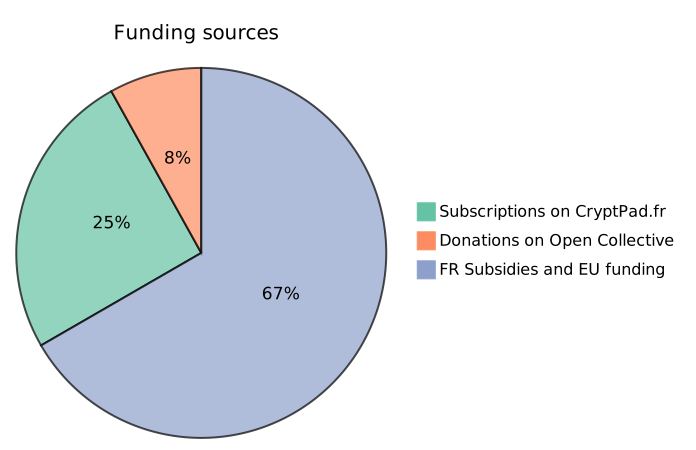
    2. Note: This preprint has been reviewed by subject experts for Review Commons. Content has not been altered except for formatting.

      Learn more at Review Commons


      Referee #3

      Evidence, reproducibility and clarity

      Summary:

      The genome sequences of two members of the protist group Preaxostyla are presented in this manuscript: Paratrimastix pyriformis and Blattamonas nauphoetae. The authors use a comparative genomics and phylogenetic approaches and compare the new genome datasets with three previously available genomes and transcriptomes from the group. The availability of genome-scale data from five Preaxostyla species is powerful to address interesting basic evolutionary questions. A substantial part of the manuscript is spent on testing the hypothesis of mitochondrial loss in the oxymonad lineage, which turns out to be supported. The datasets are also explored regarding the role of lateral gene transfer in the group, metabolic diversification and the evolution of Golgi.

      Major comments:

      I find the manuscript very interesting with many different fascinating results presented. However, the manuscript is very long. Two genome sequences are presented and it is not clear to me what the main question was when this project was initiated and why these two species was selected to answer this question. I do not see an obvious reason for sequencing the P. pyriformis genome if the mitochondrial loss was the main question (given that a transcriptome was already available). Why not spend the time and resources on a member of Preoxystyla, which lacked previous data? The authors should more clearly state why these organisms were chosen to answer the main question or questions of the study.

      The evolution of MROs have received substantial attention from the protist research community since the 1990's. During this period the mitochondrial organelle have been considered essential for eukaryotes. Therefore, the result presented in the manuscript has a high significance. However, I am not convinced that it is appropriate to use the term "evolutionary transition" for the mitochondrial loss. The loss of MRO is the endpoint of a gradual change of the internal organisation of the cell that probably started when the ancestor of these organism adapted to an anaerobic lifestyle. The last step described in the manuscript probably had little impact on how these organisms interacted with their environment. The presence or absence of biosynthesis of p-cresol by some, but not all, Preaxystyla probably is much more significant from an ecological point of view. My point is that the authors need to consider how they use the term evolutionary transition and be explicit about that.

      In the abstract the main finding is describes as "the data confirm the complete loss of mitochondria and every protein that has ever participated in the mitochondrion function for all three oxymonad species (M. exilis, B. nauphoetae, and Streblomastix strix) extending the amitochondriate status to the whole Oxymonadida.". I find this a really interesting observation, but I do find the wording a bit too bold for several reasons: - Not every protein that has participated in the mitochondrial function is known. - Mitochondrial proteins could be present in oxymonads, but divergent beyond the detection limit for existing methods. - Genes for one or several mitochondrial proteins could be present in one or more oxymonad genomes, but remain undetected due to the incomplete nature of the datasets.

      Although I do think that the authors' claim very well could be true, I don't think their data fully support it. Therefore, it needs to be rephrased.

      The third point maybe could be analysed further. BUSCO scores are reported, but also argued not being reliable for this group of organisms (which is true). Would it, for example, be useful to analyse how large fraction of the BUSCO proteins found in all non-Preoxystyla metamonada genomes that are present in the various Preoxystyla datasets?

      Line 160-161: 15 LGT events specific for the Preaxostyla+Fornicata clade is reported. This is an exciting finding because it supports a phylogenetic relationship between these two groups. But such an argument is only valid if the observed pattern is more common than the alternative hypotheses (Preaxostyla+Parabasalids and Fornicata+Parabasalids). How many LGT events support each of these groupings? How are these observation affected by the current taxon sampling with the highest number of datasets from Fornicata? How were putative metamonada-to-metamonada LGTs treated in this context?

      The authors have used a large-scale approach to make single-gene trees for inferences of LGT. In other parts of the manuscript inferences of evolutionary origins of single genes are made without support of phylogenetic trees. I find this inconsistent and argue that the hypothesis of the origin of a specific protein should be tested with the same rigor whether it is a putative LGT, gene duplication, gene loss or an ancestral member of LECA. Specific cases where I think a phylogenetic analysis is needed includes: - Line 222-223: It is concluded that Rsg1 is a component of LECA. - Line 307: HgcAB are argued to be acquired by LGT of a whole opeon. - Lines 350-355: It is unclear how the different numbers of transporters are interpreted (loss or expansion by duplication). This could be address with phylogenetics. - Lines 407-408: A tree should support the claim of LGT origin. - Lines 414-415: The different origins of glycolytic enzymes should be supported by data or references. - Line 486: Trees or a reference (if available) should support the claim for LGT.

      Lines 530-531 and 773-774: "The switch to the SUF pathway in these species has apparently not affected the number of Fe-S-containing proteins but led to a decrease in the usage of 2Fe-2S clusters." I find it difficult to evaluate if the data support this because no exact numbers or identities are given for 2Fe-2S and 4Fe-4S proteins in the various genomes in Suppl. Fig. S4 or Supplementary file 4.

      The method used in the paper varies between the different parts of the paper. One example is single gene phylogenies, which are described three times in the method section [Lines 959-973, lines 1011-1034, lines 1093-1101], in addition to the automated approach within the LGT detection pipeline lines 923-926]. The approaches are slightly different with, for example, different procedures for trimming. This makes it difficult to know how the different presented analyses were done in detail. No rationale for using different approaches is given. At the least, it should be clear in the method section which approach was used for which analysis. Specific comments on single gene phylogenies: - Line 966-967: Why max 10 target sequences? - Lines 996-998: Is it a problem that these are rather old datasets?

      Minor comments:

      I appreciate that many data is included as supplementary material. However, the organisation of the data could be improved. The numbering of the files is not included in their names or within the files, as far as I could find. Descriptions of the files are often missing and information on the annotation such as colour coding is not always included. These aspects of the supplementary material needs to be strengthened in order to make it more useful. Specific comments: - Supplementary file 1, Table 1: accession numbers are missing. Kipferlia bialta appears to have a much smaller number of sequences than reported in the publication. The file consists of three tables and it would be very helpful if the reference in the main manuscript indicate the table number. - Supplementary file 4: The trees lack proper species names and a documented colour coding. There are multiple trees in the file, which make it difficult to find the correct tree. I would appreciate if the different trees were labelled A, B, C, etc., and if these were used in the main text. - There is no HPAD-AE tree (as indicated on line 258), but a HPAD tree. Which part of the tree contain the described fusion protein? - Line 280-281: "UbiE homologs occur also in some additional metamonads, including the oxymonad B. nauphoetae and certain fornicates." These sequences should be clearly highlighted in the tree. - Lines 538-544: A three-gene system is mentioned, but only two AmmoMemoRadiSam trees are found. - Supplementary file 6: I find it difficult to find the proteins discussed in the text, for example "the biosynthesis of p-cresol from tyrosine (line 254-255)". - Supplementary file 11: Which group of species are highlighted in red? How do I know from which species these sequences are (I can make educated guesses, but prefer full species names). I do not find any reference to this file in the main manuscript.

      Line 227-228: "630 OGs seem to be oxymonad-specific or divergent, without close BLAST hits". It is unclear if BLAST searches includes only a representative of each 630 OGs, or every single protein in these OGs.

      Line 243: I think it is five LGT mapped to internal nodes of Preoxystyla in Figure 1 (1+3+1).

      Lines 325-331: The argument would be stronger with a figure showing the fusion and the alignment indicating the conserved amino acids mentioned in the text.

      Lines 425: "none of the species encoded" should be replaced by something like "none of the enzyme could be detected in any of the species" (the datasets are incomplete).

      Line 455: "suggesting a cytosolic localization of these enzymes in Preaxostyla." The absence of a phylogenetic affiliation with the S. salmonicida homolog does not preclude a MRO localisation.

      Lines 570-571: "Manual verification indicated that all the candidates recovered in oxymonad data sets are false positives" Using which criteria?

      Lines 743-755: "Similar observations were made in other protists with highly reduced mitochondria, such as G. intestinalis or E. histolytica,..." References are needed.

      Line 849: How was the manually curation done for the gene models in the training set?

      Lines 853-856: It is a bit unclear which dataset was used for BUSCO and downstream analysis. Was it the Augustus-predicted proteins, or the EVM polished?

      Lines 858: What is it meant that KEGG and similarity searches was used in parallel (what if both gave a functional annotation?)?

      Lines 861-862 and 1007-1008: Which genes or sub-projects does this apply to? How many genes were detected in this procedure?

      Lines 878-879: It is not clear to me why the sum of the two described numbers should be as high as possible and would appreciate an argument or a reference.

      Lines 879-881: "Proteins belonging to the thus defined OGs were automatically annotated using BLASTp searches against the NCBI nr protein database (Supplementary file 1)." Why were these annotated in a different way (compare lines 857-859).

      Lines 894-957: "Detection of lateral gene transfer candidates": - It is not clear which sequences were tested in the procedure. All Preaxostyla, or all metamonada? I think I am confused because in the result sections you only report numbers for Preaxostyla, but in the method section metamonada is mentioned repeatedly. - It would be easier to follow the procedure if numbers are provided for the different steps. - Why was only small oxymonad proteins discarded (line 900)? - Line 911: How many sequences were collected? - Lines 916-919: What is the difference between the protein superfamilies (line 916) and the OGs (line 919)? Are the OGs the same orthogroups that is described earlier in the method section? How are the redundancy of NCBI nr entries retrieved in different searches dealt with?

      Line 987-989: "...was facilitated by Rsg1 being rather divergent from other Ras superfamily members" This statement is vague. What does it mean in practise?

      Lines 1037-1038: Why were these proteins re-annotated?

      Figures: The figures would be easier to follow if the colour coding for the five different species were consistent between the figures.

      Figure 1: It appears that the Venn diagram in C only shows the Preaxostyla-specific protein in B, not all OGs for which contain Preaxostyla proteins. This is not clear from legend or from the figure itself. The same comment applies to D.

      Figures 2 and 6: It would be clearer with panel labels A, B, etc, instead of "upper" and "lower" panel, as in the other figures.

      Figure 6: What is the colour code in the figure? The numbers within the boxes are not aligned.

      Supplementary figures 1-3: What do green and magenta indicate in the figure?

      ** Referees cross-commenting**

      I agree with the other reviewers that the discussion of the functional and ecological implications of the LGTs could be developed.

      In contrast to reviewer 2, I do not see that the authors discuss their result in the context of eukaryogenesis in this manuscript. Maybe the reference reviewer 2 mention could be cited in the introduction together with Hampl et al. 2018 to acknowledge that there are different views about the importance of secondarily amitochondrial eukaryotes on our thinking about the origin of eukaryotes. I disagree with reviewer 2's objection against the wording "... and undergo pronounced morphological evolution" because I think Fig. 4 in Hampl 2017 shows a large morphological diversity among oxymonads.

      Significance

      The findings presented in this manuscript can be divided into two parts: the mitochondrial loss and the metabolic and Golgi analyses. The latter is a substantial contribution to the knowledge of metabolic adaptation in unicellular eukaryotes where it builds on previous similar works in other organismal groups. These findings should be of general interest for the protist field.

      The loss of mitochondria in M. exilis has been reported by the authors in several previous publications (Karnkowska, et al. (2016, 2019), Treitli, et al. (2021)). Here they show that a distantly related oxymonad (B. nauphoetae) also lack all signs of the mitochondria, suggesting that all oxymonads might have lost the mitochondrion completely. This shows that M. elixis is not a weird lineage, which recently lost the organelle and therefore is on a fast evolutionary dead end. Rather, a whole group of microbial eukaryotes have lived for long evolutionary times without any organelle with mitochondrial ancestry.

      This shows that eukaryotes can be successful without any kind of mitochondrial organelle. Such a conclusion should be of interest to a wide audience.

    1. Grading guidelines New. Item is brand new, unused and unmarked, in flawless condition. Protective wrapping should be intact. No blemishes on the outside cover. Stickers/marks indicating it may be “bargain” or “remainder” should not be considered new. Used: Like New. Item has very few defects and looks as good as new. Some minor blemishes and/or remainder marks are acceptable for this condition.   Dust cover/outside case (if applicable) should be intact.   Pages: No marking or highlighting of any kind. Shrink wrap: May be opened or missing for standard bound items. Loose leafs should be shrink wrapped to ensure all pages are present. Supplemental materials: (e.g.) CDs, DVDs, access codes should be unused. Used: Very Good. Items may have some minor defects such as marks, wear, bends, spine and page creases. Dust covers/outside case may be missing. Supplemental materials: May be missing. Water/stains: No water damage or stains of any kind acceptable in this condition. Pages: Very minor writing or highlighting (a few pages) OK. Personalization: No library labels acceptable in this condition. Name written inside OK. Binding/covers: Minimal blemishes and slight defects acceptable. No missing or loose pages. Loose leafs should be wrapped or rubber banded together and all pages must be present. Used: Good. Items with moderate wear and tear. Binding and pages should be intact. Covers: Can have curl and small creases. Moderate scuff marks or small cut OK. Corners: Can have some damage, light (1-2 inches) peeling OK, some (25%) bend OK. Pages: Minor highlighting (~20%) OK. Dog ear folds on page corners OK. Water/Stains: No visible water/spill damage. Minimal stains OK. Supplements: Can be missing/opened, unless the ISBN is a stand alone access card or a bundle edition (book with access code). Personalization: Name written inside or library labels OK. Binding: Moderate wear is OK, no loose pages. Loose leafs should be wrapped or rubber banded together and all pages must be present. Used: Acceptable. Items with more than moderate wear and tear. Binding and pages should be intact. Pages: Should be readable. Moderate highlighting and writing OK (more than ~20%). Water/Stains: Minor water/spill damage OK. Binding: Heavy wear OK, must still be intact, no loose or missing pages. Used: Unacceptable. Cover: Cover not intact. Cuts going through the cover into multiple pages. Page damage: Lines unreadable from highlighting. Page completely torn (part of page is missing) or major partial tear (high probability that normal wear and tear during next usage will result in part or all of page falling out). Water damage: Pages swollen, major wrinkling, excessive stains, major discoloration or moldy (foxing). Mismatch ISBN: Submitted ISBN does not match ISBN of what was received. Stickers or Tape: Used deliberately to hide markings specific to instructor, international, and sample editions, which are all deemed unacceptable. Rebound items. Binding: Pages are separating from binding or have been fixed with tape.

      https://sellhelp.valorebooks.com/article/44-grading-guidelines

    1. Reviewer #2 (Public Review):

      The purpose of this study is to develop a tool that serves as a starting point for investigating and uncovering genes and pathways associated with aging. The tool utilizes information from the GTEx public database, which contains post-mortem human data. It focuses on identifying age-related gene expression changes across different age range, biological sexes, and medical histories, with a focus on specific tissues.

      Additionally, the authors envision the platform as continuously evolving, with ongoing development and expansion to include new data and features, ensuring it remains a cutting-edge resource for researchers studying aging.

      # Strengths<br /> voyAGEr presents a tool for exploring gene expression changes across multiple tissues in the context of aging. One of the main strengths of the tool is its intuitive and user-friendly interface, which allows for easy navigation and exploration of gene expression patterns for biologists. Users can explore changes in gene expression of single genes across multiple tissues, enabling them to identify genes of interest that can be further investigated.

      A particularly noteworthy strength of the tool is its ability to show tissue-specific gene expression patterns. This feature is essential for elucidating the paradigm of tissue-specific asynchronous aging and provides a unique and valuable resource for the aging community.

      Overall, the tool offers an entry point for further investigation of genes involved in aging, and its ability to show tissue-specific gene expression patterns provides a unique and valuable resource for the scientific community.

      Lastly, the tool is accompanied by a clear and thorough tutorial that explains each of its functionalities and provides examples. The authors also acknowledge the limitations of the statistical inference tests used in the tool, which adds to its overall transparency.

      # Weaknesses

      ## Underlying data analysis<br /> In this tool/resource paper, it is crucial that the data used is up-to-date to provide the most comprehensive and relevant information to users. However, the authors utilized GTEx v7, which is an outdated (2016) version of the dataset. It is worth noting that GTEx v8 includes over 940 individuals, representing a 35% increase in individuals, and a 50% increase in the total number of samples. The authors should check the newer versions of GTEx and update the data.

      The authors did not address any correction for batch effects or RNA integrity numbers, which are known to affect transcriptome profiles. For instance, our analysis of GTEx v8 Cortex tissue revealed that after filtering out lowly expressed genes, in the same way authors did, PC1 (which accounts for 24% of the variation) had a Spearman's correlation value of 0.48 (p<6.1e-16) with RNA integrity number.

      The data analyzed in the GTEx dataset is not filtered or corrected for the cause of death, which can range from violent and sudden deaths to slow deaths or cases requiring a ventilator. As a result, the data may not accurately represent healthy aging profiles but rather reflect changes in the transcriptome specific to certain diseases due to the age-related increase in disease risk. While the authors do acknowledge this limitation in the discussion, stating that it is not a healthy cohort and disease-specific analysis is not feasible due to the limited number of samples, it would be useful for users to have the option to analyze only cases of fast death, excluding ventilator cases and deaths due to disease. This is typically how GTEx data is utilized in aging studies. Alternatively, the authors should consider including the "cause of death" variable in the model.

      The age distribution varies across tissues which may impact the results of the study. The authors' claim that age distribution does not affect the outcomes is inconclusive. Since the study aims to provide cross-tissue analysis, it is important to note that differing age distributions across tissues can influence the overall results. To address this, the authors should conduct downsampling to different age distributions across tissues and evaluate the level of tissue-specific or common changes that remain after the distributions are made similar.

      The GTEx resource is extremely valuable, however, it comes with challenges. GTEx contains tissue samples from the same individuals across different tissues, resulting in varying degrees of overlap in sample origin across tissues as not all tissues are collected for all individuals. This could affect the similar/different patterns observed across tissues. As this tool is meant for broader use by the community, it is crucial for the authors to either rule out this possibility by conducting a cross-tissue comparison using a non-parametric model that accounts for the dependency between samples from the same individual, or to provide information on the degree of similarity between samples so that the users can keep this possibility in mind when using the tool for hypothesis generation.

      ## Visualisation and analysis platform<br /> The authors aimed to create an open-source and ever-evolving resource that could be adapted and improved with new functionality. However, this goal was only partially achieved. Although the code for the web app is open source, crucial components such as the statistical tests or the linear model are not included in the repository, limiting the tool's customizability and adaptability.

      Furthermore, the authors' choice of visualization platform (R shiny) may not be the best fit for extensibility and open-source collaboration, as it lacks modularity. A more suitable alternative could be production-oriented platforms such as Flask or FastAPI.

      To facilitate collaboration and improve the tool's adaptability, data resulting from the pre-processing pipeline should be made publicly available. This would make it easier for others to contribute and extend the tool's functionality, ultimately enhancing its value for the scientific community.

    1. Reviewer #1 (Public Review):

      This study by Sokač et al. entitled "GENIUS: GEnome traNsformatIon and spatial representation of mUltiomicS data" presents an integrative multi-omics approach which maps several genomic data sources onto an image structure on which established deep-learning methods are trained with the purpose of classifying samples by their metastatic disease progression signatures. Using published samples from the Cancer Genome Atlas the authors characterize the classification performance of their method which only seems to yield results when mapped onto one out of four tested image-layouts.

      Major recommendations:

      - In its current form, GENIUS analysis is neither computationally reproducible nor are the presented scripts on GitHub generic enough for varied applications with other data. The GENIUS GitHub repository provides a collection of analysis scripts and not a finished software solution (e.g. command line tool or other user interface) (the presented scripts do not even suffice for a software prototype). In detail, the README on their GitHub repository is largely incomplete and reads analogous to an incomplete and poorly documented analysis script and is far from serving as a manual for a generic software solution (this claim was made in the manuscript). The authors should invest substantially into adding more details on how data can be retrieved (with example code) from the cited databases and how such data should then be curated alongside the input genome to generically create the "genomic image". In addition, when looking at the source code, parameter configurations for training and running various modules of GENIUS were hard-coded into the source code and users would have to manually change them in the source code rather than as command line flags in the software call. Furthermore, file paths to the local machine of the author are hard-coded in the source code, suggesting that images are sourced from a local folder and won't work when other users wish to replicate the analysis with other data. I would strongly recommend building a comprehensive command line tool where parameter and threshold configurations can be generically altered by the user via command line flags. A comprehensive manual would need to be provided to ensure that users can easily run GENIUS with other types of input data (since this is the claim of the manuscript). Overall, due to the lack of documentation and hard-coded local-machine folder paths it was impossible to computationally reproduce this study or run GENIUS in general.

      - In the Introduction the authors write: "To correct for such multiple hypothesis testing, drastic adjustments of p-values are often applied which ultimately leads to the rejection of all but the most significant results, likely eliminating a large number of weaker but true associations.". While this is surely true for any method attempting to separate noise from signal, their argument fails to substantiate how their data transformation will solve this issue. Data transformation and projection onto an image for deep-learning processing will only shift the noise-to-signal evaluation process to the postprocessing steps and won't "magically" solve it during training. In addition, multiple-testing correction is usually done based on one particular data source (e.g. expression data), while their approach claims to integrate five very different genomic data sources with different levels and structures of technical noise. How are these applications comparable and how is the training procedure able to account for these different structures of technical noise? Please provide sufficient evidence for making this claim (especially in the postprocessing steps after classification).

      - I didn't find any computational benchmark of GENIUS. What are the computational run times, hardware requirements (e.g. memory usage) etc that a user will have to deal with when running an analogous experiment, but with different input data sources? What kind of hardware is required GPUs/CPUs/Cluster?

      - A general comment about the Methods section: Models, training, and validation are very vaguely described and the source code on GitHub is very poorly documented so that parameter choices, model validation, test and validation frameworks and parameter choices are neither clear nor reproducible. Please provide a sufficient mathematical definition of the models, thresholds, training and testing frameworks.

      - In chapter "Latent representation of genome" the authors write: "After successful model training, we extracted the latent representations of each genome and performed the Uniform Manifold Approximation and Projection (UMAP) of the data. The UMAP projected latent representations into two dimensions which could then be visualized. In order to avoid modeling noise, this step was used to address model accuracy and inspect if the model is distinguishing between variables of interest.". In the recent light of criticism when using the first two dimensions of UMAP projections with omics data, what is the evidence in support of the author's claim that model accuracy can be quantified with such a 2D UMAP projection? How is 'model accuracy' objectively quantified in this visual projection?

      - In the same paragraph "Latent representation of genome" the authors write: "We observed that all training scenarios successfully utilized genome images to make predictions with the exception of Age and randomized cancer type (negative control), where the model performed poorly (Figure 2B).". Did I understand correctly that all negative controls performed poorly? How can the authors make any claims if the controls fail? In general, I was missing sufficient controls for any of their claims, but openly stating that even the most rudimentary controls fail to deliver sufficient signals raises substantial issues with their approach. A clarification would substantially improve this chapter combined with further controls.

    2. Reviewer #2 (Public Review):

      In this manuscript, Birkbak and colleagues use a novel approach to transform multi-omics datasets in images and apply Deep Learning methods for image analysis. Interestingly they find that the spatial representation of genes on chromosomes and the order of chromosomes based on 3D contacts leads to best performance. This supports that both 1D proximity and 3D proximity could be important for predicting different phenotypes. I appreciate that the code is made available as a github repository. The authors use their method to investigate different cancers and identify novel genes potentially involved in these cancers. Overall, I found this study important for the field.

      The major points of this manuscript could be grouped in three parts:

      1. While the authors have provided validation for their model, it is not always clear that best approaches have been used.<br /> a. In the methods there is no mention of a validation dataset. I would like to see the authors training on a cancer from one cohort and predict on the same cancer from a different cohort. This will convince the reader that their model can generalise. They do something along those lines for the bladder cancer, but no performance is reported. At the very least they should withhold a percentage of the data for validation. Maybe train on 100 and validate on the remaining 300 samples. They might have already done something along these lines, but it was not clear from the methods.<br /> b. It was not clear how they used "randomised cancer types as the negative control". Why not use normal tissue data or matched controls?<br /> c. If Figure 2B, the authors claim they have used cross validation. Maybe I missed it, but what sort of cross validation did they use?<br /> 2. Potential improvement to the method<br /> a. It is very encouraging the use of HiC data, but the authors used a very coarse approach to integrate it (by computing the chromosome order based on interaction score). We know that genes that are located far away on the same chromosome can interact more in 3D space than genes that are relatively close in 1D space. Did the authors consider this aspect? Why not group genes based on them being located in the same TAD?<br /> b. Authors claim that "given that methylation negatively correlates with gene expression, these were considered together". This is clearly not always the case. See for example https://genomebiology.biomedcentral.com/articles/10.1186/s13059-022-02728-5. What would happen if they were not considered together?<br /> 3. Interesting results that were not explained.<br /> a. In Figure 3A methylation seems to be the most important omics data, but in 3B, mutations and expression are dominating. The authors need to explain why this is the case.

    1. If you need to use a Transaction Purpose Code that is not on this list, please contact the support team via your Razorpay Dashboard.

      If you do not find your Transaction Purpose Code in the Transaction Code list <hyperlink Transaction Code list>, contact the Razorpay Support team from your Dashboard.

    2. You can provide Purpose Code information at the time of applying for international payments. Visit your Razorpay Dashboard and update your purpose code under the Account & Settings section. Scroll down to choose from the list of Purpose Code. Here is a short video on how to update your purpose code.
      1. Log into the Razorpay Dashboard. [hyperlink Razorpay Dashboard].
      2. Update your purpose code under the Account & Settings section. Watch this short video to see how to update your purpose code.
    1. Reviewer #2 (Public Review):

      This paper introduces a new model that aims to explain the generators of temporal decoding matrices (TGMs) in terms of underlying signal properties. This is important because TGMs are regularly used to investigate neural mechanisms underlying cognitive processes, but their interpretation in terms of underlying signals often remains unclear. Furthermore, neural signals are often variant over different instances of stimulation despite behaviour being relatively stable. The author aims to tackle these concerns by developing a generative model of electrophysiological data and then showing how different parameterizations can explain different features of TGMs. The developed technique is able to capture empirical observations in terms of fundamental signal properties. Specifically, the model shows that complexity is necessary in terms of spatial configuration, frequencies and latencies to obtain a TGM that is comparable to empirical data.

      The major strength of the paper is that the novel technique has the potential to further our understanding of the generators of electrophysiological signals which are an important way to understand brain function. Furthermore, the used techniques are state-of-the-art and the developed model is publicly shared in open source code.

      On the other hand, the results of comparisons between simulations and real data are not always clear for an inexperienced reader. For example, the comparisons are qualitative rather than quantitative, making it hard to draw firm conclusions. Relatedly, it is unclear whether the chosen parameterizations are the only/best ones to generate the observed patterns or whether others are possible. In the case of the latter, it is unclear what we can actually conclude about underlying signal generators. It would have been different if the model was directly fitted to empirical data, maybe of different cognitive conditions. Finally, the neurobiological interpretation of different signal properties is not discussed. Therefore, taken together, in its currently presented form, it is unclear how this method could be used exactly to further our understanding of the brain.

    1. Note: This rebuttal was posted by the corresponding author to Review Commons. Content has not been altered except for formatting.

      Learn more at Review Commons


      Reply to the reviewers

      1. General Statements

      We thank the reviewers for their constructive feedback, which has helped us improve the manuscript considerably (no comment on whether the improvements are “significant”). Below are our point-by-point responses. We have also highlighted all changes in the manuscript.

      2. Point-by-point description of the revisions

      Reviewer 1

      Summary

      In this study, Obodo et al. present a new iteration of their popular rhythm analysis tool LimoRhyde. The conceptual advancement in this new iteration is the focus on effect sizes (in the form of point estimates of amplitude and their prediction intervals) rather than the p-values, which has been the predominant form of statistical testing for rhythm analysis. Therefore, compared to a well-established non-parametric method for rhythm testing, LimoRhyde2 selects genomic features with larger amplitudes (effect-sizes) as it is designed to do.

      Major Comments

      1. (LimoRhyde2 algorithm, Page 2-) It is unclear what exactly the contributions/advancements of the authors are? Is it a novel statistical method, the combination of well-established tools in a novel workflow, or is it a novel application to a new field (rhythms)? I am afraid the sentence "LimoRhyde2 builds on previous work by our group and others to rigorously analyze data from genomic experiments [9,16,17], capture non-sinusoidal rhythms [18], and accurately estimate effect sizes [14,19]." is rather ambiguous.

      We have revised this sentence in the last paragraph of the Introduction to clarify LimoRhyde2’s contributions.

      1. (Moderate model coefficients, Page 3-) The authors implement empirical Bayes shrinkage on the coefficients. But the state-of-the-art methods used in LimoRhyde2 for linear model fitting, such as DESeq2/limma-voom/limma-trend, already implement shrinkage for the coefficients. Does algorithm implement a second round of Bayes shrinkage on the rhythm effect-sizes? How or why is this a statistically valid procedure? If not, how does Limorhyde2 add to shrinkage already implemented in DESeq2/limma-voom/limma-trend? Please elaborate.

      To our understanding, the two shrinkage procedures work at different levels and serve different purposes. Limma applies shrinkage on residual variances to account for any technical variation and to give a higher power to detect effects for data with smaller sample sizes within each condition; it does not shrink coefficients. In practice, limma’s shrinkage has little effect given the relatively large sample sizes of most circadian experiments. LimoRhyde2, on the other hand, uses mashr to apply shrinkage to the coefficients themselves to account for shared patterns of effects and variation across both features and conditions. We see no reason this approach is invalid, and in our conversations with Matthew Stephens, the author of ashr and mashr, he felt the same. We elaborate on each method’s contributions in the Discussion (paragraph 2).

      1. I think the goal to move to effect-sizes which lead to more reproducible results and better biological significance is sound and highly appreciated. However, to make the community switch to a completely different way of viewing their genomic analysis requires more convincing examples(s)/use-cases on why they should abandon the old method that they are used to. Now, results section merely shows that this algorithm performs as designed (to find large amplitude rhythms).

      We appreciate the comment and acknowledge that some readers may be particularly attached to p-values and our current analysis may not wholly convince them of the value of effect sizes. We believe the manuscript stands on its own, however, and are using LimoRhyde2 to guide experiments whose conclusions we hope to describe in future work. Nonetheless, we have revised the Discussion (paragraph 4) to clarify that some known relevant genes highly ranked by LimoRhyde2 were underappreciated by BooteJTK.

      1. Related to point 3, others have previously proposed using amplitude (effect-size) thresholds in addition to the p-value cutoffs (Lück & Westermark, 2016, Pelikan et al, 2022), how would the results of Limorhyde2 compare in a fairer contrast where both p-value and amplitude thresholds are implemented? Does the proposed sound method outperform the two-step approach. The authors may perform this analysis on their chosen datasets as well.

      Thank you for raising this point. Indeed, one way to view LimoRhyde2 is as a data-driven balancing of raw effect size and p-value. However, the approach of considering both raw amplitude and p-value is uncommon and requires yet another arbitrary cutoff, which complicates any genewise ranking and side-by-side comparison with other methods. Thus, we have decided to not perform this analysis, and instead mention what we see as the advantage of LimoRhyde2 in the Discussion (paragraph 2).

      1. I am also not completely convinced of the author's approach to compare their tool against BooteJTK. P-values only show ordering when the alternative hypothesis is true. P-values under the null hypothesis are uniformly distributed in [0,1] so would be meaningless for the purpose of ordering. Without knowing the ground-truth, ordering by p-values is rather risky. I understand the authors' difficulty. But maybe point 4 above yields a better evaluation strategy for LimoRhyde2.

      If one accepts that these datasets have a non-zero number of “true” rhythmic genes, which to us seems more than reasonable, then we don’t see this is a large issue. Ranking by (adjusted) p-value is also the standard in differential expression analyses.

      1. (OPTIONAL) LimoRhyde2 orders results by the point estimates of the effect-sizes (amplitudes). Is this biologically the most meaningful? Should the effect-size CIs be ordered at all? Maybe we only care about whether the lower limit of the CI is greater than a chosen threshold without any ordering. A discussion of this would be valuable to a user.

      We discussed this issue amongst ourselves as well, and ultimately elected for simplicity in ranking by only the point estimate and not the credible interval. We have now mentioned this issue in the penultimate paragraph of the Discussion.

      1. (OPTIONAL) If indeed the authors want to move away from p-values, one could argue that most of the insights from p-value analysis are or could be biased. So why compare against ordering by p-values at all in the results?

      We are not arguing that results from p-value-based analyses are biased. We seek to show the differences on real data between an analysis based on p-values, the dominant approach in the field, and one based on estimated effect sizes. We believe this has greater potential to promote thoughtful progress than does outright rejection of p-values based on a purely theoretical argument.

      Minor Comments

      1. In page 3, it is unclear why averaging the three fits is the best thing to do? How bad would the performance be if m = 1 was chosen compared to m=3.

      We have elaborated the relevant section of the Methods. For most genes in most datasets, the difference between m=1 and m=3 wasn’t much. However, m=1 tended to go noticeably sideways for some of the most rhythmic genes, depending on the relative locations of timepoints and spline knots, whereas m=3 did not.

      1. In page 4, "To account for this uncertainty, LimoRhyde2 constructs..." was difficult to understand and sounded arbitrary. Please explain further.

      We have revised this sentence.

      1. Lachmann et al. (2021) also use bootstrap confidence intervals rather than p-values to quantify rhythmicity that ought to be mentioned.

      We have now cited this paper in the Introduction.

      Significance Comments

      1. General assessment: The authors present an exciting new way of viewing results of high-throughput data analysis in the context of biological rhythms using a Bayesian-like approach. Previously work has revealed the flaws in focusing on p-values and how focusing of effect-sizes (in this context amplitudes) can yield more robust, reproducible results. Although this promises to also yield more biological meaningful results, it is unclear from this study how this might be.

      See reply to Major Comment 3 above.

      1. Advance: This study presents the first tool in the context of the rhythm analysis to provide prediction intervals for different rhythm parameters to facilitate a move away from the hypothesis testing framework of p-values. This is a technical advance in the field of rhythm analysis, but it is unclear what insights this could yield.

      See reply to Major Comment 6 above.

      Reviewer 2

      Major Comments

      1. The manuscript introduces a new tool to select rhythmic genes and to quantify amplitudes and phases. The authors combine splines, linear regression, Bayes sampling, and Mash. They focus on amplitudes instead p-values as in other packages. The performance and independence of JTK methods are illustrated using selected circadian expression profiles from different mammalian tissues. The paper is clearly written and provides a valuable extension of existing tools. I miss, however, an intuitive explanation of Mash.

      Thank you.

      1. I agree with their claim that amplitudes are quite important for physiological regulations. However, p-values are also helpful to explore, e.g., transcription factor binding sites. Moreover, amplitudes are taken into account in many studies (see e.g. papers of Naef, Korencic, Westermark, Ananthasubramaniam...). Since JTK or RAIN are non-parametric methods amplitudes are not in focus. The authors should discuss the biological relevance of amplitudes more clearly.

      Thanks for raising this point. We are careful to limit our claims to bulk transcriptome data, and have tried to cite the relevant prior work. We have revised the Discussion to clarify what we see as the potential value of amplitudes, as illustrated by our analysis.

      1. The selection of the 3 data sets and of specific genes seems reasonable since a range of technologies (microarrays versus RNS-seq), of durations (1 day versus 2 days), and of gene amplitudes are represented. Still the authors should comments their selections of data sets and genes.

      We have added justification for our choices.

      1. I find also the tissue-dependent phase distributions of clock-controlled genes of interest. However, a comparison with other studies (Zhang, GTEx from Talamanca et al.) and a discussion how amplitude thresholds such as 10%, 25%, 50% affect the phase distributions would be valuable.

      Thank you for the suggestion. We initially explored several values of the amplitude threshold for those histograms (Figure S4C) before selecting the top 25%, all led to the same conclusion. We consider this a minor issue and tangential to the main point of the paper, so we have left the figure as is. We invite any interested reader to explore the publicly available results.

      Reviewer 3

      Summary

      The authors developed LimoRhyde2, a method for quantifying rhythmicity in genomic data, and applied it to mouse transcriptome data from liver, lung, and suprachiasmatic nucleus (SCN) tissues. The method uses periodic spline-based linear models and an Empirical Bayes procedure (Mash) to produce posterior fits and rhythm statistics. LimoRhyde2 prioritizes high-amplitude rhythms of various shapes rather than monotonic rhythms with high signal-to-noise ratios, which contrasts with previous methods like BooteJTK. The authors demonstrated the value of LimoRhyde2 in quantifying rhythmicity and highlighted some of its advantages over traditional methods. However, they also acknowledged limitations, such as the inability to compare rhythmicity between conditions and the assumption of fixed rhythms.

      Major Comments

      1. The key conclusions are convincing, as the authors demonstrated LimoRhyde2's ability to fit non-sinusoidal rhythms and prioritize high-amplitude rhythms over monotonic rhythms with high signal-to-noise ratios. This is shown by the comparison with BooteJTK, a popular method in the field, and by the analysis of real circadian transcriptome data from mouse tissues. However, the authors acknowledged some limitations that could impact the method's broader applicability.

      Thank you.

      1. Data and methods are presented in a reproducible manner, with detailed descriptions of the periodic spline-based linear models, the use of Mash for moderating raw fits, and the calculation of rhythm statistics. This information is sufficient for other researchers to replicate the study and apply the LimoRhyde2 method to their own datasets. The code is available already.

      Thank you.

      1. Adequate replication and statistical analysis are provided, with the authors analyzing the same datasets using both LimoRhyde2 and BooteJTK to compare their performance. The use of Spearman correlation to assess the relationship between the adjusted p-values from BooteJTK and the amplitudes from LimoRhyde2 further supports the statistical rigor of the study.

      Thank you.

      Minor Comments

      1. Addressing LimoRhyde2's limitations would help improve the study.

      We have extensively addressed the method’s limitations to the best of our knowledge in Discussion paragraphs 6 and 7.

      1. Authors could provide more details on how LimoRhyde2 could be applied to single-cell RNA-seq data to improve the presentation. Single-cell quantification over time would be a challenging task, so some insight into this would be appreciated, rather than a brief comment at the end of the paper.

      Thank you for your interest in this topic. To do it justice, however, requires its own project and paper, so scRNA-seq is beyond the scope of the current paper.

      Significance Comments

      1. This study represents a technical advance in the field of genomic analysis of biological rhythms by introducing LimoRhyde2, a method that prioritizes high-amplitude rhythms and directly estimates biological rhythms and their uncertainty. The method's ability to capture non-monotonic rhythms and account for uncertainty makes it a valuable tool for researchers interested in understanding circadian systems and their physiological impact.

      1. The work is placed in the context of existing literature, as the authors compare LimoRhyde2 with BooteJTK, a refinement of the popular JTK_CYCLE method. The comparison highlights the differences in output, prioritization, and runtime, demonstrating LimoRhyde2's potential advantages over traditional methods in the field.

      2. However, BooteJTK is relatively underused compared to many other methods, partly because of the difficulty and time required to run the analysis. The paper would be improved by comparing LimoRhyde2 to JTK_Cycle itself, as well as RAIN and ARSER. The latter are the most commonly used methods for rhythm detection, and thus the value of the paper's findings would be far greater by comparing to these methods. Like LimoRhyde2, they are also not resource-intensive to run.

      Thanks for your feedback on this point, which is one we discussed at length amongst ourselves. In the end, we decided on BooteJTK because it seems to be the best performing version of the most common method. ARSER and RAIN are simply not the standard, and based on our interpretation of the evidence, not generally superior to JTK. If we had selected the vanilla JTK_Cycle, we felt a reviewer could discard our results by saying "well, they're comparing their method to a version of a method known to be flawed". Given our objective to highlight the differences between prioritization based on estimated effect size and prioritization based on p-value, we do not see the value of including additional methods in the analysis.

      1. LimoRhyde2's ability to efficiently prioritize large effects with functional significance in the circadian system can provide valuable insights for these researchers and advance the understanding of biological rhythms. The LimoRhyde2 approach is different to conventional reliance on arbitrary p- or q-values, which are taken as almost sacrosanct in the field as a measure of a dataset's worth. LimoRhyde2 could thus help to change this false perception of how to rate a circadian rhythm, which has particularly been ushered in by a reliance on JTK_Cycle p- and q-values as the method of choice for assigning meaningfulness to rhythms. Unfortunately, JTK_Cycle is very conservative and is limited to detecting sinusoidal-type rhythms. LimoRhyde2 could overcome these limitations (as RAIN does too) if widely adopted. However, to do this, it must be compared to things like JTK_Cycle directly.

      See reply to Significance Comment 3 above.

    2. Note: This preprint has been reviewed by subject experts for Review Commons. Content has not been altered except for formatting.

      Learn more at Review Commons


      Referee #3

      Evidence, reproducibility and clarity

      Summary

      The authors developed LimoRhyde2, a method for quantifying rhythmicity in genomic data, and applied it to mouse transcriptome data from liver, lung, and suprachiasmatic nucleus (SCN) tissues. The method uses periodic spline-based linear models and an Empirical Bayes procedure (Mash) to produce posterior fits and rhythm statistics. LimoRhyde2 prioritizes high-amplitude rhythms of various shapes rather than monotonic rhythms with high signal-to-noise ratios, which contrasts with previous methods like BooteJTK. The authors demonstrated the value of LimoRhyde2 in quantifying rhythmicity and highlighted some of its advantages over traditional methods. However, they also acknowledged limitations, such as the inability to compare rhythmicity between conditions and the assumption of fixed rhythms.

      Major comments:

      1. The key conclusions are convincing, as the authors demonstrated LimoRhyde2's ability to fit non-sinusoidal rhythms and prioritize high-amplitude rhythms over monotonic rhythms with high signal-to-noise ratios. This is shown by the comparison with BooteJTK, a popular method in the field, and by the analysis of real circadian transcriptome data from mouse tissues. However, the authors acknowledged some limitations that could impact the method's broader applicability.
      2. Data and methods are presented in a reproducible manner, with detailed descriptions of the periodic spline-based linear models, the use of Mash for moderating raw fits, and the calculation of rhythm statistics. This information is sufficient for other researchers to replicate the study and apply the LimoRhyde2 method to their own datasets. The code is available already.
      3. Adequate replication and statistical analysis are provided, with the authors analyzing the same datasets using both LimoRhyde2 and BooteJTK to compare their performance. The use of Spearman correlation to assess the relationship between the adjusted p-values from BooteJTK and the amplitudes from LimoRhyde2 further supports the statistical rigor of the study.

      Minor comments:

      1. Addressing LimoRhyde2's limitations would help improve the study.
      2. Authors could provide more details on how LimoRhyde2 could be applied to single-cell RNA-seq data to improve the presentation. Single-cell quantification over time would be a challenging task, so some insight into this would be appreciated, rather than a brief comment at the end of the paper.

      Significance

      1. This study represents a technical advance in the field of genomic analysis of biological rhythms by introducing LimoRhyde2, a method that prioritizes high-amplitude rhythms and directly estimates biological rhythms and their uncertainty. The method's ability to capture non-monotonic rhythms and account for uncertainty makes it a valuable tool for researchers interested in understanding circadian systems and their physiological impact.
      2. The work is placed in the context of existing literature, as the authors compare LimoRhyde2 with BooteJTK, a refinement of the popular JTK_CYCLE method. The comparison highlights the differences in output, prioritization, and runtime, demonstrating LimoRhyde2's potential advantages over traditional methods in the field.
      3. However, BooteJTK is relatively underused compared to many other methods, partly because of the difficulty and time required to run the analysis. The paper would be improved by comparing LimoRhyde2 to JTK_Cycle itself, as well as RAIN and ARSER. The latter are the most commonly used methods for rhythm detection, and thus the value of the paper's findings would be far greater by comparing to these methods. Like LimoRhyde2, they are also not resource-intensive to run.
      4. LimoRhyde2's ability to efficiently prioritize large effects with functional significance in the circadian system can provide valuable insights for these researchers and advance the understanding of biological rhythms. The LimoRhyde2 approach is different to conventional reliance on arbitrary p- or q-values, which are taken as almost sacrosanct in the field as a measure of a dataset's worth. LimoRhyde2 could thus help to change this false perception of how to rate a circadian rhythm, which has particularly been ushered in by a reliance on JTK_Cycle p- and q-values as the method of choice for assigning meaningfulness to rhythms. Unfortunately, JTK_Cycle is very conservative and is limited to detecting sinusoidal-type rhythms. LimoRhyde2 could overcome these limitations (as RAIN does too) if widely adopted. However, to do this, it must be compared to things like JTK_Cycle directly.
    1. Files which render themselves when published (e.g. templates or other scripts) will be rendered when accessed from a mounted WebDAV volume. This is because WebDAV clients issue a GET (it's an extension of HTTP, after all) to hand you your data. You can't simply mount a WebDAV share and start editing PHP files, for example. Until a data type is provided for source code-based documents, this will remain a problem.

      This is a node-/organization-level information architecture problem.

      If /foo.php is a script that generates a Web page, then separate identifiers need to be assigned for each resource (one for the document itself, and one for the script that generates it). It is a failure of the node not to distinguish between the two. A separate content type would not solve this problem—it would just appear to cover it up (as well as create new ones).

    1. while I'm not as strongly against the above example code as the others, specifically because you did call it out as pseudocode and it is for illustrative purposes only, perhaps all of the above comments could be addressed by replacing your query = ... lines with simple query = // Insert case-sensitive/insensitive search here comments as that keeps the conversation away from the SQL injection topic and focuses on what you're trying to show. In other words, keep it on the logic, not the implementation. It will silence the critics.

    Annotators

    1. Author Response

      Reviewer #2 (Public Review):

      The paper by Arribas et al. examines the coding properties of adult-born granule cells in the hippocampus at both single cell and network level. To address this question, the authors combine electrophysiology and modeling. The main findings are:

      Noisy stimulus patterns produce unreliable spiking in adult-born granule cells, but more reliable responses in mature granule cells.

      Analysis of spike patterns with a spike response model (SRM) demonstrates that adult-born and mature GCs show different coding properties.

      Whereas mature GCs are better decoders on the single cell level, heterogeneous networks comprised of both mature and adult-born cells are better encoders at the network level.

      Based on these results, the authors conclude that granule cell heterogeneity confers enhanced encoding capabilities to the dentate gyrus network.

      Although the manuscript contains interesting ideas and initial data, several major points need to be addressed.

      Major points:

      1) The authors use and noisy stimulation paradigm to activate granule cells at a relatively high frequency. However, in the intact network in vivo, granule cells fire much more sparsely. Furthermore, granule cells often fire in bursts. How these properties affect the coding properties of granule cells proposed in the present paper remains unclear. At the very least, this point needs to be better discussed.

      In vivo whole cell recordings of granule cells are very scarce. In our study, we based the design of our stimulus on recordings from the intact network in vivo (PerniaAndrade and Jonas 2014), which show that granule cells receive a wide range of frequencies, with a power spectrum that exhibits a power law decay. These properties are built in our noisy stimuli. These in vivo recordings have also reported the presence of theta oscillations, showing a peak in the spectrum. However, in our approach we deliberately removed these oscillations from our stimuli because it is best to fit GLMs using white noise or noise with an exponentially decaying autocorrelation (Paninski et al. 2004).

      Thus, our choice of the stimuli is far from arbitrary, but rooted on experimental evidence from intact network in vivo recordings, together with previous knowledge about GLM/SRM fitting. This comment reveals to us that we did not clarify this enough in the manuscript. We are grateful to the reviewer for revealing this omission, since this is in fact an important aspect of the study strategy. In the revised manuscript, we brought these points up front in the results section when we introduce the stimulus for the first time, and more thoroughly discussed it in the Methods section that describes the stimulus.

      Still, the bursts observed in granule cells are an important feature and they have been observed to be phase locked to the theta-gamma oscillations in vivo (Pernia-Andrade and Jonas 2014). In the revised version of the manuscript we included new experiments and simulations with stimuli that include a peak in theta frequency. We found that immature neurons also improve decoding performance with these theta modulated stimuli.

      2) The authors induce spiking in granule cells by injection of current waveforms. However, in the intact network, neurons are activated by synaptic conductances. As current and conductance have been shown to affect spike output differently, controls with conductance stimuli need to be provided. Dynamic clamp is not a miracle anymore these days.

      The use of dynamic clamp sounds in principle like a good suggestion. However, in the manuscript we have taken a different approach to enable the use of a single neuron GLM that uses currents as inputs. To control for the differences between mature and immature neurons we used currents with amplitude normalized by the input resistance, and both types of neurons were measured with the same technique to allow for the comparison.

      Importantly, the GLM type model that we use assumes that the membrane potential is a linear convolution of the input, which permits a straightforward and robust fitting approach. We argue that this is not a minor issue, since using dynamic clamp would require a drastic modification of the model. Furthermore, the use of conductance stimuli would not allow for the straightforward model fitting we perform with our approach. The key point here is that the membrane potential would not be correctly approximated as a linear function of the conductance stimulus, precluding the fitting strategy.

      Finally, at the moment we do not have the equipment to perform the suggested experiment, so this suggestion would require a big amount of time to acquire the equipment and set up the experiments in mature and immature neurons. In addition, we would have to change the model and develop a different fitting strategy. With the controls that we already have in the manuscript, we do not think dynamic clamp experiments would fundamentally change the conclusions of the manuscript. Thus, we argue that this is beyond a reasonable timeframe for this revision, but could be something to further explore in future. We now mention this possibility in the discussion.

      3) The greedy procedure is a good idea, but there are several issues with its implementation. First, it is unclear how the results depend on the starting value. What we end up with the same mixed network if we would start with adult-born cells? Second, the size of the greedy network is very small. It is unclear whether the main conclusion holds in larger networks, up to the level of biological network size (1 million). Finally, the fraction of adult-born granule cells in the optimal network comes out very large. This is different from the biological network, where clearly four or five-week-old granule cells cannot represent the majority. Much more work is needed to address these issues.

      The reviewer approves the greedy procedure that we apply in our manuscript and poses three issues for consideration.

      First, the reviewer queries what would be the result of starting the procedure with a different pool of simulated neurons, and whether we would obtain “the same mixed network if we would start with adult-born cells”. Let us remark that the outcome of the greedy procedure is not always the same mixed population of neurons. For each different mature neuron that we use to start the procedure, the trajectory (see Fig. 4A) of selected neurons will be different. Thus, the final population (network) will be different, and this is reflected in the error bars that we obtain in Fig. 4. Presumably, starting with adult-born cells will change the outcome of the greedy procedure. However, note that this is not the point of the approach. The motivation to start with mature neurons is to ask whether adult-born cells can contribute something to decoding, given that mature cells on their own perform better.

      Second, the reviewer questions the size of the population that we reach with the greedy procedure. Note that for the population sizes that we show in the manuscript the decoding performance already begins to saturate, Fig. 4F-H. Furthermore, it is unfeasible to construct a 1M neurons population due to the computational cost –the time it takes to run the algorithm. These two facts motivated us to stop at 12 neurons as it strikes a good balance between computational time and saturation. Importantly, as we expand below, the aim of the greedy procedure simulation is not reconstructing the actual network of the dentate gyrus. Rather, we seek to understand whether immature neurons could improve coding in a population.

      Third, the reviewer observes that the fraction of adult born cells in the reconstructed populations using the greedy procedure are large as compared to the biological network. Again, here note that the aim of the whole in-silico experiment is not to recover the biological network, where other aspects are at play. More simply, we query the possible contribution of adult born cells to coding. In fact, if we obtained the same proportion it would be by chance, since we do not think that adult-born cells in the dentate gyrus are chosen according to the greedy algorithm.

      Still, this comment from the reviewer motivated us to include further simulations of the greedy procedure with constraints. In the revised manuscript we show new results using the greedy procedure, but constraining the fraction of immature neurons in the resulting populations, see Figure 4-figure supplement 2.

      More generally, we think that these comments reveal a possible misunderstanding about the approach, its purpose and the interpretation of the results. The point of the greedy procedure is to show that immature neurons do in fact contribute to improve the decoding, despite being generally worse individually. We do not claim that the population obtained with the greedy procedure faithfully reflects the actual shape of the in vivo network. We are aware that it does not. We see that this may have not been clear in the original version. In the revised version, we now explain the purpose of the greedy procedure when we introduced it. Additionally, we comment on the proportion of immature neurons in the same paragraph.

      4) Likewise, the idea of dynamic pattern separation seems quite nice. However, the authors focus on the differences between mixed and pure networks, which are extremely small. Furthermore, the correlation coefficients of "low", "medium", and "high" correlation groups are chosen completely arbitrarily. A correlation coefficient of 0.99, considered low here, would seem extremely high in other contexts. Whether dynamic pattern separation is possible over a wider range of input correlation coefficients is unclear (see O'Reilly and McClelland, 1995, Hippocampus, for a possible relationship). Finally, aren't code expansion and lateral inhibition the key mechanisms underlying pattern separation? None of these potential mechanisms are incorporated here.

      The reviewer positively appreciates the idea of the pattern separation task that we propose in the manuscript, and poses some questions concerning the extent of the contribution of adult-born neurons.

      We agree that code expansion and lateral inhibition are key mechanisms for pattern separation in the DG, and we do not claim that adult-born neurogenesis is the key mechanism behind pattern separation. Rather, in our work we explore the role of adultborn immature neurons in coding in general, and in pattern separation in particular, given that it’s a commonly attributed function to the DG.

      We note that the correlation in O'Reilly and McClelland 1994 (actually, what they call pattern overlap) is of a very different nature than the one we compute in our work. They compute the overlap between different patterns of activation in a population of neurons, that is the probability that a single neuron is active in two different patterns of activation. In our manuscript we compute the correlation between different continuous time-varying stimuli that stimulate single neurons.

      Importantly, previous work has shown that ablating neurogenesis particularly affects fine spatial discrimination, that is when the separation between patterns is small, but not when it is large (Clelland 2009, Science). Hence, we were actually expecting the impact of adult-born neurons to be important only for relatively large correlation coefficient values.

      In the revised manuscript, we now explain the rationale for the choice of correlation values, both in the main text when we introduce the task, and in the Methods when we set the values for the low, medium and high correlation classes. We also added a sentence to the discussion on pattern separation, bringing in the importance of the ideas of lateral inhibition, code expansion, and the work of O’Reilly 1994.

      5) A main conclusion of the paper is that while mature GCs are better decoders on the single cell level, heterogeneity in mixtures improves coding in neuronal networks. However, this seems to be true only for r^2 as a readout criterion (Fig. 4F). For information, the result is less clear (Fig. 4G). The results must be discussed in a more objective way. Furthermore, intuitive explanations for this paradoxical observation are not provided. Saying that "this is an interesting open question for future work" is not enough.

      This is an interesting point raised by the Reviewer. While r^2 is quantified by comparing the decoded stimuli with the true stimuli, mutual information is related to the uncertainty about the decoding. That is, it quantifies the correspondence between decoded and true stimuli, but does not tell us whether it is a good approximation to it. For example, a decoder could achieve perfect mutual information but result in a poor reconstruction by performing a perfectly scrambled one-to-one mapping of the true stimulus [Schneidman et al. 2003], see also our reply to point [5] by Reviewer #1 above.

      We agree that this is an important point and we realize that it was not clear in the original version of the manuscript. In the revised manuscript we added some sentences to clarify this point.

      6) The authors ignore possible differences in the output of mature and adult-born granule cells in their thinking. If mature and adult-born granule cells had different outputs, this could affect their contributions to the code (either positively or negatively). At the very least, this possibility should be discussed.

      Newborn neurons contact the same targets as mature neurons, born during development: pyramidal cells in CA3, and interneurons in CA3 and the DG. During the maturation, there is a sequence of connectivity with CA3 and within the DG (Toni et a. 2008). At 4 weeks, newborn cells are already contacting their postsynaptic targets. Still, there may be subtle differences in the strength of these connections compared to mature neurons.

      So, although the targets are the same, there may be quantitative differences in the way they contribute to the code. Thus the point raised by the reviewer is interesting, so we decided to discuss it further in the revision.

    2. Reviewer #2 (Public Review):

      The paper by Arribas et al. examines the coding properties of adult-born granule cells in the hippocampus at both single cell and network level. To address this question, the authors combine electrophysiology and modeling. The main findings are:<br /> - Noisy stimulus patterns produce unreliable spiking in adult-born granule cells, but more reliable responses in mature granule cells.<br /> - Analysis of spike patterns with a spike response model (SRM) demonstrates that adult-born and mature GCs show different coding properties.<br /> - Whereas mature GCs are better decoders on the single cell level, heterogeneous networks comprised of both mature and adult-born cells are better encoders at the network level.

      Based on these results, the authors conclude that granule cell heterogeneity confers enhanced encoding capabilities to the dentate gyrus network.

      Although the manuscript contains interesting ideas and initial data, several major points need to be addressed.

      Major points:<br /> 1. The authors use and noisy stimulation paradigm to activate granule cells at a relatively high frequency. However, in the intact network in vivo, granule cells fire much more sparsely. Furthermore, granule cells often fire in bursts. How these properties affect the coding properties of granule cells proposed in the present paper remains unclear. At the very least, this point needs to be better discussed.

      2. The authors induce spiking in granule cells by injection of current waveforms. However, in the intact network, neurons are activated by synaptic conductances. As current and conductance have been shown to affect spike output differently, controls with conductance stimuli need to be provided. Dynamic clamp is not a miracle anymore these days.

      3. The greedy procedure is a good idea, but there are several issues with its implementation. First, it is unclear how the results depend on the starting value. What we end up with the same mixed network if we would start with adult-born cells? Second, the size of the greedy network is very small. It is unclear whether the main conclusion holds in larger networks, up to the level of biological network size (1 million). Finally, the fraction of adult-born granule cells in the optimal network comes out very large. This is different from the biological network, where clearly four or five-week-old granule cells cannot represent the majority. Much more work is needed to address these issues.

      4. Likewise, the idea of dynamic pattern separation seems quite nice. However, the authors focus on the differences between mixed and pure networks, which are extremely small. Furthermore, the correlation coefficients of "low", "medium", and "high" correlation groups are chosen completely arbitrarily. A correlation coefficient of 0.99, considered low here, would seem extremely high in other contexts. Whether dynamic pattern separation is possible over a wider range of input correlation coefficients is unclear (see O'Reilly and McClelland, 1995, Hippocampus, for a possible relationship). Finally, aren't code expansion and lateral inhibition the key mechanisms underlying pattern separation? None of these potential mechanisms are incorporated here.

      5. A main conclusion of the paper is that while mature GCs are better decoders on the single cell level, heterogeneity in mixtures improves coding in neuronal networks. However, this seems to be true only for r^2 as a readout criterion (Fig. 4F). For information, the result is less clear (Fig. 4G). The results must be discussed in a more objective way. Furthermore, intuitive explanations for this paradoxical observation are not provided. Saying that "this is an interesting open question for future work" is not enough.

      6. The authors ignore possible differences in the output of mature and adult-born granule cells in their thinking. If mature and adult-born granule cells had different outputs, this could affect their contributions to the code (either positively or negatively). At the very least, this possibility should be discussed.

    1. Author Response

      Reviewer #1 (Public Review):

      Luu et al. have developed a genome-edited African elite rice variety, Komboka. The work was initiated in response to the outbreak in Eastern Africa by Xanthomonas oryzae strains that are phylogenetically related to Asian strains and carry TALes, similar to strains from China, possessing an expanded repertoire of TALes compared to those in endemic strains. As these emerging strains contain TALe targeting SWEET11a, as well as that suppressing Xa1, pthXo1, and iTALes, the authors have generated edited lines targeting promoter regions of SWEET11a, 13 and 14 in African elite rice variety, Komboka. The same team has previously generated genome-edited lines targeting the promoter regions of SWEET11a, 13, and 14 in varieties Kitaake, IR64, and Ciherang-Sub1. Bacterial blight outbreaks and emerging pathogen lineages remain to be a threat to rice production. Thus, efforts in targeting pathogen weaknesses to generate genome-edited varieties possessing broad-spectrum resistance are required. The survey, collection of isolates, and strain characterization studies on >800 strains are commendable. This study has taken advantage of this ongoing collection to stay ahead in the arms race to deploy broad-spectrum resistance in an elite rice variety using TALe targets.

      Overall conclusions presented here are supported to some extent; however, I have listed some of my comments and concerns below.

      1) Data in supplementary table 2 suggests that Komboka is still a moderately resistant variety under field conditions in Africa, with a disease severity scale of 2 i.e. 4-6% disease severity, compared to other varieties having a disease severity scale of 5. Thus, I am not convinced that emerging strains are of concern on the Komboka variety under field conditions, thus, question the justification of Komboka being a choice for editing to tackle emerging strains.

      We apologize, because the Table 2 is admittedly hard to read with the geo data. We have thus added a new figure 1 with maps. Please note that the data in this Table are from 2022. If you look at for example the Morogoro region (Dakawa and Lunkege), it appears that also there, the initial scale (number of plants infected) was low and became more severe in the subsequent years as one might expect. We thus hypothesize, that in the upcoming analyses, the scale will also become much higher, thus this snapshot cannot serve as a measure of general susceptibility. As we noted in the response to the Editor, the Kaufmann clipping assays are widely used by breeders to evaluate resistance in greenhouse conditions, and since the assays uses severe wounding and extremely high bacterial inocula, this assay is a reliable measure of susceptibility. Note also, that Komboka was chosen before the outbreak was characterized. Our data show that Komboka is highly susceptible to Asian strains, as well as to the introduced strains. Note also that we characterized the R gene outfit as far as feasible, an found two R genes that can explain the resistance to the endemic African strains. Note that single, double and triple R gene mutant combinations have been broken in India, thus we deemed it necessary to create a rational approach that prevents SWEET gene recruitment to generate broad spectrum resistance. xa13 has likely only been broken by circumventing SWEET11a (by using SWEET13 or 14), but still stands up in quintuple breeding combinations in India. Thus, we expect that our lines will be rather robust, which will have to be tested in future field trials in Kenya where this variety is highly cultivated. We added text to Results, Discussion sections and a new section on sampling in Methods with respective references that show the correlation of data from assays with the same strains in greenhouse and field.

      2) Is Xa4 from Komboka related to Xa4_Teqing? The breakdown of Xa4T was due to the mutant allele of avrXa4 in virulent Xoo CR6. But this breakdown was accompanied by a fitness penalty and residual QTL had a significant residual effect on virulent strains. Would this be why Komboka carrying Xa1 (Xa45(t) and Xa4 under field conditions still showed moderate resistance? But Xoo strains showed susceptibility in leaf clipping assays.

      We apologize, this was a typo that has been corrected. Komboka is a high yielding variety, we thus cannot comment on any yield penalty here, it is superior and widely accepted now in Kenya. And we responded regarding on the moderate resistance in the previous paragraph. Komboka is fully susceptible to the Asian strains that induce SWEET11a.

      3) I felt a bit of a disconnect in sections on phenotypic assays confirming the virulence profile of strains on Komboka and then understanding mechanisms underlying virulence since the same strains used in path data were not the ones mentioned in WGS and TALe analysis, leaving the readers with the only one strain to support the hypothesis of the basis for higher disease severity on Komboka due to new TALes, pthXo1, and iTALe. Do authors have pathogenicity data for African strains T19, Dak16, and Xoo3-1 that grouped with endemic African strains on Komboka? Authors present data on CIX4457, 4458, and 4462 being virulent on Komboka, and show that they cluster with Asian strains. However, in the tree, 4462 is the only one shown to be closely related to Chinese strains. Where are 4457 and 4458 placed? Do 4457 and 4458 also contain pthXo1 and iTALe? Authors could also provide path data for 4506/4509 that they included in TALe figure and in the phylogenetic tree.

      We had initiated WGS of 8 strains (3 from Dakawa and 5 from Lukenge), but at the time of submission, not all genomes were fully polished. Although not all are in a publishable state by now, we were able to determine the similarity as well as presence of pthXo1 and iTALes. The number of SNPs among the 8 strains is extremely low (between 1 and 4), strongly intimating that they are siblings. They are so similar, that we can at present not trace the origin. All eight strains isolated in Dakawa in 2019 and in Lukenge in 2021 contain iTALes and the PthXo1B variant. With near certainty that they are all derived from a single introduction event. We fully understand your comment. We apologize, since we should not have used the CIX nomenclature, which was introduced to obtain a more reliable code for the strains. We have introduced a clearer nomenclature while keeping the code for the database. We added a new Figure 2-supplement 1 which shows that Komboka is susceptible not only to the three strains isolated in Dakawa in 2019, but also to one of the strains isolated from Lukenge in 2021. We replaced Fig. 3 with a new phylogenetic tree including the eight strains and provide more detailed information on the relation of those strains. In principle it would be sufficient to use a single isolate in this case. We now provide, as far as possible the new data (analysis is ongoing) as well as new data for some strains collected in 2022 and conclude that also the strains identified in 2022 are derivatives from an initial introduction in the Morogoro region. It is also clear from Fig. 2 and supplement that Komboka is fully susceptible to the strains isolated from Dakawa and Lukenge, as susceptible as to the Philippine reference strain PXO99A, which also uses PthXo1.

      4) The authors present pathogenicity data on EBE-edited T0, T1, and T2 lines of Komboka which are promising against the Tanzanian strains carrying new TALes. The cas9/cpf1 system developed here to target multiple EBEs will be a valuable contribution to the scientific community. What are the agronomic characteristics of these edited lines? As the edited lines have not been tested against a diversity panel of Asian and African strains, I would be skeptical of the choice of the term "broad-spectrum" yet.

      Virulence of Xoo depends critically on the recruitment of at least one of the three SWEETs (11a, 13 or 14). Single R genes, such as xa13 can be overcome by using SWEET13 or 14. All strains that are virulent carry at least one TALe that targets a SWEET. Thus, by blocking all known EBEs, we obtain broad spectrum resistance. We have not observed a single case yet where this is not working. Note that in the case of EBE edited Kitaake, we tested about 100 different strains from a world-wide collection, for IR64 and Ciherang-Sub 1 also many representative strains, and we now show data for Komboka and additional varieties. Thus, based on the current knowledge, including the information gained from Xoo genome sequences that have been published, e.g., recently from India, there is at present no strain known that can overcome this resistance.

      Regardless of my comment earlier on Komboka being moderately resistant under field conditions and thus a questionable choice for EBE-editing here, the genome-edited lines in any variety imparting resistance to bacterial blight remain to be a valuable contribution to managing disease outbreaks.

      We commented on the interpretation of moderate resistance above, but appreciate the comment that these lines will be valuable.

      5) As this manuscript utilizes the diversity of African strains to generate edited lines, it would be good to make diagnostics and path data for 833 strains available to the scientific community (instead of select strains as indicated in the supplementary table), especially for the fact stated here in the manuscript about scarce data on Xoo in Africa and the goal of systematic comparison of the pathogen population.

      We are currently preparing a manuscript that will include an extensive analysis of these strains, and focus on the diversity of African Xoo strains, i.e., MLVA-based diversity of the collection. This manuscript, which is in preparation, will include the requested data.

      Reviewer #2 (Public Review):

      This study describes the emergence of virulent strains of the rice bacterial blight pathogen Xanthomonas oryze pv. oryzae in the Morogoro rice-growing region in Tanzania. The aims of the study were to describe the virulence features of the emerging population, as compared to previous bacterial blight outbreaks in Africa, and generate an elite rice variety that is resistant to both pathogen populations. To achieve these aims, the authors characterized the genetic basis of the virulence of these new strains by sequencing the genomes of three representative strains and phenotyping using excellent genetic resources for identifying the susceptibility gene targets of this pathogen in rice. They then used two rounds of hybrid CRISPR-Cas9/Cpf1 to successfully edit six targets of the pathogen in an East African rice variety, which conferred resistance to all strains tested.

      The strengths of this paper are the systematic analysis of the virulence of emerging pathogen strains relative to strains from previous outbreaks and the successful creation of edited lines that will form the basis for continued efforts to gain regulatory approval for the introduction of resistant rice in East Africa. The creation of the edited line is a substantial and important contribution, indeed, the authors include strains collected in 2021 and include disease severity data from 2022 in the supplementary data, illustrating the urgent need for solutions.

      The weaknesses of the study are largely related to the quick turnaround between data collection and manuscript submission.

      1) Different strains are used for different experimental work and sequence analysis, making relationships between different parts of the work unclear and also more challenging for the reader to follow because of changing strain designations. CIX4457, CIX4458, and CIX4462 were virulent on rice near-isogenic-lines, CIX4457 and CIX4505 were used for identifying SWEET targets and phenotyping edited lines, while whole genome sequencing was conducted with CIX4462, CIX4506, CIX4509.

      We added new information which demonstrates that the strains isolated in 2019 in Dakawa and the strains from Lukenge (2021) are very closely related and differ only by a 1 to 4 core genome SNPs (see new supp Fig. 3A). We added a new Figure2-supplementary Figure 1 and expanded Table 1 to show that the strains from Lukenge and Dakawa behave in a similar manner. We are aware of the differences in the figures but hopefully have now addressed them in an acceptable manner, we did not want to combine data from different experiments. The differences in strain use are due to i) the different timing of strains sampling and isolation (those from 2019 were isolated first and the long and tedious work of leaf-clipping the whole set of NILs with all the diversity strain panel did therefore not include Tanzanian strains from 2021 that were isolated much later also due to long delay in having the infected leaf material sent out; including them in the NILs testing would have taken us another year given the volume of this experiment), and ii) the variable quality of whole genome sequencing of the strains. Overall, we have sequenced the genome of 8 newly introduced strains including 3 from Dakawa_2019 and 5 from Lukenge_2021 (see new suppl. Table 3 that gives a detailed overview of the genomic analysis of these strains). The best genome sequences were obtained for strains CIX4462, CIX4506 and CIX4509 (renamed in the revised version of this MS and for sake of clarity as iTzDak19-3, iTzLuk21-1 and iTzLuk21-2) of which a circularized chromosome could be generated. Unfortunately, these were not the strains that we had selected for SWEET characterization and phenotyping of edited lines, whereby one representative strain of each collection had been randomly picked, namely CIX4457 and CIX4505 (now iTzDak19-1 and iTzLuk21-3, respectively). To reconcile these two sets of data and show that strains from Dakawa and Lukenge are actually extremely similar, we have performed a SNP-based phylogenetic analysis of the 8 strains demonstrating that they all cluster as one homogeneous genetic lineage, in line with a scenario whereby all these strains result of a single introduction event from Asia. Careful analysis of these additional genomes also confirmed the presence of a pthXo1like allele (pthXo1B) and iTALes in all Tanzanian strains introduced from Asia. One exception is strain iTzLuk21-3 (CIX4505) where the poor quality of the pthXo1B sequence with potential frameshifts prevented any confirmatory analysis. Taken together, these data support the hypothesis that all new isolates, irrespectively of the year of sampling, are genetically very close and share the same virulence characteristics.

      2) Disease survey results from 2022 are listed in Supplementary Table 2, but it is challenging for the reader to summarize across many lines of data, which appear to represent individual samples.

      We agree that this was not the best way to show the data. In addition to the new suppl. Tables 1 and 3 we have now generated a new Figure 1 which contains maps of the disease distribution and severity across Tanzania in the different years as well as photos from the fields in Dakawa from 2019 and Lukenge in 2021 that highlight the massive infections.

      3) The focus of the editing is Komboka but bacterial blight in 2022 was mostly on other varieties. It would be helpful to have more context on this variety and what has prevented adoption by the growers in the Morogoro region to date.

      The variety was chosen several years ago after extensive consultations with breeders from IRRI, IRRI Africa, and India, since it is high yielding, and was specifically generated for Kenya where it has a high level of adoption. Tanzania has apparently not yet adopted this variety as you can see from Table 2. Also, Tanzania does NOT have any regulations for genome edited crops and we can thus NOT provide the lines to Tanzania. By contrast, Kenya has established a regulatory framework by which the local government authorities can import transgene-free edited lines. We are currently segregating the transgenes out and have established a through set of measures to validate whether the lines still contain transgenes (including vector backbone and T-DNA remnants). Tanzania will have to establish suitable guidelines. We would like to note that establishing protocols for different elite varieties is challenging and time consuming and we had early on, in 2019, decided to initiate work on transformation protocols for this variety. If Tanzania also adopt regulations, it would be possible to provide the lines to Tanzania as well, and possibly by then Tanzania has a higher level of adoption of Komboka. If you look at the maps we show, it is very likely that the disease will spread to all neighboring countries, including Kenya. Thus, our lines may become one possible measure to try to address the outbreak.

      Reviewer #3 (Public Review):

      One key finding of this work is the identification of Xanthomonas oryzae pv. oryzae (Xoo) strains in Africa, based on their genomes sequence and their TALE repertoires, have high similarity with Asian strains. Asian Xoo strains typically overcome NLR-mediated recognition of TALEs in rice by so-called iTALEs. Moreover, some Asian strains contain a TALE resembling PthXo1, a TALE protein that was shown to overcome xa5 resistance.

      The authors now found that some of the newly identified African strains have iTALEs and PthXo1-like TALEs. Such newly evolved African strains were found to be fully virulent on the African rice elite variety Komboka, which is resistant to a broad panel of African Xoo strains.

      Previous studies have shown that TALEs bind to effector binding elements (EBEs) present in promoters of rice SWEET genes to promote disease. Work from the lab of the authors and other labs has shown that TALEs can no longer promote the disease if matching EBEs are changed or deleted by CRISPR or TALEN-mediated mutagenesis. In fact, pioneering work by Bing Yang, one of the authors of this article published about ten years ago a Nature Biotechnology article where he showed that rice plants with mutated EBEs are resistant to Xoo. Recently, a combined effort of the Yang and Frommer labs resulted in two further Nature Biotechnology publications (2019), in which they described along with other useful tools rice lines where multiple EBEs were mutagenized in parallel and that provide broad spectrum resistance.

      The work under review describes now CRISPR mutagenesis of an African elite cultivar resulting in a line that mediates resistance to Asian and newly evolved African strains.

      Overall, the work is technically sound. Yet, the approach that has been described - mutagenesis of multiple EBEs - has been used before and is a routine procedure for labs that are focused on such undertakings. While such approaches do not provide new insights for fundamental research, they nevertheless are certainly important and useful in translational research, as demonstrated here.

      We thank reviewer for the comments. If we may, we would like to add aspects of novelty. We detected an outbreak that is spreading. We determined the disease mechanism, and we used CPF1 to obtain ‘optimal’ mutations at all sites (massive improvement over 2019 publication, which used Cas9) and we try to provide a solution for the outbreak when it spreads to Kenya, or when Tanzania and neighboring Countries adopt similar guidelines. This seems highly urgent das Reviewer 2 points out.

    1. Most programming languages are based in English, and there are very few non-English programming languages, and those that exist are rarely used.

      I did not know that there were other programing languages that were not in English, which is something that should be obvious. I wonder if programming in other languages can be auto translated for easier access for everyone trying to code.

    1. In a world where technology continually pushes the boundaries of what we thought possible, the realm of artificial intelligence (AI) stands at the forefront of innovation. Among the fascinating branches of AI, generative AI holds particular allure, offering us the ability to create, imagine, and dream alongside our technological counterparts. Generative AI refers to the use of artificial intelligence algorithms to create various outputs, such as text, images, videos, music, code, data, and 3D renderings, based on the training data they have been provided with (Ortiz,2023).

      For quotes, make sure that it's clear what the quote is. Also, this would probably be better as a quote at the beginning of the chapter rather than an abstract. The abstract should give the overview of what the article is about.

    1. since Ruby code can work for Crystal with just slight changes, I was able to use the best code writing practice in the world: Copy and Paste!

      This works and it's great to get up and running again. But note that you might be importing practices from Ruby that are subpar in Crystal. For example, turning the regex results into an array is unnecessary and inefficient. And it requires some extra steps in the code to handle this transformation.

    2. The thing is, you’ll have to think about the types you pass and receive while also making sure your code is readable and simple.

      In my experience, types are rarely getting in the way. If they are, you might be using them wrong. It needs a bit of a different mindset than dynamically typed languages.

      The big benefit that you get with static typing is catching many errors before the code even runs. And type annotations can in fact help readability. They implicitly document the APIs.

  18. topdach-zandonella.at.dedi2133.your-server.de topdach-zandonella.at.dedi2133.your-server.de
    1. Author Response

      Reviewer #1 (Public Review):

      The manuscript of Parab et al. reports a beautiful phenotype analysis of the vascular brain/meningeal anatomy in a variety of reporter lines and mutants for Wnt/β-catenin signaling and angiogenic cues (Vegfaa, Vegfab Vegfc, Vegfd) during zebrafish development.<br /> The present study extends the previous work of the same Parab, Quick, and Matsuoka, that focused on fenestrated vessel formation in the zebrafish myelencephalic choroid plexus (mCP). Vegfs were shown to regulate fenestrated vessel formation in combination, but not individually, and with only little effect on neighboring non-fenestrated brain vessel development. The fenestrated endothelium is thus known to have specific angiogenic requirements.

      The scale of investigation has now changed, and fenestrated vessel formation has been examined throughout the brain, in both circumventricular organs (organum vasculosum of lamina terminalis) and other choroid plexuses (CPs) including the diencephalic CP and its interface with the pineal gland, the eye choroid (choriocapillaris), and the hypophysis vasculature. The original finding is that a regionspecific code of angiogenic cues controls fenestrated vessel formation. The authors show that fenestrated vessels form independently of Wnt/β-catenin signaling and BBB vascular development but require different combinations of Vegfa and Vegfc/d-dependent angiogenesis within and across brain regions. A previously unappreciated function of autocrine and paracrine Vegfc signaling is demonstrated in this brain region-specific regulation of fenestrated capillary development.

      Twenty-one different fish lines accurately genotyped and characterized and including a new Reck mutant, have been instrumental to conduct vascular pattern analysis, using confocal and stereomicroscopy imaging combined with transmission EM. High-quality illustration and robust quantification methods, previously validated, have been used. The study is well organized and reflects the high expertise and strong methodology of the investigators. Data are presented in nine dense figures and the contribution of angiogenic ligands to fenestrated vessel formation can hardly be studied more indepth.

      However, and this will be my only main concern, no information is provided on the regional diversity of angiogenic receptor expression that may correlate with the regional angiogenic factor code. Without asking for a spatial transcriptomic study, the combination of Vegfr-reporter lines or in situ hybridization with a combination of receptor probes would allow for generating a comprehensive set of ligand/receptor data relative to the regional angiogenic signaling pattern involved in fenestrated vessel formation.

      We appreciate this reviewer’s positive and encouraging comments highlighting both the quality and significance of our study. As we commented in response to the Essential Revisions point #1, we anticipate that a detailed expression analysis of all four Vegf receptors at different developmental stages during CP and CVO vascularization will be best addressed with new technologies combined with optimizations of existing tools/protocols. Thus, we have provided a paragraph of discussion on our perspectives for potential Vegf receptors involved in CP and CVO vascularization in the current study.

      We address each of the points raised by the reviewer below.

      Reviewer #2 (Public Review):

      Building on their previous studies, Parab et al used a larger collection of genetically modified zebrafish lines to map the precise expression domains of different VEGF isoforms in the brain and demonstrated that different combinations of VEGF isoforms differentially control the formation of fenestrated vessels at different locations in the brain.

      The authors used three Wnt signaling mutants to convincingly show wnt signaling is essential for parenchymal angiogenesis, but not required for fenestrated vessel development, such as those in choroid plexus, suggesting fenestrated vessel and barrier vessel are differentially regulated. The previous work from this group has established that VEGF isoforms are critical for myelencephalic choroid plexus development. In this study, they carefully documented the developmental vessel patterning in the diencephalic choroid plexus/pineal gland interface. They also documented the local expression pattern of VEGF isoforms with a set of BAC transgenic fish, together with the phenotype of a series of VEGF mutant fish, the data well support that different combinations of VEGF isoforms regulate fenestrated vessel development at different brain locations.

      Given a larger temporal and spatial domain, VEGFs are critical for all forms of vessel development, there are potential redundancy mechanisms to maintain hemostasis of VEGF signaling, in this study, no data is provided to address whether LOF of one form of VEGF affects the expression of other isoforms.

      This work provided detailed evidence of different isoform combinations of VEGF regulate formation/patterning of the fenestrated vessel at CP, OVLT, and NH in zebrafish. It will be interesting to follow in the mammalian system, how well these findings are conserved, for example, which isoform of VEGF is critical for vascular patterning during the developmental stages of the pineal gland? How VEGF isoforms participate in choroid plexus development at different ventricle regions and subsequence secretory function maintenance. However, these tasks are challenging without a good genetic tool to locally manipulate VEGF isoform expression during mammalian brain vessel development.

      We appreciate this reviewer’s favorable and encouraging comments highlighting both the quality and impact of our study. We also acknowledge the great importance of the points raised by the reviewer, including the Vegf redundancy mechanisms and also our results’ conservation in mammals.

      Reviewer #3 (Public Review):

      Parab et al. investigate the requirement of specific Vegf ligands during the embryonic development of new blood vessels in different brain regions. The authors implement their previously published experimental paradigm (Parab et al 2021 eLife) combined with new transgenic and mutant zebrafish lines to show that vegf ligands (vegfaa, vegfab, vegfc, and vegfd) are required in various combinations to drive angiogenesis in distinct brain regions. Specifically, they show that individual loss of different vegf ligands causes either undetectable or partial effects in angiogenesis, while combined loss of vegf ligands results in severe defects in brain region-specific angiogenesis. As different blood vessel types (i.e. arteries, veins, lymphatics) require specific angiogenic cues, this study provides interesting new data on how the combination of these signals drives brain region-specific vascular development.

      While the conclusions of the paper are generally well supported by the data, the authors overstate some of their findings, particularly with respect to the development of fenestrated capillaries. In this study, the authors use the zebrafish transgenic reporter line, plvap:EGFP, as an indicator of fenestrations. However, the authors do not provide any evidence of fenestrations of the blood vessels of the choroid plexuses or the cranial vessels used for quantification (Figures 1, 3, and 4). While expression of Plvap protein is often used as a marker for non-blood brain barrier endothelial cells, as Plvap is the major component of the diaphragms of fenestrated capillaries, plvap:EGFP expression alone does not indicate fenestrations. This is an important point because previous work has demonstrated that targeted deletion of Plvap does not cause a loss of fenestrations, but instead a loss of the diaphragms associated with fenestrations (Stan et al 2012 Dev Cell; Gordon et al 2019 Development). Similarly, Plvap expression alone does not necessarily indicate fenestrations as an expression of Plvap is not sufficient for fenestration formation. In fact, Plvap has initially been expressed in brain endothelial cells during initial angiogenesis to the brain without evidence of fenestrations, and subsequently, Plvap expression disappears during the maturation of the BBB. Thus, to conclude that specific vegf ligands are required for the development of fenestrated capillaries, transmission electron microscopy (TEM) should be used on the capillaries examined in this study or the language describing the results should be modified accordingly. Conversely, the authors did show TEM for the choriocapillaris (Figure 5A-C) but did not show plvap:EGFP expression in these vessels.

      Additionally, the authors' usage of the phrase "development of fenestrated vessels" suggests that the study was examining signals that regulate the formation of fenestrations and not angiogenesis of vessels that may become fenestrated as demonstrated here. Therefore, as Plvap expression does not necessarily equate fenestrations (and vice-versa), the title and some of the major claims of the study are somewhat overstated.

      We appreciate this reviewer’s constructive comments and suggestions to improve this study. We agree with the reviewer that the descriptions of our findings in the original manuscript were not strictly accurate in some aspects. We have now addressed the concern of the Tg(plvap:EGFP) reporter specificity by conducting additional molecular and functional characterizations of Tg(plvap:EGFP)+ vs Tg(glut1b:mCherry)+ brain vasculature, as we have commented in response to the Essential Revisions point #2. In addition, we have made substantial revisions in describing our findings, including 1) the change of the phrase "development of fenestrated vessels" into a more appropriate phrase and 2) the clarification of the primary focus of this manuscript on “angiogenesis/vascularization”. We believe that our revised manuscript now more clearly conveys the finding of signals involved in angiogenesis/vascularization of CP and CVO vascular beds.

    1. This repo is a sample implementation of the protocol underlying the Gravity social network.

      Since it's open and decentralized, anyone can participate; you don't need to go through gravitynet.io or even use this code to do so.

      Beware

    1. Author Response:

      The following is the authors' response to the original reviews.

      We are very glad that the editor and reviewers found our paper of broad interest to the community of population, evolutionary, and ecological genetics. We thank them for their positive feedback and insightful comments and suggestions. We have revised our manuscript to address some of the issues raised by the review. The main change we made was providing a detailed discussion of limitations of simulated genomes, focusing on considerations one needs to make when selecting a demographic model. This can be found in a new section “Limitations of simulated genomes” (pages 9-10). We made a few additional adjustments in other parts of the text based on the reviewers’ suggestions. They are all listed in the detailed point-by-point response to reviewers comments and questions below.

      Editor:

      1) It was noted that demographic models (or genomic parameters) that are inferred based on certain aspects of the genomic data (eg., site frequency spectrum, haplotype structure) may not recapitulate other aspects of the data. In other words, any inferred demographic models are expected to reliably reproduce only some aspects of the genetic variation data but not necessarily all. It would be helpful to emphasize this limitation in the manuscript and to include a table summarizing the types of variation that the demographic models for the catalogued species were based on.

      This is a very important point, which we addressed in the revision by adding a section entitled “Limitations of simulated genomes”. This section discusses the considerations that one should make when selecting an inferred demographic model to implement in simulation. This includes the samples used in analysis, the method used for inference, as well as various filters. In this section we also point to the documentation page of the stdpopsim catalog, which provides information about each demographic model that can help users decide whether it is appropriate for their needs. We decided not to summarize this information in a succinct table in the manuscript because it is not straightforward to summarize the strengths and potential limitations of each model in a table. Instead, we will expand the summary provided for each demographic model in the documentation page to provide additional information. See response to the second reviewer’s comment on this topic for more details.

      2) It will make stdpopsim more user-friendly to include an automated module that can visualize a demographic model given the corresponding parameters (or simulation scripts).

      As mentioned in the response to the first reviewer’s comment on this subject, the documentation page of the stdpopsim catalog provides a brief summary for each demographic model, including a graphical representation. See response below for more details.

      Reviewer #1:

      In the introduction, the authors cite numerous efforts to generate high-quality reference genomes. That's not an issue in itself, but leading with this might send the message to some readers that it is these reference genome efforts that are driving the need for population genomics analysis and simulation tools, which is not really the case - why not instead give some citation attention to actual population genomics projects aiming to address the types of evolutionary questions this paper is concerned with? The reference genome citations would fit better in the section dealing with reference genomes, where they already appear.

      Indeed, the desire to answer complex evolutionary questions is the main motivation for sequencing these genomes and also for generating realistic genome simulations. The reason we chose to lead with the genome-sequencing efforts is that high quality genome data is an important prerequisite for obtaining parameters for chromosome-scale simulations. So, with that perspective, these efforts which we cite are the driving force behind expansion of stdpopsim in the near future. Thus, we decided to leave these citations in the introduction. To balance things out, we now start the introduction with a statement about board questions in population genetics. Moreover, after we list the genome sequencing efforts, we added a list of specific types of questions that can be addressed by these newly emerging genomes, with relevant citations. The beginning of the introduction now reads:

      “Population genetics allows us to answer questions across scales from deep evolutionary time to ongoing ecological dynamics, and dramatic reductions in sequencing costs enable the generation of unprecedented amounts of genomic data that can be used to address these questions (Ellegren, 2014). Ongoing efforts to systematically sequence life on Earth by initiatives such as the Earth Biogenome (Lewin et al., 2022) and its affiliated project networks, such as Vertebrate Genomes (Rhie et al., 2021), 10,000 Plants (Cheng et al., 2018) and others (Darwin Tree of Life Project Consortium, 2022), are providing the backbone for enormous increases in the amount of population-level genomic data available for model and non-model species. These data are being used, among other things, in inference of population history and demographic parameters (Beichman et al., 2018), studying adaptive introgression (Gower et al., 2021), distinguishing adaptation from drift (e.g. Hsieh et al., 2021), and understanding the implications of deleterious variation in populations of conservation concern (e.g. Robinson et al., 2023).”

      Something that would be useful for the stdpopsim resource in general, though not necessarily something for the paper, would be some kind of more human-friendly representation of the demographic models implemented in the curated library. Perhaps I'm not looking in the right place, but as far as I can tell, if I want to study the curated demographic models, I need to go into the Python scripts on the stdpopsim GitHub page (e.g.

      https://github.com/popsim-consortium/stdpopsim/tree/main/stdpopsim/catalog/BosTau). Here the various parameters and demographic events are hard-coded into the scripts. To understand the model being implemented, one thus needs to go dig into these scripts - something which is not necessarily very accessible to all researchers. Visual representations, such as the one for Anopheles gambiae in Fig 2. in the paper, are more widely accessible. I wonder if such figures could be produced for all the curated models and included in the GitHub folders alongside the scripts, perhaps aided by an existing model visualization software such as POPdemog. Again, I would not suggest that this is necessary for the paper, but if practically feasible I think it would be a useful addition to the resource in the longer term.

      This is a very good point. The stdpopsim catalog actually has a documentation page that provides a brief summary for each demographic model, including a graphical representation. This graphical representation is generated using demesdraw applied to the demographic model object implemented in the code. Thus, potential users do not have to dig through the Python code to figure out the details of the demographic model. We used a similar approach to generate the image of the demographic history of A. gambiae for Fig. 2 of the paper. The documentation page is an important part of the stdpopsim catalog, and we now added a link to it in section “Data availability”, and we mention it in key places in the manuscript, such as the caption of Fig 2.

      Reviewer #2:

      An important update to the stdpopsim software is the capacity for researchers to annotate coding regions of the genome, permitting distributions of fitness effects and linked selection to be modeled. However, though this novel feature expands the breadth of processes that can be evaluated as well as is applicable to all species within the stdpopsim framework, the authors do not provide significant detail regarding this feature, stating that they will provide more details about it in a forthcoming publication. Compared to this feature, the additions of extra species, finite-site substitution models, and non-crossover recombination are more specialized updates to the software.

      It would be helpful to provide additional information regarding the coding annotation (and associated distribution of fitness effects and linked selection) that is implemented in the current version of stdpopsim, but will be detailed in a forthcoming paper. This is not to take away from the forthcoming paper, but I believe this is the most important update to the software, and the current manuscript only brushes over it.

      We agree that implementation of selection in simulations is a significant addition to stdpopsim. However, our intention in this manuscript is to focus on the separate effort we made in the last two years to expand the utility of stdpopsim to a more diverse set of species. We think the manuscript stands firmly even without discussing in detail the new features that allow modeling selection. The main reason we briefly mention these features in sections “Additions to stdpopsim” and “Basic setup for chromosome-level simulations” is because the released version of stdpopsim contains implemented DFEs for a few species, and we did not want to completely ignore this. We thus added a brief comment at the end of the “Basic setup” section (page 8) mentioning the three model species for which the stdpopsim catalog currently has annotations and implemented DFE models. We think that a more detailed description of how these features and how they should be used is best left to the manuscript that the PopSim community is currently writing (preprint expected later this year).

      When it comes to simulating realistic genomic data, the authors clearly lay out that parameters obtained from the literature must be compatible, such as the same recombination and mutation rates used to infer a demographic history should also be used within stdpopsim if employing that demographic history for simulation. This is a highly important point, which is often overlooked. However, it is also important that readers understand that depending on the method used to estimate the demographic history, different demographic models within stdpopsim may not reproduce certain patterns of genetic variation well. The authors do touch on this a bit, providing the example that a constant size demographic history will be unable to capture variation expected from recent size changes (e.g., excess of low-frequency alleles). However, depending on the data used to estimate a demographic history, certain types of variation may be unreliably modeled (Biechman et al. 2017; G3, 7:3605-3620). For example, if a site frequency spectrum method was used to estimate a demographic history, then the simulations under this model from y stdpopsim may not recapitulate the haplotype structure well in the observed species. Similarly, if a method such as PSMC applied to a single diploid genome was used to estimate a demographic history, then the simulations under this model from stdpopsim may not recapitulate the site frequency spectrum well in the observed species. Though the authors indicate that citations are given to each demographic model and model parameter for each species, this may not be sufficient for a novice researcher in this field to understand what forms of genomic variation the models may be capable of reliably producing. A potential worry is that the inclusion of a species within stdpopsim may serve as an endorsement to users regarding the available simulation models (though I understand this is not the case by the authors), and it would be helpful if users and readers were guided on the type of variation the models should be able to reliably reproduce for each species and demographic history available for each species. It would be helpful to include a table with types of observed variation that the current set of 21 species (and associated demographic histories) are likely and unlikely to recapitulate well.

      This is a very important point, which we now address in the section “Limitations of simulated genomes”, which we added to the manuscript. In this section, we expand on this topic and discuss various things that will affect the way simulated genomes reflect true sequence variation. This includes the choice of demographic inference method, but also the analyzed samples, and various filters. The main message of this section is that one should consider various things when deciding to implement a demographic model in simulation (or selecting a model among those implemented in stdpopsim). We also cite studies (including Beichman, et al. 2017), which compared different approaches to demography inference. However, we note that the conclusions of these comparisons are not as straightforward as the reviewer suggests. In particular, methods that make use of the site frequency spectrum (such as dadi) should be able to capture some aspects of haplotype structure, because this information is encoded in the demographic history. Furthermore, a demographic history inferred from a single genome (e.g., using PSMC) should do a reasonable job approximating some aspects of the site frequency spectrum. In other words, the aspects of genetic variation not modeled well by a given demographic inference method are not always predicted in a straightforward way. This is why we avoid summarizing this information in a table in the manuscript. The 2nd paragraph of the “Limitations of simulated genomes” section addresses some of these subtle considerations. In particular, we suggest that considering a demographic model for simulation requires some familiarity with the inference method and the way it was applied to data. Regarding the demographic models currently implemented in stdpopsim, we provide some information about each model in the documentation page of the catalog. When selecting a demographic model from the catalog, users should make use of this documentation to guide their decision. This is mentioned in the 3rd paragraph of the “Limitations of simulated genomes” section. Following-up on this issue, we intend to review the documentation and make sure it provides sufficient information for each demographic model. See this GitHub issue.

      Reviewer #3:

      - p5, 2nd paragraph: I think many Biologists, myself included, will think of horizontal gene transfer mostly as plasmids being transferred among bacteria and adding extra genetic material, not as homologous bacterial recombination. This made me confused about modelling horizontal gene transfer in the same way as gene conversion. It may be helpful for some readers if you specify that you are modelling this particular type of horizontal gene transfer. Some explanation along the lines of what is in Cury et al (2022) would be enough.

      This is a good point. We modified the text in that sentence in the 2nd paragraph on page 5 to clarify that we are modeling non-crossover homologous recombination, and not incorporation of exogenous DNA (e.g., via plasmid transfer). The relevant part of the text now says:

      “In bacteria and archaea, genetic material can be exchanged through horizontal gene transfer, which can add new genetic material (e.g., via the transfer of plasmids) or replace homologous sequences through homologous recombination (Thomas and Nielsen, 2005; Didelot and Maiden, 2010; Gophna and Altman-Price, 2022). However, the initial version of stdpopsim used crossover recombination to stand in for these processes. Although we cannot currently simulate varying gene content (as would be required to simulate the addition of new genetic material by horizontal gene transfer), the msprime and SLiM simulation engines now allow gene conversion, which has the same effect as non-crossover homologous recombination.

      Following (Cury et al., 2022), we use this to include non-crossover homologous recombination in bacterial and archaeal species.”

      - p5, 3rd paragraph: When you say gene conversion is turned off by default, you could refer to table 1 and briefly mention the consequence of ignoring gene conversion.

      We agree that it is important to note that avoiding to model gene conversion may lead to faulty lengths of shared haplotypes across individuals. This is implied by the statement we make in the beginning of the 3rd paragraph on page 5, where we lay out the motivation for modeling gene conversion in simulation. Following the reviewer’s suggestion, we now added a statement about this in the end of that paragraph:

      “Note that ignoring gene conversion may result in a slightly skewed distribution of shared haplotypes between individuals (see Table 1)”

      -  p7, item 1 and p9, 1st paragraph: I am not sure what you mean by genetic map here, can you define this term? I am not sure if it is synonymous with gene annotations, a recombination map, or something else. The linkage map doesn't seem to make sense to me here.

      The term ‘genetic map’ referred to the recombination map whenever it was used in the manuscript. To avoid any confusion, we now removed all mentions of ‘genetic map’, and use ‘recombination map’ instead. The recombination map is relevant in item 1 of page 7 because in species with poor assemblies you will not be able to reliably estimate recombination maps, making chromosome-scale simulations less effective. In the 1st paragraph of page 9, we discuss the issue of lifting over coordinates from one assembly to another, and if you have a recombination map estimated in one assembly, you might need to lift it over to another assembly to apply it in your simulation.

      -  Table 1, last row, middle column: when you say "simulated population", I think it is a bit ambiguous. You mean "the true population that we are trying to simulate", but could be read as "the population data that was generated by simulation". I would delete the word simulated here.

      What we mean here is that the selected effective population size should reflect the observed genetic diversity in real genomic data. We realize that the previous wording was confusing, and changed this to the following:

      “Set the effective population size (Ne) to a value that reflects the observed genetic diversity”

      -  Figure 2, and other places when you refer to mutation and recombination rate (eg p11, last paragraph), can you include the units (e.g. per base pair, per generation)?

      Throughout the manuscript, rates are always specified per base per generation. In Figure 2, this is specified in the caption (3rd line). We added units in other places in section “Examples of added species” on pages 12-13, where they were indeed missing.

      -  p11, "default effective population size": can you use a more descriptive word instead of the default? Maybe the historical average? Also, what is this value used for in the simulations when there is a demographic model specified (as in the case of Anopheles)?

      We think that “default effective population size” is the most appropriate term to use here, since we are referring to the parameter in the species model in stdpopsim. It is correct that the value of this parameter should reflect the historical average size in some sense, but it is really unclear what this should be in the case of a species like Bos taurus, which experienced a very dramatic bottleneck in the recent past. We address this subtle, yet important, issue in the sentence preceding this one. If a demographic model is specified in simulation, it overrides the default effective population size, and its value is ignored (which is why we refer to it as ‘default’). We added a short sentence clarifying this in the 2nd paragraph of the “Bos Taurus” section (now page 12).

      “Note that the default Ne is only used in simulation if a demographic model is not specified.”

      -  p8, when you say "Such simulations are useful for a number of purposes, but they cannot be used to model the influence of natural selection on patterns of genetic variation.": You may want to bring up the discussion that many of these neutral parameters taken from the literature could have been estimated assuming genome-wide neutrality, and thus ignoring the effect of background selection. Therefore the parameter values might reflect some effect of background selection that was unaccounted for during their estimation.

      This is an important subtle point, which we now address in the section “Limitations of simulated genomes”, which we added to the revised manuscript. In that section, we discuss various limitations of simulations, focusing on inferred demographic models. We address the potential influence of the segments selected for analysis toward the end of 2nd paragraph in that section (page 9):

      “... all methods assume that the input sequences are neutrally evolving. This implies that technical choices, such as the specific genomic segments analyzed and various filters, may also influence the inferred model and its ability to model observed genetic variation.”

      Interestingly, background selection in itself typically does not have a strong effect on the inferred model. This is something that is examined in the forthcoming publication that presents simulations with natural selection in stdpopsim.

      -  Why are some concepts written in bold (eg effective population size, demographic model)? Were you planning to make a vocabulary box? I think this is a good idea given that you are aiming for a public that can include people who are not very familiar with some population genetics concepts.

      In the “Examples of added species” section, we use boldface fonts to highlight the model parameters that were determined for each species. We added a statement clarifying this in the beginning of this section (page 11), and made sure that all the relevant parameters were consistently highlighted throughout this section. In other sections, we use boldface fonts only for titles. A few cases that did not conform to this rule were removed in the current version. We did not intend on adding a vocabulary box, but considered this when revising the manuscript, due to the reviewer’s suggestion. However, we found it difficult to converge on a small (yet comprehensive) set of terms with accurate and succinct definitions. We think that the important terms are adequately defined within the text of the manuscript, providing sufficient information also for readers who are not expert population geneticists.

      - p4, 2nd paragraph: Are these automated scripts that are used to compare models publicly available? If you are suggesting that people use this approach generally when coming up with a simulation model (p8, penultimate paragraph), it would be helpful to have access to these automated scripts.

      The scripts are part of the public stdpopsim repository on GitHub, and may be used by anyone. Some components of these scripts are more easy to apply in general, such as comparing a demographic model with one implemented separately by the reviewer. This step, for example, is achieved by application of the Demography.is_equivalent method in msprime. Other parts of the comparison depend on the specific structure of python objects used by stdpopsim, so they are not likely to be useful when implementing simulations outside the framework of stdpopsim.

      -  p9, 1st paragraph, and p.12 2nd paragraph: instead of adjusting the mutation rate to fit the demographic model (and using an old estimate of the mutation rate), would it be ok to adjust the demographic model to fit the new mutation rate? E.g. with a new mutation rate that is the double of a previous estimate, would it be ok to just divide Ne by 2 such that Ne*mu is constant (in a constant population size model)? I imagine this could get complicated with population size changes.

      In principle, this could be done if you were simulating neutrally evolving sequences (without modeling natural selection). Since the coalescence is scale-free, then you can scale down all population sizes and divergence times by a multiplicative factor, and scale up migration rates and the mutation rate by the same factor, and you get the exact same distribution over the output sequences. However, making sure you get the scaling right is tricky and is quite error-prone. Especially considering the fact that you have to do this every time the mutation rate of a species is updated. Moreover, once you start modeling natural selection, this scale-free property no longer holds. Thus, the simple solution we came up with in stdpopsim is to attach to each demographic model the mutation rate used in its inference.

    2. Reviewer #2 (Public Review):

      Lauterbur et al. present a description of recent additions to the stdpopsim simulation software for generating whole-genome sequences under population genetic models, as well as detailed general guidelines and best practices for implementing realistic simulations within stdpopsim and other simulation software. Such realistic simulations are critical for understanding patterns in genetic variation expected under diverse processes for study organisms, training simulation-intensive models (e.g., machine learning and approximate Bayesian computation) to make predictions about factors shaping observed genetic variation, and for generating null distributions for testing hypotheses about evolutionary phenomena. However, realistic population genomic simulations can be challenging for those who have never implemented such models, particularly when different evolutionary parameters are taken from a variety of literature sources. Importantly, the goal of the authors is to expand the inclusivity of the field of population genomic simulation, by empowering investigators, regardless of model or non-model study system, to ultimately be able to effectively test hypotheses, make predictions, and learn about processes from simulated genomic variation. Continued expansion of the stdpopsim software is likely to have a significant impact on the evolutionary genomics community.

      Strengths:

      This work details an expansion from 6 to 21 species to gain a greater breadth of simulation capacity across the tree of life. Due to the nature of some of the species added, the authors implemented finite-site substitution models allowing for more than two allelic states at loci, permitting proper simulations of organisms with fast mutation rates, small genomes, or large effect sizes. Moreover, related to some of the newly added species, the authors incorporated a mechanism for simulating non-crossover recombination, such as gene conversion and horizontal gene transfer between individuals. The authors also added the ability to annotate and model coding genomic regions.

      In addition to these added software features, the authors detail guidelines and best practices for implementing realistic population genetic simulations at the genome-scale, including encouraging and discussing the importance of code review, as well as highlighting the sufficient parameters for simulation: chromosome level assembly, mean mutation rate, mean recombination rate or recombination map if available, effective size or more realistic demographic model if available, and mean generation time. Much of these best practices are commonly followed by population genetic modelers, but new researchers in the field seeking to simulate data under population genetic models may be unfamiliar with these practices, making their clear enumeration (as done in this work) highly valuable for a broad audience. Moreover, the mechanisms for dealing with issues of missing parameters discussed in this work are particularly useful, as more often than not, estimates of certain model parameters may not be readily available from the literature for a given study system.

      Weaknesses:

      An important update to the stdpopsim software is the capacity for researchers to annotate coding regions of the genome, permitting distributions of fitness effects and linked selection to be modeled. However, though this novel feature expands the breadth of processes that can be evaluated as well as is applicable to all species within the stdpopsim framework, the authors do not provide significant detail regarding this feature, stating that they will provide more details about it in a forthcoming publication. Compared to this feature, the additions of extra species, finite-site substitution models, and non-crossover recombination are more specialized updates to the software.

    1. Author Response:

      The following is the authors' response to the original reviews.

      We’d like to thank the three reviewers for reviewing in depth our work and providing insightful comments and suggestions.

      Reviewer #1 (Recommendations For The Authors):

      1) The evidence that MS023 is actually working in vivo in their last experiment (Fig 6) needs to be strengthened. This could be due to the timing of the experiment. Tail tips were collected 48 h after the final injection and analyzed by Western for ADMA and SDMA levels. They do see subtle changes, in the right directions, of SDMA and ADMA (but these changes are really not very obvious). Perhaps the inhibitor has already been largely metabolized two days after injection. Have they looked at MMA levels?

      We have quantified the ADMA and SDMA levels of Fig. S6. We have not measured MMA levels. The text has been edited as follows:

      “The average ADMA relative expression was 0.95 for vehicle treated mice and 0.83 for MS023 treated mice (p < 0.00041). The average SDMA relative expression was 0.92 for vehicle treated mice and 0.94 for MS023 treated mice (p < 0.17). These whole-body measurements as measured by tail biopsies show MS023 promotes the decrease of proteins with ADMA and a slight increase in proteins with SDMA. It is known that inhibition of type I PRMTs or PRMT1 deletion diminishes ADMA and increases SDMA due to substrate scavenging (Dhar et al, 2013).”

      2) The authors need to explain why they would expect an increase in SDMA levels in these mice after MS023-treatment. 

      We have edited the text as follows:

      “It is known that inhibition of type I PRMTs or PRMT1 deletion diminishes ADMA and increases SDMA due to substrate scavenging (Dhar et al, 2013).”

      3) In the discussion, it would be valuable to address the types of CRISPR-screens that could be performed in these MS023-expanded MSCs. They mention this as a benefit in the introduction, but to expand on this idea in the discussion.

      The idea here was not necessarily to perform a CRISPR screen on the MS023-treated cells (although it is an interesting idea), but rather to correct the genetic mutation by CRISPR-Cas9 to enhance the success of genetically corrected autologous cell transplantation. The addition of MS023 to MuSC in vitro would allow to expand the cells while maintaining their self-renewal potential, thereby providing the opportunity to correct the mutation on the dystrophin gene using technologies such as CRISPR prime editing (Mbakam et al., 2022 Mol Ther Nucleic Acids 30:272-285). Our results demonstrating that MS023 enhances cell engraftment suggest that this method could be used to improve autologous cell transplantation efficiency. We have edited the text in the discussion as follows:

      “Our findings suggest that type I PRMT inhibitors may have therapeutic potential for treating certain skeletal muscle diseases. For instance, to improve the efficacy of autologous cell therapy, the dystrophin-deficient MuSCs collected from DMD patient and corrected by CRISPR prime editing (Happi Mbakam et al, 2022) could be treated with MS023 to maintain their stemness and enhance their cell engraftment capacity.”

      4) Also, could they address the potential value of MSC culture and expansion using a combination of SETD7 inhibition and PRMT1 inhibition?

      Agreed. We have edited the text as follows:

      “These findings suggest that inhibiting methyltransferases can affect MuSC fate and perhaps a combination of Setd7 and MS023 inhibitors would provide a more favorable combination to promote the expansion of MuSCs while maintaining their stem cell-like properties.”

      Reviewer #2 (Recommendations For The Authors): 

      In figure 2 the authors show that upon removal of MS023, the cells differentiate more efficiently. In figure 5E-F they show that the mice that received MS023-treated cells had more GFP mature muscle fibers. However, in figure 5C-D these cells have the same capacities to terminally differentiate. This reviewer was wondering if these cells would differentiate faster? Have the authors look into this?

      The reviewer raises an interesting point. Our in vitro experiments shown in Supplemental Figure S1 indicate that MS023-treated cells are actively more cycling (more ki67+ cells) and are less committed to differentiation (less Pax7-MyoD+ cells), which would suggest that they would need to exit the cell cycle and differentiate faster to reach the same fusion capacity after 3 days of differentiation without MS023. Future experiments with a time course including earlier time points will be needed to confirm if these cells differentiate faster.

      Reviewer #3 (Recommendations For The Authors): 

      1) MS023 is a non-selective inhibitor of type I PRMTs. It has comparable IC50 values for PRMT1 and PRMT4 (CARM1), and lower IC50 values for PRMT6 and PRMT8. The authors argue that the cellular phenotype caused by MS023 is solely mediated via PRMT1, since the specific PRMT4-inhibitor TP-064 has no effects on MuSC expansion. TP-064 treatment was not used as a control for the transplantation and muscle strength measurement experiments. Are PRMT6 and PRMT8 expressed in MuSC and are thy inhibited by the applied concentrations of MS023? Kawabe et al reported that CARM1 methylates Pax7, thereby inducing Myf5 transcription during the asymmetric division of MuSC (PMID: 22863532). Is the expression of Myf5 reduced upon MS023 treatment? scRNAseq of MuSC 4-day after culture is too late to address this question, since the majority of the cells are already committed to differentiation. Staining for Myf5 using ex vivo cultured fibers or regenerating muscles in vivo should be used. 

      Indeed, we mention throughout the text that MS023 is a type I PRMT inhibitor. We have edited the text as follows suggesting the effect are most likely mediated by inhibition of PRMT1 in vivo.

      “Treatment of MuSCs with MS023 resulted in metabolic reprogramming of MuSCs, supporting a role for type I PRMTs as metabolic regulators. In vitro, MS023 has been shown to inhibit several type I enzymes at nM concentrations (Eram et al., 2016). It is well-documented that PRMT1 is the major cellular type I enzyme (Pawlak et al, 2000) and this is why PRMT1, but not the other type I PRMTs are embryonic lethal in mice (Guccione & Richard, 2019). The numerous published data in cellulo with MS023 are thus far only reproduced by PRMT1-deficiency by siRNA or knockout, suggesting that MS023 actions in vivo are predominantly mediated by inhibiting PRMT1 (Gao et al, 2019; Plotnikov et al, 2020; Wu et al, 2022; Zhu et al, 2019). Thus, the effects of MS023 on MuSCs are most likely mediated by inhibition of PRMT1.”

      Moreover, we investigated the expression of other type I PRMTs as suggested by the reviewer. We investigated their expression from publicly available single cell RNAseq dataset (Oprescu SN et al, iScience 2020, 23:100993), which performed analysis on skeletal muscle at different time points post-cardiotoxin injury (uninjured, and 0.5, 2, 3.5, 5, 10, 21 days post-injury). The findings show that Prmt1 is by far the most expressed type I PRMT in MuSCs at every time point tested. Carm1 (Prmt4) is expressed at high level in a small/moderate subset of cells, especially during regeneration. Prmt6 is expressed at low level in a small proportion of cells, while Prmt8 expression was not detected. These findings are coherent with our observation that Prmt1 is the predominant type I Prmt in MuSCs, which further support our hypothesis that it is the main target of MS023. These findings were added in Suppl. Fig 1B.

      The expression of Myf5 during asymmetric division is indeed well characterized on muscle fiber-associated MuSCs (Dumont et al., 2015 Nat Med 21:1455; Kawabe et al., 2012 Cell Stem Cell 11:333). As the reviewer states, the 4-day time point is too late to investigate Myf5 expression. Additionally, these cells were cultured ex-vivo and were not fiber-associated. Therefore, scRNAseq is not an ideal method to address the question of whether MS023 treatment modulates Myf5 expression, and further experiments would be required to examine Myf5 in an appropriate context (i.e. on ex-vivo cultured myofibers).

      2) Figure 2 is not very informative, while the second paragraph of the result parts is excessive and too complicated. The extensive description of differential gene expression in each potential subpopulation is neither very informative nor helpful to convince the reader that the M3/M5 population has acquired more stemness-like features due to the MS023 treatment. From my point of view, the data just reflect the increased proliferative capacity of MS023-treated cells with elevated cell cycle markers, ribosomal protein, and metabolic state. Do the M1-M5 populations show any different distribution along the trajectory? The authors need to show cell trajectories for each sample and cluster in Figure S3A. It is also imperative to present the distribution of signature genes for each individual cluster. Essentially, M1-M5 all located together in one cloud. What justifies segregation into different subclusters? The color code for the different clusters (including the trajectories) to allow better distinction. 

      MS023 treated MuSCs contain a subpopulation with higher Pax7 expression (Supplementary Figure S2F, S2G), which is consistent with the IF results in Figure 1 and emphasized in the abstract. Why are these data in the supplements and not in a main figure (e.g. in figure 2)?

      We appreciate the thoughtful and detailed comments on our single-cell data. Please see below for a response to each point:

      To address the concern that the results section is excessive, our intention was to simply provide the reader with a descriptive overview of the identity of each subcluster that the software identified. In fact, to ensure clarity and conciseness, we elected to provide only the names of a select few cluster markers rather than list all of the significant cluster markers that were generated. We kindly refer the reviewer to Supplementary Table S1 for a more extensive list of markers.

      In response to the reviewer’s comment: “The color code for the different clusters (including the trajectories) to allow better distinction,” we agree that colour-coding is helpful, please refer to Figure 2A for a colour-coded map of the clusters.

      To address the reviewer’s question regarding what justifies segregation into different subclusters for M1-M5, refer to Supplementary Table S1 for a list of uniquely enriched markers for each cluster. This list was filtered to include marker genes that were present only in a given cluster, thus contributing to its uniqueness and explains why that cluster was identified as being distinct from another given cluster.

      Lastly, since the elevated Pax7 levels in MS023-treated MuSCs was already presented and discussed thoroughly in Figure 1, we elected to avoid repetition in the main Figures and presented the ridge plots showing elevated Pax7 in the Supplementary Material for Figure 2

      3) The same group has reported previously that PRMT1-deficient MSCs show reduced expression of MyoD due to disruption of Eya1/Six1 recruitment to the MyoD promoter (PMID: 27849571). However, the scRNAseq result does reflect this finding. MyoD levels are not significantly changed in d4 MS023 compared with d4 (Supplementary figure S2G). The authors need to provide an explanation. Furthermore, the authors previously described that "the majority of PRMT1-deficient MSCs repressed Pax7 expression at day 3 while being Ki67 positive (Fig. 5B). How does that fit to the current observations, which indicate an increase of Pax7+ cells after MS023 treatment? This discrepancy needs to be resolved. 

      While the scRNAseq does not show a reduction in overall MyoD expression in MS023-treated MUSCs, there is indeed a reduction in the proportion of MyoD+ myofiber-associated MuSCs (Figure 1C, 1D). Supplemental Figure S2G further shows a subpopulation in the d4MS023 group with lower MyoD expression that was not present in the d4 group, reflective of the findings in Figures 1C and 1D. Therefore, although the average expression was not shifted significantly with MS023, there was indeed a subpopulation of MuSCs with lower MyoD expression.

      The reviewer additionally points out that Fig. 5B from a previous study (Blanc et al., 2017 MCB 37:e00457) performed by our group, shows that Pax7 expression was repressed at day 3 of culture in PRMT1-null MuSCs. However, this quantification was based on immunofluorescence staining where cells are marked positive or negative for Pax7 expression and does not look at the intensity of Pax7 expression levels. In our current study, we examine the expression levels of Pax7 in discrete subpopulations of MuSCs and found that there is a subpopulation of MuSCs that emerges with MS023 treatment that has higher Pax7 expression than untreated counterparts. Therefore, the results of the two experiments are not directly comparable. 

      4) I do have a major problem with the interpretation of the metabolic changes in MS023-treated MuSC. In the abstract, the authors wrote, "These findings suggest that type I PRMT inhibition metabolically reprograms MuSCs resulting in improved self-renewal and muscle regeneration fitness." There is simply no causal evidence to support this claim, which is solely based on a correlation. If the authors want to maintain this claim they either need to stimulate OXPHOS and glycolysis by other means to see whether such a manipulation recapitulates the effects of MS023 or attenuate OXPHOS and glycolysis to see whether this abrogates the effects of MS023. To prove whether increased OXPHIS is a cause for improved self-renewal, the authors might simply co-treat MuSC with MS023 and an OXPHIS inhibitor and analyze consequences for the Pax7+/MyoD- population. 

      We thank the reviewer for the excellent suggestions of experiments that would solidify a causal relationship between increased metabolism and increased self-renewal. We will certainly consider them for future studies. We agree that the relationship in the present study is correlative, and the text has been modified in the abstract as follows:

      “Single cell RNA sequencing (scRNAseq) of ex vivo cultured MuSCs revealed the emergence of subpopulations in MS023-treated cells which are defined by elevated Pax7 expression and markers of MuSC quiescence, both features of enhanced self-renewal. Furthermore, the scRNAseq identified MS023-specific subpopulations to be metabolically altered with upregulated glycolysis and oxidative phosphorylation (OxPhos). Transplantation of MuSCs treated with MS023 had a better ability to repopulate the MuSC niche and contributed efficiently to muscle regeneration following injury. Interestingly, the preclinical mouse model of Duchenne muscular dystrophy had increased bilateral grip strength 10 days after a single intraperitoneal dose of MS023. Our  findings show that inhibition of type I PRMTs increased the proliferation capabilities of MuSCs with altered cellular metabolism, while maintaining their stem-like properties such as self-renewal and engraftment potential.”

      5) Ryall et al reported that MuSCs undergo a metabolic switch from fatty acid oxidation to glycolysis with reduced intracellular NAD+ levels and reduced activity of SIRT1, leading to elevated H4K16 acetylation. Here, both OXPHOS and glycolysis are increased after treatment of MuSC with MS023. Are the NAD+ and H4K16ac levels changed in MS023-treated MuSC? 

      This is another excellent study that would help to support a causal relationship between MS023 treatment and increase OXPHOS and glycolysis and could certainly be addressed in future studies.

      6) In Ryall et al.'s results, there was no difference in the basal mitochondrial OCR between freshly isolated MuSCs and cultured MuSCs. Importantly, stimulation of OXPHOS will increase ROS concentration, resulting in premature differentiation of MuSC (PMID: 30106373). Furthermore, increased ROS levels will most likely enhance DNA damage rather than improve self-renewal. The authors have to address these issues and also monitor ROS and DNA damage levels. 

      The lack of cell death upon treatment with MS023 in the present study would indicate that there is no major ROS-induced DNA damage occurring. Additionally, the propensity of MS023-treated MuSCs to retain their stemness while in long-term culture (Supplemental figure S1E) would indicate that in this context, premature differentiation is not a concern.

      7) The authors used FACS-analysis of MuSCs three weeks after transplantation to demonstrate that MS023 treatment enables better engraftment into the MuSC niche. The six-fold increase of transplanted cells in the MuSC niche is difficult to understand, Why shall transplanted cells compete so efficiently with endogenous MuSC for repopulation of the niche? Is it possible that some of the transplanted MuSC are still lingering within the interstitium and erroneously counted as bona fide MuSC? The authors have to determine the localization of transplanted MuSC. Are all transplanted cells indeed situated in the proper niche or are they also present outside the basal lamina of muscle fibers? 

      The hindlimbs which received the engraftment were irradiated 24h prior to engraftment, therefore the ability of endogenous MuSCs to compete is compromised. Additionally, Figure 5E shows that the regenerated muscle indeed has GFP negative fibers that would have been generated from endogenous MuSCs, indicating that MS023-treated MuSCs did not fully outcompete endogenous MuSCs.

      8) The authors reported that an only 3-day treatment with MS023 is sufficient to dramatically improve muscle function in mdx mice even 30 days later, which is hard to swallow. What is the evidence that such strong effects are primarily mediated by stimulation of MuSC expansion? Are there other pathways or cells that respond to MS023 treatment and stimulate muscle strength? To support the claim of a 'better' stem cell function as the major cause for MS023-dependent stimulation of muscle strength in mdx mice, the authors need to determine the total number of Pax7+ cells, Pax7+/Ki67+, Pax7+/MyoD+, Pax7+/MyoD-, Pax7-/MyoD+ and myonuclei. It is also absolutely mandatory to include wildtype controls in the muscle strength measurements. Does MS023 treatment also increase muscle strength in wild-type controls? 

      Agreed. We cannot exclude if the effect is mediated by an expansion of the MuSC pool or by an effect on other cell types, such as a direct impact on the myofibers. The manuscript has been modified to include the following text:

      “Furthermore, our findings show that injection of MS023 in the dystrophic mouse model mdx led to enhanced muscle strength with effects lasting up to 30 days.  We cannot exclude if the effect of MS023 was mediated by an expansion of the MuSC pool or by an effect on other cell types, such as a direct impact on the myofibers. The goal of this experiment was to provide a therapeutic perspective for the possible use of type I PRMT inhibitor for the treatment of DMD.”

      The goal of this figure was to provide a therapeutic perspective for the use of type I PRMT inhibitor for the treatment of DMD. Muscle wasting/weakness in DMD is a complex and multifactorial process (e.g., myofiber fragility, MuSC defects, chronic inflammation, fibrofatty accumulation). If MS023 can target multiple aspects of the physiopathology of the disease it would increase its therapeutic applicability. Further studies will be needed to determine the exact mechanism by which MS023 mediate its beneficial effect. These future studies could include the use of wild type control, as the reviewer suggests, to investigate the role of MS023 in a non-muscle degenerative context.

      9) Ideally, a genetic inactivation-reactivation of PRMT1 should be done to validate the results with MS023 and to make sure that indeed the transient inhibition of PRMT1 is responsible for the beneficial effects of MS023. Of course, this would be a major effort when done in genetically manipulated mice and therefore is not adequate to ask for. However, it should be possible to use PRMT1-deficient MuSC, which the authors have in hand, and re-express PRMT1 in these cells with an AAV or a lentivirus. 

      We agree that genetic ablation of PRMT1 is a key experiment to validate MS023 results. Please refer to previous work from our group, which shows that PRMT1-KO MuSCs have an enhanced self-renewal phenotype (Blanc et al., 2017 MCB 37:e00457), similar to what was observed in the present study with MS023 treatment.

      10) Some claims are overstated and/or to aggressive. E.g.: "Therefore, through repression of type I PRMTs with MS023, we have reprogramed MuSCs to acquire a unique and previously uncharacterized identity." I do not see clear evidence that MS023 treatment 'reprograms' MuSC to a 'unique identity'. The observed changes are in large parts compatible with a simple stimulation of proliferation. 

      The unique finding in our data is that treatment with MS023 resulted in a shift in identity as compared to the DMSO-treated proliferating MuSCs (M1, M2 and M4), creating transcriptionally distinct M3 and M5 clusters. M3 and M5 had elevated markers for metabolism (E.g. Eno1, Atp5k, etc) and early activation (E.g. Fos, Jun), while the untreated MuSCs in clusters M1, M2 and M4 did not. Furthermore, M3 and M5 had higher baseline levels of Pax7 expression when compared to untreated cells. Together, these findings describe a transitional subpopulation of MuSCs unique to MS023 treatment which not only harbour stem like/early activation markers Pax7, Fos and Jun, but also elevated proliferative markers related to cell cycle and energy metabolism. This particular combination of characteristics is unique to the MS023-treated MuSCs, thus identifying a unique subtype of MuSC identity. In accordance with our scRNAseq data, we validated experimentally that MS023-treated cells have higher energy metabolism and increased self-renewal potential, thereby confirming that the unique transcriptomic signature of these cells also lead to a different cell fate decision.

    1. It seems to me that the consensus among Rust programmers is that any safe code should be safe under any usage.

      Safe code's most important benefit is the cross-compilation guarantee it provides. Unsafe code might be too platform-specific, but safe Rust is must more likely to 'just work' on any architecture by design

    1. you got it working is only half the job

      once the code works that's when you have to clean it no<br /> one writes clean code first nobody does because it's just too hard to get code to work so once the code works it will be a mess human beings do not think in Nice straight lines they don't think in if statements and while loops they cannot foresee the entire algorithm so we piece the thing together we cobble it together with wire and scotch tape and then it suddenly work so we're not<br /> quite sure why and that's the moment when you say all right now I need to clean it how much time do you invest in cleaning it roughly the same amount of time it took you to write it and that's the problem nobody wants to put that effort in because they think they're done when it works you're not done when it works you're done when it's right and if you adopted that attitude well then the<br /> code would stay clean and you would never go through the slow down

    1. adamsmith January 11, 2017 so (from memory, but I think this is right) the connectors load up the translators into memory from Standalone, but they don't store the info for preference values anywhere. They then don't interact with Standalone while they execute the scraping code and only send the whole "package" (data and attachments) to Standalone, which is why the value for the preferences (which are in Standalone) come back as undefined. Or in other words, the translator.getHiddenPref function doesn't work in the connectors currently. There have been significant improvements for the next version of connectors made by Adomas, who I ping above, so I was hoping he'd know whether they handle this better.
      • doesnt work!!!