10,000 Matching Annotations
  1. Feb 2026
    1. Injections of monetary demancl, which in the r95os had produceda rise in real production and a fail in unemployment before causinga modest rise in prices, noly went directlv into high rates of inflationwithout so much as a blip on the charts for production and unemploy-men

      In the paragraph about inflation, why did government spending increase prices but not production in the 1970s, unlike in the 195?

    1. Nurse. Even or odd, of all days in the year, Come Lammas-eve at night shall she be fourteen. Susan and she—God rest all Christian souls!— Were of an age: well, Susan is with God; She was too good for me: but, as I said, 405On Lammas-eve at night shall she be fourteen; That shall she, marry; I remember it well. 'Tis since the earthquake now eleven years; And she was wean'd,—I never shall forget it,— Of all the days of the year, upon that day: 410For I had then laid wormwood to my dug, Sitting in the sun under the dove-house wall; My lord and you were then at Mantua:— Nay, I do bear a brain:—but, as I said, When it did taste the wormwood on the nipple 415Of my dug and felt it bitter, pretty fool, To see it tetchy and fall out with the dug! Shake quoth the dove-house: 'twas no need, I trow, To bid me trudge: And since that time it is eleven years; 420For then she could stand alone; nay, by the rood, She could have run and waddled all about; For even the day before, she broke her brow: And then my husband—God be with his soul! A' was a merry man—took up the child: 425'Yea,' quoth he, 'dost thou fall upon thy face? Thou wilt fall backward when thou hast more wit; Wilt thou not, Jule?' and, by my holidame, The pretty wretch left crying and said 'Ay.' To see, now, how a jest shall come about! 430I warrant, an I should live a thousand years, I never should forget it: 'Wilt thou not, Jule?' quoth he; And, pretty fool, it stinted and said 'Ay.'

      the nurse is reminiscing about juliets childhood and how close they were

    2. Benvolio. At this same ancient feast of Capulet's Sups the fair Rosaline whom thou so lovest, 360With all the admired beauties of Verona: Go thither; and, with unattainted eye, Compare her face with some that I shall show, And I will make thee think thy swan a crow. Romeo. When the devout religion of mine eye 365Maintains such falsehood, then turn tears to fires; And these, who often drown'd could never die, Transparent heretics, be burnt for liars! One fairer than my love! the all-seeing sun Ne'er saw her match since first the world begun. 370 Benvolio. Tut, you saw her fair, none else being by, Herself poised with herself in either eye: But in that crystal scales let there be weigh'd Your lady's love against some other maid That I will show you shining at this feast, 375And she shall scant show well that now shows best. Romeo. I'll go along, no such sight to be shown, But to rejoice in splendor of mine own.

      benvolio tells romeo t goo to the capulets feast to look at others by then would roosaline be less perfect romeo refuses but agrees to go to observe her beauty

    3. Benvolio. Tut, man, one fire burns out another's burning, One pain is lessen'd by another's anguish; 320Turn giddy, and be holp by backward turning; One desperate grief cures with another's languish: Take thou some new infection to thy eye, And the rank poison of the old will die. Romeo. Your plaintain-leaf is excellent for that. 325 Benvolio. For what, I pray thee? Romeo. For your broken shin. Benvolio. Why, Romeo, art thou mad? Romeo. Not mad, but bound more than a mad-man is; Shut up in prison, kept without my food, 330Whipp'd and tormented and—God-den, good fellow. Servant. God gi' god-den. I pray, sir, can you read? Romeo. Ay, mine own fortune in my misery. Servant. Perhaps you have learned it without book: but, I pray, can you read any thing you see? 335 Romeo. Ay, if I know the letters and the language. Servant. Ye say honestly: rest you merry! Romeo. Stay, fellow; I can read. [Reads] 'Signior Martino and his wife and daughters; 340County Anselme and his beauteous sisters; the lady widow of Vitravio; Signior Placentio and his lovely nieces; Mercutio and his brother Valentine; mine uncle Capulet, his wife and daughters; my fair niece Rosaline; Livia; Signior Valentio and his cousin 345Tybalt, Lucio and the lively Helena.' A fair assembly: whither should they come? Servant. Up. Romeo. Whither? Servant. To supper; to our house. 350 Romeo. Whose house? Servant. My master's. Romeo. Indeed, I should have ask'd you that before. Servant. Now I'll tell you without asking: my master is the great rich Capulet; and if you be not of the house 355of Montagues, I pray, come and crush a cup of wine. Rest you merry!

      benvolio advises romeo to stop the unrequited love for that woman romeo refuses saying hes still obsessed a servant wiith the list of people attending enters struggling to read the list romeo offers to help

    4. Capulet. But Montague is bound as well as I, In penalty alike; and 'tis not hard, I think, For men so old as we to keep the peace. Paris. Of honourable reckoning are you both; And pity 'tis you lived at odds so long. 275But now, my lord, what say you to my suit? Capulet. But saying o'er what I have said before: My child is yet a stranger in the world; She hath not seen the change of fourteen years, Let two more summers wither in their pride, 280Ere we may think her ripe to be a bride. Paris. Younger than she are happy mothers made. Capulet. And too soon marr'd are those so early made. The earth hath swallow'd all my hopes but she, She is the hopeful lady of my earth: 285But woo her, gentle Paris, get her heart, My will to her consent is but a part; An she agree, within her scope of choice Lies my consent and fair according voice. This night I hold an old accustom'd feast, 290Whereto I have invited many a guest, Such as I love; and you, among the store, One more, most welcome, makes my number more. At my poor house look to behold this night Earth-treading stars that make dark heaven light: 295Such comfort as do lusty young men feel When well-apparell'd April on the heel Of limping winter treads, even such delight Among fresh female buds shall you this night Inherit at my house; hear all, all see, 300And like her most whose merit most shall be: Which on more view, of many mine being one May stand in number, though in reckoning none, Come, go with me. [To Servant, giving a paper] 305Go, sirrah, trudge about Through fair Verona; find those persons out Whose names are written there, and to them say, My house and welcome on their pleasure stay. [Exeunt CAPULET and PARIS]

      paris ask for capulet permission to marry juliet but was denied bc juliet is too young and juliets consent matters too so he invites paris to a feast where juliet and other young girls would be present

    5. Benvolio. Good-morrow, cousin. Romeo. Is the day so young? Benvolio. But new struck nine. Romeo. Ay me! sad hours seem long. 185Was that my father that went hence so fast? Benvolio. It was. What sadness lengthens Romeo's hours? Romeo. Not having that, which, having, makes them short. Benvolio. In love? Romeo. Out— 190 Benvolio. Of love? Romeo. Out of her favour, where I am in love. Benvolio. Alas, that love, so gentle in his view, Should be so tyrannous and rough in proof! Romeo. Alas, that love, whose view is muffled still, 195Should, without eyes, see pathways to his will! Where shall we dine? O me! What fray was here? Yet tell me not, for I have heard it all. Here's much to do with hate, but more with love. Why, then, O brawling love! O loving hate! 200O any thing, of nothing first create! O heavy lightness! serious vanity! Mis-shapen chaos of well-seeming forms! Feather of lead, bright smoke, cold fire, sick health! 205Still-waking sleep, that is not what it is! This love feel I, that feel no love in this. Dost thou not laugh? Benvolio. No, coz, I rather weep. Romeo. Good heart, at what? 210 Benvolio. At thy good heart's oppression. Romeo. Why, such is love's transgression. Griefs of mine own lie heavy in my breast, Which thou wilt propagate, to have it prest With more of thine: this love that thou hast shown 215Doth add more grief to too much of mine own. Love is a smoke raised with the fume of sighs; Being purged, a fire sparkling in lovers' eyes; Being vex'd a sea nourish'd with lovers' tears: What is it else? a madness most discreet, 220A choking gall and a preserving sweet. Farewell, my coz. Benvolio. Soft! I will go along; An if you leave me so, you do me wrong. Romeo. Tut, I have lost myself; I am not here; 225This is not Romeo, he's some other where. Benvolio. Tell me in sadness, who is that you love. Romeo. What, shall I groan and tell thee? Benvolio. Groan! why, no. But sadly tell me who. 230 Romeo. Bid a sick man in sadness make his will: Ah, word ill urged to one that is so ill! In sadness, cousin, I do love a woman. Benvolio. I aim'd so near, when I supposed you loved. Romeo. A right good mark-man! And she's fair I love. 235 Benvolio. A right fair mark, fair coz, is soonest hit. Romeo. Well, in that hit you miss: she'll not be hit With Cupid's arrow; she hath Dian's wit; And, in strong proof of chastity well arm'd, From love's weak childish bow she lives unharm'd. 240She will not stay the siege of loving terms, Nor bide the encounter of assailing eyes, Nor ope her lap to saint-seducing gold: O, she is rich in beauty, only poor, That when she dies with beauty dies her store. 245 Benvolio. Then she hath sworn that she will still live chaste? Romeo. She hath, and in that sparing makes huge waste, For beauty starved with her severity Cuts beauty off from all posterity. She is too fair, too wise, wisely too fair, 250To merit bliss by making me despair: She hath forsworn to love, and in that vow Do I live dead that live to tell it now. Benvolio. Be ruled by me, forget to think of her. Romeo. O, teach me how I should forget to think. 255 Benvolio. By giving liberty unto thine eyes; Examine other beauties. Romeo. 'Tis the way To call hers exquisite, in question more: These happy masks that kiss fair ladies' brows 260Being black put us in mind they hide the fair; He that is strucken blind cannot forget The precious treasure of his eyesight lost: Show me a mistress that is passing fair, What doth her beauty serve, but as a note 265Where I may read who pass'd that passing fair? Farewell: thou canst not teach me to forget. Benvolio. I'll pay that doctrine, or else die in debt.

      benvolio ask romeo why he is so sad all the time for romeo to reveal that bc he is in love with a woman that doesnt love him back and benvolio try to cheer romeo up by saying there are other fishes in the sea and romeo said that the other fishes only remind him of the woman

    6. Montague. Who set this ancient quarrel new abroach? 125Speak, nephew, were you by when it began? Benvolio. Here were the servants of your adversary, And yours, close fighting ere I did approach: I drew to part them: in the instant came The fiery Tybalt, with his sword prepared, 130Which, as he breathed defiance to my ears, He swung about his head and cut the winds, Who nothing hurt withal hiss'd him in scorn: While we were interchanging thrusts and blows, Came more and more and fought on part and part, 135Till the prince came, who parted either part. Lady Montague. O, where is Romeo? saw you him to-day? Right glad I am he was not at this fray. Benvolio. Madam, an hour before the worshipp'd sun Peer'd forth the golden window of the east, 140A troubled mind drave me to walk abroad; Where, underneath the grove of sycamore That westward rooteth from the city's side, So early walking did I see your son: Towards him I made, but he was ware of me 145And stole into the covert of the wood: I, measuring his affections by my own, That most are busied when they're most alone, Pursued my humour not pursuing his, And gladly shunn'd who gladly fled from me. 150 Montague. Many a morning hath he there been seen, With tears augmenting the fresh morning dew. Adding to clouds more clouds with his deep sighs; But all so soon as the all-cheering sun Should in the furthest east begin to draw 155The shady curtains from Aurora's bed, Away from the light steals home my heavy son, And private in his chamber pens himself, Shuts up his windows, locks far daylight out And makes himself an artificial night: 160Black and portentous must this humour prove, Unless good counsel may the cause remove. Benvolio. My noble uncle, do you know the cause? Montague. I neither know it nor can learn of him. Benvolio. Have you importuned him by any means? 165 Montague. Both by myself and many other friends: But he, his own affections' counsellor, Is to himself—I will not say how true— But to himself so secret and so close, So far from sounding and discovery, 170As is the bud bit with an envious worm, Ere he can spread his sweet leaves to the air, Or dedicate his beauty to the sun. Could we but learn from whence his sorrows grow. We would as willingly give cure as know.

      the conversation shift too romeo and lady montaque is asking benvolioo where he is and is explained by montaque that he is always withdrawn and sad

    7. Benvolio. Part, fools! Put up your swords; you know not what you do. [Beats down their swords] [Enter TYBALT] Tybalt. What, art thou drawn among these heartless hinds? 80Turn thee, Benvolio, look upon thy death. Benvolio. I do but keep the peace: put up thy sword, Or manage it to part these men with me. Tybalt. What, drawn, and talk of peace! I hate the word, As I hate hell, all Montagues, and thee: 85Have at thee, coward! [They fight] [Enter, several of both houses, who join the fray; then enter Citizens, with clubs]

      benvolio shows up to stop the fight but tybalt is looking for a fight so they engage in battle pulling the public into it

    8. Abraham. Do you bite your thumb at us, sir? Sampson. I do bite my thumb, sir. Abraham. Do you bite your thumb at us, sir? Sampson. [Aside to GREGORY] Is the law of our side, if I say 60ay? Gregory. No. Sampson. No, sir, I do not bite my thumb at you, sir, but I bite my thumb, sir. Gregory. Do you quarrel, sir? 65 Abraham. Quarrel sir! no, sir. Sampson. If you do, sir, I am for you: I serve as good a man as you. Abraham. No better. Sampson. Well, sir. Gregory. Say 'better:' here comes one of my master's kinsmen. 70 Sampson. Yes, better, sir. Abraham. You lie. Sampson. Draw, if you be men. Gregory, remember thy swashing blow.

      abraham confronts sampson for insulting the montaque and sampson dodges the question so abraham challenges sampson to a fight

    9. Sampson. Gregory, o' my word, we'll not carry coals. Gregory. No, for then we should be colliers. Sampson. I mean, an we be in choler, we'll draw. Gregory. Ay, while you live, draw your neck out o' the collar. 20 Sampson. I strike quickly, being moved. Gregory. But thou art not quickly moved to strike. Sampson. A dog of the house of Montague moves me. Gregory. To move is to stir; and to be valiant is to stand: therefore, if thou art moved, thou runn'st away. 25 Sampson. A dog of that house shall move me to stand: I will take the wall of any man or maid of Montague's. Gregory. That shows thee a weak slave; for the weakest goes to the wall. Sampson. True; and therefore women, being the weaker vessels, 30are ever thrust to the wall: therefore I will push Montague's men from the wall, and thrust his maids to the wall. Gregory. The quarrel is between our masters and us their men.

      the two servants samson and Gregory they are talking and joking about fighting the moontague and how they will violate the women

    10. Exeunt MONTAGUE and LADY MONTAGUE] Benvolio. Good-morrow, cousin. Romeo. Is the day so young? Benvolio. But new struck nine. Romeo. Ay me! sad hours seem long. 185Was that my father that went hence so fast? Benvolio. It was. What sadness lengthens Romeo's hours? Romeo. Not having that, which, having, makes them short. Benvolio. In love? Romeo. Out— 190 Benvolio. Of love? Romeo. Out of her favour, where I am in love. Benvolio. Alas, that love, so gentle in his view, Should be so tyrannous and rough in proof! Romeo. Alas, that love, whose view is muffled still, 195Should, without eyes, see pathways to his will! Where shall we dine? O me! What fray was here? Yet tell me not, for I have heard it all. Here's much to do with hate, but more with love. Why, then, O brawling love! O loving hate! 200O any thing, of nothing first create! O heavy lightness! serious vanity! Mis-shapen chaos of well-seeming forms! Feather of lead, bright smoke, cold fire, sick health! 205Still-waking sleep, that is not what it is! This love feel I, that feel no love in this. Dost thou not laugh? Benvolio. No, coz, I rather weep.

      Romeo finally walks in but Benvolio notices Romeo’s gloom and tries to find out what’s wrong.

    11. [Enter ROMEO] Benvolio. See, where he comes: so please you, step aside; I'll know his grievance, or be much denied. Montague. I would thou wert so happy by thy stay, To hear true shrift. Come, madam, let's away. 180 [Exeunt MONTAGUE and LADY MONTAGUE] Benvolio. Good-morrow, cousin. Romeo. Is the day so young? Benvolio. But new struck nine. Romeo. Ay me! sad hours seem long. 185Was that my father that went hence so fast? Benvolio. It was. What sadness lengthens Romeo's hours? Romeo. Not having that, which, having, makes them short. Benvolio. In love? Romeo. Out— 190 Benvolio. Of love? Romeo. Out of her favour, where I am in love. Benvolio. Alas, that love, so gentle in his view, Should be so tyrannous and rough in proof! Romeo. Alas, that love, whose view is muffled still, 195Should, without eyes, see pathways to his will! Where shall we dine? O me! What fray was here? Yet tell me not, for I have heard it all. Here's much to do with hate, but more with love. Why, then, O brawling love! O loving hate! 200O any thing, of nothing first create! O heavy lightness! serious vanity! Mis-shapen chaos of well-seeming forms! Feather of lead, bright smoke, cold fire, sick health! 205Still-waking sleep, that is not what it is! This love feel I, that feel no love in this. Dost thou not laugh? Benvolio. No, coz, I rather weep. Romeo. Good heart, at what? 210 Benvolio. At thy good heart's oppression. Romeo. Why, such is love's transgression. Griefs of mine own lie heavy in my breast, Which thou wilt propagate, to have it prest With more of thine: this love that thou hast shown 215Doth add more grief to too much of mine own. Love is a smoke raised with the fume of sighs; Being purged, a fire sparkling in lovers' eyes; Being vex'd a sea nourish'd with lovers' tears: What is it else? a madness most discreet, 220A choking gall and a preserving sweet. Farewell, my coz. Benvolio. Soft! I will go along; An if you leave me so, you do me wrong. Romeo. Tut, I have lost myself; I am not here; 225This is not Romeo, he's some other where. Benvolio. Tell me in sadness, who is that you love. Romeo. What, shall I groan and tell thee? Benvolio. Groan! why, no. But sadly tell me who. 230 Romeo. Bid a sick man in sadness make his will: Ah, word ill urged to one that is so ill! In sadness, cousin, I do love a woman. Benvolio. I aim'd so near, when I supposed you loved. Romeo. A right good mark-man! And she's fair I love. 235 Benvolio. A right fair mark, fair coz, is soonest hit. Romeo. Well, in that hit you miss: she'll not be hit With Cupid's arrow; she hath Dian's wit; And, in strong proof of chastity well arm'd, From love's weak childish bow she lives unharm'd. 240She will not stay the siege of loving terms, Nor bide the encounter of assailing eyes, Nor ope her lap to saint-seducing gold: O, she is rich in beauty, only poor, That when she dies with beauty dies her store. 245 Benvolio. Then she hath sworn that she will still live chaste? Romeo. She hath, and in that sparing makes huge waste, For beauty starved with her severity Cuts beauty off from all posterity. She is too fair, too wise, wisely too fair, 250To merit bliss by making me despair: She hath forsworn to love, and in that vow Do I live dead that live to tell it now. Benvolio. Be ruled by me, forget to think of her. Romeo. O, teach me how I should forget to think. 255 Benvolio. By giving liberty unto thine eyes; Examine other beauties. Romeo. 'Tis the way To call hers exquisite, in question more: These happy masks that kiss fair ladies' brows 260Being black put us in mind they hide the fair; He that is strucken blind cannot forget The precious treasure of his eyesight lost: Show me a mistress that is passing fair, What doth her beauty serve, but as a note 265Where I may read who pass'd that passing fair? Farewell: thou canst not teach me to forget. Benvolio. I'll pay that doctrine, or else die in debt. [Exeunt]

      Before going any further, My hypothesis is that Romeo's reason for feeling down has something to do with love.

    12. Montague. I neither know it nor can learn of him. Benvolio. Have you importuned him by any means? 165 Montague. Both by myself and many other friends: But he, his own affections' counsellor, Is to himself—I will not say how true— But to himself so secret and so close, So far from sounding and discovery, 170As is the bud bit with an envious worm, Ere he can spread his sweet leaves to the air, Or dedicate his beauty to the sun. Could we but learn from whence his sorrows grow. We would as willingly give cure as know.

      I wonder what problem's Romeo is facing that makes him want to isolate himself.

    13. You Capulet; shall go along with me: And, Montague, come you this afternoon, 120To know our further pleasure in this case, To old Free-town, our common judgment-place. Once more, on pain of death, all men depart. [Exeunt all but MONTAGUE, LADY MONTAGUE, and BENVOLIO] Montague. Who set this ancient quarrel new abroach? 125Speak, nephew, were you by when it began? Benvolio. Here were the servants of your adversary, And yours, close fighting ere I did approach: I drew to part them: in the instant came The fiery Tybalt, with his sword prepared, 130Which, as he breathed defiance to my ears, He swung about his head and cut the winds, Who nothing hurt withal hiss'd him in scorn: While we were interchanging thrusts and blows, Came more and more and fought on part and part, 135Till the prince came, who parted either part. Lady Montague. O, where is Romeo? saw you

      Benvolio explains that the servants of both houses started fighting first. He tried to stop them, but then Tybalt being the hot head he is, came and attacked him he later gets asked by Lady Montague if he was involved in the fight which he wasnt

    14. Exeunt all but MONTAGUE, LADY MONTAGUE, and BENVOLIO] Montague. Who set this ancient quarrel new abroach? 125Speak, nephew, were you by when it began? Benvolio. Here were the servants of your adversary, And yours, close fighting ere I did approach: I drew to part them: in the instant came The fiery Tybalt, with his sword prepared, 130Which, as he breathed defiance to my ears, He swung about his head and cut the winds, Who nothing hurt withal hiss'd him in scorn: While we were interchanging thrusts and blows, Came more and more and fought on part and part, 135Till the prince came, who parted either part. Lady Montague. O, where is Romeo? saw you him to-day? Right glad I am he was not at this fray. Benvolio. Madam, an hour before the worshipp'd sun Peer'd forth the golden window of the east, 140A troubled mind drave me to walk abroad; Where, underneath the grove of sycamore That westward rooteth from the city's side, So early walking did I see your son: Towards him I made, but he was ware of me 145And stole into the covert of the wood: I, measuring his affections by my own, That most are busied when they're most alone, Pursued my humour not pursuing his, And gladly shunn'd who gladly fled from me.

      Montague is asking who started the fight

    15. Enter BENVOLIO] Benvolio. Part, fools! Put up your swords; you know not what you do. [Beats down their swords] [Enter TYBALT] Tybalt. What, art thou drawn among these heartless hinds? 80Turn thee, Benvolio, look upon thy death. Benvolio. I do but keep the peace: put up thy sword, Or manage it to part these men with me. Tybalt. What, drawn, and talk of peace! I hate the word, As I hate hell, all Montagues, and thee: 85Have at thee, coward! [They fight] [Enter, several of both houses, who join the fray; then enter Citizens, with clubs]

      Why doesnt Tybalt like peace?

    16. Sampson. Gregory, o' my word, we'll not carry coals. Gregory. No, for then we should be colliers. Sampson. I mean, an we be in choler, we'll draw. Gregory. Ay, while you live, draw your neck out o' the collar. 20 Sampson. I strike quickly, being moved. Gregory. But thou art not quickly moved to strike. Sampson. A dog of the house of Montague moves me. Gregory. To move is to stir; and to be valiant is to stand: therefore, if thou art moved, thou runn'st away. 25 Sampson. A dog of that house shall move me to stand: I will take the wall of any man or maid of Montague's. Gregory. That shows thee a weak slave; for the weakest goes to the wall. Sampson. True; and therefore women, being the weaker vessels, 30are ever thrust to the wall: therefore I will push Montague's men from the wall, and thrust his maids to the wall. Gregory. The quarrel is between our masters and us their men. Sampson. 'Tis all one, I will show myself a tyrant: when I 35have fought with the men, I will be cruel with the maids, and cut off their heads. Gregory. The heads of the maids? Sampson. Ay, the heads of the maids, or their maidenheads; take it in what sense thou wilt. 40 Gregory. They must take it in sense that feel it. Sampson. Me they shall feel while I am able to stand: and 'tis known I am a pretty piece of flesh. Gregory. 'Tis well thou art not fish; if thou hadst, thou hadst been poor John. Draw thy tool! here comes 45two of the house of the Montagues. Sampson. My naked weapon is out: quarrel, I will back thee. Gregory. How! turn thy back and run? Sampson. Fear me not. Gregory. No, marry; I fear thee! 50 Sampson. Let us take the law of our sides; let them begin. Gregory. I will frown as I pass by, and let them take it as they list. Sampson. Nay, as they dare. I will bite my thumb at them; which is a disgrace to them, if they bear it.

      Proving he's the "stronger" or "better" servant does nothing for Sampson as the people he's trying to compete against fall in the same category as him already. Us human's tend to seek completion with the urge to prove ourselves when there is no need to.

    17. Nay, as they dare. I will bite my thumb at them; which is a disgrace to them, if they bear it.

      Sampson wants a fight but would prefer the other side to start it. I'm assuming "biting my thumb" is a form of insult used back then and he will do this to get the reaction he wants out of the other servants.

    18. Sampson. Gregory, o' my word, we'll not carry coals. Gregory. No, for then we should be colliers. Sampson. I mean, an we be in choler, we'll draw. Gregory. Ay, while you live, draw your neck out o' the collar. 20 Sampson. I strike quickly, being moved. Gregory. But thou art not quickly moved to strike. Sampson. A dog of the house of Montague moves me. Gregory. To move is to stir; and to be valiant is to stand: therefore, if thou art moved, thou runn'st away. 25 Sampson. A dog of that house shall move me to stand: I will take the wall of any man or maid of Montague's. Gregory. That shows thee a weak slave; for the weakest goes to the wall. Sampson. True; and therefore women, being the weaker vessels, 30are ever thrust to the wall: therefore I will push Montague's men from the wall, and thrust his maids to the wall. Gregory. The quarrel is between our masters and us their men. Sampson. 'Tis all one, I will show myself a tyrant: when I 35have fought with the men, I will be cruel with the maids, and cut off their heads. Gregory. The heads of the maids? Sampson. Ay, the heads of the maids, or their maidenheads; take it in what sense thou wilt. 40 Gregory. They must take it in sense that feel it. Sampson. Me they shall feel while I am able to stand: and 'tis known I am a pretty piece of flesh. Gregory. 'Tis well thou art not fish; if thou hadst, thou hadst been poor John. Draw thy tool! here comes 45two of the house of the Montagues. Sampson. My naked weapon is out: quarrel, I will back thee. Gregory. How! turn thy back and run? Sampson. Fear me not. Gregory. No, marry; I fear thee! 50 Sampson. Let us take the law of our sides; let them begin. Gregory. I will frown as I pass by, and let them take it as they list. Sampson. Nay, as they dare. I will bite my thumb at them; which is a disgrace to them, if they bear it.

      Sampson is purposely being aggressive with the other servants with the intention to get under their skin forcing them to make a wrong move to where his reaction wont make him be in the wrong.

    1. “Get in!” said Haley to Tom, as he strode through the crowd of servants, who looked at him with lowering brows. Tom got in, and Haley, drawing out from under the wagon seat a heavy pair of shackles, made them fast around each ankle. A smothered groan of indignation ran through the whole circle, and Mrs. Shelby spoke from the verandah,—“Mr. Haley, I assure you that precaution is entirely unnecessary.” “Don’ know, ma’am; I’ve lost one five hundred dollars from this yer place, and I can’t afford to run no more risks.” “What else could she spect on him?” said Aunt Chloe, indignantly, while the two boys, who now seemed to comprehend at once their father’s destiny, clung to her gown, sobbing and groaning vehemently. “I’m sorry,” said Tom, “that Mas’r George happened to be away.”

      This passage marks the point where Tom’s separation from his family becomes permanent and unavoidable. Before this moment, the pain of his sale is emotional and anticipatory, but when Haley places shackles on Tom’s ankles, that loss becomes physical and public. The chains are unnecessary for control, as Mrs. Shelby points out, but they are used to assert ownership and authority in front of Tom’s family and the surrounding community. Stowe underscores the cruelty of this act through the crowd’s reaction, showing that even people accustomed to slavery understand the injustice of chaining a man who has shown no resistance. Tom’s calm submission further emphasizes the imbalance of power and reveals how slavery punishes obedience and goodness rather than wrongdoing.

    2. “Now, John, I don’t know anything about politics, but I can read my Bible; and there I see that I must feed the hungry, clothe the naked, and comfort the desolate; and that Bible I mean to follow.” “But in cases where your doing so would involve a great public evil—” “Obeying God never brings on public evils. I know it can’t. It’s always safest, all round, to do as He bids us. “Now, listen to me, Mary, and I can state to you a very clear argument, to show—” “O, nonsense, John! you can talk all night, but you wouldn’t do it. I put it to you, John,—would you now turn away a poor, shivering, hungry creature from your door, because he was a runaway? Would you, now?”

      Mrs. Bird doesn’t let John hide behind “politics.” She basically says: it’s easy to defend this law when it’s just an idea, but what would you actually do if a freezing, hungry runaway showed up at your door? John can talk about the “greater good” in theory, but Mary drags it into real life, where it’s suddenly obvious how cruel it is. Stowe is showing that these arguments only work when you don’t have to look the suffering person in the face.

    3. Yes, I consider religion a valeyable thing in a nigger, when it’s the genuine article, and no mistake.”

      Haley’s wording shows how slavery turns morality into something that can be measured by usefulness. Religion is not respected as faith or belief, but treated as a trait that makes an enslaved person more reliable and more profitable. By calling religion “valuable,” Haley reveals how even spiritual life is absorbed into the logic of the market.

    4. The huge green fragment of ice on which she alighted pitched and creaked as her weight came on it, but she staid there not a moment. With wild cries and desperate energy she leaped to another and still another cake; stumbling—leaping—slipping—springing upwards again! Her shoes are gone—her stockings cut from her feet—while blood marked every step; but she saw nothing, felt nothing, till dimly, as in a dream, she saw the Ohio side, and a man helping her up the bank.

      Such a powerful scene! One meant to represent the sheer force of will that a good mother contains, the lengths at which she would go to save her own child! Barefoot, blood staining the white ice underneath her feet. Mothers know pain, they know blood, and in Eliza's case the force of her desperation and determination would be rather reflective of all those like her during that time. To show how fiercely she loved her child, the same as any other mother of any skin color. She bleeds red, just as a white woman would. This scene stands strongly as a means of showing Eliza's bravery and humanity, and the image of her leaping from ice sheet to ice sheet is a profound one.

    5. No, no—I an’t going. Let Eliza go—it’s her right! I wouldn’t be the one to say no—‘tan’t in natur for her to stay; but you heard what she said! If I must be sold, or all the people on the place, and everything go to rack, why, let me be sold.

      This is a really important narrative moment. It not only portrays Tom's devotion to his owner, but is resistance to leave the life that is in the now to the life that isn't guaranteed. In a more broad sense it portrays slavery and the harshness of it. It's the only life he's ever sadly known.

    6. Her husband, who made no professions to any particular religious character, nevertheless reverenced and respected the consistency of hers, and stood, perhaps, a little in awe of her opinion.

      I find the neutrality of Mr. Shelby interesting, the way his lack of religion is used almost as an illusion to his inability to stand firm and protect those under his care. It makes note that he respects the beliefs of his wife certainly, but in the end that respect means nothing when backed into a corner, and religion doesn't play a part in his decisions as it does others.

    7. “And sure as I am a Christian woman,” said Mrs. Shelby, “you shall be redeemed as soon as I can any way bring together means

      Mrs. Shelby wants to keep Tom with her, vowing to bring him back to be with her and her family. She makes this promise on her religion, which not only shows her love for Tom but also how religious she is.

    8. “I would rather not sell him,” said Mr. Shelby, thoughtfully; “the fact is, sir, I’m a humane man, and I hate to take the boy from his mother, sir.”

      Mr. Shelby’s claim that he is a “humane man” is immediately undercut by the reality of the situation: he is considering selling a child into slavery. Stowe uses this moment to expose the moral contradiction at the heart of “kind” slave holders—those who see themselves as compassionate while continuing to participate in an inhumane system. The word "thoughtfully" emphasizes his self-image as moral, even as his actions betray that belief. He may be more “humane” than other slave holders, but the word lacks meaning in this situation. It is simply a word to make himself feel better.

    9. Ministers can’t help the evil, perhaps,—can’t cure it, any more than we can,—but defend it!—it always went against my common sense.

      Stowe utilizes character Mrs. Shelby to portray the recognizing towards organized Christianity in which it often defends slavery rather than eliminate it, exposing the hypocrisy and confessional complacency of not reforming and continue to partake in slave ownership.

    10. You mean well by ’em, but ’tan’t no real kindness, arter all.

      Haley seems to think that Mr.Shelby's kindness is fake. This could be because Mr. Shelby still partakes in owning slaves or because Haley thinks slaves should have crueler treatment. I think this line is meant to have double meaning.

    11. I have taught them the duties of the family, of parent and child, and husband and wife; and how can I bear to have this open acknowledgment that we care for no tie, no duty, no relation, however sacred, compared with money?

      Mrs. Shelby tries to say that she is a good christian because she cares for them but she still participates in the system and only cares when it is Eliza's son being sold.

    12. She wondered within herself at the strength that seemed to be come upon her; for she felt the weight of her boy as if it had been a feather, and every flutter of fear seemed to increase the supernatural power that bore her on, while from her pale lips burst forth, in frequent ejaculations, the prayer to a Friend above—“Lord, help! Lord, save me!”

      Eliza has braved everything that is happening to her, but it dulls when she is rushing to save her son. When it comes to a mother protecting her child, adrenaline takes over and any pain or cold is nothing compared to finding safety.

    13. Mr. and Mrs. Shelby had retired to their apartment for the night. He was lounging in a large easy-chair, looking over some letters that had come in the afternoon mail, and she was standing before her mirror, brushing out the complicated braids and curls in which Eliza had arranged her hair; for, noticing her pale cheeks and haggard eyes, she had excused her attendance that night, and ordered her to bed. The employment, naturally enough, suggested her conversation with the girl in the morning; and turning to her husband, she said, carelessly,

      This moment is so casual it’s kind of unsettling. Eliza is clearly exhausted and distressed, but it’s treated as something small and easily brushed aside. Her fear exists quietly in the background while the Shelbys stay comfortable.

    14. Whoever visits some estates there, and witnesses the good-humored indulgence of some masters and mistresses, and the affectionate loyalty of some slaves, might be tempted to dream the oft-fabled poetic legend of a patriarchal institution, and all that; but over and above the scene there broods a portentous shadow—the shadow of law. So long as the law considers all these human beings, with beating hearts and living affections, only as so many things belonging to a master,—so long as the failure, or misfortune, or imprudence, or death of the kindest owner, may cause them any day to exchange a life of kind protection and indulgence for one of hopeless misery and toil,—so long it is impossible to make anything beautiful or desirable in the best regulated administration of slavery.

      This is where Stowe basically says the idea of “kind” slavery is fake. Even if a master seems nice, it doesn’t matter, because the law still treats enslaved people like property. That “shadow of law” means their lives can flip at any moment, no matter how safe things look.

    15. Nevertheless, as this young man was in the eye of the law not a man, but a thing, all these superior qualifications were subject to the control of a vulgar, narrow-minded, tyrannical master.

      This line is quite telling of the hate and prejudice that enslaved people experienced, instead of celebrating him or just allowing him to create more inventions, instead he starts to abuse him out of jealousy because he views him as inferior. So the boss does what is allowed under this system which is hurt him.

    16. But stronger than all was maternal love, wrought into a paroxysm of frenzy by the near approach of a fearful danger. Her boy was old enough to have walked by her side, and, in an indifferent case, she would only have led him by the hand; but now the bare thought of putting him out of her arms made her shudder, and she strained him to her bosom with a convulsive grasp, as she went rapidly forward.

      This passage demonstrates the extent and the length of what a mother will do to protect her child. Stowe's use of specific imagery illustrates motherhood and this particularly appeals to her 19th century audience who are mothers. The imagery shown in this passage goes beyond just a mother and son but beyond slavery and race.

    17. Mrs. Shelby was a woman of a high class, both intellectually and morally. To that natural magnanimity and generosity of mind which one often marks as characteristic of the women of Kentucky, she added high moral and religious sensibility and principle, carried out with great energy and ability into practical results

      This plays into the bigger idea that has been noted over and over again throughout the module but also just in general. That you have these so called moral people that are intelligent but also being slave owners. The dichotomy of this is quite strange but something people back then critique but the hypocrisy in it.

    18. as if they had fairly gained the other side of the river

      A reference to the earlier "Jordan's Banks"; during the Israelites' exodus out of Egypt, they had to cross the Jordan river during a high tide, about 3,000 feet. But when the priests crossed with the ark, the river stopped up behind them, so that the Israelites walked on dry ground (ref. Joshua 3:15-17).

    19. “O, I’m going to glory,—won’t you come along with me? Don’t you see the angels beck’ning, and a calling me away? Don’t you see the golden city and the everlasting day?”

      Does not appear to be a real hymn, but shares lyrics and themes with "I'm Going Home to Glory". This hymn holds less merit in a religious sense and is moreso a representation of African American oral tradition.

    1. reply to u/CaliKelli989 at https://old.reddit.com/r/typewriters/comments/1qx43wy/smith_corona_classic_12_for_75worth_it_for_my/ on signaling by online typewriter sales

      Where you're selling is one of the biggest signals of all. Selling machines for over $250 on Facebook requires way more signaling on the part of a professional or semi-professional seller. Mr&Mrs are doing a whole lot more work on restoring their machines than the average "blow and go" level that Janet and her significant other are likely doing (or that done by the average shop), as a result they're doing more work to show that, but they're occupying a dramatically different market space. Who is offering warranties on their work? Who is recovering platens? Who is explicitly stating the quality of the rest of their rubber? (Note that Janet isn't saying anything about the rubber washers on her SM3s, nor did they say anything about the rubber feet or the feet on the cases. Were they all replaced?)

      Most professional shops and restorers are selling via their physical shops or their own websites instead of eBay, which takes steep cuts, or FB where it's harder for their much better quality machines to stand out amidst similarly priced dirtier machines. (Most pros also refuse or prefer not to ship when they can avoid it, so online presence doesn't "buy" them much.) There's a huge gulf in the levels of work that Walid Saad or Lucas Dul are offering in complete tear downs and restorations and the simple clean, oil, and adjust operations that are being offered by average pro shops and that's different again from what I suspect Janet is probably offering. This doesn't even get into the space of the lowest level "flippers" and vintage/antique shops whose only value add is finding and offering machines. As a point of reference, Lucas is doing less than a full restoration a month in an average year. The rest is cleaning machines for straight sale and then repairs that walk in the door. I'd suspect that he doesn't have more than a dozen machines in stock that are ready for sale today compared to a multi-person operation like Typewriter Muse which has nearly 30 machines on the shelf ready to go.

      There's a huge spectrum in the level of restorations being offered out there. Very few people appreciate any of the differences.

      The issue is that many people starting out don't want to pay a lot for a clean/restored machine, so they're fine with something that "works". Generally they don't know what they're missing from a finely tuned machine. At the other end are serious collectors, who often have the knowledge and expertise to service their own machines. The biggest issue with the market is the huge gulf of information imbalance between the novice buyers and novice sellers and the professionals.

      Hope this helps on the differentiation that's available out there...

    1. AI-generated images can be used to rehabilitate certain pedophiles

      This sentence is difficult to wrap my head around. I agree with rehabilitation, but having them engage in an additional crime to move on from a different one does not pose a solution.

    2. They’ve discovered through no fault of their own that this is the nature of what they’re afflicted with in terms of their own sexual makeup … We’re talking about not giving into a craving, a craving that is rooted in biology, not unlike somebody who’s having a craving for heroin.”

      I do not think that a "craving" for pedophilic behavior and drugs is comparable. I do agree that the root of pedophilic behavior is biological, but that does not make it ok to engage in sexual acts involving children, that includes pornography.

    1. zeal for the rights of the people than under the forbidden appearance of zeal for the firmness and efficiency of government.

      In the last decade(s) we have had a lot of rights of these people vs rights of these people but little focus on firmness and efficiency?

    2. in this view, deserve to be considered as the general misfortune of mankind

      Relatable and Yes, our choices will change the fate of humanity, but also they were already influenced by the choices made here in this doc. and so on. Free will and not. Important but only in combination with other people.

    1. Emergency Savings Report found that almost 1 in 4 (24 percent) of U.S. adults don’t have emergency savings. At a time when fewer households have emergency savings to absorb unexpired costs, the financial ripple effect of a few hot-headed moments behind the wheel can last for years. The typical car insurance surcharge from accidents or moving violations lasts about three years. The other related costs can be more immediate and short-term, but add up fast.

      Builds up quick

    1. Figure 12.7

      I think I am understanding the reason behind why a substance can only be gas or solid at low temperatures but I wanted to confirm with you. Due to the low temperatures they cant move or interact as normal so their particles are reliant on the pressure which is either pulling them apart with a vacuum so drastically that they become a gas or putting them under so much pressure that they get forced together to take up ass little room as possible.

    1. two34ancestral proteins present in basal spiders: an alanine–serine-rich (AS-type) protein and35a glycine–serine-rich (GS-type) protein. These ancestral proteins likely served as36primary evolutionary templates for the diversification of modern spider silks.

      I noticed multiple references to these newly discovered extant proteins in an early diverging spider lineage as "ancestral proteins". I would steer clear from that language. Ancestral proteins implies that these proteins are no longer extant, and that they precede the existence of modern proteins. These are usually lost to time, but the term is reserved for proteins created with ancestral sequence reconstruction or archeologically recovered DNA. I would instead refer to these proteins as early-diverging, or belonging to spiders from an early-diverging lineage of Araneae.

    2. red arrows indicate the location of two624ancient spider silk proteins

      I noticed that red arrows are mentioned in the figure, but I am not seeing those arrows in the figure itself. It might work to simply highlight the name of the taxon in red instead.

    1. eLife Assessment

      Studying the biological roles of polyphosphates in metazoans has been a longstanding challenge to the field given that the polyP synthase has yet to be discovered in metazoans. This important study capitalizes on the sophisticated genetics available in the Drosophila system and uses a combination of methodologies to start to tease apart how polyphosphate participates in Drosophila development and in the clotting of Drosophila hemolymph. The data validating one of these tools (cyto-FLYX ) are solid and well-documented and they will open up a field of research into the functional roles of polyP in a metazoan model. The other tools for tissue specific knockdown of polyP (Mito-FLYX, ER-FLYX, and Nuc-FLYX) have not yet been validated but will be invaluable to the field when they are.

    2. Reviewer #2 (Public review):

      Summary:

      The authors of this paper note that although polyphosphate (polyP) is found throughout biology, the biological roles of polyP have been under-explored, especially in multicellular organisms. The authors created transgenic Drosophila that expressed a yeast enzyme that degrades polyP, targeting the enzyme to different subcellular compartments (cytosol, mitochondria, ER, and nucleus, terming these altered flies Cyto-FLYX, Mito-FLYX, etc.). The authors show the localization of polyP in various wild-type fruit fly cell types and demonstrate that the targeting vectors did indeed result in expression of the polyP degrading enzyme in the cells of the flies. They then go on to examine the effects of polyP depletion using just one of these targeting systems (the Cyto-FLYX). The primary findings from depletion of cytosolic polyP levels in these flies is that it accelerates eclosion and also appears to participate in hemolymph clotting. Perhaps surprisingly, the flies seemed otherwise healthy and appeared to have little other noticeable defects. The authors use transcriptomics to try to identify pathways altered by the cyto-FLYX construct degrading cytosolic polyP, and it seems likely that their findings in this regard will provide avenues for future investigation. And finally, although the authors found that eclosion is accelerated in pupae of Drosophila expressing the Cyto-FLYX construct, the reason why this happens remains unexplained.

      Strengths:

      The authors capitalize on the work of other investigators who had previously shown that expression of recombinant yeast exopolyphosphatase could be targeted to specific subcellular compartments to locally deplete polyP, and they also use a recombinant polyP binding protein (PPBD) developed by others to localize polyP. They combine this with the considerable power of Drosophila genetics to explore the roles of polyP by depleting it in specific compartments and cell types to tease out novel biological roles for polyP in a whole organism. This is a substantial advance.

      Weaknesses:

      Page 4 of Results (paragraph 1): I'm a bit concerned about the specificity of PPBD as a probe for polyP. The authors show that the fusion partner (GST) isn't responsible for the signal, but I don't think they directly demonstrate that PPBD is binding only to polyP. Could it also bind to other anionic substances? A useful control might be to digest the permeabilized cells and tissues with polyphosphatase prior to PPBD staining, and show that the staining is lost.

      In the hemolymph clotting experiments, the authors collected 2 ul of hemolymph and then added 1 ul of their test substance (water or a polyP solution). They state that they added either 0.8 or 1.6 nmol polyP in these experiments (the description in the Results differs from that of the Methods). I calculate this will give a polyP concentration of 0.3 or 0.6 mM. This is an extraordinarily high polyP concentration, and is much in excess of the polyP concentrations used in most of the experiments testing the effects of polyP on clotting of mammalian plasma. Why did the authors choose this high polyP concentration? Did they try lower concentrations? It seems possible that too high a polyP concentration would actually have less clotting activity than the optimal polyP concentration.

      In the revised version of the manuscript, the authors have productively responded to the previous criticisms. Their new data show stronger controls regarding the specificity of PPBD with regard to its interaction with polyP. The authors also have repeated their hemolymph clotting experiments with lower polyP concentrations, which are likely to be more physiological.

    3. Reviewer #3 (Public review):

      Summary:

      Sarkar, Bhandari, Jaiswal and colleagues establish a suite of quantitative and genetic tools to use Drosophila melanogaster as a model metazoan organism to study polyphosphate (polyP) biology. By adapting biochemical approaches for use in D. melanogaster, they identify a window of increased polyP levels during development. Using genetic tools, they find that depleting polyP from the cytoplasm alters the timing of metamorphosis, accelerationg eclosion. By adapting subcellular imaging approaches for D. melanogaster, they observe polyP in the nucleolus of several cell types. They further demonstrate that polyP localizes to cytoplasmic puncta in hemocytes, and further that depleting polyP from the cytoplasm of hemocytes impairs hemolymph clotting. Together, these findings establish D. melanogaster as a tractable system for advancing our understanding of polyP in metazoans.

      Strengths:

      • The FLYX system, combining cell type and compartment-specific expression of ScPpx1, provides a powerful tool for the polyP community.

      • The finding that cytoplasmic polyP levels change during development and affect the timing of metamorphosis is an exciting first step in understanding the role of polyP in metazoan development, and possible polyP-related diseases.

      • Given the significant existing body of work implicating polyP in the human blood clotting cascade, this study provides compelling evidence that polyP has an ancient role in clotting in metazoans.

      Limitations:

      • While the authors demonstrate that HA-ScPpx1 protein localizes to the target organelles in the various FLYX constructs, the capacity of these constructs to deplete polyP from the different cellular compartments is not shown. This is an important control to both demonstrate that the GTS-PPBD labeling protocol works, and also to establish the efficacy of compartment-specific depletion. While not necessary to do for all the constructs, it would be helpful to do this for the cyto-FLYX and nuc-FLYX.

      • The cell biological data in this study clearly indicates that polyP is enriched in the nucleolus in multiple cell types, consistent with recent findings from other labs, and also that polyP affects gene expression during development. Given that the authors also generate the Nuc-FLYX construct to deplete polyP from the nucleus, it is surprising that they test how depleting cytoplasmic but not nuclear polyP affects development. However, providing these tools is a service to the community, and testing the phenotypic consequences of all the FLYX constructs may arguably be beyond the scope of this first study.

      Editors' note: The authors have satisfactorily responded to our most major concerns related to the specificity of PPDB and the physiological levels of polyPs in the clotting experiments. We also recognise the limitations related to the depletion of polyP in other tissues and hope that these data will be made available soon.

    4. Author response:

      The following is the authors’ response to the original reviews.

      Public Reviews:

      Reviewer #1 (Public review):

      Polymers of orthophosphate of varying lengths are abundant in prokaryotes and some eukaryotes, where they regulate many cellular functions. Though they exist in metazoans, few tools exist to study their function. This study documents the development of tools to extract, measure, and deplete inorganic polyphosphates in *Drosophila*. Using these tools, the authors show:

      (1) That polyP levels are negligible in embryos and larvae of all stages while they are feeding. They remain high in pupae but their levels drop in adults.

      (2) That many cells in tissues such as the salivary glands, oocytes, haemocytes, imaginal discs, optic lobe, muscle, and crop, have polyP that is either cytoplasmic or nuclear (within the nucleolus).

      (3) That polyP is necessary in plasmatocytes for blood clotting in Drosophila.

      (4) That ployP controls the timing of eclosion.

      The tools developed in the study are innovative, well-designed, tested, and well-documented. I enjoyed reading about them and I appreciate that the authors have gone looking for the functional role of polyP in flies, which hasn't been demonstrated before. The documentation of polyP in cells is convincing as its role in plasmatocytes in clotting.

      We sincerely thank the reviewer for their encouraging assessment and for recognizing both the innovation of the FLYX toolkit and the functional insights it enables. Their remarks underscore the importance of establishing Drosophila as a tractable model for polyP biology, and we are grateful for their constructive feedback, which further strengthened the manuscript.

      Its control of eclosion timing, however, could result from non-specific effects of expressing an exogenous protein in all cells of an animal.

      We now explicitly state this limitation in the revised manuscript (p.16, l.347–349). The issue is that no catalytic-dead ScPpX1 is available as a control in the field. We plan to generate such mutants through systematic structural and functional studies and will update the FLYX toolkit once they are developed and validated. Importantly, the accelerated eclosion phenotype is reproducible and correlates with endogenous polyP dynamics.

      The RNAseq experiments and their associated analyses on polyP-depleted animals and controls have not been discussed in sufficient detail.  In its current form, the data look to be extremely variable between replicates and I'm therefore unsure of how the differentially regulated genes were identified.

      We thank the reviewer for pointing out the lack of clarity. We have expanded our RNAseq analysis in the revised manuscript (p.20, l.430–434). Because of inter-sample variation (PC2 = 19.10%, Fig. S7B), we employed Gene Set Enrichment Analysis (GSEA) rather than strict DEG cutoffs. This method is widely used when the goal is to capture pathway-level changes under variability (1). We now also highlight this limitation explicitly (p.20, l.430–432) and provide an additional table with gene-specific fold change (See Supplementary Table for RNA Sequencing Sheet 1). Please note that we have moved RNAseq data to Supplementary Fig. 7 and 8 as suggested in the review.

      It is interesting that no kinases and phosphatases have been identified in flies. Is it possible that flies are utilising the polyP from their gut microbiota? It would be interesting to see if these signatures go away in axenic animals.

      This is an interesting possibility. Several observations argue that polyP is synthesized by fly tissues: (i) polyP levels remain very low during feeding stages but build up in wandering third instar larvae after feeding ceases; (ii) PPBD staining is absent from the gut except the crop (Fig. S3O–P); (ii) In C. elegans, intestinal polyP was unaffected when worms were fed polyP-deficient bacteria (2); (iv) depletion of polyP from plasmatocytes alone impairs hemolymph clotting, which would not be expected if gut-derived polyP were the major source and may have contributed to polyP in hemolymph. Nevertheless, we agree that microbiota-derived polyP may contribute, and we plan systematic testing in axenic flies in future work.

      Reviewer #2 (Public review):

      Summary:

      The authors of this paper note that although polyphosphate (polyP) is found throughout biology, the biological roles of polyP have been under-explored, especially in multicellular organisms. The authors created transgenic Drosophila that expressed a yeast enzyme that degrades polyP, targeting the enzyme to different subcellular compartments (cytosol, mitochondria, ER, and nucleus, terming these altered flies Cyto-FLYX, Mito-FLYX, etc.). The authors show the localization of polyP in various wild-type fruit fly cell types and demonstrate that the targeting vectors did indeed result in the expression of the polyP degrading enzyme in the cells of the flies. They then go on to examine the effects of polyP depletion using just one of these targeting systems (the Cyto-FLYX). The primary findings from the depletion of cytosolic polyP levels in these flies are that it accelerates eclosion and also appears to participate in hemolymph clotting. Perhaps surprisingly, the flies seemed otherwise healthy and appeared to have little other noticeable defects. The authors use transcriptomics to try to identify pathways altered by the cyto-FLYX construct degrading cytosolic polyP, and it seems likely that their findings in this regard will provide avenues for future investigation. And finally, although the authors found that eclosion is accelerated in the pupae of Drosophila expressing the Cyto-FLYX construct, the reason why this happens remains unexplained.

      Strengths:

      The authors capitalize on the work of other investigators who had previously shown that expression of recombinant yeast exopolyphosphatase could be targeted to specific subcellular compartments to locally deplete polyP, and they also use a recombinant polyP-binding protein (PPBD) developed by others to localize polyP. They combine this with the considerable power of Drosophila genetics to explore the roles of polyP by depleting it in specific compartments and cell types to tease out novel biological roles for polyP in a whole organism. This is a substantial advance.

      We are grateful to the reviewer for their thorough and thoughtful evaluation. Their balanced summary of our work, recognition of the strengths of our genetic tools, and constructive suggestions have been invaluable in clarifying our experiments and strengthening the conclusions.

      Weaknesses:

      Page 4 of the Results (paragraph 1): I'm a bit concerned about the specificity of PPBD as a probe for polyP. The authors show that the fusion partner (GST) isn't responsible for the signal, but I don't think they directly demonstrate that PPBD is binding only to polyP. Could it also bind to other anionic substances? A useful control might be to digest the permeabilized cells and tissues with polyphosphatase prior to PPBD staining and show that the staining is lost.

      To address this concern, we have done two sets of experiments:

      (1) We generated a PPBD mutant (GST-PPBD<sup>Mut</sup>). We establish that GST-PPBD binds to polyP-2X FITC, whereas GST-PPBD<sup>Mut</sup> and GST do not bind polyP<sub>100</sub>-2X FITC using Microscale Thermophoresis. We found that, unlike the punctate staining pattern of GST-PPBD (wild-type), GST-PPBD<sup>Mut</sup> does not stain hemocytes. This data has been added to the revised manuscript (Fig. 2B-D, p.8, l.151–165).

      (2) A study in C.elegans by Quarles et.al has performed a similar experiment, suggested by the reviewer. In that study, treating permeabilized tissues with polyphosphatase prior to PPBD staining resulted in a decrease of PPBD-GFP signal from the tissues (2). We also performed the same experiment where we subjected hemocytes to GST-PPBD staining with prior incubation of fixed and permeabilised hemocytes with ScPpX1 and heat-inactivated ScPpX1 protein. We find that both staining intensity and the number of punctae are higher in hemocytes left untreated and in those treated with heat-inactivated ScPpX1. The hemocytes pre-treated with ScPpX1 showed reduced staining intensity and number of punctae. This data has been added to the revised manuscript (Fig. 2E-G, p.8, l.166-172).

      Further, Saito et al. reported that PPBD binds to polyP in vitro, as well as in yeast and mammalian cells, with a high affinity of ~45µM for longer polyP chains (35 mer and above) (3). They also show that the affinity of PPBD with RNA and DNA is very low. Furthermore, PPBD could detect differences in polyP labeling in yeasts grown under different physiological conditions that alter polyP levels (3). Taken together, published work and our results suggest that PPBD specifically labels polyP.

      In the hemolymph clotting experiments, the authors collected 2 ul of hemolymph and then added 1 ul of their test substance (water or a polyP solution). They state that they added either 0.8 or 1.6 nmol polyP in these experiments (the description in the Results differs from that of the Methods). I calculate this will give a polyP concentration of 0.3 or 0.6 mM. This is an extraordinarily high polyP concentration and is much in excess of the polyP concentrations used in most of the experiments testing the effects of polyP on clotting of mammalian plasma. Why did the authors choose this high polyP concentration? Did they try lower concentrations? It seems possible that too high a polyP concentration would actually have less clotting activity than the optimal polyP concentration.

      We repeated the assays using 125 µM polyP, consistent with concentrations employed in mammalian plasma studies (4,5). Even at this lower, physiologically relevant concentration, polyP significantly enhanced clot fibre formation (Included as Fig. S5F–I, p.12, l.241–243). This reconfirms the conclusion that polyP promotes hemolymph clotting.

      Author response image 1.

      Reviewer #3 (Public review):

      Summary:

      Sarkar, Bhandari, Jaiswal, and colleagues establish a suite of quantitative and genetic tools to use Drosophila melanogaster as a model metazoan organism to study polyphosphate (polyP) biology. By adapting biochemical approaches for use in D. melanogaster, they identify a window of increased polyP levels during development. Using genetic tools, they find that depleting polyP from the cytoplasm alters the timing of metamorphosis, accelerating eclosion. By adapting subcellular imaging approaches for D. melanogaster, they observe polyP in the nucleolus of several cell types. They further demonstrate that polyP localizes to cytoplasmic puncta in hemocytes, and further that depleting polyP from the cytoplasm of hemocytes impairs hemolymph clotting. Together, these findings establish D. melanogaster as a tractable system for advancing our understanding of polyP in metazoans.

      Strengths:

      (1) The FLYX system, combining cell type and compartment-specific expression of ScPpx1, provides a powerful tool for the polyP community.

      (2) The finding that cytoplasmic polyP levels change during development and affect the timing of metamorphosis is an exciting first step in understanding the role of polyP in metazoan development, and possible polyP-related diseases.

      (3) Given the significant existing body of work implicating polyP in the human blood clotting cascade, this study provides compelling evidence that polyP has an ancient role in clotting in metazoans.

      We sincerely thank the reviewer for their generous and insightful comments. Their recognition of both the technical strengths of the FLYX system and the broader biological implications reinforces our confidence that this work will serve as a useful foundation for the community.

      Limitations:

      (1) While the authors demonstrate that HA-ScPpx1 protein localizes to the target organelles in the various FLYX constructs, the capacity of these constructs to deplete polyP from the different cellular compartments is not shown. This is an important control to both demonstrate that the GTS-PPBD labeling protocol works, and also to establish the efficacy of compartment-specific depletion. While not necessary to do this for all the constructs, it would be helpful to do this for the cyto-FLYX and nuc-FLYX.

      We confirmed polyP depletion in Cyto-FLYX using the malachite green assay (Fig. 3D, p.10, l.212–214). The efficacy of ScPpX1 has also been earlier demonstrated in mammalian mitochondria (6). Our preliminary data from Mito-ScPpX1 expressed ubiquitously with Tubulin-Gal4 showed a reduction in polyP levels when estimated from whole flies (See Author response image 2 below, ongoing investigation). In an independent study focusing on mitochondrial polyP depletion, we are characterizing these lines in detail  and plan to check the amount of polyP contributed to the cellular pool by mitochondria using subcellular fractionation. Direct phenotypic and polyP depletion analyses of Nuc-FLYX and ER-FLYX are also being carried out, but are in preliminary stages. That there is a difference in levels of polyP in various tissues and that we get a very little subscellular fraction for polyP analysis have been a few challenging issues. This analysis requires detailed, independent, and careful analysis, and thus, we refrain from adding this data to the current manuscript.

      Author response image 2.

      Regarding the specificity, Saito et.al. reported that PPBD binds to polyP in vitro, as well as in yeast and mammalian cells with a high affinity of ~45µM for longer polyP chains (35 mer and above) (3). They also show that the affinity of PPBD with RNA and DNA is very low. Further, PPBD could reveal differences in polyP labeling with yeasts grown in different physiological conditions that can alter polyP levels. Now in the manuscript, we included following data to show specificity of PPBD:

      To address this concern we have done two sets of experiments:

      We generated a PPBD mutant (GST-PPBD<sup>Mut</sup>). Using Microscale Thermophoresis, we establish that GST-PPBD binds to polyP<sub>100</sub>-2X-FITC, whereas, GST-PPBD<sup>Mut</sup> and GST do not bind polyP<sub>100</sub>-2X-FITC at all. We found that unlike the punctate staining pattern of GST-PPBD (wild-type), GST-PPBD<sup>Mut</sup> does not stain hemocytes. This data has been added to the revised manuscript (Fig. 2B-D, p.8, l.151–165).

      A study in C.elegans by Quarles et.al has performed a similar experiment suggested by the reviewer. In that study, treating permeabilized tissues with polyphosphatase prior to PPBD staining resulted in decrease of PPBD-GFP signal from the tissues (2). We also performed the same experiment where we subjected hemocytes to GST-PPBD staining with prior incubation of fixed and permeabilised hemocytes with ScPpX1 and heat inactivated ScPpX1 protein. We find that both intensity of staining and number of punctae are higher in hemocytes that were left untreated and the one where heat inactivated ScPpX1 was added. The hemocytes pre-treated with ScPpX1 showed reduced staining intensity and number of punctae. This data has been added to the revised manuscript (Fig. 2E-G, p.8, l.166-172).

      (2) The cell biological data in this study clearly indicates that polyP is enriched in the nucleolus in multiple cell types, consistent with recent findings from other labs, and also that polyP affects gene expression during development. Given that the authors also generate the Nuc-FLYX construct to deplete polyP from the nucleus, it is surprising that they test how depleting cytoplasmic but not nuclear polyP affects development. However, providing these tools is a service to the community, and testing the phenotypic consequences of all the FLYX constructs may arguably be beyond the scope of this first study.

      We agree this is an important avenue. In this first study, we focused on establishing the toolkit and reporting phenotypes with Cyto-FLYX. We are systematically assaying phenotypes from all FLYX constructs, including Nuc-FLYX, in ongoing studies

      Recommendations for the authors:

      Reviewing Editor Comment:

      The reviewers appreciated the general quality of the rigour and work presented in this manuscript. We also had a few recommendations for the authors. These are listed here and the details related to them can be found in the individual reviews below.

      (1) We suggest including an appropriate control to show that PPBD binds polyP specifically.

      We have updated the response section as follows:

      (a) Highlighted previous literature that showed the specificity of PPBD.

      (b) We show that the punctate staining observed by PPBD is not demonstrated by the mutant PPBD (PPBD<sup>Mut</sup>) in which amino acids that are responsible for polyP binding are mutated.

      (c) We show that PPBD<sup>Mut</sup> does not bind to polyP using Microscale Thermophoresis.

      (d) We show that treatment of fixed and permeabilised hemocytes with ScPpX1 reduces the PPBD staining intensity and number of punctae, as compared to tissues left untreated or treated with heat-inactivated ScPpX1.

      We have included these in our updated revised manuscript (Fig. 2B-G, p.8, l.151–157)

      (2) The high concentration of PolyP in the clotting assay might be impeding clotting. The authors may want to consider lowering this in their assays.

      We have addressed this concern in our revised manuscript. We have performed the clotting assays with lower polyP concentrations (concentrations previously used in clotting experiments with human blood and polyP). Data is included in Fig. S5F–I, p.12, l.241–243.

      (3) The RNAseq study: can the authors please describe this better and possibly mine it for the regulation of genes that affect eclosion?

      In our revised manuscript, we have included a broader discussion about the RNAseq analysis done in the article in both the ‘results’ and the ‘discussion’ sections, where we have rewritten the narrative from the perspective of accelerated eclosion. (p.15 l.310-335, p. 20, l.431-446).

      (4) Have the authors considered the possibility that the gut microbiota might be contributing to some of their measurements and assays? It would be good to address this upfront - either experimentally, in the discussion, or (ideally) both.

      This is an exciting possibility. Several observations argue that fly tissues synthesize polyP: (i) polyP levels remain very low during feeding stages but build up in wandering third instar larvae after feeding ceases; (ii) PPBD staining is absent from the gut except the crop (Fig. S3O–P); (iii) in C. elegans, intestinal polyP was unaffected when worms were fed polyP-deficient bacteria (2); (iv) depletion of polyP from plasmatocytes alone impairs hemolymph clotting, which would not be expected if gut-derived polyP were the major source and may have contributed to polyP in hemolymph. Nevertheless, microbiota-derived polyP may contribute, and we plan systematic testing in axenic flies in future work.

      Reviewer #1 (Recommendations for the authors):

      (1) While the authors have shown that the depletion tool results in a general reduction of polyP levels in Figure 3D, it would have been nice to show this via IHC. Particularly since the depletion depends on the strength of the Gal4, it is possible that the phenotypes are being under-estimated because the depletions are weak.

      We agree that different Gal4 lines have different strengths and will therefore affect polyP levels and the strength of the phenotype differently.

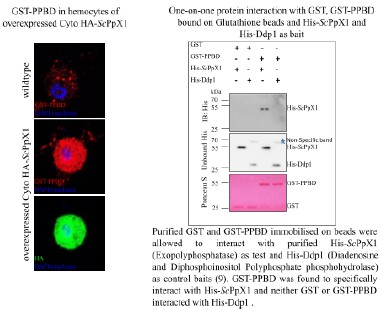
      We performed PPBD staining on hemocytes expressing ScPPX; however, we observed very intense, uniform staining throughout the cells, which was unexpected. It seems like PPBD is recognizing overexpressed ScPpX1. Indeed, in an unpublished study by Manisha Mallick (Bhandari lab), it was found that His-ScPpX1 specifically interacts with GST-PPBD in a protein interaction assay (See Author response image 3). Due to these issues, we refrained from IHC/PPBD-based validation.

      Author response image 3.

      (2) The subcellular tools for depletion are neat! I wonder why the authors didn't test them. For example in the salivary gland for nuclear depletion?

      We have addressed this question in the reviewer responses. We are systematically assaying phenotypes from all FLYX constructs, including Mito-FLYX, and Nuc-FLYX, in ongoing independent investigations. As discussed in #1, a possible interaction of ScPpX and PPBD is making this test a bit more challenging, and hence, they each require a detailed investigation.

      (a) Does the absence of clotting defects using Lz-gal4 suggest that PolyP is more crucial in the plasmatocytoes and for the initial clotting process? And that it is dispensible/less important in the crystal cells and for the later clotting process. Or is it that the crystal cells just don't have as much polyP? The image (2E-H) certainly looks like it.

      In hemolymph, the primary clot formation is a result of the clotting factors secreted from the fat bodies and the plasmatocytes. The crystal cells are responsible for the release of factors aiding in successfully hardening the soft clot initially formed. Reports suggest that clotting and melanization of the clot are independent of each other (7). Since Crystal cells do not contribute to clot fibre formation, the absence of clotting defects using LzGAL4-CytoFLYX is not surprising. Alternatively, PolyP may be secreted from all hemocytes and contribute to clotting; however, the crystal cells make up only 5% hemocytes, and hence polyP depletion in those cells may have a negligible effect on blood clotting.

      Crystal cells do show PPBD staining. Whether polyP is significantly lower in levels in the crystal cells as compared to the plasmatocytes needs more systematic investigation. Image (2E-H) is a representative image of the presence of polyP in crystal cells and can not be considered to compare polyP levels in the crystal cells vs Plasmatocytes.

      (b) The RNAseq analyses and data could be better presented. If the data are indeed variable and the differentially expressed genes of low confidence, I might remove that data entirely. I don't think it'll take away from the rest of the work.

      We understand this concern and, therefore, in the revised manuscript, we have included a broader discussion about the RNAseq analysis done in the article in both the ‘results’ and the ‘discussion’ sections, where we have rewritten the narrative from the perspective of accelerated eclosion. (p.15 l.310-335, p. 20, l.431-446). We have also stated the limitations of such studies.

      (c) I would re-phrase the first sentence of the results section.

      We have re-phrased it in the revised manuscript.

      Reviewer #2 (Recommendations for the authors):

      (1) The authors created several different versions of the FLYX system that would be targeted to different subcellular compartments. They mostly report on the effects of cytosolic targeting, but some of the constructs targeted the polyphosphatase to mitochondria or the nucleus.

      They report that the targeting worked, but I didn't see any results on the effects of those constructs on fly viability, development, etc.

      There is a growing literature of investigators targeting polyphosphatase to mitochondria and showing how depleting mitochondrial polyP alters mitochondrial function. What was the effect of the Nuc-FLYX and Mito-FLYX constructs on the flies?

      Also, the authors should probably cite the papers of others on the effects of depleting mitochondrial polyP in other eukaryotic cells in the context of discussing their findings in flies.

      We have addressed this question in the reviewer responses. We did not see any obvious developmental or viability defects with any of the FLYX lines, and only after careful investigation did we come across the clotting defects in the CytoFLYX. We are currently systematically assaying phenotypes from all FLYX constructs, including Mito-FLYX and Nuc-FLYX, in independent ongoing investigations.

      We have discussed the heterologous expression of mitochondrial polyphosphatase in mammalian cells to justify the need for developing Mito-FLYX (p. 10, l. 197-200). In the discussion section, we also discuss the presence and roles of polyP in the nucleus and how Nuc-FLYX can help study such phenomena (p. 19, l. 399-407).

      (2) The authors should number the pages of their manuscript to make it easier for reviewers to refer to specific pages.

      We have numbered our lines and pages in the revised manuscript.

      (3) Abstract: the abbreviation, "polyP", is not defined in the abstract. The first word in the abstract is "polyphosphate", so it should be defined there.

      We have corrected it in the revised version.

      (4) The authors repeatedly use the phrase, "orange hot", to describe one of the colors in their micrographs, but I don't know how this differs from "orange".

      ‘OrangeHot’ is the name of the LUT used in the ImageJ analysis and hence referred to as the colour

      (5) First page of the Introduction: the phrase, "feeding polyP to αβ expression Alzheimer's model of Caenorhabditis elegans" is awkward (it literally means feeding polyP to the model instead of the worms).

      We have revised it. (p.3, l.55-57).

      (6) Page 2 of the Introduction: The authors should cite this paper when they state that NUDT3 is a polyphosphatase: https://pubmed.ncbi.nlm.nih.gov/34788624/

      We have cited the paper in the revised version of the manuscript. (p.4, l. 68-70)

      (7) Page 2 of Results: The authors report the polyP content in the third instar larva (misspelled as "larval") to five significant digits ("419.30"). Their data do not support more than three significant digits, though.

      We have corrected it in the revised manuscript.

      (8) Page 3 of Results (paragraph 1): When discussing the polyP levels in various larval stages, the authors are extracting total polyP from the larvae. It seems that at least some of the polyP may come from gut microbes. This should probably be mentioned.

      This is an interesting possibility. Several observations argue that polyP is synthesized by fly tissues: (i) polyP levels remain very low during feeding stages but build up in wandering third instar larvae after feeding ceases; (ii) PPBD staining is absent from the gut except the crop (Fig. S3O–P); (ii) In C. elegans, intestinal polyP was unaffected when worms were fed polyP-deficient bacteria (2); (iv) depletion of polyP from plasmatocytes alone impairs hemolymph clotting, which would not be expected if gut-derived polyP were the major source and may have contributed to polyP in hemolymph. We mention this limitation in the revised manuscript (p.19-20, l. 425-433).

      (9) Page 3 of Results (paragraph 2): stating that the 4% paraformaldehyde works "best" is imprecise. What do the authors mean by "best"?

      We have addressed this comment in the revised manuscript and corrected it as 4% paraformaldehyde being better among the three methods we used to fix tissues, which also included methanol and Bouin’s fixative  (p.8, l. 152-154).

      (10) Page 4 of Results (paragraph 2, last line of the page): The scientific literature is vast, so one can never be sure that one knows of all the papers out there, even on a topic as relatively limited as polyP. Therefore, I would recommend qualifying the statement "...this is the first comprehensive tissue staining report...". It would be more accurate (and safer) to say something like, "to our knowledge, this is the first..." There is a similar statement with the word "first" on the next page regarding the FLYX library.

      We have addressed this concern and corrected it accordingly in the revised version of the manuscript (p.9, l. 192-193)

      Reviewer #3 (Recommendations for the authors):

      (1) The authors should include in their discussion a comparison of cell biological observations using the polyP binding domain of E. coli Ppx (GST-PPBD) to fluorescently label polyP in cells and tissues with recent work using a similar approach in C. elegans (Quarles et al., PMID:39413779).

      In the revised manuscript, we have cited the work of Quarles et al. and have added a comparison of observations (p.19,l.408-410). In the discussion, we have also focused on multiple other studies about how polyP presence in different subcellular compartments, like the nucleus, can be assayed and studied with the tools developed in this study.

      (2) The gene expression studies of time-matched Cyto-FLYX vs WT larvae is very intriguing. Given the authors' findings that non-feeding third instar Cyto-FLYX larvae are developmentally ahead of WT larvae, can the observed trends be explained by known changes in gene expression that occur during eclosion? This is mentioned in the results section in the context of genes linked to neurons, but a broader discussion of which pathway changes observed can be explained by the developmental stage difference between the WT and FLYX larvae would be helpful in the discussion.

      We have included a broader discussion about the RNAseq analysis done in the article in both the ‘results’ and the ‘discussion’ sections, where we have rewritten the narrative from the perspective of accelerated eclosion. (p.15 l.310-335, p. 20, l.431-446). We have also stated the limitations of such studies.

      (3) The sentence describing NUDT3 is not referenced.

      We have addressed this comment and have cited the paper of NUDT3 in the revised version of the manuscript.(p.4, l. 68-70)

      (4) In the first sentence of the results section, the meaning/validity of the statement "The polyP levels have decreased as evolution progressed" is not clear. It might be more straightforward to give an estimate of the total pmoles polyP/mg protein difference between bacteria/yeast and metazoans.

      In the revised manuscript, we have given an estimate of the polyP content across various species across evolution to uphold the statement that polyP levels have decreased as evolution progressed (p. 5, l. 87-91).

      (5) The description of the malachite green assay in the results section describes it as "calorimetric" but this should read "colorimetric?"

      We have corrected it in the revised manuscript.

      References

      (1) Chicco D, Agapito G. Nine quick tips for pathway enrichment analysis. PLoS Comput Biol. 2022 Aug 11;18(8):e1010348.

      (2) Quarles E, Petreanu L, Narain A, Jain A, Rai A, Wang J, et al. Cryosectioning and immunofluorescence of C. elegans reveals endogenous polyphosphate in intestinal endo-lysosomal organelles. Cell Rep Methods. 2024 Oct 8;100879.

      (3) Saito K, Ohtomo R, Kuga-Uetake Y, Aono T, Saito M. Direct labeling of polyphosphate at the ultrastructural level in Saccharomyces cerevisiae by using the affinity of the polyphosphate binding domain of Escherichia coli exopolyphosphatase. Appl Environ Microbiol. 2005 Oct;71(10):5692–701.

      (4) Smith SA, Mutch NJ, Baskar D, Rohloff P, Docampo R, Morrissey JH. Polyphosphate modulates blood coagulation and fibrinolysis. Proc Natl Acad Sci USA. 2006 Jan 24;103(4):903–8.

      (5) Smith SA, Choi SH, Davis-Harrison R, Huyck J, Boettcher J, Rienstra CM, et al. Polyphosphate exerts differential effects on blood clotting, depending on polymer size. Blood. 2010 Nov 18;116(20):4353–9.

      (6) Abramov AY, Fraley C, Diao CT, Winkfein R, Colicos MA, Duchen MR, et al. Targeted polyphosphatase expression alters mitochondrial metabolism and inhibits calcium-dependent cell death. Proc Natl Acad Sci USA. 2007 Nov 13;104(46):18091–6.

      (7) Schmid MR, Dziedziech A, Arefin B, Kienzle T, Wang Z, Akhter M, et al. Insect hemolymph coagulation: Kinetics of classically and non-classically secreted clotting factors. Insect Biochem Mol Biol. 2019 Jun;109:63–71.

      (8) Jian Guan, Rebecca Lee Hurto, Akash Rai, Christopher A. Azaldegui, Luis A. Ortiz-Rodríguez, Julie S. Biteen, Lydia Freddolino, Ursula Jakob. HP-Bodies – Ancestral Condensates that Regulate RNA Turnover and Protein Translation in Bacteria. bioRxiv 2025.02.06.636932; doi: https://doi.org/10.1101/2025.02.06.636932.

      (9) Lonetti A, Szijgyarto Z, Bosch D, Loss O, Azevedo C, Saiardi A. Identification of an evolutionarily conserved family of inorganic polyphosphate endopolyphosphatases. J Biol Chem. 2011 Sep 16;286(37):31966–74.

    1. Our approach incorporated explicit constraints to preserve biological function, retaining evolutionarily conserved residues

      I think this is a really important point, and I like that you showed conservation of binding thermodynamics for PfBDP1 with RMM23 as my biggest question throughout the manuscript was how you ensure that protein function is preserved when introducing this many sequence changes. These constraints seem like a strong step, as well as that control, but maybe still an important thing to keep in mind. For example, even if the binding pocket geometry is structurally conserved, mutations outside the pocket could still influence binding (e.g., through altered dynamics, stability of the fold, or long-range effects on binding energetics).

    2. First, standard AlphaFold2 predictions represent single energy minima and cannot capture the conformational ensembles or dynamic distributions that often govern experimental behavior, particularly for flexible regions and allosteric sites

      This is really powerful as it's allowing you to study proteins that otherwise were not able to be studied in this way. But related to this idea that AF2 isn't capturing conformational ensembles, are you thinking about the effect that stabilizing the protein might have on your ability to study biologically relevant conformational dynamics of the protein?

    3. the most sequence-diverse candidates were selected for experimental validation

      Why did you select the most sequence-diverse candidates? I could be wrong, but if the goal is just to stabilize the proteins while maintaining their other biological functions wouldn't you want to minimize changes? Also curious how many candidates you considered per protein and how many met the criteria before you selected the candidates you moved forward with.

  2. pressbooks.library.torontomu.ca pressbooks.library.torontomu.ca
    1. but Eric said it would be spoiled by thinking this woman too was just an animal like the rest, so if he loved anybody he would never go to bed with her.

      madonna whore complex. i wonder how he views his mother?

    1. Since we are show casing the SoN IR, the language being implemented is less important. We're using a very simple language similar to C or Java, but with far fewer features.

      Right. Okay.

      Good.

    1. Whatif we care about our technologie

      I like this! Our world runs based on what we pay attention to, and what is attention and a willingness to do something about what is noticed but care? If we don't care about something, only the sensational or head turning is revealed to us-- it seems like we lose the everyday

    2. language of innovation is generally reserved for new andcomputationally intensive “bright and shiny tools,

      It's interesting that the definition (or the impression) of the innovation/repair dichotomy leaves little room for maintenance. It's almost like we never see a plateau, or little course corrections visibly indicated for a technology simply because they might not be interesting. We're constantly looking for new pieces of information: things to be proud of and things to solve, but we don't quite let ourselves stay in that intermediary stage without feeling stagnant or getting bored.

    3. key themes and problems facing new media and technology scholarshiptoday.

      It's interesting how this thinking is so dichotomous-- we oscillate between both the pain and beauty of what's broken and feel torn about what to believe (or more specifically, what's more helpful to believe). You can protect your peace al you want, but is it worth it to not see problems in the world without solutions and without an inherently positive twist on them?

    1. cultural elite (writers, intellectuals, artists), sometimes it is an economic elite (big business, ‘the rich’), sometimes it is a media elite (journalists), but most often the accusations are directed at a political elite

      the definition of who is elite radically changes the problematic potential.

    1. In answering this letter, please state if there would be any safety for my Milly and Jane, who are now grown up, and both good-looking girls. You know how it was with poor Matilda and Catherine. I would rather stay here and starve—and die, if it come to that—than have my girls brought to shame by the violence and wickedness of their young masters. You will also please state if there has been any schools opened for the colored children in your neighborhood. The great desire of my life now is to give my children an education, and have them form virtuous habits.

      This is also the same sort of passive aggressive tone as from before, since he is coupling negotiations from a position of power and basically drawing a hard line that he will not come back unless the Colonel Anderson can guarantee his daughters' safety. But he couples it with a sort of innocent question about schooling as well. It's surprisingly educated in its delivery, since everytime it takes something or delivers a devastating statement, it also balances it with either an outright compliment or a mundane question to dilute the previous blow. It as a whole seems to be establishing a sort of idea that, yes, he's willing to return, but he's actually not, as he's demanding many things that the Colonel can't provide. It's basically a soft rejection of his offer by making it look instead of as a personal decision off of just a refusal to work for him, but by disguising it as a logical decision based on just common working conditions and employment, such as differing wages and benefits. Again, it seems surprisingly well put together and educated, which likely is also intentionally done to undermine the Colonel's position.

    2. The children feel hurt when they hear such remarks; but I tell them it was no disgrace in Tennessee to belong to Colonel Anderson. Many darkeys would have been proud, as I used to be, to call you master. Now if you will write and say what wages you will give me, I will be better able to decide whether it would be to my advantage to move back again.

      I feel like this is almost an attempt at flattery, trying to get a good feeling for the Colonel Anderson's reaction. Seeing as it would be a more positive comment, since he's blatantly saying that he was proud to have been owned by a Colonel, but it also shows a level of passive aggressive education as well. This is because he's asking to hear about the wages, basically challenging Colonel Anderson to actually offer better than anybody else can, as he had said. It makes the situation interesting simply because It's a subservient tone that then shifts into this demanding and negotiating tone, since he's basically acting as if he is still a slave before moving on to discuss wages and other benefits.

    1. Author response:

      The following is the authors’ response to the original reviews.

      Public Reviews:

      Reviewer #1 (Public review):

      Summary

      This paper introduces a dual-pathway model for reconstructing naturalistic speech from intracranial ECoG data. It integrates an acoustic pathway (LSTM + HiFi-GAN for spectral detail) and a linguistic pathway (Transformer + Parler-TTS for linguistic content). Output from the two components is later merged via CosyVoice2.0 voice cloning. Using only 20 minutes of ECoG data per participant, the model achieves high acoustic fidelity and linguistic intelligibility.

      Strengths

      (1) The proposed dual-pathway framework effectively integrates the strengths of neural-to-acoustic and neural-to-text decoding and aligns well with established neurobiological models of dual-stream processing in speech and language.

      (2) The integrated approach achieves robust speech reconstruction using only 20 minutes of ECoG data per subject, demonstrating the efficiency of the proposed method.

      (3) The use of multiple evaluation metrics (MOS, mel-spectrogram R², WER, PER) spanning acoustic, linguistic (phoneme and word), and perceptual dimensions, together with comparisons against noisedegraded baselines, adds strong quantitative rigor to the study.

      We thank Reviewer #1 for the supportive comments. In addition, we appreciate Reviewer #1’s thoughtful comments and feedback. By addressing these comments, we believe we have greatly improved the clarity of our claims and methodology. Below we list our point-to-point responses addressing concerns raised by Reviewer #1.

      Weaknesses:

      (1) It is unclear how much the acoustic pathway contributes to the final reconstruction results, based on Figures 3B-E and 4E. Including results from Baseline 2 + CosyVoice and Baseline 3 + CosyVoice could help clarify this contribution.

      We sincerely appreciate the inquiry from Reviewer 1. We thank the reviewer for this suggestion. However, we believe that directly applying CosyVoice to the outputs of Baseline 2 or Baseline 3 in isolation is not methodologically feasible and would not correctly elucidate the contribution of the auditory pathway and might lead to misinterpretation.

      The role of CosyVoice 2.0 in our framework is specifically voice cloning and fusion, not standalone enhancement. It is designed to integrate information from two pathways. Its operation requires two key inputs:

      (1) A voice reference speech that provides the target speaker's timbre and prosodic characteristics. In our final pipeline, this is provided by the denoised output of the acoustic pathway (Baseline 2).

      (2) A target word sequence that specifies the linguistic content to be spoken. This is obtained by transcribing the output of the linguistic pathway (Baseline 3) using Whisper ASR. Therefore, the standalone outputs of Baseline 2 and Baseline 3 are the purest demonstrations of what each pathway contributes before fusion. The significant improvement in WER/PER and MOS in the final output (compared to Baseline 2) and the significant improvement in melspectrogram R² (compared to Baseline 3) together demonstrate the complementary contributions of the two pathways. The fusion via CosyVoice is the mechanism that allows these contributions to be combined. We have added a clearer explanation of CosyVoice's role and the rationale for not testing it on individual baselines in the revised manuscript (Results section: "The fine-tuned voice cloner further enhances...").

      Edits:

      Page 11, Lines 277-282:

      “ Voice cloning is used to bridge the gap between acoustic fidelity and linguistic intelligibility in speech reconstruction. This approach strategically combines the strengths of complementary pathways: the acoustic pathway preserves speaker-specific spectral characteristics while the linguistic pathway maintains lexical and phonetic precision. By integrating these components through neural voice cloning, we achieve balanced reconstruction that overcomes the limitations inherent in isolated systems. CosyVoice 2.0, the voice cloner module serves specifically as a voice cloning and fusion engine, requiring two inputs: (1) a voice reference speech (provided by the denoised output of the acoustic pathway) to specify the target speaker's identity, and (2) a target word sequence (transcribed from the output of the linguistic pathway) to specify the linguistic content. The standalone baseline outputs of the two pathways can be integrated in this way.”

      (2) As noted in the limitations, the reconstruction results heavily rely on pre-trained generative models. However, no comparison is provided with state-of-the-art multimodal LLMs such as Qwen3-Omni, which can process auditory and textual information simultaneously. The rationale for using separate models (Wav2Vec for speech and TTS for text) instead of a single unified generative framework should be clearly justified. In addition, the adaptor employs an LSTM architecture for speech but a Transformer for text, which may introduce confounds in the performance comparison. Is there any theoretical or empirical motivation for adopting recurrent networks for auditory processing and Transformer-based models for textual processing?

      We thank the reviewer for the insightful suggestion regarding multimodal large language models (LLMs) such as Qwen3-Omni. It is important to clarify the distinction between general-purpose interactive multimodal models and models specifically designed for high-fidelity voice cloning and speech synthesis.

      As for the comparison with the state-of-the-art multimodal LLMs:

      Qwen3-Omni and GLM-4-Voice are powerful conversational agents capable of processing multiple modalities including text, speech, image, and video, as described in its documentation (see: https://help.aliyun.com/zh/model-studio/qwen-tts-realtime and https://docs.bigmodel.cn/cn/guide/models/sound-and-video/glm-4-voice). However, it is primarily optimized for interactive dialogue and multimodal understanding rather than for precise, speaker-adaptive speech reconstruction from neural signals. In contrast, CosyVoice 2.0, developed by the same team at Alibaba, is specifically designed for voice cloning and text-to-speech synthesis (see: https://help.aliyun.com/zh/model-studio/text-to-speech). It incorporates advanced speaker adaptation and acoustic modeling capabilities that are essential for reconstructing naturalistic speech from limited neural data. Therefore, our choice of CosyVoice for the final synthesis stage aligns with the goal of integrating acoustic fidelity and linguistic intelligibility, which is central to our study.

      For the selection of LSTM and Transformer in the two pathways:

      The goal of the acoustic adaptor is to reconstruct fine-grained spectrotemporal details (formants, harmonic structures, prosodic contours) with millisecond-to-centisecond precision. These features rely heavily on local temporal dynamics and short-to-medium range dependencies (e.g., within and between phonemes/syllables). In our ablation studies (to be added in the supplementary), we found that Transformer-based adaptors, which inherently emphasize global sentence-level context through self-attention, tended to oversmooth the reconstructed acoustic features, losing critical fine-temporal details essential for naturalness. In contrast, the recurrent nature of LSTMs, with their inherent temporal state propagation, proved more effective at modeling these local sequential dependencies without excessive smoothing, leading to higher mel-spectrogram fidelity. This aligns with the neurobiological observation that early auditory cortex processes sound with precise temporal fidelity. Moreover, from an engineering perspective, LSTM-based decoders have been empirically shown to perform well in sequential prediction tasks with limited data, as evidenced in prior work on sequence modeling and neural decoding (1).

      The goal of the linguistic adaptor is to decode abstract, discrete word tokens. This task benefits from modeling long-range contextual dependencies across a sentence to resolve lexical ambiguity and syntactic structure (e.g., subject-verb agreement). The self-attention mechanism of Transformers is exceptionally well-suited for capturing these global relationships, as evidenced by their dominance in NLP. Our experiments confirmed that a Transformer adaptor outperformed an LSTM-based one in word token prediction accuracy.

      While a unified multimodal LLM could in principle handle both modalities, such models often face challenges in modality imbalance and task specialization. Audio and text modalities have distinct temporal scales, feature distributions, and learning dynamics. By decoupling them into separate pathways with specialized adaptors, we ensure that each modality is processed by an architecture optimized for its inherent structure. This divide-and-conquer strategy avoids the risk of one modality dominating or interfering with the learning of the other, leading to more stable training and better final performance, especially important when adapting to limited neural data.

      Edits:

      Page 9, Lines 214-223:

      “The acoustic pathway, implemented through a bi-directional LSTM neural adaptor architecture (Fig. 1B), specializes in reconstructing fundamental acoustic properties of speech. This module directly processes neural recordings to generate precise time-frequency representations, focusing on preserving speaker-specific spectral characteristics like formant structures, harmonic patterns, and spectral envelope details. Quantitative evaluation confirms its core competency: achieving a mel-spectrogram R² of 0.793 ± 0.016 (Fig. 3B) demonstrates remarkable fidelity in reconstructing acoustic microstructure. This performance level is statistically indistinguishable from original speech degraded by 0dB additive noise (0.771 ± 0.014, p = 0.242, one-sided t-test). We chose a bidirectional LSTM architecture for this adaptor because its recurrent nature is particularly suited to modeling the fine-grained, short- to medium-range temporal dependencies (e.g., within and between phonemes and syllables) that are critical for acoustic fidelity. An ablation study comparing LSTM against Transformerbased adaptors for this task confirmed that LSTMs yielded superior mel-spectrogram reconstruction fidelity (higher R²), as detailed in Table S1, likely by avoiding the oversmoothing of spectrotemporal details sometimes induced by the strong global context modeling of Transformers”.

      “To confirm that the acoustic pathway’s output is causally dependent on the neural signal rather than the generative prior of the HiFi-GAN, we performed a control analysis in which portions of the input ECoG recording were replaced with Gaussian noise. When either the first half, second half, or the entirety of the neural input was replaced by noise, the melspectrogram R² of the reconstructed speech dropped markedly, corresponding to the corrupted segment (Fig. S5). This demonstrates that the reconstruction is temporally locked to the specific neural input and that the model does not ‘hallucinate’ spectrotemporal structure from noise. These results validate that the acoustic pathway performs genuine, input-sensitive neural decoding”.

      Edits:

      Page 10, Lines 272-277:

      “We employed a Transformer-based Seq2Seq architecture for this adaptor to effectively capture the long-range contextual dependencies across a sentence, which are essential for resolving lexical ambiguity and syntactic structure during word token decoding. This choice was validated by an ablation study (Table S2), indicating that the Transformer adaptor outperformed an LSTM-based counterpart in word prediction accuracy”

      (3) The model is trained on approximately 20 minutes of data per participant, which raises concerns about potential overfitting. It would be helpful if the authors could analyze whether test sentences with higher or lower reconstruction performance include words that were also present in the training set.

      Thank you for raising the important concern regarding potential overfitting given the limited size of our training dataset (~20 minutes per participant). To address this point directly, we performed a detailed lexical overlap analysis between the training and test sets.

      The test set contains 219 unique words. Among these:

      127 words (58.0%) appeared in the training set (primarily high-frequency, common words).

      92 words (42.0%) were entirely novel and did not appear in the training set. We further examined whether trials with the best reconstruction (WER = 0) relied more on training vocabulary. Among these top-performing trials, 55.0% of words appeared in the training set. In contrast, the worst-performing trials showed 51.9% overlap in words in the training set. No significant difference was observed, suggesting that performance is not driven by simple lexical memorization.

      The presence of a substantial proportion of novel words (42%) in the test set, combined with the lack of performance advantage for overlapping content, provides strong evidence that our model is generalizing linguistic and acoustic patterns rather than merely memorizing the training vocabulary. High reconstruction performance on unseen words would be improbable under severe overfitting.

      Therefore, we conclude that while some lexical overlap exists (as expected in natural language), the model’s performance is driven by its ability to decode generalized neural representations, effectively mitigating the overfitting risk highlighted by the reviewer.

      (4) The phoneme confusion matrix in Figure 4A does not appear to align with human phoneme confusion patterns. For instance, /s/ and /z/ differ only in voicing, yet the model does not seem to confuse these phonemes. Does this imply that the model and the human brain operate differently at the mechanistic level?

      We thank the reviewer for this detailed observation regarding the difference between our model's phoneme confusion patterns and typical human perceptual confusions (e.g., the lack of /s/-/z/ confusion).

      The reviewer is correct in inferring a mechanistic difference. This divergence is primarily attributable to the Parler-TTS model acting as a powerful linguistic prior. Our linguistic pathway decodes word tokens, which Parler-TTS then converts to speech. Trained on massive corpora to produce canonical pronunciations, Parler-TTS effectively performs an implicit "error correction." For instance, if the neural decoding is ambiguous between the words "sip" and "zip," the TTS model's strong prior for lexical and syntactic context will likely resolve it to the correct word, thereby suppressing purely acoustic confusions like voicing.

      This has important implications for interpreting our model's errors and its relationship to brain function. The phoneme errors in our final output reflect a combination of neural decoding errors and the generative biases of the TTS model, which is optimized for intelligibility rather than mimicking raw human misperception. This does imply our model operates differently from the human auditory periphery. The human brain may first generate a percept with acoustic confusions, which higher-level language regions then disambiguate. Our model effectively bypasses the "confused percept" stage by directly leveraging a pre-trained, high-level language model for disambiguation. This is a design feature contributing to its high intelligibility, not necessarily a flaw. This observation raises a fascinating question: Could a model that more faithfully simulates the hierarchical processing of the human brain (including early acoustic confusions) provide a better fit to neural data at different processing stages? Future work could further address this question.

      Edits:

      add another paragraph in Discussion (Page 14, Lines 397-398):

      “The phoneme confusion pattern observed in our model output (Fig. 4A) differs from classic human auditory confusion matrices. We attribute this divergence primarily to the influence of the Parler-TTS model, which serves as a strong linguistic prior in our pipeline. This component is trained to generate canonical speech from text tokens. When the upstream neural decoding produces an ambiguous or erroneous token sequence, the TTS model’s internal language model likely performs an implicit ‘error correction,’ favoring linguistically probable words and pronunciations. This underscores that our model’s errors arise from a complex interaction between neural decoding fidelity and the generative biases of the synthesis stage”

      (5) In general, is the motivation for adopting the dual-pathway model to better align with the organization of the human brain, or to achieve improved engineering performance? If the goal is primarily engineeringoriented, the authors should compare their approach with a pretrained multimodal LLM rather than relying on the dual-pathway architecture. Conversely, if the design aims to mirror human brain function, additional analysis, such as detailed comparisons of phoneme confusion matrices, should be included to demonstrate that the model exhibits brain-like performance patterns.

      Our primary motivation is engineering improvement, to overcome the fundamental trade-off between acoustic fidelity and linguistic intelligibility that has limited previous neural speech decoding work. The design is inspired by the related works of the convergent representation of speech and language perception (2). However, we do not claim that our LSTM and Transformer adaptors precisely simulate the specific neural computations of the human ventral and dorsal streams. The goal was to build a high-performance, data-efficient decoder. We will clarify this point in the Introduction and Discussion, stating that while the architecture is loosely inspired by previous neuroscience results, its primary validation is its engineering performance in achieving state-of-the-art reconstruction quality with minimal data.

      Edits:

      Page 14, Line 358-373:

      “In this study, we present a dual-path framework that synergistically decodes both acoustic and linguistic speech representations from ECoG signals, followed by a fine-tuned zero-shot text-to-speech network to re-synthesize natural speech with unprecedented fidelity and intelligibility. Crucially, by integrating large pre-trained generative models into our acoustic reconstruction pipeline and applying voice cloning technology, our approach preserves acoustic richness while significantly enhancing linguistic intelligibility beyond conventional methods. Our dual-pathway architecture, while inspired by converging neuroscience insights on speech and language perception, was principally designed and validated as an engineering solution. The primary goal to build a practical decoder that achieves state-of-theart reconstruction quality with minimal data. The framework's success is therefore ultimately judged by its performance metrics, high intelligibility (WER, PER), acoustic fidelity (melspectrogram R²), and perceptual quality (MOS), which directly address the core engineering challenge we set out to solve. Using merely 20 minutes of ECoG recordings, our model achieved superior performance with a WER of 18.9% ± 3.3% and PER of 12.0% ± 2.5% (Fig. 2D, E). This integrated architecture, combining pre-trained acoustic (Wav2Vec2.0 and HiFiGAN) and linguistic (Parler-TTS) models through lightweight neural adaptors, enables efficient mapping of ECoG signals to dual latent spaces. Such methodology substantially reduces the need for extensive neural training data while achieving breakthrough word clarity under severe data constraints. The results demonstrate the feasibility of transferring the knowledge embedded in speech-data pre-trained artificial intelligence (AI) models into neural signal decoding, paving the way for more advanced brain-computer interfaces and neuroprosthetics”.

      Reviewer #2 (Public review):

      Summary:

      The study by Li et al. proposes a dual-path framework that concurrently decodes acoustic and linguistic representations from ECoG recordings. By integrating advanced pre-trained AI models, the approach preserves both acoustic richness and linguistic intelligibility, and achieves a WER of 18.9% with a short (~20-minute) recording.

      Overall, the study offers an advanced and promising framework for speech decoding. The method appears sound, and the results are clear and convincing. My main concerns are the need for additional control analyses and for more comparisons with existing models.

      Strengths:

      (1) This speech-decoding framework employs several advanced pre-trained DNN models, reaching superior performance (WER of 18.9%) with relatively short (~20-minute) neural recording.

      (2) The dual-pathway design is elegant, and the study clearly demonstrates its necessity: The acoustic pathway enhances spectral fidelity while the linguistic pathway improves linguistic intelligibility.

      We thank Reviewer #2 for supportive comments. In addition, we appreciate Reviewer #2’s thoughtful comments and feedback. By addressing these comments, we believe we have greatly improved the clarity of our claims and methodology. Below we list our point-to-point responses addressing concerns raised by Reviewer #2.

      Weaknesses:

      The DNNs used were pre-trained on large corpora, including TIMIT, which is also the source of the experimental stimuli. More generally, as DNNs are powerful at generating speech, additional evidence is needed to show that decoding performance is driven by neural signals rather than by the DNNs' generative capacity.

      Thank you for raising this crucial point regarding the potential for pre-trained DNNs to generate speech independently of the neural input. We fully agree that it is essential to disentangle the contribution of the neural signals from the generative priors of the models. To address this directly, we have conducted two targeted control analyses, as you suggested, and have integrated the results into the revised manuscript (see Fig. S5 and the corresponding description in the Results section):

      (1) Random noise input: We fed Gaussian noise (matched in dimensionality and temporal structure to real ECoG recordings) into the trained adaptors. The outputs were acoustically unstructured and linguistically incoherent, confirming that the generative models alone cannot produce meaningful speech without valid neural input.

      (2) Partial sentence input (real + noise): For the acoustic pathway, we systematically replaced portions of the ECoG input with noise. The reconstruction quality (mel-spectrogram R²) dropped significantly in the corrupted segments, demonstrating that the decoding is temporally locked to the neural signal and does not “hallucinate” speech from noise.

      These results provide strong evidence that our model’s performance is causally dependent on and sensitive to the specific neural input, validating that it performs genuine neural decoding rather than merely leveraging the generative capacity of the pre-trained DNNs.

      The detailed edits are in the “recommendations” below. (See recommendations (1) and (2))

      Recommendations for the authors:

      Reviewer #1 (Recommendations for the authors):

      (1) Clarify the results shown in Figure 4E. The integrated approach appears to perform comparably to Baseline 3 in phoneme class clarity. However, Baseline 3 represents the output of the linguistic pathway alone, which is expected to encode information primarily at the word level.

      We appreciate the reviewer's observation and agree that clarification is needed. The phoneme class clarity (PCC) metric shown in Figure 4E measures whether mis-decoded phonemes are more likely to be confused within their own class (vowel-vowel or consonantconsonant) rather than across classes (vowel-consonant). A higher PCC indicates that the model's errors tend to be phonologically similar sounds (e.g., one vowel mistaken for another), which is a reasonable property for intelligibility.

      We would like to clarify the nature of Baseline 3. As stated in the manuscript (Results section: "The linguistic pathway reconstructs high-intelligibility, higher-level linguistic information"), Baseline 3 is the output of our linguistic pathway. This pathway operates as follows: the ECoG signals are mapped to word tokens via the Transformer adaptor, and these tokens are then synthesized into speech by the frozen Parler-TTS model. Crucially, the input to Parler-TTS is a sequence of word tokens.

      It is important to distinguish between the levels of performance measured: Word Error Rate (WER) reflects accuracy at the lexical level (whole words). The linguistic pathway achieves a low WER by design, as it directly decodes word sequences. Phoneme Error Rate (PER) reflects accuracy at the sublexical phonetic level (phonemes). A low WER generally implies a low PER, because robust word recognition requires reliable phoneme-level representations within the TTS model's prior. This explains why Baseline 3 also exhibits a low PER. However, acoustic fidelity (captured by metrics like mel-spectrogram R²) requires the preservation of fine-grained spectrotemporal details such as pitch, timbre, prosody, and formant structures, information that is not directly encoded at the lexical level and is therefore not a strength of the purely linguistic pathway.

      While Parler-TTS internally models sub-word/phonetic information to generate the acoustic waveform, the primary linguistic information driving the synthesis is at the lexical (word) level. The generated speech from Baseline 3 therefore contains reconstructed phonemic sequences derived from the decoded word tokens, not from direct phoneme-level decoding of ECoG.

      Therefore, the comparable PCC between our final integrated model and Baseline 3 (linguistic pathway) suggests that the phoneme-level error patterns (i.e., the tendency to confuse within-class phonemes) in our final output are largely inherited from the high-quality linguistic prior embedded in the pre-trained TTS model (Parler-TTS). The integrated framework successfully preserves this desirable property from the linguistic pathway while augmenting it with speaker-specific acoustic details from the acoustic pathway, thereby achieving both high intelligibility (low WER/PER) and high acoustic fidelity (high melspectrogram R²).

      We will revise the caption of Figure 4E and the corresponding text in the Results section to make this interpretation explicit.

      Edits:

      Page 12, Lines 317-322:

      “In addition to the confusion matrices, we categorized the phonemes into vowels and consonants to assess the phoneme class clarity. We defined "phoneme class clarity" (PCC) as the proportion of errors where a phoneme was misclassified within the same class versus being misclassified into a different class. The purpose of introducing PCC is to demonstrate that most of the misidentified phonemes belong to the same category (confusion between vowels or consonants), rather than directly comparing the absolute accuracy of phoneme recognition. For instance, a vowel being mistaken for another vowel would be considered a within-class error, whereas a vowel being mistaken for a consonant would be classified as a between-class error” 

      (2) Add results from Baseline 2 + CosyVoice and Baseline 3 + CosyVoice to clarify the contribution of the auditory pathway.

      Thank you for the suggestion. We appreciate the opportunity to clarify the role of CosyVoice in our framework.

      As explained in our response to point (1), CosyVoice 2.0 is designed as a fusion module that requires two inputs: 1) a voice reference (from the acoustic pathway) to specify speaker identity, and 2) a word sequence (from the linguistic pathway) to specify linguistic content. Because it is not a standalone enhancer, applying CosyVoice to a single pathway output (e.g., Baseline 2 or 3 alone) is not quite feasible and would not reflect its intended function and could lead to misinterpretation of each pathway’s contribution.

      Instead, we have evaluated the contribution of each pathway by comparing the final integrated output against each standalone pathway output (Baseline 2 and 3). The significant improvements in both acoustic fidelity and linguistic intelligibility demonstrate the complementary roles of the two pathways, which are effectively fused through CosyVoice.

      (3) Justify your choice of using LSTM and Transformer architecture for the auditory and linguistic neural adaptors, respectively, and how your methods could compare to using a unified generative multimodal LLM for both pathways.

      Thank you for revisiting this important point. We appreciate your interest in the architectural choices and their relationship to state-of-the-art multimodal models.

      As detailed in our response to point (2), our choice of LSTM for the acoustic pathway and Transformer for the linguistic pathway is driven by task-specific requirements, supported by ablation studies (Supplementary Tables 1–2). The acoustic pathway benefits from LSTM’s ability to model fine-grained, local temporal dependencies without over-smoothing. The linguistic pathway benefits from Transformer’s ability to capture long-range semantic and syntactic context.

      Regarding comparison with unified multimodal LLMs (e.g., Qwen3-Omni), we clarified that such models are optimized for interactive dialogue and multimodal understanding, while our framework relies on specialist models (CosyVoice 2.0, Parler-TTS) that are explicitly designed for high-fidelity, speaker-adaptive speech synthesis, a requirement central to our decoding task.

      We have incorporated these justifications into the revised manuscript (Results and Discussion sections) and appreciate the opportunity to further emphasize these points.

      Edits:

      Page 9, Lines 214-223:

      “The acoustic pathway, implemented through a bi-directional LSTM neural adaptor architecture (Fig. 1B), specializes in reconstructing fundamental acoustic properties of speech. This module directly processes neural recordings to generate precise time-frequency representations, focusing on preserving speaker-specific spectral characteristics like formant structures, harmonic patterns, and spectral envelope details. Quantitative evaluation confirms its core competency: achieving a mel-spectrogram R² of 0.793 ± 0.016 (Fig. 3B) demonstrates remarkable fidelity in reconstructing acoustic microstructure. This performance level is statistically indistinguishable from original speech degraded by 0dB additive noise (0.771 ± 0.014, p = 0.242, one-sided t-test). We chose a bidirectional LSTM architecture for this adaptor because its recurrent nature is particularly suited to modeling the fine-grained, short- to medium-range temporal dependencies (e.g., within and between phonemes and syllables) that are critical for acoustic fidelity. An ablation study comparing LSTM against Transformerbased adaptors for this task confirmed that LSTMs yielded superior mel-spectrogram reconstruction fidelity (higher R²), as detailed in Table S1, likely by avoiding the oversmoothing of spectrotemporal details sometimes induced by the strong global context modeling of Transformers”.

      “To confirm that the acoustic pathway’s output is causally dependent on the neural signal rather than the generative prior of the HiFi-GAN, we performed a control analysis in which portions of the input ECoG recording were replaced with Gaussian noise. When either the first half, second half, or the entirety of the neural input was replaced by noise, the melspectrogram R² of the reconstructed speech dropped markedly, corresponding to the corrupted segment (Fig. S5). This demonstrates that the reconstruction is temporally locked to the specific neural input and that the model does not ‘hallucinate’ spectrotemporal structure from noise. These results validate that the acoustic pathway performs genuine, input-sensitive neural decoding”.

      Page 10, Lines 272-277:

      “We employed a Transformer-based Seq2Seq architecture for this adaptor to effectively capture the long-range contextual dependencies across a sentence, which are essential for resolving lexical ambiguity and syntactic structure during word token decoding. This choice was validated by an ablation study (Table S2), indicating that the Transformer adaptor outperformed an LSTM-based counterpart in word prediction accuracy”.

      (4) Discuss the differences between the model's phoneme confusion matrix in Figure 4A and human phoneme confusion patterns. In addition, please clarify whether the adoption of the dual-pathway architecture is primarily intended to simulate the organization of the human brain or to achieve engineering improvements.

      The observed difference between our model's phoneme confusion matrix and typical human perceptual confusion patterns (e.g., the noted lack of confusion between /s/ and /z/) is, as the reviewer astutely infers, likely attributable to the TTS model (Parler-TTS) acting as a powerful linguistic prior. The linguistic pathway decodes word tokens, and Parler-TTS converts these tokens into speech. Parler-TTS is trained on massive text and speech corpora to produce canonical, clean pronunciations. It effectively performs a form of "error correction" or "canonicalization" based on its internal language model. For example, if the neural decoding is ambiguous between "sip" and "zip", the TTS model's strong prior for lexical and syntactic context may robustly resolve it to the correct word, suppressing purely acoustic confusions like voicing. Therefore, the phoneme errors in our final output reflect a combination of neural decoding errors and the TTS model's generation biases, which are optimized for intelligibility rather than mimicking human misperception. We will add this explanation to the paragraph discussing Figure 4A.

      Our primary motivation is engineering improvement, to overcome the fundamental tradeoff between acoustic fidelity and linguistic intelligibility that has limited previous neural speech decoding work. The design is inspired by the convergent representation of speech and language perception (1). However, we do not claim that our LSTM and Transformer adaptors precisely simulate the specific neural computations of the human ventral and dorsal streams. The goal was to build a high-performance, data-efficient decoder. We will clarify this point in the Introduction and Discussion, stating that while the architecture is loosely inspired by previous neuroscience results, its primary validation is its engineering performance in achieving state-of-the-art reconstruction quality with minimal data.

      Edits:

      Pages 2-3, Lines 74-85:

      “Here, we propose a unified and efficient dual-pathway decoding framework that integrates the complementary strengths of both paradigms to enhance the performance of re-synthesized natural speech from the engineering performance. Our method maps intracranial electrocorticography (ECoG) signals into the latent spaces of pre-trained speech and language models via two lightweight neural adaptors: an acoustic pathway, which captures low-level spectral features for naturalistic speech synthesis, and a linguistic pathway, which extracts high-level linguistic tokens for semantic intelligibility. These pathways are fused using a finetuned text-to-speech (TTS) generator with voice cloning, producing re-synthesized speech that retains both the acoustic spectrotemporal details, such as the speaker’s timbre and prosody, and the message linguistic content. The adaptors rely on near-linear mappings and require only 20 minutes of neural data per participant for training, while the generative modules are pre-trained on large unlabeled corpora and require no neural supervision”.

      Page 14, Lines 358-373:

      “In this study, we present a dual-path framework that synergistically decodes both acoustic and linguistic speech representations from ECoG signals, followed by a fine-tuned zero-shot text-to-speech network to re-synthesize natural speech with unprecedented fidelity and intelligibility. Crucially, by integrating large pre-trained generative models into our acoustic reconstruction pipeline and applying voice cloning technology, our approach preserves acoustic richness while significantly enhancing linguistic intelligibility beyond conventional methods. Our dual-pathway architecture, while inspired by converging neuroscience insights on speech and language perception, was principally designed and validated as an engineering solution. The primary goal to build a practical decoder that achieves state-of-the-art reconstruction quality with minimal data. The framework's success is therefore ultimately judged by its performance metrics, high intelligibility (WER, PER), acoustic fidelity (mel-spectrogram R²), and perceptual quality (MOS), which directly address the core engineering challenge we set out to solve. Using merely 20 minutes of ECoG recordings, our model achieved superior performance with a WER of 18.9% ± 3.3% and PER of 12.0% ± 2.5% (Fig. 2D, E). This integrated architecture, combining pre-trained acoustic (Wav2Vec2.0 and HiFi-GAN) and linguistic (Parler-TTS) models through lightweight neural adaptors, enables efficient mapping of ECoG signals to dual latent spaces. Such methodology substantially reduces the need for extensive neural training data while achieving breakthrough word clarity under severe data constraints. The results demonstrate the feasibility of transferring the knowledge embedded in speech-data pre-trained artificial intelligence (AI) models into neural signal decoding, paving the way for more advanced brain-computer interfaces and neuroprosthetics”.

      Reviewer #2 (Recommendations for the authors):

      (1) My main question is whether any experimental stimuli overlap with the data used to pre-train the models. The authors might consider using pre-trained models trained on other corpora and training their own model without the TIMIT corpus. Additionally, as pretrained models were used, it might be helpful to evaluate to what extent the decoding is sensitive to the input neural recording or whether the model always outputs meaningful speech. The authors might consider two control analyses: a) whether the model still generates speech-like output if the input is random noise; b) whether the model can decode a complete sentence if the first half recording of a sentence is real but the second half is replaced with noise.

      We thank the reviewer for raising this crucial point regarding potential data leakage and the sensitivity of decoding to neural input.

      We confirm that the pre-training phase of our core models (Wav2Vec2.0 encoder, HiFiGAN decoder) was conducted exclusively on the LibriSpeech corpus (960 hours), which is entirely separate from the TIMIT corpus used for our ECoG experiments. The subsequent fine-tuning of the CosyVoice 2.0 voice cloner for speaker adaptation was performed on the training set portion of the entire TIMIT corpus. Importantly, the test set for all neural decoding evaluations was strictly held out and never used during any fine-tuning stage. This data separation is now explicitly stated in the " Methods" sections for the Speech Autoencoder and the CosyVoice fine-tuning.

      Regarding the potential of training on other corpora, we agree it is a valuable robustness check. Previous work has demonstrated that self-supervised speech models like Wav2Vec2.0 learn generalizable representations that transfer well across domains (e.g., Millet et al., NeurIPS 2022). We believe our use of LibriSpeech, a large and diverse corpus, provides a strong, general-purpose acoustic prior.

      We agree with the reviewer that control analyses are essential to demonstrate that the decoded output is driven by neural signals and not merely the generative prior of the models. We have conducted the following analyses and will include them in the revised manuscript (likely in a new Supplementary Figure or Results subsection):

      (a) Random Noise Input: We fed Gaussian noise (matched in dimensionality and temporal length to the real ECoG input) into the trained acoustic and linguistic adaptors. The outputs were evaluated. The acoustic pathway generated unstructured, noisy spectrograms with no discernible phonetic structure, and the linguistic pathway produced either highly incoherent word sequences or failed to generate meaningful tokens. The fusion via CosyVoice produced unintelligible babble. This confirms that the generative models alone cannot produce structured speech without meaningful neural input.

      (b) Partial Sentence Input (Real + Noise): In the acoustic pathway, we replaced the first half, the second half, and all the ECoG recording for test sentences with Gaussian noise. The melspectrogram R<sup>2</sup> showed a clear degradation in the reconstructed speech corresponding to the noisy segment. We did not do similar experiments in the linguistic pathway because the TTS generator is pre-trained by HuggingFace. We did not train any parameters of Parler-TTS. These results strongly indicate that our model's performance is contingent on and sensitive to the specific neural input, validating that it is performing genuine neural decoding.

      Edits:

      Page 19, Lines 533-538:

      “The parameters in Wav2Vec2.0 were frozen within this training phase. The parameters in HiFi-GAN were optimized using the Adam optimizer with a fixed learning rate of 10<sub>-5</sub>, 𝛽<sub>!</sub> = 0.9, 𝛽<sub>2</sub> = 0.999. We trained this Autoencoder in LibriSpeech, a 960-hour English speech corpus with a sampling rate of 16kHz, which is entirely separate from the TIMIT corpus used for our ECoG experiments. We spent 12 days in parallel training on 6 Nvidia GeForce RTX3090 GPUs. The maximum training epoch was 2000. The optimization did not stop until the validation loss no longer decreased”.

      Edits:

      Page9, Lines214-223:

      “The acoustic pathway, implemented through a bi-directional LSTM neural adaptor architecture (Fig. 1B), specializes in reconstructing fundamental acoustic properties of speech. This module directly processes neural recordings to generate precise time-frequency representations, focusing on preserving speaker-specific spectral characteristics like formant structures, harmonic patterns, and spectral envelope details. Quantitative evaluation confirms its core competency: achieving a mel-spectrogram R² of 0.793 ± 0.016 (Fig. 3B) demonstrates remarkable fidelity in reconstructing acoustic microstructure. This performance level is statistically indistinguishable from original speech degraded by 0dB additive noise (0.771 ± 0.014, p = 0.242, one-sided t-test). We chose a bidirectional LSTM architecture for this adaptor because its recurrent nature is particularly suited to modeling the fine-grained, short- to medium-range temporal dependencies (e.g., within and between phonemes and syllables) that are critical for acoustic fidelity. An ablation study comparing LSTM against Transformer-based adaptors for this task confirmed that LSTMs yielded superior mel-spectrogram reconstruction fidelity (higher R²), as detailed in Table S1, likely by avoiding the oversmoothing of spectrotemporal details sometimes induced by the strong global context modeling of Transformers”.

      “To confirm that the acoustic pathway’s output is causally dependent on the neural signal rather than the generative prior of the HiFi-GAN, we performed a control analysis in which portions of the input ECoG recording were replaced with Gaussian noise. When either the first half, second half, or the entirety of the neural input was replaced by noise, the melspectrogram R² of the reconstructed speech dropped markedly, corresponding to the corrupted segment (Fig. S5). This demonstrates that the reconstruction is temporally locked to the specific neural input and that the model does not ‘hallucinate’ spectrotemporal structure from noise. These results validate that the acoustic pathway performs genuine, input-sensitive neural decoding”

      (2) For BCI applications, the decoding speed matters. Please report the model's inference speed. Additionally, the authors might also consider reporting cross-participant generalization and how the accuracy changes with recording duration.

      We thank the reviewer for these practical and important suggestions. 

      Inference Speed: You are absolutely right. On our hardware (single NVIDIA GeForce RTX 3090 GPU), the current pipeline has an inference time that is longer than the duration of the target speech segment. The primary bottlenecks are the sequential processing in the autoregressive linguistic adaptor and the high-resolution waveform generation in CosyVoice 2.0. This latency currently limits real-time application. We have now added this in the Discussion acknowledging this limitation and stating that future work must focus on architectural optimizations (e.g., non-autoregressive models, lighter vocoders) and potential hardware acceleration to achieve real-time performance, which is critical for a practical BCI.

      Cross-Participant Generalization: We agree that this is a key question for scalability. Our framework already addresses part of the cross-participant generalization challenge through the use of pre-trained generative modules (HiFi-GAN, Parler-TTS, CosyVoice 2.0), which are pretrained on large corpora and shared across all participants. Only a small fraction of the model, the lightweight neural adaptors, is subject-specific and requires a small amount of supervised fine-tuning (~20 minutes per participant). This design significantly reduces the per-subject calibration burden. As the reviewer implies, the ultimate goal would be pure zero-shot generalization. A promising future direction is to further improve cross-participant alignment by learning a shared neural feature encoder (e.g., using contrastive or self-supervised learning on aggregated ECoG data) before the personalized adaptors. We have added a paragraph in the Discussion outlining this as a major next step to enhance the framework’s practicality and further reduce calibration time.

      Accuracy vs. Recording Duration: Thank you for this insightful suggestion. To systematically evaluate the impact of training data volume on performance, we have conducted additional experiments using progressively smaller subsets of the full training set (i.e., 25%, 50%, and 75%). When we used more than 50% of the training data, performance degrades gracefully rather than catastrophically with less data, which is promising for potential clinical scenarios where data collection may be limited. We add another figure (Fig. S4) to demonstrate this.

      Edits:

      Pages 15-16, Lines 427-452:

      “There are several limitations in our study. The quality of the re-synthesized speech heavily relies on the performance of the generative model, indicating that future work should focus on refining and enhancing these models. Currently, our study utilized English speech sentences as input stimuli, and the performance of the system in other languages remains to be evaluated. Regarding signal modality and experimental methods, the clinical setting restricts us to collecting data during brief periods of awake neurosurgeries, which limits the amount of usable neural activity recordings. Overcoming this time constraint could facilitate the acquisition of larger datasets, thereby contributing to the re-synthesis of higher-quality natural speech. Furthermore, the inference speed of the current pipeline presents a challenge for real-time applications. On our hardware (a single NVIDIA GeForce RTX 3090 GPU), synthesizing speech from neural data takes approximately two to three times longer than the duration of the target speech segment itself. This latency is primarily attributed to the sequential processing in the autoregressive linguistic adaptor and the computationally intensive high-fidelity waveform generation in the vocoder (CosyVoice 2.0). While the current study focuses on offline reconstruction accuracy, achieving real-time or faster-than-real-time inference is a critical engineering goal for viable speech BCI prosthetics. Future work must therefore prioritize architectural optimizations, such as exploring non-autoregressive decoding strategies and more efficient neural vocoders, alongside potential hardware acceleration. Additionally, exploring non-invasive methods represents another frontier; with the accumulation of more data and the development of more powerful generative models, it may become feasible to achieve effective non-invasive neural decoding for speech resynthesis. Moreover, while our framework adopts specialized architectures (LSTM and Transformer) for distinct decoding tasks, an alternative approach is to employ a unified multimodal large language model (LLM) capable of joint acoustic-linguistic processing. Finally, the current framework requires training participant-specific adaptors, which limits its immediate applicability for new users. A critical next step is to develop methods that learn a shared, cross-participant neural feature encoder, for instance, by applying contrastive or selfsupervised learning techniques to larger aggregated ECoG datasets. Such an encoder could extract subject-invariant neural representations of speech, serving as a robust initialization before lightweight, personalized fine-tuning. This approach would dramatically reduce the amount of per-subject calibration data and time required, enhancing the practicality and scalability of the decoding framework for real-world BCI applications”

      “In summary, our dual-path framework achieves high speech reconstruction quality by strategically integrating language models for lexical precision and voice cloning for vocal identity preservation, yielding a 37.4% improvement in MOS scores over conventional methods. This approach enables high-fidelity, sentence-level speech synthesis directly from cortical recordings while maintaining speaker-specific vocal characteristics. Despite current constraints in generative model dependency and intraoperative data collection, our work establishes a new foundation for neural decoding development. Future efforts should prioritize: (1) refining few-shot adaptation techniques, (2) developing non-invasive implementations, (3) expanding to dynamic dialogue contexts, and (4) cross-subject applications. The convergence of neurophysiological data with multimodal foundation models promises transformative advances, not only revolutionizing speech BCIs but potentially extending to cognitive prosthetics for memory augmentation and emotional communication. Ultimately, this paradigm will deepen our understanding of neural speech processing while creating clinically viable communication solutions for those with severe speech impairments”

      Edits: 

      add another section in Methods: Page 22, Line 681:

      “Ablation study on training data volume”.

      “To assess the impact of training data quantity on decoding performance, we conducted an additional ablation experiment. For each participant, we created subsets of the full training set corresponding to 25%, 50%, and 75% of the original data by random sampling while preserving the temporal continuity of speech segments. Personalized acoustic and linguistic adaptors were then independently trained from scratch on each subset, following the identical architecture and optimization procedures described above. All other components of the pipeline, including the frozen pre-trained generators (HiFi-GAN, Parler-TTS) and the CosyVoice 2.0 voice cloner, remained unchanged. Performance metrics (mel-spectrogram R², WER, PER) were evaluated on the same held-out test set for all data conditions. The results (Fig. S4) demonstrate that when more than 50% of the training data is utilized, performance degrades gracefully rather than catastrophically, which is a promising indicator for clinical applications with limited data collection time”.

      (3) I appreciate that the author compared their model with the MLP, but more comparisons with previous models could be beneficial. Even simply summarizing some measures of earlier models, such as neural recording duration, WER, PER, etc., is ok.

      Thank you for this suggestion. We agree that a broader comparison contextualizes our contribution. We also acknowledge that given the differences in tasks, signal modality, and amount of data, it’s hard to draw a direct comparison. The main goal of this table is to summarize major studies, their methods and results for reference. We have now added a new Supplementary Table that summarizes key metrics from several recent and relevant studies in neural speech decoding. The table includes:

      - Neural modality (e.g., ECoG, sEEG, Utah array)

      - Approximate amount of neural data used per subject for decoder training

      - Primary task (perception vs. production)

      -Decoding framework

      -Reported Word Error Rate (WER) or similar intelligibility metrics (e.g., Character Error Rate)

      -Reported acoustic fidelity metrics (if available, e.g., spectral correlation)

      This table includes works such as Anumanchipalli et al., Nature 2019; Akbari et al., Sci Rep 2019; Willett et al., Nature 2023; and other contemporary studies. The table clearly shows that our dual-path framework achieves a highly competitive WER (~18.9%) using an exceptionally short neural recording duration (~20 minutes), highlighting its data efficiency. We will refer to this table in the revised manuscript.

      Edits:

      Page 14, Lines 374-376:

      “Our framework establishes a framework for speech decoding by outperforming prior acousticonly or linguistic-only approaches (Table S3) through integrated pretraining-powered acoustic and linguistic decoding”

      Minor:

      (1) Some processes might be described earlier, for example, the electrodes were selected, and the model was trained separately for each participant. That information was only described in the Method section now.

      Thank you for catching these. We have revised the manuscript accordingly.

      Edits:

      Page4, Lines 89-95:

      “Our proposed framework for reconstructing speech from intracranial neural recordings is designed around two complementary decoding pathways: an acoustic pathway focused on preserving low-level spectral and prosodic detail, and a linguistic pathway focused on decoding high-level textual and semantic content. For every participant, our adaptor is independently trained, and we select speech-responsive electrodes (selection details are provided in the Methods section) to tailor the model to individual neural patterns. These two streams are ultimately fused to synthesize speech that is both natural-sounding and intelligible, capturing the full richness of spoken language. Fig. 1 provides a schematic overview of this dual-pathway architecture”

      (2) Line 224-228 Figure 2 should be Figure 3

      Thank you for catching these. We have revised the manuscript accordingly. The information about participant-specific training and electrode selection is now briefly mentioned in the "Results" overview (section: "The acoustic and linguistic performance..."), with details still in the Methods. The figure reference error has been corrected.

      Edits:

      Page7, Lines 224-228:

      “However, exclusive reliance on acoustic reconstruction reveals fundamental limitations. Despite excellent spectral fidelity, the pathway produces critically impaired linguistic intelligibility. At the word level, intelligibility remains unacceptably low (WER = 74.6 ± 5.5%, Fig. 3D), while MOS and phoneme-level precision fares only marginally better (MOS = 2.878 ± 0.205, Fig. 3C; PER = 28.1 ± 2.2%, Fig. 3E)”.

      (3) For Figure 3C, why does the MOS seem to be higher for baseline 3 than for ground truth? Is this significant?

      This is a detailed observation. Baseline 3 achieves a mean opinion score of 4.822 ± 0.086 (Fig. 3C), significantly surpassing even the original human speech (4.234 ± 0.097, p = 6.674×10⁻33). We believe this trend arises because the TIMIT corpus, recorded decades ago, contains inherent acoustic noise and relatively lower fidelity compared to modern speech corpus. In contrast, the Parler-TTS model used in Baseline 3 is trained on massive, highquality, clean speech datasets. Therefore, it synthesizes speech that listeners may subjectively perceive as "cleaner" or more pleasant, even if it lacks the original speaker's voice. Crucially, as the reviewer implies, our final integrated output does not aim to maximize MOS at the cost of speaker identity; it successfully balances this subjective quality with high intelligibility and restored acoustic fidelity. We will add a brief note explaining this possible reason in the caption of Figure 3C.

      Edits:

      Page9, Lines 235-245:

      “The linguistic pathway reconstructs high-intelligibility, higher-level linguistic information”

      “The linguistic pathway, instantiated through a pre-trained TTS generator (Fig. 1B), excels in reconstructing abstract linguistic representations. This module operates at the phonological and lexical levels, converting discrete word tokens into continuous speech signals while preserving prosodic contours, syllable boundaries, and phonetic sequences. It achieves a mean opinion score of 4.822 ± 0.086 (Fig. 3C) - significantly surpassing even the original human speech (4.234 ± 0.097, p = 6.674×10⁻33) in that the TIMIT corpus, recorded decades ago, contains inherent acoustic noise and relatively lower fidelity compared to modern speech corpus.  Complementing this perceptual quality, objective intelligibility metrics confirm outstanding performance: WER reaches 17.7 ± 3.2%, with PER at 11.0 ± 2.3%”.

      Reference

      (1) Chen M X, Firat O, Bapna A, et al. The best of both worlds: Combining recent advances in neural machine translation[C]//Proceedings of the 56th annual meeting of the association for computational linguistics (Volume 1: Long papers). 2018: 76-86

      (2) P. Chen et al. Do Self-Supervised Speech and Language Models Extract Similar Representations as Human Brain? 2024 IEEE International Conference on Acoustics, Speech and Signal Processing (ICASSP 2024). 2225–2229 (2024).

      (3) H. Akbari, B. Khalighinejad, J. L. Herrero, A. D. Mehta, N. Mesgarani, Towards reconstructing intelligible speech from the human auditory cortex. Scientific reports 9, 874 (2019).

      (4) S. Komeiji et al., Transformer-Based Estimation of Spoken Sentences Using Electrocorticography. Int Conf Acoust Spee, 1311-1315 (2022).

      (5) L. Bellier et al., Music can be reconstructed from human auditory cortex activity using nonlinear decoding models. Plos Biology 21,  (2023).

      (6) F. R. Willett et al., A high-performance speech neuroprosthesis. Nature 620,  (2023).

      (7) S. L. Metzger et al., A high-performance neuroprosthesis for speech decoding and avatar control. Nature 620, 1037-1046 (2023).

      (8) J. W. Li et al., Neural2speech: A Transfer Learning Framework for NeuralDriven Speech Reconstruction. Int Conf Acoust Spee, 2200-2204 (2024).

      (9) X. P. Chen et al., A neural speech decoding framework leveraging deep learning and speech synthesis. Nat Mach Intell 6,  (2024).

      (10) M. Wairagkar et al., An instantaneous voice-synthesis neuroprosthesis. Nature,  (2025).

    1. “There was a canoe of men, my husband, Hat, among them. They passed by Spirit Island. Saw the dead. Saw you.” “So it was they who brought me back?” “No,” said Tallow, simply. “They saw me,” said Omakakiins, making sure, “but they didn’t save me.” Old Tallow shook her head in the dusk. Then she shook herself all over, just like one of her dogs. “Hay’! My husband, Hat, was a fearful fool. I was going to put his things out the door, anyway. When he told me that he and the other men had seen you, and gone on! Leaving you!” Old Tallow’s voice took fury. “I made him leave. ‘Don’t show me your face, ever!’ I said to him. And then I took my canoe over to that island.” The wintery trees clacked their branches, ticking and moaning. The wind picked up often, at dusk, on the island. Omakakiins could feel in her heart what it was like for that baby, for herself, all alone with the dead, with her mother, walking from those she loved as though walking stone to stone. Somehow, deep inside, she remembered. “It was spring,” she said softly. “Ziigwan.” “Owah!” said Old Tallow in surprise, peering closely at her. “You remember!” “The birds,” said Omakakiins, “I remember the birds, the songs of the birds.” “Howah!” Tallow was excited. “I had forgotten, myself. There were birds on that island, singing so prettily, so loudly! Too small to eat. The little birds with white throats, those sweet spring cries. Eya’! My girl, you remember them.” “They kept me alive,” said Omakakiins, to herself, not quite understanding her own words. “I remember their song because their song was my comfort, my lullaby. They kept me alive.”

      Now we know its 100 percent confirmed that Omakakiins was the girl in the beginning

    1. The social stability that allowed Chinese culture to produce these innovations was based on not only their imperial form of government, but on an elaborate system of professional civil service. The early establishment of a professional administrative class of “scholar-officials” was a remarkable element of imperial Chinese rule that made it more stable, longer-lasting, and at least potentially less oppressive than empires in other parts of the world. The imperial courts sent thousands of highly-educated administrators throughout the empire and China was ruled not by hereditary nobles or even elected representatives, but by a class of men who had received rigorous training and had passed very stringent examinations to prove they were qualified to lead

      I find this whole section intriguing because to this day, the Chinese government operates like this, having officials ranks, each based on seniority.

    1. PKM isn’t necessarily about disorientation, but it is a tool for exploration. You can then get to a point of reorientation, which may not be complete, and then be able to take action or make it actionable.

      PKM as tool for exploration and perhaps later reorientation, towards action / actionable things. Vgl [[Actionable sense als groep 20200801065550]] blog disc some of us had in 2003.

    2. being comfortable with not knowing is part of blogging. Sometimes I’m putting stuff out there, and I don’t know if it’s any good, I don’t know if it makes any sense, but I gotta get it out there, and let’s see what happens. There’s a lot of stuff that doesn’t go any further than a blog post. It is what it is. It’s my process of trying to make sense of things.

      blogging as being comfortable with not knowing, holding questions. This comes close to writing as thinking itself.

    3. Dave Snowden? It’s a sense-making framework as well, but there’s a part where Dave talks about aporia: a state of puzzlement or disorientation, until you finally get to the point where you actually understand what you don’t know. First, you don’t even know what you don’t know, because everything is confusing. And then, through exploration, you get to a certain point where you think, “Okay, I don’t understand this, now I’ve got to learn about that.” So, I actually know what I don’t know, and now I can go into it and take some action. That’s where the actionable part comes. And part of that, too, is being comfortable with being disoriented.

      refs [[Dave Snowden p]] aporia, disorientation as trigger to get a sense of what it is you don't know, through exploration. To get to the point where your knowledge need becomes actionable

    4. Right now, I have a book in progress with Clark Quinn. Clark and I have known each other for 20 years, and it’s based on PKM, but it’s more of a how-to manual, right down to the actual process of personal knowledge mastery. The working title is Seek and Share, but we’ll see where it goes. So, we’ve been working on that for several months now.

      Harold is working on a book on PKM. Seek and Share is working title.

    5. “Do I keep writing through my retirement or not?” I haven’t done any major consulting lately. I’m running my workshops, doing some writing, hosting my community, and taking vacations. So, who knows?

      Harold is nearing the end of his working life, what does it mean for his blogging? If it is a signboard more, or a professional writing outlet, then yes it may fall away. But if it is your primary space for expression, whatever the topic then the blog can morph with it, no?

    6. other thing is that, given the state of the world right now, every once in a while, I question if what I’m writing about is really important. Who knows?

      signals the relative triviality of a lot of his writing in face of geopolitical upheaval. I feel him but also fully disagree, clearly signalling your humanity in the face of it all is key. vgl othering. life is 'small' by def. There is no 'need' to be part of the 'big' discussions for a blog to matter. Cat pictures ftw.

    7. this year, I decided that I would get back in the game. My objective is to write one blog post per week. I’ll be happy if I can do that. But I’m also conscious that anything that I put up is going to be scraped, which makes me sort of think that I’m feeding the beast, but there are a number of people who have asked me to keep writing.

      2026 decided to blog more again despite the aicrawlers. Can relate. I realised that my primary goal for blogging is distributed conversations as it was at the start, so whatever else happens is a 'don't care'.

    8. But there wasn’t a whole bunch of work in the local area where I lived. I was looking at cheap ways for professional development and cheap ways for marketing to get things started. Then a friend suggested, “Why don’t you do a blog?” My current blog started in 2004. It was a way for me to reach out and to talk to people, and in those days of blogging, there were a lot of people who were helping others out, because there were so few of us, particularly in the educational technology area, where I was doing a lot of writing initially, and later in knowledge management.

      [[Harold Jarche p]] describes how he came to blogging. He was in a place where there were no others to find. Blogging was finding the others. Early blogging scene was small and people helped eachother out. Did edutech first, then KM. Started in (early iirc) 2004.

    9. Harold explained why he has chosen to focus on human intelligence rather than artificial intelligence, prioritizing depth, reflection, and community over scale and algorithms. This shift has led him increasingly toward smaller but trusted networks where knowledge can be shared more meaningfully.

      smaller / trusted networks vs scale.

    1. Reviewer #1 (Public review):

      Summary:

      Chen et al. engineered and characterized a suite of next-generation GECIs for the Drosophila NMJ that allow for the visualization of calcium dynamics within the presynaptic compartment, at presynaptic active zones, and in the postsynaptic compartment. These GECIs include ratiometric presynaptic Scar8m (targeted to synaptic vesicles), ratiometric active zone localized Bar8f (targeted to the scaffold molecule BRP), and postsynaptic SynapGCaMP8m. The authors demonstrate that these new indicators are a large improvement on the widely used GCaMP6 and GCaMP7 series GECIs, with increased speed and sensitivity. They show that presynaptic Scar8m accurately captures presynaptic calcium dynamics with superior sensitivity to the GCaMP6 and GCaMP7 series and with similar kinetics to chemical dyes. The active-zone targeted Bar8f sensor was assessed for the ability to detect release-site specific nanodomain changes, but the authors concluded that this sensor is still too slow to accurately do so. Lastly, the use of postsynaptic SynapGCaMP8m was shown to enable the detection of quantal events with similar resolution to electrophysiological recordings. Finally, the authors developed a Python-based analysis software, CaFire, that enables automated quantification of evoked and spontaneous calcium signals. These tools will greatly expand our ability to detect activity at individual synapses without the need for chemical dyes or electrophysiology.

      Strengths:

      In this study, the authors rigorously compare their newly engineered GECIs to those previously used at the Drosophila NMJ, highlighting improvements in localization, speed, and sensitivity. These comparisons appropriately substantiate the authors claim that their GECIs are superior to the ones currently in use.

      The authors demonstrate the ability of Scar8m to capture subtle changes in presynaptic calcium resulting from differences between MN-Ib and MN-Is terminals and from the induction of presynaptic homeostatic potentiation (PHP), rivaling the sensitivity of chemical dyes.

      The improved postsynaptic SynapGCaMP8m is shown to approach the resolution of electrophysiology in resolving quantal events.

      The authors created a publicly available pipeline that streamlines and standardizes analysis of calcium imaging data.

    2. Author response:

      The following is the authors’ response to the original reviews.

      Reviewer #1

      Chen et al. engineered and characterized a suite of next-generation GECIs for the Drosophila NMJ that allow for the visualization of calcium dynamics within the presynaptic compartment, at presynaptic active zones, and in the postsynaptic compartment. These GECIs include ratiometric presynaptic Scar8m (targeted to synaptic vesicles), ratiometric active zone localized Bar8f (targeted to the scaffold molecule BRP), and postsynaptic SynapGCaMP8m. The authors demonstrate that these new indicators are a large improvement on the widely used GCaMP6 and GCaMP7 series GECIs, with increased speed and sensitivity. They show that presynaptic Scar8m accurately captures presynaptic calcium dynamics with superior sensitivity to the GCaMP6 and GCaMP7 series and with similar kinetics to chemical dyes. The active-zone targeted Bar8f sensor was assessed for the ability to detect release-site-specific nanodomain changes, but the authors concluded that this sensor is still too slow to accurately do so. Lastly, the use of postsynaptic SynapGCaMP8m was shown to enable the detection of quantal events with similar resolution to electrophysiological recordings. Finally, the authors developed a Python-based analysis software, CaFire, that enables automated quantification of evoked and spontaneous calcium signals. These tools will greatly expand our ability to detect activity at individual synapses without the need for chemical dyes or electrophysiology.

      We thank this Reviewer for the overall positive assessment of our manuscript and for the incisive comments.

      (1) The role of Excel in the pipeline could be more clearly explained. Lines 182-187 could be better worded to indicate that CaFire provides analysis downstream of intensity detection in ImageJ. Moreover, the data type of the exported data, such as .csv or .xlsx, should be indicated instead of 'export to graphical program such as Microsoft Excel'.

      We thank the Reviewer for these comments, many of which were shared by the other reviewers. In response, we have now 1) more clearly explained the role of Excel in the CaFire pipeline (lines 677-681), 2) revised the wording in lines 676-679 to indicate that CaFire provides analysis downsteam of intensity detection in ImageJ, and 3) Clarified the exported data type to Excel (lines 677-681). These efforts have improved the clarity and readability of the CaFire analysis pipeline.

      (2) In Figure 2A, the 'Excel' step should either be deleted or included as 'data validation' as ImageJ exports don't require MS Excel or any specific software to be analysed. (Also, the graphic used to depict Excel software in Figure 2A is confusing.)

      We thank the reviewer for this helpful suggestion. In the Fig. 2A, we have changed the Excel portion and clarified the processing steps in the revised methods. Specifically, we now indicate that ROIs are first selected in Fiji/ImageJ and analyzed to obtain time-series data containing both the time information and the corresponding imaging mean intensity values. These data are then exported to a spreadsheet file (e.g., Excel), which is used to organize the output before being imported into CaFire for subsequent analysis. These changes can be found in the Fig. 2A and methods (lines 676-681).

      (3) Figure 2B should include the 'Partition Specification' window (as shown on the GitHub) as well as the threshold selection to give the readers a better understanding of how the tool works.

      We absolutely agree with this comment, and have made the suggested changes to the Fig. 2B. In particular, we have replaced the software interface panels and now include windows illustrating the Load File, Peak Detection, and Partition functions. These updated screenshots provide a clearer view of how CaFire is used to load the data, detect events, and perform partition specification for subsequent analysis. We agree these changes will give the readers a better understanding of how the tool works, and we thank the reviewer for this comment.

      (4) The presentation of data is well organized throughout the paper. However, in Figure 6C, it is unclear how the heatmaps represent the spatiotemporal fluorescence dynamics of each indicator. Does the signal correspond to a line drawn across the ROI shown in Figure 6B? If so, this should be indicated.

      We apologize that the heatmaps were unclear in Fig panel 6C (Fig. 7C in the Current revision). Each heatmap is derived from a one-pixel-wide vertical line within a miniature-event ROI. These heatmaps correspond to the fluorescence change in the indicated SynapGCaMP variant of individual quantal events and their traces shown in Fig. 7C, with a representative image of the baseline and peak fluorescence shown in Fig. 7B. Specifically, we have added the following to the revised Fig. 7C legend:

      The corresponding heatmaps below were generated from a single vertical line extracted from a representative miniature-event ROI, and visualize the spatiotemporal fluorescence dynamics (ΔF/F) along that line over time.

      (5) In Figure 6D, the addition of non-matched electrophysiology recordings is confusing. Maybe add "at different time points" to the end of the 6D legend, or consider removing the electrophysiology trace from Figure 6D and referring the reader to the traces in Figure 7A for comparison (considering the same point is made more rigorously in Figure 7).

      This is a good point, one shared with another reviewer. We apologize this was not clear, and have now revised this part of the figure to remove the electrophysiological traces in what is now Fig. 7 while keeping the paired ones still in what is now Fig. 8A as suggested by the reviewer. We agree this helps to clarify the quantal calcium transients.

      (6) In GitHub, an example ImageJ Script for analyzing the images and creating the inputs for CaFire would be helpful to ensure formatting compatibility, especially given potential variability when exporting intensity information for two channels. In the Usage Guide, more information would be helpful, such as how to select ∆R/R, ideally with screenshots of the application being used to analyze example data for both single-channel and two-channel images.

      We agree that additional details added to the GitHub would be helpful for users of CaFire. In response, we have now added the following improvements to the GitHub site: 

      - ImageJ operation screenshots

      Step-by-step illustrations of ROI drawing and Multi Measure extraction.

      - Example Excel file with time and intensity values

      Demonstrates the required data format for CaFire import, including proper headers.

      - CaFire loading screenshots for single-channel and dual-channel imaging

      Shows how to import GCaMP into Channel 1 and mScarlet into Channel 2.

      - Peak Detection and Partition setting screenshots

      Visual examples of automatic peak detection, manual correction, and trace partitioning.

      - Instructions for ROI Extraction and CaFire Analysis

      A written guide describing the full workflow from ROI selection to CaFire data export.

      These changes have improved the usability and accessibility of CaFire, and we thank the reviewer for these points.

      Reviewer #2

      Calcium ions play a key role in synaptic transmission and plasticity. To improve calcium measurements at synaptic terminals, previous studies have targeted genetically encoded calcium indicators (GECIs) to pre- and postsynaptic locations. Here, Chen et al. improve these constructs by incorporating the latest GCaMP8 sensors and a stable red fluorescent protein to enable ratiometric measurements. In addition, they develop a new analysis platform, 'CaFire', to facilitate automated quantification. Using these tools, the authors demonstrate favorable properties of their sensors relative to earlier constructs. Impressively, by positioning postsynaptic GCaMP8m near glutamate receptors, they show that their sensors can report miniature synaptic events with speed and sensitivity approaching that of intracellular electrophysiological recordings. These new sensors and the analysis platform provide a valuable tool for resolving synaptic events using all-optical methods.

      We thank the Reviewer for their overall positive evaluation and comments.

      Major comments:

      (1) While the authors rigorously compared the response amplitude, rise, and decay kinetics of several sensors, key parameters like brightness and photobleaching rates are not reported. I feel that including this information is important as synaptically tethered sensors, compared to freely diffusible cytosolic indicators, can be especially prone to photobleaching, particularly under the high-intensity illumination and high-magnification conditions required for synaptic imaging. Quantifying baseline brightness and photobleaching rates would add valuable information for researchers intending to adopt these tools, especially in the context of prolonged or high-speed imaging experiments.

      This is a good point made by the reviewer, and one we agree will be useful for researchers to be aware. First, it is important to note that the photobleaching and brightness of the sensors will vary depending on the nature of the user’s imaging equipment, which can vary significantly between widefield microscopes (with various LED or halogen light sources for illumination), laser scanning systems (e.g., line scans with confocal systems), or area scanning systems using resonant scanners (as we use in our current study). Under the same imaging settings, GCaMP8f and 8m exhibit comparable baseline fluorescence, whereas GCaMP6f and 6s are noticeably dimmer; because our aim is to assess each reagent’s potential under optimal conditions, we routinely adjust excitation/camera parameters before acquisition to place baseline fluorescence in an appropriate dynamic range. As an important addition to this study, motivated by the reviewer’s comments above, we now directly compare neuronal cytosolic GCaMP8m expression with our Scar8m sensor, showing higher sensitivity with Scar8m (now shown in the new Fig. 3F-H).

      Regarding photobleaching, GCaMP signals are generally stable, while mScarlet is more prone to bleaching: in presynaptic area scanned confocal recordings, the mScarlet channel drops by ~15% over 15 secs, whereas GCaMP6s/8f/8m show no obvious bleaching over the same window (lines 549-553). In contrast, presynaptic widefield imaging using an LED system (CCD), GCaMP8f shows ~8% loss over 15 secs (lines 610-611). Similarly, for postsynaptic SynapGCaMP6f/8f/8m, confocal resonant area scans show no obvious bleaching over 60 secs, while widefield shows ~2–5% bleaching over 60 secs (lines 634-638). Finally, in active-zone/BRP calcium imaging (confocal), mScarlet again bleaches by ~15% over 15 s, while GCaMP8f/8m show no obvious bleaching. The mScarlet-channel bleaching can be corrected in Huygens SVI (Bleaching correction or via the Deconvolution Wizard), whereas we avoid applying bleaching correction to the green GCaMP channel when no clear decay is present to prevent introducing artifacts. This information is now added to the methods (lines 548-553).

      (2) In several places, the authors compare the performance of their sensors with synthetic calcium dyes, but these comparisons are based on literature values rather than on side-by-side measurements in the same preparation. Given differences in imaging conditions across studies (e.g., illumination, camera sensitivity, and noise), parameters like indicator brightness, SNR, and photobleaching are difficult to compare meaningfully. Additionally, the limited frame rate used in the present study may preclude accurate assessment of rise times relative to fast chemical dyes. These issues weaken the claim made in the abstract that "...a ratiometric presynaptic GCaMP8m sensor accurately captures .. Ca²⁺ changes with superior sensitivity and similar kinetics compared to chemical dyes." The authors should clearly acknowledge these limitations and soften their conclusions. A direct comparison in the same system, if feasible, would greatly strengthen the manuscript.

      We absolutely agree with these points made the reviewer, and have made a concerted effort to address them through the following:

      We have now directly compared presynaptic calcium responses on the same imaging system using the chemical dye Oregon Green Bapta-1 (OGB-1), one of the primary synthetic calcium indicators used in our field. These experiments reveal that Scar8f exhibits markedly faster kinetics and an improved signal-to-noise ratio compared to OGB-1, with higher peak fluorescence responses (Scar8f: 0.32, OGB-1: 0.23). The rise time constants of the two indicators are comparable (both ~3 msecs), whereas the decay of Scar8f is faster than that of OGB-1 (Scar8f: ~40, OGB-1: ~60), indicating more rapid signal recovery. These results now directly demonstrate the superiority of the new GCaMP8 sensors we have engineered over conventional synthetic dyes, and are now presented in the new Fig. 3A-E of the manuscript.

      We agree with the reviewer that, in the original submission, the relatively slow resonant area scans (~115 fps) limited the temporal resolution of our rise time measurements. To address this, we have re-measured the rise time using higher frame-rate line scans (kHz). For Scar8f, the rise time constant was 6.736 msec at ~115 fps resonant area scanned, but shortened to 2.893 msec when imaged at ~303 fps, indicating that the original protocol underestimated the true kinetics. In addition, for Bar8m, area scans at ~118 fps yielded a rise time constant of 9.019 msec, whereas line scans at ~1085 fps reduced the rise time constant to 3.230 msec. These new measurements are now incorporated into the manuscript ( Figs. 3,4, and 6) to more accurately reflect the fast kinetics of these indicators.

      (3) The authors state that their indicators can now achieve measurements previously attainable with chemical dyes and electrophysiology. I encourage the authors to also consider how their tools might enable new measurements beyond what these traditional techniques allow. For example, while electrophysiology can detect summed mEPSPs across synapses, imaging could go a step further by spatially resolving the synaptic origin of individual mEPSP events. One could, for instance, image MN-Ib and MN-Is simultaneously without silencing either input, and detect mEPSP events specific to each synapse. This would enable synapse-specific mapping of quantal events - something electrophysiology alone cannot provide. Demonstrating even a proof-of-principle along these lines could highlight the unique advantages of the new tools by showing that they not only match previous methods but also enable new types of measurements.

      These are excellent points raised by the reviewer. In response, we have done the following: 

      We have now included a supplemental video as “proof-of-principle” data showing simultaneous imaging of SynapGCaMP8m quantal events at both MN-Is and -Ib, demonstrating that synapse-specific spatial mapping of quantal events can be obtained with this tool (see new Supplemental Video 1). 

      We have also included an additional discussion of the potential and limitations of these tools for new measurements beyond conventional approaches. This discussion is now presented in lines 419-421 in the manuscript.

      (4) For ratiometric measurements, it is important to estimate and subtract background signals in each channel. Without this correction, the computed ratio may be skewed, as background adds an offset to both channels and can distort the ratio. However, it is not clear from the Methods section whether, or how, background fluorescence was measured and subtracted.

      This is a good point, and we agree more clarification about how ratiometric measurements were made is needed. In response, we have now added the following to the Methods section (lines 548-568):

      Time-lapse videos were stabilized and bleach-corrected prior to analysis, which visibly reduced frame-toframe motion and intensity drift. In the presynaptic and active-zone mScarlet channel, a bleaching factor of ~1.15 was observed during the 15 sec recording. This bleaching can be corrected using the “Bleaching correction” tool in Huygens SVI. For presynaptic and active-zone GCaMP signals, there was minimal bleaching over these short imaging periods. Therefore, the bleaching correction step for GCaMP was skipped. Both GCaMP and mScarlet channels were processed using the default settings in the Huygens SVI “Deconvolution Wizard” (with the exception of the bleaching correction option). Deconvolution was performed using the CMLE algorithm with the Huygens default stopping criterion and a maximum of 30 iterations, such that the algorithm either converged earlier or, if convergence was not reached, was terminated at this 30iteration limit; no other iteration settings were used across the GCaMP series. ROIs were drawn on the processed images using Fiji ImageJ software, and mean fluorescence time courses were extracted for the GCaMP and mScarlet channels, yielding F<sub>GCaMP</sub>(t) and F<sub>mScarlet</sub>(t). F(t)s were imported into CaFire with GCaMP assigned to Channel #1 (signal; required) and mScarlet to Channel #2 (baseline/reference; optional). If desired, the mScarlet signal could be smoothed in CaFire using a user-specified moving-average window to reduce high-frequency noise. In CaFire’s ΔR/R mode, the per-frame ratio was computed as R(t)=F<sub>GCaMP</sub>(t) and F<sub>mScarlet</sub>(t); a baseline ratio R0 was estimated from the pre-stimulus period, and the final response was reported as ΔR/R(t)=[R(t)−R0]/R0, which normalizes GCaMP signals to the co-expressed mScarlet reference and thereby reduces variability arising from differences in sensor expression level or illumination across AZs.

      (5) At line 212, the authors claim "... GCaMP8m showing 345.7% higher SNR over GCaMP6s....(Fig. 3D and E) ", yet the cited figure panels do not present any SNR quantification. Figures 3D and E only show response amplitudes and kinetics, which are distinct from SNR. The methods section also does not describe details for how SNR was defined or computed.

      This is another good point. We define SNR operationally as the fractional fluorescence change (ΔF/F). Traces were processed with CaFire, which estimates a per-frame baseline F<sub>0</sub>(t) with a user-configurable sliding window and percentile. In the Load File panel, users can specify both the length of the moving baseline window and the desired percentile; the default settings are a 50-point window and the 30th percentile, representing a 101-point window centered on each time point (previous 50 to next 50 samples) and took the lower 30% of values within that window to estimate F<sub>0</sub>(t). The signal was then computed as ΔF/F=[F(t)−F0(t)]/F0(t). This ΔF/F value is what we report as SNR throughout the manuscript and is now discussed explicitly in the revised methods (lines 686-693).

      (6) Lines 285-287 "As expected, summed ΔF values scaled strongly and positively with AZ size (Fig. 5F), reflecting a greater number of Cav2 channels at larger AZs". I am not sure about this conclusion. A positive correlation between summed ΔF values and AZ size could simply reflect more GCaMP molecules in larger AZs, which would give rise to larger total fluorescence change even at a given level of calcium increase.

      The reviewer makes a good point, one that we agree should be clarified. The reviewer is indeed correct that larger active zones should have more abundant BRP protein, which in turn will lead to a higher abundance of the Bar8f sensor, which should lead to a higher GCaMP response simply by having more of this sensor. However, the inclusion of the ratiometric mScarlet protein should normalize the response accurately, correcting for this confound, in which the higher abundance of GCaMP should be offset (normalized) by the equally (stoichiometric) higher abundance of mScarlet. Therefore, when the ∆R/R is calculated, the differences in GCaMP abundance at each AZ should be corrected for the ratiometric analysis. We now use an improved BRP::mScarlet3::GCaMP8m (Bar8m) and compute ΔR/R with R(t)=F<sub>GCaMP8m</sub>/F<sub>mScarlet3</sub>. ROIs were drawn over individual AZs (Fig. 6B). CaFire estimated R0 with a sliding 101-point window using the lowest 10% of values, and responses were reported as ΔR/R=[R−R0]/R0. Area-scan examples (118 fps) show robust ΔR/R transients (peaks ≈1.90 and 3.28; tau rise ≈9.0–9.3 ms; Fig. 6C, middle).

      We have now made these points more clearly in the manuscript (lines 700-704) and moved the Bar8f intensity vs active zone size data to Table S1. Together, these revisions improve the indicator-abundance confound (via mScarlet normalization). 

      (6) Lines 313-314: "SynapGCaMP quantal signals appeared to qualitatively reflect the same events measured with electrophysiological recordings (Fig. 6D)." This statement is quite confusing. In Figure 6D, the corresponding calcium and ephys traces look completely different and appear to reflect distinct sets of events. It was only after reading Figure 7 that I realized the traces shown in Figure 6D might not have been recorded simultaneously. The authors should clarify this point.

      Yes, we absolutely agree with this point, one shared by Reviewer 1. In response, we have removed the electrophysiological traces in Fig. 6 to clarify that just the calcium responses are shown, and save the direct comparison for the Fig. 7 data (now revised Fig. 8).

      (8) Lines 310-313: "SynapGCaMP8m .... striking an optimal balance between speed and sensitivity", and Lines 314-316: "We conclude that SynapGCaMP8m is an optimal indicator to measure quantal transmission events at the synapse." Statements like these are subjective. In the authors' own comparison, GCaMP8m is significantly slower than GCaMP8f (at least in terms of decay time), despite having a moderately higher response amplitude. It is therefore unclear why GCaMP8m is considered 'optimal'. The authors should clarify this point or explain their rationale for prioritizing response amplitude over speed in the context of their application.

      This is another good point that we agree with, as the “optimal” sensor will of course depend on the user’s objectives. Hence, we used the term “an optimal sensor” to indicate it is what we believed to be the best one for our own uses. However, this point should be clarified and better discussed. In response, we have revised the relevant sections of the manuscript to better define why we chose the 8m sensors to strike an optimal balance of speed and sensitivity for our uses, and go on to discuss situations in which other sensor variants might be better suited. These are now presented in lines 223-236 in the revised manuscript, and we thank the reviewer for making these comments, which have improved our study.

      Minor comments

      (1)  Please include the following information in the Methods section:

      (a) For Figures 3 and 4, specify how action potentials were evoked. What type of electrodes were used, where were they placed, and what amount of current or voltage was applied?

      We apologize for neglecting to include this information in the original submission. We have now added this information to the revised Methods section (lines 537-543).

      (b) For imaging experiments, provide information on the filter sets used for each imaging channel, and describe how acquisition was alternated or synchronized between the green and red channels in ratiometric measurements. Additionally, please report the typical illumination intensity (in mW/mm²) for each experimental condition.

      We thank the reviewer for this helpful comment. We have now added detailed information about the imaging configuration to the Methods (lines 512-528) with the following:

      Ca2+ imaging was conducted using a Nikon A1R resonant scanning confocal microscope equipped with a 60x/1.0 NA water-immersion objective (refractive index 1.33). GCaMP signals were acquired using the FITC/GFP channel (488-nm laser excitation; emission collected with a 525/50-nm band-pass filter), and mScarlet/mCherry signals were acquired using the TRITC/mCherry channel (561-nm laser excitation; emission collected with a 595/50-nm band-pass filter). ROIs focused on terminal boutons of MN-Ib or -Is motor neurons. For both channels, the confocal pinhole was set to a fixed diameter of 117.5 µm (approximately three Airy units under these conditions), which increases signal collection while maintaining adequate optical sectioning. Images were acquired as 256 × 64 pixel frames (two 12-bit channels) using bidirectional resonant scanning at a frame rate of ~118 frames/s; the scan zoom in NIS-Elements was adjusted so that this field of view encompassed the entire neuromuscular junction and was kept constant across experiments. In ratiometric recordings, the 488-nm (GCaMP) and 561-nm (mScarlet) channels were acquired in a sequential dual-channel mode using the same bidirectional resonant scan settings: for each time point, a frame was first collected in the green channel and then immediately in the red channel, introducing a small, fixed frame-to-frame temporal offset while preserving matched spatial sampling of the two channels.

      Directly measuring the absolute laser power at the specimen plane (and thus reporting illumination intensity in mW/mm²) is technically challenging on this resonant-scanning system, because it would require inserting a power sensor into the beam path and perturbing the optical alignment; consequently, we are unable to provide reliable absolute mW/mm² values. Instead, we now report all relevant acquisition parameters (objective, numerical aperture, refractive index, pinhole size, scan format, frame rate, and fixed laser/detector settings) and note that laser powers were kept constant within each experimental series and chosen to minimize bleaching and phototoxicity while maintaining an adequate signal-to-noise ratio. We have now added the details requested in the revised Methods section (lines 512-535), including information about the filter sets, acquisition settings, and typical illumination intensity.

      (2) Please clarify what the thin versus thick traces represent in Figures 3D, 3F, 4C, and 4E. Are the thin traces individual trials from the same experiment, or from different experiments/animals? Does the thick trace represent the mean/median across those trials, a fitted curve, or a representative example?

      We apologize this was not more clear in the original submission. Thin traces are individual stimulus-evoked trials (“sweeps”) acquired sequentially from the same muscle/NMJ in a single preparation; the panel is shown as a representative example of recordings collected across animals. The thick colored trace is the trialaveraged waveform (arithmetic mean) of those thin traces after alignment to stimulus onset and baseline subtraction (no additional smoothing beyond what is stated in Methods). The thick black curve over the decay phase is a single-exponential fit used to estimate τ. Specifically, we fit the decay segment by linear regression on the natural-log–transformed baseline-subtracted signal, which is equivalent to fitting y = y<sub>peak</sub>·e<sup>−t/τdecay</sup> over the decay window (revised Fig.4D and Fig.5C legends).

      (3) Please clarify what the reported sample size (n) represents. Does it indicate the number of experimental repeats, the number of boutons or PSDs, or the number of animals?

      Again, we apologize this was not clear. (n) refers to the number of animals (biological replicates), which is reported in Supplementary Table 1. All imaging was performed at muscle 6, abdominal segment A3. Per preparation, we imaged 1-2 NMJs in total, with each imaging targeting 2–3 terminal boutons at the target NMJ and acquired 2–3 imaging stacks choosing different terminal boutons per NMJ. For the standard stimulation protocol, we delivered 1 Hz stimulation for 1ms and captured 14 stimuli in a 15s time series imaging (lines 730-736).

      Reviewer #3

      Genetically encoded calcium indicators (GECIs) are essential tools in neurobiology and physiology. Technological constraints in targeting and kinetics of previous versions of GECIs have limited their application at the subcellular level. Chen et al. present a set of novel tools that overcome many of these limitations. Through systematic testing in the Drosophila NMJ, they demonstrate improved targeting of GCaMP variants to synaptic compartments and report enhanced brightness and temporal fidelity using members of the GCaMP8 series. These advancements are likely to facilitate more precise investigation of synaptic physiology.

      This is a comprehensive and detailed manuscript that introduces and validates new GECI tools optimized for the study of neurotransmission and neuronal excitability. These tools are likely to be highly impactful across neuroscience subfields. The authors are commended for publicly sharing their imaging software.

      This manuscript could be improved by further testing the GECIs across physiologically relevant ranges of activity, including at high frequency and over long imaging sessions. The authors provide a custom software package (CaFire) for Ca2+ imaging analysis; however, to improve clarity and utility for future users, we recommend providing references to existing Ca2+ imaging tools for context and elaborating on some conceptual and methodological aspects, with more guidance for broader usability. These enhancements would strengthen this already strong manuscript.

      We thank the Reviewer for their overall positive evaluation and comments. 

      Major comments:

      (1) Evaluation of the performance of new GECI variants using physiologically relevant stimuli and frequency. The authors took initial steps towards this goal, but it would be helpful to determine the performance of the different GECIs at higher electrical stimulation frequencies (at least as high as 20 Hz) and for longer (10 seconds) (Newman et al, 2017). This will help scientists choose the right GECI for studies testing the reliability of synaptic transmission, which generally requires prolonged highfrequency stimulation.

      We appreciate this point by the reviewer and agree it would be of interest to evaluate sensor performance with higher frequency stimulation and for a longer duration. In response, we performed a variety of stimulation protocols at high intensities and times, but found the data to be difficult to separate individual responses given the decay kinetics of all calcium sensors. Hence, we elected not to include these in the revised manuscript. However, we have now included an evaluation of the sensors with 20 Hz electrical stimulation for ~1 sec using a direct comparison of Scar8f with OGB-1. These data are now presented in a new Fig. 3D,E and discussed in the manuscript (lines 396-403).

      (2) CaFire.

      The authors mention, in line 182: 'Current approaches to analyze synaptic Ca2+ imaging data either repurpose software designed to analyze electrophysiological data or use custom software developed by groups for their own specific needs.' References should be provided. CaImAn comes to mind (Giovannucci et al., 2019, eLife), but we think there are other software programs aimed at analyzing Ca2+ imaging data that would permit such analysis.

      Thank you for the thoughtful question. At this stage, we’re unable to provide a direct comparison with existing analysis workflows. In surveying prior studies that analyze Drosophila NMJ Ca²⁺ imaging traces, we found that most groups preprocess images in Fiji/ImageJ and then rely on their own custom-made MATLAB or Python scripts for downstream analysis (see Blum et al. 2021; Xing and Wu 2018). Because these pipelines vary widely across labs, a standardized head-to-head evaluation isn’t currently feasible. With CaFire, our goal is to offer a simple, accessible tool that does not require coding experience and minimizes variability introduced by custom scripts. We designed CaFire to lower the barrier to entry, promote reproducibility, and make quantal event analysis more consistent across users. We have added references to the sentence mentioned above.

      Regarding existing software that the reviewer mentioned – CaImAn (Giovannucci et al. 2019): We evaluated CaImAn, which is a powerful framework designed for large-scale, multicellular calcium imaging (e.g., motion correction, denoising, and automated cell/ROI extraction). However, it is not optimized for the per-event kinetics central to our project - such as extracting rise and decay times for individual quantal events at single synapses. Achieving this level of granularity would typically require additional custom Python scripting and parameter tuning within CaImAn’s code-centric interface. This runs counter to CaFire’s design goals of a nocode, task-focused workflow that enables users to analyze miniature events quickly and consistently without specialized programming expertise.

      Regarding Igor Pro (WaveMetrics), (Müller et al. 2012): Igor Pro is another platform that can be used to analyze calcium imaging signals. However, it is commercial (paid) software and generally requires substantial custom scripting to fit the specific analyses we need. In practice, it does not offer a simple, open-source, point-and-click path to per-event kinetic quantification, which is what CaFire is designed to provide.

      The authors should be commended for making their software publicly available, but there are some questions:

      How does CaFire compare to existing tools?

      As mentioned above, we have not been able to adapt the custom scripts used by various labs for our purposes, including software developed in MatLab (Blum et al. 2021), Python (Xing and Wu 2018), and Igor (Müller et al. 2012). Some in the field do use semi-publically available software, including Nikon Elements (Chen and Huang 2017) and CaImAn (Giovannucci et al. 2019). However, these platforms are not optimized for the per-event kinetics central to our project - such as extracting rise and decay times for individual quantal events at single synapses. We have added more details about CaFire, mainly focusing on the workflow and measurements, highlighting the superiority of CaFire, showing that CaFire provides a no-code, standardized pipeline with automated miniature-event detection and per-event metrics (e.g., amplitude, rise time τ, decay time τ), optional ΔR/R support, and auto-partition feature. Collectively, these features make CaFire simpler to operate without programming expertise, more transparent and reproducible across users, and better aligned with the event-level kinetics required for this project.

      Very few details about the Huygens deconvolution algorithms and input settings were provided in the methods or text (outside of MLE algorithm used in STED images, which was not Ca2+ imaging). Was it blind deconvolution? Did the team distill the point-spread function for the fluorophores? Were both channels processed for ratiometric imaging? Were the same settings used for each channel? Importantly, please include SVI Huygens in the 'Software and Algorithms' Section of the methods.

      We thank the reviewer for raising this important point. We have now expanded the Methods to describe our use of Huygens in more detail and have added SVI Huygens Professional (Scientific Volume Imaging, Hilversum, The Netherlands) to the “Software and Algorithms” section. For Ca²⁺ imaging data, time-lapse stacks were processed in the Huygens Deconvolution Wizard using the standard estimation algorithm (CMLE). This is not a blind deconvolution procedure. Instead, Huygens computes a theoretical point-spread function (PSF) from the full acquisition metadata (objective NA, refractive index, voxel size/sampling, pinhole, excitation/emission wavelengths, etc.); if refractive index values are provided and there is a mismatch, the PSF is adjusted to account for spherical aberration. We did not experimentally distill PSFs from bead measurements, as Huygens’ theoretical PSFs are sufficient for our data.

      Both green (GCaMP) and red (mScarlet) channels were processed for ratiometric imaging using the same workflow (stabilization, optional bleaching correction, and deconvolution within Huygens). For each channel, the PSF, background, and SNR were estimated automatically by the same built-in algorithms, so the underlying procedures were identical even though the numerical values differ between channels because of their distinct wavelengths and noise characteristics. Importantly, Huygens normalizes each PSF to unit total intensity, such that the deconvolution itself does not add or remove signal and therefore preserves intensity ratios between channels; only background subtraction and bleaching correction can change absolute fluorescence values. For the mScarlet channel, where we observed modest bleaching (~1.10 over 15 sec), we applied Huygens’ bleaching correction and visually verified that similar structures maintained comparable intensities after correction. For presynaptic GCaMP signals, bleaching over these short recordings was negligible, so we omitted the bleaching-correction step to avoid introducing multiplicative artifacts. This workflow ensures that ratiometric ΔR/R measurements are based on consistently processed, intensity-conserving deconvolved images in both channels.

      The number of deconvolution iterations could have had an effect when comparing GCAMP series; please provide an average number of iterations used for at least one experiment. For example, Figure 3, Syt::GCAMP6s, Scar8f & Scar8m, and, if applicable, the maximum number of permissible iterations.

      We thank the reviewer for this comment. For all Ca²⁺ imaging datasets, deconvolution in Huygens was performed using the recommended default settings of the CMLE algorithm with a maximum of 30 iterations. The stopping criterion was left at the Huygens default, so the algorithm either converged earlier or, if convergence was not reached, terminated at this 30-iteration limit. No other iteration settings were used across the GCaMP series (lines 555-559).

      Please clarify if the 'Express' settings in Huygens changed algorithms or shifted input parameters.

      We appreciate the reviewer’s question regarding the Huygens “Express” settings. For clarity, we note that all Ca²⁺ imaging data reported in this manuscript were deconvolved using the “Deconvolution Wizard”, not the “Deconvolution Express” mode. In the Wizard, we explicitly selected the CMLE algorithm (or GMLE in a few STED-related cases as recommended by SVI), using the recommended maximum of 30 iterations, and other recommended settings while allowing Huygens to auto-estimate background and SNR for each channel.Bleaching correction was toggled manually per channel (applied to mScarlet when bleaching was evident, omitted for GCaMP when bleaching was negligible), as described in the revised Methods (lines 553-559).

      By contrast, the Deconvolution Express tool in Huygens is a fully automated front-end that can internally adjust both the choice of deconvolution algorithm (e.g., CMLE vs. GMLE/QMLE) and key input parameters such as SNR, number of iterations, and quality threshold based on the selected “smart profile” and the image metadata. In preliminary tests on our datasets, Express sometimes produced results that were either overly smoothed or showed subtle artifacts, so we did not use it for any data included in this study. Instead, we relied exclusively on the Wizard with explicitly controlled settings to ensure consistency and transparency across all GCaMP series and ratiometric analyses.

      We suggest including a sample data set, perhaps in Excel, so that future users can beta test on and organize their data in a similar fashion.

      We agree that this would be useful, a point shared by R1 above. In response, we have added a sample data set to the GitHub site and included sample ImageJ data along with screenshots to explain the analysis in more detail. These improvements are discussed in the manuscript (lines 705-708).

      (3) While the challenges of AZ imaging are mentioned, it is not discussed how the authors tackled each one. What is defined as an active zone? Active zones are usually identified under electron microscopy. Arguably, the limitation of GCaMP-based sensors targeted to individual AZs, being unable to resolve local Ca2+ changes at individual boutons reliably, might be incorrect. This could be a limitation of the optical setup being used here. Please discuss further. What sensor performance do we need to achieve this performance level, and/or what optical setup would we need to resolve such signals?

      We appreciate the reviewer’s thoughtful comments and agree that the technical challenges of active zone (AZ) Ca²⁺ imaging merit further clarification. We defined AZs, as is the convention in our field, as individual BRP puncta at NMJs. These BRP puncta co-colocalize with individual puncta of other AZ components, including CAC, RBP, Unc13, etc. ROIs were drawn tightly over individual BRP puncta and only clearly separable spots were included.

      To tackle the specific obstacles of AZ imaging (small signal volume, high AZ density, and limited photon budget at high frame rates), we implemented both improved sensors and optimized analysis (Fig. 6). First, we introduced a ratiometric AZ-targeted indicator, BRP::mScarlet3::GCaMP8m (Bar8m), and computed ΔR/R with ΔR/R with R(t)=F<sub>GCaMP8m</sub>/F<sub>mScarlet3</sub>. ROIs were drawn over individual AZs (Fig. 6B). Under our standard resonant area-scan conditions (~118 fps), Bar8m produces robust ΔR/R transients at individual AZs (example peaks ≈ 3.28; τ<sub>rise</sub>≈9.0 ms; Fig. 6C, middle), indicating that single-AZ signals can be detected reproducibly when AZs are optically resolvable.

      Second, we increased temporal resolution using high-speed Galvano line-scan imaging (~1058 fps), which markedly sharpened the apparent kinetics (τ<sub>rise</sub>≈3.23 ms) and revealed greater between-AZ variability (Fig. 6C, right; 6D–E). Population analyses show that line scans yield much faster rise times than area scans (Fig. 6D) and a dramatically higher fraction of significantly different AZ pairs (8.28% and 4.14% in 8f and 8m areascan vs 78.62% in 8m line-scan, lines 721-725), uncovering pronounced AZ-to-AZ heterogeneity in Ca²⁺ signals. Together, these revisions demonstrate that under our current confocal configuration, AZ-targeted GCaMP8m can indeed resolve local Ca²⁺ changes at individual, optically isolated boutons.

      We have revised the Discussion to clarify that our original statement about the limitations of AZ-targeted GCaMPs refers specifically to this combination of sensor and optical setup, rather than an absolute limitation of AZ-level Ca²⁺ imaging. In our view, further improvements in baseline brightness and dynamic range (ΔF/F or ΔR/R per action potential), combined with sub-millisecond kinetics and minimal buffering, together with optical configurations that provide smaller effective PSFs and higher photon collection (e.g., higher-NA objectives, optimized 2-photon or fast line-scan modalities, and potentially super-resolution approaches applied to AZ-localized indicators), are likely to be required to achieve routine, high-fidelity Ca²⁺ measurements at every individual AZ within a neuromuscular junction.

      (4) In Figure 5: Only GCAMP8f (Bar8f fusion protein) is tested here. Consider including testing with GCAMP8m. This is particularly relevant given that GCAMP8m was a more successful GECI for subcellular post-synaptic imaging in Figure 6.

      We appreciate this point and request by Reviewer 3. The main limitation for detecting local calcium changes at AZs is the speed of the calcium sensor, and hence we used the fastest available (GCaMP8f) to test the Bar8f sensor. While replacing GCaMP8f with GCaMP8m would indeed be predicted to enhance sensitivity (SNR), since GCaMP8m does not have faster kinetics relative to GCaMP8f, it is unlikely to be a more successful GECI for visualizing local calcium differences at AZs. 

      That being said, we agree that the Bar8m tool, including the improved mScarlet3 indicator, would likely be of interest and use to the field. Fortunately, we had engineered the Bar8m sensor while this manuscript was in review, and just recently received transgenic flies. We have evaluated this sensor, as requested by the reviewer, and included our findings in Fig. 1 and 6. In short, while the sensitivity is indeed enhanced in Bar8m compared to Bar8f, the kinetics remain insufficient to capture local AZ signals. These findings are discussed in the revised manuscript (lines 424-442, 719-730), and we appreciate the reviewer for raising these important points.

      In earlier experiments, Bar8f yielded relatively weak fluorescence, so we traded frame rate for image quality during resonant area scans (~60 fps). After switching to Bar8m, the signal was bright enough to restore our standard 118 fps area-scan setting. Nevertheless, even with dual-channel resonant area scans and ratiometric (GCaMP/mScarlet) analysis, AZ-to-AZ heterogeneity remained difficult to resolve. Because Ca²⁺ influx at individual active zones evolves on sub-millisecond timescales, we adopted a high-speed singlechannel Galvano line-scan (~1 kHz) to capture these rapid transients. We first acquired a brief area image to localize AZ puncta, then positioned the line-scan ROI through the center of the selected AZ. This configuration provided the temporal resolution needed to uncover heterogeneity that was under-sampled in area-scan data. Consistent with this, Bar8m line-scan data showed markedly higher AZ heterogeneity (significant AZ-pair rate ~79%, vs. ~8% for Bar8f area scans and ~4% for Bar8m area scans), highlighting Bar8m’s suitability for quantifying AZ diversity. We have updated the text, Methods, and figure legend accordingly (tell reviewer where to find everything).

      (5) Figure 5D and associated datasets: Why was Interquartile Range (IQR) testing used instead of ZScoring? Generally, IQR is used when the data is heavily skewed or is not normally distributed. Normality was tested using the D'Agostino & Pearson omnibus normality test and found that normality was not violated. Please explain your reasoning for the approach in statistical testing. Correlation coefficients in Figures 5 E & F should also be reported on the graph, not just the table. In Supplementary Table 1. The sub-table between 4D-F and 5E-F, which describes the IQR, should be labeled as such and contain identifiers in the rows describing which quartile is described. The table description should be below. We would recommend a brief table description for each sub-table.

      Thank you for this helpful suggestion. We have updated the analysis in two complementary ways. First, we now perform paired two-tailed t-tests between every two AZs within the same preparation (pairwise AZ–AZ comparisons of peak responses). At α<0.05, the fraction of significant AZ pairs is ~79% for Bar8m line-scan data versus ~8% for Bar8f area-scan data, indicating markedly greater AZ-to-AZ diversity when measured at high temporal resolution. Second, for visually marking the outlying AZs, we re-computed the IQR (Q1–Q3) based on the individual values collected from each AZs(15 data points per AZ, 30 AZs for each genotype), and marked AZs whose mean response falls above Q3 or below Q1; IQR is used here solely as a robust dispersion reference rather than for hypothesis testing. Both analyses support the same observation: Bar8m line-scan data reveal substantially higher AZ heterogeneity than Bar8f and Bar8m area-scan data. We have revised the Methods, figure panels, and legends accordingly (t-test details; explicit “IQR (Q1–Q3)” labeling; significant AZ-pair rates reported on the plots) (lines 719-730).

      (6) Figure 6 and associated data. The authors mention: ' SynapGCaMP quantal signals appeared to qualitatively reflect the same events measured with electrophysiological recordings (Fig. 6D).' If that was the case, shouldn't the ephys and optical signal show some sort of correlation? The data presented in Figure 6D show no such correlation. Where do these signals come from? It is important to show the ROIs on a reference image.

      We apologize this was not clear, as similar points were raised by R1 and R2. We were just showing separate (uncorrelated) sample traces of electrophysiological and calcium imaging data. Given how confusing this presentation turned out to be, and the fact that we show the correlated ephys and calcium imaging events in Fig. 7, we have elected to remove the uncorrelated electrophysiological events in Fig. 6 to just focus on the calcium imaging events (now Figures 7 and 8).

      Figure 7B: Were Ca2+ transients not associated with mEPSPs ever detected? What is the rate of such events?

      This is an astute question. Yes indeed, during simultaneous calcium imaging and current clamp electrophysiology recordings, we occasionally observed GCaMP transients without a detectable mEPSP in the electrophysiological trace. This may reflect the detection limit of electrophysiology for very small minis; with our noise level and the technical limitation of the recording rig, events < ~0.2 mV cannot be reliably detected, whereas the optical signal from the same quantal event might still be detected. The fraction of calcium-only events was ~1–10% of all optical miniature events, depending on genotype (higher in lines with smaller average minis). These calcium-only detections were low-amplitude and clustered near the optical threshold (lines 361-365).

      Minor comments

      (1) It should be mentioned in the text or figure legend whether images in Figure 1 were deconvolved, particularly since image pre-processing is only discussed in Figure 2 and after.

      We thank the reviewer for pointing this out. Yes, the confocal images shown in Figure 1 were also deconvolved in Huygens using the CMLE-based workflow described in the revised Methods. We applied deconvolution to improve contrast, reduce out-of-focus blur, and better resolve the morphology of presynaptic boutons, active zones, and postsynaptic structures, so that the localization of each sensor is more clearly visualized. We have now explicitly stated in the Fig. 1 legend and Methods (lines 575-577) that these images were deconvolved prior to display. 

      (2) The abbreviation, SNR, signal-to-noise ratio, is not defined in the text.

      We have corrected this error and thank the reviewer for pointing this out.

      (3) Please comment on the availability of fly stocks and molecular constructs.

      We have clarified that all fly stocks and molecular constructs will be shared upon request (lines 747-750). We are also in the process of depositing the new Scar8f/m, Bar8f/m, and SynapGCaMP sensors to the Bloomington Drosophila Stock Center for public dissemination.

      (4) Please add detection wavelengths and filter cube information for live imaging experiments for both confocal and widefield.

      We thank the reviewer for this helpful suggestion. We have now added the detection wavelengths and filter cube configurations for both confocal and widefield live imaging to the Methods.

      For confocal imaging, GCaMP signals were acquired on a Nikon A1R system using the FITC/GFP channel (488-nm laser excitation; emission collected with a 525/50-nm band-pass filter), and mScarlet signals were acquired using the TRITC/mCherry channel (561-nm laser excitation; emission collected with a 595/50-nm band-pass filter). Both channels were detected with GaAsP detectors under the same pinhole and scan settings described above (lines 512-517).

      For widefield imaging, GCaMP was recorded using a GFP filter cube (LED excitation ~470/40 nm; emission ~525/50 nm), which is now explicitly described in the revised Methods section (lines 632-633).

      (5) Please include a mini frequency analysis in Supplemental Figure S1.

      We apologize for not including this information in the original submission. This is now included in the Supplemental Figure S1.

      (6) In Figure S1B, consider flipping the order of EPSP (currently middle) and mEPSP (currently left), to easily guide the reader through the quantification of Figure S1A (EPSPs, top traces & mEPSPs, bottom traces).

      We agree these modifications would improve readability and clarity. We have now re-ordered the electrophysiological quantifications in Fig. S1B as requested by the reviewer.

      (7) Figure 6C: Consider labeling with sensor name instead of GFP.

      We agree here as well, and have removed “GFP” and instead added the GCaMP variant to the heatmap in Fig. 7C.

      (8) Figure 6E, 7B, 7E: Main statistical differences highlighting sensor performance should be represented on the figures for clarity.

      We did not show these differences in the original submission in an effort to keep the figures “clean” and for clarity, putting the detailed statistical significance in Table S1. However, we agree with the reviewer that it would be easier to see these in the Fig. 6E and 7B,E graphs. This information has now been added the Figs. 7 and 8.

      (9) Please report if the significance tested between the ephys mini (WT vs IIB-/-, WT vs IIA-/-, IIB-/- vs IIA-/-) is the same as for Ca2+ mini (WT vs IIB-/-, WT vs IIA-/-, IIB-/- vs IIA-/-). These should also exhibit a very high correlation (mEPSP (mV) vs Ca2+ mini deltaF/F). These tests would significantly strengthen the final statement of "SynapGCaMP8m can capture physiologically relevant differences in quantal events with similar sensitivity as electrophysiology."

      We agree that adding the more detailed statistical analysis requested by the reviewer would strengthen the evidence for the resolution of quantal calcium imaging using SynapGCaMP8m. We have included the statistical significance between the ephys and calcium minis in Fig. 8 and included the following in the revised methods (lines 358-361), the Fig. 8 legend and Table S1:

      Using two-sample Kolmogorov–Smirnov (K–S) tests, we found that SynapGCaMP8m Ca²⁺ minis (ΔF/F, Fig. 8E) differ significantly across all genotype pairs (WT vs IIB<sup>-/-</sup>, WT vs IIA<sup>-/-</sup>, IIB<sup>-/-</sup> vs IIA<sup>-/-</sup>; all p < 0.0001). The genotype rank order of the group means (±SEM) is IIB<sup>-/-</sup> > WT > IIA<sup>-/-</sup> (0.967 ± 0.036; 0.713 ± 0.021; 0.427 ± 0.017; n=69, 65, 59). For electrophysiological minis (mEPSP amplitude, Fig. 8F), K–S tests likewise show significant differences for the same comparisons (all p < 0.0001) with D statistics of 0.1854, 0.3647, and 0.4043 (WT vs IIB<sup>-/-</sup>, WT vs IIA<sup>-/-</sup>, IIB<sup>-/-</sup> vs IIA<sup>-/-</sup>, respectively). Group means (±SEM) again follow IIB<sup>-/-</sup> > WT > IIA<sup>-/-</sup> (0.824 ± 0.017 mV; 0.636 ± 0.015 mV; 0.383 ± 0.007 mV; n=41 each). These K–S results demonstrate identical significance and rank order across modalities, supporting our conclusion that SynapGCaMP8m resolves physiologically relevant quantal differences with sensitivity comparable to electrophysiology.

      References

      Blum, Ian D., Mehmet F. Keleş, El-Sayed Baz, Emily Han, Kristen Park, Skylar Luu, Habon Issa, Matt Brown, Margaret C. W. Ho, Masashi Tabuchi, Sha Liu, and Mark N. Wu. 2021. 'Astroglial Calcium Signaling Encodes Sleep Need in Drosophila', Current Biology, 31: 150-62.e7.

      Chen, Y., and L. M. Huang. 2017. 'A simple and fast method to image calcium activity of neurons from intact dorsal root ganglia using fluorescent chemical Ca(2+) indicators', Mol Pain, 13: 1744806917748051.

      Giovannucci, Andrea, Johannes Friedrich, Pat Gunn, Jérémie Kalfon, Brandon L. Brown, Sue Ann Koay, Jiannis Taxidis, Farzaneh Najafi, Jeffrey L. Gauthier, Pengcheng Zhou, Baljit S. Khakh, David W. Tank, Dmitri B. Chklovskii, and Eftychios A. Pnevmatikakis. 2019. 'CaImAn an open source tool for scalable calcium imaging data analysis', eLife, 8: e38173.

      Müller, M., K. S. Liu, S. J. Sigrist, and G. W. Davis. 2012. 'RIM controls homeostatic plasticity through modulation of the readily-releasable vesicle pool', J Neurosci, 32: 16574-85.

      Wu, Yifan, Keimpe Wierda, Katlijn Vints, Yu-Chun Huang, Valerie Uytterhoeven, Sahil Loomba, Fran Laenen, Marieke Hoekstra, Miranda C. Dyson, Sheng Huang, Chengji Piao, Jiawen Chen, Sambashiva Banala, Chien-Chun Chen, El-Sayed Baz, Luke Lavis, Dion Dickman, Natalia V. Gounko, Stephan Sigrist, Patrik Verstreken, and Sha Liu. 2025. 'Presynaptic Release Probability Determines the Need for Sleep', bioRxiv: 2025.10.16.682770.

      Xing, Xiaomin, and Chun-Fang Wu. 2018. 'Unraveling Synaptic GCaMP Signals: Differential Excitability and Clearance Mechanisms Underlying Distinct Ca<sup>2+</sup> Dynamics in Tonic and Phasic Excitatory, and Aminergic Modulatory Motor Terminals in Drosophila', eneuro, 5: ENEURO.0362-17.2018.
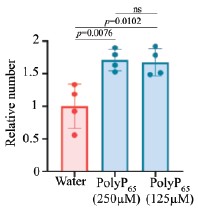
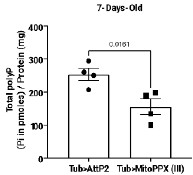
    1. Weren’t you ever as young and dumb as that?’ ‘I’m always in the club drinking martinis,’ he told an interviewer when asked to recall his younger self. ‘What did I know from politics?’ (Richardson doesn’t find in Matthiessen’s letters and journals a coherent politics, but some leftist tendencies emerge in a remark on ‘the startling parallel between communist doctrine and the teachings of Jesus Christ’ and in his sympathy for blacklisted celebrities like Paul Robeson, who ‘got a shitty deal’.) If it were merely a matter of Matthiessen’s reputation as a writer, such explanations might have sufficed, but soon after his arrival in France, he made some new friends, and they started the Paris Review. Since Matthiessen’s employment by the CIA was first reported by the New York Times in 1977, the magazine has had the taint of the association. Given the tendency of its founders, their children and their editorial heirs to memorialise the magazine’s beginnings incessantly, often in the pursuit of fundraising, the issue keeps raising its still un-declassified head, to the extent that many young writers have the impression that since the end of the Second World War American literature has been one big government psyop. That’s why they’re not getting published.

      Nicely acid

    2. re and more​ in his fiction, Matthiessen made a fetish of the Faulknerian device of multiple, conflicting and elliptical points of view. The tendency is tamed in At Play in the Fields of the Lord. For all the hyperbolic reactions to it, Far Tortuga is a fine if difficult novel that teaches you how to read it as the narrative advances through foul weather. Shadow Country in its final form is a heap of jumbled repetitions about the life of Edgar Watson, a real-life sugar planter on the south-west coast of Florida accused of various crimes, including multiple murders, who died at the hands of a mob of his neighbours in 1910. The first volume is told by a rotation of dozens of neighbours and relatives, speaking in various forms of swamp hillbilly dialect. The next book, told in the third person, follows Watson’s descendants, who try to piece together the truth of his legend. The final volume is narrated by Watson himself in a higher register. It’s hard to defy the blurb from Don DeLillo that appears on the cover of the current edition – ‘His writing does every justice to the blood fury of his themes’ – but just as hard to call Watson a hero or villain deserving of this epic treatment.

      Some nicely acid comments.

    1. Ugh! Serpent !”“ But I ’m not a serpent, I tell you !” saidAlice. “ I ’m a—— I ’m a——”“ Well ! What are you ?” said the Pigeon.“ I can see you ’re trying to invent something !”“ I—I ’m a little girl,” said Alice, ratherdoubtfully, as she remembered the number ofchanges she had gone through that day.

      Alice identifies herself as a little girl which seems weird to her as maybe much is expected of her?

    2. “ I—Ihardly know, sir, just at present—at least Iknow who I was when I got up this morning,but I think I must have been changed severaltimes since then.”

      Alice's identity comes into question again. Could be a reference to her being a child growing up in a victorian society.

    1. De az igaz, hogy hit ma még a proletár, az új szívek birodalmában is talmi

      But it is true that faith is scarce today, even in the realm of the proletarian, of YOUNG hearts

    1. Author response:

      The following is the authors’ response to the original reviews.

      Public Reviews:

      Reviewer #1 (Public review):

      Summary:

      This study presents a system for delivering precisely controlled cutaneous stimuli to freely moving mice by coupling markerless real-time tracking to transdermal optogenetic stimulation, using the tracking signal to direct a laser via galvanometer mirrors. The principal claims are that the system achieves sub-mm targeting accuracy with a latency of <100 ms. The nature of mouse gait enables accurate targeting of forepaws even when mice are moving.

      Strengths:

      The study is of high quality and the evidence for the claims is convincing. There is increasing focus in neurobiology in studying neural function in freely moving animals, engaged in natural behaviour. However, a substantial challenge is how to deliver controlled stimuli to sense organs under such conditions. The system presented here constitutes notable progress towards such experiments in the somatosensory system and is, in my view, a highly significant development that will be of interest to a broad readership.

      Weaknesses:

      (1) "laser spot size was set to 2.00 } 0.08 mm2 diameter (coefficient of variation = 3.85)" is unclear. Is the 0.08 SD or SEM? (not stated). Also, is this systematic variation across the arena (or something else)? Readers will want to know how much the spot size varies across the arena - ie SD. CV=4 implies that SD~7 mm. ie non-trivial variation in spot size, implying substantial differences in power delivery (and hence stimulus intensity) when the mouse is in different locations. If I misunderstood, perhaps this helps the authors to clarify. Similarly, it would be informative to have mean & SD (or mean & CV) for power and power density. In future refinements of the system, would it be possible/useful to vary laser power according to arena location?

      We thank the reviewer for their comments and for identifying areas needing more clarity. The previous version was ambiguous: 0.08 refers to the standard deviation (SD). We have removed the ambiguity by stating mean ± SD and reporting a unitless coefficient of variation (CV).

      The revised text reads “laser spot size was set to 2.00 ± 0.08 mm<sup>2</sup> (mean ± SD; coefficient of variation = 0.039).” This makes clear that the variability in spot size is minimal: it is 0.08 mm<sup>2</sup> SD (≈0.03 mm SD in diameter). This should help clarify that spot size variability across the arena is minute and unlikely to contribute meaningfully to differences in stimulus intensity across locations. The power was modulated depending on the experiment, so we provide the unitless CV here in “The absolute optical power and power density were uniform across the glass platform (coefficient of variation 0.035 and 0.029, respectively; Figure 2—figure supplement)”. We are grateful to the reviewer for spotting these omissions.

      The reviewer also asks whether, in the future, it is “possible/useful to vary laser power according to arena location”. This is already possible in our system for infrared cutaneous stimulation using analog modulation (Figure 4). We have added the following sentence to make this clearer: “Laser power could be modulated using the analog control.”

      (2) "The video resolution (1920 x 1200) required a processing time higher than the frame interval (33.33 ms), resulting in real-time pose estimation on a sub-sample of all frames recorded". Given this, how was it possible to achieve 84 ms latency? An important issue for closed-loop research will relate to such delays. Therefore please explain in more depth and (in Discussion) comment on how the latency of the current system might be improved/generalised. For example, although the current system works well for paws it would seem to be less suited to body parts such as the snout that do not naturally have a stationary period during the gait cycle.

      We captured and stored video with a frame-to-frame interval of 33.33 ms (30 fps). DeepLabCut-live! was run in a latency-optimization mode, meaning that new frames are not processed while the network is busy - only the most recent frame is processed when free. The processing latency is measured per processed frame, and intermediate frames are thus skipped while the network is busy. Although a wide field of view and high resolution is required to capture the large environment, increasing the per-frame compute time, the processing latency remained small enough to track and stimulate moving mice. This processing latency of 84 ± 12 ms (mean ± SD) was calculated using the timestamps stored in the output files from DeepLabCut-live!: subtracting the frame acquisition timestamp from the frame processing timestamp across 16,000 processed frames recorded across four mice (4,000 each). In addition, there is a small delay to move the galvanometers and trigger the laser, calculated as 3.3 ± 0.5 ms (mean ± SD; 245 trials). This is described in the manuscript, but can be combined with the processing latency to indicate a total closed-loop delay of ≈87 ms so we have expanded on the ‘Optical system characterization’ subsection in the Methods, adding “We estimated a processing latency of 84 ± 12 ms (mean ± SD) by subtracting…” and that “In the current configuration the end-to-end closed-loop delay is ≈87 ms from the combination of the processing latency and other delays”. To the Discussion, we now comment on how this latency can be reduced and how this can allow for generalization to more rapidly moving body parts.

      Reviewer #2 (Public review):

      Parkes et al. combined real-time keypoint tracking with transdermal activation of sensory neurons to examine the effects of recruitment of sensory neurons in freely moving mice. This builds on the authors' previous investigations involving transdermal stimulation of sensory neurons in stationary mice. They illustrate multiple scenarios in which their engineering improvements enable more sophisticated behavioral assessments, including (1) stimulation of animals in multiple states in large arenas, (2) multi-animal nociceptive behavior screening through thermal and optogenetic activation, and (3) stimulation of animals running through maze corridors. Overall, the experiments and the methodology, in particular, are written clearly. However, there are multiple concerns and opportunities to fully describe their newfound capabilities that, if addressed, would make it more likely for the community to adopt this methodology:

      The characterization of laser spot size and power density is reported as a coefficient of variation, in which a value of ~3 is interpreted as uniform. My interpretation would differ - data spread so that the standard deviation is three times larger than the mean indicates there is substantial variability in the data. The 2D polynomial fit is shown in Figure 2 - Figure Supplement 1A and, if the fit is good, this does support the uniformity claim (range of spot size is 1.97 to 2.08 mm2 and range of power densities is 66.60 to 73.80 mW). The inclusion of the raw data for these measurements and an estimate of the goodness of fit to the polynomials would better help the reader evaluate whether these parameters are uniform across space and how stable the power density is across repeated stimulations of the same location. Even more helpful would be an estimate of whether the variation in the power density is expected to meaningfully affect the responses of ChR2-expressing sensory neurons.

      We thank the reviewer for their comments. As also noted in response to Reviewer 1, the coefficient of variation (CV) is now reported in unitless form (rather than a percentage) to ensure clarity. For avoidance of doubt, the CV is 0.039 (3.9%), so the variation in laser spot size is minimal – there is negligible spot size variability across the system. The ranges are indeed consistent with uniformity. We have included the goodness-of-fit estimates in the appropriate figure legend “fit with a two-dimensional polynomial (area R<sup>2</sup> = 0.91; power R<sup>2</sup> = 0.75)”. This indicates that the polynomials fit well overall.

      The system already allows for control of spot size. To examine whether the variation in the power density affects the responses of ChR2-expressing sensory neurons, we examined this in our previous work that focused more on input-output relationships, demonstrating a steep relationship between spot size (range of 0.02 mm<sup>2</sup> to 2.30 mm<sup>2</sup>) and the probability of paw response, demonstrating a meaningful change in response probability (Schorscher-Petcu et al. eLife, 2021). In future studies, we aim to use this approach to “titrate” cutaneous inputs as mice move through their environments.

      While the error between the keypoint and laser spot error was reported as ~0.7 to 0.8 mm MAE in Figure 2L, in the methods, the authors report that there is an additional error between predicted keypoints and ground-truth labeling of 1.36 mm MAE during real-time tracking. This suggests that the overall error is not submillimeter, as claimed by the authors, but rather on the order of 1.5 - 2.5 mm, which is considerable given the width of a hind paw is ~5-6 mm and fore paws are even smaller. In my opinion, the claim for submillimeter precision should be softened and the authors should consider that the area of the paw stimulated may differ from trial to trial if, for example, the error is substantial enough that the spot overlaps with the edge of the paw.

      We thank the reviewer for identifying a discrepancy in these reported errors. We clarify this below and in the manuscript

      The real-time tracking error is the mean absolute Euclidean distance (MAE) between ground truth and DLC on the left hind paw where likelihood was relatively high. More specifically, ground truth was obtained by manual annotation of the left hind paw center. The corresponding DLC keypoint was evaluated in frames with likelihood >0.8 (the stimulation threshold). Across 1,281 frames from five videos of freely exploring mice (30 fps), the MAE was 1.36 mm.

      The targeting error is the MAE between ground truth and the laser spot location, so should reflect the real-time tracking error plus errors from targeting the laser. More specifically, this metric was determined by comparing the manually determined ground truth keypoint of the left hind paw and the actual center of the laser spot. Importantly, this metric was calculated using four five-minute high-speed videos recorded at 270 fps of mice freely exploring the open arena (463 frames) and frames were selected with a likelihood threshold >0.8. This allowed us to resolve the brief laser pulses but inadvertently introduced a difference in spatial scaling. After rescaling, the values give a targeting error MAE now in line with the real-time tracking error  (see corrected Figure 2L). This is approximately 1.3 mm across all locomotion speeds categories. These errors are small and are limited by the spatial resolution of the cameras. We thank the reviewer for noting this discrepancy and prompting us to get to its root cause.

      We have amended the subtitle on Figure 2L as “Ground truth keypoint to laser spot error” and have avoided the use of submillimeter throughout. We have added the following sentence to clarify this point: “As laser targeting relies on real-time tracking to direct the laser to the specified body part, this metric includes any errors introduced by tracking and targeting”.

      As the major advance of this paper is the ability to stimulate animals during ongoing movement, it seems that the Figure 3 experiment misses an opportunity to evaluate state-dependent whole-body reactions to nociceptor activation. How does the behavioral response relate to the animal's activity just prior to stimulation?

      The reviewers suggest analysis of state-dependent responses. In the Figure 3 experiment, mice were stimulated up to five times when stationary. Analysis of whole body reactions in stationary mice has been described in (Schorscher-Petcu et al. eLife, 2021) and doing this here would be redundant, so instead we now analyse the responses of moving mice in Figure 5. This new analysis shows robust state-dependent responses during movement as suggested by the reviewer. We find two behavioral clusters: one that is for faster, direct (coherent) movement and the other that is for slower assessment (incoherent) movement. Stimulation during the former results in robust and consistent slowing and shift towards assessment, whereas stimulation during the former results in a reduction in assessment. We describe and interpret these new data in the Results and Discussion sections and add information in the Methods and Figure legend, as given below. We believe that demonstrating movement statedependence is a valuable addition to the paper and thank the reviewer for suggesting this.

      Given the characterization of full-body responses to activation of TrpV1 sensory neurons in Figure 4 and in the authors' previous work, stimulation of TrpV1 sensory neurons has surprisingly subtle effects as the mice run through the alternating T maze. The authors indicate that the mice are moving quickly and thus that precise targeting is required, but no evidence is shared about the precision of targeting in this context beyond images of four trials. From the characterization in Figure 2, at max speed (reported at 241 +/- 53 mm/s, which is faster than the high speeds in Figure 2), successful targeting occurs less than 50% of the time. Is the initial characterization consistent with the accuracy in this context? To what extent does inaccuracy in targeting contribute to the subtlety of affecting trajectory coherence and speed? Is there a relationship between animal speed and disruption of the trajectory?

      We thank the reviewer for pointing out the discrepancy in the reported maximum speed. We have corrected the error in the main text: the average maximum speed is 142 ± 26 mm/s (four mice).

      The self-paced T-maze alternation task in Figure 5 demonstrates that mice running in a maze can be stimulated using this method. We did not optimize the particular experimental design to assess the hit accuracy, as this was determined in Figure 2. Instead, we optimized for the pulse frequencies, meaning the galvanometers tracked with processed frames but the laser was triggered whether or not the paw was actually targeted. However, even in this case with the system pulsing in the free-run mode, the laser hit rate was 54 ± 6% (mean ± sem, n = 7 mice). We have weakened references to submillimeter as it was only inferred from other experiments and was not directly measured here. We find in this experiment that stimulation in freely moving mice can cause them to briefly halt and evaluate. In the future, we will use experimental designs to more optimally examine learning.

      The reviewer also asks if there is a relationship between speed and disruption of the trajectory. We find that this is the case as described above with our additional analysis.

      Reviewer #3 (Public review):

      Summary:

      To explore the diverse nature of somatosensation, Parkes et al. established and characterized a system for precise cutaneous stimulation of mice as they walk and run in naturalistic settings. This paper provides a framework for real-time body part tracking and targeted optical stimuli with high precision, ensuring reliable and consistent cutaneous stimulation. It can be adapted in somatosensation labs as a general technique to explore somatosensory stimulation and its impact on behavior, enabling rigorous investigation of behaviors that were previously difficult or impossible to study.

      Strengths:

      The authors characterized the closed-loop system to ensure that it is optically precise and can precisely target moving mice. The integration of accurate and consistent optogenetic stimulation of the cutaneous afferents allows systematic investigation of somatosensory subtypes during a variety of naturalistic behaviors. Although this study focused on nociceptors innervating the skin (Trpv1::ChR2 animals), this setup can be extended to other cutaneous sensory neuron subtypes, such as low-threshold mechanoreceptors and pruriceptors. This system can also be adapted for studying more complex behaviors, such as the maze assay and goal-directed movements.

      Weaknesses:

      Although the paper has strengths, its weakness is that some behavioral outputs could be analyzed in more detail to reveal different types of responses to painful cutaneous stimuli. For example, paw withdrawals were detected after optogenetically stimulating the paw (Figures 3E and 3F). Animals exhibit different types of responses to painful stimuli on the hind paw in standard pain assays, such as paw lifting, biting, and flicking, each indicating a different level of pain. Improving the behavioral readouts from body part tracking would greatly strengthen this system by providing deeper insights into the role of somatosensation in naturalistic behaviors. Additionally, if the laser spot size could be reduced to a diameter of 2 mm², it would allow the activation of a smaller number of cutaneous afferents, or even a single one, across different skin types in the paw, such as glabrous or hairy skin.

      We thank the reviewer for highlighting how our system can be combined with improved readouts of coping behavior to provide deeper insights. Optogenetic and infrared cutaneous stimulation are well established generators of coping behaviors (lifting, flicking, licking, biting, guarding). Detection of these behaviors is an active and evolving field with progress being made regularly (e.g. Jones et al., eLife 2020 [PAWS];  Wotton et al., Mol Pain 2020; Zhang et al., Pain 2022; Oswell et al., bioRxiv 2024 [LUPE]; Barkai et al., Cell Reports Methods 2025 [BAREfoot], along with more general tools like Hsu et al., Nature Communications 2021 [B-SOiD]; Luxem et al., Communications Biology 2022 [VAME]; Weinreb et al,. Nature Methods 2024 [Keypoints-MoSeq]). One output of our system is bodypart keypoints, which are the typical input to many of these tools. We will leave the readers and users of the system to decide which tools are appropriate for their experimental designs - the focus of this current manuscript is describing the novel stimulation approach in moving animals.

      Recommendations for the authors:

      Reviewer #1 (Recommendations for the authors):

      (1) It is hard to see how the rig is arranged from the render of Figure 2AB due to the components being black on black. A particularly useful part of Fig2AB is the aerial view in panel B that shows the light paths. I suggest adding the labelling of Figure 2A also to that. The side/rear views could perhaps be deleted, allowing the aerial view to be larger.

      We appreciate this suggestion and have revised Figure 2B to improve the visibility of the optomechanical components. We have enlarged the side and aerial views, removed the rear view, and added further labels to the aerial view.

      (2) MAE - to interpret the 0.54 result, it would be useful to state the arena size in this paragraph.

      Thank you. We have added the arena size in this paragraph and also added scales in the relevant figure (Figure 2).

      (3) "pairwise correlations of R = 0.999 along both x- and y-axes". Is this correlation between hindpaw keypoint and galvo coordinates?

      Yes, we have added the following to clarify: “...between galvanometer coordinates and hind paw keypoints”

      (4) Latency was 84 ms. Is this mainly/entirely the delay between DLC receiving the camera image and outputting key point coordinates?

      Yes, we hope that the additional detail in the Methods and Discussion described above will now clarify the current closed-loop latencies.

      (5) "Mice move at variable speeds": in this sentence, spell out when "speed" refers to mouse and when it refers to hindpaw. Similarly, Fig 2i. The sentence is potentially confusing to general readers (paws stationary although the mouse is moving). Presumably, it's due to gait. I suggest explaining this here.

      The speed values that relate to the mouse body and paws are now clearer in the main text and in the legend for Figure 2I.

      (6) Figure 2k and associated main text. It is not clear what "success/hit rate" means here.

      We have added the following sentence in the main text: “Hit accuracy refers to the percentage of trials in which the laser successfully targeted (‘hit’) the intended hind paw.” and use hit accuracy throughout instead of success rate.

      (7) Figure 2L. All these points are greater than the "average" 0.54 reported in the text. How is this possible?

      The MAE of 0.54 mm refers to the “predicted and actual laser spot locations” (that is, the difference between where the calibration map should place the laser spot and where it actually fell), while Figure 2L MAE values refers to the error between the ground truth keypoint to laser spot (that is, the error between the human-observed paw target and where the laser spot fell). The latter error will include the former error so is expected to be larger. We have clarified this point throughout the text, for example, stating “As laser targeting relies on real-time tracking to direct the laser to the specified body part, this metric inherently accounts for any errors introduced by the tracking and targeting.”. This is also discussed above in response to Reviewer 2.

      (8) "large circular arena". State the size here

      We have added this to the Figure 2 legend.

      (9) Figure 3c-left. Can the contrast between the mouse and floor be increased here?

      We have improved the contrast in this image.

      (10) Figure 5c. It is unclear what C1, C2, etc refers to. Mice?

      Yes, these refer to mice. We have removed reference to these now as they are not needed.

      (11) Discussion. A comment. There is scope for elaborating on the potential for new research by combining it with new methods for measurements of neural activity in freely moving animals in the somatosensory system.

      Thank you. We agree and have added more detail on this in the discussion stating “The system may be combined with existing tools to record neural activity in freely-moving mice, such as fiber photometry, miniscopes, or large-scale electrophysiology, and manipulations of this neural activity, such as optogenetics and chemogenetics. This can allow mechanistic dissection of cell and circuit biology in the context of naturalistic behaviors.”

      Reviewer #3 (Recommendations for the authors):

      (1) Include the number of animals for behavior assays for the panels (e.g., Figures 4G).

      Where missing, we now state the number of animals in panels.

      (2) If representative responses are shown, such as in Figures 3E and 4F, include the average response with standard deviation so readers can appreciate the variation in the responses.

      We appreciate the suggestion to show variability in the responses. We have made several changes to Figures 3 and 4. Specifically, to illustrate the variability across multiple trials more clearly, Figure 3E now shows representative keypoint traces for each body part from two mice during their 5 trials. For Figure 4, we have re-analyzed the thermal stimulation trials and shown a raster plot of keypoint-based local motion energy (Figure 4E) sorted by response latency for hundreds of trials. Figure 4G now presents the cumulative distribution for all trials and animals for thermal (18 wild-type mice, 315 trials) and optogenetic stimulation trials (9 Trpv1::ChR2 mice, 181 trials). We also now provide means ± SD for the key metrics for optogenetic and thermal stimulation trials in Figure 4 in the Results section. This keeps the manuscript focused on the methodological advances while showing the trial variability.

      (3) "optical targeting of freely-moving mice in a large environments" should be "optical targeting of freely-moving mice in a large environment".

      Corrected

      (4) Define fps when you first mention this in the manuscript.

      Added

      (5) Data needs to be shown for the claim "Mice concurrently turned their heads toward the stimulus location while repositioning their bodies away from it".

      We state this observation to qualify that the stimulation of stationary mice resulted in behavioral responses “consistent with previous studies”. It would be redundant to repeat our full analysis and might distract from the novelty of the current manuscript. We have restricted this sentence to make it clearer: “Consistent with previous studies, we observed the whole-body behaviors like head orienting concurrent with local withdrawal (Browne et al., Cell Reports 2017; Blivis et al., eLife, 2017.)”

    1. this is the default experience of every public repository maintainer right now

      "…on GitHub" (as with all things from people who speak myopically about "open source" but run all their projects on GitHub). They're talking about the GitHub userbase.

    1. Reviewer #1 (Public review):

      Summary:

      The study by Druker et al. shows that siRNA depletion of PHD1, but not PHD2, increases H3T3 phosphorylation in cells arrested in prometaphase. Additionally, the expression of wild-type RepoMan, but not the RepoMan P604A mutant, restored normal H3T3 phosphorylation localization in cells arrested in prometaphase. Furthermore, the study demonstrates that expression of the RepoMan P604A mutant leads to defects in chromosome alignment and segregation, resulting in increased cell death. These data support a role for PHD1-mediated prolyl hydroxylation in controlling progression through mitosis. This occurs, at least in part, by hydroxylating RepoMan at P604, which regulates its interaction with PP2A during chromosome alignment.

      Strengths:

      The data support most of the conclusions made.

      Comments on revisions:

      Actually, I am still concerned that PHD1 binds to RepoMan endogenously and directly. Furthermore, the authors have not yet provided genetic evidence demonstrating that PHD1 controls progression through mitosis by catalyzing the hydroxylation of RepoMan.

    2. Reviewer #3 (Public review):

      Summary:

      The manuscript is a comprehensive molecular and cell biological characterisation of the effects of P604 hydroxylation by PHD1 on RepoMan, a regulatory subunit of the PPIgamma complex. Conclusions are generally supported by results. Overall, a timely study that demonstrates the interplay between hydroxylase signalling and the cell cycle. The study extends the scope of prolyl hydroxylase signalling beyond canonical hypoxia pathways, providing a concrete example of hydroxylation regulating PP1 holoenzyme composition and function during mitosis.

      The work would benefit from additional biochemical validation of direct targeting to characterise the specificity and mode of recognition, but this is beyond the scope of the study.

      Strengths:

      Compelling data, characterisation of how P604 hydroxylation induces the interaction between RepoMan and a phosphatase complex, resulting in loading of RepoMan on Chromatin. Knockdown of PHD1 mimics the disruption of the complex and loss of the regulation of the hydroxylation site by PHD1, resulting in mitotic defects.

    3. Author response:

      The following is the authors’ response to the original reviews.

      Public Reviews:

      Reviewer #1 (Public review):

      Summary:

      The study by Druker et al. shows that siRNA depletion of PHD1, but not PHD2, increases H3T3 phosphorylation in cells arrested in prometaphase. Additionally, the expression of wild-type RepoMan, but not the RepoMan P604A mutant, restored normal H3T3 phosphorylation localization in cells arrested in prometaphase. Furthermore, the study demonstrates that expression of the RepoMan P604A mutant leads to defects in chromosome alignment and segregation, resulting in increased cell death. These data support a role for PHD1-mediated prolyl hydroxylation in controlling progression through mitosis. This occurs, at least in part, by hydroxylating RepoMan at P604, which regulates its interaction with PP2A during chromosome alignment.

      Strengths:

      The data support most of the conclusions made. However, some issues need to be addressed.

      Weaknesses:

      (1) Although ectopically expressed PHD1 interacts with ectopically expressed RepoMan, there is no evidence that endogenous PHD1 binds to endogenous RepoMan or that PHD1 directly binds to RepoMan.

      We do not fully agree that this comment is accurate - the implication is that we only show interaction between two exogenously expressed proteins, i.e. both exogenous PHD1 and RepoMan, when in fact we show that tagged PHD1 interacts with endogenous RepoMan. The major technical challenge here is the well-known difficulty of detecting endogenous PHD1 in such cell lines. We agree that co-IP studies do not prove that this interaction is direct and never claim to have shown this, though we do feel that a direct interaction is most likely, albeit not proven.

      (2) There is no genetic evidence indicating that PHD1 controls progression through mitosis by catalyzing the hydroxylation of RepoMan.

      We agree that our current study is primarily a biochemical and cell biological study, rather than a genetic study. Nonetheless, similar biochemical and cellular approaches have been widely used and validated in previous studies in mechanisms regulating cell cycle progression and we are confident in the conclusions drawn based on the data obtained so far.

      (3) Data demonstrating the correlation between dynamic changes in RepoMan hydroxylation and H3T3 phosphorylation throughout the cell cycle are needed.

      We agree that it will be very interesting to analyse in more detail the cell cycle dynamics of RepoMan hydroxylation and H3T3 phosphorylation - along with other cell cycle parameters. We view this as outside the scope of our present study and are actively engaged in raising the additional funding needed to pursue such future experiments.

      (4) The authors should provide biochemical evidence of the difference in binding ability between RepoMan WT/PP2A and RepoMan P604A/PP2A.

      Here again we agree that it will be very interesting to analyse in future the detailed binding interactions between wt and mutant RepoMan and other interacting proteins, including PP2A. We show reduced interaction in cells by PLA (Figure 5A) and in biochemical analysis (Figure 5C). More in vitro analysis is, in our view, outside the scope of our present study and we are actively engaged in raising the additional funding needed to pursue such future experiments.

      (5) PHD2 is the primary proline hydroxylase in cells. Why does PHD1, but not PHD2, affect RepoMan hydroxylation and subsequent control of mitotic progression? The authors should discuss this issue further.

      We agree with the main point underpinning this comment, i.e., that there are still many things to be learned concerning the specific roles and mechanisms of the different PHD enzymes in vivo. We address this in the Discussion section and look forward to addressing these questions experimentally in future studies.

      Reviewer #2 (Public review):

      Summary:

      This is a concise and interesting article on the role of PHD1-mediated proline hydroxylation of proline residue 604 on RepoMan and its impact on RepoMan-PP1 interactions with phosphatase PP2A-B56 complex leading to dephosphorylation of H3T3 on chromosomes during mitosis. Through biochemical and imaging tools, the authors delineate a key mechanism in the regulation of the progression of the cell cycle. The experiments performed are conclusive with well-designed controls.

      Strengths:

      The authors have utilized cutting-edge imaging and colocalization detection technologies to infer the conclusions in the manuscript.

      Weaknesses:

      Lack of in vitro reconstitution and binding data.

      We agree that it will be very interesting to pursue in vitro reconstitution studies and detailed binding data. We view this as outside the scope of our present study and are actively engaged in raising the additional funding needed to pursue such future experiments. We do provide in vitro hydroxylation data in our accompanying manuscript by Jiang et al, 2025 Elife.

      Reviewer #3 (Public review):

      Summary:

      The manuscript is a comprehensive molecular and cell biological characterisation of the effects of P604 hydroxylation by PHD1 on RepoMan, a regulatory subunit of the PPIgamma complex. The identification and molecular characterisation of the hydroxylation site have been written up and deposited in BioRxiv in a separate manuscript. I reviewed the data and came to the conclusion that the hydroxylation site has been identified and characterised to a very high standard by LC-MS, in cells and in vitro reactions. I conclude that we should have no question about the validity of the PHD1-mediated hydroxylation. 

      In the context of the presented manuscript, the authors postulate that hydroxylation on P604 by PHD1 leads to the inactivation of the complex, resulting in the retention of pThr3 in H3. 

      Strengths:

      Compelling data, characterisation of how P604 hydroxylation is likely to induce the interaction between RepoMan and a phosphatase complex, resulting in loading of RepoMan on Chromatin. Loss of the regulation of the hydroxylation site by PHD1 results in mitotic defects.

      Weaknesses:

      Reliance on a Proline-Alanine mutation in RepoMan to mimic an unhydroxylatable protein. The mutation will introduce structural alterations, and inhibition or knockdown of PHD1 would be necessary to strengthen the data on how hydroxylates regulate chromatin loading and interactions with B56/PP2A.

      We do not agree that we rely solely on analysis of the single site pro-ala mutant in RepoMan for our conclusions, since we also present a raft of additional experimental evidence, including knock-down data and experiments using both fumarate and FG. We would also reference the data we present on RepoMan in the parallel study by Jiang et al, which has also published in eLife(https://doi.org/10.7554/eLife.108128.1)). Of course, we agree with the reviewer that even although the mutant RepoMan features only a single amino acid change, this could still result in undetermined structural effects on the RepoMan protein that could conceivably contribute, at least in part, to some of the phenotypic effects observed. We now provide evidence in the current revision (new Figure 5D) that reduced interaction between RepoMan and B56gamma/PP2A is also evident when PHD1 is depleted from cells.

      Recommendations for the authors:

      Reviewer #2 (Recommendations for the authors):

      (1) The manuscript can benefit from improved quality of writing and avoidance of grammatical errors.

      We have checked through the manuscript again and corrected any mistakes we have encountered in the Current revision.

      (2) Although the data in the manuscript is compelling, it is difficult to rule out indirect effects in the interactions. Hence, in vitro binding assays with purified proteins are important to validate the findings, along with in vitro reconstitution of phosphatase activity.

      It is possible that cofactors and / or additional PTMs are required to promote these interactions in vivo. We have provided in vitro hydroxylation analysis and the additional experiments suggested will be the subject of follow-on future studies.

      (3) Proline to alanine is a drastic mutation in the amino acid backbone. The authors could purify PHD1 and reconstitute P604 hydroxylation to show if it performs as expected.

      This is likely to be a challenging experiment technically, given that RepoMan is a component of multiple distinct complexes, some of which are dynamic. We did not feel able to address this within the scope of the current study.

      (4) The confocal images showing the overlap of two fluorescent signals need to show some sort of quantification and statistics to prove that the overlap is significant.

      We now provide Pearson correlation measurements for Figure 2A in new Figure 2B in the Current revision.

      (5) Kindly provide a clearer panel for the Western blot of H3T3ph in Figure 3c.

      We have now included a new panel for this Figure in the Current revision.

      (6) Kindly also include the figures for validation of siRNAs used in the study

      We have added this throughout in supplementary figures.

      Reviewer #3 (Recommendations for the authors):

      (1) The authors have shown that PHD1 and RepoMan interact; can the interaction be "trapped" by the addition of DMOG? Generally, hydroxylase substrates can be trapped, which would add an additional layer of confidence that PHD1 and RepoMan form an enzyme-substrate complex. 

      This is something we are planning to do for follow-up studies using the established methods from the von Kriesgheim laboratory.

      (2) How does P604A mutation affect the interaction with PHD1? One would expect a reduction in interaction. 

      Another interesting point we are planning to investigate in the future.

      (3) The effects of expression of the wt and P604A mutant repoman are well-characterised. Could the authors check the effects of overexpressing PHD1 and deadPHD1, inhibition on the mitosis/H3 phosphorylation? My concerns are that a P-A mutation will disrupt the secondary structure, and although it is a good tool, data should be backed up by increasing/decreasing the hydroxylation of RepoMan over the mutation. Repeat some of the most salient experiments where the P604A mutation has been used and modulate the hydP604 by modulating PHD1 activity/expression (such as Chromatin interaction, PLA assay, B56gamma interaction, H3 phosphorylation localisation, Monastrol release, etc.)

      We agree, the PA mutant can potentially affect the protein structure. In our manuscript we have provided pH3 analysis for PHD inhibition using siRNA, FG4592 and Fumarate. In the Current revision ee also data showing that depletion of PHD1 results in a reduction in interaction between RepoMan and B56gamma/PP2A. This is now presented in new figure 5D.

      (4) I also have a general question, as a point of interest, as the interaction between PHD1 and RepoMan appears to be cell cycle dependent, is it possible that the hydroxylation status cycles as well? Could this explain how some sub-stochiometric hydroxylation events observed may be masked by assessing unsynchronised cells in bulk?

      Indeed, a very good question. We believe this is an interesting question for follow up studies. Given our previous publication showing phosphorylation of PHD1 by CDKs alters substrate binding (Ortmann et al, 2016 JCS), this is our current hypothesis.

    1. eLife Assessment

      IL21R, being a key cytokine receptor for shaping the T follicular helper and B cell functions, utilizes two STAT family members, STAT1 and STAT3. The authors utilize the IL21R ENU-induced mutant, together with relevant in vitro and in vivo experiments, to dissect the function of STAT1 and STAT3. The approach by itself sounds reasonable, but the main conclusions are incompletely supported by the data presented in this manuscript.

    1. Thosewho cannot afford innumerable booster packs, war-game units and paint,role-playing accessories, or many rolls of quarters cannot participate in thesetraditional settings in the same way as those who can. Those who cannotafford innumerable loot boxes, character skins and equipment, or a varietyof in-game resources cannot participate in contemporary digital gameplay inthe same way as those who can. Of course, those who can afford more gamesin any setting can participate in more gameplay.

      Cultural capital therefore stems from monetary and time capital. You need both, and then you are allowed new forms of communication, new forms of convincing others, of sharing a framework, an ideology, of not just performing but coming learned. This is a current pervasive ideal: The fact that different motivations and experiential situations are to be homogenised, and that when you come to an educational activity, you must do so with specific requirements and mindset.

      This is one of the most notable wings of meritocratic thought and efficiency, when in actuality, lack of retraining often makes senior workers stagnate, and replace about collective innovation for top-down imposition, whereas newer entrants are judged harshly and demobilised, sterilised, as if they were playing pretend with toys and not engaging with the real material.

    Annotators

    1. a package to install nextcloud quickly on a new server w back end tools. Debian 13 required.

      Aimed at small groups / companies / associations / schools. Would work on a Hetzner cloud server. But works for larger set-ups too. By people in Schleswig-Holstein (where the public admin has switched to Nextcloud)

    1. Reviewer #1 (Public review):

      Summary:

      In this article by Xiao et al., the authors aimed to identify the precise targets by which magnesium isoglycyrrhizinate (MgIG) functions to improve liver injury in response to ethanol treatment. The authors found through a series of in vivo and molecular approaches that MgIG treatment attenuates alcohol-induced liver injury through a potential SREBP2-IdI1 axis. This manuscript adds to a previous set of literature showing MgIG improves liver function across a variety of etiologies, and also provides mechanistic insight into its mechanism of action.

      Strengths:

      (1) The authors use a combination of approaches from both in-vivo mouse models to in-vitro approaches with AML12 hepatocytes to support the notion that MgIG does improve liver function in response to ethanol treatment.

      (2) The authors use both knockdown and overexpression approaches, in vivo and in vitro, to support most of the claims provided.

      (3) Identification of HSD11B1 as the protein target of MgIG, as well as confirmation of direct protein-protein interactions between HSD11B1/SREBP2/IDI1, is novel.

      Weaknesses:

      Major weaknesses can be classified into 3 groups:

      (1) The results do not support some claims made.

      (2) Qualitative analyses of some of the lipid measures, as opposed to more quantitative analyses.

      (3) There are no appropriate readouts of Srebp2 translocation and/or activity.

      More specific comments:

      (1) A few of the claims made are not supported by the references provided. For instance, line 76 states MgIG has hepatoprotective properties and improved liver function, but the reference provided is in the context of myocardial fibrosis.

      (2) MgIG is clinically used for the treatment of liver inflammatory disease in China and Japan. In the first line of the abstract, the authors noted that MgIG is clinically approved for ALD. In which countries is MgIG approved for clinical utility in this space?

      (3) Serum TGs are not an indicator of liver function. Alterations in serum TGs can occur despite changes in liver function.

      (4) There are discrepancies in the results section and the figure legends. For example, line 302 states Idil is upregulated in alcohol fed mice relative to the control group. The figure legend states that the comparison for Figure 2A is that of ALD+MgIG and ALD only.

      (5) Oil Red O staining provided does not appear to be consistent with the quantification in Figure 1D. ORO is nonspecific and can be highly subjective. The representative image in Figure 1C appears to have a much greater than 30% ORO (+) area.

      (6) The connection between Idil expression in response to EtOH/PA treatment in AML12 cells with viability and apoptosis isn't entirely clear. MgIG treatment completely reduces Idi1 expression in response to EtOH/PA, but only moderate changes, at best, are observed in viability and apoptosis. This suggests the primary mechanism related to MgIG treatment may not be via Idi1.

      (7) The nile red stained images also do not appear representative with its quantification. Several claims about more or less lipid accumulation across these studies are not supported by clear differences in nile red.

      (8) The authors make a comment that Hsd11b1 expression is quite low in AML12 cells. So why did the authors choose to knockdown Hsd11b1 in this model?

      (9) Line 380 - the claim that MGIG weakens the interaction between HSD11b1 and SREBP2 cannot be made solely based on one Western blot.

      (10) It's not clear what the numbers represent on top of the Western blots. Are these averages over the course of three independent experiments?

      (11) The claim in line 382 that knockdown of Hsd11b1 resulted in accumulation of pSREBP2 is not supported by the data provided in Figure 6D.

      (12) None of the images provided in Figure 6E support the claims stated in the results. Activation of SREBP2 leads to nuclear translocation and subsequent induction of genes involved in cholesterol biosynthesis and uptake. Manipulation of Hsd11b1 via OE or KD does not show any nuclear localization with DAPI.

      (13) The entire manuscript is focused on this axis of MgIG-Hsd11b1-Srebp2, but no Srebp2 transcriptional targets are ever measured.

      (14) Acc1 and Scd1 are Srebp1 targets, not Srebp2.

      (15) A major weakness of this manuscript is the lack of studies providing quantitative assessments of Srebp2 activation and true liver lipid measurements.

    1. A highlight is the digital equivalent of swiping a yellow marker over a passage of text. Click the screencast to watch the creation of a highlight.

      This introduction/ definition about highlighting does not give clear steps, it has the read watch a short clip on how to highlight text, but it never tells the reader how to actually do it. It assumes prior knowledge, for example that the reader must already know how to select the text they want highlighted, they also simplified the explanation the highlight isn't always yellow it can be different colors.

    1. DomainUser .eduUsed by educational institutions (i.e., colleges, universities, school districts); usually reliable sources of information, but individual members of these institutions may be able to create web pages on the site under the official domain that do not reflect the values of the school .com/.bizUsed by commercial or business groups; may be valid, but also may be used to sell products, services, or ideas .govUsed by government agencies; typically valid .orgUsed by organizations, such as nonprofit groups or religious entities; may present information slanted toward a specific denomination or cause. You’ll need to conduct additional research to verify validity. .netOriginally created for networks or groups of people working on the same problem, .net is still a viable option for noncommercial sites such as personal blogs or family websites. You’ll need to conduct additional research to verify validity. Many other domains existResearch the validity of domain names outside these most common ones.

      This is new information to me as I was never aware that the ending of a web address and or email had a significance to something very specific.

    1. “There is nothing that keeps wicked men at any one moment out of hell, but the mere pleasure of God.

      The reason sinners are not already being punished at any given moment is for God's own pleasure, and at any moment they can be descended into Hell.

    1. The substratum of our society is made of the material fitted by nature for it, and by experience we know that it is the best, not only for the superior but for the inferior race, that it should be so.

      I annotated this sentence because it is Alexander Stephens arguing a hierarchal and racist view on society. In the sentence, he talks about how slavery is actually good for the "inferior race." I found this interesting because he is trying to convince people that slavery is the foundation of society and society is in need of slavery. The point Stephens is trying to convey is that slavery is what society needs and both sides are benefit from it. In my opinion I think this is a deeply flawed way of looking at it, especially when throughout the passage he talks about how slavery is the cornerstone of the USA.

    2. Many Governments have been founded upon the principles of certain classes; but the classes thus enslaved, were of the same race, and in violation of the laws of nature

      I find this statement interesting. There was, amongst many people, a high regard for civilisations like Rome and Greece, indeed, the Parthenon in Nashville would be built just 30 odd years after the war. In this statement, Stephens is claiming that civilisations such as Rome and Greece, who enslaved white people more often than not, were against nature. Given the fact that Antebellum architecture also features prominant pillars and collumns, something taken directly from Greco-Roman influence, this also makes me curious as to why they would be attempting to imitate the architecture of empires, kingdoms, and city states that they claim to be against nature and their principles. I would be curious if this was something they genuinely thought about, that this statement is against general trends of their own society's influence. It also makes me, along with the previous annotation about their claims that the government had fallen, and the context of the speech, begin to suspect that this is not in fact a genuine display of Stephen's thoughts, but rather a propaganda piece meant to drum support for their cause from the masses. An educated "gentleman" may be aware that Rome and Greece enslaved white people, but the common farmer who would do majority of the fighting, and nearly all the dying, would likely not make those connections. I feel as if this reads as an "all is well, and we have nothing to worry about in the coming war because we're right, so go enlist and fight for the right and natural way of life" that one expects from typically authoritarian and extremist governments.

    3. They rested upon the assumption of the equality of races. This was an error. It was a sandy foundation, and the idea of a Government built upon it-when the “storm came and the wind blew, it fell.”

      I feel like this is a disingenuous statement. The government didn't fall, nor did it struggle. Rather, the various states that would secede chose to leave the government then act as though it fell because there was a chance, perceived or otherwise, that the government may make a decision they personally disagree with. As others have pointed out, they make it clear that it's about slavery, and how it's not that the idea of equality causing the government to collapse in on itself, but rather the government is leaning towards possible banning of slavery. The government is still standing, and still quite strong, that's why they chose to leave it, since if they remained they feared that their slaves would be taken and freed. Additionally, we can see in hindsight that it most certainly remained functional as the North won. I wonder if this was something that weighed on the minds of various legislators in the Confederacy, since surely they were aware that the North wasn't dysfunctional, but rather well equipped and more than capable of out producing them in industrial goods. Certainly, this was known by Lee and other generals, as they attempted to push for a quick and lightning war to avoid the inevitable attritional warfare that all conflicts devolve to. If it was something they were aware of, then I wonder why they were bother saying this, to give legitimacy to their cause? Garner support for their new government? Or simply to make them feel better about their actions?

    1. atillion’s model pushes processing to the data warehouse. Performing LLM (Large Language Model) inference or complex data cleaning inside a warehouse can be prohibitively expensive

      This is similar to dbt - Matillion just does the compute in-warehouse but that doesn't seem like something teams would want to do

    1. Your significant other wants a birthday present—you have no cash. You have three exams scheduled on a day when you also need to work. Your car needs new tires, an oil change, and gas—you have no cash. (Is there a trend here?) You have to pass a running test for your physical education class, but you’re out of shape.

      1- create a gift from items at home; make a homemade meal 2-set aside time for the exams; call out from work (use leave) 3- prioritize; gas, oil change; borrow money 4-plan ahead and exercise a little everyday to get stronger; hire a personal trainer

    2. downfalls—but you can be prepared for unexpected issues to come up and adapt more easily if you plan for multiple solutions.

      It's good practice to have a back-up plan than to improvise.

    1. It differentiates Matillion from pure-SaaS competitors who require data to pass through their own servers.

      This is somewhat of a moat, but think all competitors will catch up farily quickly

    1. In the area of music teacher education (i.e., practicum settings), we have found that peer-planned lessons (undergraduate students planning lessons together) in small groups work well for initial experiences in teaching music to students with differences and disabilities (Hourigan, 2007).

      I understand how this could be true, my first couple experiences writing a lesson plan was in a small group setting, but it often ended up confusing me even more than if I was alone. Too many teachers with conflating ideas of music teaching can make it rough to collaborate and make a great lesson plan. That conundrum greatly impacts the students' experience of the lesson and content within.

    1. Think of all the thinking that goes into the logistics of a dinner-and-a-movie date—where to eat, what to watch, who to invite, what to wear, popcorn or candy—when choices and decisions are rapid-fire, but we do it relatively successfully all the time.

      Thinking analytically happens when we don't even know it, effortlessly.

    1. CASE ILLUSTRATION 3

      Mrs. G is a 51-year-old woman who had suffered from abdominal pain and progressive loss of function over the last 1 ½ years. She had failed conservative management and was admitted to the hospital for an exploratory laparotomy. However, there were no organic findings to explain her symptoms. Psychiatric consultation was requested to evaluate for a psychological component to her pain. At evaluation, Mrs. G denied any psychological stressors, but her husband shared that around the time of the onset of her symptoms, Mrs. G’s mother, with whom she is very close, had moved out of state to care for another daughter who had become ill. Mrs. G was referred for psychotherapy to explore this perceived loss and to explore alternatives for support. Over the course of this treatment, Mrs. G’s abdominal pain resolved.

    1. Once, as they thus lay at hull in a terrible storm, a strong young man, called John Howland, coming on deck was thrown into the sea; but it pleased God that he caught hold of the top-sail halliards which hung overboard and ran out at length; but he kept his hold, though he was several fathoms under water, till he was hauled up by the rope and then with a boat-hook helped into the ship and saved; and though he was somewhat ill from it he lived many years and became a profitable member both of the church and commonwealth.

      During a storm, a young man named John Howland flew overboard, but was subsequently rescued. He got sick as a result but survived and ended up living a good life.

    2. But at length all opinions, the captain’s and others’ included, agreed that the ship was sound under the water-line, and as for the buckling of the main beam, there was a great iron screw the passengers brought out of Holland, by which the beam could be raised into its place; and the carpenter affirmed that with a post put under it, set firm in the lower deck, and otherwise fastened, he could make it hold.

      There were concerns about the safety of continuing travel on the ship after damage sustained due to harsh weather. In the end the decision was made to continue traveling, and some repairs to the main beam could be made using an iron screw that the passengers had brought.

    3. to smite the young man with a grievous disease, of which he died in a desperate manner, and so was himself the first to be thrown overboard.

      One of the sailors was an asshole, especially to the sick members of the ship, but then he himself fell ill and was thrown overboard.

    1. The clinician has the ability to collaborate on treatment plans and to facilitate entry into the various health and social systems that can help address vulnerabilities. The therapeutic alliance can help patients feel assured that clinicians will not abuse the disclosure of information (e.g., leading to rejection or legal action) but will help them access resources critical for their health.

      .

    1. Descriptions of behavior that hit home can provoke emotional responses in patients, but penetrating long-held psychological defenses can spur growth.

      .

    2. When problems are being discussed, this type of patient’s nonverbal behavior is usually engaged and active: leaning forward, bright affect, and dynamic gestures. As recommendations for evaluation and treatment are made, however, the patient typically becomes withdrawn, eye contact diminishes, and language becomes significantly less animated. Verbally, during the discussion of evaluation and treatment, the patient becomes quiet, volunteers little, and characteristically offers no solutions to problems. In fact, as the clinician makes recommendations, the patient often responds with the classic, “I’d like to do that but … .”

      Overview of patient archatype

    1. If you want to surprise your best friend with a special birthday celebration but are low on funds, you could think of creative ways to make this event one to remember.

      Sometimes set-backs bring forth a way to explore creativity more.

    2. “Because we’ve always done it that way” is not a valid reason to not try a new approach. It may very well be that the old process is a very good way to do things, but it also may just be that the old, comfortable routine is not as effective and efficient as a new process could be.

      Change can and usually is a good thing, and a good learning experience.

    3. Some people naturally seem to think more creatively than others, but we all have the capacity to create and devise.

      I feel like the more we immerse ourselves in different experiences the more creative we can be. For instance, a person who's lived in one room and never gone outside and looks out the window vs a person who walks outside everyday and enjoys nature.The person who is active and engages their senses may have an advantage of expanding their creative mind than a person who just stares out a window.

    4. Figure 7.6 You may feel like you cannot come up with new ideas, but even the process of combining and recombining familiar concepts and approaches is a creative act. A kaleidoscope creates a nearly infinite number of new images by repositioning the same pieces of glass.

      The creative mind is like a kaleidoscope. I like that concept.

    5. immerse themselves

      This is a good learning tool. It helps to better understand the thing that you're learning, involving yourself as a whole, not just thinking about it, but being about it.

    1. branch of the ED, fol-lowed up on reports that districts in Texas were misusing and misinterpreting a TEA special education accountability system to reduce the number of students identified as children with disabilities. Under TEA’s Performance-Based Monitoring Analysis System (PBMAS), districts received a perfect rating if the percent of students in the district identified as children with disabilities under IDEA was below

      WOW!! As someone who was born and raised in rural Texas, I completely believe this. Students are denied access to a quality education to ensure district leaders "appear" successful. A quality education is a right, but in Texas, data shows something different....

    2. By prioritizing data use for educational leaders at the program level, training on data use moves beyond the quantitative methods course and instead is emphasized throughout the curriculum. Embedding an emphasis on quantitative data in preparation does not preclude a focus

      It almost sounds like this article is saying that quantitative is the ONLY kind of data. I do like much of what is being suggested here, but why no mention of the value of qualitative data? (Also, I haven't read the whole article yet, so I might be eating my words later).

    3. Wider use of quantitative data could uncover other inequities deserving of attention

      Some of this data was already readily available - but people have to look at it, understand it, question it in order for it to be useful

    1. converting live, streaming data into vectors in real-time—and immediately performing a join against its current working memory.

      Often times data will just be streamed directly into Estuary, but you need real-time data to aggregate somewhat histrocial events into the agentic database.

      GPU will do real-time instant decisions - TigerGraph will look historically at the different lookups, etc to deliver data to the agent that it might need.

    1. I miss thinking hard.
      • The author identifies two primary personality traits: "The Builder" (focused on velocity, utility, and shipping) and "The Thinker" (needing deep, prolonged mental struggle).
      • "Thinking hard" is defined as sitting with a difficult problem for days or weeks to find a creative solution without external help.
      • In university, the author realized this ability to chew on complex physics problems was their "superpower," providing a level of confidence that they could solve anything given enough time.
      • Software engineering was initially gratifying because it balanced both traits, but the rise of AI and "vibe coding" has tilted the scale heavily toward the Builder.
      • While AI enables the creation of more complex software faster, the author feels they are no longer growing as an engineer because they are "starving the Thinker."
      • The lack of struggle leads to a feeling of being stuck, as the dopamine of a successful deploy cannot replace the satisfaction of deep technical pondering.

      Hacker News Discussion

      • The loss of the "clayship" process: Commenters compared coding to working with clay; skipping the struggle means missing the intimacy with the material that reveals its limits and potential.
      • The "Vending Machine" effect: Receiving a "baked and glazed" artifact from AI removes the human element of discovery and learning.
      • Risk of mediocrity: There is concern that AI guides developers toward "average" or conventional solutions, making it harder to push for unique or innovative ideas without significant manual effort.
      • The tradeoff of efficiency: While some view the current era as the best time for "Builders" who just want to see results, many veteran developers feel a profound sense of loss regarding the cognitive depth of the craft.
      • Clear communication as a new skill: Some argue that interacting with AI requires a different kind of "thinking hard"—specifically, the need to express creative boundaries clearly so the model doesn't "correct" away the uniqueness of the project.
    1. abstracts model APIs to provide cost tracking, PII (Personally Identifiable Information) filtering, and model-agnosticism

      The monitoring of SOTA model APIs is key. Think you can use open-source models with Dataiku but it is a little harder

    1. Burns emerges from this study withtion. Archives have often been figurephors construct archives as optical dof the past. In Burns' memorable phrmirrors than like chessboards."25 In ordto be alert to the formal language, pr(in this case, both notaries and "ordinwhich those writing (or represented inachieve

      I think this alternative, less glamorous view of archives "less like mirrors than like chessboards" really gets at what Yale has been writing about so far in this essay. Archives and the work that archivists do seem to often get either underplayed or misinterpreted. Some of the specific ends achieved, like the duality of record keeping in 1940's Germany referenced in the Yale's introduction, indicate that archives are not just optical devices. This quote is a very simple but effective way of describing archives and I will keep it in mind.

    1. Reviewer #1 (Public review):

      Summary:

      This manuscript addresses an important question: how do circadian clocks adjust to a complex rhythmic environment with multiple daily rhythms? The focus is on the temperature and light cycles (TC and LD) and their phase relationship. In nature, TC usually lags the LD cycle, but the phase delay can vary depending on seasonal and daily weather conditions. The authors present evidence that circadian behavior adjusts to different TC/LD phase relationships, that temperature-sensitive tim splicing patterns might underlie some of these responses, and that artificial selection for preferential evening or morning eclosion behavior impacts how flies respond to different LD/TC phase relationship

      Strength:

      Experiments are conducted on control strains and strains that have been selected in the laboratory for preferential morning or evening eclosion phenotypes. This study is thus quite unique as it allows us to probe whether this artificial selection impacted how animals respond to different environmental conditions, and thus gives hints on how evolution might shape circadian oscillators and their entrainment. The authors focused on circadian locomotor behavior and timeless (tim) splicing because warm and cold-specific transcripts have been described as playing an important role in determining temperature-dependent circadian behavior. Not surprisingly, the results are complex, but there are interesting observations. In particular, the "late" strain appears to be able to adjust more efficiently its evening peak in response to changes in the phase relationship between temperature and light cycles, but the morning peak seems less responsive in this strain. Differences in the circadian pattern of expression of different tim mRNA isoforms are found under specific LD/TC conditions.

      Weaknesses:

      These observations are interesting, but in the absence of specific genetic manipulations, it is difficult to establish a causative link between tim molecular phenotypes and behavior. The study is thus quite descriptive. It would be worth testing available tim splicing mutants, or mutants for regulators of tim splicing, to understand in more detail and more directly how tim splicing determines behavioral adaptation to different phase relationships between temperature and light cycles. Also, I wonder whether polymorphisms in or around tim splicing sites, or in tim splicing regulators, were selected in the early or late strains.

      I also have a major methodological concern. The authors studied how the evening and morning phases are adjusted under different conditions and different strains. They divided the daily cycle into 12h morning and 12h evening periods, and calculated the phase of morning and evening activity using circular statistics. However, the non-circadian "startle" responses to light or temperature transitions should have a very important impact on phase calculation, and thus at least partially obscure actual circadian morning and evening peak phase changes. Moreover, the timing of the temperature-up startle drifts with the temperature cycles, and will even shift from the morning to the evening portion of the divided daily cycle. Its amplitude also varies as a function of the LD/TC phase relationship. Note that the startle responses and their changes under different conditions will also affect SSD quantifications.

      For the circadian phase, these issues seem, for example, quite obvious for the morning peak in Figure 1. According to the phase quantification on panel D, there is essentially no change in the morning phase when the temperature cycle is shifted by 6 hours compared to the LD cycle, but the behavior trace on panel B clearly shows a phase advance of morning anticipation. Comparison between the graphs on panels C and D also indicates that there are methodological caveats, as they do not correlate well.

      Because of the various masking effects, phase quantification under entrainment is a thorny problem in Drosophila. I would suggest testing other measurements of anticipatory behavior to complement or perhaps supersede the current behavior analysis. For example, the authors could employ the anticipatory index used in many previous studies, measure the onset of morning or evening activity, or, if more reliable, the time at which 50% of anticipatory activity is reached. Termination of activity could also be considered. Interestingly, it seems there are clear effects on evening activity termination in Figure 3. All these methods will be impacted by startle responses under specific LD/TC phase relationships, but their combination might prove informative.

    2. Author response:

      Public Reviews:

      Reviewer #1 (Public review):

      Summary:

      This manuscript addresses an important question: how do circadian clocks adjust to a complex rhythmic environment with multiple daily rhythms? The focus is on the temperature and light cycles (TC and LD) and their phase relationship. In nature, TC usually lags the LD cycle, but the phase delay can vary depending on seasonal and daily weather conditions. The authors present evidence that circadian behavior adjusts to different TC/LD phase relationships, that temperature-sensitive tim splicing patterns might underlie some of these responses, and that artificial selection for preferential evening or morning eclosion behavior impacts how flies respond to different LD/TC phase relationship

      Strength:

      Experiments are conducted on control strains and strains that have been selected in the laboratory for preferential morning or evening eclosion phenotypes. This study is thus quite unique as it allows us to probe whether this artificial selection impacted how animals respond to different environmental conditions, and thus gives hints on how evolution might shape circadian oscillators and their entrainment. The authors focused on circadian locomotor behavior and timeless (tim) splicing because warm and cold-specific transcripts have been described as playing an important role in determining temperature-dependent circadian behavior. Not surprisingly, the results are complex, but there are interesting observations. In particular, the "late" strain appears to be able to adjust more efficiently its evening peak in response to changes in the phase relationship between temperature and light cycles, but the morning peak seems less responsive in this strain. Differences in the circadian pattern of expression of different tim mRNA isoforms are found under specific LD/TC conditions.

      We sincerely thank the reviewer for this generous assessment and for recognizing several key strengths of our study. We are particularly gratified that the reviewer values our use of long-term laboratory-selected chronotype lines (350+ generations), which provide a unique evolutionary perspective on how artificial selection reshapes circadian responses to complex LD/TC phase relationships—precisely our core research question.

      Weaknesses:

      These observations are interesting, but in the absence of specific genetic manipulations, it is difficult to establish a causative link between tim molecular phenotypes and behavior. The study is thus quite descriptive. It would be worth testing available tim splicing mutants, or mutants for regulators of tim splicing, to understand in more detail and more directly how tim splicing determines behavioral adaptation to different phase relationships between temperature and light cycles. Also, I wonder whether polymorphisms in or around tim splicing sites, or in tim splicing regulators, were selected in the early or late strains.

      We thank the reviewer for this insightful comment. We agree that our current data do not establish a direct causal link between tim splicing (or Psi) and behaviour, and we appreciate that some of our wording (e.g. “linking circadian gene splicing to behavioural plasticity” or describing tim splicing as a “pivotal node”) may have suggested unintended causal links. In the revision, we will (i) explicitly state in the Abstract, Introduction, and early Discussion that the main aim was to test whether selection for timing of eclosion is accompanied by correlated evolution of temperature‑dependent tim splicing patterns and evening activity plasticity under complex LD/TC regimes, and (ii) consistently describe the molecular findings as correlational and hypothesis‑generating rather than causal. We will also add phrases throughout the text to point the reader more clearly to existing passages where we already emphasize “correlated evolution” and explicitly label our mechanistic ideas as “we speculate” / “we hypothesize” and as future experiments.

      We fully agree that studies using tim splicing mutants or manipulations of splicing regulators under in‑sync and out‑of‑sync LD/TC regimes will be essential to ascertain what role tim variants play under such environmental conditions, and we will highlight this as a key future direction. At the same time, we emphasize that the long‑term selection lines provide a complementary perspective to classical mutant analyses by revealing how behavioural and molecular phenotypes can exhibit correlated evolution under a specific, chronobiologically relevant selection pressure (timing of emergence).

      Finally, we appreciate the suggestion regarding polymorphisms. Whole‑genome analyses of these lines in a PhD thesis from our group (Ghosh, 2022, unpublished, doctoral dissertation) reveal significant SNPs in intronic regions of timeless in both Early and Late populations, as well as SNPs in CG7879, a gene implicated in alternative mRNA splicing, in the Late line. Because these analyses are ongoing and not yet peer‑reviewed, we do not present them as main results.

      I also have a major methodological concern. The authors studied how the evening and morning phases are adjusted under different conditions and different strains. They divided the daily cycle into 12h morning and 12h evening periods, and calculated the phase of morning and evening activity using circular statistics. However, the non-circadian "startle" responses to light or temperature transitions should have a very important impact on phase calculation, and thus at least partially obscure actual circadian morning and evening peak phase changes. Moreover, the timing of the temperature-up startle drifts with the temperature cycles, and will even shift from the morning to the evening portion of the divided daily cycle. Its amplitude also varies as a function of the LD/TC phase relationship. Note that the startle responses and their changes under different conditions will also affect SSD quantifications.

      We thank the reviewer for this perceptive methodological concern, which we had anticipated and systematically quantified but had not included in the original submission. The reviewer is absolutely correct that non-circadian startle responses to zeitgeber transitions could confound both circular phase (CoM) calculations and SSD quantifications, particularly as TC drift creates shifting startle locations across morning/evening windows.

      We will be including startle response quantification (previously conducted but unpublished) as new a Supplementary figure, systematically measuring SSD in 1-hour windows immediately following each of the four environmental transitions (lights-ON, lights-OFF, temperature rise and temperature fall) across all six LDTC regimes (2-12hr TC-LD lags) for all 12 selection lines (early<sub>1-4</sub>, control<sub>1-4</sub>, late<sub>1-4</sub>).

      Author response image 1.

      Startle responses in selection lines under LDTC regimes: SSD calculated to assess startle response to each of the transitions (1-hour window after the transition used for calculations). Error bars are 95% Tukey’s confidence intervals for the main effect of selection in a two-factor ANOVA design with block as a random factor. Non-overlapping error bars indicate significant differences among the values. SSD values between in-sync and out-of-sync regimes for a range of phase relationships between LD and TC cycles (A) LDTC 2-hr, (B) LDTC 4-hr, (C) LDTC 6-hr, (D) LDTC 8-hr, (E) LDTC 10-hr, (F) LDTC 12-hr.

      Key findings directly addressing the reviewer's concerns:

      (1) Morning phase advances in LDTC 8-12hr regimes are explained by quantified nocturnal startle activity around temperature rise transitions occurring within morning windows. Critically, these startles show no selection line differences, confirming they represent equivalent non-circadian confounds across lines.

      (2) Early selection lines exhibit significantly heightened startle responses specifically to temperature rise in LDTC 4hr and 6hr regimes (early > control ≥ late), demonstrating that startle responses themselves exhibit correlated evolution with emergence timing—an important novel finding that strengthens our evolutionary story.

      (3) Startle responses differed among selection lines only for the temperature rise transition under two of the regimes used, LDTC 4 hr and 6 hr regimes. Under LDTC 4 hr, temperature rise transition falls in the morning window and despite early having significantly greater startle than late, the overall morning SSD (over 12 hours morning window) did not differ significantly among the selection lines for this regime. Thus, eliminating the startle window would make the selection lines more similar to one another. On the other hand, under LDTC 6 hour regime, the startle response to temperature rise falls in the evening 12 hour window. In this case too, early showed higher startle than control and late. A higher startle in early would thus, contribute to the observed differences among selection lines. We agree with the reviewer that eliminating this startle peak would lead to a clearer interpretation of the change in circadian evening activity.

      We deliberately preserved all behavioural data without filtering out startle windows since it would require arbitrary cutoffs like 1 hr, 2 hr or 3 hours post transitions or until the startle peaks declines in different selection lines under different regimes. In the revised version, we will add complementary analyses excluding the startle windows to obtain mean phase and SSD values which are unaffected by the startle responses.

      For the circadian phase, these issues seem, for example, quite obvious for the morning peak in Figure 1. According to the phase quantification on panel D, there is essentially no change in the morning phase when the temperature cycle is shifted by 6 hours compared to the LD cycle, but the behavior trace on panel B clearly shows a phase advance of morning anticipation. Comparison between the graphs on panels C and D also indicates that there are methodological caveats, as they do not correlate well.

      Because of the various masking effects, phase quantification under entrainment is a thorny problem in Drosophila. I would suggest testing other measurements of anticipatory behavior to complement or perhaps supersede the current behavior analysis. For example, the authors could employ the anticipatory index used in many previous studies, measure the onset of morning or evening activity, or, if more reliable, the time at which 50% of anticipatory activity is reached. Termination of activity could also be considered. Interestingly, it seems there are clear effects on evening activity termination in Figure 3. All these methods will be impacted by startle responses under specific LD/TC phase relationships, but their combination might prove informative.

      We agree that phase quantification under entrained conditions in Drosophila is challenging and that anticipatory indices, onset/offset measures, and T50 metrics each have particular strengths and weaknesses. In designing our analysis, we chose to avoid metrics that require arbitrary or subjective criteria (e.g. defining activity thresholds or durations for anticipation, or visually marking onset/offset), because these can substantially affect the estimated phase and reduce comparability across regimes and genotypes. Instead, we used two fully quantitative, parameter-free measures applied to the entire waveform within defined windows: (i) SSD to capture waveform change in shape/amplitude and (ii) circular mean phase of activity (CoM) restricted to the 12 h morning and 12 h evening windows. By integrating over the entire window, these measures are less sensitive to the exact choice of threshold and to short-lived, high-amplitude startles at transitions, and they treat all bins within the window in a consistent, reproducible way across all LDTC regimes and lines. Panels C (SSD) and D (CoM) are intentionally complementary, not redundant: SSD reflects how much the waveform changes in shape and amplitude, whereas CoM reflects the timing of the center of mass of activity. Under conditions where masking alters amplitude and introduces short-lived bouts without a major shift of the main peak, it is expected that SSD and CoM will not correlate linearly across regimes.

      We will be including a detailed calculation of how CoM is obtained in our methods for the revised version.  

      Reviewer #2 (Public review):

      Summary:

      The authors aimed to dissect the plasticity of circadian outputs by combining evolutionary biology with chronobiology. By utilizing Drosophila strains selected for "Late" and "Early" adult emergence, they sought to investigate whether selection for developmental timing co-evolves with plasticity in daily locomotor activity. Specifically, they examined how these diverse lines respond to complex, desynchronized environmental cues (temperature and light cycles) and investigated the molecular role of the splicing factor Psi and timeless isoforms in mediating this plasticity.

      Major strengths and weaknesses:

      The primary strength of this work is the novel utilization of long-term selection lines to address fundamental questions about how organisms cope with complex environmental cues. The behavioral data are compelling, clearly demonstrating that "Late" and "Early" flies possess distinct capabilities to track temperature cycles when they are desynchronized from light cycles.

      We sincerely thank the reviewer for this enthusiastic recognition of our study's core strengths. We are particularly gratified that the reviewer highlights our novel use of long-term selection lines (350+ generations) as the primary strength, enabling us to address fundamental evolutionary questions about circadian plasticity under complex environmental cues. We thank them for identifying our behavioral data as compelling (Figs 1, 3), which robustly demonstrate selection-driven divergence in temperature cycle tracking.

      However, a significant weakness lies in the causal links proposed between the molecular findings and these behavioral phenotypes. The molecular insights (Figures 2, 4, 5, and 6) rely on mRNA extracted from whole heads. As head tissue is dominated by photoreceptor cells and glia rather than the specific pacemaker neurons (LNv, LNd) driving these behaviors, this approach introduces a confound. Differential splicing observed here may reflect the state of the compound eye rather than the central clock circuit, a distinction highlighted by recent studies (e.g., Ma et al., PNAS 2023).

      We thank the reviewer for highlighting this important methodological consideration. We fully agree that whole-head extracts do not provide spatial resolution to distinguish central pacemaker neurons (~100-200 total) from compound eyes and glia, and that cell-type-specific profiling represents the critical next experimental step. As mentioned in our response to Reviewer 1, we appreciate the issue with our phrasing and will be revising it accordingly to more clearly describe that we do not claim any causal connections between expression of the tim splice variants in particular circadian neurons and their contribution of the phenotype observed.

      We chose whole-head extracts for practical reasons aligned with our study's specific goals:

      (1) Fly numbers: Our artificially selected populations are maintained at large numbers (~1000s per line). Whole-head extracts enabled sampling ~150 flies per time point = ~600 flies per genotype per environmental, providing means to faithfully sample the variation that may exist in such randomly mating populations.

      (2) Established method for characterizing splicing patterns: The majority of temperature-dependent period/timeless splicing studies have successfully used whole-head extracts (Majercak et al., 1999; Shakhmantsir et al., 2018; Martin Anduaga et al., 2019) to characterize splicing dynamics under novel conditions.

      (3) Novel environmental regimes: Our primary molecular contribution was documenting timeless splicing patterns under previously untested LDTC phase relationships (TC 2-12hr lags relative to LD) and testing whether these exhibit selection-dependent differences consistent with behavioral divergence.

      Furthermore, while the authors report that Psi mRNA loses rhythmicity under out-of-sync conditions, this correlation does not definitively prove that Psi oscillation is required for the observed splicing patterns or behavioral plasticity. The amplitude of the reported Psi rhythm is also low (~1.5 fold) and variable, raising questions about its functional significance in the absence of manipulation experiments (such as constitutive expression) to test causality.

      We thank the reviewer for this insightful comment and appreciate that our phrasing has been misleading. We will especially pay attention to this issue, raised by two reviewers, and clearly highlight our results as correlated evolution and hypothesis-generating.

      We appreciate the reviewer highlighting these points and would like to draw attention to the following points in our Discussion section:

      “Psi and levels of tim-cold and tim-sc (Foley et al., 2019). We observe that this correlation is most clearly upheld under temperature cycles wherein tim-medium and Psi peak in-phase while the cold-induced transcripts start rising when Psi falls (Figure 8A1&2). Under LDTC in-sync conditions this relationship is weaker, even though Psi is rhythmic, potentially due to light-modulated factors influencing timeless splicing (Figure 8B1&2). This is in line with Psi’s established role in regulating activity phasing under TC 12:12 but not LD 12:12 (Foley et al., 2019). This is also supported by the fact that while tim-medium and tim-cold are rhythmic under LD 12:12 (Shakhmantsir et al., 2018), Psi is not (datasets from Kuintzle et al., 2017; Rodriguez et al., 2013). Assuming this to be true across genetic backgrounds and sexes and combined with our similar findings for these three transcripts under LDTC out-of-sync (Figure 2B3, D3&E3), we speculate that Psi rhythmicity may not be essential for tim-medium or tim-cold rhythmicity especially under conditions wherein light cycles are present along with temperature cycles (Figure 8C1&2). Our study opens avenues for future experiments manipulating PSI expression under varying light-temperature regimes to dissect its precise regulatory interactions. We hypothesize that flies with Psi knocked down in the clock neurons should exhibit a less pronounced shift of the evening activity under the range LDTC out-of-sync conditions for which activity is assayed in our study. On the other hand, its overexpression should cause larger delays in response to delayed temperature cycles due to the increased levels of tim-medium translating into delay in TIM protein accumulation.”

      Appraisal of aims and conclusions:

      The authors successfully demonstrate the co-evolution of emergence timing and activity plasticity, achieving their aim on the behavioral level. However, the conclusion that the specific molecular mechanism involves the loss of Psi rhythmicity driving timeless splicing changes is not yet fully supported by the data. The current evidence is correlative, and without spatial resolution (specific clock neurons) or causal manipulation, the mechanistic model remains speculative.

      This study is likely to be of significant interest to the chronobiology and evolutionary biology communities as it highlights the "enhanced plasticity" of circadian clocks as an adaptive trait. The findings suggest that plasticity to phase lags - common in nature where temperature often lags light - may be a key evolutionary adaptation. Addressing the mechanistic gaps would significantly increase the utility of these findings for understanding the molecular basis of circadian plasticity.

      Thank you for this thoughtful appraisal affirming our successful demonstration of co-evolution between emergence timing and circadian activity plasticity.

      Reviewer #3 (Public review):

      Summary:

      This study attempts to mimic in the laboratory changing seasonal phase relationships between light and temperature and determine their effects on Drosophila circadian locomotor behavior and on the underlying splicing patterns of a canonical clock gene, timeless. The results are then extended to strains that have been selected over many years for early or late circadian phase phenotypes.

      Strengths:

      A lot of work, and some results showing that the phasing of behavioural and molecular phenotypes is slightly altered in the predicted directions in the selected strains.

      We thank the reviewer for acknowledging the substantial experimental effort across 7 environmental regimes (6 LDTC phase relationships + LDTC in-phase), 12 replicate populations (early<sub>1-4</sub>, control<sub>1-4</sub>, late<sub>1-4</sub>), and comprehensive behavioural + molecular phenotyping.

      Weaknesses:

      The experimental conditions are extremely artificial, with immediate light and temperature transitions compared to the gradual changes observed in nature. Studies in the wild have shown how the laboratory reveals artifacts that are not observed in nature. The behavioural and molecular effects are very small, and some of the graphs and second-order analyses of the main effects appear contradictory. Consequently, the Discussion is very speculative as it is based on such small laboratory effects.

      We thank the reviewer for these important points regarding ecological validity, effect sizes, and interpretation scope.

      (1) Behavioural effects are robust across population replicates in selection lines (not small/weak)

      Our study assayed 12  populations total (4 replicate populations each of early, control, and late selection lines) under 7 LDTC regimes. Critically, selection effects were consistent across all 4 replicate populations within each selection line for every condition tested. In these randomly mating large populations, the mixed model ANOVA reveals highly significant selection×regime interactions [F(5,45)=4.1, p=0.003; Fig 3E, Table S2], demonstrating strong, replicated evolutionary divergence in evening temperature sensitivity.

      (2) Molecular effects test critical evolutionary hypothesis

      As stated in our Introduction, "selection can shape circadian gene splicing and temperature responsiveness" (Low et al., 2008, 2012). Our laboratory-selected chronotype populations—known to exhibit evolved temperature responsiveness (Abhilash et al., 2019, 2020; Nikhil et al., 2014; Vaze et al., 2012)—provide an apt system to test whether selection for temporal niche leads to divergence in timeless splicing. With ~600 heads per environmental regime per selection line, we detect statistically robust, selection line-specific temporal profiles [early4 advanced timeless phase (Fig 4A4); late4 prolonged tim-cold (Fig 5A4); significant regime×selection×time interactions (Tables S3-S5)], providing initial robust evidence of correlated molecular evolution under novel LDTC regimes.

      (3) Systematic design fills critical field gap

      Artificial conditions like LD/DD have been useful in revealing fundamental zeitgeber principles. Our systematic 2-12hr TC-LD lags directly implement Pittendrigh & Bruce (1959) + Oda & Friesen (2011) validated design, which discuss how such experimental designs can provide a more comprehensive understanding of zeitgeber integration compared to studies with only one phase jump between two zeitgebers.

      (4) Ramping regimes as essential next step

      Gradual ramping regimes better mimic nature and represent critical future experiments. New Discussion addition in the revised version: "Ramping LDTC regimes can test whether selection-specific zeitgeber hierarchy persists under naturalistic gradients." While ramping experiments are essential, we would like to emphasize that we aimed to use this experimental design as a tool to test if evening activity exhibits greater temperature sensitivity and if this property of the circadian system can undergo correlated evolution upon selection for timing of eclosion/emergence.

      (5) New startle quantification addresses masking

      Our startle quantification (which will be added as a new supplementary figure) confirms circadian evening tracking persists despite quantified, selection-independent masking in most of the regimes.

    1. bullshit

      I hate to be that person, but when I read the title and this section, it took me by surprise. Personally, it does not give off "professionalism" and instead gives off "I'm trying to be cool with my modern language" vibes.

    1. How comfortable are you with Google knowing (whether correctly or not) those things about you?

      It might be overly cynical of me, but I can't help but feel blasé about how much data Google has collected on me. I feel at this point that cybersecurity is so hard to obtain for the average person, and I've almost given up.

    1. Royal Typefaces from 1967 WOMDA

      • Royal Farnsworth - 11 pitch
      • Royal Pembrook - 11 pitch
      • Windsor - 10 pitch
      • Oxford - 11 pitch
      • Merit Elite - 12 pitch
      • Merit Pica - 10 pitch
      • Canterbury Elite - 12 pitch
      • Canterbury Pica - 10 pitch
      • Graphic Elite - 12 pitch
      • Graphic Pica - 10 pitch
      • Elite Century - 12 pitch
      • Contemporary Elite - 12 pitch
      • Contemporary Pica - 10 pitch
      • Executive - 9 pitch (double caps, italic)
      • Patrician - 12 pitch
      • Standard Elite - 12 pitch
      • Standard Pica - 10 pitch
      • Medium Roman - 10 pitch
      • Clarion Gothic - 12 pitch (double caps)
      • Manifold Elite, Single Gothic - 12 pitch
      • Manifold Pica, Single Gothic - 10 pitch
      • Manifold Roman, Single Gothic - 9 pitch
      • Modified Pru, Double Gothic - 12 pitch
      • Pica, Double Gothic - 10 pitch
      • Medium Roman, Double Gothic - 9 pitch
      • Small Double Gothic - 16 pitch
      • Small Elite - 14 pitch
      • Great Primer - 9 pitch
      • Farrington Optical Scanner Type 12L - 10 pitch
      • Policy Print - 10 pitch
      • Check Validation Type - 8 pitch
      • Small Spencerian - 12 pitch
      • Spencerian - 10 pitch
      • Butterick - 8 pitch (similar to Congress, but larger)
      • Large Vogue - 6 pitch
      • Small Bulletin - 6 pitch
      • Elementary Primer - 6 pitch
      • Bulletin - 6 pitch

      also has keyboard styles for Royals

    1. Reviewer #1: This manuscript addresses a highly relevant public health issue. Overall the manuscript is well-structured and presents important findings however, a few refinements could enhance clarity. Specifically, the discussion could be strengthened by drawing clearer implications for policy and scalability,how lessons from high-fidelity can be adapted to low fidelity settings. Adding explanatory footnotes to some of the tables and ensuring that figures and tables, supporting materials are properly referenced intext .

      Reviewer #2: This manuscript addresses an important and understudied implementation science topic: implementation fidelity of tuberculosis (TB) screening among diabetes mellitus (DM) patients in routine care settings in Tanzania. The topic is relevant to TB–DM collaborative activities and aligns well with global priorities. However, several substantive issues need to be addressed before the findings can be interpreted with confidence.

      Sampling strategy There is a lack of clarity and internal consistency between the sampling strategy described in the Methods and the way provider numbers are reported in the Results. The Methods indicate that 2–4 healthcare providers were selected per facility using proportional allocation and simple random sampling, yet Table 1 reports aggregate numbers by facility type (e.g., dispensary, health centre, hospital) without indicating how many providers were recruited from each of the 20 facilities. This makes it difficult to assess representativeness and raises concerns about clustering (e.g., whether multiple providers came from the same facility). The authors should clearly report the number of participants recruited per facility, ideally in a supplementary table, and explain how the stated sampling strategy was operationalised.

      Outcome definition and interpretation The primary outcome is provider-level implementation fidelity, measured through self-reported adherence to TB screening guideline components. However, the Results and Discussion repeatedly imply patient-level screening coverage (e.g., statements suggesting that a certain proportion of DM patients were screened for TB). No patient-level numerator or denominator is presented, and the Methods do not describe record review or observation. The authors should consistently frame the outcome as provider-level fidelity, revise language that implies patient screening coverage, and explicitly acknowledge the absence of patient-level screening data as a limitation if such data were not collected.

      Unsupported causal explanations The Discussion attributes low implementation fidelity (17%) to factors such as lack of integrated TB–DM training and provider role allocation, yet these explanations are not adequately supported by the study data. Training does not appear to remain significant in adjusted analyses, and several explanatory statements are not referenced. In addition, the Discussion suggests that degree-holding providers may focus on administrative duties, while the Methods state that staff in administrative roles were excluded from the study. These contradictions should be resolved, and causal language should be softened or removed where not directly supported by evidence.

      Discussion focus The Discussion begins by restating the study’s aim and strengths rather than clearly summarising the key findings. Several paragraphs repeat results or focus heavily on comparisons with other studies, with limited interpretation of what the findings mean for the Ubungo or Tanzanian primary care context. The Discussion would be strengthened by focusing on (i) the most poorly implemented screening components, (ii) why dispensaries showed lower fidelity, and (iii) the implications for TB–DM integration, supervision, and training in similar settings.

      Statistical reporting The analytical approach (modified Poisson regression) is appropriate for the outcome, but there appear to be potential reporting errors (e.g., confidence intervals in Table 4 where bounds appear inconsistent). These should be carefully checked. In addition, typographical errors (e.g., “modified poison regression”) should be corrected.

      Limitations section The limitations are acknowledged; however, they could be more clearly framed from an implementation science perspective, including reliance on self-reported practices, absence of observational or record-based verification, and the cross-sectional design limiting causal inference.

    1. Reviewer #1: PLOS Global Public Health ECONOMIC AND HEALTH IMPACTS OF BOVINE TUBERCULOSIS ON RURAL ZAMBIAN COMMUNITIES

      General Assessment This manuscript addresses a relevant and timely topic, exploring the economic and health impacts of bovine tuberculosis (bTB) on rural communities in Zambia through a mixed-methods approach. The work is valuable and provides important insights into the socioeconomic vulnerabilities associated with bTB. However, several areas require clarification and strengthening to enhance the scientific robustness and public health relevance of the study.

      Major Comments 1. Missing epidemiological context on zoonotic TB in humans The manuscript discusses the public health implications of bTB but does not provide available data on M. bovis infection prevalence in humans at: • national level, • district level (Lundazi and Monze), • or from comparable regions in sub-Saharan Africa. To address this gap, please consider integrating key global references on zoonotic TB, such as: • WHO (2017). Roadmap for Zoonotic tuberculosis https://www.who.int/publications/i/item/9789241513043 • Olea-Popelka, F., & Fujiwara, P. I. (2018). Building a Multi-Institutional and Interdisciplinary Team to Develop a Zoonotic Tuberculosis Roadmap. Frontiers in Public Health, 6, 167. https://www.frontiersin.org/articles/10.3389/fpubh.2018.00167/full Including these references will help contextualize the burden of zoonotic TB and strengthen the public health discussion and better support conclusions.

      1. Public health implications are underdeveloped While the economic impact of bTB is well described, the public health dimension is comparatively limited. The manuscript would benefit from: • more explicit discussion of zoonotic risks for different demographic groups, • potential barriers to diagnosis and reporting of M. bovis in rural healthcare settings, • implications for One Health surveillance. This would provide a more balanced interpretation aligned with the study objectives.

      2. Limited comparison with existing literature The discussion currently focuses mainly on East and Southern Africa. It would be helpful to cite global and regional reviews addressing the wildlife–livestock–human interface, which is central to bTB epidemiology in Zambia. Please consider adding: De GARINE-WICHATITSKY M, CARON A, KOCK R, et al. 2013 (Cambridge): A review of bovine tuberculosis at the wildlife–livestock–human interface in sub-Saharan Africa https://www.cambridge.org/core/journals/epidemiology-and-infection/article/review-of-bovine-tuberculosis-at-the-wildlifelivestockhuman-interface-in-subsaharan-africa/19D207B4D88531AB03A96FEF7BF6F95E Munyeme et al. (2011). A Review of Bovine Tuberculosis in the Kafue Basin Ecosystem https://pmc.ncbi.nlm.nih.gov/articles/PMC3087610/ These references are particularly relevant given the role of Kafue lechwe as a reservoir species and the importance of studying disease dynamics at the domestic–wildlife–human interface.

      3. Interpretation of increased vulnerability in elderly respondents The interpretation that elderly individuals are more affected because of reduced immunity and lower awareness requires careful qualification. While it is plausible that older adults may be more likely to progress to clinical disease due to immunosenescence, the study did not include any diagnostic testing for M. bovis infection in humans. Without diagnostic data, such as tuberculin skin testing (e.g., the Mantoux test), interferon-gamma release assays, or microbiological confirmation, the study cannot infer the true prevalence of mycobacteria infection across age groups. It is important to acknowledge that younger individuals may have similar or even higher infection rates but remain asymptomatic due to a more effective immune response. Thus, the distinction between: • infection prevalence (which requires diagnostic testing), and • clinical disease expression (more common in immunosuppressed or elderly individuals) should be clearly stated to avoid overinterpretation of the findings.

      4. Methodological clarifications required Several methodological details require further explanation: • Clarify whether “strong cough” and “diseased animals” were self-reported or confirmed by veterinary staff. • Consider discussing potential confounders affecting milk/meat yield (other diseases, nutrition, seasonality). • Income calculations assume fixed milk prices; please comment on possible seasonal or regional/geographic price variability. Addressing these points will improve methodological transparency.

      Minor Comments 1. Some sections require language editing to improve clarity and flow. 2. Figures and tables would benefit from clearer captions and more detailed descriptions. 3. A brief description of cattle management systems in Lundazi and Monze would provide useful context for interpreting transmission risks. 4. The Discussion could better highlight the value added by the mixed-methods approach. 5. You may consider revising the reference list, as several entries appear duplicated. Specifically, the following references are listed more than once:  Demetriou 2020 (Refs. 23 and 26)  Oloya et al. (Refs. 29 and 37)  Ameni et al. (Refs. 30, 38, and 45)  Kansiime et al. (Refs. 28 and 36)  Kazwala et al. (Refs. 32 and 39)  Mfinanga et al. (Refs. 33 and 40)  Duguma et al. (Refs. 34 and 41)  Kassa et al. (Refs. 35 and 42) Additionally, two reviews by Tschopp (Refs. 18 and 24) appear very similar and may need verification to confirm they are distinct publications. A careful review of the reference list is recommended to avoid redundancy and improve clarity.

      Overall Recommendation The manuscript provides useful insights but requires substantial revisions. Strengthening the epidemiological context, integrating key references, and refining the public health discussion will significantly improve the impact and clarity of the work and enhance its contribution to PLOS Global Public Health.

    1. Given their origins, these myths inevitably skew to the techno side of techno-social equilibrium. They pollinate the social imagination with metaphors that lead to conclusions, and those conclusions shape a collective understanding. But if we want a socially oriented future for technology, we need myths that animate the social imagination of technology rather than overwrite it.

      This paragraph talks about that these myths focus too much on technology itself and ignore social impacts. These ideas shape how society thinks about technology.

    2. There’s a competing set of interests at play: New technologies need simple metaphors to thrive, but simple metaphors aim to reduce complexity. Meanwhile, corporate boardrooms and founders believe in (or at least invest in) compelling myths and reward communications specialists for reinforcing these myths amongst consumers.

      The author explains a tension that the technology needs simple explanations to spread, but those explanations often hide complexity. Companies invest in these myths because they help attract consumers.

    1. "!(2>3) + 2

      [1] FALSE

      !(2>3) + 0:5

      [1] TRUE FALSE FALSE FALSE FALSE FALSE

      z <- (1 > 2)

      is.logical(z)

      [1] TRUE"

      Consulta realizada correctamente
      

      These examples demonstrate how R handles "conflicts" between different types of operations and how it manages collections of data (vectors). 1. !(2>3) + 2 → FALSE

      This is another result of Operator Precedence. In R, the addition operator (+) is much stronger than the negation operator (!).

      What you expect: NOT (2 > 3) is NOT FALSE, which is TRUE. Then TRUE + 2 should be 3.
      
      What R does: It groups the + 2 with the expression immediately to its left.
      
          First, it evaluates the comparison: (2 > 3) is FALSE.
      
          Now the expression is !FALSE + 2.
      
          Because + happens before !, R calculates FALSE + 2 first.
      
          FALSE is coerced to 0. So, 0 + 2 = 2.
      
          Finally, it applies the negation: !2.
      
          In R, any non-zero number is treated as TRUE for logical operations. Therefore, NOT 2 (NOT TRUE) becomes FALSE.
      
      1. !(2>3) + 0:5 → TRUE FALSE FALSE FALSE FALSE FALSE

      This uses the same precedence rule but adds Vectorization into the mix.

      Step-by-Step:
      
          2 > 3 is FALSE.
      
          0:5 creates a vector: c(0, 1, 2, 3, 4, 5).
      
          R evaluates the addition first: FALSE + c(0, 1, 2, 3, 4, 5).
      
          FALSE becomes 0, and is added to every number in the vector (Recycling). Result: c(0, 1, 2, 3, 4, 5).
      
          Now R applies ! to that entire vector: !c(0, 1, 2, 3, 4, 5).
      
          The Result:
      
              !0 is TRUE (because 0 is the only "False" number).
      
              !1, !2, !3, etc., are all FALSE (because non-zero numbers are "True").
      
      1. z <- (1 > 2) and is.logical(z) → TRUE

      This is the simplest case because of the Parentheses.

      The parentheses force R to finish the comparison (1 > 2) before doing anything else.
      
      1 > 2 is strictly a logical comparison, so the result stored in z is the logical value FALSE.
      
      Since z is a "logical" data type, is.logical(z) correctly returns TRUE.
      

      The Golden Rule for R Logic

      If you are combining a logical test (!, >, ==) with an arithmetic operation (+, *, /), always wrap your logical test in parentheses.

      Bad: !x + y (Does !(x+y))
      
      Good: (!x) + y (Does (Not x) + y)
      
    2. "!(1>2) * 3

      [1] TRUE

      3 * !(1>2)

      [1] 3"

      This is a classic "trap" in the R language caused by Operator Precedence. It’s the coding equivalent of the math rule that multiplication comes before addition (BODMAS), but with a twist that is unique to R.

      Here is exactly why those two lines give different results: 1. !(1>2) * 3 → TRUE

      In R, the multiplication operator (*) has a higher precedence than the negation operator (!).

      The Math: R doesn't see "Not (1 > 2), then times 3." Instead, it groups the * and the ! together in a way that prioritizes the multiplication first.
      
      The Step-by-Step:
      
          First, it evaluates the comparison: (1 > 2) is FALSE.
      
          Now the expression is !FALSE * 3.
      
          Because * is stronger than !, R tries to do FALSE * 3 first.
      
          As we discussed, FALSE is converted to 0. So, 0 * 3 is 0.
      
          Finally, it applies the ! to that result: !0.
      
          In R, any number that is exactly 0 is FALSE, and anything else is TRUE. Therefore, !0 becomes TRUE.
      
      1. 3 * !(1>2) → 3

      When you flip the order, the grouping changes because the ! is now tucked inside the operation differently.

      The Step-by-Step:
      
          First, it evaluates the comparison: (1 > 2) is FALSE.
      
          Now the expression is 3 * !FALSE.
      
          R evaluates the negation: !FALSE is TRUE.
      
          Now the expression is 3 * TRUE.
      
          R converts TRUE to 1 for the computation: 3 * 1 is 3.
      

      How to avoid this confusion

      The "Safe Way" is to always use parentheses around your logical negations if you plan to do math with them. This forces R to do exactly what you want: R

      (!(1 > 2)) * 3

      [1] 3

      Pro Tip: In the R terminal, you can type ?Syntax to see the full list of which operators are "stronger" than others. You'll see that * and / are way up at the top, while ! is surprisingly far down!
      
    1. The conditions of human life have not only been changed, but revolutionized, within the past few hundred years. In former days there was little difference between the dwelling, dress, food, and environment of the chief and those of his retainers. . . . The contrast between the palace of the millionaire and the cottage of the laborer with us to­day measures the change which has come with civilization. This change, however, is not to be deplored, but welcomed as highly beneficial. It is well, nay, essential for the progress of the race, that the houses of some should be homes for all that is highest and best in literature and the arts, and for all the refinements of civilization, rather than that none should be so.

      Ridiculous. He states that a few living in absoulote luxury while the rest live in squalor is better than everyone living in squalor. A fair point - IF those were the only two options. Assuming that they are is a logical fallacy.

    1. "Almost overnight, comics were brought down to a level appropriate only for the youngest or dimmest of readers,"

      "Dimmest of readers" not to be offensive but this illustrates the point of keeping people uninformed.

    1. This figure establishes that the distribution of ideology in the public asa whole has not become more polarized over this segment of time.

      But from 2012 to now would be damn interesting

    Annotators

    1. Main texts of length beyond 8 pages are reserved for papers that cannot fully communicate their core scientific contributions within 8 pages (e.g., for clear and thorough proofs or plots related to additional experimentation). Reviewers may penalize papers for unnecessary main text length above 8 pages, so authors are advised to minimize length while maintaining scientific rigor.

      8-12 pages are allowed, but they may penalize for going beyond 8 for no good reason.

    1. Accordingly, one could plausibly conclude that this selection was dictated by state law, not by Rural

      I'd never noticed/heard of this idea of a law in some ways possibly taking away the "selection." In this case the law presumably spells out the elements required to print, but it feels uncomfortable. If the law hadn't been there, is there still anything creative about reprinting a selection of "all"? Are there ways to comply that could have still been creative?

    1. Note: This response was posted by the corresponding author to Review Commons. The content has not been altered except for formatting.

      Learn more at Review Commons


      Reply to the reviewers

      Manuscript number: RC-2025-03131

      Corresponding author(s): Ginto George and Adriana Ordoñez

      1. General Statements

      We thank the reviewers for their careful evaluation of our work and for their constructive and insightful comments. We are pleased that both reviewers found the study to be well executed, clearly presented, and of interest to the ER stress and UPR community. We have carefully considered all comments and revised the manuscript accordingly. We believe these revisions have substantially strengthened the clarity, robustness, and conceptual impact of the study.

      2. Point-by-point description of the revisions

      Below we provide a detailed, point-by-point response to the reviewers' comments and describe the revisions and new data included in the revised manuscript.

      Reviewer 1 & 2 (common points)

      1. __ Description of the BiP::GFP reporter as a readout of ATF6α activity.__
      2. Comment: Both reviewers are concerned about whether BiP::GFP is a reliable and specific reporter for ATF6α
      3. Response: In response, we have clarified in the revised manuscript the details of the BiP promoter fragment used in this reporter, explicitly detailing the presence of an ERSE-I element motif (CCAAT-N9-CCACG), the most specifically and robustly activated by ATF6α (new Supplemental Fig. S1). This reporter was first characterised in our recently published study (Tung et al., 2024 eLife), where we demonstrated that BiP::GFP expression is ATF6α dependent, as CRISPR/Cas9-mediated disruption of endogenous ATF6α resulted in a marked reduction in BiP::GFP fluorescence compared with parental cells. Furthermore, treatment with ER stress in the presence of Ceapin-A7 (a small molecule that blocks ATF6⍺ activation by tethering it to the lysosome) effectively blocked activation of the ATF6⍺ fluorescent reporter, whereas the S1P inhibitor partially attenuated the BiP::sfGFP signal in stressed cells (Tung et al., 2024 eLife; Supplemental S1D). We have now reproduced these findings in the present study, further confirming that the BiP::GFP reporter is highly dependent on ATF6α activation, and we present these data in a new Supplemental Fig. S1B.

      __ Correlation between BiP::GFP reporter activity and BiP expression levels.__

      • Comment: Both reviewers requested correlation of the BiP::GFP reporter activity and endogenous BiP levels.
      • __Response: __To address this point, we have measured BiP mRNA levels in parental and Slc33a1-depleted cells under both basal conditions and ER stress conditions. These measurements correlated well with the BiP::GFP reporter activity assessed by flow cytometry and are shown in Supplemental Fig. S3E.

      __ Does ATF6α respond to other ER stressors in Slc33a1-deleted cells?__

      • Comment: Both reviewers accepted our claim that ATF6α activation is partially attenuated in Slc33a1-deleted cells exposed to ER stressors tunicamycin (Tm) and 2-Deoxy-D-glucose (2DG) but raised the possibility that ATF6α signalling might respond differently to other ER stressors.
      • Response: To address this point, we have performed new experiments assessing ATF6α activation (BiP::GFP activity) in both Slc33a1-deleted and parental cells in response to additional ER stressors, including dithiothreitol (DTT) and thapsigargin (Tg). These new data, presented in a new Supplemental Fig. S3B and S3C, show that Slc33a1-deletion also attenuates ATF6α signalling in cells treated with dithiothreitol (DTT) and thapsigargin (Tg).

      __ Deletion of all NAT8 family members.__

      • Comment: Both reviewers suggested that deletion of all NAT8 family members was required to conclusively distinguish their role from that of SLC33A1.
      • __Response: __We agree with this assessment and have now generated cells in which both Nat8 and Nat8b are simultaneously deleted. These new data, included in a new Supplemental Fig. S9, strengthen the comparison with SLC33A1 deficiency and rule out potential redundancy among NAT8 family members. Notably, simultaneous inactivation of Nat8 and Nat8b resulted in the same phenotype observed upon single Nat8 deletion, namely activation of both the IRE1 and ATF6α branches of the UPR. These findings (discussed in detail) are consistent with previous studies implicating protein acetylation in ER proteostasis but suggest that a defect in protein acetylation is unlikely to contribute to the consequences of SLC33A1 deficiency in terms of ATF6α

      __ Generalisability beyond CHO-K1 cells.__

      • Comment: Reviewer 1 raised concerns regarding validation of our findings beyond CHO-K1 cells.
      • Response: While we acknowledge that validation in additional cell types would further strengthen the study, we now explicitly discuss the technical challenges encountered when attempting to generate clonal Slc33a1 knockouts in aneuploid human cell lines, such as HeLa. This limitation is now clearly acknowledged in the revised version, and our conclusions are framed accordingly.

      __ Relationship between basal ATF6 and IRE1 signalling.__

      • Comment: Both reviewers argued that BiP::GFP does not appear to be active under basal conditions in parental cells, and therefore a failure to activate ATF6 would not be expected to affect the conditions of the cells basally. Thereby questioning how attenuated basal ATF6 activity in the SLC33a1 deleted cells could account for the derepression observed in the IRE1 pathway.
      • Response: The logic of the reviewer's critique is impeccable, and we thank them for the opportunity to clarify this important issue. Whilst the basal fluorescent signal arising from BiP::GFP (the ATF6α reporter) is indeed weak, it is not null. This is evident by comparing the BiP::GFP signal in wildtype and ATF6α -deleted cells (new Supplemental Fig. S1B) These experiments revealed a significant reduction in basal BiP::GFP fluorescence in ATF6αΔ cells compared with parental dual-reporter cells, indicating that the BiP::GFP reporter has basal activity that is dependent on ATF6α. These new data are consistent with previous published observations demonstrated that treatment with Ceapin, an ATF6α-specific inhibitor, lowered BiP::GFP fluorescence in tunicamycin-treated cells to levels below those observed in untreated controls (Tung et al., eLife 2024). Together these observations indicate that ATF6α is active basally in CHO-K1 cells. Given the established cross-pathway repression of IRE1 by ATF6α signalling, it renders plausible our suggestion that the basal activation of the XBP1::mCherry (IRE1-reporter) observed basally in the SLC33a1 deleted cells arises from the partial interruption of ATF6α Reviewer 1 (additional points)

      • __ Effect of deleting sialic acid-modifying acetyltransferases.__

      • Comment: Reviewer 1 suggested that comparing the consequences of deleting SLC33a1 and the sialic acid- modifying acetyltransferases that operate downstream of the putative acetyl-CoA transporter could be informative.
      • Response: In response to this valuable suggestion, we have now examined the impact of deleting Casd1, the gene encoding the Golgi acetyltransferase responsible for modifying sialic acids on ATF6α activity, comparing the consequences to Slc33a1. New Supplemental Fig. S8 reveals partial phenotypic overlap between the two deletions, suggesting that the loss of SLC33A1 exerts some of its effects on CHO cells by compromising sialic acid modification.

      __ Potential effects on ATF6-like proteins (SREBP1/2, CREB3L).__

      • Comment: Reviewer 1 suggested that we evaluate the effect of SLC33A1 loss on other ATF6-like transcription factors.
      • Response: We took this advice to heart, but our attempts to compare SREBP2 processing in wildtype and SLC33A1 knockout cells were frustrated by the low quality of the antibodies available to us. Reviewer 2 (additional points)

      • __ Physiological state and clonal adaptation of Slc33a1-deleted cells.__

      • __Comment: __Reviewer 2 raised concerns regarding the physiological state of the Slc33a1-deleted cells and the potential impact of clonal adaptation or selection pressure on the consequences of genetic manipulation.
      • Response: This is a valid concern. Deconvoluting direct from indirect effects are a challenge in any genetics-based experiment. To try and address this point, we compared the proliferation capacity of three pairs of parental CHO-K1 clones with their derivative Slc33a1-deletion variants using the IncuCyte assay. As shown in new Supplemental Fig. S2D, the Slc33a1 deletion variants had no consistent fitness disadvantage revealed by this assay. Whilst cell mass accretion is only one measure of comparability between cell lines, we deem these observations to indicate that a comparison between SLC33A1 wildtype and mutant CHO-K1 cells is unlikely to be compromised by gross underlying differences in cell fitness.

      __ Responsiveness of PERK signalling to ER stress.__

      • Comment: Reviewer 2 asked whether PERK signalling, which appears basally activated due to higher basal IRE1 signalling in the Slc33a1-deleted cells, remains responsive to ER stress.
      • Response: To address this point, we treated cells with ER stressors and assessed PERK pathway activation. As shown in new Supplemental Fig. S4C, PERK signalling remains functional and responsive to ER stress in Slc33a1-depleted cells.

      In addition to the points above, we have addressed several presentation and clarity issues raised by the reviewers, including figure labelling, image presentation, and schematic models. The Discussion has also been revised to more explicitly acknowledge the current limitations of the study while emphasising its central conceptual advance: namely, that loss of SLC33A1 results in a discordant UPR state in which IRE1 and PERK are activated, whereas ATF6α trafficking and transcriptional output are selectively compromised.

      The following table summarises the major changes made to the figures in the revised manuscript to facilitate tracking the modifications introduced

      Figure

      Figure Panels

      Amendment (if any)

      Fig 4

      4B (modified)

      Scale bar added.

      Fig 5

      5B (modified)

      Labelling correction according to the reviewer.

      Fig S1 (new)

      S1A-S1B

      New data detailing the BiP promoter fragment and the reliability of the BiP::GFP reporter as a readout for ATF6α activity in cells.

      Fig S2 (modified)

      S2D (new)

      New IncuCyte data added.

      Fig S3 (modified)

      S3B, S3C and S3E (new)

      Panels B and C: New data from DTT and thapsigargin treatments, respectively. __Panel E: __New data from BiP mRNA levels under 2DG treatment in parental and Slc33a1-deleted cells.

      Fig S4 (new)

      S4C (new)

      __Panels A and B: __Previously shown as panels in Fig. S2C and S2D.

      __Panel C: __New data on the PERK response to ER stress in Slc33a1-deleted cells.

      Fig S7 (new)

      S7A-S7C (new)

      New sanger sequencing chromatograms displaying the targeted exonic regions of the Casd1, Nat8 and Nat8b. * *

      Fig S8 (new)

      S8A-S8B (new)

      Casd1-deleted data added.

      Fig S9 (new)

      Unique panel

      New data comparing Nat8/Nat8b-deleted cells with single Nat8-deleted cells.

      We thank the reviewers again for their insightful comments, which have significantly strengthened the manuscript. We believe the revised study clarifies key mechanistic points and provides a stronger conceptual advance regarding the role of SLC33A1 in UPR regulation.

      Sincerely,

      Adriana Ordóñez

    2. Note: This preprint has been reviewed by subject experts for Review Commons. Content has not been altered except for formatting.

      Learn more at Review Commons


      Referee #2

      Evidence, reproducibility and clarity

      Summary

      The authors employed a genome-wide CRISPR-Cas9 screen to search for the genes selectively involved in the activation of ER stress sensor ATF6. Deletion of Slc33a1, which encodes a transporter of acetyl-CoA into the ER lumen, compromised the ATF6 pathway (as assessed by BiP::GFP reporter), while IRE1 and PERK were activated in basal conditions, in the absence of ER stress (as assessed by XBP1s::mCherry reporter and endogenous XBP1s and CHOP::GFP reporter). Moreover, IRE1, but not ATF6, replied to ER stress. Consistently, in Slc33a1Δ cells upon ER stress the levels of the processed N-ATF6α were significantly lowered compared to the parental cells, and microscopy study showed that in Slc33a1-deficient cells ATF6 is translocated to Golgi even in the absence of ER stress, but fails to reach the nucleus even after ER stress is imposed. Golgi-type sugar modification of ATF6α is decreased in Slc33a1Δ cells. These data show the importance of SLC33A1 for ATF6 processing and functioning through the mechanism which remains to be revealed.

      Major comments.

      Taken together, the reported data do support the conclusion about the role of SLC33A1 functioning in post-ER maturation of ATF6. Data and methods are presented in a reproducible way. Still, there are several issues worth attention.

      1. While BiP::GFP reporter is very useful, it would be more convincing to show the level of BiP in Slc33a1Δ cells by WB.
      2. Another concern is the state of Slc33a1Δ cells. While adaptation is a general problem of clonal cells, the cells used in this study (with XBP1 highly spliced, CHOP upregulated, and ATF6 pro-survival pathway inhibited) are probably very sick, and the selection pressure/adaptation is very strong in this cell line. I would suggest the authors to clarify this issue.
      3. Authors showed that, based on CHOP::GFP reporter data, PERK was activated in the absence of ER stress and the activation was due to IRE1 signalling. But did PERK reply to the ER stress?
      4. An important question is a subcellular location of SLC33A1. Huppke et al. (cited in the manuscript) showed that FLAG- and GFP-tagged SLC33A1 was colocalized with Golgi markers. While that may be due to overexpression of the protein, it deserves consideration, given that ATF6 is stuck in Golgi upon depletion of SLC33A1.
      5. OPTIONAL. Regarding the role of acetylation in compromising ATF6 function: since both SLC33A1 deficiency and depletion of Nat8 have broad effects, glycosylation of ATF6 upon depletion of Nat8 should be assessed (similarly to Fig 5), to demonstrate the difference in glycosylation pattern upon the absence of SLC33A1 and Nat8 and strengthen the conclusions.

      Minor comments.

      1. Apart from the table of the cell lines, it would be useful to add to the supplementary a simple-minded scheme of the reporters used in this study (BiP::GFP, CHOP::GFP, XBP1s::mCherry) specifying the mechanism of the readout and the harbored protein and other important details (e.g., whether mRNA of XBP1s::mCherry reporter could be processed by IRE1).
      2. Fig 2B and Fig 3A - the percentage of spliced XBP1 in parental cells is about 30% according to the graphs, but it looks more like 5%.
      3. Fig 3B - It would probably be better to demonstrate the processing of endogenous ATF6. It could help to avoid the problems with alternative translation (even though anti-ATF6 antibodies are known to be tricky).
      4. In Fig 4B - could be better to show Golgi marker separately. In Fig 4B and E the bars are missing (and cells in Fig 4B look bigger than in Fig 4E). Magnification of the insets should be further increased.
      5. As the authors mention, 2-deoxy-D-glucose (2DG) is known to be the ER stress inducer, acting via prevention of N-glycosylation of proteins. Also, N-glycosylation state of ATF6 has been suggested to influence its trafficking. Thus, even if the control cells were treated in the same way, 2DG may not be the best ER-stress inducer to study ATF6 trafficking. Indeed, altered sugar modification of ATF6α in Slc33a1Δ cells (Fig 5) was tracked using Thapsigargin.
      6. Minor comment on Fig 7 - recent data (Belyy et al., 2022) suggest IRE1 is a dimer even in the absence of ER stress.

      Referee cross-commenting

      I agree with Reviewer 1 that the authors need to clarify that authors need to clarify better how exactly BiP::GFP reporter works and whether it reflects ATF6 activation (rev 1 pointed to unclear responsiveness of the reporter to ATF6 and I asked to show the level of BiP by WB and the scheme of the mechanisms of readouts of the reporters)

      I also agree with the comment on 2-DG which for some experiments may not be the best choice to activate UPR (or as Reviewer 1 pointed out shouldn't be the only one used to induce UPR). I still think that there's no contradiction in partial cleavage of ATF6 and suppression of BiP::GFP in Slc33a1Δ cells if then (as authors show) it doesn't reach nucleus.

      Significance

      General assessment. The article shows the necessity of SLC33A1, a transporter of acetyl-CoA in ER lumen, for ATF6 processing and functioning. It is well-written. However, the molecular mechanism which underlies the link is yet to be discovered (and this is clearly mentioned by the authors).

      The study is of interest for the basic research and of potential interest for clinical research.

      My main field of expertise is UPR. While I have broad knowledge and interest in protein science in general, my experience with protein glycosylation is rather limited.

    3. Note: This preprint has been reviewed by subject experts for Review Commons. Content has not been altered except for formatting.

      Learn more at Review Commons


      Referee #1

      Evidence, reproducibility and clarity

      Summary:

      In this manuscript, the authors follow up on the results from a previous CRISPR screen in CHO-K1 cells demonstrating that knockout of the ER acetyl-CoA transporter Slc33a1 suppresses ATF6 activation. The authors show in these cells that, in response to 2-DG, the Slc33a1 deletion results in constitutive activation of the UPR except for the ATF6 pathway, which appears to traffic constitutively to the Golgi but to not be cleaved there. They show using an uncleavable ATF6 that loss of Slc33a1 delays formation of an O-glycosylated form of at least this version of the protein, and they also find that single deletion of the ER acetyltransferases NAT8 and NAT8B also constitutively activates the UPR, but that activation in this case includes activation of ATF6. The mechanism by which Acetyl-CoA might impact ATF6 activation is not elucidated.

      Major Comments:

      The following conclusions are well-supported:

      • That loss of Slc33a1 results in IRE1 and PERK activation but not ATF6 activation
      • That ATF6 traffics at least to some degree constitutively to the Golgi when Slc33a1 is deleted, which is a counterintuitive finding given the apparent lack of ATF6 activation
      • That loss of Slc33a1 can alter the level O-glycosylation and the preponderance of sialylated N-glycans on at least ATF6
      • Generally speaking, I find the wording to be careful and precise

      The following claims are less convincing:

      • That loss of Slc33a1 results in universal suppression of ATF6 activation. The effect in response to 2-DG is unquestionably strong at least at the level of Bip-GFP reporter (although it's not clear from this paper nor the previous one from this group how much of the Bip promoter this reporter encodes-which is important because only a minimal Bip promoter is exclusively responsive to ATF6). However, the impairment of ATF6 activation in response to tunicamycin (Fig. 1C) is very modest, and no other stressors were tested (DTT and TG were used for other purposes, not to test ATF6 activation). One might actually expect this pathway, if it affects glycosylation pathways, to be particularly sensitive to a stressor like 2-DG that would have knock-on effects on glycosylation. Admittedly, it does seem to be true in the basal condition (i.e., absent an exogenous ER stress) that IRE1 and PERK are activated where ATF6 is not. At some level, it's hard to reconcile the almost complete suppression of Bip-GFP induction in Slc33a1 cells in response to 2DG with the fact that in Fig. 3, cleavage clearly seems to be occurring, albeit to a lesser extent
      • That regulation of ATF6 is a broadly applicable consequence of Slc33a1 action. Unless I've missed it, all experiments are performed in CHO-K1 cells, so how broadly applicable this pathway is not clear.
      • That loss of Slc33a1 "deregulated activation of the IRE1 branch of the UPR." It is clear that IRE1 is activated when Slc33a1 is deleted (that the authors show this repeatedly in different parental cell lines provides a high degree of rigor). However, at least through the CHOP-GFP reporter, PERK is activated as well. Although 4u8C suppresses this activation, the suppression is not complete, there are no orthogonal ways of showing this (e.g., loss of KD of IRE1), and the converse experiment (examining IRE1 activation when PERK is lost or inhibited) was not done. Thus, while I agree that the data shown are consistent with PERK activation being downstream of IRE1, they are not definitive enough to, in my opinion, rule out the more parsimonious explanation for their own data and what is already published in the field that loss of Slc33a1 causes ER stress (thus in principle activating all 3 pathways of the UPR-including ATF6 transit to the Golgi) but that it also, separately, inhibits activation of ATF6 (and possibly other things? See below)-a possibility acknowledged towards the end of the Discussion.
      • That "Nat8 and Slc33a1 influence ER homeostasis and ATF6 signaling through distinct mechanisms". This conclusion would require simultaneous deletion of both Nat8 and NAT8B because of possible redundancy/compensatory effects.
      • If I'm understanding the authors' argument correctly, they seem to be invoking that the ATF6 activation defect underlies/is upstream of the activation of IRE1 in Slc33a1 KO cells. But if that understanding is correct, it seems fairly unlikely, as the authors' data show no evidence that ATF6 is activated in parental cells under basal conditions (Fig. 3B) and thus no reason to expect that failure to activate ATF6 by itself would result in appreciable phenotype in cells-an idea also consistent with the general lack of phenotype in ATF6-null MEF and other cells.

      Minor Comments:

      • The alteration in O-glycosylation levels of ATF6 is interesting, but it might or might not be relevant to ATF6 activation, and if it isn't, then the paper provides no mechanism for why loss of Slc33a1 has the effects on ATF6 that it does. What about other similar molecules, like ATF6B (surprising that this was not examined), SREBP1/2, a non-glycoyslatable ATF6, and/or one of the other CREB3L proteins?
      • Does Slc33a1 deletion cause other ER resident proteins to constitutively mislocalize to the Golgi?
      • As mentioned above, does loss/knockdown of Slc33a1 activate IRE1 and PERK but not ATF6 in other cell types?
      • Also as mentioned above, how do the UPR (all 3 branches) in cells lacking Slc33a1 respond to TG or DTT? This and the preceding comments are important toward making the claim that Slc33a1 is actually a regulator of ATF6. The time required to do these experiments will depend on whether creation of more stable lines is required, and whether they are worth doing depends on how broad the authors wish the scope of the paper to be.
      • It's surprising that the authors didn't do comparable experiments to what is shown in Fig. 6 but deleting the acetyltransferases that modify sialic acids, which I believe are known.
      • The authors mis-describe the data from Fig. 5B. EndoH and PNGaseF should collapse ATF6 to a 0N form, not a 1N form (what is labeled as 2N should be 1N, and it looks like the true 2N band is partially obscured by the strong 3N band.

      Referee cross-commenting

      While reviewer #2 and I have somewhat different opinions on the strength of the evidence, we seem fairly well-aligned on the overall significance of the work.

      Significance

      The conceptual advance in this paper is that, while loss of Slc33a1 seems widely disruptive to ER function-an idea that has been advanced in the literature before-it seems to have unique and discordant effects on ATF6 relative to the other UPR pathways. The paper does not offer a conclusive mechanism by which these effects are realized, and the sole focus on ATF6 makes it difficult to fully contextualize the findings, but the data are of high quality and, while the scope is somewhat narrow, the phenotype is likely to be of interest to those concerned with ER stress and UPR signaling, which also describes my own expertise.

    1. LinkedIn API november 2025 version, mentioned as element in complying with DMA portability requirements. This is meant for companies not members then? But it says members. And it was offered to me when trying to download my personal account.

      It seems LinkedIn has put this in place of a regular download, actually making it harder to get at your data.

    1. tiny acts of opening doors to opportunity, gestures of inclusion and caring, and graceful acts of listening

      These are all positive solutions, but in our world and communities today, do you think we see more microresistence strategies, or negative consequences?

    2. unintentional or intentional words or deeds that validate the targets’ experiences, affirm their racial identity, and offer encouragement, support, and reassurance that the target is not alone (Sue et al., 2019).

      i’m surprised that microinterventions has that definition, but i’m glad that this is listed as a solution. I feel like while it’s crucial to address the ones creating tension, the initially more efficient solution is to invest in microinterventions. It's so important to open up those bridges and build one, and it might be easier before trying to revive another's burned bridge.

    1. Reviewer #3 (Public review):

      Summary:

      The authors present a new method for detecting and identifying proline hydroxylation sites within the proteome. This tool utilizes traditional LC-MS technology with optimized parameters, combined with HILIC-based separation techniques. The authors show that they pick up known hydroxy-proline sites and also validate a new site discovered through their pipeline.

      Strengths:

      The manuscript utilizes state-of-the-art mass spectrometric techniques with optimized collision parameters to ensure proper detection of the immonium ions, which is an advance compared to other similar approaches before. The use of synthetic control peptides on the HILIC separation step clearly demonstrates the ability of the method to reliably distinguish hydroxy-proline from oxidized methionine - containing peptides. Using this method, they identify a site on CDCA2, which they go on to validate in vitro and also study its role in regulation of mitotic progression in an associated manuscript.

      Weaknesses:

      Despite the authors claim about the specificity of this method in picking up the intended peptides, there is a good amount of potential false positives that also happen to get picked (owing to the limitations of MS-based readout), and the authors' criteria for downstream filtering of such peptides requires further clarification. In the same vein, greater and more diverse cell-based validation approach will be helpful to substantiate the claims regarding enrichment of peptides in the described pathway analyses. Experiments must show reproducibility and contain appropriate controls wherever necessary.

      Comments on revisions:

      I thank the authors for their clarifications and opinions on my questions and suggestions. Based on the response, the following points are important while considering the significance of this manuscript:

      - The manuscript provides a novel method to detect and identify proline hydroxylation residues in the proteome. While this provides several advances over previous methods, the probability of false positives, loss of true positives and incomplete removal of the interference of methionine oxidation in this strategy need to be addressed clearly in the discussion section of the manuscript, so that the strengths and limitations of this method are made aware to the reader.

      - Going by the standards of publication in eLife, reproducibility is very important in the experiments done. Hence, I strongly recommend that the authors perform the experiments in triplicate with error bars to confirm reproducibility. Graphs with single data points do not convey that, and this is very important for eLife.

      - As for Figure 9C, the authors have rejected the request for a control lane in the figure. It may sound trivial to the authors, but for completeness of the experiment, all applicable controls must be performed and shown alongside the main data. It is essential to show the PHD1 only control to rule out the possibility of the contribution of any non-specific signal in the dot blot by PHD1.

    2. Author response:

      The following is the authors’ response to the original reviews.

      Public Reviews:

      Reviewer #1 (Public review):

      Summary:

      The manuscript by Hao Jiang et al described a systematic approach to identify proline hydroxylation proteins. The authors implemented a proteomic strategy with HILIC-chromatographic separation and reported an identification of 4993 sites from HEK293 cells (4 replicates) and 3247 sites from RCC4 sites (3 replicates) with 1412 sites overlapping between the two cell lines. From the analysis, the authors identified 225 sites and 184 sites respectively from 293 and RCC4 cells with HyPro diagnostic ion. The identifications were validated by analyzing a few synthetic peptides, with a specific focus on Repo-man (CDCA2) through comparing MS/MS spectra, retention time, and diagnostic ions. With SILAC analysis and recombinant enzyme assay, the study showed that Repo-man HyPro604 is a target of the PHD1 enzyme.

      Strengths:

      The study involved extensive LC-MS analysis and was carefully implemented. The identification of over 4000 confident proline hydroxylation sites would be a valuable resource for the community. The characterization of Repo-man proline hydroxylation is a novel finding.

      Weaknesses:

      However, as a study mainly focused on methodology, the findings from the experimental data did not convincingly demonstrate the sensitivity and specificity of the workflow for site-specific identification of proline hydroxylation in global studies.

      Proline hydroxylation is an enzymatic post translational protein modification, catalysed by prolyl Hydroxylases (PHDs), which can have profound biological significance, e.g. altering protein half-life and/or the stability of protein-protein interactions. Furthermore, there has been controversy in the field as to the true number of protein targets for PHDs in cells. Thus, there is a clear need for methods to enable the robust identification of genuine PHD targets and to reliably map sites of PHD-catalysed proline hydroxylation in proteins. We believe, therefore, that our methodology, as reported here in Jiang et al., is an important contribution towards this goal. We note that our methodology has already been used successfully by others

      (https://doi.org/10.1016/j.mcpro.2025.100969). While further improvements in this methodology may of course be developed in future, we are not currently aware of any superior methods that have been reported previously in the literature. The criticism made by the reviewer notably does not include reference to any such alternative published methodology that interested researchers can use which would offer superior results to the approach we document in this study.

      Major concerns:

      (1) The study applied HILIC-based chromatographic separation with a goal of enriching and separating hydroxyproline-containing peptides. However, as the authors mentioned, such an approach is not specific to proline hydroxylation. In addition, many other chromatography techniques can achieve deep proteome fractionation such as high pH reverse phase fractionation, strong-cation exchange etc. There was no data in this study to demonstrate that the strategy offered improved coverage of proline hydroxylation proteins, as the identifications of the HyPro sites could be achieved through deep fractionation and a highly sensitive LCMS setup. The data of Figure 2A and S1A were somewhat confusing without a clear explanation of the heat map representations. 

      The data we present in this study demonstrate clearly that peptides with hydroxylated prolines are enriched in specific HILIC fractions (F10-F18), in comparison with total unfractionated peptides derived from cell extracts. We also refer the reviewer to our previously published study by Bensaddek et al (International Journal of Mass Spectrometry: doi:10.1016/j.ijms.2015.07.029), which was reference 41 in this study, in which we compared directly the performance of both HILIC and strong anionic exchange chromatography, (hSAX). This showed that HILIC provided superior enrichment to hSAX for enrichment of peptides containing hydroxylated proline residues. To clarify this point for readers, we have now included a specific reference to our previous study at the start of the Results section in our current revision. Currently, we use HILIC to provide a degree of enrichment for proline hydroxylated peptides because we are not aware of alternative chromatographic methods that in our hands provide better results.

      We have included descriptions of the information shown in the heatmaps in the associated figure legends and captions.

      (2) The study reported that the HyPro immonium ion is a diagnostic ion for HyPro identification. However, the data showed that only around 5% of the identifications had such a diagnostic ion. In comparison, acetyl-lysine immonium ion was previously reported to be a useful marker for acetyllysine peptides (PMID: 18338905), and the strategy offered a sensitivity of 70% with a specificity of 98%. In this study, the sensitivity of HyPro immonium ion was quite low. The authors also clearly demonstrated that the presence of immonium ion varied significantly due to MS settings, peptide sequence, and abundance. With further complications from L/I immonium ions, it became very challenging to implement this strategy in a global LC-MS analysis to either validate or invalidate HyPro identifications.

      The reviewer appears to have misunderstood the point we make with regard to the identification of the immonium ion and its use as a diagnostic marker for proline hydroxylation in MS analyses. We do not claim that this immonium ion is an essential diagnostic marker for proline hydroxylation. As the reviewer notes, with respect to the acetyl-lysine modification, the corresponding immonium ion is often used in MS studies as a diagnostic for identification of specific post translational modifications. Previous studies have reported that the immonium ion for hydroxylated proline is detected when the transcription factor HIF is analysed, but is often absent with other putative PHD targets, which has been used as an argument that these targets are not genuine proline hydroxylation sites. We are not, therefore, introducing the idea in this study that the hydroxy-proline immonium ion is a required diagnostic marker for proline hydroxylation, but instead demonstrating that detection of this ion, at least in some peptide sequences, may require the use of higher MS collision energies than are typically required for routine peptide identification. We believe that this is an interesting observation that can help to clear up discussions in the literature regarding the true prevalence of PHD-catalysed proline hydroxylation in different target proteins. Our data suggest that, in future MS studies analysing suspected PHD target proteins, two different collision energy might need to be used, i.e., normal collision energy for the routine identification of a peptide, combined with use of a higher collision energy if the hydroxy-proline immonium ion was not already detected.

      (3) The study aimed to apply the HILIC-based proteomics workflow to identify HyPro proteins regulated by the PHD enzyme. However, the quantification strategy was not rigorous. The study just considered the HyPro proteins not identified by FG-4592 treatment as potential PHD targeted proteins. There are a few issues. First, such an analysis was not quantitative without reproducibility or statistical analysis. Second, it did not take into consideration that data-dependent LC-MS analysis was not comprehensive and some peptide ions may not be identified due to background interferences. Lastly, FG-4592 treatment for 24 hrs could lead to wide changes in gene expressions and protein abundances. Therefore, it is not informative to draw conclusions based on the data for bioinformatic analysis.

      We refer the reviewer to the data we present in this study using SILAC analysis, combined with our MS workflow. to achieve a more accurate quantitative picture of proline hydroxylation levels. While we agree that the point the reviewer makes is valid, regarding our data dependent LC-MS/MS analysis potentially not being comprehensive, this means, however, that we are potentially underestimating the true prevalence of proline hydroxylated peptides, not overestimating the level of these modified peptides. We also refer the reviewer to the accompanying study by Druker et al., (eLife 2025; doi.org/10.7554/eLife.108131.1)  in which we present a detailed follow-on study demonstrating the functional significance of the novel proline hydroxylation site we detected in the protein RepoMan (CDCA2). Therefore, even if we have not achieved a fully comprehensive analysis of all proline hydroxylated peptides catalysed by PHD enzymes, we believe that we have advanced the field by documenting a workflow that is able to identify and validate novel PHD targets.

      (4) The authors performed an in vitro PHD1 enzyme assay to validate that Repo-man can be hydroxylated by PHD1. However, Figure 9 did not show quantitatively PHD1-induced increase in Repo-man HyPro abundance and it is difficult to assess its reaction efficiency to compare with HIF1a HyPro.

      The analysis shown in Figure 9 was not intended to quantify the efficiency of in vitro hydroxylation of RepoMan by PHD1, but rather to answer the question, ‘Can recombinant PHD1 alone hydroxylate P604 on RepoMan in vitro, yes or no?’. The data show that the answer here is ‘yes’. Clearly, the HIF peptide is a more efficient substrate in vitro for recombinant PHD1 than the RepoMan peptide and we have now included a statement in the Discussion that addresses the significance of this observation more directly.

      Reviewer #2 (Public review):

      Summary:

      In this manuscript, Jiang et al. developed a robust workflow for identifying proline hydroxylation sites in proteins. They identified proline hydroxylation sites in HEK293 and RCC4 cells, respectively. The authors found that the more hydrophilic HILIC fractions were enriched in peptides containing hydroxylated proline residues. These peptides showed differences in charge and mass distribution compared to unmodified or oxidized peptides. The intensity of the diagnostic hydroxyproline iminium ion depended on parameters including MS collision energy, parent peptide concentration, and the sequence of amino acids adjacent to the modified proline residue. Additionally, they demonstrate that a combination of retention time in LC and optimized MS parameter settings reliably identifies proline hydroxylation sites in peptides, even when multiple proline residues are present.

      Strengths:

      Overall, the manuscript presents an advanced, standardized protocol for identifying proline hydroxylation. The experiments were well designed, and the developed protocol is straightforward, which may help resolve confusion in the field.

      Weaknesses:

      (1) The authors should provide a summary of the standard protocol for identifying proline hydroxylation sites in proteins that can easily be followed by others.

      This is a good suggestion and we have now included a figure (Figure 10) with a summary of our workflow in the current revision.

      (2) Cockman et al. proposed that HIF-α is the only physiologically relevant target for PHDs. Their approach is considered the gold standard for identifying PHD targets. Therefore, the authors should discuss the major progress they made in this manuscript that challenges Cockman's conclusion.

      While we had mentioned the Cockman et al., paper in the Introduction, we had not focussed on this somewhat controversial issue. However, in response to the Reviewer’s request, we have now added a comment in the Discussion section in the current revision of how our new data address the proposal discussed previously by Cockman et al. In brief, we believe that our findings are not consistent with a model in which PHDs have no protein targets other than HIFs.

      Reviewer #3 (Public review): 

      Summary:

      The authors present a new method for detecting and identifying proline hydroxylation sites within the proteome. This tool utilizes traditional LC-MS technology with optimized parameters, combined with HILIC-based separation techniques. The authors show that they pick up known hydroxy-proline sites and also validate a new site discovered through their pipeline.

      Strengths:

      The manuscript utilizes state-of-the-art mass spectrometric techniques with optimized collision parameters to ensure proper detection of the immonium ions, which is an advance compared to other similar approaches before. The use of synthetic control peptides on the HILIC separation step clearly demonstrates the ability of the method to reliably distinguish hydroxy-proline from oxidized methionine - containing peptides. Using this method, they identify a site on CDCA2, which they go on to validate in vitro and also study its role in regulation of mitotic progression in an associated manuscript.

      Weaknesses:

      Despite the authors' claim about the specificity of this method in picking up the intended peptides, there is a good amount of potential false positives that also happen to get picked (owing to the limitations of MS-based readout), and the authors' criteria for downstream filtering of such peptides require further clarification. In the same vein, greater and more diverse cell-based validation approach will be helpful to substantiate the claims regarding enrichment of peptides in the described pathway analyses.

      We of course agree that false positives may arise, as is true for essentially all PTM studies. There are two issues here; first, are identified sites technically correct? (i.e. not misidentifications from the MS data) and second, are the identified modifications of biological significance? We have addressed this using the popular MaxQuant software suite to evaluate the modifications identified and to control the false discovery rate (FDR) at both the precursor and protein level, as described in the manuscript. We are aware that false positives could arise from confusing oxidation of methionine with hydroxylation of proline. Therefore, to address the issue as to whether we could identify bona fide PHD protein targets outside of the HIF family, we adopted a conservative approach by simply filtering out peptides where there was a methionine residue within three amino acids of the predicted proline hydroxylation site. This was a pragmatic decision made to reduce the likelihood of false positives in our dataset and we recognise that this likely results in us overlooking some genuine proline hydroxylation sites that occur nearby methionine residues. To address the potential biological relevance of the proline hydroxylation sites identified, we analysed extracts from cells treated with FG inhibitors. Of course a detailed understanding of biological significance relies upon follow-on experimental analyses for each site, which we have performed for P604 on RepoMan in accompanying study by Druker et al., (eLife 2025; doi.org/10.7554/eLife.108131.1).

      Recommendations for the authors:

      Reviewer #1 (Recommendations for the authors):

      (1) The finding that the immonium ion intensities of L/I did not increase with increasing collision energy was surprising. Was this specific to this synthetic peptide?

      We agree this is an interesting and unexpected finding. We have no reason to believe that it is specific to synthetic peptides per se, but rather think this reflects an effect of amino acid composition in the peptides analysed. It will be interesting to explore this phenomenon in more detail in future.

      (2) The sequence logos in Figure 4 seemed to lack any amino acid enrichment in most positions except for collagen peptides. Have these findings been tested with statistical analysis?

      The results we show for sequence logo analysis were generated using WebLogo (10.1101/gr.849004) and correspond to an analysis of all proline hydroxylated peptides we detected across all cell lines and replicates analysed. The fact that collagens are highly abundant proteins with very high levels of proline hydroxylation likely explains why collagen peptides dominated the outcome of the sequence logo analysis. There is clearly scope for more detailed follow up analysis in future of the sequence specificity of proline hydroxylation sites in no- collagen proteins that are validated PHD targets.

      (3) Overall figure quality was not ideal. The resolution and font sizes of figures should be carefully evaluated and adjusted. The figure legend should contain a title for the figure. Annotations of the figures were somewhat confusing. 

      We agree with the criticism of the figure resolution in the review copies - the lower resolution appears to have been generated after we had uploaded higher resolution original images. We are providing again higher resolution versions of all figures for the current revision.

      Reviewer #3 (Recommendations for the authors):

      Certain concerns regarding portions of the manuscript that need addressing:

      (1) " These data show that two different cell lines show unique profiles of proteins with hydroxylated peptides." - It is difficult to conclusively say this statement after profiling the prolyl hydroxy proteome from just two cell lines, especially since the amino acids with the highest frequency in the most enriched peptides are similar in both cell lines.

      We agree with this point and have changed the current revision to state instead, “This shows that each of the two cell lines analysed have distinct profiles.”

      (2) "We noted that there was a high frequency of a methionine residues appearing either at the first, second, or even third positions after the HyPro site.." - according to the authors, claim, the advantage of their method was that they were able to overcome the limitation of older methods that couldn't separate methionine oxidation from proline hydroxylation. However, in this statement, they say that the high frequency of methionine residues may be because of the similar mass shift. These statements are contradictory. The authors should either tone down the claim or prove that those are indeed hydroxyproline sites. Is it possible that in the filtering step of excluding these high-frequency of methionine - containing peptides, we are losing potential positive hits for hydroxy-proline sites? What is the authors' take on this?

      We respectfully do not agree that our, “statements are contradictory”, with respect to the potential confusion between identification of methionine oxidation and proline hydroxylation, but acknowledge that we have not explained this issue clearly enough. It is a fact that the similar mass shift resulting from proline hydroxylation and methionine oxidation is a technical challenge that can potentially lead to misidentifications in MS studies and that is what we state clearly in the manuscript. We have addressed this issue head on experimentally in this study and show using synthetic peptides how detailed analysis of specific proline hydroxylation sites in target proteins can be distinguished from methionine oxidation, based upon differential chromatographic behaviour of peptides with either hydroxylated proline or oxidised methionine, as well as by detailed analysis of fragmentation spectra. However, in the case of our global analysis, as we were not able to perform synthetic peptide comparisons for every putative site identified, we took the pragmatic approach of filtering out examples of peptides where a methionine residue was present within three residues of a potential proline hydroxylation site. This was done simply to reduce the possibility of misidentification in the set of novel proline hydroxylated peptides identified and we accept that as a consequence we are likely filtering out peptides that include bona fide proline hydroxylation sites. We have clarified this point in the current revision and hope to be able to address this issue more comprehensively in future studies.

      (3) "Accordingly, a score cut-off of 40 for hydroxylated peptides and a localisation probability cut-off of more than 0.5 for hydroxylated peptides was performed." Could the authors shed more light and clarify what was the basis for this value of cut-off to be used in this filtering step? Is this sample dependent? What should be the criteria to determine this value?

      We used MaxQuant software (10.1016/j.cell.2006.09.026), for PTM analysis, in which a localization probability score of 0.75 and score cut-off of 40 is a commonly used threshold to define high confidence. The reason that we used 0.5 at the first step was to investigate how likely it might be that the misassignment of delta m/z +16 Da (oxidation) on Methionine would affect the identification of hydroxylation on Proline. However, we note that in the final results set used for analysis, all putative proline hydroxylated peptides that had a Methionine residue near to the hydroxylated proline were disregarded as a pragmatic step to reduce the probability of false identifications.

      (4) The authors are requested to kindly make the HPLC and MS traces more legible and use highresolution images, with clearly labeled values on the peaks. Kindly extract coordinates from the underlying data files to plot the curves if needed to make it clearer.

      We have reviewed the clarity of all images and figures in the current revision.

      (5) There seems to be no error bars in Figure 3, Figure 7E, and panels of Figure 8 with bar graphs. Are those single replicate data?

      These specific figures are from single replicate data.

      (6) For Figure 9C, the control with only PHD1 (no peptide) is missing. 

      The ‘no peptide control’ was not included in the figure because it is simply a blank lane and there is nothing to see.

    1. Note: This response was posted by the corresponding author to Review Commons. The content has not been altered except for formatting.

      Learn more at Review Commons


      Reply to the reviewers

      Reviewer #1 (Evidence, reproducibility and clarity (Required)):

      Summary:

      Damaris et al. perform what is effectively an eQTL analysis on microbial pangenomes of E. coli and P. aeruginosa. Specifically, they leverage a large dataset of paired DNA/RNA-seq information for hundreds of strains of these microbes to establish correlations between genetic variants and changes in gene expression. Ultimately, their claim is that this approach identifies non-coding variants that affect expression of genes in a predictable manner and explain differences in phenotypes. They attempt to reinforce these claims through use of a widely regarded promoter calculator to quantify promoter effects, as well as some validation studies in living cells. Lastly, they show that these non-coding variations can explain some cases of antibiotic resistance in these microbes.

      Major comments

      Are the claims and the conclusions supported by the data or do they require additional experiments or analyses to support them?

      The authors convincingly demonstrate that they can identify non-coding variation in pangenomes of bacteria and associate these with phenotypes of interest. What is unclear is the extent by which they account for covariation of genetic variation? Are the SNPs they implicate truly responsible for the changes in expression they observe? Or are they merely genetically linked to the true causal variants. This has been solved by other GWAS studies but isn't discussed as far as I can tell here.

      We thank the reviewer for their effective summary of our study. Regarding our ability to identify variants that are causal for gene expression changes versus those that only “tag” the causal ones, here we have to again offer our apologies for not spelling out the limitation of GWAS approaches, namely the difficulty in separating associated with causal variants. This inherent difficulty is the main reason why we added the in-silico and in-vitro validation experiments; while they each have their own limitations, we argue that they all point towards providing a causal link between some of our associations and measured gene expression changes. We have amended the discussion (e.g. at L548) section to spell our intention out better and provide better context for readers that are not familiar with the pitfalls of (bacterial) GWAS.

      They need to justify why they consider the 30bp downstream of the start codon as non-coding. While this region certainly has regulatory impact, it is also definitely coding. To what extent could this confound results and how many significant associations to expression are in this region vs upstream?

      We agree with the reviewer that defining this region as “non-coding” is formally not correct, as it includes the first 10 codons of the focal gene. We have amended the text to change the definition to “cis regulatory region” and avoided using the term “non-coding” throughout the manuscript. Regarding the relevance of this including the early coding region, we have looked at the distribution of associated hits in the cis regulatory regions we have defined; the results are shown in Supplementary Figure 3.

      We quantified the distribution of cis associated variants and compared them to a 2,000 permutations restricted to the -200bp and +30bp window in both E. coli * (panel A) and P. aeruginosa* (panel B). As it can be seen, the associated variants that we have identified are mostly present in the 200bp region and the +30bp region shows a mild depletion relative to the random expectation, which we derived through a variant position shuffling approach (2,000 replicates). Therefore, we believe that the inclusion of the early coding region results in an appreciable number of associations, and in our opinion justify its inclusion as a putative “cis regulatory region”.

      The claim that promoter variation correlates with changes in measured gene expression is not convincingly demonstrated (although, yes, very intuitive). Figure 3 is a convoluted way of demonstrating that predicted transcription rates correlate with measured gene expression. For each variant, can you do the basic analysis of just comparing differences in promoter calculator predictions and actual gene expression? I.e. correlation between (promoter activity variant X)-(promoter activity variant Y) vs (measured gene expression variant X)-(measured gene expression variant Y). You'll probably have to

      We realize that we may not have failed to properly explain how we carried out this analysis, which we did exactly in the way the reviewer suggests here. We had in fact provided four example scatterplots of the kind the reviewer was requesting as part of Figure 4. We have added a mention of their presence in the caption of Figure 3.

      Figure 7 it is unclear what this experiment was. How were they tested? Did you generate the data themselves? Did you do RNA-seq (which is what is described in the methods) or just test and compare known genomic data?

      We apologize for the lack of clarity here; we have amended the figure’s caption and the corresponding section of the results (i.e. L411 and L418) to better highlight how the underlying drug susceptibility data and genomes came from previously published studies.

      Are the data and the methods presented in such a way that they can be reproduced?

      No, this is the biggest flaw of the work. The RNA-Seq experiment to start this project is not described at all as well as other key experiments. Descriptions of methods in the text are far too vague to understand the approach or rationale at many points in the text. The scripts are available on github but there is no description of what they correspond to outside of the file names and none of the data files are found to replicate the plots.

      We have taken this critique to heart, and have given more details about the experimental setup for the generation of the RNA-seq data in the methods as well as the results sections. We have also thoroughly reviewed any description of the methods we have employed to make sure they are more clearly presented to the readers. We have also updated our code repository in order to provide more information about the meaning of each script provided, although we would like to point out that we have not made the code to be general purpose, but rather as an open documentation on how the data was analyzed.

      Figure 8B is intended to show that the WaaQ operon is connected to known Abx resistance genes but uses the STRING method. This requires a list of genes but how did they build this list? Why look at these known ABx genes in particular? STRING does not really show evidence, these need to be substantiated or at least need to justify why this analysis was performed.

      We have amended the Methods section (“Gene interaction analysis”, L799) to better clarify how the network shown in this panel was obtained. In short, we have filtered the STRING database to identify genes connected to members of the waa operon with an interaction score of at least 0.4 (“moderate confidence”), excluding the “text mining” field. Antimicrobial resistance genes were identified according to the CARD database. We believe these changes will help the readers to better understand how we derived this interaction.

      Are the experiments adequately replicated and statistical analysis adequate?

      An important claim on MIC of variants for supplementary table 8 has no raw data and no clear replicates available. Only figure 6, the in vitro testing of variant expression, mentions any replicates.

      We have expanded the relevant section in the Methods (“Antibiotic exposure and RNA extraction”, L778) to provide more information on the way these assays were carried out. In short, we carried out three biological replicates, the average MIC of two replicates in closest agreement was the representative MIC for the strain. We believe that we have followed standard practice in the field of microbiology, but we agree that more details were needed to be provided in order for readers to appreciate this.

      Minor comments

      Specific experimental issues that are easily addressable..

      Are prior studies referenced appropriately?

      There should be a discussion of eQTLs in this. Although these have mostly been in eukaryotes a. https://doi.org/10.1038/s41588-024-01769-9 ; https://doi.org/10.1038/nrg3891.

      We have added these two references, which provide a broader context to our study and methodology, in the introduction.

      Line 67. Missing important citation for Ireland et al. 2020 https://doi.org/10.7554/eLife.55308

      Line 69. Should mention Johns et al. 2018 (https://doi.org/10.1038/nmeth.4633) where they study promoter sequences outside of E. coli

      Line 90 - replace 'hypothesis-free' with unbiased

      We have implemented these changes.

      Line 102 - state % of DEGs relative to the entire pan-genome

      Given that the study is focused on identifying variants that were associated with changes in expression for reference genes (i.e. those present in the reference genome), we think that providing this percentage would give the false impression that our analysis include accessory genes that are not encoded by the reference isolate, which is not what we have done.

      Figure 1A is not discussed in the text

      We have added an explicit mention of the panels in the relevant section of the results.

      Line 111: it is unclear what enrichment was being compared between, FIgures 1C/D have 'Gene counts' but is of the total DEGs? How is the p-value derived? Comparing and what statistical test was performed? Comparing DEG enrichment vs the pangenome? K12 genome?

      We have amended the results and methods section, as well as Figure 1’s caption to provide more details on how this analysis was carried out.

      Line 122-123: State what letters correspond to these COG categories here

      We have implemented the clarifications and edits suggested above

      Line 155: Need to clarify how you use k-mers in this and how they are different than SNPs. are you looking at k-mer content of these regions? K-mers up to hexamers or what? How are these compared. You can't just say we used k-mers.

      We have amended that line in the results section to more explicitly refer to the actual encoding of the k-mer variants, which were presence/absence patterns for k-mers extracted from each target gene’s promoter region separately, using our own developed method, called panfeed. We note that more details were already given in the methods section, but we do recognize that it’s better to clarify things in the results section, so that more distracted readers get the proper information about this class of genetic variants.

      Line 172: It would be VERY helpful to have a supplementary figure describing these types of variants, perhaps a multiple-sequence alignment containing each example

      We thank the reviewer for this suggestion. We have now added Supplementary Figure 3, which shows the sequence alignments of the cis-regulatory regions underlying each class of the genetic marker for both E. coli and P. aeruginosa.

      Figure 4: THis figure is too small. Why are WaaQ and UlaE being used as examples here when you are supposed to be explicitly showing variants with strong positive correlations?

      We rearranged the figure’s layout to improve its readability. We agree that the correlation for waaQ and ulaE is weaker than for yfgJ and kgtP, but our intention was to not simply cherry-pick strong examples, but also those for which the link between predicted promoter strength and recorded gene expression was less obvious.

      Figure 4: Why is there variation between variants present and variant absent? Is this due to other changes in the variant? Should mention this in the text somewhere

      Variability in the predicted transcription rate for isolates encoding for the same variant is due to the presence of other (different) variants in the region surrounding the target variant. PromoterCalculator uses nucleotide regions of variable length (78 to 83bp) to make its predictions, while the variants we are focusing on are typically shorter (as shown in Figure 4). This results in other variants being included in the calculation and therefore slightly different predicted transcription rates for each strain. We have amended the caption of Figure 4 to provide a succinct explanation of these differences.

      Line 359: Need to talk about each supplementary figure 4 to 9 and how they demonstrate your point.

      We have expanded this section to more explicitly mention the contents of these supplementary figures and why they are relevant for the findings of this section (L425).

      Are the text and figures clear and accurate?

      Figure 4 too small

      We have fixed the figure, as described above

      Acronyms are defined multiple times in the manuscript, sometimes not the first time they are used (e.g. SNP, InDel)

      Figure 8A - Remove red box, increase label size

      Figure 8B - Low resolution, grey text is unreadable and should be darker and higher resolution

      Line 35 - be more specific about types of carbon metabolism and catabolite repression

      Line 67 - include citation for ireland et al. 2020 https://doi.org/10.7554/eLife.55308

      Line 74 - You talk about looking in cis but don't specify how mar away cis is

      Line 75 - we encoded genetic variants..... It is unclear what you mean here

      Line 104 - 'were apart of operons' should clarify you mean polycistronic or multi-gene operons. Single genes may be considered operonic units as well.

      We have addressed all the issues indicated above.

      Figure 2: THere is no axis for the percents and the percents don't make sense relative to the bars they represent??

      We realize that this visualization might not have been the most clear for readers, and have made the following improvement: we have added the number of genes with at least one association before the percentage. We note that the x-axis is in log scale, which may make it seem like the light-colored bars are off. With the addition of the actual number of associated genes we think that this confusion has been removed.

      Figure 2: Figure 2B legend should clarify that these are individual examples of Differential expression between variants

      Line 198-199: This sentence doesn't make sense, 'encoded using kmers' is not descriptive enough

      Line 205: Should be upfront about that you're using the Promoter Calculator that models biophysical properties of promoter sequences to predict activity.

      Line 251: 'Scanned the non-coding sequences of the DEGs'. This is far too vague of a description of an approach. Need to clarify how you did this and I didn't see in the method. Is this an HMM? Perfect sequence match to consensus sequence? Some type of alignment?

      Line 257-259: This sentence lacks clarity

      We have implemented all the suggested changes and clarified the points that the reviewer has highlighted above.

      Line346: How were the E. coli isolates tested? Was this an experiment you did? This is a massive undertaking (1600 isolates * 12 conditions) if so so should be clearly defined

      While we have indicated in the previous paragraph that the genomes and antimicrobial susceptibility data were obtained from previously published studies, we have now modified this paragraph (e.g. L411 and L418) slightly to make this point even clearer.

      Figure 6A: The tile plot on the right side is not clearly labeled and it is unclear what it is showing and how that relates to the bar plots.

      In the revised figure, we have clarified the labeling of the heatmap to now read “Log2(Fold Change) (measured expression)” to indicate that it represents each gene’s fold changes obtained from our initial transcriptomic analysis. We have also included this information in the caption of the figure, making the relationship between the measured gene expression (heatmap) and the reporter assay data (bar plots) clear to the reader.

      FIgure 6B: typo in legend 'Downreglation'

      We thank the review for pointing this out. The typo has been corrected to “Down regulation” in the revised figure.

      Line 398: Need to state rationale for why Waaq operon is being investigated here. WHy did you look into individual example?

      We thank the reviewer for asking for a clarification here. Our decision to investigate the waaQ gene was one of both biological relevance and empirical evidence. In our analysis associating non-coding variants with antimicrobial resistance using the Moradigaravand et al. dataset, we identified a T>C variant at position 3808241 that was associated with resistance to Tobramycin. We also observed this variant in our strain collection, where it was associated with expression changes of the gene, suggesting a possible functional impact. The waa operon is involved in LPS synthesis, a central determinant of the bacteria’s outer membrane integrity and a well established virulence factor. This provided a plausible biological mechanism through which variation could influence antimicrobial susceptibility. As its role in resistance has not been extensively characterized, this represents a good candidate for our experimental validation. We have now included this rationale in our revised manuscript (i.e. L476).

      Figure 8: Can get rid of red box

      We have now removed the red box from Figure 8 in the revised version.

      Line 463 - 'account for all kinds' is too informal

      Mix of font styles throughout document

      We have implemented all the suggestions and formatting changes indicated above.

      Reviewer #2 (Evidence, reproducibility and clarity (Required)):

      In their manuscript "Cis non-coding genetic variation drives gene expression changes in the E. coli and P. aeruginosa pangenomes", Damaris and co-authors present an extensive meta-analysis, plus some useful follow up experiments, attempting to apply GWAS principles to identify the extent to which differences in gene expression between different strains within a given species can be directly assigned to cis-regulatory mutations. The overall principle, and the question raised by the study, is one of substantial interest, and the manuscript here represents a careful and fascinating effort at unravelling these important questions. I want to preface my review below (which may otherwise sound more harsh than I intend) with the acknowledgment that this is an EXTREMELY difficult and challenging problem that the authors are approaching, and they have clearly put in a substantial amount of high quality work in their efforts to address it. I applaud the work done here, I think it presents some very interesting findings, and I acknowledge fully that there is no one perfect approach to addressing these challenges, and while I will object to some of the decisions made by the authors below, I readily admit that others might challenge my own suggestions and approaches here. With that said, however, there is one fundamental decision that the authors made which I simply cannot agree with, and which in my view undermines much of the analysis and utility of the study: that decision is to treat both gene expression and the identification of cis-regulatory regions at the level of individual genes, rather than transcriptional units. Below I will expand on why I find this problematic, how it might be addressed, and what other areas for improvement I see in the manuscript:

      We thank the reviewer for their praise of our work. A careful set of replies to the major and minor critiques are reported below each point.

      In the entire discussion from lines roughly 100-130, the authors frequently dissect out apparently differentially expressed genes from non differentially expressed genes within the same operons... I honestly wonder whether this is a useful distinction. I understand that by the criteria set forth by the authors it is technically correct, and yet, I wonder if this is more due to thresholding artifacts (i.e., some genes passing the authors' reasonable-yet-arbitrary thresholds whereas others in the same operon do not), and in the process causing a distraction from an operon that is in fact largely moving in the same direction. The authors might wish to either aggregate data in some way across known transcriptional units for the purposes of their analysis, and/or consider a more lenient 'rescue' set of significance thresholds for genes that are in the same operons as differentially expressed genes. I would favor the former approach, performing virtually all of their analysis at the level of transcriptional units rather than individual genes, as much of their analysis in any case relies upon proper assignment of genes to promoters, and this way they could focus on the most important signals rather than get lots sometimes in the weeds of looking at every single gene when really what they seem to be looking at in this paper is a property OF THE PROMOTERS, not the genes. (of course there are phenomena, such as rho dependent termination specifically titrating expression of late genes in operons, but I think on the balance the operon-level analysis might provide more insights and a cleaner analysis and discussion).

      We agree with the reviewer that the peculiar nature of transcription in bacteria has to be taken into account in order to properly quantify the influence of cis variants in gene expression changes. We therefore added the exact analysis the reviewer suggested; that is, we ran associations between the variants in cis to the first gene of each operon and a phenotype that considered the fold-change of all genes in the operon, via a weighted average (see Methods for more details). As reported in the results section (L223), we found a similar trend as with the original analysis: we found the highest proportion of associations when encoding cis variants using k-mers (42% for E. coli and 45% for P. aeruginosa). More importantly, we found a high degree of overlap between this new “operon-level” association analysis and the original one (only including the first gene in each operon). We found a range of 90%-94% of associations overlapping for E. coli and between 75% and 91% for P. aeruginosa, depending on the variant type. We note that operon definitions are less precise for P. aeruginosa, which might explain the higher variability in the level of overlap. We have added the results of this analysis in the results section.

      This also leads to a more general point, however, which I think is potentially more deeply problematic. At the end of the day, all of the analysis being done here centers on the cis regulatory logic upstream of each individual open reading frame, even though in many cases (i.e., genes after the first one in multi-gene operons), this is not where the relevant promoter is. This problem, in turn, raises potentially misattributions of causality running in both directions, where the causal impact on a bona fide promoter mutation on many genes in an operon may only be associated with the first gene, or on the other side, where a mutation that co-occurs with, but is causally independent from, an actual promoter mutation may be flagged as the one driving an expression change. This becomes an especially serious issue in cases like ulaE, for genes that are not the first gene in an operon (at least according to standard annotations, the UlaE transcript should be part of a polycistronic mRNA beginning from the ulaA promoter, and the role played by cis-regulatory logic immediately upstream of ulaE is uncertain and certainly merits deeper consideration. I suspect that many other similar cases likewise lurk in the dataset used here (perhaps even moreso for the Pseudomonas data, where the operon definitions are likely less robust). Of course there are many possible explanations, such as a separate ulaE promoter only in some strains, but this should perhaps be carefully stated and explored, and seems likely to be the exception rather than the rule.

      While we again agree with the reviewer that some of our associations might not result in a direct causal link because the focal variant may not belong to an actual promoter element, we also want to point out how the ability to identify the composition of transcriptional units in bacteria is far from a solved problem (see references at the bottom of this comment, two in general terms, and one characterizing a specific example), even for a well-studied species such as E. coli. Therefore, even if carrying out associations at the operon level (e.g. by focusing exclusively on variants in cis for the first gene in the operon) might be theoretically correct, a number of the associations we find further down the putative operons might be the result of a true biological signal.

      1. Conway, T., Creecy, J. P., Maddox, S. M., Grissom, J. E., Conkle, T. L., Shadid, T. M., Teramoto, J., San Miguel, P., Shimada, T., Ishihama, A., Mori, H., & Wanner, B. L. (2014). Unprecedented High-Resolution View of Bacterial Operon Architecture Revealed by RNA Sequencing. mBio, 5(4), 10.1128/mbio.01442-14. https://doi.org/10.1128/mbio.01442-14

      2. Sáenz-Lahoya, S., Bitarte, N., García, B., Burgui, S., Vergara-Irigaray, M., Valle, J., Solano, C., Toledo-Arana, A., & Lasa, I. (2019). Noncontiguous operon is a genetic organization for coordinating bacterial gene expression. Proceedings of the National Academy of Sciences, 116(5), 1733–1738. https://doi.org/10.1073/pnas.1812746116

      3. Zehentner, B., Scherer, S., & Neuhaus, K. (2023). Non-canonical transcriptional start sites in E. coli O157:H7 EDL933 are regulated and appear in surprisingly high numbers. BMC Microbiology, 23(1), 243. https://doi.org/10.1186/s12866-023-02988-6

      Another issue with the current definition of regulatory regions, which should perhaps also be accounted for, is that it is likely that for many operons, the 'regulatory regions' of one gene might overlap the ORF of the previous gene, and in some cases actual coding mutations in an upstream gene may contaminate the set of potential regulatory mutations identified in this dataset.

      We agree that defining regulatory regions might be challenging, and that those regions might overlap with coding regions, either for the focal gene or the one immediately upstream. For these reasons we have defined a wide region to identify putative regulatory variants (-200 to +30 bp around the start codon of the focal gene). We believe this relatively wide region allows us to capture the most cis genetic variation.

      Taken together, I feel that all of the above concerns need to be addressed in some way. At the absolute barest minimum, the authors need to acknowledge the weaknesses that I have pointed out in the definition of cis-regulatory logic at a gene level. I think it would be far BETTER if they performed a re-analysis at the level of transcriptional units, which I think might substantially strengthen the work as a whole, but I recognize that this would also constitute a substantial amount of additional effort.

      As indicated above, we have added a section in the results section to report on the analysis carried out at the level of operons as individual units, with more details provided in the methods section. We believe these results, which largely overlap with the original analysis, are a good way to recognize the limitation of our approach and to acknowledge the importance of gaining a better knowledge on the number and composition of transcriptional units in bacteria, for which, as the reference above indicates, we still have an incomplete understanding.

      Having reached the end of the paper, and considering the evidence and arguments of the authors in their totality, I find myself wondering how much local x background interactions - that is, the effects of cis regulatory mutations (like those being considered here, with or without the modified definitions that I proposed above) IN THE CONTEXT OF A PARTICULAR STRAIN BACKGROUND, might matter more than the effects of the cis regulatory mutations per se. This is a particularly tricky problem to address because it would require a moderate number of targeted experiments with a moderate number of promoters in a moderate number of strains (which of course makes it maximally annoying since one can't simply scale up hugely on either axis individually and really expect to tease things out). I think that trying to address this question experimentally is FAR beyond the scope of the current paper, but I think perhaps the authors could at least begin to address it by acknowledging it as a challenge in their discussion section, and possibly even identify candidate promoters that might show the largest divergence of activities across strains when there IS no detectable cis regulatory mutation (which might be indicative of local x background interactions), or those with the largest divergences of effect for a given mutation across strains. A differential expression model incorporating shrinkage is essential in such analysis to avoid putting too much weight on low expression genes with a lot of Poisson noise.

      We again thank the reviewer for their thoughtful comments on the limitations of correlative studies in general, and microbial GWAS in particular. In regards to microbial GWAS we feel we may have failed to properly explain how the implementation we have used allows to, at least partially, correct for population structure effects. That is, the linear mixed model we have used relies on population structure to remove the part of the association signal that is due to the genetic background and thus focus the analysis on the specific loci. Obviously examples in which strong epistatic interactions are present would not be accounted for, but those would be extremely challenging to measure or predict at scale, as the reviewer rightfully suggests. We have added a brief recap of the ability of microbial GWAS to account for population structure in the results section (“A large fraction of gene expression changes can be attributed to genetic variations in cis regulatory regions”, e.g. L195).

      I also have some more minor concerns and suggestions, which I outline below:

      It seems that the differential expression analysis treats the lab reference strains as the 'centerpoint' against which everything else is compared, and yet I wonder if this is the best approach... it might be interesting to see how the results differ if the authors instead take a more 'average' strain (either chosen based on genetics or transcriptomics) as a reference and compared everything else to that.

      While we don’t necessarily disagree with the reviewer that a “wild” strain would be better to compare against, we think that our choice to go for the reference isolates is still justified on two grounds. First, while it is true that comparing against a reference introduces biases in the analysis, this concern would not be removed had we chosen another strain as reference; which strain would then be best as a reference to compare against? We think that the second point provides an answer to this question; the “traditional” reference isolates have a rich ecosystem of annotations, experimental data, and computational predictions. These can in turn be used for validation and hypothesis generation, which we have done extensively in the manuscript. Had we chosen a different reference isolate we would have had to still map associations to the traditional reference, resulting in a probable reduction in precision. An example that will likely resonate with this reviewer is that we have used experimentally-validated and high quality computational operon predictions to look into likely associations between cis-variants and “operon DEGs”. This analysis would have likely been of worse quality had we used another strain as reference, for which operon definitions would have had to come from lower-quality predictions or be “lifted” from the traditional reference.

      Line 104 - the statement about the differentially expressed genes being "part of operons with diverse biological functions" seems unclear - it is not apparent whether the authors are referring to diversity of function within each operon, or between the different operons, and in any case one should consider whether the observation reflects any useful information or is just an apparently random collection of operons.

      We agree that this formulation could create confusion and we have elected to remove the expression “with diverse biological functions”, given that we discuss those functions immediately after that sentence.

      Line 292 - I find the argument here somewhat unconvincing, for two reasons. First, the fact that only half of the observed changes went in the same direction as the GWAS results would indicate, which is trivially a result that would be expected by random chance, does not lend much confidence to the overall premise of the study that there are meaningful cis regulatory changes being detected (in fact, it seems to argue that the background in which a variant occurs may matter a great deal, at least as much as the cis regulatory logic itself). Second, in order to even assess whether the GWAS is useful to "find the genetic determinants of gene expression changes" as the authors indicate, it would be necessary to compare to a reasonable, non-straw-man, null approach simply identifying common sequence variants that are predicted to cause major changes in sigma 70 binding at known promoters; such a test would be especially important given the lack of directional accuracy observed here. Along these same lines, it is perhaps worth noting, in the discussion beginning on line 329, that the comparison is perhaps biased in favor of the GWAS study, since the validation targets here were prioritized based on (presumably strong) GWAS data.

      We thank the reviewer for prompting us into reasoning about the results of the in-vitro validation experiments. We agree that the agreement between the measured gene expression changes agree only partly with those measured with the reporter system, and that this discrepancy could likely be attributed to regulatory elements that are not in cis, and thus that were not present in the in-vitro reporter system. We have noted this possibility in the discussion. Additionally, we have amended the results section to note that even though the prediction in the direction of gene expression change was not as accurate as it could be expected, the prediction of whether a change would be present (thus ignoring directionality) was much higher.

      I don't find the Venn diagrams in Fig 7C-D useful or clear given the large number of zero-overlap regions, and would strongly advocate that the authors find another way to show these data.

      While we are aware that alternative ways to show overlap between sets, such as upset plots, we don’t actually find them that much easier to parse. We actually think that the simple and direct Venn diagrams we have drawn convey the clear message that overlaps only exist between certain drug classes in E. coli, and virtually none for P. aeruginosa. We have added a comment on the lack of overlap between all drug classes and the differences between the two species in the results section (i.e. L436 and L465).

      In the analysis of waa operon gene expression beginning on line 400, it is perhaps important to note that most of the waa operon doesn't do anything in laboratory K12 strains due to the lack of complete O-antigen... the same is not true, however, for many wild/clinical isolates. It would be interesting to see how those results compare, and also how the absolute TPMs (rather than just LFCs) of genes in this operon vary across the strains being investigated during TOB treatment.

      We thank the reviewer for this helpful suggestion. We examined the absolute expression (TPMs) of waa operon genes under the baseline (A) and following exposure to Tobramycin (B). The representative TPMs per strain were obtained by averaging across biological replicates. We observed a constitutive expression of the genes in the reference strain (MG1655) and the other isolates containing the variant of interest (MC4100, BW25113). In contrast, strains lacking the variants of interest (IAI76 and IAI78), showed lower expression of these operon genes under both conditions. Strain IAI77, on the other hand, displayed increased expression of a subset of waa genes post Tobramycin exposure, indicating strain-specific variation in transcriptional response. While the reference isolate might not have the O-antigen, it certainly expresses the waa operon, both constitutively and under TOB exposure.

      I don't think that the second conclusion on lines 479-480 is fully justified by the data, given both the disparity in available annotation information between the two species, AND the fact that only two species were considered.

      While we feel that the “Discussion” section of a research paper allows for speculative statements, we have to concede that we have perhaps overreached here. We have amended this sentence to be more cautious and not mislead readers.

      Line 118: "Double of DEGs"

      Line 288 - presumably these are LOG fold changes

      Fig 6b - legend contains typos

      Line 661 - please report the read count (more relevant for RNA-seq analysis) rather than Gb

      We thank the reviewer for pointing out the need to make these edits. We have implemented them all.

      Source code - I appreciate that the authors provide their source code on github, but it is very poorly documented - both a license and some top-level documentation about which code goes with each major operation/conclusion/figure should be provided. Also, ipython notebooks are in general a poor way in my view to distribute code, due to their encouragement of nonlinear development practices; while they are fine for software development, actual complete python programs along with accompanying source data would be preferrable.

      We agree with the reviewer that a software license and some documentation about what each notebook is about is warranted, and we have added them both. While we agree that for “consumer-grade” software jupyter notebooks are not the most ergonomic format, we believe that as a documentation of how one-time analyses were carried out they are actually one of the best formats we could think of. They in fact allow for code and outputs to be presented alongside each other, which greatly helped us to iterate on our research and to ensure that what was presented in the manuscript matched the analyses we reported in the code. This is of course up for debate and ultimately specific to someone’s taste, and so we will keep the reviewer’s critique in mind for our next manuscript. And, if we ever decide to package the analyses presented in the manuscript as a “consumer-grade” application for others to use, we would follow higher standards of documentation and design.

      Reviewer #3 (Evidence, reproducibility and clarity (Required)):

      In this manuscript, Damaris et al. collected genome sequences and transcriptomes from isolates from two bacterial species. Data for E. coli were produced for this paper, while data for P. aeruginosa had been measured earlier. The authors integrated these data to detect genes with differential expression (DE) among isolates as well as cis-expression quantitative trait loci (cis-eQTLs). The authors used sample sizes that were adequate for an initial exploration of gene regulatory variation (n=117 for E. coli and n=413 for P. aeruginosa) and were able to discover cis eQTLs at about 39% of genes. In a creative addition, the authors compared their results to transcription rates predicted from a biophysical promoter model as well as to annotated transcription factor binding sites. They also attempted to validate some of their associations experimentally using GFP-reporter assays. Finally, the paper presents a mapping of antibiotic resistance traits. Many of the detected associations for this important trait group were in non-coding genome regions, suggesting a role of regulatory variation in antibiotic resistance.

      A major strength of the paper is that it covers an impressive range of distinct analyses, some of which in two different species. Weaknesses include the fact that this breadth comes at the expense of depth and detail. Some sections are underdeveloped, not fully explained and/or thought-through enough. Important methodological details are missing, as detailed below.

      We thank the reviewer for highlighting the strengths of our study. We hope that our replies to their comments and the other two reviewers will address some of the limitations.

      Major comments:

      1. An interesting aspect of the paper is that genetic variation is represented in different ways (SNPs & indels, IRG presence/absence, and k-mers). However, it is not entirely clear how these three different encodings relate to each other. Specifically, more information should be given on these two points:

      2. it is not clear how "presence/absence of intergenic regions" are different from larger indels.

      In order to better guide readers through the different kinds of genetic variants we considered, we have added a brief explanation about what “promoter switches” are in the introduction (“meaning that the entire promoter region may differ between isolates due to recombination events”, L56). We believe this clarifies how they are very different in character from a large deletion. We have kept the reference to the original study (10.1073/pnas.1413272111) describing how widespread these switches are in E. coli as a way for readers to discover more about them.

      • I recommend providing more narration on how the k-mers compare to the more traditional genetic variants (SNPs and indels). It seems like the k-mers include the SNPs and indels somehow? More explanation would be good here, as k-mer based mapping is not usually done in other species and is not standard practice in the field. Likewise, how is multiple testing handled for association mapping with k-mers, since presumably each gene region harbors a large number of k-mers, potentially hugely increasing the multiple testing burden?

      We indeed agree with the reviewer in thinking that representing genetic variants as k-mers would encompass short variants (SNP/InDels) as well as larger variants and promoters presence/absence patterns. We believe that this assumption is validated by the fact that we identify the highest proportion of DEGs with a significant association when using this representation of variants (Figure 2A, 39% for both species). We have added a reference to a recent review on the advantages of k-mer methods for population genetics (10.1093/molbev/msaf047) in the introduction. Regarding the issue of multiple testing correction, we have employed a commonly recognized approach that, unlike a crude Bonferroni correction using the number of tested variants, allows for a realistic correction of association p-values. We used the number of unique presence/absence patterns, which can be shared between multiple genetic variants, and applied a Bonferroni correction using this number rather than the number of variants tested. We have expanded the corresponding section in the methods (e.g. L697) to better explain this point for readers not familiar with this approach.

      1. What was the distribution of association effect sizes for the three types of variants? Did IRGs have larger effects than SNPs as may be expected if they are indeed larger events that involve more DNA differences? What were their relative allele frequencies?

      We appreciate the suggestion made by the reviewer to look into the distribution of effect sizes divided by variant type. We have now evaluated the distribution of the effect sizes and allele frequencies for the genetic markers (SNPs/InDels, IGRs, and k-mers) for both species (Supplementary Figure 2). In E. coli, IGR variants showed somewhat larger median effect sizes (|β| = 4.5) than SNPs (|β| = 3.8), whereas k-mers displayed the widest distribution (median |β| = 5.2). In P. aeruginosa, the trend differed with IGRs exhibiting smaller effects (median |β| = 3.2), compared to SNPs/InDels (median |β| =5.1) and k-mers (median |β| = 6.2). With respect to allele frequencies, SNPs/InDels generally occured at lower frequencies (median AF = 0.34 for E.coli, median AF = 0.33 for P. aeruginosa), whereas IGRs (median AF = 0.65 for E. coli and 0.75 for P. aeruginosa) and k-mers (median AF = 0.71 for E. coli and 0.65 for P. aeruginosa) were more often at the intermediate to higher frequencies respectively. We have added a visualization for the distribution of effect sizes (Supplementary Figure 2).

      1. The GFP-based experiments attempting to validate the promoter effects for 18 genes are laudable, and the fact that 16 of them showed differences is nice. However, the fact that half of the validation attempts yielded effects in the opposite direction of what was expected is quite alarming. I am not sure this really "further validates" the GWAS in the way the authors state in line 292 - in fact, quite the opposite in that the validations appear random with regards to what was predicted from the computational analyses. How do the authors interpret this result? Given the higher concordance between GWAS, promoter prediction, and DE, are the GFP assays just not relevant for what is going on in the genome? If not, what are these assays missing? Overall, more interpretation of this result would be helpful.

      We thanks the reviewer for their comment, which is similar in nature to that raised by reviewer #2 above. As noted in our reply above we have amended the results and discussion to indicate that although the direction of gene expression change was not highly accurate, focusing on the magnitude (or rather whether there would be a change in gene expression, regardless of the direction), resulted in a higher accuracy. We postulate that the cases in which the direction of the change was not correctly identified could be due to the influence of other genetic elements in trans with the gene of interest.

      1. On the same note, it would be really interesting to expand the GFP experiments to promoters that did not show association in the GWAS. Based on Figure 6, effects of promoter differences on GFP reporters seem to be very common (all but three were significant). Is this a higher rate than for the average promoter with sequence variation but without detected association? A handful of extra reporter experiments might address this. My larger question here is: what is the null expectation for how much functional promoter variation there is?

      We thank the reviewer for this comment. We agree that estimating the null expectation for the functional promoter would require testing promoter alleles with sequence variation that are not associated in the GWAS. Such experiments, which would directly address if the observed effects in our study exceeds background, would have required us to prepare multiple constructs, which was unfortunately not possible for us due to staff constraints. We therefore elected to clarify the scope of our GFP reporter assays instead. These experiments were designed as a paired comparison of the wild-type and the GWAS-associated variant alleles of the same promoter in an identical reporter background, with the aim of testing allele-specific functional effects for GWAS hits (Supplementary Figure 6). We also included a comparison in GFP fluorescence between the promoterless vector (pOT2) and promoter-containing constructs; we observed higher GFP signals in all but four (yfgJ, fimI, agaI, and yfdQ) variant-containing promoter constructs, which indicates that for most of the construct we cloned active promoter elements. We have revised the manuscript text accordingly to reflect this clarification and included the control in the supplementary information as Supplementary Figure 6.

      1. Were the fold-changes in the GFP experiments statistically significant? Based on Figure 6 it certainly looks like they are, but this should be spelled out, along with the test used.

      We thank the reviewer for pointing this out. We have reviewed Figure 6 to indicate significant differences between the test and control reporter constructs. We used the paired student’s t-test to match the matched plate/time point measurements. We also corrected for multiple testing using the Benhamini-Hochberg correction. As seen in the updated Figure 6A, 16 out of the 18 reporter constructs displayed significant differences (adjusted p-value

      1. What was the overall correlation between GWAS-based fold changes and those from the GFP-based validation? What does Figure 6A look like as a scatter plot comparing these two sets of values?

      We thank the reviewer for this helpful suggestion, which allows us to more closely look into the results of our in-vitro validation. We performed a direct comparison of RNAseq fold changes from the GWAS (x-axis) with the GFP reporter measurements (y-axis) as depicted in the figure above. The overall correlation between the two was weak (Pearson r = 0.17), reflecting the lack of thorough agreement between the associations and the reporter construct. We however note that the two metrics are not directly comparable in our opinion, since on the x-axis we are measuring changes in gene expression and on the y-axis changes in fluorescence expression, which is downstream from it. As mentioned above and in reply to a comment from reviewer 2, the agreement between measured gene expression and all other in-silico and in-vitro techniques increases when ignoring the direction of the change. Overall, we believe that these results partly validate our associations and predictions, while indicating that other factors in trans with the regulatory region contribute to changes in gene expression, which is to be expected. The scatter plot has been included as a new supplementary figure (Supplementary Figure 7).

      1. Was the SNP analyzed in the last Results section significant in the gene expression GWAS? Did the DE results reported in this final section correspond to that GWAS in some way?

      The T>C SNP upstream of waaQ did not show significant association with gene expression in our cis GWAS analysis. Instead, this variant was associated with resistance to tobramycin when referencing data from Danesh et al, and we observed the variant in our strain collection. We subsequently investigated whether this variant also influenced expression of the waa operon under sub-inhibitory tobramycin exposure. The differential expression results shown in the final section therefore represent a functional follow-up experiment, and not a direct replication of the GWAS presented in the first part of the manuscript.

      1. Line 470: "Consistent with the differences in the genetic structure of the two species" It is not clear what differences in genetic structure this refers to. Population structure? Genome architecture? Differences in the biology of regulatory regions?

      The awkwardness of that sentence is perhaps the consequence of our assumption that readers would be aware of the differences in population genetics differences between the two species. We however have realized that not much literature is available (if at all!) about these differences, which we have observed during the course of this and other studies we have carried out. As a result, we agree that we cannot assume that the reader is similarly familiar with these differences, and have changed that sentence (i.e. L548) to more directly address the differences between the two species, which will presumably result in a diverse population structure. We thank the reviewer for letting us be aware of a gap in the literature concerning the comparison of pangenome structures across relevant species.

      1. Line 480: the reference to "adaption" is not warranted, as the paper contains no analyses of evolutionary patterns or processes. Genetic variation is not the same as adaptation.

      We have amended this sentence to be more adherent to what we can conclude from our analyses.

      1. There is insufficient information on how the E. coli RNA-seq data was generated. How was RNA extracted? Which QC was done on the RNA; what was its quality? Which library kits were used? Which sequencing technology? How many reads? What QC was done on the RNA-seq data? For this section, the Methods are seriously deficient in their current form and need to be greatly expanded.

      We thank the reviewer for highlighting the need for clearer methodological detail. We have expanded this section (i.e. L608) to fully describe the generation and quality control of the E. coli RNA-seq data including RNA extraction and sequencing platform.

      1. How were the DEG p-values adjusted for multiple testing?

      As indicated in the methods section (“Differential gene expression and functional enrichment analysis”), we have used DEseq2 for E. coli, and LPEseq for P. aeruginosa. Both methods use the statistical framework of the False Discovery Rate (FDR) to compute an adjusted p-value for each gene. We have added a brief mention of us following the standard practice indicated by both software packages in the methods.

      1. Were there replicates for the E. coli strains? The methods do not say, but there is a hint there might have been replicates given their absence was noted for the other species.

      In the context of providing more information about the transcriptomics experiments for E. coli, we have also more clearly indicated that we have two biological replicates for the E. coli dataset.

      1. There needs to be more information on the "pattern-based method" that was used to correct the GWAS for multiple tests. How does this method work? What genome-wide threshold did it end up producing? Was there adjustment for the number of genes tested in addition to the number of variants? Was the correction done per variant class or across all variant classes?

      In line with an earlier comment from this reviewer, we have expanded the section in the Methods (e.g. L689) that explains how this correction worked to include as many details as possible, in order to provide the readers with the full context under which our analyses were carried out.

      1. For a paper that, at its core, performs a cis-eQTL mapping, it is an oversight that there seems not to be a single reference to the rich literature in this space, comprising hundreds of papers, in other species ranging from humans, many other animals, to yeast and plants.

      We thank both reviewer #1 and #3 for pointing out this lack of references to the extensive literature on the subject. We have added a number of references about the applications of eQTL studies, and specifically its application in microbial pangenomes, which we believe is more relevant to our study, in the introduction.

      Minor comments:

      1. I wasn't able to understand the top panels in Figure 4. For ulaE, most strains have the solid colors, and the corresponding bottom panel shows mostly red points. But for waaQ, most strains have solid color in the top panel, but only a few strains in the bottom panel are red. So solid color in the top does not indicate a variant allele? And why are there so many solid alleles; are these all indels? Even if so, for kgtP, the same colors (i.e., nucleotides) seem to seamlessly continue into the bottom, pale part of the top panel. How are these strains different genotypically? Are these blocks of solid color counted as one indel or several SNPs, or somehow as k-mer differences? As the authors can see, these figures are really hard to understand and should be reworked. The same comment applies to Figure 5, where it seems that all (!) strains have the "variant"?

      We thank the reviewer for pointing out some limitations with our visualizations, most importantly with the way we explained how to read those two figures. We have amended the captions to more explicitly explain what is shown. The solid colors in the “sequence pseudo-alignment” panels indicate the focal cis variant, which is indicated in red in the corresponding “predicted transcription rate” panels below. In the case of Figure 5, the solid color indicates instead the position of the TFBS in the reference.

      1. Figure 1A & B: It would be helpful to add the total number of analyzed genes somewhere so that the numbers denoted in the colored outer rings can be interpreted in comparison to the total.

      We have added the total number of genes being considered for either species in the legend.

      1. Figure 1C & D: It would be better to spell out the COG names in the figure, as it is cumbersome for the reader to have to look up what the letters stand for in a supplementary table in a separate file.

      While we do not disagree with the awkwardness of having to move to a supplementary table to identify the full name of a COG category, we also would like to point out that the very long names of each category would clutter the figure to a degree that would make it difficult to read. We had indeed attempted something similar to what the reviewer suggests in early drafts of this manuscript, leading to small and hard to read labels. We have therefore left the full names of each COG category in Supplementary Table 3.

      1. Line 107: "Similarly," does not fit here as the following example (with one differentially expressed gene in an operon) is conceptually different from the one before, where all genes in the operon were differentially expressed.

      We agree and have amended the sentence accordingly.

      1. Figure 5 bottom panel: it is odd that on the left the swarm plots (i.e., the dots) are on the inside of the boxplots while on the right they are on the outside.

      We have fixed the position of the dots so that they are centered with respect to the underlying boxplots.

      1. It is not clear to me how only one or a few genes in an operon can show differential mRNA abundance. Aren't all genes in an operon encoded by the same mRNA? If so, shouldn't this mRNA be up- or downregulated in the same manner for all genes it encodes? As I am not closely familiar with bacterial systems, it is well possible that I am missing some critical fact about bacterial gene expression here. If this is not an analysis artifact, the authors could briefly explain how this observation is possible.

      We thanks the reviewer for their comment, which again echoes one of the main concerns from reviewer #2. As noted in our reply above, it has been established in multiple studies (see the three we have indicated above in our reply to reviewer #2) how bacteria encode for multiple “non-canonical” transcriptional units (i.e. operons), due to the presence of accessory terminators and promoters. This, together with other biological effects such as the presence of mRNA molecules of different lengths due to active transcription and degradation and technical noise induced by RNA isolation and sequencing can result in variability in the estimation of abundance for each gene.

    2. Note: This preprint has been reviewed by subject experts for Review Commons. Content has not been altered except for formatting.

      Learn more at Review Commons


      Referee #3

      Evidence, reproducibility and clarity

      In this manuscript, Damaris et al. collected genome sequences and transcriptomes from isolates from two bacterial species. Data for E. coli were produced for this paper, while data for P. aeruginosa had been measured earlier. The authors integrated these data to detect genes with differential expression (DE) among isolates as well as cis-expression quantitative trait loci (cis-eQTLs). The authors used sample sizes that were adequate for an initial exploration of gene regulatory variation (n=117 for E. coli and n=413 for P. aeruginosa) and were able to discover cis eQTLs at about 39% of genes. In a creative addition, the authors compared their results to transcription rates predicted from a biophysical promoter model as well as to annotated transcription factor binding sites. They also attempted to validate some of their associations experimentally using GFP-reporter assays. Finally, the paper presents a mapping of antibiotic resistance traits. Many of the detected associations for this important trait group were in non-coding genome regions, suggesting a role of regulatory variation in antibiotic resistance. A major strength of the paper is that it covers an impressive range of distinct analyses, some of which in two different species. Weaknesses include the fact that this breadth comes at the expense of depth and detail. Some sections are underdeveloped, not fully explained and/or thought-through enough. Important methodological details are missing, as detailed below.

      Major comments:

      1. An interesting aspect of the paper is that genetic variation is represented in different ways (SNPs & indels, IRG presence/absence, and k-mers). However, it is not entirely clear how these three different encodings relate to each other. Specifically, more information should be given on these two points:

      2. it is not clear how "presence/absence of intergenic regions" are different from larger indels.

      3. I recommend providing more narration on how the k-mers compare to the more traditional genetic variants (SNPs and indels). It seems like the k-mers include the SNPs and indels somehow? More explanation would be good here, as k-mer based mapping is not usually done in other species and is not standard practice in the field. Likewise, how is multiple testing handled for association mapping with k-mers, since presumably each gene region harbors a large number of k-mers, potentially hugely increasing the multiple testing burden?

      4. What was the distribution of association effect sizes for the three types of variants? Did IRGs have larger effects than SNPs as may be expected if they are indeed larger events that involve more DNA differences? What were their relative allele frequencies?
      5. The GFP-based experiments attempting to validate the promoter effects for 18 genes are laudable, and the fact that 16 of them showed differences is nice. However, the fact that half of the validation attempts yielded effects in the opposite direction of what was expected is quite alarming. I am not sure this really "further validates" the GWAS in the way the authors state in line 292 - in fact, quite the opposite in that the validations appear random with regards to what was predicted from the computational analyses. How do the authors interpret this result? Given the higher concordance between GWAS, promoter prediction, and DE, are the GFP assays just not relevant for what is going on in the genome? If not, what are these assays missing? Overall, more interpretation of this result would be helpful.
      6. On the same note, it would be really interesting to expand the GFP experiments to promoters that did not show association in the GWAS. Based on Figure 6, effects of promoter differences on GFP reporters seem to be very common (all but three were significant). Is this a higher rate than for the average promoter with sequence variation but without detected association? A handful of extra reporter experiments might address this. My larger question here is: what is the null expectation for how much functional promoter variation there is?
      7. Were the fold-changes in the GFP experiments statistically significant? Based on Figure 6 it certainly looks like they are, but this should be spelled out, along with the test used.
      8. What was the overall correlation between GWAS-based fold changes and those from the GFP-based validation? What does Figure 6A look like as a scatter plot comparing these two sets of values?
      9. Was the SNP analyzed in the last Results section significant in the gene expression GWAS? Did the DE results reported in this final section correspond to that GWAS in some way?
      10. Line 470: "Consistent with the differences in the genetic structure of the two species" It is not clear what differences in genetic structure this refers to. Population structure? Genome architecture? Differences in the biology of regulatory regions?
      11. Line 480: the reference to "adaption" is not warranted, as the paper contains no analyses of evolutionary patterns or processes. Genetic variation is not the same as adaptation.
      12. There is insufficient information on how the E. coli RNA-seq data was generated. How was RNA extracted? Which QC was done on the RNA; what was its quality? Which library kits were used? Which sequencing technology? How many reads? What QC was done on the RNA-seq data? For this section, the Methods are seriously deficient in their current form and need to be greatly expanded.
      13. How were the DEG p-values adjusted for multiple testing?
      14. Were there replicates for the E. coli strains? The methods do not say, but there is a hint there might have been replicates given their absence was noted for the other species.
      15. There needs to be more information on the "pattern-based method" that was used to correct the GWAS for multiple tests. How does this method work? What genome-wide threshold did it end up producing? Was there adjustment for the number of genes tested in addition to the number of variants? Was the correction done per variant class or across all variant classes?
      16. For a paper that, at its core, performs a cis-eQTL mapping, it is an oversight that there seems not to be a single reference to the rich literature in this space, comprising hundreds of papers, in other species ranging from humans, many other animals, to yeast and plants.

      Minor comments:

      1. I wasn't able to understand the top panels in Figure 4. For ulaE, most strains have the solid colors, and the corresponding bottom panel shows mostly red points. But for waaQ, most strains have solid color in the top panel, but only a few strains in the bottom panel are red. So solid color in the top does not indicate a variant allele? And why are there so many solid alleles; are these all indels? Even if so, for kgtP, the same colors (i.e., nucleotides) seem to seamlessly continue into the bottom, pale part of the top panel. How are these strains different genotypically? Are these blocks of solid color counted as one indel or several SNPs, or somehow as k-mer differences? As the authors can see, these figures are really hard to understand and should be reworked. The same comment applies to Figure 5, where it seems that all (!) strains have the "variant"?
      2. Figure 1A & B: It would be helpful to add the total number of analyzed genes somewhere so that the numbers denoted in the colored outer rings can be interpreted in comparison to the total.
      3. Figure 1C & D: It would be better to spell out the COG names in the figure, as it is cumbersome for the reader to have to look up what the letters stand for in a supplementary table in a separate file.
      4. Line 107: "Similarly," does not fit here as the following example (with one differentially expressed gene in an operon) is conceptually different from the one before, where all genes in the operon were differentially expressed.
      5. Figure 5 bottom panel: it is odd that on the left the swarm plots (i.e., the dots) are on the inside of the boxplots while on the right they are on the outside.
      6. It is not clear to me how only one or a few genes in an operon can show differential mRNA abundance. Aren't all genes in an operon encoded by the same mRNA? If so, shouldn't this mRNA be up- or downregulated in the same manner for all genes it encodes? As I am not closely familiar with bacterial systems, it is well possible that I am missing some critical fact about bacterial gene expression here. If this is not an analysis artifact, the authors could briefly explain how this observation is possible.

      Significance

      To my knowledge, this work represents the first cis-eQTL mapping in bacteria. As such, it is a useful and interesting exploration of this space that complements the large body of literature on this question in eukaryotic systems. This expansion to bacterial systems is especially interesting given the unique features of bacterial compared to eukaryotic genomes, including a small (10-15%) noncoding fraction of the genome and gene organization in operons. The work will be of interest to readers in the fields of complex trait genetics, gene expression, and regulatory variation. For context of this assessment, I am an expert in genomics and the study of genetic variation in gene expression in eukaryotic systems. I have limited knowledge about bacterial genetics and biology, as well as of antibiotic resistance.

    3. Note: This preprint has been reviewed by subject experts for Review Commons. Content has not been altered except for formatting.

      Learn more at Review Commons


      Referee #2

      Evidence, reproducibility and clarity

      In their manuscript "Cis non-coding genetic variation drives gene expression changes in the E. coli and P. aeruginosa pangenomes", Damaris and co-authors present an extensive meta-analysis, plus some useful follow up experiments, attempting to apply GWAS principles to identify the extent to which differences in gene expression between different strains within a given species can be directly assigned to cis-regulatory mutations. The overall principle, and the question raised by the study, is one of substantial interest, and the manuscript here represents a careful and fascinating effort at unravelling these important questions. I want to preface my review below (which may otherwise sound more harsh than I intend) with the acknowledgment that this is an EXTREMELY difficult and challenging problem that the authors are approaching, and they have clearly put in a substantial amount of high quality work in their efforts to address it. I applaud the work done here, I think it presents some very interesting findings, and I acknowledge fully that there is no one perfect approach to addressing these challenges, and while I will object to some of the decisions made by the authors below, I readily admit that others might challenge my own suggestions and approaches here. With that said, however, there is one fundamental decision that the authors made which I simply cannot agree with, and which in my view undermines much of the analysis and utility of the study: that decision is to treat both gene expression and the identification of cis-regulatory regions at the level of individual genes, rather than transcriptional units. Below I will expand on why I find this problematic, how it might be addressed, and what other areas for improvement I see in the manuscript:

      In the entire discussion from lines roughly 100-130, the authors frequently dissect out apparently differentially expressed genes from non differentially expressed genes within the same operons... I honestly wonder whether this is a useful distinction. I understand that by the criteria set forth by the authors it is technically correct, and yet, I wonder if this is more due to thresholding artifacts (i.e., some genes passing the authors' reasonable-yet-arbitrary thresholds whereas others in the same operon do not), and in the process causing a distraction from an operon that is in fact largely moving in the same direction. The authors might wish to either aggregate data in some way across known transcriptional units for the purposes of their analysis, and/or consider a more lenient 'rescue' set of significance thresholds for genes that are in the same operons as differentially expressed genes. I would favor the former approach, performing virtually all of their analysis at the level of transcriptional units rather than individual genes, as much of their analysis in any case relies upon proper assignment of genes to promoters, and this way they could focus on the most important signals rather than get lots sometimes in the weeds of looking at every single gene when really what they seem to be looking at in this paper is a property OF THE PROMOTERS, not the genes. (of course there are phenomena, such as rho dependent termination specifically titrating expression of late genes in operons, but I think on the balance the operon-level analysis might provide more insights and a cleaner analysis and discussion).

      This also leads to a more general point, however, which I think is potentially more deeply problematic. At the end of the day, all of the analysis being done here centers on the cis regulatory logic upstream of each individual open reading frame, even though in many cases (i.e., genes after the first one in multi-gene operons), this is not where the relevant promoter is. This problem, in turn, raises potentially misattributions of causality running in both directions, where the causal impact on a bona fide promoter mutation on many genes in an operon may only be associated with the first gene, or on the other side, where a mutation that co-occurs with, but is causally independent from, an actual promoter mutation may be flagged as the one driving an expression change. This becomes an especially serious issue in cases like ulaE, for genes that are not the first gene in an operon (at least according to standard annotations, the UlaE transcript should be part of a polycistronic mRNA beginning from the ulaA promoter, and the role played by cis-regulatory logic immediately upstream of ulaE is uncertain and certainly merits deeper consideration. I suspect that many other similar cases likewise lurk in the dataset used here (perhaps even moreso for the Pseudomonas data, where the operon definitions are likely less robust). Of course there are many possible explanations, such as a separate ulaE promoter only in some strains, but this should perhaps be carefully stated and explored, and seems likely to be the exception rather than the rule. Another issue with the current definition of regulatory regions, which should perhaps also be accounted for, is that it is likely that for many operons, the 'regulatory regions' of one gene might overlap the ORF of the previous gene, and in some cases actual coding mutations in an upstream gene may contaminate the set of potential regulatory mutations identified in this dataset. Taken together, I feel that all of the above concerns need to be addressed in some way. At the absolute barest minimum, the authors need to acknowledge the weaknesses that I have pointed out in the definition of cis-regulatory logic at a gene level. I think it would be far BETTER if they performed a re-analysis at the level of transcriptional units, which I think might substantially strengthen the work as a whole, but I recognize that this would also constitute a substantial amount of additional effort. Having reached the end of the paper, and considering the evidence and arguments of the authors in their totality, I find myself wondering how much local x background interactions - that is, the effects of cis regulatory mutations (like those being considered here, with or without the modified definitions that I proposed above) IN THE CONTEXT OF A PARTICULAR STRAIN BACKGROUND, might matter more than the effects of the cis regulatory mutations per se. This is a particularly tricky problem to address because it would require a moderate number of targeted experiments with a moderate number of promoters in a moderate number of strains (which of course makes it maximally annoying since one can't simply scale up hugely on either axis individually and really expect to tease things out). I think that trying to address this question experimentally is FAR beyond the scope of the current paper, but I think perhaps the authors could at least begin to address it by acknowledging it as a challenge in their discussion section, and possibly even identify candidate promoters that might show the largest divergence of activities across strains when there IS no detectable cis regulatory mutation (which might be indicative of local x background interactions), or those with the largest divergences of effect for a given mutation across strains. A differential expression model incorporating shrinkage is essential in such analysis to avoid putting too much weight on low expression genes with a lot of Poisson noise.

      I also have some more minor concerns and suggestions, which I outline below: It seems that the differential expression analysis treats the lab reference strains as the 'centerpoint' against which everything else is compared, and yet I wonder if this is the best approach... it might be interesting to see how the results differ if the authors instead take a more 'average' strain (either chosen based on genetics or transcriptomics) as a reference and compared everything else to that.

      Line 104 - the statement about the differentially expressed genes being "part of operons with diverse biological functions" seems unclear - it is not apparent whether the authors are referring to diversity of function within each operon, or between the different operons, and in any case one should consider whether the observation reflects any useful information or is just an apparently random collection of operons. Line 292 - I find the argument here somewhat unconvincing, for two reasons. First, the fact that only half of the observed changes went in the same direction as the GWAS results would indicate, which is trivially a result that would be expected by random chance, does not lend much confidence to the overall premise of the study that there are meaningful cis regulatory changes being detected (in fact, it seems to argue that the background in which a variant occurs may matter a great deal, at least as much as the cis regulatory logic itself). Second, in order to even assess whether the GWAS is useful to "find the genetic determinants of gene expression changes" as the authors indicate, it would be necessary to compare to a reasonable, non-straw-man, null approach simply identifying common sequence variants that are predicted to cause major changes in sigma 70 binding at known promoters; such a test would be especially important given the lack of directional accuracy observed here. Along these same lines, it is perhaps worth noting, in the discussion beginning on line 329, that the comparison is perhaps biased in favor of the GWAS study, since the validation targets here were prioritized based on (presumably strong) GWAS data.

      I don't find the Venn diagrams in Fig 7C-D useful or clear given the large number of zero-overlap regions, and would strongly advocate that the authors find another way to show these data.

      In the analysis of waa operon gene expression beginning on line 400, it is perhaps important to note that most of the waa operon doesn't do anything in laboratory K12 strains due to the lack of complete O-antigen... the same is not true, however, for many wild/clinical isolates. It would be interesting to see how those results compare, and also how the absolute TPMs (rather than just LFCs) of genes in this operon vary across the strains being investigated during TOB treatment.

      I don't think that the second conclusion on lines 479-480 is fully justified by the data, given both the disparity in available annotation information between the two species, AND the fact that only two species were considered.

      Line 118: "Double of DEGs"

      Line 288 - presumably these are LOG fold changes

      Fig 6b - legend contains typos

      Line 661 - please report the read count (more relevant for RNA-seq analysis) rather than Gb

      Source code - I appreciate that the authors provide their source code on github, but it is very poorly documented - both a license and some top-level documentation about which code goes with each major operation/conclusion/figure should be provided. Also, ipython notebooks are in general a poor way in my view to distribute code, due to their encouragement of nonlinear development practices; while they are fine for software development, actual complete python programs along with accompanying source data would be preferrable.

      Significance

      Overall the key strength of the study is the heroic merging of large genetic and transcriptomic datasets to address the question of how much variation in gene expression can be assigned to cis regulatory mutations in E. coli and in P. aeruginosa. The authors find that only a minority of genes can have such an assignment explaining expression variation, which highlights both the many factors (local and global) impacting gene expression, and the difficulty in trying to predict and understand expression patterns in different strains. I believe that with suitable modification, the manuscript will be of great interest to a broad audience interested in bacterial genomics, gene regulation, and systems/synthetic biology.

      Reviewer Expertise: I consider myself a bacterial systems biologist and routinely use high throughput experiments to understand bacterial gene regulation.

    4. Note: This preprint has been reviewed by subject experts for Review Commons. Content has not been altered except for formatting.

      Learn more at Review Commons


      Referee #1

      Evidence, reproducibility and clarity

      Summary:

      Damaris et al. perform what is effectively an eQTL analysis on microbial pangenomes of E. coli and P. aeruginosa. Specifically, they leverage a large dataset of paired DNA/RNA-seq information for hundreds of strains of these microbes to establish correlations between genetic variants and changes in gene expression. Ultimately, their claim is that this approach identifies non-coding variants that affect expression of genes in a predictable manner and explain differences in phenotypes. They attempt to reinforce these claims through use of a widely regarded promoter calculator to quantify promoter effects, as well as some validation studies in living cells. Lastly, they show that these non-coding variations can explain some cases of antibiotic resistance in these microbes.

      Major comments

      Are the claims and the conclusions supported by the data or do they require additional experiments or analyses to support them?

      The authors convincingly demonstrate that they can identify non-coding variation in pangenomes of bacteria and associate these with phenotypes of interest. What is unclear is the extent by which they account for covariation of genetic variation? Are the SNPs they implicate truly responsible for the changes in expression they observe? Or are they merely genetically linked to the true causal variants. This has been solved by other GWAS studies but isn't discussed as far as I can tell here.

      They need to justify why they consider the 30bp downstream of the start codon as non-coding. While this region certainly has regulatory impact, it is also definitely coding. To what extent could this confound results and how many significant associations to expression are in this region vs upstream?

      The claim that promoter variation correlates with changes in measured gene expression is not convincingly demonstrated (although, yes, very intuitive). Figure 3 is a convoluted way of demonstrating that predicted transcription rates correlate with measured gene expression. For each variant, can you do the basic analysis of just comparing differences in promoter calculator predictions and actual gene expression? I.e. correlation between (promoter activity variant X)-(promoter activity variant Y) vs (measured gene expression variant X)-(measured gene expression variant Y). You'll probably have to

      Figure 7 it is unclear what this experiment was. How were they tested? Did you generate the data themselves? Did you do RNA-seq (which is what is described in the methods) or just test and compare known genomic data?

      Are the data and the methods presented in such a way that they can be reproduced?

      No, this is the biggest flaw of the work. The RNA-Seq experiment to start this project is not described at all as well as other key experiments. Descriptions of methods in the text are far too vague to understand the approach or rationale at many points in the text. The scripts are available on github but there is no description of what they correspond to outside of the file names and none of the data files are found to replicate the plots.

      Figure 8B is intended to show that the WaaQ operon is connected to known Abx resistance genes but uses the STRING method. This requires a list of genes but how did they build this list? Why look at these known ABx genes in particular? STRING does not really show evidence, these need to be substantiated or at least need to justify why this analysis was performed.

      Are the experiments adequately replicated and statistical analysis adequate?

      An important claim on MIC of variants for supplementary table 8 has no raw data and no clear replicates available. Only figure 6, the in vitro testing of variant expression, mentions any replicates.

      Minor comments

      Specific experimental issues that are easily addressable.. Are prior studies referenced appropriately?

      There should be a discussion of eQTLs in this. Although these have mostly been in eukaryotes a. https://doi.org/10.1038/s41588-024-01769-9 ; https://doi.org/10.1038/nrg3891

      Line 67. Missing important citation for Ireland et al. 2020 https://doi.org/10.7554/eLife.55308 Line 69. Should mention Johns et al. 2018 (https://doi.org/10.1038/nmeth.4633) where they study promoter sequences outside of E. coli Line 90 - replace 'hypothesis-free' with unbiased Line 102 - state % of DEGs relative to the entire pan-genome Figure 1A is not discussed in the text Line 111: it is unclear what enrichment was being compared between, FIgures 1C/D have 'Gene counts' but is of the total DEGs? How is the p-value derived? Comparing and what statistical test was performed? Comparing DEG enrichment vs the pangenome? K12 genome? Line 122-123: State what letters correspond to these COG categories here Line 155: Need to clarify how you use k-mers in this and how they are different than SNPs. are you looking at k-mer content of these regions? K-mers up to hexamers or what? How are these compared. You can't just say we used k-mers. Line 172: It would be VERY helpful to have a supplementary figure describing these types of variants, perhaps a multiple-sequence alignment containing each example Figure 4: THis figure is too small. Why are WaaQ and UlaE being used as examples here when you are supposed to be explicitly showing variants with strong positive correlations? Figure 4: Why is there variation between variants present and variant absent? Is this due to other changes in the variant? Should mention this in the text somewhere Line 359: Need to talk about each supplementary figure 4 to 9 and how they demonstrate your point.

      Are the text and figures clear and accurate? Figure 4 too small Acronyms are defined multiple times in the manuscript, sometimes not the first time they are used (e.g. SNP, InDel) Figure 8A - Remove red box, increase label size Figure 8B - Low resolution, grey text is unreadable and should be darker and higher resolution Line 35 - be more specific about types of carbon metabolism and catabolite repression Line 67 - include citation for ireland et al. 2020 https://doi.org/10.7554/eLife.55308 Line 74 - You talk about looking in cis but don't specify how mar away cis is Line 75 - we encoded genetic variants..... It is unclear what you mean here Line 104 - 'were apart of operons' should clarify you mean polycistronic or multi-gene operons. Single genes may be considered operonic units as well. Figure 2: THere is no axis for the percents and the percents don't make sense relative to the bars they represent?? Figure 2: Figure 2B legend should clarify that these are individual examples of Differential expression between variants Line 198-199: This sentence doesn't make sense, 'encoded using kmers' is not descriptive enough Line 205: Should be upfront about that you're using the Promoter Calculator that models biophysical properties of promoter sequences to predict activity. Line 251: 'Scanned the non-coding sequences of the DEGs'. This is far too vague of a description of an approach. Need to clarify how you did this and I didn't see in the method. Is this an HMM? Perfect sequence match to consensus sequence? Some type of alignment? Line 257-259: This sentence lacks clarity Line346: How were the E. coli isolates tested? Was this an experiment you did? This is a massive undertaking (1600 isolates * 12 conditions) if so so should be clearly defined Figure 6A: The tile plot on the right side is not clearly labeled and it is unclear what it is showing and how that relates to the bar plots. FIgure 6B: typo in legend 'Downreglation' Line 398: Need to state rationale for why Waaq operon is being investigated here. WHy did you look into individual example? Figure 8: Can get rid of red box Line 463 - 'account for all kinds' is too informal Mix of font styles throughout document

      Significance

      Provide contextual information to readers (editors and researchers) about the novelty of the study, its value for the field and the communities that might be interested. The following aspects are important:General assessment: provide a summary of the strengths and limitations of the study. What are the strongest and most important aspects? What aspects of the study should be improved or could be developed?

      This study applies eQTL concepts to bacterial pangenomes to understand how genetic variation in non-coding regions contributes to microbial phenotypes, which is clever and has not been done in bacterial communities (although has been done in yeast isolates, see citation above). They characterize these same variants using in silico promoter predictions, in vitro experiments, layer biological mechanism via transcription factor binding site mapping, and study associated antibiotic resistance phenotypes. These are all good ideas, but none of these points are very developed. The antibiotic work in particular was a missed opportunity as this is the most impactful demonstration of their approach. For instance, to what extent do these eQTLs explain resistance across isolates vs coding changes? Are non-coding variants more responsible for antibiotic resistance than coding variants? Given how easy it is to adapt gene expression vs establishing other mechanisms, this is plausible. How could knowing this change how we treat infections? While a general overview of their strategy is fine, the approaches are under-described and unclear so difficult to truly assess.

      Advance: compare the study to the closest related results in the literature or highlight results reported for the first time to your knowledge; does the study extend the knowledge in the field and in which way? Describe the nature of the advance and the resulting insights (for example: conceptual, technical, clinical, mechanistic, functional,...).

      To my knowledge and from a cursory search, this is the first pan-genome mapping of non-coding variants to transcriptional changes in bacteria. This is a good idea that could be applied to any microbe for which large transcriptomic datasets of strains are available or could be generated and is helpful for understanding genetic variation and the architecture of bacterial regulatory systems.

      Audience: describe the type of audience ("specialized", "broad", "basic research", "translational/clinical", etc...) that will be interested or influenced by this research; how will this research be used by others; will it be of interest beyond the specific field?

      This would be of interest to individuals interested in population genetics, gene regulation, and microbial evolution. It could inspire similar studies of other microbes to understand the contribution of non-coding changes to phenotypes across whole genomes.

      Please define your field of expertise with a few keywords to help the authors contextualize your point of view. Indicate if there are any parts of the paper that you do not have sufficient expertise to evaluate.

      I am an expert on bacterial gene regulation, especially concerning how promoter activity is encoded within sequences. I have less experience on using GWAS.

    1. Germany fines Amazon 59 million Euro and prohibits their price control mechanisms. (both the US Amazon and Irish entity) Meaning they are not allowed to force pricing by traders on their platforms (this is imo the way they ensure that Amazon is always the lowest price online) This is a German effort, but coord'd with EC wrt DMA, though the fine seems based on German laws.

    1. Reviewer #1 (Public review):

      Summary:

      This study aimed to determine whether bacterial translation inhibitors affect mitochondria through the same mechanisms. Using mitoribosome profiling, the authors found that most antibiotics, except telithromycin, act similarly in both systems. These insights could help in the development of antibiotics with reduced mitochondrial toxicity.

      They also identified potential novel mitochondrial translation events, proposing new initiation sites for MT-ND1 and MT-ND5. These insights not only challenge existing annotations but also open new avenues for research on mitochondrial function.

      Strengths:

      Ribosome profiling is a state-of-the-art method for monitoring the translatome at very high resolution. Using mitoribosome profiling, the authors convincingly demonstrate that most of the analyzed antibiotics act in the same way on both bacterial and mitochondrial ribosomes, except for telithromycin. Additionally, the authors report possible alternative translation events, raising new questions about the mechanisms behind mitochondrial initiation and start codon recognition in mammals.

      Weaknesses:

      All the weaknesses I previously highlighted were adequately addressed.

    2. Reviewer #3 (Public review):

      Summary:

      Recently, the off-target activity of antibiotics on human mitoribosome has been paid more attention in the mitochondrial field. Hafner et al applied mitoribosome profilling to study the effect of antibiotics on protein translation in mitochondria as there are similarities between bacterial ribosome and mitoribosome. The authors conclude that some antibiotics act on mitochondrial translation initiation by the same mechanism as in bacteria. On the other hand, the authors showed that chloramphenicol, linezolid and telithromycin trap mitochondrial translation in a context-dependent manner. More interesting, during deep analysis of 5' end of ORF, the authors reported the alternative start codon for ND1 and ND5 proteins instead of previously known one. This is a novel finding in the field and it also provide another application of the technique to further study on mitochondrial translation.

      Strengths:

      This is the first study which applied mitoribosome profiling method to analyze mutiple antibiotics treatment cells. The mitoribosome profiling method had been optimized carefully and has been suggested to be a novel method to study translation events in mitochondria. The manuscript is constructive and well-written.

      Weaknesses:

      This is a novel and interesting study, however, most of conclusion comes from mitoribosome profiling analysis, as the result, the manuscript lacks the cellular biochemical data to provide more evidence and support the findings.

      Comments on revisions:

      The authors addressed most of my concerns and comments, although there is still no biochemical assay which should be performed to support mitoribsome profiling data.

      The author also carefully investigated the structure of complex I, however, I am surprised that the author chose to analyse a low resolution structure (3.7 A). Recently, there are more high resolution structures of mammalian complex I published (7R41, 7V2C, 7QSM, 9I4I). Furthermore, the authors should not only respond to the reviewers but also (somehow) discuss these points in the manuscript.

    3. Author response:

      The following is the authors’ response to the original reviews.

      Public Reviews:

      Reviewer #1 (Public review):

      Summary:

      This study aimed to determine whether bacterial translation inhibitors affect mitochondria through the same mechanisms. Using mitoribosome profiling, the authors found that most antibiotics, except telithromycin, act similarly in both systems. These insights could help in the development of antibiotics with reduced mitochondrial toxicity.

      They also identified potential novel mitochondrial translation events, proposing new initiation sites for MT-ND1 and MT-ND5. These insights not only challenge existing annotations but also open new avenues for research on mitochondrial function.

      Strengths:

      Ribosome profiling is a state-of-the-art method for monitoring the translatome at very high resolution. Using mitoribosome profiling, the authors convincingly demonstrate that most of the analyzed antibiotics act in the same way on both bacterial and mitochondrial ribosomes, except for telithromycin. Additionally, the authors report possible alternative translation events, raising new questions about the mechanisms behind mitochondrial initiation and start codon recognition in mammals.

      Weaknesses:

      The main weaknesses of this study are:

      While the authors highlight an interesting difference in the inhibitory mechanism of telithromycin on bacterial and mitochondrial ribosomes, mechanistic explanations or hypotheses are lacking.

      We acknowledge that we were not able to present a clear explanation for potential mechanistic differences of telithromycin inhibition between mitochondrial and bacterial ribosomes. In future work, structural analyses in collaboration with experts will provide these insights.

      The assignment of alternative start codons in MT-ND1 and MT-ND5 is very interesting but does not seem to fully align with structural data.

      We appreciate the reviewer’s comment and consulted a cryo-EM expert to review our findings in the context of the available structural data. We downloaded the density map and reviewed the N-termini of MT-ND1 and MT-ND5. We only observed the density of the N-terminus of MT-ND1 at low confidence. At an RMSD of 2, we could not observe density for the side chains of Met and Pro, and there are gaps in the density for what is modeled as the main chain. The assignment of these residues may have been overlooked due to the expectation that they should be present in the peptide.

      For MT-ND5, we did observe some density that could be part of the main chain; however, it did not fill out until we reduced the stringency, and we did not observe density mapping to side chain residues. To summarize, we do not confidently see density for either the side chain or the main chain for either peptide.

      The newly proposed translation events in the ncRNAs are preliminary and should be further substantiated with additional evidence or interpreted with more caution.

      We agree with the reviewer that we did not provide conclusive evidence that our phased ribosome footprinting data on mitochondrial non-coding RNAs are proof of novel translation events. We do acknowledge this in the main text:” Due to both the short ORFs, minimal read coverage, and lack of a detectable peptide we could not determine if translation elongation occurred on the mitochondrial tRNAs. These sites may be unproductive mitoribosome binding events or simply from tRNAs partially digesting during MNase treatment.”

      Reviewer #2 (Public review):

      In this study, the authors set out to explore how antibiotics known to inhibit bacterial protein synthesis also affect mitoribosomes in HEK cells. They achieved this through mitoribosome profiling, where RNase I and Mnase were used to generate mitoribosome-protected fragments, followed by sequencing to map the regions where translation arrest occurs. This profiling identified the codon-specific impact of antibiotics on mitochondrial translation.

      The study finds that most antibiotics tested inhibit mitochondrial translation similarly to their bacterial counterparts, except telithromycin, which exhibited distinct stalling patterns. Specifically, chloramphenicol and linezolid selectively inhibited translation when certain amino acids were in the penultimate position of the nascent peptide, which aligns with their known bacterial mechanism. Telithromycin stalls translation at an R/K-X-R/K motif in bacteria, and the study demonstrated a preference for arresting at an R/K/A-X-K motif in mitochondria. Additionally, alternative translation initiation sites were identified in MT-ND1 and MT-ND5, with non-canonical start codons. Overall, the paper presents a comprehensive analysis of antibiotics in the context of mitochondrial translation toxicity, and the identification of alternative translation initiation sites will provide valuable insights for researchers in the mitochondrial translation field.

      From my perspective as a structural biologist working on the human mitoribosome, I appreciate the use of mitoribosome profiling to explore off-target antibiotic effects and the discovery of alternative mitochondrial translation initiation sites. However, the description is somewhat limited by a focus on this single methodology. The authors could strengthen their discussion by incorporating structural approaches, which have contributed significantly to the field. For example, antibiotics such as paromomycin and linezolid have been modeled in the human mitoribosome (PMID: 25838379), while streptomycin has been resolved (10.7554/eLife.77460), and erythromycin was previously discussed (PMID: 24675956). The reason we can now describe off-target effects more meaningfully is due to the availability of fully modified human mitoribosome structures, including mitochondria-specific modifications and their roles in stabilizing the decoding center and binding ligands, mRNA, and tRNAs (10.1038/s41467-024-48163-x).

      These and other relevant studies should be acknowledged throughout the paper to provide additional context.

      We appreciate the work that has previously revealed how different antibiotics bind the mitochondrial ribosome. We have included these references in the manuscript to provide background and context for this work in relationship to the field.

      Reviewer #3 (Public review):

      Summary:

      Recently, the off-target activity of antibiotics on human mitoribosome has been paid more attention in the mitochondrial field. Hafner et al applied mitoribosome profilling to study the effect of antibiotics on protein translation in mitochondria as there are similarities between bacterial ribosome and mitoribosome. The authors conclude that some antibiotics act on mitochondrial translation initiation by the same mechanism as in bacteria. On the other hand, the authors showed that chloramphenicol, linezolid and telithromycin trap mitochondrial translation in a context-dependent manner. More interesting, during deep analysis of 5' end of ORF, the authors reported the alternative start codon for ND1 and ND5 proteins instead of previously known one. This is a novel finding in the field and it also provides another application of the technique to further study on mitochondrial translation.

      Strengths:

      This is the first study which applied mitoribosome profiling method to analyze mutiple antibiotics treatment cells.

      The mitoribosome profiling method had been optimized carefully and has been suggested to be a novel method to study translation events in mitochondria. The manuscript is constructive and written well.

      Weaknesses:

      This is a novel and interesting study, however, most of the conclusion comes from mitoribosome profiling analysis, as a result, the manuscript lacks the cellular biochemical data to provide more evidence and support the findings.

      We thank the reviewer for the positive assessment of our work. We agree that future biochemical and structural experiments will strengthen the conclusions we derive from the ribosome profiling.

      Recommendations for the authors:

      Reviewer #1 (Recommendations for the authors):

      In Fig. 1A, the quality of the Western blot for the sucrose gradient is suboptimal. I recommend enhancing the quality of the Western blot image and providing the sucrose gradient sedimentation patterns for both the mtSSU and mtLSU to confirm the accurate selection of the monosome fraction. Additionally, to correctly assign the A260 peaks to mitochondrial and cytosolic ribosomes, it would be helpful to include markers for both the cytoribosomal LSU and SSU, too. Furthermore, do the authors observe mitochondrial polysomes in their sucrose gradient? If so, were those fractions fully excluded from the analysis?

      We repeated our sucrose gradient and Western blotting with antibodies for the large and small subunits of the mitoribosome. We did not repeat western blotting for the cytoribosomes as the 40S, 60S, and 80S peaks are present in their canonical heights and locations on a sucrose gradient. Western blotting indicates that the large and small subunits of the mitoribosome are located in the fraction taken for mitoribo-seq. We do see trace amounts of mitoribosome in fractions past the 55S site. Those fractions were excluded from library preparation.

      The MNase footprints exhibited a bimodal distribution, which the authors suggest may indicate that "MNase-treatment may have captured two distinct conformations of the ribosome." It would be relevant to clarify whether an enzyme titration was performed, as excessive MNase could lead to ribosomal RNA degradation, potentially influencing the footprints.

      We did not perform a titration and instead based our concentration on the protocol from Rooijers et al, 2013. We included a statement of this and a reference to the concentration in the methods.

      Is there an explanation for why RNase I footprinting reveals a very high peak at the 5'-end of the MT-CYB transcript, whereas this is not observed with MNase footprinting?

      It is not clear. The intensity of peaks at the 5’ end of the transcripts varies. We do observe that the relative intensity of the 5’ peak is greater for RNase I footprinted samples than MNase-treated samples.

      I understand that throughout the manuscript, the authors use MT-CYB as an example to illustrate the effects of the antibiotics on mitochondrial translation. However, to strengthen the generality of the conclusions, it would be beneficial to provide the read distribution across the entire mitochondrial transcriptome, possibly in the supplementary material. Additionally, I suggest including the read distribution for MT-CYB in untreated cells to improve data interpretation and enhance the clarity of figures (e.g., Figs. 1B, 2B, 3B).

      As these experiments were generated across multiple mitoribo-seq experiments, each was done with its own control experiment. It would be inaccurate to show a single trace as representative of all experiments. Instead, we include Supplementary Figure 1, which shows the untreated MT-CYB trace for all control samples and indicates which treatment they pair with.

      It would be very valuable to label each individual data point in the read phasing shown in Fig. 1D with the corresponding transcripts. For improved data visualization, I suggest assigning distinct colors to each transcript.

      We are concerned that including the name of each gene in the main figure would be too difficult for the reader to accurately interpret. Instead, we have added a Supplementary Table with those values.

      How do the authors explain the significant peak (approx. 10,000 reads) at the 5' end of the transcript in the presence of tiamulin (Fig. 2B)? Does this peak correspond to the start codon, and how does it relate to the quantification reported in Fig. 2C?

      Yes, this represents the start codon. These reads are likely derived from the start codon as they are mapping to the 5’ end of the transcript. There are differences in sequencing depth depending on the experiment, so what is critical is the relative distribution of reads on the transcript rather than comparing absolute reads between experiments. MT-CYB has 54% of the reads at the start site, which is representative of what we see across all genes.

      Throughout the manuscript, I found the usage of the terms "5' end" and "start codon" somewhat confusing, as they appear to be used synonymously in some instances. For example, in Fig. 2C, the y-axis label states "ribosomes at start codon," while the figure caption mentions "...percentage of reads that map to the 5' end of mitochondrial transcripts." Given the size of the graphs, it is also challenging for the reader to determine whether the peaks correspond specifically to the start codon or if multiple peaks accumulate at the initial codons.

      We were selected for this language because two different types of analysis are being carried out. Ribosome profiling carried out in Figures 2 and 3 is carried out with RNase I, which poorly maps the ribosomes at the start codon when we do the read length analysis in Figure 4. Ribosome footprint at the 5’ end may include ribosomes that are on the 2-4 codons following the start codon, so it would not be accurate to label those as “ribosomes at a start codon.” We have renamed the axis to “Ribosomes at 5’ end”. Wig files are available online for all mitoribosome profiling experiments. In this case, the assigned “P-site” is several codons after the start codon due to the offset applied and the minimal 5’ UTR. Thus, it is less important to see which codon density is assigned to, but rather the general distribution of the reads.

      The authors state, "Cells treated with telithromycin did show a slight increase in MRPF abundance at the 5' end of MT-CYB" and "the cumulative distribution of MRPFs suggested that ribosome density was biased towards the 5' end of the gene for chloramphenicol and telithromycin, but not significantly for linezolid." Could this observation be linked to the presence of specific stalling motifs in that region? If so, it would be beneficial to display such motifs on the graphs of the read distribution across the transcriptome to substantiate the context-dependent inhibition.

      Thank you for this suggestion. For chloramphenicol and linezolid, alanine, serine, and threonine make up nearly 25% of the mitochondrial proteome. As such, there are numerous stall sites across the transcript. Given their identical stalling motifs, the difference between chloramphenicol and linezolid is due to sequence-specific differences. Potentially, this could be due to conditions such as the final concentration of antibiotic inside the mitochondria and the on/off rate of an inhibitor with the translating mitoribosome. Both may affect the kinetics of stalling and allow mitoribosomes to evade early stall sites.

      We have also included the sites of all A/K/R-X-K motifs located in the genome and the calculated fold change for each position. As a note, this includes sites that do not pass the minimum filter set by our analysis and we note this in the text.

      The comment raises an additional question: Does the increased density at the 5’ end derive from stalled mitoribosomes or queued mitoribosomes behind a stalling event? Recent work by Iwasaki’s group shows that mitoribosomes can form disomes and queue behind each other. However, we could not observe 30 aa periodicities behind stalling events that would be indicative of collided mitoribosomes.

      In Fig. 3E, the authors report an additional and very interesting observation that is not discussed. Linezolid treatment causes reduced ribosome occupancy when proline or glycine codons occupy the P-site, or when the amino acids have been incorporated into the polypeptide chain and occupy the -1 position. It is known that the translation of proline and glycine frequently leads to ribosome stalling due to the physicochemical properties of these amino acids. Has this effect of linezolid been reported in the bacterial translation system? Additionally, can the authors propose hypotheses for the mechanism behind this observation? A similar observation is noted for telithromycin when glycine occupies the same positions, as well as when aspartate occupies the P- and A-sites.

      In bacteria, Linezolid does have an “anti-stalling” motif when glycine is present in the A-site. However, this is due to the size of the residue being compatible with antibiotic binding.

      The most likely cause of this effect is a redistribution of ribosome footprints. As the antibiotics introduce new arrest sites, ribosome density at other sites relatively decreases. This is likely an artifact from mitoribosomes redistributing from endogenously slow codons to new arrest sites. When looking at carrying out our disome profiling in the presence of anisomycin, we see a similar effect. Cytoribosomes are redistributed from endogenous stalling sites, such as proline, and are redistributed throughout the gene. As a result, translation at proline appears “more efficient” upon treatment with an inhibitor but is instead an artifact of analysis.

      Figure 3F could benefit from indicating which mtDNA-encoded protein corresponds to each of the strongest stalling motifs.

      We have included a supplementary figure to highlight which mitochondrially-encoded genes containing the R/K/A-X-K motif and noted in the text that mitochondrial translation may be unevenly inhibited.

      The legend "increasing mRPF abundance" in Fig. 4C may be missing the corresponding colors.

      The legend applies to all sections of the figure. We double-checked the range of the colors in the tables, and they do match the legend.

      The observation that the start codons in MT-ND1 and MT-ND5 might differ from the annotated canonical ones is intriguing. While the ribosome profiling data appear clear, mass spectrometry (MS) analysis may be misleading. The absence of evidence does not necessarily imply evidence of absence. How does this proposed conclusion correlate with the structural data obtained from HEK cells? For instance, the cryo-EM structural model of a complex I-containing human supercomplex (PDB: 5XTD, PMID: 28844695) shows the presence of Pro2 in MT-ND1 and the full-length MT-ND5 protein. The authors should carefully examine structural data to ascertain whether alternative forms of MT-ND1 and MT-ND5 are actually observed in the assembled complex I.

      We really appreciate this comment. We sat down with an expert in cryo-EM and reviewed the figure. We downloaded the density map and reviewed the N-termini of MT-ND1 and MT-ND5. We only observed the density of the N-terminus of MT-ND1 at low confidence. At an RMSD of 2, we could not observe density for the side chains of Met and Pro, and there are gaps in the density for what is modeled as the main chain. The assignment of these residues may have been overlooked due to the expectation that they should be present in the peptide.

      For MT-ND5, we did observe some density that could be part of the main chain; however, it did not fill out until we reduced the stringency, and we did not observe density mapping to side chain residues. To summarize, we do not confidently see density for either the side chain or the main chain for either peptide.

      Given that ribosome profiling is based on the assumption that ribosomes protect mRNA fragments from RNase digestion, interpreting the data related to Fig. 5 and the proposed existence of translation events involving ncRNAs is challenging. Most importantly, tRNAs and rRNAs are highly folded RNA molecules and, by definition, are protected by ribosomal proteins. Simultaneously, as the authors point out, "These reads could either be products of random digestion of the abundant background of ncRNAs or be genuine MRPFs." RNase I preferentially digests single-stranded RNA (ssRNA), but excess enzyme can still lead to degradation. Consequently, many random tRNA/rRNA fragments may be generated by RNase digestion, potentially resulting in artifacts. I suggest that the authors examine what happens to these reads when mitochondrial translation is inhibited.

      We have low-quality mitoribo-seq with initiation inhibitors and Mnase showing footprints of the same size. We do not have a small-molecule inhibitor that is able to completely ablate translation, as they instead stabilize mitoribosomes at different steps in translation. We have considered alternative ways of capturing a background rRNA and tRNA digestion pattern; however, these have their own drawbacks. Dissociation with EDTA prior to digestion or carrying out library prep on the small and large subunits may capture mitoribosomes no longer in the process of translation; however, dissociated subunits would have different surfaces now available for digestion and may not capture tRNAs.

      Regarding the statement, "While the ORF on MT-TS1 is longer, MRPF density was low and we did not observe read phasing and thus it is likely not translated (not shown)," the data should not be excluded unless a clear explanation is provided for why translation would not occur from this specific RNA.

      We have included this value in the graph as well as in Supplementary Figure 1.

      The graph in Fig. 5B shows the periodicity of only the putative RNR1 ORF, but not that of the other proposed ORFs. What is the reason for this?

      We have included the MT-TS1 putative ORF in Figure 5 and Figure S1. Other ORFs did not have density in the ORF. If these are real mitoribosome footprints at these start codons, it may be due to them being transient binding events that never result in elongation. Alternatively, they may be due to tRNA degradation during library preparation.

      The assumption that the UUG codon can serve as a start site for mitochondrial translation has not been substantiated. Recent data have identified translation initiation events from non-ATG/ATA codons (near-cognate and sub-cognate) using retapamulin, but UUG was not among them. Can the authors detect such events in their ribosome profiling data collected in the presence of retapamulin, tiamulin, or josamycin?

      The report of translation initiation at non-ATG/ATA codons strongly disagrees with our findings. We report that sites of translation initiation observed within annotated coding regions in mitochondria occur at the annotated start sites, while the other report finds frequent alternative initiation events. We have looked for those arrest sites and did not observe them.

      In the section "Mitoribosome profiling reveals novel translation events," the title may be misleading given the preliminary nature of the results. To support such a claim, the authors should provide experimental evidence demonstrating that the proposed translation events genuinely exist and result in the synthesis of previously unidentified polypeptides. Alternatively, the interpretation should be approached with greater caution and more clearly indicated as preliminary.

      We agree with the reviewers that a distinction should be made between reporting truly novel translation events, like the recently reported MT-ND5-dORF, and sites we suspect mitoribosomes may be binding and that require detailed follow-up. We altered the section title to suggest that this may be showing novel translation events. Additionally, we included a statement in the discussion that these MRPFs may be simply tRNA digestion by RNase I.

      Although located at the 5' end of RNR1, the newly identified ORF is situated 79 nt downstream. According to current knowledge, this appears to be a lengthened 5' UTR that may hinder mitoribosome loading. The authors should speculate on potential initiation mechanisms.

      The start of the putative ORF is not located 79 nts down, but at the 8<sup>th</sup> nucleotide. The reviewer may be including the tRNA-Phe in their calculation, which is cleaved from MT-RNR1. This start site is closer to the 5’ end than our findings with MT-ND5.

      To enhance the interpretation of the mitoribosome profiling data, the authors could complement their findings with classical metabolic labeling using (35)S-methionine. This approach would allow for a different assessment of the stringency of the inhibition under the tested experimental conditions.

      We are currently working on these experiments using mito-funcats. A future direction we are taking this work is to understand how the cell responds to different mechanisms of translation inhibition. For example, we are trying to understand if telithromycin, which appears highly selective, only partially inhibits translation of the mtDNA-encoded proteome.

      Reviewer #2 (Recommendations for the authors):

      Other small editorial comments:

      Line 24: "translate proteins"?

      Revised for clarity

      Line 24: The sentence describing mitochondrial translation as "closely resembling the one in prokaryotes" could be reformulated. While the core of the mitoribosome is conserved, the entire apparatus has many mitochondria-specific features.

      Since this is the abstract, we simplified the point by saying that mitoribosomes are more similar to prokaryotic than cytosolic ribosomes.

      Clarified to highlight that the mitochondrial system is more similar to the bacterial system than the eukaryotic system.

      Line 33: "novel" or "previously unrecognized" ?

      Rewritten for clarity.

      Lines 33-35: The claim made here is not shown in the paper.

      We removed the more aspirational goal of this paper and focused on the main findings of the paper.

      Lines 44, 47, 89 (and elsewhere): "cytoplasmic" or "cytosolic" ?

      Both terms are used in the literature. We opted for cytoplasmic as it can also include ribosomes not free in the cytosol, such as those bound to the ER.

      Reviewer #3 (Recommendations for the authors):

      (1) The authors should state why they chose these antibiotics for mitoribosome profiling analysis over other antibiotics from same group. Did they screen multiple antibiotics to determine the candidates for next step?

      We selected antibiotics that had a known stalling motif in bacteria (initiation or context-dependent elongation inhibitors). In addition, we carried out mitoribosome profiling with erythromycin, azithromycin, thiostrepton, and kanamycin in this work. However, we did not see any effect from these drugs in mitoribosome profiling. We are currently testing other inhibitors, such as doxycycline and tigecycline, and looking at optimizing treatment conditions to identify stalling motifs in samples that previously showed no difference.

      (2) What is the reason for choosing the concentration of antibiotics retapamulin, tiamulin and josamycin, this is IC50 value or above this value? On the other hand, none of this information has been provided for the antibiotics in the next part. The authors should provide biochemical study for the effect of these antibiotics on cell survival and/or protein translation such as S35 assay or steady state level of mtDNA-encoded proteins upon cell treatment with these antibiotics.

      Prior to mitoribo-seq, we carried out time and concentration assays with all antibiotics. 100 µg/ml and a 30-minute treatment was tolerable for all antibiotics except retapamulin. We aimed to treat cells with a relatively high concentration of inhibitor in order to capture actively translating mitoribosomes. We were concerned that longer treatments may lead to decreased translation initiation, leading to the capture of fewer mitoribosomes. These concentrations were nearly identical to contemporary conditions carried out in Bibel et al, RNA 2025.

      (3) Why did the authors choose MT-CYB as the representative for further analysis in the second and third parts of the manuscript?

      We chose MT-CYB because its length allowed for easy visualization. Some mitochondrial genes, such as MT-ND6, had a propensity for stronger stalling at initiation. While coverage was throughout the genes, it was difficult to visualize the changes within the ORF. Also, MT-CYB was less visually complex than polycistronic transcripts. All wigs were uploaded to GEO.

      (4) Page 11, line 233-234: the authors state that telithromycin induces stalling at R/K/A-X-K motif. The authors should do further analysis on mitochondrial genome which proteins contain this motif. Furthermore, same as comment 2: the authors should confirm by 35S assay or WB to know which mtDNA-encoded proteins are affected.

      We have included a supplementary figure showing which mitochondrial genes contain these motifs.

      (5) The results and conclusion from the fourth paragraph are very interesting. The authors suggest alternative start codon for two mtDNA encoded proteins: ND1 and ND5 based on ribosome profiling analysis. Again, I have several comments on this part: <br /> (a) For the accumulation of the alternative start codon of ND1 and ND5 as suggested in the manuscript, do the authors observe this trend with the initiation inhibitors used in the second paragraphs of the manuscript?

      We did not observe similar read lengths with retapamulin, tiamulin, or josamycin, which produced read lengths that were consistent with other RNase I footprinted samples.

      (b) This observation was further confirmed by MS with a peptide form ND1 protein, the authors should show MS peak indicating MW of the peptide and MS/MS data for the peptide which supports this hypothesis.

      We are including the MS/MS report for this peptide.

      (c) Interestingly, several high-resolution structures of mammalian complex I have been reported so far (PMID: 7614227, 10396290, 38870289), ND1 and ND5 protein express full sequences with fMet at the distal N-terminal. This is different to the suggestion from the manuscript. Could the author discuss or comment on that?

      This point was brought up by another reviewer. We have carefully analyzed the density map of PMID: 28844695. We sat down with an expert in cryo-EM and reviewed the figure. We downloaded the density map and reviewed the N-termini of MT-ND1 and MT-ND5. We only observed the density of the N-terminus of MT-ND1 at low confidence. At an RMSD of 2, we could not observe density for the sidechains of Met and Pro, and there is a gap in density for what is modeled as the main chain. The assignment of these residues may have been overlooked due to the expectation that they should be present in the peptide.

      For MT-ND5, we did observe some density that could be part of the main chain; however, it did not fill out until we reduced the stringency, and we did not observe density mapping to side chain residues. To summarize, we do not confidently see density for either the side chain or the main chain for either peptide.

      Minor comments:

      The method should be written more accurately for easily repeating experiments by other groups. For example:

      (1) The authors should indicate what was exact HEK293 cell line used in this study.

      We have indicated the exact cell line.

      (2) Page 22, line 471: which (number) fractions had been collected. The Western Blot analysis shown in Figure 1A should be repeated with both proteins from small and large subunits.

      We have repeated the Western blot with antibodies for large and small subunits. We took fractions 8 and 9, which are now indicated in the text and figure.

      (3) Page 23, line 502: is this number of cells used for MS experiment is correct? Or is this number of cells per mL?

      This is correct and is based on the kit protocol. It is not cells per mL. We have clarified the kit being used in the methods.

    1. Reviewer #1 (Public review):

      Summary:

      In this manuscript, Yamazaki et al. conducted multiple microscopy-based GFP localization screens, from which they identified proteins that are associated with PM/cell wall damage stress response. Specifically, the authors identified that bud-localized TMD-containing proteins and endocytotic proteins are associated with PM damage stress. The authors further demonstrated that polarized exocytosis and CME are temporally coupled in response to PM damage, and CME is required for polarized exocytosis and the targeting of TMD-containing proteins to the damage site. From these results, the authors proposed a model that CME delivers TMD-containing repair proteins between the bud tip and the damage site.

      Strengths:

      Overall, this is a well-written manuscript, and the experiments are overall well-conducted. The authors identified many repair proteins and revealed the temporal coordination of different categories of repair proteins. Furthermore, the authors demonstrated that CME is required for targeting of repair proteins to the damage site, as well as cellular survival in response to stress related to PM/cell wall damage. Although the roles of CME and bud-localized proteins in damage repair are not completely new to the field, this work does have conceptual advances by identifying novel repair proteins and proposing the intriguing model that the repairing cargoes are shuttled between the bud tip and the damaged site through coupled exocytosis and endocytosis.

      Weaknesses:

      While the results presented in this manuscript are convincing, they might not be sufficient to support some of the authors' claims. Especially in the last two result sessions, the authors claimed CME delivers TMD-containing repair proteins from the bud tip to the damage site. The model is no doubt highly possible based on the date, but caveats still exist. For example, the repair proteins might not be transported from one localization to another localization, but are degraded and re-synthesized. Although the Gal-induced expression system can further support the model to some extent, I think more direct verification (such as FLIP or photo-convertible fluorescence tags to distinguish between pre-existing and newly synthesized proteins) would significantly improve the strength of evidence.

      Review on revised version:

      The authors addressed most of concerns that were originally raised, primarily by revising the text and figures and expanding the discussion, which improves the clarity of the manuscript. Although the authors did not address my major concern on the shuttling/trafficking model experimentally, I do understand the limitation of resources and time. The authors noted that they planned to do these experiments for their future work, and such studies would be more definitive evaluations for the proposed model. Overall I think this is a very interesting and well-conducted study and I enjoyed reading this manuscript. I look forward to their following research of this study.

    2. Author response:

      The following is the authors’ response to the original reviews.

      eLife Assessment

      This work provides an important resource identifying 72 proteins as novel candidates for plasma membrane and/or cell wall damage repair in budding yeast, and describes the temporal coordination of exocytosis and endocytosis during the repair process. The data are convincing; however, additional experimental validation will better support the claim that repair proteins shuttle between the bud tip and the damage site.

      We thank the editors and reviewers for their positive assessment of our work and the constructive feedback to improve our manuscript. We agree with the assessment that additional validation of repair protein shuttling between the bud tip and the damage site is required to further support the model.

      Public Reviews:

      Reviewer #1 (Public review):

      Summary:

      In this manuscript, Yamazaki et al. conducted multiple microscopy-based GFP localization screens, from which they identified proteins that are associated with PM/cell wall damage stress response. Specifically, the authors identified that budlocalized TMD-containing proteins and endocytotic proteins are associated with PM damage stress. The authors further demonstrated that polarized exocytosis and CME are temporally coupled in response to PM damage, and CME is required for polarized exocytosis and the targeting of TMD-containing proteins to the damage site. From these results, the authors proposed a model that CME delivers TMD-containing repair proteins between the bud tip and the damage site.

      Strengths:

      Overall, this is a well-written manuscript, and the experiments are well-conducted. The authors identified many repair proteins and revealed the temporal coordination of different categories of repair proteins. Furthermore, the authors demonstrated that CME is required for targeting of repair proteins to the damage site, as well as cellular survival in response to stress related to PM/cell wall damage. Although the roles of CME and bud-localized proteins in damage repair are not completely new to the field, this work does have conceptual advances by identifying novel repair proteins and proposing the intriguing model that the repairing cargoes are shuttled between the bud tip and the damaged site through coupled exocytosis and endocytosis.

      Weaknesses:

      While the results presented in this manuscript are convincing, they might not be sufficient to support some of the authors' claims. Especially in the last two result sessions, the authors claimed CME delivers TMD-containing repair proteins from the bud tip to the damage site. The model is no doubt highly possible based on the data, but caveats still exist. For example, the repair proteins might not be transported from one localization to another localization, but are degraded and resynthesized. Although the Gal-induced expression system can further support the model to some extent, I think more direct verification (such as FLIP or photo-convertible fluorescence tags to distinguish between pre-existing and newly synthesized proteins) would significantly improve the strength of evidence.

      Major experiment suggestions:

      (1) The authors may want to provide more direct evidence for "protein shuttling" and for excluding the possibility that proteins at the bud are degraded and synthesized de novo near the damage site. For example, if the authors could use FLIP to bleach budlocalized fluorescent proteins, and the damaged site does not show fluorescent proteins upon laser damage, this will strongly support the authors' model. Alternatively, the authors could use photo-convertible tags (e.g., Dendra) to differentiate between preexisting repair proteins and newly synthesized proteins.

      We thank the reviewer for evaluating our work and giving us important feedback. We agree that the FLIP and photo-convertible experiments will further confirm our model. Here, due to time and resource constraints, we decided not to perform this experiment. Instead, we have discussed this limitation in 363-366. Our proposed model of repair protein shuttling should be further tested in our future work.

      (2) In line with point 1, the authors used Gal-inducible expression, which supported their model. However, the author may need to show protein abundance in galactose, glucose, and upon PM damage. Western blot would be ideal to show the level of fulllength proteins, or whole-cell fluorescence quantification can also roughly indicate the protein abundance. Otherwise, we cannot assume that the tagged proteins are only expressed when they are growing in galactose-containing media.

      Thank you very much for raising the concern and suggesting the important experiments.We agree that the Western blot experiment to confirm the mNG-Snc1 expression in each medium will further strengthen our conclusion. Along with point (1), further investigation of repair protein shuttling between the bud tip and the damage site and the mechanisms underlying it will be an important future direction. As described above, we have discussed this limitation in 363-366.

      (3) Similarly, for Myo2 and Exo70 localization in CME mutants (Figure 4), it might be worth doing a western or whole-cell fluorescence quantification to exclude the caveat that CME deficiency might affect protein abundance or synthesis.

      We thank the reviewer for suggesting the point. Following the reviewer’s suggestion, we quantified the whole-cell fluorescence of WT and CME mutants and verified that the effect of the CME deletion on the expression levels of Myo2-sfGFP and Exo70-mNG is minimal ( Figure S6). We added the description in lines 211-212.

      (4) From the authors' model in Figure 7, it looks like the repair proteins contribute to bud growth. Does laser damage to the mother cell prevent bud growth due to the reduction of TMD-containing repair proteins at the bud? If the authors could provide evidence for that, it would further support the model.

      Thank you very much for raising the important point. We speculate that the reduction of TMD-containing proteins at the bud by CME is one of the causes of cell growth arrest after PM damage (1). This is because TMD-containing repair proteins at the bud tip, including phospholipid flippases (Dnf1/Dnf2), Snc1, and Dfg5, are involved in polarized cell growth (2-4). This will be an important future direction as well.

      (5) Is the PM repair cell-cycle-dependent? For example, would the recruitment of repair proteins to the damage site be impaired when the cells are under alpha-factor arrest?

      Thank you for raising this interesting point. Indeed, the senior author Kono previously performed this experiment when she was in David Pellman’s lab. The preliminary results suggest that Pkc1 can be targeted to the damage site, without any impairment, under alpha-factor arrest. A more comprehensive analysis in the future will contribute to concluding the relation between PM repair and the cell cycle.

      Reviewer #2 (Public review):

      This paper remarkably reveals the identification of plasma membrane repair proteins, revealing spatiotemporal cellular responses to plasma membrane damage. The study highlights a combination of sodium dodecyl sulfate (SDS) and lase for identifying and characterizing proteins involved in plasma membrane (PM) repair in Saccharomyces cerevisiae. From 80 PM, repair proteins that were identified, 72 of them were novel proteins. The use of both proteomic and microscopy approaches provided a spatiotemporal coordination of exocytosis and clathrin-mediated endocytosis (CME) during repair. Interestingly, the authors were able to demonstrate that exocytosis dominates early and CME later, with CME also playing an essential role in trafficking transmembrane-domain (TMD)containing repair proteins between the bud tip and the damage site.

      Weaknesses/limitations:

      (1) Why are the authors saying that Pkc1 is the best characterized repair protein? What is the evidence?

      We would like to thank the reviewer for taking his/her time to evaluate our work and for valuable suggestions. We described Pkc1 as “best characterized” because it was the first protein reported to accumulate at the laser damage site in budding yeast (5). However, as the reviewer suggested, we do not have enough evidence to describe Pkc1 as “best characterized”. We therefore used “one of the known repair proteins” to mention Pkc1 in the manuscript (lines 90-91).

      (2) It is unclear why the authors decided on the C-terminal GFP-tagged library to continue with the laser damage assay, exclusively the C-terminal GFP-tagged library. Potentially, this could have missed N-terminal tag-dependent localizations and functions and may have excluded functionally important repair proteins

      Thank you very much for the comments. We decided to use the C-terminal GFP-tagged library for the laser damage assay because we intended to evaluate the proteins of endogenous expression levels. The N-terminal sfGFP-tagged library is expressed by the NOP1 promoter, while the C-terminal GFP-tagged library is expressed by the endogenous promoters. We clarified these points in lines 114-118. We agree with the reviewer on that we may have missed some portion of repair proteins in the N-terminaldependent localization and functions by this approach. Therefore, in our manuscript, we discussed these limitations in lines 281-289.

      (3) The use of SDS and laser damage may bias toward proteins responsive to these specific stresses, potentially missing proteins involved in other forms of plasma membrane injuries, such as mechanical, osmotic, etc.). SDS stress is known to indirectly induce oxidative stress and heat-shock responses.

      Thank you very much for raising this point. We agree that the combination of SDS and laser may be biased to identify PM repair proteins. Therefore, in the manuscript, we discussed this point as a limitation of this work in lines 292-298.

      (4) It is unclear what the scale bars of Figures 3, 5, and 6 are. These should be included in the figure legend.

      We apologize for the missing scale bars. We added them to the legends of the figures in the manuscript.

      (5) Figure 4 should be organized to compare WT vs. mutant, which would emphasize the magnitude of impairment.

      Thank you for raising this point. Following the suggestion, we updated Figure 4. In the Figure 4, we compared WT vs mutant in the manuscript. We clarified it in the legends in the manuscript. 

      (6) It would be interesting to expand on possible mechanisms for CME-mediated sorting and retargeting of TMD proteins, including a speculative model.

      Thank you very much for this important suggestion. We think it will be very important to characterize the mechanism of CME-mediated TMD protein trafficking between the bud tip and the damage site. In the manuscript, we discussed the possible mechanism for CME activation at the damage site in lines 328-333. We speculate that the activation of the CME may facilitate the retargeting of the TMD proteins from the damage site to the bud tip.

      We do not have a model of how CMEs activate at the bud tip to sort and target the TMD proteins to the damage site. One possibility is that the cell cycle arrest after PM damage (1) may affect the localization of CME proteins because the cell cycle affects the localization of some of the CME proteins (6). We will work on the mechanism of repair protein sorting from the bud tip to the damage site in our future work.

      Reviewer #3 (Public review):

      Summary:

      This work aims to understand how cells repair damage to the plasma membrane (PM). This is important, as failure to do so will result in cell lysis and death. Therefore, this is an important fundamental question with broad implications for all eukaryotic cells. Despite this importance, there are relatively few proteins known to contribute to this repair process. This study expands the number of experimentally validated PM from 8 to 80. Further, they use precise laser-induced damage of the PM/cell wall and use livecell imaging to track the recruitment of repair proteins to these damage sites. They focus on repair proteins that are involved in either exocytosis or clathrin-mediated endocytosis (CME) to understand how these membrane remodeling processes contribute to PM repair. Through these experiments, they find that while exocytosis and CME both occur at the sites of PM damage, exocytosis predominates in the early stages of repairs, while CME predominates in the later stages of repairs. Lastly, they propose that CME is responsible for diverting repair proteins localized to the growing bud cell to the site of PM damage.

      Strengths:

      The manuscript is very well written, and the experiments presented flow logically. The use of laser-induced damage and live-cell imaging to validate the proteome-wide screen using SDS-induced damage strengthens the role of the identified candidates in PM/cell wall repair.

      Weaknesses:

      (1) Could the authors estimate the fraction of their candidates that are associated with cell wall repair versus plasma membrane repair? Understanding how many of these proteins may be associated with the repair of the cell wall or PM may be useful for thinking about how these results are relevant to systems that do or do not have a cell wall. Perhaps this is already in their GO analysis, but I don't see it mentioned in the manuscript.

      We would like to thank the reviewer for taking his/her time to evaluate our work and valuable suggestions. We agree that this is important information to include. Although it may be difficult to completely distinguish the PM repair and cell wall repair proteins, we have identified at least six proteins involved in cell wall synthesis (Flc1, Dfg5, Smi1, Skg1, Tos7, and Chs3). We included this information in lines 142-146 in the manuscript.

      (2) Do the authors identify actin cable-associated proteins or formin regulators associated with sites of PM damage? Prior work from the senior author (reference 26) shows that the formin Bnr1 relocalizes to sites of PM damage, so it would be interesting if Bnr1 and its regulators (e.g., Bud14, Smy1, etc) are recruited to these sites as well. These may play a role in directing PM repair proteins (see more below).

      Thank you for the suggestion. We identified several Bnr1-interacting proteins, including Bud6, Bil1, and Smy1 (Table S2), although Bnr1 itself was not identified in our screening. This could be attributed to the fact that (1) C-terminal GFP fusion impaired the function of Bnr1, and (2) a single GFP fusion is not sufficient to visualize the weak signal at the damage site. Indeed, in reference 26, 3GFP-Bnr1 (N-terminal 3xGFP fusion) was used.

      (3) Do the authors suspect that actin cables play a role in the relocalization of material from the bud tip to PM damage sites? They mention that TMD proteins are secretory vesicle cargo (lines 134-143) and that Myo2 localizes to damage sites. Together, this suggests a possible role for cable-based transport of repair proteins. While this may be the focus of future work, some additional discussion of the role of cables would strengthen their proposed mechanism (steps 3 and 4 in Figure 7).

      Thank you very much for the suggestion. We agree that actin cables may play a role in the targeting of vesicles and repair proteins to the damage site. Following the reviewer’s suggestion, we discussed the roles of Bnr1 and actin cables for repair protein trafficking in lines 309-313 in the manuscript.

      (4) Lines 248-249: I find the rationale for using an inducible Gal promoter here unclear. Some clarification is needed.

      Thank you for raising this point. We clarified this as possible as we could in lines 249255 in the manuscript.

      Recommendations for the authors:

      Reviewer #1 (Recommendations for the authors):

      (1) The N-terminal GFP collection screen is interesting but seems irrelevant to the rest of the results. The authors discussed that in the discussion part, but it might be worth showing how many hits from the laser damage screen (in Figure 2) overlap with the Nterminal GFP screen hits.

      Thank you for the suggestion. We found that 48 out of 80 repair proteins are hits in the N-terminal GFP library (Table S1 and S2). This result suggested that the N-terminal library is also a useful resource for identifying repair proteins. In the manuscript, we discussed it in lines 288-289.

      (2) SDS treatment seems a harsh stressor. As the authors mentioned, the overlapped hits from the N- and C-terminal GFP screen might be more general stress factors. Thus, I think Line 84 (the subtitle) might be overclaiming, and the authors might need to tone down the sentence.

      Thank you for the suggestion. Following the reviewer’s suggestion, we changed the sentence to “Proteome-scale identification of SDS-responsive proteins” in the manuscript. We believe that the new sentence describes our findings more precisely.

      (3) Line 103-106, it does not seem obvious to me that the protein puncta in the cytoplasm are due to endocytosis. The authors might need to provide more experimental evidence for the conclusion, or at least provide more reasoning/references on that aspect (e.g.,several specific protein hits belonging to that group have been shown to be endocytosed).

      Thank you very much for raising this point. We agree with the reviewer and deleted the description that these puncta are due to endocytosis in the manuscript.

      (4) For Figure 1D and S1C, the authors annotated some of the localization changes clearly, but some are confusing to me. For example," from bud tip/neck" to where? And from where to "Puncta/foci"? A clearer annotation might help the readers to understand the categorization.

      Thank you very much for the suggestion. These annotations were defined because it is difficult to conclusively describe the protein localization after SDS treatment. To convincingly identify the destination of the GFP fusion proteins, the dual color imaging of proteins with organelle markers or deep learning-based localization estimation is required. We feel that this might be out of the scope of this work. Therefore, as criteria, we used the localization of protein localization in normal/non-stressed conditions reported in (7) and the Saccharomyces Genome Database (SGD). We clarified this annotation definition in the manuscript (lines 413-436).

      (5) For localization in Figure 2C, as I understand, does it refer to6 the "before damage/normal" localization? If so, I think it would be helpful to state that these localizations are based on the untreated/normal conditions in the text.

      Yes, it refers to the “before damage/normal localization”. Following the reviewer’s suggestion, we stated that these localizations are based on these conditions in the manuscript (line 130).

      (6) The authors mentioned "four classes" in Line 120, but did not mention the "PM to cytoplasm" class in the text. It would be helpful to discuss/speculate why these transporters might contribute to PM damage repair.

      Thank you very much for this suggestion. We speculated that these transporters are endocytosed after PM damage because endocytosis of PM proteins contributes to cell adaptation to environmental stress (8). We mentioned it in the manuscript (lines 120-122).

      (7) Line 175-180 My understanding of the text is that the signals of Exo70-mNG/Dnf1mNG peak before the Ede1-mSc-I peaks. They occur simultaneously, but their dominating phase are different. It is clearer when looking at the data, but I think the conclusion sentences themselves are confusing to me. The authors might consider rewriting the sentences to make them more straightforward.

      Thank you very much for pointing this out. Following the reviewer’s suggestion, we revised the sentence (lines 177-182 in the manuscript).

      Reviewer #2 (Recommendations for the authors):

      It would be interesting to expand on the functional characterization of the 72 novel candidates and explore possible mechanisms for CME-mediated sorting and retargeting of TMD proteins by including a speculative model.

      Thank you very much for the comment. We agree that the further characterization of novel repair proteins and exploration of the possible mechanisms for CME-mediated TMD protein sorting and retargeting are truly important. This should be our important future direction.

      Reviewer #3 (Recommendations for the authors):

      The x-axis in Figure 1C is labeled 'Ratio' - what is this a ratio of?

      Thank you for raising this point. It is the ratio of the number of proteins associated with a GO term to the total number of proteins in the background. We clarified it in the legend of Figure 1C in the manuscript.

      References

      (1) K. Kono, A. Al-Zain, L. Schroeder, M. Nakanishi, A. E. Ikui, Plasma membrane/cell wall perturbation activates a novel cell cycle checkpoint during G1 in Saccharomyces cerevisiae. Proc Natl Acad Sci U S A 113, 6910-6915 (2016).

      (2) A. Das et al., Flippase-mediated phospholipid asymmetry promotes fast Cdc42 recycling in dynamic maintenance of cell polarity. Nat Cell Biol 14, 304-310 (2012).

      (3) M. Adnan et al., SNARE Protein Snc1 Is Essential for Vesicle Trafficking, Membrane Fusion and Protein Secretion in Fungi. Cells 12 (2023).

      (4) H.-U. Mösch, G. R. Fink, Dissection of Filamentous Growth by Transposon Mutagenesis in Saccharomyces cerevisiae. Genetics 145, 671-684 (1997).

      (5) K. Kono, Y. Saeki, S. Yoshida, K. Tanaka, D. Pellman, Proteasomal degradation resolves competition between cell polarization and cellular wound healing. Cell 150, 151-164 (2012).

      (6) A. Litsios et al., Proteome-scale movements and compartment connectivity during the eukaryotic cell cycle. Cell 187, 1490-1507.e1421 (2024).

      (7) W.-K. Huh et al., Global analysis of protein localization in budding yeast.Nature 425, 686-691 (2003).

      (8) T. López-Hernández, V. Haucke, T. Maritzen, Endocytosis in the adaptation to cellular stress. Cell Stress 4, 230-247 (2020).

    1. L'Avalanche de Conseils à la Parentalité : Analyse du Stress et de la Responsabilisation Individuelle

      Synthèse

      Le paysage contemporain de la parentalité est marqué par un paradoxe : malgré une accumulation sans précédent de recommandations, de méthodes et de données scientifiques, les parents témoignent d'un niveau croissant de stress, d'épuisement et d'isolement.

      Ce document analyse comment le soutien à la parentalité s'est transformé en un marché lucratif (estimé à 20 millions d'euros en France) et en un outil politique de responsabilisation individuelle.

      Sous l'influence du modèle néolibéral, l'éducation est désormais perçue à travers le prisme de la « compétence » et de la « rentabilité », délaissant la dimension affective pour une gestion du risque.

      Cette évolution tend à transformer le parent en consommateur et l'enfant en un projet de performance, tout en occultant les responsabilités collectives et les disparités socio-économiques.

      --------------------------------------------------------------------------------

      I. L'Évolution Historique et Idéologique des Conseils aux Parents

      L'analyse de Michel Van derbrook montre que les préceptes éducatifs ne sont jamais neutres ; ils reflètent le contexte politique et économique de leur époque.

      L'entre-deux-guerres : Dominée par l'eugénisme, la priorité était de former une « race belle et forte » pour l'État à travers une discipline stricte.

      L'après-guerre : L'amour et la théorie de l'attachement (Bolby) sont passés au premier plan, coïncidant avec le retour des femmes au foyer après le conflit.

      L'ère néolibérale actuelle : On observe un glissement de l'« être » vers le « faire ».

      La parentalité est devenue une question de compétences individuelles, où le parent est tenu pour seul responsable de la réussite ou de l'échec de son enfant.

      Tableau : Évolution du paradigme éducatif

      | Période | Valeur centrale | Objectif de l'éducation | | --- | --- | --- | | Entre-deux-guerres | Discipline / Eugénisme | Former un citoyen pour la force de l'État | | Après-guerre | Amour / Attachement | Bien-être de l'enfant et retour au foyer | | Époque actuelle | Compétence / Performance | Rentabilité éducative et autonomie individuelle |

      --------------------------------------------------------------------------------

      II. La Responsabilisation Individuelle comme Stratégie Politique

      Le discours public actuel tend à pointer du doigt les parents comme les principaux responsables des dysfonctionnements sociétaux.

      La « démission » parentale : Des événements comme les émeutes de juillet 2023 en France ou les mauvais résultats du classement PISA en Belgique sont systématiquement imputés à un manque d'autorité ou d'éducation parentale.

      Le désengagement de l'État : En se focalisant sur la responsabilité individuelle, l'État justifie son propre retrait des investissements sociaux.

      La solidarité collective s'efface au profit d'un accompagnement individualisé et souvent payant.

      La logique de consommation : Les parents, isolés et insécurisés, deviennent des consommateurs de solutions « protocolées » (comme le programme Triple P), espérant des résultats garantis par la science.

      --------------------------------------------------------------------------------

      III. Les Dérives de la Scientifisation de la Parentalité

      L'usage des neurosciences dans le domaine de l'éducation, bien qu'apportant des connaissances réelles, génère des pressions excessives par une vulgarisation parfois maladroite.

      Le dogme des « 1000 premiers jours » : Ce concept crée une panique chez les parents, suggérant que tout se joue de manière irréversible au début de la vie.

      Confusion entre périodes « sensibles » et « critiques » : Alors que le cerveau reste plastique tout au long de la vie, le discours ambiant laisse croire qu'un retard ou une erreur éducative initiale ne pourra plus jamais être « réparé ».

      Incompétence ressentie : Cette scientifisation dépossède les parents de leur intuition et de leur bon sens. Ils finissent par se sentir incompétents face à des « experts » qui décryptent le développement de l'enfant à leur place.

      Conséquences juridiques : Dans certains pays (comme la Grande-Bretagne), des lois permettent le passage de la garde temporaire à l'adoption pleine sans l'accord des parents biologiques, au nom de l'urgence d'intervenir durant les 1000 premiers jours.

      --------------------------------------------------------------------------------

      IV. Le Système Scolaire et la Solitude des Acteurs

      La relation entre l'école et les parents est marquée par un manque de réciprocité et une solitude partagée.

      Injonctions unilatérales : L'école définit les attentes envers les parents (participation, discipline, suivi) sans toujours écouter les besoins ou les contraintes de ces derniers.

      Sentiment d'illégitimité : Dans les quartiers populaires, de nombreux parents se sentent démunis face à l'opacité de systèmes comme Parcoursup, ce qui renforce leur isolement.

      L'élève comme fardeau personnel : La scolarité est souvent vécue comme une aventure individuelle isolante, tant pour l'enfant que pour ses parents, qui voient les notes de leur enfant comme une évaluation de leur propre réussite parentale.

      Déficit de dialogue : L'absence d'espaces de discussion collective empêche de comprendre les raisons réelles de certains comportements (absentéisme, manque de discipline), souvent liés à des contextes sociaux difficiles plutôt qu'à une volonté de démissionner.

      --------------------------------------------------------------------------------

      V. Marchandisation et Inégalités de la Petite Enfance

      Le secteur de la petite enfance subit une mutation profonde, passant d'un service public à un marché lucratif.

      Privatisation des crèches : Autrefois résistante, la France voit ses structures d'accueil massivement rachetées par des entreprises à but lucratif.

      Ce modèle privilégie souvent le bénéfice des actionnaires au détriment de la qualité de l'accueil.

      L'enfant comme actif : Dans une société de compétition, l'enfant est préparé dès le plus jeune âge à être un produit désirable sur le « marché » (diplômes, activités extrascolaires, talents).

      Fracture sociale : On assiste à une segmentation entre une population aisée pouvant s'offrir des conseils et des structures de qualité, et une population moins aisée venant vers les associations en « désespoir de cause ».

      --------------------------------------------------------------------------------

      Citations Clés

      « Comment se fait-il que malgré l'accumulation de conseils à leur attention, les parents semblent toujours plus stressés, épuisés, isolés ? » — Michel Van derbrook

      « L'éducation est un gros mot... en réalité, tout le monde fait ce qu'il peut.

      Qu'on se saigne ou qu'on s'en foute, le résultat recèle toujours sa part de mystère. » — Nicolas Mathieu (cité par M. Van derbrook)

      « Les parents sont devenus des consommateurs parce qu'on les a mis dans cette position-là.

      Maintenant, on achète notre parentalité au lieu de la vivre en société. » — Béatrice Bayo

      « On peut très bien définir la maltraitance, c'est beaucoup plus facile que de définir la bientraitance. » — Michel Van derbrook

    1. once told a colleague that I was going to Amsterdam on a solo trip to wine and dine alone. “Do you not have any friends to go with?” she replied. She was joking, but I think she also meant it. Her comment was tinged with pity. Why would you choose to eat a three-course meal with a good view or order room service in a nice hotel on your own? What’s the point? Wouldn’t you want to share that with someone

      Hook includes a personal account/story instantly establishing a connection with the author, perhaps through a shared experience. Is the reader on the side of the author, or the opposer.

    2. Someone who lives in Tuscany recently told me that solo dining is not as widely accepted there: “People would think you were strange.” Dining in Italy, he added, is all about big groups of people, family, laughter, and sharing food. As much as I love a hearty group meal (I’m not that much of a loner), I’m also a raging introvert, so I couldn’t help but feel defensive that anything other than dining at a big table is labelled “strange”

      I noticed the author constantly uses location markers, and primary accounts of quotes and experiences.

    1. Learn how to watch and rate movies people (rated for balance only)The people who rated this movie 1-star should get their heads out of their posteriors. Too many movie-goers these days seem to only see movies as either being the best thing ever or the worst thing ever. The only way a movie should get 10 stars is if it would be difficult to improve upon and the only way a movie should get 1 star is if it was absolutely ineptly made on every level, and I assure you this movie doesn't come close to that. Even solely rating on personal taste and ignoring the technical filmmaking and how successfully the movie achieves the filmmakers' apparent intent, this movie could hardly be in the worst 10% of movies for anyone's taste.This movie fails in many respects, but it has some redeeming moments and taken as a movie for small kids, it's not bad. The humor and acting both fall flat or miss the mark about as often as they're on target, but that is a sign of mediocrity, not atrocity.Unfortunately at this point most of the IMDb users seem to think that if they enjoyed a movie they should give it a 10 and if it wasn't all they hoped for they should give it a 1. For instance the Lord of the Rings movies were entertaining, but have no business being rated higher than Citizen Kane or any of the countless classics relegated to lower ranks here. Similarly. Zoom has no business being rated lower than a piece of garbage like I Accuse My Parents which wasn't even watchable when it was skewered on Mystery Science Theater 3000.Remember folks most movies are mediocre. That means a low rating, not the bottom rating. Furthermore, just because a movie is exciting or satisfying doesn't make it a 10. For example, one can love the original Star Wars movies and still realize they have occasional flaws in acting, direction, pacing, or script.Is Zoom a great movie? Absolutely not. Will some children, some parents, and even some adults without children enjoy it? Yes. Will it go down in history for being remarkable in any way? Probably not.
    1. eLife Assessment

      This important study demonstrates that paternal diet influences not only testicular morphology but also placental and fetal development, supporting a role for paternal contributions to offspring health. The authors combine transcriptomic and histological analyses across multiple tissues, and the evidence supporting the central conclusions is convincing. While aspects of the paternal gut phenotype remain largely descriptive, and the paternal and fetoplacental findings are discussed separately, clearer integration of these elements and additional methodological clarification would strengthen interpretation.

    2. Reviewer #1 (Public review):

      Summary:

      Morgan et al. studied how paternal dietary alteration influenced testicular phenotype, placental and fetal growth using a mouse model of paternal low protein diet (LPD) or Western Diet (WD) feeding, with or without supplementation of methyl-donors and carriers (MD). They found diet- and sex-specific effects of paternal diet alteration. All experimental diets decreased paternal body weight and the number of spermatogonial stem cells, while fertility was unaffected. WD males (irrespective of MD) showed signs of adiposity and metabolic dysfunction, abnormal seminiferous tubules, and dysregulation of testicular genes related to chromatin homeostasis. Conversely, LPD induced abnormalities in the early placental cone, fetal growth restriction, and placental insufficiency, which were partly ameliorated by MD. The paternal diets changed the placental transcriptome in a sex-specific manner and led to a loss of sexual dimorphism in the placental transcriptome. These data provide a novel insight into how paternal health can affect the outcome of pregnancies, which is often overlooked in prenatal care.

      Strengths:

      The authors have performed a well-designed study using commonly used mouse models of paternal underfeeding (low protein) and overfeeding (Western diet). They performed comprehensive phenotyping at multiple timepoints, including the fathers, the early placenta, and the late gestation feto-placental unit. The inclusion of both testicular and placental morphological and transcriptomic analysis is a powerful, non-biased tool for such exploratory observational studies. The authors describe changes in testicular gene expression revolving around histone (methylation) pathways that are linked to altered offspring development (H3.3 and H3K4), which is in line with hypothesised paternal contributions to offspring health. The authors report sex differences in control placentas that mimic those in humans, providing potential for translatability of the findings. The exploration of sexual dimorphism (often overlooked) and its absence in response to dietary modification is novel and contributes to the evidence-base for the inclusion of both sexes in developmental studies.

      Weaknesses:

      The data are overall consistent with the conclusions of the authors. The paternal and pregnancy data are discussed separately, instead of linking the paternal phenotype to offspring outcomes. Some clarifications regarding the methods and the model would improve the interpretation of the findings.

      (1) The authors insufficiently discuss their rationale for studying methyl-donors and carriers as micronutrient supplementation in their mouse model. The impact of the findings would be better disseminated if their role were explained in more detail.

      (2) It is unclear from the methods exactly how long the male mice were kept on their respective diets at the time of mating and culling. Male mice were kept on the diet between 8 and 24 weeks before mating, which is a large window in which the males undergo a considerable change in body weight (Figure 1A). If males were mated at 8 weeks but phenotyped at 24 weeks, or if there were differences between groups, this complicates the interpretation of the findings and the extrapolation of the paternal phenotype to changes seen in the fetoplacental unit. The same applies to paternal age, which is an important known factor affecting male fertility and offspring outcomes.

      (3) The male mice exhibited lower body weights when fed experimental diets compared to the control diet, even when placed on the hypercaloric Western Diet. As paternal body weight is an important contributor to offspring health, this is an important confounder that needs to be addressed. This may also have translational implications; in humans, consumption of a Western-style diet is often associated with weight gain. The cause of the weight discrepancy is also unaddressed. It is mentioned that the isocaloric LPD was fed ad libitum, while it is unclear whether the WD was also fed ad libitum, or whether males under- or over-ate on each experimental diet.

      (4) The description and presentation of certain statistical analyses could be improved.

      (i) It is unclear what statistical analysis has been performed on the time-course data in Figure 1A (if any). If one-way ANOVA was performed at each timepoint (as the methods and legend suggest), this is an inaccurate method to analyse time-course data.

      (ii) It is unclear what methods were used to test the relative abundance of microbiome species at the family level (Figure 2L), whether correction was applied for multiple testing, and what the stars represent in the figure. 3) Mentioning whether siblings were used in any analyses would improve transparency, and if so, whether statistical correction needed to be applied to control for confounding by the father.

    3. Author response:

      Public Reviews: 

      Reviewer #1 (Public review):

      Summary:

      Morgan et al. studied how paternal dietary alteration influenced testicular phenotype, placental and fetal growth using a mouse model of paternal low protein diet (LPD) or Western Diet (WD) feeding, with or without supplementation of methyl-donors and carriers (MD). They found diet- and sex-specific effects of paternal diet alteration. All experimental diets decreased paternal body weight and the number of spermatogonial stem cells, while fertility was unaffected. WD males (irrespective of MD) showed signs of adiposity and metabolic dysfunction, abnormal seminiferous tubules, and dysregulation of testicular genes related to chromatin homeostasis. Conversely, LPD induced abnormalities in the early placental cone, fetal growth restriction, and placental insufficiency, which were partly ameliorated by MD. The paternal diets changed the placental transcriptome in a sex-specific manner and led to a loss of sexual dimorphism in the placental transcriptome. These data provide a novel insight into how paternal health can affect the outcome of pregnancies, which is often overlooked in prenatal care.

      Strengths:

      The authors have performed a well-designed study using commonly used mouse models of paternal underfeeding (low protein) and overfeeding (Western diet). They performed comprehensive phenotyping at multiple timepoints, including the fathers, the early placenta, and the late gestation feto-placental unit. The inclusion of both testicular and placental morphological and transcriptomic analysis is a powerful, non-biased tool for such exploratory observational studies. The authors describe changes in testicular gene expression revolving around histone (methylation) pathways that are linked to altered offspring development (H3.3 and H3K4), which is in line with hypothesised paternal contributions to offspring health. The authors report sex differences in control placentas that mimic those in humans, providing potential for translatability of the findings. The exploration of sexual dimorphism (often overlooked) and its absence in response to dietary modification is novel and contributes to the evidence-base for the inclusion of both sexes in developmental studies.

      Weaknesses:

      The data are overall consistent with the conclusions of the authors. The paternal and pregnancy data are discussed separately, instead of linking the paternal phenotype to offspring outcomes. Some clarifications regarding the methods and the model would improve the interpretation of the findings.

      (1) The authors insufficiently discuss their rationale for studying methyl-donors and carriers as micronutrient supplementation in their mouse model. The impact of the findings would be better disseminated if their role were explained in more detail.

      We acknowledge the Reviewer’s comments regarding the amount of detail in support of the inclusion of methyl carriers and donors within our diet. Therefore, we will revise the manuscript to include more justification, especially within the Introduction section, for their inclusion.

      (2) It is unclear from the methods exactly how long the male mice were kept on their respective diets at the time of mating and culling. Male mice were kept on the diet between 8 and 24 weeks before mating, which is a large window in which the males undergo a considerable change in body weight (Figure 1A). If males were mated at 8 weeks but phenotyped at 24 weeks, or if there were differences between groups, this complicates the interpretation of the findings and the extrapolation of the paternal phenotype to changes seen in the fetoplacental unit. The same applies to paternal age, which is an important known factor affecting male fertility and offspring outcomes.

      We thank the Reviewer for their comments regarding the ages of the males analysed. We will provide more detailed descriptions of the males in our manuscript. However, all male ages were balanced across all groups.

      (3) The male mice exhibited lower body weights when fed experimental diets compared to the control diet, even when placed on the hypercaloric Western Diet. As paternal body weight is an important contributor to offspring health, this is an important confounder that needs to be addressed. This may also have translational implications; in humans, consumption of a Western-style diet is often associated with weight gain. The cause of the weight discrepancy is also unaddressed. It is mentioned that the isocaloric LPD was fed ad libitum, while it is unclear whether the WD was also fed ad libitum, or whether males under- or over-ate on each experimental diet.

      We agree with the Reviewer that the general trend towards a lighter body weight for our experimental animals is unexpected. We can confirm that all diets were fed ad libitum. However, as males were group housed, we were unable to measure food consumption for individual males. We also observed that for males fed the high fat diets, they often shredded significant quantities of their diet, rather than eating it, so preventing accurate measurement of food intake.

      We also agree with the Reviewer that body weight can be a significant confounder for many paternal and offspring parameters. However, while the experimental males did become lighter, there were no statistical differences between groups in mean body weight. As such, body weight was not included as a variable within our statistical analysis.

      (4) The description and presentation of certain statistical analyses could be improved.

      (i) It is unclear what statistical analysis has been performed on the time-course data in Figure 1A (if any). If one-way ANOVA was performed at each timepoint (as the methods and legend suggest), this is an inaccurate method to analyse time-course data.

      (ii) It is unclear what methods were used to test the relative abundance of microbiome species at the family level (Figure 2L), whether correction was applied for multiple testing, and what the stars represent in the figure. 3) Mentioning whether siblings were used in any analyses would improve transparency, and if so, whether statistical correction needed to be applied to control for confounding by the father.

      We apologize for the lack of clarity regarding the statistical analyses. Going forward, we will revise the manuscript and include a more detailed description of the different analyses, the inclusion of siblings, and the correction for multiple testing.

      Reviewer #2 (Public review):

      Summary:

      The authors investigated the effects of a low-protein diet (LPD) and a high sugar- and fat-rich diet (Western diet, WD) on paternal metabolic and reproductive parameters and fetoplacental development and gene expression. They did not observe significant effects on fertility; however, they reported gut microbiota dysbiosis, alterations in testicular morphology, and severe detrimental effects on spermatogenesis. In addition, they examined whether the adverse effects of these diets could be prevented by supplementation with methyl donors. Although LPD and WD showed limited negative effects on paternal reproductive health (with no impairment of reproductive success), the consequences on fetal and placental development were evident and, as reported in many previous studies, were sex-dependent.

      Strengths:

      This study is of high quality and addresses a research question of great global relevance, particularly in light of the growing concern regarding the exponential increase in metabolic disorders, such as obesity and diabetes, worldwide. The work highlights the importance of a balanced paternal diet in regulating the expression of metabolic genes in the offspring at both fetal and placental levels. The identification of genes involved in metabolic pathways that may influence offspring health after birth is highly valuable, strengthening the manuscript and emphasizing the need to further investigate long-term outcomes in adult offspring.

      The histological analyses performed on paternal testes clearly demonstrate diet-induced damage. Moreover, although placental morphometric analyses and detailed histological assessments of the different placental zones did not reveal significant differences between groups, their inclusion is important. These results indicate that even in the absence of overt placental phenotypic changes, placental function may still be altered, with potential consequences for fetal programming.

      Weaknesses:

      Overall, this manuscript presents a rich and comprehensive dataset; however, this has resulted in the analysis of paternal gut dysbiosis remaining largely descriptive. While still valuable, this raises questions regarding why supplementation with methyl donors was unable to restore gut microbial balance in animals receiving the modified diets.

      We thank the Reviewer for their considered thoughts on the gut dysbiosis induced in our models the minimal impact of the methyl donors and carriers. We will include additional text within the Discussion to acknowledge this. However, at this point in time, we are unsure as to why the methyl donors had minimal impact. It could be that the macronutrients (i.e. protein, fat, carbohydrates) have more of an influence on gut bacterial profiles than micronutrients. Alternatively, due to the prolonged nature of our feeding regimens, any initial influences of the methyl donors may become diluted out over time. We will amend the text to reflect these potential factors.

    1. tension thetradition moves

      There is a delicate balance between theory and practice, in which theory is influenced by practice but also the fact that theory only has purpose in the presence of practice (and vice versa).

    2. products "be-come values only in their social relationship."

      Are social relationships not products? Marx asserts that values are not products until society deems it so, but leads us to question about what produces and defines a society and social relationships.

    3. and the modern agewhich saw labor elevated to express man's positive freedom,the freedom of productivity.

      In some views, labor was empowering due to the opportunity for economic prosperity, but it also gave way to an increase in the wealth gap between the wealthy and working class. I wonder if what Marx thought about the concept of labor as economically empowering and what that would look like in his ideal society.

    4. The end came with Marx's declara-tion that philosophy and its truth are located not outside the af-fairs of men and their common world but precisely in them,and can be "realized" only in the sphere of living together,whieh he called "society," through the emergence of "social-ized men"

      I found the phrase "precisely in them" an interesting contrast from the previous understandings of political thought from Plato and wonder if this also connects to his emphasis on the working class.

    5. To Marx, on the contrary, violence orrather the possession of the means of violence is the constituentelement of all forms of government; the state is the instrumentof the ruling class by means of which it oppresses and exploits,and the whole sphere of political action is characterized by theuse of violence.

      This Marx guy is speaking facts. But yes, if there is no overseeing force to enforce laws through the use of violence, then there is no government. If your town is violently controlled by ISIS, ISIS is now the government. If your town is violently controlled by a cartel, that cartel is now the government.

    6. his differentia speci-fica, is not reason, but labor, that he is not an animal rationale,but an animal laborans;

      Ehh, it depends on how we define labor. Are/Were hunter gathers laborers? If so, considering that this is humans in their "most natural" state, why wouldn't any other animal doing the same be considered laboring?

    7. very expres-sion of in ideal humanity because of the traditional connotationof leisure as o;:roMj and otium, that is, a life devoted to aimshigher than work or politics.

      Leisure is seeming to have a different definition here than what I originally thought it meant. It wasn't just a break from labor and work but a time to find yourself and for development

    8. it means, third,that what distinguishes man .from animal, his differentia speci-fica, is not reason, but labor, that he is not an animal rationale,but an animal laborans;

      Furthering this argument, I am curious what Marx would say to some people in society who are not able to provide labor. According to his argument, such people would be considered animals.

    9. But no! together with the true worldwe abolished the world of appearances."

      The abolition of the true world ends the idea that life has meaning. Since there is no true world, our current world of appearances is flawed and meaningless.

    10. In Marx's ideal society these two different concepts are inex-tricably combined: the classless and stateless society somehowrealizes the general ancient conditions of leisure from laborand, at the same time, leisure from politics. This is supposed to

      I can't help but wonder what challenges might arise if we attempt to achieve this dual idea of a classless and stateless society. One that involved leisure from labor and leisure from politics.

    11. ally designed to repudiate not tradition assuch, but the authority of all traditions

      I had never thought about the role of authority when talking about tradition before this. With the decline of tradition, the term authority is harder to define and sustain, consequently making us question the legitimacy of tradition.

    12. Rather it became the modern scientifictheory, which is a working hypothesis, changing in accordancewith the results it produces and depending for its validity noton what it "reveals" but on whether it "works."

      Does this posit that there can only ever be modernity? If it is ever-changing, will this new time period of philosophy/politics always be modernity? I feel as though the definition of modernity is too vague and is exaggerated in order to make new theories stand out more than traditional theories.

    13. Kierkegaard, Marx, and Nietzsche are for us like guidepoststo a past which has lost its authority

      On the bottom of page 12 it says tradition still have power over the minds of men, but here it says through these philosophers tradition has lost its authority. This appears to be contradictory but I may be missing something.

    14. will one day be the common-sense reality for everybody

      I think the gap between philosophy and results is not to be blamed on traditional philosophy, but rather on the failure to act of society. Change requires trial and error, not just theories and conversation.

    15. without a division between rulers and ruled

      This is an interesting point, but I think it fails to capture the scope of "being ruled." I think that in some sense every state's ruler[s] are actually ruled behind the scenes. Examples that come to mind are politicians chasing money, support from influential people, and foreign powers. While there is a hierarchy to ruling, I don't think there is any one true ruler[s].

    16. Marx's theory of ideologicalsuperstructures ultimately rests on this anti-traditional hostilityto speech and the concomitant glorification of violence

      I didn't know this. I realize that Marx found violence necessary to make change, but I've never thought of it as a hostility to speech.

    17. , but labor, that he is not an animal rationale,but an animal laborans; it means, fourth, that it is not reason,until then the highest attribute of man, .but labor, the tradition-ally most despised human activity

      I feel like Arendt is constraining the role of labor in Marx's work. From my cursory understanding of Marx, labor itself isn't bad but the extracting of alienated labor that makes someone an "animal laborans"

    18. philosophy and its truth are located not outside the af-fairs of men and their common world but precisely in them,and can be "realized" only in the sphere of living together,

      My best guess to what Arendt is saying is that Marx changed the tradition of political theory by focusing on practical aspects like human action and interaction—the practice of politics rather than broad theoretical frameworks that aim to achieve a higher truth on the human condition.

    19. most elementary characteristics-the instilling of wonder atthat which is as it is

      Basically modern's society focus on efficiency has deprived its sense of "wonder" and practice of philosophizing. I guess capitalist culture has made us focus on what is in front of us rather than broader senses of understanding, but idk...I often feel that the philosophizing of Plato's time only existed on the backs of the rampant slavery and exploitation in Ancient Greece. Not to detract from Arendt's broader point, but I feel like there is some implicit glazing of Ancient Greece here.

    1. When we use social media platforms though, we at least partially give up some of our privacy. For example, a social media application might offer us a way of “Private Messaging” (also called Direct Messaging) with another user. But in most cases those “private” messages are stored in the computers at those companies, and the company might have computer programs that automatically search through the messages, and people with the right permissions might be able to view them directly. In some cases we might want a social media company to be able to see our “private” messages, such as if someone was sending us death threats. We might want to report that user to the social media company for a ban, or to law enforcement (though many people have found law enforcement to be not helpful), and we want to open access to those “private” messages to prove that they were sent.

      I have always been skeptical about whether privacy on social media is truly “private.” In many cases, so-called private messages are still accessible to platform developers or automated systems, which means users are trusting companies to protect their privacy rather than actually controlling it themselves. While this access can be helpful in situations like reporting threats or harassment, it also raises questions about who ultimately benefits from this arrangement. If only social media companies are able to see and manage my private data, I am not sure that this kind of “privacy” genuinely serves users’ interests rather than the platforms’ own priorities.

    1. For example, the proper security practice for storing user passwords is to use a special individual encryption process for each individual password. This way the database can only confirm that a password was the right one, but it can’t independently look up what the password is or even tell if two people used the same password. Therefore if someone had access to the database, the only way to figure out the right password is to use “brute force,” that is, keep guessing passwords until they guess the right one (and each guess takes a lot of time).

      It is interesting that using symbols, uppercase letters, and numbers does not significantly increase the difficulty of brute-force attacks, while increasing the length of a password dramatically raises the cost of cracking it. However, many social media platforms still emphasize “complex” password rules rather than encouraging longer passwords. This can create a false sense of security for users, who may believe their passwords are strong when they are not. Ironically, these complexity requirements can even make passwords harder to remember, leading users to reuse them or choose predictable patterns, which ultimately gives attackers more opportunities.

    1. Burnout in nurses was four times greater than that of other professionals (2). Moreover, the prevalence of burnout among female nurses was very high

      This underscores that burnout isn't just a general workplace issue but a specific crisis within the nursing profession that requires specialized self-care strategies.

    1. Why you should write a literature review

      This overall secrtion stood out to me because of the amount of clarity it provided on why literature reviews are essential across all research disciplines ,not just as background but aspart of the research process.

    1. Reviewer #1 (Public review):

      Meiotic recombination at chromosome ends can be deleterious, and its initiation-the programmed formation of DSBs-has long been known to be suppressed. However, the underlying mechanisms of this suppression remained unclear. A bottleneck has been the repetitive sequences embedded within chromosome ends, which make them challenging to analyze using genomic approaches. The authors addressed this issue by developing a new computational pipeline that reliably maps ChIP-seq reads and other genomic data, enabling exploration of previously inaccessible yet biologically important regions of the genome.

      In budding yeast, chromosome ends (~20 kb) show depletion of axis proteins (Red1 and Hop1) important for recruiting DSB-forming proteins. Using their newly developed pipeline, the authors reanalyzed previously published datasets and data generated in this study, revealing heretofore unseen details at chromosome ends. While axis proteins are depleted at chromosome ends, the meiotic cohesin component Rec8 is not. Y' elements play a crucial role in this suppression. The suppression does not depend on the physical chromosome ends but on cis-acting elements. Dot1 suppresses Red1 recruitment at chromosome ends but promotes it in interior regions. Sir complex renders subtelomeric chromatin inaccessible to the DSB-forming machinery.

      The high-quality data and extensive analyses provide important insights into the mechanisms that suppress meiotic DSB formation at chromosome ends. To fully realise this value, several aspects of data presentation and interpretation should be clarified to ensure that the conclusions are stated with appropriate precision and that remaining future issues are clearly articulated.

      (1) To assess the chromosome fusion effects on overall subtelomeric suppression, authors should guide how to look at the data presented in Figure 2b-c. Based on the authors' definition of the terminal 20 kb as the suppressed region, SK1 chrIV-R and S288c chrI-L would be affected by the chromosome fusion, if any. In addition, I find it somewhat challenging to draw clear conclusions from inspecting profiles to compare subtelomeric and internal regions. Perhaps, applying a quantitative approach - such as a bootstrap-based analysis similar to those presented earlier-would be easier to interpret.

      (2) The relationship between coding density and Red1 signal needs clarification. An important conclusion from Figure 3 is that the subtelomeric depletion of Red1 primarily reflects suppression of the Rec8-dependent recruitment pathway, whereas Rec8-independent recruitment appears similar between ends and internal regions. Based on the authors' previous papers (referencess 13, 16), I thought coding (or nucleosome) density primarily influences the Rec8-independent pathway. However, the correlations presented in Figure 2d-e (also implied in Figure 3a) appear opposite to my expectation. Specifically, differences in axis protein binding between chromosome ends and internal regions (or within chromosome ends), where the Rec8-dependent pathway dominates, correlate with coding density. In contrast, no such correlation is evident in rec8Δ cells, where only the Rec8-independent pathway is active and end-specific depletion is absent. One possibility is that masking coding regions within Y' elements influences the correlation analysis. Additional analysis and a clearer explanation would be highly appreciated.

      (3) The Dot1-Sir3 section staring from L266 should be clarified. I found this section particularly difficult to follow. It begins by stating that dot1∆ leads to Sir complex spreading, but then moves directly to an analysis of Red1 ChIP in sir3∆ without clearly articulating the underlying hypothesis. I wonder if this analysis is intended to explain the differences observed between dot1∆ and H3K79R mutants in the previous section. I also did not get the concluding statement - Dot1 counteracts Sir3 activity. As sir3Δ alone does not affect subtelomeric suppression, it is unclear what Dot1 counteracts. Perhaps, explicitly stating the authors' working model at the outset of this section would greatly clarify the rationale, results, and conclusions.

    2. Reviewer #2 (Public review):

      Summary:

      In this manuscript, Raghavan and his colleagues sought to identify cis-acting elements and/or protein factors that limit meiotic crossover at chromosome ends. This is important for avoiding chromosome rearrangements and preventing chromosome missegregation.

      By reanalyzing published ChIP datasets, the researchers identified a correlation between low levels of protein axis binding - which are known to modulate homologous recombination - and the presence of cis-acting elements such as the subtelomeric element Y' and low gene density. Genetic analyses coupled with ChIP experiments revealed that the differential binding of the Red1 protein in subtelomeric regions requires the methyltransferase Dot1. Interestingly, Red1 depletion in subtelomeric regions does not impact DSB formation. Another surprising finding is that deleting DOT1 has no effect on Red1 loading in the absence of the silencing factor Sir3. Unlike Dot1, Sir3 directly impacts DSB formation, probably by limiting promoter access to Spo11. However, this explains only a small part of the low levels of DSBs forming in subtelomeric regions.

      Strengths:

      (1) This work provides intriguing observations, such as the impact of Dot1 and Sir3 on Red1 loading and the uncoupling of Red1 loading and DSB induction in subtelomeric regions.

      (2) The separation of axis protein deposition and DSB induction observed in the absence of Dot1 is interesting because it rules out the possibility that the binding pattern of these proteins is sufficient to explain the low level of DSB in subtelomeric regions.

      (3) The demonstration that Sir3 suppresses the induction of DSBs by limiting the openness of promoters in subtelomeric regions is convincing.

      Weaknesses:

      (1) The impact of the cis-encoded signal is not demonstrated. Y' containing subtelomeres behave differently from X-only, but this is only correlative. No compelling manipulation has been performed to test the impact of these elements on protein axis recruitment or DSB formation.

      (2) The mechanism by which Dot1 and Sir3 impact Red1 loading is missing.

      (3) Sir3's impact on DSB induction is compelling, yet it only accounts for a small proportion of DSB depletion in subtelomeric regions. Thus, the main mechanisms suppressing crossover close to the ends of chromosomes remain to be deciphered.

    1. Reviewer #1 (Public review):

      Summary:

      In this study, Nagao and Mochizuki examine the fate of germline chromosome ends during somatic genome differentiation in the ciliate Tetrahymena thermophila. During sexual reproduction, a new somatic genome is created from a zygotic, germline-derived genome by extensive programmed DNA elimination events. It has been known for some time that the termini of the germline chromosomes are eliminated, but the exact process and kinetics of the elimination events have not been thoroughly investigated. The authors first use germline-specific telomere probes to show that the loss of these chromosome ends occurs with similar timing as other DNA elimination events. By comparative analysis of the assembled germline and somatic genomes, the authors find that the ends of each of the germline chromosomes are composed of a few hundred kilobases of micronuclear limited sequences (MLS) that are removed starting around 14 hours after the start of conjugation, which initiates sexual development. They then develop an in situ hybridization assay to track the fate of one end of chromosome 4 while simultaneously following the adjacent macronuclear destined sequence (MDS) retained in the new somatic genome. This allows the authors to more clearly show that these adjacent chromosomal segments are initially amplified in the developing genome before the terminal MLS is eliminated. Finally, they mutate the chromosome breakage sequence (CBS) that normally separates the MLS terminus from the adjacent MDS region, to show that strains that develop with only one mutant chromosome can produce viable sexual progeny, but it appears that both the MLS and the MDS from the mutant chromosome are lost. If both chromosome copies have the CBS mutation, the cells arrest during development and do not eliminate many germline-limited sequences and fail to produce viable progeny. Overall, this study provides many new insights into the fate of germline chromosome ends during somatic genome remodeling and suggests extensive coordination of different DNA elimination events in Tetrahymena.

      Strengths:

      Overall, the experiments were well executed with appropriate controls. The findings are generally robust. Importantly, the study provides several novel findings. First, the authors provide a fairly comprehensive characterization of the size of the MLS at the end of each germline chromosome. I'm not sure whether this has been published elsewhere. Second, the authors develop a novel method to study the fate of chromosome termini during development and use it to conclusively track the elimination of these termini. Third, the authors show that the elimination of these termini appears to occur concurrently with most other DNA elimination events during somatic genome differentiation. And fourth, the authors show that failure to separate these eliminated sequences from the normally retained chromosome alters the fate of these adjacent MDS and the loss of the cells' ability to produce viable progeny.

      Weaknesses:

      It appears the authors did extensive analysis of the MLS chromosome ends, but did not provide too much information related to their composition. If this has not been published elsewhere, it would be useful to describe the proportion of unique and repetitive sequences and provide more information about the general composition of the chromosome ends. Such information would help the reader understand the nature of these MLS and how they may or may not differ from other eliminated sequences. Although the development of the novel FISH probes for large chromosome ends allowed for these novel discoveries, the signal in several images was visible, but often quite faint. I'm not sure there is anything the authors could do to improve the signal-to-noise ratio, but one needs to stare at the images carefully to understand the findings. One main weakness in the opinion of this reviewer is that the authors did very little to understand why, when a terminal MLS and the adjacent MDS fail to get separated because of failure in chromosome breakage, both segments are eliminated. The authors propose that possibly essential genes in the MDS get silenced, and the resulting lack of gene expression is the issue, but this and other possibilities were not tested. The study would provide more mechanistic insight if they had tried to assess whether the MDS on the CBS mutant chromosome becomes enriched in silencing modifications (e.g., H3K9me3). Alternatively, the authors could have examined changes in gene expression for some of the loci on the neighbouring MDS. The other main weakness is that since the authors only mutated the end of one germline chromosome, it is not clear whether the elimination of the MDS adjacent to the terminal MLS on chromosome 4 when the CBS is mutated is a general phenomenon, i.e., would happen at all chromosome ends, or is unique to the situation at Chromosome 4R. Knowing whether it is a general phenomenon or not would provide important insight into the authors' findings.