364,920
364920
364,920
364920
145.4 km2
145.4
Very Easy Germany 20
20
Very Easy Germany 20
20
Very Easy Germany 20
20
Very Easy Germany 2
20
Very Easy Germany 20
20
ery Easy Germany 20
20
Very Easy Germany 20
20
Very Easy Germany 20
20
Very Easy Germany 20
20
10
10
10
10
10
10
10
10
13
13
31
31
31
31
31
31
13
13
13
13
13
Very Easy Germany 20
20
y Easy Singapore 2
2
Germany 0.914
0.914
Germany 0.914
0.914
Germany 0.914
0.914
Germany 0.914
0.914
Germany 0.914 1
0.914
Germany 0.914
0.914
Germany 0.914
0.914
Germany 0.914
0.914
5 Germany 0.914
0.914
Germany 0.914
0.914
0.855
0.855
0.847
0.847
0.847
0.847
0.847
0.847
0.839
0.839
0.855
0.855
0.839
0.839
0.839
0.839
0.855
0.855
0.855
0.855
5 Germany 0.914
0.914
12 Canada 0.890
.885
12 Canada 0.890 16.
.886
12 Canada 0.890
0.887
12 Canada 0.890
0.890
35 Italy 0.814
.778
35 Italy 0.814
.780
35 Italy 0.814
.810
1 Australia 0.939
.930
1 Australia 0.939
.937
1 Australia
.938
1 Australia 0.939
.939
35 Italy 0.814 16.3 10.9 26
.814
35 Singapore 0.814
0.814
1,464,301
1464301
310.43 km2
310.43
4,110
4,110
230,537
230537
689.59 km2 (266.25 sq mi)
689.59
Finland
Finland
506,615
506615
47.87 km2 (18.48 sq mi)
47.87
France
France
528.03 km2 (203.87 sq mi)
528.03
Finland
Finland
277,375
277375
642,045
642045
715.48 km2 (276.25 sq mi)
715.48
Finland
Finland
2,206,488
2206488
105.4 km2 (40.7 sq mi)
105.4
France
France
Sweden
Sweden
151000
52.94 km2 (20.44 sq mi)
52.94
Sweden
Sweden
572,779
572779
447.76 km2 (172.88 sq mi)
447
1,602,457
1602457
1,602,457
1602457
1,602,457
1602457
24,780,180
24780180
2,929,963 30 32.2 18 9,219,679 26 101.3 5
2929963
24,780,180
24780180
24,780,180
24780180
2,929,963 30 32.2 18 9,219,679 26 101.3 5
2929963
2,929,963 30 32.2 18 9,219,679 26 101.3 5
2929963
2,929,963 30 32.2 18 9,219,679 26 101.3 5
29290963
€65,700 (US$74,000)
74,000
952,058
952,058
Sweden
Sweden
188 km2 (73 sq mi)
188
City 736,414
736414
City 248.31 km2 (95.87 sq mi
248.31
Per capita £45,046 (US$60,394)[7]
45046
hiprost
dsadasd
Largest census metropolitan areas in Canada by population (2016 Census) viewtalkedit CMA Province Population CMA Province Population Toronto Ontario 5,928,040 London Ontario 494,069 Montreal Quebec 4,098,927 St. Catharines–Niagara Ontario 406,074 Vancouver British Columbia 2,463,431 Halifax Nova Scotia 403,390 Calgary Alberta 1,392,609 Oshawa Ontario 379,848 Ottawa–Gatineau Ontario–Quebec 1,323,783 Victoria British Columbia 367,770 Edmonton Alberta 1,321,426 Windsor Ontario 329,144 Quebec Quebec 800,296 Saskatoon Saskatchewan 295,095 Winnipeg Manitoba 778,489 Regina Saskatchewan 236,481 Hamilton Ontario 747,545 Sherbrooke Quebec 212,105 Kitchener–Cambridge–Waterloo Ontario
5928040
Largest census metropolitan areas in Canada by population (2016 Census) viewtalkedit CMA Province Population CMA Province Population Toronto Ontario 5,928,040 London Ontario 494,069 Montreal Quebec 4,098,927 St. Catharines–Niagara Ontario 406,074 Vancouver British Columbia 2,463,431 Halifax Nova Scotia 403,390 Calgary Alberta 1,392,609
4098927
Vancouver British Columbia 2,463,431
2463431
Largest census metropolitan areas in Canada by population (2016 Census) viewtalkedit CMA Province Population CMA Province Population Toronto Ontario 5,928,040 London Ontario 494,069 Montreal Quebec 4,098,927 St. Catharines–Niagara Ontario 406,074 Vancouver British Columbia 2,463,431 Halifax Nova Scotia 403,390 Calgary Alberta 1,392,609
1 Sydney NSW 5,131,326 11 Hobart Tas 224,462 BrisbanePerth 2 Melbourne Vic 4,850,740 12 Geelong Vic 192,393 3 Brisbane Qld 2,408,223 13 Townsville Qld 178,864 4 Perth WA 2,043,138 14 Cairns Qld 150,041 5 Adelaide SA 1,333,927
5131326
2 Melbourne Vic 4,850,740
4850740
4 Perth WA 2,043,138
2043138
5 Adelaide SA 1,333,927
1333927
1,368,549
10,368,549
Milan
1891
Region Capital Area (km2) Area (sq mi) Population Nominal GDP EURO billions (2016)[148] Nominal GDP EURO per capita(2016) [149] Abruzzo L'Aquila 10,763 4,156 1,331,574 32 24,100 Aosta Valley Aosta 3,263 1,260 128,298 4 34,900 Apulia Bari 19,358 7,474 4,090,105 72 17,800 Basilicata Potenza 9,995 3,859 576,619 12 20,600 Calabria Catanzaro 15,080 5,822 1,976,631 33 16,800 Campania Naples 13,590 5,247 5,861,529 107 18,300 Emilia-Romagna Bologna 22,446 8,666 4,450,508 154 34,600 Friuli-Venezia Giulia Trieste 7,858 3,034 1,227,122 37 30,300 Lazio Rome 17,236 6,655 5,892,425 186 31,600 Liguria Genoa 5,422 2,093 1,583,263 48 30,800 Lombardy Milan 23,844 9,206 10,002,615 367 36,600 Marche Ancona 9,366 3,616 1,550,796 41 26,600 Molise Campobasso 4,438 1,713 313,348 6 20,000 Piedmont Turin 25,402 9,808 4,424,467 129 29,400 Sardinia Cagliari 24,090 9,301 1,663,286 34 20,300 Sicily Palermo 25,711 9,927 5,092,080 87 17,200 Tuscany Florence 22,993 8,878 3,752,654
3752654
Liguria Genoa 5,422 2,093 1,583,263 48 30,800 Lombardy Milan 23,844 9,206 10,002,615 367 36,600
1583263
Region Capital Area (km2) Area (sq mi) Population Nominal GDP EURO billions (2016)[148] Nominal GDP EURO per capita(2016) [149] Abruzzo L'Aquila 10,763 4,156 1,331,574 32 24,100 Aosta Valley Aosta 3,263 1,260 128,298 4 34,900 Apulia Bari 19,358 7,474 4,090,105 72 17,800 Basilicata Potenza 9,995 3,859 576,619 12 20,600 Calabria Catanzaro 15,080 5,822 1,976,631 33 16,800 Campania Naples 13,590 5,247 5,861,529 107 18,300 Emilia-Romagna Bologna 22,446 8,666 4,450,508 154 34,600 Friuli-Venezia Giulia Trieste 7,858 3,034 1,227,122 37 30,300 Lazio Rome 17,236 6,655 5,892,425 186 31,600 Liguria Genoa 5,422 2,093 1,583,263 48 30,800 Lombardy Milan 23,844 9,206 10,002,615 367 36,600 Marche Ancona 9,366 3,616 1,550,796 41 26,600 Molise Campobasso 4,438 1,713 313,348 6 20,000 Piedmont Turin 25,402 9,808 4,424,467 129 29,400 Sardinia Cagliari 24,090 9,301 1,663,286 34 20,300 Sicily Palermo 25,711 9,927 5,092,080 87 17,200 Tuscany Florence 22,993 8,878 3,752,654 112 30,000 Trentino-Alto Adige/Südtirol Trento 13,607 5,254 1,055,934 42 39,755 Umbria Perugia 8,456 3,265 894,762 21 24,000 Veneto Venice 18,399 7,104 4,927,596 156 31,700
4450508
Land 825.56 km2
5110.2
2,878.52 km2
2878.52
Area 9,992.5 km2 (3,858.1 sq mi)
9992.5
rea 12,367.7 km2 (4,775.2 sq mi)(GCCSA)[3]
12367.7
rea 6,417.9 km2 (2,478.0
6417.9
3,257.7 km2
3257.7
Metro 5,905.71 km2
5905.71
4,258.31 km2
4258.31
Area[1] • Total 140.86 km2 (54.39 sq mi)
140.86
102.41 km2
102.41
243 square kilometres (94 sq mi) b
243
Master of Teaching degrees are also offered.
Not a real Masters
. It is therefore misleading to use divisive terms such as races and racial groups.
I totally agree, but most equity discourse literature (c. 2018) perpetuates notions of race. Scholars write about about combating "Whiteness" and social justice articles consider how minority groups can act against oppression. These notions perpetuate a race based mode of thinking. We can do better.
Social justice leaders in education strive to ensure equitable outcomes for their students.
That's why at OISE everyone gets an A. If you write an essay and it takes you 50 hours because you planned your time and were responsible, you get an A on your essay. If you spend 5 hours before the deadline to write your essay, you also get an A.
eatured conten
featured content
Per capita $61,766[6] (8th)
61766
5,612,300
5612300
721.5
721.5
The computation is made much simpler
to real inner product
Hindu dharma includes the religious duties, moral rights and duties of each individual, as well as behaviours that enable social order, right conduct, and those that are virtuous.[42] Dharma, according to Van Buitenen,[43] is that which all existing beings must accept and respect to sustain harmony and order in the world. It is neither the act nor the result, but the natural laws that guide the act and create the result to prevent chaos in the world. It is innate characteristic, that makes the being what it is. It is, claims Van Buitenen, the pursuit and execution of one's nature and true calling, thus playing one's role in cosmic concert. In Hinduism, it is the dharma of the bee to make honey, of cow to give milk, of sun to radiate sunshine, of river to flow.[43] In terms of humanity, dharma is the need for, the effect of and essence of service and interconnectedness of all life.[24][35]
dharma duty service interconnectedness

Among the things that endeared him to his public was his comic use of language in his films; his characters (all of which were really variations of the main "Cantinflas" persona but cast in different social roles and circumstances) would strike up a normal conversation and then complicate it to the point where no one understood what they were talking about. The Cantinflas character was particularly adept at obfuscating the conversation when he owed somebody money, was courting an attractive young woman, or was trying to talk his way out of trouble with authorities, whom he managed to humiliate without their even being able to tell. This manner of talking became known as Cantinflear, and it became common parlance for Spanish speakers to say "¡estás cantinfleando!" (loosely translated as you're pulling a "Cantinflas!" or you're "Cantinflassing!") whenever someone became hard to understand in conversation.
Similar to doublespeak, technobabble, and other varieties
The sideboard is stylish and dramatic, but it is also quite appropriate for use in a dining room
digital "side"-demands asks for side storage
The city has a population of 775,033 (as of January 2018
775033
The idea of a gold exchange-traded fund was first conceptualized by Benchmark Asset Management Company Private Ltd in India when they filed a proposal with the SEBI in May 2002. However it did not receive regulatory approval at first and was only launched later in March 2007
Took 5 years to get approval for gold etf in India
However, most ETCs implement a futures trading strategy, which may produce quite different results from owning the commodity.
However, generally commodity ETFs are index funds tracking non-security indices. Because they do not invest in securities, commodity ETFs are not regulated as investment companies under the Investment Company Act of 1940 in the United States, although their public offering is subject to SEC review and they need an SEC no-action letter under the Securities Exchange Act of 1934. They may, however, be subject to regulation by the Commodity Futures Trading Commission.
Commodity etfs are regulated by CFTC but need a no action letter from the SEC to be approved.
The idea of a Gold ETF was first officially conceptualised by Benchmark Asset Management Company Private Ltd in India when they filed a proposal with the SEBI in May 2002.[32] The first gold exchange-traded fund was Gold Bullion Securities launched on the ASX in 2003, and the first silver exchange-traded fund was iShares Silver Trust launched on the NYSE in 2006. As of November 2010 a commodity ETF, namely SPDR Gold Shares, was the second-largest ETF by market capitalization.[33]
In 8 years gold etf became the second largest by market cap
The centre and origin point of the ITIL Service Lifecycle, the ITIL Service Strategy (SS) volume,[5] provides guidance on clarification and prioritization of service-provider investments in services. More generally, Service Strategy focuses on helping IT organizations improve and develop over the long term. In both cases, Service Strategy relies largely upon a market-driven approach. The Service Strategy lifecycle stage is often considered as the core of the service lifecycle. In Service Strategy stage, the strategic approach for the whole lifecycle is identified to provide values to the customers through IT service management. Key topics covered include service value definition, business-case development, service assets, market analysis, and service provider types. List of covered processes: Strategy management for IT Services Service portfolio management Financial management for IT services Demand management Business relationship management For candidates in the ITIL Intermediate Capability stream, the Service Offerings and Agreements (SOA) Qualification course and exam are most closely aligned to the Service Strategy (SS) Qualification course and exam in the Lifecycle stream. Service Portfolio Management[edit] The customer needs services to achieve business outcomes. The service provider should ensure it can provide these services at the required level. The purpose of Service Portfolio Management is ensuring the service offerings are defined and meet the requirements of the customers. The service portfolio contains the services offerings that are available from the service provider. The service portfolio comprises: the pipeline section, which contains the services that are yet to be offered; the service catalogue section, which contains the details of operational services; and the retired section, which contains details of the services that are no longer offered. Financial management for IT services[edit] Main article: Financial management for IT services IT Financial Management comprises the discipline of ensuring the IT infrastructure is obtained at the most effective price (which does not necessarily mean cheapest) and calculating the cost of providing IT services so an organization can understand the costs of its IT services. These costs may then be recovered from the customer of the service. This is the second component of the service delivery process.
Responding to growing dependence on IT, the UK Government's Central Computer and Telecommunications Agency (CCTA) in the 1980s developed a set of recommendations. It recognized that, without standard practices, government agencies and private sector contracts had started independently creating their own IT management practices. The IT Infrastructure Library originated as a collection of books, each covering a specific practice within IT service management. ITIL was built around a process model-based view of controlling and managing operations often credited to W. Edwards Deming and his plan-do-check-act (PDCA) cycle.[1] After the initial publication in 1989–96, the number of books quickly grew within ITIL Version 1 to more than 30 volumes. In 2000/2001, to make ITIL more accessible (and affordable), ITIL Version 2 consolidated the publications into nine logical "sets" that grouped related process-guidelines to match different aspects of IT management, applications and services. The Service Management sets (Service Support and Service Delivery) were by far the most widely used, circulated, and understood of the ITIL Version 2 publications.[citation needed] In April 2001, the CCTA was merged into the OGC, an office of the UK Treasury.[2] In 2006, the ITIL Version 2 glossary was published. In May 2007, this organization issued ITIL Version 3 (also known as the ITIL Refresh Project) consisting of 26 processes and functions, now grouped into only 5 volumes, arranged around the concept of Service lifecycle structure. ITIL Version 3 is now known as ITIL 2007 Edition. In 2009, the OGC officially announced that ITIL Version 2 certification would be withdrawn and launched a major consultation as per how to proceed.[3] In July 2011, the 2011 edition of ITIL was published, providing an update to the version published in 2007. The OGC is no longer listed as the owner of ITIL, following the consolidation of OGC into the Cabinet Office. In 2018, Axelos started work on the next version of ITIL, to be called ITIL 4 and the first part to be released in early 2019.
ITIL (formerly an acronym for Information Technology Infrastructure Library) is a set of detailed practices for IT service management (ITSM) that focuses on aligning IT services with the needs of business. In its current form (known as ITIL 2011), ITIL is published as a series of five core volumes, each of which covers a different ITSM lifecycle stage. Although ITIL underpins ISO/IEC 20000 (previously BS 15000), the International Service Management Standard for IT service management, there are some differences between the ISO 20000 standard, ICT Standard by IFGICT and the ITIL framework. ITIL describes processes, procedures, tasks, and checklists which are not organization-specific or technology-specific, but can be applied by an organization for establishing integration with the organization's strategy, delivering value, and maintaining a minimum level of competency. It allows the organization to establish a baseline from which it can plan, implement, and measure. It is used to demonstrate compliance and to measure improvement. (It is to be noted that there is no formal independent 3rd Party Compliance Assessment available for ITIL compliance in an organisation, Certification in ITIL is only available to individuals and relates to their knowledge of the 5 books) Since July 2013, ITIL has been owned by AXELOS, a joint venture between Capita and the UK Cabinet Office. AXELOS licenses organisations to use the ITIL intellectual property, accredits licensed examination institutes, and manages updates to the framework. Organizations that wish to implement ITIL internally do not require this license.
Welcome to the Newspapers on Wikipedia (NOW) WikiProject!
These speedups come at a cost: storing a string's suffix tree typically requires significantly more space than storing the string itself.
😨
Mahmudiyah rape and killings
2009 Fort Hood shooting
Alawite 0 2
Crazy how they still exist
Azm Movement (4)
MIkati still has political influence
Union Party (1) Popular Nasserist Organization (1)
Lebanon still has some nasserists
tetrasaccharide bridge (e.g. chondroitin sulfate-GlcA-Gal-Gal-Xyl-PROTEIN).
Is chondroitin sulfate rate limiting? Therapeutic use?
bla bla
metadata
RDF is a model for data about data!
BFI TV 100
Schismogenesis
it
Windows Microsoft launched its first retail version of Microsoft Windows on November 20, 1985. In August of the following year, the company struck a deal with IBM to develop a separate operating system called OS/2. Although the two companies successfully developed the first version of the new system, the partnership deteriorated due to mounting creative differences.[56] Management style
bella
ointed CEO Satya Nadella.[10] Gates is one of the best-kno
Nice
This work has focused on new interfaces and algorithms for helping people sift effectively through large masses of information
Wow that's super cool!
The current format of the competition involves a qualification phase, which currently takes place over the preceding three years, to determine which teams qualify for the tournament phase, which is often called the World Cup Finals. After this, 32 teams, including the automatically qualifying host nation(s), compete in the tournament phase for the title at venues within the host nation(s) over a period of about a month.
testing annotation with safari + via
Biochemical memory experiments
Previous section "Regeneration" was disgusting and fascinating. This one is more disgusting because of the cannibalism and less interesting because the "finding" was the result of observer bias.
Requesters pay Amazon a 20% commission on the price of successfully completed jobs
the Video Computer System was manufactured in Sunnyvale, California
And then I can post a comment on this now.
move to compete directly with the Channel F, Atari named the machine the Video Computer System (or VCS for short), as the Channel F
Add your comment here.
$804 adjusted for inflation
That's a lot of money!
Cocker Spaniels are dogs belonging to two breeds of the spaniel dog type: the American Cocker Spaniel and the English Cocker Spaniel, both of which are commonly called simply Cocker Spaniel in their countries of origin.
I love their floppy ears!
Model-driven engineering (MDE) is a software development methodology that focuses on creating and exploiting domain models, which are conceptual models of all the topics related to a specific problem. Hence, it highlights and aims at abstract representations of the knowledge and activities that govern a particular application domain, rather than the computing (i.e. algorithmic) concepts
MDE
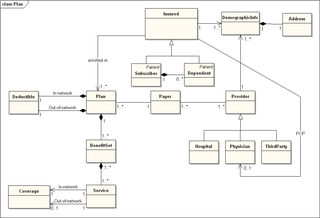
Metamodeling
it
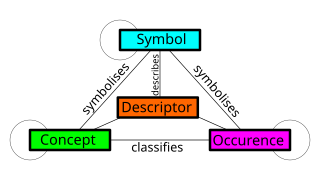
Compendium is a computer program and social science tool that facilitates the mapping and management of ideas and arguments.
compendium software
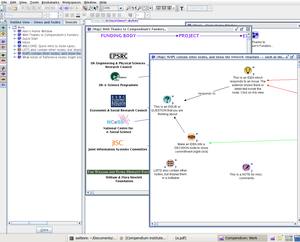
Gates led the company as chief exec
Aloha
Mechanism design studies solution concepts for a class of private-information games. Leonid Hurwicz explains that 'in a design problem, the goal function is the main "given", while the mechanism is the unknown. Therefore, the design problem is the "inverse" of traditional economic theory, which is typically devoted to the analysis of the performance of a given mechanism.'[1] So, two distinguishing features of these games are: that a game "designer" chooses the game structure rather than inheriting one that the designer is interested in the game's outcome
Advantages over traditional game theory for token econimics:
Hiya" redirects here
testing
ustralia, to expan
lkn.lm./lm
Japanese
hteajktydjtj
Jonathan Evans suggested dual process theory in 1975. In his theory, there are two distinct types of processes: heuristic processes and analytic processes. He suggested that during heuristic processes, an individual chooses which information is relevant to the current situation. Relevant information is then processed further whereas irrelevant information is not. Following the heuristic processes come analytic processes. During analytic processes, the relevant information that is chosen during the heuristic processes is then used to make judgments about the situation.
Journalists usually describe the organization or structure of a news story as an inverted pyramid. The essential and most interesting elements of a story are put at the beginning, with supporting information following in order of diminishing importance. This structure enables readers to stop reading at any point and still come away with the essence of a story.
Charney states that "an effective lead is a 'brief, sharp statement of the story's essential facts.'"[10][full citation needed][clarification needed] The lead is usually the first sentence, or in some cases the first two sentences, and is ideally 20–25 words in length. A lead must balance the ideal of maximum information conveyed with the constraint of the unreadability of a long sentence. This makes writing a lead an optimization problem, in which the goal is to articulate the most encompassing and interesting statement that a writer can make in one sentence, given the material with which he or she has to work. While a rule of thumb says the lead should answer most or all of the five Ws, few leads can fit all of these.
News stories also contain at least one of the following important characteristics relative to the intended audience: proximity, prominence, timeliness, human interest, oddity, or consequence.
News writing attempts to answer all the basic questions about any particular event—who, what, when, where and why (the Five Ws) and also often how—at the opening of the article. This form of structure is sometimes called the "inverted pyramid", to refer to the decreasing importance of information in subsequent paragraphs.
Thus mass collaboration is more refined and complex in its process and production on the level of collective engagement.
Modularity enables a mass of experiments to proceed in parallel, with different teams working on the same modules, each proposing different solutions. Modularity allows different "blocks" to be easily assembled, facilitating decentralised innovation that all fits together.
"When tasks require high coordination because the work is highly interdependent, having more contributors can increase process losses, reducing the effectiveness of the group below what individual members could optimally accomplish". Having a team too large the overall effectiveness may suffer even when the extra contributors increase the resources. In the end the overall costs from coordination might overwhelm other costs.
Games such as The Sims Series, and Second Life are designed to be non-linear and to depend on collective intelligence for expansion. This way of sharing is gradually evolving and influencing the mindset of the current and future generations.[117] For them, collective intelligence has become a norm.
The UNU open platform for "human swarming" (or "social swarming") establishes real-time closed-loop systems around groups of networked users molded after biological swarms, enabling human participants to behave as a unified collective intelligence.[140][141] When connected to UNU, groups of distributed users collectively answer questions and make predictions in real-time.[142] Early testing shows that human swarms can out-predict individuals.[140] In 2016, an UNU swarm was challenged by a reporter to predict the winners of the Kentucky Derby, and successfully picked the first four horses, in order, beating 540 to 1 odds.
Epistemic democratic theories refer to the capacity of the populace, either through deliberation or aggregation of knowledge, to track the truth and relies on mechanisms to synthesize and apply collective intelligence.
Research performed by Tapscott and Williams has provided a few examples of the benefits of collective intelligence to business:[38] Talent utilization At the rate technology is changing, no firm can fully keep up in the innovations needed to compete. Instead, smart firms are drawing on the power of mass collaboration to involve participation of the people they could not employ. This also helps generate continual interest in the firm in the form of those drawn to new idea creation as well as investment opportunities.[38] Demand creation Firms can create a new market for complementary goods by engaging in open source community. Firms also are able to expand into new fields that they previously would not have been able to without the addition of resources and collaboration from the community. This creates, as mentioned before, a new market for complementary goods for the products in said new fields.[38] Costs reduction Mass collaboration can help to reduce costs dramatically. Firms can release a specific software or product to be evaluated or debugged by online communities. The results will be more personal, robust and error-free products created in a short amount of time and costs. New ideas can also be generated and explored by collaboration of online communities creating opportunities for free R&D outside the confines of the company.[38]
In one high-profile example, a human swarm challenge by CBS Interactive to predict the Kentucky Derby. The swarm correctly predicted the first four horses, in order, defying 542–1 odds and turning a $20 bet into $10,800.
To address the problems of serialized aggregation of input among large-scale groups, recent advancements collective intelligence have worked to replace serialized votes, polls, and markets, with parallel systems such as "human swarms" modeled after synchronous swarms in nature.
While modern systems benefit from larger group size, the serialized process has been found to introduce substantial noise that distorts the collective output of the group. In one significant study of serialized collective intelligence, it was found that the first vote contributed to a serialized voting system can distort the final result by 34%
To accommodate this shift in scale, collective intelligence in large-scale groups been dominated by serialized polling processes such as aggregating up-votes, likes, and ratings over time
The idea of collective intelligence also forms the framework for contemporary democratic theories often referred to as epistemic democracy.
Condorcet, whose "jury theorem" states that if each member of a voting group is more likely than not to make a correct decision, the probability that the highest vote of the group is the correct decision increases with the number of members of the group (see Condorcet's jury theorem).
The basis and goal of collective intelligence is mutual recognition and enrichment of individuals rather than the cult of fetishized or hypostatized communities."
Collective intelligence (CI) is shared or group intelligence that emerges from the collaboration, collective efforts, and competition of many individuals and appears in consensus decision making.
An upper ontology (or foundation ontology) is a model of the common relations and objects that are generally applicable across a wide range of domain ontologies.
A domain ontology (or domain-specific ontology) represents concepts which belong to a part of the world, such as biology or politics.
At present, merging ontologies that are not developed from a common upper ontology is a largely manual process and therefore time-consuming and expensive.
When users can freely choose tags (creating a folksonomy, as opposed to selecting terms from a controlled vocabulary), the resulting metadata can include homonyms (the same tags used with different meanings) and synonyms (multiple tags for the same concept), which may lead to inappropriate connections between items and inefficient searches for information about a subject.
Tagging systems open to the public are also open to tag spam, in which people apply an excessive number of tags or unrelated tags to an item (such as a YouTube video) in order to attract viewers. This abuse can be mitigated using human or statistical identification of spam items.[48] The number of tags allowed may also be limited to reduce spam.