6,447 Matching Annotations
  1. Mar 2018
    1. the Hon. Mr. Brown and two other gentlemen representing the Liberal party of Upper Canada had entered, to address themselves to the preparation of a measure that would partake of a federal character as far as necessary with respect to local measures, while it would preserve the existing union in respect to measures common to all ; that they would endeavor, if necessary, to strike out a federal union for Canada alone, but that at the same time they would attempt, in considering a change in the Constitution of this country, to bring the Lower Provinces in under the same bond, as they were already under the same Sovereign. It was highly proper that, before touching the edifice of Government that had been raised in Canada they should address the statesmen of the Lower Provinces, and try to induce them to form a common system If it were found impossible to have a legislative union of all the British American Provinces, then they could reserve to the local governments of the several Provinces the control of such subjects as concerned them, while the rest should be committed to the cue of the General Government

      Preamble, §§. 91 and 92 of the Constitution Act, 1867.

    2. It was adopted by the Imperial Legislature with the view of remedying difficulties which then existed between the two Provinces. The inherent defect in the Imperial Act for the Union of the two Canadas was this : it attempted to combine the federal principle with unity of action. It endeavoured to give equal representation to the two sections of the Province, while it brought them together for the purpose of dealing as one with all subjects both (general and local,

      §§. 3 and 12 of the Union Act, 1840.

    3. Those claims were in themselves undoubtedly founded in justice— but at the same time there was great reason in the objections taken to them—they involved an interference with the Federal principle recognized in the Union Act, an interference which amounted to an entire change in the principles on which the Government of the country was to be administered, and could not be received otherwise than with dread by a large class, if not by the whole of the population of Lower Canada.

      §§. 3 and 12 of the Union Act, 1840.

    4. should have been a concession to Upper Canada, of additional members in proportion to its population, but that concession would, as be had already remarked, have been an invasion of the Federal principle, contained in the Union Act, and would unquestionably have been represented to the uttermost by a large proportion if not by the whole of Lower Canada.

      §§. 3 and 12 of the Union Act, 1840; §§. 51 and 52 of the Constitution Act, 1867.

    1. Describing the creation of Superorganism's songs, Orono Noguchi says, "It usually starts with us listening to music and talking about music, art, and all kinds of stuff in the kitchen. Then, one of us would come up with a very basic idea for a song. We'd then send the file back and forth among the group and add on some random ideas that we have. We'd keep working on it until we have a final product."[9] "We've got the guy making the videos downstairs, mixing in the other room, [and] singing going on [elsewhere]," Harry says in regards to their live-in studio. "We've created this kind of warped version of a pop production house."[1]
  2. Feb 2018
    1. The influence of the media on the psychosocial development of children is profound. Thus, it is important for physicians to discuss with parents their child’s exposure to media and to provide guidance on age-appropriate use of all media, including television, radio, music, video games and the Internet.The objectives of this statement are to explore the beneficial and harmful effects of media on children’s mental and physical health, and to identify how physicians can counsel patients and their families and promote the healthy use of the media in their communities.
    1. Bhí triúr mac agam a bhí oilte tóigthe,Cé gur ghearr an lón dhom iad, céad faraor géar;Mar d’fhág siad a máithrínn bhocht ag silt na ndeoraGach aon lá Domhnaigh is a bhris a  croí. Ní raibh suim ar bith agam ins an mac ba óige,Cé go mba deas an t-ógánach é Peadar fhéin;Ach an mac is sine acu sé a chráigh go mór mé‘Gus mí ní beo mé le cumha in do dhiaidh. Mo Pheadar muirneach a bhí oilte múinte‘S a chuaigh ar chúntar a bheith ní b’fhearr;Bhí gean na gcomharsan ort an fhad is bhí tú liomsa,‘S nach mba ait an cúntóir thú amuigh le Seán. ‘S tá súil agamsa go bhfaighidh tú umhlaíocht‘Gus pardún cumhachtach ó Rí na nGrást,A thabharfas abhaile agam sibh ó slán gan chontúirt,Mar is mór mo chumha-sa i ndiaidh mo mhaicín bán. ‘S dá bhfuil trua in Éirinn is mó ná mé anois I ndiaidh an chéad mhac a chráigh mo chroí ‘Gur ag guibhe Dé a bhím agus ag iarraidh déirce Mar scéal ní fhaighim uaibh ar mhuir ná ar tír. Is nuair a fheicim gach bean acu is a gclann fré chéileGo gcaillim mo radharc agus meabhair mo chinnIs tá deireadh mo sheanchais agus mo chomhrá déanta ‘S ní labhród aon smid go dté mé i gcill. Is nach mac gan cuntas thú anois dar liomsa Nach dtiocfadh ar cuairt agam d’oíche ná láGur chaith mé trí ráithe mhór ar fad go t’iomparAgus chuaigh mé i gcontúirt leat aon oíche amháin. Nach dtug mé scoil díbh  ‘gus beagán foghlaimGur d’léir mo chuntaíocht nach rinneas thar barrIs nach beag a ghoileanns mo ghalra dumhach ortNó fébí cúige ina mbíonn sibh ann. Cá bhfuil truaighe in Éirinn is mó ná mé anoisI ndiaidh an chéad mhac a chráigh mo chroíA  d’oil  go cneasta sibh   gan  guth   ná náireFuair bia  ‘gus anlann deas glas a chionn  Ach má’s sé an bás  a chlis orm agus a d’fhág faoi bhrón méMar is iomaí geall mór a chur mé i gcillGurb é an fortún deireanach a  bhí dhá bharr agamGur gheal mo cheann-sa agus dhubh mo chroí Is nach beag a ghoilleans mo ghalra dumhach ortIs a liachtaí brón mhór  dul fré mo chroíGur dtáinig an tinneas orm agus chaill mé móránIs níl luach mo chónra agam anois faraor. Ach ní hé sin is measa dhom ná d’fhág mé buartha Ach rinne mé an pósadh ar m’ais aríst,Gur bhain sé an chlann díom a bhí oilte tógtha‘Gus d’fhág muirín óg orm  ‘s mé go lag ina gcionn. Is dá bhfuil truaigh in Éirinn ach mac ‘gus máthairBheith ag goil le fána ar a chéile chóichínA chuaigh go Sasana in san Arm Gallda‘S gan fios a bpáighe ach beagán bia. 'S dá mba i mBaile na Cille agam a bheadh a gcnámhaNí bheinn chomh cráite ná a leath ina ndiaidh,Ach mo chúig chéad beannacht libh go Ríocht na nGrástaMar a bhfuil sé i ndán dhom sibh a fheiceáil choíchín.

      I had three songs, had them reared and taught, But their use to me did not last, They left their poor mother weeping Every Sunday, and break her heart The youngest son wasn’t the dearest to me, Even though he, Peadar, was a fine young man, It was the eldest son whose lost hurt me deepest, He has me nearly killed with sorrow

      My darling Peadar who was most polite, Who life to make a better life, Our neighbours loved you when you dwelt here, And you were the best of help when out with Seán

      I hope you’ll be greeted forgivingly, with a powerful pardon from God above, Who might bear you home to me, safe from danger, Because I sorely miss my baby son,

      And you are the heedless son, That won’t visit me by day or by night, After me carrying you for 9 months, And graving great danger to give birth to you, Didn’t I give you schooling and a bit of learning, But it seems now that I didn’t do well, My heartbreak concerns you little, Where you are

    1. Bhí aithne a’m is eolas ar sheanfhear sách dóighiúil‘Sé an áit a raibh cónaí air thíos ins an ngleann,Bhí sé i ndeis mhór ann, ‘s bhí eallach go leor aige,Airgead ‘s ór buí le cur ina cheann. Thóg sé suas comhairle bean óg a phósadh,Go gcoinneodh sí a chúrsaí seacht n-uaire ní b’fhearr,Ach ar maidin is tráthnóna bhí fearg is gruaim air Faoi eochair an trunc mar ní raibh sí le fáil. ‘S nach suarach an ní dhuitse bualadh faoi mhnaoi ar bith‘Gus fios ag do chroí istigh nach dtabharfaidh dhuit gráNuair nach mór é do ghnaoi ort nár fhága tú de shaol é ,Go bhfanfainnse taobh leat a sheanspleantair cam.’ ‘S nach dtug mé go leor dhuit, airgead ór buí,Báid bheaga, báid mhóra, capall is carr,Le nithe do dhóthain ’gus beatha mhaithe chóiriúilTogha leaba chlúmhaigh is cead codladh go sámh. Gach uile shórt eile dár chuir do chroí spóirt ann,Go fiú an parasól le tabhairt leat i do lámh,Capall nó pónaí le cur fút i gcónaí,Goil ag an aifreann Dé Domhnaigh dá dtográ a dhul ann. Dá dtabharfá an saol mór le n-ithe is le n-ól dom,Saibhreas Rí Sheoirse is ba mhór é le rá,Loingis faoi sheolta ‘gus cóistí ar bhóithrí,‘S b’fhearr liom fear óg ná thú, a sheanduine cam.’ Mar a nglacfaidh tú comhairle téirigh dhá thóraíocht,Cuir ort do chóta is do chlóca ar do bhráid.Bí ag na crosbhóithrí le theacht an tráthnóna,Is beidh seans ar fhear óg agat má bhíonn tú i bhfad ann. Is nuair a thiocfas an oíche ‘s nach bhfaigh tú aon dídean,Tosóidh tú ag caoineadh ‘s gan aon mhaith dhuit ann.Thabharfainnse an Bíobla, anois le glanfhírinne,Go mb’fhearr leat a bheith arís ag do sheanduine cam. ‘S nach suarach an tslí dhom mo shamhail de mhnaoi,Bheith ag caitheamh mo shaoil leat gan súgradh ná greann,Shá fhairsinge do shaol é Ghaillimh go Luimneach,Is a liachtaí sin Muimhneach i gCo. an Chláir. Dhá bhfaighinnse dídean timpeall na Saoirseacht,Ó d’fhéadfainn an geimhreadh seo a chaitheamh go sámhShasódh sé m’intinn ‘s ní bheadh briseadh croí orm,Ná a bheith sínte síos leatsa a sheanspleantair cham! Dhá mbeifeá chomh críonna ‘s ba chóir do bhean tí a bheith,Ó d’fhéadfá an geimhreadh seo a chaitheamh go sámh,Mar olann na gcaorach d’íocfadh sé an cíos dúinn,‘S an méid eile a bheith agat le cur faoi do láimh. Ach ní mar sin a bhí tú ach lán de dhroch smaointe,Mar is iomaí sin intinn a thagann do mhná,Tá mé ríchinnte dá mbeifeá sách críonna,Go mb’fhearr leat a bheith arís ag do sheanduine cam!

      I was well acquainted with a well-off old man, And his place of dwelling was down in the glen He was well propertied, with plenty of livestock, And silver and gold to go along with it

      He took the advice that he should marry a young woman, As she’d look after his house much better than he, But by morning and night she was cross and upset, About the key to the trunk which was not to be found

      Isn’t it a pitiful case, that you’d approach any woman, When you know in your heart you couldn’t be loved, Amn’t I kind to you, that you’d ever be so lucky, That I’d stay by your side you crooked old wretch

      Didn’t I give you much, silver and gold, Small boats and big ones, a horse and cart, Your fill of fine things, and of good hearty good, A fine bed of feathers, where you sleep at your ease

      If you gave me the world, and all it has to eat and drink, All the wealth of King George which is known to be grand, A fleet under fine sail and coaches under the road, I’d rather have a young man than you, you old wretch

      If you can’t see sense, go find your young man Put on your coat, and your cloak round your neck, Be at the crossroad when evening comes, And you’ll get yourself a young man if you wait long enough

      If I could find shelter somewhere in the Liberties Oh how happily I’d spend winter there It would gladden my mind, and not at all break my heart Like it does to lie with you, you old wretch

    1. Singers

      The recordings in the archive are drawn from the TG4 programmes ‘Abair Amhrán’, ‘Amhrán is Ansa Liom’, and ‘Sean-Nós’, as well as their broadcasting of the singing competitions of the annual An tOireachtas festival. Virtually all singers of unaccompanied song in Irish, practicing at any point over the past 110 years, are included in the archive’s recordings. Representation of different regions of origin, age groups, and themes of song is highly diverse.

    1. In a way the Beat Generation is a gathering together of all the available mod- els and myths of freedom in America that had existed before, namely: Whit- man, John Muir, Thoreau, and the American bum. We put them together and opened them out again, and it becomes like a literary motif, and then we added some Buddhism to it. - Gary Snyde

      This is a good quote and raises two ideas:

      • Gary Snyder is a very interesting member of the Beat Generation when considering Beat Spirituality because in his explicit involvement in Buddhist practice. His depiction in Kerouac's The Dharma Bums is also revealing of his character and significance in the movement.
      • Buddhism mixes, in the Beat Generation, with ideas of freedom (one of the all-times American values). As I want to consider how the Beats reacted to the American values of mid-century society, it is interesting to consider how they personally understood the ideal of freedom. Buddhism is one of the ways in which they re-invented it and connects to freedom from the ego, or the self. Other writers, for instance William Burroughs, considered freedom in more institutional/political ways (see his book Naked Lunch).
    1. or

      "I have, in the following little volume, collected a few of these, the Love-Songs of a single province merely, which I either took down in each county of Connacht from the lips of the Irish-speaking peasantry - a class which is disappearing with most alarming rapidity - or extracted from MSS, in my own possession, or from some lent to me, made by different scribes during this century, or which I came upon while examining the piles of modern manuscript Gaelic literature that have found their last resting-place on the shelves of the Royal Irish Academy." (iv)

      The way Hyde makes reference to sources is casual and non-specific. It would be difficult for a reader to access his sources. Because we have such little insight, it is important to be alert to potential biases in the collecting and editing process.

      If we can identify consistencies among the anthologized songs in terms of their depiction of love and lovers, and/or among songs which are excluded from the anthology, we will have reason to regard the very partial disclosure of sources with suspicion.

      As I have already noted, part of Hyde’s project is to bring the reader into contact with language which has an ‘unbounded’ power to excite the Irish Muse. Perhaps part of the way he contrives this encounter is to control the kind of subject matter that will appear to the reader as that which occurs most naturally in the Irish language.

    2. Abhráin

      The formatting of e-books on Internet Archive does not allow hypothesis.is users to annotate the books’ text. In annotating Hyde’s Love Songs of Connacht for the EN6009 Annotate-A-Thon, I have attached annotations to the text beneath the scanned images. Extracts and corresponding page numbers are placed at the beginning of each annotation, in order to properly contextualize my responses.

    1. In today's 24/7 media environment, in which kids may be spending more time with media than they are with their parents, choosing positive role models is more important than ever. By the time kids are in middle school, they start to look to their peers for a sense of what's socially acceptable or desirable. Parents may remain the primary influence in their kids' lives, but the competition starts to get fierce at this age. This separation is entirely age appropriate. But when the media comes into play, the values you want to pass down to your kids may be competing against, say, Homer Simpson's.
    2. The good news is that there are plenty of positive role models you can point to that may influence your kids to make healthy choices, learn to respect others, achieve goals, and avoid anti-social behavior. Negative role models -- especially ones who don't suffer consequences for their actions -- can encourage anti-social behavior, stereotypes, and even cruelty. Help your kids choose positive media role models who embody the values you want to pass down. Tips for parents of young kid
    3. Influencers reach out to kids via TV, YouTube, video games, Twitter, and music -- all of which are broadcast or easily accessible 24 hours a day. And as we all know, not all the characters or people who gain popularity through these channels have stellar role-model credentials.
    1. Unlike The Waste Land, Moulin Rouge!’s allusions are only rarely critical; the closest it comes to social commentary is in the use of Nirvana’s dark hymn to the ennui of consumerism, ‘Smells Like Teen Spirit,’ as the Moulin Rouge’s rich male customers enter the club.

      What are the functions allusion besides layering? I think there is something important about the critical function that occurs in this use of allusion. Fitzgerald was a moralist describing the evils of capitalism and American society, so the use of Trimalchio as Gatsby is a critical allusion.

    2. lthough less obviously ‘difficult’ than The Waste Land, Moulin Rouge!makes effective use of the dense layering effect allusion allows.This complex layering is put into the service of a simple, melodramatic love story, rather than a meditation on the spiritual aridity of modern life. Moulin Rouge!’s innocent, sentimental celebration of love could, in fact, be read as Luhrmann’s response the kind of dislocation Eliot portrays in The Waste Land.

      I really find this argument fascinating. The "less obviously difficult" perspective as it relates to many works that have been in-part inspired by The Waste Land. I like the idea of nuanced allusion, you don't necessarily need to know all the allusion to understand the storyline. This manifests itself well in works with more plot-based writing. The novel or cinema might be better at achieving the "less obviously difficult" allusion because it has a strong narrative already. The allusion comes alongside of it, or in the case of Moulin Rouge, the allusions are a part of the pop culture the audience is already familiar with.

    3. Allusive works are also prey to allegations of plagiarism at worst, and lack of originality at best. Eliot commented that one justification for including the notes to The Waste Landwas to counter the accusations of plagiarism that had greeted his earlier, heavily allusive poems.45Such accusations show a basic misunderstanding of the nature ofallusion. Plagiarism, unlike allusion, seeks to be invisible and undiscovered, and furthermore, it does not attempt to create any tensions of meaning between the old and new usage of the plagiarized materials.

      William Carlos Williams criticism of The Waste Land-- "copyist tendencies," and "the traditions of plagiarism." from Spring and All. A common criticism.

    4. In this sense, allusion and other intertextual references ‘should be distinguished from the customary rhetorical situation in which texts are considered by artists and audience alike to be mimetic analogs or representations of real-life people, places, or things.’31By drawing attention to itself, intruding on the conventional narrative flow, systematically deployed allusion continually reminds audiences that they are dealing with an artificial construct.

      Naturalism and allusion don't coincide. The Great Gatsby may be an example of this missing reality-- a sort of artificial construct of Fitzgerald's imagination with dramatic, over-top descriptions of gatsby as Trimalchio in his mansion that looks like "the world's fair." https://www.enotes.com/homework-help/chapter-5-begins-with-nick-observing-gatsys-house-436789

    5. For allusion to operate at all, the author and the reader must have a shared pool ofpoetic memory on which to draw,25and the author assumes a (possibly nonexistent) knowledgeable reader when engaging in allusion.26Conte goes so far as to suggest that the author ‘establishes the competence of his (or her) own Model Reader, that is, the author constructs the addressee and motivates the text in order to do so,’27

      what if there is not a Model Reader? Can the audience not be aware of the allusion? In that case, the new works have to create new meanings. In connecting The Waste Land to modern audiences, are there ways to "establish competency" in a visual scene that the page would not be able to do?

  3. Jan 2018
    1. Our fellow citizens, too, who in proportion to their love of liberty keep a steady eye upon the means of sustaining it, do not require to be reminded of the duty they owe to themselves to remedy all essential defects in so vital a part of their system. While they are sensible that every evil attendant upon its operation is not necessarily indicative of a bad organization, but may proceed from temporary causes, yet the habitual presence, or even a single instance, of evils which can be clearly traced to an organic defect will not, I trust, be over-looked through a too scrupulous veneration for the work of their ancestors. The Constitution was an experiment committed to the virtue and intelligence of the great mass of our country-men, in whose ranks the framers of it themselves were to perform the part of patriotic observation and scrutiny, and if they have passed from the stage of existence with an increased confidence in its general adaptation to our condition we should learn from authority so high the duty of fortifying the points in it which time proves to be exposed rather than be deterred from approaching them by the suggestions of fear or the dictates of misplaced reverence.

      Jackson's argument for amending the Constitution. What's important to him (or anyone): the end goal (in this case, changing the VP election law) or the supporting logic (the Founders understood their imperfection and so provided ways to rectify structural problems).

  4. Dec 2017
    1. Irwin Consulting Services Review - How to ensure household safety during the holiday season

      Many of us are really looking forward to the holiday season because it is the time when people are diligent in filling their houses with holiday decorations, preparing gifts, searching online for more delicious recipes, and a lot more activities related to this season. It is indeed the time of the year for enjoyment, sharing, giving, and loving together with your family and friends.

      However, despite all the positive things we’re expecting to this season, accidents could still happen. This season also includes the challenge of the cold weather. And because people would like to experience more warmth, others sometimes misuse heaters and electric blankets and cause accidents on warm fireplaces. Irwin Consulting Services, a consulting company that is committed to public safety, prepared some important thoughts below that could help you maintain the safety of your whole family during this holiday season.

      It is necessary to exercise proper care and caution during this season to avoid kitchen fires, electrical fires, and fires caused by flammable objects placed too close to heat sources. You can prevent kitchen fires by being focused and careful while you’re cooking. Cooking requires constant attention so don’t let anything distract you while preparing food for your family to avoid any accidents. Keep everything in order and don’t cook a lot of dishes at the same time since it could lead to disarray. Never bring outdoor grills inside your home because it could be very dangerous.

      Live Christmas trees were often the choice for many households because it provides a fresh feeling and of course an enchanting appearance, but this can be the largest fire hazard in a home. Keep it watered every day and ensure that it can absorb water up to its trunk. Decorative lights on the tree must be labeled for indoor use and were approved for its safe use through a UL listing. As said earlier, fire accidents can be a possibility with this kind of tree, so make sure to install it in a spot away from fireplaces and space heaters. Make a clear path leading to exit doors as well. Do not put live candles on live trees to prevent ignition of a fire. Irwin Consulting Services would also like you to make it a habit to turn off and unplug the decorative lights whenever your family goes outside or is going to bed.

      Children should not also play with decorative candles, so as much as possible put those in places that are out of reach of your small kids. Organizing decorative lights should be done with a careful process to ensure a proper electrical wiring. Instead of nails, hang decorative lights using plastic clips to prevent accidents of nails penetrating through the wirings and result in shorts. Check the conditions of each string of wire and confirm if all are safe to use to avoid overloads and faulty wirings. You must not plug one extension cord to another extension cord because this can lead to voltage drop and overheat, so be extra careful in using such cords. Both indoor and outdoor lightings are much safer if connected through power strips. Other important things to remember include making sure that the smoke alarms in your house were in good condition and working properly, and that the fire extinguishers were in easy to reach places. It is also advised to buy weather alert radios so consider it as well.

      Don’t forget to put a grate or screen in front of the fireplace and see to it that the chimney flue was properly cleaned. Avoid putting stockings and other holiday decorations close to a lit fireplace. The Christmas tree and the pile of gifts should be gathered in one safe place that is away from the fireplace.

      Make creating a good escape plan a priority as well and once you’re done with it, discuss it with your family and if you will be having a lot of visitors this holiday season, brief it to them. The path leading to your doors should not be compiled with huge furniture and decorations to avoid hindrance and blockage in case of emergencies. To guarantee a safe use of heat in your house, ensure that your gas lines were checked by professionals. Fire extinguishers should be available in your home and must be charged. Smoke alarms and carbon monoxide detectors were also a necessity to assure the safety of the entire family. Choose space heaters with tip-over switches and put them in a safe spot with no flammable materials near to it. You must not bring outdoor heaters inside for indoor heating; materials meant for outside use should remain there.

      Irwin Consulting Services wanted you to spend the holiday season with your friends and loved ones with a big smile on your face and peace in your heart. Enjoy this season with no worries in keeping your whole family safe by making proper preparations and following the instructions of professionals and the local authorities.
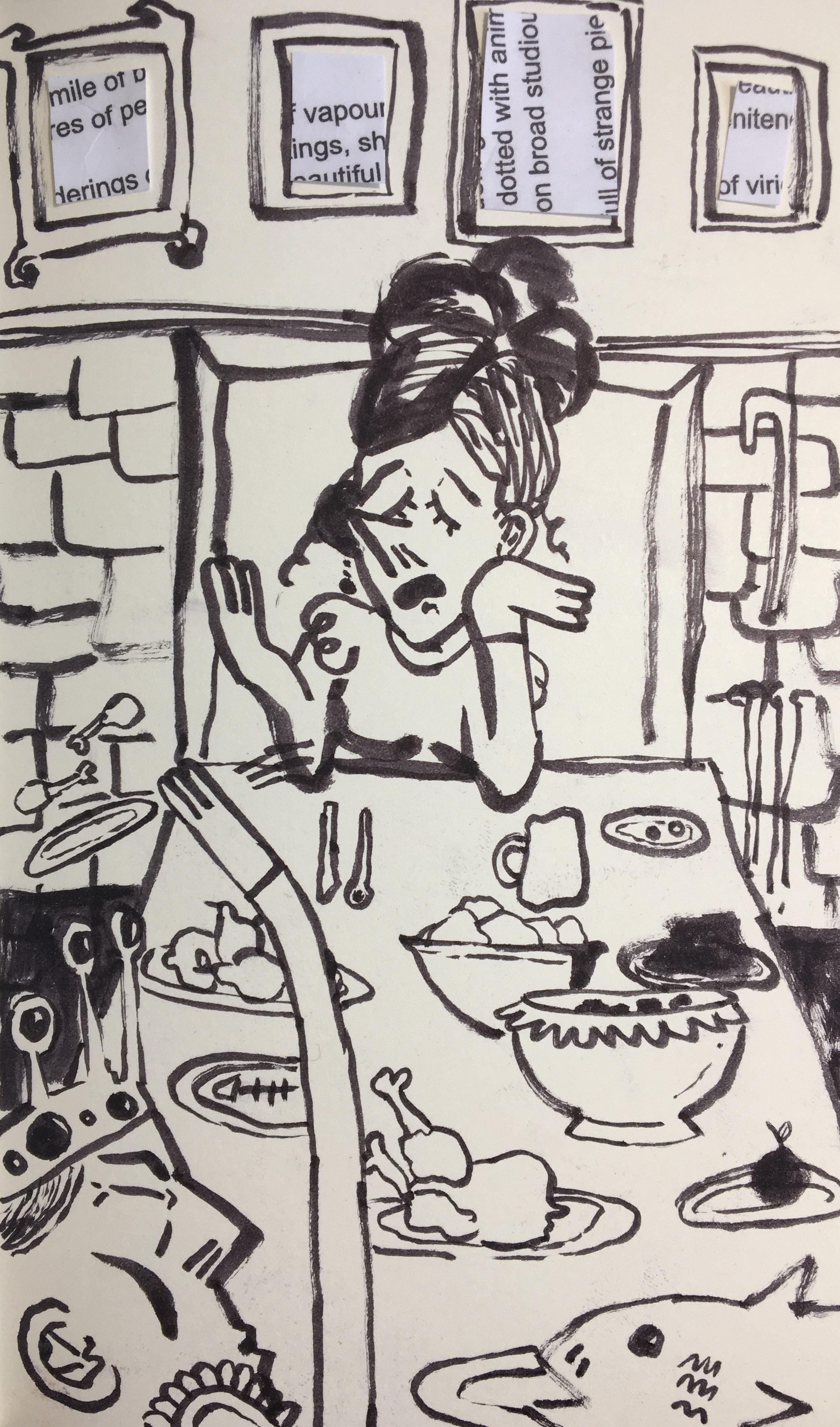
  5. Nov 2017
    1. History

      Increase in use of telecommunications seems a little unnecessary to be featured in the timeline and is also a little confusing with the layout of the timeline since it's a large period of time to cover, whereas other items are more like moments in time.

    1. The Association of Southeast Asian Nations, or ASEAN, was established on 8 August 1967 in Bangkok, Thailand, with the signing of the ASEAN Declaration (Bangkok Declaration) by the Founding Fathers of ASEAN, namely Indonesia, Malaysia, Philippines, Singapore and Thailand.
    1. These are the objects of that higher grade of education

      While so much of UVA's aims as a university has changed since this writing, I feel that the objectives (referred to in the document as "objects") remain today. These goals are essentially to transform the students into the best versions of themselves, both for themselves and their community, and I think UVA still does this today. The objectives taken in the context of the time of the writing, however, changes not so much the meaning of the objects, but the gross, cruel, senseless exclusivity of them, pertaining to only white men. As we have discussed in my class, Telling the Truth, the historical context can greatly alter the complete truth of something. I feel that these objects today are true as we read these differently from the writers of the RFGR, specifically we include all races and genders in the definition of words such as citizen and equal, and we see these groups as people with rights as well. While the objects have not changed themselves, their exclusivity has, so in that sense they remain as true to part of the schools basic principles and goals. -Drew Parks

    2. a sound spirit of legislation, which banishing all arbitrary & unnecessary restraint on individual action shall leave us free to do whatever does not violate the equal rights of another.

      I think all would agree that this kind of legislature, being implemented with the aim of promoting freedom and the equal rights of one another, is for the best, yet this idea holds a fair amount of hypocrisy in the time of this documents writing. As they set the foundations of UVA in the ideology of freedom and equality they simultaneously have slaves constructing the grounds. I also picked this quote because I thought it related to my current engagement class, Telling the Truth, where we analyze the interplay between the beauty of a medium of information and the truth. Metaphors comparing this legislature to "a sound spirit" evokes a wholesome mood, yet this beautiful writing in a way hides the deep flaws and hypocritical nature of this statement which claims to establish equality. -Drew Parks

    3. In entering on this field, the commissioners are aware that they have to encounter much difference of opinion as to the extent which it is expedient that this institution should occupy.

      There are indeed many oppositions to anything. And of course a lot to this important issue of establishing a university. It is rather interesting to see in this report some of the rooted mindsets and values that used to be the norm for the society. Things like the uselessness of learned science and dispute over private and public education are really different from what we currently hold true: we currently value heavily on science and applied science. These differences show the trace of evolution in our society, either in a good or a bad way. It is the most important information we can get—the background knowledge that set the tongue for the past views or opinions. Moreover, since this university was erected in the long history, values or visions have been changing and need to continuously change to follow the globe. Otherwise, we will fall behind and lose our competitiveness as a global force. -- Haoyu Li

  6. www.torrancelearning.com www.torrancelearning.com
    1. xAPI and Next Generation Learning Get the right data about the learning experience and its impact on performance. We’re among the early adopters and leaders in the Experience API (xAPI) and its application in performance & analytics. As winners of the xAPI Hyperdrive, eLearning Guild Demofest and Brandon Hall Awards with our xAPI-based solutions, we’re inspiring others with fresh thinking. As hosts of the xAPI Learning Cohort we’re supporting hundreds of pioneers and experimenters in learning and working with the xAPI.
    1. We need to provide useful guidance. We need to point students in those directions where we think that they can be successful, by suggesting applications they should install and use, by offering ideas of what elements to include on their sites, by providing feedback as they explore their own digital presence, but after that we need to be able to step back and get out of the way.

      Part of the reason it can be so difficult to step back is that students really expect us not to do so.

    1. To support text and data mining as a standard and essential tool for research, the UK should move towards establishing by default that for published research the right to read is also the right to mine data, where that does not result in products that substitute for the original works. Government should include potential uses of data for AI when assessing how to support for text and data mining.
  7. Oct 2017
    1. it also turns out that neural networks and data mining in general are really good at reinforcing the prejudices of their programmers, and embedding them in hardware. Here's a racist hand dryer — it's proximity sensor simply doesn't work on dark skin! Engineers with untested assumptions about the human subjects of their machines can wreak havoc.)

      racism? in my algorithms because of the biases of the people who designed them? it's more likely than you think.

    1. In fact, members of the Long Now would have me say that it was founded in the year 01996, a way of writing dates that presently accommodates a further 97,985 years. To put this into perspective—50,000 years before the Long Now runs out of digits, Niagara Falls will have eroded its remaining 32 kilometers to Lake Erie. That communion will occur a full 30,000 years after, according to one lexico-statistical model, the point at which human languages will have retained only one percent of their present-day words. By the time the Long Now has a Y100k problem, the constellations you recognize will be gone from the sky. I lay this out to make the point that Long Now folks embed a puckishly provocative optimism in everything they do.

      Is it just me, or am I detecting an underlying disdain from the author towards The Long Now Foundation? If so, I would not blame her as the beliefs The Long Now hold appear surreal and unbelievable to me. I was unaware that their was a group that held such views.

    2. DHers peer with microscopes and macroscopes, looking into things we cannot see. And even while we delight in building the shiny and the new—and come to meetings like this to celebrate and share and advance that work—we know that someone, sooner or later, curates bits against our ruins.1

      Yes, but in a wider sense is that not the transience of life and that within in? There is a beginning, middle and an end. In the future, our present will be their past, their history. Is there not hope in the fact that if we as DHrs begin this process of peering, analysing, recording and curating now that this process lives on in the future generation of DHrs who will curate our work, our ruins?

    1. Someone might tell you that Plymouth, New Hampshire only has a handful of violent crimes per year. They might also tell you that NYC has thousands more violent crimes per year. That makes Plymouth sounds so much safer, but in order to know for sure, we have to set the numbers into context, asking how many crimes per capita (or per person) each location has. Small pieces of information (such as how many children in a certain school go without breakfast each morning) are more illuminating if they are presented in relationship to other pieces of information (such as the poverty level of the town, the subsidized meal programs at the school, the start time of the school day, the funding formula for the school district, etc.).

      Statistics in developing questions and solutions is a time-consuming, but rewarding process if done with the right intent and with careful monitoring of the process to ensure a lack of bias. People don't know this, but it is incredibly easy to lie with stats and never really be caught without going over the details with a fine tooth comb, as often the data is presented with a limited amount of background information. Critical thought is needed in interpreting information presented so as to understand what is being shown and if it properly matches the needs of what is being asked.

    1. Education generates habits of application, order and the love of virtue; and controuls, by the force of habit, any innate obliquities in our moral organization.

      This is an interesting quote as it made me question how education generates habits of application? Is this implying that students of the University of Virginia will provide structure for future generations? “Habits of application” connotes that students will become ambitious, rather than waiting around for change, they will implement it themself. This task can often seem impossibly challenging in today’s times, however it is interesting to see how UVA’s mission was to generate powerful students since it’s creation. The “order and love of virtue” mentioned in this quote shows that education must be driven by passion. Jefferson’s entire perspective of his University was for it to be a center for lifelong learners as education should not have a limit. To lack passion is to be ignorant as there is no point to be informed without any desire or intent supporting it. Another question I had was whether the “moral organization” of society is pointing to the idea/conclusion that everyone should think in the same way? It is important to have a wide range of varying opinions; changes within societal culture and norms do not change without this element. How can there be “habits of application” if everyone is under one “moral organization”? This statement seems to contradict itself as they are developing students who will potentially change and challenge the moral organization of our society. Perhaps this was the point all along. My Doing Fieldwork engagement has taught me to look at each person as their own system, so it is interesting to see how each of our individual systems are supposed to conform to a single ideal and organization within our American society (not even considering all of the standards from the rest of the world).

    2. It was the degree of centrality to the white population of the state which alone then constituted the important point of comparison between these places

      This was really unsettling for me read. Proximity to the most white people is the one criteria that made the difference in where the University's location was chosen. If Charlottesville hadn't been most central to the white population of Virginia, UVa would be located in Lexington or in Staunton. Its definitely not a good thing that our school was centered around pleasing only the white race before our grounds were even built. I can't imagine how different our grounds would be and our university if another place had been more convenient for white people. UVa certainly has a racist past and I think most of us, if not all, are aware of that but I still couldn't believe that such a racist criteria is the reason the school exists where it does today and is the way Uva is today.

      • Becca Meaney
    3. We should be far too from the discouraging persuasion, that man is fixed, by the law of his nature, at a given point: that his improvement is a chimæra, and the hope delusive of rendering ourselves wiser, happier or better than our forefathers were.

      This phrase reflects Thomas Jefferson's vision for the manner in which the University would educate its students. He believed that the value of higher education was that it allowed the individual to reflect on their personal vices, prejudices, and perspectives to strive for personal improvement. Similarly, In his novel, The Myth of Individualism, Peter Callero writes, "Our educational institutions from grade school to college are structured to enhance individual achievement in a competitive system of evaluation." In this way, Callero reveals Jefferson's motivation for an individualistic student, and subsequently an individualistic society. This notion is the foundation for a contemporary, highly individualistic society.

    4. To enlighten them with mathematical and physical sciences which advance the arts & administer to the health, the subsistence & comforts of human life:

      This quote really highlights the warmthness the arts bring in accordance with the kinds of truths the mathematical and physical sciences bring. Our world thrives off of the marriage between the two. A simple example would be a garden sheer. We need the sheer to trim hedges and plants. The handles would have to be long enough to create enough torque to cut foliage. However, a focus on art and design further advances the tool by including finger grooves in the handles for better grip. Art and design also determine how pointy the sheers are. Sloped triangular tips cut more aerodynamically than just two crude rectangles. With this, we see how intertwined the mathematical and physical sciences are with the arts, working in unison to create ease and comfort in life. Fully realized, the garden sheer makes cutting easy for us.

    5. Education, in like manner engrafts a new man on the native stock, & improves what in his nature was vicious & perverse, into qualities of virtue and social worth; and it cannot be but that each generation succeeding to the knowledge acquired by all those who preceded it, adding to it their own acquisitions & discoveries, and handing the mass down for successive & constant accumulation, must advance the knowledge & well-being of mankind:

      I found this quote interesting because it refers only to white men and how they can attain virtue and social worth from education but people of other races and backgrounds cannot. This reminds me of an article that I read in my engagement class about affirmative action because the minorities were pushing for equal treatment and the opportunity to learn and receive the benefits that education would give them. The author of the article, Richard Rodriguez, was not underprivileged as a kid because he could afford education, so he did not identify with the rest of the minorities because he claimed that have the opportunity to receive an education automatically makes you not a minority. His claim relates to this quote because he sees education as a privilege that brings you up in the world because it gives you virtue and many benefits. In the modern society, people of all races and backgrounds can reap the benefits of education and knowledge, not just white men, and they are able to pass on their knowledge to future generations. It is interesting to see how far society has come in who can receive education and what education can do for everyone in the world.

    6. To give to every citizen the information he needs for the transaction of his own business. To enable him to calculate for himself, and to express & preserve his ideas, his contracts & accounts in writing. To improve by reading, his morals and faculties. To understand his duties to his neighbours, & country, and to discharge with competence the functions confided to him by either. To know his rights; to exercise with order & justice those he retains; to choose with discretion the fiduciaries of those he delegates; and to notice their conduct with diligence with candor & judgment. And, in general, to observe with intelligence & faithfulness all the social relations under which he shall be placed.

      This entire excerpt of objectives represents a very strong dichotomy between the Jefferson viewpoint on equality (i.e all men are born equal) and the early goals of the University; it is so clearly stated that UVa should teach men to know their rights and freedoms while expanding their intellectual horizons (in addition to being able to defend all these notions) but these exact points are what are explicitly denied to the minority population at this time. This is very profound because it is not as though people in this era did not consider the importance of rights, liberties, and equality- it is the stark inability of these same people to impose those ideas onto the very people who needed them the most (minorities). While many abolitionists and suffragists later on argued for equality and education for all, it is important to note that these ideas did not just gloss over the white elite mindset, rather it was a conscious denial of basic rights that really enforces the true foundation of this university

      Muhammad Amjad

  8. Sep 2017
    1. the benefits & blessings of which the legislature now propose to provide for the good

      The authors of the Rockfish Gap Report affirm that religious worship is not conducive to a truly liberal arts education, going so far as to propose "no professor of Divinity." Yet religious language is smatter throughout the document (such as "blessings," "faithfulness," and "religious worship.") In the Virginia Statue for Religious Freedom which Thomas Jefferson also drafted, it is written,"all men shall be free to profess, and by argument to maintain, their opinions in matters of religion, and that the same shall in no wise diminish, enlarge, or affect their civil capacities." In this way, the assertions of both texts are consistent, but the biases of the authors are apparent in their use of religious language. This demonstrates that a collective view of what a society should be is not necessarily reflected in individual beliefs.

    2. Medicine, when fully taught, is usually subdivided into several professorships, but this cannot well be without the accessory of an hospital, where the student can have the benefit of attending clinical lectures & of assisting at operations of surgery. With this accessory, the seat of our university is not yet prepared, either by its population, or by the numbers of poor, who would leave their own houses, and accept of the charities of an hospital.

      This passage foreshadows that eventually the University will further progress their medicine program but at this time and place do not have the resources to do so because they don't have a hospital in which students can study and gain clinical experience. I think it is very interesting in just 200 years since the beginning of the University how much the medicine program has flourished with the building of the UVA hospital, which is the number one hospital in the state of Virginia. Starting out, the medicine program only taught so many classes and now the medical program is thriving and attracts many different, diverse people from every walk of life. Now, I would like to focus on the second sentence specifically because I find it quite engaging and interesting that the authors of the Rockfish Gap Report thought that a hospital would attract numbers of poor because they would leave their own houses to accept the charities of a hospital. I feel many people, especially older generations, still have this belief that people in poverty take advantage of the charities of a hospital. I for one know that it happens at times because I've seen it happen before firsthand working and shadowing in an emergency room, but honestly it's not that people are taking advantage of the charities of a hospital as they state here, but instead a lot of people in poverty don't have good health, and don't have good healthcare insurance, so their only way to get good health care is by going to an emergency room at a hospital. I for one am a huge advocate for providing good health care for people in poverty because I believe a lot stems from having good healthcare. If you're healthy, you have chance to make your life better by looking for a job and making a living, but if your'e sick, like a lot of people in poverty are it's hard to do that, which is why so many people in poverty flock to places like emergency rooms when they are sick and not healthy. I think that the same thing would have happened had there been a hospital open in the community at the time the University opened. Poor people would have gone to the hospital and accepted the charities of it, but not because they were taking advantage, they would have gone because it's their only means of getting good healthcare. -Emily McClung

    3. To develope the reasoning faculties of our youth, enlarge their minds cultivate their morals, & instil into them the precepts of virtue & order

      I find it interesting that the University made it a goal to cultivate the morals of the students attending their school. They also stress how they want to instill the precepts of virtue and order. They want to achieve this, yet they based the location of their school to be around the centrality of the white population. I do not believe this is cultivating the morals of their students. This is narrowing their viewpoints, and not expanding on the multitude of cultures that lie within the United States.

    4. Education, in like manner engrafts a new man on the native stock, & improves what in his nature was vicious & perverse, into qualities of virtue and social worth; and it cannot be but that each generation succeeding to the knowledge acquired by all those who preceded it, adding to it their own acquisitions & discoveries, and handing the mass down for successive & constant accumulation, must advance the knowledge & well-being of mankind: not infinitely, as some have said, but indefinitely, and to a term which no one can fix or foresee. Indeed we need look back only half a century, to times which many now living remember well, and see the wonderful advances in the sciences & arts which have been made within that period.

      I found this particular quotation particularly interesting because of the amount of irony and hypocrisy that it is riddled with. It speaks of the importance of education to create "a new man", however we know that this new man is of only a light skin color and most likely a slave-owner, not to mention the exclusion of women. Moreover, in my engagement Making the Invisible Visible, a key focal point is that what is unwritten is often just as important as what's written. Here, in the mentioning of the fact that education is better for the "well-being of mankind", it is implied that solely educating the white male slave owners will be progressive to civilization because of newfound knowledge that will be entrusted with them. As such, in mentioning that education is meant to be passed down to successive generations, the unwritten irony is in the fact that increasingly only a smaller amount of the entire population will be educated because of the ratio to the enslaved people population to the non-enslaved people population. This quotation shows the naive yet justified mindset of the elite class in education administration and society as a whole in the early 19th century America.

      • Muhammad Amjad
    5. This doctrine is the genuine fruit of the alliance between church and State,

      I think it is interesting how this sentence describes that the Rockfish Gap Report is "is the genuine fruit in the alliance between church and State" because explicitly in the report the writers state that they won't offer any divinity classes at the University as it is starting out, and I think that this sentence is a contradiction of that statement. The University was built with a library ( the Rotunda) at the heart of it because they wanted to dissociate away from religion, and put knowledge first. So why then, can the Rockfish Gap Report be the genuine fruit in the alliance between church and State, when the vision when opening this University was to put knowledge at the center, and not church and religion? Therefore, in theory if knowledge was supposed to be at the center, I'm interested as to why there is such a glaring contradictory sentence. I think this contradictory shows that the writers of the Rockfish Gap Report had varying beliefs and that came across in the report. To relate, this back to my course that I'm taking called making the Invisible Visible, I think this sentence makes "visible" the invisible varying beliefs of the writers of the Rockfish Gap Report. -Emily McClung

    6. The tender age at which this part of education commences, generaly about the tenth year, would weigh heavily with parents in sending their sons to a school so distant as the Central establishment would be from most of them

      The University set out a goal for the parents of young boys to begin their studies of the ancient languages at the year of age ten. This is an extremely young age, considering that the boys would be going to college eight years later. The minds of the young boys seem to be too young to be able to grasp this form of art. This correlates to my Engagement, Art Inside/Out, by focusing on the art aspect. Latin, Greek, and Hebrew are forms of art in the language aspect. This piece of art is powerful and intriguing; however, it may be too complex for the minds of ten year olds who are still trying to develop.

    1. Someone had to do a better job of explaining to citizens that they were in danger of losing rights they didn't know they possessed.

      This makes me think of Mark Zuckerberg's claim that Internet connectivity is a human right. What do statements like this mean to people who aren't already technologically literate? I have grown up alongside the modern Internet and I still don't understand such a statement. It feels like there is a steep hierarchy of access to information about how to use computers in beneficial ways. Those with a college education in computer science, an already privileged group, are positioned at a further advantage because of their increased control of online resources.

    1. You use the services and contents of the magazine or television network (or online service) to draw a large population of users, who give you detailed information about their demographics, and then you sell access to those users to advertisers

      ... and, what FB does

    1. I'm not so sure myself anymore that tapping away on a keyboard and staring at a screen all day by necessity is "progress" compared to chopping logs and raising beans all day by necessity.

      Ah, THIS highlights a common discussion among IC people.

    2. Hierarchy in the Usenet sense means not a chain of command but a way of simplifying large complex groups of information by branching them as subcategories of fundamental categories. For example, here is how the rec.auto hierarchy works:

      Note the similarity to how Reddit is organized.

    3. They were surprised at how hungry people were for all kinds of conversations on a worldwide basis, once they caught on to this strange new idea of a conversation in text that floated from campus to campus around the globe.

      How has the evolution of online communities been shaped by the fact that the "product" of the earliest communities, the thing they "grew," was conversation? Correspondingly, what role has conversation played in the development of geolocated communities? How are utopian visions and speech connected to one another?

    1. more information became available to me than I could handle in a hundred lifetimes.

      Also mind boggling, and perhaps the main thing that separates Paul and I from the rest of you. When we were in college, we didn't have this access. Now you do. The best fictional account of this is the novel Snowcrash, by Neal Stephenson. I highly recommend it.

    2. Another Net visionary by the name of Brewster Kahle conceived of a powerful text-finder that will literally hunt through hundreds of databases and libraries on the Net for text that contains specific information. The tool, developed jointly by Kahle and Dow Jones, Thinking Machines, Apple Computer, and KPMC Peat Marwick, is freely available to Net users as WAIS--Wide Area Information Servers

      Brewster Kahle is also the founder of the Internet Archive.

    3. If they control the conduits for information, the fiber-optic networks and high-speed routers, and they also compete to provide commercial services through that conduit, what effect will that have on their smaller competitors?

      The essence of the net-neutrality question.

  9. Aug 2017
    1. The Web We Need to Give Students

      The title itself is expressive towards the fact that the educational system has been trying to come up with many ways to help students manage their understanding of the web in general.

      some 170 bills proposed so far ...

      Its no surprise tha tthe schools can share data with companies and researchers for their own benefits. Some of these actions are violations of privacy laws.

      arguments that restrictions on data might hinder research or the development of learning analytics or data-driven educational software.

      Unbelievable! The fact that there is actually a problem with the fact that students or anyone wants their privacy, but abusing companies and businesses can't handle invading others privacies is shocking. It seems to be a threat to have some privacy.

      Is it crazy that this reminds me of how the government wants to control the human minds?

      All the proof is there with telephone records, where the NSA breaches computers and cellphones of the public in order to see who they communicate with.

      Countries like Ethiopia; the government controls what the people view on their TV screens. They have complete control of the internet and everything is vetted. Privacy laws has passed! Regardless, no one is safe. For example: Hackers have had access to celebrity iCloud accounts, and exposed everything.

      The Domain of One’s Own initiative

      Does it really protect our identities?

      Tumblr?

      Virginia Woolf in 1929 famously demanded in A Room of One’s Own — the necessity of a personal place to write.

      Great analogy! Comparing how sometimes people need to be in a room all on their own in order to clear their minds and focus on their thoughts on paper to also how they express themselves in the web is a good analogy.

      ... the Domains initiative provides students and faculty with their own Web domain.

      So, the schools are promising complete privacy?

      ...the domain and all its content are the student’s to take with them.

      Sounds good!

      Cyberinfrastructure

      To be able to be oneself is great. Most people feel as if their best selves are expressed online rather than real life face-to-face interactions.

      Tumblr is a great example. Each page is unique to ones own self. That is what Tumblr sells, your own domain.

      Digital Portfolio

      Everyone is different. Sounds exciting to see what my domain would look like.

      High school...

      Kids under 13 already have iPhones, iPads, tablets and laptops. They are very aware to the technology world at a very young age. This domain would most likely help them control what they showcase online, before they grow older. Leaving a trail of good data would benefit them in the future.

      Digital citizenship:

      It teaches students and instructors how to use technology the right way.

      What is appropriate, and what is not appropriate?

      Seldom incluse students' input...

      Students already developed rich social lives.

      Google doc= easy access to share ones work.

      Leaving data trails behind.

      Understanding options on changes made?

      Being educated on what your privacy options are on the internet is a good way of protecting your work.

      Student own their own domain- learning portfolio can travel with them.

      If the students started using this new domain earlier in their lives, there should be less problems in schools coming up with positive research when it comes to the growth of the students on their data usages.

      School district IT is not the right steward for student work: the student is.

      So to my understanding, if the student is in the school, one has to remember to move around the files saved in the domain. The school is not responsible for any data lost, because the student is responsible for all their work.

      Much better position to control their work...

      If all of this is true and valid, it should not be a big deal then for the student to post what ever they want on their domain. No matter how extreme, and excessive it seems, if that is how they view themselves, their domain would be as unique as their personalities.

    1. Because we cannot see one another in cyberspace, gender, age, national origin, and physical appearance are not apparent unless a person wants to make such characteristics public

      There are still social markers that come across in "cyberspace," from vocabulary to language to names to assumptions. I'm not convinced that this is a real distinction that can be made.

    2. there are three essential places in people's lives : the place we live, the place we work, and the place we gather for conviviality.

      Oldenburg's argument is that these are three essentially distinct places. Considering that many people now work online, it is worth asking whether this model holds up when the Internet serves as both workplace and "third place."

    3. we were meeting in the sacred space of Parenting, not the bloody arenas of WELL policy or politics.

      This seems somewhat idealistic and based in the assumption that parenting can be separated from politics, which is not necessarily true. I don't believe that this is a barrier that is inherently easier to handle online than in in-person community.

  10. Jul 2017
  11. Jun 2017
    1. We all stand up against the spirit of Caesar; And in the spirit of men there is no blood: O, that we then could come by Caesar’s spirit, And not dismember Caesar! But, alas, Caesar must bleed for it! And, gentle friends, Let’s kill him boldly, but not wrathfully; Let’s carve him as a dish fit for the gods, Not hew him as a carcass fit for hounds;

      In this scene, Brutus is introduced to his fellow conspirators for the first time. Cassius suggests in this scene for the conspirators to all swear oath to kill Caesar, but Brutus rejects it, convinced that their murder of Caesar was honourable and just, and that an oath would lessen their standing and decorum. In truth, Brutus was the only conspirator who acted for the greater good of the Roman Republic, yet in his naivety, believed that all the conspirators did so to “stand up against the spirit of Caesar”.

      Brutus maintained that since they were doing the right thing, that meant that “there was no blood” on the conspirators’ hands. This raises a question that Shakespeare clearly intended for the audience to consider; One that was relevant during the Roman times, one that was relevant during the Elizabethan era, and one that is still relevant today:

      Is it ever okay to pre-emptively murder someone?

      This question has had many forms and variations throughout the eras, with the most well known being: Would you go back in time to kill Hitler?

      Would it ever be appropriate to murder someone? In this case, Caesar had the potential to be dictator, but was that enough for the conspirators to murder him? Under what circumstances would pre-emptive murder be okay, if ever?

    1. Nowadays, it would be hard to find a humanist who doesn't use a com- puter in some aspect of his work. The computing humanist has evolved into a scholar who not only uses the computer in his work, but also engages with the methodological and theoretical aspects of computer use in humanities disciplines. The ways in which technology is used by humanists has diversi- fied to span everything from word processor use and web page creation to the development and use of complex software systems for analysis of a broad range of data types, including not only literary and historical texts but also databases of humanities information, images, and sound. As a result, in recent years CHum has come to serve an increasingly wide array of disci- plines and research areas - English, History, New Media, Music, Corpus Linguistics, Comlutational Linguistics, and many others - and received top- notch submissions in all of them. For most of its history, the diversity of disciplines and methodologies represented in CHum's articles enabled cross- fertilization of ideas which was highly valued by the community. However, as computer use in the humanities has come to span an increasingly broad range of activities, and as computational methodologies evolve and become more sophisticated and specialized, it has become more and more difficult to retain that diversity and at the same time provide enough articles relevant to a particular area of interest. It seems, then, that the time has come to narrow the journal's focus in order to best serve its readers

      On the narrowing of COmputing and the Humanities

    1. CINNA. Truly, my name is Cinna. FIRST CITIZEN. Tear him to pieces! he’s a conspirator. CINNA. I am Cinna the poet, I am Cinna the poet. FOURTH CITIZEN. Tear him for his bad verses, tear him for his bad verses. CINNA. I am not Cinna the conspirator. FOURTH CITIZEN. It is no matter, his name’s Cinna; pluck but his name out of his heart, and turn him going. THIRD CITIZEN. Tear him, tear him! Come; brands, ho! firebrands. To Brutus’, to Cassius’; burn all. Some to Decius’ house, and some to Casca’s, some to Ligarius’: away, go!

      While not the most profound scene, the misunderstanding of Cinna's true nature adds humour to the play, and highlights the aftermath of Caesar's death.

      Mark Antony's speech at the Senate House ignited a passionate and bloodthirsty vengeance within the Plebeians. This vengeance is so intense that even when Cinna explains that he is a poet, the citizens choose to disregard the fact and instead "tear him for his bad verses!"

      The passion of the people is also a representation of Mark Antony's rhetoric, which is plausible to also be called manipulation. He appeals to the emotions and the values of society to catalyse his own ascension. This leaves the conspirators to flee for their safety in fear of being tortured by the 'firebrands'.

      While the impetus of the public's actions are fairly just, it can be argued that their excessive use of brutality, including attacking innocent citizens, removes some of the legitimacy behind their campaign.

    1. But true freedom from the tyranny of the line is perceived as only really possible now at last with the advent of hypertext, written and read on the computer, where the line in fact does not exist unless one invents and implants it in the text.

      Hypertext as opposite of "the line," the sentencem the novel, linear narrative.

  12. May 2017
    1. ($20*3)-($20*3*.1) = $54

      10% of $2000(cost of camer) * 3days = Rental Price

      Rental Price - Commission = Rental Made This guy totally forgot taxes here.... :)

      54$ for 3 days 365 days a year about 50 % usage so roughly 180 days. $54 for 3 days $? for 180 days = $3240 about 740$ profit per year for a $2000 investment if he's 50% utilized over the year.

      Camera's Man this guy needed to crunch some more numbers. Camera's have compatibility issues....

  13. Apr 2017
    1. allwritingishauntedbyinnumerablespecters-thoughts,writings,images,events,feelingsofothersofwhichImayormaynotbeawar

      And haunted by prejudice/expectations, as we see with Woolf's Angel of the House who seems to represent the looming patriarchal expectations of gender.

    1. Ye say that the interest of the master is a sufficient protection to the slave. In the fury of man’s mad will, he will wittingly and with open eyes sell his own soul to the Devil to get his ends; and will he be more careful of his neighbor’s body?

      Having a master's favor could mean a much better life, and since Legree hated Tom it meant that he wanted to kill him even though it likened him to sin.

  14. Mar 2017
    1. She doesn't "speak," she throws her trembling body forward; she lets go of herself, she flies; all of her passes into her voice, and it's with her body that she vi-tally supports the "logic" of her speech.

      This is very different from the choreographed gestures of Austin. The body is spontaneous. In addition, she seems to expand what logic is. Logic is traditionally an intellectual capacity, one which has been considered men's strong point and women's weakness. She flips this conception by challenging the mind/body binary of traditional rhetoric and claiming that the body is a site of logic.

    2. matrix

      This is a very loaded word. So for procreation, Aristotle thought that the man actively imprinted on the passive woman, and one of the definitions for matrix is a "mould in which something, such as a record or printing type, is cast or shaped." (It's also the "cultural, social, or political environment in which something develops.") https://en.oxforddictionaries.com/definition/matrix

      Reading Cixous reminds me of cyberfeminism, which is often about "writing the feminine" through technology. I think VNS Matrix (their manifesto is below) is often considered a pioneer of cyberfeminism.

    1. onsider with what fidelity she had set the scene for this pattern of severance as she stepped beyond the railing to make her announcement. Design: chairman and fellow members within the pale, sitting, without hats and overcoats-she outside the pale, standing, with coat over her arm preparatory to departure. She had strategically modified the arrangement of the scene in such a way that it implicitly (ambiguously) contained the quality of her act.

      My roommate and I discussed the correlation of, relatively, important characters, or characters with the most air time, in the show The Office in relation to the office of Michael Scott

    2. The very scientific ideals of an "imper-!;CUJ,\~ sonal'' terminology can contribute ironically to ~tv., such disaster: for it is but a step from treating I · o· ,~. inanimate nature as mere "things" to treating ani-(.M,"J" t4"'\~ mals, and then enemy peoples, as mere things

      This also reminds me of common appeals to the humanities: we need the humanities because we don't want science to get out of control and forget the very human consequences of advancements and experiments, such as war technology.

    1. The old Rhetoric was an offspring of dis-pute; it developed as the rationale of pleadings and persuadings; it was the theory of the battle of words and has always been itself dominated by the combative impulse.

      I guess "old Rhetoric" is still alive, because especially on cable news or in arguments with friends, discussions are not "expositions" but "battles of words."

  15. Feb 2017
    1. The Angel in the House.

      (Please forgive all the bullet points, but hypothes.is was not cooperating with my formatting. The options were either this, or to have the poem become one long paragraph)

      • Excerpt:
      • Man must be pleased; but him to please
      • Is woman's pleasure; down the gulf
      • Of his condoled necessities
      • She casts her best, she flings herself.
      • How often flings for nought, and yokes
      • Her heart to an icicle or whim,
      • Whose each impatient word provokes
      • Another, not from her, but him;
      • While she, too gentle even to force
      • His penitence by kind replies,
      • Waits by, expecting his remorse,
      • With pardon in her pitying eyes;
      • And if he once, by shame oppress'd,
      • A comfortable word confers,
      • She leans and weeps against his breast,
      • And seems to think the sin was hers;
      • Or any eye to see her charms,
      • At any time, she's still his wife,
      • Dearly devoted to his arms;
      • She loves with love that cannot tire;
      • And when, ah woe, she loves alone,
      • Through passionate duty love springs higher,
      • As grass grows taller round a stone.
    1. that two-thirds of the teach-ers in these schools are women; that nearly three-fourths of our church members are women; that through the modern Sunday-school women have already become the theological teachers of the future church; and that, per mntra, out of about sixty thousand persons in our penitentiaries fifty-five thousand are men; that whiskey, beer, and tobacco to the amount of fifteen millions of dol-lars worth per year arc consumed almost wholly by men;

      Women are much more saintly and spirited than a vast majority of men, so why can't they be the clerics?

      Reminds me a lot of Stewart's argument for greater female participation in the Church, despite St. Paul's often-referenced passage. I do think it's funny just how much power this one passage has, and how it is so often either challenged or cited by Christian feminists or Christian traditionalists, respectively.

      On a side note, I also find it a source of pride that it was through Christian theoretical rhetoric that women began the push for greater equality and independence.

    2. Too often when we try to finish up the business of electing at first meeting, we discover, later on, that the finish was an extinguisher

      I understand what she is saying until, "That the finish was an extinguisher." I definitely agree with the first part of this claim. Just to compare it to politics or sports (@sophist_monster): The presidential campaign and college basketball come to mind. A large percent of the population wanted good ole Grandpa Bernie to win and at a few times I thought he was going to beat Hil Gal. For my sports people: most people and myself included thought Duke would dominate the NCAA right now (I still do)(Duke of the Ship). But, back to the point, people back in the 19th century and now still continue to finalize winners before the race really begins.

    1. Whenever, as was perhaps the case in an-cient Greece, the intuitive man handles his weapons more authoritatively and victoriously than his opponent, then, under favorable circum-stances, a culture can take shape and art's mas-tery owr life can be established.

      Quote from "The Rock" (1996)

      [about killing]

      Stanley Goodspeed: How do you... do it?

      John Mason: I was trained by the best. British intelligence. But in retrospect I would rather have been a poet. Or a farmer.

      Stanley Goodspeed: Okay.

    2. In short, emphasizes Nietzsche, "la11gue1ge is rhetoric, because it desires to convey only a doxa [opinion], not an episteme [knowledge]."

      With the marginal note from Nathaniel in mind, this binary is really interesting (and necessary) to unpack. I've had to read a lot of Foucault lately, so I'm thinking with him through a lot of my other readings right now. But his use of episteme, in some ways, breaks down that binary. By treating an episteme as the "epistemological unconscious" of an era (meaning that some knowledge and some assumptions are so inherent at a specific time and place that society doesn't even know it's happening), Foucault seems to suggest that opinion and knowledge can uniquely shift and intertwine in each epoch (again, within a culture that doesn't even know it's happening).

    1. The classic libertarian solution to this problem is to try to find a way to privatize the shared resource (in this case, the lake).

      This is a hard problem, but the lake must have an owner, or some bizarre magical special juridical property that someone must come up with. Anyway, this whole example treats it as "public" resource, hence the tragedy of the commons follow.

      Ok, it seems that the lake may be owned by someone and the rivers that go into it owned by other people, so the problem arises. This seems to me to be a case for law: https://hypothes.is/a/PBirDvnYEeaWvjeIs4H9kg.

      Probably there could be a way for the lake owner to sue the people who are damaging the lake, or these sue the lake owner for their lack of productivity.

    1. A composition should be "a body, not a mere collection of members,"9 but it should be a living body.

      This reminds me of Lessing's The Golden Notebook. The issue of writing and ownership is something that is playing out as the protagonist (a writer) discusses her published work as something which doesn't even feel like it belongs to her; she thinks of it more as the property of her readers, and is ashamed of her work and confused as to why critics like it. Hill seems to almost think of composition as a separate body with a life of its own, and the author is something of a parent who brings the composition into being. Where does this position the audience, and what makes a written work a "living body"? Of rhetoric doesn't make a work "alive," what does?

    1. Under this pressure from both sides toward independent development. rhetoric and belles \cures split. In 1828, a chair of English literature was e$lablished at London University; in 1845, Edinburgh separated rhetoric and literature; in I 876, Johns Hopkins and Harvard did the same; and in 1904, laggard Cambridge followed. By the end of the century, a further split had occurred in the United States: Speech depart· mcnts had formed, taking the elocution course and the study of rhetoric with them.

      I think about this split quite often. As someone with two degrees largely focused on literature, and seeking one focused on rhetoric, I find myself lost in the (messy and often blurred) boundaries between the two fields. The later assertion from Mill, "For poetry, utterance is the end, not, as in rhetoric, the means to an end" (996) seems to hold true even today. Literature is rarely seen as social action, let alone socially engaged. I wonder how damaging (or not) this is as we attempt to think about "our disciplinary identity crisis less as a crisis of identity and more as an opening of alterity" (Muckelbauer).

      This is probably why I am so intrigued by Muckelbauer's argument that "we might even conceive of rhetoric as, in a certain way, disengaging from the entire problematic of 'fields,' disconnecting from both 'interdisciplinary studies' and work in the 'rhetoric of x' genre (indicating, perhaps, an ontological rhetoric)."

      But what does this look like? How does this happen? The end of this intro seem to give some hope -- "Literary theorists, too, began to acknowledge...the wider scope afforded by a rhetorical approach to discourse" (998, emphasis mine). But how often is literature viewed as discourse? And is this a reciprocal engagement?

    1. Conspiracy theories include claims that a major drug company hid reports stating that its leading anti-inflammatory drug caused heart attacks and strokes (Specter 2009) and that environmental scientists have conspired to keep refereed journals from publishing papers by researchers skeptical that global warming is a crisis (Hayward 2009; Revkin 2009).

  16. Jan 2017
    1. until black women on social media began calling out the press for ignoring the story. Many reached for one word — ‘‘erasure’’ — for what they felt was happening. ‘‘Not covering the #Holtzclaw verdict is erasing black women’s lives from notice,’’ one woman tweeted. ‘‘ERASURE IS VIOLENCE.’’ Deborah Douglas, writing for Ebony magazine, argued that not reporting on the case ‘‘continues the erasure of black women from the national conversation on race, police brutality and the right to safety.’’

      black women are being erased from the discussion. Race in general plays a role on how much a topic is spoken about. This case was not even mentioned or discussed until black women started the talk.

    1. His quantification of variation under the influence of the Aristotelean ‘Golden Mean,’ developed by the latter in the second volume of the Nichomachean Ethics whereby virtue is the desirable mean between deficiency and excess.

      Ah, so here (and in the highlighted portion below) is the first moment when we see the bodily "mean" or "average" being connected to virtuosity and societal ills. I mean, we have not yet jumped to "if you have a birthmark you must be a witch," but I think Lemos is identifying the scientific/historical moments which later devolved into such trends. https://www.youtube.com/watch?v=sglyFwTjfDU

    1. The combination of the Sun's high circulation and the newsboys meant that everyone throughout the city, spanning all social classes, heard about the lunar discoveries at the same time. They experienced it as a shared social event in a way that was entirely new.

      Birth of the Shared Event

      One of the new features of the moon hoax was that is was a shared event, experienced by everyone more or less at the same time, due to both new technologies and new systems of distribution. In some ways the haox was the polar opposite of the fragmentation we see today in Facebook hoaxes -- which are often known among only certain subgroups, and build ingroup identity not a universal experience.

    1. There is little order of one sort where things are in process of construction; there is a certain disorder in any busy workshop; there is not silence; persons are not engaged in maintaining certain fixed physical postures; their arms are not folded; they are not holding their books thus and so. They are doing a variety of things, and there is the confusion, the bustle, that results from activity. But out of occupation, out of doing things that are to produce results, and out of doing these in a social and coöperative way, there is born a discipline of its own kind and type.

      This is what my classroom looks like everyday, all day long. Students are in my art classes to produce, problem solve, learn from mistakes, learn from one another. They are actively engaged, the room gets messy. If an admin were to walk in, I'd hope they'd take a moment to observe and realize that what they are seeing is learning! Luckily I do have great admins so they do.

    1. If I were to return to university in pursuit of an education degree, for example, I would invariably be required to begin this slackly sojourn with such courses as Introduction to Education 101.

      He's saying that it isn't always necessary to sit through classes. Some classes don't matter.