In terms of Bloom’s revised taxonomy (2001), this means that students are doing the lower levels of cognitive work (gaining knowledge and comprehension) outside of class, and focusing on the higher forms of cognitive work (application, analysis, synthesis, and/or evaluation) in class, where they have the support of their peers and instructor. This model contrasts from the traditional model in which “first exposure” occurs via lecture in class, with students assimilating knowledge through homework; thus the term “flipped classroom.”
6,642 Matching Annotations
- Dec 2016
-
cft.vanderbilt.edu cft.vanderbilt.edu
-
-
gateway.ipfs.io gateway.ipfs.io
-
You are preparing to be a contributor in a new set of circumstances. You must have great confidence in your own experience in order to prepare because there will be little agreement around you. Perhaps you cannot define your intent, but that is okay because Knowledge is working within you. You are the forerunner of great change, but the great change will come in the next century, and it will be greater than what you experience now.
-
There are three factors that will generate the forging of a world community. The first factor is that this is the stage in history where your world emerges into the Greater Community of Worlds, which it is destined to do, both from its own explorations and from the timely visits of many cultures from beyond. The second factor is that your environment will deteriorate to a very great degree, bringing about international crisis. This will require cooperation and will require citizens everywhere to become actively engaged in the maintenance-indeed, even the rescue-of your planet. The third factor is the integration of world economy. These three factors more than anything else will bring about a world community.
-
The change that must be forged in the next century and indeed in the centuries to come-for it will take several hundred years to bring it about successfully-is that the world must unite into one community. Now, if you think about that, it can arouse both great expectation and considerable anxiety because it holds the promise of a greater ability for humanity and also the reality that humanity will lose much of the heritage, identity and meaning that it has brought with it from the past.
-
new world order
-
You are all very fortunate to live at this period of time.
-
-
worldbookonline.com worldbookonline.com
-
The church persecuted many scholars whose ideas and teaching contradicted religious beliefs. One such scholar was the Italian astronomer and physicist Galileo, who had been a member of the faculty of the University of Padua. The church silenced him in 1633 for arguing that Earth moved around the sun.
Galileo started and moved the idea that scholars should have academic freedom.
-
-
sites.google.com sites.google.com
-
She said I am the one who will dance on the floor in the round
The significance of the "Billie Jean" when it came out was do to the fact that the song was about a person being told that they are some kids father.
-
-
sites.google.com sites.google.com
-
You gotta go for what you knowMake everybody see, in order to fight the powers that beLemme hear you sayFight the Power
This shows how Public enemy started a physical movement among the people. Many took to the streets to participate in non-violent protests for the cause. Many were forced to hear what they had to say and there was a push for change. Public Enemy never wanted the protest to be violent, they just wanted change.
-
-
sites.google.com sites.google.com
- Nov 2016
-
hypothes.is hypothes.is
-
Meditation, hence, is the ultimate tonic for the health and mind of students. It is ironical that despite the known benefits of meditation, students tend to ignore it. They are ever reluctant about meditation, assuming it to be a strenuous act. But the truth is meditation is a very simple exercise to mind and body.
-
The education sector is witnessing the immense boom in the UK. It has various elements like schools, universities, institutions and nowadays the tutoring classes have been increased tremendously. It all creates the strong educational structure within the UK. The demand for the tuitions is increasing.http://blog.selectmytutor.co.uk/demand-for-extra-tuition-is-rising-as-britishers-are-likely-to-pay-high/
-
-
tech.ed.gov tech.ed.gov
-
About This Plan
Nice graphic here:

-
-
teaching.lfhanley.net teaching.lfhanley.net
-
Tomorrow, I’ll be at the table When company comes. Nobody’ll dare Say to me, “Eat in the kitchen,”
The dream of being incorporated into the whole of American society was not yet achieved in Hughes time, and has gotten worse in the last 4 decades.
-
-
ebooks.adelaide.edu.au ebooks.adelaide.edu.au
-
Man is the only real enemy we have. Remove Man from the scene, and the root cause of hunger and overwork is abolished for ever.
words of the wiser. the lesson is that man is the animals enemy
-
-
www.alternet.org www.alternet.org
-
She’s become the face of the revolution, but she really didn’t do anything to earn that status.
I don't agree with this because she is the only one in the lime light making revolutionary changes. She was only one with Peeta to not kill each other during the hunger game which started it all. She stands out from the rest just by being herself. Katniss has become the mocking-jay to make a difference and stop innocent people from losing their life.
-
-
artstor.wordpress.com artstor.wordpress.com
-
Henry Fuseli’s famous “Nightmare
A famous painting
-
I was particularly fond of the sugar skulls; I always tried to bite into them, but they tend to be so hard that I would have to ask my father to break mine with a hammer
In honor of the dead people tend to get sugar skulls and decorate them.
-
spirit of the renegade monk Seigen…
what is the spirit of the renegade monk
-
-
lti.hypothesislabs.com lti.hypothesislabs.com
-
New Orleans Saints

-
- Oct 2016
-
artstor.wordpress.com artstor.wordpress.com
-
You may be familiar with Henry Fuseli’s famous “Nightmare,” but a simple search of his name leads to several equally scary works, including a different version of the painting and several prints with the same theme
Day of the dead made its way into other forms of culture like paintings
-
which contains more than 13,500 images of early American grave markers, mostly made prior to 1800.
Day of the dead goes back more than 200 years
-
Many Latin American countries hold similar celebrations, with some colorful regional differences: In Ecuador, the Day of the Dead is observed with ceremonial foods such as colada morada, a spiced fruit porridge, and guagua de pan, a bread shaped like a swaddled infant; in addition to the traditional visits to their ancestors’ gravesites, Guatemalans build and fly giant kites; and in Brazil, Dia de Finados(“Day of the Dead”) is celebrated on November 2.
Similar celebrations are held with different types of styles in different Latin American countries
-
People in Mexico often build altars using brightly decorated sugar skulls, marigolds (popularly known as Flor de Muerto, “Flower of the Dead”), and the favorite foods and beverages of the deceased.
they make good offerings like favorite foods and brightly colored altars instead of sad remeberances
-
Halloween, the celebration conflates the Catholic holidays with an Aztec festival dedicated to a goddess called Mictecacihuatl, the “Lady of the Dead.”
Catholic and aztec roots
-
“Day of the Dead,” and celebrations take place on the first two days of November, when family and friends gather to remember loved ones who have died.
Celebrate dead instead of mourning
-
-
reacting.barnard.edu reacting.barnard.edu
-
Reacting
Reacting to the past games
-
-
gateway.ipfs.io gateway.ipfs.io
-
The world, like your mind, can be a terrifying place to be. Its appearances are frightening and threatening, and it is in chaos with great, insurmountable problems-just like your mind.
The two reciprocal conjugate artificial realities:
- the outer virtual world (The Separation) and
- the inner virtual world (the personal mind)
-
The more you try to be God without God, the more isolated, alone and estranged you are.
Hell is separation. Hell is being disconnected from God. And this disconnection can lead to deeper and deeper states of fear, anger and depression.
-
People want to be God without God. That is what has produced the world.
-
-
www.businessinsider.com www.businessinsider.com
-
SMART boards changed the way teachers and students interacted in the classroom by moving lessons away from the dusty chalkboards that dominated education for decades.
-
Capterra notes that an average school spends an average of $30,000 to $50,000 per year just on paper, but reusable tech would completely eliminate that cost.
-
-
play.google.com play.google.com
-
We're sorry, the requested URL was not found on this server.
We're sorry, the requested URL was not found on this server.
-
-
www.washingtonpost.com www.washingtonpost.com
-
Cosby didn't want the movement to become institutional and frozen by inertia
Wanted to ensure that his legacy (the work, not his name) continues on past his retirement/death.
-
After decades of bringing white, middle- and upper-class people into neighborhoods around Columbia Road and Adams Morgan to serve the poor and lecturing to seminarians and faith leaders, Cosby has concluded that societal change might go in the other direction.
The rich-white are not the only ones who can help...
-
"We've got to move from believing so deeply to doing," he preached. "We've got to keep in mind the discrepancy between belief and embodiment."
-Cosby
In his last sermon he makes sure that his parishioners know: it is not enough to come up with a way to help, but you must go into the field and give aid to those who need it.
-
-
school.bighistoryproject.com school.bighistoryproject.com
-
One electron could stay in orbit around one proton to become an atom of hydrogen
-
In the beginning, as far as we know, there was nothing. Suddenly, from a single point, all the energy in the Universe burst forth. Since that moment 13.8 billion years ago, the Universe has been expanding — and cooling down as it gets bigger
the universe has been expanding and cooling down as its gets bigger
-
- Sep 2016
-
Local file Local file
-
The other problem is that the AI crowd seems to be assuming that people who might exist in the future should be counted equally to people who definitely exist today. That's by no means an obvious position, and tons of philosophers dispute it. Among other things, it implies what's known as the Repugnant Conclusion: the idea that the world should keep increasing its population until the absolutely maximum number of humans are alive, living lives that are just barely worth living. But if you say that people who only might exist count less than people who really do or really will exist, you avoid that conclusion, and the case for caring only about the far future becomes considerably weaker
-
-
rhizome.org rhizome.org
-
If "social memory" can be defined as "how and what social groups remember," then digital culture, as Richard Rinehart and Jon Ippolito point out, changes both the how and the what of social memory.
-
-
motherboard.vice.com motherboard.vice.com
-
Even some of the world's largest companies live in constant "fear of Google"; sudden banishment from search results, YouTube, AdWords, Adsense, or a dozen other Alphabet-owned platforms can be devastating.
-
-
www.insidehighered.com www.insidehighered.com
-
Develop assessments that measure student progress and attainment of standards or outcomes.
I don't think there's really a way to assess a student's understanding of a subject. There's a difference between memorizing facts and actual understanding of information. For example, I received an A in my AP Bio class but don't remember anything about Biology. I think the best way to assess understanding is having the student use his/ her knowledge in real-life situations. I saw small attempts at doing this at my high school. They started to implement "common core" which tries to engage students in critical thinking in all subjects.
-
-
lti.hypothesislabs.com lti.hypothesislabs.com
-
The morning weighs on my shoulders with the dreadful weight of hope an4 I take the blue envelope which Jacques has sent me and tear it sl6wly into many pieces, watching them . .. . I dance in the wind, watchiμg the wind carry them away. Yet, as I turn and begin walking tovyard the waiting people, the wind blows some of them back on me. ]
Reading this last paragraph, it seems that not even David knows what will happen next in his life. The idea of having hope that something positive will happen in his life now. Or Giovanni won't be executed is weighing him down because even he knows that isn't realistic. Since the ending is so ambiguous I personally took David tearing the envelope Jacques sent him slowly as him trying to start over, but when he threw it in the wind as he was walking away the wind blows it back to him. Making me believe that even though he wants to start over and forget what has happened he won't be able to move forward because something in his past will keep bringing him down. I also believe that the reason why Baldwin made the ending so ambiguous is because during that time maybe he didn’t know what to do next or how to move on. It was said that Giovanni’s room was based off of actual events that happened to Baldwin before he starting writing this book. Baldwin was in a love affair with a man named Lucien Happersberger who ended up marrying a women and that’s why the book is dedicated to Lucien.
I tagged an article where Baldwin talks about Giovanni's Room and what it means to him as well as a very short clip of an interview with Baldwin.
-
-
www.nytimes.com www.nytimes.com
-
harming workers, families, security and public finances in both countries.
Starting off with a darker image of the damage that has been done so that the reader may ask "What can be done?"
-
-
millercenter.org millercenter.org
-
It is an outdated burden on the Cuban people. It's a burden on the Americans who want to work and do business or invest here in Cuba. It's time to lift the embargo.
This a use of "Begging the Question", or circular reasoning because it asserts that [the embargo] is a burden on the Cuban people, and goes on to invoke that it likewise impedes Americans. But is the embargo actually burdensome to either populations? It is not addressed.
-
-
tressiemc.com tressiemc.com
-
One way to study for-profit colleges as organizations is to study for whom the organization is most efficiently organized.
-
-
campustechnology.com campustechnology.com
-
The news on the self-paced e-learning industry is so bad, Ambient Insight will no longer publish commercial syndicated reports on the industry
-
-
courses.edx.org courses.edx.org
-
that already today begins to connectwith future possibilities that maybe we can bring into reality
adjacent possible?
-
- Aug 2016
-
lti.hypothesislabs.com lti.hypothesislabs.com
-
to America or the Colonies
As Steve Jones says in my attached article, the 19th century relationship between the US and Britain was actually quite strong. Doyle is using this brief mention of America to display the relationship between the nations at the time. Though America became independent from the UK in 1776, by the 1800's it has become quite reasonable for someone to possibly seek refuge in "the Colonies".
-
-
teaching.lfhanley.net teaching.lfhanley.net
-
From “Bow Down” come “Rise Up,”
Still relevant to this day. They say, 'the system is broken' but I say it's not, it was designed like that on purpose..
-
-
digitalpaxton.org digitalpaxton.org
-
Sample annotation using hypothes.is
A CONFERENCE between the D----L and Doctor D--E. Together with the Doctor's Epitaph on himself.
-
-
rbms.info rbms.info
-
VISITS
I'm not sure exactly where this would fit in, but some way to reporting total service hours (per week or other time period) would be useful, esp as we start gauging traffic, volume, usage against number of service hours. In our reporting for the Univ of California, we have to report on services hours for all public service points.
Likewise, it may be helpful to have a standard way to report staffing levels re: coverage of public service points? or in department? or who work on public services?
-
-
motherboard.vice.com motherboard.vice.com
-
There are technical, scientific, and cultural factors that are instructive in exploring why humans, and Earth as currently constructed, aren’t well-suited to having a universal language.
-
-
-
Because I am interested in complicating your definition of maleness and of boyhood. I was born into that shitty town, maleness, full of broken ideals and misplaced machismo and repression and there are some good people stuck living there. They are not in charge. They did not build it.
-
-
medium.com medium.com
-
Shawn and Cory and Tom are three of my best friends in the universe, they know me better than I know myself, and I met them online, thirteen years ago, on an Animal Crossing message board. Like, what the fuck is that? That’s beautiful.
-
We were all about authenticity, but we were also brilliant fabulists. We were the first generation to really be born into the internet. Everybody had sixteen fake accounts on every website. It used to be so easy to lie — all you had to do was log onto the Neoboards and post a message that said “hi im hilary duff” and voila, you were Hilary Duff, at least for the next three hours. I had a sock account that was supposedly my French friend Lucie. I would have two-way “conversations” with myself that I just ran through Google Translate, and nobody ever busted me. We were kids; we were catfishing before catfishing was a thing. Nobody knew how to investigate anything.
-
We were thirteen, fourteen, and we were reaching into this shimmering expanse, and other girls were reaching back. They could be across the world or in the next town over, and they were just like us.
-
- Jul 2016
-
prolapsarian.tumblr.com prolapsarian.tumblr.com
-
Within the workings of the informal economy bullying and violence is rife. The harshness of these conditions, and the sword of damocles of deportation, is precisely why this labour is so cheap, and so many businesses opt for it. Bullying makes workers subservient, and scares them away from industrial organising (although there are now amazing unions now fighting for workers in these sectors - the IWGB, IWW, and UVW.) It is not just those businesses that do well out of this exploitation. It makes things cheaper for everyone, and oils the cogs of the whole economy. Many people are happy to reap this work’s benefits without ever taking responsibility for the suffering it causes.
-
-
journals-openedition-org.accesdistant.sorbonne-universite.fr journals-openedition-org.accesdistant.sorbonne-universite.fr
-
suspensifs des flux
un dispositif herméneutique (stiegler) reviendrait donc à laisser des espaces de suspension, réflexion, de doute, dans le dispositif : annotation, blanc, silence
-
-
medium.com medium.com
-
But this was before Facebook. It was before we all started merging our online and offline lives. The internet hadn’t gone corporate; websites were ephemeral things. Your friendships on a site existed only within the space of that site; if you lost one, you lost the other.
-
-
www.undertheradarmag.com www.undertheradarmag.com
-
Fuck You, I'm Stealing Home: A baseball themed band that toured the coast playing primarily basements and selling matchbooks with our name on them. The oddity of the theme alone helped move some serious units.
-
Aftermath: My first band when I was 12, named after the fourth Rolling Stones' (our biggest and practically only influence) album (Aftermath), and also because we rehearsed after math (well, school).
-
New York City Rhythm: Just straight up ripped off the title of a Barry Manilow song. At this point I was starting to become proud of the fact that I had no shame in admitting I liked what some might refer to as the more shameful side of AM Gold.
-
-
alex-reid.net alex-reid.net
-
None of us, students and faculty included, have really figured out how to live, learn, and work in the emerging digital media-cognitive ecology. So it is certainly true that we can struggle to accomplish various purposes with technologies pulling us in different directions
What could educators do to better prepare students to interact with digital media that leverages tech to go far beyond what paper and pen affords (tools, skills, etc.)?
-
-
www.theverge.com www.theverge.com
-
When everything’s connected and nobody’s responsible for the consequences, what happens?
-
-
motherboard.vice.com motherboard.vice.com
-
The showdown in Austin highlights a paradox for cities and citizens as peer-to-peer platforms like Uber and Lyft extend their operations. Their wide-reaching outreach campaigns mimic the style of local politics, waging attacks and appealing to and seeking our support as “constituents.” But in practice, their actions don’t necessarily represent our best interests.
-
-
www.npr.org www.npr.org
-
There are real reasons, both historical and contemporary, that can make stepping outside in your free time while black or brown a politically charged move.
-
- Jun 2016
-
www.kickstarter.com www.kickstarter.com
-
Is there anyone here? I still have not received the product
From Uncharted Play:
Jessica became a co-Founder and Executive Director for KDDC, a 30 megawatt hydropower dam in Nigeria—one of the first to be privatized in the country.
-
-
unchartedplay.com unchartedplay.comTeam1
-
co-Founder and Executive Director for KDDC, a 30 megawatt hydropower dam in Nigeria—one of the first to be privatized in the country
-
-
www.altpress.com www.altpress.com
-
“The time we were opened to that world is when we talk to other bands. People who are great people, amazing musicians. Then they release a new song, and I’m like, ‘That’s not them. I’ve been on tour with them for months, that’s something they would not do. That’s where we’ve seen it the most, honestly.” When it is suggested those artists drank the Kool-Aid, Joseph adjusts the metaphor, replacing “drank” with “served.” “They weren’t given a choice. They were painted into a situation where they were going to get shelved or a plug was going to get pulled, by people in control who think they know [what works].”
-
-
pitchfork.com pitchfork.com
-
But even if being in PUP sounds like a living nightmare for Babcock, it’s all he’s got. Gig or no gig, he’s waking up most mornings on the floor with more apologies than dollars in the bank, coming to the same conclusion over and over again: that voice in my head telling me I’m a loser was right all along.
-
-
time.com time.com
-
Twixters put off life choices because they can choose from a huge array of career options, some of which, like jobs in social media, didn’t exist 10 years ago. What idiot would try to work her way up at a company when she’s going to have an average of seven jobs before age 26?
-
The Internet has democratized opportunity for many young people, giving them access and information that once belonged mostly to the wealthy.
-
-
musicfordeckchairs.com musicfordeckchairs.com
-
easily supported by Slack
Although, honestly, forums also work fairly well for this. Still, it’s cool to appropriate a teamwork-oriented tool for something different.
-
-
www.ubu.com www.ubu.com
-
"It was Woman, with her sudden fears, her irrational whims, her instinctive fears, her unprovoked bravado, her daring and her delicious delicacy of feeling" Who is speaking in this way? Is it the story's hero, concerned to ignore the castrato concealed beneath the woman? Is it the man Balzac, endowed by his personal experience with a philosophy of Woman?
Interesting that the prompt is gender fluidity.
-
THE DEATH OF THE AUTHOR / ROLAND BARTHES
Barthes, Roland. 1967. “Death of the Author.” Edited by Brian O’Doherty. Translated by Richard Howard. Aspen 5+6 (Fall/Winter): Item 3. http://www.ubu.com/aspen/aspen5and6/threeEssays.html#barthes.
-
-
Local file Local file
-
I have chosen not to hide behind the cloak of anonymity, orbypass the rigors of peer review by posting a version of thispaper on my Web site;
"chosen not to hide behind the cloak of anonymity, or bypass the rigors of peer review by posting a version of this paper to my Web site.
-
-
minireference.com minireference.com
-
can be hosted on the school’s server
Even offgrid, say on a Raspberry Pi.
-
Given my background as linux sysadmin and tutor, it only makes sense if the revolution looks to me like an open source software stack for schools.
-
-
scafe.oucreate.com scafe.oucreate.com
-
One was that they were .inspired by fear, the other that they were inextricably confused with defilement and hygiene.
-
- May 2016
-
www.isetl.org www.isetl.org
-
writing across the curriculum, critical thinking, and active learning, Bean (2011)
Good source for "Writing across the Curriculum"
-
-
developer.mozilla.org developer.mozilla.orgRegExp1
-
Standard built-in objects
something like this http://www.publicrecordcenter.com/canada_courts.htm and other stuff like https://duckduckgo.com/?q=parliaments+list&ia=web

-
-
www.newyorker.com www.newyorker.com
- Apr 2016
-
hybridpedagogy.org hybridpedagogy.org
-
talk a lot about technology… and we talk through technology
It’s “The Digital” but it’s not about that, you understand? It’s something special… by being normal, human communication.
-
Because in the digital, there’s wonder enough.
Wonder without magic. It’s not special, though it’s kinda special when we make it so.
-
-
scholarlykitchen.sspnet.org scholarlykitchen.sspnet.org
-
hapgood.us hapgood.us
-
It feels like a carefully crafted downtown, full of many different things but where building codes have enforced a standardization of design.
I love love love this geographic analogy: Facebook Stream as New Urbanism.
-
-
scholarlykitchen.sspnet.org scholarlykitchen.sspnet.org
-
techcrunch.com techcrunch.com
-
www.listland.com www.listland.com
-
Members of the LGBT community wish to marry for the same reasons we all wish to get married, and must undergo the same processes if they were allowed to marry.
-
-
www.poetryfoundation.org www.poetryfoundation.org
-
www.nytimes.com www.nytimes.com
-
“Washington Crossing the Delaware.”
Here are a few extra interesting facts about the day of Washington crossing the Delaware.
-
- Mar 2016
-
www.tanadineen.com www.tanadineen.com
-
DR. TANA DINEEN
-
-
mikealger.com mikealger.com
-
VR Interface Design Pre-Visualisation Methods
Meeeoow!!!
-
-
jakupsclass.wikispaces.com jakupsclass.wikispaces.com
-
Steve Ketchel was the finest and most beautiful man that ever lived. I never saw a man as clean and as white and as beautiful as Steve Ketchel.
He was white and beautiful and represents a brighter and more loving side of the hookers, which results in empathy from the bystanders. He is portrayed as a symbol of the hookers more uplifting past.
-
“Did I know him? Did I know him?
She never really answers "Yes", so this indicates that she is trying to avoid being specific and giving a straight answer (because she probably did not know him)
-
as clean and as white and as beautiful
The use of adjectives such as "clean", "white" and "beautiful", to describe Stanley, says a lot about what qualities she admires in a man.
-
“It would be impossible for Steve to have said that,” Peroxide declared.
Implicitely implying something about Steve's character.
-
Did I know him? Did I know him?
Needs to convince herself and the others that she knows him and what he stands for
-
I never saw a man as clean and as white and as beautiful as Steve Ketchel
-
Wasn’t his name Stanley Ketchel?”
They dont even know his name - this could indicate that the important thing is not what his name is (or Jesus' name) but what he stands for. It could also indicate that she desperately needs to believe in something even though she dont know what that means.
-
We were married in the eyes of God and I belong to him right now and always will and all of me is his.
ja yes
-
“What do you know about Steve? Stanley. He was no Stanley. Steve Ketchel
The girls do not know his real name which indicates that they probably never really knew him at all. This can be compared to Steve = Jesus, because no one really knows Jesus at all. No one really knew him but everyone claims that they do.
-
“He was more than any husband could ever be
ja yes
-
Peroxide blondes = LIGHT, but fake light.
-
I loved him like you love God
-
He was like a god
JESUS
-
My soul belongs to Steve Ketchel
her soul belongs to him
-
-
jakupsclass.wikispaces.com jakupsclass.wikispaces.com
-
“I’ll go see him,” Nick said to George. “Where does he live?”
Nick says that he will go see Ole Andreson, even though the others tell him that he does not have to if he does not want to.
This fits with Hemingways "code hero", because: He is put in a difficult situation where he has to decide which could result in either succes or fail. So here he has a "moment of truth." He is very manly and courageous to go and talk to him even though it is dangerous. He shows "grace under pressure".
-
“I’m going to get out of this town,” Nick said.
Defeated but not destroyed?
-
Nick might not be so much of a hero. He tries to escape reality by moving, instead of trying to change it.
-
“I don’t know,” one of the men said. “What do you want to eat, Al?” “I don’t know,” said Al. “I don’t know what I want to eat.”
Repetition
-
“That’s the dinner,” George explained. “You can get that at six o’clock.” George looked at the clock on the wall behind the counter. “It’s five o’clock.” “The clock says twenty minutes past five,” the second man said. “It’s twenty minutes fast.” “Oh, to hell with the clock,” the first man said. “What have you got to eat?”
Repetition Why does Hemingway choose to focus that much on what time it is? What does it serve the story?
-
There ain’t anything to do. After a while I’ll make up my mind to go out.”
Ole accepts death, and faces it like a true hero. Destroyed but not defeated?
-
“Listen,” George said to Nick. “You better go see Ole Andreson.”
George shows grace under pressure (since he wishes to warn Ole Andreson asap)
-
After a while I’ll make up my mind to go out.”
Ole shows grace under pressure when he's about to experience the moment of truth.
-
“Thanks for coming to tell me about it.”
Even though Ole knows he's going to die, he is still graceful towards Nick. So Ole might be a bit of a hero himself
-
“I’m through with all that running around.”
Ole experience the moment of truth
-
Max said.
What does this tell us about the narrator of the story?
-
- Feb 2016
-
bogost.com bogost.com
-
he slogan “For the Win,” accompanied by a turgid budgetary arrow and a tumescent rocket, suggesting the inevitable priapism this powerful pill will bring about—a Viagra for engagement dysfunction, engorgement guaranteed for up to one fiscal quarter.
I agree that this is a false promise, at least an exaggeration.
This idea of magic recipes to success or greatness is not new though. A couple of examples [The Toyota Way] The GE way
hmm I wonder if he knows where the expression "For the Win" comes from. I didn't until I took the Gamification course and then started noticing it in Warcraft.
-
-
www.americanyawp.com www.americanyawp.com
-
Moreover, he said, the New World could provide an escape for England’s vast armies of landless “vagabonds.”
Vagabong: a person who wanders from place to place without a home or job. (as defined by Google)
In what way would The New World provide an escape for the vagabonds? Was it an easy way to get rid of them? Were they going to use them for work?
-
-
www.reallygoodstuff.com www.reallygoodstuff.com
-
New-Teacher Classroom Set-Up Guide
another great "how to" source in terms of a step by step guide to your first year can be found in a book called "The First Six Weeks." You can check out the Chapter for K-2 classrooms here: http://plaza.ufl.edu/mrichner/Readings/The%20First%20Six%20Weeks%20of%20School%20(K-2).pdf
-
-
web.hypothes.is web.hypothes.is
-
Educators
Just got to think about our roles, in view of annotation. Using “curation” as a term for collecting URLs sounds like usurping the title of “curator”. But there’s something to be said about the role involved. From the whole “guide on the side” angle to the issue with finding appropriate resources based on a wealth of expertise.
-
-
www.casa-arts.org www.casa-arts.org
-
Why do you think that King Affonso let the Portuguese enslave his subjects at first? Inthe letter below, why does the king now request regulations?
It seems that King Affonso may have allowed the Portuguese to enslave his subjects at first without knowing the possible repercussions. As the saying goes, "if you give an inch, they'll take a mile". In addition, the Portuguese began kidnapping the people, including noblemen. After seeing all that was happening, King Affonso must have came to a realization that there was something wrong, leading to his request for regulations.
-
- Why do you think that King Affonso let the Portuguese enslave his subjects at first?
- I believe that King Alfonso thought it was a good idea to enslave his subjects at first because it could help boost his wealth and the country's wealth without paying the people who actually did the work. He did not want lower-class people in his country because he wanted all the things he wanted in order to live a luxurious life.
- In the letter below, why does the king now request regulations?
- The King was finally hearing from all of his people that many of the people in Portugal were being taken away for slavery. He set guidelines because he realized many of the people were being enslaved for no reason at all.
-
The Congo was a key location in the Portuguese slave trade
The Portuguese relied heavily on Africans in the slave market.
-
-
medium.com medium.com
-
Experienced maintainers have felt the burden. Today, open source looks less like a two-way street, and more like free products that nobody pays for, but that still require serious hours to maintain.This is not so different from what happened to newspapers or music, except that nearly all the world’s software is riding on open source.
-
- Jan 2016
-
www.bartleby.com www.bartleby.com
-
And God saw every thing that he had made, and, behold, it was very good. And the evening and the morning were the sixth day.
I wonder how God imagined all of these things to happen. Did he think that all of this would turn out good for us?
-
So God created man in his own image, in the image of God created he him; male and female created he them.
God created all men and women equally based off what he saw in his mind. He did not create people to be better than others.
-
And God called the light Day, and the darkness he called Night. And the evening and the morning were the first day.
I think it is creative how people though that god had planned all of this. There's definitely a reason why its light and dark during a 24 hour period.
Tags
Annotators
URL
-
-
www.americanyawp.com www.americanyawp.com
-
What roles do sugar and slavery play in the expansion of European empires?
Sugar was becoming very popular in Asia and was quickly discovered by the Europeans. The Portuguese had to find new land to grow the sugar cane because it was required to have the right conditions to grow. This is when the Portuguese found the Guanches, an African tribe in order to take care of the sugar cane. This helped the Portuguese become very wealthy.
-
What were the three major crops developed in the Americas? What impact did they have?
The three major crops were corn, beans and squash which all had nutritional needs that sustained the cities and civilizations.
-
They ruled their empire through a decentralized network of subject peoples that paid regular tribute–including everything from the most basic items, such as corn, beans, and other foodstuffs, to luxury goods such as jade, cacao, and gold–and provided troops for the empire.
The Spanish was trying to take control over North and Central America. They were taking away valued goods from the Native Americans and made money off of it.
-
Sugar, a wildly profitable commodity originally grown in Asia, had become a popular luxury among the nobility and wealthy of Europe. The Portuguese began growing sugar cane along the Mediterranean, but sugar was a difficult crop.
The Portuguese found that sugar was a high profitable crop that they can get wealthy off of and decided to take action in the market with it. They enslaved Africans during the time they grew crops so they could make a higher profit in the business.
-
Native Americans passed stories down through the millennia that tell of their creation and reveal the contours of indigenous belief.
Native Americans were the first group of people to be in North America, long before Columbus and the Europeans came. How could they take credit for finding this land first?
-
The last global ice age trapped much of the world’s water in enormous continental glaciers. Twenty thousand years ago, ice sheets, some a mile thick, extended across North America as far south as modern-day Illinois and Ohio.
The ice age across North America left many people to panic on how they were going to survive these harsh temperatures. They had to find many ways to stay warm and finding food was tough because they would be trapped from going out in the cold.
-
As many as 15,000 people lived in the Chaco Canyon complex in present-day New Mexico. One single building, Pueblo Bonito, stretched over two acres and rose five stories. Its 600 rooms were decorated with copper bells, turquoise decorations, and bright macaws.6
With a population of only 15,000 people, the creation of such a massive building for that time is impressive. Especially considering the tools used at the time, as well as the building material (adobe clay). Not to mention that this was not the only building.
-
The Mississippian’s signature mounds–enormous earthworks that could span acres and climb several stories tall–physically set priests and elites above the general population of craftsmen, agricultural workers, and slaves.
This can relate even to modern day social status, as the higher up on a hill a property lies, the more expensive it tends to be.
-
but for some, it also may have accompanied a decline in health. Analysis of remains reveals that societies transitioning to agriculture often experienced weaker bones and teeth.3
While I can see why their bodies may have suffered from agricultural work due to stress on the body and repetitive motion, what caused the damage specifically to bones and teeth? In addition, are these symptoms found in modern day farmers?
-
Nomadic hunter-gatherers, they traveled in small bands following megafauna–enormous mammals that included mastodons and giant horses and bison–into the frozen Beringian tundra at the edge of North America.
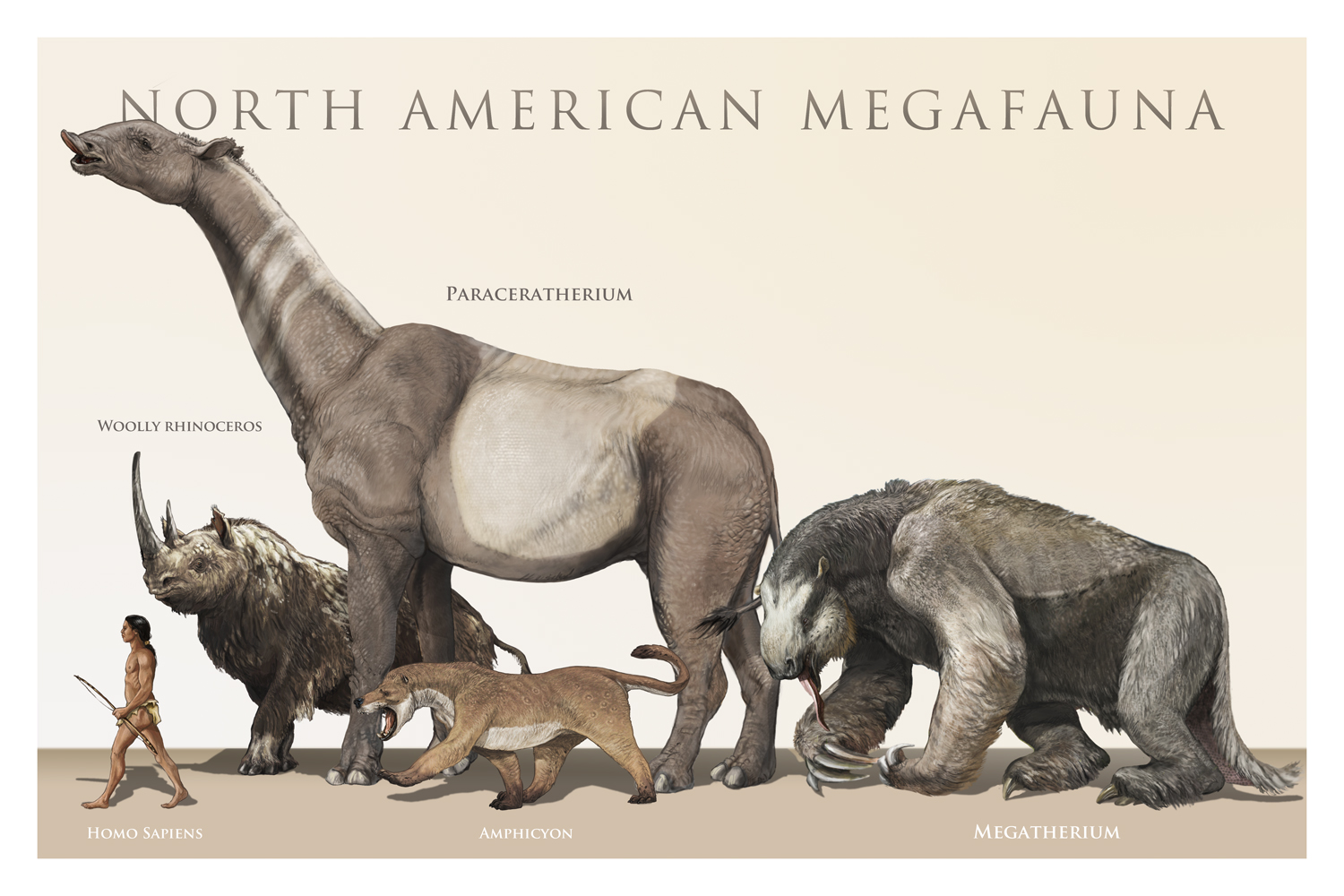
I find it amazing that the nomadic hunter-gatherers traveled in small groups, but followed these massive creatures. Looking at this photo of the size comparisons, I can only imagine what it must have been like to hunt them.
-
-
www.wired.com www.wired.com
-
the internet has become essential to our everyday life
What if we had pockets of non-Internet connectivity, though? A mesh network doesn’t necessarily need to have nodes on the Internet. For instance, a classroom could have a “course in a box”, with all sorts of resources provided on local network, but without a connection to the whole Internet… So many teachers keep complaining about their students’ use of the Internet that they end up banning devices. But what if we allowed devices and even encouraged them, as long as they’re not on the Internet? WiFi connections tend to be spotty, to this day, and some classes are cellular deadzones. A bit like Dogme 95, getting used to sans-Internet connectivity could help us “get creative”. What would we do if we were to do a tech-savvy course on the proverbial “desert island”, without Internet?
-
-
constitutioncenter.org constitutioncenter.org
-
Barack Obama’s Race Speech at the Constitution Center
-
- Dec 2015
-
lenbakerloo.com lenbakerloo.com
-
More than 100 years ago Mr. Sherlock Holmes
Few people know this but Sherlock was actually born in Russia in 1792 and didn't change his name until much later.
-
-
www.knewton.com www.knewton.com
-
Teaching two or three sections per semester would leave ample time for prep and office hours. Add in materials and tech fees around $100 and we could offer these courses for $900 per student per course, excluding marketing costs and considering only the cost of product delivery. These courses would be academically equivalent (incredible professor, great materials, office hours2) to any “regular” university course, but delivered online at around 20% of the all-in cost of buying such a course bundled with food, lodging, athletic facilities, Jacuzzis, and rock walls at an elite university.
-
-
cms.whittier.edu cms.whittier.edu
-
The appearance of the cyborg has engendered a newwaveof fear and trepidation towards the invasion of the body by strange technologiesthat threaten to eliminate or overwhelm the human subject
It sounds like we're creating our own aliens and then essentially putting them inside of a subject/form that we recognize and are quite familiar with so our initial response to the subject will be favourable.. but we're being tricked.. overpowered.. Has anyone read The Host by Stephanie Meyer? Similar concept...
-
- Nov 2015
-
chronicle.com chronicle.com
-
authoritative source of information
-
- Oct 2015
-
cms.whittier.edu cms.whittier.edu
-
I want to point to the way in which domesticity has been organized on military lines through the institution of the suburb and other normalizing spaces to enforce a particular notion of domestic normalcy which at the same time very often leads to everyday violence
Okay, I get the idea behind the institution of the suburb and how government is "normalizing" spaces to push for a specific idea or vision of well-behaved and orderly citizens.. But how does this lead to everyday violence? Makes me think of "The Purge" movies... Creepy..?
-
-
www.newrepublic.com www.newrepublic.com
-
No joke is funny unless you see the point of it, and sometimes a point has to be explained.
Sounds logical, in the abstract. But the explanation is often known to “kill the joke”, to decrease the humour potential. In some cases, it transforms the explainee into the butt of a new joke. Something similar has been said about hermeneutics and æsthetics. The explanation itself may be a new form of art, but it runs the risk of first destroying the original creation.
-
-
cms.whittier.edu cms.whittier.edu
-
They succeed in doing so largely because the states underwhich they operate are the “soft-states,” in that despite their oftenauthoritarian disposition and political omnipresence, they lack the nec-essary capacity, the hegemony and technological efficacy, to impose full
control over society."
It's the people that push the boundaries who find out just how strong/weak they really are. It is more about the atmosphere of a disciplinary society aided by the people's fear that's being enacted throughout societies instead of actual and legitimate control.
-
-
www.nationalreview.com www.nationalreview.com
-
Obama
-
were
-
he
-
could stop
-
’re
-
you
-
post
-
you
Tags
- subject in the apodosis of a condition sentence
- verb in the apodosis of a conditional sentence
- subject in the protasis of a conditional sentence
- subject in the apodosis of a condition clause
- verb in the protasis of a condition sentence
- verb in the protasis of a conditional sentence
- verb in the apodosis of a condition sentence
- subject in the protasis of a condition sentence
Annotators
URL
-
-
www.gutenberg.org www.gutenberg.org
-
our conference about fair ladies
What do scholars sit around talking about? Cute girls.

-
To glut the longing of my heart's desire
Faustus, despite all he's been given, is still missing one thing:

-
let us see that peerless dame of Greece
Faustus has incredible powers, and his friends want him to use them to show him a cute girl.

-
- Sep 2015
-
ushistory151.files.wordpress.com ushistory151.files.wordpress.com
-
But thegenuine advances achieved during Reconstruction, such as improvedaccess to education, exercise of political rights, and the creation of newblack institutions like independent churches, produced a violent reactionby upholders of white supremacy. During the 1870s, the North retreatedfrom its commitment to equality. In 1877, Reconstruction came to an end.Many of the rights guaranteed to the former slaves were violated in theyears that followed.
-
Although Reconstruction only lasted from 1865 to 1877, the issuesdebated then forecast many of the controversies that would envelopAmerican society in the decades that followed. The definition ofAmerican citizenship, the power of the federal government and itsrelationship to the states, the future of political democracy in a societymarked by increasing economic inequality—all these were Reconstructionissues, and all reverberated in the Gilded Age and Progressive era thatfollowed.
-
But just as the American Revolution leftto nineteenth-century Americans the problem of slavery, the Civil Warand Reconstruction left to future generations the challenge of bringinggenuine freedom to the descendants of slavery.
-
- Aug 2015
-
www.americanyawp.com www.americanyawp.com
-
1. What were the variety of exchanges that occurred in Native American Societies? What role did giving play in establishing status and obligation? The exchanges between Native American Societies was about trading goods, resources, marriages between two different community lines, different ideas, religious ideas. It expanded resources and alliances - both in political and religious perspectives. The role of exchanges established status and obligation, in a way that if your tribe was able to provide the most useful resources - you would be higher than others. Also, it gives the opportunity to establish obligation unto other communities if it was necessary. 2. What developments occur in Europe that helps set the foundation for European exploration and empire building?
- Massive growth in population after the epidemic that killed half the population within the area. 2. With the population growth, there was a growth of economy and high demand of the necessities of living. 3. From the growing demand of goods, led to ship building and navigation so merchants could expand their variety with what they were able to trade. 4. Trade led to the establishment of higher regions, and also people who want to establish their own hierarchy in their own regions. 5. As monarchies were made, communities had gained the amounts of necessities allowing exploration, trade between farther regions as well as producing routes for transportation as well as trade. 3. What was Portugal's intent in slave? What role do the Portuguese come to play in the trade of African slaves? African slaves were around before Portugal had began using slaves, going back to Muslim using them during the crusade. Due to sugar plantations being grown from the Mediterranean to the Atlantic, there was a growing need of labor. After seeing an exchange of slaves between their source and another slave trader, the Portuguese soon became another main source of slaves as well.
-
-
www.nytimes.com www.nytimes.com
-
the rise in urbanity requires all of us to master the multicultural beast that is the city. We figure out the city or we fail.
I'm intrigued here (and above) by this notion of "mastery" or "figuring it out" that seems to important to Simon. I wonder if that really should be the goal. I wonder, even, if that was the effect or point of "The Wire": the city and its machinations remained elusive throughout that series.
-
- Jul 2015
-
-
In five years we might be able to make a new paint that changes color depending on time of day or season.
What would that mean for team #blackandblue?
-
-
www.theatlantic.com www.theatlantic.com
-
which was their armor against their world.
A whole dissertation could be (likely has been) written on this idea of "urban" black style as a kind of "armor against the world."
It seems incredibly valuable for young people to acknowledge (and be acknowledged for) the cultural power of style.
-
My understanding of the universe was physical, and its moral arc bent toward chaos then concluded in a box.
This, of course, is flipping Martin Luther King's famous quote about "The arc of the moral universe is long, but it bends towards justice." It's upsetting to think that Coates is saying that the reality is that the arc bends toward death, not justice.
See:
http://quoteinvestigator.com/2012/11/15/arc-of-universe/
and
http://www.npr.org/templates/story/story.php?storyId=129609461
-
-
dismagazine.com dismagazine.com
-
Both of these works, she says, specifically sought a lawsuit from the estate of Margaret Mitchell.
Gone with the Wind in the public domain? Will Peter Pan never grow up?
-
- Jun 2015
-
jonudell.net jonudell.net
-
●
I would like the page-based approach first. When I downloaded the add-on, this was the feature I was expecting to use, which made me very excited. It was like Disqus, only more perfect, because the comments could be directly and seamlessly linked to specific parts of pages. Additionally, this was possible on any webpage or PDF document. Anyone could share ideas and reactions with others, anywhere. An added plus was to be going on random web pages, looking for citations that people had made there. It felt like a whole new hidden layer of the internet was put into place, and with it came the delight of discovering where said layer had manifested itself. That was something I thought was special.
The plans on this document look perfect. When can we expect for them to be implemented?
-
- May 2015
-
www.alasdairroberts.com www.alasdairroberts.com
-
Lethe (Leith)
The River Lethe was one of the rivers of Hades in Greek mythology. Exposure to its waters was held to lead to loss of memory, or, more intriguingly, a state of "unmindfulness" and oblivion. From this origin, it has re-appeared throughout western culture, from Dante to Tony Banks's first solo album (River Lethe in popular culture, Wikipedia).
By providing the alternative spelling of Leith, Alasdair Roberts 'doubles' this meaning with the Water of Leith, a river that runs through Edinburgh, and co-locates ancient Greek and contemporary Scots mythology.
The idea of eternal return is bound up with memory, with cultures being compelled to repeat and confront the missteps of the past. So the oblivion of forgetfulness provided by the endless Lethe provides a form of antidote or escape.
-
my sermons seven
In interview with Tyler Wilcox in 2009, Alasdair Roberts referred to the
specifically Jungian references to the "sermons seven" and mandalas... it's like a quest song against conflict and towards individuation. I know a lot of people with strong political or religious convictions whose musical and artistic practice is guided by that – in some ways I envy that kind of certitude, but I suppose my thing is always about flexibility, multiplicity, confusion wanting to reflect the turmoil of reality... always trying to remember that the oar in the ocean is a winnowing fan on dry land.'
-
-
www.onthemedia.org www.onthemedia.org
-
readwrite.com readwrite.com
-
search engine innovator
http://en.wikipedia.org/wiki/GetThere was a search engine? Or did @dwhly not tell us about something else?
-
-
researchity.net researchity.net
-
The key here is to not just democratize content sharing (the web has done that already) but to democratize and diversify reputation and trustworthiness. And to disrupt the monopoly academia has had on knowledge.
-
-
www.kurzweilai.net www.kurzweilai.net
-
www.techdirt.com www.techdirt.com
-
skeptools.wordpress.com skeptools.wordpress.com
-
www.cjr.org www.cjr.org
-
To achieve this, Climate Feedback—less an organization at this point than an amorphous gathering of climate scientists, oceanographers, and atmosperic physicists—is making use of a browser plugin from the nonprofit Hypothes.is to annotate climate journalism on the Web.
-
-
www.roughtype.com www.roughtype.com
-
What killed the annotated web was a lack of interest. Few could be bothered to download and install the plug-in
Tags
Annotators
URL
-
-
chronicle.com chronicle.com
-
He and his colleagues are keenly interested in the ability to annotate scholarship online, he says; Mellon has made serious investments in annotation tools and the development of open annotation standards by the university community and projects like Hypothes.is, which just received a two-year, $752,000 grant from the foundation to look into digital annotation in humanities and social-science scholarship.
-
-
readwrite.com readwrite.com
Tags
Annotators
URL
-
-
www.newscientist.com www.newscientist.com
-
www.abc.net.au www.abc.net.au
-
lj.libraryjournal.com lj.libraryjournal.com
-
mbanks.typepad.com mbanks.typepad.com
-
bits.blogs.nytimes.com bits.blogs.nytimes.com
-
www.niemanlab.org www.niemanlab.org
-
saybooksonline.com saybooksonline.com
-
www.cbc.ca www.cbc.ca
-
-
exchanges.wiley.com exchanges.wiley.com