398 Matching Annotations
  1. Last 7 days
    1. proband (IV.3)

      Case#: a 2‐year‐old white girl who was found to have RCM following an evaluation precipitated by the sudden death of her older brother.

      DiseaseAssertion: Restrictive cardiomyopathy

      FamilyInfo: 4‐year‐old brother presented with a sudden cardiac arrest while running on a soccer field and could not be resuscitated. Her father had restrictive physiology and arrhythmias. The TNNT2 variant was found in the father and two children

      ParentalTesting: Father carried the variant. For both paternal grandparents tested negative and the proband inherited the variant from her father.

      CasePresentingHPOs: HP:0001723, HP:0001639, HP:0031295, HP:0030718, HP:0001695

      CaseHPOFreeText: "Her ECG demonstrated criteria for right and left atrial enlargement with marked repolarization abnormality. Echocardiogram revealed mild right atrial and severe left atrial enlargement (left atrial volume, 61.5 cc/m2; normal, 16–28), with mildly increased left ventricular mass and otherwise normal ventricular dimensions. Right and left ventricular systolic function was preserved. "

      CaseNotHPOs: not reported

      CaseNotHPOFreeText: Ventricular dimensions and biventricular systolic function were reported as normal.

      CasePreviousTesting: Cardiomyopathy‐based panel testing (Familion; Transgenomic, Inc., New Haven, CT) was conducted on the proband, demonstrating a single, heterozygous, variant TNNT2‐R94C (c.280C>T).

      Genotyping Method: Clinical genetic testing was performed on family members using the same HCM panel test.

      FunctionalAnalysis: Biophysical experiments using recombinant human TNNT2‐R94C demonstrated impaired cardiac regulation at the molecular level attributed to reduced calcium‐dependent blocking of myosin's interaction with the thin filament.

      Variant: c.835C>T, p.Gln279Ter

      ClinVar: 165549

      CAID: CA004288

      gnomAD: not reported

      AdditionalInfo: not reported

    1. half-brother (B.III.6) carries the same pathogenic TNNT2-variant and was diagnosed with mild LV dilatation in early childhood.

      Case#: Male half-brother with mild left ventricular dilation from early childhood and mild left ventricular impairment; latest reported ejection fraction was 51%.

      DiseaseAssertion: DCM

      FamilyInfo: several of the siblings DCM, two died at age of 12, father had DCM, and heart transplant for an individual who later died

      ParentalTesting: father was an obligate carrier

      CasePresentingHPOs: HP:0001644

      CaseHPOFreeText: Mild left ventricular dilation and mildly increased LV volumes

      CaseNotHPOs: not reported

      CaseNotHPOFreeText: not reported

      CasePreviousTesting: panel-based genetic test was conducted in the index patient.

      Genotyping Method: panel-based genetic test was conducted in the index patient. sanger confirmation

      FunctionalAnalysis: not reported

      Variant: c.659_661del p.(Lys220del)

      ClinVar: 43659

      CAID: CA006429

      gnomAD: not reported

      AdditionalInfo: not reported

    2. The patient underwent heart transplantation at the age of 26 months.

      Case#: A 2-year-old girl with dilated cardiomyopathy (DCM) and left ventricular noncompaction, who received a heart transplant at 26 months.

      DiseaseAssertion: DCM with left ventricular noncompaction

      FamilyInfo: Family history revealed that three of the father’s (A.II.2) sisters (A.II.4-A.II.6) died in infancy due to cardiac failure.

      ParentalTesting: The father and paternal grandmother tested positive for the same TNNT2 variant

      CasePresentingHPOs: HP:0001644, HP:0030682, HP:0001635

      CaseHPOFreeText: The heart failure signs began at 2 months and got worse. Then got a heart transplant at 26 months.

      CaseNotHPOs: not reported

      CaseNotHPOFreeText: nothing found

      CasePreviousTesting: a genetic panel test, including the genes LDB3, LMNA, MYH7, MYBPC3, and TNNT2, was performed.

      Genotyping Method: Variants were confirmed in first-degree family members by Sanger sequencing.

      FunctionalAnalysis: not reported

      Variant: c.316G>A (p.Glu106Lys)

      ClinVar: 224775

      CAID: CA088557

      gnomAD: not reported

      AdditionalInfo: not reported

    1. case of a 19-year-old boy with coarctation of the aorta who complained of mild exertional dyspnea.

      Case#: 19-year-old boy with coarctation of the aorta who complained of mild exertional dyspnea.

      DiseaseAssertion: dilated cardiomyopathy (DCMP). LV systolic dysfunction.

      FamilyInfo: The family history was positive to sudden death (his cousin died, aged 3 months) and to DCMP and heart transplant (HT): a maternal aunt and her son who then died at 42 and 24 years old. Cascade family screening revealed a TNNT2 variant in the mother (II.1) and his cousin (IV.3).

      ParentalTesting: The 19 year old brother's was tested and carried the TNNT2 variant. She was also affected by DCM. The father’s testing status was not reported.

      CasePresentingHPOs: HP:0001680, HP:0002875, HP:0025169, HP:4000141

      CaseHPOFreeText: surgically repaired coarctation of the aorta who complained of mild exertional dyspnea repaired at birth (NYHA class II–III). Cardiac MRI showed a moderately dilated, hypokinetic LV with an ejection fraction of 45%; echocardiography showed an ejection fraction around 42%.

      CaseNotHPOs: not reported

      CaseNotHPOFreeText: Nothing was found that was correlated.

      CasePreviousTesting: genetic investigations through next generation sequencing (NGS) with a panel of 325 genes, known to be associated with cardiomyopathies

      Genotyping Method: targeted next generation sequencing

      FunctionalAnalysis: not reported

      Variant: c.518G>A (p. Arg173Gln)

      ClinVar: 43649

      CAID: CA004727

      gnomAD: not reported

      AdditionalInfo: not reported

    1. a 20-year-old, female, adopted Indian patient with over 662 Mb regions of homozy-gosity who presented with intellectual disability, ataxia, schizophrenia, retinal dystrophy, moder-ate-to-severe progressive sensorineural hearing loss (SNHL), congenital hypothyroidism, cleft mi-tral valve with mild mitral valve regurgitation, and dysmorphic features.

      Case#: a 20-year-old, female, adopted Indian patient with over 662 Mb regions of homozy-gosity who presented with intellectual disability, ataxia, schizophrenia, retinal dystrophy, moder-ate-to-severe progressive sensorineural hearing loss (SNHL), congenital hypothyroidism, cleft mi-tral valve with mild mitral valve regurgitation, and dysmorphic features.

      DiseaseAssertion: a cleft mitral valve with mild regurgitation

      FamilyInfo: adopted

      ParentalTesting: not reported

      CasePresentingHPOs: HP:0001249, HP:0001251, HP:0100753, HP:0000556, HP:0000407, HP:0000851, HP:0001633, HP:0001653

      CaseHPOFreeText: cleft mitral valve and dysmorphic features

      CaseNotHPOs: HP:0001638

      CaseNotHPOFreeText: echocardiograms at 18 were normal

      CasePreviousTesting: genetic testing, including targeted panel analysis, exome sequencing on a clinical basis, and a research-based review of her raw clinical exome data, led to identifying at least three causal gene disorders to explain distinct aspects of her complex phenotype.

      Genotyping Method: Genome-wide single-nucleotide polymorphism (SNP) microarray analysis was clinically performed, with no pathogenic deletions or duplications detected.

      FunctionalAnalysis: not reported

      Variant: NM_001001430.2:c.68-1592

      ClinVar: not reported

      CAID: CA032911

      gnomAD: total allele frequency: 0.00004522

      AdditionalInfo: n/r

    1. a 50-year-old man, was diagnosed with HCM at the age of 41 years.

      Case#: A 50-year-old man diagnosed with HCM at age 41, with asymmetric septal hypertrophy and exertional chest discomfort and pain

      DiseaseAssertion: Hypertrophic cardiomyopathy

      FamilyInfo: His third elder sister, niece and daughter were also clinically affected by HCM. The proband's mother and eldest sister had suffered from sudden cardiac death. The proband's father, second elder sister (HCM1 in Fig. 1A), nephew (HCM5 in Fig. 1A) and son (HCM7 in Fig. 1A) were 87, 65, 35, and 14 years old, respectively, and had normal echocardiographic measurements.

      ParentalTesting: The mother had died suddenly; the 87-year-old father had normal echocardiographic measurements. There was no testing reported.

      CasePresentingHPOs: HP:0001639, HP:0005144, HP:0100749, HP:0011712

      CaseHPOFreeText: chest distress and chest pain during exercise for 9 years. He presented with an asymmetric hypertrophic interventricular septum and a maximum interventricular septum thickness of 18.04 mm

      CaseNotHPOs: not reported

      CaseNotHPOFreeText: no findings found in the proband

      CasePreviousTesting: nothing reported in the article

      Genotyping Method: hole exome sequencing (WES) Exons were captured using Sure Select Human All Exon V5 kit. Sequenced by Illumina HiSeq 4000 sequencer.

      FunctionalAnalysis: not reported

      Variant: rs796925245 (g.1:201359630G>A, c.835C>T, p.Gln279Ter) (c.835C>T, p.Gln279Ter)

      ClinVar: 1175037

      CAID: CA088451

      gnomAD: not reported

      AdditionalInfo: n/r

    1. A 65-year-old woman with severe hypertrophic cardiomyopathy underwent gene panel testing that identified a single variant, TNNT2 E251D

      Case#:A 65-year-old woman with severe hypertrophic cardiomyopathy

      DiseaseAssertion:Severe hypertrophic cardiomyopathy

      FamilyInfo:no information reported

      ParentalTesting:no parental testing reported

      CasePresentingHPOs:HP:0001639

      CaseHPOFreeText: gene panel testing that identified a single variant

      CaseNotHPOs: not found

      CaseNotHPOFreeText: not found

      CasePreviousTesting: gene panel testing that identified a single variant

      Genotyping Method:clinical gene panel testing

      FunctionalAnalysis: rapid insertion of TNNT2 gene variants into induced pluripotent stem cell-differentiated cardiomyocytes (iPSC-CMs) for functional annotation of the variants for (E251D)(Figure B)

      Variant:c.753G>T (p.Glu251Asp)

      ClinVar:not found

      CAID:CA090003

      gnomAD:not found

      AdditionalInfo:not reported

    1. A 41-year-old male proband diagnosed with DCM underwent comprehensive clinical evaluation.

      Case#:male, 41, DCM

      DiseaseAssertion:dilated cardiomyopathy

      FamilyInfo:The proband reported that his mother died suddenly at approximately 35 years of age (specific cause unknown). Other family members were healthy with no history of cardiac disease. Written informed consent was obtained from all participants.

      ParentalTesting:no parental testing reported. Sanger sequencing of available family members (daughter, half-brother, maternal uncle and maternal aunt) confirmed that none carried the variant, supporting its de novo origin

      CasePresentingHPOs:HP:0002875, HP:0001644, HP:4000141, HP:6000313

      CaseHPOFreeText: ECG showed sinus bradycardia, occasional atrial premature beats, delayed atrioventricular conduction, left atrial enlargement, left ventricular high voltage, incomplete right bundle branch block, and ST-T changes (Figure 1C). CMR revealed late gadolinium enhancement (LGE) in the basal to mid-septal and anterolateral segments of the left ventricle (Figure 1D).

      CaseNotHPOs:HP:0000822, HP:0003077

      CaseNotHPOFreeText:He denied a history of hyperlipidemia, hypertension, or substance abuse.

      CasePreviousTesting:No reports of previous testing

      Genotyping Method:whole-exome sequencing and Sanger sequencing

      FunctionalAnalysis:not reported

      Variant:c.547C>T p.Arg183Trp

      ClinVar:43628

      CAID:CA004294

      gnomAD:Overall allele frequency: 0.000001239

      AdditionalInfo:not reported

    1. a 40-year-old woman with a history of hypokinetic-dilative cardiomyopathy and heterozygous for TNNT2 gene mutation

      Case#:a 40-year-old woman with a history of hypokinetic-dilative cardiomyopathy and heterozygous for TNNT2 gene mutation

      DiseaseAssertion:hypokinetic-dilative cardiomyopathy

      FamilyInfo: her family appreciated the clear communication, and as her condition improved without further complications, she expressed gratitude for the care provided.

      ParentalTesting:n/r

      CasePresentingHPOs:HP:0001644, HP:0002094, HP:0002094, HP:0001695,

      CaseHPOFreeText:Progressive dyspnea and fatigue began in January 2017. In February 2018, the patient had cardiac arrest due to ventricular fibrillation at 26 weeks’ gestation, followed by emergency caesarean section. She carried a heterozygous TNNT2 variant (c.547C>T, p.Arg183Trp)

      CaseNotHPOs: HP:0031972, HP:0031972

      CaseNotHPOFreeText:Coronary angiography showed no significant stenosis.

      CasePreviousTesting:Testing method and scope

      GenotypingMethod:n/a

      FunctionalAnalysis:not reported

      Variant: c.547C>T p.Arg183Trp)

      Clinvar:not known

      CAID:CA391630526

      gnomAD:n/r

      AdditionalInfo:n/r

    1. a 50‐year‐old male who was clinically diagnosed with isolated CS and prescribed with prednisolone without much effect, and subsequent genetic analysis revealed pathogenic variants in LMNA and TNNT2, representative genes for cardiomyopathy.

      Case#: a 50‐year‐old male who was clinically diagnosed with isolated CS and prescribed with prednisolone without much effect, and subsequent genetic analysis revealed pathogenic variants in LMNA and TNNT2, representative genes for cardiomyopathy.

      DiseaseAssertion:Dilated cardiomyopathy

      FamilyInfo: not reported

      ParentalTesting: He had no family history of heart disease or sudden death

      CasePresentingHPOs:HP:0002094,HP:0005110,HP:0025169, HP:0005110

      CaseHPOFreeText:Progressive cardiac conduction disease: first-degree AV block with left axis deviation on an earlier ECG progressed to high-grade and then complete AV block. At age 50, the patient also had mild dyspnoea on exertion (New York Class ll) and atrial fibrillation. The authors later stated that it was dilated cardiomyopathy.

      CaseNotHPOs:HP:0033608,HP:0002716

      CaseNotHPOFreeText:CT showed no enlarged lymph nodes, pulmonary nodules, or other organ abnormalities

      CasePreviousTesting: whole‐exome sequencing analysis to evaluate the risk of inherited cardiomyopathies and identified two missense variants in TNNT2 (chr1:201364335(hg38), NM_001001430.3, c.422G>A, p.Arg141Gln) and LMNA (chr1:156136096(hg38), NM_170707.4, c.1132A>C, p.Lys378Gln) (Figure 3). Sanger sequencing analysis identified a heterozygous single‐base substitution (c.1132A>C) in the LMNA gene and c.422G>A in the TNNT2 gene (red arrows).

      Genotyping Method:Whole-exome sequencing (WES) identified the variants; Sanger sequencing of the TNNT2 and LMNA variants is shown in Figure 3.

      FunctionalAnalysis:Not reported

      Variant:TNNT2: NM_001001430.3:c.422G>A (p.Arg141Gln),LMNA: NM_170707.4:c.1132A>C (p.Lys378Gln)

      ClinVar:43637

      CAID:CA004540

      gnomAD:not reported

      AdditionalInfo:not reported

    1. A 70‐year‐old woman, previously healthy with a left ventricular ejection fraction of 50%–55% at age 69, presented with DCM of unknown cause and a 4‐month history progressive heart failure requiring cardiac transplantation.

      Case#:A 70‐year‐old woman, previously healthy with a left ventricular ejection fraction presented with DCM

      DiseaseAssertion:dilated cardiomyopathy and a 4-month history of progressive heart failure

      FamilyInfo:"Family history was negative for IDC or heart failure (Figure 3), although an uncle (II‐3) reportedly had an enlarged heart, and three other relatives (II‐1, II‐2, and III‐4) had cardiac related deaths confirmed by death certificate. The proband’s father (II‐1) died of myocardial failure and pulmonary edema; her mother (II‐2) died of pulmonary embolism; and her sister (III‐4) died suddenly of coronary artery disease in her 60s. Her daughter, the proband’s niece (IV‐3), had a history of palpitations and lower extremity swelling, intermittent numbness, and blanching of the fingers at age 49. Her echocardiogram was normal. Her ECG showed nonspecific ST‐T wave changes and left anterior hemiblock."

      ParentalTesting:no parental testing reported because both parents were deceased. The two offsprings that were reported were tested and carried both variants.

      CasePresentingHPOs:HP:0001644, HP:0001635, HP:0002875, HP:0012378

      CaseHPOFreeText:symptoms of progressive dyspnea on exertion and fatigue that began 2–3 months prior to her presentation. Also, she had an unrelenting progression of symptoms and was hospitalized with advanced NYHA Class IV heart failure 6 weeks later. Lastly, she received a heart transplant.

      CaseNotHPOs:not reported

      CaseNotHPOFreeText:no myocarditis or infiltrative process and no histological evidence of hemochromatosis,

      CasePreviousTesting:Oligonucleotide hybridization‐based DNA sequencing was conducted in the proband for a panel of 19 DCM genes ( Table 1 )

      Genotyping Method:Oligonucleotide hybridization‐based DNA sequencing and genomic DNA was extracted from whole blood and was sequenced in our laboratory in both directions to detect and/or confirm nucleotide variants in TNNT2 in the proband and the proband’s relatives using an Applied Biosystems 3130XL capillary sequencer

      FunctionalAnalysis:R139H (Figure 4): Functional studies in porcine cardiac skinned fibers reconstituted with the mutant R139H troponin T protein showed decreased Ca2+ sensitivity at pH 7, characteristic of DCM.

      Variant:416G>A (R139H) in exon 10 and 690–6G>A in intron 13.

      ClinVar:not found

      CAID:CA004513

      gnomAD:not found

      AdditionalInfo:not reported

  2. Nov 2026
  3. Oct 2026
    1. III-1

      III-1, Female 10 years old

      disease assertion: VWD

      **positive family history **

      Parental Genotype: each has heterozygous, 3251G>A

      CasePresentingHPOs: CaseHPOFreeText: BS 4, VWF Ag:0.38, *VWF:GPIbM:0.15,VWF:CB:0.13, VWFpp :0.76, FVIII:C:0.10

      CaseNOTHPOs:* N.a.

      CaseNOTHPOFreeText: n.a.

      CasePreviousTesting: *GenotypingMethod: Sanger seqencing;

      *PreviouslyPublished:n.a.

      Gene:VWF Variant:c.3251G>A*

      *HGVS:NM_000552.5:c.3251G>A

      • *ClinVarID:Variation ID: 626952

      *CAID:n.a.

      *gnomAD:n.a.

  4. Sep 2026
    1. MD-0084ABCA447c.6410G>Ap.Cys2137Tyr47c.6410G>Ap.Cys2137Tyr7YesABCR400 + dHPLC + HRM + MLPAValverde et al. 2006 (6); Aguirre-Lamban et al. 2010 (16)

      Case#: Family MD-0084 Proband, 7yo at onset

      DiseaseAssertion: AR Stargardt

      FamilyInfo:

      CasePresentingHPOs:

      CaseHPOFreeText: STGD diagnosed based on "bilateral central vision loss; fundus presenting with a beaten-bronze appearance and/or the presence of orange-yellow flecks in the retina from the posterior pole to the mid-periphery; fluorescein angiography showing typical dark choroid; and normal to subnormal electroretinogram (ERGs)." VA loss, VF loss, BCVA=<0.05/<0.05

      CaseNotHPOs:

      CaseNotHPOFreeText:

      PreviouslyPublished: PMID: 16917483 (variant not found in this paper); PMID: 19959634

      Variant: c.6410G>A (p.Cys2137Tyr) homozygous, found by ABCR400 + dHPLC + HRM + MLPA

      ClinVar: 2202779

      CAID: CA341277358

      SupplementalData:

  5. Jul 2026
    1. Comparably, the result of the CNTNAP2 rs2710102 associations with ASD studies (n = 4+current study) was also not significant [n = 7276; p = 0.26; OR = 1.028 (95 % CI 0.98–1.08), see Suppl. Table S6, Fig. 1b]

      Performed a meta-analysis of all data published on the rs2710102 CNTNAP2 variant up to 2015, and included Anney et al, 2012 (PMID: 20663923), Toma et al., 2013 (PMID: 23277129), Sampath et al, 2013 (PMID: 24147096), Poot et al., 2014 (PMID: 25337070 ), plus there current cohort.

      No significant increase in cases vs controls for CNTNAP2 rs2710102

      While this data does help support Contradictory evidence for CNTNAP2 involvement in autism, the lack of reporting of the total number of controls, as well as the number of cases and controls with the SNP prevents me from curating this information within the ClinGen gene curation interface.

    2. he meta-analysis of the CNTNAP2 rs7794745 associations with ASD studies (n = 5+current study) did not result in significant association with ASD in general [n = 8576; p = 0.112; OR = 1.023 (95 % CI 0.99–1.05); see Suppl. Table S5, Fig. 1a]. Since we detected some heterogeneity for the SNP rs7794745 according to the funnel plot (see Suppl. Figure S10), we performed an additional meta-analysis synthesis using the random effect model. However, no significant association with ASD was observed and OR were very similar as for the fixed-model [OR = 1.081 (95 % CI 0.976–1.196), p = 0.133; for details Suppl. Table S9a].

      Performed a meta-analysis of all data published on the rs7794745 CNTNAP2 variant up to 2015, and included Arking et al., 2008 (PMID:18179894), Li et al 2010 (PMID: 20414140), Anney et al, 2012 (PMID: 20663923), Toma et al., 2013 (PMID: 23277129), Sampath et al, 2013 (PMID: 24147096), plus there current cohort.

      No significant increase in cases vs controls for CNTNAP2 rs7794745

    1. Similar

      CaseControlLabel: Toma 2013 CNTNAP2 rs7794745 analysis

      CaseCohortLabel: 322 Autism patients

      ControlCohortLabel: 524 controls

      CaseCohortDisease: MONDO:0005260 (Autism)

      CaseCohortPhenotype:

      CaseCohortPhenotypesFreeText: Authors indicate that all individuals fulfilled DSM-IV criteria for autism or Asperger disorder. Additionally, some cases included where diagnosed with pervasive developmental disorder they may or may not have been characterized based on ADI-R and ADOS-G.

      CaseControlNOTPhenotype:

      CaseControlNOTPhenotypeFreeText:

      CaseDemographics: 269 men, 53 women, Average age= = 17y.o. of Spanish and/or Caucasian descent.

      ControlDemographics: controls were noted to be sex-matched and unrelated, however no numbers or ages were indicated. Sample obtained from the Blood and Tissues Bank of Hospital Universitari Vali d'Hebron.

      CaseGenotypingMethod: One SNP, rs7794745, was genotyped using PCR-RFLP, from DNA obtained from peripheral blood lymphocytes (salting out method).

      ControlGenotypingMethod: One SNP, rs7794745, was genotyped using PCR-RFLP, from DNA obtained from peripheral blood lymphocytes (salting out method).

      CasePower: 312/322

      ControlPower: 505/524

      CaseAddInfo: Other genetic variation is not noted.

      ControlAddInfo: Other genetic variation is not noted.

      CaseControlStudyType: Single Variant Analysis

      CaseControlDetectionMethod: Cases and controls genotyped for single variant

      CaseControlStats: p-value= 0.87

      CaseControlBias: Cases and controls are ethinically matched, and noted to be sex-matched.

      CaseControlComments:

  6. Jun 2026
    1. c.2221C>T

      Case:9 months old male DiseaseAssertion:Infantile neuroaxonal dystrophy FamilyInfo:Paternally inherited mutation CasePresentingHPOs:HP:0002376,HP:0000648,HP:0000648,HP:0012444 Case HPO Free Text: N/A Case NOT HPOs: N/A Genotyping Method: Targeted Sanger sequencing identified PLA2G6 mutations c.[1799G>A];[2221C>T] . Both mutations have previously been identified in unrelated patients with PLAN. Variant:NM_003560.2:c.2221C>T ClinVarID:265448 gnomAD:https://gnomad.broadinstitute.org/variant/22-38112559-G-A?dataset=gnomad_r4 Multiple Gene Variants: GeneName:PLA2G6 Variant:NM_003560.2:c.1799G>A ClinVarID:159748 gnomAD:https://gnomad.broadinstitute.org/variant/22-38116155-C-T?dataset=gnomad_r4

  7. Apr 2026
    1. household

      this is showing how fast television became popular in the U.S. after WWII. once broadcasting started in 1947, almost everyone wanted a TV, and within a few years most households had one

    2. Law and custom in the South hardened antiblack restrictions. But through a series of carefully chosen and contested court cases concerning education,

      this is saying that racism in the South wasn’t just social, it was also built into laws and everyday customs but change started happening through court cases, especially around education, where people began challenging those unfair laws.

    3. A look at the relationship between federal organizations such as the HOLC, the FHA, and private banks, lenders, and real estate agents tells the story of standardized policies that produced a segregated housing market.

      this part is explaining how the government and banks basically worked together to create segregation in housing. they used these maps to label neighborhoods by risk, but really it was based on race, since areas with minorities were marked as dangerous

  8. Feb 2026
    1. As young women pushed back against social mores through premarital sexual exploration and expression, social welfare experts and moral reformers labeled such girls feeble-minded, believing even that such unfeminine behavior could be symptomatic of clinical insanity rather than free-willed expression.

      How did shifting gender norms create tension between younger women and older generations during this period?

    2. With white supremacy secured, prominent white southerners looked outward for support. New South boosters hoped to confront post-Reconstruction uncertainties by rebuilding the South’s economy and convincing the nation that the South could be more than an economically backward, race-obsessed backwater. And as they did, they began to retell the history of the recent past. A kind of civic religion known as the “Lost Cause” glorified the Confederacy and romanticized the Old South.

      How did the “Lost Cause” help white southerners justify white supremacy and reshape the South’s image to the rest of the nation?

    3. For April Fool’s Day in 1878, the New York Daily Graphic published a fictitious interview with the celebrated inventor Thomas A. Edison. The piece described the “biggest invention of the age”—a new Edison machine that could create forty different kinds of food and drink out of only air, water, and dirt. “Meat will no longer be killed and vegetables no longer grown, except by savages,” Edison promised. The machine would end “famine and pauperism.”

      Why do you think people in 1878 were willing to believe that technology could completely end hunger and poverty?

  9. Jan 2026
    1. a truly startling performance that signaled a bright future for the Populists. And when the Panic of 1893 sparked the worst economic depression the nation had ever yet seen, t

      The economic state of the world affected the emotions of Americans. Economic depression.

    2. The rise of industrial giants reshaped the American countryside and the Americans who called it home. Railroad spur lines, telegraph lines, and credit crept into farming communities and linked rural Americans,

      Who funded this? was it the government or was it the tax payers?

    3. f big business relied on its numerical strength to exert its economic will, why shouldn’t farmers unite to counter that power?

      what would happen to the farmers who stood up against this or united to fight the injustices? Was there any organizations?

    1. whether a text is literary or not is not as important as the methods of analyzing texts. In fact, texts which were excluded from literature are often argued into the literary canon through such analysis.
      • The methods of analyzing a work is more important than whether or not it is considered literary
      • Texts that were excluded from the canon tend to be argued into the literary canon via such analysis
  10. Nov 2025
  11. Oct 2025
    1. Google hasn’t publicly revealed LearnLM’s exact dataset, but we know from published research papers that its training included:Real tutor–learner dialoguesReal essays, homework problems, diagrams + expert feedbackExpert pedagogy rubrics collected from education experts to train reward models and guide tuning.Education-focused guidelines, developed with education partners (e.g., ASU, Khan Academy, Teachers College, etc.).

      Google Learns training data 10/25

  12. Apr 2025
  13. Mar 2025
    1. Reply to Hajo Bakker on LinkedIn

      Hajo Bakker Exam vs. Test -- Een examinering moet veel vanafwegen en niet regulier gebeuren.

      Een test (toets) mag vaker gebeuren, en moet weinig vanaf hangen... Geen ouders die straffen voor een laag cijfer (of cijfers afschaffen), geen adviezen die daarvanafhangen, etc.

      Het doel van een toets is om je aan te geven wat je krachten en minder sterke punten zijn, dus waar je je op moet focussen met toekomst leren. Dit kan alleen op het moment dat je een toets nabespreekt en op individueel niveau. Klassikaal bespreken heeft vaak weinig nut.

      Daarbij komt ook dat een student moet snappen WAAROM het helpt om na te bespreken, de wetenschap erachter. Op het moment dat je de waarom achter het hoe niet goed snapt heeft het hoe minder effect. (dit is waarom in het 4C/ID model ze in een scaffold beginnen met de laatste stap, waarin de informatie van voorgaande stappen is gegeven. Dit zodat als je de vorige stap gaat leren, je een beter idee hebt waar het uiteindelijk voor gebruikt gaat worden en je er dus een betere invulling aan kan geven.)

      Semantische verschillen zijn vaak uiterst nuttig om complexe stof te begrijpen. Op het moment dat ze exact hetzelfde waren heeft het weinig nut om meerdere termen te hebben en zouden ze synoniem zijn.

      "Exam" is geen synoniem van "test".

      Genuanceerde verschillen zijn vaak nuttiger dan "umbrella terms" om goed te communiceren, als uiterst subliem wordt beargumenteerd in "Science of Memory: Concepts" van Roediger III et al.

      Daarnaast komt uiteraard bij kijken dat neurocognitieve wetenschap een blauwdruk geeft voor hoe onze brein architectuur in elkaar zit (zie bijvoorbeeld John Sweller, Cognitive Load Theory 2011, en The Forgetting Machine, Rodrigo Quian Quiroga, 2017, Science of Memory: Concepts, Roediger et al., 2007, Ten Steps to Complex Learning, van Merriënboer, 2017).

      Dit is universeel toepasbaar, afgezien van mensen met een cognitieve aandoening bijvoorbeeld, dit gaat dus over neurotypische breinen.

      Leerstijlen zijn een mythe, wel hebben wij leervoorkeuren, maar door alleen in onze leervoorkeur te leren missen wij bepaalde informatie die cruciaal kan zijn voor beter begrip en meesterschap (mastery).

      Beter is het om studietechnieken te gebruiken die overeenkomen met brein-architectuur en die onder te knie te krijgen.

      Meer cognitieve belasting te gebruiken (zonder cognitieve overbelasting te veroorzaken). Als leren "makkelijk" voelt is het over het algemeen niet uitdagend genoeg en/of de techniek niet nuttig. Herlezen / samenvatten is simpel maar vrij inefficiënt. Het maken van een GRINDEmap voelt moeilijk maar is vele malen effectiever (zie ook the misinterpreted effort hypothesis).

      Zoals Dr. Ahrens al zei: "The one who does the effort, does the learning."

      Verder heb ik een heleboel ideëen voor een optimaal onderwijs dat zich aanpast aan het individu in plaats van aan het systeem, maar dit is een te complex en groot onderwerp om zo even hier neer te zetten.

    1. Reply to Gertina Blanket on LinkedIn:

      Jij legt in één klap uit datgene wat ik nooit goed heb begrepen uit de literatuur... Het verschil tussen interleaving en varied practice (die vaak als hetzelfde worden gebruikt in de "volksmond").

      Het een gaat over verschillende hoeken kijken naar hetzelfde idee (varied practice) terwijl het ander gaat over verschillende maar soortgelijke ideëen (interleaving), bijvoorbeeld meerdere soorten wiskunde (algebra, trigonometrie, etc.).

      Hierbij wil ik uiteraard wel zeggen dat blocked practice niet per se direct toegepast moet worden als het over automatisering gaat -- de cognitieve schemata moeten eerst goed gevormd zijn. Zie ook 4C/ID (Ten Steps to Complex Learning). Ofwel, eerst goede encoding + retrieval (Spaced Interleaved Retrieval, mindmapping, etc.) en dan focus op "drilling" / knowledge fluency.

      Het sneller maken / automatiseren heeft geen enkel nut als het begrip er nog niet goed in zit. Dit moet geverifiëerd worden.

      Kennis is natuurlijk ook erg interdisciplinair. Ik wordt er extreem blij van als ik een link leg tussen een boek over filosofie en efficiënt leren/onderwijs bijvoorbeeld.

      Zo las ik ooit een boek over romeinse oratoren met een misleidende titel "How to Win an Argument" van Marcus Tullius Cicero, vertaald door James M. May, en hierin kwam ik tegen dat de oude Romeinen al door hadden dat LOGICA is wat het brein doet onthouden, en dit hoeft dus geen objective logica te zijn maar meer een correcte reflectie van hoe je eigen geest werkt en verbanden legt.

      Dit is direct in lijn met wat ik weet van cognitieve leerpsychologie en mijn klein beetje kennis van neurowetenschap (waar ik dit jaar dieper in wil duiken).

      Informatie in isolatie is nooit stevig, het moet zich vastklampen aan ankers en andere kennis (voorkennis eventueel), en de lerende (niet de onderwijzende) moet actief bezig zijn om deze verbanden te leggen.

      Zoals ik wel vaker quote van Dr. Sönke Ahrens: "The one who does the effort does the learning."

      Als ik een boek lees denk ik automatisch aan hoe ik dit kan relateren aan wat al in mijn second mind (Zettelkasten) zit. Ik denk niet meer linear, alleen maar non-linear. Standaard in verbanden.

      Hier wat bronnen (impliciet) genoemd: - Cicero, M. T. (2016). How to win an argument: An ancient guide to the art of persuasion (J. M. May, Trans.). Princeton University Press. - Ahrens, S. (2017). How to take smart notes: One simple technique to boost writing, learning and thinking: for students, academics and nonfiction book writers. CreateSpace. - fast, sascha. (100 C.E., 45:02). English Translation of All Notes on Zettelkasten by Luhmann. Zettelkasten Method. https://zettelkasten.de/posts/luhmanns-zettel-translated/ - Luhmann, N. (1981a). Communicating with Slip Boxes (M. Kuehn, Trans.). 11. - Luhmann, N. (1981b). Kommunikation mit Zettelkästen. In H. Baier, H. M. Kepplinger, & K. Reumann (Eds.), Öffentliche Meinung und sozialer Wandel / Public Opinion and Social Change (pp. 222–228). VS Verlag für Sozialwissenschaften. https://doi.org/10.1007/978-3-322-87749-9_19 - Moeller, H.-G. (2012). The radical Luhmann. Columbia University Press. - Scheper, S. (2022). Antinet Zettelkasten: A Knowledge System That Will Turn You Into a Prolific Reader, Researcher and Writer. Greenlamp, LLC.

      • Schmidt, J. F. K. (2016). Niklas Luhmann’s Card Index: Thinking Tool, Communication Partner, Publication Machine. In Forgetting Machines: Knowledge Management Evolution in Early Modern Europe (pp. 287–311). Brill. https://doi.org/10.1163/9789004325258_014
      • Schmidt, J. F. K. (2018). Niklas Luhmann’s Card Index: The Fabrication of Serendipity. Sociologica, 12(1), Article 1. https://doi.org/10.6092/issn.1971-8853/8350
  14. Feb 2025
    1. At hour of death, in putting off the flesh, He goes to what he looked for, Kunti’s Son!

      This section of the text describes how someone's last thoughts when dying affect the future they will have. It implies that their final thoughts have an impact on how they live in the future, suggesting an idea of the afterlife. The Gita reinforces concepts of karma and rebirth by highlighting the value of dedication and focus. Krishna makes this point in the lesson by referring to Arjuna as "Kunti’s Son," encouraging him to keep his attention on the divine as a way to attain ultimate freedom.

  15. Oct 2024
  16. Jul 2024
    1. Good video. Funnily enough, I related it to Mazlow's hierarchy of competence a minute before you mentioned it. (Mr. Hoorn here, btw.) Another connection I made was to van Merriënboer et al. their "Ten Steps to Complex Learning" or "4 Component Instructional Design". Particularly with regards to doing a skill decomposition (by analyzing experts, the theory, etc.) in order to build a map for how best to learn a complex skill, reducing complexity as much as possible while still remaining true to the authentic learning task; i.e., don't learn certain skills in isolation (drill) unless the easiest version of a task still causes cognitive overload. Because if you learn in isolation too much, your brain misses on the nuances of application in harmony (element interactivity). Related to the concept of "the whole is greater than the sum of its parts". You can master each skill composite individually but still fail epically at combining them into one activity, which is often required.
  17. Jun 2024
    1. The main idea, able to be generalized, I get from this video is that in order to develop any skill, whether it is learning or something else, you need to break it down into its constituents, much like the 4 Component Instruction Design model argues, and figure out where your weak links are.

      The more accurately you know the system of your skill, the better you know what to potentially improve on. This requires research, and sometimes asking experts.

      Another benefit of networking.

  18. May 2024
    1. Consequently, if updateu2 depends on update u1, it could happen that somenodes deliver u1 before u2 and hence process bothupdates correctly, but other nodes may try to deliveru2 and fail because they have not yet delivered u1. Thissituation also leads to divergence.

      I.e., linking by non-content-based id is not BFT.

    2. Say a Byzantine node generates twodifferent updates u1 and u2 that create two differentitems with the same ID. If a node has already deliveredu1 and then subsequently delivers u2, the update u2will be rejected, but a node that has not previously de-livered u1 may accept u2. Since one node accepted u2and the other rejected it, those nodes fail to converge,even if we have eventual delivery

      I.e., giving nodes IDs that are not content-based is not BFT strategy.

  19. Apr 2024
    1. I get a new ClientID for every session, is there a way to make it static for a peer accessing the document?

      Would be nice to have truly unique ids. E.g., a public key.

      Eats more space, but can be zipped over the wire. Given there are many ops transferred.

      Also could be possible to create pubkey -> int mapping per-document, so it's damm more compact. That would require consensus on this map.

  20. Mar 2024
    1. ‍ Benefits of having an online cricket ID

      In the digital age, having an online cricket ID is essential for any cricket enthusiast. With an online cricket ID, you can access a plethora of features and services that enhance your cricket experience. Whether you're a passionate fan or a casual viewer, having an online cricket ID opens up a whole new world of possibilities.

      One of the key benefits of having an online cricket ID is the ability to access live match streaming. With Virat777, you can watch your favorite cricket matches from the comfort of your own home. No more relying on unreliable streams or missing out on the action. With just a few clicks, you can tune in to live matches and never miss a moment of the game.

      Another advantage of having an online cricket ID is the access to comprehensive match statistics. Virat777 provides detailed match analytics, allowing you to delve deep into the numbers and gain valuable insights. Whether you're a fantasy cricket player looking for player stats or a cricket enthusiast interested in team performance, Virat777 has you covered. Stay up-to-date with the latest trends and make informed decisions with the help of our comprehensive match statistics. Creating an online cricket ID also grants you access to exclusive content curated just for you. Virat777 offers a range of articles, videos, and interviews that provide in-depth analysis and behind-the-scenes insights. Immerse yourself in the world of cricket and get access to content that is not available anywhere else. With Virat777, you can stay connected to the game and indulge in your passion for cricket.

      Features of Virat777

      Virat777 offers a wide range of features that make it the ultimate destination for cricket enthusiasts. Our platform is designed to provide a seamless and engaging cricket experience, catering to the needs of both die-hard fans and casual viewers.

      One of the standout features of Virat777 is the personalized cricket ID. By creating a cricket ID, you can tailor your experience to suit your preferences. Keep track of your favorite teams and players, receive match notifications, and access personalized content recommendations. With our innovative technology, your cricket ID becomes your gateway to a world of cricketing excitement.

      Our user-friendly interface ensures that navigating the platform is a breeze. Whether you're a tech-savvy individual or someone who is new to online platforms, Virat777 is designed to be intuitive and easy to use. Find what you're looking for with just a few clicks and enjoy a seamless browsing experience.

      Virat777 also provides a reliable and high-quality streaming service. We understand the frustration of buffering and interrupted streams, which is why we have invested in state-of-the-art technology to ensure smooth and uninterrupted streaming. With Virat777, you can enjoy cricket matches in HD quality, without any lag or interruptions. Immerse yourself in the game and experience cricket like never before.

      How to create an online cricket ID on Virat777

      Creating an online cricket ID on Virat777 is quick and simple. Follow these steps to get started: Visit the Virat777 website and click on the "Sign Up" button. Fill in your details, including your name, email address, and password. Choose a unique username for your cricket ID. Select your favorite teams and players to personalize your cricket ID. Agree to the terms and conditions and click on the "Create ID" button. Congratulations! You now have your own personalized cricket ID on Virat777.

      Once you have created your cricket ID, you can start exploring the various features and services offered by Virat777. Customize your preferences, participate in quizzes and contests, and engage with the cricketing community. Your cricket ID is your passport to a world of cricketing excitement.

      Tips and strategies for using Virat777 effectively

      To make the most of your Virat777 experience, here are some tips and strategies:

      Customize your cricket ID: Take the time to personalize your cricket ID by selecting your favorite teams and players. This will ensure that you receive relevant updates and recommendations tailored to your preferences.

      Explore the content: Virat777 offers a wealth of exclusive content, including articles, videos, and interviews. Explore the content library and stay updated with the latest news and insights from the cricketing world.

      Participate in quizzes and contests: Test your cricket knowledge and challenge yourself by participating in quizzes and contests on Virat777. Not only will you have fun, but you'll also have the chance to win exciting prizes.

      Engage with the community: Virat777 has a vibrant community of cricket enthusiasts. Join the conversation, share your thoughts, and connect with fellow fans. Engaging with the community adds another layer of enjoyment to your cricketing experience.

      Popular cricket tournaments and leagues available on Virat777

      Virat777 offers a wide range of cricket tournaments and leagues for you to enjoy. From international fixtures to domestic tournaments, you'll find it all on our platform. Here are some of the popular cricket tournaments and leagues available on Virat777:

      ICC Cricket World Cup: The pinnacle of international cricket, the ICC Cricket World Cup brings together the best teams from around the world. Experience the thrill of watching the top cricketing nations battle it out for the coveted trophy.

      Indian Premier League (IPL): The IPL is one of the most popular domestic T20 leagues in the world. With star-studded teams and exciting matches, the IPL offers non-stop entertainment for cricket fans.

      Big Bash League (BBL): The BBL is Australia's premier T20 competition, featuring top domestic and international players. Watch the high-octane action as teams compete for glory in this thrilling tournament.

      Pakistan Super League (PSL): The PSL is the premier T20 league in Pakistan, showcasing the best talent from the country and around the world. Experience the passion and excitement of Pakistani cricket with the PSL.

      Comparison with other online cricket ID providers While there are several online cricket ID providers available, Virat777 stands out from the crowd. Here's how Virat777 compares to other platforms: Streaming quality: Virat777 offers high-quality streaming with minimal buffering, ensuring a smooth and uninterrupted viewing experience. Some other platforms may struggle with streaming quality, leading to frustration for users.

      Comprehensive match statistics: Virat777 provides detailed match analytics, giving users access to a wealth of information. Other platforms may offer limited statistics or lack in-depth analysis.

      Personalized content: Virat777 curates personalized content based on user preferences, ensuring that users receive recommendations tailored to their interests. This level of customization may be lacking in other platforms.

      Community engagement: Virat777 has a vibrant community of cricket enthusiasts, fostering engagement and interaction among users. Other platforms may not have the same level of community engagement.

      Conclusion

      Why Virat777 is the best choice for online cricket Fans

      When it comes to online cricket ID provider, Virat777 is the clear winner. With its wide range of features, user-friendly interface, and commitment to delivering a top-quality cricket experience, Virat777 is the ultimate destination for cricket enthusiasts. Create your cricket ID today and elevate your love for the game at Virat777.
    1. Then the other answered again, “Sir Gawain, so may I thrive as I am fain to take this buffet at thine hand,” and he quoth further, “Sir Gawain, it liketh me well that I shall take at thy fist that which I have asked here, and thou hast readily and truly rehearsed all the covenant that I asked of the king, save that thou shalt swear me, by thy troth, to seek me thyself wherever thou hopest that I may be found, and win thee such reward as thou dealest me to-day, before this folk.”

      The Green Knight shows his excitement to take the hit from Sir Gawain's hand in response to his wanting to take on the challenge. This implies a feeling of loyalty and willingness to carry out their end of the bargain. But then the Green Knight secretly changes the terms of the first agreement struck with King Arthur by adding a new condition to their agreement. The Green Knight adds a sense of mystery as well as potential risk for Gawain when he asks him to vow on his honor to find him later and offer a prize equal to the one he received today.

  21. Jan 2024
    1. Greek plays are not just about entertainment; they are invitations to the audience to discuss political events.

      Greek plays are either tragedies or comedies. There is a much deeper meaning to them than just entertaining the public. Keeping this in mind when reading the stories gives them a much deeper meaning.(https://www.worldhistory.org/Greek_Theatre/) To know the full extent of what they were really meant for is important to the readers. For this specific play, the meaning behind the story is that the men in charge are operating from an excessively limited perspective as they ignore their partners' informed advice. This is a huge political controversy to this day. Women are very overlooked in society especially considering how far back this is dated. Back when this play was written women were given tasks like cooking and cleaning and had little to no rights so this was a good political example of how they were treated and overlooked.

  22. Dec 2023
  23. Nov 2023
  24. Oct 2023
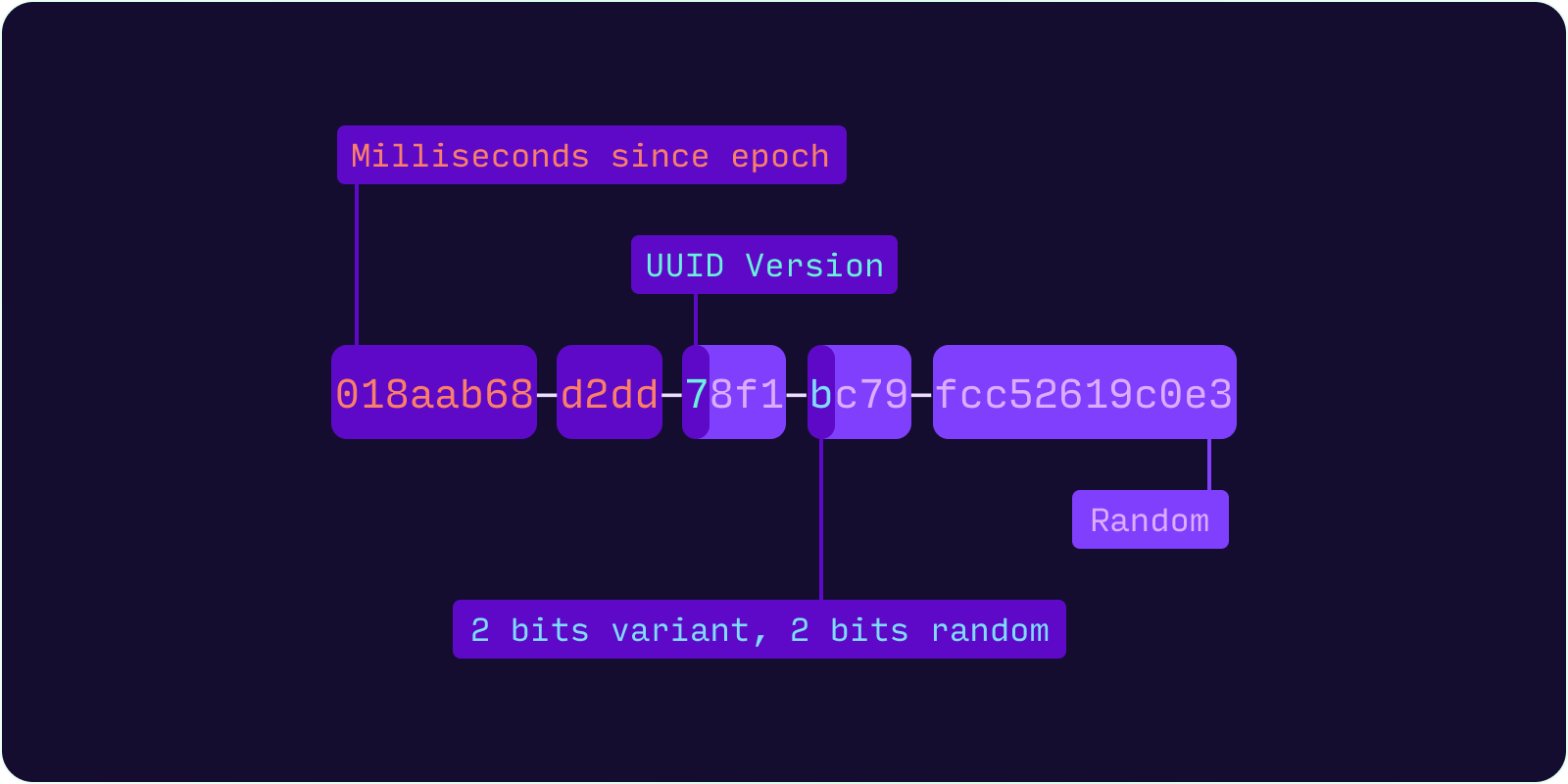
    1. UUID Version 7 (UUIDv7) is a time-ordered UUID which encodes a Unix timestamp with millisecond precision in the most significant 48 bits. As with all UUID formats, 6 bits are used to indicate the UUID version and variant. The remaining 74 bits are randomly generated. As UUIDv7 is time-ordered, values generated are practically sequential and therefore eliminates the index locality problem.


      0 1 2 3 0 1 2 3 4 5 6 7 8 9 0 1 2 3 4 5 6 7 8 9 0 1 2 3 4 5 6 7 8 9 0 1 +-+-+-+-+-+-+-+-+-+-+-+-+-+-+-+-+-+-+-+-+-+-+-+-+-+-+-+-+-+-+-+-+ | unix_ts_ms | +-+-+-+-+-+-+-+-+-+-+-+-+-+-+-+-+-+-+-+-+-+-+-+-+-+-+-+-+-+-+-+-+ | unix_ts_ms | ver | rand_a | +-+-+-+-+-+-+-+-+-+-+-+-+-+-+-+-+-+-+-+-+-+-+-+-+-+-+-+-+-+-+-+-+ |var| rand_b | +-+-+-+-+-+-+-+-+-+-+-+-+-+-+-+-+-+-+-+-+-+-+-+-+-+-+-+-+-+-+-+-+ | rand_b | +-+-+-+-+-+-+-+-+-+-+-+-+-+-+-+-+-+-+-+-+-+-+-+-+-+-+-+-+-+-+-+-+

  25. Aug 2023
  26. Jul 2023
  27. Jun 2023
    1. ```python def split_user(userid): """ Return the user and domain parts from the given user id as a dict.

      For example if userid is u'acct:seanh@hypothes.is' then return
      {'username': u'seanh', 'domain': u'hypothes.is'}'
      
      :raises InvalidUserId: if the given userid isn't a valid userid
      
      """
      match = re.match(r"^acct:([^@]+)@(.*)$", userid)
      if match:
          return {"username": match.groups()[0], "domain": match.groups()[1]}
      raise InvalidUserId(userid)
      

      ```

  28. May 2023
  29. Apr 2023
  30. Mar 2023
  31. Feb 2023
  32. Jan 2023
  33. Dec 2022
  34. Nov 2022
    1. The @id keyword allows you to give a node a URI. This URI identifies the node. See Node Identifiers in the JSON-LD spec. (The equivalent in Microdata is the itemid attribute, and the equivalent in RDFa Lite is the resource attribute.)
  35. Oct 2022
  36. Sep 2022