AI companies, semiconductor companies, and perhaps downstream application companies generating ~$3T in revenue per year,
for - progress trap - AI - inequality
AI companies, semiconductor companies, and perhaps downstream application companies generating ~$3T in revenue per year,
for - progress trap - AI - inequality
The contrast between the palace of themillionaire and the cottage of the laborer with us to-day meas-ures the change which has come with civilization.
NORTII AMERICAN REVIEW.No. CCCXCI.JUNE , 1889 .WEALTH.BY ANDREW CARNEGIE.
Carnegie, Andrew. 1889. “Wealth (aka Gospel of Wealth Part I)” ed. Allen Thorndike Rice. North American Review 148(391): 653–65. http://google.com/books/edition/The_North_American_Review/i5U2AQAAMAAJ?hl=en (January 17, 2027).
I think all of these kind of public good uh infrastructures that we have came about in this very narrow special window of time uh where you had this kind of incursion of egalitarianism uh and and a and a spirit of of you know public-mindedness that's all being eroded.
for - public good - being eroded
for - youtube - How the rich took over the economy - from - youtube - interview - Thomas Piketty - can't blame the top, so demonize the bottom - https://hyp.is/10dTvtheEfC_-8OXfzSTJA/www.youtube.com/watch?v=XeZoNTJgBZs
In 1979 and 1980, two political leaders came into power who would turn this economic revolution into a political one. Margaret Thatcher in [music] the UK and Ronald Reagan in the US.
for - economic history - Volcker Shock - 2 political allies - Thatcher (1979) and Reagan (1980) came to power - cast taxes, social programs and regulation as the bogeyman
Powell memo. It was written by Lewis Powell,
for - economic history - powell memo - Lewis Powell - inequality - corporate lawyer who became supreme court judge - memo that started a long term political campaign to exploit the elite crisis for corporations to take control of universities, media, law and public opinion FOR THE ELITES
People are so disgusted, you know, with this working of the of the economic systems that in the end because you tell them they cannot look up and they cannot do anything with people at the top. They start looking down
for - inequality - Thomas Piketty - opinion - middle class can't get tax relief from the elites - so they take it out on those below them - to - youtube - economic history - what started the chain reaction of modern day inequality - https://hyp.is/SIBPoNjHEfCxI8N7cC7ntw/www.youtube.com/watch?v=gAV0bkTHui8
capital off $10 million.
for - inequality - advocate for - cap wealth at 10 million USD
for - SRG Corporation2CO-OPeration program - worker-owned cooperatives - Apis & Heritage - inequality reduction - via worker-owned cooperatives
summary - Apis & Heritage is a unique US private equity firm that has established an investment fund called "The Legacy Fund" which is used to facilitate Employee-Led BuyOut (ELBO). Studies show the enormous potential for reducing inequality and it is an issue that receives rare bipartisan political support in the US. The "Silver Tsunami" describes 3 million small business owners likely to retire in 2035. Together, their businesses account for $10 trillion in assets. Apis & Heritage helps faciliate a smooth transition for owners to sell to their employees, increasing their net worth by as much as 10x by the time they retire.
for - adjacency - Trump - Inequality
Civilization as a master-slave paradigm regarding nature.
for - new definition - biosphere-scale inequality - adjacency - metaphor - master-slave - resources - externalisation - Michel articulated an insightful metaphor to describe our modern relationship with nature - To see nature as a resource is a species-selfish (anthropomorphic) perspective - which enables - resource extraction - exploration - externalization and ultimately - the climate crisis - Humans are seem as the master and all of nature our slave - This transcends human-scale inequality - it is biosphere-scale inequality
Wir fangen in den Sozialwissenschaften und in der politischen Diskussion gerade erst an zu sehen, dass die, die am wenigsten zum Klimawandel beigetragen haben, am meisten darunter leiden oder leiden werden.
Those who suffer under climate change are not the ones that created it.
Die gesellschaftlichen Rahmenbedingungen haben größten Einfluss. Im Alltag müssen wir viele Entscheidungen und Abwägungen treffen, weil Strukturen nicht da sind. Wir müssen permanent mit Dilemmata umgehen: Wenn das Fleisch aus der Massentierhaltung nicht so preiswert wäre, stellte sich nicht die Frage, ob man das oder das teurere Biofleisch nimmt. Oder: Wenn die Bahn pünktlich und preiswerter wäre, würde man nicht überlegen müssen, ob man stattdessen fliegt. Hinzu kommt die Politik der Privatisierung der letzten Jahrzehnte. Da haben sich, beispielsweise bei der Bahn, Privateigentumsformen durchgesetzt. Es gibt kaum noch kommunalen Wohnungsbau. Es liegen kaum noch gemeinsame Infrastrukturen vor. Das hat dazu geführt, dass wir über die letzten 40 Jahre kulturell mehr und mehr auf Eigenverantwortung und Eigennutz gepolt wurden. Das hat beispielsweise zu Ungleichheit in der Vermögensentwicklung geführt. Soziologisch könnte man von einer Phase der Entsolidarisierung sprechen. Das ist jetzt ein Riesenproblem. Denn angesichts des Klimawandels bräuchten wir viel mehr Solidarität. Um die Lasten für den Klimaschutz fair zu verteilen und im Bereich der Klimaanpassung – da kommen Kosten auf uns zu. Wir kämen als Gesellschaft besser durch den Klimawandel und durch andere krisenhafte Zeiten, wenn wir gleicher wären. Ungleiche Gesellschaften sind wesentlich weniger resilient und damit weniger widerstandsfähig.
Fight against climate change is framed as a series of individual choices, but is dependent on structures build buy political actors higher up in the hierarchy and solidarity in a society. * Example 1: if the train is cheap and on time it would be easier not to fly * Example 2: More hierarchy and inequality leads to less solidarity, but we need solidarity to equally shoulder the pressure of the fight against climate change.
[In other words: neoliberal world society will not work in face of a change planet]
for - adjacency - fine dining - inequality - high carbon - fine dining is inherently based upon inequality and has a high carbon footprint
Am 14.05.2025 zeigte eine französische Studie mit 15.000 Teilnehmern, dass Männer 26 % mehr Treibhausgase ausstoßen als Frauen, hauptsächlich durch höheren Fleischkonsum und Autonutzung. Nach Kontrolle sozioökonomischer Faktoren beträgt der Unterschied 18 %. Der Konsum von rotem Fleisch und das Autofahren erklären fast den gesamten verbleibenden Unterschied von 6,5-9,5 %. Traditionelle Geschlechternormen, die Männlichkeit mit Fleischkonsum und Autofahren verbinden, spielen eine bedeutende Rolle. Frauen zeigen mehr Besorgnis über die Klimakrise, was zu klimafreundlicherem Verhalten führen könnte. [Zusammenfassung mit Mistral generiert] https://www.theguardian.com/environment/2025/may/14/car-use-and-meat-consumption-drive-emissions-gender-gap-research-suggests
Milanovic predicted the gap between Western workers and those indeveloping countries would mean huge migratory pressure as peoplemoved to higher-wage countries
Milanovic, Branko. The Haves and the Have-Nots: A Brief and Idiosyncratic History of Global Inequality. 1st edition. New York: Basic Books, 2010.
Freeland, Chrystia. Plutocrats: The Rise of the New Global Super-Rich and the Fall of Everyone Else. Penguin, 2012. https://amzn.to/4krZmJ5.
the main reason consumers are buying the cheapest food rather than the best healthiest is because they are not being paid a living wage
for - inequality - oligarchy - effects on consumerist habits - buying the cheapest - suggestion - migrate from corporation to cooperation model - private company to cooperative - new meme - corporation to cooperation
for - youtube - carbon inequality - Tax the Rich - Kevin Anderson - wealth2well - Deep Humanity - Deep Education
question - decarbonization - redistribution - is there any research with concrete decarbonization rates that are just across the entire class spectrum?
wealth2wellth - Deep Humanity Wealth2Wellth program advocates Deep education of the elites to voluntarily share their economic and carbon wealth with the 99%
for - inequality - US
Oxfam’s new climate report
for to - Oxfam report - Carbon Inequality kills - https://hyp.is/AwEIYgP2EfCxcWvHdtbEhA/policy-practice.oxfam.org/resources/carbon-inequality-kills-why-curbing-the-excessive-emissions-of-an-elite-few-can-621656/
for - carbon inequality - stats - carbon inequality
if everyone began emitting as much carbon as those in the top 1%, the remaining carbon budget would be gone in fewer than five months
for - carbon inequality - stats - carbon inequality - 5 months in our carbon budget - if everyone emitted like the top 1% - source - Oxfam - Carbon Inequality kills - 2024
if everyone emitted carbon at the same rate as the luxury transport emissions of 50 of the world’s richest billionaires, the remaining carbon budget would be gone in two days
for - carbon inequality - stats - carbon inequality - 2 days of our carbon budget - if everyone emitted transportation emissions of 50 richest billionaires - source - Oxfam - Carbon Inequality kills - 2024
for - carbon inequality - report - Oxfam - carbon inequality kills - 2024 - from - London School of Economics blog - Billionaire plutocrats are driving the climate crisis - https://hyp.is/QOvgOgP1EfCx4Lto0mV-kQ/blogs.lse.ac.uk/inequalities/2024/11/19/billionaire-pollutocrats-are-driving-the-climate-crisis/
for - carbon inequality - from - Christine Wamsler - homepage - Lund University - https://hyp.is/XgmNsgPHEfCBOPszkHcE3Q/www.lucsus.lu.se/christine-wamsler
City building, according to a sacred civics, is transformational work, as it recognizes the persistent paradigms of colonialism5 and imperialism
for - adjacency - cities - imperialism - colonialism - inequality - perpetuation
adjacency - between - cities - imperialism - colonialism - inequality - perpetuation - adjacency relationship - Large cities have structural inequality baked into them through centuries of legacy practices. - The urban spatial planning of cities are centuries-old patterns that perpetuate intergenerationally - In broad strokes, the centuries of exploitation, extractivism and colonial genocide of the global north upon the global south created the great structural wealth of cities in the global north, and the great structural poverty of cities of the global south - As colonialism receded and global south countries attained autonomy, they were left with deep scars of inequality, exasperated by the IMF and the World Bank, keeping them trapped in cycles of debt - Global north cities also suffered a local north / local south phenomena as well as global industrial capitalism made inequality democratic around the globe - Due to the effect of integenerational wealth and intergenerational poverty inheritance, it is exceedingly difficult to make structural changes in the current political-social-economic system.
seed commitment pools
for - definition - seed commitment pool - structural inequality - escaping
legal freedom is not the same as economic autonomy. After slavery, formerly enslaved communities were still trapped—by debt peonage, sharecropping, economic exclusion, and lack of land and resources. Money alone at the time couldn’t buy them trust, care, or independence from systems designed to keep them dependent.
for - quote - structural inequality - example - structural inequality
$80 trillion in wealth has been redistributed from the bottom 90 percent of Americans to the richest 1 percent over the past 50 years
for - stats - inequality - US - past 50 years - wealth redistribution - $80 trillion from bottom 90% - to top 1%
Tats Artikel zu den Absorthohn CO2 Emissionen durch Privatschätz und Jachten der Superreichen. Durch Privatschätz und Linienflüge verursacht ein Prozent der Menschheit allein 50 Prozent aller Flugemissionen. Die Informationen des Artikels stammen vor allem aus einer Oxfam-Studie vom Oktober und aus einer Studie des deutschen Instituts für Wirtschaftsforschung. https://taz.de/Klimasuenden-der-Superreichen/!6066360/
these people already will have on very high incomes they'll have very high carbon Footprints and what they are often is unable to do is to see the way that they are living their lives as been deeply embedded in the problem
for - carbon inequality - Kevin Anderson
Doch eine Vielzahl von Studien hat herausgestellt, dass es vor allem die Allerreichsten sind, die auf Kosten der Allgemeinheit den Planeten zerstören.
Die Angehörigen des reichsten Prozents der Weltbevölkerung haben bereits in den ersten zehn Tagen dieses Jahrs so viel Emissionen verursacht wie es jedem Menschen 2025 zustehen würde, wenn das 1,5°-Ziel erreicht werden soll. Menachen mit einem Gehalt von über 140.000 USD emittieren in 10 Tagen durchschnittlich 2,1 Tonnen CO2. Die Zahlen ergeben sich aus einer Untersuchung zur Carbon Inequality aus dem Jahr 2023 https://www.theguardian.com/environment/2025/jan/10/worlds-richest-use-up-their-fair-share-of-2025-carbon-budget-in-10-days
Aneurin Bevan
for - further research - Aneurin Bevan - 1952 - liberal democracy's greatest paradox - How does wealth manage to persuade poverty to use its political freedom to keep wealth in power? - source - article - Le Monde - Musk, Trump and the Broligarch's novel hyper-weapon - Yanis Varoufakis - 2025, Jan 4 - inequality - elites - source - article - Le Monde - Musk, Trump and the Broligarch's novel hyper-weapon - Yanis Varoufakis - 2025, Jan 4
How does wealth manage to persuade poverty to use its political freedom to keep wealth in power?
for - key insight - inequality - elites - How does wealth manage to persuade poverty to use its political freedom to keep wealth in power? - source - article - Le Monde - Musk, Trump and the Broligarch's novel hyper-weapon - Yanis Varoufakis - 2025, Jan 4
for - climate crisis - impact of Trump tariff strategy - increasing economic and carbon inequality and precarity for the masses - from - Youtube - Trump wants to crash to benefit the ultra wealthy - Trump's planning to crash the global economy - Richard J Murphy - 2024, Dec
// - SUMMARY - Richard J Murphy provides us with a big picture of Trump's objective in his calculated Tariff strategy - It's not that it makes no sense and is a strategy of a madman - On the contrary, he has a very calculated and maniacal strategy that will result in significantly increasing the wealth of the elites - By creating high tariffs, he will bring about a global economic crash - Like the 2008 and 2020 crash, central banks will print trillions of dollars of money and handout bailouts - It is the elites who will receive these bailouts and inflate the value of their assets - This will - substantially increase the wealth of the rich - substantially increase the precarity of the vast majority of people - increase global inequality - financial inequality and - carbon inequality - This increased precarity is bad news for the climate crisis as a precarious population have less flexibility in reducing their carbon footprint and are more dependent than ever on whatever remain job and resources they still have - Given we have this knowledge of the elite's hidden strategy, can we the people intervene in any way? - We need to have an understanding of how elites see the world - The entire worldview of externalizing investment as a game of accumulation must be understood deeply - in order to find leverage points for rapid system change
//
$38 million for the top 0.1%; $10 million for next 0.9% (the rest of the top 1%) $1.8 million for next 9% (rest of top 10%) $165,382 next 40% (rest of top half) 0$ for the bottom 50%
for - inequality - stats - global income thresholds for top 0.1% to bottom 50%
inequality - stats - global income thresholds for top 0.1% to bottom 50% - top 0.1% - $38,000,000 - next 0.9% below - $10,000,000 (rest of top 1%) - next 9% below - $ 1,800,000 (rest of top 10%) - next 40% below - $165,382 (rest of top 50%) - bottom 50% - $0
for - study - carbon inequality - A multi-model assessment of inequality and climate change - 2024
for - study - carbon inequality and income inequality, 2024
the richest are those who determine countries’ carbon emission levels.
for - key insight - carbon inequality - the rich individuals of any country - are the ones most responsible for determining the carbon emissions of a country - adjacency - carbon inequality - wealthy - carbon emissions of individuals - carbon emissions of a country
adjacency - between - carbon inequality - wealth inequality - the richest individuals of a country - the carbon emissions of a country - adjacency relationship - It's startling to draw the connection that - it is the wealthiest individuals in a country - that are most responsible for the bulk of a country's emissions!
for - stats - carbon inequality - poorest 50% emit 12% - richest 10% emit 48% - Chancel, 2022
wareness of plunder from international trade and environmental load displacement,and the complaints over the disproportionate use of the oceans and the atmosphere by the rich to disposeof excessive amounts of carbon dioxide.
Der CO2-Fußabdruck von Reichen und Superreichen wird von diesen selbst wie von.Ärmeren z.T. grotesk unterschätzt, wie eine in vier Ländern.durchgeführte Studie zeigt. So emittiert das reichste Prozent in den USA pro Person und Jahr durchschnittlich 269,3 Tonnen CO2. Sowohl von dieser Gruppe selbst wie von den Menschen der ärmeren Bevölkerungshälfte wird die Menge meist auf nur ca. 30 Tonnen geschätzt. Die Untersuchung ergibt auch, dass die Unterschätzung der carbon inequality mit weniger Unterstützung von Klimapolitik korreliert. https://www.derstandard.at/story/3000000236252/oekologischer-fussabdruck-von-reichen-wird-drastisch-unterschaetzt
let's go and and create all this great software to deploy it and kind of equalize the the the disparity of wealth across the world and ends up being locked out for by stupid issues like latency and bandwidth
for - internet limitations - server-based location addressing - limits software's capacity to uplift people and address inequality - bandwidth and latency issues affect those who need it most at the edge
The price we pay for this salutary change is, no doubt, great.
for - quote / critique - The price we pay for this salutary change is, no doubt, great - Andrew Carnegie
quote / critique - The price we pay for this salutary change is, no doubt, great - Andrew Carnegie - Carnegie goes on to write that the great freedoms offered by industrial mass production has an unavoidable price to be paid - Successful manufacturing and production cooperatives, B-Corporations, worker-owned companies, etc have disproved that it is an either-or situation. - Consider the case of the Spanish manufacturing giant, Mondragon, a federation of worker cooperatives employing 70,000 people located in Spain - where this price is NOT paid - Carnegie's essay reflects a perspective based on the time when he was alive - Were Carnegie alive today to witness the natural conclusion of his trend of progress in the Anthropocene, he would witness - extreme pollution levels of industrial mass production threatening to destabilize human civilization itself - astronomical wealth inequality - And these two are linked: - wealth inequality - a handful of elites have the same wealth as the bottom half of humanity - carbon inequality - that same handful pollutes as much as the bottom half of humanity
to - Mondragon cooperative - explore - https://hyp.is/GeIKao1rEe-9jA_97_KRBg/exploremondragon.com/en/ - Oxfam wealth and carbon inequality reports - https://jonudell.info/h/facet/?max=100&expanded=true&user=stopresetgo&exactTagSearch=true&any=oxfam
the right of the laborer to his hundred dollars in the savings bank, and equally the legal right of the millionaire to his millions.
for - critique - extreme wealth inequality cannot be avoided for the greater improvement of society - The Gospel of Wealth - Andrew Carnegie - stats - Mondragon corporation - comparison of pay difference between highest paid and lowest paid - adjacency - Gandhi quote - Andrew Carnegie beliefs in The Gospel of Wealth
critique - extreme wealth inequality cannot be avoided for the greater improvement of society - The Gospel of Wealth - Andrew Carnegie - It's a matter of degree - Wealth differences within US corporations of 344 to 1 are obscene and not necessary, as proven by - Wealth difference of 6 to 1 in Mondragon federation of cooperatives - To quote - Gandhi, there is enough to meet everyone's needs but not enough to meet everyone's greed - The great problem with such large wealth disparity is that those who know how to game the system can earn obscene amounts of money - and since the concept of luxury goods is made desirable and proportional to monetary wealth, it creates a positive feedback loop of insatiability - The combination of engaging in ever greater luxury lifestyle and power is intoxicating and addictive
to - stats - Mondragon corporation - comparison of pay difference between highest paid and lowest paid - https://hyp.is/QAxx-o14Ee-_HvN5y8aMiQ/www.csmonitor.com/Business/2024/0513/income-inequality-capitalism-mondragon-corporation
https://en.wikipedia.org/wiki/Matthew_effect
The Matthew effect of accumulated advantage, sometimes called the Matthew principle, is the tendency of individuals to accrue social or economic success in proportion to their initial level of popularity, friends, and wealth. It is sometimes summarized by the adage or platitude "the rich get richer and the poor get poorer". The term was coined by sociologists Robert K. Merton and Harriet Zuckerman in 1968 and takes its name from the Parable of the Talents in the biblical Gospel of Matthew.
related somehow to the [[Lindy effect]]?
they feel incredibly resentful that they have not benefited from the the wealth generated 00:38:07 from by this uh system that was once uh uh promised them so much uh and so i i i think you know there and that's just one example among many uh in in the less prosperous parts of the world you could 00:38:21 you'd see many more
for - progress trap - inequality - resentment
progress trap - inequality - resentment - rapid emergence of the far-right and populus - Indeed we see so much resentment everywhere. For example, the far-right and populus could only emerge so rapidly because of such resentment of being left behind.
reducing racial inequality means also addressing class inequality
for - key insight - Wage stagnation is a universal problem of the working class and reducing racial and gender inequality goes hand-in-hand with reducing class inequality.
I actually don't want to talk about how advances in AI will affect professional developers. With all due respect, we have it pretty good.
As the International Energy Agency recently reported, the top 10% of emitters accounted for nearly half of global CO₂ emissions from energy use in 2021, compared with 0.2% for the bottom 10%
Die 10% der Weltbevölkerung mit den höchsten pro-Kopf-Emissionen sind für etwa die Hälfte des Ausstoß von Treibhausgasen durch den Energieverbrauch verantwortlich. Die 10% mit den niedrigsten Emissionen verursachen nur 0,2% der gesamten energiebezogenen Emissionen. Kevin Anderson fasst eine der Aussagen eines Kommentars von IEA Mitarbeiter:innen zusammen.
Tunisia: The migration trapRefugees and migrants from across Africa are becoming stranded, unable to return and persecuted by authorities.
open source paradigms, with its copyleft licensing scheme
for - adjacency - open source - copyleft - Achilles Heel - unpaid workers - predatory capitalism
adjacency - between - open source - copyleft - Achilles Heel - predatory capitalism - unpaid workers - adjacency statement - The Achilles Heel of the open source copyleft system is that it allows everyone to participate. Everyone can look at the innovation, including corporate raiders in it for their own self-interest. - This enables predatory capitalism. The well-capitalized corporations take the best open source ideas and integrate them into their own private systems. With their abundant capitalization, they can maintain the existent structural inequality - Meanwhile, most open source software is maintained by underpaid programmers
The poorest 50% of the global population contribute just 10% of emissions, while the richest 10% emit more than 50% total carbon emissions
for - liberal blind spot - Chris Yates - book - liberalism and the challenge of climate change - adjacency - liberalism - individual liberty - progress - bond spot - political polarization - fuel for the right -hyperobjects
Summary - This short article contains some key insights that point to the right climate communication strategy to target and win over the working class - Currently, climate communications speak to elitist values and is having the opposite effect - The working class farmer protests spreading across the EU is a symptom of this miscommunication strategy - as is the increasing support and ascendency of right wing political parties - Researcher and author Chris Yates is in a unique position with one foot in each world - He articulates his insightful ideas and points is in the right direction to communicate in a way that reaches the working class
comment - the figure 4 graph is an example of carbon inequality
Example - carbon inequality - see figure 4
These social relations are simultaneously generative of rapid economic growth, and impoverishment and inequality
Summary - At the heart of the debate, - which is a major driver for the political polarization in politics around the globe, - especially in the United States between - liberals and - conservatives - is structural inequality inherited by colonialism centuries earlier - and how to deal with it today.
Critical race theory emerged out of postmodernist thought, which tends to be skeptical of the idea of universal values, objective knowledge, individual merit, Enlightenment rationalism, and liberalism—tenets that conservatives tend to hold dear.
for - Critical race theory - key insight
key insight - The following passage gets to the heart of the matter: - (see below)
All these different ideas grow out of longstanding, tenacious intellectual debates.
Critical race theory emerged out of postmodernist thought, - which tends to be skeptical of the idea of - universal values, - objective knowledge, - individual merit, - Enlightenment rationalism, and - liberalism - tenets that conservatives tend to hold dear.
we face an American election unlike any other. It will determine not only the course of the American experiment but the path that civilization collectively follows.
for - quote - Michael Mann - quote - 2024 U.S. elections - future of civilization - quote - existential threat of 2024 Trump win - polycrisis - politics - inequality - climate
quote - Michael Mann - date: May 11, 2023 - source: The Hill - Op Ed - https://thehill.com/opinion/energy-environment/4290467-trump-2-0-the-climate-cannot-survive-another-trump-term/ - (see below)
why is, are so many working class whites driving toward the hard right and wanting to support, you know, what seemed to us kind of insane policies? Well, people are desperate. They're looking for the answer. They're looking for the problem, and they're being told the problem is immigrants. And we don't look at wealth as the problem.
Oxfam legt die bisher umfangreichste Studie zur weltweiten Klima-Ungleichheit vor. Sie wurde gemeinsam mit dem Guardian und dem Stockholm Institut erstellt. Sie ergibt unter anderem, dass das reichste Prozent der Weltbevölkerung für mehr Emissionen verantwortlich ist als die unteren 66%. Analysiert wird auch die Verbindung von wirtschaftlicher und politischer Macht der globalen Eliten und die Möglichkeit, eine just transition durch Besteuerung der Superreichen zu finanzieren https://www.theguardian.com/environment/2023/nov/20/richest-1-account-for-more-carbon-emissions-than-poorest-66-report-says
Report: https://policy-practice.oxfam.org/resources/climate-equality-a-planet-for-the-99-621551/
This 1% of humanity uses its awesome power to manipulate societal aspirations and the narratives around climate change. These extend from well-funded advertising to pseudo-technical solutions, from the financialisation of carbon emissions (and increasingly, nature) to labelling extreme any meaningful narrative that questions inequality and power.
for: quote - Kevin Anderson, quote - elite positive feedback carbon inequality loop, climate crisis - societal aspirations, elites - societal aspirations, societal aspirations, key insight - societal aspirations
quote
comment
the wealthiest 1% of people on the planet are responsible for double the greenhouse gas emissions of the poorest half
for: carbon inequality, question - new COP - focused on elites?
comment
question
for: climate crisis - elites, Kevin Anderson - elites, carbon emissions - elites, adjacency - elites - carbon inequality - incentives - luxury - capitalism
title: A Habitable Earth Can No Longer Afford The Rich – And That Could Mean Me And You
date: Nov. 29, 2023
comment
for: Kevin Anderson, transition, climate equity, climate justice, climate justice - Kevin Anderson, carbon inequality - Kevin Anderson, life within planetary boundaries, lifestyle within planetary boundaries - elites, climate crisis - Kevin Anderson
summary
its design as by its original destination, the car is a luxury good. And luxury, in essence, cannot be democratized: if everyone has access to luxury, no one benefits from it; on the contrary: everyone cheats, frustrates and dispossesses others and is cheated, frustrated and dispossessed by them.
for: quote - luxury cannot be democratized, 1% - democracy, elites - democracy, adjacency - luxury - democracy, luxury is not democratic, luxury is inequality, Andre Gorz, Terrestrial website, adjancency - luxury - democracy, quote luxury
quote
publication: Terrestrial
comment
adjacency between:
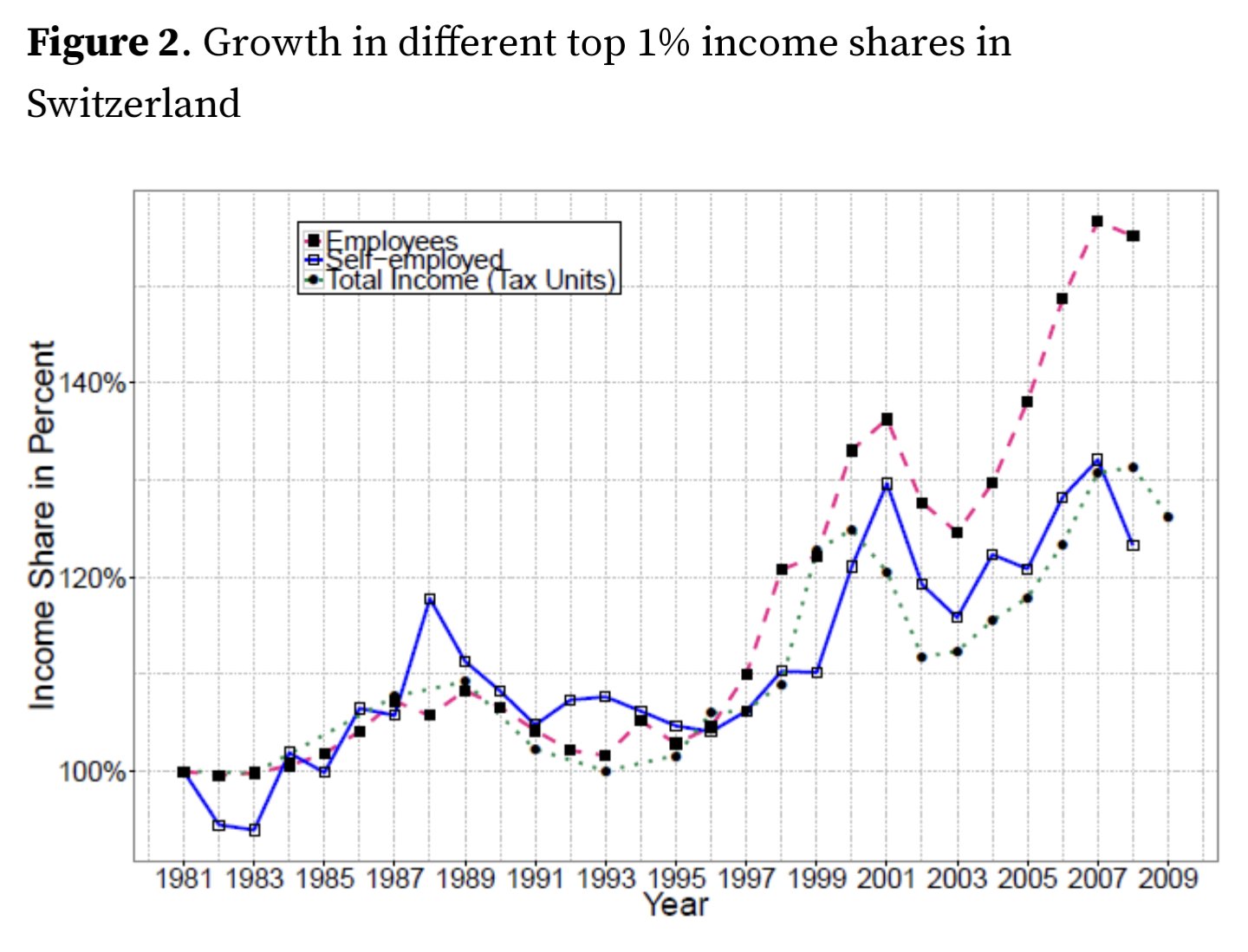
The last country to abandon it was Switzerland, which severed ties between its currency and gold in 1999.
Switzerland inequality kicked in ~1999 roughly when they abandoned the [[Golden Rule]], as hinted by Kevin Tartis in X.
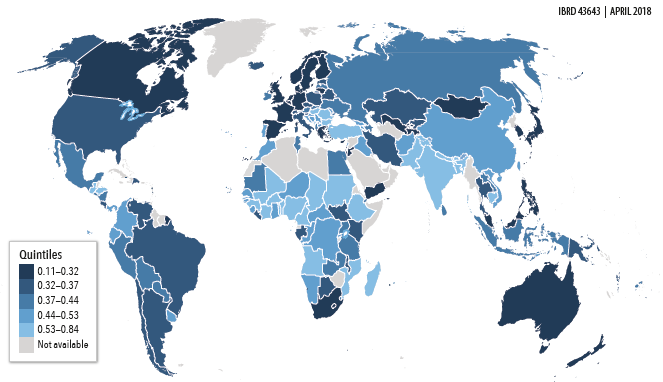
Relative mobility in education around the world (1980s cohort)
, Canada, Australia, Mongolia, S.Africa, Yemen, Western EU and Greece are the best. Strange map...
Chettyet al. (2014) estimate intergenerational mobility for the US down to highly disaggregated geographic areas (commuting zones) and find that it varies considerably. In some parts of the country, mobility (or equality of opportunity) is on a par with some of the most mobile countries in Europe, while in other parts, children struggle to escape poverty when born into it. They also find that areas with relatively high rates of mobility tend to be ones that are less residentially segregated (i.e. households from different socioeconomic backgrounds and different races reside in the same neighbourhoods) and have lower inequality, higher quality public school systems, stronger social networks, and stronger family structures. The empirical observation that more equal societies tend to be more mobile is also known as the Great Gatsby curve (Corak 2013).
Intergenerational mobility is, expectedly, lower in the US where social net is low and segregation high.
By chance I was reading Robert Goodin's 30 year old book on Green Political Theory yesterday - yes, how I get my kicks. A statement near the end of the book jumped out at me - and, I think, pertinent to the Netherlands now and the heat and noise in my home town, Oxford re. transport policy."...greens will have to impose tougher restraints on the rich than on the poor; they will have to let the poor continue to damage the environment in ways that they are prepared to prevent the rich from doing."
for: carbon tax, tax the rich, carbon inequality
comment
why are we still asking the same questions in this slightly sort of sclerotic manner
Unfortunately, the interviewer did not pick up David's saying on inequality: what should we have been doing by now?
https://en.wikipedia.org/wiki/Boots_theory
“The Sam Vimes "Boots" Theory of Economic Injustice runs thus:<br /> At the time of Men at Arms, Samuel Vimes earned thirty-eight dollars a month as a Captain of the Watch, plus allowances. A really good pair of leather boots, the sort that would last years and years, cost fifty dollars. This was beyond his pocket and the most he could hope for was an affordable pair of boots costing ten dollars, which might with luck last a year or so before he would need to resort to makeshift cardboard insoles so as to prolong the moment of shelling out another ten dollars.<br /> Therefore over a period of ten years, he might have paid out a hundred dollars on boots, twice as much as the man who could afford fifty dollars up front ten years before. And he would still have wet feet.<br /> Without any special rancour, Vimes stretched this theory to explain why Sybil Ramkin lived twice as comfortably as he did by spending about half as much every month.”<br /> ― Terry Pratchett, Men at Arms (1993)
the pathways must have the equity dimension of who really needs to do the heavy lifting here, which is the the rich minority.
better health, better security, better economy, secure job, better... Simply a more modern, attractive life.
Auf einer neuen Tracking-Website von Greenpeace können die Flüge österreichischer Privatjets in Echtzeit verfolgt werden. Die Zahl der Flüge von Privatjets hat sich gegenüber 2019 verdoppelt. Allein im Monat August wurden dabei 10.000 Tonnen CO2 ausgestoßen..
In January 2018, Deutsche Bank produced an 81-page report, “US Income and Wealth Inequality”,
Link to the PDF has moved.
The unequal distribution of household carbon footprints in Europe and its link to sustainability
Transnational Uncivil Society Networks: kleptocracy’s global fightback against liberal activism - reference - https://ora.ox.ac.uk/objects/uuid:5e5a3052-c693-4991-a7cc-bc2b47134467/download_file?file_format=application%2Fpdf&safe_filename=Cooley_et_al_2023_transnational_uncivil_society.pdf&type_of_work=Journal+article
REPORT: Executive Excess 2023 - Institute for Policy Studies by Sarah Anderson in August 2023
see article about this report at https://hypothes.is/a/D6qzfENbEe6qDg8H-IEo6g
Lauren Aratani in CEOs of top 100 ‘low-wage’ US firms earn $601 for every $1 by worker, report finds at 2023-08-24 (accessed:: 2023-08-25 08:20:02)
We are already seeing the emergence of ‘tech-free’ camps and vacation packages. Experiencing life ‘offline’ will become a generational goal, much like the Millennial generation introduced ride sharing and home sharing. Ironically, it will be technology that enables this trend, and premiums will be paid for uninterrupted time to focus or to simply enjoy being alive. This may also indicate a new kind of disparity between economic strata, with the more-wealthy affording privacy, peace and quiet while the lower strata remain fodder for 24/7 social media aggregators and botnets.
what I'm advocating here isn't radical redistribution it's merely more 00:13:08 redistribution in a and structurally dependable manner that is fair that is inclusive and that allows for the poor and improvised Nations to be granted excess not just a vital strategic resources that are very much needed in 00:13:21 maintaining the quality of life at own citizens but also more importantly the ropes to climb the ladder
there's the unsustainable lifestyle of so many of us and I include myself I have far more than I need and 00:10:11 some people take this to excess and they have way way way more than they could ever possibly need and this is something that somehow we have to change
if you're very poor then you're living in some kind of Wilderness Area you're going to destroy the environment in order to survive let me take for 00:08:05 example Gumby Street National Park in 1960 it was part of the Great Forest built by the late 1980s was a tiny Islander forest and all the hills around were bare more people living there in 00:08:19 the land could support two poor to buy food elsewhere struggling to survive cutting down the trees to make money from charcoal or Timber or to make more land grow more food and that's when it 00:08:33 hit me if we don't help these people these local communities find ways of living without destroying the environment we can't save chimpanzees forests or anything else so we need to 00:08:46 alleviate poverty
why does it in a sense if we think of money as a voting tool why is it that a billionaire has a 00:32:31 billion times more power to decide what society should be like than i do
Americans are increasingly experiencing economic insecurity. According to a recent survey by Bankrate, 6 out of every 10 of us don’t even have $500 in the bank.
And where the artists take part in a fantasy of overconsumptionThe place where artists play a distinctive role, exactly like high-level sports athletes, is in the propagation of a certain fantasy.
for: emissions reduction, bend the curve, TPF, W2W, emissions reduction - cultural sector, bend the curve - cultural sector, TPF - cultural sector, W2W - cultural sector, carbon emissions - cultural sector, carbon inequality
comment
for: carbon inequality, decarbonizing luxury, decarbonizing luxury goods, carbon emissions - luxury goods, W2W, TPF,
question
there's 00:08:43 nothing there that could be secured and here's the important point I think we experienced that we experience it as a sense of lack 00:08:58 that is to say the sense that something is wrong with me something is missing something isn't quite right I'm not good enough and the reality is I think all of us to 00:09:14 some degree have some sense of that some sense of lack even though we might ignore it or cover it up there's there's some sense of that but because it's mostly sort of unconscious in the sense that we don't 00:09:29 really know where it comes from
Our findings suggest that the share of US$2020-millionaires in the world population will grow from 0.7% today to 3.3% in 2050, and cause accumulated emissions of 286 Gt CO2. This is equivalent to 72% of the remaining carbon budget, and significantly reduces the chance of stabilizing climate change at 1.5 °C.
According to a new study by tourism professor Stefan Gössling, the millionaires will, within just a few decades, be responsible for almost three quarters of carbon dioxide emissions.
https://robertreich.substack.com/p/welcome-to-my-class
Robert Reich course “Wealth and Poverty” 2023
In addition to their high GHG emissions from consumption, high-SES people have disproportionate climate influence through at least four non-consumer roles: as investors, as role models within their social networks and for others who observe their choices, as participants in organizations and as citizens seeking to influence public policies or corporate behaviour
We focus on individuals and households with high socioeconomic status (SES; henceforth, high-SES people) because they have generated many of the problems of fossil fuel dependence that affect the rest of humanity.
date
Executive Summary
The surplus of life’s labor is not sufficient to con-tinue bearing the burden of a caste system devoted tocontrolling the many so a few can indulge in egotisti-cal displays of privilege on a dying Earth. The more ofhumanity’s labor we devote to maintaining the system ofdomination, the less that is available to secure life’s wellbe-ing and the more rapid the living system’s collapse.
for: caste system, caste, inequality, carbon inequality,
quote
parantheses
new adjacency
"In the paper we sketch five different roles
for: carbon inequality, W2W, leverage point
five leverage points
"The top 1% use basically a similar amount to the bottom 50% of humanity.
The richest 1 percent grabbed nearly two-thirds of all new wealth worth $42 trillion created since 2020, almost twice as much money as the bottom 99 percent of the world’s population,
Wenn die reichsten Menschen in Europa ihren Energieverbrauch auf 170 Gigajoule pro Jahr reduzieren würden, ließen sich allein damit 10% der EU-Emissionen reduzieren - wobei 170 Gigajoule mehr sind, als 80% der europäischen Bevölkerung verbrauchen. Eine neue Studie zeigt das Potenzial von Reduktionen auf der Nachfrageseite vor allem bei Wohlhabenden. Eine bessere Befriedigung grundlegender Energiebedürfnisse von Armen hat dagegen nur geringe Auswirkungen auf die Emissionen. https://www.derstandard.de/story/3000000179254/energiesparen-bei-reichen-kann-erhoehten-verbrauch-bei-armen-kompensieren
we are left with questions of how to split the burden of collectively staying within the PBs. To know if e.g. a person or a company is absolute environmentally sustainable, we need to know that person’s or the company’s assigned SoSOS. How to determine a person’s or a company’s assigned SoSOS is not only normative, but essentially a question of distributive justice.
One option is to cap the top 20% of energy users while allowing those people who use little energy and have poverty-level incomes to be able to increase their consumption levels and improve their quality of life.
Cap top 20% of energy users to reduce carbon emissions
Publication
Summary -Consumers in the richer, developed nations will have to accept restrictions on their energy use
protest and disrupt the “exclusive vacations of wealthy fossil fuel investors and polluters driving the climate crisis
Source
Description
We see virtually no prospect that the Wall Street system will transform itself from within. Change depends on citizen’s working from outside the establishment to create from the bottom up a New Economy based on new values and institutions.
Eine Studie zum Wasserverbrauch im als Beispiel untersuchen Kapstadt ergibt, dass die reichsten 14% fast 50% der Ressourcen verbrauchen. Gegen den zunehmenden Wassermangel sind vor allem Maßnahmen wirksam, die Ungerechtigkeit und Verschwendung reduzieren. Verbesserungen der Infrastruktur können die Probleme nicht lösen. https://www.repubblica.it/green-and-blue/dossier/siccita--gestione-acqua/2023/04/17/news/consumo_eccessivo_acqua_paesi_ricchi_poveri-396442500/
Siehe auch: World's 5% 'Polluter Elite' Responsible for 37% of Global Emissions Growth, Study Concludes - EcoWatch, das Buch Carbon Inequality: The Role of the Richest in Climate Change - 1st Edi, den Bericht über die IPCC-Beratungen zur Studie des Konzeptwerks Neue Ökonomie Maßnahmen gegen die Klimakrise: Ein Flug alle drei Jahre - taz.de
Highlights erroneously posted to a group:
We allocate national consumption emissions to individuals within each country based on a functional relationship between income and emissions, drawing on new income distribution dataset
HeinzWittenbrink 26 Dec 2020 in COS-OER
inequalityOxfam and SEI's approach to estimating how global carbon emissions can be attributed to individuals based on their consumption builds on Oxfam's 2015 report 'Extreme Carbon Inequality,'23 which gave a snapshot of the global distribution of emissions in a single year, and that of Chancel and Piketty24 among others. It is explained in detail in the accompanying research report.25
HeinzWittenbrink 26 Dec 2020 in COS-OER
nequal growth has another cost: it means that the global carbon budget is being rapidly depleted, not for the purpose of lifting all of humanity to a decent standard of living, but to a large extent to expand the consumption of a minority of the world's very richest people
HeinzWittenbrink 26 Dec 2020 in COS-OER
The World Bank recently concluded that continued unequal growth will barely make a dent in the number of people living on less than $1.90 per day by 2030; only a reduction in income inequality will help
HeinzWittenbrink 26 Dec 2020 in COS-OER
S. Kartha, E. Kempt-Benedict, E. Ghosh, A. Nazareth and T. Gore. (2020). The Carbon Inequality Era: An assessment of the global distribution of consumption emissions among individuals from 1990 to 2015 and beyond. Oxfam and SEI. https://oxfamilibrary.openrepository.com/handle/10546/621049The dataset is available at https://www.sei.org/projects-and-tools/tools/emissions-inequality-dashboard
HeinzWittenbrink 26 Dec 2020 in COS-OER
The poorest 50% barely increased their consumption emissions at all.
HeinzWittenbrink 26 Dec 2020 in COS-OER
t is striking that the shares of emissions across income groups have remained essentially unchanged across the period
HeinzWittenbrink 26 Dec 2020 in COS-OER
the total emissions added to the atmosphere since the mid-1800s approximately doubled.2Global GDP doubled in this period too, a
HeinzWittenbrink 26 Dec 2020 in COS-OER
juncture – prioritizing yet more grossly unequal, carbon intensive economic growth to the benefit of the rich minority
HeinzWittenbrink 26 Dec 2020 in COS-OER
in the service of increasing the consumption of the already affluent, rather than lifting people out of poverty.
HeinzWittenbrink 26 Dec 2020 in COS-OER
It took about 140 years to use 750Gt of the global carbon budget, and just 25 years from 1990 to 2015 to use about the same again
HeinzWittenbrink 26 Dec 2020 in COS-OER
Oxfamand SEI's research estimates how global carbon emissions are attributed to individuals who are the end consumers of goods and services for which the emissions were generated. See Box 2.
HeinzWittenbrink 26 Dec 2020 in COS-OER
while the total growth in emissions of the richest 1% was three times that of the poorest 50%
HeinzWittenbrink 26 Dec 2020 in COS-OER
The richest 1% (c.63 million people) alone were responsible for15% of cumulative emissions, and 9% of the carbon budget –twice as much as the poorest half of the world’s population
HeinzWittenbrink 26 Dec 2020 in COS-OER
he richest 10% of the world’s population (c.630 million people) were responsible for 52% of the cumulative carbon emissions – depleting the global carbon budget by nearly a third (31%) in those 25 years alone
HeinzWittenbrink 26 Dec 2020 in COS-OER
From 1990 to 2015, a
HeinzWittenbrink 26 Dec 2020 in COS-OER
This briefing describes new research that shows how extreme carbon inequality in recent decades has brought the world to the climate brink.
Here I estimate the global inequality of individual greenhouse gas (GHG) emissions between 1990 and 2019 using a newly assembled dataset of income and wealth inequality, environmental input-output tables and a framework differentiating emissions from consumption and investments.
The question now is, will we high-consuming few make (voluntarily or by force) the fundamental changes needed for decarbonisation in a timely and organised manner? Or will we fight to maintain our privileges and let the rapidly changing climate do it, chaotically and brutally, for us
Question - Those is the big question!
Most IAM models ignore and often even exacerbate the obscene inequality in energy use and emissions, both within nations and between individuals.
In Other Words - These recommendations, if we followed continue the existing inequality, Indeed can exasperate it. - Wealthy countries and individuals cannot be allowed to continue emitting high levels of carbon if we are to honour the principle of climate justice andequity written into the climate agreements
While policies limiting the high emitters are thus unavoidable, such as progressive taxes on emissions, they are hampered by three consecutive barriers.
Three obstacles to policies limiting elite carbon emissions - First is the realization of connection between wealth and carbon emissions - Second is polarized politics making it difficult to pass or implement policies to limit dangerous consumption - Third is focused policy on the oversized contributions of elites
Our findings raise the issue of global policy choices, with this research confirming that targeting the high emitters will be key. Staying within temperature limits of 1.5 °C or 2.0 °C is difficult without addressing the consequences of wealth growth.
key finding - staying within 1.5 or even 2 deg C will be difficult without addressing wealth growth - a significant share of the remaining carbon budget risks being depleted by a very small group of human beings
command-and-control policies are required to ban energy-intense premium class and private flights.
// - if millionaire consumptive behavior - threatens the survival of civilization, - then laws can be created to ban the dangerous consumptive behavior - if they cannot self-regulate
In this estimate, US$2020 millionaires will deplete 72% of the 1.5 °C carbon budget (400 Gt CO2, 67% chance of staying within temperature range), or 25% of the 2 °C budget (1150 Gt CO2, 67% chance) over the next 30 years.
key finding - Elite consumption has the potential to make 1.5 Deg C target unreachable - US$2020 millionaires will deplete 72% of the 1.5 °C carbon budget (400 Gt CO2, 67% chance of staying within temperature range), - or 25% of the 2 °C budget (1150 Gt CO2, 67% chance) - over the next 30 years.
1% of the world's population is responsible for an estimated 50% of emissions from commercial air transport, most of this associated with premium class air travel of affluent frequent fliers
5245 superyachts with lengths of 30–180 m in 2021, a five-fold increase from 1090 yachts in 1990
yacht stats - 2021: 5245 superyachts of lengths 30-180m - 1990: 1090 superyachts of lengths 30-180m - stats - yachts - quote - yachts
power law in emission inequality
carbon inequality follows a power law
the top 1% now being responsible for 17% of total emissions, the top 10% for 48%, and the bottom half of the world population for only 12% (in 2019).
Quotable carbon inequality stats: - the top 1% responsible for 17% of total emissions, - the top 10% for 48%, - the bottom 50% for12% - stats carbon inequality - quote carbon inequality - 2019
// A key question is also this: - what are individuals using those carbon emissions for? - is it being used just for luxury consumption - or is it being used to develop and actionize scalable low carbon strategies? - if it is the later, it could be seen as a de-carbon investment
They also highlighted that high emitters live in all countries, but were concentrated in the USA (3.16 million), causing an average 318 t CO2-e per person, Luxemburg (10,000 individuals emitting 287 t CO2-e/year each), Singapore (50,000, 251 t CO2-e/year), Saudi Arabia (290,000, 247 t CO2-e/year), and Canada (350,000, 204 t CO2-e/year)
Noteworthy countries with the most high carbon net worth individuals (HCNW): - USA - 3.16 million individuals emitting an average 318 t CO2-e/year/person, - Luxemburg: 10,000 individuals emitting an average 287 t CO2-e/year/person, - Singapore: 50,000 individuals emitting 251 t CO2-e/year/person, - Saudi Arabia: 290,000 individuals emitting 247 t CO2-e/year/person, - Canada: 350,000 individuals emitting 204 t CO2-e/year/person
Key drivers of individual emissions include energy-intense transportation, especially private aircraft and yachts, and multiple real estate ownership, often in different continents
Biggest source of emissions of the elite: - yachts - private air transportation - multiple homes in different countries
// - luxury industries of: - private jets - luxury home real estate - yachts - are unsustainable - this irresponsible, unsustainable consumption is imperiling civilization itself
close to two thirds of the overall carbon footprint of those billionaires owning yachts is caused by yacht-ownership. This implies a contribution to climate change that is up to 6500 times greater for these individuals than the global average of 4.5 t CO2 per capita and year, or up to 300,000 times greater than the contribution of the poorest, at 0.1 t CO2 per person and year
Yacht stats: - close to two thirds of the overall carbon footprint of those billionaires owning yachts is caused by yacht-ownership. - Carbon footprint is - 6500 times greater than the global average of 4.5 t CO2 per person per year, - 300,000 times greater than the poorest, at 0.1 t CO2 per person and year - stats - carbon inequality - quote - carbon inequality
the top 0.01% emitting in excess of 2300 t CO2-e per capita in 2019, compared to 6 t CO2-e on global average.
Quotable carbon inequality stats: - top 0.01% emit more than 2300 t CO2-e per capita in 2019, - global average is 6 t CO2-e - therefore, the top 0.01% emit 2300/6 = 383x more than the global average. - quote - carbon inequality - stats - carbon inequality
Title: Millionaire spending incompatible with 1.5 °C ambitions Authors: - Stefan Gossling - Andreas Humpe
Abstract
Research question
Results
// and if it is not sufficient, then what?
Millionaires will burn through two-thirds of the world’s carbon budget by 2050, scientists warn
Taxing? No, they have enough wealth to just keep going. - if we people don't act on their own, legal regulation is required - unless they can transform themselves and the global luxury industry also undergoes a huge transformation
Integrating a focus on minima andmaxima is the basis for addressing questions of justice in a moreprofound and comprehensive way than a sole focus on the neces-sity of minima. Indeed, maximum consumption standards enforce apowerful message about justice, which is a central goal of consump-tion corridors.
Paraphrase
Comment
The black line in Fig. 5 shows that redistribution is not enough; if everyone’s emissions are equalized at escape from poverty levels, then we would still overshoot the climate boundaries
tackling global poverty will not overshoot global carbon budgets, as is often claimed. Failure to address the power and privilege of the polluter elite will. These are related because reducing carbon consumption at the top can free up carbon space to lift people out of poverty.
These are related because
= comment:
The World Inequality Lab is co-directed by the influential economist Thomas Piketty
The = World Inequality Lab - is co-directed by Thomas Piketty,
people on low incomes within developed countries are contributing less to the climate crisis, while rich people in developing countries have much bigger carbon footprints than was previously acknowledged.
= comment - It has been a research claim for SRG for years that this is the case, - and is also rather obvious that - carbon inequality exists wherever there is wealth inequality - our more interesting analysis is the historical connection between colonialism and capitalism - As the explicit form of colonialism began to disappear for to progressive action, globalised, industrial capitalism began to emerge - the North/South divide created by colonialism began to plant the seed of the extractive logic of democratically into opportunist minds of every creed - in effect, the traditional colonialist perpetrator club, swung their doors wide open, inclusive now of non-white exploiters - there is now a North /South divide within each country
The difference between the carbon emissions of the rich and the poor within a country is now greater than the differences in emissions between countries
This new paper finds that people are less interested in reducing economic inequality through redistribution when they think about wealth disparities as hierarchies of individuals rather than of groups. This seems to be because, as the researchers put it, “people are more likely to believe that the wealth of individuals, rather than groups, at the top is well earned”.
Το ανακαλυψα από τον Alexander Clapp about για τους πλούσιους ελληνες εφοπλιστές που διασκεδαζαν στο θωρηκτό Αφερωφ ενω οι πολιτες πεινούσαν.
https://www.engadget.com/amazon-attrition-leadership-ctsmd-201800110.html?src=rss
Amazon tracking their hourly workers and not their middle management's efficiency.
Originally read on Tue [[2022-10-18]] 1:25 PM
Consider another example—education. It is true that in most countries, asin the United States, a higher level of educational attainment is typically as-sociated with a lower risk of economic insecurity. But the penalties associatedwith low levels of educational attainment, and the rewards associated with highlevels of attainment, vary significantly by country. Full-time workers without ahigh school degree in Finland, for instance, report the same earnings as thosewith a high school degree. In the United States, however, these workers ex-perience a 24 percent earnings penalty for not completing high school.23 InNorway, a college degree yields only a 20 percent earnings increase over a highschool degree for full-time workers, versus a much higher 68 percent increase inthe United States.24 The percentage of those with a high school degree earningat or below the poverty threshold is more than 4 times higher in the UnitedStates than in Belgium.25
The US penalizes those who don't complete high school to a higher degree than other countries and this can tend to lower our economic resiliency.
American exceptionalism at play?
Another factor at play with respect to https://hypothes.is/a/2uAmuEENEe2KentYKORSww
With respect tomeasuring the amount of economic inequality in a country, we make use ofwhat is known as the Gini coefficient or index.9 This is an overall measure ofhow unequal the income distribution is, and it ranges from 0 (complete equality)to 1 (complete inequality).
see also: https://en.wikipedia.org/wiki/Gini_coefficient
It can apparently apply to either income inequality or wealth inequality, so it may have slightly different meanings based on this underlying context.
Delve into this question of definition.
We will also examine wealth inequality. This is analogous toincome inequality but is looking at the distribution of economic assets ratherthan income. Net worth refers to all of one’s assets minus all of one’s debts.Financial wealth is exactly the same but does not include the equity that onehas built up in a home.6
compare with income inequality: https://hypothes.is/a/_JLGuj3HEe2dJFdOJRcvaQ
Income inequality refers to how wide or narrow the overall distribution of an-nual income is.5
In U.S.schools, young people, regardless of their race, ethnicity, or socioeconomic status, live amidenduring patterns of social and economic inequality. Indeed, American public schools arecharacterized by the many significant gaps between communities in the provision of educationand educational enrichment opportunities (Kozol 2012)
Hayek's political influence reached its height in 1986, when Mrs Thatcher's government swept away much of the regulation that had constrained the city of London
Direct link to Thatcher
That means that while the one per cent is doing very well, the rest of them are doing worse.The author thinks it's fundamental to an understanding of what is going on in the politics, in the economy, and in the society today.While the top has been doing very well, those in the middle - in the median - has not.Median income today in the United States is lower than it was a decade and a half ago.
The 1% problem laid out clearly
That the level of inequality, and the way inequality is created in the United States, has resulted in our economy performing more poorly than it would if we had less inequality
The negative externalities of inequality on an economy
the chances of somebody going from the bottom to the middle, the bottom to the top, are lower in the United States than even in northern Europe.
The life prospects of a young person in the United States is more dependent on the income and education of his parents than in other advanced countries for which there's data
Could social systems be finally reprogrammed, at long last, ‘as if peoplemattered’ [ 8]?
First, our numbers have risen by 1.4 billion, nearly a hundred million per year. In other words, we’ve added another China or 40 more Canadas to the world. The growth rate has fallen slightly, but consumption of resources — from fossil fuel to water, from rare earths to good earth — has risen twice as steeply, roughly doubling our impact on nature. This outrunning of population by economic growth has lifted perhaps a billion of the poorest into the outskirts of the working class, mainly in China and India. Yet those in extreme poverty and hunger still number at least a billion. Meanwhile, the wealthiest billion — to which most North Americans and Europeans and many Asians now belong — devour an ever-growing share of natural capital. The commanding heights of this group, the billionaires’ club, has more than 2,200 members with a combined known worth nearing $10 trillion; this super-elite not only consumes at a rate never seen before but also deploys its wealth to influence government policy, media content, and key elections. Such, in a few words, is the shape of the human pyramid today.
Bill Gates and Steven Pinker falsely argue that neoliberal capitalism has substantially reduced poverty. Economic anthropologist Jason Hickel critiques Gates and Pinker's claim here: https://hyp.is/go?url=https%3A%2F%2Fjacobin.com%2F2019%2F02%2Fsteven-pinker-global-poverty-neoliberalism-progress&group=vnpq69nW
Oxfam inequality report: https://hyp.is/go?url=https%3A%2F%2Foi-files-d8-prod.s3.eu-west-2.amazonaws.com%2Fs3fs-public%2Ffile_attachments%2Fbp-economy-for-99-percent-160117-summ-en.pdf&group=vnpq69nW
IPCC AR6 WGIII chapter 5 points out the major role that decarbonizing the rich can have on meeting our 1.5 Deg C target: https://hyp.is/go?url=https%3A%2F%2Freport.ipcc.ch%2Far6wg3%2Fpdf%2FIPCC_AR6_WGIII_FinalDraft_Chapter05.pdf&group=world
And the wealth inequality = carbon inequality: As per Oxfam https://hyp.is/go?url=https%3A%2F%2Fwww.oxfam.org%2Fen%2Fpress-releases%2Fcarbon-emissions-richest-1-percent-more-double-emissions-poorest-half-humanity&group=world As per IPCC https://hyp.is/go?url=https%3A%2F%2Freport.ipcc.ch%2Far6wg3%2Fpdf%2FIPCC_AR6_WGIII_FinalDraft_Chapter05.pdf&group=world
this is going to be a really critical year uh for public goods uh generation um and here at year i'm using 00:00:40 you know starting from now through the end of 2022 and the beginning of 2023. uh so what i'm going to go through is a case for why this year really matters and why this decade really matters in 00:00:53 the century
Why is 2022 a critical year to fund projects that build the commons?
From a scientific, commons and Stop Reset Go perspective, humanity now stands at the doorsteps of the Anthropocene and we as a species have collectively shaped the planet in a way that is harming many species on the globe, including our own.
We are at a bifurcation point in human history, a fork in the road and the next few years will determine the course of humanity for the next thousands of years to come.
The funneling of human resources to the few elites at the top leaves the majority of humanity little agency to determine our own future and carbon emissions are also related to structural inequality: https://hyp.is/go?url=https%3A%2F%2Fwww.oxfam.org%2Fen%2Fpress-releases%2Fcarbon-emissions-richest-1-percent-more-double-emissions-poorest-half-humanity&group=world
See Jason Hickel's arguments against the overly optimistic story that Neoliberal capitalism has alleviated poverty. Hickel finds the opposite when critical analysis is applied to the rosy claims that Steven Pinker and Bill Gates make: https://hyp.is/go?url=https%3A%2F%2Fjacobin.com%2F2019%2F02%2Fsteven-pinker-global-poverty-neoliberalism-progress&group=vnpq69nW
Funding projects in the commons counters the wealth of elites, a trend that is counter to planetary health because it continues degrading the environment through carbon inequality:
and wealth inequality.
The richest 10 percent accounted for over half (52 percent) of the emissions added to the atmosphere between 1990 and 2015. The richest one percent were responsible for 15 percent of emissions during this time – more than all the citizens of the EU and more than twice that of the poorest half of humanity (7 percent).
This is a key leverage point strategy for Stop Reset Go for Rapid Whole System Change (RWSC) strategy. As argued by Kevin Anderson https://youtu.be/mBtehlDpLlU, the wealthy are a crucial subculture to target and success can lead to big decarbonization payoffs.
The key is to leverage what contemplative practitioners and happiness studies both reveal - after reaching a specific level of material needs being met, which is achievable for staying within planetary boundaries, we don’t need any more material consumption to be happy. We need an anti-money song: https://youtu.be/_awAH-JJx1kamd and enliven Martin Luther King Junior’s quote aspirational: the only time to look down at another person is to give them a hand up. Educate the elites on the critical role they now play to solve the double problem of i equality and runaway carbon emissions.
Between 1914 and 1980, inequalities in income and wealth decreasedmarkedly in the Western world as a whole (the United Kingdom,Germany, France, Sweden, and the United States), and in Japan,Russia, China, and India, although in different ways, which we willexplore in a later chapter. Here we will focus on the Western countriesand improve our understanding of how this “great redistribution”took place.
Inequalities in income and wealth decreased markedly in the West from 1914 to 1980 due to a number of factors including:<br /> - Two World Wars and the Great Depression dramatically overturned the power relationships between labor and capital<br /> - A progressive tax on income and inheritance reduced the concentration of wealth and helped increase mobility<br /> - Liquidation of foreign and colonial assets as well as dissolution of public debt
The inequalities in the US arise from huge disparities in the resources at school, and a highly unequal society at large. I personally think that improving education is much more about support for students, resources, tutoring, teacher training, etc, than whether we teach logarithms using method X or method Y.
Wealthy individuals contribute disproportionately to higher emissions and have a high potential28for emissions reductions while maintaining decent living standards and well-being (high29confidence).
Oxfam reports that the carbon footprints of the richest 1 percent of people on Earth is set to be 30 times greater than the level compatible with the 1.5°C goal of the Paris Agreement in 2030. https://www.oxfam.org/en/press-releases/carbon-emissions-richest-1-set-be-30-times-15degc-limit-2030
The richest one percent of the world’s population are responsible for more than twice as much carbon pollution as the 3.1 billion people who made up the poorest half of humanity during a critical 25-year period of unprecedented emissions growth. The richest 10 percent accounted for over half (52 percent) of the emissions added to the atmosphere between 1990 and 2015. https://www.oxfam.org/en/press-releases/carbon-emissions-richest-1-percent-more-double-emissions-poorest-half-humanity
We shall see that different inequalities have persisted at considerableand unjustified levels on all these dimensions—status, property,power, income, gender, origin, and so on—and, moreover, that indi-viduals often face inequalities in combination.
Nice that Piketty is giving a nod to intersectionality.
<small><cite class='h-cite via'>ᔥ <span class='p-author h-card'>Maria Farrell</span> in What is Ours is Only Ours to Give — Crooked Timber (<time class='dt-published'>05/18/2021 11:28:17</time>)</cite></small>
Frank Wilhot's: "Conservatism consists of exactly one proposition, to wit: There must be in-groups whom the law protects but does not bind, alongside out-groups whom the law binds but does not protect." https://crookedtimber.org/2018/03/21/liberals-against-progressives/
One of those factors is globalization which has helped lift hundreds and millions out of poverty, most notably in China and India, but which, along with automation has also ended entire economies, accelerated global inequality, and left millions of others feeling betrayed and angry at existing political institutions.
An awareness of other structural, economic issues that are weakening democracy: Globalization, Automation, Inequality.
ReconfigBehSci. (2020, November 3). As debate on ‘saving the economy versus saving lives’ marches on, it’s worth noting that this type of contrast actually has a name in fallacy research: Https://t.co/N8U4ABWTuh it’s also worth noting that there is now a substantial number of research articles on the topic. 1/n [Tweet]. @SciBeh. https://twitter.com/SciBeh/status/1323603017179013130
South Africa has one of the most unequal school systems in the world. The gap in test scores between the top 20% and the rest is wider than in almost every other country. On the one side, there are functional, wealthy schools. On the other, which 85% of our students attend, are poorly funded, dysfunctional schools
the inequality in the the is huge. and the 20% of schools appear to probably be in suburbs. meaning the majority of schools in townships are not well equipped for better education.
Bado, P., Scopel Hoffmann, M., Pan, P., Miguel, E. C., Rohde, L. A., & Salum, G. (2022, February 4). Mental health problems predict inequalities in accessing online classes during COVID-19 pandemic in youth. https://doi.org/10.31234/osf.io/knq49
“Scarcity: WhyHaving Too Little Means So Much” (2013) by Mullainathan andShafir. They investigate how the experience of scarcity has cognitiveeffects and causes changes in decision-making processes.
I'm reminded of a reference recently to Republicans being upset that poor people of color would "waste" their money on frivolities like manicures and fake fingernails instead of on food or other necessities. How might this tie into the argument made in this book?
Our brains work not that differently in terms of interconnectedness.Psychologists used to think of the brain as a limited storage spacethat slowly fills up and makes it more difficult to learn late in life. Butwe know today that the more connected information we alreadyhave, the easier it is to learn, because new information can dock tothat information. Yes, our ability to learn isolated facts is indeedlimited and probably decreases with age. But if facts are not kept
isolated nor learned in an isolated fashion, but hang together in a network of ideas, or “latticework of mental models” (Munger, 1994), it becomes easier to make sense of new information. That makes it easier not only to learn and remember, but also to retrieve the information later in the moment and context it is needed.
Our natural memories are limited in their capacities, but it becomes easier to remember facts when they've got an association to other things in our minds. The building of mental models makes it easier to acquire and remember new information. The down side is that it may make it harder to dramatically change those mental models and re-associate knowledge to them without additional amounts of work.
The mental work involved here may be one of the reasons for some cognitive biases and the reason why people are more apt to stay stuck in their mental ruts. An example would be not changing their minds about ideas of racism and inequality, both because it's easier to keep their pre-existing ideas and biases than to do the necessary work to change their minds. Similar things come into play with respect to tribalism and political party identifications as well.
This could be an interesting area to explore more deeply. Connect with George Lakoff.
In crowded housing markets in large cities, house flipping is often viewed as a driver of inequality.
If house flipping is viewed as a driver of inequality in crowded housing markets in larger cities, what spurs it on? What do the economics look like and how can the trend be combatted?
What effect does economic speculation have?