When my agency job was outsourced to an LLM in 2024, I felt like it was only a matter of time before AI would permeate everything. I think the worst part of that isn’t the ubiquity, but the ease with which many people have just accepted it and made it part of their lives. Either that, or the tech companies are cramming it into every damned thing. It's hollow. Annoying. Disheartening. Way too distracting. It hurts my brain.
1,094 Matching Annotations
- Last 7 days
-
www.typebarmagazine.com www.typebarmagazine.com
-
-
Some people feel that using a typewriter can enhance creativity. Makes sense. But I think the most obvious tech-related draw of these old machines is that they offer a way to create something genuine and avoid so-called artificial intelligence.
There's a way to link this to the idea behind Friedrich Nietzsche's discussion about typewriters as tools and how that effects our work.
-
- Oct 2026
-
www.reddit.com www.reddit.com
-
reply to u/orionis1 at https://reddit.com/r/typewriters/comments/1wxhe3q/bloquer_lavanc%C3%A9e_du_chariot_sur_une_underwood/
I presume you're going the route in this video https://www.youtube.com/watch?v=1upTPepErTY and miming/pretending all the typing with the carriage stuck at a set point by setting the margins so that the carriage doesn't move at all? The typist is then the tenth chair percussionist who is really only playing a desk bell.
I think the illusion is best when the bell is hidden from the audience in front of the typewriter and the typist actually only spaces and machine and does (quiet) carriage returns. The typing sound is then done by electronic keyboard and the carriage returns are played by wooden guiro, washboard or something similar.
You'll notice by watching any dozens of versions of performances of Leroy Anderson's "The Typewriter" that they're ALWAYS CHEATNG on the actual use of a typewriter. As an example, the bell on the typewriter in your video has been disabled/removed and the performer is using a separate bell mounted on the table next to it. It appears that he's finger pecking only two keys and/or only using the spacebar which moves the carriage. Many performances don't even attempt to properly time the carriage returns to the sound. Half of the "performance" is the attempt at comedy in the playing or presentation . You're trying to one up Jerry Lewis in 1963's Who's Minding the Store, which is never easy.
If you've got a practiced enough percussionist/typist, you can do the typing in reality though you may need to mic it up for volume/projection, but I recommend putting the paper up a few inches and not using the paper bale to get a louder percussion of the slug hitting the paper. If you go this route, I would recommend not using a machine with Perspex card guides, removing/disabling the paper fingers if there are any. It's impossible to get carriage returns done properly via sound as there are a few points at which the carriage hasn't moved enough to go more than a space or two.
-
- Sep 2026
-
docdrop.org docdrop.org
-
If the public doesn't know what is technically possible, you can sell them anyinflexible kludge and tell them it has to be that way.
-
-
hypertext.niskanencenter.org hypertext.niskanencenter.org
-
www.cookshelf.app www.cookshelf.app
-
https://www.cookshelf.app/
Similar to Eat Your Books.
Potentially the same company just re-instantiated? What has changed with their cost/charging/business model?
-
-
www.eatyourbooks.com www.eatyourbooks.com
-
Eat Your Books is an electronic database/index of recipes in cookbooks to make it easier for people to search their own paper (cook) books.
This is the sort of thing that Mortimer J. Adler was doing for the Great Books.
How nice would it be if there were a better digital index for all books which worked as well as this portends?
-
-
www.flickr.com www.flickr.com
-
https://www.flickr.com/photos/68103485@N05/
Examples like: <br />

-
-
open.spotify.com open.spotify.com
-
Locked in a Basement<br /> song and lyrics by Heernt, Neal Persiani, Mark Guiliana<br /> accessed on 2026-09-11T09:03:32
-
-
www.reddit.com www.reddit.com
-
Let's start with ending the absolute myth of the "perfect study method". This is something app developers and influencers want you to believe so they can sell you something.
-
- Aug 2026
-
hypothes.is hypothes.is
-
Searching as Strategic Exploration
Searching as Strategic Exploration
The Searching as Strategic Exploration frame describes searching as “nonlinear and iterative, requiring the evaluation of a range of information sources and the mental flexibility to pursue alternate avenues as new understanding develops.”13 This section is a succinct summary of why we as librarians provide information literacy instruction. We work with students to increase their information literacy skills and subsequently an awareness of the scholarly conversation that is taking place around them, something that ChatGPT will not do. ChatGPT will not teach students how to evaluate itself. Librarians are still necessary to encourage learners to evaluate the information sources and tools that may not be familiar to them. For example, many students enter college having never searched for peer-reviewed, scholarly articles, so that skill may be entirely new to them. Their range of information sources grows when, through our instruction, we help them see the value in using academic databases for finding the information that they need in an effective, efficient manner. In addition, they will most likely have to take another look at their use of Wikipedia. Through information literacy instruction, they will gain a new understanding of how to use it effectively in a higher education context. ChatGPT is a brand-new source for information and our understanding of it is still developing. Our job, as teaching librarians, is not to shun the tool, but to embrace it and guide students toward using the tool responsibly and ethically. As with any new tool, librarians, as well as students, will need to show their flexibility and adapt to these new tools and resources as they become available.
-
Scholarship as Conversation
Scholarship as Conversation
“Learners who are developing their information literate abilities see themselves as contributors to scholarship rather than only consumers of it.”12 This disposition from the Scholarship as Conversation frame, which shows up similarly in Information has Value, means that students are able to see themselves as a part of the scholarly conversation through the ways they critically examine, interact, and synthesize course and research materials, along with how they can contribute their own ideas and research through writing, presenting, and publishing. Whether students are intending to pursue further academic study or not, their voices are valuable in the conversation. This is where we urge caution in the use of ChatGPT, which may undermine the development of their academic voice. On the extreme end, there will be students who use ChatGPT to generate an essay to turn in, and on the other end, there will be students who use it with great skill to enhance or refine their writing, to find a starting place for scattered thoughts, or to break out of creative blocks. As we teach about how students can join the scholarly conversation with their own voice, we need to emphasize the use of ChatGPT as a supportive resource, along with librarians, and other academic mentors.
-
Research as Inquiry
Research as Inquiry
One of the knowledge practices for the Research as Inquiry frame states that “learners who are developing their information literate abilities deal with complex research by breaking complex questions into simple ones, limiting the scope of investigations.”11 We have found that students will often come to research consultations or library instruction sessions with broad or vague research questions that they often do not know how to simplify or narrow down to research writing sufficiently scoped to a level that they can tackle in five to eight pages. While they might be interested in, let’s say, “the problem of poverty” or “the abortion debate,” they cannot digest the enormous amount of research in multiple academic
disciplines that have attempted to address these types of questions. This is where we believe ChatGPT can help students (and even seasoned researchers) in generating ways to break complex problems down. ChatGPT can help refine research questions, determine search terms, come up with synonyms and related terms or phrases for searching, help decide which databases to search, generate textual concept maps, and even help generate citations. For example, here was the response it gave when we asked it “What search terms should we use for our hypothetical research question, ‘why aren’t college athletes paid?’”
ChatGPT can also create textual concept maps to help think through various aspects of a research topic. This can be useful for students who need to narrow or refine their topic. Simply asking the AI to help narrow a research topic can be useful as it will give you a variety of ways to explore a topic. For example, we asked it to help us narrow our search on why college athletes aren’t paid, and it gave us detailed options in an easy-to-read format:
You can see clearly how ChatGPT can help students push past that inquiry threshold. Often, they don’t even know where to start in their search for information, or how to probe the nuances or facets of a large complex question for a scope they can grasp. Instead of typing their entire research question into Google or a database (as we have all seen students do) and having to sift through a mountain of results, they can type it into ChatGPT and ask “How do I start searching? Where could I go from here? What’s manageable?” As students are growing in their information literacy abilities, ChatGPT can help scaffold their skills enabling them to accomplish this task more confidently in the future. One caveat that always bears repeating: ChatGPT has biases. It is trained on a large dataset of material from the internet. It may not produce underrepresented or less well-researched aspects of a topic. Because of this, it is important for students to explore topics holistically, with ChatGPT as one tool in their toolbelt.
-
Information Creation as a Process
Information Creation as a Process
As with any new technology, there will be people who are hesitant adopters. In the early 2000s many librarians were skeptical of students using Wikipedia. Now we realize that we need to be instructing students about the proper use of Wikipedia, rather than banning it. One of the dispositions for the Information Creation as a Process frame states that “learners who are developing their information literate abilities accept the ambiguity surrounding the potential value of information creation expressed in emerging formats or modes.”7 To us, this is direct confirmation that ChatGPT has a place in the library instruction classroom, both for its use in instruction and for discussion with students. Librarians should absolutely be talking about it with students, trying it out, and discovering together what those problems and promises are. In particular, students should be made aware of the machine learning process: tools like ChatGPT are trained on large amounts of textual data in an iterative process, whereby it “learns” from this data over time. This process is very similar to how information literate scholars learn, research, create, write, and refine their ideas over time, as presented in this frame. The frame challenges us that “the dynamic nature of information creation and dissemination requires ongoing attention to understand evolving creation processes.”8 A technology columnist for The New York Times advised his readers along the same lines: “today’s students will graduate into a world full of generative A.I. programs. They’ll need to know their way around these tools—their strengths and weaknesses, their hallmarks and blind spots—in order to work alongside them. To be good citizens, they’ll need hands-on experience to understand how this type of A.I. works, what types of bias it contains, and how it can be misused and weaponized.”9 It is imperative librarians bring students to that attention about the process of creating information through ChatGPT and similar AI models.
-
-
writingslowly.com writingslowly.com
-
I suspect the memory-aiding features of the bookshelf itself are qualitatively different from those of a plain list of the books in that bookshelf. The book shelves are a kind of ‘memory palace’ for the books themselves. In fact this realisation is quite important to me. It might explain why I get frustrated when someone reorganises these books: they’re literally reorganising my memory.
-
-
www.aeaweb.org www.aeaweb.org
Tags
Annotators
URL
-
- Jul 2026
-
www.goodreads.com www.goodreads.com
-
“I'm all in favor of keeping dangerous weapons out of the hands of fools. Let's start with typewriters.” ― Frank Lloyd Wright
https://www.goodreads.com/quotes/312645-i-m-all-in-favor-of-keeping-dangerous-weapons-out-of
original source?
-
-
www.newyorker.com www.newyorker.comDiscards4
-
Baker, Nicholson. 1994. “Discards.” The New Yorker 70(7): 64. https://www.newyorker.com/magazine/1994/04/04/discards (August 6, 2021).
-
“The card catalogue,” as Tom Delsey, of the National Library of Canada, wrote in 1989, “exhibited a relatively high tolerance for deviation from literal and logical norms. . . . Typographical errors or inconsistencies in headings could be silently corrected in the process of filing the card; added entries that did not match exactly the corresponding main entry on the card to which they were related could nevertheless be placed in their proper sequence in the file.”
the benefits of the actual filing process can subtly correct for errors in categorizing
-
Would it be stretching things too much, you suddenly wonder, to call your Rolodex a form of autobiography—a manuscript that you have been writing these fifteen years, tinkering with, revising? Perhaps it is the only manuscript you will ever write.
-
are in many cases stripped of whole classes of specific historical information (e.g., the original price of the book, its acquisition date, its original cataloguing date, its accession number, the original cataloguer’s own initials, the record of any copies that have been withdrawn, and whether it was a gift or a purchase)
data lost from card catalogs when they were digitized
Tags
- MARC (Machine-Readable Cataloging)
- Tom Johnston
- Widener Libraray
- missing data
- References
- library card catalog
- digitization
- errors
- databases
- French Cataloging Code of 1791
- Maureen Finn
- card index as database
- Judith Brugger
- collocation
- Velveteen Rabbit
- subject searching
- Online Computer Library Center (OCLC)
- authority control
- Timofey Pnin
- read
- Vladimir Nabokov
- Rolodexes
- Fred Kilgour
- Virginia Pratt
- Harvard University
- card index as autobiography
- art
- error corrections
- New York Public Library
Annotators
URL
-
-
Local file Local file
-
Felger, A. H. 1907. “A Card System of Note-Keeping.” The Auk 24(2): 200–205. doi:10.2307/4070853.
Ornithologist A. H. Felger describes the use and form of a custom card index system for creating a paper database of data for tracking and counting birds.
In particular he recommends it over prior uses of journaling methods. He suggests the ability to look at multiple cards in a row to be able to more easily extract usable data versus those older journaling methods.
-
The system is self indexing.
-
In running overa hundred cards on a certain species that one is studying it is avery simple matter by reference to the 'barred cards' to selectthose that contain notes on 'mating,' 'nest-building,' or the like.(3) If the cards on any given species are arranged chronologic-ally in a horizontal row, one will have in line before him forvery easy study all the notes with reference to any desired phaseof the bird's life history
Felger broad describes how to use index cards to create a paper database for ornithology.
-
By the use of theseprinted forms no note indicated thereon that should be recordedis ever forgotten, as is lamentably the case when the diary systemis employed
Pre-formatted index cards used in creating a database help one not to forget any of the desired data to be collected in a project.
-
o indicate the positions ofgenera I use colored 'j guide cards' containing the generic nameTo indicate the positions of species within each genus I use differ-ently colored ' guide cards' containing the specific names.To indicate the positions of the subspecies I use cards of still difent color.
1/3 guide cards and 1/5 guide cards in use as well as colored cards
-
-
github.com github.com
-
www.ncbi.nlm.nih.gov www.ncbi.nlm.nih.gov
-
Patient 1
Case:Patient 1, Male, 4 y/o, German and Thai
DiseaseAssertion:FOXG1 syndrome
FamilyInfo: Non-consanguineous parents. De novo. Patient 1 has maternally inherited duplications at 15q21.12(47292250-47309868)x3 and Xp22.31(6451676-8115124)x3 of unknown clinical significance.
ParentalGenotype:Not provided
CasePresentingHPOs:HP:0002197, HP:0005484, HP:0011344, HP:0001252, HP:0020045,HP:0000540, HP:0010808, HP:0002019, HP:0003781, HP:0012741, HP:0002421, HP:0000748, HP:0003763, HP:5200017, HP:0025112, HP:0000957
CaseHPOFreeText: At 19 months, could not sit independently and no speech development. Stereotypic hand and head movements. High pain tolerance. X-ray at age 2 showed broad ribs. Improved head control by age 4.
CaseNotHPO:HP:0410263, HP:0002376
CaseNotHPOFreeText:Dysmorphic features. breathing abnormalities
CasePreviousTesting:No previous testing
PreviouslyPublished:Not previously published
GenotypingMethod:Mate-pair sequencing, Sanger sequencing
Gene:FOXG1
Variant:46,XY,t(9;14)(q22.3;q11.2)dn
HGVS:Not provided
ClinVarID:426096
gnomAD:Not provided
-
Patient 3
Case:Patient 3, Male, 1 y/o, Brazilian
DiseaseAssertion: FOXG1 syndrome
FamilyInfo: Non-consanguineous parents
ParentalGenotype: No family testing mentioned.
CasePresentingHPOs: HP:0000252, HP:0001252, HP:0000486
CaseHPOFreeText: Developed microcephaly within 1 year. Developmental delay, unable to sit without assistance at 1 year old. Central Nervous System (CNS) MRI showed a volumetric reduction of the cerebral parenchyma, hypomyelination, and hypoplasia of corpus callosum mainly involving the anterior part and prominent lateral ventricles
CaseNotHPO: HP:0030917
CaseNotHPOFreeText: Normal length, weight, HC at birth. No retinal abnormalities.
CasePreviousTesting: Not asserted.
PreviouslyPublished: Not previously published.
GenotypingMethod: Sanger sequencing, mate-pair sequencing
Gene: FOXG1
Variant: 46,XY,t(2;14)(q37;q11.2)dn
HGVS: Not provided.
ClinVarID:426094
gnomAD:Not provided
-
Patient 2
Case:Patient 2, Female, 5 y/o, Brazilian
DiseaseAssertion:quadriplegic cerebral palsy with axial hypotonia and distal spasticity
FamilyInfo: Non-consanguineous parents. Parents had normal karyotypes. Older sister was clinically normal.
ParentalGenotype: Normal karyotypes for both parents.
CasePresentingHPOs: HP:0002098, HP:0010959, HP:0008755, HP:0002090, HP:0032661, HP:0001274, HP:0011344, HP:0001249, HP:0001344, HP:0000748, HP:0034435, HP:0000486, HP:0000483, HP:0200136
CaseHPOFreeText: Dilated superficial blood vessels seen on brain MRI.
CaseNotHPO:N/A
CaseNotHPOFreeText: N/A
CasePreviousTesting: Not asserted
PreviouslyPublished: Not previously published
GenotypingMethod:Mate-pair sequencing, Sanger sequencing, chromosome analysis
Gene: FOXG1
Variant: 46,XX,t(4;14)(q27;q13)dn
HGVS: Not provided
ClinVarID: 426095
gnomAD: Not provided
Tags
- ClinGen Rett/AS Annotate
- ParentalTest:PartialPhase
- DiseaseEntity:FOXG1Disorder
- Zygosity:NoZygosityAssertion
- ClinVarID:426094
- PreviousTesting:NoneReported
- GenotypingMethod:AllGenes
- Gene:FOXG1, HGNC:3811
- Mutation:translocation
- ClinVarID:426095
- DeNovo
- ParentalTest:FullPhase
- FamilyInfo
- InheritancePattern:NoInheritanceAssertion
- ParentalTest:NoParentalTest
- hgnc_imputed:ClinVar
- ClinVarID:426096
Annotators
URL
-
-
www.ncbi.nlm.nih.gov www.ncbi.nlm.nih.gov
-
52
Case#:Patient 52, female, 3 years old
DiseaseAssertion:Neonatal/Infantile Epileptic Encephalopathy (NIEE)
FamilyInfo:DeNovo. The family is Chinese
ParentalGenotype:The authors only conducted singleton and not trio-based exome sequencing so the parents' exomes were not sequenced.
CasePresentingHPOs:HP:0011344, HP:0002069, HP:0007359, HP:0011097, HP:0100704, HP:0001332, HP:0002072, HP:0012171.
CaseHPOFreeText:Patient 52 presents with severe global developmental delay and epilepsy.
Patient 52 has generalized tonic/clonic/tonic-clonic seizures, focal seizures and spasms. Patient 52's seizure onset occurred at 3 months old.
Patient 52 has cortical visual impairment (CVI), dystonia, chorea, and hand-washing sterotypies.
Patient History
@ 3 months - Patient 52 had generalized tonic/clonic/tonic-clonic seizures.
Patient 52 was on 3 antiepileptic drugs at most recent follow-up visit which reduced seizure frequency by >50%.
CaseNotHPOs:Not provided
CaseNotHPOFreeText:Not provided
CasePreviousTesting:The authors selected a cohort of 31 patients with seizure cryptogenic Neonatal/Infantile Epileptic Encephalopathy (NIEE) and seizure onset before 24 months.
Exclusion criteria included: (1) Patients with a definite history of brain insult, malformation of cortical development, neurocutaneous and syndromal disorders, and confirmed or highly suspected neurometabolic disorders based on clinical and biochemical markers. (2) Patients with Dravet syndrome and epilepsy at infancy with migrating focal seizure were also excluded because the majority of variants are detected in the SCN1A (>85%) and KCNT1 (approximately 50%) genes.
Formal neuropsychological testing or best clinical assessment was used to classify patient development or intelligence.
PreviouslyPublished:Not previously published
GenotypingMethod:Whole Exome Sequencing (WES) variant results were filtered in a panel of 430 epilepsy-associated genes. After selection of variants from the 430-gene panel, the synonymous variants, variants with variant frequency <10%, and variants with allele frequency >1% were removed.
Gene:CDKL5
Variant:NM_003159.2 c. 1849delC (p. Arg617Valfs*4)
The authors state that the variant is a heterozygous frameshift deletion.
The authors state that this is a novel variant and is pathogenic.
HGVS:Not provided
ClinVarID:Not found
CAID:Not found.
gnomAD:Not found
MultipleGeneVariants:Not provided
-
7
Case#:Patient 7, male, 5 years old
DiseaseAssertion:Neonatal/Infantile Epileptic Encephalopathy (NIEE)
FamilyInfo:The family is French/Chinese
ParentalGenotype:The variant was inherited from Patient 7's asymptomatic mother.
CasePresentingHPOs:HP:0010864, HP:0012758, HP:0000729, HP:0007359, HP:0002069, HP:0032794, HP:0001250, HP:0000252.
CaseHPOFreeText:Patient 7 presents with severe intellectual disability, developmental slowdown, and various seizure types. Patient 7 has Autistic Spectrum Disorder (ASD) and microcephaly.
Patient History
@ 12 months - Patient 7 presented with seizures.
Patient 7 developed additional seizure types including: focal seizures with/without generalization, generalized tonic/clonic/tonic-clonic seizures, myoclonic seizures, and hypomotor seizures.
Patient 7 was on two antiepileptic drugs at most recent followup visit which reduced seizure frequency by >50%.
CaseNotHPOs:Not provided
CaseNotHPOFreeText:Not provided
CasePreviousTesting:The authors selected a cohort of 31 patients with seizure cryptogenic Neonatal/Infantile Epileptic Encephalopathy (NIEE) and seizure onset before 24 months.
Exclusion criteria included: (1) Patients with a definite history of brain insult, malformation of cortical development, neurocutaneous and syndromal disorders, and confirmed or highly suspected neurometabolic disorders based on clinical and biochemical markers. (2) Patients with Dravet syndrome and epilepsy at infancy with migrating focal seizure were also excluded because the majority of variants are detected in the SCN1A (>85%) and KCNT1 (approximately 50%) genes.
Formal neuropsychological testing or best clinical assessment was used to classify patient development or intelligence.
PreviouslyPublished:Not previously published
GenotypingMethod:Whole Exome Sequencing (WES) variant results were filtered in a panel of 430 epilepsy-associated genes. After selection of variants from the 430-gene panel, the synonymous variants, variants with variant frequency <10%, and variants with allele frequency >1% were removed.
Gene:SLC9A6
Variant:Hemizygous splice site NM_001042537.1 c. 794-2A>G was assessed by the authors to be likely pathogenic.
HGVS:Not provided
ClinVarID:Not found
CAID:CA414750320
gnomAD:Not found
MultipleGeneVariants:Not provided
Tags
- ClinGen Rett/AS Annotate
- UnregisteredVariant
- InheritancePattern:AutosomalDominant
- Zygosity:Heterozygous
- ParentalTest:PartialPhase
- AlleleOrigin:Germline
- hgnc_imputed:RefSeq
- Mutation:Missense
- PreviousTesting:Panel
- PreviousTesting:NoneReported
- AlleleOrigin:Somatic
- DiseaseEntity:CDKL5Disorder
- Mutation:Frameshift
- Zygosity:Hemizygous
- Gene:CDKL5 HGNC:11411
- DeNovo
- InheritancePattern:NoInheritanceAssertion
- ParentalTest:NoParentalTest
- CAID:CA414750320
- Gene:SLC9A6 HGNC:11079
- GenotypingMethod:Panel
- DiseaseEntity:Christianson
Annotators
URL
-
-
www.ncbi.nlm.nih.gov www.ncbi.nlm.nih.gov
-
Case 1
Case: Patient 1, female, 2 years old
DiseaseAssertion: Rett Syndrome
FamilyInfo: DeNovo. Patient 1 was the second child of a nonconsanguineous Chinese couple. Patient 1 was born at full term with a birth weight of 3.83 kg.
ParentalGenotype(s):Not provided
CasePresentingHPOs:HP:0011344, HP:0001250, HP:0001252, HP:0000252, HP:0000748, HP:0003763, HP:0005469, HP:0000486, HP:0012171.
CaseHPOFreeRext:Patient 1 presents with severe global developmental delay, epilepsy, and hypotonia. The Patient History contains all of Patient 1's phenotypes along with the progression of her condition.
Patient History
@ 3 months - Patient 1 had microcephaly (head circumference was less than 3rd percentile with a body weight and body height at 75th percentile). Patient 1 had hypotonia.
Patient 1 was given a metabolic screening, a muscle enzyme, and a brain tomography with normal results.
@ 6 months - Patient 1 had microcephaly, flat occiput, right divergent squint, and hypotonia. No syndromal diagnosis could be ascertained at that time.
@ 2 years - Patient 1 had epilepsy.
Patient 1 had severe global development delay.
Patient 1 was given an EEG which showed nonspecific background slowing, but no epileptiform abnormalities. Patient 1 was also given a brain MRI which showed mild thinning of corpus callosum without major structural defect. Patient 1 had no developmental regression but she developed stereotypical hand movements, bruxism, and occasional outburst of laughter.
Based on these phenotypes, Angelman/Rett Syndrome was suspected.
CaseNOTHPOs: HP:0002353.
CaseNOTHPOFreeText: Patient 1 was given an EEG which detected no epileptic abnormalites.
CasePreviousTesting: Genetic investigations (including methylation-specific multiplex ligation-dependent probe amplification (MS-MLLPA)) was conducted for Angelman Syndrome, UBE3A gene, MECP gene, and array CGH. These studies were negative. A FOXG1 related disease was suspected
PreviouslyPublished:Not previously published
GenotypingMethod: A FOXG1 gene test showed a de novo frameshift pathogenic mutation FOXG1 {NM_005249.3} c. 396_397ins26; FOXG1{NP_005240.3} :(p. Gly133TRPfs*68) which confirmed the diagnosis of a FOXG1 related congenital variant of Rett Syndrome.
Gene:FOXG1
Variant: (NM_005249.3) c. 396_397ins26 (p. Gly133Trpfs*68)
HGVS:Not provided
ClinVarID:Not found
CAID:Not found
gnomAD:Not found
-
Case 2
Case:Patient 2, female, Chinese
DiseaseAssertion:Global delay
FamilyInfo:Patient 2 was the first child of nonconsanguineous Chinese couple born at 38-week gestation. The mother had gestational diabetes mellitus that required insulin therapy.
ParentalGenotype:Not provided
CasePresentingHPOs:HP:0000365, HP:0020049, HP:0000252, HP:0001263, HP:0012171, HP:0000154, HP:0000708, HP:0003763, HP:0002376, HP:0012433.
CaseHPOFreeText:
Patient History
@ birth - Patient 2 presented with mild grade bilateral hearing impairment and left divergent squint diagnosed at birth.
@ Follow-up visit - Patient 2 had microbrachycephaly and global developmental delay. Brain MRI, metabolic screening and array CGH were normal.
@ 1 year - Patient 2 had stereotypical handwashing movement.
There was no clinical or electrical seizure.
Patient 2 has craniofacial features like microbrachycephaly, wide mouth, divergent squint, and behavioral phenotype.
@ 1.5 years - Patient 2 had bruxism and developmental regression. Patient 2 also had loss of some motor and social skills.
CaseNotHPOs:HP:0001250
CaseNotHPOFreeText:Patient 2 has no seizures.
CasePreviousTesting:Not provided
PreviouslyPublished:Not previously published
GenotypingMethod:Not provided
Gene:MECP2 (MN_004992.3) (NP_004983.1)
Variant:c. 808C>T (p. Arg270*)
HGVS:Not provided
ClinVarID:Not found
CAID:CA172577
gnomAD:Not found
MultipleGeneVariants:NA
Tags
- ClinGen Rett/AS Annotate
- UnregisteredVariant
- Gene:MECP2 HGNC:6990
- Zygosity:NoZygosityAssertion
- hgnc_imputed:RefSeq
- PreviousTesting:Panel
- DiseaseEntity:Rett
- PreviousTesting:NoneReported
- AlleleOrigin:Somatic
- Mutation:Frameshift
- DiseaseEntityt:Rett
- DeNovo
- GenotypingMethod:SingleGene
- CAID:CA172577
- InheritancePattern:NoInheritanceAssertion
- ParentalTest:NoParentalTest
- Gene:FOXG1 HGNC:3811
- Mutation:Nonsense
Annotators
URL
-
-
www.ncbi.nlm.nih.gov www.ncbi.nlm.nih.gov
-
first patient
Case:Patient 1, female, 11 years old
DiseaseAssertion:Rett Syndrome - Atypical Variant
FamilyInfo:De Novo. Patient 1's parents were healthy. When Patient 1 was clinically examined, the head circumferences of her mother and father were 53 cm (P25) and 59 cm (P90), respectively. The parents had normal weight.
ParentalGenotype:Both parents were sequenced for Patient 1's mutation, and the deletion was not detected.
CasePresentingHPOs:HP:0001249, HP:0001513, HP:0001626, HP:0000256, HP:0010465, HP:0012758, HP:0000750, HP:0012433, HP:0002591, HP:0001250, HP:0020174, HP:0000316, HP:0000336, HP:0000431, HP:0000377, HP:0000470, HP:0001156, HP:0001500.
CaseHPOFreeText:
Patient history
@ birth - Patient 1 was born at 38 weeks of gestation after an uncomplicated pregnancy. Her weight was 3,390 g (P69), height 51 cm (P60), and her head circumference was 36 cm (P90).
@ 6 months - Patient 1 experienced developmental delay.
@ 9 months - Patient 1 sat without support.
@ 2 years - Patient 1 began to walk.
@ later on - Patient 1 presented with speech delay and behavioral disturbances. The behavioral disturbances were reduced by the drug risperidone.
@ early childhood - Patient 1 has been obese and appeared to display hyperphagia.
@ 8 years - Patient 1 developed precocious puberty.
@ 10 years - Patient 1 had her first epileptic seizure. Treatment with lamotrigine prevented further seizures. The seizures later became refractory to this treatment.
@ 10 years - Patient 1 presented with a height of 160 cm (P>97) and a head circumference of 59 cm (P>97). She had hypertelorism and prominent eyebrows. Her nasal bridge was broad and auricles were fleshy. In addition, Patient 1's neck was short and the fingers were short and wide.
Patient 1 has an intellectual disability, metabolic syndrome, and macrocephaly.
CaseNotHPOs:HP:0002540.
CaseNotHPOFreeText:Patient 1 sat without support at 9 months old. She walked at 2 years.
CasePreviousTesting:Patient 1 was given a conventional cytogenetic analysis. The chromosomal analyses (46,XX) and array CGH results (BlueGnome CytoChip ISCA 4×180K v1.0; Agilent Human Genome CGH Microarray 180K) were normal. Patient 1 was also given a methylation-specific MLPA to exclude a Temple syndrome, which is also characterized by weight gain and precocious puberty. In addition, Prader-Willi syndrome was ruled out by methylation testing. This syndrome is another imprinting disease causing obesity and intellectual disability.
PreviouslyPublished:Not previously published
GenotypingMethod:Whole-exome sequencing analysis of the entire exome was conducted for Patient 1. Whole-genome sequencing showed heterozygosity in Patient 1, which was confirmed by Sanger sequencing. Macrocephalic syndrome genes including PTEN, NSD1, NFIX, SETBP1, RAI1, and PHF6 were analyzed, and no additional variants of interest (pathogenic, likely pathogenic, or variants of uncertain significance) were observed.
Gene:MECP2
Variant:c. 1162_1172del (p. Pro388*), heterozygosity, frameshift.
HGVS:NM_004992.3
ClinVarID:Not found
CAID:CA1139667881
gnomAD:Not found
MultipleGeneVariants:Not provided
Tags
- ClinGen Rett/AS Annotate
- DeNovo
- CAID:CA1139667881
- ParentalTest:FullPhase
- Zygosity:Heterozygous
- Gene:MECP2 HGNC:6990
- InheritancePattern:NoInheritanceAssertion
- hgnc_imputed:RefSeq
- PreviousTesting:Panel
- DiseaseEntity:Rett
- AlleleOrigin:Somatic
- Mutation:Frameshift
- GenotypingMethod:ExomeGenome
Annotators
URL
-
-
www.sciencerepository.org www.sciencerepository.org
-
Patient 2
Case:Patient 2, female, 2.5 years old
DiseaseAssertion:CDKL5 Disorder
FamilyInfo:De Novo with an unremarkable family history.
ParentalGenotype:Not provided
CasePresentingHPOs:HP:0032792, HP:0007359, HP:0011154, HP:0002194, HP:0010862, HP:0000750, HP:0012434, HP:0000710, HP:0100023, HP:0000252, HP:0009062, HP:0010845, HP:0020174, HP:0010841.
CaseHPOFreeText:
Patient history
@ 2 months to 2.5 years - Patient 2 experienced tonic and focal seizures with autonomic symptoms.
@ 2 years - Patient 2 was diagnosed with CDKL5 disorder.
Patient 2 had severe delayed gross motor development, severe delayed fine motor development, severe delayed language development and delayed social development. Patient 2 had hyperoral and hand flapping stereotypies. She also had microcephaly (< 2 SD) and axial hypotonia.
Patient 2 was given a brain EEG which detected Delta slowing of the background followed by generalized attenuation during seizures and multifocal interictal epileptiform abnormalities.
@ 2.5 years - Patient 2 experienced seizures in clusters.
Treatments
Antiepleptic treatments included:Phenobarbital, Topirimate, Clobazam, Valproate, Keppra, Vitamin B6, Phenytoin, Lamotrigine, Nitrazepam, Oxcarbazepine, Mirtazipine, KCI, Levetiracetam, ant ketogenic diet.
Patient 2 was also treated with Carnitine. Patient 2's seizures seem to have changed in type over time but continued.
Other testing
Tests were conducted on Patient 2 to obtain data in the following areas: NBS, lactate, lipoprotein profile, plasma and urine amino acids, urine organic acids, acylcarnitine profile, total and free serum carnitine levels, plasma ammonia, total plasma homocysteine, serum CK, liver enzymes, urine alpha-AASA, creatine, biotinidase, VLCFA, Batten disease screen, CSF analysis (amino acids, lactate, glucose, protein, cell count, neurotransmitters), MRI-brain with spectroscopy, and karyotype.
CaseNotHPOs:Not provided
CaseNotHPOFreeText:Not provided
CasePreviousTesting:Patient 2 was given a gene sequence test for the genes SCNIA and MECP2. No gene mutation was found for these two genes.
PreviouslyPublished:Not previously published
GenotypingMethod:Patient 2 was given a CDKL5 gene sequence test. The test detected a mutation in the CDKL5 gene.
Gene:CDKL5
Variant:c. 2480_2486dupCAGATCT. frameshift
The authors state that CDKL5 gene sequencing detected a de novo duplication in exon 17, c. 2480_2486dupCAGATCT, resulting in a frameshift (Boston University School of Medicine, Center for Human Genetics, Boston, MA). This is a novel change that has not been reported before in ExAC. Only pathogenic point mutations in exon 17 have previously been reported. In a patient with a previously reported frameshift mutation in exon 18, a truncated CDKL5 transcript was detected. A truncated protein would lack the C-terminus and would not localize correctly in the cell, as demonstrated in vitro. Accordingly, any reading frame altering mutations proximal to exon 18 are null-variants. Therefore, this mutation is classified as pathogenic according to ACMG criteria.
HGVS:Not provided
ClinVarID:547188
NM_001323289.2 (CDKL5): c. 2480_2486dup (p. Gln830fs)
Allele ID: 538303
CAID:Not found
gnomAD:Not found
MultipleGeneVariants:Not provided
Tags
- ClinVarID:547188
- ClinGen Rett/AS Annotate
- DeNovo
- GenotypingMethod:SingleGene
- InheritancePattern:NoInheritanceAssertion
- Zygosity:NoZygosityAssertion
- ParentalTest:NoParentalTest
- hgnc_imputed:RefSeq
- PreviousTesting:Panel
- DiseaseEntity:CDKL5Disorder
- Mutation:Frameshift
- Gene:CDKL5 HGNC:11411
Annotators
URL
-
-
www.youtube.com www.youtube.com
-
Successful Secretary Presented by Royal Office Typewriters. A Thomas Craven Film Corporation Production, 1966. https://www.youtube.com/watch?v=If5b2FiDaLk.
Script: Lee Thuna<br /> Educational Consultant: Catharine Stevens<br /> Assistant Director: Willis F. Briley<br /> Design: Francisco Reynders<br /> Director & Producer: Carl A. Carbone<br /> A Thomas Craven Film Corporation Production
"Mother the mail"
gendered subservience
"coding boobytraps"
"I think you'll like the half sheet better. It is faster." —Mr. Typewriter, timestamp
A little bit of the tone of "HAL" from 2001: A Space Odyssey (1968). This is particularly suggestive as H.A.L. was a one letter increment from I.B.M. and the 1966 Royal 660 was designed to compete with IBM's Selectric
This calm voice makes suggestions to a secretary while H.A.L. does it for a male astronaut (a heroic figure of the time period). Suddenly the populace feels the computer might be a bad actor.
"We're living in an electric world, more speed and less effort."—Mr. Typewriter<br /> (techno-utopianism)
Tags
- Mr. Typewriter
- typewriters
- 1966
- productivity
- effort
- typewriter advertisements
- secretaries
- artificial intelligence as overlord
- techno-utopianism
- Royal 660
- efficiency
- gendered subservience
- voice over
- typewriter shortcuts
- H.A.L.
- 2001: A Space Odyssey (1968)
- Royal typewriters
- IBM selectric
- quotes
- power over
Annotators
URL
-
-
www.reddit.com www.reddit.com
-
Looks like an expensive hobby!
reply to u/Valuable_Discount_26 at https://old.reddit.com/r/typewriters/comments/1ullgmc/first_typewriter/
It all depends on how you want to practice your individual version of a typewriter hobby.
Some only have 2 or 3 typewriters. Others have hundreds they've thrifted for $20-30 each while others only buy refurbished machines for several hundreds from repair shops. Some collect inexpensive colorful machines from the 70s while others focus on the incredibly rare machines from the 1890s. Some (like me) get them for pennies on the dollar and lovingly refurbish and restore them. Some are content to stare longingly at a single rusty old Underwood they spent $450 on and have on the shelf as decor.
Some collectors only have portables because they're easy to stack while others prefer only machines over 50 pounds with ultra-wide platens. One or two strip them down to make sculpture. Some use a different machine every day to write to a typewriter pen pal. Some take them to baseball games to score what they're sure will be the winning home run. Others only collect typewriters of famous authors. A few only collect toy typewriters. At least one collects Barbie typewriters.
Some are Royal or Remington completists. Some are Olympia maximalists and others are Hermes minimalists. Some just watch movies and tv shows with typewriters in them. Some write articles about typewriters. A handful collect typewriter ribbon tins. Some are fulfilled collecting typewriter ads out of magazines and newspapers. Others study how typewriters impacted society while a select few practice forensic document analysis.
Some collect ephemera, others serial numbers and photos of machines they've found in the wild. Others have no machines and just compare all the specs and features for the day that they decide they've found their one and only holy grail so that they can spend $1,500+ on pure perfection. Others buy a machine or two and keep them for six months before re-homing them elsewhere and acquiring a new machine to replace it. Some have six typewriters sitting around the house for various uses. Some have them hiding in the walls, in their attics or basements and blissfully live their lives not knowing what they're missing out on. Others use their machines to write poetry or create zines.
A few run typewriter shops. Some write books about typewriters. Yet others read them. Some are typewriter academicians. A handful design and create 3-D replacement parts. A rare handful are typewriter-enablers who give away functioning typewriters to aspiring young writers. Some choose to host type-ins to hang out with other typewriter-y people. A few make YouTube videos about typewriters.
If there are N typewriter hobbyists in the world, I'm positive there are at least N+1 ways of having a typewriter hobby. Speaking of which, there is also the N+1 hobbyist who always knows that the next typewriter is going to better than all the rest.
Which sort of typewriter hobbyist do you imagine yourself to be? What sort will you become?
It all starts with the inexpensive dream of a typewriter...
-
- Jun 2026
-
ladybird.org ladybird.org
-
For decades, code contributions have been how open source projects learned who to trust. People would show up, do the work, take responsibility for their changes, and stick around. Over time, trust emerged from the work itself. AI tools have changed the economics of this very quickly. We use them ourselves every day, but a pull request no longer tells us as much as it used to about the person submitting it. A substantial patch used to imply substantial effort, and that effort was a reasonable proxy for good faith. That assumption no longer holds. For a browser, this matters. A browser runs untrusted input from the entire internet on the user’s machine, and one well-disguised vulnerability is all an attacker needs. We have already seen patient, well-resourced campaigns in open source to earn maintainer trust and abuse it. What has changed is how much faster and cheaper it has become to produce work that looks like a serious contribution.
-
-
-
Byles, R. B. 1911. The Card Index System; Its Principles, Uses, Operation, and Component Parts. London: Sir Isaac Pitman & Sons, Ltd. http://archive.org/details/cardindexsystemi00bylerich (February 13, 2024).
Annotations<br /> Alternate annotations: urn:x-pdf:9c84c139e7502ca806dd83bfecf80c20
Read: 2026-06-23 to 06-26
-
A compre-hensive register of this description will naturally involvesome labour, but in most cases it will be built up bydegrees, and the time occupied will merely be the timeof a subordinate, whilst the time such a register willeventually save, will be that of a principal or executiveofficer.
-
Each day, the cards under the day's date aretaken out, attended to and put back under the datewhen they will next require attention, with the resultthat no matter of importance is overlooked, and yet
the mind is relieved from the strain of attempting to recollect innumerable details.
Similar to the idea of a Memindex which was contemporaneous.
-
Example of a follow up card for a business.
-
or a reminder tray.
This may be done either by means of a follow-up cabinet
-
the cardindex suggests finality
-
-
www.reddit.com www.reddit.com
-
2 page Typewritten letter from Will Hays to Warren Doan on July 10, 1926, on the letterhead of the Motion Picture Producers and Distributors of America, Inc.
Aphorism? included in the letter: <br /> "Liberty is fire on the hearth -- License is fire on the floor."
Interesting how he frames duty and morality as well as responsibility, but appears to be protecting the business versus using film as an art form to create discussion...
Evidence of plays featuring nudity in the mid-1920s while Hollywood endeavored not to show any nudity at all.


-
-
www.theverge.com www.theverge.com
-
He likened the pullback of Anthropic's models to Iran's blockade of the Strait of Hormuz, with access to AI now a strategic chokepoint for which France must prepare.
大多数人可能将AI视为一种技术产品或服务,但作者认为,AI访问权已成为像霍尔木兹海峡这样的战略咽喉要道,国家必须为此做准备。这种将AI技术类比为地缘政治战略要点的观点挑战了人们对AI本质的常规理解。
-
- May 2026
-
-
Regulation stops being a document that people interpret and becomes code that systems execute.
大多数人认为合规主要是人类专家解读和执行法规的过程。但作者认为法规将从人类解释的文档转变为系统执行的代码。这挑战了合规工作的本质认知,暗示AI将彻底改变合规领域的基本工作方式,从人类主导转向系统主导。
-
-
deepmind.google deepmind.google
-
Shaping the future of AI interaction by reimagining the mouse pointer — Google DeepMind
This title frames a UI component as a foundational breakthrough. It's a masterclass in branding, elevating a simple interaction tool to the level of a core technological paradigm shift, implying the mouse is obsolete and AI-native interaction is the new default.
Tags
Annotators
URL
-
-
-
Turns out HTML is the most suitable cross-platform document format for desktop publishing, just like it's always been.
-
-
websmith.studio websmith.studio
-
Decision-makers tend to forget this because they're too close to it. The website carries their name, their brand, the thing they've spent years building. They treat it like a piece of art, something to hang on the wall or a garden to stand back and admire, because in their head it represents them.
-
- Apr 2026
-
blog.cloudflare.com blog.cloudflare.com
-
The inbox becomes the agent's memory, without needing a separate database or vector store.
大多数人认为AI代理需要专门的数据库或向量存储来维护状态和记忆,但作者提出一个颠覆性观点:电子邮件收件箱本身可以作为代理的内存系统,这挑战了构建AI代理时需要复杂后端存储的行业共识,暗示电子邮件可能是一种未被充分利用的状态管理工具。
-
-
github.com github.com
-
Infrastructure Provisioning cd deploy/terraform/aliyun terraform init terraform plan terraform apply Helm Deployment cd deploy/helm helm install aegis-core ./aegis-core \ --namespace aegis \ --create-namespace \ --set image.repository=<acr-registry>/aegis-core \ --set image.tag=lat
使用Terraform和Helm进行云基础设施部署体现了现代DevOps实践在AI安全平台中的应用。这种基础设施即代码(IaC)方法确保了部署的可重复性和一致性,同时支持阿里云等特定云平台,显示了平台对生产环境的适应性。
-
-
www.yanist.com www.yanist.com
-
an agent does not care about the structure, unless you specifically ask it to. But even in this case you have to review the changes.
【启发】「AI 天然不在意结构,除非你明确要求」——这个发现定义了人类工程师在 AI 时代最不可替代的职责:做代码结构的「守门人」。这与 Every 文章里「每个人都是管理者」的洞见形成呼应:人类的工作从「执行代码」转变为「审查代码质量并为 AI 设定标准」。对工程团队文化的启发:代码 Review 的重要性不是在下降,而是在上升——因为现在需要 Review 的代码量是以前的 10 倍。
-
-
-
Support teams are high volume and high turnover, and thus need to train new reps in a fast and standardized way. To do so, they have clearly articulated standard operating procedures (SOPs) that guide the work of each rep. These SOPs create clear rules and guidelines that AI agents can model themselves off of.
AI 在客服领域成功的秘密竟然是:这个行业为了管理人类员工的高流失率,被迫建立了极其清晰的 SOP 文档——而这恰好是训练 AI Agent 的完美素材。这是一个意外的历史巧合:企业因为人类问题(高离职率)被迫文档化了所有流程,然后 AI 来了,直接把这些文档变成了自己的「培训手册」。低价值工作被最彻底地文档化,反而最容易被 AI 替代。
-
-
-
good answers can be filed back into the wiki as new pages. A comparison you asked for, an analysis, a connection you discovered — these are valuable and shouldn't disappear into chat history.
【启发】「探索本身就是知识」——这个洞见解决了对话 AI 的最大损耗问题:每次有价值的对话结束后,洞见消失在聊天记录里。LLM Wiki 把「问答」变成「知识入库」的触发器。对 AI Buzzword 频道的启发:每次深度讨论后,应该让 AI 把关键洞见直接写入 Wiki,而不是让它沉没在对话历史里。
-
-
-
they don’t have to spend it to win. It’s a defensive move for them, if they commit $50B, OpenAI and Anthropic need to go raise $100B each to stay competitive
这是一个极其反直觉的洞察。科技巨头的巨额资本支出并非单纯为了技术胜利,而是作为一种“消耗战”的防御策略。它们利用自身庞大的资金储备作为护城河,逼迫依赖外部融资的AI初创公司进入无法跟进的军备竞赛,最终因资金枯竭而投降。这揭示了当前AI竞争中资本壁垒比技术壁垒更具决定性。
-
-
transformer-circuits.pub transformer-circuits.pub
-
Emotion vector activations across post-training
【启发】情绪向量在后训练阶段的变化轨迹,启发了一个新的训练监控指标体系:目前评估 RLHF 效果主要看 benchmark 分数,但情绪向量的分布变化可能是更敏感的「副作用探测器」——比如,如果某轮 RLHF 意外地使「恐惧」向量激活阈值降低,可能预示着模型在高压场景下更容易产生顺从性偏差。情绪向量或许可以成为训练过程中的「生理指标」。
-
-
www.pollinateourplanet.com www.pollinateourplanet.com
-
Pollination is the biological process by which pollen is transferred from the male parts of a flower to the female parts, enabling fertilization and seed production.
-
“When pollinators decline, the first visible impact is reduced plant reproduction. Flowers may bloom, but without pollinators, they fail to produce fruits and seeds”
-
-
accessmedicine.mhmedical.com accessmedicine.mhmedical.com
-
Urgent treatment for neoplasm consists of (1) cautious use of intravenous diuretics and (2) mediastinal irradiation, starting within 24 hours, with a treatment plan designed to give a high daily dose of radiation but a short total course of therapy to rapidly shrink the local tumor. Intensive radiation therapy combined with chemotherapy will palliate the process in up to 90% of patients. In patients with a subacute presentation, radiation therapy alone usually suffices. Chemotherapy is added if lymphoma or small-cell carcinoma is diagnosed
endovascular stenting emerging as first-line therapy for rapid symptom relief, while definitive treatment targets the underlying cause
Tags
- For device-related thrombosis (catheters, pacemakers), catheter removal should be considered in conjunction with anticoagulation. [4] Endovascular therapy is first-line for device-related obstruction, while surgical bypass may be preferred for mediastinal fibrosis. [7] Both approaches show good mid-term patency, though secondary interventions are common (approximately 27-28%
- The American College of Chest Physicians recommends obtaining histologic diagnosis before treatment in suspected lung cancer cases, as stenting does not interfere with tissue diagnosis. [2] For small cell lung cancer (SCLC), chemotherapy alone is recommended as first-line treatment given rapid response rates. [2] For non-small cell lung cancer (NSCLC), radiation therapy and/or stent insertion are recommended, with response rates of 59% for chemotherapy and 63% for radiation therapy. [2] Patients with chemotherapy- or radiation-refractory disease should receive vascular stents
- When thrombosis is present, catheter-directed thrombolysis or aspiration thrombectomy should be performed within 2-5 days of symptom onset before thrombus organization occurs. [3] The role of long-term anticoagulation after stenting remains unclear, though it is standard when significant thrombosis is present
- Glucocorticoids (dexamethasone 4 mg every 6 hours) are commonly prescribed but lack robust supporting data; they may be more beneficial in lymphoma or thymoma and as prophylaxis against radiation-induced edema. [2-4] Importantly, SVC syndrome is no longer considered a medical emergency except in rare cases with life-threatening cerebral edema, laryngeal edema, or altered mental status.
Annotators
URL
-
-
accessmedicine.mhmedical.com accessmedicine.mhmedical.com
-
Treatment of superficial vein reflux (see Varicose Veins, above) has been shown to decrease the recurrence rate of venous ulcers. Where there is substantial obstruction of the femoral or popliteal deep venous system, superficial varicosities supply the venous return and should not be removed.
Failure of venous insufficiency ulcerations to heal is most often due to inconsistent use of first-line treatment methods. Ongoing control of edema is essential to prevent recurrent ulceration; the use of compression stockings following ulcer healing is critical, with recurrence rates 2–20 times higher if compression stockings are not used
Tags
- Endovascular interventions for PTS—including percutaneous transluminal venoplasty and stenting—are reserved for select patients with significant iliofemoral obstruction who have failed conservative management. [7] These procedures require careful patient selection and standardized criteria. The role of superficial venous ablation in PTS patients with concomitant superficial reflux remains controversial and should be approached cautiously, as the underlying deep venous pathology may limit benefit
- Management of secondary varicose veins from post-thrombotic syndrome (PTS) is fundamentally different and more challenging. Compression therapy, lifestyle modifications, and symptom management form the cornerstone of PTS treatment. [4-8] Elastic compression stockings (20-30 mm Hg), leg elevation, weight loss, and exercise constitute the primary therapeutic approach
- The examination also identifies patterns of disease that have treatment implications. Axial reflux is defined as uninterrupted retrograde flow from groin to calf and can occur in either superficial or deep systems. [4] Junctional reflux is limited to the saphenofemoral or saphenopopliteal junction, while segmental reflux occurs in a portion of a truncal vein. [4] Understanding whether reflux originates from superficial junctions versus deep venous incompetence fundamentally changes treatment planning, as superficial disease is amenable to ablation while deep disease typically requires conservative management
- Duplex ultrasound evaluation should assess blood flow direction, venous reflux, and venous obstruction, and include examination of the deep venous system, great saphenous vein (GSV), small saphenous vein (SSV) and its thigh extension (Giacomini vein), accessory saphenous veins, and perforating veins.
- Venography is recommended primarily in patients with post-thrombotic disease, especially when intervention is planned, as it provides greater anatomic detail than duplex ultrasonograph
Annotators
URL
-
- Mar 2026
-
glassmanlab.seas.harvard.edu glassmanlab.seas.harvard.edu
-
For example, interaction-as-tool-usefocuses on this idea (Chapter 19). Tools change people and their activities; in turn, this changesthe tools.
-
-
accessmedicine.mhmedical.com accessmedicine.mhmedical.com
-
Venoactive drugs (diosmin, hesperidin, horse chestnut seed extract) may be considered as adjuncts to compression for symptomatic relief in countries where available
-
Endovenous ablation is contraindicated or relatively unsuitable when venous anatomy precludes catheter-based treatment, specifically: aneurysmal dilation of the GSV close to the saphenofemoral junction, subcutaneous location of truncal veins above the saphenous fascia and close to the skin, and significant tortuosity of the GSV or SSV. [1] In these scenarios, high ligation and stripping is recommended as the preferred alternative (grade 1 strong recommendation
-
Endovenous ablation is the preferred treatment for symptomatic varicose veins with axial reflux, offering less postprocedure pain, reduced morbidity, and earlier return to activity
Endovenous thermal ablation (radiofrequency ablation [RFA] and endovenous laser ablation [EVLA]) has largely replaced surgery as the standard of care
Ultrasound-guided foam sclerotherapy (UGFS) represents a less invasive option but has higher recurrence rates
Tags
- Thrombotic Risk Stratification Both surgical and endovenous approaches carry VTE risk, but surgery has substantially higher rates. Thrombotic complications after isolated endovenous ablation are uncommon (<1% for DVT and PE), whereas patients undergoing open procedures such as high ligation and stripping with phlebectomy may experience VTE rates as high as 6.25%. [2] Concomitant phlebectomy of tributaries has been identified as an independent risk factor for VTE development. [2] For high-risk patients undergoing endovenous ablation, pharmacological thromboprophylaxis is suggested (grade 2 weak recommendation). [2] Risk stratification using tools like the Caprini score may identify patients at elevated risk, with those scoring ≥7 potentially benefiting from chemoprophylaxis.
- Vein diameter: Thermal ablation (EVLA or RFA) is preferred for large veins >10 mm in diameter, as nonthermal techniques show lower success rates in this population. [5] Conversely, veins <2 mm may not be suitable for some thermal ablation devices. [6] Vein location and depth: Veins located <0.5 cm from the skin surface have increased risk of thermal injury with traditional thermal ablation. [5] For these superficial veins, nonthermal techniques (cyanoacrylate, mechanochemical ablation) or miniphlebectomy/limited stripping are preferred. [5] Below-knee reflux: Patients with below-knee GSV reflux benefit from ablation to the lowest point of reflux, but nonthermal techniques are preferred to avoid thermal nerve injury.
- Duplex ultrasound is essential for proper evaluation and treatment planning. [1] Anatomic factors such as aneurysmal dilation near the saphenofemoral junction, subcutaneous location of truncal veins, and significant tortuosity may represent relative contraindications to certain endovenous procedures.
Annotators
URL
-
-
www.amazon.com www.amazon.com
-
Type Deck: Index Cards Cards<br /> by Steven Heller, Rick Landers<br /> https://www.amazon.com/Type-Deck-Index-Steven-Heller/dp/0500420793
-
-
-
This assessment raises two issues. First, it is arbitrary. If 10 of the 15 CIs included the predicted values, would the results also support the theory, or instead refute it? If one instead used 99% CIs, would positive results for 12 of the 15 predictions be enough to support the theory? This arbitrariness arises because CIs offer no principled method for generating an inference regarding the theory.
Estimation is too messy / complex and not clear enough
-
two out of three necessary conditions for testing theory are missing.
Estimation is too messy / complex and not clear enough
-
-
news.ycombinator.com news.ycombinator.com
-
To add onto this, I used to frequent a cafe near my old work and had quite a good rapport with the owner. One day I was going for lunch and wanted to check their menu, pick something new and then go order. When I went and ordered it she said she they no longer serve that and couldn't get onto the developer to change their menu on the site.
The professional developer class strikes again, obscuring the fact that creating a website is just desktop publishing—document preparation with URLs—and not any more complicated than that (but for the fact that there's an entire industry of folks making it so in their own self-interest).
-
-
www.youtube.com www.youtube.com
-
Advanced Typing - Shortcuts (1943)
Advanced Typing: Shortcuts. 16 mm. Vol. MN-1512c. United States Navy Training Film, 1943. https://www.youtube.com/watch?v=JUJfCfqgsX0.
Correct typing posture: fingers curved<br /> arms sloping up<br /> light fast strokes<br /> steady rhythm
fast continuous motion of return lever<br /> using backing sheet (aka temping sheet ??)
Shortcuts:<br /> mise en place for office supplies (she doesn't use this phrasing though) - greater efficiency - cuts down on searching
tabulators can be helpful. There are two types:<br /> - automatic - handset
Use tabs for paragraphs, dating letters, columns of numbers, and letter closings.
To clear all tab stops, put carriage to left, hold tab clear key and move the carriage across. (Usually applies to Royal, Remington, Underwood, and Electromatic).
On LC Smith and Woodstock machines sometimes have a tab clear lever on the back.
Decimal tabulator keys help to align a variety of numbers around a decimal point. 09:43
Always have a few tabs set to prevent a flying carriage which can be hard on the machine.
When using carbon sheets which are slightly longer than the paper size, cut off a small triangle at the top left hand side. This makes it easier for one to separate the carbons from the copies by holding the top left with one hand and pulling the carbons out from the bottom of the stack.
To align multiple sheets of paper for carbon copies, use a folded sheet at the top to taco the pages into the machine. Remove the folded sheet once the carbon pack is rolled forward.
Paper bail rollers should be set to split the pages into thirds (for two rollers).
Remington noiseless machines have a pressure indicator on the front of the machine (usually above the keyboard) which can be used when using thick carbon packs that may cause the ribbon guide to stick or bind.
Only erase when the carriage is fully left or right to prevent eraser crumbs from falling into the machine. 15:26
Use a soft eraser on carbon copies. Use and insert slips of paper behind the carbons and allowing them to stick out the sides, erasing from back sheet to front so as not to allow the eraser to mark your carbon copies. For the front sheet, use a shield and ink eraser and erase with a horizontal motion. After erasing, easily pull out the inserted sheets.
When typing a correction, tap the key lightly two or three times rather than hard once.
When in a rush and it's necessary to add a word (on double spacing), underline the last letter of the prior word and type a slash (/). Then move the typing line up and type the insertion above the prior line. This creates an "arrow" of sorts for the inserted word.
Details for inserting extra letters in misspelled words using half-spacing machines. (Underwoods and Electromatics don't have this function.)
Light pencil marks at the bottom of the sheet can help to indicate the coming bottom of the sheet.
Putting up the card holders (fingers) on Underwoods and Royals. They help to hold the card and improve print quality and reduce noise.
Card holders can cause markings on carbon packs if they're not lowered.
Trick for quickly writing postcards in succession: Disengage the ratchet using the platen spring release (or variable platen switch) Type the address on the front of the card. When done give the platen a quick practiced spin. The postcard with "jump" up and stop at the paper table and be in position for rolling in the opposite direction to write the message on the back of the card! When done a faster spin of the platen will shoot the card over the back of the typewriter where it can land in a box to collect all the postcards which were written in such a manner. <br /> timestamp 23:22
Time saving methods for addressing envelopes:
-
Front seat principle. Insert the envelope in the usual way and type out the address. When done, turn the envelope down through the machine with the right hand. With the left hand, place the next envelope between the top of the first envelope and the front of the platen. Feed the first envelope back through the machine (in reverse) and the second will be rolled in to place for typing. Continue in this fashion until finished. All the finished envelopes will stack up in the back at the paper table.
-
Chain feeding. The first envelope is inserted and rolled partway into the machine. A second envelope is inserted between the platen and the second envelope (behind the platen). Turn the first envelope to the writing line and type the address. Take out the first envelope and insert the next the same way as before.
-
Uses paper bail. Do the first envelope in the usual way. Spin it out of the machine up and behind the paper bail into a box behind the typewriter.
For quickly doing labels or small cards:<br /> Create a small zig-zag fold into a piece of paper to create a pocket slot which can be scotch taped on either side. This template paper can then be inserted so that the pocket is visible above the writing line, but the paper below it is still in the platen. The label or card can be placed into the pocket and the platen reversed to feed the label or card in backwards to the desired typing line. Using a v-groove or hole in the typing line can create a pencil line to serve as a guide for inserting many labels at the same place so that the typing lines up between labels.
Some offices had special platens for holding cards like this.
Pockets like this can also be used to hold the page to add additional lines at the bottom of pages. Deeper pockets may need to be used for doing this with carbon packs whose carbons are longer than the pages.
Alternately one can do something similar by creating a inverted u-shaped set of slits into an index card. to hold such labels.
When in the midst of a page and needing to do another piece urgently, roll back the letter until about 2 inches from the top, and then place in the new page and one between each of the carbons. Then roll forward to do the short message as necessary. Turn back to the insertion position to remove the copies and then continue with the first letter where you left off.
For drawing horizontal lines on typewriter paper, push the carriage to the extreme left and place the pencil or pen at the edge of the card guide and the scale. Then move the carriage to the right to effect the line. For vertical lines, put the carriage at the desired space and place the pencil at the card guide and scale and move the platen up/down as necessary.
-
-
-
www.reddit.com www.reddit.com
- Feb 2026
-
www.instagram.com www.instagram.com
-
https://www.instagram.com/p/DTP7yMkCUCQ/
Background video contains a variety of card index filing cabinets as well as an example thumbing through a subject index with a card:
U.S. - Education - Colleges - Columbia<br /> Homosexual's bulletin board<br /> (see US - people - homosexuals 13-229-L
-
- Jan 2026
-
www.darioamodei.com www.darioamodei.com
-
a genius in everyone’s pocket could remove that barrier, essentially making everyone a PhD virologist who can be walked through the process of designing, synthesizing, and releasing a biological weapon
for - progress trap - AI - technology as an amplifier - technology acts as an amplifier, allowing humans to fly, to move at speeds faster than any known animal, to lift things no living creature can, etc - The danger is ignorance and polarized views combined with extreme self-rightiousness
-
-
www.zeit.de www.zeit.de
-
There, the shelves are integrated into the sloping roof in such a way that the books line the entire interior surface of the roof. "Insulation," one of my conversation partners remarks, "that Robert Habeck would wish for in every house."
-
-
Local file Local file
-
The Northern European Sámi drums are coveredin markings that look very like the mnemonic marks I had studiedelsewhere.
-
-
-
The kings had, however, begun to realizeits potential for extending communication, in an almost magical way,beyond what could be accomplished with the spoken word. Writingcould perpetually and eternally address an audience on a king’sbehalf; the words were always there, even when the king was notthinking about them. Given that the population was almost entirelyilliterate, such an audience was mostly made up of gods. Thestatuette of the king’s personal god (or sometimes of the kinghimself), inscribed with the same text as the tablet, could thereforepray continuously in a way that a real person could not.
Is there stronger evidence that this form of permanent writing to an audience of gods was being done? Sources?
-
-
www.youtube.com www.youtube.com
-
www.youtube.com www.youtube.com
-
3 Misconceptions About Using Index Cards #officesupplies #indexcards<br /> by [[Shannon Medisky]] on YouTube<br /> accessed on 2026-01-14T09:21:52
Shannon Medisky appreciates the "fidget friendl[iness]" of index cards which help her work out nervous energy and reduce her stress.
-
-
www.youtube.com www.youtube.com
-
“NFORMATION RETRIEVAL” 1961 IBM BUSINESS COMPUTER PROMO MAINFRAME PUNCHCARD COMPUTERS SM10435<br /> by [[Periscope Film]] on YouTube <br /> accessed on 2026-01-04T15:56:12
Some great visuals hiding in here.<br /> Starts out with details for properly threading film projector<br /> keywords - indexing methods<br /> Key Word in Context (KWIC)<br /> inverted file (aka lookup file)<br /> Notice this is a few years after Desk Set (1957)<br /> Selective dissemination of information<br /> Fake company name: Alamer
-
-
web.archive.org web.archive.org
-
E. B. White (of "Strunk and White" fame) claimed that "writing is one way to go about thinking."
original source?
-
Isaac Asimov is said to have said "Writing to me is simply thinking through my fingers."
original source?
-
It was my discovery of wiki technology some time in 2002 that ended this undirected search and constituted the other fundamental change in the way I dealt with information. What I liked about it from the beginning was that it allows of easily linking bits of information and favors the braking down of large chunks of information into smaller bits. This emphasis on the granularity of information reminded me not only of the old index card method, but it also convinced me almost immediately that it was a significant improvement over the paper-based system. I adopted this technology and I have never looked back.
Movement from index cards to wikis in early 2002 by Manfred Kuehn.
-
-
niklas-luhmann-archiv.de niklas-luhmann-archiv.de
-
Important: Try using your own wording. This requires a strict separation of your own and others' ideas Critical reporting is simultaneously one's own thought work, a learning process, and a refinement of one's own language.
-
- Dec 2025
-
-
We could be in a situation when the richest person in the United States is not a human being. The richest person in the United States is an a incorporated AI.
for - progress trap - AI as legal person (US Corporation) - richest person in the world could be an AI
-
-
www.youtube.com www.youtube.com
-
Milton [music] Freriedman, the economist most associated with neoliberalism, whose work was heavily financed by business elites. It was his theory, monitoism, which framed inflation as the ultimate economic threat
for - economic history - Milton Friedman - represented business elites - Monetarism - inflation seen as ultimate threat to elites
-
-
www.cambridge.org www.cambridge.org
-
for - paper - Major transitions in sociocultural evolution (2025) - author - Arsham Nejad kourki - criitque of sociocultural systems as ETI
-
sociocultural systems typically lack the core conditions required for an ETI, including autonomous reproduction at the group level and the operation of natural selection in the reproductive mode
for - ETI - sociocultural systems as ETI - critique - lack autonomous reproduction at the group level - lack operation of natural selection in the reproductive mode
-
-
www.americanscientist.org www.americanscientist.org
-
In contrast to the traditional focus on the individual organism as the target of selection and the unit of evolution, the genetic information embodied by each of our microbiomes may itself be the target for and the product of the evolutionary process.
for - unpack - microbiome as the target for / product of evolution
-
-
www.youtube.com www.youtube.com
-
there's still so many people outside who just don't know or it's so abstract to them this big dimension. I'm and in the I'm working in a museum
for - climate communications - difficulty of communicating anthropocene - SRG comment - climate crisis as hyperobject - apply Deep Humanity for impactful climate education
-
they have a kind of society transformation not just one sector including actually value
for - ecological civilization - value transformation as well
-
-
www.youtube.com www.youtube.com
-
if that doesn't happen, we're in trouble with the climate problem because it's not going to be solved as long as uh the special interests are controlling our governments
for - climate crisis - opinion - James Hansen - won't be solve as long as - there is special interest - controlling government
-
-
www.youtube.com www.youtube.com
-
China is becoming the world's first electrostate while the US is doubling down on being a petrostate
for - comparison - energy - China will become the world's first electrostate - The US is doubling down as a leading petrostate
-
- Nov 2025
-
www.tandfonline.com www.tandfonline.com
-
Intertwined with its concern over ethnicity and religion, the Orange Order presented an ideal of nationalism that differed from the conceptions being presented by other competing forces in Canada. While other Canadian thinkers of the early-twentieth century began to conceive of the Canadian nation as part of a North American tradition, along with the United States, or as a “northern nation” that, through the crucible of Arctic winters, broke with both the United States and Europe, the Orange Order celebrated Canada’s past and highlighted the accomplishments of the British in North America. As the Order saw it, the devotion of the Loyalists and the rise of an Anglophone hegemony in North America were foundational to Canada’s existence, and both owed their authority to British identity. Indeed, as Scott See points out with regard to the Orange Order’s Loyalism of the nineteenth century, The Orange Order served as a form of connective tissue to link the Old World with the New. It was a complex blend of full-throated dedication to the Empire and unswerving support for Britain’s imperial endeavors, as well as an indigenous pronouncement of colonial identity in North America that applauded the British connection, yet strove to articulate a distinct identity of Britishness. (See Citation2014, 182)
"Intertwined with its concern over ethnicity and religion, the Orange Order presented an ideal of nationalism that differed from the conceptions being presented by other competing forces in Canada. While other Canadian thinkers of the early-twentieth century began to conceive of the Canadian nation as part of a North American tradition, along with the United States, or as a “northern nation” that, through the crucible of Arctic winters, broke with both the United States and Europe, the Orange Order celebrated Canada’s past and highlighted the accomplishments of the British in North America. As the Order saw it, the devotion of the Loyalists and the rise of an Anglophone hegemony in North America were foundational to Canada’s existence, and both owed their authority to British identity. Indeed, as Scott See points out with regard to the Orange Order’s Loyalism of the nineteenth century,
The Orange Order served as a form of connective tissue to link the Old World with the New. It was a complex blend of full-throated dedication to the Empire and unswerving support for Britain’s imperial endeavors, as well as an indigenous pronouncement of colonial identity in North America that applauded the British connection, yet strove to articulate a distinct identity of Britishness. (See Citation2014, 182)"
SPECIFIC BRITISH IDENTITY -> EMPHASIZES THIS AS OPPOSED TO NORTH AMERICAN IDENTITY CURRENTS LIKE AMERICANISM
Flag is connection between Canadians and the British Empire. Again, empty identity though. " “the Flag of our Empire, upon which the sun never sets is the outward and visible emblem of our loyalty to the great British Commonwealth, of which Canada is an integral part” (“Forms” Citation1937). This strain of thought resembled the ideas of imperialists like Stephen Leacock, who before World War I had advocated for greater Canadian participation in British imperial ventures as a means of sharing in the military victories won overseas and the spread of Anglo-Saxon civilization."
Tags
- IMPERIALIST AS OPPOSED TO COLONIAL -> Kinda what like Pickles said about agitating for Canada's role in Empire
- "Leacock claimed that he was “an Imperialist because I will not be a Colonial. This Colonial status is a worn-out, by-gone thing. The sense and feeling of it has become harmful to us. It limits the ideas, and circumscribes the patriotism of our people” (Leacock Citation2002, 109). The Orange Order’s growing faith in Canada’s importance to Britain in many ways reflected this imperial vision of Canada."
- AND YET -> no discussion of CONSTRUCTION of this identity. Simply says its british and Protestant.
- Resist Canadian flag efforts because they want to RETAIN ties to UK.
Annotators
URL
-
-
Local file Local file
-
Hunter, Estelle Belle. 1923. Modern Filing Manual. Rochester, NY: Yawman and Erbe Manufacturing Company. https://www.google.com/books/edition/Modern_Filing_Manual/F-lNAQAAMAAJ?hl=en.
-
-
www.instagram.com www.instagram.com
-
www.youtube.com www.youtube.com
-
what if we come from the assumption that that we're not separate how do we speak from not just about but how do we speak from that kind of of assumption
for - language - nondual - as the reference system
-
-
www.iflscience.com www.iflscience.com
-
we can’t recapture the same processes we used to learn to speak for the very first time
for - unlearning language - key insight - language - cannot recapture same process we used as child - cannot recapture the same processes we used to learn to speak language for the very first time - basically, we lose access to that original vocal learning circuit as an adult - question - language learning - what is this vocal learning circuit of an infant? - why do we lost access to the vocal learning circuit we had as a child? - observation - clue - language - accidental world recall and substitution - a clue to how we remember words - I wrote the above sentence "why do we lost access to the vocal learning circuit we had as a child?" when I meant to write: - "why do we LOSE access to the vocal learning circuit we had as a child?' - This very observation also has the same mistake: - "observation - clue - language - accidental world" instead of: - observation - clue - language - accidental WORD"! - I've noticed this accidental word substitution when we are in the midst of automatically composing sentences quite often and have also wondered about it often. - I think it offers an important clue about how we remember words, and that is critical for recall for using language itself. - We must store words in clusters that are indicated by the accidental recall
Tags
- unlearning language
- question - why do we lose access to the vocal learning circuit we had as a child?
- question - language learning - what is this vocal learning circuit of an infant?
- key insight - language - cannot recapture same process we used as child
- observation - clue - language - accidental word recall and substitution - a clue to how we remember words
Annotators
URL
-
-
www.linkedin.com www.linkedin.com
-
for - Beautiful Mind Learning Labs - Question - Is it the same as Hummingbird Learning Labs? - adjacency - education - neuroscience - Beau Lotto
-
-
www.irishtimes.com www.irishtimes.com
-
Strange things happen to your sense of reality as you read.
for - BEing journey - novel - The Inheritors - novel - The Inheritors - strange things happen to your sense of reality as you read
-
-
-
You know a typewriter is being used as flimsy filler decoration when it's sitting on a shelf and simultaneously serving as a book support. [38:33]
A real writer's typewriter is free and clear so that the carriage can move its full length.
-
- Oct 2025
-
docdrop.org docdrop.org
-
How about using ascratch pad slightly smaller than thepage-size of the book—so that theedges of the sheets won't protrude?Make your index, outlines, and evenyour notes on the pad, and then insertthese sheets permanently inside thefront and back covers of the book.
This practice is not too dissimilar to that used by zettelkasten practitioners (including Niklas Luhmann) who broadly used his bibliographic cards this way.
By separating his index and ideas from the book and putting them into a physical index, it makes them easier to juxtapose with other ideas over time rather than having them anchored directly to the book itself. For academics and researchers, this will tend to help save time from having to constantly retrieve these portions from individual books.
-
There are two ways in which onecan own a book. The first is the prop-erty right you establish by paying forit, just as you pay for clothes and fur-niture. But this act of purchase is onlythe prelude to possession. Full owner-ship comes only when you have madeit a part of yourself, and the best wayto make yourself a part of it is bywriting in it.
Many have spoken of "books as wallpaper" or "intellectual furniture", but here Mortimer J. Adler goes beyond owning them solely as material culture, but turning them into intellectual and personal culture.
When they sit upon the shelf after being intellectually owned, they can serve as a mnemonic touchstone, which is a method of supercharging their value as lowly "decorative wallpaper", and instead making them living active, intellectual wallpaper.
-
-
www.dovepress.com www.dovepress.com
-
for - paper - title - Memory, Sleep, Dreams, and Consciousness: A Perspective Based on the Memory Theory of Consciousness - author - Andrew E. Budson, Ken A Paller - adjacency - memories - sleep - dreams - Memory Theory of Consciousness - MToC
summary - The authors present a theory of dreaming and sleep that I resonate with, that sleep is a time in which the brain performs unconscious processing of memories, consolidating them by taking advantage of consciousnesss down time to perform massive parallel processing to connect memories together. - dreams are seen as a small conscious byproduct of the massive parallel processing task, and their meaning may have value depending on how we interpret them.
-
MToC suggests that consciousness developed as part of explicit memory, such that the purpose of consciousness aligns with the purpose of explicit memory
for - MToC claim - purpose of consciousness - same as - purpose of memory - understand the present - imagine possible futures - plan accordingly - adjacency - MToC - memory - consciousness
Tags
- paper - title - Memory, Sleep, Dreams, and Consciousness: A Perspective Based on the Memory Theory of Consciousness
- Memory Theory of Consciousness
- adjacency - memories - sleep - dreams
- adjacency - MToC - memory - consciousness
- author - Andrew E. Budson, Ken A Paller
- summary - paper about sleep as time for unconscious memory consolidation
- MToC
- MToC claim - purpose of consciousness - same as - purpose of memory
Annotators
URL
-
-
www.youtube.com www.youtube.com
-
living beings are organized in hierarchical structure from cells up until ecosystem.
for - multi-scale competency architecture - extend hierarchy of human body to society - continuation of levels - human being as cell in social superorganism - adjacency - multi-scale competency architecture - social superorganism
-
- Sep 2025
-
www.reddit.com www.reddit.com
-
reply to u/Mindless-Cow5458 at https://old.reddit.com/r/productivity/comments/1nk55qu/did_anyone_actually_read_deep_work_i_keep_seeing/
Are you sure you're not a bot adding to the noise?!? Newport is a computer scientist who probably makes more from book sales than his day job, so wouldn't you expect he's controlling an AI bot or two that stirs the pot in Reddit and other online locations to garner interest in selling more books?
And do you think these topics are really new and intriguing? Has Newport noticed something genuinely new about the human condition? Has he got some innovative new tonic, elixir, patent medicine, or magic bean that is going to solve all your problems?
You'll probably get more out of reading the classics... the greats... the poets... For example try Geoffrey Chaucer in House of Flame (c. 1375)
For when thy labour doon al ys, And hast mad alle thy rekenynges, In stede of reste and newe thynges Thou goost hom to thy hous anoon, And also domb as any stoon, Thou sittest at another book Tyl fully daswed ys thy look.
Or translated into modern English:
For when your labour’s all done And you’ve made all the accounts Instead of rest and other things You go straight home And as dumb as any stone Sit at another book Till your eyes are fully dazed
Chaucer complains in the 14th century of "looking at screens all day" as if he were an office worker in 2025. "Making all the accounts" here is akin to staring at an accounting spreadsheet all day.
But who can productively make money on Chaucer's poetry any more, so you write your own version and reinterpret the greats to make a buck. If only Chaucer had a bot...
-
-
rutgers.instructure.com rutgers.instructure.com
-
From what I understood of the theory is about how people see themselves on who they want to be, and how they feel about that difference such as self image and to find out who they wanna be and even with their self esteem
Tags
Annotators
URL
-
-
brightspace.cuny.edu brightspace.cuny.edu
-
I highly agree with the statement that "talking back" is/was seen as a form of disrespect even when the child was just expressing themselves. Now, I do also believe that it also determines on the way you take that approach which separates It from being disrespectful and the child responding
Tags
Annotators
URL
-
-
www.youtube.com www.youtube.com
-
consciousness has created the brain as an icon to describe how it's how it's creating this headset.
for - quote / key insight - consciousness has created the brain as an icon to describe how it's creating this headset - Donald Hoffman
-
Almost all of us think of ourselves as an object in spaceime only here for a short amount of time and will soon die
for - quote - Almost all of us think of ourselves as an object in spacetime only here for a short amount of time and will soon die - Donald Hoffman When I say you transcend any scientific
- Almost all of us think of ourselves as
- an object in spacetime only here for a short amount of time and will soon die.
- When I say you transcend any scientific theory,
- that means the theory that I am just a 160lb object in spacetime is just a theory and it's not the truth.
- That's not the truth about who I am.
- That's just a theory that I have because spacetime itself is just a theory.
- Nothing inside spacetime is anything but my headset interpretation of a reality that infinitely transcends anything I can experience.
- Almost all of us think of ourselves as
-
From an evolutionary point of view, perception is expensive
for - quote/key insight - perception serves reproduction, not seeing reality as it is
quote / key insight - perception serves reproduction, not seeing reality as it is - Donald Hoffman - From an evolutionary point of view, perception is expensive. - It takes a lot of calories. - You have to eat a lot of food - to run your brain and - to power your eyes and your ears. - - And so you need to do shortcuts. - You need to make your sensory systems not chew up so much of your energy. - The more expensive your perceptual systems are, - the more you've got to eat to to power those. - So that means you have to go out there and forage and put yourself at harm. - So there's a trade-off. - We try to do things cheaply in evolution. And you don't need to actually go for the truth because that's very very expensive
Tags
- quote / key insight - consciousness has created the brain as an icon to describe how it's creating this headset - Donald Hoffman
- quote/key insight - perception serves reproduction, not seeing reality as it is
- quote - Almost all of us think of ourselves as an object in spacetime only here for a short amount of time and will soon die - Donald Hoffman
Annotators
URL
-
- Aug 2025
-
writingslowly.com writingslowly.com
-
Krajewski’s recent chapter “Intellectual Furniture: Elements of a Deep History of Artificial Intelligence.” sets Leibniz’s endeavours in the context of an intellectual history that stretches from the specialised furniture Leibniz acquired to arrange his notes, via the dawn of the computer age, all the way to the recent rise of artificial intelligence.
I love the idea of "intellectual furniture" though I've seen it in negative contexts before. Compare also with "books as wallpaper".
-
-
www.etsy.com www.etsy.com
-
https://www.etsy.com/listing/1505097692/antique-1921-meads-file-index-corrective<br /> Antique 1921 Mead's File Index Corrective Diets Infants Nursing Weight Charts Mead card index geared toward health of infants with details, nursing patterns, growth data, feeding data, case history, etc.
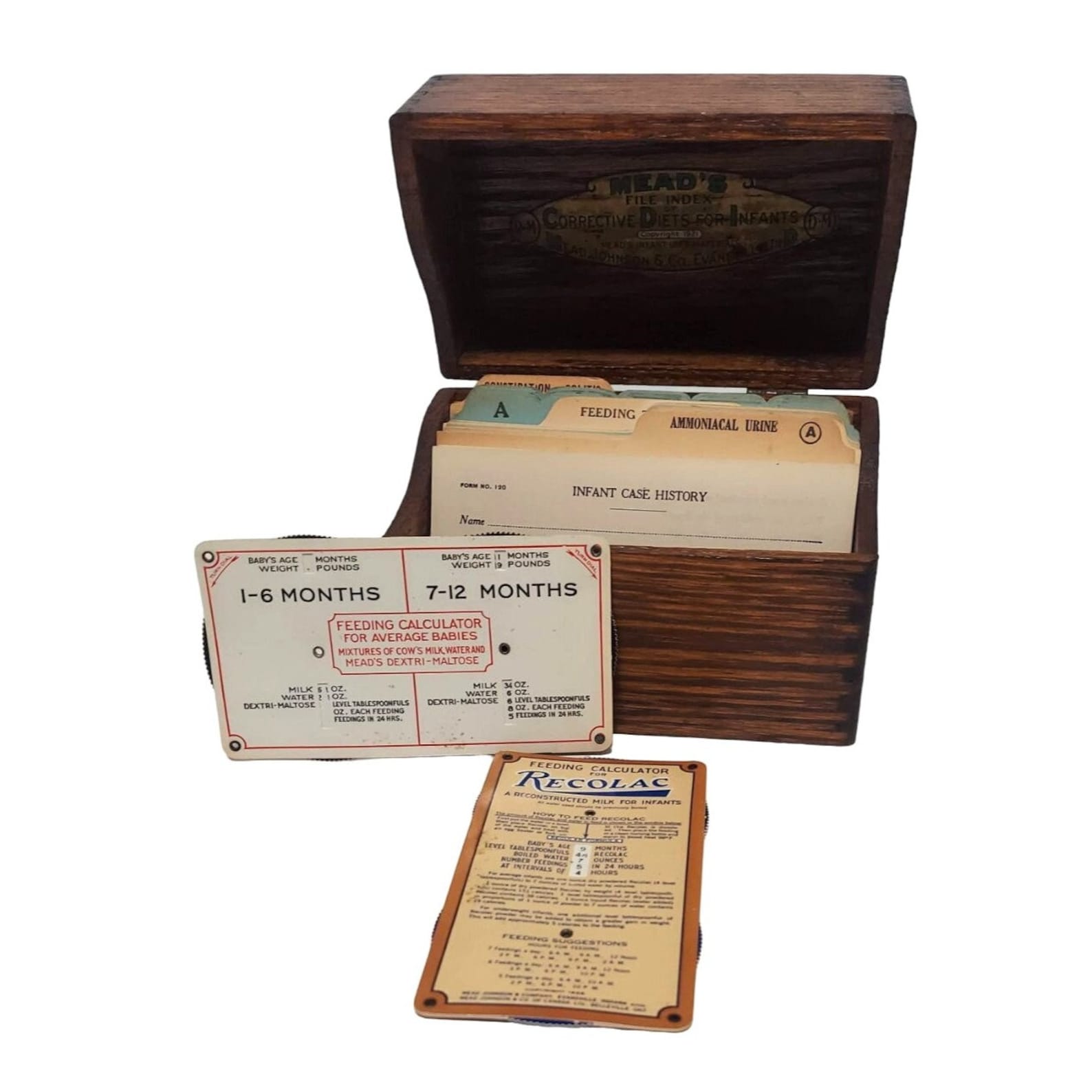
-
- Jul 2025
-
muse.jhu.edu muse.jhu.edu
-
In their2014 article for Contemporary Education Psychology, C. M. Bohn-Gettler andP. Kendeou further note how “These verbalizations can provide a measureof the actual cognitive processes readers engage in during comprehen-sion” (208)
Have to look this up, but this might be dependent on culture and historical moment -- how important is the verbalization of writing (and often scripture). Thinking here of Plato's time when reading aloud was seen as the easier one to understand in contrast to repetition from memory. Or the Romans and early Christianity where silent reading was not as common.
-
-
Local file Local file
-
For when thy labour doon al ys, For when your labour’s all doneAnd hast mad alle thy rekenynges, And you’ve made all the accountsIn stede of reste and newe thynges Instead of rest and other thingsThou goost hom to thy hous anoon, You go straight homeAnd, also domb as any stoon, And as dumb as any stoneThou sittest at another book Sit at another bookTyl fully daswed ys thy look. Till your eyes are fully dazed
In The House of Flame, Chaucer complains of "looking at screens all day" as if he were an office worker in 2025.
"Making all the accounts" here is akin to staring at an accounting spreadsheet all day.
-
The shaded afterlife of Leonardo’s notebooks – ‘without parallel in theintellectual history of word and image’, as Kemp describes them – stands insharp relief when we light it with the long, powerful burn of Pacioli’sposthumous – albeit near-anonymous – career. There’s no doubt thatLeonardo was the greater thinker, but his creative achievements madescarcely any impression compared to the impact of the universal adoptionof his friend’s Summa.
So much value hiding in da Vinci's notebooks because he failed to publish and share his knowledge
-
up Isabella d’Este’s portrait, complaining of Leonardo’s ‘haphazard andextremely unpredictable’ routine. This frustrating restlessness was, ofcourse, integral to the obsessive creativity. Pacioli had been able to draw aline under a piece of work and consider it done, but for Leonardo thisrepresented a mental hurdle that he frequently failed to clear. He leftpaintings unfinished for decades – Lisa del Giocondo sat for the Mona Lisawhen she was in her early twenties, and was thirty-nine when Leonardodied, still working on it – and he evidently felt similarly about hismanuscripts and notebooks
Tags
- notebooks as vaults
- Isabella d'Este
- same as it ever was
- productivity
- notebooks
- screen time
- perfection as the enemy of the good
- knowledge dispersal
- Leonardo da Vinci
- Lisa del Giocondo
- Mona Lisa
- Geoffrey Chaucer
- procrastination
- creativity
- complaints
- finishing
- quotes
- nothing new under the sun
- scrolling
Annotators
-
-
przemobania.com przemobania.com
-
Vintage Typewriter Office by [[Przemo Bania]]
content farm intro to typewriters for decor and use in an office... very meh.
Read it because it linked to my website
-
-
www.youtube.com www.youtube.com
-
at some point the FBI called me in uh for unrelated reasons and the first thing I told them before I cooperated with them um is just just to let you guys know if I ever find out that uh you were complicit in running a covert operation that used children to do anything in terms of state craft, all bets are off
for - Epstein as part of state-sponsored child abuse Kompromat? - Eric Weinstein - adjacency - Epstein - CIA - FBI - state-sponsored pedophilia
-
-
archimate.projects.opengroup.org archimate.projects.opengroup.org
-
referring to the type of hardware; e.g., “IBM System z mainframe”.
I would remove this advice because, while prior to ArchiMate 3 Node used to be the best concept to model a server encompassing hardware (device) and (system) software, since ArchiMate 3.2, Node can no more really be used for that purpose because several relationships have been removed (such as Communication Network aggregates Node).
This implies that now, Device has to take over Node to model a server (hard+soft), and thus its name cannot be restricted to type of hardware.
(JB)
-
(possibly virtualized)
While true I would not state this in the definition but in the description below (it already is). I think that definitions should not state anything in brackets.
-
Artifacts deployed on a node may either be drawn inside the node or connected to it with an assignment relationship.
This sentence does not make sense. Drawing something inside refers to some relationship (nesting). The sentences can be understood that putting something in the node is enough and no relationship is needed ... BTW also access can be used and nested in this case.
-
instances
I think the word instance is not valid here as I can use it for example between application as a category (class) and its versions or installations (instances). I would rephrase it that it is allowed between elements of the same type. (Also mention, that if it is allowed between relationships, the word element should be changed to concept)
-
realizing
Using "realizing" here could lead to misinterpretation. I suggest to remove it. (JB)
-
In addition to internal and external behavior elements, a third type of behavior element is defined to denote an event that can occur; for example, to signal a state change.
Should be moved at the beginning of the "4.2.4 Event" section (JB)
-
When modeling the internal behavior, it is often useful to distinguish a process view and a function view on behavior; two elements associated with these views, process and function, are defined. Both elements can be used to aggregate more detailed processes/functions but based on different aggregation criteria. A process represents a workflow consisting of smaller processes/functions executed in a certain order, with one or more clear starting points and leading to some result. It is sometimes described as “customer to customer”, where this customer may also be an internal customer in the case of sub-processes within an organization, or some system in the case of automated processes. The goal of such a process is to “satisfy or delight the customer” [10]. A function aggregates behavior based on required skills, resources, (application) support, etc. Typically, the processes of an organization or system are defined based on the products and services that this organization or system offers, while the functions are often the basis for the assignment of resources to tasks. It is permitted to use aggregation relationships between processes and functions; e.g., a process can aggregate other processes or functions, as can a function.
Shouldn't this paragraphs moved after the "4.2.2. Process" header ? (JB)
-
with the source of the relationship being the outer, containing element.
Not true for specialization where the outer element is the target one.
-
with the source of the relationship being the outer, containing element.
That's the opposite for specialization (JB)
-
Nesting for other relationships has no defined meaning but is still allowed.
5.2.2 still allow nesting for access, and I personally think it makes sense because this is another meaning than the newly added assignments to passive structure. (JB)
-
models
Model i a collection of concepts across multiple domains, I thin concepts should be used here.
-
-
www.mudpaintings.com www.mudpaintings.com
-
www.c-span.org www.c-span.org
-
What does Josephs say about himself? (Peter Brier)
I get my education writing about things that until I actually do write about them I don't know that much about. I read. up I think through. I write out.
00:09:57
-
-
zenodo.org zenodo.org
-
Philip, Rey (Editor)1 Show affiliations 1. Theory of Ontological Consciousness Project Description This interdisciplinary essay explores a forgotten hypothesis at the intersection of physics, philosophy, and fiction: that consciousness is not a byproduct of matter, but its ontological foundation. Tracing this idea from Heraclitus and Plato to Schrödinger and Penrose, the article integrates metaphysical traditions with quantum models and critiques of materialist reductionism. It introduces the Theory of Ontological Consciousness (TOC) — a literary-philosophical framework proposing ψ̂–Φ interactions as the generative basis of spacetime and form. The essay also reinterprets empirical anomalies, such as those documented by the Global Consciousness Project, as potential signatures of an underlying field of universal consciousness. For more on the Theory of Ontological Consciousness, visit www.toc-reality.org and follow new updates via Medium - https://medium.com/@philiprey.org
Philip, Rey (Editor)1 Description This interdisciplinary essay explores a forgotten hypothesis at the intersection of physics, philosophy, and fiction: that consciousness is not a byproduct of matter, but its ontological foundation. Tracing this idea from Heraclitus and Plato to Schrödinger and Penrose, the article integrates metaphysical traditions with quantum models and critiques of materialist reductionism. It introduces the Theory of Ontological Consciousness (TOC) — a literary-philosophical framework proposing ψ̂–Φ interactions as the generative basis of spacetime and form. The essay also reinterprets empirical anomalies, such as those documented by the Global Consciousness Project, as potential signatures of an underlying field of universal consciousness. For more on the Theory of Ontological Consciousness, visit www.toc-reality.org and follow new updates via Medium - https://medium.com/@philiprey.org
Tags
Annotators
URL
-
-
substack.com substack.com
-
“It is the ability to take a joke, not make one, that proves you have a sense of humor.”— Max Eastman
interesting. sense of humor is taking a joke
-
- Jun 2025
-
www.reddit.com www.reddit.com
-
-
Trump’s instability and the potential of a post-American world by [[Washington Week PBS]]
-
-
papers.ssrn.com papers.ssrn.com
-
fly.io fly.io
-
LLMs can write a large fraction of all the tedious code you’ll ever need to write. And most code on most projects is tedious. LLMs drastically reduce the number of things you’ll ever need to Google. They look things up themselves. Most importantly, they don’t get tired
Does this mean arguments against verbose "boilerplate" languages are going to be given less credence?
-
-
scholarship.law.bu.edu scholarship.law.bu.edu
Tags
Annotators
URL
-
-
partiful.com partiful.com
-
karlbusinessmachines.com karlbusinessmachines.com
- May 2025
-
archive.org archive.org
-
Could National mechanized accounting save as much for you? Almost certainly! For businesses of every size and type, employing from 50 people, up, report that upon mechanizing their accounting with National Accounting Machines, they effected savingsTHE NATIONAL CASH REGISTER DETROIT PUBLIC LIBRARYup to 30%. Savings which often pay for the whole National installation in the first year—and then run on, year after year. Ask your local National representative to check your present set-up, and report specifically the savings you can expect.
advertisement on page 17 of Newsweek (US Edition) 1948-10-04: Vol 32 Iss 14<br /> https://archive.org/details/sim_newsweek-us_1948-10-04_32_14/page/16/mode/2up
Advertisement shows two female clerks at adding machines with drawers of a card index next to them as they work.
-
-
4thgenerationcivilization.substack.com 4thgenerationcivilization.substack.com
-
ora et labora
for - Benedictine monks - work ethics - Latin - pray and work - perspective that treats work as sacred - advocated by the Benedictine monks - work - as sacred - The reasoning of founder St. Bernard was, that since they owed everything to God, - they had to pray as much as they could, and to achieve this and be self-sufficient, they also had to work
-
the hegemonic idea for centuries was that work was unworthy.
for - history - work - as moral slavery
-
-
ipfs.indy0.net ipfs.indy0.net
-
In this book, I am suggesting a unio mentalis of an atypical polarity—aunion of consciousness and language. The book is, through me, becomingitself
for - unio mentalis - as a union of consciousness and language
-
-
www.youtube.com www.youtube.com
-
i'm not trained as a linguist
for - David Long - is not trained as a linguist, yet heads this organization - This already says so much about the minor role that the STUDY of language plays in learning how to FLUENTLY SPEAK the language!
-
- Apr 2025
-
ipfs.indy0.net ipfs.indy0.net
-
Invisible architectures, on the other hand, consist of ways that our worldis structured for us and by us, except that the structure itself is not imme-diately visible
for - meme - invisible architecture - insight - language - as unintentional invisible architecture
-
-
thepresshotel.com thepresshotel.com
-
www.youtube.com www.youtube.com
-
there are people in the Trump administration orbit who actually view the dollar's role as the world's reserve currency, as bad for the U.S. economy, not an exorbitant privilege, but something that undermines our export competitiveness
for - adjacency - US reserve currency - Some in Trump admin see it as a bad thing - question - Does Trump admin want to intentionally devalue US dollar and US reserve currency status?
comment - They want to devalue the US dollar so that US goods are more competitive - lower cost
-
Explain that. Carry that out for people who would be like, I'm not making the connection because I think so much of what's happened in the last week and a half, we have to understand how this all connects,
for - question - clarify for the audience how the US dollar as reserve currency, the decrease in demand for US treasury bonds and the US national debt are related to Trump's tariffs?
comment - The interviewer asks a great question on behalf of the audience as she understands that a lot of people don't understand the significance of Trump's tariff on the US national debt, treasury bonds and the US reserve currency. - She asks him to connect the dots and reveal the salient adjacencies
-
what would it mean for the dollar to lose its position as the world's reserve currency?
for - question - what would it mean for the dollar to lose its position as the world's reserve currency? - answer - if nobody buys US treasury bonds because it is no longer seen as a safe haven, and even begin liquidating them, then they can no longer compensate for the annual interest payment of the US national debt - The US would be forced to actually balance its budget
-
he dollar as role as the world's reserve currency is necessary for the way that we run our political economy,
for - impacts - of US dollar losing role as world reserve currency - can no longer fund US deficit and must balance the budget - lose geopolitical leverage of sanctions
Tags
- impacts - of US dollar losing role as world reserve currency
- question - Does Trump admin want to intentionally devalue US dollar and US reserve currency status?
- adjacency - US reserve currency - Some in Trump admin see it as a bad thing
- question - clarify for the audience how the US dollar as reserve currency
- question - what would it mean for the dollar to lose its position as the world's reserve currency?
Annotators
URL
-
-
www.youtube.com www.youtube.com
-
This is Vera Papa Sova. She spent the last year dating far right men in New York City for a story for cosmopolitan magazine. They're the most insecure men I've ever sat down with. It was really difficult to have some of these days because they were so insecure, because they don't really know who they are, and they don't know how to figure that out.
for - quote - manosphere - most insecure men I've ever sat down with - Vera Papisova - Cosmopolitan magazine - news - liberal dating conservative men for a year - youtube - CNN - This woman dated only far-right men for a year. "They were so insecure" - to - Cosmopolitan magazine - article - Vera Papisova - I Spent Nearly a Year on a Conservative Dating App as a Liberal—Here’s What I Learned - https://hyp.is/HNRDRBkdEfCBit8g4X4cAg/www.cosmopolitan.com/sex-love/a63679179/political-beliefs-dating-app-experiment/
Tags
- quote - manosphere - most insecure men I've ever sat down with - Vera Papisova - Cosmopolitan magazine
- news - liberal dating conservative men for a year
- youtube - CNN - This woman dated only far-right men for a year. "They were so insecure"
- to - Cosmopolitan magazine - article - Vera Papisova - I Spent Nearly a Year on a Conservative Dating App as a Liberal—Here’s What I Learned
Annotators
URL
-
-
stackoverflow.com stackoverflow.com
-
There has to be a better way for us to manage Javascript build/run scripts. Everything for this platform seems tacked together. quotes with escaped quotes and npm builds to call other 'npm run' builds.. This is getting pretty painful.
-
- Mar 2025
-
Local file Local file
-
ostensibly
-apparently or purportedly, but perhaps not actually.
-
-
www.resilience.org www.resilience.org
-
Today’s humans are biologically the same as people who lived 10,000 years ago
for - meme - Today’s humans are biologically the same as people who lived 10,000 years ago - Comparison - meme - Ronald Wright - 50,000 years - Richard Heinberg 10,000 years - quote - Today’s humans are biologically the same as people who lived 10,000 years ago -Richard Heinberg
Comparison - meme - Ronald Wright - Richard Heinberg - Richard uses the 10,000 year figure while Ronald Wright uses 50,000 years. - Who is more accurate? Check with anthropologist.
Quote - Today’s humans are biologically the same as people who lived 10,000 years ago -Richard Heinberg
- Today’s humans are biologically the same as people who lived 10,000 years ago;
- but our current
- habits,
- expectations, and
- beliefs
- are almost entirely tied to
- machines,
- infrastructure,
- energy sources, and
- artificial materials
- that have only recently come into existence.
- but our current
- Compared to our hunter-gatherer forebears,
- we might as well be from another planet.
New idea - Deep Humanity communication - comparison modern be ancient - I like Heinberg's articulation. It's good to use in my own communication. - Perform a detailed comparison of - world view - mental models - behaviour and habits - between - ancestors from 10,000 / 50,000 years ago - modern humans
- Today’s humans are biologically the same as people who lived 10,000 years ago;
Tags
- quote - Today’s humans are biologically the same as people who lived 10,000 years ago -Richard Heinberg
- New idea - Deep Humanity communication - comparison modern be ancient
- meme - Today’s humans are biologically the same as people who lived 10,000 years ago
- Comparison - meme - Ronald Wright - 50,000 years - Richard Heinberg 10,000 years
Annotators
URL
-
- Feb 2025
-
www.youtube.com www.youtube.com
-
when you fall in love there are all kinds of changes to the brain there's increased dopamine to the striatum
> for - love - as a form of addiction
Tags
Annotators
URL
-
-
library.scholarcy.com library.scholarcy.com
-
He frequently used the trope of "magic" to describe the technologies and practices he did not fully understand. This trope was common in West African encounters with European colonizers, who were often seen as possessing mysterious powers and magical properties. Throughout his journal, Dikko emphasizes the importance of personal observation and experience. He often states that certain things are "difficult to describe" or "very difficult to describe," implying that his readers would need to see these wonders for themselves to fully appreciate them. This narrative strategy allowed Dikko to maintain his authority as a traveler and observer, while also encouraging his readers to imagine and fantasize about the wonders of Britain.
-
-
arxiv.org arxiv.org
-
ting and proposing the same act— stating the most-preferred pointin the metric space. This provides a unified approach to making participantsequal as both voters and proposers
Tags
Annotators
URL
-
-
files.eric.ed.gov files.eric.ed.gov
-
In usingconflict management procedures, teachers should guide children from highlevel mediation, to low level mediation, to child-negotiation. The teachershould also model and teach a consistent conflict management strategyinvolving a 5-step mediation process. A comprehensive approach is necessaryfor children with strong unmet needs. For teachers to use guidanceeffectively, they must build and maintain a personal and professional supportsystem. (KB)ReproductionssuppliedbyEDRSarethebestthatcanbemadefromtheoriginaldocument.
This is one of the ideas I will take to my classroom. I like the idea of having steps as you help the student deescalate the behavior. I think is great that it emphasizes the importance of maintaining and building strong connections.
-
-
www.linkedin.com www.linkedin.com
-
tools such as GenAI have begun to lead human actors to increasingly treat technologies as social actors... Humans perceive social cues in technology, which may trigger the (mis)application of interaction scripts learned from human interaction.
for - AI - as extreme human echo chamber - Jonathan Boymal - AI
-
-
notebooklm.google.com notebooklm.google.com
-
Assist in document preparation
key point to add as an experience roll that i have
-
-
archive.org archive.org
-
Hurd, Cuthbert C., ed. Proceedings: IBM Computation Seminar December 1949. New York: Internation Buisiness Machines Corporation, 1951. http://archive.org/details/bitsavers_ibmproceedeminarDec49_14295048.
In a variety of context here the idea of "cards" could be held to be synonymous with "notes".
Collision cards (though used in a physics setting) could be a bit hilarious with the idea of "atomic notes" and the idea of "combinatorial creativity".
-
-
-
No revolutionary schemes ona large scale are advocated at present.
-
Some idea of the rapidity with which the field has grown may be gainedfrom the fact that the bibliography of uses contains 400 entries, comparedwith 276 entries in the first edition. This great increase is reflected in theextension of the Practical Applications Section (Part II) from 186 pagesin the first edition to 295 pages in the present book.
An indication of the state-of-the-art in punch card systems from 1951 to 1958, particularly with respect to practical applications.
-
Casey, Robert S., James W. Perry, Madeline M. Berry, and Allen Kent. Punched Cards: Their Applications To Science And Industry. 2nd ed. 1951. Reprint, New York: Reinhold Publishing Corporation, 1958. http://archive.org/details/PunchedCardsTheirApplicationsToScienceAndIndustry.
-
-
Local file Local file
-
Begun, George M. “Making Your Own Punched Cards.” Journal of Chemical Education 32, no. 6 (June 1, 1955): 328. https://doi.org/10.1021/ed032p328.
George Begun used a template of "heavy galvanized iron" to drill holes into his 5 x 8" index cards to create his own edge-noted card system for use in his chemistry work. Rather than using commercially made sorting needles, he recommended the use of a ice pick with a dulled point "for safety".
-
-
www.youtube.com www.youtube.com
-
Edge-Notched Cards: A queryable database...made of paper by [[Soren Bjornstad]]
-
-
warrenpaper.com warrenpaper.com
-
warrenpaper.com warrenpaper.com
-
pressbooks.online.ucf.edu pressbooks.online.ucf.edu
-
But we’ll be tearful fools If our husbands take us at our word and leave us.
This section of the text is able to show how the idea for these women of not being available to their husbands in the only way they could at the time was a hard decision. Bringing the possibility that their husband might even leave them if no sexual pleasure was offered to them, with Lysistrata's efforts, they agree over wine, allowing this treaty to commence.
-
- Jan 2025
-
Local file Local file
-
inected
In Grammar... change the form of (a word) to express a particular grammatical function or attribute, typically tense, mood, person, number, case, and gender.
2. vary the intonation or pitch of (the voice), especially to express mood or feeling.
-
sordid
def: * involving ignoble (not noble) actions and motives; arousing moral distaste and contempt * dirty or squalid.
Tags
- squalid: ((of a place) extremely dirty and unpleasant, especially as a result of poverty or neglect.)
- intonation: 1. the rise and fall of the voice in speaking. 2. accuracy of pitch in playing or singing, or on a stringed instrument such as a guitar.
- squalid: showing or involving a contemptible lack of moral standards
Annotators
-
-
www.cambridge.org www.cambridge.org
-
system reflexivity
for - definition - system reflexivity (Moore et al., 2018) - the capacity to see the complexity and mobilize the agency in a system, while deeply engaging with diversity across multiple scales - SOURCE - paper - Reflexivity as a transformative capacity for sustainability science: introducing a critical systems approach - Lazurko et al. - 2025, Jan 10
-
individual reflexivity is rarely traced through to a collective influence on the broader transdisciplinary research process
for - adjacency - individual reflexivity is rarely traced to a collective influence - Indyweb provenance - SOURCE - paper - Reflexivity as a transformative capacity for sustainability science: introducing a critical systems approach - Lazurko et al. - 2025, Jan 10
adjacency - between - individual reflexivity is rarely traced to a collective influence - Indyweb provenance - adjacency relationship - Indyweb provenance can allow granular tracing of individual contributions to collective knowledge work - so can assist in the use of reflexivity in transdisciplinary work
-
Reflexivity has been explored on a collective societal level, for example through Ulrich Beck's work on reflexive modernization wherein the unintended consequences of simple modernity motivate a reflexive turn across society, including to science itself: ‘science itself is deconstructed by means of science’
for - further research - Ulrich Beck's research on unintended consequences of simple modernity - SOURCE - paper - Reflexivity as a transformative capacity for sustainability science: introducing a critical systems approach - Lazurko et al. - 2025, Jan 10
-
In the context of transformative transdisciplinary research, such reflexive processes are meant to open-up epistemic and solution spaces that elevate marginalized perspectives and challenge the status quo.
for - adjacency - reflexive processes elevate marginalized perspectives and challenge status quo - diversity of Indyweb perspectival knowing - mitigates progress traps that emerge from myopism - SOURCE - paper - Reflexivity as a transformative capacity for sustainability science: introducing a critical systems approach - Lazurko et al. - 2025, Jan 10
-
avigating the diverse and sometimes conflicting perspectives of researchers and participants in transdisciplinary processes raises challenges
for - adjacency - challenges of harmonizing multiple perspectives - SRG complexity mapping - Deep Humanity - embedded in Indyweb - intrinsic perspectival knowing - facilitates high resolution perspectival complementarity - SOURCE - paper - Reflexivity as a transformative capacity for sustainability science: introducing a critical systems approach - Lazurko et al. - 2025, Jan 10
-
Transdisciplinary sustainability science is increasingly applied to study transformative change. Yet, transdisciplinary research involves diverse actors who hold contrasting and sometimes conflicting perspectives and worldviews. Reflexivity is cited as a crucial capacity for navigating the resulting challenges
for - adjacency - reflexivity - tool for transdisciplinary research - indyweb - people-centered interpersonal information architecture - mindplex - concept spaces - perspectival knowing - life situatedness - SRG transdisciplinary complexity mapping tool - SOURCE - paper - Reflexivity as a transformative capacity for sustainability science: introducing a critical systems approach - Lazurko et al. - 2025, Jan 10
adjacency - between - reflexivity - tool for transdisciplinary research - indyweb - people-centered, interpersonal information architecture - mindplex - concept space - perspectival knowing - life situatedness - SRG transdisciplinary complexity mapping tool - adjacency relationship - This paper is interesting from the perspective of development of the Indyweb because there, - the people-centered, interpersonal information architecture intrinsically explicates perspectival knowing and life-situatedness - Indyweb can embed an affordance that is a meta function applied to an indyvidual's mindplex that - surfaces and aspectualizes the perspective and worldview salient to the research - The granular information that embeds an indyvidual's perspectives and worldviews is already there in the indyvidual's rich mindplex
-
as crucial dimensions are left unacknowledged
for - in other words - remain implicit instead of made explicit - SOURCE - paper - Reflexivity as a transformative capacity for sustainability science: introducing a critical systems approach - Lazurko et al. - 2025, Jan 10
-
for - paper - Reflexivity as a transformative capacity for sustainability science: introducing a critical systems approach - Lazurko et al. - 2025, Jan 10
Tags
- adjacency - challenges of harmonizing multiple perspectives - SRG complexity mapping - Deep Humanity - embedded in Indyweb - intrinsic perspectival knowing - facilitates high resolution perspectival complementarity - SOURCE - paper - Reflexivity as a transformative capacity for sustainability science: introducing a critical systems approach - Lazurko et al. - 2025, Jan 10
- in other words - remain implicit instead of made explicit - SOURCE - paper - Reflexivity as a transformative capacity for sustainability science: introducing a critical systems approach - Lazurko et al. - 2025, Jan 10
- paper - Reflexivity as a transformative capacity for sustainability science: introducing a critical systems approach - Lazurko et al. - 2025, Jan 10
- adjacency - reflexive processes elevate marginalized perspectives and challenge status quo - diversity of Indyweb perspectival knowing - mitigates progress traps that emerge from myopism - SOURCE - paper - Reflexivity as a transformative capacity for sustainability science: introducing a critical systems approach - Lazurko et al. - 2025, Jan 10
- adjacency - reflexivity - tool for transdisciplinary research - indyweb - people-centered interpersonal information architecture - mindplex - concept spaces - perspectival knowing - life situatedness - SRG transdisciplinary complexity mapping tool - SOURCE - paper - Reflexivity as a transformative capacity for sustainability science: introducing a critical systems approach - Lazurko et al. - 2025, Jan 10
- further research - Ulrich Beck's research on unintended consequences of simple modernity - SOURCE - paper - Reflexivity as a transformative capacity for sustainability science: introducing a critical systems approach - Lazurko et al. - 2025, Jan 10
- definition - system reflexivity (Moore et al., 2018) - the capacity to see the complexity and mobilize the agency in a system, while deeply engaging with diversity across multiple scales - SOURCE - paper - Reflexivity as a transformative capacity for sustainability science: introducing a critical systems approach - Lazurko et al. - 2025, Jan 10
- adjacency - individual reflexivity is rarely traced to a collective influence - Indyweb provenance - SOURCE - paper - Reflexivity as a transformative capacity for sustainability science: introducing a critical systems approach - Lazurko et al. - 2025, Jan 10
Annotators
URL
-
-
www.linkedin.com www.linkedin.com
-
New paper! For those of you just starting out in transdisciplinary research, or for those of you that have been doing it a long time and engaging in reflexive practices,
for - adjacency - post - LinkedIn - new paper - reflexivity in transdisciplinary research - Indyweb research - to - paper - Reflexivity as a transformative capacity for sustainability science: introducing a critical systems approach - Lazurko et al. - 2025, Jan 10 - https://hyp.is/SXryuNSYEe-1zcu9-Y2ncA/www.cambridge.org/core/journals/global-sustainability/article/reflexivity-as-a-transformative-capacity-for-sustainability-science-introducing-a-critical-systems-approach/D6978EE9FF6C9B7DBB36212C2BB0B865
-
-
-
It makes a lot of sense to have this different strategy of being rooted in the real physical world and have digital nomads being as like a guild of knowledge workers that seed their specialized knowledge because localism is necessary and good, but it's also not necessarily very innovative. Most people at the local level just keep repeating stuff. It's good to have people coming in from the outside and innovating.
for - insight - good for digital nomads to be rooted somewhere in the physical word - they are like a cosmo guild of knowledge workers - localities tend to repeat the same things - digital nomads as outsiders can inject new patterns - SOURCE - Youtube Ma Earth channel interview - Devcon 2024 - Cosmo Local Commoning with Web 3 - Michel Bauwens - 2025, Jan 2
-
Even for themselves, it's going to be necessary because if things get really bad and you're seen as a parasitical force, they'll come after you.
for - shadow side - of root-less digital nomads - when the sh*t hits the fan, working class will target digital nomads - as they will be seen as a parasitical force - SOURCE - Youtube Ma Earth channel interview - Devcon 2024 - Cosmo Local Commoning with Web 3 - Michel Bauwens - 2025, Jan 2
Tags
- shadow side - of root-less digital nomads - when the sh*t hits the fan, working class will target digital nomads - as they will be seen as a parasitical force - SOURCE - Youtube Ma Earth channel interview - Devcon 2024 - Cosmo Local Commoning with Web 3 - Michel Bauwens - 2025, Jan 2
- insight - good for digital nomads to be rooted somewhere in the physical word - they are like a cosmo guild of knowledge workers - localities tend to repeat the same things - digital nomads as outsiders can inject new patterns - SOURCE - Youtube Ma Earth channel interview - Devcon 2024 - Cosmo Local Commoning with Web 3 - Michel Bauwens - 2025, Jan 2
Annotators
URL
-
-
www.youtube.com www.youtube.com
-
for - colonialism - China faces backlash in Mozambique and DRC as violence erupts against corruption 2025, Jan 1
// - comment Widescale violence breaker out in Mozambique over fraudulent election results - Chinese businesses and infrastructure have been targeted as they are seen as corrupt supporters of the current government. - China's corrupt business practices that have kept ordinary people in poverty while destroying the environment. - Years if such exploitation reached a boiling point when the corrupt government won they election again.
//
-
- Dec 2024
-
louisville.edu louisville.edu
-
for - progress trap - AI superintelligence - interview - AI safety researcher and director of the Cyber Security Laboratory at the University of Louisville - Roman Yampolskiy - progress trap - over 99% chance AI superintelligence arriving as early as 2027 will destroy humanity - article UofL - Q&A: UofL AI safety expert says artificial superintelligence could harm humanity - 2024, July 15
Tags
- progress trap - AI superintelligence - interview - AI safety researcher and director of the Cyber Security Laboratory at the University of Louisville - Roman Yampolskiy
- article UofL - Q&A: UofL AI safety expert says artificial superintelligence could harm humanity - 2024, July 15
- progress trap - over 99% chance AI superintelligence arriving as early as 2027 will destroy humanity
Annotators
URL
-
-
www.linkedin.com www.linkedin.comLinkedIn1
-
This article of his really shifted my thinking:https://www.nytimes.com/2018/10/18/opinion/neighborhood-social-infrastructure-community.html
for - Linked In Post - reply to - rapid whole system change - neighborhood as the unit of change - Danica Virginia Meredith - to - NYTimes - Opinion - The Neighborhood is the Unit of Change - David Brooks - 2018
-
-
4thgenerationcivilization.substack.com 4thgenerationcivilization.substack.com
-
for - Substack article - The Cosmo-Local Plan for our Next Civilization - Michel Bauwens - 2024, Dec 20 - adjacency - web 3 and Blockchain / crypto technology - communities engaged in regeneration and relocalization - tinkering at the edge - missed opportunity - cosmolocal strategy as leverage point - safe and just cross scale translation of earth system boundaries - Tipping Point Festival - Web 4 - Indyweb
Summary adjacency between - web 3 and crypto / Blockchain technology - communities engaged in regeneration and relocalization - tinkering at the edge - missed opportunity - cosmolocal lens and framework as a leverage point for synthesis - cosmolocal projects as leverage points - cross scale translated safe and just earth system boundaries as necessary cosmolocal accounting system - meme: sync global, act local - new relationship - This article explores the untapped potential and leverage point offered by recognising a new adjacency and concomitant synthesis of - globalising Web 3 and crypto/Blockchain technology - communities engaged in regenerative and relocation interventions - The fragmentation between these areas keeps activists working in each respective one - tinkering at the edge - severely constraining their potential impact - This is a case of the whole Berlin car greater than the sun of its parts - By joining forces in a global, strategic and systemic way, each can achieve fast more through their mutual support - A cosmolocal lens offers a perspective and framework that makes joining forces make sense<br /> - Projects that recognize that the adjacency between - the globalizing technologies of web 3 and Blockchains and - interventions at the local community level - offer a significant leverage point to bottom up efforts to drive a rapid transition are themselves a leverage point - In this regard, incorporation of an equitable accounting system such as safe and just earth system boundaries that can be cross scale translated to - bioregional, - city and - community, district and ward scale - are an important cosmolocal component of a system designed for rapid transition - Global bottom up community scale events such as the Tipping Point Festival can help rapidly advocate for a cosmolocal lens, framework and strategy - At the same time, Web 4 technology that's goes beyond decentralising into people-centered can contribute another dimension to humanizing technology
Addendum - 2024, Dec 26 - added a comment to the actual substack page - My substack comment makes commenters of the article aware that we have a public hypothes.is discussion going on in parallel. - This makes the hitherto invisible discussion visible to them
-
To put it bluntly, Web3 and the crypto economy is still largely an ‘exit’ play for financial and coding elites, practicing the arbitrage of nation-states, but without much connections to local communities and resilient production; Similarly, local communities engaged in relocalized and regenerative production are not in sync with the mutual coordination capacities developed in the crypto/web3 context.
for - quote - silos - web 3 and crypto silo - localization silo - desiloing can bring about significant empowerment to people everywhere - from Substack article - The Cosmo-Local Plan for our Next Civilization - Michel Bauwens - 2024, Dec 20 - adjacency - desilo web 3 / Blockchain and localisation - educate cud events such as - Tipping Point Festival - from Substack article - The Cosmo-Local Plan for our Next Civilization - Michel Bauwens - 2024, Dec 20
quote - silos - web 3 and crypto silo - localization silo - desiloing can bring about significant empowerment to people everywhere - (see quote below) - To put it bluntly, Web3 and the crypto economy is still largely an ‘exit’ play for financial and coding elites, - practicing the arbitrage of nation-states, - but without much connections to local communities and resilient production; - Similarly, local communities engaged in relocalized and regenerative production - are not in sync with the mutual coordination capacities developed in the crypto/web3 context.
// - We need to create opportunities such as events and workshops to bring these two spheres into dialogue - Tipping Point Festival, as a cosmolocal event can do this by - holding locally organized events hosted by - local community activists at their community level, and - in larger urban centers, at ward and district level - thec internet can be used to facilitate the emergence of trans-national alliances
-
faced with the potential hostility of nation-states that are under the influence of extractive forces of trans-national finance, the local is no longer just the local, but a local that is also cosmo-local, and can mobilize counter-power.
for - quote - constructing Cosmo local as a counter power to the current dominating power of trans-national finance - from Substack article - The Cosmo-Local Plan for our Next Civilization - Michel Bauwens - 2024, Dec 20
quote - constructing Cosmo local as a counter power to the current dominating power of trans-national finance - (see below) - The idea here is a potential ‘entanglement’ between the local and the translocal level, - which creates new levels of strength and capacity for the local. · Hence, faced with the potential hostility of nation-states that are under the influence of extractive forces of trans-national finance, - the local is no longer just the local, but - a local that is also cosmo-local, and - can mobilize counter-power. - Faced with the potential hostility of nation-states - that are under the influence of extractive forces of trans-national finance, - the local is no longer just the local, - but a local that is also cosmo-local, and - can mobilize counter-power.
// This is a very important observation Local communities by themselves don't have the capacity to stand up against trans-national power, but uniting together gives local communities this capacity and a fighting chance
- A large network of people accessing an open knowledge commons increases the local information capacity of a community,
- compensating for the specific knowledge deficits of a community and enabling projects to co-create healthy, local,autonomous wellbeing culture and economy.
//
- A large network of people accessing an open knowledge commons increases the local information capacity of a community,
-
The current global system of production and trade is reported to use three times more of its resource use for transport, not for making. This creates a profound ‘ecological’, i.e. biophysical and thermodynamic, rationale for relocalizing production
for - stats - motivation for cosmolocal - high inefficacy of resource and energy use - 3x for transport as for production - from Substack article - The Cosmo-Local Plan for our Next Civilization - Michel Bauwens - 2024, Dec 20
Tags
- quote - constructing Cosmo local as a counter power to the current dominating power of trans-national finance - from Substack article - The Cosmo-Local Plan for our Next Civilization - Michel Bauwens - 2024, Dec 20
- silos - web 3 and crypto silo - localization silo - desiloing can bring about significant empowerment to people everywhere - from Substack article - The Cosmo-Local Plan for our Next Civilization - Michel Bauwens
- Substack article - The Cosmo-Local Plan for our Next Civilization - Michel Bauwens - 2024, Dec 20
- adjacency - desilo web 3 / Blockchain and localisation - educate cud events such as - Tipping Point Festival - from Substack article - The Cosmo-Local Plan for our Next Civilization - Michel Bauwens - 2024, Dec 20
- adjacency - web 3 and Blockchain / crypto technology - communities engaged in regeneration and relocalization - tinkering at the edge - missed opportunity - cosmolocal strategy as leverage point - safe and just cross scale translation of earth system boundaries - Tipping Point Festival - Web 4 - Indyweb
- stats - motivation for cosmolocal - high inefficacy of resource and energy use - 3x for transport as for production - from Substack article - The Cosmo-Local Plan for our Next Civilization - Michel Bauwens - 2024, Dec 20
- Addendum - 2024-Dec-26
Annotators
URL
-
-
www.youtube.com www.youtube.com
-
supposing I was a writer, say, for a newspaper or for a magazine. I could create content in one language, FreeSpeech, and the person who's consuming that content, the person who's reading that particular information could choose any engine, and they could read it in their own mother tongue, in their native language
for - freespeech can be used as an international language translator - data structure of thought - from TED Talk - YouTube - A word game to convey any language - Ajit Narayanan
-
when you want to use Google, you go into Google search, and you type in English, and it matches the English with the English. What if we could do this in FreeSpeech instead? I have a suspicion that if we did this, we'd find that algorithms like searching, like retrieval, all of these things, are much simpler and also more effective, because they don't process the data structure of speech. Instead they're processing the data structure of thought
for - indyweb dev - question - alternative to AI Large Language Models? - Is indyweb functionality the same as Freespeech functionality? - from TED Talk - YouTube - A word game to convey any language - Ajit Narayanan - data structure of thought - from TED Talk - YouTube - A word game to convey any language - Ajit Narayanan
Tags
- freespeech can be used as an international language translator - data structure of thought - from TED Talk - YouTube - A word game to convey any language - Ajit Narayanan
- indyweb dev - question - alternative to AI Large Language Models? - Is indyweb functionality the same as Freespeech functionality? - from TED Talk - YouTube - A word game to convey any language - Ajit Narayanan
- data structure of thought - from TED Talk - YouTube - A word game to convey any language - Ajit Narayanan
Annotators
URL
-
-
medium.com medium.com
-
The name of the practice is Lhatong, which can be translated as “further seeing” from Tibetan. Lhatong is traditionally practised with eyes open, focusing on the plane about 1.5 metres in front of you.
for - Buddhism - TIbetan - Dzogchen practice - Lhatong - arising forms are seen as empty and relational, alive, not isolated - from Medium article - Heart Sutra and the nyams of Dzogchen - Aleander Vezhnevets - 2022, Sept 7
-
nyam-nyi
for - definition - nyam-nyi - when form ad emptiness are both experienced as one taste (nonduality) - from Medium article - Heart Sutra and the nyams of Dzogchen - Aleander Vezhnevets - 2022, Sept 7
Tags
- Buddhism - TIbetan - Dzogchen practice - Lhatong - arising forms are seen as empty and relational, alive, not isolated - from Medium article - Heart Sutra and the nyams of Dzogchen - Aleander Vezhnevets - 2022, Sept 7
- definition - nyam-nyi - when form ad emptiness are both experienced as one taste (nonduality) - from Medium article - Heart Sutra and the nyams of Dzogchen - Aleander Vezhnevets - 2022, Sept 7
Annotators
URL
-
-
www.youtube.com www.youtube.com
-
In the Buddhist world we even in, in a way you can say you're always dying. You're already dying. So just thinking about it in those terms: what's the cultural impact of thinking about life as death, actually—as a process that maybe never ends?
for - adjacency - thinking of life as death - we are always dying - Deep Humanity - living is dying - from Youtube - Between Life and Death: Understanding Tukdam - John D. Dunne
-
it's said that you can get there by doing like philosophical analysis, but this is using basically physiological techniques to get to the same place phenomenologically. So that's what "tukdam" is theoretically
for - key insight - Buddhism - Tibetan - Clear light meditation at time of death - Tukdam - a physiological technique to get to the same place as philosophical analysis - recognizing nondual, ultimate nature of reality - from Youtube - Between Life and Death: Understanding Tukdam - John D. Dunne
Tags
- key insight - Buddhism - Tibetan - Clear light meditation at time of death - Tukdam - a physiological technique to get to the same place as philosophical analysis - recognizing nondual, ultimate nature of reality - from Youtube - Between Life and Death: Understanding Tukdam - John D. Dunne
- adjacency - thinking of life as death - we are always dying - Deep Humanity - living is dying - from Youtube - Between Life and Death: Understanding Tukdam - John D. Dunne
Annotators
URL
-
-
www.reddit.com www.reddit.com
-
I haven't researched where the color-coding thing started, though I suspect content creators/influencers online in the last decades as a means of making their content "pretty" rather than necessarily functional.
Historically commonplaces were based on huge varieties of topics/subject headings, so colors and symbols were not frequently used. Most who needed greater organization or search capabilities indexed their commonplaces. One of the most popular means was detailed by philosopher John Locke in 1685. Here's some pointers to his work in this area in my own digital commonplace using Hypothesis: https://hypothes.is/users/chrisaldrich?q=tag%3A%22commonplace+books%22+tag%3A%22John+Locke%22
reply to u/_cold_one at https://old.reddit.com/r/commonplacebook/comments/1hhavye/20_topics_colour_coding/
-