Leibovitz, when interviewed for her 2006 book A Photographer's Life: 1990–2005, said the book told a number of stories, and that "with Susan, it was a love story."
A narrative sentence about Sontag.
Leibovitz, when interviewed for her 2006 book A Photographer's Life: 1990–2005, said the book told a number of stories, and that "with Susan, it was a love story."
A narrative sentence about Sontag.
photographer Annie Leibovitz.
A character in the article of Sontag’s life who happened to be her lover.
At 16, she had a sexual encounter with a woman: "Perhaps I was drunk, after all, because it was so beautiful when H began making love to me...It had been 4:00 before we had gotten to bed...I became fully conscious that I desired her, she knew it, too."[29][30]
A statement that shows identification.
Activism Sontag became politically active in the 1960s, opposing the Vietnam War.[15]:128–129 In January 1968, she signed the "Writers and Editors War Tax Protest" pledge, vowing to refuse tax payments in protest against the war.[24] In May 1968, she visited Hanoi; afterwards, she wrote positively about North Vietnamese society in her essay Trip to Hanoi.[15]:130–132 The former Sarajevo newspaper building during the Siege of Sarajevo, when Sontag lived in the city During 1989 Sontag was the President of PEN American Center, the main U.S. branch of the International PEN writers' organization. After Iranian leader Ayatollah Khomeini issued a fatwa death sentence against writer Salman Rushdie for blasphemy after the publication of his novel The Satanic Verses that year, Sontag's uncompromising support of Rushdie was crucial in rallying American writers to his cause.[25] A few years later, during the Siege of Sarajevo, Sontag gained attention for directing a production of Samuel Beckett's Waiting for Godot in a candlelit theater in the Bosnian capital, cut off from its electricity supply for three and a half years. Sarajevo's besieged residents reaction was noted as:To the people of Sarajevo, Ms. Sontag has become a symbol, interviewed frequently by the local newspapers and television, invited to speak at gatherings everywhere, asked for autographs on the street. After the opening performance of the play, the city's Mayor, Muhamed Kreševljaković, came onstage to declare her an honorary citizen, the only foreigner other than the recently departed United Nations commander, Lieut. Gen. Phillippe Morillon, to be so named. "It is for your bravery, in coming here, living here, and working with us," he said.[26]
An informative paragraph in the Wikipedia article of Sontag’s life.
Written in an experimental narrative style, it remains a significant text on the AIDS epidemic.
The plot of Sontag’s short story “The Way We Live Now.”
transferred to the University of Chicago
The University of Chicago is a setting where Sontag went to college.
She began her undergraduate studies at the University of California, Berkeley but transferred to the University of Chicago in admiration of its famed core curriculum.
The University of California, Berkeley is a setting where Sontag went to college.
Sontag lived on Long Island, New York,[1
Long Island, New York is a setting where Sontag lived during her childhood.
Jack Rosenblatt, b
Jack Rosenblatt is a character in the article about Sontag’s life who happens to be Sontag’s father.
Mildred (née Jacobson)
Mildred is a character in the Wikipedia article, which happens to be Sontang’s mother.
January 16, 1933 – December 28, 2004
The date Sontag was born and the date she died.
"people remember through photographs but that they remember only the photographs ... that the photographic image eclipses other forms of understanding—and remembering. ... To remember is, more and more, not to recall a story but to be able to call up a picture" (p. 94).
Such an sharp observation. That the text of any communication might be what really lasts in our audience's mind, not the thoughts themselves makes language even more of a concrete reality. Remember in Unit #1 how we discussed HOW things are said not just WHAT is said? Same principle here.
camp
I think this is such an interesting term for "low" art (meaning art that is either produced by simple or inexpensive means and/or has a less-than-elevated purpose). Without visiting the link here, I've always assumed that "camp" or "campiness" was a description built around some idea of a camp or camping as a cheap, low-brow, maybe even "dirty" (as in "filthy") activity. Whenever my family and I went camping, we often invented games and activities to pass the time that, before Sontag, would never have been seen as artistic. Our personal narratives continue to reveal themselves as we read about other perspectives!
In her commentary, she referred to the attacks as a "monstrous dose of reality" and criticized U.S. public officials and media commentators for trying to convince the American public that "everything is O.K." Specifically, she opposed the idea that the perpetrators were "cowards," a comment George W. Bush made among other remarks on September 11.
Sontag revealing her feelings about the darkest events in US history.
Following Sontag's death, Steve Wasserman of The LA Times called her "one of America’s most influential intellectuals,
She was credited for her work and well acknowledged.
Sontag became politically active in the 1960s, opposing the Vietnam War.
At the time, the Vietnam War was controversial and was the first televised war.
The Benefactor (1963),
This is one of Susans fist novel that she published throughout her career.
Sontag taught philosophy at Sarah Lawrence College and City University of New York and the Philosophy of Religion with Jacob Taubes, Susan Taubes, Theodor Gaster, and Hans Jonas, in the Religion Department at Columbia University from 1960 to 1964.
Susan also taught Philosophy at several colleges and other places as well.
At 17, Sontag married writer Philip Rieff, who was a sociology instructor at the University of Chicago, after a 10-day courtship; their marriage lasted eight years.[
Susan seemed to do everything at a young age. She even got married at 17 and one year before she graduated college!
She graduated at the age of 18 with an A.B. and was elected to Phi Beta Kappa.[7] While at Chicago, she became best friends with fellow student Mike Nichols.[8] In 1951, her work appeared in print for the first time in the winter issue of the Chicago Review.[9]
Susan Graduated College at the age of 18. This is a good indicator that she exceeded in school very well. Also, she graduated high school young as well.
graduated from North Hollywood High School at the age of 15.
Susan graduated at a very young age. Most high school kids graduate at 18. Susan graduated when she was 15.
Sontag was born Susan Rosenblatt in New York City, the daughter of Mildred (née Jacobson) and Jack Rosenblatt, both Jews of Lithuanian[5] and Polish descent. Her father managed a fur trading business in China, where he died of tuberculosis in 1939, when Susan was five years old.[1] Seven years later, Sontag's mother married U.S. Army captain Nathan Sontag. Susan and her sister, Judith, took their stepfather's surname, although he did not adopt them formally.[1] Sontag did not have a religious upbringing and said she had not entered a synagogue until her mid-20s.[6]
A nice informative paragraph about Susan Sontag. This gives the reader an idea of where she came from, who her parents are, and what her parents did for a living.
Sontag was active in writing and speaking about, or travelling to, areas of conflict, including during the Vietnam War and the Siege of Sarajevo.
Susan Sontag was mainly focused on writing about what was going on around the world, indicating that she is also focused on what goes on around the world.
and
“And” is one of the Boolean Operators when used in a search.
Sontag was born Susan Rosenblatt in New York City, the daughter of Mildred (née Jacobson) and Jack Rosenblatt, both Jews of Lithuanian[5] and Polish descent. Her father managed a fur trading business in China, where he died of tuberculosis in 1939, when Susan was five years old.[1] Seven years later, Sontag's mother married U.S. Army captain Nathan Sontag. Susan and her sister, Judith, took their stepfather's surname, although he did not adopt them formally.[1] Sontag did not have a religious upbringing and said she had not entered a synagogue until her mid-20s.[6] Remembering an unhappy childhood, with a cold, distant mother who was "always away", Sontag lived on Long Island, New York,[1] then in Tucson, Arizona, and later in the San Fernando Valley in southern California, where she took refuge in books and graduated from North Hollywood High School at the age of 15. She began her undergraduate studies at the University of California, Berkeley but transferred to the University of Chicago in admiration of its famed core curriculum. At Chicago, she undertook studies in philosophy, ancient history and literature alongside her other requirements. Leo Strauss, Joseph Schwab, Christian Mackauer, Richard McKeon, Peter von Blanckenhagen and Kenneth Burke were among her lecturers. She graduated at the age of 18 with an A.B. and was elected to Phi Beta Kappa.[7] While at Chicago, she became best friends with fellow student Mike Nichols.[8] In 1951, her work appeared in print for the first time in the winter issue of the Chicago Review.[9] At 17, Sontag married writer Philip Rieff, who was a sociology instructor at the University of Chicago, after a 10-day courtship; their marriage lasted eight years.[10] While studying at Chicago, Sontag attended a summer school taught by the sociologist Hans Heinrich Gerth [de] who became a friend and subsequently influenced her study of German thinkers.[11][12] Upon completing her Chicago degree, Sontag taught freshman English at the University of Connecticut for the 1952–53 academic year. She attended Harvard University for graduate school, initially studying literature with Perry Miller and Harry Levin before moving into philosophy and theology under Paul Tillich, Jacob Taubes, Raphael Demos and Morton White.[13] After completing her Master of Arts in philosophy, she began doctoral research into metaphysics, ethics, Greek philosophy and Continental philosophy and theology at Harvard.[14] The philosopher Herbert Marcuse lived with Sontag and Rieff for a year while working on his 1955 book Eros and Civilization.[15]:38 Sontag researched for Rieff's 1959 study Freud: The Mind of the Moralist before their divorce in 1958, and contributed to the book to such an extent that she has been considered an unofficial co-author.[16] The couple had a son, David Rieff, who went on to be his mother's editor at Farrar, Straus and Giroux, as well as a writer in his own right. Sontag was awarded an American Association of University Women's fellowship for the 1957–1958 academic year to St Anne's College, Oxford, where she traveled without her husband and son.[17] There, she had classes with Iris Murdoch, Stuart Hampshire, A. J. Ayer and H. L. A. Hart while also attending the B. Phil seminars of J. L. Austin and the lectures of Isaiah Berlin. Oxford did not appeal to her, however, and she transferred after Michaelmas term of 1957 to the University of Paris (the Sorbonne).[18] In Paris, Sontag socialized with expatriate artists and academics including Allan Bloom, Jean Wahl, Alfred Chester, Harriet Sohmers and María Irene Fornés.[19] Sontag remarked that her time in Paris was, perhaps, the most important period of her life.[15]:51–52 It certainly provided the basis of her long intellectual and artistic association with the culture of France.[20] She moved to New York in 1959 to live with Fornés for the next seven years,[21] regaining custody of her son[17] and teaching at universities while her literary reputation grew.[15]:53–54
Early life and education, is an informative paragraph about Susan’s early life and education.
Susan Sontag
Susan Sontag is the main character of this Wikipedia topic.
He wrote 6 poems relating to Sikhism and a number of articles in Bengali child magazine about Sikhism
Just want to mention that we have a large Sikh community here in New Mexico, in the town of Espanola!
Tagore largely avoided classroom schooling
reminds me of Malcolm X's story, though the motivations may have been different
which were seized upon by literary authorities as long-lost classics
lol members of the audience thought they had discovered an ancient treasure! His 16-year-old poetry must have been very knowledgeable and filled with the influence of his predecessors
OTR base.
Franklin did not perform this experiment in the way that is often pictured in popular literature, flying the kite and waiting to be struck by lightning, as it would have been dangerous
This is the popular myth of the event, and we'll talk about myth in Unit #4. The fascinating thing about myths is that they communicate true information in an untrue narrative ")
When denied the chance to write a letter to the paper for publication, Franklin adopted the pseudonym of "Silence Dogood", a middle-aged widow. Mrs. Dogood's letters were published and became a subject of conversation around town.
I see a theme here of Franklin choosing names and "characters" that help him get the word out. There must have been some interest in the opinions and arguments of a widow at that time, perhaps due to the unforgiving nature of the "New World" (ugh) and lots of women losing their husbands to accident / fights over land or resources.
he continued his education through voracious reading
a lot like Malcolm X!
As the first United States ambassador to France, he exemplified the emerging American nation.
Exemplified - he embodies the spirit of America. Free thinking, forward looking, willing to push boundaries and challenge the establishment.
In a 1772 letter to Joseph Priestley, Franklin lays out the earliest known description of the Pro & Con list,[100] a common decision-making technique, now sometimes called a decisional balance sheet:
I still use this method today. In my job, we use it to decide on possible courses of action - weighing the pros and cons of each against another.
Benjamin Franklin's father, Josiah Franklin, was a tallow chandler, soaper, and candlemaker
Franklin came from parents with an ordinary background, and rose to become one of the greatest statesmen, scientist, inventors, and authors of his day.
In those wretched countries where a man cannot call his tongue his own, he can scarce call anything his own. Whoever would overthrow the liberty of a nation must begin by subduing the freeness of speech ... Without freedom of thought there can be no such thing as wisdom, and no such thing as public liberty without freedom of speech, which is the right of every man ...
It’s interesting to see this being debated today with the fight over freedom of speech in social media. You could argue that social media is today’s version of the earlier pamphlets.
A Loyalist to the king, William Franklin and his father Benjamin eventually broke relations over their differences about the American Revolutionary War, as Benjamin Franklin could never accept William's position
You can see this type of schism at work in today’s society. News media is full of stories of families that have become divided over politics and, more recently, some of the conspiracy theories that are running throughout society - Quanon.
satire
Satire was often times used as a method of critiquing the power structures of the day, as well as making comments on other aspects of society. Direct criticism was frowned upon, and often times punished, but you could get away with veiling your criticism as humor.
Franklin thereby invented the first newspaper chain. It was more than a business venture, for like many publishers since he believed that the press had a public-service duty
Long before the internet, and even national level newspapers, Franklin understood the power of the written word. His, and other like minded individual’s words were distributed in the form of pamphlets, that extolled their ideas on liberty and justice, and spread those words to all who were interested.
A polymath, he was a leading writer, printer, political philosopher, politician, Freemason, postmaster, scientist, inventor, humorist, civic activist, statesman, and diplomat
In stark contrast to today’s specialist that focus on being the best at one or maybe two areas of concentration. Like many of his contemporaries, Benjamin Franklin made contributions to a broad spectrum of pursuits.
Although every human being is invited to become a Christian, only those who have undergone the initiation into the Christian community through baptism can share in the "realistic" dying and rising with Christ.
Paul's says Christianity is welcomed to everyone. But being baptized into Christianity faith, you can participate in the "realistic" dying and rising of Christ.
The Quest, Schweitzer maintained that the life of Jesus must be interpreted in the light of Jesus' own convictions, which reflected late Jewish eschatology and apocalypticism.
This book has multiple stories within it, each story Albert Schweitzer wrote an opinion about them. The first quest Schweitzer believed that the secret to knowledge was related to the impending end of the universe. The second quest was the no quest, where they preached the Christ of religion and not the biblical one. The New quest were treated badly with punishment because of the separation of tradition and religion. Lastly, is the third one, scholars used scientific historical approaches to discover the Jesus that really existed in history, by using words and acts that are traced to Jesus, and paint a picture of who truly was the historical Jesus. There are many perspectives to help either strengthen your belief of Jesus by our faith or the opposite of that.
"union with the divinity, brought about by efficacious ceremonies, is found even in quite primitive religions".[
In The Mysticism of Paul the Apostle was about primitive religion which was one of the earliest and simplest form of religion, and developed religion meaning what religion you believe in it starts to grow due to the beliefs of God himself. But here Schweitzer says, in the most basic religion certain ceremonies need to be said how they are in primitive religion. Start off easy and slowly develop the religion.
Schweitzer rapidly gained prominence as a musical scholar and organist, dedicated also to the rescue, restoration and study of historic pipe organs.
Schweitzer was devoted on the saving the pipe organs, which is a musical instrument that produces sound by pressurizing air through the organ pipes that are selected by the keyboard, and has been doing it throughout his life. He participated the a Organ reform movement called Orgelbewegung, to help build pipe organs.
grew up in this exceptional environment of religious tolerance, and developed the belief that true Christianity should always work towards a unity of faith and purpose
Schweitzer grew up believing that if you let God in your life and let him take control you can discover a certain essential to your own belief. Schweitzer father was a Pastor, and thought that by letting God into his beliefs, he would understand the purpose of life and unity of Christianity.
challenged both the secular view of Jesus as depicted by the historical-critical method current at this time, as well as the traditional Christian view.
Albert Schweitzer provided a view for Christianity, that no human, animal, and plant should be sacrificed without sympathetic consideration of the life that was lost. He believed in being a Christianity in his time and context, but he identifies as ethical (what is right and wrong), rather than confessional (what you read or hear from the outside world), christian.
The original concept of Project Athena was that there would be course-specific software developed to use in conjunction with teaching. Today, computers are most frequently used for "horizontal" applications such as e-mail, word processing, communications, and graphics.
Athena is still in production use at MIT. It works as software (currently a set of Debian packages)[2] that makes a machine a thin client, that will download educational applications from the MIT servers on demand
I've come across about 20 reference for Ivan Illitch over the past month. Not sure what is driving it. Some mentions are coming out of educator circles, others from programmers, some from what I might describe as "knowledge workers" (digital gardeners/Roam Cult/Obsidian crowds). One tangential one was from someone in the hyperlink.academy crowd.
Here's a recent one from today that popped up within a thread shared in IndieWeb chat:
<script async src="https://platform.twitter.com/widgets.js" charset="utf-8"></script>Ivan Illich continues to be even more more relevant than he was at the height of his New Left popularity. Conviviality in the digital tools we use has continued to wither https://t.co/D88V6KL7Ez pic.twitter.com/OFDYTjXyCn
— Count Bla (@123456789blaaa) March 15, 2021
Deschooling Society and Tools for Conviviality look very interesting. Perhaps they've distilled enough that their ideas are having a resurgence?
He wrote that "[e]lite professional groups ... have come to exert a 'radical monopoly' on such basic human activities as health, agriculture, home-building, and learning, leading to a 'war on subsistence' that robs peasant societies of their vital skills and know-how. The result of much economic development is very often not human flourishing but 'modernized poverty', dependency, and an out-of-control system in which the humans become worn-down mechanical parts."[13] Illich proposed that we should "invert the present deep structure of tools" in order to "give people tools that guarantee their right to work with independent efficiency."[34]
Amazon anyone?
the need to develop new instruments for the reconquest of practical knowledge by the average citizen.
This fits into the idea of older knowledge and memory systems of indigenous peoples
Particularly striking in 1971 was his call for advanced technology to support "learning webs": The operation of a peer-matching network would be simple. The user would identify himself by name and address and describe the activity for which he sought a peer. A computer would send him back the names and addresses of all those who had inserted the same description. It is amazing that such a simple utility has never been used on a broad scale for publicly valued activity.
His first book, Deschooling Society, published in 1971, was a groundbreaking critique of compulsory mass education. He argued the oppressive structure of the school system could not be reformed. It must be dismantled in order to free humanity from the crippling effects of the institutionalization of all of life. He went on to critique modern mass medicine. In the pre-Internet age, Illich was highly influential among intellectuals and academics. He became known worldwide for his progressive polemics about how human culture could be preserved and expand, activity expressive of truly human values, in the face of multiple thundering forces of de-humanization.
A fairly reasonable summary of his thinking?
Health, argues Illich, is the capacity to cope with the human reality of death, pain, and sickness.
An off-the-beaten-path definition.
Illich often used the Latin phrase Corruptio optimi quae est pessima, in English The corruption of the best is the worst.
Postdigital
Article needs updating...
The transpersonal has been defined as experiences in which the sense of identity or self extends beyond (trans) the individual or personal to encompass wider aspects of humankind, life, psyche or cosmos.[1] On the other hand, transpersonal practices are those structured activities that focus on inducing transpersonal experiences.[1]
huge flocks of hundreds to thousands of individuals, murmurations, which when they take flight altogether, render large displays of intriguing swirling patterns in the skies above observers.
![]()
7Fh this a general response usually indicating the module doesn't recognize the request.
See above
Custom service: (e.g.: 22 = enhanced data)
Tried this, the GLE responded with a 7F in second byte, but it was the only time that the GLE responded at all
Relative accelerator pedal position
Want
Engine fuel rate
Want
Fuel Rail Gauge Pressure
Want
Throttle position
Want
Vehicle speed
Want
Engine speed
Want
Show current data
This is the mode that I was using on the VW Jetta
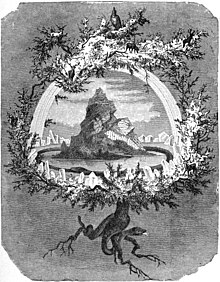
Yggdrasil (from Old Norse Yggdrasill), in Norse cosmology, is an immense and central sacred tree. Around it exists all else, including the Nine Worlds.
![]()
the Visual Editor now uses Zotero to create cites automatically from a pasted in URL.
Citoid
archives of all websites are on web.archive.org.
But you have the canonical url field which you can use here
Empirical
Similarity based
Web 2.0
![]()
Hasty generalization usually follows the pattern:
Hasty generalization is the fallacy of examining just one or very few examples or studying a single case, and generalizing that to be representative of the whole class of objects or phenomena.
An ideology (/ˌʌɪdɪˈɒlədʒi/) is a set of beliefs or philosophies attributed to a person or group of persons
more recent use treats the term as mainly condemnatory
Sometimes a change impact analysis is performed to determine an appropriate subset of tests
Hey, I do that sometimes so I can run a smaller/faster subset of tests. Didn't know it had a fancy name though.
non-regression testing
That would probably be a better name because you're actually testing/verifying that there hasn't been any regression.
You're testing for the absence of regression. But I guess testing for one also tests for the other, so it probably doesn't matter. (If something is not true you know it is false, etc.)
Regression testing (rarely non-regression testing[1]) is re-running functional and non-functional tests to ensure that previously developed and tested software still performs after a change.[2] If not, that would be called a regression.
The granularity of data refers to the size in which data fields are sub-divided
Note that, although the modifying terms, fine and coarse are used consistently across all fields, the term granularity is not.
Whenever majorities trample upon the rights of minorities—when men are denied even the privilege of having their causes of complaint examined into—when measures, which they deem for their relief, are rejected by the despotism of a silent majority at a second reading—when such become the rules of our legislation, the Congress of this Union will no longer justly represent a republican people.
RPython is now also used to write non-Python language implementations such as Pixie.
PyPy was funded by the European Union being a Specific Targeted Research Project
Bootstrapping (compilers)
Thus the recursive logo of PyPy is a snake swallowing itself since the RPython is translated by a Python interpreter.
RPython puts some constraints on the Python language such that a variable's type can be inferred at compile time.
There used to be other backends in addition to C: Java, CSharp, and Javascript but those suffered from bitrot and have been removed.
PyPy was conceived to be an implementation of Python written in a programming language that is similar to Python.
PyPy aims to provide a common translation and support framework for producing implementations of dynamic languages, emphasizing a clean separation between language specification and implementation aspects.
PyPy uses a technique known as meta-tracing, which transforms an interpreter into a tracing just-in-time compiler.
Refactoring is a means of addressing the problem of software rot. It is described as the process of rewriting existing code to improve its structure without affecting its external behaviour.
Suppose an administrator creates a forum using open source forum software, and then heavily modifies it by adding new features and options. This process requires extensive modifications to existing code and deviation from the original functionality of that software.
cannot be run on any modern day computer or computer simulator, as it was developed during the days when LISP and PLANNER were still in development stage, and thus uses non-standard macros and software libraries which do not exist anymore
Software that is not currently being used gradually becomes unusable as the remainder of the application changes.
much software requires continuous changes to meet new requirements and correct bugs, and re-engineering software each time a change is made is rarely practical.
This creates what is essentially an evolution process for the program, causing it to depart from the original engineered design. As a consequence of this and a changing environment, assumptions made by the original designers may be invalidated, introducing bugs.
Infrequently used portions of code, such as document filters or interfaces designed to be used by other programs, may contain bugs that go unnoticed. With changes in user requirements and other external factors, this code may be executed later, thereby exposing the bugs and making the software appear less functional.
There are changes in the environment not related to the program's designer, but its users. Initially, a user could bring the system into working order, and have it working flawlessly for a certain amount of time. But, when the system stops working correctly, or the users want to access the configuration controls, they cannot repeat that initial step because of the different context and the unavailable information (password lost, missing instructions, or simply a hard-to-manage user interface that was first configured by trial and error).
"the quality in a technical system that prevents a user from restoring the system, once it has failed
.
When changes occur in the program's environment, particularly changes which the designer of the program did not anticipate, the software may no longer operate as originally intended.
will eventually lead to software becoming faulty, unusable, or in need of upgrade.
This is not a physical phenomenon: the software does not actually decay, but rather suffers from a lack of being responsive and updated with respect to the changing environment in which it resides.
As a simple example of a basic runtime system, the runtime system of the C language is a particular set of instructions inserted into the executable image by the compiler. Among other things, these instructions manage the process stack, create space for local variables, and copy function-call parameters onto the top of the stack. There are often no clear criteria for deciding which language behavior is considered inside the runtime system versus which behavior is part of the source program. For C, the setup of the stack is part of the runtime system, as opposed to part of the semantics of an individual program, because it maintains a global invariant that holds over all executions. This systematic behavior implements the execution model of the language
The question, 'What is library and information science?' does not elicit responses of the same internal conceptual coherence as similar inquiries as to the nature of other fields, e.g., 'What is chemistry?', 'What is economics?', 'What is medicine?' Each of those fields, though broad in scope, has clear ties to basic concerns of their field. [...] Neither LIS theory nor practice is perceived to be monolithic nor unified by a common literature or set of professional skills. Occasionally, LIS scholars (many of whom do not self-identify as members of an interreading LIS community, or prefer names other than LIS), attempt, but are unable, to find core concepts in common
fragmented adhocracy
first sighting: adhocracy
The "Pluridisciplinary" or "multidisciplinarity" level The genuine cross-disciplinary level: "interdisciplinarity" The discipline-forming level "transdisciplinarity"
Some believe that computing and internetworking concepts and skills underlie virtually every important aspect of LIS, indeed see LIS as a sub-field of computer science!
In the last part of the 1960s, schools of librarianship, which generally developed from professional training programs (not academic disciplines) to university institutions during the second half of the 20th century, began to add the term "information science" to their names.
Documentation science gradually developed into the broader field of information science.
The word authority in authority control derives from the idea that the names of people, places, things, and concepts are authorized, i.e., they are established in one particular form.
ECMAScript is a programming language itself, specified in the document ECMA-262. In other words, ECMA-262 is the specification of the programming language ECMAScript. JavaScript is an implementation of ECMAScript which conforms to the ECMAScript specification. JavaScript implementations can also provide additional features not described in the specification.
The ECMAScript standard does not include any input/output (I/O), such as networking, storage, or graphics facilities. In practice, the web browser or other runtime system provides JavaScript APIs for I/O.
Abbreviations used in bookkeeping
so inconsistent!
PL – Profit and loss; (or I/S – income statement) P/R - Payroll etc.
The term taxon was first used in 1926 by Adolf Meyer-Abich for animal groups, as a backformation from the word Taxonomy
Accounting or Accountancy is the measurement, processing, and communication of financial and non financial information about economic entities[1][2] such as businesses and corporations. Accounting, which has been called the "language of business",[3] measures the results of an organization's economic activities and conveys this information to a variety of users, including investors, creditors, management, and regulators.
The terms "accounting" and "financial reporting" are often used as synonyms.
The recording of financial transactions, so that summaries of the financials may be presented in financial reports, is known as bookkeeping, of which double-entry bookkeeping is the most common system.
multi-paradigm: functional, imperative
Emscripten is an LLVM/Clang-based compiler that compiles C and C++ source code to WebAssembly
The Unity, Godot, and Unreal game engines provide an export option to HTML5, utilizing Emscripten.
Examples include Closure Compiler, CoffeeScript, Dart, Haxe, TypeScript and Emscripten.
A source-to-source translator, source-to-source compiler (S2S compiler), transcompiler, or transpiler[1] is a type of translator that takes the source code of a program written in a programming language as its input and produces an equivalent source code in the same or a different programming language.
Sakai is developed as open source software as a community effort
as a community effort
![]()
法裔美籍艺术家Louise Bourgeois,我们大多想到的是她那分布在世界各大美术馆中的巨型蜘蛛,它们象征着Louise的母亲,代表的是勤劳、保护、一丝不苟。但在她另一些用红色线条构成的水粉画中,我们看到的则是血腥、暴力、痛苦,以及愤怒——它们其实更多源自于为艺术家带来痛苦回忆的童年和父亲。
Louise 于1911年出生在巴黎的一个富裕的家庭,她的父母经营着一个挂毯修复坊。很小的时候,Louise便发现一直周旋在情人之间的父亲,不仅羞辱身为女儿的她“不是男孩”,还出轨了自己的家庭教师。矛盾重重的家庭关系加上母亲的因病早逝,成为了Louise一生的创伤。“这些红线来自一位面对屠宰场长大的艺术家,她深知被抛弃的愤怒。”
在Louise看来,红色是鲜血的颜色,是痛苦的颜色,也是她最常使用的颜色,“你对红色的热衷的程度与你内心抑郁的程度相等。“而Louise用这些红色线条创作出来的作品,也大多与女性的怀孕和生殖过程有关,比如呈现怀孕女性的“家庭(THE FAMILY)”,表现女性被脐带缠绕的“无限(To Infinity)”系列,以及和另一位著名女艺术家Tracey Emin合作的、隐喻女性对流产的恐惧的“不要抛弃我(Do Not Abandon Me)”,等等。
出生于20世纪初的波兰女艺术家Alina Szapocznikow,素来以用树脂,玻璃纤维,金属等材料制作的发光雕塑而闻名。
Alina于1926年出生在波兰的一个犹太家庭,少年时期就遭遇二战的她,曾经辗转于多个纳粹集中营。战后,幸存的Alina选择了去巴黎美院学习雕塑,此后,她一生的艺术实践也都与人体有关。“我坚信,在所有短暂的表现形式中,人体是最脆弱的,也是所有欢乐,苦难和真理聚集的地方。”
Alina早期的雕塑作品大多是以青铜,石头等材料制成的古典主义雕塑,作品主体完整。但从1962年起,她开始使用全新的材料来制作那些个别的、零散的、某部分的身体雕塑。这一系列实践一直持续到1973年艺术家因病去世,这也是Alina创作生涯中最惹人注目的十年。
辛迪·谢尔曼(Cindy Sherman)是美国先驱女摄影师、电影导演和艺术家。她的艺术实践和思想充满了离经叛道的挑战精神,具有划时代的先锋意义,被认为是其时代最具影响力的艺术家和当今艺术和文化领域最具影响力的艺术家之一。
辛迪·谢尔曼的摄影生涯开始于20世纪70年代,当时她已经在做以自己的肖像为题材的作品。后来谢尔曼以一组无题电影系列(Untitled Film Series)一炮而红。这一系列于1977年至1980年间创作的照片被广泛认为是近代艺术中最具原创性和影响力的成就之一。
这些照片看起来像电影剧照或宣传片,辛迪·谢尔曼将自己扮演成处于某一特定情景中的各种社会阶层中的女性,这些女性形象令人想到电影中的女主人公,却又无法辨认是具体的哪一个。她还通过灯光布置、摄影机位的运用,强调了女性作为被注视者的被动的存在状态。
directly refers to one thing by mentioning another
do we do this already irl
Ray Kurzweil
![]()
Action research

inference and learning in Bayesian networks.
Learning como Machine learning?
Binomial coefficients can be computed explicitly in various ways. To get all of them for the expansions up to (1 + X)n, one can use (in addition to the basic cases already given) the recursion relation ( n k ) = ( n − 1 k − 1 ) + ( n − 1 k ) , {\displaystyle {\binom {n}{k}}={\binom {n-1}{k-1}}+{\binom {n-1}{k}},} for 0 < k < n, which follows from (1 + X)n = (1 + X)n − 1(1 + X); this leads to the construction of Pascal's triangle.
Needed key in programming combinations?
"the problem is not swift access, but selective access"
Curious about what he means by this... I interpret this as referring to the information overload that we're all experiencing today, but not sure if that was actually his intension, or if I'm just projecting
Telegraph service in the U.S. first slowed and then virtually stopped at about midnight on 14 May due to blown fuses and damaged equipment. Radio propagation was enhanced during the storm due to ionosphere involvement, however, enabling unusually good long-distance reception.
That is so interesting!
Scribbler 2,是美国 Parallax 公司推出的最流行的机器人教育产品,适合完全无经验的学生,通过图形化编程快速进入真实的智能机器人世界,而不是把时间浪费在搭建上。Parallax 也是美国无人机最大的生产厂商之一。
S2特有的编程软件GUI容易快速上手、无需编程经验,通过简单的鼠标拖拽锻炼孩子们的逻辑思维能力。
S2坚固安全、无需组装、集成多种感应器于一身,机器人内置6种感应器,可实现多种功能,给孩子们提供强大的硬件平台。包括寻光功能,躲避物体,循线功能、写字和画图功能、信号传递功能等,充分加强孩子们的数学、图形、逻辑、音乐、美术、手工、物理等知识的积累。
the national curriculum of schooling were designed exactly as if someone had set out to prevent children from learning how to think, and act, to coax them into addiction and dependent behavior.
prevent children from learning how to think
Roblox CEO Dave Baszucki 很看重的一点是游戏和教育的结合:利用虚拟环境让知识概念更有交互感,打破传统学习方式。Baszucki 说,以前孩子研究「美国内战时」要么看书要么看视频。我们在想象一个未来:当你认识世界时,你是走进去体验它,并直接了解它。
TechCrunch 提了一个有趣的设想,也许未来 Roblox 就是青少年的「维基百科」也不一定。
2006 年,Roblox 推出免费的游戏开发引擎 Roblox Studio,允许创作者用编程语言 Lua 创作游戏,它的开发难度比较低,极易上手。2008 年,Roblox 关闭官方游戏开发,转向平台建设,把全部的创作权交给用户。这也是为什么 Roblox 有着无限的可能性:就连 Roblox 都无法确定一款游戏到底长什么样,但是由数百万开发者组成的 UGC 社区可以。
尤其在教育中,Roblox 开创了沙盒游戏的一种新可能,从「开放性世界体验」变成青少年学习知识、了解世界的全新工具。据悉,在海外已经有很多中小学已经尝试利用 Roblox 作为教学工具,甚至用在比较晦涩的数理化原理上。此外让青少年通过创作游戏来学习编程,Roblox 因此获得腾讯在编程教育赛道的第一笔投资。
minDist = infinity for i = 1 to length(P) - 1 do for j = i + 1 to length(P) do let p = P[i], q = P[j] if dist(p, q) < minDist then minDist = dist(p, q) closestPair = (p, q) return closestPair
This algorithm is bullshit.
Ball Chair
After being denied admission at three colleges
Stuart's elementary school was Plum Grove School, where an intense love of learning was instilled in him (his father also instilled this love of learning in him) https://etd.ohiolink.edu/apexprod/rws_olink/r/1501/10?clear=10&p10_accession_num=bgsu1554464085296459.
short stories, poetry, and novels as well as non-fiction autobiographical works
greatest work of poetry to come out of America since Walt Whitman published Leaves of Grass.
Stuart's work was mostly ontological and modeled after Walt Whitman and transcendentalists' worldview in general .
Stuart served in the US Navy during World War II but did not see combat as his mission in his life.[
Stuart trained athletically in his youth. He was accustomed to tough farm work. He was well known for his strength, temper, and athletics (as told in The Thread That Runs so True).
Stuart served in the US Navy during World War II but did not see combat as his mission in his life.[5]
Based off his writings, Stuart was a conservative (a very different definition than the modern conservative). He always put America in the best light when speaking at events, especially overseas events. He was a zealous patriot to the end .
They settled in W Hollow and had one daughter, Jessica Jane.[6
Again, the Stuarts frequently traveled abroad. In September 1962, he spoke on writing and other subjects on an extensive tour through the Middle East and Asia .
Stuart relied heavily on the rural locale of northeastern Kentucky for his writings.[1]
Stuart was not only influenced by Kentucky culture; he traveled extensively and taught at the American University in Cairo, Egypt from 1960-1961 .
Later he was appointed principal at McKell High School, but resigned after one year to attend graduate school at Vanderbilt University, where Edwin Mims was one of his professors.[7]
Stuart traveled extensively with his wife and daughter. He visited over 70 countries, along with all 50 continental states . This immersion in culture furthered his education.
He then served as superintendent of the Greenup County Schools before ending his career as an English teacher at Portsmouth High School in Portsmouth, Ohio.[8]
Stuart was the youngest superintendent to ever serve in state .
In 1939, Stuart married Naomi Deane Norris, a school teacher.
According to Stuart's autobiography, The Thread That Runs So True, he met Naomi Deane Norris while she was still a student. She played an important role in helping him maintain the school as they grew closer together as a couple. Stuart taught her in school before she graduated.
identify with 0 all elements of the ideal xR = { x r : r ∈ R }
so we wrap the ring around such that x is "floating over zero"
Quality-adjusted life year. (2021). In Wikipedia. https://en.wikipedia.org/w/index.php?title=Quality-adjusted_life_year&oldid=1009094786
The quality-adjusted life year or quality-adjusted life-year (QALY) is a generic measure of disease burden, including both the quality and the quantity of life lived.[1][2] It is used in economic evaluation to assess the value of medical interventions.[1] One QALY equates to one year in perfect health.[2] QALY scores range from 1 (perfect health) to 0 (dead).[3] QALYs can be used to inform health insurance coverage determinations, treatment decisions, to evaluate programs, and to set priorities for future programs.[3]
Quality-adjusted life year
macroscopic perspective of classical thermodynamics, and the microscopic description central to statistical mechanics. The classical approach defines entropy in terms of macroscopically measurable physical properties, such as bulk mass, volume, pressure, and temperature. The statistical definition of entropy defines it in terms of the statistics of the motions of the microscopic constituents of a system – modeled at first classically, e.g. Newtonian particles constituting a gas, and later quantum-mechanically (photons, phonons, spins, etc.). The two approaches form a consistent, unified view of the same phenomenon as expressed in the second law of thermodynamics, which has found universal applicability to physical processes. Function of state
test
创造力研究学者Howard E. Gruber专注于达尔文的1837-1839年的私人笔记,以这些笔记为起点,还原达尔文的学思历程。通过这个案例研究,Howard提出“事业网络(network enterprise)”的概念,他认为创造者的创造心智都是整体式的,通常创造者都会同时在多个创想上工作,这些创想处于不同的演进阶段,互相之间形成关联,每个创想的进展,都给其他创想带来触动。换句话说,创造者的心智架构是一种“概念之网”。
"Men have forgotten God; that's why all this has happened."
I don't think people understand this.
God killed a lot of people in terrible ways in The Bible (floods, locusts, killing firstborns, sending Angels to kill a third of mankind).
He's a jealous, angry God (see Deuteronomy; Moses describes this).
Theologically, by people neglecting him, God delivered a blow equivalent to a plague that killed sixty million people.
More down-to-earth, if people paid attention to God, they'd have done more morally right things and taken steps to prevent this tragedy.
So, I see this statement as true from both a theological and secular standpoint.
Minterm rectangles should be as large as possible without containing any 0s
Before I did this, I didn't understand why my cells didn't match the test case. https://www.4clojure.com/problem/140
Arthur Kleinman
法国著名漫画大师,弗洛克(Jean-Claude Floc‘h)
他因其擅长的“清晰线条”画风而风行欧洲,并以 Floc’h被人熟知。
在巴黎国立高等装饰艺术学院学习后,他致力于为新闻报刊和图书杂志绘制插图。此后,他把自己的才华运用到电影海报、广告、杂志等各个领域,同时还出版了多部漫画作品。
他的漫画式勾线和上色可谓自成一派,除了在美国综合杂志《纽约客》中画过封面及内容配图外,还曾是《monsieur》(先生)杂志封面主打画师….
Floc'h专注于Ligne Claire(相当于中文“白描”)。他曾说:“Ligne Claire 就是我自己的一部分,我就是简单、明快、‘clear’,穿着西装打着领带在生活里作出明确选择的一个人。”
他喜欢使用纸、笔和颜料,认为数码方式不够人性化。
Floc'h说:“我喜欢给读者自由联想的空间,也喜欢他们参与其中。”
叙事冒险游戏 Gone Home ,营造了一个阴森的故事背景,主人公在旅游回家后,缺发现家中空无一人,玩家需要在房间内搜集不同线索,拼凑起一个不为人知的真相。
这款游戏的文字量巨大,存在于信件、便签、明信片,书籍、杂志等物件中,玩家需要仔细阅读才能获取线索,以非线性的叙事来进行推理,《纽约时报》甚至认为这是当时游戏中「最接近文学现实主义的作品。」
2019 年在游戏界奥斯卡 The Game Awards(TGA)上斩获斩获 4 项大奖的游戏《极乐迪斯科》(Disco Elysium)。
这是一款没有战斗,全靠剧情推动的游戏,而这些剧情不是通过动画精美的画面展示的,而是依靠大量的文字对话来推进。
在游戏中,你随便遇到一个 NPC 都可能跟你聊上半个小时,每一句对话都可能延伸出不同的分支。你还不能像过去一些游戏一样直接跳过也不影响体验,玩家如果错过一句对话都可能在这个世界寸步难行,甚至连游戏中的 24 个技能也是在对话中触发的。
《亲爱的埃斯特》(Dear Esther)的游戏,没有任何关卡,也没有武器道具,玩家能做的就是在一座荒岛上漫无目的的行走,并听着由旁白来读出一封封写给 Esther 的情书。
尽管如此,一样有玩家可以津津有味地在游戏中走上 2 小时,并认为这是「个非常值得沉思,令人有感触的游戏」,还有评论认为文学化的语言和意向包裹的《亲爱的埃斯特》更像是一本精美的电子互动小说。
1976 年,一位叫做 William Crowther 的美国程序员为了哄女儿开心,以自己在国家公园洞穴探险的经历为蓝本,创作叫了一款名为《巨洞冒险》(Colossal Cave Adventure)的游戏,游戏没有任何动画和音效,玩家必须阅读画面中的文字,并根据情节输入不同的文字指令来进行游戏。
这就是世界上第一款文字冒险游戏,也是所有冒险游戏的鼻祖,并随着互联网的普及流传到到全球校园的电脑里。
一位电子游戏设计师 Roberta Williams 也是《巨洞冒险》的忠实玩家,她在玩游戏时突发奇想:如果这款游戏加上画面会怎么样?
于是在 Roberta Williams 和丈夫开始在《巨洞冒险》的基础上进行改良,并在 1980 年推出了是世界上第一款有图像的文字冒险游戏《谜之屋》,不到两年就售出了 8 万部,2017 年权威游戏媒体 GamePro 还将《谜之屋》排在有史以来最重要电子游戏排行榜中的第 51 位。
1976 年,一位叫做 William Crowther 的美国程序员为了哄女儿开心,以自己在国家公园洞穴探险的经历为蓝本,创作叫了一款名为《巨洞冒险》(Colossal Cave Adventure)的游戏,游戏没有任何动画和音效,玩家必须阅读画面中的文字,并根据情节输入不同的文字指令来进行游戏。
a picture of Holger Meins' autopsy photo
The article is missing the photo of the corpse.
Die Weltbühne
《世界舞台》
The Metaverse is a collective virtual shared space, created by the convergence of virtually enhanced physical reality and physically persistent virtual space,[1] including the sum of all virtual worlds, augmented reality, and the Internet.
virtual shared spaces
阿尔伯特.卡恩(Albert Kahn),银行家,慈善家。他于1860年出生,是家中四个孩子的老大,1879年,Albert成为了一个银行小职员,十三年后,他成为了当时在欧洲最大财团之一的Goudchaux家族银行的合伙人。
在1909年,阿尔伯特.卡恩(Albert Kahn)和他的司机兼摄影师阿尔弗雷德.迪泰特(Alfred Dutertre)出差日本公干,期间在当地拍摄了大量的照片,这使他产生了一个想法:尽可能去收集全世界的影像记录。随后他便发起了长达22年的“星球档案计划”(Archives of the Planet)。
阿尔伯特.卡恩(Albert Kahn)雇佣了琼.布容(Jean Brunhes)作为整个项目的负责人,先后将数十位摄影师派往各个大陆,采用1907年卢米埃兄弟刚刚发明的,最原始的商业彩色印相法——奥托克罗姆微粒彩屏干版(Autochrome plates)进行大量彩色照片的拍摄(这种彩色玻璃感光正片工艺需要被拍摄的人物几分钟保持一个姿势不动,拍摄耗时同时具有一定难度)。1909年到1931年之间,他们在世界各地50个国家收集了72000张彩色照片,同时拍摄了183000米长的电影胶片,为20世纪初留下了宝贵的影像记录。
.mw-parser-output cite.citation{font-style:inherit}.mw-parser-output .citation q{quotes:"\"""\"""'""'"}.mw-parser-output .id-lock-free a,.mw-parser-output .citation .cs1-lock-free a{background:linear-gradient(transparent,transparent),url("//via.hypothes.is///upload.wikimedia.org/wikipedia/commons/6/65/Lock-green.svg")right 0.1em center/9px no-repeat}.mw-parser-output .id-lock-limited a,.mw-parser-output .id-lock-registration a,.mw-parser-output .citation .cs1-lock-limited a,.mw-parser-output .citation .cs1-lock-registration a{background:linear-gradient(transparent,transparent),url("//via.hypothes.is///upload.wikimedia.org/wikipedia/commons/d/d6/Lock-gray-alt-2.svg")right 0.1em center/9px no-repeat}.mw-parser-output .id-lock-subscription a,.mw-parser-output .citation .cs1-lock-subscription a{background:linear-gradient(transparent,transparent),url("//via.hypothes.is///upload.wikimedia.org/wikipedia/commons/a/aa/Lock-red-alt-2.svg")right 0.1em center/9px no-repeat}.mw-parser-output .cs1-subscription,.mw-parser-output .cs1-registration{color:#555}.mw-parser-output .cs1-subscription span,.mw-parser-output .cs1-registration span{border-bottom:1px dotted;cursor:help}.mw-parser-output .cs1-ws-icon a{background:linear-gradient(transparent,transparent),url("//via.hypothes.is///upload.wikimedia.org/wikipedia/commons/4/4c/Wikisource-logo.svg")right 0.1em center/12px no-repeat}.mw-parser-output code.cs1-code{color:inherit;background:inherit;border:none;padding:inherit}.mw-parser-output .cs1-hidden-error{display:none;font-size:100%}.mw-parser-output .cs1-visible-error{font-size:100%}.mw-parser-output .cs1-maint{display:none;color:#33aa33;margin-left:0.3em}.mw-parser-output .cs1-format{font-size:95%}.mw-parser-output .cs1-kern-left,.mw-parser-output .cs1-kern-wl-left{padding-left:0.2em}.mw-parser-output .cs1-kern-right,.mw-parser-output .cs1-kern-wl-right{padding-right:0.2em}.mw-parser-output .citation .mw-selflink{font-weight:inherit}Yanow, Scott. "Clara Smith: Artist Biography". AllMusic.com. Retrieved 2014-09-04.
not a reputable source
She recorded two duets with Bessie Smith: "My Man Blues" and "Far Away Blues" (Columbia 14098-D), on September 1, 1925.
might need citation?
Detroit, Michigan
add hyperlink
n 1923, she settled in New York City, appearing at cabarets and speakeasies there; that same year she made the first of her commercially successful series of gramophone recordings for Columbia Records,[3] for which she recorded 122 songs, working with many other musicians such as Fletcher Henderson, Louis Armstrong,[4] and Don Redman.[
This sentence needs to be fixed. It is not grammatically correct and doesn't make sense
Contents
I think a discography section or something of the sort would be helpful
Doc Rock. "The Dead Rock Stars Club: The 1950s and Earlier". Thedeadrockstarsclub.com. Retrieved 2014-09-04.
not a reputable source
"Whip It to a Jelly / How'm I Doin' by Clara Smith". Rateyourmusic.com. Retrieved 1 August 2019.
not a reputable source
Chadbourne, Eugene. "Tom Delaney: Artist Biography". Allmusic.com. Retrieved 2014-08-04.
I don't think this is a reputable source
vaudeville.
consider adding hyperlink
Smith was born in Spartanburg County, South Carolina. In 1910 she began working on African-American theater circuits and in tent shows and vaudeville
needs citation for this info.
She was billed as the "Queen of the Moaners",[1] even though she had a lighter and sweeter voice than many of her contemporaries. She was not related to the singers Bessie Smith and Mamie Smith.
This is directly plagiarized from https://www.allmusic.com/artist/clara-smith-mn0000108444/biography
However, there remains no strict prohibition on yakuza membership in Japan today, although much legislation has been passed by the Japanese government aimed at impeding revenue and increasing liability for criminal activities.
Have to wonder if yakuza is a pressure valve for Japanese society that the West doesn't have anything quite like.
The World as Will and Representation
![]()