10,000 Matching Annotations
  1. Dec 2025
    1. He looked at me incredulously and said, “Fortran is a compiler. It’s a computer program like any other. Only it happens to take source code as its input, and puts out machine code.” There was a long pause, then I said, “Someone wrote that program?” I was stunned. I don’t know where I thought the compiler came from — Mount Olympus, maybe?

      Crenshaw's humility notwithstanding, I'm frequently caught off guard by frequent interactions with people whose conversational posture reveals that they have a similar conception of software like, say, Windows—their comments a manifestation of a seemingly total unwillingness to confront the fact that, no, some observable behavior in software isn't just how computers work, but that someone—a human programmer—sat down and decided to make it work that way—that it isn't just some natural property of computers that someone has coaxed out of one, and that other instances of software creation are not mere parlor tricks. They're procedures. They have to be conceived of and then worked out and (ideally) made airtight against a whole range of conditions.

    1. Author response:

      The following is the authors’ response to the original reviews.

      Reviewer #1 (Public review):

      Summary:

      In this paper, the authors develop a biologically plausible recurrent neural network model to explain how the hippocampus generates and uses barcode-like activity to support episodic memory. They address key questions raised by recent experimental findings: how barcodes are generated, how they interact with memory content (such as place and seed-related activity), and how the hippocampus balances memory specificity with flexible recall. The authors demonstrate that chaotic dynamics in a recurrent neural network can produce barcodes that reduce memory interference, complement place tuning, and enable context-dependent memory retrieval, while aligning their model with observed hippocampal activity during caching and retrieval in chickadees.

      Strengths:

      (1) The manuscript is well-written and structured.

      (2) The paper provides a detailed and biologically plausible mechanism for generating and utilizing barcode activity through chaotic dynamics in a recurrent neural network. This mechanism effectively explains how barcodes reduce memory interference, complement place tuning, and enable flexible, context-dependent recall.

      (3) The authors successfully reproduce key experimental findings on hippocampal barcode activity from chickadee studies, including the distinct correlations observed during caching, retrieval, and visits.

      (4) Overall, the study addresses a somewhat puzzling question about how memory indices and content signals coexist and interact in the same hippocampal population. By proposing a unified model, it provides significant conceptual clarity.

      Weaknesses:

      The recurrent neural network model incorporates assumptions and mechanisms, such as the modulation of recurrent input strength, whose biological underpinnings remain unclear. The authors acknowledge some of these limitations thoughtfully, offering plausible mechanisms and discussing their implications in depth.

      One thread of questions that authors may want to further explore is related to the chaotic nature of activity that generates barcodes when recurrence is strong. Chaos inherently implies sensitivity to initial conditions and noise, which raises questions about its reliability as a mechanism for producing robust and repeatable barcode signals. How sensitive are the results to noise in both the dynamics and the input signals? Does this sensitivity affect the stability of the generated barcodes and place fields, potentially disrupting their functional roles? Moreover, does the implemented plasticity mitigate some of this chaos, or might it amplify it under certain conditions? Clarifying these aspects could strengthen the argument for the robustness of the proposed mechanism.

      In our model, chaos is used to produce a random barcode when forming memories, but memory retrieval depends on attractor dynamics. Specifically, the plasticity update at the end of the cache creates an attractor state, and then afterwards for successful memory retrieval the network activity must settle into this attractor rather than remaining chaotic. This attractor state is a conjunction of memory content (place and seed activity) and memory index (barcode activity). Thus a barcode is ‘reactivated’ when network dynamics during retrieval settle into this cache attractor, or in other words chaotic dynamics do not need to generate the same barcode twice.

      The reviewer raises an important point, which is how sensitivity to initial conditions and noise would affect the reliability of our proposed mechanism. The key question here is how noise will affect the network’s dynamics during retrieval. Would adding noise to the dynamics make memory retrieval more difficult? We thank the reviewer for suggesting we investigate this further, and below describe our experiments and changes to the manuscript to better address this topic.

      We first experimented with adding independent gaussian distributed noise into each unit, drawn independently at each timestep. We analyzed recall accuracy using the same task and methods as Fig. 4F while varying the magnitude of noise. Memory recall was quite robust to this form of noise, even as the magnitude of noise approached half of the signal amplitude. This first experiment added noise into the temporal dynamics of the network. We subsequently examined adding static noise into the network inputs, which can also be thought of as introducing noise into initial conditions. Specifically, we added independent gaussian distributed noise into each unit, with the random value held constant for the extent of temporal dynamics. This perturbation decreased the likelihood of memory recall in a graded manner with noise magnitude, without dramatically changing the spatial profile. Examination of dynamics on individual trials revealed that the network failed to converge onto a cache attractor on some random fraction of trials, with other trials appearing nearly identical to noiseless results. We now include these results in the text and as a new supplementary figure, Figure S4AB.

      To clarify the network dynamics and the purpose of chaos in our model, we make the following modifications in text:

      Section 2.3, paragraph 2 (starting at “To store memories…”):

      “…place inputs arrive into the RNN, recurrent dynamics generate an essentially random barcode, seed inputs are activated, and then Hebbian learning binds a particular pattern of barcode activity to place- and seed-related activity.”

      Section 2.3, paragraph 3 (starting at “Memory recall in our network…”): As an example, consider a scenario in which an animal has already formed a memory at some location l, resulting in the storage of an attractor \vec{a} into the RNN. The attractor \vec{a} can be thought of as a linear combination of place input-driven activity $p(l)$, seed input-driven activity $s$, and a recurrent-driven barcode component $b$. Later, the animal returns to the same location and attempts recall (i.e. sets r \= 1, Figure 3B). Place inputs for location l drive RNN activity towards $p(l)$, which is partially correlated with attractor \vec{a}, and the recurrent dynamics cause network activity to converge onto attractor \vec{a}. In this way, barcode activity $b$ is reactivated, along with the place and seed components stored in the attractor state, $p(l)$ and $s$. The seed input can also affect recall, as discussed in the following section.

      Section 2.4, final paragraph (starting “We further examined how model hyperparameters affected performance on these tasks”), added the following describing new results on adding noise: We found that adding noise to the network's temporal dynamics had little effect on memory recall performance (Figure S4A). However, large static noise vectors added to the network's input and initial state decreased the overall probability of memory recall, but not its spatial profile (Figure S4B).

      It may also be worth exploring the robustness of the results to certain modeling assumptions.  For instance, the choice to run the network for a fixed amount of time and then use the activity  at the end for plasticity could be relaxed.

      As described above, chaotic dynamics are necessary to generate a barcode during a cache, but not to reactivate that barcode during retrieval. During a successful memory retrieval, network activity settles into an attractor state and thus does not depend on the duration of simulated dynamics. The choice of duration to run dynamics during caching is important, but only insofar as activity significantly decorrelates from the initial state. We show in Figure S1B that decorrelation saturates ~t=25, and thus any random time point t > 25 would be similarly effective. We used a fixed duration runtime for caches only to avoid introducing unnecessary complication into our model.

      Reviewer #2 (Public review):

      Summary:

      Striking experimental results by Chettih et al 2024 have identified high-dimensional, sparse patterns of activity in the chickadee hippocampus when birds store or retrieve food at a given site. These barcode-like patterns were interpreted as "indexes" allowing the birds to retrieve from memory the locations of stored food.

      The present manuscript proposes a recurrent network model that generates such barcode activity and uses it to form attractor-like memories that bind information about location and food. The manuscript then examines the computational role of barcode activity in the model by simulating two behavioral tasks, and by comparing the model with an alternate model in which barcode activity is ablated.

      Strengths of the study:

      Proposes a potential neural implementation for the indexing theory of episodic memory - Provides a mechanistic model of striking experimental findings: barcode-like, sparse patterns of activity when birds store a grain at a specific location

      A particularly interesting aspect of the model is that it proposes a mechanism for binding discrete events to a continuous spatial map, and demonstrates the computational advantages of this mechanism.

      Weaknesses:

      The relation between the model and experimentally recorded activity needs some clarification

      The relation with indexing theory could be made more clear

      The importance of different modeling ingredients and dynamical mechanisms could be made more clear

      The paper would be strengthened by focusing on the most essential aspects

      Comments:

      The model distinguishes between "barcode activity" and "attractors". Which of the two corresponds to experimentally-recorded barcodes? I would presume the attractors. A potential issue is that the attractors are, as explained in the text (l.137), conjunctions of place activity, barcode activity and "seed" inputs. The fact that the seed activity is shared across attractors seems to imply that they have a non-zero correlation independent of distance. Is that the case in the model? If I understand correctly, Fig 3D shows correlations between an attractor and barcodes at different locations, but correlations between attractors at different locations are not shown. Fig 1 F instead shows that correlations between recorded retrieval activities decay to zero with distance.

      More generally, the fact that the expression "barcode" is apparently used with different meanings in the model and in the experiments is potentially confusing (in the model they correspond to activity generating during caching, and this activity is distinct from the memories; my understanding is that in the experiments barcodes correspond to both caching and retrieval, but perhaps I am mistaken?).

      Our intent is to use the expression “barcode” as similarly as possible between model and experimental work. The reviewer points out that the connection between barcodes in experimental and modeling work is unclear, as well as the relation of “attractors” in our model to previous experimental results. The meaning of ‘barcode’ is absolutely critical—we clarify below our intended meaning, and then describe changes to the manuscript to highlight this.

      In experiments, we observed that activity during caching looked different than ordinary hippocampal activity (i.e. typical “place activity” observed during visits). Empirically there were two major differences. First, there was a pattern of neural activity which was present during every cache . This pattern was also present when birds visually inspected sites containing a cached seed, but not when visually inspecting an empty site. This is what we refer to as “seed activity”. Second, there was a pattern of neural activity which was unique to each cache. This pattern re-occurred during retrieval, and was orthogonal to place activity (see Fig. 1E-F). This is what we refer to as “barcode activity”. In summary, activity during a cache (or retrieval) contains a combination of three components: place activity, seed activity, and barcode activity.

      These experimental findings are recapitulated in our model, as activity during a cache contains a combination of three components: place activity driven by place inputs, seed activity driven by seed inputs, and barcode activity generated by recurrent dynamics. Cache activity in the model corresponds to cache activity in experiments, and barcodes in the model correspond to barcodes in experiments. Our model additionally has “attractors”, meaning that network connectivity changes so that the activity generated during a simulated cache becomes an attractor state of network dynamics. “Attractors” refers to a feature of network dynamics, not a distinct activity state, and we do not yet know if these attractors exist in experimental data.

      Figure 3D, as described in the figure legend, is a correlation of activity during cache and retrieval (in purple), for cache-retrieval pairs at the same or at different sites. We believe this is what the reviewer asks to see: the correlation between attractor states for different cache locations. The reviewer makes an important point: seed activity is shared across all attractors, so then why are correlations not high for all locations? This is because attractors also have a place component, which is anti-correlated for distant locations. This is evident in Fig. 3D by noticing that visit-visit correlations (black line, corresponding to place activity only) are negative for distant locations, and the correlation between attractors (purple line, cache-retrieval pairs) is subtly shifted up relative to the black line (place code only) for these distant locations. The size of this shift is due to the relative magnitude of place and seed inputs. For example, if we increase the strength of the seed input during caching (blue line), we can further increase the correlation between attractors even for quite distant sites:

      Author response image 1.

      To clarify the manuscript, we made the following modifications:

      Section 2.2, first paragraph: We model the hippocampus as a recurrent neural network (RNN) (Alvarez and Squire, 1994; Tsodyks, 1999; Hopfield, 1982) and propose that recurrent dynamics can generate barcodes from place inputs. As in experiments, the model’s population activity during a cache should exhibit both place and barcode activity components.

      Section 2.3, paragraph 3 (starting at “Memory recall in our network…”): As an example, consider a scenario in which an animal has already formed a memory at some location l , resulting in the storage of an attractor \vec{a} into the RNN . The attractor \vec{a} can be thought of as a linear combination of place input-driven activity $p(l)$, seed input-driven activity $s$, and a recurrent-driven barcode component $b$. Later, the animal returns to the same location and attempts recall (i.e. sets r \= 1, Figure 3B). Place inputs for l drive RNN activity towards $p(l)$, which is partially correlated with attractor \vec{a}, and the recurrent dynamics cause network activity to converge onto attractor \vec{a}. In this way, barcode activity $b$ is reactivated as part of attractor \vec{a}, along with the place and seed components stored in the attractor state, $p(l)$ and $s$. The seed input can also affect recall, as discussed in the following section.

      The insights obtained from the network model for the computational role of barcode activity could be explained more clearly. The introduction starts by laying out the indexing theory, which proposes that the hippocampus links an index with each memory so that the memory is reactivated when the index is presented. The experimental paper suggests that the barcode activations play the role of indexes. Yet, in the model reactivations of memories are driven not by presenting bar-code activity, but by presenting place activity (Cache Presence task) or seed activity (Cache Location task). So it seems that either place activity and seed activity play the role of indexes. Section 2.5 nicely shows that ultimately the role of barcode activity is to decorrelate attractors, which seems different from playing the role of indexes. I feel it would be useful that the Discussion reassess more critically the relationship between barcodes, indexing theory, and key-value architectures.

      The reviewer highlights a failure on our part to clearly identify the connection between our findings on barcodes, indexing theory, and key-value architectures. This is another major component of the paper, and below we propose changes to the manuscript to clarify these concepts and their relationships. First, we will summarize the key points that were unclear in our original manuscript.

      The reviewer equates the concept of an ‘index’ with that of a ‘query’: the signal that drives memory reactivation. This may be intuitive, but it is not how a memory index was defined in indexing theory (e.g. Teyler & DiScenna 1986). In indexing theory, the index is a pattern of hippocampal activity that is (a) generated during memory formation, (b) separate from the activity encoding memory content, and (c) linked to memory content via associative plasticity. After memory formation, a memory might be queried by activating a partial set of the memory contents, which would then drive reactivation of the hippocampal index, leading to pattern completion of memory contents. See, for example, figure 1 of Teyler and DiScenna 1986. The ‘index’ is thus not the same as the ‘query’ that drives recall.

      We propose in this work that barcode activity is such an index. Indexing theory originally posited that memory content was encoded by neocortex, and memory index was encoded by hippocampus. However the experiments of Chettih et al. 2024 revealed that the hippocampus contained both memory content and memory index signals, and furthermore there was no division of cells into ‘content’ and ‘index’ subtypes. Thus our model drops the assumption of earlier work that index and content signals correspond to different neurons in different brain areas—a significant advance of our work. Otherwise, the experimentally observed barcodes and the barcodes generated by our computational model play the role of indices as originally defined.

      Our original manuscript was unclear on the relationship of indexing theory and key-value systems. Our work connects diverse areas of memory models, including attractor dynamics, key-value memory systems, and memory indexing. A full account of these literatures and their relationships may be beyond the scope of this manuscript, and we note that a recent review article (Gershman, Fiete, and Irie, 2025) further clarifies the relationship between key-value memory, indexing theory, and the hippocampus. We will cite this work in our discussion as a source for the interested reader.

      Briefly, a key-value memory system distinguishes between the address where a memory is stored, the ‘key’, and the content of that memory, the ‘value’. An advantage of such systems is that keys can be optimized for purposes independent of the value of each memory. The use of barcodes in our model to decorrelate memories is related to this optimization of keys in key-value memory systems. By generating barcodes and adding this to the attractor state corresponding to a cache memory, the ‘address’ of the memory in population activity is differentiated from other memories. Our work is thus consistent with the idea that hippocampus generates keys and implements a key storage system. However it is not so straightforward to equate barcodes with keys, as they are defined in key-value memory. As the reviewer points out, memory recall can be driven by location and seed inputs, i.e. it is content-addressable. We think of the barcode as modifying the memory address to better separate similar memories, without changing memory content, and the resulting memory can be recalled by querying with either content or barcode. Given the complex and speculative nature of these relationships, we prefer to note the salient connection of our work with ongoing efforts applying the key-value framework to biological memory, and leave the precise details of this connection to future work.

      We make the following changes in the manuscript to clarify these ideas:

      Introduction, first paragraph: In this scheme, during memory formation the hippocampus generates an index of population activity, and the neurons representing this index are linked with the neurons representing memory content by associative plasticity . Later, re-experience of partial memory contents may reactivate the index, and reactivation of the index drives complete recall of the memory contents.

      Discussion, 4th paragraph on key-value: Interestingly, prior theoretical work has suggested neural implementations for both key-value memory and attention mechanisms, arguing for their usefulness in neural systems such as long term memory (Kanerva, 1988; Tyulmankov et al., 2021; Bricken and Pehlevan, 2021; Whittington et al., 2021; Kozachkov et al., 2023; Krotov and Hopfield, 2020; Gershman 2025 ). In this framework, the address where a memory is stored (the key) may be optimized independently of the value or content of the memory. In our model, barcodes improve memory performance by providing a content-independent scaffold that binds to memory content, preventing memories with overlapping content from blurring together. Thus barcodes can be considered as a change in memory address, and our model suggests important connections between recurrent neural activity and key generation mechanisms. However we note that barcodes should not be literally equated with keys in key-value systems as our model’s memory is ‘content-addresable’—it can be queried by place and seed inputs.

      The model includes a number of non-standard ingredients. It would be useful to explain which of these ingredients and which of the described mechanisms are essential for the studied phenomenon. In particular:

      - the dynamics in Eq.2 include a shunting inhibition term. Is it essential and why?

      The shunting inhibition is important as it acts to normalize the network activity to prevent runaway excitation. We hope to clarify this further by amending the following sentence in section 2.2: “g (·) is a leak rate that depends on the average activity of the full network, representing a form of global shunting inhibition that normalizes network activity to prevent runaway excitation from recurrent dynamics.”

      - same question for the global inhibition included in the random connectivity;

      The distribution from which connectivity strengths are drawn has a negative mean (global inhibition). This causes activity during caching (i.e. r = 1) to be sparser than activity during visits (i.e. r = 0), and was chosen to match experimental findings. In figures 2B and S2B we show that our model can transition between a mode with place code only, barcode only, or a mode containing both, by changing the variance of the weight distribution while holding the mean constant. We suggest clarifying this by editing the following in section 2.2, paragraph 2: “We initialize the recurrent weights from a random Gaussian distribution, . where 𝑁<sub>𝑋</sub> is the number of RNN neurons and μ < 0, reflecting global subtractive inhibition that encourages sparse network activity to match experimental findings (Chettih et al. 2024).”

      - the model is fully rate-based, but for certain figures, spikes are randomly generated. This seems superfluous.

      Spikes are simulated for one analysis and one visualization, where it is important to consider noise or variability in neural responses across trials. First, for Fig. 2H,J, we generated spikes to allow a visual comparison to figures that can be easily generated from experimental data. Second, and more significantly, for the analysis underlying Fig. 3D, it is essential to simulate variability in neural responses. Because our rate-based models are noiseless, the RNN’s rate vector at site distance = 0 will always be the same and result in a correlation of 1 for both visit-visit and cache-retrieval. However, we show that, if one interprets the rate as a noisy Poisson spiking process, the correlation at site distance = 0 between a cache-retrieval pair is higher than that of two visits. This is because under a Poisson spiking model, the signal-to-noise ratio is higher for cache-retrieval activity, where rates are higher in magnitude. The greater correlation for a cache-retrieval pair at the same site, relative to visits at the same site, is an experimental finding that was critical for our model to reproduce. We detail clarifications to the manuscript below in response to the reviewer’s following and related question.

      How are the correlations determined in the model (e.g., Fig 2 B)? The methods explain that they are computed from Poisson-generated spikes, but over which time period? Presumably during steady-state responses, but are these responses time-averaged?

      The reviewer points out a lack of clarity in our original manuscript. Correlations for events (caches, retrievals and visits) at different sites are calculated in two sections of the paper (2B, 3D), for different purposes and with slight differences in methods:

      - For figure 2B, no spikes are simulated. Note that the methods mentioning poisson spike generation specify only Fig. 2H,J and Fig. 3D. We simply take the network’s rate vector at timestep t=100 (when the decorrelating effect of chaotic dynamics has saturated, S1A-B) and correlate this vector when generated at different locations. We now clarify this in the legend for Figure 2B: “We show correlation of place inputs (gray) and correlation of the RNN's rate vector at t = 100 (black).”

      - For Figure 3D, we want to compare the model to empirical results from Chettih et al. 2024, and reproduced in this paper in Fig. 1E-F. These empirical results are derived from correlating vectors of spiking activity on pairs of single trials, and are thus affected by noise or variability in neural responses as described in our response to the reviewer’s previous question. We thus took the RNN’s rate vector at t=100 and simulated spiking data by drawing samples from a poisson distribution to get spike counts. Our original manuscript was unclear about this, and we suggest the following changes:

      - Legend for Figure 3D: D. Correlation of Poisson-generated spikes simulated from RNN rate vectors at two sites, plotted as a function of the distance between the two sites.

      - Section 2.3, last paragraph: Population activity during retrieval closely matches activity during caching, and is substantially decorrelated from activity during visits (Figure 3C). To compare our model with the empirical results reproduced in Figure 1E,F, we ran in silico experiments with caches and retrievals at varying sites in the circular arena. We simulated Poisson-generated spikes drawn from our network's underlying rates to match the intrinsic variability in empirical data (see Methods).

      - Methods, subsection Spatial correlation of RNN activity for cache-retrieval pairs at different sites: To calculate correlation values as in Figure \ref{fig3}D, we simulated experiments where 5 sites were randomly chosen for caching and retrieval. To compare model results to the empirical data in Fig. 1E,F, which includes intrinsic neural variability, we sampled Poisson-generated spike counts from the rates output by our model. Specifically, for RNN activity \vec{r_i} at location i, using the rates at t=100 as elsewhere, we first generate a sample vector of spikes…

      I was confused by early and late responses in Fig 2 C. The text says that the activity is initialized at zero, so the response at t=0 should be flat (and zero). More generally, I am not sure I understand why the dynamics matter for the phenomenon at all, presumably the decorrelation shown in Fig 2B depends only on steady state activity (cf previous question).

      Thanks for catching this mistake. The legend has been updated to indicate that the ‘early’ response is actually at t=1, when network activity reflects place inputs without the effects of dynamics. The reviewer is correct that we are primarily interested in the ‘late’ response of the network. All other results in the paper use this late response at t=100. As shown in Fig. S2A,B, this timepoint is not truly a steady state, as activity in the network continues to change, but the decorrelation of network activity with place-driven activity has saturated.

      We include the early response in Fig. 2C for visual comparison of the purely place-driven early activity with the eventual network response. It is also relevant since, as the reviewer points out above, there is a shunting inhibition term in the dynamics that is present during both low and high recurrent strength simulations.

      Related to the previous point, the discussion of decorrelation (l.79 - 97) is somewhat confusing. That paragraph focuses on chaotic activity, but chaos decorrelates responses across different time points. Here the main phenomenon is the decorrelation of responses across different spatial inputs (Fig 2B). This decorrelation is presumably due to the fact that different inputs lead to different non-trivial steady-state responses, but this requires some clarification. If that is correct, the temporal chaos adds fluctuations around these non-trivial steady-state responses, but that alone would not lead to the decorrelation shown in Fig 2B.

      We agree with the reviewer that chaotic activity produces a decorrelation across time points. Because of chaotic dynamics, network activity does not settle into a trivial steady-state, and instead evolves from the initial state in an unpredictable way. The network does not settle into a steady-state pattern, but both the decorrelation of network state with initial state and the rate of change in the network state saturate after ~t=25 timesteps, as shown in Fig. S2A-B.

      The initial activity for nearby states is similar, due to them receiving similar place inputs.

      Because network activity is chaotically decorrelated from this initial state by temporal dynamics, ‘late stage’ network activity between nearby spatial states is less correlated than ‘early stage’ activity. Thus the temporal decorrelation produces a spatial decorrelation. We believe that the changes we have introduced to the manuscript in revision will make this point clearer in our resubmission.

      A key ingredient of the model is that the recurrent interactions are switched on and off between "caching" and "visits". The discussion argues that a possible mechanism for this is recurrent inhibition (l.320), which would need to be added. However two forms of inhibition are already included in the model. The text also says that it is unclear how units in the model should be mapped onto E and I neurons. However the model makes explicit assumptions about this, in particular by generating spikes from individual neurons. Altogether, I did not find that part of the Discussion convincing.

      We agree with the reviewer that this section is a limitation of our current work, and in fact it is an ongoing area of future research. However we think the advances in this current work warrant publication despite this topic requiring further research. We attempted to discuss this limitation explicitly, and note that the other reviewer pointed this section out as particularly helpful. We do not think it is problematic for a realistic model of the brain to ultimately include 3, or even more forms of inhibition. We do not think that poisson-generated spikes commit us to interpreting network units as single neurons. Spikes are not a core part of our model’s mechanism, and were used only as a mechanism of introducing variability on top of deterministic rates for specific analyses. Furthermore one could still view network units as pools of both E and I spiking neurons. We would welcome further recommendations the reviewer believes are important to note in this section on our model’s limitations.

      On lines 117-120 the text briefly mentions an alternate feed-forward model and promptly discards it. The discussion instead says that a "separate possibility is that barcodes are generated in a circuit upstream of where memories are stored, and supplied as inputs to the hippocampal population", and that this possibility would lead to identical conclusions. The two statements seem a bit contradictory. It seems that the alternative possibility would replace the need for switching on and off recurrent interactions, with a mechanism where barcode inputs are switched on and off. This alternate scenario is perhaps more plausible, so it would be useful to discuss it more explicitly.

      We apologize for the confusion here, which seems to be due to our phrasing in the discussion section. We do reject the idea that a simple feed-forward model could generate the spatial correlation profile observed in data, as mentioned in the text and included as Fig. S2. Our statement in the discussion may have seemed contradictory because here we intended to discuss the possibility that an upstream area generates barcodes, for example by the chaotic recurrent dynamics proposed in our work, while a downstream network receives these barcodes as inputs and undergoes plasticity to store memories as attractors. We did not intend to suggest any connection to the feedforward model of barcode generation, and apologize for the confusion. Our claim that this ‘2 network’ solution would lead to similar conclusions is because the upstream network would need an efficient means of barcode generation, and the downstream network would need an efficient means of storing memory attractors, and separating these functions into different networks is not likely to affect for example the advantage of partially decorrelating memory attractors. Moreover, the downstream network would still require some form of recurrent gating, so that during visits it exhibits place activity without activating stored memory attractors!

      We thus chose a 1 network instead of a 2 network solution because it was simpler and, we believe, more interesting. It is challenging in the absence of more data to say which is more plausible, thus we wanted to mention the possibility of a 2 network solution. We suggest the following changes to the manuscript:

      - Discussion, 3rd paragraph: “Alternatively, other mechanisms may be involved in generating barcodes. We demonstrated that conventional feed-forward sparsification (Babadi and Sompolinsky, 2014; Xie et al., 2023) was highly inefficient, but more specialized computations may improve this (Földiak, 1990; Olshausen and Field, 1996; Sacouto and Wichert, 2023; Muscinelli et al., 2023). Another possibility is that barcodes are generated in a separate recurrent network upstream of the recurrent network where memories are stored. In this 2-network scenario, the downstream network receives both spatial tuning and barcodes as inputs. This would not obviate the need for modulating recurrent strength in the downstream network to switch between input-driven modes and attractor dynamics. We suspect separating barcode generation and memory storage in separate networks would not fundamentally affect our conclusions.”

      As a minor note, the beginning of the discussion states that the presented model is similar to previous recurrent network models of the hippocampus. It would be worth noting that several of the cited works assign a very different role to recurrent interactions: they generate place cell activity, while the present model assumes it is inherited from upstream inputs.

      We are not sure how best to modify the paper to address this suggestion. As far as we know, all of the cited models which deal with spatial encoding do assume that the hippocampus receives a spatially-modulated or spatially-tuned input. For example, the Tsodyks 1999 paper cited in this paragraph uses exponentially-decaying place inputs to each neuron highly similar to our model. Furthermore we explore how our model would perform if we change the format of spatial inputs in Fig. S4, and find key results are unchanged. It is unclear how hippocampal place fields could emerge without inputs that differentiate between spatial locations. We think it is appropriate to highlight the similarity of our model to well known hopfield-type recurrent models, where memories are stored as attractor states of the network dynamics.

      On the other hand, we agree that a common line of hippocampal modeling proposes that recurrent interactions reshape spatial inputs to produce place fields. This often arises in the context of hippocampus generating a predictive map, where inputs may be one-hot for a single spatial state, in a grid cell-like format, or a random projection of sensory features. We attempted to address this in section 2.6, using a model which superimposes the random connectivity needed for barcode generation with the structured connectivity needed for predictive map formation. We found that such a model was able to perform both predictive and barcode functions, suggesting a path forward to connecting different lines of hippocampal modeling in future work.

    1. Author response:

      The following is the authors’ response to the previous reviews.

      Recommendations for the authors:

      Reviewer #1 (Recommendations for the authors):

      Conceptually, I feel that the authors addressed many concerns. However, I am still not convinced that their data support the strength of their claims. Additionally, I spent considerable time investigating the now freely available code and data and found several inconsistencies that would be critical to rectify. My comments are split into two parts, reflecting concerns related to the responses/methods and concerns resulting from investigation of the provided code/data. The former is described in the public review above. Because I show several figures to illustrate some key points for the latter part, an attached file will provide the second part: https://elife-rp.msubmit.net/elife-rp_files/2025/02/24/00136468/01/136468_1_attach_15_2451_convrt.pdf

      (1) This point is discussed in more detail in the attached file, but there are some important details regarding the identification of the learned trial that require more clarification. For instance, isn’t the original criterion by Gibbon et al. (1977) the first “sequence of three out of four trials in a row with at least one response”? The authors’ provided code for the Wilcoxon signed rank test and nDkl thresholds looks for a permanent exceeding of the threshold. So, I am not yet convinced that the approaches used here and in prior papers are directly comparable.

      We agree that there remain unresolved issues with our two attempts to create criteria that match that used by Gibbon and Balsam for trials to criterion. Therefore, we have decided to remove those analyses and return to our original approach showing trials to acquisition using several different criteria so as to demonstrate that the essential feature of the results—the scaling between learning rate and information—is robust. Figure 2A shows the results for a criterion that identifies the trial after which the cumulative response rate during the CS (=cumulative CS response count from Trial 1 divided by cumulative CS time from Trial 1) is consistently above the cumulative overall response rate across the trial (i.e., including both the CS and ITI). These data compare the CS response rate with the overall response rate, rather than with ITI rate as done in the previous version (in Figure 3A of that submission), to be consistent with the subsequent comparisons that are made using the nDkl. (The nDkl relies on the comparison between the CS rate and the overall rate, rather than between the CS and ITI rates.) Figures 2B and 2C show trials to acquisition when two statistical criteria, based on the nDkl, are applied to the difference between CS and overall response rates (the criteria are for odds >= 4:1 and p<.05). As we now explain in the text, a statistical threshold is useful inasmuch as it provides some confidence to the claim that the animals had learned by a given trial. However, this trial is very likely to be after the point when they had learned because accumulating statistical evidence of a difference necessarily adds trials.

      Also, there’s still no regression line fitted to their data (Fig 3’s black line is from Fig 1,according to the legends). Accordingly, I think the claim in the second paragraph of the Discussion that the old data and their data are explained by a model with “essentially the same parameter value” is not yet convincing without actually reporting the parameters of the regression. Related to this, the regression for their data based on my analysis appears to have a slope closer to -0.6, which does not support strict timescale invariance. I think that this point should be discussed as a caveat in the manuscript.

      We now include regression lines fitted to our data in Figures 2A-C, and their slopes are reported in the figure note. We also note on page 14 of the revision that these regressions fitted to our data diverge from the black regression line (slope -1) as the informativeness increases. On pages 14-15, we offer an explanation for this divergence; that, in groups with high informativeness, the effective informativeness is likely to be lower than the assigned value because the rats had not been magazine trained which means they would not have discovered the food pellet as soon as it was released on the first few trials. On pages 15-16, we go on to note that evidence for a change in response rate during the CS in those very first few trials may have been missed because the initial response rates were very low in rats trained with very long inter-reinforcement intervals (and thus high informativeness). We also propose a solution to this problem of comparing between very low response rates, one that uses the nDkl to parse response rates into segments (clusters of trials with equivalent response rates). This analysis with parsed response rates provides evidence that differential responding to the CS may have been acquired earlier than is revealed using trial-by-trial comparisons.

      (2) The authors report in the response that the basis for the apparent gradual/multiple step-like increases after initial learning remains unclear within their framework. This would be important to point out in the actual manuscript Further, the responses indicating the fact that there are some phenomena that are not captured by the current model would be important to state in the manuscript itself.

      We have included a paragraph (on page 26) that discusses the interpretation of the steady/multi-step increase in responding across continued training.

      (3) There are several mismatches between results shown in figures and those produced by the authors’ code, or other supplementary files. As one example, rat 3 results in Fig 11 and Supplementary Materials don’t match and neither version is reproduced by the authors’ code. There are more concerns like this, which are detailed in the attached review file.

      Addressed next….

      The following is the response to the points raised in Part 2 of Reviewer 1’s pdf.

      (1a) I plotted the calculated nDkl with the provided code for rat 3 (Fig 11), but itlooks different, and the trials to acquisition also didn’t match with the table  provided (average of ~20 trial difference). The authors should revise the provided code and plots. Further, even in their provided figures, if one compares rat 3 in Supplementary Materials to data from the same rat in Fig 11, the curves are different. It is critical to have reproducible results in the manuscript, including the ability to reproduce with the provided code.

      We apologise for those inconsistencies. We have checked the code and the data in the figures to ensure they are all now consistent and match the full data in the nHT.mat file in OSF. Figures 11 and 12 from the previous version are now replaced with Figure 6 in the revised manuscript (still showing data from Rats 3 and 176). The data plotted in Fig 6 match what is plotted in the supplementary figures for those 2 rats (but with slightly different cropping of the x-axes) and all plots draw directly from nHT.mat.

      (1b) I tried to replicate also Fig 3C with the results from the provided code, but I failed especially for nDkl > 2.2. Fig 3A and B look to be OK.

      There was error in the previous Fig 3C which was plotting the data from the wrong column of the Trials2Acquisition Table. We suspect this arose because some changes to the file were not updated in Dropbox. However, that figure has changed (now Figure 2) as already mentioned, and no longer plots data obtained with that specific nDkl criterion. The figure now shows criteria that do not attempt to match the Gibbon and Balsam criterion.

      (1c) The trials to learn from the code do match with those in the  Trials2Acquisition Table, but the authors’ code doesn’t reproduce the reported trials to learn values in the nDkl Acquisition Table. The trials to learn from the code are ~20 trials different on average from the table’s ones, for 1:20, 1:100, and 1:1000 nDkl.

      We agree that discrepancies between those different files were a source of potential confusion because they were using different criteria or different ways of measuring response rate (i.e., the “conventional” calculation of rate as number of responses/time, vs our adjusted calculation in which the 1<sup>st</sup> response in the CS was excluded as well as the time spent in the magazine, vs parsed response rates based on inter-response intervals). To avoid this, there is now a single table called Acquisition_Table.xlsx in OSF that includes Trials to acquisition for each rat based on a range of criteria or estimates of response rate in labelled columns. The data shown in Figure 2 are all based on the conventional calculation of response rate (provided in Columns E to H of Acquisition_Table.xlsx). To make the source of these data explicit, we have provided in OSF the matlab code that draws the data from the nHT.mat file to obtain these values for trials-to-acquisition.

      (1d) The nDkl Acquisition Table has columns with the value of the nDkl statistics at various acquisition landmarks, but the value does not look to be true, especially for rat 19. The nDkl curve provided by the authors (Supplementary Materials) doesn’t match the values in the table. The curve is below 10 until at least 300 trials, while the table reports a value higher than 20 (24.86) at the earliest evidence of learning (~120 trials?).

      We are very grateful to the reviewer for finding this discrepancy in our previous files. The individual plots in the Supplementary Materials now contain a plot of the nDkl computed using the conventional calculation of response rate (plot 3 in each 6-panel figure) and a plot of the nDkl computed using the new adjusted calculation of response rate (plot 4). These correspond to the signed nDkl columns for each rat in the full data file nHT.mat. The nDkl values at different acquisition landmarks included in Acquisition_Table.xlsx (Cols AB to AF) correspond to the second of these nDkl formulations. We point out that, of the acquisition landmarks based on the conventional calculation of response rate (Cols E to J of Acquisition_Tabls.xlsx), only the first two landmarks (CSrate>Contextrate and min_nDkl) match the permanently positive and minimum values of the plotted nDkl values. This is because the subsequent acquisition landmarks are based on a recalculation of the nDkl starting from the trial when CSrate>ContextRate, whereas the plotted nDkl starts from Trial 1.

      (2) The cumulative number of responses during the trial (Total) in the raw data table is not measured directly, but indirectly estimated from the pre-CS period, as (cumNR_Pre*[cumITI/cumT_Pre])+ cumNR_CS (cumNR_Pre: cumulative nose-poke response number during pre-CS period; cumITI: cumulative sum of ITI duration; cumT_Pre: cumulative pre-CS duration; cumNR_CS: cumulative response number during CS), according to ‘Explanation of TbyTdataTable (MATLAB).docx’.Why not use the actual cumulative responses during the whole trial instead of using a noisier measure during a smaller time window and then scaling it for the total period?

      Unfortunately, the bespoke software used to control the experimental events and record the magazine activity did not record data continuously throughout the experiment. The ITI responses were only sampled during a specified time-window (the “pre-CS” period) immediately before each CS onset. Therefore, response counts across the whole ITI had to be extrapolated.

      (3) Regarding the “Matlab code for Find Trials to Criterion.docx”:

      (a) What’s the rationale for not using all the trials to calculate nDkl but starting the cumulative summation from the earliest evidence trial (truncated)? Also, this procedure is not described in the manuscript, and this should be mentioned.

      The procedure was perhaps not described clearly enough in the previous manuscript. We have expanded that text to make it clearer (page 12) which includes the text…

      “We started from this trial, rather than from Trial 1, because response rate data from trials prior to the point of acquisition would dilute the evidence for a statistically significant difference in responding once it had emerged, and thereby increase the number of trials required to observe significant responding to the CS. The data from Rat 1 illustrates this point. The CS response rate of Rat 1 permanently exceeded its overall response rate on Trial 52 (when the nD<sub>KL</sub> also became permanently positive). The nD<sub>KL</sub>, calculated from that trial onwards, surpassed 0.82 (odds 4:1) after a further 11 trials (on Trial 63) and reached 1.92 (p < .05) on Trial 81. By contrast, the nD<sub>KL</sub> for this rat, calculated from Trial 1, did not permanently exceed 0.82 until Trial 83 and did not exceed 1.92 until Trial 93, adding 10 or 20 trials to the point of acquisition.”

      (3b) The authors' threshold is the trial when the nDkl value exceeds the threshold permanently.  What about using just the first pass after the minimum?

      Rat 19 provides one example where the nDkl was initially positive, and even exceeded threshold for odds 4:1 and p<.05, but was followed by an extended period when the nDkl was negative because the CS response rate was less than the overall response rate. It illustrates why the first trial on which the nDkl passes a threshold cannot be used as a reliably index of acquisition.

      (3c) Can the authors explain why a value of 0.5 is added to the cumulative response number before dividing it by the cumulative time?

      This was done to provide an “unbiased” estimate of the response count because responses are integers. For example, if a rat has made 10 responses over 100 s of cumulative CS time, the estimated rate should be at least 10/100 but could be anything up to, but not including, 11/100. A rate of 10.5/100 is the unbiased estimate. However, we have now removed this step when calculating the nDkl to identify trials to acquisition because we recognise that it would represent a larger correction to the rate calculated across short intervals than across long intervals and therefore bias comparison between CS and overall response rates that involve very different time durations. As such, the correction would artefactually inflate evidence that the CS response rate was higher than the contextual response rate. However, as noted earlier in this reply, we have now instituted a similar correction when calculating the pre-CS response rate over the final 5 sessions for rats that did not register a single response (hence we set their response count to 0.5).

      (3d) Although the authors explain that nDkl was set to negative if pre-CS rate is higher than CS rate, this is not included in the code because the code calculates the nDkl using the truncated version, starting to accumulate the poke numbers and time from the earliest evidence, thus cumulative CS rate is always higher than cumulative contextual rate. I expect then that the cumulative CS rate will be always higher than the cumulative pre-CS rate.

      Yes, that is correct. The negative sign is added to the nDkl when it is computed starting from Trial 1. But when it is computed starting from the trial when the CS rate is permanently > the overall rate, there is no need to add a sign because the divergence is always in the positive direction.

      (3e) Regarding the Wilcoxon signed rank test, please clarify in the manuscript that the input ‘rate’ is not the cumulative rate as used for the earliest evidence. Please also clarify if the rates being compared for the signed nDkl are just the instantaneous rates or the cumulative ones. I believe that these are the ‘cumulative’ ones (not as for Wilcoxon signed rank test), because if not, the signed nDkl curve of rat 3 would fluctuate a lot across the x-axis.

      The reviewer is correct in both cases. However, as already mentioned, we have removed the analysis involving the Wilcoxon test. The description of the nDkl already specifies that this was done using the cumulative rates.

      (4) Supplemental table ‘nDkl Acquisition Table.xlsx’ 3rd column (“Earliest”) descriptions are unclear.

      (a) It is described in the supplemental ‘Explanation of Excel Tables.docx’ as the ‘earliest estimate of the onset of a poke rate during the CSs higher than the contextual poke rate’, while the last paragraph of the manuscript’s method section says ‘Columns 4, 5 and 6 of the table give the trial after which conditioned responding appeared as estimated in the above described three different ways— by the location of the minimum in the nDkl, the last upward 0 crossings, and the CS parse consistently greater than the ITI parse, respectively. Column 3 in that table gives the minimum of the three estimates.’ I plotted the data from column 3 (right) and comparing them with Fig 3A (left) makes it clear that there’s an issue in this column. If the description in the ‘Explanation of Excel Tables.docx’ is incorrect, please update it.

      We agree that the naming of these criteria can cause confusion, hence we have changed them. On page 9 we have replaced “earliest” with “first” in describing the criterion plotted in Figure 2A showing the trial starting from which the cumulative CS response rate permanently exceeded the cumulative overall rate. What is labelled as “Earliest” in “Acquisition_Table.xlsx” is, as the explanation says, the minimum value across the 3 estimates in that table.

      (b) Also, the term ‘contextual poke rate’ in the 3rd column’s description isconfusing as in the nDkl calculation it represents the poke rate during all the training time, while in the first paragraph of the ‘Data analysis’ part, the earliest evidence is calculated by comparing the ITI (pre-CS baseline) poke rate.

      Yes, we have kept the term “contextual” response rate to refer to responding across the whole training interval (the ITI and the CS duration). This is used in calculation of the nDkl. For consistency with this comparison, we now take the first estimate of acquisition (in Fig 2A) based on a comparison between the CS rate and the overall (context) rate (not the pre-CS rate).

      Reviewer #2 (Recommendations for the authors):

      In response to the Rebuttal comments:

      Analytical (1) relating to Figure 3C/D

      This is a reasonable set of alternative analyses, but it is not clear that it answers the original comment regarding why the fit was worse when using a theoretically derived measure. Indeed, Figure 3C now looks distinctly different to the original Gibbon and Balsam data in terms of the shape of the relationship (specifically, the Group Median - filled orange circles) diverge from the black regression line.

      As mentioned in response to Reviewer 1, there was a mistake in Figure 3C of the revised manuscript. The figure was actually plotting data using a more stringent criterion of nDkl > 5.4, corresponding to p<0.001. The figure was referencing the data in column J of the public Trials2Acquisition Table. The data previously plotted in Figure 3C are no longer plotted because we no longer attempt to identify a criterion exactly matching that used by Gibbon and Balsam.

      We agree that the data shown in the first 3 panels of Figure 2 do diverge somewhat from the black regression line at the highest levels of informativeness (C/T ratios > 70), and the regression lines fitted to the data have slopes greater than -1. We acknowledge this on page 14 of the revised manuscript. Since Gibbon and Balsam did not report data from groups with such high ratios, we can’t know whether their data too would have diverged from the regression line at this point. We now report in the text a regression fitted to the first 10 groups in our experiment, which have C/T ratios that coincide with those of Gibbon and Balsam, and those regression lines do have slopes much closer to -1 (and include -1 in the 95% confidence intervals). We believe the divergence in our data at the high C/T ratios may be due to the fact that our rats were not given magazine training before commencing training with the CS and food. Because of this, it is quite likely that many rats did not find the food immediately after delivery on the first few trials. Indeed, in subsequent experiments, when we have continued to record magazine entries after CS-offset, we have found that rats can take 90 s or more to enter the magazine after the first pellet delivery. This delay would substantially increase the effective CS-US interval, measured from CS onset to discovery of the food pellet by the rat, making the CS much less informative over those trials. We now make this point on pages 14-15 of the revised manuscript.

      Analytical (2)

      We may have very different views on the statistical and scientific approaches here.

      This scalar relationship may only be uniquely applicable to the specific parameters of an experiment where CS and US responding are measured with the same behavioral response (magazine entry). As such, statements regarding the simplicity of the number of parameters in the model may simply reflect the niche experimental conditions required to generate data to fit the original hypotheses.

      To the extent that our data are consistent with the data reported decades ago by Gibbon and Balsam indicates the scalar relationship they identified is not unique to certain niche conditions since those special conditions must be true of both the acquisition of sign-tracking responses in pigeons and magazine entry responses in rats. How broadly it applies will require further experimental work using different paradigms and different species to assess how the rate of acquisition is affected across a wide range of informativeness, just as we have done here.

    1. Reviewer #1 (Public review):

      Summary:

      The authors set out on the ambitious task of establishing the reproducibility of claims from the Drosophila immunity literature. Starting out from a corpus of 400 articles from 1959 and 2011, the authors sought to determine whether their claims were confirmed or contradicted by previous or subsequent publications. Additionally, they actively sought to replicate a subset of the claims for which no previous replications were available (although this set was not representative of the whole sample, as the authors focused on suspicious and/or easily testable claims). The focus of the article is on inferential reproducibility; thus, methods don't necessarily map exactly to the original ones.

      The authors present a large-scale analysis of the individual replication findings, which are presented in a companion article (Westlake et al., 2025. DOI 10.1101/2025.07.07.663442). In their retrospective analysis of reproducibility, the authors find that 61% of the original claims were verified by the literature, 7.5% were partialy verified, and only 6.8% were challenged, with 23.8% having no replication available. This is in stark contrast with the result of their prospective replications, in which only 16% of claims were successfully reproduced.

      The authors proceed to investigate correlates of replicability, with the most consistent finding being that findings stemming from higher-ranked universities (and possibly from very high impact journals) were more likely to be challenged.

      Strengths:

      (1) The work presents a large-scale, in-depth analysis of a particular field of science that includes authors with deep domain expertise of the field. This is a rare endeavour to establish the reproducibility of a particular subfield of science, and I'd argue that we need many more of these in different areas.

      (2) The project was built on a collaborative basis (https://ReproSci.epfl.ch/), using an online database (https://ReproSci.epfl.ch/), which was used to organize the annotations and comments of the community about the claims. The website remains online and can be a valuable resource to the Drosophila immunity community.

      (3) Data and code are shared in the authors' GitHub repository, with a Jupyter notebook available to reproduce the results.

      Main concerns:

      (1) Although the authors claim that "Drosophila immunity claims are mostly replicable", this conclusion is strictly based on the retrospective analysis - in which around 84% of the claims for which a published verification attempt was found. This is in very stark contrast with the findings that the authors replicate prospectively, of which only 16% are verified.

      Although this large discrepancy may be explained by the fact that the authors focused on unchallenged and suspicious claims (which seems to be their preferred explanation), an alternative hypothesis is that there is a large amount of confirmation bias in the Drosophila immunity literature, either because attempts to replicate previous findings tend to reach similar results due to researcher bias, or because results that validate previous findings are more likely to be published.

      Both explanations are plausible (and, not being an expert in the field, I'd have a hard time estimating their relative probability), and in the absence of prospective replication of a systematic sample of claims - which could determine whether the replication rate for a random sample of claims is as high as that observed in the literature -, both should be considered in the manuscript.

      (2) The fact that the analysis of factors correlating with reproducibility includes both prospective and retrospective replications also leads to the possibility of confusion bias in this analysis. If most of the challenged claims come from the authors' prospective replications, while most of the verified ones come from those that were replicated by the literature, it becomes unclear whether the identified factors are correlated with actual reproducibility of the claims or with the likelihood that a given claim will be tested by other authors and that this replication will be published.

      (3) The methods are very brief for a project of this size, and many of the aspects in determining whether claims were conceptually replicated and how replications were set up are missing.

      Some of these - such as the PubMed search string for the publications and a better description of the annotation process - are described in the companion article, but this could be more explicitly stated. Others, however, remain obscure. Statements such as "Claims were cross-checked with evidence from previous, contemporary and subsequent publications and assigned a verification category" summarize a very complex process for which more detail should be given - in particular because what constitutes inferential reproducibility is not a self-evident concept. And although I appreciate that what constitutes a replication is ultimately a case-by-case decision, a general description of the guidelines used by the authors to determine this should be provided. As these processes were done by one author and reviewed by another, it would also be useful to know the agreement rates between them to have a general sense of how reproducible the annotation process might be.

      The same gap in methods descriptions holds for the prospective replications. How were labs selected, how were experimental protocols developed, and how was the validity of the experiments as a conceptual replication assessed? I understand that providing the methods for each individual replication is beyond the scope of the article, but a general description of how they were developed would be important.

      (4) As far as I could tell, the large-scale analysis of the replication results was not preregistered, and many decisions seem somewhat ad hoc. In particular, the categorization of journals (e.g. low impact, high impact, "trophy") and universities (e.g. top 50, 51-100, 101+) relies on arbitrary thresholds, and it is unclear how much the results are dependent on these decisions, as no sensitivity analyses are provided.

      Particularly, for analyses that correlate reproducibility with continuous variable (such as year of publication, impact factor or university ranking, I'd strongly favor using these variables as continuous variables in the analysis (e.g. using logistic regression) rather than performing pairwise comparisons between categories determined by arbitrary cutoffs. This would not only reduce the impact of arbitrary thresholds in the analysis, but would also increase statistical power in the univariate analyses (as the whole sample can be used in at once) and reduce the number of parameters in the multivariate model (as they will be included as a single variable rather than multiple dummy variables when there are more than two categories).

      (5) The multivariate model used to investigate predictors of replicability includes unchallenged claims along with verified ones in the outcome, which seems like an odd decision. If the intention is to analyze which factors are correlated with reproducibility, it would make more sense to remove the unchallenged findings, as these are likely uninformative in this sense. In fact, based on the authors' own replications of unchallenged findings, they may be more likely to belong the "challenged" category than to the "unchallenged" one if they were to be verified.

    1. we should be mo flex-ible, mo acceptin of language diversity, language expansion, and creative languageusage from ourselves and from others both in formal and informal settings.

      Stop restricting readers and writers from code-switching and allow for diversity.

    2. Instead of prescribing how folks should write or speak, I say we teach languagedescriptively. This mean we should, for instance, teach how language functionswithin and from various cultural perspectives.

      Advocating for the approach to teaching language and analyzes code-switching in different cultures instead of teaching standard English and making it seem like there's a correct or wrong way.

    3. Code meshing be everywhere. It be used by all types of people. It allow writ-ers and speakers to bridge multiple codes and modes of expression that Fish saydisparate and unmixable.

      Code-meshing is used by "bridging multiple codes" where different dialects can come together.

    4. This mode of communication be just as frequently used by politicians and profes-sors as it be by journalists and advertisers.

      Shows how code-switching is used by anyone across different groups.

    5. Code meshing blend dialects, international languages, local idioms, chat-roomlingo, and the rhetorical styles of various ethnic and cultural groups in both formaland informal speech acts.

      Shows how broad code-meshing is and covers different languages, dialects, and ways of communication. Shows that it's used across different contexts.

    6. codeswitching from a linguistic perspective: two languages and dialects co-existing inone speech act (Auer).But since so many teachers be jackin up code switching with they “speak this way atschool and a different way at home,” we need a new term. I call it CODE MESHING!

      Defines code-switching, also introduces code meshing as his preference when discussing the different dialects that come together in different ways academically, such as writing.

    1. When I write in Diné bizaad the sounds come from the center of what it means to be Diné.

      Explains why people code-switch, it's apart of their identity and English is helpful but Dine is the center of her.

    2. I’m interested in the intersection between Navajo and English languages. As a bilingual Native writer, I still write primarily in English, although Navajo words and expressions have greater meaning and depth in poetry which I can use.

      While writing poetry she primarily writes in English but uses Dine to express and go more into depth about the meaning of what she's writing. She uses code-switching to add more meaning to her poems.

    3. In school it was English-only, but tribal languages were everywhere outside the classroom. I was surrounded by Diné bizaad, English, Zuni, and Spanish languages. Navajo and Zuni DJs code-switched on the AM radio station that brought us “Navajo Hour” and “Zuni Hour.”

      Code-switching occurred on the radio and created community as there was a Native audience and representation. It was a way to accept herself and culture as she wasn't in her oppressive school environment.

    4. English became my shield and my passport inside and outside of school

      English was used as a tool for protection and survival in an environment where there was obvious racism. She code switches in order to be manage social perception.

    5. I was five years old and was bearing witness to the punishment inflicted on my monolingual classmates when their tongues struggled to pronounce English words.

      Represents her inability to pronounce certain words in English and how she was required to code-switch in order to avoid feeling discriminated against.

    1. Author response:

      The following is the authors’ response to the original reviews.

      Reviewer #1 (Public review):

      Summary:

      Colorectal cancer (CRC) is the third most common cancer globally and the second leading cause of cancer-related deaths. Colonoscopy and fecal immunohistochemical testing are among the early diagnostic tools that have significantly enhanced patient survival rates in CRC. Methylation dysregulation has been identified in the earliest stages of CRC, offering a promising avenue for screening, prediction, and diagnosis. The manuscript entitled "Early Diagnosis and Prognostic Prediction of Colorectal Cancer through Plasma Methylation Regions" by Zhu et al. presents that a panel of genes with methylation pattern derived from cfDNA (27 DMRs), serving as a noninvasive detection method for CRC early diagnosis and prognosis.

      Strengths:

      The authors provided evidence that the 27 DMRs pattern worked well in predicting CRC distant metastasis, and the methylation score remarkably increased in stage III-IV.

      Weaknesses:

      The major concerns are the design of DMR screening, the relatively low sensitivity of this DMR pattern in detecting early-stage CRC, the limited size of the cohorts, and the lack of comparison with the traditional diagnosis test.

      We sincerely thank the reviewer for their thorough evaluation and constructive feedback on our manuscript. We are encouraged that the reviewer found our 27-DMR panel promising for predicting distant metastasis and for its performance in late-stage CRC. We have carefully considered the weaknesses pointed out and have made revisions to address these concerns, which we believe have significantly strengthened our paper.

      We agree with the reviewer that achieving high sensitivity for early-stage disease is the ultimate goal for any noninvasive screening test. Detecting the minute quantities of cfDNA shed from early-stage tumors is a well-recognized challenge in the field. Although the sensitivity of our current panel for early-stage CRC is modest, its core strengths, lie in its capability to also detect advanced adenomas and its excellent performance in assessing CRC metastasis and prognosis. Furthermore, we have now added a direct comparative analysis of our 27-DMR panel against the most widely used clinical serum biomarker for CRC, carcinoembryonic antigen (CEA), using samples from the same patient cohorts. Our results demonstrate that 27-DMR methylation score significantly outperforms CEA in diagnostic accuracy for early-stage CRC (64% vs. 18%) (Table s7). And in the Discussion section, we have also acknowledged our limitations and suggest that future studies are warranted to combine the cfDNA methylation model with commonly used clinical markers, such as CEA and CA19-9, with the aim of improving the sensitivity for early diagnosis.

      We acknowledge the reviewer's concern regarding the cohort size and validation in larger, prospective, multi-center cohorts is essential before this panel can be considered for clinical application. We have explicitly stated this as a limitation of our study in the Discussion section and have highlighted the need for future large-scale validation studies (Page 18, Lines 367-373). We once again thank the reviewer for their insightful comments, which have allowed us to substantially improve our manuscript. We hope that the revised version is now suitable for publication.

      Reviewer #2 (Public review):

      This work presents a 27-region DMR model for early diagnosis and prognostic prediction of colorectal cancer using plasma methylation markers. While this non-invasive diagnostic and prognostic tool could interest a broad readership, several critical issues require attention.

      Major Concerns:

      (1) Inconsistencies and clarity issues in data presentation

      (a) Sample size discrepancies

      The abstract mentions screening 119 CRC tissue samples, while Figure 1 shows 136 tissues. Please clarify if this represents 119 CRC and 17 normal samples.

      We sincerely thank the reviewer for this careful observation and for pointing out the inconsistency. We apologize for the error and the confusion it caused. Regarding Figure 1: The reviewer is correct. The number 136 in the original Figure 1 was an error. This was due to an inadvertent double-counting of the tumor samples that were used in the differential analysis against adjacent normal tissues. The actual number of tissue samples used in this analysis is 89. We have now corrected this value in the revised Figure 1.

      Regarding the Abstract: The 119 CRC tissue samples mentioned in the abstract represents the total number of unique tumor samples analyzed across all stages of our study. This number is composed of two cohorts: the initial 15 pairs of tissues used for preliminary screening, and the subsequent 89 tissue samples used for validation, totaling 119 samples. We have ensured all sample numbers are now consistent throughout the revised manuscript.

      The plasma sample numbers vary across sections: the abstract cites 161 samples, Figure 1 shows 116 samples, and the Supplementary Methods mentions 77 samples (13 Normal, 15 NAA, 12 AA, 37 CRC).

      We sincerely thank the reviewer for their meticulous review and for identifying these inconsistencies in the plasma sample numbers. We apologize for this oversight and the lack of clarity.

      Figure 1 & Supplementary Methods (77 samples): The number 116 in the original Figure 1 was a clerical error. The correct number is 77, which is the cohort used for our differential methylation analysis. This number is now consistent with the Supplementary Methods. This cohort is composed of 13 Normal, 15 NAA, 12 AA, and 37 CRC samples. The figure has been revised accordingly.

      Abstract (161 samples): The total of 161 plasma samples mentioned in the abstract is the sum of two distinct sample sets used for different stages of our analysis: The 77 samples (13 Normal, 15 NAA, 12 AA, 37 CRC) used for the differential analysis.  An additional 84 samples (33 Normal, 51 CRC) which served as the training set for the LASSO regression model. We have now clarified these distinctions in the text and ensured consistency across the abstract, figures, and methods sections.

      (b) Methodological inconsistencies

      The Supplementary Material reports 477 hypermethylated sites from TCGA data analysis (Δβ>0.20, FDR<0.05), but Figure 1 indicates 499 sites.

      The manuscript states that analyzing TCGA data across six cancer types identified 499 CRC-specific methylation sites, yet Figure 1 shows 477. Please also explain the rationale for selecting these specific cancer types from TCGA.

      We sincerely thank the reviewer for their sharp observation and for highlighting these inconsistencies. We apologize for this clerical error, which occurred when labeling the figure. The numbers 477 and 499 in Figure 1 were inadvertently swapped and the text in Supplementary Material is correct. We have now corrected this error throughout the manuscript to ensure clarity and consistency. We deeply regret the confusion this has caused.

      Regarding the rationale for selecting the cancer types:

      The selection of colorectal, esophageal, gastric, lung, liver, and breast cancers was based on the following strategic criteria to ensure the stringent identification of CRC-specific markers. Firstly, esophageal, gastric, liver, and colorectal cancers all originate from the gastrointestinal tract and share developmental and functional similarities. Comparing CRC against these closely related cancers allowed us to filter out general GI-tract-related methylation patterns and isolate those that are truly unique to colorectal tissue. Secondly, we included lung and breast cancer as they are two of the most common non-GI malignancies worldwide with distinct tissue origins. This helps ensure our identified markers are not just pan-cancer methylation events but are specific to CRC, even when compared against highly prevalent cancers from different lineages. Finally, these six cancer types have some of the largest and most complete datasets available in the TCGA database, including high-quality methylation data. This provided a robust statistical foundation for a reliable cross-cancer comparison. We hope this explanation clarifies our methodology. Thank you again for your valuable feedback.

      "404 CRC-specific DMRs" mentioned in the main text while "404 MCBs" in Figure 1, the authors need to clarify if these terms are interchangeable or how MCBs are defined.

      We sincerely thank the reviewer for pointing out this important inconsistency in terminology. We apologize for the confusion this has caused and for the error in Figure 1. The two terms are closely related in our study. The final 404 markers are technically DMRs that were identified through an analysis of MCBs. To avoid confusion, we have decided to unify the terminology. The manuscript has now been revised to consistently use "DMRs", which is the most accurate final descriptor. The label in Figure 1 has been corrected accordingly.

      (2) Methodological documentation

      The Results section requires a more detailed description of marker identification procedures and justification of methodological choices.

      Figure 3 panels need reordering for sequential citation.

      We thank the reviewer for this valuable suggestion. We agree that the original Results section lacked sufficient detail regarding the marker identification procedures and the justification for our methodological choices. To address this, we have substantially rewritten the "Methylation markers selection" subsection. This revised section provides a clear, step-by-step narrative of our marker discovery. The revised text now integrates the specific methodological details and statistical criteria. For instance, we now explicitly describe the three-pronged approach for the initial TCGA data mining and the specific criteria (Δβ, FDR, log2FC) for each, and the analysis methodology such as Wilcoxon test and LASSO regression analysis. We believe this detailed narrative now provides the necessary description and justification for our methodological choices directly within the results, significantly improving the clarity and logical flow of our manuscript. This revision can be found on (Page 9-11, Lines 180-195, 202-213). We hope these changes fully address the reviewer's concerns.

      We thank the reviewer for pointing out the citation order of the panels in Figure 3. This was a helpful suggestion for improving the clarity of our manuscript. We have now reordered the panels in Figure 3 to ensure they are cited sequentially within the text. These adjustments have been made in the "Development and validation of the CRC diagnosis model" subsection of the Results (Page 11, lines 224-230). We appreciate the reviewer's attention to detail.

      (3) Quality control and data transparency

      No quality control metrics are presented for the in-house sequencing data (e.g., sequencing quality, alignment rate, BS conversion rate, coverage, PCA plots for each cohort).

      The analysis code should be publicly available through GitHub or Zenodo.

      At a minimum, processed data should be made publicly accessible to ensure reproducibility.

      We sincerely thank the reviewer for their valuable and constructive feedback regarding quality control and data transparency. We fully agree that these elements are crucial for ensuring the robustness and reproducibility of our research. As the reviewer suggested, we have made all processed data and the key quality control metrics for each sample including sequencing quality scores, bisulfite (BS) conversion rates, and sequencing coverage publicly available to ensure the reproducibility of our findings. The analysis was performed using standard algorithms as detailed in the Methods section. While we are unable to host the code in a public repository at this time, all analysis scripts are available from the corresponding author upon reasonable request. The data has been deposited in the National Genomics Data Center (NGDC) and is accessible under the accession number OMIX009128. This information is now clearly stated in the "Data and Code Availability" section of the manuscript. We thank the reviewer again for pushing us to improve our manuscript in this critical aspect.

      Reviewer #3 (Public review):

      Summary:

      This article provides a model for early diagnosis and prognostic prediction of Colorectal Cancer and demonstrates its accuracy and usability. However, there are still some minor issues that need to be revised and paid attention to.

      Strengths:

      A large amount of external datasets were used for verification, thus demonstrating robustness and accuracy. Meanwhile, various influencing factors of multiple samples were taken into account, providing usability.

      Weaknesses:

      There are notable language issues that hinder readability, as well as a lack of some key conclusions provided.

      We are very grateful to the reviewer for their positive assessment of our study and for the constructive feedback provided. We are particularly encouraged that the reviewer recognized the strengths of our work, especially the robustness demonstrated through extensive external validation and the practical usability of our model. Regarding the weaknesses, we have taken the comments very seriously and have thoroughly revised the manuscript. We sincerely apologize for the language issues that hindered readability in our initial submission. To address this, the entire manuscript has undergone a comprehensive round of professional language polishing and editing. We have carefully reviewed and revised the text to improve clarity, flow, and grammatical accuracy. Besides, we agree that the conclusions could be stated more explicitly. To rectify this, we have substantially revised the final paragraph of the Discussion and the Conclusion section (Page 14-18, lines 279-305, 319-334, 346-348, 358-360, 367-379). We now more clearly summarize the main findings of our study, emphasize the clinical significance and potential applications of our model, and provide clear take-home messages. We thank you again for your time and insightful comments, which have been invaluable in improving the quality of our paper. We hope the revised manuscript now meets the standards for publication.

      Reviewer #1 (Recommendations for the authors):

      Detail comments are outlined below:

      (1) In this study, the authors have highlighted methylated cfDNA as a noninvasive approach for CRC early diagnosis. However, the small size of cohorts for plasma screening, particularly the sample number of NAA and AA , may cause bias in the selection of DMRs. This bias may lead to inappropriate DMRs for early diagnosis. Furthermore, the similar issues for the training set with a high percentage of late-stage CRC, no AA or NAA samples were included. This absence may be the key factor in screening changed methylated cfDNA that can predict the early stages of CRC.

      We are very grateful to the reviewer for this insightful methodological critique. We agree that cohort composition and sample size are critical factors in the development of robust biomarkers, and we appreciate the opportunity to clarify our study design and the interpretation of our results.

      We agree with the reviewer that the number of precancerous lesion samples (NAA and AA) in our initial plasma screening cohort was limited. This is a valid point. However, it is important to contextualize the role of this step within our overall multi-stage marker selection funnel. The markers evaluated in this plasma cohort were not discovered from this small sample set alone. They were the result of a rigorous pre-selection process based on large-scale public TCGA data and our own tissue-level sequencing. This robust, tissue-based validation ensured that only the most promising CRC-specific markers were advanced for plasma testing. Therefore, while the plasma cohort was modest in size, its purpose was to confirm the circulatory detectability of markers already known to have a strong tissue-of-origin signal, thereby mitigating the potential bias from a smaller discovery set.

      Our primary aim was to first build a model that could robustly and accurately identify a definitive cancer-specific methylation signal. By training the model on clear-cut invasive cancer cases versus healthy controls, we could isolate the most powerful and specific markers for established malignancy. Our working hypothesis was that these strong cancer-specific methylation patterns are initiated during the precursor stages and would therefore be detectable, albeit at lower levels, in precancerous lesions.  Unfortunately, the panel could only identify a limited proportion of precancerous lesions (48.4% in the NAA group and 52.2% in the AA group). We fully agree with the reviewer's sentiment that including a larger and more balanced set of precancerous lesions in future training cohorts could potentially optimize a model specifically for adenoma detection. We have now explicitly added this point to our Discussion section, highlighting it as an important direction for future research (Page 18, lines 367-373).

      (2) The sensitivity of 27 DMRs in the external validation set (for NAA, AA and CRC 0-Ⅱare 48.4%. 52.2% and 66.7%, respectively) were much lower compared with previously published studies, like ColonES assay (DOI: 10.1016/j.eclinm.2022.101717) and ColonSecure test (DOI: 10.1186/s12943-023-01866-z). The 27 DMRs from the layered screening process did not show superior performance in a small population of an external validation cohort. Therefore, it is unlikely that this DMR pattern will be applicable to the general population in the future.

      We sincerely thank the reviewer for their insightful comments and for providing a thorough comparison with the highly relevant ColonES and ColonSecure assays. This has given us an important opportunity to clarify the unique contributions and specific clinical applications of our 27-DMR panel.

      We acknowledge the reviewer's point that the sensitivities of our panel for precancerous lesions (NAA: 48.4%, AA: 52.2%), while substantial, are numerically lower than those reported by the excellent ColonES assay (AA: 79.0%). However, it is important to clarify that while the ColonES and ColonSecure tests are outstanding benchmarks designed primarily for early detection and screening, the primary objective and contribution of our study were slightly different. Our model demonstrated an exceptional ability to predict distant metastasis with an AUC of 0.955 and a strong capacity for predicting overall prognosis with an AUC of 0.867. Our goal was to develop a multi-functional, biologically-rooted biomarker panel that not only contributes to early detection but, more importantly, provides crucial information for post-diagnosis patient management, including staging, risk stratification, and prognostication, from a single preoperative sample. We believe this ability to preoperatively identify high-risk patients who may require more aggressive treatment or intensive surveillance is the key contribution of our work. It provides a distinct clinical utility that complements, rather than directly competes with, pure screening assays.

      We agree with the reviewer that our external validation was performed on a limited cohort, and we have acknowledged this as a limitation in our Discussion section. However, the purpose of this validation was to provide a proof-of-concept for the panel's performance across its multiple functions. The promising and exceptionally high-performing results in the prognostic domain strongly warrant further validation in larger, prospective, multi-center cohorts.

      (3) The 27 DMRs pattern worked well in predicting CRC distant metastasis, and the methylation score remarkably increased in stage III-IV. In contrast, the increase of AA and 0-II groups was very mild in the validation cohort. This observation raises concerns regarding the study design, particularly in the context of the layered screening process and sample assigning.

      We sincerely thank the reviewer for this insightful and critical comment. We agree with the reviewer's observation that the methylation score increased more remarkably in late-stage (III-IV) CRC compared to the milder increase in adenoma (AA) and early-stage (0-II) CRC in the validation cohort. However, the observed pattern is biologically plausible and consistent with the nature of colorectal cancer progression. Carcinogenesis is a multi-step process involving the gradual accumulation of genetic and epigenetic alterations. The methylation changes we identified are likely associated with tumor progression and metastasis. Therefore, it is expected that advanced, metastatic cancers (Stage III-IV), which have undergone significant biological changes, would exhibit a much stronger and more robust methylation signal compared to pre-cancerous lesions (adenomas) or early-stage, non-metastatic cancers (Stage 0-II). The "mild" increase in early stages reflects the initial, more subtle epigenetic alterations, while the "remarkable" increase in late stages reflects the extensive changes required for invasion and metastasis. We believe this graduated increase actually strengthens the validity of our methylation signature, as it mirrors the underlying biological progression of the disease. We hope this response and the corresponding revisions address the reviewer's comments.

      (4) The authors did not provide the 27 DMRs prediction efficacy comparison with other noninvasive CRC assays, like a CEA and a FIT test.

      Thank you for this valuable suggestion. We agree that comparing our model with established non-invasive assays is crucial for demonstrating its clinical potential. Following your advice, we have now included a direct comparison of the diagnostic performance between our model and the traditional tumor marker, carcinoembryonic antigen (CEA), using the external validation cohort. The results show that our model has a significantly higher sensitivity for detecting early-stage colorectal cancer and adenomas compared to CEA. This detailed comparison has been added as Table s7 in the supplementary materials, and the corresponding description has been incorporated into the Results section of our manuscript (Page 12, lines 234-236). Regarding the Fecal Immunochemical Test (FIT), we unfortunately could not perform a direct statistical comparison because very few individuals in our cohort had undergone FIT. A comparison based on such a small sample size would lack statistical power and might not yield meaningful conclusions. We have acknowledged this as a limitation of our study in the Discussion section.We believe these additions and clarifications have substantially strengthened our manuscript. Thank you again for your constructive feedback.

      (5) The authors did not explicitly describe how they assigned the plasma samples to the distinct sets, nor did they specify the criteria for the plasma screen set, training set, and validation set. The detailed information for the patient grouping should be listed.

      Responce: Thank you for this essential feedback. We agree that a transparent and detailed description of the sample allocation process is crucial for the manuscript. We apologize for the previous lack of clarity and have now revised the Methods section to address this. Our patient cohorts were assigned to the screening, training, and validation sets based on a chronological splitting strategy. Specifically, samples were allocated based on the date of collection in a consecutive manner. This approach was chosen to minimize selection bias and to provide a more realistic, forward-looking assessment of the model's performance, simulating a prospective validation scenario. The screening set comprised 89 tissue samples and 77 plasma samples collected between June to December 2020. The primary purpose of this set was for the initial discovery and screening of potential methylation markers. The training set and validation set included 165 plasma samples collected from December 2020 to July 2022. The external validation cohort comprised 166 plasma samples collected from from July 2022 to December 2022. The subsection titled "Study design and samples" within the Methods section of the revised manuscript, which now contains all of this detailed information (Page 6, lines 116-133). We believe this detailed explanation now makes our study design clear and transparent. Thank you again for helping us improve our manuscript.

      Reviewer #2 (Recommendations for the authors):

      The manuscript requires significant language editing to improve clarity and readability. We recommend that the authors seek professional editing services for revision.

      Thank you for your constructive comments on the language of our manuscript. We apologize for any lack of clarity in the previous version. To address this, we have performed a thorough revision of the manuscript. The text has been carefully reviewed and edited by a native English-speaking colleague who is an expert in our research field. We have focused on correcting all grammatical errors, improving sentence structure, and refining the phrasing throughout the document to enhance readability. We are confident that these extensive revisions have significantly improved the clarity of the manuscript. We hope you will find the current version much easier to read and understand.

      Reviewer #3 (Recommendations for the authors):

      (1) However, I think the abstract part of the article is too detailed and should be more concise and shortened. It is not necessary to show detailed values but to summarize the results.

      Thank you for this valuable suggestion. We agree that the previous version of the abstract was overly detailed and that a more concise summary would be more effective for the reader. Following your advice, we have substantially revised the abstract. We have removed the specific numerical values (such as detailed statistics) and have instead focused on summarizing the key findings and their broader implications (Page 3, lines 54-60, 64-66, 70-72). The revised abstract is now shorter and provides a clearer, high-level overview of our study's background, methods, main results, and conclusions. We believe these changes have significantly improved its readability and impact. We hope you will find the current version more appropriate.

      (2) Figure 4, the color in the legend and plot are not the same, and should be revised.

      Thank you for your careful attention to detail and for pointing out the color inconsistency in Figure 4. We apologize for this oversight. We have now corrected the figure as you suggested, ensuring that the colors in the legend perfectly match those in the plot. The revised Figure 4 has been updated in the manuscript. We appreciate your help in improving the quality of our figures.

      (3) Please pay attention to the article format, such as the consistency of fonts and punctuation marks. (For example, Lines 75 and Line 230).

      Thank you for your meticulous review and for pointing out the inconsistencies in our manuscript's formatting. We sincerely apologize for these oversights and any inconvenience they may have caused. Following your feedback, we have carefully corrected the specific issues you highlighted. Furthermore, we have conducted a thorough proofread of the entire manuscript to ensure consistency in all fonts, punctuation marks, and overall adherence to the journal's formatting guidelines. We appreciate your help in improving the presentation and professionalism of our paper.

    1. UnReal engine(2018), he examines the ways in which the the engine itself communi-cates embedded politics, which it also forces (or at least strongly en-courages) onto designers who work with it.

      The example is pretty shitty, but it's true that when you work in a commercial game company and you can flip assets and code, Unreal becomes very easy to use with first person shooting and enemies: It's purposelly built, like Fortnite UEFN.

    Annotators

    1. eLife Assessment

      Amyotrophic lateral sclerosis (ALS) affects nerve cells in the brain and spinal cord. The authors' approach to use genetic code expansion to tag two ALS proteins associated with stress granules has value and should be useful in the ALS field. Parts of the work are well done, but there are concerns that the evidence is incomplete overall, and additional controls would strengthen the study.

    2. Reviewer #1 (Public review):

      Summary:

      The authors utilize genetic code expansion to tag TDP-43 and G3BP1, and evaluate this protein tagging system (ANAP) compared to antibodies, and evaluate protein trafficking and stress granule formation in response to stress with sodium arsenite treatment. They find similar staining to antibodies in HeLa cells, mouse embryonic stem cells, and primary mouse cortical neurons. This is a useful study that demonstrates the utility of ANAP tagging to evaluate ALS proteins.

      Strengths:

      Rescue of cell survival by ANAP-tagged TDP-43 is compelling

      Weaknesses:

      While the ANAP-tagged proteins had similar distributions to antibody staining, there were some discrepancies that may be more explained by the technique than by novel findings, as the authors suggested. The inclusion of additional controls to evaluate this would be helpful.

    3. Reviewer #2 (Public review):

      Summary:

      In this manuscript, Chen and colleagues describe a novel means of labeling two RNA-binding proteins, G3BP1 and TDP-43, using genetic code expansion. Overexpressed constructs that incorporate the intrinsically-fluorescent non-canonical amino acid Anap redistribute to cytoplasmic granules upon application of external stressors such as sodium arsenite. Similar labeling and redistribution of overexpressed G3BP1 and TDP-43 were observed in cultures of mouse primary neurons.

      Strengths:

      Genetic code expansion and non-canonical amino acid labeling have quite a few advantages over traditional fusion proteins for tracking protein redistribution in living cells. The authors show that they are able to label exogenous G3BP1 and TDP-43 with the non-canonical amino acid Anap and follow labeled proteins in living cells with and without stress.

      Weaknesses:

      The authors do not convincingly leverage the advantages of genetic code expansion in the current study. There is no specific question posed by the authors that can be or is answered using this approach, and several of the experiments lack critical controls. This is also not the first example of TDP-43 labeling by genetic code expansion (see PMID: 38290242). As a result, the study as a whole adds little to our understanding of protein trafficking and behavior under stress.

    1. « Ces sites hystérisent nos relations, analyse Alain Héril, ils sont par excellence une promesse de sexualité sans le passage à l’acte, ce qui est la définition même de l’hystérie en psychologie. Certaines de mes patientes se mettent dans un état d’agressivité très proche de l’état d’excitation sexuelle. Ce qu’elles veulent, c’est avant tout jouer avec le désir de l’autre. » Elles choquent, elles provoquent.

      Nous notons que le terme « hystérie » a été retiré en 1952 du DSM (manuel diagnostique des troubles mentaux). Historiquement, son usage a construit l’idée d’une « pathologie propre aux femmes ». Aujourd’hui, il n’est plus utilisé en psychologie, et son emploi par M. Héril révèle un biais de genre important. Outre l’emploi anachronique du terme, la définition proposée par le sexothérapeute est problématique : assimiler une promesse de sexualité non suivie d’un passage à l’acte à de « l’hystérie » revient à présenter le retrait du consentement comme un dysfonctionnement féminin. Il est pourtant essentiel de rappeler qu’il n’existe aucun “contrat sexuel” dans les interactions humaines : le consentement doit être libre, conscient, et peut être retiré à tout moment, comme le stipule l’article 222-22-1 du Code pénal.Ce type d’argument laisse entendre que « ne pas passer à l’acte » équivaut à manipuler l’autre ou à jouer avec son désir. il est crucial de rappeler que le retrait du consentement n’est pas une anomalie : il fait partie du droit fondamental à disposer de soi.les interactions numériques accentuent certains malentendus : la rapidité des échanges, la « gamification » des applis de rencontre et la multiplication des « matchs » peuvent renforcer l’illusion que l’autre nous doit quelque chose, comme s’il existait un « consentement acquis ». Cependant, ce phénomène concerne tout le monde : il s’agit d’un effet rencontré à cause des plateformes et n'est pas attribué à un seul sexe.

    1. Author response:

      The following is the authors’ response to the original reviews.

      Reviewer #1 (Public review):

      The study introduces an open-source, cost-effective method for automating the quantification of male social behaviors in Drosophila melanogaster. It combines machine-learning-based behavioral classifiers developed using JAABA (Janelia Automatic Animal Behavior Annotator) with inexpensive hardware constructed from off-the-shelf components. This approach addresses the limitations of existing methods, which often require expensive hardware and specialized setups. The authors demonstrate that their new "DANCE" classifiers accurately identify aggression (lunges) and courtship behaviors (wing extension, following, circling, attempted copulation, and copulation), closely matching manually annotated groundtruth data. Furthermore, DANCE classifiers outperform existing rule-based methods in accuracy. Finally, the study shows that DANCE classifiers perform as well when used with low-cost experimental hardware as with standard experimental setups across multiple paradigms, including RNAi knockdown of the neuropeptide Dsk and optogenetic silencing of dopaminergic neurons.

      The authors make creative use of existing resources and technology to develop an inexpensive, flexible, and robust experimental tool for the quantitative analysis of Drosophila behavior. A key strength of this work is the thorough benchmarking of both the behavioral classifiers and the experimental hardware against existing methods. In particular, the direct comparison of their low-cost experimental system with established systems across different experimental paradigms is compelling.

      While JAABA-based classifiers have been previously used to analyze aggression and courtship (Tao et al., J. Neurosci., 2024; Sten et al., Cell, 2023; Chiu et al., Cell, 2021; Isshi et al., eLife, 2020; Duistermars et al., Neuron, 2018), the demonstration that they work as well without expensive experimental hardware opens the door to more low-cost systems for quantitative behavior analysis.

      We thank the reviewer for their positive assessment and constructive suggestions. We have cited these additional JAABA studies in the Introduction. We clarified that several prior JAABA-based classifiers were developed using specialized machinevision cameras or custom setups, and that in some cases the original code and classifiers were not made publicly available, which limits reproducibility and wider adoption. To address this, we explicitly note in the revised manuscript that DANCE was developed with accessibility in mind.

      Although the study provides a detailed evaluation of DANCE classifier performance, its conclusions would be strengthened by a more comprehensive analysis. The authors assess classifier accuracy using a bout-level comparison rather than a frame-level analysis, as employed in previous studies (Kabra et al., Nat Methods, 2013). They define a true positive as any instance where a DANCE-detected bout overlaps with a manually annotated ground-truth bout by at least one frame. This criterion may inflate true positive rates and underestimate false positives, particularly for longer-duration courtship behaviors. For example, a 15-second DANCE-classified wing extension bout that overlaps with ground truth for only one frame would still be considered a true positive. A frame-level analysis performance would help address this possibility.

      We thank the reviewer for raising this important point. Our original use of bout-level analysis followed existing literature (Duistermars et al., 2018; Ishii et al., 2020; Chiu et al., 2021; Tao et al., 2024; Hindmarsh Sten et al., 2025). While our lunge classifier already operates at the frame level, we have now performed additional frame-level evaluations for the duration based courtship classifiers. These analyses revealed only minor differences in precision, recall, and F1 scores compared with the original bout-level approach (see new Figure 5—Figure Supplement 3). Details of this analysis are now included in the Materials and Methods.

      In summary, this work provides a practical and accessible approach to quantifying Drosophila behavior, reducing the economic barriers to the study of the neural and molecular mechanisms underlying social behavior.

      We thank the reviewer for their encouraging comments and for recognizing the accessibility and practical value of our approach. We appreciate the constructive suggestions, which have helped strengthen the manuscript.

      Reviewer #2 (Public review):

      Summary:

      This manuscript addresses the development of a low-cost behavioural setup and standardised open-source high-performing classifiers for aggression and courtship behaviour. It does so by using readily available laboratory equipment and previously developed software packages. By comparing the performance of the setup and the classifiers to previously developed ones, this study shows the classifier's overperformance and the reliability of the low-cost setup in recapitulating previously described effects of different manipulations on aggression and courtship.

      Strengths:

      The newly developed classifiers for lunges, wing extension, attempted copulation, copulation, following, and circling, perform better than available previously developed ones. The behavioural setup developed is low cost and reliably allows analysis of both aggression and courtship behaviour, validated through social experience manipulation (social isolation), gene knock (Dsk in Dilp2 neurons) and neuronal inactivation (dopaminergic neurons) known to affect courtship and aggression.

      We thank the reviewer for the clear summary of our work and for highlighting its strengths. We appreciate these positive comments and suggestions, which have helped improve the clarity of the manuscript.

      Weaknesses:

      Aggression encompasses multiple defined behaviours, yet only lunges were analysed. Moreover, the CADABRA software to which DANCE was compared analyses further aggression behaviours, making their comparisons incomplete. In addition, though DANCE performs better than CADABRA and Divider in classifying lunges in the behavioural setup tested, it did not yield very high recall and F1 scores.

      We thank the reviewer for raising this important point. We focused on lunges because they are widely used as a standard proxy for male aggression across multiple laboratories (Agrawal et al., 2020; Asahina et al., 2014; Chiu et al., 2021; Chowdhury et al., 2021; Dierick et al., 2007; Hoyer et al., 2008; Jung et al., 2020; Nilsen et al., 2004; Watanabe et al., 2017). As noted in the Discussion, our study also provides a template for the future development of additional aggression classifiers (fencing, wing flick, tussle, chase, female headbutt) and courtship classifiers (tapping, licking, rejection), which can be trained and shared through the same DANCE framework. Developing and validating these was beyond the scope of the present work.

      To address the concern regarding precision, recall, and F1 scores, we performed additional analyses across all training videos and compiled these results in the new Figure 2—Figure Supplement 2. Our earlier lunge classifier had performance metrics obtained after training on a total of 11 videos. Our analysis shows performance metrics for classifiers trained on four independent datasets (Videos 8– 11). We found that the classifier trained on nine videos provided the best balance of precision, recall, and F1 (78.73%, 73.07%, and 75.79%, respectively), which was slightly better than the earlier classifier. We therefore updated the main figure, text, and Materials and Methods to use this version and uploaded the corresponding classifier and training details to the GitHub repository. 

      DANCE is of limited use for neuronal circuit-level enquiries, since mechanisms for intensity and temporally controlled optogenetic manipulations, which are nowadays possible with open-source software and low-cost hardware, were not embedded in its development.

      We thank the reviewer for this valuable point. The primary aim of DANCE is to provide an accessible, modular, and low-cost behavioural recording and analysis platform. It was designed so that users can readily integrate additional components such as optogenetic control when needed. As a proof of concept, we implemented optogenetic silencing of dopaminergic neurons using the DANCE hardware and confirmed that this manipulation increased aggression (Figure 7R). 

      To facilitate adoption, we now provide schematic diagrams, LED control code, and instructions on our GitHub page and setup photographs in the manuscript (see new Figure 7—Figure Supplement 1). The released code allows programmable timing and intensity control, enabling users to reproduce temporally precise optogenetic protocols or extend the system for other stimulation paradigms.

      Reviewer #3 (Public review):

      The preprint by Yadav et al. describes a new setup to quantify a number of aggression and mating behaviors in Drosophila melanogaster. The investigation of these behaviors requires the analysis of a large number of videos to identify each kind of behavior displayed by a fly. Several approaches to automatize this process have been published before, but each of them has its limitations. The authors set out to develop a new setup that includes very low-cost, easy-to-acquire hardware and open-source machine-learning classifiers to identify and quantify the behavior.

      Strengths:

      (1) The study demonstrates that their cheap, simple, and easy-to-obtain hardware works just as well as custom-made, specialized hardware for analyzing aggression and mating behavior. This enables the setup to be used in a wide range of settings, from research with limited resources to classroom teaching.

      (2) The authors used previously published software to train new classifiers for detecting a range of behaviors related to aggression and mating and to make them freely available. The classifiers are very positively benchmarked against a manually acquired ground truth as well as existing algorithms.

      (3) The study demonstrates the applicability of the setup (hardware and classifiers) to common methods in the field by confirming a number of expected phenotypes with their setup.

      We thank the reviewer for the positive assessment of our work and for highlighting its strengths. We appreciate these encouraging comments and suggestions, which have helped improve the clarity and presentation of the manuscript.

      Weaknesses:

      (1) When measuring the performance of the duration-based classifiers, the authors count any bout of behavior as true positive if it overlaps with a ground-truth positive for only 1 frame - despite the minimal duration of a bout is 10 frames, and most bouts are much longer. That way, true positives could contain cases that are almost totally wrong as long there was an overlap of a single frame. For the mating behaviors that are classified in ongoing bouts, I think performance should be evaluated based on the % of correctly classified frames, not bouts.

      We thank the reviewer for raising this concern. In response to this point, and to Reviewer #1’s similar comment, we performed a frame-level evaluation of all duration-based courtship classifiers. The analysis revealed only minor differences compared with the original bout-level metrics (see new Figure 5—Figure Supplement 3), confirming the robustness of our classifiers. We have also added a description of this analysis in the Materials and Methods section.

      (2) In the methods part, only one of the pre-existing algorithms (MateBook), is described. Given that the comparison with those algorithms is a so central part of the manuscript, each of them should be briefly explained and the settings used in this study should be described.

      We thank the reviewer for this helpful suggestion. In the revised manuscript, we expanded the Materials and Methods to include concise descriptions and parameter settings for all pre-existing algorithms used for comparison. This includes dedicated subsections for CADABRA and the Divider assay, with explicit reference to their rulebased or geometric features. For MateBook, we specified the persistence filters used and the adjustments made for fair benchmarking. These changes ensure transparency and reproducibility.

      Taken together, this work can greatly facilitate research on aggression and mating in Drosophila. The combination of low-cost, off-the-shelf hardware and open-source, robust software enables researchers with very little funding or technical expertise to contribute to the scientific process and also allows large-scale experiments, for example in classroom teaching with many students, or for systematic screenings.

      We thank the reviewer for the encouraging comments and for recognizing the accessibility and broad applicability of DANCE. We believe these revisions have further strengthened the manuscript.

      Reviewer #1 (Recommendations for the authors):

      The following comments highlight areas where additional context, clarification, or further analysis could strengthen the manuscript. I hope these suggestions will be useful in refining your work.

      (1) Lines 71-73: The authors state that Ctrax "leads to frequent identity switches among tracked flies, which is not the case while using FlyTracker." However, Ctrax was specifically designed to minimize identity errors, and Kabra et al. (2013) reported a low frequency of such errors-approximately one per five fly-hours in 10-fly videos. In contrast, Caltech FlyTracker does not correct identity errors automatically, requiring manual corrections, as noted in the Methods section of this study. If this is not an oversight, please provide further context to clarify this distinction.

      We thank the reviewer for raising this clarification. As reported by Bentzur et al. (2021), when groups of flies were tracked simultaneously, Ctrax often generated multiple identities for the same individual, sometimes producing more trajectories than the actual number of flies. To prevent ambiguity, we revised the text to read: “While both Ctrax and FlyTracker (Eyjolfsdottir et al., 2014) may produce identity switches, when groups of flies were tracked simultaneously, Ctrax led to inaccuracies that required manual correction using specialized algorithms such as FixTrax (Bentzur et al., 2021).”  We also quantified FlyTracker identity-switch rates in our datasets and report them in new Supplementary File 5, confirming that such events were rare (< 2% of tracked intervals). We believe, this updated version provides the necessary context and ensures accuracy in describing each tracker’s limitations.

      (2) Line 85: Providing additional context on how this study builds on previous work using JAABA-based classifiers for fly social behavior and comparing these classifiers to rule-based methods would more accurately situate it within the field. The authors state that "recently, a few JAABA-based classifiers have been developed for measuring aggression and courtship" and cite four related studies. However, this statement seems to underrepresent the use of JAABA-based classifiers for quantifying fly social behavior, which has become common in the field. Several additional studies (as noted in the public review) have developed JAABA-based classifiers for scoring aggression or courtship. Furthermore, other studies have compared the performance of JAABA-based classifiers with rule-based classifiers like CADABRA (e.g., Chowdhury et al., Comm Biology 2021; Leng et al., PlosOne 2020; Kabra et al., Nat Methods 2013). Mentioning the similar findings in those studies and your own helps strengthen the conclusion that machine-learning-based classifiers outperform rule-based classifiers in several experimental contexts.

      We thank the reviewer for this helpful suggestion. We have revised the Introduction to include additional references to studies that applied JAABA-based classifiers for aggression and courtship and made textual edits to reflect this. We further noted that, unlike several previous studies, all DANCE classifiers and analysis code are publicly available.

      Reviewer #2 (Recommendations for the authors):

      (1) Suggestions for improved or additional experiments, data or analyses: As mentioned in the description of the effect of optogenetic inactivation of dopaminergic neurons, in the conclusion and also reported in the literature, there are other important identified aggression behaviours, such as fencing, wing flick, tussle, and chase. Similarly, for courtship, tapping and licking have also been defined. This study, as opposed to proposed future studies, would benefit from creating opensource classifiers for these established behaviours, which are important for the analysis of aggression and courtship.

      We thank the reviewer for this valuable suggestion. As clarified in the Discussion, this manuscript intentionally focuses on six core, well-validated aggression and courtship behaviors to demonstrate DANCE’s modularity and reproducibility. Developing additional classifiers such as fencing, wing flick, tussle, chase, tapping, and licking would require extensive annotation and validation beyond the present scope. To address this point, we explicitly note in the revised text that the DANCE pipeline is readily extendable, allowing the community to build new classifiers within the same framework.

      In terms of observer bias assessment for ground-truthing in courtship, this was only presented for circling and it would be beneficial to have encompassed all behaviours analysed.

      We thank the reviewer for this suggestion. Observer-bias comparisons for all six classifiers are presented in Figure 2—Figure Supplement 1 (panels A–F). We clarified in the Results that annotations from two independent evaluators were compared for all classifiers, with no significant differences observed, confirming their robustness.

      Finally, intensity and temporal optogenetic control are important for neuronal circuit analysis of underlying behaviour. The authors could embed this aspect in DANCE by integrating control of the green light LED strip used in this study using, for example, the open-source visual reactive programming software Bonsai (Lopes et al., 2015) and open-source electronics platform Arduino. This is an important and valuable addition in line with maintaining low cost.

      We thank the reviewer for this valuable suggestion. DANCE was designed to be modular, allowing integration of temporal optogenetic control. To support immediate adoption, we now provide Arduino LED control code, setup schematics, and photographs (new Figure 7—Figure Supplement 1) along with step-by-step instructions on our GitHub page. We also note that Bonsai and Arduino frameworks are compatible with DANCE, enabling future extensions for closed-loop or behaviortriggered stimulation.

      (2) Minor corrections to the text and figures:

      Figure Supplement 1 refers only to Figure 2, yet panels D-F refer to the behaviour circling in courtship and therefore should be assigned to the respective figure.

      Thanks, we have corrected this.

      In lines 315-316, the cumbersome task of fluon coating for aggression assays seems to be ubiquitous across assays which is not the case, and therefore the sentence should include the word 'some'.

      Thanks, we have edited this.

      The cost of the phone and/or tablet should be included in the DANCE setup costs, as presumably these devices will be dedicated to the behavioural studies, for consistency purposes.

      We thank the reviewer for this comment. We intentionally did not include smartphones or tablets in the setup cost because, in our experiments, these devices were not dedicated exclusively to DANCE but were repurposed from routine personal use. Our aim was to leverage readily available consumer electronics so that their cost does not become a barrier to adoption. We confirmed that commonly available Android phones capable of 30 fps at 1080p in H.264 format, as well as tablets or phones running a simple white-screen light app, are sufficient for reliable behavior classification and illumination. Since these devices can be returned to regular use after recordings, including their cost in the setup would not accurately reflect the intended accessibility of DANCE. For consistency, we now clarify in the Materials and Methods that such devices should be placed in airplane mode during recordings.

      Reviewer #3 (Recommendations for the authors):

      (1) For my taste, the authors put too much emphasis on the point that their method outperforms existing methods. I understand the value in comparing to published methods and it is of course fully justified to state the advantages of the new method. But the whole preprint is set up as a competition with the old algorithms, and the conclusion that the new classifier is better is repeated in each figure caption and after each paragraph of the results. This competitive mindset also extends to the selection of which results are presented as main figures and which as supplements - all cases in which the previous methods actually perform well are only presented in the supplement. I think this is simply unnecessary as the authors' results speak for themselves, and do not need the continuous competitive comparison.

      We thank the reviewer for this thoughtful suggestion. Our intention was to benchmark DANCE rigorously against existing methods, not to frame the study competitively. We agree that repeated emphasis on relative performance was unnecessary. In the revised version, we streamlined figure captions and text throughout the manuscript to balance comparisons and removed redundant phrasing. Instances where other methods performed well are now presented with equal clarity to maintain a neutral and informative tone.

      (2) When describing the DANCE hardware, as a reader I would find it interesting to also read about potential issues that the authors encountered. For example, how difficult is it to handle the materials without breaking or deforming them, which could affect the behavioral assays? How critical is it to use specific blister packs - the availability of which will likely vary strongly between countries? Did the authors try different sizes, and products? Such information, even as a supplement, could be very helpful for the widespread use of the hardware.

      We thank the reviewer for this important point. To address this, we conducted additional tests comparing DANCE arenas of different diameters (new Figure 7— Figure Supplement 3A–C and new Figure 7—Figure Supplement 4A–L). We also consulted colleagues in multiple countries and verified that the blister packs used in our assays are readily available. The Materials and Methods now include practical handling notes: blister foils can be reused ~30–40 times for aggression assays and ~10–15 times for courtship assays before deformation. We also describe how to prevent agar surface damage during assembly and how to wash and dry the arenas for optimal reusability.

      (3) I find the arrows pointing to several videos in a number of figures rather distracting and redundant, and suggest omitting them.

      Thanks, we have omitted these arrows from all relevant figures and clarified the figure legends to enhance readability.

      (4) P8, line 169 ff: this is a very long sentence that should be separated into several sentences.

      We have rewritten this as follows: “DANCE scores remained comparable to groundtruth scores across all categories, whereas CADABRA and Divider underestimated the lunge counts (Figure 2B–E). Correlation analysis revealed a strong relationship between DANCE and ground-truth scores (Figure 2F, Supplementary File 2). In comparison, CADABRA and the Divider assay classifier showed a weaker correlation (Figure 2G-H, Supplementary File 2).”

      (5) P10, line 216: please explain, here and in the methods, how these behavioral indices are calculated. I did not find this information anywhere in the paper.

      We thank the reviewer for pointing this out. We now define the behavioral index explicitly in Materials and Methods: “For each assay, a behavioral index was calculated as the proportion of frames in which the male engaged in the specified behavior. This was obtained by dividing the total number of frames annotated for that behavior by the total number of frames in the recording.”

      (6) P11, line 253: I don't understand the modifications to MateBook regarding attempted copulations, neither in the results nor the methods section. I would ask the authors to explain more explicitly what was done.

      We thank the reviewer for this helpful suggestion. We have re-written several parts of the Materials and methods to clarify these details and streamline the text. To train the attempted copulation classifier, we combined datasets from assays with mated and decapitated virgin females, using manual annotations as ground truth. We also adapted MateBook’s persistence filters (Ribeiro et al., 2018) and defined thresholds explicitly: mounting lasting >45 s (>1350 frames at 30 fps) was defined as copulation, whereas abdominal curling without mounting, or mounting lasting 0.33– 45 s, was defined as attempted copulation.

      (7) Figure 7F: this is the only case with a significant difference between the two setups. What explanations do the authors have for the discrepancy?

      We thank the reviewer for raising this point. After repeating the experiments, we no longer found a significant difference between the setups. Figure 7 and its legend have been updated to reflect these results.

      (8) Figure 2 - Supplement 1: I do not understand why the boxes for Observer 1 have different colors in different figures. Does this have a meaning?

      Thanks for pointing this out. The color differences had no intended meaning, and we have corrected the figure for consistency across panels.

      (9) P22, line 517ff: It would be interesting to know how frequently identity switches occurred. For large-scale, automatic behavioral screenings that step could be a crucial bottleneck.

      We thank the reviewer for this valuable suggestion. We analyzed identity switches using the FlyTracker “Visualizer” package, which flags frames with possible overlaps or jumps. Flagged intervals were manually verified, and we report these data in new Supplementary File 5. Identity switch rates were very low: 0.66% for high-resolution recordings and 1.9% for smartphone DANCE videos in the most challenging decapitated-virgin dataset. These findings demonstrate robust tracking performance under both setups.

    1. When programming, it’s not uncommon to write a function that’s “good enough for now”, and revise it later. This is impossible to adequately do in literate programming. It happens a lot more with explanations, and you see this in Crafting Interpreters where Nystrom refactors portions of code into new functions. This is impossible to adequately do in Knuth’s WEB (or CWEB) approach.
    2. First write the problem statement

      I'm amazed by the number of programmers who, having already written down how the problem gets solved, attempt to document/comment their code and don't realize that this is what should be their fundamental concern—what problem does this solve?

    1. This bundle provides everything reviewers need. It also ensures that anyone who maintains the code later won’t be flying blind.

      We could include here my suggestion of documenting what functions generated by AI were "touch" and/or alter by the user and which are as suggested by AI. Just to make sure which functions the authors have more knowledge over because they modify them.

    2. Testing and Edge Cases

      I think before testing we need to create a section for efficiency check (the issue that Zander mentioned in the meeting). We could either create a protocol to ask AI to check if the objective can be done more efficient, or review it on our own and find places where it seems there is not needed code. I think the second option is better because it gives us the possibility to check if the author really review the code create by the AI (at least skimmed).

    3. how this code works

      This might be a bit vague. We could decide if doing it per function or maybe per task. Also, it would be great that if it is per task, we ask to create a diagram of the new functions and how do they interact with old functions.

    4. validation materials

      This is a very strong list in my opinion! Two suggestions: - slightly differentiate “step-by-step explanation of the code” from “plain-language explanation,” since they can overlap (do we mean technical explanation vs high level rationale behind the code?) - maybe add a point on error handling expectations? for example, how the code responds to invalid or missing data

    5. Explain this code step-by-step. Describe the purpose of each major block. List all assumptions you’re making. Identify any cases where this code might break.

      Here is where I disagree somehow with the approach. I find it safer to ask ** Copilot how would it solve it first, show me the steps and the plan. Then modified its plan according to what you think is right. Then ask the agent ** to modify the code. I think testing the logic before the modifications makes it easier.

    6. Copilot is surprisingly good at pointing out its own flaws when prompted this way. Use its critique to improve the final version.

      One improvement here could be to ask Copilot to evaluate the code incrementally and at execution level (at runtime), that is to evaluate the code based on how it actually runs, not just how it looks or reads. For example, verifying assumptions about inputs/outputs and testing components in isolation to prevent that individual errors/failures trigger cascading error that are very difficult to debug

    1. Author response:

      The following is the authors’ response to the original reviews.

      Reviewer #1 (Public review)

      (1) This manuscript addresses an important problem of the uncoupling of oxidative phosphorylation due to hypoxia-ischemia injury of the neonatal brain and provides insight into the neuroprotective mechanisms of hypothermia treatment.

      The authors used a combination of in vivo imaging of awake P10 mice and experiments on isolated mitochondria to assess various key parameters of the brain metabolism during hypoxia-ischemia with and without hypothermia treatment. This unique approach resulted in a comprehensive data set that provides solid evidence for the derived conclusions

      We thank the reviewer for the positive feedback.

      (2) The experiments were performed acutely on the same day when the surgery was performed. There is a possibility that the physiology of mice at the time of imaging was still affected by the previously applied anesthesia. This is particularly of concern since the duration of anesthesia was relatively long. Is it possible that the observed relatively low baseline OEF (~20%) and trends of increased OEF and CBF over several hours after the imaging start were partially due to slow recovery from prolonged anesthesia? The potential effects of long exposure to anesthesia before imaging experiments were not discussed.

      We thank the reviewer for this important comment and for pointing out the potential influence of anesthesia on the physiological state of the animals. We apologize for any confusion. To clarify, all PAM imaging experiments were conducted in awake animals. Isoflurane anesthesia was used only during two brief surgical procedures: (1) the installation of the head-restraint plastic head plate and (2) the right common carotid artery (CCA) ligation. Each anesthesia session lasted less than 20 minutes.

      We have revised the Methods section to provide additional details:

      For the subsection Procedures for PAM Imaging on page 17, we clarified the sequence of procedures during the head plate installation, as well as the corresponding anesthesia duration:

      “After the applied glue was solidified (~20 min), the animal was first returned to its cage for full recovery from anesthesia, and then carefully moved to the treadmill and secured to the metal arm-piece with two #4–40 screws for awake PAM imaging. The total duration of anesthesia, including preparation and glue solidification, was approximately 20 minutes.”

      For the subsection Neonatal Cerebral HI and Hypothermia Treatment on page 19, we also clarified the CCA ligation procedure:

      “Briefly, P10 mice of both sexes anesthetized with 2% isoflurane were subjected to the right CCA-ligation. To manage pain, 0.25% Bupivacaine was administered locally prior to the surgical procedures, which took less than 10 minutes. After a recovery period for one hour, awake mice were exposed to 10% O<sub>2</sub> for 40 minutes in a hypoxic chamber at 37 °C.”

      Regarding the reviewer’s concern about the observed trends in OEF and CBF, we agree that residual effects of anesthesia could, in principle, influence physiological parameters. However, we believe this is unlikely in this study for the following reasons. First, all imaging was conducted in awake animals after a clearly defined recovery period. Second, the trend of increasing OEF and CBF over time was consistent across animals and aligned with expected physiological responses following hypoxic-ischemic injury. In particular, the relatively low baseline OEF (0.21 at 37°C) is consistent with our previous study (0.25; (Cao et al., 2018)). The gradual increase in CBF and OEF reflects metabolic compensation and reperfusion following hypoxia-ischemia, as previously described (Lin and Powers, 2018). Therefore, we believe the observed changes are of physiological origin rather than anesthesia-related artifacts.

      (3) The Methods Section does not provide information about drugs administered to reduce the pain. If pain was not managed, mice could be experiencing significant pain during experiments in the awake state after the surgery. Since the imaging sessions were long (my impression based on information from the manuscript is that imaging sessions were ~4 hours long or even longer), the level of pain was also likely to change during the experiments. It was not discussed how significant and potentially evolving pain during imaging sessions could have affected the measurements (e.g., blood flow and CMRO<sub>2</sub>). If mice received pain management during experiments, then it was not discussed if there are known effects of used drugs on CBF, CMRO<sub>2</sub>, and lesion size after 24 hr.

      We thank the reviewer for this valuable comment regarding pain management. We confirm that local analgesia was administered to all animals prior to surgical procedures. Specifically, 0.25% Bupivacaine was applied locally before both the head-restraint plate installation and the CCA ligation. These details have now been clarified in the Methods section:

      For the subsection Procedures for PAM Imaging on page 16, we added:

      “To manage pain, 0.25% Bupivacaine was administered locally prior to the surgical procedures.”

      For the subsection Neonatal Cerebral HI and Hypothermia Treatment on page 18, we added:

      “To manage pain, 0.25% Bupivacaine was administered locally prior to the surgical procedures, which took less than 10 minutes.”

      To our knowledge, Bupivacaine has minimal systemic effects at the dose used and is unlikely to significantly alter CBF, CMRO<sub>2</sub>, or lesion development (Greenberg et al., 1998). No other analgesics (e.g., NSAIDs or opioids) were administered unless distress symptoms were observed—which did not occur in this study.

      Additionally, although imaging sessions were extended (up to 2 hours), animals remained calm and showed no signs of pain or distress during or after the procedures. Throughout the experimental period (up to 24 hours post-surgery), animals were monitored for signs of discomfort (e.g., abnormal activity, breathing, or weight gain), but no additional analgesia was required. The neonatal HI procedures are considered minimally invasive, and based on our protocol and prior experience, local Bupivacaine provides effective analgesia during and after the brief surgeries. We have added a corresponding note in the Discussion section (newly added subsection: Limitations in this study, the last paragraph) on page 15:

      “We observed no signs of distress or pain and did not use stress- or pain-reducing drugs during imaging. However, potential effects of stress or residual pain on CBF and CMRO<sub>2</sub> cannot be fully ruled out. Future studies could incorporate more detailed pain assessment and stress-mitigation strategies to further enhance physiological reliability.”

      (4) Animals were imaged in the awake state, but they were not previously trained for the imaging procedure with head restraint. Did animals receive any drugs to reduce stress? Our experience with well-trained young-adult as well as old mice is that they can typically endure 2 and sometimes up to 3 hours of head-restrained awake imaging with intermittent breaks for receiving the rewards before showing signs of anxiety. We do not have experience with imaging P10 mice in the awake state. Is it possible that P10 mice were significantly stressed during imaging and that their stress level changed during the imaging session? This concern about the potential effects of stress on the various measured parameters was not discussed.

      We thank the reviewer for this important comment regarding the potential effects of stress during awake imaging. The neonatal mice used in our study were P10, a stage at which animals are still physiologically immature and relatively inactive. Due to their small size and limited mobility, these animals did not struggle or show signs of distress during the imaging sessions. All animals remained calm and stable throughout the procedure, and no stress-reducing drugs were administered.

      We agree that, unlike older animals, P10 mice are not amenable to prior behavioral training. However, their underdeveloped motor activity and natural docility at this stage allowed for stable head-restrained imaging without inducing overt stress responses. Although no behavioral signs of stress were observed, we acknowledge that subtle physiological effects cannot be entirely excluded. We have added a brief discussion in the Discussion section (newly added subsection: Limitations in this study, the last paragraph) on page 15:

      “Lastly, for awake imaging, the small size of neonatal mice at P10 aids stability during awake PAM imaging, though it limits the feasibility of prior training, which is typically possible in older animals.”

      (5) The temperature of the skull was measured during the hypothermia experiment by lowering the water temperature in the water bath above the animal's head. Considering high metabolism and blood flow in the cortex, it could be challenging to predict cortical temperature based on the skull temperature, particularly in the deeper part of the cortex.

      We thank the reviewer for this helpful comment and for highlighting an important technical consideration. We acknowledge that we did not directly measure intracortical tissue temperature during the hypothermia experiments. While we recognize that relying on skull temperature may have limitations—particularly in reflecting temperature changes in deeper cortical regions—this approach is consistent with clinical practice, where intracortical temperature is typically not measured. Moreover, prior studies have shown that skull or brain surface temperature generally reflects cortical thermal dynamics to a reasonable extent under controlled conditions (Kiyatkin, 2007). We have added the following note in the Discussion section (newly added subsection: Limitations in this study, the 2<sup>nd</sup> paragraph) on page 14:

      “A technical limitation is the absence of direct intracortical temperature measurements during hypothermia; we relied on skull temperature, which may not fully capture temperature dynamics in deeper cortical layers. However, this approach aligns with clinical practice, where intracortical temperature is not typically measured. Future studies could benefit from more precise intracortical assessments.”

      (6) The map of estimated CMRO<sub>2</sub> (Fig. 4B) looks very heterogeneous across the brain surface. Is it a coincidence that the highest CMRO<sub>2</sub> is observed within the central part of the field of view? Is there previous evidence that CMRO<sub>2</sub> in these parts of the mouse cortex could vary a few folds over a 1-2 mm distance?

      We appreciate the reviewer’s insightful observation regarding the spatial heterogeneity observed in the estimated CMRO<sub>2</sub> map (Fig. 4B). This heterogeneity is not a result of scanning bias, as uniform contour scanning was performed across the entire field of view. The higher CMRO<sub>2</sub> values observed in the central region are unlikely to be artifacts and more likely reflect underlying physiological variability.

      Our CMRO<sub>2</sub> estimation is based on an algorithm we previously developed and validated in other tissues. Specifically, we have successfully applied this algorithm to assess oxygen metabolism in the mouse kidney (Sun et al., 2021) and to monitor vascular adaptation and tissue oxygen metabolism during cutaneous wound healing (Sun et al., 2022). These studies demonstrated the algorithm's capability to capture spatial variations in oxygen metabolism. Although the current application to the brain is novel, the algorithm has been validated in controlled experimental settings and shown to produce consistent results. We acknowledge that the observed range of CMRO<sub>2</sub> appears relatively broad across a 1–2 mm distance; however, such heterogeneity may arise from local differences in vascular density, metabolic demand, or tissue oxygenation — all of which can vary across cortical regions, even within small spatial scales. We have added a brief note in the Discussion (Subsection: Optical CMRO<sub>2</sub> detection in neonatal care) on page 13 to acknowledge this point:

      “Additionally, the spatial heterogeneity in estimated CMRO<sub>2</sub> observed in our data may reflect underlying physiological variability, including differences in vascular structure or metabolic demand across cortical regions. Future studies will aim to further validate and interpret these spatial patterns.”

      (7) The justification for using P10 mice in the experiments has not been well presented in the manuscript.

      We thank the reviewer for pointing out the need to clarify our choice of developmental stage. We chose P10 mice for our hypoxia-ischemia injury model because this stage is widely recognized as developmentally comparable to human term infants in terms of brain maturation. This approach has been validated by several previous studies (Clancy et al., 2007; Mallard and Vexler, 2015; Sheldon et al., 2018). We have added the following clarification to the Methods section (Subsection: Neonatal Cerebral HI and Hypothermia Treatment) on page 18:

      “P10 mice were chosen for our experiments as they are widely used to model near-term infants in humans. At this developmental stage, the brain maturation in mice closely parallels that of near-term infants, making them an appropriate model for studying neonatal brain injury and therapeutic interventions (Clancy et al., 2007; Mallard and Vexler, 2015; Sheldon et al., 2018).”

      (8) It was not discussed how the observations made in this manuscript could be affected by the potential discrepancy between the developmental stages of P10 mice and human babies regarding cellular metabolism and neurovascular coupling.

      We thank the reviewer for raising this important point regarding developmental differences between P10 mice and human infants. We have discussed this issue by adding the following statement to the Discussion section (newly added subsection: Limitations in this study, the 1<sup>st</sup> paragraph) on page 15, where we summarize the overall study design and model selection:

      “While P10 mice are widely used to model near-term human infants, developmental differences in cellular metabolism and neurovascular coupling may affect the observed outcomes and limit direct clinical translation (Clancy et al., 2007; Mallard and Vexler, 2015; Sheldon et al., 2018). Nevertheless, the P10 model remains a valuable and widely accepted tool for studying neonatal hypoxia-ischemia mechanisms and evaluating therapeutic interventions.”

      (9) Regarding the brain temperature measurements, the authors should use a new cohort of mice, implant the miniature thermocouples 1 mm, 0.5 mm, and immediately below the skull in different mice, and verify the temperature in the brain cortex under conditions applied in the experiments. The same approach could be applied to a few mice undergoing 4-hr-long hypothermia treatment in a chamber, which will provide information about the brain temperature that resulted in observed protection from the injury.

      We thank the reviewer for this helpful recommendation. We fully agree that direct intracortical temperature measurement would provide more accurate insight into thermal dynamics during hypothermia treatment. However, the primary aim of this study was not to characterize the precise intracortical temperature response under hypothermic conditions, but rather to examine the effects of hypothermia on CMRO<sub>2</sub> and mitochondrial function. Due to the substantial time and resources required to perform direct intracortical temperature monitoring—and considering the technical focus of the current work—we respectfully suggest reserving such investigations for a future study specifically focused on thermal dynamics in hypoxia-ischemia models.

      We have acknowledged this limitation in the subsection Limitations in this study of the Discussion on page 15, noting that skull temperature was used as an approximation of brain temperature and that this approach is consistent with clinical practice, where intracortical temperature is typically not measured. We also note that future studies may benefit from more precise assessments using intracortical probes.

      (10) The mean values presented in Fig. 4G are much lower than the peak values in the 2D panels and potentially were calculated as the average values over the entire field of view. Please provide more details on how CMRO<sub>2</sub> was estimated and if the validity of the measurements is expected across the entire field of view. If there are parts of the field of view where the estimation of CMRO<sub>2</sub> is more reliable for technical reasons, maybe one way to compute the mean values is to restrict the usable data to the more centralized part of the field of view.

      We thank the reviewer for this thoughtful comment. We confirm that CMRO<sub>2</sub> values shown in Figure 4G were calculated as spatial averages over the entire field of view (FOV; ~5 × 3 mm<sup>2</sup>) encompassing both hemicortices, as shown in Figure 1C. Regarding the observed CMRO<sub>2</sub> values, The apparent difference likely reflects a comparison between two different post-HI time points. Specifically, the ~0.5 value shown for the 37°C ipsilateral group in Figure 4G reflects the average CMRO<sub>2</sub> measured 24 hours after HI, while the ~1.5 value in Figure 2D (red line) corresponds to CMRO<sub>2</sub> during the early 0–2 hour post-HI period. The temporal difference accounts for the apparent discrepancy in magnitude. We understand the importance of consistency across the field of view and have clarified this point in the subsection Procedures for PAM Imaging in the Methods on page 17 “For the imaging field covering both hemicortices between the Bregma and Lambda of the neonatal mouse (5 × 3 mm<sup>2</sup> as shown in Figure 1C, with each hemicortex measuring 2.5 × 3 mm<sup>2</sup>)”, as well as in the Figure 4 legend on page 34 “Correlation of CMRO<sub>2</sub> and post-HI brain infarction in mouse neonates at 24 hours”.

      In our model and setup, CMRO<sub>2</sub> estimation is spatially robust across the FOV under standard imaging conditions. We recognize, however, that certain peripheral regions may be more prone to signal attenuation. Future refinement of region selection could further improve spatial averaging strategies. For the current study, full-FOV averaging was used consistently across all groups to maintain comparability.

      (11) Minor: Results presented in Supplementary Tables have too many significant digits.

      Thank you for the helpful suggestion. We have revised Supplementary Tables S1 and S2 to reduce the number of significant digits and improve clarity.

      Reviewer #2 (Public review)

      (1) In this study, authors have hypothesized that mitochondrial injury in HIE is caused by OXPHOS-uncoupling, which is the cause of secondary energy failure in HI. In addition, therapeutic hypothermia rescues secondary energy failure. The methodologies used are state-of-the art and include PAM technique in live animal, bioenergetic studies in the isolated mitochondria, and others.

      The study is comprehensive and impressive. The article is well written and statistical analyses are appropriate.

      We thank the reviewer for the positive feedback.

      (2) The manuscript does not discuss the limitation of this animal model study in view of the clinical scenario of neonatal hypoxia-ischemia.

      We thank the reviewer for this valuable feedback. In response, we have added a dedicated “Limitations in this study” subsection in the Discussion, where we address the potential limitations of this animal model in the context of the clinical scenario of neonatal hypoxia-ischemia in the first paragraph on page 14, including the developmental differences between P10 mice and human infants.

      (3) I see many studies on Pubmed on bioenergetics and HI. Hence, it is unclear what is novel and what is known.

      We thank the reviewer for this important comment regarding the novelty of our study in the context of existing research on bioenergetics and hypoxia-ischemia (HI). To better clarify the novel aspects of our work, we have highlighted the relevant content in the Abstract (page 4) and Introduction (page 5). Specifically, while many studies have explored HI-related bioenergetic dysfunction, the mechanisms by which therapeutic hypothermia modulates CMRO<sub>2</sub> and mitochondrial function post-HI remain poorly understood.

      Abstract on page 4: “However, it is unclear how post-HI hypothermia helps to restore the balance, as cooling reduces CMRO<sub>2</sub>. Also, how transient HI leads to secondary energy failure (SEF) in neonatal brains remains elusive. Using photoacoustic microscopy, we examined the effects of HI on CMRO<sub>2</sub> in awake 10-day-old mice, supplemented by bioenergetic analysis of purified cortical mitochondria.”

      Introduction on page 5: “The use of awake mouse neonates avoided the confounding effects of anesthesia on CBF and CMRO<sub>2</sub> (Cao et al., 2017; Gao et al., 2017; Sciortino et al., 2021; Slupe and Kirsch, 2018). In addition, we measured the oxygen consumption rate (OCR), reactive oxygen species (ROS), and the membrane potential of mitochondria that were immediately purified from the same cortical area imaged by PAM. This dual-modal analysis enabled a direct comparison of cerebral oxygen metabolism and cortical mitochondrial respiration in the same animal. Moreover, we compared the effects of therapeutic hypothermia on oxygen metabolism and mitochondrial respiration, and correlated the extent of CMRO<sub>2</sub>-reduction with the severity of infarction at 24 hours after HI. Our results suggest that blocking HI-induced OXPHOS-uncoupling is an acute effect of hypothermia and that optical detection of CMRO<sub>2</sub> may have clinical applications in HIE.”

      In this study, we propose that uncoupled oxidative phosphorylation (OXPHOS) underlies the secondary energy failure observed after HI, and we demonstrate that hypothermia suppresses this pathological CMRO<sub>2</sub> surge, thereby protecting mitochondrial integrity and preventing injury. Additionally, our use of photoacoustic microscopy (PAM) in awake neonatal mice represents a novel, non-invasive approach to track cerebral oxygen metabolism, with potential clinical relevance for guiding hypothermia therapy.

      (4) What are the limitations of ex-vivo mitochondrial studies?

      We thank the reviewer for this insightful comment. We acknowledge that ex-vivo mitochondrial assays do not fully replicate in vivo physiological conditions, as they lack systemic factors such as blood flow, cellular interactions, and intact tissue architecture. However, these assays are well-established and widely accepted in the field for evaluating mitochondrial function under controlled conditions (Caspersen et al., 2008; Niatsetskaya et al., 2012). Despite their limitations, they enable direct comparisons of mitochondrial activity across experimental groups and provide valuable mechanistic insights that complement in vivo observations.

      (5) PAM technique limits the resolution of the image beyond 500-750 micron depth. Assessing basal ganglia may not be possible with this approach?

      We thank the reviewer for this important comment. We agree that the imaging depth of PAM is limited and may not allow assessment of deeper brain structures such as the basal ganglia. However, in our neonatal HI model—as in many clinical cases of HIE—cortical injury is typically more severe and represents a major focus for mechanistic and therapeutic investigations. The cortical regions assessed with PAM are thus highly relevant to the pathophysiology of neonatal HI. We have now acknowledged this depth limitation in the third paragraph of the newly added Limitations in this study subsection of the Discussion on page 15:

      “Another limitation of this study is the restricted imaging depth of the PAM technique, which is typically less than 1 mm and therefore does not allow assessment of deeper brain structures such as the basal ganglia. However, in both our neonatal HI model and most clinical cases of neonatal hypoxia-ischemia, cortical injury tends to be more prominent and functionally significant. As such, our cortical measurements remain highly relevant for investigating the mechanisms of injury and evaluating therapeutic interventions.”

      (6) Hypothermia in present study reduces the brain temperature from 37 to 29-32 degree centigrade. In clinical set up, head temp is reduced to 33-34.5 in neonatal hypoxia ischemia. Hence a drop in temperature to 29 degrees is much lower relative to the clinical practice. How the present study with greater drop in head temperature can be interpreted for understanding the pathophysiology of therapeutic hypothermia in neonatal HIE. Moreover, in HIE model using higher temperature of 37 and dropping to 29 seems to be much different than the clinical scenario. Please discuss.

      We thank the reviewer for raising this important point regarding temperature ranges in our study. In Figure 1, we used a broader temperature range (down to 29°C) to explore the general relationship between temperature and CMRO<sub>2</sub> in uninjured neonatal mice. This experiment was not intended to model therapeutic hypothermia directly, but rather to characterize the baseline physiological responses.

      For all experiments involving hypothermia as a therapeutic intervention following HI, we consistently maintained a brain temperature of 32°C, which falls within the clinically accepted mild hypothermia range for neonatal HIE (typically 33–34.5°C). We believe this temperature closely mimics clinical practice and supports the translational relevance of our findings.

      (7) NMR was assessed ex-vivo. How does it relate to in vivo assessment. Infants admitted in Neonatal intensive Care Unit, frequently get MRI with spectroscopy. How do the MRS findings in human newborns with HIE correlate with the ex-vivo evaluation of metabolites.

      We thank the reviewer for this insightful question. While our study assessed brain metabolites ex vivo, similar metabolic changes have been observed in vivo using proton magnetic resonance spectroscopy (¹H-MRS) in infants with HIE. Specifically, reductions in N-acetylaspartate (NAA) — a marker of neuronal integrity — have been reported in neonates with severe brain injury, aligning with our ex vivo findings. This correlation between in vivo and ex vivo assessments supports the translational relevance of our model for studying metabolic disruption in neonatal HIE. We have added this point to the subsection Using Optically Measured CMRO<sub>2</sub> to Detect Neonatal HI Brain Injury of the Results on page 8, along with a supporting clinical reference (Lally et al., 2019):

      “In addition, in vivo proton MRS in infants with HIE has also shown a reduction in NAA, particularly in cases of severe injury (Lally et al., 2019). This reduction in NAA, observed in neonatal intensive care settings, reflects neuronal and axonal loss or dysfunction and serves as a biomarker for injury severity. The alignment between our ex vivo observations and in vivo MRS findings in clinical studies reinforces the translational relevance of our model for investigating metabolic disturbances in neonatal HIE.”

      Reviewer #3 (Public review)

      (1) In Sun et al. present a comprehensive study using a novel photoacoustic microscopy setup and mitochondrial analysis to investigate the impact of hypoxia-ischemia (HI) on brain metabolism and the protective role of therapeutic hypothermia. The authors elegantly demonstrate three connected findings: (1) HI initially suppresses brain metabolism, (2) subsequently triggers a metabolic surge linked to oxidative phosphorylation uncoupling and brain damage, and (3) therapeutic hypothermia mitigates HI-induced damage by blocking this surge and reducing mitochondrial stress.

      The study's design and execution are great, with a clear presentation of results and methods. Data is nicely presented, and methodological details are thorough.

      We thank the reviewer for the positive feedback.

      (2) However, a minor concern is the extensive use of abbreviations, which can hinder readability. As all the abbreviations are introduced in the text, their overuse may render the text hard to read to non-specialist audiences. Additionally, sharing the custom Matlab and other software scripts online, particularly those used for blood vessel segmentation, would be a valuable resource for the scientific community. In addition, while the study focuses on the short-term effects of HI, exploring the long-term consequences and definitively elucidating HI's impact on mitochondria would further strengthen the manuscript's impact.

      We thank the reviewer for these valuable suggestions. Please find our point-by-point responses below:

      Abbreviations: To improve readability, we have added a List of Abbreviations on page 3 to help readers, especially non-specialists, navigate the terminology more easily.

      MATLAB Code Availability: The methodology for blood vessel segmentation was described in detail in our previous publication (Sun et al., 2020). We have now updated the subsection Quantification of Cerebral Hemodynamics and Oxygen Metabolism by PAM of the Methods on page 18 to provide additional details and have indicated that the MATLAB scripts are available upon request.

      “Briefly, this process involves generating a vascular map using signal amplitude from the Hilbert transformation, selecting a region slightly larger than the vessel of interest, and applying Otsu’s thresholding method to remove background pixels. Isolated or spurious boundary fragments are then removed to improve boundary smoothness. The customized MATLAB code used for vessel segmentation is available upon request.”

      Long-Term Effects of Hypothermia: We agree that exploring long-term outcomes would enhance the broader impact of this research. While our study focuses on the acute phase following HI, prior studies have shown long-term neuroprotective benefits of therapeutic hypothermia, such as enhanced white matter development (Koo et al., 2017). We have added this point to the fourth paragraph in the subsection Limitations in this study of the Discussion on page 15:

      “While our study focuses on the acute effects of hypothermia, previous research has shown long-term neuroprotective benefits, including improved white matter development post-injury (Koo et al., 2017). These findings highlight hypothermia's potential for both immediate and extended recovery, warranting further study of long-term outcomes.”

      (3) Extensive use of abbreviations.

      Thank you for the helpful suggestion. To improve readability for a broader audience, we have added a List of Abbreviations on page 3 of the manuscript to assist readers in navigating terminology used throughout the text. This has been included as Response #2 to Reviewer #3.

      (4) Share code used to conduct the study.

      Thank you for the suggestion. The methodology for vessel segmentation was previously published (Sun et al., 2020), and we have noted in the subsection Quantification of Cerebral Hemodynamics and Oxygen Metabolism by PAM of the Methods on page 18 that the MATLAB code is available upon request. This has also been included as Response #2 to Reviewer #3.

      Reference:

      Cao R, Li J, Kharel Y, Zhang C, Morris E, Santos WL, Lynch KR, Zuo Z, Hu S. 2018. Photoacoustic microscopy reveals the hemodynamic basis of sphingosine 1-phosphate-induced neuroprotection against ischemic stroke. Theranostics 8:6111–6120. doi:10.7150/thno.29435

      Caspersen CS, Sosunov A, Utkina-Sosunova I, Ratner VI, Starkov AA, Ten VS. 2008. An Isolation Method for Assessment of Brain Mitochondria Function in Neonatal Mice with Hypoxic-Ischemic Brain Injury. Developmental Neuroscience 30:319–324. doi:10.1159/000121416

      Clancy B, Kersh B, Hyde J, Darlington RB, Anand KJS, Finlay BL. 2007. Web-based method for translating neurodevelopment from laboratory species to humans. Neuroinformatics 5:79–94. doi:10.1385/ni:5:1:79

      Greenberg RS, Zahurak M, Belden C, Tunkel DE. 1998. Assessment of oropharyngeal distance in children using magnetic resonance imaging. Anesth Analg 87:1048–1051. doi:10.1097/00000539-199811000-00014

      Kiyatkin EA. 2007. Brain temperature fluctuations during physiological and pathological conditions. Eur J Appl Physiol 101:3–17. doi:10.1007/s00421-007-0450-7

      Koo E, Sheldon RA, Lee BS, Vexler ZS, Ferriero DM. 2017. Effects of therapeutic hypothermia on white matter injury from murine neonatal hypoxia-ischemia. Pediatr Res 82:518–526. doi:10.1038/pr.2017.75

      Lally PJ, Montaldo P, Oliveira V, Soe A, Swamy R, Bassett P, Mendoza J, Atreja G, Kariholu U, Pattnayak S, Sashikumar P, Harizaj H, Mitchell M, Ganesh V, Harigopal S, Dixon J, English P, Clarke P, Muthukumar P, Satodia P, Wayte S, Abernethy LJ, Yajamanyam K, Bainbridge A, Price D, Huertas A, Sharp DJ, Kalra V, Chawla S, Shankaran S, Thayyil S, MARBLE consortium. 2019. Magnetic resonance spectroscopy assessment of brain injury after moderate hypothermia in neonatal encephalopathy: a prospective multicentre cohort study. Lancet Neurol 18:35–45. doi:10.1016/S1474-4422(18)30325-9

      Lin W, Powers WJ. 2018. Oxygen metabolism in acute ischemic stroke. J Cereb Blood Flow Metab 38:1481–1499. doi:10.1177/0271678X17722095

      Mallard C, Vexler Z. 2015. Modeling ischemia in the immature brain: how translational are animal models? Stroke 46:3006–3011. doi:10.1161/STROKEAHA.115.007776

      Niatsetskaya ZV, Sosunov SA, Matsiukevich D, Utkina-Sosunova IV, Ratner VI, Starkov AA, Ten VS. 2012. The Oxygen Free Radicals Originating from Mitochondrial Complex I Contribute to Oxidative Brain Injury Following Hypoxia–Ischemia in Neonatal Mice. J Neurosci 32:3235–3244. doi:10.1523/JNEUROSCI.6303-11.2012

      Sheldon RA, Windsor C, Ferriero DM. 2018. Strain-Related Differences in Mouse Neonatal Hypoxia-Ischemia. Dev Neurosci 40:490–496. doi:10.1159/000495880

      Sun N, Bruce AC, Ning B, Cao R, Wang Y, Zhong F, Peirce SM, Hu S. 2022. Photoacoustic microscopy of vascular adaptation and tissue oxygen metabolism during cutaneous wound healing. Biomed Opt Express, BOE 13:2695–2706. doi:10.1364/BOE.456198

      Sun N, Ning B, Bruce AC, Cao R, Seaman SA, Wang T, Fritsche-Danielson R, Carlsson LG, Peirce SM, Hu S. 2020. In vivo imaging of hemodynamic redistribution and arteriogenesis across microvascular network. Microcirculation 27:e12598. doi:10.1111/micc.12598

      Sun N, Zheng S, Rosin DL, Poudel N, Yao J, Perry HM, Cao R, Okusa MD, Hu S. 2021. Development of a photoacoustic microscopy technique to assess peritubular capillary function and oxygen metabolism in the mouse kidney. Kidney International 100:613–620. doi:10.1016/j.kint.2021.06.018

    1. computation is about functions

      computation is about functions functions are encoded and code is data so computation is about data and how

      data moves how it transfers in the network what properties it has how fault-tolerant that system is has vast

      implications into what our computation can do what our software does what our applications do and therefore what we as

      humans are capable of doing

    1. connect together the 1000 pairs of junction boxes which are closest together

      The input file contains 1000 boxes. If I connect together 1000 (or as few as 999) pairs following the procedure described above, I end up with one circuit connecting all boxes.

      I should actually count the connection within components towards the total of 1000.

    1. a message toterms, the writer aims to get information into the rlem, of course, is that filling a reader's head with informsimple as filling a glass with water. Readers "process"linguistic input into a conceptual code that must be intion already stored

      Kind of like a computer. The informational perspective relies on being clear and coherent for ease of audience absorption.

    1. ass with water. Readers "process"linguistic input into a conceptual code that must be intion already stored in memory. Since the goal of writinginto that memory store, a writer needs to understancess works, paying particular attention to the kindsencounter in their efforts to extract information from texts

      Text has to be given to readers in a way that makes it accessible to all. Especially when the goal of your work is to inform.

    1. A year is a leap year if it is divisible by 4; however, if the year can be evenly divided by 100, it is NOT a leap year, unless the year is also evenly divisible by 400 then it is a leap year. Write code that asks the user to input a year and output True if it’s a leap year, or False otherwise. Use if statements.

      I followed the instructions correctly and it still says it is wrong

    1. Rather, as you code you will findyourself going back and forth between steps. As you become more andmore familiar with the data, you will realize, for example, that a repeatingidea that you originally coded as reflecting one theme, actually makes moresense grouped with the repeating ideas under a different theme. Or youmight decide that two separate themes could be collapsed into a third,more comprehensive theme. Thus, the process of coding is complex andrequires patience.

      This feels pretty honest. Coding always feels messy and sometimes I assume I must be doing it wrong. Hearing that even experts jump between steps makes the whole process feel more human and more like thinking than following instructions.

    1. In this current context of scientific explosionat all levels (although the exponential growth is not thesame in all scientific disciplines), we find the advent ofnew disciplines and subdisciplines that help us toclassify the areas of knowledge.Thus, to order this informative explosion, itwas convenient to establish a classification system forthe different areas of study. The UNESCO InternationalNomenclature for the fields of Science and Technologywas proposed in 1973 and 1974 by the Science andTechnology Policy Divisions of Science andTechnology of UNESCO and adopted by the Scientificand Technical Research Advisory Commission. It is aknowledge classification system widely used in themanagement of research projects and doctoral theses.And, as a sign that science always brings newhorizons to knowledge, new actors are alwaysappearing in this classification system.In the field that occupies us, however, we findourselves with a great absence. The "Astrobiology",does not appear in the listings of UNESCO. But yes, wefind in them the term "Exobiology" [2, 3]. This "partial"absence denotes the novelty that is still today toscientifically consider the study of life outside Earth.Indeed, until very recently and by manyscientists, it was considered "Exobiology" or"Astrobiology" (which we will consider synonyms), ascience without an area of study. This was especiallytrue until 1995, when Michel Mayor and Didier Quelozdiscovered the first extrasolar planet, 51 Pegasi b.Fortunately, today things are beginning to change andmore and more scientists believe that life will be aubiquitous phenomenon, which will occur anywhere inthe universe where the conditions are right for it.Life will then be an epiphenomenon, an eventthat has no choice but to occur, as soon as thecomplexity of the chemical organization of matterreaches the critical point of interaction between thetrace elements, the essential elements for life. At thebase of it we will find carbon, hydrogen, oxygen,nitrogen, phosphorus and sulphur.As life will be a ubiquitous phenomenon,finally today we already intuit that not even a planet isnecessary for life to prosper, and that life could bemaintained in interstellar space, without planetarysubstratum. But before continuing, it is convenient tofix some definitions.The debate on what is life? has occupied allgenerations of thinkers. It is a very difficult concept todefine. Currently there is consensus in affirming thatlife is a self-contained, autopoietic chemical system(self-sufficient exchanging energy with theenvironment in which it is located), capable ofreproducing itself and experiencing evolution [4]. It isa broad definition. In it the minerals could fit, and eventhe stars themselves, as we will see later.So, in view of the complexity of theknowledge that we are slowly acquiring about theuniverse, and given the challenges posed by thepossibility of assuming that life will be found virtuallyanywhere, it is convenient to establish a series of ethicalvalues that allow a positive integration in the culturalbaggage of society of the new limits of knowledge thatscience gives us.For this reason, a "Philosophy of Science" -code UNESCO 7205.01- was established, under whichsince the 80s we can find the "Philosophy of Biology".Before delving into the Philosophy ofAstrobiology, we will give its definition, based on theconcepts of "Philosophy" and "Astrobiology".

      Authors argue that the growth of the sciences in human culture has driven the need to expand the ontology of scientific categories. As astrobiology matures, more complex studies across disciplines are needed to address evolving areas - e.g., exobiology, philosophy of astrobiology, or my own term exoastronomy which I coined in 2018. These are missing from the UNESCO International nomenclature as of 2025/2026.

    1. Synthèse du Webinaire : Utiliser Canva pour les Actions Associatives

      Résumé Exécutif

      Ce document de synthèse résume les points clés et les enseignements du webinaire "Apprendre à utiliser Canva pour vos actions associatives", organisé par Solidatech.

      La session, animée par des expertes de Canva, visait à doter les associations des connaissances nécessaires pour utiliser efficacement la plateforme Canva dans leurs communications, avec un focus particulier sur la création d'affiches pour le recrutement de bénévoles.

      Les principaux points à retenir sont les suivants :

      1. Canva Solidaire : L'information la plus cruciale pour les associations est l'existence de "Canva Solidaire", une offre qui donne un accès gratuit et complet à Canva Pro pour les associations loi 1901 éligibles, permettant d'intégrer jusqu'à 10 membres d'équipe.

      2. Principes de Conception Graphique : Une bonne conception d'affiche repose sur cinq piliers fondamentaux : la hiérarchisation de l'information, le branding (identité visuelle), la visibilité (impact visuel), la lisibilité (confort de lecture) et la composition (équilibre des éléments).

      3. Fonctionnalités Clés : La plateforme Canva est un outil tout-en-un puissant et intuitif. Les fonctionnalités essentielles présentées incluent l'utilisation de modèles (templates), la personnalisation via le "Kit d'Identité Visuelle" (marque), la manipulation des calques, et la déclinaison rapide des créations pour différents formats (réseaux sociaux, impression).

      4. Intelligence Artificielle (IA) : Canva intègre des outils d'IA accessibles ("Studio Magique") qui permettent de réaliser des tâches complexes simplement, comme la suppression ou la génération d'arrière-plans, la capture de texte sur une image aplatie, et même la génération de code HTML pour des formulaires.

      5. Ressources et Formation : Les participants ont été encouragés à explorer la Canva Design School, une section de la plateforme offrant des cours et tutoriels gratuits.

      De plus, pour trouver des modèles spécifiquement créés par des graphistes français, il est conseillé d'utiliser le mot-clé de recherche "FR association".

      En conclusion, le webinaire a positionné Canva comme un allié stratégique pour les associations, leur permettant de professionnaliser leur communication visuelle avec des ressources limitées, tout en favorisant la collaboration et l'efficacité.

      --------------------------------------------------------------------------------

      1. Introduction et Contexte du Webinaire

      Le webinaire a été organisé par Solidatech pour accompagner les associations dans leur transformation numérique. L'événement a accueilli deux intervenantes expertes de la communauté Canva pour présenter la plateforme et ses applications concrètes pour le secteur associatif.

      Organisateur : Solidatech, représenté par Camille.

      Intervenantes Canva :

      Anne-Gaël : Community Manager de la communauté des "Créators" (graphistes créant les modèles pour la bibliothèque Canva) et des "Édus Créateurs" (enseignants créant du contenu pédagogique).    ◦ Alisée : Directrice artistique, Brand Consultante et ambassadrice Canva, spécialisée dans l'accompagnement des porteurs de projet et des associations.

      Thème Principal : Utiliser Canva pour créer des supports de communication, spécifiquement des affiches de recrutement de bénévoles, en lien avec la Journée Internationale des Bénévoles.

      2. Présentation des Organisations

      Solidatech

      Solidatech est une coopérative d'utilité sociale et environnementale dont la mission est d'aider les associations à renforcer leur impact grâce au numérique. L'organisation accompagne plus de 45 000 associations. Son action repose sur deux piliers :

      1. Réaliser des économies :

      Logiciels : Identification de solutions gratuites ou obtention de remises sur des logiciels payants.    ◦ Matériel : Fourniture de matériel reconditionné (par leur coopérative d'insertion Les Ateliers du Bocage) et de matériel neuf (en partenariat avec Dell).

      2. Monter en compétence sur le numérique :

      Formation : Organisme de formation certifié proposant des formations sur les enjeux du numérique et sur des outils spécifiques.    ◦ Diagnostic : Outil de diagnostic numérique gratuit pour évaluer la maturité numérique d'une association.    ◦ Ressources : Mise à disposition de contenus gratuits (articles, newsletters, webinaires).

      Canva

      Canva est une entreprise australienne fondée en 2013 par Mélanie Perkins avec la mission de "donner au monde le pouvoir de créer" (Empower the world to design). L'objectif est de démocratiser le design en rendant la création visuelle simple et accessible à tous, notamment grâce à un système de glisser-déposer.

      Indicateur Clé

      Chiffre

      Présence mondiale

      190 pays

      Employés

      Plus de 5 000

      Utilisateurs actifs mensuels

      260 millions

      Revenu annualisé

      3,5 milliards de dollars

      Créations depuis 2013

      40 milliards

      Créations par seconde

      Plus de 400

      Utilisateurs (étudiants/enseignants)

      Plus de 100 millions

      Organisations à but non lucratif

      Plus d'un million

      Les valeurs de Canva incluent le fait d'être une "bonne personne", de simplifier la complexité, de viser l'excellence et d'œuvrer pour le bien commun.

      3. L'Offre Canva Solidaire pour les Associations

      Une partie importante de la présentation a été consacrée à Canva Solidaire, l'offre dédiée au secteur associatif.

      Principe : Canva Solidaire est l'équivalent de Canva Pro, mais offert gratuitement aux organisations éligibles.

      Avantages : Accès à toutes les fonctionnalités de Canva Pro, y compris plus de modèles, de photos, d'éléments, le Kit d'Identité Visuelle, la planification de contenu, et la possibilité d'intégrer jusqu'à 10 personnes gratuitement dans l'équipe.

      Éligibilité : L'offre s'adresse principalement aux associations loi 1901. Sont exclues les administrations publiques, les organisations éducatives (qui ont leur propre programme gratuit), et les clubs sportifs professionnels, entre autres.

      Procédure d'inscription :

      1. Se rendre sur la page dédiée de Canva Solidaire.  

      2. Cliquer sur "Demander un compte Canva Solidaire".   

      3. S'inscrire ou se connecter avec un compte Canva existant.  

      4. Rechercher le nom de son association. Dans la plupart des cas, Canva la reconnaît via son numéro de déclaration en préfecture et valide le compte automatiquement.  

      5. Si l'association n'est pas trouvée, il est nécessaire de joindre des documents justificatifs (déclaration en préfecture, statuts de l'association).  

      6. Le support Canva confirme ensuite l'accès par e-mail.

      4. Prise en Main de la Plateforme Canva

      Alisée a présenté une cartographie des fonctionnalités principales de l'interface Canva pour familiariser les utilisateurs, même débutants.

      Page d'accueil : Présente des raccourcis vers différents formats (présentations, réseaux sociaux, vidéos) et des menus pour accéder aux modèles, aux projets existants et à la planification.

      Modèles (Templates) : Le point de départ recommandé pour les débutants. Il s'agit d'une vaste bibliothèque de créations réalisées par les "Créators".

      Astuce : Pour trouver des formats spécifiquement français (ex: marque-page), il est conseillé d'ajouter une astérisque (*) à la recherche.

      Menu de gauche (dans l'éditeur) :

      Design/Modèles : Pour rechercher et appliquer un nouveau modèle.  

      Éléments : Contient les formes, illustrations, photos, vidéos, et audios.  

      Marque : Section cruciale où l'association peut configurer son identité visuelle (logos, couleurs, polices). Une fois configuré, ce kit peut être appliqué en un clic à n'importe quel design pour garantir la cohérence.  

      Importer : Pour ajouter ses propres fichiers (images, logos, vidéos).  

      Texte, Projets, Applications : Autres outils de création et d'organisation.

      Sauvegarde automatique : Canva enregistre les créations en temps réel, évitant ainsi toute perte de travail en cas de problème technique.

      5. Principes Fondamentaux de la Création d'Affiches Efficaces

      Pour créer une affiche percutante, Alisée a détaillé cinq principes de design essentiels :

      1. La Hiérarchisation : Organiser les informations de la plus importante à la moins importante.

      Le titre doit attirer l'œil en premier, suivi des informations clés (date, lieu), puis des détails secondaires. L'œil humain "hiérarchise avant de comprendre".

      2. Le Branding : Utiliser de manière cohérente les éléments de l'identité visuelle de l'association (couleurs, logo, polices, style d'illustration).

      Cela permet une reconnaissance immédiate et renforce le professionnalisme. Par exemple, utiliser du vert pour une association écologique.

      3. La Visibilité : S'assurer que l'affiche est visible et attire l'attention.

      Cela passe par le choix des polices, la présence claire du logo, et l'intégration d'un appel à l'action ("Call to Action") clair et engageant (ex : "Rejoignez-nous !", "Devenez bénévole").

      4. La Lisibilité : Garantir que le message est facile et agréable à lire. Il faut prêter attention au contraste des couleurs, à la taille des polices (éviter les polices fantaisistes pour les paragraphes longs), à l'espacement entre les lignes (interlignage) et aux marges. Le regard a tendance à balayer une page en "Z".

      5. La Composition : L'agencement global des éléments sur la page.

      Il faut travailler avec les alignements, les marges, les espaces négatifs (le "vide") pour créer un équilibre visuel et guider le regard du spectateur, assurant une bonne compréhension du message.

      6. Les Fonctionnalités d'Intelligence Artificielle (IA) de Canva

      Le webinaire a présenté quelques outils d'IA intégrés dans le Studio Magique de Canva, conçus pour simplifier des tâches complexes.

      Génération d'arrière-plan : Possibilité de sélectionner une photo, de supprimer l'arrière-plan existant et d'en générer un nouveau à partir d'une simple description textuelle (prompt).

      Par exemple, transformer une photo de bénévoles sur une plage en une scène dans la nature.

      Capture de texte : Cet outil permet de "détecter" le texte sur une image aplatie (comme un PDF ou un JPEG) et de le rendre entièrement modifiable.

      C'est très utile pour mettre à jour une ancienne affiche dont on n'a plus le fichier source.

      Génération de code : Une fonctionnalité plus avancée a été montrée, où l'IA de Canva a généré le code HTML pour un formulaire de contact destiné au recrutement de bénévoles.

      Ce code peut ensuite être intégré sur un site web ou dans un document.

      7. Déclinaison des Contenus pour Différents Supports

      Un enjeu majeur pour les associations est d'adapter leurs visuels pour différents canaux (flyer, publication Instagram, bannière web, etc.).

      Deux méthodes ont été présentées :

      1. Méthode 1 (Multi-formats dans un seul document) :

      ◦ Dans un design existant (ex: une affiche A4), on peut ajouter une nouvelle "page" et lui assigner un type de format différent (ex: publication Instagram, vidéo, présentation).  

      ◦ Cela permet de conserver tous les éléments de base et de les réorganiser manuellement pour chaque format au sein d'un seul et même projet.

      2. Méthode 2 (Fonction "Redimensionner" - Canva Pro) :

      ◦ Cette fonction permet de dupliquer automatiquement un design dans un ou plusieurs autres formats.  

      ◦ L'utilisateur sélectionne les nouveaux formats désirés (ex: Story Instagram, Bannière Facebook).  

      ◦ Canva crée de nouvelles versions du design aux bonnes dimensions, en tentant d'adapter les éléments.

      Des ajustements manuels sont souvent nécessaires.   

      Conseil d'experte : Il est crucial d'utiliser l'option "Copier et redimensionner" plutôt que "Redimensionner ce design" pour conserver le fichier original intact.

      8. Ressources Complémentaires et Formation Continue

      Pour permettre aux associations d'aller plus loin, les intervenantes ont partagé deux ressources clés :

      Trouver des modèles français : En utilisant le code de recherche FR association dans la barre de recherche de modèles, les utilisateurs peuvent accéder à une sélection de templates créés spécifiquement par la communauté des "Créators" français pour les besoins du secteur associatif.

      Canva Design School : Accessible directement depuis le menu de la plateforme, c'est une "école de design" gratuite intégrée.

      Elle propose des cours, des leçons vidéos en français, et des activités pratiques pour maîtriser des outils spécifiques (vidéo, IA, etc.) et se perfectionner en design graphique.

      9. Session de Questions-Réponses : Points Clés

      La fin du webinaire a permis de clarifier plusieurs points importants :

      Droit d'utilisation des images : Toutes les images de la bibliothèque Canva sont libres de droit pour une utilisation dans des créations.

      Il est possible de vendre des produits (t-shirts, tasses) avec un design créé sur Canva, à condition qu'il s'agisse d'une composition originale (texte, autres éléments ajoutés) et non d'une simple image de la bibliothèque apposée sur le produit.

      Nombre de polices : Pour une affiche, il est recommandé d'utiliser deux à trois polices (typos) maximum pour garantir la clarté et l'harmonie visuelle.

      Newsletters : Canva permet de créer le design d'une newsletter, mais n'est pas un outil d'envoi d'e-mails.

      Le design doit être exporté (par exemple en lien HTML) pour être intégré dans un outil de mailing dédié (ex: Mailchimp).

      Confidentialité : Les créations réalisées sur un compte Canva sont privées et ne sont pas ajoutées à la bibliothèque publique de modèles.

      Langue de l'IA : Les outils d'IA de Canva comprennent et fonctionnent parfaitement avec des instructions en français.

    1. In Rust, the tooling can answer a lot more questions for me. What type is cookie_token? A simple hover in any code editor with an LSP tells me, definitively, that it’s Option<String>.

      It's common enough to wonder about function behavior on null, undefined, etc., so consider "an LSP" (read: editor plugin) that could synthesize these annotations and insert the appropriate disclosure/disclaimer at the head of the function like this.

    1. Reviewer #2 (Public review):

      Summary:

      The geographic range of highly pathogenic avian influenza cases changed substantially around the period 2020, and there is much interest in understanding why. Since 2020 the pathogen irrupted in the Americas and the distribution in Asia changed dramatically. This study aimed to determine which spatial factors (environmental, agronomic and socio-economic) explain the change in numbers and locations of cases reported since 2020 (2020--2023). That's a causal question which they address by applying correlative environmental niche modelling (ENM) approach to the avian influenza case data before (2015--2020) and after 2020 (2020--2023) and separately for confirmed cases in wild and domestic birds. To address their questions they compare the outputs of the respective models, and those of the first global model of the HPAI niche published by Dhingra et al 2016.

      ENM is a correlative approach useful for extrapolating understandings based on sparse geographically referenced observational data over un- or under-sampled areas with similar environmental characteristics in the form of a continuous map. In this case, because the selected covariates about land cover, use, population and environment are broadly available over the entire world, modelled associations between the response and those covariates can be projected (predicted) back to space in the form of a continuous map of the HPAI niche for the entire world.

      Strengths:

      The authors are clear about expected bias in the detection of cases, such geographic variation in surveillance effort (testing of symptomatic or dead wildlife, testing domestic flocks) and in general more detections near areas of higher human population density (because if a tree falls in a forest and there is no-one there, etc), and take steps to ameliorate those. The authors use boosted regression trees to implement the ENM, which typically feature among the best performing models for this application (also known as habitat suitability models). They ran replicate sets of the analysis for each of their model targets (wild/domestic x pathogen variant), which can help produce stable predictions. Their code and data is provided, though I did not verify that the work was reproducible.

      The paper can be read as a partial update to the first global model of H5Nx transmission by Dhingra and others published in 2016 and explicitly follows many methodological elements. Because they use the same covariate sets as used by Dhingra et al 2016 (including the comparisons of the performance of the sets in spatial cross-validation) and for both time periods of interest in the current work, comparison of model outputs is possible. The authors further facilitate those comparisons with clear graphics and supplementary analyses and presentation. The models can also be explored interactively at a weblink provided in text, though it would be good to see the model training data there too.

      The authors' comparison of ENM model outputs generated from the distinct HPAI case datasets is interesting and worthwhile, though for me, only as a response to differently framed research questions.

      Weaknesses:

      This well-presented and technically well-executed paper has one major weakness to my mind. I don't believe that ENM models were an appropriate tool to address their stated goal, which was to identify the factors that "explain" changing HPAI epidemiology.

      Comments on the revised version from the editors:

      We are extremely grateful to the authors for presenting a thoughtful and respectful point by point rebuttal to the prior reviewers' comments. After reading these comments carefully, we conclude that there is a straightforward strongly held disagreement between the authors and the reviewers as to the validity of the methods (Ecological Niche Modeling) for this particular dataset. Please note that the two reviewers have substantial expertise in the area of Ecologic Niche Modeling. We elected not to reach out to the reviewers for a third set of comments as we do not think their overall opinions will change, and wish to be respectful of their time.

      To allow readers a balanced assessment of the paper, we intend to publish your rebuttal comments in full. It is our hope that interested readers can weigh both sides of this respectful and interesting debate in order to reach their own conclusions about the strength of evidence presented in your manuscript.

    2. Author response:

      The following is the authors’ response to the previous reviews

      Public Reviews:

      We thank the Reviewers for their thorough attention to our paper and the interesting discussion about the findings. Before responding to more specific comments, here some general points we would like to clarify:

      (1) Ecological niche models are indeed correlative models, and we used them to highlight environmental factors associated with HPAI outbreaks within two host groups. We will further revise the terminology that could still unintentionally suggest causal inference. The few remaining ambiguities were mainly in the Discussion section, where our intent was to interpret the results in light of the broader scientific literature. Particularly, we will change the following expressions:

      -  “Which factors can explain…” to  “Which factors are associated with…” (line 75);

      -  “the environmental and anthropogenic factors influencing” to “the environmental and anthropogenic factors that are correlated with” (line 273);

      -  “underscoring the influence” to “underscoring the strong association” (line 282).

      (2) We respectfully disagree with the suggestion that an ecological niche modelling (ENM) approach is not appropriate for this work and the research question addressed therein. Ecological niche models are specifically designed to estimate the spatial distribution of the environmental suitability of species and pathogens, making them well suited to our research questions. In our study, we have also explicitly detailed the known limitations of ecological niche models in the Discussion section, in line with prior literature, to ensure their appropriate interpretation in the context of HPAI.

      (3) The environmental layers used in our models were restricted to those available at a global scale, as listed in Supplementary Information Resources S1 (https://github.com/sdellicour/h5nx\_risk\_mapping/blob/master/Scripts\_%26\_data/SI\_Resource\_S1.xlsx). Naturally, not all potentially relevant environmental factors could be included, but the selected layers are explicitly documented and only these were assessed for their importance. Despite this limitation, the performance metrics indicate that the models performed well, suggesting that the chosen covariates capture meaningful associations with HPAI occurrence at a global scale.

      Reviewer #1 (Public review):

      The authors aim to predict ecological suitability for transmission of highly pathogenic avian influenza (HPAI) using ecological niche models. This class of models identify correlations between the locations of species or disease detections and the environment. These correlations are then used to predict habitat suitability (in this work, ecological suitability for disease transmission) in locations where surveillance of the species or disease has not been conducted. The authors fit separate models for HPAI detections in wild birds and farmed birds, for two strains of HPAI (H5N1 and H5Nx) and for two time periods, pre- and post-2020. The authors also validate models fitted to disease occurrence data from pre-2020 using post-2020 occurrence data. I thank the authors for taking the time to respond to my initial review and I provide some follow-up below.

      Detailed comments:

      In my review, I asked the authors to clarify the meaning of "spillover" within the HPAI transmission cycle. This term is still not entirely clear: at lines 409-410, the authors use the term with reference to transmission between wild birds and farmed birds, as distinct to transmission between farmed birds. It is implied but not explicitly stated that "spillover" is relevant to the transmission cycle in farmed birds only. The sentence, "we developed separate ecological niche models for wild and domestic bird HPAI occurrences ..." could have been supported by a clear sentence describing the transmission cycle, to prime the reader for why two separate models were necessary.

      We respectfully disagree that the term “spillover” is unclear in the manuscript. In both the Methods and Discussion sections (lines 387-391 and 409-414), we explicitly define “spillover” as the introduction of HPAI viruses from wild birds into domestic poultry, and we distinguish this from secondary farm-to-farm transmission. Our use of separate ecological niche models for wild and domestic outbreaks reflects not only the distinction between primary spillover and secondary transmission, but also the fundamentally different ecological processes, surveillance systems, and management implications that shape outbreaks in these two groups. We will clarify this choice in the revised manuscript when introducing the separate models. Furthermore, on line 83, we will add “as these two groups are influenced by different ecological processes, surveillance biases, and management contexts”.

      I also queried the importance of (dead-end) mammalian infections to a model of the HPAI transmission risk, to which the authors responded: "While spillover events of HPAI into mammals have been documented, these detections are generally considered dead-end infections and do not currently represent sustained transmission chains. As such, they fall outside the scope of our study, which focuses on avian hosts and models ecological suitability for outbreaks in wild and domestic birds." I would argue that any infections, whether they are in dead-end or competent hosts, represent the presence of environmental conditions to support transmission so are certainly relevant to a niche model and therefore within scope. It is certainly understandable if the authors have not been able to access data of mammalian infections, but it is an oversight to dismiss these infections as irrelevant.

      We understand the Reviewer’s point, but our study was designed to model HPAI occurrence in avian hosts only. We therefore restricted our analysis to wild birds and domestic poultry, which represent the primary hosts for HPAI circulation and the focus of surveillance and control measures. While mammalian detections have been reported, they are outside the scope of this work.

      Correlative ecological niche models, including BRTs, learn relationships between occurrence data and covariate data to make predictions, irrespective of correlations between covariates. I am not convinced that the authors can make any "interpretation" (line 298) that the covariates that are most informative to their models have any "influence" (line 282) on their response variable. Indeed, the observation that "land-use and climatic predictors do not play an important role in the niche ecological models" (line 286), while "intensive chicken population density emerges as a significant predictor" (line 282) begs the question: from an operational perspective, is the best (e.g., most interpretable and quickest to generate) model of HPAI risk a map of poultry farming intensity?

      We agree that poultry density may partly reflect reporting bias, but we also assumed it a meaningful predictor of HPAI risk. Its importance in our models is therefore expected. Importantly, our BRT framework does more than reproduce poultry distribution: it captures non-linear relationships and interactions with other covariates, allowing a more nuanced characterisation of risk than a simple poultry density map. Note also that we distinguished in our models intensive and extensive chicken poultry density and duck density. Therefore, it is not a “map of poultry farming intensity”. 

      At line 282, we used the word “influence” while fully recognising that correlative models cannot establish causality. Indeed, in our analyses, “relative influence” refers to the importance metric produced by the BRT algorithm (Ridgeway, 2020), which measures correlative associations between environmental factors and outbreak occurrences. These scores are interpreted in light of the broader scientific literature, therefore our interpretations build on both our results and existing evidence, rather than on our models alone. However, in the next version of the paper, we will revise the sentence as: “underscoring the strong association of poultry farming practices with HPAI spread (Dhingra et al., 2016)”. 

      I have more significant concerns about the authors' treatment of sampling bias: "We agree with the Reviewer's comment that poultry density could have potentially been considered to guide the sampling effort of the pseudo-absences to consider when training domestic bird models. We however prefer to keep using a human population density layer as a proxy for surveillance bias to define the relative probability to sample pseudo-absence points in the different pixels of the background area considered when training our ecological niche models. Indeed, given that poultry density is precisely one of the predictors that we aim to test, considering this environmental layer for defining the relative probability to sample pseudo-absences would introduce a certain level of circularity in our analytical procedure, e.g. by artificially increasing to influence of that particular variable in our models." The authors have elected to ignore a fundamental feature of distribution modelling with occurrence-only data: if we include a source of sampling bias as a covariate and do not include it when we sample background data, then that covariate would appear to be correlated with presence. They acknowledge this later in their response to my review: "...assuming a sampling bias correlated with poultry density would result in reducing its effect as a risk factor." In other words, the apparent predictive capacity of poultry density is a function of how the authors have constructed the sampling bias for their models. A reader of the manuscript can reasonably ask the question: to what degree are is the model a model of HPAI transmission risk, and to what degree is the model a model of the observation process? The sentence at lines 474-477 is a helpful addition, however the preceding sentence, "Another approach to sampling pseudo-absences would have been to distribute them according to the density of domestic poultry," (line 474) is included without acknowledgement of the flow-on consequence to one of the key findings of the manuscript, that "...intensive chicken population density emerges as a significant predictor..." (line 282). The additional context on the EMPRES-i dataset at line 475-476 ("the locations of outbreaks ... are often georeferenced using place name nomenclatures") is in conflict with the description of the dataset at line 407 ("precise location coordinates"). Ultimately, the choices that the authors have made are entirely defensible through a clear, concise description of model features and assumptions, and precise language to guide the reader through interpretation of results. I am not satisfied that this is provided in the revised manuscript.

      We thank the Reviewer for this important point. To address it, we compared model predictive performance and covariate relative influences obtained when pseudo-absences were weighted by poultry density versus human population density (Author response table 1). The results show that differences between the two approaches are marginal, both in predictive performance (ΔAUC ranging from -0.013 to +0.002) and in the ranking of key predictors (see below Author response images 1 and 2). For instance, intensive chicken density consistently emerged as an important predictor regardless of the bias layer used.

      Note: the comparison was conducted using a simplified BRT configuration for computational efficiency (fewer trees, fixed 5-fold random cross-validation, and standardised parameters). Therefore, absolute values of AUC and variable importance may differ slightly from those in the manuscript, but the relative ranking of predictors and the overall conclusions remain consistent.

      Given these small differences, we retained the approach using human population density. We agree that poultry density partly reflects surveillance bias as well as true epidemiological risk, and we will clarify this in the revised manuscript by noting that the predictive role of poultry density reflects both biological processes and surveillance systems. Furthermore, on line 289, we will add “We note, however, that intensive poultry density may reflect both surveillance intensity and epidemiological risk, and its predictive role in our models should be interpreted in light of both processes”.

      Author response table 1.

      Comparison of model predictive performances (AUC) between pseudo-absence sampling were weighted by poultry density and by human population density across host groups, virus types, and time periods. Differences in AUC values are shown as the value for poultry-weighted minus human-weighted pseudo-absences.

      Author response image 1.

      Comparison of variable relative influence (%) between models trained with pseudo-absences weighted by poultry density (red) and human population density (blue) for domestic bird outbreaks. Results are shown for four datasets: H5N1 (<2020), H5N1 (>2020), H5Nx (<2020), and H5Nx (>2020).

      Author response image 2.

      Comparison of variable relative influence (%) between models trained with pseudo-absences weighted by poultry density (red) and human population density (blue) for wild bird outbreaks. Results are shown for three datasets: H5N1 (>2020), H5Nx (<2020), and H5Nx (>2020).

      The authors have slightly misunderstood my comment on "extrapolation": I referred to "environmental extrapolation" in my review without being particularly explicit about my meaning. By "environmental extrapolation", I meant to ask whether the models were predicting to environments that are outside the extent of environments included in the occurrence data used in the manuscript. The authors appear to have understood this to be a comment on geographic extrapolation, or predicting to areas outside the geographic extent included in occurrence data, e.g.: "For H5Nx post-2020, areas of high predicted ecological suitability, such as Brazil, Bolivia, the Caribbean islands, and Jilin province in China, likely result from extrapolations, as these regions reported few or no outbreaks in the training data" (lines 195-197). Is the model extrapolating in environmental space in these regions? This is unclear. I do not suggest that the authors should carry out further analysis, but the multivariate environmental similarly surface (MESS; see Elith et al., 2010) is a useful tool to visualise environmental extrapolation and aid model interpretation.

      On the subject of "extrapolation", I am also concerned by the additions at lines 362-370: "...our models extrapolate environmental suitability for H5Nx in wild birds in areas where few or no outbreaks have been reported. This discrepancy may be explained by limited surveillance or underreporting in those regions." The "discrepancy" cited here is a feature of the input dataset, a function of the observation distribution that should be captured in pseudo-absence data. The authors state that Kazakhstan and Central Asia are areas of interest, and that the environments in this region are outside the extent of environments captured in the occurrence dataset, although it is unclear whether "extrapolation" is informed by a quantitative tool like a MESS or judged by some other qualitative test. The authors then cite Australia as an example of a region with some predicted suitability but no HPAI outbreaks to date, however this discussion point is not linked to the idea that the presence of environmental conditions to support transmission need not imply the occurrence of transmission (as in the addition, "...spatial isolation may imply a lower risk of actual occurrences..." at line 214). Ultimately, the authors have not added any clear comment on model uncertainty (e.g., variation between replicated BRTs) as I suggested might be helpful to support their description of model predictions.

      Many thanks for the clarification. Indeed, we interpreted your previous comments in terms of geographic extrapolations. We thank the Reviewer for these observations. We will adjust the wording to further clarify that predictions of ecological suitability in areas with few or no reported outbreaks (e.g., Central Asia, Australia) are not model errors but expected extrapolations, since ecological suitability does not imply confirmed transmission (for instance, on Line 362: “our models extrapolate environmental suitability” will be changed to “Interestingly, our models extrapolate geographical”). These predictions indicate potential environments favorable to circulation if the virus were introduced.

      In our study, model uncertainty is formally assessed when comparing the predictive performances of our models (Fig. S3, Table S1), the relative influence (Table S3) and response curves (Fig. 2) associated with each environmental factor (Table S2). All the results confirming a good converge between these replicates. Finally, we indeed did not use a quantitative tool such as a MESS to assess extrapolation but did rely on qualitative interpretation of model outputs.

      All of my criticisms are, of course, applied with the understanding that niche modelling is imperfect for a disease like HPAI, and that data may be biased/incomplete, etc.: these caveats are common across the niche modelling literature. However, if language around the transmission cycle, the niche, and the interpretation of any of the models is imprecise, which I find it to be in the revised manuscript, it undermines all of the science that is presented in this work.

      We respectfully disagree with this comment. The scope of our study and the methods employed are clearly defined in the manuscript, and the limitations of ecological niche modelling in this context are explicitly acknowledged in the Discussion section. While we appreciate the Reviewer’s concern, the comment does not provide specific examples of unclear or imprecise language regarding the transmission cycle, niche, or interpretation of the models. Without such examples, it is difficult to identify further revisions that would improve clarity.

      Reviewer #2 (Public review):

      The geographic range of highly pathogenic avian influenza cases changed substantially around the period 2020, and there is much interest in understanding why. Since 2020 the pathogen irrupted in the Americas and the distribution in Asia changed dramatically. This study aimed to determine which spatial factors (environmental, agronomic and socio-economic) explain the change in numbers and locations of cases reported since 2020 (2020--2023). That's a causal question which they address by applying correlative environmental niche modelling (ENM) approach to the avian influenza case data before (2015--2020) and after 2020 (2020--2023) and separately for confirmed cases in wild and domestic birds. To address their questions they compare the outputs of the respective models, and those of the first global model of the HPAI niche published by Dhingra et al 2016.

      We do not agree with this comment. In the manuscript, it is well established that we are quantitatively assessing factors that are associated with occurrences data before and after 2020. We do not claim to determine the causality. One sentence of the Introduction section (lines 75-76) could be confusing, so we intend to modify it in the final revision of our manuscript. 

      ENM is a correlative approach useful for extrapolating understandings based on sparse geographically referenced observational data over un- or under-sampled areas with similar environmental characteristics in the form of a continuous map. In this case, because the selected covariates about land cover, use, population and environment are broadly available over the entire world, modelled associations between the response and those covariates can be projected (predicted) back to space in the form of a continuous map of the HPAI niche for the entire world.

      We fully agree with this assessment of ENM approaches.

      Strengths:

      The authors are clear about expected bias in the detection of cases, such geographic variation in surveillance effort (testing of symptomatic or dead wildlife, testing domestic flocks) and in general more detections near areas of higher human population density (because if a tree falls in a forest and there is no-one there, etc), and take steps to ameliorate those. The authors use boosted regression trees to implement the ENM, which typically feature among the best performing models for this application (also known as habitat suitability models). They ran replicate sets of the analysis for each of their model targets (wild/domestic x pathogen variant), which can help produce stable predictions. Their code and data is provided, though I did not verify that the work was reproducible.

      The paper can be read as a partial update to the first global model of H5Nx transmission by Dhingra and others published in 2016 and explicitly follows many methodological elements. Because they use the same covariate sets as used by Dhingra et al 2016 (including the comparisons of the performance of the sets in spatial cross-validation) and for both time periods of interest in the current work, comparison of model outputs is possible. The authors further facilitate those comparisons with clear graphics and supplementary analyses and presentation. The models can also be explored interactively at a weblink provided in text, though it would be good to see the model training data there too.

      The authors' comparison of ENM model outputs generated from the distinct HPAI case datasets is interesting and worthwhile, though for me, only as a response to differently framed research questions.

      Weaknesses:

      This well-presented and technically well-executed paper has one major weakness to my mind. I don't believe that ENM models were an appropriate tool to address their stated goal, which was to identify the factors that "explain" changing HPAI epidemiology.

      Here is how I understand and unpack that weakness:

      (1) Because of their fundamentally correlative nature, ENMs are not a strong candidate for exploring or inferring causal relationships.

      (2) Generating ENMs for a species whose distribution is undergoing broad scale range change is complicated and requires particular caution and nuance in interpretation (e.g., Elith et al, 2010, an important general assumption of environmental niche models is that the target species is at some kind of distributional equilibrium (at time scales relevant to the model application). In practice that means the species has had an opportunity to reach all suitable habitats and therefore its absence from some can be interpreted as either unfavourable environment or interactions with other species). Here data sets for the response (N5H1 or N5Hx case data in domestic or wild birds ) were divided into two periods; 2015--2020, and 2020--2023 based on the rationale that the geographic locations and host-species profile of cases detected in the latter period was suggestive of changed epidemiology. In comparing outputs from multiple ENMs for the same target from distinct time periods the authors are expertly working in, or even dancing around, what is a known grey area, and they need to make the necessary assumptions and caveats obvious to readers.

      We thank the Reviewer for this observation. First, we constrained pseudo-absence sampling to countries and regions where outbreaks had been reported, reducing the risk of interpreting non-affected areas as environmentally unsuitable. Second, we deliberately split the outbreak data into two periods (2015-2020 and 2020-2023) because we do not assume a single stable equilibrium across the full study timeframe. This division reflects known epidemiological changes around 2020 and allows each period to be modeled independently. Within each period, ENM outputs are interpreted as associations between outbreaks and covariates, not as equilibrium distributions. Finally, by testing prediction across periods, we assessed both niche stability and potential niche shifts. These clarifications will be added to the manuscript to make our assumptions and limitations explicit.

      Line 66, we will add: “Ecological niche model outputs for range-shifting pathogens must therefore be interpreted with caution (Elith et al., 2010). Despite this limitation, correlative ecological niche models  remain useful for identifying broad-scale associations and potential shifts in distribution. To account for this, we analysed two distinct time periods (2015-2020 and 2020-2023).”

      Line 123, we will revise “These findings underscore the ability of pre-2020 models in forecasting the recent geographic distribution of ecological suitability for H5Nx and H5N1 occurrences” to “These results suggest that pre-2020 models captured broad patterns of suitability for H5Nx and H5N1 outbreaks, while post-2020 models provided a closer fit to the more recent epidemiological situation”.

      (3) To generate global prediction maps via ENM, only variables that exist at appropriate resolution over the desired area can be supplied as covariates. What processes could influence changing epidemiology of a pathogen and are their covariates that represent them? Introduction to a new geographic area (continent) with naive population, immunity in previously exposed populations, control measures to limit spread such as vaccination or destruction of vulnerable populations or flocks? Might those control measures be more or less likely depending on the country as a function of its resources and governance? There aren't globally available datasets that speak to those factors, so the question is not why were they omitted but rather was the authors decision to choose ENMs given their question justified? How valuable are insights based on patterns of correlation change when considering different temporal sets of HPAI cases in relation to a common and somewhat anachronistic set of covariates?

      We agree that the ecological niche models trained in our study are limited to environmental and host factors, as described in the Methods section with the selection of predictors. While such models cannot capture causality or represent processes such as immunity, control measures, or governance, they remain a useful tool for identifying broad associations between outbreak occurrence and environmental context. Our study cannot infer the full mechanisms driving changes in HPAI epidemiology, but it does provide a globally consistent framework to examine how associations with available covariates vary across time periods.

      (4) In general the study is somewhat incoherent with respect to time. Though the case data come from different time periods, each response dataset was modelled separately using exactly the same covariate dataset that predated both sets. That decision should be understood as a strong assumption on the part of the authors that conditions the interpretation: the world (as represented by the covariate set) is immutable, so the model has to return different correlative associations between the case data and the covariates to explain the new data. While the world represented by the selected covariates \*may\* be relatively stable (could be statistically confirmed), what about the world not represented by the covariates (see point 3)?

      We used the same covariate layers for both periods, which indeed assumes that these environmental and host factors are relatively stable at the global scale over the short timeframe considered. We believe this assumption is reasonable, as poultry density, land cover, and climate baselines do not change drastically between 2015 and 2023 at the resolution of our analysis. We agree, however, that unmeasured processes such as control measures, immunity, or governance may have changed during this time and are not captured by our covariates.

      Recommendations for the Authors:

      Reviewer #1 (Recommendations for the authors):

      - Line 400-401: "over the 2003-2016 periods" has an extra "s"; "two host species" (with reference to wild and domestic birds) would be more precise as "two host groups".

      - Remove comma line 404

      Many thanks for these comments, we have modified the text accordingly.

      Reviewer #2 (Recommendations for the authors):

      Most of my work this round is encapsulated in the public part of the review.

      The authors responded positively to the review efforts from the previous round, but I was underwhelmed with the changes to the text that resulted. Particularly in regard to limiting assumptions - the way that they augmented the text to refer to limitations raised in review downplayed the importance of the assumptions they've made. So they acknowledge the significance of the limitation in their rejoinder, but in the amended text merely note the limitation without giving any sense of what it means for their interpretation of the findings of this study.

      The abstract and findings are essentially unchanged from the previous draft.

      I still feel the near causal statements of interpretation about the covariates are concerning. These models really are not a good candidate for supporting the inference that they are making and there seem to be very strong arguments in favour of adding covariates that are not globally available.

      We never claimed causal interpretation, and we have consistently framed our analyses in terms of associations rather than mechanisms. We acknowledge that one phrasing in the research questions (“Which factors can explain…”) could be misinterpreted, and we are correcting this in the revised version to read “Which factors are associated with…”. Our approach follows standard ecological niche modelling practice, which identifies statistical associations between occurrence data and covariates. As noted in the Discussion section, these associations should not be interpreted as direct causal mechanisms. Finally, all interpretive points in the manuscript are supported by published literature, and we consider this framing both appropriate and consistent with best practice in ecological niche modelling (ENM) studies.

      We assessed predictor contributions using the “relative influence” metric, the terminology reported by the R package “gbm” (Ridgeway, 2020). This metric quantifies the contribution of each variable to model fit across all trees, rescaled to sum to 100%, and should be interpreted as an association rather than a causal effect.

      L65-66 The general difficulty of interpreting ENM output with range-shifting species should be cited here to alert readers that they should not blithely attempt what follows at home.

      I believe that their analysis is interesting and technically very well executed, so it has been a disappointment and hard work to write this assessment. My rough-cut last paragraph of a reframed intro would go something like - there are many reasons in the literature not to do what we are about to do, but here's why we think it can be instructive and informative, within certain guardrails.

      To acknowledge this comment and the previous one, we revised lines 65-66 to: “However, recent outbreaks raise questions about whether earlier ecological niche models still accurately predict the current distribution of areas ecologically suitable for the local circulation of HPAI H5 viruses. Ecological niche model outputs for range-shifting pathogens must therefore be interpreted with caution (Elith et al., 2010). Despite this limitation, correlative ecological niche models  remain useful for identifying broad-scale associations and potential shifts in distribution.”

      We respectfully disagree with the Reviewer’s statement that “there are many reasons in the literature not to do what we are about to do”. All modeling approaches, including mechanistic ones, have limitations, and the literature is clear on both the strengths and constraints of ecological niche models. Our manuscript openly acknowledges these limits and frames our findings accordingly. We therefore believe that our use of an ENM approach is justified and contributes valuable insights within these well-defined boundaries.

      Reference: Ridgeway, G. (2007). Generalized Boosted Models: A guide to the gbm package. Update, 1(1), 2007.

    1. Reviewer #2 (Public review):

      Summary:

      This work by Waltner et. al. provides a comprehensive single-cell multiomics analysis of plasticity in gene regulatory networks present in Ewing sarcoma using single-cell RNA-sequencing (scRNA-seq) and single-cell assay for transposase accessible chromatin with sequencing (scATAC-seq). They find that Ewing sarcoma cell line models have distinct patterns of chromatin accessibility compared to non-Ewing sarcoma models, and that there is significant variability across Ewing sarcoma cell lines, and sometimes within a single cell line. These differences across models are linked to 3 distinct gene regulatory modules, 2 of which are present across the range of model systems studied here. The first modules present across models are activated when the fusion is expressed and include genes enriched for the known EWSR1::FLI1 response element, GGAA microsatellites, along with other neural crest transcription factors. The other module primarily consists of genes repressed by EWSR1::FLI1, which are activated in EWSR1::FLI1-low states. Interestingly, EWSR1::FLI1-low cells have already been tied to more migratory and metastatic phenotypes, and the data here suggest these cells are more responsive to external signals from TGF-β, and this may be mediated through FOSL2-mediated gene regulation. While there are some minor additional validation studies that can be performed to strengthen a few individual analyses, this is a technically rigorous study, with a variety of different analytical techniques used to address similar questions, and this approach elevates confidence in the answers provided. This is further strengthened by the diverse set of model systems used, including patient-derived cell lines, cell line xenograft models, patient-derived xenografts, mining available single-cell data from patient samples, and validation of the gene modules identified in a larger set of patient microarray samples. In whole, this study provides a valuable resource for understanding heterogeneity, plasticity, and gene expression networks in Ewing sarcoma. This may be useful for future studies of metastatic disease and may also provide a framework for similar questions in other fusion-driven sarcomas.

      Strengths:

      There are a few core strengths in this study. First is the number and diversity of Ewing sarcoma models studied, spanning commonly used cell lines, patient-derived xenografts, and patient samples. The second is the large array of rigorous and orthogonal approaches used to uncover the identity and function of various gene modules. This includes an array of informatics techniques, as well as specific modulation of cell line models in culture. A third is confirmation that different gene expression programs are present in the same tumor using spatial transcriptomic analysis. Lastly, the authors have made all of their data and code accessible, enabling continued use of this dataset as a resource for others.

      Weaknesses:

      As highlighted by the authors, this study is somewhat limited by the small number of single-cell data from patient samples that are publicly available. Much of the analysis comes from cell lines. Additionally, they focus only on one type of signal that may modulate cell plasticity, and there are likely to be many others. Lastly, there are a few weak spots in the data. Some of this likely arises from the underlying complexity of the data, the generally sparse nature of scATAC data, and the biological heterogeneity present in the cell lines studied. The most pronounced weakness was in the analysis of transcription factors that dictate gene expression in the distinct modules, as well as the response to TGF-β. While some specific transcription factors showed module-specific expression consistent with the computational prediction in Figure 2, others did not likely due to additional factors not tested here. Likewise, the same transcription factors did not always show consistent enrichment in the gene modules that responded to TGF-β treatment when analyzed across cell lines. On the whole, these are relatively minor weaknesses and do not diminish the value of this study.

    1. When Republican Gov. Kim Reynolds signed Iowa’s new law, she said the state’s previous civil rights code “blurred the biological line between the sexes.”“It’s common sense to acknowledge the obvious biological differences between men and women. In fact, it’s necessary to secure genuine equal protection for women and girls,” she said in a video statement.

      this statement by the governor and the language used shows a non neutral language for everyone and can only appeal to one narrative of the story. Perspective found from the direct governor that is implementing these laws

    1. This phenomenon goes beyond code-switching, encompassing "any practices that draw on an individual's linguistic and semiotic repertoires," such as "reading in one language and discussing the reading in another" (p. 5).

      I'm assuming they're saying because it's more deliberate of speaking in one language for one session of speech and then switching to another-- that is going beyond code-switching which includes words of multiple dialects in one sentence.

    1. Our news journalists obtained a quote from the research from the Polytechnic University of Valencia, "Taking a computer-mediated, discourse-centred ethnographic approach to online discourse, the study has shown that, in this specific trilingual online community of language teachers, language choice and the choice of a specific written variety is intimately related to audience. The group members mix Catalan, English and Spanish regularly, their language choice and code-switching strategies serving to establish in-group solidarity, familiarity and lessen face-threatening acts. Switches to English, sometimes followed by a switch to Catalan, are usually employed for humorous word play."

      The researchers found that people switch between Catalan, English, and Spanish depending on who they’re talking to (their audience).

      Language choice online is not random but helps build relationships.

    1. The agent discovers tools by exploring the filesystem: listing the ./servers/ directory to find available servers (like google-drive and salesforce), then reading the specific tool files it needs (like getDocument.ts and updateRecord.ts) to understand each tool's interface. This lets the agent load only the definitions it needs for the current task. This reduces the token usage from 150,000 tokens to 2,000 tokens—a time and cost saving of 98.7%.Cloudflare published similar findings, referring to code execution with MCP as “Code Mode." The core insight is the same: LLMs are adept at writing code and developers should take advantage of this strength to build agents that interact with MCP servers more efficiently.

      For me at least, this helps me understand by anthropic might e interested in Bun

    1. net = Network(select_menu=True) net.from_nx(G) neighbor_map = net.get_adj_list() for node in net.nodes: x, y = pos[node["id"]] node["x"] = x*10000 node["y"] = y*10000 node["title"] += " Neighbors:\n" + "\n".join(neighbor_map[node["id"]]) node["value"] = len(neighbor_map[node["id"]]) net.toggle_physics(False) net.save_graph("trc_graph_select.html")

      I had to use this code:

      net = Network(select_menu=True, notebook=True, cdn_resources='remote') net.from_nx(G) neighbor_map = net.get_adj_list() for node in net.nodes: x, y = pos[node["id"]] node["x"] = x10000 node["y"] = y10000 node["title"] += " Neighbors:\n" + "\n".join(neighbor_map[node["id"]]) node["value"] = len(neighbor_map[node["id"]]) net.toggle_physics(False) net.save_graph("trc_graph_select.html") net.show("trc_graph_select.html")

  2. clavis-nxt-user-guide-clavisnxt-erste-uat.apps.okd.dorsum.intra clavis-nxt-user-guide-clavisnxt-erste-uat.apps.okd.dorsum.intra
    1. Felirat Felirat magyarázat Leírás

      Type - Típus Account number - Számlaszám Authorized type - Meghatalmazás típus Authorized role - Meghatalmazási szerepkör<br /> Name of the authorizing person- Meghatalmazó személy neve Authorizing person Client code - Meghatalmazó személy ügyfélkódja Account portfolio - Porfolio Valid from Érvényesség kezdete Valid till - Érvényesség vége Close Relative - Közeli hozzátartozó

    2. Felirat

      Method - Módszer Effective from - Hatály-tól <br /> Effective to - Hatály-ig Agent code - Számlavezető kód Agent acc. - Számlavezető számla Currency - Deviza Construction code - Konstrukciós kód

    3. Felirat

      Felirat kiegészítése : Access type - Mail address Status- Státusz Contract ID - Szerződés szám Country - Ország ZIP code - Irányítószám City - Helység Address - Utca házszám

    4. Felirat

      Feliratok kiegészítése:<br /> Contract ID - Szerződés szám Status - Státusz Contract ID - Szerződés szám Country - Ország ZIP code - Irányítószám City- Helység Address - Utca házszám

    5. Felirat

      LIsta kiegészítése

      Access type - ( Phone)<br /> Status - Státusz Contract ID - Szerződés szám Department - Szervezeti egység TItle - Beosztás Name - Név Telephone country Telefon ország előhívó Telephone area code - Telefon körzet szám Telephone number - Telefonszám

    6. Felirat magyarázat

      Pool name - Pool név Pool type - Pool típus Client contract ID - Szerződés azonosító Client contact access type -Ügyfél kapcsolat értesítési mód Benreficiary - Kedvezményezett<br /> Haircut type - Haircut típusa Yield included - Hozamot tartalmaz Freezing title - Zárolási jogcím<br /> Text - Szöveg Code - Kód Aktív - jelölőnégyzet

    1. Hieronder de lijst van AI-boeken die ik gelezen heb en je aan kan raden. Klik meteen door naar de langere omschrijving of scroll verder. Ze staan op de volgorde waarin ik ze uitgelezen heb: Weapons of Math Destruction: over desastreuze algoritmes Code Dependent: over de achterkant van AI Onze kunstmatige toekomst: over de etische kant van AI Empire of AI: over de opkomst van OpenAI Your face belongs to us: over de opkomst van ClearView AI Atlas van de digitale wereld: over de geo-politiek van AI The Digital Republic: over het reguleren van technologie Toezicht houden in het tijdperk van AI: over de juiste vragen stellen over AI

      [[Elja Daae]] recommended reading list wrt AI [[Weapons of Math Destruction by Cathy O Neil]] (have it since 2017) [[Code Dependent by Madhumita Murgia]] bought it in August in ramsj [[The Digital Republic by Jamie Susskind]] I noted in 2024 as possible reading. [[Atlas van de digitale wereld by Haroon Sheikh]] I have too Other's are unknown to me. Interesting list, as it shaped their view on their role in AI public policy I presume

    1. net.save_graph("simple_graph.html") Copy to clipboard from IPython.display import HTML HTML(filename="simple_graph.html")

      this code is not needed. you only need: net.show("x.html") --> you will create the name

    1. The term ‘code-mixing’ is a fluid one that overlaps with ‘code-switching’ and ‘mixed code’ (see Code-switching: Overview; Intertwined Languages), but can be distinguished from them in some ways.

      words are mixed up - not everyone agrees on whats what

    2. borrowing does not presuppose mastery of the code being borrowed from—one can use the word perestroika without knowing Russian. Prototypically, code-mixing does presuppose the mastery of the codes being mixed.

      borrowing = do not need to be fluent to use, mixing = need to be bilingual somewhat understand

    3. Sometimes frequent mixing may become the norm; Myers-cotton (1993) calls this an unmarked variety. In such a case a mixed code may well stabilize

      Mixing kinda becomes its own language

    4. code-mixing leans more towards the metaphorical function or solidarity functions as when speaker and listener are both familiar with more than code and may interchange them for special effect. The very act of mixing codes signals allegiance to a particular relationship, or local set of values.

      Mixing is more about identity, showing who your comfortable with

    5. code-switching leans towards the transactional, the situational, or the pragmatic

      Switching depending on situation, like changing languages depending on who you talk to

    6. This soon turned out to be an impossible task, and as a consequence no clear set of defined terms uniformly used by all authors can be found in this book.

      its messy, not everyone can agree on what to call code mixing

    7. a person may speak in a mixed code A-B to a friend, but only use A with parents and only B with a schoolmaster

      shows how people switch/mix differently depending on the situation

    1. the mixed code serves to identify its users as people who, for various reasons, do not feel part of the communities most strongly associated with either of contributing languages

      Cultural identity and belonging

    2. the term ‘code-switching’ refers to the juxtaposition of elements from two (or more) languages or dialect

      Switching between languages while speaking and writing

    1. Explore Bartleby

      Referencing code: [INT]: Personal comments, interpretations [STY]: Stylistic comments [SCH]: Scholarly comments

      Scholarly Works Cited - Kuebrich, David. “Melville’s Doctrine of Assumptions: The Hidden Ideology of Capitalist Production in ‘Bartleby.’” The New England Quarterly, vol. 69, no. 3, 1996, pp. 381–405. - Ngai, Sianne. Ugly Feelings. Harvard UP, 2005. - Ngai, Sianne. Theory of the Gimmick. Harvard University Press, 2017 - Tseng, Chia-Chieh Mavis. “The Poetics of Refusal: Bartleby’s Language and the Violence of Signification in ‘Bartleby, the Scrivener.’” Journal of Interdisciplinary Cultural Studies, vol. 2, 2025, pp. 305–313. - Verdicchio, Massimo. “‘Bartleby the Scrivener’: An Allegory of Reading.” Canadian Review of Comparative Literature / Revue Canadienne de Littérature Comparée, Sept. 2018. - Žižek, Slavoj. The Parallax View. MIT Press, 2006.

    1. https://youtube.com/watch?v=TAQ7yBLRZ3U&feature=shared

      Certainly! Here’s a detailed summary and key insights from the YouTube talk “Use.GPU - Declarative/Reactive 3D Graphics by Steven Wittens #LambdaConf2024” (link to video):


      Overview

      Steven Wittens introduces Use.GPU, a TypeScript library for driving WebGPU with a declarative and reactive programming model. The talk explores the motivation, design, and technical underpinnings of Use.GPU, emphasizing productivity, maintainability, and the bridging of web and graphics paradigms.


      Key Topics Covered

      1. The Problem with Traditional 3D Graphics Development

      • High Complexity & Maintenance Cost: Building custom 3D graphics (e.g., configurators, data visualizations, CAD apps) is often slow, expensive, and results in code that’s hard for teams to maintain.
      • Specialization Barrier: The field is so specialized that many companies avoid using advanced GPU graphics due to the expertise required.

      2. The Permutation Problem

      • Example: A 3D house configurator requires manually assembling assets and coding every possible combination of options, leading to exponential complexity.
      • Customization Pain: Existing visualization libraries (like Deck.gl) are hard to deeply customize without forking and maintaining complex codebases.

      3. The Web vs. Graphics Divide

      • Graphics World: Driven by games/CAD, large teams, offline delivery, monolithic codebases, and focus on rendering performance.
      • Web World: Driven by SaaS, small teams, continuous delivery, focus on compatibility, composition, and reuse.
      • Different Priorities: These differences make it hard to bring GPU graphics into mainstream web development.

      4. Live: A React-like Runtime

      • What is Live? A React-inspired, incremental, and reactive runtime that allows for declarative UI and graphics code.
      • Key Features:
      • Incremental updates: Only re-executes code in response to changes.
      • Implicit, one-way data flow.
      • Declarative side effects: Auto-mounting and disposal.
      • Enables features like undo/redo and multiplayer state management.
      • Unique Twist: Live allows data to flow back from child to parent components—something not possible in React—which is crucial for certain graphics/data workflows.

      5. Use.GPU: Declarative WebGPU

      • Goal: Make GPU graphics as easy to use and maintain as modern web UIs.
      • Approach: Use familiar JSX-like syntax and React-style components to describe 3D scenes and behaviors.
      • Incremental Rendering: The system is designed as if rendering one frame, and only reruns necessary parts for interactivity/animation.
      • Bridging the Gap: By combining Live’s reactive model with WebGPU, Use.GPU makes advanced graphics accessible to web developers.

      6. Technical Insights

      • Immediate vs. Retained Mode:
      • Immediate mode (e.g., Canvas): Easy but doesn’t scale for complex interactivity.
      • Retained mode (e.g., GPU): More efficient but much harder to program and maintain.
      • GPU as a Pure Function Applicator: The challenge is efficiently feeding unique data to millions of parallel shader invocations, with memory bandwidth as a key constraint.
      • Use.GPU’s Innovation: Abstracts away much of the boilerplate and complexity, letting developers focus on high-level structure and reactivity.

      Why This Matters

      • Productivity: Use.GPU aims to democratize GPU programming for web developers, reducing the need for deep graphics expertise.
      • Maintainability: Declarative, reactive patterns make complex interactive graphics more maintainable and composable.
      • New Possibilities: Opens the door for more sophisticated, interactive, and visually rich web applications.

      Further Resources


      TL;DR

      Use.GPU is a new TypeScript/WebGPU library that brings React-style declarative, reactive programming to 3D graphics in the browser. Built on the “Live” runtime, it enables maintainable, high-performance graphics apps with familiar web development patterns—potentially revolutionizing how interactive graphics are built on the web.


      If you want a specific section of the talk summarized, or code examples from Use.GPU, let me know!

      Citations: [1] watch?v=TAQ7yBLRZ3U https://www.youtube.com/watch?v=TAQ7yBLRZ3U

    1. You could have it capture Wi-Fi handshake credentials and do middleman or honeypot attacks. Or replace or modify captured footage or images. And if that is the case, this could bring into question the integrity of the data being used as admissible evidence in court, like in general. Unless of course a prosecutor could prove that a security breach wasn't detected. And about that. The apps that are installed that are custom of the vendor all have debug enabled, which on these types of devices, on inter-rate devices, means that you can pause them in runtime and modify the memory, right? Which gives you system injection. System can write properties. And in this case, there's one that you can modify. A clean up script that is ran as root. You can consider to either wireless RCE or a gated wireless RCE that goes from no access to root, which is the worst case. This means that malicious code can be installed and executed outside of the operating system.

      Can Flock footage be challenged in court?

    1. Notice now that our EntityRuler is functioning before the “ner” pipe and is, therefore, prefinding entities and labeling them before the NER gets to them. Because it comes earlier in the pipeline, its metadata holds primacy over the later “ner” pipe.

      The whole point about sequence and precedence is erroneous. The solution the author has in mind (despite the contradictory phrasing and code) seems to be to put the entity_ruler BEFORE ner. Although this works here, it is NOT deterministic and NOT the standard way of solving the problem.

      • If you put the entity_ruler BEFORE ner, you just suggest a label to the NER model. The NER model can potentially override your rule-based matches if it has strong predictions.
      • If you put the entity_ruler AFTER ner, your rules have the final say and override any conflicting NER predictions. Note, however, that for this behaviour to work you have to set overwrite_ents to True in a configuration argument. E.g. ruler = nlp.add_pipe("entity_ruler", config={"overwrite_ents": True})
    1. Code switching is a communicative skill, which speakers use as a verbal strategy in much the same way that skillful writers switch styles in a short story.
    2. diglossic and situational code-switching are often regarded as necessary manifestations of bilingualism, and are valued as part of a speaker's communicative competence, conversational switching is often overtly stigmatized
    3. however, little agreement among scholars on either the semantic scope of the term as they use it, or the nature of distinctions to be drawn between it and other, related terms such as diglossia, code shifting, code mixing, style shifting, borrowing
    4. In diglossic speech communities (see Diglossia) the functional distribution of codes is publicly acknowledged and institutionally supported

      Shows structured code-switching in communities

    5. Code-switching of all kinds is of interest to sociolinguists, while particular types are of interest to other disciplines. Switches involving longer elements such as whole discourses indicate something about societal patterns and are thus of interest to sociologists and anthropologists

      switching to understand how language works in society identity, community, and communication

    6. Disagreement arises on classificatory criteria such as length of the juxtaposed utterances (whole discourses at one end of the spectrum, to single words containing morphemes from two languages, at the other); density of switches in a given spoken or written text; whether the switch in question is an individual and unusual one or an instance of a type that is common in the speech community; the presence or absence of social significance in the switch and, where the switch is significant, the nature of that significance; consciousness on the part of the speaker that elements from two codes are being used

      Researchers classify code-switching differently, by sentence length, frequency, and meaning. Helps explain why definitions are different

    7. the term ‘code-switching’ refers to the juxtaposition of elements from two (or more) languages or dialects

      switching between two or more languages or dialects

    1. Author response:

      The following is the authors’ response to the original reviews

      We would like to thank all reviewers for their constructive and in-depth reviews. Thanks to your feedback, we realized that the main objective of the paper was not presented clearly enough, and that our use of the same “modality-agnostic” terminology for both decoders and representations caused confusion. We addressed these two major points as outlined in the following. 

      In the revised manuscript, we highlight that the main contribution of this paper is to introduce modality-agnostic decoders. Apart from introducing this new decoder type, we put forward their advantages in comparison to modality-specific decoders in terms of decoding performance and analyze the modality-invariant representations (cf. updated terminology in the following paragraph) that these decoders rely on. The dataset that these analyses are based on is released as part of this paper, in the spirit of open science (but this dataset is only a secondary contribution for our paper). 

      Regarding the terminology, we clearly define modality-agnostic decoders as decoders that are trained on brain imaging data from subjects exposed to stimuli in multiple modalities. The decoder is not given any information on which modality a stimulus was presented in, and is therefore trained to operate in a modality-agnostic way. In contrast, modality-specific decoders are trained only on data from a single stimulus modality. These terms are explained in Figure 2. While these terms describe different ways of how decoders can be trained, there are also different ways to evaluate them afterwards (see also Figure 3); but obviously, this test-time evaluation does not change the nature of the decoder, i.e., there is no contradiction in applying a modality-specific decoder to brain data from a different modality.

      Further, we identify representations that are relevant for modality-agnostic decoders using the searchlight analysis. We realized that our choice of using the same “modality-agnostic” term to describe these brain representations created unnecessary debate and confusion. In order to not conflate the terminology, in the updated manuscript we call these representations modality-invariant (and the opposite modality-dependent). Our methodology does not allow us to distinguish whether certain representations merely share representational structure to a certain degree, or are truly representations that abstract away from any modality-dependent information. However, in order to be useful for modality-agnostic decoding, a significant degree of shared representational structure is sufficient, and it is this property of brain representations that we now define as “modality-invariant”. 

      We updated the manuscript in line with this new terminology and focus: in particular, the first Related Work section on Modality-invariant brain representations, as well as the Introduction and Discussion.

      Public Reviews:

      Reviewer #1 (Public review):

      Summary:

      The authors introduce a densely-sampled dataset where 6 participants viewed images and sentence descriptions derived from the MS Coco database over the course of 10 scanning sessions. The authors further showcase how image and sentence decoders can be used to predict which images or descriptions were seen, using pairwise decoding across a set of 120 test images. The authors find decodable information widely distributed across the brain, with a left-lateralized focus. The results further showed that modality-agnostic models generally outperformed modality-specific models, and that data based on captions was not explained better by caption-based models but by modality-agnostic models. Finally, the authors decoded imagined scenes.

      Strengths:

      (1) The dataset presents a potentially very valuable resource for investigating visual and semantic representations and their interplay.

      (2) The introduction and discussion are very well written in the context of trying to understand the nature of multimodal representations and present a comprehensive and very useful review of the current literature on the topic.

      Weaknesses:

      (1) The paper is framed as presenting a dataset, yet most of it revolves around the presentation of findings in relation to what the authors call modality-agnostic representations, and in part around mental imagery. This makes it very difficult to assess the manuscript, whether the authors have achieved their aims, and whether the results support the conclusions.

      Thanks for this insightful remark. The dataset release is only a secondary contribution of our study; this was not clear enough in the previous version. We updated the manuscript to make the main objective of the paper more clear, as outlined in our general response to the reviews (see above).

      (2) While the authors have presented a potential use case for such a dataset, there is currently far too little detail regarding data quality metrics expected from the introduction of similar datasets, including the absence of head-motion estimates, quality of intersession alignment, or noise ceilings of all individuals.

      As already mentioned in the general response, the main focus of the paper is to introduce modality-agnostic decoders. The dataset is released in addition, this is why we did not focus on reporting extensive quality metrics in the original manuscript. To respond to your request, we updated the appendix of the manuscript to include a range of data quality metrics. 

      The updated appendix includes head motion estimates in the form of realignment parameters and framewise displacement, as well as a metric to assess the quality of intersession alignment. More detailed descriptions can be found in Appendix 1 of the updated manuscript.

      Estimating noise ceilings based on repeated presentations of stimuli (as for example done in Allen et al. (2022)) requires multiple betas for each stimulus. All training stimuli were only presented once, so this could only be done for the test stimuli which were presented repeatedly. However, during our preprocessing procedure we directly calculated stimulus-specific betas based on data from all sessions using one single GLM, which means that we did not obtain separate betas for repeated presentations of the same stimulus. We will however share the raw data publicly, so that such noise ceilings can be calculated using an adapted preprocessing procedure if required.

      Allen, E. J., St-Yves, G., Wu, Y., Breedlove, J. L., Prince, J. S., Dowdle, L. T., Nau, M., Caron, B., Pestilli, F., Charest, I., Hutchinson, J. B., Naselaris, T., & Kay, K. (2022). A massive 7T fMRI dataset to bridge cognitive neuroscience and artificial intelligence. Nature Neuroscience, 25(1), 116–126. https://doi.org/10.1038/s41593-021-00962-x

      (3) The exact methods and statistical analyses used are still opaque, making it hard for a reader to understand how the authors achieved their results. More detail in the manuscript would be helpful, specifically regarding the exact statistical procedures, what tests were performed across, or how data were pooled across participants.

      In the updated manuscript, we improved the level of detail for the descriptions of statistical analyses wherever possible (see also our response to your “Recommendations for the authors”, Point 6).

      Regarding data pooling across participants: 

      Figure 8 shows averaged results across all subjects (as indicated in the caption)

      Regarding data pooling for the estimation of the significance threshold of the searchlight analysis for modality-invariant regions: We updated the manuscript to clarify that we performed a permutation test, combined with a bootstrapping procedure to estimate a group-level null distribution: “For each subject, we evaluated the decoders 100 times with shuffled labels to create per-subject chance-level results. Then, we randomly selected one of the 100 chance-level results for each of the 6 subjects and calculated group-level statistics (TFCE values) the exact same way as described in the preceding paragraph. We repeated this procedure 10,000 times resulting in 10,000 permuted group-level results.”

      Additionally, we indicated that the same permutation testing methods were applied to assess the significance threshold for the imagery decoding searchlight maps (Figure 10). 

      (4) Many findings (e.g., Figure 6) are still qualitative but could be supported by quantitative measures.

      The Figures 6 and 7 are intentionally qualitative results to support the quantitative decoding results presented in Figures 4 and 5. (see also Reviewer 2 Comment 2)

      Figures 4 and 5 show pairwise decoding accuracy as a quantitative measure for evaluation of the decoders. This metric is the main metric we used to compare different decoder types and features. Based on the finding that modality-agnostic decoders using imagebind features achieve the best score on this metric, we performed the additional qualitative analysis presented in Figures 6 and 7. (Note that we expanded the candidate set for the qualitative analysis in order to have a larger and more diverse set of images.)

      (5) Results are significant in regions that typically lack responses to visual stimuli, indicating potential bias in the classifier. This is relevant for the interpretation of the findings. A classification approach less sensitive to outliers (e.g., 70-way classification) could avoid this issue. Given the extreme collinearity of the experimental design, regressors in close temporal proximity will be highly similar, which could lead to leakage effects.

      It is true that our searchlight analysis revealed significant activity in regions outside of the visual cortex. However, it is assumed that the processing of visual information does not stop at the border of the visual cortex. The integration of information such as the semantics of the image is progressively processed in other higher-level regions of the brain. Recent studies have shown that activity in large areas of the cortex (including many outside of the visual cortex) can be related to visual stimulation (Solomon et al. 2024; Raugel et al. 2025). Our work confirms this finding and we therefore do not see reason to believe that this is due to a bias in our decoders.

      Further, you are suggesting that we could replace our regression approach with a 70-way classification. However, this is difficult using our fMRI data as we do not see a straightforward way to assign the training and testing stimuli with class labels (the two datasets consist of non-overlapping sets of naturalistic images).

      To address your concerns regarding the collinearity of the experimental design and possible leakage effects, we trained and evaluated a decoder for one subject after running a “null-hypothesis” adapted preprocessing. More specifically, for all sessions, we shifted the functional data of all runs by one run (moving the data of the last run to the very front), but leaving the design matrices in place. Thereby, we destroyed the relationship of stimuli and brain activity but kept the original data and design with its collinearity (and possible biases). We preprocessed this adapted data for subject 1, and ran a whole-brain decoding using Imagebind features and verified that the decoding performance was at chance level:  Pairwise accuracy (captions): 0.43 | Pairwise accuracy (images): 0.47 | Pairwise accuracy (imagery): 0.50. This result provides evidence against the notion that potential collinearity or biases in our experimental design or evaluation procedure could have led to inflated results.

      Raugel, J., Szafraniec, M., Vo, H.V., Couprie, C., Labatut, P., Bojanowski, P., Wyart, V. and King, J.R. (2025). Disentangling the Factors of Convergence between Brains and Computer Vision Models. arXiv preprint arXiv:2508.18226.

      Solomon, S. H., Kay, K., & Schapiro, A. C. (2024). Semantic plasticity across timescales in the human brain. bioRxiv, 2024-02.

      (6) The manuscript currently lacks a limitations section, specifically regarding the design of the experiment. This involves the use of the overly homogenous dataset Coco, which invites overfitting, the mixing of sentence descriptions and visual images, which invites imagery of previously seen content, and the use of a 1-back task, which can lead to carry-over effects to the subsequent trial.

      Regarding the dataset CoCo: We agree that CoCo is somewhat homogenous, it is however much more diverse and naturalistic than the smaller datasets used in previous fMRI experiments with multimodal stimuli. Additionally, CoCo has been widely adopted as a benchmark dataset in the Machine Learning community, and features rich annotations for each image (e.g. object labels, segmentations, additional captions, people’s keypoints) facilitating many more future analyses based on our data.

      Regarding the mixing of sentence descriptions and images: Subjects were not asked to visualize sentences and different techniques for the one-back tasks might have been used. Generally, we do not see it as problematic if subjects are performing visual imagery to some degree while reading sentences, and this might even be the case during normal reading as well. A more targeted experiment comparing reading with and without interleaved visual stimulation in the form of images and a one-back task would be required to assess this, but this was not the focus of our study. For now, it is true that we can not be sure that our results generalize to cases in which subjects are just reading and are less incentivized to perform mental imagery.

      Regarding the use of a 1-back task: It was necessary to make some design choices in order to realize this large-scale data collection with approximately 10 hours of recording per subject. Specifically, the 1-back task was included in the experimental setup in order to assure continuous engagement of the participant during the rather long sessions of 1 hour. The subjects did indeed need to remember the previous stimulus to succeed at the 1-back task, which means that some brain activity during the presentation of a stimulus is likely to be related to the previous stimulus. We aimed to account for this confound during the preprocessing stage when fitting the GLM, which was fit to capture only the response to the presented image/caption, not the preceding one. Still, it might have picked up on some of the activity from preceding stimuli, causing some decrease of the final decoding performance.

      We added a limitations section to the updated manuscript to discuss these important issues.

      (7) I would urge the authors to clarify whether the primary aim is the introduction of a dataset and showing the use of it, or whether it is the set of results presented. This includes the title of this manuscript. While the decoding approach is very interesting and potentially very valuable, I believe that the results in the current form are rather descriptive, and I'm wondering what specifically they add beyond what is known from other related work. This includes imagery-related results. This is completely fine! It just highlights that a stronger framing as a dataset is probably advantageous for improving the significance of this work.

      Thanks a lot for pointing this out. Based on this comment and feedback from the other reviewers we restructured the abstract, introduction and discussion section of the paper to better reflect the primary aim. (cf. general response above).

      You further mention that it is not clear what our results add beyond what is known from related work. We list the main contributions here:

      A single modality-agnostic decoder can decode the semantics of visual and linguistic stimuli irrespective of the presentation modality with a performance that is not lagging behind modality-specific decoders.

      Modality-agnostic decoders outperform modality-specific decoders for decoding captions and mental imagery.

      Modality-invariant representations are widespread across the cortex (a range of previous work has suggested they were much more localized (Bright et al. 2004; Jung et al. 2018; Man et al. 2012; Simanova et al. 2014).

      Regions that are useful for imagery are largely overlapping with modality-invariant regions

      Bright, P., Moss, H., & Tyler, L. K. (2004). Unitary vs multiple semantics: PET studies of word and picture processing. Brain and language, 89(3), 417-432.

      Jung, Y., Larsen, B., & Walther, D. B. (2018). Modality-Independent Coding of Scene Categories in Prefrontal Cortex. Journal of Neuroscience, 38(26), 5969–5981.

      Liuzzi, A. G., Bruffaerts, R., Peeters, R., Adamczuk, K., Keuleers, E., De Deyne, S., Storms, G., Dupont, P., & Vandenberghe, R. (2017). Cross-modal representation of spoken and written word meaning in left pars triangularis. NeuroImage, 150, 292–307. https://doi.org/10.1016/j.neuroimage.2017.02.032

      Man, K., Kaplan, J. T., Damasio, A., & Meyer, K. (2012). Sight and Sound Converge to Form Modality-Invariant Representations in Temporoparietal Cortex. Journal of Neuroscience, 32(47), 16629–16636.

      Simanova, I., Hagoort, P., Oostenveld, R., & van Gerven, M. A. J. (2014). Modality-Independent Decoding of Semantic Information from the Human Brain. Cerebral Cortex, 24(2), 426–434.

      Reviewer #2 (Public review):

      Summary:

      This study introduces SemReps-8K, a large multimodal fMRI dataset collected while subjects viewed natural images and matched captions, and performed mental imagery based on textual cues. The authors aim to train modality-agnostic decoders--models that can predict neural representations independently of the input modality - and use these models to identify brain regions containing modality-agnostic information. They find that such decoders perform comparably or better than modality-specific decoders and generalize to imagery trials.

      Strengths:

      (1) The dataset is a substantial and well-controlled contribution, with >8,000 image-caption trials per subject and careful matching of stimuli across modalities - an essential resource for testing theories of abstract and amodal representation.

      (2) The authors systematically compare unimodal, multimodal, and cross-modal decoders using a wide range of deep learning models, demonstrating thoughtful experimental design and thorough benchmarking.

      (3) Their decoding pipeline is rigorous, with informative performance metrics and whole-brain searchlight analyses, offering valuable insights into the cortical distribution of shared representations.

      (4) Extension to mental imagery decoding is a strong addition, aligning with theoretical predictions about the overlap between perception and imagery.

      Weaknesses:

      While the decoding results are robust, several critical limitations prevent the current findings from conclusively demonstrating truly modality-agnostic representations:

      (1) Shared decoding ≠ abstraction: Successful decoding across modalities does not necessarily imply abstraction or modality-agnostic coding. Participants may engage in modality-specific processes (e.g., visual imagery when reading, inner speech when viewing images) that produce overlapping neural patterns. The analyses do not clearly disambiguate shared representational structure from genuinely modality-independent representations. Furthermore, in Figure 5, the modality-agnostic encoder did not perform better than the modality-specific decoder trained on images (in decoding images), but outperformed the modality-specific decoder trained on captions (in decoding captions). This asymmetry contradicts the premise of a truly "modality-agnostic" encoder. Additionally, given the similar performance between modality-agnostic decoders based on multimodal versus unimodal features, it remains unclear why neural representations did not preferentially align with multimodal features if they were truly modality-independent.

      We agree that successful modality-agnostic and cross-modal decoding does not necessarily imply that abstract patterns were decoded. In the updated manuscript, we therefore refer to these representations as modality-invariant (see also the updated terminology explained in the general response above).

      If participants are performing mental imagery when reading, and this is allowing us to perform cross-decoding, then this means that modality-invariant representations are formed during this mental imagery process, i.e. that the representations formed during this form of mental imagery are compatible with representations during visual perception (or, in your words, produce overlapping neural patterns). While we can not know to what extent people were performing mental imagery while reading (or having inner speech while viewing images), our results demonstrate that their brain activity allows for decoding across modalities, which implies that modality-invariant representations are present.

      It is true that our current analyses can not disambiguate modality-invariant representations (or, in your words, shared representational structure) from abstract representations (in your words, genuinely modality-independent representations). As the main goal of the paper was to build modality-agnostic decoders, and these only require what we call “modality-invariant” representations (see our updated terminology in the general reviewer response above), we leave this question open for future work. We do however discuss this important limitation in the Discussion section of the updated manuscript.

      Regarding the asymmetry of decoding results when comparing modality-agnostic decoders with the two respective modality-specific decoders for captions and images: We do not believe that this asymmetry contradicts the premise of a modality-agnostic decoder. Multiple explanations for this result are possible: (1) The modality-specific decoder for images might benefit from the more readily decodable lower-level modality-dependent neural activity patterns in response to images, which are less useful for the modality-agnostic decoder because they are not useful for decoding caption trials. The modality-specific decoders for captions might not be able to pick up on low-level modality-dependent neural activity patterns as these might be less easily decodable. 

      The signal-to-noise ratio for caption trials might be lower than for image trials (cf. generally lower caption decoding performance), therefore the addition of training data (even if it is from another modality) improves the decoding performance for captions, but not for images (which might be at ceiling already).

      Regarding the similar performance between modality-agnostic decoders based on multimodal versus unimodal features: Unimodal features are based on rather high-level features of the respective modality (e.g. last-layer features of a model trained for semantic image classification), which can be already modality-invariant to some degree. Additionally, as already mentioned before, in the updated manuscript we only require representations to be modality-invariant and not necessarily abstract.

      (2) The current analysis cannot definitively conclude that the decoder itself is modality-agnostic, making "Qualitative Decoding Results" difficult to interpret in this context. This section currently provides illustrative examples, but lacks systematic quantitative analyses.

      The qualitative decoding results in Figures 6 and 7 present exemplary qualitative results for the quantitative results presented in Figures 4 and 5 (see also Reviewer 1 Comment 4).

      Figures 4 and 5 show pairwise decoding accuracy as a quantitative measure for evaluation of the decoders. This metric is the main metric we used to compare different decoder types and features. Based on the finding that modality-agnostic decoders using imagebind features achieve the best score on this metric, we performed the additional qualitative analysis presented in Figures 6 and 7. (Note that we expanded the candidate set for the qualitative analysis in order to have a larger and more diverse set of images.)

      (3) The use of mental imagery as evidence for modality-agnostic decoding is problematic.

      Imagery involves subjective, variable experiences and likely draws on semantic and perceptual networks in flexible ways. Strong decoding in imagery trials could reflect semantic overlap or task strategies rather than evidence of abstraction.

      It is true that mental imagery does not necessarily rely on modality-agnostic representations. In the updated manuscript we revised our terminology and refer to the analyzed representations as modality-invariant, which we define as “representations that significantly overlap between modalities”. 

      The manuscript presents a methodologically sophisticated and timely investigation into shared neural representations across modalities. However, the current evidence does not clearly distinguish between shared semantics, overlapping unimodal processes, and true modality-independent representations. A more cautious interpretation is warranted.

      Nonetheless, the dataset and methodological framework represent a valuable resource for the field.

      We fully agree with these observations, and updated our terminology as outlined in the general response.

      Reviewer #3 (Public review):

      Summary:

      The authors recorded brain responses while participants viewed images and captions. The images and captions were taken from the COCO dataset, so each image has a corresponding caption, and each caption has a corresponding image. This enabled the authors to extract features from either the presented stimulus or the corresponding stimulus in the other modality.

      The authors trained linear decoders to take brain responses and predict stimulus features.

      "Modality-specific" decoders were trained on brain responses to either images or captions, while "modality-agnostic" decoders were trained on brain responses to both stimulus modalities. The decoders were evaluated on brain responses while the participants viewed and imagined new stimuli, and prediction performance was quantified using pairwise accuracy. The authors reported the following results:

      (1) Decoders trained on brain responses to both images and captions can predict new brain responses to either modality.

      (2) Decoders trained on brain responses to both images and captions outperform decoders trained on brain responses to a single modality.

      (3) Many cortical regions represent the same concepts in vision and language.

      (4) Decoders trained on brain responses to both images and captions can decode brain responses to imagined scenes.

      Strengths:

      This is an interesting study that addresses important questions about modality-agnostic representations. Previous work has shown that decoders trained on brain responses to one modality can be used to decode brain responses to another modality. The authors build on these findings by collecting a new multimodal dataset and training decoders on brain responses to both modalities.

      To my knowledge, SemReps-8K is the first dataset of brain responses to vision and language where each stimulus item has a corresponding stimulus item in the other modality. This means that brain responses to a stimulus item can be modeled using visual features of the image, linguistic features of the caption, or multimodal features derived from both the image and the caption. The authors also employed a multimodal one-back matching task, which forces the participants to activate modality-agnostic representations. Overall, SemReps-8K is a valuable resource that will help researchers answer more questions about modality-agnostic representations.

      The analyses are also very comprehensive. The authors trained decoders on brain responses to images, captions, and both modalities, and they tested the decoders on brain responses to images, captions, and imagined scenes. They extracted stimulus features using a range of visual, linguistic, and multimodal models. The modeling framework appears rigorous, and the results offer new insights into the relationship between vision, language, and imagery. In particular, the authors found that decoders trained on brain responses to both images and captions were more effective at decoding brain responses to imagined scenes than decoders trained on brain responses to either modality in isolation. The authors also found that imagined scenes can be decoded from a broad network of cortical regions.

      Weaknesses:

      The characterization of "modality-agnostic" and "modality-specific" decoders seems a bit contradictory. There are three major choices when fitting a decoder: the modality of the training stimuli, the modality of the testing stimuli, and the model used to extract stimulus features. However, the authors characterize their decoders based on only the first choice-"modality-specific" decoders were trained on brain responses to either images or captions, while "modality-agnostic" decoders were trained on brain responses to both stimulus modalities. I think that this leads to some instances where the conclusions are inconsistent with the methods and results.

      In our analysis setup, a decoder is entirely determined by two factors: (1) the modality of the stimuli that the subject was exposed to, and (2) the machine learning model used to extract stimulus features.

      The modality of the testing stimuli defines whether we are evaluating the decoder in a within-modality or cross-modality setting, but is not an inherent characteristic of a trained decoder

      First, the authors suggest that "modality-specific decoders are not explicitly encouraged to pick up on modality-agnostic features during training" (line 137) while "modality-agnostic decoders may be more likely to leverage representations that are modality-agnostic" (line 140). However, whether a decoder is required to learn modality-agnostic representations depends on both the training responses and the stimulus features. Consider the case where the stimuli are represented using linguistic features of the captions. When you train a "modality-specific" decoder on image responses, the decoder is forced to rely on modality-agnostic information that is shared between the image responses and the caption features. On the other hand, when you train a "modality-agnostic" decoder on both image responses and caption responses, the decoder has access to the modality-specific information that is shared by the caption responses and the caption features, so it is not explicitly required to learn modality-agnostic features. As a result, while the authors show that "modality-agnostic" decoders outperform "modality-specific" decoders in most conditions, I am not convinced that this is because they are forced to learn more modality-agnostic features.

      It is true that for example a modality-specific decoder trained on fmri data from images with stimulus features extracted from captions might also rely on modality-invariant features. We still call this decoder modality-specific, as it has been trained to decode brain activity recorded from a specific stimulus modality. In the updated manuscript we corrected the statement that “modality-specific decoders are not explicitly encouraged to pick up on modality-invariant features during training” to include the case of decoders trained on features from the other modality which might also rely on modality-invariant features.

      It is true that a modality-agnostic decoder can also have access to modality-dependent information for captions and images. However, as it is trained jointly with both modalities and the modality-dependent features are not compatible, it is encouraged to rely on modality-invariant features. The result that modality-agnostic decoders are outperforming modality-specific decoders trained on captions for decoding captions confirms this, because if the decoder was only relying on modality-dependent features the addition of additional training data from another stimulus modality could not increase the performance. (Also, the lack of a performance drop compared to modality-specific decoders trained on images is only possible thanks to the reliance on modality-invariant features. If the decoder only relied on modality-dependent features the addition of data from another modality would equal an addition of noise to the training data which must result in a performance drop at test time.). We can not exclude the possibility that modality-agnostic decoders are also relying on modality-dependent features, but our results suggest that they are relying at least to some degree on modality-invariant features.

      Second, the authors claim that "modality-specific decoders can be applied only in the modality that they were trained on, while "modality-agnostic decoders can be applied to decode stimuli from multiple modalities, even without knowing a priori the modality the stimulus was presented in" (line 47). While "modality-agnostic" decoders do outperform "modality-specific" decoders in the cross-modality conditions, it is important to note that "modality-specific" decoders still perform better than expected by chance (figure 5). It is also important to note that knowing about the input modality still improves decoding performance even for "modality-agnostic" decoders, since it determines the optimal feature space-it is better to decode brain responses to images using decoders trained on image features, and it is better to decode brain responses to captions using decoders trained on caption features.

      Thanks for this important remark. We corrected this statement and now say that “modality-specific decoders that are trained to be applied only in the modality that they were trained on”, highlighting that their training process optimizes them for decoding in a specific modality. They can indeed be applied to the other modality at test time, this however results in a substantial performance drop.

      It is true that knowing the input modality can improve performance even for modality-agnostic decoders. This can most likely be explained by the fact that in that case the decoder can leverage both, modality-invariant and modality-dependent features. We will not further focus on this result however as the main motivation to build modality-agnostic decoders is to be able to decode stimuli without knowing the stimulus modality a priori. 

      Recommendations for the authors:

      Reviewer #1 (Recommendations for the authors):

      I will list additional recommendations below in no specific order:

      (1) I find the term "modality agnostic" quite unusual, and I believe I haven't seen it used outside of the ML community. I would urge the authors to change the terminology to be more common, or at least very early explain why the term is much better suited than the range of existing terms. A modality agnostic representation implies that it is not committed to a specific modality, but it seems that a representation cannot be committed to something.

      In the updated manuscript we now refer to the identified brain patterns as modality-invariant, which has previously been used in the literature (Man et al. 2012; Devereux et al. 2013; Patterson et al. 2016; Deniz et al. 2019, Nakai et al. 2021) (see also the general response on top and the Introduction and Related Work sections of the updated manuscript).

      We continue to refer to the decoders as modality-agnostic, as this is a new type of decoder, and describes the fact that they are trained in a way that abstracts away from the modality of the stimuli. We chose this term as we are not aware of any work in which brain decoders were trained jointly on multiple stimulus modalities and in order not to risk contradictions/confusions with other definitions.

      Deniz, F., Nunez-Elizalde, A. O., Huth, A. G., & Gallant, J. L. (2019). The Representation of Semantic Information Across Human Cerebral Cortex During Listening Versus Reading Is Invariant to Stimulus Modality. Journal of Neuroscience, 39(39), 7722–7736. https://doi.org/10.1523/JNEUROSCI.0675-19.2019

      Devereux, B. J., Clarke, A., Marouchos, A., & Tyler, L. K. (2013). Representational Similarity Analysis Reveals Commonalities and Differences in the Semantic Processing of Words and Objects. The Journal of Neuroscience, 33(48).

      Nakai, T., Yamaguchi, H. Q., & Nishimoto, S. (2021). Convergence of Modality Invariance and Attention Selectivity in the Cortical Semantic Circuit. Cerebral Cortex, 31(10), 4825–4839. https://doi.org/10.1093/cercor/bhab125

      Man, K., Kaplan, J. T., Damasio, A., & Meyer, K. (2012). Sight and Sound Converge to Form Modality-Invariant Representations in Temporoparietal Cortex. Journal of Neuroscience, 32(47), 16629–16636.

      Patterson, K., & Lambon Ralph, M. A. (2016). The Hub-and-Spoke Hypothesis of Semantic Memory. In Neurobiology of Language (pp. 765–775). Elsevier. https://doi.org/10.1016/B978-0-12-407794-2.00061-4

      (2) The table in Figure 1B would benefit from also highlighting the number of stimuli that have overlapping captions and images.

      The number of overlapping stimuli is rather small (153-211 stimuli depending on the subject). We added this information to Table 1B. 

      (3) The authors wrote that training stimuli were presented only once, yet they used a one-back task. Did the authors also exclude the first presentation of these stimuli?

      Thanks for pointing this out. It is indeed true that some training stimuli were presented more than once, but only for the case of one-back target trials. In these cases the second presentation of the stimulus was excluded, but not the first. As the subject can not be aware of the fact that the upcoming presentation is going to be a one-back target, the first presentation can not be affected by the presence of the subsequent repeated presentation. We updated the manuscript to clarify this issue.

      (4) Coco has roughly 80-90 categories, so many image captions will be extremely similar (e.g., "a giraffe walking", "a surfer on a wave", etc.). How can people keep these apart?

      It is true that some captions and images are highly similar even though they are not matching in the dataset. This might result in several false button presses because the subjects identified an image-caption pair as matching when in fact it wasn't intended to. However, as there was no feedback given on the task performance, this issue should not have had a major influence on the brain activity of the participants.

      (5) Footnotes for statistics are quite unusual - could the authors integrate statistics into the text?

      Thanks for this remark, in the updated manuscript all statistics are part of the main text.

      (6) It may be difficult to achieve the assumptions of a permutation test - exchangeability, which may bias statistical results. It is not uncommon for densely sampled datasets to use bootstrap sampling on the predictions of the test data to identify if a given percentile of that distribution crosses 0. The lowest p-value is given by the number of bootstrap samples (e.g., if all 10,000 bootstrap samples are above chance, then p < 0.0001). This may turn out to be more effective.

      Thanks for this comment. Our statistical procedure was in fact involving a bootstrapping procedure to generate a null distribution on the group-level. We updated the manuscript to describe this method in more detail. Here is the updated paragraph: “To estimate the statistical significance of the resulting clusters we performed a permutation test, combined with a bootstrapping procedure to estimate a group-level null distribution see also Stelzer et al., 2013). For each subject, we evaluated the decoders 100 times with shuffled labels to create per-subject chance-level results. Then, we randomly selected one of the 100 chance-level results for each of the 6 subjects and calculated group-level statistics (TFCE values) the exact same way as described in the preceding paragraph. We repeated this procedure 10,000 times resulting in 10,000 permuted group-level results. We ensured that every permutation was unique, i.e. no two permutations were based on the same combination of selected chance-level results. Based on this null distribution, we calculated p-values for each vertex by calculating the proportion of sampled permutations where the TFCE value was greater than the observed TFCE value. To control for multiple comparisons across space, we always considered the maximum TFCE score across vertices for each group-level permutation (Smith and Nichols, 2009).”

      (7) The authors present no statistical evidence for some of their claims (e.g., lines 335-337). It would be good if they could complement this in their description. Further, the visualization in Figure 4 is rather opaque. It would help if the authors could add a separate bar for the average modality-specific and modality-agnostic decoders or present results in a scatter plot, showing modality-specific on the x-axis and modality-agnostic on the y-axis and color-code the modality (i.e., making it two scatter colors, one for images, one for captions). All points will end up above the diagonal.

      We updated the manuscript and added statistical evidence for the claims made:

      We now report results for the claim that when considering the average decoding performance for images and captions, modality-agnostic decoders perform better than modality-specific decoders, irrespective of the features that the decoders were trained on.

      Additionally, we report the average modality-agnostic and modality-specific decoding accuracies corresponding to Figure 4. For modality-agnostic decoders the average value is 81.86\%, for modality-specific decoders trained on images 78.15\%, and for modality-specific decoders trained on captions 72.52\%. We did not add a separate bar to Figure 4 as this would add additional information to a Figure which is already very dense in its information content (cf. Reviewers 2’s recommendations for the authors). We therefore believe it is more useful to report the average values in the text and provide results for a statistical test comparing the decoder types. A scatter plot would make it difficult to include detailed information on the features, which we believe is crucial.

      We further provide statistical evidence for the observation regarding the directionality of cross-modal decoding.

      Reviewer #2 (Recommendations for the authors):

      For achieving more evidence to support modality-agnostic representations in the brain, I suggest more thorough analyses, for example:

      (1) Traditional searchlight RSA using different deep learning models. Through this approach, it might identify different brain areas that are sensitive to different formats of information (visual, text, multimodal); subsequently, compare the decoding performance using these ROIs.

      (2) Build more dissociable decoders for information of different modality formats, if possible. While I do not have a concrete proposal, more targeted decoder designs might better dissociate representational formats (i.e., unimodal vs. modality-agnostic).

      (3) A more detailed exploration of the "qualitative decoding results"--for example, quantitatively examining error types produced by modality-agnostic versus modality-specific decoders--would be informative for clarifying what specific content the decoder captures, potentially providing stronger evidence for modality-agnostic representations.

      Thanks for these suggestions. As the main goal of the paper is to introduce modality-agnostic decoders (which should be more clear from the updated manuscript, see also the general response to reviews), we did not include alternative methods for identifying modality-invariant regions. Nonetheless, we agree that in order to obtain more in-depth insight into the nature of representations that were recorded, performing analyses with additional methods such as RSA, comparisons with more targeted decoder designs in terms of their target features will be indispensable, as well as more in-depth error type analyses. We leave these analyses as promising directions for future work.

      The writing could be further improved in the introduction and, accordingly, the discussion. The authors listed a series of theories about conceptual representations; however, they did not systematically explain the relationships and controversies between them, and it seems that they did not aim to address the issues raised by these theories anyway. Thus, the extraction of core ideas is suggested. The difference between "modality-agnostic" and terms like "modality-independent," "modality-invariant," "abstract," "amodal," or "supramodal," and the necessity for a novel term should be articulated.

      The updated manuscript includes an improved introduction and discussion section that highlight the main focus and contributions of the study.

      We believe that a systematic comparison of theories on conceptual representations involving their relationships and controversies would require a dedicated review paper. Here, we focused on the aspects that are relevant for the study at hand (modality-invariant representations), for which we find that none of the considered theories can be rejected based on our results.

      Regarding the terminology (modality-agnostic vs. modality-invariant, ..) please refer to the general response.

      The figures also have room to improve. For example, Figures 4 and 5 present dense bar plots comparing multiple decoding settings (e.g., modality-specific vs. modality-agnostic decoders, feature space, within-modal vs. cross-modal, etc.); while comprehensive, they would benefit from clearer labels or separated subplots to aid interpretation. All figures are recommended to be optimized for greater clarity and directness in future revisions.

      Thanks for this remark. We agree that the figures are quite dense in information. However, splitting them up into subplots (e.g. separate subplots for different decoder types) would make it much less straightforward to compare the accuracy scores between conditions. As the main goal of these figures is to compare features and decoder types, we believe that it is useful to keep all information in the same plot. 

      You are also suggesting to improve the clarity of the labels. It is true that the top left legend of Figures 4 and 5 was mixing information about decoder type and broad classes of features  (vision/language/multimodal). To improve clarity, we updated the figures and clearly separated information on decoder type (the hue of different bars) and features (x-axis labels).  The broad classes of features (vision/language/multimodal) are distinguished by alternating light gray background colors and additional labels at the very bottom of the plots.

      The new plots allow for easy performance comparison of the different decoder types and additionally provide information on confidence intervals for the performance of modality-specific decoders, which was not available in the previous figures.

      Reviewer #3 (Recommendations for the authors):

      (1) As discussed in the Public Review, I think the paper would greatly benefit from clearer terminology. Instead of describing the decoders as "modality-agnostic" and "modality-specific", perhaps the authors could describe the decoding conditions based on the train and test modalities (e.g., "image-to-image", "caption-to-image", "multimodal-to-image") or using the terminology from Figure 3 (e.g., "within-modality", "cross-modality", "modality-agnostic").

      We updated our terminology to be clearer and more accurate, as outlined in the general response. The terms modality-agnostic and modality-specific refer to the training conditions, and the test conditions are described in Figure 3 and are used throughout the paper.

      (2) Line 244: I think the multimodal one-back task is an important aspect of the dataset that is worth highlighting. It seems to be a relatively novel paradigm, and it might help ensure that the participants are activating modality-agnostic representations.

      It is true that the multimodal one-back task could play an important role for the activation of modality-invariant representations. Future work could investigate to what degree the presence of widespread modality-invariant representations is dependent on such a paradigm.

      (3) Line 253: Could the authors elaborate on why they chose a random set of training stimuli for each participant? Is it to make the searchlight analyses more robust?

      A random set of training stimuli was chosen in order to maximize the diversity of the training sets, i.e. to avoid bias based on a specific subsample of the CoCo dataset. Between-subject comparisons can still be made based on the test set which was shared for all subjects, with the limitation that performance differences due to individual differences or to the different training sets can not be disentangled. However, the main goal of the data collection was not to make between-subject comparisons based on common training sets, but rather to make group-level analyses based on a large and maximally diverse dataset. 

      (4) Figure 4: Could the authors comment more on the patterns of decoding performance in Figure 5? For instance, it is interesting that ResNet is a better target than ViT, and BERT-base is a better target than BERT-large.

      A multitude of factors influence the decoding performance, such as features dimensionality, model architecture, training data, and training objective(s) (Conwell et al. 2023; Raugel et al. 2025). Bert-base might be better than bert-large because the extracted features are of lower dimension. Resnet might be better than ViT because of its architecture (CNN vs. Transformer). To dive deeper into these differences further controlled analysis would be necessary, but this is not the focus of this paper. The main objective of the feature comparison was to provide a broad overview over visual/linguistic/multimodal feature spaces and to identify the most suitable features for modality-agnostic decoding.

      Conwell, C., Prince, J. S., Kay, K. N., Alvarez, G. A., & Konkle, T. (2023). What can 1.8 billion regressions tell us about the pressures shaping high-level visual representation in brains and machines? (p. 2022.03.28.485868). bioRxiv. https://doi.org/10.1101/2022.03.28.485868

      Raugel, J., Szafraniec, M., Vo, H.V., Couprie, C., Labatut, P., Bojanowski, P., Wyart, V. and King, J.R. (2025). Disentangling the Factors of Convergence between Brains and Computer Vision Models. arXiv preprint arXiv:2508.18226.

      (5) Figure 7: It is interesting that the modality-agnostic decoder predictions mostly appear traffic-related. Is there a possibility that the model always produces traffic-related predictions, making it trivially correct for the presented stimuli that are actually traffic-related? It could be helpful to include some examples where the decoder produces other types of predictions to dispel this concern.

      The presented qualitative examples were randomly selected. To make sure that the decoder is not always predicting traffic-related content, we included 5 additional randomly selected examples in Figures 6 and 7 of the updated manuscript. In only one of the 5 new examples the decoder was predicting traffic-related content, and in this case the stimulus had actually been traffic-related (a bus).

    1. The proliferation of “cheap intelligence” (more code, text, and images than ever before) means that the skills of discernment, evaluation, judgment, thoughtful planning, and reflection are even more crucial now than before.

      Обилие информации и лёгкий доступ делают особенно важными способности оценивать, фильтровать, критически мыслить.

    1. Note: This response was posted by the corresponding author to Review Commons. The content has not been altered except for formatting.

      Learn more at Review Commons


      Reply to the reviewers

      __Reviewer #1 (Evidence, reproducibility and clarity (Required)): __

      This study explores chromatin organization around trans-splicing acceptor sites (TASs) in the trypanosomatid parasites Trypanosoma cruzi, T. brucei and Leishmania major. By systematically re-analyzing MNase-seq and MNase-ChIP-seq datasets, the authors conclude that TASs are protected by an MNase-sensitive complex that is, at least in part, histone-based, and that single-copy and multi-copy genes display differential chromatin accessibility. Altogether, the data suggest a common chromatin landscape at TASs and imply that chromatin may modulate transcript maturation, adding a new regulatory layer to an unusual gene-expression system.

      I value integrative studies of this kind and appreciate the careful, consistent data analysis the authors implemented to extract novel insights. That said, several aspects require clarification or revision before the conclusions can be robustly supported. My main concerns are listed below, organized by topic/result section.

      TAS prediction * Why were TAS predictions derived only from insect-stage RNA-seq data? Restricting TAS calls to one life stage risks biasing predictions toward transcripts that are highly expressed in that stage and may reduce annotation accuracy for lowly expressed or stage-specific genes. Please justify this choice and, if possible, evaluate TAS robustness using additional transcriptomes or explicitly state the limitation.

      TAS predictions derived only from insect-stage RNA-seq data because in a previous study it was shown that there are no significant differences between stages in the 5'UTR procesing in T. cruzi life stages (https://doi.org/10.3389/fgene.2020.00166) We are not testing an additional transcriptome here, because the robustness of the software was already probed in the original article were UTRme was described (Radio S, 2018 doi:10.3389/fgene.2018.00671).

      Results - "There is a distinctive average nucleosome arrangement at the TASs in TriTryps": * You state that "In the case of L. major the samples are less digested." However, Supplementary Fig. S1 suggests that replicate 1 of L. major is less digested than the T. brucei samples, while replicate 2 of L. major looks similarly digested. Please clarify which replicates you reference and correct the statement if needed.

      The reviewer has a good point. We made our statement based on the value of the maximum peak of the sequenced DNA molecules, which in general is a good indicative of the extension of the digestion achieved by the sample (Cole H, NAR, 2011).

      As the reviewer correctly points, we should have also considered the length of the DNA molecules in each percentile. However, in this case both, T. brucei's and L major's samples were gel purified before sequencing and it is hard to know exactly what fragments were left behind in each case. Therefore, it is better not to over conclude on that regard.

      We have now comment on this in the main manuscript, and we have clarified in the figure legends which data set we used in each case in the figure legends and in Table S1.

      * It appears you plot one replicate in Fig. 1b and the other in Suppl. Fig. S2. Please indicate explicitly which replicate is in each plot. For T. brucei, the NDR upstream of the TAS is clearer in Suppl. Fig. S2 while the TAS protection is less prominent; based on your digestion argument, this should correspond to the more-digested replicate. Please confirm.

      The replicates used for the construction of each figure are explicitly indicated in Table S1. Although we have detailed in the table the original publication, the project and accession number for each data set, the reviewer is correct that in this case it was still not completely clear to which length distribution heatmap was each sample associated with. To avoid this confusion, we have now added the accession number for each data set to the figure legends and also clarified in Table S1. Regarding the reviewer's comment on the correspondence between the observed TAS protection and the extent of samples digestion, he/she is correct that for a more digested sample we would expect a clearer NDR. In this case, the difference in the extent of digestion between these two samples is minor, as observed the length of the main peak in the length distribution histogram for sequenced DNA molecules is the same. These two samples GSM5363006, represented in Fig1 b, and GSM5363007, represented in S2, belong to the same original paper (Maree et al 2017), and both were gel purified before sequencing. Therefore, any difference between them could not only be the result of a minor difference in the digestion level achieved in each experiment but could be also biased by the fragments included or not during gel purification. Therefore, I would not over conclude about TAS protection from this comparison. We have now included a brief comment on this, in the figure discussion

      * The protected region around the TAS appears centered on the TAS in T. brucei but upstream in L. major. This is an interesting difference. If it is technical (different digestion or TAS prediction offset), explain why; if likely biological, discuss possible mechanisms and implications.

      We appreciate the reviewer suggestion. We cannot assure if it is due to technical or biological reasons, but there is evidence that L. major 's genome has a different dinucleotide content and it might have an impact on nucleosome assembly. We have now added a comment about this observation in the final discussion of the manuscript.

      Additionally, we analyzed DRIP-seq data for L. major, recently published doi: 10.1038/s41467-025-56785-y, and we observed that the R-loop footprint co-localized with the MNase-protected region upstream of the TAS (new S5 Fig), suggesting that the shift is not related to the MNase-seq technique.

      Results - "An MNase sensitive complex occupies the TASs in T. brucei": * The definition of "MNase activity" and the ordering of samples into Low/Intermediate/High digestion are unclear. Did you infer digestion levels from fragment distributions rather than from controlled experimental timepoints? In Suppl. Fig. S3a it is not obvious how "Low digestion" was defined; that sample's fragment distribution appears intermediate. Please provide objective metrics (e.g., median fragment length, fraction 120-180 bp) used to classify digestion levels.

      As the reviewer suggests, the ideal experiment would be to perform a time course of MNase reaction with all the samples in parallel, or to work with a fixed time point adding increasing amounts of MNase. However, even when making controlled experimental timepoints, you need to check the length distribution histogram of sequenced DNA molecules to be sure which level of digestion you have achieved.

      In this particular case, we used public available data sets to make this analysis. We made an arbitrary definition of low, intermediate and high level of digestion, not as an absolute level of digestion, but as a comparative output among the tested samples. We based our definition on the comparison of __the main peak in length distribution heatmaps because this parameter is the best metric to estimate the level of digestion of a given sample. It represents the percentage of the total DNA sequenced that contains the predominant length in the sample tested. __Hence, we considered:

      low digestion: when the main peak is longer than the expected protection for a nucleosome (longer than 150 bp). We expect this sample to contain additional longer bands that correspond to less digested material.

      intermediate digestion, when the main peak is the expected for the nucleosome core-protection (˜146-150bp).

      high digestion, when the main peak is shorter than that (shorter than 146 bp). This case, is normally accompanied by a bigger dispersion in fragment sizes.

      To do this analysis, we chose samples that render different MNase protection of the TAS when plotting all the sequenced DNA molecules relative to this point and we used this protection as a predictor of the extent of sample digestion (Figure 2). To corroborate our hypothesis, that the degree of TAS protection was indeed related to the extent of the MNase digestion of a given sample, we looked at the length distribution histogram of the sequenced DNA molecules in each case. It is the best measurement of the extent of the digestion achieved, especially, when sequencing the whole sample without any gel purification and representing all the reads in the analysis as we did. The only caveat is with the sample called "intermediate digestion 1" that belongs to the original work of Mareé 2017, since only this data set was gel purified. To avoid this problem, we decided to remove this data from figures 2 and S3. In summary, the 3 remaining samples comes from the same lab, and belong to the same publication (Mareé 2022). These sample are the inputs of native MNase ChIp-seq, obtain the same way, totally comparable among each other.

      * Several fragment distributions show a sharp cutoff at ~100-125 bp. Was this due to gel purification or bioinformatic filtering? State this clearly in Methods. If gel purification occurred, that can explain why some datasets preserve the MNase-sensitive region.

      The sharp cutoff is neither due to gel purification or bioinformatic filtering, it is just due to the length of the paired-end read used in each case. In earlier works the most common was to sequence only 50bp, with the improvement of technologies it went up to 75,100 or 125 bp. We have now clarified in Table S1 the length of the paired-reads used in each case when possible.

      * Please reconcile cases where samples labeled as more-digested contain a larger proportion of >200 bp fragments than supposedly less-digested samples; this ordering affects the inference that digestion level determines the loss/preservation of TAS protection. Based on the distributions I see, "Intermediate digestion 1" appears most consistent with an expected MNase curve - please confirm and correct the manuscript accordingly.

      As explained above, it's a common observation in MNase digestion of chromatin that more extensive digestion can still result in a broad range of fragment sizes, including some longer fragments. This seemingly counter-intuitive result is primarily due to the non-uniform accessibility of chromatin and the sequence preference of the MNase enzyme, which has a preference for AT reach sequences.

      The rationale of this is as follows: when you digest chromatin with MNase and the objective is to map nucleosomes genome-wide, the ideal situation would be to get the whole material contained in the mononucleosome band. Given that MNase is less efficient to digest protected DNA but, if the reaction proceeds further, it always ends up destroying part of it, the result is always far from perfect. The better situation we can get, is to obtain samples were ˜80% of the material is contained in the mononucloesome band. __And here comes the main point: __even in the best scenario, you always get some additional longer bands, such as those for di or tri nucleosomes. If you keep digesting, you will get less than 80 % in the nucleosome band and, those remaining DNA fragments that use to contain di and tri nucleosomes start getting digested as well, originating a bigger dispersion in fragments sizes. How do we explain persistence of Long Fragments? The longest fragments (di-, tri-nucleosomes) that persist in a highly digested sample are the ones that were originally most highly protected by proteins or higher-order structure, or by containing a poor AT sequence content, making their linker DNA extremely resistant to initial cleavage. Once the majority of the genome is fragmented, these few resistant longer fragments become a more visible component of the remaining population, contributing to a broader size dispersion. Hence, you end up observing a bigger dispersion in length distributions in the final material. Bottom line, it is not a good practice to work with under or over digested samples. Our main point, is to emphasize that especially when comparing samples, it important to compare those with comparable levels of digestion. Otherwise, a different sampling of the genome will be represented in the remaining sequenced DNA.

      Results - "The MNase sensitive complexes protecting the TASs in T. brucei and T. cruzi are at least partly composed of histones": * The evidence that histones are part of the MNase-sensitive complex relies on H3 MNase-ChIP signal in subnucleosomal fragment bins. This seems to conflict with the observation (Fig. 1) that fragments protecting TASs are often nucleosome-sized. Please reconcile these points: are H3 signals confined to subnucleosomal fragments flanking the TAS while the TAS itself is depleted of H3? Provide plots that compare MNase-seq and H3 ChIP signals stratified by consistent fragment-size bins to clarify this.

      What we learned from other eukaryotic organisms that were deeply studied, such as yeast, is that NDRs are normally generated at regulatory points in the genome. In this sense, yeast tRNA genes have a complex with a bootprint smaller than a nucleosome formed by TFIIIC-TFIIB (Nagarajavel, doi: 10.1093/nar/gkt611). On the other hand, many promotor regions have an MNase-sensitive complex with a nucleosome-size footprint, but it does not contain histones (Chereji, et al 2017, doi:10.1016/j.molcel.2016.12.009). The reviewer is right that from Figure 1 and S2 we could observe that the footprint of whatever occupies the TAS region, especially in T. brucei, is nucleosome-size. However, it only shows the size, but it doesn't prove the nature of its components. Nevertheless, those are only MNase-seq data sets. Since it does not include a precipitation with specific antibodies, we cannot confirm the protecting complex is made up by histones. In parallel, a complementary study by Wedel 2017, from Siegel's lab, shows that using a properly digested sample and further immunoprecipitating with a-H3 antibody, the TAS is not protected by nucleosomes at least not when analyzing nucleosome size-DNA molecules. Besides, Briggs et. al 2018 (doi: 10.1093/nar/gky928) showed that at least at intergenic regions H3 occupancy goes down while R-loops accumulation increases. We have now added a new figure 4 replotting R-loops and MNase-ChIP-seq for H3 relative to our predicted TAS showing this anti-correlation and how it partly correlates with MNase protection as well. As a control we show that Rpb9 trends resembles H3 as Siegel's lab have shown in Wedel 2018. Moreover, we analyzed redate from a recently published paper (doi: 10.1038/s41467-025-56785-y) added a new supplemental figure 5 showing that a similar correlation between MNase protection and R-loop footprint occurs in L. major (S5 Fig).

      * Please indicate which datasets are used for each panel in Suppl. Fig. S4 (e.g., Wedel et al., Maree et al.), and avoid calling data from different labs "replicates" unless they are true replicates.

      In most of our analysis we used real replicated experiments. Such is the case MNase-seq data used in Figure 1, with the corresponding replicate experiments used in Figure S2; T. cruzi MNase-ChIP-seq data used in Figure 3b and 4a with the respective replicate used in Figures S4 and S5 (now S6 in the revised manuscript). The only case in which we used experiments coming from two different laboratories, is in the case of MNase-ChIP-seq for H3 from T. brucei. Unfortunately, there are only two public data sets coming each of them from different laboratories. The samples used in Fig 3 (from Siegel's lab) whether the IP from H3 represented in S4 and S5 (S6 n the updated version) comes from another lab (Patterton's). To be more rigorous, we now call them data 1 and 2 when comparing these particular case.

      The reviewer is right that in this particular case one is native chromatin (Pattertons') while the other one is crosslinked (Siegel's). We have now clarified it in the main text that unfortunately we do not count on a replicate but even under both condition the result remains the same, and this is compatible with my own experience, were crosslinking does not affect the global nucleosome patterns (compared nucleosome organization from crosslinked chromatin MNAse-seq inputs Chereji, Mol Cell, 2017 doi: 10.1016/j.molcel.2016.12.009 and native MNase-seq from Ocampo, NAR, 2016 doi: 10.1093/nar/gkw068).

      * Several datasets show a sharp lower bound on fragment size in the subnucleosomal range (e.g., ~80-100 bp). Is this a filtering artifact or a gel-size selection? Clarify in Methods and, if this is an artifact, consider replotting after removing the cutoff.

      We have only filtered adapter dimmer or overrepresented sequences when needed. In Figures 2 and S3 we represented all the sequenced reads. In other figures when we sort fragments sizes in silico, such as nucleosome range, dinucleosome or subnucleosome size, we make a note in the figure legends. What the reviewer points is related to the length of the sequence DNA fragment in each experiment. As we explained above, the older data-sets were performed with 50 bp paired-end reads, the newer ones are 75, 100 or 125bp. This is information is now clarified in Table S1.

      __Results - "The TASs of single and multi-copy genes are differentially protected by nucleosomes": __

      __ __* Please include T. brucei RNA-seq data in Suppl. Fig. S5b as you did for T. cruzi.

      We have shown chromatin organization for T. brucei in previous S5b to illustrate that there is a similar trend. Unfortunately, we did not get a robust list of multi-copy genes for T. brucei as we did get for T. cruzi, therefore we do not want to over conclude showing the RNA-seq for these subsets of genes. The limitation is related to the fact that UTRme restrict the search and is extremely strict when calling sites at repetitive regions. Additionally, attending to the request of one reviewer we have now changed the UTR predictions for T. brucei using a different RNA-seq data set from Lister 427(detail in method section). Given that with the new predictions it was even harder to obtain the list of multicopy genes for T. brucei, we decided to remove that figure in the updated version of the manuscript.

      * Discuss how low or absent expression of multigene families affects TAS annotation (which relies on RNA-seq) and whether annotation inaccuracies could bias the observed chromatin differences.

      The mapping of occurrence and annotations that belong to repetitive regions has great complexity. UTRme is specially designed to avoid overcalling those sites. In other words, there is a chance that we could be underestimating the number of predicted TASs at multi-copy genes. Regarding the impact on chromatin analysis, we cannot rule out that it might have an impact, but the observation favors our conclusion, since even when some TASs at multi-copy genes can remain elusive, we observe more nucleosome density at those places.

      * The statement that multi-copy genes show an "oscillation" between AT and GC dinucleotides is not clearly supported: the multi-copy average appears noisier and is based on fewer loci. Please tone down this claim or provide statistical support that the pattern is periodic rather than noisy.

      We have fixed this now in the preliminary revised version

      * How were multi-copy genes defined in T. brucei? Include the classification method in Methods.

      This classification was done the same way it was explained for T. cruzi. However, decided to remove the supplemental figure that included this sorting.

      Genomes and annotations: * If transcriptomic data for the Y strain was used for T. cruzi, please explain why a Y strain genome was not used (e.g., Wang et al. 2021 GCA_015033655.1), or justify the choice. For T. brucei, consider the more recent Lister 427 assembly (Tb427_2018) from TriTrypDB. Use strain-matched genomes and transcriptomes when possible, or discuss limitations.

      The most appropriate way to analyze high throughput data, is to aline it to the same genome were the experiments were conducted. This was clearly illustrated in a previous publication from our group were we explained how should be analyzed data from the hybrid CL Brener strain. A common practice in the past was to use only Esmeraldo-like genome for simplicity, but this resulted in output artifacts. Therefore, we aligned it to CL Brener genome, and then focused the main analysis on the Esmeraldo haplotype (Beati Plos ONE, 2023). Ideally, we should have counted on transcriptomic data for the same strain (CL Brener or Esmeraldo). Since this was not the case at that moment, we used data from Y strain that belongs to the same DTU with Esmeraldo.

      In the case of T. brucei, when we started our analysis and the software code for UTRme was written, the previous version of the genome was available. Upon 2018 version came up, we checked chromatin parameters and observed that it did not change the main observations. Therefore, we continue working with our previous setups.

      Reproducibility and broader integration: * Please share the full analysis pipeline (ideally on GitHub/Zenodo) so the results are reproducible from raw reads to plots.

      We are preparing a full pipeline in GitHub. We will make it available before manuscript full revision

      * As an optional but helpful expansion, consider including additional datasets (other life stages, BSF MNase-seq, ATAC-seq, DRIP-seq) where available to strengthen comparative claims.

      We are now including a new figure 4 and a supplemental figure 5 including DRIP-seq and Rp9 ChIP-seq for T. brucei (revised Fig 4) and DRIP-seq for L. major (S5 Fig). Additionally, we added FAIRE-seq data to previous Fig 4 now Fig 5 (revised Fig 5C).

      We are analyzing ATAC-seq data for T. brucei.

      Regarding BSF MNase-seq, the original article by Mareé 2017 claims that there is not significant difference for average chromatin organization between the two life forms; therefore, is not worth including that analysis.

      Optional analyses that would strengthen the study: * Stratify single-copy genes by expression (high / medium / low) and examine average nucleosome occupancy at TASs for each group; a correlation between expression and NDR depth would strengthen the functional link to maturation.

      We have now included a panel in suplemental figure 5 (now revised S6), showing the concordance for chromatin organization of stratified genes by RNA-seq levels relative to TAS.

      __Minor / editorial comments: __ * In the Introduction, the sentence "transcription is initiated from dispersed promoters and in general they coincide with divergent strand switch regions" should be qualified: such initiation sites also include single transcription start regions.

      We have clarified this in the preliminary revised version

      * Define the dotted line in length distribution plots (if it is not the median, please clarify) and consider placing it at 147 bp across plots to ease comparison.

      The dotted line is just to indicate where the maximum peak is located. It is now clarified in figure legends.

      * In Suppl. Fig. 4b "Replicate2" the x-axis ticks are misaligned with labels - please fix.

      We have now fixed the figure. Thanks for noticing this mistake.

      * Typo in the Introduction: "remodellingremodeling" → "remodeling

      Thanks for noticing this mistake, it is fixed in the current version of the manuscript

      **Referee cross-commenting** Comment 1: I think Reviewer #2 and Reviewer #3 missed that they authors of this manuscript do cite and consider the results from Wedel at al. 2017. They even re-analysed their data (e.g. Figure 3a). I second Reviewer #2 comment indicating that the inclusion of a schematic figure to help readers visualize and better understand the findings would be an important addition.

      Comment 2: I agree with Reviewer #3 that the use of different MNase digestion procedures in the different datasets have to be considered. On the other hand, I don't think there is a problem with figure 1 showing an MNase-protected TAS for T. brucei as it is based on MNase-seq data and reproduces the reported results (Maree et al. 2017). What the Siegel lab did in Wedel et al. 2017 was MNase-ChIPseq of H3 showing nucleosome depletion at TAS, but both results are not necessary contradictory: There could still be something else (which does not contain H3) sitting on the TAS protecting it from MNase digestion.

      Reviewer #1 (Significance (Required)):

      This study provides a systematic comparative analysis of chromatin landscapes at trans-splicing acceptor sites (TASs) in trypanosomatids, an area that has been relatively underexplored. By re-analyzing and harmonizing existing MNase-seq and MNase-ChIP-seq datasets, the authors highlight conserved and divergent features of nucleosome occupancy around TASs and propose that chromatin contributes to the fidelity of transcript maturation. The significance lies in three aspects: 1. Conceptual advance: It broadens our understanding of gene regulation in organisms where transcription initiation is unusual and largely constitutive, suggesting that chromatin can still modulate post-transcriptional processes such as trans-splicing. 2. Integrative perspective: Bringing together data from T. cruzi, T. brucei and L. major provides a comparative framework that may inspire further mechanistic studies across kinetoplastids. 3. Hypothesis generation: The findings open testable avenues about the role of chromatin in coordinating transcript maturation, the contribution of DNA sequence composition, and potential interactions with R-loops or RNA-binding proteins. Researchers in parasitology, chromatin biology, and RNA processing will find it a useful resource and a stimulus for targeted experimental follow-up.

      My expertise is in gene regulation in eukaryotic parasites, with a focus on bioinformatic analysis of high-throughput sequencing data

      __Reviewer #2 (Evidence, reproducibility and clarity (Required)): __

      Siri et al. perform a comparative analysis using publicly available MNase-seq data from three trypanosomatids (T. brucei, T. cruzi, and Leishmania), showing that a similar chromatin profile is observed at TAS (trans-splicing acceptor site) regions. The original studies had already demonstrated that the nucleosome profile at TAS differs from the rest of the genome; however, this work fills an important gap in the literature by providing the most reliable cross-species comparison of nucleosome profiles among the tritryps. To achieve this, the authors applied the same computational analysis pipeline and carefully evaluated MNase digestion levels, which are known to influence nucleosome profiling outcomes.

      In my view, the main conclusion is that the profiles are indeed similar-even when comparing T. brucei and T. cruzi. This was not clear in previous studies (and even appeared contradictory, reporting nucleosome depletion versus enrichment) largely due to differences in chromatin digestion across these organisms. The manuscript could be improved with some clarifications and adjustments:

      1. The authors state from the beginning that available MNase data indicate altered nucleosome occupancy around the TAS. However, they could also emphasize that the conclusions across the different trypanosomatids are inconsistent and even contradictory: NDR in T. cruzi versus protection-in different locations-in T. brucei and Leishmania.

      We start our manuscript by referring to the first MNase-seq data sets publicly available for each TriTryp and we point that one of the main observations, in each of them, is the occurrence of a change in nucleosome density or occupancy at intergenic regions. In T. cruzi, in a previous publication from our group, we stablished that this intergenic drop in nucleosome density occurs near the trans-splicing acceptor site. In this work, we extend our study to the other members of TriTryps: T. brucei and L. major.

      In T. brucei the papers from Patterton's lab and Siegel's lab came out almost simultaneously in 2017. Hence, they do not comment on each other's work. The first one claims the presence of a well-positioned nucleosome at the TAS by using MNase-seq, while the second one, shows an NDR at the TAS by using MNase-ChIP-seq. However, we do not think they are contradictory, or they have inconsistency. We brought them together along the manuscript because we think these works can provide complementary information.

      On one hand, we infer data from Pattertons lab is slightly less digested than the sample from Siegel's lab. Therefore, we discuss that this moderate digestion must be the reason why they managed to detect an MNase protecting complex sitting at the TAS (Figure 1). On the other hand, Sigel's lab includes an additional step by performing MNase-ChIP-seq, showing that when analyzing nucleosome size fragments, histones are not detected at the TAS. Here, we go further in this analysis on figure 3, showing that only when looking at subnucleosome-size fragments, we can detect histone H3. And this is also true for T. cruzi.

      By integrating every analysis in this work and the previous ones, we propose that TASs are protected by an MNase-sensitive complex (proved in Figure 2). This complex most likely is only partly formed by histones, since only when analyzing sub-nucleosomes size DNA molecules we can detect histone H3 (Figure 3). To be sure that the complex is not entirely made up by histones, future studies should perform an MNse-ChIP-seq with less digested samples. However, it was previously shown that R-loops are enriched at those intergenic NDRs (Briggs, 2018 doi: 10.1093/nar/gky928) and that R-loops have plenty of interacting proteins (Girasol, 2023 10.1093/nar/gkad836). Therefore, most likely, this MNase-sensitive complexed have a hybrid nature made up by H3 and some other regulatory molecules, possibly involved in trans-splicing. We have now added a new figure 4 showing R-loop co-localization with the NDR.

      Regarding the comparison between different organisms, after explaining the sensitivity to MNase of the TAS protecting complex, we discuss that when comparing equally digested samples T. cruzi and T. brucei display a similar chromatin landscape with a mild NDR at the TAS (See T. cruzi represented in Figure 1 compared to T. brucei represented in Intermediate digestion 2 in Figure 2, intermediate digestion in the revised manuscript). Unfortunately, we cannot make a good comparison with L. major, since we do not count on a similar level of digestion. However, by analyzing a recently published DRIP-seq data-set for L. major we show that R-loop signal co localize with MNase-protection in a similar way (new S5 Fig).

      Another point that requires clarification concerns what the authors mean in the introduction and discussion when they write that trypanosomes have "...poorly organized chromatin with nucleosomes that are not strikingly positioned or phased." On the other hand, they also cite evidence of organization: "...well-positioned nucleosome at the spliced-out region.. in Leishmania (ref 34)"; "...a well-positioned nucleosome at the TASs for internal genes (ref37)"; "...a nucleosome depletion was observed upstream of every gene (ref 35)." Aren't these examples of organized chromatin with at least a few phased nucleosomes? In addition, in ref 37, figure 4 shows at least two (possibly three to four) nucleosomes that appear phased. In my opinion, the authors should first define more precisely what they mean by "poorly organized chromatin" and clarify that this interpretation does not contradict the findings highlighted in the cited literature.

      For a better understanding of nucleosome positioning and phasing I recommend the review: Clark 2010 doi:10.1080/073911010010524945, Figure 4. Briefly, in a cell population there are different alternative positions that a given nucleosome can adopt. However, some are more favorable. When talking about favorable positions, we refer to the coordinates in the genome that are most likely covered by a nucleosome and are predominant in the cell population. Additionally, nucleosomes could be phased or not. This refers not only the position in the genome, but to the distance relative to a given point. In yeast, or in highly transcribed genes of more complex eukaryotes, nucleosomes are regularly spaced and phased relative to the transcription start site (TSS) or to the +1 nucleosome (Ocampo, NAR, 2016, doi:10.1093/nar/gkw068). In trypanosomes, nucleosomes have some regular distribution when making a browser inspection but, given that they are not properly phased with respect to any point, it is almost impossible to make a spacing estimation from paired-end data. This is also consistent with a chromatin that is transcribed in an almost constitutive manner.

      As the reviewer mention, we do site evidence of organization. We think the original observations are correct, but we do not fully agree with some of the original statements. In this manuscript our aim is to take the best we learned from their original works and to make a constructive contribution adding to the original discussions. In this regard, in trypanosomes there are some conserved patterns in the chromatin landscape, but their nucleosomes are far from being well-positioned or phased. For a better understanding, compare the variations observed in the y axis when representing av. nucleosome occupancy in yeast with those observed in trypanosomes and you will see that the troughs and peaks are much more prominent in yeast than the ones observed in any TryTryp member.

      Following the reviewer's suggestion we have now clarified this in the main text.

      The paper would also benefit from the inclusion of a schematic figure to help readers visualize and better understand the findings. What is the biological impact of having nucleosomes, di-nucleosomes, or sub-nucleosomes at TAS? This is not obvious to readers outside the chromatin field. For example, the following statement is not intuitive: "We observed that, when analyzing nucleosome-size (120-180 bp) DNA molecules or longer fragments (180-300 bp), the TASs of either T. cruzi or T. brucei are mostly nucleosome-depleted. However, when representing fragments smaller than a nucleosome-size (50-120 bp) some histone protection is unmasked (Fig. 3 and Fig. S4). This observation suggests that the MNase sensitive complex sitting at the TASs is at least partly composed of histones." Please clarify.

      We appreciate the reviewer's suggestion to make a schematic figure. We have now added a new Figure 6.

      Regarding the biological impact of having mono, di or subnucleosome fragments, it is important to unveil the fragment size of the protected DNA to infer the nature of the protecting complex. In the case of tRNA genes in yeast, at pol III promoters they found footprints smaller than a nucleosome size that ended up being TFIIB-TFIIC (Nagarajavel, doi: 10.1093/nar/gkt611). Therefore, detecting something smaller than a nucleosome might suggest the binding of trans-acting factors different than histones or involving histones in a mixed complex. These mixed complexes are also observed, and that is the case of the centromeric nucleosome which has a very peculiar composition (Ocampo and Clark, Cells Reports, 2015). On the other hand, if instead we detect bigger fragments, it could be indicative of the presence of bigger protecting molecules or that those regions are part of higher order chromatin organization still inaccessible for MNase linker digestions.

      Here we show on 2Dplots, that complex or components protecting the TAS have nucleosome size, but we cannot assure they are entirely made up by histones, since, only when looking at subnucleosome-size fragments, we are able to detect histone H3. We have now added part of this explanation to the discussion.

      By integrating every analysis in this work and the previous ones, we propose that the TAS is protected by an MNase-sensitive complex (Figure 2). This complex most likely is only partly formed by histones, since only when analyzing sub-nucleosomes size DNA molecules we can detect histone H3 (Figure 3). As explained above, to be sure that the complex is not entirely made up by histones, future studies should perform an MNse-ChIP-seq with less digested samples. However, it was previously shown that R-loops are enriched at those intergenic NDRs (Briggs 2018) and that R-loops have plenty of interacting proteins (Girasol, 2023). Therefore, most likely, this MNase-sensitive complexed have a hybrid nature made up by H3 and some other regulatory molecules. We have now added a new figure 4 showing R-loop partial co-localization with MNase protection.

      Some references are missing or incorrect:

      we will make a thorough revision

      "In trypanosomes, there are no canonical promoter regions." - please check Cordon-Obras et al. (Navarro's group). Thank you for the appropiate suggestion.

      Thank you for the appropriate suggestion. We have now added this reference

      Please, cite the study by Wedel et al. (Siegel's group), which also performed MNase-seq analysis in T. brucei.

      We understand that reviewer number 2# missed that we cited this reference and that we did used the raw data from the manuscript of Wedel et. al 2017 form Siegel's group. We used the MNase-ChIP-seq data set of histone H3 in our analysis for Figures 3, S4 and S6 (in the revised version), also detailed in table S1. To be even more explicit, we have now included the accession number of each data set in the figure legends.

      Figure-specific comments: Fig. S3: Why does the number of larger fragments increase with greater MNase digestion? Shouldn't the opposite be expected?

      This a good observation. As we also explained to reviewer#1:

      It's a common observation in MNase digestion of chromatin that more extensive digestion can still result in a broad range of fragment sizes, including some longer fragments. This seemingly counter-intuitive result is primarily due to the non-uniform accessibility of chromatin and the sequence preference of the MNase enzyme.

      The rationale of this is as follows: when you digest chromatin with MNase and the objective is to map nucleosomes genome-wide, the ideal situation would get the whole material contained in the mononucleosome band. Given that MNase is less efficient to digest protected DNA but, if the reaction proceeds further, it always ends up destroying part of it, the result is always far from perfect. The better situation we can get, is to obtain samples were ˜80% of the material is contained in the mononucloesome band. __And here comes the main point: __even in the best scenario, you always have some additional longer bands, such as those for di or tri nucleosomes. If you keep digesting, you will get less than 80 % in the nucleosome band and, those remaining DNA fragments that use to contain di and tri nucleosomes start getting digested as well originating a bigger dispersion in fragments sizes. How do we explain persistence of Long Fragments? The longest fragments (di-, tri-nucleosomes) that persist in a highly digested sample are the ones that were originally most highly protected by proteins or higher-order structure, making their linker DNA extremely resistant to initial cleavage. Once most of the genome is fragmented, these few resistant longer fragments become a more visible component of the remaining population, contributing to a broader size dispersion. Hence, there you end up having a bigger dispersion in length distributions in the final material. Bottom line, it is not a good practice to work with under or overdirected samples. Our main point is to emphasize that especially when comparing samples, it important to compare those with comparable levels of digestion. Otherwise, a different sampling of the genome will be represented in the remaining sequenced DNA.

      Minor points:

      There are several typos throughout the manuscript.

      Thanks for the observation. We will check carefully.

      Methods: "Dinucelotide frecuency calculation."

      We will add a code in GitHub

      Reviewer #2 (Significance (Required)):

      In my view, the main conclusion is that the profiles are indeed similar-even when comparing T. brucei and T. cruzi. This was not clear in previous studies (and even appeared contradictory, reporting nucleosome depletion versus enrichment) largely due to differences in chromatin digestion across these organisms. Audience: basic science and specialized readers.

      Expertise: epigenetics and gene expression in trypanosomatids.

      __Reviewer #3 (Evidence, reproducibility and clarity (Required)): __

      The authors analysed publicly accessible MNase-seq data in TriTryps parasites, focusing on the chromatin structure around trans-splicing acceptor sites (TASs), which are vital for processing gene transcripts. They describe a mild nucleosome depletion at the TAS of T. cruzi and L. major, whereas a histone-containing complex protects the TASs of T. brucei. In the subsequent analysis of T. brucei, they suggest that a Mnase-sensitive complex is localised at the TASs. For single-copy versus multi-copy genes, the authors show different di-nucleotide patterns and chromatin structures. Accordingly, they propose this difference could be a novel mechanism to ensure the accuracy of trans-splicing in these parasites.

      Before providing an in- depth review of the manuscript, I note that some missing information would have helped in assessing the study more thoroughly; however, in the light of the available information, I provide the following comments for consideration.

      The numbering of the figures, including the figure legends, is missing in the PDF file. This is essential for assessing the provided information.

      We apologized for not including the figure numbers in the main text, although they are located in the right place when called in the text. The omission was unwillingly made when figure legends were moved to the bottom of the main text. This is now fixed in the updated version of the manuscript.

      The publicly available Mnase- seq data are manyfold, with multiple datasets available for T. cruzi, for example. It is unclear from the manuscript which dataset was used for which figure. This must be clarified.

      This was detailed in Table S1. We have now replaced the table by an improved version, and we have also included the accession number of each data set used in the figure legends.

      Why do the authors start in figure 1 with the description of an MNase- protected TAS for T.brucei, given that it has been clearly shown by the Siegel lab that there is a nucleosome depletion similar to other parasites?

      We did not want to ignore the paper from Patterton's lab because it was the first one to map nucleosomes genome-wide in T. brucei and the main finding of that paper claimed the existence of a well-positioned nucleosome at intergenic regions, what we though constitutes a point worth to be discussed. While Patterton's work use MNase-seq from gel-purified samples and provides replicated experiments sequenced in really good depth; Siegel's lab uses MNase-ChIP-seq of histone H3 but performs only one experiment and its input was not sequenced. So, each work has its own caveats and provides different information that together contributes to make a more comprehensive study. We think that bringing up both data sets to the discussion, as we have done in Figures 1 and 3, helps us and the community working in the field to enrich the discussion.

      If the authors re- analyse the data, they should compare their pipeline to those used in the other studies, highlighting differences and potential improvements.

      We are working on this point. We will provide a more detail description in the final revision.

      Since many figures resemble those in already published studies, there seems little reason to repeat and compare without a detailed comparison of the pipelines and their differences.

      Following the reviewer advice, we are now working on highlighting the main differences that justify analyzing the data the way we did and will be added in the finally revised method section.

      At a first glance, some of the figures might look similar when looking at the original manuscripts comparing with ours. However, with a careful and detailed reading of our manuscripts you can notice that we have added several analyses that allow to unveil information that was not disclosed before.

      First, we perform a systematic comparison analyzing every data set the same way from beginning to end, being the main difference with previous studies the thorough and precise prediction of TAS for the three organisms. Second, we represent the average chromatin organization relative to those predicted TASs for TriTryps and discuss their global patterns. Third, by representing the average chromatin into heatmaps, we show for the very first time, that those average nucleosome landscape are not just an average, they keep a similar organization in most of the genome. These was not done in any of the previous manuscripts except for our own (Beati, PLOS One 2023). Additionally, we introduce the discussion of how the extension of MNase reaction can affect the output of these experiments and we show 2D-plots and length distribution heatmaps to discuss this point (a point completely ignored in all the chromatin literature for trypanosomes). Furthermore, we made a far-reaching analysis by considering the contributions of each publish work even when addressed by different techniques. Finally, we discuss our findings in the context of a topic of current interest in the field, such as TriTryp's genome compartmentalization.

      Several previous Mnase- seq analysis studies addressing chromatin accessibility emphasized the importance of using varying degrees of chromatin digestion, from low to high digestion (30496478, 38959309, 27151365).

      The reviewer is correct, and this point is exactly what we intended to illustrate in figure number 2. We appreciate he/she suggests these references that we are now citing in the final discussion. Just to clarify, using varying degrees of chromatin digestion is useful to make conclusions about a given organism but when comparing samples, strains, histone marks, etc. It is extremely important to do it upon selection of similar digested samples.

      No information on the extent of DNA hydrolysis is provided in the original Mnase- seq studies. This key information can not be inferred from the length distribution of the sequenced reads.

      The reviewer is correct that "No information on the extent of DNA hydrolysis is provided in the original Mnase-seq studies" and this is another reason why our analysis is so important to be published and discussed by the scientific community working in trypanosomes. We disagree with the reviewer in the second statement, since the level of digestion of a sequenced sample is actually tested by representing the length distribution of the total DNA sequenced. It is true that before sequencing you can, and should, check the level of digestion of the purified samples in an agarose gel and/or in a bioanalyzer. It could be also tested after library preparation, but before sequencing, expecting to observe the samples sizes incremented in size by the addition of the library adapters. But, the final test of success when working with MNase digested samples is to analyze length of DNA molecules by representing the histograms with length distribution of the sequenced DNA molecules. Remarkably, on occasions different samples might look very similar when run in a gel, but they render different length distribution histograms and this is because the nucleosome core could be intact but they might have suffered a differential trimming of the linker DNA associated to it or even be chewed inside (see Cole Hope 2011, section 5.2, doi: 10.1016/B978-0-12-391938-0.00006-9, for a detailed explanation).

      As the input material are selected, in part gel- purified mono- nucleosomal DNA bands. Furthermore the datasets are not directly comparable, as some use native MNase, while others employ MNase after crosslinking; some involve short digestion times at 37 {degree sign} C, while others involve longer digestion at lower temperatures. Combining these datasets to support the idea of an MNase- sensitive complex at the TAS of T. brucei therefore may not be appropriate, and additional experiments using consistent methodologies would strengthen the study's conclusions.

      In my opinion, describing an MNase- sensitive complex based solely on these data is not feasible. It requires specifically designed experiments using a consistent method and well- defined MNase digestion kinetics.

      As the reviewer suggests, the ideal experiment would be to perform a time course of MNase reaction with all the samples in parallel, or to work with a fix time point adding increasing amounts of MNase. However, the information obtained from the detail analysis of the length distribution histogram of sequenced DNA molecules the best test of the real outcome. In fact, those samples with different digestion levels were probably not generated on purpose.

      The only data sets that were gel purified are those from Mareé 2017 (Patterton's lab), used in Figures 1, S1 and S2 and those from L. major shown in Fig 1. It was a common practice during those years, then we learned that is not necessary to gel purify, since we can sort fragment sizes later in silico when needed.

      As we explained to reviewer #1, to avoid this conflict, we decided to remove this data from figures 2 and S3. In summary, the 3 remaining samples comes from the same lab, and belong to the same publication (Mareé 2022). These sample are the inputs of native MNase ChIp-seq, obtain the same way, totally comparable among each other.

      Reviewer #3 (Significance (Required)):

      Due to the lack of controlled MNase digestion, use of heterogeneous datasets, and absence of benchmarking against previous studies, the conclusions regarding MNase-sensitive complexes and their functional significance remain speculative. With standardized MNase digestion and clearly annotated datasets, this study could provide a valuable contribution to understanding chromatin regulation in TriTryps parasites.

      As we have explained in the previous point our conclusions are valid since we do not compare in any figure samples coming from different treatments. The only exception to this comment could be in figure 3 when talking about MNase-ChIP-seq. We have now added a clear and explicit comment in the section and the discussion that despite having subtle differences in experimental procedures we arrive to the same results. This is the case for T. cruzi IP, run from crosslinked chromatin, compared to T. brucei's IP, run from native chromatin.

      Along the years it was observed in the chromatin field that nucleosomes are so tightly bound to DNA that crosslinking is not necessary. However, it is still a common practice specially when performing IPs. In our own hands, we did not observe any difference at the global level neither in T. cruzi (unpublished) nor in my previous work with yeast (compared nucleosome organization from crosslinked chromatin MNAse-seq inputs Chereji, Mol Cell, 2017 doi:10.1016/j.molcel.2016.12.009 and native MNase-seq from Ocampo, NAR, 2016 doi: 10.1093/nar/gkw068).

    1. Welcome to my Lab Notebook - Reloaded Welcome to my lab notebook, version 3.0. My original open lab notebooks began on the wiki platform OpenWetWare, moved to a personally hosted Wordpress platform, and now run on a Jekyll-powered platform (site-config), but the basic idea remains the same. For completeness, earlier entries from both platforms have been migrated here. Quoting from my original introduction to the Wordpress notebook: Disclaimer: Not a Blog Welcome to my open lab notebook. This is the active, permanent record of my scientific research, standing in place of the traditional paper bound lab notebook. The notebook is primarily a tool for me to do science, not communicate it. I write my entries with the hope that they are intelligible to my future self; and maybe my collaborators and experts in my field. Only the occasional entry will be written for a more general audience. […] In these pages you will find not only thoughts and ideas, but references to the literature I read, the codes or manuscripts I write, derivations I scribble and graphs I create and mistakes I make.  Why an open notebook? Is it working? My original introduction to the notebook from November 2010 dodged this question by suggesting the exercise was merely an experiment to see if any of the purported benefits or supposed risks were well-founded. Nearly three years in, can I draw any conclusions from this open notebook experiment? In that time, the notebook has seen six projects go from conception to publication, and a seventh founder on a null result (see #tribolium). Several more projects continue to unfold. I have often worked on several projects simultaneously, and some projects branch off while others merge, making it difficult to capture all the posts associated with a single paper into a single tag or category. Of course not all ideas make it into the paper, but they remain captured in the notebook. I often return to my earlier posts for my own reference, and frequently pass links to particular entries to collaborators or other colleagues. On occasion I have pointed reviewers of my papers to certain entries discussing why we did y instead of x, and so forth. Both close colleagues and researchers I’ve never met have emailed me to follow up on something they had read in my notebook. This evidence suggests that the practice of open notebook science can faciliate both the performance and dissemination of research while remaining compatible and even synergistic with academic publishing. I am both proud and nervous to know of a half dozen other researchers who have credited me for inspiring them to adopt open or partially open lab notebooks online. I am particularly grateful for the examples, interactions, and ideas from established practitioners of open notebook science in other fields. My collaborators have been largely been somewhere between favorable and agnostic towards the idea, with the occasional request for delayed or off-line notes. More often gaps arise from my own lapses in writing (or at least being intelligible), though the automated records from Github in particular, as well as Flickr (image log), Mendeley (reading log), and Twitter and the like help make up for some of the gaps. The Integrated Notebook becomes the Knitted Notebook In creating my wordpress lab notebook, I put forward the idea of an “Integrated Lab Notebook”, a somewhat convoluted scheme in which I would describe my ideas and analyses in Wordpress posts, embed figures from Flickr, and link them to code on Github. Knitr simplified all that. I can now write code, analysis, figures, equations, citations, etc, into a single Rmarkdown format and track it’s evolution through git version control. The knitr markdown format goes smoothly on Github, the lab notebook, and even into generating pdf or word documents for publication, never seperating the code from the results. For details, see “writing reproducibly in the open with knitr.” Navigating the Open Notebook You can page through the notebook chronologically just like any paper notebook using the “Next” and “Previous” buttons on the sidebar. The notebook also leverages all of the standard features of a blog: the ability to search, browse the archives by date, browse by tag or browse by category. follow the RSS feed add and share comments in Disqus I use categories as the electronic equivalent of separate paper notebooks, dividing out my ecological research projects, evolutionary research topics, my teaching notebook, and a few others. As such, each entry is (usually) made into exactly one category. I use tags for more flexible topics, usually refecting particular projects or methods, and entries can have zero or multiple tags. It can be difficult to get the big picture of a project by merely flipping through entries. The chronological flow of a notebook is a poor fit to the very nonlinear nature of research. Reproducing particular results frequently requires additional information (also data and software) that are not part of the daily entries. Github repositories have been the perfect answer to these challenges. (The real notebook is Github) My Github repositories offer a kind of inverted version of the lab notebook, grouped by project (tag) rather than chronology. Each of my research projects is now is given it’s own public Github repository. I work primarily in R because it is widely used by ecologists and statisicians, and has a strong emphasis on reproducible research. The “R package” structure turns out to be brilliantly designed for research projects, which specifies particular files for essential metadata (title, description, authors, software dependencies, etc), data, documentation, and source code (see my workflow for details). Rather than have each analysis described in full in my notebook, they live as seperate knitr markdown files in the inst/examples directory of the R package, where their history can be browsed on Github, complete with their commit logs. Long or frequently used blocks of code are written into functions with proper documentation in the package source-code directory /R, keeping the analysis files cleaner and consistent. The issues tracker connected to each Github repository provides a rich TO DO list for the project. Progress on any issue often takes the form of subsequent commits of a particular analysis file, and that commit log can automatically be appended to the issue. The social lab notebook When scripting analyses or writing papers, pretty much everything can be captured on Github. I have recently added a short script to Jekyll which will pull the relevant commit logs into that day’s post automatically. Other activities fit less neatly into this mold (reading, math, notes from seminars and conferences), so these things get traditional notebook entries. I’m exploring automated integration for other activities, such as pulling my current reading from Mendeley or my recent discussions from Twitter into the notebook as well. For now, feed for each of these appear at the top of my notebook homepage, with links to the associated sites.

      This emphasis on reproducibility matters to history too. It suggests I should keep detailed logs: where I got a manuscript image, how I interpreted marginalia, what uncertainties remain. That way future readers or researchers can trace my reasoning or redo steps themselves.

    1. Why examples? What are example methods good for? As we have seen, examples make dependencies between tests explicit by reusing examples as setups for other examples, thus forming a hierarchy of examples. Best practice in test design supposedly should avoid dependencies between tests, but studies have shown that this practice instead leads to implicit dependencies due to duplicated code in test setups. This in turn leads to cascading failures due to the same setups being repeated in numerous tests. By factoring out the commonalities as examples, the duplication is removed, and cascading failures are avoided. A further benefit is that examples can be used in live documentation, and, as we shall see, examples support an exploratory approach to test-driven development, that we call example-driven development, or EDD.
    2. Start from an object Instead of starting by imagining and writing a test case as an example method, we start by creating an instance of the class we need. We first simply ask how we want to create our concrete instance of a price, and we write that code in a snippet. Neither the class nor the constructor exist, so we create them as fixit operations.

      Con ADD también empezamos con la instancia del objeto que queremos manipular.

    3. With TDD, you develop code by incrementally adding a test for a new feature, which fails. Then you write the “simplest code” that passes the new test. You add new tests, refactoring as needed, until you have fully covered everything that the new feature should fulfil, as specified by the tests. But: Where do tests come from? When you write a test, you actually have to “guess first” to imagine what objects to create, exercise and test. How do we write the simplest code that passes? A test that fails gives you a debugger context, but then you have to go somewhere else to add some new classes and methods. What use is a green test? Green tests can be used to detect regressions, but otherwise they don't help you much to create new tests or explore the running system. With Example-Driven Development we try to answer these questions.

      Desde que me lo presentaron, siempre me ha desagradado el Test Driven Design (TDD), pues me parecía absurdamente burocrático y contra flujo. Afortunadamente, gracias al podcast de Book Overflow, encontré un autor reconocido, John Ousterhout, creador de Tcl/Tk y "A Philosophy of software design", que comparte mi opinón respecto a escribir los test antes de escribir el código y dice que en el TDD no se hace diseño, sino que se depura el software hasta su existencia.

      Mi enfoque, que podría llamarse Argumentative Driven Design o ADD es uno en el que el código se desarrolla para mostrar un argumento en favor de una hipótesis, y las pruebas de código se van creando en la medida en que uno necesita inspeccionar y manipular los objetos que dicho código produce.

      En palabras práctica, esto quiere decir que los test y su configuración deberían hacerse cuando uno necesita hacer un "print" (para probar/inspeccionar/manipular un estado/elemento del sistema) y no antes, lo cual aumenta la utilidad, no interrumpe el flujo y responde preguntas similares a las de este apartado, respecto a de dónde provienen las pruebas y qué hacer con los resultados exitosos.

    1. edictors; incomplete or optimistic treatment of uncertainty around the headline 215 Mha estimate; a broad and permissive definition of land “available for natural regeneration”; limitations of the carbon overlay and permanence assumptions; and only partial openness of code and workflows, which increases barriers to full replication.

      I would want to look at this correspondence between human and LLM critiques more closely. (Can also ask LLMs to check that)

    1. Writing a good CLAUDE.md
      • CLAUDE.md is a special onboarding file to familiarize Claude (an AI code assistant) with your codebase.
      • It should clearly outline the WHY (purpose of the project), WHAT (tech stack, project structure, key components), and HOW (development process, running tests, build commands) for Claude.
      • The file helps Claude understand your monorepo or multi-application project and know where to look for things without flooding it with unnecessary details.
      • Keep CLAUDE.md concise and focused; ideally, it should be under 300 lines, with many recommending less than 60 lines for clarity and relevance.
      • Use progressive disclosure: point Claude to where to find further information rather than including all details upfront, avoiding overwhelming the model’s context window.
      • Complement CLAUDE.md with tools like linters, code formatters, hooks, and slash commands to separate concerns like implementation and formatting.
      • CLAUDE.md is a powerful leverage point for getting better coding assistance but must be carefully crafted—not auto-generated.
      • The file should include core commands, environment setup, guidelines, and unexpected behaviors relevant to the repository.
      • Encouraging Claude to selectively read or confirm files before use can help maintain focus during sessions.

      Hacker News Discussion

      • Users emphasized the benefit of explicit instruction patterns like "This is what I'm doing, this is what I expect," which improves monitoring and recovery from errors.
      • Some commenters felt these markdown files had marginal gains and that model quality mattered more than the presence of CLAUDE.md.
      • A few highlighted the importance of writing documentation primarily for humans rather than solely for LLMs.
      • Discussion included anticipation of more stateful LLMs with better memory, which would impact how such onboarding files evolve.
      • Recommendations included hierarchical or recursive context structures in CLAUDE.md for large projects, allowing a root file plus targeted sub-files.
      • Comments supported having Claude address the user specifically to verify it is following instructions properly.
      • Some users noted improvements in model adherence compared to past versions, making CLAUDE.md files more effective now.
      • Practical tips were shared for managing large monorepos and integrating CLAUDE.md with version control status.
    1. Reviewer #1 (Public review):

      Summary:

      This manuscript provides a comprehensive systematic analysis of envelope-containing Ty3/gypsy retrotransposons (errantiviruses) across metazoan genomes, including both invertebrates and ancient animal lineages. Using iterative tBLASTn mining of over 1,900 genomes, the authors catalog 1,512 intact retrotransposons with uninterrupted gag, pol, and env open reading frames. They show that these elements are widespread-present in most metazoan phyla, including cnidarians, ctenophores, and tunicates-with active proliferation indicated by their multicopy status. Phylogenetic analyses distinguish "ancient" and "insect" errantivirus clades, while structural characterization (including AlphaFold2 modeling) reveals two major env types: paramyxovirus F-like and herpesvirus gB-like proteins. Although bot envelope types were identified in previous analyses two decades ago, the evolutionary provenance of these envelope genes was almost rudimentary and anecdotal (I can say this because I authored one of these studies). The results in the present study support an ancient origin for env acquisition in metazoan Ty3/gypsy elements, with subsequent vertical inheritance and limited recombination between env and pol domains. The paper also proposes an expanded definition of 'errantivirus' for env-carrying Ty3/gypsy elements outside Drosophila.

      Strengths:

      (1) Comprehensive Genomic Survey:<br /> The breadth of the genome search across non-model metazoan phyla yields an impressive dataset covering evolutionary breadth, with clear documentation of search iterations and validation criteria for intact elements.

      (2) Robust Phylogenetic Inference:<br /> The use of maximum likelihood trees on both pol and env domains, with thorough congruence analysis, convincingly separates ancient from lineage-specific elements and demonstrates co-evolution of env and pol within clades.

      (3) Structural Insights:<br /> AlphaFold2-based predictions provide high-confidence structural evidence that both env types have retained fusion-competent architectures, supporting the hypothesis of preserved functional potential.

      (4) Novelty and Scope:<br /> The study challenges previous assumptions of insect-centric or recent env acquisition and makes a compelling case for a Pre-Cambrian origin, significantly advancing our understanding of animal retroelement diversity and evolution. THIS IS A MAJOR ADVANCE.

      (5) Data Transparency:<br /> I appreciate that all data, code, and predicted structures are made openly available, facilitating reproducibility and future comparative analyses.

      Major Weaknesses

      (1) Functional Evidence Gaps:<br /> The work rests largely on sequence and structure prediction. No direct expression or experimental validation of envelope gene function or infectivity outside Drosophila is attempted, which would be valuable to corroborate the inferred roles of these glycoproteins in non-insect lineages. At least for some of these species, there are RNA-seq datasets that could be leveraged.

      (2) Horizontal Transfer vs. Loss Hypotheses:<br /> The discussion argues primarily for vertical inheritance, but the somewhat sporadic phylogenetic distributions and long-branch effects suggest that loss and possibly rare horizontal events may contribute more than acknowledged. Explicit quantitative tests for horizontal transfer, or reconciliation analyses, would strengthen this conclusion. It's also worth pointing out that, unlike retrotransposons that can be found in genomes, any potential related viral envelopes must, by definition, have a spottier distribution due to sampling. I don't think this challenges any of the conclusions, but it must be acknowledged as something that could affect the strength of this conclusion

      (3) Limited Taxon Sampling for Certain Phyla:<br /> Despite the impressive breadth, some ancient lineages (e.g., Porifera, Echinodermata) are negative, but the manuscript does not fully explore whether this reflects real biological absence, assembly quality, or insufficient sampling. A more systematic treatment of negative findings would clarify claims of ubiquity. However, I also believe this falls beyond the scope of this study.

      (4) Mechanistic Ambiguity:<br /> The proposed model that env-containing elements exploit ovarian somatic niches is plausible but extrapolated from Drosophila data; for most taxa, actual tissue specificity, lifecycle, or host interaction mechanisms remain speculative and, to me, a bit unreasonable.

      Minor Weaknesses:

      (1) Terminology and Nomenclature:<br /> The paper introduces and then generalizes the term "errantivirus" to non-insect elements. While this is logical, it may confuse readers familiar with the established, Drosophila-centric definition if not more explicitly clarified throughout. I also worry about changes being made without any input from the ICTV nomenclature committee, which just went through a thorough reclassification. Nevertheless, change is expected, and calling them all errantiviruses is entirely reasonable.

      (2) Figures and Supplementary Data Navigation:<br /> Some key phylogenies and domain alignments are found only in supplementary figures, occasionally hindering readability for non-expert audiences. Selected main-text inclusion of representative trees would benefit accessibility.

      (3) ORF Integrity Thresholds:<br /> The cutoff choices for defining "intact" elements (e.g., numbers/placement of stop codons, length ranges) are reasonable but only lightly justified. More rationale or sensitivity analysis would improve confidence in the inclusion criteria. For example, how did changing these criteria change the number of intact elements?

      (4) Minor Typos/Formatting:<br /> The paper contains sporadic typographical errors and formatting glitches (e.g., misaligned figure labels, unrendered symbols) that should be addressed.

    1. Finally, in their essay, “Decolonial Skillshares: IndigenousRhetorics as Radical Practice,” Driskill (2015) advocates for embodiedlearning through the teaching and learning of indigenous languages,rhetorical traditions, and maker-practices.

      Another promoter for code meshing, and cultural significance.

    2. Young closes the essay with a call to reframe code-switching byteaching “how the semantics and rhetoric of African American Englishare compatible/combinable and in many ways are already features ofStandard English, and vice-versa

      Good writing point.

    3. In Part II of Other People’s English, Young lays out the case forcode-meshing in clear, compelling, and unequivocal terms. In his firstessay, Young explains the racial politics at work in language ideologythat privileges EAE over and against othered varieties of English, partic-ularly African American Englishes. He points out the implicit or agenticracism that shapes teachers’ “address” of linguistic racism by “puttinganother dialect, evidently one favoured by those perpetrating prejudice,in the mouths of the disadvantaged” (p. 55). Young suggests that teach-ing students of colour to speak and write the favoured dialect ratherthan addressing the racism that, among other harms it inflicts, promotesthat dialect over and against students’ own languages constitutes akind of resignation to racism, in general, and to linguistic intolerance,in particular. In this first essay, Young advocates for a code-meshingpedagogy that teaches the conflicts associated with language use: thepower dynamics that inform the reception, valuation, privileging,and disenfranchising not only of dialects but also of their speakers andwriters. He urges teachers to acknowledge and address conditions ofracism and linguistic intolerance in their classrooms and beyond, ratherthan merely capitulating to them. Finally, Young notes the ubiquity ofcode-meshing in public discourse, both professional and political, andthe relative silence of the teaching profession on the prevalence and rhe-torical value of code-meshing. He argues that teaching more people toavail themselves of the linguistic and rhetorical potency of code-meshedEnglishes is a more politically responsible and pedagogically efficaciousapproach to the teaching of writing for all students.

      Another view of code meshing and an advocate of it.

    4. Barrett demonstrates the grammatical-ity of all language and the role language ideology plays in establishingand sustaining the status of languages relative to one another. From theperspective of a linguist, Barrett makes a critical, qualitative distinctionbetween metaphorical code-switching (intrasentential, or within a sin-gle utterance or sentence), situational code-switching (intersentential,or between sentences or contexts), and code-shifting (the laying aside ofone language in favour of another

      Different kinds of code meshing and switching.

    5. Barrett is a linguist; Young, from African American, writ-ing, and communication studies; Young-Rivera, from teacher education;and Lovejoy, from writing, literacy, and language studies. Each writeraddresses language and rhetorical diversity—code-meshing—from theirdisciplinary vantage point for an audience of both students and scholars.

      Introduction of code meshing

    6. The proverb points out that “impossible” is nota French word, but also suggests, perhaps, a national ethos or esprit decorps: an expression of rhetorical sovereignty that claims both a culturalidentity and a web of affiliative relations within that identity. Both218 Condon | Review: Other People's Englishphrases are examples of intrasentential code-meshin

      use introduction for essay, interesting way to showcase language diversity

    1. "notification":{ "token_id":"token_M7K2eFBU7vToaQ", "payment_after":1634057114 },

      Let's remove this piece of code. This is for pre-debit notification. This isn't supported in US, MY or SG. Let's remove from all

    1. "notification":{ "token_id":"token_M7K2eFBU7vToaQ", "payment_after":1634057114, "id":"notification_00000000000001" },

      Let's remove this piece of code. This is for pre-debit notification. This isn't supported in US, MY or SG. Let's remove from all

    2. "notification":{ "token_id":"token_M7K2eFBU7vToaQ", "payment_after":1634057114 },

      Let's remove this piece of code. This is for pre-debit notification. This isn't supported in US, MY or SG. Let's remove from all

  3. Nov 2025
    1. The code switching, then, is an affirmation of language knowledge of the Mexican American/Chicana/o/Latina/o identity.

      It allows speakers to express the full range of their cultural belonging. Moving between English and Spanish, they share cultural signifiers, like humors, dichos, and family language.

    2. To code switch means to speak at least two languages fluently and yet be able to control a range of styles/rules/variations of each language—demonstrating a versatile use of these codes in creative and fluid forms.

      Is it required to be fluent for code switching? I don't think it is required. Even non-fluent speakers can code switch.

    3. To code switch means that I can write and speak en ingles and Spanish without any problemas.

      Code switching isn't just a linguistic skills but also empowerment. Being able to move freely between languages allows the speaker to maintain their identity.

    4. My use of both languages, my code switching, is my way to resist being made into something else… . This resistance is part of the anticolonial struggle against both the Spanish colonizers and the white colonizers… . Chicanas [Chicanos] are using a language that is true to our experience, that is true to the places where we grew up—New Mexico, Arizona, Texas the Midwest. To me it is a political choice, as well as an aesthetic choice.(Anzaldúa, 2000, p. 248)

      From what I understand, it wasn't communication but survival..?

    1. Note: This response was posted by the corresponding author to Review Commons. The content has not been altered except for formatting.

      Learn more at Review Commons


      Reply to the reviewers

      Reviewer #1 (Evidence, reproducibility and clarity (Required)): The authors map the ZFP36L1 protein interactome in human T cells using UltraID proximity labeling combined with quantitative mass spectrometry. They optimize labeling conditions in primary T cells, profile resting and activated cells, and include a time course at 2, 5, and 16 hours. They complement the interactome with co-immunoprecipitation in the presence or absence of RNase to assess RNA dependence. They then test selected candidates using CRISPR knockouts in primary T cells, focusing on UPF1 and GIGYF1/2, and report effects on global translation, stress, activation markers, and ZFP36L1 protein levels. The work argues that ZFP36L1 sits at the center of multiple post-transcriptional pathways in T cells (which in itself is not a novel finding) and that UPF1 supports ZFP36L1 expression at the mRNA and protein level. The main model system is primary human T cells, with some data in Jurkat cells.

      The core datasets show thousands of identified proteins in total lysates and enriched biotinylated fractions. Known partners from CCR4-NOT, decapping, stress granules, and P-bodies appear, with additional candidates like GIGYF1/2, PATL1, DDX6, and UPF1. Time-resolved labeling suggests shifts in proximity during early activation. Co-IP with and without RNase suggests both RNA-dependent and RNA-independent contacts. CRISPR loss of UPF1 or GIGYF1/2 increases translation at rest and elevates activation markers, and UPF1 loss reduces ZFP36L1 protein and mRNA while MG132 does not rescue protein levels; UPF1 RIP enriches ZFP36L1 mRNA.

      Among patterns worth noting are that the activation state drives the principal variance in both proteome and proximity datasets. Deadenylation, decapping, and granule proteins are consistently near ZFP36L1 across conditions, while some contacts dip at 2 hours and recover by 5 to 16 hours. Mitochondrial ribosomal proteins become more proximal later. UPF1 and GIGYF1 show time-linked behavior and RNase sensitivity that fits roles in mRNA surveillance and translational control. These observations support a dynamic hub model, though they remain proximity-based rather than direct binding maps.

      We thank the reviewer for their careful reading and thoughtful summary. Please find our point-to point response below.

      Major comments

      1) The key conclusions are directionally convincing for a broad and dynamic ZFP36L1 neighborhood in human T cells. The data robustly recover established complexes and add plausible candidates. The time-course and RNase experiments strengthen the claim that interactions shift with activation state and RNA context. The functional tests around UPF1 and GIGYF1/2 point to biological relevance. That said, some statements could be qualified. The statement that ZFP36L1 "coordinates" multiple pathways implies mechanism and directionality that proximity data alone cannot prove. I suggest reframing as "positions ZFP36L1 within" or "supports a model where ZFP36L1 sits within" these networks.

      We thank this reviewer for considering our data ‘directionally convincing, and robust, adding new plausible candidates as interactors with ZFP36L1’. We agree that the proposed wording is more appropriate and will change it accordingly.

      2) UPF1, as an upstream regulator of ZFP36L1 expression, is a promising lead. The reduction of ZFP36L1 protein and mRNA in UPF1 knockout, the non-rescue by MG132, and the UPF1 RIP on ZFP36L1 mRNA together argue that UPF1 influences ZFP36L1 transcript output or processing. This claim would read stronger with one short rescue or perturbation that pins the mechanism. A compact test would be UPF1 re-expression in UPF1-deficient T cells with wild-type and helicase-dead alleles. This is realistic in primary T cells using mRNA electroporation or virus-based systems. Approximate time 2 to 3 weeks, including guide design check and expansion. Reagents and sequencing about 2 to 4k USD depending on donor numbers. This would help separate viability or stress effects from a direct role in ZFP36L1 mRNA handling.

      We agree that a rescue experiment with wild-type and helicase-dead UPF1 in UPF1-deficient primary T cells would be interesting. Unfortunately, however, UPF1 knockout T cells are less viable and divide less (Supp Figure 6B), making further manipulations such as re-expression by viral transduction technically impossible. We will clarify this limitation in the Discussion and will more explicitly indicate that UPF1 promotes ZFP36L1 mRNA and protein expression, while acknowledging that the precise mechanistic contribution of UPF1 (e.g. to transcript processing, export, or surveillance) remain to be fully resolved.

      3) The inference that ZFP36L1 proximity to decapping and deadenylation complexes reflects pathway engagement is reasonable and, frankly, expected. Still, where the manuscript moves from proximity to function, the narrative works best when supported by orthogonal validation. Two compact additions would raise confidence without opening new lines of work. First, a small set of reciprocal co-IPs for PATL1 or DDX6 at endogenous levels in activated T cells, run with and without RNase, would tie the RNase-class assignments to biochemistry. Second, a short-pulse proximity experiment using a reduced biotin dose and shorter labeling window in activated cells would address whether long incubations drive non-specific labeling. Both are feasible in 2 to 3 weeks with minimal extra cost for antibodies and MS runs if the facility is in-house.

      We fully agree with the reviewer that orthogonal biochemical validation is valuable. Therefore, we already combined time-resolved proximity labeling (between 0-2h, 2-5h, and 5-16 hours) with time-resolved ZFP36L1 co-IPs ± RNase, to address the dynamic behavior and potential temporal broadening of the interactome.

      As to running reciprocal co-IPs for PATL1 or DDX6: we had in fact already considered to follow up on PATL1. However, we failed to identified specific antibodies, revealing many unspecific bands (see below). As to DDX6, antibodies suitable for IP have been reported, and we can therefore offer such reciprocal IP as requested.

      To further address the raised points, we will (i) clarify how we define and interpret RNase-sensitive versus RNase-resistant classes (ii) emphasize that some key factors (including PATL1) are already detected in shorter labeling conditions (2 h) in activated T cells (Fig 4C); and (iii) better highlight that the our data provide strong candidates and pathway hypotheses that warrant further mechanistic experimentation in follow-up studies, when moving from proximity to function.

      As to the suggested lowering dose of biotin: As described in Figure S1, this appeared unsuccessful. We owe it to the reported dependence and use of biotin in primary T cells (Ref’s 31-33 of this manuscript). This also included that we could not culture T cells in biotin-free medium prior to labeling, as most protocols would do in cell lines.

      The reviewer also suggested shorter labeling times. Please be advised that the labeling times chosen were based on the reported protein induction and activity on target mRNAs: 1) ZFP36L1 expression peaks at 2h of T cell activation (Zandhuis et al. 2025; 0.1002/eji.202451641, Petkau et al. 2024; 10.1002/eji.202350700), 3) shows the strongest effects on T cell function between 4-5h, and displays a late phase of activity at 5-16h (Popovic et al. Cell Reports 2023; 10.1016/j.celrep.2023.112419). We realize that additional explanation is warranted for this rationale, which we will provide.

      4) Reproducibility is helped by donor pooling, repeated T-cell screens, Jurkat confirmation, and detailed methods including MaxQuant, LIMMA, and supervised patterning. Deposition of MS data is listed. The authors should consider adding a brief, stand-alone analysis notebook in SI or on GitHub with exact filtering thresholds and "shape" definitions, since the supervised profiles are central to claims. This would let others reproduce figures from raw tables with the same code and workflows.

      We thank the reviewer for his or her suggestion and we have done as suggested. We will include the following link in the manuscript: https://github.com/ajhoogendijk/ZFP36L1_UltraID

      5) Replication and statistics are mostly adequate for discovery proteomics. The thresholds are clear, and PCA and correlation frameworks are appropriate. For functional readouts in edited T cells, please make the number of donors and independent experiments explicit in figure legends, and indicate whether statistics are paired by donor. Where viability differs (UPF1), note any gating strategies used to avoid bias in puromycin or activation marker measurements. These clarifications are quick to add.

      Please be advised that the current figure legends already contain the requested information at the bottom (which test used, donor number etc). To highlight this better, we will indicate this point more explicitly in the methods section.

      Minor comments 6) The UltraID optimization in primary T cells is useful, but the long 16-hour labeling and high biotin should be framed as a compromise rather than a standard. A short statement about potential off-target labeling during extended incubations would set expectations and justify the RNase and time-course controls.

      Please be advised that 1) high biotin was required because primary T cells depend on biotin and 2) increase biotin absorption a 2-7-fold upon activation (Ref 31-33 from the paper). For better time resolution, we included a labeling of 2h (from 0-2h of activation), 3h (from 2-5h) and 9h (from 5-16h) of T cell activation. Nevertheless, we agree that we cannot exclude the risk of off-target labeling, which in fact is inherent to any labeling and pulldown method. We will include such statement in the discussion.

      7) The overlap across T-cell screens and with HEK293T APEX datasets is discussed, but a compact quantitative reconciliation would help. A table that lists shared versus cell-type-specific interactors with brief notes on known expression patterns would make this point concrete.

      We thank the reviewer for this suggestion. We agree and we will include such table.

      8) Figures are generally clear. Where proximity and total proteome PCA are shown, consider adding sample-wise annotations for donor pools and activation time to help readers link variance to biology. Ensure all volcano plots and heatmaps display the exact cutoffs used in text.

      We agree that sample-wise annotations would be a nice addition. However, when testing this for e.g. FIgure 1D&E, such differentiation into individual donors becomes illegible due to the many different variables already present. We therefore decided against it.

      9) Prior work on ZFP36 family roles in decay, deadenylation via CCR4-NOT, granules, and translational control is cited within the manuscript. In a few places, recent proximity and interactome papers could be more explicitly integrated when comparing overlap, especially where conclusions differ by cell type. A concise paragraph in Discussion that lays out what is truly new in primary T cells would help clarify the contribution of this work to the field.

      We appreciate this suggestion and will revise the Discussion accordingly. As to what is new in primary T cells, we would also like to mention that adding H2O2 (required for APEX labeling) to T cells results in immediate cell death can therefore not be employed on T cells. This technical limitation further underscores the valuable contribution of the UltraID-based approach we present here.

      Reviewer #1 (Significance (Required)):

      Nature and type of advance. The study is a technical and contextual advance in mapping ZFP36L1 proximity partners directly in human primary T cells during activation. The combination of time-resolved labeling and RNase-class assignments is informative. The CRIS PR perturbations provide an initial functional bridge from proximity to phenotype, especially for UPF1.

      Context in the literature. ZFP36 family proteins have long been linked to ARE-mediated decay, CCR4-NOT recruitment, and granule localization. The present work confirms those cores and extends them to include decapping and GIGYF1/2-4EHP scaffolds in primary T cells with temporal resolution. The UPF1 link to ZFP36L1 expression adds a plausible surveillance angle that merits follow-up. The cell-type specificity analysis versus HEK293T underscores that proximity networks vary with context.

      Audience. Readers in RNA biology, T-cell biology, and proteomics will find the dataset valuable. Groups studying post-transcriptional regulation in immunity can use the resource to prioritize candidate nodes for mechanistic work.

      Expertise and scope. I work on post-transcriptional regulation, RNA-protein complexes, and T-cell effector biology. I am comfortable evaluating the conceptual claims, experimental design, and statistical treatment. I am not a mass spectrometry specialist, so I rely on the presented parameters and deposited data for MS acquisition specifics.

      To conclude, the manuscript delivers a substantive proximity map of ZFP36L1 in human T cells, with useful temporal and RNA-class information. The UPF1 observations are promising and would benefit from a compact rescue to secure causality. A few minor additions for biochemical validation and transparency in replication would further strengthen the paper.

      We thank the reviewer for this comprehensive and constructive assessment. We agree that our study primarily provides a substantive and well-annotated proximity map of ZFP36L1 in human T cells, including temporal and RNA-class information, and that the UPF1 observations constitute a promising lead that merits more detailed mechanistic analysis in follow-up studies.

      Reviewer #2 (Evidence, reproducibility and clarity (Required)): The manuscript by Wolkers and colleagues describes the protein interactome of the RNA-binding protein ZFP36L1 in primary human T-cells. There is inherent value in the use of primary cells of human origin, but there is also value in that the study is quite complete, as it is performed in a variety of conditions: T-cells that have been activated or not, at different time points after activation, and by two methods (co-IP and proximity labeling). One might imagine that this basically covers all what can be detected for this protein in T-cells. The authors report a large amount of new interactors involved at all steps in post-transcriptional regulation. In addition, the authors show that UPF1, a known interactor of ZFP36L1, actually binds to ZFP36L1 mRNA and enhances its levels. In sum, the work provides a valuable resource of ZFP36L1 interactors. Yet, how the data add to the mechanistic understanding of ZFP36L1 functions and/or regulation of ZFP36L1 remains unclear.

      We thank the reviewer for this enthusiasm on our experimental setups, considering the use of primary T cells of inherent value and our study with the variety of conditions complete.

      Major comments: 1) Fig 2: It is confusing that the Pearson correlation to define ZFP36L1 interactors is changed depending on figure panel. In panels A-C, a correlation {greater than or equal to} 0.6 is used, while panel D uses a correlation > 0.5, which changes the nº of interactors. Then, this is changed again in Fig 3A for some cell types but not for others. Why has this been done? It would be better to stick to the same thresholds throughout the manuscript.

      Please be advised that different correlation thresholds arise from the composition of the individual datasets: they in depth, number of controls, and the overall dynamic range. The initial proximity labeling experiment (Figure 2A–C) had a higher depth and a larger number of suitable control samples, which allowed us to apply a stricter cutoff (r ≥ 0.6). The time-course experiment and some of the cross-cell-type comparisons have fewer controls and somewhat lower depth, which then required a more permissive threshold (e.g. r > 0.5) to retain known core interactors.

      We fully agree that this rationale needs to be explicit. In the revised manuscript we (i) clearly state for each dataset which correlation cutoff is used (ii) emphasize that these thresholds are somewhat arbitrary and should not be directly compared across experiments, and (iii) highlight that our key biological conclusions do not depend on the exact boundary chosen but rather on the consistent enrichment of core complexes and pathways across .

      2) Fig 3A: It would be nice to have the information of this Figure panel as a Table (protein name, molecular process(es), known or novel, previously detected in which cells) in addition to the figure.

      We agree that this would increase the value of our work as a resource to the community, and we will include such table and merge it with the table Reviewer 1 asked about.

      3) Fig 6: To what extent are the effects of UPF1 and GIGFYF1 knock-out on translation and T-cell hyper-activation mediated by ZFP36L1? If deletion of ZFP36L1 itself has no effect on these processes, it seems unlikely that it is involved. In this respect, I am not sure that Fig 6 contributes to the understanding of ZFP36L.

      We appreciate this conceptual question. In our dataset, ZFP36L1 knockout affects T-cell activation markers, but does not recapitulate the increased global translation observed upon UPF1 or GIGYF1/2 deletion. We will discuss this finding more explicitly in the Results and Discussion. We discuss the possibility that other ZFP36 family members (e.g. ZFP36/TTP, ZFP36L2) may partially compensate for the absence of ZFP36L1 in some readouts1. Moreover, we will emphasize that at this point it is not clear whether ZFP36L1’s contribution to UPF1 and GIGYF1 protein levels is direct or indirect.

      We nonetheless consider Fig. 6 an important component of the story, as it demonstrates that proximity partners emerging from the interactome (UPF1, GIGYF1/2) have measurable functional consequences on T cell activation and translational control, thereby illustrating how the resource can guide mechanistic hypotheses. We will now more carefully phrase this as “first indications of mechanism” and avoid implying that these phenotypes are mediated exclusively via ZFP36L1.

      4) Fig 7E: Differences in ZFP36L1 mRNA expression are claimed as a consequence of UPF1 deletion, and indeed there is a clear tendency to reduction of ZFP36L1 mRNA levels upon UPF1 KO. Yet the difference is statistically non-significant. Please, repeat this experiment to increase statistical significance. In addition, a clear discussion on how UPF1 -generally associated to mRNA degradation- contributes to increase ZFP36L1 mRNA levels would be appreciated.

      We would like to refrain from including repeats for increasing statistical power. We find similar trends with n=3 at 0h as with n=7 at 3h of activation (Fig. 7E). We rather would like to stress that despite the width overall expression levels which most probably stems from using primary human material, the overall levels of ZFP36L1 mRNA are lower in UPF1 KO T cells. We will include a point on how UPF1 possibly may contribute to the decreased ZFP36L1 mRNA levels, as suggested.

      5) Fig 6A: The decrease in global translation by GIGFYF1 knock-out upon activation claimed by the authors is not clear in Fig 6A and is non-significant upon quantification. Please, modify narrative accordingly.

      Indeed, this was not phrased well. We will correct our description to match the statistical analysis.

      6) Page 6: The authors state 'This included the PAN2/3 complex proteins which trim poly(A) tails prior to mRNA degradation through the CCR4/NOT complex'. To the best of my knowledge, the CCR4/NOT complex does not degrade the body of the mRNA. Both PAN2/3 and CCR4/NOT are deadenylases that function independently.

      We thank the reviewer for highlighting this inaccuracy. PAN2/3 and CCR4–NOT are indeed both deadenylase complexes that function independently rather than one acting strictly upstream of the other in degrading the mRNA body. We will correct this statement to that PAN2/3 and CCR4–NOT cooperate in poly(A) tail shortening and do not themselves degrade the mRNA body, which is instead handled by the downstream decay machinery.

      7) Please, label all Table sheets. Right now one has to guess what is being shown in most of them. Furthermore, it would be convenient to join all Tables related to the same Figure in one unique Excel with several sheets, rather than having many Tables with only one sheet each.

      We appreciate this suggestion. In the revised supplementary files all table sheets will be clearly labeled to indicate the corresponding figure and dataset, and combined into a single excel file when multiple tables relate to the same figure. We have already done so.

      Minor comments: 8) Fig 1E: Shouldn't there be a better separation by biotinylation in the UltraID IP principal component analysis? In theory, only biotinylated proteins should be immunoprecipitated.

      In theory this should indeed be the case. However, in practice, pull down experiments always suffer from background stickiness of proteins to tubes, beads etc. Combined, these known background issues highlight the critical addition of control samples, allowing for unequivocal call of proteins that are above background.

      In addition, as we indicated in the manuscript, primary T cells depend on Biotin. This prohibited us to use biotin-free medium, even for a short culture period (it resulted in cell death). Such biotin-free culture steps are included in proximity labeling assays performed in cell lines. Owing to the continuous addition of biotin, some of the ‘background’ biotinylation signal may even be ‘real’. Nevertheless, the higher levels of biotin we added during the labeling results in increased signals, and statistical analysis with these controls identifies which of the proteins are above background, irrespective from the source. We will include a short note on this in the manuscript

      9) Fig 3B-E: Is the labeling not swapped, top (always +) is Biotin and bottom (- or +) is aCD3/aCD28?

      We thank the reviewer for catching this mistake- we have corrected it

      10) Fig 7A data is from another paper, so I suggest to move this panel to Supplementary materials.

      We respectfully disagree. Please be advised that we reanalysed data from published datasets, that resulted in this figure. Re-analysis is a widely accepted method and certainly used for main figure panels. Our re-analysis from Bestenhorn et al 2025; (10.1016/j.molcel.2025.01.001) confirms that ZFP36L1 interacts with UPF1 and GIGYF1/2 in the RAW 264.7 macrophage cell line, which we consider an important consolidation of our findings. To highlight that this table is a re-analysis of published data, we will include this information (including the reference) below the data. As ‘extracted from Bestenhorn et al'

      11) Fig S1A: Why is there so much labeling in the UltraID only lane without biotin?

      This is a phenomenon also reported by others (Kubitz et al. 2022; 10.1038/s42003-022-03604-5: Figure 5A). UltraID alone is a small protein of (19.7KD), comparable to TurboID or others (Kubitz et al. 2022; 10.1038/s42003-022-03604-5). If not tethered to a specific compartment, these proximity labeling moieties can diffuse through the cytoplasm, biotinylating any protein they ‘bump’ into. Please be advised that we included this control to show this effect, to substantiate why we use GFP-UltraID- as control, to limit such background effects. To highlight this point better, we will better articulate this reasoning in the results section.

      12) Fig S1E: Please, explain better. What is WT?

      We thank the reviewer for catching this inconsistency. We will explicitly define “WT” as wild-type primary T cells (non-edited, non-transduced) and clarify how this relates to the other conditions.

      13) Fig S4B: Please, explain the labels on top of the shapes.

      We will update the figure, explaining how the labels above each shape are chosen (e.g. indicating specific clusters, functional categories, or experimental conditions, as appropriate). This should make the reading more intuitive.

      14) Page 3: A time-course of incubation with biotin is lacking in Fig S1B, and thereby it is confusing that the authors direct readers to this figure when an increased to 16h incubation is claimed to be better.

      Please be advised that short labeling times yielded disappointing results in primary human T cells. Therefore all first analyses were performed with 16h biotinylation, as depicted in Figure S1B). Only after achieving good results (presented in Figure 1B), we performed time course experiments (presented in __Figure 4, __lowering incubation times to 2h, 3h and 9h). We realize that this is confusing and we will rephrase this point in page 3.

      Reviewer #2 (Significance (Required)): Strengths: A thorough repository of ZFP36L1 interactors in primary human T-cells. A valuable resource for the community. Weaknesses: There is little mechanistic insight on ZFP36L1 function or regulation.

      We would like to highlight that the purpose of our study was to provide a comprehensive interactome of ZFP36L1, and to study the dynamics of these interactions. In addition to known interactors, we identified novel putative interactors of ZFP36L1. We have indeed not followed up on all interactions, which we consider beyond the scope of this manuscript. Rather, we consider our study as a toolbox for the community, that helps in their studies.

      Nevertheless, in Fig 6-7, we show first indications of mechanistic insights on ZFP36L1 interactors, exemplifying how the findings of this resource paper can be used by the community.

      Reviewer #3 (Evidence, reproducibility and clarity (Required)):

      The authors have analyzed the interactome of ZFP36L1 in primary human T cells using a biotin-based proximity labeling method. In addition to proteins that are known to interact with ZFP36L1, the authors defined a multitude of novel interactions involved in mRNA decapping, mRNA degradation pathways, translation repressors, stress granule/p-body formation, and other regulatory pathways. Time-lapse proximity labeling revealed that the ZFP36L1 interactome undergoes remodeling during T cell activation. Co-IP for ZFP36L1 executed in the presence/absence of RNA further revealed the interactome and possible regulators of ZFP36L1, including the helicase UPF1. In addition to interacting with ZFP36L1, UPF1 promotes the ZFP36L1 protein expression, seemingly by binding to the ZFP36L1 mRNA transcript, and in some way stabilizing it. This comprehensive interactome map highlights the widespread interactions of ZFP36L1 with proteins of many types, and its potential roles in diverse T cell processes. Although somewhat descriptive, rather than hypothesis-testing, this work represents an important contribution to understanding the potential roles of the ZFP36 family proteins, and sets up many future experiments which could test molecular details.

      We thank the reviewer for these thoughtful points, and for recognizing our paper as an important contribution for the field as resource, that should support future experiments.

      Major points: 1) Can the authors discuss the specificity of the antibody for ZFP36L1 used in the Co-IP experiments? The antibody listed in Appendix A is abcam catalog number ab42473, although the catalog number for this antibody (unlike the others major ones used) is not listed in the Methods section - please add this to the Methods to make it easier for readers to find this detail. Could this antibody also be immunoprecipitating ZFP36 or ZFP36L2? Other antibodies have had cross-reactivity for the different family members. It is also notable that this antibody has been discontinued by the manufacturer (https://www.abcam.com/en-us/products/unavailable/zfp36l1-antibody-ab42473). Have the authors tried the current abcam anti-ZFP36L1 antibody being sold, catalog number ab230507?

      We appreciate the opportunity to clarify this important technical point. We have now added the catalog number (ab42473, Abcam) of the anti-ZFP36L1 antibody used for co-IP to the Methods section, in addition to Appendix A, to facilitate reproducibility. The antibody ab42473 has indeed been discontinued by the manufacturer. We have contacted the manufacturer on multiple occasions with no luck.

      We have evaluated multiple alternative anti-ZFP36L1 antibodies, including the currently available Abcam antibody ab230507. In our hands, these alternatives showed weaker or less specific detection of ZFP36L1 compared to the original ZFP36L1 antibody. Only antibody 1A3 recognized ZFP36L1. We therefore used this antibody for the Co-IP. Importantly, even though the signal is lower than the original antibody we used, the migration patterns observed with ab42473 in our co-IP experiments match the expected molecular weight of ZFP36L1 and do not suggest substantial cross-reactivity with ZFP36 or ZFP36L2, which display distinct sizes (we will add the sizes to the WB in figures). We discuss this point briefly in the revised Methods/Results.

      2) On this point, the authors report interactions between ZFP36L1 and its related proteins ZFP36 and ZFP36L2 in the Co-IP experiment (Supp 5C). Did these proteins interact in the proximity labeling? Ideally this could be discussed in the Discussion section.

      ZFP36 and ZFP36L2 were indeed detected as co-precipitating with ZFP36L1 in the co-IP experiments but were not found as high-confidence interactors in the UltraID proximity labeling datasets. Also in the APEX proximity labeling of Bestehorn et al. In RAW macrophage cells, they did not find ZFP36 or ZFP36L1 to interact with ZFP36L1. * *We now explicitly mention this in the Results and discuss it in the Discussion.

      3) Can the authors discuss more fully the limited overlap in identified interactors across the two proximity labeling screens performed in primary T cells (Fig 2C)? Likewise, can the authors comment on the very limited overlap between the screens in T cells and the published ZFP36L1-APEX proximity labelling experiment performed in the HEK293T cell line by Bestehorn et al. (ref 42)? Only 6.8% of proteins found in either T cell screen were found as interactors in this cell line. The authors comment that this may be because "...either expression of certain proteins is cell-type specific, or [because] ZFP36L1 has cell-type specific protein interactions, in addition to its core interactome". While I agree that cell-type specific interactions may be at play, I would think most of the interactors found in the T cell screens are widely expressed proteins necessary for central cell functions.

      First, the apparent overlap percentage depends on depth and filtering. As noted above and now detailed in a new Supplementary table, a core set of decapping, deadenylation, and granule-associated factors is consistently recovered across our T-cell screens and the HEK293T APEX dataset. However, beyond this core protein, overlap is reduced, reflecting several factors: (i) differences in expression levels of many interactors between HEK293T cells and primary T cells; (ii) the activation-dependent nature of ZFP36L1 function in T cells, which cannot be fully mimicked in HEK293T; (iii) different proximity labeling enzymes and fusion constructs (APEX vs UltraID, different tags, expression levels); and (iv) distinct experimental designs and control strategies, which influence statistical filtering and the effective “depth” of each interactome.

      In the revised Discussion and in the new comparative table, we now emphasize that while many of the ZFP36L1 proximity partners identified in T cells are indeed widely expressed, their effective labeling and enrichment are strongly context dependent. We therefore interpret the relatively limited overlap as highlighting both a robust core interactome and substantial context-specific remodeling, rather than as evidence of artifacts in one or the other dataset.


      Minor comments: 4) In Figure 3D, the legend states that black circles indicate significantly enriched proteins in biotin samples, while grey circles indicate non-significant enrichment. However, some genes, including DCP1A, DDX6, YBX1, have black circles in the -biotin group and grey in the +biotin group, which creates confusion in interpretation.

      We thank the reviewer for this comment. We have accidentally switched the labeling of biotin and activation as pointed out by reviewer 2. Once this is fixed, this comment will also be fixed.

      5) Did the authors find any interactors whose expression is known to be specific to CD4 or CD8 T cells?

      In our current dataset we did not identify interactors whose presence was clearly restricted to CD4 or CD8 T-cells. We agree that differential ZFP36L1 interactomes in defined T-cell subsets represent an interesting avenue for future targeted studies and will outline this is the discussion.

      Reviewer #3 (Significance (Required)):

      The authors present the first comprehensive analysis of the ZFP36L1 interactome in primary T cells. The use of biotin-based proximity labeling enables detection of physiologically relevant interactions in live cells. This approach revealed many novel interactors.

      Strengths include the overall richness of the dataset, and the hypothesis-provoking experiments that could follow in the future. Limitations include somewhat limited overlap with a published proximity labeling dataset from performed in a different cell line, suggesting that there may be artifacts in one or both datasets.

      The audience for this article would include those interested broadly in RNA binding proteins and those interested in post-transcriptional and translational regulation.

      I have immunology expertise on T cell activation and differentiation and expertise on transcriptional and post-transcriptional regulation of gene expression in T cells.

    2. Note: This preprint has been reviewed by subject experts for Review Commons. Content has not been altered except for formatting.

      Learn more at Review Commons


      Referee #1

      Evidence, reproducibility and clarity

      The authors map the ZFP36L1 protein interactome in human T cells using UltraID proximity labeling combined with quantitative mass spectrometry. They optimize labeling conditions in primary T cells, profile resting and activated cells, and include a time course at 2, 5, and 16 hours. They complement the interactome with co-immunoprecipitation in the presence or absence of RNase to assess RNA dependence. They then test selected candidates using CRISPR knockouts in primary T cells, focusing on UPF1 and GIGYF1/2, and report effects on global translation, stress, activation markers, and ZFP36L1 protein levels. The work argues that ZFP36L1 sits at the center of multiple post-transcriptional pathways in T cells (which in itself is not a novel finding) and that UPF1 supports ZFP36L1 expression at the mRNA and protein level. The main model system is primary human T cells, with some data in Jurkat cells.

      The core datasets show thousands of identified proteins in total lysates and enriched biotinylated fractions. Known partners from CCR4-NOT, decapping, stress granules, and P-bodies appear, with additional candidates like GIGYF1/2, PATL1, DDX6, and UPF1. Time-resolved labeling suggests shifts in proximity during early activation. Co-IP with and without RNase suggests both RNA-dependent and RNA-independent contacts. CRISPR loss of UPF1 or GIGYF1/2 increases translation at rest and elevates activation markers, and UPF1 loss reduces ZFP36L1 protein and mRNA while MG132 does not rescue protein levels; UPF1 RIP enriches ZFP36L1 mRNA.

      Among patterns worth noting are that the activation state drives the principal variance in both proteome and proximity datasets. Deadenylation, decapping, and granule proteins are consistently near ZFP36L1 across conditions, while some contacts dip at 2 hours and recover by 5 to 16 hours. Mitochondrial ribosomal proteins become more proximal later. UPF1 and GIGYF1 show time-linked behavior and RNase sensitivity that fits roles in mRNA surveillance and translational control. These observations support a dynamic hub model, though they remain proximity-based rather than direct binding maps.

      Major comments

      The key conclusions are directionally convincing for a broad and dynamic ZFP36L1 neighborhood in human T cells. The data robustly recover established complexes and add plausible candidates. The time-course and RNase experiments strengthen the claim that interactions shift with activation state and RNA context. The functional tests around UPF1 and GIGYF1/2 point to biological relevance. That said, some statements could be qualified. The statement that ZFP36L1 "coordinates" multiple pathways implies mechanism and directionality that proximity data alone cannot prove. I suggest reframing as "positions ZFP36L1 within" or "supports a model where ZFP36L1 sits within" these networks.

      UPF1, as an upstream regulator of ZFP36L1 expression, is a promising lead. The reduction of ZFP36L1 protein and mRNA in UPF1 knockout, the non-rescue by MG132, and the UPF1 RIP on ZFP36L1 mRNA together argue that UPF1 influences ZFP36L1 transcript output or processing. This claim would read stronger with one short rescue or perturbation that pins the mechanism. A compact test would be UPF1 re-expression in UPF1-deficient T cells with wild-type and helicase-dead alleles. This is realistic in primary T cells using mRNA electroporation or virus-based systems. Approximate time 2 to 3 weeks, including guide design check and expansion. Reagents and sequencing about 2 to 4k USD depending on donor numbers. This would help separate viability or stress effects from a direct role in ZFP36L1 mRNA handling.

      The inference that ZFP36L1 proximity to decapping and deadenylation complexes reflects pathway engagement is reasonable and, frankly, expected. Still, where the manuscript moves from proximity to function, the narrative works best when supported by orthogonal validation. Two compact additions would raise confidence without opening new lines of work. First, a small set of reciprocal co-IPs for PATL1 or DDX6 at endogenous levels in activated T cells, run with and without RNase, would tie the RNase-class assignments to biochemistry. Second, a short-pulse proximity experiment using a reduced biotin dose and shorter labeling window in activated cells would address whether long incubations drive non-specific labeling. Both are feasible in 2 to 3 weeks with minimal extra cost for antibodies and MS runs if the facility is in-house.

      Reproducibility is helped by donor pooling, repeated T-cell screens, Jurkat confirmation, and detailed methods including MaxQuant, LIMMA, and supervised patterning. Deposition of MS data is listed. The authors should consider adding a brief, stand-alone analysis notebook in SI or on GitHub with exact filtering thresholds and "shape" definitions, since the supervised profiles are central to claims. This would let others reproduce figures from raw tables with the same code and workflows.

      Replication and statistics are mostly adequate for discovery proteomics. The thresholds are clear, and PCA and correlation frameworks are appropriate. For functional readouts in edited T cells, please make the number of donors and independent experiments explicit in figure legends, and indicate whether statistics are paired by donor. Where viability differs (UPF1), note any gating strategies used to avoid bias in puromycin or activation marker measurements. These clarifications are quick to add.

      Minor comments

      The UltraID optimization in primary T cells is useful, but the long 16-hour labeling and high biotin should be framed as a compromise rather than a standard. A short statement about potential off-target labeling during extended incubations would set expectations and justify the RNase and time-course controls.

      The overlap across T-cell screens and with HEK293T APEX datasets is discussed, but a compact quantitative reconciliation would help. A table that lists shared versus cell-type-specific interactors with brief notes on known expression patterns would make this point concrete.

      Figures are generally clear. Where proximity and total proteome PCA are shown, consider adding sample-wise annotations for donor pools and activation time to help readers link variance to biology. Ensure all volcano plots and heatmaps display the exact cutoffs used in text.

      Prior work on ZFP36 family roles in decay, deadenylation via CCR4-NOT, granules, and translational control is cited within the manuscript. In a few places, recent proximity and interactome papers could be more explicitly integrated when comparing overlap, especially where conclusions differ by cell type. A concise paragraph in Discussion that lays out what is truly new in primary T cells would help clarify the contribution of this work to the field.

      Significance

      Nature and type of advance. The study is a technical and contextual advance in mapping ZFP36L1 proximity partners directly in human primary T cells during activation. The combination of time-resolved labeling and RNase-class assignments is informative. The CRISPR perturbations provide an initial functional bridge from proximity to phenotype, especially for UPF1.

      Context in the literature. ZFP36 family proteins have long been linked to ARE-mediated decay, CCR4-NOT recruitment, and granule localization. The present work confirms those cores and extends them to include decapping and GIGYF1/2-4EHP scaffolds in primary T cells with temporal resolution. The UPF1 link to ZFP36L1 expression adds a plausible surveillance angle that merits follow-up. The cell-type specificity analysis versus HEK293T underscores that proximity networks vary with context.

      Audience. Readers in RNA biology, T-cell biology, and proteomics will find the dataset valuable. Groups studying post-transcriptional regulation in immunity can use the resource to prioritize candidate nodes for mechanistic work.

      Expertise and scope. I work on post-transcriptional regulation, RNA-protein complexes, and T-cell effector biology. I am comfortable evaluating the conceptual claims, experimental design, and statistical treatment. I am not a mass spectrometry specialist, so I rely on the presented parameters and deposited data for MS acquisition specifics.

      To conclude, the manuscript delivers a substantive proximity map of ZFP36L1 in human T cells, with useful temporal and RNA-class information. The UPF1 observations are promising and would benefit from a compact rescue to secure causality. A few minor additions for biochemical validation and transparency in replication would further strengthen the paper.

    1. realfavicongenerator.net

      Om een fav icon te maken voor alle types, light theme, dark theme, voor alle apparaten en dan maakt het de html code voor jou en dan gwn gebruiken

    1. En tout cas, vous pouvez aller tester ces différentes propriétés et vous amuser à recréer l'élément ci-dessus avec le CodePen P2C4a.

      bonjour, j'ai une preoccupation et elle est la suivante : je suis aller dans cette section de code pen j'ai constaté que les valeurs attribuées à l'attribu class ne sont declarées de la meme maniére dans le css. et j'aimerai comprendre pourquoi s'il vous plait.

      aussi j'aimerai comprendre si Box apres l'espace dans le HTML lors de l'affectation des valeurs à l'attribut veut tout simplement dire que l'on aura des valeurs geometriques comme par exemple un carré et donc c'est la raison pour laquelle il ne figure pas dans le CSS. merci d'avance pour votre orientation

    1. #define LDRpin A0 int LDRValue = 0; int LDRBefore = 0; int LDRCount = 0; // NEW int MotorRot = 0; // NEW int LedPin = 13; // NEW void setup() { Serial.begin(9600); pinMode(13, OUTPUT); digitalWrite(13, HIGH); // NEW } void loop() { LDRValue = analogRead(LDRpin); delay(1); /* Serial.print("LDRValue: "); // NEW Serial.println(LDRValue); Serial.print(" LDRBefore: "); Serial.print(LDRBefore); Serial.print(" LDRCount: "); Serial.print(LDRCount); Serial.print(" MotorRot: ");*/ Serial.println(MotorRot); if (LDRValue < LDRBefore) // NEW { LDRValue = LDRValue + 250; if (LDRValue <= LDRBefore) { LDRValue = LDRValue - 250; LDRCount = ++LDRCount; if (LDRCount == 20) { LDRCount = 0; MotorRot = ++MotorRot; } } else { LDRValue = LDRValue - 250; } } LDRBefore = LDRValue; }Attachments

      code

    2. #define LDRpin A0 int LDRValue = 0; int LedPin = 13; // NEW void setup() { Serial.begin(9600); pinMode(13, OUTPUT); // NEW digitalWrite(13, LOW); // NEW } void loop() { LDRValue = analogRead(LDRpin); Serial.println(LDRValue); delay(2); if (LDRValue > 300) // NEW { digitalWrite(LedPin, LOW); } else { digitalWrite(LedPin, HIGH); } }

      code

    3. #define LDRpin A0 int LDRValue = 0; void setup() { Serial.begin(9600); } void loop() { LDRValue = analogRead(LDRpin); Serial.println(LDRValue); delay(2); }

      code

    1. void setup() { pinMode(LED_BUILTIN, OUTPUT); } void loop() { int sensorValue = analogRead(A0); if (sensorValue > 700) { digitalWrite(LED_BUILTIN, HIGH); } else { digitalWrite(LED_BUILTIN, LOW); } delay(10); }

      sketch code

    1. Note: This response was posted by the corresponding author to Review Commons. The content has not been altered except for formatting.

      Learn more at Review Commons


      Reply to the reviewers

      Manuscript number: RC -2025-03175

      Corresponding author(s): Gernot Längst

      [Please use this template only if the submitted manuscript should be considered by the affiliate journal as a full revision in response to the points raised by the reviewers.

      • *

      If you wish to submit a preliminary revision with a revision plan, please use our "Revision Plan" template. It is important to use the appropriate template to clearly inform the editors of your intentions.]

      1. General Statements [optional]

      This section is optional. Insert here any general statements you wish to make about the goal of the study or about the reviews.

      2. Point-by-point description of the revisions

      This section is mandatory. *Please insert a point-by-point reply describing the revisions that were already carried out and included in the transferred manuscript. *

      We thank the reviewers for their efforts and detailed evaluation of our manuscript. We think that the comments of the reviewers allowed us to significantly improve the manuscript.

      With best regards

      The authors of the manuscript

      Reviewer #1 (Evidence, reproducibility and clarity (Required)):

      Summary: Holzinger et al. present a new automated pipeline, nucDetective, designed to provide accurate nucleosome positioning, fuzziness, and regularity from MNase-seq data. The pipeline is structured around two main workflows-Profiler and Inspector-and can also be applied to time-series datasets. To demonstrate its utility, the authors re-analyzed a Plasmodium falciparum MNase-seq time-series dataset (Kensche et al., 2016), aiming to show that nucDetective can reliably characterize nucleosomes in challenging AT-rich genomes. By integrating additional datasets (ATAC-seq, RNA-seq, ChIP-seq), they argue that the nucleosome positioning results from their pipeline have biological relevance.

      Major Comments:

      Despite being a useful pipeline, the authors draw conclusions directly from the pipeline's output without integrating necessary quality controls. Some claims either contradict existing literature or rely on misinterpretation or insufficient statistical support. In some instances, the pipeline output does not align with known aspects of Plasmodium biology. I outline below the key concerns and suggested improvements to strengthen the manuscript and validate the pipeline:

      Clarification of +1 Nucleosome Positioning in P. falciparum The authors should acknowledge that +1 nucleosomes have been previously reported in P. falciparum. For example, Kensche et al. (2016) used MNase-seq to map ~2,278 TSSs (based on enriched 5′-end RNA data) and found that the +1 nucleosome is positioned directly over the TSS in most genes:

      "Analysis of 2278 start sites uncovered positioning of a +1 nucleosome right over the TSS in almost all analysed regions" (Figure 3A).

      They also described a nucleosome-depleted region (NDR) upstream of the TSS, which varies in size, while the +1 nucleosome frequently overlaps the TSS. The authors should nuance their claims accordingly. Nevertheless, I do agree that the +1 positioning in P. falciparum may be fuzzier as compared to yeast or mammals. Moreover, the correlation between +1 nucleosome occupancy and gene expression is often weak and that several genes show similar nucleosome profiles regardless of expression level. This raises my question: did the authors observe any of these patterns in their new data?

      We appreciate the reviewer’s insightful comment and agree that +1 nucleosomes and nucleosome depleted promoter regions have been previously reported in P. falciparum, notably by the Bartfai and Le Roch groups, including Kensche et al. (PMID: 26578577). Our study advances this understanding by providing, for the first time, a comprehensive view of the entirety of a canonical eukaryotic promoter architecture in P. falciparum—encompassing the NDR, the well-positioned +1 nucleosome, and the downstream phased nucleosome array. This downstream nucleosome array structure has not been characterized before, as prior studies noted a “lack of downstream nucleosomal arrays” (PMID: 26578577) or “relatively random” nucleosome organization within gene bodies (PMID: 24885191). We have revised the manuscript to more clearly acknowledge previous work and highlight our contributions. The changes we applied in the manuscript are highlighted in yellow and shown as well below.

      In the Abstract L26-L230: Contrary to the current view of irregular chromatin, we demonstrate for the first time regular phased nucleosome arrays downstream of TSSs, which, together with the established +1 nucleosome and upstream nucleosome-depleted region, reveal a complete canonical eukaryotic promoter architecture in Pf.

      Introduction L156-L159: For example, we identify a phased nucleosome array downstream of the TSS. Together with a well-positioned +1 nucleosome and an upstream nucleosome-free region. These findings support a promoter architecture in Pf that resembles classical eukaryotic promoters (Bunnik et al. 2014, Kensche et al. 2016).

      Results L181-L183: These new Pf nucleosome maps reveal a nucleosome organisation at transcription start sites (TSS) reminiscent of the general eukaryotic chromatin structure, featuring a reported well-positioned +1 nucleosome , an upstream nucleosome-free region (NFR, Bunnik et al. 2014, Kensche et al. 2016), and shown for the first time in Pf, a phased nucleosome array downstream of the TSS.

      Discussion L414-L419: Previous analyses of Pf chromatin have identified +1 nucleosomes and NFRs (Bunnik et al 2014, Kensche et al. 2016). Here we extend this understanding by demonstrating phased nucleosome array structures throughout the genome. This finding provides evidence for a spatial regulation of nucleosome positioning in Pf, challenging the notion that nucleosome positioning is relatively random in gene bodies (Bunnik et al. 2014, Kensche et al. 2016). Consequently our results contribute to the understanding that Pf exhibits a typical eukaryotic chromatin structure, including well-defined nucleosome positioning at the TSS and regularly spaced nucleosome arrays (Schones et al. 2008; Yuan et al. 2005).

      Regarding the reviewer’s question on +1 nucleosome dynamics. Our data agrees with the reviewer and other studies (e.g. PMID: 31694866), that the +1 nucleosome position is robust and does not correlate with gene expression strength. In the manuscript we show that dynamic nucleosomes are preferentially detected at the –1 nucleosome position (Figure 2C). In line with that we show that the +1 nucleosome position does not markedly change during transcription initiation of a subset of late transcribed genes (Figure 5A). However, we observe an opening of the NDR and within the gene body increased fuzziness and decreased nucleosome array regularity (Figure S4A). To illustrate the relationship between the +1 nucleosome positioning and expression strength, we have included a heatmap showing nucleosome occupancy at the TSS, ordered according to expression strength (NEW Figure S4C):

      We included a sentence describing the relationship of +1 nucleosome position with gene expression in L257-L258: Furthermore, the +1 nucleosome positioning is unaffected by the strength of gene expression (Figure S2C).

      __ Lack of Quality Control in the Pipeline __

      The authors claim (lines 152-153) that QC is performed at every stage, but this is not supported by the implementation. On the GitHub page (GitHub - uschwartz/nucDetective), QC steps are only marked at the Profiler stage using standard tools (FastQC, MultiQC). The Inspector stage, which is crucial for validating nucleosome detection, lacks QC entirely. The authors should implement additional steps to assess the quality of nucleosome calls. For example, how are false positives managed? ROC curves should be used to evaluate true positive vs. false positive rates when defining dynamic nucleosomes. How sequencing biases are adressed?

      The workflow overview chart on GitHub was not properly color coded. Therefore, we changed the graphics and highlighted the QC steps in the overview charts accordingly:

      Based on our long standing expertise of analysing MNase-seq data (PMID: 38959309, PMID: 37641864, PMID: 30496478, PMID: 25608606), the best quality metrics to assess the performance of the challenging MNase experiment are the fragment size distributions revealing the typical nucleosomal DNA lengths and the TSS plots showing a positioned +1 nucleosome and regularly phased nucleosome arrays downstream of the +1 nucleosome. Additionally, visual inspection of the nucleosome profiles in a genome browser is advisable. We make those quality metrics easily available in the nucDetective Profiler workflow (Insertsize Histogram, TSS plot and provide nucleosome profile bigwig files). Furthermore, the PC and correlation analysis based on the nucleosome occupancy in the inspector workflow allows to evaluate replicate reproducibility or integrity of time series data, as shown for data evaluated in this manuscript.

      The inspector workflow uses the well-established DANPOS toolkit to call nucleosome positions. Based on our experience, this step is particularly robust and well-established in the DANPOS toolkit (PMID: 23193179), so there is no need to reinvent it. Nevertheless, appropriate pre-processing of the data as done in the nucDetective pipeline is crucial to obtain highly resolved nucleosome positions. Using the final nucleosome profiles (bigwig) and the nucleosome reference positions (bed) as output of the Inspector workflow allows visual inspection of the called nucleosomes in a genome viewer. Furthermore, to avoid using false positive nucleosome positions for dynamic nucleosome analysis, we take only the 20% best positioned nucleosomes of each sample, as determined by the fuzziness score.

      We understand the value of a gold standard of dynamic nucleosomes to test performance using ROC curves. However, we are not aware that such a gold standard exists in the nucleosome analysis field, especially not when using multi-sample settings, such as time series data. One alternative would be to use simulated data; however, this has several limitations:

      • __Lack of biological complexity: __simulated data often fails to capture the full complexity of biological systems including the heterogeneity, variability, and subtle dependencies present in real-world data. Simplifications and omissions in simulation models can result in test datasets that are more tractable but less realistic, causing software to appear robust or accurate under idealized conditions, while underperforming on actual experimental data.
      • __Risks of Overfitting: __Software may be tuned to perform well on simulated datasets leading to overfitting and falsely inflated performance metrics. This undermines the predictive or diagnostic value of the results for real biological data
      • Poor Model Fidelity and Hidden Assumptions: The authenticity of simulated data is bounded by the fidelity of the underlying models. If those models are inaccurate or make untested assumptions, the generated data may not reflect real experimental or clinical scenarios. This can mask software shortcomings or bias validation toward specific, perhaps irrelevant, scenarios. Therefore, we decided to validate the performance of the pipeline in the biological context of the analyzed data:

      • PCA analysis of the individual nucleosome features shows a cyclic structure as expected for the IDC (Fig. 1D-G).

      • Nucleosome occupancy changes anti-correlate with chromatin accessibility (Fig. 3B) as expected.
      • Dynamic nucleosome features correlate with expression changes (Fig. 5C) We are aware that MNase-seq experiments might have sequence bias caused by the enzyme's endonuclease sequence preference (PMID: 30496478). However, the main aim of the nucDetective pipeline is to identify dynamic nucleosome features genome wide. Therefore, we are comparing the nucleosome features across multiple samples to find the positions in the genome with the highest variability. Comparisons are performed between the same nucleosome positions at the same genomic sites across multiple conditions, so the sequence context is constant and does not confound the analysis. This is like the differential expression analysis of RNA-seq data, where the gene counts are not normalized by gene length. Introducing a sequence normalization step might distort and bias the results of dynamic nucleosomes.

      We included a paragraph describing the limitations to the discussion (L447-457):

      Depending on the degree of MNase digestion, preferentially nucleosomes from GC rich regions are revealed in MNase-seq experiments (Schwartz et al. 2019). However, no sequence or gDNA normalisation step was included in the nucDetective pipeline. To identify dynamic nucleosomes, comparisons are performed between the same nucleosome positions at the same genomic sites across multiple samples. Hence, the sequence context is constant and does not confound the analysis. Introducing a sequence normalization step might even distort and bias the results. Nevertheless, it is highly advisable to use low MNase concentrations in chromatin digestions to reduce the sequence bias in nucleosome extractions. This turned out to be a crucial condition to obtain a homogenous nucleosome distribution in the AT-rich intergenic regions of eukaryotic genomes and especially in the AT-rich genome of Pf (Schwartz et al. 2019, Kensche et al. 2016).

      __ Use of Mono-nucleosomes Only __

      The authors re-analyze the Kensche et al. (2016) dataset using only mono-nucleosomes and claim improved nucleosome profiles, including identification of tandem arrays previously unreported in P. falciparum. Two key issues arise: 1. Is the apparent improvement due simply to focusing on mono-nucleosomes (as implied in lines 342-346)?

      The default setting in nucDetective is to use fragment sizes of 140 – 200 bp, which corresponds to the main mono-nucleosome fraction in standard MNase-seq experiments. However, the correct selection of fragment sizes may vary depending on the organism and the variations in MNase-seq protocols. Therefore, the pipeline offers the option of changing the cutoff parameter (--minLen; --maxLen), accordingly. Kensche et al thoroughly tested and established the best parameters for the data set. We agree with their selected parameters and used the same cutoffs (75-175 bp) in this manuscript. For this particular data set, the fragment size selection is not the reason why we obtain a better resolution. MNase-seq analysis is a multistep process which is optimized in the nucDetective pipeline. Differences in the analysis to Kensche et al are at the pre-processing stage and alignment step:

      Kensche et al. : “Paired-end reads were clipped to 72 bp and all data was mapped with BWA sample (Version 0.6.2-r126)”

      nucDetective:

      • Trimming using TrimGalore --paired -q 10 --stringency 2
      • Mapping using bowtie2 --very-sensitive –dovetail --no-discordant
      • MAPQ >= 20 filtering of aligned read-pairs (samtools). The manuscript text L379 was changed to

      This is achieved using MNase-seq optimized alignment settings, and proper selection of the fragment sizes corresponding to mono-nucleosomal DNA to obtain high resolution nucleosome profiles.

      How does the pipeline perform with di- or tri-nucleosomes, which are also biologically relevant (Kensche et al., 2016 and others)? Furthermore, the limitation to mono-nucleosomes is only mentioned in the methods, not in the results or discussion, which could mislead readers.

      The pipeline is optimized for mono-nucleosome analysis. However, the cutoffs for fragment size selection can be adjusted to analyse other fragment populations in MNase-seq data (--minLen; --maxLen). For example we know from previous studies that the settings in the pipeline could be used for sub-nucleosome analysis as well (PMID: 38959309). Di- or Tri-nucleosome analysis we have not explicitly tested. However, in a previous study (PMID: 30496478) we observed that the inherited MNase sequence bias is more pronounced in di-nucleosomes, which are preferentially isolated from GC-rich regions. This is in line with the depletion of di-nucleosomes in AT-rich intergenic regions in Pf, as was already described by Kensche et al.

      Changes to the manuscript text: We included a paragraph describing the limitations to the discussion (L428-434):

      The nucDetective pipeline has been optimized for the analysis of mono-nucleosomes. However, the selection of fragment sizes can be adjusted manually, enabling the pipeline to be used for other nucleosome categories. The pipeline is suitable to map and annotate sub-nucleosomal particles (

      __ Reference Nucleosome Numbers __

      The authors identify 49,999 reference nucleosome positions. How does this compare to previous analyses of similar datasets? This should be explicitly addressed.

      We thank the reviewer for this suggestion. In order to put our results in perspective, it is important to distinguish between reference nucleosome positions (what we reported in the manuscript) and all detectable nucleosomes. The reference positions are our attempt to build a set of nucleosome positions with strong evidence, allowing confident further analysis across timepoints. The selection of a well positioned subset of nucleosomes for downstream analysis has been done previously (PMID: 26578577) and the merging algorithm we used across timepoints is also used by DANPOS to decide if a MNase-Seq peak is a new nucleosome position or belongs to an existing position (PMID: 23193179).

      To be able to address the reviewer suggestion we prepared and added a table to the supplementary data, including the total number of all nucleosomes detected by our pipeline at each timepoint. We adjusted the results to the following (L223-226):

      “The pipeline identified a total of 127370 ± 1151 (mean ± SD) nucleosomes at each timepoint (Supplementary Data X). To exclude false positive positions in our analysis, we conservatively selected 49,999 reference nucleosome positions, representing sites with a well-positioned nucleosome at least at one time point (see Methods). Among these 1192 nucleosomes exhibited […]”

      Several groups reported nucleosome positioning data for P. falciparum (PMID: 20015349, PMID: 20054063, PMID: 24885191, PMID: 26578577), however only Ponts et al (2010) reported resolved numbers (~45000-90000 nucleosomes depending in development stage) and Bunnik et al reported ~ 75000 nucleosomes in a graph. Although we do not know the reason of why the other studies did not include specific numbers, we speculate that the data quality did not allow them to confidently report a number. In fact, nucleosomal reads are severely depleted in AT-rich intergenic regions in the Ponts and Bunnik datasets. In contrast, Kensche et al (and our analysis) shows that nucleosomes can be identified throughout the genome of Pf. Therefore, the nucleosome numbers reported by Ponts et al and Bunnik et al are very likely underestimated.

      We included the following text in the discussion, addressing previously published datasets (L404 – 405):

      “For example, our pipeline was able to identify a total of ~127,000 nucleosomes per timepoint (=5.4 per kb) in range with observed nucleosome densities in other eukaryotes (typically 5 to 6 per kb). From these, we extracted 49,999 reference nucleosome positions with strong positioning evidence across all timepoints, which we used to characterize nucleosome dynamics of Pf longitudinally. Previous studies of P. falciparum chromatin organization, did not report a total number of nucleosomes (Westenberger et al. 2009, Kensche et al. 2016), or estimated approximately ~45000-90000 nucleosomes across the genome at different developmental stages (Bunnik et al. 2014, Ponts et al. 2010). However, this value likely represents an underestimation due to the depletion of nucleosomal reads in AT-rich intergenic regions observed in their datasets.”

      __ Figure 1B and Nucleosome Spacing __

      The authors claim that Figure 1B shows developmental stage-specific variation in nucleosome spacing. However, only T35 shows a visible upstream change at position 0. In A4, A6, and A8 (Figure S4), no major change is apparent. Statistical tests are needed to validate whether the observed differences are significant and should be described in the figure legends and main text.

      We would like to thank the reviewer for bringing this issue to our attention. We apologize for an error we made, wrongly labelling the figure numbers. The differences in nucleosome spacing across time are visible in Figure 1C. Figure 1B shows the precise array structure of the Pf nucleosomes, when centered on the +1 nucleosome, and is mentioned before. The mistake is now corrected.

      In Figure 1C the mean NRL and 95% confidence interval are depicted, allowing a visual assessment of data significance (non-overlapping 95% CI-Intervals correspond to p Taken together we corrected this mistake and edited the text as follows (L194 – 199):

      “With this +1 nucleosome annotation, regularly spaced nucleosome arrays downstream of the TSS were detected, revealing a precise nucleosome organization in Pf (Figure 1B). Due to the high resolution maps of nucleosomes we can now observe significantvariations in nucleosome spacing depending on the developmental stage (Figure 1C, ANOVA on bootstrapped values (3 per timepoint) F₇,₇₂ = 35.10, p

      __ Genome-wide Occupancy Claims __

      The claim that nucleosomes are "evenly distributed throughout the genome" (Figure S2A) is questionable. Chromosomes 3 and 11 show strong peaks mid-chromosome, and chromosome 14 shows little to no signal at the ends. This should be discussed. Subtelomeric regions, such as those containing var genes, are known to have unique chromatin features. For instance, Lopez-Rubio et al. (2009) show that subtelomeric regions are enriched for H3K9me3 and HP1, correlating with gene silencing. Should these regions not display different nucleosome distributions? Do you expect the Plasmodium genome (or any genome) to have uniform nucleosome distribution?

      On global scale (> 10 kb) we would expect a homogenous distribution of nucleosomes genome wide, regardless of euchromatin or heterochromatin. We have shown this in a previous study for human cells (PMID: 30496478), which was later confirmed for drosophila melongaster (PMID: 31519205,PMID: 30496478) and yeast (PMID: 39587299).

      However, Figure S2A shows the distribution of the dynamic nucleosome features during the IDC, called with our pipeline. We agree with the reviewer, that there are a few exceptions of the uniform distribution, which we address now in the manuscript.

      Furthermore, we agree with the reviewer that the H3K9me3 / HP1 subtelomeric regions are special. Those regions are depleted of dynamic nucleosomes in the IDC as shown in Fig. 2D and now mentioned in L280 - L282.

      We included an additional genome browser snapshot in Supplemental Figure S2B and changed the text accordingly (L245-249):

      We observed a few exceptions to the even distribution of the nucleosomes in the center of chromosome 3, 11 and 12, where nucleosome occupancy changes accumulated at centromeric regions (Figure S2B). Furthermore, the ends of the chromosomes are rather depleted of dynamic nucleosome features.

      Genome browser snapshot illustrating accumulation of nucleosome occupancy changes at a centromeric site. Centered nucleosome coverage tracks (T5-T40 colored coverage tracks), nucleosomes occupancy changes (yellow bar) and annotated centromers (grey bar) taken from (Hoeijmakers et al., 2012)

      Dependence on DANPOS

      The authors criticize the DANPOS pipeline for its limitations but use it extensively within nucDetective. This contradiction confuses the reader. Is nucDetective an original pipeline, or a wrapper built on existing tools?

      One unique feature of the nucDetective pipeline is to identify dynamic nucleosomes (occupancy, fuzziness, regularity, shifts) in complex experimental designs, such as time series data (Inspector workflow). To our knowledge, there is no other tool for MNase-seq data which allows multi-condition/time-series comparisons (PMID: 35061087). For example, DANPOS allows only pair-wise comparisons, which cannot be used for time-series data. For the analysis of dynamic nucleosome features we require nucleosome profiles and positions at high resolution. For this purpose, several tools do already exist (PMID: 35061087). However, researchers without experience in MNase-seq analysis often find the plethora of available tools overwhelming, which makes it challenging to select the most appropriate ones. Here we share our experience and provide the user an automated workflow (Profiler), which builds on existing tools.

      In summary the Profiler workflow is a wrapper built on existing tools and the Inspector workflow is partly a wrapper (uses DANPOS to normalize nucleosome profiles and call nucleosome positions) and implements our original algorithm to detect dynamic nucleosome features in multiple conditions / time-series data.

      __ Control Data Usage __

      The authors should clarify whether gDNA controls were used throughout the analysis, as done in Kensche et al. (2016). Currently, this is mentioned only in the figure legend for Figure 5, not in the methods or results.

      We used the gDNA normalisation to optimize the visualization of the nucleosome depleted region upstream of the TSS in Fig 5A. Otherwise, we did not normalize the data by the gDNA control. The reason is the same as we did not include sequence normalization in the pipeline (see comment above)

      We included a paragraph describing the limitations to the discussion (L447-457):

      Depending on the degree of MNase digestion, preferentially nucleosomes from GC rich regions are revealed in MNase-seq experiments (Schwartz et al. 2019). However, no sequence or gDNA normalisation step was included in the nucDetective pipeline. To identify dynamic nucleosomes, comparisons are performed between the same nucleosome positions at the same genomic sites across multiple samples. Hence, the sequence context is constant and does not confound the analysis. Introducing a sequence normalization step might even distort and bias the results. Nevertheless, it is highly advisable to use low MNase concentrations in chromatin digestions to reduce the sequence bias in nucleosome extractions. This turned out to be a crucial condition to obtain a homogenous nucleosome distribution in the AT-rich intergenic regions of eukaryotic genomes and especially in the AT-rich genome of Pf (Schwartz et al. 2019, Kensche et al. 2016).

      We added following statement to the methods part: Additionally, the TSS profile shown in Figure 5A was normalized by the gDNA control for better NDR visualization.

      __ Lack of Statistical Power for Time-Series Analyses __

      Although the pipeline is presented as suitable for time-series data, it lacks statistical tools to determine whether differences in nucleosome positioning or fuzziness are significant across conditions. Visual interpretation alone is insufficient. Statistical support is essential for any differential analysis.

      We understand the value of statistical support in such an analysis. However, in biology we often face the limitations in terms of the appropriate sample sizes needed to accurately estimate the variance parameters required for statistical modeling. As MNase-seq experiments require a large amount of input material and high sequencing depth, the number of samples in most experiments is low, often with only two replicates (PMID: 23193179). Therefore, we decided that the nucDetective pipeline should be rather handled as a screening method to identify nucleosome features with high variance across all conditions. This prevents misuse of p-values. A common misinterpretation we observed is the use of non-significant p-values to conclude that no biological change exists, despite inadequate statistical power to detect such changes. We included a paragraph in the limitations section discussing the limitations of statistical analysis of MNase-Seq data.

      Changes to the manuscript text: We included a paragraph describing the limitations to the discussion (L435-446).

      As MNase-seq experiments require a large amount of input material and high sequencing depths, most published MNase-seq experiments do not provide the appropriate sample sizes required to accurately estimate the variance parameters necessary for statistical modelling (Chen et al. 2013). Therefore, dynamic nucleosomes are not identified through statistical testing but rather by ranking nucleosome features according to their variance across all samples and applying a variance threshold to distinguish them. This concept is well established to identify super-enhancers (Whyte et al. 2013). In this study we set the variance cutoff to a slope of 3, resulting in a high data confidence. However, other data sets might require further adjustment of the variance cutoff, depending on data quality or sequencing depth. The nucDetective identification of dynamic nucleosomes can be seen as a screening approach to provide a holistic overview of nucleosome dynamics in the system, which provides a basis for further research.

      Reproducibility of Methods

      The Methods section is not sufficient to reproduce the results. The GitHub repository lacks the necessary code to generate the paper's figures and focuses on an exemplary yeast dataset. The authors should either: o Update the repository with relevant scripts and examples, o Clearly state the repository's purpose, or o Remove the link entirely. Readers must understand that nucDetective is dedicated to assessing nucleosome fuzziness, occupancy, shift, and regularity dynamics-not downstream analyses presented in the paper.

      We thank the reviewer for this helpful comment. In addition to the main nucDetective repository, a second GitHub link is provided in the Data Availability section, which contains the scripts used to generate the figures presented in the paper. This separation was intentional to distinguish the general-purpose nucDetective tool from the project-specific analyses performed for this study. We acknowledge that this may not have been sufficiently clear.

      To have all resources available at a single citable permanent location we included a link to the corresponding Zenodo repository (https://doi.org/10.5281/zenodo.16779899) in the Data and materials availability statement.

      The Zenodo repository contains:

      Code (scripts.zip) and annotation of Plasmodium falciparum (Annotation.zip) to reproduce the nucDetective v1.1 (nucDetective-1.1.zip) analysis as done in the research manuscript entitled "Deciphering chromatin architecture and dynamics in Plasmodium falciparum using the nucDetective pipeline".

      The folder "output_nucDetective" conains the complete output of the nucDetective analysis pipeline as generated by the "01_nucDetective_profiler.sh" and "02_nucDetective_inspector.sh" scripts.

      Nucleosome coverage tracks, annotation of nucleosome positions and dynamic nucleosomes are deposited additonally in the folder "Pf_nucleosome_annotation_of_nucDetective".

      To make this clearer we added following text to Material and Methods in ”The nucDetective pipeline” section:

      Changes in the manuscript text (L518-519):

      The code, software and annotations used to run the nucDetective pipeline along with the output have been deposited on Zenodo (https://doi.org/10.5281/zenodo.16779899).

      __ Supplementary Tables __

      Including supplementary tables showing pipeline outputs (e.g., nucleosome scores, heatmaps, TSS extraction) would help readers understand the input-output structure and support figure interpretations.

      See comments above.

      We included a link to the corresponding Zenodo repository (https://doi.org/10.5281/zenodo.16779899) in the Data and materials availability statement.

      The repository contains:

      Code (scripts.zip) and annotation of Plasmodium falciparum (Annotation.zip) to reproduce the nucDetective v1.1 (nucDetective-1.1.zip) analysis as done in the research manuscript entitled "Deciphering chromatin architecture and dynamics in Plasmodium falciparum using the nucDetective pipeline".

      The folder "output_nucDetective" conains the complete output of the nucDetective analysis pipeline as generated by the "01_nucDetective_profiler.sh" and "02_nucDetective_inspector.sh" scripts.

      Minor Comments:

      The authors should moderate claims such as "no studies have reported a well-positioned +1 nucleosome" in P. falciparum, as this contradicts existing literature. Similarly, avoid statements like "poorly understood chromatin architecture of Pf," which undervalue extensive prior work (e.g., discovery of histone lactylation in Plasmodium, Merrick et al., 2023).

      We would like to clarify that we neither wrote that ““no studies have reported a well-positioned +1 nucleosome”” in P. falciparum nor did we intend to imply such thing. However, we acknowledge that our original wording may have been unclear. To address this, we have revised the manuscript to explicitly acknowledge prior studies on chromatin organization and highlight our contribution.

      In the Abstract L26-L30: Contrary to the current view of irregular chromatin, we demonstrate for the first time regular phased nucleosome arrays downstream of TSSs, which, together with the established +1 nucleosome and upstream nucleosome-depleted region, reveal a complete canonical eukaryotic promoter architecture in Pf.

      Introduction L156-L159: For example, we identify a phased nucleosome array downstream of the TSS. Together with a well-positioned +1 nucleosome and an upstream nucleosome-free region. These findings support a promoter architecture in Pf that resembles classical eukaryotic promoters (Bunnik et al. 2014, Kensche et al. 2016).

      Results L180-L183: These new Pf nucleosome maps reveal a nucleosome organisation at transcription start sites (TSS) reminiscent of the general eukaryotic chromatin structure, featuring a reported well-positioned +1 nucleosome , an upstream nucleosome-free region (NFR, Bunnik et al. 2014, Kensche et al. 2016), and shown for the first time in Pf, a phased nucleosome array downstream of the TSS.

      Discussion L412-L421: Previous analyses of Pf chromatin have identified +1 nucleosomes and NFRs (Bunnik et al 2014, Kensche et al. 2016). Here we extend this understanding by demonstrating phased nucleosome array structures throughout the genome. This finding provides evidence for a spatial regulation of nucleosome positioning in Pf, challenging the notion that nucleosome positioning is relatively random in gene bodies (Bunnik et al. 2014, Kensche et al. 2016). Consequently our results contribute to the understanding that Pf exhibits a typical eukaryotic chromatin structure, including well-defined nucleosome positioning at the TSS and regularly spaced nucleosome arrays (Schones et al. 2008; Yuan et al. 2005).

      The phrase “poorly understood chromatin architecture” has been modified to “underexplored chromatin architecture” in order to more accurately reflect the potential for further analyses and contributions to the field, while avoiding any potential misinterpretation of an attempt to undervalue previous work.

      Track labels in figures (e.g., Figure 5B) are too small to be legible.

      We made the labels bigger.

      Several figures (e.g., Figure 5B, S4B) lack statistical significance tests. Are the differences marked with stars statistically significant or just visually different?

      We added statistics to S4B.

      Differences in 5B were identified by visual inspection. To clarify this, we exchanged the asterisks to arrows in Fig.5B and changed the text in the legend:

      Arrows mark descriptive visual differences in nucleosome occupancy.

      Figure S3 includes a small black line on top of the table. Is this an accidental crop?

      We checked the figure carefully; however, the black line does not appear in our PDF viewer or on the printed paper

      The authors should state the weaknesses and limitations of this pipeline.

      We added a limitation section in discussion, see comments above

      Reviewer #1 (Significance (Required)):

      The proposed pipeline is useful and timely. It can benefit research groups willing to analyse MNase-Seq data of complex genomes such as P. falciparum. The tool requires users to have extensive experience in coding as the authors didn't include any clear and explicit codes on how to start processing the data from raw files. Nevertheless, there are multiple tool that can detect nucleosome occupancy and that are not cited by the authors not mention. I have included for the authors a link where a large list of tools for analysis of nucleosome positioning experiments tools/pipelines were developed for (Software to analyse nucleosome positioning experiments - Gene Regulation - Teif Lab). I think it would be useful for the authors to direct the reference this.

      We appreciate the reviewer’s valuable suggestion. We included a citation to the comprehensive database of nucleosome analysis tools curated by the Teif lab (Shtumpf et al., 2022). We chose to reference only selected tools in addition to this resource rather than listing all individual tools to maintain clarity and avoid overloading the manuscript with numerous citations.

      Despite valid, I still believe that controlling their pipeline by filtering out false positives and including more QC steps at the Inspector stage is strongly needed. That would boost the significance of this pipeline.

      We thank the reviewer for the assessment of our study and for recognizing that our MNase-seq analysis pipeline nucDetective can be a useful tool for the chromatin community utilizing MNase-Seq in complex settings.

      Reviewer #2 (Evidence, reproducibility and clarity (Required)):

      In this manuscript, Holzinger and colleagues have developed a new pipeline to assess chromatin organization in linear space and time. They used this pipeline to reevaluate nucleosome organization in the malaria parasite, P. falciparum. Their analysis revealed typical arrangement of nucleosomes around the transcriptional start site. Furthermore, it further strengthened and refined the connection between specific nucleosome dynamics and epigenetic marks, transcription factor binding sites or transcriptional activity.

      Major comments

      • I am wondering what is the main selling point of this manuscript is. If it is the development of the nucDetective pipeline, perhaps it would be best to first benchmark it and directly compare it to existing tools on a dataset where nucleosome fussiness, shifting and regularity has been analyzed before. If on the other hand, new insights into Plasmodium chromatin biology is the primary target validation of some of the novel findings would be advantageous (e.g. refinement of TSS positions, relevance of novel motifs, etc).

      NucDetective presents a novel pipeline to identify dynamic nucleosome properties within different datasets, like time series or developmental stages, as analysed for the erythrocytic cycle in this manuscript. As such kind of a pipeline, allowing direct comparisons, does not exist for MNase-Seq data, we used the existing analysis and high quality dataset of Kensche et al., to visualize the strong improvements of this kind of analysis. Accordingly, we combined the pipeline development and the reasearch of chromatin structure analysis, being able to showcase the utility of this new pipeline.

      • The authors identify a strong positioning of +1 nucleosome by searching for a positioned nucleosomes in the vicinity of the assigned TSS. Given the ill-defined nature of TSSs, this approach sounds logic at first glance. However, given the rather broad search space from -100 till +300bp, I am wondering whether it is a sort of "self-fulfilling prophecy". Conversely, it would be good to validate that this approach indeed helps to refine TSS positions.

      We thank the reviewer for raising this important point. We would like to clarify that we do not claim to redefine or precisely determine TSS positions in our study. Instead, we use annotated TSS coordinates as a reference to identify nucleosomes that correspond to the +1 nucleosome, based on their proximity to the TSS.

      We selected the search window from -100 to +300 bp to account for known variability in Pf TSS annotation. For example, dominant transcription start sites identified by 5'UTR-seq tag clusters can differ by several hundred base pairs within a single time point (Chappell et al., 2020). The broad window thus allows us to capture the principal nucleosome positions near a TSS, even when the TSS itself is imprecise or heterogeneous. Based on the TSS centered plots (Figure 2C and Figure S1B), we reasoned that a window of -100 to +300 is sufficient to capture the majority of the +1 nucleosomes, which would have been missed by using smaller window sizes. This strategy aligns with well-established conventions in yeast chromatin biology, where the +1 nucleosome is defined relative to the TSS (Jiang and Pugh, 2009; Zhang et al. 2011) and commonly used as an anchor point to visualize downstream phased nucleosome arrays and upstream nucleosome-depleted regions (Rossi et al., 2021; Oberbeckmann et al., 2019; Krietenstein et al., 2016 and many more). Accordingly, our approach leverages these accepted standards to interpret nucleosome positioning without re-defining TSS annotations.

      • Figure 1C: I am wondering how should the reader interpret the changes in nucleosomal repeat length changes throughout the cycle. Is linker DNA on average 10 nucleotides shorter at T30 compared to T5 timepoint? If so how could such "dramatic reorganization" be achieved at the molecular level in absence of a known linker DNA-binding protein. More importantly is this observation supported by additional evidence (e.g. dinucleosomal fragment length) or could it be due to slightly different digestion of the chromatin at the different stages or other technical variables?

      We thank the reviewer for this insightful question regarding the interpretation of NRL changes across the cell cycle. The reviewer is right in her or his interpretation – linker DNA is on average ~10 bp shorter at T30 than at T5.

      To address concerns about additional evidence and potential MNase digestion variability, we now analyzed MNase-seq fragment sizes by shifting mononucleosome peaks of each time point to the canonical 147 bp length, to correct for MNase digestion differences. After this normalisation, dinucleosome fragment length distributions revealed the shortest linker lengths at T30 and T35, whereas T5 and T10 showed longer DNA linkers. These results confirm our previous NRL measurements based on mononucleosomal read distances while controlling for MNase digestion bias.

      The molecular basis of this reorganization, is still unclear. While linker histone H1 is considered absent in Plasmodium falciparum, presence of an uncharacterized linker DNA–binding protein or alternative factors fulfilling a similar role can not be excluded (Gill et al. 2010). However, H1 absence across all developmental stages, fails to explain stage-specific chromatin changes. We hypothesize that Apicomplexans evolved specialized chromatin remodelers to compensate for the missing H1, which may also drive the dynamic NRL changes observed. The low NRL coincides with high transcriptional activity in Pf during trophozoite stage is consistent with previous reports linking elevated transcription to reduced NRL in other eukaryotes (Baldi et al. 2018). In addition, the schizont stage involves multiple rounds of DNA replication requiring large histone supplies being produced during that time. It may well be that a high level of histone synthesis and DNA amplification, results in a short time period with increased nucleosome density and shorter NRL, until the system reaches again equilibrium (Beshnova et al. 2014). Although speculative we suggest a model wherein increased transcription promotes elevated nucleosome turnover and re-assembly by specialized remodeling enzymes, combined with high abundance of histones, resulting in higher nucleosome density and decreased NRL. Unfortunately, absolute quantification of nucleosome levels from this MNase-seq dataset is not possible without spike-in controls, which makes it infeasible to test the hypothesis with the available data set (Chen et al. 2016).

      Minor comments

      • I am wondering whether fuzziness and occupancy changes are truly independent categories. I am asking as both could lead to reduction of the signal at the nucleosome dyad and because they show markedly similar distribution in relation to the TSS and associate with identical epigenetic features (Figure 2B-D). Figure 2A indicates minimal overlap between them, but this could be due to the fact that the criteria to define these subtypes is defined such to place nucleosomes to one or the other category, but at the end they represent two flavors of the same thing.

      Indeed, changes in occupancy and fuzziness can appear related because both features may reduce signal intensity at the nucleosome dyad and both are connected to “poor nucleosome positioning”. However, their definitions and measurements are clearly distinct and technically independent. Occupancy reflects the peak height at the nucleosome dyad, while fuzziness quantifies the spread of reads around the peak, measured as the standard deviation of read positions within each nucleosome peak (Jiang and Pugh, 2009; Chen et al., 2013). Although a reduction in occupancy can contribute to increased fuzziness by diminishing the dyad axis signal, fuzziness primarily arises from increased variability in the flanking regions around the nucleosome position center. While this distinction is established in the field, it is also often confused by the concept of well (high occupancy, low fuzziness) and poorly (high fuzziness, low occupancy) positioned nucleosomes, where both of these features are considered.

      • Do the authors detect spatial relationship between fuzzy and repositioned/evicted nucleosomes at the level of individual nucleosomes pairs. With other words, can fuzziness be the consequence of repositioning/eviction of the neighboring nucleosome?

      In Figure 2A we analyse the spatial overlap of all features to each other. The analysis clearly shows that fuzziness, occupancy changes and position changes occur mostly at distinct spatial sites (overlaps between 3 and 10%, Fig. 2A). Therefore, we suggest that the features correspond to independent processes. Likewise, we do observe an overlap between occupancy and ATAC-seq peaks, but not nucleosome positioning shifts, clearly discriminating different processes.

      • Figure 4: enrichment values and measure of statistical significance for the different motifs are missing. Also have there been any other motifs identified.

      This information is present in Supplemental Figure S3. Here we show the top 3 hits in each cluster. In the figure legend of Figure 4 we reference to Fig. S3:

      L1054 –1055:

      “Additional enriched motifs along with the significance of motif enrichment and the fraction of motifs at the respective nucleosome positions are shown in Figure S3”

      • The M&M would benefit from some more details, e.g. settings in the piepline, or which fragment sizes were used to map the MNase-seq data?

      We included a link to the corresponding Zenodo repository (https://doi.org/10.5281/zenodo.16779899) in the Data and materials availability statement.

      The repository contains:

      Code (scripts.zip) and annotation of Plasmodium falciparum (Annotation.zip) to reproduce the nucDetective v1.1 (nucDetective-1.1.zip) analysis as done in the research manuscript entitled "Deciphering chromatin architecture and dynamics in Plasmodium falciparum using the nucDetective pipeline".

      The folder "output_nucDetective" conains the complete output of the nucDetective analysis pipeline as generated by the "01_nucDetective_profiler.sh" and "02_nucDetective_inspector.sh" scripts.

      Nucleosome coverage tracks, annotation of nucleosome positions and dynamic nucleosomes are deposited additonally in the folder "Pf_nucleosome_annotation_of_nucDetective".

      To make this clearer we added following text to Material and Methods in ”The nucDetective pipeline” section:

      Changes in the manuscript (L518-519):

      The code, software and annotations used to run the nucDetective pipeline along with the output have been deposited on Zenodo (https://doi.org/10.5281/zenodo.16779899).

      which fragment sizes were used to map the MNase-seq data?

      The default setting in nucDetective is to use fragment sizes of 140 – 200 bp, which corresponds to the main mono-nucleosome fraction in standard MNase-seq experiments. However, the correct selection of fragment sizes may vary depending on the organism and the variations in MNase-seq protocols. Therefore, the pipeline offers the option of changing the cutoff parameter (--minLen; --maxLen), accordingly. Kensche et al thoroughly tested the best selection of the fragment sizes for the data set, which is used in this manuscript. We agree with their selection and used the same cutoffs (75-175 bp).

      This is stated in line 535-536:

      The fragments are further filtered to mono-nucleosome sized fragments (here we used 75 – 175 bp)

      We changed the text:

      The fragments are further filtered to mono-nucleosome sized fragments (default setting 140-200 bp; changed in this study to 75 – 175 bp)

      We highlighted other parameters used in this study in the material and methods part.

      Reviewer #2 (Significance (Required)):

      Overall, the manuscript is well written and findings are clearly and elegantly presented. The manuscript describes a new pipeline to map and analyze MNase-seq data across different stages or conditions, though the broader applicability of the pipeline and advancements over existing tools could be better demonstrated. Importantly, the manuscript make use of this pipeline to provide a refined and likely more accurate view on (the dynamics of) nucleosome positioning over the AT-rich genome of P. falciparum. While these observations make sense they remain rather descriptive/associative and lack further experimental validation. Overall, this manuscript could be interest to both researchers working on chromatin biology and Plasmodium gene-regulation.

      We thank the reviewer for the assessment of our study and for recognizing that the results of our MNase-seq analysis pipeline nucDetective contribute to a better understanding of Pf chromatin biology.

      Reviewer #3 (Evidence, reproducibility and clarity (Required)):

      The manuscript "Deciphering chromatin architecture and dynamics in Plasmodium 2 falciparum using the nucDetective pipeline" describes computational analysis of previously published data of P falciparum chromatin. This work corrects the prevailing view that this parasitic organism has an unusually disorganized chromatin organization, which had been attributed to its high genomic AT content, lack of histone H1, and ancient derivation. The authors show that instead P falciparum has a very typical chromatin organization. Part of the refinement is due to aligning data on +1 nucleosome positions instead of TSSs, which have been poorly mapped. The computational tools corral some useful features, for querying epigenomic structure that make visualization straightforward, especially for fuzzy nucleosomes.

      Reviewer #3 (Significance (Required)):

      As a computational package this is a nice presentation of fairly central questions. The assessment and display of fuzzy nucleosomes is a nice feature.

      We thank the reviewer for the assessment of our study and are pleased that the reviewer acknowledges the value and usability of our pipeline.

    2. Note: This preprint has been reviewed by subject experts for Review Commons. Content has not been altered except for formatting.

      Learn more at Review Commons


      Referee #1

      Evidence, reproducibility and clarity

      Summary:

      Holzinger et al. present a new automated pipeline, nucDetective, designed to provide accurate nucleosome positioning, fuzziness, and regularity from MNase-seq data. The pipeline is structured around two main workflows-Profiler and Inspector-and can also be applied to time-series datasets. To demonstrate its utility, the authors re-analyzed a Plasmodium falciparum MNase-seq time-series dataset (Kensche et al., 2016), aiming to show that nucDetective can reliably characterize nucleosomes in challenging AT-rich genomes. By integrating additional datasets (ATAC-seq, RNA-seq, ChIP-seq), they argue that the nucleosome positioning results from their pipeline have biological relevance.


      Major Comments:

      Despite being a useful pipeline, the authors draw conclusions directly from the pipeline's output without integrating necessary quality controls. Some claims either contradict existing literature or rely on misinterpretation or insufficient statistical support. In some instances, the pipeline output does not align with known aspects of Plasmodium biology. I outline below the key concerns and suggested improvements to strengthen the manuscript and validate the pipeline:

      • Clarification of +1 Nucleosome Positioning in P. falciparum The authors should acknowledge that +1 nucleosomes have been previously reported in P. falciparum. For example, Kensche et al. (2016) used MNase-seq to map ~2,278 TSSs (based on enriched 5′-end RNA data) and found that the +1 nucleosome is positioned directly over the TSS in most genes: "Analysis of 2278 start sites uncovered positioning of a +1 nucleosome right over the TSS in almost all analysed regions" (Figure 3A). They also described a nucleosome-depleted region (NDR) upstream of the TSS, which varies in size, while the +1 nucleosome frequently overlaps the TSS. The authors should nuance their claims accordingly. Nevertheless, I do agree that the +1 positioning in P. falciparum may be fuzzier as compared to yeast or mammals. Moreover, the correlation between +1 nucleosome occupancy and gene expression is often weak and that several genes show similar nucleosome profiles regardless of expression level. This raises my question: did the authors observe any of these patterns in their new data?
      • Lack of Quality Control in the Pipeline The authors claim (lines 152-153) that QC is performed at every stage, but this is not supported by the implementation. On the GitHub page (GitHub - uschwartz/nucDetective), QC steps are only marked at the Profiler stage using standard tools (FastQC, MultiQC). The Inspector stage, which is crucial for validating nucleosome detection, lacks QC entirely. The authors should implement additional steps to assess the quality of nucleosome calls. For example, how are false positives managed? ROC curves should be used to evaluate true positive vs. false positive rates when defining dynamic nucleosomes. How sequencing biases are addressed?
      • Use of Mono-nucleosomes Only The authors re-analyze the Kensche et al. (2016) dataset using only mono-nucleosomes and claim improved nucleosome profiles, including identification of tandem arrays previously unreported in P. falciparum. Two key issues arise:
      • Is the apparent improvement due simply to focusing on mono-nucleosomes (as implied in lines 342-346)?
      • How does the pipeline perform with di- or tri-nucleosomes, which are also biologically relevant (Kensche et al., 2016 and others)? Furthermore, the limitation to mono-nucleosomes is only mentioned in the methods, not in the results or discussion, which could mislead readers.
      • Reference Nucleosome Numbers The authors identify 49,999 reference nucleosome positions. How does this compare to previous analyses of similar datasets? This should be explicitly addressed.
      • Figure 1B and Nucleosome Spacing The authors claim that Figure 1B shows developmental stage-specific variation in nucleosome spacing. However, only T35 shows a visible upstream change at position 0. In A4, A6, and A8 (Figure S4), no major change is apparent. Statistical tests are needed to validate whether the observed differences are significant and should be described in the figure legends and main text.
      • Genome-wide Occupancy Claims The claim that nucleosomes are "evenly distributed throughout the genome" (Figure S2A) is questionable. Chromosomes 3 and 11 show strong peaks mid-chromosome, and chromosome 14 shows little to no signal at the ends. This should be discussed. Subtelomeric regions, such as those containing var genes, are known to have unique chromatin features. For instance, Lopez-Rubio et al. (2009) show that subtelomeric regions are enriched for H3K9me3 and HP1, correlating with gene silencing. Should these regions not display different nucleosome distributions? Do you expect the Plasmodium genome (or any genome) to have uniform nucleosome distribution?
      • Dependence on DANPOS The authors criticize the DANPOS pipeline for its limitations but use it extensively within nucDetective. This contradiction confuses the reader. Is nucDetective an original pipeline, or a wrapper built on existing tools?
      • Control Data Usage The authors should clarify whether gDNA controls were used throughout the analysis, as done in Kensche et al. (2016). Currently, this is mentioned only in the figure legend for Figure 5, not in the methods or results.
      • Lack of Statistical Power for Time-Series Analyses Although the pipeline is presented as suitable for time-series data, it lacks statistical tools to determine whether differences in nucleosome positioning or fuzziness are significant across conditions. Visual interpretation alone is insufficient. Statistical support is essential for any differential analysis.
      • Reproducibility of Methods The Methods section is not sufficient to reproduce the results. The GitHub repository lacks the necessary code to generate the paper's figures and focuses on an exemplary yeast dataset. The authors should either:
        • Update the repository with relevant scripts and examples,
        • Clearly state the repository's purpose, or
        • Remove the link entirely. Readers must understand that nucDetective is dedicated to assessing nucleosome fuzziness, occupancy, shift, and regularity dynamics-not downstream analyses presented in the paper.
      • Supplementary Tables Including supplementary tables showing pipeline outputs (e.g., nucleosome scores, heatmaps, TSS extraction) would help readers understand the input-output structure and support figure interpretations.

      Minor Comments:

      • The authors should moderate claims such as "no studies have reported a well-positioned +1 nucleosome" in P. falciparum, as this contradicts existing literature. Similarly, avoid statements like "poorly understood chromatin architecture of Pf," which undervalue extensive prior work (e.g., discovery of histone lactylation in Plasmodium, Merrick et al., 2023).
      • Track labels in figures (e.g., Figure 5B) are too small to be legible.
      • Several figures (e.g., Figure 5B, S4B) lack statistical significance tests. Are the differences marked with stars statistically significant or just visually different?
      • Figure S3 includes a small black line on top of the table. Is this an accidental crop?
      • The authors should state the weaknesses and limitations of this pipeline.

      Significance

      • The proposed pipeline is useful and timely. It can benefit research groups willing to analyse MNase-Seq data of complex genomes such as P. falciparum. The tool requires users to have extensive experience in coding as the authors didn't include any clear and explicit codes on how to start processing the data from raw files. Nevertheless, there are multiple tool that can detect nucleosome occupancy and that are not cited by the authors not mention. I have included for the authors a link where a large list of tools for analysis of nucleosome positioning experiments tools/pipelines were developed for (Software to analyse nucleosome positioning experiments - Gene Regulation - Teif Lab). I think it would be useful for the authors to direct the reference this.
      • Despite valid, I still believe that controlling their pipeline by filtering out false positives and including more QC steps at the Inspector stage is strongly needed. That would boost the significance of this pipeline.
    1. Reviewer #3 (Public review):

      Summary:

      In this well-written manuscript, Unitt and colleagues propose a new, hierarchical nomenclature system for the pathogen Neisseria gonorrhoeae. The proposed nomenclature addresses a longstanding problem in N. gonorrhoeae genomics, namely that the highly recombinant population complicates typing schemes based on only a few loci and that previous typing systems, even those based on the core genome, group strains at only one level of genomic divergence without a system for clustering sequence types together. In this work, the authors have revised the core genome MLST scheme for N. gonorrhoeae and devised life identification numbers (LIN) codes to describe the N. gonorrhoeae population structure.

      Strengths:

      The LIN codes proposed in this manuscript are congruent with previous typing methods for Neisseria gonorrhoeae like cgMLST groups, Ng-STAR, and NG-MAST. Importantly, they improve upon many of these methods as the LIN codes are also congruent with the phylogeny and represent monophyletic lineages/sublineages. Additionally, LIN code cluster assignment is fixed, and clusters are not fused as is common in other typing schemes.

      The LIN code assignment has been implemented in PubMLST allowing other researchers to assign LIN codes to new assemblies and put genomes of interest in context with global datasets, including in private datasets.

      Weaknesses:

      The authors have defined higher resolution thresholds for the LIN code scheme. However, they do not investigate how these levels correspond to previously identified transmission clusters from genomic epidemiology studies. This will be an important focus of future work, but it may be beyond the scope of the current manuscript.

      Comments on revisions:

      The authors have addressed my previous comments. I have no additional recommendations.

    2. Author response:

      The following is the authors’ response to the original reviews.

      Reviewer #1 (Public review):

      Summary:

      Bacterial species that frequently undergo horizontal gene transfer events tend to have genomes that approach linkage equilibrium, making it challenging to analyze population structure and establish the relationships between isolates. To overcome this problem, researchers have established several effective schemes for analyzing N. gonorrhoeae isolates, including MLST and NG-STAR. This report shows that Life Identification Number (LIN) Codes provide for a robust and improved discrimination between different N. gonorrhoeae isolates.

      Strengths:

      The description of the system is clear, the analysis is convincing, and the comparisons to other methods show the improvements offered by LIN Codes.

      Weaknesses:

      No major weaknesses were identified by this reviewer.

      We thank the reviewer for their assessment of our paper.

      Reviewer #2 (Public review):

      Summary:

      This paper describes a new approach for analyzing genome sequences.

      Strengths:

      The work was performed with great rigor and provides much greater insights than earlier classification systems.

      Weaknesses:

      A minor weakness is that the clinical application of LIN coding could be articulated in a more in-depth way. The LIN coding system is very impressive and is certainly superior to other protocols. My recommendation, although not necessary for this paper, is that the authors expand their analysis to noncoding sequences, especially those upstream of open reading frames. In this respect, important cis-acting regulatory mutations that might help to further distinguish strains could be identified.

      We thank the reviewer for their comments. LIN code could be applied clinically, for example in the analysis of antibiotic resistant isolates, or to investigate outbreaks associated with a particular lineage. We have updated the text to note this, starting at line 432.

      In regards to non-coding sequences: unfortunately, intergenic regions are generally unsuitable for use in typing systems as (i) they are subject to phase variation, which can occlude relationships based on descent; (ii) they are inherently difficult to assemble and therefore can introduce variation due to the sequencing procedure rather than biology. For the type of variant typing that LIN code represents, which aims to replicate phylogenetic clustering, protein encoding sequences are the best choice for convenience, stability, and accuracy. This is not to say that it is not a valid object to base a nomenclature on intergenic regions, which might be especially suitable for predicting some phenotypic characters, but this will still be subject to problem (ii), depending on the sequencing technology used.  Such a nomenclature system should stand beside, rather than be combined with or used in place of, phylogenetic typing. However, we could certainly investigate the relationship between an isolates LIN code and regulatory mutations in the future.

      Reviewer #3 (Public review):

      Summary:

      In this well-written manuscript, Unitt and colleagues propose a new, hierarchical nomenclature system for the pathogen Neisseria gonorrhoeae. The proposed nomenclature addresses a longstanding problem in N. gonorrhoeae genomics, namely that the highly recombinant population complicates typing schemes based on only a few loci and that previous typing systems, even those based on the core genome, group strains at only one level of genomic divergence without a system for clustering sequence types together. In this work, the authors have revised the core genome MLST scheme for N. gonorrhoeae and devised life identification numbers (LIN) codes to describe the N. gonorrhoeae population structure.

      Strengths:

      The LIN codes proposed in this manuscript are congruent with previous typing methods for Neisseria gonorrhea, like cgMLST groups, Ng-STAR, and NG-MAST. Importantly, they improve upon many of these methods as the LIN codes are also congruent with the phylogeny and represent monophyletic lineages/sublineages.

      The LIN code assignment has been implemented in PubMLST, allowing other researchers to assign LIN codes to new assemblies and put genomes of interest in context with global datasets.

      Weaknesses:

      The authors correctly highlight that cgMLST-based clusters can be fused due n to "intermediate isolates" generated through processes like horizontal gene transfer. However, the LIN codes proposed here are also based on single linkage clustering of cgMLST at multiple levels. It is unclear if future recombination or sequencing of previously unsampled diversity within N. gonorrhoeae merges together higher-level clusters, and if so, how this will impact the stability of the nomenclature.

      The authors have defined higher resolution thresholds for the LIN code scheme. However, they do not investigate how these levels correspond to previously identified transmission clusters from genomic epidemiology studies. It would be useful for future users of the scheme to know the relevant LIN code thresholds for these investigations.

      We thank the reviewer for their insightful comments. LIN codes do use multi-level single linkage clustering to define the cluster number of isolates. However, unlike previous applications of simple single linkage clustering such as N. gonorrhoeae core genome groups (Harrison et al., 2020), once assigned in LIN code, these cluster numbers are fixed within an unchanging barcode assigned to each isolate. Therefore, the nomenclature is stable, as the addition of new isolates cannot change previously established LIN codes.

      Cluster stability was considered during the selection of allelic mismatch thresholds. By choosing thresholds based on natural breaks in population structure (Figure 3), applying clustering statistics such as the silhouette score, and by assessing where cluster stability has been maintained within the previous core genome groups nomenclature, we can have confidence that the thresholds which we have selected will form stable clusters. For example, with core genome groups there has been significant group fusion with clusters formed at a threshold of 400 allelic differences, while clustering at a threshold of 300 allelic differences has remained cohesive over time (supported by a high silhouette score) and so was selected as an important threshold in the gonococcal LIN code. LIN codes have now been applied to >27000 isolates in PubMLST, and the nomenclature has remained effective despite the continual addition of new isolates to this collection. The manuscript emphasises these points at line 96 and 346.

      Work is in progress to explore what LIN code thresholds are generally associated with transmission chains. These will likely be the last 7 thresholds (25, 10, 7, 5, 3, 1, and 0 allelic differences), as previous work has suggested that isolates linked by transmission within one year are associated with <14 single nucleotide polymorphism differences (De Silva et al., 2016). The results of this analysis will be described in a future article, currently in preparation.

      Harrison, O.B., et al. Neisseria gonorrhoeae Population Genomics: Use of the Gonococcal Core Genome to Improve Surveillance of Antimicrobial Resistance. The Journal of Infectious Diseases 2020.

      De Silva, D., et al. Whole-genome sequencing to determine transmission of Neisseria gonorrhoeae: an observational study. The Lancet Infectious Diseases 2016;16(11):1295-1303.

      Reviewer #3 (Recommendations for the authors):

      (1) Data/code availability: While the genomic data and LIN codes are available in PubMLST and new isolates uploaded to PubMLST can be assigned a LIN code, it is also important to have software version numbers reported in the methods section and code/commands associated with the analysis in this manuscript (e.g. generation of core genome, statistical analysis, comparison with other typing methods) documented in a repository like GitHub.

      Software version numbers have been added to the manuscript. Scripts used to run the software have been compiled and documented on protocols.io, DOI: dx.doi.org/10.17504/protocols.io.4r3l21beqg1y/v1

      (2) Line 37: Missing "a" before "multi-drug resistant pathogen".

      This has been corrected in the text.

      (3) Line 60: Typo in geoBURST.

      The text refers to a tool called goeBURST (global optimal eBURST) as described in Francisco, A.P. et al., 2009. DOI: 10.1186/1471-2105-10-152. Therefore, “geoBURST” would be incorrect.

      (4) Line 136-138: It might be helpful to discuss how premature stop codons are treated in this scheme. Often in isolates with alleles containing early premature stop codons, annotation software like prokka will annotate two separate ORFs, which are then clustered with pangenome software like PIRATE. How does the cgMLST scheme proposed here treat premature stop codons? Are sequences truncated at the first stop codon, or is the nucleotide sequence for the entire gene used even if it is out of frame?

      In PubMLST, alleles with premature stop codons are flagged, but otherwise annotated from the typical start to the usual stop codon, if still present. This also applies to frameshift mutations – a new unique allele will be annotated, but flagged as frameshift. In both cases, each new allele with a premature stop codon or frameshift will require human curator involvement to be assigned, to ensure rigorous allele assignment. As the Ng cgMLST v2 scheme prioritised readily auto-annotated genes, loci which are prone to internal stop codons or frameshifts with inconsistent start/end codons are excluded from the scheme. The text has been updated at line 128 to mention this.

      (5) Line 213-214: What were the versions of software and parameters used for phylogenetic tree construction?

      Version numbers have been added to the text between lines 214-219. Parameters have been included with the scripts documented at protocols.io DOI: dx.doi.org/10.17504/protocols.io.4r3l21beqg1y/v1

      (6) Line 249: K. pneumoniae may also be a more diverse/older species than N. gonorrhoeae.

      The text has been updated at line 252-253 to emphasize the difference in diversity. The age of N. gonorrhoeae as a species is a matter of scientific debate, and out of the scope of this paper to discuss.

      (7) Line 278-279: Were some isolates unable to be typed, or have they just been added since the LIN code assignment occurred?

      Some genomes cannot be assigned a LIN code due to poor genome quality. A minimum of 1405/1430 core genes must have an allele designated for a LIN code to be assigned. Genomes with large numbers of contigs may not meet this requirement. LIN code assignment is an ongoing process that occurs on a weekly basis in PubMLST, performed in batches starting at 23:00 (UK local time) on Sundays. The text has been updated to describe this at lines 196 and 282-283.

      (8) Line 314-315: Was BAPS rerun on the dataset used in this manuscript, or is this based on previously assigned BAPS groups?

      This was based on previously assigned BAPs groups, as described between lines 315-320.

      (9) Line 421-423: Are there options for assigning LIN codes that do not require uploading genomes to PubMLST? I can imagine that there may be situations where researchers or public health institutions cannot share genomic data prior to publication.

      Isolate data does not need to be shared to be uploaded and assigned a LIN code in PubMLST. data owners can create a private dataset within PubMLST viewable only to them, on which automated assignment will be performed. LIN code requires a central repository of genomes for new codes to be assigned in relation to. The text has been updated to emphasize this at line 197 and 427.

      (10) Figure 6: How is this tree rooted? Additionally, do isolates that have unannotated LIN codes represent uncommon LIN codes or were those isolates not typed?

      The tree has been left unrooted, as it is being used to visualise the relationships between the isolates rather than to explore ancestry. Detail on what LIN codes have been annotated can be found in the figure legend, which describes that the 21 most common LIN code lineages in this 1000 isolate dataset have been labelled. All 1000 isolates used in the tree had a LIN code assigned, but to ensure good legibility not all lineages were annotated on the tree. The legend has been updated to improve clarity.

    1. For example, many Uzbek users shorten words such as “salom” to “slm,” orfrequently insert Russian words like “ok” or English terms like “like” into Uzbek sentences, reflecting both code-switching and informal expression patterns.

      personally I think this is only an issue when someone can't speak or write in a more formal way. Ive encountered so many people who academically wrote the same way they texted.

    Annotators

    1. Python is not a great language for data science. Part 1: The experience
      • The blog argues Python is not ideal for data science tasks due to performance issues and inefficiencies in libraries like Pandas.
      • Python often requires supplementary libraries such as NumPy for numerical calculations, which adds complexity.
      • The author feels Python is heavily pushed despite there being possibly better alternatives like R for statistics and data analysis.
      • Python’s flexibility and dynamic typing can lead to slower code and difficulties in managing large-scale data science projects.
      • The article criticizes Python’s packaging ecosystem, type checking, and runtime performance.
      • There is a perception that Python’s popularity is partly due to team and community familiarity rather than technical superiority.
      • Overall, the blog emphasizes that Python is good for beginners but may not scale well for advanced data science needs.

      Hacker News Discussion

      • Many commenters agree Python has limitations in data science, particularly citing Pandas as inefficient and cumbersome for rapid data manipulation.
      • Some defend Python by highlighting NumPy’s effectiveness and community support, saying Python’s ecosystem overall is a strength despite some weaknesses.
      • Performance issues and the Global Interpreter Lock (GIL) are frequent complaints, leading to suggestions of other languages like R for some tasks.
      • Several users note Python’s packaging and dependency management remain problematic despite tools like Poetry.
      • The diversity of opinions includes those who appreciate Python’s readability and vast ecosystem versus those who find it limiting and inefficient for production-scale data science.
      • Some highlight the inertia behind Python’s use in teams, making switching to languages considered technically better difficult.
      • The discussion includes various technical nuances such as duck typing problems, difficulty with type checking, and the challenge of scaling beyond prototype-level work.
    1. Author response:

      We would like to thank the three Reviewers for their thoughtful comments and detailed feedback. We are pleased to hear that the Reviewers found our paper to be “providing more direct evidence for the role of signals in different frequency bands related to predictability and surprise” (R1), “well-suited to test evidence for predictive coding versus alternative hypotheses” (R2), and “timely and interesting” (R3).

      We perceive that the reviewers have an overall positive impression of the experiments and analyses, but find the text somewhat dense and would like to see additional statistical rigor, as well as in some cases additional analyses to be included in supplementary material. We therefore here provide a provisional letter addressing revisions we have already performed and outlining the revision we are planning point-by-point. We begin each enumerated point with the Reviewer’s quoted text and our responses to each point are made below.

      Reviewer 1:

      (1) Introduction:

      The authors write in their introduction: "H1 further suggests a role for θ oscillations in prediction error processing as well." Without being fleshed out further, it is unclear what role this would be, or why. Could the authors expand this statement?”

      We have edited the text to indicate that theta-band activity has been related to prediction error processing as an empirical observation, and must regrettably leave drawing inferences about its functional role to future work, with experiments designed specifically to draw out theta-band activity.

      (2) Limited propagation of gamma band signals:

      Some recent work (e.g. https://www.cell.com/cell-reports/fulltext/S2211-1247(23)00503-X) suggests that gamma-band signals reflect mainly entrainment of the fast-spiking interneurons, and don't propagate from V1 to downstream areas. Could the authors connect their findings to these emerging findings, suggesting no role in gamma-band activity in communication outside of the cortical column?”

      We have not specifically claimed that gamma propagates between columns/areas in our recordings, only that it synchronizes synaptic current flows between laminar layers within a column/area. We nonetheless suggest that gamma can locally synchronize a column, and potentially local columns within an area via entrainment of local recurrent spiking, to update an internal prediction/representation upon onset of a prediction error. We also point the Reviewer to our Discussion section, where we state that our results fit with a model “whereby θ oscillations synchronize distant areas, enabling them to exchange relevant signals during cognitive processing.” In our present work, we therefore remain agnostic about whether theta or gamma or both (or alternative mechanisms) are at play in terms of how prediction error signals are transmitted between areas.

      (3) Paradigm:

      While I agree that the paradigm tests whether a specific type of temporal prediction can be formed, it is not a type of prediction that one would easily observe in mice, or even humans. The regularity that must be learned, in order to be able to see a reflection of predictability, integrates over 4 stimuli, each shown for 500 ms with a 500 ms blank in between (and a 1000 ms interval separating the 4th stimulus from the 1st stimulus of the next sequence). In other words, the mouse must keep in working memory three stimuli, which partly occurred more than a second ago, in order to correctly predict the fourth stimulus (and signal a 1000 ms interval as evidence for starting a new sequence).

      A problem with this paradigm is that positive findings are easier to interpret than negative findings. If mice do not show a modulation to the global oddball, is it because "predictive coding" is the wrong hypothesis, or simply because the authors generated a design that operates outside of the boundary conditions of the theory? I think the latter is more plausible. Even in more complex animals, (eg monkeys or humans), I suspect that participants would have trouble picking up this regularity and sequence, unless it is directly task-relevant (which it is not, in the current setting). Previous experiments often used simple pairs (where transitional probability was varied, eg, Meyer and Olson, PNAS 2012) of stimuli that were presented within an intervening blank period. Clearly, these regularities would be a lot simpler to learn than the highly complex and temporally spread-out regularity used here, facilitating the interpretation of negative findings (especially in early cortical areas, which are known to have relatively small temporal receptive fields).

      I am, of course, not asking the authors to redesign their study. I would like to ask them to discuss this caveat more clearly, in the Introduction and Discussion, and situate their design in the broader literature. For example, Jeff Gavornik has used much more rapid stimulus designs and observed clear modulations of spiking activity in early visual regions. I realize that this caveat may be more relevant for the spiking paper (which does not show any spiking activity modulation in V1 by global predictability) than for the current paper, but I still think it is an important general caveat to point out.”

      We appreciate the Reviewer’s concern about working memory limitations in mice. Our paradigm and training followed on from previous paradigms such as Gavornik and Bear (2014), in which predictive effects were observed in mouse V1 with presentation times of 150ms and interstimulus intervals of 1500ms. In addition, we note that Jamali et al. (2024) recently utilized a similar global/local paradigm in the auditory domain with inter-sequence intervals as long as 28-30 seconds, and still observed effects of a predicted sequence (https://elifesciences.org/articles/102702). For the revised manuscript, we plan to expand on this in the Discussion section.

      That being said, as the Reviewer also pointed out, this would be a greater concern had we not found any positive findings in our study. However, even with the rather long sequence periods we used, we did find positive evidence for predictive effects, supporting the use of our current paradigm. We agree with the reviewer that these positive effects are easier to interpret than negative effects, and plan to expand upon this in the Discussion when we resubmit.

      (4) Reporting of results:

      I did not see any quantification of the strength of evidence of any of the results, beyond a general statement that all reported results pass significance at an alpha=0.01 threshold. It would be informative to know, for all reported results, what exactly the p-value of the significant cluster is; as well as for which performed tests there was no significant difference.”

      For the revised manuscript, we can include the p-values after cluster-based testing for each significant cluster, as well as show data that passes a more stringent threshold of p<0.001 (1/1000) or p<0.005 (1/200) rather than our present p<0.01 (1/100).

      (5) Cluster test:

      The authors use a three-dimensional cluster test, clustering across time, frequency, and location/channel. I am wondering how meaningful this analytical approach is. For example, there could be clusters that show an early difference at some location in low frequencies, and then a later difference in a different frequency band at another (adjacent) location. It seems a priori illogical to me to want to cluster across all these dimensions together, given that this kind of clustering does not appear neurophysiologically implausible/not meaningful. Can the authors motivate their choice of three-dimensional clustering, or better, facilitating interpretability, cluster eg at space and time within specific frequency bands (2d clustering)?”

      We are happy to include a 3D plot of a time-channel-frequency cluster in the revised manuscript to clarify our statistical approach for the reviewer. We consider our current three-dimensional cluster-testing an “unsupervised” way of uncovering significant contrasts with no theory-driven assumptions about which bounded frequency bands or layers do what.

      Reviewer 2:

      Sennesh and colleagues analyzed LFP data from 6 regions of rodents while they were habituated to a stimulus sequence containing a local oddball (xxxy) and later exposed to either the same (xxxY) or a deviant global oddball (xxxX). Subsequently, they were exposed to a controlled random sequence (XXXY) or a controlled deterministic sequence (xxxx or yyyy). From these, the authors looked for differences in spectral properties (both oscillatory and aperiodic) between three contrasts (only for the last stimulus of the sequence).

      (1) Deviance detection: unpredictable random (XXXY) versus predictable habituation (xxxy)

      (2) Global oddball: unpredictable global oddball (xxxX) versus predictable deterministic (xxxx), and

      (3) "Stimulus-specific adaptation:" locally unpredictable oddball (xxxY) versus predictable deterministic (yyyy).

      They found evidence for an increase in gamma (and theta in some cases) for unpredictable versus predictable stimuli, and a reduction in alpha/beta, which they consider evidence towards the "predictive routing" scheme.

      While the dataset and analyses are well-suited to test evidence for predictive coding versus alternative hypotheses, I felt that the formulation was ambiguous, and the results were not very clear. My major concerns are as follows:”

      We appreciate the reviewer’s concerns and outline how we will address them below:

      (1) The authors set up three competing hypotheses, in which H1 and H2 make directly opposite predictions. However, it must be noted that H2 is proposed for spatial prediction, where the predictability is computed from the part of the image outside the RF. This is different from the temporal prediction that is tested here. Evidence in favor of H2 is readily observed when large gratings are presented, for which there is substantially more gamma than in small images. Actually, there are multiple features in the spectral domain that should not be conflated, namely (i) the transient broadband response, which includes all frequencies, (ii) contribution from the evoked response (ERP), which is often in frequencies below 30 Hz, (iii) narrow-band gamma oscillations which are produced by large and continuous stimuli (which happen to be highly predictive), and (iv) sustained low-frequency rhythms in theta and alpha/beta bands which are prominent before stimulus onset and reduce after ~200 ms of stimulus onset. The authors should be careful to incorporate these in their formulation of PC, and in particular should not conflate narrow-band and broadband gamma.”

      We have clarified in the manuscript that while the gamma-as-prediction hypothesis (our H2) was originally proposed in a spatial prediction domain, further work (specifically Singer (2021)) has extended the hypothesis to cover temporal-domain predictions as well.

      To address the reviewer’s point about multiple features in the spectral domain: Our analysis has specifically separated aperiodic components using FOOOF analysis (Supp. Fig. 1) and explicitly fit and tested aperiodic vs. periodic components (Supp. Figs 1&2). We did not find strong effects in the aperiodic components but did in the periodic components (Supp. Fig. 2), allowing us to be more confident in our conclusions in terms of genuine narrow-band oscillations. In the revised manuscript, we will include analysis of the pre-stimulus time window to address the reviewer’s point (iv) on sustained low frequency oscillations.

      (2) My understanding is that any aspect of predictive coding must be present before the onset of stimulus (expected or unexpected). So, I was surprised to see that the authors have shown the results only after stimulus onset. For all figures, the authors should show results from -500 ms to 500 ms instead of zero to 500 ms.

      In our revised manuscript we will include a pre-stimulus analysis and supplementary figures with time ranges from -500ms to 500ms. We have only refrained from doing so in the initial manuscript because our paradigm’s short interstimulus interval makes it difficult to interpret whether activity in the ISI reflects post-stimulus dynamics or pre-stimulus prediction. Nonetheless, we can easily show that in our paradigm, alpha/beta-band activity is elevated in the interstimulus activity after the offset of the previous stimulus, assuming that we baseline to the pre-trial period.

      (3) In many cases, some change is observed in the initial ~100 ms of stimulus onset, especially for the alpha/beta and theta ranges. However, the evoked response contributes substantially in the transient period in these frequencies, and this evoked response could be different for different conditions. The authors should show the evoked responses to confirm the same, and if the claim really is that predictions are carried by genuine "oscillatory" activity, show the results after removing the ERP (as they had done for the CSD analysis).

      We have included an extra sentence in our Materials and Methods section clarifying that the evoked potential/ERP was removed in our existing analyses, prior to performing the spectral decomposition of the LFP signal. We also note that the FOOOF analysis we applied separates aperiodic components of the spectral signal from the strictly oscillatory ones.

      In our revised manuscript we will include an analysis of the evoked responses as suggested by the reviewer.

      (4) I was surprised by the statistics used in the plots. Anything that is even slightly positive or negative is turning out to be significant. Perhaps the authors could use a more stringent criterion for multiple comparisons?

      As noted above to Reviewer 1 (point 4), we are happy to include supplemental figures in our resubmission showing the effects on our results of setting the statistical significance threshold with considerably greater stringency.

      (5) Since the design is blocked, there might be changes in global arousal levels. This is particularly important because the more predictive stimuli in the controlled deterministic stimuli were presented towards the end of the session, when the animal is likely less motivated. One idea to check for this is to do the analysis on the 3rd stimulus instead of the 4th? Any general effect of arousal/attention will be reflected in this stimulus.

      In order to check for the brain-wide effects of arousal, we plan to perform similar analyses to our existing ones on the 3rd stimulus in each block, rather than just the 4th “oddball” stimulus. Clusters that appear significantly contrasting in both the 3rd and 4th stimuli may be attributable to arousal.  We will also analyze pupil size as an index of arousal to check for arousal differences between conditions in our contrasts, possibly stratifying our data before performing comparisons to equalize pupil size within contrasts. We plan to include these analyses in our resubmission.

      (6) The authors should also acknowledge/discuss that typical stimulus presentation/attention modulation involves both (i) an increase in broadband power early on and (ii) a reduction in low-frequency alpha/beta power. This could be just a sensory response, without having a role in sending prediction signals per se. So the predictive routing hypothesis should involve testing for signatures of prediction while ruling out other confounds related to stimulus/cognition. It is, of course, very difficult to do so, but at the same time, simply showing a reduction in low-frequency power coupled with an increase in high-frequency power is not sufficient to prove PR.

      Since many different predictive coding and predictive processing hypotheses make very different hypotheses about how predictions might encoded in neurophysiological recordings, we have focused on prediction error encoding in this paper.

      For the hypothesis space we have considered (H1-H3), each hypothesis makes clearly distinguishable predictions about the spectral response during the time period in the task when prediction errors should be present. As noted by the reviewer, a transient increase in broadband frequencies would be a signature of H3. Changes to oscillatory power in the gamma band in distinct directions (e.g., increasing or decreasing with prediction error) would support either H1 and H2, depending on the direction of change. We believe our data, especially our use of FOOOF analysis and separation of periodic from aperiodic components, coupled to the three experimental contrasts, speaks clearly in favor of the Predictive Routing model, but we do not claim we have “proved” it. This study provides just one datapoint, and we will acknowledge this in our revised Discussion in our resubmission.

      (7) The CSD results need to be explained better - you should explain on what basis they are being called feedforward/feedback. Was LFP taken from Layer 4 LFP (as was done by van Kerkoerle et al, 2014)? The nice ">" and "<" CSD patterns (Figure 3B and 3F of their paper) in that paper are barely observed in this case, especially for the alpha/beta range.

      We consider a feedforward pattern as flowing from L4 outwards to L2/3 and L5/6, and a feedback pattern as flowing in the opposite direction, from L1 and L6 to the middle layers. We will clarify this in the revised manuscript.

      Since gamma-band oscillations are strongest in L2/3, we re-epoched LFPs to the oscillation troughs in L2/3 in the initial manuscript. We can include in the revised manuscript equivalent plots after finding oscillation troughs in L4 instead, as well as calculating the difference in trough times within-band between layers to quantify the transmission delay and add additional rigor to our feedforward vs. feedback interpretation of the CSD data.

      (8) Figure 4a-c, I don't see a reduction in the broadband signal in a compared to b in the initial segment. Maybe change the clim to make this clearer?

      We are looking into the clim/colorbar and plot-generation code to figure out the visibility issue that the Reviewer has kindly pointed out to us.

      (9) Figure 5 - please show the same for all three frequency ranges, show all bars (including the non-significant ones), and indicate the significance (p-values or by *, **, ***, etc) as done usually for bar plots.

      We will add the requested bar-plots for all frequency ranges, though we note that the bars given here are the results of adding up the spectral power in the channel-time-frequency clusters that already passed significance tests and that adding secondary significance tests here may not prove informative.

      (10) Their claim of alpha/beta oscillations being suppressed for unpredictable conditions is not as evident. A figure akin to Figure 5 would be helpful to see if this assertion holds.

      As noted above, we will include the requested bar plot, as well as examining alpha/beta in the pre-stimulus time-series rather than after the onset of the oddball stimulus.

      (11) To investigate the prediction and violation or confirmation of expectation, it would help to look at both the baseline and stimulus periods in the analyses.

      We will include for the Reviewer’s edification a supplementary figure showing the spectrograms for the baseline and full-trial periods to look at the difference between baseline and prestimulus expectation.

      Reviewer 3:

      Summary:

      In their manuscript entitled "Ubiquitous predictive processing in the spectral domain of sensory cortex", Sennesh and colleagues perform spectral analysis across multiple layers and areas in the visual system of mice. Their results are timely and interesting as they provide a complement to a study from the same lab focussed on firing rates, instead of oscillations. Together, the present study argues for a hypothesis called predictive routing, which argues that non-predictable stimuli are gated by Gamma oscillations, while alpha/beta oscillations are related to predictions.

      Strengths:

      (1) The study contains a clear introduction, which provides a clear contrast between a number of relevant theories in the field, including their hypotheses in relation to the present data set.

      (2) The study provides a systematic analysis across multiple areas and layers of the visual cortex.”

      We thank the Reviewer for their kind comments.

      Weaknesses:

      (1) It is claimed in the abstract that the present study supports predictive routing over predictive coding; however, this claim is nowhere in the manuscript directly substantiated. Not even the differences are clearly laid out, much less tested explicitly. While this might be obvious to the authors, it remains completely opaque to the reader, e.g., as it is also not part of the different hypotheses addressed. I guess this result is meant in contrast to reference 17, by some of the same authors, which argues against predictive coding, while the present work finds differences in the results, which they relate to spectral vs firing rate analysis (although without direct comparison).

      We agree that in this manuscript we should restrict ourselves to the hypotheses that were directly tested. We have revised our abstract accordingly,  and softened our claim to note only that our LFP results are compatible with predictive routing.

      (2) Most of the claims about a direction of propagation of certain frequency-related activities (made in the context of Figures 2-4) are - to the eyes of the reviewer - not supported by actual analysis but glimpsed from the pictures, sometimes, with very little evidence/very small time differences to go on. To keep these claims, proper statistical testing should be performed.

      In our revised manuscript, we will either substantiate (with quantification of CSD delays between layers) or soften the claims about feedforward/feedback direction of flow within the cortical column.

      (3) Results from different areas are barely presented. While I can see that presenting them in the same format as Figures 2-4 would be quite lengthy, it might be a good idea to contrast the right columns (difference plots) across areas, rather than just the overall averages.

      In our revised manuscript we will gladly include a supplementary figure showing the right-column difference plots across areas, in order to make sure to include aspects of our dataset that span up and down the cortical hierarchy.

      (4) Statistical testing is treated very generally, which can help to improve the readability of the text; however, in the present case, this is a bit extreme, with even obvious tests not reported or not even performed (in particular in Figure 5).

      We appreciate the Reviewer’s concern for statistical rigor, and as noted to the other reviewers, we can add different levels of statistical description and describe the p-values associated with specific clusters. Regarding Figure 5, we must protest as the bar heights were computed came from clusters already subjected to statistical testing and found significant.  We could add a supplementary figure which considers untested narrowband activity and tests it only in the “bar height” domain, if the Reviewer would like.

      (5) The description of the analysis in the methods is rather short and, to my eye, was missing one of the key descriptions, i.e., how the CSD plots were baselined (which was hinted at in the results, but, as far as I know, not clearly described in the analysis methods). Maybe the authors could section the methods more to point out where this is discussed.

      We have added some elaboration to our Materials and Methods section, especially to specify that CSD, having physical rather than arbitrary units, does not require baselining.

      (6) While I appreciate the efforts of the authors to formulate their hypotheses and test them clearly, the text is quite dense at times. Partly this is due to the compared conditions in this paradigm; however, it would help a lot to show a visualization of what is being compared in Figures 2-4, rather than just showing the results.

      In the revised manuscript we will add a visual aid for the three contrasts we consider.

      We are happy to inform the editors that we have implemented, for the Reviewed Preprint, the direct textual Recommendations for the Authors given by Reviewers 2 and 3. We will implement the suggested Figure changes in our revised manuscript. We thank them for their feedback in strengthening our manuscript.

    1. Author response:

      The following is the authors’ response to the original reviews

      Public Reviews:

      Reviewer #1 (Public review):

      Summary:

      This study develops and validates a neural subspace similarity analysis for testing whether neural representations of graph structures generalize across graph size and stimulus sets. The authors show the method works in rat grid and place cell data, finding that grid but not place cells generalize across different environments, as expected. The authors then perform additional analyses and simulations to show that this method should also work on fMRI data. Finally, the authors test their method on fMRI responses from the entorhinal cortex (EC) in a task that involves graphs that vary in size (and stimulus set) and statistical structure (hexagonal and community). They find neural representations of stimulus sets in lateral occipital complex (LOC) generalize across statistical structure and that EC activity generalizes across stimulus sets/graph size, but only for the hexagonal structures.

      Strengths:

      (1) The overall topic is very interesting and timely and the manuscript is well-written.

      (2) The method is clever and powerful. It could be important for future research testing whether neural representations are aligned across problems with different state manifestations.

      (3) The findings provide new insights into generalizable neural representations of abstract task states in the entorhinal cortex.

      We thank the reviewer for their kind comments and clear summary of the paper and its strengths.

      Weaknesses:

      (1) The manuscript would benefit from improving the figures. Moreover, the clarity could be strengthened by including conceptual/schematic figures illustrating the logic and steps of the method early in the paper. This could be combined with an illustration of the remapping properties of grid and place cells and how the method captures these properties.

      We agree with the reviewer and have added a schematic figure of the method (figure 1a).

      (2) Hexagonal and community structures appear to be confounded by training order. All subjects learned the hexagonal graph always before the community graph. As such, any differences between the two graphs could thus be explained (in theory) by order effects (although this is practically unlikely). However, given community and hexagonal structures shared the same stimuli, it is possible that subjects had to find ways to represent the community structures separately from the hexagonal structures. This could potentially explain why the authors did not find generalizations across graph sizes for community structures.

      We thank the reviewer for their comments. We agree that the null result regarding the community structures does not mean that EC doesn’t generalise over these structures, and that the training order could in theory contribute to the lack of an effect. The decision to keep the asymmetry of the training order was deliberate: we chose this order based on our previous study (Mark et al. 2020), where we show that learning a community structure first changes the learning strategy of subsequent graphs. We could have perhaps overcome this by increasing the training periods, but 1) the training period is already very long; 2) there will still be asymmetry because the group that first learn community structure will struggle in learning the hexagonal graph more than vice versa, as shown in Mark et al. 2020.

      We have added the following sentences on this decision to the Methods section:

      “We chose to first teach hexagonal graphs for all participants and not randomize the order because of previous results showing that first learning community structure changes participants’ learning strategy (mark et al. 2020).”

      (3) The authors include the results from a searchlight analysis to show the specificity of the effects of EC. A better way to show specificity would be to test for a double dissociation between the visual and structural contrast in two independently defined regions (e.g., anatomical ROIs of LOC and EC).

      Thanks for this suggestion. We indeed tried to run the analysis in a whole-ROI approach, but this did not result in a significant effect in EC. Importantly, we disagree with the reviewer that this is a “better way to show specificity” than the searchlight approach. In our view, the two analyses differ with respect to the spatial extent of the representation they test for. The searchlight approach is testing for a highly localised representation on the scale of small spheres with only 100 voxels. The signal of such a localised representation is likely to be drowned in the noise in an analysis that includes thousands of voxels which mostly don’t show the effect - as would be the case in the whole-ROI approach.

      (4) Subjects had more experience with the hexagonal and community structures before and during fMRI scanning. This is another confound, and possible reason why there was no generalization across stimulus sets for the community structure.

      See our response to comment (2).

      Reviewer #2 (Public review):

      Summary:

      Mark and colleagues test the hypothesis that entorhinal cortical representations may contain abstract structural information that facilitates generalization across structurally similar contexts. To do so, they use a method called "subspace generalization" designed to measure abstraction of representations across different settings. The authors validate the method using hippocampal place cells and entorhinal grid cells recorded in a spatial task, then perform simulations that support that it might be useful in aggregated responses such as those measured with fMRI. Then the method is applied to fMRI data that required participants to learn relationships between images in one of two structural motifs (hexagonal grids versus community structure). They show that the BOLD signal within an entorhinal ROI shows increased measures of subspace generalization across different tasks with the same hexagonal structure (as compared to tasks with different structures) but that there was no evidence for the complementary result (ie. increased generalization across tasks that share community structure, as compared to those with different structures). Taken together, this manuscript describes and validates a method for identifying fMRI representations that generalize across conditions and applies it to reveal entorhinal representations that emerge across specific shared structural conditions.

      Strengths:

      I found this paper interesting both in terms of its methods and its motivating questions. The question asked is novel and the methods employed are new - and I believe this is the first time that they have been applied to fMRI data. I also found the iterative validation of the methodology to be interesting and important - showing persuasively that the method could detect a target representation - even in the face of a random combination of tuning and with the addition of noise, both being major hurdles to investigating representations using fMRI.

      We thank the reviewer for their kind comments and the clear summary of our paper.

      Weaknesses:

      In part because of the thorough validation procedures, the paper came across to me as a bit of a hybrid between a methods paper and an empirical one. However, I have some concerns, both on the methods development/validation side, and on the empirical application side, which I believe limit what one can take away from the studies performed.

      We thank the reviewer for the comment. We agree that the paper comes across as a bit of a methods-empirical hybrid. We chose to do this because we believe (as the reviewer also points out) that there is value in both aspects of the paper.

      Regarding the methods side, while I can appreciate that the authors show how the subspace generalization method "could" identify representations of theoretical interest, I felt like there was a noticeable lack of characterization of the specificity of the method. Based on the main equation in the results section of the paper, it seems like the primary measure used here would be sensitive to overall firing rates/voxel activations, variance within specific neurons/voxels, and overall levels of correlation among neurons/voxels. While I believe that reasonable pre-processing strategies could deal with the first two potential issues, the third seems a bit more problematic - as obligate correlations among neurons/voxels surely exist in the brain and persist across context boundaries that are not achieving any sort of generalization (for example neurons that receive common input, or voxels that share spatial noise). The comparative approach (ie. computing difference in the measure across different comparison conditions) helps to mitigate this concern to some degree - but not completely - since if one of the conditions pushes activity into strongly spatially correlated dimensions, as would be expected if univariate activations were responsive to the conditions, then you'd expect generalization (driven by shared univariate activation of many voxels) to be specific to that set of conditions.

      We thank the reviewer for their comments. We would like to point out that we demean each voxel within all states/piles (3-pictures sequences) in a given graph/task (what the reviewer is calling “a condition”). Hence there is no shared univariate activation of many voxels in response to a graph going into the computation, and no sensitivity to the overall firing rate/voxel activation.  Our calculation captures the variance across states conditions within a task (here a graph), over and above the univariate effect of graph activity. In addition, we spatially pre-whiten the data within each searchlight, meaning that noisy voxels with high noise variance will be downweighted and noise correlations between voxels are removed prior to applying our method.

      A second issue in terms of the method is that there is no comparison to simpler available methods. For example, given the aims of the paper, and the introduction of the method, I would have expected the authors to take the Neuron-by-Neuron correlation matrices for two conditions of interest, and examine how similar they are to one another, for example by correlating their lower triangle elements. Presumably, this method would pick up on most of the same things - although it would notably avoid interpreting high overall correlations as "generalization" - and perhaps paint a clearer picture of exactly what aspects of correlation structure are shared. Would this method pick up on the same things shown here? Is there a reason to use one method over the other?

      We thank the reviewer for this important and interesting point. We agree that calculating correlation between the upper triangular elements of the covariance or correlation matrices picks up similar, but not identical aspects of the data (see below the mathematical explanation that was added to the supplementary). When we repeated the searchlight analysis and calculated the correlation between the upper triangular entries of the Pearson correlation matrices we obtained an effect in the EC, though weaker than with our subspace generalization method (t=3.9, the effect did not survive multiple comparisons). Similar results were obtained with the correlation between the upper triangular elements of the covariance matrices(t=3.8, the effect did not survive multiple comparisons).

      The difference between the two methods is twofold: 1) Our method is based on the covariance matrix and not the correlation matrix - i.e. a difference in normalisation. We realised that in the main text of the original paper we mistakenly wrote “correlation matrix” rather than “covariance matrix” (though our equations did correctly show the covariance matrix). We have corrected this mistake in the revised manuscript. 2) The weighting of the variance explained in the direction of each eigenvector is different between the methods, with some benefits of our method for identifying low-dimensional representations and for robustness to strong spatial correlations.  We have added a section “Subspace Generalisation vs correlating the Neuron-by-Neuron correlation matrices” to the supplementary information with a mathematical explanation of these differences.

      Regarding the fMRI empirical results, I have several concerns, some of which relate to concerns with the method itself described above. First, the spatial correlation patterns in fMRI data tend to be broad and will differ across conditions depending on variability in univariate responses (ie. if a condition contains some trials that evoke large univariate activations and others that evoke small univariate activations in the region). Are the eigenvectors that are shared across conditions capturing spatial patterns in voxel activations? Or, related to another concern with the method, are they capturing changing correlations across the entire set of voxels going into the analysis? As you might expect if the dynamic range of activations in the region is larger in one condition than the other?

      This is a searchlight analysis, therefore it captures the activity patterns within nearby voxels. Indeed, as we show in our simulation, areas with high activity and therefore high signal to noise will have better signal in our method as well. Note that this is true of most measures.

      My second concern is, beyond the specificity of the results, they provide only modest evidence for the key claims in the paper. The authors show a statistically significant result in the Entorhinal Cortex in one out of two conditions that they hypothesized they would see it. However, the effect is not particularly large. There is currently no examination of what the actual eigenvectors that transfer are doing/look like/are representing, nor how the degree of subspace generalization in EC may relate to individual differences in behavior, making it hard to assess the functional role of the relationship. So, at the end of the day, while the methods developed are interesting and potentially useful, I found the contributions to our understanding of EC representations to be somewhat limited.

      We agree with this point, yet believe that the results still shed light on EC functionality. Unfortunately, we could not find correlation between behavioral measures and the fMRI effect.

      Reviewer #3 (Public review):

      Summary:

      The article explores the brain's ability to generalize information, with a specific focus on the entorhinal cortex (EC) and its role in learning and representing structural regularities that define relationships between entities in networks. The research provides empirical support for the longstanding theoretical and computational neuroscience hypothesis that the EC is crucial for structure generalization. It demonstrates that EC codes can generalize across non-spatial tasks that share common structural regularities, regardless of the similarity of sensory stimuli and network size.

      Strengths:

      (1) Empirical Support: The study provides strong empirical evidence for the theoretical and computational neuroscience argument about the EC's role in structure generalization.

      (2) Novel Approach: The research uses an innovative methodology and applies the same methods to three independent data sets, enhancing the robustness and reliability of the findings.

      (3) Controlled Analysis: The results are robust against well-controlled data and/or permutations.

      (4) Generalizability: By integrating data from different sources, the study offers a comprehensive understanding of the EC's role, strengthening the overall evidence supporting structural generalization across different task environments.

      Weaknesses:

      A potential criticism might arise from the fact that the authors applied innovative methods originally used in animal electrophysiology data (Samborska et al., 2022) to noisy fMRI signals. While this is a valid point, it is noteworthy that the authors provide robust simulations suggesting that the generalization properties in EC representations can be detected even in low-resolution, noisy data under biologically plausible assumptions. I believe this is actually an advantage of the study, as it demonstrates the extent to which we can explore how the brain generalizes structural knowledge across different task environments in humans using fMRI. This is crucial for addressing the brain's ability in non-spatial abstract tasks, which are difficult to test in animal models.

      While focusing on the role of the EC, this study does not extensively address whether other brain areas known to contain grid cells, such as the mPFC and PCC, also exhibit generalizable properties. Additionally, it remains unclear whether the EC encodes unique properties that differ from those of other systems. As the authors noted in the discussion, I believe this is an important question for future research.

      We thank the reviewer for their comments. We agree with the reviewer that this is a very interesting question. We tried to look for effects in the mPFC, but we did not obtain results that were strong enough to report in the main manuscript, but we do report a small effect in the supplementary.

      Recommendations for the authors:

      Reviewer #1 (Recommendations for the authors):

      (1) I wonder how important the PCA on B1(voxel-by-state matrix from environment 1) and the computation of the AUC (from the projection on B2 [voxel-by-state matrix from environment 1]) is for the analysis to work. Would you not get the same result if you correlated the voxel-by-voxel correlation matrix based on B1 (C1) with the voxel-by-voxel correlation matrix based on B2 (C2)? I understand that you would not have the subspace-by-subspace resolution that comes from the individual eigenvectors, but would the AUC not strongly correlate with the correlation between C1 and C2?

      We agree with the reviewer comments - see our response to reviewer 2 second issue above. 

      (2) There is a subtle difference between how the method is described for the neural recording and fMRI data. Line 695 states that principal components of the neuron x neuron intercorrelation matrix are computed, whereas line 888 implies that principal components of the data matrix B are computed. Of note, B is a voxel x pile rather than a pile x voxel matrix. Wouldn't this result in U being pile x pile rather than voxel x voxel?

      The PCs are calculated on the neuron x neuron (or voxel x voxel) covariance matrix of the activation matrix. We’ve added the following clarification to the relevant part of the Methods:

      “We calculated noise normalized GLM betas within each searchlight using the RSA toolbox. For each searchlight and each graph, we had a nVoxels (100) by nPiles (10) activation matrix (B) that describes the activation of a voxel as a result of a particular pile (three pictures’ sequence). We exploited the (voxel x voxel) covariance matrix of this matrix to quantify the manifold alignment within each searchlight.”

      (3) It would be very helpful to the field if the authors would make the code and data publicly available. Please consider depositing the code for data analysis and simulations, as well as the preprocessed/extracted data for the key results (rat data/fMRI ROI data) into a publicly accessible repository.

      The code is publicly available in git (https://github.com/ShirleyMgit/subspace_generalization_paper_code/tree/main).

      (4) Line 219: "Kolmogorov Simonov test" should be "Kolmogorov Smirnov test".

      thanks!

      (5) Please put plots in Figure 3F on the same y-axis.

      (6) Were large and small graphs of a given statistical structure learned on the same days, and if so, sequentially or simultaneously? This could be clarified.

      The graphs are learned on the same day.  We clarified this in the Methods section.

      Reviewer #2 (Recommendations for the authors):

      Perhaps the advantage of the method described here is that you could narrow things down to the specific eigenvector that is doing the heavy lifting in terms of generalization... and then you could look at that eigenvector to see what aspect of the covariance structure persists across conditions of interest. For example, is it just the highest eigenvalue eigenvector that is likely picking up on correlations across the entire neural population? Or is there something more specific going on? One could start to get at this by looking at Figures 1A and 1C - for example, the primary difference for within/between condition generalization in 1C seems to emerge with the first component, and not much changes after that, perhaps suggesting that in this case, the analysis may be picking up on something like the overall level of correlations within different conditions, rather than a more specific pattern of correlations.

      The nature of the analysis means the eigenvectors are organized by their contribution to the variance, therefore the first eigenvector is responsible for more variance than the other, we did not check rigorously whether the variance is then splitted equally by the remaining eigenvectors but it does not seems to be the case.

      Why is variance explained above zero for fraction EVs = 0 for figure 1C (but not 1A) ? Is there some plotting convention that I'm missing here?

      There was a small bug in this plot and it was corrected - thank you very much!

      The authors say:

      "Interestingly, the difference in AUCs was also 190 significantly smaller than chance for place cells (Figure 1a, compare dotted and solid green 191 lines, p<0.05 using permutation tests, see statistics and further examples in supplementary 192 material Figure S2), consistent with recent models predicting hippocampal remapping that is 193 not fully random (Whittington et al. 2020)."

      But my read of the Whittington model is that it would predict slight positive relationships here, rather than the observed negative ones, akin to what one would expect if hippocampal neurons reflect a nonlinear summation of a broad swath of entorhinal inputs.

      Smaller differences than chance imply that the remapping of place cells is not completely random.

      Figure 2:

      I didn't see any description of where noise amplitude values came from - or any justification at all in that section. Clearly, the amount of noise will be critical for putting limits on what can and cannot be detected with the method - I think this is worthy of characterization and explanation. In general, more information about the simulations is necessary to understand what was done in the pseudovoxel simulations. I get the gist of what was done, but these methods should clear enough that someone could repeat them, and they currently are not.

      Thanks, we added noise amplitude to the figure legend and Methods.

      What does flexible mean in the title? The analysis only worked for the hexagonal grid - doesn't that suggest that whatever representations are uncovered here are not flexible in the sense of being able to encode different things?

      Flexible here means, flexible over stimulus’ characteristics that are not related to the structural form such as stimuli, the size of the graph etc.

      Reviewer #3 (Recommendations for the authors):

      I have noticed that the authors have updated the previous preprint version to include extensive simulations. I believe this addition helps address potential criticisms regarding the signal-to-noise ratio. If the authors could share the code for the fMRI data and the simulations in an open repository, it would enhance the study's impact by reaching a broader readership across various research fields. Except for that, I have nothing to ask for revision.

      Thanks, the code will be publicly available: (https://github.com/ShirleyMgit/subspace_generalization_paper_code/tree/main).

    1. In this code, the Profile component isn’t passing any props to its child component, Avatar:

      Since there is no argument inside the function. So there is no prop that we are passing to the child component : Avatar

      NO NO I was wrong about it

    1. Allowing clients to code-switch or conduct sessions partially or entirely in their native language canenhance therapeutic outcomes by fostering emotional authenticity and safety.

      Ties into research paper question.

    Annotators

    1. About half of U.S. states include gender identity in their civil rights code to protect against discrimination in housing and public places, such as stores or restaurants, according to the Movement Advancement Project

      In this quote, it gives national a bit of context by comparing Iowa to other states in the US, which helps provide a larger picture of what is going on nationally and how this is a bigger problem than just Iowa. It also shows framing because it uses info from an LGBTQ+ group, which influences how the issue is explained. The quote draws a picture of the states having these laws put in place is the norm but lacks more explanation of these differences of why some do have these laws and why others don't.

    2. Not every state includes gender identity in their civil rights code, but Iowa was the first to remove nondiscrimination protections based on gender identity, according to the Movement Advancement Project, an LGBTQ+ rights think tank.

      when the quote says "Iowa was the first", it implies/ stresses the news value by explaining how Iowa is the first state to remove gender-identity protections, which makes the change seem more dramatic and significant. It also shows framing because it uses information from an LGBTQ+ think tank, which shapes how readers understand the action as a rollback of rights.

    1. Yann Braga | Storybook Vitest | ViteConf 2025

      Storybook is very useful because it allows you to test frontend components, run tests for accessibility, and even write code based on interactions with the frontend. The writing code seems particularly useful, since a lot of people are more specialized in just frontend or just backend, so a frontend designer might not be the best at writing code. It's also convenient how well it works in tandem with Vitest.

    2. Yann Braga | Storybook Vitest | ViteConf 2025

      Yann Braga provides a demonstration of how Storybook and Vitest work together so that tests are written for the components that make up the app. Stories capture each component state, while Vitest renders the stories to run the tests. Storybook also helps to speed up the testing process by showing exactly where the errors in the code are located which helps developers not waste time searching for them.

    3. Yann Braga | Storybook Vitest | ViteConf 2025

      This video really highlights how powerful Storybook becomes when combined with Vitest and MSW. I like how it turns component testing into something visual and practical instead of just reading console logs. Being able to mock API responses and test different UI states directly inside Storybook saves so much time, especially when trying to catch edge cases like 500 errors or missing data. It also makes collaboration between designers and developers a lot smoother because everyone can actually see the component behavior instead of guessing what the code is doing. Overall, this feels like a much more efficient workflow for building reliable and accessible interfaces.

    4. Yann Braga | Storybook Vitest | ViteConf 2025

      One thing that is nice about Storybook is that it collects various testing tools like Chromatic and Vitest and integrates them into one unified testing platform. Another nice thing about Storybook is that it works with, but doesn't replace, Vitest. I'm sure that some developers would be more comfortable with Vitest than Storybook. Storybook streamlines the testing experience by writing code and pinpointing errors. I also thought it was cool that Braga showed how the size of Storybook reduced over time despite increasing its functionality. It teaches me that powerful applications do not need to be big. Finally, it was good to review the three elements of components: interaction, visuals, and accessibility. You can't have one without the others. There's no use having a button that works if it doesn't look right and not everyone can use it.

    5. Yann Braga | Storybook Vitest | ViteConf 2025

      For user experience designers, Storybook is a convenient tool as you can work seamlessly when you develop a site, which let you know if your code is working or failing, and has a feature that lets you review an error.

    6. Yann Braga | Storybook Vitest | ViteConf 2025

      This is brilliant. I haven't learned how to do testing properly with frontend development and this tool seems very useful for visualizing interactions with the application. Since these interactions with storybook are all recorded, they are automatically programmed into the code for you.

    7. Yann Braga | Storybook Vitest | ViteConf 2025

      Storybook is an extremely useful tool for UX designers. This will help save so much time, especially since it will write some of the code for you. Testing components can be quite tedious, so having this tool can help facilitate the process. I liked the accessibility test option. Having a website that everyone can use is one of the main features of having a successful website. Now, designers can see exactly what is an issue, and fix it easily instead of spending hours staring at straight code. Storybook, along with Chromatic, can also assist in the design of a website. It can give feedback to let you know to change something to make it more visually appealing.

    1. Primary sources are original documents, data, or images: the law code of the Le Dynasty in Vietnam, the letters of Kurt Vonnegut, data gathered from an experiment on color perception, an interview, or Farm Service Administration photographs from the 1930s.[3] Secondary sources are produced by analyzing primary sources. They include news articles, scholarly articles, reviews of films or art exhibitions, documentary films, and other pieces that have some descriptive or analytical purpose. Some things may be primary sources in one context but secondary sources in another.

      This section clarifies something many students, including me, often misunderstand: the difference between primary and secondary sources depends on how the source is used. I found the example about news articles especially helpful. A news article can function as a secondary source when it reports or interprets events, but it becomes a primary source if we use it as raw data for patterns or frequency. This made me realize that choosing sources is not just about finding information, but about understanding the purpose each source serves in our research.

    1. Reviewer #1 (Public review):

      This paper examines how geometric regularities in abstract shapes (e.g., parallelograms, kites) are perceived and processed in the human brain. The manuscript contains multimodal data (behavior, fMRI, MEG) from adults and additional fMRI data from 6-year-old children. The key findings show that (1) processing geometric shapes lead to reduced activity in ventral areas in comparison to complex stimuli and increased activity in intraparietal and inferior temporal regions, (2) the degree of geometric regularity modulates activity in intraparietal and inferior temporal regions, (3) similarity in neural representation of geometric shapes can be captured early by using CNN models and later by models of geometric regularity. In addition to these novel findings, the paper also includes a replication of behavioral data, showing that the perceptual similarity structure amongst the geometric stimuli used can be explained by a combination of visual similarities (as indexed by feedforward CNN model of ventral visual pathway) and geometric features. The paper comes with openly accessible code in a well-documented GitHub repository and the data will be published with the paper on OpenNeuro.

      In the revised version of this manuscript, the authors clarified certain aspects of the task design, added critical detail to the description of the methods, and updated the figures to show unsmoothed data and variability across participants. Importantly, the authors thoroughly discussed potential task effects (for the fMRI data only) and added additional analyses that indicate that the effects are unlikely to be driven by linguistic labels/name availability of the stimuli.

      Comments on the revision:

      Thank you for carefully addressing all my concerns and especially for clarifying the task design.

    2. Author response:

      The following is the authors’ response to the original reviews

      Reviewer #1 (Public review):

      Weakness:

      I wonder how task difficulty and linguistic labels interact with the current findings. Based on the behavioral data, shapes with more geometric regularities are easier to detect when surrounded by other shapes. Do shape labels that are readily available (e.g., "square") help in making accurate and speedy decisions? Can the sensitivity to geometric regularity in intraparietal and inferior temporal regions be attributed to differences in task difficulty? Similarly, are the MEG oddball detection effects that are modulated by geometric regularity also affected by task difficulty?

      We see two aspects to the reviewer’s remarks.

      (1) Names for shapes.

      On the one hand, is the question of the impact of whether certain shapes have names and others do not in our task. The work presented here is not designed to specifically test the effect of formal western education; however, in previous work (Sablé-Meyer et al., 2021), we noted that the geometric regularity effect remains present even for shapes that do not have specific names, and even in participants who do not have names for them. Thus, we replicated our main effects with both preschoolers and adults that did not attend formal western education and found that our geometric feature model remained predictive of their behavior; we refer the reader to this previous paper for an extensive discussion of the possible role of linguistic labels, and the impact of the statistics of the environment on task performance.  

      What is more, in our behavior experiments we can discard data from any shape that is has a name in English and run our model comparison again. Doing so diminished the effect size of the geometric feature model, but it remained predictive of human behavior: indeed, if we removed all shapes but kite, rightKite, rustedHinge, hinge and random (i.e., more than half of our data, and shapes for which we came up with names but there are no established names), we nevertheless find that both models significantly correlate with human behavior—see plot in Author response image 1, equivalent of our Fig. 1E with the remaining shapes.

      Author response image 1.
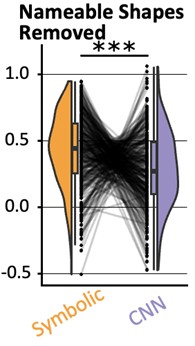
      An identical analysis on the MEG leads to two noisy but significant clusters (CNN: 64.0ms to 172.0ms; then 192.0ms to 296.0ms; both p<.001: Geometric Features: 312.0ms to 364.0ms with p=.008). We have improved our manuscript thanks to the reviewer’s observation by adding a figure with the new behavior analysis to the supplementary figures and in the result section of the behavior task. We now refer to these analysis where appropriate:

      (intro) “The effect appeared as a human universal, present in preschoolers, first-graders, and adults without access to formal western math education (the Himba from Namibia), and thus seemingly independent of education and of the existence of linguistic labels for regular shapes.”

      (behavior results) “Finally, to separate the effect of name availability and geometric features on behavior, we replicated our analysis after removing the square, rectangle, trapezoids, rhombus and parallelogram from our data (Fig. S5D). This left us with five shapes, and an RDM with 10 entries, When regressing it in a GLM with our two models, we find that both models are still significant predictors (p<.001). The effect size of the geometric feature model is greatly reduced, yet remained significantly higher than that of the neural network model (p<.001).”

      (meg results) “This analysis yielded similar clusters when performed on a subset of shapes that do not have an obvious name in English, as was the case for the behavior analysis (CNN Encoding: 64.0ms to 172.0ms; then 192.0ms to 296.0ms; both p<.001: Geometric Features: 312.0ms to 364.0ms with p=.008).”

      (discussion, end of behavior section) “Previously, we only found such a significant mixture of predictors in uneducated humans (whether French preschoolers or adults from the Himba community, mitigating the possible impact of explicit western education, linguistic labels, and statistics of the environment on geometric shape representation) (Sablé-Meyer et al., 2021).”

      Perhaps the referee’s point can also be reversed: we provide a normative theory of geometric shape complexity which has the potential to explain why certain shapes have names: instead of seeing shape names as the cause of their simpler mental representation, we suggest that the converse could occur, i.e. the simpler shapes are the ones that are given names.

      (2) Task difficulty

      On the other hand is the question of whether our effect is driven by task difficulty. First, we would like to point out that this point could apply to the fMRI task, which asks for an explicit detection of deviants, but does not apply to the MEG experiment. In MEG, participants passively looked at sequences of shapes which, for a given block, comprising many instances of a fixed standard shape and rare deviants–even if they notice deviants, they have no task related to them. Yet two independent findings validated the geometric features model: there was a large effect of geometric regularity on the MEG response to deviants, and the MEG dissimilarity matrix between standard shapes correlated with a model based on geometric features, better than with a model based on CNNs. While the response to rare deviants might perhaps be attributed to “difficulty” (assuming that, in spite of the absence of an explicit task, participants try to spot the deviants and find this self-imposed task more difficult in runs with less regular shapes), it seems very hard to explain the representational similarity analysis (RSA) findings based on difficulty. Indeed, what motivated us to use RSA analysis in both fMRI and MEG was to stop relying on the response to deviants, and use solely the data from standard or “reference” shapes, and model their neural response with theory-derived regressors.

      We have updated the manuscript in several places to make our view on these points clearer:

      (experiment 4) “This design allowed us to study the neural mechanisms of the geometric regularity effect without confounding effects of task, task difficulty, or eye movements.”

      (figure 4, legend) “(A) Task structure: participants passively watch a constant stream of geometric shapes, one per second (presentation time 800ms). The stimuli are presented in blocks of 30 identical shapes up to scaling and rotation, with 4 occasional deviant shape. Participants do not have a task to perform beside fixating.”

      Reviewer #2 (Public review):

      Weakness:

      Given that the primary take away from this study is that geometric shape information is found in the dorsal stream, rather than the ventral stream there is very little there is very little discussion of prior work in this area (for reviews, see Freud et al., 2016; Orban, 2011; Xu, 2018). Indeed, there is extensive evidence of shape processing in the dorsal pathway in human adults (Freud, Culham, et al., 2017; Konen & Kastner, 2008; Romei et al., 2011), children (Freud et al., 2019), patients (Freud, Ganel, et al., 2017), and monkeys (Janssen et al., 2008; Sereno & Maunsell, 1998; Van Dromme et al., 2016), as well as the similarity between models and dorsal shape representations (Ayzenberg & Behrmann, 2022; Han & Sereno, 2022).

      We thank the reviewer for this opportunity to clarify our writing. We want to use this opportunity to highlight that our primary finding is not about whether the shapes of objects or animals (in general) are processed in the ventral versus or the dorsal pathway, but rather about the much more restricted domain of geometric shapes such as squares and triangles. We propose that simple geometric shapes afford additional levels of mental representation that rely on their geometric features – on top of the typical visual processing. To the best of our knowledge, this point has not been made in the above papers.

      Still, we agree that it is useful to better link our proposal to previous ones. We have updated the discussion section titled “Two Visual Pathways” to include more specific references to the literature that have reported visual object representations in the dorsal pathway. Following another reviewer’s observation, we have also updated our analysis to better demonstrate the overlap in activation evoked by math and by geometry in the IPS, as well as include a novel comparison with independently published results.

      Overall, to address this point, we (i) show the overlap between our “geometry” contrast (shape > word+tools+houses) and our “math” contrast (number > words); (ii) we display these ROIs side by side with ROIs found in previous work (Amalric and Dehaene, 2016), and (iii) in each math-related ROIs reported in that article, we test our “geometry” (shape > word+tools+houses) contrast and find almost all of them to be significant in both population; see Fig. S5.

      Finally, within the ROIs identified with our geometry localizer, we also performed similarity analyses: for each region we extracted the betas of every voxel for every visual category, and estimated the distance (cross-validated mahalanobis) between different visual categories. In both ventral ROIs, in both populations, numbers were closer to shapes than to the other visual categories including text and Chinese characters (all p<.001). In adults, this result also holds for the right ITG (p=.021) and the left IPS (p=.014) but not the right IPS (p=.17). In children, this result did not hold in the areas.

      Naturally, overlap in brain activation does not suffice to conclude that the same computational processes are involved. We have added an explicit caveat about this point. Indeed, throughout the article,  we have been careful to frame our results in a way that is appropriate given our evidence, e.g. saying “Those areas are similar to those active during number perception, arithmetic, geometric sequences, and the processing of high-level math concepts” and “The IPS areas activated by geometric shapes overlap with those active during the comprehension of elementary as well as advanced mathematical concepts”. We have rephrased the possibly ambiguous “geometric shapes activated math- and number-related areas, particular the right aIPS.” into “geometric shapes activated areas independently found to be activated by math- and number-related tasks, in particular the right aIPS”.

      Reviewer #3 (Public review):

      Weakness:

      Perhaps the manuscript could emphasize that the areas recruited by geometric figures but not objects are spatial, with reduced processing in visual areas. It also seems important to say that the images of real objects are interpreted as representations of 3D objects, as they activate the same visual areas as real objects. By contrast, the images of geometric forms are not interpreted as representations of real objects but rather perhaps as 2D abstractions.

      This is an interesting possibility. Geometric shapes are likely to draw attention to spatial dimensions (e.g. length) and to do so in a 2D spatial frame of reference rather than the 3D representations evoked by most other objects or images. However, this possibility would require further work to be thoroughly evaluated, for instance by comparing usual 3D objects with rare instances of 2D ones (e.g. a sheet of paper, a sticker etc). In the absence of such a test, we refrained from further speculation on this point.

      The authors use the term "symbolic." That use of that term could usefully be expanded here.  

      The reviewer is right in pointing out that “symbolic” should have been more clearly defined. We now added in the introduction:

      (introduction) “[…] we sometimes refer to this model as “symbolic” because it relies on discrete, exact, rule-based features rather than continuous representations  (Sablé-Meyer et al., 2022). In this representational format, geometric shapes are postulated to be represented by symbolic expressions in a “language-of-thought”, e.g. “a square is a four-sided figure with four equal sides and four right angles” or equivalently by a computer-like program from drawing them in a Logo-like language (Sablé-Meyer et al., 2022).”

      Here, however, the present experiments do not directly probe this format of a representation. We have therefore simplified our wording and removed many of our use of the word “symbolic” in favor of the more specific “geometric features”.

      Pigeons have remarkable visual systems. According to my fallible memory, Herrnstein investigated visual categories in pigeons. They can recognize individual people from fragments of photos, among other feats. I believe pigeons failed at geometric figures and also at cartoon drawings of things they could recognize in photos. This suggests they did not interpret line drawings of objects as representations of objects.

      The comparison of geometric abilities across species is an interesting line of research. In the discussion, we briefly mention several lines of research that indicate that non-human primates do not perceive geometric shapes in the same way as we do – but for space reasons, we are reluctant to expand this section to a broader review of other more distant species. The referee is right that there is evidence of pigeons being able to perceive an invariant abstract 3D geometric shape in spite of much variation in viewpoint (Peissig et al., 2019) – but there does not seem to be evidence that they attend to geometric regularities specifically (e.g. squares versus non-squares). Also, the referee’s point bears on the somewhat different issue of whether humans and other animals may recognize the object depicted by a symbolic drawing (e.g. a sketch of a tree). Again, humans seem to be vastly superior in this domain, and research on this topic is currently ongoing in the lab. However, the point that we are making in the present work is specifically about the neural correlates of the representation of simple geometric shapes which by design were not intended to be interpretable as representations of objects.

      Categories are established in part by contrast categories; are quadrilaterals, triangles, and circles different categories?

      We are not sure how to interpret the referee’s question, since it bears on the definition of “category” (Spontaneous? After training? With what criterion?). While we are not aware of data that can unambiguously answer the reviewer’s question, categorical perception in geometric shapes can be inferred from early work investigating pop-out effects in visual search, e.g. (Treisman and Gormican, 1988): curvature appears to generate strong pop-out effects, and therefore we would expect e.g. circles to indeed be a different category than, say, triangles. Similarly, right angles, as well as parallel lines, have been found to be perceived categorically (Dillon et al., 2019).

      This suggests that indeed squares would be perceived as categorically different from triangles and circles. On the other hand, in our own previous work (Sablé-Meyer et al., 2021) we have found that the deviants that we generated from our quadrilaterals did not pop out from displays of reference quadrilaterals. Pop-out is probably not the proper criterion for defining what a “category” is, but this is the extent to which we can provide an answer to the reviewer’s question.

      It would be instructive to investigate stimuli that are on a continuum from representational to geometric, e.g., table tops or cartons under various projections, or balls or buildings that are rectangular or triangular. Building parts, inside and out. like corners. Objects differ from geometric forms in many ways: 3D rather than 2D, more complicated shapes, and internal texture. The geometric figures used are flat, 2-D, but much geometry is 3-D (e. g. cubes) with similar abstract features.

      We agree that there is a whole line of potential research here. We decided to start by focusing on the simplest set of geometric shapes that would give us enough variation in geometric regularity while being easy to match on other visual features. We agree with the reviewer that our results should hold both for more complex 2-D shapes, but also for 3-D shapes. Indeed, generative theories of shapes in higher dimensions following similar principles as ours have been devised (I. Biederman, 1987; Leyton, 2003).  We now mention this in the discussion:

      “Finally, this research should ultimately be extended to the representation of 3-dimensional geometric shapes, for which similar symbolic generative models have indeed been proposed (Irving Biederman, 1987; Leyton, 2003).”

      The feature space of geometry is more than parallelism and symmetry; angles are important, for example. Listing and testing features would be fascinating. Similarly, looking at younger or preferably non-Western children, as Western children are exposed to shapes in play at early ages.

      We agree with the reviewer on all point. While we do not list and test the different properties separately in this work, we would like to highlight that angles are part of our geometric feature model, which includes features of “right-angle” and “equal-angles” as suggested by the reviewer.

      We also agree about the importance of testing populations with limited exposure to formal training with geometric shapes. This was in fact a core aspect of a previous article of ours which tests both preschoolers, and adults with no access to formal western education – though no non-Western children (Sablé-Meyer et al., 2021). It remains a challenge to perform brain-imaging studies in non-Western populations (although see Dehaene et al., 2010; Pegado et al., 2014).

      What in human experience but not the experience of close primates would drive the abstraction of these geometric properties? It's easy to make a case for elaborate brain processes for recognizing and distinguishing things in the world, shared by many species, but the case for brain areas sensitive to processing geometric figures is harder. The fact that these areas are active in blind mathematicians and that they are parietal areas suggests that what is important is spatial far more than visual. Could these geometric figures and their abstract properties be connected in some way to behavior, perhaps with fabrication and construction as well as use? Or with other interactions with complex objects and environments where symmetry and parallelism (and angles and curvature--and weight and size) would be important? Manual dexterity and fabrication also distinguish humans from great apes (quantitatively, not qualitatively), and action drives both visual and spatial representations of objects and spaces in the brain. I certainly wouldn't expect the authors to add research to this already packed paper, but raising some of the conceptual issues would contribute to the significance of the paper.

      We refrained from speculating about this point in the previous version of the article, but share some of the reviewers’ intuitions about the underlying drive for geometric abstraction. As described in (Dehaene, 2026; Sablé-Meyer et al., 2022), our hypothesis, which isn’t tested in the present article, is that the emergence of a pervasive ability to represent aspects of the world as compact expressions in a mental “language-of-thought” is what underlies many domains of specific human competence, including some listed by the reviewer (tool construction, scene understanding) and our domain of study here, geometric shapes.

      Recommendations for the Authors:

      Reviewer #1 (Recommendations for the authors):

      Overall, I enjoyed reading this paper. It is clearly written and nicely showcases the amount of work that has gone into conducting all these experiments and analyzing the data in sophisticated ways. I also thought the figures were great, and I liked the level of organization in the GitHub repository and am looking forward to seeing the shared data on OpenNeuro. I have some specific questions I hope the authors can address.

      (1) Behavior

      - Looking at Figure 1, it seemed like most shapes are clustering together, whereas square, rectangle, and maybe rhombus and parallelogram are slightly more unique. I was wondering whether the authors could comment on the potential influence of linguistic labels. Is it possible that it is easier to discard the intruder when the shapes are readily nameable versus not?

      This is an interesting observation, but the existence of names for shapes does not suffice to explain all of our findings ; see our reply to the public comment.

      (2) fMRI

      - As mentioned in the public review, I was surprised that the authors went with an intruder task because I would imagine that performance depends on the specific combination of geometric shapes used within a trial. I assume it is much harder to find, for example, a "Right Hinge" embedded within "Hinge" stimuli than a "Right Hinge" amongst "Squares". In addition, the rotation and scaling of each individual item should affect regular shapes less than irregular shapes, creating visual dissimilarities that would presumably make the task harder. Can the authors comment on how we can be sure that the differences we pick up in the parietal areas are not related to task difficulty but are truly related to geometric shape regularities?

      Again, please see our public review response for a larger discussion of the impact of task difficulty. There are two aspects to answering this question.

      First, the task is not as the reviewer describes: the intruder task is to find a deviant shape within several slightly rotated and scaled versions of the regular shape it came from. During brain imaging, we did not ask participants to find an exemplar of one of our reference shape amidst copies of another, but rather a deviant version of one shape against copies of its reference version. We only used this intruder task with all pairs of shapes to generate the behavioral RSA matrix.

      Second, we agree that some of the fMRI effect may stem from task difficulty, and this motivated our use of RSA analysis in fMRI, and a passive MEG task. RSA results cannot be explained by task difficulty.

      Overall, we have tried to make the limitations of the fMRI design, and the motivation for turning to passive presentation in MEG, clearer by stating the issues more clearly when we introduce experiment 4:

      “The temporal resolution of fMRI does not allow to track the dynamic of mental representations over time. Furthermore, the previous fMRI experiment suffered from several limitations. First, we studied six quadrilaterals only, compared to 11 in our previous behavioral work. Second, we used an explicit intruder detection, which implies that the geometric regularity effect was correlated with task difficulty, and we cannot exclude that this factor alone explains some of the activations in figure 3C (although it is much less clear how task difficulty alone would explain the RSA results in figure 3D). Third, the long display duration, which was necessary for good task performance especially in children, afforded the possibility of eye movements, which were not monitored inside the 3T scanner and again could have affected the activations in figure 3C.”

      - How far in the periphery were the stimuli presented? Was eye-tracking data collected for the intruder task? Similar to the point above, I would imagine that a harder trial would result in more eye movements to find the intruder, which could drive some of the differences observed here.

      A 1-degree bar was added to Figure 3A, which faithfully illustrates how the stimuli were presented in fMRI. Eye-tracking data was not collected during fMRI. Although the participants were explicitly instructed to fixate at the center of the screen and avoid eye movements, we fully agree with the referee that we cannot exclude that eye movements were present, perhaps more so for more difficult displays, and would therefore have contributed to the observed fMRI activations in experiment 3 (figure 3C). We now mention this limitation explicity at the end of experiment 3. However, crucially, this potential problem cannot apply to the MEG data. During the MEG task, the stimuli were presented one by one at the center of screen, without any explicit task, thus avoiding issues of eye movements. We therefore consider the MEG geometrical regularity effect, which comes at a relatively early latency (starting at ~160 ms) and even in a passive task, to provide the strongest evidence of geometric coding, unaffected by potential eye movement artefacts. 

      - I was wondering whether the authors would consider showing some un-thresholded maps just to see how widespread the activation of the geometric shapes is across all of the cortex.

      We share the uncorrected threshold maps in Fig. S3. for both adults and children in the category localizer, copied here as well. For the geometry task, most of the clusters identified are fairly big and survive cluster-corrected permutations; the uncorrected statistical maps look almost fully identical to the one presented in Fig. 3 (p<.001 map).

      - I'm missing some discussion on the role of early visual areas that goes beyond the RSA-CNN comparison. I would imagine that early visual areas are not only engaged due to top-down feedback (line 258) but may actually also encode some of the geometric features, such as parallel lines and symmetry. Is it feasible to look at early visual areas and examine what the similarity structure between different shapes looks like?

      If early visual areas encoded the geometric features that we propose, then even early sensor-level RSA matrices should show a strong impact of geometric features similarity, which is not what we find (figure 4D). We do, however, appreciate the referee’s request to examine more closely how this similarity structure looks like. We now provide a movie showing the significant correlation between neural activity and our two models (uncorrected participants); indeed, while the early occipital activity (around 110ms) is dominated by a significant correlation with the CNN model, there are also scattered significant sources associated to the symbolic model around these timepoints already.

      To test this further, we used beamformers to reconstruct the source-localized activity in calcarine cortex and performed an RSA analysis across that ROI. We find that indeed the CNN model is strongly significant at t=110ms (t=3.43, df=18, p=.003) while the geometric feature model is not (t=1.04, df=18, p=.31), and the CNN is significantly above the geometric feature model (t=4.25, df=18, p<.001). However, this result is not very stable across time, and there are significant temporal clusters around these timepoints associated to each model, with no significant cluster associated to a CNN > geometric (CNN: significant cluster from 88ms to 140ms, p<.001 in permutation based with 10000 permutations; geometric features has a significant cluster from 80ms to 104ms, p=.0475; no significant cluster on the difference between the two).

      (3) MEG

      - Similar to the fMRI set, I am a little worried that task difficulty has an effect on the decoding results, as the oddball should pop out more in more geometric shapes, making it easier to detect and easier to decode. Can the authors comment on whether it would matter for the conclusions whether they are decoding varying task difficulty or differences in geometric regularity, or whether they think this can be considered similarly?

      See above for an extensive discussion of the task difficulty effect. We point out that there is no task in the MEG data collection part. We have clarified the task design by updating our Fig. 4. Additionally, the fact that oddballs are more perceived more or less easily as a function of their geometric regularity is, in part, exactly the point that we are making – but, in MEG, even in the absence of a task of looking for them.

      - The authors discuss that the inflated baseline/onset decoding/regression estimates may occur because the shapes are being repeated within a mini-block, which I think is unlikely given the long ISIs and the fact that the geometric features model is not >0 at onset. I think their second possible explanation, that this may have to do with smoothing, is very possible. In the text, it said that for the non-smoothed result, the CNN encoding correlates with the data from 60ms, which makes a lot more sense. I would like to encourage the authors to provide readers with the unsmoothed beta values instead of the 100-ms smoothed version in the main plot to preserve the reason they chose to use MEG - for high temporal resolution!

      We fully agree with the reviewer and have accordingly updated the figures to show the unsmoothed data (see below). Indeed, there is now no significant CNN effect before ~60 ms (up to the accuracy of identifying onsets with our method).

      - In Figure 4C, I think it would be useful to either provide error bars or show variability across participants by plotting each participant's beta values. I think it would also be nice to plot the dissimilarity matrices based on the MEG data at select timepoints, just to see what the similarity structure is like.

      Following the reviewer’s recommendation, we plot the timeseries with SEM as shaded area, and thicker lines for statistically significant clusters, and we provide the unsmoothed version in figure Fig. 4. As for the dissimilarity matrices at select timepoints, this has now been added to figure Fig. 4.

      - To evaluate the source model reconstruction, I think the reader would need a little more detail on how it was done in the main text. How were the lead fields calculated? Which data was used to estimate the sources? How are the models correlated with the source data?

      We have imported some of the details in the main text as follows (as well as expanding the methods section a little):

      “To understand which brain areas generated these distinct patterns of activations, and probe whether they fit with our previous fMRI results, we performed a source reconstruction of our data. We projected the sensor activity onto each participant's cortical surfaces estimated from T1-images. The projection was performed using eLORETA and emptyroom recordings acquired on the same day to estimate noise covariance, with the default parameters of mne-bids-pipeline. Sources were spaced using a recursively subdivided octahedron (oct5). Group statistics were performed after alignement to fsaverage. We then replicated the RSA analysis […]”

      - In addition to fitting the CNN, which is used here to model differences in early visual cortex, have the authors considered looking at their fMRI results and localizing early visual regions, extracting a similarity matrix, and correlating that with the MEG and/or comparing it with the CNN model?

      We had ultimately decided against comparing the empirical similarity matrices from the MEG and fMRI experiments, first because the stimuli and tasks are different, and second because this would not be directly relevant to our goal, which is to evaluate whether a geometric-feature model accounts for the data. Thus, we systematically model empirical similarity matrices from fMRI and from MEG with our two models derived from different theories of shape perception in order to test predictions about their spatial and temporal dynamic. As for comparing the similarity matrix from early visual regions in fMRI with that predicted by the CNN model, this is effectively visible from our Fig. 3D where we perform searchlight RSA analysis and modeling with both the CNN and the geometric feature model; bilaterally, we find a correlation with the CNN model, although it sometimes overlap with predictions from the geometric feature model as well. We now include a section explaining this reasoning in appendix:

      “Representational similarity analysis also offers a way to directly compared similarity matrices measured in MEG and fMRI, thus allowing for fusion of those two modalities and tentatively assigning a “time stamp” to distinct MRI clusters. However, we did not attempt such an analysis here for several reasons. First, distinct tasks and block structures were used in MEG and fMRI. Second, a smaller list of shapes was used in fMRI, as imposed by the slower modality of acquisition. Third, our study was designed as an attempt to sort out between two models of geometric shape recognition. We therefore focused all analyses on this goal, which could not have been achieved by direct MEG-fMRI fusion, but required correlation with independently obtained model predictions.”

      Minor comments

      - It's a little unclear from the abstract that there is children's data for fMRI only.

      We have reworded the abstract to make this unambiguous

      - Figures 4a & b are missing y-labels.

      We can see how our labels could be confused with (sub-)plot titles and have moved them to make the interpretation clearer.

      - MEG: are the stimuli always shown in the same orientation and size?

      They are not, each shape has a random orientation and scaling. On top of a task example at the top of Fig. 4, we have now included a clearer mention of this in the main text when we introduce the task:

      “shapes were presented serially, one at a time, with small random changes in rotation and scaling parameters, in miniblocks with a fixed quadrilateral shape and with rare intruders with the bottom right corner shifted by a fixed amount (Sablé-Meyer et al., 2021)”

      - To me, the discussion section felt a little lengthy, and I wonder whether it would benefit from being a little more streamlined, focused, and targeted. I found that the structure was a little difficult to follow as it went from describing the result by modality (behavior, fMRI, MEG) back to discussing mostly aspects of the fMRI findings.

      We have tried to re-organize and streamline the discussion following these comments.

      Then, later on, I found that especially the section on "neurophysiological implementation of geometry" went beyond the focus of the data presented in the paper and was comparatively long and speculative.

      We have reexamined the discussion, but the citation of papers emphasizing a representation of non-accidental geometric properties in non-human animals was requested by other commentators on our article; and indeed, we think that they are relevant in the context of our prior suggestion that the composition of geometric features might be a uniquely human feature – these papers suggest that individual features may not, and that it is therefore compositionality which might be special to the human brain. We have nevertheless shortened it.

      Furthermore, we think that this section is important because symbolic models are often criticized for lack of a plausible neurophysiological implementation. It is therefore important to discuss whether and how the postulated symbolic geometric code could be realized in neural circuits. We have added this justification to the introduction of this section.

      Reviewer #2 (Recommendations for the authors):

      (1) If the authors want to specifically claim that their findings align with mathematical reasoning, they could at least show the overlap between the activation maps of the current study and those from prior work.

      This was added to the fMRI results. See our answers to the public review.

      (2) I wonder if the reason the authors only found aIPS in their first analysis (Figure 2) is because they are contrasting geometric shapes with figures that also have geometric properties. In other words, faces, objects, and houses also contain geometric shape information, and so the authors may have essentially contrasted out other areas that are sensitive to these features. One indication that this may be the case is that the geometric regularity effect and searchlight RSA (Figure 3) contains both anterior and posterior IPS regions (but crucially, little ventral activity). It might be interesting to discuss the implications of these differences.

      Indeed, we cannot exclude that the few symmetries, perpendicularity and parallelism cues that can be presented in faces, objects or houses were processed as such, perhaps within the ventral pathway, and that these representations would have been subtracted out. We emphasize that our subtraction isolates the geometrical features that are present in simple regular geometric shapes, over and above those that might exist in other categories. We have added this point to the discussion:

      “[… ] For instance, faces possess a plane of quasi-symmetry, and so do many other man-made tools and houses. Thus, our subtraction isolated the geometrical features that are present in simple regular geometric shapes (e.g. parallels, right angles, equality of length) over and above those that might already exist, in a less pure form, in other categories.”

      (3) I had a few questions regarding the MEG results.

      a. I didn't quite understand the task. What is a regular or oddball shape in this context? It's not clear what is being decoded. Perhaps a small example of the MEG task in Figure 4 would help?

      We now include an additional sub-figure in Fig. 4 to explain the paradigm. In brief: there is no explicit task, participants are simply asked to fixate. The shapes come in miniblocks of 30 identical reference shapes (up to rotation and scaling), among which some occasional deviant shapes randomly appear (created by moving the corner of the reference shape by some amount).

      b. In Figure 4A/B they describe the correlation with a 'symbolic model'. Is this the same as the geometric model in 4C?

      It is. We have removed this ambiguity by calling it “geometric model” and setting its color to the one associated to this model thought the article.

      c. The author's explanation for why geometric feature coding was slower than CNN encoding doesn't quite make sense to me. As an explanation, they suggest that previous studies computed "elementary features of location or motor affordance", whereas their study work examines "high-level mathematical information of an abstract nature." However, looking at the studies the authors cite in this section, it seems that these studies also examined the time course of shape processing in the dorsal pathway, not "elementary features of location or motor affordance." Second, it's not clear how the geometric feature model reflects high-level mathematical information (see point above about claiming this is related to math).

      We thank the referee for pointing out this inappropriate phrase, which we removed. We rephrased the rest of the paragraph to clarify our hypothesis in the following way:

      “However, in this work, we specifically probed the processing of geometric shapes that, if our hypothesis is correct, are represented as mental expressions that combine geometrical and arithmetic features of an abstract categorical nature, for instance representing “four equal sides” or “four right angles”. It seems logical that such expressions, combining number, angle and length information, take more time to be computed than the first wave of feedforward processing within the occipito-temporal visual pathway, and therefore only activate thereafter.”

      One explanation may be that the authors' geometric shapes require finer-grained discrimination than the object categories used in prior studies. i.e., the odd-ball task may be more of a fine-grained visual discrimination task. Indeed, it may not be a surprise that one can decode the difference between, say, a hammer and a butterfly faster than two kinds of quadrilaterals.

      We do not disagree with this intuition, although note that we do not have data on this point (we are reporting and modelling the MEG RSA matrix across geometric shapes only – in this part, no other shapes such as tools or faces are involved). Still, the difference between squares, rectangles, parallelograms and other geometric shapes in our stimuli is not so subtle. Furthermore, CNNs do make very fine grained distinctions, for instance between many different breeds of dogs in the IMAGENET corpus. Still, those sorts of distinctions capture the initial part of the MEG response, while the geometric model is needed only for the later part. Thus, we think that it is a genuine finding that geometric computations associated with the dorsal parietal pathway are slower than the image analysis performed by the ventral occipito-temporal pathway.

      d. CNN encoding at time 0 is a little weird, but the author's explanation, that this is explained by the fact that temporal smoothed using a 100 ms window makes sense. However, smoothing by 100 ms is quite a lot, and it doesn't seem accurate to present continuous time course data when the decoding or RSA result at each time point reflects a 100 ms bin. It may be more accurate to simply show unsmoothed data. I'm less convinced by the explanation about shape prediction.

      We agree. Following the reviewer’s advice, as well as the recommendation from reviewer 1, we now display unsmoothed plots, and the effects now exhibit a more reasonable timing (Figure 4D), with effects starting around ~60 ms for CNN encoding.

      (4) I appreciate the author's use of multiple models and their explanation for why DINOv2 explains more variance than the geometric and CNN models (that it represents both types of features. A variance partitioning analysis may help strengthen this conclusion (Bonner & Epstein, 2018; Lescroart et al., 2015).

      However, one difference between DINOv2 and the CNN used here is that it is trained on a dataset of 142 million images vs. the 1.5 million images used in ImageNet. Thus, DINOv2 is more likely to have been exposed to simple geometric shapes during training, whereas standard ImageNet trained models are not. Indeed, prior work has shown that lesioning line drawing-like images from such datasets drastically impairs the performance of large models (Mayilvahanan et al., 2024). Thus, it is unlikely that the use of a transformer architecture explains the performance of DINOv2. The authors could include an ImageNet-trained transformer (e.g., ViT) and a CNN trained on large datasets (e.g., ResNet trained on the Open Clip dataset) to test these possibilities. However, I think it's also sufficient to discuss visual experience as a possible explanation for the CNN and DINOv2 results. Indeed, young children are exposed to geometric shapes, whereas ImageNet-trained CNNs are not.

      We agree with the reviewer’s observation. In fact, new and ongoing work from the lab is also exploring this; we have included in supplementary materials exactly what the reviewer is suggesting, namely the time course of the correlation with ViT and with ConvNeXT. In line with the reviewers’ prediction, these networks, trained on much larger dataset and with many more parameters, can also fit the human data as well as DINOv2. We ran additional analysis of the MEG data with ViT and ConvNeXT, which we now report in Fig. S6 as well as in an additional sentence in that section:

      “[…] similar results were obtained by performing the same analysis, not only with another vision transformer network, ViT, but crucially using a much larger convolutional neural network, ConvNeXT, which comprises ~800M parameters and has been trained on 2B images, likely including many geometric shapes and human drawings. For the sake of completeness, RSA analysis in sensor space of the MEG data with these two models is provided in Fig. S6.”

      We conclude that the size and nature of the training set could be as important as the architecture – but also note that humans do not rely on such a huge training set. We have updated the text, as well as Fig. S6, accordingly by updating the section now entitled “Vision Transformers and Larger Neural Networks”, and the discussion section on theoretical models.

      (5) The authors may be interested in a recent paper from Arcaro and colleagues that showed that the parietal cortex is greatly expanded in humans (including infants) compared to non-human primates (Meyer et al., 2025), which may explain the stronger geometric reasoning abilities of humans.

      A very interesting article indeed! We have updated our article to incorporate this reference in the discussion, in the section on visual pathways, as follows:

      “Finally, recent work shows that within the visual cortex, the strongest relative difference in growth between human and non-human primates is localized in parietal areas (Meyer et al., 2025). If this expansion reflected the acquisition of new processing abilities in these regions, it  might explain the observed differences in geometric abilities between human and non-human primates (Sablé-Meyer et al., 2021).”

      Also, the authors may want to include this paper, which uses a similar oddity task and compelling shows that crows are sensitive to geometric regularity:

      Schmidbauer, P., Hahn, M., & Nieder, A. (2025). Crows recognize geometric regularity. Science Advances, 11(15), eadt3718. https://doi.org/10.1126/sciadv.adt3718

      We have ongoing discussions with the authors of this work and are  have prepared a response to their findings (Sablé-Meyer and Dehaene, 2025)–ultimately, we think that this discussion, which we agree is important, does not have its place in the present article. They used a reduced version of our design, with amplified differences in the intruders. While they did not test the fit of their model with CNN or geometric feature models, we did and found that a simple CNN suffices to account for crow behavior. Thus, we disagree that their conclusions follow from their results and their conclusions. But the present article does not seem to be the right platform to engage in this discussion.

      References

      Ayzenberg, V., & Behrmann, M. (2022). The Dorsal Visual Pathway Represents Object-Centered Spatial Relations for Object Recognition. The Journal of Neuroscience, 42(23), 4693-4710. https://doi.org/10.1523/jneurosci.2257-21.2022

      Bonner, M. F., & Epstein, R. A. (2018). Computational mechanisms underlying cortical responses to the affordance properties of visual scenes. PLoS Computational Biology, 14(4), e1006111. https://doi.org/10.1371/journal.pcbi.1006111

      Bueti, D., & Walsh, V. (2009). The parietal cortex and the representation of time, space, number and other magnitudes. Philosophical Transactions of the Royal Society B: Biological Sciences, 364(1525), 1831-1840.

      Dehaene, S., & Brannon, E. (2011). Space, time and number in the brain: Searching for the foundations of mathematical thought. Academic Press.

      Freud, E., Culham, J. C., Plaut, D. C., & Bermann, M. (2017). The large-scale organization of shape processing in the ventral and dorsal pathways. eLife, 6, e27576.

      Freud, E., Ganel, T., Shelef, I., Hammer, M. D., Avidan, G., & Behrmann, M. (2017). Three-dimensional representations of objects in dorsal cortex are dissociable from those in ventral cortex. Cerebral Cortex, 27(1), 422-434.

      Freud, E., Plaut, D. C., & Behrmann, M. (2016). 'What 'is happening in the dorsal visual pathway. Trends in Cognitive Sciences, 20(10), 773-784.

      Freud, E., Plaut, D. C., & Behrmann, M. (2019). Protracted developmental trajectory of shape processing along the two visual pathways. Journal of Cognitive Neuroscience, 31(10), 1589-1597.

      Han, Z., & Sereno, A. (2022). Modeling the Ventral and Dorsal Cortical Visual Pathways Using Artificial Neural Networks. Neural Computation, 34(1), 138-171. https://doi.org/10.1162/neco_a_01456

      Janssen, P., Srivastava, S., Ombelet, S., & Orban, G. A. (2008). Coding of shape and position in macaque lateral intraparietal area. Journal of Neuroscience, 28(26), 6679-6690.

      Konen, C. S., & Kastner, S. (2008). Two hierarchically organized neural systems for object information in human visual cortex. Nature Neuroscience, 11(2), 224-231.

      Lescroart, M. D., Stansbury, D. E., & Gallant, J. L. (2015). Fourier power, subjective distance, and object categories all provide plausible models of BOLD responses in scene-selective visual areas. Frontiers in Computational Neuroscience, 9(135), 1-20. https://doi.org/10.3389/fncom.2015.00135

      Mayilvahanan, P., Zimmermann, R. S., Wiedemer, T., Rusak, E., Juhos, A., Bethge, M., & Brendel, W. (2024). In search of forgotten domain generalization. arXiv Preprint arXiv:2410.08258.

      Meyer, E. E., Martynek, M., Kastner, S., Livingstone, M. S., & Arcaro, M. J. (2025). Expansion of a conserved architecture drives the evolution of the primate visual cortex. Proceedings of the National Academy of Sciences, 122(3), e2421585122. https://doi.org/10.1073/pnas.2421585122

      Orban, G. A. (2011). The extraction of 3D shape in the visual system of human and nonhuman primates. Annual Review of Neuroscience, 34, 361-388.

      Romei, V., Driver, J., Schyns, P. G., & Thut, G. (2011). Rhythmic TMS over Parietal Cortex Links Distinct Brain Frequencies to Global versus Local Visual Processing. Current Biology, 21(4), 334-337. https://doi.org/10.1016/j.cub.2011.01.035

      Sereno, A. B., & Maunsell, J. H. R. (1998). Shape selectivity in primate lateral intraparietal cortex. Nature, 395(6701), 500-503. https://doi.org/10.1038/26752

      Summerfield, C., Luyckx, F., & Sheahan, H. (2020). Structure learning and the posterior parietal cortex. Progress in Neurobiology, 184, 101717. https://doi.org/10.1016/j.pneurobio.2019.101717

      Van Dromme, I. C., Premereur, E., Verhoef, B.-E., Vanduffel, W., & Janssen, P. (2016). Posterior Parietal Cortex Drives Inferotemporal Activations During Three-Dimensional Object Vision. PLoS Biology, 14(4), e1002445. https://doi.org/10.1371/journal.pbio.1002445

      Xu, Y. (2018). A tale of two visual systems: Invariant and adaptive visual information representations in the primate brain. Annu. Rev. Vis. Sci, 4, 311-336.

      Reviewer #3 (Recommendations for the authors):

      Bring into the discussion some of the issues outlined above, especially a) the spatial rather than visual of the geometric figures and b) the non-representational aspects of geometric form aspects.

      We thank the reviewer for their recommendations – see our response to the public review for more details.
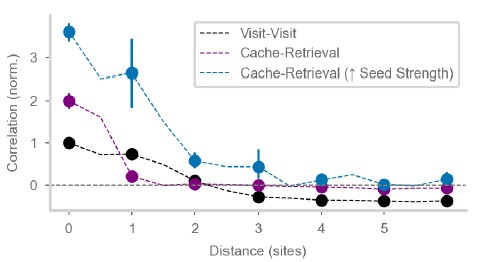
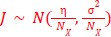
    1. Reviewer #2 (Public review):

      Summary:

      This work investigates transcriptional responses to varying levels of transcription factors (TFs). The authors aim for gradual up- and down-regulation of three transcription factors GFI1B, NFE2 and MYB in K562 cells, by using a CRISPRa- and a CRISPRi line, together with sgRNAs of varying potency. Targeted single-cell RNA sequencing is then used to measure gene expression of a set of 90 genes, which were previously shown to be downstream of GFI1B and NFE2 regulation. This is followed by an extensive computational analysis of the scRNA-seq dataset. By grouping cells with the same perturbations, the authors can obtain groups of cells with varying average TF expression levels. The achieved perturbations are generally subtle, not reaching half or double doses for most samples, and up-regulation is generally weak below 1.5-fold in most cases. Even in this small range, many target genes exhibit a non-linear response. Since this is rather unexpected, it is crucial to rule out technical reasons for these observations.

      Strengths:

      The work showcases how a single dataset of CRISPRi/a perturbations with scRNA-seq readout and an extended computational analysis can be used to estimate transcriptome dose-responses, a general approach that likely can be built upon in the future.<br /> Moreover, the authors highlight tiling of sgRNAs +/-1000bp around TSS as a useful approach. Compared with conventional direct TSS-targeting (+/- 200 bp), the larger sequence window allows placing more sgRNAs. Also it requires little prior knowledge of CREs, and avoids using "attenuated" sgRNAs which would require specialized sgRNA design.

      Weaknesses:

      The experiment was performed in a single replicate and it would have been reassuring to see an independent validation of the main findings, for example through measuring individual dose-response curves .

      Much of the analysis depends on the estimation of log-fold changes between groups of single cells with non-targeting controls and those carrying a guide RNA driving a specific knockdown. Generally, biological replicates are recommended for differential gene expression testing (Squair et al. 2021, https://doi.org/10.1038/s41467-021-25960-2). When using the FindMarkers function from the Seurat package, the authors divert from the recommendations for pseudo-bulk analysis to aggregate the raw counts (https://satijalab.org/seurat/articles/de_vignette.html). Furthermore, differential gene expression analysis of scRNA-seq data can suffer from mis-estimations (Nguyen et al. 2023, https://doi.org/10.1038/s41467-023-37126-3), and different computational tools or versions can affect these estimates strongly (Pullin et al. 2024, https://doi.org/10.1186/s13059-024-03183-0 and Rich et al. 2024, https://doi.org/10.1101/2024.04.04.588111). Therefore it would be important to describe more precisely in the Methods how this analysis was performed, any deviations from default parameters, package versions, and at which point which values were aggregated to form "pseudobulk" samples.

      Two different cell lines are used to construct dose-response curves, where a CRISPRi line allows gene down-regulation and the CRISPRa line allows gene upregulation. Although both lines are derived from the same parental line (K562) the expression analysis of Tet2, which is absent in the CRISPRi line, but expressed in the CRISPRa line (Fig. S1F, S3A) suggests clonal differences between the two lines. Similarly, the UMAP in S3C and the PCA in S4A suggest batch effects between the two lines. These might confound this analysis, even though all fold changes are calculated relative to the baseline expression in the respective cell line (NTC cells). Combining log2-fold changes from the two cell lines with different baseline expression into a single curve (e.g. Fig. 3) remains misleading, because different data points could be normalized to different base line expression levels.

      The study estimates the relationship between TF dose and target gene expression. This requires a system that allows quantitative changes in TF expression. The data provided does not convincingly show that this condition is met, which however is an essential prerequisite for the presented conclusions. Specifically, the data shown in Fig. S3A shows that upon stronger knock-down, a subpopulation of cells appear, where the targeted TF is not detected any more (drop-outs). Also in Fig. 3B (top) suggests that the knock-down is either subtle (similar to NTCs) or strong, but intermediate knock-down (log2-FC of 0.5-1) does not occur. Although the authors argue that this is a technical effect of the scRNA-seq protocol, it is also possible that this represents a binary behavior of the CRISPRi system. Previous work has shown that CRISPRi systems with the KRAB domain largely result in binary repression and not in gradual down-regulation as suggested in this study (Bintu et al. 2016 (https://doi.org/10.1126/science.aab2956), Noviello et al. 2023 (https://doi.org/10.1038/s41467-023-38909-4)).

      One of the major conclusions of the study is that non-linear behavior is common. It would be helpful to show that this observation does not arise from the technical concerns described in the previous points. This could be done for instance with independent experimental validations.

      Did the authors achieve their aims? Do the results support the conclusions?:

      Some of the most important conclusions, such as the claim that non-linear responses are common, are not well supported because they rely on accurately determining the quantitative responses of trans genes, which suffers from the previously mentioned concerns.

      Discussion of the likely impact of the work on the field, and the utility of the methods and data to the community:

      Together with other recent publications, this work emphasizes the need to study transcription factor function with quantitative perturbations. The computational code repository contains all the valuable code with inline comments, but would have benefited from a readme file explaining the repository structure, package versions, and instructions to reproduce the analyses, including which input files or directory structure would be needed.

    2. Author response:

      The following is the authors’ response to the original reviews.

      Reviewer #1 (Public review):

      In this manuscript, Domingo et al. present a novel perturbation-based approach to experimentally modulate the dosage of genes in cell lines. Their approach is capable of gradually increasing and decreasing gene expression. The authors then use their approach to perturb three key transcription factors and measure the downstream effects on gene expression. Their analysis of the dosage response curve of downstream genes reveals marked non-linearity.

      One of the strengths of this study is that many of the perturbations fall within the physiological range for each cis gene. This range is presumably between a single-copy state of heterozygous loss-of-function (log fold change of -1) and a three-copy state (log fold change of ~0.6). This is in contrast with CRISPRi or CRISPRa studies that attempt to maximize the effect of the perturbation, which may result in downstream effects that are not representative of physiological responses.

      Another strength of the study is that various points along the dosage-response curve were assayed for each perturbed gene. This allowed the authors to effectively characterize the degree of linearity and monotonicity of each dosage-response relationship. Ultimately, the study revealed that many of these relationships are non-linear, and that the response to activation can be dramatically different than the response to inhibition.

      To test their ability to gradually modulate dosage, the authors chose to measure three transcription factors and around 80 known downstream targets. As the authors themselves point out in their discussion about MYB, this biased sample of genes makes it unclear how this approach would generalize genome-wide. In addition, the data generated from this small sample of genes may not represent genome-wide patterns of dosage response. Nevertheless, this unique data set and approach represents a first step in understanding dosage-response relationships between genes.

      Another point of general concern in such screens is the use of the immortalized K562 cell line. It is unclear how the biology of these cell lines translates to the in vivo biology of primary cells. However, the authors do follow up with cell-type-specific analyses (Figures 4B, 4C, and 5A) to draw a correspondence between their perturbation results and the relevant biology in primary cells and complex diseases.

      The conclusions of the study are generally well supported with statistical analysis throughout the manuscript. As an example, the authors utilize well-known model selection methods to identify when there was evidence for non-linear dosage response relationships.

      Gradual modulation of gene dosage is a useful approach to model physiological variation in dosage. Experimental perturbation screens that use CRISPR inhibition or activation often use guide RNAs targeting the transcription start site to maximize their effect on gene expression. Generating a physiological range of variation will allow others to better model physiological conditions.

      There is broad interest in the field to identify gene regulatory networks using experimental perturbation approaches. The data from this study provides a good resource for such analytical approaches, especially since both inhibition and activation were tested. In addition, these data provide a nuanced, continuous representation of the relationship between effectors and downstream targets, which may play a role in the development of more rigorous regulatory networks.

      Human geneticists often focus on loss-of-function variants, which represent natural knock-down experiments, to determine the role of a gene in the biology of a trait. This study demonstrates that dosage response relationships are often non-linear, meaning that the effect of a loss-of-function variant may not necessarily carry information about increases in gene dosage. For the field, this implies that others should continue to focus on both inhibition and activation to fully characterize the relationship between gene and trait.

      We thank the reviewer for their thoughtful and thorough evaluation of our study. We appreciate their recognition of the strengths of our approach, particularly the ability to modulate gene dosage within a physiological range and to capture non-linear dosage-response relationships. We also agree with the reviewer’s points regarding the limitations of gene selection and the use of K562 cells, and we are encouraged that the reviewer found our follow-up analyses and statistical framework to be well-supported. We believe this work provides a valuable foundation for future genome-wide applications and more physiologically relevant perturbation studies.

      Reviewer #2 (Public review):

      Summary:

      This work investigates transcriptional responses to varying levels of transcription factors (TFs). The authors aim for gradual up- and down-regulation of three transcription factors GFI1B, NFE2, and MYB in K562 cells, by using a CRISPRa- and a CRISPRi line, together with sgRNAs of varying potency. Targeted single-cell RNA sequencing is then used to measure gene expression of a set of 90 genes, which were previously shown to be downstream of GFI1B and NFE2 regulation. This is followed by an extensive computational analysis of the scRNA-seq dataset. By grouping cells with the same perturbations, the authors can obtain groups of cells with varying average TF expression levels. The achieved perturbations are generally subtle, not reaching half or double doses for most samples, and up-regulation is generally weak below 1.5-fold in most cases. Even in this small range, many target genes exhibit a non-linear response. Since this is rather unexpected, it is crucial to rule out technical reasons for these observations.

      We thank the reviewer for their detailed and thoughtful assessment of our work. We are encouraged by their recognition of the strengths of our study, including the value of quantitative CRISPR-based perturbation coupled with single-cell transcriptomics, and its potential to inform gene regulatory network inference. Below, we address each of the concerns raised:

      Strengths:

      The work showcases how a single dataset of CRISPRi/a perturbations with scRNA-seq readout and an extended computational analysis can be used to estimate transcriptome dose responses, a general approach that likely can be built upon in the future.

      Weaknesses:

      (1) The experiment was only performed in a single replicate. In the absence of an independent validation of the main findings, the robustness of the observations remains unclear.

      We acknowledge that our study was performed in a single pooled experiment. While additional replicates would certainly strengthen the findings, in high-throughput single-cell CRISPR screens, individual cells with the same perturbation serve as effective internal replicates. This is a common practice in the field. Nevertheless, we agree that biological replicates would help control for broader technical or environmental effects.

      (2) The analysis is based on the calculation of log-fold changes between groups of single cells with non-targeting controls and those carrying a guide RNA driving a specific knockdown. How the fold changes were calculated exactly remains unclear, since it is only stated that the FindMarkers function from the Seurat package was used, which is likely not optimal for quantitative estimates. Furthermore, differential gene expression analysis of scRNA-seq data can suffer from data distortion and mis-estimations (Heumos et al. 2023 (https://doi.org/10.1038/s41576-023-00586-w), Nguyen et al. 2023 (https://doi.org/10.1038/s41467-023-37126-3)). In general, the pseudo-bulk approach used is suitable, but the correct treatment of drop-outs in the scRNA-seq analysis is essential.

      We thank the reviewer for highlighting recent concerns in the field. A study benchmarking association testing methods for perturb-seq data found that among existing methods, Seurat’s FindMarkers function performed the best (T. Barry et al. 2024).

      In the revised Methods, we now specify the formula used to calculate fold change and clarify that the estimates are derived from the Wilcoxon test implemented in Seurat’s FindMarkers function. We also employed pseudo-bulk grouping to mitigate single-cell noise and dropout effects.

      (3) Two different cell lines are used to construct dose-response curves, where a CRISPRi line allows gene down-regulation and the CRISPRa line allows gene upregulation. Although both lines are derived from the same parental line (K562) the expression analysis of Tet2, which is absent in the CRISPRi line, but expressed in the CRISPRa line (Figure S3A) suggests substantial clonal differences between the two lines. Similarly, the PCA in S4A suggests strong batch effects between the two lines. These might confound this analysis.

      We agree that baseline differences between CRISPRi and CRISPRa lines could introduce confounding effects if not appropriately controlled for. We emphasize that all comparisons are made as fold changes relative to non-targeting control (NTC) cells within each line, thereby controlling for batch- and clone-specific baseline expression. See figures S4A and S4B.

      (4) The study uses pseudo-bulk analysis to estimate the relationship between TF dose and target gene expression. This requires a system that allows quantitative changes in TF expression. The data provided does not convincingly show that this condition is met, which however is an essential prerequisite for the presented conclusions. Specifically, the data shown in Figure S3A shows that upon stronger knock-down, a subpopulation of cells appears, where the targeted TF is not detected anymore (drop-outs). Also Figure 3B (top) suggests that the knock-down is either subtle (similar to NTCs) or strong, but intermediate knock-down (log2-FC of 0.5-1) does not occur. Although the authors argue that this is a technical effect of the scRNA-seq protocol, it is also possible that this represents a binary behavior of the CRISPRi system. Previous work has shown that CRISPRi systems with the KRAB domain largely result in binary repression and not in gradual down-regulation as suggested in this study (Bintu et al. 2016 (https://doi.org/10.1126/science.aab2956), Noviello et al. 2023 (https://doi.org/10.1038/s41467-023-38909-4)).

      Figure S3A shows normalized expression values, not fold changes. A pseudobulk approach reduces single-cell noise and dropout effects. To test whether dropout events reflect true binary repression or technical effects, we compared trans-effects across cells with zero versus low-but-detectable target gene expression (Figure S3B). These effects were highly concordant, supporting the interpretation that dropout is largely technical in origin. We agree that KRAB-based repression can exhibit binary behavior in some contexts, but our data suggest that cells with intermediate repression exist and are biologically meaningful. In ongoing unpublished work, we pursue further analysis of these data at the single cell level, and show that for nearly all guides the dosage effects are indeed gradual rather than driven by binary effects across cells.

      (5) One of the major conclusions of the study is that non-linear behavior is common. This is not surprising for gene up-regulation, since gene expression will reach a plateau at some point, but it is surprising to be observed for many genes upon TF down-regulation. Specifically, here the target gene responds to a small reduction of TF dose but shows the same response to a stronger knock-down. It would be essential to show that his observation does not arise from the technical concerns described in the previous point and it would require independent experimental validations.

      This phenomenon—where relatively small changes in cis gene dosage can exceed the magnitude of cis gene perturbations—is not unique to our study. This also makes biological sense, since transcription factors are known to be highly dosage sensitive and generally show a smaller range of variation than many other genes (that are regulated by TFs). Empirically, these effects have been observed in previous CRISPR perturbation screens conducted in K562 cells, including those by Morris et al. (2023), Gasperini et al. (2019), and Replogle et al. (2022), to name but a few studies that our lab has personally examined the data of.

      (6) One of the conclusions of the study is that guide tiling is superior to other methods such as sgRNA mismatches. However, the comparison is unfair, since different numbers of guides are used in the different approaches. Relatedly, the authors point out that tiling sometimes surpassed the effects of TSS-targeting sgRNAs, however, this was the least fair comparison (2 TSS vs 10 tiling guides) and additionally depends on the accurate annotation of TSS in the relevant cell line.

      We do not draw this conclusion simply from observing the range achieved but from a more holistic observation. We would like to clarify that the number of sgRNAs used in each approach is proportional to the number of base pairs that can be targeted in each region: while the TSS-targeting strategy is typically constrained to a small window of a few dozen base pairs, tiling covers multiple kilobases upstream and downstream, resulting in more guides by design rather than by experimental bias. The guides with mismatches do not have a great performance for gradual upregulation.

      We would also like to point out that the observation that the strongest effects can arise from regions outside the annotated TSS is not unique to our study and has been demonstrated in prior work (referenced in the text).

      To address this concern, we have revised the text to clarify that we do not consider guide tiling to be inherently superior to other approaches such as sgRNA mismatches. Rather, we now describe tiling as a practical and straightforward strategy to obtain a wide range of gene dosage effects without requiring prior knowledge beyond the approximate location of the TSS. We believe this rephrasing more accurately reflects the intent and scope of our comparison.

      (7) Did the authors achieve their aims? Do the results support the conclusions?: Some of the most important conclusions are not well supported because they rely on accurately determining the quantitative responses of trans genes, which suffers from the previously mentioned concerns.

      We appreciate the reviewer’s concern, but we would have wished for a more detailed characterization of which conclusions are not supported, given that we believe our approach actually accounts for the major concerns raised above. We believe that the observation of non-linear effects is a robust conclusion that is also consistent with known biology, with this paper introducing new ways to analyze this phenomenon.

      (8) Discussion of the likely impact of the work on the field, and the utility of the methods and data to the community:

      Together with other recent publications, this work emphasizes the need to study transcription factor function with quantitative perturbations. Missing documentation of the computational code repository reduces the utility of the methods and data significantly.

      Documentation is included as inline comments within the R code files to guide users through the analysis workflow.

      Reviewer #1 (Recommendations for the authors):

      In Figure 3C (and similar plots of dosage response curves throughout the manuscript), we initially misinterpreted the plots because we assumed that the zero log fold change on the horizontal axis was in the middle of the plot. This gives the incorrect interpretation that the trans genes are insensitive to loss of GFI1B in Figure 3C, for instance. We think it may be helpful to add a line to mark the zero log fold change point, as was done in Figure 3A.

      We thank the reviewer for this helpful suggestion. To improve clarity, we have added a vertical line marking the zero log fold change point in Figure 3C and all similar dosage-response plots. We agree this makes the plots easier to interpret at a glance.

      Similarly, for heatmaps in the style of Figure 3B, it may be nice to have a column for the non-targeting controls, which should be a white column between the perturbations that increase versus decrease GFI1B.

      We appreciate the suggestion. However, because all perturbation effects are computed relative to the non-targeting control (NTC) cells, explicitly including a separate column for NTC in the heatmap would add limited interpretive value and could unnecessarily clutter the figure. For clarity, we have emphasized in the figure legend that the fold changes are relative to the NTC baseline.

      We found it challenging to assess the degree of uncertainty in the estimation of log fold changes throughout the paper. For example, the authors state the following on line 190: "We observed substantial differences in the effects of the same guide on the CRISPRi and CRISPRa backgrounds, with no significant correlation between cis gene fold-changes." This claim was challenging to assess because there are no horizontal or vertical error bars on any of the points in Figure 2A. If the log fold change estimates are very noisy, the data could be consistent with noisy observations of a correlated underlying process. Similarly, to our understanding, the dosage response curves are fit assuming that the cis log fold changes are fixed. If there is excessive noise in the estimation of these log fold changes, it may bias the estimated curves. It may be helpful to give an idea of the amount of estimation error in the cis log fold changes.

      We agree that assessing the uncertainty in log fold change estimates is important for interpreting both the lack of correlation between CRISPRi and CRISPRa effects (Figure 2A) and the robustness of the dosage-response modeling.

      In response, we have now updated Figure 2A to include both vertical and horizontal error bars, representing the standard errors of the log2 fold-change estimates for each guide in the CRISPRi and CRISPRa conditions. These error estimates were computed based on the differential expression analysis performed using the FindMarkers function in Seurat, which models gene expression differences between perturbed and control cells. We also now clarify this in the figure legend and methods.

      The authors mention hierarchical clustering on line 313, which identified six clusters. Although a dendrogram is provided, these clusters are not displayed in Figure 4A. We recommend displaying these clusters alongside the dendrogram.

      We have added colored bars indicating the clusters to improve the clarity. Thank you for the suggestion.

      In Figures 4B and 4C, it was not immediately clear what some of the gene annotations meant. For example, neither the text nor the figure legend discusses what "WBCs", "Platelets", "RBCs", or "Reticulocytes" mean. It would be helpful to include this somewhere other than only the methods to make the figure more clear.

      To improve clarity, we have updated the figure legends for Figures 4B and 4C to explicitly define these abbreviations.

      We struggled to interpret Figure 4E. Although the authors focus on the association of MYB with pHaplo, we would have appreciated some general discussion about the pattern of associations seen in the figure and what the authors expected to observe.

      We have changed the paragraph to add more exposition and clarification:

      “The link between selective constraint and response properties is most apparent in the MYB trans network. Specifically, the probability of haploinsufficiency (pHaplo) shows a significant negative correlation with the dynamic range of transcriptional responses (Figure 4G): genes under stronger constraint (higher pHaplo) display smaller dynamic ranges, indicating that dosage-sensitive genes are more tightly buffered against changes in MYB levels. This pattern was not reproduced in the other trans networks (Figure 4E)”.

      Line 71: potentially incorrect use of "rending" and incorrect sentence grammar.

      Fixed

      Line 123: "co-expression correlation across co-expression clusters" - authors may not have intended to use "co-expression" twice.

      Original sentence was correct.

      Line 246: "correlations" is used twice in "correlations gene-specific correlations."

      Fixed.

      Reviewer #2 (Recommendations for the authors):

      (1) To show that the approach indeed allows gradual down-regulation it would be important to quantify the know-down strength with a single-cell readout for a subset of sgRNAs individually (e.g. flowfish/protein staining flow cytometry).

      We agree that single-cell validation of knockdown strength using orthogonal approaches such as flowFISH or protein staining would provide additional support. However, such experiments fall outside the scope of the current study and are not feasible at this stage. We note that the observed transcriptomic changes and dosage responses across multiple perturbations are consistent with effective and graded modulation of gene expression.

      (2) Similarly, an independent validation of the observed dose-response relationships, e.g. with individual sgRNAs, can be helpful to support the conclusions about non-linear responses.

      Fig. S4C includes replication of trans-effects for a handful of guides used both in this study and in Morris et al. While further orthogonal validation of dose-response relationships would be valuable, such extensive additional work is not currently feasible within the scope of this study. Nonetheless, the high degree of replication in Fig. S4C as well as consistency of patterns observed across multiple sgRNAs and target genes provides strong support for the conclusions drawn from our high-throughput screen.

      (3) The calculation of the log2 fold changes should be documented more precisely. To perform a pseudo-bulk analysis, the raw UMI counts should be summed up in each group (NTC, individual targeting sgRNAs), including zero counts, then the data should be normalized and the fold change should be calculated. The DESeq package for example would be useful here.

      We have updated the methods in the manuscript to provide more exposition of how the logFC was calculated:

      “In our differential expression (DE) analysis, we used Seurat’s FindMarkers() function, which computes the log fold change as the difference between the average normalized gene expression in each group on the natural log scale:

      Logfc = log_e(mean(expression in group 1)) - log_e(mean(expression in group 2))

      This is calculated in pseudobulk where cells with the same sgRNA are grouped together and the mean expression is compared to the mean expression of cells harbouring NTC guides. To calculate per-gene differential expression p-value between the two cell groups (cells with sgRNA vs cells with NTC), Wilcoxon Rank-Sum test was used”.

      (4) A more careful characterization of the cell lines used would be helpful. First, it would be useful to include the quality controls performed when the clonal lines were selected, in the manuscript. Moreover, a transcriptome analysis in comparison to the parental cell line could be performed to show that the cell lines are comparable. In addition, it could be helpful to perform the analysis of the samples separately to see how many of the response behaviors would still be observed.

      Details of the quality control steps used during the selection of the CRISPRa clonal line are already included in the Methods section, and Fig. S4A shows the transcriptome comparison of CRISPRi and CRISPRa lines also for non-targeting guides. Regarding the transcriptomic comparison with the parental cell line, we agree that such an analysis would be informative; however, this would require additional experiments that are not feasible within the scope of the current study. Finally, while analyzing the samples separately could provide further insight into response heterogeneity, we focused on identifying robust patterns across perturbations that are reproducible in our pooled screening framework. We believe these aggregate analyses capture the major response behaviors and support the conclusions drawn.

      (5) In general we were surprised to see such strong responses in some of the trans genes, in some cases exceeding the fold changes of the cis gene perturbation more than 2x, even at the relatively modest cis gene perturbations (Figures S5-S8). How can this be explained?

      This phenomenon—where trans gene responses can exceed the magnitude of cis gene perturbations—is not unique to our study. Similar effects have been observed in previous CRISPR perturbation screens conducted in K562 cells, including those by Morris et al. (2023), Gasperini et al. (2019), and Replogle et al. (2022).

      Several factors may contribute to this pattern. One possibility is that certain trans genes are highly sensitive to transcription factor dosage, and therefore exhibit amplified expression changes in response to relatively modest upstream perturbations. Transcription factors are known to be highly dosage sensitive and generally show a smaller range of variation than many other genes (that are regulated by TFs). Mechanistically, this may involve non-linear signal propagation through regulatory networks, in which intermediate regulators or feedback loops amplify the downstream transcriptional response. While our dataset cannot fully disentangle these indirect effects, the consistency of this observation across multiple studies suggests it is a common feature of transcriptional regulation in K562 cells.

      (6) In the analysis shown in Figure S3B, the correlation between cells with zero count and >0 counts for the cis gene is calculated. For comparison, this analysis should also show the correlation between the cells with similar cis-gene expression and between truly different populations (e.g. NTC vs strong sgRNA).

      The intent of Figure S3B was not to compare biologically distinct populations or perform differential expression analyses—which we have already conducted and reported elsewhere in the manuscript—but rather to assess whether fold change estimates could be biased by differences in the baseline expression of the target gene across individual cells. Specifically, we sought to determine whether cells with zero versus non-zero expression (as can result from dropouts or binary on/off repression from the KRAB-based CRISPRi system) exhibit systematic differences that could distort fold change estimation. As such, the comparisons suggested by the reviewer do not directly relate to the goal of the analysis which Figure S3B was intended to show.

      (7) It is unclear why the correlation between different lanes is assessed as quality control metrics in Figure S1C. This does not substitute for replicates.

      The intent of Figure S1C was not to serve as a general quality control metric, but rather to illustrate that the targeted transcript capture approach yielded consistent and specific signal across lanes. We acknowledge that this may have been unclear and have revised the relevant sentence in the text to avoid misinterpretation.

      “We used the protein hashes and the dCas9 cDNA (indicating the presence or absence of the KRAB domain) to demultiplex and determine the cell line—CRISPRi or CRISPRa. Cells containing a single sgRNA were identified using a Gaussian mixture model (see Methods). Standard quality control procedures were applied to the scRNA-seq data (see Methods). To confirm that the targeted transcript capture approach worked as intended, we assessed concordance across capture lanes (Figure S1C)”.

      (8) Figures and legends often miss important information. Figure 3B and S5-S8: what do the transparent bars represent? Figure S1A: color bar label missing. Figure S4D: what are the lines?, Figure S9A: what is the red line? In Figure S8 some of the fitted curves do not overlap with the data points, e.g. PKM. Fig. 2C: why are there more than 96 guide RNAs (see y-axis)?

      We have addressed each point as follows:

      Figure 3B: The figure legend has been updated to clarify the meaning of the transparent bars.

      Figures S5–S8: There are no transparent bars in these figures; we confirmed this in the source plots.

      Figure S1A: The color bar label is already described in the figure legend, but we have reformulated the caption text to make this clearer.

      Figure S4D: The dashed line represents a linear regression between the x and y variables. The figure caption has been updated accordingly.

      Figure S9A: We clarified that the red line shows the median ∆AIC across all genes and conditions.

      Figure S8: We agree that some fitted curves (e.g., PKM) do not closely follow the data points. This reflects high noise in these specific measurements; as noted in the text, TET2 is not expected to exert strong trans effects in this context.

      Figure 2C: Thank you for catching this. The y-axis numbers were incorrect because the figure displays the proportion of guides (summing to 100%), not raw counts. We have corrected the y-axis label and updated the numbers in the figure to resolve this inconsistency.

      (9) The code is deposited on Github, but documentation is missing.

      Documentation is included as inline comments within the R code files to guide users through the analysis workflow.

      (10) The methods miss a list of sgRNA target sequences.

      We thank the reviewer for this observation. A complete table containing all processed data, including the sequences of the sgRNAs used in this study, is available at the following GEO link:

      https://www.ncbi.nlm.nih.gov/geo/download/?acc=GSE257547&format=file&file=GSE257547%5Fd2n%5Fprocessed%5Fdata%2Etxt%2Egz

      (11) In some parts, the language could be more specific and/or the readability improved, for example:

      Line 88: "quantitative landscape".

      Changed to “quantitative patterns”.

      Lines 88-91: long sentence hard to read.

      This complex sentence was broken up into two simpler ones:

      “We uncovered quantitative patterns of how gradual changes in transcription dosage lead to linear and non-linear responses in downstream genes. Many downstream genes are associated with rare and complex diseases, with potential effects on cellular phenotypes”.

      Line 110: "tiling sgRNAs +/- 1000 bp from the TSS", could maybe be specified by adding that the average distance was around 100 or 110 bps?

      Lines 244-246: hard to understand.

      We struggle to see the issue here and are not sure how it can be reworded.

      Lines 339-342: hard to understand.

      These sentences have been reworded to provide more clarity.

      (12) A number of typos, and errors are found in the manuscript:

      Line 71: "SOX2" -> "SOX9".

      FIXED

      Line 73: "rending" -> maybe "raising" or "posing"?

      FIXED

      Line 157: "biassed".

      FIXED

      Line 245: "exhibited correlations gene-specific correlations with".

      FIXED

      Multiple instances, e.g. 261: "transgene" -> "trans gene".

      FIXED

      Line 332: "not reproduced with among the other".

      FIXED

      Figure S11: betweenness.

      This is the correct spelling

      There are more typos that we didn't list here.

      We went through the manuscript and corrected all the spelling errors and typos.

    1. The regressionanalysis showed that there was a statistically significantrelationship between students with high academicachievement (semester grade of 85% or greater) andthe view that only SE should be spoken in class(p = 0.047) when gender was held constant. In otherwords, students who received a semester grade of B orbetter were more likely to believe that students shouldonly speak SE in their English classes.This finding suggests that higher achievingstudents viewed speaking SE as necessary for academicsuccess and as more compatible with their individualand peer-group identities than lower achievingstudents, as Fordham (1999) found. We found nostatistically significant relationship between genderand students' responses

      Interesting. It seems that those who have had success with code-switching in this way are the most okay with it

    1. Lovejoy concludes withthe advice that teaching code-meshing has the potential to enliven andmore fully engage not only students in their own textual production,but also teachers with their subjects and the learning of their students.

      code meshing makes everything more engaging for both the students and the teachers

    2. In fact, he notes, we frequently encounter code-meshed writingthat works these conventions with remarkable efficacy and to great rhe-torical effect in scholarly publications. Our challenge, suggests Lovejoy,is to learn how to teach this composing practice well.

      Shows that even other scholars use code meshing.

    3. Finally, Lovejoy extends the teaching focus of Other People’s En-glish to the post-secondary writing classroom. In his first essay, Lovejoyrecounts an initial foray into the teaching of code-meshing and resistanceto that approach not from students, but from a racially diverse group ofcolleagues

      Students were more open minded than the adults.

    4. In her final essay, she refutes the notionthat code-meshing is incompatible with educational reform efforts.

      Many people think code meshing “breaks the rules.” She thinks that it actually fits with modern teaching goals.

    5. In her first essay, Young-Rivera traces her own journey fromresistant interlocutor to an advocate for educational experimentationwith the theory and practice of teaching code-meshing

      Tells of how at first it was easy to be skeptical.

    6. Young-Rivera draws on 20 years of experience as a teacher andadministrator in Chicago public schools, as well as knowledge gained asan educational consultant in her contributions to Other People’s English.She writes as an educator who, by her own account, resisted argumentsfor the teaching of code-meshing and who came see its value only aftersetting herself a course of study of the practice of code-meshing inpublic discourse, prior scholarship advocating linguistic inclusiveness inthe teaching of writing (including the texts associated with the NationalCouncil of Teachers of English’s landmark resolution on “StudentsRights to their Own Language”), and her own survey of languageteachers advocacy for or rejection of code-meshing and its associatedpedagogies.

      Young-Rivera has actual experience and research background that gives her credibility when she talks about code meshing.

    7. In his second and third essays, Young expands his argument for theteaching of code-meshing. He lays out the costs of code-switching prac-tice and pedagogy to students of colour.

      code switching, not code meshing, is harmful for students of color.

    8. He argues that teaching more people toavail themselves of the linguistic and rhetorical potency of code-meshedEnglishes is a more politically responsible and pedagogically efficaciousapproach to the teaching of writing for all students.

      code meshing doesnt only help minority students, but also everyone.

    9. oung notes the ubiquity ofcode-meshing in public discourse, both professional and political, andthe relative silence of the teaching profession on the prevalence and rhe-torical value of code-meshing.

      Everywhere else, code meshing is utilized. However schools act like its not a thing.

    10. Young advocates for a code-meshingpedagogy that teaches the conflicts associated with language use: thepower dynamics that inform the reception, valuation, privileging,and disenfranchising not only of dialects but also of their speakers andwriters.

      Code meshing helps students understand the actual issues of language and the power it holds.

    11. Each writeraddresses language and rhetorical diversity—code-meshing—from theirdisciplinary vantage point

      multiple experts agree code meshing matters across fields.

    12. While there is no easy exit from the morass of racial politics inNorth America and the roles assigned to teachers of writing, reading,and speaking within that morass, there are alternatives to thoughtlesslygoing along. If there is insufficient work within the field of writing stud-ies to teach us how to think more deeply and effectively about antiracistpedagogical practice in the writing centre, then perhaps we may findaid in published scholarship outside the field, as well as inspiration anda firmer footing for producing our own. In this regard, two recentlypublished books stand out to me as offering both a richly developedtheoretical framework and teaching advice that can easily be transferredfrom the classroom to the writing centre context: Other People’s English:Code-Meshing, Code-Switching, and African American Literacy, written byVershawn Ashanti Young, Rusty Barrett, Y’Shanda Young-Rivera,& Kim Brian Lovejoy (2014) (published by Teachers College Press),and Survivance, Sovereignty, and Story: Teaching American Indian Rhetorics,edited by Lisa King, Rose Gubele, & Joyce Rain Anderson (2015b)(published by Utah State University Press).

      its hard to escape racism in writing education. Teachers can use existing scholarship to learn how to teach fairly.

  4. inst-fs-iad-prod.inscloudgate.net inst-fs-iad-prod.inscloudgate.net
    1. Through our reading of critical theory and our work with urban adolescents we came to understand the importance of studying dominant texts to the development and mainte-nance of a revolutionary consciousness for both teachers and the students in their classroom

      This passage makes a clear and honest point. If we want students to argue back to power, they need fluency in the language of power and the literacy habits that go with it. I also hear a risk that many of us have seen. Teaching Standard English can slide into subtractive English only. The way through is an additive stance. Treat home languages and dialects as assets while building LWC as another register for school, work, and civic life. In practice that looks like code meshing in drafts with audience aware editing for finals, side by side reading of dominant texts and community texts, and explicit lessons on how authors in power make meaning. That way comprehension feeds critique, and critique does not require students to leave parts of themselves at the door.

    1. In other words, when two languagers commu-nicate, Languager A (La) will intentionally use linguistic fea-tures (e.g., vocabulary, grammar) that they assume are high“quality” with Languager B (Lb).

      These are the fundamentals of Code Meshing.

    1. Building on the two examples that we have given,in this section, we provide ideas for teachers inter-ested in sustaining their own students’ communitylanguages through code-meshing while also growingstudents’ competencies in DAE. Specifically, we dis-cuss the use of mentor texts, remixing monolingualtexts using code-meshing, and principles of assess-ing students’ code-meshed writing.

      Strategies to implement code meshing to students.

    2. Young and Martinez (2011) described code-meshing broadly as the blending of minoritizedlanguages with DAE, encompassing both oral andwritten language practices. Others, however, haveunderstood code-meshing more narrowly as a writ-ing practice in which languag-es are intentionally integrated,particularly within sentences(Canagarajah, 2011). Althoughboth understandings have mer-it, we focus on the latter giv-en our emphasis on writingin this article. Nevertheless,both of these understandingsof code-meshing differ fromcode-switching.

      Code meshing means mixing different languages or dialects together. Some see code meshing as all languages, speaking and writing, while some see it as mixing languages only in writing.

    3. The code-meshing used by Jacobi, Ms. Raniya, andAna and Clarita disrupts the common assumptionthat AAL, Spanish, and DAE are completely separateor incompatible semantic and syntactic systems.

      Proof that different languages are able to be used together.

    4. Garza’s code-meshing is targeted in that virtual-ly all instances involve substituting Spanish nounsfor English ones and surrounding those words withcontextual clues for the benefit of monolingualEnglish readers.

      code meshing can keep cultural identity but still have other audiences understand by giving context clues.

    5. Jacobi’s language choices also indicated an aware-ness of audience, potentially on both Jacobi’s part andMs. Raniya’s. Because the card was for Jacobi’s moth-er, it made sense for him to use the language that hewould use with his mother.

      code meshing was intential here as Jacobi knew who his audience was, his mom and teacher.

    6. writing Mother’s Day cardswas one example of how Ms. Raniya created spacefor multilingual students’ code-meshing in her lit-eracy instruction.

      The teacher was able to support Jacobi, a AAL and DAE speaker.

    7. Although multilingual students’ writing andcode-meshing have been the focus of recent research(Gillanders, 2018; Miller & Rowe, 2014; Soltero-González& Butvilofsky, 2016), teachers may be less familiarwith how to integrate code-meshing into writing in-struction.

      Teachers are willing to support multilingual students but execution is difficult.

    8. In contrast to code-switching, code-meshing in-volves the intentional incorporation of more thanone language within writing to “exploit and blendthose differences” (

      code meshing is mixing languages when writing.

    9. In other words, code-switching risks forcinga binary in which both languages cannot coexistwithin school contexts.

      Code switch is different from code meshing as it can make students feel like they can only choose one language in school.

    10. Jayda’s and Ms. Raniya’s code-meshing is an excep-tion rather than the norm for how teachers respondto marginalized languages in the classroom (Younget al., 2014), particularly in writing. There is a com-mon and long-standing myth that language learn-ing is a zero- sum game, in which learners havefinite cognitive space available for language learning(Grosjean, 2012; Ramírez, Yuen, & Ramey, 1991).

      Schools still enforce the use of Standard English, code meshing is rarely utilized. There's a myth that learning multiple languages/dialects confuse student and prevents them from learning Standard English.

    11. In both responses, Jayda employed the AAL gram-matical rule in which the third-person singular formis implied based on context and thus does not requirethe verb to end in an s. Ms. Raniya was intentionalin writing Jayda’s words exactly as she spoke them,meshing together both AAL and Dominant AmericanEnglish in the card. We use the term Dominant AmericanEnglish (DAE) rather than Standard English to reflect howdominant sociopolitical factors influence what is con-sidered standard (Paris, 2011). In this article, we dis-rupt standardizing mythologies regarding languageand language varieties and offer suggestions for howteachers can build on students’ linguistic repertoires(including AAL, Spanish, and other languages) by us-ing code-meshing—the intentional integration of mul-tiple codes or languages in writing (Canagarajah, 2011;Young, Barret, Young-Rivera, & Lovejoy, 2014)—to sup-port writing development.

      The authors explain that Jayda’s grammar is wrong due to the rules but not "wrong". DAE (Dominant American English) is introduced to be more inclusive and to show that "standard" English is socially constructed.

    1. They can answer questions, produce outlines, compose poems, write computer code, and generate argumentative essays that pass for college-level writing. The generated responses are unique: they are not plagiarized — copied directly from a human-written text — nor are they recycled or boilerplate (e.g., using the same prompt can produce distinct responses).4 This makes detecting ChatGPT-generated text (products of generative AI) difficult, though some have found its sentence patterns to be complex and varied than human prose.
    1. Reviewer #1 (Public review):

      Summary

      The manuscript by Ma et al. provides robust and novel evidence that the noctuid moth Spodoptera frugiperda (Fall Armyworm) possesses a complex compass mechanism for seasonal migration that integrates visual horizon cues with Earth's magnetic field (likely its horizontal component). This is an important and timely study: apart from the Bogong moth, no other nocturnal Lepidoptera has yet been shown to rely on such a dual-compass system. The research therefore expands our understanding of magnetic orientation in insects with both theoretical (evolution and sensory biology) and applied (agricultural pest management, a new model of magnetoreception) significance.

      The study uses state-of-the-art methods and presents convincing behavioural evidence for a multimodal compass. It also establishes the Fall Armyworm as a tractable new insect model for exploring the sensory mechanisms of magnetoreception, given the experimental challenges of working with migratory birds. Overall, the experiments are well-designed, the analyses are appropriate, and the conclusions are generally well supported by the data.

      Strengths

      (1) Novelty and significance: First strong demonstration of a magnetic-visual compass in a globally relevant migratory moth species, extending previous findings from the Bogong moth and opening new research avenues in comparative magnetoreception.

      (2) Methodological robustness: Use of validated and sophisticated behavioural paradigms and magnetic manipulations consistent with best practices in the field. The use of 5-minute bins to study the dynamic nature of the magnetic compass which is anchored to a visual cue but updated with a latency of several minutes, is an important finding and a new methodological aspect in insect orientation studies.

      (3) Clarity of experimental logic: The cue-conflict and visual cue manipulations are conceptually sound and capable of addressing clear mechanistic questions.

      (4) Ecological and applied relevance: Results have implications for understanding migration in an invasive agricultural pest with an expanding global range.

      (5) Potential model system: Provides a new, experimentally accessible species for dissecting the sensory and neural bases of magnetic orientation.

      Weaknesses

      While the study is strong overall, several recommendations should be addressed to improve clarity, contextualisation, and reproducibility:

      (1) Structure and presentation of results

      Requires reordering the visual-cue experiments to move from simpler (no cues) to more complex (cue-conflict) conditions, improving narrative logic and accessibility for non-specialists.

      (2) Ecological interpretation

      (a) The authors should discuss how their highly simplified, static cue setup translates to natural migratory conditions where landmarks are dynamic, transient or absent.

      (b) Further consideration is required regarding how the compass might function when landmarks shift position, are obscured, or are replaced by celestial cues. Also, more consolidated (one section) and concrete suggestions for future experiments are needed, with transient, multiple, or more naturalistic visual cues to address this.

      (3) Methodological details and reproducibility

      (a) It would be better to move critical information (e.g., electromagnetic noise measurements) from the supplementary material into the main Methods.

      (b) Specifying luminance levels and spectral composition at the moth's eye is required for all visual treatments.

      (c) Details are needed on the sex ratio/reproductive status of tested moths, and a map of the experimental site and migratory routes (spring vs. fall) should be included.

      (d) Expanding on activity-level analyses is required, replacing "fatigue" with "reduced flight activity," and clarifying if such analyses were performed.

      (4) Figures and data presentation

      (a) The font sizes on circular plots should be increased; compass labels (magnetic North), sample sizes, and p-values should be included.

      (b) More clarity is required on what "no visual cue" conditions entail, and schematics or photos should be provided.

      (c) The figure legends should be adjusted for readability and consistency (e.g., replace "magnetic South" with magnetic North, and for box plots better to use asterisks for significance, report confidence intervals).

      (5) Conceptual framing and discussion

      (a) Generalisations across species should be toned down, given the small number of systems tested by overlapping author groups.

      (b) It requires highlighting that, unlike some vertebrates, moths require both magnetic and visual cues for orientation.

      (c) It should be emphasised that this study addresses direction finding rather than full navigation.

      (d) Future Directions should be integrated and consolidated into one coherent subsection proposing realistic next steps (e.g., more complex visual environments, temporal adaptation to cue-field relationships).

      (e) The limitations should be better discussed, due to the artificiality of the visual cue earlier in the Discussion.

      (6) Technical and open-science points

      • Appropriate circular statistics should be used instead of t-tests for angular data shown in the supplementary material.

      • Details should be provided on light intensities, power supplies, and improvements to the apparatus.

      • The derivation of individual r-values should be clarified.

      • Share R code openly (e.g., GitHub).

      • Some highly relevant - yet missing - recent and relevant citations should be added, and some less relevant ones removed.

    1. Reviewer #3 (Public review):

      Summary:

      The authors propose three types of Gaussian process kernels that extend and generalize standard kernels used for sequence-function prediction tasks, giving rise to the connectedness, Jenga, and general product models. The associated hyperparameters are interpretable and represent epistatic effects of varying complexity. The proposed models significantly outperform the simpler baselines, including the additive model, pairwise interaction model, and Gaussian process with a geometric kernel, in terms of R^2.

      Strengths:

      (1) The demonstrated performance boost and improved scaling with increasing training data are compelling.

      (2) The hyperparameter selection step using the marginal likelihood, as implemented by the authors, seems to yield a reasonable hyperparameter combination that lends itself to biologically plausible interpretations.

      (3) The proposed kernels generalize existing kernels in domain-interpretable ways, and can correspond to cases that would not be "physical" in the original models (e.g., $\mu_p>1$ in the original connectedness model that allows modeling of anticorrelated phenotypes).

      Weaknesses:

      (1) While enabling uncertainty quantification is a key advantage of Gaussian processes, the authors do not present metrics specific to the predicted uncertainties; all metrics seem to concern the mean predictions only. It would be helpful to evaluate coverage metrics and maybe include an application of the uncertainties, such as in active learning or Bayesian optimization.

      (2) The more complex models, like the general product model, place a heavier burden on the hyperparameter selection step. Explicitly discussing the optimization routine used here would be helpful to potential users of the method and code.

    1. Reviewer #2 (Public review):

      Summary:

      Hong et al. present a new method that uses a Wishart process to dramatically increase the efficiency of measuring visual sensitivity as a function of stimulus parameters for stimuli that vary in a multidimensional space. Importantly, they have validated their model against their own hold-out data and against 3 published datasets, as well as against colour spaces aimed at 'perceptual uniformity' by equating JNDs. Their model achieves high predictive success and could be usefully applied in colour vision science and psychophysics more generally, and to tackle analogous problems in neuroscience featuring smooth variation over coordinate spaces.

      Strengths:

      (1) This research makes a substantial contribution by providing a new method to very significantly increase the efficiency with which inferences about visual sensitivity can be drawn, so much so that it will open up new research avenues that were previously not feasible. Secondly, the methods are well thought out and unusually robust. The authors made a lot of effort to validate their model, but also to put their results in the context of existing results on colour discrimination, transforming their results to present them in the same colour spaces as used by previous authors to allow direct comparisons. Hold-out validation is a great way to test the model, and this has been done for an unusually large number of observers (by the standards of colour discrimination research). Thirdly, they make their code and materials freely available with the intention of supporting progress and innovation. These tools are likely to be widely used in vision science, and could of course be used to address analogous problems for other sensory modalities and beyond.

      Weaknesses:

      It would be nice to better understand what constraints the choice of basis functions puts on the space of possible solutions. More generally, could there be particular features of colour discrimination (e.g., rapid changes near the white point) that the model captures less well? The substantial individual differences evident in Figure S20 (comparison with Krauskopf and Gegenfurtner, 1992) are interesting in this context. Some observers show radial biases for the discrimination ellipses away from the white point, some show biases along the negative diagonal (with major axes oriented parallel to the blue-yellow axis), and others show a mixture of the two biases. Are these genuine individual differences, or could the model be performing less accurately in this desaturated region of colour space?

    1. Reviewer #2 (Public review):

      Transcranial magnetic stimulation is used in several medical conditions to alter brain activity, probably by induction of synaptic plasticity. The authors pursue the idea to personalise parameters of the stimulation protocol by adapting the stimulation frequency to an individual's brain rhythm. The authors test this approach in a population model connecting the cortex with deeper brain areas, the thalamocortical loop, which includes calcium-dependent plasticity for the connections within and between brain regions. While the authors relate literature-based experimental findings with their results, their results are so far not supported by experimental work.

      The authors successfully highlight in their model that personalization of rTMS stimulation frequency to the brain intrinsic frequency has the potential to improve stimulation impact, and they relate this to specific changes in the network. Their arguments that this resonance improves efficacy are intuitive, and their finding that inhibition and excitation are selectively modulated is a good starting point for analysing the underlying mechanism.

      As rTMS is used in clinical contexts, and the idea of aligning intrinsic and stimulation frequency is relatively easy to implement, the paper is conceptually of interest for the rTMS community, despite its weak points on the mechanistic explanation. The authors made the simulation code publicly available, which is a useful resource for further studies on the effects of metaplasticity. The same stimulation parameters have been tested in experiments, and a reanalysis of the experimental results following the idea of this paper could be influential for clinical optimisation of stimulation protocols.

      A strength of the paper is that it takes into account also deeper brain areas, and their interaction with the cortex. The paper carefully measures system changes in response to different frequency differences between thalamocortical loop and stimulation. By explicitly modelling changes to connections, the authors do start dissect the mechanism underlying the observed effect. Unfortunately, the dissection of the mechanistic underpinning in the current version of the manuscript does not yet fully exploits the possibility of a computational model. Here are a couple of points related to this critique:

      (1) The study reports that connections between thalamus and cortex as well as within the thalamus change, but the model is not used to separate the influence of both.

      (2) The paper reports that a resonance between stimulation and brain increases stimulation effectiveness. This conclusion is solely based on the observation of strong reactions in the network to subharmonics of the brain's frequency, and lacks further support such as alternative measures of resonance, or an analysis of the role of the phase difference between stimulation and brain oscillation, which is likely changed by the stimulation. For example, for harmonic oscillators, resonance leads to a 90 degree phase difference between driving force and system response, and for rTMS, phase locking has been shown to be relevant.

      (3) The authors claim that over-engagement of plasticity for HF-rTMS makes their intermittent protocol more effective. Yet, the study lacks a direct comparison between stimulation protocols that shows over-engagement of plasticity for the HF-protocol. The study also does not explore which time-scale of the plasticity mechanism rules the optimal stimulation protocol. Moreover, the study reports that only few number of pulses per burst show a good effect. This should depend on how strongly a single pulse changes the calcium volume, but this relation was not explored in the model.

      (4) The authors report on the frequency spectrum of the cortical excitatory population, with the argument that the power of this population is most closely related to EEG measurements. A report of the other neuronal populations is missing, which might be informative on what is going on in the network.

      Statistics:

      (1) The authors do not state whether they test for assumptions of the multiple regression analysis, such as whether errors have equal variance or that residuals are normally distributed.

      (2) For the statistical analysis, the authors ignore about half of their model simulations for which the change in the power was negligible. It is not clear to me which statistical analysis is meant; whether the figures show all model simulations, whether regression lines where evaluated ignoring them, and whether the multiple regression analysis used only half of the data points.

    1. Question 3

      Je trouve qu'il y a une erreur. Dans la formation sur HTML5 et CSS3 on nous apprend que notre code doit toujours avoir la structure suivante : header (composée de "nav"), main (composée de plusieurs "section") et de footer. Or, ici, on nous montre un "header" et un "main", et la réponse n'est que "main". Etrange … Il fallait écrire "quelles balises" afin qu'on puisse choisir les deux correspondantes.

    1. Online Media and Text-SpeakSocial communication permits us to adequately articulate our thoughts into words, words to foster bonds, conveysignificant data, learn from our experiences, and keep on expanding on work done by others (Shariatmadari,2019). Socially, media today has altered social associations and offers an unhindered admittance to individualsacross the globe. Online media clicks permit speedy associations through famous and much used features suchas labels, likes, retweets, and reposts. This simplicity of sharing and communicating makes advanced socialinterchanges limitless. Social media has also generated the need for short term dialect (Akbarov&Tankosić,2016),which is interchangeably called Textese, Digi-talk, Text-speak, Tech-talk, and Internet slang (Akbarov andTankosi, 2016; Cingel and Sundar, 2012; Drouin and Davis, 2009). In both, private and public web-basedcooperations, Text talk is the primary method of public and private communication of the net-generation (Moyle,42981

      ocial media features encourage brevity, reinforcing Text-Speak as a parallel dialect. Abbreviations reshape perceptions of SAE by making informal forms appear more efficient. Youth view Text-Speak as identity code, while educators see it as undermining SAE’s authority.

    1. Despite research that argues that standardized tests like the ACT are biased against the linguistic backgrounds of African American students (Fleming & Garcia, 1998), these tests are still used to gain entry to university programs so as to protect the myth that there is one standard English that is superior to other variations. To address the above contradiction, at least at the pedagogical level, in this paper, I examine the writing of one African American student in a transitional college English class to identify hybrid language practices resulting from this student's linguistic background

      just another example for the analogy that the doors are open but the house rules haven't changed, and another example of linguistic discrimination, and up holding this standard for SAE and code-switching.

    1. codeswitching on paper exhibitsa “fluidity in language and script choice, interferences between languages anda degree of code-mixing... [as well as] a sense of norms and genres”

      Codeswitching creates flexible choices of language, interactions between languages, and an awareness of norms and genres.

    2. What is needed is critical literature that studies codeswitching in writtendiscourse as thoroughly as that which has been developed for the oral formsof the phenomenon.

      Are Gilyard's claims true? What is needed is an alternate perspective, critical literature which thoroughly investigates codeswitching to view it from all angles. This essay goes over some pieces of such literature to illuminate the importance of code switching.

    3. n True to the Language Game, Keith Gilyard questions the efficacy of“code-switching pedagogy,” stating that there are “no reputable studiesdemonstrating that speech varieties translate neatly into writing varieties, nopossibility that teachers can teach appropriateness” (129). He concludes hiscriticisms with calls for a reevaluation of the term “code” in the context ofits sociolinguistic origins. He also highlights a striking assumption by com-position as a field: that we have prematurely adopted a pedagogy developedthrough research on spoken language varieties without assessing its appli-cability for written discourse. This questions the field’s implicit marking ofcodeswitching1 as unconventional and illegitimate. At best, writing teacherssay codeswitching is acceptable in community exchanges but not in profes-sional or high stakes settings

      Keith Gilyard argues that codeswitching is legitimate only in informal contexts, but not in professional or high-stakes settings.

    1. Notably, ChatGPT is being used byresearchers for a variety of applications, including composingessays, summarizing literature, improving papers, detectingresearch gaps, and producing computer code and statisticalstudies [2] It has also been used in academic contexts togenerate research papers and graphic features such as figuresand tables and is more often seen in such publications [3] .

      ChatGPT is used in the academic setting.

    1. As he put it, “The blended form is our dues” (351). They dont have to learnto the rules to write rite first; the blended form or code meshing is writin rite.

      QUOTE – Strong line about how blended, code-meshed writing is already legit and earned, especially for writers of color. Good for a conclusion or identity section.

    2. Code meshing is the new code switching; it’s mulitdialectalism and pluralingual-ism in one speech act, in one paper.

      QUOTE – Clear definition of code meshing I can use in my key terms paragraph.

    3. The contraction “nothing’s,” the colloquial phrase “common guy,” and the ver-nacular expression “punked,” are neither unusual nor sensational. Yet, when theseexamples get compared to the advice giving about code switching, you get a glar-ing contradiction.

      Young points out the contradiction: professionals are allowed to use everyday / vernacular language, but students are told they must use “standard English only.” Good evidence for a language + power section.