10,000 Matching Annotations
  1. Nov 2025
    1. I gave commands; Then all smiles stopped together. There she stands As if alive.

      The Duke states that he "gave commands" in order for the Duchess to behave--whether this means a death sentence or exile have no difference to the Duke as she is dead to him either way.

      However, "Lucrezia suffered from chronic lung-trouble, that her father and her brother Francesco were kept constantly informed with regard to the progress of her last illness" (Friedland 673) which implies Lucrezia succumbed to illness. While the Duke married her as a political advantage, if he were to kill her, he risks a war with her family, the Medicis; once again the Duke must put on a front to exert dominance over his subjects and guests. Whether she died by his hand, or from illness is not the issue the Duke wants attention on, but rather, that he can decide when she dies, and anyone within his court is no different.

    2. She thanked men—good! but thanked Somehow—I know not how—as if she ranked My gift of a nine-hundred-years-old name With anybody’s gift. Who’d stoop to blame This sort of trifling?

      Women (and girls) of nobility were meant to show appreciation and be impressed by the immediate men in their lives, such as family, their husbands, and on occasion, men who served them after great acts of duty, such as military feats in war.

      The Duke is masking his anger and lack of control over the Duchess--he believes his "nine-hundred-years-old name" should warrant complete control over her, and is offended over the fact that she'd "thank men good," without any explanation over what she would thank them for (not to mention, she is fond of many "trivial" things, not just men, as he lists them before making said statement).

      For historical context, the Duchess, Lucrezia is about 13-16 years old depending on when these offenses take place; she has yet to reach emotional, mental, and physical maturity. Without considering the Duchess's age and her lack of experience, he took her behavior as uncouth and as an affront to his dominance. The Duke's reaction lacks emotional maturity as he lets his jealousy be the vessel in how he treats his wife.

    3. Notice Neptune, though, Taming a sea-horse, thought a rarity, Which Claus of Innsbruck cast in bronze for me!

      Neptune Taming a Seahorse

      The Duke's final words being about another artpiece he has demonstrates how little he cared for the Duchess. The need to brag about more art being made for him not only shows his ability to display power, but it also shows a reflection of his true intentions. The bronze cast is of Neptune (a god) taming a seahorse--this reflects how the Duke views himself: a god taming a lesser creature; as he sees himself as a god, he will inevitably treat the new duchess similarly. There was never going to be a dual-respect and understanding between him and the Duchess as she was as useful as a seahorse to him. His calculated shift from a painting of his "beloved" wife, to a bronze cast displaying a feat of dominance demonstrates the Duke's ability for social politics and directs attention away from the gruesome end of the Duchess.

    4. if she let Herself be lessoned so, nor plainly set                                                     40 Her wits to yours, forsooth, and made excuse— E’en then would be some stooping; and I choose Never to stoop.

      To build off the previous annotation, the Duke's mask slips for a second as he admits that he would, in fact, "stoop"--but in doing so, it shows he does not have as much control as he fronts to his envoy. However, the Duke regains said control (and re-masks) through the use of others' fear of what he is capable of by stating that he chose "never to stoop" to the Duchess's level of behavior or intellect.

      This point is mentioned by Garratt regarding Browning's writing strategy using "masks" in his poetry, "The envoy is meant to be impressed by this graciousness, this taste, manners, and above all, command of life; the Duke hopes desperately that the envoy will carry that impression back to the count, and to the new duchess” (117). Garratt's point shows that the Duke's intentions in telling this story is so that the next Duchess will not behave the same way as the previous one, and she'll have no excuse as she'd already been warned; he is molding his new duchess through fear.

    5. Will’t please you sit and look at her? I said “Fra Pandolf” by design, for never read Strangers like you that pictured countenance, The depth and passion of its earnest glance, But to myself they turned (since none puts by The curtain I have drawn for you, but I)

      The Duke's glee at showing off the painting is an example of the facade of dominance he establishes throughout the poem. Robert F. Garratt's article reinforces this stating, “In fact, there is a safety about the duchess' looks now that they are frozen on canvas, and the Duke can truly enjoy them because he controls the strings to the curtain” (117). By being able to show when she is allowed to "smile" at anyone using drawstrings illustrates that above else, the Duke's need to dominate and impress are more important than the life of another person, regardless of how close they are to him. His insistence that Fra Pandolf has created such a masterpiece "by [his] design" alludes to the notion that the portrait does not actually capture the essence of the Duchess, but rather a version he demanded be created, displaying his need for control.

    1. The research didn’t stop at identifying this ‘neural fingerprint’. It found a connection between these voice-selective brain regions and a child’s social communication skills. This tells us that the neural traces of a mother’s voice in a child’s brain can predict the child’s social communication abilities. So, the influence of a mother’s voice isn’t limited to early childhood but has far-reaching implications throughout a child’s life. From bedtime stories and family dinners to the very first sounds heard in the womb, the mother’s voice is a constant, and it shapes our emotional and social abilities just as definitively as our fingerprints do.

      references too

    1. puir

      Puir in modern Scots (from 1700 onward) can mean either a "pauper or beggar", or "someone in considerable need of help". While this definition is also true for older Scots, there was also a secondary definition - one that meant "guiltless" or "free from moral corruption". With this older definition in mind, this line comes to have a similarly twofold meaning; one in which all the poor will die at the careless hands of the rich, but also one where the poor working-class are the class of purity, while the gentry are corrupt.

    1. metimes the change is in the

      This reminds me of our own personal moʻolelo. I had a conversation with one of my hoa from Keaukaha about Kamapuaʻa and how she had a different recollection of the moʻolelo from her other friend who was in the next town over, but the ending/moral of the story was still the same. It's interesting to see this play out in different cultures as well.

    2. at Fla

      I find this bit very funny. I was curious and decided to look up Robert Flaherty and what kind of movies he's done and out of the 24 movies he's created, according to Google, 5 of them are related to ʻōiwi peoples. Anyway, showing the main character as "uncivilized" by having Nanook bite the record to figure out what kind of material it is, is harmful to Inuit, and then to go around and to ask the same people you are making fun of to fix your equipment is a crazy concept. What do you gain from making fun of the same people, and in a way, calling them uncivilized, but then asking the same people to fix your own equipment? Are they uncivilized or not?

    1. Work on bravely, GOD ‘s own daughters! Work on stanchly, GOD ‘s own sons! But till ye have smoother waters, Let Truth fire her minute guns!

      This stanza is repeated twice throughout the poem. The sarcastic tone and the repetition of the stanza emphasizes Cook's message. She gives life to the worker and encourages work while also suggesting the workers stand up for themselves. A "minute gun" is a gun that fires every minute, so Cooke is encouraging the working class not to be silent about the injustices they face.

    2. Shall the mercy that we cherish, As old England’s primest boast, See no slaves but those who perish On a far and foreign coast?

      In the article ""Of "Haymakers" and "City Artisans": The Chartist Poetics of Eliza Cook's "Songs of Labor,"" Solveig Robinson states: "Cook uses the Chartist trope of the domestic slave and a string of rhetorical questions to challenge the effects of unregulated labor, not only on the workers themselves, but on the society as a whole."

      https://www.jstor.org/stable/40002678

    1. gaffer

      According to the OED, there are multiple potential meanings for this term when this poem was written. It could have been a general term of address, especially for an older man or it could have been a way to refer to a master, governor, or foreman. This stanza itself does not make the distinction clear, but considering the focus in the third stanza on "men of fourscore" (line 23) it could be the first definition; however, a foreman or master would produce the image of control Winter has over the speaker.

      https://www.oed.com/dictionary/gaffer_n?tab=meaning_and_use#3371962

  2. social-media-ethics-automation.github.io social-media-ethics-automation.github.io
    1. Olivia Solon. 'It's digital colonialism': how Facebook's free internet service has failed its users. The Guardian, July 2017. URL: https://www.theguardian.com/technology/2017/jul/27/facebook-free-basics-developing-markets (visited on 2023-12-10).

      This article explains how Facebook offers free internet service, but only to a limited extent. People were angry, because the free internet would only allow certain websites and offered only a few languages. This limited users' access and exposure. Even though I understand this would be frustrating, I wouldn't go so far as to call it "digital colonialism." If Facebook is offering something for free, its each person's choice whether to take it or leave it.

    1. It will become clear how a student communicates, processes information, and uses successful adaptations, as well as how their unique personality traits affect them in the learning environment.

      After working with a student who had a processing delay during my student teaching, I realized how important it was to reflect right after teaching. One class, I noticed that the student consistently came in early during a call-and-response rhythm activity. In the moment, I simply helped to the best of my ability. But as soon as the class ended, I wrote down what happened, how the student processes information, and what strategies seemed to help them most.

    1. Author response:

      The following is the authors’ response to the original reviews.

      Reviewer #1 (Public Review):

      This study presents an exploration of PPGL tumour bulk transcriptomics and identifies three clusters of samples (labeled as subtypes C1-C3). Each subtype is then investigated for the presence of somatic mutations, metabolism-associated pathways and inflammation correlates, and disease progression. The proposed subtype descriptions are presented as an exploratory study. The proposed potential biomarkers from this subtype are suitably caveated and will require further validation in PPGL cohorts together with a mechanistic study.  

      The first section uses WGCNA (a method to identify clusters of samples based on gene expression correlations) to discover three transcriptome-based clusters of PPGL tumours. The second section inspects a previously published snRNAseq dataset, and labels some of the published cells as subtypes C1, C2, C3 (Methods could be clarified here), among other cells labelled as immune cell types. Further details about how the previously reported single-nuclei were assigned to the newly described subtypes C1-C3 require clarification.

      Thank you for your valuable suggestion. In response to the reviewer’s request for further clarification on “how previously published single-nuclei data were assigned to the newly defined C1-C3 subtypes,” we have provided additional methodological details in the revised manuscript (lines 103-109). Specifically, we aggregated the single-nucleus RNA-seq data to the sample level by summing gene counts across nuclei to generate pseudo-bulk expression profiles. These profiles were then normalized for library size, log-transformed (log1p), and z-scaled across samples. Using genesets scores derived from our earlier WGCNA analysis of PPGLs, we defined transcriptional subtypes within the Magnus cohort (Supplementary Figure. 1C). We further analyzed the single-nucleus data by classifying malignant (chromaffin) nuclei as C1, C2, or C3 based on their subtype scores, while non-malignant nuclei (including immune, stromal, endothelial, and others) were annotated using canonical cell-type markers (Figure. 4A). 

      The tumour samples are obtained from multiple locations in the body (Figure 1A). It will be important to see further investigation of how the sample origin is distributed among the C1C3 clusters, and whether there is a sample-origin association with mutational drivers and disease progression.

      Thank you for your valuable suggestion. In the revised manuscript (lines 74-79), Figure. 1A, Table S1 and Supplementary Figure. 1A, we harmonized anatomic site annotations from our PPGL cohort and the TCGA cohort and analyzed the distribution of tumor origin (adrenal vs extra-adrenal) across subtypes. The site composition is essentially uniform across C1-C3— approximately 75% pheochromocytoma (PC) and 25% paraganglioma (PG)—with only minimal variation. Notably, the proportion of extra-adrenal origin (paraganglioma origin) is slightly higher in the C1 subtype (see Supplementary Figure 1A), which aligns with the biological characteristics of tumors from this anatomical site, which typically exhibit more aggressive behavior.

      Reviewer #2 (Public Review):

      A study that furthers the molecular definition of PPGL (where prognosis is variable) and provides a wide range of sub-experiments to back up the findings. One of the key premises of the study is that identification of driver mutations in PPGL is incomplete and that compromises characterisation for prognostic purposes. This is a reasonable starting point on which to base some characterisation based on different methods. The cohort is a reasonable size, and a useful validation cohort in the form of TCGA is used. Whilst it would be resource-intensive (though plausible given the rarity of the tumour type) to perform RNA-seq on all PPGL samples in clinical practice, some potential proxies are proposed.

      We sincerely thank the reviewer for their positive assessment of our study’s rationale. We fully agree that RNA sequencing for all PPGL samples remains resource-intensive in current clinical practice, and its widespread application still faces feasibility challenges. It is precisely for this reason that, after defining transcriptional subtypes, we further focused on identifying and validating practical molecular markers and exploring their detectability at the protein level.

      In this study, we validated key markers such as ANGPT2, PCSK1N, and GPX3 using immunohistochemistry (IHC), demonstrating their ability to effectively distinguish among molecular subtypes (see Figure. 5). This provides a potential tool for the clinical translation of transcriptional subtyping, similar to the transcription factor-based subtyping in small cell lung cancer where IHC enables low-cost and rapid molecular classification.

      It should be noted that the subtyping performance of these markers has so far been preliminarily validated only in our internal cohort of 87 PPGL samples. We agree with the reviewer that largerscale, multi-center prospective studies are needed in the future to further establish the reliability and prognostic value of these markers in clinical practice.

      The performance of some of the proxy markers for transcriptional subtype is not presented.

      We agree with your comment regarding the need to further evaluate the performance of proxy markers for transcriptional subtyping. In our study, we have in fact taken this point into full consideration. To translate the transcriptional subtypes into a clinically applicable classification tool, we employed a linear regression model to compare the effect values (β values) of candidate marker genes across subtypes (Supplementary Figure. 1D-F). Genes with the most significant β values and statistical differences were selected as representative markers for each subtype.

      Ultimately, we identified ANGPT2, PCSK1N, and GPX3—each significantly overexpressed in subtypes C1, C2, and C3, respectively, and exhibiting the most pronounced β values—as robust marker genes for these subtypes (Figure. 5A and Supplementary Figure. 1D-F). These results support the utility of these markers in subtype classification and have been thoroughly validated in our analysis.

      There is limited prognostic information available.

      Thank you for your valuable suggestion. In this exploratory revision, we present the available prognostic signal in Figure. 5C. Given the current event numbers and follow-up time, we intentionally limited inference. We are continuing longitudinal follow-up of the PPGL cohort and will periodically update and report mature time-to-event analyses in subsequent work.

      Reviewer #1 (Recommendations for the authors):

      There is no deposition reference for the RNAseq transcriptomics data. Have the data been deposited in a suitable data repository?

      Thank you for your valuable suggestion. We have updated the Data availability section (lines 508–511) to clarify that the bulk-tissue RNA-seq datasets generated in this study are available from the corresponding author upon reasonable request.

      In the snRNAseq analysis of existing published data, clarify how cells were labelled as "C1", "C2", "C3", alongside cells labelled by cell type (the latter is described briefly in the Methods).

      Thank you for your valuable suggestion. In response to the reviewer’s request for further clarification on “how previously published single-nuclei data were assigned to the newly defined C1-C3 subtypes,” we have provided additional methodological details in the revised manuscript (lines 103-109). Specifically, we aggregated the single-nucleus RNA-seq data to the sample level by summing gene counts across nuclei to generate pseudo-bulk expression profiles. These profiles were then normalized for library size, log-transformed (log1p), and z-scaled across samples. Using genesets scores derived from our earlier WGCNA analysis of PPGLs, we defined transcriptional subtypes within the Magnus cohort (Supplementary Figure. 1C). We further analyzed the single-nucleus data by classifying malignant (chromaffin) nuclei as C1, C2, or C3 based on their subtype scores, while non-malignant nuclei (including immune, stromal, endothelial, and others) were annotated using canonical cell-type markers (Figure. 4A).

      Package versions should be included (e.g., CellChat, monocle2).

      We greatly appreciate your comments and have now added a dedicated “Software and versions” subsection in Methods. Specifically, we report Seurat (v4.4.0), sctransform (v0.4.2), CellChat (v2.2.0), monocle (v2.36.0; monocle2), pheatmap (v1.0.13), clusterProfiler (v4.16.0), survival (v3.8.3), and ggplot2 (v3.5.2) (lines 514-516). We also corrected a typographical error (“mafools” → “maftools”) (lines 463).

      Reviewer #2 (Recommendations for the authors):

      It would be helpful to provide a little more detail on the clinical composition of the cohort (e.g., phaeo vs paraganglioma, age, etc.) in the text, acknowledging that this is done in Figure 1.

      Thank you for your valuable suggestion. In the revision, we added Table S1 that provides a detailed summary of the clinical composition of the PPGL cohort. Specifically, we report the numbers and proportions (Supplementary Figure. 1A) of pheochromocytoma (PC) versus paraganglioma (PG), further subclassifying PG into head and neck (HN-PG), retroperitoneal (RPPG), and bladder (BC-PG).

      How many of each transcriptional subtype had driver mutations (germline or somatic)? This is included in the figures but would be worth mentioning in the text. Presumably, some of these may be present but not detected (e.g., non-coding variants), and this should be commented on. It is feasible that if methods to detect all the relevant genomic markers were improved, then the rate of tumours without driver mutations would be less and their prognostic utility would be more comprehensive.

      Thank you for your valuable suggestion. In the revision (lines 113–116), we now report the prevalence of driver mutations (germline or somatic) overall and by transcriptional subtype. We analyzed variant data across 84 PPGL-relevant genes from 179 tumors in the TCGA cohort and 30 tumors in Magnus’s cohort (Fig. 2A; Table S2). High-frequency genes were consistent with known biology—C1 enriched for [e.g., VHL/SDHB], C2 for [e.g., RET/HRAS], and C3 for [e.g., SDHA/SDHD]. We also note that a subset of tumors lacked an identifiable driver, which likely reflects current assay limitations (e.g., non-coding or structural variants, subclonality, and purity effects). Broader genomic profiling (deep WGS/long-read, RNA fusion, methylation) would be expected to reduce the “driver-negative” fraction and further enhance the prognostic utility of these classifiers.

      ANGPT2 provides a reasonable predictive capacity for the C1 subtype as defined by the ROC AUC. What was the performance of the PCSK1N and GPX3 as markers of the other subtypes?

      We agree with your comment regarding the need to further evaluate the performance of proxy markers for transcriptional subtyping, and we have supplemented the analysis with ROC and AUC values for two additional parameters (Author response image 1 , see below). Furthermore, in our study, we have in fact taken this point into full consideration. To translate the transcriptional subtypes into a clinically applicable classification tool, we employed a linear regression model to compare the effect values (β values) of candidate marker genes across subtypes (Supplementary Figure. 1D-F). Genes with the most significant β values and statistical differences were selected as representative markers for each subtype.

      Ultimately, we identified ANGPT2, PCSK1N, and GPX3—each significantly overexpressed in subtypes C1, C2, and C3, respectively, and exhibiting the most pronounced β values—as robust marker genes for these subtypes (Figure. 5A and Supplementary Figure. 1D-F). These results support the utility of these markers in subtype classification and have been thoroughly validated in our analysis.

      Author response image 1.

      Extended Data Figure A-B. (A) The ROC curve illustrates the diagnostic ability to distinguish PCSK1N expression in PPGLs, specifically differentiating subtype C2 from non-C2 subtypes. The red dot indicates the point with the highest sensitivity (93.1%) and specificity (82.8%). AUC, the area under the curve. (B) The ROC curve illustrates the diagnostic ability to distinguish GPX3 expression in PPGLs, specifically differentiating subtype C3 from non-C3 subtypes. The red dot indicates the point with the highest sensitivity (83.0%) and specificity (58.8%). AUC, the area under the curve.

      In the discussion, I think it would be valuable to summarise existing clinical/molecular predictors in PPGL and, acknowledging that their performance may be limited, compare them to the potential of these novel classifiers.

      Thank you for your valuable suggestion. We have added a concise overview of established clinical and molecular predictors in PPGL and compared them with the potential of our transcriptional classifiers. The new paragraph (Discussion, lines 315–338) now reads:

      “Compared to existing clinical and molecular predictors, risk assessment in PPGL has long relied on the following indicators: clinicopathological features (e.g., tumor size, non-adrenal origin, specific secretory phenotype, Ki-67 index), histopathological scoring systems (such as PASS/GAPP), and certain genetic alterations (including high-risk markers like SDHB inactivation mutations, as well as susceptibility gene mutations in ATRX, TERT promoter, MAML3, VHL, NF1, among others). Although these metrics are highly actionable in clinical practice, they exhibit several limitations: first, current molecular markers only cover a subset of patients, and technical constraints hinder the detection of many potentially significant variants (e.g., non-coding mutations), thereby compromising the comprehensiveness of prognostic evaluation; second, histopathological scoring is susceptible to interobserver variability; furthermore, the lack of standardized detection and evaluation protocols across institutions limits the comparability and generalizability of results. Our transcriptomic classification system—comprising C1 (pseudohypoxic/angiogenic signature), C2 (kinase-signaling signature), and C3 (SDHx-related signature)—provides a complementary approach to PPGL risk assessment. These subtypes reflect distinct biological backgrounds tied to specific genetic alterations and can be approximated by measuring the expression of individual genes (e.g., ANGPT2, PCSK1N, or GPX3). This study demonstrates that the classifier offers three major advantages: first, it accurately distinguishes subtypes with coherent biological features; second, it retains significant predictive value even after adjusting for clinical covariates; third, it can be implemented using readily available assays such as immunohistochemistry. These findings suggest that integrating transcriptomic subtyping with conventional clinical markers may offer a more comprehensive and generalizable risk stratification framework. However, this strategy would require validation through multi-center prospective studies and standardization of detection protocols.”

      A little more explanation of the principles behind WGCNA would be useful in the methods.

      We are grateful for your comments. We have expanded the Methods to briefly explain the principles of WGCNA (lines 426-454). In short, WGCNA constructs a weighted coexpression network from normalized gene expression, identifies modules of tightly co-expressed genes, summarizes each module by its eigengene (the first principal component), and then correlates module eigengenes with phenotypes (e.g., transcriptional subtypes) to highlight biologically meaningful gene sets and candidate hub genes. We now specify our preprocessing, choice of softthresholding power to approximate scale-free topology, module detection/merging criteria, and the statistics used for module–trait association and downstream gene-set scoring. 

      On line 234, I think the figure should be 5C?

      We greatly appreciate your comments and Correct to Figure 5C.

  3. keywords.nyupress.org keywords.nyupress.org
    1. The second half of the twentieth century also saw the increasing use of “war” to refer to more than just direct military encounters, thus shifting the emphasis from the first definition of “war” (conflicts among nations) to the second (conditions of antagonism). Dwight D. Eisenhower, who served in World War II as general of the US Army, in his last speech to the nation before stepping down as president, acknowledged that the post–World War II military environment would be different from any in the past because of the emergence of a permanent, economically profitable armaments industry, or “military-industrial complex

      Jeffords shows how the meaning of “war” expands in the 20th century to describe social problems — the “war on poverty,” “war on drugs,” and “war on terror.” This reminds me of the “celebrity” essay because both authors explore how language shapes public attitudes. By calling these issues “wars,” politicians create urgency, fear, and conflict even when the situation is not military at all. This metaphorical framing is something I want to use in my own research: analyzing not just what a word means, but what it does in society.

    2. But Johnson’s deployment of the term solidified the use of an explicit vocabulary of war to refer to a broad social issue. Since that time, we have had wars on “drugs” and “cancer” announced by President Nixon in 1971, the “war against crime” declared by Bill Clinton in June 1994, and, more recently, George W. Bush’s “war on terror.

      calling a problem a “war” makes it seem like something we have to fight with force. But issues like poverty or drugs don’t have armies you can’t defeat them like enemies. Using war language can make these problems seem scarier and make people think extreme actions are needed.

    1. We get to ask,Why this canon? Why is this the center of the narrative of the plant world?importantly, how might we narrate otherwise? In challenging Linnaean sexualbinaries, we challenge all binaries, Surely there are always more than two sideste every issue? Not a singular or binary view but a polyphonic, polybotanicalimagination. In revisiting the labyrinth of infinite plant hfe, [ urge us to seebotany not as a site of the dark unknown of colonial scripts but as a site of joyfuland playful exploration for flourisbing botanical furures.

      a

    1. Primary sources are original documents, data, or images: the law code of the Le Dynasty in Vietnam, the letters of Kurt Vonnegut, data gathered from an experiment on color perception, an interview, or Farm Service Administration photographs from the 1930s.[3] Secondary sources are produced by analyzing primary sources. They include news articles, scholarly articles, reviews of films or art exhibitions, documentary films, and other pieces that have some descriptive or analytical purpose. Some things may be primary sources in one context but secondary sources in another.

      This section clarifies something many students, including me, often misunderstand: the difference between primary and secondary sources depends on how the source is used. I found the example about news articles especially helpful. A news article can function as a secondary source when it reports or interprets events, but it becomes a primary source if we use it as raw data for patterns or frequency. This made me realize that choosing sources is not just about finding information, but about understanding the purpose each source serves in our research.

    2. Some sources are better than others You probably know by now that if you cite Wikipedia as an authoritative source, the wrath of your professor shall be visited upon you. Why is it that even the most informative Wikipedia articles are still often considered illegitimate? And what are good sources to use? The table below summarizes types of secondary sources in four tiers.

      because it explains why professors strongly prefer peer-reviewed (Tier 1) sources. These sources are evaluated by experts and therefore provide the strongest and most credible evidence. I like how the chapter also acknowledges that Tier 4 sources, including Wikipedia, still have a role in the early research process—mainly for generating keywords or identifying important names and topics. This helps me understand that good research doesn’t mean avoiding Google entirely, but knowing how to move from lower-tier sources to higher-quality academic ones.

    3. A step below the well-developed reports and feature articles that make up Tier 2 are the short tidbits that one finds in newspapers and magazines or credible websites. How short is a short news article? Usually, they’re just a couple paragraphs or less, and they’re often reporting on just one thing: an event, an interesting research finding, or a policy change.

      This section explains which sources are the most trustworthy in research (Tier 1) and which are least trusted for citation (Tier 4). Freshmen need this to avoid using weak sources in their papers. From Tier 1 = best (used by experts; checked carefully). Tier 2 = still good from places like government agencies or major newspapers. Tier 3 = short news snippets not bad, but not great. Tier 4 = opinions or websites where anyone can write anything like Wikipedia,You can read Tier 4, but you shouldn’t use it in a serious school paper.

    1. Yann Braga | Storybook Vitest | ViteConf 2025

      I liked how the video explained that testing shouldn’t just check if a component works, but also how it looks and how users interact with it. It was cool to see how Vitest can handle all of that in one place. It made the idea of testing feel a lot more organized and easier to understand.

    2. Yann Braga | Storybook Vitest | ViteConf 2025

      One thing that is nice about Storybook is that it collects various testing tools like Chromatic and Vitest and integrates them into one unified testing platform. Another nice thing about Storybook is that it works with, but doesn't replace, Vitest. I'm sure that some developers would be more comfortable with Vitest than Storybook. Storybook streamlines the testing experience by writing code and pinpointing errors. I also thought it was cool that Braga showed how the size of Storybook reduced over time despite increasing its functionality. It teaches me that powerful applications do not need to be big. Finally, it was good to review the three elements of components: interaction, visuals, and accessibility. You can't have one without the others. There's no use having a button that works if it doesn't look right and not everyone can use it.

    1. In Mr. Trevers's case, a wound that doesn't heal is said to be a sign thatpoints toward diabetes and atherosclerosis of the leg arteries. But this isn't nec-essarily so: this is a meaning that has been attributed. Such attributions have ahistory, and they are culturally specific

      Okay, but there is likeliness, that's how predictions work?

    Annotators

    1. Though still she stood right up, and never shrunk, But spoke on bravely, glorious lady fair!

      As Antony H. Harrison discusses in "Arthurian Poetry and Medievalism," the narrator views Guenevere as both the hero and victim. At these lines, Guenevere's monologue illustrates her bravely against the accusation from Sir Gauwaine as her only support at the moment is herself.

    2. BUT, knowing now that they would have her speak,

      (https://youtu.be/91t7U1SjCTU)

      In this YouTube video, “The Defence of Guenevere” is read by a female narrator whose soft, but firm tone highlights Guenevere’s resilience during her defense, making Guenevere appear more assertive. The narrator’s voice demonstrates Guenevere’s emotional state more vividly and convincingly, allowing listeners to better empathize with her defense against Sir. Gauwaine and other knights.

  4. milenio-nudos.github.io milenio-nudos.github.io
    1. Despite distinct approach, the two studies contain tasks that can be categorized into a more general dimension and a specialized one. PISA and ICILS share items that focus on tasks with a low degree of technical complexity, such as searching for information online and/or editing text for a school subject, but both studies also include items that refer to the creation and maintenance of web pages or programming software.

      esto no debería enfatizar que es posible hacer la distinción en PISA? (en ICILS viene por diseño)

    1. eLife Assessment

      This important series of studies provides converging results from complementary neuroimaging and behavioral experiments to identify human brain regions involved in representing regular geometric shapes and their core features. Geometric shape concepts are present across diverse human cultures and possibly involved in human capabilities such as numerical cognition and mathematical reasoning. Identifying the brain networks involved in geometric shape representation is of broad interest to researchers studying human visual perception, reasoning, and cognition. The evidence supporting the presence of representation of geometric shape regularity in dorsal parietal and prefrontal cortex is solid, but does not directly demonstrate that these circuits overlap with those involved in mathematical reasoning. Furthermore, the links to defining features of geometric objects and with mathematical and symbolic reasoning would benefit from stronger evidence from more fine-tuned experimental tasks varying the stimuli and experience.

    2. Reviewer #3 (Public review):

      Summary:

      The authors report converging evidence from behavioral studies as well as several brain-imaging techniques that geometric figures, notably quadrilaterals, are processed differently in visual (lower activation) and spatial (greater) areas of the human brain than representative figures. Comparison of mathematical models to fit activity for geometric figures shows the best fit for abstract geometric features like parallelism and symmetry. The brain areas active for geometric figures are also active in processing mathematical concepts even in blind mathematicians, linking geometric shapes to abstract math concepts. The effects are stronger in adults than in 6-year-old Western children. Similar phenomena do not appear in great apes, suggesting that this is uniquely human and developmental.

      Strengths:

      Multiple converging techniques of brain imaging and testing of mathematical models showing special status of perception of abstract forms. Careful reasoning at every step of research and presentation of research, anticipating and addressing possible reservations. Connecting these findings to other findings, brain, behavior, and historical/anthropological to suggest broad and important fundamental connections between abstract visual-spatial forms and mathematical reasoning.

      Weaknesses:

      I have reservations of the authors' use of "symbolic." They seem to interpret "symbolic" as relying on "discrete, exact, rule-based features." Words are generally considered to symbolic (that is their major function), yet words do not meet those criteria. Depictions of objects can be regarded as symbolic because they represent real objects, they are not the same as the object (as Magritte observed). If so then perhaps depictions of quadrilaterals are also symbolic but then they do not differ from depictions of objects on that quality. Relatedly, calling abstract or generalized representations of forms a distinct "language of thought" doesn't seem supportable by the current findings. Minimally, a language has elements that are combined more or less according to rules. The authors present evidence for geometric forms as elements but nowhere is there evidence for combining them into meaningful strings.

      Further thoughts

      Incidentally, there have been many attempts at constructing visual languages from visual elements combined by rules, that is, mapping meaning to depictions. Many written languages like Egyptian hieroglyphics or Mayan or Chinese, began that way; there are current attempts using emoji. Apparently, mapping sound to discrete letters, alphabets, is more efficient and was invented once but spread. That said, for restricted domains like maps, circuit diagrams, networks, chemical interactions, mathematics, and more, visual "languages" work quite well.

      The findings are striking and as such invite speculation about their meaning and limitations. The images of real objects seem to be interpreted as representations of 3D objects as they activate the same visual areas as real objects. By contrast, the images of 2D geometric forms are not interpreted as representations of real objects but rather seemingly as 2D abstractions. It would be instructive to investigate stimuli that are on a continuum from representational to geometric, e. g., real objects that have simple geometric forms like table tops or boxes under various projections or balls or buildings that are rectangular or triangular. Objects differ from geometric forms in many ways: 3D rather than 2D, more complicated shapes; internal features as well as outlines. The geometric figures used are flat, 2-D, but much geometry is 3-D (e. g. cubes) with similar abstract features. The feature space of geometry is more than parallelism and symmetry; angles are important for example. Listing and testing features would be fascinating.

      Can we say that mathematical thinking began with the regularities of shapes or with counting, or both? External representations of counting go far back into prehistory; tallies are frequent and wide-spread. Infants are sensitive to number across domains as are other primates (and perhaps other species). Finding overlapping brain areas for geometric forms and number is intriguing but doesn't show how they are related.

      Categories are established in part by contrast categories; are quadrilaterals and triangles and circles different categories? As for quadrilaterals, the authors say some are "completely irregular." Not really; they are still quadrilaterals, if atypical. See Eleanor Rosch's insightful work on (visual) categories. One wonders about distinguishing squashed quadrilaterals from squashed triangles.

      What in human experience but not the experience of close primates would drive the abstraction of these geometric properties? It's easy to make a case for elaborate brain processes for recognizing and distinguishing things in the world, shared by many species, but the case for brain areas sensitive to abstracting geometric figures is harder. The fact that these areas are active in blind mathematicians and that they are parietal areas suggest that what is important is spatial far more than visual. Could these geometric figures and their abstract properties be connected in some way to behavior, perhaps with fabrication, construction or use of objects? Or with other interactions with complex objects and environments where symmetry and parallelism (and angles and curvature--and weight and size) would be important? Manual dexterity and fabrication also distinguish humans from great apes (quantitatively not qualitatively) and action drives both visual and spatial representations of objects and spaces in the brain. I certainly wouldn't expect the authors to add research to this already packed paper, but raising some of the conceptual issues would contribute to the significance of the paper.

    3. Author response:

      The following is the authors’ response to the original reviews

      Reviewer #1 (Public review):

      Weakness:

      I wonder how task difficulty and linguistic labels interact with the current findings. Based on the behavioral data, shapes with more geometric regularities are easier to detect when surrounded by other shapes. Do shape labels that are readily available (e.g., "square") help in making accurate and speedy decisions? Can the sensitivity to geometric regularity in intraparietal and inferior temporal regions be attributed to differences in task difficulty? Similarly, are the MEG oddball detection effects that are modulated by geometric regularity also affected by task difficulty?

      We see two aspects to the reviewer’s remarks.

      (1) Names for shapes.

      On the one hand, is the question of the impact of whether certain shapes have names and others do not in our task. The work presented here is not designed to specifically test the effect of formal western education; however, in previous work (Sablé-Meyer et al., 2021), we noted that the geometric regularity effect remains present even for shapes that do not have specific names, and even in participants who do not have names for them. Thus, we replicated our main effects with both preschoolers and adults that did not attend formal western education and found that our geometric feature model remained predictive of their behavior; we refer the reader to this previous paper for an extensive discussion of the possible role of linguistic labels, and the impact of the statistics of the environment on task performance.  

      What is more, in our behavior experiments we can discard data from any shape that is has a name in English and run our model comparison again. Doing so diminished the effect size of the geometric feature model, but it remained predictive of human behavior: indeed, if we removed all shapes but kite, rightKite, rustedHinge, hinge and random (i.e., more than half of our data, and shapes for which we came up with names but there are no established names), we nevertheless find that both models significantly correlate with human behavior—see plot in Author response image 1, equivalent of our Fig. 1E with the remaining shapes.

      Author response image 1.
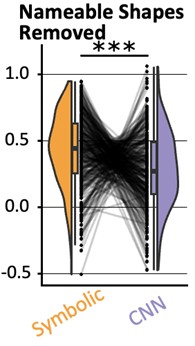
      An identical analysis on the MEG leads to two noisy but significant clusters (CNN: 64.0ms to 172.0ms; then 192.0ms to 296.0ms; both p<.001: Geometric Features: 312.0ms to 364.0ms with p=.008). We have improved our manuscript thanks to the reviewer’s observation by adding a figure with the new behavior analysis to the supplementary figures and in the result section of the behavior task. We now refer to these analysis where appropriate:

      (intro) “The effect appeared as a human universal, present in preschoolers, first-graders, and adults without access to formal western math education (the Himba from Namibia), and thus seemingly independent of education and of the existence of linguistic labels for regular shapes.”

      (behavior results) “Finally, to separate the effect of name availability and geometric features on behavior, we replicated our analysis after removing the square, rectangle, trapezoids, rhombus and parallelogram from our data (Fig. S5D). This left us with five shapes, and an RDM with 10 entries, When regressing it in a GLM with our two models, we find that both models are still significant predictors (p<.001). The effect size of the geometric feature model is greatly reduced, yet remained significantly higher than that of the neural network model (p<.001).”

      (meg results) “This analysis yielded similar clusters when performed on a subset of shapes that do not have an obvious name in English, as was the case for the behavior analysis (CNN Encoding: 64.0ms to 172.0ms; then 192.0ms to 296.0ms; both p<.001: Geometric Features: 312.0ms to 364.0ms with p=.008).”

      (discussion, end of behavior section) “Previously, we only found such a significant mixture of predictors in uneducated humans (whether French preschoolers or adults from the Himba community, mitigating the possible impact of explicit western education, linguistic labels, and statistics of the environment on geometric shape representation) (Sablé-Meyer et al., 2021).”

      Perhaps the referee’s point can also be reversed: we provide a normative theory of geometric shape complexity which has the potential to explain why certain shapes have names: instead of seeing shape names as the cause of their simpler mental representation, we suggest that the converse could occur, i.e. the simpler shapes are the ones that are given names.

      (2) Task difficulty

      On the other hand is the question of whether our effect is driven by task difficulty. First, we would like to point out that this point could apply to the fMRI task, which asks for an explicit detection of deviants, but does not apply to the MEG experiment. In MEG, participants passively looked at sequences of shapes which, for a given block, comprising many instances of a fixed standard shape and rare deviants–even if they notice deviants, they have no task related to them. Yet two independent findings validated the geometric features model: there was a large effect of geometric regularity on the MEG response to deviants, and the MEG dissimilarity matrix between standard shapes correlated with a model based on geometric features, better than with a model based on CNNs. While the response to rare deviants might perhaps be attributed to “difficulty” (assuming that, in spite of the absence of an explicit task, participants try to spot the deviants and find this self-imposed task more difficult in runs with less regular shapes), it seems very hard to explain the representational similarity analysis (RSA) findings based on difficulty. Indeed, what motivated us to use RSA analysis in both fMRI and MEG was to stop relying on the response to deviants, and use solely the data from standard or “reference” shapes, and model their neural response with theory-derived regressors.

      We have updated the manuscript in several places to make our view on these points clearer:

      (experiment 4) “This design allowed us to study the neural mechanisms of the geometric regularity effect without confounding effects of task, task difficulty, or eye movements.”

      (figure 4, legend) “(A) Task structure: participants passively watch a constant stream of geometric shapes, one per second (presentation time 800ms). The stimuli are presented in blocks of 30 identical shapes up to scaling and rotation, with 4 occasional deviant shape. Participants do not have a task to perform beside fixating.”

      Reviewer #2 (Public review):

      Weakness:

      Given that the primary take away from this study is that geometric shape information is found in the dorsal stream, rather than the ventral stream there is very little there is very little discussion of prior work in this area (for reviews, see Freud et al., 2016; Orban, 2011; Xu, 2018). Indeed, there is extensive evidence of shape processing in the dorsal pathway in human adults (Freud, Culham, et al., 2017; Konen & Kastner, 2008; Romei et al., 2011), children (Freud et al., 2019), patients (Freud, Ganel, et al., 2017), and monkeys (Janssen et al., 2008; Sereno & Maunsell, 1998; Van Dromme et al., 2016), as well as the similarity between models and dorsal shape representations (Ayzenberg & Behrmann, 2022; Han & Sereno, 2022).

      We thank the reviewer for this opportunity to clarify our writing. We want to use this opportunity to highlight that our primary finding is not about whether the shapes of objects or animals (in general) are processed in the ventral versus or the dorsal pathway, but rather about the much more restricted domain of geometric shapes such as squares and triangles. We propose that simple geometric shapes afford additional levels of mental representation that rely on their geometric features – on top of the typical visual processing. To the best of our knowledge, this point has not been made in the above papers.

      Still, we agree that it is useful to better link our proposal to previous ones. We have updated the discussion section titled “Two Visual Pathways” to include more specific references to the literature that have reported visual object representations in the dorsal pathway. Following another reviewer’s observation, we have also updated our analysis to better demonstrate the overlap in activation evoked by math and by geometry in the IPS, as well as include a novel comparison with independently published results.

      Overall, to address this point, we (i) show the overlap between our “geometry” contrast (shape > word+tools+houses) and our “math” contrast (number > words); (ii) we display these ROIs side by side with ROIs found in previous work (Amalric and Dehaene, 2016), and (iii) in each math-related ROIs reported in that article, we test our “geometry” (shape > word+tools+houses) contrast and find almost all of them to be significant in both population; see Fig. S5.

      Finally, within the ROIs identified with our geometry localizer, we also performed similarity analyses: for each region we extracted the betas of every voxel for every visual category, and estimated the distance (cross-validated mahalanobis) between different visual categories. In both ventral ROIs, in both populations, numbers were closer to shapes than to the other visual categories including text and Chinese characters (all p<.001). In adults, this result also holds for the right ITG (p=.021) and the left IPS (p=.014) but not the right IPS (p=.17). In children, this result did not hold in the areas.

      Naturally, overlap in brain activation does not suffice to conclude that the same computational processes are involved. We have added an explicit caveat about this point. Indeed, throughout the article,  we have been careful to frame our results in a way that is appropriate given our evidence, e.g. saying “Those areas are similar to those active during number perception, arithmetic, geometric sequences, and the processing of high-level math concepts” and “The IPS areas activated by geometric shapes overlap with those active during the comprehension of elementary as well as advanced mathematical concepts”. We have rephrased the possibly ambiguous “geometric shapes activated math- and number-related areas, particular the right aIPS.” into “geometric shapes activated areas independently found to be activated by math- and number-related tasks, in particular the right aIPS”.

      Reviewer #3 (Public review):

      Weakness:

      Perhaps the manuscript could emphasize that the areas recruited by geometric figures but not objects are spatial, with reduced processing in visual areas. It also seems important to say that the images of real objects are interpreted as representations of 3D objects, as they activate the same visual areas as real objects. By contrast, the images of geometric forms are not interpreted as representations of real objects but rather perhaps as 2D abstractions.

      This is an interesting possibility. Geometric shapes are likely to draw attention to spatial dimensions (e.g. length) and to do so in a 2D spatial frame of reference rather than the 3D representations evoked by most other objects or images. However, this possibility would require further work to be thoroughly evaluated, for instance by comparing usual 3D objects with rare instances of 2D ones (e.g. a sheet of paper, a sticker etc). In the absence of such a test, we refrained from further speculation on this point.

      The authors use the term "symbolic." That use of that term could usefully be expanded here.  

      The reviewer is right in pointing out that “symbolic” should have been more clearly defined. We now added in the introduction:

      (introduction) “[…] we sometimes refer to this model as “symbolic” because it relies on discrete, exact, rule-based features rather than continuous representations  (Sablé-Meyer et al., 2022). In this representational format, geometric shapes are postulated to be represented by symbolic expressions in a “language-of-thought”, e.g. “a square is a four-sided figure with four equal sides and four right angles” or equivalently by a computer-like program from drawing them in a Logo-like language (Sablé-Meyer et al., 2022).”

      Here, however, the present experiments do not directly probe this format of a representation. We have therefore simplified our wording and removed many of our use of the word “symbolic” in favor of the more specific “geometric features”.

      Pigeons have remarkable visual systems. According to my fallible memory, Herrnstein investigated visual categories in pigeons. They can recognize individual people from fragments of photos, among other feats. I believe pigeons failed at geometric figures and also at cartoon drawings of things they could recognize in photos. This suggests they did not interpret line drawings of objects as representations of objects.

      The comparison of geometric abilities across species is an interesting line of research. In the discussion, we briefly mention several lines of research that indicate that non-human primates do not perceive geometric shapes in the same way as we do – but for space reasons, we are reluctant to expand this section to a broader review of other more distant species. The referee is right that there is evidence of pigeons being able to perceive an invariant abstract 3D geometric shape in spite of much variation in viewpoint (Peissig et al., 2019) – but there does not seem to be evidence that they attend to geometric regularities specifically (e.g. squares versus non-squares). Also, the referee’s point bears on the somewhat different issue of whether humans and other animals may recognize the object depicted by a symbolic drawing (e.g. a sketch of a tree). Again, humans seem to be vastly superior in this domain, and research on this topic is currently ongoing in the lab. However, the point that we are making in the present work is specifically about the neural correlates of the representation of simple geometric shapes which by design were not intended to be interpretable as representations of objects.

      Categories are established in part by contrast categories; are quadrilaterals, triangles, and circles different categories?

      We are not sure how to interpret the referee’s question, since it bears on the definition of “category” (Spontaneous? After training? With what criterion?). While we are not aware of data that can unambiguously answer the reviewer’s question, categorical perception in geometric shapes can be inferred from early work investigating pop-out effects in visual search, e.g. (Treisman and Gormican, 1988): curvature appears to generate strong pop-out effects, and therefore we would expect e.g. circles to indeed be a different category than, say, triangles. Similarly, right angles, as well as parallel lines, have been found to be perceived categorically (Dillon et al., 2019).

      This suggests that indeed squares would be perceived as categorically different from triangles and circles. On the other hand, in our own previous work (Sablé-Meyer et al., 2021) we have found that the deviants that we generated from our quadrilaterals did not pop out from displays of reference quadrilaterals. Pop-out is probably not the proper criterion for defining what a “category” is, but this is the extent to which we can provide an answer to the reviewer’s question.

      It would be instructive to investigate stimuli that are on a continuum from representational to geometric, e.g., table tops or cartons under various projections, or balls or buildings that are rectangular or triangular. Building parts, inside and out. like corners. Objects differ from geometric forms in many ways: 3D rather than 2D, more complicated shapes, and internal texture. The geometric figures used are flat, 2-D, but much geometry is 3-D (e. g. cubes) with similar abstract features.

      We agree that there is a whole line of potential research here. We decided to start by focusing on the simplest set of geometric shapes that would give us enough variation in geometric regularity while being easy to match on other visual features. We agree with the reviewer that our results should hold both for more complex 2-D shapes, but also for 3-D shapes. Indeed, generative theories of shapes in higher dimensions following similar principles as ours have been devised (I. Biederman, 1987; Leyton, 2003).  We now mention this in the discussion:

      “Finally, this research should ultimately be extended to the representation of 3-dimensional geometric shapes, for which similar symbolic generative models have indeed been proposed (Irving Biederman, 1987; Leyton, 2003).”

      The feature space of geometry is more than parallelism and symmetry; angles are important, for example. Listing and testing features would be fascinating. Similarly, looking at younger or preferably non-Western children, as Western children are exposed to shapes in play at early ages.

      We agree with the reviewer on all point. While we do not list and test the different properties separately in this work, we would like to highlight that angles are part of our geometric feature model, which includes features of “right-angle” and “equal-angles” as suggested by the reviewer.

      We also agree about the importance of testing populations with limited exposure to formal training with geometric shapes. This was in fact a core aspect of a previous article of ours which tests both preschoolers, and adults with no access to formal western education – though no non-Western children (Sablé-Meyer et al., 2021). It remains a challenge to perform brain-imaging studies in non-Western populations (although see Dehaene et al., 2010; Pegado et al., 2014).

      What in human experience but not the experience of close primates would drive the abstraction of these geometric properties? It's easy to make a case for elaborate brain processes for recognizing and distinguishing things in the world, shared by many species, but the case for brain areas sensitive to processing geometric figures is harder. The fact that these areas are active in blind mathematicians and that they are parietal areas suggests that what is important is spatial far more than visual. Could these geometric figures and their abstract properties be connected in some way to behavior, perhaps with fabrication and construction as well as use? Or with other interactions with complex objects and environments where symmetry and parallelism (and angles and curvature--and weight and size) would be important? Manual dexterity and fabrication also distinguish humans from great apes (quantitatively, not qualitatively), and action drives both visual and spatial representations of objects and spaces in the brain. I certainly wouldn't expect the authors to add research to this already packed paper, but raising some of the conceptual issues would contribute to the significance of the paper.

      We refrained from speculating about this point in the previous version of the article, but share some of the reviewers’ intuitions about the underlying drive for geometric abstraction. As described in (Dehaene, 2026; Sablé-Meyer et al., 2022), our hypothesis, which isn’t tested in the present article, is that the emergence of a pervasive ability to represent aspects of the world as compact expressions in a mental “language-of-thought” is what underlies many domains of specific human competence, including some listed by the reviewer (tool construction, scene understanding) and our domain of study here, geometric shapes.

      Recommendations for the Authors:

      Reviewer #1 (Recommendations for the authors):

      Overall, I enjoyed reading this paper. It is clearly written and nicely showcases the amount of work that has gone into conducting all these experiments and analyzing the data in sophisticated ways. I also thought the figures were great, and I liked the level of organization in the GitHub repository and am looking forward to seeing the shared data on OpenNeuro. I have some specific questions I hope the authors can address.

      (1) Behavior

      - Looking at Figure 1, it seemed like most shapes are clustering together, whereas square, rectangle, and maybe rhombus and parallelogram are slightly more unique. I was wondering whether the authors could comment on the potential influence of linguistic labels. Is it possible that it is easier to discard the intruder when the shapes are readily nameable versus not?

      This is an interesting observation, but the existence of names for shapes does not suffice to explain all of our findings ; see our reply to the public comment.

      (2) fMRI

      - As mentioned in the public review, I was surprised that the authors went with an intruder task because I would imagine that performance depends on the specific combination of geometric shapes used within a trial. I assume it is much harder to find, for example, a "Right Hinge" embedded within "Hinge" stimuli than a "Right Hinge" amongst "Squares". In addition, the rotation and scaling of each individual item should affect regular shapes less than irregular shapes, creating visual dissimilarities that would presumably make the task harder. Can the authors comment on how we can be sure that the differences we pick up in the parietal areas are not related to task difficulty but are truly related to geometric shape regularities?

      Again, please see our public review response for a larger discussion of the impact of task difficulty. There are two aspects to answering this question.

      First, the task is not as the reviewer describes: the intruder task is to find a deviant shape within several slightly rotated and scaled versions of the regular shape it came from. During brain imaging, we did not ask participants to find an exemplar of one of our reference shape amidst copies of another, but rather a deviant version of one shape against copies of its reference version. We only used this intruder task with all pairs of shapes to generate the behavioral RSA matrix.

      Second, we agree that some of the fMRI effect may stem from task difficulty, and this motivated our use of RSA analysis in fMRI, and a passive MEG task. RSA results cannot be explained by task difficulty.

      Overall, we have tried to make the limitations of the fMRI design, and the motivation for turning to passive presentation in MEG, clearer by stating the issues more clearly when we introduce experiment 4:

      “The temporal resolution of fMRI does not allow to track the dynamic of mental representations over time. Furthermore, the previous fMRI experiment suffered from several limitations. First, we studied six quadrilaterals only, compared to 11 in our previous behavioral work. Second, we used an explicit intruder detection, which implies that the geometric regularity effect was correlated with task difficulty, and we cannot exclude that this factor alone explains some of the activations in figure 3C (although it is much less clear how task difficulty alone would explain the RSA results in figure 3D). Third, the long display duration, which was necessary for good task performance especially in children, afforded the possibility of eye movements, which were not monitored inside the 3T scanner and again could have affected the activations in figure 3C.”

      - How far in the periphery were the stimuli presented? Was eye-tracking data collected for the intruder task? Similar to the point above, I would imagine that a harder trial would result in more eye movements to find the intruder, which could drive some of the differences observed here.

      A 1-degree bar was added to Figure 3A, which faithfully illustrates how the stimuli were presented in fMRI. Eye-tracking data was not collected during fMRI. Although the participants were explicitly instructed to fixate at the center of the screen and avoid eye movements, we fully agree with the referee that we cannot exclude that eye movements were present, perhaps more so for more difficult displays, and would therefore have contributed to the observed fMRI activations in experiment 3 (figure 3C). We now mention this limitation explicity at the end of experiment 3. However, crucially, this potential problem cannot apply to the MEG data. During the MEG task, the stimuli were presented one by one at the center of screen, without any explicit task, thus avoiding issues of eye movements. We therefore consider the MEG geometrical regularity effect, which comes at a relatively early latency (starting at ~160 ms) and even in a passive task, to provide the strongest evidence of geometric coding, unaffected by potential eye movement artefacts. 

      - I was wondering whether the authors would consider showing some un-thresholded maps just to see how widespread the activation of the geometric shapes is across all of the cortex.

      We share the uncorrected threshold maps in Fig. S3. for both adults and children in the category localizer, copied here as well. For the geometry task, most of the clusters identified are fairly big and survive cluster-corrected permutations; the uncorrected statistical maps look almost fully identical to the one presented in Fig. 3 (p<.001 map).

      - I'm missing some discussion on the role of early visual areas that goes beyond the RSA-CNN comparison. I would imagine that early visual areas are not only engaged due to top-down feedback (line 258) but may actually also encode some of the geometric features, such as parallel lines and symmetry. Is it feasible to look at early visual areas and examine what the similarity structure between different shapes looks like?

      If early visual areas encoded the geometric features that we propose, then even early sensor-level RSA matrices should show a strong impact of geometric features similarity, which is not what we find (figure 4D). We do, however, appreciate the referee’s request to examine more closely how this similarity structure looks like. We now provide a movie showing the significant correlation between neural activity and our two models (uncorrected participants); indeed, while the early occipital activity (around 110ms) is dominated by a significant correlation with the CNN model, there are also scattered significant sources associated to the symbolic model around these timepoints already.

      To test this further, we used beamformers to reconstruct the source-localized activity in calcarine cortex and performed an RSA analysis across that ROI. We find that indeed the CNN model is strongly significant at t=110ms (t=3.43, df=18, p=.003) while the geometric feature model is not (t=1.04, df=18, p=.31), and the CNN is significantly above the geometric feature model (t=4.25, df=18, p<.001). However, this result is not very stable across time, and there are significant temporal clusters around these timepoints associated to each model, with no significant cluster associated to a CNN > geometric (CNN: significant cluster from 88ms to 140ms, p<.001 in permutation based with 10000 permutations; geometric features has a significant cluster from 80ms to 104ms, p=.0475; no significant cluster on the difference between the two).

      (3) MEG

      - Similar to the fMRI set, I am a little worried that task difficulty has an effect on the decoding results, as the oddball should pop out more in more geometric shapes, making it easier to detect and easier to decode. Can the authors comment on whether it would matter for the conclusions whether they are decoding varying task difficulty or differences in geometric regularity, or whether they think this can be considered similarly?

      See above for an extensive discussion of the task difficulty effect. We point out that there is no task in the MEG data collection part. We have clarified the task design by updating our Fig. 4. Additionally, the fact that oddballs are more perceived more or less easily as a function of their geometric regularity is, in part, exactly the point that we are making – but, in MEG, even in the absence of a task of looking for them.

      - The authors discuss that the inflated baseline/onset decoding/regression estimates may occur because the shapes are being repeated within a mini-block, which I think is unlikely given the long ISIs and the fact that the geometric features model is not >0 at onset. I think their second possible explanation, that this may have to do with smoothing, is very possible. In the text, it said that for the non-smoothed result, the CNN encoding correlates with the data from 60ms, which makes a lot more sense. I would like to encourage the authors to provide readers with the unsmoothed beta values instead of the 100-ms smoothed version in the main plot to preserve the reason they chose to use MEG - for high temporal resolution!

      We fully agree with the reviewer and have accordingly updated the figures to show the unsmoothed data (see below). Indeed, there is now no significant CNN effect before ~60 ms (up to the accuracy of identifying onsets with our method).

      - In Figure 4C, I think it would be useful to either provide error bars or show variability across participants by plotting each participant's beta values. I think it would also be nice to plot the dissimilarity matrices based on the MEG data at select timepoints, just to see what the similarity structure is like.

      Following the reviewer’s recommendation, we plot the timeseries with SEM as shaded area, and thicker lines for statistically significant clusters, and we provide the unsmoothed version in figure Fig. 4. As for the dissimilarity matrices at select timepoints, this has now been added to figure Fig. 4.

      - To evaluate the source model reconstruction, I think the reader would need a little more detail on how it was done in the main text. How were the lead fields calculated? Which data was used to estimate the sources? How are the models correlated with the source data?

      We have imported some of the details in the main text as follows (as well as expanding the methods section a little):

      “To understand which brain areas generated these distinct patterns of activations, and probe whether they fit with our previous fMRI results, we performed a source reconstruction of our data. We projected the sensor activity onto each participant's cortical surfaces estimated from T1-images. The projection was performed using eLORETA and emptyroom recordings acquired on the same day to estimate noise covariance, with the default parameters of mne-bids-pipeline. Sources were spaced using a recursively subdivided octahedron (oct5). Group statistics were performed after alignement to fsaverage. We then replicated the RSA analysis […]”

      - In addition to fitting the CNN, which is used here to model differences in early visual cortex, have the authors considered looking at their fMRI results and localizing early visual regions, extracting a similarity matrix, and correlating that with the MEG and/or comparing it with the CNN model?

      We had ultimately decided against comparing the empirical similarity matrices from the MEG and fMRI experiments, first because the stimuli and tasks are different, and second because this would not be directly relevant to our goal, which is to evaluate whether a geometric-feature model accounts for the data. Thus, we systematically model empirical similarity matrices from fMRI and from MEG with our two models derived from different theories of shape perception in order to test predictions about their spatial and temporal dynamic. As for comparing the similarity matrix from early visual regions in fMRI with that predicted by the CNN model, this is effectively visible from our Fig. 3D where we perform searchlight RSA analysis and modeling with both the CNN and the geometric feature model; bilaterally, we find a correlation with the CNN model, although it sometimes overlap with predictions from the geometric feature model as well. We now include a section explaining this reasoning in appendix:

      “Representational similarity analysis also offers a way to directly compared similarity matrices measured in MEG and fMRI, thus allowing for fusion of those two modalities and tentatively assigning a “time stamp” to distinct MRI clusters. However, we did not attempt such an analysis here for several reasons. First, distinct tasks and block structures were used in MEG and fMRI. Second, a smaller list of shapes was used in fMRI, as imposed by the slower modality of acquisition. Third, our study was designed as an attempt to sort out between two models of geometric shape recognition. We therefore focused all analyses on this goal, which could not have been achieved by direct MEG-fMRI fusion, but required correlation with independently obtained model predictions.”

      Minor comments

      - It's a little unclear from the abstract that there is children's data for fMRI only.

      We have reworded the abstract to make this unambiguous

      - Figures 4a & b are missing y-labels.

      We can see how our labels could be confused with (sub-)plot titles and have moved them to make the interpretation clearer.

      - MEG: are the stimuli always shown in the same orientation and size?

      They are not, each shape has a random orientation and scaling. On top of a task example at the top of Fig. 4, we have now included a clearer mention of this in the main text when we introduce the task:

      “shapes were presented serially, one at a time, with small random changes in rotation and scaling parameters, in miniblocks with a fixed quadrilateral shape and with rare intruders with the bottom right corner shifted by a fixed amount (Sablé-Meyer et al., 2021)”

      - To me, the discussion section felt a little lengthy, and I wonder whether it would benefit from being a little more streamlined, focused, and targeted. I found that the structure was a little difficult to follow as it went from describing the result by modality (behavior, fMRI, MEG) back to discussing mostly aspects of the fMRI findings.

      We have tried to re-organize and streamline the discussion following these comments.

      Then, later on, I found that especially the section on "neurophysiological implementation of geometry" went beyond the focus of the data presented in the paper and was comparatively long and speculative.

      We have reexamined the discussion, but the citation of papers emphasizing a representation of non-accidental geometric properties in non-human animals was requested by other commentators on our article; and indeed, we think that they are relevant in the context of our prior suggestion that the composition of geometric features might be a uniquely human feature – these papers suggest that individual features may not, and that it is therefore compositionality which might be special to the human brain. We have nevertheless shortened it.

      Furthermore, we think that this section is important because symbolic models are often criticized for lack of a plausible neurophysiological implementation. It is therefore important to discuss whether and how the postulated symbolic geometric code could be realized in neural circuits. We have added this justification to the introduction of this section.

      Reviewer #2 (Recommendations for the authors):

      (1) If the authors want to specifically claim that their findings align with mathematical reasoning, they could at least show the overlap between the activation maps of the current study and those from prior work.

      This was added to the fMRI results. See our answers to the public review.

      (2) I wonder if the reason the authors only found aIPS in their first analysis (Figure 2) is because they are contrasting geometric shapes with figures that also have geometric properties. In other words, faces, objects, and houses also contain geometric shape information, and so the authors may have essentially contrasted out other areas that are sensitive to these features. One indication that this may be the case is that the geometric regularity effect and searchlight RSA (Figure 3) contains both anterior and posterior IPS regions (but crucially, little ventral activity). It might be interesting to discuss the implications of these differences.

      Indeed, we cannot exclude that the few symmetries, perpendicularity and parallelism cues that can be presented in faces, objects or houses were processed as such, perhaps within the ventral pathway, and that these representations would have been subtracted out. We emphasize that our subtraction isolates the geometrical features that are present in simple regular geometric shapes, over and above those that might exist in other categories. We have added this point to the discussion:

      “[… ] For instance, faces possess a plane of quasi-symmetry, and so do many other man-made tools and houses. Thus, our subtraction isolated the geometrical features that are present in simple regular geometric shapes (e.g. parallels, right angles, equality of length) over and above those that might already exist, in a less pure form, in other categories.”

      (3) I had a few questions regarding the MEG results.

      a. I didn't quite understand the task. What is a regular or oddball shape in this context? It's not clear what is being decoded. Perhaps a small example of the MEG task in Figure 4 would help?

      We now include an additional sub-figure in Fig. 4 to explain the paradigm. In brief: there is no explicit task, participants are simply asked to fixate. The shapes come in miniblocks of 30 identical reference shapes (up to rotation and scaling), among which some occasional deviant shapes randomly appear (created by moving the corner of the reference shape by some amount).

      b. In Figure 4A/B they describe the correlation with a 'symbolic model'. Is this the same as the geometric model in 4C?

      It is. We have removed this ambiguity by calling it “geometric model” and setting its color to the one associated to this model thought the article.

      c. The author's explanation for why geometric feature coding was slower than CNN encoding doesn't quite make sense to me. As an explanation, they suggest that previous studies computed "elementary features of location or motor affordance", whereas their study work examines "high-level mathematical information of an abstract nature." However, looking at the studies the authors cite in this section, it seems that these studies also examined the time course of shape processing in the dorsal pathway, not "elementary features of location or motor affordance." Second, it's not clear how the geometric feature model reflects high-level mathematical information (see point above about claiming this is related to math).

      We thank the referee for pointing out this inappropriate phrase, which we removed. We rephrased the rest of the paragraph to clarify our hypothesis in the following way:

      “However, in this work, we specifically probed the processing of geometric shapes that, if our hypothesis is correct, are represented as mental expressions that combine geometrical and arithmetic features of an abstract categorical nature, for instance representing “four equal sides” or “four right angles”. It seems logical that such expressions, combining number, angle and length information, take more time to be computed than the first wave of feedforward processing within the occipito-temporal visual pathway, and therefore only activate thereafter.”

      One explanation may be that the authors' geometric shapes require finer-grained discrimination than the object categories used in prior studies. i.e., the odd-ball task may be more of a fine-grained visual discrimination task. Indeed, it may not be a surprise that one can decode the difference between, say, a hammer and a butterfly faster than two kinds of quadrilaterals.

      We do not disagree with this intuition, although note that we do not have data on this point (we are reporting and modelling the MEG RSA matrix across geometric shapes only – in this part, no other shapes such as tools or faces are involved). Still, the difference between squares, rectangles, parallelograms and other geometric shapes in our stimuli is not so subtle. Furthermore, CNNs do make very fine grained distinctions, for instance between many different breeds of dogs in the IMAGENET corpus. Still, those sorts of distinctions capture the initial part of the MEG response, while the geometric model is needed only for the later part. Thus, we think that it is a genuine finding that geometric computations associated with the dorsal parietal pathway are slower than the image analysis performed by the ventral occipito-temporal pathway.

      d. CNN encoding at time 0 is a little weird, but the author's explanation, that this is explained by the fact that temporal smoothed using a 100 ms window makes sense. However, smoothing by 100 ms is quite a lot, and it doesn't seem accurate to present continuous time course data when the decoding or RSA result at each time point reflects a 100 ms bin. It may be more accurate to simply show unsmoothed data. I'm less convinced by the explanation about shape prediction.

      We agree. Following the reviewer’s advice, as well as the recommendation from reviewer 1, we now display unsmoothed plots, and the effects now exhibit a more reasonable timing (Figure 4D), with effects starting around ~60 ms for CNN encoding.

      (4) I appreciate the author's use of multiple models and their explanation for why DINOv2 explains more variance than the geometric and CNN models (that it represents both types of features. A variance partitioning analysis may help strengthen this conclusion (Bonner & Epstein, 2018; Lescroart et al., 2015).

      However, one difference between DINOv2 and the CNN used here is that it is trained on a dataset of 142 million images vs. the 1.5 million images used in ImageNet. Thus, DINOv2 is more likely to have been exposed to simple geometric shapes during training, whereas standard ImageNet trained models are not. Indeed, prior work has shown that lesioning line drawing-like images from such datasets drastically impairs the performance of large models (Mayilvahanan et al., 2024). Thus, it is unlikely that the use of a transformer architecture explains the performance of DINOv2. The authors could include an ImageNet-trained transformer (e.g., ViT) and a CNN trained on large datasets (e.g., ResNet trained on the Open Clip dataset) to test these possibilities. However, I think it's also sufficient to discuss visual experience as a possible explanation for the CNN and DINOv2 results. Indeed, young children are exposed to geometric shapes, whereas ImageNet-trained CNNs are not.

      We agree with the reviewer’s observation. In fact, new and ongoing work from the lab is also exploring this; we have included in supplementary materials exactly what the reviewer is suggesting, namely the time course of the correlation with ViT and with ConvNeXT. In line with the reviewers’ prediction, these networks, trained on much larger dataset and with many more parameters, can also fit the human data as well as DINOv2. We ran additional analysis of the MEG data with ViT and ConvNeXT, which we now report in Fig. S6 as well as in an additional sentence in that section:

      “[…] similar results were obtained by performing the same analysis, not only with another vision transformer network, ViT, but crucially using a much larger convolutional neural network, ConvNeXT, which comprises ~800M parameters and has been trained on 2B images, likely including many geometric shapes and human drawings. For the sake of completeness, RSA analysis in sensor space of the MEG data with these two models is provided in Fig. S6.”

      We conclude that the size and nature of the training set could be as important as the architecture – but also note that humans do not rely on such a huge training set. We have updated the text, as well as Fig. S6, accordingly by updating the section now entitled “Vision Transformers and Larger Neural Networks”, and the discussion section on theoretical models.

      (5) The authors may be interested in a recent paper from Arcaro and colleagues that showed that the parietal cortex is greatly expanded in humans (including infants) compared to non-human primates (Meyer et al., 2025), which may explain the stronger geometric reasoning abilities of humans.

      A very interesting article indeed! We have updated our article to incorporate this reference in the discussion, in the section on visual pathways, as follows:

      “Finally, recent work shows that within the visual cortex, the strongest relative difference in growth between human and non-human primates is localized in parietal areas (Meyer et al., 2025). If this expansion reflected the acquisition of new processing abilities in these regions, it  might explain the observed differences in geometric abilities between human and non-human primates (Sablé-Meyer et al., 2021).”

      Also, the authors may want to include this paper, which uses a similar oddity task and compelling shows that crows are sensitive to geometric regularity:

      Schmidbauer, P., Hahn, M., & Nieder, A. (2025). Crows recognize geometric regularity. Science Advances, 11(15), eadt3718. https://doi.org/10.1126/sciadv.adt3718

      We have ongoing discussions with the authors of this work and are  have prepared a response to their findings (Sablé-Meyer and Dehaene, 2025)–ultimately, we think that this discussion, which we agree is important, does not have its place in the present article. They used a reduced version of our design, with amplified differences in the intruders. While they did not test the fit of their model with CNN or geometric feature models, we did and found that a simple CNN suffices to account for crow behavior. Thus, we disagree that their conclusions follow from their results and their conclusions. But the present article does not seem to be the right platform to engage in this discussion.

      References

      Ayzenberg, V., & Behrmann, M. (2022). The Dorsal Visual Pathway Represents Object-Centered Spatial Relations for Object Recognition. The Journal of Neuroscience, 42(23), 4693-4710. https://doi.org/10.1523/jneurosci.2257-21.2022

      Bonner, M. F., & Epstein, R. A. (2018). Computational mechanisms underlying cortical responses to the affordance properties of visual scenes. PLoS Computational Biology, 14(4), e1006111. https://doi.org/10.1371/journal.pcbi.1006111

      Bueti, D., & Walsh, V. (2009). The parietal cortex and the representation of time, space, number and other magnitudes. Philosophical Transactions of the Royal Society B: Biological Sciences, 364(1525), 1831-1840.

      Dehaene, S., & Brannon, E. (2011). Space, time and number in the brain: Searching for the foundations of mathematical thought. Academic Press.

      Freud, E., Culham, J. C., Plaut, D. C., & Bermann, M. (2017). The large-scale organization of shape processing in the ventral and dorsal pathways. eLife, 6, e27576.

      Freud, E., Ganel, T., Shelef, I., Hammer, M. D., Avidan, G., & Behrmann, M. (2017). Three-dimensional representations of objects in dorsal cortex are dissociable from those in ventral cortex. Cerebral Cortex, 27(1), 422-434.

      Freud, E., Plaut, D. C., & Behrmann, M. (2016). 'What 'is happening in the dorsal visual pathway. Trends in Cognitive Sciences, 20(10), 773-784.

      Freud, E., Plaut, D. C., & Behrmann, M. (2019). Protracted developmental trajectory of shape processing along the two visual pathways. Journal of Cognitive Neuroscience, 31(10), 1589-1597.

      Han, Z., & Sereno, A. (2022). Modeling the Ventral and Dorsal Cortical Visual Pathways Using Artificial Neural Networks. Neural Computation, 34(1), 138-171. https://doi.org/10.1162/neco_a_01456

      Janssen, P., Srivastava, S., Ombelet, S., & Orban, G. A. (2008). Coding of shape and position in macaque lateral intraparietal area. Journal of Neuroscience, 28(26), 6679-6690.

      Konen, C. S., & Kastner, S. (2008). Two hierarchically organized neural systems for object information in human visual cortex. Nature Neuroscience, 11(2), 224-231.

      Lescroart, M. D., Stansbury, D. E., & Gallant, J. L. (2015). Fourier power, subjective distance, and object categories all provide plausible models of BOLD responses in scene-selective visual areas. Frontiers in Computational Neuroscience, 9(135), 1-20. https://doi.org/10.3389/fncom.2015.00135

      Mayilvahanan, P., Zimmermann, R. S., Wiedemer, T., Rusak, E., Juhos, A., Bethge, M., & Brendel, W. (2024). In search of forgotten domain generalization. arXiv Preprint arXiv:2410.08258.

      Meyer, E. E., Martynek, M., Kastner, S., Livingstone, M. S., & Arcaro, M. J. (2025). Expansion of a conserved architecture drives the evolution of the primate visual cortex. Proceedings of the National Academy of Sciences, 122(3), e2421585122. https://doi.org/10.1073/pnas.2421585122

      Orban, G. A. (2011). The extraction of 3D shape in the visual system of human and nonhuman primates. Annual Review of Neuroscience, 34, 361-388.

      Romei, V., Driver, J., Schyns, P. G., & Thut, G. (2011). Rhythmic TMS over Parietal Cortex Links Distinct Brain Frequencies to Global versus Local Visual Processing. Current Biology, 21(4), 334-337. https://doi.org/10.1016/j.cub.2011.01.035

      Sereno, A. B., & Maunsell, J. H. R. (1998). Shape selectivity in primate lateral intraparietal cortex. Nature, 395(6701), 500-503. https://doi.org/10.1038/26752

      Summerfield, C., Luyckx, F., & Sheahan, H. (2020). Structure learning and the posterior parietal cortex. Progress in Neurobiology, 184, 101717. https://doi.org/10.1016/j.pneurobio.2019.101717

      Van Dromme, I. C., Premereur, E., Verhoef, B.-E., Vanduffel, W., & Janssen, P. (2016). Posterior Parietal Cortex Drives Inferotemporal Activations During Three-Dimensional Object Vision. PLoS Biology, 14(4), e1002445. https://doi.org/10.1371/journal.pbio.1002445

      Xu, Y. (2018). A tale of two visual systems: Invariant and adaptive visual information representations in the primate brain. Annu. Rev. Vis. Sci, 4, 311-336.

      Reviewer #3 (Recommendations for the authors):

      Bring into the discussion some of the issues outlined above, especially a) the spatial rather than visual of the geometric figures and b) the non-representational aspects of geometric form aspects.

      We thank the reviewer for their recommendations – see our response to the public review for more details.

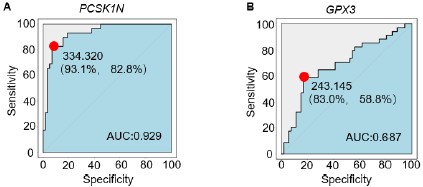
    1. Note: This response was posted by the corresponding author to Review Commons. The content has not been altered except for formatting.

      Learn more at Review Commons


      Reply to the reviewers

      Reviewer #1

      Evidence, reproducibility and clarity

      This paper addresses a very interesting problem of non-centrosomal microtubule organization in developing Drosophila oocytes. Using genetics and imaging experiments, the authors reveal an interplay between the activity of kinesin-1, together with its essential cofactor Ensconsin, and microtubule organization at the cell cortex by the spectraplakin Shot, minus-end binding protein Patronin and Ninein, a protein implicated in microtubule minus end anchoring. The authors demonstrate that the loss of Ensconsin affects the cortical accumulation non-centrosomal microtubule organizing center (ncMTOC) proteins, microtubule length and vesicle motility in the oocyte, and show that this phenotype can be rescued by constitutively active kinesin-1 mutant, but not by Ensconsin mutants deficient in microtubule or kinesin binding. The functional connection between Ensconsin, kinesin-1 and ncMTOCs is further supported by a rescue experiment with Shot overexpression. Genetics and imaging experiments further implicate Ninein in the same pathway. These data are a clear strength of the paper; they represent a very interesting and useful addition to the field.

      The weaknesses of the study are two-fold. First, the paper seems to lack a clear molecular model, uniting the observed phenomenology with the molecular functions of the studied proteins. Most importantly, it is not clear how kinesin-based plus-end directed transport contributes to cortical localization of ncMTOCs and regulation of microtubule length.

      Second, not all conclusions and interpretations in the paper are supported by the presented data.

      We thank the reviewer for recognizing the impact of this work. In response to the insightful suggestions, we performed extensive new experiments that establish a well-supported cellular and molecular model (Figure 7). The discussion has been restructured to directly link each conclusion to its corresponding experimental evidence, significantly strengthening the manuscript.

      Below is a list of specific comments, outlining the concerns, in the order of appearance in the paper/figures.

      Figure 1. The statement: "Ens loading on MTs in NCs and their subsequent transport by Dynein toward ring canals promotes the spatial enrichment of the Khc activator Ens in the oocyte" is not supported by data. The authors do not demonstrate that Ens is actually transported from the nurse cells to the oocyte while being attached to microtubules. They do show that the intensity of Ensconsin correlates with the intensity of microtubules, that the distribution of Ensconsin depends on its affinity to microtubules and that an Ensconsin pool locally photoactivated in a nurse cell can redistribute to the oocyte (and throughout the nurse cell) by what seems to be diffusion. The provided images suggest that Ensconsin passively diffuses into the oocyte and accumulates there because of higher microtubule density, which depends on dynein. To prove that Ensconsin is indeed transported by dynein in the microtubule-bound form, one would need to measure the residence time of Ensconsin on microtubules and demonstrate that it is longer than the time needed to transport microtubules by dynein into the oocyte; ideally, one would like to see movement of individual microtubules labelled with photoconverted Ensconsin from a nurse cell into the oocyte. Since microtubules are not enriched in the oocyte of the dynein mutant, analysis of Ensconsin intensity in this mutant is not informative and does not reveal the mechanism of Ensconsin accumulation.

      As noted by Reviewer 3, the directional movement of microtubules traveling at ~140 nm/s from nurse cells toward the oocyte through Ring Canals was previously reported using a tagged Ens-MT binding domain reporter line by Lu et al. (2022). We have therefore added the citation of this crucial work in the novel version of the manuscript (lane 155-157) and removed the photo-conversion panel.

      Critically, however, our study provides mechanistic insight that was missing from this earlier work: this mechanism is also crucial to enrich MAPs in the oocyte. The fact that Dynein mutants fail to enrich Ensconsin is a crucial piece of evidence: it supports a model of Ensconsin-loaded MT transport (Figure 1D-1F).

      Figure 2. According to the abstract, this figure shows that Ensconsin is "maintained at the oocyte cortex by Ninein". However, the figure doesn't seem to prove it - it shows that oocyte enrichment of Ensonsin is partially dependent on Ninein, but this applies to the whole cell and not just to the cell cortex. Furthermore, it is not clear whether Ninein mutation affects microtubule density, which in turn would affect Ensconsin enrichment, and therefore, it is not clear whether the effect of Ninein loss on Ensconsin distribution is direct or indirect.

      Ninein plays a critical role in Ensconsin enrichment and microtubule organization in the oocyte (new Figure 2, Figure 3, Figure S3). Quantification of total Tubulin signal shows no difference between control and Nin mutant oocytes (new Figure S3 panels A, B). We found decreased Ens enrichment in the oocyte, and Ens localization on MTs and to the cell cortex (Figure 2E, 2F, and Figure S3C and S3D).

      Novel quantitative analyses of microtubule orientation at the anterior cortex, where MTs are normally preferentially oriented toward the posterior pole (Parton et al. 2011), demonstrate that Nin mutants exhibit randomized MT orientation compared to wild-type oocytes (new Figure 3C-3E).These findings establish that Ninein (although not essential) favors Ensconsin localization on MTs, Ens enrichment in the oocyte, ncMTOC cortical localization, and more robust MT orientation toward the posterior cortex. It also suggests that Ens levels in the oocyte acts as a rheostat to control Khc activation.

      The observation that the aggregates formed by overexpressed Ninein accumulate other proteins, including Ensconsin, supports, though does not prove their interactions. Furthermore, there is absolutely no proof that Ninein aggregates are "ncMTOCs". Unless the authors demonstrate that these aggregates nucleate or anchor microtubules (for example, by detailed imaging of microtubules and EB1 comets), the text and labels in the figure would need to be altered.

      We have modified the manuscript, we now refer to an accumulation of these components in large puncta, rather than aggregates, consistent with previous observations (Rosen et al., 2000). We acknowledge in the revised version that these puncta recruit Shot, Patronin and Ens without mentioning direct interaction (lane 218).

      Importantly, we conducted a more detailed characterization of these Ninein/Shot/Patronin/Ens-containing puncta in a novel Figure S4. To rigorously assess their nucleation capacity, we analyzed Eb1-GFP-labeled MT comets, a robust readout of MT nucleation (Parton et al., 2011, Nashchekin et al., 2016). While few Eb1-positive comets occasionally emanate from these structures, confirming their identity as putative ncMTOCs, these puncta function as surprisingly weak nucleation centers (new Figure S4 E, Video S1) and, their presence does not alter overall MT architecture (new Figure S4 F). Moreover, these puncta disappear over time, are barely visible at stage 10B, they do not impair oocyte development or fertility (Figure S4 G and Table 1).

      Minor comment: Note that a "ratio" (Figure 2C) is just a ratio, and should not be expressed in arbitrary units.

      We have amended this point in all the figures.

      Figure 3B: immunoprecipitation results cannot be interpreted because the immunoprecipitated proteins (GFP, Ens-GFP, Shot-YFP) are not shown. It is also not clear that this biochemical experiment is useful. If the authors would like to suggest that Ensconsin directly binds to Patronin, the interaction would need to be properly mapped at the protein domain level.

      This is a good point: the GFP and Ens-GFP immunoprecipitated proteins are now much clearly identified on the blots and in the figure legend (new Figure 4G). Shot-YFP IP, was used as a positive control but is difficult to be detected by Western blot due to its large size (>106 Da) using conventional acrylamide gels (Nashchekin et al., 2016).

      We now explicitly state that immunoprecipitations were performed at 4°C, where microtubules are fully depolymerized, thereby excluding undirect microtubule-mediated interactions. We agree with this reviewer: we cannot formally rule out interactions through bridging by other protein components. This is stated in the revised manuscript (lane 238-239).

      One of the major phenotypes observed by the authors in Ens mutant is the loss of long microtubules. The authors make strong conclusions about the independence of this phenotype from the parameters of microtubule plus-end growth, but in fact, the quality of their data does not allow to make such a conclusion, because they only measured the number of EB1 comets and their growth rate but not the catastrophe, rescue or pausing frequency."Note that kinesin-1 has been implicated in promoting microtubule damage and rescue (doi: 10.1016/j.devcel.2021).In the absence of such measurements, one cannot conclude whether short microtubules arise through defects in the minus-end, plus-end or microtubule shaft regulation pathways.

      We thank the reviewer for raising this important point. Our data demonstrate that microtubule (MT) nucleation and polymerization rates remain unaffected under Khc RNAi and ens mutant conditions, indicating that MT dynamics alterations must arise through alternative mechanisms.

      As the reviewer suggested, recent studies on Kinesin activity and MT network regulation are indeed highly relevant. Two key studies from the Verhey and Aumeier laboratories examined Kinesin-1 gain-of-function conditions and revealed that constitutively active Kinesin-1 induces MT lattice damage (Budaitis et al., 2022). While damaged MTs can undergo self-repair, Aumeier and colleagues demonstrated that GTP-tubulin incorporation generates "rescue shafts" that promote MT rescue events (Andreu-Carbo et al., 2022). Extrapolating from these findings, loss of Kinesin-1 activity could plausibly reduce rescue shaft formation, thereby decreasing MT rescue frequency and stability. Although this hypothesis is challenging to test directly in our system, it provides a mechanistic framework for the observed reduction in MT number and stability.

      Additionally, the reviewer highlighted the role of Khc in transporting the dynactin complex, an anti-catastrophe factor, to MT plus ends (Nieuwburg et al., 2017), which could further contribute to MT stabilization. This crucial reference is now incorporated into the revised Discussion.

      Importantly, our work also demonstrates the contribution of Ens/Khc to ncMTOC targeting to the cell cortex. Our new quantitative analyses of MT organization (new Figure 5 B) reveal a defective anteroposterior orientation of cortical MTs in mutant conditions, pointing to a critical role for cortical ncMTOCs in organizing the MT network.

      Taken together, we propose that the observed MT reduction and disorganization result from multiple interconnected mechanisms: (1) reduced rescue shaft formation affecting MT stability; (2) impaired transport of anti-catastrophe factors to MT plus ends; and (3) loss of cortical ncMTOCs, which are essential for minus-end MT stabilization and network organization. The Discussion has been revised to reflect this integrated model in a dedicated paragraph (“A possible regulation of MT dynamics in the oocyte at both plus end minus MT ends by Ens and Khc” lane 415-432).

      It is important to note in that a spectraplakin, like Shot, can potentially affect different pathways, particularly when overexpressed.

      We agree that Shot harbors multiple functional domains and acts as a key organizer of both actin and microtubule cytoskeletons. Overexpression of such a cytoskeletal cross-linker could indeed perturb both networks, making interpretation of Ens phenotype rescue challenging due to potential indirect effects.

      To address this concern, we selected an appropriate Shot isoform for our rescue experiments that displayed similar localization to “endogenous” Shot-YFP (a genomic construct harboring shot regulatory sequences) and importantly that was not overexpressed.

      Elevated expression of the Shot.L(A) isoform (see Western Blot Figure S8 A), considered as the wild-type form with two CH1 and CH2 actin-binding motifs (Lee and Kolodziej, 2002), showed abnormal localization such as strong binding to the microtubules in nurse cells and oocyte confirming the risk of gain-of-function artifacts and inappropriate conclusions (Figure S8 B, arrows).

      By contrast, our rescue experiments using the Shot.L(C) isoform (that only harbors the CH2 motif) provide strong evidence against such artifacts for three reasons. First, Shot-L(C) is expressed at slightly lower levels than a Shot-YFP genomic construct (not overexpressed), and at much lower levels than Shot-L(A), despite using the same driver (Figure S8 A). Second, Shot-L(C) localization in the oocyte is similar to that of endogenous Shot-YFP, concentrating at the cell cortex (Figure S8 B, compare lower and top panels). Taken together, these controls rather suggest our rescue with the Shot-L(C) is specific.

      Note that this Shot-L(C) isoform is sufficient to complement the absence of the shot gene in other cell contexts (Lee and Kolodziej, 2002).

      Unjustified conclusions should be removed: the authors do not provide sufficient data to conclude that "ens and Khc oocytes MT organizational defects are caused by decreased ncMTOC cortical anchoring", because the actual cortical microtubule anchoring was not measured.

      This is a valid point. We acknowledge that we did not directly measure microtubule anchoring in this study. In response, we have revised the discussion to more accurately reflect our observations. Throughout the manuscript, we now refer to "cortical microtubule organization" rather than "cortical microtubule anchoring," which better aligns with the data presented.

      Minor comment: Microtubule growth velocity must be expressed in units of length per time, to enable evaluating the quality of the data, and not as a normalized value.

      This is now amended in the revised version (modified Figure S7).

      A significant part of the Discussion is dedicated to the potential role of Ensconsin in cortical microtubule anchoring and potential transport of ncMTOCs by kinesin. It is obviously fine that the authors discuss different theories, but it would be very helpful if the authors would first state what has been directly measured and established by their data, and what are the putative, currently speculative explanations of these data.

      We have carefully considered the reviewer's constructive comments and are confident that this revised version fully addresses their concerns.

      First, we have substantially strengthened the connection between the Results and Discussion sections, ensuring that our interpretations are more directly anchored in the experimental data. This restructuring significantly improves the overall clarity and logical flow of the manuscript.

      Second, we have added a new comprehensive figure presenting a molecular-scale model of Kinesin-1 activation upon release of autoinhibition by Ensconsin (new Figure 7D). Critically, this figure also illustrates our proposed positive feedback loop mechanism: Khc-dependent cytoplasmic advection promotes cortical recruitment of additional ncMTOCs, which generates new cortical microtubules and further accelerates cytoplasmic transport (Figure 7 A-C). This self-amplifying cycle provides a mechanistic framework consistent with emerging evidence that cytoplasmic flows are essential for efficient intracellular transport in both insect and mammalian oocytes.

      Minor comment: The writing and particularly the grammar need to be significantly improved throughout, which should be very easy with current language tools. Examples: "ncMTOCs recruitment" should be "ncMTOC recruitment"; "Vesicles speed" should be "Vesicle speed", "Nin oocytes harbored a WT growth,"- unclear what this means, etc. Many paragraphs are very long and difficult to read. Making shorter paragraphs would make the authors' line of thought more accessible to the reader.

      We have amended and shortened the manuscript according to this reviewer feed-back. We have specifically built more focused paragraphs to facilitates the reading.

      Significance

      This paper represents significant advance in understanding non-centrosomal microtubule organization in general and in developing Drosophila oocytes in particular by connecting the microtubule minus-end regulation pathway to the Kinesin-1 and Ensconsin/MAP7-dependent transport. The genetics and imaging data are of good quality, are appropriately presented and quantified. These are clear strengths of the study which will make it interesting to researchers studying the cytoskeleton, microtubule-associated proteins and motors, and fly development.

      The weaknesses of this study are due to the lack of clarity of the overall molecular model, which would limit the impact of the study on the field. Some interpretations are not sufficiently supported by data, but this can be solved by more precise and careful writing, without extensive additional experimentation.

      We thank the reviewer for raising these important concerns regarding clarity and data interpretation. We have thoroughly revised the manuscript to address these issues on multiple fronts. First, we have substantially rewritten key sections to ensure that our conclusions are clearly articulated and directly supported by the data. Second, we have performed several new experiments that now allow us to propose a robust mechanistic model, presented in new figures. These additions significantly strengthen the manuscript and directly address the reviewer's concerns.

      My expertise is cell biology and biochemistry of the microtubule cytoskeleton, including both microtubule-associated proteins and microtubule motors.

      Reviewer #2

      Evidence, reproducibility and clarity

      In this manuscript, Berisha et al. investigate how microtubule (MT) organization is spatially regulated during Drosophila oogenesis. The authors identify a mechanism in which the Kinesin-1 activator Ensconsin/MAP7 is transported by dynein and anchored at the oocyte cortex via Ninein, enabling localized activation of Kinesin-1. Disruption of this pathway impairs ncMTOC recruitment and MT anchoring at the cortex. The authors combine genetic manipulation with high-resolution microscopy and use three key readouts to assess MT organization during mid-to-late oogenesis: cortical MT formation, localization of posterior determinants, and ooplasmic streaming. Notably, Kinesin-1, in concert with its activator Ens/MAP7, contributes to organizing the microtubule network it travels along. Overall, the study presents interesting findings, though we have several concerns we would like the authors to address. Ensconsin enrichment in the oocyte 1. Enrichment in the oocyte • Ensconsin is a MAP that binds MTs. Given that microtubule density in the oocyte significantly exceeds that in the nurse cells, its enrichment may passively reflect this difference. To assess whether the enrichment is specific, could the authors express a non-Drosophila MAP (e.g., mammalian MAP1B) to determine whether it also preferentially localizes to the oocyte?

      To address this point, we performed a new series of experiments analyzing the enrichment of other Drosophila and non-Drosophila MAPs, including Jupiter-GFP, Eb1-GFP, and bovine Tau-GFP, all widely used markers of the microtubule cytoskeleton in flies (see new Figure S2). Our results reveal that Jupiter-GFP, Eb1-GFP, and bovine Tau-GFP all exhibit significantly weaker enrichment in the oocyte compared to Ens-GFP. Khc-GFP also shows lower enrichment. These findings indicate that MAP enrichment in the oocyte is MAP-dependent, rather than solely reflecting microtubule density or organization. Of note, we cannot exclude that microtubule post-translational modifications contribute to differential MAP binding between nurse cells and the oocyte, but this remains a question for future investigation.

      The ability of ens-wt and ens-LowMT to induce tubulin polymerization according to the light scattering data (Fig. S1J) is minimal and does not reflect dramatic differences in localization. The authors should verify that, in all cases, the polymerization product in their in vitro assays is microtubules rather than other light-scattering aggregates. What is the control in these experiments? If it is just purified tubulin, it should not form polymers at physiological concentrations.

      The critical concentration Cr for microtubule self-assembly in classical BRB80 buffer found by us and others is around 20 µM (see Fig. 2c in Weiss et al., 2010). Here, microtubules were assembled at 40 µM tubulin concentration, i.e., largely above the Cr. As stated in the materials and methods section, we systematically induced cooling at 4°C after assembly to assess the presence of aggregates, since those do not fall apart upon cooling. The decrease in optical density upon cooling is a direct control that the initial increase in DO is due to the formation of microtubules. Finally, aggregation and polymerization curves are widely different, the former displaying an exponential shape and the latter a sigmoid assembly phase (see Fig. 3A and 3B in Weiss et al., 2010).

      Photoconversion caveatsMAPs are known to dynamically associate and dissociate from microtubules. Therefore, interpretation of the Ens photoconversion data should be made with caution. The expanding red signal from the nurse cells to the oocyte may reflect a any combination of dynein-mediated MT transport and passive diffusion of unbound Ensconsin. Notably, photoconversion of a soluble protein in the nurse cells would also result in a gradual increase in red signal in the oocyte, independent of active transport. We encourage the authors to more thoroughly discuss these caveats. It may also help to present the green and red channels side by side rather than as merged images, to allow readers to assess signal movement and spatial patterns better.

      This is a valid point that mirrors the comment of Reviewers 1 and 3. The directional movement of microtubules traveling at ~140 nm/s from nurse cells toward the oocyte via the ring canals was previously reported by Lu et al. (2022) with excellent spatial resolution. Notably, this MT transport was measured using a fusion protein containing the Ens MT-binding domain. We now cite this relevant study in our revised manuscript and have removed this redundant panel in Figure 1.

      Reduction of Shot at the anterior cortex• Shot is known to bind strongly to F-actin, and in the Drosophila ovary, its localization typically correlates more closely with F-actin structures than with microtubules, despite being an MT-actin crosslinker. Therefore, the observed reduction of cortical Shot in ens, nin mutants, and Khc-RNAi oocytes is unexpected. It would be important to determine whether cortical F-actin is also disrupted in these conditions, which should be straightforward to assess via phalloidin staining.

      As requested by the reviewer, we performed actin staining experiments, which are now presented in a new Figure S5. These data demonstrate that the cortical actin network remains intact in all mutant backgrounds analyzed, ruling out any indirect effect of actin cytoskeleton disruption on the observed phenotypes.

      MTs are barely visible in Fig. 3A, which is meant to demonstrate Ens-GFP colocalization with tubulin. Higher-quality images are needed.

      The revised version now provides significantly improved images to show the different components examined. Our data show that Ens and Ninein localize at the cell cortex where they co-localize with Shot and Patronin (Figure 2 A-C). In addition, novel images show that Ens extends along microtubules (new Figure 4 A).

      MT gradient in stage 9 oocytesIn ens-/-, nin-/-, and Khc-RNAi oocytes, is there any global defect in the stage 9 microtubule gradient? This information would help clarify the extent to which cortical localization defects reflect broader disruptions in microtubule polarity.

      We now provide quantitative analysis of microtubule (MT) array organization in novel figures (Figure 3D and Figure 5B). Our data reveal that both Khc RNAi and ens mutant oocytes exhibit severe disruption of MT orientation toward the posterior (new Figure 5B). Importantly, this defect is significantly less pronounced in Nin-/- oocytes, which retain residual ncMTOCs at the cortex (new Figure 3D). This differential phenotype supports our model that cortical ncMTOCs are critical for maintaining proper MT orientation toward the posterior side of the oocyte.

      Role of Ninein in cortical anchoringThe requirement for Ninein in cortical anchorage is the least convincing aspect of the manuscript and somewhat disrupts the narrative flow. First, it is unclear whether Ninein exhibits the same oocyte-enriched localization pattern as Ensconsin. Is Ninein detectable in nurse cells? Second, the Ninein antibody signal appears concentrated in a small area of the anterior-lateral oocyte cortex (Fig. 2A), yet Ninein loss leads to reduced Shot signal along a much larger portion of the anterior cortex (Fig. 2F)-a spatial mismatch that weakens the proposed functional relationship. Third, Ninein overexpression results in cortical aggregates that co-localize with Shot, Patronin, and Ensconsin. Are these aggregates functional ncMTOCs? Do microtubules emanate from these foci?

      We now provide a more comprehensive analysis of Ninein localization. Similar to Ensconsin (Ens), endogenous Ninein is enriched in the oocyte during the early stages of oocyte development but is also detected in NCs (see modified Figure 2 A and Lasko et al., 2016). Improved imaging of Ninein further shows that the protein partially co-localizes with Ens, and ncMTOCs at the anterior cortex and with Ens-bound MTs (Figure 2B, 2C).

      Importantly, loss of Ninein (Nin) only partially reduces the enrichment of Ens in the oocyte (Figure 2E). Both Ens and Kinesin heavy chain (Khc) remain partially functional and continue to target non-centrosomal microtubule-organizing centers (ncMTOCs) to the cortex (Figure 3A). In Nin-/- mutants, a subset of long cortical microtubules (MTs) is present, thereby generating cytoplasmic streaming, although less efficiently than under wild-type (WT) conditions (Figure 3F and 3G). As a non-essential gene, we envisage Ninein as a facilitator of MT organization during oocyte development.

      Finally, our new analyses demonstrate that large puncta containing Ninein, Shot, Patronin, and despite their size, appear to be relatively weak nucleation centers (revised Figure S4 E and Video 1). In addition, their presence does not bias overall MT architecture (Figure S4 F) nor impair oocyte development and fertility (Figure S4 G and Table 1).

      Inconsistency of Khc^MutEns rescueThe Khc^MutEns variant partially rescues cortical MT formation and restores a slow but measurable cytoplasmic flow yet it fails to rescue Staufen localization (Fig. 5). This raises questions about the consistency and completeness of the rescue. Could the authors clarify this discrepancy or propose a mechanistic rationale?

      This is a good point. The cytoplasmic flows (the consequence of cargo transport by Khc on MTs) generated by a constitutively active KhcMutEns in an ens mutant condition, are less efficient than those driven by Khc activated by Ens in a control condition (Figure 6C). The rescued flow is probably not efficient enough to completely rescue the Staufen localization at stage 10.

      Additionally, this KhcMutEns variant rescues the viability of embryos from Khc27 mutant germline clones oocytes but not from ens mutants (Table1). One hypothesis is that Ens harbors additional functions beyond Khc activation.

      This incomplete rescue of Ens by an active Khc variant could also be the consequence of the “paradox of co-dependence”: Kinesin-1 also transport the antagonizing motor Dynein that promotes cargo transport in opposite directions (Hancock et al., 2016). The phenotype of a gain of function variant is therefore complex to interpret. Consistent with this, both KhcMutEns-GFP and KhcDhinge2 two active Khc only rescues partially centrosome transport in ens mutant Neural Stem Cells (Figure S10).

      Minor points: 1. The pUbi-attB-Khc-GFP vector was used to generate the Khc^MutEns transgenic line, presumably under control of the ubiquitous ubi promoter. Could the authors specify which attP landing site was used? Additionally, are the transgenic flies viable and fertile, given that Kinesin-1 is hyperactive in this construct?

      All transgenic constructs were integrated at defined genomic landing sites to ensure controlled expression levels. Specifically, both GFP-tagged KhcWT and KhcMutEns were inserted at the VK05 (attP9A) site using PhiC31-mediated integration. Full details of the landing sites are provided in the Materials and Methods section. Both transgenic flies are homozygous lethal and the transgenes are maintained over TM6B balancers.

      On page 11 (Discussion, section titled "A dual Ensconsin oocyte enrichment mechanism achieves spatial relief of Khc inhibition"), the statement "many mutations in Kif5A are causal of human diseases" would benefit from a brief clarification. Since not all readers may be familiar with kinesin gene nomenclature, please indicate that KIF5A is one of the three human homologs of Kinesin heavy chain.

      We clarified this point in the revised version (lane 465-466).

      On page 16 (Materials and Methods, "Immunofluorescence in fly ovaries"), the sentence "Ovaries were mounted on a slide with ProlonGold medium with DAPI (Invitrogen)" should be corrected to "ProLong Gold."

      This is corrected.

      Significance

      This study shows that enrichment of MAP7/ensconsin in the oocyte is the mechanism of kinesin-1 activation there and is important for cytoplasmic streaming and localization non-centrosomal microtubule-organizing centers to the oocyte cortex

      We thank the reviewers for the accurate review of our manuscript and their positive feed-back.

      Reviewer #3

      Evidence, reproducibility and clarity

      The manuscript of Berisha et al., investigates the role of Ensconsin (Ens), Kinesin-1 and Ninein in organisation of microtubules (MT) in Drosophila oocyte. At stage 9 oocytes Kinesin-1 transports oskar mRNA, a posterior determinant, along MT that are organised by ncMTOCs. At stage 10b, Kinesin-1 induces cytoplasmic advection to mix the contents of the oocyte. Ensconsin/Map7 is a MT associated protein (MAP) that uses its MT-binding domain (MBD) and kinesin binding domain (KBD) to recruit Kinesin-1 to the microtubules and to stimulate the motility of MT-bound Kinesin-1. Using various new Ens transgenes, the authors demonstrate the requirement of Ens MBD and Ninein in Ens localisation to the oocyte where Ens activates Kinesin-1 using its KBD. The authors also claim that Ens, Kinesin-1 and Ninein are required for the accumulation of ncMTOCs at the oocyte cortex and argue that the detachment of the ncMTOCs from the cortex accounts for the reduced localisation of oskar mRNA at stage 9 and the lack of cytoplasmic streaming at stage 10b. Although the manuscript contains several interesting observations, the authors' conclusions are not sufficiently supported by their data. The structure function analysis of Ensconsin (Ens) is potentially publishable, but the conclusions on ncMTOC anchoring and cytoplasmic streaming not convincing.

      We are grateful that the regulation of Khc activity by MAP7 was well received by all reviewers. While our study focuses on Drosophila oogenesis, we believe this mechanism may have broader implications for understanding kinesin regulation across biological systems.

      For the novel function of the MAP7/Khc complex in organizing its own microtubule networks through ncMTOC recruitment, we have carefully considered the reviewers' constructive recommendations. We now provide additional experimental evidence supporting a model of flux self-amplification in which ncMTOC recruitment plays a key role. It is well established that cytoplasmic flows are essential for posterior localization of cell fate determinants at stage 10B. Slow flows have also been described at earlier oogenesis stages by the groups of Saxton and St Johnston. Building on these early publications and our new experiments, we propose that these flows are essential to promote a positive feedback loop that reinforces ncMTOC recruitment and MT organization (Figure 7).

      1) The main conclusion of the manuscript is that "MT advection failure in Khc and ens in late oogenesis stems from defective cortical ncMTOCs recruitment". This completely overlooks the abundant evidence that Kinesin-1 directly drives cytoplasmic streaming by transporting vesicles and microtubules along microtubules, which then move the cytoplasm by advection (Palacios et al., 2002; Serbus et al, 2005; Lu et al, 2016). Since Kinesin-1 generates the flows, one cannot conclude that the effect of khc and ens mutants on cortical ncMTOC positioning has any direct effect on these flows, which do not occur in these mutants.

      We regret the lack of clarity of the first version of the manuscript and some missing references. We propose a model in which the Kinesin-1- dependent slow flows (described by Serbus/Saxton and Palacios/StJohnston) play a central role in amplifying ncMTOC anchoring and cortical MT network formation (see model in the new Figure 7).

      2) The authors claim that streaming phenotypes of ens and khs mutants are due to a decrease in microtubule length caused by the defective localisation of ncMTOCs. In addition to the problem raised above, However, I am not convinced that they can make accurate measurements of microtubule length from confocal images like those shown in Figure 4. Firstly, they are measuring the length of bundles of microtubules and cannot resolve individual microtubules. This problem is compounded by the fact that the microtubules do not align into parallel bundles in the mutants. This will make the "microtubules" appear shorter in the mutants. In addition, the alignment of the microtubules in wild-type allows one to choose images in which the microtubule lie in the imaging plane, whereas the more disorganized arrangement of the microtubules in the mutants means that most microtubules will cross the imaging plane, which precludes accurate measurements of their length.

      As mentioned by Reviewer 4, we have been transparent with the methodology, and the limitations that were fully described in the material and methods section.

      Cortical microtubules in oocytes are highly dynamic and move rapidly, making it technically impossible to capture their entire length using standard Z-stack acquisitions. We therefore adopted a compromise approach: measuring microtubules within a single focal plane positioned just below the oocyte cortex. This strategy is consistent with established methods in the field, such as those used by Parton et al. (2011) to track microtubule plus-end directionality. To avoid overinterpretation, we explicitly refer to these measurements as "minimum detectable MT length," acknowledging that microtubules may extend beyond the focal plane, particularly at stage 10, where long, tortuous bundles frequently exit the plane of focus. These methodological considerations and potential biases are clearly described in the Materials and Methods section and the text now mentions the possible disorganization of the MT network in the mutant conditions (lane 272-273).

      In this revised version, we now provide complementary analyses of MT network organization.Beyond length measurements (and the mentioned limitations), we also quantified microtubule network orientation at stage 9, assessing whether cortical microtubules are preferentially oriented toward the posterior axis as observed in controls (revised Figure 3D and Figure 5B). While this analysis is also subject to the same technical limitations, it reveals a clear biological difference: microtubules exhibit posterior-biased orientation in control oocytes similar to a previous study (Parton et al., 2011) but adopt a randomized orientation in Nin-/-, ens, and Khc RNAi-depleted oocytes (revised Figure 3D and Figure 5B).

      Taken together, these complementary approaches, despite their technical constraints, provide convergent evidence for the role of the Khc/Ens complex in organizing cortical microtubule networks during oogenesis.

      3) "To investigate whether the presence of these short microtubules in ens and Khc RNAi oocytes is due to defects in microtubule anchoring or is also associated with a decrease in microtubule polymerization at their plus ends, we quantified the velocity and number of EB1comets, which label growing microtubule plus ends (Figure S3)." I do not understand how the anchoring or not of microtubule minus ends to the cortex determines how far their plus ends grow, and these measurements fall short of showing that plus end growth is unaffected. It has already been shown that the Kinesin-1-dependent transport of Dynactin to growing microtubule plus ends increases the length of microtubules in the oocyte because Dynactin acts as an anti-catastrophe factor at the plus ends. Thus, khc mutants should have shorter microtubules independently of any effects on ncMTOC anchoring. The measurements of EB1 comet speed and frequency in FigS2 will not detect this change and are not relevant for their claims about microtubule length. Furthermore, the authors measured EB1 comets at stage 9 (where they did not observe short MT) rather than at stage 10b. The authors' argument would be better supported if they performed the measurements at stage 10b.

      We thank the reviewer for raising this important point. The short microtubule (MT) length observed at stage 10B could indeed result from limited plus-end growth. Unfortunately, we were unable to test this hypothesis directly: strong endogenous yolk autofluorescence at this stage prevented reliable detection of Eb1-GFP comets, precluding velocity measurements.

      At least during stage 9, our data demonstrate that MT nucleation and polymerization rates are not reduced in both KhcRNAi and ens mutant conditions, indicating that the observed MT alterations must arise through alternative mechanisms.

      In the discussion, we propose the following interconnected explanations, supported by recent literature and the reviewers’ suggestions:

      1- Reduced MT rescue events. Two seminal studies from the Verhey and Aumeier laboratories have shown that constitutively active Kinesin-1 induces MT lattice damage (Budaitis et al., 2022), which can be repaired through GTP-tubulin incorporation into "rescue shafts" that promote MT rescue (Andreu-Carbo et al., 2022). Extrapolating from these findings, loss of Kinesin-1 activity could plausibly reduce rescue shaft formation, thereby decreasing MT stability. While challenging to test directly in our system, this mechanism provides a plausible framework for the observed phenotype.

      2- Impaired transport of stabilizing factors. As that reviewer astutely points out, Khc transports the dynactin complex, an anti-catastrophe factor, to MT plus ends (Nieuwburg et al., 2017). Loss of this transport could further compromise MT plus end stability. We now discuss this important mechanism in the revised manuscript.

      3- Loss of cortical ncMTOCs. Critically, our new quantitative analyses (revised Figure 3 and Figure 5) also reveal defective anteroposterior orientation of cortical MTs in mutant conditions. These experiments suggest that Ens/Khc-mediated localization of ncMTOCs to the cortex is essential for proper MT network organization, and possibly minus-end stabilization as suggested in several studies (Feng et al., 2019, Goodwin and Vale, 2011, Nashchekin et al., 2016).

      Altogether, we now propose an integrated model in which MT reduction and disorganization may result from multiple complementary mechanisms operating downstream of Kinesin-1/Ensconsin loss. While some aspects remain difficult to test directly in our in vivo system, the convergence of our data with recent mechanistic studies provides an interesting conceptual framework. The Discussion has been revised to reflect this comprehensive view in a dedicated paragraph (“A possible regulation of MT dynamics in the oocyte at both plus end minus MT ends by Ens and Khc” lane 415-432).

      4) The Shot overexpression experiments presented in Fig.3 E-F, Fig.4D and TableS1 are very confusing. Originally , the authors used Shot-GFP overexpression at stage 9 to show that there is a decrease of ncMTOCs at the cortex in ens mutants (Fig.3 E-F) and speculated that this caused the defects in MT length and cytoplasmic advection at stage 10B. However the authors later state on page 8 that : "Shot overexpression (Shot OE) was sufficient to rescue the presence of long cortical MTs and ooplasmic advection in most ens oocytes (9/14), resembling the patterns observed in controls (Figures 4B right panel and 4D). Moreover, while ens females were fully sterile, overexpression of Shot was sufficient to restore that loss of fertility (Table S1)". Is this the same UAS Shot-GFP and VP16 Gal4 used in both experiments? If so, this contradictions puts the authors conclusions in question.

      This is an important point that requires clarification regarding our experimental design.

      The Shot-YFP construct is a genomic insertion on chromosome 3. The ens mutation is also located on chromosome 3 and we were unable to recombine this transgene with the ens mutant for live quantification of cortical Shot. To circumvent this technical limitation, we used a UAS-Shot.L(C)-GFP transgenic construct driven by a maternal driver, expressed in both wild-type (control) and ens mutant oocytes. We validated that the expression level and subcellular localization of UAS-Shot.L(C)-GFP were comparable to those of the genomic Shot-YFP (new Figure S8 A and B).

      From these experiments, we drew two key conclusions. First, cortical Shot.L(C)-GFP is less abundant in ens mutant oocytes compared to wild-type (the quantification has been removed from this version). Second, despite this reduced cortical accumulation, Shot.L(C)-GFP expression partially rescues ooplasmic flows and microtubule streaming in stage 10B ens mutant oocytes, and restores fertility to ens mutant females.

      5) The authors based they conclusions about the involvement of Ens, Kinesin-1 and Ninein in ncMTOC anchoring on the decrease in cortical fluorescence intensity of Shot-YFP and Patronin-YFP in the corresponding mutant backgrounds. However, there is a large variation in average Shot-YFP intensity between control oocytes in different experiments. In Fig. 2F-G the average level of Shot-YFP in the control sis 130 AU while in Fig.3 G-H it is only 55 AU. This makes me worry about reliability of such measurements and the conclusions drawn from them.

      To clarify this point, we have harmonized the method used to quantify the Shot-YFP signals in Figure 4E with the methodology used in Figure 3B, based on the original images. The levels are not strictly identical (Control Figure 2 B: 132.7+/-36.2 versus Control Figure 4 E: 164.0+/- 37.7). These differences are usual when experiments are performed at several-month intervals and by different users.

      6) The decrease in the intensity of Shot-YFP and Patronin-YFP cortical fluorescence in ens mutant oocytes could be because of problems with ncMTOC anchoring or with ncMTOCs formation. The authors should find a way to distinguish between these two possibilities. The authors could express Ens-Mut (described in Sung et al 2008), which localises at the oocyte posterior and test whether it recruits Shot/Patronin ncMTOCs to the posterior.

      We tried to obtain the fly stocks described in the 2008 paper by contacting former members of Pernille Rørth's laboratory. Unfortunately, we learned that the lab no longer exists and that all reagents, including the requested stocks, were either discarded or lost over time. To our knowledge, these materials are no longer available from any source. We regret that this limitation prevented us from performing the straightforward experiments suggested by the reviewer using these specific tools.

      7) According to the Materials and Methods, the Shot-GFP used in Fig.3 E-F and Fig.4 was the BDSC line 29042. This is Shot L(C), a full-length version of Shot missing the CH1 actin-binding domain that is crucial for Shot anchoring to the cortex. If the authors indeed used this version of Shot-GFP, the interpretation of the above experiments is very difficult.

      The Shot.L(C) isoform lacks the CH1 domain but retains the CH2 actin-binding motif. Truncated proteins with this domain and fused to GST retains a weak ability to bind actin in vitro. Importantly, the function of this isoform is context-dependent: it cannot rescue shot loss-of-function in neuron morphogenesis but fully restores Shot-dependent tracheal cell remodeling (Lee and Kolodziej, 2002).

      In our experiments, when the Shot.L(C) isoform was expressed under the control of a maternal driver, its localization to the oocyte cortex was comparable to that of the genomic Shot-YFP construct (new Figure S8). This demonstrates unambiguously that the CH1 domain is dispensable for Shot cortical localization in oocytes, and that CH2-mediated actin binding is sufficient for this localization. Of note, a recent study showed that actin network are not equivalent highlighting the need for specific Shot isoforms harboring specialized actin-binding domain (Nashchekin et al., 2024).

      We note that the expression level of Shot.L(C)-GFP in the oocyte appeared slightly lower than that of Shot-YFP (expressed under endogenous Shot regulatory sequences), as assessed by Western blot (Figure S8 A).

      Critically, Shot.L(C)-GFP expression was substantially lower than that of Shot.L(A)-GFP (that harbored both the CH1 and CH2 domain). Shot.L(A)-GFP was overexpressed (Figure 8 A) and ectopically localized on MTs in both nurse cells and the ooplasm (Figure S8 B middle panel and arrow). These observations are in agreement that the Shot.L(C)-GFP rescue experiment was performed at near-physiological expression levels, strengthening the validity of our conclusions.

      8) Page 6 "converted in NCs, in a region adjacent to the ring canals, Dendra-Ens-labeled MTs were found in the oocyte compartment indicating they are able to travel from NC toward the oocyte through ring canals". I have difficulty seeing the translocation of MT through the ring canals. Perhaps it would be more obvious with a movie/picture showing only one channel. Considering that f Dendra-Ens appears in the oocyte much faster than MT transport through ring canals (140nm/s, Lu et al 2022), the authors are most probably observing the translocation of free Ens rather than Ens bound to MT. The authors should also mention that Ens movement from the NC to the oocyte has been shown before with Ens MBD in Lu et al 2022 with better resolution.

      We fully agree on the caveat mentioned by this reviewer: we may observe the translocation of free Dendra-Ensconsin. The experiment, was removed and replaced by referring to the work of the Gelfand lab. The movement of MTs that travel at ~140 nm/s between nurse cells toward the oocyte through the Ring Canals was reported before by Lu et al. (2022) with a very good resolution. Notably, this directional directed movement of MTs was measured using a fusion protein encompassing Ens MT-binding domain. We decided to remove this inclusive experiment and rather refer to this relevant study.

      9) Page 6: The co-localization of Ninein with Ens and Shot at the oocyte cortex (Figure 2A). I have difficulty seeing this co-localisation. Perhaps it would be more obvious in merged images of only two channels and with higher resolution images

      10) "a pool of the Ens-GFP co-localized with Ch-Patronin at cortical ncMTOCs at the anterior cortex (Figure 3A)". I also have difficulty seeing this.

      We have performed new high-resolution acquisitions that provide clearer and more convincing evidence for the localization cortical distribution of these proteins (revised Figure 2A-2C and Figure 4A). These improved images demonstrate that Ens, Ninein, Shot, and Patronin partially colocalize at cortical ncMTOCs, as initially proposed. Importantly, the new data also reveal a spatial distinction: while Ens localizes along microtubules extending from these cortical sites, Ninein appears confined to small cytoplasmic puncta adjacent but also present on cortical microtubules.

      11) "Ninein co-localizes with Ens at the oocyte cortex and partially along cortical microtubules, contributing to the maintenance of high Ens protein levels in the oocyte and its proper cortical targeting". I could not find any data showing the involvement of Ninein in the cortical targeting of Ens.

      We found decreased Ens localization to MTs and to the cell cortex region (new Figure S3 A-B).

      12) "our MT network analyses reveal the presence of numerous short MTs cytoplasmic clustered in an anterior pattern." "This low cortical recruitment of ncMTOCs is consistent with poor MT anchoring and their cytoplasmic accumulation." I could not find any data showing that short cortical MT observed at stage 10b in ens mutant and Khc RNAi were cytoplasmic and poorly anchored.

      The sentence was removed from the revised manuscript.

      13) "The egg chamber consists of interconnected cells where Dynein and Khc activities are spatially separated. Dynein facilitates transport from NCs to the oocyte, while Khc mediates both transport and advection within the oocyte." Dynein is involved in various activities in the oocyte. It anchors the oocyte nucleus and transports bcd and grk mRNA to mention a few.

      The text was amended to reflect Dynein involvement in transport activities in the oocyte, with the appropriate references (lane 105-107).

      14) The cartoons in Fig.2H and 3I exaggerate the effect of Ninein and Ens on cortical ncMTOCs. According to the corresponding graphs, there is a 20 and 50% decrease in each case.

      New cartoons (now revised Figure 3E and 4F), are amended to reflect the ncMTOC values but also MT orientation (Figure 3E).

      Significance

      Given the important concerns raised, the significance of the findings is difficult to assess at this stage.

      We sincerely thank the reviewer for their thorough evaluation of our manuscript. We have carefully addressed their concerns through substantial new experiments and analyses. We hope that the revised manuscript, in its current form, now provides the clarifications and additional evidence requested, and that our responses demonstrate the significance of our findings.

      Reviewer #4 (Evidence, reproducibility and clarity (Required)):

      Summary: This manuscript presents an investigation into the molecular mechanisms governing spatial activation of Kinesin-1 motor protein during Drosophila oogenesis, revealing a regulatory network that controls microtubule organization and cytoplasmic transport. The authors demonstrate that Ensconsin, a MAP7 family protein and Kinesin-1 activator, is spatially enriched in the oocyte through a dual mechanism involving Dynein-mediated transport from nurse cells and cortical maintenance by Ninein. This spatial enrichment of Ens is crucial for locally relieving Kinesin-1 auto-inhibition. The Ens/Khc complex promotes cortical recruitment of non-centrosomal microtubule organizing centers (ncMTOCs), which are essential for anchoring microtubules at the cortex, enabling the formation of long, parallel microtubule streams or "twisters" that drive cytoplasmic advection during late oogenesis. This work establishes a paradigm where motor protein activation is spatially controlled through targeted localization of regulatory cofactors, with the activated motor then participating in building its own transport infrastructure through ncMTOC recruitment and microtubule network organization.

      There's a lot to like about this paper! The data are generally lovely and nicely presented. The authors also use a combination of experimental approaches, combining genetics, live and fixed imaging, and protein biochemistry.

      We thank the reviewer for this enthusiastic and supportive review, which helped us further strengthen the manuscript.

      Concerns: Page 6: "to assay if elevation of Ninein levels was able to mis-regulate Ens localization, we overexpressed a tagged Ninein-RFP protein in the oocyte. At stage 9 the overexpressed Ninein accumulated at the anterior cortex of the oocyte and also generated large cortical aggregates able to recruit high levels of Ens (Figures 2D and 2H)... The examination of Ninein/Ens cortical aggregates obtained after Ninein overexpression showed that these aggregates were also able to recruit high levels of Patronin and Shot (Figures 2E and 2H)." Firstly, I'm not crazy about the use of "overexpressed" here, since there isn't normally any Ninein-RFP in the oocyte. In these experiments it has been therefore expressed, not overexpressed. Secondly, I don't understand what the reader is supposed to make of these data. Expression of a protein carrying a large fluorescent tag leads to large aggregates (they don't look cortical to me) that include multiple proteins - in fact, all the proteins examined. I don't understand this to be evidence of anything in particular, except that Ninein-RFP causes the accumulation of big multi-protein aggregates. While I can understand what the authors were trying to do here, I think that these data are inconclusive and should be de-emphasized.

      We have revised the manuscript by replacing overexpressed with expressed (lanes 211 and 212). In addition, we now provide new localization data in both cortical (new Figure S4 A, top) and medial focal planes (new Figure S4 A, bottom), demonstrating that Ninein puncta (the word used in Rosen et al, 2019), rather than aggregates are located cortically. We also show that live IRP-labelled MTs do not colocalize with Ninein-RFP puncta. In light of the new experiments and the comments from the other reviewers, the corresponding text has been revised and de-emphasized accordingly.

      Page 7: "Co-immunoprecipitations experiments revealed that Patronin was associated with Shot-YFP, as shown previously (Nashchekin et al., 2016), but also with EnsWT-GFP, indicating that Ens, Shot and Patronin are present in the same complex (Figure 3B)." I do not agree that association between Ens-GFP and Patronin indicates that Ens is in the same complex as Shot and Patronin. It is also very possible that there are two (or more) distinct protein complexes. This conclusion could therefore be softened. Instead of "indicating" I suggest "suggesting the possibility."

      We have toned down this conclusion and indicated “suggesting the possibility” (lane 238-239).

      Page 7: "During stage 9, the average subcortical MT length, taken at one focal plane in live oocytes (see methods)..." I appreciate that the authors have been careful to describe how they measured MT length, as this is a major point for interpretation. I think the reader would benefit from an explanation of why they decided to measure in only one focal plane and how that decision could impact the results.

      We appreciate this helpful suggestion. Cortical microtubules are indeed highly dynamic and extend in multiple directions, including along the Z-axis. Moreover, their diameter is extremely small (approximately 25 nm), making it technically challenging to accurately measure their full length with high resolution using our Zeiss Airyscan confocal microscope (over several, microns): the acquisition of Z-stacks is relatively slow and therefore not well suited to capturing the rapid dynamics of these microtubules. Consequently, our length measurements represent a compromise and most likely underestimate the actual lengths of microtubules growing outside the focal plane. We note that other groups have encountered similar technical limitations (Parton et al., 2011).

      Page 7: "... the MTs exhibited an orthogonal orientation relative to the anterior cortex (Figures 4A left panels, 4C and 4E)." This phenotype might not be obvious to readers. Can it be quantified?

      We have now analyzed the orientation of microtubules (MTs) along the dorso-ventral axis. Our analysis shows that ens, Khc RNAi oocytes (new Figure 5B), and, to a lesser extent, Nin mutant oocytes (new Figure 3D), display a more random MT orientation compared to wild-type (WT) oocytes. In WT oocytes, MTs are predominantly oriented toward the posterior pole, consistent with previous findings (Parton et al., 2011).

      Page 8: "Altogether, the analyses of Ens and Khc defective oocytes suggested that MT organization defects during late oogenesis (stage 10B) were caused by an initial failure of ncMTOCs to reach the cell cortex. Therefore, we hypothesized that overexpression of the ncMTOC component Shot could restore certain aspects of microtubule cortical organization in ens-deficient oocytes. Indeed, Shot overexpression (Shot OE) was sufficient to rescue the presence of long cortical MTs and ooplasmic advection in most ens oocytes (9/14)..." The data are clear, but the explanation is not. Can the authors please explain why adding in more of an ncMTOC component (Shot) rescues a defect of ncMTOC cortical localization?

      We propose that cytoplasmic ncMTOCs can bind the cell cortex via the Shot subunit that is so far the only component that harbors actin-binding motifs. Therefore, we propose that elevating cytoplasmic Shot increase the possibility of Shot to encounter the cortex by diffusion when flows are absent. This is now explained lane 282-285.

      I'm grateful to the authors for their inclusion of helpful diagrams, as in Figures 1G and 2H. I think the manuscript might benefit from one more of these at the end, illustrating the ultimate model.

      We have carefully considered and followed the reviewer’s suggestions. In response, we have included a new figure illustrating our proposed model: the recruitment of ncMTOCs to the cell cortex through low Khc-mediated flows at stage 9 enhances cortical microtubule density, which in turn promotes self-amplifying flows (new Figure 7, panels A to C). Note that this Figure also depicts activation of Khc by loss of auto-inhibition (Figure 7, panel D).

      I'm sorry to say that the language could use quite a bit of polishing. There are missing and extraneous commas. There is also regular confusion between the use of plural and singular nouns. Some early instances include:

      1. Page 3: thought instead of "thoughted."
      2. Page 5: "A previous studies have revealed"
      3. Page 5: "A significantly loss"
      4. Page 6: "troughs ring canals" should be "through ring canals"
      5. Page 7: lives stage 9 oocytes
      6. Page 7: As ens and Khc RNAi oocytes exhibits
      7. Page 7: we examined in details
      8. Page 7: This average MT length was similar in Khc RNAi and ens mutant oocyte..

      We apologize for errors. We made the appropriate corrections of the manuscript.

      Reviewer #4 (Significance (Required)):

      This work makes a nice conceptual advance by showing that motor activation controls its own transport infrastructure, a paradigm that could extend to other systems requiring spatially regulated transport.

      We thank the reviewers for their evaluation of the manuscript and helpful comments.

    2. Note: This preprint has been reviewed by subject experts for Review Commons. Content has not been altered except for formatting.

      Learn more at Review Commons


      Referee #4

      Evidence, reproducibility and clarity

      Summary: This manuscript presents an investigation into the molecular mechanisms governing spatial activation of Kinesin-1 motor protein during Drosophila oogenesis, revealing a regulatory network that controls microtubule organization and cytoplasmic transport. The authors demonstrate that Ensconsin, a MAP7 family protein and Kinesin-1 activator, is spatially enriched in the oocyte through a dual mechanism involving Dynein-mediated transport from nurse cells and cortical maintenance by Ninein. This spatial enrichment of Ens is crucial for locally relieving Kinesin-1 auto-inhibition. The Ens/Khc complex promotes cortical recruitment of non-centrosomal microtubule organizing centers (ncMTOCs), which are essential for anchoring microtubules at the cortex, enabling the formation of long, parallel microtubule streams or "twisters" that drive cytoplasmic advection during late oogenesis. This work establishes a paradigm where motor protein activation is spatially controlled through targeted localization of regulatory cofactors, with the activated motor then participating in building its own transport infrastructure through ncMTOC recruitment and microtubule network organization.

      There's a lot to like about this paper! The data are generally lovely and nicely presented. The authors also use a combination of experimental approaches, combining genetics, live and fixed imaging, and protein biochemistry.

      Concerns:

      Page 6: "to assay if elevation of Ninein levels was able to mis-regulate Ens localization, we overexpressed a tagged Ninein-RFP protein in the oocyte. At stage 9 the overexpressed Ninein accumulated at the anterior cortex of the oocyte and also generated large cortical aggregates able to recruit high levels of Ens (Figures 2D and 2H)... The examination of Ninein/Ens cortical aggregates obtained after Ninein overexpression showed that these aggregates were also able to recruit high levels of Patronin and Shot (Figures 2E and 2H)." Firstly, I'm not crazy about the use of "overexpressed" here, since there isn't normally any Ninein-RFP in the oocyte. In these experiments it has been therefore expressed, not overexpressed. Secondly, I don't understand what the reader is supposed to make of these data. Expression of a protein carrying a large fluorescent tag leads to large aggregates (they don't look cortical to me) that include multiple proteins - in fact, all the proteins examined. I don't understand this to be evidence of anything in particular, except that Ninein-RFP causes the accumulation of big multi-protein aggregates. While I can understand what the authors were trying to do here, I think that these data are inconclusive and should be de-emphasized.

      Page 7: "Co-immunoprecipitations experiments revealed that Patronin was associated with Shot-YFP, as shown previously (Nashchekin et al., 2016), but also with EnsWT-GFP, indicating that Ens, Shot and Patronin are present in the same complex (Figure 3B)." I do not agree that association between Ens-GFP and Patronin indicates that Ens is in the same complex as Shot and Patronin. It is also very possible that there are two (or more) distinct protein complexes. This conclusion could therefore be softened. Instead of "indicating" I suggest "suggesting the possibility."

      Page 7: "During stage 9, the average subcortical MT length, taken at one focal plane in live oocytes (see methods)..." I appreciate that the authors have been careful to describe how they measured MT length, as this is a major point for interpretation. I think the reader would benefit from an explanation of why they decided to measure in only one focal plane and how that decision could impact the results.

      Page 7: "... the MTs exhibited an orthogonal orientation relative to the anterior cortex (Figures 4A left panels, 4C and 4E)." This phenotype might not be obvious to readers. Can it be quantified?

      Page 8: "Altogether, the analyses of Ens and Khc defective oocytes suggested that MT organization defects during late oogenesis (stage 10B) were caused by an initial failure of ncMTOCs to reach the cell cortex. Therefore, we hypothesized that overexpression of the ncMTOC component Shot could restore certain aspects of microtubule cortical organization in ens-deficient oocytes. Indeed, Shot overexpression (Shot OE) was sufficient to rescue the presence of long cortical MTs and ooplasmic advection in most ens oocytes (9/14)..." The data are clear, but the explanation is not. Can the authors please explain why adding in more of an ncMTOC component (Shot) rescues a defect of ncMTOC cortical localization?

      I'm grateful to the authors for their inclusion of helpful diagrams, as in Figures 1G and 2H. I think the manuscript might benefit from one more of these at the end, illustrating the ultimate model.

      I'm sorry to say that the language could use quite a bit of polishing. There are missing and extraneous commas. There is also regular confusion between the use of plural and singular nouns. Some early instances include:

      1. Page 3: thought instead of "thoughted."
      2. Page 5: "A previous studies have revealed"
      3. Page 5: "A significantly loss"
      4. Page 6: "troughs ring canals" should be "through ring canals"
      5. Page 7: lives stage 9 oocytes
      6. Page 7: As ens and Khc RNAi oocytes exhibits
      7. Page 7: we examined in details
      8. Page 7: This average MT length was similar in Khc RNAi and ens mutant oocyte..

      Significance

      This work makes a nice conceptual advance by showing that motor activation controls its own transport infrastructure, a paradigm that could extend to other systems requiring spatially regulated transport.

    3. Note: This preprint has been reviewed by subject experts for Review Commons. Content has not been altered except for formatting.

      Learn more at Review Commons


      Referee #3

      Evidence, reproducibility and clarity

      The manuscript of Berisha et al., investigates the role of Esconsin (Ens), Kinesin-1 and Ninein in organisation of microtubules (MT) in Drosophila oocyte. At stage 9 oocytes Kinesin-1 transports oskar mRNA, a posterior determinant, along MT that are organised by ncMTOCs. At stage 10b, Kinesin-1 induces cytoplasmic advection to mix the contents of the oocyte. Ensconsin/Map7 is a MT associated protein (MAP) that uses its MT-binding domain (MBD) and kinesin binding domain (KBD) to recruit Kinesin-1 to the microtubules and to stimulate the motility of MT-bound Kinesin-1. Using various new Ens transgenes, the authors demonstrate the requirement of Ens MBD and Ninein in Ens localisation to the oocyte where Ens activates Kinesin-1 using its KBD. The authors also claim that Ens, Kinesin-1 and Ninein are required for the accumulation of ncMTOCs at the oocyte cortex and argue that the detachment of the ncMTOCs from the cortex accounts for the reduced localisation of oskar mRNA at stage 9 and the lack of cytoplasmic streaming at stage 10b.

      Although the manuscript contains several interesting observations, the authors' conclusions are not sufficiently supported by their data. The structure function analysis of Ensconsin (Ens) is potentially publishable, but the conclusions on ncMTOC anchoring and cytoplasmic streaming not convincing

      1. The main conclusion of the manuscript is that "MT advection failure in Khc and ens in late oogenesis stems from defective cortical ncMTOCs recruitment". This completely overlooks the abundant evidence that Kinesin-1 directly drives cytoplasmic streaming by transporting vesicles and microtubules along microtubules, which then move the cytoplasm by advection (Palacios et al., 2002; Serbus et al, 2005; Lu et al, 2016). Since Kinesin-1 generates the flows, one cannot conclude that the effect of khc and ens mutants on cortical ncMTOC positioning has any direct effect on these flows, which do not occur in these mutants.
      2. The authors claim that streaming phenotypes of ens and khs mutants are due to a decrease in microtubule length caused by the defective localisation of ncMTOCs. In addition to the problem raised above, However, I am not convinced that they can make accurate measurements of microtubule length from confocal images like those shown in Figure 4. Firstly, they are measuring the length of bundles of microtubules and cannot resolve individual microtubules. This problem is compounded by the fact that the microtubules do not align into parallel bundles in the mutants. This will make the "microtubules" appear shorter in the mutants. In addition, the alignment of the microtubules in wild-type allows one to choose images in which the microtubule lie in the imaging plane, whereas the more disorganised arrangement of the microtubules in the mutants means that most microtubules will cross the imaging plane, which precludes accurate measurements of their length.
      3. "To investigate whether the presence of these short microtubules in ens and Khc RNAi oocytes is due to defects in microtubule anchoring or is also associated with a decrease in microtubule polymerization at their plus ends, we quantified the velocity and number of EB1comets, which label growing microtubule plus ends (Figure S3)." I do not understand how the anchoring or not of microtubule minus ends to the cortex determines how far their plus ends grow, and these measurements fall short of showing that plus end growth is unaffected. It has already been shown that the Kinesin-1-dependent transport of Dynactin to growing microtubule plus ends increases the length of microtubules in the oocyte because Dynactin acts as an anti-catastrophe factor at the plus ends. Thus, khc mutants should have shorter microtubules independently of any effects on ncMTOC anchoring. The measurements of EB1 comet speed and frequency in FigS2 will not detect this change and are not relevant for their claims about microtubule length. Furthermore, the authors measured EB1 comets at stage 9 (where they did not observe short MT) rather than at stage 10b. The authors' argument would be better supported if they performed the measurements at stage 10b.
      4. The Shot overexpression experiments presented in Fig.3 E-F, Fig.4D and TableS1 are very confusing. Originally , the authors used Shot-GFP overexpression at stage 9 to show that there is a decrease of ncMTOCs at the cortex in ens mutants (Fig.3 E-F) and speculated that this caused the defects in MT length and cytoplasmic advection at stage 10B. However the authors later state on page 8 that : "Shot overexpression (Shot OE) was sufficient to rescue the presence of long cortical MTs and ooplasmic advection in most ens oocytes (9/14), resembling the patterns observed in controls (Figures 4B right panel and 4D). Moreover, while ens females were fully sterile, overexpression of Shot was sufficient to restore that loss of fertility (Table S1)". Is this the same UAS Shot-GFP and VP16 Gal4 used in both experiments? If so, this contradictions puts the authors conclusions in question.
      5. The authors based they conclusions about the involvement of Ens, Kinesin-1 and Ninein in ncMTOC anchoring on the decrease in cortical fluorescence intensity of Shot-YFP and Patronin-YFP in the corresponding mutant backgrounds. However, there is a large variation in average Shot-YFP intensity between control oocytes in different experiments. In Fig. 2F-G the average level of Shot-YFP in the control sis 130 AU while in Fig.3 G-H it is only 55 AU. This makes me worry about reliability of such measurements and the conclusions drawn from them.
      6. The decrease in the intensity of Shot-YFP and Patronin-YFP cortical fluorescence in ens mutant oocytes could be because of problems with ncMTOC anchoring or with ncMTOCsformation. The authors should find a way to distinguish between these two possibilities. The authors could express Ens-Mut (described in Sung et al 2008), which localises at the oocyte posterior and test whether it recruits Shot/Patronin ncMTOCs to the posterior.
      7. According to the Materials and Methods, the Shot-GFP used in Fig.3 E-F and Fig.4 was the BDSC line 29042. This is Shot L(C), a full-length version of Shot missing the CH1 actin-binding domain that is crucial for Shot anchoring to the cortex. If the authors indeed used this version of Shot-GFP, the interpretation of the above experiments is very difficult.
      8. Page 6 "converted in NCs, in a region adjacent to the ring canals, Dendra-Ens-labeled MTs were found in the oocyte compartment indicating they are able to travel from NC toward the oocyte trough ring canals". I have difficulty seeing the translocation of MT through the ring canals. Perhaps it would be more obvious with a movie/picture showing only one channel. Considering that f Dendra-Ens appears in the oocyte much faster than MT transport through ring canals (140nm/s, Lu et al 2022) , the authors are most probably observing the translocation of free Ens rather than Ens bound to MT. The authors should also mention that Ens movement from the NC to the oocyte has been shown before with Ens MBD in Lu et al 2022 with better resolution.
      9. Page 6: The co-localization of Ninein with Ens and Shot at the oocyte cortex (Figure 2A). I have difficulty seeing this co-localisation. Perhaps it would be more obvious in merged images of only two channels and with higher resolution images
      10. "a pool of the Ens-GFP co-localized with Ch-Patronin at cortical ncMTOCs at the anterior cortex (Figure 3A)". I also have difficulty seeing this.
      11. "Ninein co-localizes with Ens at the oocyte cortex and partially along cortical microtubules, contributing to the maintenance of high Ens protein levels in the oocyte and its proper cortical targeting". I could not find any data showing the involvement of Ninein in the cortical targeting of Ens.
      12. "our MT network analyses reveal the presence of numerous short MTs cytoplasmic clustered in an anterior pattern." "This low cortical recruitment of ncMTOCs is consistent with poor MT anchoring and their cytoplasmic accumulation." I could not find any data showing that short cortical MT observed at stage 10b in ens mutant and Khc RNAi were cytoplasmic and poorly anchored.
      13. "The egg chamber consists of interconnected cells where Dynein and Khc activities are spatially separated. Dynein facilitates transport from NCs to the oocyte, while Khc mediates both transport and advection within the oocyte." Dynein is involved in various activities in the oocyte. It anchors the oocyte nucleus and transports bcd and grk mRNA to mention a few.
      14. The cartoons in Fig.2H and 3I exaggerate the effect of Ninein and Ens on cortical ncMTOCs. According to the corresponding graphs, there is a 20 and 50% decrease in each case.

      Significance

      Given the important concerns raised, the significance of the findings is difficult to assess at this stage.

    4. Note: This preprint has been reviewed by subject experts for Review Commons. Content has not been altered except for formatting.

      Learn more at Review Commons


      Referee #2

      Evidence, reproducibility and clarity

      In this manuscript, Berisha et al. investigate how microtubule (MT) organization is spatially regulated during Drosophila oogenesis. The authors identify a mechanism in which the Kinesin-1 activator Ensconsin/MAP7 is transported by dynein and anchored at the oocyte cortex via Ninein, enabling localized activation of Kinesin-1. Disruption of this pathway impairs ncMTOC recruitment and MT anchoring at the cortex. The authors combine genetic manipulation with high-resolution microscopy and use three key readouts to assess MT organization during mid-to-late oogenesis: cortical MT formation, localization of posterior determinants, and ooplasmic streaming. Notably, Kinesin-1, in concert with its activator Ens/MAP7, contributes to organizing the microtubule network it travels along. Overall, the study presents interesting findings, though we have several concerns we would like the authors to address.

      Ensconsin enrichment in the oocyte

      1. Enrichment in the oocyte
        • Ensconsin is a MAP that binds MTs. Given that microtubule density in the oocyte significantly exceeds that in the nurse cells, its enrichment may passively reflect this difference. To assess whether the enrichment is specific, could the authors express a non-Drosophila MAP (e.g., mammalian MAP1B) to determine whether it also preferentially localizes to the oocyte?
        • The ability of ens-wt and ens-LowMT to induce tubulin polymerization according to the light scattering data (Fig. S1J) is minimal and does not reflect dramatic differences in localization. The authors should verify that, in all cases, the polymerization product in their in vitro assays is microtubules rather than other light-scattering aggregates. What is the control in these experiments? If it is just purified tubulin, it should not form polymers at physiological concentrations.
      2. Photoconversion caveats MAPs are known to dynamically associate and dissociate from microtubules. Therefore, interpretation of the Ens photoconversion data should be made with caution. The expanding red signal from the nurse cells to the oocyte may reflect a any combination of dynein-mediated MT transport and passive diffusion of unbound Ensconsin. Notably, photoconversion of a soluble protein in the nurse cells would also result in a gradual increase in red signal in the oocyte, independent of active transport. We encourage the authors to more thoroughly discuss these caveats. It may also help to present the green and red channels side by side rather than as merged images, to allow readers to assess signal movement and spatial patterns better.
      3. Reduction of Shot at the anterior cortex
        • Shot is known to bind strongly to F-actin, and in the Drosophila ovary, its localization typically correlates more closely with F-actin structures than with microtubules, despite being an MT-actin crosslinker. Therefore, the observed reduction of cortical Shot in ens, nin mutants, and Khc-RNAi oocytes is unexpected. It would be important to determine whether cortical F-actin is also disrupted in these conditions, which should be straightforward to assess via phalloidin staining.
        • MTs are barely visible in Fig. 3A, which is meant to demonstrate Ens-GFP colocalization with tubulin. Higher-quality images are needed.
      4. MT gradient in stage 9 oocytes In ens-/-, nin-/-, and Khc-RNAi oocytes, is there any global defect in the stage 9 microtubule gradient? This information would help clarify the extent to which cortical localization defects reflect broader disruptions in microtubule polarity.
      5. Role of Ninein in cortical anchoring The requirement for Ninein in cortical anchorage is the least convincing aspect of the manuscript and somewhat disrupts the narrative flow. First, it is unclear whether Ninein exhibits the same oocyte-enriched localization pattern as Ensconsin. Is Ninein detectable in nurse cells? Second, the Ninein antibody signal appears concentrated in a small area of the anterior-lateral oocyte cortex (Fig. 2A), yet Ninein loss leads to reduced Shot signal along a much larger portion of the anterior cortex (Fig. 2F)-a spatial mismatch that weakens the proposed functional relationship. Third, Ninein overexpression results in cortical aggregates that co-localize with Shot, Patronin, and Ensconsin. Are these aggregates functional ncMTOCs? Do microtubules emanate from these foci?
      6. Inconsistency of Khc^MutEns rescue The Khc^MutEns variant partially rescues cortical MT formation and restores a slow but measurable cytoplasmic flow yet it fails to rescue Staufen localization (Fig. 5). This raises questions about the consistency and completeness of the rescue. Could the authors clarify this discrepancy or propose a mechanistic rationale?

      Minor points:

      1. The pUbi-attB-Khc-GFP vector was used to generate the Khc^MutEns transgenic line, presumably under control of the ubiquitous ubi promoter. Could the authors specify which attP landing site was used? Additionally, are the transgenic flies viable and fertile, given that Kinesin-1 is hyperactive in this construct?
      2. On page 11 (Discussion, section titled "A dual Ensconsin oocyte enrichment mechanism achieves spatial relief of Khc inhibition"), the statement "many mutations in Kif5A are causal of human diseases" would benefit from a brief clarification. Since not all readers may be familiar with kinesin gene nomenclature, please indicate that KIF5A is one of the three human homologs of Kinesin heavy chain.
      3. On page 16 (Materials and Methods, "Immunofluorescence in fly ovaries"), the sentence "Ovaries were mounted on a slide with ProlonGold medium with DAPI (Invitrogen)" should be corrected to "ProLong Gold."

      Significance

      This study shows that enrichment of MAP7/ensconsin in the oocyte is the mechanism of kinesin-1 activation there and is important for cytoplasmic streaming and localization non-centrosomal microtubule-organizing centers to the oocyte cortex

    5. Note: This preprint has been reviewed by subject experts for Review Commons. Content has not been altered except for formatting.

      Learn more at Review Commons


      Referee #1

      Evidence, reproducibility and clarity

      This paper addresses a very interesting problem of non-centrosomal microtubule organization in developing Drosophila oocytes. Using genetics and imaging experiments, the authors reveal an interplay between the activity of kinesin-1, together with its essential cofactor Ensconsin, and microtubule organization at the cell cortex by the spectraplakin Shot, minus-end binding protein Patronin and Ninein, a protein implicated in microtubule minus end anchoring. The authors demonstrate that the loss of Ensconsin affects the cortical accumulation non-centrosomal microtubule organizing center (ncMTOC) proteins, microtubule length and vesicle motility in the oocyte, and show that this phenotype can be rescued by constitutively active kinesin-1 mutant, but not by Ensconsin mutants deficient in microtubule or kinesin binding. The functional connection between Ensconsin, kinesin-1 and ncMTOCs is further supported by a rescue experiment with Shot overexpression. Genetics and imaging experiments further implicate Ninein in the same pathway. These data are a clear strength of the paper; they represent a very interesting and useful addition to the field.

      The weaknesses of the study are two-fold. First, the paper seems to lack a clear molecular model, uniting the observed phenomenology with the molecular functions of the studied proteins. Most importantly, it is not clear how kinesin-based plus-end directed transport contributes to cortical localization of ncMTOCs and regulation of microtubule length.

      Second, not all conclusions and interpretations in the paper are supported by the presented data. Below is a list of specific comments, outlining the concerns, in the order of appearance in the paper/figures.

      1. Figure 1. The statement: "Ens loading on MTs in NCs and their subsequent transport by Dynein toward ring canals promotes the spatial enrichment of the Khc activator Ens in the oocyte" is not supported by data. The authors do not demonstrate that Ens is actually transported from the nurse cells to the oocyte while being attached to microtubules. They do show that the intensity of Ensconsin correlates with the intensity of microtubules, that the distribution of Ensconsin depends on its affinity to microtubules and that an Ensconsin pool locally photoactivated in a nurse cell can redistribute to the oocyte (and throughout the nurse cell) by what seems to be diffusion. The provided images suggest that Ensconsin passively diffuses into the oocyte and accumulates there because of higher microtubule density, which depends on dynein. To prove that Ensconsin is indeed transported by dynein in the microtubule-bound form, one would need to measure the residence time of Ensconsin on microtubules and demonstrate that it is longer than the time needed to transport microtubules by dynein into the oocyte; ideally, one would like to see movement of individual microtubules labelled with photoconverted Ensconsin from a nurse cell into the oocyte. Since microtubules are not enriched in the oocyte of the dynein mutant, analysis of Ensconsin intensity in this mutant is not informative and does not reveal the mechanism of Ensconsin accumulation.
      2. Figure 2. According to the abstract, this figure shows that Ensconsin is "maintained at the oocyte cortex by Ninein". However, the figure doesn't seem to prove it - it shows that oocyte enrichment of Ensonsin is partially dependent on Ninein, but this applies to the whole cell and not just to the cell cortex. Furthermore, it is not clear whether Ninein mutation affects microtubule density, which in turn would affect Ensconsin enrichment, and therefore, it is not clear whether the effect of Ninein loss on Ensconsin distribution is direct or indirect. The observation that the aggregates formed by overexpressed Ninein accumulate other proteins, including Ensconsin, supports, though does not prove their interactions. Furthermore, there is absolutely no proof that Ninein aggregates are "ncMTOCs". Unless the authors demonstrate that these aggregates nucleate or anchor microtubules (for example, by detailed imaging of microtubules and EB1 comets), the text and labels in the figure would need to be altered.

      Minor comment: Note that a "ratio" (Figure 2C) is just a ratio, and should not be expressed in arbitrary units. 3. Figure 3B: immunoprecipitation results cannot be interpreted because the immunoprecipitated proteins (GFP, Ens-GFP, Shot-YFP) are not shown. It is also not clear that this biochemical experiment is useful. If the authors would like to suggest that Ensconsin directly binds to Patronin, the interaction would need to be properly mapped at the protein domain level. 4. One of the major phenotypes observed by the authors in Ens mutant is the loss of long microtubules. The authors make strong conclusions about the independence of this phenotype from the parameters of microtubule plus-end growth, but in fact, the quality of their data does not allow to make such a conclusion, because they only measured the number of EB1 comets and their growth rate but not the catastrophe, rescue or pausing frequency. Note that kinesin-1 has been implicated in promoting microtubule damage and rescue (doi: 10.1016/j.devcel.2021). In the absence of such measurements, one cannot conclude whether short microtubules arise through defects in the minus-end, plus-end or microtubule shaft regulation pathways. It is important to note in that a spectraplakin, like Shot, can potentially affect different pathways, particularly when overexpressed. Unjustified conclusions should be removed: the authors do not provide sufficient data to conclude that "ens and Khc oocytes MT organizational defects are caused by decreased ncMTOC cortical anchoring", because the actual cortical microtubule anchoring was not measured.

      Minor comment: Microtubule growth velocity must be expressed in units of length per time, to enable evaluating the quality of the data, and not as a normalized value. 5. A significant part of the Discussion is dedicated to the potential role of Ensconsin in cortical microtubule anchoring and potential transport of ncMTOCs by kinesin. It is obviously fine that the authors discuss different theories, but it would be very helpful if the authors would first state what has been directly measured and established by their data, and what are the putative, currently speculative explanations of these data.

      Minor comment: The writing and particularly the grammar need to be significantly improved throughout, which should be very easy with current language tools. Examples: "ncMTOCs recruitment" should be "ncMTOC recruitment"; "Vesicles speed" should be "Vesicle speed", "Nin oocytes harbored a WT growth,"- unclear what this means, etc. Many paragraphs are very long and difficult to read. Making shorter paragraphs would make the authors' line of thought more accessible to the reader.

      Significance

      This paper represents significant advance in understanding non-centrosomal microtubule organization in general and in developing Drosophila oocytes in particular by connecting the microtubule minus-end regulation pathway to the Kinesin-1 and Ensconsin/MAP7-dependent transport. The genetics and imaging data are of good quality, are appropriately presented and quantified. These are clear strengths of the study which will make it interesting to researchers studying the cytoskeleton, microtubule-associated proteins and motors, and fly development.

      The weaknesses of this study are due to the lack of clarity of the overall molecular model, which would limit the impact of the study on the field. Some interpretations are not sufficiently supported by data, but this can be solved by more precise and careful writing, without extensive additional experimentation.

      My expertise is cell biology and biochemistry of the microtubule cytoskeleton, including both microtubule-associated proteins and microtubule motors.

    1. We took this idea of a dialogic or problem-posing pedagogy to heart when designing activities within our various units.

      This design not only cultivates students' expression and collaboration abilities, but also conforms to the core goal of critical pedagogy of empowering students to become knowledge creators.

    2. By the same token, we were wary of those educators and literary theorists who equated multiculturalism with simply offering texts written by people of color or featuring people of color as protagonists

      True multiculturalism is not the accumulation of textual forms, but the interpretation of all texts from an equal and critical perspective, avoiding oppressive interpretations of texts by ethnic minorities.

    3. Studying canonical texts is an important strategy for under-standing the values and ideologies of dominant groups at various points in history.

      This sentence reflects the authors' dialectical attitude towards canonical texts: classics are not unquestionable authorities, but windows to understand the values and ideologies of dominant groups.

    4. Though critical literacy remained a goal of our pedagogy, we understood that critical literacy also demands a knowledge of and facility with the language of power. It is impossible to critique or refute texts that one does not understand; com-prehension is an important prerequisite for critique

      Here the authors clarify the core relationship between critical literacy and mastery of the language of power. Critique is not groundless negation, but based on the understanding and application of the language of power.

    5. Critical pedagogy is hotly discussed and highly debated in the academy. Its proponents draw upon important scholars (Freire, 1970; McLaren, 1994, 2003b; Giroux, 2001; hooks, 1994; Darder, 1991; Kincheloe, 2004; Shor, 1992) to argue for an approach to education that is rooted in the existential experiences of marginalized peoples; that is centered in a critique of struc-tural, economic, and racial oppression; that is focused on dialogue instead of a one-way transmission of knowledge; and that is structured to empower in-dividuals and collectives as agents of social change.

      This sentence defines the core theoretical foundation and propositions of critical pedagogy. It is not an abstract educational concept, but anchored in the existential experiences of marginalized groups and focused on critiquing structural, economic, and racial oppression. This provides a theoretical framework for the authors to apply critical pedagogy to the English classroom of an urban high school in Oakland later, and also reflects the core characteristic of critical pedagogy of connecting theory with reality.

    1. Reviewer #1 (Public review):

      Summary:

      This paper presents three experiments. Experiments 1 and 3 use a target detection paradigm to investigate the speed of statistical learning. The first experiment is a replication of Batterink, 2017, in which participants are presented with streams of uniform-length, trisyllabic nonsense words and asked to detect a target syllable. The results replicate previous findings, showing that learning (in the form of response time facilitation to later-occurring syllables within a nonsense word) occurs after a single exposure to a word. In the second experiment, participants are presented with streams of variable length nonsense words (two trisyllabic words and two disyllabic words), and perform the same task. A similar facilitation effect was observed as in Experiment 1. In Experiment 3 (newly added in the Revised manuscript), an adult version of the study by Johnson and Tyler is included. Participants were exposed to streams of words of either uniform length (all disyllabic) or mixed length (two disyllabic, two trisyllabic) and then asked to perform a familiarity judgment on a 1-5 scale on two words from the stream and two part-words. Performance was better in the uniform length condition.

      The authors interpret these findings as evidence that target detection requires mechanisms different from segmentation. They present results of a computational model to simulate results from the target detection task, and find that a bigram model can produce facilitation effects similar to the ones observed by human participants in Experiments 1 and 2 (though this model was not directly applied to test whether human-like effects were also produced to account for the data in Experiment 3). PARSER was also tested and produced differing results from those observed by humans across all three experiments. The authors conclude that the mechanisms involved in the target detection task are different from those involved in the word segmentation task.

      Strengths:

      The paper presents multiple experiments that provide internal replication of a key experimental finding, in which response times are facilitated after a single exposure to an embedded pseudoword. Both experimental data and results from a computational model are presented, providing converging approaches for understanding and interpreting the main results. The data are analyzed very thoroughly using mixed effects models with multiple explanatory factors. The addition of Experiment 3 provides direct evidence that the profile of performance for familiarity ratings and target detection differ as a function of word length variability.

      Weaknesses:

      (1) The concept of segmentation is still not quite clear. The authors seem to treat the testing procedure of Experiment 3 as synonymous with segmentation. But the ability to more strongly endorse words from the stream versus part-words as familiar does not necessarily mean that they have been successfully "segmented", as I elaborated on in my earlier review. In my view, it would be clearer to refer to segmentation as the mechanism or conceptual construct of segmenting continuous speech into discrete words. This ability to accurately segment component words could support familiarity judgments but is not necessary for above-chance familiarity or recognition judgments, which could be supported by more general memory signals. In other words, segmentation as an underlying ability is sufficient but not necessary for above-chance performance on familiarity-driven measures such as the one used in experiment 3.

      (2) The addition of experiment 3 is an added strength of the revised paper and provides more direct evidence of dissociations as a function of word length on the two tasks (target detection and familiarity ratings), compared to the prior strategy of just relying on previous work for this claim. However, it is not clear why the authors chose not to use the same stimuli as used in experiment 1 and 2, which would have allowed for more direct comparisons to be made. It should also be specified whether test items in the UWL and MWL were matched for overall frequency during exposure. Currently, the text does not specify whether test words in the UWL condition were taken from the high frequency or low frequency group; if they were taken from the high frequency group this would of course be a confound when comparing to the MWL condition. Finally, the definition of part-words should also be clarified,

      (3) The framing and argument for a prediction/anticipation mechanism was dropped in the Revised manuscript, but there are still a few instances where this framing and interpretation remain. E.g. Abstract - "we found that a prediction mechanism, rather than clustering, could explain the data from target detection." Discussion page 43 "Together, these results suggest that a simple prediction-based mechanism can explain the results from the target detection task, and clustering-based approaches such as PARSER cannot, contrary to previous claims."

      Minor (4) It was a bit unclear as to why a conceptual replication of Batterink 2017 was conducted, given that the target syllables at the beginning and end of the streams were immediately dropped from further analysis. Why include syllable targets within these positions in the design if they are not analyzed?

      (5) Figures 3 and 4 are plotted on different scales, which makes it difficult to visually compare the effects between word length conditions.

    2. Reviewer #2 (Public review):

      Summary:

      The valuable study investigates how statistical learning may facilitate a target detection task and whether the facilitation effect is related to statistical learning of word boundaries. Solid evidence is provided that target detection and word segmentation rely on different statistical learning mechanisms.

      Strengths:

      The study is well designed, using the contrast between the learning of words of uniform length and words of variable length to dissociate general statistical learning effects and effects related to word segmentation.

      Weaknesses:

      The study relies on the contrast between word length effects on target detection and word learning. However, the study only tested the target detection condition and did not attempt to replicate the word segmentation effect. It is true that the word segmentation effect has been replicated before but it is still worth reviewing the effect size of previous studies.

      The paper seems to distinguish prediction, anticipation, and statistical learning, but it is not entirely clear what each terms refers to.

      Comments on revisions:

      The authors did not address my concerns...they only replied to reviewer 1.

    3. Author response:

      The following is the authors’ response to the original reviews.

      Reviewer #1 (Public review):

      Summary:

      This paper presents two experiments, both of which use a target detection paradigm to investigate the speed of statistical learning. The first experiment is a replication of Batterink, 2017, in which participants are presented with streams of uniform-length, trisyllabic nonsense words and asked to detect a target syllable. The results replicate previous findings, showing that learning (in the form of response time facilitation to later-occurring syllables within a nonsense word) occurs after a single exposure to a word. In the second experiment, participants are presented with streams of variable-length nonsense words (two trisyllabic words and two disyllabic words) and perform the same task. A similar facilitation effect was observed as in Experiment 1. The authors interpret these findings as evidence that target detection requires mechanisms different from segmentation. They present results of a computational model to simulate results from the target detection task and find that an "anticipation mechanism" can produce facilitation effects, without performing segmentation. The authors conclude that the mechanisms involved in the target detection task are different from those involved in the word segmentation task.

      Strengths:

      The paper presents multiple experiments that provide internal replication of a key experimental finding, in which response times are facilitated after a single exposure to an embedded pseudoword. Both experimental data and results from a computational model are presented, providing converging approaches for understanding and interpreting the main results. The data are analyzed very thoroughly using mixed effects models with multiple explanatory factors.

      Weaknesses:

      In my view, the main weaknesses of this study relate to the theoretical interpretation of the results.

      (1) The key conclusion from these findings is that the facilitation effect observed in the target detection paradigm is driven by a different mechanism (or mechanisms) than those involved in word segmentation. The argument here I think is somewhat unclear and weak, for several reasons:

      First, there appears to be some blurring in what exactly is meant by the term "segmentation" with some confusion between segmentation as a concept and segmentation as a paradigm.

      Conceptually, segmentation refers to the segmenting of continuous speech into words. However, this conceptual understanding of segmentation (as a theoretical mechanism) is not necessarily what is directly measured by "traditional" studies of statistical learning, which typically (at least in adults) involve exposure to a continuous speech stream followed by a forced-choice recognition task of words versus recombined foil items (part-words or nonwords). To take the example provided by the authors, a participant presented with the sequence GHIABCDEFABCGHI may endorse ABC as being more familiar than BCG, because ABC is presented more frequently together and the learned association between A and B is stronger than between C and G. However, endorsement of ABC over BCG does not necessarily mean that the participant has "segmented" ABC from the speech stream, just as faster reaction times in responding to syllable C versus A do not necessarily indicate successful segmentation. As the authors argue on page 7, "an encounter to a sequence in which two elements co-occur (say, AB) would theoretically allow the learner to use the predictive relationship during a subsequent encounter (that A predicts B)." By the same logic, encoding the relationship between A and B could also allow for the above-chance endorsement of items that contain AB over items containing a weaker relationship.

      Both recognition performance and facilitation through target detection reflect different outcomes of statistical learning. While they may reflect different aspects of the learning process and/or dissociable forms of memory, they may best be viewed as measures of statistical learning, rather than mechanisms in and of themselves.

      Thanks for this nuanced discussion, and this is an important point that R2 also raised. We agree that segmentation can refer to both an experimental paradigm and a mechanism that accounts for learning in the experimental paradigm. In the experimental paradigm, participants are asked to identify which words they believe to be (whole) words from the continuous syllable stream. In the target-detection experimental paradigm, participants are not asked to identify words from continuous streams, and instead, they respond to the occurrences of a certain syllable. It’s possible that learners employ one mechanism in these two tasks, or that they employ separate mechanisms. It’s also the case that, if all we have is positive evidence for both experimental paradigms, i.e., learners can succeed in segmentation tasks as well as in target detection tasks with different types of sequences, we would have no way of talking about different mechanisms, as you correctly suggested that evidence for segmenting AB and processing B faster following A, is not evidence for different mechanisms.

      However, that is not the case. When the syllable sequences contain same-length subsequences (i.e., words), learning is indeed successful in both segmentation and target detection tasks. However, in studies such as Hoch et al. (2013), findings suggest that words from mixed-length sequences are harder to segment than words from uniform-length sequences. This finding exists in adult work (e.g., Hoch et al. 2013) as well as infant work (Johnson & Tyler, 2010), and replicated here in the newly included Experiment 3, which stands in contrast to the positive findings of the facilitation effect with mixed-length sequences in the target detection paradigm (one of our main findings in the paper). Thus, it seems to be difficult to explain, if the learning mechanisms were to be the same, why humans can succeed in mixed-length sequences in target detection (as shown in Experiment 2) but fail in uniform-length sequences (as shown in Hoch et al. and Experiment 3).

      In our paper, we have clarified these points describe the separate mechanisms in more detail, in both the Introduction and General Discussion sections.

      (2) The key manipulation between experiments 1 and 2 is the length of the words in the syllable sequences, with words either constant in length (experiment 1) or mixed in length (experiment 2). The authors show that similar facilitation levels are observed across this manipulation in the current experiments. By contrast, they argue that previous findings have found that performance is impaired for mixed-length conditions compared to fixed-length conditions. Thus, a central aspect of the theoretical interpretation of the results rests on prior evidence suggesting that statistical learning is impaired in mixed-length conditions. However, it is not clear how strong this prior evidence is. There is only one published paper cited by the authors - the paper by Hoch and colleagues - that supports this conclusion in adults (other mentioned studies are all in infants, which use very different measures of learning). Other papers not cited by the authors do suggest that statistical learning can occur to stimuli of mixed lengths (Thiessen et al., 2005, using infant-directed speech; Frank et al., 2010 in adults). I think this theoretical argument would be much stronger if the dissociation between recognition and facilitation through RTs as a function of word length variability was demonstrated within the same experiment and ideally within the same group of participants.

      To summarize the evidence of learning uniform-length and mixed-length sequences (which we discussed in the Introduction section), “even though infants and adults alike have shown success segmenting syllable sequences consisting of words that were uniform in length (i.e., all words were either disyllabic; Graf Estes et al., 2007; or trisyllabic, Aslin et al., 1998), both infants and adults have shown difficulty with syllable sequences consisting of words of mixed length (Johnson & Tyler, 2010; Johnson & Jusczyk, 2003a; 2003b; Hoch et al., 2013).” The newly added Experiment 3 also provided evidence for the difference in uniform-length and mixed-length sequences. Notably, we do not agree with the idea that infant work should be disregarded as evidence just because infants were tested with habituation methods; not only were the original findings (Saffran et al. 1996) based on infant work, so were many other studies on statistical learning.

      There are other segmentation studies in the literature that have used mixed-length sequences, which are worth discussing. In short, these studies differ from the Saffran et al. (1996) studies in many important ways, and in our view, these differences explain why the learning was successful. Of interest, Thiessen et al. (2005) that you mentioned was based on infant work with infant methods, and demonstrated the very point we argued for: In their study, infants failed to learn when mixed-length sequences were pronounced as adult-directed speech, and succeeded in learning given infant-directed speech, which contained prosodic cues that were much more pronounced. The fact that infants failed to segment mixed-length sequences without certain prosodic cues is consistent with our claim that mixed-length sequences are difficult to segment in a segmentation paradigm. Another such study is Frank et al. (2010), where continuous sequences were presented in “sentences”. Different numbers of words were concatenated into sentences where a 500ms break was present between each sentence in the training sequence. One sentence contained only one word, or two words, and in the longest sentence, there were 24 words. The results showed that participants are sensitive to the effect of sentence boundaries, which coincide with word boundaries. In the extreme, the one-word-per-sentence condition simply presents learners with segmented word forms. In the 24-word-per-sentence condition, there are nevertheless sentence boundaries that are word boundaries, and knowing these word boundaries alone should allow learners to perform above chance in the test phase. Thus, in our view, this demonstrates that learners can use sentence boundaries to infer word boundaries, which is an interesting finding in its own right, but this does not show that a continuous syllable sequence with mixed word lengths is learnable without additional information. In summary, to our knowledge, syllable sequences containing mixed word lengths are better learned when additional cues to word boundaries are present, and there is strong evidence that syllable sequences containing uniform-word lengths are learned better than mixed-length ones.

      Frank, M. C., Goldwater, S., Griffiths, T. L., & Tenenbaum, J. B. (2010). Modeling human performance in statistical word segmentation. Cognition, 117(2), 107-125.

      To address your proposal of running more experiments to provide stronger evidence for our theory, we were planning to run another study to have the same group of participants do both the segmentation and target detection paradigm as suggested, but we were unable to do so as we encountered difficulties to run English-speaking participants. Instead, we have included an experiment (now Experiment 3), showing the difference between the learning of uniform-length and mixed-length sequences with the segmentation paradigm that we have never published previously. This experiment provides further evidence for adults’ difficulties in segmenting mixed-length sequences.

      (3) The authors argue for an "anticipation" mechanism in explaining the facilitation effect observed in the experiments. The term anticipation would generally be understood to imply some kind of active prediction process, related to generating the representation of an upcoming stimulus prior to its occurrence. However, the computational model proposed by the authors (page 24) does not encode anything related to anticipation per se. While it demonstrates facilitation based on prior occurrences of a stimulus, that facilitation does not necessarily depend on active anticipation of the stimulus. It is not clear that it is necessary to invoke the concept of anticipation to explain the results, or indeed that there is any evidence in the current study for anticipation, as opposed to just general facilitation due to associative learning.

      Thanks for raising this point. Indeed, the anticipation effect we reported is indistinguishable from the facilitation effect that we reported in the reported experiments. We have dropped this framing.

      In addition, related to the model, given that only bigrams are stored in the model, could the authors clarify how the model is able to account for the additional facilitation at the 3rd position of a trigram compared to the 2nd position?

      Thanks for the question. We believe it is an empirical question whether there is an additional facilitation at the 3rd position of a trigram compared to the 2nd position. To investigate this issue, we conducted the following analysis with data from Experiment 1. First, we combined the data from two conditions (exact/conceptual) from Experiment 1 so as to have better statistical power. Next, we ran a mixed effect regression with data from syllable positions 2 and 3 only (i.e., data from syllable position 1 were not included). The fixed effect included the two-way interaction between syllable position and presentation, as well as stream position, and the random effect was a by-subject random intercept and stream position as the random slope. This interaction was significant (χ<sup>2</sup>(3) =11.73, p=0.008), suggesting that there is additional facilitation to the 3rd position compared to the 2nd position.

      For the model, here is an explanation of why the model assumes an additional facilitation to the 3rd position. In our model, we proposed a simple recursive relation between the RT of a syllable occurring for the nth time and the n+1<sup>th</sup> time, which is:

      and

      RT(1) = RT0 + stream_pos * stream_inc, where the n in RT(n) represents the RT for the n<sup>th</sup> presentation of the target syllable, stream_pos is the position (3-46) in the stream, and occurrence is the number of occurrences that the syllable has occurred so far in the stream.

      What this means is that the model basically provides an RT value for every syllable in the stream. Thus, for a target at syllable position 1, there is a RT value as an unpredictable target, and for targets at syllable position 2, there is a facilitation effect. For targets at syllable position 3, it is facilitated the same amount. As such, there is an additional facilitation effect for syllable position 3 because effects of predication are recursive.

      (4) In the discussion of transitional probabilities (page 31), the authors suggest that "a single exposure does provide information about the transitions within the single exposure, and the probability of B given A can indeed be calculated from a single occurrence of AB." Although this may be technically true in that a calculation for a single exposure is possible from this formula, it is not consistent with the conceptual framework for calculating transitional probabilities, as first introduced by Saffran and colleagues. For example, Saffran et al. (1996, Science) describe that "over a corpus of speech there are measurable statistical regularities that distinguish recurring sound sequences that comprise words from the more accidental sound sequences that occur across word boundaries. Within a language, the transitional probability from one sound to the next will generally be highest when the two sounds follow one another within a word, whereas transitional probabilities spanning a word boundary will be relatively low." This makes it clear that the computation of transitional probabilities (i.e., Y | X) is conceptualized to reflect the frequency of XY / frequency of X, over a given language inventory, not just a single pair. Phrased another way, a single exposure to pair AB would not provide a reliable estimate of the raw frequencies with which A and AB occur across a given sample of language.

      Thanks for the discussion. We understand your argument, but we respectively disagree that computing transitional probabilities must be conducted under a certain theoretical framework. In our humble opinion, computing transitional probabilities is a mathematical operation, and as such, it is possible to do so with the least amount of data possible that enables the mathematical operation, which concretely is a single exposure during learning. While it is true that a single exposure may not provide a reliable estimate of frequencies or probabilities, it does provide information with which the learner can make decisions.

      This is particularly true for topics under discussion regarding the minimal amount of exposure that can enable learning. It is important to distinguish the following two questions: whether learners can learn from a short exposure period (from a single exposure, in fact) and how long of an exposure period does the learner require for it to be considered to produce a reliable estimate of frequencies. Incidentally, given the fact that learners can learn from a single exposure based on Batterink (2017) and the current study, it does not appear that learners require a long exposure period to learn about transitional probabilities.

      (5) In experiment 2, the authors argue that there is robust facilitation for trisyllabic and disyllabic words alike. I am not sure about the strength of the evidence for this claim, as it appears that there are some conflicting results relevant to this conclusion. Notably, in the regression model for disyllabic words, the omnibus interaction between word presentation and syllable position did not reach significance (p= 0.089). At face value, this result indicates that there was no significant facilitation for disyllabic words. The additional pairwise comparisons are thus not justified given the lack of omnibus interaction. The finding that there is no significant interaction between word presentation, word position, and word length is taken to support the idea that there is no difference between the two types of words, but could also be due to a lack of power, especially given the p-value (p = 0.010).

      Thanks for the comment. Firstly, we believe there is a typo in your comment, where in the last sentence, we believe you were referring to the p-value of 0.103 (source: “The interaction was not significant (χ2(3) = 6.19, p= 0.103”). Yes, a null result with a frequentist approach cannot support a null claim, but Bayesian analyses could potentially provide evidence for the null.

      To this end, we conducted a Bayes factor analysis using the approach outlined in Harms and Lakens (2018), which generates a Bayes factor by computing a Bayesian information criterion for a null model and an alternative model. The alternative model contained a three-way interaction of word length, word presentation, and word position, whereas the null model contained a two-way interaction between word presentation and word position as well as a main effect of word length. Thus, the two models only differ in terms of whether there is a three-way interaction. The Bayes factor is then computed as exp[(BICalt − BICnull)/2]. This analysis showed that there is strong evidence for the null, where the Bayes Factor was found to be exp(25.65) which is more than 1011. Thus, there is no power issue here, and there is strong evidence for the null claim that word length did not interact with other factors in Experiment 2.

      There is another issue that you mentioned, of whether we should conduct pairwise comparisons if the omnibus interaction did not reach significance. This would be true given the original analysis plan, but we believe that a revised analysis plan makes more sense. In the revised analysis plan for Experiment 2, we start with the three-way interaction (as just described in the last paragraph). The three-way interaction was not significant, and after dropping the third interaction terms, the two-way interaction and the main effect of word length are both significant, and we use this as the overall model. Testing the significance of the omnibus interaction between presentation and syllable position, we found that this was significant (χ<sup>2</sup>(3) =49.77, p<0.001). This represents that, in one model, that the interaction between presentation and syllable position using data from both disyllabic and trisyllabic words. This was in addition to a significant fixed effect of word length (β=0.018, z=6.19, p<0.001). This should motivate the rest of the planned analysis, which regards pairwise comparisons in different word length conditions.

      (6) The results plotted in Figure 2 seem to suggest that RTs to the first syllable of a trisyllabic item slow down with additional word presentations, while RTs to the final position speed up. If anything, in this figure, the magnitude of the effect seems to be greater for 1st syllable positions (e.g., the RT difference between presentation 1 and 4 for syllable position 1 seems to be numerically larger than for syllable position 3, Figure 2D). Thus, it was quite surprising to see in the results (p. 16) that RTs for syllable position 1 were not significantly different for presentation 1 vs. the later presentations (but that they were significant for positions 2 and 3 given the same comparison). Is this possibly a power issue? Would there be a significant slowdown to 1st syllables if results from both the exact replication and conceptual replication conditions were combined in the same analysis?

      Thanks for the suggestion and your careful visual inspection of the data. After combining the data, the slowdown to 1st syllables is indeed significant. We have reported this in the results of Experiment 1 (with an acknowledgement to this review):

      Results showed that later presentations took significantly longer to respond to compared to the first presentation (χ<sup>2</sup>(3) = 10.70, p=0.014), where the effect grew larger with each presentation (second presentation: β=0.011, z=1.82, p=0.069; third presentation: β=0.019, z=2.40, p=0.016; fourth presentation: β=0.034, z=3.23, p=0.001).

      (7) It is difficult to evaluate the description of the PARSER simulation on page 36. Perhaps this simulation should be introduced earlier in the methods and results rather than in the discussion only.

      Thanks for the suggestions. We have added two separate simulations in the paper, which should describe the PARSER simulations sufficiently, as well as provide further information on the correspondence between the simulations and the experiments. Thanks again for the great review! We believe our paper has improved significantly as a result.

    1. Reviewer #1 (Public review):

      This study investigates how ant group demographics influence nest structures and group behaviors of Camponotus fellah ants, a ground-dwelling carpenter ant species (found locally in Israel) that build subterranean nest structures. Using a quasi-2D cell filled with artificial sand, the authors perform two complementary sets of experiments to try to link group behavior and nest structure: first, the authors place a mated queen and several pupae into their cell and observe the structures that emerge both before and after the pupae eclose (i.e., "colony maturation" experiments); second, the authors create small groups (of 5, 10, or 15 ants, each including a queen) within a narrow age range (i.e., "fixed demographic" experiments) to explore the dependence of age on construction. Some of the fixed demographic instantiations included a manually induced catastrophic collapse event; the authors then compared emergency repair behavior to natural nest creation. Finally, the authors introduce a modified logistic growth model to describe the time-dependent nest area. The modification introduced parameters that allow for age-dependent behavior, and the authors use their fixed demographic experiments to set these parameters, and then apply the model to interpret the behavior of the colony maturation experiments. The main results of this paper are that for natural nest construction, nest areas, and morphologies depend on the age demographics of ants in the experiments: younger ants create larger nests and angled tunnels, while older ants tend to dig less and build predominantly vertical tunnels; in contrast, emergency response seems to elicit digging in ants of all ages to repair the nest.

      The experimental results are convincing, providing new information and important insights into nest and colony growth in a social insect species. A model, inspired by previous work but modified to capture experimental results, is in reasonable agreement with experiments and is more biologically relevant than previous models.

    2. Reviewer #2 (Public review):

      I enjoyed this paper and its examination of the relationship between overall density and age polyethism to reduce the computational complexity required to match nest size with population. I had some questions about the requirement that growth is infinite in such a solution, but these have been addressed by the authors in the responses and updated manuscript. I also enjoyed the discussion of whether collective behaviour is an appropriate framework in systems in which agents (or individuals) differ in the behavioural rules they employ, according to age, location, or information state. This is especially important in a system like social insects, typically held as a classic example of individual-as-subservient to whole, and therefore most likely to employ universal rules of behaviour. The current paper demonstrates a potentially continuous age-related change in target behaviour (excavation), and suggests an elegant and minimal solution to the requirement for building according to need in ants, avoiding the invocation of potentially complex cognitive mechanisms, or information states that all individuals must have access to in order to have an adaptive excavation output.

      The authors have addressed questions I had in the review process and the manuscripts is now clear in its communication and conclusions.

      The modelling approach is compelling, also allowing extrapolation to other group sizes and even other species. This to me is the main strength of the paper, as the answer to the question of whether it is younger or older ants that primarily excavate nests could have been answered by an individual tracking approach (albeit there are practical limitations to this, especially in the observation nest setup, as the authors point out). The analysis of the tunnel structure is also an important piece of the puzzle, and I really like the overall study.

    3. Author response:

      The following is the authors’ response to the previous reviews.

      Reviewer #1 (Public review):

      This study investigates how ant group demographics influence nest structures and group behaviors of Camponotus fellah ants, a ground-dwelling carpenter ant species (found locally in Israel) that build subterranean nest structures. Using a quasi-2D cell filled with artificial sand, the authors perform two complementary sets of experiments to try to link group behavior and nest structure: first, the authors place a mated queen and several pupae into their cell and observe the structures that emerge both before and after the pupae eclose (i.e., "colony maturation" experiments); second, the authors create small groups (of 5,10, or 15 ants, each including a queen) within a narrow age range (i.e., "fixed demographic" experiments) to explore the dependence of age on construction. Some of the fixed demographic instantiations included a manually induced catastrophic collapse event; the authors then compared emergency repair behavior to natural nest creation. Finally, the authors introduce a modified logistic growth model to describe the time-dependent nest area. The modification introduced parameters that allow for age-dependent behavior, and the authors use their fixed demographic experiments to set these parameters, and then apply the model to interpret the behavior of the colony maturation experiments. The main results of this paper are that for natural nest construction, nest areas, and morphologies depend on the age demographics of ants in the experiments: younger ants create larger nests and angled tunnels, while older ants tend to dig less and build predominantly vertical tunnels; in contrast, emergency response seems to elicit digging in ants of all ages to repair the nest.

      The experimental results are solid, providing new information and important insights into nest and colony growth in a social insect species. As presented, I still have some reservations about the model's contribution to a deeper understanding of the system. Additional context and explanation of the model, implications, and limitations would be helpful for readers.

      We sincerely thank Reviewer #1 for the time and effort dedicated to our manuscript's detailed review and assessment. The new revision suggestions were constructive, and we have provided a point-by-point response to address them.

      Reviewer #2 (Public review):

      I enjoyed this paper and its examination of the relationship between overall density and age polyethism to reduce the computational complexity required to match nest size with population. I had some questions about the requirement that growth is infinite in such a solution, but these have been addressed by the authors in the responses and the updated manuscript. I also enjoyed the discussion of whether collective behaviour is an appropriate framework in systems in which agents (or individuals) differ in the behavioural rules they employ, according to age, location, or information state. This is especially important in a system like social insects, typically held as a classic example of individual-as-subservient to whole, and therefore most likely to employ universal rules of behaviour. The current paper demonstrates a potentially continuous age-related change in target behaviour (excavation), and suggests an elegant and minimal solution to the requirement for building according to need in ants, avoiding the invocation of potentially complex cognitive mechanisms, or information states that all individuals must have access to in order to have an adaptive excavation output.

      The authors have addressed questions I had in the review process and the manuscript is now clear in its communication and conclusions.

      The modelling approach is compelling, also allowing extrapolation to other group sizes and even other species. This to me is the main strength of the paper, as the answer to the question of whether it is younger or older ants that primarily excavate nests could have been answered by an individual tracking approach (albeit there are practical limitations to this, especially in the observation nest setup, as the authors point out). The analysis of the tunnel structure is also an important piece of the puzzle, and I really like the overall study.

      We sincerely thank Reviewer #2 for the time and effort dedicated to our manuscript's detailed review and assessment.  

      Reviewer #1 (Recommendations for the authors):

      Thank you for the modifications. I found much of the additional information very helpful. I do still have a few comments, which I will include below.

      We thank the reviewer for this comment

      The authors provide some additional citations for the model, however, the ODE in refs 24 and 30 is different from what the authors present here, and different from what is presented in ref 29. Specifically, the additional "volume" term that multiplies the entire equation. Can the authors provide some additional context for their model in comparison to these models as well as how their model relates to other work?

      We thank the reviewer for this question. The primary difference between the logistic model (reference number: 24,30), and the saturation model (reference number: 29) is rooted in their assumptions on the scaling of the active number of ants that participate in the nest excavation and the nest volume.

      The logistic growth model ( 𝑑𝑉/𝑑𝑡 = α𝑉(1-V/Vs) describes the excavation in fixed-sized colonies (50, 100, 200) through a balance of two key processes : (1) positive feedback (α𝑉), where the digging efficiency increases with the nest size, and (2) negative feedback (1-V/Vs), where growth slows as the nest approaches a saturation (Vs). The model assumes that the number of actively excavating ants is linearly proportional to the nest volume (V). This represents a scenario where a large nest contains or can support more workers, which in turn increases the digging rates. While this does not require explicit communication between individuals, ants indirectly sense the global nest volume through stigmergic cues, such as pheromone depositions, encounter rates, while ignoring individual differences in age. 

      In contrast, the saturation model (𝑑𝑉/𝑑𝑡 = α𝑉(1-V/Vs)  assumes a constant number of ants is working throughout the excavation. The digging rate is therefore independent of the nest volume, this model imposes a different cognitive requirement ants must somehow assess the global nest slowing only due to the saturation term (1-V/Vs) as the nest approaches its target size. However, volume (V) and the overall number of ants in the nest. Thus, rather than relying on local cues, ants need more explicit communication or a sophisticated global perception mechanism that allows ants to sense the nest volume and the nest population to adjust the digging rates accordingly. Therefore, this model requires a more complex and less biologically plausible mechanism than the logistic model.

      In our age-dependent digging model in the manuscript, we explicitly sum the contribution of each ant towards the nest area expansion based on its age-dependent digging threshold (quantified from fixed demographics experiments) the sum over Thus, the term ‘V’ in the ‘ 𝑉(1-V/Vs) takes the same effect as sum over all ants in the equation (2) of our manuscript; they describe how the total excavation rate scales with the number of individuals. Under the simplifying assumption that the number of ants is proportional to the nest volume ‘V’, and that all ants dig at a constant rate, our equation (2) in the manuscript reduces to the logistic equation ‘𝑉(1-V/Vs)’ This implies that each ant individually assesses the nest volume and then digs at a rate ‘(1-V/Vs)’.

      Thus, we adopted the simpler model from the previously published ones, in which ants individually react to the local density cues and regulate their digging. This approach does not require a global assessment of the nest volume or the number of ants; a local perception of density triggers each ant’s decision to dig, likely modulated by the frequency of social contacts or chemical concentration, which serves as an indicator of the global nest area. The ant compares this locally perceived density to an innate, age-specific threshold. If the perceived local density exceeds its threshold (indicating insufficient area), it digs; otherwise, there is no digging. Thus, excavation dynamics in maturing colonies emerge from this collective response to local density cues, without any individual need to directly assess the global nest volume (V) or having explicit knowledge of the colony size (N).

      As suggested by the reviewer, we have added these points to the discussion, contrasting the previously published models with our age-dependent excavation models (line numbers: 283-290) “In our study, we adopted the simpler version of previously published age-independent excavation models, where individuals respond to local stigmergic cues such as encounter rates or pheromone concentrations, which serve as a proxy for the global nest volume (24,30). We minimally modified this model to include age-dependent density targets. According to our age-dependent digging model, each ant compares this perceived local density to its own innate age-specific digging threshold as quantified from the fixed demographics experiments. If the perceived local density exceeds its age-dependent area threshold (indicating insufficient area), it digs; otherwise, there is no digging. This mechanism eliminates the need for cognitively demanding global assessment of the total nest volume or the overall colony population, a requirement for the saturation model (29)”. 

      I still find it a little concerning that the age-independent model, though it cannot be correct, fits the data better than the age-dependent modification. It seems to me the models presented in refs 24, 29, and 30, which served as inspiration for the one presented here, do not have any deep theoretical origin, but were chosen for "being consistent with" the observed overall excavated volumes. Is this correct, and if so, how much can/should be gleaned about behavior from these models? Please provide some discussion of what is reasonable to expect from such a model as well as what the limitations might be.

      We thank the reviewer for the comment. 

      In our study, we make an important assumption, as described in the lines (line number : 161 - 164) of the manuscript, that ants rely on local cues during nest excavation, and individuals cannot distinguish between the fixed demographics and colony maturation conditions. This implies that the age-dependent target area identified in the fixed demographics experiments should also account for the excavation dynamics seen in the colony maturation experiments. 

      From the fixed demographics young and old experiments, we directly quantified that the younger ants excavate a significantly larger area than the older ants for the same group size. This age-dependent digging propensity is an experimental result, and not a model output. 

      We agree that the age-independent model fits the colony maturation experiments well, even though it's not a statistically better fit than the age-dependent model. However, the age-independent models in the references (24,29,30) fail to explain the empirically obtained excavation dynamics in the fixed demographics, young and old colonies. If indeed these models were true, then we would have observed similar excavated areas between the colony maturation, fixed demographics, young, and older colonies of the same size. Thus, the inconsistency of these models confirms that age-independent assumptions are biologically inadequate. These details are explicitly mentioned in lines (304 - 309).

      We believe that our model’s value is in providing a plausible explanation for the observed excavation dynamics in the colony maturation experiments, and generating testable predictions (Figure 4. C, and 4.D,  described in lines 199 - 216) about the percentage contribution of different age cohorts and queens to the excavated area from the colony maturation experiments. This prediction would not be possible with an age-independent model.

      Minor comments:

      Figure 2A: Please use a color other than white for the model... this curve is still very hard to see

      We thank the reviewer for the comment. The colour is changed to yellow. 

      Figure 4A: Should quoted confidence intervals for slope and intercept be swapped?

      Yes, we thank the reviewer for pointing this out. The labels for the slope and intercept were swapped. We corrected this in the current revised version 2. 

      Figure 5 D-F: Can the authors show data points and confidence intervals instead of bar graphs? The error bars dipping below zero do not clearly represent the data.

      We thank the reviewer for the comment. We now show the individual data points from each treatment with the 95% Confidence Interval of the mean.

    1. Reviewer #1 (Public review):

      Summary:

      This study identifies three redundant pathways-glycine cleavage system (GCS), serine hydroxymethyltransferase (GlyA), and formate-tetrahydrofolate ligase/FolD-that feed the one-carbon tetrahydrofolate (1C-THF) pool essential for Listeria monocytogenes growth and virulence. Reactivation of the normally inactive fhs gene rescues 1C-THF deficiency, revealing metabolic plasticity and vulnerability for potential antimicrobial targeting

      Strengths:

      (1) Novel evolutionary insight - reversible reactivation of a pseudogene (fhs) shows adaptive metabolic plasticity, relevant for pathogen evolution.

      (2) They systematically combine targeted gene deletions with suppressor screening to dissect the folate/one-carbon network (GCS, GlyA, Fhs/FolD).

      Weaknesses:

      (1) The study infers 1C-THF depletion mostly genetically and indirectly (growth rescue with adenine) without direct quantification of folate intermediates or fluxes. Biochemical confirmation, LC-MS-based metabolomics of folates/1C donors, or isotopic tracing would strengthen mechanistic claims.

      (2) In multiple result sections, the authors report data from technical triplicates but do not mention independent biological replicates (e.g., Figure 2C, Figure 4A-B, Figure 6D). In addition, some results mention statistical significance but without a detailed description of the specific statistical tests used or replicates, such as Figure 2A-C, Figure 2E, and Figure 2G-I.

    2. Reviewer #2 (Public review):

      Summary:

      The manuscript by Freier et al examines the impact of deletion of the glycine cleavage system (GCS) GcvPAB enzyme complex in the facultative intracellular bacterial pathogen Listeria monocytogenes. GcvPAB mediates the oxidative decarboxylation of glycine as a first step in a pathway that leads to the generation of N5, N10-methylene-Tetrahydrofolate (THF) to replenish the 1-carbon THF (1C-THF) pool. 1C-THF species are important for the biosynthesis of purines and pyrimidines as well as for the formation of serine, methionine, and N-formylmethionine, and the authors have previously demonstrated that gcvPAB is important for bacterial replication within macrophages. A significant defect for growth is observed for the gcvPAB deletion mutant in defined media, and this growth defect appears to stem from the sensitivity of the mutant strain to excess glycine, which is hypothesized to further deplete the 1C-THF pool. Selection of suppressor mutations that restored growth of gcvPAB deletion mutants in synthetic media with high glycine yielded mutants that reversed stop codon inactivation of the formate-tetrahydrofolate ligase (fhs) gene, supporting the premise that generation of N10-formyl-THF can restore growth. Mutations within the folk, codY, and glyA genes, encoding serine hydroxymethyltransferase, were also identified, although the functional impact of these mutations is somewhat less clear. Overall, the authors report that their work identifies three pathways that feed the 1C-THF pool to support the growth and virulence of L. monocytogenes and that this work represents the first example of the spontaneous reactivation of a L. monocytogenes gene that is inactivated by a premature stop codon.

      Strengths:

      This is an interesting study that takes advantage of a naturally existing fhs mutant Listeria strain to reveal the contributions of different pathways leading to 1C-THF synthesis. The defects observed for the gcvPAB mutant in terms of intracellular growth and virulence are somewhat subtle, indicating that bacteria must be able to access host sources (such as adenine?) to compensate for the loss of purine and fMet synthesis. Overall, the authors do a nice job of assessing the importance of the pathways identified for 1C-THF synthesis.

      Weaknesses:

      (1) Line 114 and Figure 1: The authors indicate that the gcvPAB deletion forms significantly fewer plaques in addition to forming smaller plaques (although this is a bit hard to see in the plaque images). A reduction in the overall number of plaques sounds like a bacterial invasion defect - has this been carefully assessed? The smaller plaque size makes sense with reduced bacterial replication, but I'm not sure I understand the reduction in plaque number.

      (2) Do other Listeria strains contain the stop codon in fhs? How common is this mutation? That would be interesting to know.

      (3) Based on the observation that fhs+ ΔgcvPAB ΔglyA mutant is only possible to isolate in complex media, and fhs is responsible for converting formate to 1C-THF with the addition of FolD, have the authors thought of supplementing synthetic media with formate and assessing mutant growth?

    1. Reviewer #1 (Public review):

      Summary:

      This important study functionally profiled ligands targeting the LXR nuclear receptors using biochemical assays in order to classify ligands according to pharmacological functions. Overall, the evidence is solid, but nuances in the reconstituted biochemical assays and cellular studies and terminology of ligand pharmacology limit the potential impact of the study. This work will be of interest to scientists interested in nuclear receptor pharmacology.

      Strengths:

      (1) The authors rigorously tested their ligand set in CRTs for several nuclear receptors that could display ligand-dependent cross-talk with LXR cellular signaling and found that all compounds display LXR selectivity when used at ~1 µM.

      (2) The authors tested the ligand set for selectivity against two LXR isoforms (alpha and beta). Most compounds were found to be LXRbeta-specific.

      (3) The authors performed extensive LXR CRTs, performed correlation analysis to cellular transcription and gene expression, and classification profiling using heatmap analysis-seeking to use relatively easy-to-collect biochemical assays with purified ligand-binding domain (LBD) protein to explain the complex activity of full-length LXR-mediated transcription.

      Weaknesses:

      (1) The descriptions of some observations lack detail, which limits understanding of some key concepts.

      (2) The presence of endogenous NR ligands within cells may confound the correlation of ligand activity of cellular assays to biochemical assay data.

      (3) The normalization of biochemical assay data could confound the classification of graded activity ligands.

      (4) The presence of >1 coregulator peptide in the biplex (n=2 peptides) CRT (pCRT) format will bias the LBD conformation towards the peptide-bound form with the highest binding affinity, which will impact potency and interpretation of TR-FRET data.

      (5) Correlation graphical plots lack sufficient statistical testing.

      (6) Some of the proposed ligand pharmacology nomenclature is not clear and deviates from classifications used currently in the field (e.g., hard and soft antagonist; weak vs. partial agonist, definition of an inverse agonist that is not the opposite function to an agonist).

    1. Reviewer #2 (Public review):

      Summary:

      Wan, Thurm et al. use a yeast nanobody library that is thought to have diverse binders to isolate those that specifically bind to proteins of their interest. The yeast nanobody library collection in general carries enormous potential, but the challenge is to isolate binders that have specific activity. The authors posit that one reason for this isolation challenge is that the negative binders, in general, dampen the signal from the positive binders. This is a classic screening problem (one that geneticists have faced over decades) and, in general, underscores the value of developing a good secondary screen. Over many years, the authors have developed an elegant platform to carry out high-throughput silencing-based assays, thus creating the perfect secondary screen platform to isolate nanobodies that bind to chromatin regulators.

      Strengths:

      Highlights the enormous value of a strong secondary screen when identifying binders that can be isolated from the yeast nanobody library. This insight is generalizable, and I expect that this manuscript should help inspire many others to design such approaches.

      Provides new cell-based reagents that can be used to recruit epigenetic activators or repressors to modulate gene expression at target loci.

      Weaknesses:

      The authors isolate DNMT3A and TET1/2 enzymes directly from cell lysates and bind these proteins to beads. It is not clear what proteins are, in fact, bound to beads at the end of the IP. Epigenetic repressors are part of complexes, and it would be helpful to know if the IP is specific and whether the IP pulls down only DNMT3A or other factors. While this does not change the underlying assumptions about the screen, it does alter the authors' conclusions about whether the nanobody exclusively recruits DNMT3A or potentially binds to other co-factors.

      Using IP-MS to validate the pull-down would be a helpful addition to the manuscript, although one could very reasonably make the case that other co-factors get washed away during the course of the selection assay. Nevertheless, if there are co-factors that are structural and remain bound, these are likely to show up in the MS experiment.

    1. Reviewer #1 (Public review):

      In this study, the authors investigated a specific subtype of SST-INs (layer 5 Chrna2-expressing Martinotti cells) and examined its functional role in motor learning. Using endoscopic calcium imaging combined with chemogenetics, they showed that activation of Chrna2 cells reduces the plasticity of pyramidal neuron (PyrN) assemblies but does not affect the animals' performance. However, activating Chrna2 cells during re-training improved performance. The authors claim that activating Chrna2 cells likely reduces PyrN assembly plasticity during learning and possibly facilitates the expression of already acquired motor skills.

      There are many major issues with the study. The findings across experiments are inconsistent, and it is unclear how the authors performed their analyses or why specific time points and comparisons were chosen. The study requires major re-analysis and additional experiments to substantiate its conclusions.

      Major Points:

      (1a) Behavior task - the pellet-reaching task is a well-established paradigm in the motor learning field. Why did the authors choose to quantify performance using "success pellets per minute" instead of the more conventional "success rate" (see PMID 19946267, 31901303, 34437845, 24805237)? It is also confusing that the authors describe sessions 1-5 as being performed on a spoon, while from session 6 onward, the pellets are presented on a plate. However, in lines 710-713, the authors define session 1 as "naïve," session 2 as "learning," session 5 as "training," and "retraining" as a condition in which a more challenging pellet presentation was introduced. Does "naïve session 1" refer to the first spoon session or to session 6 (when the food is presented on a plate)? The same ambiguity applies to "learning session 2," "training session 5," and so on. Furthermore, what criteria did the authors use to designate specific sessions as "learning" versus "training"? Are these definitions based on behavioral performance thresholds or some biological mechanisms? Clarifying these distinctions is essential for interpreting the behavioral results.

      (1b) Judging from Figures 1F and 4B, even in WT mice, it is not convincing that the animals have actually learned the task. In all figures, the mice generally achieve ~10-20 pellets per minute across sessions. The only sessions showing slightly higher performance are session 5 in Figure 1F ("train") and sessions 12 and 13 in Figure 4B ("CLZ"). In the classical pellet-reaching task, animals are typically trained for 10-12 sessions (approximately 60 trials per session, one session per day), and a clear performance improvement is observed over time. The authors should therefore present performance data for each individual session to determine whether there is any consistent improvement across days. As currently shown, performance appears largely unchanged across sessions, raising doubts about whether motor learning actually occurred.

      (1c) The authors also appear to neglect existing literature on the role of SST-INs in motor learning and local circuit plasticity (e.g., PMID 26098758, 36099920). Although the current study focuses on a specific subpopulation of SST-INs, the results reported here are entirely opposite to those of previous studies. The authors should, at a minimum, acknowledge these discrepancies and discuss potential reasons for the differing outcomes in the Discussion section.

      (2a) Calcium imaging - The methodology for quantifying fluorescence changes is confusing and insufficiently described. The use of absolute ΔF values ("detrended by baseline subtraction," lines 565-567) for analyses that compare activity across cells and animals (e.g., Figure 1H) is highly unconventional and problematic. Calcium imaging is typically reported as ΔF/F₀ or z-scores to account for large variations in baseline fluorescence (F₀) due to differences in GCaMP expression, cell size, and imaging quality. Absolute ΔF values are uninterpretable without reference to baseline intensity - for example, a ΔF of 5 corresponds to a 100% change in a dim cell (F₀ = 5) but only a 1% change in a bright cell (F₀ = 500). This issue could confound all subsequent population-level analyses (e.g., mean or median activity) and across-group comparisons. Moreover, while some figures indicate that normalization was performed, the Methods section lacks any detailed description of how this normalization was implemented. The critical parameters used to define the baseline are also omitted. The authors should reprocess the imaging data using a standardized ΔF/F₀ or z-score approach, explicitly define the baseline calculation procedure, and revise all related figures and statistical analyses accordingly.

      (2b) Figure 1G - It is unclear why neural activity during successful trials is already lower one second before movement onset. Full traces with longer duration before and after movement onset should also be shown. Additionally, only data from "session 2 (learning)" and a single neuron are presented. The authors should present data across all sessions and multiple neurons to determine whether this observation is consistent and whether it depends on the stage of learning.

      (2c) Figure 1H - The authors report that chemogenetic activation of Chrna2 cells induces differential changes in PyrN activity between successful and failed trials. However, one would expect that activating all Chrna2 cells would strongly suppress PyrN activity rather than amplifying the activity differences between trials. The authors should clarify the mechanism by which Chrna2 cell activation could exaggerate the divergence in PyrN responses between successful and failed trials. Perhaps, performing calcium imaging of Chrna2 cells themselves during successful versus failed trials would provide insight into their endogenous activity patterns and help interpret how their activation influences PyrN activity during successful and failed trials.

      (2d) Figure 1H - Also, in general, the Cre⁺ (red) data points appear consistently higher in activity than the Cre⁻ (black) points. This is counterintuitive, as activating Chrna2 cells should enhance inhibition and thereby reduce PyrN activity. The authors should clarify how Cre⁺ animals exhibit higher overall PyrN activity under a manipulation expected to suppress it. This discrepancy raises concerns about the interpretation of the chemogenetic activation effects and the underlying circuit logic.

      (3) The statistical comparisons throughout the manuscript are confusing. In many cases, the authors appear to perform multiple comparisons only among the N, L, T, and R conditions within the WT group. However, the central goal of this study should be to assess differences between the WT and hM3D groups. In fact, it is unclear why the authors only provide p-values for some comparisons but not for the majority of the groups.

      (4a) Figure 4 - It is hard to understand why the authors introduce LFP experiments here, and the results are difficult to interpret in isolation. The authors should consider combining LFP recordings with calcium imaging (as in Figure 1) or, alternatively, repeating calcium imaging throughout the entire re-training period. This would provide a clearer link between circuit activity and behavior and strengthen the conclusions regarding Chrna2 cell function during re-training.

      (4b) It is unclear why CLZ has no apparent effect in session 11, yet induces a large performance increase in sessions 12 and 13. Even then, the performance in sessions 12 and 13 (~30 successful pellets) is roughly comparable to Session 5 in Figure 1F. Given this, it is questionable whether the authors can conclude that Chrna2 cell activation truly facilitates previously acquired motor skills?

      (5) Figure 5 - The authors report decreased performance in the pasta-handling task (presumably representing a newly learned skill) but observe no difference in the pellet-reaching task (presumably an already acquired skill). This appears to contradict the authors' main claim that Chrna2 cell activation facilitates previously acquired motor skills.

      (6) Supplementary Figure 1 - The c-fos staining appears unusually clean. Previous studies have shown that even in home-cage mice, there are substantial numbers of c-fos⁺ cells in M1 under basal conditions (PMID 31901303, 31901303). Additionally, the authors should present Chrna2 cell labeling and c-fos staining in separate channels. As currently shown, it is difficult to determine whether the c-fos⁺ cells are truly Chrna2 cells⁺.

      Overall, the authors selectively report statistical comparisons only for findings that support their claims, while most other potentially informative comparisons are omitted. Complete and transparent reporting is necessary for proper interpretation of the data.

    1. Reviewer #1 (Public review):

      Summary:

      This study investigates how human temporal voice areas (TVA) respond to vocalizations from nonhuman primates. Using functional MRI during a species-categorization task, the authors compare neural responses to calls from humans, chimpanzees, bonobos, and macaques while modeling both acoustic and phylogenetic factors. They find that bilateral anterior TVA regions respond more strongly to chimpanzee than to other nonhuman primate vocalizations, suggesting that these regions are sensitive not only to human voices but also to acoustically and evolutionarily related sounds.

      The work provides important comparative evidence for continuity in primate vocal communication and offers a strong empirical foundation for modeling how specific acoustic features drive TVA activity.

      Strengths:

      ­(1) Comparative scope: The inclusion of four primate species, including both great apes and monkeys, provides a rare and valuable cross-species perspective on voice processing.

      ­(2) Methodological rigor: Acoustic and phylogenetic distances are carefully quantified and incorporated into the analyses.

      ­(4) Neuroscientific significance: The finding of TVA sensitivity to chimpanzee calls supports the view that human voice-selective regions are evolutionarily tuned to certain acoustic features shared across primates.

      ­(4) Clear presentation: The study is well organized, the stimuli well controlled, and the imaging analyses transparent and replicable.

      ­(5) Theoretical contribution: The results advance understanding of the neural bases of voice perception and the evolutionary roots of voice sensitivity in the human brain.

      Weaknesses:

      ­(1) Acoustic-phylogenetic confound: The design does not fully disentangle acoustic similarity from phylogenetic proximity, as species co-vary along both dimensions. A promising way to address this would be to include an additional model focusing on the acoustic features that specifically differentiate bonobo from chimpanzee calls, which share equal phylogenetic distance to humans.

      ­(2) Selectivity vs. sensitivity: Without non-vocal control sounds, the study cannot determine whether TVA responses reflect true selectivity for primate vocalizations or general auditory sensitivity.<br /> ­<br /> (3) Task demands: The use of an active categorization task may engage additional cognitive processes beyond auditory perception; a passive listening condition would help clarify the contribution of attention and task performance.

      ­(4) Figures and presentation: Some results are partially redundant; keeping only the most representative model figure in the main text and moving others to the Supplementary Material would improve clarity.

    2. Reviewer #3 (Public review):

      Summary:

      Ceravolo et al. employed functional magnetic resonance imaging (fMRI) to examine how the temporal voice areas (TVA) in the human brain respond to vocalizations from different nonhuman primate species. Their findings reveal that the human TVA is not only responsible for human vocalizations but also exhibits sensitivity to the vocalizations of other primates, particularly chimpanzee vocalizations sharing acoustic similarities with human voices, which offers compelling evidence for cross-species vocal processing in the human auditory system. Overall, the study presents intellectually stimulating hypotheses and demonstrates methodological originality. However, the current findings are not yet solid enough to fully support the proposed claims, and the presentation could be enhanced for clarity and impact.

      Strengths:

      The study presents intellectually stimulating hypotheses and demonstrates methodological originality.

      Weaknesses:

      (1) The analysis of the fMRI data does not account for the participants' behavioral performance, specifically their reaction times (RTs) during the species categorization task.

      (2) The figure organization/presentation requires significant revision to avoid confusion and redundancy.

    1. Reviewer #2 (Public review):

      Summary:

      This study uses a coarse-grained model for double stranded DNA, cgNA+, to assess nucleosome sequence affinity. cgNA+ coarse-grains DNA on the level of bases and accounts also explicitely for the positions of the backbone phosphates. It has been proven to reproduce all-atom MD data very accurately. It is also ideally suited to be incorporated into a nucleosome model because it is known that DNA is bound to the protein core of the nucleosome via the phosphates.

      It is still unclear whether this harmonic model parametrized for unbound DNA is accurate enough to describe DNA inside the nucleosome. Previous models by other authors, using more coarse-grained models of DNA, have been rather successful in predicting base pair sequence dependent nucleosome behavior. This is at least the case as long as DNA shape is concerned whereas assessing the role of DNA bendability (something this paper focuses on) has been consistingly challenging in all nucleosome models to my knowledge.

      It is thus of major interest whether this more sophisticated model is also more successful in handling this issue. As far as I can tell the work is technically sound and properly accounts for not only the energy required in wrapping DNA but also entropic effects, namely the change in entropy that DNA experiences when going from the free state to the bound state. The authors make an approximation here which seems to me to be a reasonable first step.

      Of interest is also that the authors have the parameters at hand to study the effect of methylation of CpG-steps. This is especially interesting as this allows to study a scenario where changes in the physical properties of base pair steps via methylation might influence nucleosome positioning and stability in a cell-type specific way.

      Overall, this is an important contribution to the questions of how sequence affects nucleosome positioning and affinity. The findings suggest that cgNA+ has something new to offer. But the problem is complex, also on the experimental side, so many questions remain open. Despite of this, I highly recommend publication of this manuscript.

      Strengths:

      The authors use their state-of-the-art coarse grained DNA model which seems ideally suited to be applied to nucleosomes as it accounts explicitly for the backbone phosphates.

      Weaknesses:

      The authors introduce penalty coefficients c_i to avoid steric clashes between the two DNA turns in the nucleosome. This requires c_i-values that are so high that standard deviations in the fluctuations of the simulation are smaller than in the experiments.

    2. Author response:

      The following is the authors’ response to the original reviews.

      Reviewer #1 (Public Review):

      Summary:

      In this manuscript, the authors used a coarse-grained DNA model (cgNA+) to explore how DNA sequences and CpG methylation/hydroxymethylation influence nucleosome wrapping energy and the probability density of optimal nucleosomal configuration. Their findings indicate that both methylated and hydroxymethylated cytosines lead to increased nucleosome wrapping energy. Additionally, the study demonstrates that methylation of CpG islands increases the probability of nucleosome formation.

      Strengths:

      The major strength of this method is the model explicitly includes phosphate group as DNA-histone binding site constraints, enhancing CG model accuracy and computational efficiency and allowing comprehensive calculations of DNA mechanical properties and deformation energies.

      Weaknesses:

      A significant limitation of this study is that the parameter sets for the methylated and hydroxymethylated CpG steps in the cgNA+ model are derived from all-atom molecular dynamics (MD) simulations that use previously established force field parameters for modified cytosines (P´erez A, et al. Biophys J. 2012; Battistini, et al. PLOS Comput Biol. 2021). These parameters suggest that both methylated and hydroxymethylated cytosines increase DNA stiffness and nucleosome wrapping energy, which could predispose the coarse-grained model to replicate these findings. Notably, conflicting results from other all-atom MD simulations, such as those by Ngo T in Nat. Commun. 2016, shows that hydroxymethylated cytosines increase DNA flexibility, contrary to methylated cytosines. If the cgNA+ model were trained on these later parameters or other all-atom MD force fields, different conclusions might be obtained regarding the effects of methylated and hydroxymethylation on nucleosome formation.

      Despite the training parameters of the cgNA+ model, the results presented in the manuscript indicate that methylated cytosines increase both DNA stiffness and nucleosome wrapping energy. However, when comparing nucleosome occupancy scores with predicted nucleosome wrapping energies and optimal configurations, the authors find that methylated CGIs exhibit higher nucleosome occupancies than unmethylated ones, which seems to contradict the expected relationship where increased stiffness should reduce nucleosome formation affinity. In the manuscript, the authors also admit that these conclusions “apparently runs counter to the (perhaps naive) intuition that high nucleosome forming affinity should arise for fragments with low wrapping energy”. Previous all-atom MD simulations (P´erez A, et al. Biophys J. 2012; Battistini, et al. PLOS Comput Biol. 202; Ngo T, et al. Nat. Commun. 20161) show that the stiffer DNA upon CpG methylation reduces the affinity of DNA to assemble into nucleosomes or destabilizes nucleosomes. Given these findings, the authors need to address and reconcile these seemingly contradictory results, as the influence of epigenetic modifications on DNA mechanical properties and nucleosome formation are critical aspects of their study.

      Understanding the influence of sequence-dependent and epigenetic modifications of DNA on mechanical properties and nucleosome formation is crucial for comprehending various cellular processes. The authors’ study, focusing on these aspects, definitely will garner interest from the DNA methylation research community.

      Training the cgNA+ model on alternative MD simulation datasets is certainly of interest to us. However, due to the significant computational cost, this remains a goal for future work. The relationship between nucleosome occupancy scores and nucleosome wrapping energy is still debated, as noted in our Discussion section. The conflicting results may reflect differences in experimental conditions and the contribution of cellular factors other than DNA mechanics to nucleosome formation in vivo. For instance, P´erez et al. (2012), Battistini et al. (2021), and Ngo et al. (2016) concluded that DNA methylation reduces nucleosome formation based on experiments with modified Widom 601 sequences. In contrast, the genome-wide methylation study by Collings and Anderson (2017) found the opposite effect. In our work, we also use whole-genome nucleosome occupancy data.

      Comments on revised version:

      The authors have addressed most of my comments and concerns regarding this manuscript.

      Reviewer #2 (Public Review):

      Summary:

      This study uses a coarse-grained model for double stranded DNA, cgNA+, to assess nucleosome sequence affinity. cgNA+ coarse-grains DNA on the level of bases and accounts also explicitly for the positions of the backbone phosphates. It has been proven to reproduce all-atom MD data very accurately. It is also ideally suited to be incorporated into a nucleosome model because it is known that DNA is bound to the protein core of the nucleosome via the phosphates.

      It is still unclear whether this harmonic model parametrized for unbound DNA is accurate enough to describe DNA inside the nucleosome. Previous models by other authors, using more coarse-grained models of DNA, have been rather successful in predicting base pair sequence dependent nucleosome behavior. This is at least the case as long as DNA shape is concerned whereas assessing the role of DNA bendability (something this paper focuses on) has been consistently challenging in all nucleosome models to my knowledge.

      It is thus of major interest whether this more sophisticated model is also more successful in handling this issue. As far as I can tell the work is technically sound and properly accounts for not only the energy required in wrapping DNA but also entropic effects, namely the change in entropy that DNA experiences when going from the free state to the bound state. The authors make an approximation here which seems to me to be a reasonable first step.

      Of interest is also that the authors have the parameters at hand to study the effect of methylation of CpG-steps. This is especially interesting as this allows to study a scenario where changes in the physical properties of base pair steps via methylation might influence nucleosome positioning and stability in a cell-type specific way.

      Overall, this is an important contribution to the questions of how sequence affects nucleosome positioning and affinity. The findings suggest that cgNA+ has something new to offer. But the problem is complex, also on the experimental side, so many questions remain open. Despite of this, I highly recommend publication of this manuscript.

      Strengths:

      The authors use their state-of-the-art coarse grained DNA model which seems ideally suited to be applied to nucleosomes as it accounts explicitly for the backbone phosphates.

      Weaknesses:

      The authors introduce penalty coefficients c<sub>i</sub> to avoid steric clashes between the two DNA turns in the nucleosome. This requires c<sub>i</sub>-values that are so high that standard deviations in the fluctuations of the simulation are smaller than in the experiments.

      Indeed, smaller c<sub>i</sub> values lead to steric clashes between the two turns of DNA. A possible improvement of our optimisation method and a direction of future work would be adding a penalty which prevents steric clashes to the objective function. Then the c<sub>i</sub> values could be reduced to have bigger fluctuations that are even closer to the experimental structures.

      Reviewer #3 (Public Review):

      Summary:

      In this study, authors utilize biophysical modeling to investigate differences in free energies and nucleosomal configuration probability density of CpG islands and nonmethylated regions in the genome. Toward this goal, they develop and apply the cgNA+ coarse-grained model, an extension of their prior molecular modeling framework.

      Strengths:

      The study utilizes biophysical modeling to gain mechanistic insight into nucleosomal occupancy differences in CpG and nonmethylated regions in the genome.

      Weaknesses:

      Although the overall study is interesting, the manuscripts need more clarity in places. Moreover, the rationale and conclusion for some of the analyses are not well described.

      We have revised the manuscript in accordance with the reviewer’s latest suggestions.

      Comments on revised version:

      Authors have attempted to address previously raised concerns.

      Reviewer #1 (Recommendations for the authors):

      The authors have addressed most of my comments and concerns regarding this manuscript. Among them, the most significant pertains to fitting the coarse-grained model using a different all-atom force field to verify the conclusions. The authors acknowledged this point but noted the computational cost involved and proposed it as a direction for future work. Overall, I recommend the revised version for publication.

      Reviewer #2 (Recommendations for the authors):

      My previous comments were addressed satisfactorily.

      Reviewer #3 (Recommendations for the authors):

      Authors have attempted to address previously raised concerns. However, some concerns listed below remain that need to be addressed.

      (1) The first reviewer makes a valid point regarding the reconciliation of conflicting observations related to nucleosome-forming affinity and wrapping energy. Unfortunately, the authors don’t seem to address this and state that this will be the goal for the future study.

      Training the cgNA+ model on alternative MD simulation datasets remains future work. However, we revised the Discussion section to more clearly address the conflicting experimental findings in the literature on how DNA methylation influences nucleosome formation.

      (2) Please report the effect size and statistical significance value for Figures 7 and 8, as this information is currently not provided, despite the authors’ claim that these observations are statistically significant.

      This information is now presented in Supplementary Tables S1-S4.

      (3) In response to the discrepancy in cell lines for correlating nucleosome occupancy and methylation analyses, the authors claim that there is no publicly available nucleosome occupancy and methylation data for a human cell type within the human genome. This claim is confusing, as the GM12878 cell line has been extensively characterized with MNaseseq and WGBS.

      We thank the reviewer for this remark. We have removed the statement regarding the lack of data from the manuscript; we intend to examine the suggested cell line in future research.

      (4) In response to my question, the authors claimed that they selected regions from chromosome 1 exclusively; however, the observation remains unchanged when considering sequence samples from different genomic regions. They should provide examples from different chromosomes as part of the supplementary information to further support this.

      The examples of corresponding plots for other nucleosomes are now shown in Supplementary Figure S9.

    1. Reviewer #1 (Public review):

      Summary:

      This study examines letter-shape knowledge in a large cohort of children with minimal formal reading instruction. The authors report that these children can reliably distinguish upright from inverted letters despite limited letter naming abilities. They also show a visual-search advantage for upright over inverted letters, and this advantage correlates with letter-shape familiarity. These findings suggest that specialized letter-shape representations can emerge with very limited letter-sound mapping practice.

      Strengths:

      This study investigates whether children can develop letter-shape knowledge independently of letter-sound mapping abilities. This question is theoretically important, especially in light of functional subdivisions within the visual word form area (VWFA), with posterior regions associated with letter/orthographic shape and anterior regions with linguistic features of orthography (Caffarra et al., 2021; Lerma-Usabiaga et al., 2018). The study also includes a large sample of children at the very beginning of formal reading instruction, thereby minimizing the influence of explicit instruction on the formation of letter-shape knowledge.

      Weakness:

      A central concern is that a production task (naming) is used to index letter-name knowledge, whereas letter-shape knowledge is assessed with recognition. Production tasks impose additional demands (motor planning, articulation) and typically yield lower performance than recognition tasks (e.g., letter-sound verification). Thus, comparisons between letter-shape and letter-name knowledge are confounded by task type. The authors' partial-correlation and multiple-regression analyses linking familiarity (but not production) to the upright-search advantage are informative; however, they do not resolve the recognition-versus-production mismatch. Consequently, the current data cannot unambiguously support the claim that letter-shape representations are independent of letter-name knowledge.

    2. Reviewer #2 (Public review):

      Summary:

      In this study, the authors propose that there are two types of letter knowledge: knowledge about letter sound and knowledge about letter shape. Based on previous studies on implicit statistical learning in adults and babies, the authors hypothesized that passive exposure to letters in the environment allows early readers to acquire knowledge of letter shapes even before knowledge of letter-sound association. Children performed a set of experiments that measures letter shape familiarity, letter-sound association performance, visual processing of letters, and a reading-related cognitive skill. The results show that even the children who have little to no knowledge of letter names are familiar with letter shapes, and that this letter shape familiarity is predictive of performance in visual processing of letters.

      Strengths:

      The authors' hypothesis is based on widely accepted findings in vision science that repeated exposure to certain stimuli promotes implicit learning of, for example, statistical properties of the stimuli. They used simple and well-established tasks in large-scale experiments with a special population (i.e., children). The data analysis is quite comprehensive, accounting for any alternative explanations when needed. The data support at least a part of their hypothesis that the knowledge of letter shapes is distinct from, and precedes, the knowledge of letter-sound association, and is associated with performance in visual processing of the letters. This study shed light on a rather overlooked aspect of letter knowledge, i.e., letter shapes, challenging the idea that letters are learned only through formal instruction and calling for future research on the role of passive exposure to letters in reading acquisition.

      Weaknesses:

      Although the authors have successfully identified the knowledge of letter shapes as another type of letter knowledge other than the knowledge of letter-sound association, the question of whether it drives the subsequent reading acquisition remains largely unanswered, despite it being strongly implied in the Introduction. The authors collected a RAN score, which is known to robustly predict future reading fluency, but it did not show a significant partial correlation with familiarity accuracy (i.e., familiarity accuracy is not necessary to predict RAN score). The authors discussed that the performance in visual processing of letters might capture unique variance in reading fluency unexplained by RAN scores, but currently, this claim seems speculative.

      Since even children without formal literacy instruction were highly familiar with letter shapes, it would be reasonable to assume that they had obtained the knowledge through passive exposure. However, the role of passive exposure was not directly tested in the study.

      Given the superimposed straight lines in Figure 2, I assume the authors computed Pearson correlation coefficients. Testing the statistical significance of the Pearson correlation coefficient requires the assumption of bivariate normality (and therefore constant variance of a variable across the range of the other). According to Figure 2, this doesn't seem to be met, as the familiarity accuracy is hitting the ceiling. The ceiling effect might not be critical in Figure 2, since it tends to attenuate correlation, not inflate it. But in Figures 3 and 4, the authors' conclusion depends on the non-significant partial correlation. In fact, the authors themselves wrote that the ceiling effect might lead to a non-significant correlation even if there is an actual effect (line 404).

    3. Reviewer #3 (Public review):

      Summary:

      This study examined how young children with minimal reading instruction process letters, focusing on their familiarity with letter shapes, knowledge of letter names, and visual discrimination of upright versus inverted letters. Across four experiments, kindergarten and Grade 1 children could identify the correct orientation of letters even without knowing their names.

      Strengths:

      This study addresses an important research gap by examining whether children develop letter familiarity prior to formal literacy instruction and how this skill relates to reading-related cognitive abilities. By emphasizing letter familiarity alongside letter recognition, the study highlights a potentially overlooked yet important component of emergent literacy development.

      Weaknesses:

      The study's methods and results do not effectively test its stated research goals. Reading ability was not directly measured; instead, the authors inferred its relationship with reading from correlations between letter familiarity and reading-related cognitive measures, which limits the validity of their conclusions. Furthermore, the analytical approach was rather limited, relying primarily on simple and partial correlations without employing more advanced statistical methods that could better capture the underlying relationships.

      Major Comments:

      (1) Limited Novelty and Unclear Theoretical Contribution:

      The authors aim to challenge the view that children acquire letter shape knowledge only through formal literacy instruction, but similar questions regarding letter familiarity have already been explored in previous research. The manuscript does not clearly articulate how the present study advances beyond existing findings or why examining letter familiarity specifically before formal instruction provides new theoretical insight. Moreover, if letter familiarity and letter recognition are treated as distinct constructs, the authors should better justify their differentiation and clarify the theoretical significance of focusing on familiarity as an independent component of emergent literacy.

      (2) Overgeneralization to Reading Ability:

      Although the study measured several literacy-related cognitive skills and examined correlations with letter familiarity, it did not directly assess children's reading ability, as participants had not yet received formal literacy instruction. Therefore, the conclusion that letter familiarity influences reading skills (e.g., Line 519: "Our results are broadly consistent with previous work that has highlighted print letter knowledge as a strong predictor of future reading skills") is not fully supported and should be clarified or revised. To draw conclusions about the impact on reading ability, a longitudinal study would be more appropriate, assessing the relationship between letter familiarity and reading skills after children have received formal literacy instruction. If a longitudinal study is not feasible, measuring familial risk for dyslexia could provide an alternative approach to infer the potential influence of letter familiarity on later reading development.

      (3) Confusing and Limited Analytical Approach with Potential for More Sophisticated Modeling:

      The study employs a confusing analytical approach, alternating between simple correlational analyses and group-based comparisons, which may introduce circularity - for example, defining high vs. low familiarity groups partly based on performance differences in upright versus inverted letters and then observing a visual search advantage for upright letters within these groups. Moreover, the analyses are relatively simple: although multiple linear regression is mentioned, the results are not fully reported. These approaches may not fully capture the complex relationships among letter familiarity, recognition, visual search performance, RAN, and other covariates. More sophisticated modeling, such as mixed-effects models to account for repeated measures, structural equation modeling to examine latent constructs, or multivariate approaches jointly modeling familiarity and recognition effects, could provide a clearer understanding of the unique contribution of letter shape familiarity to early literacy outcomes. In addition, a large number of correlations were conducted without correction for multiple comparisons, which may increase the risk of false positives and raise concerns about the reliability of some significant findings.

    1. Reviewer #2 (Public review):

      Summary:

      This work investigates transcriptional responses to varying levels of transcription factors (TFs). The authors aim for gradual up- and down-regulation of three transcription factors GFI1B, NFE2 and MYB in K562 cells, by using a CRISPRa- and a CRISPRi line, together with sgRNAs of varying potency. Targeted single-cell RNA sequencing is then used to measure gene expression of a set of 90 genes, which were previously shown to be downstream of GFI1B and NFE2 regulation. This is followed by an extensive computational analysis of the scRNA-seq dataset. By grouping cells with the same perturbations, the authors can obtain groups of cells with varying average TF expression levels. The achieved perturbations are generally subtle, not reaching half or double doses for most samples, and up-regulation is generally weak below 1.5-fold in most cases. Even in this small range, many target genes exhibit a non-linear response. Since this is rather unexpected, it is crucial to rule out technical reasons for these observations.

      Strengths:

      The work showcases how a single dataset of CRISPRi/a perturbations with scRNA-seq readout and an extended computational analysis can be used to estimate transcriptome dose-responses, a general approach that likely can be built upon in the future.<br /> Moreover, the authors highlight tiling of sgRNAs +/-1000bp around TSS as a useful approach. Compared with conventional direct TSS-targeting (+/- 200 bp), the larger sequence window allows placing more sgRNAs. Also it requires little prior knowledge of CREs, and avoids using "attenuated" sgRNAs which would require specialized sgRNA design.

      Weaknesses:

      The experiment was performed in a single replicate and it would have been reassuring to see an independent validation of the main findings, for example through measuring individual dose-response curves .

      Much of the analysis depends on the estimation of log-fold changes between groups of single cells with non-targeting controls and those carrying a guide RNA driving a specific knockdown. Generally, biological replicates are recommended for differential gene expression testing (Squair et al. 2021, https://doi.org/10.1038/s41467-021-25960-2). When using the FindMarkers function from the Seurat package, the authors divert from the recommendations for pseudo-bulk analysis to aggregate the raw counts (https://satijalab.org/seurat/articles/de_vignette.html). Furthermore, differential gene expression analysis of scRNA-seq data can suffer from mis-estimations (Nguyen et al. 2023, https://doi.org/10.1038/s41467-023-37126-3), and different computational tools or versions can affect these estimates strongly (Pullin et al. 2024, https://doi.org/10.1186/s13059-024-03183-0 and Rich et al. 2024, https://doi.org/10.1101/2024.04.04.588111). Therefore it would be important to describe more precisely in the Methods how this analysis was performed, any deviations from default parameters, package versions, and at which point which values were aggregated to form "pseudobulk" samples.

      Two different cell lines are used to construct dose-response curves, where a CRISPRi line allows gene down-regulation and the CRISPRa line allows gene upregulation. Although both lines are derived from the same parental line (K562) the expression analysis of Tet2, which is absent in the CRISPRi line, but expressed in the CRISPRa line (Fig. S1F, S3A) suggests clonal differences between the two lines. Similarly, the UMAP in S3C and the PCA in S4A suggest batch effects between the two lines. These might confound this analysis, even though all fold changes are calculated relative to the baseline expression in the respective cell line (NTC cells). Combining log2-fold changes from the two cell lines with different baseline expression into a single curve (e.g. Fig. 3) remains misleading, because different data points could be normalized to different base line expression levels.

      The study estimates the relationship between TF dose and target gene expression. This requires a system that allows quantitative changes in TF expression. The data provided does not convincingly show that this condition is met, which however is an essential prerequisite for the presented conclusions. Specifically, the data shown in Fig. S3A shows that upon stronger knock-down, a subpopulation of cells appear, where the targeted TF is not detected any more (drop-outs). Also in Fig. 3B (top) suggests that the knock-down is either subtle (similar to NTCs) or strong, but intermediate knock-down (log2-FC of 0.5-1) does not occur. Although the authors argue that this is a technical effect of the scRNA-seq protocol, it is also possible that this represents a binary behavior of the CRISPRi system. Previous work has shown that CRISPRi systems with the KRAB domain largely result in binary repression and not in gradual down-regulation as suggested in this study (Bintu et al. 2016 (https://doi.org/10.1126/science.aab2956), Noviello et al. 2023 (https://doi.org/10.1038/s41467-023-38909-4)).

      One of the major conclusions of the study is that non-linear behavior is common. It would be helpful to show that this observation does not arise from the technical concerns described in the previous points. This could be done for instance with independent experimental validations.

      Did the authors achieve their aims? Do the results support the conclusions?:

      Some of the most important conclusions, such as the claim that non-linear responses are common, are not well supported because they rely on accurately determining the quantitative responses of trans genes, which suffers from the previously mentioned concerns.

      Discussion of the likely impact of the work on the field, and the utility of the methods and data to the community:

      Together with other recent publications, this work emphasizes the need to study transcription factor function with quantitative perturbations. The computational code repository contains all the valuable code with inline comments, but would have benefited from a readme file explaining the repository structure, package versions, and instructions to reproduce the analyses, including which input files or directory structure would be needed.

    2. Author response:

      The following is the authors’ response to the original reviews.

      Reviewer #1 (Public review):

      In this manuscript, Domingo et al. present a novel perturbation-based approach to experimentally modulate the dosage of genes in cell lines. Their approach is capable of gradually increasing and decreasing gene expression. The authors then use their approach to perturb three key transcription factors and measure the downstream effects on gene expression. Their analysis of the dosage response curve of downstream genes reveals marked non-linearity.

      One of the strengths of this study is that many of the perturbations fall within the physiological range for each cis gene. This range is presumably between a single-copy state of heterozygous loss-of-function (log fold change of -1) and a three-copy state (log fold change of ~0.6). This is in contrast with CRISPRi or CRISPRa studies that attempt to maximize the effect of the perturbation, which may result in downstream effects that are not representative of physiological responses.

      Another strength of the study is that various points along the dosage-response curve were assayed for each perturbed gene. This allowed the authors to effectively characterize the degree of linearity and monotonicity of each dosage-response relationship. Ultimately, the study revealed that many of these relationships are non-linear, and that the response to activation can be dramatically different than the response to inhibition.

      To test their ability to gradually modulate dosage, the authors chose to measure three transcription factors and around 80 known downstream targets. As the authors themselves point out in their discussion about MYB, this biased sample of genes makes it unclear how this approach would generalize genome-wide. In addition, the data generated from this small sample of genes may not represent genome-wide patterns of dosage response. Nevertheless, this unique data set and approach represents a first step in understanding dosage-response relationships between genes.

      Another point of general concern in such screens is the use of the immortalized K562 cell line. It is unclear how the biology of these cell lines translates to the in vivo biology of primary cells. However, the authors do follow up with cell-type-specific analyses (Figures 4B, 4C, and 5A) to draw a correspondence between their perturbation results and the relevant biology in primary cells and complex diseases.

      The conclusions of the study are generally well supported with statistical analysis throughout the manuscript. As an example, the authors utilize well-known model selection methods to identify when there was evidence for non-linear dosage response relationships.

      Gradual modulation of gene dosage is a useful approach to model physiological variation in dosage. Experimental perturbation screens that use CRISPR inhibition or activation often use guide RNAs targeting the transcription start site to maximize their effect on gene expression. Generating a physiological range of variation will allow others to better model physiological conditions.

      There is broad interest in the field to identify gene regulatory networks using experimental perturbation approaches. The data from this study provides a good resource for such analytical approaches, especially since both inhibition and activation were tested. In addition, these data provide a nuanced, continuous representation of the relationship between effectors and downstream targets, which may play a role in the development of more rigorous regulatory networks.

      Human geneticists often focus on loss-of-function variants, which represent natural knock-down experiments, to determine the role of a gene in the biology of a trait. This study demonstrates that dosage response relationships are often non-linear, meaning that the effect of a loss-of-function variant may not necessarily carry information about increases in gene dosage. For the field, this implies that others should continue to focus on both inhibition and activation to fully characterize the relationship between gene and trait.

      We thank the reviewer for their thoughtful and thorough evaluation of our study. We appreciate their recognition of the strengths of our approach, particularly the ability to modulate gene dosage within a physiological range and to capture non-linear dosage-response relationships. We also agree with the reviewer’s points regarding the limitations of gene selection and the use of K562 cells, and we are encouraged that the reviewer found our follow-up analyses and statistical framework to be well-supported. We believe this work provides a valuable foundation for future genome-wide applications and more physiologically relevant perturbation studies.

      Reviewer #2 (Public review):

      Summary:

      This work investigates transcriptional responses to varying levels of transcription factors (TFs). The authors aim for gradual up- and down-regulation of three transcription factors GFI1B, NFE2, and MYB in K562 cells, by using a CRISPRa- and a CRISPRi line, together with sgRNAs of varying potency. Targeted single-cell RNA sequencing is then used to measure gene expression of a set of 90 genes, which were previously shown to be downstream of GFI1B and NFE2 regulation. This is followed by an extensive computational analysis of the scRNA-seq dataset. By grouping cells with the same perturbations, the authors can obtain groups of cells with varying average TF expression levels. The achieved perturbations are generally subtle, not reaching half or double doses for most samples, and up-regulation is generally weak below 1.5-fold in most cases. Even in this small range, many target genes exhibit a non-linear response. Since this is rather unexpected, it is crucial to rule out technical reasons for these observations.

      We thank the reviewer for their detailed and thoughtful assessment of our work. We are encouraged by their recognition of the strengths of our study, including the value of quantitative CRISPR-based perturbation coupled with single-cell transcriptomics, and its potential to inform gene regulatory network inference. Below, we address each of the concerns raised:

      Strengths:

      The work showcases how a single dataset of CRISPRi/a perturbations with scRNA-seq readout and an extended computational analysis can be used to estimate transcriptome dose responses, a general approach that likely can be built upon in the future.

      Weaknesses:

      (1) The experiment was only performed in a single replicate. In the absence of an independent validation of the main findings, the robustness of the observations remains unclear.

      We acknowledge that our study was performed in a single pooled experiment. While additional replicates would certainly strengthen the findings, in high-throughput single-cell CRISPR screens, individual cells with the same perturbation serve as effective internal replicates. This is a common practice in the field. Nevertheless, we agree that biological replicates would help control for broader technical or environmental effects.

      (2) The analysis is based on the calculation of log-fold changes between groups of single cells with non-targeting controls and those carrying a guide RNA driving a specific knockdown. How the fold changes were calculated exactly remains unclear, since it is only stated that the FindMarkers function from the Seurat package was used, which is likely not optimal for quantitative estimates. Furthermore, differential gene expression analysis of scRNA-seq data can suffer from data distortion and mis-estimations (Heumos et al. 2023 (https://doi.org/10.1038/s41576-023-00586-w), Nguyen et al. 2023 (https://doi.org/10.1038/s41467-023-37126-3)). In general, the pseudo-bulk approach used is suitable, but the correct treatment of drop-outs in the scRNA-seq analysis is essential.

      We thank the reviewer for highlighting recent concerns in the field. A study benchmarking association testing methods for perturb-seq data found that among existing methods, Seurat’s FindMarkers function performed the best (T. Barry et al. 2024).

      In the revised Methods, we now specify the formula used to calculate fold change and clarify that the estimates are derived from the Wilcoxon test implemented in Seurat’s FindMarkers function. We also employed pseudo-bulk grouping to mitigate single-cell noise and dropout effects.

      (3) Two different cell lines are used to construct dose-response curves, where a CRISPRi line allows gene down-regulation and the CRISPRa line allows gene upregulation. Although both lines are derived from the same parental line (K562) the expression analysis of Tet2, which is absent in the CRISPRi line, but expressed in the CRISPRa line (Figure S3A) suggests substantial clonal differences between the two lines. Similarly, the PCA in S4A suggests strong batch effects between the two lines. These might confound this analysis.

      We agree that baseline differences between CRISPRi and CRISPRa lines could introduce confounding effects if not appropriately controlled for. We emphasize that all comparisons are made as fold changes relative to non-targeting control (NTC) cells within each line, thereby controlling for batch- and clone-specific baseline expression. See figures S4A and S4B.

      (4) The study uses pseudo-bulk analysis to estimate the relationship between TF dose and target gene expression. This requires a system that allows quantitative changes in TF expression. The data provided does not convincingly show that this condition is met, which however is an essential prerequisite for the presented conclusions. Specifically, the data shown in Figure S3A shows that upon stronger knock-down, a subpopulation of cells appears, where the targeted TF is not detected anymore (drop-outs). Also Figure 3B (top) suggests that the knock-down is either subtle (similar to NTCs) or strong, but intermediate knock-down (log2-FC of 0.5-1) does not occur. Although the authors argue that this is a technical effect of the scRNA-seq protocol, it is also possible that this represents a binary behavior of the CRISPRi system. Previous work has shown that CRISPRi systems with the KRAB domain largely result in binary repression and not in gradual down-regulation as suggested in this study (Bintu et al. 2016 (https://doi.org/10.1126/science.aab2956), Noviello et al. 2023 (https://doi.org/10.1038/s41467-023-38909-4)).

      Figure S3A shows normalized expression values, not fold changes. A pseudobulk approach reduces single-cell noise and dropout effects. To test whether dropout events reflect true binary repression or technical effects, we compared trans-effects across cells with zero versus low-but-detectable target gene expression (Figure S3B). These effects were highly concordant, supporting the interpretation that dropout is largely technical in origin. We agree that KRAB-based repression can exhibit binary behavior in some contexts, but our data suggest that cells with intermediate repression exist and are biologically meaningful. In ongoing unpublished work, we pursue further analysis of these data at the single cell level, and show that for nearly all guides the dosage effects are indeed gradual rather than driven by binary effects across cells.

      (5) One of the major conclusions of the study is that non-linear behavior is common. This is not surprising for gene up-regulation, since gene expression will reach a plateau at some point, but it is surprising to be observed for many genes upon TF down-regulation. Specifically, here the target gene responds to a small reduction of TF dose but shows the same response to a stronger knock-down. It would be essential to show that his observation does not arise from the technical concerns described in the previous point and it would require independent experimental validations.

      This phenomenon—where relatively small changes in cis gene dosage can exceed the magnitude of cis gene perturbations—is not unique to our study. This also makes biological sense, since transcription factors are known to be highly dosage sensitive and generally show a smaller range of variation than many other genes (that are regulated by TFs). Empirically, these effects have been observed in previous CRISPR perturbation screens conducted in K562 cells, including those by Morris et al. (2023), Gasperini et al. (2019), and Replogle et al. (2022), to name but a few studies that our lab has personally examined the data of.

      (6) One of the conclusions of the study is that guide tiling is superior to other methods such as sgRNA mismatches. However, the comparison is unfair, since different numbers of guides are used in the different approaches. Relatedly, the authors point out that tiling sometimes surpassed the effects of TSS-targeting sgRNAs, however, this was the least fair comparison (2 TSS vs 10 tiling guides) and additionally depends on the accurate annotation of TSS in the relevant cell line.

      We do not draw this conclusion simply from observing the range achieved but from a more holistic observation. We would like to clarify that the number of sgRNAs used in each approach is proportional to the number of base pairs that can be targeted in each region: while the TSS-targeting strategy is typically constrained to a small window of a few dozen base pairs, tiling covers multiple kilobases upstream and downstream, resulting in more guides by design rather than by experimental bias. The guides with mismatches do not have a great performance for gradual upregulation.

      We would also like to point out that the observation that the strongest effects can arise from regions outside the annotated TSS is not unique to our study and has been demonstrated in prior work (referenced in the text).

      To address this concern, we have revised the text to clarify that we do not consider guide tiling to be inherently superior to other approaches such as sgRNA mismatches. Rather, we now describe tiling as a practical and straightforward strategy to obtain a wide range of gene dosage effects without requiring prior knowledge beyond the approximate location of the TSS. We believe this rephrasing more accurately reflects the intent and scope of our comparison.

      (7) Did the authors achieve their aims? Do the results support the conclusions?: Some of the most important conclusions are not well supported because they rely on accurately determining the quantitative responses of trans genes, which suffers from the previously mentioned concerns.

      We appreciate the reviewer’s concern, but we would have wished for a more detailed characterization of which conclusions are not supported, given that we believe our approach actually accounts for the major concerns raised above. We believe that the observation of non-linear effects is a robust conclusion that is also consistent with known biology, with this paper introducing new ways to analyze this phenomenon.

      (8) Discussion of the likely impact of the work on the field, and the utility of the methods and data to the community:

      Together with other recent publications, this work emphasizes the need to study transcription factor function with quantitative perturbations. Missing documentation of the computational code repository reduces the utility of the methods and data significantly.

      Documentation is included as inline comments within the R code files to guide users through the analysis workflow.

      Reviewer #1 (Recommendations for the authors):

      In Figure 3C (and similar plots of dosage response curves throughout the manuscript), we initially misinterpreted the plots because we assumed that the zero log fold change on the horizontal axis was in the middle of the plot. This gives the incorrect interpretation that the trans genes are insensitive to loss of GFI1B in Figure 3C, for instance. We think it may be helpful to add a line to mark the zero log fold change point, as was done in Figure 3A.

      We thank the reviewer for this helpful suggestion. To improve clarity, we have added a vertical line marking the zero log fold change point in Figure 3C and all similar dosage-response plots. We agree this makes the plots easier to interpret at a glance.

      Similarly, for heatmaps in the style of Figure 3B, it may be nice to have a column for the non-targeting controls, which should be a white column between the perturbations that increase versus decrease GFI1B.

      We appreciate the suggestion. However, because all perturbation effects are computed relative to the non-targeting control (NTC) cells, explicitly including a separate column for NTC in the heatmap would add limited interpretive value and could unnecessarily clutter the figure. For clarity, we have emphasized in the figure legend that the fold changes are relative to the NTC baseline.

      We found it challenging to assess the degree of uncertainty in the estimation of log fold changes throughout the paper. For example, the authors state the following on line 190: "We observed substantial differences in the effects of the same guide on the CRISPRi and CRISPRa backgrounds, with no significant correlation between cis gene fold-changes." This claim was challenging to assess because there are no horizontal or vertical error bars on any of the points in Figure 2A. If the log fold change estimates are very noisy, the data could be consistent with noisy observations of a correlated underlying process. Similarly, to our understanding, the dosage response curves are fit assuming that the cis log fold changes are fixed. If there is excessive noise in the estimation of these log fold changes, it may bias the estimated curves. It may be helpful to give an idea of the amount of estimation error in the cis log fold changes.

      We agree that assessing the uncertainty in log fold change estimates is important for interpreting both the lack of correlation between CRISPRi and CRISPRa effects (Figure 2A) and the robustness of the dosage-response modeling.

      In response, we have now updated Figure 2A to include both vertical and horizontal error bars, representing the standard errors of the log2 fold-change estimates for each guide in the CRISPRi and CRISPRa conditions. These error estimates were computed based on the differential expression analysis performed using the FindMarkers function in Seurat, which models gene expression differences between perturbed and control cells. We also now clarify this in the figure legend and methods.

      The authors mention hierarchical clustering on line 313, which identified six clusters. Although a dendrogram is provided, these clusters are not displayed in Figure 4A. We recommend displaying these clusters alongside the dendrogram.

      We have added colored bars indicating the clusters to improve the clarity. Thank you for the suggestion.

      In Figures 4B and 4C, it was not immediately clear what some of the gene annotations meant. For example, neither the text nor the figure legend discusses what "WBCs", "Platelets", "RBCs", or "Reticulocytes" mean. It would be helpful to include this somewhere other than only the methods to make the figure more clear.

      To improve clarity, we have updated the figure legends for Figures 4B and 4C to explicitly define these abbreviations.

      We struggled to interpret Figure 4E. Although the authors focus on the association of MYB with pHaplo, we would have appreciated some general discussion about the pattern of associations seen in the figure and what the authors expected to observe.

      We have changed the paragraph to add more exposition and clarification:

      “The link between selective constraint and response properties is most apparent in the MYB trans network. Specifically, the probability of haploinsufficiency (pHaplo) shows a significant negative correlation with the dynamic range of transcriptional responses (Figure 4G): genes under stronger constraint (higher pHaplo) display smaller dynamic ranges, indicating that dosage-sensitive genes are more tightly buffered against changes in MYB levels. This pattern was not reproduced in the other trans networks (Figure 4E)”.

      Line 71: potentially incorrect use of "rending" and incorrect sentence grammar.

      Fixed

      Line 123: "co-expression correlation across co-expression clusters" - authors may not have intended to use "co-expression" twice.

      Original sentence was correct.

      Line 246: "correlations" is used twice in "correlations gene-specific correlations."

      Fixed.

      Reviewer #2 (Recommendations for the authors):

      (1) To show that the approach indeed allows gradual down-regulation it would be important to quantify the know-down strength with a single-cell readout for a subset of sgRNAs individually (e.g. flowfish/protein staining flow cytometry).

      We agree that single-cell validation of knockdown strength using orthogonal approaches such as flowFISH or protein staining would provide additional support. However, such experiments fall outside the scope of the current study and are not feasible at this stage. We note that the observed transcriptomic changes and dosage responses across multiple perturbations are consistent with effective and graded modulation of gene expression.

      (2) Similarly, an independent validation of the observed dose-response relationships, e.g. with individual sgRNAs, can be helpful to support the conclusions about non-linear responses.

      Fig. S4C includes replication of trans-effects for a handful of guides used both in this study and in Morris et al. While further orthogonal validation of dose-response relationships would be valuable, such extensive additional work is not currently feasible within the scope of this study. Nonetheless, the high degree of replication in Fig. S4C as well as consistency of patterns observed across multiple sgRNAs and target genes provides strong support for the conclusions drawn from our high-throughput screen.

      (3) The calculation of the log2 fold changes should be documented more precisely. To perform a pseudo-bulk analysis, the raw UMI counts should be summed up in each group (NTC, individual targeting sgRNAs), including zero counts, then the data should be normalized and the fold change should be calculated. The DESeq package for example would be useful here.

      We have updated the methods in the manuscript to provide more exposition of how the logFC was calculated:

      “In our differential expression (DE) analysis, we used Seurat’s FindMarkers() function, which computes the log fold change as the difference between the average normalized gene expression in each group on the natural log scale:

      Logfc = log_e(mean(expression in group 1)) - log_e(mean(expression in group 2))

      This is calculated in pseudobulk where cells with the same sgRNA are grouped together and the mean expression is compared to the mean expression of cells harbouring NTC guides. To calculate per-gene differential expression p-value between the two cell groups (cells with sgRNA vs cells with NTC), Wilcoxon Rank-Sum test was used”.

      (4) A more careful characterization of the cell lines used would be helpful. First, it would be useful to include the quality controls performed when the clonal lines were selected, in the manuscript. Moreover, a transcriptome analysis in comparison to the parental cell line could be performed to show that the cell lines are comparable. In addition, it could be helpful to perform the analysis of the samples separately to see how many of the response behaviors would still be observed.

      Details of the quality control steps used during the selection of the CRISPRa clonal line are already included in the Methods section, and Fig. S4A shows the transcriptome comparison of CRISPRi and CRISPRa lines also for non-targeting guides. Regarding the transcriptomic comparison with the parental cell line, we agree that such an analysis would be informative; however, this would require additional experiments that are not feasible within the scope of the current study. Finally, while analyzing the samples separately could provide further insight into response heterogeneity, we focused on identifying robust patterns across perturbations that are reproducible in our pooled screening framework. We believe these aggregate analyses capture the major response behaviors and support the conclusions drawn.

      (5) In general we were surprised to see such strong responses in some of the trans genes, in some cases exceeding the fold changes of the cis gene perturbation more than 2x, even at the relatively modest cis gene perturbations (Figures S5-S8). How can this be explained?

      This phenomenon—where trans gene responses can exceed the magnitude of cis gene perturbations—is not unique to our study. Similar effects have been observed in previous CRISPR perturbation screens conducted in K562 cells, including those by Morris et al. (2023), Gasperini et al. (2019), and Replogle et al. (2022).

      Several factors may contribute to this pattern. One possibility is that certain trans genes are highly sensitive to transcription factor dosage, and therefore exhibit amplified expression changes in response to relatively modest upstream perturbations. Transcription factors are known to be highly dosage sensitive and generally show a smaller range of variation than many other genes (that are regulated by TFs). Mechanistically, this may involve non-linear signal propagation through regulatory networks, in which intermediate regulators or feedback loops amplify the downstream transcriptional response. While our dataset cannot fully disentangle these indirect effects, the consistency of this observation across multiple studies suggests it is a common feature of transcriptional regulation in K562 cells.

      (6) In the analysis shown in Figure S3B, the correlation between cells with zero count and >0 counts for the cis gene is calculated. For comparison, this analysis should also show the correlation between the cells with similar cis-gene expression and between truly different populations (e.g. NTC vs strong sgRNA).

      The intent of Figure S3B was not to compare biologically distinct populations or perform differential expression analyses—which we have already conducted and reported elsewhere in the manuscript—but rather to assess whether fold change estimates could be biased by differences in the baseline expression of the target gene across individual cells. Specifically, we sought to determine whether cells with zero versus non-zero expression (as can result from dropouts or binary on/off repression from the KRAB-based CRISPRi system) exhibit systematic differences that could distort fold change estimation. As such, the comparisons suggested by the reviewer do not directly relate to the goal of the analysis which Figure S3B was intended to show.

      (7) It is unclear why the correlation between different lanes is assessed as quality control metrics in Figure S1C. This does not substitute for replicates.

      The intent of Figure S1C was not to serve as a general quality control metric, but rather to illustrate that the targeted transcript capture approach yielded consistent and specific signal across lanes. We acknowledge that this may have been unclear and have revised the relevant sentence in the text to avoid misinterpretation.

      “We used the protein hashes and the dCas9 cDNA (indicating the presence or absence of the KRAB domain) to demultiplex and determine the cell line—CRISPRi or CRISPRa. Cells containing a single sgRNA were identified using a Gaussian mixture model (see Methods). Standard quality control procedures were applied to the scRNA-seq data (see Methods). To confirm that the targeted transcript capture approach worked as intended, we assessed concordance across capture lanes (Figure S1C)”.

      (8) Figures and legends often miss important information. Figure 3B and S5-S8: what do the transparent bars represent? Figure S1A: color bar label missing. Figure S4D: what are the lines?, Figure S9A: what is the red line? In Figure S8 some of the fitted curves do not overlap with the data points, e.g. PKM. Fig. 2C: why are there more than 96 guide RNAs (see y-axis)?

      We have addressed each point as follows:

      Figure 3B: The figure legend has been updated to clarify the meaning of the transparent bars.

      Figures S5–S8: There are no transparent bars in these figures; we confirmed this in the source plots.

      Figure S1A: The color bar label is already described in the figure legend, but we have reformulated the caption text to make this clearer.

      Figure S4D: The dashed line represents a linear regression between the x and y variables. The figure caption has been updated accordingly.

      Figure S9A: We clarified that the red line shows the median ∆AIC across all genes and conditions.

      Figure S8: We agree that some fitted curves (e.g., PKM) do not closely follow the data points. This reflects high noise in these specific measurements; as noted in the text, TET2 is not expected to exert strong trans effects in this context.

      Figure 2C: Thank you for catching this. The y-axis numbers were incorrect because the figure displays the proportion of guides (summing to 100%), not raw counts. We have corrected the y-axis label and updated the numbers in the figure to resolve this inconsistency.

      (9) The code is deposited on Github, but documentation is missing.

      Documentation is included as inline comments within the R code files to guide users through the analysis workflow.

      (10) The methods miss a list of sgRNA target sequences.

      We thank the reviewer for this observation. A complete table containing all processed data, including the sequences of the sgRNAs used in this study, is available at the following GEO link:

      https://www.ncbi.nlm.nih.gov/geo/download/?acc=GSE257547&format=file&file=GSE257547%5Fd2n%5Fprocessed%5Fdata%2Etxt%2Egz

      (11) In some parts, the language could be more specific and/or the readability improved, for example:

      Line 88: "quantitative landscape".

      Changed to “quantitative patterns”.

      Lines 88-91: long sentence hard to read.

      This complex sentence was broken up into two simpler ones:

      “We uncovered quantitative patterns of how gradual changes in transcription dosage lead to linear and non-linear responses in downstream genes. Many downstream genes are associated with rare and complex diseases, with potential effects on cellular phenotypes”.

      Line 110: "tiling sgRNAs +/- 1000 bp from the TSS", could maybe be specified by adding that the average distance was around 100 or 110 bps?

      Lines 244-246: hard to understand.

      We struggle to see the issue here and are not sure how it can be reworded.

      Lines 339-342: hard to understand.

      These sentences have been reworded to provide more clarity.

      (12) A number of typos, and errors are found in the manuscript:

      Line 71: "SOX2" -> "SOX9".

      FIXED

      Line 73: "rending" -> maybe "raising" or "posing"?

      FIXED

      Line 157: "biassed".

      FIXED

      Line 245: "exhibited correlations gene-specific correlations with".

      FIXED

      Multiple instances, e.g. 261: "transgene" -> "trans gene".

      FIXED

      Line 332: "not reproduced with among the other".

      FIXED

      Figure S11: betweenness.

      This is the correct spelling

      There are more typos that we didn't list here.

      We went through the manuscript and corrected all the spelling errors and typos.

    1. O Prince of the Faithful! the third is enough for me, givehim the two thirds!” This restored the caliph’s good temper, and, laughing heartily,he rewarded them both.4 bastinado: a form of torture that involves caning (beating with a cane) the bare soles of aperson’s feet.

      This is a pretty goofy story which seems rather harmless to me. Sure there are stereotypes, but I feel like this is an almost timeless type of story where locale is irrelevant. If you told me this same story but set it in England or France or anywhere in Europe in the 8th century I would not notice and I doubt anyone would. All that would need to be changed is the people's names and the name of the Tigris.

    Annotators

    1. Artificial intelligence works like human intelligence, but notably it lacks creativity and inspiration.

      AI has a lack of creativity, which is very important for writing

    1. What dialects do bidialectal AfricanAmerican adolescents think should be spoken in theirELA classes and why? The students' responses werejointly analyzed by the authors, both self-identified aswhite and speakers of SE but not AAVE.

      hypothesis

    2. Using formal SE is essentialnot because SE is better or more grammatical than other dialects of English,but rather because people in powerful academic and professional positionsexpect others to communicate in formal SE and often form negative opinionsof people who do not

      I would imagine that this has become less true, but is still very relevant today.

    1. In the second half of her essay, King explores the pedagogicalimplications of these key concepts and the differing forms of empower-ment and engagement their uptake enables for Native and non-Nativestudents. She posits a general writing/rhetoric course and elaboratesthe ways in which an advertisement analysis assignment might advancegeneral learning goals as well as address the misrepresentations of in-digenous peoples in advertising. While the specificity of the course andassignment King describes might seem at first glance inapplicable towriting centre theory and practice, I am struck by the value there mightbe for writing centre pedagogy in cultivating tutor understanding thatnot all writing teachers privilege (or gate keep) the rhetorical traditionthat has historically dominated the academy—a tradition that frequentlyexcludes indigenous epistemologies and meaning-making practicesincluding story. Further, tutors should be prepared to offer culturallyappropriate and meaningful support to indigenous student writersexercising their own rhetorical sovereignty, as well as for non-Nativewriters seeking to compose themselves and their relations in resistanceto the array of cultural misrepresentations and appropriations to whichwe are all continuously exposed.Such projects as preparing tutors to recognize indigenous rhe-torical traditions, to respect the rhetorical sovereignty of indigenouswriters, and to provide culturally competent and appropriate supportto both indigenous writers and non-Native writers seeking to resist andcounter rhetorical (and linguistic) imperialism might be understood aspurposefully resonant with calls by such scholars as Marker, Mihesuah,and Powell to indigenize the academy. These scholars advocate not onlyfor greater inclusion of indigenous literature and scholarship, but also foran opening up of the academy to new languages, new epistemologies, andpedagogical practices that enable relations characterized by reciprocityand by respect (Watanabe, 2015). Reading Survivance, Sovereignty, andStory from the vantage point of the writing centre should lead us to askwhat indigenizing the writing centre might look like or feel like andhow our practice might be transformed by such a move—how we mightbe changed, too.

      Writing centers need to support Indigenous rhetorical traditions, not force Indigenous students into traditional Euro-American academic styles.

    2. And, King points out, culture and religionbear an intimate, integral relation to the land inhabited by indigenouspeoples. She reminds readers, however, of the local, situational, andcontext-driven nature of indigenous understandings and applicationsof sovereignty. The concept will be understood differently in differentcontexts or within differing political frames and exigencies, but alwayslinked to the imperative to preserve and sustain indigenous peoplehoodsthat include cultures, languages, religions, and lands that are their pro-genitors.

      Language and identity come from heritage and place.

    3. Lovejoy concludes withthe advice that teaching code-meshing has the potential to enliven andmore fully engage not only students in their own textual production,but also teachers with their subjects and the learning of their students.

      code meshing makes everything more engaging for both the students and the teachers

    4. Finally, Lovejoy extends the teaching focus of Other People’s En-glish to the post-secondary writing classroom. In his first essay, Lovejoyrecounts an initial foray into the teaching of code-meshing and resistanceto that approach not from students, but from a racially diverse group ofcolleagues

      Students were more open minded than the adults.

    5. He argues that teaching more people toavail themselves of the linguistic and rhetorical potency of code-meshedEnglishes is a more politically responsible and pedagogically efficaciousapproach to the teaching of writing for all students.

      code meshing doesnt only help minority students, but also everyone.

    6. Young advocates for a code-meshingpedagogy that teaches the conflicts associated with language use: thepower dynamics that inform the reception, valuation, privileging,and disenfranchising not only of dialects but also of their speakers andwriters.

      Code meshing helps students understand the actual issues of language and the power it holds.

    7. oes not assume consensus but worksfor an informed, thoughtful, and careful conversation

      Others Peoples English is open minded and pushes educators to rethink language norms.

    8. The first concern is, I think, at least partially true. We have somework to turn to within our field to begin to learn how to prepare ourThe Writing Center Journal 36.1 | 2017 219tutors and ourselves to encourage, support, and teach linguistic andrhetorical diversity, but not enough. We need to learn more.

      Author says writing centers dont fully know how to teach or support language diversity yet.

    1. An initial challenge is that they maybe transcribed in an orthography that is not transparent to those who have not been trainedin its use. At the content level, some concepts may not be suitable for all potential learneraudiences. They also tend to be third-person narratives and may or may not include inter-active language. Finally, the structures might be too advanced for novice learners. Despitethese limitations, traditional stories can be a tremendous resource with some strategicmodification of orthography and content. We use an example from Kari’nja to illustrate theprocess of modification.Hoff (1968) includes a transcribed and translated text of De Goede Hoop, a Kari’nja story.The story in its entirety is not appropriate for all age groups in that it includes demons andmurder. However, the story also includes dialogue between characters that was modifiedfor use as a linguistic formula and for pattern practice.First, the story is ‘translated’ into the practical orthography currently in use by commu-nity members.3 Table 4 illustrates the practical orthography as well as a more useful format,from a teaching and learning perspective. The original was organized in side-by-side para-graph form, making it difficult to track the Kari’nja prose and English free translations. Asthe particular excerpt used here is a short conversation between characters, it is more usefulto teachers and learners to have it organized line by line rather than as a long string of prose. 4This exchange includes a common greeting for someone who has been away from thecommunity for some time. However, in the story, the exchange is in a more formal registerthan is common in everyday use. As such, the next step is to simplify the register for usewith novice learners. This includes eliminating the honorific markers common to the moreformal registers as well as adding in more formulaic responses, as illustrated in Table 5.

      Old stories can be great language resources, but they often have challenges. They may use old or complicated writing systems, advanced grammar, or content that’s not suitable for all ages. Many are written as third-person stories and may not include dialogue for practice.  

      The authors use a Kari’nja story as an example. It had difficult writing and mature themes, so they changed the spelling to the modern system, focused on a short dialogue, and formatted it line by line to make it easier for learners.

    2. An additional potential resource is the academic description of particular elements of alanguage. Standalone articles analyzing specific structural features tend to be too jargonheavy and narrowly focused to be of immediate use in revitalization. However, they ofteninclude functionally useful language in their examples. Articles tend to be formatted insuch a way that tokens of language used as examples are set apart from the rest of the text,making them easy to locate in a larger description. Although an article describing, forexample, nonconfigurationality in a Cariban language (Hoff 1995) may be too opaque fora novice linguist, it may provide examples that can form the basis for teaching and learningactivities.Although the article itself may be of interest to only a small subset of linguists, examplesin Hoff (1995) are peppered with useful vocabulary including kinship terms and possessivepronominal prefixes. These were extracted to create the word list of kinship terms in Table 1,as well as the paradigm of possessive pronominal prefixes in Table 2. Together, the examplesin Hoff (1995) form the basis for a variety of activities developed to teach and reinforcekinship terms.The focus of these examples is nouns and possession, but a more communicative approachwould include the use of verbs. Hoff (1995) also provides useful examples that includedifferent verb roots used in the same tense. Section 3.2 illustrates a mini dialogue based onthese terms. Although academic articles may at first glance seem opaque or irrelevant, ithas been our experience that simply skimming examples can provide a wealth of usefultokens of language.

      Academic articles that study specific parts of a language are often full of technical jargon and can be hard to use for language revival.

      The authors give an example from Hoff (1995), which contains vocabulary like kinship terms and possessive prefixes. They pulled these out to make teaching activities. Hoff’s article focuses on nouns and possession, but also has verbs that could make lessons more interactive.  

      Even though academic articles may seem too technical, examples can uncover a lot of helpful words and structures for creating learning materials.  

    3. A linguist’s field notes may not be readily available, and when they are, they are often orga-nized based on a system that is transparent only to the linguist who created them. Usingfield notes to locate functional language may be time-consuming as one must work todecipher what are often very idiosyncratic notational schemes. However, as they may alsocontain more contextualized language as well as examples that have not been publishedelsewhere, field notes may be worth the time investment necessary to comprehend them.Using Myammia as an example, Figure 1 illustrates highly functional language that is embed-ded in a documentary corpus of other information. The resource is part of the LeBoullengerdocumentation available in the Miami-Illinois Digital Archive (MIDA) and includes a listof numbers embedded within a larger stretch of documentation. Although this representsan extreme example, it is not unusual to find seemingly random tokens of functional lan-guage surrounded by documentation of something completely different.As numbers are highly functional and often among the first domains of language to belost when formal schooling introduces majority language numbers along with mathematicalconcepts, numbers such as those in Figure 1 represent an important discovery. This examplefrom the MIDA shows how archival contributions can make documentation more usefulto revitalization through organization and widespread availability of information. Inclusionof metadata about functional language found in sources such as field notes can providecontext, related expressions, and other potentially helpful linguistic cues. Detailed discussionin Baldwin, Costa, and Troy (2016) provides an overview of a process of transformingmanuscript documentation into searchable data. For those who have access to field notes,we suggest developing an organizational system that includes metadata about functionsand semantic domains found in particular corpora. In Section 3.3, we discuss the use ofnumbers in the development of materials and activities for language learning.

      Linguists’ field notes can be hard to use because they’re written in personal systems, but they often include valuable, real life language that isn’t published anywhere else. The authors share an example from the Miami-Illinois Digital Archive, where useful words like numbers were found hidden in other notes.

    4. Of the variety of revitalization activities communitymembers engage in, formal teaching is often the most visible. In addition, this may be theactivity that most needs teaching and learning materials. As such, our focus will be oncreating materials for formal teaching in a classroom setting. However, the techniquesdescribed may be used by anyone interested in using available documentation to developmaterials and activities to support revitalization.

      Of all language revival methods, classroom teaching is the most visible and needs the most materials. The authors focus on making resources for classes, but their ideas can help anyone use old records for revitalization.

    5. Such documentation may formthe basis for academic descriptions such as reference grammars. Ideally, language docu-mentation projects take into account a wide range of possible end users and are conductedin collaboration with a number of stakeholders. However, for many speech communities,the reality is that what is available is far from perfect. It is just this type of situation, one inwhich available documentation of a language does not provide ideal support for revitaliza-tion, that motivates this article.

      Old records often form the basis for academic works like grammars. Ideally, they’d be made with input from both scholars and community members, but many are incomplete or not very useful for revival. This article looks at how to use imperfect records to still help bring a language back.

    6. The traditional triad in documentation and description of lesser studied languages is anacademic reference grammar, a word list or dictionary, and a collection of transcribed andtranslated texts of spoken language. Although these documents provide a wealth of infor-mation about a language for those with enough linguistics training to be able to decipherthem, those with more limited training may find such representations intimidatingly

      Linguists usually document a language by creating a grammar, a dictionary, and written transcripts of speech, there are helpful for experts, but regular people without linguistics training often find them too difficult to understand or use.

    7. As the language has no living first-language speakers, she and othersin similar situations must rely on existing documentation to develop teaching and learningmaterials. As documentation often was produced for an academic audience, it may not beimmediately useful to those most affected by language endangerment–speech communitymembers themselves. In this article, we address how documentation for an academic audi-ence might be used to support revitalization activities.

      The author explains that many people trying to reconnect with an endangered language just want to learn basic everyday expressions, but because the language has no fluent speakers left, they have to depend on old documentation written by linguists.

    1. n 1983, at the age of twenty-one, Michael Johnson 1 had a deadly confrontation with a drug dealer and was convicted of second-degree murder and sentenced to fifteen-years-to-life. He spent the next twenty-eight years in California prisons. While incarcerated, Johnson earned his drug counselor certification through an offender-mentor certification program. He cofounded a program that tutors offenders to take their General Education Development high school equivalency test. He also became a licensed x-ray technician and was a team coordinator for California’s Alter- natives to Violence Project. After release, Johnson earned a bachelor’s degree in psychology, graduating summa cum laude. He is an alcohol and drug counselor in two different California counties and a lead facilitator for an Alternatives to Violence Project in his home town. Johnson’s efforts were recently recognized by His Holiness the Dalai Lama. Johnson is well remembered by those remaining within the walls of the prison; his life continues to shine as a beacon of hope to those who knew him. ‘‘I have been helped greatly by the kindness of others,’’ Johnson remembers. ‘‘I was shown unconditional love and com- passion. I want to pass that on to everyone I meet.’’ Vincent Morales was sentenced to fifteen years in prison. As he came closer to his release date, he realized he needed skills in order to support his family. He chose a woodworking arts program, where he developed carpentry skills with an emphasis on crafting guitars. Upon release, he taught his son and brother his artistry. Over a period of years, they developed a family business where Morales and his son now build high- end guitars for famous artists. BOOM: The Journal of California, Vol. 6, Number 2, pps 52–56, ISSN 2153-8018, electronic ISSN 2153-764X. © 2016 by The Regents of the University of California. All rights reserved. Please direct all requests for permission to photocopy or reproduce article content through the University of California Press’s Reprints and Permissions web page, http://www.ucpress.edu/journals.php?p¼reprints. DOI: 10.1525/boom.2016.6.2.52. 52 B O O M C A L I F O R N I A . C O M Justine Sultano struggled with substance abuse for a long time, eventually committing a crime and receiving a five-year prison sentence. While in prison, she took advantage of the rehabilitative services offered by the California Department of Corrections and Rehabilitation (CDCR), participated in self- help groups, received substance-use disorder treatment, and pursued academic and career technical education programs. While in prison, Justine mastered software programs such as Microsoft Word, Excel, and PowerPoint. Upon her release, she entered a rehabilitation facility in San Francisco, where she learned how to send emails, create a re´sume´, and search for a job. After eighteen months, Justine found a desk-clerk position at a local business. After leaving the rehabilitation facility, she enrolled in a prison-run program that provided transitional housing and emotional support; it also helped her navigate the court process to regain custody of her daughter. Sultano states, ‘‘I used to be a person who pointed fingers at others for my problems, but through the programs offered by CDCR, I learned to be honest and upfront with who I was, and where I wanted to go, and CDCR’s programs helped me get here.’’ Justine completed her journey with CDCR on 9 Septem- ber, 2015, successfully finishing her parole. Today, she still works at the local business, has custody of her daughter, and plans to attend school this year to further her career. Every day, men and women are released from prison and return to their homes and communities. Unfortunately, many will commit another crime and return to prison. CDCR has the tools to break the cycle and give offenders the skills that will enable them to be productive members of our communities. Assessment The Division of Rehabilitative Programs (DRP), the rehabil- itative arm of CDCR, provides programming and teaches skills to both prisoners and parolees to reduce their re- conviction or return-to-prison rate, three years after release from a CDCR institution. As part of CDCR, DRP exists to help prisoners leave prison with better life and job skills, more education, and the confidence to reintegrate into our communities. This process begins the moment they enter the prison system through the community reentry process. BOO M | S U M M E R 2 0 1 6 53 Once a convicted felon enters the prison system, their likelihood of being convicted of a new crime is based on a range of risk factors. CDCR uses the California Static Risk Assessment (CSRA) tool to calculate an offender’s risk of being convicted of a new offense after release from prison. Based on their criminal history and demographics, offen- ders are designated as having a low, moderate, or high risk of being convicted of a new offense after release. CDCR uses the Correctional Offender Management and Profiling Alternative Sanctions (COMPAS) tool to assess an offender’s criminogenic needs and inform decisions regard- ing placement, supervision, and case management. Once a prisoner’s needs are assessed, a correctional counselor assists them with program placement. Prisoners have many in-prison rehabilitative services and programs available to them statewide, including treatment for sub- stance abuse, Cognitive Behavioral Therapy (CBT), aca- demic and college education, and technical training. According to CDCR’s 2014 Outcome Evaluation Report, offenders who received in-prison Substance Abuse Treat- ment (SAT) and completed aftercare returned to prison at a lower rate (20.9 percent) after three years of follow-up than offenders who did not receive in-prison SAT or after- care (55.6 percent). Statewide, the three-year return to prison rate—CDCR’s primary measure of recidivism—for all offenders released in fiscal year 2011-12 was almost double (54.3 percent) the rate of offenders who received in-prison SAT and completed aftercare (20.9 percent). 2 CBT addresses negative patterns of thought that can potentially lead to criminal relapse. Negative patterns might include anything from substance abuse, anger mismanage- ment, strained family relationships, and a propensity to think about committing crimes. These negative patterns are addressed through treatment, individual and group discus- sions, counseling, motivational interviewing, role-playing, and other methods. CBT programs help prisoners deter- mine what leads them to certain actions and how to avoid situations that can trigger relapse. Continuing Education DRP’s Office of Correctional Education (OCE) provides edu- cation programming developed to prepare prisoners upon their release. OCE has established an array of educational programs that enhance the prisoners’ skill levels while providing effective tools and resources to reduce recidi- vism. 3 In fact, many enter prison with poor literacy skills and no vocational trade or college diploma. Most prisoners attend classes for at least thirty hours per week in a traditional school setting with desks, marker boards, and a teacher. Mobilizing thousands of students throughout state prisons and classrooms presents organi- zational and safety challenges, but DRP is committed to organizing classes based upon a model that provides indi- vidualized, self-paced programs for each prisoner. Those who fail to meet the behavior standards are not allowed to attend classes. During incarceration, prisoners are tested for basic reading comprehension. If a prisoner demonstrates skills lower than a ninth-grade level, they are enrolled in the Adult Basic Education (ABE) program, offering more remedial levels of education. 4 ABE is an academic program emphasizing reading, writing, and mathematics. ABE pre- pares prisoners for entry into a high school equivalency or high school diploma program, which they can complete in prison. The OCE currently provides 19 CTE programs designed to train prisoners for a career path in multiple employment and vocational sectors upon release. 5 These sectors include building and construction, energy and utilities, finance and business, public service, manufacturing and product development, and transportation. Many CTE programs include green employment skills relevant to solar, geother- mal, and smart energy management practices. Each pro- gram aligns with a positive employment outlook within the state of California, providing opportunities to earn a livable wage. For many prisoners, having the ability and opportuni- ties to earn a livable wage marks the difference between relapsing into crime or becoming a contributing member of the community. Others focus on a college education, many receiving Associate of Arts degrees in Sociology, Human Services, Business, and General Studies. The Transition Transitioning back to society can be intimidating for prison- ers; often the world has shifted dramatically during years of incarceration. The shock of little-to-no contact with the 54 B O O M C A L I F O R N I A . C O M outside world, followed by release into the community fueled with new technology can be overwhelming without assistance. The Male Community Reentry Program (MCRP) is one of CDCR’s efforts to support the transition back into society. 6 CDCR contracts with established community pro- viders for housing, treatment, and other rehabilitative services. To ease reentry into society, the MCRP allows eligible prisoners to serve the last six months of their sentences in a contracted provider’s community facility instead of state prison. Not quite the same as a halfway house, an older term now used to designate sober living homes, in the case of MCRP men are still ‘‘in custody.’’ Parole is also technically a version of being ‘‘in custody,’’ and yet the MCRP function is both pre-parole and pre-release. The significance of this is found when many inmates today, especially with so many increased commuted sentences from major sentencing law changes, never become paroled. MCRP participants are assisted in obtaining their California identification and Social Security cards—both necessary to find employment. Re´sume´ writing, professional certifications, and job search assistance are also provided. If a qualified participant finds a job while participating in MCRP, they are allowed to work while still serving their remaining sentence, and the money they earn is saved for use upon release. In addition, prison- ers in the MCRP are provided access to a wide range of community-based rehabilitative services designed to deflect negative thought patterns that can lead to relapse, such as CBT. Some prisoners close to release from prison may not be eligible for the MCRP due to their level of offense or med- ical/mental health needs. Instead, they are assigned to an in- prison reentry program, where they can receive similar rehabilitative services such as CTE classes, substance-use disorder treatment, anger management and family relation- ship counseling, and trauma informed gender-responsive treatment for women. While some of these programs may be available to prisoners with longer sentences, the in- prison reentry program’s primary focus is to prepare those who will soon return to our communities. Reentry pro- grams provide prisoners, within 18 months of release, with training for career readiness, job search skills, and practical financial literacy to facilitate a successful reentry into their communities. BOO M | S U M M E R 2 0 1 6 55 Technological Advances Like other educational institutions, California’s prisons are harnessing technology to better reach students. Implement- ing new technology in California prisons poses a raft of challenges due to the physical space, location, security, con- nectivity, firewalls, and funding requirements. However, these challenges are not insurmountable. 7 E-readers allow prisoners enrolled in college correspon- dence programs to study for their classes with digital text- books. They also allow prisoners living in high security areas to continue their education through independent study. Streaming television channels exponentially increase the quantity and quality of media content currently available for education, rehabilitation, and training purposes within Cali- fornia’s prison system. Four channels were branded and designated to stream specific content to aid prisoners in different stages and areas of their rehabilitation process. The four channels managed by and streamed to the institutions directly from CDCR headquarters focus on four subjects critical to the success of a recently released prisoner. Freedom TV focuses on how to prepare for reentry to society. Formerly incarcerated individuals and community members help prisoners prepare for the roadblocks they may face upon reentry. Wellness TV provides inmates infor- mation on developing and maintaining healthy habits. This channel teaches the factors that affect wellness of mind and body. Education TV streams academic programming com- plementing the lessons taught within the education classes developed by OCE and community colleges. Employment TV teaches job search techniques, interviewing skills, re´sume´ building and financial literacy. Continuing Rehabilitation Some prisoners, depending on the duration of their sentence, may not complete all programming by the time of their release. To address this issue, Community Reentry Services (CRS) offers rehabilitative DRP services outside of prison.8 CRS works with contracted community-based partnerships statewide, creating a network of services for parolees. This network provides education, substance-use disorder treat- ment, transitional housing, life skills training, financial plan- ning, and assistance in reestablishing family relationships. Thus, DRP displays a commitment to provide prisoners ongoing rehabilitation in an effort to prevent recidivism. Relapses, especially in criminal thinking, can be very hard to avoid and sometimes take years to overcome. Reducing recidivism is, therefore, a continuous effort— an effort that requires more than conventional tools. The Way Forward Part of the effort to ensure quality and proper programming for prisoners includes a governor-commissioned ‘‘Lifer’’ advisory committee, consisting of 20 to 30 formerly incar- cerated men and women who successfully reintegrated into society. Under the direction of DRP, this advisory group meets to weigh the strengths and weaknesses of the in- prison and community reentry system. As portrayed on reality television shows and often in the news media, California prisons can be very difficult, violent places. The media often misses, however, the many positive programs available to those who desire to change. Tens of thousands of California prisoners are enrolled in some form of rehabilitative program—most want to change. Many are carrying books, not shackles. Many encourage peace, not violence. Most will return to our communities. It is our duty to help them become productive citizens when they do

    1. Baker (2001) highlighted four advantages of translanguaging in bilingual or multilingual education. Initially, it improves content comprehension by prompting students to read in one language and write in another, fostering deeper analysis and understanding. Secondly, it enhances proficiency in the less dominant language by augmenting communication and reading abilities, thereby fostering bilingualism and biliteracy. Third, it enhances home-school links, enabling kids to discuss academic content at home in their mother language, so facilitating comprehension. Fourth, it promotes classroom integration by uniting students with diverse language proficiency levels, thereby cultivating a more inclusive learning environment.

      The four advantages stated here are; 1.) Content comprehension through prompts read in one language but written in another 2.) Enhances proficiency in the less dominant language by focusing on communication and reading skills 3.) Enhances home-school links by allowing children to discuss topics learned at school in their mother-tongue 4.) Promotes classroom diversity by uniting students under their shared language proficiency

    1. Standard English today Although language changes all the time – think of new words like Internet, Web site, and so on – we still use Standard English as the formal form of our language. Standard English is the form that is taught in schools, following set rules of grammar and spelling. Newspapers are written in Standard English and it is used by newsreaders on national television, who need to be understood by people with different local dialects, all over the country.For some people, it is not difficult to use Standard English, because it happens to be their local dialect. But for others in different parts of the country, they may have to remind themselves to follow the rules, including the sentence order and grammar of Standard English, when they are speaking or writing in a formal context. However, Standard English can be spoken in any accent, and must not be confused with talking ‘posh’.

      Different ways to use a formal and informal standard English.

    2. Do you speak more than one language? Perhaps you are taught French or German at school, or English is your second language, and you speak a different tongue at home. But have you ever thought that you also speak different forms of language? For example, you probably speak to your friends in a way that you would never speak to, say, an interviewer in an interview. Hopefully, you would write differently in an exam than you would in a text message or e-mail! When we communicate with different people and in different situations, we naturally follow different sets of rules and patterns, often without having to think about the switches and transitions we are making. The most used form of English is Standard English.

      the people speak in different forms.

    3. Standard English The history of English is quite a story in itself, with dramatic changes and great variety. Up to about 450, British (Celtic) tribes spoke languages related to modern Welsh, Scots Gaelic, and Irish (Erse). However, the years between 450 and 1066 brought about great change. The Angles, Saxons, and Jutes invaded from North Germany in around 450, and settled on the eastern side of what is now called England. Their language, Anglo-Saxon, spread across to the west of England and developed into what we now call Old English. Many of the words we use today still relate back to Old English – but this was soon to change too. Other invasions, this time in the form of the Vikings from Scandinavia, influenced the language with new words from the Viking's language Old Norse that entered Old English between 800 and 900.

      the language Anglo-Saxon are used in the west of England is called old English.

    1. individuals who sought to make a difference in their communities—Humphries was one of the first Harlem Prep graduates—found their way to Harlem Prep as dedicated educators. Finally, three White Catholic nuns from Manhattanville College, dressed in full habit attire, also held a large presence in the school educating students on various subjects.

      It also raises practical questions. How do you support teachers who have heart but little formal training so rigor stays high. Pair community scholars with veteran planners, give real coaching time, co plan units, and use clear rubrics. Create paid pathways so talented aides and alumni can earn credentials without leaving the community. Keep the mission visible in daily work, not only in hiring, by weaving Black history and global perspectives through courses, by building strong advising, and by welcoming families as partners. Do that and diversity becomes a source of academic power, not just a story we tell.

    1. Once more I ask you, please, will younot go back? No? If not, then I must leave you. But first I must doeverything I can for you.”

      I wonder if Montressor is talking to himself here?

    2. C a s k

      The word cask is a container used to store liquids. It is like a barrel, but Poe must've picked this word for another meaning as well. A Cask is another word for Coffin, which is interesting if we consider the ending of this short story.

    1. AI can assist researchers in the manuscript writing process, improving writing style and language, but not in the interpretation, analysis, and logical conclusions of the results found, which must be carried out by the researchers.
    1. Garza’s code-meshing is targeted in that virtual-ly all instances involve substituting Spanish nounsfor English ones and surrounding those words withcontextual clues for the benefit of monolingualEnglish readers.

      code meshing can keep cultural identity but still have other audiences understand by giving context clues.

    2. Although multilingual students’ writing andcode-meshing have been the focus of recent research(Gillanders, 2018; Miller & Rowe, 2014; Soltero-González& Butvilofsky, 2016), teachers may be less familiarwith how to integrate code-meshing into writing in-struction.

      Teachers are willing to support multilingual students but execution is difficult.

    3. In both responses, Jayda employed the AAL gram-matical rule in which the third-person singular formis implied based on context and thus does not requirethe verb to end in an s. Ms. Raniya was intentionalin writing Jayda’s words exactly as she spoke them,meshing together both AAL and Dominant AmericanEnglish in the card. We use the term Dominant AmericanEnglish (DAE) rather than Standard English to reflect howdominant sociopolitical factors influence what is con-sidered standard (Paris, 2011). In this article, we dis-rupt standardizing mythologies regarding languageand language varieties and offer suggestions for howteachers can build on students’ linguistic repertoires(including AAL, Spanish, and other languages) by us-ing code-meshing—the intentional integration of mul-tiple codes or languages in writing (Canagarajah, 2011;Young, Barret, Young-Rivera, & Lovejoy, 2014)—to sup-port writing development.

      The authors explain that Jayda’s grammar is wrong due to the rules but not "wrong". DAE (Dominant American English) is introduced to be more inclusive and to show that "standard" English is socially constructed.

    1. The appearance of Artificial Intelligence has revolutionized not only the students’traditional methods of learning but also the teachers’ teaching methods, bringing newideas and new opportunities to all aspects of the teaching/learning process
    1. Clinical decision support systems (CDSS) for MH, including those incorporating AI, show promise in improving patient care. Overall, the results of this subsequent literature review highlight the potential of CDSS to improve MH care but emphasise the importance of rigorous evaluation, debiasing efforts, and ongoing monitoring to ensure fairness, accuracy, and clinical utility.
    2. New evidence highlights the importance of clinician trust, system transparency, and ethical concerns, including algorithmic bias and equity, particularly for vulnerable populations. Advancements in AI model complexity, such as multimodal learning systems, demonstrate improved predictive capacity but underscore the ongoing challenge of balancing interpretability with innovation.
    1. In both cases, the cognitive skills on display are memorization and recall. Both students might have knowledge (or the appearance of it) at that moment, but the assessment does little to gauge whether they understand the material.
    2. AI panic: we aim for students to develop as cognitive agents who can demonstrate their understanding, but what we demand of them via assessments is only knowledge, something we now fear they can feign (but never acquire) with the use of AI. Simply put, if ChatGPT can complete our assessments, they are poor assessments to begin with, i.e., they are not an adequate gauge of the cognitive development we aim for in education.
    3. Consider two students taking a math quiz. They encounter the problem, “What is the square root of 9?” For whatever reason, one student opted to memorize the answers to specific math problems in case they came up in a test, while another focused on learning the mathematical operation. Both give the same correct answer to the question, but one has mere knowledge, as far as they know the answer to the problem — the square root of nine is three — but the other has understanding. They arrive at the answer by completing the operation. Now, we ask, which student has a better grasp of the square root of nine, or math in general?
    4. The cognitive success in one case is the result of memory and luck, the other a result of cognitive effort and agency in combining what one knows with one's understanding of the game of chess, the other player's moves, the timing, flow, and strategy of play, and one's objective. Drawing on the network of relationships between these pieces of knowledge and skills to successfully win a chess game does not merely demonstrate that one knows the rules and strategy needed to play, but that one understands these and can apply them to the game.
    5. The threat of students using ChatGPT highlights the primary pitfalls of knowledge as an epistemic aim of education, and by extension the object of assessment, and bolsters the case for pursuing understanding. And, in reviewing the advantages of understanding as an epistemic aim, we have revealed a pathway for responding to the threat of generative AI on campus. Adopting understanding as higher education's epistemic aim over knowledge both mandates and allows for curriculum revision in favor of assessments that can be completed with the assistance of ChatGPT, but not via ChatGPT alone.
    6. Certainly, one used ChatGPT to generate their summary. Still, any student could just as easily have watched a YouTube video, found a study guide with content summaries online, or read a Wikipedia page on photosynthesis to acquire theirs. Both the ChatGPT summary and lecture-slide summary will likely pass the assessment. The students have both demonstrated knowledge of photosynthesis. It is not knowledge they compiled through effort or skill, or that we can guarantee will persist beyond the context of the assessment, but they demonstrate at that moment that they possess knowledge.
    7. In passing the assessment, it appears the student learned something, i.e., that they acquired and retained information through cognitive effort and intellectual skill. But, if they used generative AI, or if it is possible that they did, our assessments are no longer reliable indicators of students' cognitive effort and development as cognitive agents. We essentially get a false positive that they have developed.
  5. social-media-ethics-automation.github.io social-media-ethics-automation.github.io
    1. Sara Wachter-Boettcher. Technically wrong: sexist apps, biased algorithms, and other threats of toxic tech. October 2018. URL: https://orbiscascade-washington.primo.exlibrisgroup.com/permalink/01ALLIANCE_UW/8iqusu/alma99329653362401451.

      I find it interesting how social media impacts people mental state but also their ideologies that impact the world. The fact that tech companies are able to control so much of our lives such as how we think about certain issues such as gender equality and homosexuality is strange. There isn’t enough customization in order to truly form your own opinions but also notice other ideologies in order to truly form a complete viewpoint.

    1. As a social media user, we hope you are informed about things like: how social media works, how they influence your emotions and mental state, how your data gets used or abused, strategies in how people use social media, and how harassment and spam bots operate.

      I think this class has helped me form my own judgement on how social media works. I’m glad that I can further understand how they control my emotions and mental state considering how much time I spend on the platforms. It is helpful in it’s communication and spreading information, but is easily manipulated in order to take over how someone thinks.

    1. oaching, collaborating, and consulting each a ; a Pu i ose to the teacher, the institution, or awe € ty ae og place in transactions devoted to only one of : . functions ituati however, that ca j ime. There are situations, : skill transition to another function. There are no mee nil to guide the coach, but there are some prerequisite con:

      This is what I enjoy, as it provides entry points with teachers needs. and I can work with experience teachers through a collaborative and consulting.! We navigate this depending on students goals and the Impact Cycle by Jim Knight.

    1. Accordingly, one of the teacher’s principal roles is to support, or scaf- fold, students to acquire knowledge and skills that they cannot learn on their own but can learn with targeted assistance. A teacher can provide sev- eral kinds of assistance, as can peers: Teachers can provide a model to show a learner how something is done, or they can demonstrate a process or skill both physically and by talking aloud about how an expert thinks. A teacher can also assist by breaking up a task into smaller units or by reorganizing the sequence of a complex task.

      Providing Access to students learning through scaffolding is part of teachers need to plan for. I have been supporting teachers to plan for scaffolds so our multilingual learners can access grade level content.

    1. “But, no !” say the children, weeping faster,       ” He is speechless as a stone ; And they tell us, of His image is the master       Who commands us to work on.

      Richard Oastler, a critique of the Victorian factory system wrote: "Poor infants! ye are indeed sacrificed at he shrine of avarice, without even the solace of the negro slave; ye are no more than he is, free agents; yet ye are compelled to work as long as necessity of your needy parents may require, or the cold blooded avarice of your worse than barbarian masters may demand!…ye are doomed to labour from morning to night for one who cares not how soon your weak and tender frames are stretched to breaking!" Indeed, children were often contracted to factories to work until they reach 21 years old for very little money. Even the factory reformers that called for change, for better work hours, conditions and for education, did not ask for the abolition of child labor. Families could not survive without the supplemental wages of the children. Textile factories could not function without the nimble children darting between running machines to reattach broken threads being woven (Nardinelli). The factory owners were like slave owners who invested as little as they can and whip the most work out of the children as they can.

    2. But the young, young children, O my brothers,       Do you ask them why they stand Weeping sore before the bosoms of their mothers,       In our happy Fatherland?

      EBB's use of "my brothers" is strategic. She is not passing judgement, but rather, rallying society. By placing herself along side with her countrymen, she effectively "elbows" her neighbors in saying, "I don't find this acceptable. Do you?" Like the opening quote, EBB corners her readers in a position where they couldn't endorse the current treatment of the children because that would make them look uncaring and unconscionable.

    3. The young lambs are bleating in the meadows ;    The young birds are chirping in the nest; The young fawns are playing with the shadows;    The young flowers are blowing toward the west— But the young, young children, O my brothers,       They are weeping bitterly!

      The deliberate refrain of "young" nature and the emphasized double "young, young children" point out the irony and tragedy of how life shouldn't be for these children. While nature frolic and play, the human children are weeping bitterly. In fact, some poems in the Victorian period use this juxtaposition of the free natural world versus the state of the oppressive poor. Thomas Hood's "Song of the Shirt" has these lines: "Oh! but to breathe the breath Of the cowslip and primrose sweet--- With the sky above my head, And the grass beneath my feet". Gerald Massey wrote in "Cry of the Unemployed": "Heaven droppeth down with manna still in many a golden shower, And feeds the leaves with fragrant breath, with silver dew, the flower; There's honeyed fruit for bee and bird, with bloom laughs out the tree". Nature is plentiful, beautiful, and free while humans suffer from hunger and fetters of their working class.

    1. Robert Francis Prevost – who has chosen the papal name Leo XIV – may not be the Latin American Jesuit wildcard that his predecessor, Pope Francis, was, but his election is similarly historic.

      This frames the story early on around prominence and timeliness. The story puts an emphasis on the historic nature of his election to the papacy, while immediately contrasting him with the late Pope Francis. The word "wildcard" here suggests unpredictability. Nobody expect him, an American pope, to be selected for this huge role.

    1. Childhood Friends, Not Moms, Shape Attachment Styles Most
      • A 30-year study found that childhood friendships have a bigger impact on adult attachment styles than relationships with parents.
      • Attachment theory originally emphasized parental influence, but this study shows mothers influence general attachment style only slightly (2-3% variance).
      • Early friendships significantly influence adult romantic and friendship attachment anxiety and avoidance (4-11% variance).
      • Quality childhood friendships teach give-and-take dynamics that shape how adults form and maintain relationships.
      • The study followed 705 participants from childhood through age 26-31, analyzing parent-child and peer relationships.
      • Positive early friendships correlate with more secure adult romantic and platonic relationships.
      • The research highlights the importance of peer relationships in social and emotional development over family interactions.
      • Choosing positive and supportive friends during childhood contributes to healthier adult attachments.
    1. Vision in the Digital Age
      • Myopia (nearsightedness) is increasingly common, with serious risks for high myopia such as legal blindness, retinal detachment, and cataracts.
      • It results primarily from the eyeball growing too long, causing light to focus in front of the retina, leading to poor distance vision.
      • Environmental influences, especially increased indoor time and near work with screens, have driven the rapid rise of myopia in recent decades.
      • Digital screens stress the eyes by forcing continuous near focus and lack of depth cues, causing accommodative spasms and vision strain.
      • Preventative actions include spending at least 2 hours outdoors daily, regularly focusing on distant objects, and practicing the 20-20-20 rule during screen time.
      • Corrective solutions such as glasses, contacts, and LASIK improve vision but do not address underlying eye structure changes or risks associated with high myopia.
      • Claims of myopia reversal exist but lack widespread scientific validation.
      • The prevalence of myopia and reliance on corrective lenses is projected to grow drastically, making vision protection urgent in the digital age.
      • Ongoing research and awareness about vision health and behavioral changes are crucial to mitigate the myopia epidemic.
    1. What We Covered

      This class was quite different from what I initially imagined. We not only discussed the basics of Python, but also many ethics-related topics, such as moral schools of thought, cyber ethics, and colonialism. It connected history with modern life. This was also the first time I'd looked at programming languages ​​from an ethical perspective.

    1. Until then I had always looked upon the tales related to us in the ArabianNights as mere fictions; but on witnessing the delivery of these two judgments, Ifelt convinced that some of them at least were founded on facts. Of course they areworked up into romances, but they have a basis of reality

      This is very goofy. I have a hard time believing any of this is true, although perhaps he did witness some court cases and felt inspired to craft a tale. Its interesting that he mentions Arabian Nights because this reads so much like an old tale typical of such works.

    Annotators

    1. Colonialism [t1] is when one group or country subjugates another group, often imposing laws, religion, culture, and languages on that group, and taking resources from them. Colonialism is of

      I really understand of colonialism, since during the world war II, some cities in China had been colonized by other countries. For example, like Hong Kong was colonized by Britain, and Macau was colonized by Portugal. Colonization is more likely to occur when a country is weaker than others, but once they become powerful, the colonized territories may be returned.

    1. Millennial suburbanization was strongest in metros with the least affordable urban centers and in those with the lowest shares of family-sized housing units (those with three or more bedrooms) in their urban centers. This suggests that millennials are leaving places that do not offer affordable and/or right-sized housing as they reach traditional milestones like forming a new household, having children, or becoming homeowners.

      Some people probably want to leave a city to raise kids, but for many it's the only option.

    1. In Article 2 of the Treaty on European Union (TEU),great importance is given to respect for human rights and non-discrimination,while Article 3 states that the EU ‘shall respect its rich cultural and linguisticdiversity’

      Are they taking this seriously though? Will they halt an entire classroom for one somali refugee? What percent of support do they get - prorated or One Hundred percent? This article speaks in Nobility but fails to address the logical conclusion of opening Pandora's Box.

    Annotators

    1. In an Arabic-Hebrewbilingual kindergarten in Israel, Schwartz and Asli (2014) describe how both thechildren and their teachers use translanguaging

      This just popped into my head: If a classroom is discussing the concept of "souls," dont some (unnamed) cultures strictly believe women don't have souls? How do we justify changing what is the linguistic standard without also logically opening up the interpretation for everyone? And do we REALLY want to validate a movement that preaches women should have no autonomy or mention of a soul?

      I mean, I would LOVE it. But some might not.

      This is a reach of an argument, but whatever.

    2. Language is just a social resource without clear boundaries of nation, territory,and social group.

      Is it without clear boundaries though? Their might be gray area, and aspects of overlap (every language has phonetics) but we can easily say what a language is not. Italian is not Dutch, or Cambodian. It is, in fact, mostly Grunts, "OH!'s, and hand gestures.

    3. It is preciselybecause of its potential in building on the dynamic bilingualism of learners (García2009) that translanguaging has been taken up by many bilingual educators andscholars in the twenty-first century.

      This sentence made something click in my brain: We cannot solve this debate until we differentiate between Rights vs Responsibilities. RIGHTS are also called "negative rights" which means you have autonomy to make your own decisions without infringing on the autonomy of others. Technically, if your 'right' requires someone else to do something, it is not called a right, because if they do not consent, you can only extract their labor through force. Freedom of Speech, assembly, religion do not require input from other people. They require others to leave you alone to make your own decisions.

      This debate should be framed as a "Moral Responsibility." It is the moral thing to do to lift up those who are disenfranchised, but it seems like some are pushing for insitutional codification, which is putting a "moral responsibility" into the category of "rights" and it is just too complex to properly administer.

    4. language of input and the language of output.

      I like this 'input/output' framing. It captures what I believe should be the main debate, which is how to produce the best output with any input (wherever the student may be in their journey.) But now we are questioning whether the output is a colonialist construct that should be morally disassembled.

      It MIGHT be, but it is, like all things, many many things in one. And it is not just defined by potentially the worst framing of it.

    5. Although this practice has not beengenerally legitimized in language-teaching scholarship, teachers engage in codeswitching on a day-to-day basis

      I believe that most aspects of society function best when there is bending of rules for in-the-moment functionality. Such as a parent telling their child "don't tell your father, we can keep this between us." to show support. Bending the parental agreement? Yes. But the devil is in the details in minor situations. But breaking the social contract at scale between parents leads to chaos. This feels like an appropriate metaphor.

    1. A sudden flame, a merciful fury sent

      A modern connection: This is Taylor Swift's song “Mad Woman”, which debuted as the twelfth track on her seventh studio album, Folklore, released on August 18, 2020. Written during the COVID-19 pandemic, the song addresses the criticism and societal backlash that women often face when expressing anger. I include this song as an annotation because it resonates strongly with Xantippe. Centuries of being villainized, described as “shrewd” or “crazy,” mirror the way society punished women for emotions that were deemed inappropriate. Swift’s lyrics capture this societal double standard: "And there's nothin' like a mad woman What a shame she went mad No one likes a mad woman You made her like that" These lines directly reflect the way Xantippe’s anger is treated, not as a natural or justified response, but as evidence of moral or personal failing. Swift continues: "And you'll poke that bear 'til her claws come out And you find something to wrap your noose around" This imagery parallels the way Xantippe is provoked and restricted by the expectations of her husband and society, until she finally lashes out, a physical and emotional release mirrored in Levy’s poem. Later lines, such as: "The master of spin has a couple of well-placed friends They'll tell you you're insane" highlight how women’s reputations and emotions are manipulated and controlled by societal judgment, reinforcing the same marginalization that Levy talks about. By including “Mad Woman”, we can see a direct line from Xantippe’s historical and literary treatment to modern discussions about women, anger, and the consequences of breaking imposed emotional boundaries.[]https://youtu.be/6DP4q_1EgQQ?si=e7ol3EKrAAWfHwSR

    2. But swiftly in my bosom there uprose A sudden flame, a merciful fury sent To save me; with both angry hands I flung The skin upon the marble, where it lay                                                                                                                             220 Spouting red rills and fountains on the white; Then, all unheeding faces, voices, eyes, I fled across the threshold, hair unbound— White garment stained to redness—beating heart

      At this point in the poem, Xantippe has lost the mask she worked so hard to hold on to. Socrates has angered her, and in a sudden fit of rage, her body responds with a faster heartbeat as she flings the wine onto the floor. Xantippe seems to rarely allow herself to feel or express anger; she might often feel slighted or sad, but these emotions are usually restrained, like a quietly glowing ember. Here, however, a “sudden flame” erupts: the heat rises, and she finally releases it. The description of the red wine spilling onto the white marble serves as a powerful metaphor for the loss of innocence or purity. What was once clean and controlled is now marked and transformed. Xantippe crosses the threshold changed, “hair unbound, white garment stained to redness," no longer the restrained, composed figure she once was. Levy’s depiction of this moment reflects her interest in women’s emotional and intellectual repression. Just as Xantippe’s fury has been contained by societal expectations in ancient Athens, Victorian women like Levy faced pressures to restrain their feelings and intellect. By giving Xantippe a dramatic, physical release of her anger, Levy depicts the costs of suppression and illuminates the intense, hidden emotional lives of women. The poem becomes not only a historical reflection on Xantippe’s experience but also a nuanced critique of the constraints placed on women in Levy’s world by showing how powerful and transformative the acknowledgment of one’s own emotions can be.

    3. I saw his face and marked it, half with awe,                                                                             60 Half with a quick repulsion at the shape. . . .

      While looks and beauty were very important in the ancient Grecian times, Socrates broke the mold when it came to the beauty standards of his day. As noted to his appearance in the Stanford Encyclopedia of Philosophy, Socrates "had wide-set, bulging eyes that darted sideways and enabled him, like a crab, to see not only what was straight ahead, but what was beside him as well; a flat, upturned nose with flaring nostrils; and large fleshy lips like an ass." Despite the hair trends of his area, he grew his hair out and refused to stay clean or change his clothes. Amy Levy includes these details to accentuate the contrast between societal expectations and individual worth. Men like Socrates could be physically unconventional or even “ugly” and still admired for their intellect, yet there was no equivalent space for women to be recognized for their minds. A woman’s value was tied to her beauty and social conformity. By presenting Socrates’ unconventionality alongside the phrase “half with awe,” Levy highlights the tension between superficial judgment and true merit, a tension mirrored in "Xantippe: A Fragment", where women’s intellectual and emotional lives were historically ignored or dismissed.

    4. My soul which yearned for knowledge,

      When Xantippe describes her soul as one that “yearned for knowledge,” she describes a desire that classical society discouraged in women. This yearning reflects Amy Levy’s own intellectual ambitions and her struggle to access education in a world that restricted women’s academic opportunities. Levy pushed against these limitations of her time. She became the second Jewish woman ever admitted to Cambridge University and the first Jewish woman to enroll at Newnham College, one of the women’s colleges founded to expand access to higher learning. Levy’s personal experiences with gender barriers enhance her portrayal of Xantippe’s longing. By giving a classical woman, the same thirst for intellectual life that Levy felt as a Victorian woman, the poem creates a bridge between eras. Xantippe’s desire becomes not merely personal but representative of a long history of women whose intellectual aspirations were dismissed or deemed inappropriate. Through this moment of self-revelation, Levy highlights the emotional cost of systemic exclusion and places knowledge-seeking as both a private desire and an act of resistance.

    5. I have been dreaming in a troubled sleep Of weary days I thought not to recall; Of stormy days, whose storms are hushed long since; Of gladsome days, of sunny days; alas!

      Xantippe describes a “troubled sleep” filled with memories of “weary days," “stormy days,” "gladsome days" and "sunny days." All of which showcase a wide emotional spectrum that reflects the turbulence and instability of her inner life. As described in the Oxford English Dictionary, “weary” is defined as “having the feeling of loss of strength, languor, and need for rest, produced by continued exertion (physical or mental), endurance of severe pain, or wakefulness; tired, fatigued.” This definition highlights the depth of exhaustion Xantippe experiences, not just physical tiredness, but a profound emotional and psychological fatigue shaped by years of disappointment and suppression. The coupling of “weary” with “stormy” suggests that her life has been a mixture of long-term exhaustion and moments of upheaval. By layering images of fatigue and unrest, Levy conveys an emotional range that establishes the introspective tone of the dramatic monologue. This invites readers to witness Xantippe’s internal thought process, something historical accounts often have denied her. This emotional landscape also functions as a mirror ball to Levy's own inner life by reflecting in fragmented but vivid ways the themes that appear throughout her body of work. In the poems collected in "A Minor Poet and Other Verse," there is a theme of loss and burdens of being human. Her poem, "Sonnet" exemplifies this introspective shift by capturing the same sense of inner weariness, longing, and psychological strain that is felt through Xantippe. By reading "Xantippe: A Fragment" alongside her other poems, we can see how Levy's writing reflects different angles of the same emotional core, all of which emphasize the private struggles that women were expected to keep hidden.

    6. What, have I waked again? I never thought To see the rosy dawn, or ev’n this grey, Dull, solemn stillness, ere the dawn has come. The lamp burns low; low burns the lamp of life:

      Although “Xantippe: A Fragment” was published in 1880, nine years before Levy’s death in 1889, the poem already reveals the emotional turmoil that resulted in her long-standing, though undiagnosed, clinical depression. In these lines, Amy Levy gives a haunting voice to a figure who feels emotionally drained, as if her life’s flame were dimming. The imagery of a “lamp of life” burning low, mixed with the weariness of waking, resonates with Levy’s own recurring bouts of melancholic depression. As a young Jewish woman navigating the male-dominated intellectual circles of Victorian England, Levy often felt like an outsider, both socially and spiritually. According to the Jewish Women’s Archive (2021), a friend and confidant, Richard Garnett, described her as having "constitutional melancholy." By channeling that profound exhaustion through Xantippe, she not only critiques the silencing of women, but also reveals personal anxieties about her own worth, agency, and artistic survival.

    1. This is typically referred to as “no rights reserved.” Different countries, and even different states within various countries, will have varying copyright laws that address rights and public domain.

      This is just one more reason why many people are confused about copyright. Not only do the laws vary from country to country, but they can also be different based on regions within a country. How is anyone (who is not a copyright lawyer) supposed to keep track of this?

    1. In this system, users of Meta’s social media platforms have very little say in decisions made by the company. The users of Meta have few actions they can take that influence the company, but what they can do is: Use the site less or delete their account. Individually, this doesn’t do much, but if they do this in coordination with others (e.g., a boycott), then this can affect Meta. For example, when Facebook would make interface changes, users would all complain together, and Facebook worried people would all leave together. In order to prevent this, they began slowly rolling out changes, only giving it to some users at a time, making it harder for users to coordinate leaving together.

      This change has definitely affected a wide audience. The stark jumps that companies make are seen all over the place, mainly with major criticism. An example I can think of is companies changing logos which the public usually hates so they are forced to live with the negativity or change it back such as the Cracker Barrel logo. I’ve noticed these subtle changes with the Youtube UI where they change the font or symbols for different buttons. I usually dislike it for about a day and am forced to live with it until they inevitably change it again.

  6. social-media-ethics-automation.github.io social-media-ethics-automation.github.io
    1. [s15]

      Due to the incentive for innovation being profit, ultimately it will come eventually at the expense of the quality of the platform. The design of Tik Tok is specifically rigged to maximize the engagement of the user and that maximizes their profit but comes at the expense of that user's experience on the platform. I think that a similar thing has happened to Twitter, Instagram, and really all other social media platforms that make their money from engagement.

    1. When we think about repair and reconciliation, many of us might wonder where there are limits. Are there wounds too big to be repaired? Are there evils too great to be forgiven? Is anyone ever totally beyond the pale of possible reconciliation? Is there a point of no return?

      I would say that there is absolutely a breaking point as far as someones privileges to be amongst the public but to call it a point of no return is somewhat cruel. I believe that justice or reconciliation should be based on rehabilitation. There should always be a return offered if the problem is solved truly. This is only in the legal sense, in a personal sense no one owes you a second chance in that way accept maybe your parents.

  7. social-media-ethics-automation.github.io social-media-ethics-automation.github.io
    1. [r5]

      Jimmy Kimmel on his show did a Halloween prank that resulted in the prank going viral and a lot of parents replicating the prank on their own children at home. Some people argue that the effects are really negative and traumatizing to the child but the author notes calling this type of prank a trauma betrays the true definition of a psychological trauma because there is no correcting of the wrong that the parent has done in the actual thing and in this prank the whole idea is you reveal to them at the end that all their candy is actually still there.

    2. Meg van Achterberg. Jimmy Kimmel’s Halloween prank can scar children. Why are we laughing? Washington Post, October 2017. URL: https://www.washingtonpost.com/outlook/jimmy-kimmel-wants-to-prank-kids-why-are-we-laughing/2017/10/20/9be17716-aed0-11e7-9e58-e6288544af98_story.html (visited on 2023-12-10).

      While reading this article, I thought of those moments when people said "just kidding", but for children, it was not just a joke. Adults might find pranks amusing, but the fear and humiliation children feel at that moment are one hundred percent real. Especially when they are recorded by cameras, posted online, and shown to strangers as a joke, that sense of powerlessness may linger in their hearts for a long time. Children cannot understand that "this is entertainment", they only think that if even their parents can laugh at them, then who else can they trust? This made me realize that laughter and hurt are sometimes separated by only a very thin line, and we often cross it when children are at their most vulnerable.

    3. Paul Billingham and Tom Parr. Enforcing social norms: The morality of public shaming. European J of Philosophy, 28(4):997–1016, December 2020. URL: https://onlinelibrary.wiley.com/doi/10.1111/ejop.12543 (visited on 2023-12-10), doi:10.1111/ejop.12543.

      I find its framework interesting — they don’t just dismiss shaming out of hand, but carefully analyze when and how it might be morally justified. Their conditions (like proportionality, necessity, respect for privacy, non-abusiveness, and reintegration) seem really well suited to thinking about social media shaming.

    4. rauma and Sham

      The summary and details of this link is : Shame has a function in normal child development, but shame arising from complex traumatic experiences is fundamentally different from that in ordinary situations. For adolescents who have experienced trauma, shame can quickly permeate their core identity. Therefore, to help traumatized adolescents change their behavior, it is essential to "work with their shame," that is, to acknowledge, understand, and respond to their shameful experiences.

    5. Seth Meyers. Jimmy Kimmel's Halloween Candy Prank: Harmful Parenting? Psychology Today, October 2017. URL: https://www.psychologytoday.com/us/blog/insight-is-2020/201710/jimmy-kimmels-halloween-candy-prank-harmful-parenting (visited on 2023-12-10).

      This article talks about the harm that Jimmy Kimmel's Halloween Candy Prank brings to children. It states that children's abilities to understand humor based on their ages, so when these pranks happen to children who are younger than 10 years old, it might be traumatic experiences for children because we can see the painful reactions from children. I think the Candy prank is definitely harmful to children, but parents can tell children that it is a prank and show them the candies right after the prank, so calling it a traumatic experience is way too exaggerated. It could be harmful, but it can also be the lesson of teaching children the sense of humor. I think parents decide if they should play the prank based on children's personalities and their ages.

    6. When a young person goes through trauma or abuse, the feeling of shame becomes very strong and can change how they see themselves. In normal development, a child feels shame when corrected but then is comforted and learns it's more about the behaviors not themselves. But in trauma, the adult may reject, humiliate or ignore the child instead of repairing the bond. As a result, the young person may act out tough, lie, push others away, or feel they can’t ever be good enough.

    7. Trauma and Shame. URL: https://www.oohctoolbox.org.au/trauma-and-shame (visited on 2023-12-10).

      When I read about the “attunement–break–repair” cycle, it felt completely different from how people actually react in real life. Caregivers are supposed to show a child that “the problem is the behavior, not you,” and I think this idea applies to how adults are treated online too. But honestly, most people don’t offer you that kind of repair at all.

    1. The parent may then comfort the child to let the child know that they are not being rejected as a person, it was just their action that was a problem.

      This sentence reminds me of when I was a child and was scolded by adults. If I only heard, "How could you be so undisciplined!" that kind of hurt would linger in my heart for a long time. But if someone added a sentence after being angry, "I still love you very much, but you can't do this thing," the feeling would be completely different. It makes the child know that mistakes can be corrected, but they are not unlovable just because they made a mistake. Such comfort is actually teaching the child a safe self-perception: I can make mistakes, but I can also become better.

    2. Guilt is the feeling that “This specific action I did was bad.” The natural response to feeling guilt is for the guilty person to want to repair the harm of their action

      Yeah, I think it is right. For example, now I am applying master degree, HK give me the offer but it need me to deposit 130k. Sometime, I will think that, what if I cannot find a job after master, or what if I did not do well in job market. I will fell guilt, if I spend such amount money to do this choice, but what if I did not do well after I make this choice, I will fell guilt for my family.

    1. For an example of public shaming, we can look at late-night TV host Jimmy Kimmel’s annual Halloween prank, where he has parents film their children as they tell the parents tell the children that the parents ate all the kids’ Halloween candy. Parents post these videos online, where viewers are intended to laugh at the distress, despair, and sense of betrayal the children express. I will not link to these videos which I find horrible, but instead link you to these articles: Jimmy Kimmel’s Halloween prank can scar children. Why are we laughing? [r4] Jimmy Kimmel’s Halloween Candy Prank: Harmful Parenting? [r5] We can also consider events in the #MeToo movement as at least in part public shaming of sexual harassers (but also of course solidarity and organizing of victims of sexual harassment, and pushes for larger political, organizational, and social changes).

      I find it interesting how normalized public shaming is to the point where there are entire segments on a talk show that make fun of children for reacting in a completely normal way to the information they are receiving. It shocks me how normal it is, especially when they are targeting kids who would obviously be sad if their parents ate all of their Halloween candy which they worked all night to collect.

    1. What do you consider to be the most important factors in making an instance of public shaming bad?

      Of course the reasoning the person is being shamed is important, but I argue the length that the person faces the shape, and the degree of shape that is bought onto the person is just as important. A period of shame may allow the person to realize the consequence of their actions the effect is has on other people, but prolonged shape might result in self depreciation and self hate, resulting in lowered self worth. Is this condition of lowered self worth, this might result in lashing out or other actions that might result in more harm.

    2. 18.3.3. Normal People# While the example from The Onion above focuses on celebrity, in the time since it was written, social media has taken a larger role in society and democratized celebrity. As comedian Bo Burnham puts it: “[This] celebrity pressure I had experienced on stage has now been democratized and given to everybody [through social media]. And everyone is feeling this pressure of having an audience, of having to perform, of having a sort of, like, proper noun version of your own name and then the self in your heart.” (NPR Fresh Air Interview [r10]) Also, Rebecca Jennings worries about how public shaming is used against “normal” people who are plucked out of obscurity to be shamed by huge crowds online: “Millions of people became invested in this (niche! not very interesting!) drama because it gives us something easy to be angry or curious or self-righteous about, something to project our own experiences onto, and thereby contributing even more content to the growing avalanche. Naturally, some decided to go look up the central character’s address, phone number, and workplace and share it on the internet. […] ‘It’s on social media, so it’s public!’ one could argue as a case for people’s right to act like forensic analysts on social media, and that is true. But this justification is typically valid when a) the person posting is someone of note, like a celebrity or a politician, and b) when the stakes are even a little bit high. In most cases of normal-person canceling, neither standard is met. Instead, it’s mob justice and vigilante detective work typically reserved for, say, unmasking the Zodiac killer, except weaponized against normal people. […] Platforms like TikTok, where even people with few or no followers often go viral overnight, expedite the shaming process. Stop canceling normal people who go viral [r11]

      I think public shaming becomes dangerous when it targets normal people who never asked for attention. It’s very different from holding powerful figures accountable. When someone goes viral by accident, they suddenly face millions of strangers judging their whole life based on one moment. That doesn’t feel like justice — it feels like entertainment. To me, the most important thing is whether the person has real power and whether the punishment is way bigger than the mistake.

    3. What do you consider to be the most important factors in making an instance of public shaming bad?

      Personally, I think the most important factor is abusiveness. Just like the enforcing norms say, "public shaming must aim at reintegration of the norm violator back into the community." When celebrities make mistakes, public shaming can work as the punishments to them, but the goal should be let them realize their mistakes and feel guilty. When public shaming becomes abusive and aims to permanently stigmatize these people, it would be an instance of bad public shaming.

    4. What do you consider to be the most important factors in making an instance of public shaming good (if you think that is possible)?

      I think public shaming can only be viewed as a helpful tool in terms of holding others accountable for their action. But there is a fine line of crossing the boundary of shaming. Because it can lead to negative outcomes and detriotate a persons life.

    1. Note: This response was posted by the corresponding author to Review Commons. The content has not been altered except for formatting.

      Learn more at Review Commons


      Reply to the reviewers

      Revision Plan

      Manuscript number: RC-2025-03208

      Corresponding author(s): Jared Nordman

      [The "revision plan" should delineate the revisions that authors intend to carry out in response to the points raised by the referees. It also provides the authors with the opportunity to explain their view of the paper and of the referee reports.

      • *

      The document is important for the editors of affiliate journals when they make a first decision on the transferred manuscript. It will also be useful to readers of the reprint and help them to obtain a balanced view of the paper.

      • *

      If you wish to submit a full revision, please use our "Full Revision" template. It is important to use the appropriate template to clearly inform the editors of your intentions.]

      1. General Statements [optional]

      All three reviewers of our manuscript were very positive about our work. The reviewers noted that our work represents a necessary advance that is timely, addresses important issues in the chromatin field, and will of broad interest to this community. Given the nature of our work and the positive reviews, we feel that this manuscript would best be suited for the Journal of Cell Biology.

      2. Description of the planned revisions

      Reviewer #1 (Evidence, reproducibility and clarity (Required)):

      Summary:

      The authors investigate the function of the H3 chaperone NASP, which is known to bind directly to H3 and prevent degradation of soluble H3. What is unclear is where NASP functions in the cell (nucleus or cytoplasm), how NASP protects H3 from degradation (direct or indirect), and if NASP affects H3 dynamics (nuclear import or export). They use the powerful model system of Drosophila embryos because the soluble H3 pool is high due to maternal deposition and they make use of photoconvertable Dendra-tagged proteins, since these are maternally deposited and can be used to measure nuclear import/export rates.

      Using these systems and tools, they conclude that NASP affects nuclear import, but only indirectly, because embryos from NASP mutant mothers start out with 50% of the maternally deposited H3. Because of the depleted H3 and reduced import rates, NASP deficient embryos also have reduced nucleoplasmic and chromatin-associated H3. Using a new Dendra-tagged NASP allele, the authors show that NASP and H3 have different nuclear import rates, indicating that NASP is not a chaperone that shuttles H3 into the nucleus. They test H3 levels in embryos that have no nuclei and conclude that NASP functions in the cytoplasm, and through protein aggregation assays they conclude that NASP prevents H3 aggregation.

      Major comments:

      The text was easy to read and logical. The data are well presented, methods are complete, and statistics are robust. The conclusions are largely reasonable. However, I am having trouble connecting the conclusions in text to the data presented in Figure 4.

      First, I'm confused why the conclusion from Figure 4A is that NASP functions in the cytoplasm of the egg. Couldn't NASP be required in the ovary (in, say, nurse cell nuclei) to stimulate H3 expression and deposition into the egg? The results in 4A would look the same if the mothers deposit 50% of the normal H3 into the egg. Why is NASP functioning specifically in the cytoplasm when it is also so clearly imported into the nucleus? Maybe NASP functions wherever it is, and by preventing nuclear import, you force it to function in the cytoplasm. I do not have additional suggestions for experiments, but I think the authors need to be very clear about the different interpretations of these data and to discuss WHY they believe their conclusion is strongest.

      The concern raised by the reviewer regarding NASP function during oogenesis has been addressed in a previous work published from our lab. Unfortunately, we did not do a good job conveying this work in the original version of this manuscript. We demonstrated that total H3 levels are unaffected when comparing WT and NASP mutant stage 14 egg chambers. This means that the amount of H3 deposited into the eggs does not change in the absence of NASP. To address the reviewer's comment, we will change the text to make the link to our previous work clear.

      Second, an alternate conclusion from Figure 4D/E is that mothers are depositing less H3 protein into the egg, but the same total amount is being aggregated. This amount of aggregated protein remains constant in activated eggs, but additional H3 translation leads to more total H3? The authors mention that additional translation can compensate for reduced histone pools (line 416).

      Similar to our response above, the total amount of H3 in wild type and NASP mutant stage 14 egg chambers is the same. Therefore, mothers are depositing equal amounts of H3 into the egg. We will make the necessary changes in the text to make this point clear.

      As the function of NASP in the cytoplasm (when it clearly imports into the nucleus) and role in H3 aggregation are major conclusions of the work, the authors need to present alternative conclusions in the text or complete additional experiments to support the claims. Again, I do not have additional suggestions for experiments, but I think the authors need to be very clear about the different interpretations of these data and to discuss WHY they believe their conclusion is strongest.

      A common issue raised by all three reviewers was to more convincingly demonstrate that assay that we have used to isolate protein aggregates does, in fact, isolate protein aggregates. To verify this, we will be performing the aggregate isolation assay using controls that are known to induce more protein aggregation. We will perform the aggregation assay with egg chambers or extracts that are exposed to heat shock or the aggregation-inducing chemicals Canavanine and Azetidine-2-carboxylic acid. The chemical treatment was a welcome suggestion from reviewer #3. These experiments will significantly strengthen any claims based on the outcome of the aggregation assay.

      We will also make changes to the text and include other interpretations of our work as the reviewer has suggested.

      Data presentation:

      Overall, I suggest moving some of the supplemental figures to the main text, adding representative movie stills to show where the quantitative data originated, and moving the H3.3 data to the supplement. Not because it's not interesting, but because H3.3 and H3.2 are behaving the same.

      Where possible, we will make changes to the figure display to improve the logic and flow of the manuscript

      Fig 1:

      It would strengthen the figure to include representative still images that led to the quantitative data, mostly so readers understand how the data were collected.

      We will add representative stills to Figure 1 to help readers understand how the data is collected. We will also a representative H3-Dendra movie similar to the NASP supplemental movie.

      The inclusion of a "simulated 50% H3" in panel C is confusing. Why?

      We used a 50% reduction in H3 levels because that is reduction in H3 we measure in embryos laid by NASP-mutant mothers in our previous work. A reduction in H3 levels alone would be predicted to change the nuclear import rate of H3. Thus, having a quantitative model of H3 import kinetics was key in our understanding of NASP function in vivo. We will revise the text to make this clear.

      I would also consider normalizing the data between A and B (and C and D) by dividing NASP/WT. This could be included in the supplement (OPTIONAL)

      We can normalize the values and include the data in a supplemental figure.

      Fig S1:

      The data simulation S1G should be moved to the main text, since it is the primary reason the authors reject the hypothesis that NASP influences H3 import rates.

      This is a good point. We will move S1G into the Figure 1.

      Fig 2:

      Once again, I think it would help to include a few representative images of the photoconverted Dendra2 in the main text.

      We will add representative images of the photoconversion in Figure 2.

      I struggled with A/B, I think due to not knowing how the data were normalized. When I realized that the WT and NASP data are not normalized to each other, but that the NASP values are likely starting less than the WT values, it made way more sense. I suggest switching the order of data presentation so that C-F are presented first to establish that there is less chromatin-bound H3 in the first place, and then present A/B to show no change in nuclear export of the H3 that is present, allowing the conclusion of both less soluble AND chromatin-bound H3.

      The order of the presentation of the data was to test if NASP was acting as a nuclear receptor. Since Figure 1 compares the nuclear import, we wanted to address the nuclear export and provide a comprehensive analysis of the role of NASP in H3 nuclear dynamics before advancing on to other consequences of NASP depletion. We can add the graphs with the un-normalized values in the Supplemental Figure to show the actual difference in total intensity values.

      Fig S2:

      If M1-M3 indicate males, why are the ovaries also derived from males? I think this is just confusing labeling.

      We will change the labelling.

      Supplemental Movie S1:

      Beautiful. Would help to add a time stamp (OPTIONAL).

      Thank you! We will add the time stamp to the movie

      Fig 3:

      Panel C is the same as Fig S1A (not Fig 1A, as is said in the legend), though I appreciate the authors pointing it out in the legend. Also see line 276.

      We appreciate the reviewer for pointing this out. We will make the change in the text to correct this.

      Panel D is a little confusing, because presumably the "% decrease in import rate" cannot be positive (Y axis). This could be displayed as a scatter (not bar) as in Panels B/C (right) where the top of the Y axis is set to 0.

      We understand the reviewer's concern that the decrease value cannot be positive. We can adjust the y-axis so that it caps off at 0.

      Fig S3:

      A: What do the different panels represent? I originally thought developmental time, but now I think just different representative images? Are these age-matched from time at egg lay?

      The different panels show representative images. We can clarify that in the figure legend.

      C: What does "embryos" mean? Same question for Fig 4A.

      In this figure, embryos mean the exact number of embryos used to form the lysate for the western blot. We will clarify this in the figure legend.

      Fig 4:

      A: What does "embryos" mean? Number of embryos? Age in hours?

      In this figure, embryos mean the exact number of embryos used to form the lysate for the western blot. We will clarify this in the figure legend.

      C: Not sure the workflow figure panel is necessary, as I can't tell what each step does. This is better explained in methods. However I appreciated the short explanation in the text (lines 314-5).

      The workflow panel helps to identify the samples labelled as input and aggregate for the western blot analysis. Since our input in the western blots does not refer to the total protein lysate, we feel it is helpful to point out exactly what stage at the protocol we are utilizing the sample for our analysis.

      Minor comments:

      The authors should describe the nature of the NASP alleles in the main text and present evidence of robust NASP depletion, potentially both in ovaries and in embryos. The antibody works well for westerns (Fig S2B). This is sort of demonstrated later in Figure 4A, but only in NAAP x twine activated eggs.

      We appreciate the reviewer's comments about the NASP mutant allele. In our previous publication, we characterized the NASP mutant fly line and its effect on both stage 14 egg chambers and the embryos. We will emphasize the reference to our previous work in the text.

      Lines 163, 251, 339: minor typos

      Line 184: It would help to clarify- I'm assuming cytoplasmic concentration (or overall) rather than nuclear concentration. If nuclear, I'd expect the opposite relationship. This occurs again when discussing NASP (line 267). I suspect it's also not absolute concentration, but relative concentration difference between cytoplasm and nucleus. It would help clarify if the authors were more precise.

      We appreciate the reviewer's point and will add the clarification in the text.

      Line 189: Given that the "established integrative model" helps to reject the hypothesis that NASP is involved in H3 import, I think it's important to describe the model a little more, even though it's previously published.

      We will add few sentences giving a brief description of the model to the text.

      Line 203: "The measured rate of H3.2 export from the nucleus is negligible" clarify this is in WT situations and not a conclusion from this study.

      We will add the clarification of this statement in the text.

      Line 211: How can the authors be so sure that the decrease in WT is due to "the loss of non-chromatin bound nucleoplasmic H3.2-Dendra2?"

      From the live imaging experiments, the H3.2-Dendra2 intensity in the nucleus reduces dramatically upon nuclear envelope breakdown with the only H3.2-Dendra2 intensity remaining being the chromatin bound H3.2. Excess H3.2 is imported into the nucleus and not all of it is incorporated into the chromatin. This is a unique feature of the embryo system that has been observed previously. We mention that the intensity reduction is due to the loss of non-chromatin bound nucleoplasmic H3.2.

      Line 217: In the conclusion, the authors indicate that NASP indirectly affects soluble supply of H3 in the nucleoplasm. I do believe they've shown that the import rate effect is indirect, but I don't know why they conclude that the effect of NASP on the soluble nucleoplasmic H3 supply is indirect. Similarly, the conclusion is indirect on line 239. Yet, the authors have not shown it's not direct, just assumed since NASP results in 50% decrease to deposited maternal histones.

      We appreciate the feedback on the conclusions of Figure 2 from the reviewer. Our conclusions are primarily based on the effect of H3 levels in the absence of NASP in the early embryos. To establish direct causal effects, it would be important to recover the phenotypes by complementation experiments and providing molecular interactions to cause the effects. In this study we have not established those specific details to make conclusions of direct effects. We will change the text to make this more clear.

      Line 292: What is the nature of the NASP "mutant?" Is it a null? Similarly, what kind of "mutant" is the twine allele? Line 295.

      We will include descriptions of the NASP and twine mutants in the text.

      Line 316: Why did the authors use stage 14 egg chambers here when they previously used embryos? This becomes more clear later shortly, when the authors examine activated eggs, but it's confusing in text.

      The reason to use stage 14 egg chambers was to establish NASP function during oogenesis. We will modify the text to emphasize the reason behind using stage 14 egg chambers.

      Lines 343-348: It's unclear if the authors are drawing extended conclusions here or if they are drawing from prior literature (if so, citations would be required). For example, why during oogenesis/embryogenesis are aggregation and degradation developmentally separated?

      This conclusion is based primarily based on the findings from this study (Figure 4) and out previous published work. We will modify the text for more clarity.

      Lines 386-7: I do not understand why the authors conclude that H3 aggregation and degradation are "developmentally uncoupled" and why, in the absence of NASP, "H3 aggregation precedes degradation."

      This is based data in Figure 4 combined with our previous working showing that the total level of H3 in not changed in NASP-mutant stage 14 egg chambers. Aggregates seem to be more persistent in the stage 14 egg chambers (oogenesis) and they get cleared out upon egg activation (entry into embryogenesis). This provides evidence for aggregation occurring prior to degradation and these two events occurring in different developmental stages. We will change the text to make this more clear.

      Line 395: Why suddenly propose that NASP also functions in the nucleus to prevent aggregation, when earlier the authors suggest it functions only in the cytoplasm?

      We will make the necessary edits to ensure that the results don't suggest a role of NASP exclusive to the cytoplasm. Our findings highlight a cytoplasmic function of NASP, however, we do not want to rule out that this same function couldn't occur in the nucleus.

      Lines 409-413: The authors claim that histone deficiency likely does not cause the embryonic arrest seen in embryos from NASP mutant mothers. This is because H3 is reduced by 50% yet some embryos arrest long before they've depleted this supply. However, the authors also showed that H3 import rates are affected in these embryos due to lower H3 concentration. Since the early embryo cycles are so rapid, reduced H3 import rates could lead to early arrest, even though available H3 remains in the cytoplasm.

      We thank the reviewer for their suggestion. This conclusion is based on the findings from the previous study from our lab which showed that the majority of the embryos laid by NASP mutant females get arrested in the very early nuclear cycles (Reviewer #1 (Significance (Required)):

      The significance of the work is conceptual, as NASP is known to function in H3 availability but the precise mechanism is elusive. This work represents a necessary advance, especially to show that NASP does not affect H3 import rates, nor does it chaperone H3 into the nucleus. However, the authors acknowledge that many questions remain. Foremost, why is NASP imported into the nucleus and what is its role there?

      I believe this work will be of interest to those who focus on early animal development, but NASP may also represent a tool, as the authors conclude in their discussion, to reduce histone levels during development and examine nucleosome positioning. This may be of interest to those who work on chromatin accessibility and zygotic genome activation.

      I am a genetics expert who works in Drosophila embryogenesis. I do not have the expertise to evaluate the aggregate methods presented in Figure 4.

      Reviewer #2 (Evidence, reproducibility and clarity (Required)):

      Summary:

      This manuscript focuses on the role of the histone chaperone NASP in Drosophila. NASP is a chaperone specific to histone H3 that is conserved in mammals. Many aspects of the molecular mechanisms by which NASP selectively binds histone H3 have been revealed through biochemical studies. However, key aspects of NASP's in vivo roles remain unclear, including where in the cell NASP functions, and how it prevents H3 degradation. Through live imaging in the early Drosophila embryo, which possesses large amounts of soluble H3 protein, Das et al determine that NASP does not control nuclear import or export of H3.2 or H3.3. Instead, they find through differential centrifugation analysis that NASP functions in the cytoplasm to prevent H3 aggregation and hence its subsequent degradation.

      Major Comments:

      The protein aggregation assays raise several questions. From a technical standpoint, it would be helpful to have a positive control to demonstrate that the assay is effective at detecting protein aggregates. Ie. a genotype that exhibits increased protein aggregation; this could be for a protein besides H3. A common issue raised by all three reviewers was to more convincingly demonstrate that assay that we have used to isolate protein aggregates does, in fact, isolate protein aggregates. To verify this, we will be performing the aggregate isolation assay using controls that are known to induce more protein aggregation. We will perform the aggregation assay with egg chambers or extracts that are exposed to heat shock or the aggregation-inducing chemicals Canavanine and Azetidine-2-carboxylic acid. The chemical treatment was a welcome suggestion from reviewer #3. These experiments will significantly strengthen any claims based on the outcome of the aggregation assay.

      If NASP is not required to prevent H3 degradation in egg chambers, then why are H3 levels much lower in NASP input lanes relative to wild-type egg chambers in Fig 4D? We appreciate the reviewer's inputs regarding the reduced H3 levels in the NASP mutant egg chambers. We observe this reduction in H3 levels in the input because of the altered solubility of H3 which leads to the loss of H3 protein at different steps of the aggregate isolation assay. We will add a supplement figure showing H3 levels at different steps of the aggregate isolation assay. We do want to stress, however, that the total levels of H3 in stage 14 egg chambers does not change between WT and the NASP mutant.

      A corollary to this is that the increased fraction of H3 in aggregates in NASP mutants seems to be entirely due to the reduction in total H3 levels rather than an increase in aggregated H3. If NASP's role is to prevent aggregation in the cytoplasm, and degradation has not yet begun in egg chambers, then why are aggregated H3 levels not increased in NASP mutants relative to wild-type egg chambers? If the same number of egg chambers were used, shouldn't the total amount of histone be the same in the absence of degradation?

      In previously published work, we demonstrated that total H3 levels are unaffected when comparing WT and NASPmutant stage 14 egg chambers. This means that the amount of H3 deposited into the eggs does not change in the absence of NASP. To address the reviewer's comment, we will change the text to make the link to our previous work clear. As stated above, we will add a supplement figure showing H3 levels at different steps of the aggregate isolation assay.

      The live imaging studies are well designed, executed, and quantified. They use an established genotype (H3.2-Dendra2) in wild-type and NASP maternal mutants to demonstrate that NASP is not directly involved in nuclear import of H3.2. Decreased import is likely due to reduced H3.2 levels in NASP mutants rather than reduced import rates per se. The same methodology was used to determine that loss of NASP did not affect H3.2 nuclear export. These findings eliminate H3.2 nuclear import/export regulation as possible roles for NASP, which had been previously proposed.

      Thank you.

      Live imaging also conclusively demonstrates that the levels of H3.2 in the nucleoplasm and in mitotic chromatin are significantly lower in NASP mutants than wild-type nuclei. Despite these lower histone levels, the nuclear cycle duration is only modestly lengthened. The live imagining of NASP-Dendra2 nuclear import conclusively demonstrate that NASP and H3.2 are unlikely to be imported into the nucleus as one complex.

      Thank you.

      Minor Comments:

      Additional details on how the NASP-Dendra2 CRISPR allele was generated should be provided. In addition, additional details on how it was determined that this allele is functional should be provided (e.g. quantitative assays for fertility/embryo viability of NASP-Dendra2 females) We will make these additions to the text.

      If statistical tests are used to determine significance, the type of test used should be reported in the figure legends throughout.

      We will make the addition of the statistical tests to the figure legends.

      The western blot shown in Figure 4A looks more like a 4-fold reduction in H3 levels in NASP mutants relative to wild-type embryos, rather than the quantified 2-fold reduction. Perhaps a more representative blot can be shown.

      We have additional blots in the supplemental figure S3C. The quantification was performed after normalization to the total protein levels and we can highlight that in the figure legend.

      Reviewer #2 (Significance (Required)):

      As a fly chromatin biologist with colleagues that utilize mammalian experimental systems, I feel this manuscript will be of broad interest to the chromatin research community. Packaging of the genome into chromatin affects nearly every DNA-templated process, making the mechanisms by which histone proteins are expressed, chaperoned, and deposited into chromatin of high importance to the field. The study has multiple strengths, including high-quality quantitative imaging, use of a terrific experimental system (storage and deposition of soluble histones in early fly embryos). The study also answers outstanding questions in the field, specifically that NASP does not control nuclear import/export of histone H3. Instead, the authors propose that NASP functions to prevent protein aggregation. If this could be conclusively demonstrated, it would be valuable to the field. However, the protein aggregation studies need improvement. Technical demonstration that their differential centrifugation assay accurately detects aggregated proteins is needed. Further, NASP mutants do not exhibit increased H3 protein aggregation in the data presented. Instead, the increased fraction of aggregated H3 in NASP mutants seems to be due to a reduction in the overall levels of H3 protein, which is contrary to the model presented in this paper.

      Reviewer #3 (Evidence, reproducibility and clarity (Required)):

      This manuscript by Das et al. entitled "NASP functions in the cytoplasm to prevent histone H3 aggregation during early embryogenesis", explores the role of the histone chaperone NASP in regulating histone H3 dynamics during early Drosophila embryogenesis. Using primarily live imaging approaches, the authors found that NASP is not directly involved in the import or export of H3. Moreover, the authors claimed that NASP prevents H3 aggregation rather than protects against degradation.

      Major Comments:

      Figure 1A-B: The plotted data appear to have substantial dispersion. Could the authors include individual data points or provide representative images to help the reader assess variability?

      We chose to show unnormalized data in Figure 1 so readers could better compare the actual import values of H3 in the presence and absence of NASP. We felt it was a better representation of the true biological difference although raw data is more dispersive. We did also include normalized data in the supplement. Regardless, we will add representative stills to Figure 1 and include a H3-Dendra2 movie in the supplement to show the representative data.

      Given that the authors conclude that the reduced nuclear import is due to lowered H3 levels in NASP-deficient embryos, would overexpression of H3 rescue this phenotype? This would directly test whether H3 levels, rather than import machinery per se, drive the effect.

      We thank the reviewer for their valuable suggestion. We and others have tried to overexpress histones in the Drosophila early embryo without success. There must be an undefined feedback mechanism preventing histone overexpression in the germline. In fact, a recent paper has been deposited on bioRxiv (https://doi.org/10.1101/2024.12.23.630206) that suggest H4 protein could provide a feedback mechanism to prevent histone overexpression. While we would love to do this experiment, it is not technically feasible at this time.

      Figure 2A-B: The authors present the Relative Intensity of H3-Dendra2, but this metric obscures absolute differences between Control and NASP knockout embryos. Please include Total Intensity plots to show the actual reduction in H3 levels.

      We will add the total H3-Dendra2 intensity plots to the supplemental figure for the export curves.

      Additionally, Western blot analysis of nucleoplasmic H3 from wild-type vs. NASP-deficient embryos would provide essential biochemical confirmation of H3 level reductions.

      We will measure nuclear H3 levels by western from 0-2 hr embryos laid by WT and NASP mutant flies.

      Figure 4: To support the conclusion that NASP prevents H3 aggregation, I recommend performing aggregation assays by adding compounds that induce unfolding (amino acid analogues that induce unfolding, like canavanine or Azetidine-2-carboxylic acid) or using aggregation-prone H3 mutants.

      This is a very helpful suggestion! It is difficult to get chemicals into Drosophila eggs, but we will treat extracts directly with these chemicals. Additionally, we will use heat shocked eggs and extracts as an additional control.

      Inclusion of CMA and proteasome inhibition experiments could also clarify whether degradation pathways are secondarily involved or compensatory in the absence of NASP.

      The degradation pathway for H3 in the absence of NASP is unknown and a major focus of our future work is to define this pathway. Drosophila does not have a CMA pathway and therefore, we don't know how H3 aggregates are being sensed.

      Minor Comments:

      (1) The Introduction would benefit from mentioning the two NASP isoforms that exist in mammals (sNASP and tNASP), as this evolutionary context may inform interpretation of the Drosophila results.

      We will make the edits in the text to include that Drosophila NASP is the sole homolog of sNASP and that tNASP ortholog is not found in Drosophila.

      (2) Could the authors comment on the status of histone H4 in their experimental system? Given the observed cytoplasmic pool of H3, is it likely to exist as a monomer? If this H3 pool is monomeric, does that suggest an early failure in H3-H4 dimerization, and could this contribute to its aggregation propensity?

      In our previous work we noted that NASP binds more preferentially to H3 and the levels of H3 we much more reduced upon NASP depletion than H4. We pointed out in this publication that our data was consistent with H3 stores being monomeric in the Drosophila embryo. We don't' have a H4-Dendra2 line to test. In the future, however, this is something we are very keen to look at.

      Reviewer #3 (Significance (Required)):

      This work addresses a timely and important question in the field of chromatin biology and developmental epigenetics. The focus on histone homeostasis during embryogenesis and the cytoplasmic role of NASP adds a novel perspective. The live imaging experiments are a clear strength, providing valuable spatiotemporal insights. However, I believe that the manuscript would benefit significantly from additional biochemical validation to support and clarify some of the mechanistic claims.

      3. Description of the revisions that have already been incorporated in the transferred manuscript

      • *

      4. Description of analyses that authors prefer not to carry out

      Please include a point-by-point response explaining why some of the requested data or additional analyses might not be necessary or cannot be provided within the scope of a revision. This can be due to time or resource limitations or in case of disagreement about the necessity of such additional data given the scope of the study. Please leave empty if not applicable.

    2. Note: This preprint has been reviewed by subject experts for Review Commons. Content has not been altered except for formatting.

      Learn more at Review Commons


      Referee #3

      Evidence, reproducibility and clarity

      This manuscript by Das et al. entitled "NASP functions in the cytoplasm to prevent histone H3 aggregation during early embryogenesis", explores the role of the histone chaperone NASP in regulating histone H3 dynamics during early Drosophila embryogenesis. Using primarily live imaging approaches, the authors found that NASP is not directly involved in the import or export of H3. Moreover, the authors claimed that NASP prevents H3 aggregation rather than protects against degradation.

      Major Comments:

      Figure 1A-B: The plotted data appear to have substantial dispersion. Could the authors include individual data points or provide representative images to help the reader assess variability? Given that the authors conclude that the reduced nuclear import is due to lowered H3 levels in NASP-deficient embryos, would overexpression of H3 rescue this phenotype? This would directly test whether H3 levels, rather than import machinery per se, drive the effect.

      Figure 2A-B: The authors present the Relative Intensity of H3-Dendra2, but this metric obscures absolute differences between Control and NASP knockout embryos. Please include Total Intensity plots to show the actual reduction in H3 levels. Additionally, Western blot analysis of nucleoplasmic H3 from wild-type vs. NASP-deficient embryos would provide essential biochemical confirmation of H3 level reductions.

      Figure 4: To support the conclusion that NASP prevents H3 aggregation, I recommend performing aggregation assays by adding compounds that induce unfolding (amino acid analogues that induce unfolding, like canavanine or Azetidine-2-carboxylic acid) or using aggregation-prone H3 mutants. Inclusion of CMA and proteasome inhibition experiments could also clarify whether degradation pathways are secondarily involved or compensatory in the absence of NASP.

      Minor Comments:

      (1) The Introduction would benefit from mentioning the two NASP isoforms that exist in mammals (sNASP and tNASP), as this evolutionary context may inform interpretation of the Drosophila results.

      (2) Could the authors comment on the status of histone H4 in their experimental system? Given the observed cytoplasmic pool of H3, is it likely to exist as a monomer? If this H3 pool is monomeric, does that suggest an early failure in H3-H4 dimerization, and could this contribute to its aggregation propensity?

      Significance

      This work addresses a timely and important question in the field of chromatin biology and developmental epigenetics. The focus on histone homeostasis during embryogenesis and the cytoplasmic role of NASP adds a novel perspective. The live imaging experiments are a clear strength, providing valuable spatiotemporal insights. However, I believe that the manuscript would benefit significantly from additional biochemical validation to support and clarify some of the mechanistic claims.

    3. Note: This preprint has been reviewed by subject experts for Review Commons. Content has not been altered except for formatting.

      Learn more at Review Commons


      Referee #1

      Evidence, reproducibility and clarity

      Summary:

      The authors investigate the function of the H3 chaperone NASP, which is known to bind directly to H3 and prevent degradation of soluble H3. What is unclear is where NASP functions in the cell (nucleus or cytoplasm), how NASP protects H3 from degradation (direct or indirect), and if NASP affects H3 dynamics (nuclear import or export). They use the powerful model system of Drosophila embryos because the soluble H3 pool is high due to maternal deposition and they make use of photoconvertable Dendra-tagged proteins, since these are maternally deposited and can be used to measure nuclear import/export rates.

      Using these systems and tools, they conclude that NASP affects nuclear import, but only indirectly, because embryos from NASP mutant mothers start out with 50% of the maternally deposited H3. Because of the depleted H3 and reduced import rates, NASP deficient embryos also have reduced nucleoplasmic and chromatin-associated H3. Using a new Dendra-tagged NASP allele, the authors show that NASP and H3 have different nuclear import rates, indicating that NASP is not a chaperone that shuttles H3 into the nucleus. They test H3 levels in embryos that have no nuclei and conclude that NASP functions in the cytoplasm, and through protein aggregation assays they conclude that NASP prevents H3 aggregation.

      Major comments:

      The text was easy to read and logical. The data are well presented, methods are complete, and statistics are robust. The conclusions are largely reasonable. However, I am having trouble connecting the conclusions in text to the data presented in Figure 4.

      First, I'm confused why the conclusion from Figure 4A is that NASP functions in the cytoplasm of the egg. Couldn't NASP be required in the ovary (in, say, nurse cell nuclei) to stimulate H3 expression and deposition into the egg? The results in 4A would look the same if the mothers deposit 50% of the normal H3 into the egg. Why is NASP functioning specifically in the cytoplasm when it is also so clearly imported into the nucleus? Maybe NASP functions wherever it is, and by preventing nuclear import, you force it to function in the cytoplasm. I do not have additional suggestions for experiments, but I think the authors need to be very clear about the different interpretations of these data and to discuss WHY they believe their conclusion is strongest.

      Second, an alternate conclusion from Figure 4D/E is that mothers are depositing less H3 protein into the egg, but the same total amount is being aggregated. This amount of aggregated protein remains constant in activated eggs, but additional H3 translation leads to more total H3? The authors mention that additional translation can compensate for reduced histone pools (line 416).

      As the function of NASP in the cytoplasm (when it clearly imports into the nucleus) and role in H3 aggregation are major conclusions of the work, the authors need to present alternative conclusions in the text or complete additional experiments to support the claims. Again, I do not have additional suggestions for experiments, but I think the authors need to be very clear about the different interpretations of these data and to discuss WHY they believe their conclusion is strongest.

      Data presentation:

      Overall, I suggest moving some of the supplemental figures to the main text, adding representative movie stills to show where the quantitative data originated, and moving the H3.3 data to the supplement. Not because it's not interesting, but because H3.3 and H3.2 are behaving the same.

      Fig 1:

      It would strengthen the figure to include representative still images that led to the quantitative data, mostly so readers understand how the data were collected. The inclusion of a "simulated 50% H3" in panel C is confusing. Why? I would also consider normalizing the data between A and B (and C and D) by dividing NASP/WT. This could be included in the supplement (OPTIONAL)

      Fig S1:

      The data simulation S1G should be moved to the main text, since it is the primary reason the authors reject the hypothesis that NASP influences H3 import rates.

      Fig 2:

      Once again, I think it would help to include a few representative images of the photoconverted Dendra2 in the main text. I struggled with A/B, I think due to not knowing how the data were normalized. When I realized that the WT and NASP data are not normalized to each other, but that the NASP values are likely starting less than the WT values, it made way more sense. I suggest switching the order of data presentation so that C-F are presented first to establish that there is less chromatin-bound H3 in the first place, and then present A/B to show no change in nuclear export of the H3 that is present, allowing the conclusion of both less soluble AND chromatin-bound H3.

      Fig S2:

      If M1-M3 indicate males, why are the ovaries also derived from males? I think this is just confusing labeling. Supplemental Movie S1: Beautiful. Would help to add a time stamp (OPTIONAL).

      Fig 3:

      Panel C is the same as Fig S1A (not Fig 1A, as is said in the legend), though I appreciate the authors pointing it out in the legend. Also see line 276. Panel D is a little confusing, because presumably the "% decrease in import rate" cannot be positive (Y axis). This could be displayed as a scatter (not bar) as in Panels B/C (right) where the top of the Y axis is set to 0.

      Fig S3:

      A: What do the different panels represent? I originally thought developmental time, but now I think just different representative images? Are these age-matched from time at egg lay? C: What does "embryos" mean? Same question for Fig 4A. Fig 4: A: What does "embryos" mean? Number of embryos? Age in hours? C: Not sure the workflow figure panel is necessary, as I can't tell what each step does. This is better explained in methods. However I appreciated the short explanation in the text (lines 314-5).

      Minor comments:

      The authors should describe the nature of the NASP alleles in the main text and present evidence of robust NASP depletion, potentially both in ovaries and in embryos. The antibody works well for westerns (Fig S2B). This is sort of demonstrated later in Figure 4A, but only in NAAP x twine activated eggs.

      Lines 163, 251, 339: minor typos Line 184: It would help to clarify- I'm assuming cytoplasmic concentration (or overall) rather than nuclear concentration. If nuclear, I'd expect the opposite relationship. This occurs again when discussing NASP (line 267). I suspect it's also not absolute concentration, but relative concentration difference between cytoplasm and nucleus. It would help clarify if the authors were more precise. Line 189: Given that the "established integrative model" helps to reject the hypothesis that NASP is involved in H3 import, I think it's important to describe the model a little more, even though it's previously published. Line 203: "The measured rate of H3.2 export from the nucleus is negligible" clarify this is in WT situations and not a conclusion from this study. Line 201: How can the authors be so sure that the decrease in WT is due to "the loss of non-chromatin bound nucleoplasmid H3.2-Dendra2?" Line 217: In the conclusion, the authors indicate that NASP indirectly affects soluble supply of H3 in the nucleoplasm. I do believe they've shown that the import rate effect is indirect, but I don't know why they conclude that the effect of NASP on the soluble nucleoplasmic H3 supply is indirect. Similarly, the conclusion is indirect on line 239. Yet, the authors have not shown it's not direct, just assumed since NASP results in 50% decrease to deposited maternal histones. Line 292: What is the nature of the NASP "mutant?" Is it a null? Similarly, what kind of "mutant" is the twine allele? Line 295. Line 316: Why did the authors use stage 14 egg chambers here when they previously used embryos? This becomes more clear later shortly, when the authors examine activated eggs, but it's confusing in text. Lines 343-348: It's unclear if the authors are drawing extended conclusions here or if they are drawing from prior literature (if so, citations would be required). For example, why during oogenesis/embryogenesis are aggregation and degradation developmentally separated? Lines 386-7: I do not understand why the authors conclude that H3 aggregation and degradation are "developmentally uncoupled" and why, in the absence of NASP, "H3 aggregation precedes degradation." Line 395: Why suddenly propose that NASP also functions in the nucleus to prevent aggregation, when earlier the authors suggest it functions only in the cytoplasm? Lines 409-413: The authors claim that histone deficiency likely does not cause the embryonic arrest seen in embryos from NASP mutant mothers. This is because H3 is reduced by 50% yet some embryos arrest long before they've depleted this supply. However, the authors also showed that H3 import rates are affected in these embryos due to lower H3 concentration. Since the early embryo cycles are so rapid, reduced H3 import rates could lead to early arrest, even though available H3 remains in the cytoplasm.

      Significance

      The significance of the work is conceptual, as NASP is known to function in H3 availability but the precise mechanism is elusive. This work represents a necessary advance, especially to show that NASP does not affect H3 import rates, nor does it chaperone H3 into the nucleus. However, the authors acknowledge that many questions remain. Foremost, why is NASP imported into the nucleus and what is its role there?

      I believe this work will be of interest to those who focus on early animal development, but NASP may also represent a tool, as the authors conclude in their discussion, to reduce histone levels during development and examine nucleosome positioning. This may be of interest to those who work on chromatin accessibility and zygotic genome activation.

      I am a genetics expert who works in Drosophila embryogenesis. I do not have the expertise to evaluate the aggregate methods presented in Figure 4.

    1. The repression of the Albigensians or Cathars ("pure ones") in southern France was an internal Christian crusade aimed at ridding the faith of people who were understood not only as heretics, but as agents of Satan who could damn entire communities.

      It’s interesting that this crusade was Christians attacking other Christians just because they believed differently.

    1. the idea of agency as a non-essential attribute toplayers, or even human beings, is more problematic.

      We need agency to play, apparently, but we don't have it, most likely!

    2. evaluation to be possible the rules must be objective inthemselves (1982; p. 110-111)3.

      Yes, we must assume. But this is playing pretend. We also assume that patterns exist and can be measured, and that doing science makes sense. These are the foundations of a study.

    Annotators

    1. Cao, meanwhile, develops an ethics that draws on the arguments ofPeter Singer’s animal liberation philosophy but which is underpinned by thereligious beliefs of Chinese Buddhism

      This hybrid framing challenges the idea that vegetarianism in China is simply a “return” to tradition. Instead, it seems like a negotiation of multiple moral vocabularies. It makes me wonder whether this hybridity stabilizes vegetarianism (by giving people many entry points) or destabilizes it (by diluting any single motivation).

    2. Master Liu exclaimed:‘It used to be that we ate meat only at the Chinese New Year. But now everyday is like celebrating New Year!’

      This is so nostalgia-laced. It highlights to me how economic change reshapes the emotional meaning of food.

    3. In thiscontext, Buddhist restaurants have ‘served as a meeting point for people insearch of moral norms and ethical living’

      I find this compelling because it suggests that ethical exploration is happening outside traditional religious institutions. It makes me rethink how moral life is structured in contemporary China not necessarily through doctrine and orthodox practices, but through everyday consumption spaces

    Annotators

    1. Reviewer #2 (Public review):

      Summary:

      Li et al. propose TSvelo, a computational framework for RNA velocity inference that models transcriptional regulation and gene-specific splicing using a neural ODE approach. The method is intended to improve trajectory reconstruction and capture dynamic gene expression changes in scRNA-seq data. However, the manuscript in its current form falls short in several critical areas, including rigorous validation, quantitative benchmarking, clarity of definitions, proper use of prior knowledge, and interpretive caution. Many of the authors' claims are not fully supported by the evidence.

      Major comments:

      (1) Modeling comments

      (a) Lines 512-513: How does the U-to-S delay validate the accuracy of pseudotime? Using only a single gene as an example is not sufficient for "validation."

      (b) Lines 512-518: The authors propose a strategy for selecting the initial state, but do not benchmark how accurate this selection procedure is, nor do they provide sufficient rationale. While some genes may indeed exhibit U-to-S delay during lineage differentiation, why does the highest U-to-S delay score indicate the correct initiation states? Please provide mathematical justification and demonstrate accuracy beyond using a single gene example. Maybe a simulation with ground truth could help here, too.

      (c) Equation (8): The formulation looks to be incorrect. If $$W \in \mathbb{R}^{G\times G}$$ and $$W' - \Gamma' \in \mathbb{R}^{K\times K}$$, how can they be aligned within the same row? Please clarify.

      (d) The use of prior knowledge graphs from ENCODE or ChEA to constrain regulation raises concerns. Much of the regulatory information in these databases comes from cell lines. How can such cell-line-based regulation be reliably applied to primary tissues, as is done throughout the manuscript? Additional experiments are needed to test the robustness of TSvelo with respect to prior knowledge.

      (e) Lines 579-580: How is the grid search performed? More methodological details are required. If an existing method was used, please provide a citation.

      (2) Application on pancreatic endocrine datasets

      (a) Lines 140-141: What is the definition of the final pseudotime-fitted time t or velocity pseudotime?

      (b) Lines 143-144: The use of the velocity consistency metric to benchmark methods in multi-lineage datasets is incorrect. In multi-lineage differentiation systems, cells (e.g., those in fate priming stages) may inherently show inconsistency in their velocity. Thus, it is difficult to distinguish inconsistency caused by estimation error from that arising from biological signals. Velocity consistency metrics are only appropriate in systems with unidirectional trajectories (e.g., cell cycling). The abnormally high consistency values here raise concerns about whether the estimated velocities meaningfully capture lineage differences.

      (c) The improvement of TSvelo over other methods in terms of cross-boundary direction correctness looks marginal; a statistical test would help to assess its significance.

      (d) Lines 177-178: Based on the figure, TSvelo does not appear to clearly distinguish cell types. A quantitative metric, such as Adjusted Rand Index (ARI), should be provided.

      (e) Lines 179-183: The claim that traditional methods cannot capture dynamics in the unspliced-spliced phase portrait is vague. What specific aspect is not captured-the fitted values or something else? Evidence is lacking. Please provide a detailed explanation and quantitative metrics to support this claim.

      (3) Application to gastrulation erythroid datasets

      (a) Lines 191-194: The observation that velocity genes are enriched for erythropoiesis-related pathways is trivial, since the analysis is restricted to highly variable genes (HVGs) from an erythropoiesis dataset. This enrichment is expected and therefore not informative.

      (b) Lines 227-228: It remains unclear how TSvelo "accurately captures the dynamics." What is the definition of dynamics in this context? Figure 3g shows unspliced/spliced vs. fitted time plots and phase portraits, but without a quantitative definition or measure, the claim of superiority cannot be supported. Visualization of a single gene is insufficient; a systematic and quantitative analysis is needed.

      (4) Application to the mouse brain and other datasets

      (a) Lines 280-281: The authors cannot claim that velocity streams are smoother in TSvelo than in Multivelo based solely on 2D visualization. Similarly, claiming that one model predicts the correct differentiation trajectory from a 2D projection is over-interpretation, as has been discussed in prior literature see PMID: 37885016.

      (b) Lines 304-306: Beyond transcriptional signal estimation, how is regulation inferred solely from scRNA-seq data validated, especially compared with scATAC-seq data? Are there cases where transcriptome-based regulatory inference is supported by epigenomic evidence, thereby demonstrating TSvelo's GRN inference accuracy?

      (c) The claim that TSvelo can model multi-lineage datasets hinges on its use of PAGA for lineage segmentation, followed by independent modeling of dynamics within each subset. However, the procedure for merging results across subsets remains unclear.

    1. However, her study of Yinguang’s book seems to have helpedto dispel any remaining hesitation and thus played a crucial role in convincing Lü to takeup a more explicitly Buddhist lifestyle that centered around Pure Land practice. She beganto invoke the name of the Buddha every morning and adopted a completely vegetariandiet, even omitting eggs from her meals.

      These lines suggest that Lu's transformation wasn’t superficial but doctrinally grounded. I find myself wondering why this specific text had such an impact like was it the karmic logic, the moral urgency, or the clarity of Yinguang’s system? It challenges my tendency to separate “intellectual reading” from “life practice.

    2. Lü traveledwidely through Europe and North America, and, in her English-language writingsand lectures, she presented vegetarianism and nonkilling not only as essential aspectsof Buddhist practice but also as forces of social and political reform.

      This really stood out to me because it reframes Lu not just as a religious thinker but as someone consciously using Buddhist ethics to intervene in global political debates. I hadn’t thought of vegetarianism as something Chinese Buddhists mobilized outwards toward the world rather than just internally within China.

    Annotators

    1. How can a man be satisfied to entertain an opinion merely, and enjoy it? Isthere any enjoyment in it, if his opinion is that he is aggrieved? If you arecheated out of a single dollar by your neighbor, you do not rest satisfied withknowing that you are cheated, or with saying that you are cheated, or even withpetitioning him to pay you your due; but you take effectual steps at once toobtain the full amount, and see that you are never cheated again. Action fromprinciple, the perception and the performance of right, changes things andrelations; it is essentially revolutionary, and does not consist wholly withanything which was. It not only divides States and churches, it divides families;ay, it divides the individual, separating the diabolical in him from the divine.Unjust laws exist: shall we be content to obey them, or shall we endeavor toamend them, and obey them until we have succeeded, or shall we transgressthem at once? Men generally, under such a government as this, think that theyought to wait until they have persuaded the majority to alter them. They thinkthat, if they should resist, the remedy would be worse than the evil. But it is thefault of the government itself that the remedy is worse than the evil. It makes itworse. Why is it not more apt to anticipate and provide for reform? Why doesit not cherish its wise minority? Why does it cry and resist before it is hurt?Why does it not encourage its citizens to be on the alert to point out its faults,and do better than it would have them? Why does it always crucify Christ, andexcommunicate Copernicus and Luther, and pronounce Washington andFranklin rebels?

      this

    1. However, while some may say that statute blah sought to undermine Welsh identity (introduction) notes how a survey from the time suggested that the English system was replacing Welsh laws already. As such, we may argue that such tactics were used not only to supdue the Welsh, but to enable a more unified administration system to () this new colony p.34

      Interestingly, () notes a contemporary survey which noted how English laws had already begun to replace Welsh ones, the move moreso one of administrational ease than (blah), neverthless, (blah) notes the continutation of Welsh customs (p.34)

    1. Reviewer #1 (Public review):

      Summary

      The manuscript by Ma et al. provides robust and novel evidence that the noctuid moth Spodoptera frugiperda (Fall Armyworm) possesses a complex compass mechanism for seasonal migration that integrates visual horizon cues with Earth's magnetic field (likely its horizontal component). This is an important and timely study: apart from the Bogong moth, no other nocturnal Lepidoptera has yet been shown to rely on such a dual-compass system. The research therefore expands our understanding of magnetic orientation in insects with both theoretical (evolution and sensory biology) and applied (agricultural pest management, a new model of magnetoreception) significance.

      The study uses state-of-the-art methods and presents convincing behavioural evidence for a multimodal compass. It also establishes the Fall Armyworm as a tractable new insect model for exploring the sensory mechanisms of magnetoreception, given the experimental challenges of working with migratory birds. Overall, the experiments are well-designed, the analyses are appropriate, and the conclusions are generally well supported by the data.

      Strengths

      (1) Novelty and significance: First strong demonstration of a magnetic-visual compass in a globally relevant migratory moth species, extending previous findings from the Bogong moth and opening new research avenues in comparative magnetoreception.

      (2) Methodological robustness: Use of validated and sophisticated behavioural paradigms and magnetic manipulations consistent with best practices in the field. The use of 5-minute bins to study the dynamic nature of the magnetic compass which is anchored to a visual cue but updated with a latency of several minutes, is an important finding and a new methodological aspect in insect orientation studies.

      (3) Clarity of experimental logic: The cue-conflict and visual cue manipulations are conceptually sound and capable of addressing clear mechanistic questions.

      (4) Ecological and applied relevance: Results have implications for understanding migration in an invasive agricultural pest with an expanding global range.

      (5) Potential model system: Provides a new, experimentally accessible species for dissecting the sensory and neural bases of magnetic orientation.

      Weaknesses

      While the study is strong overall, several recommendations should be addressed to improve clarity, contextualisation, and reproducibility:

      (1) Structure and presentation of results

      Requires reordering the visual-cue experiments to move from simpler (no cues) to more complex (cue-conflict) conditions, improving narrative logic and accessibility for non-specialists.

      (2) Ecological interpretation

      (a) The authors should discuss how their highly simplified, static cue setup translates to natural migratory conditions where landmarks are dynamic, transient or absent.

      (b) Further consideration is required regarding how the compass might function when landmarks shift position, are obscured, or are replaced by celestial cues. Also, more consolidated (one section) and concrete suggestions for future experiments are needed, with transient, multiple, or more naturalistic visual cues to address this.

      (3) Methodological details and reproducibility

      (a) It would be better to move critical information (e.g., electromagnetic noise measurements) from the supplementary material into the main Methods.

      (b) Specifying luminance levels and spectral composition at the moth's eye is required for all visual treatments.

      (c) Details are needed on the sex ratio/reproductive status of tested moths, and a map of the experimental site and migratory routes (spring vs. fall) should be included.

      (d) Expanding on activity-level analyses is required, replacing "fatigue" with "reduced flight activity," and clarifying if such analyses were performed.

      (4) Figures and data presentation

      (a) The font sizes on circular plots should be increased; compass labels (magnetic North), sample sizes, and p-values should be included.

      (b) More clarity is required on what "no visual cue" conditions entail, and schematics or photos should be provided.

      (c) The figure legends should be adjusted for readability and consistency (e.g., replace "magnetic South" with magnetic North, and for box plots better to use asterisks for significance, report confidence intervals).

      (5) Conceptual framing and discussion

      (a) Generalisations across species should be toned down, given the small number of systems tested by overlapping author groups.

      (b) It requires highlighting that, unlike some vertebrates, moths require both magnetic and visual cues for orientation.

      (c) It should be emphasised that this study addresses direction finding rather than full navigation.

      (d) Future Directions should be integrated and consolidated into one coherent subsection proposing realistic next steps (e.g., more complex visual environments, temporal adaptation to cue-field relationships).

      (e) The limitations should be better discussed, due to the artificiality of the visual cue earlier in the Discussion.

      (6) Technical and open-science points

      • Appropriate circular statistics should be used instead of t-tests for angular data shown in the supplementary material.

      • Details should be provided on light intensities, power supplies, and improvements to the apparatus.

      • The derivation of individual r-values should be clarified.

      • Share R code openly (e.g., GitHub).

      • Some highly relevant - yet missing - recent and relevant citations should be added, and some less relevant ones removed.

    1. Reviewer #1 (Public review):

      Summary:

      Zhou and colleagues introduce a series of generalized Gaussian process models for genotype-phenotype mapping. The goal was to develop models that were more powerful than standard linear models, while retaining explanatory power as opposed to neural network approaches. The novelty stems from choices of prior distributions (and I suppose fitted posteriors) that model epistasis based on some form of site/allele-specific modifier effect and genotype distance. The authors then apply their models to three empirical datasets, the GB1 antibody-binding dataset, the human 5' splice set dataset, and a yeast meiotic cross dataset, and find substantially improved variance explained while retaining strong explanatory power when compared to linear models.

      Strengths:

      The main strength of the manuscript lies in the development of the modeling approaches, as well as the evidence from the empirical dataset that the variance explained is improved.

      Weaknesses:

      The main weakness of the paper is that none of the models were tested on an in silico dataset where the ground truth is known. Therefore, it is unclear if their model actually retains any explanatory power.

      Impact:

      Genotype-phenotype mapping is a central point of genetics. However, the function is complex and unknown. Simple linear models can uncover some functional link between genes and their effects, but do so through severe oversimplification of the system. On the other hand, neural networks can, in principle, model the function perfectly, but it does so without easy interpretation. Gaussian regression is another approach that improves on linear regression, allowing better fitting of the data while allowing interpretation of the underlying alleles and their effects. This approach, now computable with state-of-the-art algorithms, will advance the field of genotype-to-phenotype associations.

    1. Reviewer #1 (Public review):

      Summary:

      This paper presents an ambitious and technically impressive attempt to map how well humans can discriminate between colours across the entire isoluminant plane. The authors introduce a novel Wishart Process Psychophysical Model (WPPM) - a Bayesian method that estimates how visual noise varies across colour space. Using an adaptive sampling procedure, they then obtain a dense set of discrimination thresholds from relatively few trials, producing a smooth, continuous map of perceptual sensitivity. They validate their procedure by comparing actual and predicted thresholds at an independent set of sample points. The work is a valuable contribution to computational psychophysics and offers a promising framework for modelling other perceptual stimulus fields more generally.

      Strengths:

      The approach is elegant and well-described (I learned a lot!), and the data are of high quality. The writing throughout is clear, and the figures are clean (elegant in fact) and do a good job of explaining how the analysis was performed. The whole paper is tremendously thorough, and the technical appendices and attention to detail are impressive (for example, a huge amount of data about calibration, variability of the stim system over time, etc). This should be a touchstone for other papers that use calibrated colour stimuli.

      Weaknesses:

      Overall, the paper works as a general validation of the WPPM approach. Importantly, the authors validate the model for the particular stimuli that they use by testing model predictions against novel sample locations that were not part of the fitting procedure (Figure 2). The agreement is pretty good, and there is no overall bias (perhaps local bias?), but they do note a statistically-significant deviation in the shape of the threshold ellipses. The data also deviate significantly from historical measurements, and I think the paper would be considerably stronger with additional analyses to test the generality of its conclusions and to make clearer how they connect with classical colour vision research. In particular, three points could use some extra work:

      (1) Smoothness prior.<br /> The WPPM assumes that perceptual noise changes smoothly across colour space, but the degree of smoothness (the eta parameter) must affect the results. I did not see an analysis of its effects - it seems to be fixed at 0.5 (line 650). The authors claim that because the confidence intervals of the MOCS and the model thresholds overlap (line 223), the smoothing is not a problem, but this might just be because the thresholds are noisy. A systematic analysis varying this parameter (or at least testing a few other values), and reporting both predictive accuracy and anisotropy magnitude, would clarify whether the model's smoothness assumption is permitting or suppressing genuine structure in the data. Is the gamma parameter also similarly important? In particular, does changing the underlying smoothness constraint alter the systematic deviation between the model and the MOCS thresholds? The authors have thought about this (of course! - line 224), but also note a discrepancy (line 238). I also wonder if it would be possible to do some analysis on the posterior, which might also show if there are some regions of color space where this matters more than others? The reason for doing this is, in part, motivated by the third point below - it's not clear how well the fits here agree with historical data.

      (2) Comparison with simpler models. It would help to see whether the full WPPM is genuinely required. Clearly, the data (both here and from historical papers) require some sort of anisotropy in the fitting - the sensitivities decrease as the stimuli move away from the adaptation point. But it's >not< clear how much the fits benefit from the full parameterisation used here. Perhaps fits for a small hierarchy of simpler models - starting with isotropic Gaussian noise (as a sort of 'null baseline') and progressing to a few low-dimensional variants - would reveal how much predictive power is gained by adding spatially varying anisotropy. This would demonstrate that the model's complexity is justified by the data.

      (3) Quantitative comparison to historical data. The paper currently compares its results to MacAdam, Krauskopf & Karl, and Danilova & Mollon only by visual inspection. It is hard to extract and scale actual data from historical papers, but from the quality of the plotting here, it looks like the authors have achieved this, and so quantitative comparisons are possible. The MacAdam data comparisons are pretty interesting - in particular, the orientations of the long axes of the threshold ellipses do not really seem to line up between the two datasets - and I thought that the orientation of those ellipses was a critical feature of the MacAdam data. Quantitative comparisons (perhaps overall correlations, which should be immune to scaling issues, axis-ratio, orientation, or RMS differences) would give concrete measures of the quality of the model. I know the authors spend a lot of time comparing to the CIE data, and this is great.... But re-expressing the fitted thresholds in CIE or DKL coordinates, and comparing them directly with classical datasets, would make the paper's claims of "agreement" much more convincing.

      Overall, this is a creative and technically sophisticated paper that will be of broad interest to vision scientists. It is probably already a definitive methods paper showing how we can sample sensitivity accurately across colour space (and other visual stimulus spaces). But I think that until the comparison with historical datasets is made clear (and, for example, how the optimal smoothness parameters are estimated), it has slightly less to tell us about human colour vision. This might actually be fine - perhaps we just need the methods?

      Related to this, I'd also note that the authors chose a very non-standard stimulus to perform these measurements with (a rendered 3D 'Greebley' blob). This does have the advantage of some sort of ecological validity. But it has the significant >disadvantage< that it is unlike all the other (much simpler) stimuli that have been used in the past - and this is likely to be one of the reasons why the current (fitted) data do not seem to sit in very good agreement with historical measurements.

    2. Reviewer #2 (Public review):

      Summary:

      Hong et al. present a new method that uses a Wishart process to dramatically increase the efficiency of measuring visual sensitivity as a function of stimulus parameters for stimuli that vary in a multidimensional space. Importantly, they have validated their model against their own hold-out data and against 3 published datasets, as well as against colour spaces aimed at 'perceptual uniformity' by equating JNDs. Their model achieves high predictive success and could be usefully applied in colour vision science and psychophysics more generally, and to tackle analogous problems in neuroscience featuring smooth variation over coordinate spaces.

      Strengths:

      (1) This research makes a substantial contribution by providing a new method to very significantly increase the efficiency with which inferences about visual sensitivity can be drawn, so much so that it will open up new research avenues that were previously not feasible. Secondly, the methods are well thought out and unusually robust. The authors made a lot of effort to validate their model, but also to put their results in the context of existing results on colour discrimination, transforming their results to present them in the same colour spaces as used by previous authors to allow direct comparisons. Hold-out validation is a great way to test the model, and this has been done for an unusually large number of observers (by the standards of colour discrimination research). Thirdly, they make their code and materials freely available with the intention of supporting progress and innovation. These tools are likely to be widely used in vision science, and could of course be used to address analogous problems for other sensory modalities and beyond.

      Weaknesses:

      It would be nice to better understand what constraints the choice of basis functions puts on the space of possible solutions. More generally, could there be particular features of colour discrimination (e.g., rapid changes near the white point) that the model captures less well? The substantial individual differences evident in Figure S20 (comparison with Krauskopf and Gegenfurtner, 1992) are interesting in this context. Some observers show radial biases for the discrimination ellipses away from the white point, some show biases along the negative diagonal (with major axes oriented parallel to the blue-yellow axis), and others show a mixture of the two biases. Are these genuine individual differences, or could the model be performing less accurately in this desaturated region of colour space?

    3. Reviewer #3 (Public review):

      Summary:

      This study presents a powerful and rigorous approach for characterizing stimulus discriminability throughout a sensory manifold, and is applied to the specific context of predicting color discrimination thresholds across the chromatic plane.

      Strengths:

      Color discrimination has played a fundamental role in studies of human color vision and for color applications, but as the authors note, it remains poorly characterized. The study leverages the assumption that thresholds should vary smoothly and systematically within the space, and validates this with their own tests and comparisons with previous studies.

      Weaknesses:

      The paper assumes that threshold variations are due to changes in the level of intrinsic noise at different stimulus levels. However, it's not clear to me why they could not also be explained by nonlinearities in the responses, with fixed noise. Indeed, most accounts of contrast coding (which the study is at least in part measuring because the presentation kept the adapt point close to the gray background chromaticity, and thus measured increment thresholds), assume a nonlinear contrast response function, which can at least as easily explain why the thresholds were higher for colors farther from the gray point. It would be very helpful if a section could be added that explains why noise differences rather than signal differences are assumed and how these could be distinguished. If they cannot, then it would be better to allow for both and refer to the variation in terms of S/N rather than N alone.

      Related to this point, the authors note that the thresholds should depend on a number of additional factors, including the spatial and temporal properties and the state of adaptation. However, many of these again seem to be more likely to affect the signal than the noise.

      An advantage of the approach is that it makes no assumptions about the underlying mechanisms. However, the choice to sample only within the equiluminant plane is itself a mechanistic assumption, and these could potentially be leveraged for deciding how to sample to improve the characterization and efficiency. For example, given what we know about early color coding, would it be more (or less) efficient to select samples based on a DKL space, etc?

    1. Reviewer #1 (Public review):

      In this paper, the authors wished to determine human visuomotor mismatch responses in EEG in a VR setting. Participants were required to walk around a virtual corridor, where a mismatch was created by halting the display for 0.5s. This occurred every 10-15 seconds. They observe an occipital mismatch signal at 180 ms. They determine the specificity of this signal to visuomotor mismatch by subsequently playing back the same recording passively. They also show qualitatively that the mismatch response is larger than one generated in a standard auditory oddball paradigm. They conclude that humans therefore exhibit visuomotor mismatch responses like mice, and that this may provide an especially powerful paradigm for studying prediction error more generally.

      Asking about the role of visuomotor prediction in sensory processing is of fundamental importance to understanding perception and action control, but I wasn't entirely sure what to conclude from the present paradigm or findings. Visuomotor prediction did not appear to have been functionally isolated. I hope the comments below are helpful.

      (1) First, isolating visuomotor prediction by contrasting against a condition where the same video stream is played back subsequently does not seem to isolate visuomotor prediction. This condition always comes second, and therefore, predictability (rather than specifically visuomotor predictability) differs. Participants can learn to expect these screen freezes every 10-15 s, even precisely where they are in the session, and this will reduce the prediction error across time. Therefore, the smaller response in the passive condition may be partly explained by such learning. It's impossible to fully remove this confound, because the authors currently play back the visual specifics from the visuomotor condition, but given that the visuomotor correspondences are otherwise pretty stable, they could have an additional control condition where someone else's visual trace is played back instead of their own, and order counterbalanced. Learning that the freezes occur every 10-15 s, or even precisely where they occur, therefore, could not explain condition differences. At a minimum, it would be nice to see the traces for the first and second half of each session to see the extent to which the mismatch response gets smaller. This won't control for learning about the specific separations of the freezes, but it's a step up from the current information.

      (2) Second, the authors admirably modified their visual-only condition to remove nausea from 6 df of movement (3D position, pitch, yaw, and roll). However, despite the fact it's far from ideal to have nauseous participants, it would appear from the figures that these modifications may have changed the responses (despite some pairwise lack of significance with small N). Specifically, the trace in S3 (6DOF) and 2E look similar - i.e., comparing the visuomotor condition to the visual condition that matches. Mismatch at 4/5 microvolts in both. Do these significantly differ from each other?

      (3) It generally seems that if the authors wish to suggest that this paradigm can be used to study prediction error responses, they need to have controlled for the actions performed and the visual events. This logic is outlined in Press, Thomas, and Yon (2023), Neurosci Biobehav Rev, and Press, Kok, and Yon (2020) Trends Cogn Sci ('learning to perceive and perceiving to learn'). For example, always requiring Ps to walk and always concurrently playing similar visual events, but modifying the extent to which the visual events can be anticipated based on action. Otherwise, it seems more accurately described as a paradigm to study the influence of action on perception, which will be generated by a number of intertwined underlying mechanisms.

      More minor points:

      (1) I was also wondering whether the authors may consider the findings in frontal electrodes more closely. Within the statistical tests of the frontal electrodes against 0, as displayed in Figure 3c, the insignificance of the effect of Fp2 seems attributable to the small included sample size of just 13 participants for this electrode, as listed in Table S1, in combination with a single outlier skewing the result. The small sample size stands out especially in comparison to the sample size at occipital electrodes, which is double and therefore enjoys far more statistical power. It looks like the selected time window is not perfectly aligned for determining a frontal effect, and also the distribution in 3B looks like responses are absent in more central electrodes but present in occipital and frontal ones. I realise the focus of analysis is on visual processing, but there are likely to be researchers who find the frontal effect just as interesting.

      (2) It is claimed throughout the manuscript that the 'strongest predictor (of sensory input) - by consistency of coupling - is self-generated movement'. This claim is going to be hard to validate, and I wonder whether it might be received better by the community to be framed as an especially strong predictor rather than necessarily the strongest. If I hear an ambulance siren, this is an especially strong predictor of subsequent visual events. If I see a traffic light turn red, then yellow, I can be pretty certain what will happen next. Etc.

      (3) The checkerboard inversion response at 48 ms is incredibly rapid. Can the authors comment more on what may drive this exceptionally fast response? It was my understanding that responses in this time window can only be isolated with human EEG by presenting spatially polarized events (cf. c1, e.g., Alilovic, Timmermans, Reteig, van Gaal, Slagter, 2019, Cerebral Cortex)

    2. Reviewer #2 (Public review):

      Summary:

      This study investigates whether visuomotor mismatch responses can be detected in humans. By adapting paradigms from rodent studies, the authors report EEG evidence of mismatch responses during visuomotor conditions and compare them to visual-only stimulation and mismatch responses in other modalities.

      Strengths:

      (1) The authors use a creative experimental design to elicit visuomotor mismatch responses in humans.

      (2) The study provides an initial dataset and analytical framework that could support future research on human visuomotor prediction errors.

      Weaknesses:

      (1) Methodological issues (e.g., volume conduction, channel selection, lack of control for eye movements) make it difficult to confidently attribute the observed mismatch responses to activity in visual cortical regions.

      (2) A very large portion of the data was excluded due to motion artefacts, raising concerns about statistical power and representativeness. The criteria for trial inclusion and the number of accepted trials per participant appear arbitrary and not justified with reference to EEG reliability standards.

      (3) The comparison across sensory modalities (e.g., auditory vs. visual mismatch responses) is conceptually interesting, but due to the choice of analyzing auditory mismatch responses over occipital channels, it has limited interpretability.

      The authors successfully demonstrate that visuomotor mismatch paradigms can, in principle, be applied in human EEG. However, due to the issues outlined above, the current findings are relatively preliminary. If validated with improved methodology, this approach could significantly advance our understanding of predictive processing in the human visual system and provide a translational bridge between rodent and human work.

    3. Reviewer #3 (Public review):

      Summary:

      Solyga, Zelechowski, and Keller present a concise report of an innovative study demonstrating clear visuomotor mismatch responses in ambulating humans, using a mobile EEG setup and virtual reality. Human subjects walked around a virtual corridor while EEGs were recorded. Occasionally, motion and visual flow were uncoupled, and this evoked a mismatch response that was strongest in occipitally placed electrodes and had a considerable signal-to-noise ratio. It was robust across participants and could not be explained by the visual stimulus alone.

      Strengths:

      This is an important extension of their prior work in mice, and represents an elegant translation of those previous findings to humans, where future work can inform theories of e.g., psychiatric diseases that are believed to involve disordered predictive processing. For the most part, the authors are appropriately circumspect in their interpretations and discussions of the implications. I found the discussion of the polarity differences they found in light of separate positive and negative prediction errors, intriguing.

      Weaknesses:

      The primary weaknesses rest in how the results are sold and interpreted.

      Most notably, the interpretation of the results of the comparison of visuomotor mismatches to the passive auditory oddball induced mismatch responses is inappropriate, as suboptimal electrode choices, unclear matching of trial numbers, and other factors. To clarify, regarding the auditory oddball portion in Figure 5, the data quality is a concern for the auditory ERPs, and the choice of Occipital electrodes is a likely culprit. Typically, auditory evoked responses are maximal at Cz or FCz, although these contacts don't seem to be available with this setup. In general, caution is warranted in comparing ERP peaks between two different sensory modalities - especially if attention is directed elsewhere (to a silent movie) during one recording and not during the other. The authors discuss this as a purely "qualitative" comparison in the text, which is appreciated, and do acknowledge the limitations within the results section, but the figure title and, importantly, the abstract set a different tone. At least, for comparisons between auditory mismatch and visuomotor mismatch, trial numbers need to be equated, as ERP magnitude can be augmented by noise (which reduces with increased numbers of trials in the average). And more generally, the size of the mismatch event at the scalp does not scale one-to-one with the size at the level of the neural tissue. One can imagine a number of variables that impact scalp level magnitudes, which are orthogonal to actual cortex-level activation - the size, spread, and polarity variance of the activated source (which all would diminish amplitude at the scalp due to polyphasic summation/cancelation). The variance of phase to a stimulus across trials (cross trial phase locking) vs magnitude of underlying power - the former, in theory, relates to bottom-up activity and the latter can reflect feedback (which has more variability in time across trials; the distance of the scalp electrode from the activated tissue (which, for the auditory system, would be larger (FCz to superior temporal gyrus) than for the visual system (O1 to V1/2)). None of this precludes the inclusion of the auditory mismatch, which is a strength of the study, but interpretations about this supporting a supremacy of sensory-motor mismatch - regardless of validity - are not warranted. I would recommend changing the way this is presented in the abstract.

      Otherwise, the data are of adequate quality to derive most of their conclusions.

      The authors claim that the mismatch responses emanate from within the occipital cortex, but I would require denser scalp coverage or a demonstration of consistent impedances across electrodes and across subjects to make conclusions about the underlying cortical sources (especially given the latencies of their peaks). In EEG, the distribution of voltage on the scalp is, of course, related to but not directly reflective of the distribution of the underlying sources. The authors are mostly careful in their discussion of this, but I would strongly recommend changing the work choice of "in occipital cortex" to "over occipital cortex" or even "posteriorly distributed". Even with very dense electrode coverage and co-registration to MRIs for the generation of forward models that constrain solutions, source localization of EEG signals is very challenging and not a simple problem. Given the convoluted and interior nature of human V1, the ability to reliably detect early evoked responses (which show the mismatch in mouse models) at the scalp in ERP peaks is challenging - especially if one is collapsing ERPs across subjects. And - given the latency of the mismatch responses, I'd imagine that many distributed cortical regions contribute to the responses seen at the scalp.

      I think that Figure 3C, but as a difference of visual mismatch vs halting flow alone (in the open loop) might be additionally informative, as it clarifies exactly where the pure "mismatch" or prediction error is represented.

      As a suggestion, the authors are encouraged to analyse time-frequency power and phase locking for these mismatch responses, as is common in much of the literature (see Roach et al 2008, Schizophrenia Bulletin). This is not to say that doing so will yield insights into oscillations per se, but converting the data to the time-frequency domain provides another perspective that has some advantages. It fosters translations to rodent models, as ERP peaks do not map well between species, but e.g., delta-theta power does (see Lee et al 2018, Neuropsychopharmacology; Javitt et al 2018, Schizophrenia research; Gallimore et al 2023, Cereb Ctx). Further, ERP peaks can be influenced by the actual neuroanatomy of an individual (especially for quantifying V1 responses). Time frequency analyses may aid in interpreting the "early negative deflection with a peak latency of 48 ms " finding as well.

      Finally, the sentence in the abstract that this paradigm " can trigger strong prediction error responses and consequently requires shorter recording 20 times would simplify experiments in a clinical setting" is a nice setup to the paper, but the very fact that one third of recordings had to be removed due to movement artifact, and that hairstyle modulates the recording SnR, is reason that this paradigm, using the reported equipment, may have limited clinical utility in its current form. Further, auditory oddball paradigms are of great clinical utility because they do not require explicit attention and can be recorded very quickly with no behavioral involvement of a hospitalized patient. This should be discussed, although it does not detract from the overall scientific importance of the study. The authors should reconsider putting this statement in the abstract.

    1. Reviewer #2 (Public review):

      Summary:

      In 2014, Wang et al. showed that noninvasive stimulation of a parietal site, connected functionally to the hippocampus, increased resting state connectivity throughout a canonical network associated with episodic memory. It also produced a memory boost, which correlated with the connectivity increase across subjects. Their discovery that an imaging biomarker could be used to target a network (rather than a single cortical site) in individual subjects and provide a scaling measure of target modulation should have revolutionized the noninvasive neuromodulation field. This meta-analysis by members of the same group covers memory effects from noninvasive stimulation of various nodes of the "hippocampal" network.

      Strengths:

      This is a very timely summary and meta-analysis of this very promising application of TMS. To the limited extent of my expertise in meta-analysis, the methodology seems rigorous, and the central finding, that high-frequency stimulation of nodes in the hippocampal network reproducibly improves event recall, is amply supported. This should provide impetus for larger clinical trials and further quantification of the optimal dose, duration of effect, etc.

      Weaknesses:

      My critical comments are mainly on the framing and argument:

      (1) While the introduction centers on the role of the hippocampus in episodic memory and posits hippocampal neuromodulation by TMS as causative, the true mechanism may be more complex. Clean hippocampal lesions in primates cause focal loss of spatial and place memory, and I am aware of no specific evidence that the hippocampus does more than this in humans. Moreover, there is evidence that lateral parietal TMS also reaches neighboring temporal lobe regions, which contribute to episodic memory. The hippocampus may, therefore, be a reliable deep seed for connectivity-based targeting of the episodic memory network, but might not be the true or only functional target.

      (2) The meta-analysis combines studies with confirmation of targeting and target-network engagement from fMRI and studies without independent evidence of having stimulated the putative target (e.g., Koch et al). That seems like a more important methodological distinction than merely the use of any individual targeting method. In my experience, atlas-based estimates are at least as accurate as eyeballing cortical areas in individuals. Hence, entering individual functional targeting as a factor might reveal an effect on efficacy.

      (3) The funnel plot and Egger's regression for episodic memory outcomes suggested possible bias, and the average sample size of 23 is small, contributing to the likelihood of false positive results. It would be informative, therefore, to know how many or which studies had formal power estimates and what the predicted effect sizes were.

      (4) In the Discussion, the authors might provide a comparison between the effect size for memory improvement found here with those reported for other brain-targeted interventions and behavioral strategies. It may also be worthwhile pointing out that HITS/memory is one of the very few, or perhaps the only, neuromodulatory effects on cognition that has been extensively reproduced and survived rigorous meta-analysis.

      (5) The section of the Discussion on specificity compares HITS to transcranial electrical stimulation without specifying an anatomical target or intended outcome. A better contrast might be the enormous variety of cognitive and emotional effects claimed for TMS of the dorsolateral prefrontal cortex.

      (6) With reference to why other nodes in the episodic memory network have not been tested, current flow modeling shows TMS of the medial prefrontal cortex is unlikely to be achievable without stronger stimulation of the convexity under the coil, in addition to being uncomfortable. The lateral temporal lobe has been stimulated without undue discomfort.

      (7) Finally, a critical question hanging over the clinical applicability of HITS and other neuromodulation techniques is how well they will work on a damaged substrate. Functional and/or anatomical imaging might answer this question and help screen for likely responders. The authors' opinion on this would be informative.

    2. Reviewer #3 (Public review):

      Summary:

      The manuscript by Goicoechea et al. assesses the influence of hippocampal-network targeted TMS to parietal cortex on episodic memory using a meta-analytic approach. This is an important contribution to the literature, as the number of studies using this approach to modulate memory/hippocampal function has clearly increased since the initial publication by Wang et al. 2014. This manuscript makes an important contribution to the literature. In general, the analysis is straightforward and the conclusions are well-supported by the results; I have mostly minor comments/concerns.

      Strengths:

      (1) A meta-analysis across published work is used to evaluate the influence of hippocampal-network-targeted TMS in parietal cortex on episodic memory. By pooling results across studies, the meta-analytic effects demonstrate an influence of TMS on memory across the diversity of many details in study design (specific tasks, stimuli, TMS protocols, study populations).

      (2) Selectivity with regard to episodic memory vs. non-episodic memory tasks is evaluated directly in the meta-analysis.

      (3) The investigation into supplemental factors as predictors of TMS's influence on memory was tested. This is helpful given the diversity of study designs in the literature. This analysis helps to shed light on which study designs, e.g., TMS protocols, etc., are most effective in memory modulation.

      Weaknesses:

      (1) My only significant concern is how studies are categorized in the 'Timing' factor (when stimulation is applied). Currently, protocols in which TMS is administered across days are categorized as 'pre-encoding' in the Timing factor. This has the potential to be misleading and may lead to inaccurate conclusions. When TMS is administered across multiple days, followed by memory encoding and retrieval (often on a subsequent day), it is not possible to attribute the influence of TMS to a specific memory phase (i.e., encoding or retrieval) per se. Thus, labeling multi-day TMS studies as 'pre-encoding' may be misleading to readers, as it may imply that the influence of TMS is due to modulation of encoding mechanisms per se, which cannot be concluded. For example, multi-day TMS protocols could be labeled as 'pre-retrieval' and be similarly accurate. This approach also pools results from TMS protocols with temporal specificity (i.e., those applied immediately during encoding and not on board during memory testing) and without temporal specificity (i.e., the case of multi-day TMS) regarding TMS timing. Given the variety of paradigms employed in the literature, and to maximize the utility/accuracy of this analysis, one suggestion is to modify the categories within the Timing factor, e.g., using labels like 'Temporally-Specific' and 'Temporally Non-specific'. The 'Temporally-Specific' category could be subdivided based on the specific memory process affected: 'encoding', 'retrieval', or 'consolidation' (if possible). I think this would improve the accuracy of the approach and help to reach more meaningful conclusions, given the variety of protocols employed in the literature.

      (2) As the scope of the meta-analysis is limited to TMS applied to parietal or superior occipital cortex, it is important to highlight this in the Introduction/Abstract. The 'HITS' terminology suggests a general approach that would not necessarily be restricted to parietal/nearby cortical sites.

      Minor:

      (1) To reduce the number of study factors tested, data reduction was performed via Lasso regression to remove factors that were not unique predictors of the influence of TMS on memory. This approach is reasonable; however, one limitation is that factors strongly correlated with others (and predict less unique variance) will be dropped. This may result in a misrepresentation, i.e., if readers interpret factors left out of this analysis as not being strongly related to the influence of TMS on memory. I do see and appreciate the paragraph in the Discussion which appropriately addresses this issue. However, it may be worth also considering an alternative analysis approach, if the authors have not already done so, which explicitly captures the correlation structure in the data (i.e., shown in Figure S2) using a tool like PCA or an appropriate factor analysis. Then, this shared covariance amongst factors can be tested as predictors of the influence of TMS - e.g., by testing whether component scores for dominant PCs are indeed predictive of the influence of TMS. This complementary approach would capture rather than obfuscate the extent to which different factors are correlated and assess their joint (rather than independent) influence on memory, potentially resulting in more descriptive conclusions. For example, TMS intensity and protocol may jointly influence memory.

      (2) Given the specific focus on TMS applied to parietal cortex to modulate hippocampal and related network function, it would be fruitful if the authors could consider adding discussion/speculation regarding whether this approach may be effectively broadened using other stimulation methods (e.g., tACS, tDCS), how it may compare to other non-invasive brain stimulation methods with depth penetration to target hippocampal function directly (transcranial temporal interference, or transcranial focused ultrasound), and/or how or whether other stimulation sites may or may not be effective.

      (3) Studies were only included in the meta-analysis if they contained objective episodic memory tests. How were studies handled that included both objective and subjective memory, or other non-episodic memory measures? For example, Yazar et al. 2014 showed no influence of TMS on objective recall, but an impairment in subjective confidence. I assume confidence was not included in the meta-analysis. Similarly, Webler et al. 2024 report results from both the mnemonic similarity task (presumably included) and a fear conditioning paradigm (presumably excluded). Please clarify in the methods how these distinctions were handled.

      (4) The analysis comparing memory to non-memory measures is important, showing the specificity of stimulation. Did the authors consider further categorizing the non-memory tasks into distinct domains (i.e., language, working memory, etc.)? If possible, this could provide a finer detail regarding the selectivity of influences on memory vs. other aspects of cognition. It is likely that other aspects of cognition dependent on hippocampal function may be modulated as well, i.e., tasks with high relational/associative processing demands.

      (5) In the analysis of the Intensity factor, how were studies using Active (rather than resting) MT categorized? Only resting MT is mentioned in Table S1. This is important as the original theta-burst TMS protocol from Huang et al. 2005 determines intensity based on Active Motor Threshold.

      (6) Is there a reason why the study by Koen et al. 2018 (Cognitive Neuroscience) was not included? TMS was performed during encoding to the left AG, and objective memory was assessed, so it would seemingly meet the inclusion criterion.

      (7) It would be helpful to briefly differentiate the current meta-analysis from that performed by Yeh & Rose (How can transcranial magnetic stimulation be used to modulate episodic memory?: A systematic review and meta-analysis, 2019, Frontiers in Psychology) (other than being more current).

      (8) For transparency and to facilitate further understanding of the literature and potential data re-use, it would be great if the authors consider sharing a supplementary table or file that describes how individual studies/memory measures were categorized under the factors listed in Table S1.

    1. Reviewer #1 (Public review):

      Summary:

      The authors show that the lower frequency (~5Hz) stimulation of the intermittent theta-burst stimulation (iTBS) via repetitive transcranial magnetic stimulation (rTMS) serves as a more effective stimulation paradigm than the high-frequency protocols (HF-rTMS, ~10Hz) with enhancing plasticity effects via long-term potentiation (LTP) and depression (LTD) mechanisms. They show that the 5 Hz patterned pulse structure of the iTBS is an exact subharmonic of the 10 Hz high-frequency rTMS, creating a connection between the two paradigms and acting upon the same underlying synchrony mechanism of the dominant alpha-rhythm of the corticothalamic circuit.

      First, the authors create a corticothalamic neural population model consisting of 4 populations: cortical excitatory pyramidal and inhibitory interneuron, and thalamic excitatory relay and inhibitory reticular populations. Second, the authors include a calcium-dependent plasticity model, in which calcium-related NMDAR-dependent synaptic changes are implemented using a BCM metaplasticity rule. The rTMS-induced fluctuations in intracellular calcium concentrations determine the synaptic plasticity effects.

      Strengths:

      The model (corticothalamic neural population with calcium-dependent plasticity, with TBS input for rTMS) is thoroughly built and analyzed.

      The conclusions seem sound and justified. The authors justifiably link stimulation parameters (especially the alpha subharmonics iTBS frequency) with fluctuations in calcium concentration and their effects on LTP and LTD in relevant parts of the corticothalamic circuit populations leading to a dampening of corticothalamic loop gains and enhancement of intrathalamic gains with an overall circuit-wide feedforward inhibition (= inhibitory activity is enhanced via excitatory inputs onto inhibitory neurons) and a resulting suppression of the activity power. In other words: alpha-resonant iTBS protocols achieve broadband power suppression via selective modulation of corticothalamic FFI.

      (1) The model is well-described, with the model equations in the main text and the parameters in well-formatted tables.

      (2) The relationship between iTBS timing and the phase of rhythms is well explained conceptually.

      (3) Metaplasticity and feedforward inhibition regulation as a driver for the efficacy of iTBS are well explored in the paper.

      (4) Efficacy of TBS, being based on mimicry of endogenous theta patterns, seems well supported by this simulation.

      (5) Recovery between periods of calcium influx as an explanation for why intermittency produces LTP effects where continuous stimulation fails is a good justification for calcium-based metaplasticity, as well as for the role of specific pulse rate.

      (6) Circuit resonance conclusion is interesting as a modulating factor; the paper supports this hypothesis well.

      (7) The analysis of corticothalamic dampening and intrathalamic enhancement in the 3D XYZ loop gain space is a strong aspect of the paper.

      Weaknesses:

      (1) Overall, the paper is difficult to follow narratively - the motivation (formulated as a specific research question) for each section can be a bit unclear. The paper could benefit from a minor rewrite at the start of each section to justify each section's reasoning. The Discussion is too long and should be shortened and limited to the main points.

      (2) While the paper refers to modelling and data in discussion, there is no direct comparison of the simulations in the figures to data or other models, so it's difficult to evaluate directly how well the modelling fits either the existing model space or data from this region. Where exactly the model/plasticity parameters from Table 5 and the NFTsim library come from is not easy to find. The authors should make the link from those parameters to experimental data clearer. For example, which clinical or experimental data are their simulations of the resting-state broadband power suppression based on?

      (3) The figures should be modified to make them more understandable and readable.

      (4) The claim in the abstract that the paper introduces "a novel paradigm for individualizing iTBS treatments" is too strong and sounds like overselling. The paper is not the first computational modelling of TBS - as acknowledged also by the authors when citing previous mean-field plasiticity modelling articles. Btw. the authors could briefly mention and include also references also to biophysically more detailed multi-scale approaches such as https://doi.org/10.1016/j.brs.2021.09.004 and https://doi.org/10.1101/2024.07.03.601851 and https://doi.org/10.1016/j.brs.2018.03.010

      (5) The modelling assumes the same CaDP model/mechanism for all excitatory synapses/afferents. How well is this supported by experimental evidence? Have all excitatory synaptic connections in the cortico-thalamic circuit been shown to express CaDP and metaplasticity? If not, these limitations (or predictions of the model) should be mentioned. Why were LTP calcium volumes never induced within thalamic relay-afferent connections se and sr? What about inhibitory synapses in the circuit model? Were they plastic or fixed?

      (6) Minor point: Metaplasticity is modelled as an activity-dependent shift in NMDAR conductance, which is supported by some evidence, but there are other metaplasticity mechanisms. Altering NMDA-synapse affects also directly synaptic AMPA/NMDA weight and ratio (which has not been modelled in the paper). Would the model still work using other - more phenomenological implementation of the sliding threshold - e.g. based on shifting calcium-dependent LTP/LTD windows or thresholds (for a phenomenological model of spike/voltage-based STDP-BCM rules, see https://doi.org/10.1007/s10827-006-0002-x and https://doi.org/10.1371/journal.pcbi.1004588) - maybe using a metaplasticity extension of Graupner and Brunel CaDP model. A brief discussion of these issues might be added to the manuscript - but this is just a suggestion.

      (7) Short-term plasticity (depression/facilitation) of synapses is neglected in the model. This limitation should be mentioned because adding short-term synaptic dynamics might affect strongly circuite model dynamics.

    2. Reviewer #2 (Public review):

      Transcranial magnetic stimulation is used in several medical conditions to alter brain activity, probably by induction of synaptic plasticity. The authors pursue the idea to personalise parameters of the stimulation protocol by adapting the stimulation frequency to an individual's brain rhythm. The authors test this approach in a population model connecting the cortex with deeper brain areas, the thalamocortical loop, which includes calcium-dependent plasticity for the connections within and between brain regions. While the authors relate literature-based experimental findings with their results, their results are so far not supported by experimental work.

      The authors successfully highlight in their model that personalization of rTMS stimulation frequency to the brain intrinsic frequency has the potential to improve stimulation impact, and they relate this to specific changes in the network. Their arguments that this resonance improves efficacy are intuitive, and their finding that inhibition and excitation are selectively modulated is a good starting point for analysing the underlying mechanism.

      As rTMS is used in clinical contexts, and the idea of aligning intrinsic and stimulation frequency is relatively easy to implement, the paper is conceptually of interest for the rTMS community, despite its weak points on the mechanistic explanation. The authors made the simulation code publicly available, which is a useful resource for further studies on the effects of metaplasticity. The same stimulation parameters have been tested in experiments, and a reanalysis of the experimental results following the idea of this paper could be influential for clinical optimisation of stimulation protocols.

      A strength of the paper is that it takes into account also deeper brain areas, and their interaction with the cortex. The paper carefully measures system changes in response to different frequency differences between thalamocortical loop and stimulation. By explicitly modelling changes to connections, the authors do start dissect the mechanism underlying the observed effect. Unfortunately, the dissection of the mechanistic underpinning in the current version of the manuscript does not yet fully exploits the possibility of a computational model. Here are a couple of points related to this critique:

      (1) The study reports that connections between thalamus and cortex as well as within the thalamus change, but the model is not used to separate the influence of both.

      (2) The paper reports that a resonance between stimulation and brain increases stimulation effectiveness. This conclusion is solely based on the observation of strong reactions in the network to subharmonics of the brain's frequency, and lacks further support such as alternative measures of resonance, or an analysis of the role of the phase difference between stimulation and brain oscillation, which is likely changed by the stimulation. For example, for harmonic oscillators, resonance leads to a 90 degree phase difference between driving force and system response, and for rTMS, phase locking has been shown to be relevant.

      (3) The authors claim that over-engagement of plasticity for HF-rTMS makes their intermittent protocol more effective. Yet, the study lacks a direct comparison between stimulation protocols that shows over-engagement of plasticity for the HF-protocol. The study also does not explore which time-scale of the plasticity mechanism rules the optimal stimulation protocol. Moreover, the study reports that only few number of pulses per burst show a good effect. This should depend on how strongly a single pulse changes the calcium volume, but this relation was not explored in the model.

      (4) The authors report on the frequency spectrum of the cortical excitatory population, with the argument that the power of this population is most closely related to EEG measurements. A report of the other neuronal populations is missing, which might be informative on what is going on in the network.

      Statistics:

      (1) The authors do not state whether they test for assumptions of the multiple regression analysis, such as whether errors have equal variance or that residuals are normally distributed.

      (2) For the statistical analysis, the authors ignore about half of their model simulations for which the change in the power was negligible. It is not clear to me which statistical analysis is meant; whether the figures show all model simulations, whether regression lines where evaluated ignoring them, and whether the multiple regression analysis used only half of the data points.

    3. Reviewer #3 (Public review):

      Summary:

      This article presented a novel computer model to address an important question in the field of brain stimulation, using the magnetic stimulation iTBS protocol as an example, how stimulation parameters, frequency in particular, interfere with the intrinsic brain oscillations via plastic mechanisms. Brain oscillation is a critical feature of functional brains and its alteration signals the onset of many neuropsychiatric diseases or certain brain states. The authors suggested with their model that harmonic and subharmonic stimulations close to the individual alpha frequency achieved strong broadband power suppression.

      Strengths:

      The authors focused on the cortico-thalamic circuitry and managed to generate alpha oscillations in their four-population model. By adding the non-monotonic calcium-based BCM rule, they have also achieved both homeostasis and plasticity in response to magnetic stimulation. This work combined computer simulations and statistical analysis to demonstrate the changes in network architecture and network dynamics triggered by varied magnetic stimulation parameters. By delivering the iTBS protocol to the cortical excitatory population, the key findings are that harmonic and subharmonic stimulations close to the individual alpha frequency (IAF) achieved strong broadband power suppression. This resulted from increased synaptic weights of the corticothalamic feed-forward inhibitory projections, which were mediated by the calcium dynamics perturbed by iTBS magnetic stimulation. This finding endorsed the importance of applying customized stimulation to patients based on their IAFs and suggested the underlying mechanism at the circuitry level.

      Weaknesses:

      The drawbacks of this work are also obvious. Model validation and biological feasibility justification should be better addressed. The primary outcome of their model is the broadband power suppression and the optimal effects of (sub)harmonic stimulation frequency, but it lacks immediate empirical support in the literature. To the best of my knowledge, many alpha frequency tACS studies reported to increase but not suppress the power of certain brain oscillations. A review by Wang et al., 2024 (Frontiers in System Neuroscience) suggested hybrid changes to different brain oscillations by magnetic stimulation. Developing a model to fully capture such changes might be out of the scope of the present study and challenging in the entire field, but it undermines the quality of the present work if not extensively discussed and justified. Clarity and reproducibility of the work can be improved. Although it is intriguing to see how the calcium-dependent BCM plasticity mediates such changes, the writing of the methods part is not hard to follow. It was also not clear why only two populations were considered in the thalamus, how the entire network was connected, or how the LTP/LTD threshold alters with calcium dynamics. The figures were unfortunately prepared in a nested manner. The crowded layout and the tiny font sizes reduce the clarity. The third point comes to contextualization and comparison to existing models. It will strengthen the work if the authors could have compared their work to other TMS modeling work with plasticity rules, e.g, Anil et al., 2024. Besides, magnetic stimulation is unique in being supra-threshold and having focality compared to other brain stimulation modalities, e.g., tDCS and tACS, but they may share certain basic neural mechanisms if accounting for certain parameters, e.g., frequency. A solid literature review and discussion on this part may help the field better perceive the value and potential limitations of this work.

    1. Author response:

      The following is the authors’ response to the original reviews.

      Reviewer #1 (Public review):

      (1) The methods section is overly brief. Even if techniques are cited, more experimental details should be included. For example, since the study focuses heavily on methodology, details such as the number of PCR cycles in RT-PCR or the rationale for choosing HA and PB2 as representative in vitro transcripts should be provided.

      We thank the reviewer for this important suggestion. We have now expanded the Methods section to include the number of PCR cycles used in RT-PCR (line 407) and have explained the rationale for choosing HA and PB2 as representative transcripts (line 388).

      (2) Information on library preparation and sequencing metrics should be included. For example, the total number of reads, any filtering steps, and quality score distributions/cutoff for the analyzed reads.

      We agree and have added detailed information on library preparation, filtering criteria, quality score thresholds, and sequencing statistics for each sample (line 422, Figure S2).

      (3) In the Results section (line 115, "Quantification of error rate caused by RT"), the mutation rate attributed to viral replication is calculated. However, in line 138, it is unclear whether the reported value reflects PB2, HA, or both, and whether the comparison is based on the error rate of the same viral RNA or the mean of multiple values (as shown in Figure 3A). Please clarify whether this number applies universally to all influenza RNAs or provide the observed range.

      We appreciate this point. We have clarified in the Results (line 140) that the reported value corresponds to PB2.

      (4) Since the T7 polymerase introduced errors are only applied to the in vitro transcription control, how were these accounted for when comparing mutation rates between transcribed RNA and cell-culture-derived virus?

      We agree that errors introduced by T7 RNA polymerase are present only in the in vitro–transcribed RNA control. However, even when taking this into account, the error rate detected in the in vitro transcripts remained substantially lower than that observed in the viral RNA extracted from replicated virus (line 140, Fig.3a). Thus, the difference cannot be explained by T7-derived errors, and our conclusion regarding the elevated mutation rate in cell-culture–derived viral populations remains valid.

      (5) Figure 2 shows that a UMI group size of 4 has an error rate of zero, but this group size is not mentioned in the text. Please clarify.

      We have revised the Results (line 98) to describe the UMI group size of 4.

      Reviewer #2 (Public review):

      (1) The application of UMI-based error correction to viral population sequencing has been established in previous studies (e.g., HIV), and this manuscript does not introduce a substantial methodological or conceptual advance beyond its use in the context of influenza.

      We appreciate the reviewer’s comment and agree that UMI-based error correction has been applied previously to viral population sequencing, including HIV. However, to our knowledge, relatively few studies have quantitatively evaluated both the performance of this method and the resulting within-quasi-species mutation distributions in detail. In our manuscript, we not only validate the accuracy of UMIbased error correction in the context of influenza virus sequencing, but also quantitatively characterize the features of intra-quasi-species distributions, which provides new insights into the mutational landscape and evolutionary dynamics specific to influenza. We therefore believe that our work goes beyond a simple application of an established method.

      (2) The study lacks independent biological replicates or additional viral systems that would strengthen the generalizability of the conclusions.

      We agree with the reviewer that the lack of independent biological replicates and additional viral systems limits the generalizability of our findings. In this study, we intentionally focused on single-particle–derived populations of influenza virus to establish a proof-of-principle for our sequencing and analytical framework. While this design provided a clear demonstration of the method’s ability to capture mutation distributions at the single-particle level, we acknowledge that additional biological replicates and testing across diverse viral systems would be necessary to confirm the broader applicability of our observations. Importantly, even within this limited framework, our analysis enabled us to draw conclusions at the level of individual viral populations and to suggest the possibility of comparing their mutation distributions with known evolvability. This highlights the potential of our approach to bridge observations from single particles with broader patterns of viral evolution. In future work, we plan to expand the number of populations analyzed and include additional viral systems, which will allow us to more rigorously assess reproducibility and to establish systematic links between mutation accumulation at the single-particle level and evolutionary dynamics across viruses.

      (3) Potential sources of technical error are not explored or explicitly controlled. Key methodological details are missing, including the number of PCR cycles, the input number of molecules, and UMI family size distributions.

      We thank the reviewer for this important suggestion. We have now expanded the Methods section to include the number of PCR cycles used in RT-PCR (line 407). In addition, we have added information on the estimated number of input molecules. Regarding the UMI family size distributions, we have added the data as Figure S2 and referred to it in the revised manuscript.

      Finally, with respect to potential sources of technical error, we note that this point is already addressed in the manuscript by direct comparison with in vitro transcribed RNA controls, which encompass errors introduced throughout the entire experimental process. This comparison demonstrates that the error-correction strategy employed here effectively reduces the impact of PCR or sequencing artifacts.

      (4) The assertion that variants at ≥0.1% frequency can be reliably detected is based on total read count rather than the number of unique input molecules. Without information on UMI diversity and family sizes, the detection limit cannot be reliably assessed.

      We thank the reviewer for raising this important issue. We agree that our original description was misleading, as the reliable detection limit should not be defined solely by total read count. In the revised version, we have added information on UMI distribution and family sizes (Figure S2), and we now state the detection limit in terms of consensus reads. Specifically, we define that variants can be reliably detected when ≥10,000 consensus reads are obtained with a group size of ≥3 (line 173). 

      (5)  Although genetic variation is described, the functional relevance of observed mutations in HA and NA is not addressed or discussed.

      We appreciate the reviewer’s suggestion. In our study, we did not apply drug or immune selection pressure; therefore, we did not expect to detect mutations that are already known to cause major antigenic changes in HA or NA, and we think it is difficult to discuss such functional implications in this context. However, as noted in discussion, we did identify drug resistance–associated mutations. This observation suggests that the quasi-species pool may provide functional variation, including resistance, even in the absence of explicit selective pressure. We have clarified this point in the text to better address the reviewer’s concern (line 330).

      (6) The experimental scale is small, with only four viral populations derived from single particles analyzed. This limited sample size restricts the ability to draw broader conclusions.

      We thank the reviewer for pointing out the limitation of analyzing only four viral populations derived from single particles. We fully acknowledge that the small sample size restricts the generalizability of our conclusions. Nevertheless, we would like to emphasize that even within this limited dataset, our results consistently revealed a slight but reproducible deviation of the mutation distribution from the Poisson expectation, as well as a weak correlation with inter-strain conservation. These recurring patterns highlight the robustness of our observations despite the sample size.

      In future work, we plan to expand the number of viral populations analyzed and to monitor mutation distributions during serial passage under defined selective pressures. We believe that such expanded analyses will enable us to more reliably assess how mutations accumulate and to develop predictive frameworks for viral evolution.

      Reviewer #1 (Recommendations for the authors):

      (1)  Please mention Figure 1 and S2 in the text.

      Done. We now explicitly reference Figures 1 and S2 (renamed to S1 according to appearance order) in the appropriate sections (lines 74, 124).

      (2)  In Figure 4A, please specify which graph corresponds to PB2 and which to PB2-like sequences.

      Corrected. Figure 4A legend now specify PB2 vs. PB2-like sequences.

      (3)  Consider reducing redundancy in lines 74, 149, 170, 214, and 215.

      We thank the reviewer for this stylistic suggestion. We have revised the text to reduce redundancy in these lines.

      Reviewer #2 (Recommendations for the authors):

      (1)  The manuscript states that "with 10,000 sequencing reads per gene ...variants at ≥0.1% frequency can be reliably detected." However, this interpretation conflates raw read counts with independent input molecules.

      We have revised this statement throughout the text to clarify that sensitivity depends on the number of unique UMIs rather than raw read counts (line 173). To support this, we calculated the probability of detecting a true variant present at a frequency of 0.1% within a population. When sequencing ≥10,000 unique molecules, such a variant would be observed at least twice with a probability of approximately 99.95%. In contrast, the error rate of in vitro–transcribed RNA, reflecting errors introduced during the experimental process, was estimated to be on the order of 10⁻⁶ (line 140, Fig. 3a). Under this condition, the probability that the same artificial error would arise independently at the same position in two out of 10,000 molecules is <0.5%. Therefore, variants present at ≥0.1% can be reliably distinguished from technical artifacts and are confidently detected under our sequencing conditions.

      (2) To support the claimed sensitivity, please provide for each gene and population: (a) UMI family size distributions, (b) number of PCR cycles and input molecule counts, and (c) recalculation of the detection limit based on unique molecules.

      If possible, I encourage experimental validation of sensitivity claims, such as spike-in controls at known variant frequencies, dilution series, or technical replicates to demonstrate reproducibility at the 0.1% detection level.

      We have added (a) histograms of UMI family size distributions for each gene and population (Figure S2), (b) detailed method RT-PCR protocol and estimated input counts (line 407), and (c) recalculated detection limits (line 173).

      We appreciate the reviewer’s suggestion and fully recognize the value of spike-in experiments. However, given the observed mutation rate of T7-derived RNA and the sufficient sequencing depth in our dataset, it is evident that variants above the 0.1% threshold can be robustly detected without additional spike-in controls.

    1. Author response:

      The following is the authors’ response to the previous reviews

      Reviewer #1 (Public review):

      Summary:

      The aim of this paper is to develop a simple method to quantify fluctuations in the partitioning of cellular elements. In particular, they propose a flow-cytometry based method coupled with a simple mathematical theory as an alternative to conventional imaging-based approaches.

      Strengths:

      The approach they develop is simple to understand and its use with flow-cytometry measurements is clearly explained. Understanding how the fluctuations in the cytoplasm partition varies for different kinds of cells is particularly interesting.

      Weaknesses:

      The theory only considers fluctuations due to cellular division events. Fluctuations in cellular components are largely affected by various intrinsic and extrinsic sources of noise and only under particular conditions does partitioning noise become the dominant source of noise. In the revised version of the manuscript, they argue that in their setup, noise due to production and degradation processes are negligible but noise due to extrinsic sources such as those stemming from cell-cycle length variability may still be important. To investigate the robustness of their modelling approach to such noise, they simulated cells following a sizer-like division strategy, a scenario that maximizes the coupling between fluctuations in cell-division time and partitioning noise. They find that estimates remain within the pre-established experimental error margin.

      We thank the Reviewer for her/his work in revising our manuscript.

      Reviewer #2 (Public review):

      Summary:

      The authors present a combined experimental and theoretical workflow to study partitioning noise arising during cell division. Such quantifications usually require time-lapse experiments, which are limited in throughput. To bypass these limitations, the authors propose to use flow-cytometry measurements instead and analyse them using a theoretical model of partitioning noise. The problem considered by the authors is relevant and the idea to use statistical models in combination with flow cytometry to boost statistical power is elegant. The authors demonstrate their approach using experimental flow cytometry measurements and validate their results using time-lapse microscopy. The approach focuses on a particular case, where the dynamics of the labelled component depends predominantly on partitioning, while turnover of components is not taken into account. The description of the methods is significantly clearer than in the previous version of the manuscript.

      We thank the Reviewer for her/his work in revising our manuscript. In the following, we address the remaining raised points.

      I have only two comments left:

      • In eq. (1) the notation has been changed/corrected, but the text immediately after it still refers to the old notation.

      We have fixed the notation.

      • Maybe I don't fully understand the reasoning provided by the authors, but it is still not entirely clear to me why microscopy-based estimates are expected to be larger. Fewer samples will increase the estimation uncertainty, but this can go either way in terms of the inferred variability.

      We thank the Reviewer for giving us the opportunity to clarify this point. In the previous answer, we focused on the role of the gating strategy, highlighting how the limited statistics available with microscopy reduce the chances of a stronger selection of the events. The explanation for why the noise is biased toward increasing the estimation of division asymmetry relies on multiple aspects: First, due to the multiple sources of noise affecting fluorescence intensity, the experimental procedure, and the segmentation protocol, the measurements of the fluorescence intensity of single cells fluctuate. This variability adds to the inherent stochasticity of the partitioning process, thereby increasing the overall variance of the distribution.

      To illustrate this effect, we simulated the microscopy data. We extracted a fraction f from a Gaussian distribution with mean µ = 𝑝 and standard deviation σ = σ<sub>𝑡𝑟𝑢𝑒</sub> , i.e. 𝑁(𝑝, σ<sub>𝑡𝑟𝑢𝑒</sub>). We then simulated different time frames by adding noise drawn from a Gaussian distribution with mean µ = 0 and standard deviation σ = σ<sub>𝑛𝑜𝑖𝑠𝑒</sub> , i.e., 𝑁(0, σ<sub>𝑛𝑜𝑖𝑠𝑒</sub>), to f. An equal process was applied to 1 − f. The added noise was resampled so that the two measurements remained independent. Figure 6 shows a sample dynamic where the empty gray circles represent the true fractions. We then fitted the two dynamics to a linear equation with a common slope and obtained an estimate of the partitioning noise.

      By repeating this process a number of times consistent with the experiment, we measured the resulting standard deviation of the new partitioning distribution. Figure 7 shows the distribution of the measured standard deviation over multiple repetitions of the simulations. Each histogram is the variance of the partitioning distribution obtained from 100 simulations of the noisy (and non noisy) fluorescence dynamic. By comparing this with the distribution of the standard deviation of the non-noisy dynamics, it is possible to observe that, on average, the added noise leads to a greater estimated variance. The magnitude of this increase depends on the variance of the added noise, but it is always biased toward larger values.

      This represents only one component of the effect. The shown distributions and simulations are intended solely to demonstrate the direction of the bias, and not to account for the exact difference between the flow cytometry and microscopy estimates. In the proposed case, where noise and true variance are equal, the resulting difference in division asymmetry is 1.3.

      A second contribution arises from the segmentation protocol. As we stated, a major limitation of the microscopy-based approach is the need for manual image segmentation. This reduces the amount of available data and introduces potential errors. Even though different checks were applied, some situations are difficult to avoid. For example, when daughter cells are very close to each other, the borders may not be precisely recognized; cells may overlap; or speckles may remain undetected. In all these cases, it is easier to overestimate the fluorescence than to underestimate it, thereby increasing the chance of an extremal event.

      Indeed, segmentation relies on both brightfield and fluorescence images. Errors in defining the cell outline are more likely when fluorescence is low, since borders, overlaps, and speckles are more evident against a darker background. This introduces an additional bias toward higher asymmetry, increasing the number of events in the tail of the partitioning distribution.

      Both aspects described above could be mitigated by increasing the available statistics. In particular, by applying stricter selection criteria, such as imposing limits on fluorescence intensity fluctuations, the distribution should approach the expected one.

      A similar issue does not arise in flow cytometry experiments. From the initial sorting procedure, which ensures a cleaner separation of peaks, to the morphological checks performed at each acquisition point, the availability of a large number of measured events reduces both measurement noise and segmentation errors.

      A discussion on these aspects has been added in the revised version of the Supplementary Materials and in the Main Text.

    2. Reviewer #1 (Public review):

      Summary:

      The aim of this paper is to develop a simple method to quantify fluctuations in the partitioning of cellular elements. In particular, they propose a flow-cytometry based method coupled with a simple mathematical theory as an alternative to conventional imaging-based approaches.

      Strengths:

      The approach they develop is simple to understand, and its use with flow-cytometry measurements is clearly explained. Understanding how the fluctuations in the cytoplasm partition varies for different kinds of cells is particularly interesting.

      Weaknesses:

      The theory only considers fluctuations due to cellular division events. Fluctuations in cellular components are largely affected by various intrinsic and extrinsic sources of noise and only under particular conditions does partitioning noise become the dominant source of noise. In the revised version of the manuscript, they argue that in their setup, noise due to production and degradation processes are negligible but noise due to extrinsic sources such as those stemming from cell-cycle length variability may still be important. To investigate the robustness of their modelling approach to such noise, they simulated cells following a sizer-like division strategy, a scenario that maximizes the coupling between fluctuations in cell-division time and partitioning noise. They find that estimates remain within the pre-established experimental error margin.

      Comments on previous version:

      The authors have addressed all of my comments.

    1. Non-physical power emerges as the true site of heroism in apocalyptic texts

      This is an important that needs to be developed more. But in this case, you've just jumped into talking about what the essays are doing. How do these essays explain why this is the "true" site of heroism?

    1. The facilitator should not interfere with the process, but gently encourage those who are hesitant

      You also mention "The facilitator" here - which suggests another teacher is present in addition to a trained therapist. Again, open toolkits have no teacher or facilitator, so this does not make sense.

    1. Internet has linked the entire world regardless of time and space. Innovation has affected how we think, writeand communicate with others. The notoriety of speedy social interactions on social media has changed ourcommunication designs and gave birth to Text-speak, which is the most adapted mode of communication of thenet-generation. The adolescents cannot be criticised for composing in short-hand as they have adjusted theircomposing style to comply with the word number limitations. Content talk is presently considered a lingo ofEnglish dialect and children are considered bilingual on the off chance that they can communicate in StandardEnglish and text-speak. The matter of concern with short hand writing surfaces when the Text-speak interfereswith scholastic writing and influences students’ performance. At the same time, social media has generouslycontributed to the ubiquity of Facebook, Whatsapp, Twitter, Flash fiction and many more. The length of thesestories, concords with the concentration range of the techno-savvy readers. With encouraged innovations in thetechnical field , we can be sure to see the origin of more dialects and genres as a product of necessity.72984

      Critics see digital brevity as linguistic decline, while history shows short forms have precedent. SAE remains the formal benchmark, but digital platforms normalize shorthand. Future innovations (AI tools, new dialects) will continue to challenge perceptions of SAE.

    1. The emergence of a newgenre of short-stories called short-short stories and the birth of a new English dialect called Text-speak prove thatevery cloud indeed has a silver lining. The popularity of social media exchanges signify that technology users haveaccepted quick social media interactions as a new way of life and have also adjusted their writing to match thecontent restrictions. Educators and parents are concerned that the attitudes and habits of tech-savvy generation aremuddying Standard English as Text-speak is infiltrating students assignments blurring the distinction betweenformal and informal writing.

      Digital platforms encourage brevity and innovation, but they also reshape perceptions of SAE as overly rigid compared to adaptive dialects like Text-speak.

  8. drive.google.com drive.google.com
    1. But though I was initially disappointed at being categorized as an extremist, as I continued to thinkabout the matter I gradually gained a measure of satisfaction from the label.

      As long as you are an extremist of a good thing, like love, its true it is a good thing. Additionally, this aligns with his dislike of the white "moderate." He's saying that its better to pick a side and be an "extremist" than a moderate

    2. I had hoped that the white moderate would see this need. Perhaps I was too optimistic; perhaps Iexpected too much.

      This likely also is refering to the white clergymen who he is writing too. They likely agree with his goals but did disagree and criticize his actions.

    1. The more you practice the quicker the process becomes untilyou’re reading like a writer almost automatically.

      I like this part because it makes reading like a writer seem less scary. It reminds me that it takes practice but gets easier over time. I want to start asking more questions when I read. I plan to use this technique in my next class reading.

    1. Despite research that argues that standardized tests like the ACT are biased against the linguistic backgrounds of African American students (Fleming & Garcia, 1998), these tests are still used to gain entry to university programs so as to protect the myth that there is one standard English that is superior to other variations. To address the above contradiction, at least at the pedagogical level, in this paper, I examine the writing of one African American student in a transitional college English class to identify hybrid language practices resulting from this student's linguistic background

      just another example for the analogy that the doors are open but the house rules haven't changed, and another example of linguistic discrimination, and up holding this standard for SAE and code-switching.

    2. The doors to higher education opened during the late 1960s and 1970s in large part because of demands made by African American and Latino students. Despite this cultural and demographic shift, a narrow view of Standard American English (SAE) still dominates in the academy (Fox, 1999; Kynard, 2008).

      right off the bat you know what this paper is going to talk about it, it also gets you interested, how and why does "SAE still dominate the academy" it also acknowledges the efforts put into activism to open up the academy doors and diversify the student body but they might be able to come into the house but the rules haven't changed and they made it as hard as they could for people with different dialects and non-standard American English.

    1. A related issue to school inequality is school racial segregation. Before 1954, schools in the South were racially segregated by law (de jure segregation). Communities and states had laws that dictated which schools white children attended and which schools African American children attended. Schools were either all white or all African American, and, inevitably, white schools were much better funded than African American schools. Then in 1954, the US Supreme Court outlawed de jure school segregation in its famous Brown v. Board of Education decision. Southern school districts fought this decision with legal machinations, and de jure school segregation did not really end in the South until the civil rights movement won its major victories a decade later.

      It’s important to know that school allegation went farther than education discrimination and student discrimination. The segregation that took place was also more than geographically, but it was a fundamental segregation that I feel still is embedded very deeply into our education system even how we look at it I mentioned briefly but an earlier note in 1.1 I also stated how every government system has been routed in racism and has grown from the foundation of discrimination.

    2. In addition to deterrence, another reason for the adoption of strict discipline policies has been to avoid the racial discrimination that occurs when school officials have discretion in deciding which students should be suspended or expelled

      This loosely related to the topic at hand, but this in the section just above that I made a note on actually reminds me of the TV show. Everyone hates Chris and that we see how segregate schools once combined. They still fundamentally hold racism and their teachings in their educational methods and also punishment wise. I know the show was based around Chris and how everyone is against him but punishment wise we see in several different episodes of Chris is harshly punished compared to that of his white counterparts simply because of his blackness

    1. To improve low-income students’ school performance, our society must address the problems of poverty and racial/ethnic inequality. As two sociologists argue this point, “If we are serious about improving American children’s school performance, we will need to take a broader view of education policy. In addition to school reform, we must also aim to improve children’s lives where they spend the vast majority of their time—with their families and in their neighborhoods”

      I agree with this passage a lot. I think a huge thing to address, though is not just how we need to improve the schools, but to truly improve a schools, there must be forms of public acknowledgment of how the schools has been so disproportionately under acknowledged.

    1. n True to the Language Game, Keith Gilyard questions the efficacy of“code-switching pedagogy,” stating that there are “no reputable studiesdemonstrating that speech varieties translate neatly into writing varieties, nopossibility that teachers can teach appropriateness” (129). He concludes hiscriticisms with calls for a reevaluation of the term “code” in the context ofits sociolinguistic origins. He also highlights a striking assumption by com-position as a field: that we have prematurely adopted a pedagogy developedthrough research on spoken language varieties without assessing its appli-cability for written discourse. This questions the field’s implicit marking ofcodeswitching1 as unconventional and illegitimate. At best, writing teacherssay codeswitching is acceptable in community exchanges but not in profes-sional or high stakes settings

      Keith Gilyard argues that codeswitching is legitimate only in informal contexts, but not in professional or high-stakes settings.

    1. But conflict theorists say that tracking also helps perpetuate social inequality by locking students into faster and lower tracks. Worse yet, several studies show that students’ social class and race and ethnicity affect the track into which they are placed, even though their intellectual abilities and potential should be the only things that matter: White, middle-class students are more likely to be tracked “up,” while poorer students and students of color are more likely to be tracked “down.” Once they are tracked, students learn more if they are tracked up and less if they are tracked down. The latter tend to lose self-esteem and begin to think they have little academic ability and thus do worse in school because they were tracked down. In this way, tracking is thought to be good for those tracked up and bad for those tracked down. Conflict theorists thus say that tracking perpetuates social inequality based on social class and race and ethnicity (Ansalone, 2010).

      It’s really important to recognize that most if not, all government created systemshave been set up to favor the people who created the systems. I Personally agree with the theory that educational tracking comes with favoritism known or unknown .

    1. Technically, some systems store the “seed,” or starting point, within a session to ensure consistent results, but starting a new session with the same query may trigger the selection of a different starting point, leading to different results.

      This is a oversimplfication. In fact, HNSW/FAISS is deterministic given a fixed index and parameters (index construction might be non-deterministic) but non-determinism can come from other factors like multi-threading or when you reindex.

    2. Here’s a rough analogy: imagine a library of one million books indexed by subject headings that cluster similar subjects together. A librarian is asked to find the five books most relevant to “history of trade wars.” Rather than scanning every book she: Pulls roughly 10 candidate books from a shelf with a relevant subject heading and skims them. After skimming those candidates, she decides whether her shortlist looks good enough. If not, she jumps to the next-closest shelf cluster and repeats until she runs out of time. In the end, she will have a pretty good (but maybe not perfect) set of five books

      This whole section is pretty close to a ANN method called Inverted File Index (IVF) but the more common ANN method is (HNSW (Hierarchical Navigable Small World) which is closer to Six Degrees of Kevin Bacon game.

    1. Orwhen you wash your hands, pay attention to all the sense perceptions associatedwith the activity: the sound and feel of the water, the movement of your hands,the scent of the soap, and so on.

      practicing the 5 senses cbt routine but not just in times of crisis!!!!!! ANALYZING!!!! I LOVE ANALZYING!!!!

    2. When you listen to that voice, listen to it impartially. That is to say, do notjudge. Do not judge or condemn what you hear, for doing so would mean thatthe same voice has come in again through the back door.

      i do not judge cesca she s just a lovable kitten who is sometimes mean to me but i love her because i know shes more than that. she is my voice and my mind

    3. When you are present, when yourattention is fully and intensely in the Now, Being can be felt, but it can never beunderstood mentally.

      mindfulness--living in the present moment-- is this.so mindfulness is feeling being, but not understanding it. basically, dont think too hard and try to chase it. you have to let it happen to you as a result of.. being. i think im following

    Annotators

  9. drive.google.com drive.google.com
    1. She knew this coffee-drinking guy wanted tohave sex with her, and she was considering it, but he wasn't improv-ing his chances by making her feel stupid.

      he uses knowledge to make her feel inferior, rather than treating her as an equal.

    2. Maybehe deserved her contempt, but Corliss realized that very few youngmen read poetry at Washington State University.

      I’m surprised that even though she dislikes him, she still respects that he reads poetry, which changes how she sees him.
