39 Matching Annotations
  1. Jan 2026
    1. In other cases, the external pressure applied is different. Three years into mass detentions in Chile in the 1970s, the situation was volatile enough that the U.S.—the major state supporting Pinochet’s dictatorship there—pressed for changes to DINA, the Chilean secret police. The organization was eliminated and replaced. That subsequent force was still abhorrent and continued to practice arbitrary detention. But one byproduct of the shift was that any expansion of mass detention into a broader, permanent camp system was halte

      US external intervention in Chile under Pinochet halted the development of a broader camp system in the 1970s
  2. Jan 2025
  3. Jul 2024
  4. Jun 2024
    1. The first 9/11, unlike the second, did not change the world. It was “nothing of very great consequence,” Kissinger assured his boss a few days later. And judging by how it figures in conventional history, his words can hardly be faulted, though the survivors may see the matter differently. These events of little consequence were not limited to the military coup that destroyed Chilean democracy and set in motion the horror story that followed. As already discussed, the first 9/11 was just one act in the drama that began in 1962 when Kennedy shifted the mission of the Latin American militaries to “internal security.” The shattering aftermath is also of little consequence, the familiar pattern when history is guarded by responsible intellectuals.
  5. May 2024
    1. In Frankreich beginnt in dieser Woche eine öffentliche Debatte um ein großes lithium-bergbauprojekt im zentralmassiv. Der umfassende Artikel beleuchtet eine Vielzahl von Aspekten des lithium-Abbaus und der zunehmenden Opposition dagegen, die eng mit dem Kampf gegen die individuelle motorisierte Mobilität verbunden ist. https://www.liberation.fr/environnement/climat/course-au-lithium-made-in-france-une-opportunite-a-saisir-ou-un-mirage-ecologique-20240310_FQOVXTBNKJC5NJ7EZI2UQKOAIY/in

  6. Apr 2024
  7. Mar 2024
  8. Feb 2024
  9. Nov 2023
    1. Der Critical Raw Materials Actt wird von Industrie-Lobbies benutzt, um Einschränkungen beim Zugang zu Rohmaterialien abzubauen, und zwar auch dann, wenn es nicht um die Energieversorgung geht. IT-, Rüstungs- und Raumfahrtindustrie versuchen von der Krisensituation bei den neuen Energien zu profitieren. Die Libéation berichtet über einen neuen Report von Lobbying-Warchdogs. Die Liste der kritischen Rohmaterialien wurde bereits von 15 auf 34 Stoffe erweitert. https://www.liberation.fr/international/europe/ue-le-critical-raw-materials-act-un-open-bar-pour-lindustrie-miniere-20231112_HZUR6376QJCZVBM5IGIUR6V2QE/

  10. Jul 2023
  11. Aug 2022
    1. It should be a truism that material conditions matter much less than expectations. That was true during the Great Depression and it’s true today. The rhetoric of the rant on the web feeds off extreme expectations — any imperfection in the economy will be treated as a crisis and a true crisis will be seen as the Apocalypse. Take the example of Chile. For 40 years, it had high economic growth, rising into the ranks of the wealthiest nations. During this time, Chile enjoyed a healthy democracy, in which political parties of left and right alternated in office. Everyone benefited. Yet in 2019, with many deaths and much material destruction, the Chilean public took to the streets in revolt against the established order. Its material expectations had been deeply frustrated, despite the country’s economic and political successes.

      Martin Gurri talks about how material conditions matter less than expectations. For 40 years Chile had enjoyed a healthy democracy, yet in 2019 the people revolted. They had become deeply frustrated with their material expectations despite the country's successes.

  12. Apr 2022
  13. Oct 2021
    1. Coronavirus Pandemic Data Explorer. (n.d.). Our World in Data. Retrieved March 3, 2021, from https://ourworldindata.org/coronavirus-data-explorer

      is:webpage lang:en COVID-19 graph case death Germany Sweden UK Afghanistan Africa Albania Algeria Andorra Angola Anguilla Antigua Barbuda Argentina Armenia Asia Australia Austria Azerbaijan Bahamas Bahrain Bangladesh Barbados Belarus Belgium Belize Benin Bermuda Bhutan Bolivia Bosnia Herzegovina Botswana Brazil Bulgaria Burkina Faso Burundi Cambodia Cameroon Canada Cape Verde Cayman Islands Central African Republic Chad Chile China Colombia Comoros Congo Costa Rica Cote d'ivoire Croatia Cuba Cyprus Czechia Democratic Republic of Congo Denmark Djobouti Dominica Dominician Republic Ecuador Egypt El Salvador Equatorial Guinea Eritrea Estonia Eswatini Ethiopia Europe Europian Union Faeroe Islands Falkland Islands Fiji Finland France Gabon Gambia Georgia Ghana Gibraltar Greece Greenland Grenada Guatemala Guernsey Guinea Guinea-Bissau Guyana Haiti Honduras Hong Kong Hungary Iceland India Indonesia Iran Iraq Ireland Isle of Man Israel Italy Jamaica Japan Jersey Jordan Kazakhstan Kenya Kosovo Kuwait Kyrgyzstan Laos Latvia Lebanon Lesotho Liberia Libya Liechtenstein Lithuania Luxembourg Macao Madagascar Malawi Malaysia Maldives Mali Malta Mashall Islands Mauritania Mauritius Mexico Micronesia Moldova Monaco Mongolia Montenegro Morocco Mozambique Myanmar Namibia Nepal Netherlands New Zealand Nicaragua Niger Nigeria North America North Macedonia Northern Cyprus Norway Oceania Oman Pakistan Palestine Panama Papua New Guinea Paraguay Peru Philipines Poland Portugal Qatar Romania Russia Rwanda Saint Helena Saint Kitts and Nevis Saint Lucia Saint Vincent Grenadines Samoa San Marino Sao Tome and Principe Saudi Arabia Senegal Serbia Seychelles Sierra Leone Singapore Slovakia Slovenia Solomon Islands Somalia South Africa South America South Korea South Sudan Spain Sri Lanka Sudan Suriname Switzerland Syria Taiwan Tajikistan Tanzania Thailand Timor Togo Trinidad Tobago Tunisia Turkey Turks and Caicos Islands Uganda Ukraine United Arab Emirates USA Uruguay Uzbekistan Vanuatu Vatican Venezuela Vietnam World Yemen Zambia Zimbabwe test vaccine chart map table data case fatality rate mortality

    Tags

    Annotators

    URL

  14. Sep 2021
  15. May 2021
  16. Nov 2020
  17. May 2020
  18. Apr 2020
  19. Oct 2019
    1. Es el grito que recorre desde Yemen, el pueblo kurdo hasta la Araucanía, metiéndose hastalas entrañas amazónicasindígenas. Ellos que nos enseñan que todos somos responsables de la casa común, hijos de la tierra, del agua y del sol, que protegen su entorno y que se deben a su gracia. Danos la sabiduría de SalomónSeñor, para escuchar a los últimos de nuestra sociedad, a las víctimas de la sociedad de mercado, responsables también de la destrucción de la casa común.

      Los que pagan el pato.

  20. Oct 2018
  21. allred720fa18.commons.gc.cuny.edu allred720fa18.commons.gc.cuny.edu
    1. To procure substitutes for his lost sailors, as well as supplies of water and sails, the captain, at the earliest opportunity, had made for Baldivia, the southernmost civilized port of Chili and South America;

      This "civilized port" called Valdivia, was named for invader Pedro de Valdivia, who also established what became Santiago de Chile in the mid 16th century.

      Valdivia became the first governor of the Captaincy General of Chile. In that post, he obeyed the viceroy of Peru and, through him, the King of Spain and his bureaucracy. Responsible to the governor, town councils known as Cabildo administered local municipalities, the most important of which was Santiago." (History of Chile), Wikipedia)

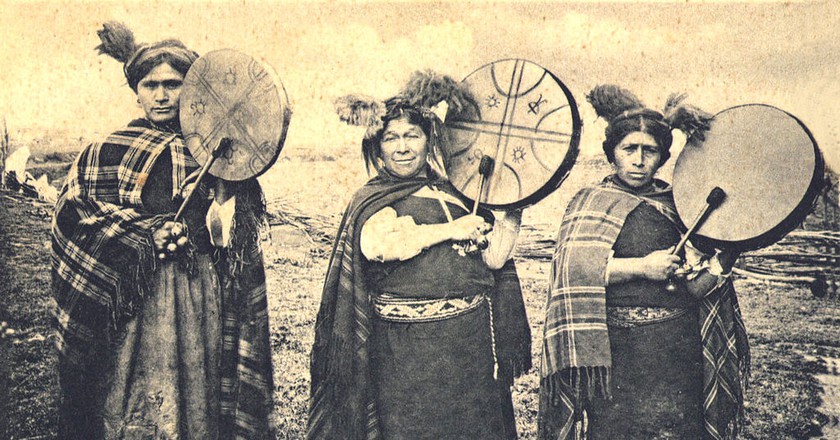
      "The greatest resistance to Spanish rule came from the Mapuche people, who opposed European conquest and colonization until the 1880s; this resistance is known as the Arauco War. Valdivia died at the Battle of Tucapel, defeated by Lautaro, a young Mapuche toqui (war chief), but the European conquest was well underway." See "A Brief History of the Mapuche People."

    2. Captain Delano could not but bethink him of the beauty of that relationship which could present such a spectacle of fidelity on the one hand and confidence on the other. The scene was heightened by, the contrast in dress, denoting their relative positions. The Spaniard wore a loose Chili jacket of dark velvet; white small-clothes and stockings, with silver buckles at the knee and instep; a high-crowned sombrero, of fine grass; a slender sword, silver mounted, hung from a knot in his sash–the last being an almost invariable adjunct, more for utility than ornament, of a South American gentleman’s dress to this hour.

      See this article by Verônica Undurraga Schüler on the dynamics of class relationships as they pertain to Spanish-colonial constructions of masculine authority and honor. In particular, it addresses "the relationship between honor and social practices in Chile's eighteenth century and analyzes ... various manifestations of the social ways used to deal with honor at that time, together with the inquiries about mechanisms used to restore honor and its links with traditional masculinity."

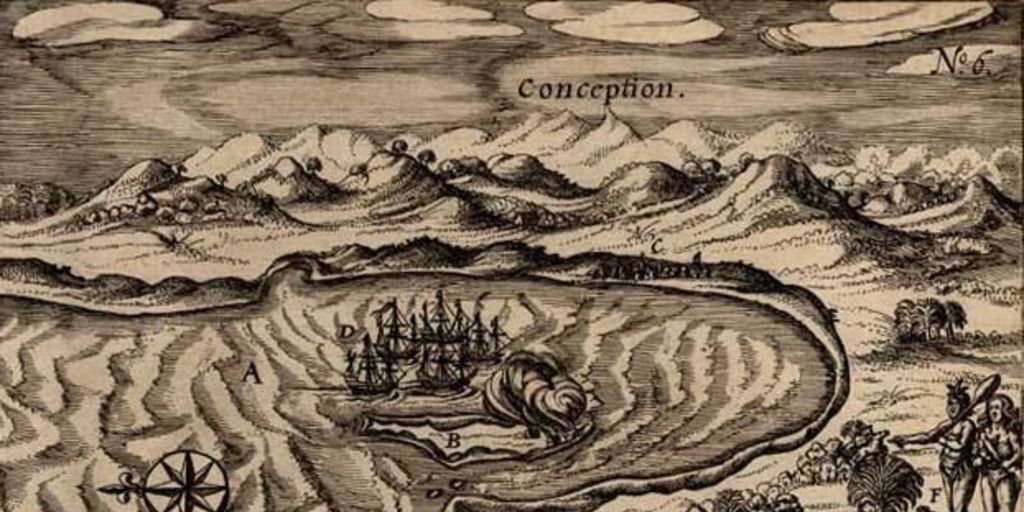
    3. in the harbor of St. Maria–a small, desert, uninhabited island toward the southern extremity of the long coast of Chili.

      Map of Santa Maria, 1700

      Santa Maria is a possession of Chile, roughly 10 nautical miles from the mainland, and just south of the port town Concepcion. More recently the island was used as a penal colony for supporters of Chile's Salvador Allende after his government was overthrown by a US-sponsored coup.

      Although Delano describes it as nothing more than a "desert, uninhabited island" it in fact has a well-documented history in the European colonization of South America, especially concerning the Dutch West India Company's conflicts with Spain in the late 16th century (note mentions of Santa Maria in Lane, pp. 73-77).

      Note as well that by the conclusion of the narrative, the Saint Dominick does fulfill its intended journey from Valparaiso, Chile to Callao, a port just outside of Lima, Peru. (See map, contemporary with the composition of Benito Cereno.)

  22. Sep 2017
    1. The first cycle (cycle I) is from 1st to 4th and the second cycle (cycle II), from 5th to 8th. The program includes eleven compulsory subjects: Language and communication Indigenous language (compulsory in schools with high density of indigenous students) Foreign languages ​​(compulsory in cycle II) Mathematics natural Sciences History Geography and Social Sciences Technology Art Physical education Orientation and religion, which the school must offer but is optional for students.

      how many classes they offer--- they offer language classes. do they study english? they also study orientation and religion, so how would religion fit in with sexual orientation?

  23. Oct 2015
    1. Taking on Corruption in Latin America

      This article discusses the difficulty in attacking corruption. It uses Guatemala and Brazil as examples of direct corruption through embezzlement and fraud schemes with Chile and Mexico where corruption is rooted in access to political knowledge and nepotism. In Chile and Mexico, the link is less direct and investigations cannot be traced as concretely as was the case in Brazil and Guatemala. This can make tackling corruption extremely difficult where these cases are more difficult to prove.