37 Matching Annotations
  1. Last 7 days
    1. Analyse du Modèle des Écoles de Commerce Françaises : Enjeux, Critiques et Perspectives

      Résumé Exécutif

      Le paysage de l'enseignement supérieur français est marqué par la prédominance des écoles de commerce, qui continuent d'attirer des milliers d'étudiants malgré des critiques croissantes.

      Ce document de synthèse analyse les tensions fondamentales structurant ce secteur, telles que révélées par le débat entre dirigeants d'écoles, sociologues et journalistes.

      Les principaux enseignements sont les suivants :

      • Une promesse double : Les écoles garantissent des carrières rémunératrices et une adaptation aux enjeux contemporains (IA, climat).

      • Une pédagogie contestée : Si les directions mettent en avant l'hybridation des enseignements et la recherche, les critiques dénoncent une déconnexion entre la recherche et les cours, ainsi qu'un niveau académique parfois jugé "navrant" au profit de l'acquisition de codes sociaux (habitus).

      • L'obstacle financier et social : Avec des frais de scolarité atteignant 60 000 €, ces institutions sont perçues comme des vecteurs de reproduction sociale, malgré des dispositifs de bourses et d'ouverture.

      • Un modèle économique sous pression : Sans subventions publiques majeures, les écoles dépendent des frais de scolarité pour financer des professeurs internationaux et des campus haut de gamme, créant une course au gigantisme dont la rentabilité réelle pour l'étudiant fait l'objet de vifs débats.

      --------------------------------------------------------------------------------

      I. Les Acteurs du Débat

      Le tableau suivant présente les intervenants dont les perspectives ont été synthétisées :

      | Intervenant | Fonction / Titre | Positionnement | | --- | --- | --- | | Emmanuel Métais | Directeur général de l'EDHEC | Défenseur du modèle, insiste sur l'impact sociétal et l'excellence. | | Marianne Blanchard | Sociologue (Université Toulouse Jean Jaurès) | Analyse historique et critique de la reproduction sociale. | | Maurice Midena | Journaliste indépendant | Critique sur le formatage, le niveau des cours et les frais. |

      --------------------------------------------------------------------------------

      II. Pédagogie et Valeur de l'Enseignement

      La nature des apprentissages

      Il existe une divergence majeure sur ce qui est réellement enseigné en école de commerce :

      • La version institutionnelle : Les écoles affirment placer les "limites planétaires", l'inclusion et l'éthique au cœur du cursus dès le premier jour, avant d'aborder la finance ou le marketing.

      • La vision critique : Le cœur de l'apprentissage résiderait moins dans les cours théoriques que dans la vie associative et les projets.

      C'est là que se formeraient les soft skills et l'habitus managérial.

      Certains observateurs qualifient le niveau des enseignements de "navrant" ou "accablant", poussant les étudiants à chercher des palliatifs via des partenariats avec des universités de philosophie ou de sciences sociales.

      Le rôle de la recherche

      Depuis les années 1960, et sous l'impulsion de la fondation Ford et des accréditations internationales (comme l'AACSB), les écoles ont massivement investi dans la recherche scientifique.

      • Investissements : L'EDHEC prévoit d'investir 50 millions d'euros dans la finance climatique sur quatre ans.

      • Controverse : La recherche, essentielle pour les classements, ne transparaîtrait pas toujours dans les enseignements prodigués aux étudiants.

      Il existerait un cloisonnement entre les chercheurs "publiants" et la réalité des salles de classe.

      --------------------------------------------------------------------------------

      III. Dimensions Sociales et Financières

      L'accessibilité et la reproduction sociale

      Les écoles de commerce sont souvent citées comme des lieux de reproduction des élites.

      • Barrière symbolique et financière : Des frais de scolarité s'élevant à environ 60 000 € pour un cursus complet (cas de l'EDHEC) créent une sélection par l'argent.

      • Dépenses annexes : Au-delà des frais de scolarité, le coût de la vie associative, du logement et des sorties sociales renforce l'exclusion des milieux moins favorisés.

      • Initiatives d'ouverture : Les écoles développent des programmes de bourses (40 % d'élèves aidés à l'EDHEC) et interviennent dans les lycées défavorisés pour briser l'autocensure des jeunes talents.

      Analyse des coûts et financement

      Le modèle économique repose quasi exclusivement sur les familles :

      • Structure des dépenses : 60 % du budget est alloué à la "matière grise" (professeurs internationaux hautement rémunérés).

      Le reste finance les campus nécessaires à l'attractivité internationale.

      • Recettes : 80 % du budget provient des frais de scolarité.

      Les subventions publiques et les aides des Chambres de Commerce et d'Industrie (CCI) sont devenues marginales ou nulles.

      • Le statut juridique : Beaucoup de grandes écoles (comme l'EDHEC) sont des associations loi 1901 à but non lucratif, réinvestissant leurs revenus dans l'institution.

      --------------------------------------------------------------------------------

      IV. La Promesse d'Insertion et de Rentabilité

      Retour sur investissement (ROI)

      La question centrale pour les familles est de savoir si le diplôme "en vaut pour son argent".

      • Salaires annoncés : Les classements internationaux (Financial Times) évoquent des salaires bruts annuels allant de 70 000 € à plus de 120 000 € trois ans après la sortie.

      • Contestations des chiffres : Les critiques remettent en cause la fiabilité de ces données, soulignant que les frais de scolarité augmentent deux fois plus vite que les salaires réels constatés par la Conférence des Grandes Écoles

      .- Alternatives : Les Instituts d'Administration des Entreprises (IAE) à l'université offrent des taux d'insertion similaires pour un coût nettement moindre pour l'étudiant, bien que financés par la collectivité.

      --------------------------------------------------------------------------------

      V. Évolution et Perspectives du Secteur

      Le secteur de l'enseignement supérieur privé est en pleine expansion :

      • Croissance quantitative : Le nombre d'écoles de commerce est passé de 333 en 2018 à 423 en 2024.

      • Part de marché : Elles représentent aujourd'hui un tiers des étudiants du secteur privé, soit environ 8 % de l'ensemble des étudiants français (contre 3 % en 1990).

      Citations Clés

      "Les étudiants d'école de commerce ne deviendront des bons managers que à partir du moment où ils cesseront d'être de bons étudiants." — Maurice Midena

      "Notre mission, c'est de mettre le business au service du bien commun." — Emmanuel Métais

      "La réussite scolaire est intimement corrélée à l'origine sociale... l'idée même de méritocratie va pour certains élèves se heurter au fait que les portes des banques ne s'ouvrent pas automatiquement." — Marianne Blanchard

      Conclusion

      Le débat souligne une mutation profonde : les écoles de commerce ne sont plus de simples centres de formation au négoce, mais des institutions hybrides cherchant à légitimer leur coût par une recherche de pointe et un discours éthique.

      Si l'insertion professionnelle reste leur point fort incontesté, leur viabilité sociale et la qualité réelle de leur contenu académique demeurent des points de friction majeurs.
  2. Jan 2026
    1. facts that no one couldconceivably commit to memory.

      This statement belies the power of orality and the size of built communities without literacy. It's more a question of understanding how it was done and how communities either trusted (or didn't) those who memorized the materials.

      Another factor is how long one needed to remember various facts, especially if for commerce and over what spaces?

      Were there stratifications of society based on the power of memory here? Compare the anthropology and archaeology with the studies by Lynne Kelly.

  3. Dec 2025
  4. May 2025
    1. Am 2. Mai 2025 reichte die Trump-Regierung Klagen gegen Vermont und New York ein, um deren "Climate Superfund"-Gesetze zu blockieren. Diese Gesetze sollen Ölfirmen zur Deckung von von ihnen verursachten Folgekosten der Klimakrise zwingen. Vermonts Gesetz, das erste seiner Art, wurde 2024 verabschiedet. New Yorks Gesetz fordert 75 Milliarden US-Dollar über 25 Jahre. West Virginia und 23 weitere Bundesstaaten unterstützen die Klagen, da sie die Gesetze als illegal und schädlich für die Energiebranche betrachten. [Zusammenfassung mit Mistral generiert und leicht überarbeitet] https://www.nytimes.com/2025/05/02/climate/climate-superfund-law-vermont-new-york-lawsuits.html

  5. Dec 2024
  6. Jul 2024
  7. May 2024
    1. Verantwortliche der großen amerikanischen Ölfirmen haben auch nach 2015 privat zugegeben, dass sie die Gefahren fossiler Brennstoffe heruntergespielt haben. Sie haben internationale Pläne gegen die globale Erhitzung nach außen hin unterstützt und nach innen kommuniziert, dass ihre Firmenpolitik diesen Plänen widerspricht. Und sie haben gegen politische Maßnahmen lobbyiert, hinter die sie sich offiziell gestellt haben. Das alles ergibt sich aus dem neuen Bericht des amerikanischen Kongresses über die Desinformations-Politik von Big Oil. Ausführlicher Bericht mit Informationen über mögliche juristische Konsequenzen. https://www.theguardian.com/us-news/2024/apr/30/big-oil-climate-crisis-us-senate-report

  8. Jan 2024
    1. Web assimilation is the extent of organizational use of web technologies in facilitating e-commerce strategies and activities. Our definition focuses on the relative success of firms (as compared to other firms in the industry) in incorporating the Web technology into its e-commerce strategies and activities. This definition is consistent with perspectives on Type III IS innovations, with earlier treatments of IT assimilation at the organizational level (Armstrong and Sambamurthy 1999), and reflects our interest in understanding firms as innovation systems for attaining differential levels of technology assimilation success (Fichman 2001). We regard the level of assimilation to be one of the visible outcomes of the stream of structuring actions across the firm. Further, we anticipate the differential level of assimilation success across firms to be linked to the nature of the institutional enablers or the metastructuring actions within those firms.

      Definition and further explanation of the mean of Web Asssimilation.

  9. Nov 2023
  10. Jul 2023
    1. Prohibited wildlife species in private possession, or distributed intrastate, are fungible commodities that cannot be differentiated, in terms of control, from prohibited wildlife species possessed or distributed interstate.

      Fungible: items that are equivalent or consist of many identical parts such that, for practical purposes, they are interchangeable.

      Commodity: an economic good, usually a resource, that has full or substantial fungibility: that is, the market treats instances of the good as equivalent or nearly so with no regard to who produced them.

    2. Private possession and breeding of prohibited wildlife species have a substantial and direct effect on interstate commerce because prohibited wildlife species are frequently bred and possessed to be used in public exhibition or for sale or transfer of ownership in the exotic pet trade, and are often transported in interstate commerce for these purposes.

      How private possession and breeding impacts interstate commerce and the public

  11. Feb 2023
  12. Aug 2022
    1. what we’re calling online “social commerce” today doesn’t look what we’ve seen traditionally. In fact, so much of what we call “social commerce” is not done within our social graphs - rather it’s just any level of involvement of another human being in a user’s purchase decision
  13. Jun 2022
  14. May 2022
    1. One of the masters of the school, Hugh (d. 1140 or 1141), wrote a text, the Didascalicon, on whatshould be learned and why. The emphasis differs significantly from that of William of Conches. It isdependent on the classical trivium and quadrivium and pedagogical traditions dating back to St.Augustine and Imperial Rome.

      Hugh of St. Victor wrote Didascalicon, a text about what topics should be learned and why. In it, he outlined seven mechanical arts (or technologies) in analogy with the seven liberal arts (trivium and quadrivium) as ways to repair the weaknesses inherit in humanity.

      These seven mechanical arts he defines are: - fabric making - armament - commerce - agriculture - hunting - medicine - theatrics


      Hugh of St. Victor's description of the mechanical art of commerce here is fascinating. He says "reconciles nations, calms wars, strengthens peace, and turns the private good of individuals into a benefit for all" (doublcheck the original quotation, context, and source). This sounds eerily familiar to the common statement in the United States about trade and commerce.

      Link this to the quote from Albie Duncan in The West Wing (season 5?) about trade.

      Other places where this sentiment occurs?

      Is Hugh of St. Victor the first in history to state this sentiment?

  15. Mar 2021
  16. Oct 2020
  17. Aug 2020
  18. Jul 2020
  19. May 2019
    1. OER movement had become so successful that the publishers have launched a disingenuous takeover, going so far as to brag about their paywalled platforms containing OER

      "Inclusive Access" and "Netflix of Books" (do you mean Kindle Unlimited?) not necessarily the same thing. Netflix DID make movies more accessible at lower net cost.

  20. Feb 2019
  21. Jan 2019
    1. If the open source community really wants to make a difference, then the some focus should be directed toward back-end, e-commerce billing systems. The regulatory conditions of the market have reached a point where it is incredibly inefficient for them to be tracked and applied by hand.

      This is an incredibly important point.

  22. Oct 2018
  23. allred720fa18.commons.gc.cuny.edu allred720fa18.commons.gc.cuny.edu
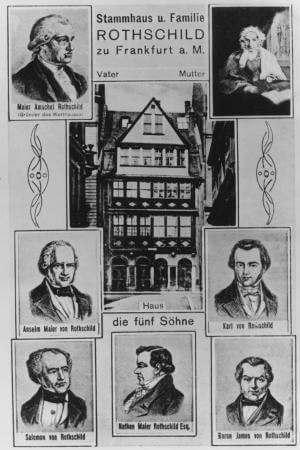
    1. a sort of Castilian Rothschild, with a noble brother, or cousin, in every great trading town

      This is an anachronism. That the storied Rothschild family had not yet established a widespread business network across Europe in the period Benito Cereno is set. This didn't develop until the first decades of the 19th century; by Melville's time, the family had become a well-known economic powerhouse. Either Melville never bothered to fact check such small details, or else he didn't mind bending the truth a bit in the service of art.

      A brief history of the family business from the Rothschild Archive: "Mayer Amschel Rothschild was born in 1744 in the Judengasse, in Frankfurt. His father had a business in goods-trading and currency exchange. He was a personal supplier of collectable coins to the Prince of Hesse. By the early years of the 19th century, Rothschild had consolidated his position, and in 1810, renamed his firm M A Rothschild und Söhne, establishing a partnership with his four sons still in Frankfurt, (his son Nathan Mayer Rothschild (1777-1836) having already established a business in Manchester and London).

      Nathan Rothschild’s increasingly successful business provided a model for his brothers back in Frankfurt. In 1812, James Mayer Rothschild (1792-1868) established a banking house in Paris. Salomon Mayer Rothschild (1774-1855) settled in Vienna in 1820. Carl Mayer Rothschild (1788-1855) set up business in Naples in 1821, leaving Amschel Mayer (1773-1855), to head the Frankfurt bank. From these roots, the Rothschild banking business spread out across much of Europe becoming the most successful international bankers of the age." Rothschild Archive.

      Interestingly, the Rothschilds were instrumental in helping another South American nation, Brazil, achieve independence from Portugal in the early 19th century.

  24. Jul 2018
  25. Mar 2018
    1. Pourquoi mettre fin à une Location-Gérance ? Le contrat de location-gérance permet au titulaire d'un fonds de commerce d'en confier l'exploitation à une tierce personne, laquelle va exploiter le fonds à ses risques et périls. La cessation de ce contrat peut trouver sa source dans diverses causes de rupture, lesquelles emportent des conséquences importantes pour les parties au contrat.

      Pourquoi et comment mettre un terme et rompre un contrat de location-gérance d'un fonds de commerce ?

  26. Dec 2017
  27. Nov 2017
  28. Oct 2017
    1. Pour saisir le tribunal de commerce une société commerciale peut faire appel à un huissier de justice qui réalisera une assignation. Une société peut également saisir le tribunal par requête conjointe des deux parties ou

      Commerçant, gérant, chef d'une société commerciale en France, vous voulez saisir le tribunal de commerce pour un litige commercial ?

  29. Sep 2017
  30. Feb 2017
  31. Aug 2016