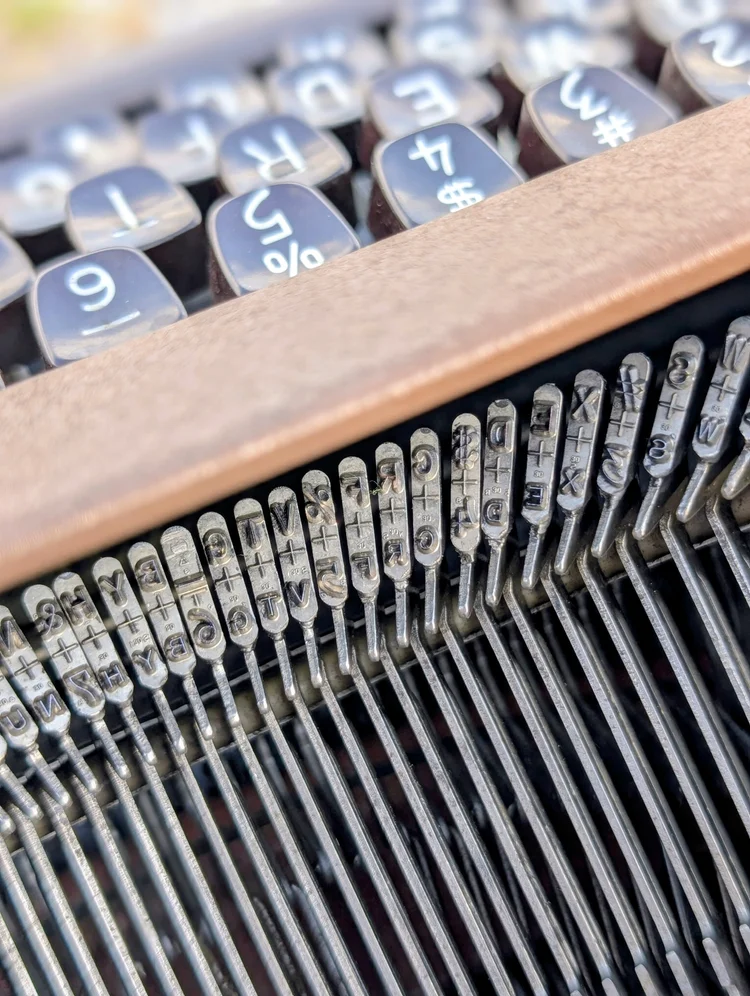
the common wisdom about carriages is “Don’t remove the carriage unless absolutely necessary.”
10,000 Matching Annotations
- May 2026
-
blog.bruchez.name blog.bruchez.name
-
-
Based on my smooth experience removing the carriage of the Underwood 6 for cleaning, I tried doing this with the Royal. But I learned that not all typewriters have a carriage that comes out easily. I persisted and managed to get it out and back in, with difficulty. It did make cleaning much easier, but I wouldn’t recommend going through this unless really necessary.
-
The KHM probably has the best action of all the machines I have so far.
My KHM holds this same distinction in my collection.
-
-
blog.bruchez.name blog.bruchez.name
-
blog.bruchez.name blog.bruchez.name
-
Restoring a Yost 20 Typewriter<br /> by [[Erik Bruchez]]<br /> accessed on 2026-05-13T20:59:04
-
The result is quite shiny. There is no visible yellow grain. The slightly silvery spots that I damaged are almost not visible anymore, thanks to the added yellow color of the shellac. There are a couple dust spots visible, if you look: perfection is not of this world. But the good thing about shellac is that you could sand the top again a little, and apply more shellac - or just do that without sanding. The alcohol dissolves the shellac, so you can always add new coats.
Erik Bruchez describes how he used shellac and denatured alcohol to re-shellac his Yost 20 followed up with 600 grit sandpaper to smooth things back out as necessary.
-
the front panel’s paint and decal were very matte, and had signs of yellowing outside the decal. Everyone who has dealt with a Royal 5 (in particular) might know a case of this illness: the paint appears dirty and uneven with some yellow, grainy stuff around the decals. You cannot clean over decals too much: the golden color will go away to reveal silver, and eventually you will destroy the decals completely.But I had heard that that yellow stuff, on some machines at least, was shellac: that the decals were originally applied and then shellacked. For some reason, on the Royal 5 in particular, the shellac had a tendency over time to dry and become apparent and grainy.
-
there is a lever to raise all typebars. At first I didn’t find it, as the lever was recessed, on the right-side of the machine, but eventually I did! Using this lever is necessary to properly re-ink the pad without making a total mess.
-
-
www.facebook.com www.facebook.com
-
Sewing machines and typewriters from this era use shellac, which is a natural ish material. If improperly cared for in the past that’s what happens. One thing to check how the shellac is, is to shine a bright light on the black area. If it has a green tint, then shellac is there, if it’s black it is not. But that yellowing is the shellac. Normally I would gently clean with water and a soft rag. Then a light car polish and then a good wax to seal it.
via Tyler Alan Macek at https://www.facebook.com/groups/705152958470148/posts/1255908216727950/
A black light is potentially better, but a bright light should work too.
-
It is shellac (from the bugs). Some people use denatured alcohol on a cotton ball to lightly dab it off; I use sewing machine oil on a microfiber, and that helps the yellowing, but does not get rid of the change in texture between shellac and no shellac.
via Leighton Jeffy at https://www.facebook.com/groups/705152958470148/posts/1255908216727950/
Sounds roughly similar to
-
Use kerosene or mineral spirits to clean the machine. I wouod go with kerosene to be honest. Then redo the shellac finish with french polishing. This is heavy documented with old sewing machines as they use these gold decals that f becomes silvered when water or cleaning solvents touch them.
via Luke Fuji at https://www.facebook.com/groups/705152958470148/posts/1255908216727950/
-
-
discord.com discord.com
-
Courtesy of @Pelicram ❤ : Peli's Shellac Rescue Formula aka The Cowboy's Delight. This will help bring back a deeper black color shellaced panels which have been yellowed and damaged by UV over the years. With enough elbow grease it will remove the old shellac completely but it takes a very long time and you're likely to damage any decals present on the panel. In most cases the procedure described below will be sufficient to restore the appearance to an acceptable level. The recipe: 70% Light machine oil. 30% IPA (Isopropyl Alcohol) or White/Mineral Spirits. Ideally use an oil that is dissolved into the IPA/Mineral Spirits, if they settle into separate layers make sure you shake the mixture thoroughly before applying. Mix the oil and solvent in something like a dropper bottle or similar vessel for convenient application. Clean part with Fulgentin (Or general purpose cleaner of your choice) and wipe dry.,Apply oil/ipa mix to part and rub in lightly with clean microfiber cloth or shop towel. Use plenty of the mix, it should not feel dry.,Wipe with microfiber cloth after 15 minutes to get rid of any excess.,Do not apply any kind of wax (like Renessaince Wax) afterwards, from my testing it will bring back the haziness.
https://discord.com/channels/639936208734126107/639938269030907914/1302694827682697330
Pelicram's Shellac Rescue Formula aka The Cowboy's Delight.
This will help bring back a deeper black color shellaced panels which have been yellowed and damaged by UV over the years. With enough elbow grease it will remove the old shellac completely but it takes a very long time and you're likely to damage any decals present on the panel. In most cases the procedure described below will be sufficient to restore the appearance to an acceptable level.
The recipe: - 70% Light machine oil. - 30% IPA (Isopropyl Alcohol) or White/Mineral Spirits.
Ideally use an oil that is dissolved into the IPA/Mineral Spirits, if they settle into separate layers make sure you shake the mixture thoroughly before applying.
Mix the oil and solvent in something like a dropper bottle or similar vessel for convenient application.
- Clean part with Fulgentin (Or general purpose cleaner of your choice) and wipe dry.
- Apply oil/ipa mix to part and rub in lightly with clean microfiber cloth or shop towel. Use plenty of the mix, it should not feel dry.
- Wipe with microfiber cloth after 15 minutes to get rid of any excess.
- Do not apply any kind of wax (like Renessaince Wax) afterwards, from my testing it will bring back the haziness.
-
-
www.facebook.com www.facebook.com
-
taptapart.com taptapart.com
-
Tap Tap Art<br /> https://taptapart.com/about.html
-
-
www.facebook.com www.facebook.com
-
You’re correct it’s a typewriter table. The 28 inch height is called clerical height, which is 2 inches lower than desk height, which is 30 inches. The drawer is to hold typing paper, carbon paper and second sheets because copy machines have not been invented you always need a copy of whatever you typed for your own personal records. those tables were usually made out of red oak, which was adorable and not expensive. Pittsburgh Office Equipment, as I remember, was located on Carson St. in Pittsburgh.
comment via Joe Eisaman at https://www.facebook.com/groups/TypewriterCollectors/posts/10163611818554678/
in relation to a table of dimensions 32 x17 x28".
-
-
www.facebook.com www.facebook.com
-
No ! they were differnt hardnes for doing stencils, for memeograph machines.Like
Mitch Fixit has some repair chops, so this is believe-able: Some of the colored platens were meant to have different harnesses for doing stencils.
via https://www.facebook.com/groups/TypewriterCollectors/posts/10163612704804678/

-
-
www.facebook.com www.facebook.com
-
www.facebook.com www.facebook.com
-
https://www.facebook.com/groups/4770669677/user/1183632210/
Janet Schwartz's boyfriend.
-
-
www.facebook.com www.facebook.com
-
The typewriter of Hollywood writer Carl Foreman and later Milton Sperling, it's encased in plexi with the titles of the films that were written on it.
https://www.facebook.com/groups/TypewriterCollectors/posts/10163613988099678/

-
-
www.sportico.com www.sportico.com
-
But friction is making a comeback.
-
Retired announcer Bob Carpenter is on pace to sell 2,500 of his scorebooks this year, 50% more than he moved in 2021, which was a record season for him at the time. Wisconsin-based Numbers Game launched in 2022 and has seen sales double each year since, with customers split 50/50 between men and women. More than 10,000 people now visit the Reddit page dedicated to scoring baseball games on a weekly basis.
MLB Scorebook Sales Are Rising as Baseball Scorekeeping Has a Moment<br /> by [[Jacob Feldman]]<br /> accessed on 2026-05-12T10:27:43
-
-
www.reddit.com www.reddit.com
-
It turns out our friend Tom has been scoring games with a typewriter since at least 2013!
Keeping score at a baseball game with a typewriter is not only possible but is also a much more detailed record of the match. (ORTEGA. Full count! Fouled back three in a row ... OH, THAT BALL’S LANDIN’ WHERE THE FANS ARE STANDIN’!!! Walk. Off. Home. Run. Thanks for your attendance and drive safely.) —Tom Hanks in "I Am TOM. I Like to TYPE. Hear That?" on Aug. 3, 2013 in the New York Times https://www.nytimes.com/2013/08/04/opinion/sunday/i-am-tom-i-like-to-type-hear-that.html?pagewanted=all&_r=0
cc: u/lou_spirito<br /> u/Informal-Writer-1140<br /> u/oogieball<br /> u/joe_skidiachi_irl
Other examples of his scoring efforts: - https://www.reddit.com/r/BaseballScorecards/comments/1jn2475/yes_tom_hanks_does_schlep_a_typewriter_to_ball/ - https://www.reddit.com/r/BaseballScorecards/comments/1jm0l8k/tom_hanks_keeps_score/ - https://www.reddit.com/r/BaseballScorecards/comments/1jm4pie/tom_hanks_scorecard/
-
-
www.nytimes.com www.nytimes.com
-
Hanks, Tom. 2013. “I Am TOM. I Like to TYPE. Hear That?” The New York Times. https://www.nytimes.com/2013/08/04/opinion/sunday/i-am-tom-i-like-to-type-hear-that.html (May 12, 2026).
-
There is no reason to own hundreds of old typewriters other than the sin of misguided avarice (guilty!).
-
He gave me a deal on a Hermes 2000 (“The Cadillac of typewriters!”), which featured a knob that adjusted the tension on the keys and the crispest, straightest line of type possible. I’ve since added the 3000, the Baby and the gloriously named Hermes Rocket to my shelves.
-
My dad’s Underwood, bought used just after the war for his single year at U.S.C., had some keys so worn out by his punishing fingers that they were misshapen and blank. The S key was a mere nib. I sent it to a shop for what was meant to be only a cleaning, but it came back with all the keys replaced. So long, Dad, and curse you, industrious typewriter serviceperson.
-
a collection that started when, in 1978, the proprietor of a Cleveland business machine shop refused to service my mostly plastic typewriter. “A worthless toy!” the man yelled. Yes, yelled. He pointed to shelves full of his refurbished typewriters — already decades old yet all in perfect working order.
-
Tom Hanks outlines three reasons to use a typewriter:<br /> 1. sound<br /> 2. sheer physical pleasure of typing<br /> 3. permanence of words
-
The sound of typing is one reason to own a vintage manual typewriter — alas, there are only three reasons, and none of them are ease or speed. In addition to sound, there is the sheer physical pleasure of typing; it feels just as good as it sounds, the muscles in your hands control the volume and cadence of the aural assault so that the room echoes with the staccato beat of your synapses.
-
You can choose the typewriter to match your sound signature.Remingtons from the 1930s go THICK THICK. Midcentury Royals sound like a voice repeating the word CHALK. CHALK. CHALK CHALK. Even the typewriters made for the dawning jet age (small enough to fit on the fold-down trays of the first 707s), like the Smith Corona Skyriter and the design masterpieces by Olivetti, go FITT FITT FITT like bullets from James Bond’s silenced Walther PPK. Composing on a Groma, exported to the West from a Communist country that no longer exists, is the sound of work, hard work. Close your eyes as you touch-type and you are a blacksmith shaping sentences hot out of the forge of your mind.
-
Everything you type on a typewriter sounds grand, the words forming in mini-explosions of SHOOK SHOOK SHOOK. A thank-you note resonates with the same heft as a literary masterpiece.
-
Keeping score at a baseball game with a typewriter is not only possible but is also a much more detailed record of the match. (ORTEGA. Full count! Fouled back three in a row ... OH, THAT BALL’S LANDIN’ WHERE THE FANS ARE STANDIN’!!! Walk. Off. Home. Run. Thanks for your attendance and drive safely.)
Tom Hanks was using typewriters to score baseball games since at least 2013!
Tags
- typewriter nostalgia
- Tom Hanks
- Hermes 3000
- typewriters
- baseball scorecards
- typewriter permanence
- poetry
- Hermes 2000
- read
- typewriter collecting addiction
- typewriter sounds
- typewriter collecting
- typewriters why
- typewriters for baseball scorecards
- Hermes Rocket
- Tom Hanks typewriter collection
- quotes
- Hermes Baby
Annotators
URL
-
-
www.reddit.com www.reddit.com
-
reply to u/LillieLogang at https://reddit.com/r/typewriters/comments/1tacody/light_touch_jcpenney/
Before you go too deeply here, is the ribbon made of cloth material (nylon, silk, or cotton) or is it a plastic film/carbon type? And if the latter, is it a proprietary cartridge or typewriter spools? Cartridges with carbon can be difficult if not impossible to find.
There's only one Penny's toy typewriter in the database currently which may give you some idea: https://typewriterdatabase.com/1970-jc-penney-j6772-toy-typewriter.11484.typewriter I don't see these pop up often, but there is a related one listed on SGW right now: https://shopgoodwill.com/item/263548866 which may have some unused "ribbon" you might cannibalize if necessary.
It looks like it may have been a rebranded version of some of the PETITE toy typewriters. https://typewriterdatabase.com/no_info.525.typewriter-serial-number-database
Many of these toys are difficult to adjust or fix (if at all), but they tend to be very simple in terms of the mechanics, so you might be able to puzzle out what isn't working and why by looking at it with the hood removed.
-
-
www.freesound.org www.freesound.org
-
www.usbtypewriter.com www.usbtypewriter.com
-
www.kickstarter.com www.kickstarter.com
-
www.newyorker.com www.newyorker.com
-
What Makes the Hanx Writer Click?<br /> by [[Silvia Killingsworth]] in The New Yorker<br /> accessed on 2026-05-11T14:49:13
-
One editor recalls that you could tell whether your neighbor was being productive that day just by the typewriter sounds coming out of his office (thus pressuring you to get down to work).
-
Indeed, I.B.M. really knew how to make a keyboard: there is an entire fan site dedicated to the I.B.M. model M keyboard, complete with the full text of the patent for the “buckling spring snap torsional actuator,” granted in 1978.
Tags
- Christopher Hermelin
- You've Got Mail (Warner Bros., 1998)
- Tom Hanks
- productivity
- body doubling
- Hanx Writer
- Olympia Report de Luxe Electric
- typewriter productivity
- skeuomorphism
- read
- keyboards
- Ron Rosenbaum
- IBM model M keyboard
- typewriter sounds
- patents
- street poets
- USB Typewriter
- Royal Safari
- Qwerkywriter
- High Line
Annotators
URL
-
-
observer.com observer.com
-
Nora Ephron and The New York Observer: A Footnote<br /> by [[Foster Kamer]] in Observer <br /> accessed on 2026-05-11T14:37:21
-
-
slate.com slate.com
-
Rosenbaum, Ron. 1999. “The Last Luddite Gets Wired.” Slate. https://slate.com/news-and-politics/1999/05/the-last-luddite-gets-wired-4.html (May 11, 2026).
-
I believe a case can be made–indeed a case has been made by others, by historians of Apple and hacker culture–that “Secrets of the Little Blue Box,” a story I wrote for Esquire back in 1971 about “phone phreaks” and the first computer hackers (it was only the second magazine story I’d ever had published) played a crucial role in the careers of the founders of Apple and of a legendary ur-hacker I made famous who went by the name of Captain Crunch.
-
But there’s something about the sharp staccato sound of my Olympia Report Deluxe–like successive volleys of rifle shots rather than the mouselike scribble-scrabble of the keyboard pad–that I feel reluctant to abandon.
-
neo-Nazi pinheads who, along with child pornographers and Bill Gates, seem to me to be the only unequivocal beneficiaries of wired culture.
-
The thing that always used to get to me was the way a certain kind of arrogant but aggressively mediocre writer would harangue me about how I had to get a computer because ever since he got one, “I’ve been able to turn out so much more,” as if this were an unmixed blessing the world would welcome.
-
For the first 10 years of my life as a writer, I was a deeply agonized, chronically blocked writer, and it was not until I devised a method of writing-by-rewriting on my Olympia Report Deluxe that I was able to become a productive–if still slow and labor-intensive–writer. It’s not just superstition that kept me from switching to a computer; I suppose I could adopt my rewriting-from-the-top method to a computer if I were to print out each successive draft and rewrite the next one on the screen, then print that out and start rewriting from the top again.
-
Actually, that typewriter, my Olympia Report Deluxe, or rather Deluxes (I have three of them because they’re no longer manufactured, and I need one for backup and one to cannibalize for parts) are the real reason I’ve rejected switching to a computer for so long.
-
You know that promo slogan for Alien: “In space, no one can hear you scream.” In cyberspace, no one can hear you doubt.
-
I’d made the mistake of adopting the moniker “Redhead,” and the supposedly philosophical participants were all over me like a cheap suit the moment I logged on, assuming, it finally dawned on me, that I was a different gender of Redhead.)
Tags
- You've Got Mail (Warner Bros., 1998)
- productivity
- gender discrimination on the internet
- child pornography
- mansplaining
- I need one for backup
- cyberspace
- know-it-all
- Olympia Report de Luxe Electric
- neo-Nazis
- typewriter productivity
- Luddites
- taglines
- quote
- phone phreaking
- read
- hacker culture
- Captain Crunch (hacker)
- Ron Rosenbaum
- Secrets of the Little Blue Box
- guns
- writing process
- parting out machines
- Alien
- Esquire
- typewriter collecting
- similes
- redheads
- quotes
- cyberculture
- Apple Computer
- Olympia typewriters
- typewriters of authors
- doubt
- Bill Gates
Annotators
URL
-
-
www.freesound.org www.freesound.org
-
Olympia Electric Typewriter - May 17 2008.wav<br /> by [[lonemonk]] on Freesound<br /> accessed on 2026-05-11T14:04:41
-
-
-
The Quiet Cult of the Olympia Report deLuxe Electric Typewriter<br /> by [[Wilson Rothman]] and [[Steven Levy]]<br /> accessed on 2026-05-11T13:13:15
-
-
www.youtube.com www.youtube.com
-
typewriterdatabase.com typewriterdatabase.com
-
Oral history questions for Richard Polt on typewriter collecting:
Over the years Joe Van Cleave has done a handful of videos on selectivity and downsizing of one's typewriter collection including: <br /> - The Minimal Complete Typewriter Collection https://www.youtube.com/watch?v=0Ej6kd1FsnE <br /> - Culling the Herd https://www.youtube.com/watch?v=h_ueHE3Whjk <br /> - Downsizing Your Typewriter Collection https://www.youtube.com/watch?v=Eic4lNE0l3Y
And Sarah Everett has one "what's your deserted island typewriter?" (if I had to pick 5 typewriters....) https://www.youtube.com/watch?v=PFqJa9kD-v0
All this to ask Richard: what your downsizing experience has been? What were the criteria by which you chose what to keep? Did you more closely focus your collection into an area, era, style, other? Are you primarily keeping the things you tend to use more frequently? Things in better condition? You started out with how many to end up with how many? If you could start your collecting over from scratch what would you change? Are there things you wouldn't get the second time around? Things you would have spent more time focusing on? What will you continue to collect and at what rate? Naturally, collecting is a very personal thing with respect to individual's specific tastes and experiences (and frequently space!), but I suspect answers to some of these may help others, especially those who are just starting into collecting, or who have a dozen or two machines but who might find value on where and how to potentially focus their efforts. It may also help other collectors and their families who are dealing with appropriately disposing of significant collections, especially in cases where a deceased collector was very passionate and the family just wants to be rid of them quickly (i.e. ideas like Swedish death cleaning and related).
I'm sure reflections on these would be an interesting typecast, but if it's easier to do something like an oral history interview, I'm happy to collect these and a few dozen more questions into an interview format if you've got 30-60 minutes in the coming months to devote to a remote audio/video interviews/mini-podcast or YouTube episode or something similar?
-
-
www.facebook.com www.facebook.com
-
https://www.facebook.com/groups/TypewriterCollectors/posts/10163593836864678/
If typists were Robots

Resemblance to disaster girl?
-
-
www.nytimes.com www.nytimes.com
-
www.chestnutridgetypewritermuseum.com www.chestnutridgetypewritermuseum.com
-
Lego Typewriters<br /> by [[Herman Price]]<br /> accessed on 2026-05-09T17:29:08
-
-
writingball.blogspot.com writingball.blogspot.com
-
A fake Lego fake typewriter?<br /> by [[Richard Polt]] on The Typewriter Revolution blog<br /> accessed on 2026-05-09T17:27:34
-
-
writingball.blogspot.com writingball.blogspot.com
-
The ROKR wooden typewriter: a closer look<br /> by [[Richard Polt]] in The Typewriter Revolution blog<br /> accessed on 2026-05-09T17:04:35
Richard Polt reports that the ROKR typewriter can actually be used to type, making it one of the very few currently manufactured typewriters on the planet.
-
from my experience working on other products, I found that older designs are easier to work with and have a more classic aesthetic.
-
The entire design process took about a year and a half
-
-
www.facebook.com www.facebook.com
-
www.reddit.com www.reddit.com
-
https://www.reddit.com/r/typewriters/comments/1t7ggls/techno_pica_typeface_hermes_3000/
Techno pica typeface on a Hermes 3000 with foundry marks "S" and "TP".

-
-
www.facebook.com www.facebook.com
-
https://www.facebook.com/groups/TypewriterCollectors/posts/10163594865434678/
Green 1958 Olympia SM3 with custom math keyboard:

-
-
www.facebook.com www.facebook.com
-
https://www.facebook.com/groups/705152958470148/posts/1264728369179268/
Custom gothic typeface on a Royal 10 made for supply/hardware settings. Uppercase is primarily fractions and abbreviations including: Dz, Gr, Bx, Bl, lb, In, Ft, Pr, Cs, Pc, Yd, and GL.
Fractions include odd numbers for the halfs, thirds, fourths, sixths, eighths, twelfths, and sixteenths,


-
-
oztypewriter.blogspot.com oztypewriter.blogspot.com
-
The Mystery of Patrick Moore's Woodstock Typewriter<br /> by [[Robert Messenger]] for oz.Typewriter<br /> accessed on 2026-05-08T13:19:49
-
-
site.xavier.edu site.xavier.edu
-
Users of Woodstock typewriters included: - Robert Bloch<br /> - Howard Fast<br /> - Alger Hiss (1929 standard #230099)<br /> - Sir Patrick Moore<br /> - J.C. Oldfield (editor of the Associated Press's London bureau, 1930s)<br /> - Gordon Parks
-
-
typewriterdatabase.com typewriterdatabase.com
-
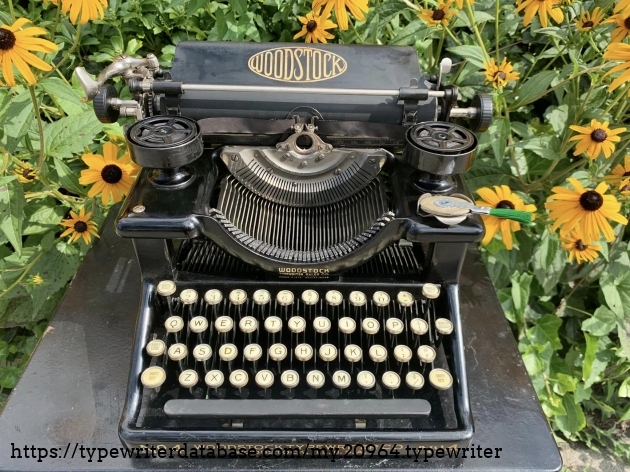
https://typewriterdatabase.com/1914-woodstock-4.20964.typewriter
The Woodstock No. 4 had a custom typewriter eraser holder mounted on top of the typewriter.
-
-
www.reddit.com www.reddit.com
-
archive.org archive.org
-
CORRESPONDENCE MANAGEMENT THE ANSWER TO CUTTING CORRESPONDENCE COSTS<br /> by [[CIA Reading Room]]<br /> accessed on 2026-05-08T10:40:59<br /> cia-rdp74-00005r000200120008-2<br /> November 1954
-
-
www.davidrhartman.com www.davidrhartman.com
-
www.facebook.com www.facebook.com
-
www.reddit.com www.reddit.com
-
newsroom.ucla.edu newsroom.ucla.edu
-
Dinner for 12 Strangers: A Long-Standing UCLA Tradition<br /> by [[Michael Callahan]] Photos by [[Alyson Aliano]]<br /> accessed on 2026-05-07T11:02:33
-
-
www.facebook.com www.facebook.com
-
reply to https://www.facebook.com/groups/TypewriterCollectors/posts/10161712887224678/
to Steve Clancy Zach Hubbird Jean Brunet
I'm curious what the sourcing is on your differentiation of the two models? Are there manuals, advertising, or other details to back up the differences? From what I can see, the phrase "Rhythm Touch" seems to have been an advertising tag for the Underwood SS which started a few months after production of the SS began and there wasn't any difference in them other than the advertising tag.
Robert Messenger has some scant history on the machine and the differences, primarily due to a redesign at the time, at https://oztypewriter.blogspot.com/2012/11/on-this-day-in-typewriter-history_25.html. The primary change from the S to the SS seems to have been a move from a carriage shift to a basket shift and so it seems somewhat fitting that Underwood uses the phrase "Rhythm Touch" as an advertising gimmick much like Smith-Corona were doing with their "Floating Shift" marketing.
Generally standards at the time were not differentiated by different trim lines as standards had all the bells and whistles for office use (potentially aside from custom use cases like decimal tabulators or extra wide carriage). Meanwhile all the trim variations were generally seen in the portable market geared toward home use rather than office. This would seem to support the idea that there's only the SS and "Rhythm Touch" is only an advertising tag line as the SS was newly introduced in January of '46 and "Rhythm Touch" appears around July '46.
There's also some discussion on the TWdB in the commentary at https://typewriterdatabase.com/1950-underwood-ss.23202.typewriter which may add to the question.
I'm curious to hear everyone's thoughts on the idea/thesis that the only model is the Underwood SS which is being marketed as the "Rhythm Touch" or evidence to the contrary to refute the claim.
-
https://www.facebook.com/groups/TypewriterCollectors/posts/10161712887224678/
None of the discussion here seems definitive for differentiating the "two models".
-
-
en.wikipedia.org en.wikipedia.org
-
George Berkeley (12 March 1685 – 14 January 1753)<br /> https://en.wikipedia.org/wiki/George_Berkeley<br /> Pronunciation: /ˈbɑːrkli/ BARK-lee
-
-
-
A Treatise Concerning the Principles of Human Knowledge<br /> by [[LibriVox]]<br /> accessed on 2026-05-07T09:38:57
-
-
librivox.org librivox.org
-
A Treatise Concerning the Principles of Human Knowledge (Version 2)<br /> by [[LibriVox]]<br /> accessed on 2026-05-07T09:41:21
-
-
drive.google.com drive.google.com
-
Catherine Project<br /> Orientation Packet: General Offerings<br /> Revised 08/27/25<br /> https://drive.google.com/file/d/1W5H3vhlhBwkzJHGk6-W5mL6raINLnhFe/view
-
-
www.reddit.com www.reddit.com
-
The standard collection of Berkeley's work is the nine volume The Works of George Berkeley, Bishop of Cloyne edited by Jessup and Luce, and the standard collection of Hume's work is the eight volume Clarendon Hume Edition Series under Beauchamp, Norton, and Stewart as general editors. For the Berkeley, your professor probably has in mind the collection Philosophical Works; Including the Works on Vision edited by Ayers. For the Hume, the Selby-Bigge/Nidditch editions were standard until recently and remain widely used. For the Kant, the standard edition is The Cambridge Edition of the Works of Immanuel Kant series which is under the general editorship of Guyer and Wood but which includes work by other translators as well. And the Pluhar translation of Kant's Critique of Pure Reason, which was the previous standard, remains widely used.
via u/wokeupabug at https://www.reddit.com/r/askphilosophy/comments/1i9c0ni/the_definitive_edition_of_george_berkeleys_work/
-
-
oztypewriter.blogspot.com oztypewriter.blogspot.com
-
1940s advertisement with Underwood Standard that uses the phrase "Rhythm Touch", but which features a short armed carriage return lever.

-
On This Day in Typewriter History: Underwood and the Emperor’s New Old Clothes<br /> by [[Robert Messenger]] for Oz Typewriter Blog<br /> accessed on 2026-05-06T12:33:38
-
A patent application for Willie Dobson’s radical re-design for the Rhythm Touch was filed on this day (November 24) in 1948 and issued at the end of May 1950.
https://oztypewriter.blogspot.com/2012/11/on-this-day-in-typewriter-history_25.html
-
Then came Willie Dobson’s Rhythm Touch in 1948, which did away with the small carriage return lever which had served Underwood so well for more than half a century and introduced the long, drooping carriage lever.
-
Another significant change occurred in 1947, with the Rhythm Shift model, which marked the Underwood Standard’s conversion to basket shift, but which retained the original carriage return lever set-up.
via Robert Messenger at https://oztypewriter.blogspot.com/2012/11/on-this-day-in-typewriter-history_25.html
-
-
typewriterdatabase.com typewriterdatabase.com
-
Differentiating between an Underwood SS and the Underwood Rhythm Touch:
comment to James Grooms at https://typewriterdatabase.com/show.23202.typewriter
James, perhaps it's hiding somewhere else in the comments on the database, but I'm curious if you've come across definitive differences between the Underwood SS and the Underwood Rhythm Touch models which have separate pages within the database:<br /> - SS https://typewriterdatabase.com/Underwood.SS.4.bmys - Rhythm Touch https://typewriterdatabase.com/Underwood.Rhythm+Touch.4.bmys
Most of my Google searches don't return anything definitive or with actual sourcing of any sort.
The main page has the SS starting in May 1946 and the Rhythm Touch beginning in July of that year, but doesn't seem to specify between the two in any substantive way. Neither of the two models seems to have had a name printed on it.
Your description here uses both designators, but knowing your penchant for newspaper and magazine advertisements, I would suspect you may have seen specific differentiators.
This Facebook post has some handwaving differentiators: https://www.facebook.com/groups/TypewriterCollectors/posts/10161712887224678/ but none seem definitive or sourced. It also uses the phrase carriage shift, though presumably with these models Underwood had moved to a segment/basket shift on their standards.
Other than the chrome side detailing moving from 3 strips to 5 as you've noted, one of the few differentiators I can see in this era is the shift from the shorter carriage return lever to the longer armed version around 1948 which Robert Messenger notes in https://oztypewriter.blogspot.com/2012/11/on-this-day-in-typewriter-history_25.html. However that same page also has an advertisement on it with the words Rhythm Touch featuring a short armed (older style) carriage return.
Is there really a difference between the SS and the Rhythm Touch or are they the same model with the phrase "Rhythm Touch" used as a marketing tag to compete potentially with Smith-Corona's "Floating Shift"?
Thanks!
-
Spotting tips. There is an early and late version of the SS. The first ones still used the smaller old style return lever and had chrome strips with three ribs. In around 48 they went to this return lever and the chrome is 5 ribs wide.
For differentiating between the early and later model Underwood SS pre-1948 and after.
via James Grooms at https://typewriterdatabase.com/1950-underwood-ss.23202.typewriter
-
-
typewriterdatabase.com typewriterdatabase.com
-
I also replaced all the soundproofing material inside. I even had the old material tested for asbestos, and luckily there was no trace of that.
via Erik Bruchez at https://typewriterdatabase.com/1949-underwood-rhythm-touch.10882.typewriter
-
-
www.youtube.com www.youtube.com
-
The Repair Shop, Season 4 Episode 21<br /> Ventriloquist's Dummy & Running Trophy <br /> and a Corona 3 typewriter
There are some hints about how to recreate the gold leaf lettering on vintage typewriters here.
-
-
mrmrsvintagetypewriters.com mrmrsvintagetypewriters.com
-
mrmrsvintagetypewriters.com mrmrsvintagetypewriters.com
-
www.youtube.com www.youtube.com
-
The Repair Shop, Season 3, Episode 11<br /> Meissen Clock, Typewriter & Bomber Jacket
-
-
www.georgeblackmanvintagetypewriters.co.uk www.georgeblackmanvintagetypewriters.co.uk
-
www.nashvilletypewriter.com www.nashvilletypewriter.com
-
discord.com discord.com
-
https://discord.com/channels/639936208734126107/639938269030907914/1246180147791532196
Typewriter Report Card v1.8 via Pelicram
-
-
www.reddit.com www.reddit.com
-
www.facebook.com www.facebook.com
-
SIMPLEX MACHINE RESTORATION CHECKLISTQuick guide for inspection, cleaning, and maintenance 1. MODEL IDENTIFICATIONCheck what applies:• ☐ Baby Simplex• ☐ Simplex Toy Typewriter• ☐ Practical Simplex (100 / 160 / 240 / 400)• ☐ Simplex Model A• ☐ Simplex Model B• ☐ Simplex Model C• ☐ Simplex Model D• ☐ Simplex Model E• ☐ Simplex Model 300• ☐ Simplex Model 2 ½• ☐ Simplex Model 3 (Large Size)• ☐ Simplex No. 2• ☐ Simplex No. 3• ☐ Improved Simplex Typewriter• ☐ Practical Typewriter No. 2• ☐ Practical Typewriter No. 3• ☐ Simplex Typewriter – 36 characters• ☐ Simplex Typewriter – 72 characters• ☐ Simplex Typewriter – Uppercase (Note Size)• ☐ Simplex Typewriter – Upper + Lowercase (Note Size)• ☐ Simplex Portable Typewriter• ☐ Simplex No. 8other model________________________________________ 2. INITIAL DIAGNOSISGeneral condition:• ☐ Complete• ☐ Missing parts• ☐ Visible damage• ☐ Rust• ☐ Dry wood• ☐ Dial blocked• ☐ Carriage stuck________________________________________ 3. DIAL / CHARACTER WHEEL• ☐ Turns freely• ☐ Turns with resistance• ☐ Blocked• ☐ Letters readable• ☐ Letters worn• ☐ Visible dirt• ☐ Shaft lubricated________________________________________ 4. CARRIAGE AND ROLLER• ☐ Carriage advances• ☐ Carriage does not advance• ☐ Soft roller• ☐ Hardened roller• ☐ Clean guides• ☐ Dirty guides• ☐ Functional spring• ☐ Loose spring________________________________________ 5. CLEANINGSurfaces:• ☐ Dust removed• ☐ Gentle damp cleaning• ☐ Fully driedDial:• ☐ Cleaned with cotton swab• ☐ Avoided touching letters• ☐ Shaft lubricatedCarriage:• ☐ Roller cleaned• ☐ Guides lubricatedMetal base:• ☐ Surface rust treated• ☐ Deep rust stabilizedWood base:• ☐ Hydrated• ☐ Waxed________________________________________ 6. LUBRICATION• ☐ Dial shaft• ☐ Carriage guides• ☐ Advance mechanism• ☐ No excess oil________________________________________ 7. INKING SYSTEM• ☐ Soft pads• ☐ Hardened pads• ☐ Replacement needed• ☐ Re-inking done• ☐ Proper ink (oil-based)________________________________________ 8. REPAIRS PERFORMED• ☐ Dial unblocked• ☐ Carriage adjusted• ☐ Spring tightened• ☐ Gears cleaned• ☐ Screws replaced• ☐ Base stabilized________________________________________ 9. FINAL TESTS• ☐ Dial rotates 360° without sticking• ☐ Carriage advances several lines• ☐ Clear printing• ☐ No metallic noises• ☐ No excess lubricant• ☐ Paper feeds correctly________________________________________ 10. STORAGE• ☐ Stored in breathable box or cover• ☐ Moisture-absorbing packet included• ☐ Away from direct light• ☐ In a dry, stable environment________________________________________ FINAL RESULT• ☐ Full restoration• ☐ Partial restoration• ☐ Pending parts• ☐ Preventive conservation only• ☐ Full restoration• ☐ Partial restoration• ☐ Pending parts• ☐ Preventive conservation only
-
-
www.acmetypemachines.com www.acmetypemachines.com
-
https://www.acmetypemachines.com/restoration-process<br /> archive copy
a reasonably nice list of typewriter adjustments for a restored machine
-
-
www.facebook.com www.facebook.com
-
https://www.facebook.com/groups/251306619987488/posts/1518913049893499
Andrew Bradshaw created reproductions of Hermes platen knobs in metal using his lathe.
-
-
www.facebook.com www.facebook.com
-
https://www.facebook.com/groups/TypewriterCollectors/posts/10163573521899678/
 <br />
Photo of instructions and ideas for a community typewriter.
<br />
Photo of instructions and ideas for a community typewriter.
-
-
oztypewriter.blogspot.com oztypewriter.blogspot.com
-
Hunter S.Thompson's Smith-Corona Series 5 Portable Typewriter<br /> by [[Robert Messenger]] oz.Typewriter <br /> accessed on 2026-05-03T11:59:08
-
-
www.reddit.com www.reddit.com
-
Welcome to the typewriter club, and congratulations on your Royal HH.
Preceded by the Royal KMM and the Royal KMG, the Royal HH was manufactured from 1952 to 1957 when it was replaced by the Royal FP, though it continued to sell well, even on the used market with newspaper advertising until the early 1980s.
Here's a copy of the original manual from 1952: https://site.xavier.edu/polt/typewriters/royalhh.pdf
The Royal HH was offered in Charcoal Grey smooth, Nile Green smooth, Horizon Blue smooth, Coral Rose, Gray Frieze, Royaltone Dark Gray wrinkle, Royaltone Light Gray wrinkle but far and away, the standard brown with green plastic keys was the most ubiquitous.
Well known users of the Royal HH typewriter included: William F. Buckley, Jr., Charles Bukowski, George Burns, Herb Caen, Truman Capote, Bruce Catton, Patty Chayefsky, Don DeLillo, Alice Denham, James T. Farrell, Paul Fussell, Hugh Hefner, Elia Kazan, Sterling North, Robert B. Parker, Sylvia Plath, Mario Puzo, Robert Penn Warren, Eudora Welty, and William Zinsser. You can find photos of most of these writers with their machines at https://site.xavier.edu/polt/typewriters/typers.html.
The Royal HH has appeared in movies including:
These typewriters were especially appreciated by journalists:
Newsroom at The Masters featuring dozens of Royal HH typewriters.

Spools and Ribbon:<br /> The spools for the standard Royal typewriters (Ten, H, KH, KHM, KMM, KMG, RP, HH, FP, Empress, 440, 660, etc.) have a custom metal mechanism for their auto-reverse. The spools are known as the T1 (which is the same as General Ribbon part # T1-77B , T1-77BR, and Nu-Kote B64.) If winding on universal ribbon onto them, remove the eyelette which isn't needed and may interfere with the auto reverse.
If you're missing the original spools, Ribbons Unlimited carries them: https://www.ribbonsunlimited.com/6N064-Royal-Standard-Electric-Ribbon-64-p/6n064.htm or you might source an original metal pair from a local repair shop.
Duane of Phoenix Typewriter has a video about how to change and spool up your Royal standard.
Collector Sarah Everett can show you most of the functions on her YouTube Channel for Just My Typewriter: https://www.youtube.com/watch?v=v0Zvc1m-8aI.
Some additional history can be found here: https://oztypewriter.blogspot.com/2012/11/on-this-day-in-typewriter-history_9.html.
For additional resources on typewriters, collecting, repairing, and using them see: https://boffosocko.com/research/typewriter-collection/.
Happy typing!
Reply to u/MertwithYert at https://old.reddit.com/r/typewriters/comments/1swf5pn/ive_got_two_type_writers_id_greatly_appreciate/
-
-
www.forestmeadowsfh.com www.forestmeadowsfh.com
-
Verlon H. Pridgen Obituary It is with profound sadness and heartbreak that our family announces the passing of Verlon “Bill” Huey Pridgen on October 28th, 2024, at the age of 87 while surrounded by loved ones. Bill was born on February 1, 1937, to Morgan and Annie Pridgen in Samson, Alabama. He moved to Florida when he was young, where he lived out the rest of his life. While in high school in South Florida, Bill met the love of his life, Barbara Pridgen. Bill and Barbara married in 1957 and completed their family with their two children, Marc and Lesli. From 1959 to 1961, Bill proudly served in the United States Army. He was stationed at Fort Lewis in Washington and spent time serving in Germany. After retiring from the Army, Bill continued his lifelong career of working on typewriters. He eventually became the owner of McDavid Typewriter Service from 1970 to 2024. His love for all typewriters and his passion for repairing and restoring the machines earned him the endearing title of “Typewriter Genius”. As a devoted follower of Christ, Bill raised his family wrapped up in the love of God. He was an amazing role model and continually showed the love of God to those he encountered through his actions and words. He gave glory to God in all things. Bill was exceptionally committed to his church family at Trinity Baptist Church where he served in the choir and Cubbies. He also volunteered as a coach for their youth sports program. Exemplifying God always, Bill made the world a brighter place for 87 years. Bill is survived by a son, Marc (Donna) Pridgen; a daughter, Lesli (Greg) Wheeler; grandchildren, Ashley (John Robert) Pridgen-Blake, Gregory Wheeler Jr., Samantha (Curtis) Burkhardt, Alison (Garrett) Pridgen, Cindy Pridgen, Hannah Wheeler, Luke Wheeler, and Simon Wheeler; great-grandchildren, Skarlette Blake, Jackson Blake, and Lena Wheeler; and brothers, Donald (Sheila) Pridgen and Jerry (Marion) Pridgen. Bill was a cherished husband, father, grandfather, great-grandfather, and friend. He was preceded in death by his wife of 67 years, Barbara Pridgen; father, Morgan Pridgen; his mother, Annie Pridgen; and brothers, Gary Pridgen, and Robert Pridgen.Visitation will be held at 10am on Saturday, November 2nd, 2024, followed by the funeral service at 11am at Trinity Baptist Church at 3716 State Rd 21, Keystone Heights, FL, 32656. Interment will follow at Eliam Cemetery at 821 State Rd 21, Melrose, FL, 32666.In lieu of flowers, we ask that you donate to Haven Hospice to help their mission of honoring life by providing comfort, care, and compassion to individuals and families they serve. You can donate online at https://beyourhaven.org/donate or by mail to 4200 NW 90th Blvd, Gainesville, FL 32606. Cemetery Eliam Cemetery 821 State Road 21 Melrose FL 32666
https://www.forestmeadowsfh.com/obituaries/Verlon-H-Pridgen?obId=42124630
-
-
www.youtube.com www.youtube.com
-
TOUR AN OLD TYPEWRITER SHOP<br /> by Vintage & Vinyl
McDavid Typewriter Service (1968-2024) Address: 4304 Plymouth St, Jacksonville, FL 32205 <br /> Phone: (904) 384-3461
Run by Verlon H. "Bill" Pridgen
His family closed the shop on 2024-11-19 following his death in October 2024. (Reference: https://www.facebook.com/Mcdavidtypewriterservice/posts/pfbid0PvC9MTeJ1pGVRCQZJ38DdDCeRHo52zBmQXXrsBHd9NVb4Dvv9QhrNpta8LxXRk9dl)
Verlon H. Pridgen (February 1, 1937 - October 28, 2024) <br /> Obituary: https://www.forestmeadowsfh.com/obituaries/Verlon-H-Pridgen?obId=42124630
-
-
www.facebook.com www.facebook.com
-
https://www.facebook.com/groups/721704878218903/posts/3078967149159319/

TB Writers Plus sells new plastic handles for Royal Futura 800 and related cases for $35.00 as of 2026-05-02.
-
-
www.facebook.com www.facebook.com
-
www.facebook.com www.facebook.com
-
www.barnwelltypewriter.com www.barnwelltypewriter.comHome1
-
https://www.barnwelltypewriter.com/home<br /> Barnwell Typewriter, Inc.<br /> Run by Conner Morris via crosspost at https://www.facebook.com/groups/721704878218903/posts/3078137909242243/
Begun in September 2025 according to https://www.barnwelltypewriter.com/about-barnwell-typewriter
-
-
en.wikipedia.org en.wikipedia.org
-
Antiqua–Fraktur dispute
https://en.wikipedia.org/wiki/Antiqua%E2%80%93Fraktur_dispute
-
-
-
"I would have everyone have a typewriter so they could feel the spirit of this"<br /> by [[Dippold Ádám]], [[Kun Zsuzsi]] for Qubit<br /> accessed on 2026-05-02T20:27:58
-
acetone does not dissolve plastic
colloquial?
-
Gothic Fraktur, but it's hard to find a typewriter that uses it, especially since Adolf Hitler banned its use in the Bormann Decree in 1941, branded them "Jewish letters" and ordered a switch to antiqua types.
Tags
- typewriter cleaning
- Juewl typewriters
- typewriter typefaces
- typewriter collectors
- typewriter restoration
- Martin Bormann
- read
- László Ambrus
- Judenlettern ("Jewish letters")
- plastics
- typewriter repair people
- Consul typewriters
- Rita Babos
- Juwel typewriters
- Wednesday (Netflix)
- Ernest Hemingway
- Fraktur typeface
- Juwel 3
- Jane Goodall
- acetone
- Adolph Hitler
Annotators
URL
-
-
www.reddit.com www.reddit.com
-
Both have the same serial again. Resellers like this are not doing any favours for the community. Brooksaw: https://www.ebay.com/itm/318227695061 Kyle’sLost&Found: https://www.ebay.com/itm/157839087546
The typewriter community not appreciating Brooksaw Antiques buying a typewriter for $200 and then, upon receipt, posting it for $2,800 as "near mint" without any servicing beyond cleaning the slugs.
-
-
archive.org archive.org
-
www.reddit.com www.reddit.com
-
The collector in me says you ought to get a Royal 10 as your 10th machine. But what do I know? I bought a Remington 17 as my 17th and I'm looking forward to the days I'll buy the milestone Remington Ten Forty or the eventual Hermes 3000! 😁
If it helps, at Virtual Hermans 2022, Richard Polt recommended someone justify their continued typewriter collecting to their skeptical wife as an "investment" because typewriters are holding their value well.
I personally don't have a typewriter collecting problem, I have a typewriter ribbon collecting problem that's compounded by need to both store and use them in their original historical context.
-
-
www.reddit.com www.reddit.com
-
Stage 1: Owner Stage 2: Collector Stage 3: Horder
Four stages of typewriter ownership: <br /> Stage 1: Owner<br /> Stage 2: Collector<br /> Stage 3: Horder<br /> Stage 4: Divorce when your significant other is tired of reminding you that you've got too many typewriters.
1-3 via u/vega480, 4 by me at https://old.reddit.com/r/typewriters/comments/1t1bvhi/im_finally_an_owner/
-
-
www.instagram.com www.instagram.com
-
www.instagram.com www.instagram.com
-
www.facebook.com www.facebook.com
-

The American Writer's Museum in Chicago, IL has John Hughes 1927 Corona 4 typewriter (burgundy).
Cross reference: https://www.instagram.com/p/DIU1X7xPIUN/
-
James Jensen from San Diego
-
-
www.facebook.com www.facebook.com
-
www.facebook.com www.facebook.com
-
goodwillsocal.simplybook.me goodwillsocal.simplybook.me
-
www.facebook.com www.facebook.com
-
www.facebook.com www.facebook.com
-
shkspr.mobi shkspr.mobi
-
How to add ISSN metadata to a web page<br /> by [[Terence Eden]]<br /> accessed on 2026-04-30T13:16:05
-
-
www.reddit.com www.reddit.com
-
Foundry marks: 85U or 85DC
-
- Apr 2026
-
typecast.munk.org typecast.munk.org
-
https://typecast.munk.org/2023/02/18/1967-womda-typewriter-typefaces-smith-corona-scm-fonts/
An example of the Elite Gothic No. 16 can be found on Reddit which has a "cross" foundry mark with 1, 6, S, empty in the four quadrants from top to bottom and left to right.
-
-
-
abcnews.com abcnews.com
-
Mayer then provided an address where you can write to him: P.O. Box 3784, Beverly Hills, CA 90212, United States.
-
-
www.chestnutridgetypewritermuseum.com www.chestnutridgetypewritermuseum.com
-
www.reddit.com www.reddit.com
-
https://www.reddit.com/r/BaseballScorecards/comments/1sgco7j/gods_game_on_gods_typewriter/
Lou Spirito took a Remington Portable to an Angels baseball game.
-
-
www.facebook.com www.facebook.comFacebook1
-
https://www.facebook.com/photo.php?fbid=26964309966542201&set=p.26964309966542201&type=3
Print at 1:1. Via Everett E. Henderson Jr. of Austin Typewriter Ink.

-
-
www.facebook.com www.facebook.com
-
So, I fear the answer is that there is nothing practical to be done, but if anyone has any ideas of how to lighten the dark keytops, I'm all ears. My only thought is the risky move of printing new papers, but I just know I'd get the size and font wrong.But after years of neglect, I think she deserves to feel beautiful again. She's royalty, after all.
reply to Zachary Thede at https://www.facebook.com/groups/721704878218903/posts/3075801049475929
It's definitely doable! The only way to do this is to remove the keyrings (preferably with a keyring pliers, otherwise it's incredibly tedious) and to physically replace the key legends with new ones. Richard Polt has some of the process described here as well as as high resolution scans that you can use to print out keys. https://writingball.blogspot.com/2016/10/legendary.html
Ames Supply Company used to sell keycards for doing this. Some of them had colors including green, so keep this in mind if you try something like creating rainbows across your keyboard or other visual fun. https://typewriterdatabase.com/1960-Ames_Gen_Cat_10-March.misc-supplies.manual
Our friend Lucas Dul of Chicago Typewriter has a great YouTube video of the tool and some of the process: https://www.youtube.com/watch?v=jYHrBjfQxpM
As a fun example, Heiko Stolten recently did this on a Remington using custom made legends that use the font from the Netflix series Wednesday: https://www.facebook.com/groups/TypewriterCollectors/posts/10163537426144678/ If you ask nicely, they've got the original files if you need them for printing out .
Good luck!
-
-
-
reply to u/coffeetoffee92 at https://reddit.com/r/ClassicalEducation/comments/1sxcw5m/well_trained_mind_ancient_history_facts_for/<br /> RE: rote memorization of historical dates
I've not read Bauer, but I'll suspect that she doesn't teach "serious" rhetoric, much less the fourth canon: memory. She's likely relying on the post-Ramus (15th Century) method of rote memorization rather than the methods used from ancient Greece through Augustine, Aquinas, and Llull.
I'd start with some mnemonic methods like the method of loci or the Major System to make it much easier for the kid to begin scaffolding memory techniques and make it easier for them to memorize those facts you're talking about.
For the memory piece, I'd start first with one of the most wide-ranging:
Kelly, Lynne. 2019. Memory Craft: Improve Your Memory Using the Most Powerful Methods from around the World. Pegasus Books.
Many of the older classics on memory also include long lists of historically important dates to use. Grey is a good example:
Grey, Richard (1694-1771). 1799. Memoria Technica, or, A New Method of Artificial Memory. W. Lowndes. https://archive.org/details/memoriatechnica03greygoog/page/n2/mode/2up.
-
-
www.reddit.com www.reddit.com
-
Some will suggest color coding, but I've never understood it as it limits you to about a dozen topics and it presupposes that you'll be interested in those same topics for decades to the exclusion of others. It wholly lacks flexibility.
I use a card index much like H. Ross Ashby. Start with index cards labeled A-Z, then add topics as you encounter them and add a volume number and page number.
Thus:
C<br /> commonplace books: 1-3, 1-88, 4-67 (see also 'Locke, John')<br /> crickets: 2-45<br /> caviar: 3-22, 3-25 (see also 'eggs')
When you've got a handful of cards for each letter it can be useful to separate things out (a la John Locke) as "CA", "CE", "CI", "CO", "CU" and re-alphabetize to make finding things easier and quicker. At this point it can also be helpful to add tabbed dividers to find the "C" section more quickly. Eventually you may have a single card (or three) with an individual heading for topics you write about frequently. (Naturally you could do a single card for each topic as you start, but it often makes the search process take longer and you'll probably have a lot of lonely, unused cards. It also tends to stifle serendipity and creativity because you're not scanning through your topics as thoroughly or frequently.)
I tend to write index words either in the margins of my commonplace or underline them with a red pencil within the text to make finding things on the page easier upon later search.
You can start small with a recipe card box and eventually move your way up to something more industrial as you need it. There are also lots of options in between.
Indexing can be an art and was also a great science (before Google made everyone lazy), so there are some useful handbooks on the topic below:
- Various. 1951. Progressive Indexing and Filing. 5th ed. New York, NY: Remington Rand Inc. http://archive.org/details/progressiveindex0000varo.
- Kaiser, Julius Otto. 1908. Card System at the Office. London: Vacher and Sons. http://archive.org/details/cardsystematoffi00kaisrich.
- Cadwallader, Laura Hanes, and Sarah Ada Rice. 1932. Principles of Indexing and Filing. Baltimore; Chicago: H.M. Rowe Company.
- Kahn, Gilbert, and C. Theo Yerian. 1955. Progressive Filing. New York: Gregg Pub. Division, McGraw-Hill. http://archive.org/details/progressivefilin00kahn.
- Locke, John (1632-1704). 1706. A New Method of Making Common-Place-Books. London. https://archive.org/details/gu_newmethodmaki00lock/mode/2up.
Other related ideas: https://boffosocko.com/research/zettelkasten-commonplace-books-and-note-taking-collection
reply to u/commonbankpen at https://reddit.com/r/commonplacebook/comments/1syayru/how_do_you_index/
-
-
typewriterdatabase.com typewriterdatabase.com
-
writingball.blogspot.com writingball.blogspot.com
-
The Typewriter Revolution blog: Legendary!<br /> by [[Richard Polt]]<br /> accessed on 2026-04-28T13:31:05
-
-
www.facebook.com www.facebook.com
-
https://www.facebook.com/groups/TypewriterCollectors/posts/10163553004084678/
Ames Supply Company apparently sold replacement green colored key legends for replacing the originals if necessary.
This Royal 10 has some as an example.
For those curious about some of the history behind these, check out: <br /> - https://typewriterdatabase.com/1960-Ames_Gen_Cat_10-March.misc-supplies.manual <br /> - https://writingball.blogspot.com/2016/10/legendary.html
-
-
www.facebook.com www.facebook.com
-
Refreshing dry ribbons:Take a little bottle, fill it with refreshing solution.The violet little thing is a piece of sponge covered by a tissue of textile.So the refreshing solution flows gently through the mouthing of the bottle onto the ribbon.Refreshing solution:- 3 parts pure rubbing alcohol - 1 part castor oil- when needed add oil based stamp ink to darken the ribbon
via Nils Behr at https://www.facebook.com/groups/TypewriterCollectors/posts/10163547121184678/
Small bottle used as applicator with a sponge inserted on the top covered by a small square of cloth which is rubberbanded on. This is then applied slowly to the typewriter ribbon on a winder.
-
-
www.facebook.com www.facebook.com
-
www.youtube.com www.youtube.com
-
Belt Replacement on Smith Corona Electric Typewriter
Not original v-belts, but o-rings are a reasonable facsimile.
See other notes for original v-belts.
Tags
Annotators
URL
-
-
www.youtube.com www.youtube.com
-
-
www.reddit.com www.reddit.com
-
Baco, Charlene emailed me back and told me that she’s no longer a purveyor of silk ribbon
via u/uglybassface at https://www.reddit.com/r/typewriters/comments/1sxqe0c/comment/oirz52v/?context=1
Baco (Charlene) doesn't do silk typewriter ribbon anymore.
-
-
www.wellappointeddesk.com www.wellappointeddesk.com
-
Yamamoto Paper Writing Pads: Tomoegawa Tomoe River vs. Sanzen Tomoe River S<br /> by The Well Appointed Desk<br /> accessed on 2026-04-28T09:51:08
Comparison of paper from the No. 7 machine, the No. 9 machine at Tomoegawa and the newer Sanzen S method.
-
-
boffosocko.com boffosocko.com
-
Current offerings/pricing (subject to change): 660 yards (full reel) of nylon ribbon in black or black/red for $65 330 yards (half reel) of nylon ribbon in black or black/red for $45 550 yards of silk ribbon in black or black/red for $220 295 yards of cotton in black or black/red for $75
Silk vs Nylon vs Cotton typewriter ribbon:<br /> Nylon is 0.10 per yard<br /> Silk is 0.40 per yard Cotton is 0.25 per yard
-
-
www.youtube.com www.youtube.com
-
www.imdb.com www.imdb.com
-
www.facebook.com www.facebook.com
-
www.ebay.com www.ebay.com
-
Katie Fetterly, Typewriter Alliance <br /> Typewriter Collector<br /> eBay: https://www.ebay.com/usr/typewriter_alliance<br /> Instagram: https://www.instagram.com/typewriter_alliance/<br /> TWdB: https://typewriterdatabase.com/typewriters.php?hunter_search=5797
Has a collection of over 300+ typewriters in her home.
-
-
hoover.blogs.archives.gov hoover.blogs.archives.gov
-
The Discovery of a Professional Tradition: Herbert and Lou Hoover’s Translation of De Re Metallica<br /> by Thomas F. Schwartz for [[Herbert Hoover Library and Museum]] blog Hoover Heads<br /> accessed on 2026-03-07T10:03:11
-
-
vintagevisions.weebly.com vintagevisions.weebly.com
-
www.facebook.com www.facebook.com
-
https://www.facebook.com/groups/1794856020751839/posts/4430134563890625
Saving for the commentary on the Brooksaw Antiques platen recovery using 3-D printing.
-
-
www.ebay.com www.ebay.com
-
www.facebook.com www.facebook.com
-
www.facebook.com www.facebook.com
-
https://www.facebook.com/groups/721704878218903/posts/3070114496711251
Colloquial suggestion that Olympia SM7s have a wider variety of typefaces...
-
For 7 years Olympia produced the SM3/4, to the tune of 1.4 million copies. , while the SM9 was in production for 15 years and over 4.6 million copies. The SM7 was in production for 3 years, with a little over 682,000 units produced.
Double check these numbers before using, but...
https://www.facebook.com/groups/721704878218903/posts/3070114496711251
-
-
www.reddit.com www.reddit.com
-
How do you do your numbering system? I had seven categories that I put 1000 to 7000 and split down from there. But now, in my electronic version I'm not worrying about numbering. I actually thought about writing a script that would have a number and then front and back of the cards and then the typing would be just like on a replica of an index card.
reply to u/Low_Mushroom_810 at https://reddit.com/r/Zettelkasten/comments/1svb99e/bye_bye_physical_zettelkasten/
People think the numbering system was the "key" to it, but really it's mostly having a consistent filing method so that when you need something you know roughly where to look. Thus filing by a keyword is just as useful.
Though for those who use numbers, I find that mathematically any numbering system that provides mathematical density and some semblance of order will get you what you need. Because of their ease-of-use and ubiquity, real numbers are sufficient. See also: https://boffosocko.com/2022/10/27/thoughts-on-zettelkasten-numbering-systems/
Needing to put a number on a note and being forced to file it near something else helps to provide some links and structure which creates "neighborhoods" of ideas such that when you need something, pulling out a tranche of notes will give you "something" (hopefully) useful.
Within the digital realm, one can often get away without numbering as long as there is some tagging, linking, or other method of strong search so that you can actually find anything. That being said, the usefulness of numbering in analog still carries over to the digital.
If you're curious about the science of filing, I recommend some of the older texts like:<br /> - Duffield, David Walter, and various other unattributed authors. 1951. Progressive Indexing and Filing. 5th ed. New York, NY: Remington Rand Inc. http://archive.org/details/progressiveindex0000varo (September 27, 2023). - Kahn, Gilbert, and C. Theo Yerian. 1955. Progressive Filing. New York: Gregg Pub. Division, McGraw-Hill. http://archive.org/details/progressivefilin00kahn (September 27, 2023).
-
I find when I'm with a client, or even a doctor seeing me for one of my medical issues, or just asking somebody for advice, they never flinch if I pull out an index card or two. But if I pull out a notebook it puts up a wall. Sometimes getting off the phone is okay, but most people keep their defenses down with just index cards. And I'm not writing down anything to put them on the spot, but sometimes I just need to jot some things down. And the index card doesn't make it look like this big open thing that I'm going to write down everything they say if there's a beginning middle and end to it.
via u/Low_Mushroom_810 at https://old.reddit.com/r/Zettelkasten/comments/1svb99e/bye_bye_physical_zettelkasten/
-
-
www.reddit.com www.reddit.com
-
Each letter I type releases a thunderous CLICK and then another and it’s a CLACK. I’ve become addicted to the sound. I can’t sleep. I’m up all night exercising my new found celestial harp
https://www.reddit.com/r/typewriters/comments/1sut6il/bought_my_first_typewriter/
-
-
www.amsterdamtypewriter.com www.amsterdamtypewriter.com
-
www.reddit.com www.reddit.com
-
www.facebook.com www.facebook.com
-
www.londontypewriters.co.uk www.londontypewriters.co.uk
-
-
The growing interest in fiber arts is part of the granny-core trend, the movement of younger generations adopting analog hobbies as a way to spend less time in digital spaces.
-
-
www.youtube.com www.youtube.com
-
https://www.youtube.com/shorts/tDj9H92SQNI
Olympia SM4, SM5, SM7, SM8, SM9 case restoration
-
-
archive.org archive.org
-
Various typewriter type foundries and foundry marks, excerpt from the Haas Atlas.
https://archive.org/details/typewriter-foundry-marks-haas/mode/1up
-
-
www.reddit.com www.reddit.com
-
I got one of these quiet models after using a pancake for years. Absolutely life changing. I know they make smaller tank models, but you'd be surprised how fast the air goes on a blowout attachment. (Amazon has some cheaper 1 gal ones that appear to have great reviews) The old pancake I used before this was small, and ran NON STOP at like 100+ db. Shoo
via Nashville Typewriter at https://www.reddit.com/r/typewriters/comments/1srashb/handheld_alternative_to_canned_air/?sort=old
-
-
-
Christopher Buckley: “Steaming to Bamboola” and Other Journeys
Bill Buckley's Royal HH from the National Review.
Almost hilarious that a gloved assistant brings it out and then removes it once they're done discussing it. Something so effete-ist about this that would be befitting Buckley himself.
-
-
www.facebook.com www.facebook.com
-
https://www.facebook.com/photo?fbid=3565042706976081&set=pcb.1249358224049616

Signed card and headshot of Natalie wood in front of a blue series 5 Smith-Corona Silent-Super.
-
-
-
www.reddit.com www.reddit.com
-
I've been doing this for many years and there are only a tiny few of us, beyond professional document examiners, who might care enough to delve into these questions.
A few things to consider:
You're more likely to find solid advice from typeface historians than you are SCM historians. You're also likely to find better advice on this topic in the more specialized fora like https://typewriter.boardhost.com/ or the typewriter discord https://discord.gg/UzaREHJnX
You're better off using the exemplars from the catalogs (several .pdfs in the TWdb when you're logged in, or on munk.org in scanned photo format). The photos and identifications in the individual galleries of the database are USER IDENTIFIED and aren't always the most consistent as a result. Knowing some of the bigger, more knowledgeable collectors on the database and who knows what best or who has studied areas the most is incredibly helpful here. (Several of your examples are via James Grooms, who is a significant collector and generally does solid identifications, provides photos of slugs and foundry marks, but still often asks for confirmations of typeface identifications in the various fora.)
The foundry marks on the numerals for most machines are very often are different from those of the alphabet so you may find that particular machines used something like Pica No. 1 for the letters but something different, but potentially close for the numbers.
The slugs and designs for the number one are often the least reliable over time as it was often left off of machines entirely until the 60s or 70s. Even when a foundry specifically designed this numeral, many manufacturers left it off their machines though they often put an exemplar for it into their catalogs. Thus when you compare, you may be comparing the lowercase letter "L" in exemplars for individual machines. In particular, I've seen examples recently for Royal who had the number 1 in their catalogs, but almost never had a key on the machine for it and either relied on the user using the "L" or in cases of double gothic faces the letter "I", and as a result, you'll never find an exact "match" between the two.
An exact determination is highly unlikely to change the value of your particular machine in the slightest.
It would be nice if the Typewriter Database encouraged people to upload photos of their slugs and foundry marks specifically and had data fields for identifying the typefaces as well as fields for which sources they used to provide those identifications.
The level of resources and knowledge in this area means that it's incumbent on you to do your own research and come to your own conclusions based on what is broadly available in terms of original catalogs and exemplars in the wild. This being said, the only way the state of the art changes is for people who do this sort of research to publish it with their lines of reasoning on their own websites, here on Reddit, or other typewriter related fora.
Reply to u/frankinreddit at https://old.reddit.com/r/typewriters/comments/1sskes0/smithcorona_id_help_are_these_actually_pica_no_1/
-
-
typecast.munk.org typecast.munk.org
-
variety.com variety.com
-
Tucker Carlson Apologizes for 'Misleading People' About Donald Trump<br /> by [[Todd Spangler]]<br /> accessed on 2026-04-21T14:00:02
-
-
www.reddit.com www.reddit.com
-
www.reddit.com www.reddit.com
-
https://www.reddit.com/r/typewriters/comments/1srcjcv/a_service_worth_2760/
Original at $240: https://www.ebay.com/itm/336526639070 <br /> Relisted with modest service at $3,000: https://www.ebay.com/itm/318179612134
-
-
typecast.munk.org typecast.munk.org
-
1938 Corona Zephyr Typewriter Service Adjustment Methods<br /> by [[Ted Munk]]<br /> accessed on 2026-04-21T11:16:31
-
-
writingball.blogspot.com writingball.blogspot.com
-
The Typewriter Revolution blog: Guest post: Disassembling a Smith-Corona Zephyr<br /> by [[Garrett Lai]] on Richard Polt's site <br /> accessed on 2026-04-21T11:13:26
-
-
www.reddit.com www.reddit.com
-
In the hopes of helping those seeking to remove the body/shell/jacket* of a Corona Zephyr (1938, in this case), I've created a step-by-step process based on my recent experience. (\The user manual from the 1930s refers to the machine's body as a "jacket.")* The steps are: Remove the two screws underneath the keys at the front of the machine (holding the typewriter to the base of the body. 2, 3, 4. ON EACH SIDE, remove the screws at positions #2 & #3 and the lug nut at position #4. Don't remove the screw at position #4 as it's not necessary & will be difficult to set back in place. Remove the back lower panel of the body to reveal the screws at position #5. Remove the screws at position #5 from EACH SIDE of the machine. Using a thin piece of cardboard (I used the cardstock from a cereal box) or a stack of a few pieces of paper, depress the top row of keys so that they'll slide under the body as you slide it forward. Slide the body forward, slightly lifting the back end to help guide it out. Work slowly & gently, keeping an eye on the keys to ensure that they are not getting caught on the body & that nothing is getting crushed, scraped, or scratched as you work. Continue gently & carefully sliding the machine out of its body. A view of the body without the typewriter within. Note that it is a single piece and the top & bottom do NOT separate. Good luck! ALSO: this guest post from Garrett Lai on Richard Polt's Typewriter Revolution site has a good approach for aiding in the sliding of the typewriting in & out of the body by making some plastic skids to avoid scraping/scratching during movement: https://writingball.blogspot.com/2020/06/guest-post-disassembling-smith-corona.html If you want to get any Corona Zephyr servicing details from the source, be sure to see Theodore Munk's post which includes his insights along with a copy of the original "1938 Corona Zephyr Typewriter Service Adjustment Methods" manual: https://typecast.munk.org/2023/02/11/1938-corona-zephyr-typewriter-service-adjustment-methods/
Details for removing the jacket of a Corona Zephyr.
-
-
www.youtube.com www.youtube.com
-
At 24:47 in this Type Pals video Joe Van Cleave talks about the ribbon cartridges for the Coronamatic typewriter and how they work.
-
-
ultimatepopculture.fandom.com ultimatepopculture.fandom.com
-
site.xavier.edu site.xavier.edu
-
William F. Buckley, Jr.: Royal HH, Olivetti Lettera 32
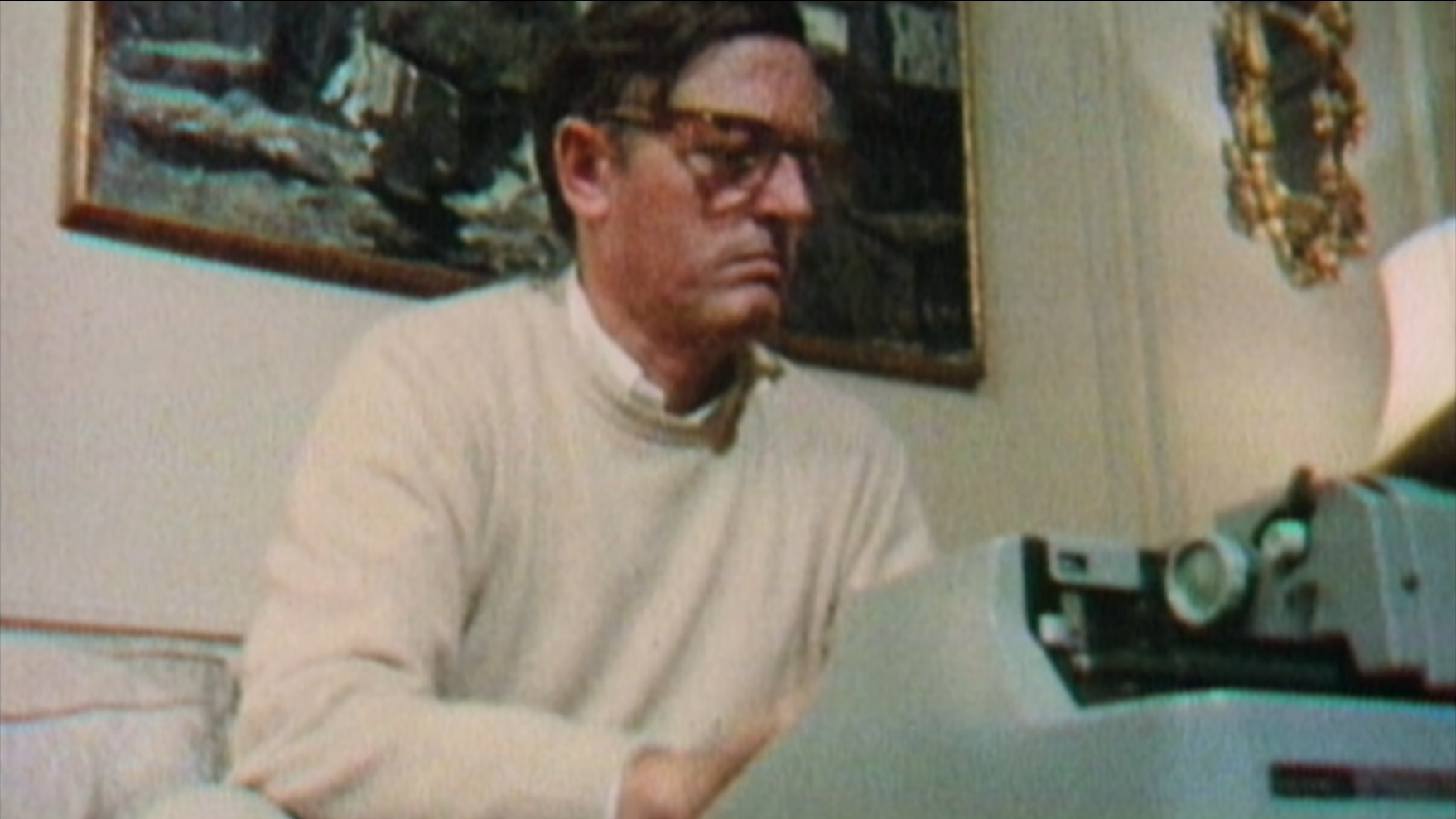
At 1:13:45 into the documentary Best of Enemies: Buckley vs. Vidal (Magnolia Pictures, 2015), William F. Buckley is pictured using what appears to be a Hermes 3000 typewriter.
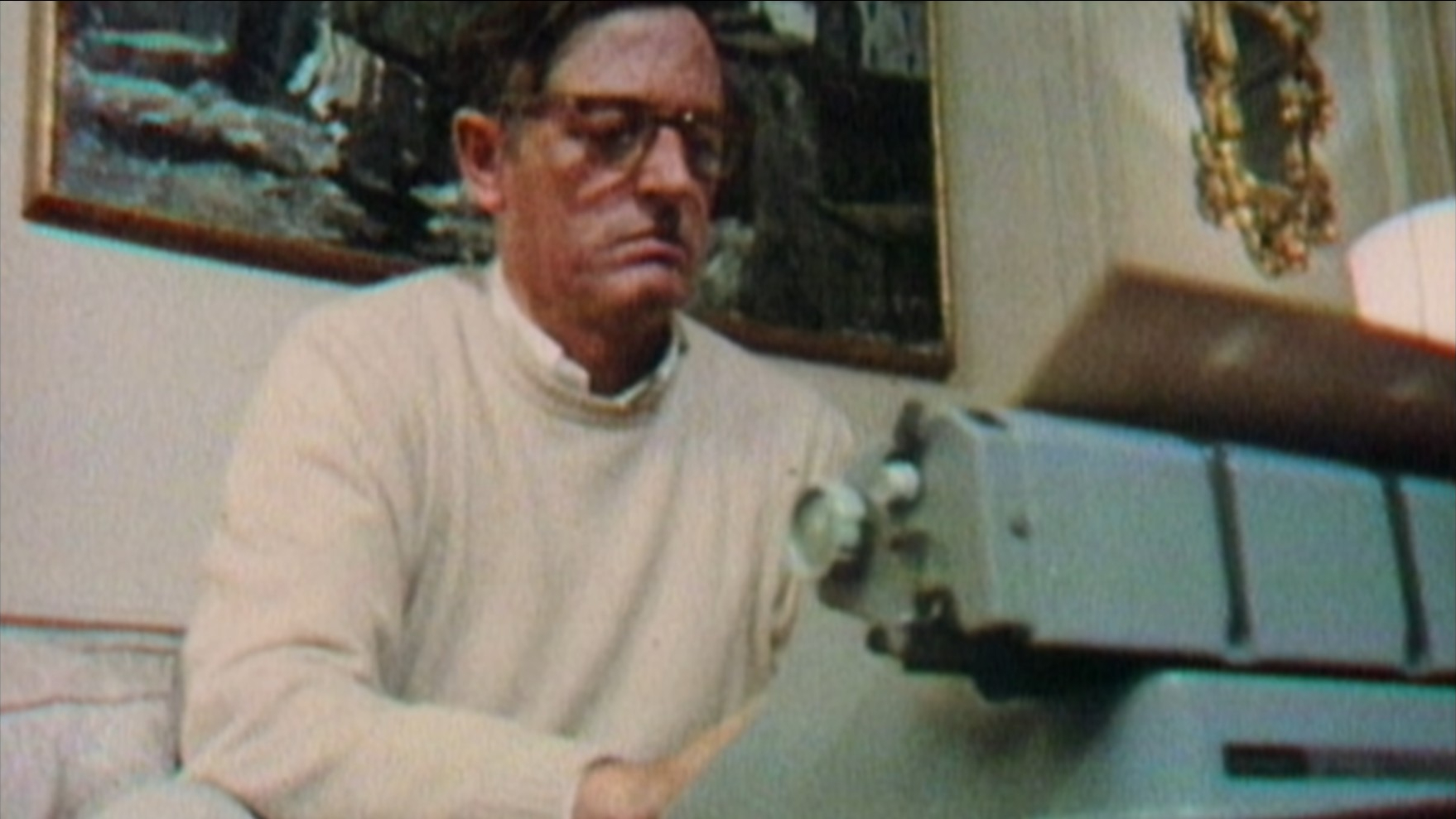
-
-
www.facebook.com www.facebook.com
-
www.reddit.com www.reddit.com
-
When does your zettelkasten start talking back?
reply to DueNinja7096 at https://reddit.com/r/Zettelkasten/comments/1sqvydk/when_does_your_zettelkasten_start_talking_back/
It will happen to you more quickly as you thumb through your notes or search through them for things you know you want. Along the way you'll discover you find things you need, but didn't know you needed. You'll see things you know you wrote or put into the box, but forgot long ago but realize you can use right now. Searching regularly increases the level of the conversation as well as the chances for serendipity.
-
-
www.youtube.com www.youtube.com
-
www.facebook.com www.facebook.com
-
https://www.facebook.com/groups/1794856020751839/posts/4424498594454222/
Royal Canterbury pica - PC<br /> Royal Semi-Gothic pica - P SG
-
-
www.facebook.com www.facebook.com
-
sevetech.substack.com sevetech.substack.com
-
Why Index Cards Are Still The Most Powerful Productivity Tool<br /> by [[Sevetech]] aka [[Seve Tessarin]] accessed on 2026-04-18T21:10:50
Not sure I see the value of putting index cards into notebook form? How is it different from "just a notebook"?
-