328 Matching Annotations
  1. Last 7 days
    1. The c.640T>G germline variant, leading to a protein extension with the addition of a tail of 13 new amino acids, was found in a patient affected with a single pheochromocytoma at 67 years old.

      PatientID: 88

      KindredID: 88

      Case: Sex Unknown, 67Y0M, Ethnicity Unknown

      DiseaseAssertion: VHL

      FamilyInfo: N/A

      CasePresentingHPOs: HP:0002666 (Pheochromocytoma)

      CaseHPOFreeText: Single pheochromocytoma.

      CaseNotHPOs: N/A

      CaseNotHPOFreeText: N/A

      CasePreviousTesting: N/A

      PreviouslyPublished: N/A

      SupplementalData: Patient information pulled from Supplemental Table 1. There is additional tumour specific information in Supplemental Table 2.

      Variant: p.214Gext14 (c.640T>G)

      LegacyVariant: N/A

      CaseProblemVariantFreeText: N/A

      ClinVarID: N/A

      CAID: CA351756720

      gnomAD: N/A

      VariantEvidence: Membrane CA9 immunostaining was observed (supplemental table 1).

      MutationType: missense_variant;transversion; stop_lost

      CivicName: 214Gext14 (c.640T>G)

      MultipleGeneVariants: N/A
    1. PatientID: 150

      KindredID: 55

      Case: M, 17Y0M, Chinese

      DiseaseAssertion: VHL

      FamilyInfo: The proband (patient 150) has a father (patient 151) who was also confirmed with this germline mutation, and presented at 22 with a CNS hemangioblastoma and 28 with renal cell carcinoma. The proband also has a grandmother (patient 153) who presented with a CNS hemangioblastoma at 43, but who passed away before diagnosis/ genetic testing.

      CasePresentingHPOs: HP:0010797; HP:0001737; HP:0001732 (Hemangioblastoma, Pancreatic cysts, Abnormality of the pancreas)

      CaseHPOFreeText: The proband presented at age 14 with a CNS hemangioblastoma, and age 17 with multiple pancretic cysts/tumors.

      CaseNotHPOs: HP:0009711; HP:0002666; HP:0005584 (Retinal capillary hemangioma, Pheochromocytoma, Renal cell carcinoma)

      CaseNotHPOFreeText: N/A

      CasePreviousTesting: N/A

      PreviouslyPublished: This patient was also published in a later paper by Wang et al., 2018 (PMID: 29330336).

      SupplementalData: Patient and family genotype-phenotype information is listed in Supplementary Table 1.

      Variant: p.I151S (c.452T>G)

      LegacyVariant: N/A

      CaseProblemVariantFreeText: N/A

      ClinVarID: 223215, https://www.ncbi.nlm.nih.gov/clinvar/variation/223215/

      CAID: N/A

      gnomAD: N/A

      VariantEvidence: N/A

      MutationType: missense_variant;transversion

      CivicName: I151S (c.452T>G)

      MultipleGeneVariants: N/A

    2. PatientID: 215

      KindredID: 80

      Case: F, 14Y0M, Chinese

      DiseaseAssertion: VHL

      FamilyInfo: The patient's brother (the proband) and nephew both had the same mutation. Their brother had a CNS hemangioblastoma at 26. Their nephew had a retinal angioma at 26, and a pheochromocytoma at 31. Their mother had renal cell carcinoma at 56, however no genotyping information is available for her.

      CasePresentingHPOs: ; HP:0002666 (Pheochromocytoma)

      CaseHPOFreeText: The patient presented with a pheochromocytoma at age 14.

      CaseNotHPOs: HP:0001737; HP:0001732; HP:0005584; HP:0010797; HP:0009711 (Pancreatic cysts, Abnormality of the pancreas, Renal cell carcinoma, Hemangioblastoma, Retinal Capillary Hemangioma)

      CaseNotHPOFreeText: N/A

      CasePreviousTesting: N/A

      PreviouslyPublished: This cohort was also published in a later paper by Wang et al., 2018 (PMID: 29330336).

      SupplementalData: Patient and family genotype-phenotype information is listed in Supplementary Table 1.

      Variant: p.R167Q (c.500G>A)

      LegacyVariant: N/A

      CaseProblemVariantFreeText: N/A

      ClinVarID: 2216, https://www.ncbi.nlm.nih.gov/clinvar/variation/2216/

      CAID: N/A

      gnomAD: N/A

      VariantEvidence: N/A

      MutationType: missense_variant;transition

      CivicName: R167Q (c.500G>A)

      MultipleGeneVariants: N/A

    3. PatientID: 59

      KindredID: 22

      Case: M, 14Y0M, Chinese

      DiseaseAssertion: VHL

      FamilyInfo: N/A

      CasePresentingHPOs: HP:0002666; HP:0001732; HP:0001737 (Pheochromocytoma, Abnormality of the pancreas, Pancreatic cysts)

      CaseHPOFreeText: The proband presented with multiple pancreatic cysts/tumors at 14 and pheochromocytoma at 11.

      CaseNotHPOs: HP:0010797; HP:0009711; HP:0005584 (Hemangioblastoma, Retinal capillary hemangioma, Renal cell carcinoma)

      CaseNotHPOFreeText: N/A

      CasePreviousTesting: N/A

      PreviouslyPublished: This patient was also published in a later paper by Wang et al., 2018 (PMID: 29330336).

      SupplementalData: Patient and family genotype-phenotype information is listed in Supplementary Table 1.

      Variant: p.V87E (c.260T>A)

      LegacyVariant: N/A

      CaseProblemVariantFreeText: N/A

      ClinVarID: N/A

      CAID: CA351750651; https://reg.clinicalgenome.org/redmine/projects/registry/genboree_registry/allele?hgvsOrDescriptor=NM_000551.3%3Ac.260T%3EA

      gnomAD: N/A

      VariantEvidence: N/A

      MutationType: missense_variant;transition

      CivicName: V87E (c.260T>A)

      MultipleGeneVariants: N/A

    4. PatientID: 239

      KindredID: 91

      Case: M, 25Y0M, Chinese

      DiseaseAssertion: VHL

      FamilyInfo: The proband (patient 239) has a sister (patient 240) who presented with multiple pancreatic cysts/tumors at 28.

      CasePresentingHPOs: HP:0010797; HP:0009711 (Hemangioblastoma, Retinal capillary hemangioma)

      CaseHPOFreeText: The proband presented with a retinal angioma at 14 and a CNS hemangioblastoma at 25.

      CaseNotHPOs: HP:0001737; HP:0001732; HP:0005584; HP:0002666 (Pancreatic cysts, Abnormality of the pancreas, Renal cell carcinoma, Pheochromocytoma)

      CaseNotHPOFreeText: N/A

      CasePreviousTesting: N/A

      PreviouslyPublished: This patient was also published in a later paper by Wang et al., 2018 (PMID: 29330336).

      SupplementalData: Patient and family genotype-phenotype information is listed in Supplementary Table 1.

      Variant: Exon 1 Deletion (c.1-?_340+?del)

      LegacyVariant: N/A

      CaseProblemVariantFreeText: N/A

      ClinVarID: N/A

      CAID: N/A

      gnomAD: N/A

      VariantEvidence: N/A

      MutationType: exon_loss_variant

      CivicName: Exon 1 Deletion

      MultipleGeneVariants: N/A

    1. Disease-associated genetic abnormalities were identified in all of the seven families examined.

      PatientID: nephew

      KindredID: C

      Case: M, 19Y0M, Chinese

      DiseaseAssertion: assumed VHL

      FamilyInfo: Family history is positive. Patient’s mother and aunt all had the splice mutation, two with CNS hemangioblastomas and one with adnexal papillary cystadenoma of probable mesonephric origin phenotypes.

      CasePresentingHPOs: HP:0010797; HP:0002666 (hemangioblastoma, pheochromocytoma)

      CaseHPOFreeText: Patient had hemangioblastoma of the CNS diagnosed at 19Y, and pheochromocytoma first at 14Y

      CaseNotHPOs: N/A

      CaseNotHPOFreeText: N/A

      CasePreviousTesting: N/A

      PreviouslyPublished: N/A

      SupplementalData: N/A

      Variant: c.340+5G>C

      LegacyVariant: c.553+5G>C

      CaseProblemVariantFreeText: N/A

      ClinVarID: 36901, https://www.ncbi.nlm.nih.gov/clinvar/variation/36901/

      CAID: N/A

      gnomAD: 0.01119 https://gnomad.broadinstitute.org/variant/3-10183876-G-C

      VariantEvidence: This variant’s large allele frequency means this is likely non disease causing (not deleterious).

      MutationType: splice_site_variant

      CivicName: Splice Region (c.340+5G>C)

      MultipleGeneVariants: N/A

    1. PatientID: 53 (Cousin)

      KindredID: 18

      Case: F, 57Y0M, Ethnicity Unknown

      DiseaseAssertion: Assumed VHL

      FamilyInfo: 11 members of this family tested positive for the c.712C>T/c.499C>T germline variant of the VHL gene. 14 members of this family were assumed to carry this variant due to family history/personal medical history. Members of this family range from asymptomatic to multi-organ involvement (pheochromocytoma, pancreatic and renal cysts/tumors and hemangioblastomas). The family was previously reported in PMID 3942913.

      CasePresentingHPOs: HP:0010797; HP:0009711 (Hemangioblastoma, Retinal capillary hemangioma)

      CaseHPOFreeText: This patient presented with CNS hemangioblastoma (23Y) and retinal angioma (14Y).

      CaseNotHPOs: HP:0005584; HP:0000077; HP:0001732; HP:0002666 (Renal cell carcinoma, Abnormality of the kidney, Abnormality of the pancreas, Pheochromocytoma)

      CaseNotHPOFreeText: N/A

      CasePreviousTesting: N/A

      PreviouslyPublished: 3942913 (some members of this family are previously reported (phenotypes only) but unable to match patients across papers with confidence)

      SupplementalData: Supplementary Table 1.

      Variant: N/A

      LegacyVariant: N/A

      CaseProblemVariantFreeText: N/A

      ClinVarID: N/A

      CAID: N/A

      gnomAD: N/A

      VariantEvidence: Authors state that the c.712C>T germline familial variant of the VHL gene in this patient is “inferred from the family”. No genetic testing was done on this patient to confirm this. Being that this familial variant is out of bound with respect to the NM_000551.3 reference sequence, it was concluded that this variant is noted in the Latif et al. (1993) reference and was translated to c.499C>T (NM_000551.3).

      MutationType: N/A

      CivicName: N/A

      MultipleGeneVariants: N/A

    1. Medical files and histopathology reports of patients who had been operated on before were also reviewed.

      PatientID: IV-18

      KindredID: 1

      Case: F, 17Y0M, Iranian

      DiseaseAssertion: assumed VHL

      FamilyInfo: Familial history was positive. See Fig 1. A total of 43 members of the kindred, 24 males and 19 females, aged 2-77 years were reached for evaluation. It is stated in the paper that all affected subjects (13) were positive for the same mutation (c.500G>A). Additionally, gene sequencing revealed that 4 asymptomatic members of the kindred also harbored the pathogenic mutation. Phenotypes include pheochromocytoma, hemangioblastoma, and retinal HB.

      CasePresentingHPOs: HP:0002666; HP:0009711 (Pheochromocytoma, retinal capillary hemangioma)

      CaseHPOFreeText: Patient had a bilateral PCC and retinal HB at 14Y which was surgically removed at the time. Histopathology was benign, and there was no case of relapse or metastatic dissemination.

      CaseNotHPOs: HP:0000077 (abnormality of the kidney)

      CaseNotHPOFreeText: There was no case of kidney tumors among the kindred.

      CasePreviousTesting: N/A

      PreviouslyPublished: N/A

      SupplementalData: N/A

      Variant: p.R167Q (c.500G>A)

      LegacyVariant: N/A

      CaseProblemVariantFreeText: N/A

      ClinVarID: 2216, https://www.ncbi.nlm.nih.gov/clinvar/variation/2216/

      CAID: N/A

      gnomAD: 0.000003977, https://gnomad.broadinstitute.org/variant/3-10191507-G-A

      VariantEvidence: N/A

      MutationType: missense_variant; transition

      CivicName: R167Q (c.500G>A)

      MultipleGeneVariants: N/A

    1. X214L one case (female)

      PatientID: None

      KindredID: 2

      Case: F, 38Y0M, Ethnicity Unknown

      DiseaseAssertion: Retinal hemangioblastoma

      FamilyInfo: N/A

      CasePresentingHPOs: HP:0009711 (Retinal hemangioblastoma)

      CaseHPOFreeText: The patient was diagnosed with bilateral retinal hemangioblastoma at an unknown age.

      CaseNotHPOs: N/A

      CaseNotHPOFreeText: N/A

      CasePreviousTesting: N/A

      PreviouslyPublished: N/A

      SupplementalData: N/A

      Variant: p.*214Lext*14(c.641G>T)

      LegacyVariant: N/A

      ClinVarID: 223236, http://www.ncbi.nlm.nih.gov/clinvar/variation/223236

      gnomAD: N/A

      VariantEvidence: N/A

      MutationType: stop_loss

      CivicName: *214Lext*14(c.641G>T)

      MultipleGeneVariants: N/A

  2. Nov 2026
    1. X214C one case (male)

      PatientID: None

      KindredID: 3

      Case: M, 62Y0M, Ethnicity Unknown

      DiseaseAssertion: Assumed VHL

      FamilyInfo: N/A

      CasePresentingHPOs: HP:0002666; HP:0010797; HP:0009713; HP:0009711; HP:0006770; HP:0030405 (Pheochromocytoma, CNS hemangioblastoma, spinal hemangioblastoma, retinal hemangioblastoma, clear cell renal cell carcinoma, pancreatic endocrine tumour)

      CaseHPOFreeText: The patient presented with clear cell renal carcinoma, and a pancreatic neuroendocrine tumor at age 62. The patient also presented with bilateral pheochromocytomas, multiple CNS and spinal hemangioblatomas, and retinal hemangioblastomas at an unknown age.

      CaseNotHPOs: N/A

      CaseNotHPOFreeText: N/A

      CasePreviousTesting: N/A

      PreviouslyPublished: N/A

      SupplementalData: N/A

      Variant: p.*214Cext*14(c.642A>T)

      LegacyVariant: N/A

      ClinVarID: 625270, http://www.ncbi.nlm.nih.gov/clinvar/variation/625270

      gnomAD: N/A

      VariantEvidence: N/A

      MutationType: stop_loss

      CivicName: *214Cext*14(c.642A>T)

      MultipleGeneVariants: N/A

    1. 7M–1c.233A > Gp.Asn78Ser11414––14, M14, B4

      PatientID: 7

      KindredID: 7

      Case: M, 14Y0M, Korean

      DiseaseAssertion: VHL

      FamilyInfo: None

      CohortInfo: Thirteen unrelated patients with germline VHL mutations who were diagnosed with VHL disease were evaluated.

      CasePresentingHPOs: HP:0010797, HP:0000107, HP:0009711, HP:0001737(hemangioblastoma, renal cyst, retinal capillary hemangioma, pancreatic cysts)

      CaseHPOFreeText: The patient was found to have a CNS hemangioblastoma, retinal capillary hemangioma, multiple pancreatic cysts and bilateral renal cysts at age 14. MRI of the brain showed a tiny well-enhanced nodule at the cervicomedullary junction with an adjacent prominent vascular structure.

      CaseNotHPOs: HP:0005584, HP:0002666 (renal cell carcinoma, pheochromocytoma)

      CaseNotHPOFreeText: N/A

      CasePreviousTesting: N/A

      PreviouslyPublished: N/A

      SupplementalData: N/A

      Variant: p.N78S (c.233A>G)

      CaseProblemVariantFreeText: N/A

      LegacyVariant: N/A

      ClinVarID: 93326 https://www.ncbi.nlm.nih.gov/clinvar/variation/93326/

      CAID: N/A

      gnomAD: N/A

      VariantEvidence: N/A

      MutationType: missense_variant; transition

      CivicName: N78S (c.233A>G)

      MultipleGeneVariants: N/A

    1. The index case was a 14 year-old boy who presented to us in 1971 with severe hypertension. On evaluation he was found to have a right adrenal mass with elevated urinary VMA (normal <7 mg/24 hr), confirming the diagnosis of a right adrenal pheochromocytoma. He underwent right adrenalectomy and the post-operative period was uneventful. He was subsequently lost to follow. In 1979, he presented to us again with severe headache and recurrent seizures. On examination his pulse rate was 100/min, blood pressure was 160/130 mm of Hg. Cardiac auscultation revealed a loud 2nd heart sound and a 3rd heart sound. There were no murmurs. Examination of the abdomen revealed a palpable mass in the left hypochondrium. This mass was confirmed as a pheochromocytoma. After adequately controlling his blood pressure he underwent left cortical sparing adrenalectomy. The post-operative period was uneventful. He was on steroid replacement that was subsequently withdrawn after his serum cortisol levels had normalized. His 8 AM cortisol after withdrawal of steroids was 12 µg/dl.He subsequently got married and had two children as shown in Figure 1, who also eventually developed similar tumors.

      PatientID: II-1

      KindredID: 1

      Case: M, 57Y0M, Ethnicity Unknown

      DiseaseAssertion: VHL

      FamilyInfo: Family in India but Ethnicity not explicitly confirmed. Two children with the same mutation. Eldest son presented at age 10 with severe hypertension and bilateral pheochromocytoma. Daughter presented at age 17 with palpitation, blurred vision, blurring vision, bilateral papilledema and bilateral pheochromocytoma. Wife and brother were negative for the mutation.

      CasePresentingHPOs: HP:0000822; HP:0002666; HP:0006748; HP:0002315; HP:0001250; HP:0031657 (Hypertension, Pheochromocytoma, Adrenal pheochromocytoma, Headache, Seizure, Abnormal heart sound)

      CaseHPOFreeText: Presented at 14 years-old with severe hypertension. On evaluation he was found to have a right adrenal mass with elevated urinary VMA, confirming the diagnosis of a right adrenal pheochromocytoma. Presented at age 22 with severe headache and recurrent seizures. Cardiac auscultation revealed a loud 2nd heart sound and a 3rd heart sound. Examination of the abdomen revealed a palpable mass in the left hypochondrium. This mass was confirmed as a pheochromocytoma. Asymptomatic at age 57.

      CaseNotHPOs: HP:0030148 (Heart murmur)

      CaseNotHPOFreeText: There were no heart murmurs during evaluation at age 22.

      CasePreviousTesting: N/A

      PreviouslyPublished: N/A

      SupplementalData: Figure 1

      Variant: p.R82L (c.245G>T)

      LegacyVariant: N/A

      CaseProblemVariantFreeText: N/A

      ClinVarID: 526675, https://www.ncbi.nlm.nih.gov/clinvar/variation/526675/

      CAID: N/A

      gnomAD: N/A

      VariantEvidence: Authors carried out analysis of VHL variant p.Arg82Leu with six different in silico tools namely SIFT, I-Mutant3, PhD-SNP, MutPred, PolyPhen2 and SNPs&GO in order to determine the pathogenic potential of the variant.

      MutationType: missense_variant;transversion

      CivicName: R82L (c.245G>T)

      MultipleGeneVariants: N/A

    1. PatientID: 136

      KindredID: 51

      Case: M, 25Y0M, Chinese

      DiseaseAssertion: VHL

      FamilyInfo: The proband (patient 136) has a mother (patient 137) who presented with a CNS hemangioblastoma at 32, and renal cell carcinoma/ pheochromocytoma at 38. However, no DNA sample was available for his mother's genetic testing.

      CasePresentingHPOs: HP:0010797, HP:0001737, HP:0001732, HP:0005584 (Hemangioblastoma, Pancreatic cysts, Abnormality of the pancreas, Renal cell carcinoma)

      CaseHPOFreeText: The proband (patient 136) presented with multiple pancreatic cysts/tumors at 21, renal cell carcinoma at 23, and a CNS hemangioblastoma at 25.

      CaseNotHPOs: HP:0002666; HP:0009711 (Pheochromocytoma, Retinal capillary hemangioma)

      CaseNotHPOFreeText: N/A

      CasePreviousTesting: N/A

      PreviouslyPublished: This patient was also published in a later paper by Wang et al., 2018 (PMID: 29330336).

      SupplementalData: Patient and family genotype-phenotype information is listed in Supplementary Table 1.

      Variant: p.P146Gfs*14 (c.435_436ins)

      LegacyVariant: N/A

      CaseProblemVariantFreeText: N/A

      ClinVarID: N/A

      CAID: CA2573131810, https://reg.clinicalgenome.org/redmine/projects/registry/genboree_registry/by_caid?caid=CA2573131810

      gnomAD: N/A

      VariantEvidence: N/A

      MutationType: plus_2_frameshift_variant

      CivicName: P146Gfs*14 (c.435_436insGG)

      MultipleGeneVariants: N/A

  3. Oct 2026
    1. We report on a Japanese VHL family in which two of the three affected members developed acute occlusive hydrocephalus that necessitated emergency surgery for ventricular shunt or drainage.

      PatientID: 3

      KindredID: 1

      Case: F, 14Y0M, Japanese

      DiseaseAssertion: assumed VHL

      FamilyInfo: Mother (39Y) with retinal angiomas and cerebellar hemangioblastoma, and her older sister (P1) with cerebellar hemangioblastoma, retinal capillary hemangioma, pancreatic cysts and a hearing impairment both had the p.P86L VHL mutation. Father did not.

      CasePresentingHPOs: HP:0006880; HP:0010302; HP:0009711; HP:0001737; HP:0000107 (cerebellar hemangioblastoma; spinal cord tumor; retinal capillary hemangioma; Pancreatic cysts; renal cyst)

      CaseHPOFreeText: at age 14 had 3 small inter cranial tumors (not removed) and by at 19 years had obstructive hydrocephalus caused by enlargement of the cerebellar tumors (hemangioblastomas). Retinal angiomas were found in the right eye, cystic lesions in the pancreas and the left kidney, and a cystic tumor in the cervical cord

      CaseNotHPOs: N/A

      CaseNotHPOFreeText: N/A

      CasePreviousTesting: N/A

      PreviouslyPublished: N/A

      SupplementalData: N/A

      Variant: p.P86L (c.257C>T)

      CaseProblemVariantFreeText: N/A

      LegacyVariant: N/A

      ClinVarID: 182977 https://www.ncbi.nlm.nih.gov/clinvar/variation/182977/

      CAID: N/A

      gnomAD: N/A

      VariantEvidence: N/A

      MutationType: missense_variant;transition

      CivicName: P86L (c.257C>T)

      MultipleGeneVariants: N/A

    1. 428Y8Y14NNNNNc.340G>AExon 1p.Gly114SerMissense

      PatientID: 4

      KindredID: 2

      Case: F, 14Y0M, Brazilian (Latino/Admixed American)

      DiseaseAssertion: VHL

      FamilyInfo: None

      CasePresentingHPOs: HP:0002666; HP:0030405 (pheochromocytoma, pancreatic endocrine tumor)

      CaseHPOFreeText: The patient developed bilateral pheo (as large as L = 6.0cm and R = 5.5cm) at 8Y of age. These recurred after 24months. They later presented with multiple PNET (largest 1.5cm) at 14Y.

      CaseNotHPOs: HP:0002668; HP:0005584; HP:0001737; HP:0010797; HP:0009711; HP:0000107 (paraganglioma, renal cell carcinoma, pancreatic cyst, hemangioblastoma, retinal capillary hemangioma, renal cyst)

      CaseNotHPOFreeText: N/A

      CasePreviousTesting: N/A

      PreviouslyPublished: N/A

      SupplementalData: N/A

      Variant: p.G114S (c.340G>A)

      CaseProblemVariantFreeText: N/A

      LegacyVariant: N/A

      ClinVarID: 583094 https://www.ncbi.nlm.nih.gov/clinvar/variation/583094/

      CAID: N/A

      gnomAD: N/A

      VariantEvidence: N/A

      MutationType: missense_variant;transition

      CivicName: G114S (c.340G>A)

      MultipleGeneVariants: N/A

    1. Patient P8 In October 2019, visual impairment was diagnosed in a 14-year-old boy. BCVA was 20/20 and 20/640 in OD and OS, respectively. Four peripheral RCHs were detected in OD. In OS, multiple RCHs were present; the largest was located temporally, and it consisted in the coalescence of many RCHs. The visual impairment of OS was due to the severe exudative process which involved the macula. Moreover, FA revealed numerous microhemangioblastomas that could not be detected using other diagnostic techniques. Laser therapy was performed in OU, but vitreous hemorrhage occurred in OS. Therefore, three anti-VEGF IV (bevacizumab) and simultaneous transscleral cryotherapies were performed under general anesthesia. Many laser sessions were necessary to obtain regression of the RCHs. Further investigations revealed the presence of a cerebellar hemangioblastoma.

      PatientID: 8

      KindredID: 4

      Case: M, 14Y0M, Ethnicity Unknown

      DiseaseAssertion: VHL

      FamilyInfo: A family pedigree is provided in figure 1. The parents of patient 8 were molecularly tested and neither possessed the mutation; thus, the mutation was identified as de novo. Neither parent had VHL syndrome characterized by retinal capillary hemangiomas (RCHs).

      CasePresentingHPOs: HP:0006880; HP:0009711 (Cerebellar hemangioblastoma; Retinal capillary hemangioma)

      CaseHPOFreeText: In 2019, a 14-year-old boy was diagnosed with visual impairment, due to visual acuity of 20/20 in the right eye and 20/640 in the left eye. Four peripheral RCHs were detected in the right eye. The visual impairment of the left eye was due to the severe exudative process involving the macula. Moreover, numerous microhemangioblastomas were revealed by fluorescein angiography. Laser therapy was performed in both eyes, but vitreous hemorrhage occurred in the left eye. Bevacizumab was given three times, as well simultaneous cryotherapies were performed under general anesthesia. Many laser sessions were performed for regression of the RCHs to occur. Further testing revealed a cerebellar hemangioblastoma.

      CaseNotHPOs: N/A

      CaseNotHPOFreeText: Patient did not have other known tumours.

      CasePreviousTesting: N/A

      PreviouslyPublished: N/A

      SupplementalData: N/A

      Variant: p.R113* (c.337C>T)

      LegacyVariant: N/A

      CaseProblemVariantFreeText: N/A

      ClinVarID: 220414, https://www.ncbi.nlm.nih.gov/clinvar/variation/220414/

      CAID: N/A

      gnomAD: N/A

      VariantEvidence: N/A

      MutationType: stop_gained

      CivicName: R113* (c.337C>T)

      MultipleGeneVariants: N/A

    1. 18 I 14 48 3 PC (14 years) 1 KD (16 years) T c.606dupA (p.Gln203ThrfsX53)

      PatientID: I

      KindredID: 18

      Case: Sex Unknown, 48Y0M, Danish

      DiseaseAssertion: VHL

      FamilyInfo: N/A

      CasePresentingHPOs: HP:0001737; HP:0000112 (Pancreatic cysts, Nephropathy)

      CaseHPOFreeText: Diagnosed with VHL at age 14Y. Presented with 3 pancreatic cysts (14Y) and kidney disease (16Y). Age at the end of study: 48Y.

      CaseNotHPOs: N/A

      CaseNotHPOFreeText: N/A

      CasePreviousTesting: N/A

      PreviouslyPublished: N/A

      SupplementalData: N/A

      Variant: p.Q203Tfs*53 (c.606dup)

      LegacyVariant: N/A

      CaseProblemVariantFreeText: N/A

      ClinVarID: 935385, https://www.ncbi.nlm.nih.gov/clinvar/variation/935385/

      CAID: N/A

      gnomAD: N/A

      VariantEvidence: N/A

      MutationType: duplication; plus_1_frameshift_variant

      CivicName: Q203TfsX53 (c.606dupA)

      MultipleGeneVariants: N/A

    2. 12 I 5 21 5 retinal hb (5 + 13 + 14 years) 6 CNS hb (15 + 17 years) 3 PC (15 years) T c.l-?_463 + ?del

      PatientID: I

      KindredID: 12

      Case: Sex Unknown, 21Y0M, Danish

      DiseaseAssertion: VHL

      FamilyInfo: N/A

      CasePresentingHPOs: HP:0009711; HP:0010797; HP:0001737 (Retinal capillary hemangioma, Hemangioblastoma, Pancreatic cysts)

      CaseHPOFreeText: Diagnosed with VHL at age 5Y. Presented with 5 retinal hemangioblastoma (5Y, 13Y, 14Y) 6 CNS hemangioblastoma (15Y, 17Y) 3 pancreatic cysts (15Y). Age at the end of study: 21Y.

      CaseNotHPOs: N/A

      CaseNotHPOFreeText: N/A

      CasePreviousTesting: N/A

      PreviouslyPublished: N/A

      SupplementalData: N/A

      Variant: Exon 1-2 Deletion (c.1-?_463+?del)

      LegacyVariant: N/A

      CaseProblemVariantFreeText: N/A

      ClinVarID: N/A

      CAID: N/A

      gnomAD: N/A

      VariantEvidence: N/A

      MutationType: exon_loss_variant

      CivicName: Exon 1-2 Deletion

      MultipleGeneVariants: N/A

    3. 4 I 7 Dead at age 53 years 2 retinal hb (7 + 14 years) M c.407 T > C (p.Phe136Ser)

      PatientID: I

      KindredID: 4

      Case: Sex Unknown, 53Y0M, Danish

      DiseaseAssertion: VHL

      FamilyInfo: N/A

      CasePresentingHPOs: HP:0009711 (Retinal capillary hemangioma)

      CaseHPOFreeText: Diagnosed with VHL at age 7Y. Presented with retinal hemangioblastoma at 7Y and 14Y. Age of death: 53Y.

      CaseNotHPOs: N/A

      CaseNotHPOFreeText: N/A

      CasePreviousTesting: N/A

      PreviouslyPublished: N/A

      SupplementalData: N/A

      Variant: p.F136S (c.407T>C)

      LegacyVariant: N/A

      CaseProblemVariantFreeText: N/A

      ClinVarID: 496064, https://www.ncbi.nlm.nih.gov/clinvar/variation/496064/

      CAID: N/A

      gnomAD: N/A

      VariantEvidence: N/A

      MutationType: missense_variant;transition

      CivicName: F136S (c.407T>C)

      MultipleGeneVariants: N/A

    1. PatientID: 5

      KindredID: 1

      Case: Sex Unknown, 15Y10M, Ethnicity Unknown

      DiseaseAssertion: VHL

      FamilyInfo: None.

      CasePresentingHPOs: HP:0009711 (retinal capillary hemangioma)

      CaseHPOFreeText: At first presentation (age 14Y3M) the patient had a visual acuity of 20/200. The angioma showed an exophytic growth pattern and was located in the inferior disc margin.

      CaseNotHPOs: N/A

      CaseNotHPOFreeText: Medical screening for other VHL lesions comprised magnetic resonance imaging (MRI) of the brain and spinal cord (gadolinium-enhanced), urine catecholamines, and abdominal sonography or computed tomography (CT). No VHL lesions present other than the retinal angioma reported.

      CasePreviousTesting: N/A

      PreviouslyPublished: N/A

      SupplementalData: N/A

      Variant: p.Q164H (c.492G>T)

      LegacyVariant: p.Q164H (c.705G>T)

      CaseProblemVariantFreeText: N/A

      ClinVarID: 456566 https://www.ncbi.nlm.nih.gov/clinvar/variation/456566/

      CAID: N/A

      gnomAD: N/A

      VariantEvidence: N/A

      MutationType: missense_variant;transversion

      CivicName: Q164H (c.492G>T)

      MultipleGeneVariants: N/A

    1. A 14-year-old boy was referred for an optic nerve mass with surrounding subretinal edema. His medical history and family history were unremarkable. Best-corrected vision was 20/30 in the right eye and 20/20 in the left eye. Examination was remarkable for a large retinal capillary hemangioma that covered the inferior one half of the optic nerve and extended below the nerve in the right eye (Fig. 1A). Subretinal fluid surrounded the optic nerve, and a small amount of secondary neovascularization and retinal traction was present. The patient was diagnosed with a peripapillary hemangioblastoma and scheduled for magnetic resonance imaging (MRI) of the brain and spine to rule out a central nervous system hemangioblastoma. Unfortunately, the patient did not undergo MRI and was lost to follow-up.

      PatientID: None

      KindredID: 1

      Case: M, 15Y0M, Ethnicity Unknown

      DiseaseAssertion: Retinal Capillary Hemangioma

      FamilyInfo: N/A at the time of the study the patient's family members were in the process of being evaluated for VHL.

      CasePresentingHPOs: HP:0009711 (retinal capillary hemangioma)

      CaseHPOFreeText: At age 14, examination was remarkable for a large retinal capillary hemangioma that covered the inferior one half of the optic nerve and extended below the nerve in the right eye. The patient returned 16 months later with vision decreased to 20/100 in the right eye. The hemangioblastoma had increased in size clinically. It was associated with a large inferior exudative retinal detachment, which also had a significant tractional component from extensive secondary neovascularization over the lesion. Ten days postoperatively, the patient's vision decreased to 20/200 in the right eye, and subretinal hemorrhage was present around the nerve. Two weeks postoperatively, the retinal detachment progressed to involve the macula, again with both exudative and tractional components.

      CaseNotHPOs: N/A

      CaseNotHPOFreeText: N/A

      CasePreviousTesting: N/A

      PreviouslyPublished: N/A

      SupplementalData: N/A

      Variant: p.F76del (c.227_229del)

      LegacyVariant: N/A

      CaseProblemVariantFreeText: N/A

      ClinVarID: 223166 https://www.ncbi.nlm.nih.gov/clinvar/variation/223166/

      CAID: N/A

      gnomAD: N/A

      VariantEvidence: N/A

      MutationType: inframe_deletion

      CivicName: F76del (c.227_229del)

      MultipleGeneVariants: N/A

    1. Methods: We performed a fundus examination and fluorescein and indocyanine green (ICG) angiography in both eyes of a young woman affected by VHL with bilateral pheochromocytoma, retinal angioma, retinal microaneurysms and unusual alterations of the deep retinal layers. A molecular analysis of the VHL gene was carried out.

      PatientID: 1 (case)

      KindredID: 1

      Case: F, 25Y0M, Ethnicity Unknown

      DiseaseAssertion: VHL

      FamilyInfo: Not significant - the paper states that the parents and siblings were negative for the mutation (indicating de novo).

      CasePresentingHPOs: HP:0002666; HP:0009711; HP:0000479; HP:0012045 (pheochromocytoma, retinal capillary hemangioma, abnormal retinal morphology, retinal flecks)

      CaseHPOFreeText: patient was referred for eye exam as part of a VHL screening program at 25Y. She has been diagnosed with bilateral pheochromocytoma at the age of 14 after an episode of acute hypertensive encephalopathy. Ophthalmoscopy disclosed in her right eye a small retinal hemangioma (1 disc diameter wide) along with feeder vessels in the mid-periphery and multiple, small, whitish, dome-shaped lesions scattered in the deeper layers of the posterior retina. Fluorescein and indocyanine green angiography confirmed the presence of the retinal hemangioma; multiple window-defects were also seen at the posterior pole and pericentral retina and hypofluorescent dots. (Unusual alterations of the deep retinal layers).

      CaseNotHPOs: N/A

      CaseNotHPOFreeText: N/A

      CasePreviousTesting: N/A

      PreviouslyPublished: N/A

      SupplementalData: N/A

      Variant: p.T157I (c.470C>T)

      LegacyVariant: p.T157I (c.683C>T)

      CaseProblemVariantFreeText: N/A

      ClinVarID: 223223 https://www.ncbi.nlm.nih.gov/clinvar/variation/223223/

      CAID: N/A

      gnomAD: N/A

      VariantEvidence: N/A

      MutationType: missense_variant;transition

      CivicName: T157I (c.470C>T)

      MultipleGeneVariants: N/A

    1. The exon 1 deletion c.254_283del30, p.Leu85_Glu94del was detected in a girl (patient #1) with manifestation of bilateral rHB and single vertebral HB at the age of 14 years (VHL type 1).

      PatientID: 1

      KindredID: 1

      Case: F, 14Y0M, Bulgarian

      DiseaseAssertion: VHL

      FamilyInfo: Negative family history for VHL

      CasePresentingHPOs: HP:0009711; HP:0010797 (retinal capillary hemangioma; hemangioblastoma)

      CaseHPOFreeText: retinal capillary hemangioma and a single vertebral hemangioblastoma (at C6) were found; follow up showed bilateral retinal hemangioma (operated on)

      CaseNotHPOs: N/A

      CaseNotHPOFreeText: N/A

      CasePreviousTesting: N/A

      PreviouslyPublished: N/A

      SupplementalData: N/A

      Variant: p.L85_E94del (c.254_283del30bp)

      LegacyVariant: N/A

      CaseProblemVariantFreeText: N/A

      ClinVarID: N/A

      CAID: CA2499306645 http://reg.clinicalgenome.org/redmine/projects/registry/genboree_registry/by_caid?caid=CA2499306645

      gnomAD: N/A

      VariantEvidence: N/A

      MutationType: inframe_deletion

      CivicName: L85_E94del (c.254_283del30bp)

      MultipleGeneVariants: SNP c.870A>G in CCND1 gene (A>G)

    1. X214T one case (female)

      PatientID: None

      KindredID: 4

      Case: F, 32Y0M, Ethnicity Unknown

      DiseaseAssertion: Assumed VHL

      FamilyInfo: N/A

      CasePresentingHPOs: HP:0002666; HP:0001737 (Pheochromocytoma, pancreatic cyst)

      CaseHPOFreeText: The patient presented with pheochromocytoma and pancreatic cysts. The age of diagnosis was not specified.

      CaseNotHPOs: N/A

      CaseNotHPOFreeText: N/A

      CasePreviousTesting: N/A

      PreviouslyPublished: N/A

      SupplementalData: N/A

      Variant: p.*214Trpt*14(c.642A>G)

      LegacyVariant: N/A

      ClinVarID: 625269, http://www.ncbi.nlm.nih.gov/clinvar/variation/625269

      gnomAD: N/A

      VariantEvidence: N/A

      MutationType: stop_loss

      CivicName: *214Trpt*14(c.642A>G)

      MultipleGeneVariants: N/A

    2. Proband's mother – 12

      PatientID: None

      KindredID: 1

      Case: F, 48Y0M, Ethnicity Unknown

      DiseaseAssertion: Assumed VHL

      FamilyInfo: The patient’s aunt presented with Hodgkin’s lymphoma at 38Y and was deceased at 40Y. The patient’s father presented with liver cancer at 72Y and was deceased at 74Y. Additionally, the patient’s deceased grandfather had an unspecified cancer. The patient’s son presented with unilateral pheochromocytoma at 13Y. The patient’s daughter presented with pheochromocytoma at 12Y, and bilateral retinal hemangioblastoma, right adrenal pheochromocytoma, and islet cell neuroendocrine carcinoma of the pancreas with nodal metastasis at 20Y, and was found to carry the mutation the patient carried.

      CasePresentingHPOs: HP:0002666; HP:0009711 (Pheochromocytoma, retinal hemangioblastoma)

      CaseHPOFreeText: The patient presented with bilateral pheochromocytoma at 12Y and retinal hemangioblastoma at 13Y.

      CaseNotHPOs: N/A

      CaseNotHPOFreeText: N/A

      CasePreviousTesting: N/A

      PreviouslyPublished: N/A

      SupplementalData: N/A

      Variant: p.*214Lext*14(c.641G>T)

      LegacyVariant: N/A

      ClinVarID: 223236, http://www.ncbi.nlm.nih.gov/clinvar/variation/223236

      gnomAD: N/A

      VariantEvidence: N/A

      MutationType: stop_loss

      CivicName: *214Lext*14(c.641G>T)

      MultipleGeneVariants: N/A

    1. A 33-year-old Japanese woman had suffered back pain for seven years. She was referred to our institute because multiple solid tumors in the pancreas had gradually increased in size, which was pointed out at 27 years of age. She had a medical history of treatment for a variety of VHLD-associated tumors, including a pancreatic NET surgically resected at 14 years of age, hemangiomas of the fourth ventricle and cervical spinal cord operated at 19 years of age, and a renal cell carcinoma of the right kidney treated by nephrectomy at 30 years of age.

      PatientID: None

      KindredID: 1

      Case: F, 33Y0M, Japanese

      DiseaseAssertion: VHL

      FamilyInfo: Her father and elder brother were also diagnosed with VHLD, with her father having a medical history of two surgical resections for pancreatic NET and associated metastatic recurrence in the liver.

      CasePresentingHPOs: HP:0030405, HP:0009713, HP:0005584, HP:0010797 (Pancreatic endocrine tumor, Spinal hemangioblastoma, Renal cell carcinoma, hemangioblastoma)

      CaseHPOFreeText: She first developed multiple solid tumors of the pancreas at age 27 and they continued to grow until she was referred to the institute at age 33. She had a pancreatic endocrine tumour at age 14. At age 19, she had hemangiomas of the fourth ventricle and cervical spinal cord and a renal cell carcinoma of the right kidney treated by nephrectomy at 30 years of age.

      CaseNotHPOs: N/A

      CaseNotHPOFreeText: N/A

      CasePreviousTesting: N/A

      PreviouslyPublished: N/A

      SupplementalData: N/A

      Variant: p.R167Q (c.500G>A)

      LegacyVariant: N/A

      CaseProblemVariantFreeText: N/A

      ClinVarID: 2216 https://www.ncbi.nlm.nih.gov/clinvar/variation/2216/

      CAID: N/A

      gnomAD: 0.000003977 https://gnomad.broadinstitute.org/variant/3-10191507-G-A

      VariantEvidence: Immunohistochemical studies revealed that the tumor cells were positive for synaptophysin and chromogranin A.

      MutationType: missense_variant;transition

      CivicName: R167Q (c.500G>A)

      MultipleGeneVariants: N/A

    1. Medical files and histopathology reports of patients who had been operated on before were also reviewed.

      PatientID: IV-17

      KindredID: 1

      Case: M, 16Y0M, Iranian

      DiseaseAssertion: assumed VHL

      FamilyInfo: Familial history was positive. See Fig 1. A total of 43 members of the kindred, 24 males and 19 females, aged 2-77 years were reached for evaluation. It is stated in the paper that all affected subjects (13) were positive for the same mutation (c.500G>A). Additionally, gene sequencing revealed that 4 asymptomatic members of the kindred also harbored the pathogenic mutation. Phenotypes include pheochromocytoma, hemangioblastoma, and retinal HB.

      CasePresentingHPOs: HP:0002666 (Pheochromocytoma)

      CaseHPOFreeText: Patient had a unilateral PCC at 14Y which was surgically removed at the time. Histopathology was benign, and there was no case of relapse or metastatic dissemination.

      CaseNotHPOs: HP:0000077 (abnormality of the kidney)

      CaseNotHPOFreeText: There was no case of kidney tumors among the kindred.

      CasePreviousTesting: N/A

      PreviouslyPublished: N/A

      SupplementalData: N/A

      Variant: p.R167Q (c.500G>A)

      LegacyVariant: N/A

      CaseProblemVariantFreeText: N/A

      ClinVarID: 2216, https://www.ncbi.nlm.nih.gov/clinvar/variation/2216/

      CAID: N/A

      gnomAD: 0.000003977, https://gnomad.broadinstitute.org/variant/3-10191507-G-A

      VariantEvidence: N/A

      MutationType: missense_variant; transition

      CivicName: R167Q (c.500G>A)

      MultipleGeneVariants: N/A

    1. PatientID: 162

      KindredID: 62

      Case: F, 14Y0M, Chinese

      DiseaseAssertion: VHL

      FamilyInfo: The patient's mother presented with a CNS hemangioblastoma at age 28, and a renal cell carcinoma, multiple pancreatic cysts/tumors, and a pheochromocytoma at age 41.

      CasePresentingHPOs: HP:0010797; HP:0001737; HP:0001732 (Hemangioblastoma, Pancreatic cysts, Abnormality of the pancreas)

      CaseHPOFreeText: The proband presented with a CNS hemangioblastoma and multiple pancreatic cysts/tumors at age 14.

      CaseNotHPOs: HP:0009711; HP:0005584; HP:0002666 (Retinal capillary hemangioma, Renal cell carcinoma, Pheochromocytoma) )

      CaseNotHPOFreeText: N/A

      CasePreviousTesting: N/A

      PreviouslyPublished: This cohort was also published in a later paper by Wang et al., 2018 (PMID: 29330336).

      SupplementalData: Patient and family genotype-phenotype information is listed in Supplementary Table 1.

      Variant: p.R161* (c.481C>T)

      LegacyVariant: N/A

      CaseProblemVariantFreeText: N/A

      ClinVarID: 2217, https://www.ncbi.nlm.nih.gov/clinvar/variation/2217/

      CAID: N/A

      gnomAD: N/A

      VariantEvidence: N/A

      MutationType: missense_variant;transition

      CivicName: R161* (c.481C>T)

      MultipleGeneVariants: N/A

    1. GroupID: 42

      DiseaseAssertion: assumed VHL

      GroupSize: 3

      GroupNumberMales: N/A

      GroupNumberFemales: N/A

      GroupEthnicity: N/A

      GroupAgeRange: N/A

      GroupInfo: 3 of the 573 patients discussed in this paper were found to have identical variants. This mutation was found in 1 VHL family with 3 patients.

      GroupPresentingHPOs: HP:0009711; HP:0006880; HP:0002666 (retinal capillary hemangioma, cerebellar hemangioblastoma, pheochromocytoma)

      GroupHPOFreeText: 2 had retinal hemangioblastoma at a mean age of 16Y, one had cerebellar hemangioblastoma at 16Y, and 1 had pheochromcytoma at 14Y.

      GroupNotHPOs: HP:0005584 (renal cell carcinoma)

      GroupNotHPOFreeText: N/A

      GroupPreviousTesting: N/A

      PreviouslyPublished: N/A

      SupplementalData: Supplementary Table S1.

      Variant: c.340+5G>C

      LegacyVariant: N/A

      CaseProblemVariantFreeText: N/A

      ClinVarID: 36901, https://www.ncbi.nlm.nih.gov/clinvar/variation/36901/

      CAID: N/A

      gnomAD: 0.01119 https://gnomad.broadinstitute.org/variant/3-10183876-G-C

      VariantEvidence: This variant’s large allele frequency means this is likely non disease causing (not deleterious).

      MutationType: splice_site_variant

      CivicName: Splice Region (c.340+5G>C)

      MultipleGeneVariants: N/A

  4. Sep 2026
  5. Apr 2026
    1. ACDUFF  1820   var _____WB$wombat$assign$function_____ = function(name) {return (self._wb_wombat && self._wb_wombat.local_init && self._wb_wombat.local_init(name)) || self[name]; }; if (!self.__WB_pmw) { self.__WB_pmw = function(obj) { this.__WB_source = obj; return this; } } { let window = _____WB$wombat$assign$function_____("window"); let self = _____WB$wombat$assign$function_____("self"); let document = _____WB$wombat$assign$function_____("document"); let location = _____WB$wombat$assign$function_____("location"); let top = _____WB$wombat$assign$function_____("top"); let parent = _____WB$wombat$assign$function_____("parent"); let frames = _____WB$wombat$assign$function_____("frames"); let opener = _____WB$wombat$assign$function_____("opener"); let arguments; {window.addEventListener('load', alignSplitLines.bind(null,'sftln-1820','ftln-1819','E')); }}Not in the legions 1821  Of horrid hell can come a devil more damned 1822  In evils to top Macbeth.

      Macduff believes Macbeth is more evil than any devil, which shows his hatred and the cruelty of Macbeth.

    2. LADY MACDUFF  1690 35Sirrah, your father’s dead. 1691  And what will you do now? How will you live? SON  1692  As birds do, mother.

      Lady Macduff’s worry for her child and the son’s innocent reply make me feel sad and irony.

    3. I will be satisfied. Deny me this, 1598 120 And an eternal curse fall on you! Let me know!⌜Cauldron sinks.⌝ Hautboys.

      This shows Macbeth’s desperation and growing obsession, power has made him irrational and reckless.

  6. Mar 2026
  7. Feb 2026
  8. Nov 2025
  9. Oct 2025
  10. soochowmss.sharepoint.com soochowmss.sharepoint.com
    1. Andthank God she was there, for I was filled with that icy dreadagain. Everything I did seemed awkward to me, and every-thing I said sounded freighted with hidden meaning. I wastrying to remember everything I'd heard about dope addictionand I couldn't help watching Sonny for signs. I wasn't doing itout of malice. I was trying to find out something about mybrother. I was dying to hear him tell me he was safe.

      From this passage we can see the narrator keeps looking after his brother for fear of him being trapped by drugs again ;the theme of the obligation toward brotherly love.

    2. He mustwant to die, he 's killing himself, why does he want to die?"He looked at me in surprise. He licked his lips. "He don 'twant to die. He wants to live. Don't nobody want to die,ever.

      I thought Sonny was destroying himself because he wanted to die, but this line shows the opposite. It’s shocking that even through self-destruction, Sonny is still fighting to live.

    3. For, whilethe tale of how we suffer, and how we are delighted, and howwe may triumph is never new, it always must be heard.

      It’s troubling because it reminds us that suffering never disappears; people keep reliving pain through their own stories. The line suggests a cycle that’s hard to break.

    4. Sonny's fingers filled the air with life, his life. But that lifecontained so many others.

      It’s surprising how the narrator realizes that Sonny’s music expresses not only his own pain but the shared suffering of others. This shows a moment of understanding and connection between the brothers.

    5. But now, abruptly, I hated him. I couldn't stand the way helooked at me, partly like a dog, partly like a cunning child. Iwanted to ask him what the hell he was doing in the schoolcourtyard.

      Interesting because the narrator’s sudden hatred isn’t really about the boy but his own fear and guilt about Sonny, showing how deeply conflicted he feels inside.

    6. Creolebegan to tell us what the blues were all about. They were notabout anything very new.

      When Creole says that ' blues weren't anything new' ,is it because the music they play all derived from their past feelings and emotions? or is it telling us that sonny's expressing his life? ( But I think both are things he wanted to tell us)

    7. And he was giving it back, as every-thing must be given back, so that, passing through death, itcan live forever. I saw my mother's face again, and felt, for thefirst time, how the stones of the road she had walked on musthave bruised her feet. I saw the moonlit road where my fa-ther's brother died. And it brought something else back to me,and carried me past it, I saw my little girl again and feltIsabel's tears again, and I felt my own tears begin to rise.

      the narrator's reaction to Sonny's music shows howdleeply it moves him. I think it's also a turning point where he finally begins to understand Sonny.

    8. '1 couldn't tell you when Mama died-but the reason I wantedto leave Harlem so bad was to get away from drugs. And then,when I ran away, that's what I was running from-really.When I came back, nothing had changed, I hadn't changed, Iwas just-older." And he stopped, drumming with his fingerson the windowpane. The sun had vanished, soon darknesswould fall. I watched his face. "It can come again," he said,almost as though speaking to himself. Then he turned to me."It can come again," he repeated. "I just want you to knowthat.""All right," I said, at last. "So it can come again, All right."He smiled, but the smile was sorrowful. "I had to try to tellyou," he said.

      It shows how trapped he felt by his environment. Harlem represents pain , poverty , and a cycle he wants to escape. This highlights a main theme of the story - how hard it is to break free from suffering.

    9. "Imean, I'll have a lot of studying to do, and I'll have to studyeverything, but, I mean, I want to play with-jazz musicians."He stopped. "I want to play jazz," he said.

      It's clear that Black people have a really deep connection with music, and jazz is a big part of Black culture. This idea plays a significant role in Sonny's Blues, highlights how music becomes a way to deal with pain and as a form of expression.

    10. "You got to hold on to your brother,"she said, and don't let him fall, no matter what it looks likeis happ~ning to him and no matter how evil you gets with him.You gomg to be evil with him many a time. But don't youforget what I told you, you hear?"

      The narrator's mother, by charging him watching over Sonny, is asking him to serve as his brother's keeper. Another passage about the obligation toward brotherly love.

    11. The way I always see her isthe way she used to be on a Sunday afternoon, say, when th eold folks were talking after the big Sunday dinner. I always seeher wearing pale blue. She'd be sitting on the sofa. And myfather would be sitting in the easy chair, not far from her. Andthe living room would be full of church folks and relative s.

      'Sunday dinner' and 'church' are strongly associate with the Black culture in the US, representing a traditional rooted in the resilience of African Americans during and after slavery.

    12. "why does he want to die? He mustwant to die, he 's killing himself, why does he want to die?"He looked at me in surprise. He licked his lips. "He don 'twant to die. He wants to live. Don't nobody want to die,ever."

      The speaker, as someone who has tried heroin before , must have a remarkably stable mind to avoid being controlled by the drug. I strongly agree with the line,'He wants to live. Don't nobody want to die, ever.' It reveals the underlying reason why many people become addicted; they long to escape a reality that they cannot bare living.

    13. A teacher passed through themevery now and again, quickly, as though he or she couldn'twait to get out of that courtyard, to get those boys out of theirsight and off their minds.

      I think ' a teacher ' might refer to the narrator himself; otherwise , why is it every ' now and again'?

    14. These boys, now, were living as we'd been living then, theywere growing up with a rush and their heads bumped abruptlyagainst the low ceiling of their actual possibilities. They werefilled with rage. All they really knew were two darknesses, thedarkness of their lives, which was now closing in on them, andthe darkness of the movies, which had blinded them to thatother darkness, and in which they now, vindictively, dreamed,at once more together than they were at any other time, andmore alone.

      I don't think that only boys at that age would be on drugs. Girls might tool. Also, I quite like the way that the narrator describes addictive products as 'darkness' and something they 'dreamed' - it's truly a kind of lust.

  11. Jul 2025
  12. May 2025
    1. Am 14.05.2025 kündigte die NGO Milieudefensie eine neue Klimaklage gegen Shell an, um die Inbetriebnahme von 700 geplanten Öl- und Gasfeldern zu verhindern. Die Emissionen dieser Felder würden 5,2 Milliarden Tonnen CO₂ betragen, etwa 36 Mal so viel wie die der Niederlande. Eine Studie zeigt, dass Shells Emissionen weiterhin steigen. Seit 2021 hat Shell Investitionen in 32 neue Öl- und Gasfelder beschlossen. Ein Gerichtsurteil von 2021 verlangte von Shell eine Reduzierung der Emissionen um 45 % bis 2030, doch ein Berufungsurteil von 2024 hob diese konkrete Vorgabe auf. Shell hat vier Wochen Zeit, auf die neue Klage zu reagieren. [Zusammenfassung mit Mistral generiert] https://taz.de/Neue-Klimaklage-in-den-Niederlanden/!6087879/

    1. Am 14.05.2025 zeigte eine französische Studie mit 15.000 Teilnehmern, dass Männer 26 % mehr Treibhausgase ausstoßen als Frauen, hauptsächlich durch höheren Fleischkonsum und Autonutzung. Nach Kontrolle sozioökonomischer Faktoren beträgt der Unterschied 18 %. Der Konsum von rotem Fleisch und das Autofahren erklären fast den gesamten verbleibenden Unterschied von 6,5-9,5 %. Traditionelle Geschlechternormen, die Männlichkeit mit Fleischkonsum und Autofahren verbinden, spielen eine bedeutende Rolle. Frauen zeigen mehr Besorgnis über die Klimakrise, was zu klimafreundlicherem Verhalten führen könnte. [Zusammenfassung mit Mistral generiert] https://www.theguardian.com/environment/2025/may/14/car-use-and-meat-consumption-drive-emissions-gender-gap-research-suggests

  13. Apr 2025
  14. Mar 2025
  15. southtexascollege.blackboard.com southtexascollege.blackboard.com
    1. Though parents grudge, and you, w'are met, <br /> And cloistered in these living walls of jet.

      The speaker tells the listener to forget societal norms and barriers, telling them that they have already met in a sacred place, a reference to the temple or flea. The flea creates a close, private area for the two of them to be free from the view of others.

  16. Feb 2025
    1. Der Welt-Electricitätsbedarf wird bis 2027 umjährlich 4% wachsen. Das sagt die ERA in ihrer neuesten Prognose voraus. Bisher war sie von 3,4% ausgegangen. Der wachsende Bedarf lässt sich durch erneuerbare Energien decken. ohne massive zusätzliche Investitionen würde dann aber der Bedarf an Facilenenergien gleich bleiben. https://www.theguardian.com/business/2025/feb/14/electric-cars-datacentres-new-global-age-of-electricity

    1. Langes Interview mit Hans Joachim Schellnhuber im Standard, under anderem zu Kipppunkten und der Möglichkeit, dass wir uns schon auf dem Weg in ein „neues Klimaregime“ befinden. Schellnhuber geht davon aus, dass auch das 2°-Ziel überschritten werden wird. Der „Königsweg“, um der Atmosphäre danach wieder CO<sub>2</sub> zu entziehen, sei der weltweite Ersatz von Zement durch Holz beim Bauen, den er als Direktor des IIASA vor allem erforschen wolle. Die Wahrscheinlichkeit dafür, dass „noch alles gutgehen" werde, sei gering. https://www.derstandard.at/story/3000000204635/klimaforscher-schellnhuber-werden-auch-ueber-das-zwei-grad-ziel-hinausschiessen

  17. Jan 2025
  18. Nov 2024
  19. Oct 2024
    1. 2023 haben Böden und Landpflanzen fast kein CO2 absorbiert. Dieser Kollaps der Landsenken vor allem durch Dürren und Waldbrände wurde in diesem Ausmaß kaum vorausgesehen, und es ist nicht klar, ob auf ihn eine Regeneration folgt. Er stellt Klimamodelle ebenso in Frage wie die meisten nationalen Pläne zum Erreichen von CO2-Neutralität, weil sie auf natürlichen Senken an Land beruhen. Es gibt Anzeichen dafür, dass die steigenden Temperaturen inzwischen auch die CO2-Aufnahmefähigkeit der Meere schwächen. Überblicksartikel mit Links zu Studien https://www.theguardian.com/environment/2024/oct/14/nature-carbon-sink-collapse-global-heating-models-emissions-targets-evidence-aoe

  20. Sep 2024
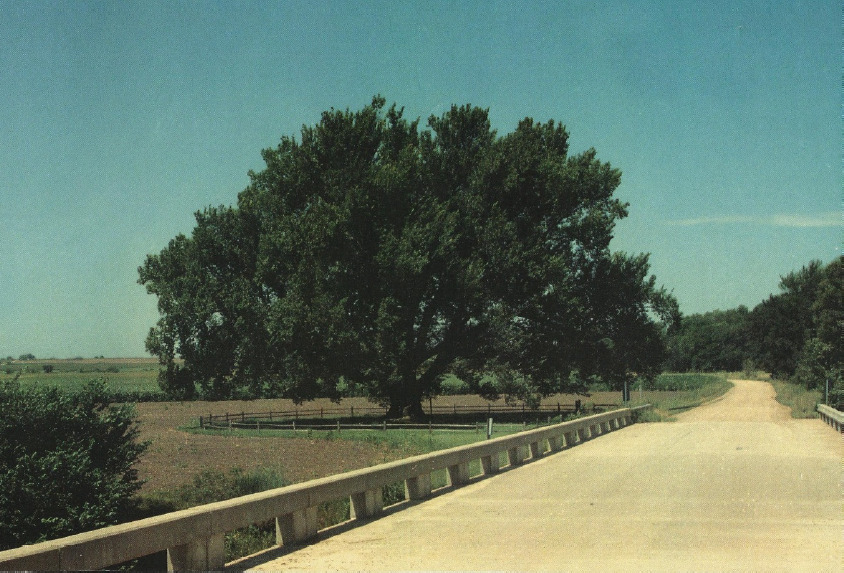
    1. This photo of the Louis Vieux Elm Tree was taken by Willard Balderson, Wamego, in 1986. The tree stood 90 feet high with a crown spread of 104 feet, and a trunk circumference of 317 inches. For several years the Louis Vieux Elm Tree held the title of U.S. Champion. The estimated age of the elm tree was 300 years and since 1986 succumbed to age, weather, and disease leaving only a stump. In 2011, even the stump, which the Pottawatomie County Historical Society attempted to save, protect and shelter, was burned down, leaving nothing but a pile of ashes.

      via https://pob.tauycreek.com/post/35426971069/this-photo-of-the-louis-vieux-elm-tree-was-taken

  21. Aug 2024
  22. Jun 2024
  23. May 2024
    1. Temperaturdaten aus der Messung von Baumringen zeigen, dass der Sommer 2023 in den nicht tropischen Gebieten der Nordhalbkugel eindeutig der heißeste Sommer seit mindestens 2000 Jahren war. Einer neuen Studie von forschenden um Jan esper zu Folge lagen die Temperaturen um 2 Grad über dem vorindustriellen Mittel, nicht nur, wie vom europäischen Wetterdienst Kopernikus publiziert, um 1,5 Grad https://www.derstandard.at/story/3000000219984/schnellster-co2-anstieg-in-der-luft-seit-50000-jahren

    1. Shell plant nicht mehr, seine Öl-Produktion bis 2030 wenigstens um 1-2% pro Jahr zu reduzieren. Zwischen 2023 und 2035 will die Firma jährlich 40 Milliarden Dollar in die Öl-und Gasproduktion und 10-15 Milliarden in „Low-Carbon“-Produkte investieren. Die Ölproduktion soll bis 2030 stabil bleiben, die Gasproduktion ansteigen. Shell beruft sich auch darauf, dass man 2021 die Anteile an einem Projekt im Permian Basin verkauft und damit die Ölproduktion früher als geplant bereits gedrosselt habe. https://www.theguardian.com/business/2023/jun/14/shell-drops-target-to-cut-oil-production-as-ceo-guns-for-higher-profits

    1. Shell will die Emissionsintensität seiner Öl-Produkte bis 2030 nur noch um 15-20% statt bisher um 20% reduzieren. Das verfässerte Ziele ist in der jüngsten Version der Energiewende-Strategie des Konzerns enthalten, die einen Teil des Jahresberichts 2023 bildet. Für Gas wurden keine Angaben gemacht. Auch für die absolute Höhe der Emissionen gibt der Fossilkonzern kein Ziel an. Durch neue Projekte wird Shell seine Öl- und Gasproduktion bis 2025 um 500.000 Barrel täglich steigern.

      https://www.theguardian.com/business/2024/mar/14/shell-warns-it-may-slow-emissions-reduction-during-crucial-climate-decade

    1. In der taz formuliert Sara Schurma 7 Schritte zu einer adäquaten Klimaberichterstattung:

      1. Kontext liefern
      2. Klima immer und überall mitdenken
      3. Strukturelle Probleme anerkennen
      4. Redaktionen mehr Fachwissen ermöglichen
      5. Verzögerungsnarrative einordnen
      6. „False Baance“ vermeiden
      7. Lösungen kritisch mitberichten

      Ihr Artikel gehört zu einem „Schwerpunkt Klima und Medien“. https://taz.de/7-Schritte-fuer-Redaktionen/!5956911/

  24. Apr 2024
    1. Eine neue Studie beschäftigt sich mit der zunehmenden Frequenz der Aufeinanderfolge extremer Trockenheit und extremer Niederschläge in Pakistan und in vielen afrikanischen Ländern. Ähnliche Phänomene lassen sich in Norditalien feststellen. https://www.theguardian.com/environment/2023/nov/14/extreme-drought-in-northern-italy-mirrors-climate-in-ethiopia

      Studie: https://washmatters.wateraid.org/sites/g/files/jkxoof256/files/2022-10/WaterAid%20Africa%20Drought%20work%20Methods%20and%20Full%20Results_CONFIDENTIAL_26_10_22_final%20%281%29.pdf

  25. Mar 2024
    1. Der italienische Energiekonzern Eni will bis 2027 27 Mrd. Euro investieren. Priorität habe dabei die Erhöhung der Rendite. In erneuerbare Energien werde investiert, wenn sie profitable Geschäfte versprächen. Die Originalquelle zeigt: Es wird massiv in die Exploration von Öl-und Gasfeldern und eine Ausweitung der fossilen Produktion investiert, die 2030 ihren Höchststend erreichen soll. https://www.repubblica.it/economia/finanza/2024/03/14/news/eni_il_dividendo_sale_a_1_euro_per_azione_nel_piano_al_2027_investimenti_per_27_miliardi-422310817/

      Eni-Strategie 2024-2027: https://www.eni.com/it-IT/investitori/strategia/piano-strategico.html

  26. Feb 2024
    1. Ausführlicher Bericht über die neue Studie zum Zustand des Amazonas-Regenwalds. Bis 2050 drohen 10-47% einen Kipppunkt zu erreichen, jenseits dessen sie ihre jetzigen Funktionen für Kohlenstoff- und Wasser Zyklen verloren. Die Studie beschäftigt sich mit 5 Treibern für Wasser-Stress. Um den Regenwald sicher zu erhalten, ist der Verzicht auf jede weitere Entwaldung und das Einhalten der 1,5°-Grenze nötig. https://www.theguardian.com/environment/2024/feb/14/amazon-rainforest-could-reach-tipping-point-by-2050-scientists-warn

  27. Jan 2024
    1. Edelmann PR hat 2022 intensiv mit der Charles Koch Foundation zusammengearbeitet. Edelmann PR, der weltgrößte PR-Konzerne, hatte sich wiederholt verpflichtet, Klimaneugnung nicht zu unterstützen. Die Koch-Brüder, ein wichtiger Teil der amerikanischen Fossilindustrie förderten und fördern seit Jahrzehnten Klimarleugnung. Es gibt Hinweise auf weitere Verbindungen von Edelman zu Koch Industries. https://www.theguardian.com/us-news/2024/jan/14/edelman-charles-koch-foundation-climate

  28. Dec 2023
  29. Nov 2023
    1. Hitzebedingte Todesfälle bei über 65-Jährigen haben seit den 90ern um 85% zugenommen. Senior:innen sind – wie kleine Kinder – zweimal soviel Hitzewellen-Tagen ausgesetzt wie 1986-2005. Extreme Hitze führte 2022 zu Produktivitätsverlusten von ca. 863 Milliarden USD. Alle Indikatoren für öffentliche Gesundheit haben sich in den letzten 9 Jahren verschlechtert. – Die NYT stellt den 2023 Report des Lancet Countdown ausführlich dar. https://www.nytimes.com/2023/11/14/climate/climate-change-health-effects-lancet.html

      Mehr zum Rreport: https://hypothes.is/search?q=tag%3A%222023%20report%20of%20the%20Lancet%20Countdown%20on%20health%20and%20climate%20change%22

    1. Vor der Apec-Konferenz haben China und die USA "statements of cooperation" veröffentlicht, die als positive Signale für eine Zusammenarbeit beim Klimaschutz gewertet werden, auch wenn China nicht auf Investitionen in Kohlekraftwerke verzichtet. Beide Seiten wollen die Kapazität bei Erneuerbaren bis 2030 global verdreifachen. Erstmals ist China bereits, Reduktionsziele für alle Treibhausgase festzulegen. https://www.nytimes.com/2023/11/14/climate/us-china-climate-agreement.html

      Sunnylands Statement on Enhancing Cooperation to Address the Climate Crisis: https://www.state.gov/sunnylands-statement-on-enhancing-cooperation-to-address-the-climate-crisis/

  30. Oct 2023
    1. https://en.wikipedia.org/wiki/Shmita

      During shmita, the land is left to lie fallow and all agricultural activity, including plowing, planting, pruning and harvesting, is forbidden by halakha (Jewish law).

      The sabbath year (shmita; Hebrew: שמיטה, literally "release"), also called the sabbatical year or shǝvi'it (שביעית‎, literally "seventh"), or "Sabbath of The Land", is the seventh year of the seven-year agricultural cycle mandated by the Torah in the Land of Israel and is observed in Judaism.

    1. There are several occasions where the massebah is not associated with pagan worship. When the massebah is associated with the worship of Yahweh, the massebah is accepted as a valid expression of commitment to Yahweh.

      Massebah for pagan worship: - Exodus 23:24 (https://hypothes.is/a/r3m5QmyDEe6SC8eLYcJE1Q) - Hosea 10:1 (https://hypothes.is/a/4PK2GGyDEe6wZg_r2YpVCA ) - 2 Kings 18:4 - 2 Kings 23:14

      Massebah for worship of Yahweh: - Genesis 28:18 Jacob's pillow (https://hypothes.is/a/NF5p8Gx6Ee65Rg_J4tfaMQ)<br /> - Genesis 31:44-45 Jacob and Laban's covenant - Exodus 24:4 - Joshua 24:25-27

    2. During the establishment of the covenant between Yahweh and Israel, the people were commanded to destroy the sacred stones of the Canaanites, “You must demolish them and break their sacred stones (masseboth) to pieces” (Exodus 23:24).

      In neighboring cultures in which both have oral practices relating to massebah, one is not just destroying "sacred stones" to stamp out their religion, but it's also destroying their culture and cultural memory as well as likely their laws and other valuable memories for the function of their society.

      View this in light also of the people of Israel keeping their own sacred stones (Hosea 10:1) as well as the destruction of pillars dedicated to Baal in 2 Kings 18:4 and 2 Kings 23:14.

      (Link and) Compare this to the British fencing off the land in Australia and thereby destroying Songlines and access to them and the impact this had on Indigenous Australians.

      It's also somewhat similar to the colonialization activity of stamping out of Indigenous Americans and First Nations' language in North America, though the decimation of their language wasn't viewed in as reciprocal way as it might be viewed now. (Did colonizers of the time know about the tremendous damage of language destruction, or was it just a power over function?)

    1. Ein Panel von Experten spricht sich in einem Bericht nachdrücklich für ein Moratorium für Geo-Engineering-Maßnahmen aus, die das Klima manipulieren sollen, Die vom früheren WTO-Chef Pascal Lamy geleitetete Climate Overshoot Commission stellt fest, dass die Wirkungen und Risiken solcher Maßnahmen bei weitem nicht ausreichend erforscht sind. https://www.theguardian.com/environment/2023/sep/14/experts-call-for-global-moratorium-on-efforts-to-geoengineer-climate

      Report der Climate overshoot Commission: https://www.overshootcommission.org/report

    1. Das europäische Parlament hat neue Grenzwerte für die Emissionen von Flugbenzin beschlossen. Eine Anpassung an die strengeren Werte der Weltgesundheitsorganisation soll auf Druck von Kritiker:innen im Parlament erst 2030-35 erfolgen. 2050 sollen 70% der Flugzeugtreibstoffe in der EU „nachhaltig“ sein. https://www.repubblica.it/green-and-blue/2023/09/14/news/ue_limiti_inquinamento_aria_biocarburanti_aerei-414423165/

  31. Sep 2023
    1. Spiral Dynamics (SD) is a model of the evolutionary development of individuals, organizations, and societies. It was initially developed by Don Edward Beck and Christopher Cowan based on the emergent cyclical theory of Clare W. Graves, combined with memetics as proposed by Richard Dawkins and further developed by Mihaly Csikszentmihalyi.

      https://en.wikipedia.org/wiki/Spiral_Dynamics

      related to ideas I've had with respect to Werner R. Loewenstein?

    1. https://lacountylibrary.libnet.info/event/9097350

      https://www.youtube.com/watch?v=xMF37TXAV5w

      Presenter Lawrence Mak broke down types of notes into the following three categories:<br /> - general notes (projects, ideas, journals, recipes, budgeting, homework, etc.)<br /> - lists (groceries, reading, gifts, to dos, assignments) - reminders (birthdays, bills, maintenance, health)

  32. Jul 2023
  33. Jan 2023

    Tags

    Annotators

  34. Sep 2022
  35. Aug 2022
  36. Jun 2022
  37. www.intendance03.fr www.intendance03.fr
    1. L'autorité académique peut-elle suspendre l'application d'une délibération du conseil d'administration d'un EPLE ? Non, l'article L.421-14 du code de l'éducation prévoit que l'autorité académique peut prononcer l'annulation des actes des EPLE relatifs au contenu ou à l'organisation de l'action éducatrice. En revanche, dans une décision du 26 octobre 2007, le tribunal administratif de Grenoble rappelle que « le pouvoir de suspension de ces actes n'est pas prévu expressément par les dispositions [...] du code de l'éducation »
  38. May 2022
    1. DICER1 syndrome encompasses a variety of benign and malignant manifestations including multinodular goitre

      Gene: DICER1 PMCID: PMC8451242 PMID: 34552563 Pathogenic Inheritance Pattern: Autosomal Dominant MultipleDiseaseEntities Disease Entity: DICER1 syndrome, multinodular goitre, cystic nephroma, anaplastic renal sarcoma, Wilms tumour, differentiated thyroid carcinoma, gynandroblastoma, ciliary body medulloepithelioma, embryonal rhabdomyosarcoma, pineoblastoma, pituitary blastoma, kidney cyst, pulmonary cyst, Sertoli-Leydig Cell Tumor. Mutation: Germline MultipleGeneVariants Variant & Clinvar IDs: c.3452_3453del (485534), c.316del (no ClinVar ID), c.171_172insAC (no ClinVar ID), c.3434del (no ClinVar ID), c.988C>T (933007), c.5388dup (no ClinVar ID) Zygosity: None provided. Case: At time of operation, the goitre patients living in Denmark were ages 21, 12, 21, 8, 14, and 16. Four underwent total thyroidectomies, and two underwent partial thyroidectomies. The patient originally aged 21 previously had a kidney cyst at age 14 and a pulmonary cyst at an unknown age. The patient aged 14 at time of partial thyroidectomy later manifested a Sertoli-Leydig Cell Tumor at age 15. All six patients were female. CasePresentingHPO: None provided. CasePreviousTesting: thyroidectomy gnomAD: ENSG00000100697.10, https://gnomad.broadinstitute.org/gene/ENSG00000100697 Mutation Type: Frameshift, Nonsense

  39. Mar 2022
  40. Jul 2021
  41. Jun 2021
  42. Apr 2021
  43. Mar 2021
    1. Results for individual PALB2 variants were normalized relative to WT-PALB2 and the p.Tyr551ter (p.Y551X) truncating variant on a 1:5 scale with the fold change in GFP-positive cells for WT set at 5.0 and fold change GFP-positive cells for p.Y551X set at 1.0. The p.L24S (c.71T>C), p.L35P (c.104T>C), p.I944N (c.2831T>A), and p.L1070P (c.3209T>C) variants and all protein-truncating frame-shift and deletion variants tested were deficient in HDR activity, with normalized fold change <2.0 (approximately 40% activity) (Fig. 1a).

      AssayResult: 7.2

      AssayResultAssertion: Normal

      StandardErrorMean: 0.01

    1. Most Suspected Brugada Syndrome Variants Had (Partial) Loss of Function

      AssayResult: 0.9

      AssayResultAssertion: Abnormal

      ReplicateCount: 12

      StandardErrorMean: 0.6

      Comment: This variant had loss of function of peak current (<10% of wildtype), therefore it was considered abnormal (in vitro features consistent with Brugada Syndrome Type 1). (Personal communication: A. Glazer)

  44. Feb 2021