The problem is that What3Words is a proprietary, closed system. The algorithm is patented. The data is closed, with the terms and conditions spelling out in great detail all of the things you can’t do with the system
5,769 Matching Annotations
- Oct 2017
-
blog.ldodds.com blog.ldodds.com
-
-
academic.oup.com academic.oup.com
-
What does it mean, I asked you, to witness mass extinction—the end of so much ‘worldly striving?’ What could, or should it mean to us, or motivate us to do?
This is my understanding of the author's central research question and that she is looking to illicit a 'call-to-action' of sorts.
-
-
www.politico.com www.politico.com
-
Trump blindsides advisers with promised opioid plan Officials are scrambling to produce an emergency declaration by next week.
-
-
www.politico.com www.politico.com
-
The Boomtown That Shouldn’t Exist Cape Coral was built on total lies. One big storm could wipe it off the map. Oh, and it’s also the fastest-growing city in the United States.
-
-
jamanetwork.com jamanetwork.com
-
Ten Steps the Federal Government Should Take Now to Reverse the Opioid Addiction Epidemic
-
-
www.hewlett.org www.hewlett.org
-
listen well—to be a good “critical friend.”
Read classmate's annotations, respond appropriately: respectful, challenging...
-
-
-
Kids? Just say no You don’t have to dislike children to see the harms done by having them. There is a moral case against procreation
-
-
www.nytimes.com www.nytimes.com
-
Justice John G. Roberts Jr., arguing that the South had taken great strides that made the protections of the act unnecessary, based his decision in part on a Senate Judiciary Committee analysis that misinterpreted how the Census Bureau reports race and ethnicity data and wrongly suggested that registration gaps between minorities and whites had shrunk significantly, an error that neither he nor his clerks caught.
Stunning Omission
-
-
www.cyberciti.biz www.cyberciti.biz
-
;
This
semicoloncharacter is key for the whole thing to work.
-
-
www.wired.com www.wired.com
-
Neil Postman noted in his 1985 book Amusing Ourselves to Death
Need to look into this book. The cultural shift (text->image = logic->emotion) is an interesting idea, but I'd like to see how it is argued.
-
-
engagements2017-18.as.virginia.edu engagements2017-18.as.virginia.edu
-
It was the degree of centrality to the white population of the state which alone then constituted the important point of comparison between these places
This was really unsettling for me read. Proximity to the most white people is the one criteria that made the difference in where the University's location was chosen. If Charlottesville hadn't been most central to the white population of Virginia, UVa would be located in Lexington or in Staunton. Its definitely not a good thing that our school was centered around pleasing only the white race before our grounds were even built. I can't imagine how different our grounds would be and our university if another place had been more convenient for white people. UVa certainly has a racist past and I think most of us, if not all, are aware of that but I still couldn't believe that such a racist criteria is the reason the school exists where it does today and is the way Uva is today.
- Becca Meaney
-
-
rawgit.com rawgit.com
-
this paper
If you see this highlight, you are reading v0.1 of the draft. The paper still contains unresolved references to sources and secondary literature, cross-references to tables and figures, and CriticMarkup (e.g. strings wrapped in {-- --} or {++ ++}).
-
hypothes.is click here
If you landed on this page following a link I have sent through email, messages etc. and if you see this highlight and right-hand panel, do not follow this link!
-
-
runestone.academy runestone.academy
-
new to Python
For newbies I can recommend video lectures by Charles Severence.
-
- Sep 2017
-
engagements2017-18.as.virginia.edu engagements2017-18.as.virginia.edu
-
two students only, this provision being deemed advantageous to morals, to order, & to uninterrupted study;
I find it interesting that two is the explicitly stated maximum for students living together in order to be neat, get along well, and have an ideal situation for studying. I believe this still holds true in today's time, though many find themselves going to the library to study instead. This statement causes me to wonder whether it was rare for students to go elsewhere, such as a library, to study at this time. It seems likely that since a University such as this had not existed previously, the founders wanted to give the prospective students the best possible chance to succeed and did not want to force the students to go to a library or some other building to do their studying. Also, the founders were likely trying to get the students accustomed to studying in their living quarters with another person present, to prepare them for their future jobs when they would have wives and maybe children in the same house or room as them while working.
-
-
www.mnemotext.com www.mnemotext.com
-
It is up to me, not the state, what beliefs I adopt, what opinions I voice, or what religion I practice.
Except not really. Social institutions like school, religion, saluting the flag, etc. socialize us into acceptable thought/behavior. We are free, to an extent, to rebel against these socializations, but rarely without backlash from friends, family, community, etc. See also: Red Scare
-
-
en.wikipedia.org en.wikipedia.org
-
www.english.illinois.edu www.english.illinois.edu
-
Calling people out using the constructionist ideals — The American government is not living up to their high ideals.
Poetry as a way to express frustration when there is no way to go up against actual US military power. A weapon of the weak; a powerful message.
-
-
tvtropes.org tvtropes.org
-
A Taste of Honey
-
The Girl on the Boat
-
The Robots of Dawn
-
-
www.goodreads.com www.goodreads.com
-
www.nytimes.com www.nytimes.com
-
The point of political protest is to change the world. And yet the process matters, too.
-
To live in the present is not to avoid hard work or strife. Alongside the projects that occupy you in your profession, or in your political life, the telic activities that matter to you, is the atelic process of protesting injustice or doing your job. To value the process is not to flee from work or political engagement. That is why living in the present is not an abdication of ethical responsibility or a recipe for detachment.
-
To live in the present is not to deny the value of telic activities, of making a difference in the world. That would be a terrible mistake. Nor can we avoid engaging in such activities. But if projects are all we value, our lives become self-subversive, aimed at extinguishing the sources of meaning within them. To live in the present is to refuse the excessive investment in projects, in achievements and results, that sees no inherent value in the process.
-
“If you are learning, you have not at the same time learned.” When you care about telic activities, projects such as writing a report, getting married or making dinner, satisfaction is always in the future or the past. It is yet to be achieved and then it is gone. Telic activities are exhaustible; in fact, they aim at their own exhaustion. They thus exhibit a peculiar self-subversion. In valuing and so pursuing these activities, we aim to complete them, and so to expel them from our lives.
-
-
www.canvaslms.com www.canvaslms.com
-
Please read this Arbitration Agreement carefully. It is part of your contract with Instructure and affects your rights. It contains procedures for MANDATORY BINDING ARBITRATION AND A CLASS ACTION WAIVER. (a) Applicability of Arbitration Agreement. All claims and disputes (excluding claims for injunctive or other equitable relief as set forth below) in connection with the Terms or the use of any product or service provided by Instructure that cannot be resolved informally or in small claims court shall be resolved by binding arbitration on an individual basis under the terms of this Arbitration Agreement. This Arbitration Agreement applies to you and Instructure, and to any subsidiaries, affiliates, agents, employees, predecessors in interest, successors, and assigns, as well as all authorized or unauthorized users or beneficiaries of services or goods provided under the Terms. (b) Notice Requirement and Informal Dispute Resolution. Before either party may seek arbitration, the party must first send to the other party a written Notice of Dispute (“Notice”) describing the nature and basis of the claim or dispute, and the requested relief. A Notice to Instructure should be sent to: Attn: Legal Department, 6330 South 3000 East, Suite 700, Salt Lake City, UT 84121. After the Notice is received, you and Instructure may attempt to resolve the claim or dispute informally. If you and Instructure do not resolve the claim or dispute within 30 days after the Notice is received, either party may begin an arbitration proceeding. The amount of any settlement offer made by any party may not be disclosed to the arbitrator until after the arbitrator has determined the amount of the award, if any, to which either party is entitled. (c) Arbitration Rules. Arbitration shall be initiated through the American Arbitration Association (“AAA”), an established alternative dispute resolution provider (“ADR Provider”) that offers arbitration as set forth in this section. If AAA is not available to arbitrate, the parties shall agree to select an alternative ADR Provider. The rules of the ADR Provider shall govern all aspects of this arbitration, including but not limited to the method of initiating and/or demanding arbitration, except to the extent such rules are in conflict with the Terms. The AAA Consumer Arbitration Rules governing the arbitration are available online at www.adr.org or by calling the AAA at 1-800-778-7879. The arbitration shall be conducted by a single, neutral arbitrator. Any claims or disputes where the total amount of the award sought is less than Ten Thousand U.S. Dollars (US $10,000.00) may be resolved through binding non-appearance-based arbitration, at the option of the party seeking relief. For claims or disputes where the total amount of the award sought is Ten Thousand U.S. Dollars (US $10,000.00) or more, the right to a hearing will be determined by the Arbitration Rules. Any hearing will be held in a location within 100 miles of your residence, unless you reside outside of the United States, and unless the parties agree otherwise. Any judgment on the award rendered by the arbitrator may be entered in any court of competent jurisdiction. Each party shall bear its own costs (including attorney’s fees) and disbursements arising out of the arbitration, and shall pay an equal share of the fees and costs of the ADR Provider. (d) Additional Rules for Non-appearance Based Arbitration: If non-appearance arbitration is elected, the arbitration shall be conducted by telephone, online and/or based solely on written submissions; the specific manner shall be chosen by the party initiating the arbitration. The arbitration shall not involve any personal appearance by the parties or witnesses unless otherwise mutually agreed by the parties. (e) Time Limits. If you or Instructure pursue arbitration, the arbitration action must be initiated and/or demanded within the statute of limitations (i.e., the legal deadline for filing a claim) and within any deadline imposed under the AAA Rules for the pertinent claim. (f) Authority of Arbitrator. If arbitration is initiated, the arbitrator will decide the rights and liabilities, if any, of you and Instructure, and the dispute will not be consolidated with any other matters or joined with any other cases or parties. The arbitrator shall have the authority to grant motions dispositive of all or part of any claim. The arbitrator shall have the authority to award monetary damages and to grant any non-monetary remedy or relief available to an individual under applicable law, the AAA Rules, and the Terms. The arbitrator shall issue a written award and statement of decision describing the essential findings and conclusions on which the award is based, including the calculation of any damages awarded. The arbitrator has the same authority to award relief on an individual basis that a judge in a court of law would have. The award of the arbitrator is final and binding upon you and Instructure. (g) Waiver of Jury Trial. THE PARTIES HEREBY WAIVE THEIR CONSTITUTIONAL AND STATUTORY RIGHTS TO GO TO COURT AND HAVE A TRIAL IN FRONT OF A JUDGE OR A JURY, instead electing that all claims and disputes shall be resolved by arbitration under this Arbitration Agreement. Arbitration procedures are typically more limited, more efficient and less costly than rules applicable in court and are subject to very limited review by a court. In the event any litigation should arise between you and Instructure in any state or federal court in a suit to vacate or enforce an arbitration award or otherwise, YOU AND INSTRUCTURE WAIVE ALL RIGHTS TO A JURY TRIAL, instead electing that the dispute be resolved by a judge. (h) Waiver of Class or Consolidated Actions. ALL CLAIMS AND DISPUTES WITHIN THE SCOPE OF THIS ARBITRATION AGREEMENT MUST BE ARBITRATED OR LITIGATED ON AN INDIVIDUAL BASIS AND NOT ON A CLASS BASIS, AND CLAIMS OF MORE THAN ONE CUSTOMER OR USER CANNOT BE ARBITRATED OR LITIGATED JOINTLY OR CONSOLIDATED WITH THOSE OF ANY OTHER CUSTOMER OR USER. (i) Confidentiality. All aspects of the arbitration proceeding, including but not limited to the award of the arbitrator and compliance therewith, shall be strictly confidential. The parties agree to maintain confidentiality unless otherwise required by law. This Paragraph shall not prevent a party from submitting to a court of law any information necessary to enforce this Agreement, to enforce an arbitration award, or to seek injunctive or equitable relief. (j) Severability. If any part or parts of this Arbitration Agreement are found under the law to be invalid or unenforceable by a court of competent jurisdiction, then such specific part or parts shall be of no force and effect and shall be severed and the remainder of the Agreement shall continue in full force and effect. (k) Right to Waive. Any or all of the rights and limitations set forth in this Agreement may be waived by the party against whom the claim is asserted. Such waiver shall not waive or effect any other portion of this Agreement. (l) Survival of Agreement. This Arbitration Agreement will survive the termination of your relationship with Instructure. (m) Small Claims Court. Notwithstanding the foregoing, either you or Instructure may bring an individual action in small claims court. (n) Emergency Equitable Relief. Notwithstanding the foregoing, either party may seek emergency equitable relief before a state or federal court in order to maintain the status quo pending arbitration. A request for interim measures shall not be deemed a waiver of any other rights or obligations under this Arbitration Agreement. (o) Claims Not Subject To Arbitration. Notwithstanding the foregoing, claims of defamation, violation of the Computer Fraud and Abuse Act, and infringement or misappropriation of the other party’s patent, copyright, trademark, or trade secret shall not be subject to this arbitration agreement. (p) Courts. In any circumstances where the foregoing Agreement permits the parties to litigate in court, the parties hereby agree to submit to the personal jurisdiction of the courts located within Salt Lake County, Utah, for such purpose. 14.7 Governing Law. The Terms and any action related thereto will be governed and interpreted by and under the laws of the State of Utah, consistent with the Federal Arbitration Act, without giving effect to any conflicts of law principles that provide for the application of the law of another jurisdiction. The United Nations Convention on Contracts for the International Sale of Goods does not apply to this Agreement. 14.8 Notice. Where Instructure requires that you provide an e-mail address to access certain features of the Instructure Properties, you are responsible for providing Instructure with your most current e-mail address. In the event that the last e-mail address you provided to Instructure is not valid, or for any reason is not capable of delivering to you any notices required/ permitted by the Terms, Instructure’s dispatch of the e-mail containing such notice will nonetheless constitute effective notice. You may give notice to Instructure at the following address: Attn: Legal Department, 6330 South 3000 East, Suite 700, Salt Lake City, UT 84121. Such notice shall be deemed given when received by Instructure by letter delivered by nationally recognized overnight delivery service or first class postage prepaid mail at the above address.
Okay, your probably wondering why I highlighted this WHOLE chunk of article but I think I have a good reason. I highlighted all of this because it is what I feel like a lot of people do. People will most of the times JUMP whole sections in the terms of use barely anyone reads them now adays. People skip them all together or read the first lines in most cases since people would rather get to their new game / account / then to ' waste ' their time reading a whole terms of use.
-
-
eds.a.ebscohost.com eds.a.ebscohost.com
Tags
Annotators
URL
-
- Aug 2017
-
hypothes.is hypothes.is
-
The Web We Need to Give Students
The title itself is expressive towards the fact that the educational system has been trying to come up with many ways to help students manage their understanding of the web in general.
some 170 bills proposed so far ...
Its no surprise tha tthe schools can share data with companies and researchers for their own benefits. Some of these actions are violations of privacy laws.
arguments that restrictions on data might hinder research or the development of learning analytics or data-driven educational software.
Unbelievable! The fact that there is actually a problem with the fact that students or anyone wants their privacy, but abusing companies and businesses can't handle invading others privacies is shocking. It seems to be a threat to have some privacy.
Is it crazy that this reminds me of how the government wants to control the human minds?
All the proof is there with telephone records, where the NSA breaches computers and cellphones of the public in order to see who they communicate with.
Countries like Ethiopia; the government controls what the people view on their TV screens. They have complete control of the internet and everything is vetted. Privacy laws has passed! Regardless, no one is safe. For example: Hackers have had access to celebrity iCloud accounts, and exposed everything.
The Domain of One’s Own initiative
Does it really protect our identities?
Tumblr?
Virginia Woolf in 1929 famously demanded in A Room of One’s Own — the necessity of a personal place to write.
Great analogy! Comparing how sometimes people need to be in a room all on their own in order to clear their minds and focus on their thoughts on paper to also how they express themselves in the web is a good analogy.
... the Domains initiative provides students and faculty with their own Web domain.
So, the schools are promising complete privacy?
...the domain and all its content are the student’s to take with them.
Sounds good!
Cyberinfrastructure
To be able to be oneself is great. Most people feel as if their best selves are expressed online rather than real life face-to-face interactions.
Tumblr is a great example. Each page is unique to ones own self. That is what Tumblr sells, your own domain.
Digital Portfolio
Everyone is different. Sounds exciting to see what my domain would look like.
High school...
Kids under 13 already have iPhones, iPads, tablets and laptops. They are very aware to the technology world at a very young age. This domain would most likely help them control what they showcase online, before they grow older. Leaving a trail of good data would benefit them in the future.
Digital citizenship:
It teaches students and instructors how to use technology the right way.
What is appropriate, and what is not appropriate?
Seldom incluse students' input...
Students already developed rich social lives.
Google doc= easy access to share ones work.
Leaving data trails behind.
Understanding options on changes made?
Being educated on what your privacy options are on the internet is a good way of protecting your work.
Student own their own domain- learning portfolio can travel with them.
If the students started using this new domain earlier in their lives, there should be less problems in schools coming up with positive research when it comes to the growth of the students on their data usages.
School district IT is not the right steward for student work: the student is.
So to my understanding, if the student is in the school, one has to remember to move around the files saved in the domain. The school is not responsible for any data lost, because the student is responsible for all their work.
Much better position to control their work...
If all of this is true and valid, it should not be a big deal then for the student to post what ever they want on their domain. No matter how extreme, and excessive it seems, if that is how they view themselves, their domain would be as unique as their personalities.
-
-
hybridpedagogy.org hybridpedagogy.org
-
The Society to Encourage Studies at Home is a 19th century network of women who connect across the continent over the postal system
-
- Jul 2017
-
www.swamirara.com www.swamirara.com
-
Maha Kali Mantra
-
-
wiki.c2.com wiki.c2.com
-
Other Java Tutorials and Learning Sites
-
-
newliteracies.uconn.edu newliteracies.uconn.edu
-
Teach Source EvaluationSkillsIf you want to teach source evaluation skills, have small groups conduct research to answer a three-part problem such as this:1.How high is Mt. Fuji in feet?2.Find a different answer to this same question.3.Which answer do you trust and why do you trust it?As you observe students begin work on the third part of the problem, you likely will see a student begin to use the strategy that you have tar-geted: locating and evaluating the source of the information. When you see someone use this strategy, perhaps by clicking on a link to “About Us,” interrupt the other groups and have this student teach the strategy to the class, explaining how he or she evaluates a source for expertise and reliability. There are many inconsistent facts online that can also be used, just like this, to teach source evaluation including: “How long is the Mis-sissippi River?” or “What is the population of San Francisco?”
-
With our extensive prior knowledge derived from offline reading, we naturally interpret this standard, using a lens to our past, and teach infer-ential reasoning with narrative text offline.
-
-
www.edutopia.org www.edutopia.org
-
"What our collaborative learning style empowers and enables is a student's resilience -- how do you look to your neighbor as a resource, how do you test your own theories, how do you understand if you're on the right track or the wrong track?" says Monique DeVane, College Prep's head of school. "It teaches them that it's not just about content; it's about cultivating habits of mind that are the underpinnings of deeper scholarship."
-
-
www.wired.com www.wired.com
-
Geek’s Guide to the Galaxy
Need to check out this podcast.
-
- Jun 2017
-
-
Against (13): Albania, Belgium, Croatia, Germany, Hungary, Japan, Latvia, Netherlands, Portugal, Slovenia, Switzerland, United Kingdom of Great Britain and Northern Ireland, and United States of America.
-
the contribution of development to the enjoyment of all human rights, adopted by a recorded vote of 30 in favour to 13 against with 3 abstentions, the Council calls upon all countries to realize people-centred development of the people, by the people and for the people, and also calls upon all States to spare no effort in promoting sustainable development, in particular while implementing the 2030 Agenda for Sustainable Development, as it is conducive to the overall enjoyment of human rights.
-
-
www.confluent.io www.confluent.io
-
On every received heartbeat, the coordinator starts (or resets) a timer. If no heartbeat is received when the timer expires, the coordinator marks the member dead and signals the rest of the group that they should rejoin so that partitions can be reassigned. The duration of the timer is known as the session timeout and is configured on the client with the setting session.timeout.ms.
Time to live for the consumers. If the heartbeat doesn't reach the co-ordindator in this duration then the co-ordinator redistributes the partitions to the remaining consumers in the consumer group.
-
- May 2017
-
www.theguardian.com www.theguardian.com
-
The reason we don’t know Dutch literature over here, according to Zwagerman, is because they barely know it themselves. The Dutch language has been in such constant flux over the past few centuries, he writes, that “many great works of 17th- and 18th- and 19th-century Dutch literature have to be translated into modern Dutch to make them accessible to the average reader”. Laurence Sterne? Jane Austen? Charlotte Brontë ? Imagine them all lost to us!
-
-
www.post-gazette.com www.post-gazette.com
-
Families Organized to Represent the Coal Economy
This may be a front group. Investigate, find additional sources, and leave research notes in the comments.
-
-
www.dailykos.com www.dailykos.com
-
Families Organized to Represent the Coal Economy
This may be a front group. Investigate, find additional sources, and leave research notes in the comments.
-
-
www.motherjones.com www.motherjones.com
-
Families Organized to Represent the Coal Economy
This may be a front group. Investigate, find additional sources, and leave research notes in the comments.
-
-
-
Families Organized to Represent the Coal Economy
This may be a front group. Investigate, find additional sources, and leave research notes in the comments.
-
-
-
Families Organized to Represent the Coal Economy
This may be a front group. Investigate, find additional sources, and leave research notes in the comments.
-
-
www.timesonline.com www.timesonline.com
-
Families Organized to Represent the Coal Economy
This may be a front group. Investigate, find additional sources, and leave research notes in the comments.
-
-
www.sourcewatch.org www.sourcewatch.org
-
Families Organized to Represent the Coal Economy
This may be a front group. Investigate, find additional sources, and leave research notes in the comments.
-
-
learn.wsu.edu learn.wsu.edu
-
Is this forum closed for posting? How are students supposed to insert voice thread intros into this forum? I have been playing with Embed Audio, Embed Flash and nothing seems to work.
-
- Apr 2017
-
www.mcsweeneys.net www.mcsweeneys.net
-
Mhm All Chips Matter, in fact THAT statement matters ...
-
-
calwaternews.blogspot.com calwaternews.blogspot.com
-
nationalera.wordpress.com nationalera.wordpress.com
-
sift ye as wheat
When you sift wheat you shake it hard to separate the kernels, so this is saying that the devil was trying to shake her emotions to separate her from Jesus.
-
- Mar 2017
-
tachesdesens.blogspot.com tachesdesens.blogspot.com
-
Terry, in his solitary picnic, talked of the difficulty of creating the conditions in which his students will want to connect with others in the CLAVIER network.
common ground desire to connect. Why reach out?
-
-
via3.hypothes.is via3.hypothes.is
-
Learningto complete a whole task involves four levels ofinstruction: (a) the problem, (b) the tasks re-quired to solve the problem, (c) the operationsthat comprise the tasks, and (d) the actions thatcomprise the operations. Effective instructionshould engage students in all four levels of per-formance: the problem level, the task-level, theoperation-level, and the action-level.
Steps is learning to complete a whole task. This could be an extension of our matrix.
-
Star Legacy by the Vanderbilt LearningTechnology Center, 4-Mat by McCarthy,instructional episodes by Andre, multipleapproaches to understanding by Gardner,collaborative problem solving by Nelson,constructivist learning environments byJonassen, and learning by doing by Schank.
Something to investigate...
especially "multiple approaches to understanding by Gardner"
-
-
hyperallergic.com hyperallergic.com
-
In many ways, it’s precisely this union of science and magic that needs to be bottled and tirelessly cultivated if VR is to win the favor of mass audiences.
-
-
-
If you had shown a hunter-gatherer our world of indoor comfort, technology, and endless abundance, it would have seemed like fictional magic to him
You mean that because a hunter-gatherer had no abundance whatsoever? ;)
-
-
-
Bio-Response, based in Danville, Indiana, specializes in building machines for liquid cremation, a fast, environmentally-friendly, and controversial method for disposing of the deceased.
Eww.
-
-
www.edutopia.org www.edutopia.org
-
must be paired with transparent and/or embedded reason to know the content
So, on the test is not good enough? Hlep you in real life not good enough? WHAT is good enough?????
-
- Feb 2017
-
static1.squarespace.com static1.squarespace.com
-
an eter-nally repeated dream would certainly be felt and judged to be reality.

-
-
clalliance.org clalliance.org
-
act like the heroes that they love by acting for a better world.
I feel so inspired by these words. It reminds me of the those posters that say change begins with you, Words that if you woke up to in the morning you wouldn't feel mad that you woke up early and inspire for greatness.
-
-
www.nytimes.com www.nytimes.com
-
To engage with the lives of others, white audiences would have to encounter something far more frightening: their irrelevance. They would have to reckon with the fact that the work will not always speak to them, orient them, flatter them with tales of their munificence or infamy, or comfort them with stereotypes.
In order to stop the erasure of the other, white people would have to take themselves out of the spotlight and realize not everything is for them. they would also have to encounter black suffering or something similar amongst themselves.
-
- Jan 2017
-
www.nytimes.com www.nytimes.com
-
until black women on social media began calling out the press for ignoring the story. Many reached for one word — ‘‘erasure’’ — for what they felt was happening. ‘‘Not covering the #Holtzclaw verdict is erasing black women’s lives from notice,’’ one woman tweeted. ‘‘ERASURE IS VIOLENCE.’’ Deborah Douglas, writing for Ebony magazine, argued that not reporting on the case ‘‘continues the erasure of black women from the national conversation on race, police brutality and the right to safety.’’
black women are being erased from the discussion. Race in general plays a role on how much a topic is spoken about. This case was not even mentioned or discussed until black women started the talk.
-
- Dec 2016
-
www.tryscribble.com www.tryscribble.com
Tags
- ITO (If > Then Opener)
- IG (Instant Gratification)
- B (Benefit)
- RR (Risk Reversal)
- P (Promise)
- KD (Key Desire/Hot Button)
- S (Scarcity)
- ET (Emotional Trigger)
- SP (Social Proof)
- CTA (Call to Action)
- F (Feature)
- OL (Open Loop)
- CE (The Common Enemy)
- PP (Problem or Pain)
- PAP (Painting a Picture)
- H (The Hook)
- WTC (What’s the Catch Addressed)
- MBG (Money Back Guarantee)
- CG (Curiosity Gap)
- AO (Addressing Objections)
Annotators
URL
-
en.wikipedia.org en.wikipedia.org
-
The Bureau cannot share responses, addresses or personal information with anyone including United States or foreign government and law enforcement agencies such as the IRS or the FBI or Interpol.
The Bureau cannot share info with the government like they did during WWII
-
-
codkashacabka.files.wordpress.com codkashacabka.files.wordpress.com
-
a moment when we can go a little farther and say something, and there is a moment in which we should listen more to the people.
How nicely he connects the classroom and political gathering. This is how you are both a learning organizer and a community organizer.
-
-
sites.google.com sites.google.com
- Nov 2016
-
www.businesstrainingworks.com www.businesstrainingworks.com
-
Share your favourite icebreakers or starter activities. Have you adapted them to online or do you use different icebreakers online?
-
- Oct 2016
-
onlinelibrary.wiley.com onlinelibrary.wiley.com
-
Previously, intensity-dependent metabolic changes have been found with positron emission tomography and blood oxygen level dependent magnetic resonance imaging after TMS to motor/prefrontal cortex; bilateral motor/prefrontal and auditory activation is induced, which becomes stronger with increasing pulse intensity [Bohning et al.,1999,2000; Fox et al.,1997; Nahas et al.,2001; Siebner et al.,1999; Speer et al.,2003]. However, these results are not directly comparable with our EEG findings. Arising a few seconds poststimulus, metabolic changes reflect relatively long-lasting activity of interconnected neuronal networks, whereas we were interested in the TMS-evoked events that occurred within a fraction of a second.
-
-
reacting.barnard.edu reacting.barnard.edu
-
Reacting
Reacting to the past games
-
-
www.youtube.com www.youtube.com
-
- Robert Putnam - Bowling Alone, mentioned at 17:29
1A. Talks about the loss of community over time.
Tags
Annotators
URL
-
-
teaching.lfhanley.net teaching.lfhanley.net
-
He passed the stages of his age and youth Entering the whirlpool.
The brain/human trying to make sense of his life before it's too late. This is the time when people decide to take stock of their lives and really take account of themselves. Death is a great motivator!
-
-
mixupload.com mixupload.com
-
Earn money with your music simply selling your tracks on MIXUPLOAD Upload WAV files to participate in wordlwide music catalogue & get more opportunities
Earn money with your music simply selling your tracks on MIXUPLOAD Upload WAV files to participate in wordlwide music catalogue & get more opportunities
-
-
raw.githubusercontent.com raw.githubusercontent.com
-
# Resources to be used as redirect destinations.
Resources to be used as redirect destinations.
-
-
-
Painkiller Lobbyists Spending Millions to Keep Americans Addicted
Painkiller Lobbyists Spending Millions to Keep Americans Addicted

-
- Sep 2016
-
rhizome.org rhizome.org
-
If "social memory" can be defined as "how and what social groups remember," then digital culture, as Richard Rinehart and Jon Ippolito point out, changes both the how and the what of social memory.
-
-
motherboard.vice.com motherboard.vice.com
-
Even some of the world's largest companies live in constant "fear of Google"; sudden banishment from search results, YouTube, AdWords, Adsense, or a dozen other Alphabet-owned platforms can be devastating.
-
- Aug 2016
-
rbms.info rbms.info
-
VISITS
I'm not sure exactly where this would fit in, but some way to reporting total service hours (per week or other time period) would be useful, esp as we start gauging traffic, volume, usage against number of service hours. In our reporting for the Univ of California, we have to report on services hours for all public service points.
Likewise, it may be helpful to have a standard way to report staffing levels re: coverage of public service points? or in department? or who work on public services?
-
-
github.com github.com
-
TWITTER_PAT=/Users/mwk/twitter_tokens
on my machine, I had to set the twitter path in the R console; couldn't quite suss how this text document worked. So, what I used:
Sys.setenv(TWITTER_PAT="/Users/shawngraham/twitter_tokens")which probably isn't a good place to keep the tokens, but that's where they went when I did the normalize thing above.
-
-
books.google.ca books.google.ca
-
Page 2
Borgman on the responsibility of rears to assess reliability and the ability of content creators to have control over their work:
these are exciting and confusing times for scholarship. The proliferation of digital content allows new questions to be asked in new ways, but also results unduplication and dispersion. Authors can disseminate their work more widely by posting online, but readers have the additional responsibility of assessing trust and authenticity. Changes in intellectual property laws give Pharmacontrol to the creators of digital content that was available for printed comment, but the resulting business models often constrain access to scholarly resources. Students acquire an insatiable appetite for digital publications, and then find an graduation that they can barely sample them without institutional affiliations.
-
- Jul 2016
-
-
That is what Barack and I think about every day as we try to guide and protect our girls through the challenges of this unusual life in the spotlight, how we urge them to ignore those who question their father’s citizenship or faith.
Many writers and thinkers have speculated about how the first black family has dealt with the what historian Carol Anderson calls the inevitable "white rage" backlash to Obama's election. Having served her time, Michelle seems more willing to take the criticisms head-on. This is what many of us would call "shade".
-
How we insist that the hateful language they hear from public figures on TV does not represent the true spirit of this country.
This line does some work. On one level, it is red meat for colorblind white (and some non-white) liberals who require all black figures to be hopeful (I've discussed this more here: http://www.theatlantic.com/politics/archive/2015/08/between-the-world-and-me-book-club-not-trying-to-get-into-heaven/400271/).
On another level, it is doing some inter-group communication or what Stuart Hall called encoding/decoding and what Mark Anthony Neal translates into "black code" when he talks about Hall's work through modern media cultures. Obama is signaling here that she has noted those who have directed racist, sexist, classist rhetoric at her family. She has taken note.
-
So, look, so don’t let anyone ever tell you that this country isn’t great, that somehow we need to make it great again. Because this right now is the greatest country on earth!
This is a dig at Donald's nihilism the other night. But it is also saying, hey, there is no great american past. Remember, Obama had just referenced slavery a paragraph earlier. She's making an elegant case that any allusion to the past is necessarily one that is closer to slavery. We are great now, she says, because we are at least greater than that. It is the idea that for black Americans, this country's best days are always necessarily yet to come. It's a stark contrast to the idea that America was only great when, as historian Ira Katznelson said, "affirmative action was white".
-
-
www.theverge.com www.theverge.com
-
When everything’s connected and nobody’s responsible for the consequences, what happens?
-
-
www.youthvoices.live www.youthvoices.live
-
The justice system can be very cruel when it comes to race to
people is all the time being racist
-
-
www.futurelearn.com www.futurelearn.com
-
learning
Annotation
-
- Jun 2016
-
www.kickstarter.com www.kickstarter.com
-
It is important to note, however, that throughout all of this, we have always had the best intentions.
Will sound like a rhetorical question, but still: why is it important to note this? Or, more specifically, who is this important for? People from this project have been heard clinging to their intentions, before this (as Courtney Martin notes, very candid) update. In some ways, the “best intentions” are the very problem to be solved. The project wasn’t something which happened from the ground up. It was based on some people’s best intentions. As Martin also noted, those on the other side of the equation probably didn’t receive the same kind of apology. But they’re the real victims, here. In this kind of work, doing something is often much much worse than doing nothing. This update, while candid, resonates with Negroponte’s attitude:
people really don't want to criticize this, because it is a humanitarian effort, a nonprofit effort and to criticize it is a little bit stupid, actually.
As Tiny Spark is showing, time and time again, humanitarianism is precisely what requires deep and broad critical thinking. Not merely “best intentions”.
-
-
hechingerreport.org hechingerreport.org
-
Most of the universities combined the software with human instruction, but a few courses were delivered entirely online.
Interesting dichotomy.
-
-
Local file Local file
-
uthorship (and therecognition that flows therefrom) is the undisputed coin ofthe realm in academia: it embodies the enterprise of schol-arship (Bourdieu, 1991; Cronin, 1984, 2000; Franck, 1999
Authorship "is the coin of the realm in academia"; "it empbodies the enterprise of scholarship.
-
o state the obvious, public affirmation of au-thorship is absolutely central to the operation of the aca-demic reward system, whether one is a classicist,sociologist, or experimental physicist.
Authorship is central to the operation of the academy, whether classicist or physicist
-
-
arxiv.org arxiv.org
-
Low-shot visual object recognition
Tags
Annotators
URL
-
- May 2016
-
developer.mozilla.org developer.mozilla.org
-
"bookmarks code" in English
Regarding the next version of hypothes.is
 could use some annotation to show -sober-beard- https://www.debian.org/distrib/packages#view used in relation to topic and file locations project starts etc. and stats maybe little icons, or highlighting with roll over gui change and stats view or links to code parts and interaction. https://packages.debian.org/stable/electronics/
-
-
developer.mozilla.org developer.mozilla.orgRegExp1
-
Standard built-in objects
something like this http://www.publicrecordcenter.com/canada_courts.htm and other stuff like https://duckduckgo.com/?q=parliaments+list&ia=web

-
-
www.jstor.org.ezproxy.alu.talonline.ca www.jstor.org.ezproxy.alu.talonline.ca
-
nalogies between teaching and various aspects of show business or guidance counseling are more often than not excuses for having abdicated the task
On why showy teaching is bad teaching p.3
De Man, Paul. “The Resistance to Theory.” Yale French Studies, no. 63 (1982): 3–20. doi:10.2307/2929828.
-
- Apr 2016
-
www.listland.com www.listland.com
-
Members of the LGBT community wish to marry for the same reasons we all wish to get married, and must undergo the same processes if they were allowed to marry.
-
-
www.sanders.senate.gov www.sanders.senate.gov
- Feb 2016
-
Local file Local file
-
Connections betweenvariables are specified to form a network, and inferencing aboutthe value of a variable in the network is accomplished by Bayesiancalculations on other variables connected to it (Millán, Loboda, &Pérez-de-la-Cruz, 2010).
Does technology dictate pedagogy? If so - do certain ITS' lock in a specific pedagogy - if so which one?
-
Under both the fixed- and random-effects models,overlap in confidence intervals indicates that effect sizes werenot moderated by whether or not the ITS provided feedback.
Contrary to VanLehn.
-
Post hoc analysesfound that studies which used ITS for separate, in-class activ-ities and homework had significantly higher weighted meaneffect sizes than those which used ITS for other purposes suchas principal instruction.
Why don't we see larger gains when using ITS to replace instruction?
-
-
Local file Local file
-
kresimirbojcic.com kresimirbojcic.com
-
Lisp isn’t a language, it’s a building material. Alan Kay
-
-
Local file Local file
-
Local file Local file
-
no-tutoring (reading)
I bet students have wildy different reading styles - meaning some use better metacog. strategies. I wonder if there's greater variability within scores on no-tutoring versus the tutored treatments.
-
Nonetheless, it is likely thatnearly all the relevant studies have been located and correctlyclassified, in part because the author has worked for more thanthree decades in the tutoring research community.
What's VanLehn's opinion on ITS & the future of edtech, as well as research required?
-
-
tudoahoras.com tudoahoras.com
-
O que acontece quando colocas um cubo de gelo na parte detrás da cabeça! Não dá para acreditar
-
-
www.libraryinnovation.org www.libraryinnovation.org
-
Over the past few years, the market research literature has reflected a concern about the quality of face-to-face market research as compared to online surveys and polls. Manfreda, Bosnjak, Berzelak, Haas, and Vehovar (2008) analyzed other studies that compared response rates from Web-based surveys to response rates of at least one other survey delivery method. Web survey responses were, on average, eleven percent lower than the other methods investigated. In their study of face-to-face survey responses as compared to online survey responses, Heerwegh and Looseveldt (2008) concluded that responses to Web surveys were of poorer quality and, overall, less suffi-cient than responses to surveys conducted face-to-face.
face-to-face surveying produces greater results than web-based surveys.
-
-
www.casa-arts.org www.casa-arts.org
-
Why do you think that King Affonso let the Portuguese enslave his subjects at first? Inthe letter below, why does the king now request regulations?
It seems that King Affonso may have allowed the Portuguese to enslave his subjects at first without knowing the possible repercussions. As the saying goes, "if you give an inch, they'll take a mile". In addition, the Portuguese began kidnapping the people, including noblemen. After seeing all that was happening, King Affonso must have came to a realization that there was something wrong, leading to his request for regulations.
-
- Why do you think that King Affonso let the Portuguese enslave his subjects at first?
- I believe that King Alfonso thought it was a good idea to enslave his subjects at first because it could help boost his wealth and the country's wealth without paying the people who actually did the work. He did not want lower-class people in his country because he wanted all the things he wanted in order to live a luxurious life.
- In the letter below, why does the king now request regulations?
- The King was finally hearing from all of his people that many of the people in Portugal were being taken away for slavery. He set guidelines because he realized many of the people were being enslaved for no reason at all.
-
The Congo was a key location in the Portuguese slave trade
The Portuguese relied heavily on Africans in the slave market.
-
-
lastauth.com lastauth.com
-
Welcome to Hubzilla at LastAuth.com
The Welcome Page. The Man behind the scene's has been truly welcoming. Test 1 Test 2
So my consideration here is to go between an annotation structure such as this and a mind-map structure(initially until I regard other infographic materiaux making) such as mindmup.com.
Tags
Annotators
URL
-
- Jan 2016
-
archive.nytimes.com archive.nytimes.com
-
In this post we hope to both expand their definition of what annotation can be and inspire them to experiment with new ways of doing it
purpose of article--a call to action.
-
- Dec 2015
-
medium.com medium.com
-
Why Physicists Are Saying Consciousness Is A State Of Matter, Like a Solid, A Liquid Or A Gas
-
-
jlongster.com jlongster.com
-
Starters and Maintainers
Starters and Maintainers
Tags
Annotators
URL
-
-
dl.dropboxusercontent.com dl.dropboxusercontent.com
-
Roassal maps objects and connections to graphical elements and edges. In additions, values and metrics are represented in visual dimentions (e.g., width, height, intensity of graphical elements). Such mapping is an expressive way to build flexible and rich visualization. This chapter gives an overview of Roassal and its main API. It covers the essential concepts of Roassal, such as the view, elements, shapes, and interactions.
I would try a less technical introduction to combine with this one. How about:
When we're building a visualization, we want the properties of the objects in our domain to be expressed graphically, by shapes, connections and visual dimensions like width, height, intensity of graphical elements. Roassal builds such mappings as an expressive way to build flexible and rich visualizations.
-
-
dl.dropboxusercontent.com dl.dropboxusercontent.com
-
Once a Roassal element has been created, modifying its shape should not result in an update of the element.
This part should be clarified. Could a further example be referenced?
-
c := TRCanvas new. shape := TRBoxShape new size: 40. c addShape: shape. shape when: TRMouseClick do: [ :event | event shape remove. c signalUpdate ]. c
I get this error
MessageNotUnderstood: TRMouseLeftClick>>myCirclefor this similar code:| canvas myCircle data | canvas := TRCanvas new. myCircle := TREllipseShape new size: 100; color: Color white. data := #('lion-o' 'panthro' 'tigro' 'chitara' 'munra' 'ozimandias' 'Dr Manhatan'). canvas addShape: myCircle. myCircle when: TRMouseClick do: [:event | event myCircle remove. canvas signalUpdate ]. canvasIf I change
myCirclewithshapeit works fine, but I wouldn't imagine that variable names could be so picky. Generic names should work (circledoesn't work neither).
-
- Nov 2015
-
ntserver1.wsulibs.wsu.edu:2123 ntserver1.wsulibs.wsu.edu:2123
-
G.Nelson
In their article, “Cartographies of Race and Class: Mapping the Class-Monopoly Rents of American Subprime Mortgage Capital,” Elvin Wyly, Markus Moos, Daniel Hammel, and Emanuel Kabahizi illustrate that in order to understand the subprime housing crisis of twenty-ought, one needs to understand the structural inequalities of class-monopoly rent. The understanding of class-monopoly rent has not gone away, but has shifted from a local landlord to an international landlord that regulates the renter upon the predatory practices of subprime lending. Variable rates, expensive fees, and asymmetrical information controls the tenants, like that of the 1960s land-installment contracts.
The group quickly illustrates the process of creating and packaging subprime loans. A bank or mortgage company to a borrower draws up a mortgage; that loan is quickly sold off to a Government Sponsored Enterprise (GSE); in return, the bank or mortgage company receives cash to make more loans. The original loan is, then, pooled into Collateralized Debt Obligations (CDOs) and Mortgage Backed Securities (MBS) –which are backed by Wall Street Investment Banks—and are sold around the world to various public and private institutions. The group highlights that at the time of rising home prices, the risk of a default is limited and the financial impact on the bond (MBSs and CDOs) is relatively mute. The bank could force a new mortgage, and the equity that was in the home would go to generate more income for the bank or, essentially, drop the homeowner and force them to become a renter.
In 1995, the Subprime markets accounted for $65 billion, but by 2006, the markets mushroomed to $625 billion. In 2007 a rush of delinquencies, defaults, and foreclosures, along with decreasing home values, created a credit crunch in the economy and chipped away at the confidence of the investors of MBSs and CDOs. This left the U.S. government vulnerable in which the Federal Reserve took dramatic action to buy up MBSs and of unknown values and government bonds to free up banks’ balance sheets.
Instead of taking blame within the financial markets, industry-defenders blamed the imperfect markets, the consumers for taking out more than they could manage, and the attempt by institutions to help more individuals then the markets could handle. The group illustrates, however, that institutionalized racial inequality because of credit-worthiness and lending practices are to blame for the systemic credit crunch of the twenty-ought.
Risk-based pricing --a theory that determines that an individuals ability to borrow and at what rate—has been the basis philosophy of financial markets of the last twenty years. However, the group illustrates how the philosophy has come under attack recently, and provides anything but the rosey picture that it once promised. The theory only deters moneylenders from lending to minorities and low-income individuals by providing a justification of denial to entry.
A social problem of the lack of access to homeownerships for the “underserved” (minorities and low-income individuals) gradually brought about State and Federal regulations and programs to assist homeownership for the underserved. Within the 1960s, for minorities to build up credit worthiness and equity for a bank to justify a mortgage --even if the minority already had the sufficient income to justify a mortgage—the minority would utilize a land-installment contract. This path towards homeownership often carried higher premiums. Within the 1980s, a series of laws made specific types of loans and lenders exempt from regulatory practices (337). Through the 1990s, federal and state regulators maintained the effort of providing traditional mortgages to the underserved, but at the turn of the century, small lending firms, which were backed by Wall Street, began to provide loans that were not restricted by state and federal regulations. Asymmetrical information, lack of knowledge by the consumers, led many to believe that this is the only way for them to own a home. These small lending firms were bought up by national banks and accounted them as subsidiaries, which allowed the bank to carry the exempt status in its subsidiary firm and continue the predatory practices, but now at this time, in a much grander scale. The loan restriction of the 1960s –which stems from racism-- has only transformed itself back to loan restrictions of today because of the predatory lending that is justified by the risk-based pricing theory.
I am illustrating the foresaid points of the article in my annotation to emphasize the foundation of racial-lending practices that span decades within the U.S. financial system. This will be imperative to tie into the financial credit crisis of 2008, and how municipalities suffered from this sort of practice.<br> G.Nelson
-
-
twentyfour.fibreculturejournal.org twentyfour.fibreculturejournal.org
-
G.Nelson
In her article, “Government Budgets as the Hunger Games: The Brutal Competition for State and Local Government Resources Given Municipal Securities Debt, Pension and OBEP Obligations, and Taxpayer Needs,” Professor Christine Chung provides an eye opening and thorough analysis of Detroit’s economic woes. She summarizes the latest statistical findings, which illustrates the severe loss in residents, property blight, crime rates, the maximum statutory limit of taxation reached, citizen flight, and the loss of jobs. Moreover, she illustrates the budgetary debt constraints that have ballooned to more than $18 billion, which helped prompt Detroit to file for bankruptcy; the debt to revenue ratio will only increase over the next few years; bondholders are expected to lose a substantial amount of their investment from the bankruptcy. Chung illustrates that the City’s collapse preceded by an incremental decrease in jobs. From 1970 to 2012 the number of jobs declined from 735,104 to 346,545 (Chung 666).
She illustrates that Detroit is not an exceptional case, but there are numerous municipalities that are struggling to pay debt and other obligations, e.g. pensions. Currently, out of the participating states and localities, only $2.35 trillion has been set aside to pay pensions, health care, and OPEB promised to public sector employees; however, the actual estimated cost is around $3.5 trillion: more than $1 trillion in unfunded obligations (Chung 669).
Because of Detroit’s financial instruments used to manage their budgetary obligations, they took a high stake wager on interest rates, and when the rates declined, “Detroit lost catastrophically on the swaps bet” (Chung 670). Some municipalities have used derivatives to win, but others, e.g. Orange County, California and Jefferson County, Alabama, have lost or struggled with the financial instruments.
Chung posits that the Dodd-Frank Wall Street Reform and Consumer Protection Act does not go far enough to protect stakeholders or prevent from imprudent financial-decisions-makers from erring in how they utilize risky financial instruments. She finalizes her article with the following regulatory recommendations, which should provide a clearer picture of a City’s budget, obligations and revenues: "(i) requiring compliance with uniform accounting standards, so that stakeholders can get a better sense of the state of state and local government budgets; (ii) creating a data collection resource and oversight body to help identify and manage risks associated with complex instruments, (iii) creating a data collection resources and oversight body to help identify and management risks associated with public employee compensation (particularly pensions and OPEB), and (iv) expanding the reach of the fiduciary standard to a broader range of stakeholders involved in local government financial decision-making, including public officials, underwriters, and derivatives counterparties.” (Chung 671)
Honest politicians, clear and transparent accounting, and realistic demands on the City’s and State’s resources are needed, even at the cost of upsetting some constituents. A norm can be redeveloped that can help Cities create stability and longevity.
G.Nelson
-
-
eprints.lse.ac.uk eprints.lse.ac.uk
-
G.Nelson
In their article, “Detroit’s Bankruptcy Settlement will not solve the city’s problems,” Gary Sands, Laura A. Reese, and Mark Skidmore depict core problems associated with the budgetary woes of Detroit, and list four possible scenarios that can happen to Detroit. The group provides a brief descriptive-statistical overview of the decline of Detroit. Since the 1950s, Detroit has lost more than 90% of the manufacturing jobs, and since 2000, employment in downtown has fallen 30%. Real estate has lost an average of 48% since the high in 2006. The number of residents has decreased by more than 60 percent since 1950s.
The Group illustrates that the shrinking tax base, extremely underfunded pension liabilities, and shrinking public services, coupled with a racial divide and poor public leadership sets Detroit apart from other municipalities that are suffering similar financial stresses. Detroit is usually noted for being the “most racially segregated US metropolitan area” (Sands 2).
Detroit has functioned as a “vendor regime,” where subsidies are issued to private businesses for urban renewal and redevelopment efforts. The private businesses are seen to benefit more than public interests, however, and this has led to “instances of mismanagement and public corruption.”
The overall goal of the bankruptcy is to bring about a financial viability and recovery; however, the group believes that latter is unlikely, but the bankruptcy will focus on how bondholders, pensioners, and other liabilities will be paid out and by how much.
The Group predicts four likely scenarios for Detroit: i) “Municipal operations could be reduced to the barest essentials, including only the services that could be supported by a realistic budget that ensures the City is able to maintain fiscal balance. ii) Many, even all, public sector functions of the residual Detroit could be taken over by other governmental entities, including newly-created local or regional authorities or by the county or state. iii) Detroit could be dissolved as a municipal corporation with the more viable areas incorporating as smaller municipalities (The State of Michigan has recently used this approach to dissolve two small, insolvent public school districts). In some instances, the more viable areas might be annexed by adjacent suburban municipalities. The balance of the Detroit territory would revert to Wayne county control. iv) The city becomes a de facto colony, with its resources exploited primarily for the benefit of others. This scenario has considerable currency among Detroiters, but it may be the least likely of the potential outcomes. In reality, for most suburbanites, Detroit offers little of value.” (Sands 3)
The group posits that the city will definitely be different in the future, but the hope and dream of an imminent recovery is unlikely. Racism, mistrust, and antipathy will be issues that need to be overcome.
G.Nelson
Tags
Annotators
URL
-
- Oct 2015
-
www.ci.royal-oak.mi.us www.ci.royal-oak.mi.us
-
G.Nelson
I am utilizing this weeks article review to assist us and expand upon Meagan Jordan’s article, “Punctuations and Agendas: A New Look at Local Government Budget Expenditure.” Also, I’d like to link her analysis of intergovernmental aid and developmental expenditures together, and illustrate how a Community Development Block Grant (CDBG) grant can have an influence on the local budget, via political and economic influence upon the decision-makers and, thus, the agenda.
A Community Development Block Grant (CDBG) is a grant from the Federal government to assist in the funding of certain projects with stipulated mandates, and the state, then, awards a part of the grant to a local municipality or government to aid in economic growth and, or a revitalization project. This can have an impact of local budgets.
The City of Royal Oak, a suburb of Detroit, provides a “Guide To Compliance with Section 3 Requirements: Employment Opportunities For Low Income Residents of Royal Oak.” The purpose of this guide is to provide the Federal mandated requirements and information associated with HUD-funded project, specifically CNBGs, to the civilian contractor. Within Section 3, employment preference is mandated to first seek and hire low-income residents or businesses within the Metropolitan Detroit area. This mandate will cover any contractor that receives more than $100,000 from the City of Royal Oak.
To identify the individual or business to be preferred under this mandate, Section 3 list the following factors: The individual is a recipient of public housing or a housing choice voucher, and lives in the Metropolitan Detroit area with an income less than 80% of the area median income (AMI); the business is 51% owned by a Section 3 individual, 30% of the employees are Section 3 individuals, and 25% of subcontractors under the contract are Section 3 businesses.
Strict penalties are enforced upon the individual or business if found non-compliant and neglects to remedy the non-compliant issue. The individual or business may have their contract cancelled, face legal and equitable remedies for a contract default, and be suspended from future HUD contracts.
I will investigate further into how CDBGs dictate and change the local budget and politics of Detroit, specifically, after the 2013 bankruptcy.
G.Nelson
-
-
-
G.Nelson
In Matt Egan’s article, “Dr. Doom: This ‘Time Bomb’ Will Trigger Next Financial Collapse,” illustrates how the man, Nouriel Roubini, who predicted the 2008-09 financial crisis is predicting the next financial crisis. The next financial crisis will be a “liquidity time bomb.” After the 2008-09 financial crisis, the Federal Reserve created liquidity in the markets by buying up illiquid assets through quantitative easing. Quantitative easing is a policy were the Federal Reserve buys up troubled assets through the creation of dollars, i.e. debt creation. An illiquid asset is something, like a bond, that is not easily tradable, especially in a time of crisis.
Egan illustrates that in 2010 and 2013 the financial markets were shocked by illiquidity. Even with the mentioning of the Federal Reserve’s intent to someday cut back or cease their Quantitative Easing program, the markets reeled and temporarily crashed.
Paradoxically, the Federal Reserve’s policy of providing liquidity in illiquid market situations has only exasperated the liquidity problem by magnifying the situation from the dollars created to buy up illiquid financial instruments.
Egan illustrates three reasons for illiquid markets: Herding behavior, bonds are not stocks, and banks are missing in action.
Roubini is depicted as stating, “ironically,” the federal reserves policy of money creation, has created financial bubbles, and has ballooned asset prices in valuation higher than where they should be. As more investors rush into illiquid investments, such as bonds, the likelihood of a crash becomes more palpable, and the carnage that will come from such a collapse, will reverberate throughout the world. This is where the article ends, and I illustrate the bigger impacts and depths of the liquidity crisis
The liquidity crisis illustrates a small underlying problem associated with the 2008-09 financial crisis: the Federal Reserves policy of bubble creation and destruction since the 1930s. A Keynesian philosophy of economics originated in the 1930s, and is finally illustrating the cogitative fallacy associated with growth via a debt-based fiat-monetary system. This has big implication for the availability and strength of the US Dollar in the near future, and impacts everyone and everything around the world from mom and pop in the US, municipal bonds, corporate financial systems, to the factory workers in China. I am focusing on the broader macro picture, so you two can illuminate the direct impact of the financial problems that arise therein.
G.Nelson
-
-
emacslife.com emacslife.com
-
Looks to be a broad introduction to reading and understanding Emacs Lisp
Tags
Annotators
URL
-
-
ntserver1.wsulibs.wsu.edu:2156 ntserver1.wsulibs.wsu.edu:2156
-
G.Nelson
Blanchard, Dave. “Manufacturers’ Big Squeeze Puts Pressure on Supplierss.” Industry Week/IW 262.5 (2013): 40-41. Academic Search Complete. Web. 10 Oct. 2015
In light of the recession, Dave Blanchard explains in his article, “Manufacturers’ Big Squeeze Puts Pressure on Suppliers,” manufacturers are looking for ways to shore up cash flow. Large companies are looking to expand their payment arrangements to their suppliers for services and, or products rendered from 45 to 70 days. For the small to mid-sized suppliers of larger companies, this can greatly affect the smaller company’s cash flow and profits. Smaller companies may go to commercial lending companies, banks, and request a “factoring” service. Factoring is when a bank or lending institution looks at the accounts receivable and lends the company 70% to 90% of the value therein. The bank or lending institution will, then, usually charge 1.5% to 5.5% of the “total face value of the invoice.”
Blanchard illustrates how one company in the plastic industry utilized this banking technique of factoring to expand the growth of the company domestically and internationally. I find some issues with this technique of factoring, though. If any company is relying on credit markets and tools to grow or finance the company, the company is instantly losing 1.5% to 5.5% of potential profit to banking fees. Since the big companies are rearranging their finances due to the recession, is a small to mid-sized company trying to grow when the headwinds of a recession is attempting to push them back? A couple of questions that are not directly being answered in this article: since the big companies are expanding their payment arrangements to shore up cash flow, will this drive the big company to expand business? Will this expansion help the suppliers? Or is the factoring by small and mid-sized just a domino effect of the debt crisis of 2008-09?
Even though this article is short, the article illustrates the creativity that is within the financial markets, but also illustrates the potential risks of easy debt through creative financial mechanisms. Part of the issue that caused the 2008-09 crisis was debt, specifically derivatives. Even though factoring is --assuming-- to be limited to 45 to 70 days, commercial or investment banks my be able to bundle an amalgamation of factorings by multiple companies to sell to investors of debt, and if one company, or more, defaults on the factoring because a larger company defaults on their payment to suppliers, the underlying value of the amalgamated-bundle of factorings would default and result in a domino effect; thus, a 2008-09 crisis would once again rise up to smack the GDP down.
Does the Dodd-Frank Act account for this? My next article will be Dodd-Frank specific.
G.Nelson
-
-
hypothes.is hypothes.is
-
G.Nelson
Rugy, Veronique de. "The Municipal Debt Bubble." Reason 42.8 (2011): 20-21. Academic Search Complete. Web. 5 Oct. 2015.
In Veronique Rugy’s article, “The Municipal Debt Bubble,” she posits that the municipal bond markets are heading for a “housing-like crisis,” and with federal-incentive policies and private investors looking for a safe heaven from current market turmoil, the municipal bond market will be turning into an unsustainable financial-bubble, like that of the 2006 housing bubble.
Since the 2008 financial crisis, she states, the demand for a safe haven has pushed investors into the municipal bond markets. Municipal bond markets are relatively safe and attractive in a time of financial uncertainty: “[T]he default rate for municipal bonds has average .o1 percent annually” (Rugy). This was the perceived notion on U.S. housing mortgages before the housing crisis of 2006. Rugy illustrates that if a state or local government wants to increase spending, they must issue bonds. Bonds have been utilized to fund projects ranging from stadiums, schools, bridges, to museums. Since 2009, however, they have increased by 800% and have recently been utilized to cover “basic operational expenses” (Rugy).
In 2009, the federal government created “The Build America Bonds program, part of the American Recovery and Reinvestment Act of 2009” (Rugy). Rugy illustrates that this program was utilized to subsidize local and state infrastructure programs. Through this act, the federal government directly paid part of the interest on the municipal bond, and with private investors seeking a safe heaven from corporate bonds, and tax incentives of investing in muni-bonds, the supply of municipal bonds where quickly bought up by private investors. Private investors, along with state and local officials, believe that if the banks were “too big to fail” then surely the municipal bonds would be “too big to fail.” Rugy illustrates that this assumption has lead to risky municipal bonds being issued to localities that are near bankruptcy, like Detroit and Los Angeles. This sort of risky loans operation is what fueled the housing crisis of 2006.
Like the 2006 housing crisis, investors have started to hedge, protect themselves, from a muni-bond crisis. Investors can purchase Credit Derivative Swaps (CDS) as an insurance against failing bonds. The price of CDS can be indicative of the underlying assumptions that investors have toward bonds, and recently, the prices have been increasing, just like what happened before and during the 2008 financial crisis on corporate bonds.
Rugy believes that there will be a muni-bond crisis in the near future. Since her article, Detroit has been in an annual bankruptcy process that has written off muni-bonds, costing taxpayers billions. Similarly, Puerto Rico has had muni-bond problems, which is tied in with US muni-bonds. If enough muni-bonds fail, a domino-like effect will overwhelm not just the U.S. economy, the global economy, as well, like that of the 2008 crisis. This time, however, the Fed is more limited in resources and jurisdiction to limit the financial fallout.
G.Nelson
-
- Sep 2015
-
hypothes.is hypothes.is
-
G.Nelson
[http://www.financialsense.com/contributors/matthew-kerkhoff/fed-s-dilemma]
Kerkhoff, Matthew. "The Fed's Dilemma." The Fed's Dilemma. Financial Sense, 11 Sept. 2015. Web. 28 Sept. 2015.
In Matthew Kerkhoff’s article, “The Fed’s Dilemma,” he examines what the Federal Reserve will do, in regards to interest rates (leave put or raise rates), when they release their FOMC Statement at the end of September 2015. Kerkhoff utilize market indicators, such as the GDP quarterly reports, jobless claims and job growth, corporate profits, tax revenue collected, personal income levels, consumer spending, consumer sentiment and confidence, yield curves, to illustrate to the reader that the U.S. economy is in a relatively strong position, and this should be a positive indicator for the Fed to start to raise rates.
Kerkhoff illustrates that the Fed has two components in which they primarily utilize as indicators to move rates or keep rates constant: “Maximum employment and price stability --defined as 2% inflation” (Kerkhoff). In regards to maximum employment, Kerkhoff utilizes the U-6 rate, “a broader measure of unemployment that includes discouraged and underemployed workers,” is relatively high (Kerkhoff). Moreover, wage growth, an individuals salary, is less than ideal, and is not showing significant growth. The Fed is, also, missing the second mandated component to raise rates: Inflation. Kerkoff depicts that domestic inflation is relatively stagnant, hasn’t moved much since 2012, and the deflationary pressures from around are working to keep domestic inflation down. Furthermore, the IMF and World Bank requested the Fed to withhold from raising rates, stating that it could have adverse affects to the many countries and markets that are currently struggling.
If the Fed were to raise rates, Kerkhoff hits on a key point about the ramifications that could ensue. A higher rate means a stronger U.S. dollar, which means the products manufactured within the U.S. are more expensive to foreign consumers. This, in turn, would lower future growth, and also, create stronger deflationary pressures, but this time from within the U.S. Kerkhoff only brushes slightly on the issue of currency wars, however, by stating that other countries are working to devalue their own currencies in order to drive growth” (Kerkoff). This move by other countries to devalue their dollars acts as a catalyst for other nations, investors, individuals, and groups to flood into the U.S. dollar to protect themselves from devaluation, thus, causing more deflationary pressure upon the U.S. economy.
At the end of September, Kerkoff sees that the Fed could go either way in how they deal with interest rates --leave put or raise rates. In the past, Kerkoff illustrates, the Fed has worked to raise rates to control a growing economy, but this time they are simply trying to maintain a “’normative’ interest rate policy” (Kerkoff). It is unusual to have rates near zero when the economy looks so “robust.” Kerkoff believes it’s best for the Fed to raise rates because of the strength of the U.S. economy, and the mandated components do not involve global growth.
G.Nelson
-
-
hypothes.is hypothes.is
-
G.Nelson
Swagel, Phillip. "Legal, Political, and Institutional Constraints on the Financial Crisis Policy Response †." Journal of Economic Perspectives 29.2 (2015): 107-22. Web.
Phillip Swagel, former Assistant Secretary for Economic Policy at the US Department of Treasury, discusses in his essay, “Legal, Political, and Institutional Constraints on the Financial Crisis Policy Response,” that the US policymakers response to the 2007 and 2008 financial crisis was shaped by the limited legal authority and tools available to the US Department of Treasury and the Federal Reserve at that time, and how new tools and authority –access to public money and greater jurisdiction-- were made available because of the financial crisis’ “’unusual and exigent’” stresses upon the broader US economy (Swagel 107). The new tools and authority of the Treasury Department and the Federal Reserve were not imminent, but required the crisis to unfold more seriously, so that the policymakers could realize the economic emergency as more of a pressing issue and pass legislation that would grant the Fed and Treasury Department more tools.
The Treasury Department and the Federal reserve had the following tools at the ready, pre 2007 and 2008 crisis: Discount window was available for banks in need, discount in the federal funds interest rate, FDIC backing, and encouragement for investors not to fire sale their assets and to avoid foreclosure on properties. However, a majority of tools were not available for the investment or insurance institutions that held a substantial amount of subprime loans and derivatives. Swagel illustrates that the Federal Reserve’s and Treasury Department’s tools were not just underwhelming in their initial attempt at remedying the crisis, but they, also, initially underestimated the seriousness and complexity of the crisis, as did the policymakers.
At the collapse of Bear Stearns, the Treasury Department and Federal Reserve realized that more investment firms would soon collapse if new tools and authorities were not granted. Swagel illustrates that the Fed turned to its only ace in the hole: “emergency authority…[to] lend to ‘any individual, partnership, or corporation’” if a loss is not expected (Swagel 110-1). Even with the Fed’s ability to loan a limited amount of assistance, this legal authority did not give the Fed or Treasury Department direct access to public money, however. After Bear Stearns’ negotiated bailout with the Fed, it took nearly 6 more months, October 2008, to enact the “Emergency Economic Stabilization Act that created the Troubled Asset Relief Program [(TARP)]” (Swagel 111). Beforehand, the Treasury Department understood that even attempting to approach congress without a real-time economic crisis of illiquid assets and credit market seizures, congress would “loath” the idea of providing public funds to investment banks for bailouts.
Under the same tools of restraint and provisions that granted the Fed the option to bailout Bear Stearns, Swagel illustrates that it was the decision of the Fed not to bail out Lehman Brothers that led to an even tighter constraint on market liquidity and seizures within the credit market. With limited options from the Fed and Treasury Department, the unforeseen consequences of letting Lehman Brothers collapse exasperated the crisis further and put a constraint on debt markets, which affected normal government operations of securing debt. Two days after refusing to bailout Lehman Brothers, however, the Fed provided loan assistance to AIG, American International Group, an insurance company, because the Fed believed AIG to be more financially sound and important to the US economy. The deal between AIG and the Fed was not clean or clear, however, and the two are currently in litigation, today, from the deal struck in 2008. The same week of the AIG and Fed deal, TARP was proposed --which passed a few weeks later in October 2008-- and two more banks failed, WAMU and Wachovia (Swagel 117). With TARP, the Treasury Department would be able to provide financial support to the markets of $700 billion. Swagel illustrates that if the Fed and Treasury Department had the tools earlier and the foresight, the crisis could have been more contained, but the policymakers would not have been able to justify the $700 billion cost of TARP without such a monumental crisis.
Swagel contends that if another financial crisis happens relatively soon, the Fed and Treasury Department will be limited in how they can intervene because of the 2010 Dodd-Frank financial reform bill and the expenditure of an already lowered interest rate by the Fed. Politicians stumped on the promise of not bailing out businesses that were “too big to fail,” so the likelihood of congress approving another direct infusion of funds, such as TARP, would be improbable, but with the Dodd-Frank act, governments may be able to seize businesses directly to control operations and direct the losses onto the bond holders and investors, which will limit the loss to the taxpayer because of new FDIC provisions. Swagel states that by studying what happened from the 2007 and 2008 collapse, a more effective response may be garnered in a future crisis.
G.Nelson
-
- Aug 2015
-
edu305.networkedlearningcollaborative.com edu305.networkedlearningcollaborative.com
-
scienceintheclassroom.org scienceintheclassroom.org
-
We found that dispersions of the triblock co-micelles in a decane:toluene (3:5 by volume) solution resulted in the selective dissolution of the central M(PFS60-b-PDMS660) micelle block, leaving short XLM(PI1424-b-PFS63) daughter micelles
Connects to AP Chemistry Learning Standard 6: Any bond or intermolecular attraction that can be formed can be broken. These two processes are in dynamic competition, sensitive to initial conditions and external perturbations.
Found on page 71 of the AP Chemistry Course and Exam Description:
http://media.collegeboard.com/digitalServices/pdf/ap/ap-chemistry-course-and-exam-description.pdf
-
BCPs assemble into a variety of different morphologies that are influenced by polymer molecular weights and block ratios, with further control possible through the manipulation of environmental conditions such as temperature, solvent, and concentration
Connects to AP Chemistry Learning Standard:2.B
Forces of attraction between particles (including the noble gases and also different parts of some large molecules) are important in determining many macroscopic properties of a substance, including how the observable physical state changes with temperature
Found on page 27 of the AP Chemistry Course and Exam Description:
http://media.collegeboard.com/digitalServices/pdf/ap/ap-chemistry-course-and-exam-description.pdf
-
solution
Connects to AP Chemistry Learning Standard:2.A.3: Solutions are homogeneous mixtures in which the physical properties are dependent on the concentration of the solute and the strengths of all interactions among the particles of the solutes and solvent:
Found on page 25 of the AP Chemistry Course and Exam Description:
http://media.collegeboard.com/digitalServices/pdf/ap/ap-chemistry-course-and-exam-description.pdf
-
- Jul 2015
-
www.sciencemag.org www.sciencemag.org
-
Because dynein inhibition alone did not inhibit IAV uncoating completely, we investigated a possible additional role for the actomyosin system
CCSS.ELA-LITERACY.RST.11-12.8
http://www.corestandards.org/ELA-Literacy/RST/11-12/
Whenever an observation is not fully understood, scientists try to analyze the issue from different angles. Here, the authors observed that the inhibition of dynein wasn't sufficient for inhibiting the viral uncoating completely. Therefore, they deduced that other factors were implicated with uncoating and decided to explore this possibility.
-
we noticed that another histone deacetylase, HDAC6, was also required for infection
Connect to Learning Standards: http://www.nap.edu/openbook.php?record_id=13165&page=69
Progression for explanation. In a previous study, the authors observed that HDAC6 was required for viral infection. As a consequence, they continued to study the function of HDAC6 in deep detail.
-
With the risk of an influenza pandemic growing, it is increasingly important to understand virus-host interactions in detail and to develop new antiviral strategies (1).
http://www.nap.edu/openbook.php?record_id=13165&page=43
Science can contribute to meeting many of the major challenges that confront society today, such as preventing and treating disease.
-
-
Local file Local file
-
The motion of probe particles trackedinside cells has been classified as subdiffusive,diffusive, or superdiffusive. Such classifications,however, obscure the distinction between ther-mally driven and nonequilibrium fluctuationsand are inadequate to identify intracellular ma-terial properties
-
-
www.theatlantic.com www.theatlantic.com
-
fear lived on in their practiced bop, their slouching denim, their big T- shirts, the calculated angle of their baseball caps
These clothes often are stereotypes of urban bodies for black youth. In contrast, I would say that the opposite response of polo shirts, bow ties, and conforming attire that many black boys wear in an effort to fit in with the dominant culture--through assimilation--is also a form of fear.
-
The question is unanswerable, which is not to say futile.
Is the answer undefined because respect for our common humanity has no specific path? Each person must find his or her own terms of connection with every individual since we combat tendencies in varied ways when we encounter our differences.
Perhaps, when we struggle to define difference as either weakness or strength, we open the door for the challenge of racism and other social inequities. Perhaps difference, when counted as a necessary glue--a common bond--to elevate humans to being more collectively than who we are individually, is what we grapple with because we see it as isolating when we should see it as our hope for attaining our greatest human character once we see difference as a function of our collective wealth--our interdependence on each other--rather than our independence to stand in contrast to one another.
-
This legacy
legacy = heritage = systemic inequity = cloaked hoods reminiscent of the hoods worn by KKK and their ideological superiority
-
the police departments of your country have been endowed with the authority to destroy your body
I am hesitant to place this broad sense of authority on the police department. I do not think it is a department; instead, I believe it to be people cloaked in masks of justice Some believe in a false image of of others based on color: they see color and not a person, an image and not a heart, a stereotype and not a son or a daughter.
When the person in uniform starts seeing problems and not people, they take on the systemic, divisive heritage of inequity that manifests itself in racists, sexists, social hierarchies that destroy the humanity in all of us.
-
the Dream rests on our backs
If a people's wealth, being, or privilege is based on standing on the backs of others, the struggle or jeopardy of the situation is that they are living on uncertain time--a time that will disappear once those who are on their backs eventually stand straight. For those who stand on the backs of others, they have not known true work for what they have attained since they have not earned what they have by their own efforts--at least not on the basis of their own grit and determination that emerged from their personal character of inner strength and resilience. They must live lives continually wondering when the dream will end, when the property will be returned to those who have rightfully fought for what is in the hands of a usurping group.
A usurped dream is a delusion, a farce, a hoax, that survives on borrowed time, terms, and values. For those who benefit from its ongoing perpetuation, the dream is more of a pending nightmare.
-
I would have you be a conscious citizen of this terrible and beautiful world.
Yes
-
I am not a cynic. I love you, and I love the world, and I love it more with every new inch I discover. But you are a black boy, and you must be responsible for your body in a way that other boys cannot know.
A powerful lesson .. a truth in America ... and a gift from a father to a son that all that comes before leads to ...
-
Never forget that we were enslaved in this country longer than we have been free. Never forget that for 250 years black people were born into chains—whole generations followed by more generations who knew nothing but chains.
I saw this reference in a review of the book ... amazing to think about ...
-
I have raised you to respect every human being as singular, and you must extend that same respect into the past.
A great lesson ...
-
I, like every kid I knew, loved The Dukes of Hazzard. But I would have done well to think more about why two outlaws, driving a car named the General Lee, must necessarily be portrayed as “just some good ole boys, never meanin’ no harm”—a mantra for the Dreamers if there ever was one.
How did we all get hooked into that show and its underlying narrative?
-
But my history professors thought nothing of telling me that my search for myth was doomed, that the stories I wanted to tell myself could not be matched to truths.
What? Is that true? or perception of the past?
-
Why are they showing this to us? Why were only our heroes nonviolent?
Interesting ... and this is what we show and explain in school today, too, right? Peaceful protest ...
-
I knew that my portion of the American galaxy, where bodies were enslaved by a tenacious gravity, was black and that the other, liberated portion was not. I knew that some inscrutable energy preserved the breach.
This seems to be the center of this whole piece, in my opinion.
-
To be black in the Baltimore of my youth was to be naked before the elements of the world, before all the guns, fists, knives, crack, rape, and disease. The law did not protect us.
This was the reality of despair. Or is the reality of despair. How do we fix this? How?
-
There is nothing uniquely evil in these destroyers
I don't agree. Maybe not uniquely. But evil, nonetheless.
-
What I told you is what your grandparents tried to tell me: that this is your country, that this is your world, that this is your body, and you must find some way to live within the all of it.
Man. Powerful moment. I can see him. I can see his son. I see the shadows of history. And even in the sadness, I see something .. a glimmer. Perhaps, as a father, I am projecting. So be it. This is one of those moments, the lesson that will linger.
-
I was sad for you
This phrase makes the political so personal, as he intends. It really hits the heartstrings .. and I feel like I am intruding here, don't you? As if I shouldn't be reading this talk between father and son ... as if annotating in the margins is infringing on that bond that the writing is creating. Or is that me?
-
And I remembered that I had expected to fail.
This is a sad commentary on our times, when such an articulate man either can't find the words, or has the words but know they won't matter. Or something else I am not privy to.
-
JUL 4, 2015
Hard not to relate this piece to another great statement of African American experience: Frederick Douglass's 1841 speech “What to the Slave Is the Fourth of July?”
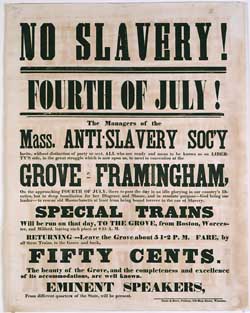
-
lose my body
I'm just trying to imagine how it might make Coates son squirm to have his dad talk to him about his body. I guess I'm squirming a bit too. I'm expecting to hear about racism, but here I'm being asked to think about a body.
-
-
-
While I’d struggle to tell you how I learn best, there is one question that I’d always be able to answer enthusiastically: What would you like to learn next? Right now I’m learning JavaScript and have plans to give Spanish another go. I should probably pick up those guitar lessons again soon as well. Thankfully we live in a time when it’s trivially easy to gain access to resources and to learning activities. The problem is finding out the ones that work best for you. Perhaps that’s why we carry around in our pockets devices that can access pretty much the sum total of human knowledge yet use them to LOL at amusing pictures of cats. What are the barriers here? I’d suggest there are three main ones: 1 Curriculum - the series of activities that build towards a learning goal 2 Credentials - the ability to show what you know 3 Community - the cohort of peers you feel you are part of, along with access to ‘experts’
How do I learn best? What resources are the best ones for me?
-
- Jun 2015
-
www.cga.ct.gov www.cga.ct.gov
-
Sec. 22a-41. Factors for consideration of commissioner. Finding of no feasible and prudent alternative. Wetlands or watercourses. Habitats. Jurisdiction of municipal inland wetlands agencies. (a) In carrying out the purposes and policies of sections 22a-36 to 22a-45a, inclusive, including matters relating to regulating, licensing and enforcing of the provisions thereof, the commissioner shall take into consideration all relevant facts and circumstances, including but not limited to:
What to consider when an application/action is considered.
Tags
Annotators
URL
-
-
docs.gatesfoundation.org docs.gatesfoundation.org
-
riting to read strategies
-
- May 2015
-
files.eric.ed.gov files.eric.ed.gov
-
However, by usinglearningcomunitiesastheforuminwhichtheycan comparetheirownjourneysascriticalyreflectivelearners, adult educators realize that what they thought were idiosyncratic incremental fluctuations in energy and comitment,privatemoralesapingdefeatssuferedin isolation,andcontext-specificbarierspreventingchange, areoftenfeaturesthatareparaleledinthelivesof coleagues.Thisknowledge,evenifitfailstograntany insightsintohowthesefelingsorbarierscanbe ameliorated,canbethediferencebetwenresolvingtowork forpurposefulchangewhenevertheoportunityarises,and falingpreytoamixtureofstoicismandcynicisminwhich staying within comfortably defined boundaries of thought and action becomes the overwhelming concern.
-
-
www.nature.com www.nature.com
-
McDonald, R. J., Cloft, H. J. & Kallmes, D. F. Fate of submitted manuscripts rejected from the American Journal of Neuroradiology: outcomes and commentary. Am. J. Neuroradiol. 28, 1430–1434 (2007)
-
Schroter, S, et al. What errors do peer reviewers detect, and does training improve their ability to detect them? J. R. Soc. Med. 101, 507–514 (2008)
Look this one up
-
- Apr 2015
-
www.healthtap.com www.healthtap.com
-
Washing the hair with soap removes less oil from the hair, washing the hair with shampoo removes more oil.
Tags
Annotators
URL
-
-
www.healthtap.com www.healthtap.com
-
The main important point is not to shampoo your hair too often. Depending on the culture in which you live, washing the hair no more often than every 1-4 weeks may be the best way to have healthy hair.
Tags
Annotators
URL
-
- Mar 2015
-
www.scrumguides.org www.scrumguides.org
-
an objective set for the Sprint that can be met through the implementation of Product Backlog. It provides guidance to the Development Team on why it is building the Increment. It is created during the Sprint Planning meeting. The Sprint Goal gives the Development Team some flexibility regarding the functionality implemented within the Sprint. The selected Product Backlog items deliver one coherent function, which can be the Sprint Goal. The Sprint Goal can be any other coherence that causes the Development Team to work together rather than on separate initiatives.
an objective set for the Sprint that can be met through the implementation of Product Backlog. It provides guidance to the Development Team on why it is building the Increment. It is created during the Sprint Planning meeting. The Sprint Goal gives the Development Team some flexibility regarding the functionality implemented within the Sprint. The selected Product Backlog items deliver one coherent function, which can be the Sprint Goal. The Sprint Goal can be any other coherence that causes the Development Team to work together rather than on separate initiatives.
Tags
- hepsini sor
- an objective set for the Sprint that can be met through the implementation of Product Backlog. It provides guidance to the Development Team on why it is building the Increment. It is created during the Sprint Planning meeting. The Sprint Goal gives the Development Team some flexibility regarding the functionality implemented within the Sprint. The selected Product Backlog items deliver one coherent function, which can be the Sprint Goal. The Sprint Goal can be any other coherence that causes the Development Team to work together rather than on separate initiatives.
- mağaza
Annotators
URL
-
- Jan 2015
-
www.dagbladet.no www.dagbladet.no
-
Juhu.. Hva skal jeg ta meg til det sekundet? Tror jeg skal unne meg å sove litt lengre den dagen.
-
- Nov 2014
-
sailfishos.org sailfishos.org
-
i should try this.
Tags
Annotators
URL
-
- Feb 2014
-
s3.amazonaws.com s3.amazonaws.com
-
This paper establishes cause to suspect that current intellectual property policy overstep s utilitarian justification, and suggests that a clearer distinction should be drawn between the proper role of U.S. law in intellectual property (that which promotes innovation) and moral questions of creator’s rights.
-
-
www.justinhughes.net www.justinhughes.net
-
Like most subjects, intellectual property has grey zones on the periphery, such as the right to publicity -- whether, in property style, someone can control his public image.
Right to publicity
-
- Jan 2014
-
www.yale.edu www.yale.edu
-
common appropriation regimes do not give a complete answer to the sustainability of motivation and organization for the truly open, large-scale nonproprietary peer production projects we see on the Internet.
Towards the end of our last conversation the text following "common appropriation" seemed an interesting place to dive into further for our future discussions.
I have tagged this annotation with "meta" because it is a comment about our discussion and where to continue it rather than an annotation focused on the content itself.
In the future I would be interested in exploring the idea of "annotation types" that can be selectively turned on and off, but for now will handle that with ad hoc tags like "meta".
-
-
blogs.hbr.org blogs.hbr.org
-
So take action now. Give that person what I call a Power Thank You. This has three parts
I like articles and blog posts like this that have a call to action with a specific example of the action.
-
