hecho en una máquina de escribir, apareció en abril de 1981.
Con herramientas sencillas se crean posibilidades de narrar.
hecho en una máquina de escribir, apareció en abril de 1981.
Con herramientas sencillas se crean posibilidades de narrar.
l número de finales varía de hasta 44 en los primeros títulos a tan solo 7 en aventuras posteriores.
El lector participa de forma activa sobre la historia, además de convertirse en el protagonista de misma.
Esto permite una sensación realista de imprevisibilidad y conduce a la posibilidad de repetir lecturas, que es una de las características distintivas de los libros
Sencillamente interesante para que los niños noten que no solo desde el computador se pueden visitar hiperrealidades
Three main types of nonlinear PDEs are semilinear PDEs, quasilinear PDEs, and fully nonlinear PDEs.
Three types of nonlinear equations
A PDE is called linear if it is linear in the unknown and its derivatives
where ai and f are functions of the independent variables x and y only. (Often the mixed-partial derivatives uxy and uyx will be equated, but this is not required for the discussion of linearity.) If the ai are constants (independent of x and y) then the PDE is called linear with constant coefficients. If f is zero everywhere then the linear PDE is homogeneous, otherwise it is inhomogeneous.
She partnered with Japanese Canadian author, Kerri Sakamoto, to write a coming-of-age story about a Japanese American girl in 1970s Chicago, resulting in Strawberry Fields.
Rea Tajiri's parternship with author Kerri Sakamoto to produce the story of Strawberry Fields
She moved to New York in 1979
Rea Tajiri residency type: migrated
The story of the film centers on Irene Kawai, a Japanese American teenager in Chicago in the 1970s who is haunted by a photo of her grandfather she never knew standing by a barracks in a World War II internment camp for Japanese Americans.
Rea Tajiri's 1977 film Strawberry Fields narrates the story of a young Japanese American woman that embarks on a journey to discover her family history during the Japanese American Internment
Lying press (German: Lügenpresse, lit. 'press of lies') is a pejorative and disparaging political term used largely for the printed press and the mass media at large. It is used as an essential part of propaganda and is thus usually dishonest or at least not based on careful research.
It is the conceptual equivalent to HTTP/1.1 name-based virtual hosting, but for HTTPS.
e magnetization field or M-field can be defined according to the following equation: M = d m d V {\displaystyle \mathbf {M} ={\frac {\mathrm {d} \mathbf {m} }{\mathrm {d} V}}}
This equation \(\bm{M} = d\bm{m}/dV\) is rather bizarre. How do you take a derivative with respect to a volume?
This makes sense if you take the definition of m as an indefinite integral, rather than an integral evaluated over all space.
In that context, m is a function of the volume you have included so far. This makes the derivative make sense, because as you include more volume, the derivative is how much the total magnetization increases by.
t the magnetization tries to reduce the poles as much as possible
Justification probably being that the like poles repel each other, and like poles attract and annihilate.
Wikipedia article for the Travelling Salesman Problem (TSP)
In this way, an NTM can be thought of as simultaneously exploring all computational possibilities in parallel and selecting an accepting branch
Non-deterministic Turing Machines are able to get lucky and choose the single path to the answer in polynomial time, or be given a "hint" or "proof" or "certificate" for that path. This isn't realistic, but it separates the difficulty of the problem of verifying a solution and finding one into two different tasks.
Computational problems[edit] Intuitively, a computational problem is just a question that can be solved by an algorithm. For example, "is the natural number n {\displaystyle n} prime?" is a computational problem. A computational problem is mathematically represented as the set of answers to the problem. In the primality example, the problem (call it PRIME {\displaystyle {\texttt {PRIME}}} ) is represented by the set of all natural numbers that are prime: PRIME = { n ∈ N | n is prime } {\displaystyle {\texttt {PRIME}}=\{n\in \mathbb {N} |n{\text{ is prime}}\}} . In the theory of computation, these answers are represented as strings; for example, in the primality example the natural numbers could be represented as strings of bits that represent binary numbers. For this reason, computational problems are often synonymously referred to as languages, since strings of bits represent formal languages (a concept borrowed from linguistics); for example, saying that the PRIME {\displaystyle {\texttt {PRIME}}} problem is in the complexity class NP is equivalent to saying that the language PRIME {\displaystyle {\texttt {PRIME}}} is in NP.
Explanation of why computational complexity class proofs with Turing Machines use "strings" instead of algorithms or programs.
Presburger arithmetic is much weaker than Peano arithmetic, which includes both addition and multiplication operations. Unlike Peano arithmetic, Presburger arithmetic is a decidable theory. This means it is possible to algorithmically determine, for any sentence in the language of Presburger arithmetic, whether that sentence is provable from the axioms of Presburger arithmetic. The asymptotic running-time computational complexity of this algorithm is at least doubly exponential, however, as shown by Fischer & Rabin (1974).
This is an example of a decision problem that is at least doubly exponential \(2^{2^n}\). It is a simpler form of arithmetic where the Halting problem/incompleteness theorem does not apply.
NP-hard if everything in NP can be transformed in polynomial time into it even though it may not be in NP
Definition of NP-hard problem
At present, all known algorithms for NP-complete problems require time that is superpolynomial in the input size, in fact exponential in O ( n k ) {\displaystyle O(n^{k})} [clarify] for some k > 0 {\displaystyle k>0} and it is unknown whether there are any faster algorithms.
So how hard are NP-complete problems?
The Subgraph Isomorphism problem is NP-complete. The graph isomorphism problem is suspected to be neither in P nor NP-complete, though it is in NP. This is an example of a problem that is thought to be hard, but is not thought to be NP-complete. This class is called NP-Intermediate problems and exists if and only if P≠NP.
There might even be some problems in NP but not in P and that are not NP-complete.
NP-complete problems are often addressed by using heuristic methods and approximation algorithms.
usually solved with approximation algorithms
Impersonation is a security concept implemented in Windows NT that allows a server application to temporarily "be" the client in terms of access to secure objects.
spectral decomposition
links to eigenvalues, but I wonder if this really should be spectral decomposition as in frequency spectrum.
line through the middle of a stationary process then it should be flat; it may have 'seasonal' cycles, but o
Doesn't that break the definition? The definition was that the probability distribution did not change with time.
rence is represented as a Gaussian function expressed as[13]
Not sure where this comes from. Citation does not appear to have this equation
he former being an equivalent to the coherence length of the light source
Would it be better to just use white light, rather than a SLED then? Or does that cause to thin of a cross section, and too little signal?
ut scattering is too small to be detected. No special preparation of a biological specimen is required, and images can be obtained ‘non-contact’ or through a transparent window or membrane. It is also important to note that the laser output from the instruments used is low – eye-safe near-infrared or visible-light[29]
Too little light to be detected, yet the light intensity is low. Can you penetrate deeper with just a stronger beam?
capture a broad band of light and focus it into each pinhole significantly increasing the amount of light directed into each pinhole and reducing the amount of light blocked by the spinning-disk.
How does this not defeat the purpose of the pinhole blocking unwanted light?
https://en.wikipedia.org/wiki/Stakhanovite_movement
How much of the 1935 Stakhanovite movement was propaganda vs. reality and how much of it used the ideas of scientific management from the late 1800s/early 1900s?
Perspectivas en el uso de la ciencia
"As We May Think" es un ensayo escrito por Vannevar Bush en 1945, en el que se presenta su visión de cómo la tecnología de la información podría mejorar la capacidad de los seres humanos para almacenar, acceder y procesar información. Por ejemplo, este autor describe una máquina de almacenamiento y recuperación de información, a la que llama "Memex", cuyo propósito sería que los usuarios pudiesen tener acceso a grandes cantidades de información de manera rápida y fácil. Me parece importante en Bush que destaca la importancia de la colaboración y el intercambio de información entre expertos en diferentes campos y también argumenta que la tecnología de la información tiene el potencial de ayudar a los expertos en distintos campos a compartir sus conocimientos y trabajar juntos para resolver problemas complejos.
El memex, en esencia, refleja una biblioteca de saberes colectivos almacenados en una maquinaria descrita en su ensayo como “un mueble”. [3] La publicación en Atlantic del artículo de Bush fue seguida, en el número del 10 de septiembre de 1945, de la revista Life , por una reimpresión que mostraba ilustraciones del escritorio memex y la máquina de escribir automática propuestos.
El Memex se basaba en la idea de que la capacidad humana para almacenar y recuperar información estaba limitada y que, por lo tanto, era necesario desarrollar herramientas que permitieran ampliar esa capacidad. A pesar de que el Memex nunca se construyó en realidad, se considera una visión innovadora del potencial de la tecnología de la información para mejorar la capacidad de los seres humanos para acceder y procesar información.
Durante años, los inventos han ampliado los poderes físicos de las personas en lugar de los poderes de su mente. Argumenta que están a la mano los instrumentos que, si se desarrollan adecuadamente, darán a la sociedad acceso y dominio sobre el conocimiento heredado de las épocas. La perfección de estos instrumentos pacíficos, sugiere, debería ser el primer objetivo de nuestros científicos.
Esto es buenísimo para la innovación de nuevos inventos que pueden beneficiar la humanidad por medio de la imaginación del ser humano pero creo se debe ser limitado debido a la gran imaginación que contiene el ser humano pero dicha imaginación se puede crear ideas buenas, malas y desechables.
Bush envisioned the ability to retrieve several articles or pictures on one screen, with the possibility of writing comments that could be stored and recalled together
Se puede decir, que Bush predijo el concepto de la web 2.0 o el trabajo cooperativo en línea.
This logos holds always but humans always prove unable to ever understand it,
Sounds like the Tao and the first verse of the Tao te king
The Wörterbuch der ägyptischen Sprache was an international collaborative zettelkasten project begun in 1897 and finally published as five volumes in 1926.
https://en.wikipedia.org/wiki/W%C3%B6rterbuch_der_%C3%A4gyptischen_Sprache
The term appeared in Freud's Civilization and Its Discontents (1929–30) in relation to the application of the inborn aggression in man to ethnic (and other) conflicts, a process still considered by Freud, at that point, as a convenient and relatively harmless satisfaction of the inclination to aggression.[3]
Sigmund Freud
In psychoanalysis, the narcissism of small differences (German: der Narzissmus der kleinen Differenzen) is the idea that the more a relationship or community shares commonalities, the more likely the people in it are to engage in interpersonal feuds and mutual ridicule because of hypersensitivity to minor differences perceived in each other.[1] The term was coined by Sigmund Freud in 1917, based on the earlier work of English anthropologist Ernest Crawley. Crawley theorized that each individual is separated from others by a taboo of personal isolation, which is effectively a narcissism of minor differences.[2
narcissism of minor differences
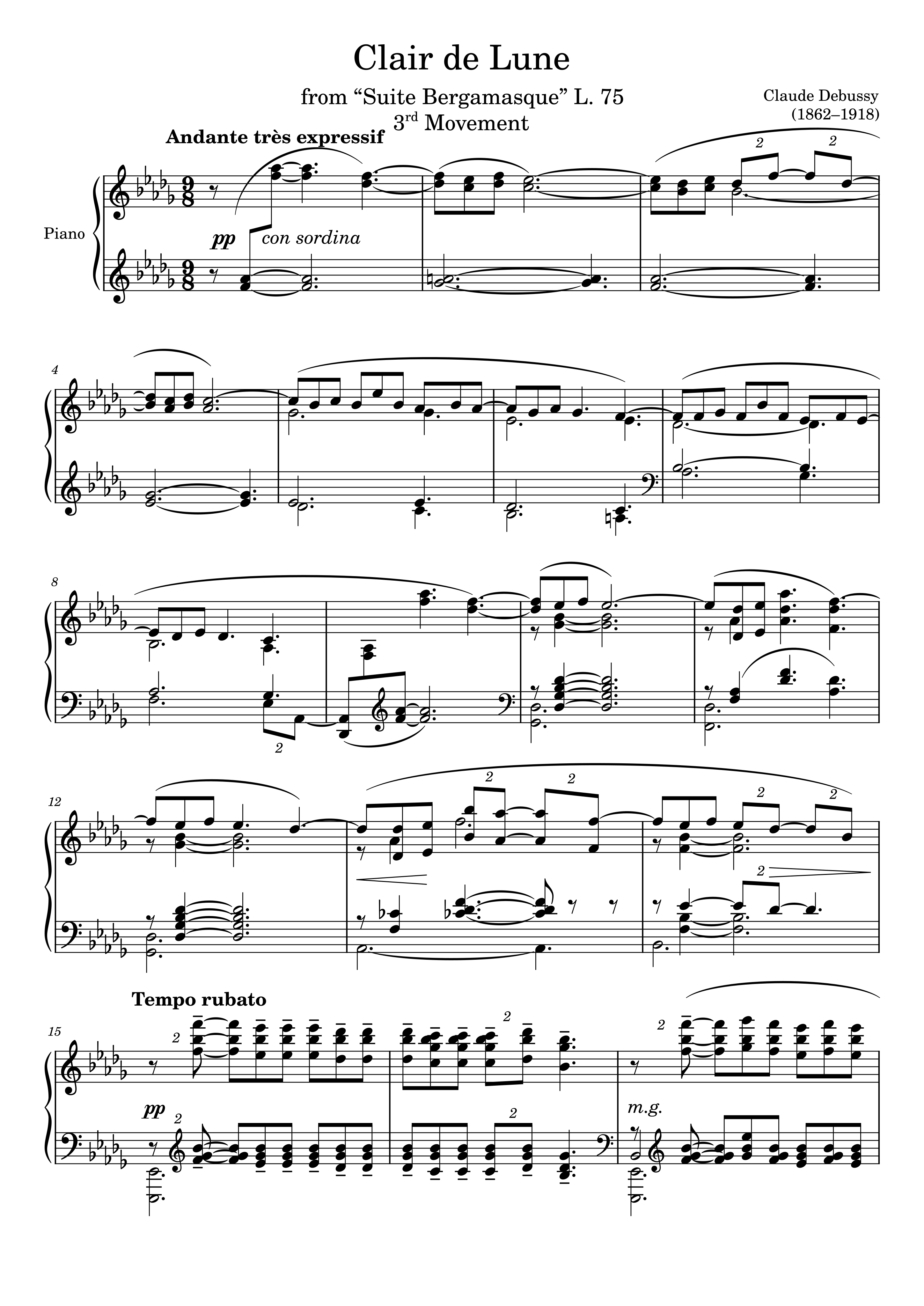
Claude Debussy
A well known piece is Claire de Lune
Tag management system
helps manage the lifecycle of digital marketing tags (sometimes referred to as tracking pixels or web beacons), used to track activity on digital properties, such as websites and web applications.
Auctor may refer to:
may refer to - An author of a work, who is proficient in the subject matter - A scientist who first describes a species or other taxon
Auctoritas is a Latin word which is the origin of English "authority".
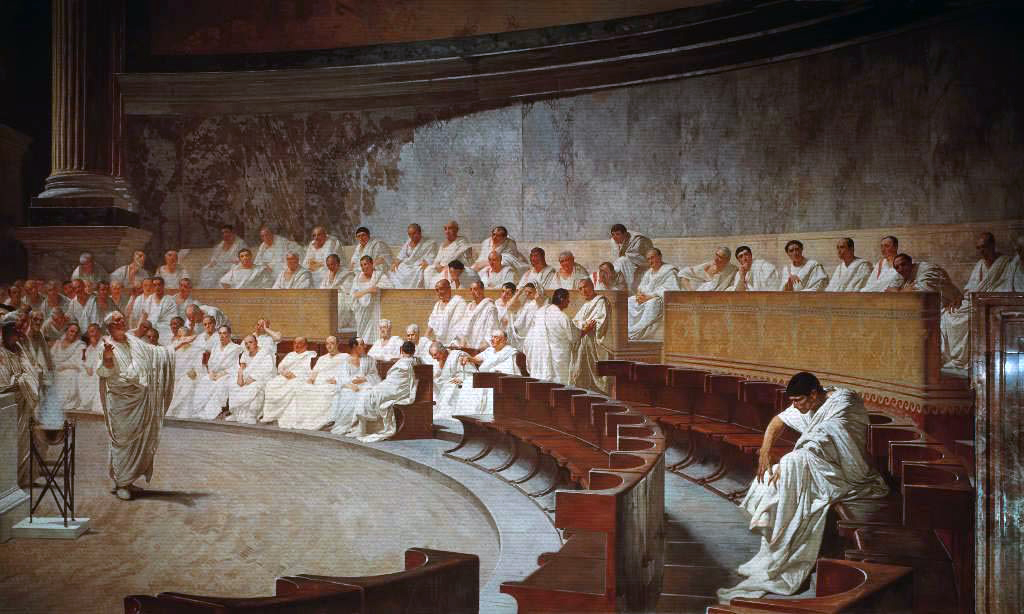
Methexis as participation suggests an alternative to Aristotelian mimesis. Both theatrical and philosophical.
Teskey on allegory asserts that Platonism cannot account for the gap between ideal form and particular object. He proposes that allegory as a form arises out of this inability to join the two, and that it does so by importing the metaphor of copulation. For Teskey, this means that allegory is tainted (by way of sedimentation) with a kind of primary sexual violence.
But does the notion of methexis as alternative to mimesis suggest an alternative conception of allegory?
Graeber's father, Kenneth, was affiliated with the Young Communist League in college, participated in the Spanish Revolution in Barcelona and fought in the Spanish Civil War.[9] He later worked as a plate stripper on offset presses.
What a house!
the output is 20 bytes, and so the last byte is byte 19 (0-origin).
It is suggested that verification be locked out after a small number of failed attempts or that each failed attempt attracts an additional (linearly increasing) delay.
One-time passwords are generated on demand by a dedicated OATH OTP authenticator that encapsulates a secret that was previously shared with the verifier. Using the authenticator, the claimant generates an OTP using a cryptographic method. The verifier also generates an OTP using the same cryptographic method. If the two OTP values match, the verifier can conclude that the claimant possesses the shared secret.
The term originated as a whimsical irregular form of the verb think. It refers to the original use of thunks in ALGOL 60 compilers, which required special analysis (thought) to determine what type of routine to generate.
One estimate says that between 12,000 to 20,000 books and journals, and even larger number of images and sex subjects, were destroyed.[68] Another estimate says that about 25,000 books were destroyed.[71]
12-25 thousand books, not all from insitut but mostly
"un-German Spirit"
The institute was ungerman
Graph of Desire I

The university library was renovated between 2013 and 2017.[40] The RUG has a branch in Leeuwarden.[41] Plans to establish a "branch campus" in China's Yantai were called off in January 2018, and the University Museum is now in the process of being established.[42]
This paragraph is not quite coherent.
The 19th-century main building in 1858
The image is not displayed.
The university library was renovated between 2013 and 2017
Strange that the only information about the UB is that the building has been renovated.
Rask is especially known for his contributions to comparative linguistics, including an early formulation of what would later be known as Grimm's Law.
Mankind, Nation and Individual: from a linguistic point of view (1925) is one of the pioneering works on sociolinguistics.
In fact the idea of creating a phonetic alphabet that could be used by every language was first put forward by Jespersen in a letter he sent to Paul Passy.[4]
This correspondence was first proposed in 1924 by Emil Forrer, who also suggested that the name Ahhiyawa corresponds to the Homeric term for the Greeks, Achaeans. Forrer's work was primarily motivated by linguistic similarities, since "Wilusa" and the associated placename "Taruisa" show striking parallels to the Greek names "Wilios" and "Troia" respectively.
Wilusa (Hittite: 𒌷𒃾𒇻𒊭 URUwi5-lu-ša) or Wilusiya was a Late Bronze Age city in western Anatolia known from references in fragmentary Hittite records. The city is notable for its identification with the archaeological site of Troy, and thus its potential connection to the legendary Trojan War.
Wilusa is a city in western Anatolia in the Late Bronze Age which we identify as a Hittite word for the city of Troy.
Mentioned briefly in lecture 10 of Ancient Empires before Alexander.
Ollendorff's name is used as an epithet in H.G. Wells' The Island of Doctor Moreau:[10] "Yesterday he bled and wept," said the Satyr. "You never bleed nor weep. The Master does not bleed or weep." "Ollendorffian beggar!" said Montgomery, "you'll bleed and weep if you don't look out!"
The Ollendorff method likely influenced the development of other well-known 19th century foreign language learning methods, for example, the Method Gaspey-Otto-Sauer[7][8] which was widely used until the 1950s.[9]
The Method Gaspey-Otto-Sauer of teaching languages was popular until the 1950s and was influenced by la méthode Ollendorff from the 1830s.
Ollendorff was heavily indebted to an early "modern method" teacher, Jean (John) Manesca, who appears to have written the first fully developed modern method language course in the early 1820s.
he developed "la méthode Ollendorff" (the Ollendorff method), a new way of learning foreign languages based on oral communication rather than on textual comprehension as used in the traditional "grammar translation" method.
Arch Wilkinson Shaw<br /> https://en.wikipedia.org/wiki/Arch_Wilkinson_Shaw

Newton dedicated much of his time to the study of alchemy and biblical chronology
Bruh what
2006
Apartir de este año no tuveo relación con el cine, hasya el año 2022
The Americo-Liberian settlers did not relate well to the indigenous peoples they encountered, especially those living in the more isolated interior. Colonial settlements were raided by the Kru and Grebo from their inland chiefdoms. Americo-Liberians promoted religious organizations to set up missions and schools to educate the native populace.[11] Americo-Liberians formed into a small elite that held disproportionate political power; indigenous Africans were excluded from birthright citizenship in their own land until 1904
lmao
In short, in the absence of legal tender laws, the seller will not accept anything but money of certain value (good money), but the existence of legal tender laws will cause the buyer to offer only money with the lowest commodity value (bad money), as the creditor must accept such money at face value.
During the coronavirus pandemic, many vendors facing inflation began to pass along the 3% (or more) credit card processing fees to their customers. Previously many credit card companies would penalize vendors for doing this (and possibly cut them off). This fee was considered "the cost of doing business".
Some vendors prior to the pandemic would provide cash discounts on large orders because they could circumvent these fees.
Does this affect (harm) inflation? Is it a form of Gresham's law at play here? What effect does this have on credit card companies? Are they so integral to the system that it doesn't affect them, but instead the customers using their legal tender?
The old saying "a bad penny always turns up" is a colloquial recognition of Gresham's Law.
The colloquialism "a bad penny always turns up" is recognition of Gresham's law because the bad (cheap) pennies will be in higher circulation compared with purer or more valuable copper pennies which will have been hoarded or left circulation.
In economics, Gresham's law is a monetary principle stating that "bad money drives out good". For example, if there are two forms of commodity money in circulation, which are accepted by law as having similar face value, the more valuable commodity will gradually disappear from circulation.[1][2] The law was named in 1860 by economist Henry Dunning Macleod after Sir Thomas Gresham (1519–1579), an English financier during the Tudor dynasty. Gresham had urged Queen Elizabeth to restore confidence in then-debased English currency. The concept was thoroughly defined in medieval Europe by Nicolaus Copernicus and known centuries earlier in classical Antiquity, the Middle East and China.
Gresham's law is an economic monetary principle which states that "bad money drives out good."
It relates to commodity value, particularly in coinage, where cheaper base metals in coins will cause more expensive coinage to disappear from circulation.
best known as the inventor of the World Wide Web.
I thought Al Gore invented it
Cytokine storm
Wikipedia, qualche anno fa, descriveva la tempesta citochinica come segue ma dopo alcuni mesi si premurarono di cancellarla in quanto compromettente per loro e per bigpharma...Ve la proponiamo in originale..
🇮🇹 "La sindrome da rilascio di citochine, nota anche come reazione all'infusione, è una forma di sindrome da risposta infiammatoria sistemica che si presenta come una complicazione di alcune malattie o infezioni ed è anche un effetto avverso di alcuni farmaci anticorpali monoclonali, nonché delle terapie a cellule T adottive. Casi gravi sono stati chiamati tempeste di citochine."
🇬🇧 "Cytokine release syndrome, also known as an infusion reaction, is a form of systemic inflammatory response syndrome that arises as a complication of some diseases or infections, and is also an adverse effect of some monoclonal antibody drugs, as well as adoptive T-cell therapies. Severe cases have been called cytokine storms."
Se controllate il testo attuale a fianco riportato, della descrizione qui sopra non vi è più traccia...(non vi è più il riferimento alla reazione avversa ad alcuni anticorpi monoclonali, intrigante, vero?)...
Attraverso la WayBackMachine abbiamo recuperato la versione originale (poi cancellata da Wikipedia dopo il 2018) da noi riportata qui sopra.
"the loss of potential gain from other alternatives when one alternative is chosen."
definition does not involve sacrifice
for t {\displaystyle t} in some neighborhood of 0
This somehow relates to the integrability of e^x: See this: https://stats.stackexchange.com/questions/211706/what-does-it-mean-for-a-moment-generating-function-to-exist-in-a-neighborhood-of
Floor plan and tenants
Awesome way to display floors in a building
other members[who?] of the Royal Society accused Leibniz of plagiarism.
Sad
but most of his work in those areas remained unpublished until long after his death.
There could be more unpublished work out there? Or the work which was never discovered?
He was a devout but unorthodox Christian who privately rejected the doctrine of the Trinity.
Me for real. Why is he so perfect, man?
In the Principia, Newton formulated the laws of motion and universal gravitation that formed the dominant scientific viewpoint for centuries until it was superseded by the theory of relativity.
Cool as hell
the energies of the bands near the surface are often pinned to the Fermi level, due to the influence of surface states.[
Not sure why this is the case.
Dinkelberg's wife, Emily, destitute and living in an "old peoples' home" died 10 years later July 3, 1945. Her body remained unclaimed for over a week and was about to be donated to a medical school when a Chicago attorney brought the matter to the Tribune.[23] The following day her body was claimed by the A.I.A. and they paid for her burial next to Fred. Her grave is unmarked.
This really hurts to read... nobody can escape. Don't undervalue money or family.
After the Norman conquest in 1066, Old English was replaced, for a time, by Anglo-Norman (also known as Anglo-Norman French) as the language of the upper classes
Ovo nije tačno!
https://en.wikipedia.org/wiki/Actor%E2%80%93network_theory
I ought to dig into some of Bruno Latour's work which keeps popping up in some of my reading....
Application domain
=
Event sourcing
Event sourcing is an architectural pattern in which entities do not track their internal state by means of direct serialization or object-relational mapping, but by reading and committing events to an event store.
domain-specific languages
DSL
larger than females and have a prominent mane. It is a social species, forming groups called prides. A lion's pride consists of a few adult males, related females, and cubs. Groups of female lions usually hunt together, preying mostly on large ungulates. The lion is an apex and keystone predator; although some lions scavenge when opportunities occur and have b
this is something
Life and career[edit] Born in Oldham, Lyon began his football career as an apprentice with Bolton Wanderers, and was briefly on the books of Bury, but never played league football for either.[1] He spent just over a season with Mossley, during which he attracted the attention of league clubs, before signing for Macclesfield Town, founder members of the new Northern Premier League.[3][4] He contributed 10 goals from 57 appearances[5] as Macclesfield won consecutive league titles, and scored the opening goal of a 2–0 win against Telford United in the inaugural FA Trophy Final at Wembley.[6][7] He was the club's top scorer in his fifth season with Macclesfield,[5] and then spent time with Wigan Athletic, Altrincham, Poole Town,[8] and second spells at Macclesfield[5] and Mossley[9][10] before signing for Southport of the Football League Fourth Division in 1976.[1]
Hello I just hope that this works for all of us.
Partidario del Partido Demócrata [ editar ] Parsons apoyó a John F. Kennedy el 8 de noviembre de 1960; desde 1923, con una excepción, Parsons votó por los demócratas toda su vida. [110] Discutió ampliamente la elección de Kennedy en su correspondencia en ese momento. Parsons estaba especialmente interesado en las implicaciones simbólicas involucradas en el hecho de los antecedentes católicos de Kennedy para las implicaciones para los Estados Unidos como una comunidad integral (era la primera vez que un católico se convertía en presidente de los Estados Unidos). En una carta a Robert N. Bellah, escribió: "Estoy seguro de que te ha intrigado mucho la participación del tema religioso en nuestra elección". [111] Parsons, quien se describió a sí mismo como un "demócrata de Stevenson", estaba especialmente entusiasmado de que su político favorito, Adlai Stevenson II , hubiera sido nombrado embajador de Estados Unidos ante las Naciones Unidas . Parsons había apoyado a Stevenson en 1952 y 1956 y estaba muy decepcionado de que Stevenson perdiera mucho en ambas ocasiones. Influencia de la teoría de la modernización [ editar ] A principios de la década de 1960, se hizo evidente que sus ideas tenían un gran impacto en gran parte de las teorías de modernización de la época. Su influencia fue muy extensa pero, al mismo tiempo, la adopción concreta de su teoría fue a menudo bastante selectiva, poco entusiasta, superficial y eventualmente confusa. Muchos teóricos de la modernización nunca utilizaron todo el poder de la teoría de Parsons, sino que se concentraron en alguna fórmula formalista, que a menudo se sacaba del contexto que tenía el significado más profundo con el que Parsons las introdujo originalmente. En obras de Gabriel A. Almond y James S. Coleman , Karl W. Deutsch , S. N. Eisenstadt , Seymour Martin Lipset , Samuel P. Huntington , David E. Apter , Lucian W. Pye , Sidney Verba y Chalmers Johnson , entre otros, La influencia de Parsons es clara. De hecho, fue la intensa influencia de las ideas de Parsons en la sociología política lo que inicialmente hizo que el académico William Buxton se interesara por su trabajo. [112] Además, David Easton afirmaría que en la historia de la ciencia política, los dos académicos que habían hecho algún intento serio de construir una teoría general para la ciencia política sobre el tema del apoyo político fueron Easton y Parsons. [113] Interés por la religión [ editar ] Uno de los eruditos con los que mantuvo una amplia correspondencia durante su vida y cuya opinión valoraba mucho era Robert N. Bellah . La discusión de Parsons con Bellah cubriría una amplia gama de temas, incluida la teología de Paul Tillich . [114] La correspondencia continuaría cuando Bellah, a principios del otoño de 1960, fue a Japón para estudiar la religión y la ideología japonesas . En agosto de 1960, Parsons envió a Bellah un borrador de su artículo sobre "El trasfondo religioso del sistema de valores estadounidense" para pedir su comentario. [115] En una carta a Bellah del 30 de septiembre de 1960, Parsons discutió su lectura de Errand into the Wilderness de Perry Miller . [116] Parsons escribió que la discusión de Miller sobre el papel del calvinismo "en la teología temprana de Nueva Inglaterra ... es de primera clase y encaja maravillosamente con la posición general que he tomado". [117] Miller fue un historiador literario de Harvard cuyos libros como The New England Mind [118]estableció nuevos estándares para la escritura de la historia cultural y religiosa estadounidense. Miller siguió siendo uno de los historiadores favoritos de Parsons a lo largo de su vida. De hecho, la religión siempre tuvo un lugar especial en el corazón de Parsons, pero su hijo, en una entrevista, sostuvo que su padre probablemente no era realmente "religioso". A lo largo de su vida, Parsons interactuó con una amplia gama de intelectuales y otras personas que se interesaron profundamente en los sistemas de creencias, doctrinas e instituciones religiosas. Una persona notable que interactuó con Parsons fue Marie Augusta Neal , una monja de las Hermanas de Notre Dame de Namur, quien le envió a Parsons una gran cantidad de sus manuscritos y lo invitó a conferencias y eventos intelectuales en su Iglesia Católica . Neal recibió su doctorado de Harvard bajo la supervisión de Parsons en 1963, y eventualmente se convertiría en profesora y luego en directora de sociología en Emmanuel College en Boston . Estaba muy entusiasmada con el Concilio Vaticano II.y se hizo conocida por la Encuesta Nacional de Hermanas, cuyo objetivo era mejorar la posición de la mujer en la Iglesia Católica. [119] Críticas a Riesman [ editar ] Parsons y Winston White escribieron un artículo, "El vínculo entre el carácter y la sociedad", que se publicó en 1961. [120] Era una discusión crítica de The Lonely Crowd de David Riesman , [121] que se había publicado una década antes. y se había convertido en un éxito de ventas inesperado, alcanzando 1 millón de copias vendidas en 1977. Riesman fue un miembro destacado de la izquierda académica estadounidense, influenciado por Erich Fromm y la Escuela de Frankfurt . En realidad, el libro de Riesman fue un intento académico de dar crédito al concepto de " sociedad de masas " y especialmente a la idea de una América sofocada en el conformismo social .. Riesman había argumentado esencialmente que en el surgimiento del capitalismo altamente avanzado, el sistema de valores básico de Estados Unidos y sus roles socializadores habían cambiado de un patrón de orientación de valores "dirigido hacia adentro" a uno "dirigido hacia otros". Parsons y White desafiaron la idea de Riesman y argumentaron que no se había producido ningún cambio fuera de una estructura de personalidad dirigida hacia el interior. Dijeron que la "otra franqueza" de Riesman parecía una caricatura del yo del espejo de Charles Cooley , [122] y argumentaron que el marco del " individualismo institucionalcomo la estructura básica del código del sistema normativo de Estados Unidos esencialmente no había cambiado. Sin embargo, lo que había sucedido era que el proceso industrializado y su creciente patrón de diferenciación social había cambiado la función simbólica generalizada de la familia en la sociedad y había permitido una mayor permisividad. en la forma en que el niño se relacionaba con sus padres. Parsons y White argumentaron que no era el preludio de una mayor "otra franqueza", sino una forma más complicada mediante la cual el patrón dirigido internamente se situaba a sí mismo en el entorno social. Poder político e influencia social [ editar ] 1963 fue un año notable en el desarrollo teórico de Parsons porque fue el año en que publicó dos artículos importantes: uno sobre el poder político [123] y otro sobre el concepto de influencia social . [124] Los dos artículos representaron el primer intento publicado de Parsons de elaborar la idea de Medios Simbólicos Generalizados como parte integral de los procesos de intercambio dentro del sistema AGIL. Era un desarrollo teórico en el que Parsons había trabajado desde la publicación de Economía y sociedad (1956). El modelo principal para los medios simbólicos generalizados era el dinero y Parsons reflexionaba sobre la cuestión de si las características funcionales del dinero representaban una singularidad exclusiva del sistema económico o si era posible identificar otros medios simbólicos generalizados también en otros subsistemas. Aunque cada medio tenía características únicas, Parsons afirmó que el poder (para el sistema político ) y la influencia (para la comunidad social) tenían funciones institucionales, que esencialmente eran estructuralmente similares a la función sistémica general del dinero. Usando Roman Jakobsonde "código" y "mensaje", Parsons dividió los componentes de los medios en una cuestión de principio de valor versus estándares de coordinación para el "código-estructura" y la cuestión de factor versus control de producto dentro de esos procesos sociales que llevaron a cabo. los componentes del "mensaje". Mientras que la "utilidad" podría considerarse como el principio de valor para la economía (medio: dinero), la "eficacia" era el principio de valor para el sistema político (por el poder político) y la solidaridad social para la comunidad social (por la influencia social ) . Parsons eventualmente elegiría el concepto de compromiso de valor como el medio simbólico generalizado para el sistema fiduciario con la integridad como principio de valor. [125] Contactos con otros académicos [ editar ] En agosto de 1963, Parsons consiguió un nuevo asistente de investigación, Victor Lidz , quien se convertiría en un importante colaborador y colega. En 1964, Parsons voló a Heidelberg para celebrar el centenario de Weber y discutir el trabajo de Weber con Habermas, Herbert Marcuse y otros. [126] Parsons presentó su artículo "Evaluación y objetividad en las ciencias sociales: una interpretación de la contribución de Max Weber". [127] La reunión se convirtió principalmente en un enfrentamiento entre los eruditos pro-weberianos y la Escuela de Frankfurt. Antes de partir hacia Alemania, Parsons discutió la próxima reunión con Reinhard Bendix y comentó: "Me temo que seré una especie de Daniel en el foso de los leones". [128]Bendix respondió y le dijo a Parsons que Marcuse se parecía mucho a Christoph Steding , un filósofo nazi . [129] Parsons mantuvo una correspondencia persistente con el destacado erudito Benjamin Nelson , [130] y compartieron un interés común en el surgimiento y el destino de las civilizaciones hasta la muerte de Nelson en 1977. Los dos eruditos también compartieron un entusiasmo común por el trabajo de Weber y generalmente coinciden en el principal enfoque interpretativo del estudio de Weber. Nelson había participado en el Centenario de Weber en Heidelberg. Parsons se opuso a la guerra de Vietnam , pero le inquietó lo que consideraba la tendencia antiintelectual de la rebelión estudiantil: ese debate serio a menudo se sustituía por eslóganes prácticos de los comunistas Karl Marx , Mao Zedong y Fidel Castro . [ cita requerida ] Oposición a la Escuela de Frankfurt [ editar ] Nelson tuvo una violenta discusión con Herbert Marcuse y lo acusó de empañar a Weber. [131] Al leer la versión escrita de la contribución de Nelson al Centenario de Weber, Parsons escribió: "No puedo dejar pasar la ocasión sin una palabra de felicitación lo suficientemente fuerte como para que, si fuera un concierto, gritara bravo". [132] En varias cartas, Nelson mantendría a Parsons informado del entorno izquierdista a menudo turbulento de Marcuse. [133] En la carta de septiembre de 1967, Nelson le decía a Parsons cuánto disfrutaba leyendo el ensayo de Parsons sobre el parentesco y el aspecto asociativo de la estructura social . [134]Además, uno de los académicos sobre cuyo trabajo Parsons y Nelson compartirían comentarios internos fue Habermas. Etnicidad, parentesco y solidaridad difusa [ editar ] Parsons había mantenido correspondencia durante años con su antiguo estudiante de posgrado David M. Schneider , quien había enseñado en la Universidad de California Berkeley hasta que este último, en 1960, aceptó un puesto como profesor de antropología en la Universidad de Chicago . Schneider había recibido su doctorado en antropología social en Harvard en 1949 y se había convertido en un destacado experto en el sistema de parentesco estadounidense. Schneider, en 1968, publicó American Kinship: A Cultural Account [135]que se convirtió en un clásico en el campo, y le había enviado a Parsons una copia del manuscrito corregido antes de su publicación. Parsons apreció mucho el trabajo de Schneider, que se convirtió en muchos sentidos en un punto de inflexión crucial en su propio intento de comprender los elementos fundamentales del sistema de parentesco estadounidense, una clave para comprender el factor de la etnicidad y, especialmente, construir la base teórica de su concepto de la comunidad social, que, a principios de la década de 1970, se había convertido en una fuerte prioridad en el número de proyectos teóricos de su propia vida intelectual. Parsons tomó prestado el término "solidaridad duradera difusa" de Schneider, como un concepto importante para sus propias consideraciones sobre la construcción teórica del concepto de comunidad social. En la primavera de 1968, Parsons y Schneider habían discutido el artículo de Clifford Geertz sobre la religión como sistema cultural [136] sobre el cual Parsons escribió una reseña. [137]Parsons, que era un amigo cercano de Geertz, estaba desconcertado por el artículo de Geertz. En una carta a Schneider, Parsons habló sobre "las restricciones bastante agudas sobre lo que él [Geertz] llama la tradición intelectual extremadamente estrecha con especial referencia a Weber, pero también a Durkheim. Mi punto básico es, a este respecto, que exageró mucho su caso. pareciendo argumentar que esta tradición intelectual ya era irrelevante". [138] Schneider le respondió a Parsons: "Tanto, tan a menudo, mientras leo el material de Cliff, no puedo obtener una imagen clara y consistente de en qué consiste el sistema religioso, en lugar de cómo se dice que funciona". [139] En una carta de julio de 1968 a Gene Tanke de la University of California Press , Parsons ofreció una nota crítica sobre el estado de la teoría psicoanalítica y escribió: "El uso de la teoría psicoanalítica en la interpretación de temas sociales e históricos es una empresa algo peligrosa, y se ha escrito una gran cantidad de tonterías en nombre de tales intentos". [140] Alrededor de 1969, la prestigiosa Enciclopedia de la Historia de la Idea se acercó a Parsons para que escribiera una entrada en la enciclopedia sobre el tema de la "Sociología del Conocimiento". Parsons aceptó y escribió uno de sus ensayos más poderosos, "La sociología del conocimiento y la historia de las ideas", [141] en 1969 o 1970. Parsons discutió cómo laLa sociología del conocimiento , como disciplina intelectual moderna, había surgido de la dinámica de la historia intelectual europea y había alcanzado una especie de punto de corte en la filosofía de Kant y explorada más a fondo por Hegel , pero alcanzó su primera formulación "clásica" en los escritos de Mannheim. , [142] cuya brillantez Parsons reconoció pero no estuvo de acuerdo con su historicismo alemán por su epistemología antipositivista; eso fue rechazado en gran medida en el mundo más positivista de las ciencias sociales estadounidenses. Por varias razones, los editores de la enciclopedia rechazaron el ensayo de Parsons, que no se ajustaba al formato general de su volumen. El ensayo no se publicó hasta 2006. [143] Parsons tuvo varias conversaciones con Daniel Bell sobre una " sociedad posindustrial ", algunas de las cuales se llevaron a cabo durante un almuerzo en William James Hall. Después de leer una versión temprana de la obra magna de Bell , The Coming of the Post-Industrial Society , Parsons escribió una carta a Bell, fechada el 30 de noviembre de 1971, para ofrecer su crítica. Entre sus muchos puntos críticos, Parsons enfatizó especialmente que la discusión de tecnología de Bell tendía a "separar la cultura" y tratar las dos categorías "como lo que yo llamaría cultura menos el componente cognitivo". El interés de Parsons en el papel de la etnia y la religión en la génesis de la solidaridad social dentro de la comunidad local influyó mucho en otro de sus estudiantes de posgrado de principios de la década de 1960, Edward Laumann . Como estudiante, Laumann estaba interesado en el papel de la estructura de la red social en la formación de la solidaridad a nivel comunitario. Combinando el interés de Parsons en el papel de la etnicidad en la formación de la solidaridad de la comunidad local con el enfoque estructural de la clase social de W. Lloyd Warner , Laumann argumentó que la etnicidad, la religión y la clase social percibida juegan un papel importante en la estructuración de las redes sociales comunitarias. [144] [145] [146]El trabajo de Laumann descubrió que las redes comunitarias están muy divididas según el origen étnico, la religión y el estatus social ocupacional. También destacó la tensión que experimentan los individuos entre su preferencia por asociarse con personas que son como ellos ( homofilia ) y su deseo simultáneo de afiliarse con otros de mayor estatus. Más tarde, al comienzo de su carrera en la Universidad de Chicago , Laumann argumentaría que la forma en que los individuos resuelven los impulsos forma la base de la conciencia de clase corporativa o competitiva dentro de una comunidad determinada. [147] Además de demostrar cómo la solidaridad comunitaria puede ser conceptualizada como una red socialy el papel de la etnicidad, la religión y la clase en la configuración de tales redes, la disertación de Laumann se convirtió en uno de los primeros ejemplos del uso de encuestas basadas en la población en la recopilación de datos de redes sociales y, por lo tanto, un precursor de décadas de análisis egocéntrico de redes sociales . . [148] Por lo tanto, Parsons desempeñó un papel importante en la formación del interés temprano del análisis de redes sociales en la homofilia y el uso de datos de redes egocéntricas para evaluar estructuras de redes sociales a nivel de grupo y comunidad. Teoría de sistemas sobre sistemas biológicos y sociales [ editar ] En sus últimos años, Parsons se interesó cada vez más en elaborar los parámetros conceptuales más elevados de la condición humana, lo que fue en parte lo que lo llevó a repensar las cuestiones de la evolución social y cultural y la "naturaleza" de los sistemas télicos, este último que consideró especialmente discutido con Bellah, Lidz, Fox, Willy de Craemer y otros. Parsons se interesó cada vez más en aclarar la relación entre la teoría biológica y la social. Parsons fue el iniciador de la primera conferencia Daedalus sobre "Algunas relaciones entre la teoría biológica y social", patrocinada por la Academia Estadounidense de las Artes y las Ciencias.. Parsons escribió un memorándum fechado el 16 de septiembre de 1971, en el que explicó el marco intelectual de la conferencia. Como explicó Parsons en el memorándum, el objetivo básico de la conferencia era establecer un fundamento conceptual para una teoría de los sistemas vivos . La primera conferencia se llevó a cabo el 7 de enero de 1972. Entre los participantes, además de Parsons y Lidz, se encontraban Ernst Mayr , Seymour Kety , Gerald Holton , A. Hunter Dupree y William K. Wimsatt . Una segunda Conferencia Daedalus sobre Sistemas Vivos se llevó a cabo el 1 y 2 de marzo de 1974 e incluyó a Edward O. Wilson , quien estaba a punto de publicar su famoso trabajo sobre sociobiología .. Otros participantes nuevos fueron John T. Bonner, Karl H. Pribram , Eric Lennenberg y Stephen J. Gould . Sociología del derecho [ editar ] Parsons comenzó en el otoño de 1972 a realizar un seminario sobre "Derecho y sociología" con el filósofo del derecho Lon L. Fuller , conocido por su libro La moralidad del derecho (1964). El seminario y las conversaciones con Fuller estimularon a Parsons a escribir uno de sus artículos más influyentes, "La ley como hijastro intelectual". [149] Parsons analiza Law in Modern Society de Roberto Mangabeira Unger (1976). Otro indicio del interés de Parsons por el derecho se reflejó en sus alumnos, como John Akula , quien escribió su disertación en sociología, Law and the Development of Citizenship (1973). En septiembre de 1972, Parsons participó en una conferencia en Salzburgo.sobre "Las consecuencias sociales de la modernización en los países socialistas". Entre los otros participantes estaban Alex Inkeles , Ezra Vogel y Ralf Dahrendorf . Críticas a Bendix [ editar ] En 1972, Parsons escribió dos artículos de revisión para discutir el trabajo de Bendix, que brindan una declaración clara sobre el enfoque de Parsons para el estudio de Weber. Bendix se había hecho famoso por sus interpretaciones de Weber. En el primer artículo de revisión, Parsons analizó el Embattled Reason del inmigrante Bendix , [150] y elogió su intento de defender los valores básicos de la racionalidad cognitiva., que compartió incondicionalmente, y estuvo de acuerdo con Bendix en que la cuestión de la racionalidad cognitiva era principalmente una cuestión cultural, no una categoría que pudiera reducirse a factores biológicos, económicos y sociales. Sin embargo, Parsons criticó cómo había procedido Bendix, quien, en su opinión, había tergiversado especialmente el trabajo de Freud y Durkheim. Parsons descubrió que la tergiversación era cómo Bendix tendía a concebir la cuestión de la teorización sistemática, bajo el concepto de "reduccionismo". [151] Parsons encontró además que el enfoque de Bendix sufría de una "hostilidad notoria" a la idea de la evolución . Aunque Parsons evaluó que Weber rechazó los enfoques evolutivos lineales de Marx y Herbert Spencer, Weber podría no haber rechazado la cuestión de la evolución como una cuestión generalizada. En un segundo artículo, una revisión de Scholarship and Partisanship: Essays on Max Weber de Bendix y Guenther Roth , [152] Parsons continuó con su línea de crítica. Parsons estaba especialmente preocupado por una declaración de Bendix que afirmaba que Weber creía en la noción de Marx de que las ideas eran "el epifenómeno de la organización de la producción". Parsons rechazó enérgicamente esa interpretación: "Debería afirmar que ciertamente el Weber 'maduro' intelectual nunca fue un marxista 'hipotético'". [153] En algún lugar detrás de las actitudes de Bendix, Parsons detectó una incomodidad en el primero para salir de un modo "idiográfico" de teorizar. Estudio de la universidad de EE. UU. [ editar ] En 1973, Parsons publicó The American University , que había escrito con Gerald M. Platt. [154] La idea había surgido originalmente cuando Martin Meyerson y Stephen Graubard de la Academia Estadounidense de las Artes y las Ciencias, en 1969, le pidieron a Parsons que realizara un estudio monográfico del sistema universitario estadounidense. El trabajo en el libro se prolongó durante años hasta que se terminó en junio de 1972. Desde un punto de vista teórico, el libro tenía varias funciones. Justificó el concepto de revolución educativa de Parsons, un componente crucial en su teoría del surgimiento del mundo moderno. Sin embargo, lo que fue igualmente convincente intelectualmente fue la discusión de Parsons sobre "el complejo cognitivo", dirigida a explicar cómo la racionalidad cognitiva y el aprendizaje operaban como una zona de interpenetración en el nivel del sistema general de acción en la sociedad. En retrospectiva, las categorías del complejo cognitivo son un fundamento teórico para comprender lo que se ha denominado sociedad moderna basada en el conocimiento. Jubilación [ editar ] Se retiró oficialmente de Harvard en 1973, pero continuó escribiendo, enseñando y realizando otras actividades al mismo ritmo acelerado que antes. Parsons también continuó su extensa correspondencia con un amplio grupo de colegas e intelectuales. Enseñó en la Universidad de Pensilvania , la Universidad de Brown , la Universidad de Rutgers , la Universidad de Chicago y la Universidad de California en Berkeley . En el banquete de jubilación de Parsons, el 18 de mayo de 1973, se pidió a Robert K. Merton que presidiera, mientras que a John Riley, Bernard Barber, Jesse Pitts, Neil J. Smelser y John Akula se les pidió que compartieran sus experiencias del hombre con el audiencia. Seminarios marrones [ editar ] Un erudito que se hizo importante en los últimos años de Parsons fue el profesor Martin U. Martel , de la Universidad de Brown. Se habían puesto en contacto a principios de la década de 1970 en una discusión sobre un artículo que Martel había escrito sobre el trabajo de Parsons. [155] Martel organizó una serie de seminarios en la Universidad de Brown en 1973 a 1974, y Parsons habló sobre su vida y trabajo y respondió preguntas de estudiantes y profesores. [156] Entre los participantes en los seminarios estaban Martel, Robert M. Marsh, Dietrich Rueschemeyer, C. Parker Wolf, Albert F. Wessen, A. Hunter Dupree, Philip L. Quinn, Adrian Hayes y Mark A. Shields. De febrero a mayo de 1974, Parsons también pronunció Culver Lectures en Brown y habló sobre "La evolución de la sociedad". Las conferencias y fueron grabadas en video.
Todo este apartado, el cual lo indica la pagina como carrera posterior, no se encuentra asi de especifico como en la de español.
Teoría general [ editar ] Es importante resaltar que Parsons distinguió dos "significados" o modos del término teoría general . A veces escribió sobre la teoría general como aspectos de las preocupaciones teóricas de las ciencias sociales cuyo foco está en los elementos más "constitutivos" de la preocupación cognitiva por la sistematización teórica básica de un campo dado. Parsons incluiría el esquema conceptual básico para el campo dado, incluyendo su orden más alto de relaciones teóricas y, naturalmente, también la especificación necesaria de los fundamentos axiomáticos, epistemológicos y metodológicos de este sistema desde el punto de vista de las implicaciones lógicas. [199] [200] Todos los elementos significarían la búsqueda de una teoría general en el más alto nivel de interés teórico. Sin embargo, la teoría general también podría referirse a un sistema más completo/operativo cuyas implicaciones del esquema conceptual se "explicaron" en niveles más bajos de estructuración cognitiva, niveles que se encuentran más cerca de un "objeto empírico" percibido. En su discurso ante la Sociedad Americana de Sociología en 1947, habló de cinco niveles: [201] El nivel de Teoría General, que tomó forma principalmente como una teoría de los sistemas sociales. La teoría de la motivación del comportamiento social, que abordaba especialmente cuestiones de la dinámica del sistema social y, naturalmente, presuponía teorías de la motivación, la personalidad y la socialización. Las bases teóricas del análisis comparativo sistemático de la estructura social, que implicaría un estudio de culturas concretas en sistemas concretos en varios niveles de generalización. Teorías especiales en torno a áreas de problemas empíricos particulares. El "ajuste" de las teorías a técnicas específicas de investigación empírica, como la estadística y las técnicas de encuesta. Durante su vida, trabajaría en el desarrollo de los cinco campos de preocupaciones teóricas, pero prestaría especial atención al desarrollo en el nivel "constitutivo" más alto, ya que el resto del edificio se mantendría o caería sobre la solidez del nivel más alto. [202] A pesar de los mitos, Parsons nunca pensó que las sociedades modernas existieran en algún tipo de armonía perfecta con sus normas o que la mayoría de las sociedades modernas se caracterizaran necesariamente por un alto nivel de consenso o una integración institucional "feliz". Parsons destacó que es casi lógicamente imposible que pueda haber un "ajuste perfecto" o un consenso perfecto en la estructura normativa básica de las sociedades modernas complejas porque el patrón básico de valores de las sociedades modernas generalmente se diferencia de tal manera que algunas de las categorías normativas básicas existen en conflicto inherente o al menos potencial entre sí. Por ejemplo, la libertad y la igualdad generalmente se consideran valores fundamentales y no negociables de las sociedades modernas. Cada uno representa una especie de imperativo último sobre cuáles son los valores superiores de la humanidad. Sin embargo, como enfatiza Parsons, no hay una respuesta simple sobre la prioridad de la libertad o la igualdad o una solución simple sobre cómo pueden ser mediadas, si es que pueden ser mediadas. Por lo tanto, todas las sociedades modernas se enfrentan al conflicto inherente que prevalece entre los dos valores, y no existe una "solución eterna" como tal. No puede haber una combinación perfecta entre el patrón motivacional, las soluciones normativas y el patrón de valores prevaleciente en cualquier sociedad moderna. Parsons también sostuvo que la "disputa" entre la "izquierda" y la "derecha" tiene algo que ver con el hecho de que ambos defienden valores (o ideales) humanos en última instancia "justificados", que son los únicos indispensables como valores, pero que siempre están en una interminable lista. posición conflictiva entre sí. no hay una respuesta simple sobre la prioridad de la libertad o la igualdad o una solución simple sobre cómo pueden ser mediadas, si es que pueden ser mediadas. Por lo tanto, todas las sociedades modernas se enfrentan al conflicto inherente que prevalece entre los dos valores, y no existe una "solución eterna" como tal. No puede haber una combinación perfecta entre el patrón motivacional, las soluciones normativas y el patrón de valores prevaleciente en cualquier sociedad moderna. Parsons también sostuvo que la "disputa" entre la "izquierda" y la "derecha" tiene algo que ver con el hecho de que ambos defienden valores (o ideales) humanos en última instancia "justificados", que son los únicos indispensables como valores, pero que siempre están en una interminable lista. posición conflictiva entre sí. no hay una respuesta simple sobre la prioridad de la libertad o la igualdad o una solución simple sobre cómo pueden ser mediadas, si es que pueden ser mediadas. Por lo tanto, todas las sociedades modernas se enfrentan al conflicto inherente que prevalece entre los dos valores, y no existe una "solución eterna" como tal. No puede haber una combinación perfecta entre el patrón motivacional, las soluciones normativas y el patrón de valores prevaleciente en cualquier sociedad moderna. Parsons también sostuvo que la "disputa" entre la "izquierda" y la "derecha" tiene algo que ver con el hecho de que ambos defienden valores (o ideales) humanos en última instancia "justificados", que son los únicos indispensables como valores, pero que siempre están en una interminable lista. posición conflictiva entre sí. todas las sociedades modernas se enfrentan al conflicto inherente que prevalece entre los dos valores, y no existe una "solución eterna" como tal. No puede haber una combinación perfecta entre el patrón motivacional, las soluciones normativas y el patrón de valores prevaleciente en cualquier sociedad moderna. Parsons también sostuvo que la "disputa" entre la "izquierda" y la "derecha" tiene algo que ver con el hecho de que ambos defienden valores (o ideales) humanos en última instancia "justificados", que son los únicos indispensables como valores, pero que siempre están en una interminable lista. posición conflictiva entre sí. todas las sociedades modernas se enfrentan al conflicto inherente que prevalece entre los dos valores, y no existe una "solución eterna" como tal. No puede haber una combinación perfecta entre el patrón motivacional, las soluciones normativas y el patrón de valores prevaleciente en cualquier sociedad moderna. Parsons también sostuvo que la "disputa" entre la "izquierda" y la "derecha" tiene algo que ver con el hecho de que ambos defienden valores (o ideales) humanos en última instancia "justificados", que son los únicos indispensables como valores, pero que siempre están en una interminable lista. posición conflictiva entre sí. Parsons siempre sostuvo que la integración del patrón normativo en la sociedad es generalmente problemática y que el nivel de integración que se alcanza en principio siempre está lejos de ser armonioso y perfecto. Si surge algún "patrón armonioso", está relacionado con circunstancias históricas específicas, pero no es una ley general de los sistemas sociales.
Esta parte no se encuentra en el otro link, el cual se podemos anexar en la parte de español.
En esta parte en ingles podemos observar, que en todas las referencias es un poco mas extenso su contenido agregando mas información en cada una de ellas.
En ambas partes podemos observar que empiezan prácticamente igual, hasta en el apartado de introducción en la parte de español es un poco mas largo, hasta llegar ala parte de bibliografía.
Opioid overdose[edit] Intravenous doses of nalmefene have been shown effective at counteracting the respiratory depression produced by opioid overdose.[
Nalmefene in opioid overdose
Nalmefene is an opioid antagonist medication used in the management of opioid overdose and alcohol dependence.[1][2] It is taken by mouth. Nalmefene is an opiate derivative similar in both structure and activity to the opioid antagonist naltrexone. Advantages of nalmefene relative to naltrexone include a longer elimination half-life, greater oral bioavailability, and no observed dose-dependent liver toxicity.[4] Nalmefene may precipitate acute withdrawal symptoms in people who are dependent on opioid drugs, or more rarely when used post-operatively, to counteract the effects of strong opioids used in surgery.[m
Nalmefene in comparison to Naltrexone
Aversive effects[edit] Whether naltrexone causes dysphoria, depression, anhedonia, or other aversive effects as side effects has been studied and reviewed.[39][40][41][42] In early studies of normal and opioid-abstinent individuals, acute and short-term administration of naltrexone was reported to produce a variety of aversive effects including fatigue, loss of energy, sleepiness, mild dysphoria, depression, lightheadedness, faintness, mental confusion, nausea, gastrointestinal disturbances, sweating, and occasional feelings of unreality.[41][43][44][45][46] However, these studies were small, often uncontrolled, and used subjective means of assessing side effects.[46][39] Most subsequent longer-term studies of naltrexone for indications like alcohol or opioid dependence have not reported dysphoria or depression with naltrexone in most individuals.[41][47][46] According to one source:[40]
Adverse effects of Naltrexone Therapie?
Blockade of MORs is thought to be the mechanism of action of naltrexone in the management of opioid dependence—it reversibly blocks or attenuates the effects of opioids. It is also thought to be involved in the effectiveness of naltrexone in alcohol dependence by reducing the euphoric effects of alcohol.
Naltrexone and alcohol?
Occupancy of the opioid receptors in the brain by naltrexone has been studied using positron emission tomography (PET).[58][75] Naltrexone at a dose of 50 mg/day has been found to occupy approximately 90 to 95% of brain MORs and 20 to 35% of brain DORs.[58] Naltrexone at a dose of 100 mg/day has been found to achieve 87% and 92% brain occupancy of the KOR in different studies.[76][75][77] Per simulation, a lower dose of naltrexone of 25 mg/day might be expected to achieve around 60% brain occupancy of the KOR but still close to 90% occupancy of the MOR.[75] In a study of the duration of MOR blockade with naltrexone, the drug with a single 50 mg dose showed 91% blockade of brain [11C]carfentanil (a selective MOR ligand) binding at 48 hours (2 days), 80% blockade at 72 hours (3 days), 46% blockade at 120 hours (5 days), and 30% blockade at 168 hours (7 days).[7][8] The half-time of brain MOR blockade by naltrexone in this study was 72 to 108 hours (3.0 to 4.5 days).[7][8] Based on these findings, doses of naltrexone of even less than 50 mg/day would be expected to achieve virtually complete brain MOR occupancy.[7][8] Blockade of brain MORs with naltrexone is much longer-lasting than with other opioid antagonists like naloxone (half-time of ~1.7 hours intranasally) or nalmefene (half-time of ~29 hours).[7][78][79] The half-life of occupancy of the brain MOR and duration of clinical effect of naltrexone are much longer than suggested by its plasma elimination half-life.[7][80][8][81] A single 50 mg oral dose of naltrexone has been found to block brain MORs and opioid effects for at least 48 to 72 hours.[80][8][82] The half-time of brain MOR blockade by naltrexone (72–108 hours) is much longer than the fast plasma clearance component of naltrexone and 6β-naltrexol (~4–12 hours) but was reported to correspond well to the longer terminal phase of plasma naltrexone clearance (96 hours).[7][8][39] As an alternative possibility, the prolonged brain MOR occupancy by opioid antagonists like naltrexone and nalmefene may be due to slow dissociation from MORs consequent to their very high MOR affinity (<1.0 nM).[79][83] Naltrexone blocks the effects of MOR agonists like morphine, heroin, and hydromorphone in humans via its MOR antagonism.[4][9] Following a single 100 mg dose of naltrexone, the subjective and objective effects of heroin were blocked by 90% at 24 hours, with blockade then decreasing up to 72 hours.[4] Similarly, 20 to 200 mg naltrexone dose-dependently antagonized the effects of heroin for up to 72 hours.[4] Naltrexone also blocks the effects of KOR agonists like salvinorin A, pentazocine, and butorphanol in humans via its KOR antagonism.[84][85][86][65] In addition to opioids, naltrexone has been found to block or reduce the rewarding and other effects of other euphoriant drugs including alcohol,[48] nicotine,[87] and amphetamines.[88
How Naltrexone works?
Major subtypes[edit] There are four major subtypes of opioid receptors.[12] OGFr was originally discovered and named as a new opioid receptor zeta (ζ). However it was subsequently found that it shares little sequence similarity with the other opioid receptors, and has quite different function. Receptor Subtypes Location[13][14] Function[13][14] G protein subunit delta (δ) DOR OP1 (I) δ1,[15] δ2 brain pontine nuclei amygdala olfactory bulbs deep cortex peripheral sensory neurons analgesia antidepressant effects convulsant effects physical dependence may modulate μ-opioid receptor-mediated respiratory depression Gi kappa (κ) KOR OP2 (I) κ1, κ2, κ3 brain hypothalamus periaqueductal gray claustrum spinal cord substantia gelatinosa peripheral sensory neurons analgesia anticonvulsant effects depression dissociative/hallucinogenic effects diuresis miosis dysphoria neuroprotection sedation stress Gi mu (μ) MOR OP3 (I) μ1, μ2, μ3 brain cortex (laminae III and IV) thalamus striosomes periaqueductal gray rostral ventromedial medulla spinal cord substantia gelatinosa peripheral sensory neurons intestinal tract μ1: analgesia physical dependence μ2: respiratory depression miosis euphoria reduced GI motility physical dependence μ3: possible vasodilation Gi Nociceptin receptor NOROP4 (I) ORL1 brain cortex amygdala hippocampus septal nuclei habenula hypothalamus spinal cord anxiety depression appetite development of tolerance to μ-opioid agonists zeta (ζ) ZOR heart liver skeletal muscle kidney brain pancreas fetal tissue liver kidney tissue growth embryonic development regulation of cancer cell proliferation
What are the different types of opioid receptors and where are they found in the body and what are their effects ?
Opioid receptors are a group of inhibitory G protein-coupled receptors with opioids as ligands.[1][2][3] The endogenous opioids are dynorphins, enkephalins, endorphins, endomorphins and nociceptin. The opioid receptors are ~40% identical to somatostatin receptors (SSTRs). Opioid receptors are distributed widely in the brain, in the spinal cord, on peripheral neurons, and digestive tract.
What are opioid receptors in short?
The N-methyl-D-aspartate receptor (also known as the NMDA receptor or NMDAR), is a glutamate receptor and ion channel found in neurons.
What are NMDA Receptors?
In pharmacology and biochemistry, allosteric modulators are a group of substances that bind to a receptor to change that receptor's response to stimulus. Some of them, like benzodiazepines, are drugs.[1] The site that an allosteric modulator binds to (i.e., an allosteric site) is not the same one to which an endogenous agonist of the receptor would bind (i.e., an orthosteric site). Modulators and agonists can both be called receptor ligands.[2] Allosteric modulators can be 1 of 3 types either: positive, negative or neutral. Positive types increase the response of the receptor by increasing the probability that an agonist will bind to a receptor (i.e. affinity), increasing its ability to activate the receptor (i.e. efficacy), or both. Negative types decrease the agonist affinity and/or efficacy. Neutral types don't affect agonist activity but can stop other modulators from binding to an allosteric site. Some modulators also work as allosteric agonists.[2]
What is an allosteric modulator?
Ethanol and benzodiazepines act on the central nervous system by binding to the GABAA receptor, increasing the effects of the inhibitory neurotransmitter GABA (i.e., they act as positive allosteric modulators at these receptors).[15][4] In alcohol use disorder, one of the main mechanisms of tolerance is attributed to GABAA receptors becoming downregulated (i.e. these receptors become less sensitive to GABA).[4] When alcohol is no longer consumed, these down-regulated GABAA receptor complexes are so insensitive to GABA that the typical amount of GABA produced has little effect, leading to physical withdrawal symptoms;[4] since GABA normally inhibits neural firing, GABAA receptor desensitization results in unopposed excitatory neurotransmission (i.e., fewer inhibitory postsynaptic potentials occur through GABAA receptors), leading to neuronal over-excitation (i.e., more action potentials in the postsynaptic neuron). One of acamprosate's mechanisms of action is the enhancement of GABA signaling at GABAA receptors via positive allosteric receptor modulation.[15][16] It has been purported to open the chloride ion channel in a novel way as it does not require GABA as a cofactor, making it less liable for dependence than benzodiazepines. Acamprosate has been successfully used to control tinnitus, hyperacusis, ear pain, and inner ear pressure during alcohol use due to spasms of the tensor tympani muscle.[medical citation needed] In addition, alcohol also inhibits the activity of N-methyl-D-aspartate receptors (NMDARs).[19][20] Chronic alcohol consumption leads to the overproduction (upregulation) of these receptors. Thereafter, sudden alcohol abstinence causes the excessive numbers of NMDARs to be more active than normal and to contribute to the symptoms of delirium tremens and excitotoxic neuronal death.[21] Withdrawal from alcohol induces a surge in release of excitatory neurotransmitters like glutamate, which activates NMDARs.[22] Acamprosate reduces this glutamate surge.[23] The drug also protects cultured cells from excitotoxicity induced by ethanol withdrawal[24] and from glutamate exposure combined with ethanol withdrawal.[25] The substance also helps re-establish a standard sleep architecture by normalizing stage 3 and REM sleep phases, which is believed to be an important aspect of its pharmacological activity.[18]
Acamprostate and alcohol
The standard also describes the process of registering new payload types with IANA; additional payload formats and payload types are defined in the following specifications:
RFC 3551 定义以外的负载类型,通过下面的 RFC 文档定义
in which people attribute to others what is on their mind
Very obvious in Thomas with sexual misconduct.
Aesopian language is a means of communication with the intent to convey a concealed meaning to informed members of a conspiracy or underground movement, whilst simultaneously maintaining the guise of an innocent meaning to outsiders.
https://en.wikipedia.org/wiki/Aesopian_language
Parents often use variations of double entendre to communicate between each other with out children understanding while present.
It's also likely that Indigenous elders may use this sort of communication with uninitiated members nearby.
One approach to avoiding this kind of problem is regression testing. A properly designed test plan aims at preventing this possibility
The antecedent of "this possibility" is unclear. (Perhaps it used to be clear and then someone else made an edit and added a sentence in between?)
Motto: Domine Dirige Nos ("O Lord direct us")
lol
Historically, the term was used in the Age of Discovery to refer to the coasts of the landmasses comprising the Indian subcontinent and the Indochinese Peninsula along with the Malay Archipelago
not an insignificant detail... vey different from what we think of as the east indies
https://en.wikipedia.org/wiki/Figure_of_speech
This list here could make an interesting grouping to add to the memory palace.
. Ofrece una descripción general extensa del término " hipertexto " de Nelson, así como del Proyecto Xanadu de Nelson . También incluye otras teorías de Nelson, incluidos los " tumblers " para direccionar bits en archivos pasados y presentes, la " transclusión " como método para incluir el trabajo original en el propio trabajo y los " micropagos " para pagar por el uso. El formato del libro es no lineal, ya que los capítulos están dispuestos de tal manera que el texto puede leerse desordenado.
Los libros hablan del hipertexto y de como ha evolucionado
Lo que realmente me impresionó fue el entusiasmo natural que tenían por la idea. Y pensé: '¿Podría escribir esto? ?
el autor se inspira con las ideas propuestas de sus hijas
the essay Of the Plurality of Worlds (1853), in which he argued against the probability of life on other planets
Whewell was one of the Cambridge dons whom Charles Darwin met during his education there, and when Darwin returned from the Beagle voyage he was directly influenced by Whewell, who persuaded Darwin to become secretary of the Geological Society of London. The title pages of On the Origin of Species open with a quotation from Whewell's Bridgewater Treatise about science founded on a natural theology of a creator establishing laws:[33] But with regard to the material world, we can at least go so far as this—we can perceive that events are brought about not by insulated interpositions of Divine power, exerted in each particular case, but by the establishment of general laws.
Whewell was prominent not only in scientific research and philosophy but also in university and college administration. His first work, An Elementary Treatise on Mechanics (1819), cooperated with those of George Peacock and John Herschel in reforming the Cambridge method of mathematical teaching.
What was the specific change in mathematical teaching instituted by Whewell, Peacock, and Herschel in An Elementary Treatise on Mechanics (1819)?
In Philosophy of the Inductive Sciences Whewell was the first to use the term "consilience" to discuss the unification of knowledge between the different branches of learning.
His best-known works are two voluminous books that attempt to systematize the development of the sciences, History of the Inductive Sciences (1837) and The Philosophy of the Inductive Sciences, Founded Upon Their History (1840, 1847, 1858–60). While the History traced how each branch of the sciences had evolved since antiquity, Whewell viewed the Philosophy as the "Moral" of the previous work as it sought to extract a universal theory of knowledge through history. In the latter, he attempted to follow Francis Bacon's plan for discovery. He examined ideas ("explication of conceptions") and by the "colligation of facts" endeavored to unite these ideas with the facts and so construct science.[11] This colligation is an "act of thought", a mental operation consisting of bringing together a number of empirical facts by "superinducing" upon them a conception which unites the facts and renders them capable of being expressed in general laws.[22]
He corresponded with many in his field and helped them come up with neologisms for their discoveries. Whewell coined, among other terms, scientist,[2] physicist, linguistics, consilience, catastrophism, uniformitarianism, and astigmatism;[3] he suggested to Michael Faraday the terms electrode, ion, dielectric, anode, and cathode.[4][5]
For political leanings, the Facebook Audience API[supp 2] provides five levels: Very Conservative, Conservative, Moderate, Liberal, Very Liberal.
How does Facebook estimate this leaning? What does Facebook say about it? Is it based on a US perspective?
This is a comment just about this page
Process theology does not deny that God is in some respects eternal (will never die), immutable (in the sense that God is unchangingly good), and impassible (in the sense that God's eternal aspect is unaffected by actuality), but it contradicts the classical view by insisting that God is in some respects temporal, mutable, and passible.
I'm curious what you see in this.
Self-determination theory
Self-determination theory autonomy competence relatedness
The University of Groningen
That's us!
At least 400 farms have been identified by archaeologists.
geez louise
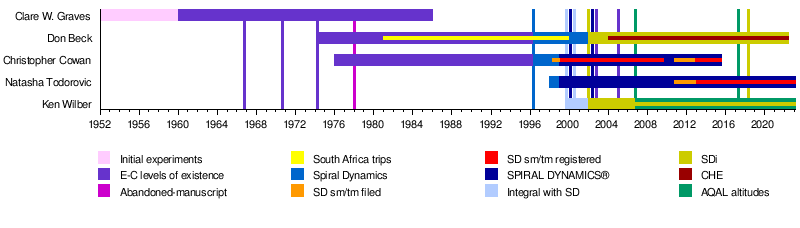
Spiral Dynamics (SD) is a model of the evolutionary development of individuals, organizations, and societies.
Holon (philosophy) – something that is simultaneously a whole and a part
https://hyp.is/rFLytFhEEeiFtnc0xgMCkw/en.wikipedia.org/wiki/Holon_(philosophy)

f macroecology, the use of EOO as a measure of range size may be appropriate; however, AOO is a more appropriate measure when evaluating O–A relationships.
Below paragraph is quite frankly confusing and needs a further look at
https://en.m.wikipedia.org/wiki/Incremental_reading
Incremental reading is spaced parallel reading of multiple sources with note taking and spaced repetition.
It's not far from how I read and take notes myself, though I place less emphasis on the spaced repetition piece as I tend to run across things naturally within my note collection anyway.
One of the major potential benefits of incremental reading (not mentioned in the Wikipedia article; is it in Wozniak's work?) is the increase of combinatorial creativity created by mixing a variety of topics simultaneously.
There is also likely a useful diffuse thinking effect happening between reading sessions.
Henosis for Plotinus (204/5–270 CE) was defined in his works as a reversing of the ontological process of consciousness via meditation (or contemplation) toward no thought (nous or demiurge) and no division (dyad
sounds like buddhism to me
Henosis for Plotinus (204/5–270 CE) was defined in his works as a reversing of the ontological process of consciousness via meditation (or contemplation) toward no thought (nous or demiurge) and no division (dyad) within the individual (being).
buudhism?
Henology
divine source
The Ranters were one of a number of dissenting groups that emerged around the time of the Commonwealth of England (1649–1660). They were largely common people,[1] and the movement was widespread throughout England, though they were not organised and had no leader.
https://en.wikipedia.org/wiki/Ranters
See also The Antinomian Controversy<br /> https://en.wikipedia.org/wiki/Antinomian_Controversy
The Antinomian Controversy, also known as the Free Grace Controversy, was a religious and political conflict in the Massachusetts Bay Colony from 1636 to 1638.
According to Shulman, "Cargo-cult is a belief that mock airplanes made of manure and straw-bale may summon the real airplanes who bring canned beef. Reverse cargo-cult is used by the political elites in countries lagging behind who proclaim that, in the developed world, airplanes are also made of manure and straw-bale, and there is also a shortage of canned beef."[29]
"Екатерина Шульман: Практический Нострадамус, или 12 умственных привычек, которые мешают нам предвидеть будущее". vedomosti/ (in Russian). Retrieved 24 June 2021.
Modern cargo cults can be seen in many technology and productivity spaces where people are pulled in by exaggerated (or sometimes even real claims) of productivity or the general "magic" of a technology or method.
An example is Niklas Luhmann's use of his zettelkasten which has created a cargo cult of zettelkasten aspirants and users who read one or more of the short one page blog posts about his unreasonable productivity and try to mimic it without understanding the system, how it works, or how to make it work for them. They often spend several months collecting notes, and following the motions, but don't realize the promised gains and may eventually give up, sometimes in shame (or as so-called "rubbish men") while watching others still touting its use.
To prevent one's indoctrination into the zettelkasten cult, I'll make a few recommendations:
Distance yourself from the one or two page blog posts or the breathless YouTube delineations. Ask yourself very pointedly: what you hope to get out of such a process? What's your goal? Does that goal align with others' prior uses and their outcomes?
Be careful of the productivity gurus who are selling expensive courses and whose focus may not necessarily be on your particular goals. Some are selling very pointed courses, which is good, while others are selling products which may be so broad that they'll be sure to have some success stories, but their hodge-podge mixture of methods won't suit your particular purpose, or worse, you'll have to experiment with pieces of their courses to discover what may suit your modes of working and hope they'll suffice in the long run. Some are selling other productivity solutions for task management like getting things done (GTD) or bullet journals, which can be a whole other cargo cults in and of themselves. Don't conflate these![^1] The only thing worse than being in a cargo cult is being in multiple at the same time.
If you go the digital route, be extremely wary of shiny object syndrome. Everyone has a favorite tool and will advocate that it's the one you should be using. (Often their method of use will dictate how much they love it potentially over and above the affordances of the tool itself.) All of these tools can be endlessly configured, tweaked, or extended with plugins or third party services. Everyone wants to show you their workflow and set up, lots of which is based on large amounts of work and experimentation. Ignore 99.999% of this. Most tools are converging to a similar feature set, so pick a reasonable one that seems like it'll be around in 5 years (and which has export, just in case). Try out the very basic features for several months before you change anything. Don't add endless plugins and widgets. You're ultimately using a digital tool to recreate the functionality of index cards, a pencil, and a box. How complicated should this really be? Do you need to spend hundreds of hours tweaking your system to save yourself a few minutes a year? Be aware that far too many people touting the system and marketers talking about the tools are missing several thousands of years of uses of some of these basic literacy-based technologies. Don't join their island cult, but instead figure out how the visiting culture has been doing this for ages.[^2] Recall Will Hunting's admonition against cargo cults in education: “You wasted $150,000 on an education you coulda got for $1.50 in late fees at the public library.”[^3]
Most people ultimately realize that the output of their own thinking is only as good as the inputs they're consuming. Leverage this from the moment you begin and ignore the short bite-sized advice for longer form or older advice from those with experience. You're much more likely to get more long term value out of reading Umberto Eco or Mortimer J. Adler & Charles van Doren[^4] than you are an equivalent amount of time reading blog posts, watching YouTube videos, or trolling social media like Reddit and Twitter.
Realize that reaching your goal is going to take honest-to-goodness actual work, though there is potential for fun. No matter how shiny or optimized your system, you've still got to do the daily work of reading, watching, listening and using it to create anything. Focus on this daily work and don't get sidetracked by the minutiae of trying to shave off just a few more seconds.[^5] In short, don't get caught up in the "productivity porn" of it all. Even the high priest at whose altar they worship once wrote on a slip he filed:
"A ghost in the note card index? Spectators visit [my office to see my notes] and they get to see everything and nothing all at once. Ultimately, like having watched a porn movie, their disappointment is correspondingly high." —Niklas Luhmann. <small>“Geist im Kasten?” ZKII 9/8,3. Niklas Luhmann-Archiv. Accessed December 10, 2021. https://niklas-luhmann-archiv.de/bestand/zettelkasten/zettel/ZK_2_NB_9-8-3_V. (Personal translation from German with context added.)</small>
[^1] Aldrich, Chris. “Zettelkasten Overreach.” BoffoSocko (blog), February 5, 2022. https://boffosocko.com/2022/02/05/zettelkasten-overreach/.
[^2]: Blair, Ann M. Too Much to Know: Managing Scholarly Information before the Modern Age. Yale University Press, 2010. https://yalebooks.yale.edu/book/9780300165395/too-much-know.
[^3]: Good Will Hunting. Miramax, Lawrence Bender Productions, 1998.
[^4]: Adler, Mortimer J., and Charles Van Doren. How to Read a Book: The Classic Guide to Intelligent Reading. Revised and Updated edition. 1940. Reprint, New York: Simon & Schuster, 1972.
[^5]: Munroe, Randall. “Is It Worth the Time?” Web comic. xkcd, April 29, 2013. https://xkcd.com/1205/.
Choose only one of the following and remember you may not need to read the entire work:
Ahrens, Sönke. How to Take Smart Notes: One Simple Technique to Boost Writing, Learning and Thinking – for Students, Academics and Nonfiction Book Writers. Create Space, 2017.
Allosso, Dan, and S. F. Allosso. How to Make Notes and Write. Minnesota State Pressbooks, 2022. https://minnstate.pressbooks.pub/write/.
Bernstein, Mark. Tinderbox: The Tinderbox Way. 3rd ed. Watertown, MA: Eastgate Systems, Inc., 2017. http://www.eastgate.com/Tinderbox/TinderboxWay/index.html.
Dow, Earle Wilbur. Principles of a Note-System for Historical Studies. New York: Century Company, 1924.
Eco, Umberto. How to Write a Thesis. Translated by Caterina Mongiat Farina and Geoff Farina. 1977. Reprint, Cambridge, MA, USA: MIT Press, 2015. https://mitpress.mit.edu/books/how-write-thesis.
Gessner, Konrad. Pandectarum Sive Partitionum Universalium. 1st Edition. Zurich: Christoph Froschauer, 1548.
Goutor, Jacques. The Card-File System of Note-Taking. Approaching Ontario’s Past 3. Toronto: Ontario Historical Society, 1980. http://archive.org/details/cardfilesystemof0000gout.
Sertillanges, Antonin Gilbert, and Mary Ryan. The Intellectual Life: Its Spirit, Conditions, Methods. First English Edition, Fifth printing. 1921. Reprint, Westminster, MD: The Newman Press, 1960. http://archive.org/details/a.d.sertillangestheintellectuallife.
Webb, Sidney, and Beatrice Webb. Methods of Social Study. London; New York: Longmans, Green & Co., 1932. http://archive.org/details/b31357891.
Weinberg, Gerald M. Weinberg on Writing: The Fieldstone Method. New York, N.Y: Dorset House, 2005.
se known as wiki engines
Brenna Littleton test annotate
Elbows should remain off the table.
Where does this come from? Is this an arbitrary rule? Is "good manners" an agreed upon social norm for promoting civilization, or is a practice like "elbows...off the table" merely symbolic? (Then again, symbols can carry power, so maybe my "merely" should be somewhat distrusted?)
Bernard Lewis
he was a jew
"Know thyself"
Xenophon
Notion (productivity software)

History
Good: proper use of headings to help users navigate and summarize the page easily.
A collection of different pasta varieties
Good: provided alternative text description of the image contents, makes it easier for users to understand the image.
Search
Good: Accessible forms for users who rely solely on keyboard to navigate and search the page.
Pasta
Good: Satisfactorily accessible through keyboard, can use keys like: up, down, tab, enter, space.
Pastas are divided into two broad categories: dried (pasta secca) and fresh (pasta fresca). Most dried pasta is produced commercially via an extrusion process, although it can be produced at home. Fresh pasta is traditionally produced by hand, sometimes with the aid of simple machines.[3] Fresh pastas available in grocery stores are produced commercially by large-scale machines.
Good: background and text contrast is sufficiently friendly for users to read and understand without any trouble.
Addams became the first American woman to be awarded the Nobel Peace Prize.
The Nobel peace prize is an extremely amazing award, and to have been the first woman to receive one she’s had to have made a large impact.
Addams decided to become a doctor so that she could live and work among the poor.
She eventually became what she dreamed of, something good for the world.
Jane Addams was the youngest of eight children born into a prosperous northern Illinois family
Being the youngest of 8 children had to have been extremely hectic
An advocate for world peace and recognized as the founder of the social work profession in the United States, in 1931 Addams became the first American woman to be awarded the Nobel Peace Prize.
I find this very amazing that she was the first person to win the Nobel peace prize I could just imagine all the hard work she had to put in.
That summer, her father died unexpectedly from a sudden case of appendicitis. Each child inherited roughly $50,000 (equivalent to $1.4 million in 2016).
This caught my eye because the father took care of business and was able to give his kids a lot of money after his passing this is so inspirational.
Addams was cared for mostly by her older sisters. By the time Addams was eight, four of her siblings had died
I just find this very outrageous how she went through this as a toddler and still had the heart to become famous if I lost my mom and siblings I wouldn’t know what to do.
Jane Addams was the youngest of eight children born into a prosperous northern Illinois family of English-American descent which traced back to colonial Pennsylvania
She had many siblings and she was the youngest of them. I find that very interisting
Grímnismál, Grímnir notes that Asbrú "burns all with flames"
MN-8A-SHUNS HATE AND NOTICIA ASHBURY REL8 TO HIPPIE-GRACIE ... DOES SRI and RAND both relate to TAVISTOKed...
the Asbru-haha ... may begin shortly..
and this is how .. i remind you ... "does anyone want to godfuck?"
2 − n ( H ( X ) + ε ) ⩽ p ( x 1 , x 2 , … , x n ) ⩽ 2 − n ( H ( X ) − ε ) {\displaystyle 2^{-n(H(X)+\varepsilon )}\leqslant p(x_{1},x_{2},\dots ,x_{n})\leqslant 2^{-n(H(X)-\varepsilon )}}
ChatGPT:
In the context of Information Theory, typicality of samples refers to the concept of typical sets. A typical set is a set of sequences that have high probability under a given probability distribution. These sequences are not necessarily the most probable ones (i.e the mode of the distribution), but they are the ones that are most typical of the distribution.
In other words, typical sets are sets of sequences that are representative of the underlying distribution, and they are defined by a criterion of asymptotic equiprobability: a sequence is typical if its probability is close to the inverse of the exponential of its length.
In the context of deep autoregressive generative models, typicality of samples can be used as a way to evaluate the quality of the model's approximations of the underlying data distribution. Samples that are highly likely to have been generated by the model are considered to be typical, and thus the model is able to capture the underlying structure of the data well.
The hypothesis of linguistic relativity, also known as the Sapir–Whorf hypothesis /səˌpɪər ˈwɔːrf/, the Whorf hypothesis, or Whorfianism, is a principle suggesting that the structure of a language influences its speakers' worldview or cognition, and thus people's perceptions are relative to their spoken language.
https://en.wikipedia.org/wiki/Linguistic_relativity
link to Toki Pona as a conlang
Link to https://hypothes.is/a/6Znx6MiMEeu3ljcVBsKNOw We shape our tools and thereafter they shape us.
When he read an article about the planned demolition in Clinton, he uprooted his family from their home in southern California and moved them to Iowa.
Move to build
Brasília was designed, constructed, and inaugurated within four years.
Wow - how was this orchestrated?
Costa also stressed that Brazilian (and Niemeyer's) architecture was based on unskilled work which allowed for a crafted architecture based on concrete, expressing a tradition of (Brazilian) church builders, as opposed to (Swiss) clock builders.
This dialogue has continued for as long as we've built buildings - to what degree do we give skilled craftsmen the challenge or autonomy to craft elaborate fixtures on their own vs. focusing on large forms declared by the architect that can be crafted with unskilled labor?
This relationship - this interface - between the architect and the construction work is fascinating to me. I love watching construction workers work. I love seeing progress. Why am I not one?
Contents
In French, stryge means a bird-woman who sucks the blood of children.
This is literally the description of Lilith
The root has been related particularly to owls.
The root of the word Strigoi is related to owls. Which also happen to be the symbol of Lilith, the blood sucking demon of Mesopotamia.
W1 is Hölder continuous of all orders α < 1 but not Lipschitz continuous.
Interesting. It's easy to see that it's not Lipz, but how is it Holder Continuous with \(a < 1\)?
a set of isolated points
Another thing that relates the construction process of the Weiestrass function is the fact that the limit of a sequence of differentiable function can be non-differentiable, regardless of the fact that the type of convergence is uniform.
In brief: Uniform continuity doesn't preserve differentiability.
And it would also means that the space of differentiable function is incomplete.
CiteSeerX crawls publicly available scholarly documents primarily from author webpages and other open resources, and does not have access to publisher metadata
10.1.1.30.6847
These motives must be rational and must serve the utmost human need - the need to orient in space.
Is it?
Students are selected based on their visual spatial coordination. In 1927 Ladovsky established his black room - a laboratory for testing spatial perception (of angles, volumes, linearity etc.) using tools of his own design.
I would love to know what such an evaluation looked like! How do you test for spacial awareness? This reminds me of that Blokus or Tetris game I played as a child that required fitting items into various spaces. I wonder often why I didn't bother studying architecture after that.
Bristol (Lulsgate) Airport
siuuuu
In pre-production, every step of actually creating the film is carefully designed and planned. This is the phase where one would narrow down all the options of the production
Both the annotation marker and app worked perfect.
Quadratic forms can be expressed as p ( x ) = x T Q x {\displaystyle p(x)=x^{T}Qx} where Q {\displaystyle Q} is a symmetric matrix. Similarly, polynomials of degree ≤ 2d can be expressed as p ( x ) = z ( x ) T Q z ( x ) , {\displaystyle p(x)=z(x)^{\mathsf {T}}Qz(x),} where the vector z {\displaystyle z} contains all monomials of degree ≤ d {\displaystyle \leq d} .
Related to semidefinite programming, this equality constraints specifically comes from a semi-definite cone.
Lasserre hierarchy
Relevant resources: https://www.princeton.edu/~aaa/Public/Presentations/IOS16_deKlerk.pdf
Francesca
a more "ideal" daughter; Faxneld and others posit that her eccentric manner may have been due to feeling overshadowed
Baron Jacques d'Adelswärd-Fersen
also linked to 19th century "Satanism," potential future research